window.__IS_SSR__=true
window.__INITIAL_STATE__={
"attachmentsReducer": {
"audio_0": {
"type": "attachments",
"id": "audio_0",
"imgSizes": {
"kqedFullSize": {
"file": "https://ww2.kqed.org/news/wp-content/themes/KQED-unified/img/audio_bgs/background0.jpg"
}
}
},
"audio_1": {
"type": "attachments",
"id": "audio_1",
"imgSizes": {
"kqedFullSize": {
"file": "https://ww2.kqed.org/news/wp-content/themes/KQED-unified/img/audio_bgs/background1.jpg"
}
}
},
"audio_2": {
"type": "attachments",
"id": "audio_2",
"imgSizes": {
"kqedFullSize": {
"file": "https://ww2.kqed.org/news/wp-content/themes/KQED-unified/img/audio_bgs/background2.jpg"
}
}
},
"audio_3": {
"type": "attachments",
"id": "audio_3",
"imgSizes": {
"kqedFullSize": {
"file": "https://ww2.kqed.org/news/wp-content/themes/KQED-unified/img/audio_bgs/background3.jpg"
}
}
},
"audio_4": {
"type": "attachments",
"id": "audio_4",
"imgSizes": {
"kqedFullSize": {
"file": "https://ww2.kqed.org/news/wp-content/themes/KQED-unified/img/audio_bgs/background4.jpg"
}
}
},
"placeholder": {
"type": "attachments",
"id": "placeholder",
"imgSizes": {
"thumbnail": {
"file": "https://cdn.kqed.org/wp-content/uploads/2024/12/KQED-Default-Image-816638274-2000x1333-1-160x107.jpg",
"width": 160,
"height": 107,
"mimeType": "image/jpeg"
},
"medium": {
"file": "https://cdn.kqed.org/wp-content/uploads/2024/12/KQED-Default-Image-816638274-2000x1333-1-800x533.jpg",
"width": 800,
"height": 533,
"mimeType": "image/jpeg"
},
"medium_large": {
"file": "https://cdn.kqed.org/wp-content/uploads/2024/12/KQED-Default-Image-816638274-2000x1333-1-768x512.jpg",
"width": 768,
"height": 512,
"mimeType": "image/jpeg"
},
"large": {
"file": "https://cdn.kqed.org/wp-content/uploads/2024/12/KQED-Default-Image-816638274-2000x1333-1-1020x680.jpg",
"width": 1020,
"height": 680,
"mimeType": "image/jpeg"
},
"1536x1536": {
"file": "https://cdn.kqed.org/wp-content/uploads/2024/12/KQED-Default-Image-816638274-2000x1333-1-1536x1024.jpg",
"width": 1536,
"height": 1024,
"mimeType": "image/jpeg"
},
"fd-lrg": {
"file": "https://cdn.kqed.org/wp-content/uploads/2024/12/KQED-Default-Image-816638274-2000x1333-1-1536x1024.jpg",
"width": 1536,
"height": 1024,
"mimeType": "image/jpeg"
},
"fd-med": {
"file": "https://cdn.kqed.org/wp-content/uploads/2024/12/KQED-Default-Image-816638274-2000x1333-1-1020x680.jpg",
"width": 1020,
"height": 680,
"mimeType": "image/jpeg"
},
"fd-sm": {
"file": "https://cdn.kqed.org/wp-content/uploads/2024/12/KQED-Default-Image-816638274-2000x1333-1-800x533.jpg",
"width": 800,
"height": 533,
"mimeType": "image/jpeg"
},
"post-thumbnail": {
"file": "https://cdn.kqed.org/wp-content/uploads/2024/12/KQED-Default-Image-816638274-2000x1333-1-672x372.jpg",
"width": 672,
"height": 372,
"mimeType": "image/jpeg"
},
"twentyfourteen-full-width": {
"file": "https://cdn.kqed.org/wp-content/uploads/2024/12/KQED-Default-Image-816638274-2000x1333-1-1038x576.jpg",
"width": 1038,
"height": 576,
"mimeType": "image/jpeg"
},
"xxsmall": {
"file": "https://cdn.kqed.org/wp-content/uploads/2024/12/KQED-Default-Image-816638274-2000x1333-1-160x107.jpg",
"width": 160,
"height": 107,
"mimeType": "image/jpeg"
},
"xsmall": {
"file": "https://cdn.kqed.org/wp-content/uploads/2024/12/KQED-Default-Image-816638274-2000x1333-1-672x372.jpg",
"width": 672,
"height": 372,
"mimeType": "image/jpeg"
},
"small": {
"file": "https://cdn.kqed.org/wp-content/uploads/2024/12/KQED-Default-Image-816638274-2000x1333-1-672x372.jpg",
"width": 672,
"height": 372,
"mimeType": "image/jpeg"
},
"xlarge": {
"file": "https://cdn.kqed.org/wp-content/uploads/2024/12/KQED-Default-Image-816638274-2000x1333-1-1020x680.jpg",
"width": 1020,
"height": 680,
"mimeType": "image/jpeg"
},
"full-width": {
"file": "https://cdn.kqed.org/wp-content/uploads/2024/12/KQED-Default-Image-816638274-2000x1333-1-1920x1280.jpg",
"width": 1920,
"height": 1280,
"mimeType": "image/jpeg"
},
"guest-author-32": {
"file": "https://cdn.kqed.org/wp-content/uploads/2025/01/KQED-Default-Image-816638274-1333x1333-1-160x160.jpg",
"width": 32,
"height": 32,
"mimeType": "image/jpeg"
},
"guest-author-50": {
"file": "https://cdn.kqed.org/wp-content/uploads/2025/01/KQED-Default-Image-816638274-1333x1333-1-160x160.jpg",
"width": 50,
"height": 50,
"mimeType": "image/jpeg"
},
"guest-author-64": {
"file": "https://cdn.kqed.org/wp-content/uploads/2025/01/KQED-Default-Image-816638274-1333x1333-1-160x160.jpg",
"width": 64,
"height": 64,
"mimeType": "image/jpeg"
},
"guest-author-96": {
"file": "https://cdn.kqed.org/wp-content/uploads/2025/01/KQED-Default-Image-816638274-1333x1333-1-160x160.jpg",
"width": 96,
"height": 96,
"mimeType": "image/jpeg"
},
"guest-author-128": {
"file": "https://cdn.kqed.org/wp-content/uploads/2025/01/KQED-Default-Image-816638274-1333x1333-1-160x160.jpg",
"width": 128,
"height": 128,
"mimeType": "image/jpeg"
},
"detail": {
"file": "https://cdn.kqed.org/wp-content/uploads/2025/01/KQED-Default-Image-816638274-1333x1333-1-160x160.jpg",
"width": 160,
"height": 160,
"mimeType": "image/jpeg"
},
"kqedFullSize": {
"file": "https://cdn.kqed.org/wp-content/uploads/2024/12/KQED-Default-Image-816638274-2000x1333-1.jpg",
"width": 2000,
"height": 1333
}
}
},
"news_12005504": {
"type": "attachments",
"id": "news_12005504",
"meta": {
"index": "attachments_1716263798",
"site": "news",
"id": "12005504",
"found": true
},
"title": "082424_Safe-Parking_AH_12 copy",
"publishDate": 1726781690,
"status": "inherit",
"parent": 12005503,
"modified": 1726781726,
"caption": "Brad Butterfield pauses after checking the top of his RV for leaks in Arcata on Aug. 24, 2024. Due to the high cost of education, Butterfield lived in his vehicle on campus at the California State Polytechnic University, Humboldt until the university prohibited students from doing so in the fall of 2023. Now, Butterfield parks in the city of Arcata, which requires he move his vehicle every 72 hours or receive a ticket. ",
"credit": "Alexandra Hootnick for CalMatters",
"altTag": null,
"description": null,
"imgSizes": {
"medium": {
"file": "https://cdn.kqed.org/wp-content/uploads/sites/10/2024/09/082424_Safe-Parking_AH_12-copy-800x534.jpg",
"width": 800,
"height": 534,
"mimeType": "image/jpeg"
},
"large": {
"file": "https://cdn.kqed.org/wp-content/uploads/sites/10/2024/09/082424_Safe-Parking_AH_12-copy-1020x681.jpg",
"width": 1020,
"height": 681,
"mimeType": "image/jpeg"
},
"thumbnail": {
"file": "https://cdn.kqed.org/wp-content/uploads/sites/10/2024/09/082424_Safe-Parking_AH_12-copy-160x107.jpg",
"width": 160,
"height": 107,
"mimeType": "image/jpeg"
},
"1536x1536": {
"file": "https://cdn.kqed.org/wp-content/uploads/sites/10/2024/09/082424_Safe-Parking_AH_12-copy-1536x1025.jpg",
"width": 1536,
"height": 1025,
"mimeType": "image/jpeg"
},
"post-thumbnail": {
"file": "https://cdn.kqed.org/wp-content/uploads/sites/10/2024/09/082424_Safe-Parking_AH_12-copy-672x372.jpg",
"width": 672,
"height": 372,
"mimeType": "image/jpeg"
},
"twentyfourteen-full-width": {
"file": "https://cdn.kqed.org/wp-content/uploads/sites/10/2024/09/082424_Safe-Parking_AH_12-copy-1038x576.jpg",
"width": 1038,
"height": 576,
"mimeType": "image/jpeg"
},
"full-width": {
"file": "https://cdn.kqed.org/wp-content/uploads/sites/10/2024/09/082424_Safe-Parking_AH_12-copy-1920x1282.jpg",
"width": 1920,
"height": 1282,
"mimeType": "image/jpeg"
},
"kqedFullSize": {
"file": "https://cdn.kqed.org/wp-content/uploads/sites/10/2024/09/082424_Safe-Parking_AH_12-copy.jpg",
"width": 2000,
"height": 1335
}
},
"isLoading": false,
"fetchFailed": false
},
"news_12000331": {
"type": "attachments",
"id": "news_12000331",
"meta": {
"index": "attachments_1716263798",
"site": "news",
"id": "12000331",
"found": true
},
"title": "240808-ENCAMPMENT SWEEP-MD-12-KQED",
"publishDate": 1723742479,
"status": "inherit",
"parent": 12000606,
"modified": 1723852028,
"caption": "MacGyver relocates the belongings he’s able to move in a shopping cart.",
"credit": "Martin do Nascimento/KQED",
"altTag": null,
"description": null,
"imgSizes": {
"medium": {
"file": "https://cdn.kqed.org/wp-content/uploads/sites/10/2024/08/240808-ENCAMPMENT-SWEEP-MD-12-KQED-800x533.jpg",
"width": 800,
"height": 533,
"mimeType": "image/jpeg"
},
"large": {
"file": "https://cdn.kqed.org/wp-content/uploads/sites/10/2024/08/240808-ENCAMPMENT-SWEEP-MD-12-KQED-1020x680.jpg",
"width": 1020,
"height": 680,
"mimeType": "image/jpeg"
},
"thumbnail": {
"file": "https://cdn.kqed.org/wp-content/uploads/sites/10/2024/08/240808-ENCAMPMENT-SWEEP-MD-12-KQED-160x107.jpg",
"width": 160,
"height": 107,
"mimeType": "image/jpeg"
},
"1536x1536": {
"file": "https://cdn.kqed.org/wp-content/uploads/sites/10/2024/08/240808-ENCAMPMENT-SWEEP-MD-12-KQED-1536x1024.jpg",
"width": 1536,
"height": 1024,
"mimeType": "image/jpeg"
},
"post-thumbnail": {
"file": "https://cdn.kqed.org/wp-content/uploads/sites/10/2024/08/240808-ENCAMPMENT-SWEEP-MD-12-KQED-672x372.jpg",
"width": 672,
"height": 372,
"mimeType": "image/jpeg"
},
"twentyfourteen-full-width": {
"file": "https://cdn.kqed.org/wp-content/uploads/sites/10/2024/08/240808-ENCAMPMENT-SWEEP-MD-12-KQED-1038x576.jpg",
"width": 1038,
"height": 576,
"mimeType": "image/jpeg"
},
"full-width": {
"file": "https://cdn.kqed.org/wp-content/uploads/sites/10/2024/08/240808-ENCAMPMENT-SWEEP-MD-12-KQED-1920x1280.jpg",
"width": 1920,
"height": 1280,
"mimeType": "image/jpeg"
},
"kqedFullSize": {
"file": "https://cdn.kqed.org/wp-content/uploads/sites/10/2024/08/240808-ENCAMPMENT-SWEEP-MD-12-KQED.jpg",
"width": 2000,
"height": 1333
}
},
"isLoading": false,
"fetchFailed": false
},
"news_12005469": {
"type": "attachments",
"id": "news_12005469",
"meta": {
"index": "attachments_1716263798",
"site": "news",
"id": "12005469",
"found": true
},
"title": "231205-SolanoCountyFarmers-16-BL_qed (1)",
"publishDate": 1726773342,
"status": "inherit",
"parent": 12005460,
"modified": 1726773652,
"caption": "Ian Anderson works in a sheep corral on the farmland the Anderson family has owned for generations in Birds Landing, Solano County, on Dec. 5, 2023. Anderson and his wife, Margaret, were among those who settled a lawsuit this week, which some saw as a land-grab attempt by California Forever and its subsidiary, Flannery Associates, to build a new city in the county's eastern corner.",
"credit": "Beth LaBerge/KQED",
"altTag": null,
"description": null,
"imgSizes": {
"medium": {
"file": "https://cdn.kqed.org/wp-content/uploads/sites/10/2024/09/231205-SolanoCountyFarmers-16-BL_qed-1-800x533.jpg",
"width": 800,
"height": 533,
"mimeType": "image/jpeg"
},
"large": {
"file": "https://cdn.kqed.org/wp-content/uploads/sites/10/2024/09/231205-SolanoCountyFarmers-16-BL_qed-1-1020x680.jpg",
"width": 1020,
"height": 680,
"mimeType": "image/jpeg"
},
"thumbnail": {
"file": "https://cdn.kqed.org/wp-content/uploads/sites/10/2024/09/231205-SolanoCountyFarmers-16-BL_qed-1-160x107.jpg",
"width": 160,
"height": 107,
"mimeType": "image/jpeg"
},
"1536x1536": {
"file": "https://cdn.kqed.org/wp-content/uploads/sites/10/2024/09/231205-SolanoCountyFarmers-16-BL_qed-1-1536x1024.jpg",
"width": 1536,
"height": 1024,
"mimeType": "image/jpeg"
},
"post-thumbnail": {
"file": "https://cdn.kqed.org/wp-content/uploads/sites/10/2024/09/231205-SolanoCountyFarmers-16-BL_qed-1-672x372.jpg",
"width": 672,
"height": 372,
"mimeType": "image/jpeg"
},
"twentyfourteen-full-width": {
"file": "https://cdn.kqed.org/wp-content/uploads/sites/10/2024/09/231205-SolanoCountyFarmers-16-BL_qed-1-1038x576.jpg",
"width": 1038,
"height": 576,
"mimeType": "image/jpeg"
},
"full-width": {
"file": "https://cdn.kqed.org/wp-content/uploads/sites/10/2024/09/231205-SolanoCountyFarmers-16-BL_qed-1-1920x1280.jpg",
"width": 1920,
"height": 1280,
"mimeType": "image/jpeg"
},
"kqedFullSize": {
"file": "https://cdn.kqed.org/wp-content/uploads/sites/10/2024/09/231205-SolanoCountyFarmers-16-BL_qed-1.jpg",
"width": 2000,
"height": 1333
}
},
"isLoading": false,
"fetchFailed": false
},
"news_12005302": {
"type": "attachments",
"id": "news_12005302",
"meta": {
"index": "attachments_1716263798",
"site": "news",
"id": "12005302",
"found": true
},
"title": "can-my-landlord-keep-my-security-deposit",
"publishDate": 1726692566,
"status": "inherit",
"parent": 12005287,
"modified": 1726693688,
"caption": "What can you do if your landlord wants to keep your security deposit?",
"credit": "Oscar Wong via Getty Images",
"altTag": "Stacking of cardboard boxes and a potted plant in the living room of a house.",
"description": null,
"imgSizes": {
"medium": {
"file": "https://cdn.kqed.org/wp-content/uploads/sites/10/2024/09/GettyImages-1454882740-800x533.jpg",
"width": 800,
"height": 533,
"mimeType": "image/jpeg"
},
"large": {
"file": "https://cdn.kqed.org/wp-content/uploads/sites/10/2024/09/GettyImages-1454882740-1020x680.jpg",
"width": 1020,
"height": 680,
"mimeType": "image/jpeg"
},
"thumbnail": {
"file": "https://cdn.kqed.org/wp-content/uploads/sites/10/2024/09/GettyImages-1454882740-160x107.jpg",
"width": 160,
"height": 107,
"mimeType": "image/jpeg"
},
"1536x1536": {
"file": "https://cdn.kqed.org/wp-content/uploads/sites/10/2024/09/GettyImages-1454882740-1536x1024.jpg",
"width": 1536,
"height": 1024,
"mimeType": "image/jpeg"
},
"2048x2048": {
"file": "https://cdn.kqed.org/wp-content/uploads/sites/10/2024/09/GettyImages-1454882740-2048x1365.jpg",
"width": 2048,
"height": 1365,
"mimeType": "image/jpeg"
},
"post-thumbnail": {
"file": "https://cdn.kqed.org/wp-content/uploads/sites/10/2024/09/GettyImages-1454882740-672x372.jpg",
"width": 672,
"height": 372,
"mimeType": "image/jpeg"
},
"twentyfourteen-full-width": {
"file": "https://cdn.kqed.org/wp-content/uploads/sites/10/2024/09/GettyImages-1454882740-1038x576.jpg",
"width": 1038,
"height": 576,
"mimeType": "image/jpeg"
},
"full-width": {
"file": "https://cdn.kqed.org/wp-content/uploads/sites/10/2024/09/GettyImages-1454882740-1920x1280.jpg",
"width": 1920,
"height": 1280,
"mimeType": "image/jpeg"
},
"kqedFullSize": {
"file": "https://cdn.kqed.org/wp-content/uploads/sites/10/2024/09/GettyImages-1454882740.jpg",
"width": 2121,
"height": 1414
}
},
"isLoading": false,
"fetchFailed": false
},
"news_11968714": {
"type": "attachments",
"id": "news_11968714",
"meta": {
"index": "attachments_1716263798",
"site": "news",
"id": "11968714",
"found": true
},
"title": "Structures Destroyed By California Wine Country Wildfires Rises To 8400",
"publishDate": 1701380180,
"status": "inherit",
"parent": 11968643,
"modified": 1726607111,
"caption": "An insurance adjuster walks through a Coffey Park home destroyed by the Tubbs Fire on Oct. 23, 2017, in Santa Rosa, California. Residents returned to their homes after a fast-moving and deadly wildfire destroyed 8,400 structures and claimed the lives of at least 42 people.",
"credit": "Justin Sullivan/Getty Images",
"altTag": null,
"description": null,
"imgSizes": {
"medium": {
"file": "https://cdn.kqed.org/wp-content/uploads/sites/10/2023/11/Coffey-Park-Insurance-800x553.jpg",
"width": 800,
"height": 553,
"mimeType": "image/jpeg"
},
"large": {
"file": "https://cdn.kqed.org/wp-content/uploads/sites/10/2023/11/Coffey-Park-Insurance-1020x705.jpg",
"width": 1020,
"height": 705,
"mimeType": "image/jpeg"
},
"thumbnail": {
"file": "https://cdn.kqed.org/wp-content/uploads/sites/10/2023/11/Coffey-Park-Insurance-160x111.jpg",
"width": 160,
"height": 111,
"mimeType": "image/jpeg"
},
"1536x1536": {
"file": "https://cdn.kqed.org/wp-content/uploads/sites/10/2023/11/Coffey-Park-Insurance-1536x1062.jpg",
"width": 1536,
"height": 1062,
"mimeType": "image/jpeg"
},
"2048x2048": {
"file": "https://cdn.kqed.org/wp-content/uploads/sites/10/2023/11/Coffey-Park-Insurance-2048x1416.jpg",
"width": 2048,
"height": 1416,
"mimeType": "image/jpeg"
},
"post-thumbnail": {
"file": "https://cdn.kqed.org/wp-content/uploads/sites/10/2023/11/Coffey-Park-Insurance-672x372.jpg",
"width": 672,
"height": 372,
"mimeType": "image/jpeg"
},
"twentyfourteen-full-width": {
"file": "https://cdn.kqed.org/wp-content/uploads/sites/10/2023/11/Coffey-Park-Insurance-1038x576.jpg",
"width": 1038,
"height": 576,
"mimeType": "image/jpeg"
},
"full-width": {
"file": "https://cdn.kqed.org/wp-content/uploads/sites/10/2023/11/Coffey-Park-Insurance-1920x1327.jpg",
"width": 1920,
"height": 1327,
"mimeType": "image/jpeg"
},
"kqedFullSize": {
"file": "https://cdn.kqed.org/wp-content/uploads/sites/10/2023/11/Coffey-Park-Insurance-scaled.jpg",
"width": 2560,
"height": 1770
}
},
"isLoading": false,
"fetchFailed": false
},
"news_11990406": {
"type": "attachments",
"id": "news_11990406",
"meta": {
"index": "attachments_1716263798",
"site": "news",
"id": "11990406",
"found": true
},
"title": "240610-HomelessFamilies-35-BL_qut",
"publishDate": 1718382647,
"status": "inherit",
"parent": 0,
"modified": 1726251957,
"caption": "Shelter resident Analy Padilla prepares pozole alongside Claudia Carmona and Maria Figeroa in a teacher's lounge at Buena Vista Horace Mann Community School on June 10, 2024. The pozole will feed their families and others in one of San Francisco's largest shelters for families experiencing homelessness. The nonprofit Mission Action operates the shelter at Horace Mann after hours and during the summer when school is not in session.",
"credit": "Beth LaBerge/KQED",
"altTag": "A woman wearing glasses and a black shirt talks to a woman wearing a pink t-shirt in a kitchen, cutting food with two other people in the background.",
"description": null,
"imgSizes": {
"medium": {
"file": "https://cdn.kqed.org/wp-content/uploads/sites/10/2024/06/240610-HomelessFamilies-35-BL_qut-800x533.jpg",
"width": 800,
"height": 533,
"mimeType": "image/jpeg"
},
"large": {
"file": "https://cdn.kqed.org/wp-content/uploads/sites/10/2024/06/240610-HomelessFamilies-35-BL_qut-1020x680.jpg",
"width": 1020,
"height": 680,
"mimeType": "image/jpeg"
},
"thumbnail": {
"file": "https://cdn.kqed.org/wp-content/uploads/sites/10/2024/06/240610-HomelessFamilies-35-BL_qut-160x107.jpg",
"width": 160,
"height": 107,
"mimeType": "image/jpeg"
},
"1536x1536": {
"file": "https://cdn.kqed.org/wp-content/uploads/sites/10/2024/06/240610-HomelessFamilies-35-BL_qut-1536x1024.jpg",
"width": 1536,
"height": 1024,
"mimeType": "image/jpeg"
},
"post-thumbnail": {
"file": "https://cdn.kqed.org/wp-content/uploads/sites/10/2024/06/240610-HomelessFamilies-35-BL_qut-672x372.jpg",
"width": 672,
"height": 372,
"mimeType": "image/jpeg"
},
"twentyfourteen-full-width": {
"file": "https://cdn.kqed.org/wp-content/uploads/sites/10/2024/06/240610-HomelessFamilies-35-BL_qut-1038x576.jpg",
"width": 1038,
"height": 576,
"mimeType": "image/jpeg"
},
"kqedFullSize": {
"file": "https://cdn.kqed.org/wp-content/uploads/sites/10/2024/06/240610-HomelessFamilies-35-BL_qut.jpg",
"width": 1920,
"height": 1280
}
},
"isLoading": false,
"fetchFailed": false
},
"news_12004356": {
"type": "attachments",
"id": "news_12004356",
"meta": {
"index": "attachments_1716263798",
"site": "news",
"id": "12004356",
"found": true
},
"title": "People's Park in Berkeley on Feb. 19, 2021.",
"publishDate": 1726078158,
"status": "inherit",
"parent": 12004348,
"modified": 1726078180,
"caption": "People's Park in Berkeley on Feb. 19, 2021.",
"credit": "Beth LaBerge/KQED",
"altTag": null,
"description": null,
"imgSizes": {
"medium": {
"file": "https://cdn.kqed.org/wp-content/uploads/sites/10/2024/09/026_Berkeley_PeoplesPark_02192021_qed-800x533.jpg",
"width": 800,
"height": 533,
"mimeType": "image/jpeg"
},
"large": {
"file": "https://cdn.kqed.org/wp-content/uploads/sites/10/2024/09/026_Berkeley_PeoplesPark_02192021_qed-1020x680.jpg",
"width": 1020,
"height": 680,
"mimeType": "image/jpeg"
},
"thumbnail": {
"file": "https://cdn.kqed.org/wp-content/uploads/sites/10/2024/09/026_Berkeley_PeoplesPark_02192021_qed-160x107.jpg",
"width": 160,
"height": 107,
"mimeType": "image/jpeg"
},
"1536x1536": {
"file": "https://cdn.kqed.org/wp-content/uploads/sites/10/2024/09/026_Berkeley_PeoplesPark_02192021_qed-1536x1024.jpg",
"width": 1536,
"height": 1024,
"mimeType": "image/jpeg"
},
"post-thumbnail": {
"file": "https://cdn.kqed.org/wp-content/uploads/sites/10/2024/09/026_Berkeley_PeoplesPark_02192021_qed-672x372.jpg",
"width": 672,
"height": 372,
"mimeType": "image/jpeg"
},
"twentyfourteen-full-width": {
"file": "https://cdn.kqed.org/wp-content/uploads/sites/10/2024/09/026_Berkeley_PeoplesPark_02192021_qed-1038x576.jpg",
"width": 1038,
"height": 576,
"mimeType": "image/jpeg"
},
"full-width": {
"file": "https://cdn.kqed.org/wp-content/uploads/sites/10/2024/09/026_Berkeley_PeoplesPark_02192021_qed-1920x1280.jpg",
"width": 1920,
"height": 1280,
"mimeType": "image/jpeg"
},
"kqedFullSize": {
"file": "https://cdn.kqed.org/wp-content/uploads/sites/10/2024/09/026_Berkeley_PeoplesPark_02192021_qed.jpg",
"width": 2000,
"height": 1333
}
},
"isLoading": false,
"fetchFailed": false
},
"news_12003271": {
"type": "attachments",
"id": "news_12003271",
"meta": {
"index": "attachments_1716263798",
"site": "news",
"id": "12003271",
"found": true
},
"title": "66a30dc4e91bf.image",
"publishDate": 1725561948,
"status": "inherit",
"parent": 12003268,
"modified": 1725561961,
"caption": null,
"credit": "Miguel Carrion / Coastside News Group",
"altTag": null,
"description": null,
"imgSizes": {
"medium": {
"file": "https://cdn.kqed.org/wp-content/uploads/sites/10/2024/09/66a30dc4e91bf.image_-800x533.jpg",
"width": 800,
"height": 533,
"mimeType": "image/jpeg"
},
"large": {
"file": "https://cdn.kqed.org/wp-content/uploads/sites/10/2024/09/66a30dc4e91bf.image_-1020x680.jpg",
"width": 1020,
"height": 680,
"mimeType": "image/jpeg"
},
"thumbnail": {
"file": "https://cdn.kqed.org/wp-content/uploads/sites/10/2024/09/66a30dc4e91bf.image_-160x107.jpg",
"width": 160,
"height": 107,
"mimeType": "image/jpeg"
},
"post-thumbnail": {
"file": "https://cdn.kqed.org/wp-content/uploads/sites/10/2024/09/66a30dc4e91bf.image_-672x372.jpg",
"width": 672,
"height": 372,
"mimeType": "image/jpeg"
},
"twentyfourteen-full-width": {
"file": "https://cdn.kqed.org/wp-content/uploads/sites/10/2024/09/66a30dc4e91bf.image_-1035x576.jpg",
"width": 1035,
"height": 576,
"mimeType": "image/jpeg"
},
"kqedFullSize": {
"file": "https://cdn.kqed.org/wp-content/uploads/sites/10/2024/09/66a30dc4e91bf.image_.jpg",
"width": 1035,
"height": 690
}
},
"isLoading": false,
"fetchFailed": false
},
"news_12003859": {
"type": "attachments",
"id": "news_12003859",
"meta": {
"index": "attachments_1716263798",
"site": "news",
"id": "12003859",
"found": true
},
"title": "Heat pump on a yellow holiday home in the summer",
"publishDate": 1725997905,
"status": "inherit",
"parent": 12003847,
"modified": 1762456316,
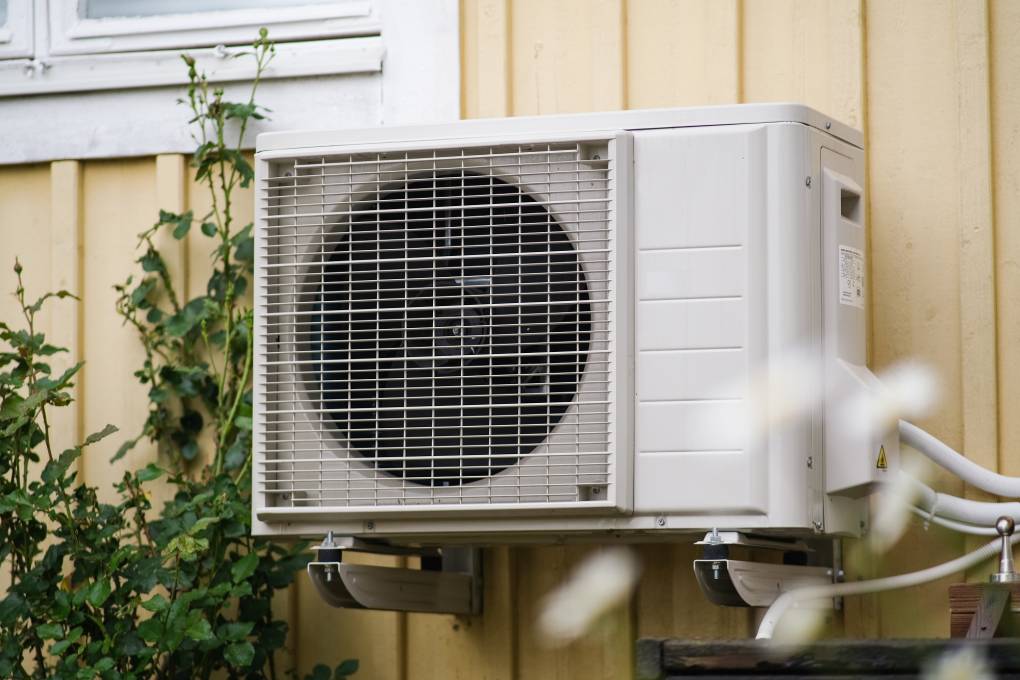
"caption": "A heat pump sits on the side of a house in California. Biden-era federal tax breaks for home improvements that aim to switch from gas-powered appliances to electric are set to expire at the end of the year. ",
"credit": "Schon/Getty Images",
"altTag": null,
"description": null,
"imgSizes": {
"medium": {
"file": "https://cdn.kqed.org/wp-content/uploads/sites/10/2024/09/HeatPumpGetty1-800x533.jpg",
"width": 800,
"height": 533,
"mimeType": "image/jpeg"
},
"large": {
"file": "https://cdn.kqed.org/wp-content/uploads/sites/10/2024/09/HeatPumpGetty1-1020x680.jpg",
"width": 1020,
"height": 680,
"mimeType": "image/jpeg"
},
"thumbnail": {
"file": "https://cdn.kqed.org/wp-content/uploads/sites/10/2024/09/HeatPumpGetty1-160x107.jpg",
"width": 160,
"height": 107,
"mimeType": "image/jpeg"
},
"1536x1536": {
"file": "https://cdn.kqed.org/wp-content/uploads/sites/10/2024/09/HeatPumpGetty1-1536x1024.jpg",
"width": 1536,
"height": 1024,
"mimeType": "image/jpeg"
},
"post-thumbnail": {
"file": "https://cdn.kqed.org/wp-content/uploads/sites/10/2024/09/HeatPumpGetty1-672x372.jpg",
"width": 672,
"height": 372,
"mimeType": "image/jpeg"
},
"twentyfourteen-full-width": {
"file": "https://cdn.kqed.org/wp-content/uploads/sites/10/2024/09/HeatPumpGetty1-1038x576.jpg",
"width": 1038,
"height": 576,
"mimeType": "image/jpeg"
},
"full-width": {
"file": "https://cdn.kqed.org/wp-content/uploads/sites/10/2024/09/HeatPumpGetty1-1920x1280.jpg",
"width": 1920,
"height": 1280,
"mimeType": "image/jpeg"
},
"kqedFullSize": {
"file": "https://cdn.kqed.org/wp-content/uploads/sites/10/2024/09/HeatPumpGetty1.jpg",
"width": 2000,
"height": 1333
}
},
"isLoading": false,
"fetchFailed": false
},
"news_12003127": {
"type": "attachments",
"id": "news_12003127",
"meta": {
"index": "attachments_1716263798",
"site": "news",
"id": "12003127",
"found": true
},
"title": "240903-RAPIDREHOUSING-06-BL-KQED",
"publishDate": 1725486658,
"status": "inherit",
"parent": 0,
"modified": 1725486715,
"caption": "Francine Edwards, the mother of Larry Williams, stands by Lake Merritt in Oakland on Sept. 3, 2024.",
"credit": "Beth LaBerge/KQED",
"altTag": null,
"description": null,
"imgSizes": {
"medium": {
"file": "https://cdn.kqed.org/wp-content/uploads/sites/10/2024/09/240903-RAPIDREHOUSING-06-BL-KQED-800x533.jpg",
"width": 800,
"height": 533,
"mimeType": "image/jpeg"
},
"large": {
"file": "https://cdn.kqed.org/wp-content/uploads/sites/10/2024/09/240903-RAPIDREHOUSING-06-BL-KQED-1020x680.jpg",
"width": 1020,
"height": 680,
"mimeType": "image/jpeg"
},
"thumbnail": {
"file": "https://cdn.kqed.org/wp-content/uploads/sites/10/2024/09/240903-RAPIDREHOUSING-06-BL-KQED-160x107.jpg",
"width": 160,
"height": 107,
"mimeType": "image/jpeg"
},
"1536x1536": {
"file": "https://cdn.kqed.org/wp-content/uploads/sites/10/2024/09/240903-RAPIDREHOUSING-06-BL-KQED-1536x1024.jpg",
"width": 1536,
"height": 1024,
"mimeType": "image/jpeg"
},
"post-thumbnail": {
"file": "https://cdn.kqed.org/wp-content/uploads/sites/10/2024/09/240903-RAPIDREHOUSING-06-BL-KQED-672x372.jpg",
"width": 672,
"height": 372,
"mimeType": "image/jpeg"
},
"twentyfourteen-full-width": {
"file": "https://cdn.kqed.org/wp-content/uploads/sites/10/2024/09/240903-RAPIDREHOUSING-06-BL-KQED-1038x576.jpg",
"width": 1038,
"height": 576,
"mimeType": "image/jpeg"
},
"full-width": {
"file": "https://cdn.kqed.org/wp-content/uploads/sites/10/2024/09/240903-RAPIDREHOUSING-06-BL-KQED-1920x1280.jpg",
"width": 1920,
"height": 1280,
"mimeType": "image/jpeg"
},
"kqedFullSize": {
"file": "https://cdn.kqed.org/wp-content/uploads/sites/10/2024/09/240903-RAPIDREHOUSING-06-BL-KQED.jpg",
"width": 2000,
"height": 1333
}
},
"isLoading": false,
"fetchFailed": false
},
"news_12003447": {
"type": "attachments",
"id": "news_12003447",
"meta": {
"index": "attachments_1716263798",
"site": "news",
"id": "12003447",
"found": true
},
"title": "California Affordable Housing Settlement",
"publishDate": 1725656828,
"status": "inherit",
"parent": 12003444,
"modified": 1733176104,
"caption": "Gov. Gavin Newsom speaks next to Attorney General Rob Bonta during a press conference on Sept. 4, 2024, in Sacramento. ",
"credit": "Sophie Austin/AP Photo",
"altTag": null,
"description": "Gov. Gavin Newsom speaks next to Attorney General Rob Bonta during a press conference on Sept. 4, 2024, in Sacramento. On Friday, Newsom announced that he vetoed AB 1840, which aimed to prevent California’s Housing Finance Agency from disqualifying applicants for the California Dream For All Shared Appreciation Loan based solely on their immigration status.",
"imgSizes": {
"medium": {
"file": "https://cdn.kqed.org/wp-content/uploads/sites/10/2024/09/GavinNewsomAP-800x533.jpg",
"width": 800,
"height": 533,
"mimeType": "image/jpeg"
},
"large": {
"file": "https://cdn.kqed.org/wp-content/uploads/sites/10/2024/09/GavinNewsomAP-1020x680.jpg",
"width": 1020,
"height": 680,
"mimeType": "image/jpeg"
},
"thumbnail": {
"file": "https://cdn.kqed.org/wp-content/uploads/sites/10/2024/09/GavinNewsomAP-160x107.jpg",
"width": 160,
"height": 107,
"mimeType": "image/jpeg"
},
"1536x1536": {
"file": "https://cdn.kqed.org/wp-content/uploads/sites/10/2024/09/GavinNewsomAP-1536x1024.jpg",
"width": 1536,
"height": 1024,
"mimeType": "image/jpeg"
},
"post-thumbnail": {
"file": "https://cdn.kqed.org/wp-content/uploads/sites/10/2024/09/GavinNewsomAP-672x372.jpg",
"width": 672,
"height": 372,
"mimeType": "image/jpeg"
},
"twentyfourteen-full-width": {
"file": "https://cdn.kqed.org/wp-content/uploads/sites/10/2024/09/GavinNewsomAP-1038x576.jpg",
"width": 1038,
"height": 576,
"mimeType": "image/jpeg"
},
"full-width": {
"file": "https://cdn.kqed.org/wp-content/uploads/sites/10/2024/09/GavinNewsomAP-1920x1280.jpg",
"width": 1920,
"height": 1280,
"mimeType": "image/jpeg"
},
"kqedFullSize": {
"file": "https://cdn.kqed.org/wp-content/uploads/sites/10/2024/09/GavinNewsomAP.jpg",
"width": 2000,
"height": 1333
}
},
"isLoading": false,
"fetchFailed": false
},
"news_12005403": {
"type": "attachments",
"id": "news_12005403",
"meta": {
"index": "attachments_1716263798",
"site": "news",
"id": "12005403",
"found": true
},
"title": "240903-MARIN SUBSTANDARD AG WORKER HOUSING-MD-04-KQED-2",
"publishDate": 1726704016,
"status": "inherit",
"parent": 12002972,
"modified": 1726704038,
"caption": "Yesenia Bernal Martinez outside of former Coast Guard housing that CLAM, the Community Land Trust of West Marin, aims to turn into affordable housing in Point Reyes Station on Sept. 3, 2024. Bernal Martinez, who works at CLAM, grew up in housing on ranches and said the report's findings are \"not surprising.\"",
"credit": "Martin do Nascimento/KQED",
"altTag": null,
"description": null,
"imgSizes": {
"medium": {
"file": "https://cdn.kqed.org/wp-content/uploads/sites/10/2024/09/240903-MARIN-SUBSTANDARD-AG-WORKER-HOUSING-MD-04-KQED-2-800x533.jpg",
"width": 800,
"height": 533,
"mimeType": "image/jpeg"
},
"large": {
"file": "https://cdn.kqed.org/wp-content/uploads/sites/10/2024/09/240903-MARIN-SUBSTANDARD-AG-WORKER-HOUSING-MD-04-KQED-2-1020x680.jpg",
"width": 1020,
"height": 680,
"mimeType": "image/jpeg"
},
"thumbnail": {
"file": "https://cdn.kqed.org/wp-content/uploads/sites/10/2024/09/240903-MARIN-SUBSTANDARD-AG-WORKER-HOUSING-MD-04-KQED-2-160x107.jpg",
"width": 160,
"height": 107,
"mimeType": "image/jpeg"
},
"1536x1536": {
"file": "https://cdn.kqed.org/wp-content/uploads/sites/10/2024/09/240903-MARIN-SUBSTANDARD-AG-WORKER-HOUSING-MD-04-KQED-2-1536x1024.jpg",
"width": 1536,
"height": 1024,
"mimeType": "image/jpeg"
},
"post-thumbnail": {
"file": "https://cdn.kqed.org/wp-content/uploads/sites/10/2024/09/240903-MARIN-SUBSTANDARD-AG-WORKER-HOUSING-MD-04-KQED-2-672x372.jpg",
"width": 672,
"height": 372,
"mimeType": "image/jpeg"
},
"twentyfourteen-full-width": {
"file": "https://cdn.kqed.org/wp-content/uploads/sites/10/2024/09/240903-MARIN-SUBSTANDARD-AG-WORKER-HOUSING-MD-04-KQED-2-1038x576.jpg",
"width": 1038,
"height": 576,
"mimeType": "image/jpeg"
},
"kqedFullSize": {
"file": "https://cdn.kqed.org/wp-content/uploads/sites/10/2024/09/240903-MARIN-SUBSTANDARD-AG-WORKER-HOUSING-MD-04-KQED-2.jpg",
"width": 1920,
"height": 1280
}
},
"isLoading": false,
"fetchFailed": false
}
},
"audioPlayerReducer": {
"postId": "stream_live",
"isPaused": true,
"isPlaying": false,
"pfsActive": false,
"pledgeModalIsOpen": true,
"playerDrawerIsOpen": false,
"liveAudioPlayStartedAt": 0,
"liveAudioPlayContext": ""
},
"authorsReducer": {
"byline_news_12005503": {
"type": "authors",
"id": "byline_news_12005503",
"meta": {
"override": true
},
"slug": "byline_news_12005503",
"name": "\u003ca href=\"https://calmatters.org/author/briana-mendez-padilla/\">Briana Mendez-Padilla\u003c/a>, CalMatters",
"isLoading": false
},
"danbrekke": {
"type": "authors",
"id": "222",
"meta": {
"index": "authors_1716337520",
"id": "222",
"found": true
},
"name": "Dan Brekke",
"firstName": "Dan",
"lastName": "Brekke",
"slug": "danbrekke",
"email": "dbrekke@kqed.org",
"display_author_email": true,
"staff_mastheads": [
"news",
"science"
],
"title": "KQED Editor and Reporter",
"bio": "Dan Brekke is a reporter and editor for KQED News, responsible for coverage of topics ranging from California water issues to the Bay Area's transportation challenges. In a newsroom career that began in Chicago in 1972, Dan has worked for \u003cem>The San Francisco Examiner,\u003c/em> Wired and TechTV and has been published in The New York Times, The New York Times Magazine, Business 2.0, Salon and elsewhere.\r\n\r\nSince joining KQED in 2007, Dan has reported, edited and produced both radio and online features and breaking news pieces. He has shared as both editor and reporter in four Society of Professional Journalists Norcal Excellence in Journalism awards and one Edward R. Murrow regional award. He was chosen for a spring 2017 residency at the Mesa Refuge to advance his research on California salmon.\r\n\r\nEmail Dan at: \u003ca href=\"mailto:dbrekke@kqed.org\">dbrekke@kqed.org\u003c/a>\r\n\r\n\u003cstrong>Twitter:\u003c/strong> \u003ca href=\"https://twitter.com/danbrekke\" rel=\"noopener noreferrer\">twitter.com/danbrekke\u003c/a>\r\n\u003cstrong>Facebook:\u003c/strong> \u003ca href=\"https://www.facebook.com/danbrekke\" rel=\"noopener noreferrer\">www.facebook.com/danbrekke\u003c/a>\r\n\u003cstrong>LinkedIn:\u003c/strong> \u003ca href=\"https://www.linkedin.com/in/danbrekke\" rel=\"noopener noreferrer\">www.linkedin.com/in/danbrekke\u003c/a>",
"avatar": "https://secure.gravatar.com/avatar/8f1f0d2a978fb3b23426c922c7e2af558fa36905b49c4ce76a97dc3c72d27226?s=600&d=mm&r=g",
"twitter": "danbrekke",
"bluesky": null,
"facebook": null,
"instagram": "https://www.instagram.com/dan.brekke/",
"linkedin": "https://www.linkedin.com/in/danbrekke/",
"sites": [
{
"site": "news",
"roles": [
"administrator",
"create_posts"
]
},
{
"site": "stateofhealth",
"roles": [
"editor"
]
},
{
"site": "science",
"roles": [
"editor"
]
},
{
"site": "quest",
"roles": [
"contributor"
]
},
{
"site": "food",
"roles": [
"contributor"
]
},
{
"site": "forum",
"roles": [
"contributor"
]
},
{
"site": "elections",
"roles": [
"editor"
]
},
{
"site": "liveblog",
"roles": [
"editor"
]
}
],
"headData": {
"title": "Dan Brekke | KQED",
"description": "KQED Editor and Reporter",
"ogImgSrc": "https://secure.gravatar.com/avatar/8f1f0d2a978fb3b23426c922c7e2af558fa36905b49c4ce76a97dc3c72d27226?s=600&d=mm&r=g",
"twImgSrc": "https://secure.gravatar.com/avatar/8f1f0d2a978fb3b23426c922c7e2af558fa36905b49c4ce76a97dc3c72d27226?s=600&d=mm&r=g"
},
"isLoading": false,
"link": "/author/danbrekke"
},
"lklivans": {
"type": "authors",
"id": "8648",
"meta": {
"index": "authors_1716337520",
"id": "8648",
"found": true
},
"name": "Laura Klivans",
"firstName": "Laura",
"lastName": "Klivans",
"slug": "lklivans",
"email": "lklivans@kqed.org",
"display_author_email": true,
"staff_mastheads": [
"news",
"science"
],
"title": "Reporter",
"bio": "Laura Klivans is an award-winning science reporter for KQED News, where she covers climate change with an eye on both groundbreaking progress and gaps in action. She is the former host of KQED's blockbuster video series about tiny, amazing animals, \u003cem>Deep Look\u003c/em>. Her work reaches national audiences through NPR, \u003cem>Here & Now, \u003c/em>PRI, and other major outlets. \r\n\r\nLaura’s won five Northern California Area Emmy Awards for Deep Look and First Place in the Greater Bay Area Journalism Awards for a podcast exploring how one Oakland neighborhood teamed up to reduce planet-heating pollution.\r\n\r\nBeyond her reporting, she hosts and moderates events. In the past, she taught audio storytelling at the UC Berkeley Graduate School of Journalism, led international education programs, worked with immigrants and refugees along the Thai-Burmese border, taught high schoolers sex ed, and was an actress. \r\n\r\nShe's a former UC Berkeley Human Rights Fellow, USC Center for Health Journalism's California Fellow and Coro Fellow in Public Affairs. Laura has a master’s in journalism from UC Berkeley, a master’s in education from Harvard, and an undergraduate degree from Northwestern University.\r\n\r\nShe loves trying to riddle the meaning out of vanity license plates.",
"avatar": "https://secure.gravatar.com/avatar/2d2ecd1550a494cc10ad4a503406965585902124739e775a9b3817eebf1d88be?s=600&d=blank&r=g",
"twitter": "lauraklivans",
"bluesky": null,
"facebook": null,
"instagram": null,
"linkedin": null,
"sites": [
{
"site": "news",
"roles": [
"editor"
]
},
{
"site": "stateofhealth",
"roles": [
"contributor",
"editor"
]
},
{
"site": "science",
"roles": [
"editor"
]
},
{
"site": "forum",
"roles": [
"editor"
]
}
],
"headData": {
"title": "Laura Klivans | KQED",
"description": "Reporter",
"ogImgSrc": "https://secure.gravatar.com/avatar/2d2ecd1550a494cc10ad4a503406965585902124739e775a9b3817eebf1d88be?s=600&d=blank&r=g",
"twImgSrc": "https://secure.gravatar.com/avatar/2d2ecd1550a494cc10ad4a503406965585902124739e775a9b3817eebf1d88be?s=600&d=blank&r=g"
},
"isLoading": false,
"link": "/author/lklivans"
},
"ecruzguevarra": {
"type": "authors",
"id": "8654",
"meta": {
"index": "authors_1716337520",
"id": "8654",
"found": true
},
"name": "Ericka Cruz Guevarra",
"firstName": "Ericka",
"lastName": "Cruz Guevarra",
"slug": "ecruzguevarra",
"email": "ecruzguevarra@kqed.org",
"display_author_email": true,
"staff_mastheads": [
"news"
],
"title": "Producer, The Bay Podcast",
"bio": "Ericka Cruz Guevarra is host of \u003ca href=\"https://www.kqed.org/podcasts/thebay\">\u003cem>The Bay\u003c/em>\u003c/a> podcast at KQED. Before host, she was the show’s producer. Her work in that capacity includes a three-part reported series on policing in Vallejo, which won a 2020 excellence in journalism award from the Society of Professional Journalists. Ericka has worked as a breaking news reporter at Oregon Public Broadcasting, helped produce the Code Switch podcast, and was KQED’s inaugural Raul Ramirez Diversity Fund intern. She’s also an alumna of NPR’s Next Generation Radio program. Send her an email if you have strong feelings about whether Fairfield and Suisun City are the Bay. Ericka is represented by SAG-AFTRA.",
"avatar": "https://secure.gravatar.com/avatar/accefc1de4bafc7e234b69bcb9b6f6536c130fd84709bc3069ef11a78787e1bb?s=600&d=blank&r=g",
"twitter": "NotoriousECG",
"bluesky": null,
"facebook": null,
"instagram": null,
"linkedin": null,
"sites": [
{
"site": "arts",
"roles": [
"subscriber"
]
},
{
"site": "news",
"roles": [
"editor",
"manage_categories"
]
},
{
"site": "futureofyou",
"roles": [
"subscriber"
]
},
{
"site": "stateofhealth",
"roles": [
"subscriber"
]
},
{
"site": "science",
"roles": [
"editor"
]
},
{
"site": "forum",
"roles": [
"subscriber"
]
}
],
"headData": {
"title": "Ericka Cruz Guevarra | KQED",
"description": "Producer, The Bay Podcast",
"ogImgSrc": "https://secure.gravatar.com/avatar/accefc1de4bafc7e234b69bcb9b6f6536c130fd84709bc3069ef11a78787e1bb?s=600&d=blank&r=g",
"twImgSrc": "https://secure.gravatar.com/avatar/accefc1de4bafc7e234b69bcb9b6f6536c130fd84709bc3069ef11a78787e1bb?s=600&d=blank&r=g"
},
"isLoading": false,
"link": "/author/ecruzguevarra"
},
"fjhabvala": {
"type": "authors",
"id": "8659",
"meta": {
"index": "authors_1716337520",
"id": "8659",
"found": true
},
"name": "Farida Jhabvala Romero",
"firstName": "Farida",
"lastName": "Jhabvala Romero",
"slug": "fjhabvala",
"email": "fjhabvala@kqed.org",
"display_author_email": true,
"staff_mastheads": [
"news"
],
"title": "KQED Contributor",
"bio": "Farida Jhabvala Romero is a Labor Correspondent for KQED. She previously covered immigration. Farida was \u003ca href=\"https://www.ccnma.org/2022-most-influential-latina-journalists\">named\u003c/a> one of the 10 Most Influential Latina Journalists in California in 2022 by the California Chicano News Media Association. Her work has won awards from the Society of Professional Journalists (Northern California), as well as a national and regional Edward M. Murrow Award for the collaborative reporting projects “Dangerous Air” and “Graying California.” Before joining KQED, Farida worked as a producer at Radio Bilingüe, a national public radio network. Farida earned her master’s degree in journalism from Stanford University.",
"avatar": "https://secure.gravatar.com/avatar/f9f022d4e2609741874222a1e9d41f48fea74011aa7c615eef91d9a50c944ebe?s=600&d=blank&r=g",
"twitter": "FaridaJhabvala",
"bluesky": null,
"facebook": null,
"instagram": null,
"linkedin": "https://www.linkedin.com/in/faridajhabvala/",
"sites": [
{
"site": "news",
"roles": [
"editor"
]
},
{
"site": "stateofhealth",
"roles": [
"author"
]
},
{
"site": "liveblog",
"roles": [
"author"
]
}
],
"headData": {
"title": "Farida Jhabvala Romero | KQED",
"description": "KQED Contributor",
"ogImgSrc": "https://secure.gravatar.com/avatar/f9f022d4e2609741874222a1e9d41f48fea74011aa7c615eef91d9a50c944ebe?s=600&d=blank&r=g",
"twImgSrc": "https://secure.gravatar.com/avatar/f9f022d4e2609741874222a1e9d41f48fea74011aa7c615eef91d9a50c944ebe?s=600&d=blank&r=g"
},
"isLoading": false,
"link": "/author/fjhabvala"
},
"vrancano": {
"type": "authors",
"id": "11276",
"meta": {
"index": "authors_1716337520",
"id": "11276",
"found": true
},
"name": "Vanessa Rancaño",
"firstName": "Vanessa",
"lastName": "Rancaño",
"slug": "vrancano",
"email": "vrancano@kqed.org",
"display_author_email": false,
"staff_mastheads": [
"news"
],
"title": "Reporter",
"bio": "Vanessa Rancaño is a features reporter for KQED. She’s also covered homelessness and education for the station and reported from the Central Valley. Her work has aired across public radio, from flagship national news shows to longform narrative podcasts. Before taking up a mic, she worked as a freelance print journalist. She’s been recognized with a number of national and regional awards. Vanessa grew up in California's Central Valley. She's a former NPR Kroc Fellow, and a graduate of the UC Berkeley Graduate School of Journalism.",
"avatar": "https://secure.gravatar.com/avatar/b3a383dfb0e7ee1c17568f2cf067904ab654d6e3de9743fc661f3c788ade1bed?s=600&d=blank&r=g",
"twitter": "vanessarancano",
"bluesky": null,
"facebook": null,
"instagram": null,
"linkedin": null,
"sites": [
{
"site": "arts",
"roles": [
"editor"
]
},
{
"site": "news",
"roles": [
"editor"
]
},
{
"site": "liveblog",
"roles": [
"contributor"
]
}
],
"headData": {
"title": "Vanessa Rancaño | KQED",
"description": "Reporter",
"ogImgSrc": "https://secure.gravatar.com/avatar/b3a383dfb0e7ee1c17568f2cf067904ab654d6e3de9743fc661f3c788ade1bed?s=600&d=blank&r=g",
"twImgSrc": "https://secure.gravatar.com/avatar/b3a383dfb0e7ee1c17568f2cf067904ab654d6e3de9743fc661f3c788ade1bed?s=600&d=blank&r=g"
},
"isLoading": false,
"link": "/author/vrancano"
},
"amontecillo": {
"type": "authors",
"id": "11649",
"meta": {
"index": "authors_1716337520",
"id": "11649",
"found": true
},
"name": "Alan Montecillo",
"firstName": "Alan",
"lastName": "Montecillo",
"slug": "amontecillo",
"email": "amontecillo@kqed.org",
"display_author_email": false,
"staff_mastheads": [
"news"
],
"title": "KQED Contributor",
"bio": "Alan Montecillo is the senior editor of \u003cem>\u003ca href=\"http://kqed.org/thebay\">The Bay\u003c/a>, \u003c/em> KQED's local news podcast. Before moving to the Bay Area, he worked as a senior talk show producer for WILL in Champaign-Urbana, Illinois and at Oregon Public Broadcasting in Portland, Oregon. He has won journalism awards from the Society of Professional Journalists Northern California, the Public Media Journalists Association, The Signal Awards, and has also received a regional Edward R. Murrow award. Alan is a Filipino American from Hong Kong and a graduate of Reed College.",
"avatar": "https://secure.gravatar.com/avatar/268f53a2066899ea9efdd8a5900218b17c822d9862cbc9326cccec53ef41d349?s=600&d=blank&r=g",
"twitter": "alanmontecillo",
"bluesky": null,
"facebook": null,
"instagram": null,
"linkedin": null,
"sites": [
{
"site": "",
"roles": [
"editor"
]
},
{
"site": "news",
"roles": [
"editor",
"manage_categories"
]
}
],
"headData": {
"title": "Alan Montecillo | KQED",
"description": "KQED Contributor",
"ogImgSrc": "https://secure.gravatar.com/avatar/268f53a2066899ea9efdd8a5900218b17c822d9862cbc9326cccec53ef41d349?s=600&d=blank&r=g",
"twImgSrc": "https://secure.gravatar.com/avatar/268f53a2066899ea9efdd8a5900218b17c822d9862cbc9326cccec53ef41d349?s=600&d=blank&r=g"
},
"isLoading": false,
"link": "/author/amontecillo"
},
"abandlamudi": {
"type": "authors",
"id": "11672",
"meta": {
"index": "authors_1716337520",
"id": "11672",
"found": true
},
"name": "Adhiti Bandlamudi",
"firstName": "Adhiti",
"lastName": "Bandlamudi",
"slug": "abandlamudi",
"email": "abandlamudi@kqed.org",
"display_author_email": false,
"staff_mastheads": [
"news"
],
"title": "KQED Housing Reporter",
"bio": "Adhiti Bandlamudi reports for KQED's Housing desk. She focuses on how housing gets built across the Bay Area. Before joining KQED in 2020, she reported for WUNC in Durham, North Carolina, WABE in Atlanta, Georgia and Capital Public Radio in Sacramento. In 2017, she was awarded a Kroc Fellowship at NPR where she reported on everything from sprinkles to the Golden State Killer's arrest. When she's not reporting, she's baking new recipes in her kitchen or watching movies with friends and family. She's originally from Georgia and has strong opinions about Great British Bake Off.",
"avatar": "https://secure.gravatar.com/avatar/868129c8b257bb99a3500e2c86a65400?s=600&d=mm&r=g",
"twitter": "oddity_adhiti",
"facebook": null,
"instagram": null,
"linkedin": null,
"sites": [
{
"site": "arts",
"roles": [
"author"
]
},
{
"site": "news",
"roles": [
"editor"
]
},
{
"site": "liveblog",
"roles": [
"author"
]
}
],
"headData": {
"title": "Adhiti Bandlamudi | KQED",
"description": "KQED Housing Reporter",
"ogImgSrc": "https://secure.gravatar.com/avatar/868129c8b257bb99a3500e2c86a65400?s=600&d=mm&r=g",
"twImgSrc": "https://secure.gravatar.com/avatar/868129c8b257bb99a3500e2c86a65400?s=600&d=mm&r=g"
},
"isLoading": false,
"link": "/author/abandlamudi"
},
"ccabreralomeli": {
"type": "authors",
"id": "11708",
"meta": {
"index": "authors_1716337520",
"id": "11708",
"found": true
},
"name": "Carlos Cabrera-Lomelí",
"firstName": "Carlos",
"lastName": "Cabrera-Lomelí",
"slug": "ccabreralomeli",
"email": "ccabreralomeli@KQED.org",
"display_author_email": true,
"staff_mastheads": [
"news"
],
"title": "Community Reporter",
"bio": "Carlos Cabrera-Lomelí is a community reporter with KQED's digital engagement team. He also reports and co-produces for KQED's bilingual news hub KQED en Español. He grew up in San Francisco's Mission District and has previously worked with Univision, 48 Hills and REFORMA in Mexico City.",
"avatar": "https://secure.gravatar.com/avatar/c309be9665e484f887b818c89e273ecc673004f426f36b24d00a4d813a2e0518?s=600&d=blank&r=g",
"twitter": "@LomeliCabrera",
"bluesky": null,
"facebook": null,
"instagram": null,
"linkedin": null,
"sites": [
{
"site": "arts",
"roles": [
"editor"
]
},
{
"site": "news",
"roles": [
"editor"
]
},
{
"site": "about",
"roles": [
"editor"
]
},
{
"site": "science",
"roles": [
"editor"
]
},
{
"site": "perspectives",
"roles": [
"editor"
]
},
{
"site": "elections",
"roles": [
"editor"
]
},
{
"site": "liveblog",
"roles": [
"contributor"
]
}
],
"headData": {
"title": "Carlos Cabrera-Lomelí | KQED",
"description": "Community Reporter",
"ogImgSrc": "https://secure.gravatar.com/avatar/c309be9665e484f887b818c89e273ecc673004f426f36b24d00a4d813a2e0518?s=600&d=blank&r=g",
"twImgSrc": "https://secure.gravatar.com/avatar/c309be9665e484f887b818c89e273ecc673004f426f36b24d00a4d813a2e0518?s=600&d=blank&r=g"
},
"isLoading": false,
"link": "/author/ccabreralomeli"
},
"sminobucheli": {
"type": "authors",
"id": "11764",
"meta": {
"index": "authors_1716337520",
"id": "11764",
"found": true
},
"name": "Sebastian Miño-Bucheli",
"firstName": "Sebastian",
"lastName": "Miño-Bucheli",
"slug": "sminobucheli",
"email": "sminobucheli@kqed.org",
"display_author_email": false,
"staff_mastheads": [],
"title": "KQED Contributor",
"bio": "Sebastian Miño-Bucheli is a bilingual multimedia reporter and contributor to KQED Digital News. His reporting has been featured for Bay Curious, the California Report Magazine and KQED Arts. ",
"avatar": "https://secure.gravatar.com/avatar/4d433e33876cb631fbbe1ab7b9ddf7a1616f5e270c709b89ee147c0489875612?s=600&d=blank&r=g",
"twitter": "@BucheliMino",
"bluesky": null,
"facebook": null,
"instagram": null,
"linkedin": null,
"sites": [
{
"site": "arts",
"roles": [
"subscriber"
]
},
{
"site": "news",
"roles": [
"subscriber"
]
}
],
"headData": {
"title": "Sebastian Miño-Bucheli | KQED",
"description": "KQED Contributor",
"ogImgSrc": "https://secure.gravatar.com/avatar/4d433e33876cb631fbbe1ab7b9ddf7a1616f5e270c709b89ee147c0489875612?s=600&d=blank&r=g",
"twImgSrc": "https://secure.gravatar.com/avatar/4d433e33876cb631fbbe1ab7b9ddf7a1616f5e270c709b89ee147c0489875612?s=600&d=blank&r=g"
},
"isLoading": false,
"link": "/author/sminobucheli"
},
"daisynguyen": {
"type": "authors",
"id": "11829",
"meta": {
"index": "authors_1716337520",
"id": "11829",
"found": true
},
"name": "Daisy Nguyen",
"firstName": "Daisy",
"lastName": "Nguyen",
"slug": "daisynguyen",
"email": "daisynguyen@kqed.org",
"display_author_email": true,
"staff_mastheads": [
"news"
],
"title": "KQED Contributor",
"bio": "I have covered early childhood education and child care for KQED since 2022. I focus on policies aimed at increasing access to early care and education and how they shape individual lives. I've been a journalist for more than two decades, with most of that time devoted to covering breaking news throughout California for The Associated Press. I grew up in San Francisco and studied at UC Davis and Columbia University's Graduate School of Journalism. I live in Oakland with my husband and two kids.",
"avatar": "https://secure.gravatar.com/avatar/2da2127c27f7143b53ebd419800fd55f?s=600&d=blank&r=g",
"twitter": null,
"facebook": null,
"instagram": null,
"linkedin": "https://www.linkedin.com/in/daisynguyen/",
"sites": [
{
"site": "news",
"roles": [
"author"
]
},
{
"site": "liveblog",
"roles": [
"author"
]
}
],
"headData": {
"title": "Daisy Nguyen | KQED",
"description": "KQED Contributor",
"ogImgSrc": "https://secure.gravatar.com/avatar/2da2127c27f7143b53ebd419800fd55f?s=600&d=blank&r=g",
"twImgSrc": "https://secure.gravatar.com/avatar/2da2127c27f7143b53ebd419800fd55f?s=600&d=blank&r=g"
},
"isLoading": false,
"link": "/author/daisynguyen"
},
"nkhan": {
"type": "authors",
"id": "11867",
"meta": {
"index": "authors_1716337520",
"id": "11867",
"found": true
},
"name": "Nisa Khan",
"firstName": "Nisa",
"lastName": "Khan",
"slug": "nkhan",
"email": "nkhan@kqed.org",
"display_author_email": false,
"staff_mastheads": [],
"title": "KQED Contributor",
"bio": "Nisa Khan is a reporter for KQED's Audience News Desk. She was formerly a data reporter at Michigan Radio. She earned a Bachelor of Science in Information from the University of Michigan and a Master of Arts in Communication from Stanford University.",
"avatar": "https://secure.gravatar.com/avatar/8720459eef081ff64582b3506b124d58523e80e120704a0cbd9892533c914991?s=600&d=blank&r=g",
"twitter": "mnisakhan",
"bluesky": null,
"facebook": null,
"instagram": null,
"linkedin": null,
"sites": [
{
"site": "arts",
"roles": [
"editor"
]
},
{
"site": "news",
"roles": [
"editor"
]
},
{
"site": "science",
"roles": [
"editor",
"author"
]
},
{
"site": "forum",
"roles": [
"editor"
]
},
{
"site": "liveblog",
"roles": [
"contributor"
]
}
],
"headData": {
"title": "Nisa Khan | KQED",
"description": "KQED Contributor",
"ogImgSrc": "https://secure.gravatar.com/avatar/8720459eef081ff64582b3506b124d58523e80e120704a0cbd9892533c914991?s=600&d=blank&r=g",
"twImgSrc": "https://secure.gravatar.com/avatar/8720459eef081ff64582b3506b124d58523e80e120704a0cbd9892533c914991?s=600&d=blank&r=g"
},
"isLoading": false,
"link": "/author/nkhan"
},
"rcooke": {
"type": "authors",
"id": "11921",
"meta": {
"index": "authors_1716337520",
"id": "11921",
"found": true
},
"name": "Riley Cooke",
"firstName": "Riley",
"lastName": "Cooke",
"slug": "rcooke",
"email": "rcooke@kqed.org",
"display_author_email": true,
"staff_mastheads": [
"news"
],
"title": "KQED Contributor",
"bio": "Riley is a senior at UC Berkeley, where she studies political science and journalism. Her work has appeared in SFGate, NBC Bay Area, Local News Matters and more. She enjoys reporting on politics, housing and homelessness — and using as many em dashes as her editors will allow.",
"avatar": "https://secure.gravatar.com/avatar/792f98c126cc5e270a8a96f77f7224ea?s=600&d=blank&r=g",
"twitter": "rrileycooke",
"facebook": null,
"instagram": null,
"linkedin": null,
"sites": [
{
"site": "arts",
"roles": [
"author"
]
},
{
"site": "news",
"roles": [
"author"
]
}
],
"headData": {
"title": "Riley Cooke | KQED",
"description": "KQED Contributor",
"ogImgSrc": "https://secure.gravatar.com/avatar/792f98c126cc5e270a8a96f77f7224ea?s=600&d=blank&r=g",
"twImgSrc": "https://secure.gravatar.com/avatar/792f98c126cc5e270a8a96f77f7224ea?s=600&d=blank&r=g"
},
"isLoading": false,
"link": "/author/rcooke"
}
},
"pagesReducer": {
"news_category_housing": {
"type": "terms",
"id": "news_6266",
"meta": {
"index": "terms_1716263798",
"site": "news",
"id": "6266",
"score": 11.03987
},
"featImg": null,
"name": "Housing",
"description": null,
"taxonomy": "category",
"headData": {
"twImgId": null,
"twTitle": null,
"ogTitle": null,
"ogImgId": null,
"twDescription": null,
"description": null,
"title": "Housing Archives | KQED News",
"ogDescription": null
},
"ttid": 6290,
"slug": "housing",
"isLoading": false,
"title": "Housing",
"pageMeta": {
"site": "news",
"WpPageTemplate": "page-topic-editorial",
"currentPage": 29
},
"blocks": [
{
"blockName": "kqed/post-list",
"attrs": {
"layout": "cardArticle2",
"query": "posts/news?category=housing",
"seeMore": false,
"paginated": true,
"page": 29
}
},
{
"blockName": "kqed/ad"
}
]
}
},
"pfsSessionReducer": {},
"postsReducer": {
"stream_live": {
"type": "live",
"id": "stream_live",
"audioUrl": "https://streams.kqed.org/kqedradio",
"title": "Live Stream",
"excerpt": "Live Stream information currently unavailable.",
"link": "/radio",
"featImg": "",
"label": {
"name": "KQED Live",
"link": "/"
}
},
"stream_kqedNewscast": {
"type": "posts",
"id": "stream_kqedNewscast",
"audioUrl": "https://www.kqed.org/.stream/anon/radio/RDnews/newscast.mp3?_=1",
"title": "KQED Newscast",
"featImg": "",
"label": {
"name": "88.5 FM",
"link": "/"
}
},
"news_12005503": {
"type": "posts",
"id": "news_12005503",
"meta": {
"index": "posts_1716263798",
"site": "news",
"id": "12005503",
"score": null,
"sort": [
1726842650000
]
},
"guestAuthors": [],
"slug": "this-california-college-lets-homeless-students-sleep-safely-in-their-cars-on-campus-why-dont-other-schools-do-it",
"title": "This California College Lets Homeless Students Sleep Safely in Their Cars on Campus. Why Don't Other Schools Do It?",
"publishDate": 1726842650,
"format": "standard",
"headTitle": "This California College Lets Homeless Students Sleep Safely in Their Cars on Campus. Why Don’t Other Schools Do It? | KQED",
"labelTerm": {
"term": 18481,
"site": "news"
},
"content": "\u003cp>Pink hues adorn the horizon as the sun rises on a nondescript parking lot at Long Beach City College. The lot is quiet but not empty, with the same gray asphalt and slightly faded white lines as any other one on campus. But from 10 p.m. to 7 a.m., it is much more than a place to park.\u003c/p>\n\u003cp>The lot is a designated area for Long Beach City College’s Safe Parking Program, an initiative from the college’s Basic Needs Center that offers safe overnight parking for students and connects them to resources like showers and Wi-Fi. The program was created to address a particular student demographic: homeless students living in their cars.\u003c/p>\n\u003cp>A \u003ca href=\"https://www.ccleague.org/sites/default/files/images/basic_needs_among_california_community_college_students-final-2023.pdf\">report (PDF)\u003c/a> from the Community College League of California found that 2 out of 3 of the state’s community college students struggle to meet their basic needs and almost 3 out of 5 are housing insecure.\u003c/p>\n\u003cp>To help these students, multiple legislative measures have tried to create safe parking options similar to Long Beach City College’s. The most recent effort was \u003ca href=\"https://digitaldemocracy.calmatters.org/bills/ca_202320240ab1818?slug=CA_202320240AB1818\">Assembly Bill 1818\u003c/a>. Introduced by Assemblymember Corey Jackson early this year, the bill would have required the California Community College and California State University systems to create pilot programs to provide safe overnight parking for students living in their cars.\u003c/p>\n\u003cp>“Parking lot homeless programs are a best practice that’s been used throughout the nation; churches have done it, cities have done it, it’s time for colleges to step up and do it too,” Jackson said.\u003c/p>\n\u003cp>[ad fullwidth]\u003c/p>\n\u003cp>The bill was killed in the appropriations committee on Aug. 16 but would have required the California State University to select five campuses to participate in the pilot program; the California Community College chancellor would have had to select 20. The pilot program would have lasted through 2028.\u003c/p>\n\u003cp>The appropriations committee, which assesses the financial viability of a bill, estimated that establishing pilot programs across the Cal State system would cost around $500,000 as well as an additional $2.25 million in annual costs. For the California Community Colleges, the committee estimated between $91,500 and $112,00 in one-time costs and $10 million to $13 million in annual costs for the duration of the program.\u003c/p>\n\u003cp>Justin Mendez, coordinator of Long Beach City College’s Basic Needs Program, oversees the safe parking program and said those estimates sound high, although he acknowledges that costs will vary from campus to campus. Long Beach City College has been able to fund its program for less than the committee’s estimated costs by working collaboratively with other departments and using existing contracts.\u003c/p>\n\u003cp>While the bill had garnered support from organizations like the California Faculty Association and the Student Senate for California Community Colleges, several community college districts and the California State University system opposed it. Some of their concerns include liability risk and cost. They also argue that providing secure overnight parking is not a permanent solution.\u003c/p>\n\u003cfigure id=\"attachment_12005505\" class=\"wp-caption aligncenter\" style=\"max-width: 1536px\">\u003cimg loading=\"lazy\" decoding=\"async\" class=\"size-full wp-image-12005505\" src=\"https://cdn.kqed.org/wp-content/uploads/sites/10/2024/09/021119-LA-SAFE-PARKING-GETTY-CM-01-copy.jpg\" alt=\"\" width=\"1536\" height=\"1024\" srcset=\"https://cdn.kqed.org/wp-content/uploads/sites/10/2024/09/021119-LA-SAFE-PARKING-GETTY-CM-01-copy.jpg 1536w, https://cdn.kqed.org/wp-content/uploads/sites/10/2024/09/021119-LA-SAFE-PARKING-GETTY-CM-01-copy-800x533.jpg 800w, https://cdn.kqed.org/wp-content/uploads/sites/10/2024/09/021119-LA-SAFE-PARKING-GETTY-CM-01-copy-1020x680.jpg 1020w, https://cdn.kqed.org/wp-content/uploads/sites/10/2024/09/021119-LA-SAFE-PARKING-GETTY-CM-01-copy-160x107.jpg 160w\" sizes=\"auto, (max-width: 1536px) 100vw, 1536px\">\u003cfigcaption class=\"wp-caption-text\">A Safe Parking LA parking permit on a car windshield in a ‘safe parking’ lot in Los Angeles, on Feb. 11, 2019. By 2023, the organization was operating 7 ‘safe parking’ lots monitored by security guards in the Los Angeles area, offering a temporary 12-hour safe haven for people who live in their cars or RVs. \u003ccite>(Kyle Grillot/AFP via Getty Images)\u003c/cite>\u003c/figcaption>\u003c/figure>\n\u003cp>Letitia Clark, chief communications officer for the South Orange County Community College District, said the district has been investing in programs that support basic needs, including housing, as well as exploring building housing on campus as part of their facilities master plan.\u003c/p>\n\u003cp>“We don’t want any mandates or anything that would take away from that, and especially with an alternative that we actually don’t think is safe and really provides a good quality of life for our students,” Clark said.\u003c/p>\n\u003cp>Mendez at Long Beach City College acknowledges that overnight parking is not a housing solution.\u003c/p>\n\u003cp>“We’re not in the understanding that providing our students a safe place to park is providing them housing,” Mendez said, adding that the program is just one of the many resources available for students facing housing insecurity. However, overnight parking provides an immediate safe space while students are connected to longer-term housing.\u003c/p>\n\u003ch2>Providing holistic support\u003c/h2>\n\u003cp>Started in 2021, the program has evolved over the years. The lot is now located next to the college’s campus safety building, which has allowed Long Beach City College to cut down on the nearly $500,000 they spent the first two years hiring an outside security company. Students have access to the bathroom in the campus safety building throughout the night and can access the locker room showers from 6 a.m. to 9 a.m. at the nearby school stadium.\u003c/p>\n\u003cp>Being next to the campus safety building means overnight security officers and parking employees periodically check in on the lot as part of their routine rounds. Mendez said that despite there not being 24/7 surveillance, there haven’t been any safety issues.\u003c/p>\n\u003cp>The lot has 15 parking spots reserved for safe parking participants from 8 p.m. to 7 a.m., although the program can have around 30 folks enrolled at a time. Mendez said they rarely have issues with capacity because students use the resource to varying degrees — some enroll as a backup because they are at risk of losing their housing, others may only need a night or two while they wait to relocate.\u003c/p>\n\u003cp>Students in the Safe Parking Program need to be enrolled in the primary terms of fall and spring. However, they can continue using the program during summer and winter without being enrolled during those terms. They must also be independent; service animals are allowed but students can’t be living in their vehicle with family or have dependents.\u003c/p>\n\u003cp>These eligibility requirements have evolved as Mendez and his team assess what is realistic and better serves students. Originally, the program required students to have their vehicles registered and an up-to-date license, but now that is something the college assists them with.\u003c/p>\n\u003cp>Once enrolled in the program, students receive a welcome packet, sign a liability release form and are connected with a case manager to find long-term housing, whether that be through one of the college’s community partners or elsewhere.\u003c/p>\n\u003cp>For the 2022–23 academic year, the program had a total of 24 students. Twelve of them found transitional or permanent housing. For fall 2023, 21 students enrolled in the program, two obtained permanent housing and 19 of them continued into spring 2024.\u003c/p>\n\u003cp>The community has also been supportive of the program. Mendez said that since it started, the program has received donations of blankets, gift cards, hygiene kits and other necessities.\u003c/p>\n\u003cp>Elliot Stern, the president of Saddleback College, spoke against AB 1818 during a Senate committee hearing, arguing that colleges need to get students out of their cars and into their basic needs centers so their needs can be “addressed holistically.”\u003c/p>\n\u003cp>At Long Beach City College, students access the parking program through the basic needs center and its online request form. What began as a COVID-19 emergency aid application has continued to be a useful one-stop-shop application for students seeking help.\u003c/p>\n\u003cp>“For all of our basic needs efforts, we always take a wide scope and try to cast the widest net we can,” Mendez said.\u003c/p>\n\u003cp>The survey asks whether students are facing housing insecurity, which could mean they are struggling to pay rent or have to move frequently, or if they are homeless, meaning they don’t have a permanent place to live. If they answer yes to either, the survey then asks if they’re sleeping in their vehicle, couch surfing, staying in hotels or borrowing a room.\u003c/p>\n\u003cp>Through this data, the Basic Needs team can directly connect students with specific resources. For students who self-identify as living in their cars, the outreach coordinator then refers them to the Safe Parking Program.\u003c/p>\n\u003ch2>When students aren’t allowed to park\u003c/h2>\n\u003cp>AB 1818 was inspired by the experiences of students attending campuses without overnight parking. The bill originated as a response to Cal Poly Humboldt evicting students living in their vehicles.\u003c/p>\n\u003cp>On Oct. 25, 2023, Cal Poly Humboldt students received a \u003ca href=\"https://mailings.humboldt.edu/general/2023_10_25/index.html\">mass announcement\u003c/a> stating that the university would begin enforcing a parking policy it had previously overlooked and would be evicting students who were found sleeping in their vehicles overnight.\u003c/p>\n\u003cp>One of those students was Caleb Chen, a second-year public sociology graduate student. He applied to Humboldt in late June of last year and knew finding housing would be difficult. After doing some research, he learned about the university’s alternative living community and figured it would be feasible to live out of his van.\u003c/p>\n\u003cp>Chen was in the graduate lounge with a friend when they both got the email.\u003c/p>\n\u003cp>“Oh, the jig is up,” his friend told him.\u003c/p>\n\u003cp>The eviction announcement said allowing students to sleep in their cars was “unsanitary” and “unsafe” — terminology that not only made students feel dehumanized but also something they considered inaccurate.\u003c/p>\n\u003cfigure id=\"attachment_12005507\" class=\"wp-caption aligncenter\" style=\"max-width: 1536px\">\u003cimg loading=\"lazy\" decoding=\"async\" class=\"size-full wp-image-12005507\" src=\"https://cdn.kqed.org/wp-content/uploads/sites/10/2024/09/082424_Safe-Parking_AH_05-copy.jpg\" alt=\"\" width=\"1536\" height=\"1024\" srcset=\"https://cdn.kqed.org/wp-content/uploads/sites/10/2024/09/082424_Safe-Parking_AH_05-copy.jpg 1536w, https://cdn.kqed.org/wp-content/uploads/sites/10/2024/09/082424_Safe-Parking_AH_05-copy-800x533.jpg 800w, https://cdn.kqed.org/wp-content/uploads/sites/10/2024/09/082424_Safe-Parking_AH_05-copy-1020x680.jpg 1020w, https://cdn.kqed.org/wp-content/uploads/sites/10/2024/09/082424_Safe-Parking_AH_05-copy-160x107.jpg 160w\" sizes=\"auto, (max-width: 1536px) 100vw, 1536px\">\u003cfigcaption class=\"wp-caption-text\">Brad Butterfield standing inside his RV. \u003ccite>(Alexandra Hootnick for CalMatters)\u003c/cite>\u003c/figcaption>\u003c/figure>\n\u003cp>Brad Butterfield, president of the Alternative Living Club, a school club created by Humboldt students living in their cars to form a community and advocate for establishing a mail service, said the administration brought up similar sanitation concerns when they pitched the idea of a safe parking program on campus.\u003c/p>\n\u003cp>“We don’t need, nor ever asked for, bathrooms, showers or security,” said Butterfield, a journalism senior. “All we need is a place to park overnight.”\u003c/p>\n\u003cp>Butterfield lives in an RV, which has a built-in bathroom. He has a membership at a local gym and showers there. For students without RVs, Chen said there still are bathrooms on campus that are open 24/7 and that most undergraduate students shower in the school gym.\u003c/p>\n\u003cp>“It’s really difficult to be pretty much told that you can’t exist,” Butterfield said. “We weren’t causing any harm. We all kept a really low profile.”\u003c/p>\n\u003cp>Butterfield said that at the time of the evictions, 25 to 30 students were living in their cars. Some lived in discrete vehicles like SUVs, while others lived in RVs like him.\u003c/p>\n\u003cp>The email announcement stated that campus officers had received calls from members of the community “expressing fear and frustration about the situation.”\u003c/p>\n\u003cp>“There were never any issues between the vehicle dwellers on campus,” Butterfield said. “Not between us as a community and certainly not between us and the campus community at large.”\u003c/p>\n\u003cfigure id=\"attachment_12005506\" class=\"wp-caption aligncenter\" style=\"max-width: 1536px\">\u003cimg loading=\"lazy\" decoding=\"async\" class=\"size-full wp-image-12005506\" src=\"https://cdn.kqed.org/wp-content/uploads/sites/10/2024/09/082424_Safe-Parking_AH_11-copy.jpg\" alt=\"\" width=\"1536\" height=\"1024\" srcset=\"https://cdn.kqed.org/wp-content/uploads/sites/10/2024/09/082424_Safe-Parking_AH_11-copy.jpg 1536w, https://cdn.kqed.org/wp-content/uploads/sites/10/2024/09/082424_Safe-Parking_AH_11-copy-800x533.jpg 800w, https://cdn.kqed.org/wp-content/uploads/sites/10/2024/09/082424_Safe-Parking_AH_11-copy-1020x680.jpg 1020w, https://cdn.kqed.org/wp-content/uploads/sites/10/2024/09/082424_Safe-Parking_AH_11-copy-160x107.jpg 160w\" sizes=\"auto, (max-width: 1536px) 100vw, 1536px\">\u003cfigcaption class=\"wp-caption-text\">Brad Butterfield checks the top of his RV for leaks in Arcata on Aug. 24, 2024. \u003ccite>(Alexandra Hootnick for CalMatters)\u003c/cite>\u003c/figcaption>\u003c/figure>\n\u003cp>According to Butterfield, it was quite the contrary. He said some students had told him they felt safer knowing there were students in the parking lot at night who could call the police if anyone was trying to break into their car — something the group had done in the past.\u003c/p>\n\u003cp>The stigma around homelessness is something that Mendez from Long Beach City College has been fighting since the beginning of the safe parking program. He said the staff have a student-centered approach and are mindful of treating students with dignity.\u003c/p>\n\u003cp>“There’s all of these negative stereotypes about what a homeless person is instead of realizing that these college students are coming here to be successful. They’re coming here to work on their long-term goals and help themselves and their families,” Mendez said. “I think that level of dignity has made the biggest impact beyond the actual connection of housing partners.”\u003c/p>\n\u003cp>The mischaracterization of homeless students is what ended a 2019 bill that was also advocating for safe parking. \u003ca href=\"https://leginfo.legislature.ca.gov/faces/billNavClient.xhtml?bill_id=201920200AB302\">Assembly Bill 302\u003c/a> was introduced by Assemblymember Marc Berman and would have required community college campuses to allow overnight access to parking, bathroom and shower facilities for students living in their cars.\u003c/p>\n\u003cp>The bill made it to the appropriations committee, where it underwent significant amendments that Berman said “watered down the bill” and “treated homeless community college students like pedophiles” by placing restrictions for campuses within a certain distance from elementary schools.\u003c/p>\n\u003cp>[aside label=\"Related Stories\" postID=\"news_12000987,news_11988775,mindshift_64314\"]\u003c/p>\n\u003cp>“It was really unfortunate and damaging in terms of stigmatizing homeless students. And so, because of a lot of those reasons, we decided to stop the bill from moving forward and work on other solutions to the issue,” Berman said. He later drafted Assembly Bill 132, which successfully passed and required every California Community College to establish a basic needs center and hire a basic needs coordinator.\u003c/p>\n\u003cp>In 2020, another student tried starting a pilot overnight parking program at his campus. Grayson Peters, now a UCLA alumni, was a founder of UCLA Safe Parking and came across similar arguments from his administration at the time.\u003c/p>\n\u003cp>He said UCLA administrators told him allowing students to live in their cars and park overnight was “fundamentally unsafe.” Peters said that while he agrees with the statement, the alternative can be even more dangerous for students.\u003c/p>\n\u003cp>“Students are actively sleeping on unsecured city streets a few blocks over, without the benefit of university guards or university facilities or the student gym nearby to go to the restroom in the middle of the night if they need to,” Peters said. “The status quo is more unsafe than the solution we’re proposing.”\u003c/p>\n\u003cp>Butterfield and his partner have experienced that risk. After being evicted, they tried to find safe places to park around the city. But Arcata has a 72-hour parking limit, which meant they had to relocate every three days. Butterfield said the Arcata police have harassed them multiple times.\u003c/p>\n\u003cp>“It feels like we’re constantly trying to outrun the police because they keep wanting us to move from here to there to here to there,” Butterfield said.\u003c/p>\n\u003cp>Cal State Humboldt referred students to a safe parking program run by a local nonprofit organization, but that program ended this summer.\u003c/p>\n\u003cp>Stephanie Goldman, the associate director of the Student Senate for California Community Colleges, said data shows that a student’s proximity to campus can affect their academic outcomes.\u003c/p>\n\u003cp>“[Safe parking] is not only giving them a safer option, but an option that is conducive to them reaching their goals,” Goldman said.\u003c/p>\n\u003cp>Such was the case for Chen in Humboldt, who, before the eviction, was doing much better academically because the commute time was so short, and he didn’t have to stress about where he would spend the night.\u003c/p>\n\u003cp>Chen spent the remainder of the semester and the following one at a local public parking lot. He now lives in a studio apartment he can afford because of loans and scholarships and is splitting rent with his partner, who moved up to Humboldt.\u003c/p>\n\u003cfigure id=\"attachment_12005511\" class=\"wp-caption aligncenter\" style=\"max-width: 1536px\">\u003cimg loading=\"lazy\" decoding=\"async\" class=\"size-full wp-image-12005511\" src=\"https://cdn.kqed.org/wp-content/uploads/sites/10/2024/09/082424_Safe-Parking_AH_14-copy.jpg\" alt=\"\" width=\"1536\" height=\"1024\" srcset=\"https://cdn.kqed.org/wp-content/uploads/sites/10/2024/09/082424_Safe-Parking_AH_14-copy.jpg 1536w, https://cdn.kqed.org/wp-content/uploads/sites/10/2024/09/082424_Safe-Parking_AH_14-copy-800x533.jpg 800w, https://cdn.kqed.org/wp-content/uploads/sites/10/2024/09/082424_Safe-Parking_AH_14-copy-1020x680.jpg 1020w, https://cdn.kqed.org/wp-content/uploads/sites/10/2024/09/082424_Safe-Parking_AH_14-copy-160x107.jpg 160w\" sizes=\"auto, (max-width: 1536px) 100vw, 1536px\">\u003cfigcaption class=\"wp-caption-text\">Caleb Chen stands in the parking lot where he lived in his van at the California State Polytechnic University, Humboldt, in Arcata, on Aug. 24, 2024. Due to the high cost of housing and education, some students at the university lived in their vehicles on campus prior to the university, prohibiting them from doing so in the fall of 2023. Chen, a sociology graduate student, said that finding affordable housing near the university is challenging and only possible for him this year after moving in with his partner and receiving a fellowship that can be applied toward rent. \u003ccite>(Alexandra Hootnick for CalMatters)\u003c/cite>\u003c/figcaption>\u003c/figure>\n\u003cp>“When that announcement happened in November, it was just a wrench into a lot of people’s livelihoods, let alone academic success,” Chen said.\u003c/p>\n\u003cp>Jackson said he was disappointed that the bill was “mischaracterized” by the educational systems as encouraging students to live in their cars as opposed to more effective interventions. Moving forward, now that the legislature is on a break until January, Jackson said he will be scheduling a meeting with the Cal State and California Community Colleges chancellors to see if “there’s ways that we can still get this done.” If not, he will be reintroducing the bill next year.\u003c/p>\n\u003cp>The Student Senate for the Community Colleges said they will continue to advocate for student basics needs including securing funding for dorms.\u003c/p>\n\u003cp>Jetaun Stevens, a senior staff attorney with the nonprofit law firm Public Advocates, said she hopes the bill returns with a greater coalition behind it. She said that while AB 1818 was mostly sponsored by the author, working with advocacy organizations who can co-sponsor the bill would help bring forward student stories and amplify the potential impact of the bill.\u003c/p>\n\u003cp>“Oftentimes it does take [bills] that are somewhat controversial quite a few times before they make it across the finish line,” Stevens said.\u003c/p>\n\u003cp>[ad floatright]\u003c/p>\n\u003cp>\u003cem>Briana Mendez-Padilla is a fellow with the College Journalism Network, a collaboration between CalMatters and student journalists from across California. CalMatters higher education coverage is supported by a grant from the College Futures Foundation.\u003c/em>\u003c/p>\n\n",
"blocks": [],
"excerpt": "Legislative bills to create safe parking programs for students on California campuses while awaiting housing have failed. Meanwhile, Long Beach City College allows homeless students to park overnight. ",
"status": "publish",
"parent": 0,
"modified": 1740612327,
"stats": {
"hasAudio": false,
"hasVideo": false,
"hasChartOrMap": false,
"iframeSrcs": [],
"hasGoogleForm": false,
"hasGallery": false,
"hasHearkenModule": false,
"hasPolis": false,
"paragraphCount": 64,
"wordCount": 2918
},
"headData": {
"title": "This California College Lets Homeless Students Sleep Safely in Their Cars on Campus. Why Don't Other Schools Do It? | KQED",
"description": "Legislative bills to create safe parking programs for students on California campuses while awaiting housing have failed. Meanwhile, Long Beach City College allows homeless students to park overnight. ",
"ogTitle": "",
"ogDescription": "",
"ogImgId": "",
"twTitle": "",
"twDescription": "",
"twImgId": "",
"schema": {
"@context": "https://schema.org",
"@type": "NewsArticle",
"headline": "This California College Lets Homeless Students Sleep Safely in Their Cars on Campus. Why Don't Other Schools Do It?",
"datePublished": "2024-09-20T07:30:50-07:00",
"dateModified": "2025-02-26T15:25:27-08:00",
"image": "https://cdn.kqed.org/wp-content/uploads/2020/02/KQED-OG-Image@1x.png",
"isAccessibleForFree": "True",
"publisher": {
"@type": "NewsMediaOrganization",
"@id": "https://www.kqed.org/#organization",
"name": "KQED",
"logo": "https://cdn.kqed.org/wp-content/uploads/2020/02/KQED-OG-Image@1x.png",
"url": "https://www.kqed.org",
"sameAs": [
"https://www.facebook.com/KQED",
"https://twitter.com/KQED",
"https://www.instagram.com/kqed/",
"https://www.tiktok.com/@kqedofficial",
"https://www.linkedin.com/company/kqed",
"https://www.youtube.com/channel/UCeC0IOo7i1P_61zVUWbJ4nw"
]
}
}
},
"sticky": false,
"nprByline": "\u003ca href=\"https://calmatters.org/author/briana-mendez-padilla/\">Briana Mendez-Padilla\u003c/a>, CalMatters",
"nprStoryId": "kqed-12005503",
"excludeFromSiteSearch": "Include",
"showOnAuthorArchivePages": "No",
"articleAge": "0",
"path": "/news/12005503/this-california-college-lets-homeless-students-sleep-safely-in-their-cars-on-campus-why-dont-other-schools-do-it",
"audioTrackLength": null,
"parsedContent": [
{
"type": "contentString",
"content": "\u003cdiv class=\"post-body\">\u003cp>\u003cp>Pink hues adorn the horizon as the sun rises on a nondescript parking lot at Long Beach City College. The lot is quiet but not empty, with the same gray asphalt and slightly faded white lines as any other one on campus. But from 10 p.m. to 7 a.m., it is much more than a place to park.\u003c/p>\n\u003cp>The lot is a designated area for Long Beach City College’s Safe Parking Program, an initiative from the college’s Basic Needs Center that offers safe overnight parking for students and connects them to resources like showers and Wi-Fi. The program was created to address a particular student demographic: homeless students living in their cars.\u003c/p>\n\u003cp>A \u003ca href=\"https://www.ccleague.org/sites/default/files/images/basic_needs_among_california_community_college_students-final-2023.pdf\">report (PDF)\u003c/a> from the Community College League of California found that 2 out of 3 of the state’s community college students struggle to meet their basic needs and almost 3 out of 5 are housing insecure.\u003c/p>\n\u003cp>To help these students, multiple legislative measures have tried to create safe parking options similar to Long Beach City College’s. The most recent effort was \u003ca href=\"https://digitaldemocracy.calmatters.org/bills/ca_202320240ab1818?slug=CA_202320240AB1818\">Assembly Bill 1818\u003c/a>. Introduced by Assemblymember Corey Jackson early this year, the bill would have required the California Community College and California State University systems to create pilot programs to provide safe overnight parking for students living in their cars.\u003c/p>\n\u003cp>“Parking lot homeless programs are a best practice that’s been used throughout the nation; churches have done it, cities have done it, it’s time for colleges to step up and do it too,” Jackson said.\u003c/p>\n\u003cp>\u003c/p>\u003c/div>",
"attributes": {
"named": {},
"numeric": []
}
},
{
"type": "component",
"content": "",
"name": "ad",
"attributes": {
"named": {
"label": "fullwidth"
},
"numeric": [
"fullwidth"
]
}
},
{
"type": "contentString",
"content": "\u003cdiv class=\"post-body\">\u003cp>\u003c/p>\n\u003cp>The bill was killed in the appropriations committee on Aug. 16 but would have required the California State University to select five campuses to participate in the pilot program; the California Community College chancellor would have had to select 20. The pilot program would have lasted through 2028.\u003c/p>\n\u003cp>The appropriations committee, which assesses the financial viability of a bill, estimated that establishing pilot programs across the Cal State system would cost around $500,000 as well as an additional $2.25 million in annual costs. For the California Community Colleges, the committee estimated between $91,500 and $112,00 in one-time costs and $10 million to $13 million in annual costs for the duration of the program.\u003c/p>\n\u003cp>Justin Mendez, coordinator of Long Beach City College’s Basic Needs Program, oversees the safe parking program and said those estimates sound high, although he acknowledges that costs will vary from campus to campus. Long Beach City College has been able to fund its program for less than the committee’s estimated costs by working collaboratively with other departments and using existing contracts.\u003c/p>\n\u003cp>While the bill had garnered support from organizations like the California Faculty Association and the Student Senate for California Community Colleges, several community college districts and the California State University system opposed it. Some of their concerns include liability risk and cost. They also argue that providing secure overnight parking is not a permanent solution.\u003c/p>\n\u003cfigure id=\"attachment_12005505\" class=\"wp-caption aligncenter\" style=\"max-width: 1536px\">\u003cimg loading=\"lazy\" decoding=\"async\" class=\"size-full wp-image-12005505\" src=\"https://cdn.kqed.org/wp-content/uploads/sites/10/2024/09/021119-LA-SAFE-PARKING-GETTY-CM-01-copy.jpg\" alt=\"\" width=\"1536\" height=\"1024\" srcset=\"https://cdn.kqed.org/wp-content/uploads/sites/10/2024/09/021119-LA-SAFE-PARKING-GETTY-CM-01-copy.jpg 1536w, https://cdn.kqed.org/wp-content/uploads/sites/10/2024/09/021119-LA-SAFE-PARKING-GETTY-CM-01-copy-800x533.jpg 800w, https://cdn.kqed.org/wp-content/uploads/sites/10/2024/09/021119-LA-SAFE-PARKING-GETTY-CM-01-copy-1020x680.jpg 1020w, https://cdn.kqed.org/wp-content/uploads/sites/10/2024/09/021119-LA-SAFE-PARKING-GETTY-CM-01-copy-160x107.jpg 160w\" sizes=\"auto, (max-width: 1536px) 100vw, 1536px\">\u003cfigcaption class=\"wp-caption-text\">A Safe Parking LA parking permit on a car windshield in a ‘safe parking’ lot in Los Angeles, on Feb. 11, 2019. By 2023, the organization was operating 7 ‘safe parking’ lots monitored by security guards in the Los Angeles area, offering a temporary 12-hour safe haven for people who live in their cars or RVs. \u003ccite>(Kyle Grillot/AFP via Getty Images)\u003c/cite>\u003c/figcaption>\u003c/figure>\n\u003cp>Letitia Clark, chief communications officer for the South Orange County Community College District, said the district has been investing in programs that support basic needs, including housing, as well as exploring building housing on campus as part of their facilities master plan.\u003c/p>\n\u003cp>“We don’t want any mandates or anything that would take away from that, and especially with an alternative that we actually don’t think is safe and really provides a good quality of life for our students,” Clark said.\u003c/p>\n\u003cp>Mendez at Long Beach City College acknowledges that overnight parking is not a housing solution.\u003c/p>\n\u003cp>“We’re not in the understanding that providing our students a safe place to park is providing them housing,” Mendez said, adding that the program is just one of the many resources available for students facing housing insecurity. However, overnight parking provides an immediate safe space while students are connected to longer-term housing.\u003c/p>\n\u003ch2>Providing holistic support\u003c/h2>\n\u003cp>Started in 2021, the program has evolved over the years. The lot is now located next to the college’s campus safety building, which has allowed Long Beach City College to cut down on the nearly $500,000 they spent the first two years hiring an outside security company. Students have access to the bathroom in the campus safety building throughout the night and can access the locker room showers from 6 a.m. to 9 a.m. at the nearby school stadium.\u003c/p>\n\u003cp>Being next to the campus safety building means overnight security officers and parking employees periodically check in on the lot as part of their routine rounds. Mendez said that despite there not being 24/7 surveillance, there haven’t been any safety issues.\u003c/p>\n\u003cp>The lot has 15 parking spots reserved for safe parking participants from 8 p.m. to 7 a.m., although the program can have around 30 folks enrolled at a time. Mendez said they rarely have issues with capacity because students use the resource to varying degrees — some enroll as a backup because they are at risk of losing their housing, others may only need a night or two while they wait to relocate.\u003c/p>\n\u003cp>Students in the Safe Parking Program need to be enrolled in the primary terms of fall and spring. However, they can continue using the program during summer and winter without being enrolled during those terms. They must also be independent; service animals are allowed but students can’t be living in their vehicle with family or have dependents.\u003c/p>\n\u003cp>These eligibility requirements have evolved as Mendez and his team assess what is realistic and better serves students. Originally, the program required students to have their vehicles registered and an up-to-date license, but now that is something the college assists them with.\u003c/p>\n\u003cp>Once enrolled in the program, students receive a welcome packet, sign a liability release form and are connected with a case manager to find long-term housing, whether that be through one of the college’s community partners or elsewhere.\u003c/p>\n\u003cp>For the 2022–23 academic year, the program had a total of 24 students. Twelve of them found transitional or permanent housing. For fall 2023, 21 students enrolled in the program, two obtained permanent housing and 19 of them continued into spring 2024.\u003c/p>\n\u003cp>The community has also been supportive of the program. Mendez said that since it started, the program has received donations of blankets, gift cards, hygiene kits and other necessities.\u003c/p>\n\u003cp>Elliot Stern, the president of Saddleback College, spoke against AB 1818 during a Senate committee hearing, arguing that colleges need to get students out of their cars and into their basic needs centers so their needs can be “addressed holistically.”\u003c/p>\n\u003cp>At Long Beach City College, students access the parking program through the basic needs center and its online request form. What began as a COVID-19 emergency aid application has continued to be a useful one-stop-shop application for students seeking help.\u003c/p>\n\u003cp>“For all of our basic needs efforts, we always take a wide scope and try to cast the widest net we can,” Mendez said.\u003c/p>\n\u003cp>The survey asks whether students are facing housing insecurity, which could mean they are struggling to pay rent or have to move frequently, or if they are homeless, meaning they don’t have a permanent place to live. If they answer yes to either, the survey then asks if they’re sleeping in their vehicle, couch surfing, staying in hotels or borrowing a room.\u003c/p>\n\u003cp>Through this data, the Basic Needs team can directly connect students with specific resources. For students who self-identify as living in their cars, the outreach coordinator then refers them to the Safe Parking Program.\u003c/p>\n\u003ch2>When students aren’t allowed to park\u003c/h2>\n\u003cp>AB 1818 was inspired by the experiences of students attending campuses without overnight parking. The bill originated as a response to Cal Poly Humboldt evicting students living in their vehicles.\u003c/p>\n\u003cp>On Oct. 25, 2023, Cal Poly Humboldt students received a \u003ca href=\"https://mailings.humboldt.edu/general/2023_10_25/index.html\">mass announcement\u003c/a> stating that the university would begin enforcing a parking policy it had previously overlooked and would be evicting students who were found sleeping in their vehicles overnight.\u003c/p>\n\u003cp>One of those students was Caleb Chen, a second-year public sociology graduate student. He applied to Humboldt in late June of last year and knew finding housing would be difficult. After doing some research, he learned about the university’s alternative living community and figured it would be feasible to live out of his van.\u003c/p>\n\u003cp>Chen was in the graduate lounge with a friend when they both got the email.\u003c/p>\n\u003cp>“Oh, the jig is up,” his friend told him.\u003c/p>\n\u003cp>The eviction announcement said allowing students to sleep in their cars was “unsanitary” and “unsafe” — terminology that not only made students feel dehumanized but also something they considered inaccurate.\u003c/p>\n\u003cfigure id=\"attachment_12005507\" class=\"wp-caption aligncenter\" style=\"max-width: 1536px\">\u003cimg loading=\"lazy\" decoding=\"async\" class=\"size-full wp-image-12005507\" src=\"https://cdn.kqed.org/wp-content/uploads/sites/10/2024/09/082424_Safe-Parking_AH_05-copy.jpg\" alt=\"\" width=\"1536\" height=\"1024\" srcset=\"https://cdn.kqed.org/wp-content/uploads/sites/10/2024/09/082424_Safe-Parking_AH_05-copy.jpg 1536w, https://cdn.kqed.org/wp-content/uploads/sites/10/2024/09/082424_Safe-Parking_AH_05-copy-800x533.jpg 800w, https://cdn.kqed.org/wp-content/uploads/sites/10/2024/09/082424_Safe-Parking_AH_05-copy-1020x680.jpg 1020w, https://cdn.kqed.org/wp-content/uploads/sites/10/2024/09/082424_Safe-Parking_AH_05-copy-160x107.jpg 160w\" sizes=\"auto, (max-width: 1536px) 100vw, 1536px\">\u003cfigcaption class=\"wp-caption-text\">Brad Butterfield standing inside his RV. \u003ccite>(Alexandra Hootnick for CalMatters)\u003c/cite>\u003c/figcaption>\u003c/figure>\n\u003cp>Brad Butterfield, president of the Alternative Living Club, a school club created by Humboldt students living in their cars to form a community and advocate for establishing a mail service, said the administration brought up similar sanitation concerns when they pitched the idea of a safe parking program on campus.\u003c/p>\n\u003cp>“We don’t need, nor ever asked for, bathrooms, showers or security,” said Butterfield, a journalism senior. “All we need is a place to park overnight.”\u003c/p>\n\u003cp>Butterfield lives in an RV, which has a built-in bathroom. He has a membership at a local gym and showers there. For students without RVs, Chen said there still are bathrooms on campus that are open 24/7 and that most undergraduate students shower in the school gym.\u003c/p>\n\u003cp>“It’s really difficult to be pretty much told that you can’t exist,” Butterfield said. “We weren’t causing any harm. We all kept a really low profile.”\u003c/p>\n\u003cp>Butterfield said that at the time of the evictions, 25 to 30 students were living in their cars. Some lived in discrete vehicles like SUVs, while others lived in RVs like him.\u003c/p>\n\u003cp>The email announcement stated that campus officers had received calls from members of the community “expressing fear and frustration about the situation.”\u003c/p>\n\u003cp>“There were never any issues between the vehicle dwellers on campus,” Butterfield said. “Not between us as a community and certainly not between us and the campus community at large.”\u003c/p>\n\u003cfigure id=\"attachment_12005506\" class=\"wp-caption aligncenter\" style=\"max-width: 1536px\">\u003cimg loading=\"lazy\" decoding=\"async\" class=\"size-full wp-image-12005506\" src=\"https://cdn.kqed.org/wp-content/uploads/sites/10/2024/09/082424_Safe-Parking_AH_11-copy.jpg\" alt=\"\" width=\"1536\" height=\"1024\" srcset=\"https://cdn.kqed.org/wp-content/uploads/sites/10/2024/09/082424_Safe-Parking_AH_11-copy.jpg 1536w, https://cdn.kqed.org/wp-content/uploads/sites/10/2024/09/082424_Safe-Parking_AH_11-copy-800x533.jpg 800w, https://cdn.kqed.org/wp-content/uploads/sites/10/2024/09/082424_Safe-Parking_AH_11-copy-1020x680.jpg 1020w, https://cdn.kqed.org/wp-content/uploads/sites/10/2024/09/082424_Safe-Parking_AH_11-copy-160x107.jpg 160w\" sizes=\"auto, (max-width: 1536px) 100vw, 1536px\">\u003cfigcaption class=\"wp-caption-text\">Brad Butterfield checks the top of his RV for leaks in Arcata on Aug. 24, 2024. \u003ccite>(Alexandra Hootnick for CalMatters)\u003c/cite>\u003c/figcaption>\u003c/figure>\n\u003cp>According to Butterfield, it was quite the contrary. He said some students had told him they felt safer knowing there were students in the parking lot at night who could call the police if anyone was trying to break into their car — something the group had done in the past.\u003c/p>\n\u003cp>The stigma around homelessness is something that Mendez from Long Beach City College has been fighting since the beginning of the safe parking program. He said the staff have a student-centered approach and are mindful of treating students with dignity.\u003c/p>\n\u003cp>“There’s all of these negative stereotypes about what a homeless person is instead of realizing that these college students are coming here to be successful. They’re coming here to work on their long-term goals and help themselves and their families,” Mendez said. “I think that level of dignity has made the biggest impact beyond the actual connection of housing partners.”\u003c/p>\n\u003cp>The mischaracterization of homeless students is what ended a 2019 bill that was also advocating for safe parking. \u003ca href=\"https://leginfo.legislature.ca.gov/faces/billNavClient.xhtml?bill_id=201920200AB302\">Assembly Bill 302\u003c/a> was introduced by Assemblymember Marc Berman and would have required community college campuses to allow overnight access to parking, bathroom and shower facilities for students living in their cars.\u003c/p>\n\u003cp>The bill made it to the appropriations committee, where it underwent significant amendments that Berman said “watered down the bill” and “treated homeless community college students like pedophiles” by placing restrictions for campuses within a certain distance from elementary schools.\u003c/p>\n\u003cp>\u003c/p>\u003c/div>",
"attributes": {
"named": {},
"numeric": []
}
},
{
"type": "component",
"content": "",
"name": "aside",
"attributes": {
"named": {
"label": "Related Stories ",
"postid": "news_12000987,news_11988775,mindshift_64314"
},
"numeric": []
}
},
{
"type": "contentString",
"content": "\u003cdiv class=\"post-body\">\u003cp>\u003c/p>\n\u003cp>“It was really unfortunate and damaging in terms of stigmatizing homeless students. And so, because of a lot of those reasons, we decided to stop the bill from moving forward and work on other solutions to the issue,” Berman said. He later drafted Assembly Bill 132, which successfully passed and required every California Community College to establish a basic needs center and hire a basic needs coordinator.\u003c/p>\n\u003cp>In 2020, another student tried starting a pilot overnight parking program at his campus. Grayson Peters, now a UCLA alumni, was a founder of UCLA Safe Parking and came across similar arguments from his administration at the time.\u003c/p>\n\u003cp>He said UCLA administrators told him allowing students to live in their cars and park overnight was “fundamentally unsafe.” Peters said that while he agrees with the statement, the alternative can be even more dangerous for students.\u003c/p>\n\u003cp>“Students are actively sleeping on unsecured city streets a few blocks over, without the benefit of university guards or university facilities or the student gym nearby to go to the restroom in the middle of the night if they need to,” Peters said. “The status quo is more unsafe than the solution we’re proposing.”\u003c/p>\n\u003cp>Butterfield and his partner have experienced that risk. After being evicted, they tried to find safe places to park around the city. But Arcata has a 72-hour parking limit, which meant they had to relocate every three days. Butterfield said the Arcata police have harassed them multiple times.\u003c/p>\n\u003cp>“It feels like we’re constantly trying to outrun the police because they keep wanting us to move from here to there to here to there,” Butterfield said.\u003c/p>\n\u003cp>Cal State Humboldt referred students to a safe parking program run by a local nonprofit organization, but that program ended this summer.\u003c/p>\n\u003cp>Stephanie Goldman, the associate director of the Student Senate for California Community Colleges, said data shows that a student’s proximity to campus can affect their academic outcomes.\u003c/p>\n\u003cp>“[Safe parking] is not only giving them a safer option, but an option that is conducive to them reaching their goals,” Goldman said.\u003c/p>\n\u003cp>Such was the case for Chen in Humboldt, who, before the eviction, was doing much better academically because the commute time was so short, and he didn’t have to stress about where he would spend the night.\u003c/p>\n\u003cp>Chen spent the remainder of the semester and the following one at a local public parking lot. He now lives in a studio apartment he can afford because of loans and scholarships and is splitting rent with his partner, who moved up to Humboldt.\u003c/p>\n\u003cfigure id=\"attachment_12005511\" class=\"wp-caption aligncenter\" style=\"max-width: 1536px\">\u003cimg loading=\"lazy\" decoding=\"async\" class=\"size-full wp-image-12005511\" src=\"https://cdn.kqed.org/wp-content/uploads/sites/10/2024/09/082424_Safe-Parking_AH_14-copy.jpg\" alt=\"\" width=\"1536\" height=\"1024\" srcset=\"https://cdn.kqed.org/wp-content/uploads/sites/10/2024/09/082424_Safe-Parking_AH_14-copy.jpg 1536w, https://cdn.kqed.org/wp-content/uploads/sites/10/2024/09/082424_Safe-Parking_AH_14-copy-800x533.jpg 800w, https://cdn.kqed.org/wp-content/uploads/sites/10/2024/09/082424_Safe-Parking_AH_14-copy-1020x680.jpg 1020w, https://cdn.kqed.org/wp-content/uploads/sites/10/2024/09/082424_Safe-Parking_AH_14-copy-160x107.jpg 160w\" sizes=\"auto, (max-width: 1536px) 100vw, 1536px\">\u003cfigcaption class=\"wp-caption-text\">Caleb Chen stands in the parking lot where he lived in his van at the California State Polytechnic University, Humboldt, in Arcata, on Aug. 24, 2024. Due to the high cost of housing and education, some students at the university lived in their vehicles on campus prior to the university, prohibiting them from doing so in the fall of 2023. Chen, a sociology graduate student, said that finding affordable housing near the university is challenging and only possible for him this year after moving in with his partner and receiving a fellowship that can be applied toward rent. \u003ccite>(Alexandra Hootnick for CalMatters)\u003c/cite>\u003c/figcaption>\u003c/figure>\n\u003cp>“When that announcement happened in November, it was just a wrench into a lot of people’s livelihoods, let alone academic success,” Chen said.\u003c/p>\n\u003cp>Jackson said he was disappointed that the bill was “mischaracterized” by the educational systems as encouraging students to live in their cars as opposed to more effective interventions. Moving forward, now that the legislature is on a break until January, Jackson said he will be scheduling a meeting with the Cal State and California Community Colleges chancellors to see if “there’s ways that we can still get this done.” If not, he will be reintroducing the bill next year.\u003c/p>\n\u003cp>The Student Senate for the Community Colleges said they will continue to advocate for student basics needs including securing funding for dorms.\u003c/p>\n\u003cp>Jetaun Stevens, a senior staff attorney with the nonprofit law firm Public Advocates, said she hopes the bill returns with a greater coalition behind it. She said that while AB 1818 was mostly sponsored by the author, working with advocacy organizations who can co-sponsor the bill would help bring forward student stories and amplify the potential impact of the bill.\u003c/p>\n\u003cp>“Oftentimes it does take [bills] that are somewhat controversial quite a few times before they make it across the finish line,” Stevens said.\u003c/p>\n\u003cp>\u003c/p>\u003c/div>",
"attributes": {
"named": {},
"numeric": []
}
},
{
"type": "component",
"content": "",
"name": "ad",
"attributes": {
"named": {
"label": "floatright"
},
"numeric": [
"floatright"
]
}
},
{
"type": "contentString",
"content": "\u003cdiv class=\"post-body\">\u003cp>\u003c/p>\n\u003cp>\u003cem>Briana Mendez-Padilla is a fellow with the College Journalism Network, a collaboration between CalMatters and student journalists from across California. CalMatters higher education coverage is supported by a grant from the College Futures Foundation.\u003c/em>\u003c/p>\n\n\u003c/div>\u003c/p>",
"attributes": {
"named": {},
"numeric": []
}
}
],
"link": "/news/12005503/this-california-college-lets-homeless-students-sleep-safely-in-their-cars-on-campus-why-dont-other-schools-do-it",
"authors": [
"byline_news_12005503"
],
"categories": [
"news_31795",
"news_18540",
"news_6266",
"news_8"
],
"tags": [
"news_4020",
"news_1775",
"news_19904",
"news_3457"
],
"affiliates": [
"news_18481"
],
"featImg": "news_12005504",
"label": "news_18481"
},
"news_12005474": {
"type": "posts",
"id": "news_12005474",
"meta": {
"index": "posts_1716263798",
"site": "news",
"id": "12005474",
"score": null,
"sort": [
1726785544000
]
},
"guestAuthors": [],
"slug": "were-turning-up-the-heat-newsom-signs-slate-of-housing-homelessness-bills",
"title": "‘We’re Turning Up the Heat’ Newsom Signs Slate of Housing, Homelessness Bills",
"publishDate": 1726785544,
"format": "standard",
"headTitle": "‘We’re Turning Up the Heat’ Newsom Signs Slate of Housing, Homelessness Bills | KQED",
"labelTerm": {
"site": "news"
},
"content": "\u003cp>Gov. Gavin Newsom on Thursday signed a package of \u003ca href=\"https://www.kqed.org/news/tag/housing\">housing\u003c/a> bills aimed at fast-tracking construction, addressing homelessness and holding cities accountable to the state’s housing laws.\u003c/p>\n\u003cp>The legislation strengthens reporting requirements on cities’ progress in permitting housing, toughens penalties for localities that resist new development and requires cities and counties to take into account the needs of their lowest-income and homeless residents when they develop long-range housing plans.\u003c/p>\n\u003cp>“The original sin in this state is affordability,” Newsom said at a press conference in San Francisco with state and local leaders. “That’s the challenge we are trying to address here today.”\u003c/p>\n\u003cp>[ad fullwidth]\u003c/p>\n\u003cp>Newsom also announced $2.2 billion in new funding from Proposition 1, which voters \u003ca href=\"https://www.kqed.org/news/11980254/proposition-1-narrowly-approved-by-voters\">narrowly approved in March\u003c/a>, that will be available this summer to build permanent supportive housing for veterans and people with mental health or substance use issues, who also are at risk of becoming homeless.\u003c/p>\n\u003cp>The new program, dubbed \u003ca href=\"https://www.hcd.ca.gov/grants-and-funding/homekey-plus\">Homekey+\u003c/a>, builds on the existing \u003ca href=\"https://www.kqed.org/news/11877000/californias-homekey-is-revolutionizing-homeless-housing-but-can-it-last\">Homekey motel-conversion\u003c/a> model developed during the pandemic. Like its namesake, the new program will channel funding to cities and counties to buy or rehabilitate buildings, such as motels, that can be swiftly transformed into permanent affordable housing.\u003c/p>\n\u003cp>\u003cstrong>\u003cem>Do you have questions about housing? Or a tip or story you’d like to share with housing reporters at KQED? \u003c/em>\u003c/strong>\u003ca href=\"https://docs.google.com/forms/d/e/1FAIpQLSfZ-ZKtuSHdeWqxooQwfEcr-oiOpdpJcf2RLZInU7aqjjQlRQ/viewform?usp=sf_link\">\u003cstrong>\u003cem>Submit those questions, tips and more here. \u003c/em>\u003c/strong>\u003c/a>\u003c/p>\n\u003cp>According to the governor’s office, HomeKey+ will create more than 4,000 new permanent housing units, plus supportive services. Half of these homes will be reserved for veterans with behavioral health needs.\u003c/p>\n\u003cp>[aside postID=news_12002010 hero='https://cdn.kqed.org/wp-content/uploads/sites/10/2024/08/014_Richmond_JeanStanley_07152021_qed-1020x680.jpg']\u003c/p>\n\u003cp>Newsom singled out the city of Huntington Beach for its ongoing efforts to stymie new housing production, saying he’d use a newly signed law, SB 1037, to enforce steep fines of up to $50,000 a month against it.\u003c/p>\n\u003cp>“For those who turn their backs on this crisis, we’re turning up the heat,” Newsom said.\u003c/p>\n\u003cp>The bill gives the attorney general more power to seek penalties against local governments that refuse to adopt a compliant housing element or break housing law, money that would go toward developing affordable housing within the community where the violation occurred.\u003c/p>\n\u003cp>It’s one of two bills Attorney General Rob Bonta sponsored. Together, the legislation provides greater incentives, encouragement and clarity to help locals meet their housing obligations, he said.\u003c/p>\n\u003cp>“We believe that all of our incredible, good faith-acting cities … will help us get to where we need to go when it comes to creating what we all know we need — an affordable California,” he said.\u003c/p>\n\u003cp>Oakland Assemblymember Buffy Wicks authored a bill that updates the state’s “builder’s remedy” provision, in place since 1990, that gets triggered when a local government fails to pass a housing plan that meets state requirements and limits local government’s ability to reject certain affordable housing projects.\u003c/p>\n\u003cp>Wicks’ legislation, AB 1893, makes more projects eligible for that streamlined approval and gives city planners clarity about the application requirements.\u003c/p>\n\u003cp>“Inertia and the status quo are no longer acceptable in California,” Wicks said.\u003c/p>\n\u003cp>Newsom said over 70 housing-related bills made it to his desk this year. He signed 32 today. Here are some of them:\u003c/p>\n\u003ch2>Preventing and ending homelessness\u003c/h2>\n\u003cul>\n\u003cli>AB 799 by Assemblymember Luz Rivas: Aims to enhance the coordination and transparency of efforts to address homelessness in California.\u003c/li>\n\u003cli>SB 1395 by Sen. Josh Becker: Encourages the construction of \u003ca href=\"https://www.kqed.org/news/11988728/should-california-double-down-on-building-tiny-homes-for-people-experiencing-homelessness\">tiny homes and other interim housing\u003c/a> by streamlining zoning and CEQA requirements.\u003c/li>\n\u003c/ul>\n\u003ch2>Accountability\u003c/h2>\n\u003cul>\n\u003cli>AB 1893 by Assemblymember Wicks: Updates the original \u003ca href=\"https://www.kqed.org/news/11945744/california-building-boom-a-new-law-promised-big-but-has-yet-to-deliver-in-the-bay-area\">Builder’s Remedy law\u003c/a> to reduce the amount of affordable housing required, among other changes.\u003c/li>\n\u003cli>SB 1037 by Sen. Scott Wiener: Gives the attorney general more power to seek penalties of up to $50,000 per violation, per month, against local governments that refuse to adopt a compliant housing element or break housing laws. Money collected through the fines would go toward developing affordable housing within the community that violated the law.\u003c/li>\n\u003cli>SB 450 by Sen. Toni Atkins: \u003ca href=\"https://www.kqed.org/news/11980785/these-california-companies-want-to-buy-your-backyard-and-build-a-house\">Updates SB 9\u003c/a>, which allows property owners to subdivide parcels zoned for single-family homes in most urban neighborhoods and build up to two duplexes.\u003c/li>\n\u003c/ul>\n\u003ch2>Housing streamlining and production\u003c/h2>\n\u003cul>\n\u003cli>AB 2243 by Assemblymember Wicks: Simplifies and adjusts the approval process for affordable and mixed-income housing developments in California.\u003c/li>\n\u003cli>AB 2488 by Assemblymember Phil Ting: Allows for the conversion of commercial buildings into residential units through a special financing district in downtown San Francisco.\u003c/li>\n\u003cli>SB 312 by Sen. Wiener: This is clean-up legislation from an earlier law, SB 886. The original law, which \u003ca href=\"https://leginfo.legislature.ca.gov/faces/billHistoryClient.xhtml?bill_id=202120220SB886\">went into effect in 2023\u003c/a>, streamlined the construction of student and faculty housing.\u003c/li>\n\u003cli>SB 1123 by Sen. Anna Caballero: Eases land subdivision regulations for small housing projects to boost affordable housing.\u003c/li>\n\u003cli>SB 1211 by Sen. Nancy Skinner: Increases the number of detached granny flats allowed on multifamily properties so they can be approved more quickly and avoid long permitting times.\u003c/li>\n\u003c/ul>\n\u003ch2>Transparency and efficiency\u003c/h2>\n\u003cul>\n\u003cli>AB 2553 by Assemblymember Laura Friedman: Limits local impact fees by extending the definition of what constitutes housing near transit, allowing more housing developments to pay lower local vehicular traffic impact fees, reflecting lower rates of car trips from those buildings.\u003c/li>\n\u003cli>AB 2663 by Assemblymember Timothy S. Grayson: Requires local governments to annually post online the amount of inclusionary housing fees collected in the previous year and whether those fees are intended to be used for a project, if any.\u003c/li>\n\u003cli>SB 937 by Sen. Wiener: This bill would allow developers to pay hefty development fees, imposed by cities, after people have moved into the new housing. Right now, those fees are often due at the start of or during construction — before developers have had a chance to collect rents.\u003c/li>\n\u003c/ul>\n\u003ch2>Housing protections\u003c/h2>\n\u003cul>\n\u003cli>AB 2801 by Assemblymember Friedman: Prevents landlords from \u003ca href=\"https://www.kqed.org/news/11989419/renters-could-get-help-building-credit-under-proposed-law-why-are-tenant-advocates-wary\">keeping a tenant’s security deposit\u003c/a> to pay for cleaning, as long as the tenant leaves the home as clean as they found it. — Tenancy: security deposits\u003c/li>\n\u003c/ul>\n\u003cul>\n\u003cli>AB 2747 by Assemblymember Matt Haney: Requires landlords to \u003ca href=\"https://www.kqed.org/news/11989419/renters-could-get-help-building-credit-under-proposed-law-why-are-tenant-advocates-wary\">give tenants the option to opt into\u003c/a> reporting their positive rent payments to a credit bureau agency, which could help boost their credit score. The law only applies to buildings with more than 15 units and allows landlords to collect a fee to cover the cost of reporting tenants’ rent payments.\u003c/li>\n\u003c/ul>\n\u003cp>[ad floatright]\u003c/p>\n",
"blocks": [],
"excerpt": "The 32 new bills add to the growing list of measures passed in recent years to address the state’s housing affordability crisis.",
"status": "publish",
"parent": 0,
"modified": 1726791791,
"stats": {
"hasAudio": false,
"hasVideo": false,
"hasChartOrMap": false,
"iframeSrcs": [],
"hasGoogleForm": false,
"hasGallery": false,
"hasHearkenModule": false,
"hasPolis": false,
"paragraphCount": 19,
"wordCount": 1101
},
"headData": {
"title": "‘We’re Turning Up the Heat’ Newsom Signs Slate of Housing, Homelessness Bills | KQED",
"description": "The 32 new bills add to the growing list of measures passed in recent years to address the state’s housing affordability crisis.",
"ogTitle": "",
"ogDescription": "",
"ogImgId": "",
"twTitle": "",
"twDescription": "",
"twImgId": "",
"schema": {
"@context": "https://schema.org",
"@type": "NewsArticle",
"headline": "‘We’re Turning Up the Heat’ Newsom Signs Slate of Housing, Homelessness Bills",
"datePublished": "2024-09-19T15:39:04-07:00",
"dateModified": "2024-09-19T17:23:11-07:00",
"image": "https://cdn.kqed.org/wp-content/uploads/2020/02/KQED-OG-Image@1x.png",
"isAccessibleForFree": "True",
"publisher": {
"@type": "NewsMediaOrganization",
"@id": "https://www.kqed.org/#organization",
"name": "KQED",
"logo": "https://cdn.kqed.org/wp-content/uploads/2020/02/KQED-OG-Image@1x.png",
"url": "https://www.kqed.org",
"sameAs": [
"https://www.facebook.com/KQED",
"https://twitter.com/KQED",
"https://www.instagram.com/kqed/",
"https://www.tiktok.com/@kqedofficial",
"https://www.linkedin.com/company/kqed",
"https://www.youtube.com/channel/UCeC0IOo7i1P_61zVUWbJ4nw"
]
}
}
},
"sticky": false,
"nprStoryId": "kqed-12005474",
"excludeFromSiteSearch": "Include",
"articleAge": "0",
"path": "/news/12005474/were-turning-up-the-heat-newsom-signs-slate-of-housing-homelessness-bills",
"audioTrackLength": null,
"parsedContent": [
{
"type": "contentString",
"content": "\u003cdiv class=\"post-body\">\u003cp>\u003cp>Gov. Gavin Newsom on Thursday signed a package of \u003ca href=\"https://www.kqed.org/news/tag/housing\">housing\u003c/a> bills aimed at fast-tracking construction, addressing homelessness and holding cities accountable to the state’s housing laws.\u003c/p>\n\u003cp>The legislation strengthens reporting requirements on cities’ progress in permitting housing, toughens penalties for localities that resist new development and requires cities and counties to take into account the needs of their lowest-income and homeless residents when they develop long-range housing plans.\u003c/p>\n\u003cp>“The original sin in this state is affordability,” Newsom said at a press conference in San Francisco with state and local leaders. “That’s the challenge we are trying to address here today.”\u003c/p>\n\u003cp>\u003c/p>\u003c/div>",
"attributes": {
"named": {},
"numeric": []
}
},
{
"type": "component",
"content": "",
"name": "ad",
"attributes": {
"named": {
"label": "fullwidth"
},
"numeric": [
"fullwidth"
]
}
},
{
"type": "contentString",
"content": "\u003cdiv class=\"post-body\">\u003cp>\u003c/p>\n\u003cp>Newsom also announced $2.2 billion in new funding from Proposition 1, which voters \u003ca href=\"https://www.kqed.org/news/11980254/proposition-1-narrowly-approved-by-voters\">narrowly approved in March\u003c/a>, that will be available this summer to build permanent supportive housing for veterans and people with mental health or substance use issues, who also are at risk of becoming homeless.\u003c/p>\n\u003cp>The new program, dubbed \u003ca href=\"https://www.hcd.ca.gov/grants-and-funding/homekey-plus\">Homekey+\u003c/a>, builds on the existing \u003ca href=\"https://www.kqed.org/news/11877000/californias-homekey-is-revolutionizing-homeless-housing-but-can-it-last\">Homekey motel-conversion\u003c/a> model developed during the pandemic. Like its namesake, the new program will channel funding to cities and counties to buy or rehabilitate buildings, such as motels, that can be swiftly transformed into permanent affordable housing.\u003c/p>\n\u003cp>\u003cstrong>\u003cem>Do you have questions about housing? Or a tip or story you’d like to share with housing reporters at KQED? \u003c/em>\u003c/strong>\u003ca href=\"https://docs.google.com/forms/d/e/1FAIpQLSfZ-ZKtuSHdeWqxooQwfEcr-oiOpdpJcf2RLZInU7aqjjQlRQ/viewform?usp=sf_link\">\u003cstrong>\u003cem>Submit those questions, tips and more here. \u003c/em>\u003c/strong>\u003c/a>\u003c/p>\n\u003cp>According to the governor’s office, HomeKey+ will create more than 4,000 new permanent housing units, plus supportive services. Half of these homes will be reserved for veterans with behavioral health needs.\u003c/p>\n\u003cp>\u003c/p>\u003c/div>",
"attributes": {
"named": {},
"numeric": []
}
},
{
"type": "component",
"content": "",
"name": "aside",
"attributes": {
"named": {
"postid": "news_12002010",
"hero": "https://cdn.kqed.org/wp-content/uploads/sites/10/2024/08/014_Richmond_JeanStanley_07152021_qed-1020x680.jpg",
"label": ""
},
"numeric": []
}
},
{
"type": "contentString",
"content": "\u003cdiv class=\"post-body\">\u003cp>\u003c/p>\n\u003cp>Newsom singled out the city of Huntington Beach for its ongoing efforts to stymie new housing production, saying he’d use a newly signed law, SB 1037, to enforce steep fines of up to $50,000 a month against it.\u003c/p>\n\u003cp>“For those who turn their backs on this crisis, we’re turning up the heat,” Newsom said.\u003c/p>\n\u003cp>The bill gives the attorney general more power to seek penalties against local governments that refuse to adopt a compliant housing element or break housing law, money that would go toward developing affordable housing within the community where the violation occurred.\u003c/p>\n\u003cp>It’s one of two bills Attorney General Rob Bonta sponsored. Together, the legislation provides greater incentives, encouragement and clarity to help locals meet their housing obligations, he said.\u003c/p>\n\u003cp>“We believe that all of our incredible, good faith-acting cities … will help us get to where we need to go when it comes to creating what we all know we need — an affordable California,” he said.\u003c/p>\n\u003cp>Oakland Assemblymember Buffy Wicks authored a bill that updates the state’s “builder’s remedy” provision, in place since 1990, that gets triggered when a local government fails to pass a housing plan that meets state requirements and limits local government’s ability to reject certain affordable housing projects.\u003c/p>\n\u003cp>Wicks’ legislation, AB 1893, makes more projects eligible for that streamlined approval and gives city planners clarity about the application requirements.\u003c/p>\n\u003cp>“Inertia and the status quo are no longer acceptable in California,” Wicks said.\u003c/p>\n\u003cp>Newsom said over 70 housing-related bills made it to his desk this year. He signed 32 today. Here are some of them:\u003c/p>\n\u003ch2>Preventing and ending homelessness\u003c/h2>\n\u003cul>\n\u003cli>AB 799 by Assemblymember Luz Rivas: Aims to enhance the coordination and transparency of efforts to address homelessness in California.\u003c/li>\n\u003cli>SB 1395 by Sen. Josh Becker: Encourages the construction of \u003ca href=\"https://www.kqed.org/news/11988728/should-california-double-down-on-building-tiny-homes-for-people-experiencing-homelessness\">tiny homes and other interim housing\u003c/a> by streamlining zoning and CEQA requirements.\u003c/li>\n\u003c/ul>\n\u003ch2>Accountability\u003c/h2>\n\u003cul>\n\u003cli>AB 1893 by Assemblymember Wicks: Updates the original \u003ca href=\"https://www.kqed.org/news/11945744/california-building-boom-a-new-law-promised-big-but-has-yet-to-deliver-in-the-bay-area\">Builder’s Remedy law\u003c/a> to reduce the amount of affordable housing required, among other changes.\u003c/li>\n\u003cli>SB 1037 by Sen. Scott Wiener: Gives the attorney general more power to seek penalties of up to $50,000 per violation, per month, against local governments that refuse to adopt a compliant housing element or break housing laws. Money collected through the fines would go toward developing affordable housing within the community that violated the law.\u003c/li>\n\u003cli>SB 450 by Sen. Toni Atkins: \u003ca href=\"https://www.kqed.org/news/11980785/these-california-companies-want-to-buy-your-backyard-and-build-a-house\">Updates SB 9\u003c/a>, which allows property owners to subdivide parcels zoned for single-family homes in most urban neighborhoods and build up to two duplexes.\u003c/li>\n\u003c/ul>\n\u003ch2>Housing streamlining and production\u003c/h2>\n\u003cul>\n\u003cli>AB 2243 by Assemblymember Wicks: Simplifies and adjusts the approval process for affordable and mixed-income housing developments in California.\u003c/li>\n\u003cli>AB 2488 by Assemblymember Phil Ting: Allows for the conversion of commercial buildings into residential units through a special financing district in downtown San Francisco.\u003c/li>\n\u003cli>SB 312 by Sen. Wiener: This is clean-up legislation from an earlier law, SB 886. The original law, which \u003ca href=\"https://leginfo.legislature.ca.gov/faces/billHistoryClient.xhtml?bill_id=202120220SB886\">went into effect in 2023\u003c/a>, streamlined the construction of student and faculty housing.\u003c/li>\n\u003cli>SB 1123 by Sen. Anna Caballero: Eases land subdivision regulations for small housing projects to boost affordable housing.\u003c/li>\n\u003cli>SB 1211 by Sen. Nancy Skinner: Increases the number of detached granny flats allowed on multifamily properties so they can be approved more quickly and avoid long permitting times.\u003c/li>\n\u003c/ul>\n\u003ch2>Transparency and efficiency\u003c/h2>\n\u003cul>\n\u003cli>AB 2553 by Assemblymember Laura Friedman: Limits local impact fees by extending the definition of what constitutes housing near transit, allowing more housing developments to pay lower local vehicular traffic impact fees, reflecting lower rates of car trips from those buildings.\u003c/li>\n\u003cli>AB 2663 by Assemblymember Timothy S. Grayson: Requires local governments to annually post online the amount of inclusionary housing fees collected in the previous year and whether those fees are intended to be used for a project, if any.\u003c/li>\n\u003cli>SB 937 by Sen. Wiener: This bill would allow developers to pay hefty development fees, imposed by cities, after people have moved into the new housing. Right now, those fees are often due at the start of or during construction — before developers have had a chance to collect rents.\u003c/li>\n\u003c/ul>\n\u003ch2>Housing protections\u003c/h2>\n\u003cul>\n\u003cli>AB 2801 by Assemblymember Friedman: Prevents landlords from \u003ca href=\"https://www.kqed.org/news/11989419/renters-could-get-help-building-credit-under-proposed-law-why-are-tenant-advocates-wary\">keeping a tenant’s security deposit\u003c/a> to pay for cleaning, as long as the tenant leaves the home as clean as they found it. — Tenancy: security deposits\u003c/li>\n\u003c/ul>\n\u003cul>\n\u003cli>AB 2747 by Assemblymember Matt Haney: Requires landlords to \u003ca href=\"https://www.kqed.org/news/11989419/renters-could-get-help-building-credit-under-proposed-law-why-are-tenant-advocates-wary\">give tenants the option to opt into\u003c/a> reporting their positive rent payments to a credit bureau agency, which could help boost their credit score. The law only applies to buildings with more than 15 units and allows landlords to collect a fee to cover the cost of reporting tenants’ rent payments.\u003c/li>\n\u003c/ul>\n\u003cp>\u003c/p>\u003c/div>",
"attributes": {
"named": {},
"numeric": []
}
},
{
"type": "component",
"content": "",
"name": "ad",
"attributes": {
"named": {
"label": "floatright"
},
"numeric": [
"floatright"
]
}
},
{
"type": "contentString",
"content": "\u003cdiv class=\"post-body\">\u003cp>\u003c/p>\n\u003c/div>\u003c/p>",
"attributes": {
"named": {},
"numeric": []
}
}
],
"link": "/news/12005474/were-turning-up-the-heat-newsom-signs-slate-of-housing-homelessness-bills",
"authors": [
"11276"
],
"categories": [
"news_31795",
"news_6266",
"news_8"
],
"tags": [
"news_3921",
"news_18538",
"news_30069",
"news_16",
"news_4020",
"news_1775",
"news_21358",
"news_2960"
],
"featImg": "news_12000331",
"label": "news"
},
"news_12005460": {
"type": "posts",
"id": "news_12005460",
"meta": {
"index": "posts_1716263798",
"site": "news",
"id": "12005460",
"score": null,
"sort": [
1726780375000
]
},
"guestAuthors": [],
"slug": "farmers-who-refused-to-sell-land-to-california-forever-settle-suits-against-them",
"title": "Farmers Who Refused to Sell Land to California Forever Settle Suits Against Them",
"publishDate": 1726780375,
"format": "standard",
"headTitle": "Farmers Who Refused to Sell Land to California Forever Settle Suits Against Them | KQED",
"labelTerm": {
"site": "news"
},
"content": "\u003cp>More than a year after a company backed by a group of influential tech investors sued dozens of landowners in Solano County, most have settled as of this week.\u003c/p>\n\u003cp>Some saw the controversial lawsuit as a land-grab attempt by the leaders behind the company, California Forever, and its subsidiary, Flannery Associates, to build a new city in the eastern corner of the county.\u003c/p>\n\u003cp>Of the 39 defendants, many of them farmers, 13 settled this week, following another group of 10 who settled earlier this year. Only three defendants remain.\u003c/p>\n\u003cp>The lawsuit, filed in May 2023 in federal court, came months before anyone knew the name “California Forever” or the company’s ambitious plans to build a new city. It’s since become a sore spot for the company as it tries to win over voters, who need to approve its plan for a dense, walkable city — akin to San Francisco or Oakland.\u003c/p>\n\u003cp>[ad fullwidth]\u003c/p>\n\u003cp>The company spent $9 million to put its initiative, called the East Solano Plan, on November’s ballot but \u003ca href=\"https://www.kqed.org/news/11996747/california-forever-pulls-bid-to-build-new-city-from-this-years-ballot\">pulled it\u003c/a> just months before the election — a decision that \u003cspan style=\"margin: 0px;padding: 0px\">the division \u003ca href=\"https://www.kqed.org/news/12000185/this-tech-backed-company-tried-to-disrupt-californias-housing-crisis-it-couldnt\" target=\"_blank\" rel=\"noopener\">at least partly influenced\u003c/a>\u003c/span> the suit caused in the community, with some calling it a harbinger of the damage the \u003ca href=\"https://www.nytimes.com/2023/08/25/business/land-purchases-solano-county.html\">billionaire-backed company\u003c/a> could do to the mostly rural county.\u003c/p>\n\u003cp>As the East Solano plan began moving forward earlier this year, influential organizations — including the Solano County Farm Bureau and the Pleasants Valley Agriculture Association — pointed to the ongoing suit as one of the biggest reasons they opposed the project and distrusted the company behind it.\u003c/p>\n\u003cfigure id=\"attachment_12005491\" class=\"wp-caption aligncenter\" style=\"max-width: 2000px\">\u003cimg loading=\"lazy\" decoding=\"async\" class=\"size-full wp-image-12005491\" src=\"https://cdn.kqed.org/wp-content/uploads/sites/10/2024/09/231205-SolanoCountyFarmers-21-BL_qed.jpg\" alt=\"\" width=\"2000\" height=\"1333\" srcset=\"https://cdn.kqed.org/wp-content/uploads/sites/10/2024/09/231205-SolanoCountyFarmers-21-BL_qed.jpg 2000w, https://cdn.kqed.org/wp-content/uploads/sites/10/2024/09/231205-SolanoCountyFarmers-21-BL_qed-800x533.jpg 800w, https://cdn.kqed.org/wp-content/uploads/sites/10/2024/09/231205-SolanoCountyFarmers-21-BL_qed-1020x680.jpg 1020w, https://cdn.kqed.org/wp-content/uploads/sites/10/2024/09/231205-SolanoCountyFarmers-21-BL_qed-160x107.jpg 160w, https://cdn.kqed.org/wp-content/uploads/sites/10/2024/09/231205-SolanoCountyFarmers-21-BL_qed-1536x1024.jpg 1536w, https://cdn.kqed.org/wp-content/uploads/sites/10/2024/09/231205-SolanoCountyFarmers-21-BL_qed-1920x1280.jpg 1920w\" sizes=\"(max-width: 2000px) 100vw, 2000px\">\u003cfigcaption class=\"wp-caption-text\">Sheep stand on the farmland the Anderson family has owned for generations in Birds Landing, Solano County, on Dec. 5, 2023. \u003ccite>(Beth LaBerge/KQED)\u003c/cite>\u003c/figcaption>\u003c/figure>\n\u003cp>Ian and Margaret Anderson, two grain and sheep farmers who were outspoken about the lawsuit and its impact on their family’s farm, were among the parties who settled this week. When \u003ca href=\"https://www.kqed.org/news/11970694/california-forever-lawsuit-looms-as-solano-county-farmers-fight-back\">KQED spoke with the couple in December\u003c/a>, they said the expensive legal fees were draining their savings account and jeopardizing their farm’s financial future.\u003c/p>\n\u003cp>“We’re no longer looking to invest in new equipment,” Ian Anderson said in December. “We’re basically trying to figure out a downsized operation — if we can still keep doing it.”\u003c/p>\n\u003cp>The Andersons declined to comment on the settlement, as did a lawyer representing many of the defendants in the case.\u003c/p>\n\u003cp>The suit alleged the Andersons and other landowning families colluded to fix the price of the land after representatives from Flannery Associates approached them to purchase it. The company bought more than 60,000 acres by the end of last year, though their city proposes to only take up 17,500 of those acres. The remaining acres would be used for a solar farm and battery facility, as well as agricultural land and protected open space, including local vernal pools and the Jepson Prairie.\u003c/p>\n\u003cp>[aside postID=news_12000185 hero='https://cdn.kqed.org/wp-content/uploads/sites/10/2024/06/240625-SOLANO-COUNTY-BOARD-OF-SUPES-MD-01-KQED-1020x680.jpg']\u003c/p>\n\u003cp>In December, the Andersons and other defendants urged the presiding judge, Troy Nunley, to dismiss the case based on their assertion that Flannery Associates had no evidence of collusion between the families. But in March, Nunley denied that motion and pointed to a series of text messages between the landowners saying they should collectively agree on a sale price.\u003c/p>\n\u003cp>“We are happy to confirm that we have settled the price-fixing litigation with the majority of the remaining defendants,” Julia Blystone, a spokesperson for California Forever, said in an emailed statement to KQED. “We believe that, given the March 2024 ruling from the federal judge that ‘There was some sort of agreement among defendants to fix the price of land in Solano County,’ the terms of the settlement were fair to all parties involved.”\u003c/p>\n\u003cp>Company representatives did not share details of the settlement agreements it made with the various parties. Blystone said the company remains open to settling with the remaining defendants.\u003c/p>\n\u003cp>The company has committed to spending the next two years attempting to make better relationships among community members, who will ultimately decide the project’s fate.\u003c/p>\n\u003cp>It plans to draft an environmental impact report and address other concerns from surrounding communities, including how the county can hold the company accountable to the \u003ca href=\"https://www.kqed.org/news/11972769/not-just-a-crazy-idea-california-forever-releases-ballot-details-for-new-bay-area-city\">myriad promises\u003c/a> its officials made while on the campaign trail.\u003c/p>\n\u003ch2>What other housing questions do you have for KQED?\u003c/h2>\n\u003cp>Housing is one of the most crucial — and contentious — issues in the Bay Area, and here at KQED, we have a whole team dedicated to exploring \u003ca href=\"https://www.kqed.org/housing\">stories about housing affordability\u003c/a>.\u003c/p>\n\u003cp>As part of our work, we also want to bring you explainers and guides about housing in the region, offering practical advice and insight for renters, homeowners and unhoused folks on a wide range of housing situations. We also want you to send us your story ideas and tips, share your personal experience with housing in the Bay Area or volunteer to be one of the KQED readers and listeners we consult about housing stories.\u003c/p>\n\u003cp>\u003cstrong>So tell us: What housing question should we answer next?\u003c/strong>\u003c/p>\n\u003cp>You can use the comment box below to submit your question about housing in the Bay Area or California more widely. Or, maybe there’s a housing program you want explained or investigated. Whatever’s on your mind, use the Google Form below to talk to us. The information you provide here will be shared with the folks who work on KQED’s housing coverage, and we may follow up with you directly through the contact details you provide. (We’ll never share your information outside of KQED without your permission.) We won’t be able to reply to everyone who submits a question, but what you tell us will make our reporting stronger on KQED.org, KQED Public Radio and our social media channels.\u003c/p>\n\u003cp>https://docs.google.com/forms/d/e/1FAIpQLSfZ-ZKtuSHdeWqxooQwfEcr-oiOpdpJcf2RLZInU7aqjjQlRQ/viewform?embedded=true\u003c/p>\n\u003cp>\u003c/p>\n",
"blocks": [],
"excerpt": "Some saw the controversial lawsuit as a land grab by a group of tech-funded billionaires to build a city from scratch in eastern Solano County.",
"status": "publish",
"parent": 0,
"modified": 1726783029,
"stats": {
"hasAudio": false,
"hasVideo": false,
"hasChartOrMap": false,
"iframeSrcs": [],
"hasGoogleForm": true,
"hasGallery": false,
"hasHearkenModule": false,
"hasPolis": false,
"paragraphCount": 22,
"wordCount": 1026
},
"headData": {
"title": "Farmers Who Refused to Sell Land to California Forever Settle Suits Against Them | KQED",
"description": "Some saw the controversial lawsuit as a land grab by a group of tech-funded billionaires to build a city from scratch in eastern Solano County.",
"ogTitle": "",
"ogDescription": "",
"ogImgId": "",
"twTitle": "",
"twDescription": "",
"twImgId": "",
"schema": {
"@context": "https://schema.org",
"@type": "NewsArticle",
"headline": "Farmers Who Refused to Sell Land to California Forever Settle Suits Against Them",
"datePublished": "2024-09-19T14:12:55-07:00",
"dateModified": "2024-09-19T14:57:09-07:00",
"image": "https://cdn.kqed.org/wp-content/uploads/2020/02/KQED-OG-Image@1x.png",
"isAccessibleForFree": "True",
"publisher": {
"@type": "NewsMediaOrganization",
"@id": "https://www.kqed.org/#organization",
"name": "KQED",
"logo": "https://cdn.kqed.org/wp-content/uploads/2020/02/KQED-OG-Image@1x.png",
"url": "https://www.kqed.org",
"sameAs": [
"https://www.facebook.com/KQED",
"https://twitter.com/KQED",
"https://www.instagram.com/kqed/",
"https://www.tiktok.com/@kqedofficial",
"https://www.linkedin.com/company/kqed",
"https://www.youtube.com/channel/UCeC0IOo7i1P_61zVUWbJ4nw"
]
}
}
},
"sticky": false,
"nprStoryId": "kqed-12005460",
"excludeFromSiteSearch": "Include",
"articleAge": "0",
"path": "/news/12005460/farmers-who-refused-to-sell-land-to-california-forever-settle-suits-against-them",
"audioTrackLength": null,
"parsedContent": [
{
"type": "contentString",
"content": "\u003cdiv class=\"post-body\">\u003cp>\u003cp>More than a year after a company backed by a group of influential tech investors sued dozens of landowners in Solano County, most have settled as of this week.\u003c/p>\n\u003cp>Some saw the controversial lawsuit as a land-grab attempt by the leaders behind the company, California Forever, and its subsidiary, Flannery Associates, to build a new city in the eastern corner of the county.\u003c/p>\n\u003cp>Of the 39 defendants, many of them farmers, 13 settled this week, following another group of 10 who settled earlier this year. Only three defendants remain.\u003c/p>\n\u003cp>The lawsuit, filed in May 2023 in federal court, came months before anyone knew the name “California Forever” or the company’s ambitious plans to build a new city. It’s since become a sore spot for the company as it tries to win over voters, who need to approve its plan for a dense, walkable city — akin to San Francisco or Oakland.\u003c/p>\n\u003cp>\u003c/p>\u003c/div>",
"attributes": {
"named": {},
"numeric": []
}
},
{
"type": "component",
"content": "",
"name": "ad",
"attributes": {
"named": {
"label": "fullwidth"
},
"numeric": [
"fullwidth"
]
}
},
{
"type": "contentString",
"content": "\u003cdiv class=\"post-body\">\u003cp>\u003c/p>\n\u003cp>The company spent $9 million to put its initiative, called the East Solano Plan, on November’s ballot but \u003ca href=\"https://www.kqed.org/news/11996747/california-forever-pulls-bid-to-build-new-city-from-this-years-ballot\">pulled it\u003c/a> just months before the election — a decision that \u003cspan style=\"margin: 0px;padding: 0px\">the division \u003ca href=\"https://www.kqed.org/news/12000185/this-tech-backed-company-tried-to-disrupt-californias-housing-crisis-it-couldnt\" target=\"_blank\" rel=\"noopener\">at least partly influenced\u003c/a>\u003c/span> the suit caused in the community, with some calling it a harbinger of the damage the \u003ca href=\"https://www.nytimes.com/2023/08/25/business/land-purchases-solano-county.html\">billionaire-backed company\u003c/a> could do to the mostly rural county.\u003c/p>\n\u003cp>As the East Solano plan began moving forward earlier this year, influential organizations — including the Solano County Farm Bureau and the Pleasants Valley Agriculture Association — pointed to the ongoing suit as one of the biggest reasons they opposed the project and distrusted the company behind it.\u003c/p>\n\u003cfigure id=\"attachment_12005491\" class=\"wp-caption aligncenter\" style=\"max-width: 2000px\">\u003cimg loading=\"lazy\" decoding=\"async\" class=\"size-full wp-image-12005491\" src=\"https://cdn.kqed.org/wp-content/uploads/sites/10/2024/09/231205-SolanoCountyFarmers-21-BL_qed.jpg\" alt=\"\" width=\"2000\" height=\"1333\" srcset=\"https://cdn.kqed.org/wp-content/uploads/sites/10/2024/09/231205-SolanoCountyFarmers-21-BL_qed.jpg 2000w, https://cdn.kqed.org/wp-content/uploads/sites/10/2024/09/231205-SolanoCountyFarmers-21-BL_qed-800x533.jpg 800w, https://cdn.kqed.org/wp-content/uploads/sites/10/2024/09/231205-SolanoCountyFarmers-21-BL_qed-1020x680.jpg 1020w, https://cdn.kqed.org/wp-content/uploads/sites/10/2024/09/231205-SolanoCountyFarmers-21-BL_qed-160x107.jpg 160w, https://cdn.kqed.org/wp-content/uploads/sites/10/2024/09/231205-SolanoCountyFarmers-21-BL_qed-1536x1024.jpg 1536w, https://cdn.kqed.org/wp-content/uploads/sites/10/2024/09/231205-SolanoCountyFarmers-21-BL_qed-1920x1280.jpg 1920w\" sizes=\"(max-width: 2000px) 100vw, 2000px\">\u003cfigcaption class=\"wp-caption-text\">Sheep stand on the farmland the Anderson family has owned for generations in Birds Landing, Solano County, on Dec. 5, 2023. \u003ccite>(Beth LaBerge/KQED)\u003c/cite>\u003c/figcaption>\u003c/figure>\n\u003cp>Ian and Margaret Anderson, two grain and sheep farmers who were outspoken about the lawsuit and its impact on their family’s farm, were among the parties who settled this week. When \u003ca href=\"https://www.kqed.org/news/11970694/california-forever-lawsuit-looms-as-solano-county-farmers-fight-back\">KQED spoke with the couple in December\u003c/a>, they said the expensive legal fees were draining their savings account and jeopardizing their farm’s financial future.\u003c/p>\n\u003cp>“We’re no longer looking to invest in new equipment,” Ian Anderson said in December. “We’re basically trying to figure out a downsized operation — if we can still keep doing it.”\u003c/p>\n\u003cp>The Andersons declined to comment on the settlement, as did a lawyer representing many of the defendants in the case.\u003c/p>\n\u003cp>The suit alleged the Andersons and other landowning families colluded to fix the price of the land after representatives from Flannery Associates approached them to purchase it. The company bought more than 60,000 acres by the end of last year, though their city proposes to only take up 17,500 of those acres. The remaining acres would be used for a solar farm and battery facility, as well as agricultural land and protected open space, including local vernal pools and the Jepson Prairie.\u003c/p>\n\u003cp>\u003c/p>\u003c/div>",
"attributes": {
"named": {},
"numeric": []
}
},
{
"type": "component",
"content": "",
"name": "aside",
"attributes": {
"named": {
"postid": "news_12000185",
"hero": "https://cdn.kqed.org/wp-content/uploads/sites/10/2024/06/240625-SOLANO-COUNTY-BOARD-OF-SUPES-MD-01-KQED-1020x680.jpg",
"label": ""
},
"numeric": []
}
},
{
"type": "contentString",
"content": "\u003cdiv class=\"post-body\">\u003cp>\u003c/p>\n\u003cp>In December, the Andersons and other defendants urged the presiding judge, Troy Nunley, to dismiss the case based on their assertion that Flannery Associates had no evidence of collusion between the families. But in March, Nunley denied that motion and pointed to a series of text messages between the landowners saying they should collectively agree on a sale price.\u003c/p>\n\u003cp>“We are happy to confirm that we have settled the price-fixing litigation with the majority of the remaining defendants,” Julia Blystone, a spokesperson for California Forever, said in an emailed statement to KQED. “We believe that, given the March 2024 ruling from the federal judge that ‘There was some sort of agreement among defendants to fix the price of land in Solano County,’ the terms of the settlement were fair to all parties involved.”\u003c/p>\n\u003cp>Company representatives did not share details of the settlement agreements it made with the various parties. Blystone said the company remains open to settling with the remaining defendants.\u003c/p>\n\u003cp>The company has committed to spending the next two years attempting to make better relationships among community members, who will ultimately decide the project’s fate.\u003c/p>\n\u003cp>It plans to draft an environmental impact report and address other concerns from surrounding communities, including how the county can hold the company accountable to the \u003ca href=\"https://www.kqed.org/news/11972769/not-just-a-crazy-idea-california-forever-releases-ballot-details-for-new-bay-area-city\">myriad promises\u003c/a> its officials made while on the campaign trail.\u003c/p>\n\u003ch2>What other housing questions do you have for KQED?\u003c/h2>\n\u003cp>Housing is one of the most crucial — and contentious — issues in the Bay Area, and here at KQED, we have a whole team dedicated to exploring \u003ca href=\"https://www.kqed.org/housing\">stories about housing affordability\u003c/a>.\u003c/p>\n\u003cp>As part of our work, we also want to bring you explainers and guides about housing in the region, offering practical advice and insight for renters, homeowners and unhoused folks on a wide range of housing situations. We also want you to send us your story ideas and tips, share your personal experience with housing in the Bay Area or volunteer to be one of the KQED readers and listeners we consult about housing stories.\u003c/p>\n\u003cp>\u003cstrong>So tell us: What housing question should we answer next?\u003c/strong>\u003c/p>\n\u003cp>You can use the comment box below to submit your question about housing in the Bay Area or California more widely. Or, maybe there’s a housing program you want explained or investigated. Whatever’s on your mind, use the Google Form below to talk to us. The information you provide here will be shared with the folks who work on KQED’s housing coverage, and we may follow up with you directly through the contact details you provide. (We’ll never share your information outside of KQED without your permission.) We won’t be able to reply to everyone who submits a question, but what you tell us will make our reporting stronger on KQED.org, KQED Public Radio and our social media channels.\u003c/p>\u003c/p>\u003cp>\u003cdiv class='utils-parseShortcode-shortcodes-__shortcodes__shortcodeWrapper'>\n \u003ciframe\n src='https://docs.google.com/forms/d/e/1FAIpQLSfZ-ZKtuSHdeWqxooQwfEcr-oiOpdpJcf2RLZInU7aqjjQlRQ/viewform?embedded=true?embedded=true'\n title='https://docs.google.com/forms/d/e/1FAIpQLSfZ-ZKtuSHdeWqxooQwfEcr-oiOpdpJcf2RLZInU7aqjjQlRQ/viewform?embedded=true'\n width='760' height='500'\n frameborder='0'\n marginheight='0' marginwidth='0'>\u003c/iframe>\u003c/div>\u003c/p>\u003cp>\u003cp>\u003c/p>\n\u003c/div>\u003c/p>",
"attributes": {
"named": {},
"numeric": []
}
}
],
"link": "/news/12005460/farmers-who-refused-to-sell-land-to-california-forever-settle-suits-against-them",
"authors": [
"11672"
],
"categories": [
"news_6266",
"news_8"
],
"tags": [
"news_18163",
"news_27626",
"news_1775",
"news_3064",
"news_34060"
],
"featImg": "news_12005469",
"label": "news"
},
"news_12005287": {
"type": "posts",
"id": "news_12005287",
"meta": {
"index": "posts_1716263798",
"site": "news",
"id": "12005287",
"score": null,
"sort": [
1726743625000
]
},
"guestAuthors": [],
"slug": "landlord-security-deposit-california-renters-law-notice",
"title": "Landlord Trying to Keep Your Security Deposit? What Renters Can Do",
"publishDate": 1726743625,
"format": "standard",
"headTitle": "Landlord Trying to Keep Your Security Deposit? What Renters Can Do | KQED",
"labelTerm": {
"site": "news"
},
"content": "\u003cp>\u003cem>Updated 1:30 p.m. Friday: \u003c/em>\u003cem>The bill AB 2801 has been \u003ca href=\"https://trackbill.com/bill/california-assembly-bill-2801-tenancy-security-deposits/2519336/\">signed into law\u003c/a>. It allows tenants to receive all of their security deposit back if they leave their apartment as clean as it was when they moved in.\u003c/em>\u003c/p>\n\u003cp>I’m not a fan of my old landlord. But this isn’t unique to me — or even California, as\u003ca href=\"https://www.irishtimes.com/life-style/2023/03/18/sally-rooney-renters-are-being-exploited-and-evictions-must-be-stopped/\"> people throughout the world grapple with the often uneven relationship\u003c/a> between tenant and property owner.\u003c/p>\n\u003cp>A March survey by a U.S. lending company found that \u003ca href=\"https://www.lendingtree.com/home/mortgage/landlord-survey/\">more than half of the over 2,000 respondents disliked a landlord\u003c/a>. One in four disliked their \u003ci>current \u003c/i>landlord.\u003c/p>\n\u003cp>My own story might be familiar to those who’ve lived San Francisco’s rental market — in this case, the specific and brutal “20/30-something young professionals” circuit, which is often not unlike Tinder dating in how it demands talking to multiple people at once and jumping on whatever seems like the best at the moment. And for many, \u003ci>many\u003c/i> reasons, I was ready to leave this particular property the minute my lease was up.\u003c/p>\n\u003cp>But the instant I moved out, my landlord texted me that he allegedly found scratches on the floor — and wanted to keep a sizable chunk of my security deposit.\u003c/p>\n\u003cul>\n\u003cli>\u003cstrong>Jump straight to: \u003ca href=\"#landlord-security-deposit-help\">Where can I find assistance if my landlord wants to keep my security deposit?\u003c/a>\u003c/strong>\u003c/li>\n\u003c/ul>\n\u003ch2>My experience with a security deposit disagreement\u003c/h2>\n\u003cp>I felt like a kid who got a failing grade on their report card. However, I’m also a reporter, so I did some research and found that I could visit the \u003ca href=\"https://sftu.org/\">SF Tenants Union\u003c/a> for some guidance. Even getting there well before they opened, I was already at the end of a long line in a crowded room — feeling a bit sheepish about my situation that felt a lot less dangerous as I overheard people detail their stories of eviction, mold and more.\u003c/p>\n\u003cp>[ad fullwidth]\u003c/p>\n\u003cp>The advising lawyer — who earlier had announced to the room that he was willing to stay after hours to help until he felt like his brain was fried — took one look at my landlord’s pictures and said I should argue for “normal wear and tear” (more on this below). The lawyer then even helped me draft a text to my landlord to clarify that his attempts at getting my money wouldn’t be so simple.\u003c/p>\n\u003cp>After a back and forth with my landlord, however, he ultimately offered to pay for half of the (pricey) fixes while I paid for the other half. And while I wasn’t exactly happy with this — I didn’t think it was right or fair — the experience and the apartment had worn me down, and I wanted him out of my life\u003ci>. \u003c/i>\u003c/p>\n\u003cp>Sadly, my experience is a common one. So, what should you do if it happens to you and a landlord attempts to keep part or all of your security deposit in a way you don’t think is justified? Below, you’ll find my conversations with experts to break down the deposit process, what to do when moving out, and how you can try to keep your money. (Basically, everything I wish I knew and did when it happened to me.)\u003c/p>\n\u003ch2>How is a security deposit meant to work?\u003c/h2>\n\u003cp>Along with the monthly rent money, most landlords ask a potential tenant to submit a one-time security deposit before moving in.\u003c/p>\n\u003cp>This is a certain amount of money the tenant can get back after moving out. However, the landlord can also dip into it if the tenant doesn’t pay rent for a month or there are damages to the unit after the tenant leaves. Remember, there is no such thing as \u003ca href=\"https://www.sf.gov/reports/march-2024/security-deposits\">a nonrefundable security deposit\u003c/a>, which means there should \u003ci>always \u003c/i>be a chance you will get this money back.\u003c/p>\n\u003cp>Security deposits in California used to be much more expensive — up to three months of rent for furnished apartments. However, as of July, all security deposits in the state must just cost\u003ca href=\"https://www.sf.gov/news/security-deposit-laws-are-changing-july-1-2024\"> one month’s worth of rent\u003c/a>. The exception to this is smaller landlords, who have \u003ca href=\"https://caanet.org/new-law-limiting-security-deposits-now-in-effect/\">less property to lease\u003c/a> and who can still ask you for two months’ rent as a deposit.\u003c/p>\n\u003cp>Amid the \u003ca href=\"https://www.kqed.org/housing\">housing affordability crisis\u003c/a> in the Bay Area, almost \u003ca href=\"https://www.ppic.org/blog/californias-renters/\">half of Californians\u003c/a> are renting. The average cost of renting in the San Francisco area is $3,100 per month while, for the average American resident, it’s $1,700, according to \u003ca href=\"https://www.axios.com/local/san-francisco/2024/09/10/rent-s-just-too-high\">CoStar Group data\u003c/a>. In addition to the cost of rent, security deposits can be another of the many barriers people face when trying to find somewhere to live — especially when the security deposit costs more than the rent advertised.\u003c/p>\n\u003cp>There can be consequences for landlords who withhold security deposits. In April, after being sued by the state’s Attorney General, Arnel Management Co. in Southern California \u003ca href=\"https://www.latimes.com/california/story/2024-04-01/southern-california-landlord-arnel-management-illegally-withheld-security-deposits-attorney-general-alleges\">agreed to pay $1.15 million\u003c/a> to its renters and their advocates for illegally withholding their security deposits for unnecessary cleaning and repairs.\u003c/p>\n\u003ch2>What should I do before I move in to increase my chances of keeping my security deposit?\u003c/h2>\n\u003cp>Dan Beaver, who leads the \u003ca href=\"https://www.sfbar.org/jdc/jdc-legal-services-programs/tap/\">Tenants Advocacy Project\u003c/a> at the \u003ca href=\"https://www.sfbar.org/jdc/\">Justice and Diversity Center of the Bar Association of San Francisco\u003c/a>, said tenants should familiarize themselves with their rights by reading California’s \u003ca href=\"https://leginfo.legislature.ca.gov/faces/codes_displaySection.xhtml?lawCode=CIV§ionNum=1950.5\">statute on renting units\u003c/a> and printing out a checklist (\u003ca href=\"https://www.apartments.com/blog/the-ultimate-walk-through-checklist-what-to-look-for-before-moving-in\">like this one from apartments.com\u003c/a>) that walks tenants through each stage of the move-in and move-out process.\u003c/p>\n\u003cp>Tenants also should take pictures of \u003ci>everything \u003c/i>when they move in, including walls, stoves, floors and more. These pictures, Beaver said, will be your best evidence should the landlord retain too much of the deposit and you have to go to small claims court (more on this below.)\u003c/p>\n\u003cp>“One thing I would tell tenants is to be proactive during their tenancy,” Beaver said. “A lot of tenants just find that it’s not worth the trouble, and then [they don’t] complain to the landlord about a problem at the unit.” And if a tenant doesn’t complain, it’s “going to make it harder for them to contest a withholding of a security deposit later,” he said.\u003c/p>\n\u003cp>Beaver said tenants should keep up communications with their landlords about the unit through text or email and keep the tone polite — but firm.\u003c/p>\n\u003cp>Former Bay Area property manager Lian Ng also emphasized the importance of the conditions checklist when you move in. She said she’s “seen people get charged $3,000, $4,000 to repaint because there were stains on the wall or cracks that were preexisting, only because they didn’t do their condition checklist.”\u003c/p>\n\u003cp>“Be very detailed because if you are, you’ll get your whole deposit back,” she said. In particular, “Make sure you’re notating the carpet because that’s probably the most expensive thing you pay for when you’re moving out of the apartment.”\u003c/p>\n\u003ch2>What should I do right \u003cem>before\u003c/em> moving out?\u003c/h2>\n\u003cp>After telling the landlord you wish to move out in 30 days, you can ask for them to do a walk-through of the unit. It’s something a lot of tenants don’t do, Beaver said, but it’s important because this is the time to ask questions about what the landlord might deduct. Tenants can then even \u003ca href=\"https://www.nolo.com/legal-encyclopedia/california-tenant-rights-withhold-rent-repair-deduct.html\">try to make those repairs\u003c/a> themselves.\u003c/p>\n\u003cp>Landlords are supposed to detail their notes in a checklist and hand them to the tenant when the tenant is still living in the unit.\u003c/p>\n\u003cp>“It can get a little weird because sometimes the landlord doesn’t like those repairs, or the landlord doesn’t want the tenant to make those repairs, but the tenant does have that right,” Beaver said.\u003c/p>\n\u003cp>After the tenant moves out, the landlord will still likely do another walk-through.\u003c/p>\n\u003ch2>What should I do after I move out?\u003c/h2>\n\u003cp>How long does a landlord have to return your deposit?” The short answer is: three weeks.\u003c/p>\n\u003cp>The landlord has 21 days after the move-out to make an accounting of the unit, including creating an itemized list of what needs to be repaired or deducted from the security deposit. This list should include the specific items the landlord actually has to buy to make these repairs, along with good faith estimates.\u003c/p>\n\u003cp>A landlord cannot just decide “‘I’m withholding $1,000 because the place was a mess,’ Beaver said. “They can’t do that.”\u003c/p>\n\u003cp>“At that point, the tenant should contest anything that the tenant believes was improperly deducted and send a letter or text or email back to the landlord disputing those charges,” Beaver said. “In a perfect world, they work it out.”\u003c/p>\n\u003cp>The big thing here: Tenants can argue for normal wear and tear — which the landlord cannot deduct for. “\u003ca href=\"https://www.sandiegopropertymanagement.com/blog/security-deposits-deductions-and-wear-and-tear-in-california\">Normal wear and tear\u003c/a>” includes things like faded paint, carpets worn down in places with a lot of walking, like an entranceway, and minor scratches on floors and walls. It wouldn’t include something like a floor stain caused by a pet.\u003c/p>\n\u003cp>“If the landlord does not provide that itemized list within 21 days, it subjects them to potential \u003ca href=\"https://www.law.cornell.edu/wex/treble_damages\">treble damages\u003c/a> in small claims court for a bad faith retention of the deposit or a bad faith failure to provide the accounting within 21 days,” he said.\u003c/p>\n\u003cp>But keep in mind — the 21 days is a landlord’s deadline, not a \u003ci>tenant’s \u003c/i>deadline. As the tenant, you can still challenge your old landlord up to \u003ca href=\"https://martinezlawcenter.com/statutes-of-limitations-on-tenant-claims/#:~:text=%F0%9F%91%89Two%20years%20for%20renters,be%20extended%20in%20certain%20instances.\">two years\u003c/a> after moving out.\u003c/p>\n\u003cp>This means you can change their mind about how you want to push back on a landlord, even months later.\u003c/p>\n\u003cp>“You could write to a landlord and say, ‘Hey, I contest these items, or you did not give me sufficient documentation for the things that you claimed on your deposit accounting. Please provide me with those, or I will take you to court,’” Beaver said.\u003c/p>\n\u003cp>“People have different reactions when you threaten to report them to authority. Some people don’t react well, but others just say, ‘Hey, I don’t want to get in trouble,’ and they do the right thing.”\u003c/p>\n\u003ch2>\u003ca id=\"landlord-security-deposit-help\">\u003c/a>My landlord wants to keep my security deposit. What should I do?\u003c/h2>\n\u003cp>If you feel like the situation with your landlord is not improving, go to a tenant advocacy group in your city to get help navigating it. Resources include:\u003c/p>\n\u003cul>\n\u003cli style=\"font-weight: 400\">\u003ca href=\"https://sftu.org/\">San Francisco Tenants Union\u003c/a>\u003c/li>\n\u003cli style=\"font-weight: 400\">\u003ca href=\"https://www.sfbar.org/jdc/jdc-legal-services-programs/tap/\">Tenant Advocacy Project\u003c/a>\u003c/li>\n\u003cli style=\"font-weight: 400\">\u003ca href=\"https://www.tenantstogether.org/\">Tenants Together\u003c/a>\u003c/li>\n\u003cli style=\"font-weight: 400\">\u003ca href=\"https://hrcsf.org/know-your-rights-as-a-tenant-in-sf/\">Housing Rights Committee\u003c/a>\u003c/li>\n\u003cli style=\"font-weight: 400\">Your city’s \u003ca href=\"https://www.sf.gov/departments/rent-board\">rent board\u003c/a>\u003c/li>\n\u003cli style=\"font-weight: 400\">\u003ca href=\"https://baytanc.com/tanc-locals/\">Tenant and Neighborhood Councils\u003c/a>\u003c/li>\n\u003cli style=\"font-weight: 400\">\u003ca href=\"https://www.centrolegal.org/\">Centro Legal de la Raza\u003c/a>\u003c/li>\n\u003cli style=\"font-weight: 400\">\u003ca href=\"https://evictorbook.com/tenant-resources/\">The Oakland Tenants’ Union \u003c/a>\u003c/li>\n\u003c/ul>\n\u003cp>After my visit to the San Francisco Tenants Union, I would recommend bringing a notepad and paper to take down any suggestions the legal expert has. I noticed a lot of tenants recording their meeting with the lawyer, with plans to transcribe it late and have the lawyer’s exact words on hand.\u003c/p>\n\u003cp>I’d also say to have a fully charged phone or a book with you to pass the time. After filling out the paperwork, I waited for the long line of people ahead of me.\u003c/p>\n\u003cp>However, there is a chance that a small claims court might be your last resort.\u003c/p>\n\u003cp>“It’s not fun,” Beaver said. “It doesn’t happen immediately. It can be hard to collect if the tenant does win, but it is really the only remedy that the tenant has if the landlord doesn’t act in good faith and comply with the law.”\u003c/p>\n\u003cp>Lawyers are \u003ci>not\u003c/i> allowed to represent clients in small claims court, which means you’d be representing yourself, as would your landlord — something Beaver acknowledges can be intimidating for tenants. He recommended bringing a friend or someone to support you during the hearing so they could remind you of certain parts of your case if you forget anything under pressure.\u003c/p>\n\u003cp>Small claims courts are also not presided over by full-time judges. They are run by people called \u003ca href=\"https://dictionary.law.com/Default.aspx?selected=1663#:~:text=short%20for%20the%20Latin%20pro,substitute%20for%20a%20regular%20judge.\">Judge Pro Tems\u003c/a> — usually attorneys like Beaver — and they can hear around 10 to 30 cases in a shift.\u003c/p>\n\u003cp>Beaver emphasized that tenants should expect a crowded room — and very little time to present their case. So, tenants should come organized and prepared to be as concise as possible.\u003c/p>\n\u003cp>“The biggest mistake I see people making in small claims court is that they want to tell the entire story,” he said, adding that tenants should just aim to describe what the landlord did and why they are wrong. “Your goal is to get in and out in probably five minutes or less, if possible.”\u003c/p>\n\u003cp>The small claims court process could take longer if the judge has questions or wants to look at any photos, emails or texts you have. However, judges will usually require that the landlord and the tenant talk it out in the courtroom’s hallway before the hearing to try to settle the case.[aside postID=\"news_1195500,news_11970546,news_11955006\" label=\"Related Stories\"]\u003c/p>\n\u003cp>“Sometimes you’ll be lucky enough to have some mediators out there who can help facilitate it,” he said. “If that doesn’t happen, you’re going to be waiting a long time … and sometimes the morning sessions don’t finish the calendar.”\u003c/p>\n\u003cp>If a landlord loses, they risk paying triple the costs of the amount of the security deposit they wanted to withhold. (Although judges often won’t triple it except in egregious cases, Beaver said.) However, a tenant would not be asked to pay anything more if they lost.\u003c/p>\n\u003cp>“There’s very little downside except the loss of time on a work day for the tenant to bring that case,” he said.\u003c/p>\n\u003ch3>What’s the future of security deposit law in California?\u003c/h3>\n\u003cp>There is currently a bill — \u003ca href=\"https://legiscan.com/CA/text/AB2801/id/2988034\">AB 2801\u003c/a> — on California Gov. Gavin Newsom’s desk that would allow a tenant to get their deposit back \u003ci>in full\u003c/i> as long as the unit is as clean as it was when the tenant moved in.\u003c/p>\n\u003cp>“Whether or not you get your security deposit back, or how little or how much of it will be returned, shouldn’t be one of the great mysteries of the universe,” said Assemblymember Laura Friedman (D-Burbank), who \u003ca href=\"https://a44.asmdc.org/press-releases/20240828-california-will-not-turn-blind-eye-illegally-withholding-security-deposits\">proposed the bill\u003c/a>. “Mortgage and rent prices are high enough in California. Unfairly retained security deposits cannot be one more financial hurdle we expect Californians just trying to keep a roof over their heads to jump over successfully.”\u003c/p>\n\u003cp>The bill also would no longer allow deposits to be retained to pay for cleaning after a tenant moves out and they \u003ci>did\u003c/i> clean the place. If a landlord wants to keep a portion of the security deposit, they would have to present photographic evidence.\u003c/p>\n\u003cp>[ad floatright]\u003c/p>\n\u003cp>Newsom has until Sept. 30 to sign the bill into law.\u003c/p>\n\n",
"blocks": [],
"excerpt": "Renters: If your landlord claims you've caused damage, that means they should keep part or all of your security deposit; what can you do if you disagree? Here's where to find help and what actually happens in small claims court.",
"status": "publish",
"parent": 0,
"modified": 1738784514,
"stats": {
"hasAudio": false,
"hasVideo": false,
"hasChartOrMap": false,
"iframeSrcs": [],
"hasGoogleForm": false,
"hasGallery": false,
"hasHearkenModule": false,
"hasPolis": false,
"paragraphCount": 53,
"wordCount": 2582
},
"headData": {
"title": "Landlord Trying to Keep Your Security Deposit? What Renters Can Do | KQED",
"description": "Renters: If your landlord claims you've caused damage, that means they should keep part or all of your security deposit; what can you do if you disagree? Here's where to find help and what actually happens in small claims court.",
"ogTitle": "",
"ogDescription": "",
"ogImgId": "",
"twTitle": "",
"twDescription": "",
"twImgId": "",
"schema": {
"@context": "https://schema.org",
"@type": "NewsArticle",
"headline": "Landlord Trying to Keep Your Security Deposit? What Renters Can Do",
"datePublished": "2024-09-19T04:00:25-07:00",
"dateModified": "2025-02-05T11:41:54-08:00",
"image": "https://cdn.kqed.org/wp-content/uploads/2020/02/KQED-OG-Image@1x.png",
"isAccessibleForFree": "True",
"publisher": {
"@type": "NewsMediaOrganization",
"@id": "https://www.kqed.org/#organization",
"name": "KQED",
"logo": "https://cdn.kqed.org/wp-content/uploads/2020/02/KQED-OG-Image@1x.png",
"url": "https://www.kqed.org",
"sameAs": [
"https://www.facebook.com/KQED",
"https://twitter.com/KQED",
"https://www.instagram.com/kqed/",
"https://www.tiktok.com/@kqedofficial",
"https://www.linkedin.com/company/kqed",
"https://www.youtube.com/channel/UCeC0IOo7i1P_61zVUWbJ4nw"
]
}
}
},
"sticky": false,
"nprStoryId": "kqed-12005287",
"excludeFromSiteSearch": "Include",
"articleAge": "0",
"path": "/news/12005287/landlord-security-deposit-california-renters-law-notice",
"audioTrackLength": null,
"parsedContent": [
{
"type": "contentString",
"content": "\u003cdiv class=\"post-body\">\u003cp>\u003cp>\u003cem>Updated 1:30 p.m. Friday: \u003c/em>\u003cem>The bill AB 2801 has been \u003ca href=\"https://trackbill.com/bill/california-assembly-bill-2801-tenancy-security-deposits/2519336/\">signed into law\u003c/a>. It allows tenants to receive all of their security deposit back if they leave their apartment as clean as it was when they moved in.\u003c/em>\u003c/p>\n\u003cp>I’m not a fan of my old landlord. But this isn’t unique to me — or even California, as\u003ca href=\"https://www.irishtimes.com/life-style/2023/03/18/sally-rooney-renters-are-being-exploited-and-evictions-must-be-stopped/\"> people throughout the world grapple with the often uneven relationship\u003c/a> between tenant and property owner.\u003c/p>\n\u003cp>A March survey by a U.S. lending company found that \u003ca href=\"https://www.lendingtree.com/home/mortgage/landlord-survey/\">more than half of the over 2,000 respondents disliked a landlord\u003c/a>. One in four disliked their \u003ci>current \u003c/i>landlord.\u003c/p>\n\u003cp>My own story might be familiar to those who’ve lived San Francisco’s rental market — in this case, the specific and brutal “20/30-something young professionals” circuit, which is often not unlike Tinder dating in how it demands talking to multiple people at once and jumping on whatever seems like the best at the moment. And for many, \u003ci>many\u003c/i> reasons, I was ready to leave this particular property the minute my lease was up.\u003c/p>\n\u003cp>But the instant I moved out, my landlord texted me that he allegedly found scratches on the floor — and wanted to keep a sizable chunk of my security deposit.\u003c/p>\n\u003cul>\n\u003cli>\u003cstrong>Jump straight to: \u003ca href=\"#landlord-security-deposit-help\">Where can I find assistance if my landlord wants to keep my security deposit?\u003c/a>\u003c/strong>\u003c/li>\n\u003c/ul>\n\u003ch2>My experience with a security deposit disagreement\u003c/h2>\n\u003cp>I felt like a kid who got a failing grade on their report card. However, I’m also a reporter, so I did some research and found that I could visit the \u003ca href=\"https://sftu.org/\">SF Tenants Union\u003c/a> for some guidance. Even getting there well before they opened, I was already at the end of a long line in a crowded room — feeling a bit sheepish about my situation that felt a lot less dangerous as I overheard people detail their stories of eviction, mold and more.\u003c/p>\n\u003cp>\u003c/p>\u003c/div>",
"attributes": {
"named": {},
"numeric": []
}
},
{
"type": "component",
"content": "",
"name": "ad",
"attributes": {
"named": {
"label": "fullwidth"
},
"numeric": [
"fullwidth"
]
}
},
{
"type": "contentString",
"content": "\u003cdiv class=\"post-body\">\u003cp>\u003c/p>\n\u003cp>The advising lawyer — who earlier had announced to the room that he was willing to stay after hours to help until he felt like his brain was fried — took one look at my landlord’s pictures and said I should argue for “normal wear and tear” (more on this below). The lawyer then even helped me draft a text to my landlord to clarify that his attempts at getting my money wouldn’t be so simple.\u003c/p>\n\u003cp>After a back and forth with my landlord, however, he ultimately offered to pay for half of the (pricey) fixes while I paid for the other half. And while I wasn’t exactly happy with this — I didn’t think it was right or fair — the experience and the apartment had worn me down, and I wanted him out of my life\u003ci>. \u003c/i>\u003c/p>\n\u003cp>Sadly, my experience is a common one. So, what should you do if it happens to you and a landlord attempts to keep part or all of your security deposit in a way you don’t think is justified? Below, you’ll find my conversations with experts to break down the deposit process, what to do when moving out, and how you can try to keep your money. (Basically, everything I wish I knew and did when it happened to me.)\u003c/p>\n\u003ch2>How is a security deposit meant to work?\u003c/h2>\n\u003cp>Along with the monthly rent money, most landlords ask a potential tenant to submit a one-time security deposit before moving in.\u003c/p>\n\u003cp>This is a certain amount of money the tenant can get back after moving out. However, the landlord can also dip into it if the tenant doesn’t pay rent for a month or there are damages to the unit after the tenant leaves. Remember, there is no such thing as \u003ca href=\"https://www.sf.gov/reports/march-2024/security-deposits\">a nonrefundable security deposit\u003c/a>, which means there should \u003ci>always \u003c/i>be a chance you will get this money back.\u003c/p>\n\u003cp>Security deposits in California used to be much more expensive — up to three months of rent for furnished apartments. However, as of July, all security deposits in the state must just cost\u003ca href=\"https://www.sf.gov/news/security-deposit-laws-are-changing-july-1-2024\"> one month’s worth of rent\u003c/a>. The exception to this is smaller landlords, who have \u003ca href=\"https://caanet.org/new-law-limiting-security-deposits-now-in-effect/\">less property to lease\u003c/a> and who can still ask you for two months’ rent as a deposit.\u003c/p>\n\u003cp>Amid the \u003ca href=\"https://www.kqed.org/housing\">housing affordability crisis\u003c/a> in the Bay Area, almost \u003ca href=\"https://www.ppic.org/blog/californias-renters/\">half of Californians\u003c/a> are renting. The average cost of renting in the San Francisco area is $3,100 per month while, for the average American resident, it’s $1,700, according to \u003ca href=\"https://www.axios.com/local/san-francisco/2024/09/10/rent-s-just-too-high\">CoStar Group data\u003c/a>. In addition to the cost of rent, security deposits can be another of the many barriers people face when trying to find somewhere to live — especially when the security deposit costs more than the rent advertised.\u003c/p>\n\u003cp>There can be consequences for landlords who withhold security deposits. In April, after being sued by the state’s Attorney General, Arnel Management Co. in Southern California \u003ca href=\"https://www.latimes.com/california/story/2024-04-01/southern-california-landlord-arnel-management-illegally-withheld-security-deposits-attorney-general-alleges\">agreed to pay $1.15 million\u003c/a> to its renters and their advocates for illegally withholding their security deposits for unnecessary cleaning and repairs.\u003c/p>\n\u003ch2>What should I do before I move in to increase my chances of keeping my security deposit?\u003c/h2>\n\u003cp>Dan Beaver, who leads the \u003ca href=\"https://www.sfbar.org/jdc/jdc-legal-services-programs/tap/\">Tenants Advocacy Project\u003c/a> at the \u003ca href=\"https://www.sfbar.org/jdc/\">Justice and Diversity Center of the Bar Association of San Francisco\u003c/a>, said tenants should familiarize themselves with their rights by reading California’s \u003ca href=\"https://leginfo.legislature.ca.gov/faces/codes_displaySection.xhtml?lawCode=CIV§ionNum=1950.5\">statute on renting units\u003c/a> and printing out a checklist (\u003ca href=\"https://www.apartments.com/blog/the-ultimate-walk-through-checklist-what-to-look-for-before-moving-in\">like this one from apartments.com\u003c/a>) that walks tenants through each stage of the move-in and move-out process.\u003c/p>\n\u003cp>Tenants also should take pictures of \u003ci>everything \u003c/i>when they move in, including walls, stoves, floors and more. These pictures, Beaver said, will be your best evidence should the landlord retain too much of the deposit and you have to go to small claims court (more on this below.)\u003c/p>\n\u003cp>“One thing I would tell tenants is to be proactive during their tenancy,” Beaver said. “A lot of tenants just find that it’s not worth the trouble, and then [they don’t] complain to the landlord about a problem at the unit.” And if a tenant doesn’t complain, it’s “going to make it harder for them to contest a withholding of a security deposit later,” he said.\u003c/p>\n\u003cp>Beaver said tenants should keep up communications with their landlords about the unit through text or email and keep the tone polite — but firm.\u003c/p>\n\u003cp>Former Bay Area property manager Lian Ng also emphasized the importance of the conditions checklist when you move in. She said she’s “seen people get charged $3,000, $4,000 to repaint because there were stains on the wall or cracks that were preexisting, only because they didn’t do their condition checklist.”\u003c/p>\n\u003cp>“Be very detailed because if you are, you’ll get your whole deposit back,” she said. In particular, “Make sure you’re notating the carpet because that’s probably the most expensive thing you pay for when you’re moving out of the apartment.”\u003c/p>\n\u003ch2>What should I do right \u003cem>before\u003c/em> moving out?\u003c/h2>\n\u003cp>After telling the landlord you wish to move out in 30 days, you can ask for them to do a walk-through of the unit. It’s something a lot of tenants don’t do, Beaver said, but it’s important because this is the time to ask questions about what the landlord might deduct. Tenants can then even \u003ca href=\"https://www.nolo.com/legal-encyclopedia/california-tenant-rights-withhold-rent-repair-deduct.html\">try to make those repairs\u003c/a> themselves.\u003c/p>\n\u003cp>Landlords are supposed to detail their notes in a checklist and hand them to the tenant when the tenant is still living in the unit.\u003c/p>\n\u003cp>“It can get a little weird because sometimes the landlord doesn’t like those repairs, or the landlord doesn’t want the tenant to make those repairs, but the tenant does have that right,” Beaver said.\u003c/p>\n\u003cp>After the tenant moves out, the landlord will still likely do another walk-through.\u003c/p>\n\u003ch2>What should I do after I move out?\u003c/h2>\n\u003cp>How long does a landlord have to return your deposit?” The short answer is: three weeks.\u003c/p>\n\u003cp>The landlord has 21 days after the move-out to make an accounting of the unit, including creating an itemized list of what needs to be repaired or deducted from the security deposit. This list should include the specific items the landlord actually has to buy to make these repairs, along with good faith estimates.\u003c/p>\n\u003cp>A landlord cannot just decide “‘I’m withholding $1,000 because the place was a mess,’ Beaver said. “They can’t do that.”\u003c/p>\n\u003cp>“At that point, the tenant should contest anything that the tenant believes was improperly deducted and send a letter or text or email back to the landlord disputing those charges,” Beaver said. “In a perfect world, they work it out.”\u003c/p>\n\u003cp>The big thing here: Tenants can argue for normal wear and tear — which the landlord cannot deduct for. “\u003ca href=\"https://www.sandiegopropertymanagement.com/blog/security-deposits-deductions-and-wear-and-tear-in-california\">Normal wear and tear\u003c/a>” includes things like faded paint, carpets worn down in places with a lot of walking, like an entranceway, and minor scratches on floors and walls. It wouldn’t include something like a floor stain caused by a pet.\u003c/p>\n\u003cp>“If the landlord does not provide that itemized list within 21 days, it subjects them to potential \u003ca href=\"https://www.law.cornell.edu/wex/treble_damages\">treble damages\u003c/a> in small claims court for a bad faith retention of the deposit or a bad faith failure to provide the accounting within 21 days,” he said.\u003c/p>\n\u003cp>But keep in mind — the 21 days is a landlord’s deadline, not a \u003ci>tenant’s \u003c/i>deadline. As the tenant, you can still challenge your old landlord up to \u003ca href=\"https://martinezlawcenter.com/statutes-of-limitations-on-tenant-claims/#:~:text=%F0%9F%91%89Two%20years%20for%20renters,be%20extended%20in%20certain%20instances.\">two years\u003c/a> after moving out.\u003c/p>\n\u003cp>This means you can change their mind about how you want to push back on a landlord, even months later.\u003c/p>\n\u003cp>“You could write to a landlord and say, ‘Hey, I contest these items, or you did not give me sufficient documentation for the things that you claimed on your deposit accounting. Please provide me with those, or I will take you to court,’” Beaver said.\u003c/p>\n\u003cp>“People have different reactions when you threaten to report them to authority. Some people don’t react well, but others just say, ‘Hey, I don’t want to get in trouble,’ and they do the right thing.”\u003c/p>\n\u003ch2>\u003ca id=\"landlord-security-deposit-help\">\u003c/a>My landlord wants to keep my security deposit. What should I do?\u003c/h2>\n\u003cp>If you feel like the situation with your landlord is not improving, go to a tenant advocacy group in your city to get help navigating it. Resources include:\u003c/p>\n\u003cul>\n\u003cli style=\"font-weight: 400\">\u003ca href=\"https://sftu.org/\">San Francisco Tenants Union\u003c/a>\u003c/li>\n\u003cli style=\"font-weight: 400\">\u003ca href=\"https://www.sfbar.org/jdc/jdc-legal-services-programs/tap/\">Tenant Advocacy Project\u003c/a>\u003c/li>\n\u003cli style=\"font-weight: 400\">\u003ca href=\"https://www.tenantstogether.org/\">Tenants Together\u003c/a>\u003c/li>\n\u003cli style=\"font-weight: 400\">\u003ca href=\"https://hrcsf.org/know-your-rights-as-a-tenant-in-sf/\">Housing Rights Committee\u003c/a>\u003c/li>\n\u003cli style=\"font-weight: 400\">Your city’s \u003ca href=\"https://www.sf.gov/departments/rent-board\">rent board\u003c/a>\u003c/li>\n\u003cli style=\"font-weight: 400\">\u003ca href=\"https://baytanc.com/tanc-locals/\">Tenant and Neighborhood Councils\u003c/a>\u003c/li>\n\u003cli style=\"font-weight: 400\">\u003ca href=\"https://www.centrolegal.org/\">Centro Legal de la Raza\u003c/a>\u003c/li>\n\u003cli style=\"font-weight: 400\">\u003ca href=\"https://evictorbook.com/tenant-resources/\">The Oakland Tenants’ Union \u003c/a>\u003c/li>\n\u003c/ul>\n\u003cp>After my visit to the San Francisco Tenants Union, I would recommend bringing a notepad and paper to take down any suggestions the legal expert has. I noticed a lot of tenants recording their meeting with the lawyer, with plans to transcribe it late and have the lawyer’s exact words on hand.\u003c/p>\n\u003cp>I’d also say to have a fully charged phone or a book with you to pass the time. After filling out the paperwork, I waited for the long line of people ahead of me.\u003c/p>\n\u003cp>However, there is a chance that a small claims court might be your last resort.\u003c/p>\n\u003cp>“It’s not fun,” Beaver said. “It doesn’t happen immediately. It can be hard to collect if the tenant does win, but it is really the only remedy that the tenant has if the landlord doesn’t act in good faith and comply with the law.”\u003c/p>\n\u003cp>Lawyers are \u003ci>not\u003c/i> allowed to represent clients in small claims court, which means you’d be representing yourself, as would your landlord — something Beaver acknowledges can be intimidating for tenants. He recommended bringing a friend or someone to support you during the hearing so they could remind you of certain parts of your case if you forget anything under pressure.\u003c/p>\n\u003cp>Small claims courts are also not presided over by full-time judges. They are run by people called \u003ca href=\"https://dictionary.law.com/Default.aspx?selected=1663#:~:text=short%20for%20the%20Latin%20pro,substitute%20for%20a%20regular%20judge.\">Judge Pro Tems\u003c/a> — usually attorneys like Beaver — and they can hear around 10 to 30 cases in a shift.\u003c/p>\n\u003cp>Beaver emphasized that tenants should expect a crowded room — and very little time to present their case. So, tenants should come organized and prepared to be as concise as possible.\u003c/p>\n\u003cp>“The biggest mistake I see people making in small claims court is that they want to tell the entire story,” he said, adding that tenants should just aim to describe what the landlord did and why they are wrong. “Your goal is to get in and out in probably five minutes or less, if possible.”\u003c/p>\n\u003cp>The small claims court process could take longer if the judge has questions or wants to look at any photos, emails or texts you have. However, judges will usually require that the landlord and the tenant talk it out in the courtroom’s hallway before the hearing to try to settle the case.\u003c/p>\u003c/div>",
"attributes": {
"named": {},
"numeric": []
}
},
{
"type": "component",
"content": "",
"name": "aside",
"attributes": {
"named": {
"postid": "news_1195500,news_11970546,news_11955006",
"label": "Related Stories "
},
"numeric": []
}
},
{
"type": "contentString",
"content": "\u003cdiv class=\"post-body\">\u003cp>\u003c/p>\n\u003cp>“Sometimes you’ll be lucky enough to have some mediators out there who can help facilitate it,” he said. “If that doesn’t happen, you’re going to be waiting a long time … and sometimes the morning sessions don’t finish the calendar.”\u003c/p>\n\u003cp>If a landlord loses, they risk paying triple the costs of the amount of the security deposit they wanted to withhold. (Although judges often won’t triple it except in egregious cases, Beaver said.) However, a tenant would not be asked to pay anything more if they lost.\u003c/p>\n\u003cp>“There’s very little downside except the loss of time on a work day for the tenant to bring that case,” he said.\u003c/p>\n\u003ch3>What’s the future of security deposit law in California?\u003c/h3>\n\u003cp>There is currently a bill — \u003ca href=\"https://legiscan.com/CA/text/AB2801/id/2988034\">AB 2801\u003c/a> — on California Gov. Gavin Newsom’s desk that would allow a tenant to get their deposit back \u003ci>in full\u003c/i> as long as the unit is as clean as it was when the tenant moved in.\u003c/p>\n\u003cp>“Whether or not you get your security deposit back, or how little or how much of it will be returned, shouldn’t be one of the great mysteries of the universe,” said Assemblymember Laura Friedman (D-Burbank), who \u003ca href=\"https://a44.asmdc.org/press-releases/20240828-california-will-not-turn-blind-eye-illegally-withholding-security-deposits\">proposed the bill\u003c/a>. “Mortgage and rent prices are high enough in California. Unfairly retained security deposits cannot be one more financial hurdle we expect Californians just trying to keep a roof over their heads to jump over successfully.”\u003c/p>\n\u003cp>The bill also would no longer allow deposits to be retained to pay for cleaning after a tenant moves out and they \u003ci>did\u003c/i> clean the place. If a landlord wants to keep a portion of the security deposit, they would have to present photographic evidence.\u003c/p>\n\u003cp>\u003c/p>\u003c/div>",
"attributes": {
"named": {},
"numeric": []
}
},
{
"type": "component",
"content": "",
"name": "ad",
"attributes": {
"named": {
"label": "floatright"
},
"numeric": [
"floatright"
]
}
},
{
"type": "contentString",
"content": "\u003cdiv class=\"post-body\">\u003cp>\u003c/p>\n\u003cp>Newsom has until Sept. 30 to sign the bill into law.\u003c/p>\n\n\u003c/div>\u003c/p>",
"attributes": {
"named": {},
"numeric": []
}
}
],
"link": "/news/12005287/landlord-security-deposit-california-renters-law-notice",
"authors": [
"11867"
],
"categories": [
"news_34168",
"news_6266",
"news_8"
],
"tags": [
"news_32707",
"news_1775",
"news_28957",
"news_20967",
"news_38",
"news_27707"
],
"featImg": "news_12005302",
"label": "news"
},
"news_12005034": {
"type": "posts",
"id": "news_12005034",
"meta": {
"index": "posts_1716263798",
"site": "news",
"id": "12005034",
"score": null,
"sort": [
1726606701000
]
},
"guestAuthors": [],
"slug": "this-bay-area-county-approved-sweeping-protections-for-disaster-affected-tenants",
"title": "This Bay Area County Approved Sweeping Protections for Disaster-Affected Tenants",
"publishDate": 1726606701,
"format": "standard",
"headTitle": "This Bay Area County Approved Sweeping Protections for Disaster-Affected Tenants | KQED",
"labelTerm": {
"site": "news"
},
"content": "\u003cp>Nearly seven years after the \u003ca href=\"https://www.kqed.org/news/tag/tubbs-fire\">Tubbs Fire\u003c/a> tore through Northern California wine country, displacing thousands of people, the Sonoma County Board of Supervisors on Tuesday approved stronger tenant protections triggered during natural disasters as part of a wider package of rental laws.\u003c/p>\n\u003cp>Under the new ordinances, when county officials declare a state of emergency, landlords must accept late rent payments and can only evict in a more limited set of circumstances. The package also expands tenant protections when there is no emergency, widening the pool of tenants eligible for “just cause” eviction protections, among other provisions.\u003c/p>\n\u003cp>“We’ve learned from Sonoma County’s history of disasters that we can’t afford to wait until the next disaster hits, especially for our undocumented community members, who are among the most marginalized,” said Beatrice Camacho, director of local mutual aid organization UndocuFund.\u003c/p>\n\u003cp>[ad fullwidth]\u003c/p>\n\u003cp>Advocates and tenant activists said the \u003ca href=\"https://www.fire.ca.gov/incidents/2017/10/8/tubbs-fire-central-lnu-complex/\">2017 Tubbs Fire\u003c/a>, along with the COVID-19 pandemic, shaped their “first-in-the-nation” proposal. The fire scorched nearly 37,000 acres across Sonoma and Napa counties, destroyed nearly 5,700 homes and damaged more than 300 others.\u003c/p>\n\u003cp>Under the new rules, a landlord wanting to evict their tenant during a declared disaster must permanently remove the property from the rental market or demonstrate the tenant poses a health or safety threat.\u003c/p>\n\u003cp>Tenants also have more leeway if they can’t pay their rent on time. Landlords must wait at least 30 days before deeming it late, as long as tenants can demonstrate they experienced a substantial loss of income or had to pay out-of-pocket expenses associated with the disaster.\u003c/p>\n\u003cp>However, some landlords took issue with the new rules during the board meeting.\u003c/p>\n\u003cp>“What that does is that leaves the property owner subject to penalty fees and paying their mortgage late, especially if they depend on that rental income to support their mortgage,” said Jill DeProto, a member of local property management company D&G Equity. “There’s got to be a balance between tenant protection laws and for landlords and property owners.”\u003c/p>\n\u003cp>[aside postID=news_12001666 hero='https://cdn.kqed.org/wp-content/uploads/sites/10/2024/08/RussianRiverTreesGetty-1020x687.jpg']\u003c/p>\n\u003cp>In Sonoma County, renters make up almost 40% of households, according to tenants rights organization North Bay Organizing Project. Statewide, \u003ca href=\"https://www.ppic.org/blog/californias-renters/#:~:text=Renters%20make%20up%20a%20much,according%20to%20the%20US%20Census.\">renters make up 44% of households\u003c/a>, a larger share than other states across the country. More cities, including \u003ca href=\"https://www.antiochca.gov/fc/administration/tenant-protection/tpo-notice-of-tenant-rights.pdf\" target=\"_blank\" rel=\"noopener\">Antioch\u003c/a>, \u003ca href=\"https://www.kqed.org/news/11930792/richmond-considers-stronger-rent-caps-as-inflation-soars\" target=\"_blank\" rel=\"noopener\">Richmond\u003c/a>, \u003ca href=\"https://www.petaluma360.com/article/news/new-tenant-protection-ordinance-approved/\" target=\"_blank\" rel=\"noopener\">Petaluma\u003c/a> and \u003ca href=\"https://www.kqed.org/news/12001167/salinas-is-set-to-cap-rent-hikes-a-historic-step-for-monterey-county-and-farmworker-towns\" target=\"_blank\" rel=\"noopener\">Salinas,\u003c/a> have passed renter protections in recent years.\u003c/p>\n\u003cp>In 2019, the California Tenant Protection Act set statewide standards establishing certain “just-cause” eviction protections and limits on rent increases for most multifamily properties built more than 15 years ago, along with some single-family rentals. Those protections limit the reasons landlords can evict tenants, such as late rent payments, public health or safety reasons and violations of the lease.\u003c/p>\n\u003cp>Under Sonoma County’s new protections, every property rented out has to offer just cause eviction protections. If a landlord decides to evict a tenant without just cause, they have to pay one month’s fair-market rent to relocate the tenant. And renters are also allowed to pay their rent late twice in a year before facing the threat of eviction.\u003c/p>\n\u003cp>Finally, if a landlord wants to evict a renter during an emergency or otherwise, they have to provide tenants information in both English and Spanish.\u003c/p>\n\u003cp>“These strong eviction protections transform the immediate crises Sonoma County’s undocumented neighbors face into forward-thinking policies that ensure our government takes responsibility for everyone’s dignity and self-determination in future disasters,” Camacho said. “Because we refuse to let those most impacted be left behind.”\u003c/p>\n\u003cp>The rules will take effect 30 days after the supervisors’ Tuesday vote.\u003c/p>\n\u003cp>\u003c/p>\n",
"blocks": [],
"excerpt": "Sonoma County’s Board of Supervisors approved a package of tenant protections that could minimize displacement during disasters.",
"status": "publish",
"parent": 0,
"modified": 1738784522,
"stats": {
"hasAudio": false,
"hasVideo": false,
"hasChartOrMap": false,
"iframeSrcs": [],
"hasGoogleForm": false,
"hasGallery": false,
"hasHearkenModule": false,
"hasPolis": false,
"paragraphCount": 17,
"wordCount": 651
},
"headData": {
"title": "This Bay Area County Approved Sweeping Protections for Disaster-Affected Tenants | KQED",
"description": "Sonoma County’s Board of Supervisors approved a package of tenant protections that could minimize displacement during disasters.",
"ogTitle": "",
"ogDescription": "",
"ogImgId": "",
"twTitle": "",
"twDescription": "",
"twImgId": "",
"schema": {
"@context": "https://schema.org",
"@type": "NewsArticle",
"headline": "This Bay Area County Approved Sweeping Protections for Disaster-Affected Tenants",
"datePublished": "2024-09-17T13:58:21-07:00",
"dateModified": "2025-02-05T11:42:02-08:00",
"image": "https://cdn.kqed.org/wp-content/uploads/2020/02/KQED-OG-Image@1x.png",
"isAccessibleForFree": "True",
"publisher": {
"@type": "NewsMediaOrganization",
"@id": "https://www.kqed.org/#organization",
"name": "KQED",
"logo": "https://cdn.kqed.org/wp-content/uploads/2020/02/KQED-OG-Image@1x.png",
"url": "https://www.kqed.org",
"sameAs": [
"https://www.facebook.com/KQED",
"https://twitter.com/KQED",
"https://www.instagram.com/kqed/",
"https://www.tiktok.com/@kqedofficial",
"https://www.linkedin.com/company/kqed",
"https://www.youtube.com/channel/UCeC0IOo7i1P_61zVUWbJ4nw"
]
}
}
},
"sticky": false,
"nprStoryId": "kqed-12005034",
"excludeFromSiteSearch": "Include",
"articleAge": "0",
"path": "/news/12005034/this-bay-area-county-approved-sweeping-protections-for-disaster-affected-tenants",
"audioTrackLength": null,
"parsedContent": [
{
"type": "contentString",
"content": "\u003cdiv class=\"post-body\">\u003cp>\u003cp>Nearly seven years after the \u003ca href=\"https://www.kqed.org/news/tag/tubbs-fire\">Tubbs Fire\u003c/a> tore through Northern California wine country, displacing thousands of people, the Sonoma County Board of Supervisors on Tuesday approved stronger tenant protections triggered during natural disasters as part of a wider package of rental laws.\u003c/p>\n\u003cp>Under the new ordinances, when county officials declare a state of emergency, landlords must accept late rent payments and can only evict in a more limited set of circumstances. The package also expands tenant protections when there is no emergency, widening the pool of tenants eligible for “just cause” eviction protections, among other provisions.\u003c/p>\n\u003cp>“We’ve learned from Sonoma County’s history of disasters that we can’t afford to wait until the next disaster hits, especially for our undocumented community members, who are among the most marginalized,” said Beatrice Camacho, director of local mutual aid organization UndocuFund.\u003c/p>\n\u003cp>\u003c/p>\u003c/div>",
"attributes": {
"named": {},
"numeric": []
}
},
{
"type": "component",
"content": "",
"name": "ad",
"attributes": {
"named": {
"label": "fullwidth"
},
"numeric": [
"fullwidth"
]
}
},
{
"type": "contentString",
"content": "\u003cdiv class=\"post-body\">\u003cp>\u003c/p>\n\u003cp>Advocates and tenant activists said the \u003ca href=\"https://www.fire.ca.gov/incidents/2017/10/8/tubbs-fire-central-lnu-complex/\">2017 Tubbs Fire\u003c/a>, along with the COVID-19 pandemic, shaped their “first-in-the-nation” proposal. The fire scorched nearly 37,000 acres across Sonoma and Napa counties, destroyed nearly 5,700 homes and damaged more than 300 others.\u003c/p>\n\u003cp>Under the new rules, a landlord wanting to evict their tenant during a declared disaster must permanently remove the property from the rental market or demonstrate the tenant poses a health or safety threat.\u003c/p>\n\u003cp>Tenants also have more leeway if they can’t pay their rent on time. Landlords must wait at least 30 days before deeming it late, as long as tenants can demonstrate they experienced a substantial loss of income or had to pay out-of-pocket expenses associated with the disaster.\u003c/p>\n\u003cp>However, some landlords took issue with the new rules during the board meeting.\u003c/p>\n\u003cp>“What that does is that leaves the property owner subject to penalty fees and paying their mortgage late, especially if they depend on that rental income to support their mortgage,” said Jill DeProto, a member of local property management company D&G Equity. “There’s got to be a balance between tenant protection laws and for landlords and property owners.”\u003c/p>\n\u003cp>\u003c/p>\u003c/div>",
"attributes": {
"named": {},
"numeric": []
}
},
{
"type": "component",
"content": "",
"name": "aside",
"attributes": {
"named": {
"postid": "news_12001666",
"hero": "https://cdn.kqed.org/wp-content/uploads/sites/10/2024/08/RussianRiverTreesGetty-1020x687.jpg",
"label": ""
},
"numeric": []
}
},
{
"type": "contentString",
"content": "\u003cdiv class=\"post-body\">\u003cp>\u003c/p>\n\u003cp>In Sonoma County, renters make up almost 40% of households, according to tenants rights organization North Bay Organizing Project. Statewide, \u003ca href=\"https://www.ppic.org/blog/californias-renters/#:~:text=Renters%20make%20up%20a%20much,according%20to%20the%20US%20Census.\">renters make up 44% of households\u003c/a>, a larger share than other states across the country. More cities, including \u003ca href=\"https://www.antiochca.gov/fc/administration/tenant-protection/tpo-notice-of-tenant-rights.pdf\" target=\"_blank\" rel=\"noopener\">Antioch\u003c/a>, \u003ca href=\"https://www.kqed.org/news/11930792/richmond-considers-stronger-rent-caps-as-inflation-soars\" target=\"_blank\" rel=\"noopener\">Richmond\u003c/a>, \u003ca href=\"https://www.petaluma360.com/article/news/new-tenant-protection-ordinance-approved/\" target=\"_blank\" rel=\"noopener\">Petaluma\u003c/a> and \u003ca href=\"https://www.kqed.org/news/12001167/salinas-is-set-to-cap-rent-hikes-a-historic-step-for-monterey-county-and-farmworker-towns\" target=\"_blank\" rel=\"noopener\">Salinas,\u003c/a> have passed renter protections in recent years.\u003c/p>\n\u003cp>In 2019, the California Tenant Protection Act set statewide standards establishing certain “just-cause” eviction protections and limits on rent increases for most multifamily properties built more than 15 years ago, along with some single-family rentals. Those protections limit the reasons landlords can evict tenants, such as late rent payments, public health or safety reasons and violations of the lease.\u003c/p>\n\u003cp>Under Sonoma County’s new protections, every property rented out has to offer just cause eviction protections. If a landlord decides to evict a tenant without just cause, they have to pay one month’s fair-market rent to relocate the tenant. And renters are also allowed to pay their rent late twice in a year before facing the threat of eviction.\u003c/p>\n\u003cp>Finally, if a landlord wants to evict a renter during an emergency or otherwise, they have to provide tenants information in both English and Spanish.\u003c/p>\n\u003cp>“These strong eviction protections transform the immediate crises Sonoma County’s undocumented neighbors face into forward-thinking policies that ensure our government takes responsibility for everyone’s dignity and self-determination in future disasters,” Camacho said. “Because we refuse to let those most impacted be left behind.”\u003c/p>\n\u003cp>The rules will take effect 30 days after the supervisors’ Tuesday vote.\u003c/p>\n\u003cp>\u003c/p>\n\u003c/div>\u003c/p>",
"attributes": {
"named": {},
"numeric": []
}
}
],
"link": "/news/12005034/this-bay-area-county-approved-sweeping-protections-for-disaster-affected-tenants",
"authors": [
"11672"
],
"categories": [
"news_31795",
"news_6266",
"news_8"
],
"tags": [
"news_3921",
"news_18538",
"news_1775",
"news_881",
"news_21766",
"news_4981",
"news_27707",
"news_21760",
"news_4463"
],
"featImg": "news_11968714",
"label": "news"
},
"news_12003994": {
"type": "posts",
"id": "news_12003994",
"meta": {
"index": "posts_1716263798",
"site": "news",
"id": "12003994",
"score": null,
"sort": [
1726225232000
]
},
"guestAuthors": [],
"slug": "at-a-san-francisco-shelter-for-unhoused-families-cooking-helps-heal-trauma",
"title": "At a San Francisco Shelter for Unhoused Families, Cooking Helps Heal Trauma",
"publishDate": 1726225232,
"format": "standard",
"headTitle": "At a San Francisco Shelter for Unhoused Families, Cooking Helps Heal Trauma | KQED",
"labelTerm": {},
"content": "\u003cp>\u003ca href=\"https://www.sfusd.edu/school/buena-vista-horace-mann-k-8-community-school\">Buena Vista Horace Mann\u003c/a> is a Spanish immersion school for students from kindergarten to 8th grade in San Francisco’s bustling Mission District. But by night, it transforms into something completely unique in the city: a homeless shelter for families with children enrolled in the school district.\u003c/p>\n\u003cp>The shelter provides a hot meal, a shower and a place to sleep in the gym or auditorium. It was formed six years ago by some of the parents of the school who, during a particularly rainy winter, asked if they could sleep in the hallway or an empty classroom.\u003c/p>\n\u003cp>“They were staying in cars. They were staying in laundromats. They were riding the bus or BART back and forth every night just to pass the time in a place that felt relatively safe,” Principal Claudia DeLarios Moran said. “And here we had a building that wasn’t in use out of school time.”\u003c/p>\n\u003cp>The school partnered with the city’s Department of Homelessness and Supportive Housing to care for these families. The city pays for their housing, and the nonprofit \u003ca href=\"https://www.missionaction.org/our-work/housing-shelter/\">Mission Action runs the shelter\u003c/a>.\u003c/p>\n\u003cfigure id=\"attachment_11990405\" class=\"wp-caption aligncenter\" style=\"max-width: 1920px\">\u003ca href=\"https://cdn.kqed.org/wp-content/uploads/sites/10/2024/06/240610-HomelessFamilies-29-BL_qut.jpg\">\u003cimg loading=\"lazy\" decoding=\"async\" class=\"size-full wp-image-11990405\" src=\"https://cdn.kqed.org/wp-content/uploads/sites/10/2024/06/240610-HomelessFamilies-29-BL_qut.jpg\" alt=\"Beds, blankets and personal belongings in a gym.\" width=\"1920\" height=\"1280\" srcset=\"https://cdn.kqed.org/wp-content/uploads/sites/10/2024/06/240610-HomelessFamilies-29-BL_qut.jpg 1920w, https://cdn.kqed.org/wp-content/uploads/sites/10/2024/06/240610-HomelessFamilies-29-BL_qut-800x533.jpg 800w, https://cdn.kqed.org/wp-content/uploads/sites/10/2024/06/240610-HomelessFamilies-29-BL_qut-1020x680.jpg 1020w, https://cdn.kqed.org/wp-content/uploads/sites/10/2024/06/240610-HomelessFamilies-29-BL_qut-160x107.jpg 160w, https://cdn.kqed.org/wp-content/uploads/sites/10/2024/06/240610-HomelessFamilies-29-BL_qut-1536x1024.jpg 1536w\" sizes=\"(max-width: 1920px) 100vw, 1920px\">\u003c/a>\u003cfigcaption class=\"wp-caption-text\">Shelter beds are set up in a gym at Buena Vista Horace Mann Community School on June 10. \u003ccite>(Beth LaBerge/KQED)\u003c/cite>\u003c/figcaption>\u003c/figure>\n\u003cp>The number of families experiencing homelessness or on the verge of homelessness has grown in San Francisco since then, and in recent months, the shelter has had to turn away families at the door when it fills up. Advocates and educators like Moran worry this is traumatizing for kids in desperate need of stability. Studies show housing insecurity early in life affects\u003ca href=\"https://publications.aap.org/pediatrics/article/154/2/e2023064551/197596/Trajectories-of-Housing-Insecurity-From-Infancy-to?searchresult=1\"> children’s health down the line\u003c/a> and their\u003ca href=\"https://learningpolicyinstitute.org/sites/default/files/product-files/Students_Experiencing_Homelessness_BRIEF.pdf\"> chances of finishing high school\u003c/a>.\u003c/p>\n\u003cp>[ad fullwidth]\u003c/p>\n\u003cp>“That level of insecurity in their home lives makes it really difficult for them to concentrate on whatever amazing instruction the teachers have in store for them once they get here every day,” Moran said.\u003c/p>\n\u003cp>As principal of a community school, Moran said her job is to make sure that students’ basic needs are met so they can learn better. That means partnering with local food, health care and housing organizations and \u003ca href=\"https://www.kqed.org/mindshift/59903/when-students-basic-needs-are-met-by-community-schools-learning-can-flourish\">turning the campus into a hub for easy access to services\u003c/a> its immigrant and low-income student population needs.\u003c/p>\n\u003cp>Giving kids a safe place to sleep and a predictable routine can help lessen their anxiety. The shelter also focuses on the parents’ mental health by connecting them to social services and job training programs to help them get back on their feet.\u003c/p>\n\u003cp>To boost their morale, parents at the shelter are able to cook a meal together twice a month.\u003c/p>\n\u003cp>Cooking gives the parents agency and helps lift their self-esteem, said the shelter’s manager, Jacqui Portillo.\u003c/p>\n\u003cp>“They feel relaxed, they feel connected, they’re accomplished, they did something,” Portillo said.\u003c/p>\n\u003cfigure id=\"attachment_11990404\" class=\"wp-caption aligncenter\" style=\"max-width: 1920px\">\u003ca href=\"https://cdn.kqed.org/wp-content/uploads/sites/10/2024/06/240610-HomelessFamilies-30-BL_qut.jpg\">\u003cimg loading=\"lazy\" decoding=\"async\" class=\"size-full wp-image-11990404\" src=\"https://cdn.kqed.org/wp-content/uploads/sites/10/2024/06/240610-HomelessFamilies-30-BL_qut.jpg\" alt=\"A woman wearing headphones and holding audio equipment speaks with a woman wearing a blue vest and jeans in a gym.\" width=\"1920\" height=\"1280\" srcset=\"https://cdn.kqed.org/wp-content/uploads/sites/10/2024/06/240610-HomelessFamilies-30-BL_qut.jpg 1920w, https://cdn.kqed.org/wp-content/uploads/sites/10/2024/06/240610-HomelessFamilies-30-BL_qut-800x533.jpg 800w, https://cdn.kqed.org/wp-content/uploads/sites/10/2024/06/240610-HomelessFamilies-30-BL_qut-1020x680.jpg 1020w, https://cdn.kqed.org/wp-content/uploads/sites/10/2024/06/240610-HomelessFamilies-30-BL_qut-160x107.jpg 160w, https://cdn.kqed.org/wp-content/uploads/sites/10/2024/06/240610-HomelessFamilies-30-BL_qut-1536x1024.jpg 1536w\" sizes=\"(max-width: 1920px) 100vw, 1920px\">\u003c/a>\u003cfigcaption class=\"wp-caption-text\">Jacqui Portillo, community services director for Mission Action (right), speaks with KQED reporter Daisy Nguyen at Buena Vista Horace Mann Community School on June 10. \u003ccite>(Beth LaBerge/KQED)\u003c/cite>\u003c/figcaption>\u003c/figure>\n\u003cp>“The parent has to be okay in order to support their kids,” she said. “And this little moment is helping them to really be more engaged with the kids.”\u003c/p>\n\u003cp>On a recent visit, several shelter residents volunteered to make red pozole – a spicy and hearty Mexican soup. Reporters Daisy Nguyen and Carlos Cabrera-Lomeli spoke with two moms at the shelter, who explained what cooking does for them.\u003c/p>\n\u003ch3>Maria Figueroa\u003c/h3>\n\u003cp>Figueroa migrated from Tijuana, Mexico, in July 2023 with her 18-year-old daughter and 10-year-old son. She said it was too dangerous to raise her children in Mexico and is seeking political asylum in the U.S. When she arrived in San Francisco, she enrolled her kids in school and went back to school herself to train to be an in-home caregiver for sick and elderly people.\u003c/p>\n\u003cp>Figueroa said her kids often ask when they will get to taste her cooking again.\u003c/p>\n\u003cp>“I tell them, ‘God willing, when we have our own little place’ because, to be honest, we just can’t cook like that here [all the time] … only when an opportunity like this comes up,” she said.\u003c/p>\n\u003cfigure id=\"attachment_11990411\" class=\"wp-caption aligncenter\" style=\"max-width: 1920px\">\u003ca href=\"https://cdn.kqed.org/wp-content/uploads/sites/10/2024/06/240610-HomelessFamilies-63-BL_qut.jpg\">\u003cimg loading=\"lazy\" decoding=\"async\" class=\"size-full wp-image-11990411\" src=\"https://cdn.kqed.org/wp-content/uploads/sites/10/2024/06/240610-HomelessFamilies-63-BL_qut.jpg\" alt=\"A woman wearing a black hooded sweatshirt pours soup into a large pot in a kitchen.\" width=\"1920\" height=\"1280\" srcset=\"https://cdn.kqed.org/wp-content/uploads/sites/10/2024/06/240610-HomelessFamilies-63-BL_qut.jpg 1920w, https://cdn.kqed.org/wp-content/uploads/sites/10/2024/06/240610-HomelessFamilies-63-BL_qut-800x533.jpg 800w, https://cdn.kqed.org/wp-content/uploads/sites/10/2024/06/240610-HomelessFamilies-63-BL_qut-1020x680.jpg 1020w, https://cdn.kqed.org/wp-content/uploads/sites/10/2024/06/240610-HomelessFamilies-63-BL_qut-160x107.jpg 160w, https://cdn.kqed.org/wp-content/uploads/sites/10/2024/06/240610-HomelessFamilies-63-BL_qut-1536x1024.jpg 1536w\" sizes=\"(max-width: 1920px) 100vw, 1920px\">\u003c/a>\u003cfigcaption class=\"wp-caption-text\">Shelter resident Maria Figeroa helps make pozole in a teacher’s lounge at Buena Vista Horace Mann Community School on June 10. \u003ccite>(Beth LaBerge/KQED)\u003c/cite>\u003c/figcaption>\u003c/figure>\n\u003cp>She decided to make her signature dish – pozole – because it reminds her of home.\u003c/p>\n\u003cp>When we met, Figueroa had been staying at the shelter for nine months and said she saw the place as home and the shelter residents, her neighbors.\u003c/p>\n\u003cfigure id=\"attachment_11990408\" class=\"wp-caption aligncenter\" style=\"max-width: 1920px\">\u003ca href=\"https://cdn.kqed.org/wp-content/uploads/sites/10/2024/06/240610-HomelessFamilies-58-BL_qut.jpg\">\u003cimg loading=\"lazy\" decoding=\"async\" class=\"size-full wp-image-11990408\" src=\"https://cdn.kqed.org/wp-content/uploads/sites/10/2024/06/240610-HomelessFamilies-58-BL_qut.jpg\" alt=\"A hand touches chiles in a pan on a stovetop.\" width=\"1920\" height=\"1280\" srcset=\"https://cdn.kqed.org/wp-content/uploads/sites/10/2024/06/240610-HomelessFamilies-58-BL_qut.jpg 1920w, https://cdn.kqed.org/wp-content/uploads/sites/10/2024/06/240610-HomelessFamilies-58-BL_qut-800x533.jpg 800w, https://cdn.kqed.org/wp-content/uploads/sites/10/2024/06/240610-HomelessFamilies-58-BL_qut-1020x680.jpg 1020w, https://cdn.kqed.org/wp-content/uploads/sites/10/2024/06/240610-HomelessFamilies-58-BL_qut-160x107.jpg 160w, https://cdn.kqed.org/wp-content/uploads/sites/10/2024/06/240610-HomelessFamilies-58-BL_qut-1536x1024.jpg 1536w\" sizes=\"(max-width: 1920px) 100vw, 1920px\">\u003c/a>\u003cfigcaption class=\"wp-caption-text\">Shelter resident Maria Figeroa helps make pozole in the kitchen of a teacher’s lounge at Buena Vista Horace Mann Community School on June 10. \u003ccite>(Beth LaBerge/KQED)\u003c/cite>\u003c/figcaption>\u003c/figure>\n\u003cp>“Regardless of how you see the situation, we’re all here for the same thing. We all need a home, we need a place to sleep, a place to eat while we figure out our situation and here, we all see each other and what we’re going through,” she said.\u003c/p>\n\u003ch3>Analy Padilla\u003c/h3>\n\u003cp>Analy Padilla is from Honduras and has been living in this country for 21 years. She also came to this shelter nine months ago after her husband lost his job, and they couldn’t afford the rising cost of rent in San Francisco.\u003c/p>\n\u003cp>She said she, her husband and their two sons spent several nights sleeping in their car. They called everywhere for an open shelter space.\u003c/p>\n\u003cp>“And when they told me there was a spot for my family to stay here, I cried,” Padilla said. “I was so happy. I was finally going to have a home to be with my family.”\u003c/p>\n\u003cfigure id=\"attachment_11990407\" class=\"wp-caption aligncenter\" style=\"max-width: 1920px\">\u003ca href=\"https://cdn.kqed.org/wp-content/uploads/sites/10/2024/06/240610-HomelessFamilies-40-BL_qut.jpg\">\u003cimg loading=\"lazy\" decoding=\"async\" class=\"size-full wp-image-11990407\" src=\"https://cdn.kqed.org/wp-content/uploads/sites/10/2024/06/240610-HomelessFamilies-40-BL_qut.jpg\" alt=\"A woman wearing a pink t-shirt cuts food on a cutting board in a kitchen.\" width=\"1920\" height=\"1280\" srcset=\"https://cdn.kqed.org/wp-content/uploads/sites/10/2024/06/240610-HomelessFamilies-40-BL_qut.jpg 1920w, https://cdn.kqed.org/wp-content/uploads/sites/10/2024/06/240610-HomelessFamilies-40-BL_qut-800x533.jpg 800w, https://cdn.kqed.org/wp-content/uploads/sites/10/2024/06/240610-HomelessFamilies-40-BL_qut-1020x680.jpg 1020w, https://cdn.kqed.org/wp-content/uploads/sites/10/2024/06/240610-HomelessFamilies-40-BL_qut-160x107.jpg 160w, https://cdn.kqed.org/wp-content/uploads/sites/10/2024/06/240610-HomelessFamilies-40-BL_qut-1536x1024.jpg 1536w\" sizes=\"(max-width: 1920px) 100vw, 1920px\">\u003c/a>\u003cfigcaption class=\"wp-caption-text\">Shelter resident Analy Padilla helps prepare pozole in a teacher’s lounge at Buena Vista Horace Mann Community School on June 10. \u003ccite>(Beth LaBerge/KQED)\u003c/cite>\u003c/figcaption>\u003c/figure>\n\u003cp>Padilla said it’s not easy sharing the bathroom, eating and sleeping spaces with strangers or packing up her stuff each morning. The experience hit her 15-year-old son Kevin hard, she said. At school, his grades dropped, he skipped classes, and he became withdrawn. [aside postID=\"news_11996078,news_12003407\" label=\"Related Stories\"]\u003c/p>\n\u003cp>Padilla said she urged him to see the bright side of their situation.\u003c/p>\n\u003cp>“I told him: ‘This is only temporary. We will soon get out of here. Then you will have your own space and your life will go back to normal. But give thanks to God that we have a mattress, a blanket and that you’re not outside in the cold. Many people have to spend their nights outside.’”\u003c/p>\n\u003cp>Padilla said as the last school year progressed, he became more comfortable at the shelter and played with other kids there. She said he also joined a support group at his high school to talk through his experience.\u003c/p>\n\u003cfigure id=\"attachment_11990403\" class=\"wp-caption aligncenter\" style=\"max-width: 1920px\">\u003ca href=\"https://cdn.kqed.org/wp-content/uploads/sites/10/2024/06/240610-HomelessFamilies-23-BL_qut.jpg\">\u003cimg loading=\"lazy\" decoding=\"async\" class=\"size-full wp-image-11990403\" src=\"https://cdn.kqed.org/wp-content/uploads/sites/10/2024/06/240610-HomelessFamilies-23-BL_qut.jpg\" alt=\"A pink suitcase, shoes and a unicorn toy lie next to and on a blue bed.\" width=\"1920\" height=\"1280\" srcset=\"https://cdn.kqed.org/wp-content/uploads/sites/10/2024/06/240610-HomelessFamilies-23-BL_qut.jpg 1920w, https://cdn.kqed.org/wp-content/uploads/sites/10/2024/06/240610-HomelessFamilies-23-BL_qut-800x533.jpg 800w, https://cdn.kqed.org/wp-content/uploads/sites/10/2024/06/240610-HomelessFamilies-23-BL_qut-1020x680.jpg 1020w, https://cdn.kqed.org/wp-content/uploads/sites/10/2024/06/240610-HomelessFamilies-23-BL_qut-160x107.jpg 160w, https://cdn.kqed.org/wp-content/uploads/sites/10/2024/06/240610-HomelessFamilies-23-BL_qut-1536x1024.jpg 1536w\" sizes=\"(max-width: 1920px) 100vw, 1920px\">\u003c/a>\u003cfigcaption class=\"wp-caption-text\">A child’s belongings sit next to a shelter bed set up in an auditorium at Buena Vista Horace Mann Community School on June 10. \u003ccite>(Beth LaBerge/KQED)\u003c/cite>\u003c/figcaption>\u003c/figure>\n\u003cp>“He ended up liking it because, on the last day of the group, he told me, ‘Mom, the group is going to end, and we need to bring something to share.’ And I saw him so excited,” Padilla said.\u003c/p>\n\u003cp>She said she also tries to make the best of the situation, and getting to cook together helps her feel like she’s part of a big family.\u003c/p>\n\u003cp>She said that every two weeks, the cooks rotate duties: some decide what to make while others help with the prepping and cleaning.\u003c/p>\n\u003cp>[ad floatright]\u003c/p>\n\u003cp>“We make a good team,” she said. “If someone doesn’t know how to do something, someone else will know how to do it. But we all add our own seasoning there in the kitchen.”\u003c/p>\n\n",
"blocks": [],
"excerpt": "Buena Vista Horace Mann, a Spanish immersion school in San Francisco’s Mission District, turns into a homeless shelter at night for families with children enrolled in the school district.",
"status": "publish",
"parent": 0,
"modified": 1726607377,
"stats": {
"hasAudio": false,
"hasVideo": false,
"hasChartOrMap": false,
"iframeSrcs": [],
"hasGoogleForm": false,
"hasGallery": false,
"hasHearkenModule": false,
"hasPolis": false,
"paragraphCount": 32,
"wordCount": 1337
},
"headData": {
"title": "At a San Francisco Shelter for Unhoused Families, Cooking Helps Heal Trauma | KQED",
"description": "Buena Vista Horace Mann, a Spanish immersion school in San Francisco’s Mission District, turns into a homeless shelter at night for families with children enrolled in the school district.",
"ogTitle": "",
"ogDescription": "",
"ogImgId": "",
"twTitle": "",
"twDescription": "",
"twImgId": "",
"schema": {
"@context": "https://schema.org",
"@type": "NewsArticle",
"headline": "At a San Francisco Shelter for Unhoused Families, Cooking Helps Heal Trauma",
"datePublished": "2024-09-13T04:00:32-07:00",
"dateModified": "2024-09-17T14:09:37-07:00",
"image": "https://cdn.kqed.org/wp-content/uploads/2020/02/KQED-OG-Image@1x.png",
"isAccessibleForFree": "True",
"publisher": {
"@type": "NewsMediaOrganization",
"@id": "https://www.kqed.org/#organization",
"name": "KQED",
"logo": "https://cdn.kqed.org/wp-content/uploads/2020/02/KQED-OG-Image@1x.png",
"url": "https://www.kqed.org",
"sameAs": [
"https://www.facebook.com/KQED",
"https://twitter.com/KQED",
"https://www.instagram.com/kqed/",
"https://www.tiktok.com/@kqedofficial",
"https://www.linkedin.com/company/kqed",
"https://www.youtube.com/channel/UCeC0IOo7i1P_61zVUWbJ4nw"
]
}
}
},
"source": "The California Report Magazine",
"sourceUrl": "https://www.kqed.org/californiareportmagazine",
"audioUrl": "https://traffic.omny.fm/d/clips/0af137ef-751e-4b19-a055-aaef00d2d578/ffca7e9f-6831-41c5-bcaf-aaef00f5a073/ec6c3932-b3a3-4636-9e22-b1e8013f2601/audio.mp3",
"sticky": false,
"nprStoryId": "kqed-12003994",
"excludeFromSiteSearch": "Include",
"articleAge": "0",
"path": "/news/12003994/at-a-san-francisco-shelter-for-unhoused-families-cooking-helps-heal-trauma",
"audioTrackLength": null,
"parsedContent": [
{
"type": "contentString",
"content": "\u003cdiv class=\"post-body\">\u003cp>\u003cp>\u003ca href=\"https://www.sfusd.edu/school/buena-vista-horace-mann-k-8-community-school\">Buena Vista Horace Mann\u003c/a> is a Spanish immersion school for students from kindergarten to 8th grade in San Francisco’s bustling Mission District. But by night, it transforms into something completely unique in the city: a homeless shelter for families with children enrolled in the school district.\u003c/p>\n\u003cp>The shelter provides a hot meal, a shower and a place to sleep in the gym or auditorium. It was formed six years ago by some of the parents of the school who, during a particularly rainy winter, asked if they could sleep in the hallway or an empty classroom.\u003c/p>\n\u003cp>“They were staying in cars. They were staying in laundromats. They were riding the bus or BART back and forth every night just to pass the time in a place that felt relatively safe,” Principal Claudia DeLarios Moran said. “And here we had a building that wasn’t in use out of school time.”\u003c/p>\n\u003cp>The school partnered with the city’s Department of Homelessness and Supportive Housing to care for these families. The city pays for their housing, and the nonprofit \u003ca href=\"https://www.missionaction.org/our-work/housing-shelter/\">Mission Action runs the shelter\u003c/a>.\u003c/p>\n\u003cfigure id=\"attachment_11990405\" class=\"wp-caption aligncenter\" style=\"max-width: 1920px\">\u003ca href=\"https://cdn.kqed.org/wp-content/uploads/sites/10/2024/06/240610-HomelessFamilies-29-BL_qut.jpg\">\u003cimg loading=\"lazy\" decoding=\"async\" class=\"size-full wp-image-11990405\" src=\"https://cdn.kqed.org/wp-content/uploads/sites/10/2024/06/240610-HomelessFamilies-29-BL_qut.jpg\" alt=\"Beds, blankets and personal belongings in a gym.\" width=\"1920\" height=\"1280\" srcset=\"https://cdn.kqed.org/wp-content/uploads/sites/10/2024/06/240610-HomelessFamilies-29-BL_qut.jpg 1920w, https://cdn.kqed.org/wp-content/uploads/sites/10/2024/06/240610-HomelessFamilies-29-BL_qut-800x533.jpg 800w, https://cdn.kqed.org/wp-content/uploads/sites/10/2024/06/240610-HomelessFamilies-29-BL_qut-1020x680.jpg 1020w, https://cdn.kqed.org/wp-content/uploads/sites/10/2024/06/240610-HomelessFamilies-29-BL_qut-160x107.jpg 160w, https://cdn.kqed.org/wp-content/uploads/sites/10/2024/06/240610-HomelessFamilies-29-BL_qut-1536x1024.jpg 1536w\" sizes=\"(max-width: 1920px) 100vw, 1920px\">\u003c/a>\u003cfigcaption class=\"wp-caption-text\">Shelter beds are set up in a gym at Buena Vista Horace Mann Community School on June 10. \u003ccite>(Beth LaBerge/KQED)\u003c/cite>\u003c/figcaption>\u003c/figure>\n\u003cp>The number of families experiencing homelessness or on the verge of homelessness has grown in San Francisco since then, and in recent months, the shelter has had to turn away families at the door when it fills up. Advocates and educators like Moran worry this is traumatizing for kids in desperate need of stability. Studies show housing insecurity early in life affects\u003ca href=\"https://publications.aap.org/pediatrics/article/154/2/e2023064551/197596/Trajectories-of-Housing-Insecurity-From-Infancy-to?searchresult=1\"> children’s health down the line\u003c/a> and their\u003ca href=\"https://learningpolicyinstitute.org/sites/default/files/product-files/Students_Experiencing_Homelessness_BRIEF.pdf\"> chances of finishing high school\u003c/a>.\u003c/p>\n\u003cp>\u003c/p>\u003c/div>",
"attributes": {
"named": {},
"numeric": []
}
},
{
"type": "component",
"content": "",
"name": "ad",
"attributes": {
"named": {
"label": "fullwidth"
},
"numeric": [
"fullwidth"
]
}
},
{
"type": "contentString",
"content": "\u003cdiv class=\"post-body\">\u003cp>\u003c/p>\n\u003cp>“That level of insecurity in their home lives makes it really difficult for them to concentrate on whatever amazing instruction the teachers have in store for them once they get here every day,” Moran said.\u003c/p>\n\u003cp>As principal of a community school, Moran said her job is to make sure that students’ basic needs are met so they can learn better. That means partnering with local food, health care and housing organizations and \u003ca href=\"https://www.kqed.org/mindshift/59903/when-students-basic-needs-are-met-by-community-schools-learning-can-flourish\">turning the campus into a hub for easy access to services\u003c/a> its immigrant and low-income student population needs.\u003c/p>\n\u003cp>Giving kids a safe place to sleep and a predictable routine can help lessen their anxiety. The shelter also focuses on the parents’ mental health by connecting them to social services and job training programs to help them get back on their feet.\u003c/p>\n\u003cp>To boost their morale, parents at the shelter are able to cook a meal together twice a month.\u003c/p>\n\u003cp>Cooking gives the parents agency and helps lift their self-esteem, said the shelter’s manager, Jacqui Portillo.\u003c/p>\n\u003cp>“They feel relaxed, they feel connected, they’re accomplished, they did something,” Portillo said.\u003c/p>\n\u003cfigure id=\"attachment_11990404\" class=\"wp-caption aligncenter\" style=\"max-width: 1920px\">\u003ca href=\"https://cdn.kqed.org/wp-content/uploads/sites/10/2024/06/240610-HomelessFamilies-30-BL_qut.jpg\">\u003cimg loading=\"lazy\" decoding=\"async\" class=\"size-full wp-image-11990404\" src=\"https://cdn.kqed.org/wp-content/uploads/sites/10/2024/06/240610-HomelessFamilies-30-BL_qut.jpg\" alt=\"A woman wearing headphones and holding audio equipment speaks with a woman wearing a blue vest and jeans in a gym.\" width=\"1920\" height=\"1280\" srcset=\"https://cdn.kqed.org/wp-content/uploads/sites/10/2024/06/240610-HomelessFamilies-30-BL_qut.jpg 1920w, https://cdn.kqed.org/wp-content/uploads/sites/10/2024/06/240610-HomelessFamilies-30-BL_qut-800x533.jpg 800w, https://cdn.kqed.org/wp-content/uploads/sites/10/2024/06/240610-HomelessFamilies-30-BL_qut-1020x680.jpg 1020w, https://cdn.kqed.org/wp-content/uploads/sites/10/2024/06/240610-HomelessFamilies-30-BL_qut-160x107.jpg 160w, https://cdn.kqed.org/wp-content/uploads/sites/10/2024/06/240610-HomelessFamilies-30-BL_qut-1536x1024.jpg 1536w\" sizes=\"(max-width: 1920px) 100vw, 1920px\">\u003c/a>\u003cfigcaption class=\"wp-caption-text\">Jacqui Portillo, community services director for Mission Action (right), speaks with KQED reporter Daisy Nguyen at Buena Vista Horace Mann Community School on June 10. \u003ccite>(Beth LaBerge/KQED)\u003c/cite>\u003c/figcaption>\u003c/figure>\n\u003cp>“The parent has to be okay in order to support their kids,” she said. “And this little moment is helping them to really be more engaged with the kids.”\u003c/p>\n\u003cp>On a recent visit, several shelter residents volunteered to make red pozole – a spicy and hearty Mexican soup. Reporters Daisy Nguyen and Carlos Cabrera-Lomeli spoke with two moms at the shelter, who explained what cooking does for them.\u003c/p>\n\u003ch3>Maria Figueroa\u003c/h3>\n\u003cp>Figueroa migrated from Tijuana, Mexico, in July 2023 with her 18-year-old daughter and 10-year-old son. She said it was too dangerous to raise her children in Mexico and is seeking political asylum in the U.S. When she arrived in San Francisco, she enrolled her kids in school and went back to school herself to train to be an in-home caregiver for sick and elderly people.\u003c/p>\n\u003cp>Figueroa said her kids often ask when they will get to taste her cooking again.\u003c/p>\n\u003cp>“I tell them, ‘God willing, when we have our own little place’ because, to be honest, we just can’t cook like that here [all the time] … only when an opportunity like this comes up,” she said.\u003c/p>\n\u003cfigure id=\"attachment_11990411\" class=\"wp-caption aligncenter\" style=\"max-width: 1920px\">\u003ca href=\"https://cdn.kqed.org/wp-content/uploads/sites/10/2024/06/240610-HomelessFamilies-63-BL_qut.jpg\">\u003cimg loading=\"lazy\" decoding=\"async\" class=\"size-full wp-image-11990411\" src=\"https://cdn.kqed.org/wp-content/uploads/sites/10/2024/06/240610-HomelessFamilies-63-BL_qut.jpg\" alt=\"A woman wearing a black hooded sweatshirt pours soup into a large pot in a kitchen.\" width=\"1920\" height=\"1280\" srcset=\"https://cdn.kqed.org/wp-content/uploads/sites/10/2024/06/240610-HomelessFamilies-63-BL_qut.jpg 1920w, https://cdn.kqed.org/wp-content/uploads/sites/10/2024/06/240610-HomelessFamilies-63-BL_qut-800x533.jpg 800w, https://cdn.kqed.org/wp-content/uploads/sites/10/2024/06/240610-HomelessFamilies-63-BL_qut-1020x680.jpg 1020w, https://cdn.kqed.org/wp-content/uploads/sites/10/2024/06/240610-HomelessFamilies-63-BL_qut-160x107.jpg 160w, https://cdn.kqed.org/wp-content/uploads/sites/10/2024/06/240610-HomelessFamilies-63-BL_qut-1536x1024.jpg 1536w\" sizes=\"(max-width: 1920px) 100vw, 1920px\">\u003c/a>\u003cfigcaption class=\"wp-caption-text\">Shelter resident Maria Figeroa helps make pozole in a teacher’s lounge at Buena Vista Horace Mann Community School on June 10. \u003ccite>(Beth LaBerge/KQED)\u003c/cite>\u003c/figcaption>\u003c/figure>\n\u003cp>She decided to make her signature dish – pozole – because it reminds her of home.\u003c/p>\n\u003cp>When we met, Figueroa had been staying at the shelter for nine months and said she saw the place as home and the shelter residents, her neighbors.\u003c/p>\n\u003cfigure id=\"attachment_11990408\" class=\"wp-caption aligncenter\" style=\"max-width: 1920px\">\u003ca href=\"https://cdn.kqed.org/wp-content/uploads/sites/10/2024/06/240610-HomelessFamilies-58-BL_qut.jpg\">\u003cimg loading=\"lazy\" decoding=\"async\" class=\"size-full wp-image-11990408\" src=\"https://cdn.kqed.org/wp-content/uploads/sites/10/2024/06/240610-HomelessFamilies-58-BL_qut.jpg\" alt=\"A hand touches chiles in a pan on a stovetop.\" width=\"1920\" height=\"1280\" srcset=\"https://cdn.kqed.org/wp-content/uploads/sites/10/2024/06/240610-HomelessFamilies-58-BL_qut.jpg 1920w, https://cdn.kqed.org/wp-content/uploads/sites/10/2024/06/240610-HomelessFamilies-58-BL_qut-800x533.jpg 800w, https://cdn.kqed.org/wp-content/uploads/sites/10/2024/06/240610-HomelessFamilies-58-BL_qut-1020x680.jpg 1020w, https://cdn.kqed.org/wp-content/uploads/sites/10/2024/06/240610-HomelessFamilies-58-BL_qut-160x107.jpg 160w, https://cdn.kqed.org/wp-content/uploads/sites/10/2024/06/240610-HomelessFamilies-58-BL_qut-1536x1024.jpg 1536w\" sizes=\"(max-width: 1920px) 100vw, 1920px\">\u003c/a>\u003cfigcaption class=\"wp-caption-text\">Shelter resident Maria Figeroa helps make pozole in the kitchen of a teacher’s lounge at Buena Vista Horace Mann Community School on June 10. \u003ccite>(Beth LaBerge/KQED)\u003c/cite>\u003c/figcaption>\u003c/figure>\n\u003cp>“Regardless of how you see the situation, we’re all here for the same thing. We all need a home, we need a place to sleep, a place to eat while we figure out our situation and here, we all see each other and what we’re going through,” she said.\u003c/p>\n\u003ch3>Analy Padilla\u003c/h3>\n\u003cp>Analy Padilla is from Honduras and has been living in this country for 21 years. She also came to this shelter nine months ago after her husband lost his job, and they couldn’t afford the rising cost of rent in San Francisco.\u003c/p>\n\u003cp>She said she, her husband and their two sons spent several nights sleeping in their car. They called everywhere for an open shelter space.\u003c/p>\n\u003cp>“And when they told me there was a spot for my family to stay here, I cried,” Padilla said. “I was so happy. I was finally going to have a home to be with my family.”\u003c/p>\n\u003cfigure id=\"attachment_11990407\" class=\"wp-caption aligncenter\" style=\"max-width: 1920px\">\u003ca href=\"https://cdn.kqed.org/wp-content/uploads/sites/10/2024/06/240610-HomelessFamilies-40-BL_qut.jpg\">\u003cimg loading=\"lazy\" decoding=\"async\" class=\"size-full wp-image-11990407\" src=\"https://cdn.kqed.org/wp-content/uploads/sites/10/2024/06/240610-HomelessFamilies-40-BL_qut.jpg\" alt=\"A woman wearing a pink t-shirt cuts food on a cutting board in a kitchen.\" width=\"1920\" height=\"1280\" srcset=\"https://cdn.kqed.org/wp-content/uploads/sites/10/2024/06/240610-HomelessFamilies-40-BL_qut.jpg 1920w, https://cdn.kqed.org/wp-content/uploads/sites/10/2024/06/240610-HomelessFamilies-40-BL_qut-800x533.jpg 800w, https://cdn.kqed.org/wp-content/uploads/sites/10/2024/06/240610-HomelessFamilies-40-BL_qut-1020x680.jpg 1020w, https://cdn.kqed.org/wp-content/uploads/sites/10/2024/06/240610-HomelessFamilies-40-BL_qut-160x107.jpg 160w, https://cdn.kqed.org/wp-content/uploads/sites/10/2024/06/240610-HomelessFamilies-40-BL_qut-1536x1024.jpg 1536w\" sizes=\"(max-width: 1920px) 100vw, 1920px\">\u003c/a>\u003cfigcaption class=\"wp-caption-text\">Shelter resident Analy Padilla helps prepare pozole in a teacher’s lounge at Buena Vista Horace Mann Community School on June 10. \u003ccite>(Beth LaBerge/KQED)\u003c/cite>\u003c/figcaption>\u003c/figure>\n\u003cp>Padilla said it’s not easy sharing the bathroom, eating and sleeping spaces with strangers or packing up her stuff each morning. The experience hit her 15-year-old son Kevin hard, she said. At school, his grades dropped, he skipped classes, and he became withdrawn. \u003c/p>\u003c/div>",
"attributes": {
"named": {},
"numeric": []
}
},
{
"type": "component",
"content": "",
"name": "aside",
"attributes": {
"named": {
"postid": "news_11996078,news_12003407",
"label": "Related Stories "
},
"numeric": []
}
},
{
"type": "contentString",
"content": "\u003cdiv class=\"post-body\">\u003cp>\u003c/p>\n\u003cp>Padilla said she urged him to see the bright side of their situation.\u003c/p>\n\u003cp>“I told him: ‘This is only temporary. We will soon get out of here. Then you will have your own space and your life will go back to normal. But give thanks to God that we have a mattress, a blanket and that you’re not outside in the cold. Many people have to spend their nights outside.’”\u003c/p>\n\u003cp>Padilla said as the last school year progressed, he became more comfortable at the shelter and played with other kids there. She said he also joined a support group at his high school to talk through his experience.\u003c/p>\n\u003cfigure id=\"attachment_11990403\" class=\"wp-caption aligncenter\" style=\"max-width: 1920px\">\u003ca href=\"https://cdn.kqed.org/wp-content/uploads/sites/10/2024/06/240610-HomelessFamilies-23-BL_qut.jpg\">\u003cimg loading=\"lazy\" decoding=\"async\" class=\"size-full wp-image-11990403\" src=\"https://cdn.kqed.org/wp-content/uploads/sites/10/2024/06/240610-HomelessFamilies-23-BL_qut.jpg\" alt=\"A pink suitcase, shoes and a unicorn toy lie next to and on a blue bed.\" width=\"1920\" height=\"1280\" srcset=\"https://cdn.kqed.org/wp-content/uploads/sites/10/2024/06/240610-HomelessFamilies-23-BL_qut.jpg 1920w, https://cdn.kqed.org/wp-content/uploads/sites/10/2024/06/240610-HomelessFamilies-23-BL_qut-800x533.jpg 800w, https://cdn.kqed.org/wp-content/uploads/sites/10/2024/06/240610-HomelessFamilies-23-BL_qut-1020x680.jpg 1020w, https://cdn.kqed.org/wp-content/uploads/sites/10/2024/06/240610-HomelessFamilies-23-BL_qut-160x107.jpg 160w, https://cdn.kqed.org/wp-content/uploads/sites/10/2024/06/240610-HomelessFamilies-23-BL_qut-1536x1024.jpg 1536w\" sizes=\"(max-width: 1920px) 100vw, 1920px\">\u003c/a>\u003cfigcaption class=\"wp-caption-text\">A child’s belongings sit next to a shelter bed set up in an auditorium at Buena Vista Horace Mann Community School on June 10. \u003ccite>(Beth LaBerge/KQED)\u003c/cite>\u003c/figcaption>\u003c/figure>\n\u003cp>“He ended up liking it because, on the last day of the group, he told me, ‘Mom, the group is going to end, and we need to bring something to share.’ And I saw him so excited,” Padilla said.\u003c/p>\n\u003cp>She said she also tries to make the best of the situation, and getting to cook together helps her feel like she’s part of a big family.\u003c/p>\n\u003cp>She said that every two weeks, the cooks rotate duties: some decide what to make while others help with the prepping and cleaning.\u003c/p>\n\u003cp>\u003c/p>\u003c/div>",
"attributes": {
"named": {},
"numeric": []
}
},
{
"type": "component",
"content": "",
"name": "ad",
"attributes": {
"named": {
"label": "floatright"
},
"numeric": [
"floatright"
]
}
},
{
"type": "contentString",
"content": "\u003cdiv class=\"post-body\">\u003cp>\u003c/p>\n\u003cp>“We make a good team,” she said. “If someone doesn’t know how to do something, someone else will know how to do it. But we all add our own seasoning there in the kitchen.”\u003c/p>\n\n\u003c/div>\u003c/p>",
"attributes": {
"named": {},
"numeric": []
}
}
],
"link": "/news/12003994/at-a-san-francisco-shelter-for-unhoused-families-cooking-helps-heal-trauma",
"authors": [
"11829",
"11708"
],
"programs": [
"news_72",
"news_26731"
],
"categories": [
"news_18540",
"news_24114",
"news_6266",
"news_8"
],
"tags": [
"news_32102",
"news_27626",
"news_4020",
"news_1775",
"news_28373",
"news_38",
"news_2998",
"news_3457"
],
"featImg": "news_11990406",
"label": "source_news_12003994"
},
"news_12004348": {
"type": "posts",
"id": "news_12004348",
"meta": {
"index": "posts_1716263798",
"site": "news",
"id": "12004348",
"score": null,
"sort": [
1726097381000
]
},
"guestAuthors": [],
"slug": "berkeley-moves-to-expand-homeless-encampment-sweeps-in-more-aggressive-approach",
"title": "Berkeley Moves to Expand Homeless Encampment Sweeps in More Aggressive Approach",
"publishDate": 1726097381,
"format": "standard",
"headTitle": "Berkeley Moves to Expand Homeless Encampment Sweeps in More Aggressive Approach | KQED",
"labelTerm": {
"site": "news"
},
"content": "\u003cp>\u003ca href=\"https://www.kqed.org/news/tag/berkeley\">Berkeley\u003c/a> is set to take a more aggressive approach to homeless encampments as soon as next month after the City Council approved legislation on Tuesday allowing sweeps even when shelter isn’t available.\u003c/p>\n\u003cp>Councilmember Rashi Kesarwani, who represents northwest Berkeley, authored the resolution in response to two persistent homeless encampments in her district. It passed on an 8-1 vote, with only Councilmember Cecilia Lunaparra opposed.\u003c/p>\n\u003cp>“This is not a camping ban citywide,” Kesarwani said. “It is saying that we will enforce specific encampments when they pose a fire, serious health or safety risk. And we had to put forward a policy if we want our city staff to have the direction that they need.”\u003c/p>\n\u003cp>However, when asked during the meeting, homeless services coordinator Peter Radu said there is nowhere in Berkeley where camping would be legal under the resolution language.\u003c/p>\n\u003cp>[ad fullwidth]\u003c/p>\n\u003cp>Kesarwani’s proposal allows the city to authorize sweeps without shelter offers if an encampment poses a fire or health hazard or sits in the way of traffic or maintenance work. Previously, Berkeley had to provide shelter before being able to clear an encampment.\u003c/p>\n\u003cp>The vote came just hours after attorneys for a group of businesses and property owners filed \u003ca href=\"https://s3.documentcloud.org/documents/25119695/fieldwork-et-al-v-city-of-berkeley-street-camp-lawsuit.pdf\">a lawsuit\u003c/a> alleging the city has created a public nuisance by allowing several large encampments in West Berkeley — including those cited by Kesarwani in introducing her legislation.\u003c/p>\n\u003cp>It responds directly to a \u003ca href=\"https://www.kqed.org/news/11991340/supreme-court-says-laws-criminalizing-homeless-camping-do-not-violate-constitution\">recent Supreme Court decision\u003c/a> that allows cities greater leeway to \u003ca href=\"https://www.kqed.org/news/11983492/how-a-pivotal-case-on-homelessness-could-redefine-policies-in-california-and-the-nation\">fine or jail people\u003c/a> for camping on public property, even if there isn’t enough shelter available. While the number of shelter beds in Berkeley fluctuates, Radu said there were fewer than 20 available beds as of Tuesday morning.\u003c/p>\n\u003cfigure id=\"attachment_11970748\" class=\"wp-caption aligncenter\" style=\"max-width: 1024px\">\u003cimg loading=\"lazy\" decoding=\"async\" class=\"size-full wp-image-11970748\" src=\"https://cdn.kqed.org/wp-content/uploads/sites/10/2023/12/GettyImages-1502059460.jpg\" alt=\"tents along a street\" width=\"1024\" height=\"698\" srcset=\"https://cdn.kqed.org/wp-content/uploads/sites/10/2023/12/GettyImages-1502059460.jpg 1024w, https://cdn.kqed.org/wp-content/uploads/sites/10/2023/12/GettyImages-1502059460-800x545.jpg 800w, https://cdn.kqed.org/wp-content/uploads/sites/10/2023/12/GettyImages-1502059460-1020x695.jpg 1020w, https://cdn.kqed.org/wp-content/uploads/sites/10/2023/12/GettyImages-1502059460-160x109.jpg 160w\" sizes=\"auto, (max-width: 1024px) 100vw, 1024px\">\u003cfigcaption class=\"wp-caption-text\">Tents on 8th Street at a homeless encampment near Harrison Street in Berkeley in June 2023. \u003ccite>(Jane Tyska/Digital First Media/East Bay Times via Getty Images)\u003c/cite>\u003c/figcaption>\u003c/figure>\n\u003cp>Around \u003ca href=\"https://everyonehome.org/main/continuum-of-care/point-in-time-count-2024/\">450 Berkeley residents\u003c/a> remain unsheltered in 2024, according to the resolution.\u003c/p>\n\u003cp>Kesarwani amended a portion of the resolution on Tuesday night to remove language that explicitly refers to arrests and citations of unhoused individuals — though those options are still available.\u003c/p>\n\u003cp>“I would not support arresting or citing people for sleeping on the street, but I do believe we should hold everyone to the same standards,” said Councilmember Igor Tregub, who voted in favor of the resolution. He added that experiencing homelessness doesn’t automatically shield someone “from the consequences of unlawful behavior.”\u003c/p>\n\u003cp>The near-unanimous vote came over the fierce opposition of dozens of unhoused residents and their advocates, who condemned the council’s actions as essentially criminalizing sleeping outside. Berkeley Homeless Union officers Yesica Prado and Gordon Gilmore said they plan to take legal action against the city.\u003c/p>\n\u003cp>[aside postID=news_12003051 hero='https://cdn.kqed.org/wp-content/uploads/sites/10/2024/09/011_KQED_Berkeley_Homelessness_03192020_9408_qed-1020x680.jpg']\u003c/p>\n\u003cp>“The conditions you describe in this resolution will simply be recreated in a new place,” said Olivia deBree, a nurse who provides medical care to Berkeley’s two largest encampments.\u003c/p>\n\u003cp>In its lawsuit against the city, nine West Berkeley businesses and landlords pointed directly to lawsuits from advocates for people experiencing homelessness as one reason the city has failed to act.\u003c/p>\n\u003cp>“It was time to even the playing field and to put pressure from the other direction,” said Ilan Wurman, an attorney for the plaintiffs. “We wanted them to know that this lawsuit was going to happen and that we expect more than just talk for a change, but actual results.”\u003c/p>\n\u003cp>The timing of the suit — filed just as the City Council took up Kesarwani’s proposal — was no accident, he said.\u003c/p>\n\u003cp>It seeks an injunction requiring the city to clear three camps: one in the Harrison Street corridor, one along Codornices Creek and a third on the west end of Dwight Way.\u003c/p>\n\u003cp>The suit relies largely on the city’s own reports to argue that the camp in the Harrison Street area has, in the words of Berkeley’s city manager, “posed both very dangerous living conditions for the people living in them, and serious impacts to the neighboring businesses, residents, and general public.”\u003c/p>\n\u003cp>According to an August 2023 report from the city manager’s office, those hazards included discarded hypodermic needles, dead animals, spoiled food, human feces, bottles of urine, “and other unidentifiable liquid and waste products.” City inspectors also noted that camp structures and debris blocked sidewalks and extended into the street.\u003c/p>\n\u003cp>In addition to having to confront the conditions described in the city’s reports, the plaintiffs cite safety concerns arising from encounters with people living in the encampments.\u003c/p>\n\u003cp>“In one recent incident, a woman came into the (Fieldwork) brewery asking for free food,” the complaint reads. “When the manager on duty offered help, she left only to return two minutes later with a 10-foot metal pole swinging it at customers and employees; she was chased out of the building by customers and ultimately arrested by police.”\u003c/p>\n\u003cp>Wurman said the city has all the authority needed to take action, “and all that is missing is political will.”\u003c/p>\n\u003cp>\u003c/p>\n",
"blocks": [],
"excerpt": "The Berkeley City Council voted to allow sweeps even when shelter isn’t available, which came the same day as a lawsuit against the city over several large encampments.",
"status": "publish",
"parent": 0,
"modified": 1740527438,
"stats": {
"hasAudio": false,
"hasVideo": false,
"hasChartOrMap": false,
"iframeSrcs": [],
"hasGoogleForm": false,
"hasGallery": false,
"hasHearkenModule": false,
"hasPolis": false,
"paragraphCount": 24,
"wordCount": 880
},
"headData": {
"title": "Berkeley Moves to Expand Homeless Encampment Sweeps in More Aggressive Approach | KQED",
"description": "The Berkeley City Council voted to allow sweeps even when shelter isn’t available, which came the same day as a lawsuit against the city over several large encampments.",
"ogTitle": "",
"ogDescription": "",
"ogImgId": "",
"twTitle": "",
"twDescription": "",
"twImgId": "",
"schema": {
"@context": "https://schema.org",
"@type": "NewsArticle",
"headline": "Berkeley Moves to Expand Homeless Encampment Sweeps in More Aggressive Approach",
"datePublished": "2024-09-11T16:29:41-07:00",
"dateModified": "2025-02-25T15:50:38-08:00",
"image": "https://cdn.kqed.org/wp-content/uploads/2020/02/KQED-OG-Image@1x.png",
"isAccessibleForFree": "True",
"publisher": {
"@type": "NewsMediaOrganization",
"@id": "https://www.kqed.org/#organization",
"name": "KQED",
"logo": "https://cdn.kqed.org/wp-content/uploads/2020/02/KQED-OG-Image@1x.png",
"url": "https://www.kqed.org",
"sameAs": [
"https://www.facebook.com/KQED",
"https://twitter.com/KQED",
"https://www.instagram.com/kqed/",
"https://www.tiktok.com/@kqedofficial",
"https://www.linkedin.com/company/kqed",
"https://www.youtube.com/channel/UCeC0IOo7i1P_61zVUWbJ4nw"
]
}
}
},
"sticky": false,
"nprStoryId": "kqed-12004348",
"excludeFromSiteSearch": "Include",
"articleAge": "0",
"path": "/news/12004348/berkeley-moves-to-expand-homeless-encampment-sweeps-in-more-aggressive-approach",
"audioTrackLength": null,
"parsedContent": [
{
"type": "contentString",
"content": "\u003cdiv class=\"post-body\">\u003cp>\u003cp>\u003ca href=\"https://www.kqed.org/news/tag/berkeley\">Berkeley\u003c/a> is set to take a more aggressive approach to homeless encampments as soon as next month after the City Council approved legislation on Tuesday allowing sweeps even when shelter isn’t available.\u003c/p>\n\u003cp>Councilmember Rashi Kesarwani, who represents northwest Berkeley, authored the resolution in response to two persistent homeless encampments in her district. It passed on an 8-1 vote, with only Councilmember Cecilia Lunaparra opposed.\u003c/p>\n\u003cp>“This is not a camping ban citywide,” Kesarwani said. “It is saying that we will enforce specific encampments when they pose a fire, serious health or safety risk. And we had to put forward a policy if we want our city staff to have the direction that they need.”\u003c/p>\n\u003cp>However, when asked during the meeting, homeless services coordinator Peter Radu said there is nowhere in Berkeley where camping would be legal under the resolution language.\u003c/p>\n\u003cp>\u003c/p>\u003c/div>",
"attributes": {
"named": {},
"numeric": []
}
},
{
"type": "component",
"content": "",
"name": "ad",
"attributes": {
"named": {
"label": "fullwidth"
},
"numeric": [
"fullwidth"
]
}
},
{
"type": "contentString",
"content": "\u003cdiv class=\"post-body\">\u003cp>\u003c/p>\n\u003cp>Kesarwani’s proposal allows the city to authorize sweeps without shelter offers if an encampment poses a fire or health hazard or sits in the way of traffic or maintenance work. Previously, Berkeley had to provide shelter before being able to clear an encampment.\u003c/p>\n\u003cp>The vote came just hours after attorneys for a group of businesses and property owners filed \u003ca href=\"https://s3.documentcloud.org/documents/25119695/fieldwork-et-al-v-city-of-berkeley-street-camp-lawsuit.pdf\">a lawsuit\u003c/a> alleging the city has created a public nuisance by allowing several large encampments in West Berkeley — including those cited by Kesarwani in introducing her legislation.\u003c/p>\n\u003cp>It responds directly to a \u003ca href=\"https://www.kqed.org/news/11991340/supreme-court-says-laws-criminalizing-homeless-camping-do-not-violate-constitution\">recent Supreme Court decision\u003c/a> that allows cities greater leeway to \u003ca href=\"https://www.kqed.org/news/11983492/how-a-pivotal-case-on-homelessness-could-redefine-policies-in-california-and-the-nation\">fine or jail people\u003c/a> for camping on public property, even if there isn’t enough shelter available. While the number of shelter beds in Berkeley fluctuates, Radu said there were fewer than 20 available beds as of Tuesday morning.\u003c/p>\n\u003cfigure id=\"attachment_11970748\" class=\"wp-caption aligncenter\" style=\"max-width: 1024px\">\u003cimg loading=\"lazy\" decoding=\"async\" class=\"size-full wp-image-11970748\" src=\"https://cdn.kqed.org/wp-content/uploads/sites/10/2023/12/GettyImages-1502059460.jpg\" alt=\"tents along a street\" width=\"1024\" height=\"698\" srcset=\"https://cdn.kqed.org/wp-content/uploads/sites/10/2023/12/GettyImages-1502059460.jpg 1024w, https://cdn.kqed.org/wp-content/uploads/sites/10/2023/12/GettyImages-1502059460-800x545.jpg 800w, https://cdn.kqed.org/wp-content/uploads/sites/10/2023/12/GettyImages-1502059460-1020x695.jpg 1020w, https://cdn.kqed.org/wp-content/uploads/sites/10/2023/12/GettyImages-1502059460-160x109.jpg 160w\" sizes=\"auto, (max-width: 1024px) 100vw, 1024px\">\u003cfigcaption class=\"wp-caption-text\">Tents on 8th Street at a homeless encampment near Harrison Street in Berkeley in June 2023. \u003ccite>(Jane Tyska/Digital First Media/East Bay Times via Getty Images)\u003c/cite>\u003c/figcaption>\u003c/figure>\n\u003cp>Around \u003ca href=\"https://everyonehome.org/main/continuum-of-care/point-in-time-count-2024/\">450 Berkeley residents\u003c/a> remain unsheltered in 2024, according to the resolution.\u003c/p>\n\u003cp>Kesarwani amended a portion of the resolution on Tuesday night to remove language that explicitly refers to arrests and citations of unhoused individuals — though those options are still available.\u003c/p>\n\u003cp>“I would not support arresting or citing people for sleeping on the street, but I do believe we should hold everyone to the same standards,” said Councilmember Igor Tregub, who voted in favor of the resolution. He added that experiencing homelessness doesn’t automatically shield someone “from the consequences of unlawful behavior.”\u003c/p>\n\u003cp>The near-unanimous vote came over the fierce opposition of dozens of unhoused residents and their advocates, who condemned the council’s actions as essentially criminalizing sleeping outside. Berkeley Homeless Union officers Yesica Prado and Gordon Gilmore said they plan to take legal action against the city.\u003c/p>\n\u003cp>\u003c/p>\u003c/div>",
"attributes": {
"named": {},
"numeric": []
}
},
{
"type": "component",
"content": "",
"name": "aside",
"attributes": {
"named": {
"postid": "news_12003051",
"hero": "https://cdn.kqed.org/wp-content/uploads/sites/10/2024/09/011_KQED_Berkeley_Homelessness_03192020_9408_qed-1020x680.jpg",
"label": ""
},
"numeric": []
}
},
{
"type": "contentString",
"content": "\u003cdiv class=\"post-body\">\u003cp>\u003c/p>\n\u003cp>“The conditions you describe in this resolution will simply be recreated in a new place,” said Olivia deBree, a nurse who provides medical care to Berkeley’s two largest encampments.\u003c/p>\n\u003cp>In its lawsuit against the city, nine West Berkeley businesses and landlords pointed directly to lawsuits from advocates for people experiencing homelessness as one reason the city has failed to act.\u003c/p>\n\u003cp>“It was time to even the playing field and to put pressure from the other direction,” said Ilan Wurman, an attorney for the plaintiffs. “We wanted them to know that this lawsuit was going to happen and that we expect more than just talk for a change, but actual results.”\u003c/p>\n\u003cp>The timing of the suit — filed just as the City Council took up Kesarwani’s proposal — was no accident, he said.\u003c/p>\n\u003cp>It seeks an injunction requiring the city to clear three camps: one in the Harrison Street corridor, one along Codornices Creek and a third on the west end of Dwight Way.\u003c/p>\n\u003cp>The suit relies largely on the city’s own reports to argue that the camp in the Harrison Street area has, in the words of Berkeley’s city manager, “posed both very dangerous living conditions for the people living in them, and serious impacts to the neighboring businesses, residents, and general public.”\u003c/p>\n\u003cp>According to an August 2023 report from the city manager’s office, those hazards included discarded hypodermic needles, dead animals, spoiled food, human feces, bottles of urine, “and other unidentifiable liquid and waste products.” City inspectors also noted that camp structures and debris blocked sidewalks and extended into the street.\u003c/p>\n\u003cp>In addition to having to confront the conditions described in the city’s reports, the plaintiffs cite safety concerns arising from encounters with people living in the encampments.\u003c/p>\n\u003cp>“In one recent incident, a woman came into the (Fieldwork) brewery asking for free food,” the complaint reads. “When the manager on duty offered help, she left only to return two minutes later with a 10-foot metal pole swinging it at customers and employees; she was chased out of the building by customers and ultimately arrested by police.”\u003c/p>\n\u003cp>Wurman said the city has all the authority needed to take action, “and all that is missing is political will.”\u003c/p>\n\u003cp>\u003c/p>\n\u003c/div>\u003c/p>",
"attributes": {
"named": {},
"numeric": []
}
}
],
"link": "/news/12004348/berkeley-moves-to-expand-homeless-encampment-sweeps-in-more-aggressive-approach",
"authors": [
"11921",
"222"
],
"categories": [
"news_31795",
"news_6266",
"news_8"
],
"tags": [
"news_3921",
"news_129",
"news_673",
"news_27626",
"news_21214",
"news_1775"
],
"featImg": "news_12004356",
"label": "news"
},
"news_12003363": {
"type": "posts",
"id": "news_12003363",
"meta": {
"index": "posts_1716263798",
"site": "news",
"id": "12003363",
"score": null,
"sort": [
1726048811000
]
},
"guestAuthors": [],
"slug": "inside-a-community-for-farmworkers-and-low-income-families-near-half-moon-bay",
"title": "Inside a Community For Farmworkers and Low-Income Families Near Half Moon Bay",
"publishDate": 1726048811,
"format": "audio",
"headTitle": "Inside a Community For Farmworkers and Low-Income Families Near Half Moon Bay | KQED",
"labelTerm": {},
"content": "\u003cp class=\"p1\">\u003ca href=\"#episode-transcript\">\u003ci>View the full episode transcript.\u003c/i>\u003c/a>\u003c/p>\n\u003cp>\u003cspan style=\"font-weight: 400\">Moonridge is an affordable housing community of 160 homes for low-income residents and farmworkers just outside of Half Moon Bay. It was built more than 20 years ago.\u003c/span>\u003c/p>\n\u003cp>\u003cspan style=\"font-weight: 400\">As Half Moon Bay debates the issue of farmworker housing construction, reporter Sebastian Miño-Bucheli visits Moonridge to see how living there stacks up with negative comments from city residents.\u003c/span>\u003c/p>\n\u003cdiv class=\"card card--enclosed grey\">\n\u003cp id=\"embed-code\" class=\"inconsolata\">\n\u003c!-- iframe plugin v.4.3 wordpress.org/plugins/iframe/ -->\u003cbr>\n\u003ciframe loading=\"lazy\" frameborder=\"0\" height=\"200\" scrolling=\"no\" src=\"https://playlist.megaphone.fm/?e=KQINC3900585725&light=true\" width=\"100%\" class=\"iframe-class\">\u003c/iframe>\n\u003c/p>\n\u003cp>\u003cstrong>Links:\u003c/strong>\u003c/p>\n\u003cul>\n\u003cli>\u003ca href=\"https://www.coastsidenews.com/magazine/take-a-closer-look-at-moonridge/article_ee68ceef-927f-5485-b13c-e4a1b817138e.html#comments\">Take a closer look at Moonridge\u003c/a>\u003c/li>\n\u003c/ul>\n\u003ch2 id=\"episode-transcript\">Episode Transcript\u003c/h2>\n\u003cp class=\"p1\">\u003ci>This is a computer-generated transcript. While our team has reviewed it, there may be errors.\u003c/i>\u003c/p>\n\u003cp>\u003cstrong>Ericka Cruz Guevarra: \u003c/strong> I’m Ericka Cruz Guevarra and welcome to the bay. Local news to keep you rooted. If you think the housing crisis is bad, it’s even worse for farm workers whose housing is often tied to their work.\u003c/p>\n\u003cp>\u003cstrong>Ericka Cruz Guevarra: \u003c/strong>But just outside of Half Moon Bay is a housing development for farmworkers and low income families that’s been there for decades. It’s an example of housing that farmworkers can actually own and a place to build community.\u003c/p>\n\u003cp>\u003cstrong>Giovanni: \u003c/strong>My neighbors, my best friend, we’ve been friends since we’re born, so everyone’s nice to each other. Everybody knows each other and it’s comfortable here.\u003c/p>\n\u003cp>\u003cstrong>Ericka Cruz Guevarra: \u003c/strong>Moonridge which is just south of Half Moon Bay in the unincorporated outskirts. And some in the city say there should be more farmworker housing like it. After a mass shooting last year uncovered just how bad farm worker living conditions can be.\u003c/p>\n\u003cp>\u003cstrong>Ericka Cruz Guevarra: \u003c/strong>But some residents also say Moon Ridge is an example of what not to build in Half Moon Bay. They claim it’s overcrowded and unsafe. So today, reporter Sebastian Miño-Bucheli takes us to Moon Ridge to talk with people about what it’s actually like to live there.\u003c/p>\n\u003cp>\u003cstrong>Sebastian Miño-Bucheli: \u003c/strong>Moonridge was developed by Medmen. They’re a nonprofit developer. It’s south of having Bay. It’s an unincorporated area of San Mateo County. 160 homes. Some of the homes are 1 or 2 story townhomes, and it’s all in a 42 acre development spread out when they built it back 20 years ago or so.\u003c/p>\n\u003cp>\u003cstrong>Sebastian Miño-Bucheli: \u003c/strong>The whole point was phase one was going to be for income earners. And then the second phase was for farm workers. And the point was we want to give them affordable housing that they could actually pay rent and they could feel like they own something.\u003c/p>\n\u003cp>\u003cstrong>Ericka Cruz Guevarra: \u003c/strong>What were people saying about Moon Ridge before you went there? Where were the kinds of things people were saying about this community that really drove you to eventually go there yourself?\u003c/p>\n\u003cp>\u003cstrong>Sebastian Miño-Bucheli: \u003c/strong>Some residents were saying online or next door or they said it in a public comment setting that a lot of people are living in one room or that they’re renting a hallways, that there’s not even farm workers anymore. At the housing development.\u003c/p>\n\u003cp>\u003cstrong>Unknown Speaker \u003c/strong>If you look at Moon Ridge, what’s going on down there, that is a mess. They ought to be embarrassed. The county and Midwin should be embarrassed that way. That’s being run.\u003c/p>\n\u003cp>\u003cstrong>Sebastian Miño-Bucheli: \u003c/strong>And I think the other thing I heard a lot was that there was that it was unsafe, that a lot of the times that people hear sirens is because it’s probably going to Moon Ridge. They were painting it like we don’t want more affordable housing because it might bring people that we don’t want into our town.\u003c/p>\n\u003cp>\u003cstrong>Unknown Speaker \u003c/strong>The project will cause a density parking problem that is uncomfortable. The residents of this project will have family and friends likely for extended visits, creating an unwanted density and parking problem. Just look to the street parking around Moon Ridge and other similar projects.\u003c/p>\n\u003cp>\u003cstrong>Ericka Cruz Guevarra: \u003c/strong>And that, I guess, is what prompted you to actually go to Moon Ridge when you got there. What did it look like for people who may have never been there?\u003c/p>\n\u003cp>\u003cstrong>Sebastian Miño-Bucheli: \u003c/strong>I went for two separate days, just for a couple hours. I got a tour of this site.\u003c/p>\n\u003cp>\u003cstrong>Sebastian Miño-Bucheli: \u003c/strong>Wow. So have the characteristics of, like, a farm town. You know, there’s some space. They have access to a community garden. There are playgrounds spread out even throughout the whole area. There’s a soccer yard. They have access to childcare, free childcare. There’s also a community hub where residents can go and take classes. I attended a graduation of the second Group of eight.\u003c/p>\n\u003cp>\u003cstrong>Sebastian Miño-Bucheli: \u003c/strong>They were taking ESL online classes and it was great to be amongst them because then I could just care for myself that these are residents who are are happy to be there, that they are taking advantage of all the programing that’s being offered to them. I mean, to me it was like. A mini town with a hub, and it was more community focus.\u003c/p>\n\u003cp>\u003cstrong>Giovanni: \u003c/strong>Actually, my neighbors, my best friend. We’ve been friends since we’re born, so.\u003c/p>\n\u003cp>\u003cstrong>Sebastian Miño-Bucheli: \u003c/strong>So I met Giovanni. He’s a 16 year old who lives there in Moon Ridge. He attends Huffman Bay High and is in the soccer team. He was there to watch his dad graduate from one of those ESL programs. And you’ve been here all your life?\u003c/p>\n\u003cp>\u003cstrong>Giovanni: \u003c/strong>Yes. All 16 years of my life I’ve been here.\u003c/p>\n\u003cp>\u003cstrong>Ericka Cruz Guevarra: \u003c/strong>I mean, how does he feel about living there? What does he tell you about that?\u003c/p>\n\u003cp>\u003cstrong>Sebastian Miño-Bucheli: \u003c/strong>He tells me that his friends that he’s made at Moon Ridge, they’re like his neighbors. So they’ve grown up together, that they play soccer on their off time.\u003c/p>\n\u003cp>\u003cstrong>Giovanni: \u003c/strong>Where I live, there’s a big, like, yard outside our house. It’s all grass like that. We would build goals. We just play soccer.\u003c/p>\n\u003cp>\u003cstrong>Sebastian Miño-Bucheli: \u003c/strong>He feels very much like happy to be amongst everyone there. Something I picked up in Moon Ridge was that people who pass by, they’re going to do the laundry or something. They strike up a conversation like, Hey, neighbor, it’s been a minute since I seen you.\u003c/p>\n\u003cp>\u003cstrong>Sebastian Miño-Bucheli: \u003c/strong>Or How’s your kid? Some other kids might tell the adults. Hi, Theo. You know, they’re like, We’re not related, but they feel like they’re related because they’ve just grown up together for such a long time.\u003c/p>\n\u003cp>\u003cstrong>Ericka Cruz Guevarra: \u003c/strong>Yeah, it’s just very much a tight knit community. It sounds like everyone knows everyone.\u003c/p>\n\u003cp>\u003cstrong>Sebastian Miño-Bucheli: \u003c/strong>Yeah. Yeah.\u003c/p>\n\u003cp>\u003cstrong>Giovanni: \u003c/strong>One thing I really love about living in Moonridge is the peace that we have here. Everyone’s nice to each other. Everybody knows each other, and it’s comfortable here.\u003c/p>\n\u003cp>\u003cstrong>Ericka Cruz Guevarra: \u003c/strong>Was he aware of how people talk about his community, this place where he grew up?\u003c/p>\n\u003cp>\u003cstrong>Sebastian Miño-Bucheli: \u003c/strong>Giovanni knows he’s seen some of the comments being spread online.\u003c/p>\n\u003cp>\u003cstrong>Giovanni: \u003c/strong>There’s a lot of stuff about one image that they’ve put on there, like about the shootings and all of this stuff and.\u003c/p>\n\u003cp>\u003cstrong>Sebastian Miño-Bucheli: \u003c/strong>Johnny brought up that, you know, there has been some crime in the past, but he also said it’s just, you know, we should focus on the good.\u003c/p>\n\u003cp>\u003cstrong>Giovanni: \u003c/strong>It’s like if they’re just seeing that our neighborhood is like trash, basically. Right. And it’s really not it’s I think it’s a good neighborhood to live in. It’s peaceful and everything that’s that’s a fence for them to see that. And they’ve never stepped in Wynonna’s ever in their life.\u003c/p>\n\u003cp>\u003cstrong>Sebastian Miño-Bucheli: \u003c/strong>So and you know, when I was there on the tour, we came across a patrol car just driving by, probably under five miles per hour. And it was just waving at us and just went on by.\u003c/p>\n\u003cp>\u003cstrong>Sebastian Miño-Bucheli: \u003c/strong>By the central hub, there’s like a little office for San Mateo County sheriffs who operate in having to talk about it that bring some sort of sadness to his eyes, something that I could I could see not just him with other men, which presents when I asked them, how do these comments make you feel? And they respond like it’s hurtful.\u003c/p>\n\u003cp>\u003cstrong>Ericka Cruz Guevarra: \u003c/strong>Over the last few months, a vocal critic of Moon Ridge has been the San Mateo County Farm Bureau, which represents farmers and ranchers in the area. They claim Moon Ridge is mismanaged and that there wouldn’t be a farmworker housing crisis if mid pan housing. The property developer did a better job of tracking whether farm workers actually live in Moon Ridge.\u003c/p>\n\u003cp>\u003cstrong>Ericka Cruz Guevarra: \u003c/strong>Middlemen told Sebastian that they do check on this. But either way, it’s clear that the perception of Moon Ridge has big implications for how people talk about building new farmworker housing in Half Moon Bay. How did I guess all the conversation about Moon Ridge stack up with your experience of actually being there?\u003c/p>\n\u003cp>\u003cstrong>Sebastian Miño-Bucheli: \u003c/strong>I left feeling a little heartbroken that it’s like this is a community that they’re not going to respond back online. I’m sure that they don’t want to fight people or they don’t want to argue at a public setting.\u003c/p>\n\u003cp>\u003cstrong>Sebastian Miño-Bucheli: \u003c/strong>This housing talk is not going to go away anytime soon. In San Mateo County in California, cities in California are going to have to deal with needing to build more housing. Now, knowing what I know, what I’ve seen, it’s like this is a great place to live in.\u003c/p>\n\u003cp>\u003cstrong>Sebastian Miño-Bucheli: \u003c/strong>This is a housing project that works. You know, this is something that maybe we see more of this around, that it would solve some of the housing problems that are happening on the coast side.\u003c/p>\n\u003cp>\u003cstrong>Ericka Cruz Guevarra: \u003c/strong>Well, Sebastian, thanks so much for sharing your reporting. I appreciate it.\u003c/p>\n\u003cp>\u003cstrong>Sebastian Miño-Bucheli: \u003c/strong>Thank you.\u003c/p>\n\u003cp>\u003cstrong>Ericka Cruz Guevarra: \u003c/strong>That was Sebastian Miño-Bucheli, a local news fellow with cosigned news in Half Moon Bay and a reporter for KQED. We’ll leave you a link to his reporting in our notes. This 35 minute conversation with Sebastian was cut down and edited by senior editor Alan Montecillo.\u003c/p>\n\u003cp>\u003cstrong>Ericka Cruz Guevarra: \u003c/strong>I produced this episode, scored it, and added all the tape music courtesy of Audio Network. The Bay is made by me and Alan Montecillo with support from Jen Chien, Katie Sprenger, Maha Sanad, Holly Kernan. We are a production of listeners supported KQED in San Francisco. I’m Ericka Cruz Guevarra. Thanks so much for listening. Talk to you next time.\u003c/p>\n\u003c/div>\n\u003cp>[ad fullwidth]\u003c/p>\u003cp>[ad floatright]\u003c/p>\n",
"blocks": [],
"excerpt": "Moonridge is an affordable housing community of 160 homes for low-income residents and farmworkers just outside of Half Moon Bay. It was built more than 20 years ago.",
"status": "publish",
"parent": 0,
"modified": 1729891769,
"stats": {
"hasAudio": true,
"hasVideo": false,
"hasChartOrMap": false,
"iframeSrcs": [],
"hasGoogleForm": false,
"hasGallery": false,
"hasHearkenModule": false,
"hasPolis": false,
"paragraphCount": 48,
"wordCount": 1949
},
"headData": {
"title": "Inside a Community For Farmworkers and Low-Income Families Near Half Moon Bay | KQED",
"description": "Moonridge is an affordable housing community of 160 homes for low-income residents and farmworkers just outside of Half Moon Bay. It was built more than 20 years ago.",
"ogTitle": "",
"ogDescription": "",
"ogImgId": "",
"twTitle": "",
"twDescription": "",
"twImgId": "",
"schema": {
"@context": "https://schema.org",
"@type": "NewsArticle",
"headline": "Inside a Community For Farmworkers and Low-Income Families Near Half Moon Bay",
"datePublished": "2024-09-11T03:00:11-07:00",
"dateModified": "2024-10-25T14:29:29-07:00",
"image": "https://cdn.kqed.org/wp-content/uploads/2020/02/KQED-OG-Image@1x.png",
"isAccessibleForFree": "True",
"publisher": {
"@type": "NewsMediaOrganization",
"@id": "https://www.kqed.org/#organization",
"name": "KQED",
"logo": "https://cdn.kqed.org/wp-content/uploads/2020/02/KQED-OG-Image@1x.png",
"url": "https://www.kqed.org",
"sameAs": [
"https://www.facebook.com/KQED",
"https://twitter.com/KQED",
"https://www.instagram.com/kqed/",
"https://www.tiktok.com/@kqedofficial",
"https://www.linkedin.com/company/kqed",
"https://www.youtube.com/channel/UCeC0IOo7i1P_61zVUWbJ4nw"
]
}
}
},
"source": "The Bay",
"sourceUrl": "https://www.kqed.org/podcasts/thebay",
"audioUrl": "https://www.podtrac.com/pts/redirect.mp3/chrt.fm/track/G6C7C3/traffic.megaphone.fm/KQINC3900585725.mp3?updated=1725562383",
"sticky": false,
"nprStoryId": "kqed-12003363",
"excludeFromSiteSearch": "Include",
"articleAge": "0",
"path": "/news/12003363/inside-a-community-for-farmworkers-and-low-income-families-near-half-moon-bay",
"audioTrackLength": null,
"parsedContent": [
{
"type": "contentString",
"content": "\u003cdiv class=\"post-body\">\u003cp>\u003cp class=\"p1\">\u003ca href=\"#episode-transcript\">\u003ci>View the full episode transcript.\u003c/i>\u003c/a>\u003c/p>\n\u003cp>\u003cspan style=\"font-weight: 400\">Moonridge is an affordable housing community of 160 homes for low-income residents and farmworkers just outside of Half Moon Bay. It was built more than 20 years ago.\u003c/span>\u003c/p>\n\u003cp>\u003cspan style=\"font-weight: 400\">As Half Moon Bay debates the issue of farmworker housing construction, reporter Sebastian Miño-Bucheli visits Moonridge to see how living there stacks up with negative comments from city residents.\u003c/span>\u003c/p>\n\u003cdiv class=\"card card--enclosed grey\">\n\u003cp id=\"embed-code\" class=\"inconsolata\">\n\u003c!-- iframe plugin v.4.3 wordpress.org/plugins/iframe/ -->\u003cbr>\n\u003ciframe loading=\"lazy\" frameborder=\"0\" height=\"200\" scrolling=\"no\" src=\"https://playlist.megaphone.fm/?e=KQINC3900585725&light=true\" width=\"100%\" class=\"iframe-class\">\u003c/iframe>\n\u003c/p>\n\u003cp>\u003cstrong>Links:\u003c/strong>\u003c/p>\n\u003cul>\n\u003cli>\u003ca href=\"https://www.coastsidenews.com/magazine/take-a-closer-look-at-moonridge/article_ee68ceef-927f-5485-b13c-e4a1b817138e.html#comments\">Take a closer look at Moonridge\u003c/a>\u003c/li>\n\u003c/ul>\u003c/div>",
"attributes": {
"named": {},
"numeric": []
}
},
{
"type": "contentString",
"content": "\u003cdiv class=\"post-content post-body\">\u003ch2 id=\"episode-transcript\">Episode Transcript\u003c/h2>\n\u003cp class=\"p1\">\u003ci>This is a computer-generated transcript. While our team has reviewed it, there may be errors.\u003c/i>\u003c/p>\n\u003cp>\u003cstrong>Ericka Cruz Guevarra: \u003c/strong> I’m Ericka Cruz Guevarra and welcome to the bay. Local news to keep you rooted. If you think the housing crisis is bad, it’s even worse for farm workers whose housing is often tied to their work.\u003c/p>\n\u003cp>\u003cstrong>Ericka Cruz Guevarra: \u003c/strong>But just outside of Half Moon Bay is a housing development for farmworkers and low income families that’s been there for decades. It’s an example of housing that farmworkers can actually own and a place to build community.\u003c/p>\n\u003cp>\u003cstrong>Giovanni: \u003c/strong>My neighbors, my best friend, we’ve been friends since we’re born, so everyone’s nice to each other. Everybody knows each other and it’s comfortable here.\u003c/p>\n\u003cp>\u003cstrong>Ericka Cruz Guevarra: \u003c/strong>Moonridge which is just south of Half Moon Bay in the unincorporated outskirts. And some in the city say there should be more farmworker housing like it. After a mass shooting last year uncovered just how bad farm worker living conditions can be.\u003c/p>\n\u003cp>\u003cstrong>Ericka Cruz Guevarra: \u003c/strong>But some residents also say Moon Ridge is an example of what not to build in Half Moon Bay. They claim it’s overcrowded and unsafe. So today, reporter Sebastian Miño-Bucheli takes us to Moon Ridge to talk with people about what it’s actually like to live there.\u003c/p>\n\u003cp>\u003cstrong>Sebastian Miño-Bucheli: \u003c/strong>Moonridge was developed by Medmen. They’re a nonprofit developer. It’s south of having Bay. It’s an unincorporated area of San Mateo County. 160 homes. Some of the homes are 1 or 2 story townhomes, and it’s all in a 42 acre development spread out when they built it back 20 years ago or so.\u003c/p>\n\u003cp>\u003cstrong>Sebastian Miño-Bucheli: \u003c/strong>The whole point was phase one was going to be for income earners. And then the second phase was for farm workers. And the point was we want to give them affordable housing that they could actually pay rent and they could feel like they own something.\u003c/p>\n\u003cp>\u003cstrong>Ericka Cruz Guevarra: \u003c/strong>What were people saying about Moon Ridge before you went there? Where were the kinds of things people were saying about this community that really drove you to eventually go there yourself?\u003c/p>\n\u003cp>\u003cstrong>Sebastian Miño-Bucheli: \u003c/strong>Some residents were saying online or next door or they said it in a public comment setting that a lot of people are living in one room or that they’re renting a hallways, that there’s not even farm workers anymore. At the housing development.\u003c/p>\n\u003cp>\u003cstrong>Unknown Speaker \u003c/strong>If you look at Moon Ridge, what’s going on down there, that is a mess. They ought to be embarrassed. The county and Midwin should be embarrassed that way. That’s being run.\u003c/p>\n\u003cp>\u003cstrong>Sebastian Miño-Bucheli: \u003c/strong>And I think the other thing I heard a lot was that there was that it was unsafe, that a lot of the times that people hear sirens is because it’s probably going to Moon Ridge. They were painting it like we don’t want more affordable housing because it might bring people that we don’t want into our town.\u003c/p>\n\u003cp>\u003cstrong>Unknown Speaker \u003c/strong>The project will cause a density parking problem that is uncomfortable. The residents of this project will have family and friends likely for extended visits, creating an unwanted density and parking problem. Just look to the street parking around Moon Ridge and other similar projects.\u003c/p>\n\u003cp>\u003cstrong>Ericka Cruz Guevarra: \u003c/strong>And that, I guess, is what prompted you to actually go to Moon Ridge when you got there. What did it look like for people who may have never been there?\u003c/p>\n\u003cp>\u003cstrong>Sebastian Miño-Bucheli: \u003c/strong>I went for two separate days, just for a couple hours. I got a tour of this site.\u003c/p>\n\u003cp>\u003cstrong>Sebastian Miño-Bucheli: \u003c/strong>Wow. So have the characteristics of, like, a farm town. You know, there’s some space. They have access to a community garden. There are playgrounds spread out even throughout the whole area. There’s a soccer yard. They have access to childcare, free childcare. There’s also a community hub where residents can go and take classes. I attended a graduation of the second Group of eight.\u003c/p>\n\u003cp>\u003cstrong>Sebastian Miño-Bucheli: \u003c/strong>They were taking ESL online classes and it was great to be amongst them because then I could just care for myself that these are residents who are are happy to be there, that they are taking advantage of all the programing that’s being offered to them. I mean, to me it was like. A mini town with a hub, and it was more community focus.\u003c/p>\n\u003cp>\u003cstrong>Giovanni: \u003c/strong>Actually, my neighbors, my best friend. We’ve been friends since we’re born, so.\u003c/p>\n\u003cp>\u003cstrong>Sebastian Miño-Bucheli: \u003c/strong>So I met Giovanni. He’s a 16 year old who lives there in Moon Ridge. He attends Huffman Bay High and is in the soccer team. He was there to watch his dad graduate from one of those ESL programs. And you’ve been here all your life?\u003c/p>\n\u003cp>\u003cstrong>Giovanni: \u003c/strong>Yes. All 16 years of my life I’ve been here.\u003c/p>\n\u003cp>\u003cstrong>Ericka Cruz Guevarra: \u003c/strong>I mean, how does he feel about living there? What does he tell you about that?\u003c/p>\n\u003cp>\u003cstrong>Sebastian Miño-Bucheli: \u003c/strong>He tells me that his friends that he’s made at Moon Ridge, they’re like his neighbors. So they’ve grown up together, that they play soccer on their off time.\u003c/p>\n\u003cp>\u003cstrong>Giovanni: \u003c/strong>Where I live, there’s a big, like, yard outside our house. It’s all grass like that. We would build goals. We just play soccer.\u003c/p>\n\u003cp>\u003cstrong>Sebastian Miño-Bucheli: \u003c/strong>He feels very much like happy to be amongst everyone there. Something I picked up in Moon Ridge was that people who pass by, they’re going to do the laundry or something. They strike up a conversation like, Hey, neighbor, it’s been a minute since I seen you.\u003c/p>\n\u003cp>\u003cstrong>Sebastian Miño-Bucheli: \u003c/strong>Or How’s your kid? Some other kids might tell the adults. Hi, Theo. You know, they’re like, We’re not related, but they feel like they’re related because they’ve just grown up together for such a long time.\u003c/p>\n\u003cp>\u003cstrong>Ericka Cruz Guevarra: \u003c/strong>Yeah, it’s just very much a tight knit community. It sounds like everyone knows everyone.\u003c/p>\n\u003cp>\u003cstrong>Sebastian Miño-Bucheli: \u003c/strong>Yeah. Yeah.\u003c/p>\n\u003cp>\u003cstrong>Giovanni: \u003c/strong>One thing I really love about living in Moonridge is the peace that we have here. Everyone’s nice to each other. Everybody knows each other, and it’s comfortable here.\u003c/p>\n\u003cp>\u003cstrong>Ericka Cruz Guevarra: \u003c/strong>Was he aware of how people talk about his community, this place where he grew up?\u003c/p>\n\u003cp>\u003cstrong>Sebastian Miño-Bucheli: \u003c/strong>Giovanni knows he’s seen some of the comments being spread online.\u003c/p>\n\u003cp>\u003cstrong>Giovanni: \u003c/strong>There’s a lot of stuff about one image that they’ve put on there, like about the shootings and all of this stuff and.\u003c/p>\n\u003cp>\u003cstrong>Sebastian Miño-Bucheli: \u003c/strong>Johnny brought up that, you know, there has been some crime in the past, but he also said it’s just, you know, we should focus on the good.\u003c/p>\n\u003cp>\u003cstrong>Giovanni: \u003c/strong>It’s like if they’re just seeing that our neighborhood is like trash, basically. Right. And it’s really not it’s I think it’s a good neighborhood to live in. It’s peaceful and everything that’s that’s a fence for them to see that. And they’ve never stepped in Wynonna’s ever in their life.\u003c/p>\n\u003cp>\u003cstrong>Sebastian Miño-Bucheli: \u003c/strong>So and you know, when I was there on the tour, we came across a patrol car just driving by, probably under five miles per hour. And it was just waving at us and just went on by.\u003c/p>\n\u003cp>\u003cstrong>Sebastian Miño-Bucheli: \u003c/strong>By the central hub, there’s like a little office for San Mateo County sheriffs who operate in having to talk about it that bring some sort of sadness to his eyes, something that I could I could see not just him with other men, which presents when I asked them, how do these comments make you feel? And they respond like it’s hurtful.\u003c/p>\n\u003cp>\u003cstrong>Ericka Cruz Guevarra: \u003c/strong>Over the last few months, a vocal critic of Moon Ridge has been the San Mateo County Farm Bureau, which represents farmers and ranchers in the area. They claim Moon Ridge is mismanaged and that there wouldn’t be a farmworker housing crisis if mid pan housing. The property developer did a better job of tracking whether farm workers actually live in Moon Ridge.\u003c/p>\n\u003cp>\u003cstrong>Ericka Cruz Guevarra: \u003c/strong>Middlemen told Sebastian that they do check on this. But either way, it’s clear that the perception of Moon Ridge has big implications for how people talk about building new farmworker housing in Half Moon Bay. How did I guess all the conversation about Moon Ridge stack up with your experience of actually being there?\u003c/p>\n\u003cp>\u003cstrong>Sebastian Miño-Bucheli: \u003c/strong>I left feeling a little heartbroken that it’s like this is a community that they’re not going to respond back online. I’m sure that they don’t want to fight people or they don’t want to argue at a public setting.\u003c/p>\n\u003cp>\u003cstrong>Sebastian Miño-Bucheli: \u003c/strong>This housing talk is not going to go away anytime soon. In San Mateo County in California, cities in California are going to have to deal with needing to build more housing. Now, knowing what I know, what I’ve seen, it’s like this is a great place to live in.\u003c/p>\n\u003cp>\u003cstrong>Sebastian Miño-Bucheli: \u003c/strong>This is a housing project that works. You know, this is something that maybe we see more of this around, that it would solve some of the housing problems that are happening on the coast side.\u003c/p>\n\u003cp>\u003cstrong>Ericka Cruz Guevarra: \u003c/strong>Well, Sebastian, thanks so much for sharing your reporting. I appreciate it.\u003c/p>\n\u003cp>\u003cstrong>Sebastian Miño-Bucheli: \u003c/strong>Thank you.\u003c/p>\n\u003cp>\u003cstrong>Ericka Cruz Guevarra: \u003c/strong>That was Sebastian Miño-Bucheli, a local news fellow with cosigned news in Half Moon Bay and a reporter for KQED. We’ll leave you a link to his reporting in our notes. This 35 minute conversation with Sebastian was cut down and edited by senior editor Alan Montecillo.\u003c/p>\n\u003cp>\u003cstrong>Ericka Cruz Guevarra: \u003c/strong>I produced this episode, scored it, and added all the tape music courtesy of Audio Network. The Bay is made by me and Alan Montecillo with support from Jen Chien, Katie Sprenger, Maha Sanad, Holly Kernan. We are a production of listeners supported KQED in San Francisco. I’m Ericka Cruz Guevarra. Thanks so much for listening. Talk to you next time.\u003c/p>\n\u003c/div>\n\u003cp>\u003c/p>\u003cp>\u003c/p>\n\u003c/div>"
}
],
"link": "/news/12003363/inside-a-community-for-farmworkers-and-low-income-families-near-half-moon-bay",
"authors": [
"8654",
"11764",
"11649"
],
"programs": [
"news_28779"
],
"categories": [
"news_6266",
"news_8",
"news_33520"
],
"tags": [
"news_18269",
"news_1775",
"news_33812",
"news_34503",
"news_22598"
],
"featImg": "news_12003271",
"label": "source_news_12003363"
},
"news_12003847": {
"type": "posts",
"id": "news_12003847",
"meta": {
"index": "posts_1716263798",
"site": "news",
"id": "12003847",
"score": null,
"sort": [
1726002127000
]
},
"guestAuthors": [],
"slug": "california-eyes-a-push-toward-electric-heat-pumps-instead-of-gas-powered-heaters",
"title": "California Eyes a Push Toward Electric Heat Pumps Instead of Gas-Powered Heaters",
"publishDate": 1726002127,
"format": "standard",
"headTitle": "California Eyes a Push Toward Electric Heat Pumps Instead of Gas-Powered Heaters | KQED",
"labelTerm": {
"site": "news"
},
"content": "\u003cp>Building codes aren’t typically dinner table conversation, but policymakers and environmental advocates are quick to say they matter deeply in the race to cut emissions in \u003ca href=\"https://www.kqed.org/news/tag/california\">California\u003c/a>.\u003c/p>\n\u003cp>With that goal in mind, state energy policymakers are set to vote Wednesday on an updated set of requirements for new construction designed to make electrifying buildings more attractive.\u003c/p>\n\u003cp>The new code before the California Energy Commission, which would regulate how new buildings, additions and alterations are constructed, addresses the appliances that create the majority of a building’s emissions: furnaces and water heaters.\u003c/p>\n\u003cp>[ad fullwidth]\u003c/p>\n\u003cp>The plans would require a greater standard of building efficiency. To get there, some components — like certain levels of insulation — would be mandatory; the code would also encourage the use of electric appliances like heat pumps and heat pump water heaters, making it far easier to reach those standards. It does not prohibit the use of gas appliances.\u003c/p>\n\u003cp>Heat pumps can warm or cool a building’s air, serving the same role as a furnace and air conditioner rolled into one. Most furnaces use gas, while a heat pump uses electricity. Heat pumps can also warm and cool water, like a water heater.\u003c/p>\n\u003cp>More efficient buildings could have a major impact. Buildings produce roughly a quarter of California’s emissions, and reducing those emissions requires replacing windows, insulating homes and swapping out gas-burning appliances for efficient, electric ones. Electric appliances are powered by a grid that is continuously getting greener as energy from zero-emission sources continues to increase in the state.\u003c/p>\n\u003cp>“It’s a very positive development that takes a meaningful step forward in getting fossil fuels out of both new and existing buildings,” Matt Vespa, senior attorney at environmental law nonprofit Earthjustice, said of the new code proposal.\u003c/p>\n\u003cp>[aside postID=news_12002972 hero='https://cdn.kqed.org/wp-content/uploads/sites/10/2024/09/240903-MARIN-SUBSTANDARD-AG-WORKER-HOUSING-MD-04-KQED-1020x680.jpg']\u003c/p>\n\u003cp>“I think the CEC has really gone to the fullest extent they can under what authority they have in encouraging all-electric new homes,” Vespa said.\u003c/p>\n\u003cp>Such building codes can have strong effects on the market, Vespa said, noting that after the 2022 building codes began to prioritize electrifying homes, California saw “a larger share of new homes being all electric. This will push it even further.”\u003c/p>\n\u003cp>Opposition to the codes comes largely from equipment builders and manufacturers. The Air-Conditioning, Heating, and Refrigeration Institute, representing more than 330 manufacturers, has pushed back on the proposed codes, citing “several concerns and suggested improvements” in its comments submitted to the CEC.\u003c/p>\n\u003cp>Among their concerns are HVAC system requirements for small to medium offices and schools with different temperature controls throughout their buildings. The proposed building code does not require electric HVAC systems on these buildings but does incentivize using specific heat pumps, which AHRI said are “completely untenable for designers, building owners, and equipment manufacturers.”\u003c/p>\n\u003cp>Although builders can choose gas-powered options for HVAC systems instead of heat pumps, they would need to compensate for building efficiency in other ways, making it less attractive to install the gas-powered system.\u003c/p>\n\u003cp>The building standards are updated by the California Energy Commission, the state’s energy policy and planning administrator, every three years. The new codes will take effect on Jan. 1, 2026.\u003c/p>\n\u003cp>The codes are one lever for California policymakers as they try to meet a state target of carbon neutrality — when the amount of carbon dioxide emitted by the state is equal to the amount it absorbs — by 2045.\u003c/p>\n\u003cp>The state also has a goal of installing 6 million heat pumps by 2030, and the most recent numbers show California is a quarter of the way there.\u003c/p>\n\u003cp>\u003c/p>\n",
"blocks": [],
"excerpt": "State energy policymakers are set to vote on an updated building code designed to make electrifying buildings more attractive to reduce fossil fuel emissions.",
"status": "publish",
"parent": 0,
"modified": 1726007841,
"stats": {
"hasAudio": false,
"hasVideo": false,
"hasChartOrMap": false,
"iframeSrcs": [],
"hasGoogleForm": false,
"hasGallery": false,
"hasHearkenModule": false,
"hasPolis": false,
"paragraphCount": 18,
"wordCount": 637
},
"headData": {
"title": "California Eyes a Push Toward Electric Heat Pumps Instead of Gas-Powered Heaters | KQED",
"description": "State energy policymakers are set to vote on an updated building code designed to make electrifying buildings more attractive to reduce fossil fuel emissions.",
"ogTitle": "",
"ogDescription": "",
"ogImgId": "",
"twTitle": "",
"twDescription": "",
"twImgId": "",
"schema": {
"@context": "https://schema.org",
"@type": "NewsArticle",
"headline": "California Eyes a Push Toward Electric Heat Pumps Instead of Gas-Powered Heaters",
"datePublished": "2024-09-10T14:02:07-07:00",
"dateModified": "2024-09-10T15:37:21-07:00",
"image": "https://cdn.kqed.org/wp-content/uploads/2020/02/KQED-OG-Image@1x.png",
"isAccessibleForFree": "True",
"publisher": {
"@type": "NewsMediaOrganization",
"@id": "https://www.kqed.org/#organization",
"name": "KQED",
"logo": "https://cdn.kqed.org/wp-content/uploads/2020/02/KQED-OG-Image@1x.png",
"url": "https://www.kqed.org",
"sameAs": [
"https://www.facebook.com/KQED",
"https://twitter.com/KQED",
"https://www.instagram.com/kqed/",
"https://www.tiktok.com/@kqedofficial",
"https://www.linkedin.com/company/kqed",
"https://www.youtube.com/channel/UCeC0IOo7i1P_61zVUWbJ4nw"
]
}
}
},
"sticky": false,
"nprStoryId": "kqed-12003847",
"excludeFromSiteSearch": "Include",
"articleAge": "0",
"path": "/news/12003847/california-eyes-a-push-toward-electric-heat-pumps-instead-of-gas-powered-heaters",
"audioTrackLength": null,
"parsedContent": [
{
"type": "contentString",
"content": "\u003cdiv class=\"post-body\">\u003cp>\u003cp>Building codes aren’t typically dinner table conversation, but policymakers and environmental advocates are quick to say they matter deeply in the race to cut emissions in \u003ca href=\"https://www.kqed.org/news/tag/california\">California\u003c/a>.\u003c/p>\n\u003cp>With that goal in mind, state energy policymakers are set to vote Wednesday on an updated set of requirements for new construction designed to make electrifying buildings more attractive.\u003c/p>\n\u003cp>The new code before the California Energy Commission, which would regulate how new buildings, additions and alterations are constructed, addresses the appliances that create the majority of a building’s emissions: furnaces and water heaters.\u003c/p>\n\u003cp>\u003c/p>\u003c/div>",
"attributes": {
"named": {},
"numeric": []
}
},
{
"type": "component",
"content": "",
"name": "ad",
"attributes": {
"named": {
"label": "fullwidth"
},
"numeric": [
"fullwidth"
]
}
},
{
"type": "contentString",
"content": "\u003cdiv class=\"post-body\">\u003cp>\u003c/p>\n\u003cp>The plans would require a greater standard of building efficiency. To get there, some components — like certain levels of insulation — would be mandatory; the code would also encourage the use of electric appliances like heat pumps and heat pump water heaters, making it far easier to reach those standards. It does not prohibit the use of gas appliances.\u003c/p>\n\u003cp>Heat pumps can warm or cool a building’s air, serving the same role as a furnace and air conditioner rolled into one. Most furnaces use gas, while a heat pump uses electricity. Heat pumps can also warm and cool water, like a water heater.\u003c/p>\n\u003cp>More efficient buildings could have a major impact. Buildings produce roughly a quarter of California’s emissions, and reducing those emissions requires replacing windows, insulating homes and swapping out gas-burning appliances for efficient, electric ones. Electric appliances are powered by a grid that is continuously getting greener as energy from zero-emission sources continues to increase in the state.\u003c/p>\n\u003cp>“It’s a very positive development that takes a meaningful step forward in getting fossil fuels out of both new and existing buildings,” Matt Vespa, senior attorney at environmental law nonprofit Earthjustice, said of the new code proposal.\u003c/p>\n\u003cp>\u003c/p>\u003c/div>",
"attributes": {
"named": {},
"numeric": []
}
},
{
"type": "component",
"content": "",
"name": "aside",
"attributes": {
"named": {
"postid": "news_12002972",
"hero": "https://cdn.kqed.org/wp-content/uploads/sites/10/2024/09/240903-MARIN-SUBSTANDARD-AG-WORKER-HOUSING-MD-04-KQED-1020x680.jpg",
"label": ""
},
"numeric": []
}
},
{
"type": "contentString",
"content": "\u003cdiv class=\"post-body\">\u003cp>\u003c/p>\n\u003cp>“I think the CEC has really gone to the fullest extent they can under what authority they have in encouraging all-electric new homes,” Vespa said.\u003c/p>\n\u003cp>Such building codes can have strong effects on the market, Vespa said, noting that after the 2022 building codes began to prioritize electrifying homes, California saw “a larger share of new homes being all electric. This will push it even further.”\u003c/p>\n\u003cp>Opposition to the codes comes largely from equipment builders and manufacturers. The Air-Conditioning, Heating, and Refrigeration Institute, representing more than 330 manufacturers, has pushed back on the proposed codes, citing “several concerns and suggested improvements” in its comments submitted to the CEC.\u003c/p>\n\u003cp>Among their concerns are HVAC system requirements for small to medium offices and schools with different temperature controls throughout their buildings. The proposed building code does not require electric HVAC systems on these buildings but does incentivize using specific heat pumps, which AHRI said are “completely untenable for designers, building owners, and equipment manufacturers.”\u003c/p>\n\u003cp>Although builders can choose gas-powered options for HVAC systems instead of heat pumps, they would need to compensate for building efficiency in other ways, making it less attractive to install the gas-powered system.\u003c/p>\n\u003cp>The building standards are updated by the California Energy Commission, the state’s energy policy and planning administrator, every three years. The new codes will take effect on Jan. 1, 2026.\u003c/p>\n\u003cp>The codes are one lever for California policymakers as they try to meet a state target of carbon neutrality — when the amount of carbon dioxide emitted by the state is equal to the amount it absorbs — by 2045.\u003c/p>\n\u003cp>The state also has a goal of installing 6 million heat pumps by 2030, and the most recent numbers show California is a quarter of the way there.\u003c/p>\n\u003cp>\u003c/p>\n\u003c/div>\u003c/p>",
"attributes": {
"named": {},
"numeric": []
}
}
],
"link": "/news/12003847/california-eyes-a-push-toward-electric-heat-pumps-instead-of-gas-powered-heaters",
"authors": [
"8648"
],
"categories": [
"news_31795",
"news_457",
"news_6266",
"news_8",
"news_356"
],
"tags": [
"news_1386",
"news_18538",
"news_20591",
"news_23716",
"news_28199",
"news_6402",
"news_18543",
"news_1775",
"news_22456",
"news_38",
"news_3187"
],
"featImg": "news_12003859",
"label": "news"
},
"news_12003407": {
"type": "posts",
"id": "news_12003407",
"meta": {
"index": "posts_1716263798",
"site": "news",
"id": "12003407",
"score": null,
"sort": [
1725879603000
]
},
"guestAuthors": [],
"slug": "a-revolving-door-why-getting-housing-doesnt-always-mean-an-end-to-homelessness",
"title": "'A Revolving Door': Why Getting Housing Doesn't Always Mean an End to Homelessness",
"publishDate": 1725879603,
"format": "standard",
"headTitle": "‘A Revolving Door’: Why Getting Housing Doesn’t Always Mean an End to Homelessness | KQED",
"labelTerm": {
"site": "news"
},
"content": "\u003cp>A couple of years ago, Larry Williams was living out of his Nissan Sentra and recovering from gunshot wounds that left him alternating between a wheelchair, crutches and a cane.\u003c/p>\n\u003cp>Williams, now 30, had gotten caught in the crossfire at Oakland’s Juneteenth festival at Lake Merritt in 2021, not long after the pandemic put an end to his job as a security guard.\u003c/p>\n\u003cp>He got a break in the spring of 2022 when an outreach worker signed him up for housing. Resources and support aligned to get him off the streets and into his own East Oakland apartment. He even got some help paying for furniture and other necessities. But there was a catch: That rental assistance came with an expiration date, and time was up.\u003c/p>\n\u003cp>[ad fullwidth]\u003c/p>\n\u003cp>The last of his subsidized rent payments was issued in May. Now he’s on the hook for the full $1,875 per month rent, while his only income is $1,300 a month in disability benefits, and Williams is on the verge of moving back into his car.\u003c/p>\n\u003cp>At a moment when Gov. Gavin Newsom is \u003ca href=\"https://www.kqed.org/news/11997352/newsom-orders-state-agencies-to-dismantle-homeless-encampments-across-california\">demanding cities\u003c/a> get more people off the streets, Williams’ experience shows why that can be so difficult. He and his mother describe navigating a maze of assessments, nonprofits and public agencies that left them frustrated and discouraged. Meanwhile, providers describe working within a system crippled by scarcity and Byzantine regulations.\u003c/p>\n\u003cp>Their experience mirrors a \u003ca href=\"https://www.kqed.org/news/11982237/california-audit-questions-state-homelessness-spending-san-jose\">scathing critique\u003c/a> from the state auditor in April, which blasted Newsom’s administration for failing to track and evaluate its efforts to address homelessness despite allocating some $24 billion between 2019 and 2023. The report found that an alarming rate of people who entered some form of housing cycled back to the streets.\u003c/p>\n\u003cp>“They’re creating a revolving door,” Williams’ mother, Francine Edwards, said.\u003c/p>\n\u003cp>Williams was able to take advantage of a “rapid rehousing” program, temporary rental assistance meant to serve as a bridge to permanent housing. But advocates say the short-term help can also set up people like Williams, who lives on a fixed income, to fail. According to Alameda County officials, nearly 10% of program participants returned to homelessness.\u003c/p>\n\u003cp>Rapid rehousing programs were originally created to help people get back on their feet after temporary setbacks, like a job loss. Today, in the absence of enough permanent housing, they’re often applied to people with much higher needs.\u003c/p>\n\u003cp>“We’re putting very vulnerable homeless families on rapid rehousing and then expecting them to stabilize in 18 months, and in many cases, it’s not a sustainable situation,” said Mary Kate Johnson, director of regional homelessness prevention for the policy nonprofit, All Home.\u003c/p>\n\u003cfigure id=\"attachment_12003126\" class=\"wp-caption alignright\" style=\"max-width: 2000px\">\u003cimg loading=\"lazy\" decoding=\"async\" class=\"size-full wp-image-12003126\" src=\"https://cdn.kqed.org/wp-content/uploads/sites/10/2024/09/240903-RAPIDREHOUSING-02-BL-KQED.jpg\" alt=\"\" width=\"2000\" height=\"1333\" srcset=\"https://cdn.kqed.org/wp-content/uploads/sites/10/2024/09/240903-RAPIDREHOUSING-02-BL-KQED.jpg 2000w, https://cdn.kqed.org/wp-content/uploads/sites/10/2024/09/240903-RAPIDREHOUSING-02-BL-KQED-800x533.jpg 800w, https://cdn.kqed.org/wp-content/uploads/sites/10/2024/09/240903-RAPIDREHOUSING-02-BL-KQED-1020x680.jpg 1020w, https://cdn.kqed.org/wp-content/uploads/sites/10/2024/09/240903-RAPIDREHOUSING-02-BL-KQED-160x107.jpg 160w, https://cdn.kqed.org/wp-content/uploads/sites/10/2024/09/240903-RAPIDREHOUSING-02-BL-KQED-1536x1024.jpg 1536w, https://cdn.kqed.org/wp-content/uploads/sites/10/2024/09/240903-RAPIDREHOUSING-02-BL-KQED-1920x1280.jpg 1920w\" sizes=\"(max-width: 2000px) 100vw, 2000px\">\u003cfigcaption class=\"wp-caption-text\">Francine Edwards holds a photo on her phone of her son’s x-ray at Lake Merritt in Oakland on Sept. 3, 2024, after he was caught in gun crossfire during a Juneteenth celebration in 2021. \u003ccite>(Beth LaBerge/KQED)\u003c/cite>\u003c/figcaption>\u003c/figure>\n\u003cp>Rapid rehousing programs provide rental assistance for up to two years while people try to increase their household income through work, benefits, or by getting roommates. Financial help usually tapers off as beneficiaries are expected to pick up a greater share of the rent.\u003c/p>\n\u003cp>Experts caution that supportive services, such as job training or substance use counseling, are essential to setting people up for success. Without that extra support, it’s unlikely the subsidy alone will keep someone exiting homelessness in stable housing, said Jovan Yglecias, chief program officer for Bay Area Community Services, a nonprofit that runs housing programs and homeless services throughout the region.\u003c/p>\n\u003cp>“Because you’re not addressing any of the antecedents, you’re not addressing any of the issues, whether they’re social, economic or otherwise, that prevent that person from obtaining long-term stability,” he said.\u003c/p>\n\u003cp>Williams and his mom say this support is what was missing for him. It was just a few months ago that he fully understood he’d need to find a way to transition off of the rent subsidy, he said. “I was like, ‘An exit plan? What are you talking about?’”\u003c/p>\n\u003cp>Over the course of his two years at an apartment near Lake Merritt, Williams said workers coordinating his services came and went, leaving him without a point of contact for a few weeks. When he did connect with staff, they seemed overwhelmed by their caseloads, he said.\u003c/p>\n\u003cp>“I couldn’t even get a hold of these people,” he said. “They dropped the ball on me all the way.”\u003c/p>\n\u003cp>By the time he fully understood he was facing the possibility of eviction, he said he’d completely lost faith in his latest coordinator and stopped responding to her texts and calls.\u003c/p>\n\u003cp>Vivian Wan, chief executive officer for Abode Services, the provider that managed Williams’ case, declined to comment on his specific situation but said typical caseloads range from 20 to 30 clients per coordinator. She acknowledged that high turnover at Abode — and across the entire homeless services industry — is a challenge. At Abode, entry-level salaries hover around $60,000 a year, a competitive figure, Wan said.\u003c/p>\n\u003cp>“It’s really hard to live at $60,000 a year,” she said. “It’s a problem.”\u003c/p>\n\u003cp>Experts say the issue starts at the federal level, where wages set by government contracts are artificially low, especially in high-cost regions like the Bay Area.\u003c/p>\n\u003cp>In the 15 years she’s been working with rapid rehousing, Wan has seen success rates decline as the program has begun tilting toward people who are increasingly worse off, including those who are chronically homeless, on fixed incomes and face bigger barriers to staying housed.\u003c/p>\n\u003cp>“It’s just a steeper hill to climb,” she said.\u003c/p>\n\u003cp>Providers like Abode don’t get to choose which housing programs are offered to clients; it’s the city or county that’s contracted them that decides eligibility. She wants to see them to rethink who they offer the program to.\u003c/p>\n\u003cp>Despite the limitations, Wan said the temporary help is the best of bad options for many people, including people on fixed incomes, as long as they can find roommates to share the rent.\u003c/p>\n\u003cp>“Not trying rapid rehousing often means a choice of staying unsheltered for a really long time,” she said. “It’s the imperfect tool that we have available to us that works for a lot of people.”\u003c/p>\n\u003cp>[aside label=\"Related Stories\" postID=\"forum_2010101906733,news_11999880,news_12002010\"]\u003c/p>\n\u003cp>Abode’s data from fiscal years 2022 through 2024 show about 70% of people in rapid rehousing were still housed when they left the program, a figure that mirrors data from rapid rehousing programs across Alameda County.\u003c/p>\n\u003cp>But advocates say those who end up back on the streets are, in some cases, worse off than before they received assistance.\u003c/p>\n\u003cp>“When people have been on the streets for 15 years and then they go into housing and that ends with the sheriff yanking them out of the housing, it makes it harder to house them later because their experience was so bad,” said Ian Cordova Morales, head of the Berkeley nonprofit Where Do We Go and a housing navigator with the Homeless Action Center. “There’s so many reasons we want to do it right the first time.”\u003c/p>\n\u003cp>He’s currently assisting Williams and said he’s recently heard from a number of other people who may be facing eviction from rapid rehousing placements.\u003c/p>\n\u003cp>After Alameda County’s eviction moratorium was lifted last year, the East Bay Community Law Center saw a wave of eviction filings against formerly unhoused people who’d been put in rapid rehousing programs during the pandemic, said Meghan Gordon, who helps lead the center’s housing practice.\u003c/p>\n\u003cp>In these cases, not only can people end up with an eviction on their record, they can be left with substantial debt. “It’s a really, really challenging and demoralizing experience for clients,” Gordon said.\u003c/p>\n\u003cp>A housing services specialist who is not involved in Williams’ case but reviewed his case files said it may have been the best option available for him at the time. Permanent housing spots are reserved for the most vulnerable, and despite his disability, he may not have made the bar.\u003c/p>\n\u003cp>Jennifer Loving, CEO of the nonprofit Destination Home, said some people, especially seniors, families making minimum wage and those with disabilities or chronic health conditions, may never make enough money to afford the Bay Area’s costly market rents. But, she said, there simply isn’t enough affordable housing to go around.\u003c/p>\n\u003cp>“That idea of getting back up on your feet is becoming less and less of a reality,” she said\u003cem>.\u003c/em> “So we try to patch all these things and expect that if we provide enough case management or enough hopes and dreams, that’s going to magically change their situation.”\u003c/p>\n\u003cp>The only solution, she said, is to create affordable homes — by building them and by expanding federal rental assistance, which \u003ca href=\"https://www.cbo.gov/budget-options/other/51473\">only reaches a quarter of eligible families\u003c/a> today because of limited funding.\u003c/p>\n\u003cp>Williams is still looking for a solution. His mom said that, because of her efforts, he’s now working with the California Department of Rehabilitation to sort out job prospects.\u003c/p>\n\u003cp>He’s hoping he might be able to get another job as a security guard, he said, but “I don’t know when my body is going to be back to not hurting.”\u003c/p>\n\u003cp>As for his apartment, he said, “I haven’t heard anything good to help me out.”\u003c/p>\n\u003cp>https://docs.google.com/forms/d/e/1FAIpQLSfZ-ZKtuSHdeWqxooQwfEcr-oiOpdpJcf2RLZInU7aqjjQlRQ/viewform?embedded=true\u003c/p>\n\u003cp>[ad floatright]\u003c/p>\n",
"blocks": [],
"excerpt": "At a moment when Gov. Gavin Newsom is demanding cities get more people off the streets, one person's story from Oakland shows why that can be so difficult.",
"status": "publish",
"parent": 0,
"modified": 1725651293,
"stats": {
"hasAudio": false,
"hasVideo": false,
"hasChartOrMap": false,
"iframeSrcs": [],
"hasGoogleForm": true,
"hasGallery": false,
"hasHearkenModule": false,
"hasPolis": false,
"paragraphCount": 41,
"wordCount": 1668
},
"headData": {
"title": "'A Revolving Door': Why Getting Housing Doesn't Always Mean an End to Homelessness | KQED",
"description": "At a moment when Gov. Gavin Newsom is demanding cities get more people off the streets, one person's story from Oakland shows why that can be so difficult.",
"ogTitle": "",
"ogDescription": "",
"ogImgId": "",
"twTitle": "",
"twDescription": "",
"twImgId": "",
"schema": {
"@context": "https://schema.org",
"@type": "NewsArticle",
"headline": "'A Revolving Door': Why Getting Housing Doesn't Always Mean an End to Homelessness",
"datePublished": "2024-09-09T04:00:03-07:00",
"dateModified": "2024-09-06T12:34:53-07:00",
"image": "https://cdn.kqed.org/wp-content/uploads/2020/02/KQED-OG-Image@1x.png",
"isAccessibleForFree": "True",
"publisher": {
"@type": "NewsMediaOrganization",
"@id": "https://www.kqed.org/#organization",
"name": "KQED",
"logo": "https://cdn.kqed.org/wp-content/uploads/2020/02/KQED-OG-Image@1x.png",
"url": "https://www.kqed.org",
"sameAs": [
"https://www.facebook.com/KQED",
"https://twitter.com/KQED",
"https://www.instagram.com/kqed/",
"https://www.tiktok.com/@kqedofficial",
"https://www.linkedin.com/company/kqed",
"https://www.youtube.com/channel/UCeC0IOo7i1P_61zVUWbJ4nw"
]
}
}
},
"sticky": false,
"excludeFromSiteSearch": "Include",
"articleAge": "0",
"path": "/news/12003407/a-revolving-door-why-getting-housing-doesnt-always-mean-an-end-to-homelessness",
"audioTrackLength": null,
"parsedContent": [
{
"type": "contentString",
"content": "\u003cdiv class=\"post-body\">\u003cp>\u003cp>A couple of years ago, Larry Williams was living out of his Nissan Sentra and recovering from gunshot wounds that left him alternating between a wheelchair, crutches and a cane.\u003c/p>\n\u003cp>Williams, now 30, had gotten caught in the crossfire at Oakland’s Juneteenth festival at Lake Merritt in 2021, not long after the pandemic put an end to his job as a security guard.\u003c/p>\n\u003cp>He got a break in the spring of 2022 when an outreach worker signed him up for housing. Resources and support aligned to get him off the streets and into his own East Oakland apartment. He even got some help paying for furniture and other necessities. But there was a catch: That rental assistance came with an expiration date, and time was up.\u003c/p>\n\u003cp>\u003c/p>\u003c/div>",
"attributes": {
"named": {},
"numeric": []
}
},
{
"type": "component",
"content": "",
"name": "ad",
"attributes": {
"named": {
"label": "fullwidth"
},
"numeric": [
"fullwidth"
]
}
},
{
"type": "contentString",
"content": "\u003cdiv class=\"post-body\">\u003cp>\u003c/p>\n\u003cp>The last of his subsidized rent payments was issued in May. Now he’s on the hook for the full $1,875 per month rent, while his only income is $1,300 a month in disability benefits, and Williams is on the verge of moving back into his car.\u003c/p>\n\u003cp>At a moment when Gov. Gavin Newsom is \u003ca href=\"https://www.kqed.org/news/11997352/newsom-orders-state-agencies-to-dismantle-homeless-encampments-across-california\">demanding cities\u003c/a> get more people off the streets, Williams’ experience shows why that can be so difficult. He and his mother describe navigating a maze of assessments, nonprofits and public agencies that left them frustrated and discouraged. Meanwhile, providers describe working within a system crippled by scarcity and Byzantine regulations.\u003c/p>\n\u003cp>Their experience mirrors a \u003ca href=\"https://www.kqed.org/news/11982237/california-audit-questions-state-homelessness-spending-san-jose\">scathing critique\u003c/a> from the state auditor in April, which blasted Newsom’s administration for failing to track and evaluate its efforts to address homelessness despite allocating some $24 billion between 2019 and 2023. The report found that an alarming rate of people who entered some form of housing cycled back to the streets.\u003c/p>\n\u003cp>“They’re creating a revolving door,” Williams’ mother, Francine Edwards, said.\u003c/p>\n\u003cp>Williams was able to take advantage of a “rapid rehousing” program, temporary rental assistance meant to serve as a bridge to permanent housing. But advocates say the short-term help can also set up people like Williams, who lives on a fixed income, to fail. According to Alameda County officials, nearly 10% of program participants returned to homelessness.\u003c/p>\n\u003cp>Rapid rehousing programs were originally created to help people get back on their feet after temporary setbacks, like a job loss. Today, in the absence of enough permanent housing, they’re often applied to people with much higher needs.\u003c/p>\n\u003cp>“We’re putting very vulnerable homeless families on rapid rehousing and then expecting them to stabilize in 18 months, and in many cases, it’s not a sustainable situation,” said Mary Kate Johnson, director of regional homelessness prevention for the policy nonprofit, All Home.\u003c/p>\n\u003cfigure id=\"attachment_12003126\" class=\"wp-caption alignright\" style=\"max-width: 2000px\">\u003cimg loading=\"lazy\" decoding=\"async\" class=\"size-full wp-image-12003126\" src=\"https://cdn.kqed.org/wp-content/uploads/sites/10/2024/09/240903-RAPIDREHOUSING-02-BL-KQED.jpg\" alt=\"\" width=\"2000\" height=\"1333\" srcset=\"https://cdn.kqed.org/wp-content/uploads/sites/10/2024/09/240903-RAPIDREHOUSING-02-BL-KQED.jpg 2000w, https://cdn.kqed.org/wp-content/uploads/sites/10/2024/09/240903-RAPIDREHOUSING-02-BL-KQED-800x533.jpg 800w, https://cdn.kqed.org/wp-content/uploads/sites/10/2024/09/240903-RAPIDREHOUSING-02-BL-KQED-1020x680.jpg 1020w, https://cdn.kqed.org/wp-content/uploads/sites/10/2024/09/240903-RAPIDREHOUSING-02-BL-KQED-160x107.jpg 160w, https://cdn.kqed.org/wp-content/uploads/sites/10/2024/09/240903-RAPIDREHOUSING-02-BL-KQED-1536x1024.jpg 1536w, https://cdn.kqed.org/wp-content/uploads/sites/10/2024/09/240903-RAPIDREHOUSING-02-BL-KQED-1920x1280.jpg 1920w\" sizes=\"(max-width: 2000px) 100vw, 2000px\">\u003cfigcaption class=\"wp-caption-text\">Francine Edwards holds a photo on her phone of her son’s x-ray at Lake Merritt in Oakland on Sept. 3, 2024, after he was caught in gun crossfire during a Juneteenth celebration in 2021. \u003ccite>(Beth LaBerge/KQED)\u003c/cite>\u003c/figcaption>\u003c/figure>\n\u003cp>Rapid rehousing programs provide rental assistance for up to two years while people try to increase their household income through work, benefits, or by getting roommates. Financial help usually tapers off as beneficiaries are expected to pick up a greater share of the rent.\u003c/p>\n\u003cp>Experts caution that supportive services, such as job training or substance use counseling, are essential to setting people up for success. Without that extra support, it’s unlikely the subsidy alone will keep someone exiting homelessness in stable housing, said Jovan Yglecias, chief program officer for Bay Area Community Services, a nonprofit that runs housing programs and homeless services throughout the region.\u003c/p>\n\u003cp>“Because you’re not addressing any of the antecedents, you’re not addressing any of the issues, whether they’re social, economic or otherwise, that prevent that person from obtaining long-term stability,” he said.\u003c/p>\n\u003cp>Williams and his mom say this support is what was missing for him. It was just a few months ago that he fully understood he’d need to find a way to transition off of the rent subsidy, he said. “I was like, ‘An exit plan? What are you talking about?’”\u003c/p>\n\u003cp>Over the course of his two years at an apartment near Lake Merritt, Williams said workers coordinating his services came and went, leaving him without a point of contact for a few weeks. When he did connect with staff, they seemed overwhelmed by their caseloads, he said.\u003c/p>\n\u003cp>“I couldn’t even get a hold of these people,” he said. “They dropped the ball on me all the way.”\u003c/p>\n\u003cp>By the time he fully understood he was facing the possibility of eviction, he said he’d completely lost faith in his latest coordinator and stopped responding to her texts and calls.\u003c/p>\n\u003cp>Vivian Wan, chief executive officer for Abode Services, the provider that managed Williams’ case, declined to comment on his specific situation but said typical caseloads range from 20 to 30 clients per coordinator. She acknowledged that high turnover at Abode — and across the entire homeless services industry — is a challenge. At Abode, entry-level salaries hover around $60,000 a year, a competitive figure, Wan said.\u003c/p>\n\u003cp>“It’s really hard to live at $60,000 a year,” she said. “It’s a problem.”\u003c/p>\n\u003cp>Experts say the issue starts at the federal level, where wages set by government contracts are artificially low, especially in high-cost regions like the Bay Area.\u003c/p>\n\u003cp>In the 15 years she’s been working with rapid rehousing, Wan has seen success rates decline as the program has begun tilting toward people who are increasingly worse off, including those who are chronically homeless, on fixed incomes and face bigger barriers to staying housed.\u003c/p>\n\u003cp>“It’s just a steeper hill to climb,” she said.\u003c/p>\n\u003cp>Providers like Abode don’t get to choose which housing programs are offered to clients; it’s the city or county that’s contracted them that decides eligibility. She wants to see them to rethink who they offer the program to.\u003c/p>\n\u003cp>Despite the limitations, Wan said the temporary help is the best of bad options for many people, including people on fixed incomes, as long as they can find roommates to share the rent.\u003c/p>\n\u003cp>“Not trying rapid rehousing often means a choice of staying unsheltered for a really long time,” she said. “It’s the imperfect tool that we have available to us that works for a lot of people.”\u003c/p>\n\u003cp>\u003c/p>\u003c/div>",
"attributes": {
"named": {},
"numeric": []
}
},
{
"type": "component",
"content": "",
"name": "aside",
"attributes": {
"named": {
"label": "Related Stories ",
"postid": "forum_2010101906733,news_11999880,news_12002010"
},
"numeric": []
}
},
{
"type": "contentString",
"content": "\u003cdiv class=\"post-body\">\u003cp>\u003c/p>\n\u003cp>Abode’s data from fiscal years 2022 through 2024 show about 70% of people in rapid rehousing were still housed when they left the program, a figure that mirrors data from rapid rehousing programs across Alameda County.\u003c/p>\n\u003cp>But advocates say those who end up back on the streets are, in some cases, worse off than before they received assistance.\u003c/p>\n\u003cp>“When people have been on the streets for 15 years and then they go into housing and that ends with the sheriff yanking them out of the housing, it makes it harder to house them later because their experience was so bad,” said Ian Cordova Morales, head of the Berkeley nonprofit Where Do We Go and a housing navigator with the Homeless Action Center. “There’s so many reasons we want to do it right the first time.”\u003c/p>\n\u003cp>He’s currently assisting Williams and said he’s recently heard from a number of other people who may be facing eviction from rapid rehousing placements.\u003c/p>\n\u003cp>After Alameda County’s eviction moratorium was lifted last year, the East Bay Community Law Center saw a wave of eviction filings against formerly unhoused people who’d been put in rapid rehousing programs during the pandemic, said Meghan Gordon, who helps lead the center’s housing practice.\u003c/p>\n\u003cp>In these cases, not only can people end up with an eviction on their record, they can be left with substantial debt. “It’s a really, really challenging and demoralizing experience for clients,” Gordon said.\u003c/p>\n\u003cp>A housing services specialist who is not involved in Williams’ case but reviewed his case files said it may have been the best option available for him at the time. Permanent housing spots are reserved for the most vulnerable, and despite his disability, he may not have made the bar.\u003c/p>\n\u003cp>Jennifer Loving, CEO of the nonprofit Destination Home, said some people, especially seniors, families making minimum wage and those with disabilities or chronic health conditions, may never make enough money to afford the Bay Area’s costly market rents. But, she said, there simply isn’t enough affordable housing to go around.\u003c/p>\n\u003cp>“That idea of getting back up on your feet is becoming less and less of a reality,” she said\u003cem>.\u003c/em> “So we try to patch all these things and expect that if we provide enough case management or enough hopes and dreams, that’s going to magically change their situation.”\u003c/p>\n\u003cp>The only solution, she said, is to create affordable homes — by building them and by expanding federal rental assistance, which \u003ca href=\"https://www.cbo.gov/budget-options/other/51473\">only reaches a quarter of eligible families\u003c/a> today because of limited funding.\u003c/p>\n\u003cp>Williams is still looking for a solution. His mom said that, because of her efforts, he’s now working with the California Department of Rehabilitation to sort out job prospects.\u003c/p>\n\u003cp>He’s hoping he might be able to get another job as a security guard, he said, but “I don’t know when my body is going to be back to not hurting.”\u003c/p>\n\u003cp>As for his apartment, he said, “I haven’t heard anything good to help me out.”\u003c/p>\u003c/p>\u003cp>\u003cdiv class='utils-parseShortcode-shortcodes-__shortcodes__shortcodeWrapper'>\n \u003ciframe\n src='https://docs.google.com/forms/d/e/1FAIpQLSfZ-ZKtuSHdeWqxooQwfEcr-oiOpdpJcf2RLZInU7aqjjQlRQ/viewform?embedded=true?embedded=true'\n title='https://docs.google.com/forms/d/e/1FAIpQLSfZ-ZKtuSHdeWqxooQwfEcr-oiOpdpJcf2RLZInU7aqjjQlRQ/viewform?embedded=true'\n width='760' height='500'\n frameborder='0'\n marginheight='0' marginwidth='0'>\u003c/iframe>\u003c/div>\u003c/p>\u003cp>\u003cp>\u003c/p>\u003c/div>",
"attributes": {
"named": {},
"numeric": []
}
},
{
"type": "component",
"content": "",
"name": "ad",
"attributes": {
"named": {
"label": "floatright"
},
"numeric": [
"floatright"
]
}
},
{
"type": "contentString",
"content": "\u003cdiv class=\"post-body\">\u003cp>\u003c/p>\n\u003c/div>\u003c/p>",
"attributes": {
"named": {},
"numeric": []
}
}
],
"link": "/news/12003407/a-revolving-door-why-getting-housing-doesnt-always-mean-an-end-to-homelessness",
"authors": [
"11276"
],
"categories": [
"news_31795",
"news_6266",
"news_8"
],
"tags": [
"news_27626",
"news_4020",
"news_1775",
"news_21358",
"news_34054",
"news_29607"
],
"featImg": "news_12003127",
"label": "news"
},
"news_12003444": {
"type": "posts",
"id": "news_12003444",
"meta": {
"index": "posts_1716263798",
"site": "news",
"id": "12003444",
"score": null,
"sort": [
1725661870000
]
},
"guestAuthors": [],
"slug": "newsom-vetoes-controversial-bill-to-help-undocumented-immigrants-buy-homes",
"title": "Newsom Vetoes Controversial Bill to Help Undocumented Immigrants Buy Homes",
"publishDate": 1725661870,
"format": "standard",
"headTitle": "Newsom Vetoes Controversial Bill to Help Undocumented Immigrants Buy Homes | KQED",
"labelTerm": {
"site": "news"
},
"content": "\u003cp>Gov. Gavin Newsom announced Friday that he vetoed a controversial bill that would have allowed undocumented immigrants to access a wildly popular \u003ca href=\"https://www.kqed.org/news/11976218/california-will-help-fund-the-down-payment-for-your-first-house-heres-how-to-apply\">first-generation homeownership loan program\u003c/a>.\u003c/p>\n\u003cp>AB 1840, authored by Assemblymember Joaquin Arambula (D-Fresno), would have prohibited California’s Housing Finance Agency from disqualifying applicants from the California Dream For All Shared Appreciation Loan solely on an applicant’s immigration status.\u003c/p>\n\u003cp>Under the program, the state loans homebuyers 20% of the purchase price, or up to $150,000. Buyers repay the loan, without interest, when the home is sold, along with 20% of any appreciation on the home’s value.\u003c/p>\n\u003cp>[ad fullwidth]\u003c/p>\n\u003cp>The first round of funding in 2023 helped nearly 2,200 applicants purchase their first home. It was so popular — with the roughly $300 million in loans \u003ca href=\"https://www.kqed.org/news/11946353/californias-dream-for-all-home-loan-program-ran-through-300-million-in-11-days-who-got-the-money\">exhausted in just 11 days\u003c/a> after applications opened — that the state changed the rules for this year’s $250 million funding round and selected applicants based on a lottery.\u003c/p>\n\u003cp>So far, about 100 applicants have closed on their homes, according to CalHFA spokesperson Eric Johnson.\u003c/p>\n\u003cp>https://twitter.com/GarciaRETeam/status/1828613523494031404\u003c/p>\n\u003cp>As of Sept. 4, Johnson said about 18,000 people had applied for this year’s funding round. CalHFA predicts up to around 2,200 applicants will ultimately be awarded loans. However, with the state facing a \u003ca href=\"https://calmatters.org/housing/2024/05/may-revise-2024-homeless-housing/\">major budget deficit\u003c/a> this year, legislators declined to provide further funding in 2025.\u003c/p>\n\u003cp>“The bill that was sent to me was a program that had no money,” Newsom said. “I thought it was unnecessary and completely consistent with prior vetoes.”\u003c/p>\n\u003cp>[aside postID=news_12002972 hero='https://cdn.kqed.org/wp-content/uploads/sites/10/2024/09/240903-MARIN-SUBSTANDARD-AG-WORKER-HOUSING-MD-04-KQED-1020x680.jpg']\u003c/p>\n\u003cp>Arambula’s bill incited lively discussion between Republicans and Democrats and was often the subject of \u003ca href=\"https://thefederalist.com/2024/09/03/pelosi-celebrates-plans-for-illegal-immigrants-to-buy-homes-with-american-tax-dollars/\">race-baiting headlines\u003c/a>. In late August, the \u003ca href=\"https://src.senate.ca.gov/sites/src.senate.ca.gov/files/AB%201840%20%28Arambula%29%20Veto%20Request%20Letter_.pdf\">California Senate Republican Caucus\u003c/a> asked Newsom to veto the bill, saying, “legal California taxpayers are already struggling to purchase and maintain their homes.”\u003c/p>\n\u003cp>In Newsom’s \u003ca href=\"https://www.gov.ca.gov/wp-content/uploads/2024/09/AB-1840-Veto-Message.pdf\">veto message\u003c/a> to the California State Assembly, he noted there is “finite funding available” for such programs, and expanding eligibility “must be carefully considered within the context of the annual state budget.”\u003c/p>\n\u003cp>“I’m deeply disappointed that Gov. Newsom today vetoed AB 1840,” Arambula said in a statement Friday. “The veto doesn’t change the fact that many people — including undocumented immigrants — dream of owning a home so that generational wealth can be passed to their children.”\u003c/p>\n\u003ch2>What other housing questions do you have for KQED?\u003c/h2>\n\u003cp>Housing is one of the most crucial — and contentious — issues in the Bay Area, and here at KQED, we have a whole team dedicated to exploring \u003ca href=\"https://www.kqed.org/housing\">stories about housing affordability\u003c/a>.\u003c/p>\n\u003cp>As part of our work, we also want to bring you explainers and guides about housing in the region, offering practical advice and insight for renters, homeowners and unhoused folks on a wide range of housing situations. We also want you to send us your story ideas and tips, share your personal experience with housing in the Bay Area or volunteer to be one of the KQED readers and listeners we consult about housing stories.\u003c/p>\n\u003cp>\u003cstrong>So tell us: What housing question should we answer next?\u003c/strong>\u003c/p>\n\u003cp>You can use the comment box below to submit your question about housing in the Bay Area or California more widely. Or, maybe there’s a housing program you want to be explained or investigated. Whatever’s on your mind, use the Google Form below to talk to us. The information you provide here will be shared with the folks who work on KQED’s housing coverage, and we may follow up with you directly through the contact details you provide. (We’ll never share your information outside of KQED without your permission.) We won’t be able to reply to everyone who submits a question, but what you tell us will make our reporting stronger on KQED.org, KQED Public Radio and our social media channels.\u003c/p>\n\u003cp>https://docs.google.com/forms/d/e/1FAIpQLSfZ-ZKtuSHdeWqxooQwfEcr-oiOpdpJcf2RLZInU7aqjjQlRQ/viewform?embedded=true\u003c/p>\n\u003cp>\u003c/p>\n",
"blocks": [],
"excerpt": "Gov. Gavin Newsom vetoed a controversial bill on Friday that would have allowed undocumented immigrants to access one of the state’s first-generation homeownership loan programs. ",
"status": "publish",
"parent": 0,
"modified": 1725663657,
"stats": {
"hasAudio": false,
"hasVideo": false,
"hasChartOrMap": false,
"iframeSrcs": [],
"hasGoogleForm": true,
"hasGallery": false,
"hasHearkenModule": false,
"hasPolis": false,
"paragraphCount": 17,
"wordCount": 709
},
"headData": {
"title": "Newsom Vetoes Controversial Bill to Help Undocumented Immigrants Buy Homes | KQED",
"description": "Gov. Gavin Newsom vetoed a controversial bill on Friday that would have allowed undocumented immigrants to access one of the state’s first-generation homeownership loan programs. ",
"ogTitle": "",
"ogDescription": "",
"ogImgId": "",
"twTitle": "",
"twDescription": "",
"twImgId": "",
"schema": {
"@context": "https://schema.org",
"@type": "NewsArticle",
"headline": "Newsom Vetoes Controversial Bill to Help Undocumented Immigrants Buy Homes",
"datePublished": "2024-09-06T15:31:10-07:00",
"dateModified": "2024-09-06T16:00:57-07:00",
"image": "https://cdn.kqed.org/wp-content/uploads/2020/02/KQED-OG-Image@1x.png",
"isAccessibleForFree": "True",
"publisher": {
"@type": "NewsMediaOrganization",
"@id": "https://www.kqed.org/#organization",
"name": "KQED",
"logo": "https://cdn.kqed.org/wp-content/uploads/2020/02/KQED-OG-Image@1x.png",
"url": "https://www.kqed.org",
"sameAs": [
"https://www.facebook.com/KQED",
"https://twitter.com/KQED",
"https://www.instagram.com/kqed/",
"https://www.tiktok.com/@kqedofficial",
"https://www.linkedin.com/company/kqed",
"https://www.youtube.com/channel/UCeC0IOo7i1P_61zVUWbJ4nw"
]
}
}
},
"sticky": false,
"nprStoryId": "kqed-12003444",
"excludeFromSiteSearch": "Include",
"articleAge": "0",
"path": "/news/12003444/newsom-vetoes-controversial-bill-to-help-undocumented-immigrants-buy-homes",
"audioTrackLength": null,
"parsedContent": [
{
"type": "contentString",
"content": "\u003cdiv class=\"post-body\">\u003cp>\u003cp>Gov. Gavin Newsom announced Friday that he vetoed a controversial bill that would have allowed undocumented immigrants to access a wildly popular \u003ca href=\"https://www.kqed.org/news/11976218/california-will-help-fund-the-down-payment-for-your-first-house-heres-how-to-apply\">first-generation homeownership loan program\u003c/a>.\u003c/p>\n\u003cp>AB 1840, authored by Assemblymember Joaquin Arambula (D-Fresno), would have prohibited California’s Housing Finance Agency from disqualifying applicants from the California Dream For All Shared Appreciation Loan solely on an applicant’s immigration status.\u003c/p>\n\u003cp>Under the program, the state loans homebuyers 20% of the purchase price, or up to $150,000. Buyers repay the loan, without interest, when the home is sold, along with 20% of any appreciation on the home’s value.\u003c/p>\n\u003cp>\u003c/p>\u003c/div>",
"attributes": {
"named": {},
"numeric": []
}
},
{
"type": "component",
"content": "",
"name": "ad",
"attributes": {
"named": {
"label": "fullwidth"
},
"numeric": [
"fullwidth"
]
}
},
{
"type": "contentString",
"content": "\u003cdiv class=\"post-body\">\u003cp>\u003c/p>\n\u003cp>The first round of funding in 2023 helped nearly 2,200 applicants purchase their first home. It was so popular — with the roughly $300 million in loans \u003ca href=\"https://www.kqed.org/news/11946353/californias-dream-for-all-home-loan-program-ran-through-300-million-in-11-days-who-got-the-money\">exhausted in just 11 days\u003c/a> after applications opened — that the state changed the rules for this year’s $250 million funding round and selected applicants based on a lottery.\u003c/p>\n\u003cp>So far, about 100 applicants have closed on their homes, according to CalHFA spokesperson Eric Johnson.\u003c/p>\u003c/p>\u003c/div>",
"attributes": {
"named": {},
"numeric": []
}
},
{
"type": "component",
"content": "",
"name": "singleTwitterStatus",
"attributes": {
"named": {
"id": "1828613523494031404"
},
"numeric": []
}
},
{
"type": "contentString",
"content": "\u003cdiv class=\"post-body\">\u003cp>\n\u003cp>As of Sept. 4, Johnson said about 18,000 people had applied for this year’s funding round. CalHFA predicts up to around 2,200 applicants will ultimately be awarded loans. However, with the state facing a \u003ca href=\"https://calmatters.org/housing/2024/05/may-revise-2024-homeless-housing/\">major budget deficit\u003c/a> this year, legislators declined to provide further funding in 2025.\u003c/p>\n\u003cp>“The bill that was sent to me was a program that had no money,” Newsom said. “I thought it was unnecessary and completely consistent with prior vetoes.”\u003c/p>\n\u003cp>\u003c/p>\u003c/div>",
"attributes": {
"named": {},
"numeric": []
}
},
{
"type": "component",
"content": "",
"name": "aside",
"attributes": {
"named": {
"postid": "news_12002972",
"hero": "https://cdn.kqed.org/wp-content/uploads/sites/10/2024/09/240903-MARIN-SUBSTANDARD-AG-WORKER-HOUSING-MD-04-KQED-1020x680.jpg",
"label": ""
},
"numeric": []
}
},
{
"type": "contentString",
"content": "\u003cdiv class=\"post-body\">\u003cp>\u003c/p>\n\u003cp>Arambula’s bill incited lively discussion between Republicans and Democrats and was often the subject of \u003ca href=\"https://thefederalist.com/2024/09/03/pelosi-celebrates-plans-for-illegal-immigrants-to-buy-homes-with-american-tax-dollars/\">race-baiting headlines\u003c/a>. In late August, the \u003ca href=\"https://src.senate.ca.gov/sites/src.senate.ca.gov/files/AB%201840%20%28Arambula%29%20Veto%20Request%20Letter_.pdf\">California Senate Republican Caucus\u003c/a> asked Newsom to veto the bill, saying, “legal California taxpayers are already struggling to purchase and maintain their homes.”\u003c/p>\n\u003cp>In Newsom’s \u003ca href=\"https://www.gov.ca.gov/wp-content/uploads/2024/09/AB-1840-Veto-Message.pdf\">veto message\u003c/a> to the California State Assembly, he noted there is “finite funding available” for such programs, and expanding eligibility “must be carefully considered within the context of the annual state budget.”\u003c/p>\n\u003cp>“I’m deeply disappointed that Gov. Newsom today vetoed AB 1840,” Arambula said in a statement Friday. “The veto doesn’t change the fact that many people — including undocumented immigrants — dream of owning a home so that generational wealth can be passed to their children.”\u003c/p>\n\u003ch2>What other housing questions do you have for KQED?\u003c/h2>\n\u003cp>Housing is one of the most crucial — and contentious — issues in the Bay Area, and here at KQED, we have a whole team dedicated to exploring \u003ca href=\"https://www.kqed.org/housing\">stories about housing affordability\u003c/a>.\u003c/p>\n\u003cp>As part of our work, we also want to bring you explainers and guides about housing in the region, offering practical advice and insight for renters, homeowners and unhoused folks on a wide range of housing situations. We also want you to send us your story ideas and tips, share your personal experience with housing in the Bay Area or volunteer to be one of the KQED readers and listeners we consult about housing stories.\u003c/p>\n\u003cp>\u003cstrong>So tell us: What housing question should we answer next?\u003c/strong>\u003c/p>\n\u003cp>You can use the comment box below to submit your question about housing in the Bay Area or California more widely. Or, maybe there’s a housing program you want to be explained or investigated. Whatever’s on your mind, use the Google Form below to talk to us. The information you provide here will be shared with the folks who work on KQED’s housing coverage, and we may follow up with you directly through the contact details you provide. (We’ll never share your information outside of KQED without your permission.) We won’t be able to reply to everyone who submits a question, but what you tell us will make our reporting stronger on KQED.org, KQED Public Radio and our social media channels.\u003c/p>\u003c/p>\u003cp>\u003cdiv class='utils-parseShortcode-shortcodes-__shortcodes__shortcodeWrapper'>\n \u003ciframe\n src='https://docs.google.com/forms/d/e/1FAIpQLSfZ-ZKtuSHdeWqxooQwfEcr-oiOpdpJcf2RLZInU7aqjjQlRQ/viewform?embedded=true?embedded=true'\n title='https://docs.google.com/forms/d/e/1FAIpQLSfZ-ZKtuSHdeWqxooQwfEcr-oiOpdpJcf2RLZInU7aqjjQlRQ/viewform?embedded=true'\n width='760' height='500'\n frameborder='0'\n marginheight='0' marginwidth='0'>\u003c/iframe>\u003c/div>\u003c/p>\u003cp>\u003cp>\u003c/p>\n\u003c/div>\u003c/p>",
"attributes": {
"named": {},
"numeric": []
}
}
],
"link": "/news/12003444/newsom-vetoes-controversial-bill-to-help-undocumented-immigrants-buy-homes",
"authors": [
"11672"
],
"categories": [
"news_31795",
"news_6266",
"news_1169",
"news_8"
],
"tags": [
"news_3921",
"news_1386",
"news_18538",
"news_22307",
"news_16",
"news_1775",
"news_34502",
"news_20202"
],
"featImg": "news_12003447",
"label": "news"
},
"news_12002972": {
"type": "posts",
"id": "news_12002972",
"meta": {
"index": "posts_1716263798",
"site": "news",
"id": "12002972",
"score": null,
"sort": [
1725644497000
]
},
"guestAuthors": [],
"slug": "west-marin-worker-housing-often-substandard-and-faulty-new-report-finds",
"title": "West Marin Worker Housing Often Substandard and Faulty, New Report Finds",
"publishDate": 1725644497,
"format": "standard",
"headTitle": "West Marin Worker Housing Often Substandard and Faulty, New Report Finds | KQED",
"labelTerm": {
"site": "news"
},
"content": "\u003cp>Low-wage Latino workers who reside in \u003ca href=\"https://www.kqed.org/news/tag/marin-county\">Marin County\u003c/a>’s western region often live in substandard rentals with mold, mice and other serious problems because they have no other affordable options, according to a report released Thursday.\u003c/p>\n\u003cp>The \u003ca href=\"https://www.wmhousingsolutions.org/\">study\u003c/a> on the West Marin housing landscape, which was funded by the county and philanthropic organizations, offers a glimpse into the living conditions of the population, relegated to a largely underground rental market that powers the agriculture and tourism industries in the bucolic area.\u003c/p>\n\u003cp>Nearly 80% of the study’s participants lived in units with several major health and safety violations, according to interviews with dozens of Latino workers, representing the experience of more than 280 adults and children. The conditions, ranging from non-functioning toilets to holes in the walls and leaky ceilings, were particularly acute at housing on ranches, where most of the respondents resided, according to researchers.\u003c/p>\n\u003cp>[ad fullwidth]\u003c/p>\n\u003cp>Jasmine Bravo, who lived as a child in local ranches where her father worked, remembers the smell of mold, which can be toxic, in the shower and while falling asleep. Rats scratched the walls. She hopes the findings stir the local community and county to act.\u003c/p>\n\u003cp>“People have been aware of these conditions for so many years and have just looked away or have wanted to help, but nothing has come out of it,” said Bravo, 29, who was an interviewer for the report. “This survey is putting facts on paper. You cannot look away any longer.”\u003c/p>\n\u003cfigure id=\"attachment_12003102\" class=\"wp-caption aligncenter\" style=\"max-width: 2000px\">\u003cimg loading=\"lazy\" decoding=\"async\" class=\"size-full wp-image-12003102\" src=\"https://cdn.kqed.org/wp-content/uploads/sites/10/2024/09/240903-MARIN-SUBSTANDARD-AG-WORKER-HOUSING-MD-01-KQED.jpg\" alt=\"\" width=\"2000\" height=\"1333\" srcset=\"https://cdn.kqed.org/wp-content/uploads/sites/10/2024/09/240903-MARIN-SUBSTANDARD-AG-WORKER-HOUSING-MD-01-KQED.jpg 2000w, https://cdn.kqed.org/wp-content/uploads/sites/10/2024/09/240903-MARIN-SUBSTANDARD-AG-WORKER-HOUSING-MD-01-KQED-800x533.jpg 800w, https://cdn.kqed.org/wp-content/uploads/sites/10/2024/09/240903-MARIN-SUBSTANDARD-AG-WORKER-HOUSING-MD-01-KQED-1020x680.jpg 1020w, https://cdn.kqed.org/wp-content/uploads/sites/10/2024/09/240903-MARIN-SUBSTANDARD-AG-WORKER-HOUSING-MD-01-KQED-160x107.jpg 160w, https://cdn.kqed.org/wp-content/uploads/sites/10/2024/09/240903-MARIN-SUBSTANDARD-AG-WORKER-HOUSING-MD-01-KQED-1536x1024.jpg 1536w, https://cdn.kqed.org/wp-content/uploads/sites/10/2024/09/240903-MARIN-SUBSTANDARD-AG-WORKER-HOUSING-MD-01-KQED-1920x1280.jpg 1920w\" sizes=\"(max-width: 2000px) 100vw, 2000px\">\u003cfigcaption class=\"wp-caption-text\">Jasmine Bravo in Point Reyes Station on Sept. 3, 2024. \u003ccite>(Martin do Nascimento/KQED)\u003c/cite>\u003c/figcaption>\u003c/figure>\n\u003cp>According to the report titled \u003cem>Growing Together: Advancing Housing Solutions for Workers in West Marin\u003c/em>, the area needs a bare minimum of 460 additional units of quality housing but likely closer to 1,000.\u003c/p>\n\u003cp>The lack of decent housing for agricultural and other lower-income workers and their families is threatening the survival of local farms, restaurants and other businesses, according to employers surveyed for the report.\u003c/p>\n\u003cp>Much of the land in West Marin, spanning from Stinson Beach in the south to Tomales in the north, is protected from development and dedicated to parks or agriculture. Restrictive land use policies, limited infrastructure for water and septic systems and community resistance to new developments have made housing scarce and very expensive, researchers concluded.\u003c/p>\n\u003cp>Most Latino households in the rural area rent their homes. Researchers found that many long-term rentals are unpermitted, old and often mobile homes or conversions of buildings not designed for residential use.\u003c/p>\n\u003cp>Ranches are a top provider of affordable housing in West Marin. Most of the surveyed dairy and cattle workers lived in employer-provided housing. Other ranches have closed agricultural operations but continue to offer rentals.\u003c/p>\n\u003cp>About half of the 68 Latino workers who participated in the in-depth interviews had one or more household members working in agriculture, including oyster and vegetable farms. The rest had jobs in fields such as food service, landscaping and housekeeping.\u003c/p>\n\u003cp>Many reported reluctance to request repairs because they feared losing the only housing they could afford near their jobs. Half of the participants were undocumented immigrants, even though all reported living in the United States for 20 years on average.\u003c/p>\n\u003cp>In Bravo’s case, rent for her family of six was taken out of her father’s paycheck.\u003c/p>\n\u003cp>“That’s another reason a lot of these people don’t feel like they have the right to say something because it’s tied to their employment, and they fear losing their employment if they speak up about these conditions in their homes,” said Bravo, who became a community advocate with the Bolinas Community Land Trust and is pushing for fair and secure housing.\u003c/p>\n\u003cfigure id=\"attachment_12003104\" class=\"wp-caption aligncenter\" style=\"max-width: 2000px\">\u003cimg loading=\"lazy\" decoding=\"async\" class=\"size-full wp-image-12003104\" src=\"https://cdn.kqed.org/wp-content/uploads/sites/10/2024/09/240903-MARIN-SUBSTANDARD-AG-WORKER-HOUSING-MD-03-KQED.jpg\" alt=\"\" width=\"2000\" height=\"1333\" srcset=\"https://cdn.kqed.org/wp-content/uploads/sites/10/2024/09/240903-MARIN-SUBSTANDARD-AG-WORKER-HOUSING-MD-03-KQED.jpg 2000w, https://cdn.kqed.org/wp-content/uploads/sites/10/2024/09/240903-MARIN-SUBSTANDARD-AG-WORKER-HOUSING-MD-03-KQED-800x533.jpg 800w, https://cdn.kqed.org/wp-content/uploads/sites/10/2024/09/240903-MARIN-SUBSTANDARD-AG-WORKER-HOUSING-MD-03-KQED-1020x680.jpg 1020w, https://cdn.kqed.org/wp-content/uploads/sites/10/2024/09/240903-MARIN-SUBSTANDARD-AG-WORKER-HOUSING-MD-03-KQED-160x107.jpg 160w, https://cdn.kqed.org/wp-content/uploads/sites/10/2024/09/240903-MARIN-SUBSTANDARD-AG-WORKER-HOUSING-MD-03-KQED-1536x1024.jpg 1536w, https://cdn.kqed.org/wp-content/uploads/sites/10/2024/09/240903-MARIN-SUBSTANDARD-AG-WORKER-HOUSING-MD-03-KQED-1920x1280.jpg 1920w\" sizes=\"(max-width: 2000px) 100vw, 2000px\">\u003cfigcaption class=\"wp-caption-text\">Former Coast Guard housing that CLAM, the Community Land Trust of West Marin, aims to turn into affordable housing in Point Reyes Station on Sept. 3, 2024. \u003ccite>(Martin do Nascimento/KQED)\u003c/cite>\u003c/figcaption>\u003c/figure>\n\u003cp>In 2022, the county found dozens of Latino families living with \u003ca href=\"https://www.marinij.com/2023/10/21/bolinas-rv-camp-proposed-for-emergency-housing/?clearUserState=true\">raw sewage on the ground\u003c/a> and using water through garden hoses in unpermitted mobile homes at a Bolinas ranch. The property, which was cited about 30 years ago for unsanitary living conditions, now hosts a temporary recreational vehicle park secured by the Bolinas Community Land Trust while it \u003ca href=\"https://www.sfchronicle.com/bayarea/article/marin-bolinas-housing-workers-19717600.php\">attempts to build\u003c/a> permanent homes.\u003c/p>\n\u003cp>With its natural coastal beauty and uninhabited open space, West Marin draws millions of visitors each year and most likely don’t see where the people shucking oysters, milking cows or making organic cheese live.\u003c/p>\n\u003cp>As more workers in West Marin commute from Sonoma and East Bay counties, local employers face increased competition from other businesses that are also recruiting for jobs, according to the researchers, who surveyed a total of 150 workers and 17 agricultural employers.\u003c/p>\n\u003cfigure id=\"attachment_12003108\" class=\"wp-caption aligncenter\" style=\"max-width: 2000px\">\u003cimg loading=\"lazy\" decoding=\"async\" class=\"size-full wp-image-12003108\" src=\"https://cdn.kqed.org/wp-content/uploads/sites/10/2024/09/240903-MARIN-SUBSTANDARD-AG-WORKER-HOUSING-MD-10-KQED.jpg\" alt=\"\" width=\"2000\" height=\"1333\" srcset=\"https://cdn.kqed.org/wp-content/uploads/sites/10/2024/09/240903-MARIN-SUBSTANDARD-AG-WORKER-HOUSING-MD-10-KQED.jpg 2000w, https://cdn.kqed.org/wp-content/uploads/sites/10/2024/09/240903-MARIN-SUBSTANDARD-AG-WORKER-HOUSING-MD-10-KQED-800x533.jpg 800w, https://cdn.kqed.org/wp-content/uploads/sites/10/2024/09/240903-MARIN-SUBSTANDARD-AG-WORKER-HOUSING-MD-10-KQED-1020x680.jpg 1020w, https://cdn.kqed.org/wp-content/uploads/sites/10/2024/09/240903-MARIN-SUBSTANDARD-AG-WORKER-HOUSING-MD-10-KQED-160x107.jpg 160w, https://cdn.kqed.org/wp-content/uploads/sites/10/2024/09/240903-MARIN-SUBSTANDARD-AG-WORKER-HOUSING-MD-10-KQED-1536x1024.jpg 1536w, https://cdn.kqed.org/wp-content/uploads/sites/10/2024/09/240903-MARIN-SUBSTANDARD-AG-WORKER-HOUSING-MD-10-KQED-1920x1280.jpg 1920w\" sizes=\"(max-width: 2000px) 100vw, 2000px\">\u003cfigcaption class=\"wp-caption-text\">Tamara Hicks closes a gate to a pasture where goats are grazing on her ranch in Tomales on Sept. 3, 2024. \u003ccite>(Martin do Nascimento/KQED)\u003c/cite>\u003c/figcaption>\u003c/figure>\n\u003cp>Tamara Hicks, co-owner of Toluma Farms & Tomales Farmstead Creamery, bought permitted Airstream and Park Model trailers to house four of her 10 employees at the 160-acre property. They share a kitchen with all the amenities in a separate building. But that’s not a long-term solution, she said. She expects her workers, currently single and in their 20s, to move on to have families and better housing.\u003c/p>\n\u003cp>“The biggest rate-limiting factor of maintaining great people is the housing by far. And so, I’ve lost most of our really fantastic people to Vermont, to Maine, to Arizona,” said Hicks, who has owned the certified-organic goat and sheep farm with her husband for 21 years.\u003c/p>\n\u003cp>Hicks said many farms and ranches in the region are more than a century old. Some landowners now fear that trying to fix or build units could lead to inspections that open the door to costly penalties due to other code violations, she said.\u003c/p>\n\u003cp>“There’s not a good, streamlined, affordable, fast, easy way for people to either rehab existing housing or build new housing,” Hicks, 56, said.\u003c/p>\n\u003cp>She and her husband have plans that were drawn a decade ago to build a couple of units for workers on their land. But the biggest obstacles have been permits and the money to do it, Hicks said.\u003c/p>\n\u003cfigure id=\"attachment_12003106\" class=\"wp-caption aligncenter\" style=\"max-width: 2000px\">\u003cimg loading=\"lazy\" decoding=\"async\" class=\"size-full wp-image-12003106\" src=\"https://cdn.kqed.org/wp-content/uploads/sites/10/2024/09/240903-MARIN-SUBSTANDARD-AG-WORKER-HOUSING-MD-06-KQED.jpg\" alt=\"\" width=\"2000\" height=\"1333\" srcset=\"https://cdn.kqed.org/wp-content/uploads/sites/10/2024/09/240903-MARIN-SUBSTANDARD-AG-WORKER-HOUSING-MD-06-KQED.jpg 2000w, https://cdn.kqed.org/wp-content/uploads/sites/10/2024/09/240903-MARIN-SUBSTANDARD-AG-WORKER-HOUSING-MD-06-KQED-800x533.jpg 800w, https://cdn.kqed.org/wp-content/uploads/sites/10/2024/09/240903-MARIN-SUBSTANDARD-AG-WORKER-HOUSING-MD-06-KQED-1020x680.jpg 1020w, https://cdn.kqed.org/wp-content/uploads/sites/10/2024/09/240903-MARIN-SUBSTANDARD-AG-WORKER-HOUSING-MD-06-KQED-160x107.jpg 160w, https://cdn.kqed.org/wp-content/uploads/sites/10/2024/09/240903-MARIN-SUBSTANDARD-AG-WORKER-HOUSING-MD-06-KQED-1536x1024.jpg 1536w, https://cdn.kqed.org/wp-content/uploads/sites/10/2024/09/240903-MARIN-SUBSTANDARD-AG-WORKER-HOUSING-MD-06-KQED-1920x1280.jpg 1920w\" sizes=\"(max-width: 2000px) 100vw, 2000px\">\u003cfigcaption class=\"wp-caption-text\">Tamara Hicks’ home on her ranch in Tomales on Sept. 3, 2024. \u003ccite>(Martin do Nascimento/KQED)\u003c/cite>\u003c/figcaption>\u003c/figure>\n\u003cp>The study makes several recommendations to counteract what authors call decades of inaction limiting affordable housing. They include, among other things, proposed reforms to zoning and permitting and a code amnesty and financial assistance for landowners who want to improve housing.\u003c/p>\n\u003cp>“I wish there was one solution. I’d say housing is a team sport,” said Cassandra Benjamin, who led the study and is interim director of housing at the Marin Community Foundation. “The way to solve this is through everybody flexing and doing more than they’re doing now — from the county to the local foundations, to the nonprofits, to businesses, to residents. So everybody has to be in this.”\u003c/p>\n\u003cp>[aside postID=news_12002081 hero='https://cdn.kqed.org/wp-content/uploads/sites/10/2024/08/014_qed-1020x680.jpg']\u003c/p>\n\u003cp>The report also recommends that foundations invest in strengthening Latino organizing and advocacy so that agricultural workers and other residents can participate in housing solutions. Racist and exclusionary policies have long constrained opportunities for this workforce in Marin County, the most segregated in the Bay Area, according to the researchers.\u003c/p>\n\u003cp>“We really became very restrictive, both in terms of community acceptance but also regulation about housing,” Benjamin said at her office in Point Reyes Station. “That’s part of what we have to turn around in this work. And what’s exciting is that county supervisors know we need more housing. The ranchers are advocating for it. Certainly, the workers are. So I’m hopeful.”\u003c/p>\n\u003cp>Edward Flores, who studies farmworker wellbeing at the UC Merced Community and Labor Center, said the \u003ca href=\"https://www.kqed.org/news/11973396/half-moon-bay-commemorates-1-year-anniversary-of-mass-shooting-that-killed-7\">mass shooting that killed seven workers at two farms in Half Moon Bay last year\u003c/a> highlighted deplorable living conditions for farmworkers at those sites, increasing awareness about the issue throughout the state.\u003c/p>\n\u003cp>If Marin County decides to use public funds to help agriculture businesses build housing, Flores said it would be an opportunity to support employers that raise pay and safety standards for laborers.\u003c/p>\n\u003cp>“The question is, how do you best support the farms that want to do the right thing?” he said. “Because the competition is so stiff that if you’re not providing public subsidies to those farms that want to do the right thing, they might be pushed out of business, and that’s not in the public interest.”\u003c/p>\n\u003cp>[ad floatright]\u003c/p>\n",
"blocks": [],
"excerpt": "Researchers found that housing conditions on ranches, where most respondents lived, were especially dire, with issues like non-functioning toilets, mold, holes in walls and leaky ceilings.",
"status": "publish",
"parent": 0,
"modified": 1726704041,
"stats": {
"hasAudio": false,
"hasVideo": false,
"hasChartOrMap": false,
"iframeSrcs": [],
"hasGoogleForm": false,
"hasGallery": false,
"hasHearkenModule": false,
"hasPolis": false,
"paragraphCount": 32,
"wordCount": 1479
},
"headData": {
"title": "West Marin Worker Housing Often Substandard and Faulty, New Report Finds | KQED",
"description": "Researchers found that housing conditions on ranches, where most respondents lived, were especially dire, with issues like non-functioning toilets, mold, holes in walls and leaky ceilings.",
"ogTitle": "",
"ogDescription": "",
"ogImgId": "",
"twTitle": "",
"twDescription": "",
"twImgId": "",
"schema": {
"@context": "https://schema.org",
"@type": "NewsArticle",
"headline": "West Marin Worker Housing Often Substandard and Faulty, New Report Finds",
"datePublished": "2024-09-06T10:41:37-07:00",
"dateModified": "2024-09-18T17:00:41-07:00",
"image": "https://cdn.kqed.org/wp-content/uploads/2020/02/KQED-OG-Image@1x.png",
"isAccessibleForFree": "True",
"publisher": {
"@type": "NewsMediaOrganization",
"@id": "https://www.kqed.org/#organization",
"name": "KQED",
"logo": "https://cdn.kqed.org/wp-content/uploads/2020/02/KQED-OG-Image@1x.png",
"url": "https://www.kqed.org",
"sameAs": [
"https://www.facebook.com/KQED",
"https://twitter.com/KQED",
"https://www.instagram.com/kqed/",
"https://www.tiktok.com/@kqedofficial",
"https://www.linkedin.com/company/kqed",
"https://www.youtube.com/channel/UCeC0IOo7i1P_61zVUWbJ4nw"
]
}
}
},
"audioUrl": "https://traffic.omny.fm/d/clips/0af137ef-751e-4b19-a055-aaef00d2d578/ffca7e9f-6831-41c5-bcaf-aaef00f5a073/4e322814-c483-493e-915a-b1e2010941bc/audio.mp3",
"sticky": false,
"nprStoryId": "kqed-12002972",
"excludeFromSiteSearch": "Include",
"articleAge": "0",
"path": "/news/12002972/west-marin-worker-housing-often-substandard-and-faulty-new-report-finds",
"audioTrackLength": null,
"parsedContent": [
{
"type": "contentString",
"content": "\u003cdiv class=\"post-body\">\u003cp>\u003cp>Low-wage Latino workers who reside in \u003ca href=\"https://www.kqed.org/news/tag/marin-county\">Marin County\u003c/a>’s western region often live in substandard rentals with mold, mice and other serious problems because they have no other affordable options, according to a report released Thursday.\u003c/p>\n\u003cp>The \u003ca href=\"https://www.wmhousingsolutions.org/\">study\u003c/a> on the West Marin housing landscape, which was funded by the county and philanthropic organizations, offers a glimpse into the living conditions of the population, relegated to a largely underground rental market that powers the agriculture and tourism industries in the bucolic area.\u003c/p>\n\u003cp>Nearly 80% of the study’s participants lived in units with several major health and safety violations, according to interviews with dozens of Latino workers, representing the experience of more than 280 adults and children. The conditions, ranging from non-functioning toilets to holes in the walls and leaky ceilings, were particularly acute at housing on ranches, where most of the respondents resided, according to researchers.\u003c/p>\n\u003cp>\u003c/p>\u003c/div>",
"attributes": {
"named": {},
"numeric": []
}
},
{
"type": "component",
"content": "",
"name": "ad",
"attributes": {
"named": {
"label": "fullwidth"
},
"numeric": [
"fullwidth"
]
}
},
{
"type": "contentString",
"content": "\u003cdiv class=\"post-body\">\u003cp>\u003c/p>\n\u003cp>Jasmine Bravo, who lived as a child in local ranches where her father worked, remembers the smell of mold, which can be toxic, in the shower and while falling asleep. Rats scratched the walls. She hopes the findings stir the local community and county to act.\u003c/p>\n\u003cp>“People have been aware of these conditions for so many years and have just looked away or have wanted to help, but nothing has come out of it,” said Bravo, 29, who was an interviewer for the report. “This survey is putting facts on paper. You cannot look away any longer.”\u003c/p>\n\u003cfigure id=\"attachment_12003102\" class=\"wp-caption aligncenter\" style=\"max-width: 2000px\">\u003cimg loading=\"lazy\" decoding=\"async\" class=\"size-full wp-image-12003102\" src=\"https://cdn.kqed.org/wp-content/uploads/sites/10/2024/09/240903-MARIN-SUBSTANDARD-AG-WORKER-HOUSING-MD-01-KQED.jpg\" alt=\"\" width=\"2000\" height=\"1333\" srcset=\"https://cdn.kqed.org/wp-content/uploads/sites/10/2024/09/240903-MARIN-SUBSTANDARD-AG-WORKER-HOUSING-MD-01-KQED.jpg 2000w, https://cdn.kqed.org/wp-content/uploads/sites/10/2024/09/240903-MARIN-SUBSTANDARD-AG-WORKER-HOUSING-MD-01-KQED-800x533.jpg 800w, https://cdn.kqed.org/wp-content/uploads/sites/10/2024/09/240903-MARIN-SUBSTANDARD-AG-WORKER-HOUSING-MD-01-KQED-1020x680.jpg 1020w, https://cdn.kqed.org/wp-content/uploads/sites/10/2024/09/240903-MARIN-SUBSTANDARD-AG-WORKER-HOUSING-MD-01-KQED-160x107.jpg 160w, https://cdn.kqed.org/wp-content/uploads/sites/10/2024/09/240903-MARIN-SUBSTANDARD-AG-WORKER-HOUSING-MD-01-KQED-1536x1024.jpg 1536w, https://cdn.kqed.org/wp-content/uploads/sites/10/2024/09/240903-MARIN-SUBSTANDARD-AG-WORKER-HOUSING-MD-01-KQED-1920x1280.jpg 1920w\" sizes=\"(max-width: 2000px) 100vw, 2000px\">\u003cfigcaption class=\"wp-caption-text\">Jasmine Bravo in Point Reyes Station on Sept. 3, 2024. \u003ccite>(Martin do Nascimento/KQED)\u003c/cite>\u003c/figcaption>\u003c/figure>\n\u003cp>According to the report titled \u003cem>Growing Together: Advancing Housing Solutions for Workers in West Marin\u003c/em>, the area needs a bare minimum of 460 additional units of quality housing but likely closer to 1,000.\u003c/p>\n\u003cp>The lack of decent housing for agricultural and other lower-income workers and their families is threatening the survival of local farms, restaurants and other businesses, according to employers surveyed for the report.\u003c/p>\n\u003cp>Much of the land in West Marin, spanning from Stinson Beach in the south to Tomales in the north, is protected from development and dedicated to parks or agriculture. Restrictive land use policies, limited infrastructure for water and septic systems and community resistance to new developments have made housing scarce and very expensive, researchers concluded.\u003c/p>\n\u003cp>Most Latino households in the rural area rent their homes. Researchers found that many long-term rentals are unpermitted, old and often mobile homes or conversions of buildings not designed for residential use.\u003c/p>\n\u003cp>Ranches are a top provider of affordable housing in West Marin. Most of the surveyed dairy and cattle workers lived in employer-provided housing. Other ranches have closed agricultural operations but continue to offer rentals.\u003c/p>\n\u003cp>About half of the 68 Latino workers who participated in the in-depth interviews had one or more household members working in agriculture, including oyster and vegetable farms. The rest had jobs in fields such as food service, landscaping and housekeeping.\u003c/p>\n\u003cp>Many reported reluctance to request repairs because they feared losing the only housing they could afford near their jobs. Half of the participants were undocumented immigrants, even though all reported living in the United States for 20 years on average.\u003c/p>\n\u003cp>In Bravo’s case, rent for her family of six was taken out of her father’s paycheck.\u003c/p>\n\u003cp>“That’s another reason a lot of these people don’t feel like they have the right to say something because it’s tied to their employment, and they fear losing their employment if they speak up about these conditions in their homes,” said Bravo, who became a community advocate with the Bolinas Community Land Trust and is pushing for fair and secure housing.\u003c/p>\n\u003cfigure id=\"attachment_12003104\" class=\"wp-caption aligncenter\" style=\"max-width: 2000px\">\u003cimg loading=\"lazy\" decoding=\"async\" class=\"size-full wp-image-12003104\" src=\"https://cdn.kqed.org/wp-content/uploads/sites/10/2024/09/240903-MARIN-SUBSTANDARD-AG-WORKER-HOUSING-MD-03-KQED.jpg\" alt=\"\" width=\"2000\" height=\"1333\" srcset=\"https://cdn.kqed.org/wp-content/uploads/sites/10/2024/09/240903-MARIN-SUBSTANDARD-AG-WORKER-HOUSING-MD-03-KQED.jpg 2000w, https://cdn.kqed.org/wp-content/uploads/sites/10/2024/09/240903-MARIN-SUBSTANDARD-AG-WORKER-HOUSING-MD-03-KQED-800x533.jpg 800w, https://cdn.kqed.org/wp-content/uploads/sites/10/2024/09/240903-MARIN-SUBSTANDARD-AG-WORKER-HOUSING-MD-03-KQED-1020x680.jpg 1020w, https://cdn.kqed.org/wp-content/uploads/sites/10/2024/09/240903-MARIN-SUBSTANDARD-AG-WORKER-HOUSING-MD-03-KQED-160x107.jpg 160w, https://cdn.kqed.org/wp-content/uploads/sites/10/2024/09/240903-MARIN-SUBSTANDARD-AG-WORKER-HOUSING-MD-03-KQED-1536x1024.jpg 1536w, https://cdn.kqed.org/wp-content/uploads/sites/10/2024/09/240903-MARIN-SUBSTANDARD-AG-WORKER-HOUSING-MD-03-KQED-1920x1280.jpg 1920w\" sizes=\"(max-width: 2000px) 100vw, 2000px\">\u003cfigcaption class=\"wp-caption-text\">Former Coast Guard housing that CLAM, the Community Land Trust of West Marin, aims to turn into affordable housing in Point Reyes Station on Sept. 3, 2024. \u003ccite>(Martin do Nascimento/KQED)\u003c/cite>\u003c/figcaption>\u003c/figure>\n\u003cp>In 2022, the county found dozens of Latino families living with \u003ca href=\"https://www.marinij.com/2023/10/21/bolinas-rv-camp-proposed-for-emergency-housing/?clearUserState=true\">raw sewage on the ground\u003c/a> and using water through garden hoses in unpermitted mobile homes at a Bolinas ranch. The property, which was cited about 30 years ago for unsanitary living conditions, now hosts a temporary recreational vehicle park secured by the Bolinas Community Land Trust while it \u003ca href=\"https://www.sfchronicle.com/bayarea/article/marin-bolinas-housing-workers-19717600.php\">attempts to build\u003c/a> permanent homes.\u003c/p>\n\u003cp>With its natural coastal beauty and uninhabited open space, West Marin draws millions of visitors each year and most likely don’t see where the people shucking oysters, milking cows or making organic cheese live.\u003c/p>\n\u003cp>As more workers in West Marin commute from Sonoma and East Bay counties, local employers face increased competition from other businesses that are also recruiting for jobs, according to the researchers, who surveyed a total of 150 workers and 17 agricultural employers.\u003c/p>\n\u003cfigure id=\"attachment_12003108\" class=\"wp-caption aligncenter\" style=\"max-width: 2000px\">\u003cimg loading=\"lazy\" decoding=\"async\" class=\"size-full wp-image-12003108\" src=\"https://cdn.kqed.org/wp-content/uploads/sites/10/2024/09/240903-MARIN-SUBSTANDARD-AG-WORKER-HOUSING-MD-10-KQED.jpg\" alt=\"\" width=\"2000\" height=\"1333\" srcset=\"https://cdn.kqed.org/wp-content/uploads/sites/10/2024/09/240903-MARIN-SUBSTANDARD-AG-WORKER-HOUSING-MD-10-KQED.jpg 2000w, https://cdn.kqed.org/wp-content/uploads/sites/10/2024/09/240903-MARIN-SUBSTANDARD-AG-WORKER-HOUSING-MD-10-KQED-800x533.jpg 800w, https://cdn.kqed.org/wp-content/uploads/sites/10/2024/09/240903-MARIN-SUBSTANDARD-AG-WORKER-HOUSING-MD-10-KQED-1020x680.jpg 1020w, https://cdn.kqed.org/wp-content/uploads/sites/10/2024/09/240903-MARIN-SUBSTANDARD-AG-WORKER-HOUSING-MD-10-KQED-160x107.jpg 160w, https://cdn.kqed.org/wp-content/uploads/sites/10/2024/09/240903-MARIN-SUBSTANDARD-AG-WORKER-HOUSING-MD-10-KQED-1536x1024.jpg 1536w, https://cdn.kqed.org/wp-content/uploads/sites/10/2024/09/240903-MARIN-SUBSTANDARD-AG-WORKER-HOUSING-MD-10-KQED-1920x1280.jpg 1920w\" sizes=\"(max-width: 2000px) 100vw, 2000px\">\u003cfigcaption class=\"wp-caption-text\">Tamara Hicks closes a gate to a pasture where goats are grazing on her ranch in Tomales on Sept. 3, 2024. \u003ccite>(Martin do Nascimento/KQED)\u003c/cite>\u003c/figcaption>\u003c/figure>\n\u003cp>Tamara Hicks, co-owner of Toluma Farms & Tomales Farmstead Creamery, bought permitted Airstream and Park Model trailers to house four of her 10 employees at the 160-acre property. They share a kitchen with all the amenities in a separate building. But that’s not a long-term solution, she said. She expects her workers, currently single and in their 20s, to move on to have families and better housing.\u003c/p>\n\u003cp>“The biggest rate-limiting factor of maintaining great people is the housing by far. And so, I’ve lost most of our really fantastic people to Vermont, to Maine, to Arizona,” said Hicks, who has owned the certified-organic goat and sheep farm with her husband for 21 years.\u003c/p>\n\u003cp>Hicks said many farms and ranches in the region are more than a century old. Some landowners now fear that trying to fix or build units could lead to inspections that open the door to costly penalties due to other code violations, she said.\u003c/p>\n\u003cp>“There’s not a good, streamlined, affordable, fast, easy way for people to either rehab existing housing or build new housing,” Hicks, 56, said.\u003c/p>\n\u003cp>She and her husband have plans that were drawn a decade ago to build a couple of units for workers on their land. But the biggest obstacles have been permits and the money to do it, Hicks said.\u003c/p>\n\u003cfigure id=\"attachment_12003106\" class=\"wp-caption aligncenter\" style=\"max-width: 2000px\">\u003cimg loading=\"lazy\" decoding=\"async\" class=\"size-full wp-image-12003106\" src=\"https://cdn.kqed.org/wp-content/uploads/sites/10/2024/09/240903-MARIN-SUBSTANDARD-AG-WORKER-HOUSING-MD-06-KQED.jpg\" alt=\"\" width=\"2000\" height=\"1333\" srcset=\"https://cdn.kqed.org/wp-content/uploads/sites/10/2024/09/240903-MARIN-SUBSTANDARD-AG-WORKER-HOUSING-MD-06-KQED.jpg 2000w, https://cdn.kqed.org/wp-content/uploads/sites/10/2024/09/240903-MARIN-SUBSTANDARD-AG-WORKER-HOUSING-MD-06-KQED-800x533.jpg 800w, https://cdn.kqed.org/wp-content/uploads/sites/10/2024/09/240903-MARIN-SUBSTANDARD-AG-WORKER-HOUSING-MD-06-KQED-1020x680.jpg 1020w, https://cdn.kqed.org/wp-content/uploads/sites/10/2024/09/240903-MARIN-SUBSTANDARD-AG-WORKER-HOUSING-MD-06-KQED-160x107.jpg 160w, https://cdn.kqed.org/wp-content/uploads/sites/10/2024/09/240903-MARIN-SUBSTANDARD-AG-WORKER-HOUSING-MD-06-KQED-1536x1024.jpg 1536w, https://cdn.kqed.org/wp-content/uploads/sites/10/2024/09/240903-MARIN-SUBSTANDARD-AG-WORKER-HOUSING-MD-06-KQED-1920x1280.jpg 1920w\" sizes=\"(max-width: 2000px) 100vw, 2000px\">\u003cfigcaption class=\"wp-caption-text\">Tamara Hicks’ home on her ranch in Tomales on Sept. 3, 2024. \u003ccite>(Martin do Nascimento/KQED)\u003c/cite>\u003c/figcaption>\u003c/figure>\n\u003cp>The study makes several recommendations to counteract what authors call decades of inaction limiting affordable housing. They include, among other things, proposed reforms to zoning and permitting and a code amnesty and financial assistance for landowners who want to improve housing.\u003c/p>\n\u003cp>“I wish there was one solution. I’d say housing is a team sport,” said Cassandra Benjamin, who led the study and is interim director of housing at the Marin Community Foundation. “The way to solve this is through everybody flexing and doing more than they’re doing now — from the county to the local foundations, to the nonprofits, to businesses, to residents. So everybody has to be in this.”\u003c/p>\n\u003cp>\u003c/p>\u003c/div>",
"attributes": {
"named": {},
"numeric": []
}
},
{
"type": "component",
"content": "",
"name": "aside",
"attributes": {
"named": {
"postid": "news_12002081",
"hero": "https://cdn.kqed.org/wp-content/uploads/sites/10/2024/08/014_qed-1020x680.jpg",
"label": ""
},
"numeric": []
}
},
{
"type": "contentString",
"content": "\u003cdiv class=\"post-body\">\u003cp>\u003c/p>\n\u003cp>The report also recommends that foundations invest in strengthening Latino organizing and advocacy so that agricultural workers and other residents can participate in housing solutions. Racist and exclusionary policies have long constrained opportunities for this workforce in Marin County, the most segregated in the Bay Area, according to the researchers.\u003c/p>\n\u003cp>“We really became very restrictive, both in terms of community acceptance but also regulation about housing,” Benjamin said at her office in Point Reyes Station. “That’s part of what we have to turn around in this work. And what’s exciting is that county supervisors know we need more housing. The ranchers are advocating for it. Certainly, the workers are. So I’m hopeful.”\u003c/p>\n\u003cp>Edward Flores, who studies farmworker wellbeing at the UC Merced Community and Labor Center, said the \u003ca href=\"https://www.kqed.org/news/11973396/half-moon-bay-commemorates-1-year-anniversary-of-mass-shooting-that-killed-7\">mass shooting that killed seven workers at two farms in Half Moon Bay last year\u003c/a> highlighted deplorable living conditions for farmworkers at those sites, increasing awareness about the issue throughout the state.\u003c/p>\n\u003cp>If Marin County decides to use public funds to help agriculture businesses build housing, Flores said it would be an opportunity to support employers that raise pay and safety standards for laborers.\u003c/p>\n\u003cp>“The question is, how do you best support the farms that want to do the right thing?” he said. “Because the competition is so stiff that if you’re not providing public subsidies to those farms that want to do the right thing, they might be pushed out of business, and that’s not in the public interest.”\u003c/p>\n\u003cp>\u003c/p>\u003c/div>",
"attributes": {
"named": {},
"numeric": []
}
},
{
"type": "component",
"content": "",
"name": "ad",
"attributes": {
"named": {
"label": "floatright"
},
"numeric": [
"floatright"
]
}
},
{
"type": "contentString",
"content": "\u003cdiv class=\"post-body\">\u003cp>\u003c/p>\n\u003c/div>\u003c/p>",
"attributes": {
"named": {},
"numeric": []
}
}
],
"link": "/news/12002972/west-marin-worker-housing-often-substandard-and-faulty-new-report-finds",
"authors": [
"8659"
],
"categories": [
"news_31795",
"news_6266",
"news_1169",
"news_8"
],
"tags": [
"news_4092",
"news_18538",
"news_18269",
"news_27626",
"news_1775",
"news_20202",
"news_19904",
"news_18142",
"news_6505"
],
"featImg": "news_12005403",
"label": "news"
}
},
"podcastsReducer": {
"isFetching": false,
"fetchFailed": false,
"hasFetched": false,
"podcasts": {}
},
"radioProgramsReducer": {
"isFetching": false,
"fetchFailed": false,
"hasFetched": false,
"radioPrograms": {}
},
"radioSearchSegmentsReducer": {},
"programsReducer": {
"all-things-considered": {
"id": "all-things-considered",
"title": "All Things Considered",
"info": "Every weekday, \u003cem>All Things Considered\u003c/em> hosts Robert Siegel, Audie Cornish, Ari Shapiro, and Kelly McEvers present the program's trademark mix of news, interviews, commentaries, reviews, and offbeat features. Michel Martin hosts on the weekends.",
"airtime": "MON-FRI 1pm-2pm, 4:30pm-6:30pm\u003cbr />SAT-SUN 5pm-6pm",
"imageSrc": "https://cdn.kqed.org/wp-content/uploads/2024/04/All-Things-Considered-Podcast-Tile-360x360-1.jpg",
"officialWebsiteLink": "https://www.npr.org/programs/all-things-considered/",
"meta": {
"site": "news",
"source": "npr"
},
"link": "/radio/program/all-things-considered"
},
"american-suburb-podcast": {
"id": "american-suburb-podcast",
"title": "American Suburb: The Podcast",
"tagline": "The flip side of gentrification, told through one town",
"info": "Gentrification is changing cities across America, forcing people from neighborhoods they have long called home. Call them the displaced. Now those priced out of the Bay Area are looking for a better life in an unlikely place. American Suburb follows this migration to one California town along the Delta, 45 miles from San Francisco. But is this once sleepy suburb ready for them?",
"imageSrc": "https://cdn.kqed.org/wp-content/uploads/2024/04/American-Suburb-Podcast-Tile-703x703-1.jpg",
"officialWebsiteLink": "/news/series/american-suburb-podcast",
"meta": {
"site": "news",
"source": "kqed",
"order": 19
},
"link": "/news/series/american-suburb-podcast/",
"subscribe": {
"npr": "https://rpb3r.app.goo.gl/RBrW",
"apple": "https://itunes.apple.com/WebObjects/MZStore.woa/wa/viewPodcast?mt=2&id=1287748328",
"tuneIn": "https://tunein.com/radio/American-Suburb-p1086805/",
"rss": "https://ww2.kqed.org/news/series/american-suburb-podcast/feed/podcast",
"google": "https://podcasts.google.com/feed/aHR0cHM6Ly9mZWVkcy5tZWdhcGhvbmUuZm0vS1FJTkMzMDExODgxNjA5"
}
},
"baycurious": {
"id": "baycurious",
"title": "Bay Curious",
"tagline": "Exploring the Bay Area, one question at a time",
"info": "KQED’s new podcast, Bay Curious, gets to the bottom of the mysteries — both profound and peculiar — that give the Bay Area its unique identity. And we’ll do it with your help! You ask the questions. You decide what Bay Curious investigates. And you join us on the journey to find the answers.",
"imageSrc": "https://cdn.kqed.org/wp-content/uploads/2024/04/Bay-Curious-Podcast-Tile-703x703-1.jpg",
"imageAlt": "KQED Bay Curious",
"officialWebsiteLink": "/news/series/baycurious",
"meta": {
"site": "news",
"source": "kqed",
"order": 3
},
"link": "/podcasts/baycurious",
"subscribe": {
"apple": "https://podcasts.apple.com/us/podcast/bay-curious/id1172473406",
"npr": "https://www.npr.org/podcasts/500557090/bay-curious",
"rss": "https://ww2.kqed.org/news/category/bay-curious-podcast/feed/podcast",
"amazon": "https://music.amazon.com/podcasts/9a90d476-aa04-455d-9a4c-0871ed6216d4/bay-curious",
"stitcher": "https://www.stitcher.com/podcast/kqed/bay-curious",
"spotify": "https://open.spotify.com/show/6O76IdmhixfijmhTZLIJ8k"
}
},
"bbc-world-service": {
"id": "bbc-world-service",
"title": "BBC World Service",
"info": "The day's top stories from BBC News compiled twice daily in the week, once at weekends.",
"airtime": "MON-FRI 9pm-10pm, TUE-FRI 1am-2am",
"imageSrc": "https://cdn.kqed.org/wp-content/uploads/2024/04/BBC-World-Service-Podcast-Tile-360x360-1.jpg",
"officialWebsiteLink": "https://www.bbc.co.uk/sounds/play/live:bbc_world_service",
"meta": {
"site": "news",
"source": "BBC World Service"
},
"link": "/radio/program/bbc-world-service",
"subscribe": {
"apple": "https://itunes.apple.com/us/podcast/global-news-podcast/id135067274?mt=2",
"tuneIn": "https://tunein.com/radio/BBC-World-Service-p455581/",
"rss": "https://podcasts.files.bbci.co.uk/p02nq0gn.rss"
}
},
"californiareport": {
"id": "californiareport",
"title": "The California Report",
"tagline": "California, day by day",
"info": "KQED’s statewide radio news program providing daily coverage of issues, trends and public policy decisions.",
"imageSrc": "https://cdn.kqed.org/wp-content/uploads/2024/04/The-California-Report-Podcast-Tile-703x703-1.jpg",
"imageAlt": "KQED The California Report",
"officialWebsiteLink": "/californiareport",
"meta": {
"site": "news",
"source": "kqed",
"order": 8
},
"link": "/californiareport",
"subscribe": {
"apple": "https://podcasts.apple.com/us/podcast/kqeds-the-california-report/id79681292",
"amazon": "https://music.amazon.com/podcasts/26099305-72af-4542-9dde-ac1807fe36d5/kqed-s-the-california-report",
"npr": "https://www.npr.org/podcasts/432285393/the-california-report",
"stitcher": "https://www.stitcher.com/podcast/kqedfm-kqeds-the-california-report-podcast-8838",
"rss": "https://ww2.kqed.org/news/tag/tcram/feed/podcast"
}
},
"californiareportmagazine": {
"id": "californiareportmagazine",
"title": "The California Report Magazine",
"tagline": "Your state, your stories",
"info": "Every week, The California Report Magazine takes you on a road trip for the ears: to visit the places and meet the people who make California unique. The in-depth storytelling podcast from the California Report.",
"airtime": "FRI 4:30pm-5pm, 6:30pm-7pm, 11pm-11:30pm",
"imageSrc": "https://cdn.kqed.org/wp-content/uploads/2024/04/The-California-Report-Magazine-Podcast-Tile-703x703-1.jpg",
"imageAlt": "KQED The California Report Magazine",
"officialWebsiteLink": "/californiareportmagazine",
"meta": {
"site": "news",
"source": "kqed",
"order": 10
},
"link": "/californiareportmagazine",
"subscribe": {
"apple": "https://podcasts.apple.com/us/podcast/the-california-report-magazine/id1314750545",
"google": "https://podcasts.google.com/feed/aHR0cHM6Ly9mZWVkcy5tZWdhcGhvbmUuZm0vS1FJTkM3NjkwNjk1OTAz",
"npr": "https://www.npr.org/podcasts/564733126/the-california-report-magazine",
"stitcher": "https://www.stitcher.com/podcast/kqed/the-california-report-magazine",
"rss": "https://ww2.kqed.org/news/tag/tcrmag/feed/podcast"
}
},
"city-arts": {
"id": "city-arts",
"title": "City Arts & Lectures",
"info": "A one-hour radio program to hear celebrated writers, artists and thinkers address contemporary ideas and values, often discussing the creative process. Please note: tapes or transcripts are not available",
"imageSrc": "https://ww2.kqed.org/radio/wp-content/uploads/sites/50/2018/05/cityartsandlecture-300x300.jpg",
"officialWebsiteLink": "https://www.cityarts.net/",
"airtime": "SUN 1pm-2pm, TUE 10pm, WED 1am",
"meta": {
"site": "news",
"source": "City Arts & Lectures"
},
"link": "https://www.cityarts.net",
"subscribe": {
"tuneIn": "https://tunein.com/radio/City-Arts-and-Lectures-p692/",
"rss": "https://www.cityarts.net/feed/"
}
},
"closealltabs": {
"id": "closealltabs",
"title": "Close All Tabs",
"tagline": "Your irreverent guide to the trends redefining our world",
"info": "Close All Tabs breaks down how digital culture shapes our world through thoughtful insights and irreverent humor.",
"imageSrc": "https://cdn.kqed.org/wp-content/uploads/2025/02/CAT_2_Tile-scaled.jpg",
"imageAlt": "KQED Close All Tabs",
"officialWebsiteLink": "/podcasts/closealltabs",
"meta": {
"site": "news",
"source": "kqed",
"order": 1
},
"link": "/podcasts/closealltabs",
"subscribe": {
"apple": "https://podcasts.apple.com/us/podcast/close-all-tabs/id214663465",
"rss": "https://feeds.megaphone.fm/KQINC6993880386",
"amazon": "https://music.amazon.com/podcasts/92d9d4ac-67a3-4eed-b10a-fb45d45b1ef2/close-all-tabs",
"spotify": "https://open.spotify.com/show/6LAJFHnGK1pYXYzv6SIol6?si=deb0cae19813417c"
}
},
"code-switch-life-kit": {
"id": "code-switch-life-kit",
"title": "Code Switch / Life Kit",
"info": "\u003cem>Code Switch\u003c/em>, which listeners will hear in the first part of the hour, has fearless and much-needed conversations about race. Hosted by journalists of color, the show tackles the subject of race head-on, exploring how it impacts every part of society — from politics and pop culture to history, sports and more.\u003cbr />\u003cbr />\u003cem>Life Kit\u003c/em>, which will be in the second part of the hour, guides you through spaces and feelings no one prepares you for — from finances to mental health, from workplace microaggressions to imposter syndrome, from relationships to parenting. The show features experts with real world experience and shares their knowledge. Because everyone needs a little help being human.\u003cbr />\u003cbr />\u003ca href=\"https://www.npr.org/podcasts/510312/codeswitch\">\u003cem>Code Switch\u003c/em> offical site and podcast\u003c/a>\u003cbr />\u003ca href=\"https://www.npr.org/lifekit\">\u003cem>Life Kit\u003c/em> offical site and podcast\u003c/a>\u003cbr />",
"airtime": "SUN 9pm-10pm",
"imageSrc": "https://cdn.kqed.org/wp-content/uploads/2024/04/Code-Switch-Life-Kit-Podcast-Tile-360x360-1.jpg",
"meta": {
"site": "radio",
"source": "npr"
},
"link": "/radio/program/code-switch-life-kit",
"subscribe": {
"apple": "https://podcasts.apple.com/podcast/1112190608?mt=2&at=11l79Y&ct=nprdirectory",
"google": "https://podcasts.google.com/feed/aHR0cHM6Ly93d3cubnByLm9yZy9yc3MvcG9kY2FzdC5waHA_aWQ9NTEwMzEy",
"spotify": "https://open.spotify.com/show/3bExJ9JQpkwNhoHvaIIuyV",
"rss": "https://feeds.npr.org/510312/podcast.xml"
}
},
"commonwealth-club": {
"id": "commonwealth-club",
"title": "Commonwealth Club of California Podcast",
"info": "The Commonwealth Club of California is the nation's oldest and largest public affairs forum. As a non-partisan forum, The Club brings to the public airwaves diverse viewpoints on important topics. The Club's weekly radio broadcast - the oldest in the U.S., dating back to 1924 - is carried across the nation on public radio stations and is now podcasting. Our website archive features audio of our recent programs, as well as selected speeches from our long and distinguished history. This podcast feed is usually updated twice a week and is always un-edited.",
"airtime": "THU 10pm, FRI 1am",
"imageSrc": "https://cdn.kqed.org/wp-content/uploads/2024/04/Commonwealth-Club-Podcast-Tile-360x360-1.jpg",
"officialWebsiteLink": "https://www.commonwealthclub.org/podcasts",
"meta": {
"site": "news",
"source": "Commonwealth Club of California"
},
"link": "/radio/program/commonwealth-club",
"subscribe": {
"apple": "https://itunes.apple.com/us/podcast/commonwealth-club-of-california-podcast/id976334034?mt=2",
"google": "https://podcasts.google.com/feed/aHR0cDovL3d3dy5jb21tb253ZWFsdGhjbHViLm9yZy9hdWRpby9wb2RjYXN0L3dlZWtseS54bWw",
"tuneIn": "https://tunein.com/radio/Commonwealth-Club-of-California-p1060/"
}
},
"forum": {
"id": "forum",
"title": "Forum",
"tagline": "The conversation starts here",
"info": "KQED’s live call-in program discussing local, state, national and international issues, as well as in-depth interviews.",
"airtime": "MON-FRI 9am-11am, 10pm-11pm",
"imageSrc": "https://cdn.kqed.org/wp-content/uploads/2024/04/Forum-Podcast-Tile-703x703-1.jpg",
"imageAlt": "KQED Forum with Mina Kim and Alexis Madrigal",
"officialWebsiteLink": "/forum",
"meta": {
"site": "news",
"source": "kqed",
"order": 9
},
"link": "/forum",
"subscribe": {
"apple": "https://podcasts.apple.com/us/podcast/kqeds-forum/id73329719",
"google": "https://podcasts.google.com/feed/aHR0cHM6Ly9mZWVkcy5tZWdhcGhvbmUuZm0vS1FJTkM5NTU3MzgxNjMz",
"npr": "https://www.npr.org/podcasts/432307980/forum",
"stitcher": "https://www.stitcher.com/podcast/kqedfm-kqeds-forum-podcast",
"rss": "https://feeds.megaphone.fm/KQINC9557381633"
}
},
"freakonomics-radio": {
"id": "freakonomics-radio",
"title": "Freakonomics Radio",
"info": "Freakonomics Radio is a one-hour award-winning podcast and public-radio project hosted by Stephen Dubner, with co-author Steve Levitt as a regular guest. It is produced in partnership with WNYC.",
"imageSrc": "https://ww2.kqed.org/news/wp-content/uploads/sites/10/2018/05/freakonomicsRadio.png",
"officialWebsiteLink": "http://freakonomics.com/",
"airtime": "SUN 1am-2am, SAT 3pm-4pm",
"meta": {
"site": "radio",
"source": "WNYC"
},
"link": "/radio/program/freakonomics-radio",
"subscribe": {
"npr": "https://rpb3r.app.goo.gl/4s8b",
"apple": "https://itunes.apple.com/us/podcast/freakonomics-radio/id354668519",
"tuneIn": "https://tunein.com/podcasts/WNYC-Podcasts/Freakonomics-Radio-p272293/",
"rss": "https://feeds.feedburner.com/freakonomicsradio"
}
},
"fresh-air": {
"id": "fresh-air",
"title": "Fresh Air",
"info": "Hosted by Terry Gross, \u003cem>Fresh Air from WHYY\u003c/em> is the Peabody Award-winning weekday magazine of contemporary arts and issues. One of public radio's most popular programs, Fresh Air features intimate conversations with today's biggest luminaries.",
"airtime": "MON-FRI 7pm-8pm",
"imageSrc": "https://cdn.kqed.org/wp-content/uploads/2024/04/Fresh-Air-Podcast-Tile-360x360-1.jpg",
"officialWebsiteLink": "https://www.npr.org/programs/fresh-air/",
"meta": {
"site": "radio",
"source": "npr"
},
"link": "/radio/program/fresh-air",
"subscribe": {
"npr": "https://rpb3r.app.goo.gl/4s8b",
"apple": "https://itunes.apple.com/WebObjects/MZStore.woa/wa/viewPodcast?s=143441&mt=2&id=214089682&at=11l79Y&ct=nprdirectory",
"tuneIn": "https://tunein.com/radio/Fresh-Air-p17/",
"rss": "https://feeds.npr.org/381444908/podcast.xml"
}
},
"here-and-now": {
"id": "here-and-now",
"title": "Here & Now",
"info": "A live production of NPR and WBUR Boston, in collaboration with stations across the country, Here & Now reflects the fluid world of news as it's happening in the middle of the day, with timely, in-depth news, interviews and conversation. Hosted by Robin Young, Jeremy Hobson and Tonya Mosley.",
"airtime": "MON-THU 11am-12pm",
"imageSrc": "https://cdn.kqed.org/wp-content/uploads/2024/04/Here-And-Now-Podcast-Tile-360x360-1.jpg",
"officialWebsiteLink": "http://www.wbur.org/hereandnow",
"meta": {
"site": "news",
"source": "npr"
},
"link": "/radio/program/here-and-now",
"subsdcribe": {
"apple": "https://itunes.apple.com/WebObjects/MZStore.woa/wa/viewPodcast?mt=2&id=426698661",
"tuneIn": "https://tunein.com/radio/Here--Now-p211/",
"rss": "https://feeds.npr.org/510051/podcast.xml"
}
},
"hidden-brain": {
"id": "hidden-brain",
"title": "Hidden Brain",
"info": "Shankar Vedantam uses science and storytelling to reveal the unconscious patterns that drive human behavior, shape our choices and direct our relationships.",
"imageSrc": "https://ww2.kqed.org/radio/wp-content/uploads/sites/50/2018/05/hiddenbrain.jpg",
"officialWebsiteLink": "https://www.npr.org/series/423302056/hidden-brain",
"airtime": "SUN 7pm-8pm",
"meta": {
"site": "news",
"source": "NPR"
},
"link": "/radio/program/hidden-brain",
"subscribe": {
"apple": "https://itunes.apple.com/us/podcast/hidden-brain/id1028908750?mt=2",
"tuneIn": "https://tunein.com/podcasts/Science-Podcasts/Hidden-Brain-p787503/",
"rss": "https://feeds.npr.org/510308/podcast.xml"
}
},
"how-i-built-this": {
"id": "how-i-built-this",
"title": "How I Built This with Guy Raz",
"info": "Guy Raz dives into the stories behind some of the world's best known companies. How I Built This weaves a narrative journey about innovators, entrepreneurs and idealists—and the movements they built.",
"imageSrc": "https://ww2.kqed.org/news/wp-content/uploads/sites/10/2018/05/howIBuiltThis.png",
"officialWebsiteLink": "https://www.npr.org/podcasts/510313/how-i-built-this",
"airtime": "SUN 7:30pm-8pm",
"meta": {
"site": "news",
"source": "npr"
},
"link": "/radio/program/how-i-built-this",
"subscribe": {
"npr": "https://rpb3r.app.goo.gl/3zxy",
"apple": "https://itunes.apple.com/us/podcast/how-i-built-this-with-guy-raz/id1150510297?mt=2",
"tuneIn": "https://tunein.com/podcasts/Arts--Culture-Podcasts/How-I-Built-This-p910896/",
"rss": "https://feeds.npr.org/510313/podcast.xml"
}
},
"hyphenacion": {
"id": "hyphenacion",
"title": "Hyphenación",
"tagline": "Where conversation and cultura meet",
"info": "What kind of no sabo word is Hyphenación? For us, it’s about living within a hyphenation. Like being a third-gen Mexican-American from the Texas border now living that Bay Area Chicano life. Like Xorje! Each week we bring together a couple of hyphenated Latinos to talk all about personal life choices: family, careers, relationships, belonging … everything is on the table. ",
"imageSrc": "https://cdn.kqed.org/wp-content/uploads/2025/03/Hyphenacion_FinalAssets_PodcastTile.png",
"imageAlt": "KQED Hyphenación",
"officialWebsiteLink": "/podcasts/hyphenacion",
"meta": {
"site": "news",
"source": "kqed",
"order": 15
},
"link": "/podcasts/hyphenacion",
"subscribe": {
"apple": "https://podcasts.apple.com/us/podcast/hyphenaci%C3%B3n/id1191591838",
"spotify": "https://open.spotify.com/show/2p3Fifq96nw9BPcmFdIq0o?si=39209f7b25774f38",
"youtube": "https://www.youtube.com/c/kqedarts",
"amazon": "https://music.amazon.com/podcasts/6c3dd23c-93fb-4aab-97ba-1725fa6315f1/hyphenaci%C3%B3n",
"rss": "https://feeds.megaphone.fm/KQINC2275451163"
}
},
"jerrybrown": {
"id": "jerrybrown",
"title": "The Political Mind of Jerry Brown",
"tagline": "Lessons from a lifetime in politics",
"info": "The Political Mind of Jerry Brown brings listeners the wisdom of the former Governor, Mayor, and presidential candidate. Scott Shafer interviewed Brown for more than 40 hours, covering the former governor's life and half-century in the political game – and Brown has some lessons he'd like to share. ",
"imageSrc": "https://cdn.kqed.org/wp-content/uploads/2024/04/The-Political-Mind-of-Jerry-Brown-Podcast-Tile-703x703-1.jpg",
"imageAlt": "KQED The Political Mind of Jerry Brown",
"officialWebsiteLink": "/podcasts/jerrybrown",
"meta": {
"site": "news",
"source": "kqed",
"order": 18
},
"link": "/podcasts/jerrybrown",
"subscribe": {
"npr": "https://www.npr.org/podcasts/790253322/the-political-mind-of-jerry-brown",
"apple": "https://itunes.apple.com/us/podcast/id1492194549",
"rss": "https://ww2.kqed.org/news/series/jerrybrown/feed/podcast/",
"tuneIn": "http://tun.in/pjGcK",
"stitcher": "https://www.stitcher.com/podcast/kqed/the-political-mind-of-jerry-brown",
"spotify": "https://open.spotify.com/show/54C1dmuyFyKMFttY6X2j6r?si=K8SgRCoISNK6ZbjpXrX5-w",
"amazon": "https://music.amazon.com/podcasts/44420f75-3b0e-4301-ab3b-16da6b09e543/the-political-mind-of-jerry-brown"
}
},
"latino-usa": {
"id": "latino-usa",
"title": "Latino USA",
"airtime": "MON 1am-2am, SUN 6pm-7pm",
"info": "Latino USA, the radio journal of news and culture, is the only national, English-language radio program produced from a Latino perspective.",
"imageSrc": "https://ww2.kqed.org/radio/wp-content/uploads/sites/50/2018/04/latinoUsa.jpg",
"officialWebsiteLink": "http://latinousa.org/",
"meta": {
"site": "news",
"source": "npr"
},
"link": "/radio/program/latino-usa",
"subscribe": {
"npr": "https://rpb3r.app.goo.gl/xtTd",
"apple": "https://itunes.apple.com/WebObjects/MZStore.woa/wa/viewPodcast?s=143441&mt=2&id=79681317&at=11l79Y&ct=nprdirectory",
"tuneIn": "https://tunein.com/radio/Latino-USA-p621/",
"rss": "https://feeds.npr.org/510016/podcast.xml"
}
},
"marketplace": {
"id": "marketplace",
"title": "Marketplace",
"info": "Our flagship program, helmed by Kai Ryssdal, examines what the day in money delivered, through stories, conversations, newsworthy numbers and more. Updated Monday through Friday at about 3:30 p.m. PT.",
"airtime": "MON-FRI 4pm-4:30pm, MON-WED 6:30pm-7pm",
"imageSrc": "https://cdn.kqed.org/wp-content/uploads/2024/04/Marketplace-Podcast-Tile-360x360-1.jpg",
"officialWebsiteLink": "https://www.marketplace.org/",
"meta": {
"site": "news",
"source": "American Public Media"
},
"link": "/radio/program/marketplace",
"subscribe": {
"apple": "https://itunes.apple.com/WebObjects/MZStore.woa/wa/viewPodcast?s=143441&mt=2&id=201853034&at=11l79Y&ct=nprdirectory",
"tuneIn": "https://tunein.com/radio/APM-Marketplace-p88/",
"rss": "https://feeds.publicradio.org/public_feeds/marketplace-pm/rss/rss"
}
},
"masters-of-scale": {
"id": "masters-of-scale",
"title": "Masters of Scale",
"info": "Masters of Scale is an original podcast in which LinkedIn co-founder and Greylock Partner Reid Hoffman sets out to describe and prove theories that explain how great entrepreneurs take their companies from zero to a gazillion in ingenious fashion.",
"airtime": "Every other Wednesday June 12 through October 16 at 8pm (repeats Thursdays at 2am)",
"imageSrc": "https://cdn.kqed.org/wp-content/uploads/2024/04/Masters-of-Scale-Podcast-Tile-360x360-1.jpg",
"officialWebsiteLink": "https://mastersofscale.com/",
"meta": {
"site": "radio",
"source": "WaitWhat"
},
"link": "/radio/program/masters-of-scale",
"subscribe": {
"apple": "http://mastersofscale.app.link/",
"rss": "https://rss.art19.com/masters-of-scale"
}
},
"mindshift": {
"id": "mindshift",
"title": "MindShift",
"tagline": "A podcast about the future of learning and how we raise our kids",
"info": "The MindShift podcast explores the innovations in education that are shaping how kids learn. Hosts Ki Sung and Katrina Schwartz introduce listeners to educators, researchers, parents and students who are developing effective ways to improve how kids learn. We cover topics like how fed-up administrators are developing surprising tactics to deal with classroom disruptions; how listening to podcasts are helping kids develop reading skills; the consequences of overparenting; and why interdisciplinary learning can engage students on all ends of the traditional achievement spectrum. This podcast is part of the MindShift education site, a division of KQED News. KQED is an NPR/PBS member station based in San Francisco. You can also visit the MindShift website for episodes and supplemental blog posts or tweet us \u003ca href=\"https://twitter.com/MindShiftKQED\">@MindShiftKQED\u003c/a> or visit us at \u003ca href=\"/mindshift\">MindShift.KQED.org\u003c/a>",
"imageSrc": "https://cdn.kqed.org/wp-content/uploads/2024/04/Mindshift-Podcast-Tile-703x703-1.jpg",
"imageAlt": "KQED MindShift: How We Will Learn",
"officialWebsiteLink": "/mindshift/",
"meta": {
"site": "news",
"source": "kqed",
"order": 12
},
"link": "/podcasts/mindshift",
"subscribe": {
"apple": "https://podcasts.apple.com/us/podcast/mindshift-podcast/id1078765985",
"google": "https://podcasts.google.com/feed/aHR0cHM6Ly9mZWVkcy5tZWdhcGhvbmUuZm0vS1FJTkM1NzY0NjAwNDI5",
"npr": "https://www.npr.org/podcasts/464615685/mind-shift-podcast",
"stitcher": "https://www.stitcher.com/podcast/kqed/stories-teachers-share",
"spotify": "https://open.spotify.com/show/0MxSpNYZKNprFLCl7eEtyx"
}
},
"morning-edition": {
"id": "morning-edition",
"title": "Morning Edition",
"info": "\u003cem>Morning Edition\u003c/em> takes listeners around the country and the world with multi-faceted stories and commentaries every weekday. Hosts Steve Inskeep, David Greene and Rachel Martin bring you the latest breaking news and features to prepare you for the day.",
"airtime": "MON-FRI 3am-9am",
"imageSrc": "https://cdn.kqed.org/wp-content/uploads/2024/04/Morning-Edition-Podcast-Tile-360x360-1.jpg",
"officialWebsiteLink": "https://www.npr.org/programs/morning-edition/",
"meta": {
"site": "news",
"source": "npr"
},
"link": "/radio/program/morning-edition"
},
"onourwatch": {
"id": "onourwatch",
"title": "On Our Watch",
"tagline": "Deeply-reported investigative journalism",
"info": "For decades, the process for how police police themselves has been inconsistent – if not opaque. In some states, like California, these proceedings were completely hidden. After a new police transparency law unsealed scores of internal affairs files, our reporters set out to examine these cases and the shadow world of police discipline. On Our Watch brings listeners into the rooms where officers are questioned and witnesses are interrogated to find out who this system is really protecting. Is it the officers, or the public they've sworn to serve?",
"imageSrc": "https://cdn.kqed.org/wp-content/uploads/2024/04/On-Our-Watch-Podcast-Tile-703x703-1.jpg",
"imageAlt": "On Our Watch from NPR and KQED",
"officialWebsiteLink": "/podcasts/onourwatch",
"meta": {
"site": "news",
"source": "kqed",
"order": 11
},
"link": "/podcasts/onourwatch",
"subscribe": {
"apple": "https://podcasts.apple.com/podcast/id1567098962",
"google": "https://podcasts.google.com/feed/aHR0cHM6Ly9mZWVkcy5ucHIub3JnLzUxMDM2MC9wb2RjYXN0LnhtbD9zYz1nb29nbGVwb2RjYXN0cw",
"npr": "https://rpb3r.app.goo.gl/onourwatch",
"spotify": "https://open.spotify.com/show/0OLWoyizopu6tY1XiuX70x",
"tuneIn": "https://tunein.com/radio/On-Our-Watch-p1436229/",
"stitcher": "https://www.stitcher.com/show/on-our-watch",
"rss": "https://feeds.npr.org/510360/podcast.xml"
}
},
"on-the-media": {
"id": "on-the-media",
"title": "On The Media",
"info": "Our weekly podcast explores how the media 'sausage' is made, casts an incisive eye on fluctuations in the marketplace of ideas, and examines threats to the freedom of information and expression in America and abroad. For one hour a week, the show tries to lift the veil from the process of \"making media,\" especially news media, because it's through that lens that we see the world and the world sees us",
"airtime": "SUN 2pm-3pm, MON 12am-1am",
"imageSrc": "https://ww2.kqed.org/radio/wp-content/uploads/sites/50/2018/04/onTheMedia.png",
"officialWebsiteLink": "https://www.wnycstudios.org/shows/otm",
"meta": {
"site": "news",
"source": "wnyc"
},
"link": "/radio/program/on-the-media",
"subscribe": {
"apple": "https://itunes.apple.com/us/podcast/on-the-media/id73330715?mt=2",
"tuneIn": "https://tunein.com/radio/On-the-Media-p69/",
"rss": "http://feeds.wnyc.org/onthemedia"
}
},
"pbs-newshour": {
"id": "pbs-newshour",
"title": "PBS NewsHour",
"info": "Analysis, background reports and updates from the PBS NewsHour putting today's news in context.",
"airtime": "MON-FRI 3pm-4pm",
"imageSrc": "https://cdn.kqed.org/wp-content/uploads/2024/04/PBS-News-Hour-Podcast-Tile-360x360-1.jpg",
"officialWebsiteLink": "https://www.pbs.org/newshour/",
"meta": {
"site": "news",
"source": "pbs"
},
"link": "/radio/program/pbs-newshour",
"subscribe": {
"apple": "https://itunes.apple.com/us/podcast/pbs-newshour-full-show/id394432287?mt=2",
"tuneIn": "https://tunein.com/radio/PBS-NewsHour---Full-Show-p425698/",
"rss": "https://www.pbs.org/newshour/feeds/rss/podcasts/show"
}
},
"perspectives": {
"id": "perspectives",
"title": "Perspectives",
"tagline": "KQED's series of daily listener commentaries since 1991",
"info": "KQED's series of daily listener commentaries since 1991.",
"imageSrc": "https://cdn.kqed.org/wp-content/uploads/2025/01/Perspectives_Tile_Final.jpg",
"imageAlt": "KQED Perspectives",
"officialWebsiteLink": "/perspectives/",
"meta": {
"site": "radio",
"source": "kqed",
"order": 14
},
"link": "/perspectives",
"subscribe": {
"apple": "https://podcasts.apple.com/us/podcast/id73801135",
"npr": "https://www.npr.org/podcasts/432309616/perspectives",
"rss": "https://ww2.kqed.org/perspectives/category/perspectives/feed/",
"google": "https://podcasts.google.com/feed/aHR0cHM6Ly93dzIua3FlZC5vcmcvcGVyc3BlY3RpdmVzL2NhdGVnb3J5L3BlcnNwZWN0aXZlcy9mZWVkLw"
}
},
"planet-money": {
"id": "planet-money",
"title": "Planet Money",
"info": "The economy explained. Imagine you could call up a friend and say, Meet me at the bar and tell me what's going on with the economy. Now imagine that's actually a fun evening.",
"airtime": "SUN 3pm-4pm",
"imageSrc": "https://ww2.kqed.org/radio/wp-content/uploads/sites/50/2018/04/planetmoney.jpg",
"officialWebsiteLink": "https://www.npr.org/sections/money/",
"meta": {
"site": "news",
"source": "npr"
},
"link": "/radio/program/planet-money",
"subscribe": {
"npr": "https://rpb3r.app.goo.gl/M4f5",
"apple": "https://itunes.apple.com/us/podcast/planet-money/id290783428?mt=2",
"tuneIn": "https://tunein.com/podcasts/Business--Economics-Podcasts/Planet-Money-p164680/",
"rss": "https://feeds.npr.org/510289/podcast.xml"
}
},
"politicalbreakdown": {
"id": "politicalbreakdown",
"title": "Political Breakdown",
"tagline": "Politics from a personal perspective",
"info": "Political Breakdown is a new series that explores the political intersection of California and the nation. Each week hosts Scott Shafer and Marisa Lagos are joined with a new special guest to unpack politics -- with personality — and offer an insider’s glimpse at how politics happens.",
"airtime": "THU 6:30pm-7pm",
"imageSrc": "https://cdn.kqed.org/wp-content/uploads/2024/04/Political-Breakdown-2024-Podcast-Tile-703x703-1.jpg",
"imageAlt": "KQED Political Breakdown",
"officialWebsiteLink": "/podcasts/politicalbreakdown",
"meta": {
"site": "radio",
"source": "kqed",
"order": 5
},
"link": "/podcasts/politicalbreakdown",
"subscribe": {
"apple": "https://podcasts.apple.com/us/podcast/political-breakdown/id1327641087",
"amazon": "https://music.amazon.com/podcasts/e0c2d153-ad36-4c8d-901d-f1da6a724824/political-breakdown",
"npr": "https://www.npr.org/podcasts/572155894/political-breakdown",
"stitcher": "https://www.stitcher.com/podcast/kqed/political-breakdown",
"spotify": "https://open.spotify.com/show/07RVyIjIdk2WDuVehvBMoN",
"rss": "https://ww2.kqed.org/news/tag/political-breakdown/feed/podcast"
}
},
"possible": {
"id": "possible",
"title": "Possible",
"info": "Possible is hosted by entrepreneur Reid Hoffman and writer Aria Finger. Together in Possible, Hoffman and Finger lead enlightening discussions about building a brighter collective future. The show features interviews with visionary guests like Trevor Noah, Sam Altman and Janette Sadik-Khan. Possible paints an optimistic portrait of the world we can create through science, policy, business, art and our shared humanity. It asks: What if everything goes right for once? How can we get there? Each episode also includes a short fiction story generated by advanced AI GPT-4, serving as a thought-provoking springboard to speculate how humanity could leverage technology for good.",
"airtime": "SUN 2pm",
"imageSrc": "https://cdn.kqed.org/wp-content/uploads/2024/04/Possible-Podcast-Tile-360x360-1.jpg",
"officialWebsiteLink": "https://www.possible.fm/",
"meta": {
"site": "news",
"source": "Possible"
},
"link": "/radio/program/possible",
"subscribe": {
"apple": "https://podcasts.apple.com/us/podcast/possible/id1677184070",
"spotify": "https://open.spotify.com/show/730YpdUSNlMyPQwNnyjp4k"
}
},
"pri-the-world": {
"id": "pri-the-world",
"title": "PRI's The World: Latest Edition",
"info": "Each weekday, host Marco Werman and his team of producers bring you the world's most interesting stories in an hour of radio that reminds us just how small our planet really is.",
"airtime": "MON-FRI 2pm-3pm",
"imageSrc": "https://cdn.kqed.org/wp-content/uploads/2024/04/The-World-Podcast-Tile-360x360-1.jpg",
"officialWebsiteLink": "https://www.pri.org/programs/the-world",
"meta": {
"site": "news",
"source": "PRI"
},
"link": "/radio/program/pri-the-world",
"subscribe": {
"apple": "https://itunes.apple.com/us/podcast/pris-the-world-latest-edition/id278196007?mt=2",
"tuneIn": "https://tunein.com/podcasts/News--Politics-Podcasts/PRIs-The-World-p24/",
"rss": "http://feeds.feedburner.com/pri/theworld"
}
},
"radiolab": {
"id": "radiolab",
"title": "Radiolab",
"info": "A two-time Peabody Award-winner, Radiolab is an investigation told through sounds and stories, and centered around one big idea. In the Radiolab world, information sounds like music and science and culture collide. Hosted by Jad Abumrad and Robert Krulwich, the show is designed for listeners who demand skepticism, but appreciate wonder. WNYC Studios is the producer of other leading podcasts including Freakonomics Radio, Death, Sex & Money, On the Media and many more.",
"airtime": "SUN 12am-1am, SAT 2pm-3pm",
"imageSrc": "https://ww2.kqed.org/radio/wp-content/uploads/sites/50/2018/04/radiolab1400.png",
"officialWebsiteLink": "https://www.wnycstudios.org/shows/radiolab/",
"meta": {
"site": "science",
"source": "WNYC"
},
"link": "/radio/program/radiolab",
"subscribe": {
"apple": "https://itunes.apple.com/us/podcast/radiolab/id152249110?mt=2",
"tuneIn": "https://tunein.com/radio/RadioLab-p68032/",
"rss": "https://feeds.wnyc.org/radiolab"
}
},
"reveal": {
"id": "reveal",
"title": "Reveal",
"info": "Created by The Center for Investigative Reporting and PRX, Reveal is public radios first one-hour weekly radio show and podcast dedicated to investigative reporting. Credible, fact based and without a partisan agenda, Reveal combines the power and artistry of driveway moment storytelling with data-rich reporting on critically important issues. The result is stories that inform and inspire, arming our listeners with information to right injustices, hold the powerful accountable and improve lives.Reveal is hosted by Al Letson and showcases the award-winning work of CIR and newsrooms large and small across the nation. In a radio and podcast market crowded with choices, Reveal focuses on important and often surprising stories that illuminate the world for our listeners.",
"airtime": "SAT 4pm-5pm",
"imageSrc": "https://ww2.kqed.org/radio/wp-content/uploads/sites/50/2018/04/reveal300px.png",
"officialWebsiteLink": "https://www.revealnews.org/episodes/",
"meta": {
"site": "news",
"source": "npr"
},
"link": "/radio/program/reveal",
"subscribe": {
"apple": "https://itunes.apple.com/us/podcast/reveal/id886009669",
"tuneIn": "https://tunein.com/radio/Reveal-p679597/",
"rss": "http://feeds.revealradio.org/revealpodcast"
}
},
"rightnowish": {
"id": "rightnowish",
"title": "Rightnowish",
"tagline": "Art is where you find it",
"info": "Rightnowish digs into life in the Bay Area right now… ish. Journalist Pendarvis Harshaw takes us to galleries painted on the sides of liquor stores in West Oakland. We'll dance in warehouses in the Bayview, make smoothies with kids in South Berkeley, and listen to classical music in a 1984 Cutlass Supreme in Richmond. Every week, Pen talks to movers and shakers about how the Bay Area shapes what they create, and how they shape the place we call home.",
"imageSrc": "https://cdn.kqed.org/wp-content/uploads/2024/04/Rightnowish-Podcast-Tile-500x500-1.jpg",
"imageAlt": "KQED Rightnowish with Pendarvis Harshaw",
"officialWebsiteLink": "/podcasts/rightnowish",
"meta": {
"site": "arts",
"source": "kqed",
"order": 16
},
"link": "/podcasts/rightnowish",
"subscribe": {
"npr": "https://www.npr.org/podcasts/721590300/rightnowish",
"rss": "https://ww2.kqed.org/arts/programs/rightnowish/feed/podcast",
"apple": "https://podcasts.apple.com/us/podcast/rightnowish/id1482187648",
"stitcher": "https://www.stitcher.com/podcast/kqed/rightnowish",
"google": "https://podcasts.google.com/feed/aHR0cHM6Ly9mZWVkcy5tZWdhcGhvbmUuZm0vS1FJTkMxMjU5MTY3NDc4",
"spotify": "https://open.spotify.com/show/7kEJuafTzTVan7B78ttz1I"
}
},
"science-friday": {
"id": "science-friday",
"title": "Science Friday",
"info": "Science Friday is a weekly science talk show, broadcast live over public radio stations nationwide. Each week, the show focuses on science topics that are in the news and tries to bring an educated, balanced discussion to bear on the scientific issues at hand. Panels of expert guests join host Ira Flatow, a veteran science journalist, to discuss science and to take questions from listeners during the call-in portion of the program.",
"airtime": "FRI 11am-1pm",
"imageSrc": "https://cdn.kqed.org/wp-content/uploads/2024/04/Science-Friday-Podcast-Tile-360x360-1.jpg",
"officialWebsiteLink": "https://www.wnycstudios.org/shows/science-friday",
"meta": {
"site": "news",
"source": "npr"
},
"link": "/radio/program/science-friday",
"subscribe": {
"apple": "https://itunes.apple.com/WebObjects/MZStore.woa/wa/viewPodcast?s=143441&mt=2&id=73329284&at=11l79Y&ct=nprdirectory",
"tuneIn": "https://tunein.com/radio/Science-Friday-p394/",
"rss": "http://feeds.wnyc.org/science-friday"
}
},
"snap-judgment": {
"id": "snap-judgment",
"title": "Snap Judgment",
"tagline": "Real stories with killer beats",
"info": "The Snap Judgment radio show and podcast mixes real stories with killer beats to produce cinematic, dramatic radio. Snap's musical brand of storytelling dares listeners to see the world through the eyes of another. This is storytelling... with a BEAT!! Snap first aired on public radio stations nationwide in July 2010. Today, Snap Judgment airs on over 450 public radio stations and is brought to the airwaves by KQED & PRX.",
"airtime": "SAT 1pm-2pm, 9pm-10pm",
"imageSrc": "https://cdn.kqed.org/wp-content/uploads/2024/05/Snap-Judgment-Podcast-Tile-703x703-1.jpg",
"imageAlt": "KQED Snap Judgment",
"officialWebsiteLink": "https://snapjudgment.org",
"meta": {
"site": "arts",
"source": "kqed",
"order": 4
},
"link": "https://snapjudgment.org",
"subscribe": {
"apple": "https://podcasts.apple.com/us/podcast/snap-judgment/id283657561",
"npr": "https://www.npr.org/podcasts/449018144/snap-judgment",
"stitcher": "https://www.pandora.com/podcast/snap-judgment/PC:241?source=stitcher-sunset",
"spotify": "https://open.spotify.com/show/3Cct7ZWmxHNAtLgBTqjC5v",
"rss": "https://snap.feed.snapjudgment.org/"
}
},
"soldout": {
"id": "soldout",
"title": "SOLD OUT: Rethinking Housing in America",
"tagline": "A new future for housing",
"info": "Sold Out: Rethinking Housing in America",
"imageSrc": "https://cdn.kqed.org/wp-content/uploads/2024/04/Sold-Out-Podcast-Tile-703x703-1.jpg",
"imageAlt": "KQED Sold Out: Rethinking Housing in America",
"officialWebsiteLink": "/podcasts/soldout",
"meta": {
"site": "news",
"source": "kqed",
"order": 13
},
"link": "/podcasts/soldout",
"subscribe": {
"npr": "https://www.npr.org/podcasts/911586047/s-o-l-d-o-u-t-a-new-future-for-housing",
"apple": "https://podcasts.apple.com/us/podcast/introducing-sold-out-rethinking-housing-in-america/id1531354937",
"rss": "https://feeds.megaphone.fm/soldout",
"spotify": "https://open.spotify.com/show/38dTBSk2ISFoPiyYNoKn1X",
"stitcher": "https://www.stitcher.com/podcast/kqed/sold-out-rethinking-housing-in-america",
"tunein": "https://tunein.com/radio/SOLD-OUT-Rethinking-Housing-in-America-p1365871/"
}
},
"spooked": {
"id": "spooked",
"title": "Spooked",
"tagline": "True-life supernatural stories",
"info": "",
"imageSrc": "https://cdn.kqed.org/wp-content/uploads/2024/10/Spooked-Podcast-Tile-703x703-1.jpg",
"imageAlt": "KQED Spooked",
"officialWebsiteLink": "https://spookedpodcast.org/",
"meta": {
"site": "news",
"source": "kqed",
"order": 7
},
"link": "https://spookedpodcast.org/",
"subscribe": {
"apple": "https://podcasts.apple.com/us/podcast/spooked/id1279361017",
"npr": "https://www.npr.org/podcasts/549547848/snap-judgment-presents-spooked",
"spotify": "https://open.spotify.com/show/76571Rfl3m7PLJQZKQIGCT",
"rss": "https://feeds.simplecast.com/TBotaapn"
}
},
"tech-nation": {
"id": "tech-nation",
"title": "Tech Nation Radio Podcast",
"info": "Tech Nation is a weekly public radio program, hosted by Dr. Moira Gunn. Founded in 1993, it has grown from a simple interview show to a multi-faceted production, featuring conversations with noted technology and science leaders, and a weekly science and technology-related commentary.",
"airtime": "FRI 10pm",
"imageSrc": "https://cdn.kqed.org/wp-content/uploads/2024/04/Tech-Nation-Radio-Podcast-Tile-360x360-1.jpg",
"officialWebsiteLink": "http://technation.podomatic.com/",
"meta": {
"site": "science",
"source": "Tech Nation Media"
},
"link": "/radio/program/tech-nation",
"subscribe": {
"rss": "https://technation.podomatic.com/rss2.xml"
}
},
"ted-radio-hour": {
"id": "ted-radio-hour",
"title": "TED Radio Hour",
"info": "The TED Radio Hour is a journey through fascinating ideas, astonishing inventions, fresh approaches to old problems, and new ways to think and create.",
"airtime": "SUN 3pm-4pm, SAT 10pm-11pm",
"imageSrc": "https://ww2.kqed.org/radio/wp-content/uploads/sites/50/2018/04/tedRadioHour.jpg",
"officialWebsiteLink": "https://www.npr.org/programs/ted-radio-hour/?showDate=2018-06-22",
"meta": {
"site": "news",
"source": "npr"
},
"link": "/radio/program/ted-radio-hour",
"subscribe": {
"npr": "https://rpb3r.app.goo.gl/8vsS",
"apple": "https://itunes.apple.com/WebObjects/MZStore.woa/wa/viewPodcast?s=143441&mt=2&id=523121474&at=11l79Y&ct=nprdirectory",
"tuneIn": "https://tunein.com/radio/TED-Radio-Hour-p418021/",
"rss": "https://feeds.npr.org/510298/podcast.xml"
}
},
"thebay": {
"id": "thebay",
"title": "The Bay",
"tagline": "Local news to keep you rooted",
"info": "Host Devin Katayama walks you through the biggest story of the day with reporters and newsmakers.",
"imageSrc": "https://cdn.kqed.org/wp-content/uploads/2024/04/The-Bay-Podcast-Tile-703x703-1.jpg",
"imageAlt": "KQED The Bay",
"officialWebsiteLink": "/podcasts/thebay",
"meta": {
"site": "radio",
"source": "kqed",
"order": 2
},
"link": "/podcasts/thebay",
"subscribe": {
"apple": "https://podcasts.apple.com/us/podcast/the-bay/id1350043452",
"amazon": "https://music.amazon.com/podcasts/d800ea4c-7a2c-42f2-b861-edaf78a5db0b/the-bay",
"npr": "https://www.npr.org/podcasts/586725995/the-bay",
"stitcher": "https://www.stitcher.com/podcast/kqed/the-bay",
"spotify": "https://open.spotify.com/show/4BIKBKIujizLHlIlBNaAqQ",
"rss": "https://feeds.megaphone.fm/KQINC8259786327"
}
},
"thelatest": {
"id": "thelatest",
"title": "The Latest",
"tagline": "Trusted local news in real time",
"info": "",
"imageSrc": "https://cdn.kqed.org/wp-content/uploads/2025/05/The-Latest-2025-Podcast-Tile-703x703-1.jpg",
"imageAlt": "KQED The Latest",
"officialWebsiteLink": "/thelatest",
"meta": {
"site": "news",
"source": "kqed",
"order": 6
},
"link": "/thelatest",
"subscribe": {
"apple": "https://podcasts.apple.com/us/podcast/the-latest-from-kqed/id1197721799",
"npr": "https://www.npr.org/podcasts/1257949365/the-latest-from-k-q-e-d",
"spotify": "https://open.spotify.com/show/5KIIXMgM9GTi5AepwOYvIZ?si=bd3053fec7244dba",
"rss": "https://feeds.megaphone.fm/KQINC9137121918"
}
},
"theleap": {
"id": "theleap",
"title": "The Leap",
"tagline": "What if you closed your eyes, and jumped?",
"info": "Stories about people making dramatic, risky changes, told by award-winning public radio reporter Judy Campbell.",
"imageSrc": "https://cdn.kqed.org/wp-content/uploads/2024/04/The-Leap-Podcast-Tile-703x703-1.jpg",
"imageAlt": "KQED The Leap",
"officialWebsiteLink": "/podcasts/theleap",
"meta": {
"site": "news",
"source": "kqed",
"order": 17
},
"link": "/podcasts/theleap",
"subscribe": {
"apple": "https://podcasts.apple.com/us/podcast/the-leap/id1046668171",
"npr": "https://www.npr.org/podcasts/447248267/the-leap",
"stitcher": "https://www.stitcher.com/podcast/kqed/the-leap",
"spotify": "https://open.spotify.com/show/3sSlVHHzU0ytLwuGs1SD1U",
"rss": "https://ww2.kqed.org/news/programs/the-leap/feed/podcast"
}
},
"the-moth-radio-hour": {
"id": "the-moth-radio-hour",
"title": "The Moth Radio Hour",
"info": "Since its launch in 1997, The Moth has presented thousands of true stories, told live and without notes, to standing-room-only crowds worldwide. Moth storytellers stand alone, under a spotlight, with only a microphone and a roomful of strangers. The storyteller and the audience embark on a high-wire act of shared experience which is both terrifying and exhilarating. Since 2008, The Moth podcast has featured many of our favorite stories told live on Moth stages around the country. For information on all of our programs and live events, visit themoth.org.",
"airtime": "SAT 8pm-9pm and SUN 11am-12pm",
"imageSrc": "https://ww2.kqed.org/radio/wp-content/uploads/sites/50/2018/04/theMoth.jpg",
"officialWebsiteLink": "https://themoth.org/",
"meta": {
"site": "arts",
"source": "prx"
},
"link": "/radio/program/the-moth-radio-hour",
"subscribe": {
"apple": "https://itunes.apple.com/us/podcast/the-moth-podcast/id275699983?mt=2",
"tuneIn": "https://tunein.com/radio/The-Moth-p273888/",
"rss": "http://feeds.themoth.org/themothpodcast"
}
},
"the-new-yorker-radio-hour": {
"id": "the-new-yorker-radio-hour",
"title": "The New Yorker Radio Hour",
"info": "The New Yorker Radio Hour is a weekly program presented by the magazine's editor, David Remnick, and produced by WNYC Studios and The New Yorker. Each episode features a diverse mix of interviews, profiles, storytelling, and an occasional burst of humor inspired by the magazine, and shaped by its writers, artists, and editors. This isn't a radio version of a magazine, but something all its own, reflecting the rich possibilities of audio storytelling and conversation. Theme music for the show was composed and performed by Merrill Garbus of tUnE-YArDs.",
"airtime": "SAT 10am-11am",
"imageSrc": "https://cdn.kqed.org/wp-content/uploads/2024/04/The-New-Yorker-Podcast-Tile-360x360-1.jpg",
"officialWebsiteLink": "https://www.wnycstudios.org/shows/tnyradiohour",
"meta": {
"site": "arts",
"source": "WNYC"
},
"link": "/radio/program/the-new-yorker-radio-hour",
"subscribe": {
"apple": "https://itunes.apple.com/us/podcast/id1050430296",
"tuneIn": "https://tunein.com/podcasts/WNYC-Podcasts/New-Yorker-Radio-Hour-p803804/",
"rss": "https://feeds.feedburner.com/newyorkerradiohour"
}
},
"the-sam-sanders-show": {
"id": "the-sam-sanders-show",
"title": "The Sam Sanders Show",
"info": "One of public radio's most dynamic voices, Sam Sanders helped launch The NPR Politics Podcast and hosted NPR's hit show It's Been A Minute. Now, the award-winning host returns with something brand new, The Sam Sanders Show. Every week, Sam Sanders and friends dig into the culture that shapes our lives: what's driving the biggest trends, how artists really think, and even the memes you can't stop scrolling past. Sam is beloved for his way of unpacking the world and bringing you up close to fresh currents and engaging conversations. The Sam Sanders Show is smart, funny and always a good time.",
"airtime": "FRI 12-1pm AND SAT 11am-12pm",
"imageSrc": "https://cdn.kqed.org/wp-content/uploads/2025/11/The-Sam-Sanders-Show-Podcast-Tile-400x400-1.jpg",
"officialWebsiteLink": "https://www.kcrw.com/shows/the-sam-sanders-show/latest",
"meta": {
"site": "arts",
"source": "KCRW"
},
"link": "https://www.kcrw.com/shows/the-sam-sanders-show/latest",
"subscribe": {
"rss": "https://feed.cdnstream1.com/zjb/feed/download/ac/28/59/ac28594c-e1d0-4231-8728-61865cdc80e8.xml"
}
},
"the-splendid-table": {
"id": "the-splendid-table",
"title": "The Splendid Table",
"info": "\u003cem>The Splendid Table\u003c/em> hosts our nation's conversations about cooking, sustainability and food culture.",
"imageSrc": "https://cdn.kqed.org/wp-content/uploads/2024/04/The-Splendid-Table-Podcast-Tile-360x360-1.jpg",
"officialWebsiteLink": "https://www.splendidtable.org/",
"airtime": "SUN 10-11 pm",
"meta": {
"site": "radio",
"source": "npr"
},
"link": "/radio/program/the-splendid-table"
},
"this-american-life": {
"id": "this-american-life",
"title": "This American Life",
"info": "This American Life is a weekly public radio show, heard by 2.2 million people on more than 500 stations. Another 2.5 million people download the weekly podcast. It is hosted by Ira Glass, produced in collaboration with Chicago Public Media, delivered to stations by PRX The Public Radio Exchange, and has won all of the major broadcasting awards.",
"airtime": "SAT 12pm-1pm, 7pm-8pm",
"imageSrc": "https://ww2.kqed.org/radio/wp-content/uploads/sites/50/2018/04/thisAmericanLife.png",
"officialWebsiteLink": "https://www.thisamericanlife.org/",
"meta": {
"site": "news",
"source": "wbez"
},
"link": "/radio/program/this-american-life",
"subscribe": {
"apple": "https://itunes.apple.com/WebObjects/MZStore.woa/wa/viewPodcast?s=143441&mt=2&id=201671138&at=11l79Y&ct=nprdirectory",
"rss": "https://www.thisamericanlife.org/podcast/rss.xml"
}
},
"tinydeskradio": {
"id": "tinydeskradio",
"title": "Tiny Desk Radio",
"info": "We're bringing the best of Tiny Desk to the airwaves, only on public radio.",
"airtime": "SUN 8pm and SAT 9pm",
"imageSrc": "https://cdn.kqed.org/wp-content/uploads/2025/04/300x300-For-Member-Station-Logo-Tiny-Desk-Radio-@2x.png",
"officialWebsiteLink": "https://www.npr.org/series/g-s1-52030/tiny-desk-radio",
"meta": {
"site": "news",
"source": "npr"
},
"link": "/radio/program/tinydeskradio",
"subscribe": {
"rss": "https://feeds.npr.org/g-s1-52030/rss.xml"
}
},
"wait-wait-dont-tell-me": {
"id": "wait-wait-dont-tell-me",
"title": "Wait Wait... Don't Tell Me!",
"info": "Peter Sagal and Bill Kurtis host the weekly NPR News quiz show alongside some of the best and brightest news and entertainment personalities.",
"airtime": "SUN 10am-11am, SAT 11am-12pm, SAT 6pm-7pm",
"imageSrc": "https://cdn.kqed.org/wp-content/uploads/2024/04/Wait-Wait-Podcast-Tile-300x300-1.jpg",
"officialWebsiteLink": "https://www.npr.org/programs/wait-wait-dont-tell-me/",
"meta": {
"site": "news",
"source": "npr"
},
"link": "/radio/program/wait-wait-dont-tell-me",
"subscribe": {
"npr": "https://rpb3r.app.goo.gl/Xogv",
"apple": "https://itunes.apple.com/WebObjects/MZStore.woa/wa/viewPodcast?s=143441&mt=2&id=121493804&at=11l79Y&ct=nprdirectory",
"tuneIn": "https://tunein.com/radio/Wait-Wait-Dont-Tell-Me-p46/",
"rss": "https://feeds.npr.org/344098539/podcast.xml"
}
},
"weekend-edition-saturday": {
"id": "weekend-edition-saturday",
"title": "Weekend Edition Saturday",
"info": "Weekend Edition Saturday wraps up the week's news and offers a mix of analysis and features on a wide range of topics, including arts, sports, entertainment, and human interest stories. The two-hour program is hosted by NPR's Peabody Award-winning Scott Simon.",
"airtime": "SAT 5am-10am",
"imageSrc": "https://cdn.kqed.org/wp-content/uploads/2024/04/Weekend-Edition-Podcast-Tile-360x360-1.jpg",
"officialWebsiteLink": "https://www.npr.org/programs/weekend-edition-saturday/",
"meta": {
"site": "news",
"source": "npr"
},
"link": "/radio/program/weekend-edition-saturday"
},
"weekend-edition-sunday": {
"id": "weekend-edition-sunday",
"title": "Weekend Edition Sunday",
"info": "Weekend Edition Sunday features interviews with newsmakers, artists, scientists, politicians, musicians, writers, theologians and historians. The program has covered news events from Nelson Mandela's 1990 release from a South African prison to the capture of Saddam Hussein.",
"airtime": "SUN 5am-10am",
"imageSrc": "https://cdn.kqed.org/wp-content/uploads/2024/04/Weekend-Edition-Podcast-Tile-360x360-1.jpg",
"officialWebsiteLink": "https://www.npr.org/programs/weekend-edition-sunday/",
"meta": {
"site": "news",
"source": "npr"
},
"link": "/radio/program/weekend-edition-sunday"
}
},
"racesReducer": {},
"racesGenElectionReducer": {},
"racesGenElection2026Reducer": {},
"racesGenElection2026PresidentialReducer": {},
"radioSchedulesReducer": {},
"listsReducer": {
"posts/news?category=housing": {
"isFetching": false,
"latestQuery": {
"from": 336,
"size": 12
},
"vitalsOnly": false,
"totalRequested": 12,
"isLoading": false,
"isLoadingMore": true,
"total": {
"value": 2339,
"relation": "eq"
},
"items": [
"news_12005503",
"news_12005474",
"news_12005460",
"news_12005287",
"news_12005034",
"news_12003994",
"news_12004348",
"news_12003363",
"news_12003847",
"news_12003407",
"news_12003444",
"news_12002972"
],
"complete": true
}
},
"recallGuideReducer": {
"intros": {},
"policy": {},
"candidates": {}
},
"savedArticleReducer": {
"articles": [],
"status": {}
},
"newslettersReducer": {
"isFetching": false,
"fetchFailed": false,
"hasFetched": false,
"newsletters": {},
"isSubscribing": false,
"isUnsubscribing": false,
"subscribedNewsletters": {}
},
"termsReducer": {
"about": {
"name": "About",
"type": "terms",
"id": "about",
"slug": "about",
"link": "/about",
"taxonomy": "site"
},
"arts": {
"name": "Arts & Culture",
"grouping": [
"arts",
"pop",
"trulyca"
],
"description": "KQED Arts provides daily in-depth coverage of the Bay Area's music, art, film, performing arts, literature and arts news, as well as cultural commentary and criticism.",
"type": "terms",
"id": "arts",
"slug": "arts",
"link": "/arts",
"taxonomy": "site"
},
"artschool": {
"name": "Art School",
"parent": "arts",
"type": "terms",
"id": "artschool",
"slug": "artschool",
"link": "/artschool",
"taxonomy": "site"
},
"bayareabites": {
"name": "KQED food",
"grouping": [
"food",
"bayareabites",
"checkplease"
],
"parent": "food",
"type": "terms",
"id": "bayareabites",
"slug": "bayareabites",
"link": "/food",
"taxonomy": "site"
},
"bayareahiphop": {
"name": "Bay Area Hiphop",
"type": "terms",
"id": "bayareahiphop",
"slug": "bayareahiphop",
"link": "/bayareahiphop",
"taxonomy": "site"
},
"campaign21": {
"name": "Campaign 21",
"type": "terms",
"id": "campaign21",
"slug": "campaign21",
"link": "/campaign21",
"taxonomy": "site"
},
"careers": {
"name": "Careers",
"type": "terms",
"id": "careers",
"slug": "careers",
"link": "/careers",
"taxonomy": "site"
},
"checkplease": {
"name": "KQED food",
"grouping": [
"food",
"bayareabites",
"checkplease"
],
"parent": "food",
"type": "terms",
"id": "checkplease",
"slug": "checkplease",
"link": "/food",
"taxonomy": "site"
},
"education": {
"name": "Education",
"grouping": [
"education"
],
"type": "terms",
"id": "education",
"slug": "education",
"link": "/education",
"taxonomy": "site"
},
"elections": {
"name": "Elections",
"type": "terms",
"id": "elections",
"slug": "elections",
"link": "/elections",
"taxonomy": "site"
},
"events": {
"name": "Events",
"type": "terms",
"id": "events",
"slug": "events",
"link": "/events",
"taxonomy": "site"
},
"event": {
"name": "Event",
"alias": "events",
"type": "terms",
"id": "event",
"slug": "event",
"link": "/event",
"taxonomy": "site"
},
"filmschoolshorts": {
"name": "Film School Shorts",
"type": "terms",
"id": "filmschoolshorts",
"slug": "filmschoolshorts",
"link": "/filmschoolshorts",
"taxonomy": "site"
},
"food": {
"name": "KQED food",
"grouping": [
"food",
"bayareabites",
"checkplease"
],
"type": "terms",
"id": "food",
"slug": "food",
"link": "/food",
"taxonomy": "site"
},
"forum": {
"name": "Forum",
"relatedContentQuery": "posts/forum?",
"parent": "news",
"type": "terms",
"id": "forum",
"slug": "forum",
"link": "/forum",
"taxonomy": "site"
},
"futureofyou": {
"name": "Future of You",
"grouping": [
"science",
"futureofyou"
],
"parent": "science",
"type": "terms",
"id": "futureofyou",
"slug": "futureofyou",
"link": "/futureofyou",
"taxonomy": "site"
},
"jpepinheart": {
"name": "KQED food",
"relatedContentQuery": "posts/food,bayareabites,checkplease",
"parent": "food",
"type": "terms",
"id": "jpepinheart",
"slug": "jpepinheart",
"link": "/food",
"taxonomy": "site"
},
"liveblog": {
"name": "Live Blog",
"type": "terms",
"id": "liveblog",
"slug": "liveblog",
"link": "/liveblog",
"taxonomy": "site"
},
"livetv": {
"name": "Live TV",
"parent": "tv",
"type": "terms",
"id": "livetv",
"slug": "livetv",
"link": "/livetv",
"taxonomy": "site"
},
"lowdown": {
"name": "The Lowdown",
"relatedContentQuery": "posts/lowdown?",
"parent": "news",
"type": "terms",
"id": "lowdown",
"slug": "lowdown",
"link": "/lowdown",
"taxonomy": "site"
},
"mindshift": {
"name": "Mindshift",
"parent": "news",
"description": "MindShift explores the future of education by highlighting the innovative – and sometimes counterintuitive – ways educators and parents are helping all children succeed.",
"type": "terms",
"id": "mindshift",
"slug": "mindshift",
"link": "/mindshift",
"taxonomy": "site"
},
"news": {
"name": "News",
"grouping": [
"news",
"forum"
],
"type": "terms",
"id": "news",
"slug": "news",
"link": "/news",
"taxonomy": "site"
},
"newsletters": {
"name": "newsletters",
"type": "terms",
"id": "newsletters",
"slug": "newsletters",
"link": "/newsletters",
"taxonomy": "site"
},
"perspectives": {
"name": "Perspectives",
"parent": "radio",
"type": "terms",
"id": "perspectives",
"slug": "perspectives",
"link": "/perspectives",
"taxonomy": "site"
},
"podcasts": {
"name": "Podcasts",
"type": "terms",
"id": "podcasts",
"slug": "podcasts",
"link": "/podcasts",
"taxonomy": "site"
},
"pop": {
"name": "Pop",
"parent": "arts",
"type": "terms",
"id": "pop",
"slug": "pop",
"link": "/pop",
"taxonomy": "site"
},
"pressroom": {
"name": "Pressroom",
"type": "terms",
"id": "pressroom",
"slug": "pressroom",
"link": "/pressroom",
"taxonomy": "site"
},
"quest": {
"name": "Quest",
"parent": "science",
"type": "terms",
"id": "quest",
"slug": "quest",
"link": "/quest",
"taxonomy": "site"
},
"radio": {
"name": "Radio",
"grouping": [
"forum",
"perspectives"
],
"description": "Listen to KQED Public Radio – home of Forum and The California Report – on 88.5 FM in San Francisco, 89.3 FM in Sacramento, 88.3 FM in Santa Rosa and 88.1 FM in Martinez.",
"type": "terms",
"id": "radio",
"slug": "radio",
"link": "/radio",
"taxonomy": "site"
},
"root": {
"name": "KQED",
"image": "https://ww2.kqed.org/app/uploads/2020/02/KQED-OG-Image@1x.png",
"imageWidth": 1200,
"imageHeight": 630,
"headData": {
"title": "KQED | News, Radio, Podcasts, TV | Public Media for Northern California",
"description": "KQED provides public radio, television, and independent reporting on issues that matter to the Bay Area. We’re the NPR and PBS member station for Northern California."
},
"type": "terms",
"id": "root",
"slug": "root",
"link": "/root",
"taxonomy": "site"
},
"science": {
"name": "Science",
"grouping": [
"science",
"futureofyou"
],
"description": "KQED Science brings you award-winning science and environment coverage from the Bay Area and beyond.",
"type": "terms",
"id": "science",
"slug": "science",
"link": "/science",
"taxonomy": "site"
},
"stateofhealth": {
"name": "State of Health",
"parent": "science",
"type": "terms",
"id": "stateofhealth",
"slug": "stateofhealth",
"link": "/stateofhealth",
"taxonomy": "site"
},
"support": {
"name": "Support",
"type": "terms",
"id": "support",
"slug": "support",
"link": "/support",
"taxonomy": "site"
},
"thedolist": {
"name": "The Do List",
"parent": "arts",
"type": "terms",
"id": "thedolist",
"slug": "thedolist",
"link": "/thedolist",
"taxonomy": "site"
},
"trulyca": {
"name": "Truly CA",
"grouping": [
"arts",
"pop",
"trulyca"
],
"parent": "arts",
"type": "terms",
"id": "trulyca",
"slug": "trulyca",
"link": "/trulyca",
"taxonomy": "site"
},
"tv": {
"name": "TV",
"type": "terms",
"id": "tv",
"slug": "tv",
"link": "/tv",
"taxonomy": "site"
},
"voterguide": {
"name": "Voter Guide",
"parent": "elections",
"alias": "elections",
"type": "terms",
"id": "voterguide",
"slug": "voterguide",
"link": "/voterguide",
"taxonomy": "site"
},
"guiaelectoral": {
"name": "Guia Electoral",
"parent": "elections",
"alias": "elections",
"type": "terms",
"id": "guiaelectoral",
"slug": "guiaelectoral",
"link": "/guiaelectoral",
"taxonomy": "site"
},
"news_category_housing": {
"isLoading": true
},
"news_6266": {
"type": "terms",
"id": "news_6266",
"meta": {
"index": "terms_1716263798",
"site": "news",
"id": "6266",
"found": true
},
"relationships": {},
"featImg": null,
"name": "Housing",
"description": null,
"taxonomy": "category",
"headData": {
"twImgId": null,
"twTitle": null,
"ogTitle": null,
"ogImgId": null,
"twDescription": null,
"description": null,
"title": "Housing Archives | KQED News",
"ogDescription": null
},
"ttid": 6290,
"slug": "housing",
"isLoading": false,
"link": "/news/category/housing"
},
"source_news_12003994": {
"type": "terms",
"id": "source_news_12003994",
"meta": {
"override": true
},
"name": "The California Report Magazine",
"link": "https://www.kqed.org/californiareportmagazine",
"isLoading": false
},
"source_news_12003363": {
"type": "terms",
"id": "source_news_12003363",
"meta": {
"override": true
},
"name": "The Bay",
"link": "https://www.kqed.org/podcasts/thebay",
"isLoading": false
},
"news_31795": {
"type": "terms",
"id": "news_31795",
"meta": {
"index": "terms_1716263798",
"site": "news",
"id": "31795",
"found": true
},
"relationships": {},
"featImg": null,
"name": "California",
"description": null,
"taxonomy": "category",
"headData": {
"twImgId": null,
"twTitle": null,
"ogTitle": null,
"ogImgId": null,
"twDescription": null,
"description": null,
"title": "California Archives | KQED News",
"ogDescription": null
},
"ttid": 31812,
"slug": "california",
"isLoading": false,
"link": "/news/category/california"
},
"news_18540": {
"type": "terms",
"id": "news_18540",
"meta": {
"index": "terms_1716263798",
"site": "news",
"id": "18540",
"found": true
},
"relationships": {},
"featImg": null,
"name": "Education",
"description": null,
"taxonomy": "category",
"headData": {
"twImgId": null,
"twTitle": null,
"ogTitle": null,
"ogImgId": null,
"twDescription": null,
"description": null,
"title": "Education Archives | KQED News",
"ogDescription": null
},
"ttid": 2595,
"slug": "education",
"isLoading": false,
"link": "/news/category/education"
},
"news_8": {
"type": "terms",
"id": "news_8",
"meta": {
"index": "terms_1716263798",
"site": "news",
"id": "8",
"found": true
},
"relationships": {},
"featImg": null,
"name": "News",
"description": null,
"taxonomy": "category",
"headData": {
"twImgId": null,
"twTitle": null,
"ogTitle": null,
"ogImgId": null,
"twDescription": null,
"description": null,
"title": "News Archives | KQED News",
"ogDescription": null
},
"ttid": 8,
"slug": "news",
"isLoading": false,
"link": "/news/category/news"
},
"news_4020": {
"type": "terms",
"id": "news_4020",
"meta": {
"index": "terms_1716263798",
"site": "news",
"id": "4020",
"found": true
},
"relationships": {},
"name": "Homelessness",
"slug": "homelessness",
"taxonomy": "tag",
"description": null,
"featImg": null,
"headData": {
"title": "Homelessness | KQED News",
"description": null,
"ogTitle": null,
"ogDescription": null,
"ogImgId": null,
"twTitle": null,
"twDescription": null,
"twImgId": null,
"metaRobotsNoIndex": "index"
},
"ttid": 4039,
"isLoading": false,
"link": "/news/tag/homelessness"
},
"news_1775": {
"type": "terms",
"id": "news_1775",
"meta": {
"index": "terms_1716263798",
"site": "news",
"id": "1775",
"found": true
},
"relationships": {},
"featImg": null,
"name": "housing",
"description": null,
"taxonomy": "tag",
"headData": {
"twImgId": null,
"twTitle": null,
"ogTitle": null,
"ogImgId": null,
"twDescription": null,
"description": null,
"title": "housing Archives | KQED News",
"ogDescription": null
},
"ttid": 1790,
"slug": "housing",
"isLoading": false,
"link": "/news/tag/housing"
},
"news_19904": {
"type": "terms",
"id": "news_19904",
"meta": {
"index": "terms_1716263798",
"site": "news",
"id": "19904",
"found": true
},
"relationships": {},
"name": "Labor",
"slug": "labor",
"taxonomy": "tag",
"description": null,
"featImg": null,
"headData": {
"title": "Labor | KQED News",
"description": null,
"ogTitle": null,
"ogDescription": null,
"ogImgId": null,
"twTitle": null,
"twDescription": null,
"twImgId": null
},
"ttid": 19921,
"isLoading": false,
"link": "/news/tag/labor"
},
"news_3457": {
"type": "terms",
"id": "news_3457",
"meta": {
"index": "terms_1716263798",
"site": "news",
"id": "3457",
"found": true
},
"relationships": {},
"name": "Students",
"slug": "students",
"taxonomy": "tag",
"description": null,
"featImg": null,
"headData": {
"title": "Students | KQED News",
"description": null,
"ogTitle": null,
"ogDescription": null,
"ogImgId": null,
"twTitle": null,
"twDescription": null,
"twImgId": null
},
"ttid": 3475,
"isLoading": false,
"link": "/news/tag/students"
},
"news_18481": {
"type": "terms",
"id": "news_18481",
"meta": {
"index": "terms_1716263798",
"site": "news",
"id": "18481",
"found": true
},
"relationships": {},
"featImg": null,
"name": "CALmatters",
"description": null,
"taxonomy": "affiliate",
"headData": {
"twImgId": null,
"twTitle": null,
"ogTitle": null,
"ogImgId": null,
"twDescription": null,
"description": null,
"title": "CALmatters Archives | KQED Arts",
"ogDescription": null
},
"ttid": 18515,
"slug": "calmatters",
"isLoading": false,
"link": "/news/affiliate/calmatters"
},
"news_33738": {
"type": "terms",
"id": "news_33738",
"meta": {
"index": "terms_1716263798",
"site": "news",
"id": "33738",
"found": true
},
"relationships": {},
"featImg": null,
"name": "California",
"description": null,
"taxonomy": "interest",
"headData": {
"twImgId": null,
"twTitle": null,
"ogTitle": null,
"ogImgId": null,
"twDescription": null,
"description": null,
"title": "California Archives | KQED News",
"ogDescription": null
},
"ttid": 33755,
"slug": "california",
"isLoading": false,
"link": "/news/interest/california"
},
"news_33746": {
"type": "terms",
"id": "news_33746",
"meta": {
"index": "terms_1716263798",
"site": "news",
"id": "33746",
"found": true
},
"relationships": {},
"featImg": null,
"name": "Education",
"description": null,
"taxonomy": "interest",
"headData": {
"twImgId": null,
"twTitle": null,
"ogTitle": null,
"ogImgId": null,
"twDescription": null,
"description": null,
"title": "Education Archives | KQED News",
"ogDescription": null
},
"ttid": 33763,
"slug": "education",
"isLoading": false,
"link": "/news/interest/education"
},
"news_33739": {
"type": "terms",
"id": "news_33739",
"meta": {
"index": "terms_1716263798",
"site": "news",
"id": "33739",
"found": true
},
"relationships": {},
"featImg": null,
"name": "Housing",
"description": null,
"taxonomy": "interest",
"headData": {
"twImgId": null,
"twTitle": null,
"ogTitle": null,
"ogImgId": null,
"twDescription": null,
"description": null,
"title": "Housing Archives | KQED News",
"ogDescription": null
},
"ttid": 33756,
"slug": "housing",
"isLoading": false,
"link": "/news/interest/housing"
},
"news_33733": {
"type": "terms",
"id": "news_33733",
"meta": {
"index": "terms_1716263798",
"site": "news",
"id": "33733",
"found": true
},
"relationships": {},
"featImg": null,
"name": "News",
"description": null,
"taxonomy": "interest",
"headData": {
"twImgId": null,
"twTitle": null,
"ogTitle": null,
"ogImgId": null,
"twDescription": null,
"description": null,
"title": "News Archives | KQED News",
"ogDescription": null
},
"ttid": 33750,
"slug": "news",
"isLoading": false,
"link": "/news/interest/news"
},
"news_3921": {
"type": "terms",
"id": "news_3921",
"meta": {
"index": "terms_1716263798",
"site": "news",
"id": "3921",
"found": true
},
"relationships": {},
"featImg": null,
"name": "affordable housing",
"description": null,
"taxonomy": "tag",
"headData": {
"twImgId": null,
"twTitle": null,
"ogTitle": null,
"ogImgId": null,
"twDescription": null,
"description": null,
"title": "affordable housing Archives | KQED News",
"ogDescription": null
},
"ttid": 3940,
"slug": "affordable-housing",
"isLoading": false,
"link": "/news/tag/affordable-housing"
},
"news_18538": {
"type": "terms",
"id": "news_18538",
"meta": {
"index": "terms_1716263798",
"site": "news",
"id": "18538",
"found": true
},
"relationships": {},
"featImg": null,
"name": "California",
"description": null,
"taxonomy": "tag",
"headData": {
"twImgId": null,
"twTitle": null,
"ogTitle": null,
"ogImgId": null,
"twDescription": null,
"description": null,
"title": "California Archives | KQED News",
"ogDescription": null
},
"ttid": 31,
"slug": "california",
"isLoading": false,
"link": "/news/tag/california"
},
"news_30069": {
"type": "terms",
"id": "news_30069",
"meta": {
"index": "terms_1716263798",
"site": "news",
"id": "30069",
"found": true
},
"relationships": {},
"featImg": null,
"name": "california law",
"description": null,
"taxonomy": "tag",
"headData": {
"twImgId": null,
"twTitle": null,
"ogTitle": null,
"ogImgId": null,
"twDescription": null,
"description": null,
"title": "california law Archives | KQED News",
"ogDescription": null
},
"ttid": 30086,
"slug": "california-law",
"isLoading": false,
"link": "/news/tag/california-law"
},
"news_16": {
"type": "terms",
"id": "news_16",
"meta": {
"index": "terms_1716263798",
"site": "news",
"id": "16",
"found": true
},
"relationships": {},
"featImg": null,
"name": "Gavin Newsom",
"description": null,
"taxonomy": "tag",
"headData": {
"twImgId": null,
"twTitle": null,
"ogTitle": null,
"ogImgId": null,
"twDescription": null,
"description": null,
"title": "Gavin Newsom Archives | KQED News",
"ogDescription": null
},
"ttid": 16,
"slug": "gavin-newsom",
"isLoading": false,
"link": "/news/tag/gavin-newsom"
},
"news_21358": {
"type": "terms",
"id": "news_21358",
"meta": {
"index": "terms_1716263798",
"site": "news",
"id": "21358",
"found": true
},
"relationships": {},
"featImg": null,
"name": "housing crisis",
"description": null,
"taxonomy": "tag",
"headData": {
"twImgId": null,
"twTitle": null,
"ogTitle": null,
"ogImgId": null,
"twDescription": null,
"description": null,
"title": "housing crisis Archives | KQED News",
"ogDescription": null
},
"ttid": 21375,
"slug": "housing-crisis",
"isLoading": false,
"link": "/news/tag/housing-crisis"
},
"news_2960": {
"type": "terms",
"id": "news_2960",
"meta": {
"index": "terms_1716263798",
"site": "news",
"id": "2960",
"found": true
},
"relationships": {},
"featImg": null,
"name": "legislation",
"description": null,
"taxonomy": "tag",
"headData": {
"twImgId": null,
"twTitle": null,
"ogTitle": null,
"ogImgId": null,
"twDescription": null,
"description": null,
"title": "legislation Archives | KQED News",
"ogDescription": null
},
"ttid": 2978,
"slug": "legislation",
"isLoading": false,
"link": "/news/tag/legislation"
},
"news_18163": {
"type": "terms",
"id": "news_18163",
"meta": {
"index": "terms_1716263798",
"site": "news",
"id": "18163",
"found": true
},
"relationships": {},
"featImg": null,
"name": "Farmers",
"description": null,
"taxonomy": "tag",
"headData": {
"twImgId": null,
"twTitle": null,
"ogTitle": null,
"ogImgId": null,
"twDescription": null,
"description": null,
"title": "Farmers Archives | KQED News",
"ogDescription": null
},
"ttid": 18197,
"slug": "farmers",
"isLoading": false,
"link": "/news/tag/farmers"
},
"news_27626": {
"type": "terms",
"id": "news_27626",
"meta": {
"index": "terms_1716263798",
"site": "news",
"id": "27626",
"found": true
},
"relationships": {},
"featImg": null,
"name": "featured-news",
"description": null,
"taxonomy": "tag",
"headData": {
"twImgId": null,
"twTitle": null,
"ogTitle": null,
"ogImgId": null,
"twDescription": null,
"description": null,
"title": "featured-news Archives | KQED News",
"ogDescription": null
},
"ttid": 27643,
"slug": "featured-news",
"isLoading": false,
"link": "/news/tag/featured-news"
},
"news_3064": {
"type": "terms",
"id": "news_3064",
"meta": {
"index": "terms_1716263798",
"site": "news",
"id": "3064",
"found": true
},
"relationships": {},
"featImg": null,
"name": "settlement",
"description": null,
"taxonomy": "tag",
"headData": {
"twImgId": null,
"twTitle": null,
"ogTitle": null,
"ogImgId": null,
"twDescription": null,
"description": null,
"title": "settlement Archives | KQED News",
"ogDescription": null
},
"ttid": 3082,
"slug": "settlement",
"isLoading": false,
"link": "/news/tag/settlement"
},
"news_34060": {
"type": "terms",
"id": "news_34060",
"meta": {
"index": "terms_1716263798",
"site": "news",
"id": "34060",
"found": true
},
"relationships": {},
"featImg": null,
"name": "solano",
"description": null,
"taxonomy": "tag",
"headData": {
"twImgId": null,
"twTitle": null,
"ogTitle": null,
"ogImgId": null,
"twDescription": null,
"description": null,
"title": "solano Archives | KQED News",
"ogDescription": null
},
"ttid": 34077,
"slug": "solano",
"isLoading": false,
"link": "/news/tag/solano"
},
"news_33741": {
"type": "terms",
"id": "news_33741",
"meta": {
"index": "terms_1716263798",
"site": "news",
"id": "33741",
"found": true
},
"relationships": {},
"featImg": null,
"name": "East Bay",
"description": null,
"taxonomy": "interest",
"headData": {
"twImgId": null,
"twTitle": null,
"ogTitle": null,
"ogImgId": null,
"twDescription": null,
"description": null,
"title": "East Bay Archives | KQED News",
"ogDescription": null
},
"ttid": 33758,
"slug": "east-bay",
"isLoading": false,
"link": "/news/interest/east-bay"
},
"news_34168": {
"type": "terms",
"id": "news_34168",
"meta": {
"index": "terms_1716263798",
"site": "news",
"id": "34168",
"found": true
},
"relationships": {},
"name": "Guides and Explainers",
"slug": "guides-and-explainers",
"taxonomy": "category",
"description": null,
"featImg": null,
"headData": {
"title": "Guides and Explainers Archives | KQED News",
"description": null,
"ogTitle": null,
"ogDescription": null,
"ogImgId": null,
"twTitle": null,
"twDescription": null,
"twImgId": null
},
"ttid": 34185,
"isLoading": false,
"link": "/news/category/guides-and-explainers"
},
"news_32707": {
"type": "terms",
"id": "news_32707",
"meta": {
"index": "terms_1716263798",
"site": "news",
"id": "32707",
"found": true
},
"relationships": {},
"featImg": null,
"name": "audience-news",
"description": null,
"taxonomy": "tag",
"headData": {
"twImgId": null,
"twTitle": null,
"ogTitle": null,
"ogImgId": null,
"twDescription": null,
"description": null,
"title": "audience-news Archives | KQED News",
"ogDescription": null
},
"ttid": 32724,
"slug": "audience-news",
"isLoading": false,
"link": "/news/tag/audience-news"
},
"news_28957": {
"type": "terms",
"id": "news_28957",
"meta": {
"index": "terms_1716263798",
"site": "news",
"id": "28957",
"found": true
},
"relationships": {},
"featImg": null,
"name": "landlords",
"description": null,
"taxonomy": "tag",
"headData": {
"twImgId": null,
"twTitle": null,
"ogTitle": null,
"ogImgId": null,
"twDescription": null,
"description": null,
"title": "landlords Archives | KQED News",
"ogDescription": null
},
"ttid": 28974,
"slug": "landlords",
"isLoading": false,
"link": "/news/tag/landlords"
},
"news_20967": {
"type": "terms",
"id": "news_20967",
"meta": {
"index": "terms_1716263798",
"site": "news",
"id": "20967",
"found": true
},
"relationships": {},
"featImg": null,
"name": "Rent",
"description": null,
"taxonomy": "tag",
"headData": {
"twImgId": null,
"twTitle": null,
"ogTitle": null,
"ogImgId": null,
"twDescription": null,
"description": null,
"title": "Rent Archives | KQED News",
"ogDescription": null
},
"ttid": 20984,
"slug": "rent",
"isLoading": false,
"link": "/news/tag/rent"
},
"news_38": {
"type": "terms",
"id": "news_38",
"meta": {
"index": "terms_1716263798",
"site": "news",
"id": "38",
"found": true
},
"relationships": {},
"featImg": null,
"name": "San Francisco",
"description": null,
"taxonomy": "tag",
"headData": {
"twImgId": null,
"twTitle": null,
"ogTitle": null,
"ogImgId": null,
"twDescription": null,
"description": null,
"title": "San Francisco Archives | KQED News",
"ogDescription": null
},
"ttid": 58,
"slug": "san-francisco",
"isLoading": false,
"link": "/news/tag/san-francisco"
},
"news_27707": {
"type": "terms",
"id": "news_27707",
"meta": {
"index": "terms_1716263798",
"site": "news",
"id": "27707",
"found": true
},
"relationships": {},
"featImg": null,
"name": "tenants",
"description": null,
"taxonomy": "tag",
"headData": {
"twImgId": null,
"twTitle": null,
"ogTitle": null,
"ogImgId": null,
"twDescription": null,
"description": null,
"title": "tenants Archives | KQED News",
"ogDescription": null
},
"ttid": 27724,
"slug": "tenants",
"isLoading": false,
"link": "/news/tag/tenants"
},
"news_881": {
"type": "terms",
"id": "news_881",
"meta": {
"index": "terms_1716263798",
"site": "news",
"id": "881",
"found": true
},
"relationships": {},
"featImg": null,
"name": "Natural Disasters",
"description": null,
"taxonomy": "tag",
"headData": {
"twImgId": null,
"twTitle": null,
"ogTitle": null,
"ogImgId": null,
"twDescription": null,
"description": null,
"title": "Natural Disasters Archives | KQED News",
"ogDescription": null
},
"ttid": 891,
"slug": "natural-disasters",
"isLoading": false,
"link": "/news/tag/natural-disasters"
},
"news_21766": {
"type": "terms",
"id": "news_21766",
"meta": {
"index": "terms_1716263798",
"site": "news",
"id": "21766",
"found": true
},
"relationships": {},
"featImg": null,
"name": "Sonoma",
"description": null,
"taxonomy": "tag",
"headData": {
"twImgId": null,
"twTitle": null,
"ogTitle": null,
"ogImgId": null,
"twDescription": null,
"description": null,
"title": "Sonoma Archives | KQED News",
"ogDescription": null
},
"ttid": 21783,
"slug": "sonoma",
"isLoading": false,
"link": "/news/tag/sonoma"
},
"news_4981": {
"type": "terms",
"id": "news_4981",
"meta": {
"index": "terms_1716263798",
"site": "news",
"id": "4981",
"found": true
},
"relationships": {},
"featImg": null,
"name": "Sonoma County",
"description": null,
"taxonomy": "tag",
"headData": {
"twImgId": null,
"twTitle": null,
"ogTitle": null,
"ogImgId": null,
"twDescription": null,
"description": null,
"title": "Sonoma County Archives | KQED News",
"ogDescription": null
},
"ttid": 5000,
"slug": "sonoma-county",
"isLoading": false,
"link": "/news/tag/sonoma-county"
},
"news_21760": {
"type": "terms",
"id": "news_21760",
"meta": {
"index": "terms_1716263798",
"site": "news",
"id": "21760",
"found": true
},
"relationships": {},
"featImg": null,
"name": "Tubbs Fire",
"description": null,
"taxonomy": "tag",
"headData": {
"twImgId": null,
"twTitle": null,
"ogTitle": null,
"ogImgId": null,
"twDescription": null,
"description": null,
"title": "Tubbs Fire Archives | KQED News",
"ogDescription": null
},
"ttid": 21777,
"slug": "tubbs-fire",
"isLoading": false,
"link": "/news/tag/tubbs-fire"
},
"news_4463": {
"type": "terms",
"id": "news_4463",
"meta": {
"index": "terms_1716263798",
"site": "news",
"id": "4463",
"found": true
},
"relationships": {},
"featImg": null,
"name": "wildfires",
"description": null,
"taxonomy": "tag",
"headData": {
"twImgId": null,
"twTitle": null,
"ogTitle": null,
"ogImgId": null,
"twDescription": null,
"description": null,
"title": "wildfires Archives | KQED News",
"ogDescription": null
},
"ttid": 4482,
"slug": "wildfires",
"isLoading": false,
"link": "/news/tag/wildfires"
},
"news_72": {
"type": "terms",
"id": "news_72",
"meta": {
"index": "terms_1716263798",
"site": "news",
"id": "72",
"found": true
},
"relationships": {},
"featImg": "https://ww2.kqed.org/app/uploads/sites/10/2014/10/TCR-2-Logo-Web-Banners-03.png",
"name": "The California Report",
"description": null,
"taxonomy": "program",
"headData": {
"twImgId": null,
"twTitle": null,
"ogTitle": null,
"ogImgId": null,
"twDescription": null,
"description": null,
"title": "The California Report Archives | KQED News",
"ogDescription": null
},
"ttid": 6969,
"slug": "the-california-report",
"isLoading": false,
"link": "/news/program/the-california-report"
},
"news_26731": {
"type": "terms",
"id": "news_26731",
"meta": {
"index": "terms_1716263798",
"site": "news",
"id": "26731",
"found": true
},
"relationships": {},
"featImg": null,
"name": "The California Report Magazine",
"description": null,
"taxonomy": "program",
"headData": {
"twImgId": null,
"twTitle": null,
"ogTitle": null,
"ogImgId": null,
"twDescription": null,
"description": null,
"title": "The California Report Magazine Archives | KQED News",
"ogDescription": null
},
"ttid": 26748,
"slug": "the-california-report-magazine",
"isLoading": false,
"link": "/news/program/the-california-report-magazine"
},
"news_24114": {
"type": "terms",
"id": "news_24114",
"meta": {
"index": "terms_1716263798",
"site": "news",
"id": "24114",
"found": true
},
"relationships": {},
"featImg": null,
"name": "Food",
"description": null,
"taxonomy": "category",
"headData": {
"twImgId": null,
"twTitle": null,
"ogTitle": null,
"ogImgId": null,
"twDescription": null,
"description": null,
"title": "Food Archives | KQED News",
"ogDescription": null
},
"ttid": 24131,
"slug": "food",
"isLoading": false,
"link": "/news/category/food"
},
"news_32102": {
"type": "terms",
"id": "news_32102",
"meta": {
"index": "terms_1716263798",
"site": "news",
"id": "32102",
"found": true
},
"relationships": {},
"featImg": null,
"name": "early childhood education and care",
"description": null,
"taxonomy": "tag",
"headData": {
"twImgId": null,
"twTitle": null,
"ogTitle": null,
"ogImgId": null,
"twDescription": null,
"description": null,
"title": "early childhood education and care Archives | KQED News",
"ogDescription": null
},
"ttid": 32119,
"slug": "early-childhood-education-and-care",
"isLoading": false,
"link": "/news/tag/early-childhood-education-and-care"
},
"news_28373": {
"type": "terms",
"id": "news_28373",
"meta": {
"index": "terms_1716263798",
"site": "news",
"id": "28373",
"found": true
},
"relationships": {},
"featImg": null,
"name": "parents",
"description": null,
"taxonomy": "tag",
"headData": {
"twImgId": null,
"twTitle": null,
"ogTitle": null,
"ogImgId": null,
"twDescription": null,
"description": null,
"title": "parents Archives | KQED News",
"ogDescription": null
},
"ttid": 28390,
"slug": "parents",
"isLoading": false,
"link": "/news/tag/parents"
},
"news_2998": {
"type": "terms",
"id": "news_2998",
"meta": {
"index": "terms_1716263798",
"site": "news",
"id": "2998",
"found": true
},
"relationships": {},
"featImg": null,
"name": "schools",
"description": null,
"taxonomy": "tag",
"headData": {
"twImgId": null,
"twTitle": null,
"ogTitle": null,
"ogImgId": null,
"twDescription": null,
"description": null,
"title": "schools Archives | KQED News",
"ogDescription": null
},
"ttid": 3016,
"slug": "schools",
"isLoading": false,
"link": "/news/tag/schools"
},
"news_33729": {
"type": "terms",
"id": "news_33729",
"meta": {
"index": "terms_1716263798",
"site": "news",
"id": "33729",
"found": true
},
"relationships": {},
"featImg": null,
"name": "San Francisco",
"description": null,
"taxonomy": "interest",
"headData": {
"twImgId": null,
"twTitle": null,
"ogTitle": null,
"ogImgId": null,
"twDescription": null,
"description": null,
"title": "San Francisco Archives | KQED News",
"ogDescription": null
},
"ttid": 33746,
"slug": "san-francisco",
"isLoading": false,
"link": "/news/interest/san-francisco"
},
"news_129": {
"type": "terms",
"id": "news_129",
"meta": {
"index": "terms_1716263798",
"site": "news",
"id": "129",
"found": true
},
"relationships": {},
"featImg": null,
"name": "Berkeley",
"description": null,
"taxonomy": "tag",
"headData": {
"twImgId": null,
"twTitle": null,
"ogTitle": null,
"ogImgId": null,
"twDescription": null,
"description": null,
"title": "Berkeley Archives | KQED News",
"ogDescription": null
},
"ttid": 133,
"slug": "berkeley",
"isLoading": false,
"link": "/news/tag/berkeley"
},
"news_673": {
"type": "terms",
"id": "news_673",
"meta": {
"index": "terms_1716263798",
"site": "news",
"id": "673",
"found": true
},
"relationships": {},
"featImg": null,
"name": "Berkeley City Council",
"description": null,
"taxonomy": "tag",
"headData": {
"twImgId": null,
"twTitle": null,
"ogTitle": null,
"ogImgId": null,
"twDescription": null,
"description": null,
"title": "Berkeley City Council Archives | KQED News",
"ogDescription": null
},
"ttid": 682,
"slug": "berkeley-city-council",
"isLoading": false,
"link": "/news/tag/berkeley-city-council"
},
"news_21214": {
"type": "terms",
"id": "news_21214",
"meta": {
"index": "terms_1716263798",
"site": "news",
"id": "21214",
"found": true
},
"relationships": {},
"featImg": null,
"name": "homeless encampments",
"description": null,
"taxonomy": "tag",
"headData": {
"twImgId": null,
"twTitle": null,
"ogTitle": null,
"ogImgId": null,
"twDescription": null,
"description": null,
"title": "homeless encampments Archives | KQED News",
"ogDescription": null
},
"ttid": 21231,
"slug": "homeless-encampments",
"isLoading": false,
"link": "/news/tag/homeless-encampments"
},
"news_33742": {
"type": "terms",
"id": "news_33742",
"meta": {
"index": "terms_1716263798",
"site": "news",
"id": "33742",
"found": true
},
"relationships": {},
"featImg": null,
"name": "Berkeley",
"description": null,
"taxonomy": "interest",
"headData": {
"twImgId": null,
"twTitle": null,
"ogTitle": null,
"ogImgId": null,
"twDescription": null,
"description": null,
"title": "Berkeley Archives | KQED News",
"ogDescription": null
},
"ttid": 33759,
"slug": "berkeley",
"isLoading": false,
"link": "/news/interest/berkeley"
},
"news_28779": {
"type": "terms",
"id": "news_28779",
"meta": {
"index": "terms_1716263798",
"site": "news",
"id": "28779",
"found": true
},
"relationships": {},
"featImg": null,
"name": "The Bay",
"description": null,
"taxonomy": "program",
"headData": {
"twImgId": null,
"twTitle": null,
"ogTitle": null,
"ogImgId": null,
"twDescription": null,
"description": "The Bay is a daily news and culture program from KQED that covers the latest headlines, trends, and stories that matter to the Bay Area.",
"title": "The Bay Area Archives | KQED",
"ogDescription": null
},
"ttid": 28796,
"slug": "the-bay",
"isLoading": false,
"link": "/news/program/the-bay"
},
"news_33520": {
"type": "terms",
"id": "news_33520",
"meta": {
"index": "terms_1716263798",
"site": "news",
"id": "33520",
"found": true
},
"relationships": {},
"featImg": null,
"name": "Podcast",
"description": null,
"taxonomy": "category",
"headData": {
"twImgId": null,
"twTitle": null,
"ogTitle": null,
"ogImgId": null,
"twDescription": null,
"description": null,
"title": "Podcast Archives | KQED News",
"ogDescription": null
},
"ttid": 33537,
"slug": "podcast",
"isLoading": false,
"link": "/news/category/podcast"
},
"news_18269": {
"type": "terms",
"id": "news_18269",
"meta": {
"index": "terms_1716263798",
"site": "news",
"id": "18269",
"found": true
},
"relationships": {},
"featImg": null,
"name": "farmworkers",
"description": null,
"taxonomy": "tag",
"headData": {
"twImgId": null,
"twTitle": null,
"ogTitle": null,
"ogImgId": null,
"twDescription": null,
"description": null,
"title": "farmworkers Archives | KQED News",
"ogDescription": null
},
"ttid": 18303,
"slug": "farmworkers",
"isLoading": false,
"link": "/news/tag/farmworkers"
},
"news_33812": {
"type": "terms",
"id": "news_33812",
"meta": {
"index": "terms_1716263798",
"site": "news",
"id": "33812",
"found": true
},
"relationships": {},
"featImg": null,
"name": "Interests",
"description": null,
"taxonomy": "tag",
"headData": {
"twImgId": null,
"twTitle": null,
"ogTitle": null,
"ogImgId": null,
"twDescription": null,
"description": null,
"title": "Interests Archives | KQED News",
"ogDescription": null
},
"ttid": 33829,
"slug": "interests",
"isLoading": false,
"link": "/news/tag/interests"
},
"news_34503": {
"type": "terms",
"id": "news_34503",
"meta": {
"index": "terms_1716263798",
"site": "news",
"id": "34503",
"found": true
},
"relationships": {},
"name": "moonridge",
"slug": "moonridge",
"taxonomy": "tag",
"description": null,
"featImg": null,
"headData": {
"title": "moonridge | KQED News",
"description": null,
"ogTitle": null,
"ogDescription": null,
"ogImgId": null,
"twTitle": null,
"twDescription": null,
"twImgId": null,
"metaRobotsNoIndex": "noindex"
},
"ttid": 34520,
"isLoading": false,
"link": "/news/tag/moonridge"
},
"news_22598": {
"type": "terms",
"id": "news_22598",
"meta": {
"index": "terms_1716263798",
"site": "news",
"id": "22598",
"found": true
},
"relationships": {},
"featImg": null,
"name": "The Bay",
"description": "\u003cimg class=\"alignnone size-medium wp-image-11638190\" src=\"https://ww2.kqed.org/news/wp-content/uploads/sites/10/2018/02/TheBay_1200x6301.png\" alt=\"\" />\r\n\u003cbr/>\r\n\r\nEvery good story starts local. So that’s where we start. \u003ci>The Bay\u003c/i> is storytelling for daily news. KQED host Devin Katayama talks with reporters to help us make sense of what’s happening in the Bay Area. One story. One conversation. One idea.\r\n\r\n\u003cstrong>Subscribe to The Bay:\u003c/strong>\r\n\r\n\u003ca href=\"https://itunes.apple.com/us/podcast/the-bay/id1350043452?mt=2\">\u003cimg src=\"https://ww2.kqed.org/news/wp-content/uploads/sites/10/2018/01/Listen_on_Apple_Podcasts_sRGB_US-e1515635079510.png\" />\u003c/a>",
"taxonomy": "tag",
"headData": {
"twImgId": null,
"twTitle": null,
"ogTitle": null,
"ogImgId": null,
"twDescription": null,
"description": "Every good story starts local. So that’s where we start. The Bay is storytelling for daily news. KQED host Devin Katayama talks with reporters to help us make sense of what’s happening in the Bay Area. One story. One conversation. One idea. Subscribe to The Bay:",
"title": "The Bay Archives | KQED News",
"ogDescription": null
},
"ttid": 22615,
"slug": "the-bay",
"isLoading": false,
"link": "/news/tag/the-bay"
},
"news_457": {
"type": "terms",
"id": "news_457",
"meta": {
"index": "terms_1716263798",
"site": "news",
"id": "457",
"found": true
},
"relationships": {},
"featImg": null,
"name": "Health",
"description": null,
"taxonomy": "category",
"headData": {
"twImgId": null,
"twTitle": null,
"ogTitle": null,
"ogImgId": null,
"twDescription": null,
"description": null,
"title": "Health Archives | KQED News",
"ogDescription": null
},
"ttid": 16998,
"slug": "health",
"isLoading": false,
"link": "/news/category/health"
},
"news_356": {
"type": "terms",
"id": "news_356",
"meta": {
"index": "terms_1716263798",
"site": "news",
"id": "356",
"found": true
},
"relationships": {},
"featImg": null,
"name": "Science",
"description": null,
"taxonomy": "category",
"headData": {
"twImgId": null,
"twTitle": null,
"ogTitle": null,
"ogImgId": null,
"twDescription": null,
"description": null,
"title": "Science Archives | KQED News",
"ogDescription": null
},
"ttid": 364,
"slug": "science",
"isLoading": false,
"link": "/news/category/science"
},
"news_1386": {
"type": "terms",
"id": "news_1386",
"meta": {
"index": "terms_1716263798",
"site": "news",
"id": "1386",
"found": true
},
"relationships": {},
"featImg": null,
"name": "Bay Area",
"description": null,
"taxonomy": "tag",
"headData": {
"twImgId": null,
"twTitle": null,
"ogTitle": null,
"ogImgId": null,
"twDescription": null,
"description": null,
"title": "Bay Area Archives | KQED News",
"ogDescription": null
},
"ttid": 1398,
"slug": "bay-area",
"isLoading": false,
"link": "/news/tag/bay-area"
},
"news_20591": {
"type": "terms",
"id": "news_20591",
"meta": {
"index": "terms_1716263798",
"site": "news",
"id": "20591",
"found": true
},
"relationships": {},
"featImg": null,
"name": "California Energy Commission",
"description": null,
"taxonomy": "tag",
"headData": {
"twImgId": null,
"twTitle": null,
"ogTitle": null,
"ogImgId": null,
"twDescription": null,
"description": null,
"title": "California Energy Commission Archives | KQED News",
"ogDescription": null
},
"ttid": 20608,
"slug": "california-energy-commission",
"isLoading": false,
"link": "/news/tag/california-energy-commission"
},
"news_23716": {
"type": "terms",
"id": "news_23716",
"meta": {
"index": "terms_1716263798",
"site": "news",
"id": "23716",
"found": true
},
"relationships": {},
"featImg": null,
"name": "carbon emissions",
"description": null,
"taxonomy": "tag",
"headData": {
"twImgId": null,
"twTitle": null,
"ogTitle": null,
"ogImgId": null,
"twDescription": null,
"description": null,
"title": "carbon emissions Archives | KQED News",
"ogDescription": null
},
"ttid": 23733,
"slug": "carbon-emissions",
"isLoading": false,
"link": "/news/tag/carbon-emissions"
},
"news_28199": {
"type": "terms",
"id": "news_28199",
"meta": {
"index": "terms_1716263798",
"site": "news",
"id": "28199",
"found": true
},
"relationships": {},
"featImg": null,
"name": "featured-science",
"description": null,
"taxonomy": "tag",
"headData": {
"twImgId": null,
"twTitle": null,
"ogTitle": null,
"ogImgId": null,
"twDescription": null,
"description": null,
"title": "featured-science Archives | KQED News",
"ogDescription": null
},
"ttid": 28216,
"slug": "featured-science",
"isLoading": false,
"link": "/news/tag/featured-science"
},
"news_6402": {
"type": "terms",
"id": "news_6402",
"meta": {
"index": "terms_1716263798",
"site": "news",
"id": "6402",
"found": true
},
"relationships": {},
"featImg": null,
"name": "greenhouse emissions",
"description": null,
"taxonomy": "tag",
"headData": {
"twImgId": null,
"twTitle": null,
"ogTitle": null,
"ogImgId": null,
"twDescription": null,
"description": null,
"title": "greenhouse emissions Archives | KQED News",
"ogDescription": null
},
"ttid": 6426,
"slug": "greenhouse-emissions",
"isLoading": false,
"link": "/news/tag/greenhouse-emissions"
},
"news_18543": {
"type": "terms",
"id": "news_18543",
"meta": {
"index": "terms_1716263798",
"site": "news",
"id": "18543",
"found": true
},
"relationships": {},
"featImg": null,
"name": "Health",
"description": null,
"taxonomy": "tag",
"headData": {
"twImgId": null,
"twTitle": null,
"ogTitle": null,
"ogImgId": null,
"twDescription": null,
"description": null,
"title": "Health Archives | KQED News",
"ogDescription": null
},
"ttid": 466,
"slug": "health",
"isLoading": false,
"link": "/news/tag/health"
},
"news_22456": {
"type": "terms",
"id": "news_22456",
"meta": {
"index": "terms_1716263798",
"site": "news",
"id": "22456",
"found": true
},
"relationships": {},
"featImg": null,
"name": "public safety",
"description": null,
"taxonomy": "tag",
"headData": {
"twImgId": null,
"twTitle": null,
"ogTitle": null,
"ogImgId": null,
"twDescription": null,
"description": null,
"title": "public safety Archives | KQED News",
"ogDescription": null
},
"ttid": 22473,
"slug": "public-safety",
"isLoading": false,
"link": "/news/tag/public-safety"
},
"news_3187": {
"type": "terms",
"id": "news_3187",
"meta": {
"index": "terms_1716263798",
"site": "news",
"id": "3187",
"found": true
},
"relationships": {},
"featImg": null,
"name": "science",
"description": null,
"taxonomy": "tag",
"headData": {
"twImgId": null,
"twTitle": null,
"ogTitle": null,
"ogImgId": null,
"twDescription": null,
"description": null,
"title": "science Archives | KQED News",
"ogDescription": null
},
"ttid": 3205,
"slug": "science-2",
"isLoading": false,
"link": "/news/tag/science-2"
},
"news_34054": {
"type": "terms",
"id": "news_34054",
"meta": {
"index": "terms_1716263798",
"site": "news",
"id": "34054",
"found": true
},
"relationships": {},
"featImg": null,
"name": "oakland",
"description": null,
"taxonomy": "tag",
"headData": {
"twImgId": null,
"twTitle": null,
"ogTitle": null,
"ogImgId": null,
"twDescription": null,
"description": null,
"title": "oakland Archives | KQED News",
"ogDescription": null
},
"ttid": 34071,
"slug": "oakland",
"isLoading": false,
"link": "/news/tag/oakland"
},
"news_29607": {
"type": "terms",
"id": "news_29607",
"meta": {
"index": "terms_1716263798",
"site": "news",
"id": "29607",
"found": true
},
"relationships": {},
"featImg": null,
"name": "unhoused",
"description": null,
"taxonomy": "tag",
"headData": {
"twImgId": null,
"twTitle": null,
"ogTitle": null,
"ogImgId": null,
"twDescription": null,
"description": null,
"title": "unhoused Archives | KQED News",
"ogDescription": null
},
"ttid": 29624,
"slug": "unhoused",
"isLoading": false,
"link": "/news/tag/unhoused"
},
"news_33730": {
"type": "terms",
"id": "news_33730",
"meta": {
"index": "terms_1716263798",
"site": "news",
"id": "33730",
"found": true
},
"relationships": {},
"featImg": null,
"name": "Oakland",
"description": null,
"taxonomy": "interest",
"headData": {
"twImgId": null,
"twTitle": null,
"ogTitle": null,
"ogImgId": null,
"twDescription": null,
"description": null,
"title": "Oakland Archives | KQED News",
"ogDescription": null
},
"ttid": 33747,
"slug": "oakland",
"isLoading": false,
"link": "/news/interest/oakland"
},
"news_1169": {
"type": "terms",
"id": "news_1169",
"meta": {
"index": "terms_1716263798",
"site": "news",
"id": "1169",
"found": true
},
"relationships": {},
"featImg": null,
"name": "Immigration",
"description": null,
"taxonomy": "category",
"headData": {
"twImgId": null,
"twTitle": null,
"ogTitle": null,
"ogImgId": null,
"twDescription": null,
"description": null,
"title": "Immigration Archives | KQED News",
"ogDescription": null
},
"ttid": 1180,
"slug": "immigration",
"isLoading": false,
"link": "/news/category/immigration"
},
"news_22307": {
"type": "terms",
"id": "news_22307",
"meta": {
"index": "terms_1716263798",
"site": "news",
"id": "22307",
"found": true
},
"relationships": {},
"featImg": null,
"name": "california laws",
"description": null,
"taxonomy": "tag",
"headData": {
"twImgId": null,
"twTitle": null,
"ogTitle": null,
"ogImgId": null,
"twDescription": null,
"description": null,
"title": "california laws Archives | KQED News",
"ogDescription": null
},
"ttid": 22324,
"slug": "california-laws",
"isLoading": false,
"link": "/news/tag/california-laws"
},
"news_34502": {
"type": "terms",
"id": "news_34502",
"meta": {
"index": "terms_1716263798",
"site": "news",
"id": "34502",
"found": true
},
"relationships": {},
"name": "housing laws",
"slug": "housing-laws",
"taxonomy": "tag",
"description": null,
"featImg": null,
"headData": {
"title": "housing laws | KQED News",
"description": null,
"ogTitle": null,
"ogDescription": null,
"ogImgId": null,
"twTitle": null,
"twDescription": null,
"twImgId": null
},
"ttid": 34519,
"isLoading": false,
"link": "/news/tag/housing-laws"
},
"news_20202": {
"type": "terms",
"id": "news_20202",
"meta": {
"index": "terms_1716263798",
"site": "news",
"id": "20202",
"found": true
},
"relationships": {},
"featImg": null,
"name": "immigration",
"description": null,
"taxonomy": "tag",
"headData": {
"twImgId": null,
"twTitle": null,
"ogTitle": null,
"ogImgId": null,
"twDescription": null,
"description": null,
"title": "immigration Archives | KQED News",
"ogDescription": null
},
"ttid": 20219,
"slug": "immigration",
"isLoading": false,
"link": "/news/tag/immigration"
},
"news_4092": {
"type": "terms",
"id": "news_4092",
"meta": {
"index": "terms_1716263798",
"site": "news",
"id": "4092",
"found": true
},
"relationships": {},
"featImg": null,
"name": "agriculture",
"description": null,
"taxonomy": "tag",
"headData": {
"twImgId": null,
"twTitle": null,
"ogTitle": null,
"ogImgId": null,
"twDescription": null,
"description": null,
"title": "agriculture Archives | KQED News",
"ogDescription": null
},
"ttid": 4111,
"slug": "agriculture-2",
"isLoading": false,
"link": "/news/tag/agriculture-2"
},
"news_18142": {
"type": "terms",
"id": "news_18142",
"meta": {
"index": "terms_1716263798",
"site": "news",
"id": "18142",
"found": true
},
"relationships": {},
"featImg": null,
"name": "Latinos",
"description": null,
"taxonomy": "tag",
"headData": {
"twImgId": null,
"twTitle": null,
"ogTitle": null,
"ogImgId": null,
"twDescription": null,
"description": null,
"title": "Latinos Archives | KQED News",
"ogDescription": null
},
"ttid": 18176,
"slug": "latinos",
"isLoading": false,
"link": "/news/tag/latinos"
},
"news_6505": {
"type": "terms",
"id": "news_6505",
"meta": {
"index": "terms_1716263798",
"site": "news",
"id": "6505",
"found": true
},
"relationships": {},
"featImg": null,
"name": "Marin",
"description": null,
"taxonomy": "tag",
"headData": {
"twImgId": null,
"twTitle": null,
"ogTitle": null,
"ogImgId": null,
"twDescription": null,
"description": null,
"title": "Marin Archives | KQED News",
"ogDescription": null
},
"ttid": 6529,
"slug": "marin",
"isLoading": false,
"link": "/news/tag/marin"
},
"news_33748": {
"type": "terms",
"id": "news_33748",
"meta": {
"index": "terms_1716263798",
"site": "news",
"id": "33748",
"found": true
},
"relationships": {},
"featImg": null,
"name": "Immigration",
"description": null,
"taxonomy": "interest",
"headData": {
"twImgId": null,
"twTitle": null,
"ogTitle": null,
"ogImgId": null,
"twDescription": null,
"description": null,
"title": "Immigration Archives | KQED News",
"ogDescription": null
},
"ttid": 33765,
"slug": "immigration",
"isLoading": false,
"link": "/news/interest/immigration"
}
},
"userPermissionsReducer": {
"wpLoggedIn": false
},
"eventsReducer": {},
"fssReducer": {},
"tvDailyScheduleReducer": {},
"tvWeeklyScheduleReducer": {},
"tvPrimetimeScheduleReducer": {},
"tvMonthlyScheduleReducer": {},
"userAccountReducer": {
"user": {
"email": null,
"emailStatus": "EMAIL_UNVALIDATED",
"loggedStatus": "LOGGED_OUT",
"loggingChecked": false,
"articles": [],
"firstName": null,
"lastName": null,
"phoneNumber": null,
"fetchingMembership": false,
"membershipError": false,
"memberships": [
{
"id": null,
"startDate": null,
"firstName": null,
"lastName": null,
"familyNumber": null,
"memberNumber": null,
"memberSince": null,
"expirationDate": null,
"pfsEligible": false,
"isSustaining": false,
"membershipLevel": "Prospect",
"membershipStatus": "Non Member",
"lastGiftDate": null,
"renewalDate": null,
"lastDonationAmount": null
}
]
},
"authModal": {
"isOpen": false,
"view": "LANDING_VIEW"
},
"error": null
},
"youthMediaReducer": {},
"checkPleaseReducer": {
"filterData": {
"region": {
"key": "Restaurant Region",
"filters": [
"Any Region"
]
},
"cuisine": {
"key": "Restaurant Cuisine",
"filters": [
"Any Cuisine"
]
}
},
"restaurantDataById": {},
"restaurantIdsSorted": [],
"error": null
},
"userAgentReducer": {
"userAgent": "Mozilla/5.0 AppleWebKit/537.36 (KHTML, like Gecko; compatible; ClaudeBot/1.0; +claudebot@anthropic.com)",
"isBot": true
},
"requestOutcomesReducer": {
"notFound": []
}
}