window.__IS_SSR__=true
window.__INITIAL_STATE__={
"attachmentsReducer": {
"audio_0": {
"type": "attachments",
"id": "audio_0",
"imgSizes": {
"kqedFullSize": {
"file": "https://ww2.kqed.org/news/wp-content/themes/KQED-unified/img/audio_bgs/background0.jpg"
}
}
},
"audio_1": {
"type": "attachments",
"id": "audio_1",
"imgSizes": {
"kqedFullSize": {
"file": "https://ww2.kqed.org/news/wp-content/themes/KQED-unified/img/audio_bgs/background1.jpg"
}
}
},
"audio_2": {
"type": "attachments",
"id": "audio_2",
"imgSizes": {
"kqedFullSize": {
"file": "https://ww2.kqed.org/news/wp-content/themes/KQED-unified/img/audio_bgs/background2.jpg"
}
}
},
"audio_3": {
"type": "attachments",
"id": "audio_3",
"imgSizes": {
"kqedFullSize": {
"file": "https://ww2.kqed.org/news/wp-content/themes/KQED-unified/img/audio_bgs/background3.jpg"
}
}
},
"audio_4": {
"type": "attachments",
"id": "audio_4",
"imgSizes": {
"kqedFullSize": {
"file": "https://ww2.kqed.org/news/wp-content/themes/KQED-unified/img/audio_bgs/background4.jpg"
}
}
},
"placeholder": {
"type": "attachments",
"id": "placeholder",
"imgSizes": {
"thumbnail": {
"file": "https://cdn.kqed.org/wp-content/uploads/2024/12/KQED-Default-Image-816638274-2000x1333-1-160x107.jpg",
"width": 160,
"height": 107,
"mimeType": "image/jpeg"
},
"medium": {
"file": "https://cdn.kqed.org/wp-content/uploads/2024/12/KQED-Default-Image-816638274-2000x1333-1-800x533.jpg",
"width": 800,
"height": 533,
"mimeType": "image/jpeg"
},
"medium_large": {
"file": "https://cdn.kqed.org/wp-content/uploads/2024/12/KQED-Default-Image-816638274-2000x1333-1-768x512.jpg",
"width": 768,
"height": 512,
"mimeType": "image/jpeg"
},
"large": {
"file": "https://cdn.kqed.org/wp-content/uploads/2024/12/KQED-Default-Image-816638274-2000x1333-1-1020x680.jpg",
"width": 1020,
"height": 680,
"mimeType": "image/jpeg"
},
"1536x1536": {
"file": "https://cdn.kqed.org/wp-content/uploads/2024/12/KQED-Default-Image-816638274-2000x1333-1-1536x1024.jpg",
"width": 1536,
"height": 1024,
"mimeType": "image/jpeg"
},
"fd-lrg": {
"file": "https://cdn.kqed.org/wp-content/uploads/2024/12/KQED-Default-Image-816638274-2000x1333-1-1536x1024.jpg",
"width": 1536,
"height": 1024,
"mimeType": "image/jpeg"
},
"fd-med": {
"file": "https://cdn.kqed.org/wp-content/uploads/2024/12/KQED-Default-Image-816638274-2000x1333-1-1020x680.jpg",
"width": 1020,
"height": 680,
"mimeType": "image/jpeg"
},
"fd-sm": {
"file": "https://cdn.kqed.org/wp-content/uploads/2024/12/KQED-Default-Image-816638274-2000x1333-1-800x533.jpg",
"width": 800,
"height": 533,
"mimeType": "image/jpeg"
},
"post-thumbnail": {
"file": "https://cdn.kqed.org/wp-content/uploads/2024/12/KQED-Default-Image-816638274-2000x1333-1-672x372.jpg",
"width": 672,
"height": 372,
"mimeType": "image/jpeg"
},
"twentyfourteen-full-width": {
"file": "https://cdn.kqed.org/wp-content/uploads/2024/12/KQED-Default-Image-816638274-2000x1333-1-1038x576.jpg",
"width": 1038,
"height": 576,
"mimeType": "image/jpeg"
},
"xxsmall": {
"file": "https://cdn.kqed.org/wp-content/uploads/2024/12/KQED-Default-Image-816638274-2000x1333-1-160x107.jpg",
"width": 160,
"height": 107,
"mimeType": "image/jpeg"
},
"xsmall": {
"file": "https://cdn.kqed.org/wp-content/uploads/2024/12/KQED-Default-Image-816638274-2000x1333-1-672x372.jpg",
"width": 672,
"height": 372,
"mimeType": "image/jpeg"
},
"small": {
"file": "https://cdn.kqed.org/wp-content/uploads/2024/12/KQED-Default-Image-816638274-2000x1333-1-672x372.jpg",
"width": 672,
"height": 372,
"mimeType": "image/jpeg"
},
"xlarge": {
"file": "https://cdn.kqed.org/wp-content/uploads/2024/12/KQED-Default-Image-816638274-2000x1333-1-1020x680.jpg",
"width": 1020,
"height": 680,
"mimeType": "image/jpeg"
},
"full-width": {
"file": "https://cdn.kqed.org/wp-content/uploads/2024/12/KQED-Default-Image-816638274-2000x1333-1-1920x1280.jpg",
"width": 1920,
"height": 1280,
"mimeType": "image/jpeg"
},
"guest-author-32": {
"file": "https://cdn.kqed.org/wp-content/uploads/2025/01/KQED-Default-Image-816638274-1333x1333-1-160x160.jpg",
"width": 32,
"height": 32,
"mimeType": "image/jpeg"
},
"guest-author-50": {
"file": "https://cdn.kqed.org/wp-content/uploads/2025/01/KQED-Default-Image-816638274-1333x1333-1-160x160.jpg",
"width": 50,
"height": 50,
"mimeType": "image/jpeg"
},
"guest-author-64": {
"file": "https://cdn.kqed.org/wp-content/uploads/2025/01/KQED-Default-Image-816638274-1333x1333-1-160x160.jpg",
"width": 64,
"height": 64,
"mimeType": "image/jpeg"
},
"guest-author-96": {
"file": "https://cdn.kqed.org/wp-content/uploads/2025/01/KQED-Default-Image-816638274-1333x1333-1-160x160.jpg",
"width": 96,
"height": 96,
"mimeType": "image/jpeg"
},
"guest-author-128": {
"file": "https://cdn.kqed.org/wp-content/uploads/2025/01/KQED-Default-Image-816638274-1333x1333-1-160x160.jpg",
"width": 128,
"height": 128,
"mimeType": "image/jpeg"
},
"detail": {
"file": "https://cdn.kqed.org/wp-content/uploads/2025/01/KQED-Default-Image-816638274-1333x1333-1-160x160.jpg",
"width": 160,
"height": 160,
"mimeType": "image/jpeg"
},
"kqedFullSize": {
"file": "https://cdn.kqed.org/wp-content/uploads/2024/12/KQED-Default-Image-816638274-2000x1333-1.jpg",
"width": 2000,
"height": 1333
}
}
},
"news_11660433": {
"type": "attachments",
"id": "news_11660433",
"meta": {
"index": "attachments_1716263798",
"site": "news",
"id": "11660433",
"found": true
},
"parent": 11660416,
"imgSizes": {
"small": {
"file": "https://ww2.kqed.org/app/uploads/sites/10/2018/04/RS30325_GettyImages-452284526-qut-520x357.jpg",
"width": 520,
"mimeType": "image/jpeg",
"height": 357
},
"twentyfourteen-full-width": {
"file": "https://ww2.kqed.org/app/uploads/sites/10/2018/04/RS30325_GettyImages-452284526-qut-1038x576.jpg",
"width": 1038,
"mimeType": "image/jpeg",
"height": 576
},
"thumbnail": {
"file": "https://ww2.kqed.org/app/uploads/sites/10/2018/04/RS30325_GettyImages-452284526-qut-160x110.jpg",
"width": 160,
"mimeType": "image/jpeg",
"height": 110
},
"fd-sm": {
"file": "https://ww2.kqed.org/app/uploads/sites/10/2018/04/RS30325_GettyImages-452284526-qut-960x660.jpg",
"width": 960,
"mimeType": "image/jpeg",
"height": 660
},
"post-thumbnail": {
"file": "https://ww2.kqed.org/app/uploads/sites/10/2018/04/RS30325_GettyImages-452284526-qut-672x372.jpg",
"width": 672,
"mimeType": "image/jpeg",
"height": 372
},
"xsmall": {
"file": "https://ww2.kqed.org/app/uploads/sites/10/2018/04/RS30325_GettyImages-452284526-qut-375x258.jpg",
"width": 375,
"mimeType": "image/jpeg",
"height": 258
},
"kqedFullSize": {
"file": "https://ww2.kqed.org/app/uploads/sites/10/2018/04/RS30325_GettyImages-452284526-qut.jpg",
"width": 1920,
"height": 1319
},
"large": {
"file": "https://ww2.kqed.org/app/uploads/sites/10/2018/04/RS30325_GettyImages-452284526-qut-1020x701.jpg",
"width": 1020,
"mimeType": "image/jpeg",
"height": 701
},
"xlarge": {
"file": "https://ww2.kqed.org/app/uploads/sites/10/2018/04/RS30325_GettyImages-452284526-qut-1180x811.jpg",
"width": 1180,
"mimeType": "image/jpeg",
"height": 811
},
"guest-author-50": {
"file": "https://ww2.kqed.org/app/uploads/sites/10/2018/04/RS30325_GettyImages-452284526-qut-50x50.jpg",
"width": 50,
"mimeType": "image/jpeg",
"height": 50
},
"guest-author-96": {
"file": "https://ww2.kqed.org/app/uploads/sites/10/2018/04/RS30325_GettyImages-452284526-qut-96x96.jpg",
"width": 96,
"mimeType": "image/jpeg",
"height": 96
},
"medium": {
"file": "https://ww2.kqed.org/app/uploads/sites/10/2018/04/RS30325_GettyImages-452284526-qut-800x550.jpg",
"width": 800,
"mimeType": "image/jpeg",
"height": 550
},
"guest-author-64": {
"file": "https://ww2.kqed.org/app/uploads/sites/10/2018/04/RS30325_GettyImages-452284526-qut-64x64.jpg",
"width": 64,
"mimeType": "image/jpeg",
"height": 64
},
"guest-author-32": {
"file": "https://ww2.kqed.org/app/uploads/sites/10/2018/04/RS30325_GettyImages-452284526-qut-32x32.jpg",
"width": 32,
"mimeType": "image/jpeg",
"height": 32
},
"fd-lrg": {
"file": "https://ww2.kqed.org/app/uploads/sites/10/2018/04/RS30325_GettyImages-452284526-qut-1920x1319.jpg",
"width": 1920,
"mimeType": "image/jpeg",
"height": 1319
},
"fd-med": {
"file": "https://ww2.kqed.org/app/uploads/sites/10/2018/04/RS30325_GettyImages-452284526-qut-1180x811.jpg",
"width": 1180,
"mimeType": "image/jpeg",
"height": 811
},
"full-width": {
"file": "https://ww2.kqed.org/app/uploads/sites/10/2018/04/RS30325_GettyImages-452284526-qut-1920x1319.jpg",
"width": 1920,
"mimeType": "image/jpeg",
"height": 1319
},
"detail": {
"file": "https://ww2.kqed.org/app/uploads/sites/10/2018/04/RS30325_GettyImages-452284526-qut-150x150.jpg",
"width": 150,
"mimeType": "image/jpeg",
"height": 150
},
"guest-author-128": {
"file": "https://ww2.kqed.org/app/uploads/sites/10/2018/04/RS30325_GettyImages-452284526-qut-128x128.jpg",
"width": 128,
"mimeType": "image/jpeg",
"height": 128
},
"xxsmall": {
"file": "https://ww2.kqed.org/app/uploads/sites/10/2018/04/RS30325_GettyImages-452284526-qut-240x165.jpg",
"width": 240,
"mimeType": "image/jpeg",
"height": 165
}
},
"publishDate": 1523054875,
"modified": 1528826107,
"caption": "A sale pending sign in front of a home in San Francisco.",
"description": "A sale pending sign in front of a home in San Francisco.",
"title": "Median Prices Of San Francisco Homes Reach Million Dollar Mark",
"credit": "Justin Sullivan/Getty Images",
"status": "inherit",
"isLoading": false,
"fetchFailed": false
},
"news_11673943": {
"type": "attachments",
"id": "news_11673943",
"meta": {
"index": "attachments_1716263798",
"site": "news",
"id": "11673943",
"found": true
},
"parent": 11672549,
"imgSizes": {
"small": {
"file": "https://ww2.kqed.org/app/uploads/sites/10/2018/06/architecture-1867768_1920-520x347.jpg",
"width": 520,
"mimeType": "image/jpeg",
"height": 347
},
"twentyfourteen-full-width": {
"file": "https://ww2.kqed.org/app/uploads/sites/10/2018/06/architecture-1867768_1920-1038x576.jpg",
"width": 1038,
"mimeType": "image/jpeg",
"height": 576
},
"thumbnail": {
"file": "https://ww2.kqed.org/app/uploads/sites/10/2018/06/architecture-1867768_1920-160x107.jpg",
"width": 160,
"mimeType": "image/jpeg",
"height": 107
},
"fd-sm": {
"file": "https://ww2.kqed.org/app/uploads/sites/10/2018/06/architecture-1867768_1920-960x640.jpg",
"width": 960,
"mimeType": "image/jpeg",
"height": 640
},
"post-thumbnail": {
"file": "https://ww2.kqed.org/app/uploads/sites/10/2018/06/architecture-1867768_1920-672x372.jpg",
"width": 672,
"mimeType": "image/jpeg",
"height": 372
},
"xsmall": {
"file": "https://ww2.kqed.org/app/uploads/sites/10/2018/06/architecture-1867768_1920-375x250.jpg",
"width": 375,
"mimeType": "image/jpeg",
"height": 250
},
"kqedFullSize": {
"file": "https://ww2.kqed.org/app/uploads/sites/10/2018/06/architecture-1867768_1920.jpg",
"width": 1920,
"height": 1280
},
"large": {
"file": "https://ww2.kqed.org/app/uploads/sites/10/2018/06/architecture-1867768_1920-1020x680.jpg",
"width": 1020,
"mimeType": "image/jpeg",
"height": 680
},
"xlarge": {
"file": "https://ww2.kqed.org/app/uploads/sites/10/2018/06/architecture-1867768_1920-1180x787.jpg",
"width": 1180,
"mimeType": "image/jpeg",
"height": 787
},
"complete_open_graph": {
"file": "https://ww2.kqed.org/app/uploads/sites/10/2018/06/architecture-1867768_1920-1200x800.jpg",
"width": 1200,
"mimeType": "image/jpeg",
"height": 800
},
"guest-author-50": {
"file": "https://ww2.kqed.org/app/uploads/sites/10/2018/06/architecture-1867768_1920-50x50.jpg",
"width": 50,
"mimeType": "image/jpeg",
"height": 50
},
"guest-author-96": {
"file": "https://ww2.kqed.org/app/uploads/sites/10/2018/06/architecture-1867768_1920-96x96.jpg",
"width": 96,
"mimeType": "image/jpeg",
"height": 96
},
"medium": {
"file": "https://ww2.kqed.org/app/uploads/sites/10/2018/06/architecture-1867768_1920-800x533.jpg",
"width": 800,
"mimeType": "image/jpeg",
"height": 533
},
"guest-author-64": {
"file": "https://ww2.kqed.org/app/uploads/sites/10/2018/06/architecture-1867768_1920-64x64.jpg",
"width": 64,
"mimeType": "image/jpeg",
"height": 64
},
"guest-author-32": {
"file": "https://ww2.kqed.org/app/uploads/sites/10/2018/06/architecture-1867768_1920-32x32.jpg",
"width": 32,
"mimeType": "image/jpeg",
"height": 32
},
"fd-lrg": {
"file": "https://ww2.kqed.org/app/uploads/sites/10/2018/06/architecture-1867768_1920-1920x1280.jpg",
"width": 1920,
"mimeType": "image/jpeg",
"height": 1280
},
"fd-med": {
"file": "https://ww2.kqed.org/app/uploads/sites/10/2018/06/architecture-1867768_1920-1180x787.jpg",
"width": 1180,
"mimeType": "image/jpeg",
"height": 787
},
"full-width": {
"file": "https://ww2.kqed.org/app/uploads/sites/10/2018/06/architecture-1867768_1920-1920x1280.jpg",
"width": 1920,
"mimeType": "image/jpeg",
"height": 1280
},
"detail": {
"file": "https://ww2.kqed.org/app/uploads/sites/10/2018/06/architecture-1867768_1920-150x150.jpg",
"width": 150,
"mimeType": "image/jpeg",
"height": 150
},
"guest-author-128": {
"file": "https://ww2.kqed.org/app/uploads/sites/10/2018/06/architecture-1867768_1920-128x128.jpg",
"width": 128,
"mimeType": "image/jpeg",
"height": 128
},
"xxsmall": {
"file": "https://ww2.kqed.org/app/uploads/sites/10/2018/06/architecture-1867768_1920-240x160.jpg",
"width": 240,
"mimeType": "image/jpeg",
"height": 160
}
},
"publishDate": 1528588457,
"modified": 1528739024,
"caption": "High housing prices and cost of living are the two top reasons people give for leaving the Bay Area in a recent callout by KQED News on the social network Nextdoor.",
"description": "High housing prices and cost of living are the two top reasons people give for leaving the Bay Area in a recent callout by KQED News on the social network Nextdoor.",
"title": "San Francisco",
"credit": "Creative Commons",
"status": "inherit",
"isLoading": false,
"fetchFailed": false
},
"news_11673877": {
"type": "attachments",
"id": "news_11673877",
"meta": {
"index": "attachments_1716263798",
"site": "news",
"id": "11673877",
"found": true
},
"parent": 11673870,
"imgSizes": {
"small": {
"file": "https://ww2.kqed.org/app/uploads/sites/10/2018/06/RS612_foreclosure20120511-520x340.jpg",
"width": 520,
"mimeType": "image/jpeg",
"height": 340
},
"twentyfourteen-full-width": {
"file": "https://ww2.kqed.org/app/uploads/sites/10/2018/06/RS612_foreclosure20120511-1038x576.jpg",
"width": 1038,
"mimeType": "image/jpeg",
"height": 576
},
"thumbnail": {
"file": "https://ww2.kqed.org/app/uploads/sites/10/2018/06/RS612_foreclosure20120511-160x105.jpg",
"width": 160,
"mimeType": "image/jpeg",
"height": 105
},
"fd-sm": {
"file": "https://ww2.kqed.org/app/uploads/sites/10/2018/06/RS612_foreclosure20120511-960x627.jpg",
"width": 960,
"mimeType": "image/jpeg",
"height": 627
},
"post-thumbnail": {
"file": "https://ww2.kqed.org/app/uploads/sites/10/2018/06/RS612_foreclosure20120511-672x372.jpg",
"width": 672,
"mimeType": "image/jpeg",
"height": 372
},
"xsmall": {
"file": "https://ww2.kqed.org/app/uploads/sites/10/2018/06/RS612_foreclosure20120511-375x245.jpg",
"width": 375,
"mimeType": "image/jpeg",
"height": 245
},
"kqedFullSize": {
"file": "https://ww2.kqed.org/app/uploads/sites/10/2018/06/RS612_foreclosure20120511-e1528570534181.jpg",
"width": 1920,
"height": 1254
},
"large": {
"file": "https://ww2.kqed.org/app/uploads/sites/10/2018/06/RS612_foreclosure20120511-1020x666.jpg",
"width": 1020,
"mimeType": "image/jpeg",
"height": 666
},
"xlarge": {
"file": "https://ww2.kqed.org/app/uploads/sites/10/2018/06/RS612_foreclosure20120511-1180x771.jpg",
"width": 1180,
"mimeType": "image/jpeg",
"height": 771
},
"complete_open_graph": {
"file": "https://ww2.kqed.org/app/uploads/sites/10/2018/06/RS612_foreclosure20120511-1200x784.jpg",
"width": 1200,
"mimeType": "image/jpeg",
"height": 784
},
"guest-author-50": {
"file": "https://ww2.kqed.org/app/uploads/sites/10/2018/06/RS612_foreclosure20120511-50x50.jpg",
"width": 50,
"mimeType": "image/jpeg",
"height": 50
},
"guest-author-96": {
"file": "https://ww2.kqed.org/app/uploads/sites/10/2018/06/RS612_foreclosure20120511-96x96.jpg",
"width": 96,
"mimeType": "image/jpeg",
"height": 96
},
"medium": {
"file": "https://ww2.kqed.org/app/uploads/sites/10/2018/06/RS612_foreclosure20120511-800x523.jpg",
"width": 800,
"mimeType": "image/jpeg",
"height": 523
},
"guest-author-64": {
"file": "https://ww2.kqed.org/app/uploads/sites/10/2018/06/RS612_foreclosure20120511-64x64.jpg",
"width": 64,
"mimeType": "image/jpeg",
"height": 64
},
"guest-author-32": {
"file": "https://ww2.kqed.org/app/uploads/sites/10/2018/06/RS612_foreclosure20120511-32x32.jpg",
"width": 32,
"mimeType": "image/jpeg",
"height": 32
},
"fd-lrg": {
"file": "https://ww2.kqed.org/app/uploads/sites/10/2018/06/RS612_foreclosure20120511-1920x1254.jpg",
"width": 1920,
"mimeType": "image/jpeg",
"height": 1254
},
"fd-med": {
"file": "https://ww2.kqed.org/app/uploads/sites/10/2018/06/RS612_foreclosure20120511-1180x771.jpg",
"width": 1180,
"mimeType": "image/jpeg",
"height": 771
},
"full-width": {
"file": "https://ww2.kqed.org/app/uploads/sites/10/2018/06/RS612_foreclosure20120511-1920x1254.jpg",
"width": 1920,
"mimeType": "image/jpeg",
"height": 1254
},
"detail": {
"file": "https://ww2.kqed.org/app/uploads/sites/10/2018/06/RS612_foreclosure20120511-150x150.jpg",
"width": 150,
"mimeType": "image/jpeg",
"height": 150
},
"guest-author-128": {
"file": "https://ww2.kqed.org/app/uploads/sites/10/2018/06/RS612_foreclosure20120511-128x128.jpg",
"width": 128,
"mimeType": "image/jpeg",
"height": 128
},
"xxsmall": {
"file": "https://ww2.kqed.org/app/uploads/sites/10/2018/06/RS612_foreclosure20120511-240x157.jpg",
"width": 240,
"mimeType": "image/jpeg",
"height": 157
}
},
"publishDate": 1528570515,
"modified": 1528570681,
"caption": "Voters around the state decided Tuesday on whether to fund and build new housing in their backyards. ",
"description": "Voters around the state decided Tuesday on whether to fund and build new housing in their backyards. ",
"title": "California To Broaden Foreclosure Assist Program",
"credit": "Justin Sullivan/Getty Images",
"status": "inherit",
"isLoading": false,
"fetchFailed": false
},
"news_11450639": {
"type": "attachments",
"id": "news_11450639",
"meta": {
"index": "attachments_1716263798",
"site": "news",
"id": "11450639",
"found": true
},
"parent": 11448633,
"imgSizes": {
"small": {
"file": "https://ww2.kqed.org/app/uploads/sites/10/2017/05/RS17829_GettyImages-466890386-qut-520x346.jpg",
"width": 520,
"mimeType": "image/jpeg",
"height": 346
},
"twentyfourteen-full-width": {
"file": "https://ww2.kqed.org/app/uploads/sites/10/2017/05/RS17829_GettyImages-466890386-qut-1038x576.jpg",
"width": 1038,
"mimeType": "image/jpeg",
"height": 576
},
"thumbnail": {
"file": "https://ww2.kqed.org/app/uploads/sites/10/2017/05/RS17829_GettyImages-466890386-qut-160x107.jpg",
"width": 160,
"mimeType": "image/jpeg",
"height": 107
},
"fd-sm": {
"file": "https://ww2.kqed.org/app/uploads/sites/10/2017/05/RS17829_GettyImages-466890386-qut-960x640.jpg",
"width": 960,
"mimeType": "image/jpeg",
"height": 640
},
"post-thumbnail": {
"file": "https://ww2.kqed.org/app/uploads/sites/10/2017/05/RS17829_GettyImages-466890386-qut-672x372.jpg",
"width": 672,
"mimeType": "image/jpeg",
"height": 372
},
"xsmall": {
"file": "https://ww2.kqed.org/app/uploads/sites/10/2017/05/RS17829_GettyImages-466890386-qut-375x250.jpg",
"width": 375,
"mimeType": "image/jpeg",
"height": 250
},
"kqedFullSize": {
"file": "https://ww2.kqed.org/app/uploads/sites/10/2017/05/RS17829_GettyImages-466890386-qut.jpg",
"width": 1920,
"height": 1279
},
"large": {
"file": "https://ww2.kqed.org/app/uploads/sites/10/2017/05/RS17829_GettyImages-466890386-qut-1020x679.jpg",
"width": 1020,
"mimeType": "image/jpeg",
"height": 679
},
"xlarge": {
"file": "https://ww2.kqed.org/app/uploads/sites/10/2017/05/RS17829_GettyImages-466890386-qut-1180x786.jpg",
"width": 1180,
"mimeType": "image/jpeg",
"height": 786
},
"guest-author-50": {
"file": "https://ww2.kqed.org/app/uploads/sites/10/2017/05/RS17829_GettyImages-466890386-qut-50x50.jpg",
"width": 50,
"mimeType": "image/jpeg",
"height": 50
},
"guest-author-96": {
"file": "https://ww2.kqed.org/app/uploads/sites/10/2017/05/RS17829_GettyImages-466890386-qut-96x96.jpg",
"width": 96,
"mimeType": "image/jpeg",
"height": 96
},
"medium": {
"file": "https://ww2.kqed.org/app/uploads/sites/10/2017/05/RS17829_GettyImages-466890386-qut-800x533.jpg",
"width": 800,
"mimeType": "image/jpeg",
"height": 533
},
"guest-author-64": {
"file": "https://ww2.kqed.org/app/uploads/sites/10/2017/05/RS17829_GettyImages-466890386-qut-64x64.jpg",
"width": 64,
"mimeType": "image/jpeg",
"height": 64
},
"guest-author-32": {
"file": "https://ww2.kqed.org/app/uploads/sites/10/2017/05/RS17829_GettyImages-466890386-qut-32x32.jpg",
"width": 32,
"mimeType": "image/jpeg",
"height": 32
},
"fd-lrg": {
"file": "https://ww2.kqed.org/app/uploads/sites/10/2017/05/RS17829_GettyImages-466890386-qut-1920x1279.jpg",
"width": 1920,
"mimeType": "image/jpeg",
"height": 1279
},
"fd-med": {
"file": "https://ww2.kqed.org/app/uploads/sites/10/2017/05/RS17829_GettyImages-466890386-qut-1180x786.jpg",
"width": 1180,
"mimeType": "image/jpeg",
"height": 786
},
"full-width": {
"file": "https://ww2.kqed.org/app/uploads/sites/10/2017/05/RS17829_GettyImages-466890386-qut-1920x1279.jpg",
"width": 1920,
"mimeType": "image/jpeg",
"height": 1279
},
"detail": {
"file": "https://ww2.kqed.org/app/uploads/sites/10/2017/05/RS17829_GettyImages-466890386-qut-150x150.jpg",
"width": 150,
"mimeType": "image/jpeg",
"height": 150
},
"guest-author-128": {
"file": "https://ww2.kqed.org/app/uploads/sites/10/2017/05/RS17829_GettyImages-466890386-qut-128x128.jpg",
"width": 128,
"mimeType": "image/jpeg",
"height": 128
},
"xxsmall": {
"file": "https://ww2.kqed.org/app/uploads/sites/10/2017/05/RS17829_GettyImages-466890386-qut-240x160.jpg",
"width": 240,
"mimeType": "image/jpeg",
"height": 160
}
},
"publishDate": 1494452994,
"modified": 1494525817,
"caption": "Gov. Jerry Brown.",
"description": "Gov. Jerry Brown.",
"title": "RS17829_GettyImages-466890386-qut",
"credit": "Justin Sullivan/Getty Images",
"status": "inherit",
"isLoading": false,
"fetchFailed": false
},
"news_11673454": {
"type": "attachments",
"id": "news_11673454",
"meta": {
"index": "attachments_1716263798",
"site": "news",
"id": "11673454",
"found": true
},
"parent": 11673311,
"imgSizes": {
"small": {
"file": "https://ww2.kqed.org/app/uploads/sites/10/2018/06/SadiaKahn-520x443.jpg",
"width": 520,
"mimeType": "image/jpeg",
"height": 443
},
"twentyfourteen-full-width": {
"file": "https://ww2.kqed.org/app/uploads/sites/10/2018/06/SadiaKahn-1038x576.jpg",
"width": 1038,
"mimeType": "image/jpeg",
"height": 576
},
"thumbnail": {
"file": "https://ww2.kqed.org/app/uploads/sites/10/2018/06/SadiaKahn-160x136.jpg",
"width": 160,
"mimeType": "image/jpeg",
"height": 136
},
"fd-sm": {
"file": "https://ww2.kqed.org/app/uploads/sites/10/2018/06/SadiaKahn-960x818.jpg",
"width": 960,
"mimeType": "image/jpeg",
"height": 818
},
"post-thumbnail": {
"file": "https://ww2.kqed.org/app/uploads/sites/10/2018/06/SadiaKahn-672x372.jpg",
"width": 672,
"mimeType": "image/jpeg",
"height": 372
},
"xsmall": {
"file": "https://ww2.kqed.org/app/uploads/sites/10/2018/06/SadiaKahn-375x320.jpg",
"width": 375,
"mimeType": "image/jpeg",
"height": 320
},
"kqedFullSize": {
"file": "https://ww2.kqed.org/app/uploads/sites/10/2018/06/SadiaKahn.jpg",
"width": 1702,
"height": 1451
},
"large": {
"file": "https://ww2.kqed.org/app/uploads/sites/10/2018/06/SadiaKahn-1020x870.jpg",
"width": 1020,
"mimeType": "image/jpeg",
"height": 870
},
"xlarge": {
"file": "https://ww2.kqed.org/app/uploads/sites/10/2018/06/SadiaKahn-1180x1006.jpg",
"width": 1180,
"mimeType": "image/jpeg",
"height": 1006
},
"complete_open_graph": {
"file": "https://ww2.kqed.org/app/uploads/sites/10/2018/06/SadiaKahn-1200x1023.jpg",
"width": 1200,
"mimeType": "image/jpeg",
"height": 1023
},
"guest-author-50": {
"file": "https://ww2.kqed.org/app/uploads/sites/10/2018/06/SadiaKahn-50x50.jpg",
"width": 50,
"mimeType": "image/jpeg",
"height": 50
},
"guest-author-96": {
"file": "https://ww2.kqed.org/app/uploads/sites/10/2018/06/SadiaKahn-96x96.jpg",
"width": 96,
"mimeType": "image/jpeg",
"height": 96
},
"medium": {
"file": "https://ww2.kqed.org/app/uploads/sites/10/2018/06/SadiaKahn-800x682.jpg",
"width": 800,
"mimeType": "image/jpeg",
"height": 682
},
"guest-author-64": {
"file": "https://ww2.kqed.org/app/uploads/sites/10/2018/06/SadiaKahn-64x64.jpg",
"width": 64,
"mimeType": "image/jpeg",
"height": 64
},
"guest-author-32": {
"file": "https://ww2.kqed.org/app/uploads/sites/10/2018/06/SadiaKahn-32x32.jpg",
"width": 32,
"mimeType": "image/jpeg",
"height": 32
},
"fd-med": {
"file": "https://ww2.kqed.org/app/uploads/sites/10/2018/06/SadiaKahn-1180x1006.jpg",
"width": 1180,
"mimeType": "image/jpeg",
"height": 1006
},
"detail": {
"file": "https://ww2.kqed.org/app/uploads/sites/10/2018/06/SadiaKahn-150x150.jpg",
"width": 150,
"mimeType": "image/jpeg",
"height": 150
},
"guest-author-128": {
"file": "https://ww2.kqed.org/app/uploads/sites/10/2018/06/SadiaKahn-128x128.jpg",
"width": 128,
"mimeType": "image/jpeg",
"height": 128
},
"xxsmall": {
"file": "https://ww2.kqed.org/app/uploads/sites/10/2018/06/SadiaKahn-240x205.jpg",
"width": 240,
"mimeType": "image/jpeg",
"height": 205
}
},
"publishDate": 1528413532,
"modified": 1528413555,
"caption": "UC Berkeley student Sadia Kahn in the bedroom she shared with two other women near campus. ",
"description": "UC Berkeley student Sadia Kahn in the bedroom she shared with two other women near campus. ",
"title": "SadiaKahn",
"credit": "Vanessa Rancaño/KQED",
"status": "inherit",
"isLoading": false,
"fetchFailed": false
},
"news_11672733": {
"type": "attachments",
"id": "news_11672733",
"meta": {
"index": "attachments_1716263798",
"site": "news",
"id": "11672733",
"found": true
},
"parent": 11672125,
"imgSizes": {
"small": {
"file": "https://ww2.kqed.org/app/uploads/sites/10/2018/06/BodyBagGeneric-520x347.jpg",
"width": 520,
"mimeType": "image/jpeg",
"height": 347
},
"twentyfourteen-full-width": {
"file": "https://ww2.kqed.org/app/uploads/sites/10/2018/06/BodyBagGeneric-1038x576.jpg",
"width": 1038,
"mimeType": "image/jpeg",
"height": 576
},
"thumbnail": {
"file": "https://ww2.kqed.org/app/uploads/sites/10/2018/06/BodyBagGeneric-160x107.jpg",
"width": 160,
"mimeType": "image/jpeg",
"height": 107
},
"fd-sm": {
"file": "https://ww2.kqed.org/app/uploads/sites/10/2018/06/BodyBagGeneric-960x640.jpg",
"width": 960,
"mimeType": "image/jpeg",
"height": 640
},
"post-thumbnail": {
"file": "https://ww2.kqed.org/app/uploads/sites/10/2018/06/BodyBagGeneric-672x372.jpg",
"width": 672,
"mimeType": "image/jpeg",
"height": 372
},
"xsmall": {
"file": "https://ww2.kqed.org/app/uploads/sites/10/2018/06/BodyBagGeneric-375x250.jpg",
"width": 375,
"mimeType": "image/jpeg",
"height": 250
},
"kqedFullSize": {
"file": "https://ww2.kqed.org/app/uploads/sites/10/2018/06/BodyBagGeneric.jpg",
"width": 1920,
"height": 1280
},
"large": {
"file": "https://ww2.kqed.org/app/uploads/sites/10/2018/06/BodyBagGeneric-1020x680.jpg",
"width": 1020,
"mimeType": "image/jpeg",
"height": 680
},
"xlarge": {
"file": "https://ww2.kqed.org/app/uploads/sites/10/2018/06/BodyBagGeneric-1180x787.jpg",
"width": 1180,
"mimeType": "image/jpeg",
"height": 787
},
"complete_open_graph": {
"file": "https://ww2.kqed.org/app/uploads/sites/10/2018/06/BodyBagGeneric-1200x800.jpg",
"width": 1200,
"mimeType": "image/jpeg",
"height": 800
},
"guest-author-50": {
"file": "https://ww2.kqed.org/app/uploads/sites/10/2018/06/BodyBagGeneric-50x50.jpg",
"width": 50,
"mimeType": "image/jpeg",
"height": 50
},
"guest-author-96": {
"file": "https://ww2.kqed.org/app/uploads/sites/10/2018/06/BodyBagGeneric-96x96.jpg",
"width": 96,
"mimeType": "image/jpeg",
"height": 96
},
"medium": {
"file": "https://ww2.kqed.org/app/uploads/sites/10/2018/06/BodyBagGeneric-800x533.jpg",
"width": 800,
"mimeType": "image/jpeg",
"height": 533
},
"guest-author-64": {
"file": "https://ww2.kqed.org/app/uploads/sites/10/2018/06/BodyBagGeneric-64x64.jpg",
"width": 64,
"mimeType": "image/jpeg",
"height": 64
},
"guest-author-32": {
"file": "https://ww2.kqed.org/app/uploads/sites/10/2018/06/BodyBagGeneric-32x32.jpg",
"width": 32,
"mimeType": "image/jpeg",
"height": 32
},
"fd-lrg": {
"file": "https://ww2.kqed.org/app/uploads/sites/10/2018/06/BodyBagGeneric-1920x1280.jpg",
"width": 1920,
"mimeType": "image/jpeg",
"height": 1280
},
"fd-med": {
"file": "https://ww2.kqed.org/app/uploads/sites/10/2018/06/BodyBagGeneric-1180x787.jpg",
"width": 1180,
"mimeType": "image/jpeg",
"height": 787
},
"full-width": {
"file": "https://ww2.kqed.org/app/uploads/sites/10/2018/06/BodyBagGeneric-1920x1280.jpg",
"width": 1920,
"mimeType": "image/jpeg",
"height": 1280
},
"detail": {
"file": "https://ww2.kqed.org/app/uploads/sites/10/2018/06/BodyBagGeneric-150x150.jpg",
"width": 150,
"mimeType": "image/jpeg",
"height": 150
},
"guest-author-128": {
"file": "https://ww2.kqed.org/app/uploads/sites/10/2018/06/BodyBagGeneric-128x128.jpg",
"width": 128,
"mimeType": "image/jpeg",
"height": 128
},
"xxsmall": {
"file": "https://ww2.kqed.org/app/uploads/sites/10/2018/06/BodyBagGeneric-240x160.jpg",
"width": 240,
"mimeType": "image/jpeg",
"height": 160
}
},
"publishDate": 1528231915,
"modified": 1528231972,
"caption": "Sometimes families can’t afford the costs associated with claiming their loved one, which can get expensive quickly. Aside from transportation fees, there’s the death certificate, paying for cremation or burial, and other costs associated with saying goodbye.",
"description": "Sometimes families can’t afford the costs associated with claiming their loved one, which can get expensive quickly. Aside from transportation fees, there’s the death certificate, paying for cremation or burial, and other costs associated with saying goodbye.",
"title": "BodyBagGeneric",
"credit": "Getty Images",
"status": "inherit",
"isLoading": false,
"fetchFailed": false
},
"news_11672324": {
"type": "attachments",
"id": "news_11672324",
"meta": {
"index": "attachments_1716263798",
"site": "news",
"id": "11672324",
"found": true
},
"parent": 11672304,
"imgSizes": {
"small": {
"file": "https://ww2.kqed.org/app/uploads/sites/10/2018/06/RS31271_GettyImages-89990324-qut-520x349.jpg",
"width": 520,
"mimeType": "image/jpeg",
"height": 349
},
"twentyfourteen-full-width": {
"file": "https://ww2.kqed.org/app/uploads/sites/10/2018/06/RS31271_GettyImages-89990324-qut-1038x576.jpg",
"width": 1038,
"mimeType": "image/jpeg",
"height": 576
},
"thumbnail": {
"file": "https://ww2.kqed.org/app/uploads/sites/10/2018/06/RS31271_GettyImages-89990324-qut-160x107.jpg",
"width": 160,
"mimeType": "image/jpeg",
"height": 107
},
"fd-sm": {
"file": "https://ww2.kqed.org/app/uploads/sites/10/2018/06/RS31271_GettyImages-89990324-qut-960x645.jpg",
"width": 960,
"mimeType": "image/jpeg",
"height": 645
},
"post-thumbnail": {
"file": "https://ww2.kqed.org/app/uploads/sites/10/2018/06/RS31271_GettyImages-89990324-qut-672x372.jpg",
"width": 672,
"mimeType": "image/jpeg",
"height": 372
},
"xsmall": {
"file": "https://ww2.kqed.org/app/uploads/sites/10/2018/06/RS31271_GettyImages-89990324-qut-375x252.jpg",
"width": 375,
"mimeType": "image/jpeg",
"height": 252
},
"kqedFullSize": {
"file": "https://ww2.kqed.org/app/uploads/sites/10/2018/06/RS31271_GettyImages-89990324-qut.jpg",
"width": 1920,
"height": 1289
},
"large": {
"file": "https://ww2.kqed.org/app/uploads/sites/10/2018/06/RS31271_GettyImages-89990324-qut-1020x685.jpg",
"width": 1020,
"mimeType": "image/jpeg",
"height": 685
},
"xlarge": {
"file": "https://ww2.kqed.org/app/uploads/sites/10/2018/06/RS31271_GettyImages-89990324-qut-1180x792.jpg",
"width": 1180,
"mimeType": "image/jpeg",
"height": 792
},
"complete_open_graph": {
"file": "https://ww2.kqed.org/app/uploads/sites/10/2018/06/RS31271_GettyImages-89990324-qut-1200x806.jpg",
"width": 1200,
"mimeType": "image/jpeg",
"height": 806
},
"guest-author-50": {
"file": "https://ww2.kqed.org/app/uploads/sites/10/2018/06/RS31271_GettyImages-89990324-qut-50x50.jpg",
"width": 50,
"mimeType": "image/jpeg",
"height": 50
},
"guest-author-96": {
"file": "https://ww2.kqed.org/app/uploads/sites/10/2018/06/RS31271_GettyImages-89990324-qut-96x96.jpg",
"width": 96,
"mimeType": "image/jpeg",
"height": 96
},
"medium": {
"file": "https://ww2.kqed.org/app/uploads/sites/10/2018/06/RS31271_GettyImages-89990324-qut-800x537.jpg",
"width": 800,
"mimeType": "image/jpeg",
"height": 537
},
"guest-author-64": {
"file": "https://ww2.kqed.org/app/uploads/sites/10/2018/06/RS31271_GettyImages-89990324-qut-64x64.jpg",
"width": 64,
"mimeType": "image/jpeg",
"height": 64
},
"guest-author-32": {
"file": "https://ww2.kqed.org/app/uploads/sites/10/2018/06/RS31271_GettyImages-89990324-qut-32x32.jpg",
"width": 32,
"mimeType": "image/jpeg",
"height": 32
},
"fd-lrg": {
"file": "https://ww2.kqed.org/app/uploads/sites/10/2018/06/RS31271_GettyImages-89990324-qut-1920x1289.jpg",
"width": 1920,
"mimeType": "image/jpeg",
"height": 1289
},
"fd-med": {
"file": "https://ww2.kqed.org/app/uploads/sites/10/2018/06/RS31271_GettyImages-89990324-qut-1180x792.jpg",
"width": 1180,
"mimeType": "image/jpeg",
"height": 792
},
"full-width": {
"file": "https://ww2.kqed.org/app/uploads/sites/10/2018/06/RS31271_GettyImages-89990324-qut-1920x1289.jpg",
"width": 1920,
"mimeType": "image/jpeg",
"height": 1289
},
"detail": {
"file": "https://ww2.kqed.org/app/uploads/sites/10/2018/06/RS31271_GettyImages-89990324-qut-150x150.jpg",
"width": 150,
"mimeType": "image/jpeg",
"height": 150
},
"guest-author-128": {
"file": "https://ww2.kqed.org/app/uploads/sites/10/2018/06/RS31271_GettyImages-89990324-qut-128x128.jpg",
"width": 128,
"mimeType": "image/jpeg",
"height": 128
},
"xxsmall": {
"file": "https://ww2.kqed.org/app/uploads/sites/10/2018/06/RS31271_GettyImages-89990324-qut-240x161.jpg",
"width": 240,
"mimeType": "image/jpeg",
"height": 161
}
},
"publishDate": 1528065560,
"modified": 1528144872,
"caption": "The median sale price of a single-family home in California is more than half a million dollars, and that's pushing people to move to places like Las Vegas and New York.",
"description": "The median sale price of a single family home in California is more than half a million dollars, and that's pushing people to move to places like Las Vegas and New York.",
"title": "July Sales Of Existing Homes Rise Sharply, Biggest Monthly Jump In 10 Years",
"credit": "Justin Sullivan/Getty Images",
"status": "inherit",
"isLoading": false,
"fetchFailed": false
},
"news_11672075": {
"type": "attachments",
"id": "news_11672075",
"meta": {
"index": "attachments_1716263798",
"site": "news",
"id": "11672075",
"found": true
},
"parent": 11672063,
"imgSizes": {
"small": {
"file": "https://ww2.kqed.org/app/uploads/sites/10/2018/06/moving_060118_final-520x335.jpg",
"width": 520,
"mimeType": "image/jpeg",
"height": 335
},
"twentyfourteen-full-width": {
"file": "https://ww2.kqed.org/app/uploads/sites/10/2018/06/moving_060118_final-1038x576.jpg",
"width": 1038,
"mimeType": "image/jpeg",
"height": 576
},
"thumbnail": {
"file": "https://ww2.kqed.org/app/uploads/sites/10/2018/06/moving_060118_final-160x103.jpg",
"width": 160,
"mimeType": "image/jpeg",
"height": 103
},
"fd-sm": {
"file": "https://ww2.kqed.org/app/uploads/sites/10/2018/06/moving_060118_final-960x619.jpg",
"width": 960,
"mimeType": "image/jpeg",
"height": 619
},
"post-thumbnail": {
"file": "https://ww2.kqed.org/app/uploads/sites/10/2018/06/moving_060118_final-672x372.jpg",
"width": 672,
"mimeType": "image/jpeg",
"height": 372
},
"xsmall": {
"file": "https://ww2.kqed.org/app/uploads/sites/10/2018/06/moving_060118_final-375x242.jpg",
"width": 375,
"mimeType": "image/jpeg",
"height": 242
},
"kqedFullSize": {
"file": "https://ww2.kqed.org/app/uploads/sites/10/2018/06/moving_060118_final.jpg",
"width": 1920,
"height": 1237
},
"large": {
"file": "https://ww2.kqed.org/app/uploads/sites/10/2018/06/moving_060118_final-1020x657.jpg",
"width": 1020,
"mimeType": "image/jpeg",
"height": 657
},
"xlarge": {
"file": "https://ww2.kqed.org/app/uploads/sites/10/2018/06/moving_060118_final-1180x760.jpg",
"width": 1180,
"mimeType": "image/jpeg",
"height": 760
},
"complete_open_graph": {
"file": "https://ww2.kqed.org/app/uploads/sites/10/2018/06/moving_060118_final-1200x773.jpg",
"width": 1200,
"mimeType": "image/jpeg",
"height": 773
},
"guest-author-50": {
"file": "https://ww2.kqed.org/app/uploads/sites/10/2018/06/moving_060118_final-50x50.jpg",
"width": 50,
"mimeType": "image/jpeg",
"height": 50
},
"guest-author-96": {
"file": "https://ww2.kqed.org/app/uploads/sites/10/2018/06/moving_060118_final-96x96.jpg",
"width": 96,
"mimeType": "image/jpeg",
"height": 96
},
"medium": {
"file": "https://ww2.kqed.org/app/uploads/sites/10/2018/06/moving_060118_final-800x515.jpg",
"width": 800,
"mimeType": "image/jpeg",
"height": 515
},
"guest-author-64": {
"file": "https://ww2.kqed.org/app/uploads/sites/10/2018/06/moving_060118_final-64x64.jpg",
"width": 64,
"mimeType": "image/jpeg",
"height": 64
},
"guest-author-32": {
"file": "https://ww2.kqed.org/app/uploads/sites/10/2018/06/moving_060118_final-32x32.jpg",
"width": 32,
"mimeType": "image/jpeg",
"height": 32
},
"fd-lrg": {
"file": "https://ww2.kqed.org/app/uploads/sites/10/2018/06/moving_060118_final-1920x1237.jpg",
"width": 1920,
"mimeType": "image/jpeg",
"height": 1237
},
"fd-med": {
"file": "https://ww2.kqed.org/app/uploads/sites/10/2018/06/moving_060118_final-1180x760.jpg",
"width": 1180,
"mimeType": "image/jpeg",
"height": 760
},
"full-width": {
"file": "https://ww2.kqed.org/app/uploads/sites/10/2018/06/moving_060118_final-1920x1237.jpg",
"width": 1920,
"mimeType": "image/jpeg",
"height": 1237
},
"detail": {
"file": "https://ww2.kqed.org/app/uploads/sites/10/2018/06/moving_060118_final-150x150.jpg",
"width": 150,
"mimeType": "image/jpeg",
"height": 150
},
"guest-author-128": {
"file": "https://ww2.kqed.org/app/uploads/sites/10/2018/06/moving_060118_final-128x128.jpg",
"width": 128,
"mimeType": "image/jpeg",
"height": 128
},
"xxsmall": {
"file": "https://ww2.kqed.org/app/uploads/sites/10/2018/06/moving_060118_final-240x155.jpg",
"width": 240,
"mimeType": "image/jpeg",
"height": 155
}
},
"publishDate": 1527890845,
"modified": 1527890877,
"caption": null,
"description": null,
"title": "moving_060118_final",
"credit": null,
"status": "inherit",
"isLoading": false,
"fetchFailed": false
},
"news_11626889": {
"type": "attachments",
"id": "news_11626889",
"meta": {
"index": "attachments_1716263798",
"site": "news",
"id": "11626889",
"found": true
},
"parent": 11626877,
"imgSizes": {
"small": {
"file": "https://ww2.kqed.org/app/uploads/sites/10/2017/10/YosemiteRangers-1-520x344.jpg",
"width": 520,
"mimeType": "image/jpeg",
"height": 344
},
"twentyfourteen-full-width": {
"file": "https://ww2.kqed.org/app/uploads/sites/10/2017/10/YosemiteRangers-1-1038x576.jpg",
"width": 1038,
"mimeType": "image/jpeg",
"height": 576
},
"thumbnail": {
"file": "https://ww2.kqed.org/app/uploads/sites/10/2017/10/YosemiteRangers-1-160x106.jpg",
"width": 160,
"mimeType": "image/jpeg",
"height": 106
},
"fd-sm": {
"file": "https://ww2.kqed.org/app/uploads/sites/10/2017/10/YosemiteRangers-1-960x635.jpg",
"width": 960,
"mimeType": "image/jpeg",
"height": 635
},
"post-thumbnail": {
"file": "https://ww2.kqed.org/app/uploads/sites/10/2017/10/YosemiteRangers-1-672x372.jpg",
"width": 672,
"mimeType": "image/jpeg",
"height": 372
},
"xsmall": {
"file": "https://ww2.kqed.org/app/uploads/sites/10/2017/10/YosemiteRangers-1-375x248.jpg",
"width": 375,
"mimeType": "image/jpeg",
"height": 248
},
"kqedFullSize": {
"file": "https://ww2.kqed.org/app/uploads/sites/10/2017/10/YosemiteRangers-1.jpg",
"width": 1920,
"height": 1269
},
"large": {
"file": "https://ww2.kqed.org/app/uploads/sites/10/2017/10/YosemiteRangers-1-1020x674.jpg",
"width": 1020,
"mimeType": "image/jpeg",
"height": 674
},
"xlarge": {
"file": "https://ww2.kqed.org/app/uploads/sites/10/2017/10/YosemiteRangers-1-1180x780.jpg",
"width": 1180,
"mimeType": "image/jpeg",
"height": 780
},
"guest-author-50": {
"file": "https://ww2.kqed.org/app/uploads/sites/10/2017/10/YosemiteRangers-1-50x50.jpg",
"width": 50,
"mimeType": "image/jpeg",
"height": 50
},
"guest-author-96": {
"file": "https://ww2.kqed.org/app/uploads/sites/10/2017/10/YosemiteRangers-1-96x96.jpg",
"width": 96,
"mimeType": "image/jpeg",
"height": 96
},
"medium": {
"file": "https://ww2.kqed.org/app/uploads/sites/10/2017/10/YosemiteRangers-1-800x529.jpg",
"width": 800,
"mimeType": "image/jpeg",
"height": 529
},
"guest-author-64": {
"file": "https://ww2.kqed.org/app/uploads/sites/10/2017/10/YosemiteRangers-1-64x64.jpg",
"width": 64,
"mimeType": "image/jpeg",
"height": 64
},
"guest-author-32": {
"file": "https://ww2.kqed.org/app/uploads/sites/10/2017/10/YosemiteRangers-1-32x32.jpg",
"width": 32,
"mimeType": "image/jpeg",
"height": 32
},
"fd-lrg": {
"file": "https://ww2.kqed.org/app/uploads/sites/10/2017/10/YosemiteRangers-1-1920x1269.jpg",
"width": 1920,
"mimeType": "image/jpeg",
"height": 1269
},
"fd-med": {
"file": "https://ww2.kqed.org/app/uploads/sites/10/2017/10/YosemiteRangers-1-1180x780.jpg",
"width": 1180,
"mimeType": "image/jpeg",
"height": 780
},
"full-width": {
"file": "https://ww2.kqed.org/app/uploads/sites/10/2017/10/YosemiteRangers-1-1920x1269.jpg",
"width": 1920,
"mimeType": "image/jpeg",
"height": 1269
},
"detail": {
"file": "https://ww2.kqed.org/app/uploads/sites/10/2017/10/YosemiteRangers-1-150x150.jpg",
"width": 150,
"mimeType": "image/jpeg",
"height": 150
},
"guest-author-128": {
"file": "https://ww2.kqed.org/app/uploads/sites/10/2017/10/YosemiteRangers-1-128x128.jpg",
"width": 128,
"mimeType": "image/jpeg",
"height": 128
},
"xxsmall": {
"file": "https://ww2.kqed.org/app/uploads/sites/10/2017/10/YosemiteRangers-1-240x159.jpg",
"width": 240,
"mimeType": "image/jpeg",
"height": 159
}
},
"publishDate": 1509398235,
"modified": 1509398264,
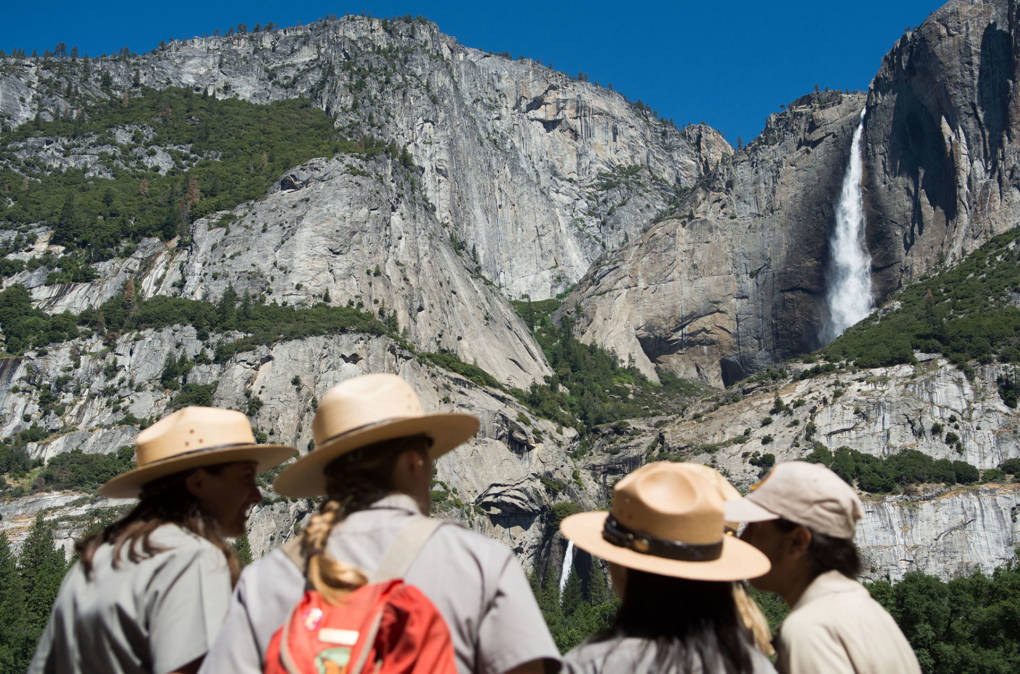
"caption": "Park rangers meet in front of Yosemite Falls.",
"description": "Park rangers meet in front of Yosemite Falls.",
"title": "YosemiteRangers",
"credit": "David Calvert/Getty Images",
"status": "inherit",
"isLoading": false,
"fetchFailed": false
},
"news_11572756": {
"type": "attachments",
"id": "news_11572756",
"meta": {
"index": "attachments_1716263798",
"site": "news",
"id": "11572756",
"found": true
},
"parent": 0,
"imgSizes": {
"small": {
"file": "https://ww2.kqed.org/app/uploads/sites/10/2017/07/tcr_archive_background-520x195.jpg",
"width": 520,
"mimeType": "image/jpeg",
"height": 195
},
"twentyfourteen-full-width": {
"file": "https://ww2.kqed.org/app/uploads/sites/10/2017/07/tcr_archive_background-1038x450.jpg",
"width": 1038,
"mimeType": "image/jpeg",
"height": 450
},
"thumbnail": {
"file": "https://ww2.kqed.org/app/uploads/sites/10/2017/07/tcr_archive_background-160x60.jpg",
"width": 160,
"mimeType": "image/jpeg",
"height": 60
},
"fd-sm": {
"file": "https://ww2.kqed.org/app/uploads/sites/10/2017/07/tcr_archive_background-960x360.jpg",
"width": 960,
"mimeType": "image/jpeg",
"height": 360
},
"post-thumbnail": {
"file": "https://ww2.kqed.org/app/uploads/sites/10/2017/07/tcr_archive_background-672x372.jpg",
"width": 672,
"mimeType": "image/jpeg",
"height": 372
},
"xsmall": {
"file": "https://ww2.kqed.org/app/uploads/sites/10/2017/07/tcr_archive_background-375x141.jpg",
"width": 375,
"mimeType": "image/jpeg",
"height": 141
},
"kqedFullSize": {
"file": "https://ww2.kqed.org/app/uploads/sites/10/2017/07/tcr_archive_background.jpg",
"width": 1200,
"height": 450
},
"large": {
"file": "https://ww2.kqed.org/app/uploads/sites/10/2017/07/tcr_archive_background-1020x383.jpg",
"width": 1020,
"mimeType": "image/jpeg",
"height": 383
},
"xlarge": {
"file": "https://ww2.kqed.org/app/uploads/sites/10/2017/07/tcr_archive_background-1180x443.jpg",
"width": 1180,
"mimeType": "image/jpeg",
"height": 443
},
"guest-author-50": {
"file": "https://ww2.kqed.org/app/uploads/sites/10/2017/07/tcr_archive_background-50x50.jpg",
"width": 50,
"mimeType": "image/jpeg",
"height": 50
},
"guest-author-96": {
"file": "https://ww2.kqed.org/app/uploads/sites/10/2017/07/tcr_archive_background-96x96.jpg",
"width": 96,
"mimeType": "image/jpeg",
"height": 96
},
"medium": {
"file": "https://ww2.kqed.org/app/uploads/sites/10/2017/07/tcr_archive_background-800x300.jpg",
"width": 800,
"mimeType": "image/jpeg",
"height": 300
},
"guest-author-64": {
"file": "https://ww2.kqed.org/app/uploads/sites/10/2017/07/tcr_archive_background-64x64.jpg",
"width": 64,
"mimeType": "image/jpeg",
"height": 64
},
"guest-author-32": {
"file": "https://ww2.kqed.org/app/uploads/sites/10/2017/07/tcr_archive_background-32x32.jpg",
"width": 32,
"mimeType": "image/jpeg",
"height": 32
},
"fd-med": {
"file": "https://ww2.kqed.org/app/uploads/sites/10/2017/07/tcr_archive_background-1180x443.jpg",
"width": 1180,
"mimeType": "image/jpeg",
"height": 443
},
"detail": {
"file": "https://ww2.kqed.org/app/uploads/sites/10/2017/07/tcr_archive_background-150x150.jpg",
"width": 150,
"mimeType": "image/jpeg",
"height": 150
},
"guest-author-128": {
"file": "https://ww2.kqed.org/app/uploads/sites/10/2017/07/tcr_archive_background-128x128.jpg",
"width": 128,
"mimeType": "image/jpeg",
"height": 128
},
"xxsmall": {
"file": "https://ww2.kqed.org/app/uploads/sites/10/2017/07/tcr_archive_background-240x90.jpg",
"width": 240,
"mimeType": "image/jpeg",
"height": 90
}
},
"publishDate": 1500316142,
"modified": 1500316142,
"caption": null,
"description": null,
"title": "tcr_archive_background",
"credit": null,
"status": "inherit",
"isLoading": false,
"fetchFailed": false
},
"news_11671804": {
"type": "attachments",
"id": "news_11671804",
"meta": {
"index": "attachments_1716263798",
"site": "news",
"id": "11671804",
"found": true
},
"parent": 11671742,
"imgSizes": {
"small": {
"file": "https://ww2.kqed.org/app/uploads/sites/10/2018/05/RS29410_GettyImages-543499308-qut-520x347.jpg",
"width": 520,
"mimeType": "image/jpeg",
"height": 347
},
"twentyfourteen-full-width": {
"file": "https://ww2.kqed.org/app/uploads/sites/10/2018/05/RS29410_GettyImages-543499308-qut-1038x576.jpg",
"width": 1038,
"mimeType": "image/jpeg",
"height": 576
},
"thumbnail": {
"file": "https://ww2.kqed.org/app/uploads/sites/10/2018/05/RS29410_GettyImages-543499308-qut-160x107.jpg",
"width": 160,
"mimeType": "image/jpeg",
"height": 107
},
"fd-sm": {
"file": "https://ww2.kqed.org/app/uploads/sites/10/2018/05/RS29410_GettyImages-543499308-qut-960x640.jpg",
"width": 960,
"mimeType": "image/jpeg",
"height": 640
},
"post-thumbnail": {
"file": "https://ww2.kqed.org/app/uploads/sites/10/2018/05/RS29410_GettyImages-543499308-qut-672x372.jpg",
"width": 672,
"mimeType": "image/jpeg",
"height": 372
},
"xsmall": {
"file": "https://ww2.kqed.org/app/uploads/sites/10/2018/05/RS29410_GettyImages-543499308-qut-375x250.jpg",
"width": 375,
"mimeType": "image/jpeg",
"height": 250
},
"kqedFullSize": {
"file": "https://ww2.kqed.org/app/uploads/sites/10/2018/05/RS29410_GettyImages-543499308-qut.jpg",
"width": 1920,
"height": 1280
},
"large": {
"file": "https://ww2.kqed.org/app/uploads/sites/10/2018/05/RS29410_GettyImages-543499308-qut-1020x680.jpg",
"width": 1020,
"mimeType": "image/jpeg",
"height": 680
},
"xlarge": {
"file": "https://ww2.kqed.org/app/uploads/sites/10/2018/05/RS29410_GettyImages-543499308-qut-1180x787.jpg",
"width": 1180,
"mimeType": "image/jpeg",
"height": 787
},
"complete_open_graph": {
"file": "https://ww2.kqed.org/app/uploads/sites/10/2018/05/RS29410_GettyImages-543499308-qut-1200x800.jpg",
"width": 1200,
"mimeType": "image/jpeg",
"height": 800
},
"guest-author-50": {
"file": "https://ww2.kqed.org/app/uploads/sites/10/2018/05/RS29410_GettyImages-543499308-qut-50x50.jpg",
"width": 50,
"mimeType": "image/jpeg",
"height": 50
},
"guest-author-96": {
"file": "https://ww2.kqed.org/app/uploads/sites/10/2018/05/RS29410_GettyImages-543499308-qut-96x96.jpg",
"width": 96,
"mimeType": "image/jpeg",
"height": 96
},
"medium": {
"file": "https://ww2.kqed.org/app/uploads/sites/10/2018/05/RS29410_GettyImages-543499308-qut-800x533.jpg",
"width": 800,
"mimeType": "image/jpeg",
"height": 533
},
"guest-author-64": {
"file": "https://ww2.kqed.org/app/uploads/sites/10/2018/05/RS29410_GettyImages-543499308-qut-64x64.jpg",
"width": 64,
"mimeType": "image/jpeg",
"height": 64
},
"guest-author-32": {
"file": "https://ww2.kqed.org/app/uploads/sites/10/2018/05/RS29410_GettyImages-543499308-qut-32x32.jpg",
"width": 32,
"mimeType": "image/jpeg",
"height": 32
},
"fd-lrg": {
"file": "https://ww2.kqed.org/app/uploads/sites/10/2018/05/RS29410_GettyImages-543499308-qut-1920x1280.jpg",
"width": 1920,
"mimeType": "image/jpeg",
"height": 1280
},
"fd-med": {
"file": "https://ww2.kqed.org/app/uploads/sites/10/2018/05/RS29410_GettyImages-543499308-qut-1180x787.jpg",
"width": 1180,
"mimeType": "image/jpeg",
"height": 787
},
"full-width": {
"file": "https://ww2.kqed.org/app/uploads/sites/10/2018/05/RS29410_GettyImages-543499308-qut-1920x1280.jpg",
"width": 1920,
"mimeType": "image/jpeg",
"height": 1280
},
"detail": {
"file": "https://ww2.kqed.org/app/uploads/sites/10/2018/05/RS29410_GettyImages-543499308-qut-150x150.jpg",
"width": 150,
"mimeType": "image/jpeg",
"height": 150
},
"guest-author-128": {
"file": "https://ww2.kqed.org/app/uploads/sites/10/2018/05/RS29410_GettyImages-543499308-qut-128x128.jpg",
"width": 128,
"mimeType": "image/jpeg",
"height": 128
},
"xxsmall": {
"file": "https://ww2.kqed.org/app/uploads/sites/10/2018/05/RS29410_GettyImages-543499308-qut-240x160.jpg",
"width": 240,
"mimeType": "image/jpeg",
"height": 160
}
},
"publishDate": 1527808578,
"modified": 1527808638,
"caption": "A homeless man sleeps in front of his tent along Van Ness Avenue in downtown San Francisco on June, 27, 2016.",
"description": null,
"title": "US-HOMELESS-SAN-FRANCISCO",
"credit": "Josh Edelson/AFP/Getty Images",
"status": "inherit",
"isLoading": false,
"fetchFailed": false
},
"news_11671745": {
"type": "attachments",
"id": "news_11671745",
"meta": {
"index": "attachments_1716263798",
"site": "news",
"id": "11671745",
"found": true
},
"parent": 11671736,
"imgSizes": {
"small": {
"file": "https://ww2.kqed.org/app/uploads/sites/10/2018/05/TenderloinKidsMain-520x351.jpg",
"width": 520,
"mimeType": "image/jpeg",
"height": 351
},
"twentyfourteen-full-width": {
"file": "https://ww2.kqed.org/app/uploads/sites/10/2018/05/TenderloinKidsMain-1038x576.jpg",
"width": 1038,
"mimeType": "image/jpeg",
"height": 576
},
"thumbnail": {
"file": "https://ww2.kqed.org/app/uploads/sites/10/2018/05/TenderloinKidsMain-160x108.jpg",
"width": 160,
"mimeType": "image/jpeg",
"height": 108
},
"fd-sm": {
"file": "https://ww2.kqed.org/app/uploads/sites/10/2018/05/TenderloinKidsMain-960x648.jpg",
"width": 960,
"mimeType": "image/jpeg",
"height": 648
},
"post-thumbnail": {
"file": "https://ww2.kqed.org/app/uploads/sites/10/2018/05/TenderloinKidsMain-672x372.jpg",
"width": 672,
"mimeType": "image/jpeg",
"height": 372
},
"xsmall": {
"file": "https://ww2.kqed.org/app/uploads/sites/10/2018/05/TenderloinKidsMain-375x253.jpg",
"width": 375,
"mimeType": "image/jpeg",
"height": 253
},
"kqedFullSize": {
"file": "https://ww2.kqed.org/app/uploads/sites/10/2018/05/TenderloinKidsMain.jpg",
"width": 1920,
"height": 1296
},
"large": {
"file": "https://ww2.kqed.org/app/uploads/sites/10/2018/05/TenderloinKidsMain-1020x689.jpg",
"width": 1020,
"mimeType": "image/jpeg",
"height": 689
},
"xlarge": {
"file": "https://ww2.kqed.org/app/uploads/sites/10/2018/05/TenderloinKidsMain-1180x797.jpg",
"width": 1180,
"mimeType": "image/jpeg",
"height": 797
},
"complete_open_graph": {
"file": "https://ww2.kqed.org/app/uploads/sites/10/2018/05/TenderloinKidsMain-1200x810.jpg",
"width": 1200,
"mimeType": "image/jpeg",
"height": 810
},
"guest-author-50": {
"file": "https://ww2.kqed.org/app/uploads/sites/10/2018/05/TenderloinKidsMain-50x50.jpg",
"width": 50,
"mimeType": "image/jpeg",
"height": 50
},
"guest-author-96": {
"file": "https://ww2.kqed.org/app/uploads/sites/10/2018/05/TenderloinKidsMain-96x96.jpg",
"width": 96,
"mimeType": "image/jpeg",
"height": 96
},
"medium": {
"file": "https://ww2.kqed.org/app/uploads/sites/10/2018/05/TenderloinKidsMain-800x540.jpg",
"width": 800,
"mimeType": "image/jpeg",
"height": 540
},
"guest-author-64": {
"file": "https://ww2.kqed.org/app/uploads/sites/10/2018/05/TenderloinKidsMain-64x64.jpg",
"width": 64,
"mimeType": "image/jpeg",
"height": 64
},
"guest-author-32": {
"file": "https://ww2.kqed.org/app/uploads/sites/10/2018/05/TenderloinKidsMain-32x32.jpg",
"width": 32,
"mimeType": "image/jpeg",
"height": 32
},
"fd-lrg": {
"file": "https://ww2.kqed.org/app/uploads/sites/10/2018/05/TenderloinKidsMain-1920x1296.jpg",
"width": 1920,
"mimeType": "image/jpeg",
"height": 1296
},
"fd-med": {
"file": "https://ww2.kqed.org/app/uploads/sites/10/2018/05/TenderloinKidsMain-1180x797.jpg",
"width": 1180,
"mimeType": "image/jpeg",
"height": 797
},
"full-width": {
"file": "https://ww2.kqed.org/app/uploads/sites/10/2018/05/TenderloinKidsMain-1920x1296.jpg",
"width": 1920,
"mimeType": "image/jpeg",
"height": 1296
},
"detail": {
"file": "https://ww2.kqed.org/app/uploads/sites/10/2018/05/TenderloinKidsMain-150x150.jpg",
"width": 150,
"mimeType": "image/jpeg",
"height": 150
},
"guest-author-128": {
"file": "https://ww2.kqed.org/app/uploads/sites/10/2018/05/TenderloinKidsMain-128x128.jpg",
"width": 128,
"mimeType": "image/jpeg",
"height": 128
},
"xxsmall": {
"file": "https://ww2.kqed.org/app/uploads/sites/10/2018/05/TenderloinKidsMain-240x162.jpg",
"width": 240,
"mimeType": "image/jpeg",
"height": 162
}
},
"publishDate": 1527800343,
"modified": 1554155976,
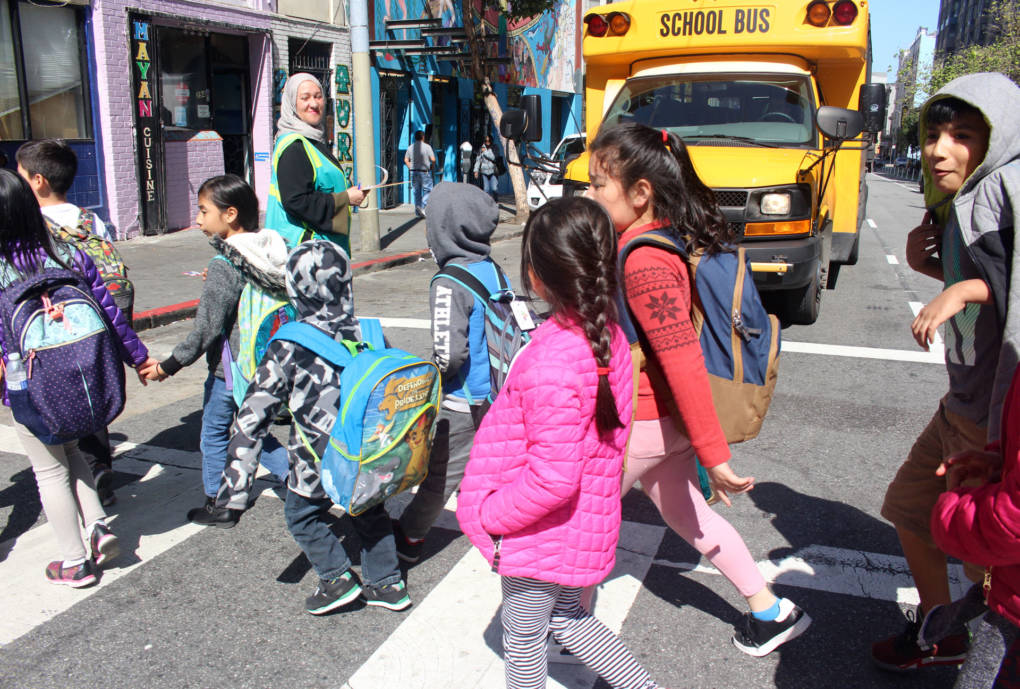
"caption": "Elementary school students cross Turk Street in San Francisco as Safe Passage volunteer Tatiana Alabsi observes them on April 24, 2018. ",
"description": "Elementary school students cross Turk Street in San Francisco as Safe Passage volunteer Tatiana Alabsi observes them on April 24, 2018. ",
"title": "TenderloinKidsMain",
"credit": "Farida Jhabvala Romero/KQED",
"status": "inherit",
"isLoading": false,
"fetchFailed": false
}
},
"audioPlayerReducer": {
"postId": "stream_live",
"isPaused": true,
"isPlaying": false,
"pfsActive": false,
"pledgeModalIsOpen": true,
"playerDrawerIsOpen": false,
"liveAudioPlayStartedAt": 0,
"liveAudioPlayContext": ""
},
"authorsReducer": {
"byline_news_11673870": {
"type": "authors",
"id": "byline_news_11673870",
"meta": {
"override": true
},
"slug": "byline_news_11673870",
"name": "\u003cstrong>Matt Levin\u003c/strong>\u003c/br>CALmatters",
"isLoading": false
},
"byline_news_11672125": {
"type": "authors",
"id": "byline_news_11672125",
"meta": {
"override": true
},
"slug": "byline_news_11672125",
"name": "Michelle Wiley",
"isLoading": false
},
"gmarzorati": {
"type": "authors",
"id": "227",
"meta": {
"index": "authors_1716337520",
"id": "227",
"found": true
},
"name": "Guy Marzorati",
"firstName": "Guy",
"lastName": "Marzorati",
"slug": "gmarzorati",
"email": "gmarzorati@KQED.org",
"display_author_email": true,
"staff_mastheads": [
"news"
],
"title": "Correspondent",
"bio": "Guy Marzorati is a correspondent on KQED's California Politics and Government Desk, based in San Jose. A graduate of Santa Clara University, Guy joined KQED in 2013. He reports on state and local politics and produces KQED's digital voter guide.",
"avatar": "https://secure.gravatar.com/avatar/e7038b8dbfd55b104369b76b1cd0b9de?s=600&d=blank&r=g",
"twitter": "guymarzorati",
"facebook": null,
"instagram": null,
"linkedin": null,
"sites": [
{
"site": "",
"roles": [
"editor"
]
},
{
"site": "news",
"roles": [
"editor"
]
},
{
"site": "science",
"roles": [
"editor"
]
},
{
"site": "forum",
"roles": [
"editor"
]
},
{
"site": "elections",
"roles": [
"editor"
]
},
{
"site": "liveblog",
"roles": [
"editor"
]
}
],
"headData": {
"title": "Guy Marzorati | KQED",
"description": "Correspondent",
"ogImgSrc": "https://secure.gravatar.com/avatar/e7038b8dbfd55b104369b76b1cd0b9de?s=600&d=blank&r=g",
"twImgSrc": "https://secure.gravatar.com/avatar/e7038b8dbfd55b104369b76b1cd0b9de?s=600&d=blank&r=g"
},
"isLoading": false,
"link": "/author/gmarzorati"
},
"kqed": {
"type": "authors",
"id": "236",
"meta": {
"index": "authors_1716337520",
"id": "236",
"found": true
},
"name": "KQED News Staff",
"firstName": "KQED News Staff",
"lastName": null,
"slug": "kqed",
"email": "faq@kqed.org",
"display_author_email": false,
"staff_mastheads": [],
"title": null,
"bio": null,
"avatar": "https://secure.gravatar.com/avatar/ef0e801a68c4c54afa9180db14084167?s=600&d=blank&r=g",
"twitter": null,
"facebook": null,
"instagram": null,
"linkedin": null,
"sites": [
{
"site": "arts",
"roles": [
"contributor"
]
},
{
"site": "news",
"roles": [
"editor"
]
},
{
"site": "futureofyou",
"roles": [
"author"
]
}
],
"headData": {
"title": "KQED News Staff | KQED",
"description": null,
"ogImgSrc": "https://secure.gravatar.com/avatar/ef0e801a68c4c54afa9180db14084167?s=600&d=blank&r=g",
"twImgSrc": "https://secure.gravatar.com/avatar/ef0e801a68c4c54afa9180db14084167?s=600&d=blank&r=g"
},
"isLoading": false,
"link": "/author/kqed"
},
"scottshafer": {
"type": "authors",
"id": "255",
"meta": {
"index": "authors_1716337520",
"id": "255",
"found": true
},
"name": "Scott Shafer",
"firstName": "Scott",
"lastName": "Shafer",
"slug": "scottshafer",
"email": "sshafer@kqed.org",
"display_author_email": false,
"staff_mastheads": [
"news"
],
"title": "KQED Contributor",
"bio": "Scott Shafer is a senior editor with the KQED Politics and Government desk. He is co-host of Political Breakdown, the award-winning radio show and podcast with a personal take on the world of politics. Scott came to KQED in 1998 to host the statewide\u003cem> California Report\u003c/em>. Prior to that he had extended stints in politics and government\u003cem>.\u003c/em> He uses that inside experience at KQED in his, reporting, hosting and analysis for the politics desk. Scott collaborated \u003cem>Political Breakdown a\u003c/em>nd on \u003cem>The Political Mind of Jerry Brown, \u003c/em>an eight-part series about the life and extraordinary political career of the former governor. For fun, he plays water polo with the San Francisco Tsunami.",
"avatar": "https://secure.gravatar.com/avatar/a62ebae45b79d7aed1a39a0e3bf68104?s=600&d=blank&r=g",
"twitter": "scottshafer",
"bluesky": null,
"facebook": null,
"instagram": null,
"linkedin": null,
"sites": [
{
"site": "news",
"roles": [
"editor"
]
},
{
"site": "stateofhealth",
"roles": [
"author"
]
},
{
"site": "science",
"roles": [
"author"
]
},
{
"site": "forum",
"roles": [
"subscriber"
]
},
{
"site": "liveblog",
"roles": [
"author"
]
}
],
"headData": {
"title": "Scott Shafer | KQED",
"description": "KQED Contributor",
"ogImgSrc": "https://secure.gravatar.com/avatar/a62ebae45b79d7aed1a39a0e3bf68104?s=600&d=blank&r=g",
"twImgSrc": "https://secure.gravatar.com/avatar/a62ebae45b79d7aed1a39a0e3bf68104?s=600&d=blank&r=g"
},
"isLoading": false,
"link": "/author/scottshafer"
},
"tgoldberg": {
"type": "authors",
"id": "258",
"meta": {
"index": "authors_1716337520",
"id": "258",
"found": true
},
"name": "Ted Goldberg",
"firstName": "Ted",
"lastName": "Goldberg",
"slug": "tgoldberg",
"email": "tgoldberg@kqed.org",
"display_author_email": true,
"staff_mastheads": [
"news"
],
"title": "KQED Managing Editor, News and Newscasts",
"bio": "Ted Goldberg is Managing Editor of News and Newscasts at KQED. His main reporting beat is the Bay Area's oil refining industry.\r\n\r\nPrior to joining KQED in 2014, Ted worked at CBS News and WCBS AM in New York and Bay City News and KCBS Radio in San Francisco. He graduated from Oberlin College in Ohio in 1998.",
"avatar": "https://secure.gravatar.com/avatar/30ce2e4fe89135e104f89be2394d16225b9d36c121b5b3cb7651ce642978b96f?s=600&d=blank&r=g",
"twitter": "TedrickG",
"bluesky": null,
"facebook": null,
"instagram": null,
"linkedin": null,
"sites": [
{
"site": "news",
"roles": [
"editor"
]
},
{
"site": "science",
"roles": [
"editor"
]
}
],
"headData": {
"title": "Ted Goldberg | KQED",
"description": "KQED Managing Editor, News and Newscasts",
"ogImgSrc": "https://secure.gravatar.com/avatar/30ce2e4fe89135e104f89be2394d16225b9d36c121b5b3cb7651ce642978b96f?s=600&d=blank&r=g",
"twImgSrc": "https://secure.gravatar.com/avatar/30ce2e4fe89135e104f89be2394d16225b9d36c121b5b3cb7651ce642978b96f?s=600&d=blank&r=g"
},
"isLoading": false,
"link": "/author/tgoldberg"
},
"markfiore": {
"type": "authors",
"id": "3236",
"meta": {
"index": "authors_1716337520",
"id": "3236",
"found": true
},
"name": "Mark Fiore",
"firstName": "Mark",
"lastName": "Fiore",
"slug": "markfiore",
"email": "mark@markfiore.com",
"display_author_email": false,
"staff_mastheads": [
"news"
],
"title": "KQED News Cartoonist",
"bio": "\u003ca href=\"http://www.MarkFiore.com\">MarkFiore.com\u003c/a> | \u003ca href=\"https://twitter.com/markfiore\">Follow on Twitter\u003c/a> | \u003ca href=\"https://www.facebook.com/pages/Mark-Fiore-Animated-Political-Cartoons/94451707396?ref=bookmarks\">Facebook\u003c/a> | \u003ca href=\"mailto:mark@markfiore.com\">email\u003c/a>\r\n\r\nPulitzer Prize-winner, Mark Fiore, who the Wall Street Journal has called “the undisputed guru of the form,” creates animated political cartoons in San Francisco, where his work has been featured regularly on the San Francisco Chronicle’s web site, SFGate.com. His work has appeared on Newsweek.com, Slate.com, CBSNews.com, MotherJones.com, DailyKos.com and NPR’s web site. Fiore’s political animation has appeared on CNN, Frontline, Bill Moyers Journal, Salon.com and cable and broadcast outlets across the globe.\r\n\r\nBeginning his professional life by drawing traditional political cartoons for newspapers, Fiore’s work appeared in publications ranging from the Washington Post to the Los Angeles Times. In the late 1990s, he began to experiment with animating political cartoons and, after a short stint at the San Jose Mercury News as their staff cartoonist, Fiore devoted all his energies to animation.\r\nGrowing up in California, Fiore also spent a good portion of his life in the backwoods of Idaho. It was this combination that shaped him politically. Mark majored in political science at Colorado College, where, in a perfect send-off for a cartoonist, he received his diploma in 1991 as commencement speaker Dick Cheney smiled approvingly.\r\nMark Fiore was awarded the Pulitzer Prize for political cartooning in 2010, a Robert F. Kennedy Journalism Award in 2004 and has twice received an Online Journalism Award for commentary from the Online News Association (2002, 2008). Fiore has received two awards for his work in new media from the National Cartoonists Society (2001, 2002), and in 2006 received The James Madison Freedom of Information Award from The Society of Professional Journalists.",
"avatar": "https://secure.gravatar.com/avatar/fc4e2a612b15b67bad0c6f0e1db4ca9b?s=600&d=blank&r=g",
"twitter": "MarkFiore",
"facebook": null,
"instagram": "https://www.instagram.com/markfiore/?hl=en",
"linkedin": null,
"sites": [
{
"site": "arts",
"roles": [
"contributor"
]
},
{
"site": "news",
"roles": [
"editor"
]
},
{
"site": "futureofyou",
"roles": [
"editor"
]
},
{
"site": "science",
"roles": [
"editor"
]
}
],
"headData": {
"title": "Mark Fiore | KQED",
"description": "KQED News Cartoonist",
"ogImgSrc": "https://secure.gravatar.com/avatar/fc4e2a612b15b67bad0c6f0e1db4ca9b?s=600&d=blank&r=g",
"twImgSrc": "https://secure.gravatar.com/avatar/fc4e2a612b15b67bad0c6f0e1db4ca9b?s=600&d=blank&r=g"
},
"isLoading": false,
"link": "/author/markfiore"
},
"mlagos": {
"type": "authors",
"id": "3239",
"meta": {
"index": "authors_1716337520",
"id": "3239",
"found": true
},
"name": "Marisa Lagos",
"firstName": "Marisa",
"lastName": "Lagos",
"slug": "mlagos",
"email": "mlagos@kqed.org",
"display_author_email": false,
"staff_mastheads": [
"news"
],
"title": "KQED Contributor",
"bio": "Marisa Lagos is a correspondent for KQED’s California Politics and Government Desk and co-hosts the award-winning show and podcast, Political Breakdown. At KQED, Lagos also conducts reporting, analysis and investigations into state, local and national politics for radio, TV, online and onstage. In 2022, she and co-host, Scott Shafer, moderated the only gubernatorial debate in California. In 2020, the \u003ci>Washington Post\u003c/i> named her one of the top political journalists in California; she was nominated for a Peabody and won several other awards for her work investigating the 2017 California wildfires. She has worked at the \u003ci>San Francisco Chronicle\u003c/i>, \u003ci>San Francisco Examiner\u003c/i> and \u003ci>Los Angeles Times\u003c/i>. A UC Santa Barbara graduate, she lives in San Francisco with her two sons and husband.",
"avatar": "https://secure.gravatar.com/avatar/a261a0d3696fc066871ef96b85b5e7d2?s=600&d=blank&r=g",
"twitter": "@mlagos",
"facebook": null,
"instagram": null,
"linkedin": null,
"sites": [
{
"site": "arts",
"roles": [
"author"
]
},
{
"site": "news",
"roles": [
"editor"
]
},
{
"site": "science",
"roles": [
"editor"
]
},
{
"site": "forum",
"roles": [
"author"
]
},
{
"site": "liveblog",
"roles": [
"author"
]
}
],
"headData": {
"title": "Marisa Lagos | KQED",
"description": "KQED Contributor",
"ogImgSrc": "https://secure.gravatar.com/avatar/a261a0d3696fc066871ef96b85b5e7d2?s=600&d=blank&r=g",
"twImgSrc": "https://secure.gravatar.com/avatar/a261a0d3696fc066871ef96b85b5e7d2?s=600&d=blank&r=g"
},
"isLoading": false,
"link": "/author/mlagos"
},
"fjhabvala": {
"type": "authors",
"id": "8659",
"meta": {
"index": "authors_1716337520",
"id": "8659",
"found": true
},
"name": "Farida Jhabvala Romero",
"firstName": "Farida",
"lastName": "Jhabvala Romero",
"slug": "fjhabvala",
"email": "fjhabvala@kqed.org",
"display_author_email": true,
"staff_mastheads": [
"news"
],
"title": "KQED Contributor",
"bio": "Farida Jhabvala Romero is a Labor Correspondent for KQED. She previously covered immigration. Farida was \u003ca href=\"https://www.ccnma.org/2022-most-influential-latina-journalists\">named\u003c/a> one of the 10 Most Influential Latina Journalists in California in 2022 by the California Chicano News Media Association. Her work has won awards from the Society of Professional Journalists (Northern California), as well as a national and regional Edward M. Murrow Award for the collaborative reporting projects “Dangerous Air” and “Graying California.” Before joining KQED, Farida worked as a producer at Radio Bilingüe, a national public radio network. Farida earned her master’s degree in journalism from Stanford University.",
"avatar": "https://secure.gravatar.com/avatar/f9f022d4e2609741874222a1e9d41f48fea74011aa7c615eef91d9a50c944ebe?s=600&d=blank&r=g",
"twitter": "FaridaJhabvala",
"bluesky": null,
"facebook": null,
"instagram": null,
"linkedin": "https://www.linkedin.com/in/faridajhabvala/",
"sites": [
{
"site": "news",
"roles": [
"editor"
]
},
{
"site": "stateofhealth",
"roles": [
"author"
]
},
{
"site": "liveblog",
"roles": [
"author"
]
}
],
"headData": {
"title": "Farida Jhabvala Romero | KQED",
"description": "KQED Contributor",
"ogImgSrc": "https://secure.gravatar.com/avatar/f9f022d4e2609741874222a1e9d41f48fea74011aa7c615eef91d9a50c944ebe?s=600&d=blank&r=g",
"twImgSrc": "https://secure.gravatar.com/avatar/f9f022d4e2609741874222a1e9d41f48fea74011aa7c615eef91d9a50c944ebe?s=600&d=blank&r=g"
},
"isLoading": false,
"link": "/author/fjhabvala"
},
"korr": {
"type": "authors",
"id": "11200",
"meta": {
"index": "authors_1716337520",
"id": "11200",
"found": true
},
"name": "Katie Orr",
"firstName": "Katie",
"lastName": "Orr",
"slug": "korr",
"email": "korr@kqed.org",
"display_author_email": false,
"staff_mastheads": [],
"title": "KQED Contributor",
"bio": "Katie Orr was a Sacramento-based reporter for KQED's Politics and Government Desk, covering the state Capitol and a variety of issues including women in politics, voting and elections and legislation. Prior to joining KQED in 2016, Katie was state government reporter for Capital Public Radio in Sacramento. She's also worked for KPBS in San Diego, where she covered City Hall.\r\n\r\nKatie received her masters degree in political science from San Diego State University and holds a Bachelors degree in broadcast journalism from Arizona State University.\r\n\r\nIn 2015 Katie won a national Clarion Award for a series of stories she did on women in California politics. She's been honored by the Society for Professional Journalists and, in 2013, was named by \u003cem>The Washington Post\u003c/em> as one of the country's top state Capitol reporters. She's also reported for the award-winning documentary series \u003cem>The View from Here \u003c/em>and was part of the team that won national PRNDI and Gabriel Awards in 2015. She lives in Sacramento with her husband. Twitter: @1KatieOrr",
"avatar": "https://secure.gravatar.com/avatar/41a40b25845adc78f50808670860449e?s=600&d=blank&r=g",
"twitter": "1katieorr",
"facebook": null,
"instagram": null,
"linkedin": null,
"sites": [
{
"site": "news",
"roles": [
"subscriber"
]
},
{
"site": "stateofhealth",
"roles": [
"author"
]
},
{
"site": "forum",
"roles": [
"author"
]
}
],
"headData": {
"title": "Katie Orr | KQED",
"description": "KQED Contributor",
"ogImgSrc": "https://secure.gravatar.com/avatar/41a40b25845adc78f50808670860449e?s=600&d=blank&r=g",
"twImgSrc": "https://secure.gravatar.com/avatar/41a40b25845adc78f50808670860449e?s=600&d=blank&r=g"
},
"isLoading": false,
"link": "/author/korr"
},
"rlevi": {
"type": "authors",
"id": "11260",
"meta": {
"index": "authors_1716337520",
"id": "11260",
"found": true
},
"name": "Ryan Levi",
"firstName": "Ryan",
"lastName": "Levi",
"slug": "rlevi",
"email": "rlevi@KQED.org",
"display_author_email": false,
"staff_mastheads": [],
"title": "KQED Contributor",
"bio": "Ryan Levi was a reporter and podcast producer at KQED News from 2016-2019. He worked on \u003ca href=\"https://www.kqed.org/news/series/baycurious\">Bay Curious\u003c/a>, \u003ca href=\"https://www.kqed.org/news/tag/the-bay/\">The Bay, \u003c/a>and \u003ca href=\"https://podcasts.apple.com/us/podcast/the-california-report-magazine/id1314750545\">The California Report Magazine\u003c/a>, as well as hosting and producing the weekly \u003ca href=\"https://www.kqed.org/news/program/qedup/\">Q'ed Up podcast. \u003c/a>He also helped inaugurate KQED's weekend news coverage in 2017 as one of two original digital producers. Ryan holds degrees in multimedia journalism and Spanish from the University of Missouri.",
"avatar": "https://secure.gravatar.com/avatar/4cb2ddd028ac8807d1adf09609c5555d?s=600&d=blank&r=g",
"twitter": "ryan_levi",
"facebook": null,
"instagram": null,
"linkedin": null,
"sites": [
{
"site": "arts",
"roles": [
"editor"
]
},
{
"site": "news",
"roles": [
"subscriber"
]
},
{
"site": "stateofhealth",
"roles": [
"editor"
]
},
{
"site": "science",
"roles": [
"editor"
]
},
{
"site": "forum",
"roles": [
"administrator"
]
},
{
"site": "perspectives",
"roles": [
"administrator"
]
}
],
"headData": {
"title": "Ryan Levi | KQED",
"description": "KQED Contributor",
"ogImgSrc": "https://secure.gravatar.com/avatar/4cb2ddd028ac8807d1adf09609c5555d?s=600&d=blank&r=g",
"twImgSrc": "https://secure.gravatar.com/avatar/4cb2ddd028ac8807d1adf09609c5555d?s=600&d=blank&r=g"
},
"isLoading": false,
"link": "/author/rlevi"
},
"vrancano": {
"type": "authors",
"id": "11276",
"meta": {
"index": "authors_1716337520",
"id": "11276",
"found": true
},
"name": "Vanessa Rancaño",
"firstName": "Vanessa",
"lastName": "Rancaño",
"slug": "vrancano",
"email": "vrancano@kqed.org",
"display_author_email": false,
"staff_mastheads": [
"news"
],
"title": "Reporter",
"bio": "Vanessa Rancaño is a features reporter for KQED. She’s also covered homelessness and education for the station and reported from the Central Valley. Her work has aired across public radio, from flagship national news shows to longform narrative podcasts. Before taking up a mic, she worked as a freelance print journalist. She’s been recognized with a number of national and regional awards. Vanessa grew up in California's Central Valley. She's a former NPR Kroc Fellow, and a graduate of the UC Berkeley Graduate School of Journalism.",
"avatar": "https://secure.gravatar.com/avatar/b3a383dfb0e7ee1c17568f2cf067904ab654d6e3de9743fc661f3c788ade1bed?s=600&d=blank&r=g",
"twitter": "vanessarancano",
"bluesky": null,
"facebook": null,
"instagram": null,
"linkedin": null,
"sites": [
{
"site": "arts",
"roles": [
"editor"
]
},
{
"site": "news",
"roles": [
"editor"
]
},
{
"site": "liveblog",
"roles": [
"contributor"
]
}
],
"headData": {
"title": "Vanessa Rancaño | KQED",
"description": "Reporter",
"ogImgSrc": "https://secure.gravatar.com/avatar/b3a383dfb0e7ee1c17568f2cf067904ab654d6e3de9743fc661f3c788ade1bed?s=600&d=blank&r=g",
"twImgSrc": "https://secure.gravatar.com/avatar/b3a383dfb0e7ee1c17568f2cf067904ab654d6e3de9743fc661f3c788ade1bed?s=600&d=blank&r=g"
},
"isLoading": false,
"link": "/author/vrancano"
},
"tmosley": {
"type": "authors",
"id": "11373",
"meta": {
"index": "authors_1716337520",
"id": "11373",
"found": true
},
"name": "Tonya Mosley",
"firstName": "Tonya",
"lastName": "Mosley",
"slug": "tmosley",
"email": "tmosley@kqed.org",
"display_author_email": false,
"staff_mastheads": [],
"title": "KQED Contributor",
"bio": "Tonya Mosley is a former Silicon Valley bureau chief for KQED. She served as the senior editor, leading a team of journalists covering the impacts of technology companies on the South Bay and society. Tonya is also a former host and reporter for KQED.\r\n\r\nPrior to KQED, Tonya served as a television reporter & anchor for several media outlets, including Al Jazeera America.\r\n\r\nIn 2015, Tonya was awarded a John S. Knight Journalism Fellowship at Stanford University where she co-created a workshop for journalists on the impacts of implicit bias, and co-wrote a Belgian/American experimental study on the effects of protest coverage.\r\n\r\nTonya has won several national awards for her work, most recently an Emmy Award in 2016 for her televised piece \"Beyond Ferguson,\" and a national Edward R. Murrow award for her public radio series \"Black in Seattle.\"\r\n\r\nYou can reach Tonya at: tmosley@kqed.org.",
"avatar": "https://secure.gravatar.com/avatar/0b2ea2bbfed6bafaacd21e9398c68e5e?s=600&d=blank&r=g",
"twitter": "tonyamosley",
"facebook": null,
"instagram": null,
"linkedin": null,
"sites": [
{
"site": "arts",
"roles": [
"editor"
]
},
{
"site": "news",
"roles": [
"subscriber"
]
},
{
"site": "about",
"roles": [
"author"
]
},
{
"site": "forum",
"roles": [
"author"
]
}
],
"headData": {
"title": "Tonya Mosley | KQED",
"description": "KQED Contributor",
"ogImgSrc": "https://secure.gravatar.com/avatar/0b2ea2bbfed6bafaacd21e9398c68e5e?s=600&d=blank&r=g",
"twImgSrc": "https://secure.gravatar.com/avatar/0b2ea2bbfed6bafaacd21e9398c68e5e?s=600&d=blank&r=g"
},
"isLoading": false,
"link": "/author/tmosley"
}
},
"pagesReducer": {
"news_category_housing": {
"type": "terms",
"id": "news_6266",
"meta": {
"index": "terms_1716263798",
"site": "news",
"id": "6266",
"score": 11.04063
},
"featImg": null,
"name": "Housing",
"description": null,
"taxonomy": "category",
"headData": {
"twImgId": null,
"twTitle": null,
"ogTitle": null,
"ogImgId": null,
"twDescription": null,
"description": null,
"title": "Housing Archives | KQED News",
"ogDescription": null
},
"ttid": 6290,
"slug": "housing",
"isLoading": false,
"title": "Housing",
"pageMeta": {
"site": "news",
"WpPageTemplate": "page-topic-editorial",
"currentPage": 127
},
"blocks": [
{
"blockName": "kqed/post-list",
"attrs": {
"layout": "cardArticle2",
"query": "posts/news?category=housing",
"seeMore": false,
"paginated": true,
"page": 127
}
},
{
"blockName": "kqed/ad"
}
]
}
},
"pfsSessionReducer": {},
"postsReducer": {
"stream_live": {
"type": "live",
"id": "stream_live",
"audioUrl": "https://streams.kqed.org/kqedradio",
"title": "Live Stream",
"excerpt": "Live Stream information currently unavailable.",
"link": "/radio",
"featImg": "",
"label": {
"name": "KQED Live",
"link": "/"
}
},
"stream_kqedNewscast": {
"type": "posts",
"id": "stream_kqedNewscast",
"audioUrl": "https://www.kqed.org/.stream/anon/radio/RDnews/newscast.mp3?_=1",
"title": "KQED Newscast",
"featImg": "",
"label": {
"name": "88.5 FM",
"link": "/"
}
},
"news_11674272": {
"type": "posts",
"id": "news_11674272",
"meta": {
"index": "posts_1716263798",
"site": "news",
"id": "11674272",
"score": null,
"sort": [
1528826154000
]
},
"parent": 0,
"labelTerm": {
"site": "news",
"term": 72
},
"blocks": [],
"publishDate": 1528826154,
"format": "standard",
"disqusTitle": "Changes to Proposition 13 Could Mean Big Costs for Governments",
"title": "Changes to Proposition 13 Could Mean Big Costs for Governments",
"headTitle": "The California Report | KQED News",
"content": "\u003cp>A potential expansion to California’s Proposition 13 would likely mean increased home sales and higher revenues for realtors. But there’s disagreement on how the measure could affect the state’s finances.\u003c/p>\n\u003caside class=\"alignright\">\n\u003ch3>Read More on Proposition 13\u003c/h3>\n\u003cp>\u003c/p>\n\u003cul>\n\u003cli>\n\u003ca href=\"https://www.kqed.org/lowdown/19922/the-taxpayers-revolt-how-proposition-13-changed-california-an-illustrated-explainer\" target=\"_blank\">The Taxpayers Revolt! How Prop 13 Transformed California\u003c/a>\n\u003c/li>\n\u003c/ul>\n\u003cul>\n\u003cli>\n\u003ca href=\"https://www.kqed.org/news/11574585/despite-proposition-13-california-property-tax-revenue-has-soared\" target=\"_blank\">Despite Proposition 13, California Property Tax Revenue Has Soared\u003c/a>\n\u003c/li>\n\u003c/ul>\n\u003cul>\n\u003cli>\n\u003ca href=\"https://www.kqed.org/news/11666284/5-reasons-californias-housing-costs-are-so-high\" target=\"_blank\">5 Reasons California's Housing Costs Are So High\u003c/a>\n\u003c/li>\n\u003c/ul>\n\u003c/aside>\n\u003cp>Proposition 13 limits annual property tax increases on California homes. Since voters passed the proposition in 1978, the law has limited taxes on any piece of property as long as it remains under the same ownership. When it changes hands, the taxed value of the property is reassessed.\u003c/p>\n\u003cp>In November, voters will weigh in on whether to expand those tax breaks. The initiative on the fall ballot would allow homeowners who are 55 or older, disabled, or who lost their homes in a natural disaster to transfer their current property tax assessment to a new home—even if that new house is more expensive.\u003c/p>\n\u003cp>Brian Uhler with the nonpartisan Legislative Analyst's Office told a legislative committee Monday \u003ca href=\"http://www.lao.ca.gov/ballot/2017/170501.pdf\">an analysis shows\u003c/a> the measure could cost the state a lot of money in property taxes.\u003c/p>\n\u003cp>“In the first few years, we estimate that schools and other local governments would each lose over $100 million a year,\" he said. \"And that these losses would grow over time probably reaching around $1 billion a year.”\u003c/p>\n\u003cp>[ad fullwidth]\u003c/p>\n\u003cp>However, a separate analysis paid for by the California Association of Realtors found revenue generated through increased home sales would offset any losses to the state.\u003c/p>\n\u003cp>\"On a net basis, this measure, if it's enacted and implemented, will come pretty close to paying for itself,\" said Bill Hamm, managing director of the Berkeley Research Group, which conducted the study. \"The additional revenue it generates will come close to offsetting the revenue losses that we certainly all agree are built into this measure.\"\u003c/p>\n\u003cp>\u003c/p>\n\u003cp>Supporters maintain the initiative will make it easier for senior homeowners to move, which could free up homes for younger families. But opponents say the loss of tax revenue would be massive for local governments.\u003c/p>\n\n",
"disqusIdentifier": "11674272 https://ww2.kqed.org/news/?p=11674272",
"disqusUrl": "https://ww2.kqed.org/news/2018/06/12/changes-to-prop-13-could-mean-big-costs-for-governments/",
"stats": {
"hasVideo": false,
"hasChartOrMap": false,
"hasAudio": false,
"hasPolis": false,
"wordCount": 363,
"hasGoogleForm": false,
"hasGallery": false,
"hasHearkenModule": false,
"iframeSrcs": [],
"paragraphCount": 11
},
"modified": 1528837056,
"excerpt": "Proposition 13 limits annual property tax increases on California homes. In November, voters will decide whether to expand those tax breaks.",
"headData": {
"twImgId": "",
"twTitle": "",
"ogTitle": "",
"ogImgId": "",
"twDescription": "",
"description": "Proposition 13 limits annual property tax increases on California homes. In November, voters will decide whether to expand those tax breaks.",
"title": "Changes to Proposition 13 Could Mean Big Costs for Governments | KQED",
"ogDescription": "",
"schema": {
"@context": "https://schema.org",
"@type": "NewsArticle",
"headline": "Changes to Proposition 13 Could Mean Big Costs for Governments",
"datePublished": "2018-06-12T10:55:54-07:00",
"dateModified": "2018-06-12T13:57:36-07:00",
"image": "https://cdn.kqed.org/wp-content/uploads/2020/02/KQED-OG-Image@1x.png",
"isAccessibleForFree": "True",
"publisher": {
"@type": "NewsMediaOrganization",
"@id": "https://www.kqed.org/#organization",
"name": "KQED",
"logo": "https://cdn.kqed.org/wp-content/uploads/2020/02/KQED-OG-Image@1x.png",
"url": "https://www.kqed.org",
"sameAs": [
"https://www.facebook.com/KQED",
"https://twitter.com/KQED",
"https://www.instagram.com/kqed/",
"https://www.tiktok.com/@kqedofficial",
"https://www.linkedin.com/company/kqed",
"https://www.youtube.com/channel/UCeC0IOo7i1P_61zVUWbJ4nw"
]
}
}
},
"guestAuthors": [],
"slug": "changes-to-prop-13-could-mean-big-costs-for-governments",
"status": "publish",
"path": "/news/11674272/changes-to-prop-13-could-mean-big-costs-for-governments",
"audioTrackLength": null,
"parsedContent": [
{
"type": "contentString",
"content": "\u003cdiv class=\"post-body\">\u003cp>\u003cp>A potential expansion to California’s Proposition 13 would likely mean increased home sales and higher revenues for realtors. But there’s disagreement on how the measure could affect the state’s finances.\u003c/p>\n\u003caside class=\"alignright\">\n\u003ch3>Read More on Proposition 13\u003c/h3>\n\u003cp>\u003c/p>\n\u003cul>\n\u003cli>\n\u003ca href=\"https://www.kqed.org/lowdown/19922/the-taxpayers-revolt-how-proposition-13-changed-california-an-illustrated-explainer\" target=\"_blank\">The Taxpayers Revolt! How Prop 13 Transformed California\u003c/a>\n\u003c/li>\n\u003c/ul>\n\u003cul>\n\u003cli>\n\u003ca href=\"https://www.kqed.org/news/11574585/despite-proposition-13-california-property-tax-revenue-has-soared\" target=\"_blank\">Despite Proposition 13, California Property Tax Revenue Has Soared\u003c/a>\n\u003c/li>\n\u003c/ul>\n\u003cul>\n\u003cli>\n\u003ca href=\"https://www.kqed.org/news/11666284/5-reasons-californias-housing-costs-are-so-high\" target=\"_blank\">5 Reasons California's Housing Costs Are So High\u003c/a>\n\u003c/li>\n\u003c/ul>\n\u003c/aside>\n\u003cp>Proposition 13 limits annual property tax increases on California homes. Since voters passed the proposition in 1978, the law has limited taxes on any piece of property as long as it remains under the same ownership. When it changes hands, the taxed value of the property is reassessed.\u003c/p>\n\u003cp>In November, voters will weigh in on whether to expand those tax breaks. The initiative on the fall ballot would allow homeowners who are 55 or older, disabled, or who lost their homes in a natural disaster to transfer their current property tax assessment to a new home—even if that new house is more expensive.\u003c/p>\n\u003cp>Brian Uhler with the nonpartisan Legislative Analyst's Office told a legislative committee Monday \u003ca href=\"http://www.lao.ca.gov/ballot/2017/170501.pdf\">an analysis shows\u003c/a> the measure could cost the state a lot of money in property taxes.\u003c/p>\n\u003cp>“In the first few years, we estimate that schools and other local governments would each lose over $100 million a year,\" he said. \"And that these losses would grow over time probably reaching around $1 billion a year.”\u003c/p>\n\u003cp>\u003c/p>\u003c/div>",
"attributes": {
"named": {},
"numeric": []
}
},
{
"type": "component",
"content": "",
"name": "ad",
"attributes": {
"named": {
"label": "fullwidth"
},
"numeric": [
"fullwidth"
]
}
},
{
"type": "contentString",
"content": "\u003cdiv class=\"post-body\">\u003cp>\u003c/p>\n\u003cp>However, a separate analysis paid for by the California Association of Realtors found revenue generated through increased home sales would offset any losses to the state.\u003c/p>\n\u003cp>\"On a net basis, this measure, if it's enacted and implemented, will come pretty close to paying for itself,\" said Bill Hamm, managing director of the Berkeley Research Group, which conducted the study. \"The additional revenue it generates will come close to offsetting the revenue losses that we certainly all agree are built into this measure.\"\u003c/p>\n\u003cp>\u003c/p>\n\u003cp>Supporters maintain the initiative will make it easier for senior homeowners to move, which could free up homes for younger families. But opponents say the loss of tax revenue would be massive for local governments.\u003c/p>\n\n\u003c/div>\u003c/p>",
"attributes": {
"named": {},
"numeric": []
}
}
],
"link": "/news/11674272/changes-to-prop-13-could-mean-big-costs-for-governments",
"authors": [
"11200"
],
"programs": [
"news_72"
],
"categories": [
"news_1758",
"news_6266",
"news_8",
"news_13"
],
"tags": [
"news_20191",
"news_1775",
"news_23484",
"news_17286"
],
"featImg": "news_11660433",
"label": "news_72"
},
"news_11672549": {
"type": "posts",
"id": "news_11672549",
"meta": {
"index": "posts_1716263798",
"site": "news",
"id": "11672549",
"score": null,
"sort": [
1528742464000
]
},
"guestAuthors": [],
"slug": "leaving-the-bay-area-where-people-are-going-and-why",
"title": "Leaving the Bay Area: Where People Are Going and Why",
"publishDate": 1528742464,
"format": "audio",
"headTitle": "Leaving the Bay Area: Where People Are Going and Why | KQED",
"labelTerm": {
"term": 72,
"site": "news"
},
"content": "\u003cp>\u003cem>“I’m packing boxes now and moving to North Carolina.”\u003c/em>\u003c/p>\n\u003cp>\u003cem>“I’m looking very hard at moving to Nevada!”\u003c/em>\u003c/p>\n\u003cp>\u003cem>“My kids cannot afford to rent, let alone buy here, so we are all headed to Colorado in the fall.”\u003c/em>\u003c/p>\n\u003cp>These are just a few of the more than 200 responses we received to a question we asked residents of Oakland, San Jose and San Francisco on the neighborhood-based social network, Nextdoor:\u003c/p>\n\u003cp>\u003cstrong>“Are you considering a move out of state, and if so, where are you going?”\u003c/strong>\u003c/p>\n\u003cp>[ad fullwidth]\u003c/p>\n\u003cp>Of the more than 200 respondents, 187 pointed to high home prices, the cost of living, traffic and homelessness as the top reasons they were \u003ca href=\"https://docs.google.com/forms/d/e/1FAIpQLSdZbz6zL8KfO9GPG7Yc_Suii0RGZLZchPMEMVIvfd3GvgiclQ/viewform?usp=sf_link\" target=\"_blank\" rel=\"noopener\">considering a move\u003c/a>. According to the real estate website Zillow, the median home value in \u003ca href=\"https://www.zillow.com/san-francisco-ca/home-values/\" target=\"_blank\" rel=\"noopener\">San Francisco is $1,334,800\u003c/a>; \u003ca href=\"https://www.zillow.com/san-jose-ca/home-values/\" target=\"_blank\" rel=\"noopener\">$1,080,300 in San Jose\u003c/a>; and \u003ca href=\"https://www.zillow.com/oakland-ca/home-values/\" target=\"_blank\" rel=\"noopener\">$757,700 in Oakland\u003c/a>.\u003c/p>\n\u003cp>As for where people are going? Here’s a snapshot, based on the responses we received:\u003c/p>\n\u003cp>\u003c!-- iframe plugin v.4.3 wordpress.org/plugins/iframe/ -->\u003cbr>\n\u003ciframe loading=\"lazy\" src=\"https://uploads.knightlab.com/storymapjs/e35c53787eab78fb4646de135819c3da/moving-from-the-bay/index.html\" frameborder=\"0\" width=\"100%\" height=\"500\" scrolling=\"yes\" class=\"iframe-class\">\u003c/iframe>\u003c/p>\n\u003ch2>Your Stories\u003c/h2>\n\u003cp>Many of you also shared heartfelt stories of resolve, heartbreak, disappointment, fear and, for some, excitement at the prospect of gaining relief from the high cost of living in the Golden State.\u003c/p>\n\u003cblockquote>\n\u003ch3 style=\"text-align: left\">“For us, it’s a quality of life issue.”\u003c/h3>\n\u003c/blockquote>\n\u003cfigure id=\"attachment_11672613\" class=\"wp-caption aligncenter\" style=\"max-width: 800px\">\u003cimg loading=\"lazy\" decoding=\"async\" class=\"wp-image-11672613 size-medium\" src=\"https://ww2.kqed.org/news/wp-content/uploads/sites/10/2018/06/image1-4-800x600.jpeg\" alt=\"Laura Saso at Big Sur, one of her favorite natural wonders.\" width=\"800\" height=\"600\" srcset=\"https://cdn.kqed.org/wp-content/uploads/sites/10/2018/06/image1-4-800x600.jpeg 800w, https://cdn.kqed.org/wp-content/uploads/sites/10/2018/06/image1-4-160x120.jpeg 160w, https://cdn.kqed.org/wp-content/uploads/sites/10/2018/06/image1-4-1020x765.jpeg 1020w, https://cdn.kqed.org/wp-content/uploads/sites/10/2018/06/image1-4-1200x900.jpeg 1200w, https://cdn.kqed.org/wp-content/uploads/sites/10/2018/06/image1-4-1920x1440.jpeg 1920w, https://cdn.kqed.org/wp-content/uploads/sites/10/2018/06/image1-4-1180x885.jpeg 1180w, https://cdn.kqed.org/wp-content/uploads/sites/10/2018/06/image1-4-960x720.jpeg 960w, https://cdn.kqed.org/wp-content/uploads/sites/10/2018/06/image1-4-240x180.jpeg 240w, https://cdn.kqed.org/wp-content/uploads/sites/10/2018/06/image1-4-375x281.jpeg 375w, https://cdn.kqed.org/wp-content/uploads/sites/10/2018/06/image1-4-520x390.jpeg 520w\" sizes=\"(max-width: 800px) 100vw, 800px\">\u003cfigcaption class=\"wp-caption-text\">Laura Saso at Big Sur, one of her favorite natural wonders. \u003ccite>(Laura Saso)\u003c/cite>\u003c/figcaption>\u003c/figure>\n\u003cp>[dropcap]W[/dropcap]e are talking about moving when our son is done with high school. For us it’s not because of the housing prices. We are part of the fortunate few able to buy a house recently.\u003c/p>\n\u003cp>I was born and raised here. We have some of the most beautiful coastlines and mountains for hiking. When I was younger I used to think so many Californians take for granted the natural beauty we live in. Now I worry that all that beauty will be lost in garbage, overcrowding and mismanagement of funds.\u003c/p>\n\u003cp>The gap between “the have and have nots” is widening everyday. The tech “play money” doesn’t help. Also the foreign investors land banking hurts our local families.\u003c/p>\n\u003cp>For us it’s more of a quality of life issue. It’s about the insult of paying a premium to buy here and paying high property taxes and having to deal with traffic gridlock no matter what time of day you go out. The actual condition of the roads are horrific too. Not to mention lack of policing for unsafe drivers.\u003c/p>\n\u003cp>As I write this I am saddened… I love California, the Bay Area in particular and wonder if I’m giving up on hope by the thought of moving. – \u003cem>Laura Saso, San Jose\u003c/em>\u003c/p>\n\u003cblockquote>\n\u003ch3 style=\"text-align: left\">“Add me to the list that’s leaving.”\u003c/h3>\n\u003c/blockquote>\n\u003cfigure id=\"attachment_11672553\" class=\"wp-caption aligncenter\" style=\"max-width: 800px\">\u003cimg loading=\"lazy\" decoding=\"async\" class=\"wp-image-11672553 size-medium\" src=\"https://ww2.kqed.org/news/wp-content/uploads/sites/10/2018/06/Ride20IV20055LR-800x594.jpg\" alt=\"Randy Sacks of Campbell, California.\" width=\"800\" height=\"594\" srcset=\"https://cdn.kqed.org/wp-content/uploads/sites/10/2018/06/Ride20IV20055LR-800x594.jpg 800w, https://cdn.kqed.org/wp-content/uploads/sites/10/2018/06/Ride20IV20055LR-160x119.jpg 160w, https://cdn.kqed.org/wp-content/uploads/sites/10/2018/06/Ride20IV20055LR-1020x758.jpg 1020w, https://cdn.kqed.org/wp-content/uploads/sites/10/2018/06/Ride20IV20055LR-1200x892.jpg 1200w, https://cdn.kqed.org/wp-content/uploads/sites/10/2018/06/Ride20IV20055LR-1920x1427.jpg 1920w, https://cdn.kqed.org/wp-content/uploads/sites/10/2018/06/Ride20IV20055LR-1180x877.jpg 1180w, https://cdn.kqed.org/wp-content/uploads/sites/10/2018/06/Ride20IV20055LR-960x713.jpg 960w, https://cdn.kqed.org/wp-content/uploads/sites/10/2018/06/Ride20IV20055LR-240x178.jpg 240w, https://cdn.kqed.org/wp-content/uploads/sites/10/2018/06/Ride20IV20055LR-375x279.jpg 375w, https://cdn.kqed.org/wp-content/uploads/sites/10/2018/06/Ride20IV20055LR-520x386.jpg 520w\" sizes=\"(max-width: 800px) 100vw, 800px\">\u003cfigcaption class=\"wp-caption-text\">Randy Sacks of Campbell, California. \u003ccite>(Randy Sacks)\u003c/cite>\u003c/figcaption>\u003c/figure>\n\u003cp>[dropcap]I[/dropcap] actually think a lot of people are moving out of areas like the Bay and LA area but are still staying in state. I sold a house I had in Campbell recently and bought one in a tiny town called Coarsegold, a half hour south of Yosemite. For now, I’m living in a condo that I lease in Campbell and planning to live full time in Coarsegold at the end of this year. So, add me to the list that’s leaving, although staying in state. There are plenty of beautiful and affordable places in California, just not Bay Area or LA. – \u003cem>Randy Sacks, Campbell\u003c/em>\u003c/p>\n\u003cblockquote>\n\u003ch3 style=\"text-align: left\">“We will never be able to afford a house.”\u003c/h3>\n\u003c/blockquote>\n\u003cfigure id=\"attachment_11672584\" class=\"wp-caption aligncenter\" style=\"max-width: 480px\">\u003cimg loading=\"lazy\" decoding=\"async\" class=\"wp-image-11672584 size-full\" src=\"https://ww2.kqed.org/news/wp-content/uploads/sites/10/2018/06/IMG_0843-e1528166753701.jpg\" alt=\"The Arzata family lives in Santa Clara, California.\" width=\"480\" height=\"640\" srcset=\"https://cdn.kqed.org/wp-content/uploads/sites/10/2018/06/IMG_0843-e1528166753701.jpg 480w, https://cdn.kqed.org/wp-content/uploads/sites/10/2018/06/IMG_0843-e1528166753701-160x213.jpg 160w, https://cdn.kqed.org/wp-content/uploads/sites/10/2018/06/IMG_0843-e1528166753701-240x320.jpg 240w, https://cdn.kqed.org/wp-content/uploads/sites/10/2018/06/IMG_0843-e1528166753701-375x500.jpg 375w\" sizes=\"(max-width: 480px) 100vw, 480px\">\u003cfigcaption class=\"wp-caption-text\">The Arzata family lives in Santa Clara, California. \u003ccite>(Eryn Arzate)\u003c/cite>\u003c/figcaption>\u003c/figure>\n\u003cp>[dropcap]M[/dropcap]y husband and I make just over $100,000 a year combined. He is a mechanic and I work in HR for a local home health and hospice company. We live in Santa Clara and pay $3,000 a month for rent plus other bills including day care. We will never be able to afford to buy a house in the city we grew up in, and at the same time it’s very hard to save the money to even move! – \u003cem>Eryn Arzata, Santa Clara\u003c/em>\u003c/p>\n\u003cblockquote>\n\u003ch3 style=\"text-align: left\">“I’m crying as I write this.”\u003c/h3>\n\u003c/blockquote>\n\u003cfigure id=\"attachment_11672626\" class=\"wp-caption alignright\" style=\"max-width: 800px\">\u003cimg loading=\"lazy\" decoding=\"async\" class=\"wp-image-11672626 size-medium\" src=\"https://ww2.kqed.org/news/wp-content/uploads/sites/10/2018/06/FullSizeRender-3-800x1174.jpg\" alt=\"Joyce Van Horn is a longtime San Francisco resident. She's now considering moving to Panama.\" width=\"800\" height=\"1174\" srcset=\"https://cdn.kqed.org/wp-content/uploads/sites/10/2018/06/FullSizeRender-3-800x1174.jpg 800w, https://cdn.kqed.org/wp-content/uploads/sites/10/2018/06/FullSizeRender-3-160x235.jpg 160w, https://cdn.kqed.org/wp-content/uploads/sites/10/2018/06/FullSizeRender-3-1020x1497.jpg 1020w, https://cdn.kqed.org/wp-content/uploads/sites/10/2018/06/FullSizeRender-3-818x1200.jpg 818w, https://cdn.kqed.org/wp-content/uploads/sites/10/2018/06/FullSizeRender-3-1920x2817.jpg 1920w, https://cdn.kqed.org/wp-content/uploads/sites/10/2018/06/FullSizeRender-3-1180x1731.jpg 1180w, https://cdn.kqed.org/wp-content/uploads/sites/10/2018/06/FullSizeRender-3-960x1408.jpg 960w, https://cdn.kqed.org/wp-content/uploads/sites/10/2018/06/FullSizeRender-3-240x352.jpg 240w, https://cdn.kqed.org/wp-content/uploads/sites/10/2018/06/FullSizeRender-3-375x550.jpg 375w, https://cdn.kqed.org/wp-content/uploads/sites/10/2018/06/FullSizeRender-3-520x763.jpg 520w\" sizes=\"(max-width: 800px) 100vw, 800px\">\u003cfigcaption class=\"wp-caption-text\">Joyce Van Horn is a longtime San Francisco resident. She’s now considering moving to Panama. \u003ccite>(Joyce Van Horn)\u003c/cite>\u003c/figcaption>\u003c/figure>\n\u003cp>[dropcap]I[/dropcap] was raised in Burlingame and was head over heels in love with the City for as long as I can remember. Three years ago we had to leave our rent controlled house of 20 years due to the owner wanting to move in, and had to find a new home within a month. Because I’ve lived in SF for so long and never had any problems finding a new home that was affordable, it was a huge shock to find out that rent had more than doubled.\u003c/p>\n\u003cp>We’re both entrepreneurs and earned enough to be comfortable there, but now we have had to cut back on extras that used to be affordable. We now live in the Inner Sunset in a 3 bedroom flat. It’s $4,600/month, which is now a steal of a deal with so many new people moving in.\u003c/p>\n\u003cp>We’re respectively 64 and 65 and don’t want to work as much as we do because we have to pay such high rent. I opted to drop my insurance because it was so expensive. There’s heartbreaking homelessness everywhere. We both walk to the park pretty much daily, which is a relief and blessing — except that, if we want to enjoy the museums, we need memberships, which used to be really reasonable, but not anymore.\u003c/p>\n\u003cp>It breaks my heart to leave, but most of our friends and community have chosen or been forced to leave. I will always love San Francisco, but it’s no longer what I knew and no longer a place where I belong.\u003c/p>\n\u003cp>I’m crying as I write this, but it is time to move on, where I have more breathing room. – \u003cem>Joyce Van Horn, San Francisco\u003c/em>\u003c/p>\n\u003cblockquote>\n\u003ch3 style=\"text-align: left\">“Leaving becomes more attractive every year.”\u003c/h3>\n\u003c/blockquote>\n\u003cfigure id=\"attachment_11673931\" class=\"wp-caption alignright\" style=\"max-width: 232px\">\u003cimg loading=\"lazy\" decoding=\"async\" class=\"wp-image-11673931 size-full\" src=\"https://ww2.kqed.org/news/wp-content/uploads/sites/10/2018/06/JimE_Portrait_RFTech.jpg\" alt=\"Jim Eagleson is a fourth generation Californian.\" width=\"232\" height=\"248\" srcset=\"https://cdn.kqed.org/wp-content/uploads/sites/10/2018/06/JimE_Portrait_RFTech.jpg 232w, https://cdn.kqed.org/wp-content/uploads/sites/10/2018/06/JimE_Portrait_RFTech-160x171.jpg 160w\" sizes=\"(max-width: 232px) 100vw, 232px\">\u003cfigcaption class=\"wp-caption-text\">Jim Eagleson is a fourth generation Californian. \u003ccite>(Jim Eagleson )\u003c/cite>\u003c/figcaption>\u003c/figure>\n\u003cp>[dropcap]I[/dropcap] am a fourth generation native Californian. My paternal grandmother’s family first came here in the 1890s settling in Salinas, Carmel and on a homestead in Corralitos which is near Watsonville, California.\u003c/p>\n\u003cp>Now that I am retired, I worry about California’s single party system and youth and tech culture that will probably end up overriding the Prop 13 tax law in the near future. All of this will make it impossible to stay in what may by then be a $1 million, 1,100 square feet house! People seem to forget that one major reason for Prop 13 in the first place was that retired folks living on fixed incomes were being taxed out of their homes.\u003c/p>\n\u003cp>Even though I have a fairly open schedule since retiring, it has become impossible to take a quick afternoon trip to the coastal mountains or the ocean from San Jose even on a week day. Instead of the 30 minute trip that it should be, it now takes twice that or more. Forget the weekends!\u003c/p>\n\u003cp>We used to say “50 million Frenchmen can’t be wrong,” France being a country that is 254,000 square miles in size. France today has about 66 million people, but California, in the meantime, has crammed about 44 million people into 164,000 square miles mostly living in the SF/SJ and LA metroplexes. Our government still insist on policies that encourage even MORE people to join the beehive!\u003c/p>\n\u003cp>I don’t know if it is practical to leave California at this point due to health problems with my wife, but it sure becomes more attractive every year. – \u003cem>Jim Eagleson, San Jose\u003c/em>\u003c/p>\n\u003cblockquote>\n\u003ch3>“We are now working to live, not living to work.”\u003c/h3>\n\u003c/blockquote>\n\u003cfigure id=\"attachment_11674536\" class=\"wp-caption alignnone\" style=\"max-width: 426px\">\u003cimg loading=\"lazy\" decoding=\"async\" class=\"wp-image-11674536 \" src=\"https://ww2.kqed.org/news/wp-content/uploads/sites/10/2018/06/jane.jpg\" alt=\"\" width=\"426\" height=\"568\" srcset=\"https://cdn.kqed.org/wp-content/uploads/sites/10/2018/06/jane.jpg 720w, https://cdn.kqed.org/wp-content/uploads/sites/10/2018/06/jane-160x213.jpg 160w, https://cdn.kqed.org/wp-content/uploads/sites/10/2018/06/jane-240x320.jpg 240w, https://cdn.kqed.org/wp-content/uploads/sites/10/2018/06/jane-375x500.jpg 375w, https://cdn.kqed.org/wp-content/uploads/sites/10/2018/06/jane-520x693.jpg 520w\" sizes=\"(max-width: 426px) 100vw, 426px\">\u003cfigcaption class=\"wp-caption-text\">Jane Dornmann at the San Francisco Women’s March in January of 2018. Dornmann and her family recently moved to Reno, Nevada. \u003ccite>(Jane Dornemann)\u003c/cite>\u003c/figcaption>\u003c/figure>\n\u003cp>[dropcap]M[/dropcap]y husband and I were both making close to six figures, but felt like we were living with a gun to our heads–and that’s with a housing discount thanks to a wealthy friend who owned the house we were renting.\u003c/p>\n\u003cp>Preschool tuition, the cheapest option in our area, was $1500 a month. Rent was $2700 for a 2BR. Add in groceries, the roughly $20 a day my commute cost, and it was just too much. Buying a house wasn’t even on the table. We tried, but they were all dumps that got $100k over list price, in all cash.\u003c/p>\n\u003cp>Now, I live in Northwest Reno, in a giant 4BR 3 full bath house that we bought for under $400k. Great school district, NO TRAFFIC, 10 minutes drive to the great parts of downtown, which are flourishing thanks to the economic rebound. There are lots of cool vintage shops, eateries and bars. There is a good art scene; always something going on.\u003c/p>\n\u003cp>Our quality of life has vastly improved. Main point: we are now working to live, not living to work. And, the Bay is just an hour flight/3.5 hr drive away! Tahoe is 30 min away. Best of everything. – \u003cem>Jane Dornemann, Former San Francisco resident, now living in Reno, Nevada\u003c/em>\u003c/p>\n\u003cp>\u003cem>The stories featured have been lightly edited for clarity and style.\u003c/em>\u003c/p>\n\u003cp>\u003cstrong>Have you moved out of the Bay Area or are you considering a move? Share your story with us via Twitter hashtag #byebyebay, email me at: tmosley@kqed.org or fill out our form below.\u003c/strong>\u003c/p>\n\u003cp>[ad floatright]\u003c/p>\n\u003cp>https://docs.google.com/forms/d/e/1FAIpQLSdZbz6zL8KfO9GPG7Yc_Suii0RGZLZchPMEMVIvfd3GvgiclQ/viewform?usp=sf_link\u003c/p>\n\n",
"blocks": [],
"excerpt": "As home prices continue to reach new heights in the Bay Area, more and more people are fleeing the region in search of more affordable housing. ",
"status": "publish",
"parent": 0,
"modified": 1729029207,
"stats": {
"hasAudio": false,
"hasVideo": false,
"hasChartOrMap": true,
"iframeSrcs": [
"https://uploads.knightlab.com/storymapjs/e35c53787eab78fb4646de135819c3da/moving-from-the-bay/index.html"
],
"hasGoogleForm": true,
"hasGallery": false,
"hasHearkenModule": false,
"hasPolis": false,
"paragraphCount": 34,
"wordCount": 1659
},
"headData": {
"title": "Leaving the Bay Area: Where People Are Going and Why | KQED",
"description": "As home prices continue to reach new heights in the Bay Area, more and more people are fleeing the region in search of more affordable housing. ",
"ogTitle": "",
"ogDescription": "",
"ogImgId": "",
"twTitle": "",
"twDescription": "",
"twImgId": "",
"schema": {
"@context": "https://schema.org",
"@type": "NewsArticle",
"headline": "Leaving the Bay Area: Where People Are Going and Why",
"datePublished": "2018-06-11T11:41:04-07:00",
"dateModified": "2024-10-15T14:53:27-07:00",
"image": "https://cdn.kqed.org/wp-content/uploads/2020/02/KQED-OG-Image@1x.png",
"isAccessibleForFree": "True",
"publisher": {
"@type": "NewsMediaOrganization",
"@id": "https://www.kqed.org/#organization",
"name": "KQED",
"logo": "https://cdn.kqed.org/wp-content/uploads/2020/02/KQED-OG-Image@1x.png",
"url": "https://www.kqed.org",
"sameAs": [
"https://www.facebook.com/KQED",
"https://twitter.com/KQED",
"https://www.instagram.com/kqed/",
"https://www.tiktok.com/@kqedofficial",
"https://www.linkedin.com/company/kqed",
"https://www.youtube.com/channel/UCeC0IOo7i1P_61zVUWbJ4nw"
]
}
}
},
"audioUrl": "https://www.kqed.org/.stream/anon/radio/RDnews/2018/06/Mosley2wayLeavingTheBay.mp3",
"sticky": false,
"path": "/news/11672549/leaving-the-bay-area-where-people-are-going-and-why",
"audioTrackLength": null,
"parsedContent": [
{
"type": "contentString",
"content": "\u003cdiv class=\"post-body\">\u003cp>\u003cp>\u003cem>“I’m packing boxes now and moving to North Carolina.”\u003c/em>\u003c/p>\n\u003cp>\u003cem>“I’m looking very hard at moving to Nevada!”\u003c/em>\u003c/p>\n\u003cp>\u003cem>“My kids cannot afford to rent, let alone buy here, so we are all headed to Colorado in the fall.”\u003c/em>\u003c/p>\n\u003cp>These are just a few of the more than 200 responses we received to a question we asked residents of Oakland, San Jose and San Francisco on the neighborhood-based social network, Nextdoor:\u003c/p>\n\u003cp>\u003cstrong>“Are you considering a move out of state, and if so, where are you going?”\u003c/strong>\u003c/p>\n\u003cp>\u003c/p>\u003c/div>",
"attributes": {
"named": {},
"numeric": []
}
},
{
"type": "component",
"content": "",
"name": "ad",
"attributes": {
"named": {
"label": "fullwidth"
},
"numeric": [
"fullwidth"
]
}
},
{
"type": "contentString",
"content": "\u003cdiv class=\"post-body\">\u003cp>\u003c/p>\n\u003cp>Of the more than 200 respondents, 187 pointed to high home prices, the cost of living, traffic and homelessness as the top reasons they were \u003ca href=\"https://docs.google.com/forms/d/e/1FAIpQLSdZbz6zL8KfO9GPG7Yc_Suii0RGZLZchPMEMVIvfd3GvgiclQ/viewform?usp=sf_link\" target=\"_blank\" rel=\"noopener\">considering a move\u003c/a>. According to the real estate website Zillow, the median home value in \u003ca href=\"https://www.zillow.com/san-francisco-ca/home-values/\" target=\"_blank\" rel=\"noopener\">San Francisco is $1,334,800\u003c/a>; \u003ca href=\"https://www.zillow.com/san-jose-ca/home-values/\" target=\"_blank\" rel=\"noopener\">$1,080,300 in San Jose\u003c/a>; and \u003ca href=\"https://www.zillow.com/oakland-ca/home-values/\" target=\"_blank\" rel=\"noopener\">$757,700 in Oakland\u003c/a>.\u003c/p>\n\u003cp>As for where people are going? Here’s a snapshot, based on the responses we received:\u003c/p>\n\u003cp>\u003c!-- iframe plugin v.4.3 wordpress.org/plugins/iframe/ -->\u003cbr>\n\u003ciframe loading=\"lazy\" src=\"https://uploads.knightlab.com/storymapjs/e35c53787eab78fb4646de135819c3da/moving-from-the-bay/index.html\" frameborder=\"0\" width=\"100%\" height=\"500\" scrolling=\"yes\" class=\"iframe-class\">\u003c/iframe>\u003c/p>\n\u003ch2>Your Stories\u003c/h2>\n\u003cp>Many of you also shared heartfelt stories of resolve, heartbreak, disappointment, fear and, for some, excitement at the prospect of gaining relief from the high cost of living in the Golden State.\u003c/p>\n\u003cblockquote>\n\u003ch3 style=\"text-align: left\">“For us, it’s a quality of life issue.”\u003c/h3>\n\u003c/blockquote>\n\u003cfigure id=\"attachment_11672613\" class=\"wp-caption aligncenter\" style=\"max-width: 800px\">\u003cimg loading=\"lazy\" decoding=\"async\" class=\"wp-image-11672613 size-medium\" src=\"https://ww2.kqed.org/news/wp-content/uploads/sites/10/2018/06/image1-4-800x600.jpeg\" alt=\"Laura Saso at Big Sur, one of her favorite natural wonders.\" width=\"800\" height=\"600\" srcset=\"https://cdn.kqed.org/wp-content/uploads/sites/10/2018/06/image1-4-800x600.jpeg 800w, https://cdn.kqed.org/wp-content/uploads/sites/10/2018/06/image1-4-160x120.jpeg 160w, https://cdn.kqed.org/wp-content/uploads/sites/10/2018/06/image1-4-1020x765.jpeg 1020w, https://cdn.kqed.org/wp-content/uploads/sites/10/2018/06/image1-4-1200x900.jpeg 1200w, https://cdn.kqed.org/wp-content/uploads/sites/10/2018/06/image1-4-1920x1440.jpeg 1920w, https://cdn.kqed.org/wp-content/uploads/sites/10/2018/06/image1-4-1180x885.jpeg 1180w, https://cdn.kqed.org/wp-content/uploads/sites/10/2018/06/image1-4-960x720.jpeg 960w, https://cdn.kqed.org/wp-content/uploads/sites/10/2018/06/image1-4-240x180.jpeg 240w, https://cdn.kqed.org/wp-content/uploads/sites/10/2018/06/image1-4-375x281.jpeg 375w, https://cdn.kqed.org/wp-content/uploads/sites/10/2018/06/image1-4-520x390.jpeg 520w\" sizes=\"(max-width: 800px) 100vw, 800px\">\u003cfigcaption class=\"wp-caption-text\">Laura Saso at Big Sur, one of her favorite natural wonders. \u003ccite>(Laura Saso)\u003c/cite>\u003c/figcaption>\u003c/figure>\n\u003cp>\u003c/p>\u003cp>\u003cspan class=\"utils-parseShortcode-shortcodes-__dropcapShortcode__dropcap\">W\u003c/span>\u003c/p>\u003cp>e are talking about moving when our son is done with high school. For us it’s not because of the housing prices. We are part of the fortunate few able to buy a house recently.\u003c/p>\n\u003cp>I was born and raised here. We have some of the most beautiful coastlines and mountains for hiking. When I was younger I used to think so many Californians take for granted the natural beauty we live in. Now I worry that all that beauty will be lost in garbage, overcrowding and mismanagement of funds.\u003c/p>\n\u003cp>The gap between “the have and have nots” is widening everyday. The tech “play money” doesn’t help. Also the foreign investors land banking hurts our local families.\u003c/p>\n\u003cp>For us it’s more of a quality of life issue. It’s about the insult of paying a premium to buy here and paying high property taxes and having to deal with traffic gridlock no matter what time of day you go out. The actual condition of the roads are horrific too. Not to mention lack of policing for unsafe drivers.\u003c/p>\n\u003cp>As I write this I am saddened… I love California, the Bay Area in particular and wonder if I’m giving up on hope by the thought of moving. – \u003cem>Laura Saso, San Jose\u003c/em>\u003c/p>\n\u003cblockquote>\n\u003ch3 style=\"text-align: left\">“Add me to the list that’s leaving.”\u003c/h3>\n\u003c/blockquote>\n\u003cfigure id=\"attachment_11672553\" class=\"wp-caption aligncenter\" style=\"max-width: 800px\">\u003cimg loading=\"lazy\" decoding=\"async\" class=\"wp-image-11672553 size-medium\" src=\"https://ww2.kqed.org/news/wp-content/uploads/sites/10/2018/06/Ride20IV20055LR-800x594.jpg\" alt=\"Randy Sacks of Campbell, California.\" width=\"800\" height=\"594\" srcset=\"https://cdn.kqed.org/wp-content/uploads/sites/10/2018/06/Ride20IV20055LR-800x594.jpg 800w, https://cdn.kqed.org/wp-content/uploads/sites/10/2018/06/Ride20IV20055LR-160x119.jpg 160w, https://cdn.kqed.org/wp-content/uploads/sites/10/2018/06/Ride20IV20055LR-1020x758.jpg 1020w, https://cdn.kqed.org/wp-content/uploads/sites/10/2018/06/Ride20IV20055LR-1200x892.jpg 1200w, https://cdn.kqed.org/wp-content/uploads/sites/10/2018/06/Ride20IV20055LR-1920x1427.jpg 1920w, https://cdn.kqed.org/wp-content/uploads/sites/10/2018/06/Ride20IV20055LR-1180x877.jpg 1180w, https://cdn.kqed.org/wp-content/uploads/sites/10/2018/06/Ride20IV20055LR-960x713.jpg 960w, https://cdn.kqed.org/wp-content/uploads/sites/10/2018/06/Ride20IV20055LR-240x178.jpg 240w, https://cdn.kqed.org/wp-content/uploads/sites/10/2018/06/Ride20IV20055LR-375x279.jpg 375w, https://cdn.kqed.org/wp-content/uploads/sites/10/2018/06/Ride20IV20055LR-520x386.jpg 520w\" sizes=\"(max-width: 800px) 100vw, 800px\">\u003cfigcaption class=\"wp-caption-text\">Randy Sacks of Campbell, California. \u003ccite>(Randy Sacks)\u003c/cite>\u003c/figcaption>\u003c/figure>\n\u003cp>\u003c/p>\u003cp>\u003cspan class=\"utils-parseShortcode-shortcodes-__dropcapShortcode__dropcap\">I\u003c/span>\u003c/p>\u003cp> actually think a lot of people are moving out of areas like the Bay and LA area but are still staying in state. I sold a house I had in Campbell recently and bought one in a tiny town called Coarsegold, a half hour south of Yosemite. For now, I’m living in a condo that I lease in Campbell and planning to live full time in Coarsegold at the end of this year. So, add me to the list that’s leaving, although staying in state. There are plenty of beautiful and affordable places in California, just not Bay Area or LA. – \u003cem>Randy Sacks, Campbell\u003c/em>\u003c/p>\n\u003cblockquote>\n\u003ch3 style=\"text-align: left\">“We will never be able to afford a house.”\u003c/h3>\n\u003c/blockquote>\n\u003cfigure id=\"attachment_11672584\" class=\"wp-caption aligncenter\" style=\"max-width: 480px\">\u003cimg loading=\"lazy\" decoding=\"async\" class=\"wp-image-11672584 size-full\" src=\"https://ww2.kqed.org/news/wp-content/uploads/sites/10/2018/06/IMG_0843-e1528166753701.jpg\" alt=\"The Arzata family lives in Santa Clara, California.\" width=\"480\" height=\"640\" srcset=\"https://cdn.kqed.org/wp-content/uploads/sites/10/2018/06/IMG_0843-e1528166753701.jpg 480w, https://cdn.kqed.org/wp-content/uploads/sites/10/2018/06/IMG_0843-e1528166753701-160x213.jpg 160w, https://cdn.kqed.org/wp-content/uploads/sites/10/2018/06/IMG_0843-e1528166753701-240x320.jpg 240w, https://cdn.kqed.org/wp-content/uploads/sites/10/2018/06/IMG_0843-e1528166753701-375x500.jpg 375w\" sizes=\"(max-width: 480px) 100vw, 480px\">\u003cfigcaption class=\"wp-caption-text\">The Arzata family lives in Santa Clara, California. \u003ccite>(Eryn Arzate)\u003c/cite>\u003c/figcaption>\u003c/figure>\n\u003cp>\u003c/p>\u003cp>\u003cspan class=\"utils-parseShortcode-shortcodes-__dropcapShortcode__dropcap\">M\u003c/span>\u003c/p>\u003cp>y husband and I make just over $100,000 a year combined. He is a mechanic and I work in HR for a local home health and hospice company. We live in Santa Clara and pay $3,000 a month for rent plus other bills including day care. We will never be able to afford to buy a house in the city we grew up in, and at the same time it’s very hard to save the money to even move! – \u003cem>Eryn Arzata, Santa Clara\u003c/em>\u003c/p>\n\u003cblockquote>\n\u003ch3 style=\"text-align: left\">“I’m crying as I write this.”\u003c/h3>\n\u003c/blockquote>\n\u003cfigure id=\"attachment_11672626\" class=\"wp-caption alignright\" style=\"max-width: 800px\">\u003cimg loading=\"lazy\" decoding=\"async\" class=\"wp-image-11672626 size-medium\" src=\"https://ww2.kqed.org/news/wp-content/uploads/sites/10/2018/06/FullSizeRender-3-800x1174.jpg\" alt=\"Joyce Van Horn is a longtime San Francisco resident. She's now considering moving to Panama.\" width=\"800\" height=\"1174\" srcset=\"https://cdn.kqed.org/wp-content/uploads/sites/10/2018/06/FullSizeRender-3-800x1174.jpg 800w, https://cdn.kqed.org/wp-content/uploads/sites/10/2018/06/FullSizeRender-3-160x235.jpg 160w, https://cdn.kqed.org/wp-content/uploads/sites/10/2018/06/FullSizeRender-3-1020x1497.jpg 1020w, https://cdn.kqed.org/wp-content/uploads/sites/10/2018/06/FullSizeRender-3-818x1200.jpg 818w, https://cdn.kqed.org/wp-content/uploads/sites/10/2018/06/FullSizeRender-3-1920x2817.jpg 1920w, https://cdn.kqed.org/wp-content/uploads/sites/10/2018/06/FullSizeRender-3-1180x1731.jpg 1180w, https://cdn.kqed.org/wp-content/uploads/sites/10/2018/06/FullSizeRender-3-960x1408.jpg 960w, https://cdn.kqed.org/wp-content/uploads/sites/10/2018/06/FullSizeRender-3-240x352.jpg 240w, https://cdn.kqed.org/wp-content/uploads/sites/10/2018/06/FullSizeRender-3-375x550.jpg 375w, https://cdn.kqed.org/wp-content/uploads/sites/10/2018/06/FullSizeRender-3-520x763.jpg 520w\" sizes=\"(max-width: 800px) 100vw, 800px\">\u003cfigcaption class=\"wp-caption-text\">Joyce Van Horn is a longtime San Francisco resident. She’s now considering moving to Panama. \u003ccite>(Joyce Van Horn)\u003c/cite>\u003c/figcaption>\u003c/figure>\n\u003cp>\u003c/p>\u003cp>\u003cspan class=\"utils-parseShortcode-shortcodes-__dropcapShortcode__dropcap\">I\u003c/span>\u003c/p>\u003cp> was raised in Burlingame and was head over heels in love with the City for as long as I can remember. Three years ago we had to leave our rent controlled house of 20 years due to the owner wanting to move in, and had to find a new home within a month. Because I’ve lived in SF for so long and never had any problems finding a new home that was affordable, it was a huge shock to find out that rent had more than doubled.\u003c/p>\n\u003cp>We’re both entrepreneurs and earned enough to be comfortable there, but now we have had to cut back on extras that used to be affordable. We now live in the Inner Sunset in a 3 bedroom flat. It’s $4,600/month, which is now a steal of a deal with so many new people moving in.\u003c/p>\n\u003cp>We’re respectively 64 and 65 and don’t want to work as much as we do because we have to pay such high rent. I opted to drop my insurance because it was so expensive. There’s heartbreaking homelessness everywhere. We both walk to the park pretty much daily, which is a relief and blessing — except that, if we want to enjoy the museums, we need memberships, which used to be really reasonable, but not anymore.\u003c/p>\n\u003cp>It breaks my heart to leave, but most of our friends and community have chosen or been forced to leave. I will always love San Francisco, but it’s no longer what I knew and no longer a place where I belong.\u003c/p>\n\u003cp>I’m crying as I write this, but it is time to move on, where I have more breathing room. – \u003cem>Joyce Van Horn, San Francisco\u003c/em>\u003c/p>\n\u003cblockquote>\n\u003ch3 style=\"text-align: left\">“Leaving becomes more attractive every year.”\u003c/h3>\n\u003c/blockquote>\n\u003cfigure id=\"attachment_11673931\" class=\"wp-caption alignright\" style=\"max-width: 232px\">\u003cimg loading=\"lazy\" decoding=\"async\" class=\"wp-image-11673931 size-full\" src=\"https://ww2.kqed.org/news/wp-content/uploads/sites/10/2018/06/JimE_Portrait_RFTech.jpg\" alt=\"Jim Eagleson is a fourth generation Californian.\" width=\"232\" height=\"248\" srcset=\"https://cdn.kqed.org/wp-content/uploads/sites/10/2018/06/JimE_Portrait_RFTech.jpg 232w, https://cdn.kqed.org/wp-content/uploads/sites/10/2018/06/JimE_Portrait_RFTech-160x171.jpg 160w\" sizes=\"(max-width: 232px) 100vw, 232px\">\u003cfigcaption class=\"wp-caption-text\">Jim Eagleson is a fourth generation Californian. \u003ccite>(Jim Eagleson )\u003c/cite>\u003c/figcaption>\u003c/figure>\n\u003cp>\u003c/p>\u003cp>\u003cspan class=\"utils-parseShortcode-shortcodes-__dropcapShortcode__dropcap\">I\u003c/span>\u003c/p>\u003cp> am a fourth generation native Californian. My paternal grandmother’s family first came here in the 1890s settling in Salinas, Carmel and on a homestead in Corralitos which is near Watsonville, California.\u003c/p>\n\u003cp>Now that I am retired, I worry about California’s single party system and youth and tech culture that will probably end up overriding the Prop 13 tax law in the near future. All of this will make it impossible to stay in what may by then be a $1 million, 1,100 square feet house! People seem to forget that one major reason for Prop 13 in the first place was that retired folks living on fixed incomes were being taxed out of their homes.\u003c/p>\n\u003cp>Even though I have a fairly open schedule since retiring, it has become impossible to take a quick afternoon trip to the coastal mountains or the ocean from San Jose even on a week day. Instead of the 30 minute trip that it should be, it now takes twice that or more. Forget the weekends!\u003c/p>\n\u003cp>We used to say “50 million Frenchmen can’t be wrong,” France being a country that is 254,000 square miles in size. France today has about 66 million people, but California, in the meantime, has crammed about 44 million people into 164,000 square miles mostly living in the SF/SJ and LA metroplexes. Our government still insist on policies that encourage even MORE people to join the beehive!\u003c/p>\n\u003cp>I don’t know if it is practical to leave California at this point due to health problems with my wife, but it sure becomes more attractive every year. – \u003cem>Jim Eagleson, San Jose\u003c/em>\u003c/p>\n\u003cblockquote>\n\u003ch3>“We are now working to live, not living to work.”\u003c/h3>\n\u003c/blockquote>\n\u003cfigure id=\"attachment_11674536\" class=\"wp-caption alignnone\" style=\"max-width: 426px\">\u003cimg loading=\"lazy\" decoding=\"async\" class=\"wp-image-11674536 \" src=\"https://ww2.kqed.org/news/wp-content/uploads/sites/10/2018/06/jane.jpg\" alt=\"\" width=\"426\" height=\"568\" srcset=\"https://cdn.kqed.org/wp-content/uploads/sites/10/2018/06/jane.jpg 720w, https://cdn.kqed.org/wp-content/uploads/sites/10/2018/06/jane-160x213.jpg 160w, https://cdn.kqed.org/wp-content/uploads/sites/10/2018/06/jane-240x320.jpg 240w, https://cdn.kqed.org/wp-content/uploads/sites/10/2018/06/jane-375x500.jpg 375w, https://cdn.kqed.org/wp-content/uploads/sites/10/2018/06/jane-520x693.jpg 520w\" sizes=\"(max-width: 426px) 100vw, 426px\">\u003cfigcaption class=\"wp-caption-text\">Jane Dornmann at the San Francisco Women’s March in January of 2018. Dornmann and her family recently moved to Reno, Nevada. \u003ccite>(Jane Dornemann)\u003c/cite>\u003c/figcaption>\u003c/figure>\n\u003cp>\u003c/p>\u003cp>\u003cspan class=\"utils-parseShortcode-shortcodes-__dropcapShortcode__dropcap\">M\u003c/span>\u003c/p>\u003cp>y husband and I were both making close to six figures, but felt like we were living with a gun to our heads–and that’s with a housing discount thanks to a wealthy friend who owned the house we were renting.\u003c/p>\n\u003cp>Preschool tuition, the cheapest option in our area, was $1500 a month. Rent was $2700 for a 2BR. Add in groceries, the roughly $20 a day my commute cost, and it was just too much. Buying a house wasn’t even on the table. We tried, but they were all dumps that got $100k over list price, in all cash.\u003c/p>\n\u003cp>Now, I live in Northwest Reno, in a giant 4BR 3 full bath house that we bought for under $400k. Great school district, NO TRAFFIC, 10 minutes drive to the great parts of downtown, which are flourishing thanks to the economic rebound. There are lots of cool vintage shops, eateries and bars. There is a good art scene; always something going on.\u003c/p>\n\u003cp>Our quality of life has vastly improved. Main point: we are now working to live, not living to work. And, the Bay is just an hour flight/3.5 hr drive away! Tahoe is 30 min away. Best of everything. – \u003cem>Jane Dornemann, Former San Francisco resident, now living in Reno, Nevada\u003c/em>\u003c/p>\n\u003cp>\u003cem>The stories featured have been lightly edited for clarity and style.\u003c/em>\u003c/p>\n\u003cp>\u003cstrong>Have you moved out of the Bay Area or are you considering a move? Share your story with us via Twitter hashtag #byebyebay, email me at: tmosley@kqed.org or fill out our form below.\u003c/strong>\u003c/p>\n\u003cp>\u003c/p>\u003c/div>",
"attributes": {
"named": {},
"numeric": []
}
},
{
"type": "component",
"content": "",
"name": "ad",
"attributes": {
"named": {
"label": "floatright"
},
"numeric": [
"floatright"
]
}
},
{
"type": "contentString",
"content": "\u003cdiv class=\"post-body\">\u003cp>\u003c/p>\u003c/p>\u003cp>\u003cdiv class='utils-parseShortcode-shortcodes-__shortcodes__shortcodeWrapper'>\n \u003ciframe\n src='https://docs.google.com/forms/d/e/1FAIpQLSdZbz6zL8KfO9GPG7Yc_Suii0RGZLZchPMEMVIvfd3GvgiclQ/viewform?usp=sf_link?embedded=true'\n title='https://docs.google.com/forms/d/e/1FAIpQLSdZbz6zL8KfO9GPG7Yc_Suii0RGZLZchPMEMVIvfd3GvgiclQ/viewform?usp=sf_link'\n width='760' height='500'\n frameborder='0'\n marginheight='0' marginwidth='0'>\u003c/iframe>\u003c/div>\u003c/p>\u003cp>\n\u003c/div>\u003c/p>",
"attributes": {
"named": {},
"numeric": []
}
}
],
"link": "/news/11672549/leaving-the-bay-area-where-people-are-going-and-why",
"authors": [
"11373"
],
"programs": [
"news_72"
],
"categories": [
"news_6266",
"news_8",
"news_33520",
"news_248"
],
"tags": [
"news_21358",
"news_23369",
"news_23379",
"news_23395",
"news_1631",
"news_22396"
],
"featImg": "news_11673943",
"label": "news_72"
},
"news_11673870": {
"type": "posts",
"id": "news_11673870",
"meta": {
"index": "posts_1716263798",
"site": "news",
"id": "11673870",
"score": null,
"sort": [
1528573182000
]
},
"parent": 0,
"labelTerm": {},
"blocks": [],
"publishDate": 1528573182,
"format": "standard",
"disqusTitle": "How We Voted on Housing Issues, Up and Down the State",
"title": "How We Voted on Housing Issues, Up and Down the State",
"headTitle": "The California Report | KQED News",
"content": "\u003cp>Voters around the state decided Tuesday whether to fund and build new housing in their backyards. Here are some of the more notable results. \u003c/p>\n\u003cp>\u003cstrong>Emeryville: $50 million for affordable housing\u003c/strong>\u003cbr>\nVoters in Emeryville, home of Pixar Studios and one of the East Bay's priciest neighborhoods, voted to approve a $50 million bond to fund housing projects for low-income residents and people experiencing homelessness. That's a lot of money for a city of only 12,000 people. \u003c/p>\n\u003cp>\u003cstrong>Lafayette: 44 controversial homes rejected\u003c/strong>\u003cbr>\nThe Deer Hill housing project in the East Bay suburb of Lafayette has been mired in controversy for years. An initial proposal to build a multifamily apartment complex with more than 300 units got tangled in local resistance and fair-housing litigation. City officials thought a smaller project on the same land for 44 single-family homes would be more palatable to locals. They were wrong. Proponents of the original apartments plan believe the measure's defeat might, ironically, open the door for denser development. \u003c/p>\n\u003cp>\u003cstrong>San Francisco: Yes on free tenant lawyers, no on tax for new housing \u003c/strong>\u003cbr>\nSan Franciscans voted for a measure that will provide free legal representation to any city resident facing eviction. But a tax on commercial landlords that would have funded affordable housing failed to garner enough support. Perhaps more importantly, the race for mayor—a race primarily shaped by the candidates’ views on new housing development—was still too close to call as of June 7.\u003c/p>\n\u003caside class=\"alignright\">\n\u003ch3>Read More On California Housing\u003c/h3>\n\u003cp>\u003c/p>\n\u003cul>\n\u003cli>\n\u003ca href=\"https://www.kqed.org/news/11644154/north-bay-fires-what-took-authorities-so-long-to-warn-people\" target=\"_blank\">North Bay Fires: What Took Authorities So Long to Warn People?\u003c/a>\n\u003c/li>\n\u003cli> \u003ca href=\"https://www.kqed.org/arts/13827785/oakland-artists-still-worried-despite-new-housing-protections\" rel=\"noopener\" target=\"_blank\">Oakland Artists Still Worried, Despite New Housing Protections\u003c/a>\n\u003c/li>\n\u003cli>\n\u003ca href=\"https://www.kqed.org/news/11670533/is-californias-expensive-housing-scaring-away-job-seekers\" rel=\"noopener\" target=\"_blank\">Is California's Expensive Housing Scaring Away Job Seekers?\u003c/a>\n\u003c/li>\n\u003cli>\n\u003ca href=\"https://www.kqed.org/news/11666284/5-reasons-californias-housing-costs-are-so-high\" rel=\"noopener\" target=\"_blank\">5 Reasons California's Housing Costs Are So High\u003c/a>\n\u003c/li>\n\u003cli>\n\u003ca href=\"https://www.kqed.org/news/11669987/could-free-eviction-attorneys-help-stem-san-franciscos-housing-crisis\" rel=\"noopener\" target=\"_blank\">Could Free Eviction Attorneys Help Stem San Francisco's Housing Crisis?\u003c/a>\n\u003c/li>\n\u003c/ul>\n\u003c/aside>\n\u003cp>\u003cstrong>San Mateo: $33 million for teacher housing likely falls short\u003c/strong>\u003cbr>\nIn the pricey Bay Area, teachers and school staff are struggling to live in the same communities where they work. The cost of housing has led many districts to fight to find teachers, or to set up teacher housing of their own. As of June 7, a $33 million bond for teacher housing in the Jefferson Union School District looks like it will barely miss the 55% threshold needed to pass.\u003c/p>\n\u003cp>[ad fullwidth]\u003c/p>\n\u003cp>\u003cstrong>San Jose: Senior housing rejected\u003c/strong>\u003cbr>\nA plan to convert industrial land to senior housing lost by a convincing majority in San Jose. Mayor Sam Liccardo, who won re-election Tuesday, had opposed the measure on the grounds that it would lead to more urban sprawl. \u003c/p>\n\u003cp>\u003cstrong>Davis: New student housing passes\u003c/strong>\u003cbr>\nDavis voters approved a plan to rezone a 47-acre property near railroad tracks for a 700-unit rental housing project that will cater to UC Davis students. The project had been rejected by a narrow margin in 2016. \u003c/p>\n\u003cp>\u003cstrong>Cypress: A horse track will eventually have housing \u003c/strong>\u003cbr>\nThe owner of the Los Alamitos race track expects to close up shop in the next decade or so, and wants his property to be zoned for mixed-use development after its horse-racing days are over. Voters rejected a similar measure in 2016, but this time it looks like voters have approved a modified version of the plan. \u003c/p>\n\u003cp>\u003cstrong>Palm Springs: Airbnb survives\u003c/strong>\u003cbr>\nVoters in the famous resort town decided to keep Airbnb rentals in their residential neighborhoods. An initiative that would have barred short-term rentals of less than 28 days was overwhelmingly rejected. Airbnb spent significant money against the measure. \u003c/p>\n\u003cp>\u003c/p>\n\u003cp>\u003cem>CALmatters.org is a nonprofit, nonpartisan media venture explaining California policies and politics.\u003c/em>\u003c/p>\n\n",
"disqusIdentifier": "11673870 https://ww2.kqed.org/news/?p=11673870",
"disqusUrl": "https://ww2.kqed.org/news/2018/06/09/how-we-voted-on-housing-issues-up-and-down-the-state/",
"stats": {
"hasVideo": false,
"hasChartOrMap": false,
"hasAudio": false,
"hasPolis": false,
"wordCount": 597,
"hasGoogleForm": false,
"hasGallery": false,
"hasHearkenModule": false,
"iframeSrcs": [],
"paragraphCount": 13
},
"modified": 1528696190,
"excerpt": "Teacher housing, new use for a race track, what to do for seniors—voters spoke on these issues and more. Here's what they said.",
"headData": {
"twImgId": "",
"twTitle": "",
"ogTitle": "",
"ogImgId": "",
"twDescription": "",
"description": "Teacher housing, new use for a race track, what to do for seniors—voters spoke on these issues and more. Here's what they said.",
"title": "How We Voted on Housing Issues, Up and Down the State | KQED",
"ogDescription": "",
"schema": {
"@context": "https://schema.org",
"@type": "NewsArticle",
"headline": "How We Voted on Housing Issues, Up and Down the State",
"datePublished": "2018-06-09T12:39:42-07:00",
"dateModified": "2018-06-10T22:49:50-07:00",
"image": "https://cdn.kqed.org/wp-content/uploads/2020/02/KQED-OG-Image@1x.png",
"isAccessibleForFree": "True",
"publisher": {
"@type": "NewsMediaOrganization",
"@id": "https://www.kqed.org/#organization",
"name": "KQED",
"logo": "https://cdn.kqed.org/wp-content/uploads/2020/02/KQED-OG-Image@1x.png",
"url": "https://www.kqed.org",
"sameAs": [
"https://www.facebook.com/KQED",
"https://twitter.com/KQED",
"https://www.instagram.com/kqed/",
"https://www.tiktok.com/@kqedofficial",
"https://www.linkedin.com/company/kqed",
"https://www.youtube.com/channel/UCeC0IOo7i1P_61zVUWbJ4nw"
]
}
}
},
"guestAuthors": [],
"slug": "how-we-voted-on-housing-issues-up-and-down-the-state",
"status": "publish",
"sourceUrl": "https://calmatters.org/",
"nprByline": "\u003cstrong>Matt Levin\u003c/strong>\u003c/br>CALmatters",
"source": "CALmatters",
"path": "/news/11673870/how-we-voted-on-housing-issues-up-and-down-the-state",
"audioTrackLength": null,
"parsedContent": [
{
"type": "contentString",
"content": "\u003cdiv class=\"post-body\">\u003cp>\u003cp>Voters around the state decided Tuesday whether to fund and build new housing in their backyards. Here are some of the more notable results. \u003c/p>\n\u003cp>\u003cstrong>Emeryville: $50 million for affordable housing\u003c/strong>\u003cbr>\nVoters in Emeryville, home of Pixar Studios and one of the East Bay's priciest neighborhoods, voted to approve a $50 million bond to fund housing projects for low-income residents and people experiencing homelessness. That's a lot of money for a city of only 12,000 people. \u003c/p>\n\u003cp>\u003cstrong>Lafayette: 44 controversial homes rejected\u003c/strong>\u003cbr>\nThe Deer Hill housing project in the East Bay suburb of Lafayette has been mired in controversy for years. An initial proposal to build a multifamily apartment complex with more than 300 units got tangled in local resistance and fair-housing litigation. City officials thought a smaller project on the same land for 44 single-family homes would be more palatable to locals. They were wrong. Proponents of the original apartments plan believe the measure's defeat might, ironically, open the door for denser development. \u003c/p>\n\u003cp>\u003cstrong>San Francisco: Yes on free tenant lawyers, no on tax for new housing \u003c/strong>\u003cbr>\nSan Franciscans voted for a measure that will provide free legal representation to any city resident facing eviction. But a tax on commercial landlords that would have funded affordable housing failed to garner enough support. Perhaps more importantly, the race for mayor—a race primarily shaped by the candidates’ views on new housing development—was still too close to call as of June 7.\u003c/p>\n\u003caside class=\"alignright\">\n\u003ch3>Read More On California Housing\u003c/h3>\n\u003cp>\u003c/p>\n\u003cul>\n\u003cli>\n\u003ca href=\"https://www.kqed.org/news/11644154/north-bay-fires-what-took-authorities-so-long-to-warn-people\" target=\"_blank\">North Bay Fires: What Took Authorities So Long to Warn People?\u003c/a>\n\u003c/li>\n\u003cli> \u003ca href=\"https://www.kqed.org/arts/13827785/oakland-artists-still-worried-despite-new-housing-protections\" rel=\"noopener\" target=\"_blank\">Oakland Artists Still Worried, Despite New Housing Protections\u003c/a>\n\u003c/li>\n\u003cli>\n\u003ca href=\"https://www.kqed.org/news/11670533/is-californias-expensive-housing-scaring-away-job-seekers\" rel=\"noopener\" target=\"_blank\">Is California's Expensive Housing Scaring Away Job Seekers?\u003c/a>\n\u003c/li>\n\u003cli>\n\u003ca href=\"https://www.kqed.org/news/11666284/5-reasons-californias-housing-costs-are-so-high\" rel=\"noopener\" target=\"_blank\">5 Reasons California's Housing Costs Are So High\u003c/a>\n\u003c/li>\n\u003cli>\n\u003ca href=\"https://www.kqed.org/news/11669987/could-free-eviction-attorneys-help-stem-san-franciscos-housing-crisis\" rel=\"noopener\" target=\"_blank\">Could Free Eviction Attorneys Help Stem San Francisco's Housing Crisis?\u003c/a>\n\u003c/li>\n\u003c/ul>\n\u003c/aside>\n\u003cp>\u003cstrong>San Mateo: $33 million for teacher housing likely falls short\u003c/strong>\u003cbr>\nIn the pricey Bay Area, teachers and school staff are struggling to live in the same communities where they work. The cost of housing has led many districts to fight to find teachers, or to set up teacher housing of their own. As of June 7, a $33 million bond for teacher housing in the Jefferson Union School District looks like it will barely miss the 55% threshold needed to pass.\u003c/p>\n\u003cp>\u003c/p>\u003c/div>",
"attributes": {
"named": {},
"numeric": []
}
},
{
"type": "component",
"content": "",
"name": "ad",
"attributes": {
"named": {
"label": "fullwidth"
},
"numeric": [
"fullwidth"
]
}
},
{
"type": "contentString",
"content": "\u003cdiv class=\"post-body\">\u003cp>\u003c/p>\n\u003cp>\u003cstrong>San Jose: Senior housing rejected\u003c/strong>\u003cbr>\nA plan to convert industrial land to senior housing lost by a convincing majority in San Jose. Mayor Sam Liccardo, who won re-election Tuesday, had opposed the measure on the grounds that it would lead to more urban sprawl. \u003c/p>\n\u003cp>\u003cstrong>Davis: New student housing passes\u003c/strong>\u003cbr>\nDavis voters approved a plan to rezone a 47-acre property near railroad tracks for a 700-unit rental housing project that will cater to UC Davis students. The project had been rejected by a narrow margin in 2016. \u003c/p>\n\u003cp>\u003cstrong>Cypress: A horse track will eventually have housing \u003c/strong>\u003cbr>\nThe owner of the Los Alamitos race track expects to close up shop in the next decade or so, and wants his property to be zoned for mixed-use development after its horse-racing days are over. Voters rejected a similar measure in 2016, but this time it looks like voters have approved a modified version of the plan. \u003c/p>\n\u003cp>\u003cstrong>Palm Springs: Airbnb survives\u003c/strong>\u003cbr>\nVoters in the famous resort town decided to keep Airbnb rentals in their residential neighborhoods. An initiative that would have barred short-term rentals of less than 28 days was overwhelmingly rejected. Airbnb spent significant money against the measure. \u003c/p>\n\u003cp>\u003c/p>\n\u003cp>\u003cem>CALmatters.org is a nonprofit, nonpartisan media venture explaining California policies and politics.\u003c/em>\u003c/p>\n\n\u003c/div>\u003c/p>",
"attributes": {
"named": {},
"numeric": []
}
}
],
"link": "/news/11673870/how-we-voted-on-housing-issues-up-and-down-the-state",
"authors": [
"byline_news_11673870"
],
"programs": [
"news_72"
],
"categories": [
"news_6266",
"news_8"
],
"tags": [
"news_20191",
"news_1775"
],
"affiliates": [
"news_18481"
],
"featImg": "news_11673877",
"label": "source_news_11673870"
},
"news_11673594": {
"type": "posts",
"id": "news_11673594",
"meta": {
"index": "posts_1716263798",
"site": "news",
"id": "11673594",
"score": null,
"sort": [
1528482999000
]
},
"parent": 0,
"labelTerm": {
"site": "news",
"term": 72
},
"blocks": [],
"publishDate": 1528482999,
"format": "standard",
"disqusTitle": "California Leaders Reach Budget Deal With More Homeless, Higher Education Spending",
"title": "California Leaders Reach Budget Deal With More Homeless, Higher Education Spending",
"headTitle": "The California Report | KQED News",
"content": "\u003cp>California state leaders said Friday that they've reached a budget deal that included hundreds of millions of dollars more for combating homelessness and for the state's public universities than Gov. Jerry Brown initially proposed.\u003c/p>\n\u003cp>The deal comes after a month of negotiations and one week before the constitutional deadline for lawmakers to approve a spending plan.\u003c/p>\n\u003cp>Brown, who inherited a $27 billion shortfall when he came into office in 2011, has worked to put the state back on solid fiscal footing, including by building its budget reserves.\u003c/p>\n\u003cp>But in recent years, as the economy has recovered and the state coffers have swelled with cash, Democratic lawmakers have pushed Brown to reinvest in programs that were slashed during the recession.\u003c/p>\n\u003cp>In May, Brown's office announced a projected $8.8 billion surplus for the fiscal year that begins July 1. He proposed using about half that money for one-time expenditures, including improving levees and other flood control infrastructure; and giving state universities, facilities and courts about $2 billion to tackle years of deferred maintenance to their facilities.\u003c/p>\n\u003cp>[ad fullwidth]\u003c/p>\n\u003cp>The governor also proposed sending $359 million to local governments to address homelessness. Legislative aides said Friday that lawmakers did succeed in getting Brown to increase that spending to $500 million.\u003c/p>\n\u003cp>\"After detailed discussions, California is on the verge of having another on-time, balanced budget,” Brown said in a written statement. “From a $27 billion deficit in 2011, the state now enjoys a healthy surplus and a solid Rainy Day Fund.”\u003c/p>\n\u003cp>State leaders echoed the need to build up a reserve in Brown's final budget.\u003c/p>\n\u003cp>“From day one, we knew we needed to prepare for the inevitable economic downturn,\" said Senate President pro Tempore Toni Atkins. \"That is why this budget balances fiscal responsibility with social responsibility.\"\u003c/p>\n\u003cp>The new investment in homeless aid comes far short of the whopping $1.6 billion that Assembly leaders had sought in negotiations. Most of that money would have been distributed as block grants to local governments.\u003c/p>\n\u003cp>Still, Assembly Speaker Anthony Rendon struck a positive tone after Friday's announcement.\u003c/p>\n\u003cp>\u003c/p>\n\u003cp>“No single budget can capture all the opportunities California has, or meet all the challenges we face — but the smart and sensible choices in this budget absolutely move California closer to where we want and need to be,” he said.\u003c/p>\n\n",
"disqusIdentifier": "11673594 https://ww2.kqed.org/news/?p=11673594",
"disqusUrl": "https://ww2.kqed.org/news/2018/06/08/california-state-leaders-reach-budget-deal-with-more-homeless-higher-education-spending/",
"stats": {
"hasVideo": false,
"hasChartOrMap": false,
"hasAudio": false,
"hasPolis": false,
"wordCount": 397,
"hasGoogleForm": false,
"hasGallery": false,
"hasHearkenModule": false,
"iframeSrcs": [],
"paragraphCount": 14
},
"modified": 1528504129,
"excerpt": "The deal includes a focus on building up the state's rainy day fund in Gov. Jerry Brown's last year in office. ",
"headData": {
"twImgId": "",
"twTitle": "",
"ogTitle": "",
"ogImgId": "",
"twDescription": "",
"description": "The deal includes a focus on building up the state's rainy day fund in Gov. Jerry Brown's last year in office. ",
"title": "California Leaders Reach Budget Deal With More Homeless, Higher Education Spending | KQED",
"ogDescription": "",
"schema": {
"@context": "https://schema.org",
"@type": "NewsArticle",
"headline": "California Leaders Reach Budget Deal With More Homeless, Higher Education Spending",
"datePublished": "2018-06-08T11:36:39-07:00",
"dateModified": "2018-06-08T17:28:49-07:00",
"image": "https://cdn.kqed.org/wp-content/uploads/2020/02/KQED-OG-Image@1x.png",
"isAccessibleForFree": "True",
"publisher": {
"@type": "NewsMediaOrganization",
"@id": "https://www.kqed.org/#organization",
"name": "KQED",
"logo": "https://cdn.kqed.org/wp-content/uploads/2020/02/KQED-OG-Image@1x.png",
"url": "https://www.kqed.org",
"sameAs": [
"https://www.facebook.com/KQED",
"https://twitter.com/KQED",
"https://www.instagram.com/kqed/",
"https://www.tiktok.com/@kqedofficial",
"https://www.linkedin.com/company/kqed",
"https://www.youtube.com/channel/UCeC0IOo7i1P_61zVUWbJ4nw"
]
}
}
},
"guestAuthors": [],
"slug": "california-state-leaders-reach-budget-deal-with-more-homeless-higher-education-spending",
"status": "publish",
"path": "/news/11673594/california-state-leaders-reach-budget-deal-with-more-homeless-higher-education-spending",
"audioTrackLength": null,
"parsedContent": [
{
"type": "contentString",
"content": "\u003cdiv class=\"post-body\">\u003cp>\u003cp>California state leaders said Friday that they've reached a budget deal that included hundreds of millions of dollars more for combating homelessness and for the state's public universities than Gov. Jerry Brown initially proposed.\u003c/p>\n\u003cp>The deal comes after a month of negotiations and one week before the constitutional deadline for lawmakers to approve a spending plan.\u003c/p>\n\u003cp>Brown, who inherited a $27 billion shortfall when he came into office in 2011, has worked to put the state back on solid fiscal footing, including by building its budget reserves.\u003c/p>\n\u003cp>But in recent years, as the economy has recovered and the state coffers have swelled with cash, Democratic lawmakers have pushed Brown to reinvest in programs that were slashed during the recession.\u003c/p>\n\u003cp>In May, Brown's office announced a projected $8.8 billion surplus for the fiscal year that begins July 1. He proposed using about half that money for one-time expenditures, including improving levees and other flood control infrastructure; and giving state universities, facilities and courts about $2 billion to tackle years of deferred maintenance to their facilities.\u003c/p>\n\u003cp>\u003c/p>\u003c/div>",
"attributes": {
"named": {},
"numeric": []
}
},
{
"type": "component",
"content": "",
"name": "ad",
"attributes": {
"named": {
"label": "fullwidth"
},
"numeric": [
"fullwidth"
]
}
},
{
"type": "contentString",
"content": "\u003cdiv class=\"post-body\">\u003cp>\u003c/p>\n\u003cp>The governor also proposed sending $359 million to local governments to address homelessness. Legislative aides said Friday that lawmakers did succeed in getting Brown to increase that spending to $500 million.\u003c/p>\n\u003cp>\"After detailed discussions, California is on the verge of having another on-time, balanced budget,” Brown said in a written statement. “From a $27 billion deficit in 2011, the state now enjoys a healthy surplus and a solid Rainy Day Fund.”\u003c/p>\n\u003cp>State leaders echoed the need to build up a reserve in Brown's final budget.\u003c/p>\n\u003cp>“From day one, we knew we needed to prepare for the inevitable economic downturn,\" said Senate President pro Tempore Toni Atkins. \"That is why this budget balances fiscal responsibility with social responsibility.\"\u003c/p>\n\u003cp>The new investment in homeless aid comes far short of the whopping $1.6 billion that Assembly leaders had sought in negotiations. Most of that money would have been distributed as block grants to local governments.\u003c/p>\n\u003cp>Still, Assembly Speaker Anthony Rendon struck a positive tone after Friday's announcement.\u003c/p>\n\u003cp>\u003c/p>\n\u003cp>“No single budget can capture all the opportunities California has, or meet all the challenges we face — but the smart and sensible choices in this budget absolutely move California closer to where we want and need to be,” he said.\u003c/p>\n\n\u003c/div>\u003c/p>",
"attributes": {
"named": {},
"numeric": []
}
}
],
"link": "/news/11673594/california-state-leaders-reach-budget-deal-with-more-homeless-higher-education-spending",
"authors": [
"3239",
"227"
],
"programs": [
"news_72"
],
"categories": [
"news_18540",
"news_6266",
"news_8",
"news_13"
],
"tags": [
"news_1759",
"news_4020",
"news_30"
],
"featImg": "news_11450639",
"label": "news_72"
},
"news_11673311": {
"type": "posts",
"id": "news_11673311",
"meta": {
"index": "posts_1716263798",
"site": "news",
"id": "11673311",
"score": null,
"sort": [
1528413154000
]
},
"parent": 0,
"labelTerm": {
"site": "news",
"term": 72
},
"blocks": [],
"publishDate": 1528413154,
"format": "standard",
"disqusTitle": "Housing Costs — More Than Tuition — Are Crushing California's Low-Income College Students",
"title": "Housing Costs — More Than Tuition — Are Crushing California's Low-Income College Students",
"headTitle": "The California Dream | The California Report | KQED News",
"content": "\u003cp>Sadia Khan ended up at UC Berkeley because of a look her dad gave her.\u003c/p>\n\u003cp>When she was in middle school, she told him she wanted to go to Berkeley because she’d noticed adults perked up when they heard the word, but in this case it backfired.\u003c/p>\n\u003cp>“He had the saddest look in his eye,” Khan recalls. “I think he felt guilty. He knew that was something we couldn’t afford.”\u003c/p>\n\u003cp>Attending a university in California can be a financial burden beyond the means of many college hopefuls. Rising tuition is compounded by the lack of affordable housing in the state and the high cost of living.\u003c/p>\n\u003cp>Khan took her father’s concern as a challenge. So a few years after her dad’s death, Khan was accepted to UC Berkeley as a junior transfer student, and it felt like fate.\u003c/p>\n\u003cp>[ad fullwidth]\u003c/p>\n\u003cp>Now she could not avoid the question of cost. Tuition often dominates discussions of affordability because it has more than \u003ca href=\"https://www.kqed.org/news/70585/csu-and-uc-tuition-hikes-over-time\" target=\"_blank\" rel=\"noopener noreferrer\">tripled\u003c/a> since 1992, according to the University of California and California State University budget offices.\u003c/p>\n\u003cp>But California is generous when it comes to covering tuition at its public schools.\u003c/p>\n\u003cp>Like more than half of the University of California students, Khan would not have to pay tuition or student fees.\u003c/p>\n\u003cp>UC \u003ca href=\"http://admission.universityofcalifornia.edu/paying-for-uc/glossary/blue-and-gold/index.html\" target=\"_blank\" rel=\"noopener noreferrer\">guarantees\u003c/a> those costs will be covered for families making less than $80,000 -- and \u003ca href=\"https://www2.calstate.edu/csu-system/news/Pages/five-facts-about-csu-financial-aid.aspx\" target=\"_blank\" rel=\"noopener noreferrer\">three out of four\u003c/a> CSU students who get financial aid don’t pay any tuition, according to CSU.\u003c/p>\n\u003caside class=\"pullquote alignright\">'Students facing housing and food insecurity are far more likely to experience poor academic health and mental health outcomes.'\u003ccite>Amy Rose, California Budget & Policy Center\u003c/cite>\u003c/aside>\n\u003cp>Still, school did not seem affordable for Khan\u003c/p>\n\u003cp>“Oh my God,” she says, “When I started looking into housing it was just kind of like, OK, I'm definitely not going to school at this rate.”\u003c/p>\n\u003cp>“What we don't do a great job of is funding the total cost of attendance, which means the housing, the food, the transportation,” says Lupita Cortez Alcala, director of the California Student Aid Commission, the agency that runs the state’s financial aid programs.\u003c/p>\n\u003cp>In a little over a decade, the median rent in California has gone up 44 percent. Over the same period, the maximum financial aid award the state gives low-income students for non-tuition costs has gone up by only eight percent, according to a \u003ca href=\"http://calbudgetcenter.org/resources/barriers-to-higher-education-attainment-students-unmet-basic-needs/\" target=\"_blank\" rel=\"noopener noreferrer\">recent report\u003c/a> from the California Budget & Policy Center.\u003c/p>\n\u003cp>In terms of federal aid, Pell Grants for low-income students used to cover up to 80 percent of the average cost of going to an in-state public university. Now they cover no more than 30 percent, \u003ca href=\"https://www.cbpp.org/blog/2018-funding-bill-should-boost-pell-grants\" target=\"_blank\" rel=\"noopener noreferrer\">according to\u003c/a> the Center on Budget and Policy Priorities.\u003c/p>\n\u003cp>Khan moved into the cheapest place she could find, a room shared with two other women for $615 a month in a house a few blocks from campus. Giving up privacy was hard -- even after a couple months she still changed in the bathroom.\u003c/p>\n\u003cfigure id=\"attachment_11673316\" class=\"wp-caption aligncenter\" style=\"max-width: 800px\">\u003cimg class=\"size-medium wp-image-11673316\" src=\"https://ww2.kqed.org/news/wp-content/uploads/sites/10/2018/06/Kahn2-800x600.jpg\" alt=\"\" width=\"800\" height=\"600\" srcset=\"https://ww2.kqed.org/app/uploads/sites/10/2018/06/Kahn2-800x600.jpg 800w, https://ww2.kqed.org/app/uploads/sites/10/2018/06/Kahn2-160x120.jpg 160w, https://ww2.kqed.org/app/uploads/sites/10/2018/06/Kahn2-1020x765.jpg 1020w, https://ww2.kqed.org/app/uploads/sites/10/2018/06/Kahn2-1200x900.jpg 1200w, https://ww2.kqed.org/app/uploads/sites/10/2018/06/Kahn2.jpg 1920w, https://ww2.kqed.org/app/uploads/sites/10/2018/06/Kahn2-1180x885.jpg 1180w, https://ww2.kqed.org/app/uploads/sites/10/2018/06/Kahn2-960x720.jpg 960w, https://ww2.kqed.org/app/uploads/sites/10/2018/06/Kahn2-240x180.jpg 240w, https://ww2.kqed.org/app/uploads/sites/10/2018/06/Kahn2-375x281.jpg 375w, https://ww2.kqed.org/app/uploads/sites/10/2018/06/Kahn2-520x390.jpg 520w\" sizes=\"(max-width: 800px) 100vw, 800px\">\u003cfigcaption class=\"wp-caption-text\">Sadia Khan couldn’t afford to visit her son in San Bernardino, so she FaceTimed him everyday. \u003ccite>(Vanessa Rancaño/KQED)\u003c/cite>\u003c/figcaption>\u003c/figure>\n\u003cp>But that was a small sacrifice compared to what else she’d left behind in San Bernardino. Her 3-year-old son Hashim was back home with his grandmother. Khan didn’t have the money to go home to visit regularly so she video chatted him everyday.\u003c/p>\n\u003cp>“Hi baby! What are you doing?” she’d say, trying to pry his attention from his favorite show about a garbage truck and a backhoe. “Hashim, what are you watching?”\u003c/p>\n\u003cp>To make ends meet, Khan took out her first loan a month into her first semester. She was trying to get additional financial aid and got on a waitlist for student parent housing. In the meantime, she took out a second loan. She signed up for food stamps, used the food pantry on campus and sometimes a friend would buy her lunch.\u003c/p>\n\u003caside class=\"alignright\">\n\u003ch3>\u003ca href=\"https://www.kqed.org/news/11657217/thousands-of-college-hopefuls-could-leave-california-and-never-come-back\">Thousands of College Hopefuls Could Leave California, and Never Come Back\u003c/a>\u003c/h3>\n\u003cfigure>\u003ca href=\"https://www.kqed.org/news/11657217/thousands-of-college-hopefuls-could-leave-california-and-never-come-back\">\u003cimg src=\"https://ww2.kqed.org/wp-content/uploads/sites/10/2018/03/RS30018_CADCOLLEGEACCESSPHOTO-qut-1180x767.jpg\" alt=\"\">\u003c/a>\u003c/figure>\n\u003c/aside>\n\u003cp>Surveys by \u003ca href=\"https://www.ucop.edu/global-food-initiative/best-practices/food-access-security/\" target=\"_blank\" rel=\"noopener noreferrer\">UC\u003c/a> and \u003ca href=\"https://www2.calstate.edu/impact-of-the-csu/student-success/basic-needs-initiative\" target=\"_blank\" rel=\"noopener noreferrer\">CSU\u003c/a> have found more than 40 percent of students have trouble getting enough quality food to eat.\u003c/p>\n\u003cp>“Students facing housing and food insecurity are far more likely to experience poor academic health and mental health outcomes,” says Amy Rose, policy analyst at the California Budget & Policy Center. “This really snowballs into them taking part-time classes, dropping courses, skipping semesters which just means that they take longer to graduate.”\u003c/p>\n\u003cp>Khan ended up dropping two classes -- classes she needs for her political science major. “I was like, what the hell am I doing here?” she says. “Why am I going through all of this? I'm just getting into debt away from my family. I can't even focus on school.”\u003c/p>\n\u003cp>Rose’s recent report on non-tuition costs recommends increasing funding for low income students’ food and housing. “What these campuses really need, what the students need, is money.”\u003c/p>\n\u003cp>Still, the goal has never been to cover 100 percent of low-income students’ costs, says Alcala. “The idea really is to provide a true opportunity for low-income students, first generation students and underrepresented students to seek higher education.” she says.\u003c/p>\n\u003cp>But what a true opportunity looks like in California in 2018 isn’t always clear.\u003c/p>\n\u003cp>UC conducts \u003ca href=\"https://www.ucop.edu/institutional-research-academic-planning/services/survey-services/UCOAS.html\" target=\"_blank\" rel=\"noopener noreferrer\">its own survey\u003c/a> of the full cost of attendance at its campuses every three years. It was last done in 2015-2016.\u003c/p>\n\u003cp>Alcala’s agency is in the process of conducting a \u003ca href=\"https://docs.google.com/viewer?url=http%3A%2F%2Fwww.csac.ca.gov%2Fcomm%2Fspp%2F20171130%2Fitem12.pdf\" target=\"_blank\" rel=\"noopener noreferrer\">statewide survey\u003c/a> of non-tuition costs. The commission used to do this survey every three years, but hasn’t done one in a decade because of budget cuts during the recession. CSU relies on the Student Aid Commission’s data, but individual campuses are encouraged to make adjustments based on local markets.\u003c/p>\n\u003caside class=\"alignright\">\n\u003ch3>\u003ca href=\"https://www.kqed.org/news/11625622/californias-higher-education-from-american-dream-to-dilemma\">California's Higher Education: From American Dream to Dilemma\u003c/a>\u003c/h3>\n\u003cfigure>\u003ca href=\"https://www.kqed.org/news/11625622/californias-higher-education-from-american-dream-to-dilemma\">\u003cimg src=\"https://ww2.kqed.org/news/wp-content/uploads/sites/10/2017/10/SatherGate-1038x576.jpg\" alt=\"\">\u003c/a>\u003c/figure>\n\u003c/aside>\n\u003cp>Though the commission has upped its annual cost of attendance estimates with inflation, Alcala says they likely fall short.\u003c/p>\n\u003cp>Alcala is hopeful she’ll have results in time to influence 2019-2020 estimates CSUs provide. She’s also hoping lawmakers pay attention. “The survey will show the results of the need,” Alcala says. “What are we going to do about it?”\u003c/p>\n\u003cp>Part of the problem is that rising tuition means the state spends more and more financial aid money on those costs, says Debbie Cochrane, vice president of the \u003ca href=\"https://ticas.org/\" target=\"_blank\" rel=\"noopener noreferrer\">Institute for College Access and Success\u003c/a>. “The cost pressures that creates makes it much harder for the Legislature to increase and fund a larger award for non-tuition costs.”\u003c/p>\n\u003cp>Cochrane and other higher ed policy experts say building more affordable housing is part of the solution.\u003c/p>\n\u003cp>“One of the things we’re doing is we’re building student housing like crazy,” says UC President Janet Napolitano. “We’re going to be adding 19,000 beds by 2020. Those will all be below market rate beds.” Officials say UC is ahead of schedule when it comes to this \u003ca href=\"https://www.ucop.edu/student-housing-initiative/\" target=\"_blank\" rel=\"noopener noreferrer\">housing initiative\u003c/a>.\u003c/p>\n\u003cp>Last year, the state budget also put \u003ca href=\"http://www.ebudget.ca.gov/budget/publication/#/e/2017-18/Agency/6013\" target=\"_blank\" rel=\"noopener noreferrer\">$7.5 million\u003c/a> toward efforts to end hunger on campus, at the UC, CSU and community college systems. But experts say low-income students will also need access to more state financial aid for non-tuition costs.\u003c/p>\n\u003cfigure id=\"attachment_11673318\" class=\"wp-caption aligncenter\" style=\"max-width: 800px\">\u003cimg class=\"size-medium wp-image-11673318\" src=\"https://ww2.kqed.org/news/wp-content/uploads/sites/10/2018/06/Kahn4-800x600.jpg\" alt=\"\" width=\"800\" height=\"600\" srcset=\"https://ww2.kqed.org/app/uploads/sites/10/2018/06/Kahn4-800x600.jpg 800w, https://ww2.kqed.org/app/uploads/sites/10/2018/06/Kahn4-160x120.jpg 160w, https://ww2.kqed.org/app/uploads/sites/10/2018/06/Kahn4-1020x765.jpg 1020w, https://ww2.kqed.org/app/uploads/sites/10/2018/06/Kahn4-1200x900.jpg 1200w, https://ww2.kqed.org/app/uploads/sites/10/2018/06/Kahn4.jpg 1920w, https://ww2.kqed.org/app/uploads/sites/10/2018/06/Kahn4-1180x885.jpg 1180w, https://ww2.kqed.org/app/uploads/sites/10/2018/06/Kahn4-960x720.jpg 960w, https://ww2.kqed.org/app/uploads/sites/10/2018/06/Kahn4-240x180.jpg 240w, https://ww2.kqed.org/app/uploads/sites/10/2018/06/Kahn4-375x281.jpg 375w, https://ww2.kqed.org/app/uploads/sites/10/2018/06/Kahn4-520x390.jpg 520w\" sizes=\"(max-width: 800px) 100vw, 800px\">\u003cfigcaption class=\"wp-caption-text\">University Village, UC Berkeley’s family student housing complex, gives first priority to single student parents. \u003ccite>(Vanessa Rancaño/KQED)\u003c/cite>\u003c/figcaption>\u003c/figure>\n\u003cp>The Student Aid Commission has put forward \u003ca href=\"https://docs.google.com/viewer?url=http%3A%2F%2Fwww.csac.ca.gov%2Fsites%2Fmain%2Ffiles%2Ffile-attachments%2Fitem1.pdf\" target=\"_blank\" rel=\"noopener noreferrer\">recommendations\u003c/a> for financial aid reforms based on a report from The Century Foundation. Among the top suggestions is a move away from a tuition-centric model of aid to one that takes into account the full cost of college attendance.\u003c/p>\n\u003cp>“These are solvable problems. We know the path forward,” Cochrane says. “It's just a matter of garnering the political will to make it happen.”\u003c/p>\n\u003cp>Four months into her first semester things changed for Khan. An apartment opened up in \u003ca href=\"https://housing.berkeley.edu/universityvillage\" target=\"_blank\" rel=\"noopener noreferrer\">UC Berkeley’s family student housing\u003c/a>, and she is reunited with her son Hashim.\u003c/p>\n\u003cp>And her mom, Koussar, moved up from San Bernardino to help with childcare. She’s adjusting and says Hashim is thriving. “He’s very happy,” Koussar says. “Much better than (San Bernardino) because he missed his mom a lot. A lot.”\u003c/p>\n\u003cfigure id=\"attachment_11673319\" class=\"wp-caption aligncenter\" style=\"max-width: 800px\">\u003cimg class=\"size-medium wp-image-11673319\" src=\"https://ww2.kqed.org/news/wp-content/uploads/sites/10/2018/06/Kahn5-800x600.jpg\" alt=\"\" width=\"800\" height=\"600\" srcset=\"https://ww2.kqed.org/app/uploads/sites/10/2018/06/Kahn5-800x600.jpg 800w, https://ww2.kqed.org/app/uploads/sites/10/2018/06/Kahn5-160x120.jpg 160w, https://ww2.kqed.org/app/uploads/sites/10/2018/06/Kahn5-1020x765.jpg 1020w, https://ww2.kqed.org/app/uploads/sites/10/2018/06/Kahn5-1200x900.jpg 1200w, https://ww2.kqed.org/app/uploads/sites/10/2018/06/Kahn5.jpg 1920w, https://ww2.kqed.org/app/uploads/sites/10/2018/06/Kahn5-1180x885.jpg 1180w, https://ww2.kqed.org/app/uploads/sites/10/2018/06/Kahn5-960x720.jpg 960w, https://ww2.kqed.org/app/uploads/sites/10/2018/06/Kahn5-240x180.jpg 240w, https://ww2.kqed.org/app/uploads/sites/10/2018/06/Kahn5-375x281.jpg 375w, https://ww2.kqed.org/app/uploads/sites/10/2018/06/Kahn5-520x390.jpg 520w\" sizes=\"(max-width: 800px) 100vw, 800px\">\u003cfigcaption class=\"wp-caption-text\">Khan with her son Hashim outside their new apartment in University Village. \u003ccite>(Vanessa Rancaño/KQED)\u003c/cite>\u003c/figcaption>\u003c/figure>\n\u003cp>Khan feels a huge sense of relief. “We’re able to go back to a lot of the things that we used to do,” Khan says. “Like waking up and brushing our teeth together, making breakfast, going out to play.”\u003c/p>\n\u003cp>She has also been able to get extra financial aid from UC Berkeley reserved for student parents. It doesn’t cover all her expenses, so she’s planning to get a part-time job and hoping someday this all pays off.\u003c/p>\n\u003cp>“I'm just trying to survive right now,” she says. “I definitely hope it's worth it.”\u003c/p>\n\u003cp>\u003cem>\u003ca href=\"https://www.kqed.org/news/series/californiadream/\" target=\"_blank\" rel=\"noopener noreferrer\">The California Dream series\u003c/a> is a statewide media collaboration of CALmatters, KPBS, KPCC, KQED and Capital Public Radio with support from the Corporation for Public Broadcasting, the James Irvine Foundation and the College Futures Foundation.\u003c/em>\u003c/p>\n\u003cp>[ad floatright]\u003c/p>\n\u003cp>\u003cimg class=\"aligncenter size-full wp-image-11660142\" src=\"https://ww2.kqed.org/news/wp-content/uploads/sites/10/2018/04/CADreamBanner.jpg\" alt=\"\" width=\"1867\" height=\"512\" srcset=\"https://ww2.kqed.org/app/uploads/sites/10/2018/04/CADreamBanner.jpg 1867w, https://ww2.kqed.org/app/uploads/sites/10/2018/04/CADreamBanner-160x44.jpg 160w, https://ww2.kqed.org/app/uploads/sites/10/2018/04/CADreamBanner-800x219.jpg 800w, https://ww2.kqed.org/app/uploads/sites/10/2018/04/CADreamBanner-1020x280.jpg 1020w, https://ww2.kqed.org/app/uploads/sites/10/2018/04/CADreamBanner-1180x324.jpg 1180w, https://ww2.kqed.org/app/uploads/sites/10/2018/04/CADreamBanner-960x263.jpg 960w, https://ww2.kqed.org/app/uploads/sites/10/2018/04/CADreamBanner-240x66.jpg 240w, https://ww2.kqed.org/app/uploads/sites/10/2018/04/CADreamBanner-375x103.jpg 375w, https://ww2.kqed.org/app/uploads/sites/10/2018/04/CADreamBanner-520x143.jpg 520w\" sizes=\"(max-width: 1867px) 100vw, 1867px\">\u003c/p>\n\n",
"disqusIdentifier": "11673311 https://ww2.kqed.org/news/?p=11673311",
"disqusUrl": "https://ww2.kqed.org/news/2018/06/07/housing-costs-more-than-tuition-are-crushing-californias-low-income-college-students/",
"stats": {
"hasVideo": false,
"hasChartOrMap": false,
"hasAudio": false,
"hasPolis": false,
"wordCount": 1604,
"hasGoogleForm": false,
"hasGallery": false,
"hasHearkenModule": false,
"iframeSrcs": [],
"paragraphCount": 43
},
"modified": 1585330460,
"excerpt": "Although California provides financial aid for expenses outside tuition, the money hasn’t kept up with the rising cost of living here.",
"headData": {
"twImgId": "",
"twTitle": "",
"ogTitle": "",
"ogImgId": "",
"twDescription": "",
"description": "Although California provides financial aid for expenses outside tuition, the money hasn’t kept up with the rising cost of living here.",
"title": "Housing Costs — More Than Tuition — Are Crushing California's Low-Income College Students | KQED",
"ogDescription": "",
"schema": {
"@context": "https://schema.org",
"@type": "NewsArticle",
"headline": "Housing Costs — More Than Tuition — Are Crushing California's Low-Income College Students",
"datePublished": "2018-06-07T16:12:34-07:00",
"dateModified": "2020-03-27T10:34:20-07:00",
"image": "https://cdn.kqed.org/wp-content/uploads/2020/02/KQED-OG-Image@1x.png",
"isAccessibleForFree": "True",
"publisher": {
"@type": "NewsMediaOrganization",
"@id": "https://www.kqed.org/#organization",
"name": "KQED",
"logo": "https://cdn.kqed.org/wp-content/uploads/2020/02/KQED-OG-Image@1x.png",
"url": "https://www.kqed.org",
"sameAs": [
"https://www.facebook.com/KQED",
"https://twitter.com/KQED",
"https://www.instagram.com/kqed/",
"https://www.tiktok.com/@kqedofficial",
"https://www.linkedin.com/company/kqed",
"https://www.youtube.com/channel/UCeC0IOo7i1P_61zVUWbJ4nw"
]
}
}
},
"guestAuthors": [],
"slug": "housing-costs-more-than-tuition-are-crushing-californias-low-income-college-students",
"status": "publish",
"path": "/news/11673311/housing-costs-more-than-tuition-are-crushing-californias-low-income-college-students",
"audioTrackLength": null,
"parsedContent": [
{
"type": "contentString",
"content": "\u003cdiv class=\"post-body\">\u003cp>\u003cp>Sadia Khan ended up at UC Berkeley because of a look her dad gave her.\u003c/p>\n\u003cp>When she was in middle school, she told him she wanted to go to Berkeley because she’d noticed adults perked up when they heard the word, but in this case it backfired.\u003c/p>\n\u003cp>“He had the saddest look in his eye,” Khan recalls. “I think he felt guilty. He knew that was something we couldn’t afford.”\u003c/p>\n\u003cp>Attending a university in California can be a financial burden beyond the means of many college hopefuls. Rising tuition is compounded by the lack of affordable housing in the state and the high cost of living.\u003c/p>\n\u003cp>Khan took her father’s concern as a challenge. So a few years after her dad’s death, Khan was accepted to UC Berkeley as a junior transfer student, and it felt like fate.\u003c/p>\n\u003cp>\u003c/p>\u003c/div>",
"attributes": {
"named": {},
"numeric": []
}
},
{
"type": "component",
"content": "",
"name": "ad",
"attributes": {
"named": {
"label": "fullwidth"
},
"numeric": [
"fullwidth"
]
}
},
{
"type": "contentString",
"content": "\u003cdiv class=\"post-body\">\u003cp>\u003c/p>\n\u003cp>Now she could not avoid the question of cost. Tuition often dominates discussions of affordability because it has more than \u003ca href=\"https://www.kqed.org/news/70585/csu-and-uc-tuition-hikes-over-time\" target=\"_blank\" rel=\"noopener noreferrer\">tripled\u003c/a> since 1992, according to the University of California and California State University budget offices.\u003c/p>\n\u003cp>But California is generous when it comes to covering tuition at its public schools.\u003c/p>\n\u003cp>Like more than half of the University of California students, Khan would not have to pay tuition or student fees.\u003c/p>\n\u003cp>UC \u003ca href=\"http://admission.universityofcalifornia.edu/paying-for-uc/glossary/blue-and-gold/index.html\" target=\"_blank\" rel=\"noopener noreferrer\">guarantees\u003c/a> those costs will be covered for families making less than $80,000 -- and \u003ca href=\"https://www2.calstate.edu/csu-system/news/Pages/five-facts-about-csu-financial-aid.aspx\" target=\"_blank\" rel=\"noopener noreferrer\">three out of four\u003c/a> CSU students who get financial aid don’t pay any tuition, according to CSU.\u003c/p>\n\u003caside class=\"pullquote alignright\">'Students facing housing and food insecurity are far more likely to experience poor academic health and mental health outcomes.'\u003ccite>Amy Rose, California Budget & Policy Center\u003c/cite>\u003c/aside>\n\u003cp>Still, school did not seem affordable for Khan\u003c/p>\n\u003cp>“Oh my God,” she says, “When I started looking into housing it was just kind of like, OK, I'm definitely not going to school at this rate.”\u003c/p>\n\u003cp>“What we don't do a great job of is funding the total cost of attendance, which means the housing, the food, the transportation,” says Lupita Cortez Alcala, director of the California Student Aid Commission, the agency that runs the state’s financial aid programs.\u003c/p>\n\u003cp>In a little over a decade, the median rent in California has gone up 44 percent. Over the same period, the maximum financial aid award the state gives low-income students for non-tuition costs has gone up by only eight percent, according to a \u003ca href=\"http://calbudgetcenter.org/resources/barriers-to-higher-education-attainment-students-unmet-basic-needs/\" target=\"_blank\" rel=\"noopener noreferrer\">recent report\u003c/a> from the California Budget & Policy Center.\u003c/p>\n\u003cp>In terms of federal aid, Pell Grants for low-income students used to cover up to 80 percent of the average cost of going to an in-state public university. Now they cover no more than 30 percent, \u003ca href=\"https://www.cbpp.org/blog/2018-funding-bill-should-boost-pell-grants\" target=\"_blank\" rel=\"noopener noreferrer\">according to\u003c/a> the Center on Budget and Policy Priorities.\u003c/p>\n\u003cp>Khan moved into the cheapest place she could find, a room shared with two other women for $615 a month in a house a few blocks from campus. Giving up privacy was hard -- even after a couple months she still changed in the bathroom.\u003c/p>\n\u003cfigure id=\"attachment_11673316\" class=\"wp-caption aligncenter\" style=\"max-width: 800px\">\u003cimg class=\"size-medium wp-image-11673316\" src=\"https://ww2.kqed.org/news/wp-content/uploads/sites/10/2018/06/Kahn2-800x600.jpg\" alt=\"\" width=\"800\" height=\"600\" srcset=\"https://ww2.kqed.org/app/uploads/sites/10/2018/06/Kahn2-800x600.jpg 800w, https://ww2.kqed.org/app/uploads/sites/10/2018/06/Kahn2-160x120.jpg 160w, https://ww2.kqed.org/app/uploads/sites/10/2018/06/Kahn2-1020x765.jpg 1020w, https://ww2.kqed.org/app/uploads/sites/10/2018/06/Kahn2-1200x900.jpg 1200w, https://ww2.kqed.org/app/uploads/sites/10/2018/06/Kahn2.jpg 1920w, https://ww2.kqed.org/app/uploads/sites/10/2018/06/Kahn2-1180x885.jpg 1180w, https://ww2.kqed.org/app/uploads/sites/10/2018/06/Kahn2-960x720.jpg 960w, https://ww2.kqed.org/app/uploads/sites/10/2018/06/Kahn2-240x180.jpg 240w, https://ww2.kqed.org/app/uploads/sites/10/2018/06/Kahn2-375x281.jpg 375w, https://ww2.kqed.org/app/uploads/sites/10/2018/06/Kahn2-520x390.jpg 520w\" sizes=\"(max-width: 800px) 100vw, 800px\">\u003cfigcaption class=\"wp-caption-text\">Sadia Khan couldn’t afford to visit her son in San Bernardino, so she FaceTimed him everyday. \u003ccite>(Vanessa Rancaño/KQED)\u003c/cite>\u003c/figcaption>\u003c/figure>\n\u003cp>But that was a small sacrifice compared to what else she’d left behind in San Bernardino. Her 3-year-old son Hashim was back home with his grandmother. Khan didn’t have the money to go home to visit regularly so she video chatted him everyday.\u003c/p>\n\u003cp>“Hi baby! What are you doing?” she’d say, trying to pry his attention from his favorite show about a garbage truck and a backhoe. “Hashim, what are you watching?”\u003c/p>\n\u003cp>To make ends meet, Khan took out her first loan a month into her first semester. She was trying to get additional financial aid and got on a waitlist for student parent housing. In the meantime, she took out a second loan. She signed up for food stamps, used the food pantry on campus and sometimes a friend would buy her lunch.\u003c/p>\n\u003caside class=\"alignright\">\n\u003ch3>\u003ca href=\"https://www.kqed.org/news/11657217/thousands-of-college-hopefuls-could-leave-california-and-never-come-back\">Thousands of College Hopefuls Could Leave California, and Never Come Back\u003c/a>\u003c/h3>\n\u003cfigure>\u003ca href=\"https://www.kqed.org/news/11657217/thousands-of-college-hopefuls-could-leave-california-and-never-come-back\">\u003cimg src=\"https://ww2.kqed.org/wp-content/uploads/sites/10/2018/03/RS30018_CADCOLLEGEACCESSPHOTO-qut-1180x767.jpg\" alt=\"\">\u003c/a>\u003c/figure>\n\u003c/aside>\n\u003cp>Surveys by \u003ca href=\"https://www.ucop.edu/global-food-initiative/best-practices/food-access-security/\" target=\"_blank\" rel=\"noopener noreferrer\">UC\u003c/a> and \u003ca href=\"https://www2.calstate.edu/impact-of-the-csu/student-success/basic-needs-initiative\" target=\"_blank\" rel=\"noopener noreferrer\">CSU\u003c/a> have found more than 40 percent of students have trouble getting enough quality food to eat.\u003c/p>\n\u003cp>“Students facing housing and food insecurity are far more likely to experience poor academic health and mental health outcomes,” says Amy Rose, policy analyst at the California Budget & Policy Center. “This really snowballs into them taking part-time classes, dropping courses, skipping semesters which just means that they take longer to graduate.”\u003c/p>\n\u003cp>Khan ended up dropping two classes -- classes she needs for her political science major. “I was like, what the hell am I doing here?” she says. “Why am I going through all of this? I'm just getting into debt away from my family. I can't even focus on school.”\u003c/p>\n\u003cp>Rose’s recent report on non-tuition costs recommends increasing funding for low income students’ food and housing. “What these campuses really need, what the students need, is money.”\u003c/p>\n\u003cp>Still, the goal has never been to cover 100 percent of low-income students’ costs, says Alcala. “The idea really is to provide a true opportunity for low-income students, first generation students and underrepresented students to seek higher education.” she says.\u003c/p>\n\u003cp>But what a true opportunity looks like in California in 2018 isn’t always clear.\u003c/p>\n\u003cp>UC conducts \u003ca href=\"https://www.ucop.edu/institutional-research-academic-planning/services/survey-services/UCOAS.html\" target=\"_blank\" rel=\"noopener noreferrer\">its own survey\u003c/a> of the full cost of attendance at its campuses every three years. It was last done in 2015-2016.\u003c/p>\n\u003cp>Alcala’s agency is in the process of conducting a \u003ca href=\"https://docs.google.com/viewer?url=http%3A%2F%2Fwww.csac.ca.gov%2Fcomm%2Fspp%2F20171130%2Fitem12.pdf\" target=\"_blank\" rel=\"noopener noreferrer\">statewide survey\u003c/a> of non-tuition costs. The commission used to do this survey every three years, but hasn’t done one in a decade because of budget cuts during the recession. CSU relies on the Student Aid Commission’s data, but individual campuses are encouraged to make adjustments based on local markets.\u003c/p>\n\u003caside class=\"alignright\">\n\u003ch3>\u003ca href=\"https://www.kqed.org/news/11625622/californias-higher-education-from-american-dream-to-dilemma\">California's Higher Education: From American Dream to Dilemma\u003c/a>\u003c/h3>\n\u003cfigure>\u003ca href=\"https://www.kqed.org/news/11625622/californias-higher-education-from-american-dream-to-dilemma\">\u003cimg src=\"https://ww2.kqed.org/news/wp-content/uploads/sites/10/2017/10/SatherGate-1038x576.jpg\" alt=\"\">\u003c/a>\u003c/figure>\n\u003c/aside>\n\u003cp>Though the commission has upped its annual cost of attendance estimates with inflation, Alcala says they likely fall short.\u003c/p>\n\u003cp>Alcala is hopeful she’ll have results in time to influence 2019-2020 estimates CSUs provide. She’s also hoping lawmakers pay attention. “The survey will show the results of the need,” Alcala says. “What are we going to do about it?”\u003c/p>\n\u003cp>Part of the problem is that rising tuition means the state spends more and more financial aid money on those costs, says Debbie Cochrane, vice president of the \u003ca href=\"https://ticas.org/\" target=\"_blank\" rel=\"noopener noreferrer\">Institute for College Access and Success\u003c/a>. “The cost pressures that creates makes it much harder for the Legislature to increase and fund a larger award for non-tuition costs.”\u003c/p>\n\u003cp>Cochrane and other higher ed policy experts say building more affordable housing is part of the solution.\u003c/p>\n\u003cp>“One of the things we’re doing is we’re building student housing like crazy,” says UC President Janet Napolitano. “We’re going to be adding 19,000 beds by 2020. Those will all be below market rate beds.” Officials say UC is ahead of schedule when it comes to this \u003ca href=\"https://www.ucop.edu/student-housing-initiative/\" target=\"_blank\" rel=\"noopener noreferrer\">housing initiative\u003c/a>.\u003c/p>\n\u003cp>Last year, the state budget also put \u003ca href=\"http://www.ebudget.ca.gov/budget/publication/#/e/2017-18/Agency/6013\" target=\"_blank\" rel=\"noopener noreferrer\">$7.5 million\u003c/a> toward efforts to end hunger on campus, at the UC, CSU and community college systems. But experts say low-income students will also need access to more state financial aid for non-tuition costs.\u003c/p>\n\u003cfigure id=\"attachment_11673318\" class=\"wp-caption aligncenter\" style=\"max-width: 800px\">\u003cimg class=\"size-medium wp-image-11673318\" src=\"https://ww2.kqed.org/news/wp-content/uploads/sites/10/2018/06/Kahn4-800x600.jpg\" alt=\"\" width=\"800\" height=\"600\" srcset=\"https://ww2.kqed.org/app/uploads/sites/10/2018/06/Kahn4-800x600.jpg 800w, https://ww2.kqed.org/app/uploads/sites/10/2018/06/Kahn4-160x120.jpg 160w, https://ww2.kqed.org/app/uploads/sites/10/2018/06/Kahn4-1020x765.jpg 1020w, https://ww2.kqed.org/app/uploads/sites/10/2018/06/Kahn4-1200x900.jpg 1200w, https://ww2.kqed.org/app/uploads/sites/10/2018/06/Kahn4.jpg 1920w, https://ww2.kqed.org/app/uploads/sites/10/2018/06/Kahn4-1180x885.jpg 1180w, https://ww2.kqed.org/app/uploads/sites/10/2018/06/Kahn4-960x720.jpg 960w, https://ww2.kqed.org/app/uploads/sites/10/2018/06/Kahn4-240x180.jpg 240w, https://ww2.kqed.org/app/uploads/sites/10/2018/06/Kahn4-375x281.jpg 375w, https://ww2.kqed.org/app/uploads/sites/10/2018/06/Kahn4-520x390.jpg 520w\" sizes=\"(max-width: 800px) 100vw, 800px\">\u003cfigcaption class=\"wp-caption-text\">University Village, UC Berkeley’s family student housing complex, gives first priority to single student parents. \u003ccite>(Vanessa Rancaño/KQED)\u003c/cite>\u003c/figcaption>\u003c/figure>\n\u003cp>The Student Aid Commission has put forward \u003ca href=\"https://docs.google.com/viewer?url=http%3A%2F%2Fwww.csac.ca.gov%2Fsites%2Fmain%2Ffiles%2Ffile-attachments%2Fitem1.pdf\" target=\"_blank\" rel=\"noopener noreferrer\">recommendations\u003c/a> for financial aid reforms based on a report from The Century Foundation. Among the top suggestions is a move away from a tuition-centric model of aid to one that takes into account the full cost of college attendance.\u003c/p>\n\u003cp>“These are solvable problems. We know the path forward,” Cochrane says. “It's just a matter of garnering the political will to make it happen.”\u003c/p>\n\u003cp>Four months into her first semester things changed for Khan. An apartment opened up in \u003ca href=\"https://housing.berkeley.edu/universityvillage\" target=\"_blank\" rel=\"noopener noreferrer\">UC Berkeley’s family student housing\u003c/a>, and she is reunited with her son Hashim.\u003c/p>\n\u003cp>And her mom, Koussar, moved up from San Bernardino to help with childcare. She’s adjusting and says Hashim is thriving. “He’s very happy,” Koussar says. “Much better than (San Bernardino) because he missed his mom a lot. A lot.”\u003c/p>\n\u003cfigure id=\"attachment_11673319\" class=\"wp-caption aligncenter\" style=\"max-width: 800px\">\u003cimg class=\"size-medium wp-image-11673319\" src=\"https://ww2.kqed.org/news/wp-content/uploads/sites/10/2018/06/Kahn5-800x600.jpg\" alt=\"\" width=\"800\" height=\"600\" srcset=\"https://ww2.kqed.org/app/uploads/sites/10/2018/06/Kahn5-800x600.jpg 800w, https://ww2.kqed.org/app/uploads/sites/10/2018/06/Kahn5-160x120.jpg 160w, https://ww2.kqed.org/app/uploads/sites/10/2018/06/Kahn5-1020x765.jpg 1020w, https://ww2.kqed.org/app/uploads/sites/10/2018/06/Kahn5-1200x900.jpg 1200w, https://ww2.kqed.org/app/uploads/sites/10/2018/06/Kahn5.jpg 1920w, https://ww2.kqed.org/app/uploads/sites/10/2018/06/Kahn5-1180x885.jpg 1180w, https://ww2.kqed.org/app/uploads/sites/10/2018/06/Kahn5-960x720.jpg 960w, https://ww2.kqed.org/app/uploads/sites/10/2018/06/Kahn5-240x180.jpg 240w, https://ww2.kqed.org/app/uploads/sites/10/2018/06/Kahn5-375x281.jpg 375w, https://ww2.kqed.org/app/uploads/sites/10/2018/06/Kahn5-520x390.jpg 520w\" sizes=\"(max-width: 800px) 100vw, 800px\">\u003cfigcaption class=\"wp-caption-text\">Khan with her son Hashim outside their new apartment in University Village. \u003ccite>(Vanessa Rancaño/KQED)\u003c/cite>\u003c/figcaption>\u003c/figure>\n\u003cp>Khan feels a huge sense of relief. “We’re able to go back to a lot of the things that we used to do,” Khan says. “Like waking up and brushing our teeth together, making breakfast, going out to play.”\u003c/p>\n\u003cp>She has also been able to get extra financial aid from UC Berkeley reserved for student parents. It doesn’t cover all her expenses, so she’s planning to get a part-time job and hoping someday this all pays off.\u003c/p>\n\u003cp>“I'm just trying to survive right now,” she says. “I definitely hope it's worth it.”\u003c/p>\n\u003cp>\u003cem>\u003ca href=\"https://www.kqed.org/news/series/californiadream/\" target=\"_blank\" rel=\"noopener noreferrer\">The California Dream series\u003c/a> is a statewide media collaboration of CALmatters, KPBS, KPCC, KQED and Capital Public Radio with support from the Corporation for Public Broadcasting, the James Irvine Foundation and the College Futures Foundation.\u003c/em>\u003c/p>\n\u003cp>\u003c/p>\u003c/div>",
"attributes": {
"named": {},
"numeric": []
}
},
{
"type": "component",
"content": "",
"name": "ad",
"attributes": {
"named": {
"label": "floatright"
},
"numeric": [
"floatright"
]
}
},
{
"type": "contentString",
"content": "\u003cdiv class=\"post-body\">\u003cp>\u003c/p>\n\u003cp>\u003cimg class=\"aligncenter size-full wp-image-11660142\" src=\"https://ww2.kqed.org/news/wp-content/uploads/sites/10/2018/04/CADreamBanner.jpg\" alt=\"\" width=\"1867\" height=\"512\" srcset=\"https://ww2.kqed.org/app/uploads/sites/10/2018/04/CADreamBanner.jpg 1867w, https://ww2.kqed.org/app/uploads/sites/10/2018/04/CADreamBanner-160x44.jpg 160w, https://ww2.kqed.org/app/uploads/sites/10/2018/04/CADreamBanner-800x219.jpg 800w, https://ww2.kqed.org/app/uploads/sites/10/2018/04/CADreamBanner-1020x280.jpg 1020w, https://ww2.kqed.org/app/uploads/sites/10/2018/04/CADreamBanner-1180x324.jpg 1180w, https://ww2.kqed.org/app/uploads/sites/10/2018/04/CADreamBanner-960x263.jpg 960w, https://ww2.kqed.org/app/uploads/sites/10/2018/04/CADreamBanner-240x66.jpg 240w, https://ww2.kqed.org/app/uploads/sites/10/2018/04/CADreamBanner-375x103.jpg 375w, https://ww2.kqed.org/app/uploads/sites/10/2018/04/CADreamBanner-520x143.jpg 520w\" sizes=\"(max-width: 1867px) 100vw, 1867px\">\u003c/p>\n\n\u003c/div>\u003c/p>",
"attributes": {
"named": {},
"numeric": []
}
}
],
"link": "/news/11673311/housing-costs-more-than-tuition-are-crushing-californias-low-income-college-students",
"authors": [
"11276"
],
"programs": [
"news_72"
],
"series": [
"news_21879"
],
"categories": [
"news_1758",
"news_18540",
"news_6266",
"news_8"
],
"tags": [
"news_3921",
"news_221",
"news_18738",
"news_22697",
"news_17597",
"news_206"
],
"featImg": "news_11673454",
"label": "news_72"
},
"news_11672125": {
"type": "posts",
"id": "news_11672125",
"meta": {
"index": "posts_1716263798",
"site": "news",
"id": "11672125",
"score": null,
"sort": [
1528232750000
]
},
"guestAuthors": [],
"slug": "caring-for-the-unidentified-dead-at-the-orange-county-coroners-office",
"title": "Caring for the Unidentified Dead at the Orange County Coroner's Office",
"publishDate": 1528232750,
"format": "audio",
"headTitle": "Caring for the Unidentified Dead at the Orange County Coroner’s Office | KQED",
"labelTerm": {
"term": 72,
"site": "news"
},
"content": "\u003cp>\u003cem>\u003cstrong>Note\u003c/strong>: A link in this story about identification of John and Jane Does contains photos that may be disturbing.\u003c/em>\u003c/p>\n\u003cp>In 2017, at least 195 homeless people — and probably over 200 — died in Orange County. While most were claimed by their families, at least 17 were not.\u003c/p>\n\u003cp>These are the people who the county classifies as “indigent,” meaning their families could not afford or refused to claim their bodies.\u003c/p>\n\u003cp>“They have no estate, they have no assets, these are just people living day to day,” says Richard Rodriguez. He’s been working at the \u003ca href=\"http://www.ocsd.org/divisions/fieldops/coroner\" target=\"_blank\" rel=\"noopener\">Orange County Coroner’s Office\u003c/a> for 37 years.\u003c/p>\n\u003cp>“There’s just no family. There’s no one that’s willing to take responsibility to move forward with this person’s final destination.”\u003c/p>\n\u003cp>[ad fullwidth]\u003c/p>\n\u003cp>Just to be clear, not every person found dead in Orange County goes to the coroner’s office.\u003c/p>\n\u003cp>There’s a long list of reasons why a body might end up here. For example, if the death is associated with a crime. If they die of starvation, contagious disease or a drug overdose. Whatever the reason, once they’re wheeled into the coroner’s Santa Ana office, the work begins.\u003c/p>\n\u003cp>The first step is \u003ca href=\"http://www.ocsd.org/divisions/fieldops/coroner/ud\" target=\"_blank\" rel=\"noopener\">identification\u003c/a>. It starts with running fingerprints and then, if the deceased is still unidentifiable, looks to other clues.\u003c/p>\n\u003cp>“Scars or tattoos or circumstances surrounding the death of this individual,” says Rodriguez. “There may be people who know him, maybe offer some guidance.”\u003c/p>\n\u003cp>If that doesn’t work, there are dental records Rodriguez and his colleagues can use. They can search through hospital, arrest or DMV records. But finding out who they are? That’s just step one.\u003c/p>\n\u003cp>The coroner’s office tries to piece together what happened at the end of each person’s life.\u003c/p>\n\u003cp>Then, they try to find the families.\u003c/p>\n\u003cp>They’re obligated to search. According to the coroner’s office, they “can’t just take the burden” of the remains on themselves.\u003c/p>\n\u003cp>But sometimes it can be difficult to get a family to agree to claim their loved ones.\u003c/p>\n\u003cp>“It can be 20 or 30 some-odd years before they even had contact,” explains Rodriguez. “And a lot of times we see because of their history of either drug abuse … problems that they have, a lot of them are mental issues sometimes, and some people just prefer to just live on their own and don’t want to be exposed or known … it’s just in their chemistry, I think.”\u003c/p>\n\u003cp>Sometimes families can’t afford the costs associated with claiming their loved one, which can get expensive quickly. Aside from transportation fees, there’s the death certificate, paying for cremation or burial, and other costs associated with saying goodbye.\u003c/p>\n\u003cp>Once a body is declared “indigent,” it’s turned over to a mortuary. Local mortuaries apply to be part of the program that contracts with the county and operate on one-month rotations, taking the indigent dead to their final resting place for $450 per person.\u003c/p>\n\u003cp>Alfonso Gonzalez is the owner, funeral director and embalmer for Reflections Funeral Home in Anaheim. His mortuary is currently on rotation with the county.\u003c/p>\n\u003cp>Once they get the call that there’s an indigent death, they make the arrangements: Bodies are cremated and the remains held for two years.\u003c/p>\n\u003cp>After those two years “we charter a boat,” says Gonzalez. “The captain and mates will take out the cremated remains and he’ll have a ceremony in private to scatter those cremated remains at sea.”\u003c/p>\n\u003cp>\u003c/p>\n\u003cp>The entire journey can take a couple of years: from cold storage, to an urn, to that final trip out to sea.\u003c/p>\n\n",
"blocks": [],
"excerpt": "In 2017, at least 195 homeless people -- and probably over 200 -- died in Orange County. While most were claimed by their families, at least 17 were not.",
"status": "publish",
"parent": 0,
"modified": 1740517674,
"stats": {
"hasAudio": false,
"hasVideo": false,
"hasChartOrMap": false,
"iframeSrcs": [],
"hasGoogleForm": false,
"hasGallery": false,
"hasHearkenModule": false,
"hasPolis": false,
"paragraphCount": 23,
"wordCount": 655
},
"headData": {
"title": "Caring for the Unidentified Dead at the Orange County Coroner's Office | KQED",
"description": "In 2017, at least 195 homeless people -- and probably over 200 -- died in Orange County. While most were claimed by their families, at least 17 were not.",
"ogTitle": "",
"ogDescription": "",
"ogImgId": "",
"twTitle": "",
"twDescription": "",
"twImgId": "",
"schema": {
"@context": "https://schema.org",
"@type": "NewsArticle",
"headline": "Caring for the Unidentified Dead at the Orange County Coroner's Office",
"datePublished": "2018-06-05T14:05:50-07:00",
"dateModified": "2025-02-25T13:07:54-08:00",
"image": "https://cdn.kqed.org/wp-content/uploads/2020/02/KQED-OG-Image@1x.png",
"isAccessibleForFree": "True",
"publisher": {
"@type": "NewsMediaOrganization",
"@id": "https://www.kqed.org/#organization",
"name": "KQED",
"logo": "https://cdn.kqed.org/wp-content/uploads/2020/02/KQED-OG-Image@1x.png",
"url": "https://www.kqed.org",
"sameAs": [
"https://www.facebook.com/KQED",
"https://twitter.com/KQED",
"https://www.instagram.com/kqed/",
"https://www.tiktok.com/@kqedofficial",
"https://www.linkedin.com/company/kqed",
"https://www.youtube.com/channel/UCeC0IOo7i1P_61zVUWbJ4nw"
]
}
}
},
"audioUrl": "https://www.kqed.org/.stream/anon/radio/tcr/2018/06/WileyOCCoronerTCRAM180605.mp3",
"sticky": false,
"nprByline": "Michelle Wiley",
"path": "/news/11672125/caring-for-the-unidentified-dead-at-the-orange-county-coroners-office",
"audioTrackLength": null,
"parsedContent": [
{
"type": "contentString",
"content": "\u003cdiv class=\"post-body\">\u003cp>\u003cp>\u003cem>\u003cstrong>Note\u003c/strong>: A link in this story about identification of John and Jane Does contains photos that may be disturbing.\u003c/em>\u003c/p>\n\u003cp>In 2017, at least 195 homeless people — and probably over 200 — died in Orange County. While most were claimed by their families, at least 17 were not.\u003c/p>\n\u003cp>These are the people who the county classifies as “indigent,” meaning their families could not afford or refused to claim their bodies.\u003c/p>\n\u003cp>“They have no estate, they have no assets, these are just people living day to day,” says Richard Rodriguez. He’s been working at the \u003ca href=\"http://www.ocsd.org/divisions/fieldops/coroner\" target=\"_blank\" rel=\"noopener\">Orange County Coroner’s Office\u003c/a> for 37 years.\u003c/p>\n\u003cp>“There’s just no family. There’s no one that’s willing to take responsibility to move forward with this person’s final destination.”\u003c/p>\n\u003cp>\u003c/p>\u003c/div>",
"attributes": {
"named": {},
"numeric": []
}
},
{
"type": "component",
"content": "",
"name": "ad",
"attributes": {
"named": {
"label": "fullwidth"
},
"numeric": [
"fullwidth"
]
}
},
{
"type": "contentString",
"content": "\u003cdiv class=\"post-body\">\u003cp>\u003c/p>\n\u003cp>Just to be clear, not every person found dead in Orange County goes to the coroner’s office.\u003c/p>\n\u003cp>There’s a long list of reasons why a body might end up here. For example, if the death is associated with a crime. If they die of starvation, contagious disease or a drug overdose. Whatever the reason, once they’re wheeled into the coroner’s Santa Ana office, the work begins.\u003c/p>\n\u003cp>The first step is \u003ca href=\"http://www.ocsd.org/divisions/fieldops/coroner/ud\" target=\"_blank\" rel=\"noopener\">identification\u003c/a>. It starts with running fingerprints and then, if the deceased is still unidentifiable, looks to other clues.\u003c/p>\n\u003cp>“Scars or tattoos or circumstances surrounding the death of this individual,” says Rodriguez. “There may be people who know him, maybe offer some guidance.”\u003c/p>\n\u003cp>If that doesn’t work, there are dental records Rodriguez and his colleagues can use. They can search through hospital, arrest or DMV records. But finding out who they are? That’s just step one.\u003c/p>\n\u003cp>The coroner’s office tries to piece together what happened at the end of each person’s life.\u003c/p>\n\u003cp>Then, they try to find the families.\u003c/p>\n\u003cp>They’re obligated to search. According to the coroner’s office, they “can’t just take the burden” of the remains on themselves.\u003c/p>\n\u003cp>But sometimes it can be difficult to get a family to agree to claim their loved ones.\u003c/p>\n\u003cp>“It can be 20 or 30 some-odd years before they even had contact,” explains Rodriguez. “And a lot of times we see because of their history of either drug abuse … problems that they have, a lot of them are mental issues sometimes, and some people just prefer to just live on their own and don’t want to be exposed or known … it’s just in their chemistry, I think.”\u003c/p>\n\u003cp>Sometimes families can’t afford the costs associated with claiming their loved one, which can get expensive quickly. Aside from transportation fees, there’s the death certificate, paying for cremation or burial, and other costs associated with saying goodbye.\u003c/p>\n\u003cp>Once a body is declared “indigent,” it’s turned over to a mortuary. Local mortuaries apply to be part of the program that contracts with the county and operate on one-month rotations, taking the indigent dead to their final resting place for $450 per person.\u003c/p>\n\u003cp>Alfonso Gonzalez is the owner, funeral director and embalmer for Reflections Funeral Home in Anaheim. His mortuary is currently on rotation with the county.\u003c/p>\n\u003cp>Once they get the call that there’s an indigent death, they make the arrangements: Bodies are cremated and the remains held for two years.\u003c/p>\n\u003cp>After those two years “we charter a boat,” says Gonzalez. “The captain and mates will take out the cremated remains and he’ll have a ceremony in private to scatter those cremated remains at sea.”\u003c/p>\n\u003cp>\u003c/p>\n\u003cp>The entire journey can take a couple of years: from cold storage, to an urn, to that final trip out to sea.\u003c/p>\n\n\u003c/div>\u003c/p>",
"attributes": {
"named": {},
"numeric": []
}
}
],
"link": "/news/11672125/caring-for-the-unidentified-dead-at-the-orange-county-coroners-office",
"authors": [
"byline_news_11672125"
],
"programs": [
"news_72"
],
"categories": [
"news_457",
"news_6266",
"news_6188",
"news_8",
"news_33520"
],
"tags": [
"news_4020",
"news_18371"
],
"featImg": "news_11672733",
"label": "news_72"
},
"news_11672304": {
"type": "posts",
"id": "news_11672304",
"meta": {
"index": "posts_1716263798",
"site": "news",
"id": "11672304",
"score": null,
"sort": [
1528142411000
]
},
"parent": 0,
"labelTerm": {
"site": "news",
"term": 72
},
"blocks": [],
"publishDate": 1528142411,
"format": "standard",
"disqusTitle": "Las Vegas, New York Top List of Destinations for Workers Fleeing Large California Cities",
"title": "Las Vegas, New York Top List of Destinations for Workers Fleeing Large California Cities",
"headTitle": "The California Report | KQED News",
"content": "\u003cp>Las Vegas, New York and Phoenix are the most common destinations for people leaving California for new jobs, according to a \u003ca href=\"https://www.trulia.com/blog/trends/california-migration-2018/\" target=\"_blank\" rel=\"noopener\">new report\u003c/a> from the real estate website Trulia.\u003c/p>\n\u003cp>Trulia analyzed \u003ca href=\"https://lehd.ces.census.gov/data/j2j_beta.html\" target=\"_blank\" rel=\"noopener\">U.S. Census Bureau data\u003c/a> from the first quarter of 2017 of people moving somewhere for a new job, focusing on people who moved away from San Francisco, San Jose, San Diego and Los Angeles.\u003c/p>\n\u003cp>\"While this means that the data captures job-to-job moves specifically and may not capture the full picture of migration (e.g., those not in the workforce such as recent graduates and retirees) it spotlights moves that are economically motivated,\" wrote Cheryl Young, senior economist at Trulia, in a post last week. \"We feel this is an adequate proxy for general migration trends.\"\u003c/p>\n\u003cp>The analysis found that 8.1 percent of people moving from one of those four cities in the first three months of 2017 ended up in Las Vegas, where the median home listing price during that period was $260,000, or less than one-half the median home listing price in San Diego, the cheapest of the four California cities for the period.\u003c/p>\n\u003cp>According to the California Association of Realtors, the median sold price of a \u003ca href=\"https://www.car.org/marketdata/data/countysalesactivity\" target=\"_blank\" rel=\"noopener\">single-family home\u003c/a> earlier this year in San Francisco was $1.65 million; $528,550 in Los Angeles; $635,000 in San Diego; and $1,425,000 in San Jose's Santa Clara County.\u003c/p>\n\u003cfigure id=\"attachment_11672320\" class=\"wp-caption aligncenter\" style=\"max-width: 800px\">\u003cimg class=\"size-medium wp-image-11672320\" src=\"https://ww2.kqed.org/news/wp-content/uploads/sites/10/2018/06/Map2-800x506.png\" alt=\"Las Vegas, New York and Phoenix are the top destinations for coastal Californians finding new jobs in cheaper markets, according to U.S. Census Bureau data analyzed by the real estate site Trulia.\" width=\"800\" height=\"506\" srcset=\"https://ww2.kqed.org/app/uploads/sites/10/2018/06/Map2-800x506.png 800w, https://ww2.kqed.org/app/uploads/sites/10/2018/06/Map2-160x101.png 160w, https://ww2.kqed.org/app/uploads/sites/10/2018/06/Map2-240x152.png 240w, https://ww2.kqed.org/app/uploads/sites/10/2018/06/Map2-375x237.png 375w, https://ww2.kqed.org/app/uploads/sites/10/2018/06/Map2-520x329.png 520w, https://ww2.kqed.org/app/uploads/sites/10/2018/06/Map2.png 847w\" sizes=\"(max-width: 800px) 100vw, 800px\">\u003cfigcaption class=\"wp-caption-text\">Las Vegas, New York and Phoenix are the top destinations for coastal Californians finding new jobs in cheaper markets, according to U.S. Census Bureau data analyzed by the real estate site Trulia. \u003ccite>(Trulia)\u003c/cite>\u003c/figcaption>\u003c/figure>\n\u003cp>Close behind Las Vegas was New York with 7.3 percent and Phoenix with 7 percent. The rest of the top 10 in order were: Dallas, Seattle, Portland, Atlanta, Houston, Chicago and Denver. Trulia grouped those destinations into large metropolitan areas (New York, Chicago and Atlanta), \"less expensive Sun Belt markets\" (Las Vegas and Phoenix) and \"high job-growth centers\" (Seattle, Denver, Dallas and Portland).\u003c/p>\n\u003caside class=\"alignright\">\n\u003ch3>Read More of KQED's Housing Coverage\u003c/h3>\n\u003cul>\n\u003cli>\u003ca href=\"https://www.kqed.org/news/11670533/is-californias-expensive-housing-scaring-away-job-seekers\" target=\"_blank\" rel=\"noopener\">Is California's Expensive Housing Scaring Away Job Seekers?\u003c/a>\u003c/li>\n\u003cli>\u003ca href=\"https://www.kqed.org/news/11668677/is-the-california-dream-dying-another-family-calls-it-quits-on-the-golden-state\" target=\"_blank\" rel=\"noopener\">Is the California Dream Dying? Another Family Calls it Quits on the Golden State\u003c/a>\u003c/li>\n\u003cli>\u003ca href=\"https://www.kqed.org/news/11669001/what-500000-buys-you-around-california-and-how-it-shapes-where-we-move\" target=\"_blank\" rel=\"noopener\">What $500,000 Buys You Around California - And How It Shapes Where We Move\u003c/a>\u003c/li>\n\u003c/ul>\n\u003c/aside>\n\u003cp>A UC Berkeley Institute of Governmental Studies study from September 2017 found more than half of California voters surveyed \u003ca href=\"https://www.kqed.org/news/11617660/most-california-voters-have-considered-moving-due-to-housing-costs-poll-finds\" target=\"_blank\" rel=\"noopener\">had considered moving\u003c/a>, and one in four said if they did move, it would be out of state.\u003c/p>\n\u003cp>[ad fullwidth]\u003c/p>\n\u003cp>That finding was echoed in a \u003ca href=\"http://www.bayareacouncil.org/economy/bacpoll-more-people-looking-to-leave-bay-area-as-housing-traffic-problems-mount/\" target=\"_blank\" rel=\"noopener\">poll from the Bay Area Council released Sunday\u003c/a> that found approximately 46 percent of Bay Area voters are ready to leave the Bay Area within the next few years. That poll found 52 percent of millennials were considering moving out of the Bay Area, up from 46 percent in 2017.\u003c/p>\n\u003cp>The Bay Area Council poll found that of the 461 registered voters who said they plan to leave, 24 percent said they'll move elsewhere in California, while 61 percent said they would search out of state.\u003c/p>\n\u003cp>Last fall, Gov. Jerry Brown \u003ca href=\"http://www.latimes.com/politics/la-pol-ca-housing-legislation-signed-20170929-htmlstory.html\" target=\"_blank\" rel=\"noopener\">signed 15 bills\u003c/a> designed to help the state work its way out of its affordable housing crisis. But earlier this year, a bill by Democratic state Sen. Scott Wiener of San Francisco that would have required high-density housing be built near transit \u003ca href=\"https://www.kqed.org/news/11663113/californias-most-controversial-housing-bill-in-years-just-died-heres-what-to-take-away-from-that\" target=\"_blank\" rel=\"noopener\">died in the state Legislature\u003c/a>.\u003c/p>\n\u003cp>Trulia also tried to tackle the bigger question of whether there's a mass exodus of people leaving California for cheaper pastures. It did this by comparing the ratio of people using its site to search for these four high-priced California cities and people in those cities searching for listings outside the state.\u003c/p>\n\u003cp>Of the four cities, only San Diego received more inbound than outbound searches, but it was also the only city with a recent trend of more people looking to leave than to come.\u003c/p>\n\u003cp>\u003c!-- iframe plugin v.4.3 wordpress.org/plugins/iframe/ -->\u003cbr>\n\u003ciframe src=\"https://e.infogram.com/c2f5afb4-9bb2-49b4-92c8-51c75131c301?src=embed\" title=\"Inbound to Outbound Search Ratio, Coastal California\" width=\"700\" height=\"675\" scrolling=\"no\" frameborder=\"0\" style=\"border:none;\" allowfullscreen=\"allowfullscreen\" class=\"iframe-class\">\u003c/iframe>\u003c/p>\n\u003cp>\u003c/p>\n\u003cp>In other words, more people are using Trulia to try to leave Los Angeles, San Jose and San Francisco, but the ratio between the inbound and outbound searches for those cities has stayed more constant -- which leads analysts at Trulia to argue that continuing increases in housing costs might be pushing folks to leave those cities, but there's still no shortage of people looking to move in.\u003c/p>\n\n",
"disqusIdentifier": "11672304 https://ww2.kqed.org/news/?p=11672304",
"disqusUrl": "https://ww2.kqed.org/news/2018/06/04/las-vegas-new-york-top-list-of-destinations-for-workers-fleeing-large-california-cities/",
"stats": {
"hasVideo": false,
"hasChartOrMap": false,
"hasAudio": false,
"hasPolis": false,
"wordCount": 723,
"hasGoogleForm": false,
"hasGallery": false,
"hasHearkenModule": false,
"iframeSrcs": [],
"paragraphCount": 16
},
"modified": 1528145346,
"excerpt": "Some new evidence that Bay Area residents and coastal Californians are looking elsewhere for jobs -- and more affordable housing. ",
"headData": {
"twImgId": "",
"twTitle": "",
"ogTitle": "",
"ogImgId": "",
"twDescription": "",
"description": "Some new evidence that Bay Area residents and coastal Californians are looking elsewhere for jobs -- and more affordable housing. ",
"title": "Las Vegas, New York Top List of Destinations for Workers Fleeing Large California Cities | KQED",
"ogDescription": "",
"schema": {
"@context": "https://schema.org",
"@type": "NewsArticle",
"headline": "Las Vegas, New York Top List of Destinations for Workers Fleeing Large California Cities",
"datePublished": "2018-06-04T13:00:11-07:00",
"dateModified": "2018-06-04T13:49:06-07:00",
"image": "https://cdn.kqed.org/wp-content/uploads/2020/02/KQED-OG-Image@1x.png",
"isAccessibleForFree": "True",
"publisher": {
"@type": "NewsMediaOrganization",
"@id": "https://www.kqed.org/#organization",
"name": "KQED",
"logo": "https://cdn.kqed.org/wp-content/uploads/2020/02/KQED-OG-Image@1x.png",
"url": "https://www.kqed.org",
"sameAs": [
"https://www.facebook.com/KQED",
"https://twitter.com/KQED",
"https://www.instagram.com/kqed/",
"https://www.tiktok.com/@kqedofficial",
"https://www.linkedin.com/company/kqed",
"https://www.youtube.com/channel/UCeC0IOo7i1P_61zVUWbJ4nw"
]
}
}
},
"guestAuthors": [],
"slug": "las-vegas-new-york-top-list-of-destinations-for-workers-fleeing-large-california-cities",
"status": "publish",
"path": "/news/11672304/las-vegas-new-york-top-list-of-destinations-for-workers-fleeing-large-california-cities",
"audioTrackLength": null,
"parsedContent": [
{
"type": "contentString",
"content": "\u003cdiv class=\"post-body\">\u003cp>\u003cp>Las Vegas, New York and Phoenix are the most common destinations for people leaving California for new jobs, according to a \u003ca href=\"https://www.trulia.com/blog/trends/california-migration-2018/\" target=\"_blank\" rel=\"noopener\">new report\u003c/a> from the real estate website Trulia.\u003c/p>\n\u003cp>Trulia analyzed \u003ca href=\"https://lehd.ces.census.gov/data/j2j_beta.html\" target=\"_blank\" rel=\"noopener\">U.S. Census Bureau data\u003c/a> from the first quarter of 2017 of people moving somewhere for a new job, focusing on people who moved away from San Francisco, San Jose, San Diego and Los Angeles.\u003c/p>\n\u003cp>\"While this means that the data captures job-to-job moves specifically and may not capture the full picture of migration (e.g., those not in the workforce such as recent graduates and retirees) it spotlights moves that are economically motivated,\" wrote Cheryl Young, senior economist at Trulia, in a post last week. \"We feel this is an adequate proxy for general migration trends.\"\u003c/p>\n\u003cp>The analysis found that 8.1 percent of people moving from one of those four cities in the first three months of 2017 ended up in Las Vegas, where the median home listing price during that period was $260,000, or less than one-half the median home listing price in San Diego, the cheapest of the four California cities for the period.\u003c/p>\n\u003cp>According to the California Association of Realtors, the median sold price of a \u003ca href=\"https://www.car.org/marketdata/data/countysalesactivity\" target=\"_blank\" rel=\"noopener\">single-family home\u003c/a> earlier this year in San Francisco was $1.65 million; $528,550 in Los Angeles; $635,000 in San Diego; and $1,425,000 in San Jose's Santa Clara County.\u003c/p>\n\u003cfigure id=\"attachment_11672320\" class=\"wp-caption aligncenter\" style=\"max-width: 800px\">\u003cimg class=\"size-medium wp-image-11672320\" src=\"https://ww2.kqed.org/news/wp-content/uploads/sites/10/2018/06/Map2-800x506.png\" alt=\"Las Vegas, New York and Phoenix are the top destinations for coastal Californians finding new jobs in cheaper markets, according to U.S. Census Bureau data analyzed by the real estate site Trulia.\" width=\"800\" height=\"506\" srcset=\"https://ww2.kqed.org/app/uploads/sites/10/2018/06/Map2-800x506.png 800w, https://ww2.kqed.org/app/uploads/sites/10/2018/06/Map2-160x101.png 160w, https://ww2.kqed.org/app/uploads/sites/10/2018/06/Map2-240x152.png 240w, https://ww2.kqed.org/app/uploads/sites/10/2018/06/Map2-375x237.png 375w, https://ww2.kqed.org/app/uploads/sites/10/2018/06/Map2-520x329.png 520w, https://ww2.kqed.org/app/uploads/sites/10/2018/06/Map2.png 847w\" sizes=\"(max-width: 800px) 100vw, 800px\">\u003cfigcaption class=\"wp-caption-text\">Las Vegas, New York and Phoenix are the top destinations for coastal Californians finding new jobs in cheaper markets, according to U.S. Census Bureau data analyzed by the real estate site Trulia. \u003ccite>(Trulia)\u003c/cite>\u003c/figcaption>\u003c/figure>\n\u003cp>Close behind Las Vegas was New York with 7.3 percent and Phoenix with 7 percent. The rest of the top 10 in order were: Dallas, Seattle, Portland, Atlanta, Houston, Chicago and Denver. Trulia grouped those destinations into large metropolitan areas (New York, Chicago and Atlanta), \"less expensive Sun Belt markets\" (Las Vegas and Phoenix) and \"high job-growth centers\" (Seattle, Denver, Dallas and Portland).\u003c/p>\n\u003caside class=\"alignright\">\n\u003ch3>Read More of KQED's Housing Coverage\u003c/h3>\n\u003cul>\n\u003cli>\u003ca href=\"https://www.kqed.org/news/11670533/is-californias-expensive-housing-scaring-away-job-seekers\" target=\"_blank\" rel=\"noopener\">Is California's Expensive Housing Scaring Away Job Seekers?\u003c/a>\u003c/li>\n\u003cli>\u003ca href=\"https://www.kqed.org/news/11668677/is-the-california-dream-dying-another-family-calls-it-quits-on-the-golden-state\" target=\"_blank\" rel=\"noopener\">Is the California Dream Dying? Another Family Calls it Quits on the Golden State\u003c/a>\u003c/li>\n\u003cli>\u003ca href=\"https://www.kqed.org/news/11669001/what-500000-buys-you-around-california-and-how-it-shapes-where-we-move\" target=\"_blank\" rel=\"noopener\">What $500,000 Buys You Around California - And How It Shapes Where We Move\u003c/a>\u003c/li>\n\u003c/ul>\n\u003c/aside>\n\u003cp>A UC Berkeley Institute of Governmental Studies study from September 2017 found more than half of California voters surveyed \u003ca href=\"https://www.kqed.org/news/11617660/most-california-voters-have-considered-moving-due-to-housing-costs-poll-finds\" target=\"_blank\" rel=\"noopener\">had considered moving\u003c/a>, and one in four said if they did move, it would be out of state.\u003c/p>\n\u003cp>\u003c/p>\u003c/div>",
"attributes": {
"named": {},
"numeric": []
}
},
{
"type": "component",
"content": "",
"name": "ad",
"attributes": {
"named": {
"label": "fullwidth"
},
"numeric": [
"fullwidth"
]
}
},
{
"type": "contentString",
"content": "\u003cdiv class=\"post-body\">\u003cp>\u003c/p>\n\u003cp>That finding was echoed in a \u003ca href=\"http://www.bayareacouncil.org/economy/bacpoll-more-people-looking-to-leave-bay-area-as-housing-traffic-problems-mount/\" target=\"_blank\" rel=\"noopener\">poll from the Bay Area Council released Sunday\u003c/a> that found approximately 46 percent of Bay Area voters are ready to leave the Bay Area within the next few years. That poll found 52 percent of millennials were considering moving out of the Bay Area, up from 46 percent in 2017.\u003c/p>\n\u003cp>The Bay Area Council poll found that of the 461 registered voters who said they plan to leave, 24 percent said they'll move elsewhere in California, while 61 percent said they would search out of state.\u003c/p>\n\u003cp>Last fall, Gov. Jerry Brown \u003ca href=\"http://www.latimes.com/politics/la-pol-ca-housing-legislation-signed-20170929-htmlstory.html\" target=\"_blank\" rel=\"noopener\">signed 15 bills\u003c/a> designed to help the state work its way out of its affordable housing crisis. But earlier this year, a bill by Democratic state Sen. Scott Wiener of San Francisco that would have required high-density housing be built near transit \u003ca href=\"https://www.kqed.org/news/11663113/californias-most-controversial-housing-bill-in-years-just-died-heres-what-to-take-away-from-that\" target=\"_blank\" rel=\"noopener\">died in the state Legislature\u003c/a>.\u003c/p>\n\u003cp>Trulia also tried to tackle the bigger question of whether there's a mass exodus of people leaving California for cheaper pastures. It did this by comparing the ratio of people using its site to search for these four high-priced California cities and people in those cities searching for listings outside the state.\u003c/p>\n\u003cp>Of the four cities, only San Diego received more inbound than outbound searches, but it was also the only city with a recent trend of more people looking to leave than to come.\u003c/p>\n\u003cp>\u003c!-- iframe plugin v.4.3 wordpress.org/plugins/iframe/ -->\u003cbr>\n\u003ciframe src=\"https://e.infogram.com/c2f5afb4-9bb2-49b4-92c8-51c75131c301?src=embed\" title=\"Inbound to Outbound Search Ratio, Coastal California\" width=\"700\" height=\"675\" scrolling=\"no\" frameborder=\"0\" style=\"border:none;\" allowfullscreen=\"allowfullscreen\" class=\"iframe-class\">\u003c/iframe>\u003c/p>\n\u003cp>\u003c/p>\n\u003cp>In other words, more people are using Trulia to try to leave Los Angeles, San Jose and San Francisco, but the ratio between the inbound and outbound searches for those cities has stayed more constant -- which leads analysts at Trulia to argue that continuing increases in housing costs might be pushing folks to leave those cities, but there's still no shortage of people looking to move in.\u003c/p>\n\n\u003c/div>\u003c/p>",
"attributes": {
"named": {},
"numeric": []
}
}
],
"link": "/news/11672304/las-vegas-new-york-top-list-of-destinations-for-workers-fleeing-large-california-cities",
"authors": [
"11260"
],
"programs": [
"news_72"
],
"categories": [
"news_1758",
"news_6266",
"news_8"
],
"tags": [
"news_3921",
"news_20472",
"news_17041"
],
"featImg": "news_11672324",
"label": "news_72"
},
"news_11672063": {
"type": "posts",
"id": "news_11672063",
"meta": {
"index": "posts_1716263798",
"site": "news",
"id": "11672063",
"score": null,
"sort": [
1527892638000
]
},
"guestAuthors": [],
"slug": "national-park-service-squeezed-out-of-the-city",
"title": "National Park Service Squeezed Out of the City",
"publishDate": 1527892638,
"format": "standard",
"headTitle": "National Park Service Squeezed Out of the City | KQED",
"labelTerm": {
"term": 18515,
"site": "news"
},
"content": "\u003cp>The high cost of living in the Bay Area is sending the National Park Service \u003ca href=\"http://bit.ly/2LRRDUb\">regional office packing\u003c/a>.\u003c/p>\n\u003cp>Federal officials cited the “high cost of living” and other cost-saving factors in their decision to move the National Park Service Pacific West Regional Office from San Francisco to Vancouver, Washington.\u003c/p>\n\u003cp>The regional office \u003ca href=\"https://www.nps.gov/orgs/1180/index.htm\">oversees 60 national parks\u003c/a> located in states and territories ranging from Montana to American Samoa.\u003c/p>\n\u003cp>[ad fullwidth]\u003c/p>\u003cp>\u003c/p>\n",
"blocks": [],
"excerpt": "The high cost of living in the Bay Area is sending the National Park Service regional office packing.",
"status": "publish",
"parent": 0,
"modified": 1740180254,
"stats": {
"hasAudio": false,
"hasVideo": false,
"hasChartOrMap": false,
"iframeSrcs": [],
"hasGoogleForm": false,
"hasGallery": false,
"hasHearkenModule": false,
"hasPolis": false,
"paragraphCount": 5,
"wordCount": 74
},
"headData": {
"title": "National Park Service Squeezed Out of the City | KQED",
"description": "The high cost of living in the Bay Area is sending the National Park Service regional office packing.",
"ogTitle": "",
"ogDescription": "",
"ogImgId": "",
"twTitle": "",
"twDescription": "",
"twImgId": "",
"schema": {
"@context": "https://schema.org",
"@type": "NewsArticle",
"headline": "National Park Service Squeezed Out of the City",
"datePublished": "2018-06-01T15:37:18-07:00",
"dateModified": "2025-02-21T15:24:14-08:00",
"image": "https://cdn.kqed.org/wp-content/uploads/2020/02/KQED-OG-Image@1x.png",
"isAccessibleForFree": "True",
"publisher": {
"@type": "NewsMediaOrganization",
"@id": "https://www.kqed.org/#organization",
"name": "KQED",
"logo": "https://cdn.kqed.org/wp-content/uploads/2020/02/KQED-OG-Image@1x.png",
"url": "https://www.kqed.org",
"sameAs": [
"https://www.facebook.com/KQED",
"https://twitter.com/KQED",
"https://www.instagram.com/kqed/",
"https://www.tiktok.com/@kqedofficial",
"https://www.linkedin.com/company/kqed",
"https://www.youtube.com/channel/UCeC0IOo7i1P_61zVUWbJ4nw"
]
}
}
},
"sticky": false,
"path": "/news/11672063/national-park-service-squeezed-out-of-the-city",
"audioTrackLength": null,
"parsedContent": [
{
"type": "contentString",
"content": "\u003cdiv class=\"post-body\">\u003cp>\u003cp>The high cost of living in the Bay Area is sending the National Park Service \u003ca href=\"http://bit.ly/2LRRDUb\">regional office packing\u003c/a>.\u003c/p>\n\u003cp>Federal officials cited the “high cost of living” and other cost-saving factors in their decision to move the National Park Service Pacific West Regional Office from San Francisco to Vancouver, Washington.\u003c/p>\n\u003cp>The regional office \u003ca href=\"https://www.nps.gov/orgs/1180/index.htm\">oversees 60 national parks\u003c/a> located in states and territories ranging from Montana to American Samoa.\u003c/p>\n\u003cp>\u003c/p>\u003c/div>",
"attributes": {
"named": {},
"numeric": []
}
},
{
"type": "component",
"content": "",
"name": "ad",
"attributes": {
"named": {
"label": "fullwidth"
},
"numeric": [
"fullwidth"
]
}
},
{
"type": "contentString",
"content": "\u003cdiv class=\"post-body\">\u003cp>\u003c/p>\u003cp>\u003c/p>\n\u003c/div>\u003c/p>",
"attributes": {
"named": {},
"numeric": []
}
}
],
"link": "/news/11672063/national-park-service-squeezed-out-of-the-city",
"authors": [
"3236"
],
"series": [
"news_18515"
],
"categories": [
"news_1758",
"news_19906",
"news_6266",
"news_8",
"news_13"
],
"tags": [
"news_3921",
"news_20150",
"news_21358",
"news_20949",
"news_17898",
"news_1631"
],
"featImg": "news_11672075",
"label": "news_18515"
},
"news_11671892": {
"type": "posts",
"id": "news_11671892",
"meta": {
"index": "posts_1716263798",
"site": "news",
"id": "11671892",
"score": null,
"sort": [
1527885167000
]
},
"parent": 0,
"labelTerm": {
"site": "news",
"term": 72
},
"blocks": [],
"publishDate": 1527885167,
"format": "standard",
"disqusTitle": "Affordability Crisis Prices National Park Service Office Out of San Francisco",
"title": "Affordability Crisis Prices National Park Service Office Out of San Francisco",
"headTitle": "The California Report | KQED News",
"content": "\u003cp>Federal officials plan to relocate an office that helps oversee 60 national parks throughout the western United States from downtown San Francisco to Vancouver, Washington, in a move they say could save millions of dollars.\u003c/p>\n\u003cp>Staff at the National Park Service Pacific West Regional Office were told this week that the local unit is expected to move out of the Financial District building it has been stationed at since 2011.\u003c/p>\n\u003cp>Agency leaders say relocating will mean they can stop paying rent and pay their staff less.\u003c/p>\n\u003cp>\"We have struggled with recruitment in San Francisco for years due to the high cost of living,\" said Stan Austin, the region's director, in a staff memo obtained by KQED.\u003c/p>\n\u003cp>The Pacific West Regional Office manages parks in eight states and several U.S. territories, spanning close to 13 million acres and visited by more than 66 million people annually.\u003c/p>\n\u003cp>[ad fullwidth]\u003c/p>\n\u003cp>The region includes popular parks in California, like the Golden Gate National Recreation Area, Muir Woods National Monument and Yosemite National Park, as well as the Grand Canyon-Parashant National Monument in Arizona and Crater Lake National Park in Oregon.\u003c/p>\n\u003cp>About 150 people work in the regional office's current space at 333 Bush St., where the rent is $2 million a year, according to the park service. The 10-year lease on the space ends in 2021.\u003c/p>\n\u003cp>The park service plans to move the Pacific West Region staff to a vacant building it owns at Fort Vancouver National Historic Site.\u003c/p>\n\u003cp>Federal officials believe they will save money, not only by not having to pay rent, but by paying reduced salary and benefits to its workers after the move takes place.\u003c/p>\n\u003cp>The agency says it will save $1.8 million a year by paying their staff less.\u003c/p>\n\u003cp>\"The NPS considered various factors in making this decision, including the more favorable cost of living, the expected long-term taxpayer savings from using an NPS-owned building rather than leasing, and the preservation benefits of adapting a historic building for modern use,\" said Park Service spokesman Andrew Munoz in an email.\u003c/p>\n\u003cp>The Interior Department approved the relocation plan, which is now awaiting approval from Congress.\u003c/p>\n\u003cp>It is unclear how many current employees will make the move to Washington state.\u003c/p>\n\u003cp>\u003c/p>\n\u003cp>\"We recognize that many of you are thinking about what this move means personally, as well as what this means in terms of the service we provide and the relationships we have,\" Austin wrote in his memo.\u003c/p>\n\n",
"disqusIdentifier": "11671892 https://ww2.kqed.org/news/?p=11671892",
"disqusUrl": "https://ww2.kqed.org/news/2018/06/01/affordability-crisis-prices-national-park-service-office-out-of-san-francisco/",
"stats": {
"hasVideo": false,
"hasChartOrMap": false,
"hasAudio": false,
"hasPolis": false,
"wordCount": 417,
"hasGoogleForm": false,
"hasGallery": false,
"hasHearkenModule": false,
"iframeSrcs": [],
"paragraphCount": 16
},
"modified": 1527885167,
"excerpt": "'We have struggled with recruitment in San Francisco for years due to the high cost of living,' says regional director of the NPS.",
"headData": {
"twImgId": "",
"twTitle": "",
"ogTitle": "",
"ogImgId": "",
"twDescription": "",
"description": "'We have struggled with recruitment in San Francisco for years due to the high cost of living,' says regional director of the NPS.",
"title": "Affordability Crisis Prices National Park Service Office Out of San Francisco | KQED",
"ogDescription": "",
"schema": {
"@context": "https://schema.org",
"@type": "NewsArticle",
"headline": "Affordability Crisis Prices National Park Service Office Out of San Francisco",
"datePublished": "2018-06-01T13:32:47-07:00",
"dateModified": "2018-06-01T13:32:47-07:00",
"image": "https://cdn.kqed.org/wp-content/uploads/2020/02/KQED-OG-Image@1x.png",
"isAccessibleForFree": "True",
"publisher": {
"@type": "NewsMediaOrganization",
"@id": "https://www.kqed.org/#organization",
"name": "KQED",
"logo": "https://cdn.kqed.org/wp-content/uploads/2020/02/KQED-OG-Image@1x.png",
"url": "https://www.kqed.org",
"sameAs": [
"https://www.facebook.com/KQED",
"https://twitter.com/KQED",
"https://www.instagram.com/kqed/",
"https://www.tiktok.com/@kqedofficial",
"https://www.linkedin.com/company/kqed",
"https://www.youtube.com/channel/UCeC0IOo7i1P_61zVUWbJ4nw"
]
}
}
},
"guestAuthors": [],
"slug": "affordability-crisis-prices-national-park-service-office-out-of-san-francisco",
"status": "publish",
"path": "/news/11671892/affordability-crisis-prices-national-park-service-office-out-of-san-francisco",
"audioTrackLength": null,
"parsedContent": [
{
"type": "contentString",
"content": "\u003cdiv class=\"post-body\">\u003cp>\u003cp>Federal officials plan to relocate an office that helps oversee 60 national parks throughout the western United States from downtown San Francisco to Vancouver, Washington, in a move they say could save millions of dollars.\u003c/p>\n\u003cp>Staff at the National Park Service Pacific West Regional Office were told this week that the local unit is expected to move out of the Financial District building it has been stationed at since 2011.\u003c/p>\n\u003cp>Agency leaders say relocating will mean they can stop paying rent and pay their staff less.\u003c/p>\n\u003cp>\"We have struggled with recruitment in San Francisco for years due to the high cost of living,\" said Stan Austin, the region's director, in a staff memo obtained by KQED.\u003c/p>\n\u003cp>The Pacific West Regional Office manages parks in eight states and several U.S. territories, spanning close to 13 million acres and visited by more than 66 million people annually.\u003c/p>\n\u003cp>\u003c/p>\u003c/div>",
"attributes": {
"named": {},
"numeric": []
}
},
{
"type": "component",
"content": "",
"name": "ad",
"attributes": {
"named": {
"label": "fullwidth"
},
"numeric": [
"fullwidth"
]
}
},
{
"type": "contentString",
"content": "\u003cdiv class=\"post-body\">\u003cp>\u003c/p>\n\u003cp>The region includes popular parks in California, like the Golden Gate National Recreation Area, Muir Woods National Monument and Yosemite National Park, as well as the Grand Canyon-Parashant National Monument in Arizona and Crater Lake National Park in Oregon.\u003c/p>\n\u003cp>About 150 people work in the regional office's current space at 333 Bush St., where the rent is $2 million a year, according to the park service. The 10-year lease on the space ends in 2021.\u003c/p>\n\u003cp>The park service plans to move the Pacific West Region staff to a vacant building it owns at Fort Vancouver National Historic Site.\u003c/p>\n\u003cp>Federal officials believe they will save money, not only by not having to pay rent, but by paying reduced salary and benefits to its workers after the move takes place.\u003c/p>\n\u003cp>The agency says it will save $1.8 million a year by paying their staff less.\u003c/p>\n\u003cp>\"The NPS considered various factors in making this decision, including the more favorable cost of living, the expected long-term taxpayer savings from using an NPS-owned building rather than leasing, and the preservation benefits of adapting a historic building for modern use,\" said Park Service spokesman Andrew Munoz in an email.\u003c/p>\n\u003cp>The Interior Department approved the relocation plan, which is now awaiting approval from Congress.\u003c/p>\n\u003cp>It is unclear how many current employees will make the move to Washington state.\u003c/p>\n\u003cp>\u003c/p>\n\u003cp>\"We recognize that many of you are thinking about what this move means personally, as well as what this means in terms of the service we provide and the relationships we have,\" Austin wrote in his memo.\u003c/p>\n\n\u003c/div>\u003c/p>",
"attributes": {
"named": {},
"numeric": []
}
}
],
"link": "/news/11671892/affordability-crisis-prices-national-park-service-office-out-of-san-francisco",
"authors": [
"258"
],
"programs": [
"news_72"
],
"categories": [
"news_6266",
"news_8",
"news_13",
"news_356"
],
"tags": [
"news_17898"
],
"featImg": "news_11626889",
"label": "news_72"
},
"news_11671894": {
"type": "posts",
"id": "news_11671894",
"meta": {
"index": "posts_1716263798",
"site": "news",
"id": "11671894",
"score": null,
"sort": [
1527860497000
]
},
"parent": 0,
"labelTerm": {},
"blocks": [],
"publishDate": 1527860497,
"format": "audio",
"disqusTitle": "L.A. Homeless Numbers Drop, Slightly",
"title": "L.A. Homeless Numbers Drop, Slightly",
"headTitle": "KQED News",
"content": "\u003ch2>L.A. Homeless Numbers Drop, Slightly\u003c/h2>\n\u003cp>Every winter, the Los Angeles Homeless Services Authority conducts a street survey to determine the scale of the city's homeless crisis. In recent years, the results have been grim, like last year when the county saw a 23 percent jump. But this year's numbers, which came out Thursday, are a bit different.\u003cbr>\n\u003cem>Reporter: Saul Gonzalez\u003c/em>\u003c/p>\n\u003ch2>Trans Woman Held in ICE Detention Dies\u003c/h2>\n\u003cp>Advocates are raising questions about the death of a transgender woman in immigration custody Friday. The Honduran woman was part of a caravan of people who traveled to the U.S.-Mexico border earlier this month seeking refuge.\u003cbr>\n\u003cem>Reporter: Julie Small\u003c/em>\u003c/p>\n\u003ch2>Who’s Running for State Schools Chief and What’s with All That Money?\u003c/h2>\n\u003cp>Here’s a quick politics quiz: Name California’s superintendent of public instruction. If you said “Tom Torlakson,” you’re right. If you don’t have a clue, you’re not alone. With the current chief termed out, an ideological battle is shaping up between the top two candidates hoping to replace him.\u003cbr>\n\u003cem>Reporter: Vanessa Rancano\u003c/em>\u003c/p>\n\u003ch2>\u003ca href=\"https://www.kqed.org/news/11671806/gavin-newsom-john-cox-grow-leads-in-new-poll\">Gavin Newsom, John Cox Grow Their Leads in New Poll\u003c/a>\u003c/h2>\n\u003cp>Less than a week before the June primary election, a new statewide poll finds Lieutenant Governor Gavin Newsom solidifying his lead in the race for governor. There's also more clarity for second place.\u003cbr>\n\u003cem>Reporter: Scott Shafer\u003c/em>\u003c/p>\n\u003ch2>District Attorney Races in California Intensify\u003c/h2>\n\u003cp>In more than a dozen California counties, voters will be asked to choose between candidates for district attorney. That may sound like any contest in the ballot, but these races have not historically been competitive in California. Now, thanks to national money from criminal justice reform groups, a number of them are getting pretty heated.\u003cbr>\n\u003cem>Guest: Marisa Lagos\u003c/em>\u003c/p>\n\u003cp>[ad fullwidth]\u003c/p>\u003cp>\u003c/p>\n",
"disqusIdentifier": "11671894 https://ww2.kqed.org/news/?p=11671894",
"disqusUrl": "https://ww2.kqed.org/news/2018/06/01/l-a-homeless-numbers-drop-slightly/",
"stats": {
"hasVideo": false,
"hasChartOrMap": false,
"hasAudio": false,
"hasPolis": false,
"wordCount": 304,
"hasGoogleForm": false,
"hasGallery": false,
"hasHearkenModule": false,
"iframeSrcs": [],
"paragraphCount": 7
},
"modified": 1527879996,
"excerpt": null,
"headData": {
"twImgId": "",
"twTitle": "",
"ogTitle": "",
"ogImgId": "",
"twDescription": "",
"description": "L.A. Homeless Numbers Drop, Slightly Every winter, the Los Angeles Homeless Services Authority conducts a street survey to determine the scale of the city's homeless crisis. In recent years, the results have been grim, like last year when the county saw a 23 percent jump. But this year's numbers, which came out Thursday, are a",
"title": "L.A. Homeless Numbers Drop, Slightly | KQED",
"ogDescription": "",
"schema": {
"@context": "https://schema.org",
"@type": "NewsArticle",
"headline": "L.A. Homeless Numbers Drop, Slightly",
"datePublished": "2018-06-01T06:41:37-07:00",
"dateModified": "2018-06-01T12:06:36-07:00",
"image": "https://cdn.kqed.org/wp-content/uploads/2020/02/KQED-OG-Image@1x.png",
"isAccessibleForFree": "True",
"publisher": {
"@type": "NewsMediaOrganization",
"@id": "https://www.kqed.org/#organization",
"name": "KQED",
"logo": "https://cdn.kqed.org/wp-content/uploads/2020/02/KQED-OG-Image@1x.png",
"url": "https://www.kqed.org",
"sameAs": [
"https://www.facebook.com/KQED",
"https://twitter.com/KQED",
"https://www.instagram.com/kqed/",
"https://www.tiktok.com/@kqedofficial",
"https://www.linkedin.com/company/kqed",
"https://www.youtube.com/channel/UCeC0IOo7i1P_61zVUWbJ4nw"
]
}
}
},
"guestAuthors": [],
"slug": "l-a-homeless-numbers-drop-slightly",
"status": "publish",
"sourceUrl": "https://www.kqed.org/news/tag/tcrarchive",
"audioUrl": "https://www.kqed.org/.stream/anon/radio/tcr/2018/06/TCRAM20180601Podcast.mp3",
"source": "Morning Report",
"path": "/news/11671894/l-a-homeless-numbers-drop-slightly",
"audioDuration": 792000,
"audioTrackLength": null,
"parsedContent": [
{
"type": "contentString",
"content": "\u003cdiv class=\"post-body\">\u003cp>\u003ch2>L.A. Homeless Numbers Drop, Slightly\u003c/h2>\n\u003cp>Every winter, the Los Angeles Homeless Services Authority conducts a street survey to determine the scale of the city's homeless crisis. In recent years, the results have been grim, like last year when the county saw a 23 percent jump. But this year's numbers, which came out Thursday, are a bit different.\u003cbr>\n\u003cem>Reporter: Saul Gonzalez\u003c/em>\u003c/p>\n\u003ch2>Trans Woman Held in ICE Detention Dies\u003c/h2>\n\u003cp>Advocates are raising questions about the death of a transgender woman in immigration custody Friday. The Honduran woman was part of a caravan of people who traveled to the U.S.-Mexico border earlier this month seeking refuge.\u003cbr>\n\u003cem>Reporter: Julie Small\u003c/em>\u003c/p>\n\u003ch2>Who’s Running for State Schools Chief and What’s with All That Money?\u003c/h2>\n\u003cp>Here’s a quick politics quiz: Name California’s superintendent of public instruction. If you said “Tom Torlakson,” you’re right. If you don’t have a clue, you’re not alone. With the current chief termed out, an ideological battle is shaping up between the top two candidates hoping to replace him.\u003cbr>\n\u003cem>Reporter: Vanessa Rancano\u003c/em>\u003c/p>\n\u003ch2>\u003ca href=\"https://www.kqed.org/news/11671806/gavin-newsom-john-cox-grow-leads-in-new-poll\">Gavin Newsom, John Cox Grow Their Leads in New Poll\u003c/a>\u003c/h2>\n\u003cp>Less than a week before the June primary election, a new statewide poll finds Lieutenant Governor Gavin Newsom solidifying his lead in the race for governor. There's also more clarity for second place.\u003cbr>\n\u003cem>Reporter: Scott Shafer\u003c/em>\u003c/p>\n\u003ch2>District Attorney Races in California Intensify\u003c/h2>\n\u003cp>In more than a dozen California counties, voters will be asked to choose between candidates for district attorney. That may sound like any contest in the ballot, but these races have not historically been competitive in California. Now, thanks to national money from criminal justice reform groups, a number of them are getting pretty heated.\u003cbr>\n\u003cem>Guest: Marisa Lagos\u003c/em>\u003c/p>\n\u003cp>\u003c/p>\u003c/div>",
"attributes": {
"named": {},
"numeric": []
}
},
{
"type": "component",
"content": "",
"name": "ad",
"attributes": {
"named": {
"label": "fullwidth"
},
"numeric": [
"fullwidth"
]
}
},
{
"type": "contentString",
"content": "\u003cdiv class=\"post-body\">\u003cp>\u003c/p>\u003cp>\u003c/p>\n\u003c/div>\u003c/p>",
"attributes": {
"named": {},
"numeric": []
}
}
],
"link": "/news/11671894/l-a-homeless-numbers-drop-slightly",
"authors": [
"236"
],
"categories": [
"news_18540",
"news_6266",
"news_6188"
],
"tags": [
"news_21998",
"news_21268"
],
"featImg": "news_11572756",
"label": "source_news_11671894"
},
"news_11671742": {
"type": "posts",
"id": "news_11671742",
"meta": {
"index": "posts_1716263798",
"site": "news",
"id": "11671742",
"score": null,
"sort": [
1527813129000
]
},
"guestAuthors": [],
"slug": "voters-plea-to-s-f-mayoral-candidates-fix-homelessness",
"title": "Voters' Plea to S.F. Mayoral Candidates: 'Fix Homelessness'",
"publishDate": 1527813129,
"format": "audio",
"headTitle": "Voters’ Plea to S.F. Mayoral Candidates: ‘Fix Homelessness’ | KQED",
"labelTerm": {
"term": 72,
"site": "news"
},
"content": "\u003cp>Before the sun comes up on a recent weekday morning, a crew from San Francisco Public Works is cleaning up one of the city’s many homeless encampments.\u003c/p>\n\u003cp>The workers are picking up trash and syringes and pressure washing the sidewalk. Crew leader Guillermo Perez has pretty much seen it all.\u003c/p>\n\u003cp>“A lot of needles, urine, a lot of feces, rotten food,” Perez says. “Sex trafficking, there’s drug selling, all kinds of illegal things at these encampments. Bike chop shops, mouse droppings, rat droppings.”\u003c/p>\n\u003cp>There was even a makeshift methamphetamine lab in one tent they found.\u003c/p>\n\u003cp>In between cleaning up, the crew also offers the campers shelter and city services. “We’re part sanitation worker, part social worker, mental health physician — a little bit of everything,” Perez says.\u003c/p>\n\u003cp>[ad fullwidth]\u003c/p>\n\u003cp>Over the past few decades, San Francisco has spent billions of dollars to address homelessness. And yet many residents say the situation on the streets is worse than ever, with tents on sidewalks and people with serious mental illness roaming the streets.\u003c/p>\n\u003cfigure id=\"attachment_11671744\" class=\"wp-caption alignright\" style=\"max-width: 1920px\">\u003cimg loading=\"lazy\" decoding=\"async\" class=\"size-full wp-image-11671744\" src=\"https://ww2.kqed.org/news/wp-content/uploads/sites/10/2018/05/syringes-e1527807395444.jpg\" alt=\"\" width=\"1920\" height=\"2560\">\u003cfigcaption class=\"wp-caption-text\">A San Francisco Public Works worker shows a box of syringes he has collected from homeless encampments in San Francisco on May 23, 2018. \u003ccite>(Scott Shafer/KQED)\u003c/cite>\u003c/figcaption>\u003c/figure>\n\u003cp>And, with a mayoral election underway, it seems many in this famously tolerant City of St. Francis have finally have run out of patience.\u003c/p>\n\u003cp>On a recent weekday morning, literally every single voter I talked to said the same thing when asked what was the top issue facing the city: homelessness.\u003c/p>\n\u003cp>“Walking each day in this neighborhood and seeing everybody sleeping in doorways,” says Castro neighborhood resident Linda Zaretsky. “It’s just intolerable, painful and morally wrong.”\u003c/p>\n\u003cp>She has lived in San Francisco for about 30 years and she sees poverty as the fundamental problem. And she says she’d pay more taxes to address it.\u003c/p>\n\u003cp>Voter Paul Miller also feels compassion, but he’s weary of confronting the issue everywhere he goes.\u003c/p>\n\u003cp>“No one should live in a city where they walk past people on the street who may or may not be shooting up or dead or needing help,” Miller says. “There’s no easy solution to homelessness. There’s a thousand different problems which create a thousand different stories.”\u003c/p>\n\u003cp>Duboce Triangle resident Abraham Ali is less circumspect, and says he has run out of patience.\u003c/p>\n\u003cp>“I wanna see results. I wanna see action,” Ali says. “Like when you go to the Muni or BART, they’re all over — laying down, doing drugs in front of you, trash everywhere. And if I was a tourist coming to San Francisco, I’d think the whole city is like that. And it’s not — it’s a beautiful city.”\u003c/p>\n\u003cp>Joe D’Alessandro, CEO of the San Francisco Convention & Visitors Bureau, has been hearing so many complaints from tourists and convention-goers that he decided to speak out.\u003c/p>\n\u003cp>“This is the wealthiest major city in the wealthiest state in the wealthiest major country in the world,” D’Alessandro says. “And we can’t live with the situation on the streets we find ourselves with right now.”\u003c/p>\n\u003cp>Standing near the Powell Street cable car turnaround, D’Alessandro is careful not to blame anyone, including the homeless themselves. “We’ve just become oblivious to what’s happening in the streets.”\u003c/p>\n\u003cp>He notes that tourism is a $10 billion industry in San Francisco, generating $700 million in tax revenue each year. It can’t be ignored any longer, he says, and he’s pleased that at least all the mayoral candidates are talking about the issue.\u003c/p>\n\u003cp>“We just want to be sure that there’s some action and it’s not just talk — that’s there’s really steps being taken,” he says.\u003c/p>\n\u003cp>D’Alessandro admits conditions on the streets are looking better. In recent weeks, Mayor Mark Farrell has moved aggressively to clean up encampments — raising the bar for whatever the next mayor decides to do. But his actions have riled up homeless activists, who plastered street poles with posters condemning him.\u003c/p>\n\u003cfigure id=\"attachment_11671757\" class=\"wp-caption alignright\" style=\"max-width: 800px\">\u003cimg loading=\"lazy\" decoding=\"async\" class=\"size-medium wp-image-11671757\" src=\"https://ww2.kqed.org/news/wp-content/uploads/sites/10/2018/05/Farrell-e1527801805920-800x1067.jpg\" alt=\"\" width=\"800\" height=\"1067\" srcset=\"https://cdn.kqed.org/wp-content/uploads/sites/10/2018/05/Farrell-e1527801805920-800x1067.jpg 800w, https://cdn.kqed.org/wp-content/uploads/sites/10/2018/05/Farrell-e1527801805920-160x213.jpg 160w, https://cdn.kqed.org/wp-content/uploads/sites/10/2018/05/Farrell-e1527801805920-1020x1360.jpg 1020w, https://cdn.kqed.org/wp-content/uploads/sites/10/2018/05/Farrell-e1527801805920-900x1200.jpg 900w, https://cdn.kqed.org/wp-content/uploads/sites/10/2018/05/Farrell-e1527801805920-1920x2560.jpg 1920w, https://cdn.kqed.org/wp-content/uploads/sites/10/2018/05/Farrell-e1527801805920-1180x1573.jpg 1180w, https://cdn.kqed.org/wp-content/uploads/sites/10/2018/05/Farrell-e1527801805920-960x1280.jpg 960w, https://cdn.kqed.org/wp-content/uploads/sites/10/2018/05/Farrell-e1527801805920-240x320.jpg 240w, https://cdn.kqed.org/wp-content/uploads/sites/10/2018/05/Farrell-e1527801805920-375x500.jpg 375w, https://cdn.kqed.org/wp-content/uploads/sites/10/2018/05/Farrell-e1527801805920-520x693.jpg 520w\" sizes=\"(max-width: 800px) 100vw, 800px\">\u003cfigcaption class=\"wp-caption-text\">San Francisco Mayor Mark Farrell is being criticized by homeless activists for cleaning up encampments. \u003ccite>(Scott Shafer/KQED)\u003c/cite>\u003c/figcaption>\u003c/figure>\n\u003cp>The three leading candidates for mayor are all offering similar plans to deal with homelessness — and clean up the streets and sidewalks.\u003c/p>\n\u003cp>Board of Supervisors President London Breed supports so-called safe injection sites so that addicts aren’t shooting up out in the open. At a candidates forum, Breed stressed prevention.\u003c/p>\n\u003cp>“Many of the folks who are out there on our streets homeless had a house here in San Francisco before they became homeless,” Breed said. “We have to make sure that we do everything we can to keep people housed.”\u003c/p>\n\u003cp>To Supervisor Jane Kim, considered by many to be the most liberal candidate, the priority should be more services.\u003c/p>\n\u003cp>“So we have to invest greatly in supportive housing, more shelters, if we’re really going to address this crisis,” Kim said at a candidates forum co-sponsored by KQED.\u003c/p>\n\u003cp>Former state Sen. Mark Leno released an 11-page plan that calls for ending homelessness by 2020. One of his campaign slogans is “Shake Up City Hall.”\u003c/p>\n\u003cp>“I think the city is out of control in terms of homelessness, housing affordability, condition of our streets — and I think City Hall has failed us,” Leno told KQED.\u003c/p>\n\u003cp>Before he suddenly died in December, Mayor Ed Lee created a new Department of Homelessness and Supportive Services to coordinate the city’s response to homelessness.\u003c/p>\n\u003cp>The man in charge of that department, Jeff Kositsky, says things are going in the right direction now — with many encampments cleaned up and more people connected to shelters and services. He just hopes the next mayor — whoever it is — doesn’t disrupt that momentum with too many new initiatives.\u003c/p>\n\u003cp>“Because if we keep pivoting from shiny object to shiny object, or if we keep panicking and just grasping at these … we’re not going to get the job done,” Kositsky said recently at one of the city’s \u003ca href=\"http://hsh.sfgov.org/services/emergencyshelter/navigation-centers/\" target=\"_blank\" rel=\"noopener\">Navigation Centers\u003c/a>.\u003c/p>\n\u003cp>[ad floatright]\u003c/p>\n\u003cp>And getting the job done is exactly what voters will expect from the new mayor — whoever it is.\u003c/p>\n\n",
"blocks": [],
"excerpt": "Over the past few decades, San Francisco has spent billions of dollars to address the issue. And yet many residents say the situation on the streets is worse than ever.",
"status": "publish",
"parent": 0,
"modified": 1723499557,
"stats": {
"hasAudio": false,
"hasVideo": false,
"hasChartOrMap": false,
"iframeSrcs": [],
"hasGoogleForm": false,
"hasGallery": false,
"hasHearkenModule": false,
"hasPolis": false,
"paragraphCount": 33,
"wordCount": 1107
},
"headData": {
"title": "Voters' Plea to S.F. Mayoral Candidates: 'Fix Homelessness' | KQED",
"description": "Over the past few decades, San Francisco has spent billions of dollars to address the issue. And yet many residents say the situation on the streets is worse than ever.",
"ogTitle": "",
"ogDescription": "",
"ogImgId": "",
"twTitle": "",
"twDescription": "",
"twImgId": "",
"schema": {
"@context": "https://schema.org",
"@type": "NewsArticle",
"headline": "Voters' Plea to S.F. Mayoral Candidates: 'Fix Homelessness'",
"datePublished": "2018-05-31T17:32:09-07:00",
"dateModified": "2024-08-12T14:52:37-07:00",
"image": "https://cdn.kqed.org/wp-content/uploads/2020/02/KQED-OG-Image@1x.png",
"isAccessibleForFree": "True",
"publisher": {
"@type": "NewsMediaOrganization",
"@id": "https://www.kqed.org/#organization",
"name": "KQED",
"logo": "https://cdn.kqed.org/wp-content/uploads/2020/02/KQED-OG-Image@1x.png",
"url": "https://www.kqed.org",
"sameAs": [
"https://www.facebook.com/KQED",
"https://twitter.com/KQED",
"https://www.instagram.com/kqed/",
"https://www.tiktok.com/@kqedofficial",
"https://www.linkedin.com/company/kqed",
"https://www.youtube.com/channel/UCeC0IOo7i1P_61zVUWbJ4nw"
]
}
}
},
"audioUrl": "https://www.kqed.org/.stream/anon/radio/RDnews/2018/05/ShaferSFHomelessness.mp3",
"sticky": false,
"path": "/news/11671742/voters-plea-to-s-f-mayoral-candidates-fix-homelessness",
"audioDuration": 229000,
"audioTrackLength": null,
"parsedContent": [
{
"type": "contentString",
"content": "\u003cdiv class=\"post-body\">\u003cp>\u003cp>Before the sun comes up on a recent weekday morning, a crew from San Francisco Public Works is cleaning up one of the city’s many homeless encampments.\u003c/p>\n\u003cp>The workers are picking up trash and syringes and pressure washing the sidewalk. Crew leader Guillermo Perez has pretty much seen it all.\u003c/p>\n\u003cp>“A lot of needles, urine, a lot of feces, rotten food,” Perez says. “Sex trafficking, there’s drug selling, all kinds of illegal things at these encampments. Bike chop shops, mouse droppings, rat droppings.”\u003c/p>\n\u003cp>There was even a makeshift methamphetamine lab in one tent they found.\u003c/p>\n\u003cp>In between cleaning up, the crew also offers the campers shelter and city services. “We’re part sanitation worker, part social worker, mental health physician — a little bit of everything,” Perez says.\u003c/p>\n\u003cp>\u003c/p>\u003c/div>",
"attributes": {
"named": {},
"numeric": []
}
},
{
"type": "component",
"content": "",
"name": "ad",
"attributes": {
"named": {
"label": "fullwidth"
},
"numeric": [
"fullwidth"
]
}
},
{
"type": "contentString",
"content": "\u003cdiv class=\"post-body\">\u003cp>\u003c/p>\n\u003cp>Over the past few decades, San Francisco has spent billions of dollars to address homelessness. And yet many residents say the situation on the streets is worse than ever, with tents on sidewalks and people with serious mental illness roaming the streets.\u003c/p>\n\u003cfigure id=\"attachment_11671744\" class=\"wp-caption alignright\" style=\"max-width: 1920px\">\u003cimg loading=\"lazy\" decoding=\"async\" class=\"size-full wp-image-11671744\" src=\"https://ww2.kqed.org/news/wp-content/uploads/sites/10/2018/05/syringes-e1527807395444.jpg\" alt=\"\" width=\"1920\" height=\"2560\">\u003cfigcaption class=\"wp-caption-text\">A San Francisco Public Works worker shows a box of syringes he has collected from homeless encampments in San Francisco on May 23, 2018. \u003ccite>(Scott Shafer/KQED)\u003c/cite>\u003c/figcaption>\u003c/figure>\n\u003cp>And, with a mayoral election underway, it seems many in this famously tolerant City of St. Francis have finally have run out of patience.\u003c/p>\n\u003cp>On a recent weekday morning, literally every single voter I talked to said the same thing when asked what was the top issue facing the city: homelessness.\u003c/p>\n\u003cp>“Walking each day in this neighborhood and seeing everybody sleeping in doorways,” says Castro neighborhood resident Linda Zaretsky. “It’s just intolerable, painful and morally wrong.”\u003c/p>\n\u003cp>She has lived in San Francisco for about 30 years and she sees poverty as the fundamental problem. And she says she’d pay more taxes to address it.\u003c/p>\n\u003cp>Voter Paul Miller also feels compassion, but he’s weary of confronting the issue everywhere he goes.\u003c/p>\n\u003cp>“No one should live in a city where they walk past people on the street who may or may not be shooting up or dead or needing help,” Miller says. “There’s no easy solution to homelessness. There’s a thousand different problems which create a thousand different stories.”\u003c/p>\n\u003cp>Duboce Triangle resident Abraham Ali is less circumspect, and says he has run out of patience.\u003c/p>\n\u003cp>“I wanna see results. I wanna see action,” Ali says. “Like when you go to the Muni or BART, they’re all over — laying down, doing drugs in front of you, trash everywhere. And if I was a tourist coming to San Francisco, I’d think the whole city is like that. And it’s not — it’s a beautiful city.”\u003c/p>\n\u003cp>Joe D’Alessandro, CEO of the San Francisco Convention & Visitors Bureau, has been hearing so many complaints from tourists and convention-goers that he decided to speak out.\u003c/p>\n\u003cp>“This is the wealthiest major city in the wealthiest state in the wealthiest major country in the world,” D’Alessandro says. “And we can’t live with the situation on the streets we find ourselves with right now.”\u003c/p>\n\u003cp>Standing near the Powell Street cable car turnaround, D’Alessandro is careful not to blame anyone, including the homeless themselves. “We’ve just become oblivious to what’s happening in the streets.”\u003c/p>\n\u003cp>He notes that tourism is a $10 billion industry in San Francisco, generating $700 million in tax revenue each year. It can’t be ignored any longer, he says, and he’s pleased that at least all the mayoral candidates are talking about the issue.\u003c/p>\n\u003cp>“We just want to be sure that there’s some action and it’s not just talk — that’s there’s really steps being taken,” he says.\u003c/p>\n\u003cp>D’Alessandro admits conditions on the streets are looking better. In recent weeks, Mayor Mark Farrell has moved aggressively to clean up encampments — raising the bar for whatever the next mayor decides to do. But his actions have riled up homeless activists, who plastered street poles with posters condemning him.\u003c/p>\n\u003cfigure id=\"attachment_11671757\" class=\"wp-caption alignright\" style=\"max-width: 800px\">\u003cimg loading=\"lazy\" decoding=\"async\" class=\"size-medium wp-image-11671757\" src=\"https://ww2.kqed.org/news/wp-content/uploads/sites/10/2018/05/Farrell-e1527801805920-800x1067.jpg\" alt=\"\" width=\"800\" height=\"1067\" srcset=\"https://cdn.kqed.org/wp-content/uploads/sites/10/2018/05/Farrell-e1527801805920-800x1067.jpg 800w, https://cdn.kqed.org/wp-content/uploads/sites/10/2018/05/Farrell-e1527801805920-160x213.jpg 160w, https://cdn.kqed.org/wp-content/uploads/sites/10/2018/05/Farrell-e1527801805920-1020x1360.jpg 1020w, https://cdn.kqed.org/wp-content/uploads/sites/10/2018/05/Farrell-e1527801805920-900x1200.jpg 900w, https://cdn.kqed.org/wp-content/uploads/sites/10/2018/05/Farrell-e1527801805920-1920x2560.jpg 1920w, https://cdn.kqed.org/wp-content/uploads/sites/10/2018/05/Farrell-e1527801805920-1180x1573.jpg 1180w, https://cdn.kqed.org/wp-content/uploads/sites/10/2018/05/Farrell-e1527801805920-960x1280.jpg 960w, https://cdn.kqed.org/wp-content/uploads/sites/10/2018/05/Farrell-e1527801805920-240x320.jpg 240w, https://cdn.kqed.org/wp-content/uploads/sites/10/2018/05/Farrell-e1527801805920-375x500.jpg 375w, https://cdn.kqed.org/wp-content/uploads/sites/10/2018/05/Farrell-e1527801805920-520x693.jpg 520w\" sizes=\"(max-width: 800px) 100vw, 800px\">\u003cfigcaption class=\"wp-caption-text\">San Francisco Mayor Mark Farrell is being criticized by homeless activists for cleaning up encampments. \u003ccite>(Scott Shafer/KQED)\u003c/cite>\u003c/figcaption>\u003c/figure>\n\u003cp>The three leading candidates for mayor are all offering similar plans to deal with homelessness — and clean up the streets and sidewalks.\u003c/p>\n\u003cp>Board of Supervisors President London Breed supports so-called safe injection sites so that addicts aren’t shooting up out in the open. At a candidates forum, Breed stressed prevention.\u003c/p>\n\u003cp>“Many of the folks who are out there on our streets homeless had a house here in San Francisco before they became homeless,” Breed said. “We have to make sure that we do everything we can to keep people housed.”\u003c/p>\n\u003cp>To Supervisor Jane Kim, considered by many to be the most liberal candidate, the priority should be more services.\u003c/p>\n\u003cp>“So we have to invest greatly in supportive housing, more shelters, if we’re really going to address this crisis,” Kim said at a candidates forum co-sponsored by KQED.\u003c/p>\n\u003cp>Former state Sen. Mark Leno released an 11-page plan that calls for ending homelessness by 2020. One of his campaign slogans is “Shake Up City Hall.”\u003c/p>\n\u003cp>“I think the city is out of control in terms of homelessness, housing affordability, condition of our streets — and I think City Hall has failed us,” Leno told KQED.\u003c/p>\n\u003cp>Before he suddenly died in December, Mayor Ed Lee created a new Department of Homelessness and Supportive Services to coordinate the city’s response to homelessness.\u003c/p>\n\u003cp>The man in charge of that department, Jeff Kositsky, says things are going in the right direction now — with many encampments cleaned up and more people connected to shelters and services. He just hopes the next mayor — whoever it is — doesn’t disrupt that momentum with too many new initiatives.\u003c/p>\n\u003cp>“Because if we keep pivoting from shiny object to shiny object, or if we keep panicking and just grasping at these … we’re not going to get the job done,” Kositsky said recently at one of the city’s \u003ca href=\"http://hsh.sfgov.org/services/emergencyshelter/navigation-centers/\" target=\"_blank\" rel=\"noopener\">Navigation Centers\u003c/a>.\u003c/p>\n\u003cp>\u003c/p>\u003c/div>",
"attributes": {
"named": {},
"numeric": []
}
},
{
"type": "component",
"content": "",
"name": "ad",
"attributes": {
"named": {
"label": "floatright"
},
"numeric": [
"floatright"
]
}
},
{
"type": "contentString",
"content": "\u003cdiv class=\"post-body\">\u003cp>\u003c/p>\n\u003cp>And getting the job done is exactly what voters will expect from the new mayor — whoever it is.\u003c/p>\n\n\u003c/div>\u003c/p>",
"attributes": {
"named": {},
"numeric": []
}
}
],
"link": "/news/11671742/voters-plea-to-s-f-mayoral-candidates-fix-homelessness",
"authors": [
"255"
],
"programs": [
"news_72"
],
"categories": [
"news_6266",
"news_6188",
"news_8",
"news_13"
],
"tags": [
"news_20191",
"news_19542",
"news_4020",
"news_38",
"news_34371",
"news_17041"
],
"featImg": "news_11671804",
"label": "news_72"
},
"news_11671736": {
"type": "posts",
"id": "news_11671736",
"meta": {
"index": "posts_1716263798",
"site": "news",
"id": "11671736",
"score": null,
"sort": [
1527808424000
]
},
"parent": 0,
"labelTerm": {
"site": "news",
"term": 72
},
"blocks": [],
"publishDate": 1527808424,
"format": "video",
"disqusTitle": "Creating a Safe Passage for Kids in San Francisco's Gritty Tenderloin",
"title": "Creating a Safe Passage for Kids in San Francisco's Gritty Tenderloin",
"headTitle": "The California Dream | The California Report | KQED News",
"content": "\u003cp>On a wet sidewalk in San Francisco’s Tenderloin, Michael Cameron approached a middle-aged man snorting a white powder cupped in his hands. Cameron, a 65-year-old volunteer in the neighborhood, asked the drug user to move across the street. He knew hundreds of schoolchildren soon would be walking by.\u003c/p>\n\u003cp>“Guys were sitting there snorting coke and smoking dope and didn't want to move,” said Cameron, who grew up in the Tenderloin. “You know, they want time. But we got these babies coming by!”\u003c/p>\n\u003cp>Cameron is one of about two dozen volunteers with Safe Passage, a citizens’ effort that transforms the Tenderloin’s sidewalks into a more kid-friendly environment a couple of hours every schoolday.\u003c/p>\n\u003cp>[audio src=\"https://www.kqed.org/.stream/anon/radio/RDnews/2018/06/RomeroSafePassageTenderloin.mp3\" Image=\"https://ww2.kqed.org/news/wp-content/uploads/sites/10/2018/05/MenaTL-800x528.jpg\" Title=\"Creating a Safe Passage for Kids in San Francisco's Gritty Tenderloin\" program=\"The California Report\"] \u003c/p>\n\u003cp>The Tenderloin is notorious for the homelessness on its streets and open drug use and sales. But it is also one of the few affordable neighborhoods left in one of the most expensive cities in the nation, and is home to hundreds of low-income and immigrant families.\u003c/p>\n\u003cp>[ad fullwidth]\u003c/p>\n\u003cp>U.S. census figures report 2,200 children live in the Tenderloin, but local nonprofits estimate there are \u003ca href=\"https://www.bawcc.org/pdf/Survey_of_TL_Family_and_Children's_Issues_2016.pdf\">more than 3,000 \u003c/a>\u003ca href=\"https://www.bawcc.org/pdf/Survey_of_TL_Family_and_Children's_Issues_2016.pdf\">kids\u003c/a> in that neighborhood, between Union Square and the Civic Center.\u003c/p>\n\u003cp>For decades, the Tenderloin has attracted immigrant families and workers because of its high density of affordable housing. In a city where median rents have skyrocketed to \u003ca href=\"https://www.zillow.com/san-francisco-ca/home-values/\">nearly $4,200\u003c/a> a month, the Tenderloin represents an island of affordable studios, one-bedroom apartments and residential hotels.\u003c/p>\n\u003cp>“It’s a whole different world than the rest of San Francisco,” said Randy Shaw, who directs the nonprofit Tenderloin Housing Clinic and has worked in the neighborhood for about 40 years.\u003c/p>\n\u003cp>About 80 percent of the housing units in the neighborhood are under rent control or permanently affordable, according to \u003ca href=\"http://www.tndc.org/wp-content/uploads/TLDWDI-Action-Plan-June-2017.pdf\">a report\u003c/a> by the Tenderloin Neighborhood Development Corp.\u003c/p>\n\u003cfigure id=\"attachment_11671750\" class=\"wp-caption aligncenter\" style=\"max-width: 800px\">\u003cimg class=\"size-medium wp-image-11671750\" src=\"https://ww2.kqed.org/news/wp-content/uploads/sites/10/2018/05/MenaTL-800x528.jpg\" alt=\"Margarita Mena, 60, stops traffic for pedestrians in San Francisco’s Tenderloin neighborhood on April 24, 2018. Mena, a Tenderloin resident, helped start the Safe Passage program.\" width=\"800\" height=\"528\" srcset=\"https://ww2.kqed.org/app/uploads/sites/10/2018/05/MenaTL-800x528.jpg 800w, https://ww2.kqed.org/app/uploads/sites/10/2018/05/MenaTL-160x106.jpg 160w, https://ww2.kqed.org/app/uploads/sites/10/2018/05/MenaTL-1020x673.jpg 1020w, https://ww2.kqed.org/app/uploads/sites/10/2018/05/MenaTL-1200x791.jpg 1200w, https://ww2.kqed.org/app/uploads/sites/10/2018/05/MenaTL.jpg 1920w, https://ww2.kqed.org/app/uploads/sites/10/2018/05/MenaTL-1180x778.jpg 1180w, https://ww2.kqed.org/app/uploads/sites/10/2018/05/MenaTL-960x633.jpg 960w, https://ww2.kqed.org/app/uploads/sites/10/2018/05/MenaTL-240x158.jpg 240w, https://ww2.kqed.org/app/uploads/sites/10/2018/05/MenaTL-375x247.jpg 375w, https://ww2.kqed.org/app/uploads/sites/10/2018/05/MenaTL-520x343.jpg 520w\" sizes=\"(max-width: 800px) 100vw, 800px\">\u003cfigcaption class=\"wp-caption-text\">Margarita Mena, 60, stops traffic for pedestrians in San Francisco’s Tenderloin neighborhood on April 24, 2018. Mena, a Tenderloin resident, helped start the Safe Passage program. \u003ccite>(Farida Jhabvala Romero/KQED)\u003c/cite>\u003c/figcaption>\u003c/figure>\n\u003cp>Working-class families worried about safety in the Tenderloin have few options to move to other parts of the city where rents are higher.\u003c/p>\n\u003cp>“It’s hard for an adult to live here, and I don’t recommend it for kids,” said Margarita Mena, 60, who lives with three grandchildren in an apartment building for low-income families. “Children see people shooting up, people lying on the street, and syringes thrown out.”\u003c/p>\n\u003cp>Over 10 years ago, Mena and other moms in the Tenderloin began meeting with the goal of making streets safer for kids walking to and from three schools in the neighborhood. That push became Safe Passage.\u003c/p>\n\u003caside class=\"pullquote alignright\">'It's been fantastic. I've seen improvement in the cleanliness of the street. I've noticed that there's less crime and calls for service.'\u003ccite>Eric Robinson, SFPD\u003c/cite>\u003c/aside>\n\u003cp>“We said, ‘We need to do something!’ ” said Mena, who has lived in the Tenderloin since she immigrated to the United States from Mexico. “We need for somebody to be on the corners when kids are off school, helping them cross the street.”\u003c/p>\n\u003cp>During morning and afternoon shifts, Mena, Cameron and other volunteers head out in pairs to their assigned corners. The walkie-talkies they carry frequently crackle with short messages about what’s happening on their route -- if human waste litters sidewalks, or if people hanging out on the corners need medical attention.\u003c/p>\n\u003cp>The “corner captains” are easily recognizable because of the neon-green vests they wear as they hold up stop signs and help kids cross the busy intersections.\u003c/p>\n\u003cp>Safe Passage volunteers, most of whom are Tenderloin residents and parents, are now familiar faces to 8-year old Diana Eusebio.\u003c/p>\n\u003cp>“We always say hi because they are nice and because they're helping us not to be crushed by a car,” said Diana, a student at Tenderloin Community Elementary School. “They actually really make the streets nicer.”\u003c/p>\n\u003cfigure id=\"attachment_11671789\" class=\"wp-caption aligncenter\" style=\"max-width: 800px\">\u003cimg class=\"size-medium wp-image-11671789\" src=\"https://ww2.kqed.org/news/wp-content/uploads/sites/10/2018/05/Tenderloin4-800x566.jpg\" alt=\"Kate Robinson (R) greets school children after Safe Passage volunteers cleared the Tenderloin sidewalk of people openly using drugs on April 24, 2018.\" width=\"800\" height=\"566\" srcset=\"https://ww2.kqed.org/app/uploads/sites/10/2018/05/Tenderloin4-800x566.jpg 800w, https://ww2.kqed.org/app/uploads/sites/10/2018/05/Tenderloin4-160x113.jpg 160w, https://ww2.kqed.org/app/uploads/sites/10/2018/05/Tenderloin4-1020x721.jpg 1020w, https://ww2.kqed.org/app/uploads/sites/10/2018/05/Tenderloin4-1200x849.jpg 1200w, https://ww2.kqed.org/app/uploads/sites/10/2018/05/Tenderloin4.jpg 1920w, https://ww2.kqed.org/app/uploads/sites/10/2018/05/Tenderloin4-1180x835.jpg 1180w, https://ww2.kqed.org/app/uploads/sites/10/2018/05/Tenderloin4-960x679.jpg 960w, https://ww2.kqed.org/app/uploads/sites/10/2018/05/Tenderloin4-240x170.jpg 240w, https://ww2.kqed.org/app/uploads/sites/10/2018/05/Tenderloin4-375x265.jpg 375w, https://ww2.kqed.org/app/uploads/sites/10/2018/05/Tenderloin4-520x368.jpg 520w\" sizes=\"(max-width: 800px) 100vw, 800px\">\u003cfigcaption class=\"wp-caption-text\">Kate Robinson (R) greets schoolchildren after Safe Passage volunteers cleared the Tenderloin sidewalk of people openly using drugs on April 24, 2018. \u003ccite>(Farida Jhabvala Romero/KQED)\u003c/cite>\u003c/figcaption>\u003c/figure>\n\u003cp>Some of the Tenderloin streets that Diana and her classmates walk on are considered some of San Francisco’s biggest \u003ca href=\"https://www.documentcloud.org/documents/4489309-LEAD-BaselineCrimeAnalysis-PolicyCommittee-5-22-17.html\">“drug hotspots”\u003c/a> by city agencies. But when Safe Passage volunteers are out there, the community sees improved safety, said San Francisco police Officer Eric Robinson.\u003c/p>\n\u003cp>“I think it's been fantastic. I've seen improvement in the cleanliness of the street. I've noticed that there's less crime and calls for service,” said Robinson, who walks the Tenderloin beat.\u003c/p>\n\u003cp>Often, a couple of SFPD officers are visible along the Safe Passage route to help keep “a positive atmosphere,” said Kate Robinson, who directs Safe Passage and has no relation to Officer Robinson. It’s an example of the many collaborations people in the program have built over the years to be effective in the neighborhood.\u003c/p>\n\u003caside class=\"alignright\">\n\u003ch3>\u003ca href=\"https://www.kqed.org/news/11665527/why-hasnt-the-tenderloin-gentrified-like-the-rest-of-san-francisco\">Why Hasn't the Tenderloin Gentrified Like the Rest of San Francisco?\u003c/a>\u003c/h3>\n\u003cfigure>\u003ca href=\"https://www.kqed.org/news/11665527/why-hasnt-the-tenderloin-gentrified-like-the-rest-of-san-francisco\">\u003cimg src=\"https://ww2.kqed.org/news/wp-content/uploads/sites/10/2018/04/20171217_113056-e1525128581450-1180x885.jpg\" alt=\"\">\u003c/a>\u003c/figure>\n\u003c/aside>\n\u003cp>“A lot of people who don't spend time in the Tenderloin, they only see trash on the ground or people openly shooting up. And yes, we do grapple with that,” said Kate Robinson, who has worked in the area for over a decade. “But it has amazed me, you know, just how much community is here and how amazing the people who live here are.”\u003c/p>\n\u003cp>The experience of standing at the same corner for about six years has shown her a different side of the Tenderloin. She points to the time she witnessed a child falling out of a fourth-floor window.\u003c/p>\n\u003cp>“A group of drug dealers caught her and saved her life and nobody would know that story. We were standing there and we saw this happen,” she said.\u003c/p>\n\u003cp>Throughout its history, the Tenderloin has welcomed working people and, since the 1970s, many immigrant families. The neighborhood has also been an area for vice, said Katie Conry, executive director of the nonprofit Tenderloin Museum.\u003c/p>\n\u003cp>“That looked really different in the ’20s, ’30s and ’40s. It was more glitzy. The primary underground economy was gambling, but it’s still a vice area in a lot of ways,” said Conry.\u003c/p>\n\u003cfigure id=\"attachment_11671791\" class=\"wp-caption aligncenter\" style=\"max-width: 800px\">\u003cimg class=\"size-medium wp-image-11671791\" src=\"https://ww2.kqed.org/news/wp-content/uploads/sites/10/2018/05/Tenderloin5-800x485.jpg\" alt=\"\" width=\"800\" height=\"485\" srcset=\"https://ww2.kqed.org/app/uploads/sites/10/2018/05/Tenderloin5-800x485.jpg 800w, https://ww2.kqed.org/app/uploads/sites/10/2018/05/Tenderloin5-160x97.jpg 160w, https://ww2.kqed.org/app/uploads/sites/10/2018/05/Tenderloin5-1020x619.jpg 1020w, https://ww2.kqed.org/app/uploads/sites/10/2018/05/Tenderloin5-1200x728.jpg 1200w, https://ww2.kqed.org/app/uploads/sites/10/2018/05/Tenderloin5-1180x716.jpg 1180w, https://ww2.kqed.org/app/uploads/sites/10/2018/05/Tenderloin5-960x583.jpg 960w, https://ww2.kqed.org/app/uploads/sites/10/2018/05/Tenderloin5-240x146.jpg 240w, https://ww2.kqed.org/app/uploads/sites/10/2018/05/Tenderloin5-375x228.jpg 375w, https://ww2.kqed.org/app/uploads/sites/10/2018/05/Tenderloin5-520x316.jpg 520w, https://ww2.kqed.org/app/uploads/sites/10/2018/05/Tenderloin5.jpg 1648w\" sizes=\"(max-width: 800px) 100vw, 800px\">\u003cfigcaption class=\"wp-caption-text\">Safe Passage volunteer Michael Cameron takes pride in helping children navigate the Tenderloin. “I love what I do, and I really feel like I make a difference,” said Cameron, 65. \u003ccite>(Adam Grossberg/KQED)\u003c/cite>\u003c/figcaption>\u003c/figure>\n\u003cp>An often misunderstood or ignored neighborhood, the Tenderloin is an area where larger issues collide, such as income inequality and the housing crisis, said Conry.\u003c/p>\n\u003cp>About half of the \u003ca href=\"http://hsh.sfgov.org/research-reports/san-francisco-homeless-point-in-time-count-reports/\">city’s homeless population\u003c/a> -- and services for them -- are concentrated in the Tenderloin and a neighboring area.\u003c/p>\n\u003cp>“The Tenderloin is this place that’s really empathetic and supportive that didn’t cause all these issues to happen,” said Conry.\u003c/p>\n\u003cp>As San Francisco and the state wrestle with those huge problems, Margarita Mena said she’s proud of what she and other residents have accomplished with Safe Passage, which is now part of the nonprofit Tenderloin Community Benefit District. She will continue volunteering for the program as long as she lives in the Tenderloin.\u003c/p>\n\u003cp>“It makes you feel good, because you are doing something good for children and for your community,” she said.\u003c/p>\n\u003cp>\u003cem>Farida Jhabvala Romero reports on immigration, economic opportunity, and race and ethnicity for KQED.\u003c/em>\u003c/p>\n\u003cp>\u003cem>\u003ca href=\"https://www.kqed.org/news/series/californiadream/\" target=\"_blank\" rel=\"noopener\">The California Dream series\u003c/a> is a statewide media collaboration of CALmatters, KPBS, KPCC, KQED and Capital Public Radio with support from the Corporation for Public Broadcasting, the James Irvine Foundation and the College Futures Foundation.\u003c/em>\u003c/p>\n\u003cp>[ad floatright]\u003c/p>\n\u003cp>\u003cimg class=\"aligncenter size-full wp-image-11660142\" src=\"https://ww2.kqed.org/news/wp-content/uploads/sites/10/2018/04/CADreamBanner.jpg\" alt=\"\" width=\"1867\" height=\"512\" srcset=\"https://ww2.kqed.org/app/uploads/sites/10/2018/04/CADreamBanner.jpg 1867w, https://ww2.kqed.org/app/uploads/sites/10/2018/04/CADreamBanner-160x44.jpg 160w, https://ww2.kqed.org/app/uploads/sites/10/2018/04/CADreamBanner-800x219.jpg 800w, https://ww2.kqed.org/app/uploads/sites/10/2018/04/CADreamBanner-1020x280.jpg 1020w, https://ww2.kqed.org/app/uploads/sites/10/2018/04/CADreamBanner-1180x324.jpg 1180w, https://ww2.kqed.org/app/uploads/sites/10/2018/04/CADreamBanner-960x263.jpg 960w, https://ww2.kqed.org/app/uploads/sites/10/2018/04/CADreamBanner-240x66.jpg 240w, https://ww2.kqed.org/app/uploads/sites/10/2018/04/CADreamBanner-375x103.jpg 375w, https://ww2.kqed.org/app/uploads/sites/10/2018/04/CADreamBanner-520x143.jpg 520w\" sizes=\"(max-width: 1867px) 100vw, 1867px\">\u003c/p>\n\n",
"disqusIdentifier": "11671736 https://ww2.kqed.org/news/?p=11671736",
"disqusUrl": "https://ww2.kqed.org/news/2018/05/31/creating-a-safe-passage-for-kids-in-san-franciscos-gritty-tenderloin/",
"stats": {
"hasVideo": false,
"hasChartOrMap": false,
"hasAudio": true,
"hasPolis": false,
"wordCount": 1361,
"hasGoogleForm": false,
"hasGallery": false,
"hasHearkenModule": false,
"iframeSrcs": [],
"paragraphCount": 34
},
"modified": 1528475499,
"excerpt": "The Tenderloin is notorious for drug use and sales on its streets. But it's also one of the few affordable neighborhoods left in one of the nation’s most expensive cities.",
"headData": {
"twImgId": "",
"twTitle": "",
"ogTitle": "",
"ogImgId": "",
"twDescription": "",
"description": "The Tenderloin is notorious for drug use and sales on its streets. But it's also one of the few affordable neighborhoods left in one of the nation’s most expensive cities.",
"title": "Creating a Safe Passage for Kids in San Francisco's Gritty Tenderloin | KQED",
"ogDescription": "",
"schema": {
"@context": "https://schema.org",
"@type": "NewsArticle",
"headline": "Creating a Safe Passage for Kids in San Francisco's Gritty Tenderloin",
"datePublished": "2018-05-31T16:13:44-07:00",
"dateModified": "2018-06-08T09:31:39-07:00",
"image": "https://cdn.kqed.org/wp-content/uploads/2020/02/KQED-OG-Image@1x.png",
"isAccessibleForFree": "True",
"publisher": {
"@type": "NewsMediaOrganization",
"@id": "https://www.kqed.org/#organization",
"name": "KQED",
"logo": "https://cdn.kqed.org/wp-content/uploads/2020/02/KQED-OG-Image@1x.png",
"url": "https://www.kqed.org",
"sameAs": [
"https://www.facebook.com/KQED",
"https://twitter.com/KQED",
"https://www.instagram.com/kqed/",
"https://www.tiktok.com/@kqedofficial",
"https://www.linkedin.com/company/kqed",
"https://www.youtube.com/channel/UCeC0IOo7i1P_61zVUWbJ4nw"
]
}
}
},
"guestAuthors": [],
"slug": "creating-a-safe-passage-for-kids-in-san-franciscos-gritty-tenderloin",
"status": "publish",
"videoEmbed": "https://www.youtube.com/watch?v=Bse6fppF3e4",
"path": "/news/11671736/creating-a-safe-passage-for-kids-in-san-franciscos-gritty-tenderloin",
"audioTrackLength": null,
"parsedContent": [
{
"type": "contentString",
"content": "\u003cdiv class=\"post-body\">\u003cp>\u003cp>On a wet sidewalk in San Francisco’s Tenderloin, Michael Cameron approached a middle-aged man snorting a white powder cupped in his hands. Cameron, a 65-year-old volunteer in the neighborhood, asked the drug user to move across the street. He knew hundreds of schoolchildren soon would be walking by.\u003c/p>\n\u003cp>“Guys were sitting there snorting coke and smoking dope and didn't want to move,” said Cameron, who grew up in the Tenderloin. “You know, they want time. But we got these babies coming by!”\u003c/p>\n\u003cp>Cameron is one of about two dozen volunteers with Safe Passage, a citizens’ effort that transforms the Tenderloin’s sidewalks into a more kid-friendly environment a couple of hours every schoolday.\u003c/p>\n\u003cp>\u003c/p>\u003c/div>",
"attributes": {
"named": {},
"numeric": []
}
},
{
"type": "component",
"content": "",
"name": "audio",
"attributes": {
"named": {
"src": "https://www.kqed.org/.stream/anon/radio/RDnews/2018/06/RomeroSafePassageTenderloin.mp3",
"image": "https://ww2.kqed.org/news/wp-content/uploads/sites/10/2018/05/MenaTL-800x528.jpg",
"title": "Creating a Safe Passage for Kids in San Francisco's Gritty Tenderloin",
"program": "The California Report",
"label": ""
},
"numeric": []
}
},
{
"type": "contentString",
"content": "\u003cdiv class=\"post-body\">\u003cp> \u003c/p>\n\u003cp>The Tenderloin is notorious for the homelessness on its streets and open drug use and sales. But it is also one of the few affordable neighborhoods left in one of the most expensive cities in the nation, and is home to hundreds of low-income and immigrant families.\u003c/p>\n\u003cp>\u003c/p>\u003c/div>",
"attributes": {
"named": {},
"numeric": []
}
},
{
"type": "component",
"content": "",
"name": "ad",
"attributes": {
"named": {
"label": "fullwidth"
},
"numeric": [
"fullwidth"
]
}
},
{
"type": "contentString",
"content": "\u003cdiv class=\"post-body\">\u003cp>\u003c/p>\n\u003cp>U.S. census figures report 2,200 children live in the Tenderloin, but local nonprofits estimate there are \u003ca href=\"https://www.bawcc.org/pdf/Survey_of_TL_Family_and_Children's_Issues_2016.pdf\">more than 3,000 \u003c/a>\u003ca href=\"https://www.bawcc.org/pdf/Survey_of_TL_Family_and_Children's_Issues_2016.pdf\">kids\u003c/a> in that neighborhood, between Union Square and the Civic Center.\u003c/p>\n\u003cp>For decades, the Tenderloin has attracted immigrant families and workers because of its high density of affordable housing. In a city where median rents have skyrocketed to \u003ca href=\"https://www.zillow.com/san-francisco-ca/home-values/\">nearly $4,200\u003c/a> a month, the Tenderloin represents an island of affordable studios, one-bedroom apartments and residential hotels.\u003c/p>\n\u003cp>“It’s a whole different world than the rest of San Francisco,” said Randy Shaw, who directs the nonprofit Tenderloin Housing Clinic and has worked in the neighborhood for about 40 years.\u003c/p>\n\u003cp>About 80 percent of the housing units in the neighborhood are under rent control or permanently affordable, according to \u003ca href=\"http://www.tndc.org/wp-content/uploads/TLDWDI-Action-Plan-June-2017.pdf\">a report\u003c/a> by the Tenderloin Neighborhood Development Corp.\u003c/p>\n\u003cfigure id=\"attachment_11671750\" class=\"wp-caption aligncenter\" style=\"max-width: 800px\">\u003cimg class=\"size-medium wp-image-11671750\" src=\"https://ww2.kqed.org/news/wp-content/uploads/sites/10/2018/05/MenaTL-800x528.jpg\" alt=\"Margarita Mena, 60, stops traffic for pedestrians in San Francisco’s Tenderloin neighborhood on April 24, 2018. Mena, a Tenderloin resident, helped start the Safe Passage program.\" width=\"800\" height=\"528\" srcset=\"https://ww2.kqed.org/app/uploads/sites/10/2018/05/MenaTL-800x528.jpg 800w, https://ww2.kqed.org/app/uploads/sites/10/2018/05/MenaTL-160x106.jpg 160w, https://ww2.kqed.org/app/uploads/sites/10/2018/05/MenaTL-1020x673.jpg 1020w, https://ww2.kqed.org/app/uploads/sites/10/2018/05/MenaTL-1200x791.jpg 1200w, https://ww2.kqed.org/app/uploads/sites/10/2018/05/MenaTL.jpg 1920w, https://ww2.kqed.org/app/uploads/sites/10/2018/05/MenaTL-1180x778.jpg 1180w, https://ww2.kqed.org/app/uploads/sites/10/2018/05/MenaTL-960x633.jpg 960w, https://ww2.kqed.org/app/uploads/sites/10/2018/05/MenaTL-240x158.jpg 240w, https://ww2.kqed.org/app/uploads/sites/10/2018/05/MenaTL-375x247.jpg 375w, https://ww2.kqed.org/app/uploads/sites/10/2018/05/MenaTL-520x343.jpg 520w\" sizes=\"(max-width: 800px) 100vw, 800px\">\u003cfigcaption class=\"wp-caption-text\">Margarita Mena, 60, stops traffic for pedestrians in San Francisco’s Tenderloin neighborhood on April 24, 2018. Mena, a Tenderloin resident, helped start the Safe Passage program. \u003ccite>(Farida Jhabvala Romero/KQED)\u003c/cite>\u003c/figcaption>\u003c/figure>\n\u003cp>Working-class families worried about safety in the Tenderloin have few options to move to other parts of the city where rents are higher.\u003c/p>\n\u003cp>“It’s hard for an adult to live here, and I don’t recommend it for kids,” said Margarita Mena, 60, who lives with three grandchildren in an apartment building for low-income families. “Children see people shooting up, people lying on the street, and syringes thrown out.”\u003c/p>\n\u003cp>Over 10 years ago, Mena and other moms in the Tenderloin began meeting with the goal of making streets safer for kids walking to and from three schools in the neighborhood. That push became Safe Passage.\u003c/p>\n\u003caside class=\"pullquote alignright\">'It's been fantastic. I've seen improvement in the cleanliness of the street. I've noticed that there's less crime and calls for service.'\u003ccite>Eric Robinson, SFPD\u003c/cite>\u003c/aside>\n\u003cp>“We said, ‘We need to do something!’ ” said Mena, who has lived in the Tenderloin since she immigrated to the United States from Mexico. “We need for somebody to be on the corners when kids are off school, helping them cross the street.”\u003c/p>\n\u003cp>During morning and afternoon shifts, Mena, Cameron and other volunteers head out in pairs to their assigned corners. The walkie-talkies they carry frequently crackle with short messages about what’s happening on their route -- if human waste litters sidewalks, or if people hanging out on the corners need medical attention.\u003c/p>\n\u003cp>The “corner captains” are easily recognizable because of the neon-green vests they wear as they hold up stop signs and help kids cross the busy intersections.\u003c/p>\n\u003cp>Safe Passage volunteers, most of whom are Tenderloin residents and parents, are now familiar faces to 8-year old Diana Eusebio.\u003c/p>\n\u003cp>“We always say hi because they are nice and because they're helping us not to be crushed by a car,” said Diana, a student at Tenderloin Community Elementary School. “They actually really make the streets nicer.”\u003c/p>\n\u003cfigure id=\"attachment_11671789\" class=\"wp-caption aligncenter\" style=\"max-width: 800px\">\u003cimg class=\"size-medium wp-image-11671789\" src=\"https://ww2.kqed.org/news/wp-content/uploads/sites/10/2018/05/Tenderloin4-800x566.jpg\" alt=\"Kate Robinson (R) greets school children after Safe Passage volunteers cleared the Tenderloin sidewalk of people openly using drugs on April 24, 2018.\" width=\"800\" height=\"566\" srcset=\"https://ww2.kqed.org/app/uploads/sites/10/2018/05/Tenderloin4-800x566.jpg 800w, https://ww2.kqed.org/app/uploads/sites/10/2018/05/Tenderloin4-160x113.jpg 160w, https://ww2.kqed.org/app/uploads/sites/10/2018/05/Tenderloin4-1020x721.jpg 1020w, https://ww2.kqed.org/app/uploads/sites/10/2018/05/Tenderloin4-1200x849.jpg 1200w, https://ww2.kqed.org/app/uploads/sites/10/2018/05/Tenderloin4.jpg 1920w, https://ww2.kqed.org/app/uploads/sites/10/2018/05/Tenderloin4-1180x835.jpg 1180w, https://ww2.kqed.org/app/uploads/sites/10/2018/05/Tenderloin4-960x679.jpg 960w, https://ww2.kqed.org/app/uploads/sites/10/2018/05/Tenderloin4-240x170.jpg 240w, https://ww2.kqed.org/app/uploads/sites/10/2018/05/Tenderloin4-375x265.jpg 375w, https://ww2.kqed.org/app/uploads/sites/10/2018/05/Tenderloin4-520x368.jpg 520w\" sizes=\"(max-width: 800px) 100vw, 800px\">\u003cfigcaption class=\"wp-caption-text\">Kate Robinson (R) greets schoolchildren after Safe Passage volunteers cleared the Tenderloin sidewalk of people openly using drugs on April 24, 2018. \u003ccite>(Farida Jhabvala Romero/KQED)\u003c/cite>\u003c/figcaption>\u003c/figure>\n\u003cp>Some of the Tenderloin streets that Diana and her classmates walk on are considered some of San Francisco’s biggest \u003ca href=\"https://www.documentcloud.org/documents/4489309-LEAD-BaselineCrimeAnalysis-PolicyCommittee-5-22-17.html\">“drug hotspots”\u003c/a> by city agencies. But when Safe Passage volunteers are out there, the community sees improved safety, said San Francisco police Officer Eric Robinson.\u003c/p>\n\u003cp>“I think it's been fantastic. I've seen improvement in the cleanliness of the street. I've noticed that there's less crime and calls for service,” said Robinson, who walks the Tenderloin beat.\u003c/p>\n\u003cp>Often, a couple of SFPD officers are visible along the Safe Passage route to help keep “a positive atmosphere,” said Kate Robinson, who directs Safe Passage and has no relation to Officer Robinson. It’s an example of the many collaborations people in the program have built over the years to be effective in the neighborhood.\u003c/p>\n\u003caside class=\"alignright\">\n\u003ch3>\u003ca href=\"https://www.kqed.org/news/11665527/why-hasnt-the-tenderloin-gentrified-like-the-rest-of-san-francisco\">Why Hasn't the Tenderloin Gentrified Like the Rest of San Francisco?\u003c/a>\u003c/h3>\n\u003cfigure>\u003ca href=\"https://www.kqed.org/news/11665527/why-hasnt-the-tenderloin-gentrified-like-the-rest-of-san-francisco\">\u003cimg src=\"https://ww2.kqed.org/news/wp-content/uploads/sites/10/2018/04/20171217_113056-e1525128581450-1180x885.jpg\" alt=\"\">\u003c/a>\u003c/figure>\n\u003c/aside>\n\u003cp>“A lot of people who don't spend time in the Tenderloin, they only see trash on the ground or people openly shooting up. And yes, we do grapple with that,” said Kate Robinson, who has worked in the area for over a decade. “But it has amazed me, you know, just how much community is here and how amazing the people who live here are.”\u003c/p>\n\u003cp>The experience of standing at the same corner for about six years has shown her a different side of the Tenderloin. She points to the time she witnessed a child falling out of a fourth-floor window.\u003c/p>\n\u003cp>“A group of drug dealers caught her and saved her life and nobody would know that story. We were standing there and we saw this happen,” she said.\u003c/p>\n\u003cp>Throughout its history, the Tenderloin has welcomed working people and, since the 1970s, many immigrant families. The neighborhood has also been an area for vice, said Katie Conry, executive director of the nonprofit Tenderloin Museum.\u003c/p>\n\u003cp>“That looked really different in the ’20s, ’30s and ’40s. It was more glitzy. The primary underground economy was gambling, but it’s still a vice area in a lot of ways,” said Conry.\u003c/p>\n\u003cfigure id=\"attachment_11671791\" class=\"wp-caption aligncenter\" style=\"max-width: 800px\">\u003cimg class=\"size-medium wp-image-11671791\" src=\"https://ww2.kqed.org/news/wp-content/uploads/sites/10/2018/05/Tenderloin5-800x485.jpg\" alt=\"\" width=\"800\" height=\"485\" srcset=\"https://ww2.kqed.org/app/uploads/sites/10/2018/05/Tenderloin5-800x485.jpg 800w, https://ww2.kqed.org/app/uploads/sites/10/2018/05/Tenderloin5-160x97.jpg 160w, https://ww2.kqed.org/app/uploads/sites/10/2018/05/Tenderloin5-1020x619.jpg 1020w, https://ww2.kqed.org/app/uploads/sites/10/2018/05/Tenderloin5-1200x728.jpg 1200w, https://ww2.kqed.org/app/uploads/sites/10/2018/05/Tenderloin5-1180x716.jpg 1180w, https://ww2.kqed.org/app/uploads/sites/10/2018/05/Tenderloin5-960x583.jpg 960w, https://ww2.kqed.org/app/uploads/sites/10/2018/05/Tenderloin5-240x146.jpg 240w, https://ww2.kqed.org/app/uploads/sites/10/2018/05/Tenderloin5-375x228.jpg 375w, https://ww2.kqed.org/app/uploads/sites/10/2018/05/Tenderloin5-520x316.jpg 520w, https://ww2.kqed.org/app/uploads/sites/10/2018/05/Tenderloin5.jpg 1648w\" sizes=\"(max-width: 800px) 100vw, 800px\">\u003cfigcaption class=\"wp-caption-text\">Safe Passage volunteer Michael Cameron takes pride in helping children navigate the Tenderloin. “I love what I do, and I really feel like I make a difference,” said Cameron, 65. \u003ccite>(Adam Grossberg/KQED)\u003c/cite>\u003c/figcaption>\u003c/figure>\n\u003cp>An often misunderstood or ignored neighborhood, the Tenderloin is an area where larger issues collide, such as income inequality and the housing crisis, said Conry.\u003c/p>\n\u003cp>About half of the \u003ca href=\"http://hsh.sfgov.org/research-reports/san-francisco-homeless-point-in-time-count-reports/\">city’s homeless population\u003c/a> -- and services for them -- are concentrated in the Tenderloin and a neighboring area.\u003c/p>\n\u003cp>“The Tenderloin is this place that’s really empathetic and supportive that didn’t cause all these issues to happen,” said Conry.\u003c/p>\n\u003cp>As San Francisco and the state wrestle with those huge problems, Margarita Mena said she’s proud of what she and other residents have accomplished with Safe Passage, which is now part of the nonprofit Tenderloin Community Benefit District. She will continue volunteering for the program as long as she lives in the Tenderloin.\u003c/p>\n\u003cp>“It makes you feel good, because you are doing something good for children and for your community,” she said.\u003c/p>\n\u003cp>\u003cem>Farida Jhabvala Romero reports on immigration, economic opportunity, and race and ethnicity for KQED.\u003c/em>\u003c/p>\n\u003cp>\u003cem>\u003ca href=\"https://www.kqed.org/news/series/californiadream/\" target=\"_blank\" rel=\"noopener\">The California Dream series\u003c/a> is a statewide media collaboration of CALmatters, KPBS, KPCC, KQED and Capital Public Radio with support from the Corporation for Public Broadcasting, the James Irvine Foundation and the College Futures Foundation.\u003c/em>\u003c/p>\n\u003cp>\u003c/p>\u003c/div>",
"attributes": {
"named": {},
"numeric": []
}
},
{
"type": "component",
"content": "",
"name": "ad",
"attributes": {
"named": {
"label": "floatright"
},
"numeric": [
"floatright"
]
}
},
{
"type": "contentString",
"content": "\u003cdiv class=\"post-body\">\u003cp>\u003c/p>\n\u003cp>\u003cimg class=\"aligncenter size-full wp-image-11660142\" src=\"https://ww2.kqed.org/news/wp-content/uploads/sites/10/2018/04/CADreamBanner.jpg\" alt=\"\" width=\"1867\" height=\"512\" srcset=\"https://ww2.kqed.org/app/uploads/sites/10/2018/04/CADreamBanner.jpg 1867w, https://ww2.kqed.org/app/uploads/sites/10/2018/04/CADreamBanner-160x44.jpg 160w, https://ww2.kqed.org/app/uploads/sites/10/2018/04/CADreamBanner-800x219.jpg 800w, https://ww2.kqed.org/app/uploads/sites/10/2018/04/CADreamBanner-1020x280.jpg 1020w, https://ww2.kqed.org/app/uploads/sites/10/2018/04/CADreamBanner-1180x324.jpg 1180w, https://ww2.kqed.org/app/uploads/sites/10/2018/04/CADreamBanner-960x263.jpg 960w, https://ww2.kqed.org/app/uploads/sites/10/2018/04/CADreamBanner-240x66.jpg 240w, https://ww2.kqed.org/app/uploads/sites/10/2018/04/CADreamBanner-375x103.jpg 375w, https://ww2.kqed.org/app/uploads/sites/10/2018/04/CADreamBanner-520x143.jpg 520w\" sizes=\"(max-width: 1867px) 100vw, 1867px\">\u003c/p>\n\n\u003c/div>\u003c/p>",
"attributes": {
"named": {},
"numeric": []
}
}
],
"link": "/news/11671736/creating-a-safe-passage-for-kids-in-san-franciscos-gritty-tenderloin",
"authors": [
"8659"
],
"programs": [
"news_72"
],
"series": [
"news_21879"
],
"categories": [
"news_1758",
"news_457",
"news_6266",
"news_1169",
"news_8"
],
"tags": [
"news_21434",
"news_2043",
"news_2587",
"news_4020",
"news_1585",
"news_22456",
"news_38",
"news_3181",
"news_150"
],
"featImg": "news_11671745",
"label": "news_72"
}
},
"podcastsReducer": {
"isFetching": false,
"fetchFailed": false,
"hasFetched": false,
"podcasts": {}
},
"radioProgramsReducer": {
"isFetching": false,
"fetchFailed": false,
"hasFetched": false,
"radioPrograms": {}
},
"radioSearchSegmentsReducer": {},
"programsReducer": {
"all-things-considered": {
"id": "all-things-considered",
"title": "All Things Considered",
"info": "Every weekday, \u003cem>All Things Considered\u003c/em> hosts Robert Siegel, Audie Cornish, Ari Shapiro, and Kelly McEvers present the program's trademark mix of news, interviews, commentaries, reviews, and offbeat features. Michel Martin hosts on the weekends.",
"airtime": "MON-FRI 1pm-2pm, 4:30pm-6:30pm\u003cbr />SAT-SUN 5pm-6pm",
"imageSrc": "https://cdn.kqed.org/wp-content/uploads/2024/04/All-Things-Considered-Podcast-Tile-360x360-1.jpg",
"officialWebsiteLink": "https://www.npr.org/programs/all-things-considered/",
"meta": {
"site": "news",
"source": "npr"
},
"link": "/radio/program/all-things-considered"
},
"american-suburb-podcast": {
"id": "american-suburb-podcast",
"title": "American Suburb: The Podcast",
"tagline": "The flip side of gentrification, told through one town",
"info": "Gentrification is changing cities across America, forcing people from neighborhoods they have long called home. Call them the displaced. Now those priced out of the Bay Area are looking for a better life in an unlikely place. American Suburb follows this migration to one California town along the Delta, 45 miles from San Francisco. But is this once sleepy suburb ready for them?",
"imageSrc": "https://cdn.kqed.org/wp-content/uploads/2024/04/American-Suburb-Podcast-Tile-703x703-1.jpg",
"officialWebsiteLink": "/news/series/american-suburb-podcast",
"meta": {
"site": "news",
"source": "kqed",
"order": 19
},
"link": "/news/series/american-suburb-podcast/",
"subscribe": {
"npr": "https://rpb3r.app.goo.gl/RBrW",
"apple": "https://itunes.apple.com/WebObjects/MZStore.woa/wa/viewPodcast?mt=2&id=1287748328",
"tuneIn": "https://tunein.com/radio/American-Suburb-p1086805/",
"rss": "https://ww2.kqed.org/news/series/american-suburb-podcast/feed/podcast",
"google": "https://podcasts.google.com/feed/aHR0cHM6Ly9mZWVkcy5tZWdhcGhvbmUuZm0vS1FJTkMzMDExODgxNjA5"
}
},
"baycurious": {
"id": "baycurious",
"title": "Bay Curious",
"tagline": "Exploring the Bay Area, one question at a time",
"info": "KQED’s new podcast, Bay Curious, gets to the bottom of the mysteries — both profound and peculiar — that give the Bay Area its unique identity. And we’ll do it with your help! You ask the questions. You decide what Bay Curious investigates. And you join us on the journey to find the answers.",
"imageSrc": "https://cdn.kqed.org/wp-content/uploads/2024/04/Bay-Curious-Podcast-Tile-703x703-1.jpg",
"imageAlt": "KQED Bay Curious",
"officialWebsiteLink": "/news/series/baycurious",
"meta": {
"site": "news",
"source": "kqed",
"order": 3
},
"link": "/podcasts/baycurious",
"subscribe": {
"apple": "https://podcasts.apple.com/us/podcast/bay-curious/id1172473406",
"npr": "https://www.npr.org/podcasts/500557090/bay-curious",
"rss": "https://ww2.kqed.org/news/category/bay-curious-podcast/feed/podcast",
"amazon": "https://music.amazon.com/podcasts/9a90d476-aa04-455d-9a4c-0871ed6216d4/bay-curious",
"stitcher": "https://www.stitcher.com/podcast/kqed/bay-curious",
"spotify": "https://open.spotify.com/show/6O76IdmhixfijmhTZLIJ8k"
}
},
"bbc-world-service": {
"id": "bbc-world-service",
"title": "BBC World Service",
"info": "The day's top stories from BBC News compiled twice daily in the week, once at weekends.",
"airtime": "MON-FRI 9pm-10pm, TUE-FRI 1am-2am",
"imageSrc": "https://cdn.kqed.org/wp-content/uploads/2024/04/BBC-World-Service-Podcast-Tile-360x360-1.jpg",
"officialWebsiteLink": "https://www.bbc.co.uk/sounds/play/live:bbc_world_service",
"meta": {
"site": "news",
"source": "BBC World Service"
},
"link": "/radio/program/bbc-world-service",
"subscribe": {
"apple": "https://itunes.apple.com/us/podcast/global-news-podcast/id135067274?mt=2",
"tuneIn": "https://tunein.com/radio/BBC-World-Service-p455581/",
"rss": "https://podcasts.files.bbci.co.uk/p02nq0gn.rss"
}
},
"californiareport": {
"id": "californiareport",
"title": "The California Report",
"tagline": "California, day by day",
"info": "KQED’s statewide radio news program providing daily coverage of issues, trends and public policy decisions.",
"imageSrc": "https://cdn.kqed.org/wp-content/uploads/2024/04/The-California-Report-Podcast-Tile-703x703-1.jpg",
"imageAlt": "KQED The California Report",
"officialWebsiteLink": "/californiareport",
"meta": {
"site": "news",
"source": "kqed",
"order": 8
},
"link": "/californiareport",
"subscribe": {
"apple": "https://podcasts.apple.com/us/podcast/kqeds-the-california-report/id79681292",
"amazon": "https://music.amazon.com/podcasts/26099305-72af-4542-9dde-ac1807fe36d5/kqed-s-the-california-report",
"npr": "https://www.npr.org/podcasts/432285393/the-california-report",
"stitcher": "https://www.stitcher.com/podcast/kqedfm-kqeds-the-california-report-podcast-8838",
"rss": "https://ww2.kqed.org/news/tag/tcram/feed/podcast"
}
},
"californiareportmagazine": {
"id": "californiareportmagazine",
"title": "The California Report Magazine",
"tagline": "Your state, your stories",
"info": "Every week, The California Report Magazine takes you on a road trip for the ears: to visit the places and meet the people who make California unique. The in-depth storytelling podcast from the California Report.",
"airtime": "FRI 4:30pm-5pm, 6:30pm-7pm, 11pm-11:30pm",
"imageSrc": "https://cdn.kqed.org/wp-content/uploads/2024/04/The-California-Report-Magazine-Podcast-Tile-703x703-1.jpg",
"imageAlt": "KQED The California Report Magazine",
"officialWebsiteLink": "/californiareportmagazine",
"meta": {
"site": "news",
"source": "kqed",
"order": 10
},
"link": "/californiareportmagazine",
"subscribe": {
"apple": "https://podcasts.apple.com/us/podcast/the-california-report-magazine/id1314750545",
"google": "https://podcasts.google.com/feed/aHR0cHM6Ly9mZWVkcy5tZWdhcGhvbmUuZm0vS1FJTkM3NjkwNjk1OTAz",
"npr": "https://www.npr.org/podcasts/564733126/the-california-report-magazine",
"stitcher": "https://www.stitcher.com/podcast/kqed/the-california-report-magazine",
"rss": "https://ww2.kqed.org/news/tag/tcrmag/feed/podcast"
}
},
"city-arts": {
"id": "city-arts",
"title": "City Arts & Lectures",
"info": "A one-hour radio program to hear celebrated writers, artists and thinkers address contemporary ideas and values, often discussing the creative process. Please note: tapes or transcripts are not available",
"imageSrc": "https://ww2.kqed.org/radio/wp-content/uploads/sites/50/2018/05/cityartsandlecture-300x300.jpg",
"officialWebsiteLink": "https://www.cityarts.net/",
"airtime": "SUN 1pm-2pm, TUE 10pm, WED 1am",
"meta": {
"site": "news",
"source": "City Arts & Lectures"
},
"link": "https://www.cityarts.net",
"subscribe": {
"tuneIn": "https://tunein.com/radio/City-Arts-and-Lectures-p692/",
"rss": "https://www.cityarts.net/feed/"
}
},
"closealltabs": {
"id": "closealltabs",
"title": "Close All Tabs",
"tagline": "Your irreverent guide to the trends redefining our world",
"info": "Close All Tabs breaks down how digital culture shapes our world through thoughtful insights and irreverent humor.",
"imageSrc": "https://cdn.kqed.org/wp-content/uploads/2025/02/CAT_2_Tile-scaled.jpg",
"imageAlt": "KQED Close All Tabs",
"officialWebsiteLink": "/podcasts/closealltabs",
"meta": {
"site": "news",
"source": "kqed",
"order": 1
},
"link": "/podcasts/closealltabs",
"subscribe": {
"apple": "https://podcasts.apple.com/us/podcast/close-all-tabs/id214663465",
"rss": "https://feeds.megaphone.fm/KQINC6993880386",
"amazon": "https://music.amazon.com/podcasts/92d9d4ac-67a3-4eed-b10a-fb45d45b1ef2/close-all-tabs",
"spotify": "https://open.spotify.com/show/6LAJFHnGK1pYXYzv6SIol6?si=deb0cae19813417c"
}
},
"code-switch-life-kit": {
"id": "code-switch-life-kit",
"title": "Code Switch / Life Kit",
"info": "\u003cem>Code Switch\u003c/em>, which listeners will hear in the first part of the hour, has fearless and much-needed conversations about race. Hosted by journalists of color, the show tackles the subject of race head-on, exploring how it impacts every part of society — from politics and pop culture to history, sports and more.\u003cbr />\u003cbr />\u003cem>Life Kit\u003c/em>, which will be in the second part of the hour, guides you through spaces and feelings no one prepares you for — from finances to mental health, from workplace microaggressions to imposter syndrome, from relationships to parenting. The show features experts with real world experience and shares their knowledge. Because everyone needs a little help being human.\u003cbr />\u003cbr />\u003ca href=\"https://www.npr.org/podcasts/510312/codeswitch\">\u003cem>Code Switch\u003c/em> offical site and podcast\u003c/a>\u003cbr />\u003ca href=\"https://www.npr.org/lifekit\">\u003cem>Life Kit\u003c/em> offical site and podcast\u003c/a>\u003cbr />",
"airtime": "SUN 9pm-10pm",
"imageSrc": "https://cdn.kqed.org/wp-content/uploads/2024/04/Code-Switch-Life-Kit-Podcast-Tile-360x360-1.jpg",
"meta": {
"site": "radio",
"source": "npr"
},
"link": "/radio/program/code-switch-life-kit",
"subscribe": {
"apple": "https://podcasts.apple.com/podcast/1112190608?mt=2&at=11l79Y&ct=nprdirectory",
"google": "https://podcasts.google.com/feed/aHR0cHM6Ly93d3cubnByLm9yZy9yc3MvcG9kY2FzdC5waHA_aWQ9NTEwMzEy",
"spotify": "https://open.spotify.com/show/3bExJ9JQpkwNhoHvaIIuyV",
"rss": "https://feeds.npr.org/510312/podcast.xml"
}
},
"commonwealth-club": {
"id": "commonwealth-club",
"title": "Commonwealth Club of California Podcast",
"info": "The Commonwealth Club of California is the nation's oldest and largest public affairs forum. As a non-partisan forum, The Club brings to the public airwaves diverse viewpoints on important topics. The Club's weekly radio broadcast - the oldest in the U.S., dating back to 1924 - is carried across the nation on public radio stations and is now podcasting. Our website archive features audio of our recent programs, as well as selected speeches from our long and distinguished history. This podcast feed is usually updated twice a week and is always un-edited.",
"airtime": "THU 10pm, FRI 1am",
"imageSrc": "https://cdn.kqed.org/wp-content/uploads/2024/04/Commonwealth-Club-Podcast-Tile-360x360-1.jpg",
"officialWebsiteLink": "https://www.commonwealthclub.org/podcasts",
"meta": {
"site": "news",
"source": "Commonwealth Club of California"
},
"link": "/radio/program/commonwealth-club",
"subscribe": {
"apple": "https://itunes.apple.com/us/podcast/commonwealth-club-of-california-podcast/id976334034?mt=2",
"google": "https://podcasts.google.com/feed/aHR0cDovL3d3dy5jb21tb253ZWFsdGhjbHViLm9yZy9hdWRpby9wb2RjYXN0L3dlZWtseS54bWw",
"tuneIn": "https://tunein.com/radio/Commonwealth-Club-of-California-p1060/"
}
},
"forum": {
"id": "forum",
"title": "Forum",
"tagline": "The conversation starts here",
"info": "KQED’s live call-in program discussing local, state, national and international issues, as well as in-depth interviews.",
"airtime": "MON-FRI 9am-11am, 10pm-11pm",
"imageSrc": "https://cdn.kqed.org/wp-content/uploads/2024/04/Forum-Podcast-Tile-703x703-1.jpg",
"imageAlt": "KQED Forum with Mina Kim and Alexis Madrigal",
"officialWebsiteLink": "/forum",
"meta": {
"site": "news",
"source": "kqed",
"order": 9
},
"link": "/forum",
"subscribe": {
"apple": "https://podcasts.apple.com/us/podcast/kqeds-forum/id73329719",
"google": "https://podcasts.google.com/feed/aHR0cHM6Ly9mZWVkcy5tZWdhcGhvbmUuZm0vS1FJTkM5NTU3MzgxNjMz",
"npr": "https://www.npr.org/podcasts/432307980/forum",
"stitcher": "https://www.stitcher.com/podcast/kqedfm-kqeds-forum-podcast",
"rss": "https://feeds.megaphone.fm/KQINC9557381633"
}
},
"freakonomics-radio": {
"id": "freakonomics-radio",
"title": "Freakonomics Radio",
"info": "Freakonomics Radio is a one-hour award-winning podcast and public-radio project hosted by Stephen Dubner, with co-author Steve Levitt as a regular guest. It is produced in partnership with WNYC.",
"imageSrc": "https://ww2.kqed.org/news/wp-content/uploads/sites/10/2018/05/freakonomicsRadio.png",
"officialWebsiteLink": "http://freakonomics.com/",
"airtime": "SUN 1am-2am, SAT 3pm-4pm",
"meta": {
"site": "radio",
"source": "WNYC"
},
"link": "/radio/program/freakonomics-radio",
"subscribe": {
"npr": "https://rpb3r.app.goo.gl/4s8b",
"apple": "https://itunes.apple.com/us/podcast/freakonomics-radio/id354668519",
"tuneIn": "https://tunein.com/podcasts/WNYC-Podcasts/Freakonomics-Radio-p272293/",
"rss": "https://feeds.feedburner.com/freakonomicsradio"
}
},
"fresh-air": {
"id": "fresh-air",
"title": "Fresh Air",
"info": "Hosted by Terry Gross, \u003cem>Fresh Air from WHYY\u003c/em> is the Peabody Award-winning weekday magazine of contemporary arts and issues. One of public radio's most popular programs, Fresh Air features intimate conversations with today's biggest luminaries.",
"airtime": "MON-FRI 7pm-8pm",
"imageSrc": "https://cdn.kqed.org/wp-content/uploads/2024/04/Fresh-Air-Podcast-Tile-360x360-1.jpg",
"officialWebsiteLink": "https://www.npr.org/programs/fresh-air/",
"meta": {
"site": "radio",
"source": "npr"
},
"link": "/radio/program/fresh-air",
"subscribe": {
"npr": "https://rpb3r.app.goo.gl/4s8b",
"apple": "https://itunes.apple.com/WebObjects/MZStore.woa/wa/viewPodcast?s=143441&mt=2&id=214089682&at=11l79Y&ct=nprdirectory",
"tuneIn": "https://tunein.com/radio/Fresh-Air-p17/",
"rss": "https://feeds.npr.org/381444908/podcast.xml"
}
},
"here-and-now": {
"id": "here-and-now",
"title": "Here & Now",
"info": "A live production of NPR and WBUR Boston, in collaboration with stations across the country, Here & Now reflects the fluid world of news as it's happening in the middle of the day, with timely, in-depth news, interviews and conversation. Hosted by Robin Young, Jeremy Hobson and Tonya Mosley.",
"airtime": "MON-THU 11am-12pm",
"imageSrc": "https://cdn.kqed.org/wp-content/uploads/2024/04/Here-And-Now-Podcast-Tile-360x360-1.jpg",
"officialWebsiteLink": "http://www.wbur.org/hereandnow",
"meta": {
"site": "news",
"source": "npr"
},
"link": "/radio/program/here-and-now",
"subsdcribe": {
"apple": "https://itunes.apple.com/WebObjects/MZStore.woa/wa/viewPodcast?mt=2&id=426698661",
"tuneIn": "https://tunein.com/radio/Here--Now-p211/",
"rss": "https://feeds.npr.org/510051/podcast.xml"
}
},
"hidden-brain": {
"id": "hidden-brain",
"title": "Hidden Brain",
"info": "Shankar Vedantam uses science and storytelling to reveal the unconscious patterns that drive human behavior, shape our choices and direct our relationships.",
"imageSrc": "https://ww2.kqed.org/radio/wp-content/uploads/sites/50/2018/05/hiddenbrain.jpg",
"officialWebsiteLink": "https://www.npr.org/series/423302056/hidden-brain",
"airtime": "SUN 7pm-8pm",
"meta": {
"site": "news",
"source": "NPR"
},
"link": "/radio/program/hidden-brain",
"subscribe": {
"apple": "https://itunes.apple.com/us/podcast/hidden-brain/id1028908750?mt=2",
"tuneIn": "https://tunein.com/podcasts/Science-Podcasts/Hidden-Brain-p787503/",
"rss": "https://feeds.npr.org/510308/podcast.xml"
}
},
"how-i-built-this": {
"id": "how-i-built-this",
"title": "How I Built This with Guy Raz",
"info": "Guy Raz dives into the stories behind some of the world's best known companies. How I Built This weaves a narrative journey about innovators, entrepreneurs and idealists—and the movements they built.",
"imageSrc": "https://ww2.kqed.org/news/wp-content/uploads/sites/10/2018/05/howIBuiltThis.png",
"officialWebsiteLink": "https://www.npr.org/podcasts/510313/how-i-built-this",
"airtime": "SUN 7:30pm-8pm",
"meta": {
"site": "news",
"source": "npr"
},
"link": "/radio/program/how-i-built-this",
"subscribe": {
"npr": "https://rpb3r.app.goo.gl/3zxy",
"apple": "https://itunes.apple.com/us/podcast/how-i-built-this-with-guy-raz/id1150510297?mt=2",
"tuneIn": "https://tunein.com/podcasts/Arts--Culture-Podcasts/How-I-Built-This-p910896/",
"rss": "https://feeds.npr.org/510313/podcast.xml"
}
},
"hyphenacion": {
"id": "hyphenacion",
"title": "Hyphenación",
"tagline": "Where conversation and cultura meet",
"info": "What kind of no sabo word is Hyphenación? For us, it’s about living within a hyphenation. Like being a third-gen Mexican-American from the Texas border now living that Bay Area Chicano life. Like Xorje! Each week we bring together a couple of hyphenated Latinos to talk all about personal life choices: family, careers, relationships, belonging … everything is on the table. ",
"imageSrc": "https://cdn.kqed.org/wp-content/uploads/2025/03/Hyphenacion_FinalAssets_PodcastTile.png",
"imageAlt": "KQED Hyphenación",
"officialWebsiteLink": "/podcasts/hyphenacion",
"meta": {
"site": "news",
"source": "kqed",
"order": 15
},
"link": "/podcasts/hyphenacion",
"subscribe": {
"apple": "https://podcasts.apple.com/us/podcast/hyphenaci%C3%B3n/id1191591838",
"spotify": "https://open.spotify.com/show/2p3Fifq96nw9BPcmFdIq0o?si=39209f7b25774f38",
"youtube": "https://www.youtube.com/c/kqedarts",
"amazon": "https://music.amazon.com/podcasts/6c3dd23c-93fb-4aab-97ba-1725fa6315f1/hyphenaci%C3%B3n",
"rss": "https://feeds.megaphone.fm/KQINC2275451163"
}
},
"jerrybrown": {
"id": "jerrybrown",
"title": "The Political Mind of Jerry Brown",
"tagline": "Lessons from a lifetime in politics",
"info": "The Political Mind of Jerry Brown brings listeners the wisdom of the former Governor, Mayor, and presidential candidate. Scott Shafer interviewed Brown for more than 40 hours, covering the former governor's life and half-century in the political game – and Brown has some lessons he'd like to share. ",
"imageSrc": "https://cdn.kqed.org/wp-content/uploads/2024/04/The-Political-Mind-of-Jerry-Brown-Podcast-Tile-703x703-1.jpg",
"imageAlt": "KQED The Political Mind of Jerry Brown",
"officialWebsiteLink": "/podcasts/jerrybrown",
"meta": {
"site": "news",
"source": "kqed",
"order": 18
},
"link": "/podcasts/jerrybrown",
"subscribe": {
"npr": "https://www.npr.org/podcasts/790253322/the-political-mind-of-jerry-brown",
"apple": "https://itunes.apple.com/us/podcast/id1492194549",
"rss": "https://ww2.kqed.org/news/series/jerrybrown/feed/podcast/",
"tuneIn": "http://tun.in/pjGcK",
"stitcher": "https://www.stitcher.com/podcast/kqed/the-political-mind-of-jerry-brown",
"spotify": "https://open.spotify.com/show/54C1dmuyFyKMFttY6X2j6r?si=K8SgRCoISNK6ZbjpXrX5-w",
"amazon": "https://music.amazon.com/podcasts/44420f75-3b0e-4301-ab3b-16da6b09e543/the-political-mind-of-jerry-brown"
}
},
"latino-usa": {
"id": "latino-usa",
"title": "Latino USA",
"airtime": "MON 1am-2am, SUN 6pm-7pm",
"info": "Latino USA, the radio journal of news and culture, is the only national, English-language radio program produced from a Latino perspective.",
"imageSrc": "https://ww2.kqed.org/radio/wp-content/uploads/sites/50/2018/04/latinoUsa.jpg",
"officialWebsiteLink": "http://latinousa.org/",
"meta": {
"site": "news",
"source": "npr"
},
"link": "/radio/program/latino-usa",
"subscribe": {
"npr": "https://rpb3r.app.goo.gl/xtTd",
"apple": "https://itunes.apple.com/WebObjects/MZStore.woa/wa/viewPodcast?s=143441&mt=2&id=79681317&at=11l79Y&ct=nprdirectory",
"tuneIn": "https://tunein.com/radio/Latino-USA-p621/",
"rss": "https://feeds.npr.org/510016/podcast.xml"
}
},
"marketplace": {
"id": "marketplace",
"title": "Marketplace",
"info": "Our flagship program, helmed by Kai Ryssdal, examines what the day in money delivered, through stories, conversations, newsworthy numbers and more. Updated Monday through Friday at about 3:30 p.m. PT.",
"airtime": "MON-FRI 4pm-4:30pm, MON-WED 6:30pm-7pm",
"imageSrc": "https://cdn.kqed.org/wp-content/uploads/2024/04/Marketplace-Podcast-Tile-360x360-1.jpg",
"officialWebsiteLink": "https://www.marketplace.org/",
"meta": {
"site": "news",
"source": "American Public Media"
},
"link": "/radio/program/marketplace",
"subscribe": {
"apple": "https://itunes.apple.com/WebObjects/MZStore.woa/wa/viewPodcast?s=143441&mt=2&id=201853034&at=11l79Y&ct=nprdirectory",
"tuneIn": "https://tunein.com/radio/APM-Marketplace-p88/",
"rss": "https://feeds.publicradio.org/public_feeds/marketplace-pm/rss/rss"
}
},
"masters-of-scale": {
"id": "masters-of-scale",
"title": "Masters of Scale",
"info": "Masters of Scale is an original podcast in which LinkedIn co-founder and Greylock Partner Reid Hoffman sets out to describe and prove theories that explain how great entrepreneurs take their companies from zero to a gazillion in ingenious fashion.",
"airtime": "Every other Wednesday June 12 through October 16 at 8pm (repeats Thursdays at 2am)",
"imageSrc": "https://cdn.kqed.org/wp-content/uploads/2024/04/Masters-of-Scale-Podcast-Tile-360x360-1.jpg",
"officialWebsiteLink": "https://mastersofscale.com/",
"meta": {
"site": "radio",
"source": "WaitWhat"
},
"link": "/radio/program/masters-of-scale",
"subscribe": {
"apple": "http://mastersofscale.app.link/",
"rss": "https://rss.art19.com/masters-of-scale"
}
},
"mindshift": {
"id": "mindshift",
"title": "MindShift",
"tagline": "A podcast about the future of learning and how we raise our kids",
"info": "The MindShift podcast explores the innovations in education that are shaping how kids learn. Hosts Ki Sung and Katrina Schwartz introduce listeners to educators, researchers, parents and students who are developing effective ways to improve how kids learn. We cover topics like how fed-up administrators are developing surprising tactics to deal with classroom disruptions; how listening to podcasts are helping kids develop reading skills; the consequences of overparenting; and why interdisciplinary learning can engage students on all ends of the traditional achievement spectrum. This podcast is part of the MindShift education site, a division of KQED News. KQED is an NPR/PBS member station based in San Francisco. You can also visit the MindShift website for episodes and supplemental blog posts or tweet us \u003ca href=\"https://twitter.com/MindShiftKQED\">@MindShiftKQED\u003c/a> or visit us at \u003ca href=\"/mindshift\">MindShift.KQED.org\u003c/a>",
"imageSrc": "https://cdn.kqed.org/wp-content/uploads/2024/04/Mindshift-Podcast-Tile-703x703-1.jpg",
"imageAlt": "KQED MindShift: How We Will Learn",
"officialWebsiteLink": "/mindshift/",
"meta": {
"site": "news",
"source": "kqed",
"order": 12
},
"link": "/podcasts/mindshift",
"subscribe": {
"apple": "https://podcasts.apple.com/us/podcast/mindshift-podcast/id1078765985",
"google": "https://podcasts.google.com/feed/aHR0cHM6Ly9mZWVkcy5tZWdhcGhvbmUuZm0vS1FJTkM1NzY0NjAwNDI5",
"npr": "https://www.npr.org/podcasts/464615685/mind-shift-podcast",
"stitcher": "https://www.stitcher.com/podcast/kqed/stories-teachers-share",
"spotify": "https://open.spotify.com/show/0MxSpNYZKNprFLCl7eEtyx"
}
},
"morning-edition": {
"id": "morning-edition",
"title": "Morning Edition",
"info": "\u003cem>Morning Edition\u003c/em> takes listeners around the country and the world with multi-faceted stories and commentaries every weekday. Hosts Steve Inskeep, David Greene and Rachel Martin bring you the latest breaking news and features to prepare you for the day.",
"airtime": "MON-FRI 3am-9am",
"imageSrc": "https://cdn.kqed.org/wp-content/uploads/2024/04/Morning-Edition-Podcast-Tile-360x360-1.jpg",
"officialWebsiteLink": "https://www.npr.org/programs/morning-edition/",
"meta": {
"site": "news",
"source": "npr"
},
"link": "/radio/program/morning-edition"
},
"onourwatch": {
"id": "onourwatch",
"title": "On Our Watch",
"tagline": "Deeply-reported investigative journalism",
"info": "For decades, the process for how police police themselves has been inconsistent – if not opaque. In some states, like California, these proceedings were completely hidden. After a new police transparency law unsealed scores of internal affairs files, our reporters set out to examine these cases and the shadow world of police discipline. On Our Watch brings listeners into the rooms where officers are questioned and witnesses are interrogated to find out who this system is really protecting. Is it the officers, or the public they've sworn to serve?",
"imageSrc": "https://cdn.kqed.org/wp-content/uploads/2024/04/On-Our-Watch-Podcast-Tile-703x703-1.jpg",
"imageAlt": "On Our Watch from NPR and KQED",
"officialWebsiteLink": "/podcasts/onourwatch",
"meta": {
"site": "news",
"source": "kqed",
"order": 11
},
"link": "/podcasts/onourwatch",
"subscribe": {
"apple": "https://podcasts.apple.com/podcast/id1567098962",
"google": "https://podcasts.google.com/feed/aHR0cHM6Ly9mZWVkcy5ucHIub3JnLzUxMDM2MC9wb2RjYXN0LnhtbD9zYz1nb29nbGVwb2RjYXN0cw",
"npr": "https://rpb3r.app.goo.gl/onourwatch",
"spotify": "https://open.spotify.com/show/0OLWoyizopu6tY1XiuX70x",
"tuneIn": "https://tunein.com/radio/On-Our-Watch-p1436229/",
"stitcher": "https://www.stitcher.com/show/on-our-watch",
"rss": "https://feeds.npr.org/510360/podcast.xml"
}
},
"on-the-media": {
"id": "on-the-media",
"title": "On The Media",
"info": "Our weekly podcast explores how the media 'sausage' is made, casts an incisive eye on fluctuations in the marketplace of ideas, and examines threats to the freedom of information and expression in America and abroad. For one hour a week, the show tries to lift the veil from the process of \"making media,\" especially news media, because it's through that lens that we see the world and the world sees us",
"airtime": "SUN 2pm-3pm, MON 12am-1am",
"imageSrc": "https://ww2.kqed.org/radio/wp-content/uploads/sites/50/2018/04/onTheMedia.png",
"officialWebsiteLink": "https://www.wnycstudios.org/shows/otm",
"meta": {
"site": "news",
"source": "wnyc"
},
"link": "/radio/program/on-the-media",
"subscribe": {
"apple": "https://itunes.apple.com/us/podcast/on-the-media/id73330715?mt=2",
"tuneIn": "https://tunein.com/radio/On-the-Media-p69/",
"rss": "http://feeds.wnyc.org/onthemedia"
}
},
"pbs-newshour": {
"id": "pbs-newshour",
"title": "PBS NewsHour",
"info": "Analysis, background reports and updates from the PBS NewsHour putting today's news in context.",
"airtime": "MON-FRI 3pm-4pm",
"imageSrc": "https://cdn.kqed.org/wp-content/uploads/2024/04/PBS-News-Hour-Podcast-Tile-360x360-1.jpg",
"officialWebsiteLink": "https://www.pbs.org/newshour/",
"meta": {
"site": "news",
"source": "pbs"
},
"link": "/radio/program/pbs-newshour",
"subscribe": {
"apple": "https://itunes.apple.com/us/podcast/pbs-newshour-full-show/id394432287?mt=2",
"tuneIn": "https://tunein.com/radio/PBS-NewsHour---Full-Show-p425698/",
"rss": "https://www.pbs.org/newshour/feeds/rss/podcasts/show"
}
},
"perspectives": {
"id": "perspectives",
"title": "Perspectives",
"tagline": "KQED's series of daily listener commentaries since 1991",
"info": "KQED's series of daily listener commentaries since 1991.",
"imageSrc": "https://cdn.kqed.org/wp-content/uploads/2025/01/Perspectives_Tile_Final.jpg",
"imageAlt": "KQED Perspectives",
"officialWebsiteLink": "/perspectives/",
"meta": {
"site": "radio",
"source": "kqed",
"order": 14
},
"link": "/perspectives",
"subscribe": {
"apple": "https://podcasts.apple.com/us/podcast/id73801135",
"npr": "https://www.npr.org/podcasts/432309616/perspectives",
"rss": "https://ww2.kqed.org/perspectives/category/perspectives/feed/",
"google": "https://podcasts.google.com/feed/aHR0cHM6Ly93dzIua3FlZC5vcmcvcGVyc3BlY3RpdmVzL2NhdGVnb3J5L3BlcnNwZWN0aXZlcy9mZWVkLw"
}
},
"planet-money": {
"id": "planet-money",
"title": "Planet Money",
"info": "The economy explained. Imagine you could call up a friend and say, Meet me at the bar and tell me what's going on with the economy. Now imagine that's actually a fun evening.",
"airtime": "SUN 3pm-4pm",
"imageSrc": "https://ww2.kqed.org/radio/wp-content/uploads/sites/50/2018/04/planetmoney.jpg",
"officialWebsiteLink": "https://www.npr.org/sections/money/",
"meta": {
"site": "news",
"source": "npr"
},
"link": "/radio/program/planet-money",
"subscribe": {
"npr": "https://rpb3r.app.goo.gl/M4f5",
"apple": "https://itunes.apple.com/us/podcast/planet-money/id290783428?mt=2",
"tuneIn": "https://tunein.com/podcasts/Business--Economics-Podcasts/Planet-Money-p164680/",
"rss": "https://feeds.npr.org/510289/podcast.xml"
}
},
"politicalbreakdown": {
"id": "politicalbreakdown",
"title": "Political Breakdown",
"tagline": "Politics from a personal perspective",
"info": "Political Breakdown is a new series that explores the political intersection of California and the nation. Each week hosts Scott Shafer and Marisa Lagos are joined with a new special guest to unpack politics -- with personality — and offer an insider’s glimpse at how politics happens.",
"airtime": "THU 6:30pm-7pm",
"imageSrc": "https://cdn.kqed.org/wp-content/uploads/2024/04/Political-Breakdown-2024-Podcast-Tile-703x703-1.jpg",
"imageAlt": "KQED Political Breakdown",
"officialWebsiteLink": "/podcasts/politicalbreakdown",
"meta": {
"site": "radio",
"source": "kqed",
"order": 5
},
"link": "/podcasts/politicalbreakdown",
"subscribe": {
"apple": "https://podcasts.apple.com/us/podcast/political-breakdown/id1327641087",
"amazon": "https://music.amazon.com/podcasts/e0c2d153-ad36-4c8d-901d-f1da6a724824/political-breakdown",
"npr": "https://www.npr.org/podcasts/572155894/political-breakdown",
"stitcher": "https://www.stitcher.com/podcast/kqed/political-breakdown",
"spotify": "https://open.spotify.com/show/07RVyIjIdk2WDuVehvBMoN",
"rss": "https://ww2.kqed.org/news/tag/political-breakdown/feed/podcast"
}
},
"possible": {
"id": "possible",
"title": "Possible",
"info": "Possible is hosted by entrepreneur Reid Hoffman and writer Aria Finger. Together in Possible, Hoffman and Finger lead enlightening discussions about building a brighter collective future. The show features interviews with visionary guests like Trevor Noah, Sam Altman and Janette Sadik-Khan. Possible paints an optimistic portrait of the world we can create through science, policy, business, art and our shared humanity. It asks: What if everything goes right for once? How can we get there? Each episode also includes a short fiction story generated by advanced AI GPT-4, serving as a thought-provoking springboard to speculate how humanity could leverage technology for good.",
"airtime": "SUN 2pm",
"imageSrc": "https://cdn.kqed.org/wp-content/uploads/2024/04/Possible-Podcast-Tile-360x360-1.jpg",
"officialWebsiteLink": "https://www.possible.fm/",
"meta": {
"site": "news",
"source": "Possible"
},
"link": "/radio/program/possible",
"subscribe": {
"apple": "https://podcasts.apple.com/us/podcast/possible/id1677184070",
"spotify": "https://open.spotify.com/show/730YpdUSNlMyPQwNnyjp4k"
}
},
"pri-the-world": {
"id": "pri-the-world",
"title": "PRI's The World: Latest Edition",
"info": "Each weekday, host Marco Werman and his team of producers bring you the world's most interesting stories in an hour of radio that reminds us just how small our planet really is.",
"airtime": "MON-FRI 2pm-3pm",
"imageSrc": "https://cdn.kqed.org/wp-content/uploads/2024/04/The-World-Podcast-Tile-360x360-1.jpg",
"officialWebsiteLink": "https://www.pri.org/programs/the-world",
"meta": {
"site": "news",
"source": "PRI"
},
"link": "/radio/program/pri-the-world",
"subscribe": {
"apple": "https://itunes.apple.com/us/podcast/pris-the-world-latest-edition/id278196007?mt=2",
"tuneIn": "https://tunein.com/podcasts/News--Politics-Podcasts/PRIs-The-World-p24/",
"rss": "http://feeds.feedburner.com/pri/theworld"
}
},
"radiolab": {
"id": "radiolab",
"title": "Radiolab",
"info": "A two-time Peabody Award-winner, Radiolab is an investigation told through sounds and stories, and centered around one big idea. In the Radiolab world, information sounds like music and science and culture collide. Hosted by Jad Abumrad and Robert Krulwich, the show is designed for listeners who demand skepticism, but appreciate wonder. WNYC Studios is the producer of other leading podcasts including Freakonomics Radio, Death, Sex & Money, On the Media and many more.",
"airtime": "SUN 12am-1am, SAT 2pm-3pm",
"imageSrc": "https://ww2.kqed.org/radio/wp-content/uploads/sites/50/2018/04/radiolab1400.png",
"officialWebsiteLink": "https://www.wnycstudios.org/shows/radiolab/",
"meta": {
"site": "science",
"source": "WNYC"
},
"link": "/radio/program/radiolab",
"subscribe": {
"apple": "https://itunes.apple.com/us/podcast/radiolab/id152249110?mt=2",
"tuneIn": "https://tunein.com/radio/RadioLab-p68032/",
"rss": "https://feeds.wnyc.org/radiolab"
}
},
"reveal": {
"id": "reveal",
"title": "Reveal",
"info": "Created by The Center for Investigative Reporting and PRX, Reveal is public radios first one-hour weekly radio show and podcast dedicated to investigative reporting. Credible, fact based and without a partisan agenda, Reveal combines the power and artistry of driveway moment storytelling with data-rich reporting on critically important issues. The result is stories that inform and inspire, arming our listeners with information to right injustices, hold the powerful accountable and improve lives.Reveal is hosted by Al Letson and showcases the award-winning work of CIR and newsrooms large and small across the nation. In a radio and podcast market crowded with choices, Reveal focuses on important and often surprising stories that illuminate the world for our listeners.",
"airtime": "SAT 4pm-5pm",
"imageSrc": "https://ww2.kqed.org/radio/wp-content/uploads/sites/50/2018/04/reveal300px.png",
"officialWebsiteLink": "https://www.revealnews.org/episodes/",
"meta": {
"site": "news",
"source": "npr"
},
"link": "/radio/program/reveal",
"subscribe": {
"apple": "https://itunes.apple.com/us/podcast/reveal/id886009669",
"tuneIn": "https://tunein.com/radio/Reveal-p679597/",
"rss": "http://feeds.revealradio.org/revealpodcast"
}
},
"rightnowish": {
"id": "rightnowish",
"title": "Rightnowish",
"tagline": "Art is where you find it",
"info": "Rightnowish digs into life in the Bay Area right now… ish. Journalist Pendarvis Harshaw takes us to galleries painted on the sides of liquor stores in West Oakland. We'll dance in warehouses in the Bayview, make smoothies with kids in South Berkeley, and listen to classical music in a 1984 Cutlass Supreme in Richmond. Every week, Pen talks to movers and shakers about how the Bay Area shapes what they create, and how they shape the place we call home.",
"imageSrc": "https://cdn.kqed.org/wp-content/uploads/2024/04/Rightnowish-Podcast-Tile-500x500-1.jpg",
"imageAlt": "KQED Rightnowish with Pendarvis Harshaw",
"officialWebsiteLink": "/podcasts/rightnowish",
"meta": {
"site": "arts",
"source": "kqed",
"order": 16
},
"link": "/podcasts/rightnowish",
"subscribe": {
"npr": "https://www.npr.org/podcasts/721590300/rightnowish",
"rss": "https://ww2.kqed.org/arts/programs/rightnowish/feed/podcast",
"apple": "https://podcasts.apple.com/us/podcast/rightnowish/id1482187648",
"stitcher": "https://www.stitcher.com/podcast/kqed/rightnowish",
"google": "https://podcasts.google.com/feed/aHR0cHM6Ly9mZWVkcy5tZWdhcGhvbmUuZm0vS1FJTkMxMjU5MTY3NDc4",
"spotify": "https://open.spotify.com/show/7kEJuafTzTVan7B78ttz1I"
}
},
"science-friday": {
"id": "science-friday",
"title": "Science Friday",
"info": "Science Friday is a weekly science talk show, broadcast live over public radio stations nationwide. Each week, the show focuses on science topics that are in the news and tries to bring an educated, balanced discussion to bear on the scientific issues at hand. Panels of expert guests join host Ira Flatow, a veteran science journalist, to discuss science and to take questions from listeners during the call-in portion of the program.",
"airtime": "FRI 11am-1pm",
"imageSrc": "https://cdn.kqed.org/wp-content/uploads/2024/04/Science-Friday-Podcast-Tile-360x360-1.jpg",
"officialWebsiteLink": "https://www.wnycstudios.org/shows/science-friday",
"meta": {
"site": "news",
"source": "npr"
},
"link": "/radio/program/science-friday",
"subscribe": {
"apple": "https://itunes.apple.com/WebObjects/MZStore.woa/wa/viewPodcast?s=143441&mt=2&id=73329284&at=11l79Y&ct=nprdirectory",
"tuneIn": "https://tunein.com/radio/Science-Friday-p394/",
"rss": "http://feeds.wnyc.org/science-friday"
}
},
"snap-judgment": {
"id": "snap-judgment",
"title": "Snap Judgment",
"tagline": "Real stories with killer beats",
"info": "The Snap Judgment radio show and podcast mixes real stories with killer beats to produce cinematic, dramatic radio. Snap's musical brand of storytelling dares listeners to see the world through the eyes of another. This is storytelling... with a BEAT!! Snap first aired on public radio stations nationwide in July 2010. Today, Snap Judgment airs on over 450 public radio stations and is brought to the airwaves by KQED & PRX.",
"airtime": "SAT 1pm-2pm, 9pm-10pm",
"imageSrc": "https://cdn.kqed.org/wp-content/uploads/2024/05/Snap-Judgment-Podcast-Tile-703x703-1.jpg",
"imageAlt": "KQED Snap Judgment",
"officialWebsiteLink": "https://snapjudgment.org",
"meta": {
"site": "arts",
"source": "kqed",
"order": 4
},
"link": "https://snapjudgment.org",
"subscribe": {
"apple": "https://podcasts.apple.com/us/podcast/snap-judgment/id283657561",
"npr": "https://www.npr.org/podcasts/449018144/snap-judgment",
"stitcher": "https://www.pandora.com/podcast/snap-judgment/PC:241?source=stitcher-sunset",
"spotify": "https://open.spotify.com/show/3Cct7ZWmxHNAtLgBTqjC5v",
"rss": "https://snap.feed.snapjudgment.org/"
}
},
"soldout": {
"id": "soldout",
"title": "SOLD OUT: Rethinking Housing in America",
"tagline": "A new future for housing",
"info": "Sold Out: Rethinking Housing in America",
"imageSrc": "https://cdn.kqed.org/wp-content/uploads/2024/04/Sold-Out-Podcast-Tile-703x703-1.jpg",
"imageAlt": "KQED Sold Out: Rethinking Housing in America",
"officialWebsiteLink": "/podcasts/soldout",
"meta": {
"site": "news",
"source": "kqed",
"order": 13
},
"link": "/podcasts/soldout",
"subscribe": {
"npr": "https://www.npr.org/podcasts/911586047/s-o-l-d-o-u-t-a-new-future-for-housing",
"apple": "https://podcasts.apple.com/us/podcast/introducing-sold-out-rethinking-housing-in-america/id1531354937",
"rss": "https://feeds.megaphone.fm/soldout",
"spotify": "https://open.spotify.com/show/38dTBSk2ISFoPiyYNoKn1X",
"stitcher": "https://www.stitcher.com/podcast/kqed/sold-out-rethinking-housing-in-america",
"tunein": "https://tunein.com/radio/SOLD-OUT-Rethinking-Housing-in-America-p1365871/"
}
},
"spooked": {
"id": "spooked",
"title": "Spooked",
"tagline": "True-life supernatural stories",
"info": "",
"imageSrc": "https://cdn.kqed.org/wp-content/uploads/2024/10/Spooked-Podcast-Tile-703x703-1.jpg",
"imageAlt": "KQED Spooked",
"officialWebsiteLink": "https://spookedpodcast.org/",
"meta": {
"site": "news",
"source": "kqed",
"order": 7
},
"link": "https://spookedpodcast.org/",
"subscribe": {
"apple": "https://podcasts.apple.com/us/podcast/spooked/id1279361017",
"npr": "https://www.npr.org/podcasts/549547848/snap-judgment-presents-spooked",
"spotify": "https://open.spotify.com/show/76571Rfl3m7PLJQZKQIGCT",
"rss": "https://feeds.simplecast.com/TBotaapn"
}
},
"tech-nation": {
"id": "tech-nation",
"title": "Tech Nation Radio Podcast",
"info": "Tech Nation is a weekly public radio program, hosted by Dr. Moira Gunn. Founded in 1993, it has grown from a simple interview show to a multi-faceted production, featuring conversations with noted technology and science leaders, and a weekly science and technology-related commentary.",
"airtime": "FRI 10pm",
"imageSrc": "https://cdn.kqed.org/wp-content/uploads/2024/04/Tech-Nation-Radio-Podcast-Tile-360x360-1.jpg",
"officialWebsiteLink": "http://technation.podomatic.com/",
"meta": {
"site": "science",
"source": "Tech Nation Media"
},
"link": "/radio/program/tech-nation",
"subscribe": {
"rss": "https://technation.podomatic.com/rss2.xml"
}
},
"ted-radio-hour": {
"id": "ted-radio-hour",
"title": "TED Radio Hour",
"info": "The TED Radio Hour is a journey through fascinating ideas, astonishing inventions, fresh approaches to old problems, and new ways to think and create.",
"airtime": "SUN 3pm-4pm, SAT 10pm-11pm",
"imageSrc": "https://ww2.kqed.org/radio/wp-content/uploads/sites/50/2018/04/tedRadioHour.jpg",
"officialWebsiteLink": "https://www.npr.org/programs/ted-radio-hour/?showDate=2018-06-22",
"meta": {
"site": "news",
"source": "npr"
},
"link": "/radio/program/ted-radio-hour",
"subscribe": {
"npr": "https://rpb3r.app.goo.gl/8vsS",
"apple": "https://itunes.apple.com/WebObjects/MZStore.woa/wa/viewPodcast?s=143441&mt=2&id=523121474&at=11l79Y&ct=nprdirectory",
"tuneIn": "https://tunein.com/radio/TED-Radio-Hour-p418021/",
"rss": "https://feeds.npr.org/510298/podcast.xml"
}
},
"thebay": {
"id": "thebay",
"title": "The Bay",
"tagline": "Local news to keep you rooted",
"info": "Host Devin Katayama walks you through the biggest story of the day with reporters and newsmakers.",
"imageSrc": "https://cdn.kqed.org/wp-content/uploads/2024/04/The-Bay-Podcast-Tile-703x703-1.jpg",
"imageAlt": "KQED The Bay",
"officialWebsiteLink": "/podcasts/thebay",
"meta": {
"site": "radio",
"source": "kqed",
"order": 2
},
"link": "/podcasts/thebay",
"subscribe": {
"apple": "https://podcasts.apple.com/us/podcast/the-bay/id1350043452",
"amazon": "https://music.amazon.com/podcasts/d800ea4c-7a2c-42f2-b861-edaf78a5db0b/the-bay",
"npr": "https://www.npr.org/podcasts/586725995/the-bay",
"stitcher": "https://www.stitcher.com/podcast/kqed/the-bay",
"spotify": "https://open.spotify.com/show/4BIKBKIujizLHlIlBNaAqQ",
"rss": "https://feeds.megaphone.fm/KQINC8259786327"
}
},
"thelatest": {
"id": "thelatest",
"title": "The Latest",
"tagline": "Trusted local news in real time",
"info": "",
"imageSrc": "https://cdn.kqed.org/wp-content/uploads/2025/05/The-Latest-2025-Podcast-Tile-703x703-1.jpg",
"imageAlt": "KQED The Latest",
"officialWebsiteLink": "/thelatest",
"meta": {
"site": "news",
"source": "kqed",
"order": 6
},
"link": "/thelatest",
"subscribe": {
"apple": "https://podcasts.apple.com/us/podcast/the-latest-from-kqed/id1197721799",
"npr": "https://www.npr.org/podcasts/1257949365/the-latest-from-k-q-e-d",
"spotify": "https://open.spotify.com/show/5KIIXMgM9GTi5AepwOYvIZ?si=bd3053fec7244dba",
"rss": "https://feeds.megaphone.fm/KQINC9137121918"
}
},
"theleap": {
"id": "theleap",
"title": "The Leap",
"tagline": "What if you closed your eyes, and jumped?",
"info": "Stories about people making dramatic, risky changes, told by award-winning public radio reporter Judy Campbell.",
"imageSrc": "https://cdn.kqed.org/wp-content/uploads/2024/04/The-Leap-Podcast-Tile-703x703-1.jpg",
"imageAlt": "KQED The Leap",
"officialWebsiteLink": "/podcasts/theleap",
"meta": {
"site": "news",
"source": "kqed",
"order": 17
},
"link": "/podcasts/theleap",
"subscribe": {
"apple": "https://podcasts.apple.com/us/podcast/the-leap/id1046668171",
"npr": "https://www.npr.org/podcasts/447248267/the-leap",
"stitcher": "https://www.stitcher.com/podcast/kqed/the-leap",
"spotify": "https://open.spotify.com/show/3sSlVHHzU0ytLwuGs1SD1U",
"rss": "https://ww2.kqed.org/news/programs/the-leap/feed/podcast"
}
},
"the-moth-radio-hour": {
"id": "the-moth-radio-hour",
"title": "The Moth Radio Hour",
"info": "Since its launch in 1997, The Moth has presented thousands of true stories, told live and without notes, to standing-room-only crowds worldwide. Moth storytellers stand alone, under a spotlight, with only a microphone and a roomful of strangers. The storyteller and the audience embark on a high-wire act of shared experience which is both terrifying and exhilarating. Since 2008, The Moth podcast has featured many of our favorite stories told live on Moth stages around the country. For information on all of our programs and live events, visit themoth.org.",
"airtime": "SAT 8pm-9pm and SUN 11am-12pm",
"imageSrc": "https://ww2.kqed.org/radio/wp-content/uploads/sites/50/2018/04/theMoth.jpg",
"officialWebsiteLink": "https://themoth.org/",
"meta": {
"site": "arts",
"source": "prx"
},
"link": "/radio/program/the-moth-radio-hour",
"subscribe": {
"apple": "https://itunes.apple.com/us/podcast/the-moth-podcast/id275699983?mt=2",
"tuneIn": "https://tunein.com/radio/The-Moth-p273888/",
"rss": "http://feeds.themoth.org/themothpodcast"
}
},
"the-new-yorker-radio-hour": {
"id": "the-new-yorker-radio-hour",
"title": "The New Yorker Radio Hour",
"info": "The New Yorker Radio Hour is a weekly program presented by the magazine's editor, David Remnick, and produced by WNYC Studios and The New Yorker. Each episode features a diverse mix of interviews, profiles, storytelling, and an occasional burst of humor inspired by the magazine, and shaped by its writers, artists, and editors. This isn't a radio version of a magazine, but something all its own, reflecting the rich possibilities of audio storytelling and conversation. Theme music for the show was composed and performed by Merrill Garbus of tUnE-YArDs.",
"airtime": "SAT 10am-11am",
"imageSrc": "https://cdn.kqed.org/wp-content/uploads/2024/04/The-New-Yorker-Podcast-Tile-360x360-1.jpg",
"officialWebsiteLink": "https://www.wnycstudios.org/shows/tnyradiohour",
"meta": {
"site": "arts",
"source": "WNYC"
},
"link": "/radio/program/the-new-yorker-radio-hour",
"subscribe": {
"apple": "https://itunes.apple.com/us/podcast/id1050430296",
"tuneIn": "https://tunein.com/podcasts/WNYC-Podcasts/New-Yorker-Radio-Hour-p803804/",
"rss": "https://feeds.feedburner.com/newyorkerradiohour"
}
},
"the-sam-sanders-show": {
"id": "the-sam-sanders-show",
"title": "The Sam Sanders Show",
"info": "One of public radio's most dynamic voices, Sam Sanders helped launch The NPR Politics Podcast and hosted NPR's hit show It's Been A Minute. Now, the award-winning host returns with something brand new, The Sam Sanders Show. Every week, Sam Sanders and friends dig into the culture that shapes our lives: what's driving the biggest trends, how artists really think, and even the memes you can't stop scrolling past. Sam is beloved for his way of unpacking the world and bringing you up close to fresh currents and engaging conversations. The Sam Sanders Show is smart, funny and always a good time.",
"airtime": "FRI 12-1pm AND SAT 11am-12pm",
"imageSrc": "https://cdn.kqed.org/wp-content/uploads/2025/11/The-Sam-Sanders-Show-Podcast-Tile-400x400-1.jpg",
"officialWebsiteLink": "https://www.kcrw.com/shows/the-sam-sanders-show/latest",
"meta": {
"site": "arts",
"source": "KCRW"
},
"link": "https://www.kcrw.com/shows/the-sam-sanders-show/latest",
"subscribe": {
"rss": "https://feed.cdnstream1.com/zjb/feed/download/ac/28/59/ac28594c-e1d0-4231-8728-61865cdc80e8.xml"
}
},
"the-splendid-table": {
"id": "the-splendid-table",
"title": "The Splendid Table",
"info": "\u003cem>The Splendid Table\u003c/em> hosts our nation's conversations about cooking, sustainability and food culture.",
"imageSrc": "https://cdn.kqed.org/wp-content/uploads/2024/04/The-Splendid-Table-Podcast-Tile-360x360-1.jpg",
"officialWebsiteLink": "https://www.splendidtable.org/",
"airtime": "SUN 10-11 pm",
"meta": {
"site": "radio",
"source": "npr"
},
"link": "/radio/program/the-splendid-table"
},
"this-american-life": {
"id": "this-american-life",
"title": "This American Life",
"info": "This American Life is a weekly public radio show, heard by 2.2 million people on more than 500 stations. Another 2.5 million people download the weekly podcast. It is hosted by Ira Glass, produced in collaboration with Chicago Public Media, delivered to stations by PRX The Public Radio Exchange, and has won all of the major broadcasting awards.",
"airtime": "SAT 12pm-1pm, 7pm-8pm",
"imageSrc": "https://ww2.kqed.org/radio/wp-content/uploads/sites/50/2018/04/thisAmericanLife.png",
"officialWebsiteLink": "https://www.thisamericanlife.org/",
"meta": {
"site": "news",
"source": "wbez"
},
"link": "/radio/program/this-american-life",
"subscribe": {
"apple": "https://itunes.apple.com/WebObjects/MZStore.woa/wa/viewPodcast?s=143441&mt=2&id=201671138&at=11l79Y&ct=nprdirectory",
"rss": "https://www.thisamericanlife.org/podcast/rss.xml"
}
},
"tinydeskradio": {
"id": "tinydeskradio",
"title": "Tiny Desk Radio",
"info": "We're bringing the best of Tiny Desk to the airwaves, only on public radio.",
"airtime": "SUN 8pm and SAT 9pm",
"imageSrc": "https://cdn.kqed.org/wp-content/uploads/2025/04/300x300-For-Member-Station-Logo-Tiny-Desk-Radio-@2x.png",
"officialWebsiteLink": "https://www.npr.org/series/g-s1-52030/tiny-desk-radio",
"meta": {
"site": "news",
"source": "npr"
},
"link": "/radio/program/tinydeskradio",
"subscribe": {
"rss": "https://feeds.npr.org/g-s1-52030/rss.xml"
}
},
"wait-wait-dont-tell-me": {
"id": "wait-wait-dont-tell-me",
"title": "Wait Wait... Don't Tell Me!",
"info": "Peter Sagal and Bill Kurtis host the weekly NPR News quiz show alongside some of the best and brightest news and entertainment personalities.",
"airtime": "SUN 10am-11am, SAT 11am-12pm, SAT 6pm-7pm",
"imageSrc": "https://cdn.kqed.org/wp-content/uploads/2024/04/Wait-Wait-Podcast-Tile-300x300-1.jpg",
"officialWebsiteLink": "https://www.npr.org/programs/wait-wait-dont-tell-me/",
"meta": {
"site": "news",
"source": "npr"
},
"link": "/radio/program/wait-wait-dont-tell-me",
"subscribe": {
"npr": "https://rpb3r.app.goo.gl/Xogv",
"apple": "https://itunes.apple.com/WebObjects/MZStore.woa/wa/viewPodcast?s=143441&mt=2&id=121493804&at=11l79Y&ct=nprdirectory",
"tuneIn": "https://tunein.com/radio/Wait-Wait-Dont-Tell-Me-p46/",
"rss": "https://feeds.npr.org/344098539/podcast.xml"
}
},
"weekend-edition-saturday": {
"id": "weekend-edition-saturday",
"title": "Weekend Edition Saturday",
"info": "Weekend Edition Saturday wraps up the week's news and offers a mix of analysis and features on a wide range of topics, including arts, sports, entertainment, and human interest stories. The two-hour program is hosted by NPR's Peabody Award-winning Scott Simon.",
"airtime": "SAT 5am-10am",
"imageSrc": "https://cdn.kqed.org/wp-content/uploads/2024/04/Weekend-Edition-Podcast-Tile-360x360-1.jpg",
"officialWebsiteLink": "https://www.npr.org/programs/weekend-edition-saturday/",
"meta": {
"site": "news",
"source": "npr"
},
"link": "/radio/program/weekend-edition-saturday"
},
"weekend-edition-sunday": {
"id": "weekend-edition-sunday",
"title": "Weekend Edition Sunday",
"info": "Weekend Edition Sunday features interviews with newsmakers, artists, scientists, politicians, musicians, writers, theologians and historians. The program has covered news events from Nelson Mandela's 1990 release from a South African prison to the capture of Saddam Hussein.",
"airtime": "SUN 5am-10am",
"imageSrc": "https://cdn.kqed.org/wp-content/uploads/2024/04/Weekend-Edition-Podcast-Tile-360x360-1.jpg",
"officialWebsiteLink": "https://www.npr.org/programs/weekend-edition-sunday/",
"meta": {
"site": "news",
"source": "npr"
},
"link": "/radio/program/weekend-edition-sunday"
}
},
"racesReducer": {},
"racesGenElectionReducer": {},
"racesGenElection2026Reducer": {},
"racesGenElection2026PresidentialReducer": {},
"radioSchedulesReducer": {},
"listsReducer": {
"posts/news?category=housing": {
"isFetching": false,
"latestQuery": {
"from": 1512,
"size": 12
},
"vitalsOnly": false,
"totalRequested": 12,
"isLoading": false,
"isLoadingMore": true,
"total": {
"value": 2342,
"relation": "eq"
},
"items": [
"news_11674272",
"news_11672549",
"news_11673870",
"news_11673594",
"news_11673311",
"news_11672125",
"news_11672304",
"news_11672063",
"news_11671892",
"news_11671894",
"news_11671742",
"news_11671736"
],
"complete": true
}
},
"recallGuideReducer": {
"intros": {},
"policy": {},
"candidates": {}
},
"savedArticleReducer": {
"articles": [],
"status": {}
},
"newslettersReducer": {
"isFetching": false,
"fetchFailed": false,
"hasFetched": false,
"newsletters": {},
"isSubscribing": false,
"isUnsubscribing": false,
"subscribedNewsletters": {}
},
"termsReducer": {
"about": {
"name": "About",
"type": "terms",
"id": "about",
"slug": "about",
"link": "/about",
"taxonomy": "site"
},
"arts": {
"name": "Arts & Culture",
"grouping": [
"arts",
"pop",
"trulyca"
],
"description": "KQED Arts provides daily in-depth coverage of the Bay Area's music, art, film, performing arts, literature and arts news, as well as cultural commentary and criticism.",
"type": "terms",
"id": "arts",
"slug": "arts",
"link": "/arts",
"taxonomy": "site"
},
"artschool": {
"name": "Art School",
"parent": "arts",
"type": "terms",
"id": "artschool",
"slug": "artschool",
"link": "/artschool",
"taxonomy": "site"
},
"bayareabites": {
"name": "KQED food",
"grouping": [
"food",
"bayareabites",
"checkplease"
],
"parent": "food",
"type": "terms",
"id": "bayareabites",
"slug": "bayareabites",
"link": "/food",
"taxonomy": "site"
},
"bayareahiphop": {
"name": "Bay Area Hiphop",
"type": "terms",
"id": "bayareahiphop",
"slug": "bayareahiphop",
"link": "/bayareahiphop",
"taxonomy": "site"
},
"campaign21": {
"name": "Campaign 21",
"type": "terms",
"id": "campaign21",
"slug": "campaign21",
"link": "/campaign21",
"taxonomy": "site"
},
"careers": {
"name": "Careers",
"type": "terms",
"id": "careers",
"slug": "careers",
"link": "/careers",
"taxonomy": "site"
},
"checkplease": {
"name": "KQED food",
"grouping": [
"food",
"bayareabites",
"checkplease"
],
"parent": "food",
"type": "terms",
"id": "checkplease",
"slug": "checkplease",
"link": "/food",
"taxonomy": "site"
},
"education": {
"name": "Education",
"grouping": [
"education"
],
"type": "terms",
"id": "education",
"slug": "education",
"link": "/education",
"taxonomy": "site"
},
"elections": {
"name": "Elections",
"type": "terms",
"id": "elections",
"slug": "elections",
"link": "/elections",
"taxonomy": "site"
},
"events": {
"name": "Events",
"type": "terms",
"id": "events",
"slug": "events",
"link": "/events",
"taxonomy": "site"
},
"event": {
"name": "Event",
"alias": "events",
"type": "terms",
"id": "event",
"slug": "event",
"link": "/event",
"taxonomy": "site"
},
"filmschoolshorts": {
"name": "Film School Shorts",
"type": "terms",
"id": "filmschoolshorts",
"slug": "filmschoolshorts",
"link": "/filmschoolshorts",
"taxonomy": "site"
},
"food": {
"name": "KQED food",
"grouping": [
"food",
"bayareabites",
"checkplease"
],
"type": "terms",
"id": "food",
"slug": "food",
"link": "/food",
"taxonomy": "site"
},
"forum": {
"name": "Forum",
"relatedContentQuery": "posts/forum?",
"parent": "news",
"type": "terms",
"id": "forum",
"slug": "forum",
"link": "/forum",
"taxonomy": "site"
},
"futureofyou": {
"name": "Future of You",
"grouping": [
"science",
"futureofyou"
],
"parent": "science",
"type": "terms",
"id": "futureofyou",
"slug": "futureofyou",
"link": "/futureofyou",
"taxonomy": "site"
},
"jpepinheart": {
"name": "KQED food",
"relatedContentQuery": "posts/food,bayareabites,checkplease",
"parent": "food",
"type": "terms",
"id": "jpepinheart",
"slug": "jpepinheart",
"link": "/food",
"taxonomy": "site"
},
"liveblog": {
"name": "Live Blog",
"type": "terms",
"id": "liveblog",
"slug": "liveblog",
"link": "/liveblog",
"taxonomy": "site"
},
"livetv": {
"name": "Live TV",
"parent": "tv",
"type": "terms",
"id": "livetv",
"slug": "livetv",
"link": "/livetv",
"taxonomy": "site"
},
"lowdown": {
"name": "The Lowdown",
"relatedContentQuery": "posts/lowdown?",
"parent": "news",
"type": "terms",
"id": "lowdown",
"slug": "lowdown",
"link": "/lowdown",
"taxonomy": "site"
},
"mindshift": {
"name": "Mindshift",
"parent": "news",
"description": "MindShift explores the future of education by highlighting the innovative – and sometimes counterintuitive – ways educators and parents are helping all children succeed.",
"type": "terms",
"id": "mindshift",
"slug": "mindshift",
"link": "/mindshift",
"taxonomy": "site"
},
"news": {
"name": "News",
"grouping": [
"news",
"forum"
],
"type": "terms",
"id": "news",
"slug": "news",
"link": "/news",
"taxonomy": "site"
},
"newsletters": {
"name": "newsletters",
"type": "terms",
"id": "newsletters",
"slug": "newsletters",
"link": "/newsletters",
"taxonomy": "site"
},
"perspectives": {
"name": "Perspectives",
"parent": "radio",
"type": "terms",
"id": "perspectives",
"slug": "perspectives",
"link": "/perspectives",
"taxonomy": "site"
},
"podcasts": {
"name": "Podcasts",
"type": "terms",
"id": "podcasts",
"slug": "podcasts",
"link": "/podcasts",
"taxonomy": "site"
},
"pop": {
"name": "Pop",
"parent": "arts",
"type": "terms",
"id": "pop",
"slug": "pop",
"link": "/pop",
"taxonomy": "site"
},
"pressroom": {
"name": "Pressroom",
"type": "terms",
"id": "pressroom",
"slug": "pressroom",
"link": "/pressroom",
"taxonomy": "site"
},
"quest": {
"name": "Quest",
"parent": "science",
"type": "terms",
"id": "quest",
"slug": "quest",
"link": "/quest",
"taxonomy": "site"
},
"radio": {
"name": "Radio",
"grouping": [
"forum",
"perspectives"
],
"description": "Listen to KQED Public Radio – home of Forum and The California Report – on 88.5 FM in San Francisco, 89.3 FM in Sacramento, 88.3 FM in Santa Rosa and 88.1 FM in Martinez.",
"type": "terms",
"id": "radio",
"slug": "radio",
"link": "/radio",
"taxonomy": "site"
},
"root": {
"name": "KQED",
"image": "https://ww2.kqed.org/app/uploads/2020/02/KQED-OG-Image@1x.png",
"imageWidth": 1200,
"imageHeight": 630,
"headData": {
"title": "KQED | News, Radio, Podcasts, TV | Public Media for Northern California",
"description": "KQED provides public radio, television, and independent reporting on issues that matter to the Bay Area. We’re the NPR and PBS member station for Northern California."
},
"type": "terms",
"id": "root",
"slug": "root",
"link": "/root",
"taxonomy": "site"
},
"science": {
"name": "Science",
"grouping": [
"science",
"futureofyou"
],
"description": "KQED Science brings you award-winning science and environment coverage from the Bay Area and beyond.",
"type": "terms",
"id": "science",
"slug": "science",
"link": "/science",
"taxonomy": "site"
},
"stateofhealth": {
"name": "State of Health",
"parent": "science",
"type": "terms",
"id": "stateofhealth",
"slug": "stateofhealth",
"link": "/stateofhealth",
"taxonomy": "site"
},
"support": {
"name": "Support",
"type": "terms",
"id": "support",
"slug": "support",
"link": "/support",
"taxonomy": "site"
},
"thedolist": {
"name": "The Do List",
"parent": "arts",
"type": "terms",
"id": "thedolist",
"slug": "thedolist",
"link": "/thedolist",
"taxonomy": "site"
},
"trulyca": {
"name": "Truly CA",
"grouping": [
"arts",
"pop",
"trulyca"
],
"parent": "arts",
"type": "terms",
"id": "trulyca",
"slug": "trulyca",
"link": "/trulyca",
"taxonomy": "site"
},
"tv": {
"name": "TV",
"type": "terms",
"id": "tv",
"slug": "tv",
"link": "/tv",
"taxonomy": "site"
},
"voterguide": {
"name": "Voter Guide",
"parent": "elections",
"alias": "elections",
"type": "terms",
"id": "voterguide",
"slug": "voterguide",
"link": "/voterguide",
"taxonomy": "site"
},
"guiaelectoral": {
"name": "Guia Electoral",
"parent": "elections",
"alias": "elections",
"type": "terms",
"id": "guiaelectoral",
"slug": "guiaelectoral",
"link": "/guiaelectoral",
"taxonomy": "site"
},
"news_category_housing": {
"isLoading": true
},
"news_6266": {
"type": "terms",
"id": "news_6266",
"meta": {
"index": "terms_1716263798",
"site": "news",
"id": "6266",
"found": true
},
"relationships": {},
"featImg": null,
"name": "Housing",
"description": null,
"taxonomy": "category",
"headData": {
"twImgId": null,
"twTitle": null,
"ogTitle": null,
"ogImgId": null,
"twDescription": null,
"description": null,
"title": "Housing Archives | KQED News",
"ogDescription": null
},
"ttid": 6290,
"slug": "housing",
"isLoading": false,
"link": "/news/category/housing"
},
"source_news_11673870": {
"type": "terms",
"id": "source_news_11673870",
"meta": {
"override": true
},
"name": "CALmatters",
"link": "https://calmatters.org/",
"isLoading": false
},
"source_news_11671894": {
"type": "terms",
"id": "source_news_11671894",
"meta": {
"override": true
},
"name": "Morning Report",
"link": "https://www.kqed.org/news/tag/tcrarchive",
"isLoading": false
},
"news_72": {
"type": "terms",
"id": "news_72",
"meta": {
"index": "terms_1716263798",
"site": "news",
"id": "72",
"found": true
},
"relationships": {},
"featImg": "https://ww2.kqed.org/app/uploads/sites/10/2014/10/TCR-2-Logo-Web-Banners-03.png",
"name": "The California Report",
"description": null,
"taxonomy": "program",
"headData": {
"twImgId": null,
"twTitle": null,
"ogTitle": null,
"ogImgId": null,
"twDescription": null,
"description": null,
"title": "The California Report Archives | KQED News",
"ogDescription": null
},
"ttid": 6969,
"slug": "the-california-report",
"isLoading": false,
"link": "/news/program/the-california-report"
},
"news_1758": {
"type": "terms",
"id": "news_1758",
"meta": {
"index": "terms_1716263798",
"site": "news",
"id": "1758",
"found": true
},
"relationships": {},
"featImg": null,
"name": "Economy",
"description": null,
"taxonomy": "category",
"headData": {
"twImgId": null,
"twTitle": null,
"ogTitle": null,
"ogImgId": null,
"twDescription": null,
"description": "Full coverage of the economy",
"title": "Economy Archives | KQED News",
"ogDescription": null
},
"ttid": 2648,
"slug": "economy",
"isLoading": false,
"link": "/news/category/economy"
},
"news_8": {
"type": "terms",
"id": "news_8",
"meta": {
"index": "terms_1716263798",
"site": "news",
"id": "8",
"found": true
},
"relationships": {},
"featImg": null,
"name": "News",
"description": null,
"taxonomy": "category",
"headData": {
"twImgId": null,
"twTitle": null,
"ogTitle": null,
"ogImgId": null,
"twDescription": null,
"description": null,
"title": "News Archives | KQED News",
"ogDescription": null
},
"ttid": 8,
"slug": "news",
"isLoading": false,
"link": "/news/category/news"
},
"news_13": {
"type": "terms",
"id": "news_13",
"meta": {
"index": "terms_1716263798",
"site": "news",
"id": "13",
"found": true
},
"relationships": {},
"name": "Politics",
"slug": "politics",
"taxonomy": "category",
"description": null,
"featImg": null,
"headData": {
"title": "Politics | KQED News",
"description": null,
"ogTitle": null,
"ogDescription": null,
"ogImgId": null,
"twTitle": null,
"twDescription": null,
"twImgId": null
},
"ttid": 13,
"isLoading": false,
"link": "/news/category/politics"
},
"news_20191": {
"type": "terms",
"id": "news_20191",
"meta": {
"index": "terms_1716263798",
"site": "news",
"id": "20191",
"found": true
},
"relationships": {},
"featImg": null,
"name": "election 2018",
"description": null,
"taxonomy": "tag",
"headData": {
"twImgId": null,
"twTitle": null,
"ogTitle": null,
"ogImgId": null,
"twDescription": null,
"description": null,
"title": "election 2018 Archives | KQED News",
"ogDescription": null
},
"ttid": 20208,
"slug": "election-2018",
"isLoading": false,
"link": "/news/tag/election-2018"
},
"news_1775": {
"type": "terms",
"id": "news_1775",
"meta": {
"index": "terms_1716263798",
"site": "news",
"id": "1775",
"found": true
},
"relationships": {},
"featImg": null,
"name": "housing",
"description": null,
"taxonomy": "tag",
"headData": {
"twImgId": null,
"twTitle": null,
"ogTitle": null,
"ogImgId": null,
"twDescription": null,
"description": null,
"title": "housing Archives | KQED News",
"ogDescription": null
},
"ttid": 1790,
"slug": "housing",
"isLoading": false,
"link": "/news/tag/housing"
},
"news_23484": {
"type": "terms",
"id": "news_23484",
"meta": {
"index": "terms_1716263798",
"site": "news",
"id": "23484",
"found": true
},
"relationships": {},
"featImg": null,
"name": "Prop 13",
"description": null,
"taxonomy": "tag",
"headData": {
"twImgId": null,
"twTitle": null,
"ogTitle": null,
"ogImgId": null,
"twDescription": null,
"description": null,
"title": "Prop 13 Archives | KQED News",
"ogDescription": null
},
"ttid": 23501,
"slug": "prop-13",
"isLoading": false,
"link": "/news/tag/prop-13"
},
"news_17286": {
"type": "terms",
"id": "news_17286",
"meta": {
"index": "terms_1716263798",
"site": "news",
"id": "17286",
"found": true
},
"relationships": {},
"featImg": null,
"name": "tcr",
"description": null,
"taxonomy": "tag",
"headData": {
"twImgId": null,
"twTitle": null,
"ogTitle": null,
"ogImgId": null,
"twDescription": null,
"description": null,
"title": "tcr Archives | KQED News",
"ogDescription": null
},
"ttid": 17318,
"slug": "tcr",
"isLoading": false,
"link": "/news/tag/tcr"
},
"news_33520": {
"type": "terms",
"id": "news_33520",
"meta": {
"index": "terms_1716263798",
"site": "news",
"id": "33520",
"found": true
},
"relationships": {},
"featImg": null,
"name": "Podcast",
"description": null,
"taxonomy": "category",
"headData": {
"twImgId": null,
"twTitle": null,
"ogTitle": null,
"ogImgId": null,
"twDescription": null,
"description": null,
"title": "Podcast Archives | KQED News",
"ogDescription": null
},
"ttid": 33537,
"slug": "podcast",
"isLoading": false,
"link": "/news/category/podcast"
},
"news_248": {
"type": "terms",
"id": "news_248",
"meta": {
"index": "terms_1716263798",
"site": "news",
"id": "248",
"found": true
},
"relationships": {},
"featImg": null,
"name": "Technology",
"description": null,
"taxonomy": "category",
"headData": {
"twImgId": null,
"twTitle": null,
"ogTitle": null,
"ogImgId": null,
"twDescription": null,
"description": null,
"title": "Technology Archives | KQED News",
"ogDescription": null
},
"ttid": 256,
"slug": "technology",
"isLoading": false,
"link": "/news/category/technology"
},
"news_21358": {
"type": "terms",
"id": "news_21358",
"meta": {
"index": "terms_1716263798",
"site": "news",
"id": "21358",
"found": true
},
"relationships": {},
"featImg": null,
"name": "housing crisis",
"description": null,
"taxonomy": "tag",
"headData": {
"twImgId": null,
"twTitle": null,
"ogTitle": null,
"ogImgId": null,
"twDescription": null,
"description": null,
"title": "housing crisis Archives | KQED News",
"ogDescription": null
},
"ttid": 21375,
"slug": "housing-crisis",
"isLoading": false,
"link": "/news/tag/housing-crisis"
},
"news_23369": {
"type": "terms",
"id": "news_23369",
"meta": {
"index": "terms_1716263798",
"site": "news",
"id": "23369",
"found": true
},
"relationships": {},
"featImg": null,
"name": "SV feature",
"description": null,
"taxonomy": "tag",
"headData": {
"twImgId": null,
"twTitle": null,
"ogTitle": null,
"ogImgId": null,
"twDescription": null,
"description": null,
"title": "SV feature Archives | KQED News",
"ogDescription": null
},
"ttid": 23386,
"slug": "sv-feature",
"isLoading": false,
"link": "/news/tag/sv-feature"
},
"news_23379": {
"type": "terms",
"id": "news_23379",
"meta": {
"index": "terms_1716263798",
"site": "news",
"id": "23379",
"found": true
},
"relationships": {},
"featImg": null,
"name": "svculture",
"description": null,
"taxonomy": "tag",
"headData": {
"twImgId": null,
"twTitle": null,
"ogTitle": null,
"ogImgId": null,
"twDescription": null,
"description": null,
"title": "svculture Archives | KQED News",
"ogDescription": null
},
"ttid": 23396,
"slug": "svculture",
"isLoading": false,
"link": "/news/tag/svculture"
},
"news_23395": {
"type": "terms",
"id": "news_23395",
"meta": {
"index": "terms_1716263798",
"site": "news",
"id": "23395",
"found": true
},
"relationships": {},
"featImg": null,
"name": "SVfeature",
"description": null,
"taxonomy": "tag",
"headData": {
"twImgId": null,
"twTitle": null,
"ogTitle": null,
"ogImgId": null,
"twDescription": null,
"description": null,
"title": "SVfeature Archives | KQED News",
"ogDescription": null
},
"ttid": 23412,
"slug": "svfeature",
"isLoading": false,
"link": "/news/tag/svfeature"
},
"news_1631": {
"type": "terms",
"id": "news_1631",
"meta": {
"index": "terms_1716263798",
"site": "news",
"id": "1631",
"found": true
},
"relationships": {},
"name": "Technology",
"slug": "technology",
"taxonomy": "tag",
"description": null,
"featImg": null,
"headData": {
"title": "Technology | KQED News",
"description": null,
"ogTitle": null,
"ogDescription": null,
"ogImgId": null,
"twTitle": null,
"twDescription": null,
"twImgId": null
},
"ttid": 1643,
"isLoading": false,
"link": "/news/tag/technology"
},
"news_22396": {
"type": "terms",
"id": "news_22396",
"meta": {
"index": "terms_1716263798",
"site": "news",
"id": "22396",
"found": true
},
"relationships": {},
"featImg": null,
"name": "Tonya Mosley",
"description": null,
"taxonomy": "tag",
"headData": {
"twImgId": null,
"twTitle": null,
"ogTitle": null,
"ogImgId": null,
"twDescription": null,
"description": null,
"title": "Tonya Mosley Archives | KQED News",
"ogDescription": null
},
"ttid": 22413,
"slug": "tonya-mosley",
"isLoading": false,
"link": "/news/tag/tonya-mosley"
},
"news_18481": {
"type": "terms",
"id": "news_18481",
"meta": {
"index": "terms_1716263798",
"site": "news",
"id": "18481",
"found": true
},
"relationships": {},
"featImg": null,
"name": "CALmatters",
"description": null,
"taxonomy": "affiliate",
"headData": {
"twImgId": null,
"twTitle": null,
"ogTitle": null,
"ogImgId": null,
"twDescription": null,
"description": null,
"title": "CALmatters Archives | KQED Arts",
"ogDescription": null
},
"ttid": 18515,
"slug": "calmatters",
"isLoading": false,
"link": "/news/affiliate/calmatters"
},
"news_18540": {
"type": "terms",
"id": "news_18540",
"meta": {
"index": "terms_1716263798",
"site": "news",
"id": "18540",
"found": true
},
"relationships": {},
"featImg": null,
"name": "Education",
"description": null,
"taxonomy": "category",
"headData": {
"twImgId": null,
"twTitle": null,
"ogTitle": null,
"ogImgId": null,
"twDescription": null,
"description": null,
"title": "Education Archives | KQED News",
"ogDescription": null
},
"ttid": 2595,
"slug": "education",
"isLoading": false,
"link": "/news/category/education"
},
"news_1759": {
"type": "terms",
"id": "news_1759",
"meta": {
"index": "terms_1716263798",
"site": "news",
"id": "1759",
"found": true
},
"relationships": {},
"featImg": null,
"name": "budget",
"description": null,
"taxonomy": "tag",
"headData": {
"twImgId": null,
"twTitle": null,
"ogTitle": null,
"ogImgId": null,
"twDescription": null,
"description": null,
"title": "budget Archives | KQED News",
"ogDescription": null
},
"ttid": 1772,
"slug": "budget",
"isLoading": false,
"link": "/news/tag/budget"
},
"news_4020": {
"type": "terms",
"id": "news_4020",
"meta": {
"index": "terms_1716263798",
"site": "news",
"id": "4020",
"found": true
},
"relationships": {},
"name": "Homelessness",
"slug": "homelessness",
"taxonomy": "tag",
"description": null,
"featImg": null,
"headData": {
"title": "Homelessness | KQED News",
"description": null,
"ogTitle": null,
"ogDescription": null,
"ogImgId": null,
"twTitle": null,
"twDescription": null,
"twImgId": null,
"metaRobotsNoIndex": "index"
},
"ttid": 4039,
"isLoading": false,
"link": "/news/tag/homelessness"
},
"news_30": {
"type": "terms",
"id": "news_30",
"meta": {
"index": "terms_1716263798",
"site": "news",
"id": "30",
"found": true
},
"relationships": {},
"featImg": null,
"name": "Jerry Brown",
"description": null,
"taxonomy": "tag",
"headData": {
"twImgId": null,
"twTitle": null,
"ogTitle": null,
"ogImgId": null,
"twDescription": null,
"description": null,
"title": "Jerry Brown Archives | KQED News",
"ogDescription": null
},
"ttid": 30,
"slug": "jerry-brown",
"isLoading": false,
"link": "/news/tag/jerry-brown"
},
"news_21879": {
"type": "terms",
"id": "news_21879",
"meta": {
"index": "terms_1716263798",
"site": "news",
"id": "21879",
"found": true
},
"relationships": {},
"featImg": "https://ww2.kqed.org/app/uploads/sites/10/2017/10/interstate-1920x1080-tight-crop.jpg",
"name": "The California Dream",
"description": "\u003ch1>The California Dream\u003c/h1>\r\nYou became a Californian because someone in your family believed in a dream. A strong public education. The promise of a job. The weather. (Ahhh, the weather.) In its long history, the California Dream has meant different things to different people. Today, the state’s identity is in marked contrast to the rest of the country. The dream may still be alive, but it’s challenged at every corner.\r\n\r\nWhat does it mean today?\r\n\r\nKQED and mission-driven media organizations around the state will explore the California Dream starting this year. Reporters and producers will tell the personal stories and discuss the ideas that make up the history, future and current state of the California Dream.\r\n\r\nIs the dream still attainable for most people who live here? \u003ca href=\"https://www.kqed.org/news/11671006/what-was-your-familys-california-dream\">\u003cstrong>Tell us your California Dream story\u003c/strong>\u003c/a>.\r\n\r\n\u003ca href=\"https://www.kqed.org/news/11671006/what-was-your-familys-california-dream\">\u003cimg class=\"aligncenter size-medium wp-image-11660152\" src=\"https://ww2.kqed.org/news/wp-content/uploads/sites/10/2018/04/CADreamBanner-1-800x219.jpg\" alt=\"\" width=\"800\" height=\"219\" />\u003c/a>",
"taxonomy": "series",
"headData": {
"twImgId": null,
"twTitle": null,
"ogTitle": null,
"ogImgId": null,
"twDescription": null,
"description": "The California Dream You became a Californian because someone in your family believed in a dream. A strong public education. The promise of a job. The weather. (Ahhh, the weather.) In its long history, the California Dream has meant different things to different people. Today, the state’s identity is in marked contrast to the rest of the country. The dream may still be alive, but it’s challenged at every corner. What does it mean today? KQED and mission-driven media organizations around the state will explore the California Dream starting this year. Reporters and producers will tell the personal stories and discuss the ideas that make up the history, future and current state of the California Dream. Is the dream still attainable for most people who live here? Tell us your California Dream story.",
"title": "The California Dream Archives | KQED News",
"ogDescription": null
},
"ttid": 21896,
"slug": "californiadream",
"isLoading": false,
"link": "/news/series/californiadream"
},
"news_3921": {
"type": "terms",
"id": "news_3921",
"meta": {
"index": "terms_1716263798",
"site": "news",
"id": "3921",
"found": true
},
"relationships": {},
"featImg": null,
"name": "affordable housing",
"description": null,
"taxonomy": "tag",
"headData": {
"twImgId": null,
"twTitle": null,
"ogTitle": null,
"ogImgId": null,
"twDescription": null,
"description": null,
"title": "affordable housing Archives | KQED News",
"ogDescription": null
},
"ttid": 3940,
"slug": "affordable-housing",
"isLoading": false,
"link": "/news/tag/affordable-housing"
},
"news_221": {
"type": "terms",
"id": "news_221",
"meta": {
"index": "terms_1716263798",
"site": "news",
"id": "221",
"found": true
},
"relationships": {},
"featImg": null,
"name": "California State University",
"description": null,
"taxonomy": "tag",
"headData": {
"twImgId": null,
"twTitle": null,
"ogTitle": null,
"ogImgId": null,
"twDescription": null,
"description": null,
"title": "California State University Archives | KQED News",
"ogDescription": null
},
"ttid": 229,
"slug": "california-state-university",
"isLoading": false,
"link": "/news/tag/california-state-university"
},
"news_18738": {
"type": "terms",
"id": "news_18738",
"meta": {
"index": "terms_1716263798",
"site": "news",
"id": "18738",
"found": true
},
"relationships": {},
"featImg": null,
"name": "CSU",
"description": null,
"taxonomy": "tag",
"headData": {
"twImgId": null,
"twTitle": null,
"ogTitle": null,
"ogImgId": null,
"twDescription": null,
"description": null,
"title": "CSU Archives | KQED News",
"ogDescription": null
},
"ttid": 18755,
"slug": "csu",
"isLoading": false,
"link": "/news/tag/csu"
},
"news_22697": {
"type": "terms",
"id": "news_22697",
"meta": {
"index": "terms_1716263798",
"site": "news",
"id": "22697",
"found": true
},
"relationships": {},
"featImg": null,
"name": "financial aid",
"description": null,
"taxonomy": "tag",
"headData": {
"twImgId": null,
"twTitle": null,
"ogTitle": null,
"ogImgId": null,
"twDescription": null,
"description": null,
"title": "financial aid Archives | KQED News",
"ogDescription": null
},
"ttid": 22714,
"slug": "financial-aid",
"isLoading": false,
"link": "/news/tag/financial-aid"
},
"news_17597": {
"type": "terms",
"id": "news_17597",
"meta": {
"index": "terms_1716263798",
"site": "news",
"id": "17597",
"found": true
},
"relationships": {},
"featImg": null,
"name": "UC Berkeley",
"description": null,
"taxonomy": "tag",
"headData": {
"twImgId": null,
"twTitle": null,
"ogTitle": null,
"ogImgId": null,
"twDescription": null,
"description": null,
"title": "UC Berkeley Archives | KQED News",
"ogDescription": null
},
"ttid": 17631,
"slug": "uc-berkeley",
"isLoading": false,
"link": "/news/tag/uc-berkeley"
},
"news_206": {
"type": "terms",
"id": "news_206",
"meta": {
"index": "terms_1716263798",
"site": "news",
"id": "206",
"found": true
},
"relationships": {},
"featImg": null,
"name": "University of California",
"description": null,
"taxonomy": "tag",
"headData": {
"twImgId": null,
"twTitle": null,
"ogTitle": null,
"ogImgId": null,
"twDescription": null,
"description": null,
"title": "University of California Archives | KQED News",
"ogDescription": null
},
"ttid": 214,
"slug": "university-of-california",
"isLoading": false,
"link": "/news/tag/university-of-california"
},
"news_457": {
"type": "terms",
"id": "news_457",
"meta": {
"index": "terms_1716263798",
"site": "news",
"id": "457",
"found": true
},
"relationships": {},
"featImg": null,
"name": "Health",
"description": null,
"taxonomy": "category",
"headData": {
"twImgId": null,
"twTitle": null,
"ogTitle": null,
"ogImgId": null,
"twDescription": null,
"description": null,
"title": "Health Archives | KQED News",
"ogDescription": null
},
"ttid": 16998,
"slug": "health",
"isLoading": false,
"link": "/news/category/health"
},
"news_6188": {
"type": "terms",
"id": "news_6188",
"meta": {
"index": "terms_1716263798",
"site": "news",
"id": "6188",
"found": true
},
"relationships": {},
"featImg": null,
"name": "Law and Justice",
"description": null,
"taxonomy": "category",
"headData": {
"twImgId": null,
"twTitle": null,
"ogTitle": null,
"ogImgId": null,
"twDescription": null,
"description": null,
"title": "Law and Justice Archives | KQED News",
"ogDescription": null
},
"ttid": 6212,
"slug": "law-and-justice",
"isLoading": false,
"link": "/news/category/law-and-justice"
},
"news_18371": {
"type": "terms",
"id": "news_18371",
"meta": {
"index": "terms_1716263798",
"site": "news",
"id": "18371",
"found": true
},
"relationships": {},
"featImg": null,
"name": "orange county",
"description": null,
"taxonomy": "tag",
"headData": {
"twImgId": null,
"twTitle": null,
"ogTitle": null,
"ogImgId": null,
"twDescription": null,
"description": null,
"title": "orange county Archives | KQED News",
"ogDescription": null
},
"ttid": 18405,
"slug": "orange-county",
"isLoading": false,
"link": "/news/tag/orange-county"
},
"news_20472": {
"type": "terms",
"id": "news_20472",
"meta": {
"index": "terms_1716263798",
"site": "news",
"id": "20472",
"found": true
},
"relationships": {},
"featImg": null,
"name": "california housing",
"description": null,
"taxonomy": "tag",
"headData": {
"twImgId": null,
"twTitle": null,
"ogTitle": null,
"ogImgId": null,
"twDescription": null,
"description": null,
"title": "california housing Archives | KQED News",
"ogDescription": null
},
"ttid": 20489,
"slug": "california-housing",
"isLoading": false,
"link": "/news/tag/california-housing"
},
"news_17041": {
"type": "terms",
"id": "news_17041",
"meta": {
"index": "terms_1716263798",
"site": "news",
"id": "17041",
"found": true
},
"relationships": {},
"featImg": null,
"name": "the-california-report-featured",
"description": null,
"taxonomy": "tag",
"headData": {
"twImgId": null,
"twTitle": null,
"ogTitle": null,
"ogImgId": null,
"twDescription": null,
"description": null,
"title": "the-california-report-featured Archives | KQED News",
"ogDescription": null
},
"ttid": 17067,
"slug": "the-california-report-featured",
"isLoading": false,
"link": "/news/tag/the-california-report-featured"
},
"news_18515": {
"type": "terms",
"id": "news_18515",
"meta": {
"index": "terms_1716263798",
"site": "news",
"id": "18515",
"found": true
},
"relationships": {},
"featImg": "https://ww2.kqed.org/app/uploads/sites/10/2015/09/DrawnBayHeader.jpg",
"name": "Mark Fiore: Drawn to the Bay",
"description": "\"Mark Fiore: Drawn to the Bay\" is a look at the Bay Area through the eyes of a longtime local cartoonist. Sometimes current, sometimes quirky, always interesting and engaging, you can find Drawn to the Bay here and on KQED’s Facebook, Twitter and Instagram feeds Monday through Friday. Mark Fiore is a Pulitzer Prize-winning political animator and cartoonist who hatched in California before the Intertubes were even invented.\r\n",
"taxonomy": "series",
"headData": {
"twImgId": null,
"twTitle": null,
"ogTitle": null,
"ogImgId": null,
"twDescription": null,
"description": "\"Mark Fiore: Drawn to the Bay\" is a look at the Bay Area through the eyes of a longtime local cartoonist. Sometimes current, sometimes quirky, always interesting and engaging, you can find Drawn to the Bay here and on KQED’s Facebook, Twitter and Instagram feeds Monday through Friday. Mark Fiore is a Pulitzer Prize-winning political animator and cartoonist who hatched in California before the Intertubes were even invented.",
"title": "Mark Fiore: Drawn to the Bay Archives | KQED News",
"ogDescription": null
},
"ttid": 18549,
"slug": "mark-fiore-drawn-to-the-bay",
"isLoading": false,
"link": "/news/series/mark-fiore-drawn-to-the-bay"
},
"news_19906": {
"type": "terms",
"id": "news_19906",
"meta": {
"index": "terms_1716263798",
"site": "news",
"id": "19906",
"found": true
},
"relationships": {},
"featImg": null,
"name": "Environment",
"description": null,
"taxonomy": "category",
"headData": {
"twImgId": null,
"twTitle": null,
"ogTitle": null,
"ogImgId": null,
"twDescription": null,
"description": null,
"title": "Environment Archives | KQED News",
"ogDescription": null
},
"ttid": 19923,
"slug": "environment",
"isLoading": false,
"link": "/news/category/environment"
},
"news_20150": {
"type": "terms",
"id": "news_20150",
"meta": {
"index": "terms_1716263798",
"site": "news",
"id": "20150",
"found": true
},
"relationships": {},
"featImg": null,
"name": "exclude",
"description": null,
"taxonomy": "tag",
"headData": {
"twImgId": null,
"twTitle": null,
"ogTitle": null,
"ogImgId": null,
"twDescription": null,
"description": null,
"title": "exclude Archives | KQED News",
"ogDescription": null
},
"ttid": 20167,
"slug": "exclude",
"isLoading": false,
"link": "/news/tag/exclude"
},
"news_20949": {
"type": "terms",
"id": "news_20949",
"meta": {
"index": "terms_1716263798",
"site": "news",
"id": "20949",
"found": true
},
"relationships": {},
"featImg": null,
"name": "mark-fiore-drawn-to-the-bay-featured",
"description": null,
"taxonomy": "tag",
"headData": {
"twImgId": null,
"twTitle": null,
"ogTitle": null,
"ogImgId": null,
"twDescription": null,
"description": null,
"title": "mark-fiore-drawn-to-the-bay-featured Archives | KQED News",
"ogDescription": null
},
"ttid": 20966,
"slug": "mark-fiore-drawn-to-the-bay-featured",
"isLoading": false,
"link": "/news/tag/mark-fiore-drawn-to-the-bay-featured"
},
"news_17898": {
"type": "terms",
"id": "news_17898",
"meta": {
"index": "terms_1716263798",
"site": "news",
"id": "17898",
"found": true
},
"relationships": {},
"featImg": null,
"name": "National Park Service",
"description": null,
"taxonomy": "tag",
"headData": {
"twImgId": null,
"twTitle": null,
"ogTitle": null,
"ogImgId": null,
"twDescription": null,
"description": null,
"title": "National Park Service Archives | KQED News",
"ogDescription": null
},
"ttid": 17932,
"slug": "national-park-service",
"isLoading": false,
"link": "/news/tag/national-park-service"
},
"news_356": {
"type": "terms",
"id": "news_356",
"meta": {
"index": "terms_1716263798",
"site": "news",
"id": "356",
"found": true
},
"relationships": {},
"featImg": null,
"name": "Science",
"description": null,
"taxonomy": "category",
"headData": {
"twImgId": null,
"twTitle": null,
"ogTitle": null,
"ogImgId": null,
"twDescription": null,
"description": null,
"title": "Science Archives | KQED News",
"ogDescription": null
},
"ttid": 364,
"slug": "science",
"isLoading": false,
"link": "/news/category/science"
},
"news_21998": {
"type": "terms",
"id": "news_21998",
"meta": {
"index": "terms_1716263798",
"site": "news",
"id": "21998",
"found": true
},
"relationships": {},
"featImg": null,
"name": "TCRAM",
"description": null,
"taxonomy": "tag",
"headData": {
"twImgId": null,
"twTitle": null,
"ogTitle": null,
"ogImgId": null,
"twDescription": null,
"description": null,
"title": "TCRAM Archives | KQED News",
"ogDescription": null
},
"ttid": 22015,
"slug": "tcram",
"isLoading": false,
"link": "/news/tag/tcram"
},
"news_21268": {
"type": "terms",
"id": "news_21268",
"meta": {
"index": "terms_1716263798",
"site": "news",
"id": "21268",
"found": true
},
"relationships": {},
"featImg": null,
"name": "tcrarchive",
"description": null,
"taxonomy": "tag",
"headData": {
"twImgId": null,
"twTitle": null,
"ogTitle": null,
"ogImgId": null,
"twDescription": null,
"description": null,
"title": "tcrarchive Archives | KQED News",
"ogDescription": null
},
"ttid": 21285,
"slug": "tcrarchive",
"isLoading": false,
"link": "/news/tag/tcrarchive"
},
"news_19542": {
"type": "terms",
"id": "news_19542",
"meta": {
"index": "terms_1716263798",
"site": "news",
"id": "19542",
"found": true
},
"relationships": {},
"featImg": null,
"name": "featured",
"description": null,
"taxonomy": "tag",
"headData": {
"twImgId": null,
"twTitle": null,
"ogTitle": null,
"ogImgId": null,
"twDescription": null,
"description": null,
"title": "featured Archives | KQED News",
"ogDescription": null
},
"ttid": 19559,
"slug": "featured",
"isLoading": false,
"link": "/news/tag/featured"
},
"news_38": {
"type": "terms",
"id": "news_38",
"meta": {
"index": "terms_1716263798",
"site": "news",
"id": "38",
"found": true
},
"relationships": {},
"featImg": null,
"name": "San Francisco",
"description": null,
"taxonomy": "tag",
"headData": {
"twImgId": null,
"twTitle": null,
"ogTitle": null,
"ogImgId": null,
"twDescription": null,
"description": null,
"title": "San Francisco Archives | KQED News",
"ogDescription": null
},
"ttid": 58,
"slug": "san-francisco",
"isLoading": false,
"link": "/news/tag/san-francisco"
},
"news_34371": {
"type": "terms",
"id": "news_34371",
"meta": {
"index": "terms_1716263798",
"site": "news",
"id": "34371",
"found": true
},
"relationships": {},
"name": "San Francisco Mayor Election",
"slug": "san-francisco-mayor-election",
"taxonomy": "tag",
"description": null,
"featImg": null,
"headData": {
"title": "San Francisco Mayor Election Archives | KQED News",
"description": null,
"ogTitle": null,
"ogDescription": null,
"ogImgId": null,
"twTitle": null,
"twDescription": null,
"twImgId": null
},
"ttid": 34388,
"isLoading": false,
"link": "/news/tag/san-francisco-mayor-election"
},
"news_1169": {
"type": "terms",
"id": "news_1169",
"meta": {
"index": "terms_1716263798",
"site": "news",
"id": "1169",
"found": true
},
"relationships": {},
"featImg": null,
"name": "Immigration",
"description": null,
"taxonomy": "category",
"headData": {
"twImgId": null,
"twTitle": null,
"ogTitle": null,
"ogImgId": null,
"twDescription": null,
"description": null,
"title": "Immigration Archives | KQED News",
"ogDescription": null
},
"ttid": 1180,
"slug": "immigration",
"isLoading": false,
"link": "/news/category/immigration"
},
"news_21434": {
"type": "terms",
"id": "news_21434",
"meta": {
"index": "terms_1716263798",
"site": "news",
"id": "21434",
"found": true
},
"relationships": {},
"featImg": null,
"name": "addiction",
"description": null,
"taxonomy": "tag",
"headData": {
"twImgId": null,
"twTitle": null,
"ogTitle": null,
"ogImgId": null,
"twDescription": null,
"description": null,
"title": "addiction Archives | KQED News",
"ogDescription": null
},
"ttid": 21451,
"slug": "addiction",
"isLoading": false,
"link": "/news/tag/addiction"
},
"news_2043": {
"type": "terms",
"id": "news_2043",
"meta": {
"index": "terms_1716263798",
"site": "news",
"id": "2043",
"found": true
},
"relationships": {},
"featImg": null,
"name": "children",
"description": null,
"taxonomy": "tag",
"headData": {
"twImgId": null,
"twTitle": null,
"ogTitle": null,
"ogImgId": null,
"twDescription": null,
"description": null,
"title": "children Archives | KQED News",
"ogDescription": null
},
"ttid": 2058,
"slug": "children",
"isLoading": false,
"link": "/news/tag/children"
},
"news_2587": {
"type": "terms",
"id": "news_2587",
"meta": {
"index": "terms_1716263798",
"site": "news",
"id": "2587",
"found": true
},
"relationships": {},
"featImg": null,
"name": "drugs",
"description": null,
"taxonomy": "tag",
"headData": {
"twImgId": null,
"twTitle": null,
"ogTitle": null,
"ogImgId": null,
"twDescription": null,
"description": null,
"title": "drugs Archives | KQED News",
"ogDescription": null
},
"ttid": 2603,
"slug": "drugs",
"isLoading": false,
"link": "/news/tag/drugs"
},
"news_1585": {
"type": "terms",
"id": "news_1585",
"meta": {
"index": "terms_1716263798",
"site": "news",
"id": "1585",
"found": true
},
"relationships": {},
"featImg": null,
"name": "poverty",
"description": null,
"taxonomy": "tag",
"headData": {
"twImgId": null,
"twTitle": null,
"ogTitle": null,
"ogImgId": null,
"twDescription": null,
"description": null,
"title": "poverty Archives | KQED News",
"ogDescription": null
},
"ttid": 1597,
"slug": "poverty",
"isLoading": false,
"link": "/news/tag/poverty"
},
"news_22456": {
"type": "terms",
"id": "news_22456",
"meta": {
"index": "terms_1716263798",
"site": "news",
"id": "22456",
"found": true
},
"relationships": {},
"featImg": null,
"name": "public safety",
"description": null,
"taxonomy": "tag",
"headData": {
"twImgId": null,
"twTitle": null,
"ogTitle": null,
"ogImgId": null,
"twDescription": null,
"description": null,
"title": "public safety Archives | KQED News",
"ogDescription": null
},
"ttid": 22473,
"slug": "public-safety",
"isLoading": false,
"link": "/news/tag/public-safety"
},
"news_3181": {
"type": "terms",
"id": "news_3181",
"meta": {
"index": "terms_1716263798",
"site": "news",
"id": "3181",
"found": true
},
"relationships": {},
"featImg": null,
"name": "Tenderloin",
"description": null,
"taxonomy": "tag",
"headData": {
"twImgId": null,
"twTitle": null,
"ogTitle": null,
"ogImgId": null,
"twDescription": null,
"description": null,
"title": "Tenderloin Archives | KQED News",
"ogDescription": null
},
"ttid": 3199,
"slug": "tenderloin",
"isLoading": false,
"link": "/news/tag/tenderloin"
},
"news_150": {
"type": "terms",
"id": "news_150",
"meta": {
"index": "terms_1716263798",
"site": "news",
"id": "150",
"found": true
},
"relationships": {},
"featImg": null,
"name": "video",
"description": null,
"taxonomy": "tag",
"headData": {
"twImgId": null,
"twTitle": null,
"ogTitle": null,
"ogImgId": null,
"twDescription": null,
"description": null,
"title": "video Archives | KQED News",
"ogDescription": null
},
"ttid": 157,
"slug": "video",
"isLoading": false,
"link": "/news/tag/video"
}
},
"userPermissionsReducer": {
"wpLoggedIn": false
},
"eventsReducer": {},
"fssReducer": {},
"tvDailyScheduleReducer": {},
"tvWeeklyScheduleReducer": {},
"tvPrimetimeScheduleReducer": {},
"tvMonthlyScheduleReducer": {},
"userAccountReducer": {
"user": {
"email": null,
"emailStatus": "EMAIL_UNVALIDATED",
"loggedStatus": "LOGGED_OUT",
"loggingChecked": false,
"articles": [],
"firstName": null,
"lastName": null,
"phoneNumber": null,
"fetchingMembership": false,
"membershipError": false,
"memberships": [
{
"id": null,
"startDate": null,
"firstName": null,
"lastName": null,
"familyNumber": null,
"memberNumber": null,
"memberSince": null,
"expirationDate": null,
"pfsEligible": false,
"isSustaining": false,
"membershipLevel": "Prospect",
"membershipStatus": "Non Member",
"lastGiftDate": null,
"renewalDate": null,
"lastDonationAmount": null
}
]
},
"authModal": {
"isOpen": false,
"view": "LANDING_VIEW"
},
"error": null
},
"youthMediaReducer": {},
"checkPleaseReducer": {
"filterData": {
"region": {
"key": "Restaurant Region",
"filters": [
"Any Region"
]
},
"cuisine": {
"key": "Restaurant Cuisine",
"filters": [
"Any Cuisine"
]
}
},
"restaurantDataById": {},
"restaurantIdsSorted": [],
"error": null
},
"userAgentReducer": {
"userAgent": "Mozilla/5.0 AppleWebKit/537.36 (KHTML, like Gecko; compatible; ClaudeBot/1.0; +claudebot@anthropic.com)",
"isBot": true
},
"requestOutcomesReducer": {
"notFound": []
}
}