window.__IS_SSR__=true
window.__INITIAL_STATE__={
"attachmentsReducer": {
"audio_0": {
"type": "attachments",
"id": "audio_0",
"imgSizes": {
"kqedFullSize": {
"file": "https://ww2.kqed.org/news/wp-content/themes/KQED-unified/img/audio_bgs/background0.jpg"
}
}
},
"audio_1": {
"type": "attachments",
"id": "audio_1",
"imgSizes": {
"kqedFullSize": {
"file": "https://ww2.kqed.org/news/wp-content/themes/KQED-unified/img/audio_bgs/background1.jpg"
}
}
},
"audio_2": {
"type": "attachments",
"id": "audio_2",
"imgSizes": {
"kqedFullSize": {
"file": "https://ww2.kqed.org/news/wp-content/themes/KQED-unified/img/audio_bgs/background2.jpg"
}
}
},
"audio_3": {
"type": "attachments",
"id": "audio_3",
"imgSizes": {
"kqedFullSize": {
"file": "https://ww2.kqed.org/news/wp-content/themes/KQED-unified/img/audio_bgs/background3.jpg"
}
}
},
"audio_4": {
"type": "attachments",
"id": "audio_4",
"imgSizes": {
"kqedFullSize": {
"file": "https://ww2.kqed.org/news/wp-content/themes/KQED-unified/img/audio_bgs/background4.jpg"
}
}
},
"placeholder": {
"type": "attachments",
"id": "placeholder",
"imgSizes": {
"thumbnail": {
"file": "https://cdn.kqed.org/wp-content/uploads/2024/12/KQED-Default-Image-816638274-2000x1333-1-160x107.jpg",
"width": 160,
"height": 107,
"mimeType": "image/jpeg"
},
"medium": {
"file": "https://cdn.kqed.org/wp-content/uploads/2024/12/KQED-Default-Image-816638274-2000x1333-1-800x533.jpg",
"width": 800,
"height": 533,
"mimeType": "image/jpeg"
},
"medium_large": {
"file": "https://cdn.kqed.org/wp-content/uploads/2024/12/KQED-Default-Image-816638274-2000x1333-1-768x512.jpg",
"width": 768,
"height": 512,
"mimeType": "image/jpeg"
},
"large": {
"file": "https://cdn.kqed.org/wp-content/uploads/2024/12/KQED-Default-Image-816638274-2000x1333-1-1020x680.jpg",
"width": 1020,
"height": 680,
"mimeType": "image/jpeg"
},
"1536x1536": {
"file": "https://cdn.kqed.org/wp-content/uploads/2024/12/KQED-Default-Image-816638274-2000x1333-1-1536x1024.jpg",
"width": 1536,
"height": 1024,
"mimeType": "image/jpeg"
},
"fd-lrg": {
"file": "https://cdn.kqed.org/wp-content/uploads/2024/12/KQED-Default-Image-816638274-2000x1333-1-1536x1024.jpg",
"width": 1536,
"height": 1024,
"mimeType": "image/jpeg"
},
"fd-med": {
"file": "https://cdn.kqed.org/wp-content/uploads/2024/12/KQED-Default-Image-816638274-2000x1333-1-1020x680.jpg",
"width": 1020,
"height": 680,
"mimeType": "image/jpeg"
},
"fd-sm": {
"file": "https://cdn.kqed.org/wp-content/uploads/2024/12/KQED-Default-Image-816638274-2000x1333-1-800x533.jpg",
"width": 800,
"height": 533,
"mimeType": "image/jpeg"
},
"post-thumbnail": {
"file": "https://cdn.kqed.org/wp-content/uploads/2024/12/KQED-Default-Image-816638274-2000x1333-1-672x372.jpg",
"width": 672,
"height": 372,
"mimeType": "image/jpeg"
},
"twentyfourteen-full-width": {
"file": "https://cdn.kqed.org/wp-content/uploads/2024/12/KQED-Default-Image-816638274-2000x1333-1-1038x576.jpg",
"width": 1038,
"height": 576,
"mimeType": "image/jpeg"
},
"xxsmall": {
"file": "https://cdn.kqed.org/wp-content/uploads/2024/12/KQED-Default-Image-816638274-2000x1333-1-160x107.jpg",
"width": 160,
"height": 107,
"mimeType": "image/jpeg"
},
"xsmall": {
"file": "https://cdn.kqed.org/wp-content/uploads/2024/12/KQED-Default-Image-816638274-2000x1333-1-672x372.jpg",
"width": 672,
"height": 372,
"mimeType": "image/jpeg"
},
"small": {
"file": "https://cdn.kqed.org/wp-content/uploads/2024/12/KQED-Default-Image-816638274-2000x1333-1-672x372.jpg",
"width": 672,
"height": 372,
"mimeType": "image/jpeg"
},
"xlarge": {
"file": "https://cdn.kqed.org/wp-content/uploads/2024/12/KQED-Default-Image-816638274-2000x1333-1-1020x680.jpg",
"width": 1020,
"height": 680,
"mimeType": "image/jpeg"
},
"full-width": {
"file": "https://cdn.kqed.org/wp-content/uploads/2024/12/KQED-Default-Image-816638274-2000x1333-1-1920x1280.jpg",
"width": 1920,
"height": 1280,
"mimeType": "image/jpeg"
},
"guest-author-32": {
"file": "https://cdn.kqed.org/wp-content/uploads/2025/01/KQED-Default-Image-816638274-1333x1333-1-160x160.jpg",
"width": 32,
"height": 32,
"mimeType": "image/jpeg"
},
"guest-author-50": {
"file": "https://cdn.kqed.org/wp-content/uploads/2025/01/KQED-Default-Image-816638274-1333x1333-1-160x160.jpg",
"width": 50,
"height": 50,
"mimeType": "image/jpeg"
},
"guest-author-64": {
"file": "https://cdn.kqed.org/wp-content/uploads/2025/01/KQED-Default-Image-816638274-1333x1333-1-160x160.jpg",
"width": 64,
"height": 64,
"mimeType": "image/jpeg"
},
"guest-author-96": {
"file": "https://cdn.kqed.org/wp-content/uploads/2025/01/KQED-Default-Image-816638274-1333x1333-1-160x160.jpg",
"width": 96,
"height": 96,
"mimeType": "image/jpeg"
},
"guest-author-128": {
"file": "https://cdn.kqed.org/wp-content/uploads/2025/01/KQED-Default-Image-816638274-1333x1333-1-160x160.jpg",
"width": 128,
"height": 128,
"mimeType": "image/jpeg"
},
"detail": {
"file": "https://cdn.kqed.org/wp-content/uploads/2025/01/KQED-Default-Image-816638274-1333x1333-1-160x160.jpg",
"width": 160,
"height": 160,
"mimeType": "image/jpeg"
},
"kqedFullSize": {
"file": "https://cdn.kqed.org/wp-content/uploads/2024/12/KQED-Default-Image-816638274-2000x1333-1.jpg",
"width": 2000,
"height": 1333
}
}
},
"news_11689754": {
"type": "attachments",
"id": "news_11689754",
"meta": {
"index": "attachments_1716263798",
"site": "news",
"id": "11689754",
"found": true
},
"parent": 0,
"imgSizes": {
"small": {
"file": "https://ww2.kqed.org/app/uploads/sites/10/2018/08/Photo-1-520x347.jpg",
"width": 520,
"mimeType": "image/jpeg",
"height": 347
},
"twentyfourteen-full-width": {
"file": "https://ww2.kqed.org/app/uploads/sites/10/2018/08/Photo-1-1038x576.jpg",
"width": 1038,
"mimeType": "image/jpeg",
"height": 576
},
"thumbnail": {
"file": "https://ww2.kqed.org/app/uploads/sites/10/2018/08/Photo-1-160x107.jpg",
"width": 160,
"mimeType": "image/jpeg",
"height": 107
},
"fd-sm": {
"file": "https://ww2.kqed.org/app/uploads/sites/10/2018/08/Photo-1-960x640.jpg",
"width": 960,
"mimeType": "image/jpeg",
"height": 640
},
"post-thumbnail": {
"file": "https://ww2.kqed.org/app/uploads/sites/10/2018/08/Photo-1-672x372.jpg",
"width": 672,
"mimeType": "image/jpeg",
"height": 372
},
"xsmall": {
"file": "https://ww2.kqed.org/app/uploads/sites/10/2018/08/Photo-1-375x250.jpg",
"width": 375,
"mimeType": "image/jpeg",
"height": 250
},
"kqedFullSize": {
"file": "https://ww2.kqed.org/app/uploads/sites/10/2018/08/Photo-1-e1535740862793.jpg",
"width": 1920,
"height": 1280
},
"large": {
"file": "https://ww2.kqed.org/app/uploads/sites/10/2018/08/Photo-1-1020x680.jpg",
"width": 1020,
"mimeType": "image/jpeg",
"height": 680
},
"xlarge": {
"file": "https://ww2.kqed.org/app/uploads/sites/10/2018/08/Photo-1-1180x787.jpg",
"width": 1180,
"mimeType": "image/jpeg",
"height": 787
},
"complete_open_graph": {
"file": "https://ww2.kqed.org/app/uploads/sites/10/2018/08/Photo-1-1200x800.jpg",
"width": 1200,
"mimeType": "image/jpeg",
"height": 800
},
"guest-author-50": {
"file": "https://ww2.kqed.org/app/uploads/sites/10/2018/08/Photo-1-50x50.jpg",
"width": 50,
"mimeType": "image/jpeg",
"height": 50
},
"guest-author-96": {
"file": "https://ww2.kqed.org/app/uploads/sites/10/2018/08/Photo-1-96x96.jpg",
"width": 96,
"mimeType": "image/jpeg",
"height": 96
},
"medium": {
"file": "https://ww2.kqed.org/app/uploads/sites/10/2018/08/Photo-1-800x533.jpg",
"width": 800,
"mimeType": "image/jpeg",
"height": 533
},
"guest-author-64": {
"file": "https://ww2.kqed.org/app/uploads/sites/10/2018/08/Photo-1-64x64.jpg",
"width": 64,
"mimeType": "image/jpeg",
"height": 64
},
"guest-author-32": {
"file": "https://ww2.kqed.org/app/uploads/sites/10/2018/08/Photo-1-32x32.jpg",
"width": 32,
"mimeType": "image/jpeg",
"height": 32
},
"fd-lrg": {
"file": "https://ww2.kqed.org/app/uploads/sites/10/2018/08/Photo-1-1920x1280.jpg",
"width": 1920,
"mimeType": "image/jpeg",
"height": 1280
},
"fd-med": {
"file": "https://ww2.kqed.org/app/uploads/sites/10/2018/08/Photo-1-1180x787.jpg",
"width": 1180,
"mimeType": "image/jpeg",
"height": 787
},
"full-width": {
"file": "https://ww2.kqed.org/app/uploads/sites/10/2018/08/Photo-1-1920x1280.jpg",
"width": 1920,
"mimeType": "image/jpeg",
"height": 1280
},
"detail": {
"file": "https://ww2.kqed.org/app/uploads/sites/10/2018/08/Photo-1-150x150.jpg",
"width": 150,
"mimeType": "image/jpeg",
"height": 150
},
"guest-author-128": {
"file": "https://ww2.kqed.org/app/uploads/sites/10/2018/08/Photo-1-128x128.jpg",
"width": 128,
"mimeType": "image/jpeg",
"height": 128
},
"xxsmall": {
"file": "https://ww2.kqed.org/app/uploads/sites/10/2018/08/Photo-1-240x160.jpg",
"width": 240,
"mimeType": "image/jpeg",
"height": 160
}
},
"publishDate": 1535740762,
"modified": 1535822469,
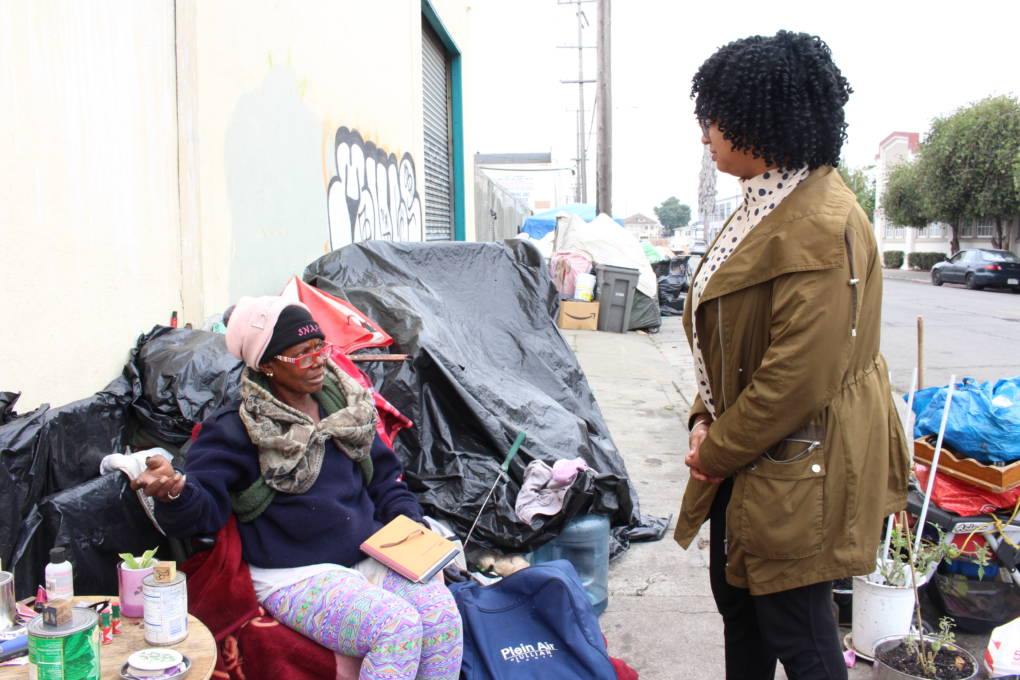
"caption": "Homeless advocate Candice Elder, 34, checks in with Dorothy Smith, 65, at an encampment in Oakland on Aug. 24, 2018. Smith, who raised her children in the city, said her disability benefits are not enough to afford housing. 'It just don’t support me,' she said.\n",
"description": null,
"title": "Photo 1",
"credit": "Farida Jhabvala Romero/KQED",
"status": "inherit",
"isLoading": false,
"fetchFailed": false
},
"news_11689581": {
"type": "attachments",
"id": "news_11689581",
"meta": {
"index": "attachments_1716263798",
"site": "news",
"id": "11689581",
"found": true
},
"parent": 11689446,
"imgSizes": {
"small": {
"file": "https://ww2.kqed.org/app/uploads/sites/10/2018/08/Kayode-520x390.jpg",
"width": 520,
"mimeType": "image/jpeg",
"height": 390
},
"twentyfourteen-full-width": {
"file": "https://ww2.kqed.org/app/uploads/sites/10/2018/08/Kayode-1038x576.jpg",
"width": 1038,
"mimeType": "image/jpeg",
"height": 576
},
"thumbnail": {
"file": "https://ww2.kqed.org/app/uploads/sites/10/2018/08/Kayode-160x120.jpg",
"width": 160,
"mimeType": "image/jpeg",
"height": 120
},
"fd-sm": {
"file": "https://ww2.kqed.org/app/uploads/sites/10/2018/08/Kayode-960x720.jpg",
"width": 960,
"mimeType": "image/jpeg",
"height": 720
},
"post-thumbnail": {
"file": "https://ww2.kqed.org/app/uploads/sites/10/2018/08/Kayode-672x372.jpg",
"width": 672,
"mimeType": "image/jpeg",
"height": 372
},
"xsmall": {
"file": "https://ww2.kqed.org/app/uploads/sites/10/2018/08/Kayode-375x281.jpg",
"width": 375,
"mimeType": "image/jpeg",
"height": 281
},
"kqedFullSize": {
"file": "https://ww2.kqed.org/app/uploads/sites/10/2018/08/Kayode.jpg",
"width": 1920,
"height": 1440
},
"large": {
"file": "https://ww2.kqed.org/app/uploads/sites/10/2018/08/Kayode-1020x765.jpg",
"width": 1020,
"mimeType": "image/jpeg",
"height": 765
},
"xlarge": {
"file": "https://ww2.kqed.org/app/uploads/sites/10/2018/08/Kayode-1180x885.jpg",
"width": 1180,
"mimeType": "image/jpeg",
"height": 885
},
"complete_open_graph": {
"file": "https://ww2.kqed.org/app/uploads/sites/10/2018/08/Kayode-1200x900.jpg",
"width": 1200,
"mimeType": "image/jpeg",
"height": 900
},
"guest-author-50": {
"file": "https://ww2.kqed.org/app/uploads/sites/10/2018/08/Kayode-50x50.jpg",
"width": 50,
"mimeType": "image/jpeg",
"height": 50
},
"guest-author-96": {
"file": "https://ww2.kqed.org/app/uploads/sites/10/2018/08/Kayode-96x96.jpg",
"width": 96,
"mimeType": "image/jpeg",
"height": 96
},
"medium": {
"file": "https://ww2.kqed.org/app/uploads/sites/10/2018/08/Kayode-800x600.jpg",
"width": 800,
"mimeType": "image/jpeg",
"height": 600
},
"guest-author-64": {
"file": "https://ww2.kqed.org/app/uploads/sites/10/2018/08/Kayode-64x64.jpg",
"width": 64,
"mimeType": "image/jpeg",
"height": 64
},
"guest-author-32": {
"file": "https://ww2.kqed.org/app/uploads/sites/10/2018/08/Kayode-32x32.jpg",
"width": 32,
"mimeType": "image/jpeg",
"height": 32
},
"fd-lrg": {
"file": "https://ww2.kqed.org/app/uploads/sites/10/2018/08/Kayode-1920x1440.jpg",
"width": 1920,
"mimeType": "image/jpeg",
"height": 1440
},
"fd-med": {
"file": "https://ww2.kqed.org/app/uploads/sites/10/2018/08/Kayode-1180x885.jpg",
"width": 1180,
"mimeType": "image/jpeg",
"height": 885
},
"full-width": {
"file": "https://ww2.kqed.org/app/uploads/sites/10/2018/08/Kayode-1920x1440.jpg",
"width": 1920,
"mimeType": "image/jpeg",
"height": 1440
},
"detail": {
"file": "https://ww2.kqed.org/app/uploads/sites/10/2018/08/Kayode-150x150.jpg",
"width": 150,
"mimeType": "image/jpeg",
"height": 150
},
"guest-author-128": {
"file": "https://ww2.kqed.org/app/uploads/sites/10/2018/08/Kayode-128x128.jpg",
"width": 128,
"mimeType": "image/jpeg",
"height": 128
},
"xxsmall": {
"file": "https://ww2.kqed.org/app/uploads/sites/10/2018/08/Kayode-240x180.jpg",
"width": 240,
"mimeType": "image/jpeg",
"height": 180
}
},
"publishDate": 1535665009,
"modified": 1535665078,
"caption": "Sean Kayode, at the Next Door homeless shelter in San Francisco on July 26, 2018. Kayode is suing the city, saying he lost his means of food-delivery employment and his home when his car was impounded in March — for having too many parking tickets.",
"description": "Sean Kayode, at the Next Door homeless shelter in San Francisco on July 26, 2018. Kayode is suing the city, saying he lost his means of food-delivery employment and his home when his car was impounded in March — for having too many parking tickets.",
"title": "Kayode",
"credit": "David Gorn/CALmatters",
"status": "inherit",
"isLoading": false,
"fetchFailed": false
},
"news_11689284": {
"type": "attachments",
"id": "news_11689284",
"meta": {
"index": "attachments_1716263798",
"site": "news",
"id": "11689284",
"found": true
},
"parent": 11689282,
"imgSizes": {
"small": {
"file": "https://ww2.kqed.org/app/uploads/sites/10/2018/08/IMG_1483-1000x750-520x390.jpg",
"width": 520,
"mimeType": "image/jpeg",
"height": 390
},
"twentyfourteen-full-width": {
"file": "https://ww2.kqed.org/app/uploads/sites/10/2018/08/IMG_1483-1000x750-1000x576.jpg",
"width": 1000,
"mimeType": "image/jpeg",
"height": 576
},
"thumbnail": {
"file": "https://ww2.kqed.org/app/uploads/sites/10/2018/08/IMG_1483-1000x750-160x120.jpg",
"width": 160,
"mimeType": "image/jpeg",
"height": 120
},
"fd-sm": {
"file": "https://ww2.kqed.org/app/uploads/sites/10/2018/08/IMG_1483-1000x750-960x720.jpg",
"width": 960,
"mimeType": "image/jpeg",
"height": 720
},
"post-thumbnail": {
"file": "https://ww2.kqed.org/app/uploads/sites/10/2018/08/IMG_1483-1000x750-672x372.jpg",
"width": 672,
"mimeType": "image/jpeg",
"height": 372
},
"xsmall": {
"file": "https://ww2.kqed.org/app/uploads/sites/10/2018/08/IMG_1483-1000x750-375x281.jpg",
"width": 375,
"mimeType": "image/jpeg",
"height": 281
},
"kqedFullSize": {
"file": "https://ww2.kqed.org/app/uploads/sites/10/2018/08/IMG_1483-1000x750.jpg",
"width": 1000,
"height": 750
},
"guest-author-50": {
"file": "https://ww2.kqed.org/app/uploads/sites/10/2018/08/IMG_1483-1000x750-50x50.jpg",
"width": 50,
"mimeType": "image/jpeg",
"height": 50
},
"guest-author-96": {
"file": "https://ww2.kqed.org/app/uploads/sites/10/2018/08/IMG_1483-1000x750-96x96.jpg",
"width": 96,
"mimeType": "image/jpeg",
"height": 96
},
"medium": {
"file": "https://ww2.kqed.org/app/uploads/sites/10/2018/08/IMG_1483-1000x750-800x600.jpg",
"width": 800,
"mimeType": "image/jpeg",
"height": 600
},
"guest-author-64": {
"file": "https://ww2.kqed.org/app/uploads/sites/10/2018/08/IMG_1483-1000x750-64x64.jpg",
"width": 64,
"mimeType": "image/jpeg",
"height": 64
},
"guest-author-32": {
"file": "https://ww2.kqed.org/app/uploads/sites/10/2018/08/IMG_1483-1000x750-32x32.jpg",
"width": 32,
"mimeType": "image/jpeg",
"height": 32
},
"detail": {
"file": "https://ww2.kqed.org/app/uploads/sites/10/2018/08/IMG_1483-1000x750-150x150.jpg",
"width": 150,
"mimeType": "image/jpeg",
"height": 150
},
"guest-author-128": {
"file": "https://ww2.kqed.org/app/uploads/sites/10/2018/08/IMG_1483-1000x750-128x128.jpg",
"width": 128,
"mimeType": "image/jpeg",
"height": 128
},
"xxsmall": {
"file": "https://ww2.kqed.org/app/uploads/sites/10/2018/08/IMG_1483-1000x750-240x180.jpg",
"width": 240,
"mimeType": "image/jpeg",
"height": 180
}
},
"publishDate": 1535559979,
"modified": 1535560007,
"caption": "Terry Williams, 71, lives in South Central Los Angeles and says his stomach dropped when he first got an eviction notice in July.",
"description": null,
"title": "IMG_1483-1000x750",
"credit": "David Gorn/CALmatters ",
"status": "inherit",
"isLoading": false,
"fetchFailed": false
},
"news_11653927": {
"type": "attachments",
"id": "news_11653927",
"meta": {
"index": "attachments_1716263798",
"site": "news",
"id": "11653927",
"found": true
},
"parent": 11653914,
"imgSizes": {
"small": {
"file": "https://ww2.kqed.org/app/uploads/sites/10/2018/03/Screen-Shot-2018-03-05-at-10.59.14-AM-520x344.png",
"width": 520,
"mimeType": "image/png",
"height": 344
},
"twentyfourteen-full-width": {
"file": "https://ww2.kqed.org/app/uploads/sites/10/2018/03/Screen-Shot-2018-03-05-at-10.59.14-AM-1038x576.png",
"width": 1038,
"mimeType": "image/png",
"height": 576
},
"thumbnail": {
"file": "https://ww2.kqed.org/app/uploads/sites/10/2018/03/Screen-Shot-2018-03-05-at-10.59.14-AM-160x106.png",
"width": 160,
"mimeType": "image/png",
"height": 106
},
"fd-sm": {
"file": "https://ww2.kqed.org/app/uploads/sites/10/2018/03/Screen-Shot-2018-03-05-at-10.59.14-AM-960x635.png",
"width": 960,
"mimeType": "image/png",
"height": 635
},
"post-thumbnail": {
"file": "https://ww2.kqed.org/app/uploads/sites/10/2018/03/Screen-Shot-2018-03-05-at-10.59.14-AM-672x372.png",
"width": 672,
"mimeType": "image/png",
"height": 372
},
"xsmall": {
"file": "https://ww2.kqed.org/app/uploads/sites/10/2018/03/Screen-Shot-2018-03-05-at-10.59.14-AM-375x248.png",
"width": 375,
"mimeType": "image/png",
"height": 248
},
"kqedFullSize": {
"file": "https://ww2.kqed.org/app/uploads/sites/10/2018/03/Screen-Shot-2018-03-05-at-10.59.14-AM-e1520278173738.png",
"width": 1920,
"height": 1271
},
"large": {
"file": "https://ww2.kqed.org/app/uploads/sites/10/2018/03/Screen-Shot-2018-03-05-at-10.59.14-AM-1020x675.png",
"width": 1020,
"mimeType": "image/png",
"height": 675
},
"xlarge": {
"file": "https://ww2.kqed.org/app/uploads/sites/10/2018/03/Screen-Shot-2018-03-05-at-10.59.14-AM-1180x781.png",
"width": 1180,
"mimeType": "image/png",
"height": 781
},
"guest-author-50": {
"file": "https://ww2.kqed.org/app/uploads/sites/10/2018/03/Screen-Shot-2018-03-05-at-10.59.14-AM-50x50.png",
"width": 50,
"mimeType": "image/png",
"height": 50
},
"guest-author-96": {
"file": "https://ww2.kqed.org/app/uploads/sites/10/2018/03/Screen-Shot-2018-03-05-at-10.59.14-AM-96x96.png",
"width": 96,
"mimeType": "image/png",
"height": 96
},
"medium": {
"file": "https://ww2.kqed.org/app/uploads/sites/10/2018/03/Screen-Shot-2018-03-05-at-10.59.14-AM-800x529.png",
"width": 800,
"mimeType": "image/png",
"height": 529
},
"guest-author-64": {
"file": "https://ww2.kqed.org/app/uploads/sites/10/2018/03/Screen-Shot-2018-03-05-at-10.59.14-AM-64x64.png",
"width": 64,
"mimeType": "image/png",
"height": 64
},
"guest-author-32": {
"file": "https://ww2.kqed.org/app/uploads/sites/10/2018/03/Screen-Shot-2018-03-05-at-10.59.14-AM-32x32.png",
"width": 32,
"mimeType": "image/png",
"height": 32
},
"fd-lrg": {
"file": "https://ww2.kqed.org/app/uploads/sites/10/2018/03/Screen-Shot-2018-03-05-at-10.59.14-AM-1920x1271.png",
"width": 1920,
"mimeType": "image/png",
"height": 1271
},
"fd-med": {
"file": "https://ww2.kqed.org/app/uploads/sites/10/2018/03/Screen-Shot-2018-03-05-at-10.59.14-AM-1180x781.png",
"width": 1180,
"mimeType": "image/png",
"height": 781
},
"full-width": {
"file": "https://ww2.kqed.org/app/uploads/sites/10/2018/03/Screen-Shot-2018-03-05-at-10.59.14-AM-1920x1271.png",
"width": 1920,
"mimeType": "image/png",
"height": 1271
},
"detail": {
"file": "https://ww2.kqed.org/app/uploads/sites/10/2018/03/Screen-Shot-2018-03-05-at-10.59.14-AM-150x150.png",
"width": 150,
"mimeType": "image/png",
"height": 150
},
"guest-author-128": {
"file": "https://ww2.kqed.org/app/uploads/sites/10/2018/03/Screen-Shot-2018-03-05-at-10.59.14-AM-128x128.png",
"width": 128,
"mimeType": "image/png",
"height": 128
},
"xxsmall": {
"file": "https://ww2.kqed.org/app/uploads/sites/10/2018/03/Screen-Shot-2018-03-05-at-10.59.14-AM-240x159.png",
"width": 240,
"mimeType": "image/png",
"height": 159
}
},
"publishDate": 1520277742,
"modified": 1535507483,
"caption": "The North Berkeley BART Station and parking lot, one of the transit district sites that could see future development under AB 2923. ",
"description": null,
"title": "North Berkeley BART",
"credit": "Google Earth ",
"status": "inherit",
"isLoading": false,
"fetchFailed": false
},
"news_11689142": {
"type": "attachments",
"id": "news_11689142",
"meta": {
"index": "attachments_1716263798",
"site": "news",
"id": "11689142",
"found": true
},
"parent": 11689103,
"imgSizes": {
"small": {
"file": "https://ww2.kqed.org/app/uploads/sites/10/2018/08/BillStruggles-520x347.jpg",
"width": 520,
"mimeType": "image/jpeg",
"height": 347
},
"twentyfourteen-full-width": {
"file": "https://ww2.kqed.org/app/uploads/sites/10/2018/08/BillStruggles-1038x576.jpg",
"width": 1038,
"mimeType": "image/jpeg",
"height": 576
},
"thumbnail": {
"file": "https://ww2.kqed.org/app/uploads/sites/10/2018/08/BillStruggles-160x107.jpg",
"width": 160,
"mimeType": "image/jpeg",
"height": 107
},
"fd-sm": {
"file": "https://ww2.kqed.org/app/uploads/sites/10/2018/08/BillStruggles-960x640.jpg",
"width": 960,
"mimeType": "image/jpeg",
"height": 640
},
"post-thumbnail": {
"file": "https://ww2.kqed.org/app/uploads/sites/10/2018/08/BillStruggles-672x372.jpg",
"width": 672,
"mimeType": "image/jpeg",
"height": 372
},
"xsmall": {
"file": "https://ww2.kqed.org/app/uploads/sites/10/2018/08/BillStruggles-375x250.jpg",
"width": 375,
"mimeType": "image/jpeg",
"height": 250
},
"kqedFullSize": {
"file": "https://ww2.kqed.org/app/uploads/sites/10/2018/08/BillStruggles.jpg",
"width": 1920,
"height": 1280
},
"large": {
"file": "https://ww2.kqed.org/app/uploads/sites/10/2018/08/BillStruggles-1020x680.jpg",
"width": 1020,
"mimeType": "image/jpeg",
"height": 680
},
"xlarge": {
"file": "https://ww2.kqed.org/app/uploads/sites/10/2018/08/BillStruggles-1180x787.jpg",
"width": 1180,
"mimeType": "image/jpeg",
"height": 787
},
"complete_open_graph": {
"file": "https://ww2.kqed.org/app/uploads/sites/10/2018/08/BillStruggles-1200x800.jpg",
"width": 1200,
"mimeType": "image/jpeg",
"height": 800
},
"guest-author-50": {
"file": "https://ww2.kqed.org/app/uploads/sites/10/2018/08/BillStruggles-50x50.jpg",
"width": 50,
"mimeType": "image/jpeg",
"height": 50
},
"guest-author-96": {
"file": "https://ww2.kqed.org/app/uploads/sites/10/2018/08/BillStruggles-96x96.jpg",
"width": 96,
"mimeType": "image/jpeg",
"height": 96
},
"medium": {
"file": "https://ww2.kqed.org/app/uploads/sites/10/2018/08/BillStruggles-800x533.jpg",
"width": 800,
"mimeType": "image/jpeg",
"height": 533
},
"guest-author-64": {
"file": "https://ww2.kqed.org/app/uploads/sites/10/2018/08/BillStruggles-64x64.jpg",
"width": 64,
"mimeType": "image/jpeg",
"height": 64
},
"guest-author-32": {
"file": "https://ww2.kqed.org/app/uploads/sites/10/2018/08/BillStruggles-32x32.jpg",
"width": 32,
"mimeType": "image/jpeg",
"height": 32
},
"fd-lrg": {
"file": "https://ww2.kqed.org/app/uploads/sites/10/2018/08/BillStruggles-1920x1280.jpg",
"width": 1920,
"mimeType": "image/jpeg",
"height": 1280
},
"fd-med": {
"file": "https://ww2.kqed.org/app/uploads/sites/10/2018/08/BillStruggles-1180x787.jpg",
"width": 1180,
"mimeType": "image/jpeg",
"height": 787
},
"full-width": {
"file": "https://ww2.kqed.org/app/uploads/sites/10/2018/08/BillStruggles-1920x1280.jpg",
"width": 1920,
"mimeType": "image/jpeg",
"height": 1280
},
"detail": {
"file": "https://ww2.kqed.org/app/uploads/sites/10/2018/08/BillStruggles-150x150.jpg",
"width": 150,
"mimeType": "image/jpeg",
"height": 150
},
"guest-author-128": {
"file": "https://ww2.kqed.org/app/uploads/sites/10/2018/08/BillStruggles-128x128.jpg",
"width": 128,
"mimeType": "image/jpeg",
"height": 128
},
"xxsmall": {
"file": "https://ww2.kqed.org/app/uploads/sites/10/2018/08/BillStruggles-240x160.jpg",
"width": 240,
"mimeType": "image/jpeg",
"height": 160
}
},
"publishDate": 1535483421,
"modified": 1535495939,
"caption": "A new report by a Washington, D.C.-based research institute found that more than a third of California's working-poor families struggle to cover rent and can’t pay at least one monthly bill.",
"description": "A new report by a Washington, D.C.-based research institute found that more than a third of California's working poor families struggle to cover rent and can’t pay at least one monthly bill.",
"title": "BillStruggles",
"credit": "Getty Images",
"status": "inherit",
"isLoading": false,
"fetchFailed": false
},
"news_11689044": {
"type": "attachments",
"id": "news_11689044",
"meta": {
"index": "attachments_1716263798",
"site": "news",
"id": "11689044",
"found": true
},
"parent": 11689040,
"imgSizes": {
"small": {
"file": "https://ww2.kqed.org/app/uploads/sites/10/2018/08/SeniorWalking-520x311.jpg",
"width": 520,
"mimeType": "image/jpeg",
"height": 311
},
"twentyfourteen-full-width": {
"file": "https://ww2.kqed.org/app/uploads/sites/10/2018/08/SeniorWalking-1038x576.jpg",
"width": 1038,
"mimeType": "image/jpeg",
"height": 576
},
"thumbnail": {
"file": "https://ww2.kqed.org/app/uploads/sites/10/2018/08/SeniorWalking-160x96.jpg",
"width": 160,
"mimeType": "image/jpeg",
"height": 96
},
"fd-sm": {
"file": "https://ww2.kqed.org/app/uploads/sites/10/2018/08/SeniorWalking-960x574.jpg",
"width": 960,
"mimeType": "image/jpeg",
"height": 574
},
"post-thumbnail": {
"file": "https://ww2.kqed.org/app/uploads/sites/10/2018/08/SeniorWalking-672x372.jpg",
"width": 672,
"mimeType": "image/jpeg",
"height": 372
},
"xsmall": {
"file": "https://ww2.kqed.org/app/uploads/sites/10/2018/08/SeniorWalking-375x224.jpg",
"width": 375,
"mimeType": "image/jpeg",
"height": 224
},
"kqedFullSize": {
"file": "https://ww2.kqed.org/app/uploads/sites/10/2018/08/SeniorWalking.jpg",
"width": 1646,
"height": 985
},
"large": {
"file": "https://ww2.kqed.org/app/uploads/sites/10/2018/08/SeniorWalking-1020x610.jpg",
"width": 1020,
"mimeType": "image/jpeg",
"height": 610
},
"xlarge": {
"file": "https://ww2.kqed.org/app/uploads/sites/10/2018/08/SeniorWalking-1180x706.jpg",
"width": 1180,
"mimeType": "image/jpeg",
"height": 706
},
"complete_open_graph": {
"file": "https://ww2.kqed.org/app/uploads/sites/10/2018/08/SeniorWalking-1200x718.jpg",
"width": 1200,
"mimeType": "image/jpeg",
"height": 718
},
"guest-author-50": {
"file": "https://ww2.kqed.org/app/uploads/sites/10/2018/08/SeniorWalking-50x50.jpg",
"width": 50,
"mimeType": "image/jpeg",
"height": 50
},
"guest-author-96": {
"file": "https://ww2.kqed.org/app/uploads/sites/10/2018/08/SeniorWalking-96x96.jpg",
"width": 96,
"mimeType": "image/jpeg",
"height": 96
},
"medium": {
"file": "https://ww2.kqed.org/app/uploads/sites/10/2018/08/SeniorWalking-800x479.jpg",
"width": 800,
"mimeType": "image/jpeg",
"height": 479
},
"guest-author-64": {
"file": "https://ww2.kqed.org/app/uploads/sites/10/2018/08/SeniorWalking-64x64.jpg",
"width": 64,
"mimeType": "image/jpeg",
"height": 64
},
"guest-author-32": {
"file": "https://ww2.kqed.org/app/uploads/sites/10/2018/08/SeniorWalking-32x32.jpg",
"width": 32,
"mimeType": "image/jpeg",
"height": 32
},
"fd-med": {
"file": "https://ww2.kqed.org/app/uploads/sites/10/2018/08/SeniorWalking-1180x706.jpg",
"width": 1180,
"mimeType": "image/jpeg",
"height": 706
},
"detail": {
"file": "https://ww2.kqed.org/app/uploads/sites/10/2018/08/SeniorWalking-150x150.jpg",
"width": 150,
"mimeType": "image/jpeg",
"height": 150
},
"guest-author-128": {
"file": "https://ww2.kqed.org/app/uploads/sites/10/2018/08/SeniorWalking-128x128.jpg",
"width": 128,
"mimeType": "image/jpeg",
"height": 128
},
"xxsmall": {
"file": "https://ww2.kqed.org/app/uploads/sites/10/2018/08/SeniorWalking-240x144.jpg",
"width": 240,
"mimeType": "image/jpeg",
"height": 144
}
},
"publishDate": 1535407300,
"modified": 1535410199,
"caption": "Pierre Devillandry, a painter who has lived in Santa Monica 30 years, was accepted into the city's pilot program for a monthly subsidy. 'It was something that came down from heaven,' he said.",
"description": "Pierre Devillandry, a painter who has lived in Santa Monica for 30 years, was accepted into the city's pilot program for a monthly subsidy. 'It was something that came down from Heaven,' he said.",
"title": "SeniorWalking",
"credit": "KPBS/YouTube",
"status": "inherit",
"isLoading": false,
"fetchFailed": false
},
"news_11120420": {
"type": "attachments",
"id": "news_11120420",
"meta": {
"index": "attachments_1716263798",
"site": "news",
"id": "11120420",
"found": true
},
"parent": 11120258,
"imgSizes": {
"twentyfourteen-full-width": {
"file": "https://ww2.kqed.org/app/uploads/sites/10/2016/10/Florida-St-1038x576.jpg",
"width": 1038,
"mimeType": "image/jpeg",
"height": 576
},
"thumbnail": {
"file": "https://ww2.kqed.org/app/uploads/sites/10/2016/10/Florida-St-400x267.jpg",
"width": 400,
"mimeType": "image/jpeg",
"height": 267
},
"fd-sm": {
"file": "https://ww2.kqed.org/app/uploads/sites/10/2016/10/Florida-St-960x640.jpg",
"width": 960,
"mimeType": "image/jpeg",
"height": 640
},
"post-thumbnail": {
"file": "https://ww2.kqed.org/app/uploads/sites/10/2016/10/Florida-St-672x372.jpg",
"width": 672,
"mimeType": "image/jpeg",
"height": 372
},
"kqedFullSize": {
"file": "https://ww2.kqed.org/app/uploads/sites/10/2016/10/Florida-St.jpg",
"width": 1920,
"height": 1280
},
"large": {
"file": "https://ww2.kqed.org/app/uploads/sites/10/2016/10/Florida-St-1920x1280.jpg",
"width": 1920,
"mimeType": "image/jpeg",
"height": 1280
},
"guest-author-50": {
"file": "https://ww2.kqed.org/app/uploads/sites/10/2016/10/Florida-St-50x50.jpg",
"width": 50,
"mimeType": "image/jpeg",
"height": 50
},
"guest-author-96": {
"file": "https://ww2.kqed.org/app/uploads/sites/10/2016/10/Florida-St-96x96.jpg",
"width": 96,
"mimeType": "image/jpeg",
"height": 96
},
"medium": {
"file": "https://ww2.kqed.org/app/uploads/sites/10/2016/10/Florida-St-800x533.jpg",
"width": 800,
"mimeType": "image/jpeg",
"height": 533
},
"guest-author-64": {
"file": "https://ww2.kqed.org/app/uploads/sites/10/2016/10/Florida-St-64x64.jpg",
"width": 64,
"mimeType": "image/jpeg",
"height": 64
},
"guest-author-32": {
"file": "https://ww2.kqed.org/app/uploads/sites/10/2016/10/Florida-St-32x32.jpg",
"width": 32,
"mimeType": "image/jpeg",
"height": 32
},
"jmtc-small-thumb": {
"file": "https://ww2.kqed.org/app/uploads/sites/10/2016/10/Florida-St-280x150.jpg",
"width": 280,
"mimeType": "image/jpeg",
"height": 150
},
"fd-lrg": {
"file": "https://ww2.kqed.org/app/uploads/sites/10/2016/10/Florida-St-1920x1280.jpg",
"width": 1920,
"mimeType": "image/jpeg",
"height": 1280
},
"fd-med": {
"file": "https://ww2.kqed.org/app/uploads/sites/10/2016/10/Florida-St-1180x787.jpg",
"width": 1180,
"mimeType": "image/jpeg",
"height": 787
},
"detail": {
"file": "https://ww2.kqed.org/app/uploads/sites/10/2016/10/Florida-St-150x150.jpg",
"width": 150,
"mimeType": "image/jpeg",
"height": 150
},
"guest-author-128": {
"file": "https://ww2.kqed.org/app/uploads/sites/10/2016/10/Florida-St-128x128.jpg",
"width": 128,
"mimeType": "image/jpeg",
"height": 128
}
},
"publishDate": 1475884790,
"modified": 1475884850,
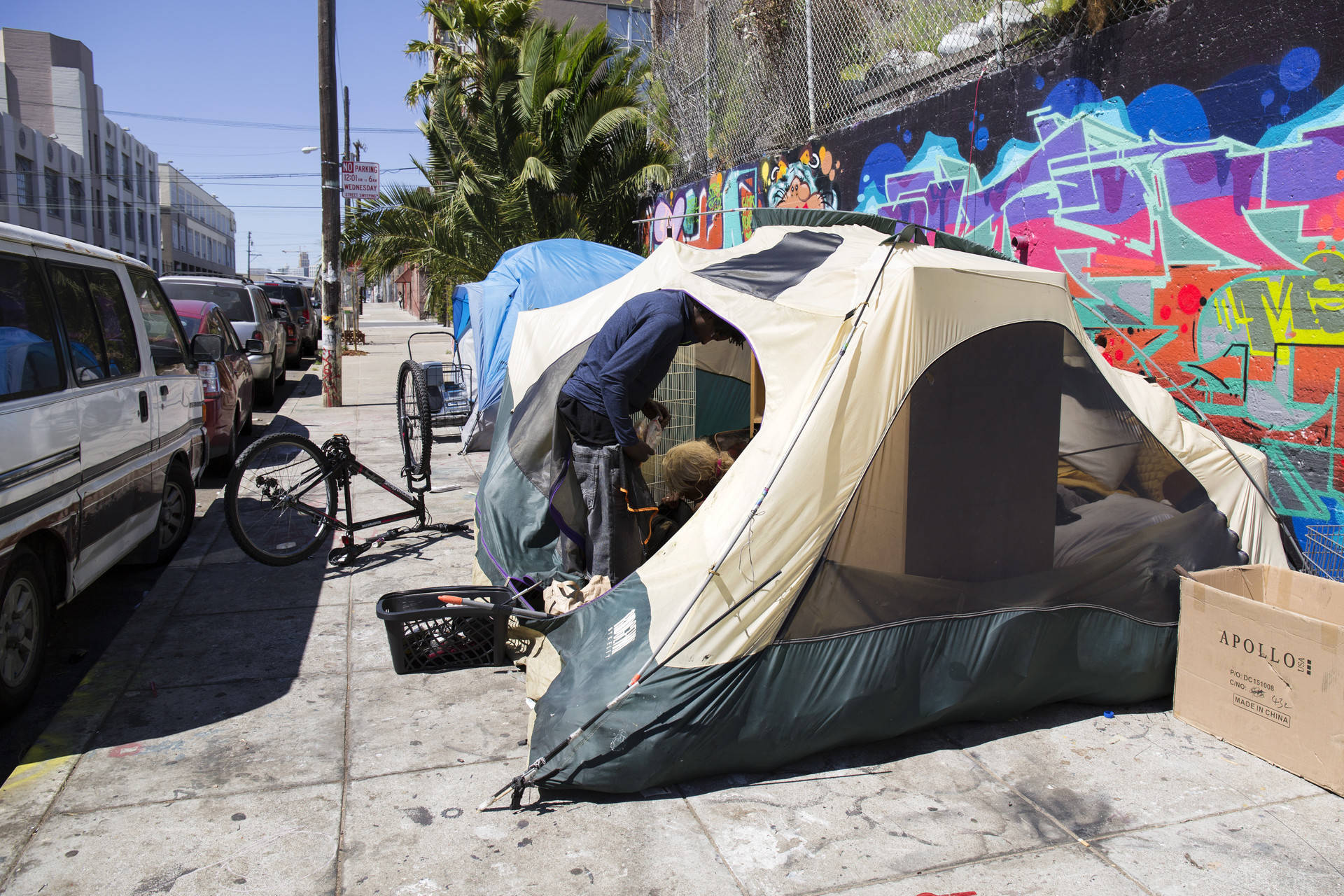
"caption": "An encampment on Florida Street in San Francisco's Mission District on June 23.",
"description": "A homeless encampment located on Florida St in the Mission District of San Francisco, Calif. on Thursday, June 23, 2016.",
"title": "Florida St",
"credit": "Brittany Hosea-Small/KQED",
"status": "inherit",
"isLoading": false,
"fetchFailed": false
},
"news_11687716": {
"type": "attachments",
"id": "news_11687716",
"meta": {
"index": "attachments_1716263798",
"site": "news",
"id": "11687716",
"found": true
},
"parent": 11687715,
"imgSizes": {
"small": {
"file": "https://ww2.kqed.org/app/uploads/sites/10/2018/08/va-img_1571-60f46c1c2c4136ad7a3e3b20b931757ccf5c5280-520x390.jpg",
"width": 520,
"mimeType": "image/jpeg",
"height": 390
},
"twentyfourteen-full-width": {
"file": "https://ww2.kqed.org/app/uploads/sites/10/2018/08/va-img_1571-60f46c1c2c4136ad7a3e3b20b931757ccf5c5280-1038x576.jpg",
"width": 1038,
"mimeType": "image/jpeg",
"height": 576
},
"thumbnail": {
"file": "https://ww2.kqed.org/app/uploads/sites/10/2018/08/va-img_1571-60f46c1c2c4136ad7a3e3b20b931757ccf5c5280-160x120.jpg",
"width": 160,
"mimeType": "image/jpeg",
"height": 120
},
"fd-sm": {
"file": "https://ww2.kqed.org/app/uploads/sites/10/2018/08/va-img_1571-60f46c1c2c4136ad7a3e3b20b931757ccf5c5280-960x720.jpg",
"width": 960,
"mimeType": "image/jpeg",
"height": 720
},
"post-thumbnail": {
"file": "https://ww2.kqed.org/app/uploads/sites/10/2018/08/va-img_1571-60f46c1c2c4136ad7a3e3b20b931757ccf5c5280-672x372.jpg",
"width": 672,
"mimeType": "image/jpeg",
"height": 372
},
"xsmall": {
"file": "https://ww2.kqed.org/app/uploads/sites/10/2018/08/va-img_1571-60f46c1c2c4136ad7a3e3b20b931757ccf5c5280-375x281.jpg",
"width": 375,
"mimeType": "image/jpeg",
"height": 281
},
"kqedFullSize": {
"file": "https://ww2.kqed.org/app/uploads/sites/10/2018/08/va-img_1571-60f46c1c2c4136ad7a3e3b20b931757ccf5c5280-e1534714207369.jpg",
"width": 1920,
"height": 1440
},
"large": {
"file": "https://ww2.kqed.org/app/uploads/sites/10/2018/08/va-img_1571-60f46c1c2c4136ad7a3e3b20b931757ccf5c5280-1020x765.jpg",
"width": 1020,
"mimeType": "image/jpeg",
"height": 765
},
"xlarge": {
"file": "https://ww2.kqed.org/app/uploads/sites/10/2018/08/va-img_1571-60f46c1c2c4136ad7a3e3b20b931757ccf5c5280-1180x885.jpg",
"width": 1180,
"mimeType": "image/jpeg",
"height": 885
},
"complete_open_graph": {
"file": "https://ww2.kqed.org/app/uploads/sites/10/2018/08/va-img_1571-60f46c1c2c4136ad7a3e3b20b931757ccf5c5280-1200x900.jpg",
"width": 1200,
"mimeType": "image/jpeg",
"height": 900
},
"guest-author-50": {
"file": "https://ww2.kqed.org/app/uploads/sites/10/2018/08/va-img_1571-60f46c1c2c4136ad7a3e3b20b931757ccf5c5280-50x50.jpg",
"width": 50,
"mimeType": "image/jpeg",
"height": 50
},
"guest-author-96": {
"file": "https://ww2.kqed.org/app/uploads/sites/10/2018/08/va-img_1571-60f46c1c2c4136ad7a3e3b20b931757ccf5c5280-96x96.jpg",
"width": 96,
"mimeType": "image/jpeg",
"height": 96
},
"medium": {
"file": "https://ww2.kqed.org/app/uploads/sites/10/2018/08/va-img_1571-60f46c1c2c4136ad7a3e3b20b931757ccf5c5280-800x600.jpg",
"width": 800,
"mimeType": "image/jpeg",
"height": 600
},
"guest-author-64": {
"file": "https://ww2.kqed.org/app/uploads/sites/10/2018/08/va-img_1571-60f46c1c2c4136ad7a3e3b20b931757ccf5c5280-64x64.jpg",
"width": 64,
"mimeType": "image/jpeg",
"height": 64
},
"guest-author-32": {
"file": "https://ww2.kqed.org/app/uploads/sites/10/2018/08/va-img_1571-60f46c1c2c4136ad7a3e3b20b931757ccf5c5280-32x32.jpg",
"width": 32,
"mimeType": "image/jpeg",
"height": 32
},
"fd-lrg": {
"file": "https://ww2.kqed.org/app/uploads/sites/10/2018/08/va-img_1571-60f46c1c2c4136ad7a3e3b20b931757ccf5c5280-1920x1440.jpg",
"width": 1920,
"mimeType": "image/jpeg",
"height": 1440
},
"fd-med": {
"file": "https://ww2.kqed.org/app/uploads/sites/10/2018/08/va-img_1571-60f46c1c2c4136ad7a3e3b20b931757ccf5c5280-1180x885.jpg",
"width": 1180,
"mimeType": "image/jpeg",
"height": 885
},
"full-width": {
"file": "https://ww2.kqed.org/app/uploads/sites/10/2018/08/va-img_1571-60f46c1c2c4136ad7a3e3b20b931757ccf5c5280-1920x1440.jpg",
"width": 1920,
"mimeType": "image/jpeg",
"height": 1440
},
"detail": {
"file": "https://ww2.kqed.org/app/uploads/sites/10/2018/08/va-img_1571-60f46c1c2c4136ad7a3e3b20b931757ccf5c5280-150x150.jpg",
"width": 150,
"mimeType": "image/jpeg",
"height": 150
},
"guest-author-128": {
"file": "https://ww2.kqed.org/app/uploads/sites/10/2018/08/va-img_1571-60f46c1c2c4136ad7a3e3b20b931757ccf5c5280-128x128.jpg",
"width": 128,
"mimeType": "image/jpeg",
"height": 128
},
"xxsmall": {
"file": "https://ww2.kqed.org/app/uploads/sites/10/2018/08/va-img_1571-60f46c1c2c4136ad7a3e3b20b931757ccf5c5280-240x180.jpg",
"width": 240,
"mimeType": "image/jpeg",
"height": 180
}
},
"publishDate": 1534713890,
"modified": 1534714227,
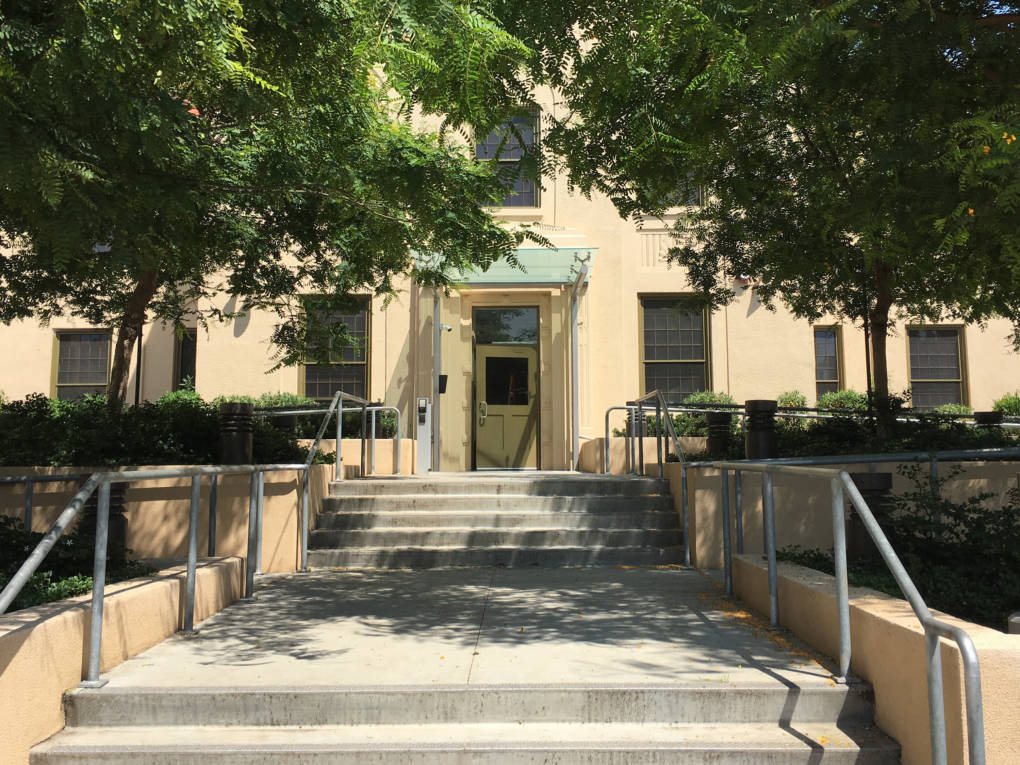
"caption": "Building 209 is the only building so far renovated to house chronically homeless veterans at the VA West Los Angeles Medical Center campus. The nearly 400 acres of the VA West Los Angeles Medical Center were donated in the 19th century to be a home for old and disabled soldiers. The land hasn't been used that way in decades.",
"description": "Building 209 is the only building so far renovated to house chronically homeless veterans at the VA West Los Angeles Medical Center campus. The nearly 400 acres of the VA West Los Angeles Medical Center were donated in the 19th century to be a home for old and disabled soldiers. The land hasn't been used that way in decades.",
"title": "Building 209 is the only building so far renovated to house chronically homeless veterans at the VA West Los Angeles Medical Center campus. The nearly 400 acres of the VA West Los Angeles Medical Center were donated in the 19th century to be a home for old and disabled soldiers. The land hasn't been used that way in decades.",
"credit": "Ina Jaffe/NPR",
"status": "inherit",
"isLoading": false,
"fetchFailed": false
},
"news_11687666": {
"type": "attachments",
"id": "news_11687666",
"meta": {
"index": "attachments_1716263798",
"site": "news",
"id": "11687666",
"found": true
},
"parent": 11687665,
"imgSizes": {
"small": {
"file": "https://ww2.kqed.org/app/uploads/sites/10/2018/08/facebook-6d9375d6b3dd68a34adb3899456f4f56d6faf069-520x390.jpg",
"width": 520,
"mimeType": "image/jpeg",
"height": 390
},
"twentyfourteen-full-width": {
"file": "https://ww2.kqed.org/app/uploads/sites/10/2018/08/facebook-6d9375d6b3dd68a34adb3899456f4f56d6faf069-1038x576.jpg",
"width": 1038,
"mimeType": "image/jpeg",
"height": 576
},
"thumbnail": {
"file": "https://ww2.kqed.org/app/uploads/sites/10/2018/08/facebook-6d9375d6b3dd68a34adb3899456f4f56d6faf069-160x120.jpg",
"width": 160,
"mimeType": "image/jpeg",
"height": 120
},
"fd-sm": {
"file": "https://ww2.kqed.org/app/uploads/sites/10/2018/08/facebook-6d9375d6b3dd68a34adb3899456f4f56d6faf069-960x720.jpg",
"width": 960,
"mimeType": "image/jpeg",
"height": 720
},
"post-thumbnail": {
"file": "https://ww2.kqed.org/app/uploads/sites/10/2018/08/facebook-6d9375d6b3dd68a34adb3899456f4f56d6faf069-672x372.jpg",
"width": 672,
"mimeType": "image/jpeg",
"height": 372
},
"xsmall": {
"file": "https://ww2.kqed.org/app/uploads/sites/10/2018/08/facebook-6d9375d6b3dd68a34adb3899456f4f56d6faf069-375x281.jpg",
"width": 375,
"mimeType": "image/jpeg",
"height": 281
},
"kqedFullSize": {
"file": "https://ww2.kqed.org/app/uploads/sites/10/2018/08/facebook-6d9375d6b3dd68a34adb3899456f4f56d6faf069-e1534693704280.jpg",
"width": 1920,
"height": 1440
},
"large": {
"file": "https://ww2.kqed.org/app/uploads/sites/10/2018/08/facebook-6d9375d6b3dd68a34adb3899456f4f56d6faf069-1020x765.jpg",
"width": 1020,
"mimeType": "image/jpeg",
"height": 765
},
"xlarge": {
"file": "https://ww2.kqed.org/app/uploads/sites/10/2018/08/facebook-6d9375d6b3dd68a34adb3899456f4f56d6faf069-1180x885.jpg",
"width": 1180,
"mimeType": "image/jpeg",
"height": 885
},
"complete_open_graph": {
"file": "https://ww2.kqed.org/app/uploads/sites/10/2018/08/facebook-6d9375d6b3dd68a34adb3899456f4f56d6faf069-1200x900.jpg",
"width": 1200,
"mimeType": "image/jpeg",
"height": 900
},
"guest-author-50": {
"file": "https://ww2.kqed.org/app/uploads/sites/10/2018/08/facebook-6d9375d6b3dd68a34adb3899456f4f56d6faf069-50x50.jpg",
"width": 50,
"mimeType": "image/jpeg",
"height": 50
},
"guest-author-96": {
"file": "https://ww2.kqed.org/app/uploads/sites/10/2018/08/facebook-6d9375d6b3dd68a34adb3899456f4f56d6faf069-96x96.jpg",
"width": 96,
"mimeType": "image/jpeg",
"height": 96
},
"medium": {
"file": "https://ww2.kqed.org/app/uploads/sites/10/2018/08/facebook-6d9375d6b3dd68a34adb3899456f4f56d6faf069-800x600.jpg",
"width": 800,
"mimeType": "image/jpeg",
"height": 600
},
"guest-author-64": {
"file": "https://ww2.kqed.org/app/uploads/sites/10/2018/08/facebook-6d9375d6b3dd68a34adb3899456f4f56d6faf069-64x64.jpg",
"width": 64,
"mimeType": "image/jpeg",
"height": 64
},
"guest-author-32": {
"file": "https://ww2.kqed.org/app/uploads/sites/10/2018/08/facebook-6d9375d6b3dd68a34adb3899456f4f56d6faf069-32x32.jpg",
"width": 32,
"mimeType": "image/jpeg",
"height": 32
},
"fd-lrg": {
"file": "https://ww2.kqed.org/app/uploads/sites/10/2018/08/facebook-6d9375d6b3dd68a34adb3899456f4f56d6faf069-1920x1440.jpg",
"width": 1920,
"mimeType": "image/jpeg",
"height": 1440
},
"fd-med": {
"file": "https://ww2.kqed.org/app/uploads/sites/10/2018/08/facebook-6d9375d6b3dd68a34adb3899456f4f56d6faf069-1180x885.jpg",
"width": 1180,
"mimeType": "image/jpeg",
"height": 885
},
"full-width": {
"file": "https://ww2.kqed.org/app/uploads/sites/10/2018/08/facebook-6d9375d6b3dd68a34adb3899456f4f56d6faf069-1920x1440.jpg",
"width": 1920,
"mimeType": "image/jpeg",
"height": 1440
},
"detail": {
"file": "https://ww2.kqed.org/app/uploads/sites/10/2018/08/facebook-6d9375d6b3dd68a34adb3899456f4f56d6faf069-150x150.jpg",
"width": 150,
"mimeType": "image/jpeg",
"height": 150
},
"guest-author-128": {
"file": "https://ww2.kqed.org/app/uploads/sites/10/2018/08/facebook-6d9375d6b3dd68a34adb3899456f4f56d6faf069-128x128.jpg",
"width": 128,
"mimeType": "image/jpeg",
"height": 128
},
"xxsmall": {
"file": "https://ww2.kqed.org/app/uploads/sites/10/2018/08/facebook-6d9375d6b3dd68a34adb3899456f4f56d6faf069-240x180.jpg",
"width": 240,
"mimeType": "image/jpeg",
"height": 180
}
},
"publishDate": 1534693622,
"modified": 1534693698,
"caption": "The Department of Housing and Urban Development is looking into whether Facebook violated fair housing laws.",
"description": "The Department of Housing and Urban Development is looking into whether Facebook violated fair housing laws.",
"title": "The Department of Housing and Urban Development is looking into whether Facebook violated fair housing laws.",
"credit": "Marcio Jose Sanchez/AP",
"status": "inherit",
"isLoading": false,
"fetchFailed": false
},
"news_11106801": {
"type": "attachments",
"id": "news_11106801",
"meta": {
"index": "attachments_1716263798",
"site": "news",
"id": "11106801",
"found": true
},
"parent": 11106467,
"imgSizes": {
"twentyfourteen-full-width": {
"file": "https://ww2.kqed.org/app/uploads/sites/10/2016/09/RS21247_libby-schaaf-qut-1-1038x576.jpg",
"width": 1038,
"mimeType": "image/jpeg",
"height": 576
},
"thumbnail": {
"file": "https://ww2.kqed.org/app/uploads/sites/10/2016/09/RS21247_libby-schaaf-qut-1-400x266.jpg",
"width": 400,
"mimeType": "image/jpeg",
"height": 266
},
"fd-sm": {
"file": "https://ww2.kqed.org/app/uploads/sites/10/2016/09/RS21247_libby-schaaf-qut-1-960x639.jpg",
"width": 960,
"mimeType": "image/jpeg",
"height": 639
},
"post-thumbnail": {
"file": "https://ww2.kqed.org/app/uploads/sites/10/2016/09/RS21247_libby-schaaf-qut-1-672x372.jpg",
"width": 672,
"mimeType": "image/jpeg",
"height": 372
},
"kqedFullSize": {
"file": "https://ww2.kqed.org/app/uploads/sites/10/2016/09/RS21247_libby-schaaf-qut-1.jpg",
"width": 1279,
"height": 852
},
"guest-author-50": {
"file": "https://ww2.kqed.org/app/uploads/sites/10/2016/09/RS21247_libby-schaaf-qut-1-50x50.jpg",
"width": 50,
"mimeType": "image/jpeg",
"height": 50
},
"guest-author-96": {
"file": "https://ww2.kqed.org/app/uploads/sites/10/2016/09/RS21247_libby-schaaf-qut-1-96x96.jpg",
"width": 96,
"mimeType": "image/jpeg",
"height": 96
},
"medium": {
"file": "https://ww2.kqed.org/app/uploads/sites/10/2016/09/RS21247_libby-schaaf-qut-1-800x533.jpg",
"width": 800,
"mimeType": "image/jpeg",
"height": 533
},
"guest-author-64": {
"file": "https://ww2.kqed.org/app/uploads/sites/10/2016/09/RS21247_libby-schaaf-qut-1-64x64.jpg",
"width": 64,
"mimeType": "image/jpeg",
"height": 64
},
"guest-author-32": {
"file": "https://ww2.kqed.org/app/uploads/sites/10/2016/09/RS21247_libby-schaaf-qut-1-32x32.jpg",
"width": 32,
"mimeType": "image/jpeg",
"height": 32
},
"jmtc-small-thumb": {
"file": "https://ww2.kqed.org/app/uploads/sites/10/2016/09/RS21247_libby-schaaf-qut-1-280x150.jpg",
"width": 280,
"mimeType": "image/jpeg",
"height": 150
},
"fd-med": {
"file": "https://ww2.kqed.org/app/uploads/sites/10/2016/09/RS21247_libby-schaaf-qut-1-1180x786.jpg",
"width": 1180,
"mimeType": "image/jpeg",
"height": 786
},
"detail": {
"file": "https://ww2.kqed.org/app/uploads/sites/10/2016/09/RS21247_libby-schaaf-qut-1-150x150.jpg",
"width": 150,
"mimeType": "image/jpeg",
"height": 150
},
"guest-author-128": {
"file": "https://ww2.kqed.org/app/uploads/sites/10/2016/09/RS21247_libby-schaaf-qut-1-128x128.jpg",
"width": 128,
"mimeType": "image/jpeg",
"height": 128
}
},
"publishDate": 1475028643,
"modified": 1475028702,
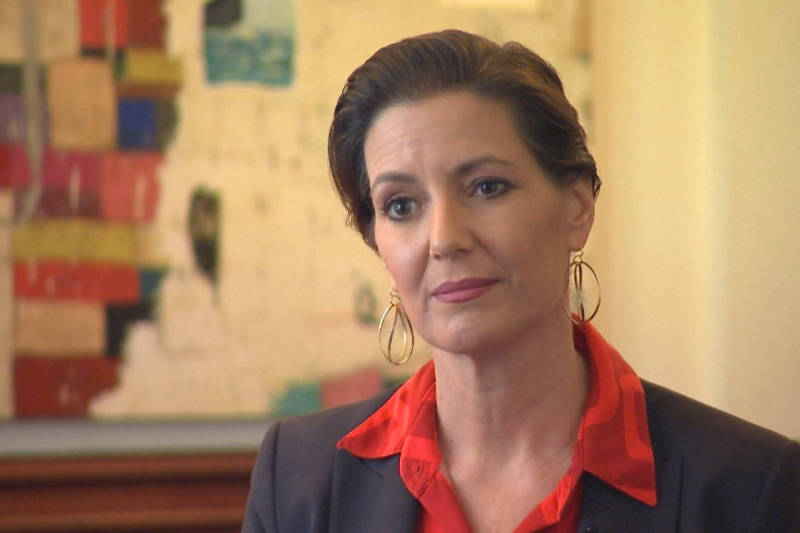
"caption": "Oakland Mayor Libby Schaaf being interviewed on KQED Newsroom.",
"description": null,
"title": "RS21247_libby schaaf-qut",
"credit": "KQED Newsroom",
"status": "inherit",
"isLoading": false,
"fetchFailed": false
},
"news_11686881": {
"type": "attachments",
"id": "news_11686881",
"meta": {
"index": "attachments_1716263798",
"site": "news",
"id": "11686881",
"found": true
},
"parent": 11686871,
"imgSizes": {
"small": {
"file": "https://ww2.kqed.org/app/uploads/sites/10/2018/08/AdobeStock_71102230-1000x667-520x347.jpeg",
"width": 520,
"mimeType": "image/jpeg",
"height": 347
},
"twentyfourteen-full-width": {
"file": "https://ww2.kqed.org/app/uploads/sites/10/2018/08/AdobeStock_71102230-1000x667-1000x576.jpeg",
"width": 1000,
"mimeType": "image/jpeg",
"height": 576
},
"thumbnail": {
"file": "https://ww2.kqed.org/app/uploads/sites/10/2018/08/AdobeStock_71102230-1000x667-160x107.jpeg",
"width": 160,
"mimeType": "image/jpeg",
"height": 107
},
"fd-sm": {
"file": "https://ww2.kqed.org/app/uploads/sites/10/2018/08/AdobeStock_71102230-1000x667-960x640.jpeg",
"width": 960,
"mimeType": "image/jpeg",
"height": 640
},
"post-thumbnail": {
"file": "https://ww2.kqed.org/app/uploads/sites/10/2018/08/AdobeStock_71102230-1000x667-672x372.jpeg",
"width": 672,
"mimeType": "image/jpeg",
"height": 372
},
"xsmall": {
"file": "https://ww2.kqed.org/app/uploads/sites/10/2018/08/AdobeStock_71102230-1000x667-375x250.jpeg",
"width": 375,
"mimeType": "image/jpeg",
"height": 250
},
"kqedFullSize": {
"file": "https://ww2.kqed.org/app/uploads/sites/10/2018/08/AdobeStock_71102230-1000x667.jpeg",
"width": 1000,
"height": 667
},
"guest-author-50": {
"file": "https://ww2.kqed.org/app/uploads/sites/10/2018/08/AdobeStock_71102230-1000x667-50x50.jpeg",
"width": 50,
"mimeType": "image/jpeg",
"height": 50
},
"guest-author-96": {
"file": "https://ww2.kqed.org/app/uploads/sites/10/2018/08/AdobeStock_71102230-1000x667-96x96.jpeg",
"width": 96,
"mimeType": "image/jpeg",
"height": 96
},
"medium": {
"file": "https://ww2.kqed.org/app/uploads/sites/10/2018/08/AdobeStock_71102230-1000x667-800x534.jpeg",
"width": 800,
"mimeType": "image/jpeg",
"height": 534
},
"guest-author-64": {
"file": "https://ww2.kqed.org/app/uploads/sites/10/2018/08/AdobeStock_71102230-1000x667-64x64.jpeg",
"width": 64,
"mimeType": "image/jpeg",
"height": 64
},
"guest-author-32": {
"file": "https://ww2.kqed.org/app/uploads/sites/10/2018/08/AdobeStock_71102230-1000x667-32x32.jpeg",
"width": 32,
"mimeType": "image/jpeg",
"height": 32
},
"detail": {
"file": "https://ww2.kqed.org/app/uploads/sites/10/2018/08/AdobeStock_71102230-1000x667-150x150.jpeg",
"width": 150,
"mimeType": "image/jpeg",
"height": 150
},
"guest-author-128": {
"file": "https://ww2.kqed.org/app/uploads/sites/10/2018/08/AdobeStock_71102230-1000x667-128x128.jpeg",
"width": 128,
"mimeType": "image/jpeg",
"height": 128
},
"xxsmall": {
"file": "https://ww2.kqed.org/app/uploads/sites/10/2018/08/AdobeStock_71102230-1000x667-240x160.jpeg",
"width": 240,
"mimeType": "image/jpeg",
"height": 160
}
},
"publishDate": 1534273757,
"modified": 1534273813,
"caption": null,
"description": null,
"title": "AdobeStock_71102230-1000x667",
"credit": "via Adobe Stock",
"status": "inherit",
"isLoading": false,
"fetchFailed": false
},
"news_11684918": {
"type": "attachments",
"id": "news_11684918",
"meta": {
"index": "attachments_1716263798",
"site": "news",
"id": "11684918",
"found": true
},
"parent": 11684890,
"imgSizes": {
"small": {
"file": "https://ww2.kqed.org/app/uploads/sites/10/2018/08/IMG_1621-520x293.jpg",
"width": 520,
"mimeType": "image/jpeg",
"height": 293
},
"twentyfourteen-full-width": {
"file": "https://ww2.kqed.org/app/uploads/sites/10/2018/08/IMG_1621-1038x576.jpg",
"width": 1038,
"mimeType": "image/jpeg",
"height": 576
},
"thumbnail": {
"file": "https://ww2.kqed.org/app/uploads/sites/10/2018/08/IMG_1621-160x90.jpg",
"width": 160,
"mimeType": "image/jpeg",
"height": 90
},
"fd-sm": {
"file": "https://ww2.kqed.org/app/uploads/sites/10/2018/08/IMG_1621-960x540.jpg",
"width": 960,
"mimeType": "image/jpeg",
"height": 540
},
"post-thumbnail": {
"file": "https://ww2.kqed.org/app/uploads/sites/10/2018/08/IMG_1621-672x372.jpg",
"width": 672,
"mimeType": "image/jpeg",
"height": 372
},
"xsmall": {
"file": "https://ww2.kqed.org/app/uploads/sites/10/2018/08/IMG_1621-375x211.jpg",
"width": 375,
"mimeType": "image/jpeg",
"height": 211
},
"kqedFullSize": {
"file": "https://ww2.kqed.org/app/uploads/sites/10/2018/08/IMG_1621.jpg",
"width": 4096,
"height": 2304
},
"large": {
"file": "https://ww2.kqed.org/app/uploads/sites/10/2018/08/IMG_1621-1020x574.jpg",
"width": 1020,
"mimeType": "image/jpeg",
"height": 574
},
"xlarge": {
"file": "https://ww2.kqed.org/app/uploads/sites/10/2018/08/IMG_1621-1180x664.jpg",
"width": 1180,
"mimeType": "image/jpeg",
"height": 664
},
"complete_open_graph": {
"file": "https://ww2.kqed.org/app/uploads/sites/10/2018/08/IMG_1621-1200x675.jpg",
"width": 1200,
"mimeType": "image/jpeg",
"height": 675
},
"guest-author-50": {
"file": "https://ww2.kqed.org/app/uploads/sites/10/2018/08/IMG_1621-50x50.jpg",
"width": 50,
"mimeType": "image/jpeg",
"height": 50
},
"guest-author-96": {
"file": "https://ww2.kqed.org/app/uploads/sites/10/2018/08/IMG_1621-96x96.jpg",
"width": 96,
"mimeType": "image/jpeg",
"height": 96
},
"medium": {
"file": "https://ww2.kqed.org/app/uploads/sites/10/2018/08/IMG_1621-800x450.jpg",
"width": 800,
"mimeType": "image/jpeg",
"height": 450
},
"guest-author-64": {
"file": "https://ww2.kqed.org/app/uploads/sites/10/2018/08/IMG_1621-64x64.jpg",
"width": 64,
"mimeType": "image/jpeg",
"height": 64
},
"guest-author-32": {
"file": "https://ww2.kqed.org/app/uploads/sites/10/2018/08/IMG_1621-32x32.jpg",
"width": 32,
"mimeType": "image/jpeg",
"height": 32
},
"fd-lrg": {
"file": "https://ww2.kqed.org/app/uploads/sites/10/2018/08/IMG_1621-1920x1080.jpg",
"width": 1920,
"mimeType": "image/jpeg",
"height": 1080
},
"fd-med": {
"file": "https://ww2.kqed.org/app/uploads/sites/10/2018/08/IMG_1621-1180x664.jpg",
"width": 1180,
"mimeType": "image/jpeg",
"height": 664
},
"full-width": {
"file": "https://ww2.kqed.org/app/uploads/sites/10/2018/08/IMG_1621-1920x1080.jpg",
"width": 1920,
"mimeType": "image/jpeg",
"height": 1080
},
"detail": {
"file": "https://ww2.kqed.org/app/uploads/sites/10/2018/08/IMG_1621-150x150.jpg",
"width": 150,
"mimeType": "image/jpeg",
"height": 150
},
"guest-author-128": {
"file": "https://ww2.kqed.org/app/uploads/sites/10/2018/08/IMG_1621-128x128.jpg",
"width": 128,
"mimeType": "image/jpeg",
"height": 128
},
"xxsmall": {
"file": "https://ww2.kqed.org/app/uploads/sites/10/2018/08/IMG_1621-240x135.jpg",
"width": 240,
"mimeType": "image/jpeg",
"height": 135
}
},
"publishDate": 1533433434,
"modified": 1533433467,
"caption": "San Francisco Mayor London Breed cuts the ribbon on the Division Circle Navigation Center. ",
"description": null,
"title": "IMG_1621",
"credit": "Michelle Wiley/KQED",
"status": "inherit",
"isLoading": false,
"fetchFailed": false
}
},
"audioPlayerReducer": {
"postId": "stream_live",
"isPaused": true,
"isPlaying": false,
"pfsActive": false,
"pledgeModalIsOpen": true,
"playerDrawerIsOpen": false,
"liveAudioPlayStartedAt": 0,
"liveAudioPlayContext": ""
},
"authorsReducer": {
"byline_news_11689282": {
"type": "authors",
"id": "byline_news_11689282",
"meta": {
"override": true
},
"slug": "byline_news_11689282",
"name": "\u003cstrong>\u003ca href=\"https://calmatters.org/articles/author/david-gorn/\">David Gorn\u003c/a>\u003cbr />\u003ca href=\"https://calmatters.org/\">CALmatters\u003c/a>\u003c/strong>",
"isLoading": false
},
"byline_news_11689103": {
"type": "authors",
"id": "byline_news_11689103",
"meta": {
"override": true
},
"slug": "byline_news_11689103",
"name": "\u003cstrong>\u003ca href=\"https://www.kpbs.org/staff/amita-sharma/\">Amita Sharma\u003c/a>\u003c/strong>",
"isLoading": false
},
"byline_news_11689040": {
"type": "authors",
"id": "byline_news_11689040",
"meta": {
"override": true
},
"slug": "byline_news_11689040",
"name": "\u003cstrong>\u003ca href=\"https://www.kpbs.org/staff/amita-sharma/\">Amita Sharma\u003c/a>\u003c/strong>",
"isLoading": false
},
"byline_news_11689006": {
"type": "authors",
"id": "byline_news_11689006",
"meta": {
"override": true
},
"slug": "byline_news_11689006",
"name": "\u003cstrong>\u003ca href=\"https://calmatters.org/articles/author/adriene-hill/\">Adriene Hill\u003c/a>\u003c/strong>",
"isLoading": false
},
"byline_news_11687715": {
"type": "authors",
"id": "byline_news_11687715",
"meta": {
"override": true
},
"slug": "byline_news_11687715",
"name": "\u003cstrong>Ina Jaffe\u003cbr/>NPR\u003c/strong>",
"isLoading": false
},
"byline_news_11687665": {
"type": "authors",
"id": "byline_news_11687665",
"meta": {
"override": true
},
"slug": "byline_news_11687665",
"name": "\u003cstrong>Brakkton Booker\u003c/strong>",
"isLoading": false
},
"byline_news_11686871": {
"type": "authors",
"id": "byline_news_11686871",
"meta": {
"override": true
},
"slug": "byline_news_11686871",
"name": "\u003ca href=\"https://calmatters.org/articles/author/matt-levin/\">Matt Levin\u003c/a>\u003cbr>\u003cstrong>\u003ca href=\"https://calmatters.org/articles/california-poverty-region-county-better-worse/\">CALmatters\u003c/a>\u003c/strong>",
"isLoading": false
},
"danbrekke": {
"type": "authors",
"id": "222",
"meta": {
"index": "authors_1716337520",
"id": "222",
"found": true
},
"name": "Dan Brekke",
"firstName": "Dan",
"lastName": "Brekke",
"slug": "danbrekke",
"email": "dbrekke@kqed.org",
"display_author_email": true,
"staff_mastheads": [
"news",
"science"
],
"title": "KQED Editor and Reporter",
"bio": "Dan Brekke is a reporter and editor for KQED News, responsible for coverage of topics ranging from California water issues to the Bay Area's transportation challenges. In a newsroom career that began in Chicago in 1972, Dan has worked for \u003cem>The San Francisco Examiner,\u003c/em> Wired and TechTV and has been published in The New York Times, The New York Times Magazine, Business 2.0, Salon and elsewhere.\r\n\r\nSince joining KQED in 2007, Dan has reported, edited and produced both radio and online features and breaking news pieces. He has shared as both editor and reporter in four Society of Professional Journalists Norcal Excellence in Journalism awards and one Edward R. Murrow regional award. He was chosen for a spring 2017 residency at the Mesa Refuge to advance his research on California salmon.\r\n\r\nEmail Dan at: \u003ca href=\"mailto:dbrekke@kqed.org\">dbrekke@kqed.org\u003c/a>\r\n\r\n\u003cstrong>Twitter:\u003c/strong> \u003ca href=\"https://twitter.com/danbrekke\" rel=\"noopener noreferrer\">twitter.com/danbrekke\u003c/a>\r\n\u003cstrong>Facebook:\u003c/strong> \u003ca href=\"https://www.facebook.com/danbrekke\" rel=\"noopener noreferrer\">www.facebook.com/danbrekke\u003c/a>\r\n\u003cstrong>LinkedIn:\u003c/strong> \u003ca href=\"https://www.linkedin.com/in/danbrekke\" rel=\"noopener noreferrer\">www.linkedin.com/in/danbrekke\u003c/a>",
"avatar": "https://secure.gravatar.com/avatar/8f1f0d2a978fb3b23426c922c7e2af558fa36905b49c4ce76a97dc3c72d27226?s=600&d=mm&r=g",
"twitter": "danbrekke",
"bluesky": null,
"facebook": null,
"instagram": "https://www.instagram.com/dan.brekke/",
"linkedin": "https://www.linkedin.com/in/danbrekke/",
"sites": [
{
"site": "news",
"roles": [
"administrator",
"create_posts"
]
},
{
"site": "stateofhealth",
"roles": [
"editor"
]
},
{
"site": "science",
"roles": [
"editor"
]
},
{
"site": "quest",
"roles": [
"contributor"
]
},
{
"site": "food",
"roles": [
"contributor"
]
},
{
"site": "forum",
"roles": [
"contributor"
]
},
{
"site": "elections",
"roles": [
"editor"
]
},
{
"site": "liveblog",
"roles": [
"editor"
]
}
],
"headData": {
"title": "Dan Brekke | KQED",
"description": "KQED Editor and Reporter",
"ogImgSrc": "https://secure.gravatar.com/avatar/8f1f0d2a978fb3b23426c922c7e2af558fa36905b49c4ce76a97dc3c72d27226?s=600&d=mm&r=g",
"twImgSrc": "https://secure.gravatar.com/avatar/8f1f0d2a978fb3b23426c922c7e2af558fa36905b49c4ce76a97dc3c72d27226?s=600&d=mm&r=g"
},
"isLoading": false,
"link": "/author/danbrekke"
},
"gmarzorati": {
"type": "authors",
"id": "227",
"meta": {
"index": "authors_1716337520",
"id": "227",
"found": true
},
"name": "Guy Marzorati",
"firstName": "Guy",
"lastName": "Marzorati",
"slug": "gmarzorati",
"email": "gmarzorati@KQED.org",
"display_author_email": true,
"staff_mastheads": [
"news"
],
"title": "Correspondent",
"bio": "Guy Marzorati is a correspondent on KQED's California Politics and Government Desk, based in San Jose. A graduate of Santa Clara University, Guy joined KQED in 2013. He reports on state and local politics and produces KQED's digital voter guide.",
"avatar": "https://secure.gravatar.com/avatar/e7038b8dbfd55b104369b76b1cd0b9de?s=600&d=blank&r=g",
"twitter": "guymarzorati",
"facebook": null,
"instagram": null,
"linkedin": null,
"sites": [
{
"site": "",
"roles": [
"editor"
]
},
{
"site": "news",
"roles": [
"editor"
]
},
{
"site": "science",
"roles": [
"editor"
]
},
{
"site": "forum",
"roles": [
"editor"
]
},
{
"site": "elections",
"roles": [
"editor"
]
},
{
"site": "liveblog",
"roles": [
"editor"
]
}
],
"headData": {
"title": "Guy Marzorati | KQED",
"description": "Correspondent",
"ogImgSrc": "https://secure.gravatar.com/avatar/e7038b8dbfd55b104369b76b1cd0b9de?s=600&d=blank&r=g",
"twImgSrc": "https://secure.gravatar.com/avatar/e7038b8dbfd55b104369b76b1cd0b9de?s=600&d=blank&r=g"
},
"isLoading": false,
"link": "/author/gmarzorati"
},
"dgorn": {
"type": "authors",
"id": "8656",
"meta": {
"index": "authors_1716337520",
"id": "8656",
"found": true
},
"name": "David Gorn",
"firstName": "David",
"lastName": "Gorn",
"slug": "dgorn",
"email": "dgorn+donotmail@sbcglobal.net",
"display_author_email": false,
"staff_mastheads": [],
"title": "KQED Contributor",
"bio": "David Gorn is the former Deputy News Director of KQED Radio. His public radio pieces have appeared on NPR, the World, Marketplace and the California Report.",
"avatar": "https://secure.gravatar.com/avatar/a6ad3e1eec1712e19b986b9395614010?s=600&d=blank&r=g",
"twitter": null,
"facebook": null,
"instagram": null,
"linkedin": null,
"sites": [
{
"site": "news",
"roles": [
"subscriber"
]
},
{
"site": "futureofyou",
"roles": [
"author"
]
},
{
"site": "science",
"roles": [
"author"
]
},
{
"site": "quest",
"roles": [
"editor"
]
}
],
"headData": {
"title": "David Gorn | KQED",
"description": "KQED Contributor",
"ogImgSrc": "https://secure.gravatar.com/avatar/a6ad3e1eec1712e19b986b9395614010?s=600&d=blank&r=g",
"twImgSrc": "https://secure.gravatar.com/avatar/a6ad3e1eec1712e19b986b9395614010?s=600&d=blank&r=g"
},
"isLoading": false,
"link": "/author/dgorn"
},
"fjhabvala": {
"type": "authors",
"id": "8659",
"meta": {
"index": "authors_1716337520",
"id": "8659",
"found": true
},
"name": "Farida Jhabvala Romero",
"firstName": "Farida",
"lastName": "Jhabvala Romero",
"slug": "fjhabvala",
"email": "fjhabvala@kqed.org",
"display_author_email": true,
"staff_mastheads": [
"news"
],
"title": "KQED Contributor",
"bio": "Farida Jhabvala Romero is a Labor Correspondent for KQED. She previously covered immigration. Farida was \u003ca href=\"https://www.ccnma.org/2022-most-influential-latina-journalists\">named\u003c/a> one of the 10 Most Influential Latina Journalists in California in 2022 by the California Chicano News Media Association. Her work has won awards from the Society of Professional Journalists (Northern California), as well as a national and regional Edward M. Murrow Award for the collaborative reporting projects “Dangerous Air” and “Graying California.” Before joining KQED, Farida worked as a producer at Radio Bilingüe, a national public radio network. Farida earned her master’s degree in journalism from Stanford University.",
"avatar": "https://secure.gravatar.com/avatar/f9f022d4e2609741874222a1e9d41f48fea74011aa7c615eef91d9a50c944ebe?s=600&d=blank&r=g",
"twitter": "FaridaJhabvala",
"bluesky": null,
"facebook": null,
"instagram": null,
"linkedin": "https://www.linkedin.com/in/faridajhabvala/",
"sites": [
{
"site": "news",
"roles": [
"editor"
]
},
{
"site": "stateofhealth",
"roles": [
"author"
]
},
{
"site": "liveblog",
"roles": [
"author"
]
}
],
"headData": {
"title": "Farida Jhabvala Romero | KQED",
"description": "KQED Contributor",
"ogImgSrc": "https://secure.gravatar.com/avatar/f9f022d4e2609741874222a1e9d41f48fea74011aa7c615eef91d9a50c944ebe?s=600&d=blank&r=g",
"twImgSrc": "https://secure.gravatar.com/avatar/f9f022d4e2609741874222a1e9d41f48fea74011aa7c615eef91d9a50c944ebe?s=600&d=blank&r=g"
},
"isLoading": false,
"link": "/author/fjhabvala"
},
"akusmer": {
"type": "authors",
"id": "11361",
"meta": {
"index": "authors_1716337520",
"id": "11361",
"found": true
},
"name": "Anna Kusmer",
"firstName": "Anna",
"lastName": "Kusmer",
"slug": "akusmer",
"email": "akusmer@kqed.org",
"display_author_email": false,
"staff_mastheads": [],
"title": "News Intern",
"bio": "Anna Kusmer was a 2018 KQED News intern. She has worked as an ecologist and a hamburger flipper. She is also a freelance writer with stories appearing in NPR and PBS.",
"avatar": "https://secure.gravatar.com/avatar/307ee2fc39d2a9dffeaad0482e616c80?s=600&d=blank&r=g",
"twitter": "askusmer",
"facebook": null,
"instagram": null,
"linkedin": null,
"sites": [
{
"site": "news",
"roles": [
"subscriber"
]
},
{
"site": "futureofyou",
"roles": [
"editor"
]
},
{
"site": "science",
"roles": []
}
],
"headData": {
"title": "Anna Kusmer | KQED",
"description": "News Intern",
"ogImgSrc": "https://secure.gravatar.com/avatar/307ee2fc39d2a9dffeaad0482e616c80?s=600&d=blank&r=g",
"twImgSrc": "https://secure.gravatar.com/avatar/307ee2fc39d2a9dffeaad0482e616c80?s=600&d=blank&r=g"
},
"isLoading": false,
"link": "/author/akusmer"
},
"mwiley": {
"type": "authors",
"id": "11526",
"meta": {
"index": "authors_1716337520",
"id": "11526",
"found": true
},
"name": "Michelle Wiley",
"firstName": "Michelle",
"lastName": "Wiley",
"slug": "mwiley",
"email": "mwiley@KQED.org",
"display_author_email": true,
"staff_mastheads": [],
"title": null,
"bio": "Michelle Wiley was the senior editor of weekends.",
"avatar": "https://secure.gravatar.com/avatar/3b897d82a09e8587e8e73fa69fbcc635?s=600&d=blank&r=g",
"twitter": "michelleewiley",
"facebook": null,
"instagram": null,
"linkedin": null,
"sites": [
{
"site": "",
"roles": [
"editor"
]
},
{
"site": "arts",
"roles": [
"editor"
]
},
{
"site": "news",
"roles": [
"subscriber"
]
},
{
"site": "lowdown",
"roles": [
"editor"
]
},
{
"site": "science",
"roles": [
"editor"
]
},
{
"site": "podcasts",
"roles": [
"editor"
]
}
],
"headData": {
"title": "Michelle Wiley | KQED",
"description": null,
"ogImgSrc": "https://secure.gravatar.com/avatar/3b897d82a09e8587e8e73fa69fbcc635?s=600&d=blank&r=g",
"twImgSrc": "https://secure.gravatar.com/avatar/3b897d82a09e8587e8e73fa69fbcc635?s=600&d=blank&r=g"
},
"isLoading": false,
"link": "/author/mwiley"
}
},
"pagesReducer": {
"news_category_housing": {
"type": "terms",
"id": "news_6266",
"meta": {
"index": "terms_1716263798",
"site": "news",
"id": "6266",
"score": 11.040672
},
"featImg": null,
"name": "Housing",
"description": null,
"taxonomy": "category",
"headData": {
"twImgId": null,
"twTitle": null,
"ogTitle": null,
"ogImgId": null,
"twDescription": null,
"description": null,
"title": "Housing Archives | KQED News",
"ogDescription": null
},
"ttid": 6290,
"slug": "housing",
"isLoading": false,
"title": "Housing",
"pageMeta": {
"site": "news",
"WpPageTemplate": "page-topic-editorial",
"currentPage": 122
},
"blocks": [
{
"blockName": "kqed/post-list",
"attrs": {
"layout": "cardArticle2",
"query": "posts/news?category=housing",
"seeMore": false,
"paginated": true,
"page": 122
}
},
{
"blockName": "kqed/ad"
}
]
}
},
"pfsSessionReducer": {},
"postsReducer": {
"stream_live": {
"type": "live",
"id": "stream_live",
"audioUrl": "https://streams.kqed.org/kqedradio",
"title": "Live Stream",
"excerpt": "Live Stream information currently unavailable.",
"link": "/radio",
"featImg": "",
"label": {
"name": "KQED Live",
"link": "/"
}
},
"stream_kqedNewscast": {
"type": "posts",
"id": "stream_kqedNewscast",
"audioUrl": "https://www.kqed.org/.stream/anon/radio/RDnews/newscast.mp3?_=1",
"title": "KQED Newscast",
"featImg": "",
"label": {
"name": "88.5 FM",
"link": "/"
}
},
"news_11689739": {
"type": "posts",
"id": "news_11689739",
"meta": {
"index": "posts_1716263798",
"site": "news",
"id": "11689739",
"score": null,
"sort": [
1535822619000
]
},
"guestAuthors": [],
"slug": "oakland-wants-to-tax-vacant-properties-to-help-ease-homelessness",
"title": "Oakland Wants to Tax Vacant Properties to Help Ease Homelessness",
"publishDate": 1535822619,
"format": "image",
"headTitle": "Oakland Wants to Tax Vacant Properties to Help Ease Homelessness | KQED",
"labelTerm": {
"term": 72,
"site": "news"
},
"content": "\u003cp>Like many Oakland residents, Candice Elder, 34, is alarmed at the rapidly increasing number of people pitching tents on sidewalks and under freeways in the city.\u003c/p>\n\u003cp>Unlike most residents, Elder has worked at dozens of homeless encampments as part of a team providing “rapid response services on call 24-7,” including food, crisis management and medical assistance.\u003c/p>\n\u003cp>“The rate of homelessness has dramatically increased in the last few years. And you can correlate that to the affordability crisis,” said Elder, founder and director of \u003ca href=\"http://www.eastoaklandcollective.com/\" target=\"_blank\" rel=\"noopener\">The East Oakland Collective\u003c/a> nonprofit, as she visited a 65-year old woman sitting on a corner, surrounded by piles of belongings.\u003c/p>\n\u003cp>It could take years to build more affordable housing, but Elder sees a faster way to relieve homelessness in the city.\u003c/p>\n\u003cp>“There’s a lot of vacant properties that haven’t been used for years,” said Elder, as she pointed to a fenced, empty parcel next to the encampment she visited on a recent morning. “As a city and as a community, we need to take a look at these vacant public and private lands and see how we can use them.”\u003c/p>\n\u003cp>[ad fullwidth]\u003c/p>\n\u003cp>\u003cstrong>Voters To Decide on Taxing Owners of Vacant Properties\u003c/strong>\u003c/p>\n\u003cp>Oakland voters could approve the state’s first tax on privately-owned vacant properties in November. The city estimates the tax could raise as much as $10 million annually for homeless services, blight remediation and to stem illegal dumping. Tax revenue would also go toward new affordable housing.\u003c/p>\n\u003cfigure id=\"attachment_11689756\" class=\"wp-caption aligncenter\" style=\"max-width: 800px\">\u003cimg loading=\"lazy\" decoding=\"async\" class=\"size-medium wp-image-11689756\" src=\"https://ww2.kqed.org/news/wp-content/uploads/sites/10/2018/08/Photo-3-800x533.jpg\" alt=\"\" width=\"800\" height=\"533\">\u003cfigcaption class=\"wp-caption-text\">The belongings of people living on a sidewalk in East Oakland sprawl next to an empty lot on Aug. 24, 2018. Homeless advocate Candice Elder, 34, said vacant properties dot the area. “A lot of properties were vacant when I was growing up, and they are still vacant now,” said Elder, a native of the city. \u003ccite>(Farida Jhabvala Romero/KQED)\u003c/cite>\u003c/figcaption>\u003c/figure>\n\u003cp>Owners of properties in use fewer than 50 days per year would be taxed as much as $6,000 per parcel annually, if two-thirds of voters approve \u003ca href=\"https://www.documentcloud.org/documents/4801970-Vacant-Property-Tax-Measure-2018-07-24.html\" target=\"_blank\" rel=\"noopener\">the measure\u003c/a> in November.\u003c/p>\n\u003cp>Two weeks after the Oakland City Council voted 6-2 to place the tax on the ballot, officials in the neighboring city of Richmond greenlighted a similar proposal.\u003c/p>\n\u003cp>Owners of vacant properties would pay the same amount of additional tax, regardless of the size or worth of their property. Under California law, cities cannot legally tie a parcel tax to market values.\u003c/p>\n\u003cp>Critics worry the tax could disproportionately hurt small landowners, pushing some to sell their property to investors that can pay Oakland’s skyrocketing market values. But proponents praise the tax as a creative incentive to transform thousands of vacant lots and buildings into homes or businesses, and at the same time decrease blight.\u003c/p>\n\u003cp>“We are looking not only to get rid of the trash, the weeds, the types of problems you might see, but also to encourage people to do something that would be of benefit to the community,” said Councilwoman Rebecca Kaplan, who authored the measure.\u003c/p>\n\u003cp>In just two years, the city’s homeless population increased by 25 percent to nearly 2,800 people, according to the most \u003ca href=\"http://everyonehome.org/wp-content/uploads/2016/02/City-of-Oakland-ES.pdf\" target=\"_blank\" rel=\"noopener\">recent survey\u003c/a> of Alameda County. But some homeless advocates say that’s a severe undercount because many people who are couch surfing or sleeping in cars were not included.\u003c/p>\n\u003cp>\u003cstrong>Property Owner Sees Benefits, but Objects to Tax\u003c/strong>\u003c/p>\n\u003cp>Oakland resident Francisco Acosta agrees with the goal of encouraging more productive uses for vacant properties.\u003c/p>\n\u003cp>The father of three said an empty parcel next to his home attracts trash and drug use. A gunfight in the lot once sent a stray bullet through a bedroom in his house, he said.\u003c/p>\n\u003cfigure id=\"attachment_11689766\" class=\"wp-caption aligncenter\" style=\"max-width: 800px\">\u003cimg loading=\"lazy\" decoding=\"async\" class=\"size-medium wp-image-11689766\" src=\"https://ww2.kqed.org/news/wp-content/uploads/sites/10/2018/08/Photo4-800x533.jpg\" alt=\"\" width=\"800\" height=\"533\">\u003cfigcaption class=\"wp-caption-text\">Councilmember Rebecca Kaplan speaks with property owner Francisco Acosta in front of a vacant lot in West Oakland on Aug. 20, 2018. Kaplan authored a proposed tax on vacant properties to help ease homelessness in the city. \u003ccite>(Farida Jhabvala Romero/KQED)\u003c/cite>\u003c/figcaption>\u003c/figure>\n\u003cp>But Acosta, who also owns a lot labeled as vacant by the county assessor’s office, doubted the tax would encourage him to build the duplex he previously planned for his land. He was dismayed after learning city permits would cost about $35,000 and take a year to process.\u003c/p>\n\u003cp>“It doesn’t make sense to just try to penalize people with taxes for not having something built on their lot when they are making it difficult for everybody to build something,” said Acosta, who is growing potatoes, bell peppers and other vegetables on the plot instead.\u003c/p>\n\u003cp>He might not be subject to the tax if the city defines gardening as an active use of property. But Acosta contemplated that if he is faced with a new $6,000 tax assessment each year, he would likely sell.\u003c/p>\n\u003cp>“It’d be too much money to pay,” he said. “The tax will pressure people into selling or building, but most likely selling for those who don’t have time, money and energy to deal with the tax.”\u003c/p>\n\u003cp>Building new housing in Oakland is an expensive proposition. While construction costs can vary significantly based on the size and amenities of a project, the city estimates 1,000 square feet of new construction costs about $200,000.\u003c/p>\n\u003cp>Permitting fees for a three-bedroom home can total more than $25,000, according to Oakland’s planning and building department.\u003c/p>\n\u003cp>Councilwoman Kaplan said she understands small property owners face barriers to build housing the city desperately needs. Her tax measure would give them financial assistance to design and construct affordable units.\u003c/p>\n\u003cp>Nonprofits and low-income owners would be exempt from the tax, as well as others who can prove financial hardship.\u003c/p>\n\u003cp>Kaplan suspects the majority of vacant properties are being held by owners as a speculative investment in Oakland’s hot real estate market.\u003c/p>\n\u003cp>“People who may not have the connection and the motivation to do something with them, and especially a lot of big corporate speculators,” Kaplan said. “And so the vacant property tax will help us keep track of who owns them, what they’re doing with them.”\u003c/p>\n\u003cp>\u003cstrong>Measure Lacks Clarity, Critics Say\u003c/strong>\u003c/p>\n\u003cp>About 4,400 bare lots could be subject to the tax plus an unknown number of vacant residential, commercial and industrial buildings, according to \u003ca href=\"https://www.documentcloud.org/documents/4797561-View-Supplemental-Report-5-11-218.html\" target=\"_blank\" rel=\"noopener\">a report\u003c/a> by Katano Kasaine, Oakland’s finance director.\u003c/p>\n\u003cp>Critics decried that lack of clarity, arguing it’s unfair to ask voters to decide on the tax in November.\u003c/p>\n\u003cp>“It’d be great to have a list first before you went about taxing people on it,” said Kiran Shenoy, government affairs director for the \u003ca href=\"http://oaklandberkeleyaor.com/\" target=\"_blank\" rel=\"noopener\">Oakland Berkeley Association of Realtors\u003c/a>. “We don’t know whether or not this is going to end up disenfranchising a lot of small Oakland property owners.”\u003c/p>\n\u003cp>He stressed that although the measure has several exemptions, it will be up to the landowners to prove they qualify.\u003c/p>\n\u003cp>A recent \u003ca href=\"http://ternercenter.berkeley.edu/uploads/H.Raetz_Vacant_Parcels_Final.pdf\" target=\"_blank\" rel=\"noopener\">study\u003c/a> by the Terner Center for Housing Innovation at UC Berkeley found most vacant parcels in the city are small, fit for a single family house or duplex.\u003c/p>\n\u003cp>Author Hayley Raetz dug through county data that suggests 57 percent of vacant land owners in the city only hold one parcel. But she cautions that percentage is likely overblown in part because owners can create individual LLCs or limited liability companies for each property they buy.\u003c/p>\n\u003cp>“That’s where it gets tricky unfortunately. Sometimes you see lots that have owners with different first names and the same last name. But it’s hard to tell if that’s a family or if it’s just a common last name,” Raetz said.\u003c/p>\n\u003cp>\u003cstrong>Implementing Tax Measure Will Be Key\u003c/strong>\u003c/p>\n\u003cp>Land use experts and others following the debate said that while they support the concept of the tax, much of the proposal’s effectiveness depends on how the city would put it into action.\u003c/p>\n\u003cp>“We do have some concerns about how it will be implemented, starting with the definition of what constitutes vacancy,” said Sarah Karlinsky, senior policy adviser at SPUR, a think tank focused on urban planning in the San Francisco Bay Area. The organization sent \u003ca href=\"https://www.spur.org/publications/policy-letter/2018-05-07/spur-comments-vacant-parcel-tax-oakland\" target=\"_blank\" rel=\"noopener\">a letter\u003c/a> to city leaders recommending they clarify that definition.\u003c/p>\n\u003cp>A parcel that hosts a farmers market once a week would be considered active, said Councilwoman Kaplan. But Karlinsky said enforcement even in that scenario could prove difficult.\u003c/p>\n\u003cp>“Monitoring that from the public sector side is really tough,” she said. “Like, are they going to send people out every week to make sure Joe had his farmers market?”\u003c/p>\n\u003cp>Proponents for the tax point to other cities that have tried taxing empty homes and blighted properties, such as \u003ca href=\"https://vancouver.ca/home-property-development/empty-homes-tax.aspx\" target=\"_blank\" rel=\"noopener\">Vancouver, British Columbia\u003c/a> and \u003ca href=\"https://otr.cfo.dc.gov/page/otr-vacant-real-property\" target=\"_blank\" rel=\"noopener\">Washington, D.C.\u003c/a> as examples of efforts to make land more productive while funding city services.\u003c/p>\n\u003cp>“I think this vacant property tax is brilliant,” said Paula Hawthorn, adding that she is tired of walking by abandoned-looking storefronts near her Oakland home. “It’s a good way to stop people from holding on to their property for speculation.”\u003c/p>\n\u003cfigure id=\"attachment_11689759\" class=\"wp-caption aligncenter\" style=\"max-width: 800px\">\u003cimg loading=\"lazy\" decoding=\"async\" class=\"size-medium wp-image-11689759\" src=\"https://ww2.kqed.org/news/wp-content/uploads/sites/10/2018/08/Photo-5-800x533.jpg\" alt=\"\" width=\"800\" height=\"533\">\u003cfigcaption class=\"wp-caption-text\">James Vann, a retired architect who pushed for the proposed tax on vacant properties, near downtown Oakland on Aug. 23, 2018. “We’ve got to tackle homelessness now with whatever means we can,” he said. \u003ccite>(Farida Jhabvala Romero/KQED)\u003c/cite>\u003c/figcaption>\u003c/figure>\n\u003cp>For James Vann, a retired architect who pushed for the tax, the exemptions in Oakland’s measure, and the city’s promise to work out the details, are enough to move forward.\u003c/p>\n\u003cp>The tax would be in place no sooner than 2020, giving the city time to ramp up the effort and create a registry of properties.\u003c/p>\n\u003cp>Vann believes the measure, which would expire in 20 years, represents an opportunity to fund homeless services the city is struggling to afford.\u003c/p>\n\u003cp>“There’s just no money there in the budget,” said Vann, a member of the Homeless Advocacy Working Group. “The homelessness problem is one that we are facing now, that is critical. We can’t wait.”\u003c/p>\n\u003cp>\u003cem>\u003ca href=\"https://www.kqed.org/news/series/californiadream/\" target=\"_blank\" rel=\"noopener\">The California Dream series\u003c/a> is a statewide media collaboration of CALmatters, KPBS, KPCC, KQED and Capital Public Radio with support from the Corporation for Public Broadcasting, the James Irvine Foundation and the College Futures Foundation.\u003c/em>\u003c/p>\n\u003cp>[ad floatright]\u003c/p>\n\u003cp>\u003cimg loading=\"lazy\" decoding=\"async\" class=\"aligncenter size-full wp-image-11660142\" src=\"https://ww2.kqed.org/news/wp-content/uploads/sites/10/2018/04/CADreamBanner.jpg\" alt=\"\" width=\"1867\" height=\"512\" srcset=\"https://cdn.kqed.org/wp-content/uploads/sites/10/2018/04/CADreamBanner.jpg 1867w, https://cdn.kqed.org/wp-content/uploads/sites/10/2018/04/CADreamBanner-160x44.jpg 160w, https://cdn.kqed.org/wp-content/uploads/sites/10/2018/04/CADreamBanner-800x219.jpg 800w, https://cdn.kqed.org/wp-content/uploads/sites/10/2018/04/CADreamBanner-1020x280.jpg 1020w, https://cdn.kqed.org/wp-content/uploads/sites/10/2018/04/CADreamBanner-1180x324.jpg 1180w, https://cdn.kqed.org/wp-content/uploads/sites/10/2018/04/CADreamBanner-960x263.jpg 960w, https://cdn.kqed.org/wp-content/uploads/sites/10/2018/04/CADreamBanner-240x66.jpg 240w, https://cdn.kqed.org/wp-content/uploads/sites/10/2018/04/CADreamBanner-375x103.jpg 375w, https://cdn.kqed.org/wp-content/uploads/sites/10/2018/04/CADreamBanner-520x143.jpg 520w\" sizes=\"auto, (max-width: 1867px) 100vw, 1867px\">\u003c/p>\n\n",
"blocks": [],
"excerpt": "Oakland voters could approve the state’s first tax on privately owned vacant properties in November.",
"status": "publish",
"parent": 0,
"modified": 1740517619,
"stats": {
"hasAudio": false,
"hasVideo": false,
"hasChartOrMap": false,
"iframeSrcs": [],
"hasGoogleForm": false,
"hasGallery": false,
"hasHearkenModule": false,
"hasPolis": false,
"paragraphCount": 49,
"wordCount": 1750
},
"headData": {
"title": "Oakland Wants to Tax Vacant Properties to Help Ease Homelessness | KQED",
"description": "Oakland voters could approve the state’s first tax on privately owned vacant properties in November.",
"ogTitle": "",
"ogDescription": "",
"ogImgId": "",
"twTitle": "",
"twDescription": "",
"twImgId": "",
"schema": {
"@context": "https://schema.org",
"@type": "NewsArticle",
"headline": "Oakland Wants to Tax Vacant Properties to Help Ease Homelessness",
"datePublished": "2018-09-01T10:23:39-07:00",
"dateModified": "2025-02-25T13:06:59-08:00",
"image": "https://cdn.kqed.org/wp-content/uploads/2020/02/KQED-OG-Image@1x.png",
"isAccessibleForFree": "True",
"publisher": {
"@type": "NewsMediaOrganization",
"@id": "https://www.kqed.org/#organization",
"name": "KQED",
"logo": "https://cdn.kqed.org/wp-content/uploads/2020/02/KQED-OG-Image@1x.png",
"url": "https://www.kqed.org",
"sameAs": [
"https://www.facebook.com/KQED",
"https://twitter.com/KQED",
"https://www.instagram.com/kqed/",
"https://www.tiktok.com/@kqedofficial",
"https://www.linkedin.com/company/kqed",
"https://www.youtube.com/channel/UCeC0IOo7i1P_61zVUWbJ4nw"
]
}
}
},
"sticky": false,
"audioTrackLength": 256,
"path": "/news/11689739/oakland-wants-to-tax-vacant-properties-to-help-ease-homelessness",
"audioUrl": "https://www.kqed.org/.stream/anon/radio/RDnews/2018/09/RomeroOaklandVacantTax.mp3",
"audioDuration": 243000,
"parsedContent": [
{
"type": "contentString",
"content": "\u003cdiv class=\"post-body\">\u003cp>\u003cp>Like many Oakland residents, Candice Elder, 34, is alarmed at the rapidly increasing number of people pitching tents on sidewalks and under freeways in the city.\u003c/p>\n\u003cp>Unlike most residents, Elder has worked at dozens of homeless encampments as part of a team providing “rapid response services on call 24-7,” including food, crisis management and medical assistance.\u003c/p>\n\u003cp>“The rate of homelessness has dramatically increased in the last few years. And you can correlate that to the affordability crisis,” said Elder, founder and director of \u003ca href=\"http://www.eastoaklandcollective.com/\" target=\"_blank\" rel=\"noopener\">The East Oakland Collective\u003c/a> nonprofit, as she visited a 65-year old woman sitting on a corner, surrounded by piles of belongings.\u003c/p>\n\u003cp>It could take years to build more affordable housing, but Elder sees a faster way to relieve homelessness in the city.\u003c/p>\n\u003cp>“There’s a lot of vacant properties that haven’t been used for years,” said Elder, as she pointed to a fenced, empty parcel next to the encampment she visited on a recent morning. “As a city and as a community, we need to take a look at these vacant public and private lands and see how we can use them.”\u003c/p>\n\u003cp>\u003c/p>\u003c/div>",
"attributes": {
"named": {},
"numeric": []
}
},
{
"type": "component",
"content": "",
"name": "ad",
"attributes": {
"named": {
"label": "fullwidth"
},
"numeric": [
"fullwidth"
]
}
},
{
"type": "contentString",
"content": "\u003cdiv class=\"post-body\">\u003cp>\u003c/p>\n\u003cp>\u003cstrong>Voters To Decide on Taxing Owners of Vacant Properties\u003c/strong>\u003c/p>\n\u003cp>Oakland voters could approve the state’s first tax on privately-owned vacant properties in November. The city estimates the tax could raise as much as $10 million annually for homeless services, blight remediation and to stem illegal dumping. Tax revenue would also go toward new affordable housing.\u003c/p>\n\u003cfigure id=\"attachment_11689756\" class=\"wp-caption aligncenter\" style=\"max-width: 800px\">\u003cimg loading=\"lazy\" decoding=\"async\" class=\"size-medium wp-image-11689756\" src=\"https://ww2.kqed.org/news/wp-content/uploads/sites/10/2018/08/Photo-3-800x533.jpg\" alt=\"\" width=\"800\" height=\"533\">\u003cfigcaption class=\"wp-caption-text\">The belongings of people living on a sidewalk in East Oakland sprawl next to an empty lot on Aug. 24, 2018. Homeless advocate Candice Elder, 34, said vacant properties dot the area. “A lot of properties were vacant when I was growing up, and they are still vacant now,” said Elder, a native of the city. \u003ccite>(Farida Jhabvala Romero/KQED)\u003c/cite>\u003c/figcaption>\u003c/figure>\n\u003cp>Owners of properties in use fewer than 50 days per year would be taxed as much as $6,000 per parcel annually, if two-thirds of voters approve \u003ca href=\"https://www.documentcloud.org/documents/4801970-Vacant-Property-Tax-Measure-2018-07-24.html\" target=\"_blank\" rel=\"noopener\">the measure\u003c/a> in November.\u003c/p>\n\u003cp>Two weeks after the Oakland City Council voted 6-2 to place the tax on the ballot, officials in the neighboring city of Richmond greenlighted a similar proposal.\u003c/p>\n\u003cp>Owners of vacant properties would pay the same amount of additional tax, regardless of the size or worth of their property. Under California law, cities cannot legally tie a parcel tax to market values.\u003c/p>\n\u003cp>Critics worry the tax could disproportionately hurt small landowners, pushing some to sell their property to investors that can pay Oakland’s skyrocketing market values. But proponents praise the tax as a creative incentive to transform thousands of vacant lots and buildings into homes or businesses, and at the same time decrease blight.\u003c/p>\n\u003cp>“We are looking not only to get rid of the trash, the weeds, the types of problems you might see, but also to encourage people to do something that would be of benefit to the community,” said Councilwoman Rebecca Kaplan, who authored the measure.\u003c/p>\n\u003cp>In just two years, the city’s homeless population increased by 25 percent to nearly 2,800 people, according to the most \u003ca href=\"http://everyonehome.org/wp-content/uploads/2016/02/City-of-Oakland-ES.pdf\" target=\"_blank\" rel=\"noopener\">recent survey\u003c/a> of Alameda County. But some homeless advocates say that’s a severe undercount because many people who are couch surfing or sleeping in cars were not included.\u003c/p>\n\u003cp>\u003cstrong>Property Owner Sees Benefits, but Objects to Tax\u003c/strong>\u003c/p>\n\u003cp>Oakland resident Francisco Acosta agrees with the goal of encouraging more productive uses for vacant properties.\u003c/p>\n\u003cp>The father of three said an empty parcel next to his home attracts trash and drug use. A gunfight in the lot once sent a stray bullet through a bedroom in his house, he said.\u003c/p>\n\u003cfigure id=\"attachment_11689766\" class=\"wp-caption aligncenter\" style=\"max-width: 800px\">\u003cimg loading=\"lazy\" decoding=\"async\" class=\"size-medium wp-image-11689766\" src=\"https://ww2.kqed.org/news/wp-content/uploads/sites/10/2018/08/Photo4-800x533.jpg\" alt=\"\" width=\"800\" height=\"533\">\u003cfigcaption class=\"wp-caption-text\">Councilmember Rebecca Kaplan speaks with property owner Francisco Acosta in front of a vacant lot in West Oakland on Aug. 20, 2018. Kaplan authored a proposed tax on vacant properties to help ease homelessness in the city. \u003ccite>(Farida Jhabvala Romero/KQED)\u003c/cite>\u003c/figcaption>\u003c/figure>\n\u003cp>But Acosta, who also owns a lot labeled as vacant by the county assessor’s office, doubted the tax would encourage him to build the duplex he previously planned for his land. He was dismayed after learning city permits would cost about $35,000 and take a year to process.\u003c/p>\n\u003cp>“It doesn’t make sense to just try to penalize people with taxes for not having something built on their lot when they are making it difficult for everybody to build something,” said Acosta, who is growing potatoes, bell peppers and other vegetables on the plot instead.\u003c/p>\n\u003cp>He might not be subject to the tax if the city defines gardening as an active use of property. But Acosta contemplated that if he is faced with a new $6,000 tax assessment each year, he would likely sell.\u003c/p>\n\u003cp>“It’d be too much money to pay,” he said. “The tax will pressure people into selling or building, but most likely selling for those who don’t have time, money and energy to deal with the tax.”\u003c/p>\n\u003cp>Building new housing in Oakland is an expensive proposition. While construction costs can vary significantly based on the size and amenities of a project, the city estimates 1,000 square feet of new construction costs about $200,000.\u003c/p>\n\u003cp>Permitting fees for a three-bedroom home can total more than $25,000, according to Oakland’s planning and building department.\u003c/p>\n\u003cp>Councilwoman Kaplan said she understands small property owners face barriers to build housing the city desperately needs. Her tax measure would give them financial assistance to design and construct affordable units.\u003c/p>\n\u003cp>Nonprofits and low-income owners would be exempt from the tax, as well as others who can prove financial hardship.\u003c/p>\n\u003cp>Kaplan suspects the majority of vacant properties are being held by owners as a speculative investment in Oakland’s hot real estate market.\u003c/p>\n\u003cp>“People who may not have the connection and the motivation to do something with them, and especially a lot of big corporate speculators,” Kaplan said. “And so the vacant property tax will help us keep track of who owns them, what they’re doing with them.”\u003c/p>\n\u003cp>\u003cstrong>Measure Lacks Clarity, Critics Say\u003c/strong>\u003c/p>\n\u003cp>About 4,400 bare lots could be subject to the tax plus an unknown number of vacant residential, commercial and industrial buildings, according to \u003ca href=\"https://www.documentcloud.org/documents/4797561-View-Supplemental-Report-5-11-218.html\" target=\"_blank\" rel=\"noopener\">a report\u003c/a> by Katano Kasaine, Oakland’s finance director.\u003c/p>\n\u003cp>Critics decried that lack of clarity, arguing it’s unfair to ask voters to decide on the tax in November.\u003c/p>\n\u003cp>“It’d be great to have a list first before you went about taxing people on it,” said Kiran Shenoy, government affairs director for the \u003ca href=\"http://oaklandberkeleyaor.com/\" target=\"_blank\" rel=\"noopener\">Oakland Berkeley Association of Realtors\u003c/a>. “We don’t know whether or not this is going to end up disenfranchising a lot of small Oakland property owners.”\u003c/p>\n\u003cp>He stressed that although the measure has several exemptions, it will be up to the landowners to prove they qualify.\u003c/p>\n\u003cp>A recent \u003ca href=\"http://ternercenter.berkeley.edu/uploads/H.Raetz_Vacant_Parcels_Final.pdf\" target=\"_blank\" rel=\"noopener\">study\u003c/a> by the Terner Center for Housing Innovation at UC Berkeley found most vacant parcels in the city are small, fit for a single family house or duplex.\u003c/p>\n\u003cp>Author Hayley Raetz dug through county data that suggests 57 percent of vacant land owners in the city only hold one parcel. But she cautions that percentage is likely overblown in part because owners can create individual LLCs or limited liability companies for each property they buy.\u003c/p>\n\u003cp>“That’s where it gets tricky unfortunately. Sometimes you see lots that have owners with different first names and the same last name. But it’s hard to tell if that’s a family or if it’s just a common last name,” Raetz said.\u003c/p>\n\u003cp>\u003cstrong>Implementing Tax Measure Will Be Key\u003c/strong>\u003c/p>\n\u003cp>Land use experts and others following the debate said that while they support the concept of the tax, much of the proposal’s effectiveness depends on how the city would put it into action.\u003c/p>\n\u003cp>“We do have some concerns about how it will be implemented, starting with the definition of what constitutes vacancy,” said Sarah Karlinsky, senior policy adviser at SPUR, a think tank focused on urban planning in the San Francisco Bay Area. The organization sent \u003ca href=\"https://www.spur.org/publications/policy-letter/2018-05-07/spur-comments-vacant-parcel-tax-oakland\" target=\"_blank\" rel=\"noopener\">a letter\u003c/a> to city leaders recommending they clarify that definition.\u003c/p>\n\u003cp>A parcel that hosts a farmers market once a week would be considered active, said Councilwoman Kaplan. But Karlinsky said enforcement even in that scenario could prove difficult.\u003c/p>\n\u003cp>“Monitoring that from the public sector side is really tough,” she said. “Like, are they going to send people out every week to make sure Joe had his farmers market?”\u003c/p>\n\u003cp>Proponents for the tax point to other cities that have tried taxing empty homes and blighted properties, such as \u003ca href=\"https://vancouver.ca/home-property-development/empty-homes-tax.aspx\" target=\"_blank\" rel=\"noopener\">Vancouver, British Columbia\u003c/a> and \u003ca href=\"https://otr.cfo.dc.gov/page/otr-vacant-real-property\" target=\"_blank\" rel=\"noopener\">Washington, D.C.\u003c/a> as examples of efforts to make land more productive while funding city services.\u003c/p>\n\u003cp>“I think this vacant property tax is brilliant,” said Paula Hawthorn, adding that she is tired of walking by abandoned-looking storefronts near her Oakland home. “It’s a good way to stop people from holding on to their property for speculation.”\u003c/p>\n\u003cfigure id=\"attachment_11689759\" class=\"wp-caption aligncenter\" style=\"max-width: 800px\">\u003cimg loading=\"lazy\" decoding=\"async\" class=\"size-medium wp-image-11689759\" src=\"https://ww2.kqed.org/news/wp-content/uploads/sites/10/2018/08/Photo-5-800x533.jpg\" alt=\"\" width=\"800\" height=\"533\">\u003cfigcaption class=\"wp-caption-text\">James Vann, a retired architect who pushed for the proposed tax on vacant properties, near downtown Oakland on Aug. 23, 2018. “We’ve got to tackle homelessness now with whatever means we can,” he said. \u003ccite>(Farida Jhabvala Romero/KQED)\u003c/cite>\u003c/figcaption>\u003c/figure>\n\u003cp>For James Vann, a retired architect who pushed for the tax, the exemptions in Oakland’s measure, and the city’s promise to work out the details, are enough to move forward.\u003c/p>\n\u003cp>The tax would be in place no sooner than 2020, giving the city time to ramp up the effort and create a registry of properties.\u003c/p>\n\u003cp>Vann believes the measure, which would expire in 20 years, represents an opportunity to fund homeless services the city is struggling to afford.\u003c/p>\n\u003cp>“There’s just no money there in the budget,” said Vann, a member of the Homeless Advocacy Working Group. “The homelessness problem is one that we are facing now, that is critical. We can’t wait.”\u003c/p>\n\u003cp>\u003cem>\u003ca href=\"https://www.kqed.org/news/series/californiadream/\" target=\"_blank\" rel=\"noopener\">The California Dream series\u003c/a> is a statewide media collaboration of CALmatters, KPBS, KPCC, KQED and Capital Public Radio with support from the Corporation for Public Broadcasting, the James Irvine Foundation and the College Futures Foundation.\u003c/em>\u003c/p>\n\u003cp>\u003c/p>\u003c/div>",
"attributes": {
"named": {},
"numeric": []
}
},
{
"type": "component",
"content": "",
"name": "ad",
"attributes": {
"named": {
"label": "floatright"
},
"numeric": [
"floatright"
]
}
},
{
"type": "contentString",
"content": "\u003cdiv class=\"post-body\">\u003cp>\u003c/p>\n\u003cp>\u003cimg loading=\"lazy\" decoding=\"async\" class=\"aligncenter size-full wp-image-11660142\" src=\"https://ww2.kqed.org/news/wp-content/uploads/sites/10/2018/04/CADreamBanner.jpg\" alt=\"\" width=\"1867\" height=\"512\" srcset=\"https://cdn.kqed.org/wp-content/uploads/sites/10/2018/04/CADreamBanner.jpg 1867w, https://cdn.kqed.org/wp-content/uploads/sites/10/2018/04/CADreamBanner-160x44.jpg 160w, https://cdn.kqed.org/wp-content/uploads/sites/10/2018/04/CADreamBanner-800x219.jpg 800w, https://cdn.kqed.org/wp-content/uploads/sites/10/2018/04/CADreamBanner-1020x280.jpg 1020w, https://cdn.kqed.org/wp-content/uploads/sites/10/2018/04/CADreamBanner-1180x324.jpg 1180w, https://cdn.kqed.org/wp-content/uploads/sites/10/2018/04/CADreamBanner-960x263.jpg 960w, https://cdn.kqed.org/wp-content/uploads/sites/10/2018/04/CADreamBanner-240x66.jpg 240w, https://cdn.kqed.org/wp-content/uploads/sites/10/2018/04/CADreamBanner-375x103.jpg 375w, https://cdn.kqed.org/wp-content/uploads/sites/10/2018/04/CADreamBanner-520x143.jpg 520w\" sizes=\"auto, (max-width: 1867px) 100vw, 1867px\">\u003c/p>\n\n\u003c/div>\u003c/p>",
"attributes": {
"named": {},
"numeric": []
}
}
],
"link": "/news/11689739/oakland-wants-to-tax-vacant-properties-to-help-ease-homelessness",
"authors": [
"8659"
],
"programs": [
"news_72"
],
"series": [
"news_21879"
],
"categories": [
"news_1758",
"news_18540",
"news_6266",
"news_8",
"news_33520"
],
"tags": [
"news_20013",
"news_20191",
"news_19542",
"news_4020",
"news_1775",
"news_24446",
"news_2679",
"news_17041"
],
"featImg": "news_11689754",
"label": "news_72"
},
"news_11689446": {
"type": "posts",
"id": "news_11689446",
"meta": {
"index": "posts_1716263798",
"site": "news",
"id": "11689446",
"score": null,
"sort": [
1535675304000
]
},
"parent": 0,
"labelTerm": {},
"blocks": [],
"publishDate": 1535675304,
"format": "image",
"disqusTitle": "Thousands of Californians Live in Cars. Will This Man’s Lawsuit Stop Cities From Impounding Them?",
"title": "Thousands of Californians Live in Cars. Will This Man’s Lawsuit Stop Cities From Impounding Them?",
"headTitle": "The California Dream | The California Report | KQED News",
"content": "\u003cp>[dropcap]S[/dropcap]ean Kayode says he watched his whole world roll away from him at 3:00 a.m. Kayode had been living in his car in San Francisco for about two years. During the early morning of March 5, traffic police towed and impounded his black 2005 Mercedes Benz -- for having too many overdue parking tickets.\u003c/p>\n\u003cp>“I wake up at 3 o’clock in the morning and there was a guy behind me. And I’m like, ‘What are you doing behind my car?’” Kayode said while standing in the lobby of the Next Door homeless shelter in downtown San Francisco. “He says, ‘I'm just waiting for the tow truck to come get you.'\"\u003c/p>\n\u003cp>For Kayode, who now lives at Next Door, his car wasn’t just a place to sleep, it was how he earned a living, he said, delivering food through Uber Eats. He shakes his head in disbelief at where he was, and where he is now.\u003c/p>\n\u003cp>“I am a homeless guy that worked my way out of homelessness,” Kayode said. “Bought my own car. Now you've taken my car, taken my job and now you're giving me food stamps. It doesn't make sense.”\u003c/p>\n\u003ch3>Is it Unconstitutional to Impound a Car for Unpaid Tickets?\u003c/h3>\n\u003cp>An estimated half million cars a year in California are impounded, unclaimed and sold, according to Jude Pond of the Lawyers’ Committee for Civil Rights in San Francisco. He said many of those cars belonged to poor people living in them.\u003c/p>\n\u003cp>[ad fullwidth]\u003c/p>\n\u003cp>Pond helped file a lawsuit on Kayode's behalf to challenge the California law that allows cities to tow a car away if that car has five or more overdue parking tickets. Many cities follow that policy, and Pond said it’s unconstitutional in several ways.\u003c/p>\n\u003cp>The government should not be allowed to take someone’s property without any notice and without a warrant, he said. That’s doubly true because these vehicles weren’t used in a crime, but were towed simply for financial reasons -- just to collect fines.\u003c/p>\n\u003caside class=\"pullquote alignright\">'It makes absolutely no sense to take a homeless person's car, confiscating it, impounding it. If you take away their car, they’re going to be on the street. That’s not a benefit to society. Common sense has to be in play.'\u003ccite>Zev Yaroslavsky, UCLA\u003c/cite>\u003c/aside>\n\u003cp>Cities do not issue warnings, outside of the fine print on a parking ticket, that they’re coming to impound a vehicle. Parking officers just show up and take it away. And in the case of the homeless who live in their cars, city officials are taking their temporary home from them, which raises the stakes above the taking of a vehicle, Pond said.\u003c/p>\n\u003cp>\"We’re hoping that this case sets the precedent that the city should not take people’s only asset -- in this case their car -- for the purpose of satisfying a debt, based on just outstanding parking tickets,\" Pond said.\u003c/p>\n\u003cp>In San Francisco, officers towing a car with a homeless occupant will contact the police department and social services to help that person get services, according to Paul Rose, spokesman for the San Francisco Municipal Transportation Agency, who responded by email.\u003c/p>\n\u003cp>“There will be times when the [Homeless Outreach Team] will not be available to respond. If there is no urgency regarding the towing of the vehicle we will make an effort to delay the tow to allow services to respond,” Rose said. “We cannot completely avoid the removal of the vehicle as this would create an unintended exemption for vehicles that are in violation of city or state law.\"\u003c/p>\n\u003cfigure id=\"attachment_11689591\" class=\"wp-caption aligncenter\" style=\"max-width: 800px\">\u003cimg src=\"https://ww2.kqed.org/news/wp-content/uploads/sites/10/2018/08/KayodeSmoking-800x590.jpg\" alt=\"Sean Kayode, outside the Next Door homeless shelter in San Francisco on July 26, 2018. Kayode is suing the city, saying he lost his means of food-delivery employment and his home when his car was impounded in March — for having too many parking tickets.\" width=\"800\" height=\"590\" class=\"size-medium wp-image-11689591\" srcset=\"https://ww2.kqed.org/app/uploads/sites/10/2018/08/KayodeSmoking-800x590.jpg 800w, https://ww2.kqed.org/app/uploads/sites/10/2018/08/KayodeSmoking-160x118.jpg 160w, https://ww2.kqed.org/app/uploads/sites/10/2018/08/KayodeSmoking-1020x752.jpg 1020w, https://ww2.kqed.org/app/uploads/sites/10/2018/08/KayodeSmoking-1200x885.jpg 1200w, https://ww2.kqed.org/app/uploads/sites/10/2018/08/KayodeSmoking.jpg 1920w, https://ww2.kqed.org/app/uploads/sites/10/2018/08/KayodeSmoking-1180x870.jpg 1180w, https://ww2.kqed.org/app/uploads/sites/10/2018/08/KayodeSmoking-960x708.jpg 960w, https://ww2.kqed.org/app/uploads/sites/10/2018/08/KayodeSmoking-240x177.jpg 240w, https://ww2.kqed.org/app/uploads/sites/10/2018/08/KayodeSmoking-375x277.jpg 375w, https://ww2.kqed.org/app/uploads/sites/10/2018/08/KayodeSmoking-520x384.jpg 520w\" sizes=\"(max-width: 800px) 100vw, 800px\">\u003cfigcaption class=\"wp-caption-text\">Sean Kayode, outside the Next Door homeless shelter in San Francisco on July 26, 2018. Kayode is suing the city, saying he lost his means of food-delivery employment and his home when his car was impounded in March — for having too many parking tickets. \u003ccite>(David Gorn/CALmatters)\u003c/cite>\u003c/figcaption>\u003c/figure>\n\u003ch3>A Tipping Point Toward Homelessness\u003c/h3>\n\u003cp>Tens of thousands of Californians are living in their cars. Because losing those cars to impoundment can mean the loss of work and home, it can be a tipping point into a life on the streets.\u003c/p>\n\u003cp>For many people, having their car towed for overdue parking tickets is a major annoyance and life disruption. But for homeless people, it’s a permanent loss, because most of them cannot afford to recover their cars.\u003c/p>\n\u003cp>The costs escalate quickly. \u003c/p>\n\u003cp>Offenders must reimburse the tow charge, roughly $500. They also need to pay off their original tickets and the accrued fines on those tickets, which can be $1,000 or more. On top of all of that, it usually costs $71 for each day the car is stored at the tow yard.\u003c/p>\n\u003cp>In Kayode’s case, more than five months after his car was impounded, it would cost him more than $21,000 to get his car back.\u003c/p>\n\u003cp>That’s about $20,000 more than he paid for it.\u003c/p>\n\u003cp>Ostensibly, the city is towing the car to collect a debt, but in many cases where cars are unclaimed and eventually sold, the city doesn’t make much money on the sale, if anything. That’s because the tow yard has first dibs on any cash collected.\u003c/p>\n\u003cp>For the cities, though, it’s not about the money, according to UCLA political expert Zev Yaroslavsky.\u003c/p>\n\u003cp>“It's the credibility of the restrictions,” Yaroslavsky said. “If the restrictions were not enforced, then no one would comply with them. The reason you and I rush out to the parking meter when it’s about to expire, to put another quarter in there, is because we don’t want to pay $80 for the privilege of having overstayed our welcome by a minute.\"\u003c/p>\n\u003cfigure id=\"attachment_11689602\" class=\"wp-caption aligncenter\" style=\"max-width: 800px\">\u003cimg src=\"https://ww2.kqed.org/news/wp-content/uploads/sites/10/2018/08/PreppingToTow-800x533.jpg\" alt=\"The quickly escalating costs of having a vehicle impounded usually mean poor Californians can’t afford to get their cars back. Including original tickets, accrued fines and charges for towing and impounding, it would now cost Sean Kayode more than $21,000 to get his car back.\" width=\"800\" height=\"533\" class=\"size-medium wp-image-11689602\" srcset=\"https://ww2.kqed.org/app/uploads/sites/10/2018/08/PreppingToTow-800x533.jpg 800w, https://ww2.kqed.org/app/uploads/sites/10/2018/08/PreppingToTow-160x107.jpg 160w, https://ww2.kqed.org/app/uploads/sites/10/2018/08/PreppingToTow-1020x680.jpg 1020w, https://ww2.kqed.org/app/uploads/sites/10/2018/08/PreppingToTow-1200x800.jpg 1200w, https://ww2.kqed.org/app/uploads/sites/10/2018/08/PreppingToTow.jpg 1920w, https://ww2.kqed.org/app/uploads/sites/10/2018/08/PreppingToTow-1180x787.jpg 1180w, https://ww2.kqed.org/app/uploads/sites/10/2018/08/PreppingToTow-960x640.jpg 960w, https://ww2.kqed.org/app/uploads/sites/10/2018/08/PreppingToTow-240x160.jpg 240w, https://ww2.kqed.org/app/uploads/sites/10/2018/08/PreppingToTow-375x250.jpg 375w, https://ww2.kqed.org/app/uploads/sites/10/2018/08/PreppingToTow-520x347.jpg 520w\" sizes=\"(max-width: 800px) 100vw, 800px\">\u003cfigcaption class=\"wp-caption-text\">The quickly escalating costs of having a vehicle impounded usually mean poor Californians can’t afford to get their cars back. Including original tickets, accrued fines and charges for towing and impounding, it would now cost Sean Kayode more than $21,000 to get his car back. \u003ccite>(John Moore/Getty Images)\u003c/cite>\u003c/figcaption>\u003c/figure>\n\u003cp>Yaroslavsky spent four decades in local government in Los Angeles, most of it on the county Board of Supervisors. He said he understands why cities hold onto their impound power with both hands.\u003c/p>\n\u003cp>“As a local elected official I was never concerned about the revenue stream we were getting out of the parking,” Yaroslavsky said. “It was motivated by getting turnover in the limited parking spaces we had available at curbside.”\u003c/p>\n\u003cp>At the same time, he said, there has to be a middle ground when towing cars from the homeless.\u003c/p>\n\u003cp>“It makes absolutely no sense to take a homeless person's car, confiscating it, impounding it. If you take away their car, they’re going to be on the street. That’s not a benefit to society. Common sense has to be in play.”\u003c/p>\n\u003cp>At the moment, though, the middle ground is hard to find.\u003c/p>\n\u003cp>Homeless advocates say cities could make exceptions for extremely low-income citizens -- maybe let them hold onto the car, but pay off the tickets in installments.\u003c/p>\n\u003caside class=\"alignright\">\n\u003ch3>\u003ca href=\"https://www.kqed.org/news/11689507/how-a-transportation-safety-net-could-keep-more-people-off-the-streets\">How a Transportation Safety Net Could Keep More People Off the Streets\u003c/a>\u003c/h3>\n\u003cfigure>\u003ca href=\"https://www.kqed.org/news/11689507/how-a-transportation-safety-net-could-keep-more-people-off-the-streets\">\u003cimg src=\"https://ww2.kqed.org/news/wp-content/uploads/sites/10/2018/08/MetroGoldLine-1180x785.jpg\" alt=\"\">\u003c/a>\u003c/figure>\n\u003c/aside>\n\u003cp>Some cities, including San Francisco, have a payment-plan program -- but nothing in place to return cars to the homeless or restrict impoundment of those cars in the first place.\u003c/p>\n\u003cp>A federal district court judge in San Francisco is expected to hear Kayode’s motion in September for a preliminary injunction to get his car back. A hearing on his lawsuit would be scheduled after a ruling on the injunction.\u003c/p>\n\u003cp>Of course, if the preliminary injunction is granted and San Francisco has to return Kayode’s car, he will still technically owe that $21,000 in parking, towing and storage fees until the case is decided.\u003c/p>\n\u003cp>Kayode, who has been homeless for the past six years, looks back on the incident and its aftermath with a mixture of anger and despair.\u003c/p>\n\u003cp>“If I have my car, I have my phone. That's all I need. I can earn money,” Kayode said. “But right now, they are holding my car hostage. What I want to know is, does taking my car from me help the city budget in one way or another? Is my car going to make them or break them?\"\u003c/p>\n\u003cp>He stops a moment, looks around the crowded and chaotic lobby of the homeless shelter he now calls home.\u003c/p>\n\u003cp>“I am back in the same hole,” Kayode said. “And I don't have any way to get out.”\u003c/p>\n\u003cp>\u003cem>\u003ca href=\"https://www.kqed.org/news/series/californiadream/\" target=\"_blank\" rel=\"noopener\">The California Dream series\u003c/a> is a statewide media collaboration of CALmatters, KPBS, KPCC, KQED and Capital Public Radio with support from the Corporation for Public Broadcasting, the James Irvine Foundation and the College Futures Foundation.\u003c/em>\u003c/p>\n\u003cp>[ad floatright]\u003c/p>\n\u003cp>\u003cimg class=\"aligncenter size-full wp-image-11660142\" src=\"https://ww2.kqed.org/news/wp-content/uploads/sites/10/2018/04/CADreamBanner.jpg\" alt=\"\" width=\"1867\" height=\"512\" srcset=\"https://ww2.kqed.org/app/uploads/sites/10/2018/04/CADreamBanner.jpg 1867w, https://ww2.kqed.org/app/uploads/sites/10/2018/04/CADreamBanner-160x44.jpg 160w, https://ww2.kqed.org/app/uploads/sites/10/2018/04/CADreamBanner-800x219.jpg 800w, https://ww2.kqed.org/app/uploads/sites/10/2018/04/CADreamBanner-1020x280.jpg 1020w, https://ww2.kqed.org/app/uploads/sites/10/2018/04/CADreamBanner-1180x324.jpg 1180w, https://ww2.kqed.org/app/uploads/sites/10/2018/04/CADreamBanner-960x263.jpg 960w, https://ww2.kqed.org/app/uploads/sites/10/2018/04/CADreamBanner-240x66.jpg 240w, https://ww2.kqed.org/app/uploads/sites/10/2018/04/CADreamBanner-375x103.jpg 375w, https://ww2.kqed.org/app/uploads/sites/10/2018/04/CADreamBanner-520x143.jpg 520w\" sizes=\"(max-width: 1867px) 100vw, 1867px\">\u003c/p>\n\n",
"disqusIdentifier": "11689446 https://ww2.kqed.org/news/?p=11689446",
"disqusUrl": "https://ww2.kqed.org/news/2018/08/30/thousands-of-californians-live-in-cars-will-this-mans-lawsuit-stop-cities-from-impounding-them/",
"stats": {
"hasVideo": false,
"hasChartOrMap": false,
"hasAudio": false,
"hasPolis": false,
"wordCount": 1510,
"hasGoogleForm": false,
"hasGallery": false,
"hasHearkenModule": false,
"iframeSrcs": [],
"paragraphCount": 37
},
"modified": 1535675304,
"excerpt": "For Sean Kayode of San Francisco and thousands of other homeless people living in their cars across California, impoundment can be the tipping point into joblessness and a life on the streets.",
"headData": {
"twImgId": "",
"twTitle": "",
"ogTitle": "",
"ogImgId": "",
"twDescription": "",
"description": "For Sean Kayode of San Francisco and thousands of other homeless people living in their cars across California, impoundment can be the tipping point into joblessness and a life on the streets.",
"title": "Thousands of Californians Live in Cars. Will This Man’s Lawsuit Stop Cities From Impounding Them? | KQED",
"ogDescription": "",
"schema": {
"@context": "https://schema.org",
"@type": "NewsArticle",
"headline": "Thousands of Californians Live in Cars. Will This Man’s Lawsuit Stop Cities From Impounding Them?",
"datePublished": "2018-08-30T17:28:24-07:00",
"dateModified": "2018-08-30T17:28:24-07:00",
"image": "https://cdn.kqed.org/wp-content/uploads/2020/02/KQED-OG-Image@1x.png",
"isAccessibleForFree": "True",
"publisher": {
"@type": "NewsMediaOrganization",
"@id": "https://www.kqed.org/#organization",
"name": "KQED",
"logo": "https://cdn.kqed.org/wp-content/uploads/2020/02/KQED-OG-Image@1x.png",
"url": "https://www.kqed.org",
"sameAs": [
"https://www.facebook.com/KQED",
"https://twitter.com/KQED",
"https://www.instagram.com/kqed/",
"https://www.tiktok.com/@kqedofficial",
"https://www.linkedin.com/company/kqed",
"https://www.youtube.com/channel/UCeC0IOo7i1P_61zVUWbJ4nw"
]
}
}
},
"guestAuthors": [],
"slug": "thousands-of-californians-live-in-cars-will-this-mans-lawsuit-stop-cities-from-impounding-them",
"status": "publish",
"sourceUrl": "https://calmatters.org/",
"source": "CALmatters",
"path": "/news/11689446/thousands-of-californians-live-in-cars-will-this-mans-lawsuit-stop-cities-from-impounding-them",
"audioTrackLength": null,
"parsedContent": [
{
"type": "contentString",
"content": "\u003cdiv class=\"post-body\">\u003cp>\u003cp>\u003c/p>\u003cp>\u003cspan class=\"utils-parseShortcode-shortcodes-__dropcapShortcode__dropcap\">S\u003c/span>\u003c/p>\u003cp>ean Kayode says he watched his whole world roll away from him at 3:00 a.m. Kayode had been living in his car in San Francisco for about two years. During the early morning of March 5, traffic police towed and impounded his black 2005 Mercedes Benz -- for having too many overdue parking tickets.\u003c/p>\n\u003cp>“I wake up at 3 o’clock in the morning and there was a guy behind me. And I’m like, ‘What are you doing behind my car?’” Kayode said while standing in the lobby of the Next Door homeless shelter in downtown San Francisco. “He says, ‘I'm just waiting for the tow truck to come get you.'\"\u003c/p>\n\u003cp>For Kayode, who now lives at Next Door, his car wasn’t just a place to sleep, it was how he earned a living, he said, delivering food through Uber Eats. He shakes his head in disbelief at where he was, and where he is now.\u003c/p>\n\u003cp>“I am a homeless guy that worked my way out of homelessness,” Kayode said. “Bought my own car. Now you've taken my car, taken my job and now you're giving me food stamps. It doesn't make sense.”\u003c/p>\n\u003ch3>Is it Unconstitutional to Impound a Car for Unpaid Tickets?\u003c/h3>\n\u003cp>An estimated half million cars a year in California are impounded, unclaimed and sold, according to Jude Pond of the Lawyers’ Committee for Civil Rights in San Francisco. He said many of those cars belonged to poor people living in them.\u003c/p>\n\u003cp>\u003c/p>\u003c/div>",
"attributes": {
"named": {},
"numeric": []
}
},
{
"type": "component",
"content": "",
"name": "ad",
"attributes": {
"named": {
"label": "fullwidth"
},
"numeric": [
"fullwidth"
]
}
},
{
"type": "contentString",
"content": "\u003cdiv class=\"post-body\">\u003cp>\u003c/p>\n\u003cp>Pond helped file a lawsuit on Kayode's behalf to challenge the California law that allows cities to tow a car away if that car has five or more overdue parking tickets. Many cities follow that policy, and Pond said it’s unconstitutional in several ways.\u003c/p>\n\u003cp>The government should not be allowed to take someone’s property without any notice and without a warrant, he said. That’s doubly true because these vehicles weren’t used in a crime, but were towed simply for financial reasons -- just to collect fines.\u003c/p>\n\u003caside class=\"pullquote alignright\">'It makes absolutely no sense to take a homeless person's car, confiscating it, impounding it. If you take away their car, they’re going to be on the street. That’s not a benefit to society. Common sense has to be in play.'\u003ccite>Zev Yaroslavsky, UCLA\u003c/cite>\u003c/aside>\n\u003cp>Cities do not issue warnings, outside of the fine print on a parking ticket, that they’re coming to impound a vehicle. Parking officers just show up and take it away. And in the case of the homeless who live in their cars, city officials are taking their temporary home from them, which raises the stakes above the taking of a vehicle, Pond said.\u003c/p>\n\u003cp>\"We’re hoping that this case sets the precedent that the city should not take people’s only asset -- in this case their car -- for the purpose of satisfying a debt, based on just outstanding parking tickets,\" Pond said.\u003c/p>\n\u003cp>In San Francisco, officers towing a car with a homeless occupant will contact the police department and social services to help that person get services, according to Paul Rose, spokesman for the San Francisco Municipal Transportation Agency, who responded by email.\u003c/p>\n\u003cp>“There will be times when the [Homeless Outreach Team] will not be available to respond. If there is no urgency regarding the towing of the vehicle we will make an effort to delay the tow to allow services to respond,” Rose said. “We cannot completely avoid the removal of the vehicle as this would create an unintended exemption for vehicles that are in violation of city or state law.\"\u003c/p>\n\u003cfigure id=\"attachment_11689591\" class=\"wp-caption aligncenter\" style=\"max-width: 800px\">\u003cimg src=\"https://ww2.kqed.org/news/wp-content/uploads/sites/10/2018/08/KayodeSmoking-800x590.jpg\" alt=\"Sean Kayode, outside the Next Door homeless shelter in San Francisco on July 26, 2018. Kayode is suing the city, saying he lost his means of food-delivery employment and his home when his car was impounded in March — for having too many parking tickets.\" width=\"800\" height=\"590\" class=\"size-medium wp-image-11689591\" srcset=\"https://ww2.kqed.org/app/uploads/sites/10/2018/08/KayodeSmoking-800x590.jpg 800w, https://ww2.kqed.org/app/uploads/sites/10/2018/08/KayodeSmoking-160x118.jpg 160w, https://ww2.kqed.org/app/uploads/sites/10/2018/08/KayodeSmoking-1020x752.jpg 1020w, https://ww2.kqed.org/app/uploads/sites/10/2018/08/KayodeSmoking-1200x885.jpg 1200w, https://ww2.kqed.org/app/uploads/sites/10/2018/08/KayodeSmoking.jpg 1920w, https://ww2.kqed.org/app/uploads/sites/10/2018/08/KayodeSmoking-1180x870.jpg 1180w, https://ww2.kqed.org/app/uploads/sites/10/2018/08/KayodeSmoking-960x708.jpg 960w, https://ww2.kqed.org/app/uploads/sites/10/2018/08/KayodeSmoking-240x177.jpg 240w, https://ww2.kqed.org/app/uploads/sites/10/2018/08/KayodeSmoking-375x277.jpg 375w, https://ww2.kqed.org/app/uploads/sites/10/2018/08/KayodeSmoking-520x384.jpg 520w\" sizes=\"(max-width: 800px) 100vw, 800px\">\u003cfigcaption class=\"wp-caption-text\">Sean Kayode, outside the Next Door homeless shelter in San Francisco on July 26, 2018. Kayode is suing the city, saying he lost his means of food-delivery employment and his home when his car was impounded in March — for having too many parking tickets. \u003ccite>(David Gorn/CALmatters)\u003c/cite>\u003c/figcaption>\u003c/figure>\n\u003ch3>A Tipping Point Toward Homelessness\u003c/h3>\n\u003cp>Tens of thousands of Californians are living in their cars. Because losing those cars to impoundment can mean the loss of work and home, it can be a tipping point into a life on the streets.\u003c/p>\n\u003cp>For many people, having their car towed for overdue parking tickets is a major annoyance and life disruption. But for homeless people, it’s a permanent loss, because most of them cannot afford to recover their cars.\u003c/p>\n\u003cp>The costs escalate quickly. \u003c/p>\n\u003cp>Offenders must reimburse the tow charge, roughly $500. They also need to pay off their original tickets and the accrued fines on those tickets, which can be $1,000 or more. On top of all of that, it usually costs $71 for each day the car is stored at the tow yard.\u003c/p>\n\u003cp>In Kayode’s case, more than five months after his car was impounded, it would cost him more than $21,000 to get his car back.\u003c/p>\n\u003cp>That’s about $20,000 more than he paid for it.\u003c/p>\n\u003cp>Ostensibly, the city is towing the car to collect a debt, but in many cases where cars are unclaimed and eventually sold, the city doesn’t make much money on the sale, if anything. That’s because the tow yard has first dibs on any cash collected.\u003c/p>\n\u003cp>For the cities, though, it’s not about the money, according to UCLA political expert Zev Yaroslavsky.\u003c/p>\n\u003cp>“It's the credibility of the restrictions,” Yaroslavsky said. “If the restrictions were not enforced, then no one would comply with them. The reason you and I rush out to the parking meter when it’s about to expire, to put another quarter in there, is because we don’t want to pay $80 for the privilege of having overstayed our welcome by a minute.\"\u003c/p>\n\u003cfigure id=\"attachment_11689602\" class=\"wp-caption aligncenter\" style=\"max-width: 800px\">\u003cimg src=\"https://ww2.kqed.org/news/wp-content/uploads/sites/10/2018/08/PreppingToTow-800x533.jpg\" alt=\"The quickly escalating costs of having a vehicle impounded usually mean poor Californians can’t afford to get their cars back. Including original tickets, accrued fines and charges for towing and impounding, it would now cost Sean Kayode more than $21,000 to get his car back.\" width=\"800\" height=\"533\" class=\"size-medium wp-image-11689602\" srcset=\"https://ww2.kqed.org/app/uploads/sites/10/2018/08/PreppingToTow-800x533.jpg 800w, https://ww2.kqed.org/app/uploads/sites/10/2018/08/PreppingToTow-160x107.jpg 160w, https://ww2.kqed.org/app/uploads/sites/10/2018/08/PreppingToTow-1020x680.jpg 1020w, https://ww2.kqed.org/app/uploads/sites/10/2018/08/PreppingToTow-1200x800.jpg 1200w, https://ww2.kqed.org/app/uploads/sites/10/2018/08/PreppingToTow.jpg 1920w, https://ww2.kqed.org/app/uploads/sites/10/2018/08/PreppingToTow-1180x787.jpg 1180w, https://ww2.kqed.org/app/uploads/sites/10/2018/08/PreppingToTow-960x640.jpg 960w, https://ww2.kqed.org/app/uploads/sites/10/2018/08/PreppingToTow-240x160.jpg 240w, https://ww2.kqed.org/app/uploads/sites/10/2018/08/PreppingToTow-375x250.jpg 375w, https://ww2.kqed.org/app/uploads/sites/10/2018/08/PreppingToTow-520x347.jpg 520w\" sizes=\"(max-width: 800px) 100vw, 800px\">\u003cfigcaption class=\"wp-caption-text\">The quickly escalating costs of having a vehicle impounded usually mean poor Californians can’t afford to get their cars back. Including original tickets, accrued fines and charges for towing and impounding, it would now cost Sean Kayode more than $21,000 to get his car back. \u003ccite>(John Moore/Getty Images)\u003c/cite>\u003c/figcaption>\u003c/figure>\n\u003cp>Yaroslavsky spent four decades in local government in Los Angeles, most of it on the county Board of Supervisors. He said he understands why cities hold onto their impound power with both hands.\u003c/p>\n\u003cp>“As a local elected official I was never concerned about the revenue stream we were getting out of the parking,” Yaroslavsky said. “It was motivated by getting turnover in the limited parking spaces we had available at curbside.”\u003c/p>\n\u003cp>At the same time, he said, there has to be a middle ground when towing cars from the homeless.\u003c/p>\n\u003cp>“It makes absolutely no sense to take a homeless person's car, confiscating it, impounding it. If you take away their car, they’re going to be on the street. That’s not a benefit to society. Common sense has to be in play.”\u003c/p>\n\u003cp>At the moment, though, the middle ground is hard to find.\u003c/p>\n\u003cp>Homeless advocates say cities could make exceptions for extremely low-income citizens -- maybe let them hold onto the car, but pay off the tickets in installments.\u003c/p>\n\u003caside class=\"alignright\">\n\u003ch3>\u003ca href=\"https://www.kqed.org/news/11689507/how-a-transportation-safety-net-could-keep-more-people-off-the-streets\">How a Transportation Safety Net Could Keep More People Off the Streets\u003c/a>\u003c/h3>\n\u003cfigure>\u003ca href=\"https://www.kqed.org/news/11689507/how-a-transportation-safety-net-could-keep-more-people-off-the-streets\">\u003cimg src=\"https://ww2.kqed.org/news/wp-content/uploads/sites/10/2018/08/MetroGoldLine-1180x785.jpg\" alt=\"\">\u003c/a>\u003c/figure>\n\u003c/aside>\n\u003cp>Some cities, including San Francisco, have a payment-plan program -- but nothing in place to return cars to the homeless or restrict impoundment of those cars in the first place.\u003c/p>\n\u003cp>A federal district court judge in San Francisco is expected to hear Kayode’s motion in September for a preliminary injunction to get his car back. A hearing on his lawsuit would be scheduled after a ruling on the injunction.\u003c/p>\n\u003cp>Of course, if the preliminary injunction is granted and San Francisco has to return Kayode’s car, he will still technically owe that $21,000 in parking, towing and storage fees until the case is decided.\u003c/p>\n\u003cp>Kayode, who has been homeless for the past six years, looks back on the incident and its aftermath with a mixture of anger and despair.\u003c/p>\n\u003cp>“If I have my car, I have my phone. That's all I need. I can earn money,” Kayode said. “But right now, they are holding my car hostage. What I want to know is, does taking my car from me help the city budget in one way or another? Is my car going to make them or break them?\"\u003c/p>\n\u003cp>He stops a moment, looks around the crowded and chaotic lobby of the homeless shelter he now calls home.\u003c/p>\n\u003cp>“I am back in the same hole,” Kayode said. “And I don't have any way to get out.”\u003c/p>\n\u003cp>\u003cem>\u003ca href=\"https://www.kqed.org/news/series/californiadream/\" target=\"_blank\" rel=\"noopener\">The California Dream series\u003c/a> is a statewide media collaboration of CALmatters, KPBS, KPCC, KQED and Capital Public Radio with support from the Corporation for Public Broadcasting, the James Irvine Foundation and the College Futures Foundation.\u003c/em>\u003c/p>\n\u003cp>\u003c/p>\u003c/div>",
"attributes": {
"named": {},
"numeric": []
}
},
{
"type": "component",
"content": "",
"name": "ad",
"attributes": {
"named": {
"label": "floatright"
},
"numeric": [
"floatright"
]
}
},
{
"type": "contentString",
"content": "\u003cdiv class=\"post-body\">\u003cp>\u003c/p>\n\u003cp>\u003cimg class=\"aligncenter size-full wp-image-11660142\" src=\"https://ww2.kqed.org/news/wp-content/uploads/sites/10/2018/04/CADreamBanner.jpg\" alt=\"\" width=\"1867\" height=\"512\" srcset=\"https://ww2.kqed.org/app/uploads/sites/10/2018/04/CADreamBanner.jpg 1867w, https://ww2.kqed.org/app/uploads/sites/10/2018/04/CADreamBanner-160x44.jpg 160w, https://ww2.kqed.org/app/uploads/sites/10/2018/04/CADreamBanner-800x219.jpg 800w, https://ww2.kqed.org/app/uploads/sites/10/2018/04/CADreamBanner-1020x280.jpg 1020w, https://ww2.kqed.org/app/uploads/sites/10/2018/04/CADreamBanner-1180x324.jpg 1180w, https://ww2.kqed.org/app/uploads/sites/10/2018/04/CADreamBanner-960x263.jpg 960w, https://ww2.kqed.org/app/uploads/sites/10/2018/04/CADreamBanner-240x66.jpg 240w, https://ww2.kqed.org/app/uploads/sites/10/2018/04/CADreamBanner-375x103.jpg 375w, https://ww2.kqed.org/app/uploads/sites/10/2018/04/CADreamBanner-520x143.jpg 520w\" sizes=\"(max-width: 1867px) 100vw, 1867px\">\u003c/p>\n\n\u003c/div>\u003c/p>",
"attributes": {
"named": {},
"numeric": []
}
}
],
"link": "/news/11689446/thousands-of-californians-live-in-cars-will-this-mans-lawsuit-stop-cities-from-impounding-them",
"authors": [
"8656"
],
"programs": [
"news_72"
],
"series": [
"news_21879"
],
"categories": [
"news_1758",
"news_6266",
"news_8",
"news_1397"
],
"tags": [
"news_4020",
"news_19904",
"news_1585",
"news_38",
"news_18173"
],
"featImg": "news_11689581",
"label": "source_news_11689446"
},
"news_11689282": {
"type": "posts",
"id": "news_11689282",
"meta": {
"index": "posts_1716263798",
"site": "news",
"id": "11689282",
"score": null,
"sort": [
1535562435000
]
},
"parent": 0,
"labelTerm": {},
"blocks": [],
"publishDate": 1535562435,
"format": "standard",
"disqusTitle": "Californians Try to Avoid Homelessness by Short-Circuiting Eviction",
"title": "Californians Try to Avoid Homelessness by Short-Circuiting Eviction",
"headTitle": "The California Dream | The California Report | KQED News",
"content": "\u003cp>For the more than one-third of Californians living under or near the federal poverty level, eviction may be the first step toward homelessness.\u003c/p>\n\u003cp>Several projects have been launched in California to help people at the turning point of eviction, trying to short-circuit the cycle of deepening poverty by preventing \u003ca href=\"https://calmatters.org/articles/homelessness-data-housing-charts/\" rel=\"noopener\" target=\"_blank\">homelessness\u003c/a> before it starts.\u003c/p>\n\u003cp>And there’s one relatively small step that may have a huge impact for people facing eviction — getting an eviction lawyer.\u003c/p>\n\u003cp>“It’s definitely cheaper to keep someone in their house or to get them in a house quickly than it is to deal with all the services that come out of living on the street,” said Tai Glenn, chief counsel for the nonprofit Inner City Law Center in Los Angeles. The law center offers free legal help for those facing eviction.\u003c/p>\n\u003cp>The 4,000 people a year helped by the law center, though, are just a fraction of the people who have been ordered to vacate their homes. More than 50,000 households get eviction notices every year in Los Angeles County — and statewide, according to advocates, that number jumps to 140,000 households.\u003c/p>\n\u003cp>[ad fullwidth]\u003c/p>\n\u003cp>In San Francisco, voters took an unprecedented step in June, passing a ballot measure to offer legal counsel to anyone facing eviction. That is expected to cost the city an additional $5.6 million a year, but advocates say it saves money by keeping people from homelessness.\u003c/p>\n\u003cp>In Los Angeles, county officials have taken a different approach with a pilot project called Solid Ground, which uses an innovative whatever-it-takes approach — that includes legal advice — and concentrates on one community at highest risk for eviction.\u003c/p>\n\u003cp>The need for legal advice for people facing eviction becomes clear outside a small office, down a long corridor at the labyrinthine Stanley Mosk Courthouse in downtown Los Angeles. A dozen people perched on benches outside Room 115 on a recent Friday morning, all waiting for that door to open. By 11 a.m., more than 30 people had already been seen there — each one of them about to be kicked out of their home.\u003c/p>\n\u003cp>One of the people who came to the courthouse was Terry Williams. He’s 71 years old and lives in South Central L.A. with his wife. Williams said his stomach dropped when he got the eviction notice. His wife has dementia, and they are living on a fixed income.\u003c/p>\n\u003cp>“It disturbed me a lot,” Williams said. “Yeah, I was really upset.” He didn’t know what he was going to do, until he talked to a free lawyer.\u003c/p>\n\u003cp>“When I found out they could help me, a load just left me,” Williams said. “I feel I got a chance. And that feels real good, when you got a chance.”\u003c/p>\n\u003cp>Lawyers don’t always stop evictions, but sometimes they can broker an agreement between landlord and tenant, or arrange payment plans, according to Glenn. But the biggest benefit for people is time. Tenants need some breathing room to find a new place, Glenn said, especially now, given the astronomically high price of rental housing.\u003c/p>\n\u003cp>“Nowadays, if someone gets evicted from their unit, the odds that they’ll find another unit they can afford in the same part of town or in the same county, really, is extremely rare,” Glenn said. “So people end up leaving their communities or becoming homeless.”\u003c/p>\n\u003cp>Williams said he probably would have left his home, even without another place to live, because he had an eviction order to follow. Getting a few more weeks or months to work out a new living situation made a huge difference, he said.\u003c/p>\n\u003cp>Many people who don’t get legal advice and find themselves evicted take interim measures, homeless advocates said, such as staying with friends or relatives for awhile. When that welcome wears thin, they tend to bounce from place to place, their jobs and family support start to unravel. They might try sleeping in their car, if they have one, and eventually can end up living on the street.\u003c/p>\n\u003cp>That’s why San Francisco voters recently passed \u003ca href=\"https://ballotpedia.org/San_Francisco,_California,_Proposition_F,_City-Funded_Legal_Representation_for_Tenants_Facing_Eviction_(June_2018)\" rel=\"noopener\" target=\"_blank\">Proposition F\u003c/a>, which funds nonprofits to provide legal help for almost all tenants facing eviction. The cost of the measure depends on a number of factors, but the San Francisco controller pegged it between $4.2 and $5.6 million a year.\u003c/p>\n\u003cp>Charley Goss of the San Francisco Apartment Association says the city could spend those millions every year in better ways.\u003c/p>\n\u003cp>“They could provide homeless services, build affordable housing or do a number of things that could tackle the root cause,” Goss said, “which is that housing is not affordable in a lot of jurisdictions.”\u003c/p>\n\u003cp>Getting at the root cause of homelessness is a heavy lift. Even making sure renters know their rights and giving them some time to find a new place is quite a task in itself.\u003c/p>\n\u003cp>For the Solid Ground program, L.A. County analyzed what cities might be at higher risk for eviction, based on tenants’ incomes compared to rising rents and increasing property values. They also looked for places where the surrounding areas’ rent charges were similarly high — where it is more likely that, once evicted, people wouldn’t be able to relocate nearby, and might be at higher risk of homelessness. The number one city on the county’s list is Van Nuys in west L.A., and this month county officials began the first outreach stages of their project.\u003c/p>\n\u003cp>The pilot doesn’t just advise people on their legal rights. It also plans to try some unexpected and innovative approaches, Glenn said.\u003c/p>\n\u003cp>“Let’s say you ended up at your sister’s house,” she said, “but you’re all sleeping on the floor because you don’t have furniture, and that’s particularly bugging her. If (the family members) felt like going and buying some bunk beds would keep you there and keep you off the streets, they will make that deal happen.”\u003c/p>\n\u003cp>Sometimes when people have been evicted, relatives or friends may be reluctant to take even a token amount of rent money, so lawyers can broker small payments for a period of time — drafting, say, a six-month contract. That could provide stability for the people who were recently evicted, and make the arrangement more agreeable and relaxed for the relative or friend who’s helping them.\u003c/p>\n\u003cp>Los Angeles and San Francisco officials hope their experiments will be picked up in other communities throughout California. If successful, renters like Terry Williams, who are just scraping by, won’t one day find themselves on the sidewalk with nowhere to go.\u003c/p>\n\u003cp>\u003cem>\u003ca href=\"https://www.kqed.org/news/series/californiadream/\" target=\"_blank\" rel=\"noopener\">The California Dream series\u003c/a> is a statewide media collaboration of CALmatters, KPBS, KPCC, KQED and Capital Public Radio with support from the Corporation for Public Broadcasting, the James Irvine Foundation and the College Futures Foundation.\u003c/em>\u003c/p>\n\u003cp>[ad floatright]\u003c/p>\n\u003cp>\u003cimg class=\"aligncenter size-full wp-image-11660142\" src=\"https://ww2.kqed.org/news/wp-content/uploads/sites/10/2018/04/CADreamBanner.jpg\" alt=\"\" width=\"1867\" height=\"512\" srcset=\"https://ww2.kqed.org/app/uploads/sites/10/2018/04/CADreamBanner.jpg 1867w, https://ww2.kqed.org/app/uploads/sites/10/2018/04/CADreamBanner-160x44.jpg 160w, https://ww2.kqed.org/app/uploads/sites/10/2018/04/CADreamBanner-800x219.jpg 800w, https://ww2.kqed.org/app/uploads/sites/10/2018/04/CADreamBanner-1020x280.jpg 1020w, https://ww2.kqed.org/app/uploads/sites/10/2018/04/CADreamBanner-1180x324.jpg 1180w, https://ww2.kqed.org/app/uploads/sites/10/2018/04/CADreamBanner-960x263.jpg 960w, https://ww2.kqed.org/app/uploads/sites/10/2018/04/CADreamBanner-240x66.jpg 240w, https://ww2.kqed.org/app/uploads/sites/10/2018/04/CADreamBanner-375x103.jpg 375w, https://ww2.kqed.org/app/uploads/sites/10/2018/04/CADreamBanner-520x143.jpg 520w\" sizes=\"(max-width: 1867px) 100vw, 1867px\">\u003c/p>\n\n",
"disqusIdentifier": "11689282 https://ww2.kqed.org/news/?p=11689282",
"disqusUrl": "https://ww2.kqed.org/news/2018/08/29/californians-try-to-avoid-homelessness-by-short-circuiting-eviction/",
"stats": {
"hasVideo": false,
"hasChartOrMap": false,
"hasAudio": false,
"hasPolis": false,
"wordCount": 1187,
"hasGoogleForm": false,
"hasGallery": false,
"hasHearkenModule": false,
"iframeSrcs": [],
"paragraphCount": 28
},
"modified": 1535562435,
"excerpt": "There’s one relatively small step that may have a huge impact for people facing eviction — getting an eviction lawyer.",
"headData": {
"twImgId": "",
"twTitle": "",
"ogTitle": "",
"ogImgId": "",
"twDescription": "",
"description": "There’s one relatively small step that may have a huge impact for people facing eviction — getting an eviction lawyer.",
"title": "Californians Try to Avoid Homelessness by Short-Circuiting Eviction | KQED",
"ogDescription": "",
"schema": {
"@context": "https://schema.org",
"@type": "NewsArticle",
"headline": "Californians Try to Avoid Homelessness by Short-Circuiting Eviction",
"datePublished": "2018-08-29T10:07:15-07:00",
"dateModified": "2018-08-29T10:07:15-07:00",
"image": "https://cdn.kqed.org/wp-content/uploads/2020/02/KQED-OG-Image@1x.png",
"isAccessibleForFree": "True",
"publisher": {
"@type": "NewsMediaOrganization",
"@id": "https://www.kqed.org/#organization",
"name": "KQED",
"logo": "https://cdn.kqed.org/wp-content/uploads/2020/02/KQED-OG-Image@1x.png",
"url": "https://www.kqed.org",
"sameAs": [
"https://www.facebook.com/KQED",
"https://twitter.com/KQED",
"https://www.instagram.com/kqed/",
"https://www.tiktok.com/@kqedofficial",
"https://www.linkedin.com/company/kqed",
"https://www.youtube.com/channel/UCeC0IOo7i1P_61zVUWbJ4nw"
]
}
}
},
"guestAuthors": [],
"slug": "californians-try-to-avoid-homelessness-by-short-circuiting-eviction",
"status": "publish",
"sourceUrl": "https://calmatters.org/",
"nprByline": "\u003cstrong>\u003ca href=\"https://calmatters.org/articles/author/david-gorn/\">David Gorn\u003c/a>\u003cbr />\u003ca href=\"https://calmatters.org/\">CALmatters\u003c/a>\u003c/strong>",
"source": "CALmatters",
"path": "/news/11689282/californians-try-to-avoid-homelessness-by-short-circuiting-eviction",
"audioTrackLength": null,
"parsedContent": [
{
"type": "contentString",
"content": "\u003cdiv class=\"post-body\">\u003cp>\u003cp>For the more than one-third of Californians living under or near the federal poverty level, eviction may be the first step toward homelessness.\u003c/p>\n\u003cp>Several projects have been launched in California to help people at the turning point of eviction, trying to short-circuit the cycle of deepening poverty by preventing \u003ca href=\"https://calmatters.org/articles/homelessness-data-housing-charts/\" rel=\"noopener\" target=\"_blank\">homelessness\u003c/a> before it starts.\u003c/p>\n\u003cp>And there’s one relatively small step that may have a huge impact for people facing eviction — getting an eviction lawyer.\u003c/p>\n\u003cp>“It’s definitely cheaper to keep someone in their house or to get them in a house quickly than it is to deal with all the services that come out of living on the street,” said Tai Glenn, chief counsel for the nonprofit Inner City Law Center in Los Angeles. The law center offers free legal help for those facing eviction.\u003c/p>\n\u003cp>The 4,000 people a year helped by the law center, though, are just a fraction of the people who have been ordered to vacate their homes. More than 50,000 households get eviction notices every year in Los Angeles County — and statewide, according to advocates, that number jumps to 140,000 households.\u003c/p>\n\u003cp>\u003c/p>\u003c/div>",
"attributes": {
"named": {},
"numeric": []
}
},
{
"type": "component",
"content": "",
"name": "ad",
"attributes": {
"named": {
"label": "fullwidth"
},
"numeric": [
"fullwidth"
]
}
},
{
"type": "contentString",
"content": "\u003cdiv class=\"post-body\">\u003cp>\u003c/p>\n\u003cp>In San Francisco, voters took an unprecedented step in June, passing a ballot measure to offer legal counsel to anyone facing eviction. That is expected to cost the city an additional $5.6 million a year, but advocates say it saves money by keeping people from homelessness.\u003c/p>\n\u003cp>In Los Angeles, county officials have taken a different approach with a pilot project called Solid Ground, which uses an innovative whatever-it-takes approach — that includes legal advice — and concentrates on one community at highest risk for eviction.\u003c/p>\n\u003cp>The need for legal advice for people facing eviction becomes clear outside a small office, down a long corridor at the labyrinthine Stanley Mosk Courthouse in downtown Los Angeles. A dozen people perched on benches outside Room 115 on a recent Friday morning, all waiting for that door to open. By 11 a.m., more than 30 people had already been seen there — each one of them about to be kicked out of their home.\u003c/p>\n\u003cp>One of the people who came to the courthouse was Terry Williams. He’s 71 years old and lives in South Central L.A. with his wife. Williams said his stomach dropped when he got the eviction notice. His wife has dementia, and they are living on a fixed income.\u003c/p>\n\u003cp>“It disturbed me a lot,” Williams said. “Yeah, I was really upset.” He didn’t know what he was going to do, until he talked to a free lawyer.\u003c/p>\n\u003cp>“When I found out they could help me, a load just left me,” Williams said. “I feel I got a chance. And that feels real good, when you got a chance.”\u003c/p>\n\u003cp>Lawyers don’t always stop evictions, but sometimes they can broker an agreement between landlord and tenant, or arrange payment plans, according to Glenn. But the biggest benefit for people is time. Tenants need some breathing room to find a new place, Glenn said, especially now, given the astronomically high price of rental housing.\u003c/p>\n\u003cp>“Nowadays, if someone gets evicted from their unit, the odds that they’ll find another unit they can afford in the same part of town or in the same county, really, is extremely rare,” Glenn said. “So people end up leaving their communities or becoming homeless.”\u003c/p>\n\u003cp>Williams said he probably would have left his home, even without another place to live, because he had an eviction order to follow. Getting a few more weeks or months to work out a new living situation made a huge difference, he said.\u003c/p>\n\u003cp>Many people who don’t get legal advice and find themselves evicted take interim measures, homeless advocates said, such as staying with friends or relatives for awhile. When that welcome wears thin, they tend to bounce from place to place, their jobs and family support start to unravel. They might try sleeping in their car, if they have one, and eventually can end up living on the street.\u003c/p>\n\u003cp>That’s why San Francisco voters recently passed \u003ca href=\"https://ballotpedia.org/San_Francisco,_California,_Proposition_F,_City-Funded_Legal_Representation_for_Tenants_Facing_Eviction_(June_2018)\" rel=\"noopener\" target=\"_blank\">Proposition F\u003c/a>, which funds nonprofits to provide legal help for almost all tenants facing eviction. The cost of the measure depends on a number of factors, but the San Francisco controller pegged it between $4.2 and $5.6 million a year.\u003c/p>\n\u003cp>Charley Goss of the San Francisco Apartment Association says the city could spend those millions every year in better ways.\u003c/p>\n\u003cp>“They could provide homeless services, build affordable housing or do a number of things that could tackle the root cause,” Goss said, “which is that housing is not affordable in a lot of jurisdictions.”\u003c/p>\n\u003cp>Getting at the root cause of homelessness is a heavy lift. Even making sure renters know their rights and giving them some time to find a new place is quite a task in itself.\u003c/p>\n\u003cp>For the Solid Ground program, L.A. County analyzed what cities might be at higher risk for eviction, based on tenants’ incomes compared to rising rents and increasing property values. They also looked for places where the surrounding areas’ rent charges were similarly high — where it is more likely that, once evicted, people wouldn’t be able to relocate nearby, and might be at higher risk of homelessness. The number one city on the county’s list is Van Nuys in west L.A., and this month county officials began the first outreach stages of their project.\u003c/p>\n\u003cp>The pilot doesn’t just advise people on their legal rights. It also plans to try some unexpected and innovative approaches, Glenn said.\u003c/p>\n\u003cp>“Let’s say you ended up at your sister’s house,” she said, “but you’re all sleeping on the floor because you don’t have furniture, and that’s particularly bugging her. If (the family members) felt like going and buying some bunk beds would keep you there and keep you off the streets, they will make that deal happen.”\u003c/p>\n\u003cp>Sometimes when people have been evicted, relatives or friends may be reluctant to take even a token amount of rent money, so lawyers can broker small payments for a period of time — drafting, say, a six-month contract. That could provide stability for the people who were recently evicted, and make the arrangement more agreeable and relaxed for the relative or friend who’s helping them.\u003c/p>\n\u003cp>Los Angeles and San Francisco officials hope their experiments will be picked up in other communities throughout California. If successful, renters like Terry Williams, who are just scraping by, won’t one day find themselves on the sidewalk with nowhere to go.\u003c/p>\n\u003cp>\u003cem>\u003ca href=\"https://www.kqed.org/news/series/californiadream/\" target=\"_blank\" rel=\"noopener\">The California Dream series\u003c/a> is a statewide media collaboration of CALmatters, KPBS, KPCC, KQED and Capital Public Radio with support from the Corporation for Public Broadcasting, the James Irvine Foundation and the College Futures Foundation.\u003c/em>\u003c/p>\n\u003cp>\u003c/p>\u003c/div>",
"attributes": {
"named": {},
"numeric": []
}
},
{
"type": "component",
"content": "",
"name": "ad",
"attributes": {
"named": {
"label": "floatright"
},
"numeric": [
"floatright"
]
}
},
{
"type": "contentString",
"content": "\u003cdiv class=\"post-body\">\u003cp>\u003c/p>\n\u003cp>\u003cimg class=\"aligncenter size-full wp-image-11660142\" src=\"https://ww2.kqed.org/news/wp-content/uploads/sites/10/2018/04/CADreamBanner.jpg\" alt=\"\" width=\"1867\" height=\"512\" srcset=\"https://ww2.kqed.org/app/uploads/sites/10/2018/04/CADreamBanner.jpg 1867w, https://ww2.kqed.org/app/uploads/sites/10/2018/04/CADreamBanner-160x44.jpg 160w, https://ww2.kqed.org/app/uploads/sites/10/2018/04/CADreamBanner-800x219.jpg 800w, https://ww2.kqed.org/app/uploads/sites/10/2018/04/CADreamBanner-1020x280.jpg 1020w, https://ww2.kqed.org/app/uploads/sites/10/2018/04/CADreamBanner-1180x324.jpg 1180w, https://ww2.kqed.org/app/uploads/sites/10/2018/04/CADreamBanner-960x263.jpg 960w, https://ww2.kqed.org/app/uploads/sites/10/2018/04/CADreamBanner-240x66.jpg 240w, https://ww2.kqed.org/app/uploads/sites/10/2018/04/CADreamBanner-375x103.jpg 375w, https://ww2.kqed.org/app/uploads/sites/10/2018/04/CADreamBanner-520x143.jpg 520w\" sizes=\"(max-width: 1867px) 100vw, 1867px\">\u003c/p>\n\n\u003c/div>\u003c/p>",
"attributes": {
"named": {},
"numeric": []
}
}
],
"link": "/news/11689282/californians-try-to-avoid-homelessness-by-short-circuiting-eviction",
"authors": [
"byline_news_11689282"
],
"programs": [
"news_72"
],
"series": [
"news_21879"
],
"categories": [
"news_6266",
"news_8"
],
"tags": [
"news_21840",
"news_4020"
],
"affiliates": [
"news_18481"
],
"featImg": "news_11689284",
"label": "source_news_11689282"
},
"news_11689230": {
"type": "posts",
"id": "news_11689230",
"meta": {
"index": "posts_1716263798",
"site": "news",
"id": "11689230",
"score": null,
"sort": [
1535505183000
]
},
"parent": 0,
"labelTerm": {
"site": "news",
"term": 72
},
"blocks": [],
"publishDate": 1535505183,
"format": "standard",
"disqusTitle": "BART to Get New Zoning and Development Power — If Brown Signs Bill",
"title": "BART to Get New Zoning and Development Power — If Brown Signs Bill",
"headTitle": "The California Report | KQED News",
"content": "\u003cp>\u003cstrong>Updated 7:50 a.m. Wednesday\u003c/strong>\u003c/p>\n\u003cp>The state Assembly has passed \u003ca href=\"https://leginfo.legislature.ca.gov/faces/billTextClient.xhtml?bill_id=201720180AB2923\" rel=\"noopener\" target=\"_blank\">AB 2923\u003c/a>, a fiercely debated measure that gives BART the authority to set zoning standards and approve development on agency-owned property throughout the Bay Area. \u003c/p>\n\u003cp>By a vote of 44-25 late Tuesday afternoon, the bill by Assemblymember David Chiu, D-San Francisco, now goes to Gov. Jerry Brown for his signature.\u003c/p>\n\u003cp>Under the measure, BART's own \u003ca href=\"https://www.bart.gov/about/business/tod/guidelines\" rel=\"noopener\" target=\"_blank\">transit-oriented development guidelines\u003c/a> would govern residential and mixed-used projects on property the agency currently owns within a half-mile of station entrances. Most of that property is used for parking. The bill would affect an estimated 250 acres in all.\u003c/p>\n\u003cp>The bill gives the BART board until July 2020 to formally adopt its guidelines. The affected cities would be required to bring their own zoning laws into compliance with the BART standards or allow the agency's rules to govern development on its property. \u003c/p>\n\u003cp>[ad fullwidth]\u003c/p>\n\u003cp>Among the key amendments from the original legislation is one that limits the height of the BART developments to one story or 15 feet above the current maximum height limits within half a mile. AB 2923 contains a sunset provision under which it would expire in 2029. \u003c/p>\n\u003cp>The Assembly vote, which was to approve the amended form of the bill passed by the state Senate last week, was preceded by a series of sharply divergent pleas: on one side, that the state needs to act urgently to relieve the housing crisis in the Bay Area and beyond; on the other, that Chiu's measure usurps local control guaranteed by the state Constitution and hands authority to an agency that has shown it's not fit to exercise it. \u003c/p>\n\u003caside class=\"alignright\">\n\u003ch4>How They Voted: AB 2923\u003c/h4>\n\u003cp>\u003cem>How Bay Area members of the Assembly voted on bill to give zoning authority to BART:\u003c/em>\u003cbr>\n \u003cbr>\n\u003cstrong>Aye:\u003c/strong> Berman, Bonta, Chiu, Chu, Grayson, Kalra, Low, Mullin, Thurmond, Ting, Wood.\u003cbr>\n \u003cbr>\n\u003cstrong>No:\u003c/strong> Baker, Frazier, Levine\u003cbr>\n \u003cbr>\n\u003cstrong>Not voting:\u003c/strong> Aguilar-Curry, Quirk\u003cbr>\n\u003c/p>\u003c/aside>\n\u003cp>Democrat Jim Frazier of Oakley and Republican Catherine Baker of Dublin both argued that BART has encountered few obstacles in getting cities to cooperate with development plans in their district and that in fact many cities they represent have done more than their share to meet state-mandated housing goals. \u003c/p>\n\u003cp>They both attacked BART in urging a no vote on the bill. Frazier pointed to what he called poor planning by the transit agency in preparing for ridership at its newly opened, and popular, Antioch station.\u003c/p>\n\u003cp>Despite \"the best local advice and statistics,\" Frazier said, \"BART's new station was opened without providing adequate parking or adequate public safety for the volume of riders we knew we would see but that they ignored.\" \u003c/p>\n\u003cp>Baker told colleagues that \"BART is drowning in its own problems\" and shouldn't be entrusted with more responsibility for housing development. \u003c/p>\n\u003cp>\"Let me tell you a little bit about the agency to which a yes vote will give control over housing,\" she said. \"Right now, BART is in the headlines for stabbings, for crimes -- they have a crime crisis.\" \u003c/p>\n\u003cp>That drew an objection from Assemblymember Tony Thurmond, D-Richmond, who asked the chair to direct her comments to the merits of the bill. The chair declined, and Baker continued with a litany of the agency's woes, including maintenance, delays in getting its new cars into service and widespread fare evasion. \u003c/p>\n\u003cp>But rebutting that view were members Tim Grayson, a Democratic former mayor of Concord, and Rob Bonta, D-Alameda.\u003c/p>\n\u003cp>“You don’t have to like BART or feel good on BART to understand that this state is facing a housing crisis,\" Grayson said. He added that while serving as a local official, he worked alongside BART when the agency sought to make capital improvements at its downtown Concord station. \u003c/p>\n\u003cp>\"They could easily have come up with their own plans and rammed it through,\" Grayson said. \"But instead, they reached out, they collaborated, they sought for advice and input from our City Council.\" \u003c/p>\n\u003cp>Bonta, pointing to a transit-oriented development at BART's Fruitvale station that has taken nearly 25 years to complete, said AB 2923 was needed to streamline housing construction. \u003c/p>\n\u003cp>“We’ve seen some great communities built around BART stations in my district, but it takes too long,\" Bonta said.\u003c/p>\n\u003cp>AB 2923 won wide support from planning, transportation and pro-development groups, who were joined by conservation-oriented organizations like Greenbelt Alliance. \u003c/p>\n\u003cp>\u003c/p>\n\u003cp>Some 17 Bay Area cities registered opposition to the bill, as did the League of California Cities. \u003c/p>\n\n",
"disqusIdentifier": "11689230 https://ww2.kqed.org/news/?p=11689230",
"disqusUrl": "https://ww2.kqed.org/news/2018/08/28/assembly-votes-to-send-bart-development-bill-to-governor/",
"stats": {
"hasVideo": false,
"hasChartOrMap": false,
"hasAudio": false,
"hasPolis": false,
"wordCount": 760,
"hasGoogleForm": false,
"hasGallery": false,
"hasHearkenModule": false,
"iframeSrcs": [],
"paragraphCount": 23
},
"modified": 1544222137,
"excerpt": "Measure by Assemblyman David Chiu of San Francisco would give BART authority to set zoning standards and approve development at station sites without local government OK. ",
"headData": {
"twImgId": "",
"twTitle": "",
"ogTitle": "",
"ogImgId": "",
"twDescription": "",
"description": "Measure by Assemblyman David Chiu of San Francisco would give BART authority to set zoning standards and approve development at station sites without local government OK. ",
"title": "BART to Get New Zoning and Development Power — If Brown Signs Bill | KQED",
"ogDescription": "",
"schema": {
"@context": "https://schema.org",
"@type": "NewsArticle",
"headline": "BART to Get New Zoning and Development Power — If Brown Signs Bill",
"datePublished": "2018-08-28T18:13:03-07:00",
"dateModified": "2018-12-07T14:35:37-08:00",
"image": "https://cdn.kqed.org/wp-content/uploads/2020/02/KQED-OG-Image@1x.png",
"isAccessibleForFree": "True",
"publisher": {
"@type": "NewsMediaOrganization",
"@id": "https://www.kqed.org/#organization",
"name": "KQED",
"logo": "https://cdn.kqed.org/wp-content/uploads/2020/02/KQED-OG-Image@1x.png",
"url": "https://www.kqed.org",
"sameAs": [
"https://www.facebook.com/KQED",
"https://twitter.com/KQED",
"https://www.instagram.com/kqed/",
"https://www.tiktok.com/@kqedofficial",
"https://www.linkedin.com/company/kqed",
"https://www.youtube.com/channel/UCeC0IOo7i1P_61zVUWbJ4nw"
]
}
}
},
"guestAuthors": [],
"slug": "assembly-votes-to-send-bart-development-bill-to-governor",
"status": "publish",
"path": "/news/11689230/assembly-votes-to-send-bart-development-bill-to-governor",
"audioTrackLength": null,
"parsedContent": [
{
"type": "contentString",
"content": "\u003cdiv class=\"post-body\">\u003cp>\u003cp>\u003cstrong>Updated 7:50 a.m. Wednesday\u003c/strong>\u003c/p>\n\u003cp>The state Assembly has passed \u003ca href=\"https://leginfo.legislature.ca.gov/faces/billTextClient.xhtml?bill_id=201720180AB2923\" rel=\"noopener\" target=\"_blank\">AB 2923\u003c/a>, a fiercely debated measure that gives BART the authority to set zoning standards and approve development on agency-owned property throughout the Bay Area. \u003c/p>\n\u003cp>By a vote of 44-25 late Tuesday afternoon, the bill by Assemblymember David Chiu, D-San Francisco, now goes to Gov. Jerry Brown for his signature.\u003c/p>\n\u003cp>Under the measure, BART's own \u003ca href=\"https://www.bart.gov/about/business/tod/guidelines\" rel=\"noopener\" target=\"_blank\">transit-oriented development guidelines\u003c/a> would govern residential and mixed-used projects on property the agency currently owns within a half-mile of station entrances. Most of that property is used for parking. The bill would affect an estimated 250 acres in all.\u003c/p>\n\u003cp>The bill gives the BART board until July 2020 to formally adopt its guidelines. The affected cities would be required to bring their own zoning laws into compliance with the BART standards or allow the agency's rules to govern development on its property. \u003c/p>\n\u003cp>\u003c/p>\u003c/div>",
"attributes": {
"named": {},
"numeric": []
}
},
{
"type": "component",
"content": "",
"name": "ad",
"attributes": {
"named": {
"label": "fullwidth"
},
"numeric": [
"fullwidth"
]
}
},
{
"type": "contentString",
"content": "\u003cdiv class=\"post-body\">\u003cp>\u003c/p>\n\u003cp>Among the key amendments from the original legislation is one that limits the height of the BART developments to one story or 15 feet above the current maximum height limits within half a mile. AB 2923 contains a sunset provision under which it would expire in 2029. \u003c/p>\n\u003cp>The Assembly vote, which was to approve the amended form of the bill passed by the state Senate last week, was preceded by a series of sharply divergent pleas: on one side, that the state needs to act urgently to relieve the housing crisis in the Bay Area and beyond; on the other, that Chiu's measure usurps local control guaranteed by the state Constitution and hands authority to an agency that has shown it's not fit to exercise it. \u003c/p>\n\u003caside class=\"alignright\">\n\u003ch4>How They Voted: AB 2923\u003c/h4>\n\u003cp>\u003cem>How Bay Area members of the Assembly voted on bill to give zoning authority to BART:\u003c/em>\u003cbr>\n \u003cbr>\n\u003cstrong>Aye:\u003c/strong> Berman, Bonta, Chiu, Chu, Grayson, Kalra, Low, Mullin, Thurmond, Ting, Wood.\u003cbr>\n \u003cbr>\n\u003cstrong>No:\u003c/strong> Baker, Frazier, Levine\u003cbr>\n \u003cbr>\n\u003cstrong>Not voting:\u003c/strong> Aguilar-Curry, Quirk\u003cbr>\n\u003c/p>\u003c/aside>\n\u003cp>Democrat Jim Frazier of Oakley and Republican Catherine Baker of Dublin both argued that BART has encountered few obstacles in getting cities to cooperate with development plans in their district and that in fact many cities they represent have done more than their share to meet state-mandated housing goals. \u003c/p>\n\u003cp>They both attacked BART in urging a no vote on the bill. Frazier pointed to what he called poor planning by the transit agency in preparing for ridership at its newly opened, and popular, Antioch station.\u003c/p>\n\u003cp>Despite \"the best local advice and statistics,\" Frazier said, \"BART's new station was opened without providing adequate parking or adequate public safety for the volume of riders we knew we would see but that they ignored.\" \u003c/p>\n\u003cp>Baker told colleagues that \"BART is drowning in its own problems\" and shouldn't be entrusted with more responsibility for housing development. \u003c/p>\n\u003cp>\"Let me tell you a little bit about the agency to which a yes vote will give control over housing,\" she said. \"Right now, BART is in the headlines for stabbings, for crimes -- they have a crime crisis.\" \u003c/p>\n\u003cp>That drew an objection from Assemblymember Tony Thurmond, D-Richmond, who asked the chair to direct her comments to the merits of the bill. The chair declined, and Baker continued with a litany of the agency's woes, including maintenance, delays in getting its new cars into service and widespread fare evasion. \u003c/p>\n\u003cp>But rebutting that view were members Tim Grayson, a Democratic former mayor of Concord, and Rob Bonta, D-Alameda.\u003c/p>\n\u003cp>“You don’t have to like BART or feel good on BART to understand that this state is facing a housing crisis,\" Grayson said. He added that while serving as a local official, he worked alongside BART when the agency sought to make capital improvements at its downtown Concord station. \u003c/p>\n\u003cp>\"They could easily have come up with their own plans and rammed it through,\" Grayson said. \"But instead, they reached out, they collaborated, they sought for advice and input from our City Council.\" \u003c/p>\n\u003cp>Bonta, pointing to a transit-oriented development at BART's Fruitvale station that has taken nearly 25 years to complete, said AB 2923 was needed to streamline housing construction. \u003c/p>\n\u003cp>“We’ve seen some great communities built around BART stations in my district, but it takes too long,\" Bonta said.\u003c/p>\n\u003cp>AB 2923 won wide support from planning, transportation and pro-development groups, who were joined by conservation-oriented organizations like Greenbelt Alliance. \u003c/p>\n\u003cp>\u003c/p>\n\u003cp>Some 17 Bay Area cities registered opposition to the bill, as did the League of California Cities. \u003c/p>\n\n\u003c/div>\u003c/p>",
"attributes": {
"named": {},
"numeric": []
}
}
],
"link": "/news/11689230/assembly-votes-to-send-bart-development-bill-to-governor",
"authors": [
"222",
"227"
],
"programs": [
"news_72"
],
"categories": [
"news_6266",
"news_8",
"news_13",
"news_1397"
],
"tags": [
"news_269",
"news_24620",
"news_167"
],
"featImg": "news_11653927",
"label": "news_72"
},
"news_11689103": {
"type": "posts",
"id": "news_11689103",
"meta": {
"index": "posts_1716263798",
"site": "news",
"id": "11689103",
"score": null,
"sort": [
1535483634000
]
},
"parent": 0,
"labelTerm": {},
"blocks": [],
"publishDate": 1535483634,
"format": "audio",
"disqusTitle": "Survey: Nearly Half of Working Californians Struggling to Make Ends Meet",
"title": "Survey: Nearly Half of Working Californians Struggling to Make Ends Meet",
"headTitle": "The California Dream | The California Report | KQED News",
"content": "\u003cp>Nearly half of working Californians are grappling with poverty, according to a new survey by the Washington, D.C.-based \u003ca href=\"https://www.prri.org/\" target=\"_blank\" rel=\"noopener\">Public Religion Research Institute\u003c/a> (PRRI).\u003c/p>\n\u003cp>“These are people who are working, in many cases, multiple jobs, and they’re still not able to make ends meet,\" said PRRI CEO Robert P. Jones.\u003c/p>\n\u003cp>The survey also revealed that 42 percent of the state’s working-poor families had at least one member who delayed medical treatment for financial reasons.\u003c/p>\n\u003cp>More than a third struggle to cover rent or a mortgage and can’t pay at least one monthly bill. Forty-three percent have scaled back meals to save money.\u003c/p>\n\u003cp>“Grasping the magnitude of this problem -- and understanding the real-life struggles and hardships that impact these vulnerable workers -- is critical for California policymakers, businesses and nonprofits who want to work to create a healthier, more robust employment environment in the state,” Jones said.\u003c/p>\n\u003cp>[ad fullwidth]\u003c/p>\n\u003cp>The state’s working poor are also more likely to report that they, or someone in their family, had a negative experience at work. Seventy-three percent believe in the power of workers organizing to protect their rights.\u003c/p>\n\u003cp>“Californians working but struggling with poverty face a web of workplace challenges that make meeting basic housing and health care needs extraordinarily difficult,” said PRRI Research Director Dan Cox. “They feel undervalued by their employers and doubt that much can be done to improve their working conditions.”\u003c/p>\n\u003cp>More than half of the state’s residents don’t believe hard work and resolve ensure success. Two-thirds of the working poor said they would encourage young people to look for better opportunities outside their community.\u003c/p>\n\u003cp>\u003cem>\u003ca href=\"https://www.kqed.org/news/series/californiadream/\" target=\"_blank\" rel=\"noopener\">The California Dream series\u003c/a> is a statewide media collaboration of CALmatters, KPBS, KPCC, KQED and Capital Public Radio with support from the Corporation for Public Broadcasting, the James Irvine Foundation and the College Futures Foundation.\u003c/em>\u003c/p>\n\u003cp>\u003c/p>\n\u003cp>\u003cimg class=\"aligncenter size-full wp-image-11660142\" src=\"https://ww2.kqed.org/news/wp-content/uploads/sites/10/2018/04/CADreamBanner.jpg\" alt=\"\" width=\"1867\" height=\"512\" srcset=\"https://ww2.kqed.org/app/uploads/sites/10/2018/04/CADreamBanner.jpg 1867w, https://ww2.kqed.org/app/uploads/sites/10/2018/04/CADreamBanner-160x44.jpg 160w, https://ww2.kqed.org/app/uploads/sites/10/2018/04/CADreamBanner-800x219.jpg 800w, https://ww2.kqed.org/app/uploads/sites/10/2018/04/CADreamBanner-1020x280.jpg 1020w, https://ww2.kqed.org/app/uploads/sites/10/2018/04/CADreamBanner-1180x324.jpg 1180w, https://ww2.kqed.org/app/uploads/sites/10/2018/04/CADreamBanner-960x263.jpg 960w, https://ww2.kqed.org/app/uploads/sites/10/2018/04/CADreamBanner-240x66.jpg 240w, https://ww2.kqed.org/app/uploads/sites/10/2018/04/CADreamBanner-375x103.jpg 375w, https://ww2.kqed.org/app/uploads/sites/10/2018/04/CADreamBanner-520x143.jpg 520w\" sizes=\"(max-width: 1867px) 100vw, 1867px\">\u003c/p>\n\n",
"disqusIdentifier": "11689103 https://ww2.kqed.org/news/?p=11689103",
"disqusUrl": "https://ww2.kqed.org/news/2018/08/28/survey-nearly-half-of-working-californians-struggling-to-make-ends-meet/",
"stats": {
"hasVideo": false,
"hasChartOrMap": false,
"hasAudio": false,
"hasPolis": false,
"wordCount": 324,
"hasGoogleForm": false,
"hasGallery": false,
"hasHearkenModule": false,
"iframeSrcs": [],
"paragraphCount": 12
},
"modified": 1535495943,
"excerpt": "The report by a Washington, D.C.-based research institute also found that more than half of the state’s residents don’t believe hard work and resolve ensure success.",
"headData": {
"twImgId": "",
"twTitle": "",
"ogTitle": "",
"ogImgId": "",
"twDescription": "",
"description": "The report by a Washington, D.C.-based research institute also found that more than half of the state’s residents don’t believe hard work and resolve ensure success.",
"title": "Survey: Nearly Half of Working Californians Struggling to Make Ends Meet | KQED",
"ogDescription": "",
"schema": {
"@context": "https://schema.org",
"@type": "NewsArticle",
"headline": "Survey: Nearly Half of Working Californians Struggling to Make Ends Meet",
"datePublished": "2018-08-28T12:13:54-07:00",
"dateModified": "2018-08-28T15:39:03-07:00",
"image": "https://cdn.kqed.org/wp-content/uploads/2020/02/KQED-OG-Image@1x.png",
"isAccessibleForFree": "True",
"publisher": {
"@type": "NewsMediaOrganization",
"@id": "https://www.kqed.org/#organization",
"name": "KQED",
"logo": "https://cdn.kqed.org/wp-content/uploads/2020/02/KQED-OG-Image@1x.png",
"url": "https://www.kqed.org",
"sameAs": [
"https://www.facebook.com/KQED",
"https://twitter.com/KQED",
"https://www.instagram.com/kqed/",
"https://www.tiktok.com/@kqedofficial",
"https://www.linkedin.com/company/kqed",
"https://www.youtube.com/channel/UCeC0IOo7i1P_61zVUWbJ4nw"
]
}
}
},
"guestAuthors": [],
"slug": "survey-nearly-half-of-working-californians-struggling-to-make-ends-meet",
"status": "publish",
"sourceUrl": "https://www.kpbs.org/",
"audioUrl": "https://www.kqed.org/.stream/anon/radio/tcr/2018/08/WorkingPoorSharmaspot180828.mp3",
"nprByline": "\u003cstrong>\u003ca href=\"https://www.kpbs.org/staff/amita-sharma/\">Amita Sharma\u003c/a>\u003c/strong>",
"audioTrackLength": 64,
"source": "KPBS",
"path": "/news/11689103/survey-nearly-half-of-working-californians-struggling-to-make-ends-meet",
"audioDuration": 80000,
"parsedContent": [
{
"type": "contentString",
"content": "\u003cdiv class=\"post-body\">\u003cp>\u003cp>Nearly half of working Californians are grappling with poverty, according to a new survey by the Washington, D.C.-based \u003ca href=\"https://www.prri.org/\" target=\"_blank\" rel=\"noopener\">Public Religion Research Institute\u003c/a> (PRRI).\u003c/p>\n\u003cp>“These are people who are working, in many cases, multiple jobs, and they’re still not able to make ends meet,\" said PRRI CEO Robert P. Jones.\u003c/p>\n\u003cp>The survey also revealed that 42 percent of the state’s working-poor families had at least one member who delayed medical treatment for financial reasons.\u003c/p>\n\u003cp>More than a third struggle to cover rent or a mortgage and can’t pay at least one monthly bill. Forty-three percent have scaled back meals to save money.\u003c/p>\n\u003cp>“Grasping the magnitude of this problem -- and understanding the real-life struggles and hardships that impact these vulnerable workers -- is critical for California policymakers, businesses and nonprofits who want to work to create a healthier, more robust employment environment in the state,” Jones said.\u003c/p>\n\u003cp>\u003c/p>\u003c/div>",
"attributes": {
"named": {},
"numeric": []
}
},
{
"type": "component",
"content": "",
"name": "ad",
"attributes": {
"named": {
"label": "fullwidth"
},
"numeric": [
"fullwidth"
]
}
},
{
"type": "contentString",
"content": "\u003cdiv class=\"post-body\">\u003cp>\u003c/p>\n\u003cp>The state’s working poor are also more likely to report that they, or someone in their family, had a negative experience at work. Seventy-three percent believe in the power of workers organizing to protect their rights.\u003c/p>\n\u003cp>“Californians working but struggling with poverty face a web of workplace challenges that make meeting basic housing and health care needs extraordinarily difficult,” said PRRI Research Director Dan Cox. “They feel undervalued by their employers and doubt that much can be done to improve their working conditions.”\u003c/p>\n\u003cp>More than half of the state’s residents don’t believe hard work and resolve ensure success. Two-thirds of the working poor said they would encourage young people to look for better opportunities outside their community.\u003c/p>\n\u003cp>\u003cem>\u003ca href=\"https://www.kqed.org/news/series/californiadream/\" target=\"_blank\" rel=\"noopener\">The California Dream series\u003c/a> is a statewide media collaboration of CALmatters, KPBS, KPCC, KQED and Capital Public Radio with support from the Corporation for Public Broadcasting, the James Irvine Foundation and the College Futures Foundation.\u003c/em>\u003c/p>\n\u003cp>\u003c/p>\n\u003cp>\u003cimg class=\"aligncenter size-full wp-image-11660142\" src=\"https://ww2.kqed.org/news/wp-content/uploads/sites/10/2018/04/CADreamBanner.jpg\" alt=\"\" width=\"1867\" height=\"512\" srcset=\"https://ww2.kqed.org/app/uploads/sites/10/2018/04/CADreamBanner.jpg 1867w, https://ww2.kqed.org/app/uploads/sites/10/2018/04/CADreamBanner-160x44.jpg 160w, https://ww2.kqed.org/app/uploads/sites/10/2018/04/CADreamBanner-800x219.jpg 800w, https://ww2.kqed.org/app/uploads/sites/10/2018/04/CADreamBanner-1020x280.jpg 1020w, https://ww2.kqed.org/app/uploads/sites/10/2018/04/CADreamBanner-1180x324.jpg 1180w, https://ww2.kqed.org/app/uploads/sites/10/2018/04/CADreamBanner-960x263.jpg 960w, https://ww2.kqed.org/app/uploads/sites/10/2018/04/CADreamBanner-240x66.jpg 240w, https://ww2.kqed.org/app/uploads/sites/10/2018/04/CADreamBanner-375x103.jpg 375w, https://ww2.kqed.org/app/uploads/sites/10/2018/04/CADreamBanner-520x143.jpg 520w\" sizes=\"(max-width: 1867px) 100vw, 1867px\">\u003c/p>\n\n\u003c/div>\u003c/p>",
"attributes": {
"named": {},
"numeric": []
}
}
],
"link": "/news/11689103/survey-nearly-half-of-working-californians-struggling-to-make-ends-meet",
"authors": [
"byline_news_11689103"
],
"programs": [
"news_72"
],
"series": [
"news_21879"
],
"categories": [
"news_1758",
"news_6266",
"news_8"
],
"tags": [
"news_21840",
"news_1585"
],
"affiliates": [
"news_7054"
],
"featImg": "news_11689142",
"label": "source_news_11689103"
},
"news_11689040": {
"type": "posts",
"id": "news_11689040",
"meta": {
"index": "posts_1716263798",
"site": "news",
"id": "11689040",
"score": null,
"sort": [
1535409067000
]
},
"parent": 0,
"labelTerm": {},
"blocks": [],
"publishDate": 1535409067,
"format": "standard",
"disqusTitle": "Santa Monica Offers Cash to Help Seniors Struggling With Rent",
"title": "Santa Monica Offers Cash to Help Seniors Struggling With Rent",
"headTitle": "The California Dream | The California Report | KQED News",
"content": "\u003cp>Rumors of seniors straining to pay their rent started making the rounds at Santa Monica City Hall two years ago, so officials surveyed elderly residents.\u003c/p>\n\u003cp>“We had one household where the participant was eating every other day,” said Lisa Varon, senior analyst with the city of Santa Monica.\u003c/p>\n\u003cp>“We had another household where the participant was trading her parking space for protein powder. We had people who were forgoing medical or dental care that they needed and making really difficult choices. They were all managing to hang on by a just a tiny thread and they were doing it with a lot of dignity in the last quarter of their lives,\" she said.\u003c/p>\n\u003cp>Aging in California is becoming less about cruises, the pursuit of hobbies and time with the grandchildren under the sun, and more about survival. One in five seniors in the state lives in poverty, according to the Kaiser Family Foundation. Half of the state’s single seniors don’t have enough money to cover basic expenses. And regions like Los Angeles County are seeing a spike in homelessness among seniors.\u003c/p>\n\u003cp>Santa Monica hopes to stem that trend.\u003c/p>\n\u003cp>[ad fullwidth]\u003c/p>\n\u003cp>In November, it launched a 14-month experiment by giving cash to nearly two dozen senior men and women struggling to pay their rent in a city that has rent control.\u003c/p>\n\u003cp>“You would think their rents would be low, but even the 3 to 5 percent increases allowed a year outstrip the increases in the cost of medical care and other costs, combined with the limited increases in Social Security,” said Steven Wallace, associate director of UCLA’s Center for Health Policy Research.\u003c/p>\n\u003cp>Before Kaye -- who only wanted her first name used -- was admitted into Santa Monica’s pilot program, she said she had to pay all her expenses from her $1,000 monthly Social Security check.\u003c/p>\n\u003caside class=\"pullquote alignright\">'If it weren’t for the city of Santa Monica helping me, I would probably by now have been evicted and on the street.'\u003ccite>Kaye\u003c/cite>\u003c/aside>\n\u003cp>“If I didn’t have money to eat after paying my monthly bills, I just didn’t eat,” Kaye said. “There was literally nothing for nothing.”\u003c/p>\n\u003cp>That meant no money for partial dentures.\u003c/p>\n\u003cp>“I had to have 12 teeth pulled out of my head in one day so that I could get dentures because they [Medi-Cal] wouldn’t pay for partials,” she said.\u003c/p>\n\u003cp>It also meant no money for gas for the 70-year-old’s car or any other transportation.\u003c/p>\n\u003cp>\"There were many times I would have to say to someone, 'I don’t even have money to take a bus to get to you,' \" she said.\u003c/p>\n\u003cp>Kaye said Santa Monica’s monthly subsidy has saved her.\u003c/p>\n\u003cp>\"If it weren’t for the city of Santa Monica helping me, I would probably by now have been evicted and on the street,\" she said.\u003c/p>\n\u003cfigure id=\"attachment_11689048\" class=\"wp-caption aligncenter\" style=\"max-width: 800px\">\u003cimg class=\"size-medium wp-image-11689048\" src=\"https://ww2.kqed.org/news/wp-content/uploads/sites/10/2018/08/SeniorHousing-800x600.jpg\" alt=\"Kaye, 70, receives a monthly rental subsidy from the City of Santa Monica as part of a pilot program to help seniors stay in their homes.\" width=\"800\" height=\"600\" srcset=\"https://ww2.kqed.org/app/uploads/sites/10/2018/08/SeniorHousing-800x600.jpg 800w, https://ww2.kqed.org/app/uploads/sites/10/2018/08/SeniorHousing-160x120.jpg 160w, https://ww2.kqed.org/app/uploads/sites/10/2018/08/SeniorHousing-1020x765.jpg 1020w, https://ww2.kqed.org/app/uploads/sites/10/2018/08/SeniorHousing-1200x900.jpg 1200w, https://ww2.kqed.org/app/uploads/sites/10/2018/08/SeniorHousing.jpg 1920w, https://ww2.kqed.org/app/uploads/sites/10/2018/08/SeniorHousing-1180x885.jpg 1180w, https://ww2.kqed.org/app/uploads/sites/10/2018/08/SeniorHousing-960x720.jpg 960w, https://ww2.kqed.org/app/uploads/sites/10/2018/08/SeniorHousing-240x180.jpg 240w, https://ww2.kqed.org/app/uploads/sites/10/2018/08/SeniorHousing-375x281.jpg 375w, https://ww2.kqed.org/app/uploads/sites/10/2018/08/SeniorHousing-520x390.jpg 520w\" sizes=\"(max-width: 800px) 100vw, 800px\">\u003cfigcaption class=\"wp-caption-text\">Kaye, 70, receives a monthly rental subsidy from Santa Monica as part of a pilot program to help seniors stay in their homes. \u003ccite>(Amita Sharma/KPBS)\u003c/cite>\u003c/figcaption>\u003c/figure>\n\u003cp>Outside of helping seniors remain in their homes, city officials say the goal is to preserve Santa Monica’s diverse population.\u003c/p>\n\u003cp>“This is not just the fancy shining city by the beach,” said Andy Agle, Santa Monica’s director of housing and economic development. “This is a city that is for everyone. It should be accessible to anyone. There are people living in $10 million houses here, but there are people living on Social Security, and all of that is part of Santa Monica.”\u003c/p>\n\u003cp>Officials said Santa Monica may be the first city in the United States to subsidize rent for seniors. Though other cities like Denver and Detroit are offering rental subsidies to low-income families. Stockton also plans to offer a basic monthly income of $500 to some of its neediest residents in the fall as part of an 18-month project.\u003c/p>\n\u003cp>\"We are human beings,\" said 70-year-old Pierre Devillandry. \"We have to help each other.\"\u003c/p>\n\u003caside class=\"alignright\">\n\u003ch3>\u003ca href=\"https://www.kqed.org/news/11689006/the-shrunken-california-dream-just-keeping-a-place-to-live\">The Shrunken California Dream: Just Keeping a Place to Live\u003c/a>\u003c/h3>\n\u003cfigure>\u003ca href=\"https://www.kqed.org/news/11689006/the-shrunken-california-dream-just-keeping-a-place-to-live\">\u003cimg src=\"https://ww2.kqed.org/wp-content/uploads/sites/10/2016/10/Florida-St-1920x1280.jpg\" alt=\"\">\u003c/a>\u003c/figure>\n\u003c/aside>\n\u003cp>The 30-year Santa Monica resident is a painter who laughs easily. But just one year ago, he was wracked with anxiety because he consistently fell short $500 each month on his bills. He was dogged by one thought: “How am I going to live tomorrow?”\u003c/p>\n\u003cp>Then came the letter from the city of Santa Monica informing the painter that he was accepted into the pilot program for a monthly subsidy.\u003c/p>\n\u003cp>“It was something that came down from heaven,” he said.\u003c/p>\n\u003cp>Wallace said single seniors like Devillandry are hurting the most.\u003c/p>\n\u003cp>“About half of them don’t have enough money to pay those basic expenses,” Wallace said. “And so, you don’t see people dying on the street but you do see people in dire circumstances and making do in various ways that I think none of us would consider adequate in a wealthy, civilized society like we’re in.”\u003c/p>\n\u003cp>https://www.youtube.com/watch?v=uKO8gN132EI\u003c/p>\n\u003cp>Wallace consulted on Santa Monica’s elderly subsidy program. He said the true test of its success will be if seniors in the pilot project stay in their homes longer than those who are not receiving help. Another indicator will be if the city saves money.\u003c/p>\n\u003cp>Santa Monica admitted seniors making $14,000 a year or less into the program. The city used UCLA’s Elder Index to calculate how much it costs for seniors to cover their basic expenses and has sought to raise the income of each of the participants to $22,098 annually.\u003c/p>\n\u003cp>Varon said Santa Monica has set aside $300,000 in general fund and sales tax money for the pilot project. She said the alternative could be even more expensive.\u003c/p>\n\u003cp>“When somebody becomes homeless, their expenses become astronomically higher because they’re on the street, and they are sick and possibly we are calling paramedics for them,” Varon said. “They are ending up at the hospital because they are so sick, so how can we afford not to keep them housed?”\u003c/p>\n\u003cp>Santa Monica’s Agle views the city’s subsidies as part of its social contract with seniors.\u003c/p>\n\u003cp>“In most of California, Social Security is barely going to pay your rent,” he said. “Are we as a state, as Californians, going to say, 'Let’s add everybody over 65 as homeless.' Is that really who we want to be as a country, as a state?”\u003c/p>\n\u003cp>\u003cem>\u003ca href=\"https://www.kqed.org/news/series/californiadream/\" target=\"_blank\" rel=\"noopener\">The California Dream series\u003c/a> is a statewide media collaboration of CALmatters, KPBS, KPCC, KQED and Capital Public Radio with support from the Corporation for Public Broadcasting, the James Irvine Foundation and the College Futures Foundation.\u003c/em>\u003c/p>\n\u003cp>\u003cimg class=\"aligncenter size-full wp-image-11660142\" src=\"https://ww2.kqed.org/news/wp-content/uploads/sites/10/2018/04/CADreamBanner.jpg\" alt=\"\" width=\"1867\" height=\"512\" srcset=\"https://ww2.kqed.org/app/uploads/sites/10/2018/04/CADreamBanner.jpg 1867w, https://ww2.kqed.org/app/uploads/sites/10/2018/04/CADreamBanner-160x44.jpg 160w, https://ww2.kqed.org/app/uploads/sites/10/2018/04/CADreamBanner-800x219.jpg 800w, https://ww2.kqed.org/app/uploads/sites/10/2018/04/CADreamBanner-1020x280.jpg 1020w, https://ww2.kqed.org/app/uploads/sites/10/2018/04/CADreamBanner-1180x324.jpg 1180w, https://ww2.kqed.org/app/uploads/sites/10/2018/04/CADreamBanner-960x263.jpg 960w, https://ww2.kqed.org/app/uploads/sites/10/2018/04/CADreamBanner-240x66.jpg 240w, https://ww2.kqed.org/app/uploads/sites/10/2018/04/CADreamBanner-375x103.jpg 375w, https://ww2.kqed.org/app/uploads/sites/10/2018/04/CADreamBanner-520x143.jpg 520w\" sizes=\"(max-width: 1867px) 100vw, 1867px\">\u003c/p>\n\u003cp>[ad floatright]\u003c/p>\n\u003cp>\u003cem>Correction: In an earlier version of this story, we misidentified \u003ca href=\"http://healthpolicy.ucla.edu/programs/health-disparities/elder-health/Pages/elder-index-2011.aspx\" rel=\"noopener\" target=\"_blank\">UCLA's Elder Index\u003c/a> as UCLA's Elderly Index. \u003c/em>\u003c/p>\n\n",
"disqusIdentifier": "11689040 https://ww2.kqed.org/news/?p=11689040",
"disqusUrl": "https://ww2.kqed.org/news/2018/08/27/santa-monica-offers-cash-to-help-seniors-struggling-with-rent/",
"stats": {
"hasVideo": true,
"hasChartOrMap": false,
"hasAudio": false,
"hasPolis": false,
"wordCount": 1182,
"hasGoogleForm": false,
"hasGallery": false,
"hasHearkenModule": false,
"iframeSrcs": [],
"paragraphCount": 35
},
"modified": 1535500123,
"excerpt": "As senior homelessness spikes in some parts of the state amid a shortage of affordable housing, Santa Monica is trying out rental subsidies to help keep its seniors off the streets.",
"headData": {
"twImgId": "",
"twTitle": "",
"ogTitle": "",
"ogImgId": "",
"twDescription": "",
"description": "As senior homelessness spikes in some parts of the state amid a shortage of affordable housing, Santa Monica is trying out rental subsidies to help keep its seniors off the streets.",
"title": "Santa Monica Offers Cash to Help Seniors Struggling With Rent | KQED",
"ogDescription": "",
"schema": {
"@context": "https://schema.org",
"@type": "NewsArticle",
"headline": "Santa Monica Offers Cash to Help Seniors Struggling With Rent",
"datePublished": "2018-08-27T15:31:07-07:00",
"dateModified": "2018-08-28T16:48:43-07:00",
"image": "https://cdn.kqed.org/wp-content/uploads/2020/02/KQED-OG-Image@1x.png",
"isAccessibleForFree": "True",
"publisher": {
"@type": "NewsMediaOrganization",
"@id": "https://www.kqed.org/#organization",
"name": "KQED",
"logo": "https://cdn.kqed.org/wp-content/uploads/2020/02/KQED-OG-Image@1x.png",
"url": "https://www.kqed.org",
"sameAs": [
"https://www.facebook.com/KQED",
"https://twitter.com/KQED",
"https://www.instagram.com/kqed/",
"https://www.tiktok.com/@kqedofficial",
"https://www.linkedin.com/company/kqed",
"https://www.youtube.com/channel/UCeC0IOo7i1P_61zVUWbJ4nw"
]
}
}
},
"guestAuthors": [],
"slug": "santa-monica-offers-cash-to-help-seniors-struggling-with-rent",
"status": "publish",
"sourceUrl": "https://www.kpbs.org/",
"nprByline": "\u003cstrong>\u003ca href=\"https://www.kpbs.org/staff/amita-sharma/\">Amita Sharma\u003c/a>\u003c/strong>",
"source": "KPBS",
"path": "/news/11689040/santa-monica-offers-cash-to-help-seniors-struggling-with-rent",
"audioTrackLength": null,
"parsedContent": [
{
"type": "contentString",
"content": "\u003cdiv class=\"post-body\">\u003cp>\u003cp>Rumors of seniors straining to pay their rent started making the rounds at Santa Monica City Hall two years ago, so officials surveyed elderly residents.\u003c/p>\n\u003cp>“We had one household where the participant was eating every other day,” said Lisa Varon, senior analyst with the city of Santa Monica.\u003c/p>\n\u003cp>“We had another household where the participant was trading her parking space for protein powder. We had people who were forgoing medical or dental care that they needed and making really difficult choices. They were all managing to hang on by a just a tiny thread and they were doing it with a lot of dignity in the last quarter of their lives,\" she said.\u003c/p>\n\u003cp>Aging in California is becoming less about cruises, the pursuit of hobbies and time with the grandchildren under the sun, and more about survival. One in five seniors in the state lives in poverty, according to the Kaiser Family Foundation. Half of the state’s single seniors don’t have enough money to cover basic expenses. And regions like Los Angeles County are seeing a spike in homelessness among seniors.\u003c/p>\n\u003cp>Santa Monica hopes to stem that trend.\u003c/p>\n\u003cp>\u003c/p>\u003c/div>",
"attributes": {
"named": {},
"numeric": []
}
},
{
"type": "component",
"content": "",
"name": "ad",
"attributes": {
"named": {
"label": "fullwidth"
},
"numeric": [
"fullwidth"
]
}
},
{
"type": "contentString",
"content": "\u003cdiv class=\"post-body\">\u003cp>\u003c/p>\n\u003cp>In November, it launched a 14-month experiment by giving cash to nearly two dozen senior men and women struggling to pay their rent in a city that has rent control.\u003c/p>\n\u003cp>“You would think their rents would be low, but even the 3 to 5 percent increases allowed a year outstrip the increases in the cost of medical care and other costs, combined with the limited increases in Social Security,” said Steven Wallace, associate director of UCLA’s Center for Health Policy Research.\u003c/p>\n\u003cp>Before Kaye -- who only wanted her first name used -- was admitted into Santa Monica’s pilot program, she said she had to pay all her expenses from her $1,000 monthly Social Security check.\u003c/p>\n\u003caside class=\"pullquote alignright\">'If it weren’t for the city of Santa Monica helping me, I would probably by now have been evicted and on the street.'\u003ccite>Kaye\u003c/cite>\u003c/aside>\n\u003cp>“If I didn’t have money to eat after paying my monthly bills, I just didn’t eat,” Kaye said. “There was literally nothing for nothing.”\u003c/p>\n\u003cp>That meant no money for partial dentures.\u003c/p>\n\u003cp>“I had to have 12 teeth pulled out of my head in one day so that I could get dentures because they [Medi-Cal] wouldn’t pay for partials,” she said.\u003c/p>\n\u003cp>It also meant no money for gas for the 70-year-old’s car or any other transportation.\u003c/p>\n\u003cp>\"There were many times I would have to say to someone, 'I don’t even have money to take a bus to get to you,' \" she said.\u003c/p>\n\u003cp>Kaye said Santa Monica’s monthly subsidy has saved her.\u003c/p>\n\u003cp>\"If it weren’t for the city of Santa Monica helping me, I would probably by now have been evicted and on the street,\" she said.\u003c/p>\n\u003cfigure id=\"attachment_11689048\" class=\"wp-caption aligncenter\" style=\"max-width: 800px\">\u003cimg class=\"size-medium wp-image-11689048\" src=\"https://ww2.kqed.org/news/wp-content/uploads/sites/10/2018/08/SeniorHousing-800x600.jpg\" alt=\"Kaye, 70, receives a monthly rental subsidy from the City of Santa Monica as part of a pilot program to help seniors stay in their homes.\" width=\"800\" height=\"600\" srcset=\"https://ww2.kqed.org/app/uploads/sites/10/2018/08/SeniorHousing-800x600.jpg 800w, https://ww2.kqed.org/app/uploads/sites/10/2018/08/SeniorHousing-160x120.jpg 160w, https://ww2.kqed.org/app/uploads/sites/10/2018/08/SeniorHousing-1020x765.jpg 1020w, https://ww2.kqed.org/app/uploads/sites/10/2018/08/SeniorHousing-1200x900.jpg 1200w, https://ww2.kqed.org/app/uploads/sites/10/2018/08/SeniorHousing.jpg 1920w, https://ww2.kqed.org/app/uploads/sites/10/2018/08/SeniorHousing-1180x885.jpg 1180w, https://ww2.kqed.org/app/uploads/sites/10/2018/08/SeniorHousing-960x720.jpg 960w, https://ww2.kqed.org/app/uploads/sites/10/2018/08/SeniorHousing-240x180.jpg 240w, https://ww2.kqed.org/app/uploads/sites/10/2018/08/SeniorHousing-375x281.jpg 375w, https://ww2.kqed.org/app/uploads/sites/10/2018/08/SeniorHousing-520x390.jpg 520w\" sizes=\"(max-width: 800px) 100vw, 800px\">\u003cfigcaption class=\"wp-caption-text\">Kaye, 70, receives a monthly rental subsidy from Santa Monica as part of a pilot program to help seniors stay in their homes. \u003ccite>(Amita Sharma/KPBS)\u003c/cite>\u003c/figcaption>\u003c/figure>\n\u003cp>Outside of helping seniors remain in their homes, city officials say the goal is to preserve Santa Monica’s diverse population.\u003c/p>\n\u003cp>“This is not just the fancy shining city by the beach,” said Andy Agle, Santa Monica’s director of housing and economic development. “This is a city that is for everyone. It should be accessible to anyone. There are people living in $10 million houses here, but there are people living on Social Security, and all of that is part of Santa Monica.”\u003c/p>\n\u003cp>Officials said Santa Monica may be the first city in the United States to subsidize rent for seniors. Though other cities like Denver and Detroit are offering rental subsidies to low-income families. Stockton also plans to offer a basic monthly income of $500 to some of its neediest residents in the fall as part of an 18-month project.\u003c/p>\n\u003cp>\"We are human beings,\" said 70-year-old Pierre Devillandry. \"We have to help each other.\"\u003c/p>\n\u003caside class=\"alignright\">\n\u003ch3>\u003ca href=\"https://www.kqed.org/news/11689006/the-shrunken-california-dream-just-keeping-a-place-to-live\">The Shrunken California Dream: Just Keeping a Place to Live\u003c/a>\u003c/h3>\n\u003cfigure>\u003ca href=\"https://www.kqed.org/news/11689006/the-shrunken-california-dream-just-keeping-a-place-to-live\">\u003cimg src=\"https://ww2.kqed.org/wp-content/uploads/sites/10/2016/10/Florida-St-1920x1280.jpg\" alt=\"\">\u003c/a>\u003c/figure>\n\u003c/aside>\n\u003cp>The 30-year Santa Monica resident is a painter who laughs easily. But just one year ago, he was wracked with anxiety because he consistently fell short $500 each month on his bills. He was dogged by one thought: “How am I going to live tomorrow?”\u003c/p>\n\u003cp>Then came the letter from the city of Santa Monica informing the painter that he was accepted into the pilot program for a monthly subsidy.\u003c/p>\n\u003cp>“It was something that came down from heaven,” he said.\u003c/p>\n\u003cp>Wallace said single seniors like Devillandry are hurting the most.\u003c/p>\n\u003cp>“About half of them don’t have enough money to pay those basic expenses,” Wallace said. “And so, you don’t see people dying on the street but you do see people in dire circumstances and making do in various ways that I think none of us would consider adequate in a wealthy, civilized society like we’re in.”\u003c/p>\u003c/p>\u003cp>\u003cspan class='utils-parseShortcode-shortcodes-__youtubeShortcode__embedYoutube'>\n \u003cspan class='utils-parseShortcode-shortcodes-__youtubeShortcode__embedYoutubeInside'>\n \u003ciframe\n loading='lazy'\n class='utils-parseShortcode-shortcodes-__youtubeShortcode__youtubePlayer'\n type='text/html'\n src='//www.youtube.com/embed/uKO8gN132EI'\n title='//www.youtube.com/embed/uKO8gN132EI'\n allowfullscreen='true'\n style='border:0;'>\u003c/iframe>\n \u003c/span>\n \u003c/span>\u003c/p>\u003cp>\u003cp>Wallace consulted on Santa Monica’s elderly subsidy program. He said the true test of its success will be if seniors in the pilot project stay in their homes longer than those who are not receiving help. Another indicator will be if the city saves money.\u003c/p>\n\u003cp>Santa Monica admitted seniors making $14,000 a year or less into the program. The city used UCLA’s Elder Index to calculate how much it costs for seniors to cover their basic expenses and has sought to raise the income of each of the participants to $22,098 annually.\u003c/p>\n\u003cp>Varon said Santa Monica has set aside $300,000 in general fund and sales tax money for the pilot project. She said the alternative could be even more expensive.\u003c/p>\n\u003cp>“When somebody becomes homeless, their expenses become astronomically higher because they’re on the street, and they are sick and possibly we are calling paramedics for them,” Varon said. “They are ending up at the hospital because they are so sick, so how can we afford not to keep them housed?”\u003c/p>\n\u003cp>Santa Monica’s Agle views the city’s subsidies as part of its social contract with seniors.\u003c/p>\n\u003cp>“In most of California, Social Security is barely going to pay your rent,” he said. “Are we as a state, as Californians, going to say, 'Let’s add everybody over 65 as homeless.' Is that really who we want to be as a country, as a state?”\u003c/p>\n\u003cp>\u003cem>\u003ca href=\"https://www.kqed.org/news/series/californiadream/\" target=\"_blank\" rel=\"noopener\">The California Dream series\u003c/a> is a statewide media collaboration of CALmatters, KPBS, KPCC, KQED and Capital Public Radio with support from the Corporation for Public Broadcasting, the James Irvine Foundation and the College Futures Foundation.\u003c/em>\u003c/p>\n\u003cp>\u003cimg class=\"aligncenter size-full wp-image-11660142\" src=\"https://ww2.kqed.org/news/wp-content/uploads/sites/10/2018/04/CADreamBanner.jpg\" alt=\"\" width=\"1867\" height=\"512\" srcset=\"https://ww2.kqed.org/app/uploads/sites/10/2018/04/CADreamBanner.jpg 1867w, https://ww2.kqed.org/app/uploads/sites/10/2018/04/CADreamBanner-160x44.jpg 160w, https://ww2.kqed.org/app/uploads/sites/10/2018/04/CADreamBanner-800x219.jpg 800w, https://ww2.kqed.org/app/uploads/sites/10/2018/04/CADreamBanner-1020x280.jpg 1020w, https://ww2.kqed.org/app/uploads/sites/10/2018/04/CADreamBanner-1180x324.jpg 1180w, https://ww2.kqed.org/app/uploads/sites/10/2018/04/CADreamBanner-960x263.jpg 960w, https://ww2.kqed.org/app/uploads/sites/10/2018/04/CADreamBanner-240x66.jpg 240w, https://ww2.kqed.org/app/uploads/sites/10/2018/04/CADreamBanner-375x103.jpg 375w, https://ww2.kqed.org/app/uploads/sites/10/2018/04/CADreamBanner-520x143.jpg 520w\" sizes=\"(max-width: 1867px) 100vw, 1867px\">\u003c/p>\n\u003cp>\u003c/p>\u003c/div>",
"attributes": {
"named": {},
"numeric": []
}
},
{
"type": "component",
"content": "",
"name": "ad",
"attributes": {
"named": {
"label": "floatright"
},
"numeric": [
"floatright"
]
}
},
{
"type": "contentString",
"content": "\u003cdiv class=\"post-body\">\u003cp>\u003c/p>\n\u003cp>\u003cem>Correction: In an earlier version of this story, we misidentified \u003ca href=\"http://healthpolicy.ucla.edu/programs/health-disparities/elder-health/Pages/elder-index-2011.aspx\" rel=\"noopener\" target=\"_blank\">UCLA's Elder Index\u003c/a> as UCLA's Elderly Index. \u003c/em>\u003c/p>\n\n\u003c/div>\u003c/p>",
"attributes": {
"named": {},
"numeric": []
}
}
],
"link": "/news/11689040/santa-monica-offers-cash-to-help-seniors-struggling-with-rent",
"authors": [
"byline_news_11689040"
],
"programs": [
"news_72"
],
"series": [
"news_21879"
],
"categories": [
"news_1758",
"news_6266",
"news_8"
],
"tags": [
"news_3921",
"news_4020",
"news_18226",
"news_2081"
],
"affiliates": [
"news_7054"
],
"featImg": "news_11689044",
"label": "source_news_11689040"
},
"news_11689006": {
"type": "posts",
"id": "news_11689006",
"meta": {
"index": "posts_1716263798",
"site": "news",
"id": "11689006",
"score": null,
"sort": [
1535396970000
]
},
"parent": 0,
"labelTerm": {},
"blocks": [],
"publishDate": 1535396970,
"format": "standard",
"disqusTitle": "The Shrunken California Dream: Just Keeping a Place to Live",
"title": "The Shrunken California Dream: Just Keeping a Place to Live",
"headTitle": "The California Dream | The California Report | KQED News",
"content": "\u003cp>On any given night in California there are about 134,000 people without a home, according to annual data from the U.S. Department of Housing and Urban Development. That’s nearly the equivalent of the population of Pasadena or Roseville, sleeping on the street, on a bench or in a shelter.\u003c/p>\n\u003cp>California’s homeless population jumped 13.7 percent between 2016 and 2017.\u003c/p>\n\u003cp>And those 134,000 Californians without a place to call home are the visible edge of a much larger, much deeper housing problem in the state. “We now know that there is a very close connection between housing costs and homelessness,” said Margot Kushel, director of the UCSF Center for Vulnerable Populations.\u003c/p>\n\u003cp>\u003ca href=\"https://calmatters.org/articles/digging-data-attainable-california-dream-today/\" target=\"_blank\" rel=\"noopener\">The sky-high costs of renting or buying a home\u003c/a> mean many residents are just getting by. People are being forced to choose between paying their rent and buying food. They are \u003ca href=\"https://www.kpbs.org/news/2018/jun/19/dimming-dream-retirement-california/\" target=\"_blank\" rel=\"noopener\">selling their belongings\u003c/a>, \u003ca href=\"https://calmatters.org/articles/refugees-housing-costs-california/\" target=\"_blank\" rel=\"noopener\">working seven days a week\u003c/a>, doing whatever it takes to keep their home.\u003c/p>\n\u003cp>Beginning Friday, Aug. 24, the California Dream media collaboration rolled out an exploration of why people fall into homelessness — and the innovative ways municipalities around the state are trying to help people keep their own place.\u003c/p>\n\u003cp>[ad fullwidth]\u003c/p>\n\u003cp>This much is clear: For many, the California Dream has been shrunk down to keeping a place to live.\u003c/p>\n\u003cp>According to analysis by the National Low Income Housing Coalition, California has only \u003ca href=\"http://nlihc.org/sites/default/files/SHP_CA.pdf\" target=\"_blank\" rel=\"noopener\">22 affordable and available rental homes\u003c/a> for every 100 extremely low-income households. Affordability in this case means total housing costs are at or below 30 percent of \u003ca href=\"https://www.hudexchange.info/faqs/843/how-is-area-median-income-calculated/\" target=\"_blank\" rel=\"noopener\">area median income\u003c/a>.\u003c/p>\n\u003cp>Put another way, the state is short more than a million rental units that are affordable and available to extremely low-income Californians. “That probably describes more than any other reason why we have a homelessness crisis in California,” Kushel said.\u003c/p>\n\u003cp>About 29 percent of California renters spend more than half their income on rent, according to a study from the Joint Center for Housing Studies of Harvard University. Paying more than about a third of income on housing can make it hard to afford basics like food, clothing, transportation and health care, according to the U.S. Department of Housing and Urban Development.\u003c/p>\n\u003cp>In Sacramento, households making half of the median income or less spend 62 percent of their income on rent according to the \u003ca href=\"https://calmatters.org/articles/shruken-california-dream-homelessness-housing-crisis/\" target=\"_blank\" rel=\"noopener\">California Housing Partnership Corp.\u003c/a>, an agency created by the state Legislature to help preserve affordable housing.\u003c/p>\n\u003cp>In \u003ca href=\"https://1p08d91kd0c03rlxhmhtydpr-wpengine.netdna-ssl.com/wp-content/uploads/2018/05/San-Diego-2018-HNR.pdf\" target=\"_blank\" rel=\"noopener\">San Diego\u003c/a>, that rises to 69 percent. In \u003ca href=\"https://1p08d91kd0c03rlxhmhtydpr-wpengine.netdna-ssl.com/wp-content/uploads/2018/05/Orange-2018-HNR.pdf\" target=\"_blank\" rel=\"noopener\">Orange County\u003c/a>, people making half of the median income or less spend 78 percent on housing.\u003c/p>\n\u003cp>For very low-income Californians, budgeting gets bleaker. In Los Angeles County, there are 600,000 Los Angeles County residents that spend 90 percent or more of their income on housing, according to \u003ca href=\"https://economicrt.org/publication/escape-routes/\" target=\"_blank\" rel=\"noopener\">an analysis by the nonprofit Economic Roundtable\u003c/a>. The group found similar rates of extreme rent burdens in Santa Clara County.\u003c/p>\n\u003cp>“These are areas where housing is expensive and incomes are polarized, and people at the bottom of the income distribution are having a really tough time keeping a roof over their heads,” said Daniel Flaming, president of the Economic Roundtable, a research group based in Los Angeles.\u003c/p>\n\u003cp>“They probably are on food stamps, they probably get Medicaid, they may get food from food banks as well,” Flaming said. “But it’s extremely difficult. Virtually all of the liquid resources of the family are going to pay for rent. And if a shoe drops, if someone gets sick or someone loses a job or if someone leaves the household that’s contributing to paying rent, then that family can easily find itself on the street.”\u003c/p>\n\u003cp>According to UCSF’s Kushel, many cities have had some successes getting people who are homeless into housing, but “what we’ve done much less of a good job is preventing new people from falling into homelessness.”\u003c/p>\n\u003cp>“The first and most important thing,” said Kushel, “is to act and act quickly and aggressively to create more housing that’s affordable.”\u003c/p>\n\u003cp>Building in California can be \u003ca href=\"https://www.scpr.org/news/2018/07/11/84603/is-california-s-ceqa-environmental-law-protecting/\" target=\"_blank\" rel=\"noopener\">a lengthy and expensive process\u003c/a>. According to the Terner Center for Housing Innovation at UC Berkeley, the cost of building \u003ca href=\"https://ternercenter.berkeley.edu/construction-costs-series\" target=\"_blank\" rel=\"noopener\">a 100-unit affordable housing project\u003c/a> in the state was almost $425,000 per unit in 2016. That’s up from $265,000 per unit in 2000.\u003c/p>\n\u003cp>At the same time the cost of building has jumped, redevelopment and state funding for affordable housing development shrunk. According to the \u003ca href=\"https://1p08d91kd0c03rlxhmhtydpr-wpengine.netdna-ssl.com/wp-content/uploads/2016/04/State-Housing-Need-2016.pdf\" target=\"_blank\" rel=\"noopener\">California Housing Partnership Corp.\u003c/a>, redevelopment and state funding declined by about $1.6 billion between 2008 and 2016.\u003c/p>\n\u003cp>So some California cities are trying innovative ways to prevent and curb homelessness. In June, San Francisco voters approved \u003ca href=\"https://ballotpedia.org/San_Francisco,_California,_Proposition_F,_City-Funded_Legal_Representation_for_Tenants_Facing_Eviction_(June_2018)\" target=\"_blank\" rel=\"noopener\">a proposition\u003c/a> to provide legal assistance to tenants facing eviction. There’s a pilot program underway in Los Angeles — also focused on keeping residents from eviction. Santa Monica is in the middle of a pilot program that provides rent assistance to low-income seniors. Oakland is considering \u003ca href=\"https://www.eastbaytimes.com/2018/03/06/oakland-council-to-consider-vacant-property-tax-ballot-measure/\" target=\"_blank\" rel=\"noopener\">taxing vacant properties\u003c/a> in an effort to help increase housing supply.\u003c/p>\n\u003cp>Much of the focus in the last decade has been on getting homeless people housed, according to Steve Berg from the National Alliance to End Homelessness. Today, “there’s a lot more interest in prevention,” Berg said. “More people are wanting to know what they can try out and what they can do.”\u003c/p>\n\u003cp>\u003cem>\u003ca href=\"https://www.kqed.org/news/series/californiadream/\" target=\"_blank\" rel=\"noopener\">The California Dream series\u003c/a> is a statewide media collaboration of CALmatters, KPBS, KPCC, KQED and Capital Public Radio with support from the Corporation for Public Broadcasting, the James Irvine Foundation and the College Futures Foundation.\u003c/em>\u003c/p>\n\u003cp>\u003c/p>\n\u003cp>\u003cimg class=\"aligncenter size-full wp-image-11660142\" src=\"https://ww2.kqed.org/news/wp-content/uploads/sites/10/2018/04/CADreamBanner.jpg\" alt=\"\" width=\"1867\" height=\"512\" srcset=\"https://ww2.kqed.org/app/uploads/sites/10/2018/04/CADreamBanner.jpg 1867w, https://ww2.kqed.org/app/uploads/sites/10/2018/04/CADreamBanner-160x44.jpg 160w, https://ww2.kqed.org/app/uploads/sites/10/2018/04/CADreamBanner-800x219.jpg 800w, https://ww2.kqed.org/app/uploads/sites/10/2018/04/CADreamBanner-1020x280.jpg 1020w, https://ww2.kqed.org/app/uploads/sites/10/2018/04/CADreamBanner-1180x324.jpg 1180w, https://ww2.kqed.org/app/uploads/sites/10/2018/04/CADreamBanner-960x263.jpg 960w, https://ww2.kqed.org/app/uploads/sites/10/2018/04/CADreamBanner-240x66.jpg 240w, https://ww2.kqed.org/app/uploads/sites/10/2018/04/CADreamBanner-375x103.jpg 375w, https://ww2.kqed.org/app/uploads/sites/10/2018/04/CADreamBanner-520x143.jpg 520w\" sizes=\"(max-width: 1867px) 100vw, 1867px\">\u003c/p>\n\n",
"disqusIdentifier": "11689006 https://ww2.kqed.org/news/?p=11689006",
"disqusUrl": "https://ww2.kqed.org/news/2018/08/27/the-shrunken-california-dream-just-keeping-a-place-to-live/",
"stats": {
"hasVideo": false,
"hasChartOrMap": false,
"hasAudio": false,
"hasPolis": false,
"wordCount": 958,
"hasGoogleForm": false,
"hasGallery": false,
"hasHearkenModule": false,
"iframeSrcs": [],
"paragraphCount": 24
},
"modified": 1535417066,
"excerpt": "“We now know that there is a very close connection between housing costs and homelessness,” said Margot Kushel, director of the UCSF Center for Vulnerable Populations.",
"headData": {
"twImgId": "",
"twTitle": "",
"ogTitle": "",
"ogImgId": "",
"twDescription": "",
"description": "“We now know that there is a very close connection between housing costs and homelessness,” said Margot Kushel, director of the UCSF Center for Vulnerable Populations.",
"title": "The Shrunken California Dream: Just Keeping a Place to Live | KQED",
"ogDescription": "",
"schema": {
"@context": "https://schema.org",
"@type": "NewsArticle",
"headline": "The Shrunken California Dream: Just Keeping a Place to Live",
"datePublished": "2018-08-27T12:09:30-07:00",
"dateModified": "2018-08-27T17:44:26-07:00",
"image": "https://cdn.kqed.org/wp-content/uploads/2020/02/KQED-OG-Image@1x.png",
"isAccessibleForFree": "True",
"publisher": {
"@type": "NewsMediaOrganization",
"@id": "https://www.kqed.org/#organization",
"name": "KQED",
"logo": "https://cdn.kqed.org/wp-content/uploads/2020/02/KQED-OG-Image@1x.png",
"url": "https://www.kqed.org",
"sameAs": [
"https://www.facebook.com/KQED",
"https://twitter.com/KQED",
"https://www.instagram.com/kqed/",
"https://www.tiktok.com/@kqedofficial",
"https://www.linkedin.com/company/kqed",
"https://www.youtube.com/channel/UCeC0IOo7i1P_61zVUWbJ4nw"
]
}
}
},
"guestAuthors": [],
"slug": "the-shrunken-california-dream-just-keeping-a-place-to-live",
"status": "publish",
"sourceUrl": "https://calmatters.org/",
"nprByline": "\u003cstrong>\u003ca href=\"https://calmatters.org/articles/author/adriene-hill/\">Adriene Hill\u003c/a>\u003c/strong>",
"source": "CALmatters",
"path": "/news/11689006/the-shrunken-california-dream-just-keeping-a-place-to-live",
"audioTrackLength": null,
"parsedContent": [
{
"type": "contentString",
"content": "\u003cdiv class=\"post-body\">\u003cp>\u003cp>On any given night in California there are about 134,000 people without a home, according to annual data from the U.S. Department of Housing and Urban Development. That’s nearly the equivalent of the population of Pasadena or Roseville, sleeping on the street, on a bench or in a shelter.\u003c/p>\n\u003cp>California’s homeless population jumped 13.7 percent between 2016 and 2017.\u003c/p>\n\u003cp>And those 134,000 Californians without a place to call home are the visible edge of a much larger, much deeper housing problem in the state. “We now know that there is a very close connection between housing costs and homelessness,” said Margot Kushel, director of the UCSF Center for Vulnerable Populations.\u003c/p>\n\u003cp>\u003ca href=\"https://calmatters.org/articles/digging-data-attainable-california-dream-today/\" target=\"_blank\" rel=\"noopener\">The sky-high costs of renting or buying a home\u003c/a> mean many residents are just getting by. People are being forced to choose between paying their rent and buying food. They are \u003ca href=\"https://www.kpbs.org/news/2018/jun/19/dimming-dream-retirement-california/\" target=\"_blank\" rel=\"noopener\">selling their belongings\u003c/a>, \u003ca href=\"https://calmatters.org/articles/refugees-housing-costs-california/\" target=\"_blank\" rel=\"noopener\">working seven days a week\u003c/a>, doing whatever it takes to keep their home.\u003c/p>\n\u003cp>Beginning Friday, Aug. 24, the California Dream media collaboration rolled out an exploration of why people fall into homelessness — and the innovative ways municipalities around the state are trying to help people keep their own place.\u003c/p>\n\u003cp>\u003c/p>\u003c/div>",
"attributes": {
"named": {},
"numeric": []
}
},
{
"type": "component",
"content": "",
"name": "ad",
"attributes": {
"named": {
"label": "fullwidth"
},
"numeric": [
"fullwidth"
]
}
},
{
"type": "contentString",
"content": "\u003cdiv class=\"post-body\">\u003cp>\u003c/p>\n\u003cp>This much is clear: For many, the California Dream has been shrunk down to keeping a place to live.\u003c/p>\n\u003cp>According to analysis by the National Low Income Housing Coalition, California has only \u003ca href=\"http://nlihc.org/sites/default/files/SHP_CA.pdf\" target=\"_blank\" rel=\"noopener\">22 affordable and available rental homes\u003c/a> for every 100 extremely low-income households. Affordability in this case means total housing costs are at or below 30 percent of \u003ca href=\"https://www.hudexchange.info/faqs/843/how-is-area-median-income-calculated/\" target=\"_blank\" rel=\"noopener\">area median income\u003c/a>.\u003c/p>\n\u003cp>Put another way, the state is short more than a million rental units that are affordable and available to extremely low-income Californians. “That probably describes more than any other reason why we have a homelessness crisis in California,” Kushel said.\u003c/p>\n\u003cp>About 29 percent of California renters spend more than half their income on rent, according to a study from the Joint Center for Housing Studies of Harvard University. Paying more than about a third of income on housing can make it hard to afford basics like food, clothing, transportation and health care, according to the U.S. Department of Housing and Urban Development.\u003c/p>\n\u003cp>In Sacramento, households making half of the median income or less spend 62 percent of their income on rent according to the \u003ca href=\"https://calmatters.org/articles/shruken-california-dream-homelessness-housing-crisis/\" target=\"_blank\" rel=\"noopener\">California Housing Partnership Corp.\u003c/a>, an agency created by the state Legislature to help preserve affordable housing.\u003c/p>\n\u003cp>In \u003ca href=\"https://1p08d91kd0c03rlxhmhtydpr-wpengine.netdna-ssl.com/wp-content/uploads/2018/05/San-Diego-2018-HNR.pdf\" target=\"_blank\" rel=\"noopener\">San Diego\u003c/a>, that rises to 69 percent. In \u003ca href=\"https://1p08d91kd0c03rlxhmhtydpr-wpengine.netdna-ssl.com/wp-content/uploads/2018/05/Orange-2018-HNR.pdf\" target=\"_blank\" rel=\"noopener\">Orange County\u003c/a>, people making half of the median income or less spend 78 percent on housing.\u003c/p>\n\u003cp>For very low-income Californians, budgeting gets bleaker. In Los Angeles County, there are 600,000 Los Angeles County residents that spend 90 percent or more of their income on housing, according to \u003ca href=\"https://economicrt.org/publication/escape-routes/\" target=\"_blank\" rel=\"noopener\">an analysis by the nonprofit Economic Roundtable\u003c/a>. The group found similar rates of extreme rent burdens in Santa Clara County.\u003c/p>\n\u003cp>“These are areas where housing is expensive and incomes are polarized, and people at the bottom of the income distribution are having a really tough time keeping a roof over their heads,” said Daniel Flaming, president of the Economic Roundtable, a research group based in Los Angeles.\u003c/p>\n\u003cp>“They probably are on food stamps, they probably get Medicaid, they may get food from food banks as well,” Flaming said. “But it’s extremely difficult. Virtually all of the liquid resources of the family are going to pay for rent. And if a shoe drops, if someone gets sick or someone loses a job or if someone leaves the household that’s contributing to paying rent, then that family can easily find itself on the street.”\u003c/p>\n\u003cp>According to UCSF’s Kushel, many cities have had some successes getting people who are homeless into housing, but “what we’ve done much less of a good job is preventing new people from falling into homelessness.”\u003c/p>\n\u003cp>“The first and most important thing,” said Kushel, “is to act and act quickly and aggressively to create more housing that’s affordable.”\u003c/p>\n\u003cp>Building in California can be \u003ca href=\"https://www.scpr.org/news/2018/07/11/84603/is-california-s-ceqa-environmental-law-protecting/\" target=\"_blank\" rel=\"noopener\">a lengthy and expensive process\u003c/a>. According to the Terner Center for Housing Innovation at UC Berkeley, the cost of building \u003ca href=\"https://ternercenter.berkeley.edu/construction-costs-series\" target=\"_blank\" rel=\"noopener\">a 100-unit affordable housing project\u003c/a> in the state was almost $425,000 per unit in 2016. That’s up from $265,000 per unit in 2000.\u003c/p>\n\u003cp>At the same time the cost of building has jumped, redevelopment and state funding for affordable housing development shrunk. According to the \u003ca href=\"https://1p08d91kd0c03rlxhmhtydpr-wpengine.netdna-ssl.com/wp-content/uploads/2016/04/State-Housing-Need-2016.pdf\" target=\"_blank\" rel=\"noopener\">California Housing Partnership Corp.\u003c/a>, redevelopment and state funding declined by about $1.6 billion between 2008 and 2016.\u003c/p>\n\u003cp>So some California cities are trying innovative ways to prevent and curb homelessness. In June, San Francisco voters approved \u003ca href=\"https://ballotpedia.org/San_Francisco,_California,_Proposition_F,_City-Funded_Legal_Representation_for_Tenants_Facing_Eviction_(June_2018)\" target=\"_blank\" rel=\"noopener\">a proposition\u003c/a> to provide legal assistance to tenants facing eviction. There’s a pilot program underway in Los Angeles — also focused on keeping residents from eviction. Santa Monica is in the middle of a pilot program that provides rent assistance to low-income seniors. Oakland is considering \u003ca href=\"https://www.eastbaytimes.com/2018/03/06/oakland-council-to-consider-vacant-property-tax-ballot-measure/\" target=\"_blank\" rel=\"noopener\">taxing vacant properties\u003c/a> in an effort to help increase housing supply.\u003c/p>\n\u003cp>Much of the focus in the last decade has been on getting homeless people housed, according to Steve Berg from the National Alliance to End Homelessness. Today, “there’s a lot more interest in prevention,” Berg said. “More people are wanting to know what they can try out and what they can do.”\u003c/p>\n\u003cp>\u003cem>\u003ca href=\"https://www.kqed.org/news/series/californiadream/\" target=\"_blank\" rel=\"noopener\">The California Dream series\u003c/a> is a statewide media collaboration of CALmatters, KPBS, KPCC, KQED and Capital Public Radio with support from the Corporation for Public Broadcasting, the James Irvine Foundation and the College Futures Foundation.\u003c/em>\u003c/p>\n\u003cp>\u003c/p>\n\u003cp>\u003cimg class=\"aligncenter size-full wp-image-11660142\" src=\"https://ww2.kqed.org/news/wp-content/uploads/sites/10/2018/04/CADreamBanner.jpg\" alt=\"\" width=\"1867\" height=\"512\" srcset=\"https://ww2.kqed.org/app/uploads/sites/10/2018/04/CADreamBanner.jpg 1867w, https://ww2.kqed.org/app/uploads/sites/10/2018/04/CADreamBanner-160x44.jpg 160w, https://ww2.kqed.org/app/uploads/sites/10/2018/04/CADreamBanner-800x219.jpg 800w, https://ww2.kqed.org/app/uploads/sites/10/2018/04/CADreamBanner-1020x280.jpg 1020w, https://ww2.kqed.org/app/uploads/sites/10/2018/04/CADreamBanner-1180x324.jpg 1180w, https://ww2.kqed.org/app/uploads/sites/10/2018/04/CADreamBanner-960x263.jpg 960w, https://ww2.kqed.org/app/uploads/sites/10/2018/04/CADreamBanner-240x66.jpg 240w, https://ww2.kqed.org/app/uploads/sites/10/2018/04/CADreamBanner-375x103.jpg 375w, https://ww2.kqed.org/app/uploads/sites/10/2018/04/CADreamBanner-520x143.jpg 520w\" sizes=\"(max-width: 1867px) 100vw, 1867px\">\u003c/p>\n\n\u003c/div>\u003c/p>",
"attributes": {
"named": {},
"numeric": []
}
}
],
"link": "/news/11689006/the-shrunken-california-dream-just-keeping-a-place-to-live",
"authors": [
"byline_news_11689006"
],
"programs": [
"news_72"
],
"series": [
"news_21879"
],
"categories": [
"news_1758",
"news_6266",
"news_8"
],
"tags": [
"news_21840",
"news_4020",
"news_1585",
"news_17041"
],
"affiliates": [
"news_18481"
],
"featImg": "news_11120420",
"label": "source_news_11689006"
},
"news_11687715": {
"type": "posts",
"id": "news_11687715",
"meta": {
"index": "posts_1716263798",
"site": "news",
"id": "11687715",
"score": null,
"sort": [
1534748440000
]
},
"guestAuthors": [],
"slug": "overcoming-a-shameful-past-va-plans-haven-for-homeless-vets-in-west-los-angeles",
"title": "Overcoming a Shameful Past, VA Plans Haven for Homeless Vets in West Los Angeles",
"publishDate": 1534748440,
"format": "image",
"headTitle": "Overcoming a Shameful Past, VA Plans Haven for Homeless Vets in West Los Angeles | KQED",
"labelTerm": {},
"content": "\u003cp>A vast green space in one of the poshest neighborhoods in Los Angeles is slated to become a haven for homeless veterans. That’s a big change for the campus of the VA West Los Angeles Medical Center.\u003c/p>\n\u003cp>For years, parts of the property were illegally rented to a variety of commercial enterprises having nothing to do with helping veterans. This month, two men involved in those deals will be sentenced to federal prison for bribery and fraud.\u003c/p>\n\u003cp>The nearly 400 acres of the VA West Los Angeles Medical Center were donated in the 19th century to be a home for old and disabled soldiers. But the land hasn’t been used that way in decades. More recently it’s been home to parking lots for school buses and rental cars, a commercial laundry for hotels, a storage facility for TV shows, among other uses having nothing to do with veterans.\u003c/p>\n\u003cp>So when he became secretary of the Department of Veterans Affairs in 2014, \u003ca href=\"https://docs.house.gov/meetings/AP/AP18/20160302/104548/HHRG-114-AP18-Bio-McDonaldR-20160302.pdf\" rel=\"noopener\" target=\"_blank\">Robert McDonald\u003c/a> examined all of those rental agreements. “The money didn’t add up,” he says. “There was some indication of payoffs, of bribery.”\u003c/p>\n\u003cp>He added, “if we found monkey business, we turned it over to the FBI.”\u003c/p>\n\u003cp>[ad fullwidth]\u003c/p>\n\u003cp>There had been no public accounting of what the VA West Los Angeles took in from these rentals or where the money went. NPR obtained documents in 2012 that showed the rentals at the VA had brought in at least $28 million and maybe more than $40 million. At the same time, there was no action on plans to create housing on the campus for homeless vets.\u003c/p>\n\u003cp>McDonald says the parking lot deals looked particularly fishy. “If there’s a sweetheart deal going on, who made that sweetheart deal and what are they getting out of it?”\u003c/p>\n\u003cfigure id=\"attachment_11687717\" class=\"wp-caption aligncenter\" style=\"max-width: 640px\">\u003cimg loading=\"lazy\" decoding=\"async\" src=\"https://ww2.kqed.org/news/wp-content/uploads/sites/10/2018/08/va-img_1600-a166c4b3a9f051509935a07919d17efae6e385cd-1020x765.jpg\" alt=\"Meghan Flanz is in charge of turning the VA West Los Angeles campus into a community for at least 1,200 chronically homeless veterans. She hopes this former soccer field will be turned into new housing for female veterans and their children.\" width=\"640\" height=\"480\" class=\"size-large wp-image-11687717\">\u003cfigcaption class=\"wp-caption-text\">Meghan Flanz is in charge of turning the VA West Los Angeles campus into a community for at least 1,200 chronically homeless veterans. She hopes this former soccer field will be turned into new housing for female veterans and their children. \u003ccite>(Ina Jaffe/NPR)\u003c/cite>\u003c/figcaption>\u003c/figure>\n\u003cp>A man named David Richard Scott got a lot out of those deals. He had the parking concession on the campus and lied about how much money he took in. As a result, the VA didn’t get what it was owed. According to court documents, Scott shortchanged the government more than $13 million. In May, he \u003ca href=\"https://www.justice.gov/usao-cdca/pr/parking-lot-operator-agrees-plead-guilty-scheme-pay-bribes-and-defraud-department\" rel=\"noopener\" target=\"_blank\">pleaded guilty\u003c/a> to fraud, forfeited millions in cash, cars and real estate, and agreed to serve nearly six years in prison.\u003c/p>\n\u003cp>Scott got away with the scam because he was bribing another man named Ralph Tillman, who oversaw all the rental deals on the VA campus. Tillman has also \u003ca target=\"_blank\" rel=\"noopener\">pleaded guilty\u003c/a> and faces a maximum sentence of eight years in prison.\u003c/p>\n\u003cp>“We need to rebuild veterans’ trust in what we’re doing on this campus,” says Meghan Flanz, who is in charge of turning the VA West Los Angeles campus into a community for at least 1,200 chronically homeless veterans. \u003ca target=\"_blank\" rel=\"noopener\">The plan\u003c/a> was part of a settlement of a lawsuit brought by homeless vets.\u003c/p>\n\u003cp>Despite the history of conflict and corruption at VA West Los Angeles, Flanz moved from Washington, D.C., back to her native Southern California to take what she describes as her dream job.\u003c/p>\n\u003cp>“This is a moral imperative,” she says. “There are veterans who need housing. We’ve got the space to house them. The property was deeded to us to house them. So we will get this done.”\u003c/p>\n\u003cfigure id=\"attachment_11687718\" class=\"wp-caption aligncenter\" style=\"max-width: 640px\">\u003cimg loading=\"lazy\" decoding=\"async\" src=\"https://ww2.kqed.org/news/wp-content/uploads/sites/10/2018/08/va-img_1577-c7e14198f5445f2a0cf7e719a5272f4417dc2c1a-1020x765.jpg\" alt=\"William Williamson was a jet mechanic on an aircraft carrier during the Vietnam War. Now Williamson lives close to all his doctors at the VA Medical Center who help him with his asthma, heart problems and nerve damage in both legs.\" width=\"640\" height=\"480\" class=\"size-large wp-image-11687718\">\u003cfigcaption class=\"wp-caption-text\">William Williamson was a jet mechanic on an aircraft carrier during the Vietnam War. Now Williamson lives close to all his doctors at the VA Medical Center who help him with his asthma, heart problems and nerve damage in both legs. \u003ccite>(Ina Jaffe/NPR)\u003c/cite>\u003c/figcaption>\u003c/figure>\n\u003cp>The vision is huge. It encompasses not only housing with on-site services but places for residents to socialize, to get job training, to make music and art. The obstacles are also huge. They include the need to find funding to renovate some of the campus’s many empty buildings or build new housing from scratch.\u003c/p>\n\u003cp>But the VA does not foot the bill for veteran housing. It is now trying to hire a developer who knows how to piece together funds from an assortment of local, state and federal programs.\u003c/p>\n\u003cp>So out of the 1,200 or more veterans who might someday live on the campus, there are now just 54 who do — all of them in Building 209. It’s the only one that has been converted to housing so far. William Williamson loves it.\u003c/p>\n\u003cp>“I look at it this way: It was God-given to me,” he says, “and I bless him and the people here at the building every day I wake up.”\u003c/p>\n\u003cp>Williamson was a jet mechanic on an aircraft carrier during the Vietnam War. When the Navy was no longer his home, sometimes prison was.\u003c/p>\n\u003cp>He says he did time for various things, “like grand theft auto,” but “mostly [for] manufacturing drugs.” The last time he got busted, he went away for 10 years.\u003c/p>\n\u003cp>He lost his permanent housing three years ago in a roommate dispute. Then it was couch surfing, a shelter and, eventually, the street. That was “eye-opening,” Williamson says. It was especially scary at night, “when you try to find a place to sleep, ’cause you never know what’s going to happen.”\u003c/p>\n\u003cfigure id=\"attachment_11687719\" class=\"wp-caption aligncenter\" style=\"max-width: 640px\">\u003cimg loading=\"lazy\" decoding=\"async\" src=\"https://ww2.kqed.org/news/wp-content/uploads/sites/10/2018/08/va-img_1580-e1e3050908234ad2cd82a440727bbf69bb6ada0d-1020x765.jpg\" alt=\"Tod Lipka, CEO of Step Up on Second, which provides services at Building 209.\" width=\"640\" height=\"480\" class=\"size-large wp-image-11687719\">\u003cfigcaption class=\"wp-caption-text\">Tod Lipka, CEO of Step Up on Second, which provides services at Building 209.\u003cbr> \u003ccite>(Ina Jaffe/NPR)\u003c/cite>\u003c/figcaption>\u003c/figure>\n\u003cp>Now Williamson lives close to all his doctors at the VA Medical Center who help him with his asthma, heart problems and nerve damage in both legs. And the social services in the building help him with everything from military benefits to grief over the death of a friend. An outside organization called \u003ca target=\"_blank\" rel=\"noopener\">Step Up on Second\u003c/a> provides those services. But \u003ca target=\"_blank\" rel=\"noopener\">Tod Lipka\u003c/a>, the CEO, says there’s one thing his organization can’t provide for the residents here — community.\u003c/p>\n\u003cp>“Most people want to live in a neighborhood where other people are, but right now, for the first tenants, there’s no other housing on the campus,” which can make them feel isolated, Lipka says.\u003c/p>\n\u003cp>[ad floatright]\u003c/p>\n\u003cp>That will change. Two more empty buildings next to 209 are about to be converted to housing. But the renovations won’t be done for almost two years. Even then, there will be just over 170 formerly homeless vets living on the campus. That’s a small fraction of the number the VA hopes will someday live at this former home for old and disabled soldiers. \u003c/p>\n\u003cdiv class=\"fullattribution\">Copyright 2018 NPR. To see more, visit http://www.npr.org/.\u003cimg decoding=\"async\" src=\"https://www.google-analytics.com/__utm.gif?utmac=UA-5828686-4&utmdt=Overcoming+A+Shameful+Past%2C+VA+Plans+Haven+For+Homeless+Vets+In+West+Los+Angeles&utme=8(APIKey)9(MDAxOTAwOTE4MDEyMTkxMDAzNjczZDljZA004)\">\u003c/div>\n\n",
"blocks": [],
"excerpt": "The VA West Los Angeles Medical Center was supposed to be a home for old and disabled soldiers. After decades, it's being transformed into a community for at least 1,200 chronically homeless veterans.",
"status": "publish",
"parent": 0,
"modified": 1721117360,
"stats": {
"hasAudio": false,
"hasVideo": false,
"hasChartOrMap": false,
"iframeSrcs": [],
"hasGoogleForm": false,
"hasGallery": false,
"hasHearkenModule": false,
"hasPolis": false,
"paragraphCount": 24,
"wordCount": 1163
},
"headData": {
"title": "Overcoming a Shameful Past, VA Plans Haven for Homeless Vets in West Los Angeles | KQED",
"description": "The VA West Los Angeles Medical Center was supposed to be a home for old and disabled soldiers. After decades, it's being transformed into a community for at least 1,200 chronically homeless veterans.",
"ogTitle": "",
"ogDescription": "",
"ogImgId": "",
"twTitle": "",
"twDescription": "",
"twImgId": "",
"schema": {
"@context": "https://schema.org",
"@type": "NewsArticle",
"headline": "Overcoming a Shameful Past, VA Plans Haven for Homeless Vets in West Los Angeles",
"datePublished": "2018-08-20T00:00:40-07:00",
"dateModified": "2024-07-16T01:09:20-07:00",
"image": "https://cdn.kqed.org/wp-content/uploads/2020/02/KQED-OG-Image@1x.png",
"isAccessibleForFree": "True",
"publisher": {
"@type": "NewsMediaOrganization",
"@id": "https://www.kqed.org/#organization",
"name": "KQED",
"logo": "https://cdn.kqed.org/wp-content/uploads/2020/02/KQED-OG-Image@1x.png",
"url": "https://www.kqed.org",
"sameAs": [
"https://www.facebook.com/KQED",
"https://twitter.com/KQED",
"https://www.instagram.com/kqed/",
"https://www.tiktok.com/@kqedofficial",
"https://www.linkedin.com/company/kqed",
"https://www.youtube.com/channel/UCeC0IOo7i1P_61zVUWbJ4nw"
]
}
}
},
"source": "NPR",
"sourceUrl": "http://www.npr.org/",
"audioUrl": "https://www.npr.org/player/embed/638653419/638775946",
"sticky": false,
"nprImageCredit": "Ina Jaffe",
"nprByline": "\u003cstrong>Ina Jaffe\u003cbr/>NPR\u003c/strong>",
"nprImageAgency": "NPR",
"nprStoryId": "638653419",
"nprApiLink": "http://api.npr.org/query?id=638653419&apiKey=MDAxOTAwOTE4MDEyMTkxMDAzNjczZDljZA004",
"nprHtmlLink": "https://www.npr.org/2018/08/15/638653419/overcoming-a-shameful-past-va-plans-haven-for-homeless-vets-in-west-los-angeles?ft=nprml&f=638653419",
"nprRetrievedStory": "1",
"nprPubDate": "Wed, 15 Aug 2018 15:57:00 -0400",
"nprStoryDate": "Wed, 15 Aug 2018 05:06:00 -0400",
"nprLastModifiedDate": "Wed, 15 Aug 2018 16:01:00 -0400",
"nprAudio": "https://ondemand.npr.org/anon.npr-mp3/npr/me/2018/08/20180815_me_overcoming_a_shameful_past_va_plans_a_haven_for_homeless_vets_in_west_los_angeles.mp3?orgId=1&topicId=1003&d=306&p=3&story=638653419&ft=nprml&f=638653419",
"nprAudioM3u": "http://api.npr.org/m3u/1638775946-cbb325.m3u?orgId=1&topicId=1003&d=306&p=3&story=638653419&ft=nprml&f=638653419",
"path": "/news/11687715/overcoming-a-shameful-past-va-plans-haven-for-homeless-vets-in-west-los-angeles",
"audioTrackLength": null,
"parsedContent": [
{
"type": "contentString",
"content": "\u003cdiv class=\"post-body\">\u003cp>\u003cp>A vast green space in one of the poshest neighborhoods in Los Angeles is slated to become a haven for homeless veterans. That’s a big change for the campus of the VA West Los Angeles Medical Center.\u003c/p>\n\u003cp>For years, parts of the property were illegally rented to a variety of commercial enterprises having nothing to do with helping veterans. This month, two men involved in those deals will be sentenced to federal prison for bribery and fraud.\u003c/p>\n\u003cp>The nearly 400 acres of the VA West Los Angeles Medical Center were donated in the 19th century to be a home for old and disabled soldiers. But the land hasn’t been used that way in decades. More recently it’s been home to parking lots for school buses and rental cars, a commercial laundry for hotels, a storage facility for TV shows, among other uses having nothing to do with veterans.\u003c/p>\n\u003cp>So when he became secretary of the Department of Veterans Affairs in 2014, \u003ca href=\"https://docs.house.gov/meetings/AP/AP18/20160302/104548/HHRG-114-AP18-Bio-McDonaldR-20160302.pdf\" rel=\"noopener\" target=\"_blank\">Robert McDonald\u003c/a> examined all of those rental agreements. “The money didn’t add up,” he says. “There was some indication of payoffs, of bribery.”\u003c/p>\n\u003cp>He added, “if we found monkey business, we turned it over to the FBI.”\u003c/p>\n\u003cp>\u003c/p>\u003c/div>",
"attributes": {
"named": {},
"numeric": []
}
},
{
"type": "component",
"content": "",
"name": "ad",
"attributes": {
"named": {
"label": "fullwidth"
},
"numeric": [
"fullwidth"
]
}
},
{
"type": "contentString",
"content": "\u003cdiv class=\"post-body\">\u003cp>\u003c/p>\n\u003cp>There had been no public accounting of what the VA West Los Angeles took in from these rentals or where the money went. NPR obtained documents in 2012 that showed the rentals at the VA had brought in at least $28 million and maybe more than $40 million. At the same time, there was no action on plans to create housing on the campus for homeless vets.\u003c/p>\n\u003cp>McDonald says the parking lot deals looked particularly fishy. “If there’s a sweetheart deal going on, who made that sweetheart deal and what are they getting out of it?”\u003c/p>\n\u003cfigure id=\"attachment_11687717\" class=\"wp-caption aligncenter\" style=\"max-width: 640px\">\u003cimg loading=\"lazy\" decoding=\"async\" src=\"https://ww2.kqed.org/news/wp-content/uploads/sites/10/2018/08/va-img_1600-a166c4b3a9f051509935a07919d17efae6e385cd-1020x765.jpg\" alt=\"Meghan Flanz is in charge of turning the VA West Los Angeles campus into a community for at least 1,200 chronically homeless veterans. She hopes this former soccer field will be turned into new housing for female veterans and their children.\" width=\"640\" height=\"480\" class=\"size-large wp-image-11687717\">\u003cfigcaption class=\"wp-caption-text\">Meghan Flanz is in charge of turning the VA West Los Angeles campus into a community for at least 1,200 chronically homeless veterans. She hopes this former soccer field will be turned into new housing for female veterans and their children. \u003ccite>(Ina Jaffe/NPR)\u003c/cite>\u003c/figcaption>\u003c/figure>\n\u003cp>A man named David Richard Scott got a lot out of those deals. He had the parking concession on the campus and lied about how much money he took in. As a result, the VA didn’t get what it was owed. According to court documents, Scott shortchanged the government more than $13 million. In May, he \u003ca href=\"https://www.justice.gov/usao-cdca/pr/parking-lot-operator-agrees-plead-guilty-scheme-pay-bribes-and-defraud-department\" rel=\"noopener\" target=\"_blank\">pleaded guilty\u003c/a> to fraud, forfeited millions in cash, cars and real estate, and agreed to serve nearly six years in prison.\u003c/p>\n\u003cp>Scott got away with the scam because he was bribing another man named Ralph Tillman, who oversaw all the rental deals on the VA campus. Tillman has also \u003ca target=\"_blank\" rel=\"noopener\">pleaded guilty\u003c/a> and faces a maximum sentence of eight years in prison.\u003c/p>\n\u003cp>“We need to rebuild veterans’ trust in what we’re doing on this campus,” says Meghan Flanz, who is in charge of turning the VA West Los Angeles campus into a community for at least 1,200 chronically homeless veterans. \u003ca target=\"_blank\" rel=\"noopener\">The plan\u003c/a> was part of a settlement of a lawsuit brought by homeless vets.\u003c/p>\n\u003cp>Despite the history of conflict and corruption at VA West Los Angeles, Flanz moved from Washington, D.C., back to her native Southern California to take what she describes as her dream job.\u003c/p>\n\u003cp>“This is a moral imperative,” she says. “There are veterans who need housing. We’ve got the space to house them. The property was deeded to us to house them. So we will get this done.”\u003c/p>\n\u003cfigure id=\"attachment_11687718\" class=\"wp-caption aligncenter\" style=\"max-width: 640px\">\u003cimg loading=\"lazy\" decoding=\"async\" src=\"https://ww2.kqed.org/news/wp-content/uploads/sites/10/2018/08/va-img_1577-c7e14198f5445f2a0cf7e719a5272f4417dc2c1a-1020x765.jpg\" alt=\"William Williamson was a jet mechanic on an aircraft carrier during the Vietnam War. Now Williamson lives close to all his doctors at the VA Medical Center who help him with his asthma, heart problems and nerve damage in both legs.\" width=\"640\" height=\"480\" class=\"size-large wp-image-11687718\">\u003cfigcaption class=\"wp-caption-text\">William Williamson was a jet mechanic on an aircraft carrier during the Vietnam War. Now Williamson lives close to all his doctors at the VA Medical Center who help him with his asthma, heart problems and nerve damage in both legs. \u003ccite>(Ina Jaffe/NPR)\u003c/cite>\u003c/figcaption>\u003c/figure>\n\u003cp>The vision is huge. It encompasses not only housing with on-site services but places for residents to socialize, to get job training, to make music and art. The obstacles are also huge. They include the need to find funding to renovate some of the campus’s many empty buildings or build new housing from scratch.\u003c/p>\n\u003cp>But the VA does not foot the bill for veteran housing. It is now trying to hire a developer who knows how to piece together funds from an assortment of local, state and federal programs.\u003c/p>\n\u003cp>So out of the 1,200 or more veterans who might someday live on the campus, there are now just 54 who do — all of them in Building 209. It’s the only one that has been converted to housing so far. William Williamson loves it.\u003c/p>\n\u003cp>“I look at it this way: It was God-given to me,” he says, “and I bless him and the people here at the building every day I wake up.”\u003c/p>\n\u003cp>Williamson was a jet mechanic on an aircraft carrier during the Vietnam War. When the Navy was no longer his home, sometimes prison was.\u003c/p>\n\u003cp>He says he did time for various things, “like grand theft auto,” but “mostly [for] manufacturing drugs.” The last time he got busted, he went away for 10 years.\u003c/p>\n\u003cp>He lost his permanent housing three years ago in a roommate dispute. Then it was couch surfing, a shelter and, eventually, the street. That was “eye-opening,” Williamson says. It was especially scary at night, “when you try to find a place to sleep, ’cause you never know what’s going to happen.”\u003c/p>\n\u003cfigure id=\"attachment_11687719\" class=\"wp-caption aligncenter\" style=\"max-width: 640px\">\u003cimg loading=\"lazy\" decoding=\"async\" src=\"https://ww2.kqed.org/news/wp-content/uploads/sites/10/2018/08/va-img_1580-e1e3050908234ad2cd82a440727bbf69bb6ada0d-1020x765.jpg\" alt=\"Tod Lipka, CEO of Step Up on Second, which provides services at Building 209.\" width=\"640\" height=\"480\" class=\"size-large wp-image-11687719\">\u003cfigcaption class=\"wp-caption-text\">Tod Lipka, CEO of Step Up on Second, which provides services at Building 209.\u003cbr> \u003ccite>(Ina Jaffe/NPR)\u003c/cite>\u003c/figcaption>\u003c/figure>\n\u003cp>Now Williamson lives close to all his doctors at the VA Medical Center who help him with his asthma, heart problems and nerve damage in both legs. And the social services in the building help him with everything from military benefits to grief over the death of a friend. An outside organization called \u003ca target=\"_blank\" rel=\"noopener\">Step Up on Second\u003c/a> provides those services. But \u003ca target=\"_blank\" rel=\"noopener\">Tod Lipka\u003c/a>, the CEO, says there’s one thing his organization can’t provide for the residents here — community.\u003c/p>\n\u003cp>“Most people want to live in a neighborhood where other people are, but right now, for the first tenants, there’s no other housing on the campus,” which can make them feel isolated, Lipka says.\u003c/p>\n\u003cp>\u003c/p>\u003c/div>",
"attributes": {
"named": {},
"numeric": []
}
},
{
"type": "component",
"content": "",
"name": "ad",
"attributes": {
"named": {
"label": "floatright"
},
"numeric": [
"floatright"
]
}
},
{
"type": "contentString",
"content": "\u003cdiv class=\"post-body\">\u003cp>\u003c/p>\n\u003cp>That will change. Two more empty buildings next to 209 are about to be converted to housing. But the renovations won’t be done for almost two years. Even then, there will be just over 170 formerly homeless vets living on the campus. That’s a small fraction of the number the VA hopes will someday live at this former home for old and disabled soldiers. \u003c/p>\n\u003cdiv class=\"fullattribution\">Copyright 2018 NPR. To see more, visit http://www.npr.org/.\u003cimg decoding=\"async\" src=\"https://www.google-analytics.com/__utm.gif?utmac=UA-5828686-4&utmdt=Overcoming+A+Shameful+Past%2C+VA+Plans+Haven+For+Homeless+Vets+In+West+Los+Angeles&utme=8(APIKey)9(MDAxOTAwOTE4MDEyMTkxMDAzNjczZDljZA004)\">\u003c/div>\n\n\u003c/div>\u003c/p>",
"attributes": {
"named": {},
"numeric": []
}
}
],
"link": "/news/11687715/overcoming-a-shameful-past-va-plans-haven-for-homeless-vets-in-west-los-angeles",
"authors": [
"byline_news_11687715"
],
"programs": [
"news_72"
],
"categories": [
"news_457",
"news_6266",
"news_8"
],
"tags": [
"news_1416",
"news_4",
"news_237"
],
"featImg": "news_11687716",
"label": "source_news_11687715"
},
"news_11687665": {
"type": "posts",
"id": "news_11687665",
"meta": {
"index": "posts_1716263798",
"site": "news",
"id": "11687665",
"score": null,
"sort": [
1534696221000
]
},
"parent": 0,
"labelTerm": {},
"blocks": [],
"publishDate": 1534696221,
"format": "image",
"disqusTitle": "HUD Hits Facebook For Allowing Housing Discrimination",
"title": "HUD Hits Facebook For Allowing Housing Discrimination",
"headTitle": "The California Report | KQED News",
"content": "\u003cp>Housing and Urban Development Secretary Ben Carson is accusing tech behemoth Facebook of engaging in housing discrimination, according to a \u003ca href=\"https://www.hud.gov/sites/dfiles/PIH/documents/HUD_01-18-0323_Complaint.pdf\" rel=\"noopener\" target=\"_blank\">complaint\u003c/a> filed on Friday. \u003c/p>\n\u003cp>In it, HUD says the social media giant allows landlords and home sellers access to advertising tools that limit which prospective buyers or tenants can view certain online ads based on race, religion, sex, disability and other characteristics. \u003c/p>\n\u003cp>\"The Fair Housing Act prohibits housing discrimination including those who might limit or deny housing options with a click of a mouse,\" Anna María Farías, HUD's assistant secretary for fair housing and equal opportunity said in a \u003ca href=\"https://www.hud.gov/press/press_releases_media_advisories/HUD_No_18_085\" rel=\"noopener\" target=\"_blank\">statement\u003c/a>. \u003c/p>\n\u003cp>\"When Facebook uses the vast amount of personal data it collects to help advertisers to discriminate, it's the same as slamming the door in someone's face,\" she said.\u003c/p>\n\u003cp>According to the complaint, Facebook permitted advertisers to discriminate based on disability by blocking ads to users the company categorized as having interests in \"mobility scooter\" or \"deaf culture.\" It similarly discriminates based on familial status by not showing ads to users that were labeled as being interested in \"child care\" or \"parenting,\" according to the complaint. \u003c/p>\n\u003cp>[ad fullwidth]\u003c/p>\n\u003cp>Facebook could also modify or block ads depending on ZIP code, the complaint adds. \u003c/p>\n\u003cp>A spokesperson for Facebook said it would respond to the HUD complaint in court and that the company will work with the department about concerns raised. \u003c/p>\n\u003cp>In a separate action from the HUD complaint, the Justice Department filed a statement of interest Friday, joining housing advocates in alleging that Facebook's advertising platform of violating fair housing laws. \u003c/p>\n\u003cp>The move allows the lawsuit, filed in March by the \u003ca href=\"https://nationalfairhousing.org/2018/03/27/facebook-sued-by-civil-rights-groups-for-discrimination-in-online-housing-advertisements/\" rel=\"noopener\" target=\"_blank\">National Fair Housing Alliance\u003c/a> and three other housing advocacy groups, to continue. \u003c/p>\n\u003cp>Facebook had sought to have that lawsuit dismissed on the grounds that it is simply an interactive computer service. \u003c/p>\n\u003cp>\u003c/p>\n\u003cp>In the filing, Geoffrey Berman, the U.S. attorney for the Southern District of New York, called that a \"faulty premise,\" adding, \"The categorizing of Facebook users based on protected characteristics, and the mechanism that Facebook offers advertisers to target those segments of the potential audience, violate the FHA [Fair Housing Act]. Facebook's motion should therefore be denied.\" \u003c/p>\n\u003cdiv class=\"fullattribution\">Copyright 2018 NPR. To see more, visit http://www.npr.org/.\u003cimg src=\"https://www.google-analytics.com/__utm.gif?utmac=UA-5828686-4&utmdt=HUD+Hits+Facebook+For+Allowing+Housing+Discrimination+&utme=8(APIKey)9(MDAxOTAwOTE4MDEyMTkxMDAzNjczZDljZA004)\">\u003c/div>\n\n",
"disqusIdentifier": "11687665 https://ww2.kqed.org/news/?p=11687665",
"disqusUrl": "https://ww2.kqed.org/news/2018/08/19/hud-hits-facebook-for-allowing-housing-discrimination/",
"stats": {
"hasVideo": false,
"hasChartOrMap": false,
"hasAudio": false,
"hasPolis": false,
"wordCount": 377,
"hasGoogleForm": false,
"hasGallery": false,
"hasHearkenModule": false,
"iframeSrcs": [],
"paragraphCount": 13
},
"modified": 1534693989,
"excerpt": "In a formal complaint, HUD says Facebook allows landlords and home sellers to use targeted ads to discriminate based upon the recipient's race, religion, sex, familial status and national origin. ",
"headData": {
"twImgId": "",
"twTitle": "",
"ogTitle": "",
"ogImgId": "",
"twDescription": "",
"description": "In a formal complaint, HUD says Facebook allows landlords and home sellers to use targeted ads to discriminate based upon the recipient's race, religion, sex, familial status and national origin. ",
"title": "HUD Hits Facebook For Allowing Housing Discrimination | KQED",
"ogDescription": "",
"schema": {
"@context": "https://schema.org",
"@type": "NewsArticle",
"headline": "HUD Hits Facebook For Allowing Housing Discrimination",
"datePublished": "2018-08-19T09:30:21-07:00",
"dateModified": "2018-08-19T08:53:09-07:00",
"image": "https://cdn.kqed.org/wp-content/uploads/2020/02/KQED-OG-Image@1x.png",
"isAccessibleForFree": "True",
"publisher": {
"@type": "NewsMediaOrganization",
"@id": "https://www.kqed.org/#organization",
"name": "KQED",
"logo": "https://cdn.kqed.org/wp-content/uploads/2020/02/KQED-OG-Image@1x.png",
"url": "https://www.kqed.org",
"sameAs": [
"https://www.facebook.com/KQED",
"https://twitter.com/KQED",
"https://www.instagram.com/kqed/",
"https://www.tiktok.com/@kqedofficial",
"https://www.linkedin.com/company/kqed",
"https://www.youtube.com/channel/UCeC0IOo7i1P_61zVUWbJ4nw"
]
}
}
},
"guestAuthors": [],
"slug": "hud-hits-facebook-for-allowing-housing-discrimination",
"status": "publish",
"sourceUrl": "https://www.npr.org/",
"nprApiLink": "http://api.npr.org/query?id=640002304&apiKey=MDAxOTAwOTE4MDEyMTkxMDAzNjczZDljZA004",
"nprByline": "\u003cstrong>Brakkton Booker\u003c/strong>",
"nprStoryDate": "Sun, 19 Aug 2018 07:42:03 -0400",
"nprLastModifiedDate": "Sun, 19 Aug 2018 08:04:07 -0400",
"nprHtmlLink": "https://www.npr.org/2018/08/19/640002304/hud-hits-facebook-for-allowing-housing-discrimination?ft=nprml&f=640002304",
"nprImageAgency": "AP",
"nprImageCredit": "Marcio Jose Sanchez",
"source": "NPR",
"nprStoryId": "640002304",
"nprRetrievedStory": "1",
"nprPubDate": "Sun, 19 Aug 2018 08:04:00 -0400",
"path": "/news/11687665/hud-hits-facebook-for-allowing-housing-discrimination",
"audioTrackLength": null,
"parsedContent": [
{
"type": "contentString",
"content": "\u003cdiv class=\"post-body\">\u003cp>\u003cp>Housing and Urban Development Secretary Ben Carson is accusing tech behemoth Facebook of engaging in housing discrimination, according to a \u003ca href=\"https://www.hud.gov/sites/dfiles/PIH/documents/HUD_01-18-0323_Complaint.pdf\" rel=\"noopener\" target=\"_blank\">complaint\u003c/a> filed on Friday. \u003c/p>\n\u003cp>In it, HUD says the social media giant allows landlords and home sellers access to advertising tools that limit which prospective buyers or tenants can view certain online ads based on race, religion, sex, disability and other characteristics. \u003c/p>\n\u003cp>\"The Fair Housing Act prohibits housing discrimination including those who might limit or deny housing options with a click of a mouse,\" Anna María Farías, HUD's assistant secretary for fair housing and equal opportunity said in a \u003ca href=\"https://www.hud.gov/press/press_releases_media_advisories/HUD_No_18_085\" rel=\"noopener\" target=\"_blank\">statement\u003c/a>. \u003c/p>\n\u003cp>\"When Facebook uses the vast amount of personal data it collects to help advertisers to discriminate, it's the same as slamming the door in someone's face,\" she said.\u003c/p>\n\u003cp>According to the complaint, Facebook permitted advertisers to discriminate based on disability by blocking ads to users the company categorized as having interests in \"mobility scooter\" or \"deaf culture.\" It similarly discriminates based on familial status by not showing ads to users that were labeled as being interested in \"child care\" or \"parenting,\" according to the complaint. \u003c/p>\n\u003cp>\u003c/p>\u003c/div>",
"attributes": {
"named": {},
"numeric": []
}
},
{
"type": "component",
"content": "",
"name": "ad",
"attributes": {
"named": {
"label": "fullwidth"
},
"numeric": [
"fullwidth"
]
}
},
{
"type": "contentString",
"content": "\u003cdiv class=\"post-body\">\u003cp>\u003c/p>\n\u003cp>Facebook could also modify or block ads depending on ZIP code, the complaint adds. \u003c/p>\n\u003cp>A spokesperson for Facebook said it would respond to the HUD complaint in court and that the company will work with the department about concerns raised. \u003c/p>\n\u003cp>In a separate action from the HUD complaint, the Justice Department filed a statement of interest Friday, joining housing advocates in alleging that Facebook's advertising platform of violating fair housing laws. \u003c/p>\n\u003cp>The move allows the lawsuit, filed in March by the \u003ca href=\"https://nationalfairhousing.org/2018/03/27/facebook-sued-by-civil-rights-groups-for-discrimination-in-online-housing-advertisements/\" rel=\"noopener\" target=\"_blank\">National Fair Housing Alliance\u003c/a> and three other housing advocacy groups, to continue. \u003c/p>\n\u003cp>Facebook had sought to have that lawsuit dismissed on the grounds that it is simply an interactive computer service. \u003c/p>\n\u003cp>\u003c/p>\n\u003cp>In the filing, Geoffrey Berman, the U.S. attorney for the Southern District of New York, called that a \"faulty premise,\" adding, \"The categorizing of Facebook users based on protected characteristics, and the mechanism that Facebook offers advertisers to target those segments of the potential audience, violate the FHA [Fair Housing Act]. Facebook's motion should therefore be denied.\" \u003c/p>\n\u003cdiv class=\"fullattribution\">Copyright 2018 NPR. To see more, visit http://www.npr.org/.\u003cimg src=\"https://www.google-analytics.com/__utm.gif?utmac=UA-5828686-4&utmdt=HUD+Hits+Facebook+For+Allowing+Housing+Discrimination+&utme=8(APIKey)9(MDAxOTAwOTE4MDEyMTkxMDAzNjczZDljZA004)\">\u003c/div>\n\n\u003c/div>\u003c/p>",
"attributes": {
"named": {},
"numeric": []
}
}
],
"link": "/news/11687665/hud-hits-facebook-for-allowing-housing-discrimination",
"authors": [
"byline_news_11687665"
],
"programs": [
"news_72"
],
"categories": [
"news_6266",
"news_8",
"news_248"
],
"tags": [
"news_249",
"news_829"
],
"featImg": "news_11687666",
"label": "source_news_11687665"
},
"news_11687058": {
"type": "posts",
"id": "news_11687058",
"meta": {
"index": "posts_1716263798",
"site": "news",
"id": "11687058",
"score": null,
"sort": [
1534438821000
]
},
"parent": 0,
"labelTerm": {
"site": "news",
"term": 72
},
"blocks": [],
"publishDate": 1534438821,
"format": "audio",
"disqusTitle": "Mayor Says Oakland Incentive Program for Low-income Housing is Working",
"title": "Mayor Says Oakland Incentive Program for Low-income Housing is Working",
"headTitle": "The California Report | KQED News",
"content": "\u003cp>When Oakland property owner Jason Russell put a listing for a piece of low-income housing on the market in Fruitvale, he got 50 calls within days.\u003c/p>\n\u003cp>\"It is desperate, and it is heart-breaking,\" he says of the city's dearth of affordable housing.\u003c/p>\n\u003cp>Twelve of the 60 units that Russell owns are part of the Oakland's Section 8 housing program, which uses federal funds to subsidize rent for poorer residents. In January, the city's Housing Authority launched an incentive program to attract more Section 8 landlords, and they say the incentives are working.\u003c/p>\n\u003cp>According to Mayor Libby Schaaf, 684 families have found Section 8 housing in the last six months, which is a significant increase from last year.\u003c/p>\n\u003cp>\"This works,\" says Schaaf. \"In just these six months, we have seen a doubling of families served through the Section 8 program.... That is something to celebrate.\"\u003c/p>\n\u003cp>[ad fullwidth]\u003c/p>\n\u003cp>Incentives include two months of rent payments between Section 8 tenants, $2,500 of interest-free loans and a $500 sign-up bonus for landlords who accept Section 8 vouchers given out by the Oakland Housing Authority. They also changed the regulations to streamline the Section 8 inspection process, making it easier for landlords.\u003c/p>\n\u003cp>In the last six months, the city has partnered with 75 new property owners and paid $37,500 worth of incentives.\u003c/p>\n\u003cp>Between 2015 and 2016, the city lost over a thousand Section 8 landlords due to the rapid increase in housing prices in the city.\u003c/p>\n\u003cp>\"We really went into recovery mode,\" says Eric Johnson, Executive Director of the Oakland Housing Authority. He says they knew they needed to attract property owners back into the program, which is the largest source of protected affordable housing in the city.\u003c/p>\n\u003cp>Section 8 subsidies, paid for by the US Department of Housing and Urban Development (HUD) allow landlords to receive market rates for their properties while feeling good about helping house low-income residents.\u003c/p>\n\u003cp>\"This program is an amazing win-win for both the owners and a housing base that is incredibly under-served,\" says Russell. \"It allows the owners to think about their concerns while at the same time provide for people who are desperately in need of housing.... I am incredibly proud to be part of the program.\"\u003c/p>\n\u003cp>According to Johnson, the Housing Authority has the funds to provide hundreds of vouchers — they just need landlords who are willing to take them. He says being part of the program is a way for landlords to feel like they're part of the solution.\u003c/p>\n\u003cp>\"One thing I knew after I met with out owners year after year, is how much they care about Oakland and maintaining the economic diversity of Oakland,\" he says. The average income of a Section 8 voucher recipient is $19,000 a year.\u003c/p>\n\u003cp>Schaaf says that this incentive program is a model for other cities who are struggling with their own housing crises.\u003c/p>\n\u003cp>\"We don't want to keep this great news to Oakland,\" she says. \"We want other jurisdictions in the Bay Area to use this tool as well.\"\u003c/p>\n\u003cp>\u003c/p>\n\u003cp>Schaaf says they hope to house 300 more families by the end of the year.\u003c/p>\n\n",
"disqusIdentifier": "11687058 https://ww2.kqed.org/news/?p=11687058",
"disqusUrl": "https://ww2.kqed.org/news/2018/08/16/mayor-says-oakland-incentive-program-for-low-income-housing-is-working/",
"stats": {
"hasVideo": false,
"hasChartOrMap": false,
"hasAudio": false,
"hasPolis": false,
"wordCount": 533,
"hasGoogleForm": false,
"hasGallery": false,
"hasHearkenModule": false,
"iframeSrcs": [],
"paragraphCount": 18
},
"modified": 1534459538,
"excerpt": "In January, Oakland's Housing Authority launched an incentive program to attract more Section 8 landlords, and they say the incentives are working.",
"headData": {
"twImgId": "",
"twTitle": "",
"ogTitle": "",
"ogImgId": "",
"twDescription": "",
"description": "In January, Oakland's Housing Authority launched an incentive program to attract more Section 8 landlords, and they say the incentives are working.",
"title": "Mayor Says Oakland Incentive Program for Low-income Housing is Working | KQED",
"ogDescription": "",
"schema": {
"@context": "https://schema.org",
"@type": "NewsArticle",
"headline": "Mayor Says Oakland Incentive Program for Low-income Housing is Working",
"datePublished": "2018-08-16T10:00:21-07:00",
"dateModified": "2018-08-16T15:45:38-07:00",
"image": "https://cdn.kqed.org/wp-content/uploads/2020/02/KQED-OG-Image@1x.png",
"isAccessibleForFree": "True",
"publisher": {
"@type": "NewsMediaOrganization",
"@id": "https://www.kqed.org/#organization",
"name": "KQED",
"logo": "https://cdn.kqed.org/wp-content/uploads/2020/02/KQED-OG-Image@1x.png",
"url": "https://www.kqed.org",
"sameAs": [
"https://www.facebook.com/KQED",
"https://twitter.com/KQED",
"https://www.instagram.com/kqed/",
"https://www.tiktok.com/@kqedofficial",
"https://www.linkedin.com/company/kqed",
"https://www.youtube.com/channel/UCeC0IOo7i1P_61zVUWbJ4nw"
]
}
}
},
"guestAuthors": [],
"slug": "mayor-says-oakland-incentive-program-for-low-income-housing-is-working",
"status": "publish",
"audioUrl": "https://www.kqed.org/.stream/anon/radio/RDnews/2018/08/KusmerOaklandHousingIncentive.mp3",
"path": "/news/11687058/mayor-says-oakland-incentive-program-for-low-income-housing-is-working",
"audioTrackLength": null,
"parsedContent": [
{
"type": "contentString",
"content": "\u003cdiv class=\"post-body\">\u003cp>\u003cp>When Oakland property owner Jason Russell put a listing for a piece of low-income housing on the market in Fruitvale, he got 50 calls within days.\u003c/p>\n\u003cp>\"It is desperate, and it is heart-breaking,\" he says of the city's dearth of affordable housing.\u003c/p>\n\u003cp>Twelve of the 60 units that Russell owns are part of the Oakland's Section 8 housing program, which uses federal funds to subsidize rent for poorer residents. In January, the city's Housing Authority launched an incentive program to attract more Section 8 landlords, and they say the incentives are working.\u003c/p>\n\u003cp>According to Mayor Libby Schaaf, 684 families have found Section 8 housing in the last six months, which is a significant increase from last year.\u003c/p>\n\u003cp>\"This works,\" says Schaaf. \"In just these six months, we have seen a doubling of families served through the Section 8 program.... That is something to celebrate.\"\u003c/p>\n\u003cp>\u003c/p>\u003c/div>",
"attributes": {
"named": {},
"numeric": []
}
},
{
"type": "component",
"content": "",
"name": "ad",
"attributes": {
"named": {
"label": "fullwidth"
},
"numeric": [
"fullwidth"
]
}
},
{
"type": "contentString",
"content": "\u003cdiv class=\"post-body\">\u003cp>\u003c/p>\n\u003cp>Incentives include two months of rent payments between Section 8 tenants, $2,500 of interest-free loans and a $500 sign-up bonus for landlords who accept Section 8 vouchers given out by the Oakland Housing Authority. They also changed the regulations to streamline the Section 8 inspection process, making it easier for landlords.\u003c/p>\n\u003cp>In the last six months, the city has partnered with 75 new property owners and paid $37,500 worth of incentives.\u003c/p>\n\u003cp>Between 2015 and 2016, the city lost over a thousand Section 8 landlords due to the rapid increase in housing prices in the city.\u003c/p>\n\u003cp>\"We really went into recovery mode,\" says Eric Johnson, Executive Director of the Oakland Housing Authority. He says they knew they needed to attract property owners back into the program, which is the largest source of protected affordable housing in the city.\u003c/p>\n\u003cp>Section 8 subsidies, paid for by the US Department of Housing and Urban Development (HUD) allow landlords to receive market rates for their properties while feeling good about helping house low-income residents.\u003c/p>\n\u003cp>\"This program is an amazing win-win for both the owners and a housing base that is incredibly under-served,\" says Russell. \"It allows the owners to think about their concerns while at the same time provide for people who are desperately in need of housing.... I am incredibly proud to be part of the program.\"\u003c/p>\n\u003cp>According to Johnson, the Housing Authority has the funds to provide hundreds of vouchers — they just need landlords who are willing to take them. He says being part of the program is a way for landlords to feel like they're part of the solution.\u003c/p>\n\u003cp>\"One thing I knew after I met with out owners year after year, is how much they care about Oakland and maintaining the economic diversity of Oakland,\" he says. The average income of a Section 8 voucher recipient is $19,000 a year.\u003c/p>\n\u003cp>Schaaf says that this incentive program is a model for other cities who are struggling with their own housing crises.\u003c/p>\n\u003cp>\"We don't want to keep this great news to Oakland,\" she says. \"We want other jurisdictions in the Bay Area to use this tool as well.\"\u003c/p>\n\u003cp>\u003c/p>\n\u003cp>Schaaf says they hope to house 300 more families by the end of the year.\u003c/p>\n\n\u003c/div>\u003c/p>",
"attributes": {
"named": {},
"numeric": []
}
}
],
"link": "/news/11687058/mayor-says-oakland-incentive-program-for-low-income-housing-is-working",
"authors": [
"11361"
],
"programs": [
"news_72"
],
"categories": [
"news_6266",
"news_8"
],
"tags": [
"news_85",
"news_21308",
"news_18",
"news_20809",
"news_23943"
],
"featImg": "news_11106801",
"label": "news_72"
},
"news_11686871": {
"type": "posts",
"id": "news_11686871",
"meta": {
"index": "posts_1716263798",
"site": "news",
"id": "11686871",
"score": null,
"sort": [
1534273867000
]
},
"guestAuthors": [],
"slug": "poverty-in-california-is-getting-better-except-where-it-isnt",
"title": "Poverty in California is Getting Better—Except Where It Isn’t",
"publishDate": 1534273867,
"format": "standard",
"headTitle": "Poverty in California is Getting Better—Except Where It Isn’t | KQED",
"labelTerm": {},
"content": "\u003cp>California still has the nation’s highest poverty rate when you take into account the state’s high cost of living. But the number of people living in poverty here has dropped since the beginning of the decade.\u003c/p>\n\u003cp>There were nearly 600,000 fewer impoverished Californians in 2016 than in 2011, according to the \u003ca href=\"http://www.ppic.org/publication/poverty-in-california/\">Public Policy Institute of California.\u003c/a>\u003c/p>\n\u003cp>That’s unequivocally positive. The state’s economic recovery took a long time to touch lower-income households, but a booming labor market and long overdue wage gains—as well as a strong safety net that kept things from getting worse—have finally benefited people living near the bottom of the income scale.\u003c/p>\n\u003cp>\u003c!-- iframe plugin v.4.3 wordpress.org/plugins/iframe/ -->\u003cbr>\n\u003ciframe loading=\"lazy\" src=\"https://e.infogram.com/6eb45a65-e165-477c-8412-fd07031316bf?src=embed\" title=\"Poverty Rate CA \" width=\"550\" height=\"750\" scrolling=\"no\" frameborder=\"0\" style=\"border:none;\" allowfullscreen=\"allowfullscreen\" class=\"iframe-class\">\u003c/iframe>\u003cbr>\nEven as housing prices have risen dramatically over the same period, the poverty rate dropped from nearly 22 percent in 2011 to about 19 percent in 2016, the most recent year poverty data is available.\u003c/p>\n\u003cp>That may not sound like much of a decline. But the sheer size of California means any movement in the poverty rate is going to affect a huge number of people. And poverty rates don’t see a lot of movement year-to-year anyway.\u003c/p>\n\u003cp>[ad fullwidth]\u003c/p>\n\u003cp>“Small changes in the poverty rate can be pretty meaningful,” said Sarah Bohn, research director at the Public Policy Institute of California. “Even like half of a percentage point can be really powerful in terms of the number of people who are poor.”\u003c/p>\n\u003cp>That’s the good news. But the decline in California’s overall poverty rate masks considerable geographic differences within the state. Some major swaths of California haven’t seen any decline in poverty at all.\u003c/p>\n\u003cp>San Diego County has not seen a statistically significant change in its poverty rate since 2011. About 1 in 5 residents of the county struggle to make ends meet, according to the institute’s poverty measure, which unlike the federal poverty metric takes into account housing costs and the benefits of government social programs. Out of the nine geographic regions the institute carves the state into for its analysis, the San Diego region is the second poorest, trailing only Los Angeles County.\u003c/p>\n\u003cp>The greater Sacramento area has similarly seen no real movement in its poverty rate since the early years of the decade. Of regions analyzed, only Sacramento and its neighboring counties saw an increase in the number of people living below the poverty line due to population growth, not an increase in the poverty rate).\u003c/p>\n\u003cp>Why have these areas lagged other parts of the state in reducing poverty?\u003c/p>\n\u003cp>Researchers don’t fully know yet. Part of the explanation is simply methodological—a large margin of error on these estimates minimizes year-over-year changes.\u003c/p>\n\u003cp>\u003c!-- iframe plugin v.4.3 wordpress.org/plugins/iframe/ -->\u003cbr>\n\u003ciframe loading=\"lazy\" src=\"https://e.infogram.com/42e7292e-e225-4169-8ea6-f6064aca8e8f?src=embed\" title=\"CA Map Poverty\" width=\"550\" height=\"1000\" scrolling=\"no\" frameborder=\"0\" style=\"border:none;\" allowfullscreen=\"allowfullscreen\" class=\"iframe-class\">\u003c/iframe>\u003cbr>\nBut another reason could be how the Great Recession of the late 2000s impacted different parts of the state. Bohn says that San Diego wasn’t hit as hard as other regions by the economic downturn, which ironically meant that an economic recovery wouldn’t lift local families as much.\u003c/p>\n\u003cp>Compare that to the Central Valley, which was ravaged by the foreclosure crisis. Over 100,000 fewer Central Valley residents are living in poverty now than in 2011. The only other region to see an equivalent drop over the same period was Los Angeles County, which is much larger.\u003c/p>\n\u003cp>\u003c/p>\n\u003cp>The poverty improvements in certain areas could be obscuring a broader trend: Low-income Californians leaving the state entirely. A recent \u003ca href=\"http://www.latimes.com/business/la-fi-housing-costs-migration-20180503-story.html\">report\u003c/a> by Beacon Economics found that the state lost more than 500,000 households making less than $50,000 a year since 2000.\u003c/p>\n\n",
"blocks": [],
"excerpt": "The poverty improvements in certain areas could be obscuring a broader trend: Low-income Californians leaving the state entirely.",
"status": "publish",
"parent": 0,
"modified": 1721117440,
"stats": {
"hasAudio": false,
"hasVideo": false,
"hasChartOrMap": true,
"iframeSrcs": [
"https://e.infogram.com/6eb45a65-e165-477c-8412-fd07031316bf",
"https://e.infogram.com/42e7292e-e225-4169-8ea6-f6064aca8e8f"
],
"hasGoogleForm": false,
"hasGallery": false,
"hasHearkenModule": false,
"hasPolis": false,
"paragraphCount": 16,
"wordCount": 613
},
"headData": {
"title": "Poverty in California is Getting Better—Except Where It Isn’t | KQED",
"description": "The poverty improvements in certain areas could be obscuring a broader trend: Low-income Californians leaving the state entirely.",
"ogTitle": "",
"ogDescription": "",
"ogImgId": "",
"twTitle": "",
"twDescription": "",
"twImgId": "",
"schema": {
"@context": "https://schema.org",
"@type": "NewsArticle",
"headline": "Poverty in California is Getting Better—Except Where It Isn’t",
"datePublished": "2018-08-14T12:11:07-07:00",
"dateModified": "2024-07-16T01:10:40-07:00",
"image": "https://cdn.kqed.org/wp-content/uploads/2020/02/KQED-OG-Image@1x.png",
"isAccessibleForFree": "True",
"publisher": {
"@type": "NewsMediaOrganization",
"@id": "https://www.kqed.org/#organization",
"name": "KQED",
"logo": "https://cdn.kqed.org/wp-content/uploads/2020/02/KQED-OG-Image@1x.png",
"url": "https://www.kqed.org",
"sameAs": [
"https://www.facebook.com/KQED",
"https://twitter.com/KQED",
"https://www.instagram.com/kqed/",
"https://www.tiktok.com/@kqedofficial",
"https://www.linkedin.com/company/kqed",
"https://www.youtube.com/channel/UCeC0IOo7i1P_61zVUWbJ4nw"
]
}
}
},
"source": "CALmatters",
"sourceUrl": "https://calmatters.org/articles/california-poverty-region-county-better-worse/",
"sticky": false,
"nprByline": "\u003ca href=\"https://calmatters.org/articles/author/matt-levin/\">Matt Levin\u003c/a>\u003cbr>\u003cstrong>\u003ca href=\"https://calmatters.org/articles/california-poverty-region-county-better-worse/\">CALmatters\u003c/a>\u003c/strong>",
"path": "/news/11686871/poverty-in-california-is-getting-better-except-where-it-isnt",
"audioTrackLength": null,
"parsedContent": [
{
"type": "contentString",
"content": "\u003cdiv class=\"post-body\">\u003cp>\u003cp>California still has the nation’s highest poverty rate when you take into account the state’s high cost of living. But the number of people living in poverty here has dropped since the beginning of the decade.\u003c/p>\n\u003cp>There were nearly 600,000 fewer impoverished Californians in 2016 than in 2011, according to the \u003ca href=\"http://www.ppic.org/publication/poverty-in-california/\">Public Policy Institute of California.\u003c/a>\u003c/p>\n\u003cp>That’s unequivocally positive. The state’s economic recovery took a long time to touch lower-income households, but a booming labor market and long overdue wage gains—as well as a strong safety net that kept things from getting worse—have finally benefited people living near the bottom of the income scale.\u003c/p>\n\u003cp>\u003c!-- iframe plugin v.4.3 wordpress.org/plugins/iframe/ -->\u003cbr>\n\u003ciframe loading=\"lazy\" src=\"https://e.infogram.com/6eb45a65-e165-477c-8412-fd07031316bf?src=embed\" title=\"Poverty Rate CA \" width=\"550\" height=\"750\" scrolling=\"no\" frameborder=\"0\" style=\"border:none;\" allowfullscreen=\"allowfullscreen\" class=\"iframe-class\">\u003c/iframe>\u003cbr>\nEven as housing prices have risen dramatically over the same period, the poverty rate dropped from nearly 22 percent in 2011 to about 19 percent in 2016, the most recent year poverty data is available.\u003c/p>\n\u003cp>That may not sound like much of a decline. But the sheer size of California means any movement in the poverty rate is going to affect a huge number of people. And poverty rates don’t see a lot of movement year-to-year anyway.\u003c/p>\n\u003cp>\u003c/p>\u003c/div>",
"attributes": {
"named": {},
"numeric": []
}
},
{
"type": "component",
"content": "",
"name": "ad",
"attributes": {
"named": {
"label": "fullwidth"
},
"numeric": [
"fullwidth"
]
}
},
{
"type": "contentString",
"content": "\u003cdiv class=\"post-body\">\u003cp>\u003c/p>\n\u003cp>“Small changes in the poverty rate can be pretty meaningful,” said Sarah Bohn, research director at the Public Policy Institute of California. “Even like half of a percentage point can be really powerful in terms of the number of people who are poor.”\u003c/p>\n\u003cp>That’s the good news. But the decline in California’s overall poverty rate masks considerable geographic differences within the state. Some major swaths of California haven’t seen any decline in poverty at all.\u003c/p>\n\u003cp>San Diego County has not seen a statistically significant change in its poverty rate since 2011. About 1 in 5 residents of the county struggle to make ends meet, according to the institute’s poverty measure, which unlike the federal poverty metric takes into account housing costs and the benefits of government social programs. Out of the nine geographic regions the institute carves the state into for its analysis, the San Diego region is the second poorest, trailing only Los Angeles County.\u003c/p>\n\u003cp>The greater Sacramento area has similarly seen no real movement in its poverty rate since the early years of the decade. Of regions analyzed, only Sacramento and its neighboring counties saw an increase in the number of people living below the poverty line due to population growth, not an increase in the poverty rate).\u003c/p>\n\u003cp>Why have these areas lagged other parts of the state in reducing poverty?\u003c/p>\n\u003cp>Researchers don’t fully know yet. Part of the explanation is simply methodological—a large margin of error on these estimates minimizes year-over-year changes.\u003c/p>\n\u003cp>\u003c!-- iframe plugin v.4.3 wordpress.org/plugins/iframe/ -->\u003cbr>\n\u003ciframe loading=\"lazy\" src=\"https://e.infogram.com/42e7292e-e225-4169-8ea6-f6064aca8e8f?src=embed\" title=\"CA Map Poverty\" width=\"550\" height=\"1000\" scrolling=\"no\" frameborder=\"0\" style=\"border:none;\" allowfullscreen=\"allowfullscreen\" class=\"iframe-class\">\u003c/iframe>\u003cbr>\nBut another reason could be how the Great Recession of the late 2000s impacted different parts of the state. Bohn says that San Diego wasn’t hit as hard as other regions by the economic downturn, which ironically meant that an economic recovery wouldn’t lift local families as much.\u003c/p>\n\u003cp>Compare that to the Central Valley, which was ravaged by the foreclosure crisis. Over 100,000 fewer Central Valley residents are living in poverty now than in 2011. The only other region to see an equivalent drop over the same period was Los Angeles County, which is much larger.\u003c/p>\n\u003cp>\u003c/p>\n\u003cp>The poverty improvements in certain areas could be obscuring a broader trend: Low-income Californians leaving the state entirely. A recent \u003ca href=\"http://www.latimes.com/business/la-fi-housing-costs-migration-20180503-story.html\">report\u003c/a> by Beacon Economics found that the state lost more than 500,000 households making less than $50,000 a year since 2000.\u003c/p>\n\n\u003c/div>\u003c/p>",
"attributes": {
"named": {},
"numeric": []
}
}
],
"link": "/news/11686871/poverty-in-california-is-getting-better-except-where-it-isnt",
"authors": [
"byline_news_11686871"
],
"programs": [
"news_72"
],
"categories": [
"news_1758",
"news_6266",
"news_8"
],
"tags": [
"news_21405",
"news_1585",
"news_4486"
],
"affiliates": [
"news_18481"
],
"featImg": "news_11686881",
"label": "source_news_11686871"
},
"news_11684890": {
"type": "posts",
"id": "news_11684890",
"meta": {
"index": "posts_1716263798",
"site": "news",
"id": "11684890",
"score": null,
"sort": [
1533489011000
]
},
"parent": 0,
"labelTerm": {
"site": "news"
},
"blocks": [],
"publishDate": 1533489011,
"format": "standard",
"disqusTitle": "San Francisco Opens a New Navigation Center, With Two More on the Way",
"title": "San Francisco Opens a New Navigation Center, With Two More on the Way",
"headTitle": "KQED News",
"content": "\u003cp>San Francisco city officials plan to open two new navigation centers after opening one in the Mission last week.\u003c/p>\n\u003cp>The new center on Van Ness Avenue at the edge of the Mission District is nestled in the loop of the 101 freeway on-ramp. Cars rush by right next to the back patio.\u003c/p>\n\u003cp>Navigation centers are designed to help homeless residents who may be resistant to traditional shelters, because the rules there aren't as strict. Residents are allowed to stay around the clock with their partners, pets, and belongings.\u003c/p>\n\u003cp>The site on Van Ness can support 125 people at a time.\u003c/p>\n\u003cp>\"The centers provide the care and services that people need,\" says San Francisco Mayor London Breed. \"Healthcare, services around social workers, and possibly -- hopefully -- permanent housing.\"\u003c/p>\n\u003cp>[ad fullwidth]\u003c/p>\n\u003cp>The new center is called \"Division Circle,\" and used to be a CalTrans parking lot. It joins three other navigation centers already in operation: at the Civic Center, in the Mission, and on the Central Waterfront.\u003c/p>\n\u003cp>\"Over the last three years we have served probably close to 3,000 individuals,\" says Randy Quezada with the San Francisco Department of Homelessness and Housing.\u003c/p>\n\u003cp>\u003c/p>\n\u003cp>Of those people, Quezada says more than half have moved on to \"a better situation.\"\u003c/p>\n\n",
"disqusIdentifier": "11684890 https://ww2.kqed.org/news/?p=11684890",
"disqusUrl": "https://ww2.kqed.org/news/2018/08/05/san-francisco-opens-a-new-navigation-center-with-two-more-on-the-way/",
"stats": {
"hasVideo": false,
"hasChartOrMap": false,
"hasAudio": false,
"hasPolis": false,
"wordCount": 207,
"hasGoogleForm": false,
"hasGallery": false,
"hasHearkenModule": false,
"iframeSrcs": [],
"paragraphCount": 10
},
"modified": 1533496014,
"excerpt": "San Francisco city officials plan to open two new navigation centers after opening one in the Mission last week.",
"headData": {
"twImgId": "",
"twTitle": "",
"ogTitle": "",
"ogImgId": "",
"twDescription": "",
"description": "San Francisco city officials plan to open two new navigation centers after opening one in the Mission last week.",
"title": "San Francisco Opens a New Navigation Center, With Two More on the Way | KQED",
"ogDescription": "",
"schema": {
"@context": "https://schema.org",
"@type": "NewsArticle",
"headline": "San Francisco Opens a New Navigation Center, With Two More on the Way",
"datePublished": "2018-08-05T10:10:11-07:00",
"dateModified": "2018-08-05T12:06:54-07:00",
"image": "https://cdn.kqed.org/wp-content/uploads/2020/02/KQED-OG-Image@1x.png",
"isAccessibleForFree": "True",
"publisher": {
"@type": "NewsMediaOrganization",
"@id": "https://www.kqed.org/#organization",
"name": "KQED",
"logo": "https://cdn.kqed.org/wp-content/uploads/2020/02/KQED-OG-Image@1x.png",
"url": "https://www.kqed.org",
"sameAs": [
"https://www.facebook.com/KQED",
"https://twitter.com/KQED",
"https://www.instagram.com/kqed/",
"https://www.tiktok.com/@kqedofficial",
"https://www.linkedin.com/company/kqed",
"https://www.youtube.com/channel/UCeC0IOo7i1P_61zVUWbJ4nw"
]
}
}
},
"guestAuthors": [],
"slug": "san-francisco-opens-a-new-navigation-center-with-two-more-on-the-way",
"status": "publish",
"path": "/news/11684890/san-francisco-opens-a-new-navigation-center-with-two-more-on-the-way",
"audioTrackLength": null,
"parsedContent": [
{
"type": "contentString",
"content": "\u003cdiv class=\"post-body\">\u003cp>\u003cp>San Francisco city officials plan to open two new navigation centers after opening one in the Mission last week.\u003c/p>\n\u003cp>The new center on Van Ness Avenue at the edge of the Mission District is nestled in the loop of the 101 freeway on-ramp. Cars rush by right next to the back patio.\u003c/p>\n\u003cp>Navigation centers are designed to help homeless residents who may be resistant to traditional shelters, because the rules there aren't as strict. Residents are allowed to stay around the clock with their partners, pets, and belongings.\u003c/p>\n\u003cp>The site on Van Ness can support 125 people at a time.\u003c/p>\n\u003cp>\"The centers provide the care and services that people need,\" says San Francisco Mayor London Breed. \"Healthcare, services around social workers, and possibly -- hopefully -- permanent housing.\"\u003c/p>\n\u003cp>\u003c/p>\u003c/div>",
"attributes": {
"named": {},
"numeric": []
}
},
{
"type": "component",
"content": "",
"name": "ad",
"attributes": {
"named": {
"label": "fullwidth"
},
"numeric": [
"fullwidth"
]
}
},
{
"type": "contentString",
"content": "\u003cdiv class=\"post-body\">\u003cp>\u003c/p>\n\u003cp>The new center is called \"Division Circle,\" and used to be a CalTrans parking lot. It joins three other navigation centers already in operation: at the Civic Center, in the Mission, and on the Central Waterfront.\u003c/p>\n\u003cp>\"Over the last three years we have served probably close to 3,000 individuals,\" says Randy Quezada with the San Francisco Department of Homelessness and Housing.\u003c/p>\n\u003cp>\u003c/p>\n\u003cp>Of those people, Quezada says more than half have moved on to \"a better situation.\"\u003c/p>\n\n\u003c/div>\u003c/p>",
"attributes": {
"named": {},
"numeric": []
}
}
],
"link": "/news/11684890/san-francisco-opens-a-new-navigation-center-with-two-more-on-the-way",
"authors": [
"11526"
],
"categories": [
"news_6266",
"news_8"
],
"featImg": "news_11684918",
"label": "news"
}
},
"podcastsReducer": {
"isFetching": false,
"fetchFailed": false,
"hasFetched": false,
"podcasts": {}
},
"radioProgramsReducer": {
"isFetching": false,
"fetchFailed": false,
"hasFetched": false,
"radioPrograms": {}
},
"radioSearchSegmentsReducer": {},
"programsReducer": {
"all-things-considered": {
"id": "all-things-considered",
"title": "All Things Considered",
"info": "Every weekday, \u003cem>All Things Considered\u003c/em> hosts Robert Siegel, Audie Cornish, Ari Shapiro, and Kelly McEvers present the program's trademark mix of news, interviews, commentaries, reviews, and offbeat features. Michel Martin hosts on the weekends.",
"airtime": "MON-FRI 1pm-2pm, 4:30pm-6:30pm\u003cbr />SAT-SUN 5pm-6pm",
"imageSrc": "https://cdn.kqed.org/wp-content/uploads/2024/04/All-Things-Considered-Podcast-Tile-360x360-1.jpg",
"officialWebsiteLink": "https://www.npr.org/programs/all-things-considered/",
"meta": {
"site": "news",
"source": "npr"
},
"link": "/radio/program/all-things-considered"
},
"american-suburb-podcast": {
"id": "american-suburb-podcast",
"title": "American Suburb: The Podcast",
"tagline": "The flip side of gentrification, told through one town",
"info": "Gentrification is changing cities across America, forcing people from neighborhoods they have long called home. Call them the displaced. Now those priced out of the Bay Area are looking for a better life in an unlikely place. American Suburb follows this migration to one California town along the Delta, 45 miles from San Francisco. But is this once sleepy suburb ready for them?",
"imageSrc": "https://cdn.kqed.org/wp-content/uploads/2024/04/American-Suburb-Podcast-Tile-703x703-1.jpg",
"officialWebsiteLink": "/news/series/american-suburb-podcast",
"meta": {
"site": "news",
"source": "kqed",
"order": 19
},
"link": "/news/series/american-suburb-podcast/",
"subscribe": {
"npr": "https://rpb3r.app.goo.gl/RBrW",
"apple": "https://itunes.apple.com/WebObjects/MZStore.woa/wa/viewPodcast?mt=2&id=1287748328",
"tuneIn": "https://tunein.com/radio/American-Suburb-p1086805/",
"rss": "https://ww2.kqed.org/news/series/american-suburb-podcast/feed/podcast",
"google": "https://podcasts.google.com/feed/aHR0cHM6Ly9mZWVkcy5tZWdhcGhvbmUuZm0vS1FJTkMzMDExODgxNjA5"
}
},
"baycurious": {
"id": "baycurious",
"title": "Bay Curious",
"tagline": "Exploring the Bay Area, one question at a time",
"info": "KQED’s new podcast, Bay Curious, gets to the bottom of the mysteries — both profound and peculiar — that give the Bay Area its unique identity. And we’ll do it with your help! You ask the questions. You decide what Bay Curious investigates. And you join us on the journey to find the answers.",
"imageSrc": "https://cdn.kqed.org/wp-content/uploads/2024/04/Bay-Curious-Podcast-Tile-703x703-1.jpg",
"imageAlt": "KQED Bay Curious",
"officialWebsiteLink": "/news/series/baycurious",
"meta": {
"site": "news",
"source": "kqed",
"order": 3
},
"link": "/podcasts/baycurious",
"subscribe": {
"apple": "https://podcasts.apple.com/us/podcast/bay-curious/id1172473406",
"npr": "https://www.npr.org/podcasts/500557090/bay-curious",
"rss": "https://ww2.kqed.org/news/category/bay-curious-podcast/feed/podcast",
"amazon": "https://music.amazon.com/podcasts/9a90d476-aa04-455d-9a4c-0871ed6216d4/bay-curious",
"stitcher": "https://www.stitcher.com/podcast/kqed/bay-curious",
"spotify": "https://open.spotify.com/show/6O76IdmhixfijmhTZLIJ8k"
}
},
"bbc-world-service": {
"id": "bbc-world-service",
"title": "BBC World Service",
"info": "The day's top stories from BBC News compiled twice daily in the week, once at weekends.",
"airtime": "MON-FRI 9pm-10pm, TUE-FRI 1am-2am",
"imageSrc": "https://cdn.kqed.org/wp-content/uploads/2024/04/BBC-World-Service-Podcast-Tile-360x360-1.jpg",
"officialWebsiteLink": "https://www.bbc.co.uk/sounds/play/live:bbc_world_service",
"meta": {
"site": "news",
"source": "BBC World Service"
},
"link": "/radio/program/bbc-world-service",
"subscribe": {
"apple": "https://itunes.apple.com/us/podcast/global-news-podcast/id135067274?mt=2",
"tuneIn": "https://tunein.com/radio/BBC-World-Service-p455581/",
"rss": "https://podcasts.files.bbci.co.uk/p02nq0gn.rss"
}
},
"californiareport": {
"id": "californiareport",
"title": "The California Report",
"tagline": "California, day by day",
"info": "KQED’s statewide radio news program providing daily coverage of issues, trends and public policy decisions.",
"imageSrc": "https://cdn.kqed.org/wp-content/uploads/2024/04/The-California-Report-Podcast-Tile-703x703-1.jpg",
"imageAlt": "KQED The California Report",
"officialWebsiteLink": "/californiareport",
"meta": {
"site": "news",
"source": "kqed",
"order": 8
},
"link": "/californiareport",
"subscribe": {
"apple": "https://podcasts.apple.com/us/podcast/kqeds-the-california-report/id79681292",
"amazon": "https://music.amazon.com/podcasts/26099305-72af-4542-9dde-ac1807fe36d5/kqed-s-the-california-report",
"npr": "https://www.npr.org/podcasts/432285393/the-california-report",
"stitcher": "https://www.stitcher.com/podcast/kqedfm-kqeds-the-california-report-podcast-8838",
"rss": "https://ww2.kqed.org/news/tag/tcram/feed/podcast"
}
},
"californiareportmagazine": {
"id": "californiareportmagazine",
"title": "The California Report Magazine",
"tagline": "Your state, your stories",
"info": "Every week, The California Report Magazine takes you on a road trip for the ears: to visit the places and meet the people who make California unique. The in-depth storytelling podcast from the California Report.",
"airtime": "FRI 4:30pm-5pm, 6:30pm-7pm, 11pm-11:30pm",
"imageSrc": "https://cdn.kqed.org/wp-content/uploads/2024/04/The-California-Report-Magazine-Podcast-Tile-703x703-1.jpg",
"imageAlt": "KQED The California Report Magazine",
"officialWebsiteLink": "/californiareportmagazine",
"meta": {
"site": "news",
"source": "kqed",
"order": 10
},
"link": "/californiareportmagazine",
"subscribe": {
"apple": "https://podcasts.apple.com/us/podcast/the-california-report-magazine/id1314750545",
"google": "https://podcasts.google.com/feed/aHR0cHM6Ly9mZWVkcy5tZWdhcGhvbmUuZm0vS1FJTkM3NjkwNjk1OTAz",
"npr": "https://www.npr.org/podcasts/564733126/the-california-report-magazine",
"stitcher": "https://www.stitcher.com/podcast/kqed/the-california-report-magazine",
"rss": "https://ww2.kqed.org/news/tag/tcrmag/feed/podcast"
}
},
"city-arts": {
"id": "city-arts",
"title": "City Arts & Lectures",
"info": "A one-hour radio program to hear celebrated writers, artists and thinkers address contemporary ideas and values, often discussing the creative process. Please note: tapes or transcripts are not available",
"imageSrc": "https://ww2.kqed.org/radio/wp-content/uploads/sites/50/2018/05/cityartsandlecture-300x300.jpg",
"officialWebsiteLink": "https://www.cityarts.net/",
"airtime": "SUN 1pm-2pm, TUE 10pm, WED 1am",
"meta": {
"site": "news",
"source": "City Arts & Lectures"
},
"link": "https://www.cityarts.net",
"subscribe": {
"tuneIn": "https://tunein.com/radio/City-Arts-and-Lectures-p692/",
"rss": "https://www.cityarts.net/feed/"
}
},
"closealltabs": {
"id": "closealltabs",
"title": "Close All Tabs",
"tagline": "Your irreverent guide to the trends redefining our world",
"info": "Close All Tabs breaks down how digital culture shapes our world through thoughtful insights and irreverent humor.",
"imageSrc": "https://cdn.kqed.org/wp-content/uploads/2025/02/CAT_2_Tile-scaled.jpg",
"imageAlt": "KQED Close All Tabs",
"officialWebsiteLink": "/podcasts/closealltabs",
"meta": {
"site": "news",
"source": "kqed",
"order": 1
},
"link": "/podcasts/closealltabs",
"subscribe": {
"apple": "https://podcasts.apple.com/us/podcast/close-all-tabs/id214663465",
"rss": "https://feeds.megaphone.fm/KQINC6993880386",
"amazon": "https://music.amazon.com/podcasts/92d9d4ac-67a3-4eed-b10a-fb45d45b1ef2/close-all-tabs",
"spotify": "https://open.spotify.com/show/6LAJFHnGK1pYXYzv6SIol6?si=deb0cae19813417c"
}
},
"code-switch-life-kit": {
"id": "code-switch-life-kit",
"title": "Code Switch / Life Kit",
"info": "\u003cem>Code Switch\u003c/em>, which listeners will hear in the first part of the hour, has fearless and much-needed conversations about race. Hosted by journalists of color, the show tackles the subject of race head-on, exploring how it impacts every part of society — from politics and pop culture to history, sports and more.\u003cbr />\u003cbr />\u003cem>Life Kit\u003c/em>, which will be in the second part of the hour, guides you through spaces and feelings no one prepares you for — from finances to mental health, from workplace microaggressions to imposter syndrome, from relationships to parenting. The show features experts with real world experience and shares their knowledge. Because everyone needs a little help being human.\u003cbr />\u003cbr />\u003ca href=\"https://www.npr.org/podcasts/510312/codeswitch\">\u003cem>Code Switch\u003c/em> offical site and podcast\u003c/a>\u003cbr />\u003ca href=\"https://www.npr.org/lifekit\">\u003cem>Life Kit\u003c/em> offical site and podcast\u003c/a>\u003cbr />",
"airtime": "SUN 9pm-10pm",
"imageSrc": "https://cdn.kqed.org/wp-content/uploads/2024/04/Code-Switch-Life-Kit-Podcast-Tile-360x360-1.jpg",
"meta": {
"site": "radio",
"source": "npr"
},
"link": "/radio/program/code-switch-life-kit",
"subscribe": {
"apple": "https://podcasts.apple.com/podcast/1112190608?mt=2&at=11l79Y&ct=nprdirectory",
"google": "https://podcasts.google.com/feed/aHR0cHM6Ly93d3cubnByLm9yZy9yc3MvcG9kY2FzdC5waHA_aWQ9NTEwMzEy",
"spotify": "https://open.spotify.com/show/3bExJ9JQpkwNhoHvaIIuyV",
"rss": "https://feeds.npr.org/510312/podcast.xml"
}
},
"commonwealth-club": {
"id": "commonwealth-club",
"title": "Commonwealth Club of California Podcast",
"info": "The Commonwealth Club of California is the nation's oldest and largest public affairs forum. As a non-partisan forum, The Club brings to the public airwaves diverse viewpoints on important topics. The Club's weekly radio broadcast - the oldest in the U.S., dating back to 1924 - is carried across the nation on public radio stations and is now podcasting. Our website archive features audio of our recent programs, as well as selected speeches from our long and distinguished history. This podcast feed is usually updated twice a week and is always un-edited.",
"airtime": "THU 10pm, FRI 1am",
"imageSrc": "https://cdn.kqed.org/wp-content/uploads/2024/04/Commonwealth-Club-Podcast-Tile-360x360-1.jpg",
"officialWebsiteLink": "https://www.commonwealthclub.org/podcasts",
"meta": {
"site": "news",
"source": "Commonwealth Club of California"
},
"link": "/radio/program/commonwealth-club",
"subscribe": {
"apple": "https://itunes.apple.com/us/podcast/commonwealth-club-of-california-podcast/id976334034?mt=2",
"google": "https://podcasts.google.com/feed/aHR0cDovL3d3dy5jb21tb253ZWFsdGhjbHViLm9yZy9hdWRpby9wb2RjYXN0L3dlZWtseS54bWw",
"tuneIn": "https://tunein.com/radio/Commonwealth-Club-of-California-p1060/"
}
},
"forum": {
"id": "forum",
"title": "Forum",
"tagline": "The conversation starts here",
"info": "KQED’s live call-in program discussing local, state, national and international issues, as well as in-depth interviews.",
"airtime": "MON-FRI 9am-11am, 10pm-11pm",
"imageSrc": "https://cdn.kqed.org/wp-content/uploads/2024/04/Forum-Podcast-Tile-703x703-1.jpg",
"imageAlt": "KQED Forum with Mina Kim and Alexis Madrigal",
"officialWebsiteLink": "/forum",
"meta": {
"site": "news",
"source": "kqed",
"order": 9
},
"link": "/forum",
"subscribe": {
"apple": "https://podcasts.apple.com/us/podcast/kqeds-forum/id73329719",
"google": "https://podcasts.google.com/feed/aHR0cHM6Ly9mZWVkcy5tZWdhcGhvbmUuZm0vS1FJTkM5NTU3MzgxNjMz",
"npr": "https://www.npr.org/podcasts/432307980/forum",
"stitcher": "https://www.stitcher.com/podcast/kqedfm-kqeds-forum-podcast",
"rss": "https://feeds.megaphone.fm/KQINC9557381633"
}
},
"freakonomics-radio": {
"id": "freakonomics-radio",
"title": "Freakonomics Radio",
"info": "Freakonomics Radio is a one-hour award-winning podcast and public-radio project hosted by Stephen Dubner, with co-author Steve Levitt as a regular guest. It is produced in partnership with WNYC.",
"imageSrc": "https://ww2.kqed.org/news/wp-content/uploads/sites/10/2018/05/freakonomicsRadio.png",
"officialWebsiteLink": "http://freakonomics.com/",
"airtime": "SUN 1am-2am, SAT 3pm-4pm",
"meta": {
"site": "radio",
"source": "WNYC"
},
"link": "/radio/program/freakonomics-radio",
"subscribe": {
"npr": "https://rpb3r.app.goo.gl/4s8b",
"apple": "https://itunes.apple.com/us/podcast/freakonomics-radio/id354668519",
"tuneIn": "https://tunein.com/podcasts/WNYC-Podcasts/Freakonomics-Radio-p272293/",
"rss": "https://feeds.feedburner.com/freakonomicsradio"
}
},
"fresh-air": {
"id": "fresh-air",
"title": "Fresh Air",
"info": "Hosted by Terry Gross, \u003cem>Fresh Air from WHYY\u003c/em> is the Peabody Award-winning weekday magazine of contemporary arts and issues. One of public radio's most popular programs, Fresh Air features intimate conversations with today's biggest luminaries.",
"airtime": "MON-FRI 7pm-8pm",
"imageSrc": "https://cdn.kqed.org/wp-content/uploads/2024/04/Fresh-Air-Podcast-Tile-360x360-1.jpg",
"officialWebsiteLink": "https://www.npr.org/programs/fresh-air/",
"meta": {
"site": "radio",
"source": "npr"
},
"link": "/radio/program/fresh-air",
"subscribe": {
"npr": "https://rpb3r.app.goo.gl/4s8b",
"apple": "https://itunes.apple.com/WebObjects/MZStore.woa/wa/viewPodcast?s=143441&mt=2&id=214089682&at=11l79Y&ct=nprdirectory",
"tuneIn": "https://tunein.com/radio/Fresh-Air-p17/",
"rss": "https://feeds.npr.org/381444908/podcast.xml"
}
},
"here-and-now": {
"id": "here-and-now",
"title": "Here & Now",
"info": "A live production of NPR and WBUR Boston, in collaboration with stations across the country, Here & Now reflects the fluid world of news as it's happening in the middle of the day, with timely, in-depth news, interviews and conversation. Hosted by Robin Young, Jeremy Hobson and Tonya Mosley.",
"airtime": "MON-THU 11am-12pm",
"imageSrc": "https://cdn.kqed.org/wp-content/uploads/2024/04/Here-And-Now-Podcast-Tile-360x360-1.jpg",
"officialWebsiteLink": "http://www.wbur.org/hereandnow",
"meta": {
"site": "news",
"source": "npr"
},
"link": "/radio/program/here-and-now",
"subsdcribe": {
"apple": "https://itunes.apple.com/WebObjects/MZStore.woa/wa/viewPodcast?mt=2&id=426698661",
"tuneIn": "https://tunein.com/radio/Here--Now-p211/",
"rss": "https://feeds.npr.org/510051/podcast.xml"
}
},
"hidden-brain": {
"id": "hidden-brain",
"title": "Hidden Brain",
"info": "Shankar Vedantam uses science and storytelling to reveal the unconscious patterns that drive human behavior, shape our choices and direct our relationships.",
"imageSrc": "https://ww2.kqed.org/radio/wp-content/uploads/sites/50/2018/05/hiddenbrain.jpg",
"officialWebsiteLink": "https://www.npr.org/series/423302056/hidden-brain",
"airtime": "SUN 7pm-8pm",
"meta": {
"site": "news",
"source": "NPR"
},
"link": "/radio/program/hidden-brain",
"subscribe": {
"apple": "https://itunes.apple.com/us/podcast/hidden-brain/id1028908750?mt=2",
"tuneIn": "https://tunein.com/podcasts/Science-Podcasts/Hidden-Brain-p787503/",
"rss": "https://feeds.npr.org/510308/podcast.xml"
}
},
"how-i-built-this": {
"id": "how-i-built-this",
"title": "How I Built This with Guy Raz",
"info": "Guy Raz dives into the stories behind some of the world's best known companies. How I Built This weaves a narrative journey about innovators, entrepreneurs and idealists—and the movements they built.",
"imageSrc": "https://ww2.kqed.org/news/wp-content/uploads/sites/10/2018/05/howIBuiltThis.png",
"officialWebsiteLink": "https://www.npr.org/podcasts/510313/how-i-built-this",
"airtime": "SUN 7:30pm-8pm",
"meta": {
"site": "news",
"source": "npr"
},
"link": "/radio/program/how-i-built-this",
"subscribe": {
"npr": "https://rpb3r.app.goo.gl/3zxy",
"apple": "https://itunes.apple.com/us/podcast/how-i-built-this-with-guy-raz/id1150510297?mt=2",
"tuneIn": "https://tunein.com/podcasts/Arts--Culture-Podcasts/How-I-Built-This-p910896/",
"rss": "https://feeds.npr.org/510313/podcast.xml"
}
},
"hyphenacion": {
"id": "hyphenacion",
"title": "Hyphenación",
"tagline": "Where conversation and cultura meet",
"info": "What kind of no sabo word is Hyphenación? For us, it’s about living within a hyphenation. Like being a third-gen Mexican-American from the Texas border now living that Bay Area Chicano life. Like Xorje! Each week we bring together a couple of hyphenated Latinos to talk all about personal life choices: family, careers, relationships, belonging … everything is on the table. ",
"imageSrc": "https://cdn.kqed.org/wp-content/uploads/2025/03/Hyphenacion_FinalAssets_PodcastTile.png",
"imageAlt": "KQED Hyphenación",
"officialWebsiteLink": "/podcasts/hyphenacion",
"meta": {
"site": "news",
"source": "kqed",
"order": 15
},
"link": "/podcasts/hyphenacion",
"subscribe": {
"apple": "https://podcasts.apple.com/us/podcast/hyphenaci%C3%B3n/id1191591838",
"spotify": "https://open.spotify.com/show/2p3Fifq96nw9BPcmFdIq0o?si=39209f7b25774f38",
"youtube": "https://www.youtube.com/c/kqedarts",
"amazon": "https://music.amazon.com/podcasts/6c3dd23c-93fb-4aab-97ba-1725fa6315f1/hyphenaci%C3%B3n",
"rss": "https://feeds.megaphone.fm/KQINC2275451163"
}
},
"jerrybrown": {
"id": "jerrybrown",
"title": "The Political Mind of Jerry Brown",
"tagline": "Lessons from a lifetime in politics",
"info": "The Political Mind of Jerry Brown brings listeners the wisdom of the former Governor, Mayor, and presidential candidate. Scott Shafer interviewed Brown for more than 40 hours, covering the former governor's life and half-century in the political game – and Brown has some lessons he'd like to share. ",
"imageSrc": "https://cdn.kqed.org/wp-content/uploads/2024/04/The-Political-Mind-of-Jerry-Brown-Podcast-Tile-703x703-1.jpg",
"imageAlt": "KQED The Political Mind of Jerry Brown",
"officialWebsiteLink": "/podcasts/jerrybrown",
"meta": {
"site": "news",
"source": "kqed",
"order": 18
},
"link": "/podcasts/jerrybrown",
"subscribe": {
"npr": "https://www.npr.org/podcasts/790253322/the-political-mind-of-jerry-brown",
"apple": "https://itunes.apple.com/us/podcast/id1492194549",
"rss": "https://ww2.kqed.org/news/series/jerrybrown/feed/podcast/",
"tuneIn": "http://tun.in/pjGcK",
"stitcher": "https://www.stitcher.com/podcast/kqed/the-political-mind-of-jerry-brown",
"spotify": "https://open.spotify.com/show/54C1dmuyFyKMFttY6X2j6r?si=K8SgRCoISNK6ZbjpXrX5-w",
"amazon": "https://music.amazon.com/podcasts/44420f75-3b0e-4301-ab3b-16da6b09e543/the-political-mind-of-jerry-brown"
}
},
"latino-usa": {
"id": "latino-usa",
"title": "Latino USA",
"airtime": "MON 1am-2am, SUN 6pm-7pm",
"info": "Latino USA, the radio journal of news and culture, is the only national, English-language radio program produced from a Latino perspective.",
"imageSrc": "https://ww2.kqed.org/radio/wp-content/uploads/sites/50/2018/04/latinoUsa.jpg",
"officialWebsiteLink": "http://latinousa.org/",
"meta": {
"site": "news",
"source": "npr"
},
"link": "/radio/program/latino-usa",
"subscribe": {
"npr": "https://rpb3r.app.goo.gl/xtTd",
"apple": "https://itunes.apple.com/WebObjects/MZStore.woa/wa/viewPodcast?s=143441&mt=2&id=79681317&at=11l79Y&ct=nprdirectory",
"tuneIn": "https://tunein.com/radio/Latino-USA-p621/",
"rss": "https://feeds.npr.org/510016/podcast.xml"
}
},
"marketplace": {
"id": "marketplace",
"title": "Marketplace",
"info": "Our flagship program, helmed by Kai Ryssdal, examines what the day in money delivered, through stories, conversations, newsworthy numbers and more. Updated Monday through Friday at about 3:30 p.m. PT.",
"airtime": "MON-FRI 4pm-4:30pm, MON-WED 6:30pm-7pm",
"imageSrc": "https://cdn.kqed.org/wp-content/uploads/2024/04/Marketplace-Podcast-Tile-360x360-1.jpg",
"officialWebsiteLink": "https://www.marketplace.org/",
"meta": {
"site": "news",
"source": "American Public Media"
},
"link": "/radio/program/marketplace",
"subscribe": {
"apple": "https://itunes.apple.com/WebObjects/MZStore.woa/wa/viewPodcast?s=143441&mt=2&id=201853034&at=11l79Y&ct=nprdirectory",
"tuneIn": "https://tunein.com/radio/APM-Marketplace-p88/",
"rss": "https://feeds.publicradio.org/public_feeds/marketplace-pm/rss/rss"
}
},
"masters-of-scale": {
"id": "masters-of-scale",
"title": "Masters of Scale",
"info": "Masters of Scale is an original podcast in which LinkedIn co-founder and Greylock Partner Reid Hoffman sets out to describe and prove theories that explain how great entrepreneurs take their companies from zero to a gazillion in ingenious fashion.",
"airtime": "Every other Wednesday June 12 through October 16 at 8pm (repeats Thursdays at 2am)",
"imageSrc": "https://cdn.kqed.org/wp-content/uploads/2024/04/Masters-of-Scale-Podcast-Tile-360x360-1.jpg",
"officialWebsiteLink": "https://mastersofscale.com/",
"meta": {
"site": "radio",
"source": "WaitWhat"
},
"link": "/radio/program/masters-of-scale",
"subscribe": {
"apple": "http://mastersofscale.app.link/",
"rss": "https://rss.art19.com/masters-of-scale"
}
},
"mindshift": {
"id": "mindshift",
"title": "MindShift",
"tagline": "A podcast about the future of learning and how we raise our kids",
"info": "The MindShift podcast explores the innovations in education that are shaping how kids learn. Hosts Ki Sung and Katrina Schwartz introduce listeners to educators, researchers, parents and students who are developing effective ways to improve how kids learn. We cover topics like how fed-up administrators are developing surprising tactics to deal with classroom disruptions; how listening to podcasts are helping kids develop reading skills; the consequences of overparenting; and why interdisciplinary learning can engage students on all ends of the traditional achievement spectrum. This podcast is part of the MindShift education site, a division of KQED News. KQED is an NPR/PBS member station based in San Francisco. You can also visit the MindShift website for episodes and supplemental blog posts or tweet us \u003ca href=\"https://twitter.com/MindShiftKQED\">@MindShiftKQED\u003c/a> or visit us at \u003ca href=\"/mindshift\">MindShift.KQED.org\u003c/a>",
"imageSrc": "https://cdn.kqed.org/wp-content/uploads/2024/04/Mindshift-Podcast-Tile-703x703-1.jpg",
"imageAlt": "KQED MindShift: How We Will Learn",
"officialWebsiteLink": "/mindshift/",
"meta": {
"site": "news",
"source": "kqed",
"order": 12
},
"link": "/podcasts/mindshift",
"subscribe": {
"apple": "https://podcasts.apple.com/us/podcast/mindshift-podcast/id1078765985",
"google": "https://podcasts.google.com/feed/aHR0cHM6Ly9mZWVkcy5tZWdhcGhvbmUuZm0vS1FJTkM1NzY0NjAwNDI5",
"npr": "https://www.npr.org/podcasts/464615685/mind-shift-podcast",
"stitcher": "https://www.stitcher.com/podcast/kqed/stories-teachers-share",
"spotify": "https://open.spotify.com/show/0MxSpNYZKNprFLCl7eEtyx"
}
},
"morning-edition": {
"id": "morning-edition",
"title": "Morning Edition",
"info": "\u003cem>Morning Edition\u003c/em> takes listeners around the country and the world with multi-faceted stories and commentaries every weekday. Hosts Steve Inskeep, David Greene and Rachel Martin bring you the latest breaking news and features to prepare you for the day.",
"airtime": "MON-FRI 3am-9am",
"imageSrc": "https://cdn.kqed.org/wp-content/uploads/2024/04/Morning-Edition-Podcast-Tile-360x360-1.jpg",
"officialWebsiteLink": "https://www.npr.org/programs/morning-edition/",
"meta": {
"site": "news",
"source": "npr"
},
"link": "/radio/program/morning-edition"
},
"onourwatch": {
"id": "onourwatch",
"title": "On Our Watch",
"tagline": "Deeply-reported investigative journalism",
"info": "For decades, the process for how police police themselves has been inconsistent – if not opaque. In some states, like California, these proceedings were completely hidden. After a new police transparency law unsealed scores of internal affairs files, our reporters set out to examine these cases and the shadow world of police discipline. On Our Watch brings listeners into the rooms where officers are questioned and witnesses are interrogated to find out who this system is really protecting. Is it the officers, or the public they've sworn to serve?",
"imageSrc": "https://cdn.kqed.org/wp-content/uploads/2024/04/On-Our-Watch-Podcast-Tile-703x703-1.jpg",
"imageAlt": "On Our Watch from NPR and KQED",
"officialWebsiteLink": "/podcasts/onourwatch",
"meta": {
"site": "news",
"source": "kqed",
"order": 11
},
"link": "/podcasts/onourwatch",
"subscribe": {
"apple": "https://podcasts.apple.com/podcast/id1567098962",
"google": "https://podcasts.google.com/feed/aHR0cHM6Ly9mZWVkcy5ucHIub3JnLzUxMDM2MC9wb2RjYXN0LnhtbD9zYz1nb29nbGVwb2RjYXN0cw",
"npr": "https://rpb3r.app.goo.gl/onourwatch",
"spotify": "https://open.spotify.com/show/0OLWoyizopu6tY1XiuX70x",
"tuneIn": "https://tunein.com/radio/On-Our-Watch-p1436229/",
"stitcher": "https://www.stitcher.com/show/on-our-watch",
"rss": "https://feeds.npr.org/510360/podcast.xml"
}
},
"on-the-media": {
"id": "on-the-media",
"title": "On The Media",
"info": "Our weekly podcast explores how the media 'sausage' is made, casts an incisive eye on fluctuations in the marketplace of ideas, and examines threats to the freedom of information and expression in America and abroad. For one hour a week, the show tries to lift the veil from the process of \"making media,\" especially news media, because it's through that lens that we see the world and the world sees us",
"airtime": "SUN 2pm-3pm, MON 12am-1am",
"imageSrc": "https://ww2.kqed.org/radio/wp-content/uploads/sites/50/2018/04/onTheMedia.png",
"officialWebsiteLink": "https://www.wnycstudios.org/shows/otm",
"meta": {
"site": "news",
"source": "wnyc"
},
"link": "/radio/program/on-the-media",
"subscribe": {
"apple": "https://itunes.apple.com/us/podcast/on-the-media/id73330715?mt=2",
"tuneIn": "https://tunein.com/radio/On-the-Media-p69/",
"rss": "http://feeds.wnyc.org/onthemedia"
}
},
"pbs-newshour": {
"id": "pbs-newshour",
"title": "PBS NewsHour",
"info": "Analysis, background reports and updates from the PBS NewsHour putting today's news in context.",
"airtime": "MON-FRI 3pm-4pm",
"imageSrc": "https://cdn.kqed.org/wp-content/uploads/2024/04/PBS-News-Hour-Podcast-Tile-360x360-1.jpg",
"officialWebsiteLink": "https://www.pbs.org/newshour/",
"meta": {
"site": "news",
"source": "pbs"
},
"link": "/radio/program/pbs-newshour",
"subscribe": {
"apple": "https://itunes.apple.com/us/podcast/pbs-newshour-full-show/id394432287?mt=2",
"tuneIn": "https://tunein.com/radio/PBS-NewsHour---Full-Show-p425698/",
"rss": "https://www.pbs.org/newshour/feeds/rss/podcasts/show"
}
},
"perspectives": {
"id": "perspectives",
"title": "Perspectives",
"tagline": "KQED's series of daily listener commentaries since 1991",
"info": "KQED's series of daily listener commentaries since 1991.",
"imageSrc": "https://cdn.kqed.org/wp-content/uploads/2025/01/Perspectives_Tile_Final.jpg",
"imageAlt": "KQED Perspectives",
"officialWebsiteLink": "/perspectives/",
"meta": {
"site": "radio",
"source": "kqed",
"order": 14
},
"link": "/perspectives",
"subscribe": {
"apple": "https://podcasts.apple.com/us/podcast/id73801135",
"npr": "https://www.npr.org/podcasts/432309616/perspectives",
"rss": "https://ww2.kqed.org/perspectives/category/perspectives/feed/",
"google": "https://podcasts.google.com/feed/aHR0cHM6Ly93dzIua3FlZC5vcmcvcGVyc3BlY3RpdmVzL2NhdGVnb3J5L3BlcnNwZWN0aXZlcy9mZWVkLw"
}
},
"planet-money": {
"id": "planet-money",
"title": "Planet Money",
"info": "The economy explained. Imagine you could call up a friend and say, Meet me at the bar and tell me what's going on with the economy. Now imagine that's actually a fun evening.",
"airtime": "SUN 3pm-4pm",
"imageSrc": "https://ww2.kqed.org/radio/wp-content/uploads/sites/50/2018/04/planetmoney.jpg",
"officialWebsiteLink": "https://www.npr.org/sections/money/",
"meta": {
"site": "news",
"source": "npr"
},
"link": "/radio/program/planet-money",
"subscribe": {
"npr": "https://rpb3r.app.goo.gl/M4f5",
"apple": "https://itunes.apple.com/us/podcast/planet-money/id290783428?mt=2",
"tuneIn": "https://tunein.com/podcasts/Business--Economics-Podcasts/Planet-Money-p164680/",
"rss": "https://feeds.npr.org/510289/podcast.xml"
}
},
"politicalbreakdown": {
"id": "politicalbreakdown",
"title": "Political Breakdown",
"tagline": "Politics from a personal perspective",
"info": "Political Breakdown is a new series that explores the political intersection of California and the nation. Each week hosts Scott Shafer and Marisa Lagos are joined with a new special guest to unpack politics -- with personality — and offer an insider’s glimpse at how politics happens.",
"airtime": "THU 6:30pm-7pm",
"imageSrc": "https://cdn.kqed.org/wp-content/uploads/2024/04/Political-Breakdown-2024-Podcast-Tile-703x703-1.jpg",
"imageAlt": "KQED Political Breakdown",
"officialWebsiteLink": "/podcasts/politicalbreakdown",
"meta": {
"site": "radio",
"source": "kqed",
"order": 5
},
"link": "/podcasts/politicalbreakdown",
"subscribe": {
"apple": "https://podcasts.apple.com/us/podcast/political-breakdown/id1327641087",
"amazon": "https://music.amazon.com/podcasts/e0c2d153-ad36-4c8d-901d-f1da6a724824/political-breakdown",
"npr": "https://www.npr.org/podcasts/572155894/political-breakdown",
"stitcher": "https://www.stitcher.com/podcast/kqed/political-breakdown",
"spotify": "https://open.spotify.com/show/07RVyIjIdk2WDuVehvBMoN",
"rss": "https://ww2.kqed.org/news/tag/political-breakdown/feed/podcast"
}
},
"possible": {
"id": "possible",
"title": "Possible",
"info": "Possible is hosted by entrepreneur Reid Hoffman and writer Aria Finger. Together in Possible, Hoffman and Finger lead enlightening discussions about building a brighter collective future. The show features interviews with visionary guests like Trevor Noah, Sam Altman and Janette Sadik-Khan. Possible paints an optimistic portrait of the world we can create through science, policy, business, art and our shared humanity. It asks: What if everything goes right for once? How can we get there? Each episode also includes a short fiction story generated by advanced AI GPT-4, serving as a thought-provoking springboard to speculate how humanity could leverage technology for good.",
"airtime": "SUN 2pm",
"imageSrc": "https://cdn.kqed.org/wp-content/uploads/2024/04/Possible-Podcast-Tile-360x360-1.jpg",
"officialWebsiteLink": "https://www.possible.fm/",
"meta": {
"site": "news",
"source": "Possible"
},
"link": "/radio/program/possible",
"subscribe": {
"apple": "https://podcasts.apple.com/us/podcast/possible/id1677184070",
"spotify": "https://open.spotify.com/show/730YpdUSNlMyPQwNnyjp4k"
}
},
"pri-the-world": {
"id": "pri-the-world",
"title": "PRI's The World: Latest Edition",
"info": "Each weekday, host Marco Werman and his team of producers bring you the world's most interesting stories in an hour of radio that reminds us just how small our planet really is.",
"airtime": "MON-FRI 2pm-3pm",
"imageSrc": "https://cdn.kqed.org/wp-content/uploads/2024/04/The-World-Podcast-Tile-360x360-1.jpg",
"officialWebsiteLink": "https://www.pri.org/programs/the-world",
"meta": {
"site": "news",
"source": "PRI"
},
"link": "/radio/program/pri-the-world",
"subscribe": {
"apple": "https://itunes.apple.com/us/podcast/pris-the-world-latest-edition/id278196007?mt=2",
"tuneIn": "https://tunein.com/podcasts/News--Politics-Podcasts/PRIs-The-World-p24/",
"rss": "http://feeds.feedburner.com/pri/theworld"
}
},
"radiolab": {
"id": "radiolab",
"title": "Radiolab",
"info": "A two-time Peabody Award-winner, Radiolab is an investigation told through sounds and stories, and centered around one big idea. In the Radiolab world, information sounds like music and science and culture collide. Hosted by Jad Abumrad and Robert Krulwich, the show is designed for listeners who demand skepticism, but appreciate wonder. WNYC Studios is the producer of other leading podcasts including Freakonomics Radio, Death, Sex & Money, On the Media and many more.",
"airtime": "SUN 12am-1am, SAT 2pm-3pm",
"imageSrc": "https://ww2.kqed.org/radio/wp-content/uploads/sites/50/2018/04/radiolab1400.png",
"officialWebsiteLink": "https://www.wnycstudios.org/shows/radiolab/",
"meta": {
"site": "science",
"source": "WNYC"
},
"link": "/radio/program/radiolab",
"subscribe": {
"apple": "https://itunes.apple.com/us/podcast/radiolab/id152249110?mt=2",
"tuneIn": "https://tunein.com/radio/RadioLab-p68032/",
"rss": "https://feeds.wnyc.org/radiolab"
}
},
"reveal": {
"id": "reveal",
"title": "Reveal",
"info": "Created by The Center for Investigative Reporting and PRX, Reveal is public radios first one-hour weekly radio show and podcast dedicated to investigative reporting. Credible, fact based and without a partisan agenda, Reveal combines the power and artistry of driveway moment storytelling with data-rich reporting on critically important issues. The result is stories that inform and inspire, arming our listeners with information to right injustices, hold the powerful accountable and improve lives.Reveal is hosted by Al Letson and showcases the award-winning work of CIR and newsrooms large and small across the nation. In a radio and podcast market crowded with choices, Reveal focuses on important and often surprising stories that illuminate the world for our listeners.",
"airtime": "SAT 4pm-5pm",
"imageSrc": "https://ww2.kqed.org/radio/wp-content/uploads/sites/50/2018/04/reveal300px.png",
"officialWebsiteLink": "https://www.revealnews.org/episodes/",
"meta": {
"site": "news",
"source": "npr"
},
"link": "/radio/program/reveal",
"subscribe": {
"apple": "https://itunes.apple.com/us/podcast/reveal/id886009669",
"tuneIn": "https://tunein.com/radio/Reveal-p679597/",
"rss": "http://feeds.revealradio.org/revealpodcast"
}
},
"rightnowish": {
"id": "rightnowish",
"title": "Rightnowish",
"tagline": "Art is where you find it",
"info": "Rightnowish digs into life in the Bay Area right now… ish. Journalist Pendarvis Harshaw takes us to galleries painted on the sides of liquor stores in West Oakland. We'll dance in warehouses in the Bayview, make smoothies with kids in South Berkeley, and listen to classical music in a 1984 Cutlass Supreme in Richmond. Every week, Pen talks to movers and shakers about how the Bay Area shapes what they create, and how they shape the place we call home.",
"imageSrc": "https://cdn.kqed.org/wp-content/uploads/2024/04/Rightnowish-Podcast-Tile-500x500-1.jpg",
"imageAlt": "KQED Rightnowish with Pendarvis Harshaw",
"officialWebsiteLink": "/podcasts/rightnowish",
"meta": {
"site": "arts",
"source": "kqed",
"order": 16
},
"link": "/podcasts/rightnowish",
"subscribe": {
"npr": "https://www.npr.org/podcasts/721590300/rightnowish",
"rss": "https://ww2.kqed.org/arts/programs/rightnowish/feed/podcast",
"apple": "https://podcasts.apple.com/us/podcast/rightnowish/id1482187648",
"stitcher": "https://www.stitcher.com/podcast/kqed/rightnowish",
"google": "https://podcasts.google.com/feed/aHR0cHM6Ly9mZWVkcy5tZWdhcGhvbmUuZm0vS1FJTkMxMjU5MTY3NDc4",
"spotify": "https://open.spotify.com/show/7kEJuafTzTVan7B78ttz1I"
}
},
"science-friday": {
"id": "science-friday",
"title": "Science Friday",
"info": "Science Friday is a weekly science talk show, broadcast live over public radio stations nationwide. Each week, the show focuses on science topics that are in the news and tries to bring an educated, balanced discussion to bear on the scientific issues at hand. Panels of expert guests join host Ira Flatow, a veteran science journalist, to discuss science and to take questions from listeners during the call-in portion of the program.",
"airtime": "FRI 11am-1pm",
"imageSrc": "https://cdn.kqed.org/wp-content/uploads/2024/04/Science-Friday-Podcast-Tile-360x360-1.jpg",
"officialWebsiteLink": "https://www.wnycstudios.org/shows/science-friday",
"meta": {
"site": "news",
"source": "npr"
},
"link": "/radio/program/science-friday",
"subscribe": {
"apple": "https://itunes.apple.com/WebObjects/MZStore.woa/wa/viewPodcast?s=143441&mt=2&id=73329284&at=11l79Y&ct=nprdirectory",
"tuneIn": "https://tunein.com/radio/Science-Friday-p394/",
"rss": "http://feeds.wnyc.org/science-friday"
}
},
"snap-judgment": {
"id": "snap-judgment",
"title": "Snap Judgment",
"tagline": "Real stories with killer beats",
"info": "The Snap Judgment radio show and podcast mixes real stories with killer beats to produce cinematic, dramatic radio. Snap's musical brand of storytelling dares listeners to see the world through the eyes of another. This is storytelling... with a BEAT!! Snap first aired on public radio stations nationwide in July 2010. Today, Snap Judgment airs on over 450 public radio stations and is brought to the airwaves by KQED & PRX.",
"airtime": "SAT 1pm-2pm, 9pm-10pm",
"imageSrc": "https://cdn.kqed.org/wp-content/uploads/2024/05/Snap-Judgment-Podcast-Tile-703x703-1.jpg",
"imageAlt": "KQED Snap Judgment",
"officialWebsiteLink": "https://snapjudgment.org",
"meta": {
"site": "arts",
"source": "kqed",
"order": 4
},
"link": "https://snapjudgment.org",
"subscribe": {
"apple": "https://podcasts.apple.com/us/podcast/snap-judgment/id283657561",
"npr": "https://www.npr.org/podcasts/449018144/snap-judgment",
"stitcher": "https://www.pandora.com/podcast/snap-judgment/PC:241?source=stitcher-sunset",
"spotify": "https://open.spotify.com/show/3Cct7ZWmxHNAtLgBTqjC5v",
"rss": "https://snap.feed.snapjudgment.org/"
}
},
"soldout": {
"id": "soldout",
"title": "SOLD OUT: Rethinking Housing in America",
"tagline": "A new future for housing",
"info": "Sold Out: Rethinking Housing in America",
"imageSrc": "https://cdn.kqed.org/wp-content/uploads/2024/04/Sold-Out-Podcast-Tile-703x703-1.jpg",
"imageAlt": "KQED Sold Out: Rethinking Housing in America",
"officialWebsiteLink": "/podcasts/soldout",
"meta": {
"site": "news",
"source": "kqed",
"order": 13
},
"link": "/podcasts/soldout",
"subscribe": {
"npr": "https://www.npr.org/podcasts/911586047/s-o-l-d-o-u-t-a-new-future-for-housing",
"apple": "https://podcasts.apple.com/us/podcast/introducing-sold-out-rethinking-housing-in-america/id1531354937",
"rss": "https://feeds.megaphone.fm/soldout",
"spotify": "https://open.spotify.com/show/38dTBSk2ISFoPiyYNoKn1X",
"stitcher": "https://www.stitcher.com/podcast/kqed/sold-out-rethinking-housing-in-america",
"tunein": "https://tunein.com/radio/SOLD-OUT-Rethinking-Housing-in-America-p1365871/"
}
},
"spooked": {
"id": "spooked",
"title": "Spooked",
"tagline": "True-life supernatural stories",
"info": "",
"imageSrc": "https://cdn.kqed.org/wp-content/uploads/2024/10/Spooked-Podcast-Tile-703x703-1.jpg",
"imageAlt": "KQED Spooked",
"officialWebsiteLink": "https://spookedpodcast.org/",
"meta": {
"site": "news",
"source": "kqed",
"order": 7
},
"link": "https://spookedpodcast.org/",
"subscribe": {
"apple": "https://podcasts.apple.com/us/podcast/spooked/id1279361017",
"npr": "https://www.npr.org/podcasts/549547848/snap-judgment-presents-spooked",
"spotify": "https://open.spotify.com/show/76571Rfl3m7PLJQZKQIGCT",
"rss": "https://feeds.simplecast.com/TBotaapn"
}
},
"tech-nation": {
"id": "tech-nation",
"title": "Tech Nation Radio Podcast",
"info": "Tech Nation is a weekly public radio program, hosted by Dr. Moira Gunn. Founded in 1993, it has grown from a simple interview show to a multi-faceted production, featuring conversations with noted technology and science leaders, and a weekly science and technology-related commentary.",
"airtime": "FRI 10pm",
"imageSrc": "https://cdn.kqed.org/wp-content/uploads/2024/04/Tech-Nation-Radio-Podcast-Tile-360x360-1.jpg",
"officialWebsiteLink": "http://technation.podomatic.com/",
"meta": {
"site": "science",
"source": "Tech Nation Media"
},
"link": "/radio/program/tech-nation",
"subscribe": {
"rss": "https://technation.podomatic.com/rss2.xml"
}
},
"ted-radio-hour": {
"id": "ted-radio-hour",
"title": "TED Radio Hour",
"info": "The TED Radio Hour is a journey through fascinating ideas, astonishing inventions, fresh approaches to old problems, and new ways to think and create.",
"airtime": "SUN 3pm-4pm, SAT 10pm-11pm",
"imageSrc": "https://ww2.kqed.org/radio/wp-content/uploads/sites/50/2018/04/tedRadioHour.jpg",
"officialWebsiteLink": "https://www.npr.org/programs/ted-radio-hour/?showDate=2018-06-22",
"meta": {
"site": "news",
"source": "npr"
},
"link": "/radio/program/ted-radio-hour",
"subscribe": {
"npr": "https://rpb3r.app.goo.gl/8vsS",
"apple": "https://itunes.apple.com/WebObjects/MZStore.woa/wa/viewPodcast?s=143441&mt=2&id=523121474&at=11l79Y&ct=nprdirectory",
"tuneIn": "https://tunein.com/radio/TED-Radio-Hour-p418021/",
"rss": "https://feeds.npr.org/510298/podcast.xml"
}
},
"thebay": {
"id": "thebay",
"title": "The Bay",
"tagline": "Local news to keep you rooted",
"info": "Host Devin Katayama walks you through the biggest story of the day with reporters and newsmakers.",
"imageSrc": "https://cdn.kqed.org/wp-content/uploads/2024/04/The-Bay-Podcast-Tile-703x703-1.jpg",
"imageAlt": "KQED The Bay",
"officialWebsiteLink": "/podcasts/thebay",
"meta": {
"site": "radio",
"source": "kqed",
"order": 2
},
"link": "/podcasts/thebay",
"subscribe": {
"apple": "https://podcasts.apple.com/us/podcast/the-bay/id1350043452",
"amazon": "https://music.amazon.com/podcasts/d800ea4c-7a2c-42f2-b861-edaf78a5db0b/the-bay",
"npr": "https://www.npr.org/podcasts/586725995/the-bay",
"stitcher": "https://www.stitcher.com/podcast/kqed/the-bay",
"spotify": "https://open.spotify.com/show/4BIKBKIujizLHlIlBNaAqQ",
"rss": "https://feeds.megaphone.fm/KQINC8259786327"
}
},
"thelatest": {
"id": "thelatest",
"title": "The Latest",
"tagline": "Trusted local news in real time",
"info": "",
"imageSrc": "https://cdn.kqed.org/wp-content/uploads/2025/05/The-Latest-2025-Podcast-Tile-703x703-1.jpg",
"imageAlt": "KQED The Latest",
"officialWebsiteLink": "/thelatest",
"meta": {
"site": "news",
"source": "kqed",
"order": 6
},
"link": "/thelatest",
"subscribe": {
"apple": "https://podcasts.apple.com/us/podcast/the-latest-from-kqed/id1197721799",
"npr": "https://www.npr.org/podcasts/1257949365/the-latest-from-k-q-e-d",
"spotify": "https://open.spotify.com/show/5KIIXMgM9GTi5AepwOYvIZ?si=bd3053fec7244dba",
"rss": "https://feeds.megaphone.fm/KQINC9137121918"
}
},
"theleap": {
"id": "theleap",
"title": "The Leap",
"tagline": "What if you closed your eyes, and jumped?",
"info": "Stories about people making dramatic, risky changes, told by award-winning public radio reporter Judy Campbell.",
"imageSrc": "https://cdn.kqed.org/wp-content/uploads/2024/04/The-Leap-Podcast-Tile-703x703-1.jpg",
"imageAlt": "KQED The Leap",
"officialWebsiteLink": "/podcasts/theleap",
"meta": {
"site": "news",
"source": "kqed",
"order": 17
},
"link": "/podcasts/theleap",
"subscribe": {
"apple": "https://podcasts.apple.com/us/podcast/the-leap/id1046668171",
"npr": "https://www.npr.org/podcasts/447248267/the-leap",
"stitcher": "https://www.stitcher.com/podcast/kqed/the-leap",
"spotify": "https://open.spotify.com/show/3sSlVHHzU0ytLwuGs1SD1U",
"rss": "https://ww2.kqed.org/news/programs/the-leap/feed/podcast"
}
},
"the-moth-radio-hour": {
"id": "the-moth-radio-hour",
"title": "The Moth Radio Hour",
"info": "Since its launch in 1997, The Moth has presented thousands of true stories, told live and without notes, to standing-room-only crowds worldwide. Moth storytellers stand alone, under a spotlight, with only a microphone and a roomful of strangers. The storyteller and the audience embark on a high-wire act of shared experience which is both terrifying and exhilarating. Since 2008, The Moth podcast has featured many of our favorite stories told live on Moth stages around the country. For information on all of our programs and live events, visit themoth.org.",
"airtime": "SAT 8pm-9pm and SUN 11am-12pm",
"imageSrc": "https://ww2.kqed.org/radio/wp-content/uploads/sites/50/2018/04/theMoth.jpg",
"officialWebsiteLink": "https://themoth.org/",
"meta": {
"site": "arts",
"source": "prx"
},
"link": "/radio/program/the-moth-radio-hour",
"subscribe": {
"apple": "https://itunes.apple.com/us/podcast/the-moth-podcast/id275699983?mt=2",
"tuneIn": "https://tunein.com/radio/The-Moth-p273888/",
"rss": "http://feeds.themoth.org/themothpodcast"
}
},
"the-new-yorker-radio-hour": {
"id": "the-new-yorker-radio-hour",
"title": "The New Yorker Radio Hour",
"info": "The New Yorker Radio Hour is a weekly program presented by the magazine's editor, David Remnick, and produced by WNYC Studios and The New Yorker. Each episode features a diverse mix of interviews, profiles, storytelling, and an occasional burst of humor inspired by the magazine, and shaped by its writers, artists, and editors. This isn't a radio version of a magazine, but something all its own, reflecting the rich possibilities of audio storytelling and conversation. Theme music for the show was composed and performed by Merrill Garbus of tUnE-YArDs.",
"airtime": "SAT 10am-11am",
"imageSrc": "https://cdn.kqed.org/wp-content/uploads/2024/04/The-New-Yorker-Podcast-Tile-360x360-1.jpg",
"officialWebsiteLink": "https://www.wnycstudios.org/shows/tnyradiohour",
"meta": {
"site": "arts",
"source": "WNYC"
},
"link": "/radio/program/the-new-yorker-radio-hour",
"subscribe": {
"apple": "https://itunes.apple.com/us/podcast/id1050430296",
"tuneIn": "https://tunein.com/podcasts/WNYC-Podcasts/New-Yorker-Radio-Hour-p803804/",
"rss": "https://feeds.feedburner.com/newyorkerradiohour"
}
},
"the-sam-sanders-show": {
"id": "the-sam-sanders-show",
"title": "The Sam Sanders Show",
"info": "One of public radio's most dynamic voices, Sam Sanders helped launch The NPR Politics Podcast and hosted NPR's hit show It's Been A Minute. Now, the award-winning host returns with something brand new, The Sam Sanders Show. Every week, Sam Sanders and friends dig into the culture that shapes our lives: what's driving the biggest trends, how artists really think, and even the memes you can't stop scrolling past. Sam is beloved for his way of unpacking the world and bringing you up close to fresh currents and engaging conversations. The Sam Sanders Show is smart, funny and always a good time.",
"airtime": "FRI 12-1pm AND SAT 11am-12pm",
"imageSrc": "https://cdn.kqed.org/wp-content/uploads/2025/11/The-Sam-Sanders-Show-Podcast-Tile-400x400-1.jpg",
"officialWebsiteLink": "https://www.kcrw.com/shows/the-sam-sanders-show/latest",
"meta": {
"site": "arts",
"source": "KCRW"
},
"link": "https://www.kcrw.com/shows/the-sam-sanders-show/latest",
"subscribe": {
"rss": "https://feed.cdnstream1.com/zjb/feed/download/ac/28/59/ac28594c-e1d0-4231-8728-61865cdc80e8.xml"
}
},
"the-splendid-table": {
"id": "the-splendid-table",
"title": "The Splendid Table",
"info": "\u003cem>The Splendid Table\u003c/em> hosts our nation's conversations about cooking, sustainability and food culture.",
"imageSrc": "https://cdn.kqed.org/wp-content/uploads/2024/04/The-Splendid-Table-Podcast-Tile-360x360-1.jpg",
"officialWebsiteLink": "https://www.splendidtable.org/",
"airtime": "SUN 10-11 pm",
"meta": {
"site": "radio",
"source": "npr"
},
"link": "/radio/program/the-splendid-table"
},
"this-american-life": {
"id": "this-american-life",
"title": "This American Life",
"info": "This American Life is a weekly public radio show, heard by 2.2 million people on more than 500 stations. Another 2.5 million people download the weekly podcast. It is hosted by Ira Glass, produced in collaboration with Chicago Public Media, delivered to stations by PRX The Public Radio Exchange, and has won all of the major broadcasting awards.",
"airtime": "SAT 12pm-1pm, 7pm-8pm",
"imageSrc": "https://ww2.kqed.org/radio/wp-content/uploads/sites/50/2018/04/thisAmericanLife.png",
"officialWebsiteLink": "https://www.thisamericanlife.org/",
"meta": {
"site": "news",
"source": "wbez"
},
"link": "/radio/program/this-american-life",
"subscribe": {
"apple": "https://itunes.apple.com/WebObjects/MZStore.woa/wa/viewPodcast?s=143441&mt=2&id=201671138&at=11l79Y&ct=nprdirectory",
"rss": "https://www.thisamericanlife.org/podcast/rss.xml"
}
},
"tinydeskradio": {
"id": "tinydeskradio",
"title": "Tiny Desk Radio",
"info": "We're bringing the best of Tiny Desk to the airwaves, only on public radio.",
"airtime": "SUN 8pm and SAT 9pm",
"imageSrc": "https://cdn.kqed.org/wp-content/uploads/2025/04/300x300-For-Member-Station-Logo-Tiny-Desk-Radio-@2x.png",
"officialWebsiteLink": "https://www.npr.org/series/g-s1-52030/tiny-desk-radio",
"meta": {
"site": "news",
"source": "npr"
},
"link": "/radio/program/tinydeskradio",
"subscribe": {
"rss": "https://feeds.npr.org/g-s1-52030/rss.xml"
}
},
"wait-wait-dont-tell-me": {
"id": "wait-wait-dont-tell-me",
"title": "Wait Wait... Don't Tell Me!",
"info": "Peter Sagal and Bill Kurtis host the weekly NPR News quiz show alongside some of the best and brightest news and entertainment personalities.",
"airtime": "SUN 10am-11am, SAT 11am-12pm, SAT 6pm-7pm",
"imageSrc": "https://cdn.kqed.org/wp-content/uploads/2024/04/Wait-Wait-Podcast-Tile-300x300-1.jpg",
"officialWebsiteLink": "https://www.npr.org/programs/wait-wait-dont-tell-me/",
"meta": {
"site": "news",
"source": "npr"
},
"link": "/radio/program/wait-wait-dont-tell-me",
"subscribe": {
"npr": "https://rpb3r.app.goo.gl/Xogv",
"apple": "https://itunes.apple.com/WebObjects/MZStore.woa/wa/viewPodcast?s=143441&mt=2&id=121493804&at=11l79Y&ct=nprdirectory",
"tuneIn": "https://tunein.com/radio/Wait-Wait-Dont-Tell-Me-p46/",
"rss": "https://feeds.npr.org/344098539/podcast.xml"
}
},
"weekend-edition-saturday": {
"id": "weekend-edition-saturday",
"title": "Weekend Edition Saturday",
"info": "Weekend Edition Saturday wraps up the week's news and offers a mix of analysis and features on a wide range of topics, including arts, sports, entertainment, and human interest stories. The two-hour program is hosted by NPR's Peabody Award-winning Scott Simon.",
"airtime": "SAT 5am-10am",
"imageSrc": "https://cdn.kqed.org/wp-content/uploads/2024/04/Weekend-Edition-Podcast-Tile-360x360-1.jpg",
"officialWebsiteLink": "https://www.npr.org/programs/weekend-edition-saturday/",
"meta": {
"site": "news",
"source": "npr"
},
"link": "/radio/program/weekend-edition-saturday"
},
"weekend-edition-sunday": {
"id": "weekend-edition-sunday",
"title": "Weekend Edition Sunday",
"info": "Weekend Edition Sunday features interviews with newsmakers, artists, scientists, politicians, musicians, writers, theologians and historians. The program has covered news events from Nelson Mandela's 1990 release from a South African prison to the capture of Saddam Hussein.",
"airtime": "SUN 5am-10am",
"imageSrc": "https://cdn.kqed.org/wp-content/uploads/2024/04/Weekend-Edition-Podcast-Tile-360x360-1.jpg",
"officialWebsiteLink": "https://www.npr.org/programs/weekend-edition-sunday/",
"meta": {
"site": "news",
"source": "npr"
},
"link": "/radio/program/weekend-edition-sunday"
}
},
"racesReducer": {},
"racesGenElectionReducer": {},
"racesGenElection2026Reducer": {},
"racesGenElection2026PresidentialReducer": {},
"radioSchedulesReducer": {},
"listsReducer": {
"posts/news?category=housing": {
"isFetching": false,
"latestQuery": {
"from": 1452,
"size": 12
},
"vitalsOnly": false,
"totalRequested": 12,
"isLoading": false,
"isLoadingMore": true,
"total": {
"value": 2341,
"relation": "eq"
},
"items": [
"news_11689739",
"news_11689446",
"news_11689282",
"news_11689230",
"news_11689103",
"news_11689040",
"news_11689006",
"news_11687715",
"news_11687665",
"news_11687058",
"news_11686871",
"news_11684890"
],
"complete": true
}
},
"recallGuideReducer": {
"intros": {},
"policy": {},
"candidates": {}
},
"savedArticleReducer": {
"articles": [],
"status": {}
},
"newslettersReducer": {
"isFetching": false,
"fetchFailed": false,
"hasFetched": false,
"newsletters": {},
"isSubscribing": false,
"isUnsubscribing": false,
"subscribedNewsletters": {}
},
"termsReducer": {
"about": {
"name": "About",
"type": "terms",
"id": "about",
"slug": "about",
"link": "/about",
"taxonomy": "site"
},
"arts": {
"name": "Arts & Culture",
"grouping": [
"arts",
"pop",
"trulyca"
],
"description": "KQED Arts provides daily in-depth coverage of the Bay Area's music, art, film, performing arts, literature and arts news, as well as cultural commentary and criticism.",
"type": "terms",
"id": "arts",
"slug": "arts",
"link": "/arts",
"taxonomy": "site"
},
"artschool": {
"name": "Art School",
"parent": "arts",
"type": "terms",
"id": "artschool",
"slug": "artschool",
"link": "/artschool",
"taxonomy": "site"
},
"bayareabites": {
"name": "KQED food",
"grouping": [
"food",
"bayareabites",
"checkplease"
],
"parent": "food",
"type": "terms",
"id": "bayareabites",
"slug": "bayareabites",
"link": "/food",
"taxonomy": "site"
},
"bayareahiphop": {
"name": "Bay Area Hiphop",
"type": "terms",
"id": "bayareahiphop",
"slug": "bayareahiphop",
"link": "/bayareahiphop",
"taxonomy": "site"
},
"campaign21": {
"name": "Campaign 21",
"type": "terms",
"id": "campaign21",
"slug": "campaign21",
"link": "/campaign21",
"taxonomy": "site"
},
"careers": {
"name": "Careers",
"type": "terms",
"id": "careers",
"slug": "careers",
"link": "/careers",
"taxonomy": "site"
},
"checkplease": {
"name": "KQED food",
"grouping": [
"food",
"bayareabites",
"checkplease"
],
"parent": "food",
"type": "terms",
"id": "checkplease",
"slug": "checkplease",
"link": "/food",
"taxonomy": "site"
},
"education": {
"name": "Education",
"grouping": [
"education"
],
"type": "terms",
"id": "education",
"slug": "education",
"link": "/education",
"taxonomy": "site"
},
"elections": {
"name": "Elections",
"type": "terms",
"id": "elections",
"slug": "elections",
"link": "/elections",
"taxonomy": "site"
},
"events": {
"name": "Events",
"type": "terms",
"id": "events",
"slug": "events",
"link": "/events",
"taxonomy": "site"
},
"event": {
"name": "Event",
"alias": "events",
"type": "terms",
"id": "event",
"slug": "event",
"link": "/event",
"taxonomy": "site"
},
"filmschoolshorts": {
"name": "Film School Shorts",
"type": "terms",
"id": "filmschoolshorts",
"slug": "filmschoolshorts",
"link": "/filmschoolshorts",
"taxonomy": "site"
},
"food": {
"name": "KQED food",
"grouping": [
"food",
"bayareabites",
"checkplease"
],
"type": "terms",
"id": "food",
"slug": "food",
"link": "/food",
"taxonomy": "site"
},
"forum": {
"name": "Forum",
"relatedContentQuery": "posts/forum?",
"parent": "news",
"type": "terms",
"id": "forum",
"slug": "forum",
"link": "/forum",
"taxonomy": "site"
},
"futureofyou": {
"name": "Future of You",
"grouping": [
"science",
"futureofyou"
],
"parent": "science",
"type": "terms",
"id": "futureofyou",
"slug": "futureofyou",
"link": "/futureofyou",
"taxonomy": "site"
},
"jpepinheart": {
"name": "KQED food",
"relatedContentQuery": "posts/food,bayareabites,checkplease",
"parent": "food",
"type": "terms",
"id": "jpepinheart",
"slug": "jpepinheart",
"link": "/food",
"taxonomy": "site"
},
"liveblog": {
"name": "Live Blog",
"type": "terms",
"id": "liveblog",
"slug": "liveblog",
"link": "/liveblog",
"taxonomy": "site"
},
"livetv": {
"name": "Live TV",
"parent": "tv",
"type": "terms",
"id": "livetv",
"slug": "livetv",
"link": "/livetv",
"taxonomy": "site"
},
"lowdown": {
"name": "The Lowdown",
"relatedContentQuery": "posts/lowdown?",
"parent": "news",
"type": "terms",
"id": "lowdown",
"slug": "lowdown",
"link": "/lowdown",
"taxonomy": "site"
},
"mindshift": {
"name": "Mindshift",
"parent": "news",
"description": "MindShift explores the future of education by highlighting the innovative – and sometimes counterintuitive – ways educators and parents are helping all children succeed.",
"type": "terms",
"id": "mindshift",
"slug": "mindshift",
"link": "/mindshift",
"taxonomy": "site"
},
"news": {
"name": "News",
"grouping": [
"news",
"forum"
],
"type": "terms",
"id": "news",
"slug": "news",
"link": "/news",
"taxonomy": "site"
},
"newsletters": {
"name": "newsletters",
"type": "terms",
"id": "newsletters",
"slug": "newsletters",
"link": "/newsletters",
"taxonomy": "site"
},
"perspectives": {
"name": "Perspectives",
"parent": "radio",
"type": "terms",
"id": "perspectives",
"slug": "perspectives",
"link": "/perspectives",
"taxonomy": "site"
},
"podcasts": {
"name": "Podcasts",
"type": "terms",
"id": "podcasts",
"slug": "podcasts",
"link": "/podcasts",
"taxonomy": "site"
},
"pop": {
"name": "Pop",
"parent": "arts",
"type": "terms",
"id": "pop",
"slug": "pop",
"link": "/pop",
"taxonomy": "site"
},
"pressroom": {
"name": "Pressroom",
"type": "terms",
"id": "pressroom",
"slug": "pressroom",
"link": "/pressroom",
"taxonomy": "site"
},
"quest": {
"name": "Quest",
"parent": "science",
"type": "terms",
"id": "quest",
"slug": "quest",
"link": "/quest",
"taxonomy": "site"
},
"radio": {
"name": "Radio",
"grouping": [
"forum",
"perspectives"
],
"description": "Listen to KQED Public Radio – home of Forum and The California Report – on 88.5 FM in San Francisco, 89.3 FM in Sacramento, 88.3 FM in Santa Rosa and 88.1 FM in Martinez.",
"type": "terms",
"id": "radio",
"slug": "radio",
"link": "/radio",
"taxonomy": "site"
},
"root": {
"name": "KQED",
"image": "https://ww2.kqed.org/app/uploads/2020/02/KQED-OG-Image@1x.png",
"imageWidth": 1200,
"imageHeight": 630,
"headData": {
"title": "KQED | News, Radio, Podcasts, TV | Public Media for Northern California",
"description": "KQED provides public radio, television, and independent reporting on issues that matter to the Bay Area. We’re the NPR and PBS member station for Northern California."
},
"type": "terms",
"id": "root",
"slug": "root",
"link": "/root",
"taxonomy": "site"
},
"science": {
"name": "Science",
"grouping": [
"science",
"futureofyou"
],
"description": "KQED Science brings you award-winning science and environment coverage from the Bay Area and beyond.",
"type": "terms",
"id": "science",
"slug": "science",
"link": "/science",
"taxonomy": "site"
},
"stateofhealth": {
"name": "State of Health",
"parent": "science",
"type": "terms",
"id": "stateofhealth",
"slug": "stateofhealth",
"link": "/stateofhealth",
"taxonomy": "site"
},
"support": {
"name": "Support",
"type": "terms",
"id": "support",
"slug": "support",
"link": "/support",
"taxonomy": "site"
},
"thedolist": {
"name": "The Do List",
"parent": "arts",
"type": "terms",
"id": "thedolist",
"slug": "thedolist",
"link": "/thedolist",
"taxonomy": "site"
},
"trulyca": {
"name": "Truly CA",
"grouping": [
"arts",
"pop",
"trulyca"
],
"parent": "arts",
"type": "terms",
"id": "trulyca",
"slug": "trulyca",
"link": "/trulyca",
"taxonomy": "site"
},
"tv": {
"name": "TV",
"type": "terms",
"id": "tv",
"slug": "tv",
"link": "/tv",
"taxonomy": "site"
},
"voterguide": {
"name": "Voter Guide",
"parent": "elections",
"alias": "elections",
"type": "terms",
"id": "voterguide",
"slug": "voterguide",
"link": "/voterguide",
"taxonomy": "site"
},
"guiaelectoral": {
"name": "Guia Electoral",
"parent": "elections",
"alias": "elections",
"type": "terms",
"id": "guiaelectoral",
"slug": "guiaelectoral",
"link": "/guiaelectoral",
"taxonomy": "site"
},
"news_category_housing": {
"isLoading": true
},
"news_6266": {
"type": "terms",
"id": "news_6266",
"meta": {
"index": "terms_1716263798",
"site": "news",
"id": "6266",
"found": true
},
"relationships": {},
"featImg": null,
"name": "Housing",
"description": null,
"taxonomy": "category",
"headData": {
"twImgId": null,
"twTitle": null,
"ogTitle": null,
"ogImgId": null,
"twDescription": null,
"description": null,
"title": "Housing Archives | KQED News",
"ogDescription": null
},
"ttid": 6290,
"slug": "housing",
"isLoading": false,
"link": "/news/category/housing"
},
"source_news_11689446": {
"type": "terms",
"id": "source_news_11689446",
"meta": {
"override": true
},
"name": "CALmatters",
"link": "https://calmatters.org/",
"isLoading": false
},
"source_news_11689282": {
"type": "terms",
"id": "source_news_11689282",
"meta": {
"override": true
},
"name": "CALmatters",
"link": "https://calmatters.org/",
"isLoading": false
},
"source_news_11689103": {
"type": "terms",
"id": "source_news_11689103",
"meta": {
"override": true
},
"name": "KPBS",
"link": "https://www.kpbs.org/",
"isLoading": false
},
"source_news_11689040": {
"type": "terms",
"id": "source_news_11689040",
"meta": {
"override": true
},
"name": "KPBS",
"link": "https://www.kpbs.org/",
"isLoading": false
},
"source_news_11689006": {
"type": "terms",
"id": "source_news_11689006",
"meta": {
"override": true
},
"name": "CALmatters",
"link": "https://calmatters.org/",
"isLoading": false
},
"source_news_11687715": {
"type": "terms",
"id": "source_news_11687715",
"meta": {
"override": true
},
"name": "NPR",
"link": "http://www.npr.org/",
"isLoading": false
},
"source_news_11687665": {
"type": "terms",
"id": "source_news_11687665",
"meta": {
"override": true
},
"name": "NPR",
"link": "https://www.npr.org/",
"isLoading": false
},
"source_news_11686871": {
"type": "terms",
"id": "source_news_11686871",
"meta": {
"override": true
},
"name": "CALmatters",
"link": "https://calmatters.org/articles/california-poverty-region-county-better-worse/",
"isLoading": false
},
"news_72": {
"type": "terms",
"id": "news_72",
"meta": {
"index": "terms_1716263798",
"site": "news",
"id": "72",
"found": true
},
"relationships": {},
"featImg": "https://ww2.kqed.org/app/uploads/sites/10/2014/10/TCR-2-Logo-Web-Banners-03.png",
"name": "The California Report",
"description": null,
"taxonomy": "program",
"headData": {
"twImgId": null,
"twTitle": null,
"ogTitle": null,
"ogImgId": null,
"twDescription": null,
"description": null,
"title": "The California Report Archives | KQED News",
"ogDescription": null
},
"ttid": 6969,
"slug": "the-california-report",
"isLoading": false,
"link": "/news/program/the-california-report"
},
"news_21879": {
"type": "terms",
"id": "news_21879",
"meta": {
"index": "terms_1716263798",
"site": "news",
"id": "21879",
"found": true
},
"relationships": {},
"featImg": "https://ww2.kqed.org/app/uploads/sites/10/2017/10/interstate-1920x1080-tight-crop.jpg",
"name": "The California Dream",
"description": "\u003ch1>The California Dream\u003c/h1>\r\nYou became a Californian because someone in your family believed in a dream. A strong public education. The promise of a job. The weather. (Ahhh, the weather.) In its long history, the California Dream has meant different things to different people. Today, the state’s identity is in marked contrast to the rest of the country. The dream may still be alive, but it’s challenged at every corner.\r\n\r\nWhat does it mean today?\r\n\r\nKQED and mission-driven media organizations around the state will explore the California Dream starting this year. Reporters and producers will tell the personal stories and discuss the ideas that make up the history, future and current state of the California Dream.\r\n\r\nIs the dream still attainable for most people who live here? \u003ca href=\"https://www.kqed.org/news/11671006/what-was-your-familys-california-dream\">\u003cstrong>Tell us your California Dream story\u003c/strong>\u003c/a>.\r\n\r\n\u003ca href=\"https://www.kqed.org/news/11671006/what-was-your-familys-california-dream\">\u003cimg class=\"aligncenter size-medium wp-image-11660152\" src=\"https://ww2.kqed.org/news/wp-content/uploads/sites/10/2018/04/CADreamBanner-1-800x219.jpg\" alt=\"\" width=\"800\" height=\"219\" />\u003c/a>",
"taxonomy": "series",
"headData": {
"twImgId": null,
"twTitle": null,
"ogTitle": null,
"ogImgId": null,
"twDescription": null,
"description": "The California Dream You became a Californian because someone in your family believed in a dream. A strong public education. The promise of a job. The weather. (Ahhh, the weather.) In its long history, the California Dream has meant different things to different people. Today, the state’s identity is in marked contrast to the rest of the country. The dream may still be alive, but it’s challenged at every corner. What does it mean today? KQED and mission-driven media organizations around the state will explore the California Dream starting this year. Reporters and producers will tell the personal stories and discuss the ideas that make up the history, future and current state of the California Dream. Is the dream still attainable for most people who live here? Tell us your California Dream story.",
"title": "The California Dream Archives | KQED News",
"ogDescription": null
},
"ttid": 21896,
"slug": "californiadream",
"isLoading": false,
"link": "/news/series/californiadream"
},
"news_1758": {
"type": "terms",
"id": "news_1758",
"meta": {
"index": "terms_1716263798",
"site": "news",
"id": "1758",
"found": true
},
"relationships": {},
"featImg": null,
"name": "Economy",
"description": null,
"taxonomy": "category",
"headData": {
"twImgId": null,
"twTitle": null,
"ogTitle": null,
"ogImgId": null,
"twDescription": null,
"description": "Full coverage of the economy",
"title": "Economy Archives | KQED News",
"ogDescription": null
},
"ttid": 2648,
"slug": "economy",
"isLoading": false,
"link": "/news/category/economy"
},
"news_18540": {
"type": "terms",
"id": "news_18540",
"meta": {
"index": "terms_1716263798",
"site": "news",
"id": "18540",
"found": true
},
"relationships": {},
"featImg": null,
"name": "Education",
"description": null,
"taxonomy": "category",
"headData": {
"twImgId": null,
"twTitle": null,
"ogTitle": null,
"ogImgId": null,
"twDescription": null,
"description": null,
"title": "Education Archives | KQED News",
"ogDescription": null
},
"ttid": 2595,
"slug": "education",
"isLoading": false,
"link": "/news/category/education"
},
"news_8": {
"type": "terms",
"id": "news_8",
"meta": {
"index": "terms_1716263798",
"site": "news",
"id": "8",
"found": true
},
"relationships": {},
"featImg": null,
"name": "News",
"description": null,
"taxonomy": "category",
"headData": {
"twImgId": null,
"twTitle": null,
"ogTitle": null,
"ogImgId": null,
"twDescription": null,
"description": null,
"title": "News Archives | KQED News",
"ogDescription": null
},
"ttid": 8,
"slug": "news",
"isLoading": false,
"link": "/news/category/news"
},
"news_33520": {
"type": "terms",
"id": "news_33520",
"meta": {
"index": "terms_1716263798",
"site": "news",
"id": "33520",
"found": true
},
"relationships": {},
"featImg": null,
"name": "Podcast",
"description": null,
"taxonomy": "category",
"headData": {
"twImgId": null,
"twTitle": null,
"ogTitle": null,
"ogImgId": null,
"twDescription": null,
"description": null,
"title": "Podcast Archives | KQED News",
"ogDescription": null
},
"ttid": 33537,
"slug": "podcast",
"isLoading": false,
"link": "/news/category/podcast"
},
"news_20013": {
"type": "terms",
"id": "news_20013",
"meta": {
"index": "terms_1716263798",
"site": "news",
"id": "20013",
"found": true
},
"relationships": {},
"featImg": null,
"name": "education",
"description": null,
"taxonomy": "tag",
"headData": {
"twImgId": null,
"twTitle": null,
"ogTitle": null,
"ogImgId": null,
"twDescription": null,
"description": null,
"title": "education Archives | KQED News",
"ogDescription": null
},
"ttid": 20030,
"slug": "education",
"isLoading": false,
"link": "/news/tag/education"
},
"news_20191": {
"type": "terms",
"id": "news_20191",
"meta": {
"index": "terms_1716263798",
"site": "news",
"id": "20191",
"found": true
},
"relationships": {},
"featImg": null,
"name": "election 2018",
"description": null,
"taxonomy": "tag",
"headData": {
"twImgId": null,
"twTitle": null,
"ogTitle": null,
"ogImgId": null,
"twDescription": null,
"description": null,
"title": "election 2018 Archives | KQED News",
"ogDescription": null
},
"ttid": 20208,
"slug": "election-2018",
"isLoading": false,
"link": "/news/tag/election-2018"
},
"news_19542": {
"type": "terms",
"id": "news_19542",
"meta": {
"index": "terms_1716263798",
"site": "news",
"id": "19542",
"found": true
},
"relationships": {},
"featImg": null,
"name": "featured",
"description": null,
"taxonomy": "tag",
"headData": {
"twImgId": null,
"twTitle": null,
"ogTitle": null,
"ogImgId": null,
"twDescription": null,
"description": null,
"title": "featured Archives | KQED News",
"ogDescription": null
},
"ttid": 19559,
"slug": "featured",
"isLoading": false,
"link": "/news/tag/featured"
},
"news_4020": {
"type": "terms",
"id": "news_4020",
"meta": {
"index": "terms_1716263798",
"site": "news",
"id": "4020",
"found": true
},
"relationships": {},
"name": "Homelessness",
"slug": "homelessness",
"taxonomy": "tag",
"description": null,
"featImg": null,
"headData": {
"title": "Homelessness | KQED News",
"description": null,
"ogTitle": null,
"ogDescription": null,
"ogImgId": null,
"twTitle": null,
"twDescription": null,
"twImgId": null,
"metaRobotsNoIndex": "index"
},
"ttid": 4039,
"isLoading": false,
"link": "/news/tag/homelessness"
},
"news_1775": {
"type": "terms",
"id": "news_1775",
"meta": {
"index": "terms_1716263798",
"site": "news",
"id": "1775",
"found": true
},
"relationships": {},
"featImg": null,
"name": "housing",
"description": null,
"taxonomy": "tag",
"headData": {
"twImgId": null,
"twTitle": null,
"ogTitle": null,
"ogImgId": null,
"twDescription": null,
"description": null,
"title": "housing Archives | KQED News",
"ogDescription": null
},
"ttid": 1790,
"slug": "housing",
"isLoading": false,
"link": "/news/tag/housing"
},
"news_24446": {
"type": "terms",
"id": "news_24446",
"meta": {
"index": "terms_1716263798",
"site": "news",
"id": "24446",
"found": true
},
"relationships": {},
"featImg": null,
"name": "local 2018",
"description": null,
"taxonomy": "tag",
"headData": {
"twImgId": null,
"twTitle": null,
"ogTitle": null,
"ogImgId": null,
"twDescription": null,
"description": null,
"title": "local 2018 Archives | KQED News",
"ogDescription": null
},
"ttid": 24463,
"slug": "local-2018",
"isLoading": false,
"link": "/news/tag/local-2018"
},
"news_2679": {
"type": "terms",
"id": "news_2679",
"meta": {
"index": "terms_1716263798",
"site": "news",
"id": "2679",
"found": true
},
"relationships": {},
"featImg": null,
"name": "tax",
"description": null,
"taxonomy": "tag",
"headData": {
"twImgId": null,
"twTitle": null,
"ogTitle": null,
"ogImgId": null,
"twDescription": null,
"description": null,
"title": "tax Archives | KQED News",
"ogDescription": null
},
"ttid": 2696,
"slug": "tax",
"isLoading": false,
"link": "/news/tag/tax"
},
"news_17041": {
"type": "terms",
"id": "news_17041",
"meta": {
"index": "terms_1716263798",
"site": "news",
"id": "17041",
"found": true
},
"relationships": {},
"featImg": null,
"name": "the-california-report-featured",
"description": null,
"taxonomy": "tag",
"headData": {
"twImgId": null,
"twTitle": null,
"ogTitle": null,
"ogImgId": null,
"twDescription": null,
"description": null,
"title": "the-california-report-featured Archives | KQED News",
"ogDescription": null
},
"ttid": 17067,
"slug": "the-california-report-featured",
"isLoading": false,
"link": "/news/tag/the-california-report-featured"
},
"news_1397": {
"type": "terms",
"id": "news_1397",
"meta": {
"index": "terms_1716263798",
"site": "news",
"id": "1397",
"found": true
},
"relationships": {},
"featImg": null,
"name": "Transportation",
"description": null,
"taxonomy": "category",
"headData": {
"twImgId": null,
"twTitle": null,
"ogTitle": null,
"ogImgId": null,
"twDescription": null,
"description": null,
"title": "Transportation Archives | KQED News",
"ogDescription": null
},
"ttid": 1409,
"slug": "transportation",
"isLoading": false,
"link": "/news/category/transportation"
},
"news_19904": {
"type": "terms",
"id": "news_19904",
"meta": {
"index": "terms_1716263798",
"site": "news",
"id": "19904",
"found": true
},
"relationships": {},
"name": "Labor",
"slug": "labor",
"taxonomy": "tag",
"description": null,
"featImg": null,
"headData": {
"title": "Labor | KQED News",
"description": null,
"ogTitle": null,
"ogDescription": null,
"ogImgId": null,
"twTitle": null,
"twDescription": null,
"twImgId": null
},
"ttid": 19921,
"isLoading": false,
"link": "/news/tag/labor"
},
"news_1585": {
"type": "terms",
"id": "news_1585",
"meta": {
"index": "terms_1716263798",
"site": "news",
"id": "1585",
"found": true
},
"relationships": {},
"featImg": null,
"name": "poverty",
"description": null,
"taxonomy": "tag",
"headData": {
"twImgId": null,
"twTitle": null,
"ogTitle": null,
"ogImgId": null,
"twDescription": null,
"description": null,
"title": "poverty Archives | KQED News",
"ogDescription": null
},
"ttid": 1597,
"slug": "poverty",
"isLoading": false,
"link": "/news/tag/poverty"
},
"news_38": {
"type": "terms",
"id": "news_38",
"meta": {
"index": "terms_1716263798",
"site": "news",
"id": "38",
"found": true
},
"relationships": {},
"featImg": null,
"name": "San Francisco",
"description": null,
"taxonomy": "tag",
"headData": {
"twImgId": null,
"twTitle": null,
"ogTitle": null,
"ogImgId": null,
"twDescription": null,
"description": null,
"title": "San Francisco Archives | KQED News",
"ogDescription": null
},
"ttid": 58,
"slug": "san-francisco",
"isLoading": false,
"link": "/news/tag/san-francisco"
},
"news_18173": {
"type": "terms",
"id": "news_18173",
"meta": {
"index": "terms_1716263798",
"site": "news",
"id": "18173",
"found": true
},
"relationships": {},
"featImg": null,
"name": "towing",
"description": null,
"taxonomy": "tag",
"headData": {
"twImgId": null,
"twTitle": null,
"ogTitle": null,
"ogImgId": null,
"twDescription": null,
"description": null,
"title": "towing Archives | KQED News",
"ogDescription": null
},
"ttid": 18207,
"slug": "towing",
"isLoading": false,
"link": "/news/tag/towing"
},
"news_21840": {
"type": "terms",
"id": "news_21840",
"meta": {
"index": "terms_1716263798",
"site": "news",
"id": "21840",
"found": true
},
"relationships": {},
"featImg": null,
"name": "California Dream",
"description": null,
"taxonomy": "tag",
"headData": {
"twImgId": null,
"twTitle": null,
"ogTitle": null,
"ogImgId": null,
"twDescription": null,
"description": null,
"title": "California Dream Archives | KQED News",
"ogDescription": null
},
"ttid": 21857,
"slug": "california-dream",
"isLoading": false,
"link": "/news/tag/california-dream"
},
"news_18481": {
"type": "terms",
"id": "news_18481",
"meta": {
"index": "terms_1716263798",
"site": "news",
"id": "18481",
"found": true
},
"relationships": {},
"featImg": null,
"name": "CALmatters",
"description": null,
"taxonomy": "affiliate",
"headData": {
"twImgId": null,
"twTitle": null,
"ogTitle": null,
"ogImgId": null,
"twDescription": null,
"description": null,
"title": "CALmatters Archives | KQED Arts",
"ogDescription": null
},
"ttid": 18515,
"slug": "calmatters",
"isLoading": false,
"link": "/news/affiliate/calmatters"
},
"news_13": {
"type": "terms",
"id": "news_13",
"meta": {
"index": "terms_1716263798",
"site": "news",
"id": "13",
"found": true
},
"relationships": {},
"name": "Politics",
"slug": "politics",
"taxonomy": "category",
"description": null,
"featImg": null,
"headData": {
"title": "Politics | KQED News",
"description": null,
"ogTitle": null,
"ogDescription": null,
"ogImgId": null,
"twTitle": null,
"twDescription": null,
"twImgId": null
},
"ttid": 13,
"isLoading": false,
"link": "/news/category/politics"
},
"news_269": {
"type": "terms",
"id": "news_269",
"meta": {
"index": "terms_1716263798",
"site": "news",
"id": "269",
"found": true
},
"relationships": {},
"featImg": null,
"name": "BART",
"description": null,
"taxonomy": "tag",
"headData": {
"twImgId": null,
"twTitle": null,
"ogTitle": null,
"ogImgId": null,
"twDescription": null,
"description": null,
"title": "BART Archives | KQED News",
"ogDescription": null
},
"ttid": 277,
"slug": "bart",
"isLoading": false,
"link": "/news/tag/bart"
},
"news_24620": {
"type": "terms",
"id": "news_24620",
"meta": {
"index": "terms_1716263798",
"site": "news",
"id": "24620",
"found": true
},
"relationships": {},
"featImg": null,
"name": "Dan Brekke",
"description": null,
"taxonomy": "tag",
"headData": {
"twImgId": null,
"twTitle": null,
"ogTitle": null,
"ogImgId": null,
"twDescription": null,
"description": null,
"title": "Dan Brekke Archives | KQED News",
"ogDescription": null
},
"ttid": 24637,
"slug": "dan-brekke",
"isLoading": false,
"link": "/news/tag/dan-brekke"
},
"news_167": {
"type": "terms",
"id": "news_167",
"meta": {
"index": "terms_1716263798",
"site": "news",
"id": "167",
"found": true
},
"relationships": {},
"featImg": null,
"name": "David Chiu",
"description": null,
"taxonomy": "tag",
"headData": {
"twImgId": null,
"twTitle": null,
"ogTitle": null,
"ogImgId": null,
"twDescription": null,
"description": null,
"title": "David Chiu Archives | KQED News",
"ogDescription": null
},
"ttid": 174,
"slug": "david-chiu",
"isLoading": false,
"link": "/news/tag/david-chiu"
},
"news_7054": {
"type": "terms",
"id": "news_7054",
"meta": {
"index": "terms_1716263798",
"site": "news",
"id": "7054",
"found": true
},
"relationships": {},
"featImg": null,
"name": "KPBS",
"description": null,
"taxonomy": "affiliate",
"headData": {
"twImgId": null,
"twTitle": null,
"ogTitle": null,
"ogImgId": null,
"twDescription": null,
"description": null,
"title": "KPBS Archives | KQED Arts",
"ogDescription": null
},
"ttid": 7081,
"slug": "kpbs",
"isLoading": false,
"link": "/news/affiliate/kpbs"
},
"news_3921": {
"type": "terms",
"id": "news_3921",
"meta": {
"index": "terms_1716263798",
"site": "news",
"id": "3921",
"found": true
},
"relationships": {},
"featImg": null,
"name": "affordable housing",
"description": null,
"taxonomy": "tag",
"headData": {
"twImgId": null,
"twTitle": null,
"ogTitle": null,
"ogImgId": null,
"twDescription": null,
"description": null,
"title": "affordable housing Archives | KQED News",
"ogDescription": null
},
"ttid": 3940,
"slug": "affordable-housing",
"isLoading": false,
"link": "/news/tag/affordable-housing"
},
"news_18226": {
"type": "terms",
"id": "news_18226",
"meta": {
"index": "terms_1716263798",
"site": "news",
"id": "18226",
"found": true
},
"relationships": {},
"featImg": null,
"name": "Santa Monica",
"description": null,
"taxonomy": "tag",
"headData": {
"twImgId": null,
"twTitle": null,
"ogTitle": null,
"ogImgId": null,
"twDescription": null,
"description": null,
"title": "Santa Monica Archives | KQED News",
"ogDescription": null
},
"ttid": 18260,
"slug": "santa-monica",
"isLoading": false,
"link": "/news/tag/santa-monica"
},
"news_2081": {
"type": "terms",
"id": "news_2081",
"meta": {
"index": "terms_1716263798",
"site": "news",
"id": "2081",
"found": true
},
"relationships": {},
"featImg": null,
"name": "Seniors",
"description": null,
"taxonomy": "tag",
"headData": {
"twImgId": null,
"twTitle": null,
"ogTitle": null,
"ogImgId": null,
"twDescription": null,
"description": null,
"title": "Seniors Archives | KQED News",
"ogDescription": null
},
"ttid": 2096,
"slug": "seniors",
"isLoading": false,
"link": "/news/tag/seniors"
},
"news_457": {
"type": "terms",
"id": "news_457",
"meta": {
"index": "terms_1716263798",
"site": "news",
"id": "457",
"found": true
},
"relationships": {},
"featImg": null,
"name": "Health",
"description": null,
"taxonomy": "category",
"headData": {
"twImgId": null,
"twTitle": null,
"ogTitle": null,
"ogImgId": null,
"twDescription": null,
"description": null,
"title": "Health Archives | KQED News",
"ogDescription": null
},
"ttid": 16998,
"slug": "health",
"isLoading": false,
"link": "/news/category/health"
},
"news_1416": {
"type": "terms",
"id": "news_1416",
"meta": {
"index": "terms_1716263798",
"site": "news",
"id": "1416",
"found": true
},
"relationships": {},
"featImg": null,
"name": "Department of Veterans Affairs",
"description": null,
"taxonomy": "tag",
"headData": {
"twImgId": null,
"twTitle": null,
"ogTitle": null,
"ogImgId": null,
"twDescription": null,
"description": null,
"title": "Department of Veterans Affairs Archives | KQED News",
"ogDescription": null
},
"ttid": 1428,
"slug": "department-of-veterans-affairs",
"isLoading": false,
"link": "/news/tag/department-of-veterans-affairs"
},
"news_4": {
"type": "terms",
"id": "news_4",
"meta": {
"index": "terms_1716263798",
"site": "news",
"id": "4",
"found": true
},
"relationships": {},
"featImg": null,
"name": "los angeles",
"description": null,
"taxonomy": "tag",
"headData": {
"twImgId": null,
"twTitle": null,
"ogTitle": null,
"ogImgId": null,
"twDescription": null,
"description": null,
"title": "los angeles Archives | KQED News",
"ogDescription": null
},
"ttid": 4,
"slug": "los-angeles",
"isLoading": false,
"link": "/news/tag/los-angeles"
},
"news_237": {
"type": "terms",
"id": "news_237",
"meta": {
"index": "terms_1716263798",
"site": "news",
"id": "237",
"found": true
},
"relationships": {},
"featImg": null,
"name": "veterans",
"description": null,
"taxonomy": "tag",
"headData": {
"twImgId": null,
"twTitle": null,
"ogTitle": null,
"ogImgId": null,
"twDescription": null,
"description": null,
"title": "veterans Archives | KQED News",
"ogDescription": null
},
"ttid": 245,
"slug": "veterans",
"isLoading": false,
"link": "/news/tag/veterans"
},
"news_248": {
"type": "terms",
"id": "news_248",
"meta": {
"index": "terms_1716263798",
"site": "news",
"id": "248",
"found": true
},
"relationships": {},
"featImg": null,
"name": "Technology",
"description": null,
"taxonomy": "category",
"headData": {
"twImgId": null,
"twTitle": null,
"ogTitle": null,
"ogImgId": null,
"twDescription": null,
"description": null,
"title": "Technology Archives | KQED News",
"ogDescription": null
},
"ttid": 256,
"slug": "technology",
"isLoading": false,
"link": "/news/category/technology"
},
"news_249": {
"type": "terms",
"id": "news_249",
"meta": {
"index": "terms_1716263798",
"site": "news",
"id": "249",
"found": true
},
"relationships": {},
"featImg": null,
"name": "Facebook",
"description": null,
"taxonomy": "tag",
"headData": {
"twImgId": null,
"twTitle": null,
"ogTitle": null,
"ogImgId": null,
"twDescription": null,
"description": null,
"title": "Facebook Archives | KQED News",
"ogDescription": null
},
"ttid": 257,
"slug": "facebook",
"isLoading": false,
"link": "/news/tag/facebook"
},
"news_829": {
"type": "terms",
"id": "news_829",
"meta": {
"index": "terms_1716263798",
"site": "news",
"id": "829",
"found": true
},
"relationships": {},
"featImg": null,
"name": "hud",
"description": null,
"taxonomy": "tag",
"headData": {
"twImgId": null,
"twTitle": null,
"ogTitle": null,
"ogImgId": null,
"twDescription": null,
"description": null,
"title": "hud Archives | KQED News",
"ogDescription": null
},
"ttid": 839,
"slug": "hud",
"isLoading": false,
"link": "/news/tag/hud"
},
"news_85": {
"type": "terms",
"id": "news_85",
"meta": {
"index": "terms_1716263798",
"site": "news",
"id": "85",
"found": true
},
"relationships": {},
"featImg": null,
"name": "Fruitvale",
"description": null,
"taxonomy": "tag",
"headData": {
"twImgId": null,
"twTitle": null,
"ogTitle": null,
"ogImgId": null,
"twDescription": null,
"description": null,
"title": "Fruitvale Archives | KQED News",
"ogDescription": null
},
"ttid": 87,
"slug": "fruitvale",
"isLoading": false,
"link": "/news/tag/fruitvale"
},
"news_21308": {
"type": "terms",
"id": "news_21308",
"meta": {
"index": "terms_1716263798",
"site": "news",
"id": "21308",
"found": true
},
"relationships": {},
"featImg": null,
"name": "low-income",
"description": null,
"taxonomy": "tag",
"headData": {
"twImgId": null,
"twTitle": null,
"ogTitle": null,
"ogImgId": null,
"twDescription": null,
"description": null,
"title": "low-income Archives | KQED News",
"ogDescription": null
},
"ttid": 21325,
"slug": "low-income",
"isLoading": false,
"link": "/news/tag/low-income"
},
"news_20809": {
"type": "terms",
"id": "news_20809",
"meta": {
"index": "terms_1716263798",
"site": "news",
"id": "20809",
"found": true
},
"relationships": {},
"featImg": null,
"name": "Section 8",
"description": null,
"taxonomy": "tag",
"headData": {
"twImgId": null,
"twTitle": null,
"ogTitle": null,
"ogImgId": null,
"twDescription": null,
"description": null,
"title": "Section 8 Archives | KQED News",
"ogDescription": null
},
"ttid": 20826,
"slug": "section-8",
"isLoading": false,
"link": "/news/tag/section-8"
},
"news_23943": {
"type": "terms",
"id": "news_23943",
"meta": {
"index": "terms_1716263798",
"site": "news",
"id": "23943",
"found": true
},
"relationships": {},
"featImg": null,
"name": "US Department of Housing and Urban Development",
"description": null,
"taxonomy": "tag",
"headData": {
"twImgId": null,
"twTitle": null,
"ogTitle": null,
"ogImgId": null,
"twDescription": null,
"description": null,
"title": "US Department of Housing and Urban Development Archives | KQED News",
"ogDescription": null
},
"ttid": 23960,
"slug": "us-department-of-housing-and-urban-development",
"isLoading": false,
"link": "/news/tag/us-department-of-housing-and-urban-development"
},
"news_21405": {
"type": "terms",
"id": "news_21405",
"meta": {
"index": "terms_1716263798",
"site": "news",
"id": "21405",
"found": true
},
"relationships": {},
"featImg": null,
"name": "equity",
"description": null,
"taxonomy": "tag",
"headData": {
"twImgId": null,
"twTitle": null,
"ogTitle": null,
"ogImgId": null,
"twDescription": null,
"description": null,
"title": "equity Archives | KQED News",
"ogDescription": null
},
"ttid": 21422,
"slug": "equity",
"isLoading": false,
"link": "/news/tag/equity"
},
"news_4486": {
"type": "terms",
"id": "news_4486",
"meta": {
"index": "terms_1716263798",
"site": "news",
"id": "4486",
"found": true
},
"relationships": {},
"featImg": null,
"name": "San Diego",
"description": null,
"taxonomy": "tag",
"headData": {
"twImgId": null,
"twTitle": null,
"ogTitle": null,
"ogImgId": null,
"twDescription": null,
"description": null,
"title": "San Diego Archives | KQED News",
"ogDescription": null
},
"ttid": 4505,
"slug": "san-diego",
"isLoading": false,
"link": "/news/tag/san-diego"
}
},
"userPermissionsReducer": {
"wpLoggedIn": false
},
"eventsReducer": {},
"fssReducer": {},
"tvDailyScheduleReducer": {},
"tvWeeklyScheduleReducer": {},
"tvPrimetimeScheduleReducer": {},
"tvMonthlyScheduleReducer": {},
"userAccountReducer": {
"user": {
"email": null,
"emailStatus": "EMAIL_UNVALIDATED",
"loggedStatus": "LOGGED_OUT",
"loggingChecked": false,
"articles": [],
"firstName": null,
"lastName": null,
"phoneNumber": null,
"fetchingMembership": false,
"membershipError": false,
"memberships": [
{
"id": null,
"startDate": null,
"firstName": null,
"lastName": null,
"familyNumber": null,
"memberNumber": null,
"memberSince": null,
"expirationDate": null,
"pfsEligible": false,
"isSustaining": false,
"membershipLevel": "Prospect",
"membershipStatus": "Non Member",
"lastGiftDate": null,
"renewalDate": null,
"lastDonationAmount": null
}
]
},
"authModal": {
"isOpen": false,
"view": "LANDING_VIEW"
},
"error": null
},
"youthMediaReducer": {},
"checkPleaseReducer": {
"filterData": {
"region": {
"key": "Restaurant Region",
"filters": [
"Any Region"
]
},
"cuisine": {
"key": "Restaurant Cuisine",
"filters": [
"Any Cuisine"
]
}
},
"restaurantDataById": {},
"restaurantIdsSorted": [],
"error": null
},
"userAgentReducer": {
"userAgent": "Mozilla/5.0 AppleWebKit/537.36 (KHTML, like Gecko; compatible; ClaudeBot/1.0; +claudebot@anthropic.com)",
"isBot": true
},
"requestOutcomesReducer": {
"notFound": []
}
}