window.__IS_SSR__=true
window.__INITIAL_STATE__={
"attachmentsReducer": {
"audio_0": {
"type": "attachments",
"id": "audio_0",
"imgSizes": {
"kqedFullSize": {
"file": "https://ww2.kqed.org/news/wp-content/themes/KQED-unified/img/audio_bgs/background0.jpg"
}
}
},
"audio_1": {
"type": "attachments",
"id": "audio_1",
"imgSizes": {
"kqedFullSize": {
"file": "https://ww2.kqed.org/news/wp-content/themes/KQED-unified/img/audio_bgs/background1.jpg"
}
}
},
"audio_2": {
"type": "attachments",
"id": "audio_2",
"imgSizes": {
"kqedFullSize": {
"file": "https://ww2.kqed.org/news/wp-content/themes/KQED-unified/img/audio_bgs/background2.jpg"
}
}
},
"audio_3": {
"type": "attachments",
"id": "audio_3",
"imgSizes": {
"kqedFullSize": {
"file": "https://ww2.kqed.org/news/wp-content/themes/KQED-unified/img/audio_bgs/background3.jpg"
}
}
},
"audio_4": {
"type": "attachments",
"id": "audio_4",
"imgSizes": {
"kqedFullSize": {
"file": "https://ww2.kqed.org/news/wp-content/themes/KQED-unified/img/audio_bgs/background4.jpg"
}
}
},
"placeholder": {
"type": "attachments",
"id": "placeholder",
"imgSizes": {
"thumbnail": {
"file": "https://cdn.kqed.org/wp-content/uploads/2024/12/KQED-Default-Image-816638274-2000x1333-1-160x107.jpg",
"width": 160,
"height": 107,
"mimeType": "image/jpeg"
},
"medium": {
"file": "https://cdn.kqed.org/wp-content/uploads/2024/12/KQED-Default-Image-816638274-2000x1333-1-800x533.jpg",
"width": 800,
"height": 533,
"mimeType": "image/jpeg"
},
"medium_large": {
"file": "https://cdn.kqed.org/wp-content/uploads/2024/12/KQED-Default-Image-816638274-2000x1333-1-768x512.jpg",
"width": 768,
"height": 512,
"mimeType": "image/jpeg"
},
"large": {
"file": "https://cdn.kqed.org/wp-content/uploads/2024/12/KQED-Default-Image-816638274-2000x1333-1-1020x680.jpg",
"width": 1020,
"height": 680,
"mimeType": "image/jpeg"
},
"1536x1536": {
"file": "https://cdn.kqed.org/wp-content/uploads/2024/12/KQED-Default-Image-816638274-2000x1333-1-1536x1024.jpg",
"width": 1536,
"height": 1024,
"mimeType": "image/jpeg"
},
"fd-lrg": {
"file": "https://cdn.kqed.org/wp-content/uploads/2024/12/KQED-Default-Image-816638274-2000x1333-1-1536x1024.jpg",
"width": 1536,
"height": 1024,
"mimeType": "image/jpeg"
},
"fd-med": {
"file": "https://cdn.kqed.org/wp-content/uploads/2024/12/KQED-Default-Image-816638274-2000x1333-1-1020x680.jpg",
"width": 1020,
"height": 680,
"mimeType": "image/jpeg"
},
"fd-sm": {
"file": "https://cdn.kqed.org/wp-content/uploads/2024/12/KQED-Default-Image-816638274-2000x1333-1-800x533.jpg",
"width": 800,
"height": 533,
"mimeType": "image/jpeg"
},
"post-thumbnail": {
"file": "https://cdn.kqed.org/wp-content/uploads/2024/12/KQED-Default-Image-816638274-2000x1333-1-672x372.jpg",
"width": 672,
"height": 372,
"mimeType": "image/jpeg"
},
"twentyfourteen-full-width": {
"file": "https://cdn.kqed.org/wp-content/uploads/2024/12/KQED-Default-Image-816638274-2000x1333-1-1038x576.jpg",
"width": 1038,
"height": 576,
"mimeType": "image/jpeg"
},
"xxsmall": {
"file": "https://cdn.kqed.org/wp-content/uploads/2024/12/KQED-Default-Image-816638274-2000x1333-1-160x107.jpg",
"width": 160,
"height": 107,
"mimeType": "image/jpeg"
},
"xsmall": {
"file": "https://cdn.kqed.org/wp-content/uploads/2024/12/KQED-Default-Image-816638274-2000x1333-1-672x372.jpg",
"width": 672,
"height": 372,
"mimeType": "image/jpeg"
},
"small": {
"file": "https://cdn.kqed.org/wp-content/uploads/2024/12/KQED-Default-Image-816638274-2000x1333-1-672x372.jpg",
"width": 672,
"height": 372,
"mimeType": "image/jpeg"
},
"xlarge": {
"file": "https://cdn.kqed.org/wp-content/uploads/2024/12/KQED-Default-Image-816638274-2000x1333-1-1020x680.jpg",
"width": 1020,
"height": 680,
"mimeType": "image/jpeg"
},
"full-width": {
"file": "https://cdn.kqed.org/wp-content/uploads/2024/12/KQED-Default-Image-816638274-2000x1333-1-1920x1280.jpg",
"width": 1920,
"height": 1280,
"mimeType": "image/jpeg"
},
"guest-author-32": {
"file": "https://cdn.kqed.org/wp-content/uploads/2025/01/KQED-Default-Image-816638274-1333x1333-1-160x160.jpg",
"width": 32,
"height": 32,
"mimeType": "image/jpeg"
},
"guest-author-50": {
"file": "https://cdn.kqed.org/wp-content/uploads/2025/01/KQED-Default-Image-816638274-1333x1333-1-160x160.jpg",
"width": 50,
"height": 50,
"mimeType": "image/jpeg"
},
"guest-author-64": {
"file": "https://cdn.kqed.org/wp-content/uploads/2025/01/KQED-Default-Image-816638274-1333x1333-1-160x160.jpg",
"width": 64,
"height": 64,
"mimeType": "image/jpeg"
},
"guest-author-96": {
"file": "https://cdn.kqed.org/wp-content/uploads/2025/01/KQED-Default-Image-816638274-1333x1333-1-160x160.jpg",
"width": 96,
"height": 96,
"mimeType": "image/jpeg"
},
"guest-author-128": {
"file": "https://cdn.kqed.org/wp-content/uploads/2025/01/KQED-Default-Image-816638274-1333x1333-1-160x160.jpg",
"width": 128,
"height": 128,
"mimeType": "image/jpeg"
},
"detail": {
"file": "https://cdn.kqed.org/wp-content/uploads/2025/01/KQED-Default-Image-816638274-1333x1333-1-160x160.jpg",
"width": 160,
"height": 160,
"mimeType": "image/jpeg"
},
"kqedFullSize": {
"file": "https://cdn.kqed.org/wp-content/uploads/2024/12/KQED-Default-Image-816638274-2000x1333-1.jpg",
"width": 2000,
"height": 1333
}
}
},
"news_12058519": {
"type": "attachments",
"id": "news_12058519",
"meta": {
"index": "attachments_1716263798",
"site": "news",
"id": "12058519",
"found": true
},
"title": "Yosemite National Park To Begin Reservations",
"publishDate": 1759449230,
"status": "inherit",
"parent": 12058508,
"modified": 1759449259,
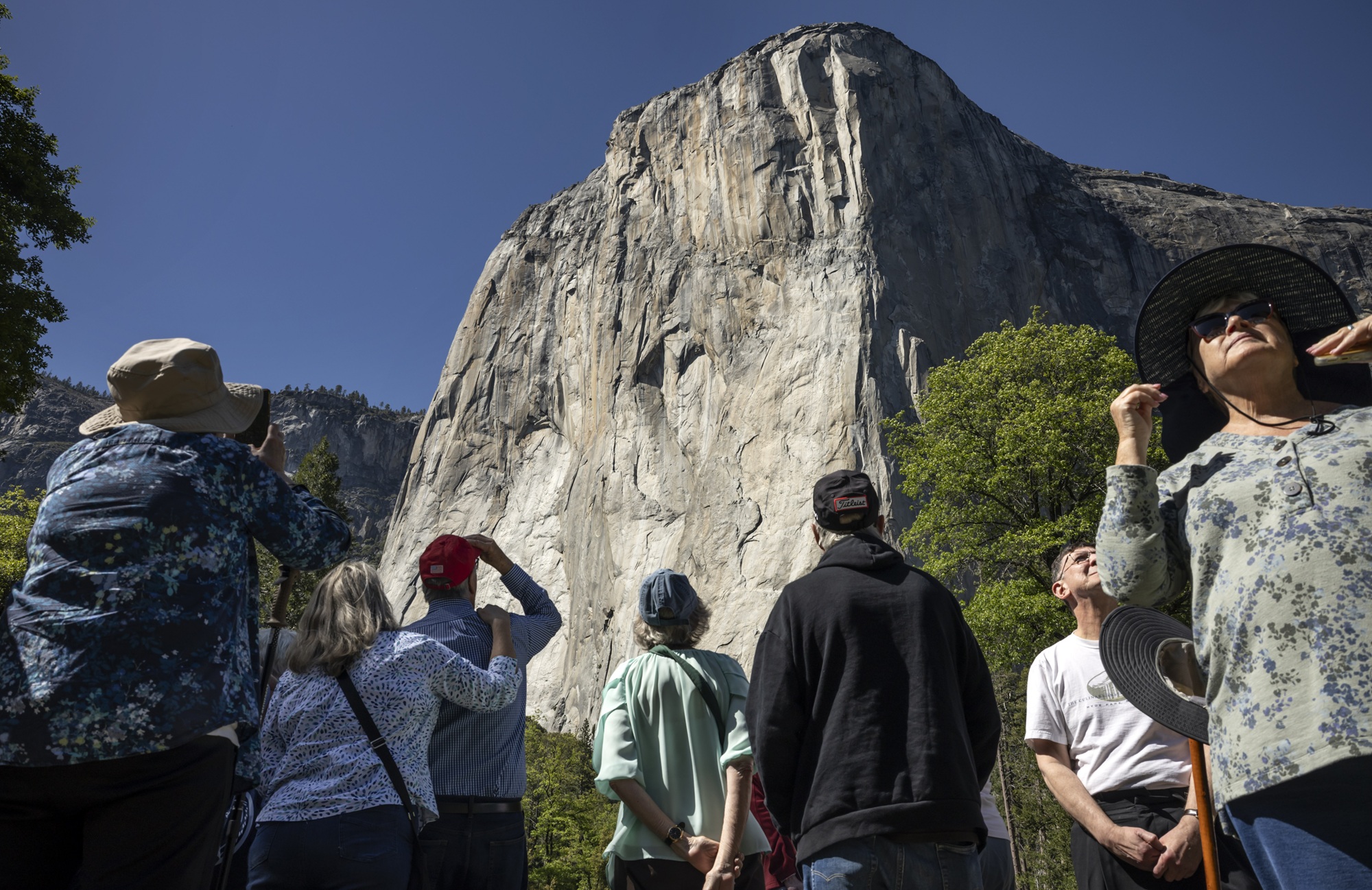
"caption": "Visitors look up at El Capitan from El Capitan Meadow in Yosemite National Park, California, on May 20, 2025. Starting next year, international visitors to U.S. parks like Yosemite will face steeper-than-ever fees.",
"credit": "Carlos Avila Gonzalez/San Francisco Chronicle via Getty Images",
"altTag": null,
"description": null,
"imgSizes": {
"thumbnail": {
"file": "https://cdn.kqed.org/wp-content/uploads/sites/10/2025/10/YosemiteGetty-160x104.jpg",
"width": 160,
"height": 104,
"mimeType": "image/jpeg"
},
"1536x1536": {
"file": "https://cdn.kqed.org/wp-content/uploads/sites/10/2025/10/YosemiteGetty-1536x997.jpg",
"width": 1536,
"height": 997,
"mimeType": "image/jpeg"
},
"post-thumbnail": {
"file": "https://cdn.kqed.org/wp-content/uploads/sites/10/2025/10/YosemiteGetty-672x372.jpg",
"width": 672,
"height": 372,
"mimeType": "image/jpeg"
},
"twentyfourteen-full-width": {
"file": "https://cdn.kqed.org/wp-content/uploads/sites/10/2025/10/YosemiteGetty-1038x576.jpg",
"width": 1038,
"height": 576,
"mimeType": "image/jpeg"
},
"kqedFullSize": {
"file": "https://cdn.kqed.org/wp-content/uploads/sites/10/2025/10/YosemiteGetty.jpg",
"width": 2000,
"height": 1298
}
},
"isLoading": false,
"fetchFailed": false
},
"news_12030354": {
"type": "attachments",
"id": "news_12030354",
"meta": {
"index": "attachments_1716263798",
"site": "news",
"id": "12030354",
"found": true
},
"title": "things-to-do-san-francisco-oakland-san-jose-no-alcohol",
"publishDate": 1741379273,
"status": "inherit",
"parent": 12030278,
"modified": 1741386421,
"caption": "From Yemeni cafes to karaoke and arcades, there are options galore across the Bay Area for an alcohol-free night out.",
"credit": "Getty Images",
"altTag": null,
"description": null,
"imgSizes": {
"medium": {
"file": "https://cdn.kqed.org/wp-content/uploads/sites/10/2025/03/GettyImages-1357042436-800x534.jpg",
"width": 800,
"height": 534,
"mimeType": "image/jpeg"
},
"large": {
"file": "https://cdn.kqed.org/wp-content/uploads/sites/10/2025/03/GettyImages-1357042436-1020x680.jpg",
"width": 1020,
"height": 680,
"mimeType": "image/jpeg"
},
"thumbnail": {
"file": "https://cdn.kqed.org/wp-content/uploads/sites/10/2025/03/GettyImages-1357042436-160x107.jpg",
"width": 160,
"height": 107,
"mimeType": "image/jpeg"
},
"1536x1536": {
"file": "https://cdn.kqed.org/wp-content/uploads/sites/10/2025/03/GettyImages-1357042436-1536x1024.jpg",
"width": 1536,
"height": 1024,
"mimeType": "image/jpeg"
},
"2048x2048": {
"file": "https://cdn.kqed.org/wp-content/uploads/sites/10/2025/03/GettyImages-1357042436-2048x1366.jpg",
"width": 2048,
"height": 1366,
"mimeType": "image/jpeg"
},
"post-thumbnail": {
"file": "https://cdn.kqed.org/wp-content/uploads/sites/10/2025/03/GettyImages-1357042436-672x372.jpg",
"width": 672,
"height": 372,
"mimeType": "image/jpeg"
},
"twentyfourteen-full-width": {
"file": "https://cdn.kqed.org/wp-content/uploads/sites/10/2025/03/GettyImages-1357042436-1038x576.jpg",
"width": 1038,
"height": 576,
"mimeType": "image/jpeg"
},
"full-width": {
"file": "https://cdn.kqed.org/wp-content/uploads/sites/10/2025/03/GettyImages-1357042436-1920x1281.jpg",
"width": 1920,
"height": 1281,
"mimeType": "image/jpeg"
},
"kqedFullSize": {
"file": "https://cdn.kqed.org/wp-content/uploads/sites/10/2025/03/GettyImages-1357042436.jpg",
"width": 2120,
"height": 1414
}
},
"isLoading": false,
"fetchFailed": false
},
"news_12068594": {
"type": "attachments",
"id": "news_12068594",
"meta": {
"index": "attachments_1716263798",
"site": "news",
"id": "12068594",
"found": true
},
"title": "For Sale Sign Hangs in Front Yard of House",
"publishDate": 1767634094,
"status": "inherit",
"parent": 12068062,
"modified": 1767634113,
"caption": "Close-up of a \"for sale\" sign on post in front yard of house",
"credit": "Grace Cary/Getty Images",
"altTag": null,
"description": null,
"imgSizes": {
"thumbnail": {
"file": "https://cdn.kqed.org/wp-content/uploads/sites/10/2026/01/HousingGetty1-160x107.jpg",
"width": 160,
"height": 107,
"mimeType": "image/jpeg"
},
"1536x1536": {
"file": "https://cdn.kqed.org/wp-content/uploads/sites/10/2026/01/HousingGetty1-1536x1024.jpg",
"width": 1536,
"height": 1024,
"mimeType": "image/jpeg"
},
"post-thumbnail": {
"file": "https://cdn.kqed.org/wp-content/uploads/sites/10/2026/01/HousingGetty1-672x372.jpg",
"width": 672,
"height": 372,
"mimeType": "image/jpeg"
},
"twentyfourteen-full-width": {
"file": "https://cdn.kqed.org/wp-content/uploads/sites/10/2026/01/HousingGetty1-1038x576.jpg",
"width": 1038,
"height": 576,
"mimeType": "image/jpeg"
},
"npr-cds-wide": {
"file": "https://cdn.kqed.org/wp-content/uploads/sites/10/2026/01/HousingGetty1-1200x675.jpg",
"width": 1200,
"height": 675,
"mimeType": "image/jpeg"
},
"kqedFullSize": {
"file": "https://cdn.kqed.org/wp-content/uploads/sites/10/2026/01/HousingGetty1.jpg",
"width": 2000,
"height": 1333
}
},
"isLoading": false,
"fetchFailed": false
},
"news_11987469": {
"type": "attachments",
"id": "news_11987469",
"meta": {
"index": "attachments_1716263798",
"site": "news",
"id": "11987469",
"found": true
},
"title": "240404-District5BOSRedistricting-010-BL_qut",
"publishDate": 1716424806,
"status": "inherit",
"parent": 11987465,
"modified": 1716424849,
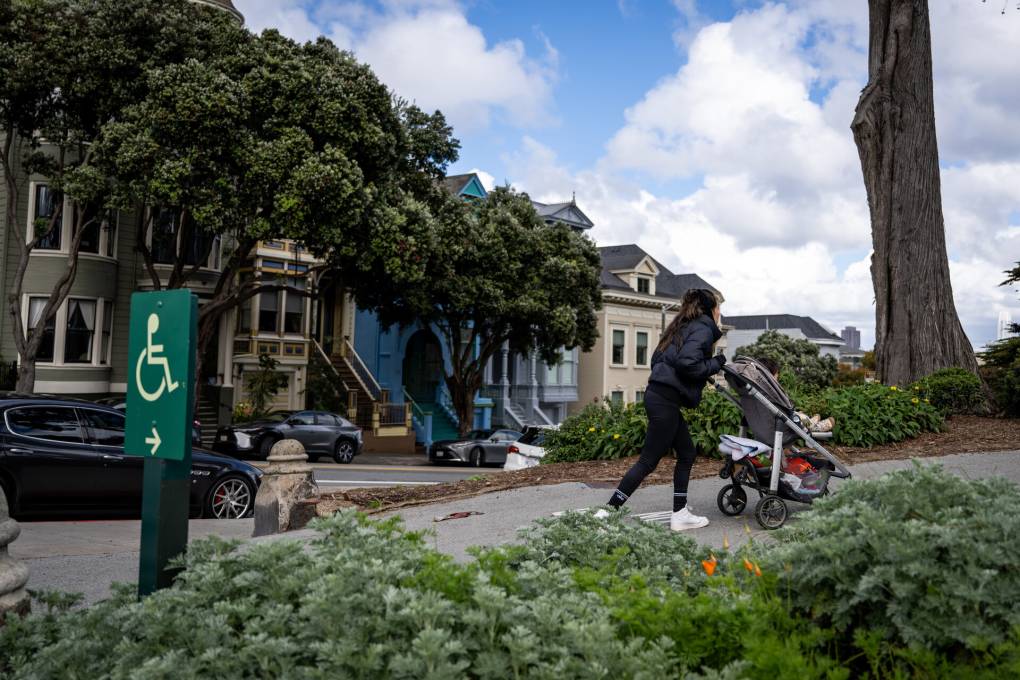
"caption": "A woman pushes a stroller through Alamo Square Park in San Francisco on April 4, 2024.",
"credit": "Beth LaBerge/KQED",
"altTag": null,
"description": null,
"imgSizes": {
"medium": {
"file": "https://cdn.kqed.org/wp-content/uploads/sites/10/2024/05/240404-District5BOSRedistricting-010-BL_qut-800x533.jpg",
"width": 800,
"height": 533,
"mimeType": "image/jpeg"
},
"large": {
"file": "https://cdn.kqed.org/wp-content/uploads/sites/10/2024/05/240404-District5BOSRedistricting-010-BL_qut-1020x680.jpg",
"width": 1020,
"height": 680,
"mimeType": "image/jpeg"
},
"thumbnail": {
"file": "https://cdn.kqed.org/wp-content/uploads/sites/10/2024/05/240404-District5BOSRedistricting-010-BL_qut-160x107.jpg",
"width": 160,
"height": 107,
"mimeType": "image/jpeg"
},
"1536x1536": {
"file": "https://cdn.kqed.org/wp-content/uploads/sites/10/2024/05/240404-District5BOSRedistricting-010-BL_qut-1536x1024.jpg",
"width": 1536,
"height": 1024,
"mimeType": "image/jpeg"
},
"post-thumbnail": {
"file": "https://cdn.kqed.org/wp-content/uploads/sites/10/2024/05/240404-District5BOSRedistricting-010-BL_qut-672x372.jpg",
"width": 672,
"height": 372,
"mimeType": "image/jpeg"
},
"twentyfourteen-full-width": {
"file": "https://cdn.kqed.org/wp-content/uploads/sites/10/2024/05/240404-District5BOSRedistricting-010-BL_qut-1038x576.jpg",
"width": 1038,
"height": 576,
"mimeType": "image/jpeg"
},
"kqedFullSize": {
"file": "https://cdn.kqed.org/wp-content/uploads/sites/10/2024/05/240404-District5BOSRedistricting-010-BL_qut.jpg",
"width": 1920,
"height": 1280
}
},
"isLoading": false,
"fetchFailed": false
},
"news_12010728": {
"type": "attachments",
"id": "news_12010728",
"meta": {
"index": "attachments_1716263798",
"site": "news",
"id": "12010728",
"found": true
},
"title": "004_BoulderCreek_BigBasinRedwoods_08172021_qed",
"publishDate": 1729710255,
"status": "inherit",
"parent": 12010708,
"modified": 1729710284,
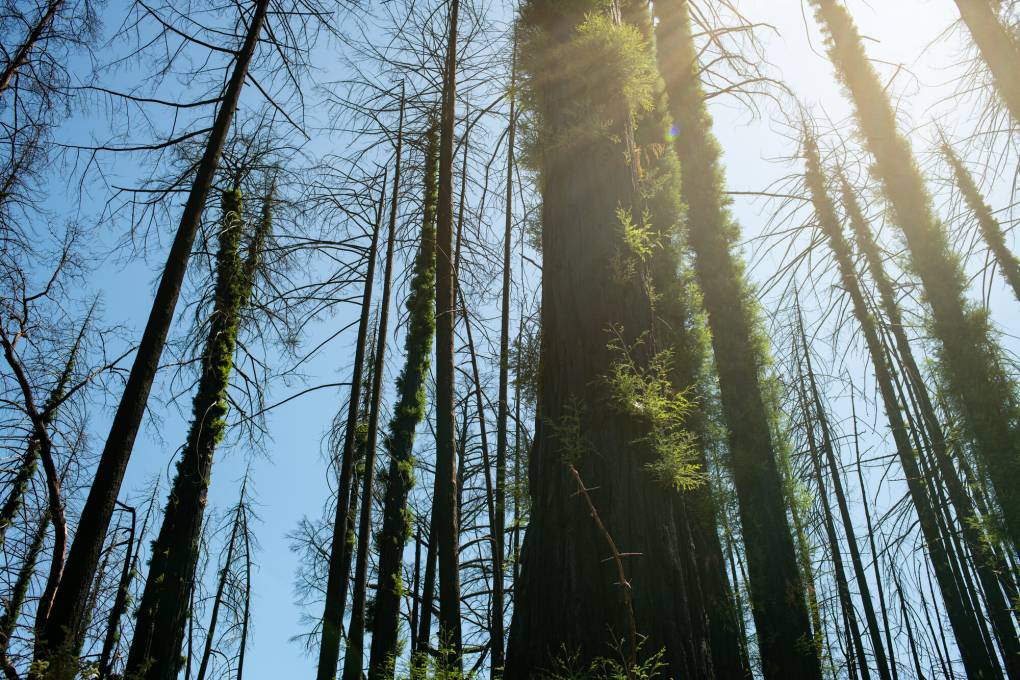
"caption": "New growth on trees in Big Basin Redwoods State Park in Boulder Creek on August 17, 2021, one year after the CZU Lightning Complex wildfire swept through the area.",
"credit": "Beth LaBerge/KQED",
"altTag": null,
"description": null,
"imgSizes": {
"medium": {
"file": "https://cdn.kqed.org/wp-content/uploads/sites/10/2024/10/004_BoulderCreek_BigBasinRedwoods_08172021_qed-800x533.jpg",
"width": 800,
"height": 533,
"mimeType": "image/jpeg"
},
"large": {
"file": "https://cdn.kqed.org/wp-content/uploads/sites/10/2024/10/004_BoulderCreek_BigBasinRedwoods_08172021_qed-1020x680.jpg",
"width": 1020,
"height": 680,
"mimeType": "image/jpeg"
},
"thumbnail": {
"file": "https://cdn.kqed.org/wp-content/uploads/sites/10/2024/10/004_BoulderCreek_BigBasinRedwoods_08172021_qed-160x107.jpg",
"width": 160,
"height": 107,
"mimeType": "image/jpeg"
},
"1536x1536": {
"file": "https://cdn.kqed.org/wp-content/uploads/sites/10/2024/10/004_BoulderCreek_BigBasinRedwoods_08172021_qed-1536x1024.jpg",
"width": 1536,
"height": 1024,
"mimeType": "image/jpeg"
},
"post-thumbnail": {
"file": "https://cdn.kqed.org/wp-content/uploads/sites/10/2024/10/004_BoulderCreek_BigBasinRedwoods_08172021_qed-672x372.jpg",
"width": 672,
"height": 372,
"mimeType": "image/jpeg"
},
"twentyfourteen-full-width": {
"file": "https://cdn.kqed.org/wp-content/uploads/sites/10/2024/10/004_BoulderCreek_BigBasinRedwoods_08172021_qed-1038x576.jpg",
"width": 1038,
"height": 576,
"mimeType": "image/jpeg"
},
"full-width": {
"file": "https://cdn.kqed.org/wp-content/uploads/sites/10/2024/10/004_BoulderCreek_BigBasinRedwoods_08172021_qed-1920x1280.jpg",
"width": 1920,
"height": 1280,
"mimeType": "image/jpeg"
},
"kqedFullSize": {
"file": "https://cdn.kqed.org/wp-content/uploads/sites/10/2024/10/004_BoulderCreek_BigBasinRedwoods_08172021_qed.jpg",
"width": 2000,
"height": 1333
}
},
"isLoading": false,
"fetchFailed": false
},
"news_12064045": {
"type": "attachments",
"id": "news_12064045",
"meta": {
"index": "attachments_1716263798",
"site": "news",
"id": "12064045",
"found": true
},
"title": "251113-RAINFILE00237_TV-KQED",
"publishDate": 1763072580,
"status": "inherit",
"parent": 0,
"modified": 1766539451,
"caption": "For whatever reason, looking to keep it low-key this Christmas Day? There's still big community events happening on Dec. 25.",
"credit": "Tâm Vũ/KQED",
"altTag": "A person walks down the street towards the camera. Their umbrella covers their face.",
"description": null,
"imgSizes": {
"thumbnail": {
"file": "https://cdn.kqed.org/wp-content/uploads/sites/10/2025/11/251113-RAINFILE00237_TV-KQED-160x107.jpg",
"width": 160,
"height": 107,
"mimeType": "image/jpeg"
},
"1536x1536": {
"file": "https://cdn.kqed.org/wp-content/uploads/sites/10/2025/11/251113-RAINFILE00237_TV-KQED-1536x1024.jpg",
"width": 1536,
"height": 1024,
"mimeType": "image/jpeg"
},
"post-thumbnail": {
"file": "https://cdn.kqed.org/wp-content/uploads/sites/10/2025/11/251113-RAINFILE00237_TV-KQED-672x372.jpg",
"width": 672,
"height": 372,
"mimeType": "image/jpeg"
},
"twentyfourteen-full-width": {
"file": "https://cdn.kqed.org/wp-content/uploads/sites/10/2025/11/251113-RAINFILE00237_TV-KQED-1038x576.jpg",
"width": 1038,
"height": 576,
"mimeType": "image/jpeg"
},
"npr-cds-wide": {
"file": "https://cdn.kqed.org/wp-content/uploads/sites/10/2025/11/251113-RAINFILE00237_TV-KQED-1200x675.jpg",
"width": 1200,
"height": 675,
"mimeType": "image/jpeg"
},
"kqedFullSize": {
"file": "https://cdn.kqed.org/wp-content/uploads/sites/10/2025/11/251113-RAINFILE00237_TV-KQED.jpg",
"width": 2000,
"height": 1333
}
},
"isLoading": false,
"fetchFailed": false
},
"news_12067546": {
"type": "attachments",
"id": "news_12067546",
"meta": {
"index": "attachments_1716263798",
"site": "news",
"id": "12067546",
"found": true
},
"title": "Woman uses automated passport control kiosk",
"publishDate": 1765994495,
"status": "inherit",
"parent": 12067497,
"modified": 1766004975,
"caption": "An unrecognizable business traveler uses an automated passport control kiosk at an international airport.",
"credit": "SDI Productions/Getty Images",
"altTag": null,
"description": null,
"imgSizes": {
"thumbnail": {
"file": "https://cdn.kqed.org/wp-content/uploads/sites/10/2025/12/PassportGetty-160x107.jpg",
"width": 160,
"height": 107,
"mimeType": "image/jpeg"
},
"1536x1536": {
"file": "https://cdn.kqed.org/wp-content/uploads/sites/10/2025/12/PassportGetty-1536x1024.jpg",
"width": 1536,
"height": 1024,
"mimeType": "image/jpeg"
},
"post-thumbnail": {
"file": "https://cdn.kqed.org/wp-content/uploads/sites/10/2025/12/PassportGetty-672x372.jpg",
"width": 672,
"height": 372,
"mimeType": "image/jpeg"
},
"twentyfourteen-full-width": {
"file": "https://cdn.kqed.org/wp-content/uploads/sites/10/2025/12/PassportGetty-1038x576.jpg",
"width": 1038,
"height": 576,
"mimeType": "image/jpeg"
},
"npr-cds-wide": {
"file": "https://cdn.kqed.org/wp-content/uploads/sites/10/2025/12/PassportGetty-1200x675.jpg",
"width": 1200,
"height": 675,
"mimeType": "image/jpeg"
},
"kqedFullSize": {
"file": "https://cdn.kqed.org/wp-content/uploads/sites/10/2025/12/PassportGetty.jpg",
"width": 2000,
"height": 1333
}
},
"isLoading": false,
"fetchFailed": false
},
"news_12067045": {
"type": "attachments",
"id": "news_12067045",
"meta": {
"index": "attachments_1716263798",
"site": "news",
"id": "12067045",
"found": true
},
"title": "251210-SFOEATING-31-BL-KQED",
"publishDate": 1765586560,
"status": "inherit",
"parent": 0,
"modified": 1765586739,
"caption": "A food court in Terminal 1 at San Francisco International Airport on Dec. 10, 2025.",
"credit": "Beth LaBerge/KQED",
"altTag": null,
"description": null,
"imgSizes": {
"thumbnail": {
"file": "https://cdn.kqed.org/wp-content/uploads/sites/10/2025/12/251210-SFOEATING-31-BL-KQED-160x107.jpg",
"width": 160,
"height": 107,
"mimeType": "image/jpeg"
},
"1536x1536": {
"file": "https://cdn.kqed.org/wp-content/uploads/sites/10/2025/12/251210-SFOEATING-31-BL-KQED-1536x1024.jpg",
"width": 1536,
"height": 1024,
"mimeType": "image/jpeg"
},
"post-thumbnail": {
"file": "https://cdn.kqed.org/wp-content/uploads/sites/10/2025/12/251210-SFOEATING-31-BL-KQED-672x372.jpg",
"width": 672,
"height": 372,
"mimeType": "image/jpeg"
},
"twentyfourteen-full-width": {
"file": "https://cdn.kqed.org/wp-content/uploads/sites/10/2025/12/251210-SFOEATING-31-BL-KQED-1038x576.jpg",
"width": 1038,
"height": 576,
"mimeType": "image/jpeg"
},
"npr-cds-wide": {
"file": "https://cdn.kqed.org/wp-content/uploads/sites/10/2025/12/251210-SFOEATING-31-BL-KQED-1200x675.jpg",
"width": 1200,
"height": 675,
"mimeType": "image/jpeg"
},
"kqedFullSize": {
"file": "https://cdn.kqed.org/wp-content/uploads/sites/10/2025/12/251210-SFOEATING-31-BL-KQED.jpg",
"width": 2000,
"height": 1333
}
},
"isLoading": false,
"fetchFailed": false
},
"news_12067211": {
"type": "attachments",
"id": "news_12067211",
"meta": {
"index": "attachments_1716263798",
"site": "news",
"id": "12067211",
"found": true
},
"title": "Getting Married: Happy Couple Married on Christmas",
"publishDate": 1765830528,
"status": "inherit",
"parent": 12067194,
"modified": 1765830566,
"caption": "\"A natural, real couple getting married during Christmas, surrounded by friends and family.\"",
"credit": "Jason Doiy/Getty Images",
"altTag": null,
"description": null,
"imgSizes": {
"thumbnail": {
"file": "https://cdn.kqed.org/wp-content/uploads/sites/10/2025/12/WeddingsGetty2-160x107.jpg",
"width": 160,
"height": 107,
"mimeType": "image/jpeg"
},
"1536x1536": {
"file": "https://cdn.kqed.org/wp-content/uploads/sites/10/2025/12/WeddingsGetty2-1536x1024.jpg",
"width": 1536,
"height": 1024,
"mimeType": "image/jpeg"
},
"post-thumbnail": {
"file": "https://cdn.kqed.org/wp-content/uploads/sites/10/2025/12/WeddingsGetty2-672x372.jpg",
"width": 672,
"height": 372,
"mimeType": "image/jpeg"
},
"twentyfourteen-full-width": {
"file": "https://cdn.kqed.org/wp-content/uploads/sites/10/2025/12/WeddingsGetty2-1038x576.jpg",
"width": 1038,
"height": 576,
"mimeType": "image/jpeg"
},
"npr-cds-wide": {
"file": "https://cdn.kqed.org/wp-content/uploads/sites/10/2025/12/WeddingsGetty2-1200x675.jpg",
"width": 1200,
"height": 675,
"mimeType": "image/jpeg"
},
"kqedFullSize": {
"file": "https://cdn.kqed.org/wp-content/uploads/sites/10/2025/12/WeddingsGetty2.jpg",
"width": 2000,
"height": 1333
}
},
"isLoading": false,
"fetchFailed": false
},
"news_12067436": {
"type": "attachments",
"id": "news_12067436",
"meta": {
"index": "attachments_1716263798",
"site": "news",
"id": "12067436",
"found": true
},
"title": "Glide Memorial Church Christmas Dinner",
"publishDate": 1765914632,
"status": "inherit",
"parent": 12067415,
"modified": 1766539744,
"caption": "A resident eats a holiday meal at Glide Memorial Church in San Francisco, California, on Sunday, Dec. 25, 2022.",
"credit": "Jane Tyska/Digital First Media/East Bay Times via Getty Images",
"altTag": null,
"description": null,
"imgSizes": {
"thumbnail": {
"file": "https://cdn.kqed.org/wp-content/uploads/sites/10/2025/12/GlideChurchSFGetty-160x110.jpg",
"width": 160,
"height": 110,
"mimeType": "image/jpeg"
},
"1536x1536": {
"file": "https://cdn.kqed.org/wp-content/uploads/sites/10/2025/12/GlideChurchSFGetty-1536x1057.jpg",
"width": 1536,
"height": 1057,
"mimeType": "image/jpeg"
},
"post-thumbnail": {
"file": "https://cdn.kqed.org/wp-content/uploads/sites/10/2025/12/GlideChurchSFGetty-672x372.jpg",
"width": 672,
"height": 372,
"mimeType": "image/jpeg"
},
"twentyfourteen-full-width": {
"file": "https://cdn.kqed.org/wp-content/uploads/sites/10/2025/12/GlideChurchSFGetty-1038x576.jpg",
"width": 1038,
"height": 576,
"mimeType": "image/jpeg"
},
"npr-cds-wide": {
"file": "https://cdn.kqed.org/wp-content/uploads/sites/10/2025/12/GlideChurchSFGetty-1200x675.jpg",
"width": 1200,
"height": 675,
"mimeType": "image/jpeg"
},
"kqedFullSize": {
"file": "https://cdn.kqed.org/wp-content/uploads/sites/10/2025/12/GlideChurchSFGetty.jpg",
"width": 2000,
"height": 1376
}
},
"isLoading": false,
"fetchFailed": false
},
"news_12067146": {
"type": "attachments",
"id": "news_12067146",
"meta": {
"index": "attachments_1716263798",
"site": "news",
"id": "12067146",
"found": true
},
"title": "Alyssa and Merwin Moss are married in San Francisco City Hall on Oct. 28, 2025.",
"publishDate": 1765825180,
"status": "inherit",
"parent": 12067114,
"modified": 1765825232,
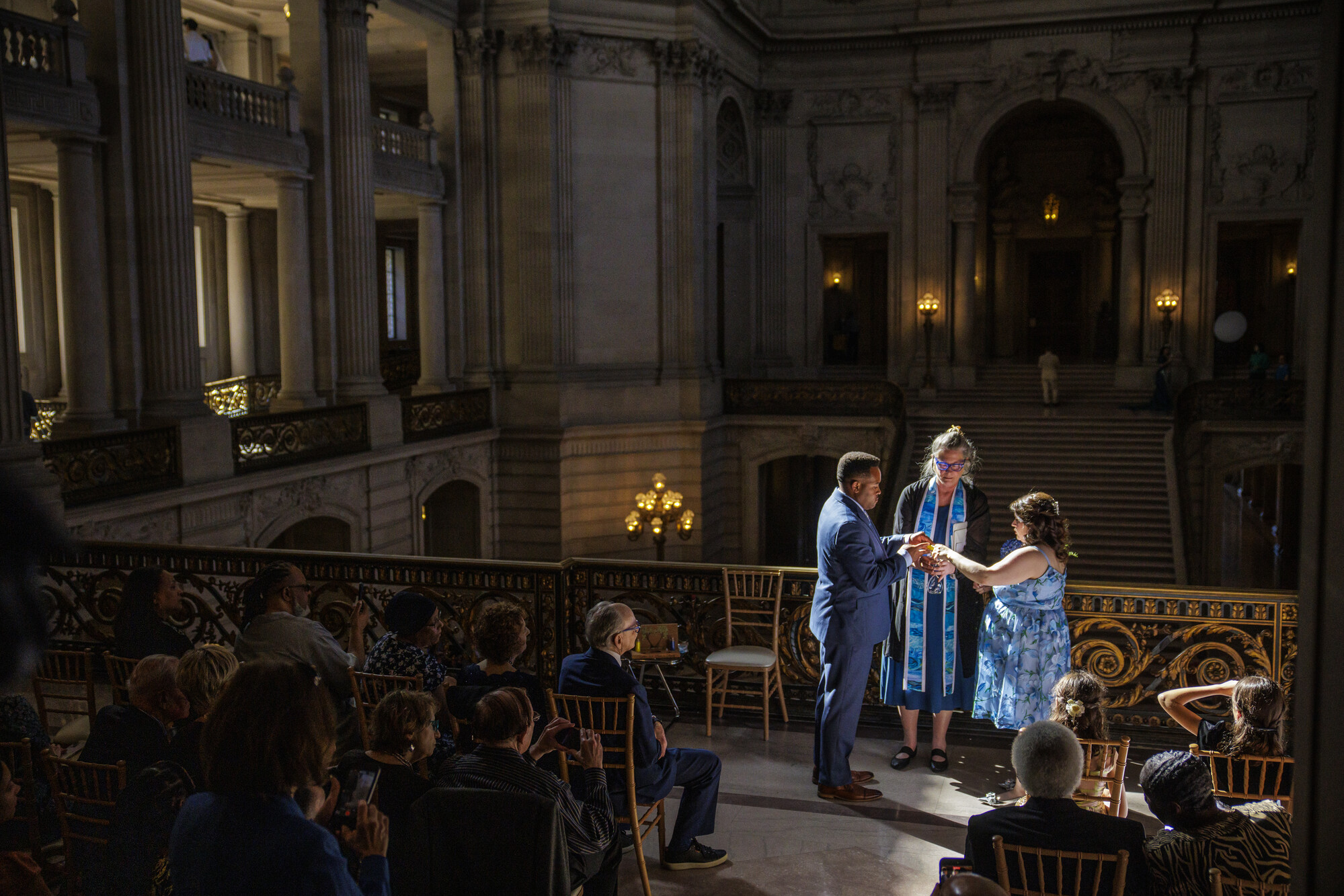
"caption": "Alyssa and Merwin Moss are married in San Francisco City Hall on Oct. 28, 2025.",
"credit": "Martin do Nascimento/KQED",
"altTag": null,
"description": null,
"imgSizes": {
"thumbnail": {
"file": "https://cdn.kqed.org/wp-content/uploads/sites/10/2025/12/251029-SWIFT-SHOWGIRL-MD-03-KQED_qed-160x107.jpg",
"width": 160,
"height": 107,
"mimeType": "image/jpeg"
},
"1536x1536": {
"file": "https://cdn.kqed.org/wp-content/uploads/sites/10/2025/12/251029-SWIFT-SHOWGIRL-MD-03-KQED_qed-1536x1024.jpg",
"width": 1536,
"height": 1024,
"mimeType": "image/jpeg"
},
"post-thumbnail": {
"file": "https://cdn.kqed.org/wp-content/uploads/sites/10/2025/12/251029-SWIFT-SHOWGIRL-MD-03-KQED_qed-672x372.jpg",
"width": 672,
"height": 372,
"mimeType": "image/jpeg"
},
"twentyfourteen-full-width": {
"file": "https://cdn.kqed.org/wp-content/uploads/sites/10/2025/12/251029-SWIFT-SHOWGIRL-MD-03-KQED_qed-1038x576.jpg",
"width": 1038,
"height": 576,
"mimeType": "image/jpeg"
},
"npr-cds-wide": {
"file": "https://cdn.kqed.org/wp-content/uploads/sites/10/2025/12/251029-SWIFT-SHOWGIRL-MD-03-KQED_qed-1200x675.jpg",
"width": 1200,
"height": 675,
"mimeType": "image/jpeg"
},
"kqedFullSize": {
"file": "https://cdn.kqed.org/wp-content/uploads/sites/10/2025/12/251029-SWIFT-SHOWGIRL-MD-03-KQED_qed.jpg",
"width": 1999,
"height": 1333
}
},
"isLoading": false,
"fetchFailed": false
},
"news_12067062": {
"type": "attachments",
"id": "news_12067062",
"meta": {
"index": "attachments_1716263798",
"site": "news",
"id": "12067062",
"found": true
},
"title": "251210-SFOEATING-87-BL-KQED",
"publishDate": 1765586622,
"status": "inherit",
"parent": 12072458,
"modified": 1770325149,
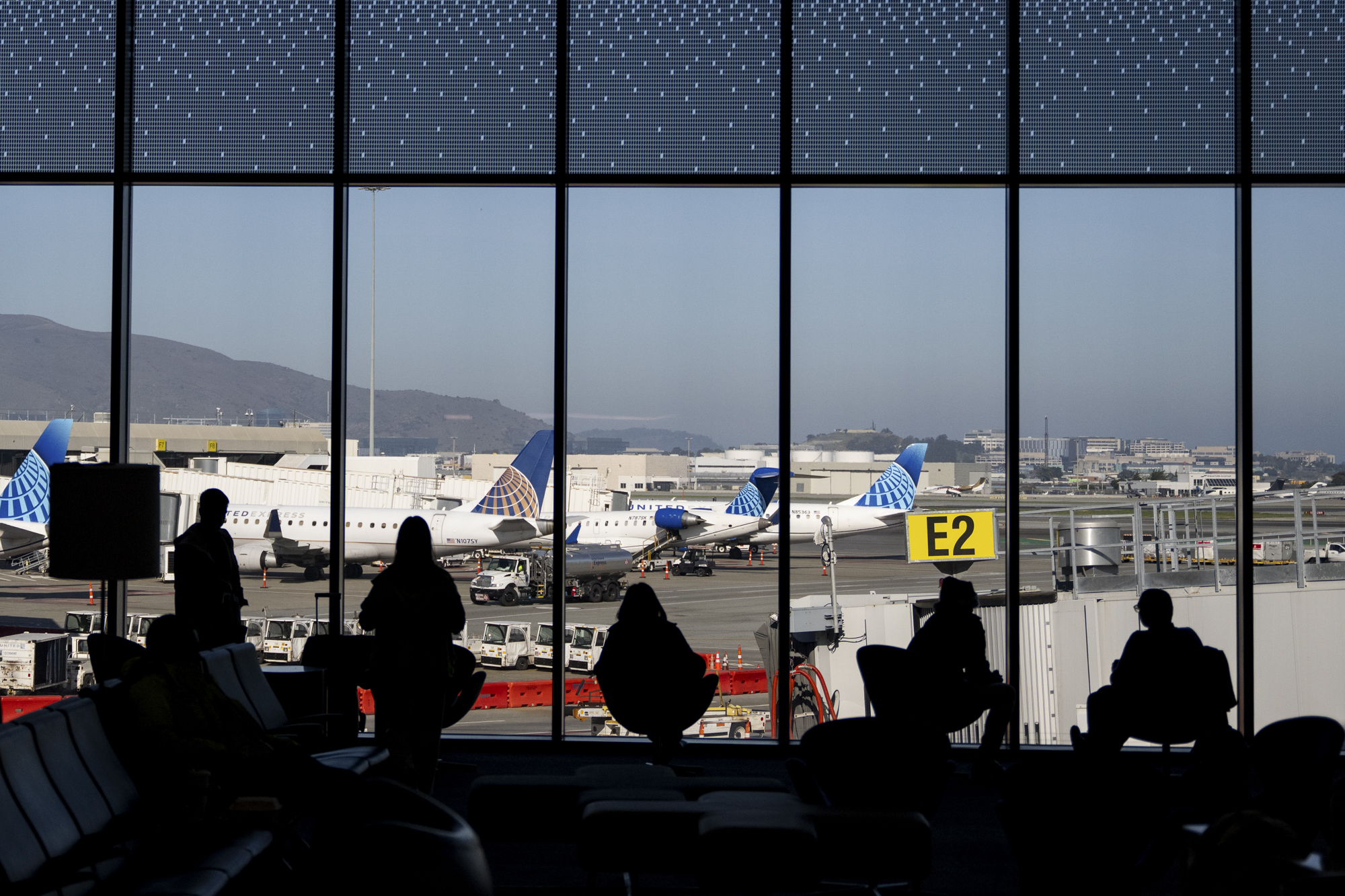
"caption": "Passengers wait for their flight at San Francisco International Airport on Dec. 10, 2025.",
"credit": "Beth LaBerge/KQED",
"altTag": null,
"description": null,
"imgSizes": {
"thumbnail": {
"file": "https://cdn.kqed.org/wp-content/uploads/sites/10/2025/12/251210-SFOEATING-87-BL-KQED-160x107.jpg",
"width": 160,
"height": 107,
"mimeType": "image/jpeg"
},
"1536x1536": {
"file": "https://cdn.kqed.org/wp-content/uploads/sites/10/2025/12/251210-SFOEATING-87-BL-KQED-1536x1024.jpg",
"width": 1536,
"height": 1024,
"mimeType": "image/jpeg"
},
"post-thumbnail": {
"file": "https://cdn.kqed.org/wp-content/uploads/sites/10/2025/12/251210-SFOEATING-87-BL-KQED-672x372.jpg",
"width": 672,
"height": 372,
"mimeType": "image/jpeg"
},
"twentyfourteen-full-width": {
"file": "https://cdn.kqed.org/wp-content/uploads/sites/10/2025/12/251210-SFOEATING-87-BL-KQED-1038x576.jpg",
"width": 1038,
"height": 576,
"mimeType": "image/jpeg"
},
"npr-cds-wide": {
"file": "https://cdn.kqed.org/wp-content/uploads/sites/10/2025/12/251210-SFOEATING-87-BL-KQED-1200x675.jpg",
"width": 1200,
"height": 675,
"mimeType": "image/jpeg"
},
"kqedFullSize": {
"file": "https://cdn.kqed.org/wp-content/uploads/sites/10/2025/12/251210-SFOEATING-87-BL-KQED.jpg",
"width": 2000,
"height": 1333
}
},
"isLoading": false,
"fetchFailed": false
}
},
"audioPlayerReducer": {
"postId": "stream_live",
"isPaused": true,
"isPlaying": false,
"pfsActive": false,
"pledgeModalIsOpen": true,
"playerDrawerIsOpen": false,
"liveAudioPlayStartedAt": 0,
"liveAudioPlayContext": ""
},
"authorsReducer": {
"ccabreralomeli": {
"type": "authors",
"id": "11708",
"meta": {
"index": "authors_1716337520",
"id": "11708",
"found": true
},
"name": "Carlos Cabrera-Lomelí",
"firstName": "Carlos",
"lastName": "Cabrera-Lomelí",
"slug": "ccabreralomeli",
"email": "ccabreralomeli@KQED.org",
"display_author_email": true,
"staff_mastheads": [
"news"
],
"title": "Community Reporter",
"bio": "Carlos Cabrera-Lomelí is a community reporter with KQED's digital engagement team. He also reports and co-produces for KQED's bilingual news hub KQED en Español. He grew up in San Francisco's Mission District and has previously worked with Univision, 48 Hills and REFORMA in Mexico City.",
"avatar": "https://secure.gravatar.com/avatar/c309be9665e484f887b818c89e273ecc673004f426f36b24d00a4d813a2e0518?s=600&d=blank&r=g",
"twitter": "@LomeliCabrera",
"bluesky": null,
"facebook": null,
"instagram": null,
"linkedin": null,
"sites": [
{
"site": "arts",
"roles": [
"editor"
]
},
{
"site": "news",
"roles": [
"editor"
]
},
{
"site": "about",
"roles": [
"editor"
]
},
{
"site": "science",
"roles": [
"editor"
]
},
{
"site": "perspectives",
"roles": [
"editor"
]
},
{
"site": "elections",
"roles": [
"editor"
]
},
{
"site": "liveblog",
"roles": [
"contributor"
]
}
],
"headData": {
"title": "Carlos Cabrera-Lomelí | KQED",
"description": "Community Reporter",
"ogImgSrc": "https://secure.gravatar.com/avatar/c309be9665e484f887b818c89e273ecc673004f426f36b24d00a4d813a2e0518?s=600&d=blank&r=g",
"twImgSrc": "https://secure.gravatar.com/avatar/c309be9665e484f887b818c89e273ecc673004f426f36b24d00a4d813a2e0518?s=600&d=blank&r=g"
},
"isLoading": false,
"link": "/author/ccabreralomeli"
},
"nkhan": {
"type": "authors",
"id": "11867",
"meta": {
"index": "authors_1716337520",
"id": "11867",
"found": true
},
"name": "Nisa Khan",
"firstName": "Nisa",
"lastName": "Khan",
"slug": "nkhan",
"email": "nkhan@kqed.org",
"display_author_email": false,
"staff_mastheads": [],
"title": "KQED Contributor",
"bio": "Nisa Khan is a reporter for KQED's Audience News Desk. She was formerly a data reporter at Michigan Radio. She earned a Bachelor of Science in Information from the University of Michigan and a Master of Arts in Communication from Stanford University.",
"avatar": "https://secure.gravatar.com/avatar/8720459eef081ff64582b3506b124d58523e80e120704a0cbd9892533c914991?s=600&d=blank&r=g",
"twitter": "mnisakhan",
"bluesky": null,
"facebook": null,
"instagram": null,
"linkedin": null,
"sites": [
{
"site": "arts",
"roles": [
"editor"
]
},
{
"site": "news",
"roles": [
"editor"
]
},
{
"site": "science",
"roles": [
"editor",
"author"
]
},
{
"site": "forum",
"roles": [
"editor"
]
},
{
"site": "liveblog",
"roles": [
"contributor"
]
}
],
"headData": {
"title": "Nisa Khan | KQED",
"description": "KQED Contributor",
"ogImgSrc": "https://secure.gravatar.com/avatar/8720459eef081ff64582b3506b124d58523e80e120704a0cbd9892533c914991?s=600&d=blank&r=g",
"twImgSrc": "https://secure.gravatar.com/avatar/8720459eef081ff64582b3506b124d58523e80e120704a0cbd9892533c914991?s=600&d=blank&r=g"
},
"isLoading": false,
"link": "/author/nkhan"
},
"sarahwright": {
"type": "authors",
"id": "11956",
"meta": {
"index": "authors_1716337520",
"id": "11956",
"found": true
},
"name": "Sarah Wright",
"firstName": "Sarah",
"lastName": "Wright",
"slug": "sarahwright",
"email": "swright@kqed.org",
"display_author_email": true,
"staff_mastheads": [],
"title": "Outdoors Engagement Reporter",
"bio": "Sarah Wright is KQED's Outdoors Engagement Reporter. Originally from Lake Tahoe, she completed a thru-hike of the Pacific Crest Trail in 2019 and was a U.S. Fulbright Program grantee to Argentina in 2023. Her journalism has appeared in The Guardian, The San Francisco Standard, The Palo Alto Weekly and the Half Moon Bay Review.",
"avatar": "https://secure.gravatar.com/avatar/c161a3d6441865cba25e6db4fa561099ad665799e9432e34da2b84d7e371524c?s=600&d=blank&r=g",
"twitter": null,
"bluesky": null,
"facebook": null,
"instagram": null,
"linkedin": null,
"sites": [
{
"site": "arts",
"roles": [
"editor"
]
},
{
"site": "news",
"roles": [
"editor"
]
},
{
"site": "science",
"roles": [
"contributor",
"author"
]
},
{
"site": "forum",
"roles": [
"editor"
]
}
],
"headData": {
"title": "Sarah Wright | KQED",
"description": "Outdoors Engagement Reporter",
"ogImgSrc": "https://secure.gravatar.com/avatar/c161a3d6441865cba25e6db4fa561099ad665799e9432e34da2b84d7e371524c?s=600&d=blank&r=g",
"twImgSrc": "https://secure.gravatar.com/avatar/c161a3d6441865cba25e6db4fa561099ad665799e9432e34da2b84d7e371524c?s=600&d=blank&r=g"
},
"isLoading": false,
"link": "/author/sarahwright"
}
},
"pagesReducer": {
"news_category_guides-and-explainers": {
"type": "terms",
"id": "news_34168",
"meta": {
"index": "terms_1716263798",
"site": "news",
"id": "34168",
"score": 14.406026
},
"name": "Guides and Explainers",
"slug": "guides-and-explainers",
"taxonomy": "category",
"description": null,
"featImg": null,
"headData": {
"title": "Guides and Explainers Archives | KQED News",
"description": null,
"ogTitle": null,
"ogDescription": null,
"ogImgId": null,
"twTitle": null,
"twDescription": null,
"twImgId": null
},
"ttid": 34185,
"isLoading": false,
"title": "Guides and Explainers",
"pageMeta": {
"site": "news",
"WpPageTemplate": "page-topic-editorial",
"currentPage": 16
},
"blocks": [
{
"blockName": "kqed/post-list",
"attrs": {
"layout": "cardArticle2",
"query": "posts/news?category=guides-and-explainers",
"seeMore": false,
"paginated": true,
"page": 16
}
},
{
"blockName": "kqed/ad"
}
]
}
},
"pfsSessionReducer": {},
"postsReducer": {
"stream_live": {
"type": "live",
"id": "stream_live",
"audioUrl": "https://streams.kqed.org/kqedradio",
"title": "Live Stream",
"excerpt": "Live Stream information currently unavailable.",
"link": "/radio",
"featImg": "",
"label": {
"name": "KQED Live",
"link": "/"
}
},
"stream_kqedNewscast": {
"type": "posts",
"id": "stream_kqedNewscast",
"audioUrl": "https://www.kqed.org/.stream/anon/radio/RDnews/newscast.mp3?_=1",
"title": "KQED Newscast",
"featImg": "",
"label": {
"name": "88.5 FM",
"link": "/"
}
},
"news_12065737": {
"type": "posts",
"id": "news_12065737",
"meta": {
"index": "posts_1716263798",
"site": "news",
"id": "12065737",
"score": null,
"sort": [
1767822020000
]
},
"guestAuthors": [],
"slug": "yosemite-national-park-new-fees-international-tourists-foreigners-annual-pass-2026",
"title": "Trump’s $100 National Park Fee for International Tourists is Now in Effect. What to Know",
"publishDate": 1767822020,
"format": "standard",
"headTitle": "Trump’s $100 National Park Fee for International Tourists is Now in Effect. What to Know | KQED",
"labelTerm": {
"site": "news"
},
"content": "\u003cp>As of Jan. 1, visitors to the United States will have to pay $100 each to enter some of the country’s most popular \u003ca href=\"https://www.kqed.org/news/tag/national-parks\">national parks\u003c/a> — on top of existing entry fees.\u003c/p>\n\u003cp>U.S. Department of the Interior Secretary Doug Burgum \u003ca href=\"https://www.doi.gov/pressreleases/department-interior-announces-modernized-more-affordable-national-park-access\">announced\u003c/a> late last year that entry fees for 11 national parks — including Yosemite National Park — were going up for foreign visitors only in 2026.\u003c/p>\n\u003cp>And while park entry fees for U.S. residents will remain the same, typically $35 per vehicle or $80 for an annual pass, as of Jan. 1, anyone who can’t prove their U.S. residency with a government-issued ID will have to pay the additional $100 at major national parks.\u003c/p>\n\u003cp>[ad fullwidth]\u003c/p>\n\u003cp>The announcement means a steep increase in national park fees for tourists to the U.S., who will also see the cost of buying an annual pass for themselves rise. So, if you’re a U.S. resident who’s planning on welcoming family or friends from abroad, and were hoping to take them to Yosemite, what should you know about these latest costs?\u003c/p>\n\u003cp>Keep reading for what we know about the new national park fees for 2026.\u003c/p>\n\u003cp>\u003cstrong>Jump straight to:\u003c/strong>\u003c/p>\n\u003cul>\n\u003cli>\u003cstrong>\u003ca href=\"#Howwillfeesforinternationaltravelersbeenforced\">How will fees for international travelers be enforced?\u003c/a>\u003c/strong>\u003c/li>\n\u003cli>\u003cstrong>\u003ca href=\"#WhatshouldUSresidentsknowaboutenteringnationalparksin2026\">What should U.S. residents know about entering national parks in 2026? \u003c/a>\u003c/strong>\u003c/li>\n\u003c/ul>\n\u003ch2>At which national parks do non-U.S. residents have to pay higher fees?\u003c/h2>\n\u003cp>Starting Jan. 1, 2026, a $100 per-person fee — charged on top of the typical fee of $35 per vehicle — will apply to entry for foreigners ages 16 and older at 11 of the country’s most-visited national parks (see below).\u003c/p>\n\u003cp>A spokesperson for the Department of the Interior confirmed in an email to KQED that the new fees will apply for the amount of time the entry ticket is valid. For Yosemite, for example, the $100 per-person fee would be valid for seven days of entry to the park, just like the $35 vehicle fee.\u003c/p>\n\u003cfigure id=\"attachment_12062225\" class=\"wp-caption aligncenter\" style=\"max-width: 2000px\">\u003cimg loading=\"lazy\" decoding=\"async\" class=\"wp-image-12062225 size-full\" src=\"https://cdn.kqed.org/wp-content/uploads/sites/10/2025/10/251028-YOSEMITESHUTDOWN-114-BL_QED-KQED.jpg\" alt=\"\" width=\"2000\" height=\"1333\" srcset=\"https://cdn.kqed.org/wp-content/uploads/sites/10/2025/10/251028-YOSEMITESHUTDOWN-114-BL_QED-KQED.jpg 2000w, https://cdn.kqed.org/wp-content/uploads/sites/10/2025/10/251028-YOSEMITESHUTDOWN-114-BL_QED-KQED-160x107.jpg 160w, https://cdn.kqed.org/wp-content/uploads/sites/10/2025/10/251028-YOSEMITESHUTDOWN-114-BL_QED-KQED-1536x1024.jpg 1536w\" sizes=\"auto, (max-width: 2000px) 100vw, 2000px\">\u003cfigcaption class=\"wp-caption-text\">Visitors stand at Tunnel View overlook in Yosemite National Park in the Sierra Nevada Mountains on Oct. 28, 2025. \u003ccite>(Beth LaBerge/KQED)\u003c/cite>\u003c/figcaption>\u003c/figure>\n\u003cp>In California, Yosemite National Park and Sequoia & Kings Canyon National Parks will be affected.\u003c/p>\n\u003cp>Elsewhere, other national parks where non U.S. residents will have to pay the extra fees are:\u003c/p>\n\u003cul>\n\u003cli>Acadia National Park, Maine\u003c/li>\n\u003cli>Bryce Canyon National Park, Utah\u003c/li>\n\u003cli>Everglades National Park, Florida\u003c/li>\n\u003cli>Glacier National Park, Montana\u003c/li>\n\u003cli>Grand Canyon National Park, Arizona\u003c/li>\n\u003cli>Grand Teton National Park, Wyoming\u003c/li>\n\u003cli>Rocky Mountain National Park, Colorado\u003c/li>\n\u003cli>Yellowstone National Park, Wyoming\u003c/li>\n\u003cli>Zion National Park, Utah\u003c/li>\n\u003c/ul>\n\u003cp>Last year, these 11 parks have seen around a combined 23 million visitors. The National Park Service doesn’t currently track the proportion of visitors coming to parks from outside the U.S.\u003c/p>\n\u003ch2>How much will an annual pass be for tourists to the U.S.?\u003c/h2>\n\u003cp>Before these recent changes, \u003ca href=\"https://www.nps.gov/planyourvisit/passes.htm\">an $80 annual National Park Service pass\u003c/a> was available to all, with no residency requirements.\u003cbr>\nBut as of Jan. 1, an annual national parks pass for non U.S. residents, which allows free entry at any national park, is $250 per passholder.\u003c/p>\n\u003cfigure id=\"attachment_12062211\" class=\"wp-caption aligncenter\" style=\"max-width: 1999px\">\u003cimg loading=\"lazy\" decoding=\"async\" class=\"size-full wp-image-12062211\" src=\"https://cdn.kqed.org/wp-content/uploads/sites/10/2025/10/251027-YOSEMITESHUTDOWN-18-BL_QED-KQED.jpg\" alt=\"\" width=\"1999\" height=\"1333\" srcset=\"https://cdn.kqed.org/wp-content/uploads/sites/10/2025/10/251027-YOSEMITESHUTDOWN-18-BL_QED-KQED.jpg 1999w, https://cdn.kqed.org/wp-content/uploads/sites/10/2025/10/251027-YOSEMITESHUTDOWN-18-BL_QED-KQED-160x107.jpg 160w, https://cdn.kqed.org/wp-content/uploads/sites/10/2025/10/251027-YOSEMITESHUTDOWN-18-BL_QED-KQED-1536x1024.jpg 1536w\" sizes=\"auto, (max-width: 1999px) 100vw, 1999px\">\u003cfigcaption class=\"wp-caption-text\">Visitors look at a welcome at the entrance to Yosemite National Park in the Sierra Nevada Mountains on Oct. 27, 2025. \u003ccite>(Beth LaBerge/KQED)\u003c/cite>\u003c/figcaption>\u003c/figure>\n\u003ch2>\u003ca id=\"Howwillfeesforinternationaltravelersbeenforced\">\u003c/a>How are these fees for international travelers be enforced?\u003c/h2>\n\u003cp>According to the Department of the Interior, all visitors age 16 and older with annual passes are asked to present a U.S. government-issued photo ID at the entrance of every national park, such as a passport or state driver’s license.\u003c/p>\n\u003cp>Those who don’t have a U.S. ID to present “will be asked to upgrade to the nonresident annual pass,” a DOI spokesperson told KQED by email.\u003c/p>\n\u003cp>“Visitors will confirm their residency by providing a ZIP code when purchasing a pass online and must present a U.S. government-issued photo ID when using it,” the DOI spokesperson said.\u003c/p>\n\u003cp>The new fees also apply to visitors taking YARTS, the public Yosemite Area Regional Transportation System, the Department of the Interior confirmed to KQED.\u003c/p>\n\u003cp>A spokesperson for YARTS said it’s too early to know if the fee is changing ridership on its service — but declined to comment on how fees and bus passengers’ IDs are being collected.\u003c/p>\n\u003ch2>\u003ca id=\"WhatshouldUSresidentsknowaboutenteringnationalparksin2026\">\u003c/a>What should U.S. residents know about changes to national parks entry this year?\u003c/h2>\n\u003cp>To enforce annual pass compliance for non-U.S. residents, starting Jan. 1, all visitors age 16 and older with annual passes are now asked to present a U.S. government-issued photo ID to prove their U.S. residency. Currently, a national parks annual pass bears a message requiring the pass to be signed by the passholder, who must be present and provide “Valid Photo ID.”\u003c/p>\n\u003cp>Last year’s DOI announcement also included the launch of \u003ca href=\"https://www.doi.gov/video/digital-park-passes\">digital annual passes\u003c/a> for national parks, which can be bought and accessed online.\u003c/p>\n\u003cfigure id=\"attachment_12062221\" class=\"wp-caption aligncenter\" style=\"max-width: 2000px\">\u003cimg loading=\"lazy\" decoding=\"async\" class=\"wp-image-12062221 size-full\" src=\"https://cdn.kqed.org/wp-content/uploads/sites/10/2025/10/251028-YOSEMITESHUTDOWN-61-BL_QED-KQED.jpg\" alt=\"\" width=\"2000\" height=\"1333\" srcset=\"https://cdn.kqed.org/wp-content/uploads/sites/10/2025/10/251028-YOSEMITESHUTDOWN-61-BL_QED-KQED.jpg 2000w, https://cdn.kqed.org/wp-content/uploads/sites/10/2025/10/251028-YOSEMITESHUTDOWN-61-BL_QED-KQED-160x107.jpg 160w, https://cdn.kqed.org/wp-content/uploads/sites/10/2025/10/251028-YOSEMITESHUTDOWN-61-BL_QED-KQED-1536x1024.jpg 1536w\" sizes=\"auto, (max-width: 2000px) 100vw, 2000px\">\u003cfigcaption class=\"wp-caption-text\">Visitors stand at Tunnel View overlook in Yosemite National Park in the Sierra Nevada Mountains on Oct. 28, 2025. \u003ccite>(Beth LaBerge/KQED)\u003c/cite>\u003c/figcaption>\u003c/figure>\n\u003cp>The new entry policies will also allow two motorcycles, rather than just one, to enter under a single annual park pass in 2026.\u003c/p>\n\u003cp>The lineup of the national parks’ fee-free days has also been altered. The lineup of the national parks’ fee-free days has also been altered. Martin Luther King Jr. Day and Juneteenth have been removed from the list of days on which visitors can enter the park for free — a move condemned by organizations including the NAACP and the Sierra Club.\u003cbr>\nFlag Day on June 16, which is also President Trump’s birthday, has been added, as has Constitution Day on Sept. 17. The fee-free days, \u003ca href=\"https://www.nps.gov/planyourvisit/passes.htm\">listed here\u003c/a>, do not apply to non-U.S. residents.\u003c/p>\n\u003cp>This year’s annual passes now also feature new graphics on the cards to commemorate the 250th anniversary of U.S. independence, featuring the faces of former President George Washington and President Trump.\u003c/p>\n\u003ch2>Is there any way for international visitors to avoid the higher fees?\u003c/h2>\n\u003cp>The new fees go into effect Jan. 1, 2026. But because annual passes are punched on the date of purchase and are valid for 12 months on a rolling basis, any annual pass that was already purchased before the new year will be exempt from the new fee.\u003c/p>\n\u003cp>A spokesperson for the DOI confirmed to KQED by email that “international visitors with a valid 2025 pass can use that pass until it expires.”\u003c/p>\n\u003cfigure id=\"attachment_12062224\" class=\"wp-caption aligncenter\" style=\"max-width: 1999px\">\u003cimg loading=\"lazy\" decoding=\"async\" class=\"wp-image-12062224 size-full\" src=\"https://cdn.kqed.org/wp-content/uploads/sites/10/2025/10/251028-YOSEMITESHUTDOWN-112-BL_QED-KQED.jpg\" alt=\"\" width=\"1999\" height=\"1333\" srcset=\"https://cdn.kqed.org/wp-content/uploads/sites/10/2025/10/251028-YOSEMITESHUTDOWN-112-BL_QED-KQED.jpg 1999w, https://cdn.kqed.org/wp-content/uploads/sites/10/2025/10/251028-YOSEMITESHUTDOWN-112-BL_QED-KQED-160x107.jpg 160w, https://cdn.kqed.org/wp-content/uploads/sites/10/2025/10/251028-YOSEMITESHUTDOWN-112-BL_QED-KQED-1536x1024.jpg 1536w\" sizes=\"auto, (max-width: 1999px) 100vw, 1999px\">\u003cfigcaption class=\"wp-caption-text\">A person fishes in the Yosemite Valley in Yosemite National Park in the Sierra Nevada Mountains on Oct. 28, 2025. \u003ccite>(Beth LaBerge/KQED)\u003c/cite>\u003c/figcaption>\u003c/figure>\n\u003cp>In response to the announcement, the Mariposa County Tourism Bureau published \u003ca href=\"https://www.yosemite.com/nonresident-and-international-fees/\">a guide to help foreign travelers navigate the new fee structure\u003c/a>. In it, the organization recommends that most groups of international visitors who plan to visit more than one national park in 2026 purchase the $250 annual pass for non U.S. residents — but that solo travelers or couples who are only planning to visit one park, like Yosemite, should probably swallow the $100 per-person fee.\u003c/p>\n\u003cp>Elisabeth Barton, founding member and CEO of tour company Echo Adventure Cooperative, which operates guided tours in and around Yosemite and Stanislaus National Forest, said tour groups like hers are already facing confusion and longer wait times at entrances due to the changes.\u003c/p>\n\u003cp>Her group normally prefers to take care of entrance fees on the backend, but Barton said the groups of visitors they’ve led into the park so far this year have had to pony up the extra money at the gate themselves in addition to their IDs if they are U.S. residents — spending a lengthy 10 minutes sorting through who pays what.\u003c/p>\n\u003cp>“The whole situation just feels very haphazard and like they don’t quite know how to handle it,” Barton said. “You can tell too that all the rangers were really uncomfortable and they were already very brow beaten.”\u003c/p>\n\u003cp>The rules for tour groups like hers have also changed, upping the usual $20-per person entrance fee to $100 per person for international travelers.\u003c/p>\n\u003cp>Plus non-residents can no longer purchase annual Yosemite-only passes, which are $70 for the whole year.\u003c/p>\n\u003cp>Barton said communication from the park to the general public and tour groups has been slow and even conflicting at times — so much so that international tourists are arriving completely unaware of the quadrupled fee.\u003c/p>\n\u003cp>“They won’t know until they arrive – and I have a feeling that’s going to happen a lot,” she said.\u003c/p>\n\u003ch2>Why is the U.S. government increasing national park fees for international travelers?\u003c/h2>\n\u003cp>According to a DOI spokesperson, the fee increase is a direct response to President Donald Trump’s \u003ca href=\"https://www.whitehouse.gov/presidential-actions/2025/07/making-america-beautiful-again-by-improving-our-national-parks/\">July 3 executive order\u003c/a> that instructed the Interior Secretary to increase park pass rates for nonresidents.\u003c/p>\n\u003cp>Revenue from the increased fees is slated to go to park facility upgrades, maintenance and services, according to the Department of the Interior’s \u003ca href=\"https://www.doi.gov/pressreleases/department-interior-announces-modernized-more-affordable-national-park-access\">press release\u003c/a>.\u003c/p>\n\u003cp>https://twitter.com/SecretaryBurgum/status/1993381881380061610\u003c/p>\n\u003cp>In their email to KQED, a DOI spokesperson argued that revenue from passes sold will “help keep our parks beautiful and running well, including for … \u003ca href=\"https://www.nps.gov/subjects/infrastructure/deferred-maintenance.htm\">the deferred maintenance backlog\u003c/a>.”\u003c/p>\n\u003cp>“The nonresident surcharge is a small fraction of total trip costs (airfare, lodging, transport) for foreign tourists,” the statement read.\u003c/p>\n\u003ch2>What concerns are already being raised about levying higher fees for parks on international tourists?\u003c/h2>\n\u003cp>In response to the announcement, parks advocacy groups, including the \u003ca href=\"https://www.sierraclub.org/press-releases/2025/11/sierra-club-statement-trump-administration-hike-nps-entrance-fees\">Sierra Club\u003c/a> and the Coalition to Protect National Parks, released statements condemning the coming changes.\u003c/p>\n\u003cp>In particular, these groups raised concerns about the burden of checking IDs on already overworked parks staff — as well as the potential that increased fees for foreigners could deter international travel to parks.\u003c/p>\n\u003cfigure id=\"attachment_11997996\" class=\"wp-caption aligncenter\" style=\"max-width: 2000px\">\u003cimg loading=\"lazy\" decoding=\"async\" class=\"size-full wp-image-11997996\" src=\"https://cdn.kqed.org/wp-content/uploads/sites/10/2024/07/GETTYIMAGES-2021284785-KQED.jpg\" alt=\"\" width=\"2000\" height=\"1333\" srcset=\"https://cdn.kqed.org/wp-content/uploads/sites/10/2024/07/GETTYIMAGES-2021284785-KQED.jpg 2000w, https://cdn.kqed.org/wp-content/uploads/sites/10/2024/07/GETTYIMAGES-2021284785-KQED-800x533.jpg 800w, https://cdn.kqed.org/wp-content/uploads/sites/10/2024/07/GETTYIMAGES-2021284785-KQED-1020x680.jpg 1020w, https://cdn.kqed.org/wp-content/uploads/sites/10/2024/07/GETTYIMAGES-2021284785-KQED-160x107.jpg 160w, https://cdn.kqed.org/wp-content/uploads/sites/10/2024/07/GETTYIMAGES-2021284785-KQED-1536x1024.jpg 1536w, https://cdn.kqed.org/wp-content/uploads/sites/10/2024/07/GETTYIMAGES-2021284785-KQED-1920x1280.jpg 1920w\" sizes=\"auto, (max-width: 2000px) 100vw, 2000px\">\u003cfigcaption class=\"wp-caption-text\">Upper Yosemite Fall is reflected in the Merced River at Swinging Bridge in Yosemite National Park on June 13, 2023. \u003ccite>(Tracy Barbutes/The Washington Post via Getty Images)\u003c/cite>\u003c/figcaption>\u003c/figure>\n\u003cp>“If the administration wants to support the National Park System, we urge them to help ensure our national parks are fully funded and fully staffed,” Coalition to Protect National Parks Executive Director Emily Thompson said in an emailed statement to KQED. “That’s the answer rather than focusing on complicated directives that will only increase the workload for park staff already overstretched to keep everything running.”\u003c/p>\n\u003cp>The Center for Biological Diversity has also pushed back, \u003ca href=\"https://biologicaldiversity.org/w/news/press-releases/lawsuit-challenges-trump-use-of-headshot-on-national-parks-pass-2025-12-10/\">filing a lawsuit on Dec. 10 \u003c/a>that argues that both the America the Beautiful pass’s new graphics bearing President Trump’s face and the creation of a new non-resident pass option violate the Federal Lands Recreation Enhancement Act of 2004. \u003cspan style=\"font-weight: 400;\">While \u003c/span>\u003ca href=\"https://www.sfgate.com/national-parks/article/sticker-covering-trump-void-national-park-pass-21278091.php\">\u003cspan style=\"font-weight: 400;\">some artists have begun selling stickers to cover the new graphics\u003c/span>\u003c/a>\u003cspan style=\"font-weight: 400;\">, the National Park Service confirmed in an email to KQED that altered passes are void.\u003c/span>\u003c/p>\n\u003cp>Yosemite-based tour guides have also expressed concern that the new policy could create long wait times at park gates while IDs are being checked.\u003c/p>\n\u003cp>John DeGrazio, owner of Yosemite tour provider YExplore, said the rules may put park rangers — and even guiding businesses like his — in the uncomfortable position of asking for identification to determine U.S. residency, calling it “a stripping away of freedoms.”[aside postID=news_12062476 hero='https://cdn.kqed.org/wp-content/uploads/sites/10/2025/10/251028-YOSEMITESHUTDOWN-93-BL_QED-KQED-1536x1024.jpg']The policy, fears DeGrazio, “could be a gateway: Are they gonna now position ICE agents at the entrance of national parks?”\u003c/p>\n\u003cp>“It kind of goes against the whole idea of going out and visiting our national parks,” he said.\u003c/p>\n\u003cp>The new policies could also put a deeper dent in the \u003ca href=\"https://www.kqed.org/news/12040535/canadians-tourists-say-they-are-avoiding-the-united-states-due-to-fear\">already precipitous drop in international tourism \u003c/a>reported this year — with \u003ca href=\"https://www.forbes.com/sites/suzannerowankelleher/2025/07/03/us-tourism-lose-29-billion-trump-policies/\">estimates as high as $30 billion lost\u003c/a> this year due to fewer international visitors.\u003c/p>\n\u003cp>DeGrazio said he’s worried the parks fee increase will be an even further “inhibitor of visitation” to parks nationwide, shrinking demand for businesses like his.\u003c/p>\n\u003cp>And Echo Adventure Cooperative’s Barton said she’d already fielded a cancellation following the announcement, from an international tourist who’d planned to visit Yosemite in March.\u003c/p>\n\u003cp>Quoting the visitor, she said, “‘The cost is one thing, but just feeling that we get that we’re not wanted in the United States was enough for us to cancel our visit,’” Barton said. “And that broke my heart.”\u003c/p>\n\u003ch2>How many foreigners typically visit these U.S. National Parks?\u003c/h2>\n\u003cp>While the DOI doesn’t collect statistics on international parks visitorship, a spokesperson told KQED by email that the agency plans to begin doing so next year.\u003c/p>\n\u003cp>According to \u003ca href=\"https://www.ustravel.org/sites/default/files/media_root/document/NPS_Overseas_Highlights_V1%20%281%29.pdf\">estimates\u003c/a> from the U.S. Travel Association, around 35% of international travelers visited national parks as part of their trips in 2016 — and more than 14 million foreigners visited national parks in 2018.\u003c/p>\n\u003cfigure id=\"attachment_12059389\" class=\"wp-caption aligncenter\" style=\"max-width: 2000px\">\u003cimg loading=\"lazy\" decoding=\"async\" class=\"size-full wp-image-12059389\" src=\"https://cdn.kqed.org/wp-content/uploads/sites/10/2025/10/YosemiteGetty2.jpg\" alt=\"\" width=\"2000\" height=\"1333\" srcset=\"https://cdn.kqed.org/wp-content/uploads/sites/10/2025/10/YosemiteGetty2.jpg 2000w, https://cdn.kqed.org/wp-content/uploads/sites/10/2025/10/YosemiteGetty2-160x107.jpg 160w, https://cdn.kqed.org/wp-content/uploads/sites/10/2025/10/YosemiteGetty2-1536x1024.jpg 1536w\" sizes=\"auto, (max-width: 2000px) 100vw, 2000px\">\u003cfigcaption class=\"wp-caption-text\">Visitors hike the Mist Trail toward Vernal Falls on Aug. 31, 2025, in the Yosemite National Park, California. \u003ccite>(Apu Gomes/Getty Images)\u003c/cite>\u003c/figcaption>\u003c/figure>\n\u003cp>DeGrazio said the number of international customers his Yosemite tour company sees has been going down steadily, from around 30% “a couple of years ago” to less than 10% this year — and is worried it could decrease even more as a result of the new fees.\u003c/p>\n\u003cp>“This is a terrible, short-sighted idea that will damage local businesses in and around the national parks,” he said. “Everyone believes that there is no positive outcome for a move like this.”\u003c/p>\n\u003cp>Barton said that changes to travel and immigration policies under President Trump had even left one family who had reserved cabins in the Yosemite area through her company with half their group unable to get into the country.\u003c/p>\n\u003cp>“We’re already seeing these policies affect our gateway communities, and this is just going to take it another step forward,” she said.\u003c/p>\n\u003cp>She also fears that \u003ca href=\"https://www.kqed.org/immigration\">Trump’s rhetoric around immigration \u003c/a>has fueled what she calls “us versus them” conversations happening in rural communities where these national parks are located.\u003c/p>\n\u003cp>“What permission does that give folks, and how will that change the visitor experience?” she said. “I think that’s my biggest concern.”\u003c/p>\n\u003cp>[ad floatright]\u003c/p>\n",
"blocks": [],
"excerpt": "Starting this year, international visitors to U.S. parks like Yosemite will face steeper-than-ever fees.",
"status": "publish",
"parent": 0,
"modified": 1767822397,
"stats": {
"hasAudio": false,
"hasVideo": false,
"hasChartOrMap": false,
"iframeSrcs": [],
"hasGoogleForm": false,
"hasGallery": false,
"hasHearkenModule": false,
"hasPolis": false,
"paragraphCount": 57,
"wordCount": 2437
},
"headData": {
"title": "Trump’s $100 National Park Fee for International Tourists is Now in Effect. What to Know | KQED",
"description": "Starting this year, international visitors to U.S. parks like Yosemite will face steeper-than-ever fees.",
"ogTitle": "",
"ogDescription": "",
"ogImgId": "",
"twTitle": "",
"twDescription": "",
"twImgId": "",
"schema": {
"@context": "https://schema.org",
"@type": "NewsArticle",
"headline": "Trump’s $100 National Park Fee for International Tourists is Now in Effect. What to Know",
"datePublished": "2026-01-07T13:40:20-08:00",
"dateModified": "2026-01-07T13:46:37-08:00",
"image": "https://cdn.kqed.org/wp-content/uploads/2020/02/KQED-OG-Image@1x.png",
"isAccessibleForFree": "True",
"publisher": {
"@type": "NewsMediaOrganization",
"@id": "https://www.kqed.org/#organization",
"name": "KQED",
"logo": "https://cdn.kqed.org/wp-content/uploads/2020/02/KQED-OG-Image@1x.png",
"url": "https://www.kqed.org",
"sameAs": [
"https://www.facebook.com/KQED",
"https://twitter.com/KQED",
"https://www.instagram.com/kqed/",
"https://www.tiktok.com/@kqedofficial",
"https://www.linkedin.com/company/kqed",
"https://www.youtube.com/channel/UCeC0IOo7i1P_61zVUWbJ4nw"
]
}
}
},
"primaryCategory": {
"termId": 34168,
"slug": "guides-and-explainers",
"name": "Guides and Explainers"
},
"sticky": false,
"nprStoryId": "kqed-12065737",
"templateType": "standard",
"featuredImageType": "standard",
"excludeFromSiteSearch": "Include",
"articleAge": "0",
"path": "/news/12065737/yosemite-national-park-new-fees-international-tourists-foreigners-annual-pass-2026",
"audioTrackLength": null,
"parsedContent": [
{
"type": "contentString",
"content": "\u003cdiv class=\"post-body\">\u003cp>\u003cp>As of Jan. 1, visitors to the United States will have to pay $100 each to enter some of the country’s most popular \u003ca href=\"https://www.kqed.org/news/tag/national-parks\">national parks\u003c/a> — on top of existing entry fees.\u003c/p>\n\u003cp>U.S. Department of the Interior Secretary Doug Burgum \u003ca href=\"https://www.doi.gov/pressreleases/department-interior-announces-modernized-more-affordable-national-park-access\">announced\u003c/a> late last year that entry fees for 11 national parks — including Yosemite National Park — were going up for foreign visitors only in 2026.\u003c/p>\n\u003cp>And while park entry fees for U.S. residents will remain the same, typically $35 per vehicle or $80 for an annual pass, as of Jan. 1, anyone who can’t prove their U.S. residency with a government-issued ID will have to pay the additional $100 at major national parks.\u003c/p>\n\u003cp>\u003c/p>\u003c/div>",
"attributes": {
"named": {},
"numeric": []
}
},
{
"type": "component",
"content": "",
"name": "ad",
"attributes": {
"named": {
"label": "fullwidth"
},
"numeric": [
"fullwidth"
]
}
},
{
"type": "contentString",
"content": "\u003cdiv class=\"post-body\">\u003cp>\u003c/p>\n\u003cp>The announcement means a steep increase in national park fees for tourists to the U.S., who will also see the cost of buying an annual pass for themselves rise. So, if you’re a U.S. resident who’s planning on welcoming family or friends from abroad, and were hoping to take them to Yosemite, what should you know about these latest costs?\u003c/p>\n\u003cp>Keep reading for what we know about the new national park fees for 2026.\u003c/p>\n\u003cp>\u003cstrong>Jump straight to:\u003c/strong>\u003c/p>\n\u003cul>\n\u003cli>\u003cstrong>\u003ca href=\"#Howwillfeesforinternationaltravelersbeenforced\">How will fees for international travelers be enforced?\u003c/a>\u003c/strong>\u003c/li>\n\u003cli>\u003cstrong>\u003ca href=\"#WhatshouldUSresidentsknowaboutenteringnationalparksin2026\">What should U.S. residents know about entering national parks in 2026? \u003c/a>\u003c/strong>\u003c/li>\n\u003c/ul>\n\u003ch2>At which national parks do non-U.S. residents have to pay higher fees?\u003c/h2>\n\u003cp>Starting Jan. 1, 2026, a $100 per-person fee — charged on top of the typical fee of $35 per vehicle — will apply to entry for foreigners ages 16 and older at 11 of the country’s most-visited national parks (see below).\u003c/p>\n\u003cp>A spokesperson for the Department of the Interior confirmed in an email to KQED that the new fees will apply for the amount of time the entry ticket is valid. For Yosemite, for example, the $100 per-person fee would be valid for seven days of entry to the park, just like the $35 vehicle fee.\u003c/p>\n\u003cfigure id=\"attachment_12062225\" class=\"wp-caption aligncenter\" style=\"max-width: 2000px\">\u003cimg loading=\"lazy\" decoding=\"async\" class=\"wp-image-12062225 size-full\" src=\"https://cdn.kqed.org/wp-content/uploads/sites/10/2025/10/251028-YOSEMITESHUTDOWN-114-BL_QED-KQED.jpg\" alt=\"\" width=\"2000\" height=\"1333\" srcset=\"https://cdn.kqed.org/wp-content/uploads/sites/10/2025/10/251028-YOSEMITESHUTDOWN-114-BL_QED-KQED.jpg 2000w, https://cdn.kqed.org/wp-content/uploads/sites/10/2025/10/251028-YOSEMITESHUTDOWN-114-BL_QED-KQED-160x107.jpg 160w, https://cdn.kqed.org/wp-content/uploads/sites/10/2025/10/251028-YOSEMITESHUTDOWN-114-BL_QED-KQED-1536x1024.jpg 1536w\" sizes=\"auto, (max-width: 2000px) 100vw, 2000px\">\u003cfigcaption class=\"wp-caption-text\">Visitors stand at Tunnel View overlook in Yosemite National Park in the Sierra Nevada Mountains on Oct. 28, 2025. \u003ccite>(Beth LaBerge/KQED)\u003c/cite>\u003c/figcaption>\u003c/figure>\n\u003cp>In California, Yosemite National Park and Sequoia & Kings Canyon National Parks will be affected.\u003c/p>\n\u003cp>Elsewhere, other national parks where non U.S. residents will have to pay the extra fees are:\u003c/p>\n\u003cul>\n\u003cli>Acadia National Park, Maine\u003c/li>\n\u003cli>Bryce Canyon National Park, Utah\u003c/li>\n\u003cli>Everglades National Park, Florida\u003c/li>\n\u003cli>Glacier National Park, Montana\u003c/li>\n\u003cli>Grand Canyon National Park, Arizona\u003c/li>\n\u003cli>Grand Teton National Park, Wyoming\u003c/li>\n\u003cli>Rocky Mountain National Park, Colorado\u003c/li>\n\u003cli>Yellowstone National Park, Wyoming\u003c/li>\n\u003cli>Zion National Park, Utah\u003c/li>\n\u003c/ul>\n\u003cp>Last year, these 11 parks have seen around a combined 23 million visitors. The National Park Service doesn’t currently track the proportion of visitors coming to parks from outside the U.S.\u003c/p>\n\u003ch2>How much will an annual pass be for tourists to the U.S.?\u003c/h2>\n\u003cp>Before these recent changes, \u003ca href=\"https://www.nps.gov/planyourvisit/passes.htm\">an $80 annual National Park Service pass\u003c/a> was available to all, with no residency requirements.\u003cbr>\nBut as of Jan. 1, an annual national parks pass for non U.S. residents, which allows free entry at any national park, is $250 per passholder.\u003c/p>\n\u003cfigure id=\"attachment_12062211\" class=\"wp-caption aligncenter\" style=\"max-width: 1999px\">\u003cimg loading=\"lazy\" decoding=\"async\" class=\"size-full wp-image-12062211\" src=\"https://cdn.kqed.org/wp-content/uploads/sites/10/2025/10/251027-YOSEMITESHUTDOWN-18-BL_QED-KQED.jpg\" alt=\"\" width=\"1999\" height=\"1333\" srcset=\"https://cdn.kqed.org/wp-content/uploads/sites/10/2025/10/251027-YOSEMITESHUTDOWN-18-BL_QED-KQED.jpg 1999w, https://cdn.kqed.org/wp-content/uploads/sites/10/2025/10/251027-YOSEMITESHUTDOWN-18-BL_QED-KQED-160x107.jpg 160w, https://cdn.kqed.org/wp-content/uploads/sites/10/2025/10/251027-YOSEMITESHUTDOWN-18-BL_QED-KQED-1536x1024.jpg 1536w\" sizes=\"auto, (max-width: 1999px) 100vw, 1999px\">\u003cfigcaption class=\"wp-caption-text\">Visitors look at a welcome at the entrance to Yosemite National Park in the Sierra Nevada Mountains on Oct. 27, 2025. \u003ccite>(Beth LaBerge/KQED)\u003c/cite>\u003c/figcaption>\u003c/figure>\n\u003ch2>\u003ca id=\"Howwillfeesforinternationaltravelersbeenforced\">\u003c/a>How are these fees for international travelers be enforced?\u003c/h2>\n\u003cp>According to the Department of the Interior, all visitors age 16 and older with annual passes are asked to present a U.S. government-issued photo ID at the entrance of every national park, such as a passport or state driver’s license.\u003c/p>\n\u003cp>Those who don’t have a U.S. ID to present “will be asked to upgrade to the nonresident annual pass,” a DOI spokesperson told KQED by email.\u003c/p>\n\u003cp>“Visitors will confirm their residency by providing a ZIP code when purchasing a pass online and must present a U.S. government-issued photo ID when using it,” the DOI spokesperson said.\u003c/p>\n\u003cp>The new fees also apply to visitors taking YARTS, the public Yosemite Area Regional Transportation System, the Department of the Interior confirmed to KQED.\u003c/p>\n\u003cp>A spokesperson for YARTS said it’s too early to know if the fee is changing ridership on its service — but declined to comment on how fees and bus passengers’ IDs are being collected.\u003c/p>\n\u003ch2>\u003ca id=\"WhatshouldUSresidentsknowaboutenteringnationalparksin2026\">\u003c/a>What should U.S. residents know about changes to national parks entry this year?\u003c/h2>\n\u003cp>To enforce annual pass compliance for non-U.S. residents, starting Jan. 1, all visitors age 16 and older with annual passes are now asked to present a U.S. government-issued photo ID to prove their U.S. residency. Currently, a national parks annual pass bears a message requiring the pass to be signed by the passholder, who must be present and provide “Valid Photo ID.”\u003c/p>\n\u003cp>Last year’s DOI announcement also included the launch of \u003ca href=\"https://www.doi.gov/video/digital-park-passes\">digital annual passes\u003c/a> for national parks, which can be bought and accessed online.\u003c/p>\n\u003cfigure id=\"attachment_12062221\" class=\"wp-caption aligncenter\" style=\"max-width: 2000px\">\u003cimg loading=\"lazy\" decoding=\"async\" class=\"wp-image-12062221 size-full\" src=\"https://cdn.kqed.org/wp-content/uploads/sites/10/2025/10/251028-YOSEMITESHUTDOWN-61-BL_QED-KQED.jpg\" alt=\"\" width=\"2000\" height=\"1333\" srcset=\"https://cdn.kqed.org/wp-content/uploads/sites/10/2025/10/251028-YOSEMITESHUTDOWN-61-BL_QED-KQED.jpg 2000w, https://cdn.kqed.org/wp-content/uploads/sites/10/2025/10/251028-YOSEMITESHUTDOWN-61-BL_QED-KQED-160x107.jpg 160w, https://cdn.kqed.org/wp-content/uploads/sites/10/2025/10/251028-YOSEMITESHUTDOWN-61-BL_QED-KQED-1536x1024.jpg 1536w\" sizes=\"auto, (max-width: 2000px) 100vw, 2000px\">\u003cfigcaption class=\"wp-caption-text\">Visitors stand at Tunnel View overlook in Yosemite National Park in the Sierra Nevada Mountains on Oct. 28, 2025. \u003ccite>(Beth LaBerge/KQED)\u003c/cite>\u003c/figcaption>\u003c/figure>\n\u003cp>The new entry policies will also allow two motorcycles, rather than just one, to enter under a single annual park pass in 2026.\u003c/p>\n\u003cp>The lineup of the national parks’ fee-free days has also been altered. The lineup of the national parks’ fee-free days has also been altered. Martin Luther King Jr. Day and Juneteenth have been removed from the list of days on which visitors can enter the park for free — a move condemned by organizations including the NAACP and the Sierra Club.\u003cbr>\nFlag Day on June 16, which is also President Trump’s birthday, has been added, as has Constitution Day on Sept. 17. The fee-free days, \u003ca href=\"https://www.nps.gov/planyourvisit/passes.htm\">listed here\u003c/a>, do not apply to non-U.S. residents.\u003c/p>\n\u003cp>This year’s annual passes now also feature new graphics on the cards to commemorate the 250th anniversary of U.S. independence, featuring the faces of former President George Washington and President Trump.\u003c/p>\n\u003ch2>Is there any way for international visitors to avoid the higher fees?\u003c/h2>\n\u003cp>The new fees go into effect Jan. 1, 2026. But because annual passes are punched on the date of purchase and are valid for 12 months on a rolling basis, any annual pass that was already purchased before the new year will be exempt from the new fee.\u003c/p>\n\u003cp>A spokesperson for the DOI confirmed to KQED by email that “international visitors with a valid 2025 pass can use that pass until it expires.”\u003c/p>\n\u003cfigure id=\"attachment_12062224\" class=\"wp-caption aligncenter\" style=\"max-width: 1999px\">\u003cimg loading=\"lazy\" decoding=\"async\" class=\"wp-image-12062224 size-full\" src=\"https://cdn.kqed.org/wp-content/uploads/sites/10/2025/10/251028-YOSEMITESHUTDOWN-112-BL_QED-KQED.jpg\" alt=\"\" width=\"1999\" height=\"1333\" srcset=\"https://cdn.kqed.org/wp-content/uploads/sites/10/2025/10/251028-YOSEMITESHUTDOWN-112-BL_QED-KQED.jpg 1999w, https://cdn.kqed.org/wp-content/uploads/sites/10/2025/10/251028-YOSEMITESHUTDOWN-112-BL_QED-KQED-160x107.jpg 160w, https://cdn.kqed.org/wp-content/uploads/sites/10/2025/10/251028-YOSEMITESHUTDOWN-112-BL_QED-KQED-1536x1024.jpg 1536w\" sizes=\"auto, (max-width: 1999px) 100vw, 1999px\">\u003cfigcaption class=\"wp-caption-text\">A person fishes in the Yosemite Valley in Yosemite National Park in the Sierra Nevada Mountains on Oct. 28, 2025. \u003ccite>(Beth LaBerge/KQED)\u003c/cite>\u003c/figcaption>\u003c/figure>\n\u003cp>In response to the announcement, the Mariposa County Tourism Bureau published \u003ca href=\"https://www.yosemite.com/nonresident-and-international-fees/\">a guide to help foreign travelers navigate the new fee structure\u003c/a>. In it, the organization recommends that most groups of international visitors who plan to visit more than one national park in 2026 purchase the $250 annual pass for non U.S. residents — but that solo travelers or couples who are only planning to visit one park, like Yosemite, should probably swallow the $100 per-person fee.\u003c/p>\n\u003cp>Elisabeth Barton, founding member and CEO of tour company Echo Adventure Cooperative, which operates guided tours in and around Yosemite and Stanislaus National Forest, said tour groups like hers are already facing confusion and longer wait times at entrances due to the changes.\u003c/p>\n\u003cp>Her group normally prefers to take care of entrance fees on the backend, but Barton said the groups of visitors they’ve led into the park so far this year have had to pony up the extra money at the gate themselves in addition to their IDs if they are U.S. residents — spending a lengthy 10 minutes sorting through who pays what.\u003c/p>\n\u003cp>“The whole situation just feels very haphazard and like they don’t quite know how to handle it,” Barton said. “You can tell too that all the rangers were really uncomfortable and they were already very brow beaten.”\u003c/p>\n\u003cp>The rules for tour groups like hers have also changed, upping the usual $20-per person entrance fee to $100 per person for international travelers.\u003c/p>\n\u003cp>Plus non-residents can no longer purchase annual Yosemite-only passes, which are $70 for the whole year.\u003c/p>\n\u003cp>Barton said communication from the park to the general public and tour groups has been slow and even conflicting at times — so much so that international tourists are arriving completely unaware of the quadrupled fee.\u003c/p>\n\u003cp>“They won’t know until they arrive – and I have a feeling that’s going to happen a lot,” she said.\u003c/p>\n\u003ch2>Why is the U.S. government increasing national park fees for international travelers?\u003c/h2>\n\u003cp>According to a DOI spokesperson, the fee increase is a direct response to President Donald Trump’s \u003ca href=\"https://www.whitehouse.gov/presidential-actions/2025/07/making-america-beautiful-again-by-improving-our-national-parks/\">July 3 executive order\u003c/a> that instructed the Interior Secretary to increase park pass rates for nonresidents.\u003c/p>\n\u003cp>Revenue from the increased fees is slated to go to park facility upgrades, maintenance and services, according to the Department of the Interior’s \u003ca href=\"https://www.doi.gov/pressreleases/department-interior-announces-modernized-more-affordable-national-park-access\">press release\u003c/a>.\u003c/p>\u003c/p>\u003c/div>",
"attributes": {
"named": {},
"numeric": []
}
},
{
"type": "component",
"content": "",
"name": "singleTwitterStatus",
"attributes": {
"named": {
"id": "1993381881380061610"
},
"numeric": []
}
},
{
"type": "contentString",
"content": "\u003cdiv class=\"post-body\">\u003cp>\n\u003cp>In their email to KQED, a DOI spokesperson argued that revenue from passes sold will “help keep our parks beautiful and running well, including for … \u003ca href=\"https://www.nps.gov/subjects/infrastructure/deferred-maintenance.htm\">the deferred maintenance backlog\u003c/a>.”\u003c/p>\n\u003cp>“The nonresident surcharge is a small fraction of total trip costs (airfare, lodging, transport) for foreign tourists,” the statement read.\u003c/p>\n\u003ch2>What concerns are already being raised about levying higher fees for parks on international tourists?\u003c/h2>\n\u003cp>In response to the announcement, parks advocacy groups, including the \u003ca href=\"https://www.sierraclub.org/press-releases/2025/11/sierra-club-statement-trump-administration-hike-nps-entrance-fees\">Sierra Club\u003c/a> and the Coalition to Protect National Parks, released statements condemning the coming changes.\u003c/p>\n\u003cp>In particular, these groups raised concerns about the burden of checking IDs on already overworked parks staff — as well as the potential that increased fees for foreigners could deter international travel to parks.\u003c/p>\n\u003cfigure id=\"attachment_11997996\" class=\"wp-caption aligncenter\" style=\"max-width: 2000px\">\u003cimg loading=\"lazy\" decoding=\"async\" class=\"size-full wp-image-11997996\" src=\"https://cdn.kqed.org/wp-content/uploads/sites/10/2024/07/GETTYIMAGES-2021284785-KQED.jpg\" alt=\"\" width=\"2000\" height=\"1333\" srcset=\"https://cdn.kqed.org/wp-content/uploads/sites/10/2024/07/GETTYIMAGES-2021284785-KQED.jpg 2000w, https://cdn.kqed.org/wp-content/uploads/sites/10/2024/07/GETTYIMAGES-2021284785-KQED-800x533.jpg 800w, https://cdn.kqed.org/wp-content/uploads/sites/10/2024/07/GETTYIMAGES-2021284785-KQED-1020x680.jpg 1020w, https://cdn.kqed.org/wp-content/uploads/sites/10/2024/07/GETTYIMAGES-2021284785-KQED-160x107.jpg 160w, https://cdn.kqed.org/wp-content/uploads/sites/10/2024/07/GETTYIMAGES-2021284785-KQED-1536x1024.jpg 1536w, https://cdn.kqed.org/wp-content/uploads/sites/10/2024/07/GETTYIMAGES-2021284785-KQED-1920x1280.jpg 1920w\" sizes=\"auto, (max-width: 2000px) 100vw, 2000px\">\u003cfigcaption class=\"wp-caption-text\">Upper Yosemite Fall is reflected in the Merced River at Swinging Bridge in Yosemite National Park on June 13, 2023. \u003ccite>(Tracy Barbutes/The Washington Post via Getty Images)\u003c/cite>\u003c/figcaption>\u003c/figure>\n\u003cp>“If the administration wants to support the National Park System, we urge them to help ensure our national parks are fully funded and fully staffed,” Coalition to Protect National Parks Executive Director Emily Thompson said in an emailed statement to KQED. “That’s the answer rather than focusing on complicated directives that will only increase the workload for park staff already overstretched to keep everything running.”\u003c/p>\n\u003cp>The Center for Biological Diversity has also pushed back, \u003ca href=\"https://biologicaldiversity.org/w/news/press-releases/lawsuit-challenges-trump-use-of-headshot-on-national-parks-pass-2025-12-10/\">filing a lawsuit on Dec. 10 \u003c/a>that argues that both the America the Beautiful pass’s new graphics bearing President Trump’s face and the creation of a new non-resident pass option violate the Federal Lands Recreation Enhancement Act of 2004. \u003cspan style=\"font-weight: 400;\">While \u003c/span>\u003ca href=\"https://www.sfgate.com/national-parks/article/sticker-covering-trump-void-national-park-pass-21278091.php\">\u003cspan style=\"font-weight: 400;\">some artists have begun selling stickers to cover the new graphics\u003c/span>\u003c/a>\u003cspan style=\"font-weight: 400;\">, the National Park Service confirmed in an email to KQED that altered passes are void.\u003c/span>\u003c/p>\n\u003cp>Yosemite-based tour guides have also expressed concern that the new policy could create long wait times at park gates while IDs are being checked.\u003c/p>\n\u003cp>John DeGrazio, owner of Yosemite tour provider YExplore, said the rules may put park rangers — and even guiding businesses like his — in the uncomfortable position of asking for identification to determine U.S. residency, calling it “a stripping away of freedoms.”\u003c/p>\u003c/div>",
"attributes": {
"named": {},
"numeric": []
}
},
{
"type": "component",
"content": "",
"name": "aside",
"attributes": {
"named": {
"postid": "news_12062476",
"hero": "https://cdn.kqed.org/wp-content/uploads/sites/10/2025/10/251028-YOSEMITESHUTDOWN-93-BL_QED-KQED-1536x1024.jpg",
"label": ""
},
"numeric": []
}
},
{
"type": "contentString",
"content": "\u003cdiv class=\"post-body\">\u003cp>The policy, fears DeGrazio, “could be a gateway: Are they gonna now position ICE agents at the entrance of national parks?”\u003c/p>\n\u003cp>“It kind of goes against the whole idea of going out and visiting our national parks,” he said.\u003c/p>\n\u003cp>The new policies could also put a deeper dent in the \u003ca href=\"https://www.kqed.org/news/12040535/canadians-tourists-say-they-are-avoiding-the-united-states-due-to-fear\">already precipitous drop in international tourism \u003c/a>reported this year — with \u003ca href=\"https://www.forbes.com/sites/suzannerowankelleher/2025/07/03/us-tourism-lose-29-billion-trump-policies/\">estimates as high as $30 billion lost\u003c/a> this year due to fewer international visitors.\u003c/p>\n\u003cp>DeGrazio said he’s worried the parks fee increase will be an even further “inhibitor of visitation” to parks nationwide, shrinking demand for businesses like his.\u003c/p>\n\u003cp>And Echo Adventure Cooperative’s Barton said she’d already fielded a cancellation following the announcement, from an international tourist who’d planned to visit Yosemite in March.\u003c/p>\n\u003cp>Quoting the visitor, she said, “‘The cost is one thing, but just feeling that we get that we’re not wanted in the United States was enough for us to cancel our visit,’” Barton said. “And that broke my heart.”\u003c/p>\n\u003ch2>How many foreigners typically visit these U.S. National Parks?\u003c/h2>\n\u003cp>While the DOI doesn’t collect statistics on international parks visitorship, a spokesperson told KQED by email that the agency plans to begin doing so next year.\u003c/p>\n\u003cp>According to \u003ca href=\"https://www.ustravel.org/sites/default/files/media_root/document/NPS_Overseas_Highlights_V1%20%281%29.pdf\">estimates\u003c/a> from the U.S. Travel Association, around 35% of international travelers visited national parks as part of their trips in 2016 — and more than 14 million foreigners visited national parks in 2018.\u003c/p>\n\u003cfigure id=\"attachment_12059389\" class=\"wp-caption aligncenter\" style=\"max-width: 2000px\">\u003cimg loading=\"lazy\" decoding=\"async\" class=\"size-full wp-image-12059389\" src=\"https://cdn.kqed.org/wp-content/uploads/sites/10/2025/10/YosemiteGetty2.jpg\" alt=\"\" width=\"2000\" height=\"1333\" srcset=\"https://cdn.kqed.org/wp-content/uploads/sites/10/2025/10/YosemiteGetty2.jpg 2000w, https://cdn.kqed.org/wp-content/uploads/sites/10/2025/10/YosemiteGetty2-160x107.jpg 160w, https://cdn.kqed.org/wp-content/uploads/sites/10/2025/10/YosemiteGetty2-1536x1024.jpg 1536w\" sizes=\"auto, (max-width: 2000px) 100vw, 2000px\">\u003cfigcaption class=\"wp-caption-text\">Visitors hike the Mist Trail toward Vernal Falls on Aug. 31, 2025, in the Yosemite National Park, California. \u003ccite>(Apu Gomes/Getty Images)\u003c/cite>\u003c/figcaption>\u003c/figure>\n\u003cp>DeGrazio said the number of international customers his Yosemite tour company sees has been going down steadily, from around 30% “a couple of years ago” to less than 10% this year — and is worried it could decrease even more as a result of the new fees.\u003c/p>\n\u003cp>“This is a terrible, short-sighted idea that will damage local businesses in and around the national parks,” he said. “Everyone believes that there is no positive outcome for a move like this.”\u003c/p>\n\u003cp>Barton said that changes to travel and immigration policies under President Trump had even left one family who had reserved cabins in the Yosemite area through her company with half their group unable to get into the country.\u003c/p>\n\u003cp>“We’re already seeing these policies affect our gateway communities, and this is just going to take it another step forward,” she said.\u003c/p>\n\u003cp>She also fears that \u003ca href=\"https://www.kqed.org/immigration\">Trump’s rhetoric around immigration \u003c/a>has fueled what she calls “us versus them” conversations happening in rural communities where these national parks are located.\u003c/p>\n\u003cp>“What permission does that give folks, and how will that change the visitor experience?” she said. “I think that’s my biggest concern.”\u003c/p>\n\u003cp>\u003c/p>\u003c/div>",
"attributes": {
"named": {},
"numeric": []
}
},
{
"type": "component",
"content": "",
"name": "ad",
"attributes": {
"named": {
"label": "floatright"
},
"numeric": [
"floatright"
]
}
},
{
"type": "contentString",
"content": "\u003cdiv class=\"post-body\">\u003cp>\u003c/p>\n\u003c/div>\u003c/p>",
"attributes": {
"named": {},
"numeric": []
}
}
],
"link": "/news/12065737/yosemite-national-park-new-fees-international-tourists-foreigners-annual-pass-2026",
"authors": [
"11956"
],
"categories": [
"news_31795",
"news_34168",
"news_1169",
"news_8",
"news_13"
],
"tags": [
"news_32707",
"news_18538",
"news_1323",
"news_35888",
"news_20202",
"news_2715",
"news_21950",
"news_2905",
"news_17968",
"news_1855"
],
"featImg": "news_12058519",
"label": "news"
},
"news_12030278": {
"type": "posts",
"id": "news_12030278",
"meta": {
"index": "posts_1716263798",
"site": "news",
"id": "12030278",
"score": null,
"sort": [
1767730842000
]
},
"guestAuthors": [],
"slug": "things-to-do-bay-area-alcohol-free-evening",
"title": "Ideas for Bay Area Nights Out That Don't Involve 'Grabbing a Drink'",
"publishDate": 1767730842,
"format": "standard",
"headTitle": "Ideas for Bay Area Nights Out That Don’t Involve ‘Grabbing a Drink’ | KQED",
"labelTerm": {},
"content": "\u003cp>If you’ve ever tried to \u003ca href=\"https://www.kqed.org/news/12022427/things-to-do-in-the-bay-area-families-events-live-music-listings-newsletters\">plan a hangout\u003c/a> in the evening that doesn’t involve going to a bar, you may have discovered: Finding places to socialize after 6 p.m. that don’t involve “grabbing a drink” can be tricky.\u003c/p>\n\u003cp>And there are plenty of reasons you might not want — or need — alcohol involved in a night out. For one thing, \u003ca href=\"https://www.npr.org/2026/01/01/nx-s1-5662527/the-origins-of-dry-january\">you might be observing “Dry January,”\u003c/a> when people commit to giving up booze for the month after the holidays.\u003c/p>\n\u003cp>More broadly, there’s also been a\u003ca href=\"https://time.com/7203140/gen-z-drinking-less-alcohol/\"> decline in alcohol consumption\u003c/a> among Gen-Z and younger millennials. According to a \u003ca href=\"https://news.gallup.com/poll/509690/young-adults-drinking-less-prior-decades.aspx\">2023 Gallup analysis\u003c/a>, the alcohol consumption rate among adults aged 18 to 34 has declined in the last 20 years — from 72% of this age group saying they “ever have occasion to use alcoholic beverages” in 2001–03 to 62% in 2021–23.\u003c/p>\n\u003cp>Luckily, as this author knows from experience, adventures — or chill nights — that aren’t necessarily bar-based are still possible in the Bay Area after a certain time. Keep reading for just some of the after-hours haunts that don’t revolve around alcohol, with ideas for things to do in San Francisco, Oakland, San José and beyond.\u003c/p>\n\u003cp>Be sure to double-check business hours before going out since they can be subject to change. And remember — especially if you’re used to nightlife in places like New York — \u003ca href=\"https://sfist.com/2022/08/25/4am-last-call-bill-dies-a-quick-death-once-again-this-time-in-the-assembly/\">even “late-night” spots in the Bay Area still close around 2 a.m\u003c/a>.\u003c/p>\n\u003cp>[ad fullwidth]\u003c/p>\n\u003ch2>\u003cstrong>Late-night coffee\u003c/strong>\u003c/h2>\n\u003cp>This author can’t say enough good things about Yemeni coffeehouses, which have\u003ca href=\"https://www.cnn.com/2024/10/26/business/yemeni-coffee-shops-us-popularity/index.html\"> blossomed in popularity across the country\u003c/a> as a cozy, lively \u003ca href=\"https://sanfranciscoparksalliance.org/park-talk/2024/06/third-spaces/\">third-space\u003c/a> alternative for people — especially Arabs and Muslims — to hang out in the far late hours of the night. (My go-to order, in case you were wondering, is a classic Adani chai with sugar — pots and pots of it at 1 a.m. I am not a big sleeper.)\u003c/p>\n\u003cp>There are multiple coffeehouse and chai options in the Bay Area taking inspiration from traditions across the world, including:\u003c/p>\n\u003cul>\n\u003cli>\u003ca href=\"https://delahcoffee.com/locations/\">\u003cstrong>Delah’s Coffee\u003c/strong>\u003c/a>, with two locations in San Francisco, one in Oakland and one in Berkeley. Most locations are open until 11 p.m. on the weekends.\u003c/li>\n\u003cli>\u003ca href=\"https://sanaahousecafe.com/\">\u003cstrong>Sana’a Cafe\u003c/strong>\u003c/a>, with several locations across the Bay, including San Francisco and Oakland.\u003c/li>\n\u003cli>\u003ca href=\"https://www.elaichico.com/\">\u003cstrong>elaichi co.\u003c/strong>\u003c/a> in Berkeley, usually open until 10 or 11 p.m.\u003c/li>\n\u003cli>\u003ca href=\"https://www.qamariacoffee.com/cafes\">\u003cstrong>Qamaria\u003c/strong>\u003c/a> in Fremont, usually open until 12 a.m.\u003c/li>\n\u003cli>\u003ca href=\"https://www.toasttab.com/local/order/haraz-coffee-franklin-street-san-francisco-ca-1452-franklin-st/r-a7051549-b323-4a1a-9ebd-2a423e082a55\">\u003cstrong>Haraz Coffee\u003c/strong>\u003c/a> House in San Francisco, open until 11 p.m.\u003c/li>\n\u003cli>\u003ca href=\"https://www.instagram.com/mohkahouse/?hl=en\">\u003cstrong>Mohka House\u003c/strong>\u003c/a> in Oakland, open until 9 p.m.\u003c/li>\n\u003cli>\u003ca href=\"https://www.yelp.com/biz/heyma-yemeni-coffee-berkeley#location-and-hours\">\u003cstrong>Heyma Yemeni Coffee\u003c/strong>\u003c/a> in Berkeley, open until 11 p.m. or 12 a.m.\u003c/li>\n\u003c/ul>\n\u003ch2>\u003cstrong>Dessert cafes open late\u003c/strong>\u003c/h2>\n\u003cp>There are plenty of dessert cafes serving Asian-inspired treats like shaved ice or dessert toast. These include:\u003c/p>\n\u003cul>\n\u003cli>\u003ca href=\"https://udessertstory.com/\">\u003cstrong>U:Dessert Story\u003c/strong>\u003c/a> in San Francisco and Berkeley, usually closing around 10 p.m.\u003c/li>\n\u003cli>\u003ca href=\"https://www.nayadessertcafe.com/\">\u003cstrong>NaYa Dessert Cafe\u003c/strong>\u003c/a>, with two locations in San Francisco, usually closing around 12 a.m.\u003c/li>\n\u003cli>\u003ca href=\"https://www.yelp.com/biz/a-buttercup-dessert-house-san-francisco\">\u003cstrong>Buttercup Dessert House\u003c/strong>\u003c/a> in San Francisco, usually closing around 11 p.m.\u003c/li>\n\u003cli>\u003ca href=\"https://www.shootingstarhkcafe.com/\">\u003cstrong>Shooting Star Cafe\u003c/strong>\u003c/a> in Oakland, closing at 12 a.m.\u003c/li>\n\u003cli>\u003ca href=\"https://www.google.com/search?rlz=1C1GCEA_enUS1060US1060&sca_esv=0d7d1c00198975e0&cs=0&output=search&tbm=lcl&kgmid=/g/11vf18wzgh&q=Dessert+Cafe&shndl=30&shem=lcuac,uaasie&source=sh/x/loc/uni/m1/1&kgs=a61057afa1f9db09&safe=active&ssui=on#rlfi=hd:;si:14864135445584477703,l,ChVEZXNzZXJ0IENhZmUgQmVya2VsZXmSARJkZXNzZXJ0X3Jlc3RhdXJhbnTgAQA;mv:%5B%5B37.855938177319025,-122.26615775312568%5D,%5B37.85557822268096,-122.2666136468743%5D%5D\">\u003cstrong>Dessert Cafe\u003c/strong>\u003c/a> in Berkeley, closing at 12 a.m.\u003c/li>\n\u003c/ul>\n\u003cfigure id=\"attachment_12030360\" class=\"wp-caption aligncenter\" style=\"max-width: 2121px\">\u003cimg loading=\"lazy\" decoding=\"async\" class=\"size-full wp-image-12030360\" src=\"https://cdn.kqed.org/wp-content/uploads/sites/10/2025/03/GettyImages-1264454508.jpg\" alt=\"\" width=\"2121\" height=\"1414\" srcset=\"https://cdn.kqed.org/wp-content/uploads/sites/10/2025/03/GettyImages-1264454508.jpg 2121w, https://cdn.kqed.org/wp-content/uploads/sites/10/2025/03/GettyImages-1264454508-800x533.jpg 800w, https://cdn.kqed.org/wp-content/uploads/sites/10/2025/03/GettyImages-1264454508-1020x680.jpg 1020w, https://cdn.kqed.org/wp-content/uploads/sites/10/2025/03/GettyImages-1264454508-160x107.jpg 160w, https://cdn.kqed.org/wp-content/uploads/sites/10/2025/03/GettyImages-1264454508-1536x1024.jpg 1536w, https://cdn.kqed.org/wp-content/uploads/sites/10/2025/03/GettyImages-1264454508-2048x1365.jpg 2048w, https://cdn.kqed.org/wp-content/uploads/sites/10/2025/03/GettyImages-1264454508-1920x1280.jpg 1920w\" sizes=\"auto, (max-width: 2121px) 100vw, 2121px\">\u003cfigcaption class=\"wp-caption-text\">There are a lot of dessert options and cafes spread out across the Bay Area. \u003ccite>(Getty Images)\u003c/cite>\u003c/figcaption>\u003c/figure>\n\u003ch2>\u003cstrong>Sing your heart out at karaoke\u003c/strong>\u003c/h2>\n\u003cp>A lot of karaoke joints are karaoke bars, where you sing in public onstage — and are often subject to a two-drink minimum spend at the bar itself. However, the Bay Area has no shortage of karaoke venues, which offer private rooms for rental by the hour.\u003c/p>\n\u003cp>\u003cstrong>Private rooms\u003c/strong>\u003c/p>\n\u003cul>\n\u003cli>\u003ca href=\"https://www.k-box-karaoke.com/\">\u003cstrong>K-Box\u003c/strong>\u003c/a> in San Francisco’s Japantown, open to either 12 a.m. or 4 a.m.\u003c/li>\n\u003cli>\u003ca href=\"https://pandorakaraoke.com/private-rooms/\">\u003cstrong>Pandora Karaoke\u003c/strong>\u003c/a> in San Francisco, open until 2 a.m.\u003c/li>\n\u003cli>\u003ca href=\"https://www.instagram.com/auracinemasf/?hl=en\">\u003cstrong>Aura Cinema\u003c/strong>\u003c/a> in San Francisco, open until 1:30 a.m.\u003c/li>\n\u003cli>\u003ca href=\"https://www.karaokesf.com/pure-karaoke\">\u003cstrong>Pure Karaoke\u003c/strong>\u003c/a> in Milpitas, open until 2 a.m.\u003c/li>\n\u003cli>\u003ca href=\"https://www.karaokesf.com/focus-karaoke\">\u003cstrong>Focus Karaoke\u003c/strong>\u003c/a> in San José, open until 2 a.m.\u003c/li>\n\u003cli>\u003ca href=\"https://www.karaokesf.com/k-time-karaoke\">\u003cstrong>K-Time Karaoke\u003c/strong>\u003c/a> in San Francisco, open until 2 a.m.\u003c/li>\n\u003cli>\u003ca href=\"https://www.musictunnelktv.com/home\">\u003cstrong>Music Tunnel KTV and Cafe\u003c/strong>\u003c/a> in San Francisco, open until 12 a.m. or 2 a.m.\u003c/li>\n\u003cli>\u003ca href=\"https://taishosf.com/\">\u003cstrong>Taisho\u003c/strong>\u003c/a> in San Francisco, open until 12 a.m. or 2 a.m.\u003c/li>\n\u003c/ul>\n\u003cfigure id=\"attachment_12030348\" class=\"wp-caption aligncenter\" style=\"max-width: 2123px\">\u003cimg loading=\"lazy\" decoding=\"async\" class=\"size-full wp-image-12030348\" src=\"https://cdn.kqed.org/wp-content/uploads/sites/10/2025/03/GettyImages-524384397.jpg\" alt=\"\" width=\"2123\" height=\"1413\" srcset=\"https://cdn.kqed.org/wp-content/uploads/sites/10/2025/03/GettyImages-524384397.jpg 2123w, https://cdn.kqed.org/wp-content/uploads/sites/10/2025/03/GettyImages-524384397-800x532.jpg 800w, https://cdn.kqed.org/wp-content/uploads/sites/10/2025/03/GettyImages-524384397-1020x679.jpg 1020w, https://cdn.kqed.org/wp-content/uploads/sites/10/2025/03/GettyImages-524384397-160x106.jpg 160w, https://cdn.kqed.org/wp-content/uploads/sites/10/2025/03/GettyImages-524384397-1536x1022.jpg 1536w, https://cdn.kqed.org/wp-content/uploads/sites/10/2025/03/GettyImages-524384397-2048x1363.jpg 2048w, https://cdn.kqed.org/wp-content/uploads/sites/10/2025/03/GettyImages-524384397-1920x1278.jpg 1920w\" sizes=\"auto, (max-width: 2123px) 100vw, 2123px\">\u003cfigcaption class=\"wp-caption-text\">Karaoke venues are mostly open late, if you’re looking to belt out some tunes. \u003ccite>(Getty Images)\u003c/cite>\u003c/figcaption>\u003c/figure>\n\u003cp>\u003cstrong>On public floor\u003c/strong>\u003c/p>\n\u003cp>There are options for those who are brave enough to sing in front of strangers and who don’t necessarily mind a bar setting. (Many of these venues will, however, provide non-alcoholic options — may I suggest the Shirley Temple at Festa?)\u003c/p>\n\u003cul>\n\u003cli>\u003ca href=\"https://festalounge.com/\">\u003cstrong>Festa Lounge\u003c/strong>\u003c/a> in San Francisco open to either 1 a.m. or 2 a.m.\u003c/li>\n\u003cli>\u003ca href=\"https://www.yelp.com/biz/club-maris-san-francisco#location-and-hours\">\u003cstrong>Club Mari’s\u003c/strong>\u003c/a> in San Francisco, open to 12 a.m.\u003c/li>\n\u003cli>\u003ca href=\"https://7bamboo.com/\">\u003cstrong>7 Bamboo\u003c/strong>\u003c/a> in San José, open to 2 a.m.\u003c/li>\n\u003cli>\u003ca href=\"https://themint.net/\">\u003cstrong>The Mint\u003c/strong>\u003c/a> in San Francisco, open to 2 a.m.\u003c/li>\n\u003cli>\u003ca href=\"https://vinyl-room.com/home\">\u003cstrong>Vinyl Room\u003c/strong>\u003c/a> in Burlingame and its second location\u003ca href=\"https://www.yelp.com/biz/persona-san-francisco-2\"> \u003cstrong>Persona\u003c/strong>\u003c/a> in San Francisco, open to 2 a.m.\u003c/li>\n\u003cli>\u003ca href=\"https://www.soolsf.com/karaoke\">\u003cstrong>Sool\u003c/strong>\u003c/a> in San Francisco, open to 12 a.m.\u003c/li>\n\u003cli>\u003ca href=\"https://www.google.com/search?q=Dimples+San+Francisco&rlz=1C1GCEA_enUS1060US1060&sca_esv=2e83ef3dd22d1d30&cs=0&tbm=lcl&ei=l53HZ6e4Asj10PEP-5GsoAs&ved=0ahUKEwjn34ej2vGLAxXIOjQIHfsIC7QQ4dUDCAs&uact=5&oq=Dimples+San+Francis%5Cco&gs_lp=Eg1nd3Mtd2l6LWxvY2FsIhZEaW1wbGVzIFNhbiBGcmFuY2lzXGNvSABQAFgAcAB4AJABAJgBAKABAKoBALgBA8gBAJgCAKACAJgDAJIHAKAHAA&sclient=gws-wiz-local&safe=active&ssui=on#rlfi=hd:;si:12078521520036973492,l,ChVEaW1wbGVzIFNhbiBGcmFuY2lzY29IvLvWpOiAgIAIWiUQABgAGAEYAiIVZGltcGxlcyBzYW4gZnJhbmNpc2NvKgQIAhAAkgEHa2FyYW9rZaoBPhABMh8QASIbvIXv9yWEeX9EcKHAS0PCC4-rE-zsbGkIWT6MMhkQAiIVZGltcGxlcyBzYW4gZnJhbmNpc2Nv4AEA,y,7aSv7aEo8Sw;mv:%5B%5B37.785869477319025,-122.42995156941527%5D,%5B37.78550952268096,-122.43040703058469%5D%5D\">\u003cstrong>Dimples\u003c/strong>\u003c/a> in San Francisco, open to 2 a.m.\u003c/li>\n\u003cli>\u003ca href=\"https://www.melodeecocktails.com/\">\u003cstrong>Mel-o-dee\u003c/strong>\u003c/a> in El Cerrito, open until 12 a.m. or 2 a.m.\u003c/li>\n\u003cli>\u003ca href=\"https://legionnairesaloon.com/\">\u003cstrong>Legionnaire Karaoke Saloon\u003c/strong>\u003c/a> in Oakland, open until 1 a.m.\u003c/li>\n\u003c/ul>\n\u003ch2>\u003cstrong>Try the arcade (and other games)\u003c/strong>\u003c/h2>\n\u003cp>Even suggesting going to the arcade makes me feel like a kid in an ’80s movie (\u003ca href=\"https://x.com/Maddsaic/status/1848446886912438750\">or like this guy\u003c/a>.) But they are fun; \u003ca href=\"https://www.round1usa.com/locations\">some offer bowling, too,\u003c/a> and you might even win a claw-machine plushie of a character from an anime you have never heard of.\u003c/p>\n\u003cp>Some of the options below are arcade bars, but you do not need to order from the bar. Many also provide non-alcoholic options. (You do, however, need to pay for the games.)\u003c/p>\n\u003cul>\n\u003cli>\u003ca href=\"https://www.detoursf.com/\">\u003cstrong>The Detour\u003c/strong>\u003c/a> in San Francisco, open to mostly 12 a.m. or 2 a.m.\u003c/li>\n\u003cli>\u003ca href=\"https://www.emporiumarcadebar.com/locations/san-francisco/\">\u003cstrong>Emporium\u003c/strong>\u003c/a> in San Francisco, open until 2 a.m.\u003c/li>\n\u003cli>\u003ca href=\"https://www.thrillersocialclub.com/hours\">\u003cstrong>Thriller Social Club\u003c/strong>\u003c/a> in San Francisco, open until 11 a.m. or 1 a.m.\u003c/li>\n\u003cli>\u003ca href=\"https://www.round1usa.com/locations\">\u003cstrong>Round 1\u003c/strong>\u003c/a> in San Francisco, open until 2 a.m.\u003c/li>\n\u003cli>Pinball machines at\u003ca href=\"https://pinballmap.com/map/?by_location_id=7660\"> \u003cstrong>Alamo Drafthouse\u003c/strong>\u003c/a> in San Francisco, open until around 11 p.m.\u003c/li>\n\u003cli>\u003ca href=\"https://museemecanique.com/\">\u003cstrong>Musée Mécanique\u003c/strong>\u003c/a> in San Francisco, with an array of vintage coin-operated machines. Open until 8 p.m.\u003c/li>\n\u003c/ul>\n\u003cfigure id=\"attachment_12030337\" class=\"wp-caption aligncenter\" style=\"max-width: 2121px\">\u003cimg loading=\"lazy\" decoding=\"async\" class=\"size-full wp-image-12030337\" src=\"https://cdn.kqed.org/wp-content/uploads/sites/10/2025/03/GettyImages-1175884873.jpg\" alt=\"\" width=\"2121\" height=\"1414\" srcset=\"https://cdn.kqed.org/wp-content/uploads/sites/10/2025/03/GettyImages-1175884873.jpg 2121w, https://cdn.kqed.org/wp-content/uploads/sites/10/2025/03/GettyImages-1175884873-800x533.jpg 800w, https://cdn.kqed.org/wp-content/uploads/sites/10/2025/03/GettyImages-1175884873-1020x680.jpg 1020w, https://cdn.kqed.org/wp-content/uploads/sites/10/2025/03/GettyImages-1175884873-160x107.jpg 160w, https://cdn.kqed.org/wp-content/uploads/sites/10/2025/03/GettyImages-1175884873-1536x1024.jpg 1536w, https://cdn.kqed.org/wp-content/uploads/sites/10/2025/03/GettyImages-1175884873-2048x1365.jpg 2048w, https://cdn.kqed.org/wp-content/uploads/sites/10/2025/03/GettyImages-1175884873-1920x1280.jpg 1920w\" sizes=\"auto, (max-width: 2121px) 100vw, 2121px\">\u003cfigcaption class=\"wp-caption-text\">Arcades are fun, and many offer non-alcoholic options. \u003ccite>(Getty Images)\u003c/cite>\u003c/figcaption>\u003c/figure>\n\u003cp>If you are into tabletop or board games, you can follow \u003ca href=\"https://www.oaklandboardgamers.com/\">Oaklandish Board Gamers\u003c/a> to see if there may be opportunities to join a meet up. \u003ca href=\"https://www.dogpatch.games/\">Dogpatch Games\u003c/a> and \u003ca href=\"https://www.thegameparlour.com/\">The Game Parlor\u003c/a> also had frequent events and times to play at nights.\u003c/p>\n\u003ch2>\u003cstrong>Go for a late-night spin\u003c/strong>\u003c/h2>\n\u003cp>The Bay Area has a surprising number of rinks and outdoor events centered around biking or roller skating for those who need to fulfill a roller derby fantasy. (Times for events below vary.)\u003c/p>\n\u003cfigure id=\"attachment_12034548\" class=\"wp-caption alignnone\" style=\"max-width: 1920px\">\u003cimg loading=\"lazy\" decoding=\"async\" class=\"size-full wp-image-12034548\" src=\"https://cdn.kqed.org/wp-content/uploads/sites/10/2025/03/RS58797_030_KQED_ChurchOf8WheelsSF_09202022-qut_1920x1080.jpg\" alt=\"\" width=\"1920\" height=\"1280\" srcset=\"https://cdn.kqed.org/wp-content/uploads/sites/10/2025/03/RS58797_030_KQED_ChurchOf8WheelsSF_09202022-qut_1920x1080.jpg 1920w, https://cdn.kqed.org/wp-content/uploads/sites/10/2025/03/RS58797_030_KQED_ChurchOf8WheelsSF_09202022-qut_1920x1080-800x533.jpg 800w, https://cdn.kqed.org/wp-content/uploads/sites/10/2025/03/RS58797_030_KQED_ChurchOf8WheelsSF_09202022-qut_1920x1080-1020x680.jpg 1020w, https://cdn.kqed.org/wp-content/uploads/sites/10/2025/03/RS58797_030_KQED_ChurchOf8WheelsSF_09202022-qut_1920x1080-160x107.jpg 160w, https://cdn.kqed.org/wp-content/uploads/sites/10/2025/03/RS58797_030_KQED_ChurchOf8WheelsSF_09202022-qut_1920x1080-1536x1024.jpg 1536w\" sizes=\"auto, (max-width: 1920px) 100vw, 1920px\">\u003cfigcaption class=\"wp-caption-text\">David G. Miles Jr. skates back to his DJ booth at the Church of 8 Wheels in San Francisco on Sept. 20, 2022. \u003ccite>(Beth LaBerge/KQED)\u003c/cite>\u003c/figcaption>\u003c/figure>\n\u003cul>\n\u003cli>\u003ca href=\"http://www.churchof8wheels.com/schedule.html\">\u003cstrong>Church of 8 Wheels\u003c/strong>\u003c/a> in San Francisco, which also has\u003ca href=\"https://www.eventbrite.com/e/welcome-to-alterna-goth-night-at-the-church-of-8-wheels-tickets-1245262526739?aff=oddtdtcreator&fbclid=PAY2xjawIeYd9leHRuA2FlbQIxMAABpmK4T9S4y9ViV_XtUfFHjK9t9p8SU_YLQgCjOf5TE10Xgo34E49Zs34xzA_aem_0pQK8wKZ5NyJHlI9BNEccg\"> goth nights\u003c/a>\u003c/li>\n\u003cli>\u003cstrong>\u003ca href=\"https://sfbikeparty.wordpress.com/\">San Francisco Bike Parties \u003c/a>\u003c/strong>\u003c/li>\n\u003cli>\u003ca href=\"https://skateopenspaces.com/\">\u003cstrong>Open skate nights\u003c/strong>\u003c/a> in Redwood City\u003c/li>\n\u003cli>\u003ca href=\"https://paradiseskate.com/paradise-skate-roller-rink/\">\u003cstrong>Paradise Skate Roller Rink\u003c/strong>\u003c/a> in Antioch\u003c/li>\n\u003cli>\u003ca href=\"https://alohafuncenter.com/\">\u003cstrong>Aloha Eastridge\u003c/strong>\u003c/a> in San José\u003c/li>\n\u003cli>\u003ca href=\"https://www.skateescapemarin.com/\">\u003cstrong>Skate Escape\u003c/strong>\u003c/a> in Marin\u003c/li>\n\u003c/ul>\n\u003ch2>\u003cstrong>Catch a movie\u003c/strong>\u003c/h2>\n\u003cp>It’s always a good night to watch a movie, especially at some of the best theaters in the Bay:\u003c/p>\n\u003cul>\n\u003cli>\u003ca href=\"https://drafthouse.com/sf\">\u003cstrong>Alamo Drafthouse\u003c/strong>\u003c/a> in San Francisco’s Mission neighborhood.\u003c/li>\n\u003cli>\u003ca href=\"https://roxie.com/\">\u003cstrong>The Roxie\u003c/strong>\u003c/a> in San Francisco\u003c/li>\n\u003cli>\u003ca href=\"http://www.renaissancerialto.com/\">\u003cstrong>Grand Lake Theater\u003c/strong>\u003c/a> in Oakland\u003c/li>\n\u003cli>\u003ca href=\"https://www.thenewparkway.com/\">\u003cstrong>The New Parkway\u003c/strong>\u003c/a> in Oakland\u003c/li>\n\u003cli>\u003ca href=\"https://proxysf.net/\">\u003cstrong>Proxy\u003c/strong>\u003c/a> in San Francisco (an outdoor theater)\u003c/li>\n\u003cli>\u003ca href=\"https://www.balboamovies.com/\">\u003cstrong>Balboa Theater\u003c/strong>\u003c/a> in San Francisco\u003c/li>\n\u003cli>\u003ca href=\"https://grayarea.org/\">\u003cstrong>Gray Area\u003c/strong>\u003c/a> in San Francisco (venue for experimental digital projects)\u003c/li>\n\u003cli>\u003ca href=\"https://www.4-star-movies.com/\">\u003cstrong>4 Star Theater\u003c/strong>\u003c/a> in San Francisco\u003c/li>\n\u003cli>\u003ca href=\"https://www.voguemovies.com/\">\u003cstrong>The Vogue Theater\u003c/strong>\u003c/a> in San Francisco\u003c/li>\n\u003cli>\u003ca href=\"https://www.cineloungefilm.com/our-locations/x00xx-cinelounger-tiburon/\">\u003cstrong>Cinelounge\u003c/strong>\u003c/a> in Tiburon\u003c/li>\n\u003c/ul>\n\u003cfigure id=\"attachment_12030342\" class=\"wp-caption aligncenter\" style=\"max-width: 2000px\">\u003cimg loading=\"lazy\" decoding=\"async\" class=\"size-full wp-image-12030342\" src=\"https://cdn.kqed.org/wp-content/uploads/sites/10/2025/03/003_KQED_ClayTheater_RockyHorror_01262020_8975_qed.jpg\" alt=\"\" width=\"2000\" height=\"1333\" srcset=\"https://cdn.kqed.org/wp-content/uploads/sites/10/2025/03/003_KQED_ClayTheater_RockyHorror_01262020_8975_qed.jpg 2000w, https://cdn.kqed.org/wp-content/uploads/sites/10/2025/03/003_KQED_ClayTheater_RockyHorror_01262020_8975_qed-800x533.jpg 800w, https://cdn.kqed.org/wp-content/uploads/sites/10/2025/03/003_KQED_ClayTheater_RockyHorror_01262020_8975_qed-1020x680.jpg 1020w, https://cdn.kqed.org/wp-content/uploads/sites/10/2025/03/003_KQED_ClayTheater_RockyHorror_01262020_8975_qed-160x107.jpg 160w, https://cdn.kqed.org/wp-content/uploads/sites/10/2025/03/003_KQED_ClayTheater_RockyHorror_01262020_8975_qed-1536x1024.jpg 1536w, https://cdn.kqed.org/wp-content/uploads/sites/10/2025/03/003_KQED_ClayTheater_RockyHorror_01262020_8975_qed-1920x1280.jpg 1920w\" sizes=\"auto, (max-width: 2000px) 100vw, 2000px\">\u003cfigcaption class=\"wp-caption-text\">Some theaters run midnight shows that are a party unto themselves. This one’s from the Clay Theater’s ‘Rocky Horror Picture Show’ screening in 2020. \u003ccite>(Beth LaBerge/KQED)\u003c/cite>\u003c/figcaption>\u003c/figure>\n\u003ch2>\u003cstrong>Take a look at the stars\u003c/strong>\u003c/h2>\n\u003cp>You can catch Jupiter’s moons and the Andromeda galaxy at the\u003ca href=\"https://physics.sfsu.edu/observatory\"> San Francisco State Observatory\u003c/a>.\u003c/p>\n\u003cp>The observatory is open for the spring up until May 9. Keep in mind to\u003ca href=\"https://www.instagram.com/sfsu_observatory/\"> check the weather on the observatory’s Instagram\u003c/a> — the building is only open to the public on nights with clear skies. The show runs until 9:30 p.m.\u003c/p>\n\u003cp>You can also visit the \u003ca href=\"https://chabotspace.org/programs/free-telescope-viewings/\">Chabot Observatory Deck\u003c/a> in Oakland every Friday and Saturday, open until 10:30 p.m. (\u003ca href=\"https://eastbayastro.org/chabot-telescope-status/\">weather permitting\u003c/a>).\u003c/p>\n\u003ch2>\u003cstrong>Keep your eye out for events\u003c/strong>\u003c/h2>\n\u003cp>San Francisco and the wider Bay Area will always have a reliable stream of events you can attend — especially if\u003ca href=\"https://www.eventbrite.com/\"> you know\u003c/a>\u003ca href=\"https://thethirdplace.is/explore\"> where to look\u003c/a>. KQED also has \u003ca href=\"https://www.kqed.org/news/12022427/things-to-do-in-the-bay-area-families-events-live-music-listings-newsletters\">a list of local newsletters you can subscribe to that round up events around the Bay Area\u003c/a>.[aside postID=arts_13973430 hero='https://cdn.kqed.org/wp-content/uploads/sites/2/2025/03/ONDAM-1536x1536.jpg']If you use social media, you may also find the algorithm hand-delivering certain events to you that it thinks you might be interested in. I also regularly check the Instagram pages of Bay Area places I am curious about — which is how I ended up at\u003ca href=\"https://blog.archive.org/2025/01/31/a-red-carpet-affair-celebrating-public-domain-day-2025-in-1929-hollywood-style/\"> a swanky Internet Archive event\u003c/a> earlier this year, complete with 1920s-style red carpet.\u003c/p>\n\u003cp>Just a few events to keep your eyes on:\u003c/p>\n\u003cul>\n\u003cli>\u003cstrong>Night markets, \u003c/strong>which you can usually find news about on\u003ca href=\"https://sf.funcheap.com/\"> SF Funcheap\u003c/a> or Instagram.\u003c/li>\n\u003cli>\u003cstrong>Drag shows \u003c/strong>at venues like\u003ca href=\"https://www.sfoasis.com/events\"> Oasis\u003c/a>.\u003c/li>\n\u003cli>\u003ca href=\"https://www.calacademy.org/nightlife\">\u003cstrong>Nightlife at the California Academy of Sciences\u003c/strong>\u003c/a>\u003cstrong>, \u003c/strong>every Thursday until 10 p.m.\u003c/li>\n\u003cli>The\u003ca href=\"https://www.sfghosthunt.com/\"> \u003cstrong>San Francisco Ghost Hunt tour\u003c/strong>\u003c/a>\u003cstrong>,\u003c/strong> which \u003ca href=\"https://www.kqed.org/news/11700225/the-ghost-of-a-legend-how-a-san-francisco-civil-rights-icon-was-made-a-monster\">takes you through the Pacific Heights neighborhood.\u003c/a>\u003c/li>\n\u003c/ul>\n\u003ch2>\u003cstrong>Don’t forget the restaurants for night owls\u003c/strong>\u003c/h2>\n\u003cp>KQED Arts has a series on\u003ca href=\"https://www.kqed.org/arts/tag/the-midnight-diners\"> \u003cstrong>excellent midnight (and beyond) eats\u003c/strong>\u003c/a> around San Francisco and the Bay Area, featuring spots like:\u003c/p>\n\u003cul>\n\u003cli>\u003ca href=\"https://www.kqed.org/arts/13970445/haidilao-hot-pot-fremont-late-night\">\u003cstrong>Haidilao Hot Pot\u003c/strong>\u003c/a> in Fremont, open until 2 a.m.\u003c/li>\n\u003cli>\u003ca href=\"https://www.kqed.org/arts/13962340/late-night-hawaiian-barbecue-donuts-palo-alto\">\u003cstrong>SH Hawaiian BBQ & Donuts\u003c/strong>\u003c/a> in Palo Alto, open until 2 a.m.\u003c/li>\n\u003cli>\u003ca href=\"https://www.kqed.org/arts/13966030/tallboy-martinis-hot-dogs-oakland-cocktail-bar-late-night\">\u003cstrong>Tallboy\u003c/strong>\u003c/a> in Oakland, open until 12 a.m. or 2 a.m.\u003c/li>\n\u003c/ul>\n\u003ch2>\u003cstrong>Don’t want to go out? Take matters into your own hands: throw a party\u003c/strong>\u003c/h2>\n\u003cp>In January, \u003cem>The Atlantic\u003c/em>’s Ellen Cushing declared that\u003ca href=\"https://www.theatlantic.com/family/archive/2025/01/throw-more-parties-loneliness/681203/\"> Americans need to party more\u003c/a>. The article cited a Bureau of Labor Statistics report, which found\u003ca href=\"https://www.bls.gov/tus/tables/a2-2023.pdf\"> only 4.1% of people nationwide\u003c/a> attended or hosted a social event on an average weekend or holiday in 2023 —\u003ca href=\"https://www.bls.gov/tus/tables/a2_2004.pdf\"> a 35% decrease\u003c/a> since 2004.\u003c/p>\n\u003cp>\u003ca href=\"https://www.nytimes.com/2015/09/17/fashion/death-of-the-party.html\">Several \u003c/a>\u003ca href=\"https://www.ft.com/content/bd937e7d-abf7-4e17-8069-105dea98bc70\">commentators\u003c/a> have also been\u003ca href=\"https://www.apartmenttherapy.com/why-doesnt-anyone-have-parties-anymore-224254\"> predicting\u003c/a> “the end of the house party,” blaming high costs of living and too-small living spaces, among many other factors. But a great party can also be a tiny, intimate one — so\u003ca href=\"https://partiful.com/\"> get on that Partiful\u003c/a>, come up with a stupid theme and invite a few people over.\u003c/p>\n\u003cp>[ad floatright]\u003c/p>\n",
"blocks": [],
"excerpt": "From Yemeni cafes to karaoke and arcades, there are options galore across the Bay Area for an alcohol-free night out.",
"status": "publish",
"parent": 0,
"modified": 1767744805,
"stats": {
"hasAudio": false,
"hasVideo": false,
"hasChartOrMap": false,
"iframeSrcs": [],
"hasGoogleForm": false,
"hasGallery": false,
"hasHearkenModule": false,
"hasPolis": false,
"paragraphCount": 27,
"wordCount": 1822
},
"headData": {
"title": "Top Alcohol-Free Nightlife Spots in the Bay Area | KQED",
"description": "Explore the Bay Area's best alcohol-free evening activities. From cozy cafes to karaoke and dessert spots, explore vibrant, sober-friendly options.",
"ogTitle": "",
"ogDescription": "",
"ogImgId": "",
"twTitle": "",
"twDescription": "",
"twImgId": "",
"socialTitle": "Top Alcohol-Free Nightlife Spots in the Bay Area | KQED",
"socialDescription": "Explore the Bay Area's best alcohol-free evening activities. From cozy cafes to karaoke and dessert spots, explore vibrant, sober-friendly options.",
"schema": {
"@context": "https://schema.org",
"@type": "NewsArticle",
"headline": "Ideas for Bay Area Nights Out That Don't Involve 'Grabbing a Drink'",
"datePublished": "2026-01-06T12:20:42-08:00",
"dateModified": "2026-01-06T16:13:25-08:00",
"image": "https://cdn.kqed.org/wp-content/uploads/2020/02/KQED-OG-Image@1x.png",
"isAccessibleForFree": "True",
"publisher": {
"@type": "NewsMediaOrganization",
"@id": "https://www.kqed.org/#organization",
"name": "KQED",
"logo": "https://cdn.kqed.org/wp-content/uploads/2020/02/KQED-OG-Image@1x.png",
"url": "https://www.kqed.org",
"sameAs": [
"https://www.facebook.com/KQED",
"https://twitter.com/KQED",
"https://www.instagram.com/kqed/",
"https://www.tiktok.com/@kqedofficial",
"https://www.linkedin.com/company/kqed",
"https://www.youtube.com/channel/UCeC0IOo7i1P_61zVUWbJ4nw"
]
}
}
},
"primaryCategory": {
"termId": 8,
"slug": "news",
"name": "News"
},
"source": "Food",
"sourceUrl": "https://www.kqed.org/food",
"sticky": false,
"nprStoryId": "kqed-12030278",
"templateType": "standard",
"featuredImageType": "standard",
"excludeFromSiteSearch": "Include",
"articleAge": "0",
"path": "/news/12030278/things-to-do-bay-area-alcohol-free-evening",
"audioTrackLength": null,
"parsedContent": [
{
"type": "contentString",
"content": "\u003cdiv class=\"post-body\">\u003cp>\u003cp>If you’ve ever tried to \u003ca href=\"https://www.kqed.org/news/12022427/things-to-do-in-the-bay-area-families-events-live-music-listings-newsletters\">plan a hangout\u003c/a> in the evening that doesn’t involve going to a bar, you may have discovered: Finding places to socialize after 6 p.m. that don’t involve “grabbing a drink” can be tricky.\u003c/p>\n\u003cp>And there are plenty of reasons you might not want — or need — alcohol involved in a night out. For one thing, \u003ca href=\"https://www.npr.org/2026/01/01/nx-s1-5662527/the-origins-of-dry-january\">you might be observing “Dry January,”\u003c/a> when people commit to giving up booze for the month after the holidays.\u003c/p>\n\u003cp>More broadly, there’s also been a\u003ca href=\"https://time.com/7203140/gen-z-drinking-less-alcohol/\"> decline in alcohol consumption\u003c/a> among Gen-Z and younger millennials. According to a \u003ca href=\"https://news.gallup.com/poll/509690/young-adults-drinking-less-prior-decades.aspx\">2023 Gallup analysis\u003c/a>, the alcohol consumption rate among adults aged 18 to 34 has declined in the last 20 years — from 72% of this age group saying they “ever have occasion to use alcoholic beverages” in 2001–03 to 62% in 2021–23.\u003c/p>\n\u003cp>Luckily, as this author knows from experience, adventures — or chill nights — that aren’t necessarily bar-based are still possible in the Bay Area after a certain time. Keep reading for just some of the after-hours haunts that don’t revolve around alcohol, with ideas for things to do in San Francisco, Oakland, San José and beyond.\u003c/p>\n\u003cp>Be sure to double-check business hours before going out since they can be subject to change. And remember — especially if you’re used to nightlife in places like New York — \u003ca href=\"https://sfist.com/2022/08/25/4am-last-call-bill-dies-a-quick-death-once-again-this-time-in-the-assembly/\">even “late-night” spots in the Bay Area still close around 2 a.m\u003c/a>.\u003c/p>\n\u003cp>\u003c/p>\u003c/div>",
"attributes": {
"named": {},
"numeric": []
}
},
{
"type": "component",
"content": "",
"name": "ad",
"attributes": {
"named": {
"label": "fullwidth"
},
"numeric": [
"fullwidth"
]
}
},
{
"type": "contentString",
"content": "\u003cdiv class=\"post-body\">\u003cp>\u003c/p>\n\u003ch2>\u003cstrong>Late-night coffee\u003c/strong>\u003c/h2>\n\u003cp>This author can’t say enough good things about Yemeni coffeehouses, which have\u003ca href=\"https://www.cnn.com/2024/10/26/business/yemeni-coffee-shops-us-popularity/index.html\"> blossomed in popularity across the country\u003c/a> as a cozy, lively \u003ca href=\"https://sanfranciscoparksalliance.org/park-talk/2024/06/third-spaces/\">third-space\u003c/a> alternative for people — especially Arabs and Muslims — to hang out in the far late hours of the night. (My go-to order, in case you were wondering, is a classic Adani chai with sugar — pots and pots of it at 1 a.m. I am not a big sleeper.)\u003c/p>\n\u003cp>There are multiple coffeehouse and chai options in the Bay Area taking inspiration from traditions across the world, including:\u003c/p>\n\u003cul>\n\u003cli>\u003ca href=\"https://delahcoffee.com/locations/\">\u003cstrong>Delah’s Coffee\u003c/strong>\u003c/a>, with two locations in San Francisco, one in Oakland and one in Berkeley. Most locations are open until 11 p.m. on the weekends.\u003c/li>\n\u003cli>\u003ca href=\"https://sanaahousecafe.com/\">\u003cstrong>Sana’a Cafe\u003c/strong>\u003c/a>, with several locations across the Bay, including San Francisco and Oakland.\u003c/li>\n\u003cli>\u003ca href=\"https://www.elaichico.com/\">\u003cstrong>elaichi co.\u003c/strong>\u003c/a> in Berkeley, usually open until 10 or 11 p.m.\u003c/li>\n\u003cli>\u003ca href=\"https://www.qamariacoffee.com/cafes\">\u003cstrong>Qamaria\u003c/strong>\u003c/a> in Fremont, usually open until 12 a.m.\u003c/li>\n\u003cli>\u003ca href=\"https://www.toasttab.com/local/order/haraz-coffee-franklin-street-san-francisco-ca-1452-franklin-st/r-a7051549-b323-4a1a-9ebd-2a423e082a55\">\u003cstrong>Haraz Coffee\u003c/strong>\u003c/a> House in San Francisco, open until 11 p.m.\u003c/li>\n\u003cli>\u003ca href=\"https://www.instagram.com/mohkahouse/?hl=en\">\u003cstrong>Mohka House\u003c/strong>\u003c/a> in Oakland, open until 9 p.m.\u003c/li>\n\u003cli>\u003ca href=\"https://www.yelp.com/biz/heyma-yemeni-coffee-berkeley#location-and-hours\">\u003cstrong>Heyma Yemeni Coffee\u003c/strong>\u003c/a> in Berkeley, open until 11 p.m. or 12 a.m.\u003c/li>\n\u003c/ul>\n\u003ch2>\u003cstrong>Dessert cafes open late\u003c/strong>\u003c/h2>\n\u003cp>There are plenty of dessert cafes serving Asian-inspired treats like shaved ice or dessert toast. These include:\u003c/p>\n\u003cul>\n\u003cli>\u003ca href=\"https://udessertstory.com/\">\u003cstrong>U:Dessert Story\u003c/strong>\u003c/a> in San Francisco and Berkeley, usually closing around 10 p.m.\u003c/li>\n\u003cli>\u003ca href=\"https://www.nayadessertcafe.com/\">\u003cstrong>NaYa Dessert Cafe\u003c/strong>\u003c/a>, with two locations in San Francisco, usually closing around 12 a.m.\u003c/li>\n\u003cli>\u003ca href=\"https://www.yelp.com/biz/a-buttercup-dessert-house-san-francisco\">\u003cstrong>Buttercup Dessert House\u003c/strong>\u003c/a> in San Francisco, usually closing around 11 p.m.\u003c/li>\n\u003cli>\u003ca href=\"https://www.shootingstarhkcafe.com/\">\u003cstrong>Shooting Star Cafe\u003c/strong>\u003c/a> in Oakland, closing at 12 a.m.\u003c/li>\n\u003cli>\u003ca href=\"https://www.google.com/search?rlz=1C1GCEA_enUS1060US1060&sca_esv=0d7d1c00198975e0&cs=0&output=search&tbm=lcl&kgmid=/g/11vf18wzgh&q=Dessert+Cafe&shndl=30&shem=lcuac,uaasie&source=sh/x/loc/uni/m1/1&kgs=a61057afa1f9db09&safe=active&ssui=on#rlfi=hd:;si:14864135445584477703,l,ChVEZXNzZXJ0IENhZmUgQmVya2VsZXmSARJkZXNzZXJ0X3Jlc3RhdXJhbnTgAQA;mv:%5B%5B37.855938177319025,-122.26615775312568%5D,%5B37.85557822268096,-122.2666136468743%5D%5D\">\u003cstrong>Dessert Cafe\u003c/strong>\u003c/a> in Berkeley, closing at 12 a.m.\u003c/li>\n\u003c/ul>\n\u003cfigure id=\"attachment_12030360\" class=\"wp-caption aligncenter\" style=\"max-width: 2121px\">\u003cimg loading=\"lazy\" decoding=\"async\" class=\"size-full wp-image-12030360\" src=\"https://cdn.kqed.org/wp-content/uploads/sites/10/2025/03/GettyImages-1264454508.jpg\" alt=\"\" width=\"2121\" height=\"1414\" srcset=\"https://cdn.kqed.org/wp-content/uploads/sites/10/2025/03/GettyImages-1264454508.jpg 2121w, https://cdn.kqed.org/wp-content/uploads/sites/10/2025/03/GettyImages-1264454508-800x533.jpg 800w, https://cdn.kqed.org/wp-content/uploads/sites/10/2025/03/GettyImages-1264454508-1020x680.jpg 1020w, https://cdn.kqed.org/wp-content/uploads/sites/10/2025/03/GettyImages-1264454508-160x107.jpg 160w, https://cdn.kqed.org/wp-content/uploads/sites/10/2025/03/GettyImages-1264454508-1536x1024.jpg 1536w, https://cdn.kqed.org/wp-content/uploads/sites/10/2025/03/GettyImages-1264454508-2048x1365.jpg 2048w, https://cdn.kqed.org/wp-content/uploads/sites/10/2025/03/GettyImages-1264454508-1920x1280.jpg 1920w\" sizes=\"auto, (max-width: 2121px) 100vw, 2121px\">\u003cfigcaption class=\"wp-caption-text\">There are a lot of dessert options and cafes spread out across the Bay Area. \u003ccite>(Getty Images)\u003c/cite>\u003c/figcaption>\u003c/figure>\n\u003ch2>\u003cstrong>Sing your heart out at karaoke\u003c/strong>\u003c/h2>\n\u003cp>A lot of karaoke joints are karaoke bars, where you sing in public onstage — and are often subject to a two-drink minimum spend at the bar itself. However, the Bay Area has no shortage of karaoke venues, which offer private rooms for rental by the hour.\u003c/p>\n\u003cp>\u003cstrong>Private rooms\u003c/strong>\u003c/p>\n\u003cul>\n\u003cli>\u003ca href=\"https://www.k-box-karaoke.com/\">\u003cstrong>K-Box\u003c/strong>\u003c/a> in San Francisco’s Japantown, open to either 12 a.m. or 4 a.m.\u003c/li>\n\u003cli>\u003ca href=\"https://pandorakaraoke.com/private-rooms/\">\u003cstrong>Pandora Karaoke\u003c/strong>\u003c/a> in San Francisco, open until 2 a.m.\u003c/li>\n\u003cli>\u003ca href=\"https://www.instagram.com/auracinemasf/?hl=en\">\u003cstrong>Aura Cinema\u003c/strong>\u003c/a> in San Francisco, open until 1:30 a.m.\u003c/li>\n\u003cli>\u003ca href=\"https://www.karaokesf.com/pure-karaoke\">\u003cstrong>Pure Karaoke\u003c/strong>\u003c/a> in Milpitas, open until 2 a.m.\u003c/li>\n\u003cli>\u003ca href=\"https://www.karaokesf.com/focus-karaoke\">\u003cstrong>Focus Karaoke\u003c/strong>\u003c/a> in San José, open until 2 a.m.\u003c/li>\n\u003cli>\u003ca href=\"https://www.karaokesf.com/k-time-karaoke\">\u003cstrong>K-Time Karaoke\u003c/strong>\u003c/a> in San Francisco, open until 2 a.m.\u003c/li>\n\u003cli>\u003ca href=\"https://www.musictunnelktv.com/home\">\u003cstrong>Music Tunnel KTV and Cafe\u003c/strong>\u003c/a> in San Francisco, open until 12 a.m. or 2 a.m.\u003c/li>\n\u003cli>\u003ca href=\"https://taishosf.com/\">\u003cstrong>Taisho\u003c/strong>\u003c/a> in San Francisco, open until 12 a.m. or 2 a.m.\u003c/li>\n\u003c/ul>\n\u003cfigure id=\"attachment_12030348\" class=\"wp-caption aligncenter\" style=\"max-width: 2123px\">\u003cimg loading=\"lazy\" decoding=\"async\" class=\"size-full wp-image-12030348\" src=\"https://cdn.kqed.org/wp-content/uploads/sites/10/2025/03/GettyImages-524384397.jpg\" alt=\"\" width=\"2123\" height=\"1413\" srcset=\"https://cdn.kqed.org/wp-content/uploads/sites/10/2025/03/GettyImages-524384397.jpg 2123w, https://cdn.kqed.org/wp-content/uploads/sites/10/2025/03/GettyImages-524384397-800x532.jpg 800w, https://cdn.kqed.org/wp-content/uploads/sites/10/2025/03/GettyImages-524384397-1020x679.jpg 1020w, https://cdn.kqed.org/wp-content/uploads/sites/10/2025/03/GettyImages-524384397-160x106.jpg 160w, https://cdn.kqed.org/wp-content/uploads/sites/10/2025/03/GettyImages-524384397-1536x1022.jpg 1536w, https://cdn.kqed.org/wp-content/uploads/sites/10/2025/03/GettyImages-524384397-2048x1363.jpg 2048w, https://cdn.kqed.org/wp-content/uploads/sites/10/2025/03/GettyImages-524384397-1920x1278.jpg 1920w\" sizes=\"auto, (max-width: 2123px) 100vw, 2123px\">\u003cfigcaption class=\"wp-caption-text\">Karaoke venues are mostly open late, if you’re looking to belt out some tunes. \u003ccite>(Getty Images)\u003c/cite>\u003c/figcaption>\u003c/figure>\n\u003cp>\u003cstrong>On public floor\u003c/strong>\u003c/p>\n\u003cp>There are options for those who are brave enough to sing in front of strangers and who don’t necessarily mind a bar setting. (Many of these venues will, however, provide non-alcoholic options — may I suggest the Shirley Temple at Festa?)\u003c/p>\n\u003cul>\n\u003cli>\u003ca href=\"https://festalounge.com/\">\u003cstrong>Festa Lounge\u003c/strong>\u003c/a> in San Francisco open to either 1 a.m. or 2 a.m.\u003c/li>\n\u003cli>\u003ca href=\"https://www.yelp.com/biz/club-maris-san-francisco#location-and-hours\">\u003cstrong>Club Mari’s\u003c/strong>\u003c/a> in San Francisco, open to 12 a.m.\u003c/li>\n\u003cli>\u003ca href=\"https://7bamboo.com/\">\u003cstrong>7 Bamboo\u003c/strong>\u003c/a> in San José, open to 2 a.m.\u003c/li>\n\u003cli>\u003ca href=\"https://themint.net/\">\u003cstrong>The Mint\u003c/strong>\u003c/a> in San Francisco, open to 2 a.m.\u003c/li>\n\u003cli>\u003ca href=\"https://vinyl-room.com/home\">\u003cstrong>Vinyl Room\u003c/strong>\u003c/a> in Burlingame and its second location\u003ca href=\"https://www.yelp.com/biz/persona-san-francisco-2\"> \u003cstrong>Persona\u003c/strong>\u003c/a> in San Francisco, open to 2 a.m.\u003c/li>\n\u003cli>\u003ca href=\"https://www.soolsf.com/karaoke\">\u003cstrong>Sool\u003c/strong>\u003c/a> in San Francisco, open to 12 a.m.\u003c/li>\n\u003cli>\u003ca href=\"https://www.google.com/search?q=Dimples+San+Francisco&rlz=1C1GCEA_enUS1060US1060&sca_esv=2e83ef3dd22d1d30&cs=0&tbm=lcl&ei=l53HZ6e4Asj10PEP-5GsoAs&ved=0ahUKEwjn34ej2vGLAxXIOjQIHfsIC7QQ4dUDCAs&uact=5&oq=Dimples+San+Francis%5Cco&gs_lp=Eg1nd3Mtd2l6LWxvY2FsIhZEaW1wbGVzIFNhbiBGcmFuY2lzXGNvSABQAFgAcAB4AJABAJgBAKABAKoBALgBA8gBAJgCAKACAJgDAJIHAKAHAA&sclient=gws-wiz-local&safe=active&ssui=on#rlfi=hd:;si:12078521520036973492,l,ChVEaW1wbGVzIFNhbiBGcmFuY2lzY29IvLvWpOiAgIAIWiUQABgAGAEYAiIVZGltcGxlcyBzYW4gZnJhbmNpc2NvKgQIAhAAkgEHa2FyYW9rZaoBPhABMh8QASIbvIXv9yWEeX9EcKHAS0PCC4-rE-zsbGkIWT6MMhkQAiIVZGltcGxlcyBzYW4gZnJhbmNpc2Nv4AEA,y,7aSv7aEo8Sw;mv:%5B%5B37.785869477319025,-122.42995156941527%5D,%5B37.78550952268096,-122.43040703058469%5D%5D\">\u003cstrong>Dimples\u003c/strong>\u003c/a> in San Francisco, open to 2 a.m.\u003c/li>\n\u003cli>\u003ca href=\"https://www.melodeecocktails.com/\">\u003cstrong>Mel-o-dee\u003c/strong>\u003c/a> in El Cerrito, open until 12 a.m. or 2 a.m.\u003c/li>\n\u003cli>\u003ca href=\"https://legionnairesaloon.com/\">\u003cstrong>Legionnaire Karaoke Saloon\u003c/strong>\u003c/a> in Oakland, open until 1 a.m.\u003c/li>\n\u003c/ul>\n\u003ch2>\u003cstrong>Try the arcade (and other games)\u003c/strong>\u003c/h2>\n\u003cp>Even suggesting going to the arcade makes me feel like a kid in an ’80s movie (\u003ca href=\"https://x.com/Maddsaic/status/1848446886912438750\">or like this guy\u003c/a>.) But they are fun; \u003ca href=\"https://www.round1usa.com/locations\">some offer bowling, too,\u003c/a> and you might even win a claw-machine plushie of a character from an anime you have never heard of.\u003c/p>\n\u003cp>Some of the options below are arcade bars, but you do not need to order from the bar. Many also provide non-alcoholic options. (You do, however, need to pay for the games.)\u003c/p>\n\u003cul>\n\u003cli>\u003ca href=\"https://www.detoursf.com/\">\u003cstrong>The Detour\u003c/strong>\u003c/a> in San Francisco, open to mostly 12 a.m. or 2 a.m.\u003c/li>\n\u003cli>\u003ca href=\"https://www.emporiumarcadebar.com/locations/san-francisco/\">\u003cstrong>Emporium\u003c/strong>\u003c/a> in San Francisco, open until 2 a.m.\u003c/li>\n\u003cli>\u003ca href=\"https://www.thrillersocialclub.com/hours\">\u003cstrong>Thriller Social Club\u003c/strong>\u003c/a> in San Francisco, open until 11 a.m. or 1 a.m.\u003c/li>\n\u003cli>\u003ca href=\"https://www.round1usa.com/locations\">\u003cstrong>Round 1\u003c/strong>\u003c/a> in San Francisco, open until 2 a.m.\u003c/li>\n\u003cli>Pinball machines at\u003ca href=\"https://pinballmap.com/map/?by_location_id=7660\"> \u003cstrong>Alamo Drafthouse\u003c/strong>\u003c/a> in San Francisco, open until around 11 p.m.\u003c/li>\n\u003cli>\u003ca href=\"https://museemecanique.com/\">\u003cstrong>Musée Mécanique\u003c/strong>\u003c/a> in San Francisco, with an array of vintage coin-operated machines. Open until 8 p.m.\u003c/li>\n\u003c/ul>\n\u003cfigure id=\"attachment_12030337\" class=\"wp-caption aligncenter\" style=\"max-width: 2121px\">\u003cimg loading=\"lazy\" decoding=\"async\" class=\"size-full wp-image-12030337\" src=\"https://cdn.kqed.org/wp-content/uploads/sites/10/2025/03/GettyImages-1175884873.jpg\" alt=\"\" width=\"2121\" height=\"1414\" srcset=\"https://cdn.kqed.org/wp-content/uploads/sites/10/2025/03/GettyImages-1175884873.jpg 2121w, https://cdn.kqed.org/wp-content/uploads/sites/10/2025/03/GettyImages-1175884873-800x533.jpg 800w, https://cdn.kqed.org/wp-content/uploads/sites/10/2025/03/GettyImages-1175884873-1020x680.jpg 1020w, https://cdn.kqed.org/wp-content/uploads/sites/10/2025/03/GettyImages-1175884873-160x107.jpg 160w, https://cdn.kqed.org/wp-content/uploads/sites/10/2025/03/GettyImages-1175884873-1536x1024.jpg 1536w, https://cdn.kqed.org/wp-content/uploads/sites/10/2025/03/GettyImages-1175884873-2048x1365.jpg 2048w, https://cdn.kqed.org/wp-content/uploads/sites/10/2025/03/GettyImages-1175884873-1920x1280.jpg 1920w\" sizes=\"auto, (max-width: 2121px) 100vw, 2121px\">\u003cfigcaption class=\"wp-caption-text\">Arcades are fun, and many offer non-alcoholic options. \u003ccite>(Getty Images)\u003c/cite>\u003c/figcaption>\u003c/figure>\n\u003cp>If you are into tabletop or board games, you can follow \u003ca href=\"https://www.oaklandboardgamers.com/\">Oaklandish Board Gamers\u003c/a> to see if there may be opportunities to join a meet up. \u003ca href=\"https://www.dogpatch.games/\">Dogpatch Games\u003c/a> and \u003ca href=\"https://www.thegameparlour.com/\">The Game Parlor\u003c/a> also had frequent events and times to play at nights.\u003c/p>\n\u003ch2>\u003cstrong>Go for a late-night spin\u003c/strong>\u003c/h2>\n\u003cp>The Bay Area has a surprising number of rinks and outdoor events centered around biking or roller skating for those who need to fulfill a roller derby fantasy. (Times for events below vary.)\u003c/p>\n\u003cfigure id=\"attachment_12034548\" class=\"wp-caption alignnone\" style=\"max-width: 1920px\">\u003cimg loading=\"lazy\" decoding=\"async\" class=\"size-full wp-image-12034548\" src=\"https://cdn.kqed.org/wp-content/uploads/sites/10/2025/03/RS58797_030_KQED_ChurchOf8WheelsSF_09202022-qut_1920x1080.jpg\" alt=\"\" width=\"1920\" height=\"1280\" srcset=\"https://cdn.kqed.org/wp-content/uploads/sites/10/2025/03/RS58797_030_KQED_ChurchOf8WheelsSF_09202022-qut_1920x1080.jpg 1920w, https://cdn.kqed.org/wp-content/uploads/sites/10/2025/03/RS58797_030_KQED_ChurchOf8WheelsSF_09202022-qut_1920x1080-800x533.jpg 800w, https://cdn.kqed.org/wp-content/uploads/sites/10/2025/03/RS58797_030_KQED_ChurchOf8WheelsSF_09202022-qut_1920x1080-1020x680.jpg 1020w, https://cdn.kqed.org/wp-content/uploads/sites/10/2025/03/RS58797_030_KQED_ChurchOf8WheelsSF_09202022-qut_1920x1080-160x107.jpg 160w, https://cdn.kqed.org/wp-content/uploads/sites/10/2025/03/RS58797_030_KQED_ChurchOf8WheelsSF_09202022-qut_1920x1080-1536x1024.jpg 1536w\" sizes=\"auto, (max-width: 1920px) 100vw, 1920px\">\u003cfigcaption class=\"wp-caption-text\">David G. Miles Jr. skates back to his DJ booth at the Church of 8 Wheels in San Francisco on Sept. 20, 2022. \u003ccite>(Beth LaBerge/KQED)\u003c/cite>\u003c/figcaption>\u003c/figure>\n\u003cul>\n\u003cli>\u003ca href=\"http://www.churchof8wheels.com/schedule.html\">\u003cstrong>Church of 8 Wheels\u003c/strong>\u003c/a> in San Francisco, which also has\u003ca href=\"https://www.eventbrite.com/e/welcome-to-alterna-goth-night-at-the-church-of-8-wheels-tickets-1245262526739?aff=oddtdtcreator&fbclid=PAY2xjawIeYd9leHRuA2FlbQIxMAABpmK4T9S4y9ViV_XtUfFHjK9t9p8SU_YLQgCjOf5TE10Xgo34E49Zs34xzA_aem_0pQK8wKZ5NyJHlI9BNEccg\"> goth nights\u003c/a>\u003c/li>\n\u003cli>\u003cstrong>\u003ca href=\"https://sfbikeparty.wordpress.com/\">San Francisco Bike Parties \u003c/a>\u003c/strong>\u003c/li>\n\u003cli>\u003ca href=\"https://skateopenspaces.com/\">\u003cstrong>Open skate nights\u003c/strong>\u003c/a> in Redwood City\u003c/li>\n\u003cli>\u003ca href=\"https://paradiseskate.com/paradise-skate-roller-rink/\">\u003cstrong>Paradise Skate Roller Rink\u003c/strong>\u003c/a> in Antioch\u003c/li>\n\u003cli>\u003ca href=\"https://alohafuncenter.com/\">\u003cstrong>Aloha Eastridge\u003c/strong>\u003c/a> in San José\u003c/li>\n\u003cli>\u003ca href=\"https://www.skateescapemarin.com/\">\u003cstrong>Skate Escape\u003c/strong>\u003c/a> in Marin\u003c/li>\n\u003c/ul>\n\u003ch2>\u003cstrong>Catch a movie\u003c/strong>\u003c/h2>\n\u003cp>It’s always a good night to watch a movie, especially at some of the best theaters in the Bay:\u003c/p>\n\u003cul>\n\u003cli>\u003ca href=\"https://drafthouse.com/sf\">\u003cstrong>Alamo Drafthouse\u003c/strong>\u003c/a> in San Francisco’s Mission neighborhood.\u003c/li>\n\u003cli>\u003ca href=\"https://roxie.com/\">\u003cstrong>The Roxie\u003c/strong>\u003c/a> in San Francisco\u003c/li>\n\u003cli>\u003ca href=\"http://www.renaissancerialto.com/\">\u003cstrong>Grand Lake Theater\u003c/strong>\u003c/a> in Oakland\u003c/li>\n\u003cli>\u003ca href=\"https://www.thenewparkway.com/\">\u003cstrong>The New Parkway\u003c/strong>\u003c/a> in Oakland\u003c/li>\n\u003cli>\u003ca href=\"https://proxysf.net/\">\u003cstrong>Proxy\u003c/strong>\u003c/a> in San Francisco (an outdoor theater)\u003c/li>\n\u003cli>\u003ca href=\"https://www.balboamovies.com/\">\u003cstrong>Balboa Theater\u003c/strong>\u003c/a> in San Francisco\u003c/li>\n\u003cli>\u003ca href=\"https://grayarea.org/\">\u003cstrong>Gray Area\u003c/strong>\u003c/a> in San Francisco (venue for experimental digital projects)\u003c/li>\n\u003cli>\u003ca href=\"https://www.4-star-movies.com/\">\u003cstrong>4 Star Theater\u003c/strong>\u003c/a> in San Francisco\u003c/li>\n\u003cli>\u003ca href=\"https://www.voguemovies.com/\">\u003cstrong>The Vogue Theater\u003c/strong>\u003c/a> in San Francisco\u003c/li>\n\u003cli>\u003ca href=\"https://www.cineloungefilm.com/our-locations/x00xx-cinelounger-tiburon/\">\u003cstrong>Cinelounge\u003c/strong>\u003c/a> in Tiburon\u003c/li>\n\u003c/ul>\n\u003cfigure id=\"attachment_12030342\" class=\"wp-caption aligncenter\" style=\"max-width: 2000px\">\u003cimg loading=\"lazy\" decoding=\"async\" class=\"size-full wp-image-12030342\" src=\"https://cdn.kqed.org/wp-content/uploads/sites/10/2025/03/003_KQED_ClayTheater_RockyHorror_01262020_8975_qed.jpg\" alt=\"\" width=\"2000\" height=\"1333\" srcset=\"https://cdn.kqed.org/wp-content/uploads/sites/10/2025/03/003_KQED_ClayTheater_RockyHorror_01262020_8975_qed.jpg 2000w, https://cdn.kqed.org/wp-content/uploads/sites/10/2025/03/003_KQED_ClayTheater_RockyHorror_01262020_8975_qed-800x533.jpg 800w, https://cdn.kqed.org/wp-content/uploads/sites/10/2025/03/003_KQED_ClayTheater_RockyHorror_01262020_8975_qed-1020x680.jpg 1020w, https://cdn.kqed.org/wp-content/uploads/sites/10/2025/03/003_KQED_ClayTheater_RockyHorror_01262020_8975_qed-160x107.jpg 160w, https://cdn.kqed.org/wp-content/uploads/sites/10/2025/03/003_KQED_ClayTheater_RockyHorror_01262020_8975_qed-1536x1024.jpg 1536w, https://cdn.kqed.org/wp-content/uploads/sites/10/2025/03/003_KQED_ClayTheater_RockyHorror_01262020_8975_qed-1920x1280.jpg 1920w\" sizes=\"auto, (max-width: 2000px) 100vw, 2000px\">\u003cfigcaption class=\"wp-caption-text\">Some theaters run midnight shows that are a party unto themselves. This one’s from the Clay Theater’s ‘Rocky Horror Picture Show’ screening in 2020. \u003ccite>(Beth LaBerge/KQED)\u003c/cite>\u003c/figcaption>\u003c/figure>\n\u003ch2>\u003cstrong>Take a look at the stars\u003c/strong>\u003c/h2>\n\u003cp>You can catch Jupiter’s moons and the Andromeda galaxy at the\u003ca href=\"https://physics.sfsu.edu/observatory\"> San Francisco State Observatory\u003c/a>.\u003c/p>\n\u003cp>The observatory is open for the spring up until May 9. Keep in mind to\u003ca href=\"https://www.instagram.com/sfsu_observatory/\"> check the weather on the observatory’s Instagram\u003c/a> — the building is only open to the public on nights with clear skies. The show runs until 9:30 p.m.\u003c/p>\n\u003cp>You can also visit the \u003ca href=\"https://chabotspace.org/programs/free-telescope-viewings/\">Chabot Observatory Deck\u003c/a> in Oakland every Friday and Saturday, open until 10:30 p.m. (\u003ca href=\"https://eastbayastro.org/chabot-telescope-status/\">weather permitting\u003c/a>).\u003c/p>\n\u003ch2>\u003cstrong>Keep your eye out for events\u003c/strong>\u003c/h2>\n\u003cp>San Francisco and the wider Bay Area will always have a reliable stream of events you can attend — especially if\u003ca href=\"https://www.eventbrite.com/\"> you know\u003c/a>\u003ca href=\"https://thethirdplace.is/explore\"> where to look\u003c/a>. KQED also has \u003ca href=\"https://www.kqed.org/news/12022427/things-to-do-in-the-bay-area-families-events-live-music-listings-newsletters\">a list of local newsletters you can subscribe to that round up events around the Bay Area\u003c/a>.\u003c/p>\u003c/div>",
"attributes": {
"named": {},
"numeric": []
}
},
{
"type": "component",
"content": "",
"name": "aside",
"attributes": {
"named": {
"postid": "arts_13973430",
"hero": "https://cdn.kqed.org/wp-content/uploads/sites/2/2025/03/ONDAM-1536x1536.jpg",
"label": ""
},
"numeric": []
}
},
{
"type": "contentString",
"content": "\u003cdiv class=\"post-body\">\u003cp>If you use social media, you may also find the algorithm hand-delivering certain events to you that it thinks you might be interested in. I also regularly check the Instagram pages of Bay Area places I am curious about — which is how I ended up at\u003ca href=\"https://blog.archive.org/2025/01/31/a-red-carpet-affair-celebrating-public-domain-day-2025-in-1929-hollywood-style/\"> a swanky Internet Archive event\u003c/a> earlier this year, complete with 1920s-style red carpet.\u003c/p>\n\u003cp>Just a few events to keep your eyes on:\u003c/p>\n\u003cul>\n\u003cli>\u003cstrong>Night markets, \u003c/strong>which you can usually find news about on\u003ca href=\"https://sf.funcheap.com/\"> SF Funcheap\u003c/a> or Instagram.\u003c/li>\n\u003cli>\u003cstrong>Drag shows \u003c/strong>at venues like\u003ca href=\"https://www.sfoasis.com/events\"> Oasis\u003c/a>.\u003c/li>\n\u003cli>\u003ca href=\"https://www.calacademy.org/nightlife\">\u003cstrong>Nightlife at the California Academy of Sciences\u003c/strong>\u003c/a>\u003cstrong>, \u003c/strong>every Thursday until 10 p.m.\u003c/li>\n\u003cli>The\u003ca href=\"https://www.sfghosthunt.com/\"> \u003cstrong>San Francisco Ghost Hunt tour\u003c/strong>\u003c/a>\u003cstrong>,\u003c/strong> which \u003ca href=\"https://www.kqed.org/news/11700225/the-ghost-of-a-legend-how-a-san-francisco-civil-rights-icon-was-made-a-monster\">takes you through the Pacific Heights neighborhood.\u003c/a>\u003c/li>\n\u003c/ul>\n\u003ch2>\u003cstrong>Don’t forget the restaurants for night owls\u003c/strong>\u003c/h2>\n\u003cp>KQED Arts has a series on\u003ca href=\"https://www.kqed.org/arts/tag/the-midnight-diners\"> \u003cstrong>excellent midnight (and beyond) eats\u003c/strong>\u003c/a> around San Francisco and the Bay Area, featuring spots like:\u003c/p>\n\u003cul>\n\u003cli>\u003ca href=\"https://www.kqed.org/arts/13970445/haidilao-hot-pot-fremont-late-night\">\u003cstrong>Haidilao Hot Pot\u003c/strong>\u003c/a> in Fremont, open until 2 a.m.\u003c/li>\n\u003cli>\u003ca href=\"https://www.kqed.org/arts/13962340/late-night-hawaiian-barbecue-donuts-palo-alto\">\u003cstrong>SH Hawaiian BBQ & Donuts\u003c/strong>\u003c/a> in Palo Alto, open until 2 a.m.\u003c/li>\n\u003cli>\u003ca href=\"https://www.kqed.org/arts/13966030/tallboy-martinis-hot-dogs-oakland-cocktail-bar-late-night\">\u003cstrong>Tallboy\u003c/strong>\u003c/a> in Oakland, open until 12 a.m. or 2 a.m.\u003c/li>\n\u003c/ul>\n\u003ch2>\u003cstrong>Don’t want to go out? Take matters into your own hands: throw a party\u003c/strong>\u003c/h2>\n\u003cp>In January, \u003cem>The Atlantic\u003c/em>’s Ellen Cushing declared that\u003ca href=\"https://www.theatlantic.com/family/archive/2025/01/throw-more-parties-loneliness/681203/\"> Americans need to party more\u003c/a>. The article cited a Bureau of Labor Statistics report, which found\u003ca href=\"https://www.bls.gov/tus/tables/a2-2023.pdf\"> only 4.1% of people nationwide\u003c/a> attended or hosted a social event on an average weekend or holiday in 2023 —\u003ca href=\"https://www.bls.gov/tus/tables/a2_2004.pdf\"> a 35% decrease\u003c/a> since 2004.\u003c/p>\n\u003cp>\u003ca href=\"https://www.nytimes.com/2015/09/17/fashion/death-of-the-party.html\">Several \u003c/a>\u003ca href=\"https://www.ft.com/content/bd937e7d-abf7-4e17-8069-105dea98bc70\">commentators\u003c/a> have also been\u003ca href=\"https://www.apartmenttherapy.com/why-doesnt-anyone-have-parties-anymore-224254\"> predicting\u003c/a> “the end of the house party,” blaming high costs of living and too-small living spaces, among many other factors. But a great party can also be a tiny, intimate one — so\u003ca href=\"https://partiful.com/\"> get on that Partiful\u003c/a>, come up with a stupid theme and invite a few people over.\u003c/p>\n\u003cp>\u003c/p>\u003c/div>",
"attributes": {
"named": {},
"numeric": []
}
},
{
"type": "component",
"content": "",
"name": "ad",
"attributes": {
"named": {
"label": "floatright"
},
"numeric": [
"floatright"
]
}
},
{
"type": "contentString",
"content": "\u003cdiv class=\"post-body\">\u003cp>\u003c/p>\n\u003c/div>\u003c/p>",
"attributes": {
"named": {},
"numeric": []
}
}
],
"link": "/news/12030278/things-to-do-bay-area-alcohol-free-evening",
"authors": [
"11867"
],
"categories": [
"news_24114",
"news_34168",
"news_8"
],
"tags": [
"news_20353",
"news_32707",
"news_34081",
"news_26702",
"news_4272",
"news_1767"
],
"featImg": "news_12030354",
"label": "source_news_12030278"
},
"news_12068062": {
"type": "posts",
"id": "news_12068062",
"meta": {
"index": "posts_1716263798",
"site": "news",
"id": "12068062",
"score": null,
"sort": [
1767636025000
]
},
"guestAuthors": [],
"slug": "adjustable-rate-mortgages-2026-refinancing-foreclosures",
"title": "Adjustable-Rate Mortgages Caused Trouble in 2008. They’re Worrying Experts Again",
"publishDate": 1767636025,
"format": "standard",
"headTitle": "Adjustable-Rate Mortgages Caused Trouble in 2008. They’re Worrying Experts Again | KQED",
"labelTerm": {
"site": "news"
},
"content": "\u003cp>As the country reemerged from the coronavirus pandemic lockdown in 2021, when \u003ca href=\"https://www.kqed.org/news/12055165/where-can-i-find-new-updated-2025-covid-vaccine-near-me-moderna-pfizer-cvs-walgreens-safeway-vaccinations-health-insurance-cost\">the COVID-19 vaccine\u003c/a> finally arrived, TikTok reached 1 billion downloads and Adele \u003cem>finally\u003c/em> released new music — the \u003ca href=\"https://www.kqed.org/housing\">housing market\u003c/a> also saw its own interesting development. That year, banks offered some of the lowest interest rates seen in over a decade for a type of housing loan known as an adjustable-rate mortgage.\u003c/p>\n\u003cp>If that term \u003cem>sounds\u003c/em> familiar but you can’t place exactly where it’s from, think way before COVID-19 and TikTok. Think 2008 — interestingly enough, when Adele released her \u003cem>first\u003c/em> album. Adjustable-rate mortgages (or “ARMs” for short) made headlines back then for comprising a big chunk of the foreclosures that brought down the housing market.\u003c/p>\n\u003cp>An ARM, to be more precise, is a loan with a monthly interest rate that stays fixed for an initial amount of time — there are options for five, seven and even 10 years. But unlike the more conventional 15- or 30-year fixed mortgage, an ARM’s rate will change after that first period — up or down, depending on where the housing market is then — and keep changing periodically until the borrower pays off the loan.\u003c/p>\n\u003cp>[ad fullwidth]\u003c/p>\n\u003cp>ARM rates have gone up significantly since the pandemic — for example, the \u003ca href=\"https://fred.stlouisfed.org/data/MORTGAGE5US\">average rate\u003c/a> for a 5/1 ARM (which promises a fixed interest for the first five years, then changes annually) stayed below 3% for almost all of 2021. Rates for that same kind of mortgage, as of this story’s publishing time, have nearly doubled since then, with many lenders currently offering \u003ca href=\"https://finance.yahoo.com/personal-finance/mortgages/article/mortgage-refinance-rates-today-monday-january-5-2026-110023457.html\">rates above 6%\u003c/a>.\u003c/p>\n\u003cul>\n\u003cli>\u003cstrong>Jump to: \u003ca href=\"#WhatexpertsrecommendifyoureexpectinganincreaseinyourARMratethisyear\">What experts recommend if you’re expecting an increase in your ARM rate this year\u003c/a>\u003c/strong>\u003c/li>\n\u003c/ul>\n\u003cp>Many families with a 5/1 ARM could see significantly higher payments when their new rate kicks in this year, said Julian Vogel, assistant professor of finance at San José State University and \u003ca href=\"https://career.rady.ucsd.edu/blog/2023/01/24/what-is-a-chartered-financial-analyst-cfa/\">chartered financial analyst\u003c/a>.\u003c/p>\n\u003cp>“Combined with the \u003ca href=\"https://www.vox.com/money/473182/jobs-hiring-economy-us-market-linkedin\">difficult job market situation\u003c/a>, where fewer people can find adequate employment, higher payments will put a significant strain on a lot of households,” he said, before adding that both the housing market and the laws that regulate it have changed significantly since the last housing crash.\u003c/p>\n\u003cfigure id=\"attachment_12068596\" class=\"wp-caption aligncenter\" style=\"max-width: 2000px\">\u003cimg loading=\"lazy\" decoding=\"async\" class=\"wp-image-12068596 size-full\" src=\"https://cdn.kqed.org/wp-content/uploads/sites/10/2026/01/HousingGetty2.jpg\" alt=\"\" width=\"2000\" height=\"1333\" srcset=\"https://cdn.kqed.org/wp-content/uploads/sites/10/2026/01/HousingGetty2.jpg 2000w, https://cdn.kqed.org/wp-content/uploads/sites/10/2026/01/HousingGetty2-160x107.jpg 160w, https://cdn.kqed.org/wp-content/uploads/sites/10/2026/01/HousingGetty2-1536x1024.jpg 1536w\" sizes=\"auto, (max-width: 2000px) 100vw, 2000px\">\u003cfigcaption class=\"wp-caption-text\">ARM rates have gone up significantly since the pandemic — for example, the average rate for a 5/1 ARM (which promises a fixed interest for the first five years, then changes annually) stayed below 3% for almost all of 2021. \u003ccite>(Anchiy/Getty Images)\u003c/cite>\u003c/figcaption>\u003c/figure>\n\u003cp>While he doesn’t think “it will be as big of a deal as in 2008” for the market as a whole, individual households could face some serious financial challenges.\u003c/p>\n\u003cp>Keep reading to hear what insight financial experts shared with KQED on how borrowers can prepare for potentially higher monthly payments and what everyone else needs to know about how this change in the housing market could impact the overall economy.\u003c/p>\n\u003ch2>How do ARMs work?\u003c/h2>\n\u003cp>ARMs tend to have lower starting rates than the typical 30-year fixed mortgage many are familiar with, but they also come with a certain level of uncertainty. “Clients that really expect their income to grow over those periods are willing to make that risk trade-off, knowing that in the future, that rate could adjust either up or down,” said Matt Vernon, head of consumer lending at Bank of America.\u003c/p>\n\u003cp>Who — or what — decides interest rates? If you’re thinking it’s the Federal Reserve, that’s \u003cem>partially\u003c/em> right, but not the whole answer.\u003c/p>\n\u003cp>As the nation’s central bank, the Federal Reserve \u003ca href=\"https://www.npr.org/2025/04/23/1246593555/federal-reserve-independence\">can change\u003c/a> the benchmark interest rate, which is how much banks can charge when borrowing from each other. That number then acts like a baseline for the interest rate banks offer their customers (including on car loans and credit card debt). When rates are low, more people borrow and spend, injecting more money into the economy (This is why President Donald Trump \u003ca href=\"https://www.npr.org/2025/12/10/nx-s1-5633393/federal-reserve-interest-rates-inflation-jobs\">has pressured\u003c/a> the Federal Reserve for months to slash interest rates despite concerns about the possibility of higher inflation.).\u003c/p>\n\u003cp>[ad fullwidth]\u003c/p>\n\u003cp>For a mortgage, other factors also \u003ca href=\"https://www.mortgagenewsdaily.com/learn/mortgage-rates/change\">influence interest rates\u003c/a>, including the borrower’s credit score, job and location of the property, along with how many other people are interested in a similar loan. A mortgage, after all, is like any other good in the economy, where price — the rate — is determined by supply and demand. The more people want mortgages, the higher the rate.\u003c/p>\n\u003ch2>What’s the risk for the economy?\u003c/h2>\n\u003cp>The economic slowdown of 2020 led to the super-low rates of 2021, a year that saw \u003ca href=\"https://www.consumerfinance.gov/data-research/hmda/summary-of-2021-data-on-mortgage-lending/\">15 million mortgages nationwide\u003c/a>, including both ARMs and fixed loans. “We saw a lot of people take out mortgages then because they were unhappy with their living situation, which was at the forefront of their minds during the pandemic and lockdown,” Vogel said.\u003c/p>\n\u003cp>ARMs, however, ended up being only a tiny piece of the post-pandemic mortgage rush.[aside postID=news_12060292 hero='https://cdn.kqed.org/wp-content/uploads/sites/10/2025/10/ClimateBill_lede.jpg']According to data from the Mortgage Bankers Association, ARMs made up less than 5% of all home loan applications in 2021. That’s a different picture from where the country was leading up to the 2008 financial crisis. Soon after the housing market collapsed, the Federal Reserve found that \u003ca href=\"https://www.federalreserve.gov/pubs/feds/2008/200859/200859pap.pdf\">more than 75% of mortgages\u003c/a> offered to borrowers with bad credit (the infamous “subprime mortgages”) had been some type of ARM. Many borrowers who had received an ARM were financially unprepared when their rates went up and ended up having their homes foreclosed.\u003c/p>\n\u003cp>Having fewer ARMs this time around is a relief for some experts like Vogel, who points out that even if many folks with ARMs fail to make their payments, the number of potential foreclosures will most likely not reach 2008 levels.\u003c/p>\n\u003cp>“We’re not going to see a financial crisis of that measure originate from ARMs,” he said, “but that is mostly because I could see a different, much stronger financial crisis arising from the overall increase in the cost of living and unemployment rate.”\u003c/p>\n\u003ch2>\u003ca id=\"WhatexpertsrecommendifyoureexpectinganincreaseinyourARMratethisyear\">\u003c/a>I have an ARM and expect my rate to change this year. What should I know?\u003c/h2>\n\u003cp>If you secured a 5/1 ARM in 2021, you should receive a notice from your lender this year before your rate actually changes. If you are worried about your ability to pay your new rate, talk with your lender as soon as you can, said Nikki Beasley, executive director of Richmond Neighborhood Housing Services, which helps prepare families in Alameda and Contra Costa counties for homeownership.\u003c/p>\n\u003cp>You should confirm with your banker or mortgage company the loan’s reset date — when your mortgage will switch from the initial fixed-rate to adjustable rates — along with the rate cap and floor, which limit how much your payments can actually change in one year. If your reset date doesn’t kick in until, say, November, where rates are then will be much more relevant than where they are currently in January.\u003c/p>\n\u003cfigure id=\"attachment_12068597\" class=\"wp-caption aligncenter\" style=\"max-width: 2000px\">\u003cimg loading=\"lazy\" decoding=\"async\" class=\"wp-image-12068597 size-full\" src=\"https://cdn.kqed.org/wp-content/uploads/sites/10/2026/01/HousingGetty3.jpg\" alt=\"\" width=\"2000\" height=\"1333\" srcset=\"https://cdn.kqed.org/wp-content/uploads/sites/10/2026/01/HousingGetty3.jpg 2000w, https://cdn.kqed.org/wp-content/uploads/sites/10/2026/01/HousingGetty3-160x107.jpg 160w, https://cdn.kqed.org/wp-content/uploads/sites/10/2026/01/HousingGetty3-1536x1024.jpg 1536w\" sizes=\"auto, (max-width: 2000px) 100vw, 2000px\">\u003cfigcaption class=\"wp-caption-text\">If you are worried about your ability to pay your new rate, talk with your lender as soon as you can. \u003ccite>(Courtney Hale/Getty Images)\u003c/cite>\u003c/figcaption>\u003c/figure>\n\u003cp>“This is not the time to shut down, to have shame, be embarrassed or have fear,” Beasley said. “Be as transparent as you can be with your lender to say what you can do or what you can’t do.”\u003c/p>\n\u003cp>It’s helpful to share with your lender any changes to your job, income or personal spending habits that have come up since you first signed the mortgage, Beasley added. A housing counseling agency approved by the Department of Housing and Urban Development — like Beasley’s Richmond Neighborhood Housing Services — can also help you organize your budget and make a plan to avoid foreclosure. \u003ca href=\"https://answers.hud.gov/housingcounseling/s/?language=en_US\">\u003cstrong>Find your nearest HUD-approved housing counseling agency.\u003c/strong>\u003c/a>\u003c/p>\n\u003cp>One option you can also consider is refinancing — replacing your current loan with a new one, giving you the opportunity to secure a different rate or payment plan. In some cases, a borrower can even switch from an ARM to a fixed-rate mortgage, allowing for more stability in monthly payments.\u003c/p>\n\u003cp>“It’s important for the consumer to be really transparent with their lending specialist on what are the goals that they’re trying to achieve [with refinancing],” Vernon said. “Do they want lower payments? Do they have the need to access equity or cash? Do they want to shorten the term of their loan?”\u003c/p>\n\u003cp>Keep in mind that refinancing usually comes with closing costs — additional fees that you’re charged for switching over to a new loan. And just because you \u003cem>want\u003c/em> a refinance doesn’t necessarily mean the bank \u003cem>will\u003c/em> give you one.\u003c/p>\n\u003cp>“They may not qualify if their credit score is too low, they’re unable to verify income or their income has changed from what they had when they initially qualified for the loan that they have today,” Vernon said, adding that your financial objectives should also align with the new loan you’re seeking.\u003c/p>\n\u003cp>And if you’re in the difficult position of no longer being able to afford the home at all, also communicate that with your lender, recommended Beasley. “The sooner that you figure that out, you can then have a more graceful transition plan,” she said. “Maybe you are looking to sell, maximize the equity or get something smaller.”\u003c/p>\n\u003cp>“Be more proactive, so you are making this transition with grace, versus it being a very traumatic situation because you didn’t deal with the problem soon enough,” she added.\u003c/p>\n\u003cp>[ad floatright]\u003c/p>\n",
"blocks": [],
"excerpt": "Adjustable-rate mortgages made headlines in 2008 for being a factor in the housing crisis. Since the pandemic, these loans have seen a comeback and financial experts are warning borrowers who will see new rates this year to prepare for potentially bigger payments.",
"status": "publish",
"parent": 0,
"modified": 1771605634,
"stats": {
"hasAudio": false,
"hasVideo": false,
"hasChartOrMap": false,
"iframeSrcs": [],
"hasGoogleForm": false,
"hasGallery": false,
"hasHearkenModule": false,
"hasPolis": false,
"paragraphCount": 29,
"wordCount": 1673
},
"headData": {
"title": "Adjustable-Rate Mortgages Caused Trouble in 2008. They’re Worrying Experts Again | KQED",
"description": "Adjustable-rate mortgages made headlines in 2008 for being a factor in the housing crisis. Since the pandemic, these loans have seen a comeback and financial experts are warning borrowers who will see new rates this year to prepare for potentially bigger payments.",
"ogTitle": "",
"ogDescription": "",
"ogImgId": "",
"twTitle": "",
"twDescription": "",
"twImgId": "",
"schema": {
"@context": "https://schema.org",
"@type": "NewsArticle",
"headline": "Adjustable-Rate Mortgages Caused Trouble in 2008. They’re Worrying Experts Again",
"datePublished": "2026-01-05T10:00:25-08:00",
"dateModified": "2026-02-20T08:40:34-08:00",
"image": "https://cdn.kqed.org/wp-content/uploads/2020/02/KQED-OG-Image@1x.png",
"isAccessibleForFree": "True",
"publisher": {
"@type": "NewsMediaOrganization",
"@id": "https://www.kqed.org/#organization",
"name": "KQED",
"logo": "https://cdn.kqed.org/wp-content/uploads/2020/02/KQED-OG-Image@1x.png",
"url": "https://www.kqed.org",
"sameAs": [
"https://www.facebook.com/KQED",
"https://twitter.com/KQED",
"https://www.instagram.com/kqed/",
"https://www.tiktok.com/@kqedofficial",
"https://www.linkedin.com/company/kqed",
"https://www.youtube.com/channel/UCeC0IOo7i1P_61zVUWbJ4nw"
]
}
}
},
"primaryCategory": {
"termId": 6266,
"slug": "housing",
"name": "Housing"
},
"sticky": false,
"nprStoryId": "kqed-12068062",
"templateType": "standard",
"featuredImageType": "standard",
"excludeFromSiteSearch": "Include",
"articleAge": "0",
"path": "/news/12068062/adjustable-rate-mortgages-2026-refinancing-foreclosures",
"audioTrackLength": null,
"parsedContent": [
{
"type": "contentString",
"content": "\u003cdiv class=\"post-body\">\u003cp>\u003cp>As the country reemerged from the coronavirus pandemic lockdown in 2021, when \u003ca href=\"https://www.kqed.org/news/12055165/where-can-i-find-new-updated-2025-covid-vaccine-near-me-moderna-pfizer-cvs-walgreens-safeway-vaccinations-health-insurance-cost\">the COVID-19 vaccine\u003c/a> finally arrived, TikTok reached 1 billion downloads and Adele \u003cem>finally\u003c/em> released new music — the \u003ca href=\"https://www.kqed.org/housing\">housing market\u003c/a> also saw its own interesting development. That year, banks offered some of the lowest interest rates seen in over a decade for a type of housing loan known as an adjustable-rate mortgage.\u003c/p>\n\u003cp>If that term \u003cem>sounds\u003c/em> familiar but you can’t place exactly where it’s from, think way before COVID-19 and TikTok. Think 2008 — interestingly enough, when Adele released her \u003cem>first\u003c/em> album. Adjustable-rate mortgages (or “ARMs” for short) made headlines back then for comprising a big chunk of the foreclosures that brought down the housing market.\u003c/p>\n\u003cp>An ARM, to be more precise, is a loan with a monthly interest rate that stays fixed for an initial amount of time — there are options for five, seven and even 10 years. But unlike the more conventional 15- or 30-year fixed mortgage, an ARM’s rate will change after that first period — up or down, depending on where the housing market is then — and keep changing periodically until the borrower pays off the loan.\u003c/p>\n\u003cp>\u003c/p>\u003c/div>",
"attributes": {
"named": {},
"numeric": []
}
},
{
"type": "component",
"content": "",
"name": "ad",
"attributes": {
"named": {
"label": "fullwidth"
},
"numeric": [
"fullwidth"
]
}
},
{
"type": "contentString",
"content": "\u003cdiv class=\"post-body\">\u003cp>\u003c/p>\n\u003cp>ARM rates have gone up significantly since the pandemic — for example, the \u003ca href=\"https://fred.stlouisfed.org/data/MORTGAGE5US\">average rate\u003c/a> for a 5/1 ARM (which promises a fixed interest for the first five years, then changes annually) stayed below 3% for almost all of 2021. Rates for that same kind of mortgage, as of this story’s publishing time, have nearly doubled since then, with many lenders currently offering \u003ca href=\"https://finance.yahoo.com/personal-finance/mortgages/article/mortgage-refinance-rates-today-monday-january-5-2026-110023457.html\">rates above 6%\u003c/a>.\u003c/p>\n\u003cul>\n\u003cli>\u003cstrong>Jump to: \u003ca href=\"#WhatexpertsrecommendifyoureexpectinganincreaseinyourARMratethisyear\">What experts recommend if you’re expecting an increase in your ARM rate this year\u003c/a>\u003c/strong>\u003c/li>\n\u003c/ul>\n\u003cp>Many families with a 5/1 ARM could see significantly higher payments when their new rate kicks in this year, said Julian Vogel, assistant professor of finance at San José State University and \u003ca href=\"https://career.rady.ucsd.edu/blog/2023/01/24/what-is-a-chartered-financial-analyst-cfa/\">chartered financial analyst\u003c/a>.\u003c/p>\n\u003cp>“Combined with the \u003ca href=\"https://www.vox.com/money/473182/jobs-hiring-economy-us-market-linkedin\">difficult job market situation\u003c/a>, where fewer people can find adequate employment, higher payments will put a significant strain on a lot of households,” he said, before adding that both the housing market and the laws that regulate it have changed significantly since the last housing crash.\u003c/p>\n\u003cfigure id=\"attachment_12068596\" class=\"wp-caption aligncenter\" style=\"max-width: 2000px\">\u003cimg loading=\"lazy\" decoding=\"async\" class=\"wp-image-12068596 size-full\" src=\"https://cdn.kqed.org/wp-content/uploads/sites/10/2026/01/HousingGetty2.jpg\" alt=\"\" width=\"2000\" height=\"1333\" srcset=\"https://cdn.kqed.org/wp-content/uploads/sites/10/2026/01/HousingGetty2.jpg 2000w, https://cdn.kqed.org/wp-content/uploads/sites/10/2026/01/HousingGetty2-160x107.jpg 160w, https://cdn.kqed.org/wp-content/uploads/sites/10/2026/01/HousingGetty2-1536x1024.jpg 1536w\" sizes=\"auto, (max-width: 2000px) 100vw, 2000px\">\u003cfigcaption class=\"wp-caption-text\">ARM rates have gone up significantly since the pandemic — for example, the average rate for a 5/1 ARM (which promises a fixed interest for the first five years, then changes annually) stayed below 3% for almost all of 2021. \u003ccite>(Anchiy/Getty Images)\u003c/cite>\u003c/figcaption>\u003c/figure>\n\u003cp>While he doesn’t think “it will be as big of a deal as in 2008” for the market as a whole, individual households could face some serious financial challenges.\u003c/p>\n\u003cp>Keep reading to hear what insight financial experts shared with KQED on how borrowers can prepare for potentially higher monthly payments and what everyone else needs to know about how this change in the housing market could impact the overall economy.\u003c/p>\n\u003ch2>How do ARMs work?\u003c/h2>\n\u003cp>ARMs tend to have lower starting rates than the typical 30-year fixed mortgage many are familiar with, but they also come with a certain level of uncertainty. “Clients that really expect their income to grow over those periods are willing to make that risk trade-off, knowing that in the future, that rate could adjust either up or down,” said Matt Vernon, head of consumer lending at Bank of America.\u003c/p>\n\u003cp>Who — or what — decides interest rates? If you’re thinking it’s the Federal Reserve, that’s \u003cem>partially\u003c/em> right, but not the whole answer.\u003c/p>\n\u003cp>As the nation’s central bank, the Federal Reserve \u003ca href=\"https://www.npr.org/2025/04/23/1246593555/federal-reserve-independence\">can change\u003c/a> the benchmark interest rate, which is how much banks can charge when borrowing from each other. That number then acts like a baseline for the interest rate banks offer their customers (including on car loans and credit card debt). When rates are low, more people borrow and spend, injecting more money into the economy (This is why President Donald Trump \u003ca href=\"https://www.npr.org/2025/12/10/nx-s1-5633393/federal-reserve-interest-rates-inflation-jobs\">has pressured\u003c/a> the Federal Reserve for months to slash interest rates despite concerns about the possibility of higher inflation.).\u003c/p>\n\u003cp>\u003c/p>\u003c/div>",
"attributes": {
"named": {},
"numeric": []
}
},
{
"type": "component",
"content": "",
"name": "ad",
"attributes": {
"named": {
"label": "fullwidth"
},
"numeric": [
"fullwidth"
]
}
},
{
"type": "contentString",
"content": "\u003cdiv class=\"post-body\">\u003cp>\u003c/p>\n\u003cp>For a mortgage, other factors also \u003ca href=\"https://www.mortgagenewsdaily.com/learn/mortgage-rates/change\">influence interest rates\u003c/a>, including the borrower’s credit score, job and location of the property, along with how many other people are interested in a similar loan. A mortgage, after all, is like any other good in the economy, where price — the rate — is determined by supply and demand. The more people want mortgages, the higher the rate.\u003c/p>\n\u003ch2>What’s the risk for the economy?\u003c/h2>\n\u003cp>The economic slowdown of 2020 led to the super-low rates of 2021, a year that saw \u003ca href=\"https://www.consumerfinance.gov/data-research/hmda/summary-of-2021-data-on-mortgage-lending/\">15 million mortgages nationwide\u003c/a>, including both ARMs and fixed loans. “We saw a lot of people take out mortgages then because they were unhappy with their living situation, which was at the forefront of their minds during the pandemic and lockdown,” Vogel said.\u003c/p>\n\u003cp>ARMs, however, ended up being only a tiny piece of the post-pandemic mortgage rush.\u003c/p>\u003c/div>",
"attributes": {
"named": {},
"numeric": []
}
},
{
"type": "component",
"content": "",
"name": "aside",
"attributes": {
"named": {
"postid": "news_12060292",
"hero": "https://cdn.kqed.org/wp-content/uploads/sites/10/2025/10/ClimateBill_lede.jpg",
"label": ""
},
"numeric": []
}
},
{
"type": "contentString",
"content": "\u003cdiv class=\"post-body\">\u003cp>According to data from the Mortgage Bankers Association, ARMs made up less than 5% of all home loan applications in 2021. That’s a different picture from where the country was leading up to the 2008 financial crisis. Soon after the housing market collapsed, the Federal Reserve found that \u003ca href=\"https://www.federalreserve.gov/pubs/feds/2008/200859/200859pap.pdf\">more than 75% of mortgages\u003c/a> offered to borrowers with bad credit (the infamous “subprime mortgages”) had been some type of ARM. Many borrowers who had received an ARM were financially unprepared when their rates went up and ended up having their homes foreclosed.\u003c/p>\n\u003cp>Having fewer ARMs this time around is a relief for some experts like Vogel, who points out that even if many folks with ARMs fail to make their payments, the number of potential foreclosures will most likely not reach 2008 levels.\u003c/p>\n\u003cp>“We’re not going to see a financial crisis of that measure originate from ARMs,” he said, “but that is mostly because I could see a different, much stronger financial crisis arising from the overall increase in the cost of living and unemployment rate.”\u003c/p>\n\u003ch2>\u003ca id=\"WhatexpertsrecommendifyoureexpectinganincreaseinyourARMratethisyear\">\u003c/a>I have an ARM and expect my rate to change this year. What should I know?\u003c/h2>\n\u003cp>If you secured a 5/1 ARM in 2021, you should receive a notice from your lender this year before your rate actually changes. If you are worried about your ability to pay your new rate, talk with your lender as soon as you can, said Nikki Beasley, executive director of Richmond Neighborhood Housing Services, which helps prepare families in Alameda and Contra Costa counties for homeownership.\u003c/p>\n\u003cp>You should confirm with your banker or mortgage company the loan’s reset date — when your mortgage will switch from the initial fixed-rate to adjustable rates — along with the rate cap and floor, which limit how much your payments can actually change in one year. If your reset date doesn’t kick in until, say, November, where rates are then will be much more relevant than where they are currently in January.\u003c/p>\n\u003cfigure id=\"attachment_12068597\" class=\"wp-caption aligncenter\" style=\"max-width: 2000px\">\u003cimg loading=\"lazy\" decoding=\"async\" class=\"wp-image-12068597 size-full\" src=\"https://cdn.kqed.org/wp-content/uploads/sites/10/2026/01/HousingGetty3.jpg\" alt=\"\" width=\"2000\" height=\"1333\" srcset=\"https://cdn.kqed.org/wp-content/uploads/sites/10/2026/01/HousingGetty3.jpg 2000w, https://cdn.kqed.org/wp-content/uploads/sites/10/2026/01/HousingGetty3-160x107.jpg 160w, https://cdn.kqed.org/wp-content/uploads/sites/10/2026/01/HousingGetty3-1536x1024.jpg 1536w\" sizes=\"auto, (max-width: 2000px) 100vw, 2000px\">\u003cfigcaption class=\"wp-caption-text\">If you are worried about your ability to pay your new rate, talk with your lender as soon as you can. \u003ccite>(Courtney Hale/Getty Images)\u003c/cite>\u003c/figcaption>\u003c/figure>\n\u003cp>“This is not the time to shut down, to have shame, be embarrassed or have fear,” Beasley said. “Be as transparent as you can be with your lender to say what you can do or what you can’t do.”\u003c/p>\n\u003cp>It’s helpful to share with your lender any changes to your job, income or personal spending habits that have come up since you first signed the mortgage, Beasley added. A housing counseling agency approved by the Department of Housing and Urban Development — like Beasley’s Richmond Neighborhood Housing Services — can also help you organize your budget and make a plan to avoid foreclosure. \u003ca href=\"https://answers.hud.gov/housingcounseling/s/?language=en_US\">\u003cstrong>Find your nearest HUD-approved housing counseling agency.\u003c/strong>\u003c/a>\u003c/p>\n\u003cp>One option you can also consider is refinancing — replacing your current loan with a new one, giving you the opportunity to secure a different rate or payment plan. In some cases, a borrower can even switch from an ARM to a fixed-rate mortgage, allowing for more stability in monthly payments.\u003c/p>\n\u003cp>“It’s important for the consumer to be really transparent with their lending specialist on what are the goals that they’re trying to achieve [with refinancing],” Vernon said. “Do they want lower payments? Do they have the need to access equity or cash? Do they want to shorten the term of their loan?”\u003c/p>\n\u003cp>Keep in mind that refinancing usually comes with closing costs — additional fees that you’re charged for switching over to a new loan. And just because you \u003cem>want\u003c/em> a refinance doesn’t necessarily mean the bank \u003cem>will\u003c/em> give you one.\u003c/p>\n\u003cp>“They may not qualify if their credit score is too low, they’re unable to verify income or their income has changed from what they had when they initially qualified for the loan that they have today,” Vernon said, adding that your financial objectives should also align with the new loan you’re seeking.\u003c/p>\n\u003cp>And if you’re in the difficult position of no longer being able to afford the home at all, also communicate that with your lender, recommended Beasley. “The sooner that you figure that out, you can then have a more graceful transition plan,” she said. “Maybe you are looking to sell, maximize the equity or get something smaller.”\u003c/p>\n\u003cp>“Be more proactive, so you are making this transition with grace, versus it being a very traumatic situation because you didn’t deal with the problem soon enough,” she added.\u003c/p>\n\u003cp>\u003c/p>\u003c/div>",
"attributes": {
"named": {},
"numeric": []
}
},
{
"type": "component",
"content": "",
"name": "ad",
"attributes": {
"named": {
"label": "floatright"
},
"numeric": [
"floatright"
]
}
},
{
"type": "contentString",
"content": "\u003cdiv class=\"post-body\">\u003cp>\u003c/p>\n\u003c/div>\u003c/p>",
"attributes": {
"named": {},
"numeric": []
}
}
],
"link": "/news/12068062/adjustable-rate-mortgages-2026-refinancing-foreclosures",
"authors": [
"11708"
],
"categories": [
"news_31795",
"news_34168",
"news_6266",
"news_8"
],
"tags": [
"news_26598",
"news_3921",
"news_32707",
"news_18538",
"news_3651",
"news_22307",
"news_18545",
"news_35888",
"news_36214",
"news_1775",
"news_2766",
"news_35233"
],
"featImg": "news_12068594",
"label": "news"
},
"news_12068396": {
"type": "posts",
"id": "news_12068396",
"meta": {
"index": "posts_1716263798",
"site": "news",
"id": "12068396",
"score": null,
"sort": [
1767193227000
]
},
"guestAuthors": [],
"slug": "best-bay-area-stroller-hikes-to-bring-family-this-new-years",
"title": "Best Bay Area Stroller Hikes to Bring Family This New Years",
"publishDate": 1767193227,
"format": "standard",
"headTitle": "Best Bay Area Stroller Hikes to Bring Family This New Years | KQED",
"labelTerm": {
"site": "news"
},
"content": "\u003cp>With the holiday season almost at its end and the weather forecast clearing in the Bay Area, you may be looking for ways to entertain out-of-town guests, especially those with kids cooped up all week long.\u003c/p>\n\u003cp>We get it — and we’ve got you covered. Luckily, the Bay Area is full of stroller- and wheelchair-friendly hikes, so family and friends of all ages and abilities can get outside and start the new year on the right foot.\u003c/p>\n\u003cp>The key to an accessible hike, said Pamela Fox, founder of \u003ca href=\"https://www.marinmommies.com/\">Marin Mommies\u003c/a>, which publishes guides for parents and families in Marin County, is that trails are wide, relatively flat, easy to navigate with a bulky stroller, set in a “spectacular setting,” and feature something for kids to do along the way.\u003c/p>\n\u003cp>[ad fullwidth]\u003c/p>\n\u003cp>Fox highlighted North Bay hikes that fit the bill, from the \u003ca href=\"https://www.nps.gov/thingstodo/walk-the-cross-marin-trail.htm\">Cross Marin Trail\u003c/a> in \u003ca href=\"https://www.parks.ca.gov/?page_id=469\">Samuel P. Taylor State Park\u003c/a> to the old-growth redwoods of \u003ca href=\"https://www.nps.gov/muwo/index.htm\">Muir Woods National Monument\u003c/a> and the sweeping ocean views of Mill Valley’s \u003ca href=\"https://www.nps.gov/goga/planyourvisit/tennessee_valley.htm\">Tennessee Valley.\u003c/a> The visitor center at \u003ca href=\"https://www.nps.gov/pore/index.htm\">Point Reyes National Seashore\u003c/a> got a special shoutout, as did the \u003ca href=\"https://presidio.gov/explore/attractions/outpost-playground\">Tunnel Tops playground\u003c/a> at \u003ca href=\"https://www.parksconservancy.org/parks/crissy-field\">Crissy Field\u003c/a> in San Francisco. Fox also mentioned the \u003ca href=\"https://www.marinmommies.com/walk-or-bike-bay-trail-hamilton-novato\">Novato section of the Bay Trail\u003c/a>, which also has a playground and viewing binoculars for wildlife watching.\u003c/p>\n\u003cp>If you need gear to get started, check out your local library, as many lend hiking gear, \u003ca href=\"https://www.kqed.org/news/11910495/how-to-get-free-entry-to-california-state-parks-with-your-library-card\">state and local parks passes\u003c/a>, binoculars and nature guides made especially for kids.\u003c/p>\n\u003cfigure id=\"attachment_12068408\" class=\"wp-caption aligncenter\" style=\"max-width: 2000px\">\u003ca href=\"https://cdn.kqed.org/wp-content/uploads/sites/10/2025/12/ParksCA-SanMateo-21-scaled-e1766881784540.jpg\">\u003cimg loading=\"lazy\" decoding=\"async\" class=\"size-full wp-image-12068408\" title=\"\" src=\"https://cdn.kqed.org/wp-content/uploads/sites/10/2025/12/ParksCA-SanMateo-21-scaled-e1766881784540.jpg\" alt=\"\" width=\"2000\" height=\"1334\">\u003c/a>\u003cfigcaption class=\"wp-caption-text\">The San Mateo County Library system loans out backpacks and other hiking gear for free to anyone with a library card. \u003ccite>(Courtesy San Mateo County Libraries)\u003c/cite>\u003c/figcaption>\u003c/figure>\n\u003cp>That includes San Mateo County Libraries’ \u003ca href=\"https://smcl.org/blogs/post/library-of-things-for-the-nature-lovers/\">Library of Things\u003c/a>, said Francis Hebert, access services manager.\u003c/p>\n\u003cp>In addition to the \u003ca href=\"https://smcl.org/blogs/post/library-of-things-for-the-nature-lovers/\">Junior Explorer Backpacks\u003c/a> — which include “anything from equipment to binoculars, a magnifying glass, even some waterproof notepads, and also guides and books,” Hebert said — the library also offers data hotspots if you’re worried about being offline.\u003c/p>\n\u003cp>Everything is available on a first-come-first-served basis. Items can be borrowed for one to three weeks at a time. The \u003ca href=\"https://smplibrary.bibliocommons.com/v2/record/S76C3570319\">San Mateo City Library\u003c/a> also lends child carrier backpacks, telescopes and small first aid kits for three weeks at a time.\u003c/p>\n\u003cp>The libraries are open to suggestions from the public, so if there’s anything you think would make hiking with little ones easier give them a shout, Hebert said.\u003c/p>\n\u003cp>“We’re here to offer all these services, make things as accessible as possible,” he said.\u003c/p>\n\u003cp>Read on for more suggestions for kid friendly hikes, broken down by region:\u003c/p>\n\u003ch2>East Bay\u003c/h2>\n\u003cp>\u003ca href=\"https://www.alltrails.com/trail/us/california/lafayette-reservoir-loop\">\u003cstrong>Lafayette Reservoir Trail\u003c/strong>\u003c/a>\u003cstrong>, Lafayette\u003c/strong>: This 3-mile paved loop circles Lafayette Reservoir and has specific hours for people on roller skates, rollerblades and scooters. The trail is smooth, about 8 feet wide and lined with benches and picnic tables.[aside postID=news_11937204 hero='https://cdn.kqed.org/wp-content/uploads/sites/10/2023/01/RS61931_GettyImages-1244621387-qut-1536x1024.jpg']The nearby \u003ca href=\"https://www.ebparks.org/trails/interpark/lafayette-moraga\">Lafayette-Moraga Trail\u003c/a> is another accessible option, stretching 7.5 miles.\u003c/p>\n\u003cp>\u003cem>Parking: \u003c/em>$7 per vehicle all day or $2 per hour for 2 hours maximum. The lot off Mt. Diablo Boulevard has 15 accessible spaces.\u003c/p>\n\u003cp>\u003ca href=\"https://www.alltrails.com/trail/us/california/arroyo-del-valle-regional-trail\">\u003cstrong>Arroyo Del Valle Regional Trail\u003c/strong>\u003c/a>\u003cstrong>, Livermore\u003c/strong>: Located in \u003ca href=\"https://www.larpd.org/sycamore-grove-park\">Sycamore Grove Park\u003c/a>, this 5-mile round-trip paved trail winds through sycamore and oak trees. You can take detours to a botanical garden, picnic area and an unpaved nature loop for wildlife viewing. Along the way you’ll reach several viewpoints of the creek and even an almond orchard, olive grove and, during the holidays, a decorated Christmas tree. Be aware: \u003ca href=\"https://www.kqed.org/news/12052044/what-to-do-if-you-see-a-mountain-lion-while-hiking-in-the-bay-area\">Mountain lions\u003c/a> have been spotted in the area.\u003c/p>\n\u003cp>\u003cem>Parking: \u003c/em>Park at either the Arroyo Road or Wetmore entrances. Parking is $5, or free at nearby Independence Park.\u003c/p>\n\u003cp>\u003ca href=\"https://www.ebparks.org/trails/interpark/sf-bay-trail\">\u003cstrong>Bay Trail\u003c/strong>\u003c/a>\u003cstrong>, East Bay: \u003c/strong>While the \u003ca href=\"https://mtc.ca.gov/operations/regional-trails-parks/san-francisco-bay-trail\">San Francisco Bay Trail\u003c/a> spans more than 350 miles to circle the Bay, sections in \u003ca href=\"https://www.alltrails.com/trail/us/california/bay-trail-point-pinole-and-bayview-loop\">Pinole \u003c/a>and \u003ca href=\"https://www.alltrails.com/trail/us/california/san-francisco-bay-trail-emeryville-to-richmond-inner-harbor\">Emeryville\u003c/a> are especially welcoming for kids and wheelchair users. Both offer paved trails and stunning bay and skyline views.\u003c/p>\n\u003cp>\u003cem>Parking\u003c/em>: For the Pinole section, park at the\u003ca href=\"https://share.google/f40H8YfldUQWwzQHh\"> Dotson Family Marsh staging area\u003c/a> and head north to Point Pinole. Parking is $5 from April through October when the kiosk is attended — and free otherwise. At the \u003ca href=\"https://sfbaywatertrail.org/trailhead/emeryville-marina/\">Emeryville Marina\u003c/a>, parking is free for four hours.\u003c/p>\n\u003cfigure id=\"attachment_12068412\" class=\"wp-caption aligncenter\" style=\"max-width: 2000px\">\u003ca href=\"https://cdn.kqed.org/wp-content/uploads/sites/10/2025/12/Lafayette-Reservoir-EMBUD-scaled-e1766882756535.jpg\">\u003cimg loading=\"lazy\" decoding=\"async\" class=\"size-full wp-image-12068412\" title=\"\" src=\"https://cdn.kqed.org/wp-content/uploads/sites/10/2025/12/Lafayette-Reservoir-EMBUD-scaled-e1766882756535.jpg\" alt=\"\" width=\"2000\" height=\"1500\">\u003c/a>\u003cfigcaption class=\"wp-caption-text\">Hikers take a rest on a bench by Lafayette Reservoir in the East Bay. The 2.7-mile loop around the reservoir is wheelchair and stroller accessible. \u003ccite>(Courtesy East Bay Municipal Utilities District. )\u003c/cite>\u003c/figcaption>\u003c/figure>\n\u003cp>If you still need more East Bay ideas, try:\u003c/p>\n\u003cul>\n\u003cli>\u003ca href=\"https://www.ebparks.org/parks/coyote-hills\">Coyote Hills,\u003c/a> Fremont\u003c/li>\n\u003cli>\u003ca href=\"https://www.ebparks.org/trails/interpark/alameda-creek\">Alameda Creek Trail,\u003c/a> Fremont\u003c/li>\n\u003cli>\u003ca href=\"https://www.ebparks.org/trails/interpark/iron-horse\">Iron Horse Trail\u003c/a>, Concord to Pleasanton\u003c/li>\n\u003cli>\u003ca href=\"https://www.ebparks.org/trails/interpark/contra-costa-canal\">Contra Costa Canal Trail\u003c/a>, Contra Costa County\u003c/li>\n\u003c/ul>\n\u003ch2>North Bay\u003c/h2>\n\u003cp>\u003ca href=\"https://www.thingstodomarin.com/main/2019/8/13/best-flat-hikes-in-marin-old-rail-trail-in-tiburon\">\u003cstrong>Old Rail Trail\u003c/strong>\u003c/a>\u003cstrong>, Tiburon\u003c/strong>: This 5.2-mile roundtrip follows Tiburon’s shoreline all the way downtown. Start at Blackie’s Pasture, and if you don’t want to head all the way (or are looking for stunning views), veer right onto San Rafael Avenue instead. Along the way, there’s even a playground and ample benches for rest.\u003c/p>\n\u003cp>\u003cem>Parking: \u003c/em>The lots at Blackie’s Pasture are free, but fill up on popular weekends. Overflow parking is available on Greenwood Beach Road.\u003c/p>\n\u003cp>\u003ca href=\"https://www.marinmommies.com/scenic-wetland-walk-mcinnis-park\">\u003cstrong>McInnis Park Wetland Preserve\u003c/strong>\u003c/a>\u003cstrong>, San Rafael: \u003c/strong>Ideal for dog walking and birdwatching, this \u003ca href=\"https://www.alltrails.com/trail/us/california/mcinnis-pond-loop\">wide dirt path\u003c/a> goes for 2.4 miles past a golf course into wetlands with expansive Marin views. There’s no shade, so be sure to cover up during the sunny months. Bring your bird identification guide, as you’re sure to see your fill of waterfowl.\u003c/p>\n\u003cp>\u003cem>Parking: \u003c/em>Parking is free near the \u003ca href=\"https://maps.app.goo.gl/BhiUdke8ZDAifVvP9\">McInnis Park Golf Center\u003c/a>.\u003c/p>\n\u003cp>\u003ca href=\"https://www.alltrails.com/trail/us/california/verna-dunshee-loop\">\u003cstrong>Verna Dunshee Loop Trail\u003c/strong>\u003c/a>\u003cstrong>, Mill Valley: \u003c/strong>Looking for views of the North Bay from above? Drive nearly all the way up Mt. Tam to this short 0.7-mile loop with the best vantage points. Be warned: some small sections are moderately steep, but even the drive up to the trail feels like an adventure. And at East Peak, there’s a visitor center with information and snacks.\u003c/p>\n\u003cp>\u003cem>Parking: \u003c/em>Park at East Peak, which is $8 per vehicle.\u003c/p>\n\u003cp>If you still need more North Bay ideas, try:\u003c/p>\n\u003cul>\n\u003cli>\u003ca href=\"https://www.parks.ca.gov/?page_id=450\">Armstrong Redwoods\u003c/a>, Guerneville\u003c/li>\n\u003cli>\u003ca href=\"https://www.vinetrail.org/\">Napa Valley Vine Trail\u003c/a>, Napa\u003c/li>\n\u003cli>\u003ca href=\"https://www.alltrails.com/trail/us/california/tennessee-valley-trail\">Tennessee Valley Trail\u003c/a>, Mill Valley\u003c/li>\n\u003c/ul>\n\u003ch2>South Bay\u003c/h2>\n\u003cp>\u003ca href=\"https://www.alltrails.com/trail/us/california/lower-meadow-trail-to-farm-bypass-loop\">\u003cstrong>Rancho San Antonio Lower Meadow Trail\u003c/strong>\u003c/a>\u003cstrong>, Cupertino: \u003c/strong>Make it an out-and-back or a lollipop — and keep your eyes peeled for deer and wild turkeys on this mostly paved and somewhat shaded trail running alongside \u003ca href=\"https://www.deerhollowfarm.org/\">Deer Hollow Farm\u003c/a>, a 160-year-old apple farm turned educational nonprofit. Be aware: This trail can get quite busy, and if you choose the lollipop route there is one substantial hill.\u003c/p>\n\u003cp>\u003cem>Parking\u003c/em>: Free, but the \u003ca href=\"https://www.openspace.org/preserves/rancho-san-antonio#parking\">parking lots fill early at this preserve.\u003c/a> You can even check \u003ca href=\"https://www.openspace.org/rsa-parking\">availability at home\u003c/a> before you leave.\u003c/p>\n\u003cfigure id=\"attachment_11842373\" class=\"wp-caption aligncenter\" style=\"max-width: 1920px\">\u003ca href=\"https://cdn.kqed.org/wp-content/uploads/sites/10/2020/10/6937439237_b998d49f26_k.png\">\u003cimg loading=\"lazy\" decoding=\"async\" class=\"size-full wp-image-11842373\" title=\"\" src=\"https://cdn.kqed.org/wp-content/uploads/sites/10/2020/10/6937439237_b998d49f26_k.png\" alt=\"Brown, grassy hillsides under blue skies.\" width=\"1920\" height=\"1280\" srcset=\"https://cdn.kqed.org/wp-content/uploads/sites/10/2020/10/6937439237_b998d49f26_k.png 1920w, https://cdn.kqed.org/wp-content/uploads/sites/10/2020/10/6937439237_b998d49f26_k-800x533.png 800w, https://cdn.kqed.org/wp-content/uploads/sites/10/2020/10/6937439237_b998d49f26_k-1020x680.png 1020w, https://cdn.kqed.org/wp-content/uploads/sites/10/2020/10/6937439237_b998d49f26_k-160x107.png 160w, https://cdn.kqed.org/wp-content/uploads/sites/10/2020/10/6937439237_b998d49f26_k-1536x1024.png 1536w\" sizes=\"auto, (max-width: 1920px) 100vw, 1920px\">\u003c/a>\u003cfigcaption class=\"wp-caption-text\">Golden spaces in Rancho San Antonio County Park and Open Space Preserve \u003ccite>(Samuel Jacob/Flickr)\u003c/cite>\u003c/figcaption>\u003c/figure>\n\u003cp>\u003ca href=\"https://www.paloalto.gov/Departments/Community-Services/Parks-Open-Space-Golf-Division/Neighborhood-Parks/Baylands-Nature-Preserve\">\u003cstrong>Baylands Nature Preserve\u003c/strong>\u003c/a>\u003cstrong>, Palo Alto: \u003c/strong>A birdwatcher’s delight, this network of marshland is mostly undisturbed and contains 15 miles of mostly flat gravel trails. Families can also pop into the \u003ca href=\"https://www.paloalto.gov/Departments/Community-Services/Facility-Rentals/Nature-Interpretive-Centers/Baylands-Nature-Interpretive-Center\">Lucy Evans Baylands Nature Interpretive Center\u003c/a> to learn more about all the wildlife encountered on the walk.\u003c/p>\n\u003cp>\u003cem>Parking: \u003c/em>There are several free lots, but parking can fill up quickly.\u003c/p>\n\u003cp>\u003ca href=\"https://www.losgatosca.gov/907/Los-Gatos-Creek-Trail\">\u003cstrong>Los Gatos Creek Trail\u003c/strong>\u003c/a>\u003cstrong>, Santa Clara County\u003c/strong>: There are multiple access points for the over 10-mile trail with benches, restrooms and routes through downtown Los Gatos and Campbell for a coffee stop. Just be aware that this is a highly trafficked trail by runners and bikers, so slower travelers should stay to the right.\u003c/p>\n\u003cp>\u003cem>Parking: \u003c/em>Park anywhere along the trail or head to Oak Meadow Park for restrooms and a playground. Parking at the park is $6 per vehicle.\u003c/p>\n\u003cp>If you still need more South Bay ideas, try:\u003c/p>\n\u003cul>\n\u003cli>\u003ca href=\"https://www.sanjose.org/listings/coyote-creek-trail\">Coyote Creek Trail\u003c/a>, San Jose\u003c/li>\n\u003cli>\u003ca href=\"https://www.alltrails.com/trail/us/california/stanford-dish-loop-trail\">Stanford Dish Trail\u003c/a>, Stanford\u003c/li>\n\u003cli>\u003ca href=\"https://www.paloalto.gov/Departments/Community-Services/Parks-Open-Space-Golf-Division/Neighborhood-Parks/Pearson-Arastradero-Preserve\">Pearson-Arastradero Preserve\u003c/a>, Palo Alto\u003c/li>\n\u003c/ul>\n\u003ch2>Peninsula\u003c/h2>\n\u003cp>\u003ca href=\"https://www.alltrails.com/trail/us/california/sawyer-camp-trail\">\u003cstrong>Sawyer Camp Trail\u003c/strong>\u003c/a>\u003cstrong>, San Mateo County: \u003c/strong>Running along the shoreline of the pristine Lower Crystal Springs Reservoir, you’d never know this 11-mile trail is just minutes from bustling Highway 280. It’s paved with minimal elevation gain as it winds along a nature preserve and water reservoir. There are picnic tables but no drinking fountains, so make sure to bring your own water and even lunch.\u003c/p>\n\u003cp>\u003cem>Parking: \u003c/em>Free parking at the trailhead runs out quickly, but there are ample free spots along the adjacent roadway.\u003c/p>\n\u003cfigure id=\"attachment_11186497\" class=\"wp-caption aligncenter\" style=\"max-width: 1632px\">\u003ca href=\"https://cdn.kqed.org/wp-content/uploads/sites/10/2016/11/IMG_7101.jpg\">\u003cimg loading=\"lazy\" decoding=\"async\" class=\"size-full wp-image-11186497\" title=\"\" src=\"https://cdn.kqed.org/wp-content/uploads/sites/10/2016/11/IMG_7101.jpg\" alt=\"\" width=\"1632\" height=\"1224\" srcset=\"https://cdn.kqed.org/wp-content/uploads/sites/10/2016/11/IMG_7101.jpg 1632w, https://cdn.kqed.org/wp-content/uploads/sites/10/2016/11/IMG_7101-160x120.jpg 160w, https://cdn.kqed.org/wp-content/uploads/sites/10/2016/11/IMG_7101-800x600.jpg 800w, https://cdn.kqed.org/wp-content/uploads/sites/10/2016/11/IMG_7101-1020x765.jpg 1020w, https://cdn.kqed.org/wp-content/uploads/sites/10/2016/11/IMG_7101-1180x885.jpg 1180w, https://cdn.kqed.org/wp-content/uploads/sites/10/2016/11/IMG_7101-960x720.jpg 960w, https://cdn.kqed.org/wp-content/uploads/sites/10/2016/11/IMG_7101-240x180.jpg 240w, https://cdn.kqed.org/wp-content/uploads/sites/10/2016/11/IMG_7101-375x281.jpg 375w, https://cdn.kqed.org/wp-content/uploads/sites/10/2016/11/IMG_7101-520x390.jpg 520w\" sizes=\"auto, (max-width: 1632px) 100vw, 1632px\">\u003c/a>\u003cfigcaption class=\"wp-caption-text\">The Devil’s Slide is a paved 1.3-mile trail with benches and observation scopes over the edge of the Pacific Ocean on the former Highway 1 route. \u003ccite>(Miranda Leitsinger/KQED)\u003c/cite>\u003c/figcaption>\u003c/figure>\n\u003cp>\u003ca href=\"https://www.visithalfmoonbay.org/articles/half-moon-bay-trail-guide-hiking-and-biking-coastside/\">\u003cstrong>Half Moon Bay Coastal Trail\u003c/strong>\u003c/a>\u003cstrong>, Half Moon Bay: \u003c/strong>Stretching from Half Moon Bay to Moss Beach, this 11-mile segment offers spectacular cliffside coastal views and winds through Half Moon Bay’s harbor where you can grab a snack and trek out to the tidepools at \u003ca href=\"https://www.smcgov.org/parks/pillar-point-bluff\">Pillar Point\u003c/a>.\u003c/p>\n\u003cp>\u003cem>Parking: \u003c/em>Closer to downtown Half Moon Bay, park at the Poplar Beach lot for $10 per day or $2 per hour. Free parking is available at Princeton Harbor.\u003c/p>\n\u003cp>\u003ca href=\"https://www.smcgov.org/parks/devils-slide-trail\">\u003cstrong>Devil’s Slide Trail\u003c/strong>\u003c/a>\u003cstrong>, Pacifica: \u003c/strong>This 1.3-mile trail gets all the bang for your buck possible — it’s paved, features benches and observation scopes and teeters over the edge of the Pacific Ocean on the former Highway 1 route. Be aware: This is not an entirely flat trail, so make sure you’re willing to push up a small grade.\u003c/p>\n\u003cp>\u003cem>Parking: \u003c/em>There are parking lots on either side of the tunnel that are both free, but fill up quickly.\u003c/p>\n\u003cp>If you still need more Peninsula ideas, try:\u003c/p>\n\u003cul>\n\u003cli>\u003ca href=\"https://www.nps.gov/goga/planyourvisit/moripoint.htm\">Mori Point\u003c/a>, Pacifica\u003c/li>\n\u003cli>\u003ca href=\"https://www.alltrails.com/trail/us/california/redwood-shores-loop-trail\">Bay Trail\u003c/a>, Redwood Shores\u003c/li>\n\u003cli>\u003ca href=\"https://www.openspace.org/preserves/purisima-creek-redwoods\">Purisima Creek\u003c/a>, Half Moon Bay\u003c/li>\n\u003c/ul>\n\u003ch2>San Francisco\u003c/h2>\n\u003cp>\u003ca href=\"https://sfrecpark.org/1555/Sunset-Dunes\">\u003cstrong>Sunset Dunes\u003c/strong>\u003c/a>\u003cstrong>, San Francisco: \u003c/strong>San Francisco’s newest car-free promenade stretches 2 miles along the former Great Highway at Ocean Beach. Fully paved and directionally separated, you can go with the flow of traffic without worry. The park is evolving, with murals and kid-friendly equipment and amenities appearing along the route.\u003c/p>\n\u003cp>\u003cem>Parking: \u003c/em>Free street parking is available along the Lower Great Highway or in the lot near Lincoln Way.\u003c/p>\n\u003cfigure id=\"attachment_12046162\" class=\"wp-caption aligncenter\" style=\"max-width: 2000px\">\u003ca href=\"https://cdn.kqed.org/wp-content/uploads/sites/10/2025/06/250624-PARKFILE-28-BL-KQED.jpg\">\u003cimg loading=\"lazy\" decoding=\"async\" class=\"size-full wp-image-12046162\" title=\"\" src=\"https://cdn.kqed.org/wp-content/uploads/sites/10/2025/06/250624-PARKFILE-28-BL-KQED.jpg\" alt=\"\" width=\"2000\" height=\"1333\" srcset=\"https://cdn.kqed.org/wp-content/uploads/sites/10/2025/06/250624-PARKFILE-28-BL-KQED.jpg 2000w, https://cdn.kqed.org/wp-content/uploads/sites/10/2025/06/250624-PARKFILE-28-BL-KQED-160x107.jpg 160w, https://cdn.kqed.org/wp-content/uploads/sites/10/2025/06/250624-PARKFILE-28-BL-KQED-1536x1024.jpg 1536w\" sizes=\"auto, (max-width: 2000px) 100vw, 2000px\">\u003c/a>\u003cfigcaption class=\"wp-caption-text\">A waterfall at Blue Heron Lake in Golden Gate Park in San Francisco on June 24, 2025. \u003ccite>(Beth LaBerge/KQED)\u003c/cite>\u003c/figcaption>\u003c/figure>\n\u003cp>\u003ca href=\"https://www.alltrails.com/trail/us/california/stow-lake-and-strawberry-hill-loop\">\u003cstrong>Blue Heron Lake\u003c/strong>\u003c/a>\u003cstrong>, San Francisco: \u003c/strong>A world away from the bustling city, this interior lake — formerly Stow Lake — is a mini oasis in the middle of Golden Gate Park where you’ll see wildlife and tourists in pedal boats. It features a wheelchair- and stroller- accessible loop, and if you’re game for some off-roading, you can tackle Strawberry Hill.\u003c/p>\n\u003cp>\u003cem>Parking: \u003c/em>Be aware that driving through the park requires avoiding JFK Promenade, now closed to cars. Parking is free along Blue Heron Lake Drive, accessible via MLK Drive.\u003c/p>\n\u003cp>\u003ca href=\"https://presidio.gov/explore/attractions/presidio-promenade-trail\">\u003cstrong>Presidio Promenade Trail\u003c/strong>\u003c/a>\u003cstrong>, San Francisco: \u003c/strong>It doesn’t get any more San Francisco than sweeping views of the Golden Gate Bridge from the Presidio Promenade. The trail connects Tunnel Tops park and playground to Fort Point and the bridge itself. The entire trail is paved and easy for hikers of any age.\u003c/p>\n\u003cp>\u003cem>Parking: \u003c/em>From the east, you can park at the Letterman Digital Arts Center’s underground lot; from the west, use any of the many free parking areas near the bridge. Just remember: Don’t leave any valuables in your car!\u003c/p>\n\u003cp>If you still need more San Francisco ideas, try:\u003c/p>\n\u003cul>\n\u003cli>\u003ca href=\"https://sfrecpark.org/1538/JFK-Promenade\">JFK Promenade\u003c/a>, San Francisco\u003c/li>\n\u003cli>\u003ca href=\"https://gggp.org/san-francisco-botanical-garden/\">Botanical Gardens\u003c/a>, San Francisco\u003c/li>\n\u003cli>\u003ca href=\"https://www.alltrails.com/trail/us/california/lands-end-trail\">Lands End Trail\u003c/a>, San Francisco.\u003c/li>\n\u003c/ul>\n\u003cp>\u003cimg id=\"hzDownscaled\" style=\"position: absolute;top: -10000px\">\u003c/p>\n\u003cp>\u003cimg id=\"hzDownscaled\" style=\"position: absolute;top: -10000px\">\u003c/p>\n\u003cp>[ad floatright]\u003c/p>\n",
"blocks": [],
"excerpt": "These trails can accommodate even the youngest kids — and are wheelchair accessible, too.",
"status": "publish",
"parent": 0,
"modified": 1767206016,
"stats": {
"hasAudio": false,
"hasVideo": false,
"hasChartOrMap": false,
"iframeSrcs": [],
"hasGoogleForm": false,
"hasGallery": false,
"hasHearkenModule": false,
"hasPolis": false,
"paragraphCount": 50,
"wordCount": 1939
},
"headData": {
"title": "Best Bay Area Stroller Hikes to Bring Family This New Years | KQED",
"description": "These trails can accommodate even the youngest kids — and are wheelchair accessible, too.",
"ogTitle": "",
"ogDescription": "",
"ogImgId": "",
"twTitle": "",
"twDescription": "",
"twImgId": "",
"schema": {
"@context": "https://schema.org",
"@type": "NewsArticle",
"headline": "Best Bay Area Stroller Hikes to Bring Family This New Years",
"datePublished": "2025-12-31T07:00:27-08:00",
"dateModified": "2025-12-31T10:33:36-08:00",
"image": "https://cdn.kqed.org/wp-content/uploads/2020/02/KQED-OG-Image@1x.png",
"isAccessibleForFree": "True",
"publisher": {
"@type": "NewsMediaOrganization",
"@id": "https://www.kqed.org/#organization",
"name": "KQED",
"logo": "https://cdn.kqed.org/wp-content/uploads/2020/02/KQED-OG-Image@1x.png",
"url": "https://www.kqed.org",
"sameAs": [
"https://www.facebook.com/KQED",
"https://twitter.com/KQED",
"https://www.instagram.com/kqed/",
"https://www.tiktok.com/@kqedofficial",
"https://www.linkedin.com/company/kqed",
"https://www.youtube.com/channel/UCeC0IOo7i1P_61zVUWbJ4nw"
]
}
}
},
"primaryCategory": {
"termId": 19906,
"slug": "environment",
"name": "Environment"
},
"sticky": false,
"nprStoryId": "kqed-12068396",
"templateType": "standard",
"featuredImageType": "standard",
"excludeFromSiteSearch": "Include",
"articleAge": "0",
"path": "/news/12068396/best-bay-area-stroller-hikes-to-bring-family-this-new-years",
"audioTrackLength": null,
"parsedContent": [
{
"type": "contentString",
"content": "\u003cdiv class=\"post-body\">\u003cp>\u003cp>With the holiday season almost at its end and the weather forecast clearing in the Bay Area, you may be looking for ways to entertain out-of-town guests, especially those with kids cooped up all week long.\u003c/p>\n\u003cp>We get it — and we’ve got you covered. Luckily, the Bay Area is full of stroller- and wheelchair-friendly hikes, so family and friends of all ages and abilities can get outside and start the new year on the right foot.\u003c/p>\n\u003cp>The key to an accessible hike, said Pamela Fox, founder of \u003ca href=\"https://www.marinmommies.com/\">Marin Mommies\u003c/a>, which publishes guides for parents and families in Marin County, is that trails are wide, relatively flat, easy to navigate with a bulky stroller, set in a “spectacular setting,” and feature something for kids to do along the way.\u003c/p>\n\u003cp>\u003c/p>\u003c/div>",
"attributes": {
"named": {},
"numeric": []
}
},
{
"type": "component",
"content": "",
"name": "ad",
"attributes": {
"named": {
"label": "fullwidth"
},
"numeric": [
"fullwidth"
]
}
},
{
"type": "contentString",
"content": "\u003cdiv class=\"post-body\">\u003cp>\u003c/p>\n\u003cp>Fox highlighted North Bay hikes that fit the bill, from the \u003ca href=\"https://www.nps.gov/thingstodo/walk-the-cross-marin-trail.htm\">Cross Marin Trail\u003c/a> in \u003ca href=\"https://www.parks.ca.gov/?page_id=469\">Samuel P. Taylor State Park\u003c/a> to the old-growth redwoods of \u003ca href=\"https://www.nps.gov/muwo/index.htm\">Muir Woods National Monument\u003c/a> and the sweeping ocean views of Mill Valley’s \u003ca href=\"https://www.nps.gov/goga/planyourvisit/tennessee_valley.htm\">Tennessee Valley.\u003c/a> The visitor center at \u003ca href=\"https://www.nps.gov/pore/index.htm\">Point Reyes National Seashore\u003c/a> got a special shoutout, as did the \u003ca href=\"https://presidio.gov/explore/attractions/outpost-playground\">Tunnel Tops playground\u003c/a> at \u003ca href=\"https://www.parksconservancy.org/parks/crissy-field\">Crissy Field\u003c/a> in San Francisco. Fox also mentioned the \u003ca href=\"https://www.marinmommies.com/walk-or-bike-bay-trail-hamilton-novato\">Novato section of the Bay Trail\u003c/a>, which also has a playground and viewing binoculars for wildlife watching.\u003c/p>\n\u003cp>If you need gear to get started, check out your local library, as many lend hiking gear, \u003ca href=\"https://www.kqed.org/news/11910495/how-to-get-free-entry-to-california-state-parks-with-your-library-card\">state and local parks passes\u003c/a>, binoculars and nature guides made especially for kids.\u003c/p>\n\u003cfigure id=\"attachment_12068408\" class=\"wp-caption aligncenter\" style=\"max-width: 2000px\">\u003ca href=\"https://cdn.kqed.org/wp-content/uploads/sites/10/2025/12/ParksCA-SanMateo-21-scaled-e1766881784540.jpg\">\u003cimg loading=\"lazy\" decoding=\"async\" class=\"size-full wp-image-12068408\" title=\"\" src=\"https://cdn.kqed.org/wp-content/uploads/sites/10/2025/12/ParksCA-SanMateo-21-scaled-e1766881784540.jpg\" alt=\"\" width=\"2000\" height=\"1334\">\u003c/a>\u003cfigcaption class=\"wp-caption-text\">The San Mateo County Library system loans out backpacks and other hiking gear for free to anyone with a library card. \u003ccite>(Courtesy San Mateo County Libraries)\u003c/cite>\u003c/figcaption>\u003c/figure>\n\u003cp>That includes San Mateo County Libraries’ \u003ca href=\"https://smcl.org/blogs/post/library-of-things-for-the-nature-lovers/\">Library of Things\u003c/a>, said Francis Hebert, access services manager.\u003c/p>\n\u003cp>In addition to the \u003ca href=\"https://smcl.org/blogs/post/library-of-things-for-the-nature-lovers/\">Junior Explorer Backpacks\u003c/a> — which include “anything from equipment to binoculars, a magnifying glass, even some waterproof notepads, and also guides and books,” Hebert said — the library also offers data hotspots if you’re worried about being offline.\u003c/p>\n\u003cp>Everything is available on a first-come-first-served basis. Items can be borrowed for one to three weeks at a time. The \u003ca href=\"https://smplibrary.bibliocommons.com/v2/record/S76C3570319\">San Mateo City Library\u003c/a> also lends child carrier backpacks, telescopes and small first aid kits for three weeks at a time.\u003c/p>\n\u003cp>The libraries are open to suggestions from the public, so if there’s anything you think would make hiking with little ones easier give them a shout, Hebert said.\u003c/p>\n\u003cp>“We’re here to offer all these services, make things as accessible as possible,” he said.\u003c/p>\n\u003cp>Read on for more suggestions for kid friendly hikes, broken down by region:\u003c/p>\n\u003ch2>East Bay\u003c/h2>\n\u003cp>\u003ca href=\"https://www.alltrails.com/trail/us/california/lafayette-reservoir-loop\">\u003cstrong>Lafayette Reservoir Trail\u003c/strong>\u003c/a>\u003cstrong>, Lafayette\u003c/strong>: This 3-mile paved loop circles Lafayette Reservoir and has specific hours for people on roller skates, rollerblades and scooters. The trail is smooth, about 8 feet wide and lined with benches and picnic tables.\u003c/p>\u003c/div>",
"attributes": {
"named": {},
"numeric": []
}
},
{
"type": "component",
"content": "",
"name": "aside",
"attributes": {
"named": {
"postid": "news_11937204",
"hero": "https://cdn.kqed.org/wp-content/uploads/sites/10/2023/01/RS61931_GettyImages-1244621387-qut-1536x1024.jpg",
"label": ""
},
"numeric": []
}
},
{
"type": "contentString",
"content": "\u003cdiv class=\"post-body\">\u003cp>The nearby \u003ca href=\"https://www.ebparks.org/trails/interpark/lafayette-moraga\">Lafayette-Moraga Trail\u003c/a> is another accessible option, stretching 7.5 miles.\u003c/p>\n\u003cp>\u003cem>Parking: \u003c/em>$7 per vehicle all day or $2 per hour for 2 hours maximum. The lot off Mt. Diablo Boulevard has 15 accessible spaces.\u003c/p>\n\u003cp>\u003ca href=\"https://www.alltrails.com/trail/us/california/arroyo-del-valle-regional-trail\">\u003cstrong>Arroyo Del Valle Regional Trail\u003c/strong>\u003c/a>\u003cstrong>, Livermore\u003c/strong>: Located in \u003ca href=\"https://www.larpd.org/sycamore-grove-park\">Sycamore Grove Park\u003c/a>, this 5-mile round-trip paved trail winds through sycamore and oak trees. You can take detours to a botanical garden, picnic area and an unpaved nature loop for wildlife viewing. Along the way you’ll reach several viewpoints of the creek and even an almond orchard, olive grove and, during the holidays, a decorated Christmas tree. Be aware: \u003ca href=\"https://www.kqed.org/news/12052044/what-to-do-if-you-see-a-mountain-lion-while-hiking-in-the-bay-area\">Mountain lions\u003c/a> have been spotted in the area.\u003c/p>\n\u003cp>\u003cem>Parking: \u003c/em>Park at either the Arroyo Road or Wetmore entrances. Parking is $5, or free at nearby Independence Park.\u003c/p>\n\u003cp>\u003ca href=\"https://www.ebparks.org/trails/interpark/sf-bay-trail\">\u003cstrong>Bay Trail\u003c/strong>\u003c/a>\u003cstrong>, East Bay: \u003c/strong>While the \u003ca href=\"https://mtc.ca.gov/operations/regional-trails-parks/san-francisco-bay-trail\">San Francisco Bay Trail\u003c/a> spans more than 350 miles to circle the Bay, sections in \u003ca href=\"https://www.alltrails.com/trail/us/california/bay-trail-point-pinole-and-bayview-loop\">Pinole \u003c/a>and \u003ca href=\"https://www.alltrails.com/trail/us/california/san-francisco-bay-trail-emeryville-to-richmond-inner-harbor\">Emeryville\u003c/a> are especially welcoming for kids and wheelchair users. Both offer paved trails and stunning bay and skyline views.\u003c/p>\n\u003cp>\u003cem>Parking\u003c/em>: For the Pinole section, park at the\u003ca href=\"https://share.google/f40H8YfldUQWwzQHh\"> Dotson Family Marsh staging area\u003c/a> and head north to Point Pinole. Parking is $5 from April through October when the kiosk is attended — and free otherwise. At the \u003ca href=\"https://sfbaywatertrail.org/trailhead/emeryville-marina/\">Emeryville Marina\u003c/a>, parking is free for four hours.\u003c/p>\n\u003cfigure id=\"attachment_12068412\" class=\"wp-caption aligncenter\" style=\"max-width: 2000px\">\u003ca href=\"https://cdn.kqed.org/wp-content/uploads/sites/10/2025/12/Lafayette-Reservoir-EMBUD-scaled-e1766882756535.jpg\">\u003cimg loading=\"lazy\" decoding=\"async\" class=\"size-full wp-image-12068412\" title=\"\" src=\"https://cdn.kqed.org/wp-content/uploads/sites/10/2025/12/Lafayette-Reservoir-EMBUD-scaled-e1766882756535.jpg\" alt=\"\" width=\"2000\" height=\"1500\">\u003c/a>\u003cfigcaption class=\"wp-caption-text\">Hikers take a rest on a bench by Lafayette Reservoir in the East Bay. The 2.7-mile loop around the reservoir is wheelchair and stroller accessible. \u003ccite>(Courtesy East Bay Municipal Utilities District. )\u003c/cite>\u003c/figcaption>\u003c/figure>\n\u003cp>If you still need more East Bay ideas, try:\u003c/p>\n\u003cul>\n\u003cli>\u003ca href=\"https://www.ebparks.org/parks/coyote-hills\">Coyote Hills,\u003c/a> Fremont\u003c/li>\n\u003cli>\u003ca href=\"https://www.ebparks.org/trails/interpark/alameda-creek\">Alameda Creek Trail,\u003c/a> Fremont\u003c/li>\n\u003cli>\u003ca href=\"https://www.ebparks.org/trails/interpark/iron-horse\">Iron Horse Trail\u003c/a>, Concord to Pleasanton\u003c/li>\n\u003cli>\u003ca href=\"https://www.ebparks.org/trails/interpark/contra-costa-canal\">Contra Costa Canal Trail\u003c/a>, Contra Costa County\u003c/li>\n\u003c/ul>\n\u003ch2>North Bay\u003c/h2>\n\u003cp>\u003ca href=\"https://www.thingstodomarin.com/main/2019/8/13/best-flat-hikes-in-marin-old-rail-trail-in-tiburon\">\u003cstrong>Old Rail Trail\u003c/strong>\u003c/a>\u003cstrong>, Tiburon\u003c/strong>: This 5.2-mile roundtrip follows Tiburon’s shoreline all the way downtown. Start at Blackie’s Pasture, and if you don’t want to head all the way (or are looking for stunning views), veer right onto San Rafael Avenue instead. Along the way, there’s even a playground and ample benches for rest.\u003c/p>\n\u003cp>\u003cem>Parking: \u003c/em>The lots at Blackie’s Pasture are free, but fill up on popular weekends. Overflow parking is available on Greenwood Beach Road.\u003c/p>\n\u003cp>\u003ca href=\"https://www.marinmommies.com/scenic-wetland-walk-mcinnis-park\">\u003cstrong>McInnis Park Wetland Preserve\u003c/strong>\u003c/a>\u003cstrong>, San Rafael: \u003c/strong>Ideal for dog walking and birdwatching, this \u003ca href=\"https://www.alltrails.com/trail/us/california/mcinnis-pond-loop\">wide dirt path\u003c/a> goes for 2.4 miles past a golf course into wetlands with expansive Marin views. There’s no shade, so be sure to cover up during the sunny months. Bring your bird identification guide, as you’re sure to see your fill of waterfowl.\u003c/p>\n\u003cp>\u003cem>Parking: \u003c/em>Parking is free near the \u003ca href=\"https://maps.app.goo.gl/BhiUdke8ZDAifVvP9\">McInnis Park Golf Center\u003c/a>.\u003c/p>\n\u003cp>\u003ca href=\"https://www.alltrails.com/trail/us/california/verna-dunshee-loop\">\u003cstrong>Verna Dunshee Loop Trail\u003c/strong>\u003c/a>\u003cstrong>, Mill Valley: \u003c/strong>Looking for views of the North Bay from above? Drive nearly all the way up Mt. Tam to this short 0.7-mile loop with the best vantage points. Be warned: some small sections are moderately steep, but even the drive up to the trail feels like an adventure. And at East Peak, there’s a visitor center with information and snacks.\u003c/p>\n\u003cp>\u003cem>Parking: \u003c/em>Park at East Peak, which is $8 per vehicle.\u003c/p>\n\u003cp>If you still need more North Bay ideas, try:\u003c/p>\n\u003cul>\n\u003cli>\u003ca href=\"https://www.parks.ca.gov/?page_id=450\">Armstrong Redwoods\u003c/a>, Guerneville\u003c/li>\n\u003cli>\u003ca href=\"https://www.vinetrail.org/\">Napa Valley Vine Trail\u003c/a>, Napa\u003c/li>\n\u003cli>\u003ca href=\"https://www.alltrails.com/trail/us/california/tennessee-valley-trail\">Tennessee Valley Trail\u003c/a>, Mill Valley\u003c/li>\n\u003c/ul>\n\u003ch2>South Bay\u003c/h2>\n\u003cp>\u003ca href=\"https://www.alltrails.com/trail/us/california/lower-meadow-trail-to-farm-bypass-loop\">\u003cstrong>Rancho San Antonio Lower Meadow Trail\u003c/strong>\u003c/a>\u003cstrong>, Cupertino: \u003c/strong>Make it an out-and-back or a lollipop — and keep your eyes peeled for deer and wild turkeys on this mostly paved and somewhat shaded trail running alongside \u003ca href=\"https://www.deerhollowfarm.org/\">Deer Hollow Farm\u003c/a>, a 160-year-old apple farm turned educational nonprofit. Be aware: This trail can get quite busy, and if you choose the lollipop route there is one substantial hill.\u003c/p>\n\u003cp>\u003cem>Parking\u003c/em>: Free, but the \u003ca href=\"https://www.openspace.org/preserves/rancho-san-antonio#parking\">parking lots fill early at this preserve.\u003c/a> You can even check \u003ca href=\"https://www.openspace.org/rsa-parking\">availability at home\u003c/a> before you leave.\u003c/p>\n\u003cfigure id=\"attachment_11842373\" class=\"wp-caption aligncenter\" style=\"max-width: 1920px\">\u003ca href=\"https://cdn.kqed.org/wp-content/uploads/sites/10/2020/10/6937439237_b998d49f26_k.png\">\u003cimg loading=\"lazy\" decoding=\"async\" class=\"size-full wp-image-11842373\" title=\"\" src=\"https://cdn.kqed.org/wp-content/uploads/sites/10/2020/10/6937439237_b998d49f26_k.png\" alt=\"Brown, grassy hillsides under blue skies.\" width=\"1920\" height=\"1280\" srcset=\"https://cdn.kqed.org/wp-content/uploads/sites/10/2020/10/6937439237_b998d49f26_k.png 1920w, https://cdn.kqed.org/wp-content/uploads/sites/10/2020/10/6937439237_b998d49f26_k-800x533.png 800w, https://cdn.kqed.org/wp-content/uploads/sites/10/2020/10/6937439237_b998d49f26_k-1020x680.png 1020w, https://cdn.kqed.org/wp-content/uploads/sites/10/2020/10/6937439237_b998d49f26_k-160x107.png 160w, https://cdn.kqed.org/wp-content/uploads/sites/10/2020/10/6937439237_b998d49f26_k-1536x1024.png 1536w\" sizes=\"auto, (max-width: 1920px) 100vw, 1920px\">\u003c/a>\u003cfigcaption class=\"wp-caption-text\">Golden spaces in Rancho San Antonio County Park and Open Space Preserve \u003ccite>(Samuel Jacob/Flickr)\u003c/cite>\u003c/figcaption>\u003c/figure>\n\u003cp>\u003ca href=\"https://www.paloalto.gov/Departments/Community-Services/Parks-Open-Space-Golf-Division/Neighborhood-Parks/Baylands-Nature-Preserve\">\u003cstrong>Baylands Nature Preserve\u003c/strong>\u003c/a>\u003cstrong>, Palo Alto: \u003c/strong>A birdwatcher’s delight, this network of marshland is mostly undisturbed and contains 15 miles of mostly flat gravel trails. Families can also pop into the \u003ca href=\"https://www.paloalto.gov/Departments/Community-Services/Facility-Rentals/Nature-Interpretive-Centers/Baylands-Nature-Interpretive-Center\">Lucy Evans Baylands Nature Interpretive Center\u003c/a> to learn more about all the wildlife encountered on the walk.\u003c/p>\n\u003cp>\u003cem>Parking: \u003c/em>There are several free lots, but parking can fill up quickly.\u003c/p>\n\u003cp>\u003ca href=\"https://www.losgatosca.gov/907/Los-Gatos-Creek-Trail\">\u003cstrong>Los Gatos Creek Trail\u003c/strong>\u003c/a>\u003cstrong>, Santa Clara County\u003c/strong>: There are multiple access points for the over 10-mile trail with benches, restrooms and routes through downtown Los Gatos and Campbell for a coffee stop. Just be aware that this is a highly trafficked trail by runners and bikers, so slower travelers should stay to the right.\u003c/p>\n\u003cp>\u003cem>Parking: \u003c/em>Park anywhere along the trail or head to Oak Meadow Park for restrooms and a playground. Parking at the park is $6 per vehicle.\u003c/p>\n\u003cp>If you still need more South Bay ideas, try:\u003c/p>\n\u003cul>\n\u003cli>\u003ca href=\"https://www.sanjose.org/listings/coyote-creek-trail\">Coyote Creek Trail\u003c/a>, San Jose\u003c/li>\n\u003cli>\u003ca href=\"https://www.alltrails.com/trail/us/california/stanford-dish-loop-trail\">Stanford Dish Trail\u003c/a>, Stanford\u003c/li>\n\u003cli>\u003ca href=\"https://www.paloalto.gov/Departments/Community-Services/Parks-Open-Space-Golf-Division/Neighborhood-Parks/Pearson-Arastradero-Preserve\">Pearson-Arastradero Preserve\u003c/a>, Palo Alto\u003c/li>\n\u003c/ul>\n\u003ch2>Peninsula\u003c/h2>\n\u003cp>\u003ca href=\"https://www.alltrails.com/trail/us/california/sawyer-camp-trail\">\u003cstrong>Sawyer Camp Trail\u003c/strong>\u003c/a>\u003cstrong>, San Mateo County: \u003c/strong>Running along the shoreline of the pristine Lower Crystal Springs Reservoir, you’d never know this 11-mile trail is just minutes from bustling Highway 280. It’s paved with minimal elevation gain as it winds along a nature preserve and water reservoir. There are picnic tables but no drinking fountains, so make sure to bring your own water and even lunch.\u003c/p>\n\u003cp>\u003cem>Parking: \u003c/em>Free parking at the trailhead runs out quickly, but there are ample free spots along the adjacent roadway.\u003c/p>\n\u003cfigure id=\"attachment_11186497\" class=\"wp-caption aligncenter\" style=\"max-width: 1632px\">\u003ca href=\"https://cdn.kqed.org/wp-content/uploads/sites/10/2016/11/IMG_7101.jpg\">\u003cimg loading=\"lazy\" decoding=\"async\" class=\"size-full wp-image-11186497\" title=\"\" src=\"https://cdn.kqed.org/wp-content/uploads/sites/10/2016/11/IMG_7101.jpg\" alt=\"\" width=\"1632\" height=\"1224\" srcset=\"https://cdn.kqed.org/wp-content/uploads/sites/10/2016/11/IMG_7101.jpg 1632w, https://cdn.kqed.org/wp-content/uploads/sites/10/2016/11/IMG_7101-160x120.jpg 160w, https://cdn.kqed.org/wp-content/uploads/sites/10/2016/11/IMG_7101-800x600.jpg 800w, https://cdn.kqed.org/wp-content/uploads/sites/10/2016/11/IMG_7101-1020x765.jpg 1020w, https://cdn.kqed.org/wp-content/uploads/sites/10/2016/11/IMG_7101-1180x885.jpg 1180w, https://cdn.kqed.org/wp-content/uploads/sites/10/2016/11/IMG_7101-960x720.jpg 960w, https://cdn.kqed.org/wp-content/uploads/sites/10/2016/11/IMG_7101-240x180.jpg 240w, https://cdn.kqed.org/wp-content/uploads/sites/10/2016/11/IMG_7101-375x281.jpg 375w, https://cdn.kqed.org/wp-content/uploads/sites/10/2016/11/IMG_7101-520x390.jpg 520w\" sizes=\"auto, (max-width: 1632px) 100vw, 1632px\">\u003c/a>\u003cfigcaption class=\"wp-caption-text\">The Devil’s Slide is a paved 1.3-mile trail with benches and observation scopes over the edge of the Pacific Ocean on the former Highway 1 route. \u003ccite>(Miranda Leitsinger/KQED)\u003c/cite>\u003c/figcaption>\u003c/figure>\n\u003cp>\u003ca href=\"https://www.visithalfmoonbay.org/articles/half-moon-bay-trail-guide-hiking-and-biking-coastside/\">\u003cstrong>Half Moon Bay Coastal Trail\u003c/strong>\u003c/a>\u003cstrong>, Half Moon Bay: \u003c/strong>Stretching from Half Moon Bay to Moss Beach, this 11-mile segment offers spectacular cliffside coastal views and winds through Half Moon Bay’s harbor where you can grab a snack and trek out to the tidepools at \u003ca href=\"https://www.smcgov.org/parks/pillar-point-bluff\">Pillar Point\u003c/a>.\u003c/p>\n\u003cp>\u003cem>Parking: \u003c/em>Closer to downtown Half Moon Bay, park at the Poplar Beach lot for $10 per day or $2 per hour. Free parking is available at Princeton Harbor.\u003c/p>\n\u003cp>\u003ca href=\"https://www.smcgov.org/parks/devils-slide-trail\">\u003cstrong>Devil’s Slide Trail\u003c/strong>\u003c/a>\u003cstrong>, Pacifica: \u003c/strong>This 1.3-mile trail gets all the bang for your buck possible — it’s paved, features benches and observation scopes and teeters over the edge of the Pacific Ocean on the former Highway 1 route. Be aware: This is not an entirely flat trail, so make sure you’re willing to push up a small grade.\u003c/p>\n\u003cp>\u003cem>Parking: \u003c/em>There are parking lots on either side of the tunnel that are both free, but fill up quickly.\u003c/p>\n\u003cp>If you still need more Peninsula ideas, try:\u003c/p>\n\u003cul>\n\u003cli>\u003ca href=\"https://www.nps.gov/goga/planyourvisit/moripoint.htm\">Mori Point\u003c/a>, Pacifica\u003c/li>\n\u003cli>\u003ca href=\"https://www.alltrails.com/trail/us/california/redwood-shores-loop-trail\">Bay Trail\u003c/a>, Redwood Shores\u003c/li>\n\u003cli>\u003ca href=\"https://www.openspace.org/preserves/purisima-creek-redwoods\">Purisima Creek\u003c/a>, Half Moon Bay\u003c/li>\n\u003c/ul>\n\u003ch2>San Francisco\u003c/h2>\n\u003cp>\u003ca href=\"https://sfrecpark.org/1555/Sunset-Dunes\">\u003cstrong>Sunset Dunes\u003c/strong>\u003c/a>\u003cstrong>, San Francisco: \u003c/strong>San Francisco’s newest car-free promenade stretches 2 miles along the former Great Highway at Ocean Beach. Fully paved and directionally separated, you can go with the flow of traffic without worry. The park is evolving, with murals and kid-friendly equipment and amenities appearing along the route.\u003c/p>\n\u003cp>\u003cem>Parking: \u003c/em>Free street parking is available along the Lower Great Highway or in the lot near Lincoln Way.\u003c/p>\n\u003cfigure id=\"attachment_12046162\" class=\"wp-caption aligncenter\" style=\"max-width: 2000px\">\u003ca href=\"https://cdn.kqed.org/wp-content/uploads/sites/10/2025/06/250624-PARKFILE-28-BL-KQED.jpg\">\u003cimg loading=\"lazy\" decoding=\"async\" class=\"size-full wp-image-12046162\" title=\"\" src=\"https://cdn.kqed.org/wp-content/uploads/sites/10/2025/06/250624-PARKFILE-28-BL-KQED.jpg\" alt=\"\" width=\"2000\" height=\"1333\" srcset=\"https://cdn.kqed.org/wp-content/uploads/sites/10/2025/06/250624-PARKFILE-28-BL-KQED.jpg 2000w, https://cdn.kqed.org/wp-content/uploads/sites/10/2025/06/250624-PARKFILE-28-BL-KQED-160x107.jpg 160w, https://cdn.kqed.org/wp-content/uploads/sites/10/2025/06/250624-PARKFILE-28-BL-KQED-1536x1024.jpg 1536w\" sizes=\"auto, (max-width: 2000px) 100vw, 2000px\">\u003c/a>\u003cfigcaption class=\"wp-caption-text\">A waterfall at Blue Heron Lake in Golden Gate Park in San Francisco on June 24, 2025. \u003ccite>(Beth LaBerge/KQED)\u003c/cite>\u003c/figcaption>\u003c/figure>\n\u003cp>\u003ca href=\"https://www.alltrails.com/trail/us/california/stow-lake-and-strawberry-hill-loop\">\u003cstrong>Blue Heron Lake\u003c/strong>\u003c/a>\u003cstrong>, San Francisco: \u003c/strong>A world away from the bustling city, this interior lake — formerly Stow Lake — is a mini oasis in the middle of Golden Gate Park where you’ll see wildlife and tourists in pedal boats. It features a wheelchair- and stroller- accessible loop, and if you’re game for some off-roading, you can tackle Strawberry Hill.\u003c/p>\n\u003cp>\u003cem>Parking: \u003c/em>Be aware that driving through the park requires avoiding JFK Promenade, now closed to cars. Parking is free along Blue Heron Lake Drive, accessible via MLK Drive.\u003c/p>\n\u003cp>\u003ca href=\"https://presidio.gov/explore/attractions/presidio-promenade-trail\">\u003cstrong>Presidio Promenade Trail\u003c/strong>\u003c/a>\u003cstrong>, San Francisco: \u003c/strong>It doesn’t get any more San Francisco than sweeping views of the Golden Gate Bridge from the Presidio Promenade. The trail connects Tunnel Tops park and playground to Fort Point and the bridge itself. The entire trail is paved and easy for hikers of any age.\u003c/p>\n\u003cp>\u003cem>Parking: \u003c/em>From the east, you can park at the Letterman Digital Arts Center’s underground lot; from the west, use any of the many free parking areas near the bridge. Just remember: Don’t leave any valuables in your car!\u003c/p>\n\u003cp>If you still need more San Francisco ideas, try:\u003c/p>\n\u003cul>\n\u003cli>\u003ca href=\"https://sfrecpark.org/1538/JFK-Promenade\">JFK Promenade\u003c/a>, San Francisco\u003c/li>\n\u003cli>\u003ca href=\"https://gggp.org/san-francisco-botanical-garden/\">Botanical Gardens\u003c/a>, San Francisco\u003c/li>\n\u003cli>\u003ca href=\"https://www.alltrails.com/trail/us/california/lands-end-trail\">Lands End Trail\u003c/a>, San Francisco.\u003c/li>\n\u003c/ul>\n\u003cp>\u003cimg id=\"hzDownscaled\" style=\"position: absolute;top: -10000px\">\u003c/p>\n\u003cp>\u003cimg id=\"hzDownscaled\" style=\"position: absolute;top: -10000px\">\u003c/p>\n\u003cp>\u003c/p>\u003c/div>",
"attributes": {
"named": {},
"numeric": []
}
},
{
"type": "component",
"content": "",
"name": "ad",
"attributes": {
"named": {
"label": "floatright"
},
"numeric": [
"floatright"
]
}
},
{
"type": "contentString",
"content": "\u003cdiv class=\"post-body\">\u003cp>\u003c/p>\n\u003c/div>\u003c/p>",
"attributes": {
"named": {},
"numeric": []
}
}
],
"link": "/news/12068396/best-bay-area-stroller-hikes-to-bring-family-this-new-years",
"authors": [
"11956"
],
"categories": [
"news_34165",
"news_19906",
"news_34168",
"news_28250",
"news_8"
],
"tags": [
"news_32707",
"news_1386",
"news_35888",
"news_27626",
"news_20138",
"news_527",
"news_34054",
"news_38",
"news_18541",
"news_19192",
"news_21285"
],
"featImg": "news_11987469",
"label": "news"
},
"news_12068400": {
"type": "posts",
"id": "news_12068400",
"meta": {
"index": "posts_1716263798",
"site": "news",
"id": "12068400",
"score": null,
"sort": [
1767009616000
]
},
"guestAuthors": [],
"slug": "get-outside-on-new-years-day-with-these-guided-hikes",
"title": "Get Outside On New Years Day With These Guided Hikes",
"publishDate": 1767009616,
"format": "standard",
"headTitle": "Get Outside On New Years Day With These Guided Hikes | KQED",
"labelTerm": {
"site": "news"
},
"content": "\u003cp>One year ago, I went on a \u003ca href=\"https://www.kqed.org/explainers\">New Year’s Day hike\u003c/a> at Lands End. It was cloudy, and to be honest, I didn’t really want to leave my cozy house.\u003c/p>\n\u003cp>But I met up with a group of friends, and as soon as I got my feet moving, I was happy to be there.\u003c/p>\n\u003cp>It was an opportunity to start the year off socially, but also reflectively. And along the way, I found myself ruminating on the past year and gaining new clarity about my goals for 2025. For the first time in a while, I set a clear New Year’s resolution.\u003c/p>\n\u003cp>[ad fullwidth]\u003c/p>\n\u003cp>Now, I swear by this method of walking reflection.\u003c/p>\n\u003cp>In fact, the idea is rooted in science. Emiliana Simon-Thomas, science director for the Greater Good Science Center at UC Berkeley, said going outside can open us up to awe — “when you’re in the presence of something vast and extraordinary, that defies your routine expectations about who you are and where you are and what’s going on around you.”\u003c/p>\n\u003cfigure id=\"attachment_12068415\" class=\"wp-caption aligncenter\" style=\"max-width: 1500px\">\u003ca href=\"https://cdn.kqed.org/wp-content/uploads/sites/10/2025/12/big-basin-courtesy-california-state-parks.jpg\">\u003cimg loading=\"lazy\" decoding=\"async\" class=\"size-full wp-image-12068415\" title=\"\" src=\"https://cdn.kqed.org/wp-content/uploads/sites/10/2025/12/big-basin-courtesy-california-state-parks.jpg\" alt=\"\" width=\"1500\" height=\"1000\" srcset=\"https://cdn.kqed.org/wp-content/uploads/sites/10/2025/12/big-basin-courtesy-california-state-parks.jpg 1500w, https://cdn.kqed.org/wp-content/uploads/sites/10/2025/12/big-basin-courtesy-california-state-parks-160x107.jpg 160w\" sizes=\"auto, (max-width: 1500px) 100vw, 1500px\">\u003c/a>\u003cfigcaption class=\"wp-caption-text\">Hikers explore Big Basin Redwoods State Park, where a Jan. 1 New Years hike is planned this year. \u003ccite>(California State Parks. Photo by Brian Baer)\u003c/cite>\u003c/figcaption>\u003c/figure>\n\u003cp>“Nature is one of the easiest ways to elicit awe in anyone’s life,” she said.\u003c/p>\n\u003cp>The feeling of awe, Simon-Thomas said, creates a greater sense of belonging, connection with others and alignment with core values. Embarking on a hike with others — when the rhythm of your steps matches theirs — can strengthen that sense of closeness.\u003c/p>\n\u003cp>Want to try this out? One chance to do so at the start of 2026 is through the California State Parks’ \u003ca href=\"https://www.parks.ca.gov/?page_id=30737\">First Day Hikes\u003c/a>, a statewide effort to ring in the new year with guided hikes at parks across California on Jan. 1, including several in the Bay Area.\u003c/p>\n\u003cp>Ryan Forbes, a state park interpreter, said every guided hike is different. The one coming up at \u003ca href=\"https://www.parks.ca.gov/?page_id=471\">Mount Tamalpais State Park\u003c/a>, for example, will focus on local geology and forest wildlife. Others may emphasize history or mindfulness to help you reflect on the year ahead.\u003c/p>\n\u003cp>While state parks run guided hikes year-round, Forbes said the Jan. 1 treks are focused on “starting the new year off in a healthy way outdoors.”\u003c/p>\n\u003cp>Read on to hear from experts on what makes a good resolution and to find a New Year’s Day hike near you.\u003c/p>\n\u003cfigure id=\"attachment_12044415\" class=\"wp-caption aligncenter\" style=\"max-width: 1777px\">\u003ca href=\"https://cdn.kqed.org/wp-content/uploads/sites/10/2025/06/IMG_4087_qed.jpg\">\u003cimg loading=\"lazy\" decoding=\"async\" class=\"size-full wp-image-12044415\" src=\"https://cdn.kqed.org/wp-content/uploads/sites/10/2025/06/IMG_4087_qed.jpg\" alt=\"\" width=\"1777\" height=\"1333\" srcset=\"https://cdn.kqed.org/wp-content/uploads/sites/10/2025/06/IMG_4087_qed.jpg 1777w, https://cdn.kqed.org/wp-content/uploads/sites/10/2025/06/IMG_4087_qed-160x120.jpg 160w, https://cdn.kqed.org/wp-content/uploads/sites/10/2025/06/IMG_4087_qed-1536x1152.jpg 1536w\" sizes=\"auto, (max-width: 1777px) 100vw, 1777px\">\u003c/a>\u003cfigcaption class=\"wp-caption-text\">Mount Tamalpais rises more than 2,500 feet above San Francisco Bay, providing 360-degree views of the Bay, San Francisco, and Marin coast. \u003ccite>(Craig Miller/KQED)\u003c/cite>\u003c/figcaption>\u003c/figure>\n\u003cp>Jump straight to:\u003c/p>\n\u003cul>\n\u003cli>\u003ca href=\"#Science\">The science of resolutions\u003c/a>\u003c/li>\n\u003cli>\u003ca href=\"#Tips\">Tips from the experts\u003c/a>\u003c/li>\n\u003cli>\u003ca href=\"#Firstday\">First Day hikes in the Bay Area\u003c/a>\u003c/li>\n\u003c/ul>\n\u003cp>\u003cstrong>What makes a good goal?\u003c/strong>\u003c/p>\n\u003cp>When it comes to learning and growing, it’s all about the reward cycle, said Gaia Molinaro, a doctoral candidate at UC Berkeley who researches neuroscience, specifically how goals affect how we learn things.\u003c/p>\n\u003cp>“Primary” rewards include food and water and there are also “secondary” rewards, such as money. But humans, she explained, can work toward other types of rewards “even when our objectives go against our evolutionary constraints.”[aside postID=news_12066120 hero='https://cdn.kqed.org/wp-content/uploads/sites/10/2025/12/CalFreshGetty.jpg']“Think about people doing a marathon,” Molinaro said. “They’re not getting any more food or water. In fact, the opposite, they’re losing a lot of energy and even muscle in extreme cases. But the fact that they set a goal makes them value something even above and beyond those primary rewards.”\u003c/p>\n\u003cp>Setting those types of goals is not only possible, she said, it’s actually the most difficult step.\u003c/p>\n\u003cp>“Once we set our goal, then most of the job is done,” Molinaro said. “The hardest part is to basically reconfigure our brain to be oriented towards that goal. In the case of running a marathon, you want to pick things that are challenging enough that you’re not guaranteed to succeed, but also still feasible.”\u003c/p>\n\u003cp>You’re more likely to achieve your goal if you have a plan, she said — \u003cem>and\u003c/em> if the path to achieving it is something you enjoy.\u003c/p>\n\u003cp>That’s the basis\u003ca id=\"Science\">\u003c/a> for a \u003ca href=\"https://pubmed.ncbi.nlm.nih.gov/40663621/\">study\u003c/a> conducted by Ayelet Fishbach, a social psychologist and behavioral scientist at the University of Chicago Booth School of Business.\u003c/p>\n\u003cp>Fishbach’s study looked at New Year’s resolutions, specifically: How likely it is that someone will achieve their goal? Following 2,000 people from New Year’s Day 2024 through November, she found that intrinsic motivation — not the importance of the goal — was the biggest driver.\u003c/p>\n\u003cp>That means that people who were driven by \u003cem>doing \u003c/em>their goal — such as those who genuinely enjoy running — were more likely to achieve it than those who primarily want to become a person who runs a marathon.\u003c/p>\n\u003cp>“Do you want to be the person that achieved it, or do you want to be the person that’s doing it?” Fishbach said. “Do you want to be on the other side, or do you want to engage?”\u003c/p>\n\u003cp>If you’re struggling with a difficult goal, she said, try to make the process as fun or desirable as possible. For example, if you’re trying to become more physically active, pick a type of exercise or activity that you actually enjoy doing.\u003c/p>\n\u003cp>“The best resolutions are those where you’re already taking a peek in December to see how you are going to do it,” she said.\u003c/p>\n\u003cfigure id=\"attachment_12055163\" class=\"wp-caption aligncenter\" style=\"max-width: 2000px\">\u003ca href=\"https://cdn.kqed.org/wp-content/uploads/sites/10/2025/09/AngelIslandGGBridgeGetty.jpg\">\u003cimg loading=\"lazy\" decoding=\"async\" class=\"size-full wp-image-12055163\" title=\"\" src=\"https://cdn.kqed.org/wp-content/uploads/sites/10/2025/09/AngelIslandGGBridgeGetty.jpg\" alt=\"\" width=\"2000\" height=\"1333\" srcset=\"https://cdn.kqed.org/wp-content/uploads/sites/10/2025/09/AngelIslandGGBridgeGetty.jpg 2000w, https://cdn.kqed.org/wp-content/uploads/sites/10/2025/09/AngelIslandGGBridgeGetty-160x107.jpg 160w, https://cdn.kqed.org/wp-content/uploads/sites/10/2025/09/AngelIslandGGBridgeGetty-1536x1024.jpg 1536w\" sizes=\"auto, (max-width: 2000px) 100vw, 2000px\">\u003c/a>\u003cfigcaption class=\"wp-caption-text\">The Golden Gate Bridge as seen from Angel Island, California, on March 8, 2019. \u003ccite>(Sundry Photography/Getty Images)\u003c/cite>\u003c/figcaption>\u003c/figure>\n\u003cp>The biggest surprise of her research was that the perceived importance of the goal didn’t matter at all.\u003c/p>\n\u003cp>Instead, here are the \u003ca id=\"Tips\">\u003c/a>tips she offered for good goal-setting:\u003c/p>\n\u003cul>\n\u003cli>\u003cstrong>Add, don’t remove\u003c/strong>: “It’s easier to be excited about eating more berries than eating fewer cookies.”\u003c/li>\n\u003cli>\u003cstrong>Have a target\u003c/strong>: “Something that tells you what’s the number that makes it easy to monitor the goal and that increases adherence.”\u003c/li>\n\u003cli>\u003cstrong>Accept setbacks\u003c/strong>: “Learn from setbacks and know that setbacks are likely to happen.”\u003c/li>\n\u003cli>\u003cstrong>Build social support\u003c/strong>: “Who in your life is helping?”\u003c/li>\n\u003cli>\u003cstrong>Create space: \u003c/strong>“Can you arrange the other things in your life to support this one?”\u003c/li>\n\u003c/ul>\n\u003cp>Most of all, Fishbach said, \u003cstrong>be sympathetic to your future self \u003c/strong>— and “be excited, it’s a new year.”\u003c/p>\n\u003cp>“It’s an opportunity to try out something new,” she added. “Be open-minded, willing to experiment, and you’ll figure it out.”\u003c/p>\n\u003ch2>\u003cstrong>First \u003ca id=\"Firstday\">\u003c/a>Day Hikes in the Bay Area\u003c/strong>\u003c/h2>\n\u003cp>A full list of First Day Hikes, all of which are held on Jan. 1, \u003ca href=\"https://www.parks.ca.gov/?page_id=30737\">is available on the \u003c/a>California State Parks’ website. Don’t forget to check the route’s difficulty, whether or not you need to register and the plan in case of rain.\u003c/p>\n\u003cp>\u003ca href=\"https://www.parks.ca.gov/?page_id=471\">\u003cstrong>Mount Tamalpais State Park\u003c/strong>\u003c/a>\u003c/p>\n\u003cp>Time: 9 a.m.\u003cbr>\nParking: No fee\u003cbr>\nDistance: 7 miles, 4 hours\u003cbr>\nLocation: Rock Spring Parking Lot at the intersection of Pantoll Road and Ridgecrest Boulevard\u003cbr>\nRegistration: No registration required\u003c/p>\n\u003cp>\u003ca href=\"https://www.parks.ca.gov/?page_id=517\">\u003cstrong>Mount Diablo State Park\u003c/strong>\u003c/a>\u003cbr>\nTime: 10 a.m.\u003cbr>\nParking: $6 per vehicle, exact cash required\u003cbr>\nDistance: 4 miles, 4 hours\u003cbr>\nLocation: Mitchell Canyon Visitor Center\u003cbr>\nRegistration: Email \u003ca href=\"mailto:onesuperhiker@aol.com\">onesuperhiker@aol.com\u003c/a>\u003c/p>\n\u003cp>\u003ca href=\"https://www.parks.ca.gov/?page_id=532\">\u003cstrong>Montara State Beach\u003c/strong>\u003c/a>\u003cbr>\nTime: 10 a.m.\u003cbr>\nParking: Free\u003cbr>\nDistance: 2 miles, 2 hours\u003cbr>\nLocation: North side of Gray Whale Cove State Beach parking lot\u003cbr>\nRegistration: Walkups welcome, or \u003ca href=\"https://santacruzstateparks.as.me/GrayWhaleCoveTrailHike\">register\u003c/a> ahead of time\u003c/p>\n\u003cp>\u003ca href=\"https://www.parks.ca.gov/?page_id=466\">\u003cstrong>China Camp State Park\u003c/strong>\u003c/a>\u003cbr>\nTime: 6:15 a.m.\u003cbr>\nParking: $5 cash or card\u003cbr>\nDistance: 4 miles, 3 hours\u003cbr>\nLocation: China Camp Point Parking Lot\u003cbr>\nRegistration: \u003ca href=\"https://friendsofchinacamp.org/event/new-years-sunrise-hike-say-hi-to-2026/\">Register here\u003c/a>\u003c/p>\n\u003cp>\u003ca href=\"https://www.parks.ca.gov/?page_id=540\">\u003cstrong>Big Basin Redwoods State Park\u003c/strong>\u003c/a>\u003cbr>\nTime: 10 a.m.\u003cbr>\nParking: $10\u003cbr>\nDistance: 5 miles, 4 hours\u003cbr>\nLocation: Visitor Center\u003cbr>\nRegistration: Not required\u003c/p>\n\u003cp>\u003ca href=\"http://www.parks.ca.gov/?page_id=535\">\u003cstrong>Burleigh H. Murray Ranch\u003c/strong>\u003c/a>\u003cbr>\nTime: 10 a.m.\u003cbr>\nParking: No fee\u003cbr>\nDistance: 2.5 miles, 2 hours\u003cbr>\nLocation: Burleigh H. Murray Ranch parking lot\u003cbr>\nRegistration: Register \u003ca href=\"https://santacruzstateparks.as.me/BMRWalk\">here\u003c/a>, walkups welcome\u003c/p>\n\u003cp>\u003ca href=\"http://www.parks.ca.gov/?page_id=468\">\u003cstrong>Angel Island State Park\u003c/strong>\u003c/a>\u003cbr>\nTime: 10:30 a.m.\u003cbr>\nParking: Purchase parking and ferry tickets \u003ca href=\"https://angelislandferry.com/\">here\u003c/a>.\u003cbr>\nDistance: 2.5 miles, 3 hours\u003cbr>\nLocation: Ayala Cove\u003cbr>\nRegistration: Not required\u003c/p>\n\u003cp>\u003cimg id=\"hzDownscaled\" style=\"position: absolute;top: -10000px\">\u003c/p>\n\u003cp>[ad floatright]\u003c/p>\n",
"blocks": [],
"excerpt": "Plus, here's what experts say about how to set a New Years resolution you’ll actually follow.",
"status": "publish",
"parent": 0,
"modified": 1767206067,
"stats": {
"hasAudio": false,
"hasVideo": false,
"hasChartOrMap": false,
"iframeSrcs": [],
"hasGoogleForm": false,
"hasGallery": false,
"hasHearkenModule": false,
"hasPolis": false,
"paragraphCount": 40,
"wordCount": 1422
},
"headData": {
"title": "Get Outside On New Years Day With These Guided Hikes | KQED",
"description": "Plus, here's what experts say about how to set a New Years resolution you’ll actually follow.",
"ogTitle": "",
"ogDescription": "",
"ogImgId": "",
"twTitle": "",
"twDescription": "",
"twImgId": "",
"schema": {
"@context": "https://schema.org",
"@type": "NewsArticle",
"headline": "Get Outside On New Years Day With These Guided Hikes",
"datePublished": "2025-12-29T04:00:16-08:00",
"dateModified": "2025-12-31T10:34:27-08:00",
"image": "https://cdn.kqed.org/wp-content/uploads/2020/02/KQED-OG-Image@1x.png",
"isAccessibleForFree": "True",
"publisher": {
"@type": "NewsMediaOrganization",
"@id": "https://www.kqed.org/#organization",
"name": "KQED",
"logo": "https://cdn.kqed.org/wp-content/uploads/2020/02/KQED-OG-Image@1x.png",
"url": "https://www.kqed.org",
"sameAs": [
"https://www.facebook.com/KQED",
"https://twitter.com/KQED",
"https://www.instagram.com/kqed/",
"https://www.tiktok.com/@kqedofficial",
"https://www.linkedin.com/company/kqed",
"https://www.youtube.com/channel/UCeC0IOo7i1P_61zVUWbJ4nw"
]
}
}
},
"primaryCategory": {
"termId": 19906,
"slug": "environment",
"name": "Environment"
},
"sticky": false,
"nprStoryId": "kqed-12068400",
"templateType": "standard",
"featuredImageType": "standard",
"excludeFromSiteSearch": "Include",
"articleAge": "0",
"path": "/news/12068400/get-outside-on-new-years-day-with-these-guided-hikes",
"audioTrackLength": null,
"parsedContent": [
{
"type": "contentString",
"content": "\u003cdiv class=\"post-body\">\u003cp>\u003cp>One year ago, I went on a \u003ca href=\"https://www.kqed.org/explainers\">New Year’s Day hike\u003c/a> at Lands End. It was cloudy, and to be honest, I didn’t really want to leave my cozy house.\u003c/p>\n\u003cp>But I met up with a group of friends, and as soon as I got my feet moving, I was happy to be there.\u003c/p>\n\u003cp>It was an opportunity to start the year off socially, but also reflectively. And along the way, I found myself ruminating on the past year and gaining new clarity about my goals for 2025. For the first time in a while, I set a clear New Year’s resolution.\u003c/p>\n\u003cp>\u003c/p>\u003c/div>",
"attributes": {
"named": {},
"numeric": []
}
},
{
"type": "component",
"content": "",
"name": "ad",
"attributes": {
"named": {
"label": "fullwidth"
},
"numeric": [
"fullwidth"
]
}
},
{
"type": "contentString",
"content": "\u003cdiv class=\"post-body\">\u003cp>\u003c/p>\n\u003cp>Now, I swear by this method of walking reflection.\u003c/p>\n\u003cp>In fact, the idea is rooted in science. Emiliana Simon-Thomas, science director for the Greater Good Science Center at UC Berkeley, said going outside can open us up to awe — “when you’re in the presence of something vast and extraordinary, that defies your routine expectations about who you are and where you are and what’s going on around you.”\u003c/p>\n\u003cfigure id=\"attachment_12068415\" class=\"wp-caption aligncenter\" style=\"max-width: 1500px\">\u003ca href=\"https://cdn.kqed.org/wp-content/uploads/sites/10/2025/12/big-basin-courtesy-california-state-parks.jpg\">\u003cimg loading=\"lazy\" decoding=\"async\" class=\"size-full wp-image-12068415\" title=\"\" src=\"https://cdn.kqed.org/wp-content/uploads/sites/10/2025/12/big-basin-courtesy-california-state-parks.jpg\" alt=\"\" width=\"1500\" height=\"1000\" srcset=\"https://cdn.kqed.org/wp-content/uploads/sites/10/2025/12/big-basin-courtesy-california-state-parks.jpg 1500w, https://cdn.kqed.org/wp-content/uploads/sites/10/2025/12/big-basin-courtesy-california-state-parks-160x107.jpg 160w\" sizes=\"auto, (max-width: 1500px) 100vw, 1500px\">\u003c/a>\u003cfigcaption class=\"wp-caption-text\">Hikers explore Big Basin Redwoods State Park, where a Jan. 1 New Years hike is planned this year. \u003ccite>(California State Parks. Photo by Brian Baer)\u003c/cite>\u003c/figcaption>\u003c/figure>\n\u003cp>“Nature is one of the easiest ways to elicit awe in anyone’s life,” she said.\u003c/p>\n\u003cp>The feeling of awe, Simon-Thomas said, creates a greater sense of belonging, connection with others and alignment with core values. Embarking on a hike with others — when the rhythm of your steps matches theirs — can strengthen that sense of closeness.\u003c/p>\n\u003cp>Want to try this out? One chance to do so at the start of 2026 is through the California State Parks’ \u003ca href=\"https://www.parks.ca.gov/?page_id=30737\">First Day Hikes\u003c/a>, a statewide effort to ring in the new year with guided hikes at parks across California on Jan. 1, including several in the Bay Area.\u003c/p>\n\u003cp>Ryan Forbes, a state park interpreter, said every guided hike is different. The one coming up at \u003ca href=\"https://www.parks.ca.gov/?page_id=471\">Mount Tamalpais State Park\u003c/a>, for example, will focus on local geology and forest wildlife. Others may emphasize history or mindfulness to help you reflect on the year ahead.\u003c/p>\n\u003cp>While state parks run guided hikes year-round, Forbes said the Jan. 1 treks are focused on “starting the new year off in a healthy way outdoors.”\u003c/p>\n\u003cp>Read on to hear from experts on what makes a good resolution and to find a New Year’s Day hike near you.\u003c/p>\n\u003cfigure id=\"attachment_12044415\" class=\"wp-caption aligncenter\" style=\"max-width: 1777px\">\u003ca href=\"https://cdn.kqed.org/wp-content/uploads/sites/10/2025/06/IMG_4087_qed.jpg\">\u003cimg loading=\"lazy\" decoding=\"async\" class=\"size-full wp-image-12044415\" src=\"https://cdn.kqed.org/wp-content/uploads/sites/10/2025/06/IMG_4087_qed.jpg\" alt=\"\" width=\"1777\" height=\"1333\" srcset=\"https://cdn.kqed.org/wp-content/uploads/sites/10/2025/06/IMG_4087_qed.jpg 1777w, https://cdn.kqed.org/wp-content/uploads/sites/10/2025/06/IMG_4087_qed-160x120.jpg 160w, https://cdn.kqed.org/wp-content/uploads/sites/10/2025/06/IMG_4087_qed-1536x1152.jpg 1536w\" sizes=\"auto, (max-width: 1777px) 100vw, 1777px\">\u003c/a>\u003cfigcaption class=\"wp-caption-text\">Mount Tamalpais rises more than 2,500 feet above San Francisco Bay, providing 360-degree views of the Bay, San Francisco, and Marin coast. \u003ccite>(Craig Miller/KQED)\u003c/cite>\u003c/figcaption>\u003c/figure>\n\u003cp>Jump straight to:\u003c/p>\n\u003cul>\n\u003cli>\u003ca href=\"#Science\">The science of resolutions\u003c/a>\u003c/li>\n\u003cli>\u003ca href=\"#Tips\">Tips from the experts\u003c/a>\u003c/li>\n\u003cli>\u003ca href=\"#Firstday\">First Day hikes in the Bay Area\u003c/a>\u003c/li>\n\u003c/ul>\n\u003cp>\u003cstrong>What makes a good goal?\u003c/strong>\u003c/p>\n\u003cp>When it comes to learning and growing, it’s all about the reward cycle, said Gaia Molinaro, a doctoral candidate at UC Berkeley who researches neuroscience, specifically how goals affect how we learn things.\u003c/p>\n\u003cp>“Primary” rewards include food and water and there are also “secondary” rewards, such as money. But humans, she explained, can work toward other types of rewards “even when our objectives go against our evolutionary constraints.”\u003c/p>\u003c/div>",
"attributes": {
"named": {},
"numeric": []
}
},
{
"type": "component",
"content": "",
"name": "aside",
"attributes": {
"named": {
"postid": "news_12066120",
"hero": "https://cdn.kqed.org/wp-content/uploads/sites/10/2025/12/CalFreshGetty.jpg",
"label": ""
},
"numeric": []
}
},
{
"type": "contentString",
"content": "\u003cdiv class=\"post-body\">\u003cp>“Think about people doing a marathon,” Molinaro said. “They’re not getting any more food or water. In fact, the opposite, they’re losing a lot of energy and even muscle in extreme cases. But the fact that they set a goal makes them value something even above and beyond those primary rewards.”\u003c/p>\n\u003cp>Setting those types of goals is not only possible, she said, it’s actually the most difficult step.\u003c/p>\n\u003cp>“Once we set our goal, then most of the job is done,” Molinaro said. “The hardest part is to basically reconfigure our brain to be oriented towards that goal. In the case of running a marathon, you want to pick things that are challenging enough that you’re not guaranteed to succeed, but also still feasible.”\u003c/p>\n\u003cp>You’re more likely to achieve your goal if you have a plan, she said — \u003cem>and\u003c/em> if the path to achieving it is something you enjoy.\u003c/p>\n\u003cp>That’s the basis\u003ca id=\"Science\">\u003c/a> for a \u003ca href=\"https://pubmed.ncbi.nlm.nih.gov/40663621/\">study\u003c/a> conducted by Ayelet Fishbach, a social psychologist and behavioral scientist at the University of Chicago Booth School of Business.\u003c/p>\n\u003cp>Fishbach’s study looked at New Year’s resolutions, specifically: How likely it is that someone will achieve their goal? Following 2,000 people from New Year’s Day 2024 through November, she found that intrinsic motivation — not the importance of the goal — was the biggest driver.\u003c/p>\n\u003cp>That means that people who were driven by \u003cem>doing \u003c/em>their goal — such as those who genuinely enjoy running — were more likely to achieve it than those who primarily want to become a person who runs a marathon.\u003c/p>\n\u003cp>“Do you want to be the person that achieved it, or do you want to be the person that’s doing it?” Fishbach said. “Do you want to be on the other side, or do you want to engage?”\u003c/p>\n\u003cp>If you’re struggling with a difficult goal, she said, try to make the process as fun or desirable as possible. For example, if you’re trying to become more physically active, pick a type of exercise or activity that you actually enjoy doing.\u003c/p>\n\u003cp>“The best resolutions are those where you’re already taking a peek in December to see how you are going to do it,” she said.\u003c/p>\n\u003cfigure id=\"attachment_12055163\" class=\"wp-caption aligncenter\" style=\"max-width: 2000px\">\u003ca href=\"https://cdn.kqed.org/wp-content/uploads/sites/10/2025/09/AngelIslandGGBridgeGetty.jpg\">\u003cimg loading=\"lazy\" decoding=\"async\" class=\"size-full wp-image-12055163\" title=\"\" src=\"https://cdn.kqed.org/wp-content/uploads/sites/10/2025/09/AngelIslandGGBridgeGetty.jpg\" alt=\"\" width=\"2000\" height=\"1333\" srcset=\"https://cdn.kqed.org/wp-content/uploads/sites/10/2025/09/AngelIslandGGBridgeGetty.jpg 2000w, https://cdn.kqed.org/wp-content/uploads/sites/10/2025/09/AngelIslandGGBridgeGetty-160x107.jpg 160w, https://cdn.kqed.org/wp-content/uploads/sites/10/2025/09/AngelIslandGGBridgeGetty-1536x1024.jpg 1536w\" sizes=\"auto, (max-width: 2000px) 100vw, 2000px\">\u003c/a>\u003cfigcaption class=\"wp-caption-text\">The Golden Gate Bridge as seen from Angel Island, California, on March 8, 2019. \u003ccite>(Sundry Photography/Getty Images)\u003c/cite>\u003c/figcaption>\u003c/figure>\n\u003cp>The biggest surprise of her research was that the perceived importance of the goal didn’t matter at all.\u003c/p>\n\u003cp>Instead, here are the \u003ca id=\"Tips\">\u003c/a>tips she offered for good goal-setting:\u003c/p>\n\u003cul>\n\u003cli>\u003cstrong>Add, don’t remove\u003c/strong>: “It’s easier to be excited about eating more berries than eating fewer cookies.”\u003c/li>\n\u003cli>\u003cstrong>Have a target\u003c/strong>: “Something that tells you what’s the number that makes it easy to monitor the goal and that increases adherence.”\u003c/li>\n\u003cli>\u003cstrong>Accept setbacks\u003c/strong>: “Learn from setbacks and know that setbacks are likely to happen.”\u003c/li>\n\u003cli>\u003cstrong>Build social support\u003c/strong>: “Who in your life is helping?”\u003c/li>\n\u003cli>\u003cstrong>Create space: \u003c/strong>“Can you arrange the other things in your life to support this one?”\u003c/li>\n\u003c/ul>\n\u003cp>Most of all, Fishbach said, \u003cstrong>be sympathetic to your future self \u003c/strong>— and “be excited, it’s a new year.”\u003c/p>\n\u003cp>“It’s an opportunity to try out something new,” she added. “Be open-minded, willing to experiment, and you’ll figure it out.”\u003c/p>\n\u003ch2>\u003cstrong>First \u003ca id=\"Firstday\">\u003c/a>Day Hikes in the Bay Area\u003c/strong>\u003c/h2>\n\u003cp>A full list of First Day Hikes, all of which are held on Jan. 1, \u003ca href=\"https://www.parks.ca.gov/?page_id=30737\">is available on the \u003c/a>California State Parks’ website. Don’t forget to check the route’s difficulty, whether or not you need to register and the plan in case of rain.\u003c/p>\n\u003cp>\u003ca href=\"https://www.parks.ca.gov/?page_id=471\">\u003cstrong>Mount Tamalpais State Park\u003c/strong>\u003c/a>\u003c/p>\n\u003cp>Time: 9 a.m.\u003cbr>\nParking: No fee\u003cbr>\nDistance: 7 miles, 4 hours\u003cbr>\nLocation: Rock Spring Parking Lot at the intersection of Pantoll Road and Ridgecrest Boulevard\u003cbr>\nRegistration: No registration required\u003c/p>\n\u003cp>\u003ca href=\"https://www.parks.ca.gov/?page_id=517\">\u003cstrong>Mount Diablo State Park\u003c/strong>\u003c/a>\u003cbr>\nTime: 10 a.m.\u003cbr>\nParking: $6 per vehicle, exact cash required\u003cbr>\nDistance: 4 miles, 4 hours\u003cbr>\nLocation: Mitchell Canyon Visitor Center\u003cbr>\nRegistration: Email \u003ca href=\"mailto:onesuperhiker@aol.com\">onesuperhiker@aol.com\u003c/a>\u003c/p>\n\u003cp>\u003ca href=\"https://www.parks.ca.gov/?page_id=532\">\u003cstrong>Montara State Beach\u003c/strong>\u003c/a>\u003cbr>\nTime: 10 a.m.\u003cbr>\nParking: Free\u003cbr>\nDistance: 2 miles, 2 hours\u003cbr>\nLocation: North side of Gray Whale Cove State Beach parking lot\u003cbr>\nRegistration: Walkups welcome, or \u003ca href=\"https://santacruzstateparks.as.me/GrayWhaleCoveTrailHike\">register\u003c/a> ahead of time\u003c/p>\n\u003cp>\u003ca href=\"https://www.parks.ca.gov/?page_id=466\">\u003cstrong>China Camp State Park\u003c/strong>\u003c/a>\u003cbr>\nTime: 6:15 a.m.\u003cbr>\nParking: $5 cash or card\u003cbr>\nDistance: 4 miles, 3 hours\u003cbr>\nLocation: China Camp Point Parking Lot\u003cbr>\nRegistration: \u003ca href=\"https://friendsofchinacamp.org/event/new-years-sunrise-hike-say-hi-to-2026/\">Register here\u003c/a>\u003c/p>\n\u003cp>\u003ca href=\"https://www.parks.ca.gov/?page_id=540\">\u003cstrong>Big Basin Redwoods State Park\u003c/strong>\u003c/a>\u003cbr>\nTime: 10 a.m.\u003cbr>\nParking: $10\u003cbr>\nDistance: 5 miles, 4 hours\u003cbr>\nLocation: Visitor Center\u003cbr>\nRegistration: Not required\u003c/p>\n\u003cp>\u003ca href=\"http://www.parks.ca.gov/?page_id=535\">\u003cstrong>Burleigh H. Murray Ranch\u003c/strong>\u003c/a>\u003cbr>\nTime: 10 a.m.\u003cbr>\nParking: No fee\u003cbr>\nDistance: 2.5 miles, 2 hours\u003cbr>\nLocation: Burleigh H. Murray Ranch parking lot\u003cbr>\nRegistration: Register \u003ca href=\"https://santacruzstateparks.as.me/BMRWalk\">here\u003c/a>, walkups welcome\u003c/p>\n\u003cp>\u003ca href=\"http://www.parks.ca.gov/?page_id=468\">\u003cstrong>Angel Island State Park\u003c/strong>\u003c/a>\u003cbr>\nTime: 10:30 a.m.\u003cbr>\nParking: Purchase parking and ferry tickets \u003ca href=\"https://angelislandferry.com/\">here\u003c/a>.\u003cbr>\nDistance: 2.5 miles, 3 hours\u003cbr>\nLocation: Ayala Cove\u003cbr>\nRegistration: Not required\u003c/p>\n\u003cp>\u003cimg id=\"hzDownscaled\" style=\"position: absolute;top: -10000px\">\u003c/p>\n\u003cp>\u003c/p>\u003c/div>",
"attributes": {
"named": {},
"numeric": []
}
},
{
"type": "component",
"content": "",
"name": "ad",
"attributes": {
"named": {
"label": "floatright"
},
"numeric": [
"floatright"
]
}
},
{
"type": "contentString",
"content": "\u003cdiv class=\"post-body\">\u003cp>\u003c/p>\n\u003c/div>\u003c/p>",
"attributes": {
"named": {},
"numeric": []
}
}
],
"link": "/news/12068400/get-outside-on-new-years-day-with-these-guided-hikes",
"authors": [
"11956"
],
"categories": [
"news_34165",
"news_19906",
"news_34168",
"news_28250",
"news_8"
],
"tags": [
"news_32707",
"news_1386",
"news_18909",
"news_35888",
"news_27626",
"news_20138",
"news_34054",
"news_38",
"news_18541",
"news_19192",
"news_21285"
],
"featImg": "news_12010728",
"label": "news"
},
"news_12068365": {
"type": "posts",
"id": "news_12068365",
"meta": {
"index": "posts_1716263798",
"site": "news",
"id": "12068365",
"score": null,
"sort": [
1766577609000
]
},
"guestAuthors": [],
"slug": "plans-christmas-bay-area-events-happening",
"title": "No Plans for Christmas This Year? What Bay Area Events Are Still Happening",
"publishDate": 1766577609,
"format": "standard",
"headTitle": "No Plans for Christmas This Year? What Bay Area Events Are Still Happening | KQED",
"labelTerm": {
"site": "news"
},
"content": "\u003cp>The rainstorms \u003ca href=\"https://www.kqed.org/news/12068281/bay-area-braces-for-storm-that-could-become-a-rare-bomb-cyclone-ahead-of-holiday-travel\">this week\u003c/a> have you feeling a little less joyous about the holidays this year? While thousands flock to San Francisco’s Union Square to ice skate under the Christmas tree or catch a glimpse of the \u003ca href=\"https://sfist.com/2025/11/17/those-puppies-and-kittens-return-to-the-macys-union-square-windows-for-the-holiday-season-this-friday/\">puppies in the Macy’s window displays\u003c/a>, you may be looking to do something completely different — and that’s okay.\u003c/p>\n\u003cp>You’re not the Grinch if you’re not “doing” Christmas this year. Maybe you grew up not celebrating Christmas, are processing a tough year or just want to try something completely new. The good news is that you have plenty of options if you want to get away from Santa for a bit.\u003c/p>\n\u003cp>While many businesses and public spaces have closed down for the week, some places in the Bay Area are still open and available to offer you distraction, solace or just a different experience from the more traditional Christmas gatherings.\u003c/p>\n\u003cfigure id=\"attachment_12029413\" class=\"wp-caption aligncenter\" style=\"max-width: 2560px\">\u003cimg loading=\"lazy\" decoding=\"async\" class=\"size-full wp-image-12029413\" src=\"https://cdn.kqed.org/wp-content/uploads/sites/10/2025/03/AP25061168611400-scaled.jpg\" alt=\"Man wearing blue is about to dunk a basketball.\" width=\"2560\" height=\"1707\" srcset=\"https://cdn.kqed.org/wp-content/uploads/sites/10/2025/03/AP25061168611400-scaled.jpg 2560w, https://cdn.kqed.org/wp-content/uploads/sites/10/2025/03/AP25061168611400-800x533.jpg 800w, https://cdn.kqed.org/wp-content/uploads/sites/10/2025/03/AP25061168611400-1020x680.jpg 1020w, https://cdn.kqed.org/wp-content/uploads/sites/10/2025/03/AP25061168611400-160x107.jpg 160w, https://cdn.kqed.org/wp-content/uploads/sites/10/2025/03/AP25061168611400-1536x1024.jpg 1536w, https://cdn.kqed.org/wp-content/uploads/sites/10/2025/03/AP25061168611400-2048x1365.jpg 2048w, https://cdn.kqed.org/wp-content/uploads/sites/10/2025/03/AP25061168611400-1920x1280.jpg 1920w\" sizes=\"auto, (max-width: 2560px) 100vw, 2560px\">\u003cfigcaption class=\"wp-caption-text\">The Golden State Warriors will play the Dallas Mavericks on Dec. 25, 2026 at 2 p.m. in San Francisco. \u003ccite>(Matt Slocum/AP Photo)\u003c/cite>\u003c/figcaption>\u003c/figure>\n\u003ch2>Watch the Warriors take on the Dallas Mavericks\u003c/h2>\n\u003cp>This is the last chance fans have to see Steph Curry and the rest of the team play at home in 2025. After a sluggish start to the season, the Golden State Warriors are coming fresh off a 120-97 win against the Orlando Magic, an opponent they have yet to play this season.[ad fullwidth]Chase Center will be already decked out in holiday regalia and guests will receive a complimentary holiday scarf before the game, but expect the thrill of the game to pull you straight into the dimension of basketball. \u003cstrong>The Golden State Warriors play against the Dallas Mavericks in San Francisco on Dec. 25 at 2 p.m. \u003ca href=\"https://www.ticketmaster.com/event/1C00630BB0966619\">Tickets available\u003c/a>\u003c/strong>\u003ca href=\"https://www.ticketmaster.com/event/1C00630BB0966619\"> here.\u003c/a>\u003c/p>\n\u003cfigure id=\"attachment_12067436\" class=\"wp-caption aligncenter\" style=\"max-width: 2000px\">\u003cimg loading=\"lazy\" decoding=\"async\" class=\"size-full wp-image-12067436\" src=\"https://cdn.kqed.org/wp-content/uploads/sites/10/2025/12/GlideChurchSFGetty.jpg\" alt=\"\" width=\"2000\" height=\"1376\" srcset=\"https://cdn.kqed.org/wp-content/uploads/sites/10/2025/12/GlideChurchSFGetty.jpg 2000w, https://cdn.kqed.org/wp-content/uploads/sites/10/2025/12/GlideChurchSFGetty-160x110.jpg 160w, https://cdn.kqed.org/wp-content/uploads/sites/10/2025/12/GlideChurchSFGetty-1536x1057.jpg 1536w\" sizes=\"auto, (max-width: 2000px) 100vw, 2000px\">\u003cfigcaption class=\"wp-caption-text\">A resident eats a holiday meal at Glide Memorial Church in San Francisco, California, on Sunday, Dec. 25, 2022. \u003ccite>(Jane Tyska/Digital First Media/East Bay Times via Getty Images)\u003c/cite>\u003c/figcaption>\u003c/figure>\n\u003ch2>Share a meal with folks at Glide Memorial Church\u003c/h2>\n\u003cp>It may sound a bit counterintuitive to say you’re getting away from Christmas and then spend Dec. 25 at a church. But each year, thousands of different folks from different faiths and life experiences go to \u003ca href=\"https://www.glide.org/holidays-at-glide/\">Glide\u003c/a> — in San Francisco’s Tenderloin District — for a warm meal and a chance to meet new people, many who are far away from loved ones during the holidays. All volunteer slots for Christmas Day have already been taken up, but Glide invites anyone who is hungry to come in from 11 a.m. to 1 p.m.\u003c/p>\n\u003ch2>A ‘Queersada’ in San Francisco’s Castro District\u003c/h2>\n\u003cp>In many Spanish-speaking countries, it’s common for families during the December holidays to come together and host a \u003ca href=\"https://www.npr.org/2019/12/15/788261154/a-latin-american-christmas-tradition-takes-on-new-meaning-along-the-border\">“posada”\u003c/a> — a reenactment of the Virgin Mary and St. Joseph’s search through Bethlehem for a safe haven where Mary could give birth to Jesus Christ. While many families actually embark on a whole reenactment through their neighborhood, others opt to honor the experiences of the Nativity with a large dinner, featuring songs, gift exchanges and dancing.\u003c/p>\n\u003cp>The nonprofit BOSS Idea House has partnered up with the nightclub Beaux to host a free dinner on Thursday night for LGBTQ+ folks and allies who want to come together, either with their chosen family or to make new friends — and have named the event “Queersada,” or a queer posada. A dinner, which will include chicken pozole and pan con pavo, will be provided for free to all guests, who can also bring a dessert to share. \u003cstrong>Queersada will take place at Beaux in San Francisco on Dec. 25 from 2 p.m. to 5 p.m. and requires an \u003ca href=\"https://www.eventbrite.com/e/queersada-tickets-1971504787892\">RSVP ahead of time\u003c/a> (21+ event).\u003c/strong>\u003c/p>\n\u003cfigure id=\"attachment_12056799\" class=\"wp-caption aligncenter\" style=\"max-width: 2000px\">\u003cimg loading=\"lazy\" decoding=\"async\" class=\"size-full wp-image-12056799\" src=\"https://cdn.kqed.org/wp-content/uploads/sites/10/2025/09/Moon-View-e1758300999218.jpg\" alt=\"\" width=\"2000\" height=\"1265\">\u003cfigcaption class=\"wp-caption-text\">Platform viewing deck over pond in Moon Viewing Garden in San Francisco Botanical Garden with fall foliage color in Japanese Maple trees. \u003ccite>(Courtesy of Saxon Holt)\u003c/cite>\u003c/figcaption>\u003c/figure>\n\u003ch2>Wander the San Francisco Botanical Garden for free — and stay for a light show\u003c/h2>\n\u003cp>Many museums, like the Oakland Museum of California or SFMOMA, are closed on Thursday. But not only does one of San Francisco’s most popular outdoor museums stay open on Christmas, it’s also free that day. The San Francisco Botanical Garden in Golden Gate Park confirmed that it’ll be offering free admission to everyone on Thursday, regardless of where you live (free admission is usually based on San Francisco residency). \u003cstrong>The garden opens on Dec. 25 from 7 a.m. to 4 p.m.\u003c/strong>[aside postID=news_12068281 hero='https://cdn.kqed.org/wp-content/uploads/sites/10/2025/12/GettyImages-2252559644-2000x1334.jpg']However, it’s also important to mention that the Bay Area is expecting strong storms \u003ca href=\"https://www.kqed.org/science/1999678/bay-area-you-just-might-have-yourself-a-soggy-rainy-christmas\">on Thursday\u003c/a>. If the rain ends up spoiling your idea of a day in the gardens, another option nearby starting at 7 p.m. is “Lightscape,” a mile-long trail starting at the Conservatory of Flowers, which features larger-than-life light installations and sculptures — if weather permits, of course (Monday’s showing was canceled due to strong winds). Keep in mind that \u003ca href=\"https://gggp.my.salesforce-sites.com/ticket/#/instances/a0FWP00000KwIAj2AN\">tickets for Lightscape\u003c/a> start at $32 for adults and $20 for kids.\u003c/p>\n\u003ch2>Watch the ultimate holiday movie on the big screen — and then debate if it’s actually a holiday movie\u003c/h2>\n\u003cp>Should Bruce Willis jumping off a skyscraper in order to escape an explosion (while tied to a firehose) be part of our collective Christmas film canon? Debatable, perhaps. But no matter how you see it, 1988’s Die Hard is quite popular this time of year, despite the movie not really being about anything \u003ca href=\"https://www.npr.org/2025/12/20/nx-s1-5647738/is-die-hard-a-christmas-movie\">very “Christmas-y.”\u003c/a> Several movie theaters in the region — including San Francisco’s 4 Star Theater — will be showing the film on Thursday evening, so you can decide for yourself.[aside postID=news_12054079 hero='https://cdn.kqed.org/wp-content/uploads/sites/10/2025/09/250904-PRESIDIOHIKES-11-BL-KQED.jpg']And movie theaters will still be open to show the last big releases of the year. Will Timothée Chalamet reach ping-pong greatness in \u003ca href=\"https://www.npr.org/2025/12/20/nx-s1-5313842/why-marty-supreme-marks-a-new-chapter-for-josh-safdie\">\u003cem>Marty Supreme\u003c/em>\u003c/a>? What was James Cameron able to do with a $400 million budget for \u003ca href=\"https://www.npr.org/2025/12/19/nx-s1-5648236/avatar-fire-and-ash-is-one-battle-after-another\">the latest movie in the \u003cem>Avatar\u003c/em> franchise\u003c/a>? And if you want to escape the Christmas vibes \u003cem>completely\u003c/em> and would rather be transported to a haunted pizza restaurant, perhaps \u003ca href=\"https://www.npr.org/2025/12/05/nx-s1-5628410/five-nights-at-freddys-2-doubles-down-on-robots-but-forgoes-a-plot\">\u003cem>Five Nights at Freddy’s 2\u003c/em>\u003c/a> could be a good match?\u003c/p>\n\u003cp>All AMC and Cinemark theaters in the Bay Area are open Thursday and through the holiday weekend. Several independent theaters, like Alamo Drafthouse in San Francisco, Mountain View and Santa Clara, Oakland’s Grand Lake Theatre and El Cerrito’s Rialto Cinemas will also have showings on Thanksgiving.\u003c/p>\n\u003cp>[ad fullwidth]\u003c/p>\n\u003cp>[ad floatright]\u003c/p>\n",
"blocks": [],
"excerpt": "You’re not the Grinch if you skip on Christmas this year. Check out Bay Area events on Dec. 25 are still happening that promise something different from the traditional.",
"status": "publish",
"parent": 0,
"modified": 1766541855,
"stats": {
"hasAudio": false,
"hasVideo": false,
"hasChartOrMap": false,
"iframeSrcs": [],
"hasGoogleForm": false,
"hasGallery": false,
"hasHearkenModule": false,
"hasPolis": false,
"paragraphCount": 12,
"wordCount": 1158
},
"headData": {
"title": "No Plans for Christmas This Year? What Bay Area Events Are Still Happening | KQED",
"description": "You’re not the Grinch if you skip on Christmas this year. Check out Bay Area events on Dec. 25 are still happening that promise something different from the traditional.",
"ogTitle": "",
"ogDescription": "",
"ogImgId": "",
"twTitle": "",
"twDescription": "",
"twImgId": "",
"schema": {
"@context": "https://schema.org",
"@type": "NewsArticle",
"headline": "No Plans for Christmas This Year? What Bay Area Events Are Still Happening",
"datePublished": "2025-12-24T04:00:09-08:00",
"dateModified": "2025-12-23T18:04:15-08:00",
"image": "https://cdn.kqed.org/wp-content/uploads/2020/02/KQED-OG-Image@1x.png",
"isAccessibleForFree": "True",
"publisher": {
"@type": "NewsMediaOrganization",
"@id": "https://www.kqed.org/#organization",
"name": "KQED",
"logo": "https://cdn.kqed.org/wp-content/uploads/2020/02/KQED-OG-Image@1x.png",
"url": "https://www.kqed.org",
"sameAs": [
"https://www.facebook.com/KQED",
"https://twitter.com/KQED",
"https://www.instagram.com/kqed/",
"https://www.tiktok.com/@kqedofficial",
"https://www.linkedin.com/company/kqed",
"https://www.youtube.com/channel/UCeC0IOo7i1P_61zVUWbJ4nw"
]
}
}
},
"primaryCategory": {
"termId": 223,
"slug": "arts-and-culture",
"name": "Arts and Culture"
},
"sticky": false,
"templateType": "standard",
"featuredImageType": "standard",
"excludeFromSiteSearch": "Include",
"articleAge": "0",
"path": "/news/12068365/plans-christmas-bay-area-events-happening",
"audioTrackLength": null,
"parsedContent": [
{
"type": "contentString",
"content": "\u003cdiv class=\"post-body\">\u003cp>\u003cp>The rainstorms \u003ca href=\"https://www.kqed.org/news/12068281/bay-area-braces-for-storm-that-could-become-a-rare-bomb-cyclone-ahead-of-holiday-travel\">this week\u003c/a> have you feeling a little less joyous about the holidays this year? While thousands flock to San Francisco’s Union Square to ice skate under the Christmas tree or catch a glimpse of the \u003ca href=\"https://sfist.com/2025/11/17/those-puppies-and-kittens-return-to-the-macys-union-square-windows-for-the-holiday-season-this-friday/\">puppies in the Macy’s window displays\u003c/a>, you may be looking to do something completely different — and that’s okay.\u003c/p>\n\u003cp>You’re not the Grinch if you’re not “doing” Christmas this year. Maybe you grew up not celebrating Christmas, are processing a tough year or just want to try something completely new. The good news is that you have plenty of options if you want to get away from Santa for a bit.\u003c/p>\n\u003cp>While many businesses and public spaces have closed down for the week, some places in the Bay Area are still open and available to offer you distraction, solace or just a different experience from the more traditional Christmas gatherings.\u003c/p>\n\u003cfigure id=\"attachment_12029413\" class=\"wp-caption aligncenter\" style=\"max-width: 2560px\">\u003cimg loading=\"lazy\" decoding=\"async\" class=\"size-full wp-image-12029413\" src=\"https://cdn.kqed.org/wp-content/uploads/sites/10/2025/03/AP25061168611400-scaled.jpg\" alt=\"Man wearing blue is about to dunk a basketball.\" width=\"2560\" height=\"1707\" srcset=\"https://cdn.kqed.org/wp-content/uploads/sites/10/2025/03/AP25061168611400-scaled.jpg 2560w, https://cdn.kqed.org/wp-content/uploads/sites/10/2025/03/AP25061168611400-800x533.jpg 800w, https://cdn.kqed.org/wp-content/uploads/sites/10/2025/03/AP25061168611400-1020x680.jpg 1020w, https://cdn.kqed.org/wp-content/uploads/sites/10/2025/03/AP25061168611400-160x107.jpg 160w, https://cdn.kqed.org/wp-content/uploads/sites/10/2025/03/AP25061168611400-1536x1024.jpg 1536w, https://cdn.kqed.org/wp-content/uploads/sites/10/2025/03/AP25061168611400-2048x1365.jpg 2048w, https://cdn.kqed.org/wp-content/uploads/sites/10/2025/03/AP25061168611400-1920x1280.jpg 1920w\" sizes=\"auto, (max-width: 2560px) 100vw, 2560px\">\u003cfigcaption class=\"wp-caption-text\">The Golden State Warriors will play the Dallas Mavericks on Dec. 25, 2026 at 2 p.m. in San Francisco. \u003ccite>(Matt Slocum/AP Photo)\u003c/cite>\u003c/figcaption>\u003c/figure>\n\u003ch2>Watch the Warriors take on the Dallas Mavericks\u003c/h2>\n\u003cp>This is the last chance fans have to see Steph Curry and the rest of the team play at home in 2025. After a sluggish start to the season, the Golden State Warriors are coming fresh off a 120-97 win against the Orlando Magic, an opponent they have yet to play this season.\u003c/p>\u003c/div>",
"attributes": {
"named": {},
"numeric": []
}
},
{
"type": "component",
"content": "",
"name": "ad",
"attributes": {
"named": {
"label": "fullwidth"
},
"numeric": [
"fullwidth"
]
}
},
{
"type": "contentString",
"content": "\u003cdiv class=\"post-body\">\u003cp>Chase Center will be already decked out in holiday regalia and guests will receive a complimentary holiday scarf before the game, but expect the thrill of the game to pull you straight into the dimension of basketball. \u003cstrong>The Golden State Warriors play against the Dallas Mavericks in San Francisco on Dec. 25 at 2 p.m. \u003ca href=\"https://www.ticketmaster.com/event/1C00630BB0966619\">Tickets available\u003c/a>\u003c/strong>\u003ca href=\"https://www.ticketmaster.com/event/1C00630BB0966619\"> here.\u003c/a>\u003c/p>\n\u003cfigure id=\"attachment_12067436\" class=\"wp-caption aligncenter\" style=\"max-width: 2000px\">\u003cimg loading=\"lazy\" decoding=\"async\" class=\"size-full wp-image-12067436\" src=\"https://cdn.kqed.org/wp-content/uploads/sites/10/2025/12/GlideChurchSFGetty.jpg\" alt=\"\" width=\"2000\" height=\"1376\" srcset=\"https://cdn.kqed.org/wp-content/uploads/sites/10/2025/12/GlideChurchSFGetty.jpg 2000w, https://cdn.kqed.org/wp-content/uploads/sites/10/2025/12/GlideChurchSFGetty-160x110.jpg 160w, https://cdn.kqed.org/wp-content/uploads/sites/10/2025/12/GlideChurchSFGetty-1536x1057.jpg 1536w\" sizes=\"auto, (max-width: 2000px) 100vw, 2000px\">\u003cfigcaption class=\"wp-caption-text\">A resident eats a holiday meal at Glide Memorial Church in San Francisco, California, on Sunday, Dec. 25, 2022. \u003ccite>(Jane Tyska/Digital First Media/East Bay Times via Getty Images)\u003c/cite>\u003c/figcaption>\u003c/figure>\n\u003ch2>Share a meal with folks at Glide Memorial Church\u003c/h2>\n\u003cp>It may sound a bit counterintuitive to say you’re getting away from Christmas and then spend Dec. 25 at a church. But each year, thousands of different folks from different faiths and life experiences go to \u003ca href=\"https://www.glide.org/holidays-at-glide/\">Glide\u003c/a> — in San Francisco’s Tenderloin District — for a warm meal and a chance to meet new people, many who are far away from loved ones during the holidays. All volunteer slots for Christmas Day have already been taken up, but Glide invites anyone who is hungry to come in from 11 a.m. to 1 p.m.\u003c/p>\n\u003ch2>A ‘Queersada’ in San Francisco’s Castro District\u003c/h2>\n\u003cp>In many Spanish-speaking countries, it’s common for families during the December holidays to come together and host a \u003ca href=\"https://www.npr.org/2019/12/15/788261154/a-latin-american-christmas-tradition-takes-on-new-meaning-along-the-border\">“posada”\u003c/a> — a reenactment of the Virgin Mary and St. Joseph’s search through Bethlehem for a safe haven where Mary could give birth to Jesus Christ. While many families actually embark on a whole reenactment through their neighborhood, others opt to honor the experiences of the Nativity with a large dinner, featuring songs, gift exchanges and dancing.\u003c/p>\n\u003cp>The nonprofit BOSS Idea House has partnered up with the nightclub Beaux to host a free dinner on Thursday night for LGBTQ+ folks and allies who want to come together, either with their chosen family or to make new friends — and have named the event “Queersada,” or a queer posada. A dinner, which will include chicken pozole and pan con pavo, will be provided for free to all guests, who can also bring a dessert to share. \u003cstrong>Queersada will take place at Beaux in San Francisco on Dec. 25 from 2 p.m. to 5 p.m. and requires an \u003ca href=\"https://www.eventbrite.com/e/queersada-tickets-1971504787892\">RSVP ahead of time\u003c/a> (21+ event).\u003c/strong>\u003c/p>\n\u003cfigure id=\"attachment_12056799\" class=\"wp-caption aligncenter\" style=\"max-width: 2000px\">\u003cimg loading=\"lazy\" decoding=\"async\" class=\"size-full wp-image-12056799\" src=\"https://cdn.kqed.org/wp-content/uploads/sites/10/2025/09/Moon-View-e1758300999218.jpg\" alt=\"\" width=\"2000\" height=\"1265\">\u003cfigcaption class=\"wp-caption-text\">Platform viewing deck over pond in Moon Viewing Garden in San Francisco Botanical Garden with fall foliage color in Japanese Maple trees. \u003ccite>(Courtesy of Saxon Holt)\u003c/cite>\u003c/figcaption>\u003c/figure>\n\u003ch2>Wander the San Francisco Botanical Garden for free — and stay for a light show\u003c/h2>\n\u003cp>Many museums, like the Oakland Museum of California or SFMOMA, are closed on Thursday. But not only does one of San Francisco’s most popular outdoor museums stay open on Christmas, it’s also free that day. The San Francisco Botanical Garden in Golden Gate Park confirmed that it’ll be offering free admission to everyone on Thursday, regardless of where you live (free admission is usually based on San Francisco residency). \u003cstrong>The garden opens on Dec. 25 from 7 a.m. to 4 p.m.\u003c/strong>\u003c/p>\u003c/div>",
"attributes": {
"named": {},
"numeric": []
}
},
{
"type": "component",
"content": "",
"name": "aside",
"attributes": {
"named": {
"postid": "news_12068281",
"hero": "https://cdn.kqed.org/wp-content/uploads/sites/10/2025/12/GettyImages-2252559644-2000x1334.jpg",
"label": ""
},
"numeric": []
}
},
{
"type": "contentString",
"content": "\u003cdiv class=\"post-body\">\u003cp>However, it’s also important to mention that the Bay Area is expecting strong storms \u003ca href=\"https://www.kqed.org/science/1999678/bay-area-you-just-might-have-yourself-a-soggy-rainy-christmas\">on Thursday\u003c/a>. If the rain ends up spoiling your idea of a day in the gardens, another option nearby starting at 7 p.m. is “Lightscape,” a mile-long trail starting at the Conservatory of Flowers, which features larger-than-life light installations and sculptures — if weather permits, of course (Monday’s showing was canceled due to strong winds). Keep in mind that \u003ca href=\"https://gggp.my.salesforce-sites.com/ticket/#/instances/a0FWP00000KwIAj2AN\">tickets for Lightscape\u003c/a> start at $32 for adults and $20 for kids.\u003c/p>\n\u003ch2>Watch the ultimate holiday movie on the big screen — and then debate if it’s actually a holiday movie\u003c/h2>\n\u003cp>Should Bruce Willis jumping off a skyscraper in order to escape an explosion (while tied to a firehose) be part of our collective Christmas film canon? Debatable, perhaps. But no matter how you see it, 1988’s Die Hard is quite popular this time of year, despite the movie not really being about anything \u003ca href=\"https://www.npr.org/2025/12/20/nx-s1-5647738/is-die-hard-a-christmas-movie\">very “Christmas-y.”\u003c/a> Several movie theaters in the region — including San Francisco’s 4 Star Theater — will be showing the film on Thursday evening, so you can decide for yourself.\u003c/p>\u003c/div>",
"attributes": {
"named": {},
"numeric": []
}
},
{
"type": "component",
"content": "",
"name": "aside",
"attributes": {
"named": {
"postid": "news_12054079",
"hero": "https://cdn.kqed.org/wp-content/uploads/sites/10/2025/09/250904-PRESIDIOHIKES-11-BL-KQED.jpg",
"label": ""
},
"numeric": []
}
},
{
"type": "contentString",
"content": "\u003cdiv class=\"post-body\">\u003cp>And movie theaters will still be open to show the last big releases of the year. Will Timothée Chalamet reach ping-pong greatness in \u003ca href=\"https://www.npr.org/2025/12/20/nx-s1-5313842/why-marty-supreme-marks-a-new-chapter-for-josh-safdie\">\u003cem>Marty Supreme\u003c/em>\u003c/a>? What was James Cameron able to do with a $400 million budget for \u003ca href=\"https://www.npr.org/2025/12/19/nx-s1-5648236/avatar-fire-and-ash-is-one-battle-after-another\">the latest movie in the \u003cem>Avatar\u003c/em> franchise\u003c/a>? And if you want to escape the Christmas vibes \u003cem>completely\u003c/em> and would rather be transported to a haunted pizza restaurant, perhaps \u003ca href=\"https://www.npr.org/2025/12/05/nx-s1-5628410/five-nights-at-freddys-2-doubles-down-on-robots-but-forgoes-a-plot\">\u003cem>Five Nights at Freddy’s 2\u003c/em>\u003c/a> could be a good match?\u003c/p>\n\u003cp>All AMC and Cinemark theaters in the Bay Area are open Thursday and through the holiday weekend. Several independent theaters, like Alamo Drafthouse in San Francisco, Mountain View and Santa Clara, Oakland’s Grand Lake Theatre and El Cerrito’s Rialto Cinemas will also have showings on Thanksgiving.\u003c/p>\n\u003cp>\u003c/p>\u003c/div>",
"attributes": {
"named": {},
"numeric": []
}
},
{
"type": "component",
"content": "",
"name": "ad",
"attributes": {
"named": {
"label": "fullwidth"
},
"numeric": [
"fullwidth"
]
}
},
{
"type": "contentString",
"content": "\u003cdiv class=\"post-body\">\u003cp>\u003c/p>\n\u003cp>\u003c/p>\u003c/div>",
"attributes": {
"named": {},
"numeric": []
}
},
{
"type": "component",
"content": "",
"name": "ad",
"attributes": {
"named": {
"label": "floatright"
},
"numeric": [
"floatright"
]
}
},
{
"type": "contentString",
"content": "\u003cdiv class=\"post-body\">\u003cp>\u003c/p>\n\u003c/div>\u003c/p>",
"attributes": {
"named": {},
"numeric": []
}
}
],
"link": "/news/12068365/plans-christmas-bay-area-events-happening",
"authors": [
"11708"
],
"categories": [
"news_223",
"news_34168",
"news_28250",
"news_8"
],
"tags": [
"news_32707",
"news_18909",
"news_33981",
"news_823",
"news_18185"
],
"featImg": "news_12064045",
"label": "news"
},
"news_12067497": {
"type": "posts",
"id": "news_12067497",
"meta": {
"index": "posts_1716263798",
"site": "news",
"id": "12067497",
"score": null,
"sort": [
1766242800000
]
},
"guestAuthors": [],
"slug": "trans-flying-for-holidays-san-francisco-california-airports-ids-identification",
"title": "Are You Trans and Flying for the Holidays? What to Know About IDs at the Airport",
"publishDate": 1766242800,
"format": "standard",
"headTitle": "Are You Trans and Flying for the Holidays? What to Know About IDs at the Airport | KQED",
"labelTerm": {
"site": "news"
},
"content": "\u003cp>Mere hours after his Jan. 20 inauguration, President \u003ca href=\"https://www.kqed.org/news/tag/donald-trump\">Donald Trump\u003c/a> issued an executive order stating that the federal government would recognize only two sexes, male and female. The State Department subsequently \u003ca href=\"https://www.kqed.org/news/12029428/how-californians-can-start-changing-names-and-gender-markers-on-government-ids\">eliminated\u003c/a> the “X” gender as an option and suspended its previous policy that permitted transgender, intersex and nonbinary people to update gender markers on their passports.\u003c/p>\n\u003cp>Lawsuits against the administration quickly followed, and, for the rest of 2025, guidelines around gender markers flip-flopped. In the middle of the year, a preliminary injunction paused Trump’s order, allowing Americans to get gender markers that matched their identity.\u003c/p>\n\u003cp>However, in early \u003ca href=\"https://apnews.com/article/trump-transgender-nonbinary-passport-sex-marker-5040c6412e06a072889af30cfae97462\">November\u003c/a>, the \u003ca href=\"https://news.gallup.com/poll/695759/new-high-say-supreme-court-too-conservative.aspx\">conservative-leaning\u003c/a> Supreme Court allowed the Trump administration to enforce its initial policy through an emergency stay.\u003c/p>\n\u003cp>[ad fullwidth]\u003c/p>\n\u003cp>“It is no longer possible for people to get an accurate passport,” explained Carl Charles, senior attorney at \u003ca href=\"https://lambdalegal.org/\">Lambda Legal\u003c/a>, a New York-based organization serving LGBTQ+ people across the country. Charles, based in Atlanta, is currently part of a separate lawsuit against the State Department on behalf of \u003ca href=\"https://lambdalegal.org/case/schlacter-v-us-dept-of-state/\">seven transgender people\u003c/a> impacted by Trump’s gender-marker policy.\u003c/p>\n\u003cp>The back-and-forth has left transgender and intersex Americans confused and stressed about the state of their documentation.\u003c/p>\n\u003cfigure id=\"attachment_12067542\" class=\"wp-caption alignleft\" style=\"max-width: 1000px\">\u003cimg loading=\"lazy\" decoding=\"async\" class=\"size-full wp-image-12067542\" src=\"https://cdn.kqed.org/wp-content/uploads/sites/10/2025/12/Carl-Charles.jpg\" alt=\"\" width=\"1000\" height=\"667\" srcset=\"https://cdn.kqed.org/wp-content/uploads/sites/10/2025/12/Carl-Charles.jpg 1000w, https://cdn.kqed.org/wp-content/uploads/sites/10/2025/12/Carl-Charles-160x107.jpg 160w\" sizes=\"auto, (max-width: 1000px) 100vw, 1000px\">\u003cfigcaption class=\"wp-caption-text\">Carl Charles, Counsel in the Southern Regional Office of Lambda Legal. \u003ccite>(Courtesy of Lambda Legal)\u003c/cite>\u003c/figcaption>\u003c/figure>\n\u003cp>“There’s really no purpose for policies like this one, apart from making the people it affects’ lives miserable,” said Alexis Levy, a San Francisco-based lawyer who specializes in \u003ca href=\"https://www.identityaffirmation.org/about\">name and gender-marker changes\u003c/a>.\u003c/p>\n\u003cp>There is still hope for the policy to be reversed again, Charles said. The lawsuit, filed by the American Civil Liberties Union, is still ongoing, and advocates are “optimistic” about “a positive resolution.”\u003c/p>\n\u003cp>However, in the meantime, “this means that the discriminatory policy is in place,” he said.\u003c/p>\n\u003cp>Amid the uncertainty around the current passport policy, KQED spoke to Charles about what transgender, intersex and nonbinary Americans should know about their passports and federal documentation, ahead of a busy holiday travel season.\u003c/p>\n\u003cp>This interview has been condensed and edited for clarity. Keep in mind that this is not legal advice, and it is best to consult with an expert on your specific situation.\u003c/p>\n\u003cp>\u003cstrong>Nisa Khan: \u003c/strong>The State Department has been \u003ca href=\"https://www.erininthemorning.com/p/trump-admin-quietly-changes-state?utm_source=post-email-title&publication_id=994764&post_id=178905046&utm_campaign=email-post-title&isFreemail=true&r=1thvn9&triedRedirect=true&utm_medium=email\">vague\u003c/a> about whether it will invalidate passports that have the X gender marker or updated gender markers. Have there been cases where someone has had their passport denied?\u003c/p>\n\u003cp>\u003cstrong>Carl Charles:\u003c/strong> There are federal regulations that permit the revocation of passports that the State Department determines were issued, for example, on the basis of fraud, such as if someone is using a fake identity or using someone else’s identity to obtain a passport.\u003c/p>\n\u003cp>But it is pretty difficult for the State Department to go and change a passport that was validly issued.\u003c/p>\n\u003cp>That’s not to say they couldn’t try, but we have been hearing from trans and intersex community members across the United States who have confirmed for us that their passports issued under the preliminary injunction in the ACLU’s case remain valid.\u003c/p>\n\u003cfigure id=\"attachment_12067210\" class=\"wp-caption aligncenter\" style=\"max-width: 2000px\">\u003cimg loading=\"lazy\" decoding=\"async\" class=\"size-full wp-image-12067210\" src=\"https://cdn.kqed.org/wp-content/uploads/sites/10/2025/12/251210-SFOEating-86-BL_qed.jpg\" alt=\"\" width=\"2000\" height=\"1333\" srcset=\"https://cdn.kqed.org/wp-content/uploads/sites/10/2025/12/251210-SFOEating-86-BL_qed.jpg 2000w, https://cdn.kqed.org/wp-content/uploads/sites/10/2025/12/251210-SFOEating-86-BL_qed-160x107.jpg 160w, https://cdn.kqed.org/wp-content/uploads/sites/10/2025/12/251210-SFOEating-86-BL_qed-1536x1024.jpg 1536w\" sizes=\"auto, (max-width: 2000px) 100vw, 2000px\">\u003cfigcaption class=\"wp-caption-text\">Passengers wait for their flight at San Francisco International Airport on Dec. 10, 2025.\u003c/figcaption>\u003c/figure>\n\u003cp>They have not had issues at airports or crossing international borders, and I’m really happy to be able to share that that continues to be people’s experience, we are hearing from at our legal help desk with Lambda Legal.\u003c/p>\n\u003cp>We have not heard of the State Department taking action to revoke any of those legally and correctly issued passports. If that happens, we will update our \u003ca href=\"https://lambdalegal.org/tgnc-checklist-under-trump/\">information materials on our website immediately\u003c/a>.\u003c/p>\n\u003cp>I am not denying that the climate in which we are living right now under the Trump administration is \u003ca href=\"https://www.kqed.org/news/tag/transgender\">explicitly anti-trans\u003c/a>. Anti-LGBT, anti-trans specifically. That is just the truth of the moment we are living in.\u003c/p>\n\u003cp>I think people need to continue to live their lives and make decisions that are based on the best information and reflect their own sort of risk assessment.\u003c/p>\n\u003cp>\u003cstrong>Have you heard of any cases of people being questioned at Transportation Security Administration (TSA) screening?\u003c/strong>[aside postID=news_12065480 hero='https://cdn.kqed.org/wp-content/uploads/sites/10/2025/08/20250725_KaiserTransProtest_GC-1_qed.jpg']We know broadly that \u003ca href=\"https://daily.jstor.org/going-through-tsa-while-trans/\">trans people have always had issues with TSA,\u003c/a> as a result of gender nonconformity or TSA’s gender policing.\u003c/p>\n\u003cp>But as it relates to people’s specific passports, no one is being flagged, taken aside, asked more questions, prevented from leaving the country or prevented from returning to the country. So that continues to be the best and most up-to-date information to share with people.\u003c/p>\n\u003cp>\u003cstrong>What are you recommending to people who \u003cem>are \u003c/em>nervous about flying in this climate? Are there any documents they should be carrying? \u003c/strong>\u003c/p>\n\u003cp>We are continuing to recommend to people that if they are traveling internationally, they carry additional copies of their identity documents.\u003c/p>\n\u003cp>Bring a copy of your certified name change, and bring a copy of your gender order change. Bring a copy of your correct birth certificate.\u003c/p>\n\u003cp>You just want to have more copies of these things, not because you know that you’re going to be asked for them, but because it’s a good idea to have them. In the event that you need them, they’re right there in a folder in your backpack.\u003c/p>\n\u003cp>\u003cstrong>How can friends or loved ones help?\u003c/strong>\u003c/p>\n\u003cp>We also include a recommendation that travelers have a group of people that they are communicating with via text or phone call as they are traveling, wherever they’re going.\u003c/p>\n\u003cp>Some people are doing this for domestic travel. I would say absolutely do this if you’re traveling internationally: have someone, have two people actually, that you’re talking to via text or via phone call, and let them know when you’re approaching the security line.\u003c/p>\n\u003cfigure id=\"attachment_144165\" class=\"wp-caption aligncenter\" style=\"max-width: 2000px\">\u003cimg loading=\"lazy\" decoding=\"async\" class=\"size-full wp-image-144165\" src=\"https://cdn.kqed.org/wp-content/uploads/sites/10/2014/08/470823295-e1766003646657.jpg\" alt=\"A TSA arm patch is seen at Los Angeles International Airport in February 2014. (David McNew/Getty Images)\" width=\"2000\" height=\"1334\">\u003cfigcaption class=\"wp-caption-text\">A TSA arm patch is seen at Los Angeles International Airport in February 2014. (David McNew/Getty Images) \u003ccite>(David McNew/Getty Images)\u003c/cite>\u003c/figcaption>\u003c/figure>\n\u003cp>Say, “OK, I’m getting in the security line, I’m gonna go through this checkpoint. If I don’t text you in an hour, you know where I last was.”\u003c/p>\n\u003cp>That’s just good safety planning. But I think it’s especially helpful in this moment, where trans people are living in a climate that is very circumspect of our existence and is targeting us for discrimination. I think that’s an even more important step to take for personal security.\u003c/p>\n\u003cp>\u003cstrong>If someone were to be stopped at TSA, what is some guidance for the traveler?\u003c/strong>\u003c/p>\n\u003cp>I know it’s easier said than done, but the best thing you can do is stay really calm.\u003c/p>\n\u003cp>It is always a good idea to try to make a record. Try to take notes about what is happening while it’s happening. Even if the notes you’re taking are in your head, you want to remember and try to note everything that happens along the timeline of what’s occurring.[aside postID=news_12029428 hero='https://cdn.kqed.org/wp-content/uploads/sites/10/2025/03/250226-NAMEGENDERMARKERS-12-BL-KQED-1020x680.jpg']It’s always a good idea to try to identify the people who are talking to you. If you get pulled aside for a pat down, you’re permitted to ask for an officer’s badge number or for their name.\u003c/p>\n\u003cp>Note as closely as possible what time it was, why you were pulled aside in the TSA line or in customs. You can communicate very clearly. You can ask questions.\u003c/p>\n\u003cp>And you can say if you think your rights are being violated, “This is not right, this should not be happening, my passport is valid.”\u003c/p>\n\u003cp>What I recommend is, immediately after, call someone and tell them what happened, and have them take notes for you. Have them write down everything for you, have them type notes into a Word document, so that someone else is helping you to reflect on what happened.\u003c/p>\n\u003cp>I do know some people in advance of travel who reached out and consulted a lawyer. They can’t go through border protection with you. So the best that they can do really is be on the phone with you until you have to put your phone in the security bin and send it through the scanner, and then they can talk to you afterward.\u003c/p>\n\u003cp>\u003cstrong>More resources and support\u003c/strong>\u003c/p>\n\u003cul>\n\u003cli>\u003ca href=\"https://lambdalegal.org/tgnc-checklist-under-trump/\">Lambda Legal’s guide to passport and identity documents \u003c/a>\u003c/li>\n\u003cli>\u003ca href=\"https://lambdalegal.org/helpdesk/\">Lambda Legal’s help desk\u003c/a> (cannot assist in emergencies)\u003c/li>\n\u003cli>\u003ca href=\"https://transequality.org/transgender-legal-services-network\">Trans Legal Services Network directory\u003c/a>\u003c/li>\n\u003cli>San Francisco’s \u003ca href=\"https://www.sf.gov/information--tgnci-legal-services\">list of resources for transgender, gender non-conforming & intersex residents\u003c/a>\u003c/li>\n\u003cli>\u003ca href=\"https://www.americanbar.org/groups/diversity/sexual_orientation/resources/transgenderrights/\">American Bar Association\u003c/a>\u003c/li>\n\u003cli>\u003ca href=\"https://lgbtqbar.org/about/gethelp/\">LGBTQ+ Bar\u003c/a>\u003c/li>\n\u003cli>\u003ca href=\"https://www.sfcenter.org/resources/page/3/\">SF LGBT Center\u003c/a>\u003c/li>\n\u003cli>\u003ca href=\"https://www.translifeline.org/hotline\">Trans Lifeline\u003c/a>\u003c/li>\n\u003cli>\u003ca href=\"https://transequality.org/resources/know-your-rights-airport-security\">Advocates for Trans Equality\u003c/a>\u003c/li>\n\u003cli>\u003ca href=\"https://transgenderlawcenter.org/\">Transgender Law Center\u003c/a>\u003c/li>\n\u003cli>\u003ca href=\"https://lgbthotline.org/\">LGBT National Hotline\u003c/a>\u003c/li>\n\u003cli>\u003ca href=\"http://www.lgbthotline.org/senior-hotline\">LGBT National Senior Hotline\u003c/a>\u003c/li>\n\u003cli>\u003ca href=\"https://lgbthotline.org/youth-talkline\">LGBT National Youth Talkline\u003c/a>\u003c/li>\n\u003c/ul>\n\u003cp>[ad floatright]\u003c/p>\n",
"blocks": [],
"excerpt": "As federal policy continues to flip-flop, here’s what transgender, intersex and nonbinary Americans should know about their passports and federal documentation ahead of a busy holiday travel season.",
"status": "publish",
"parent": 0,
"modified": 1766006759,
"stats": {
"hasAudio": false,
"hasVideo": false,
"hasChartOrMap": false,
"iframeSrcs": [],
"hasGoogleForm": false,
"hasGallery": false,
"hasHearkenModule": false,
"hasPolis": false,
"paragraphCount": 39,
"wordCount": 1514
},
"headData": {
"title": "Are You Trans and Flying for the Holidays? What to Know About IDs at the Airport | KQED",
"description": "As federal policy continues to flip-flop, here’s what transgender, intersex and nonbinary Americans should know about their passports and federal documentation ahead of a busy holiday travel season.",
"ogTitle": "",
"ogDescription": "",
"ogImgId": "",
"twTitle": "",
"twDescription": "",
"twImgId": "",
"schema": {
"@context": "https://schema.org",
"@type": "NewsArticle",
"headline": "Are You Trans and Flying for the Holidays? What to Know About IDs at the Airport",
"datePublished": "2025-12-20T07:00:00-08:00",
"dateModified": "2025-12-17T13:25:59-08:00",
"image": "https://cdn.kqed.org/wp-content/uploads/2020/02/KQED-OG-Image@1x.png",
"isAccessibleForFree": "True",
"publisher": {
"@type": "NewsMediaOrganization",
"@id": "https://www.kqed.org/#organization",
"name": "KQED",
"logo": "https://cdn.kqed.org/wp-content/uploads/2020/02/KQED-OG-Image@1x.png",
"url": "https://www.kqed.org",
"sameAs": [
"https://www.facebook.com/KQED",
"https://twitter.com/KQED",
"https://www.instagram.com/kqed/",
"https://www.tiktok.com/@kqedofficial",
"https://www.linkedin.com/company/kqed",
"https://www.youtube.com/channel/UCeC0IOo7i1P_61zVUWbJ4nw"
]
}
}
},
"primaryCategory": {
"termId": 34168,
"slug": "guides-and-explainers",
"name": "Guides and Explainers"
},
"sticky": false,
"templateType": "standard",
"featuredImageType": "standard",
"excludeFromSiteSearch": "Include",
"articleAge": "0",
"path": "/news/12067497/trans-flying-for-holidays-san-francisco-california-airports-ids-identification",
"audioTrackLength": null,
"parsedContent": [
{
"type": "contentString",
"content": "\u003cdiv class=\"post-body\">\u003cp>\u003cp>Mere hours after his Jan. 20 inauguration, President \u003ca href=\"https://www.kqed.org/news/tag/donald-trump\">Donald Trump\u003c/a> issued an executive order stating that the federal government would recognize only two sexes, male and female. The State Department subsequently \u003ca href=\"https://www.kqed.org/news/12029428/how-californians-can-start-changing-names-and-gender-markers-on-government-ids\">eliminated\u003c/a> the “X” gender as an option and suspended its previous policy that permitted transgender, intersex and nonbinary people to update gender markers on their passports.\u003c/p>\n\u003cp>Lawsuits against the administration quickly followed, and, for the rest of 2025, guidelines around gender markers flip-flopped. In the middle of the year, a preliminary injunction paused Trump’s order, allowing Americans to get gender markers that matched their identity.\u003c/p>\n\u003cp>However, in early \u003ca href=\"https://apnews.com/article/trump-transgender-nonbinary-passport-sex-marker-5040c6412e06a072889af30cfae97462\">November\u003c/a>, the \u003ca href=\"https://news.gallup.com/poll/695759/new-high-say-supreme-court-too-conservative.aspx\">conservative-leaning\u003c/a> Supreme Court allowed the Trump administration to enforce its initial policy through an emergency stay.\u003c/p>\n\u003cp>\u003c/p>\u003c/div>",
"attributes": {
"named": {},
"numeric": []
}
},
{
"type": "component",
"content": "",
"name": "ad",
"attributes": {
"named": {
"label": "fullwidth"
},
"numeric": [
"fullwidth"
]
}
},
{
"type": "contentString",
"content": "\u003cdiv class=\"post-body\">\u003cp>\u003c/p>\n\u003cp>“It is no longer possible for people to get an accurate passport,” explained Carl Charles, senior attorney at \u003ca href=\"https://lambdalegal.org/\">Lambda Legal\u003c/a>, a New York-based organization serving LGBTQ+ people across the country. Charles, based in Atlanta, is currently part of a separate lawsuit against the State Department on behalf of \u003ca href=\"https://lambdalegal.org/case/schlacter-v-us-dept-of-state/\">seven transgender people\u003c/a> impacted by Trump’s gender-marker policy.\u003c/p>\n\u003cp>The back-and-forth has left transgender and intersex Americans confused and stressed about the state of their documentation.\u003c/p>\n\u003cfigure id=\"attachment_12067542\" class=\"wp-caption alignleft\" style=\"max-width: 1000px\">\u003cimg loading=\"lazy\" decoding=\"async\" class=\"size-full wp-image-12067542\" src=\"https://cdn.kqed.org/wp-content/uploads/sites/10/2025/12/Carl-Charles.jpg\" alt=\"\" width=\"1000\" height=\"667\" srcset=\"https://cdn.kqed.org/wp-content/uploads/sites/10/2025/12/Carl-Charles.jpg 1000w, https://cdn.kqed.org/wp-content/uploads/sites/10/2025/12/Carl-Charles-160x107.jpg 160w\" sizes=\"auto, (max-width: 1000px) 100vw, 1000px\">\u003cfigcaption class=\"wp-caption-text\">Carl Charles, Counsel in the Southern Regional Office of Lambda Legal. \u003ccite>(Courtesy of Lambda Legal)\u003c/cite>\u003c/figcaption>\u003c/figure>\n\u003cp>“There’s really no purpose for policies like this one, apart from making the people it affects’ lives miserable,” said Alexis Levy, a San Francisco-based lawyer who specializes in \u003ca href=\"https://www.identityaffirmation.org/about\">name and gender-marker changes\u003c/a>.\u003c/p>\n\u003cp>There is still hope for the policy to be reversed again, Charles said. The lawsuit, filed by the American Civil Liberties Union, is still ongoing, and advocates are “optimistic” about “a positive resolution.”\u003c/p>\n\u003cp>However, in the meantime, “this means that the discriminatory policy is in place,” he said.\u003c/p>\n\u003cp>Amid the uncertainty around the current passport policy, KQED spoke to Charles about what transgender, intersex and nonbinary Americans should know about their passports and federal documentation, ahead of a busy holiday travel season.\u003c/p>\n\u003cp>This interview has been condensed and edited for clarity. Keep in mind that this is not legal advice, and it is best to consult with an expert on your specific situation.\u003c/p>\n\u003cp>\u003cstrong>Nisa Khan: \u003c/strong>The State Department has been \u003ca href=\"https://www.erininthemorning.com/p/trump-admin-quietly-changes-state?utm_source=post-email-title&publication_id=994764&post_id=178905046&utm_campaign=email-post-title&isFreemail=true&r=1thvn9&triedRedirect=true&utm_medium=email\">vague\u003c/a> about whether it will invalidate passports that have the X gender marker or updated gender markers. Have there been cases where someone has had their passport denied?\u003c/p>\n\u003cp>\u003cstrong>Carl Charles:\u003c/strong> There are federal regulations that permit the revocation of passports that the State Department determines were issued, for example, on the basis of fraud, such as if someone is using a fake identity or using someone else’s identity to obtain a passport.\u003c/p>\n\u003cp>But it is pretty difficult for the State Department to go and change a passport that was validly issued.\u003c/p>\n\u003cp>That’s not to say they couldn’t try, but we have been hearing from trans and intersex community members across the United States who have confirmed for us that their passports issued under the preliminary injunction in the ACLU’s case remain valid.\u003c/p>\n\u003cfigure id=\"attachment_12067210\" class=\"wp-caption aligncenter\" style=\"max-width: 2000px\">\u003cimg loading=\"lazy\" decoding=\"async\" class=\"size-full wp-image-12067210\" src=\"https://cdn.kqed.org/wp-content/uploads/sites/10/2025/12/251210-SFOEating-86-BL_qed.jpg\" alt=\"\" width=\"2000\" height=\"1333\" srcset=\"https://cdn.kqed.org/wp-content/uploads/sites/10/2025/12/251210-SFOEating-86-BL_qed.jpg 2000w, https://cdn.kqed.org/wp-content/uploads/sites/10/2025/12/251210-SFOEating-86-BL_qed-160x107.jpg 160w, https://cdn.kqed.org/wp-content/uploads/sites/10/2025/12/251210-SFOEating-86-BL_qed-1536x1024.jpg 1536w\" sizes=\"auto, (max-width: 2000px) 100vw, 2000px\">\u003cfigcaption class=\"wp-caption-text\">Passengers wait for their flight at San Francisco International Airport on Dec. 10, 2025.\u003c/figcaption>\u003c/figure>\n\u003cp>They have not had issues at airports or crossing international borders, and I’m really happy to be able to share that that continues to be people’s experience, we are hearing from at our legal help desk with Lambda Legal.\u003c/p>\n\u003cp>We have not heard of the State Department taking action to revoke any of those legally and correctly issued passports. If that happens, we will update our \u003ca href=\"https://lambdalegal.org/tgnc-checklist-under-trump/\">information materials on our website immediately\u003c/a>.\u003c/p>\n\u003cp>I am not denying that the climate in which we are living right now under the Trump administration is \u003ca href=\"https://www.kqed.org/news/tag/transgender\">explicitly anti-trans\u003c/a>. Anti-LGBT, anti-trans specifically. That is just the truth of the moment we are living in.\u003c/p>\n\u003cp>I think people need to continue to live their lives and make decisions that are based on the best information and reflect their own sort of risk assessment.\u003c/p>\n\u003cp>\u003cstrong>Have you heard of any cases of people being questioned at Transportation Security Administration (TSA) screening?\u003c/strong>\u003c/p>\u003c/div>",
"attributes": {
"named": {},
"numeric": []
}
},
{
"type": "component",
"content": "",
"name": "aside",
"attributes": {
"named": {
"postid": "news_12065480",
"hero": "https://cdn.kqed.org/wp-content/uploads/sites/10/2025/08/20250725_KaiserTransProtest_GC-1_qed.jpg",
"label": ""
},
"numeric": []
}
},
{
"type": "contentString",
"content": "\u003cdiv class=\"post-body\">\u003cp>We know broadly that \u003ca href=\"https://daily.jstor.org/going-through-tsa-while-trans/\">trans people have always had issues with TSA,\u003c/a> as a result of gender nonconformity or TSA’s gender policing.\u003c/p>\n\u003cp>But as it relates to people’s specific passports, no one is being flagged, taken aside, asked more questions, prevented from leaving the country or prevented from returning to the country. So that continues to be the best and most up-to-date information to share with people.\u003c/p>\n\u003cp>\u003cstrong>What are you recommending to people who \u003cem>are \u003c/em>nervous about flying in this climate? Are there any documents they should be carrying? \u003c/strong>\u003c/p>\n\u003cp>We are continuing to recommend to people that if they are traveling internationally, they carry additional copies of their identity documents.\u003c/p>\n\u003cp>Bring a copy of your certified name change, and bring a copy of your gender order change. Bring a copy of your correct birth certificate.\u003c/p>\n\u003cp>You just want to have more copies of these things, not because you know that you’re going to be asked for them, but because it’s a good idea to have them. In the event that you need them, they’re right there in a folder in your backpack.\u003c/p>\n\u003cp>\u003cstrong>How can friends or loved ones help?\u003c/strong>\u003c/p>\n\u003cp>We also include a recommendation that travelers have a group of people that they are communicating with via text or phone call as they are traveling, wherever they’re going.\u003c/p>\n\u003cp>Some people are doing this for domestic travel. I would say absolutely do this if you’re traveling internationally: have someone, have two people actually, that you’re talking to via text or via phone call, and let them know when you’re approaching the security line.\u003c/p>\n\u003cfigure id=\"attachment_144165\" class=\"wp-caption aligncenter\" style=\"max-width: 2000px\">\u003cimg loading=\"lazy\" decoding=\"async\" class=\"size-full wp-image-144165\" src=\"https://cdn.kqed.org/wp-content/uploads/sites/10/2014/08/470823295-e1766003646657.jpg\" alt=\"A TSA arm patch is seen at Los Angeles International Airport in February 2014. (David McNew/Getty Images)\" width=\"2000\" height=\"1334\">\u003cfigcaption class=\"wp-caption-text\">A TSA arm patch is seen at Los Angeles International Airport in February 2014. (David McNew/Getty Images) \u003ccite>(David McNew/Getty Images)\u003c/cite>\u003c/figcaption>\u003c/figure>\n\u003cp>Say, “OK, I’m getting in the security line, I’m gonna go through this checkpoint. If I don’t text you in an hour, you know where I last was.”\u003c/p>\n\u003cp>That’s just good safety planning. But I think it’s especially helpful in this moment, where trans people are living in a climate that is very circumspect of our existence and is targeting us for discrimination. I think that’s an even more important step to take for personal security.\u003c/p>\n\u003cp>\u003cstrong>If someone were to be stopped at TSA, what is some guidance for the traveler?\u003c/strong>\u003c/p>\n\u003cp>I know it’s easier said than done, but the best thing you can do is stay really calm.\u003c/p>\n\u003cp>It is always a good idea to try to make a record. Try to take notes about what is happening while it’s happening. Even if the notes you’re taking are in your head, you want to remember and try to note everything that happens along the timeline of what’s occurring.\u003c/p>\u003c/div>",
"attributes": {
"named": {},
"numeric": []
}
},
{
"type": "component",
"content": "",
"name": "aside",
"attributes": {
"named": {
"postid": "news_12029428",
"hero": "https://cdn.kqed.org/wp-content/uploads/sites/10/2025/03/250226-NAMEGENDERMARKERS-12-BL-KQED-1020x680.jpg",
"label": ""
},
"numeric": []
}
},
{
"type": "contentString",
"content": "\u003cdiv class=\"post-body\">\u003cp>It’s always a good idea to try to identify the people who are talking to you. If you get pulled aside for a pat down, you’re permitted to ask for an officer’s badge number or for their name.\u003c/p>\n\u003cp>Note as closely as possible what time it was, why you were pulled aside in the TSA line or in customs. You can communicate very clearly. You can ask questions.\u003c/p>\n\u003cp>And you can say if you think your rights are being violated, “This is not right, this should not be happening, my passport is valid.”\u003c/p>\n\u003cp>What I recommend is, immediately after, call someone and tell them what happened, and have them take notes for you. Have them write down everything for you, have them type notes into a Word document, so that someone else is helping you to reflect on what happened.\u003c/p>\n\u003cp>I do know some people in advance of travel who reached out and consulted a lawyer. They can’t go through border protection with you. So the best that they can do really is be on the phone with you until you have to put your phone in the security bin and send it through the scanner, and then they can talk to you afterward.\u003c/p>\n\u003cp>\u003cstrong>More resources and support\u003c/strong>\u003c/p>\n\u003cul>\n\u003cli>\u003ca href=\"https://lambdalegal.org/tgnc-checklist-under-trump/\">Lambda Legal’s guide to passport and identity documents \u003c/a>\u003c/li>\n\u003cli>\u003ca href=\"https://lambdalegal.org/helpdesk/\">Lambda Legal’s help desk\u003c/a> (cannot assist in emergencies)\u003c/li>\n\u003cli>\u003ca href=\"https://transequality.org/transgender-legal-services-network\">Trans Legal Services Network directory\u003c/a>\u003c/li>\n\u003cli>San Francisco’s \u003ca href=\"https://www.sf.gov/information--tgnci-legal-services\">list of resources for transgender, gender non-conforming & intersex residents\u003c/a>\u003c/li>\n\u003cli>\u003ca href=\"https://www.americanbar.org/groups/diversity/sexual_orientation/resources/transgenderrights/\">American Bar Association\u003c/a>\u003c/li>\n\u003cli>\u003ca href=\"https://lgbtqbar.org/about/gethelp/\">LGBTQ+ Bar\u003c/a>\u003c/li>\n\u003cli>\u003ca href=\"https://www.sfcenter.org/resources/page/3/\">SF LGBT Center\u003c/a>\u003c/li>\n\u003cli>\u003ca href=\"https://www.translifeline.org/hotline\">Trans Lifeline\u003c/a>\u003c/li>\n\u003cli>\u003ca href=\"https://transequality.org/resources/know-your-rights-airport-security\">Advocates for Trans Equality\u003c/a>\u003c/li>\n\u003cli>\u003ca href=\"https://transgenderlawcenter.org/\">Transgender Law Center\u003c/a>\u003c/li>\n\u003cli>\u003ca href=\"https://lgbthotline.org/\">LGBT National Hotline\u003c/a>\u003c/li>\n\u003cli>\u003ca href=\"http://www.lgbthotline.org/senior-hotline\">LGBT National Senior Hotline\u003c/a>\u003c/li>\n\u003cli>\u003ca href=\"https://lgbthotline.org/youth-talkline\">LGBT National Youth Talkline\u003c/a>\u003c/li>\n\u003c/ul>\n\u003cp>\u003c/p>\u003c/div>",
"attributes": {
"named": {},
"numeric": []
}
},
{
"type": "component",
"content": "",
"name": "ad",
"attributes": {
"named": {
"label": "floatright"
},
"numeric": [
"floatright"
]
}
},
{
"type": "contentString",
"content": "\u003cdiv class=\"post-body\">\u003cp>\u003c/p>\n\u003c/div>\u003c/p>",
"attributes": {
"named": {},
"numeric": []
}
}
],
"link": "/news/12067497/trans-flying-for-holidays-san-francisco-california-airports-ids-identification",
"authors": [
"11867"
],
"categories": [
"news_34168",
"news_8",
"news_13",
"news_1397"
],
"tags": [
"news_20281",
"news_32707",
"news_1323",
"news_35888",
"news_27626",
"news_17911",
"news_34905",
"news_20004",
"news_19345",
"news_24732",
"news_33915",
"news_17968",
"news_508",
"news_20517",
"news_1855"
],
"featImg": "news_12067546",
"label": "news"
},
"news_12065518": {
"type": "posts",
"id": "news_12065518",
"meta": {
"index": "posts_1716263798",
"site": "news",
"id": "12065518",
"score": null,
"sort": [
1766087759000
]
},
"guestAuthors": [],
"slug": "where-to-eat-sfo-airport-restaurants-san-francisco-international",
"title": "Flying Home During the Winter Holidays? Where to Eat at SFO Airport",
"publishDate": 1766087759,
"format": "standard",
"headTitle": "Flying Home During the Winter Holidays? Where to Eat at SFO Airport | KQED",
"labelTerm": {
"site": "news"
},
"content": "\u003cp>Airport meals aren’t \u003cem>usually \u003c/em>known for being your best dining experience in a city. But as \u003ca href=\"https://www.world-airport-codes.com/us-top-40-airports.html\">one of the busiest airports\u003c/a> in the country, San Francisco International Airport has an array of diverse restaurants to visit before your flight — including the outposts of several popular restaurants in the city.\u003c/p>\n\u003cp>Keep reading for our list of where to eat in SFO, arranged by terminal and generally after security — with ideas for\u003ca href=\"https://www.flysfo.com/passengers/shop-dine-relax?location=All&gate_area=All&security=All&service_tags=All&content_type=All&sort_by=random&_gl=1*1vm1f27*_up*MQ..*_ga*NDk3MTYwODguMTc2NDEwNTA3Mw..*_ga_2WFVGT9RS1*czE3NjQxMDUwNzMkbzEkZzEkdDE3NjQxMDUzNzMkajE1JGwwJGgxMzE2OTgxNjU5\"> what else to do to kill time before your flight\u003c/a>.\u003c/p>\n\u003cp>And if you live here already and are flying out of SFO for the holidays, this may be a reason to get to the airport early and enjoy a good meal, or just draw breath before the intensity of visiting family begins.\u003c/p>\n\u003cp>[ad fullwidth]\u003c/p>\n\u003cp>\u003cstrong>Jump straight to:\u003c/strong>\u003c/p>\n\u003cul>\n\u003cli>\u003cstrong>\u003ca href=\"#HarveyMilk\">Where to eat in SFO Harvey Milk Terminal 1\u003c/a>\u003c/strong>\u003c/li>\n\u003cli>\u003cstrong>\u003ca href=\"#WheretoeatinSFOTerminal2\">Where to eat in SFO Terminal 2\u003c/a>\u003c/strong>\u003c/li>\n\u003cli>\u003cstrong>\u003ca href=\"#WheretoeatinSFOTerminal3\">Where to eat in SFO Terminal 3\u003c/a>\u003c/strong>\u003c/li>\n\u003cli>\u003cstrong>\u003ca href=\"#WheretoeatintheSFOInternationalTerminal\">Where to eat in the SFO International Terminal\u003c/a>\u003c/strong>\u003c/li>\n\u003c/ul>\n\u003cp>(Visiting San Francisco and landing late? \u003ca href=\"https://www.sfchronicle.com/food/restaurants/article/early-dinner-time-sf-19724057.php\">Many restaurants in the city close somewhat earlier than you may be used to\u003c/a>, so you may want to grab a bite to eat at the airport anyway. But keep in mind that even though SFO is a 24/7 airport, some restaurants also close here at around 11 p.m. or so.)\u003c/p>\n\u003cfigure id=\"attachment_12065539\" class=\"wp-caption aligncenter\" style=\"max-width: 2000px\">\u003ca href=\"https://cdn.kqed.org/wp-content/uploads/sites/10/2025/11/SFO-Map-1.jpg\">\u003cimg loading=\"lazy\" decoding=\"async\" class=\"size-full wp-image-12065539\" src=\"https://cdn.kqed.org/wp-content/uploads/sites/10/2025/11/SFO-Map-1.jpg\" alt=\"\" width=\"2000\" height=\"1910\" srcset=\"https://cdn.kqed.org/wp-content/uploads/sites/10/2025/11/SFO-Map-1.jpg 2000w, https://cdn.kqed.org/wp-content/uploads/sites/10/2025/11/SFO-Map-1-160x153.jpg 160w, https://cdn.kqed.org/wp-content/uploads/sites/10/2025/11/SFO-Map-1-1536x1467.jpg 1536w\" sizes=\"auto, (max-width: 2000px) 100vw, 2000px\">\u003c/a>\u003cfigcaption class=\"wp-caption-text\">A map of San Francisco International’s connected terminals. \u003ccite>(Courtesy of FlySFO.com)\u003c/cite>\u003c/figcaption>\u003c/figure>\n\u003ch2>A primer on exploring between terminals\u003c/h2>\n\u003cp>At SFO, if you’ve gone through security and have enough time before your flight, you can walk between terminals to find the restaurant or amenities of your choice.\u003c/p>\n\u003cp>It’s a major perk that guests can take advantage of, said Francis Tsang, from SFO’s communications team.\u003c/p>\n\u003cp>“If you’re trying to be adventurous, you should wander around these different terminals,” Tsang said. “There’s something for everyone.”\u003c/p>\n\u003cfigure id=\"attachment_12067757\" class=\"wp-caption aligncenter\" style=\"max-width: 1999px\">\u003cimg loading=\"lazy\" decoding=\"async\" class=\"size-full wp-image-12067757\" src=\"https://cdn.kqed.org/wp-content/uploads/sites/10/2025/11/251210-SFOEating-24-BL_qed.jpg\" alt=\"\" width=\"1999\" height=\"1333\" srcset=\"https://cdn.kqed.org/wp-content/uploads/sites/10/2025/11/251210-SFOEating-24-BL_qed.jpg 1999w, https://cdn.kqed.org/wp-content/uploads/sites/10/2025/11/251210-SFOEating-24-BL_qed-160x107.jpg 160w, https://cdn.kqed.org/wp-content/uploads/sites/10/2025/11/251210-SFOEating-24-BL_qed-1536x1024.jpg 1536w\" sizes=\"auto, (max-width: 1999px) 100vw, 1999px\">\u003cfigcaption class=\"wp-caption-text\">Passengers walk past a flight board in Harvey Milk Terminal 1 at San Francisco International Airport on Dec. 10, 2025. \u003ccite>(Beth LaBerge/KQED)\u003c/cite>\u003c/figcaption>\u003c/figure>\n\u003cp>However, if you’re planning to explore between terminals after security, “make sure that you have time so that you don’t miss your flight,” Tsang added.\u003c/p>\n\u003cp>\u003cstrong>How long does it take to walk between terminals at SFO?\u003c/strong>\u003c/p>\n\u003cp>The approximate walk times between SFO terminals post-security, as measured in person by this reporter:\u003c/p>\n\u003cul>\n\u003cli>\u003cstrong>From Terminal 1 to Terminal 2: \u003c/strong>Around a 3-minute walk\u003c/li>\n\u003cli>\u003cstrong>From Terminal 1 to International Terminal A: \u003c/strong>Less than a minute’s walk\u003c/li>\n\u003cli>\u003cstrong>From Terminal 2 to Terminal 3: \u003c/strong>Around a 2-minute walk\u003c/li>\n\u003cli>\u003cstrong>From Terminal 3 to International Terminal G: \u003c/strong>Around a 6-minute walk\u003c/li>\n\u003c/ul>\n\u003cp>Pre-security, SFO also has \u003ca href=\"https://www.flysfo.com/passengers/ground-transportation/getting-around-sfo\">a free, 24-hour Airtrain\u003c/a> running across the terminals.\u003c/p>\n\u003cp>If you’re planning to explore between terminals, check out the airport’s own \u003ca href=\"https://www.flysfo.com/passengers/ground-transportation/getting-around-sfo\">guide to navigating its terminals first\u003c/a> — and make sure you don’t accidentally exit security.\u003c/p>\n\u003ch2>\u003ca id=\"HarveyMilk\">\u003c/a>Eating at Harvey Milk Terminal 1\u003c/h2>\n\u003cfigure id=\"attachment_12067052\" class=\"wp-caption aligncenter\" style=\"max-width: 2000px\">\u003cimg loading=\"lazy\" decoding=\"async\" class=\"size-full wp-image-12067052\" src=\"https://cdn.kqed.org/wp-content/uploads/sites/10/2025/12/251210-SFOEATING-52-BL-KQED.jpg\" alt=\"\" width=\"2000\" height=\"1333\" srcset=\"https://cdn.kqed.org/wp-content/uploads/sites/10/2025/12/251210-SFOEATING-52-BL-KQED.jpg 2000w, https://cdn.kqed.org/wp-content/uploads/sites/10/2025/12/251210-SFOEATING-52-BL-KQED-160x107.jpg 160w, https://cdn.kqed.org/wp-content/uploads/sites/10/2025/12/251210-SFOEATING-52-BL-KQED-1536x1024.jpg 1536w\" sizes=\"auto, (max-width: 2000px) 100vw, 2000px\">\u003cfigcaption class=\"wp-caption-text\">An employee holds a sandwich at the restaurant Bun Mee in Terminal 1 at San Francisco International Airport on Dec. 10, 2025. The menu features Vietnamese bánh mì sandwiches, rice bowls and salads. \u003ccite>(Beth LaBerge/KQED)\u003c/cite>\u003c/figcaption>\u003c/figure>\n\u003cul>\n\u003cli>\u003ca href=\"https://bunmee.co/san-francisco-international-airport-terminal-1\">Bun Mee\u003c/a> has Vietnamese cuisine, including pho, banh mi sandwiches and egg rolls (\u003ca href=\"https://bunmee.co/sandwiches\">menu\u003c/a>). “This is my favorite place,” Tsang said. “The pho is really good.” Bun Mee appears twice in the airport and was recently recognized by Bloomberg as \u003ca href=\"https://www.sfgate.com/travel/article/sfo-sandwich-best-airport-meals-world-20250864.php\">one of the best airport restaurants in the world\u003c/a>.\u003c/li>\n\u003cli>\u003ca href=\"https://parkcafelife.com/locations/dolores-park-cafe-sfo/\">Dolores Park Cafe\u003c/a> is one of this reporter’s favorite restaurants in San Francisco, and having an airport brunch is the perfect way to mark a flight out of the city if you missed stopping by its Mission District location (\u003ca href=\"https://parkcafelife.com/wp-content/uploads/2023/05/Dolores-Park-Cafe-Menu.pdf\">menu\u003c/a>)\u003c/li>\n\u003cli>\u003ca href=\"https://dogpatchsfo.com/\">Dogpatch Bakehouse & Caffè\u003c/a> offers coffee and treats\u003c/li>\n\u003cli>\u003ca href=\"https://ritualcoffee.com/location/sfo/\">Ritual Coffee\u003c/a> is another popular San Francisco chain\u003c/li>\n\u003cli>\u003ca href=\"https://theminagroup.com/restaurants/bourbon-pub-sfo/#menu\">Bourbon Pub\u003c/a>: Unlike other airports, you won’t find as many fast food chains at SFO, but you can get a reliable burger here (although, as you’ll see on the \u003ca href=\"https://mx.michaelmina.net/recipe-exchange/download/?file_id=36864&nodl=true\">menu\u003c/a>, expect to pay much more than at your average McDonald’s or Burger King)\u003c/li>\n\u003cli>\u003ca href=\"https://www.starbirdchicken.com/location-info/san-francisco-ca-coming-soon-2\">Starbird\u003c/a> has crispy chicken sandwiches and tenders, in a similar vein (\u003ca href=\"https://www.starbirdchicken.com/starbird-chicken-menu\">menu\u003c/a>)\u003c/li>\n\u003cli>\u003ca href=\"https://www.flysfo.com/passengers/shop-dine-relax/little-skillet\">Little Skillet\u003c/a> offers a soul food fix (\u003ca href=\"https://www.littleskilletsf.com/menu\">menu\u003c/a>)\u003c/li>\n\u003cli>\u003ca href=\"https://order.toasttab.com/online/mamagos-sfo-t1\">Mama Go’s Filipino Cuisine\u003c/a> has creamy ube lattes, which are a particular favorite of this reporter, along with snacks like Philippine Dried Mango (\u003ca href=\"https://order.toasttab.com/online/mamagos-sfo-t1\">menu\u003c/a>)\u003c/li>\n\u003cli>\u003ca href=\"https://www.flysfo.com/passengers/shop-dine-relax/napa-farms-market?_gl=1*18xnkm6*_up*MQ..*_ga*NDM3ODg2OTM0LjE3NjQxMDkwMjM.*_ga_2WFVGT9RS1*czE3NjQxMDkwMjIkbzEkZzAkdDE3NjQxMDkwMjIkajYwJGwwJGgxMjc1NjEyMTU5\">Napa Farms Market\u003c/a> is one of the most popular spots by sales in the airport, according to an SFO spokesperson\u003c/li>\n\u003c/ul>\n\u003cfigure id=\"attachment_12067048\" class=\"wp-caption aligncenter\" style=\"max-width: 2000px\">\u003cimg loading=\"lazy\" decoding=\"async\" class=\"size-full wp-image-12067048\" src=\"https://cdn.kqed.org/wp-content/uploads/sites/10/2025/12/251210-SFOEATING-41-BL-KQED.jpg\" alt=\"\" width=\"2000\" height=\"1333\" srcset=\"https://cdn.kqed.org/wp-content/uploads/sites/10/2025/12/251210-SFOEATING-41-BL-KQED.jpg 2000w, https://cdn.kqed.org/wp-content/uploads/sites/10/2025/12/251210-SFOEATING-41-BL-KQED-160x107.jpg 160w, https://cdn.kqed.org/wp-content/uploads/sites/10/2025/12/251210-SFOEATING-41-BL-KQED-1536x1024.jpg 1536w\" sizes=\"auto, (max-width: 2000px) 100vw, 2000px\">\u003cfigcaption class=\"wp-caption-text\">A sandwich at the restaurant Starbird in Terminal 1 at San Francisco International Airport on Dec. 10, 2025, which serves fried chicken sandwiches, salads and sides. \u003ccite>(Beth LaBerge/KQED)\u003c/cite>\u003c/figcaption>\u003c/figure>\n\u003cp>\u003cstrong>What else to do in SFO Harvey Milk Terminal 1:\u003c/strong>\u003c/p>\n\u003cul>\n\u003cli>\u003ca href=\"https://greenapplebooks.com/green-apple-books-sfo\">Green Apple Books\u003c/a> is a beloved local San Francisco bookstore and is fairly large for an airport storefront\u003c/li>\n\u003cli>Let kids tire themselves out before a flight at the \u003ca href=\"https://www.flysfo.com/passengers/shop-dine-relax/kids-spot-2?_gl=1*1c89feq*_up*MQ..*_ga*MTMxMDYzODE2OS4xNzY0MTA1ODQx*_ga_2WFVGT9RS1*czE3NjQxMDU4NDAkbzEkZzAkdDE3NjQxMDU4NDAkajYwJGwwJGg5OTg0OTQ3NzM.\">two playgrounds\u003c/a> available at Terminal 1 …\u003c/li>\n\u003cli>… or take them to the \u003ca href=\"https://www.flysfo.com/passengers/shop-dine-relax/lego?_gl=1*1c89feq*_up*MQ..*_ga*MTMxMDYzODE2OS4xNzY0MTA1ODQx*_ga_2WFVGT9RS1*czE3NjQxMDU4NDAkbzEkZzAkdDE3NjQxMDU4NDAkajYwJGwwJGg5OTg0OTQ3NzM.\">LEGO\u003c/a> storefront, which is a fun stop for LEGO enthusiasts of any age (but remember that \u003ca href=\"https://www.reddit.com/r/lego/comments/1l39u98/came_across_a_lego_store_at_san_francisco_airport/\">this branch is more expensive\u003c/a> than other LEGO stores)\u003c/li>\n\u003cli>A \u003ca href=\"https://www.flysfo.com/passengers/services/sensory-room\">sensory room\u003c/a> — a quiet place to escape the hustle of the airport — is open from 5 a.m. to 11 p.m.\u003c/li>\n\u003cli>There’s also a large \u003ca href=\"https://www.flysfo.com/passengers/shop-dine-relax/mac-hmt1?_gl=1*1c89feq*_up*MQ..*_ga*MTMxMDYzODE2OS4xNzY0MTA1ODQx*_ga_2WFVGT9RS1*czE3NjQxMDU4NDAkbzEkZzAkdDE3NjQxMDU4NDAkajYwJGwwJGg5OTg0OTQ3NzM.\">MAC\u003c/a> store in Terminal 1, in case you’re inspired to try the “\u003ca href=\"https://www.tiktok.com/@shakeel.murtaza/video/7554463432796359958\">facemask on\u003c/a> the airplane” trend you’ve seen \u003ca href=\"https://www.tiktok.com/@bambidoesbeauty/video/7447965990148640032?lang=en\">on TikTok\u003c/a>\u003c/li>\n\u003cli>View the permanent installation dedicated to the life of the late \u003ca href=\"https://www.kqed.org/news/12065083/traveling-through-sfo-airport-check-out-the-art-museum\">Harvey Milk\u003c/a>, and remember: SFO has \u003ca href=\"https://www.sfomuseum.org/\">several curated art exhibits \u003c/a>across its domestic and international terminals, most of which are located \u003ca href=\"https://www.sfomuseum.org/sites/default/files/sfo-maps/sfo-museum-gallery-map-0325.pdf\">post-security\u003c/a>\u003c/li>\n\u003c/ul>\n\u003cfigure id=\"attachment_12067765\" class=\"wp-caption aligncenter\" style=\"max-width: 2000px\">\u003cimg loading=\"lazy\" decoding=\"async\" class=\"size-full wp-image-12067765\" src=\"https://cdn.kqed.org/wp-content/uploads/sites/10/2025/11/251210-SFOEating-57-BL_qed.jpg\" alt=\"\" width=\"2000\" height=\"1333\" srcset=\"https://cdn.kqed.org/wp-content/uploads/sites/10/2025/11/251210-SFOEating-57-BL_qed.jpg 2000w, https://cdn.kqed.org/wp-content/uploads/sites/10/2025/11/251210-SFOEating-57-BL_qed-160x107.jpg 160w, https://cdn.kqed.org/wp-content/uploads/sites/10/2025/11/251210-SFOEating-57-BL_qed-1536x1024.jpg 1536w\" sizes=\"auto, (max-width: 2000px) 100vw, 2000px\">\u003cfigcaption class=\"wp-caption-text\">An exhibit about Afrofuturism in Terminal 1 at San Francisco International Airport on Dec. 10, 2025. \u003ccite>(Beth LaBerge/KQED)\u003c/cite>\u003c/figcaption>\u003c/figure>\n\u003ch2>\u003ca id=\"WheretoeatinSFOTerminal2\">\u003c/a>Eating at SFO Terminal 2\u003c/h2>\n\u003cul>\n\u003cli>\u003ca href=\"https://www.flysfo.com/sites/default/files/2022-06/Lark%20Creek%20Grill_Menu.pdf\">Lark Creek Grill\u003c/a> is one of SFO’s most popular eating spots for travelers, according to an airport spokesperson — and was named \u003ca href=\"https://www.cntraveler.com/galleries/2014-09-23/photos-the-best-airport-food-in-the-world\">one of the best airport food spots in the world\u003c/a> by Condé Nast in 2014 (\u003ca href=\"https://www.flysfo.com/sites/default/files/2022-06/Lark%20Creek%20Grill_Menu.pdf\">menu\u003c/a>)\u003c/li>\n\u003cli>\u003ca href=\"https://www.flysfo.com/passengers/shop-dine-relax/burger-joint\">Burger Joint\u003c/a>, which serves flame-broiled hamburger patties\u003c/li>\n\u003cli>\u003ca href=\"https://www.flysfo.com/passengers/shop-dine-relax/cat-cora?_gl=1*16btsza*_up*MQ..*_ga*MTYwOTYxNDkzMS4xNzY1NDM3OTAx*_ga_2WFVGT9RS1*czE3NjU0Mzc5MDAkbzEkZzEkdDE3NjU0Mzc5MDkkajUxJGwwJGg1NzAyODY4NzE.\">Cat Cora\u003c/a>, the restaurant of an Iron Chef featured on the popular television series of the same name\u003c/li>\n\u003cli>\u003ca href=\"https://www.flysfo.com/passengers/shop-dine-relax/peets-coffee-0?_gl=1*1nxgjtb*_up*MQ..*_ga*NDM3ODg2OTM0LjE3NjQxMDkwMjM.*_ga_2WFVGT9RS1*czE3NjQxMDkwMjIkbzEkZzAkdDE3NjQxMDkwMjIkajYwJGwwJGgxMjc1NjEyMTU5\">Peet’s Coffee\u003c/a> is a popular Bay Area-based coffee chain\u003c/li>\n\u003cli>\u003ca href=\"https://www.flysfo.com/passengers/shop-dine-relax/napa-farms-market?_gl=1*18xnkm6*_up*MQ..*_ga*NDM3ODg2OTM0LjE3NjQxMDkwMjM.*_ga_2WFVGT9RS1*czE3NjQxMDkwMjIkbzEkZzAkdDE3NjQxMDkwMjIkajYwJGwwJGgxMjc1NjEyMTU5\">Napa Farms Market\u003c/a> offers a wide variety of dishes and quick meals\u003c/li>\n\u003c/ul>\n\u003cfigure id=\"attachment_12067061\" class=\"wp-caption aligncenter\" style=\"max-width: 2000px\">\u003cimg loading=\"lazy\" decoding=\"async\" class=\"size-full wp-image-12067061\" src=\"https://cdn.kqed.org/wp-content/uploads/sites/10/2025/12/251210-SFOEATING-81-BL-KQED.jpg\" alt=\"\" width=\"2000\" height=\"1333\" srcset=\"https://cdn.kqed.org/wp-content/uploads/sites/10/2025/12/251210-SFOEATING-81-BL-KQED.jpg 2000w, https://cdn.kqed.org/wp-content/uploads/sites/10/2025/12/251210-SFOEATING-81-BL-KQED-160x107.jpg 160w, https://cdn.kqed.org/wp-content/uploads/sites/10/2025/12/251210-SFOEATING-81-BL-KQED-1536x1024.jpg 1536w\" sizes=\"auto, (max-width: 2000px) 100vw, 2000px\">\u003cfigcaption class=\"wp-caption-text\">Burgers on the grill at Burger Joint in Terminal 2 at San Francisco International Airport on Dec. 10, 2025. \u003ccite>(Beth LaBerge/KQED)\u003c/cite>\u003c/figcaption>\u003c/figure>\n\u003cp>\u003cstrong>What else to do in SFO Terminal 2:\u003c/strong>\u003c/p>\n\u003cul>\n\u003cli>\u003ca href=\"https://www.google.com/maps/place/Books+Inc./@37.6170311,-122.3852383,17z/data=!3m2!4b1!5s0x808f779391088e85:0x72ed99a27c04fb96!4m6!3m5!1s0x808f778fd4ffffff:0xa184ff19ee081d6c!8m2!3d37.6170311!4d-122.3826634!16s%2Fg%2F1tmgcntq?entry=ttu&g_ep=EgoyMDI1MDkxNy4wIKXMDSoASAFQAw%3D%3D\">Book Inc.\u003c/a> for books and magazines\u003c/li>\n\u003cli>\u003ca href=\"https://www.flysfo.com/passengers/shop-dine-relax/skyterrace?_gl=1*18xnkm6*_up*MQ..*_ga*NDM3ODg2OTM0LjE3NjQxMDkwMjM.*_ga_2WFVGT9RS1*czE3NjQxMDkwMjIkbzEkZzAkdDE3NjQxMDkwMjIkajYwJGwwJGgxMjc1NjEyMTU5\">Terminal 2’s outdoor terrace\u003c/a>, \u003cem>before \u003c/em>security, is a place to grab some fresh air before your flight.\u003c/li>\n\u003c/ul>\n\u003ch2>\u003ca id=\"WheretoeatinSFOTerminal3\">\u003c/a>Eating at SFO Terminal 3\u003c/h2>\n\u003cul>\n\u003cli>\u003ca href=\"https://sidewalkjuice.com/locations/sfo-international-airport/\">Sidewalk Juice\u003c/a> has acai bowls and blueberry almond smoothies that this reporter is somewhat in love with (\u003ca href=\"https://sidewalkjuice.com/menu/\">menu\u003c/a>)\u003c/li>\n\u003cli>\u003ca href=\"https://bunmee.co/san-francisco-international-airport-terminal-1\">Bun Mee\u003c/a>, for Vietnamese food, has a Terminal 3 location in addition to its Terminal 1 spot\u003c/li>\n\u003cli>\u003ca href=\"https://www.flysfo.com/passengers/shop-dine-relax/burger-king?_gl=1*qv8pn0*_up*MQ..*_ga*NDM3ODg2OTM0LjE3NjQxMDkwMjM.*_ga_2WFVGT9RS1*czE3NjQxMDkwMjIkbzEkZzAkdDE3NjQxMDkwMjIkajYwJGwwJGgxMjc1NjEyMTU5\">Burger King\u003c/a>, one of SFO’s few fast food chain options, has cheap(er) bites with a side of onion rings\u003c/li>\n\u003cli>\u003ca href=\"https://dogpatchsfo.com/\">Dogpatch Bakehouse & Caffè\u003c/a>, another spot also found in Terminal 1, has coffee and baked goods\u003c/li>\n\u003cli>\u003ca href=\"https://www.yelp.com/biz/kleins-deli-san-francisco-3\">Klein’s Deli and Coffee Bar\u003c/a> for quick sandwiches\u003c/li>\n\u003cli>\u003ca href=\"https://www.flysfo.com/passengers/shop-dine-relax/peets-coffee-0?_gl=1*1nxgjtb*_up*MQ..*_ga*NDM3ODg2OTM0LjE3NjQxMDkwMjM.*_ga_2WFVGT9RS1*czE3NjQxMDkwMjIkbzEkZzAkdDE3NjQxMDkwMjIkajYwJGwwJGgxMjc1NjEyMTU5\">Peet’s Coffee\u003c/a> for your caffeine boost and speedy bites\u003c/li>\n\u003c/ul>\n\u003cp>\u003cstrong>What else to do in Terminal 3:\u003c/strong>\u003c/p>\n\u003cul>\n\u003cli>Grad a good read at \u003ca href=\"https://www.yelp.com/biz/compass-books-san-francisco-2\">Compass Books\u003c/a>\u003c/li>\n\u003cli>Let kids run around in the terminal’s \u003ca href=\"https://www.flysfo.com/passengers/shop-dine-relax/kids-spot-5?_gl=1*1qjm32z*_up*MQ..*_ga*NjYwOTM3MTA1LjE3NjQxMTc5NzY.*_ga_2WFVGT9RS1*czE3NjQxMTc5NzYkbzEkZzEkdDE3NjQxMTc5NzkkajU3JGwwJGg5MTE4MjY5MjA.\">play areas\u003c/a>\u003c/li>\n\u003c/ul>\n\u003cfigure id=\"attachment_12067043\" class=\"wp-caption aligncenter\" style=\"max-width: 2000px\">\u003cimg loading=\"lazy\" decoding=\"async\" class=\"size-full wp-image-12067043\" src=\"https://cdn.kqed.org/wp-content/uploads/sites/10/2025/12/251210-SFOEATING-25-BL-KQED.jpg\" alt=\"\" width=\"2000\" height=\"1333\" srcset=\"https://cdn.kqed.org/wp-content/uploads/sites/10/2025/12/251210-SFOEATING-25-BL-KQED.jpg 2000w, https://cdn.kqed.org/wp-content/uploads/sites/10/2025/12/251210-SFOEATING-25-BL-KQED-160x107.jpg 160w, https://cdn.kqed.org/wp-content/uploads/sites/10/2025/12/251210-SFOEATING-25-BL-KQED-1536x1024.jpg 1536w\" sizes=\"auto, (max-width: 2000px) 100vw, 2000px\">\u003cfigcaption class=\"wp-caption-text\">Lia, part of SFO’s Wag Brigade animal-assisted therapy program, sits near passengers at San Francisco International Airport on Dec. 10, 2025. \u003ccite>(Beth LaBerge/KQED)\u003c/cite>\u003c/figcaption>\u003c/figure>\n\u003ch2>\u003ca id=\"WheretoeatintheSFOInternationalTerminal\">\u003c/a>Where to eat in the SFO International Terminal\u003c/h2>\n\u003cp>\u003cstrong>In International Terminal A:\u003c/strong>\u003c/p>\n\u003cul>\n\u003cli>\u003ca href=\"https://order.boudinbakery.com/menu/boudin-sf-sfo-international\">Boudin Bakery\u003c/a> for San Francisco sourdough bread and sandwiches. As a born-and-raised San Franciscan, Tsang emphasized trying the sourdough bread before leaving the Bay if you’re a visitor\u003c/li>\n\u003cli>\u003ca href=\"https://order.toasttab.com/online/gotts-hffsfo\">Gott’s Roadside\u003c/a> has classic, hearty burgers and fries (and you can \u003ca href=\"https://order.toasttab.com/online/gotts-hffsfo\">order online to save time\u003c/a>)\u003c/li>\n\u003c/ul>\n\u003cfigure id=\"attachment_12067057\" class=\"wp-caption aligncenter\" style=\"max-width: 2000px\">\u003cimg loading=\"lazy\" decoding=\"async\" class=\"size-full wp-image-12067057\" src=\"https://cdn.kqed.org/wp-content/uploads/sites/10/2025/12/251210-SFOEATING-71-BL-KQED.jpg\" alt=\"\" width=\"2000\" height=\"1333\" srcset=\"https://cdn.kqed.org/wp-content/uploads/sites/10/2025/12/251210-SFOEATING-71-BL-KQED.jpg 2000w, https://cdn.kqed.org/wp-content/uploads/sites/10/2025/12/251210-SFOEATING-71-BL-KQED-160x107.jpg 160w, https://cdn.kqed.org/wp-content/uploads/sites/10/2025/12/251210-SFOEATING-71-BL-KQED-1536x1024.jpg 1536w\" sizes=\"auto, (max-width: 2000px) 100vw, 2000px\">\u003cfigcaption class=\"wp-caption-text\">Boudin restaurant at the A Gates in the International Terminal at San Francisco International Airport on Dec. 10, 2025. \u003ccite>(Beth LaBerge/KQED)\u003c/cite>\u003c/figcaption>\u003c/figure>\n\u003cp>\u003cstrong>In International Terminal G:\u003c/strong>\u003c/p>\n\u003cul>\n\u003cli>\u003ca href=\"https://mustards-bar-grill.res-menu.com/\">Mustards Bar Grill\u003c/a> is another of SFO’s most popular spots by sales, according to an airport spokesperson (\u003ca href=\"https://mustards-bar-grill.res-menu.com/menu\">menu\u003c/a>)\u003c/li>\n\u003cli>\u003ca href=\"https://www.asianbox.com/location/san-francisco-international-airport-terminal-g/?gad_source=1&gad_campaignid=22406583026&gbraid=0AAAAADm-pAJtFn3Iooc1MqOQ51IiQFenx&gclid=Cj0KCQiAxJXJBhD_ARIsAH_JGjhydCsh3LZf-QO46TQdGRlUS5pBRl0fucVx3WGkAhaUe1neMtHL4m4aAuH1EALw_wcB\">Asian Box\u003c/a> has easy-to-go meals and boba tea (\u003ca href=\"https://www.asianbox.com/menus/\">menu\u003c/a>)\u003c/li>\n\u003cli>\u003ca href=\"https://www.flysfo.com/passengers/shop-dine-relax/joe-juice?_gl=1*1pi242v*_up*MQ..*_ga*MTMxMDYzODE2OS4xNzY0MTA1ODQx*_ga_2WFVGT9RS1*czE3NjQxMDU4NDAkbzEkZzAkdDE3NjQxMDU4NDAkajYwJGwwJGg5OTg0OTQ3NzM.\">Joe & The Juice\u003c/a> offers fresh smoothies, juices and sandwiches\u003c/li>\n\u003cli>\u003ca href=\"https://www.flysfo.com/passengers/shop-dine-relax/napa-farms-market?_gl=1*18xnkm6*_up*MQ..*_ga*NDM3ODg2OTM0LjE3NjQxMDkwMjM.*_ga_2WFVGT9RS1*czE3NjQxMDkwMjIkbzEkZzAkdDE3NjQxMDkwMjIkajYwJGwwJGgxMjc1NjEyMTU5\">Napa Farms Market\u003c/a> is also available at the International Terminal\u003c/li>\n\u003c/ul>\n\u003cfigure id=\"attachment_12067783\" class=\"wp-caption aligncenter\" style=\"max-width: 1999px\">\u003cimg loading=\"lazy\" decoding=\"async\" class=\"size-full wp-image-12067783\" src=\"https://cdn.kqed.org/wp-content/uploads/sites/10/2025/11/251210-SFOEating-29-BL_qed.jpg\" alt=\"\" width=\"1999\" height=\"1333\" srcset=\"https://cdn.kqed.org/wp-content/uploads/sites/10/2025/11/251210-SFOEating-29-BL_qed.jpg 1999w, https://cdn.kqed.org/wp-content/uploads/sites/10/2025/11/251210-SFOEating-29-BL_qed-160x107.jpg 160w, https://cdn.kqed.org/wp-content/uploads/sites/10/2025/11/251210-SFOEating-29-BL_qed-1536x1024.jpg 1536w\" sizes=\"auto, (max-width: 1999px) 100vw, 1999px\">\u003cfigcaption class=\"wp-caption-text\">Items on display at Napa Farms Market in Terminal 1 at San Francisco International Airport on Dec. 10, 2025. \u003ccite>(Beth LaBerge/KQED)\u003c/cite>\u003c/figcaption>\u003c/figure>\n\u003cp>\u003cstrong>What else to do in the International Terminal\u003c/strong>\u003c/p>\n\u003cul>\n\u003cli>For some high-end shopping, you’ll find storefronts like Hermes and Saint Laurent in International Terminal A …\u003c/li>\n\u003cli>… and swanky shopping options like \u003ca href=\"https://www.flysfo.com/passengers/shop-dine-relax?location=1659&gate_area=All&security=All&service_tags=All&content_type=All&https://www.flysfo.com/passengers/shop-dine-relax?https://www_flysfo_com/passengers/shop-dine-relax?https://www_flysfo_com/passengers/shop-dine-relax?location=2&sort_by=random&_gl=1*1vm1f27*_up*MQ..*_ga*NDk3MTYwODguMTc2NDEwNTA3Mw..*_ga_2WFVGT9RS1*czE3NjQxMDUwNzMkbzEkZzEkdDE3NjQxMDUzNzMkajE1JGwwJGgxMzE2OTgxNjU5\">Gucci and Burberry\u003c/a> in International Terminal G\u003c/li>\n\u003c/ul>\n\u003cp>\u003cstrong>Finally: Early for your international flight or dropping someone off? What you’ll find pre-security in the International Terminal:\u003c/strong>\u003c/p>\n\u003cul>\n\u003cli>If you’re hoping for something more familiar and cheap(er) when it comes to food, you’ll find more fast-food joints available in this area, like \u003ca href=\"https://www.flysfo.com/passengers/shop-dine-relax/wendys?_gl=1*1mpkku3*_up*MQ..*_ga*MTMxMDYzODE2OS4xNzY0MTA1ODQx*_ga_2WFVGT9RS1*czE3NjQxMDU4NDAkbzEkZzAkdDE3NjQxMDU4NDAkajYwJGwwJGg5OTg0OTQ3NzM.\">Wendy’s\u003c/a> and \u003ca href=\"https://www.flysfo.com/passengers/shop-dine-relax/panda-express?_gl=1*1mpkku3*_up*MQ..*_ga*MTMxMDYzODE2OS4xNzY0MTA1ODQx*_ga_2WFVGT9RS1*czE3NjQxMDU4NDAkbzEkZzAkdDE3NjQxMDU4NDAkajYwJGwwJGg5OTg0OTQ3NzM.\">Panda Express\u003c/a> — as well as small plates at \u003ca href=\"https://www.flysfo.com/passengers/shop-dine-relax/tapas-and-taps?_gl=1*si3bcs*_up*MQ..*_ga*MTMxMDYzODE2OS4xNzY0MTA1ODQx*_ga_2WFVGT9RS1*czE3NjQxMDU4NDAkbzEkZzAkdDE3NjQxMDU4NDAkajYwJGwwJGg5OTg0OTQ3NzM.\">Tapas and Taps\u003c/a>\u003c/li>\n\u003cli>You can also get some fresh air on \u003ca href=\"https://www.flysfo.com/passengers/shop-dine-relax/outdoor-terrace?_gl=1*1pi242v*_up*MQ..*_ga*MTMxMDYzODE2OS4xNzY0MTA1ODQx*_ga_2WFVGT9RS1*czE3NjQxMDU4NDAkbzEkZzAkdDE3NjQxMDU4NDAkajYwJGwwJGg5OTg0OTQ3NzM.\">the pre-security outdoor terrace\u003c/a> here, with a view of the airfield, check out the \u003ca href=\"https://www.sfomuseum.org/aviation-museum-library/hours-directions\">Aviation Museum & Library \u003c/a>and visit SFO’s museum to watch \u003ca href=\"https://www.sfomuseum.org/programs/video-arts\">documentaries and short films\u003c/a>\u003c/li>\n\u003c/ul>\n\u003cp>[ad floatright]\u003c/p>\n",
"blocks": [],
"excerpt": "Reflecting the city’s own restaurant game, San Francisco’s airport has a range of diverse spots where you can grab a bite.",
"status": "publish",
"parent": 0,
"modified": 1766091200,
"stats": {
"hasAudio": false,
"hasVideo": false,
"hasChartOrMap": false,
"iframeSrcs": [],
"hasGoogleForm": false,
"hasGallery": false,
"hasHearkenModule": false,
"hasPolis": false,
"paragraphCount": 22,
"wordCount": 1596
},
"headData": {
"title": "Where to Eat at SFO Airport",
"description": "Reflecting the city’s own restaurant game, San Francisco’s airport has a range of diverse spots where you can grab a bite.",
"ogTitle": "",
"ogDescription": "",
"ogImgId": "",
"twTitle": "",
"twDescription": "",
"twImgId": "",
"socialTitle": "Where to Eat at SFO Airport",
"socialDescription": "Reflecting the city’s own restaurant game, San Francisco’s airport has a range of diverse spots where you can grab a bite.",
"schema": {
"@context": "https://schema.org",
"@type": "NewsArticle",
"headline": "Flying Home During the Winter Holidays? Where to Eat at SFO Airport",
"datePublished": "2025-12-18T11:55:59-08:00",
"dateModified": "2025-12-18T12:53:20-08:00",
"image": "https://cdn.kqed.org/wp-content/uploads/2020/02/KQED-OG-Image@1x.png",
"isAccessibleForFree": "True",
"publisher": {
"@type": "NewsMediaOrganization",
"@id": "https://www.kqed.org/#organization",
"name": "KQED",
"logo": "https://cdn.kqed.org/wp-content/uploads/2020/02/KQED-OG-Image@1x.png",
"url": "https://www.kqed.org",
"sameAs": [
"https://www.facebook.com/KQED",
"https://twitter.com/KQED",
"https://www.instagram.com/kqed/",
"https://www.tiktok.com/@kqedofficial",
"https://www.linkedin.com/company/kqed",
"https://www.youtube.com/channel/UCeC0IOo7i1P_61zVUWbJ4nw"
]
}
}
},
"primaryCategory": {
"termId": 34168,
"slug": "guides-and-explainers",
"name": "Guides and Explainers"
},
"sticky": false,
"WpOldSlug": "flying-home-after-thanksgiving-where-to-eat-at-sfo-airport",
"templateType": "standard",
"featuredImageType": "standard",
"excludeFromSiteSearch": "Include",
"articleAge": "0",
"path": "/news/12065518/where-to-eat-sfo-airport-restaurants-san-francisco-international",
"audioTrackLength": null,
"parsedContent": [
{
"type": "contentString",
"content": "\u003cdiv class=\"post-body\">\u003cp>\u003cp>Airport meals aren’t \u003cem>usually \u003c/em>known for being your best dining experience in a city. But as \u003ca href=\"https://www.world-airport-codes.com/us-top-40-airports.html\">one of the busiest airports\u003c/a> in the country, San Francisco International Airport has an array of diverse restaurants to visit before your flight — including the outposts of several popular restaurants in the city.\u003c/p>\n\u003cp>Keep reading for our list of where to eat in SFO, arranged by terminal and generally after security — with ideas for\u003ca href=\"https://www.flysfo.com/passengers/shop-dine-relax?location=All&gate_area=All&security=All&service_tags=All&content_type=All&sort_by=random&_gl=1*1vm1f27*_up*MQ..*_ga*NDk3MTYwODguMTc2NDEwNTA3Mw..*_ga_2WFVGT9RS1*czE3NjQxMDUwNzMkbzEkZzEkdDE3NjQxMDUzNzMkajE1JGwwJGgxMzE2OTgxNjU5\"> what else to do to kill time before your flight\u003c/a>.\u003c/p>\n\u003cp>And if you live here already and are flying out of SFO for the holidays, this may be a reason to get to the airport early and enjoy a good meal, or just draw breath before the intensity of visiting family begins.\u003c/p>\n\u003cp>\u003c/p>\u003c/div>",
"attributes": {
"named": {},
"numeric": []
}
},
{
"type": "component",
"content": "",
"name": "ad",
"attributes": {
"named": {
"label": "fullwidth"
},
"numeric": [
"fullwidth"
]
}
},
{
"type": "contentString",
"content": "\u003cdiv class=\"post-body\">\u003cp>\u003c/p>\n\u003cp>\u003cstrong>Jump straight to:\u003c/strong>\u003c/p>\n\u003cul>\n\u003cli>\u003cstrong>\u003ca href=\"#HarveyMilk\">Where to eat in SFO Harvey Milk Terminal 1\u003c/a>\u003c/strong>\u003c/li>\n\u003cli>\u003cstrong>\u003ca href=\"#WheretoeatinSFOTerminal2\">Where to eat in SFO Terminal 2\u003c/a>\u003c/strong>\u003c/li>\n\u003cli>\u003cstrong>\u003ca href=\"#WheretoeatinSFOTerminal3\">Where to eat in SFO Terminal 3\u003c/a>\u003c/strong>\u003c/li>\n\u003cli>\u003cstrong>\u003ca href=\"#WheretoeatintheSFOInternationalTerminal\">Where to eat in the SFO International Terminal\u003c/a>\u003c/strong>\u003c/li>\n\u003c/ul>\n\u003cp>(Visiting San Francisco and landing late? \u003ca href=\"https://www.sfchronicle.com/food/restaurants/article/early-dinner-time-sf-19724057.php\">Many restaurants in the city close somewhat earlier than you may be used to\u003c/a>, so you may want to grab a bite to eat at the airport anyway. But keep in mind that even though SFO is a 24/7 airport, some restaurants also close here at around 11 p.m. or so.)\u003c/p>\n\u003cfigure id=\"attachment_12065539\" class=\"wp-caption aligncenter\" style=\"max-width: 2000px\">\u003ca href=\"https://cdn.kqed.org/wp-content/uploads/sites/10/2025/11/SFO-Map-1.jpg\">\u003cimg loading=\"lazy\" decoding=\"async\" class=\"size-full wp-image-12065539\" src=\"https://cdn.kqed.org/wp-content/uploads/sites/10/2025/11/SFO-Map-1.jpg\" alt=\"\" width=\"2000\" height=\"1910\" srcset=\"https://cdn.kqed.org/wp-content/uploads/sites/10/2025/11/SFO-Map-1.jpg 2000w, https://cdn.kqed.org/wp-content/uploads/sites/10/2025/11/SFO-Map-1-160x153.jpg 160w, https://cdn.kqed.org/wp-content/uploads/sites/10/2025/11/SFO-Map-1-1536x1467.jpg 1536w\" sizes=\"auto, (max-width: 2000px) 100vw, 2000px\">\u003c/a>\u003cfigcaption class=\"wp-caption-text\">A map of San Francisco International’s connected terminals. \u003ccite>(Courtesy of FlySFO.com)\u003c/cite>\u003c/figcaption>\u003c/figure>\n\u003ch2>A primer on exploring between terminals\u003c/h2>\n\u003cp>At SFO, if you’ve gone through security and have enough time before your flight, you can walk between terminals to find the restaurant or amenities of your choice.\u003c/p>\n\u003cp>It’s a major perk that guests can take advantage of, said Francis Tsang, from SFO’s communications team.\u003c/p>\n\u003cp>“If you’re trying to be adventurous, you should wander around these different terminals,” Tsang said. “There’s something for everyone.”\u003c/p>\n\u003cfigure id=\"attachment_12067757\" class=\"wp-caption aligncenter\" style=\"max-width: 1999px\">\u003cimg loading=\"lazy\" decoding=\"async\" class=\"size-full wp-image-12067757\" src=\"https://cdn.kqed.org/wp-content/uploads/sites/10/2025/11/251210-SFOEating-24-BL_qed.jpg\" alt=\"\" width=\"1999\" height=\"1333\" srcset=\"https://cdn.kqed.org/wp-content/uploads/sites/10/2025/11/251210-SFOEating-24-BL_qed.jpg 1999w, https://cdn.kqed.org/wp-content/uploads/sites/10/2025/11/251210-SFOEating-24-BL_qed-160x107.jpg 160w, https://cdn.kqed.org/wp-content/uploads/sites/10/2025/11/251210-SFOEating-24-BL_qed-1536x1024.jpg 1536w\" sizes=\"auto, (max-width: 1999px) 100vw, 1999px\">\u003cfigcaption class=\"wp-caption-text\">Passengers walk past a flight board in Harvey Milk Terminal 1 at San Francisco International Airport on Dec. 10, 2025. \u003ccite>(Beth LaBerge/KQED)\u003c/cite>\u003c/figcaption>\u003c/figure>\n\u003cp>However, if you’re planning to explore between terminals after security, “make sure that you have time so that you don’t miss your flight,” Tsang added.\u003c/p>\n\u003cp>\u003cstrong>How long does it take to walk between terminals at SFO?\u003c/strong>\u003c/p>\n\u003cp>The approximate walk times between SFO terminals post-security, as measured in person by this reporter:\u003c/p>\n\u003cul>\n\u003cli>\u003cstrong>From Terminal 1 to Terminal 2: \u003c/strong>Around a 3-minute walk\u003c/li>\n\u003cli>\u003cstrong>From Terminal 1 to International Terminal A: \u003c/strong>Less than a minute’s walk\u003c/li>\n\u003cli>\u003cstrong>From Terminal 2 to Terminal 3: \u003c/strong>Around a 2-minute walk\u003c/li>\n\u003cli>\u003cstrong>From Terminal 3 to International Terminal G: \u003c/strong>Around a 6-minute walk\u003c/li>\n\u003c/ul>\n\u003cp>Pre-security, SFO also has \u003ca href=\"https://www.flysfo.com/passengers/ground-transportation/getting-around-sfo\">a free, 24-hour Airtrain\u003c/a> running across the terminals.\u003c/p>\n\u003cp>If you’re planning to explore between terminals, check out the airport’s own \u003ca href=\"https://www.flysfo.com/passengers/ground-transportation/getting-around-sfo\">guide to navigating its terminals first\u003c/a> — and make sure you don’t accidentally exit security.\u003c/p>\n\u003ch2>\u003ca id=\"HarveyMilk\">\u003c/a>Eating at Harvey Milk Terminal 1\u003c/h2>\n\u003cfigure id=\"attachment_12067052\" class=\"wp-caption aligncenter\" style=\"max-width: 2000px\">\u003cimg loading=\"lazy\" decoding=\"async\" class=\"size-full wp-image-12067052\" src=\"https://cdn.kqed.org/wp-content/uploads/sites/10/2025/12/251210-SFOEATING-52-BL-KQED.jpg\" alt=\"\" width=\"2000\" height=\"1333\" srcset=\"https://cdn.kqed.org/wp-content/uploads/sites/10/2025/12/251210-SFOEATING-52-BL-KQED.jpg 2000w, https://cdn.kqed.org/wp-content/uploads/sites/10/2025/12/251210-SFOEATING-52-BL-KQED-160x107.jpg 160w, https://cdn.kqed.org/wp-content/uploads/sites/10/2025/12/251210-SFOEATING-52-BL-KQED-1536x1024.jpg 1536w\" sizes=\"auto, (max-width: 2000px) 100vw, 2000px\">\u003cfigcaption class=\"wp-caption-text\">An employee holds a sandwich at the restaurant Bun Mee in Terminal 1 at San Francisco International Airport on Dec. 10, 2025. The menu features Vietnamese bánh mì sandwiches, rice bowls and salads. \u003ccite>(Beth LaBerge/KQED)\u003c/cite>\u003c/figcaption>\u003c/figure>\n\u003cul>\n\u003cli>\u003ca href=\"https://bunmee.co/san-francisco-international-airport-terminal-1\">Bun Mee\u003c/a> has Vietnamese cuisine, including pho, banh mi sandwiches and egg rolls (\u003ca href=\"https://bunmee.co/sandwiches\">menu\u003c/a>). “This is my favorite place,” Tsang said. “The pho is really good.” Bun Mee appears twice in the airport and was recently recognized by Bloomberg as \u003ca href=\"https://www.sfgate.com/travel/article/sfo-sandwich-best-airport-meals-world-20250864.php\">one of the best airport restaurants in the world\u003c/a>.\u003c/li>\n\u003cli>\u003ca href=\"https://parkcafelife.com/locations/dolores-park-cafe-sfo/\">Dolores Park Cafe\u003c/a> is one of this reporter’s favorite restaurants in San Francisco, and having an airport brunch is the perfect way to mark a flight out of the city if you missed stopping by its Mission District location (\u003ca href=\"https://parkcafelife.com/wp-content/uploads/2023/05/Dolores-Park-Cafe-Menu.pdf\">menu\u003c/a>)\u003c/li>\n\u003cli>\u003ca href=\"https://dogpatchsfo.com/\">Dogpatch Bakehouse & Caffè\u003c/a> offers coffee and treats\u003c/li>\n\u003cli>\u003ca href=\"https://ritualcoffee.com/location/sfo/\">Ritual Coffee\u003c/a> is another popular San Francisco chain\u003c/li>\n\u003cli>\u003ca href=\"https://theminagroup.com/restaurants/bourbon-pub-sfo/#menu\">Bourbon Pub\u003c/a>: Unlike other airports, you won’t find as many fast food chains at SFO, but you can get a reliable burger here (although, as you’ll see on the \u003ca href=\"https://mx.michaelmina.net/recipe-exchange/download/?file_id=36864&nodl=true\">menu\u003c/a>, expect to pay much more than at your average McDonald’s or Burger King)\u003c/li>\n\u003cli>\u003ca href=\"https://www.starbirdchicken.com/location-info/san-francisco-ca-coming-soon-2\">Starbird\u003c/a> has crispy chicken sandwiches and tenders, in a similar vein (\u003ca href=\"https://www.starbirdchicken.com/starbird-chicken-menu\">menu\u003c/a>)\u003c/li>\n\u003cli>\u003ca href=\"https://www.flysfo.com/passengers/shop-dine-relax/little-skillet\">Little Skillet\u003c/a> offers a soul food fix (\u003ca href=\"https://www.littleskilletsf.com/menu\">menu\u003c/a>)\u003c/li>\n\u003cli>\u003ca href=\"https://order.toasttab.com/online/mamagos-sfo-t1\">Mama Go’s Filipino Cuisine\u003c/a> has creamy ube lattes, which are a particular favorite of this reporter, along with snacks like Philippine Dried Mango (\u003ca href=\"https://order.toasttab.com/online/mamagos-sfo-t1\">menu\u003c/a>)\u003c/li>\n\u003cli>\u003ca href=\"https://www.flysfo.com/passengers/shop-dine-relax/napa-farms-market?_gl=1*18xnkm6*_up*MQ..*_ga*NDM3ODg2OTM0LjE3NjQxMDkwMjM.*_ga_2WFVGT9RS1*czE3NjQxMDkwMjIkbzEkZzAkdDE3NjQxMDkwMjIkajYwJGwwJGgxMjc1NjEyMTU5\">Napa Farms Market\u003c/a> is one of the most popular spots by sales in the airport, according to an SFO spokesperson\u003c/li>\n\u003c/ul>\n\u003cfigure id=\"attachment_12067048\" class=\"wp-caption aligncenter\" style=\"max-width: 2000px\">\u003cimg loading=\"lazy\" decoding=\"async\" class=\"size-full wp-image-12067048\" src=\"https://cdn.kqed.org/wp-content/uploads/sites/10/2025/12/251210-SFOEATING-41-BL-KQED.jpg\" alt=\"\" width=\"2000\" height=\"1333\" srcset=\"https://cdn.kqed.org/wp-content/uploads/sites/10/2025/12/251210-SFOEATING-41-BL-KQED.jpg 2000w, https://cdn.kqed.org/wp-content/uploads/sites/10/2025/12/251210-SFOEATING-41-BL-KQED-160x107.jpg 160w, https://cdn.kqed.org/wp-content/uploads/sites/10/2025/12/251210-SFOEATING-41-BL-KQED-1536x1024.jpg 1536w\" sizes=\"auto, (max-width: 2000px) 100vw, 2000px\">\u003cfigcaption class=\"wp-caption-text\">A sandwich at the restaurant Starbird in Terminal 1 at San Francisco International Airport on Dec. 10, 2025, which serves fried chicken sandwiches, salads and sides. \u003ccite>(Beth LaBerge/KQED)\u003c/cite>\u003c/figcaption>\u003c/figure>\n\u003cp>\u003cstrong>What else to do in SFO Harvey Milk Terminal 1:\u003c/strong>\u003c/p>\n\u003cul>\n\u003cli>\u003ca href=\"https://greenapplebooks.com/green-apple-books-sfo\">Green Apple Books\u003c/a> is a beloved local San Francisco bookstore and is fairly large for an airport storefront\u003c/li>\n\u003cli>Let kids tire themselves out before a flight at the \u003ca href=\"https://www.flysfo.com/passengers/shop-dine-relax/kids-spot-2?_gl=1*1c89feq*_up*MQ..*_ga*MTMxMDYzODE2OS4xNzY0MTA1ODQx*_ga_2WFVGT9RS1*czE3NjQxMDU4NDAkbzEkZzAkdDE3NjQxMDU4NDAkajYwJGwwJGg5OTg0OTQ3NzM.\">two playgrounds\u003c/a> available at Terminal 1 …\u003c/li>\n\u003cli>… or take them to the \u003ca href=\"https://www.flysfo.com/passengers/shop-dine-relax/lego?_gl=1*1c89feq*_up*MQ..*_ga*MTMxMDYzODE2OS4xNzY0MTA1ODQx*_ga_2WFVGT9RS1*czE3NjQxMDU4NDAkbzEkZzAkdDE3NjQxMDU4NDAkajYwJGwwJGg5OTg0OTQ3NzM.\">LEGO\u003c/a> storefront, which is a fun stop for LEGO enthusiasts of any age (but remember that \u003ca href=\"https://www.reddit.com/r/lego/comments/1l39u98/came_across_a_lego_store_at_san_francisco_airport/\">this branch is more expensive\u003c/a> than other LEGO stores)\u003c/li>\n\u003cli>A \u003ca href=\"https://www.flysfo.com/passengers/services/sensory-room\">sensory room\u003c/a> — a quiet place to escape the hustle of the airport — is open from 5 a.m. to 11 p.m.\u003c/li>\n\u003cli>There’s also a large \u003ca href=\"https://www.flysfo.com/passengers/shop-dine-relax/mac-hmt1?_gl=1*1c89feq*_up*MQ..*_ga*MTMxMDYzODE2OS4xNzY0MTA1ODQx*_ga_2WFVGT9RS1*czE3NjQxMDU4NDAkbzEkZzAkdDE3NjQxMDU4NDAkajYwJGwwJGg5OTg0OTQ3NzM.\">MAC\u003c/a> store in Terminal 1, in case you’re inspired to try the “\u003ca href=\"https://www.tiktok.com/@shakeel.murtaza/video/7554463432796359958\">facemask on\u003c/a> the airplane” trend you’ve seen \u003ca href=\"https://www.tiktok.com/@bambidoesbeauty/video/7447965990148640032?lang=en\">on TikTok\u003c/a>\u003c/li>\n\u003cli>View the permanent installation dedicated to the life of the late \u003ca href=\"https://www.kqed.org/news/12065083/traveling-through-sfo-airport-check-out-the-art-museum\">Harvey Milk\u003c/a>, and remember: SFO has \u003ca href=\"https://www.sfomuseum.org/\">several curated art exhibits \u003c/a>across its domestic and international terminals, most of which are located \u003ca href=\"https://www.sfomuseum.org/sites/default/files/sfo-maps/sfo-museum-gallery-map-0325.pdf\">post-security\u003c/a>\u003c/li>\n\u003c/ul>\n\u003cfigure id=\"attachment_12067765\" class=\"wp-caption aligncenter\" style=\"max-width: 2000px\">\u003cimg loading=\"lazy\" decoding=\"async\" class=\"size-full wp-image-12067765\" src=\"https://cdn.kqed.org/wp-content/uploads/sites/10/2025/11/251210-SFOEating-57-BL_qed.jpg\" alt=\"\" width=\"2000\" height=\"1333\" srcset=\"https://cdn.kqed.org/wp-content/uploads/sites/10/2025/11/251210-SFOEating-57-BL_qed.jpg 2000w, https://cdn.kqed.org/wp-content/uploads/sites/10/2025/11/251210-SFOEating-57-BL_qed-160x107.jpg 160w, https://cdn.kqed.org/wp-content/uploads/sites/10/2025/11/251210-SFOEating-57-BL_qed-1536x1024.jpg 1536w\" sizes=\"auto, (max-width: 2000px) 100vw, 2000px\">\u003cfigcaption class=\"wp-caption-text\">An exhibit about Afrofuturism in Terminal 1 at San Francisco International Airport on Dec. 10, 2025. \u003ccite>(Beth LaBerge/KQED)\u003c/cite>\u003c/figcaption>\u003c/figure>\n\u003ch2>\u003ca id=\"WheretoeatinSFOTerminal2\">\u003c/a>Eating at SFO Terminal 2\u003c/h2>\n\u003cul>\n\u003cli>\u003ca href=\"https://www.flysfo.com/sites/default/files/2022-06/Lark%20Creek%20Grill_Menu.pdf\">Lark Creek Grill\u003c/a> is one of SFO’s most popular eating spots for travelers, according to an airport spokesperson — and was named \u003ca href=\"https://www.cntraveler.com/galleries/2014-09-23/photos-the-best-airport-food-in-the-world\">one of the best airport food spots in the world\u003c/a> by Condé Nast in 2014 (\u003ca href=\"https://www.flysfo.com/sites/default/files/2022-06/Lark%20Creek%20Grill_Menu.pdf\">menu\u003c/a>)\u003c/li>\n\u003cli>\u003ca href=\"https://www.flysfo.com/passengers/shop-dine-relax/burger-joint\">Burger Joint\u003c/a>, which serves flame-broiled hamburger patties\u003c/li>\n\u003cli>\u003ca href=\"https://www.flysfo.com/passengers/shop-dine-relax/cat-cora?_gl=1*16btsza*_up*MQ..*_ga*MTYwOTYxNDkzMS4xNzY1NDM3OTAx*_ga_2WFVGT9RS1*czE3NjU0Mzc5MDAkbzEkZzEkdDE3NjU0Mzc5MDkkajUxJGwwJGg1NzAyODY4NzE.\">Cat Cora\u003c/a>, the restaurant of an Iron Chef featured on the popular television series of the same name\u003c/li>\n\u003cli>\u003ca href=\"https://www.flysfo.com/passengers/shop-dine-relax/peets-coffee-0?_gl=1*1nxgjtb*_up*MQ..*_ga*NDM3ODg2OTM0LjE3NjQxMDkwMjM.*_ga_2WFVGT9RS1*czE3NjQxMDkwMjIkbzEkZzAkdDE3NjQxMDkwMjIkajYwJGwwJGgxMjc1NjEyMTU5\">Peet’s Coffee\u003c/a> is a popular Bay Area-based coffee chain\u003c/li>\n\u003cli>\u003ca href=\"https://www.flysfo.com/passengers/shop-dine-relax/napa-farms-market?_gl=1*18xnkm6*_up*MQ..*_ga*NDM3ODg2OTM0LjE3NjQxMDkwMjM.*_ga_2WFVGT9RS1*czE3NjQxMDkwMjIkbzEkZzAkdDE3NjQxMDkwMjIkajYwJGwwJGgxMjc1NjEyMTU5\">Napa Farms Market\u003c/a> offers a wide variety of dishes and quick meals\u003c/li>\n\u003c/ul>\n\u003cfigure id=\"attachment_12067061\" class=\"wp-caption aligncenter\" style=\"max-width: 2000px\">\u003cimg loading=\"lazy\" decoding=\"async\" class=\"size-full wp-image-12067061\" src=\"https://cdn.kqed.org/wp-content/uploads/sites/10/2025/12/251210-SFOEATING-81-BL-KQED.jpg\" alt=\"\" width=\"2000\" height=\"1333\" srcset=\"https://cdn.kqed.org/wp-content/uploads/sites/10/2025/12/251210-SFOEATING-81-BL-KQED.jpg 2000w, https://cdn.kqed.org/wp-content/uploads/sites/10/2025/12/251210-SFOEATING-81-BL-KQED-160x107.jpg 160w, https://cdn.kqed.org/wp-content/uploads/sites/10/2025/12/251210-SFOEATING-81-BL-KQED-1536x1024.jpg 1536w\" sizes=\"auto, (max-width: 2000px) 100vw, 2000px\">\u003cfigcaption class=\"wp-caption-text\">Burgers on the grill at Burger Joint in Terminal 2 at San Francisco International Airport on Dec. 10, 2025. \u003ccite>(Beth LaBerge/KQED)\u003c/cite>\u003c/figcaption>\u003c/figure>\n\u003cp>\u003cstrong>What else to do in SFO Terminal 2:\u003c/strong>\u003c/p>\n\u003cul>\n\u003cli>\u003ca href=\"https://www.google.com/maps/place/Books+Inc./@37.6170311,-122.3852383,17z/data=!3m2!4b1!5s0x808f779391088e85:0x72ed99a27c04fb96!4m6!3m5!1s0x808f778fd4ffffff:0xa184ff19ee081d6c!8m2!3d37.6170311!4d-122.3826634!16s%2Fg%2F1tmgcntq?entry=ttu&g_ep=EgoyMDI1MDkxNy4wIKXMDSoASAFQAw%3D%3D\">Book Inc.\u003c/a> for books and magazines\u003c/li>\n\u003cli>\u003ca href=\"https://www.flysfo.com/passengers/shop-dine-relax/skyterrace?_gl=1*18xnkm6*_up*MQ..*_ga*NDM3ODg2OTM0LjE3NjQxMDkwMjM.*_ga_2WFVGT9RS1*czE3NjQxMDkwMjIkbzEkZzAkdDE3NjQxMDkwMjIkajYwJGwwJGgxMjc1NjEyMTU5\">Terminal 2’s outdoor terrace\u003c/a>, \u003cem>before \u003c/em>security, is a place to grab some fresh air before your flight.\u003c/li>\n\u003c/ul>\n\u003ch2>\u003ca id=\"WheretoeatinSFOTerminal3\">\u003c/a>Eating at SFO Terminal 3\u003c/h2>\n\u003cul>\n\u003cli>\u003ca href=\"https://sidewalkjuice.com/locations/sfo-international-airport/\">Sidewalk Juice\u003c/a> has acai bowls and blueberry almond smoothies that this reporter is somewhat in love with (\u003ca href=\"https://sidewalkjuice.com/menu/\">menu\u003c/a>)\u003c/li>\n\u003cli>\u003ca href=\"https://bunmee.co/san-francisco-international-airport-terminal-1\">Bun Mee\u003c/a>, for Vietnamese food, has a Terminal 3 location in addition to its Terminal 1 spot\u003c/li>\n\u003cli>\u003ca href=\"https://www.flysfo.com/passengers/shop-dine-relax/burger-king?_gl=1*qv8pn0*_up*MQ..*_ga*NDM3ODg2OTM0LjE3NjQxMDkwMjM.*_ga_2WFVGT9RS1*czE3NjQxMDkwMjIkbzEkZzAkdDE3NjQxMDkwMjIkajYwJGwwJGgxMjc1NjEyMTU5\">Burger King\u003c/a>, one of SFO’s few fast food chain options, has cheap(er) bites with a side of onion rings\u003c/li>\n\u003cli>\u003ca href=\"https://dogpatchsfo.com/\">Dogpatch Bakehouse & Caffè\u003c/a>, another spot also found in Terminal 1, has coffee and baked goods\u003c/li>\n\u003cli>\u003ca href=\"https://www.yelp.com/biz/kleins-deli-san-francisco-3\">Klein’s Deli and Coffee Bar\u003c/a> for quick sandwiches\u003c/li>\n\u003cli>\u003ca href=\"https://www.flysfo.com/passengers/shop-dine-relax/peets-coffee-0?_gl=1*1nxgjtb*_up*MQ..*_ga*NDM3ODg2OTM0LjE3NjQxMDkwMjM.*_ga_2WFVGT9RS1*czE3NjQxMDkwMjIkbzEkZzAkdDE3NjQxMDkwMjIkajYwJGwwJGgxMjc1NjEyMTU5\">Peet’s Coffee\u003c/a> for your caffeine boost and speedy bites\u003c/li>\n\u003c/ul>\n\u003cp>\u003cstrong>What else to do in Terminal 3:\u003c/strong>\u003c/p>\n\u003cul>\n\u003cli>Grad a good read at \u003ca href=\"https://www.yelp.com/biz/compass-books-san-francisco-2\">Compass Books\u003c/a>\u003c/li>\n\u003cli>Let kids run around in the terminal’s \u003ca href=\"https://www.flysfo.com/passengers/shop-dine-relax/kids-spot-5?_gl=1*1qjm32z*_up*MQ..*_ga*NjYwOTM3MTA1LjE3NjQxMTc5NzY.*_ga_2WFVGT9RS1*czE3NjQxMTc5NzYkbzEkZzEkdDE3NjQxMTc5NzkkajU3JGwwJGg5MTE4MjY5MjA.\">play areas\u003c/a>\u003c/li>\n\u003c/ul>\n\u003cfigure id=\"attachment_12067043\" class=\"wp-caption aligncenter\" style=\"max-width: 2000px\">\u003cimg loading=\"lazy\" decoding=\"async\" class=\"size-full wp-image-12067043\" src=\"https://cdn.kqed.org/wp-content/uploads/sites/10/2025/12/251210-SFOEATING-25-BL-KQED.jpg\" alt=\"\" width=\"2000\" height=\"1333\" srcset=\"https://cdn.kqed.org/wp-content/uploads/sites/10/2025/12/251210-SFOEATING-25-BL-KQED.jpg 2000w, https://cdn.kqed.org/wp-content/uploads/sites/10/2025/12/251210-SFOEATING-25-BL-KQED-160x107.jpg 160w, https://cdn.kqed.org/wp-content/uploads/sites/10/2025/12/251210-SFOEATING-25-BL-KQED-1536x1024.jpg 1536w\" sizes=\"auto, (max-width: 2000px) 100vw, 2000px\">\u003cfigcaption class=\"wp-caption-text\">Lia, part of SFO’s Wag Brigade animal-assisted therapy program, sits near passengers at San Francisco International Airport on Dec. 10, 2025. \u003ccite>(Beth LaBerge/KQED)\u003c/cite>\u003c/figcaption>\u003c/figure>\n\u003ch2>\u003ca id=\"WheretoeatintheSFOInternationalTerminal\">\u003c/a>Where to eat in the SFO International Terminal\u003c/h2>\n\u003cp>\u003cstrong>In International Terminal A:\u003c/strong>\u003c/p>\n\u003cul>\n\u003cli>\u003ca href=\"https://order.boudinbakery.com/menu/boudin-sf-sfo-international\">Boudin Bakery\u003c/a> for San Francisco sourdough bread and sandwiches. As a born-and-raised San Franciscan, Tsang emphasized trying the sourdough bread before leaving the Bay if you’re a visitor\u003c/li>\n\u003cli>\u003ca href=\"https://order.toasttab.com/online/gotts-hffsfo\">Gott’s Roadside\u003c/a> has classic, hearty burgers and fries (and you can \u003ca href=\"https://order.toasttab.com/online/gotts-hffsfo\">order online to save time\u003c/a>)\u003c/li>\n\u003c/ul>\n\u003cfigure id=\"attachment_12067057\" class=\"wp-caption aligncenter\" style=\"max-width: 2000px\">\u003cimg loading=\"lazy\" decoding=\"async\" class=\"size-full wp-image-12067057\" src=\"https://cdn.kqed.org/wp-content/uploads/sites/10/2025/12/251210-SFOEATING-71-BL-KQED.jpg\" alt=\"\" width=\"2000\" height=\"1333\" srcset=\"https://cdn.kqed.org/wp-content/uploads/sites/10/2025/12/251210-SFOEATING-71-BL-KQED.jpg 2000w, https://cdn.kqed.org/wp-content/uploads/sites/10/2025/12/251210-SFOEATING-71-BL-KQED-160x107.jpg 160w, https://cdn.kqed.org/wp-content/uploads/sites/10/2025/12/251210-SFOEATING-71-BL-KQED-1536x1024.jpg 1536w\" sizes=\"auto, (max-width: 2000px) 100vw, 2000px\">\u003cfigcaption class=\"wp-caption-text\">Boudin restaurant at the A Gates in the International Terminal at San Francisco International Airport on Dec. 10, 2025. \u003ccite>(Beth LaBerge/KQED)\u003c/cite>\u003c/figcaption>\u003c/figure>\n\u003cp>\u003cstrong>In International Terminal G:\u003c/strong>\u003c/p>\n\u003cul>\n\u003cli>\u003ca href=\"https://mustards-bar-grill.res-menu.com/\">Mustards Bar Grill\u003c/a> is another of SFO’s most popular spots by sales, according to an airport spokesperson (\u003ca href=\"https://mustards-bar-grill.res-menu.com/menu\">menu\u003c/a>)\u003c/li>\n\u003cli>\u003ca href=\"https://www.asianbox.com/location/san-francisco-international-airport-terminal-g/?gad_source=1&gad_campaignid=22406583026&gbraid=0AAAAADm-pAJtFn3Iooc1MqOQ51IiQFenx&gclid=Cj0KCQiAxJXJBhD_ARIsAH_JGjhydCsh3LZf-QO46TQdGRlUS5pBRl0fucVx3WGkAhaUe1neMtHL4m4aAuH1EALw_wcB\">Asian Box\u003c/a> has easy-to-go meals and boba tea (\u003ca href=\"https://www.asianbox.com/menus/\">menu\u003c/a>)\u003c/li>\n\u003cli>\u003ca href=\"https://www.flysfo.com/passengers/shop-dine-relax/joe-juice?_gl=1*1pi242v*_up*MQ..*_ga*MTMxMDYzODE2OS4xNzY0MTA1ODQx*_ga_2WFVGT9RS1*czE3NjQxMDU4NDAkbzEkZzAkdDE3NjQxMDU4NDAkajYwJGwwJGg5OTg0OTQ3NzM.\">Joe & The Juice\u003c/a> offers fresh smoothies, juices and sandwiches\u003c/li>\n\u003cli>\u003ca href=\"https://www.flysfo.com/passengers/shop-dine-relax/napa-farms-market?_gl=1*18xnkm6*_up*MQ..*_ga*NDM3ODg2OTM0LjE3NjQxMDkwMjM.*_ga_2WFVGT9RS1*czE3NjQxMDkwMjIkbzEkZzAkdDE3NjQxMDkwMjIkajYwJGwwJGgxMjc1NjEyMTU5\">Napa Farms Market\u003c/a> is also available at the International Terminal\u003c/li>\n\u003c/ul>\n\u003cfigure id=\"attachment_12067783\" class=\"wp-caption aligncenter\" style=\"max-width: 1999px\">\u003cimg loading=\"lazy\" decoding=\"async\" class=\"size-full wp-image-12067783\" src=\"https://cdn.kqed.org/wp-content/uploads/sites/10/2025/11/251210-SFOEating-29-BL_qed.jpg\" alt=\"\" width=\"1999\" height=\"1333\" srcset=\"https://cdn.kqed.org/wp-content/uploads/sites/10/2025/11/251210-SFOEating-29-BL_qed.jpg 1999w, https://cdn.kqed.org/wp-content/uploads/sites/10/2025/11/251210-SFOEating-29-BL_qed-160x107.jpg 160w, https://cdn.kqed.org/wp-content/uploads/sites/10/2025/11/251210-SFOEating-29-BL_qed-1536x1024.jpg 1536w\" sizes=\"auto, (max-width: 1999px) 100vw, 1999px\">\u003cfigcaption class=\"wp-caption-text\">Items on display at Napa Farms Market in Terminal 1 at San Francisco International Airport on Dec. 10, 2025. \u003ccite>(Beth LaBerge/KQED)\u003c/cite>\u003c/figcaption>\u003c/figure>\n\u003cp>\u003cstrong>What else to do in the International Terminal\u003c/strong>\u003c/p>\n\u003cul>\n\u003cli>For some high-end shopping, you’ll find storefronts like Hermes and Saint Laurent in International Terminal A …\u003c/li>\n\u003cli>… and swanky shopping options like \u003ca href=\"https://www.flysfo.com/passengers/shop-dine-relax?location=1659&gate_area=All&security=All&service_tags=All&content_type=All&https://www.flysfo.com/passengers/shop-dine-relax?https://www_flysfo_com/passengers/shop-dine-relax?https://www_flysfo_com/passengers/shop-dine-relax?location=2&sort_by=random&_gl=1*1vm1f27*_up*MQ..*_ga*NDk3MTYwODguMTc2NDEwNTA3Mw..*_ga_2WFVGT9RS1*czE3NjQxMDUwNzMkbzEkZzEkdDE3NjQxMDUzNzMkajE1JGwwJGgxMzE2OTgxNjU5\">Gucci and Burberry\u003c/a> in International Terminal G\u003c/li>\n\u003c/ul>\n\u003cp>\u003cstrong>Finally: Early for your international flight or dropping someone off? What you’ll find pre-security in the International Terminal:\u003c/strong>\u003c/p>\n\u003cul>\n\u003cli>If you’re hoping for something more familiar and cheap(er) when it comes to food, you’ll find more fast-food joints available in this area, like \u003ca href=\"https://www.flysfo.com/passengers/shop-dine-relax/wendys?_gl=1*1mpkku3*_up*MQ..*_ga*MTMxMDYzODE2OS4xNzY0MTA1ODQx*_ga_2WFVGT9RS1*czE3NjQxMDU4NDAkbzEkZzAkdDE3NjQxMDU4NDAkajYwJGwwJGg5OTg0OTQ3NzM.\">Wendy’s\u003c/a> and \u003ca href=\"https://www.flysfo.com/passengers/shop-dine-relax/panda-express?_gl=1*1mpkku3*_up*MQ..*_ga*MTMxMDYzODE2OS4xNzY0MTA1ODQx*_ga_2WFVGT9RS1*czE3NjQxMDU4NDAkbzEkZzAkdDE3NjQxMDU4NDAkajYwJGwwJGg5OTg0OTQ3NzM.\">Panda Express\u003c/a> — as well as small plates at \u003ca href=\"https://www.flysfo.com/passengers/shop-dine-relax/tapas-and-taps?_gl=1*si3bcs*_up*MQ..*_ga*MTMxMDYzODE2OS4xNzY0MTA1ODQx*_ga_2WFVGT9RS1*czE3NjQxMDU4NDAkbzEkZzAkdDE3NjQxMDU4NDAkajYwJGwwJGg5OTg0OTQ3NzM.\">Tapas and Taps\u003c/a>\u003c/li>\n\u003cli>You can also get some fresh air on \u003ca href=\"https://www.flysfo.com/passengers/shop-dine-relax/outdoor-terrace?_gl=1*1pi242v*_up*MQ..*_ga*MTMxMDYzODE2OS4xNzY0MTA1ODQx*_ga_2WFVGT9RS1*czE3NjQxMDU4NDAkbzEkZzAkdDE3NjQxMDU4NDAkajYwJGwwJGg5OTg0OTQ3NzM.\">the pre-security outdoor terrace\u003c/a> here, with a view of the airfield, check out the \u003ca href=\"https://www.sfomuseum.org/aviation-museum-library/hours-directions\">Aviation Museum & Library \u003c/a>and visit SFO’s museum to watch \u003ca href=\"https://www.sfomuseum.org/programs/video-arts\">documentaries and short films\u003c/a>\u003c/li>\n\u003c/ul>\n\u003cp>\u003c/p>\u003c/div>",
"attributes": {
"named": {},
"numeric": []
}
},
{
"type": "component",
"content": "",
"name": "ad",
"attributes": {
"named": {
"label": "floatright"
},
"numeric": [
"floatright"
]
}
},
{
"type": "contentString",
"content": "\u003cdiv class=\"post-body\">\u003cp>\u003c/p>\n\u003c/div>\u003c/p>",
"attributes": {
"named": {},
"numeric": []
}
}
],
"link": "/news/12065518/where-to-eat-sfo-airport-restaurants-san-francisco-international",
"authors": [
"11867"
],
"categories": [
"news_31795",
"news_1758",
"news_24114",
"news_34168",
"news_8",
"news_1397"
],
"tags": [
"news_20281",
"news_32707",
"news_35888",
"news_333",
"news_20138",
"news_38",
"news_451",
"news_1855"
],
"featImg": "news_12067045",
"label": "news"
},
"news_12067194": {
"type": "posts",
"id": "news_12067194",
"meta": {
"index": "posts_1716263798",
"site": "news",
"id": "12067194",
"score": null,
"sort": [
1766001621000
]
},
"guestAuthors": [],
"slug": "san-francisco-city-hall-wedding-ceremony-how-to-plan-small-simple-marriage",
"title": "Expert Advice on Pulling Off a Small, Intimate City Hall Wedding (That Won’t Break the Bank)",
"publishDate": 1766001621,
"format": "standard",
"headTitle": "Expert Advice on Pulling Off a Small, Intimate City Hall Wedding (That Won’t Break the Bank) | KQED",
"labelTerm": {
"site": "news"
},
"content": "\u003cp>According to Sunnyvale \u003ca href=\"https://deniselillie.com/\">wedding planner\u003c/a> Denise Lillie, the holidays are known to those in her profession as “engagement season.”\u003c/p>\n\u003cp>But there are many reasons that couples may opt for a \u003ca href=\"https://www.kqed.org/news/12067114/getting-married-san-francisco-bay-area-wedding-license-certificate-costs-officiant-witnesses-change-name-marriage\">smaller, simpler elopement-style ceremony\u003c/a>, she said — not least the financial pressures of a \u003ca href=\"https://www.wbur.org/cognoscenti/2024/05/22/wedding-planning-dress-cost-marriage-abbigail-shirk\">big traditional wedding\u003c/a>. According to \u003ca href=\"https://www.theknot.com/content/average-wedding-cost\">a 2025 survey of around 17,000 couples by wedding website \u003cem>The Knot\u003c/em>\u003c/a>\u003cem>, \u003c/em>the average cost of a wedding in the United States — the wedding dress, the venue, the band, the catering and so much more — is $33,000. In San Francisco, it’s $51,500.\u003c/p>\n\u003cp>Lillie started seeing an increase in inquiries for these types of events during the height of the pandemic, when she observed many people wanting to make the commitment quickly and save a bigger celebration for later down the line — as well as a growing appreciation for the “aesthetics” of a small, intimate wedding ceremony among Gen-Z, she said.\u003c/p>\n\u003cp>[ad fullwidth]\u003c/p>\n\u003cp>So if you’re one of those couples seeking to marry a partner as quickly and affordably as possible, how can you make a smaller city hall ceremony still feel special, without breaking the bank? Keep reading for advice from the wedding experts on how to make a simple, local ceremony extra enjoyable for you and your guests — whether you’re planning a larger party later or not — with particular tips for getting married at San Francisco City Hall.\u003c/p>\n\u003cp>And if you’re looking for a breakdown of \u003ca href=\"https://www.kqed.org/news/12067114/getting-married-san-francisco-bay-area-wedding-license-certificate-costs-officiant-witnesses-change-name-marriage\">the logistics of getting married swiftly and affordably\u003c/a>, from marriage licenses and certificate costs to timeframes, check out our earlier guide: From Paperwork to Costs, the Basics of Getting Married in the Bay Area.\u003c/p>\n\u003cul>\n\u003cli>\u003cstrong>Jump straight to: \u003ca href=\"#HowtogetmarriedinSanFranciscoCityHall\">How to get married in San Francisco City Hall\u003c/a>\u003c/strong>\u003c/li>\n\u003c/ul>\n\u003ch2>Know that not all costs are ‘essential’ …\u003c/h2>\n\u003cp>Beyond the basic costs of a marriage license and paying someone to perform your ceremony, there are a \u003cem>lot \u003c/em>of expenses people associate with weddings, said Alexis Levy, a San Francisco-based lawyer who is licensed to marry people in California: Rings, clothes, venues, “all that kind of stuff.”[aside postID=news_12067114 hero='https://cdn.kqed.org/wp-content/uploads/sites/10/2025/12/251029-SWIFT-SHOWGIRL-MD-03-KQED_qed.jpg']But Levy explained that “none of those are technically legally required to get married,” and rather to see those costs as “just common pieces of a wedding.”\u003c/p>\n\u003cp>\u003ca href=\"https://www.kqed.org/author/abandlamudi\">KQED’s own Adhiti Bandlamudi \u003c/a>echoed this advice for couples to work out what’s truly important to them for their own big day.\u003c/p>\n\u003cp>When it came to her own civil ceremony in 2021 at San Francisco City Hall, Bandlamudi wore a white dress purchased from Anthropologie.\u003c/p>\n\u003cp>Afterwards, she and her loved ones gathered together in the couple’s cozy Richmond apartment, with takeout Indian pizza for catering. She even made her own gingerbread wedding cake.\u003c/p>\n\u003ch2>… and figure out your own priorities\u003c/h2>\n\u003cp>For some couples, the emotional stress of weddings — the costs, the planning, the constant wondering of what other people and families are going to think — can burden them. But, Bandlamudi said, “it’s \u003cem>your wedding\u003c/em>.”\u003c/p>\n\u003cp>She recommended that couples focus on what that day means to them: “Is it the vibes? Is it the music? Is that the food?”\u003c/p>\n\u003cp>Once you and your partner have discussed the elements that truly matter to you, “focus on that, make it really special,” advised Bandlamudi. This will also help you eliminate certain aspects and costs you just don’t need or want.\u003c/p>\n\u003cp>And now that you’ve established your non-negotiables …\u003c/p>\n\u003ch2>Make a checklist to manage the day itself …\u003c/h2>\n\u003cp>For the majority of intimate elopements or city hall weddings, “most couples really tend to manage the event themselves,” said Nilou Nouri, a \u003ca href=\"https://nilouweddings.com/\">wedding planner\u003c/a> based in the Bay Area.\u003c/p>\n\u003cp>But sometimes she’s looped in to make the “day a little more effortless for them,” like managing florals, guests or booking a photographer.\u003c/p>\n\u003cfigure id=\"attachment_12067145\" class=\"wp-caption aligncenter\" style=\"max-width: 1999px\">\u003cimg loading=\"lazy\" decoding=\"async\" class=\"wp-image-12067145 size-full\" src=\"https://cdn.kqed.org/wp-content/uploads/sites/10/2025/12/251028-SWIFT-SHOWGIRL-MD-01_qed.jpg\" alt=\"\" width=\"1999\" height=\"1333\" srcset=\"https://cdn.kqed.org/wp-content/uploads/sites/10/2025/12/251028-SWIFT-SHOWGIRL-MD-01_qed.jpg 1999w, https://cdn.kqed.org/wp-content/uploads/sites/10/2025/12/251028-SWIFT-SHOWGIRL-MD-01_qed-160x107.jpg 160w, https://cdn.kqed.org/wp-content/uploads/sites/10/2025/12/251028-SWIFT-SHOWGIRL-MD-01_qed-1536x1024.jpg 1536w\" sizes=\"auto, (max-width: 1999px) 100vw, 1999px\">\u003cfigcaption class=\"wp-caption-text\">Denise Lillie at San Francisco City Hall on Oct. 28, 2025. \u003ccite>(Martin do Nascimento/KQED)\u003c/cite>\u003c/figcaption>\u003c/figure>\n\u003cp>While an elopement is “still a special day for you,” wedding planner Lillie said, there may be some key aspects you can overlook in the rush and excitement.\u003c/p>\n\u003cp>For example, hiring a content creator — a person to film vertical videos of the ceremony optimized for posting to platforms like Instagram or TikTok — has become super popular among couples, even during shorter weddings, Lillie said.\u003c/p>\n\u003cp>A couple may also choose to book a photographer or hair and make-up artist. She said a lot of services can be reserved on short notice by sifting through wedding groups on social media.\u003c/p>\n\u003cp>Lillie suggested couples come up with a plan or checklist ahead of the ceremony — or designate tasks to friends, family or a planner.\u003c/p>\n\u003ch2>… and work out your day’s timeline\u003c/h2>\n\u003cp>Timing is important, especially since the ceremony itself is an appointment of a certain length. You and your partner can establish:\u003c/p>\n\u003cul>\n\u003cli>What is the timeline for the day?\u003c/li>\n\u003cli>If you are meeting at the city hall, what time is everyone getting there? Where are you physically meeting? Remember to allow time to go through the city hall’s security.\u003c/li>\n\u003cli>Where will you park? (For example, “the best parking for San Francisco City Hall is under the Civic Center Plaza,” added Nouri.)\u003c/li>\n\u003cli>Do you want a bouquet?\u003c/li>\n\u003cli>Do you want a cake? Will it be delivered somewhere, or will someone pick it up?\u003c/li>\n\u003c/ul>\n\u003cp>Even just a few days of planning is worth it, Nouri said.\u003c/p>\n\u003cp>“My advice would be to still take that personal time for yourself and do what’s important,” she said. “Not to overlook that … just because it’s on a more intimate scale.”\u003c/p>\n\u003ch2>Consider all the free places you can take your wedding pictures\u003c/h2>\n\u003cp>Any public spot in San Francisco City Hall is free to take pictures, explained Nouri. And it’s such a beautiful space that Nouri “definitely” recommends springing for a professional photographer to capture your day, even if only briefly.\u003c/p>\n\u003cp>“There are some photographers who do City Hall specials,” she said. “Maybe you hire them for 30 minutes to 60 minutes or 90 minutes.”\u003c/p>\n\u003cfigure id=\"attachment_12067266\" class=\"wp-caption aligncenter\" style=\"max-width: 1999px\">\u003cimg loading=\"lazy\" decoding=\"async\" class=\"size-full wp-image-12067266\" src=\"https://cdn.kqed.org/wp-content/uploads/sites/10/2025/12/251029-SWIFT-SHOWGIRL-MD-02-KQED_qed.jpg\" alt=\"\" width=\"1999\" height=\"1333\" srcset=\"https://cdn.kqed.org/wp-content/uploads/sites/10/2025/12/251029-SWIFT-SHOWGIRL-MD-02-KQED_qed.jpg 1999w, https://cdn.kqed.org/wp-content/uploads/sites/10/2025/12/251029-SWIFT-SHOWGIRL-MD-02-KQED_qed-160x107.jpg 160w, https://cdn.kqed.org/wp-content/uploads/sites/10/2025/12/251029-SWIFT-SHOWGIRL-MD-02-KQED_qed-1536x1024.jpg 1536w\" sizes=\"auto, (max-width: 1999px) 100vw, 1999px\">\u003cfigcaption class=\"wp-caption-text\">Haojun Chen (right) and Kitling Zhang pose for a photo on the Grand Staircase inside San Francisco City Hall on Oct. 28, 2025. \u003ccite>(Martin do Nascimento/KQED)\u003c/cite>\u003c/figcaption>\u003c/figure>\n\u003cp>Other free places around San Francisco alone that are popular photography locations include public spaces like:\u003c/p>\n\u003cul>\n\u003cli>The steps outside of San Francisco City Hall\u003c/li>\n\u003cli>The steps outside the Asian Art Museum, next to City Hall\u003c/li>\n\u003cli>The Palace of Fine Arts\u003c/li>\n\u003cli>The Presidio, especially \u003ca href=\"https://presidio.gov/explore/attractions/lovers-lane-trail\">Lovers Lane\u003c/a>\u003c/li>\n\u003cli>Sutro Baths\u003c/li>\n\u003cli>Baker Beach\u003c/li>\n\u003c/ul>\n\u003ch2>Case study: \u003ca id=\"HowtogetmarriedinSanFranciscoCityHall\">\u003c/a>How to get married in San Francisco City Hall\u003c/h2>\n\u003cp>\u003cstrong>Book your ceremony, depending on guest list and day\u003c/strong>\u003c/p>\n\u003cp>“I love City Hall weddings,” Nouri said. “It’s one of the most beautiful venues in San Francisco.”\u003c/p>\n\u003cp>Given its popularity, San Francisco City Hall requires \u003ca href=\"https://sfcityhallevents.org/event-calendar/\">booking in advance\u003c/a>. If you want a large ceremony at City Hall — defined as more than six guests — \u003cem>or \u003c/em>want to get married on a weekend or holiday, you’ll have to book through \u003ca href=\"https://sfcityhallevents.org/weddings/\">the city’s events page\u003c/a>. Among its offerings is \u003ca href=\"https://sfcityhallevents.org/one-hour-weddings/\">a one-hour wedding package\u003c/a>, which costs $1,200.\u003c/p>\n\u003cp>If you have six or fewer guests, you can \u003ca href=\"https://www.sf.gov/have-civil-marriage-or-domestic-partnership-ceremony-city-hall\">book an appointment for a smaller civil ceremony\u003c/a>. That’s what KQED’s Bandlamudi did.\u003c/p>\n\u003cfigure id=\"attachment_12067243\" class=\"wp-caption aligncenter\" style=\"max-width: 1999px\">\u003cimg loading=\"lazy\" decoding=\"async\" class=\"size-full wp-image-12067243\" src=\"https://cdn.kqed.org/wp-content/uploads/sites/10/2025/12/251029-SWIFT-SHOWGIRL-MD-04-KQED_qed.jpg\" alt=\"\" width=\"1999\" height=\"1333\" srcset=\"https://cdn.kqed.org/wp-content/uploads/sites/10/2025/12/251029-SWIFT-SHOWGIRL-MD-04-KQED_qed.jpg 1999w, https://cdn.kqed.org/wp-content/uploads/sites/10/2025/12/251029-SWIFT-SHOWGIRL-MD-04-KQED_qed-160x107.jpg 160w, https://cdn.kqed.org/wp-content/uploads/sites/10/2025/12/251029-SWIFT-SHOWGIRL-MD-04-KQED_qed-1536x1024.jpg 1536w\" sizes=\"auto, (max-width: 1999px) 100vw, 1999px\">\u003cfigcaption class=\"wp-caption-text\">Photographers navigate posing their subjects on the grand staircase at San Francisco City Hall on Oct. 28, 2025. \u003ccite>(Martin do Nascimento/KQED)\u003c/cite>\u003c/figcaption>\u003c/figure>\n\u003cp>She said while she and her parents were excited about a “traditional big Indian wedding,” she and \u003ca href=\"https://www.kqed.org/news/11895000/how-i-met-my-husband-despite-the-global-pandemic\">her now-husband\u003c/a> wanted to have “something a little more intimate \u003cem>before \u003c/em>the wedding.”\u003c/p>\n\u003cp>San Francisco City Hall felt like a natural choice since “it’s already such a pretty place,” she said. “In the morning, we had our appointment at City Hall,” and had their “a very, very quick ceremony” performed by a judge.\u003c/p>\n\u003cp>Bandlamudi said she was surprised by how relatively easy the whole process was.\u003c/p>\n\u003cp>“It was very simple. And anyone can do it,” she said, although she noted that they had to book the ceremony itself “pretty quickly” after \u003ca href=\"https://www.kqed.org/news/12067114/getting-married-san-francisco-bay-area-wedding-license-certificate-costs-officiant-witnesses-change-name-marriage\">getting the license\u003c/a>.[aside postID=news_11895000 hero='https://ww2.kqed.org/app/uploads/sites/10/2021/11/004_SanFrancisco_AdhitiShaishav_09162021-1020x680.jpg']San Francisco County Clerk Diane Rea said City Hall offers around thirty to forty appointments a day for their weekday ceremonies. Many of these are in the rotunda area, Rea explained, and are “short and sweet.”\u003c/p>\n\u003cp>\u003cstrong>Consider the day and time if you \u003cem>don’t \u003c/em>want a busy scene\u003c/strong>\u003c/p>\n\u003cp>In Nouri’s experience, the best times for elopement-style ceremonies at San Francisco City Hall are around 9 a.m. or 10 a.m. Midday, around 12 to 3 p.m., tends to be the busiest time, she said. And Mondays or Fridays especially bring crowds to City Hall, Nouri noted.\u003c/p>\n\u003cp>For her, the busiest months for weddings at San Francisco City Hall are February, with Valentine’s Day and “2” being a lucky number in some cultures, and June, for Pride Month.\u003c/p>\n\u003cp>\u003cstrong>Know you’ll be sharing the space — and stay on time\u003c/strong>\u003c/p>\n\u003cp>While three couples may share an appointment, the ceremonies at San Francisco City Hall are one at a time. Rea said in the excitement of the wedding, some couples may wander off to take photos as they wait for their ceremony, but it really helps if the couple stays in the area and takes pictures \u003cem>after \u003c/em>the ceremony.\u003c/p>\n\u003cp>“It’s really important to be on time. Because that could snowball through the day if they’re late,” she said, and couples will have the rest of the day to take pictures after the ceremony.\u003c/p>\n\u003cp>Keep in mind: a government space like City Hall draws people for all types of occasions, like graduation or quinceañeras. Expect to potentially run into crowds, and for noise to travel within the building.\u003c/p>\n\u003cp>[ad floatright]\u003c/p>\n",
"blocks": [],
"excerpt": "What time and day is best? How can you keep costs down? We have advice from wedding planners, with special tips for a San Francisco City Hall ceremony.",
"status": "publish",
"parent": 0,
"modified": 1766002990,
"stats": {
"hasAudio": false,
"hasVideo": false,
"hasChartOrMap": false,
"iframeSrcs": [],
"hasGoogleForm": false,
"hasGallery": false,
"hasHearkenModule": false,
"hasPolis": false,
"paragraphCount": 42,
"wordCount": 1745
},
"headData": {
"title": "Expert Advice on Pulling Off a Small, Intimate City Hall Wedding (That Won’t Break the Bank) | KQED",
"description": "What time and day is best? How can you keep costs down? We have advice from wedding planners, with special tips for a San Francisco City Hall ceremony.",
"ogTitle": "",
"ogDescription": "",
"ogImgId": "",
"twTitle": "",
"twDescription": "",
"twImgId": "",
"schema": {
"@context": "https://schema.org",
"@type": "NewsArticle",
"headline": "Expert Advice on Pulling Off a Small, Intimate City Hall Wedding (That Won’t Break the Bank)",
"datePublished": "2025-12-17T12:00:21-08:00",
"dateModified": "2025-12-17T12:23:10-08:00",
"image": "https://cdn.kqed.org/wp-content/uploads/2020/02/KQED-OG-Image@1x.png",
"isAccessibleForFree": "True",
"publisher": {
"@type": "NewsMediaOrganization",
"@id": "https://www.kqed.org/#organization",
"name": "KQED",
"logo": "https://cdn.kqed.org/wp-content/uploads/2020/02/KQED-OG-Image@1x.png",
"url": "https://www.kqed.org",
"sameAs": [
"https://www.facebook.com/KQED",
"https://twitter.com/KQED",
"https://www.instagram.com/kqed/",
"https://www.tiktok.com/@kqedofficial",
"https://www.linkedin.com/company/kqed",
"https://www.youtube.com/channel/UCeC0IOo7i1P_61zVUWbJ4nw"
]
}
}
},
"primaryCategory": {
"termId": 34168,
"slug": "guides-and-explainers",
"name": "Guides and Explainers"
},
"sticky": false,
"nprStoryId": "kqed-12067194",
"templateType": "standard",
"featuredImageType": "standard",
"excludeFromSiteSearch": "Include",
"articleAge": "0",
"path": "/news/12067194/san-francisco-city-hall-wedding-ceremony-how-to-plan-small-simple-marriage",
"audioTrackLength": null,
"parsedContent": [
{
"type": "contentString",
"content": "\u003cdiv class=\"post-body\">\u003cp>\u003cp>According to Sunnyvale \u003ca href=\"https://deniselillie.com/\">wedding planner\u003c/a> Denise Lillie, the holidays are known to those in her profession as “engagement season.”\u003c/p>\n\u003cp>But there are many reasons that couples may opt for a \u003ca href=\"https://www.kqed.org/news/12067114/getting-married-san-francisco-bay-area-wedding-license-certificate-costs-officiant-witnesses-change-name-marriage\">smaller, simpler elopement-style ceremony\u003c/a>, she said — not least the financial pressures of a \u003ca href=\"https://www.wbur.org/cognoscenti/2024/05/22/wedding-planning-dress-cost-marriage-abbigail-shirk\">big traditional wedding\u003c/a>. According to \u003ca href=\"https://www.theknot.com/content/average-wedding-cost\">a 2025 survey of around 17,000 couples by wedding website \u003cem>The Knot\u003c/em>\u003c/a>\u003cem>, \u003c/em>the average cost of a wedding in the United States — the wedding dress, the venue, the band, the catering and so much more — is $33,000. In San Francisco, it’s $51,500.\u003c/p>\n\u003cp>Lillie started seeing an increase in inquiries for these types of events during the height of the pandemic, when she observed many people wanting to make the commitment quickly and save a bigger celebration for later down the line — as well as a growing appreciation for the “aesthetics” of a small, intimate wedding ceremony among Gen-Z, she said.\u003c/p>\n\u003cp>\u003c/p>\u003c/div>",
"attributes": {
"named": {},
"numeric": []
}
},
{
"type": "component",
"content": "",
"name": "ad",
"attributes": {
"named": {
"label": "fullwidth"
},
"numeric": [
"fullwidth"
]
}
},
{
"type": "contentString",
"content": "\u003cdiv class=\"post-body\">\u003cp>\u003c/p>\n\u003cp>So if you’re one of those couples seeking to marry a partner as quickly and affordably as possible, how can you make a smaller city hall ceremony still feel special, without breaking the bank? Keep reading for advice from the wedding experts on how to make a simple, local ceremony extra enjoyable for you and your guests — whether you’re planning a larger party later or not — with particular tips for getting married at San Francisco City Hall.\u003c/p>\n\u003cp>And if you’re looking for a breakdown of \u003ca href=\"https://www.kqed.org/news/12067114/getting-married-san-francisco-bay-area-wedding-license-certificate-costs-officiant-witnesses-change-name-marriage\">the logistics of getting married swiftly and affordably\u003c/a>, from marriage licenses and certificate costs to timeframes, check out our earlier guide: From Paperwork to Costs, the Basics of Getting Married in the Bay Area.\u003c/p>\n\u003cul>\n\u003cli>\u003cstrong>Jump straight to: \u003ca href=\"#HowtogetmarriedinSanFranciscoCityHall\">How to get married in San Francisco City Hall\u003c/a>\u003c/strong>\u003c/li>\n\u003c/ul>\n\u003ch2>Know that not all costs are ‘essential’ …\u003c/h2>\n\u003cp>Beyond the basic costs of a marriage license and paying someone to perform your ceremony, there are a \u003cem>lot \u003c/em>of expenses people associate with weddings, said Alexis Levy, a San Francisco-based lawyer who is licensed to marry people in California: Rings, clothes, venues, “all that kind of stuff.”\u003c/p>\u003c/div>",
"attributes": {
"named": {},
"numeric": []
}
},
{
"type": "component",
"content": "",
"name": "aside",
"attributes": {
"named": {
"postid": "news_12067114",
"hero": "https://cdn.kqed.org/wp-content/uploads/sites/10/2025/12/251029-SWIFT-SHOWGIRL-MD-03-KQED_qed.jpg",
"label": ""
},
"numeric": []
}
},
{
"type": "contentString",
"content": "\u003cdiv class=\"post-body\">\u003cp>But Levy explained that “none of those are technically legally required to get married,” and rather to see those costs as “just common pieces of a wedding.”\u003c/p>\n\u003cp>\u003ca href=\"https://www.kqed.org/author/abandlamudi\">KQED’s own Adhiti Bandlamudi \u003c/a>echoed this advice for couples to work out what’s truly important to them for their own big day.\u003c/p>\n\u003cp>When it came to her own civil ceremony in 2021 at San Francisco City Hall, Bandlamudi wore a white dress purchased from Anthropologie.\u003c/p>\n\u003cp>Afterwards, she and her loved ones gathered together in the couple’s cozy Richmond apartment, with takeout Indian pizza for catering. She even made her own gingerbread wedding cake.\u003c/p>\n\u003ch2>… and figure out your own priorities\u003c/h2>\n\u003cp>For some couples, the emotional stress of weddings — the costs, the planning, the constant wondering of what other people and families are going to think — can burden them. But, Bandlamudi said, “it’s \u003cem>your wedding\u003c/em>.”\u003c/p>\n\u003cp>She recommended that couples focus on what that day means to them: “Is it the vibes? Is it the music? Is that the food?”\u003c/p>\n\u003cp>Once you and your partner have discussed the elements that truly matter to you, “focus on that, make it really special,” advised Bandlamudi. This will also help you eliminate certain aspects and costs you just don’t need or want.\u003c/p>\n\u003cp>And now that you’ve established your non-negotiables …\u003c/p>\n\u003ch2>Make a checklist to manage the day itself …\u003c/h2>\n\u003cp>For the majority of intimate elopements or city hall weddings, “most couples really tend to manage the event themselves,” said Nilou Nouri, a \u003ca href=\"https://nilouweddings.com/\">wedding planner\u003c/a> based in the Bay Area.\u003c/p>\n\u003cp>But sometimes she’s looped in to make the “day a little more effortless for them,” like managing florals, guests or booking a photographer.\u003c/p>\n\u003cfigure id=\"attachment_12067145\" class=\"wp-caption aligncenter\" style=\"max-width: 1999px\">\u003cimg loading=\"lazy\" decoding=\"async\" class=\"wp-image-12067145 size-full\" src=\"https://cdn.kqed.org/wp-content/uploads/sites/10/2025/12/251028-SWIFT-SHOWGIRL-MD-01_qed.jpg\" alt=\"\" width=\"1999\" height=\"1333\" srcset=\"https://cdn.kqed.org/wp-content/uploads/sites/10/2025/12/251028-SWIFT-SHOWGIRL-MD-01_qed.jpg 1999w, https://cdn.kqed.org/wp-content/uploads/sites/10/2025/12/251028-SWIFT-SHOWGIRL-MD-01_qed-160x107.jpg 160w, https://cdn.kqed.org/wp-content/uploads/sites/10/2025/12/251028-SWIFT-SHOWGIRL-MD-01_qed-1536x1024.jpg 1536w\" sizes=\"auto, (max-width: 1999px) 100vw, 1999px\">\u003cfigcaption class=\"wp-caption-text\">Denise Lillie at San Francisco City Hall on Oct. 28, 2025. \u003ccite>(Martin do Nascimento/KQED)\u003c/cite>\u003c/figcaption>\u003c/figure>\n\u003cp>While an elopement is “still a special day for you,” wedding planner Lillie said, there may be some key aspects you can overlook in the rush and excitement.\u003c/p>\n\u003cp>For example, hiring a content creator — a person to film vertical videos of the ceremony optimized for posting to platforms like Instagram or TikTok — has become super popular among couples, even during shorter weddings, Lillie said.\u003c/p>\n\u003cp>A couple may also choose to book a photographer or hair and make-up artist. She said a lot of services can be reserved on short notice by sifting through wedding groups on social media.\u003c/p>\n\u003cp>Lillie suggested couples come up with a plan or checklist ahead of the ceremony — or designate tasks to friends, family or a planner.\u003c/p>\n\u003ch2>… and work out your day’s timeline\u003c/h2>\n\u003cp>Timing is important, especially since the ceremony itself is an appointment of a certain length. You and your partner can establish:\u003c/p>\n\u003cul>\n\u003cli>What is the timeline for the day?\u003c/li>\n\u003cli>If you are meeting at the city hall, what time is everyone getting there? Where are you physically meeting? Remember to allow time to go through the city hall’s security.\u003c/li>\n\u003cli>Where will you park? (For example, “the best parking for San Francisco City Hall is under the Civic Center Plaza,” added Nouri.)\u003c/li>\n\u003cli>Do you want a bouquet?\u003c/li>\n\u003cli>Do you want a cake? Will it be delivered somewhere, or will someone pick it up?\u003c/li>\n\u003c/ul>\n\u003cp>Even just a few days of planning is worth it, Nouri said.\u003c/p>\n\u003cp>“My advice would be to still take that personal time for yourself and do what’s important,” she said. “Not to overlook that … just because it’s on a more intimate scale.”\u003c/p>\n\u003ch2>Consider all the free places you can take your wedding pictures\u003c/h2>\n\u003cp>Any public spot in San Francisco City Hall is free to take pictures, explained Nouri. And it’s such a beautiful space that Nouri “definitely” recommends springing for a professional photographer to capture your day, even if only briefly.\u003c/p>\n\u003cp>“There are some photographers who do City Hall specials,” she said. “Maybe you hire them for 30 minutes to 60 minutes or 90 minutes.”\u003c/p>\n\u003cfigure id=\"attachment_12067266\" class=\"wp-caption aligncenter\" style=\"max-width: 1999px\">\u003cimg loading=\"lazy\" decoding=\"async\" class=\"size-full wp-image-12067266\" src=\"https://cdn.kqed.org/wp-content/uploads/sites/10/2025/12/251029-SWIFT-SHOWGIRL-MD-02-KQED_qed.jpg\" alt=\"\" width=\"1999\" height=\"1333\" srcset=\"https://cdn.kqed.org/wp-content/uploads/sites/10/2025/12/251029-SWIFT-SHOWGIRL-MD-02-KQED_qed.jpg 1999w, https://cdn.kqed.org/wp-content/uploads/sites/10/2025/12/251029-SWIFT-SHOWGIRL-MD-02-KQED_qed-160x107.jpg 160w, https://cdn.kqed.org/wp-content/uploads/sites/10/2025/12/251029-SWIFT-SHOWGIRL-MD-02-KQED_qed-1536x1024.jpg 1536w\" sizes=\"auto, (max-width: 1999px) 100vw, 1999px\">\u003cfigcaption class=\"wp-caption-text\">Haojun Chen (right) and Kitling Zhang pose for a photo on the Grand Staircase inside San Francisco City Hall on Oct. 28, 2025. \u003ccite>(Martin do Nascimento/KQED)\u003c/cite>\u003c/figcaption>\u003c/figure>\n\u003cp>Other free places around San Francisco alone that are popular photography locations include public spaces like:\u003c/p>\n\u003cul>\n\u003cli>The steps outside of San Francisco City Hall\u003c/li>\n\u003cli>The steps outside the Asian Art Museum, next to City Hall\u003c/li>\n\u003cli>The Palace of Fine Arts\u003c/li>\n\u003cli>The Presidio, especially \u003ca href=\"https://presidio.gov/explore/attractions/lovers-lane-trail\">Lovers Lane\u003c/a>\u003c/li>\n\u003cli>Sutro Baths\u003c/li>\n\u003cli>Baker Beach\u003c/li>\n\u003c/ul>\n\u003ch2>Case study: \u003ca id=\"HowtogetmarriedinSanFranciscoCityHall\">\u003c/a>How to get married in San Francisco City Hall\u003c/h2>\n\u003cp>\u003cstrong>Book your ceremony, depending on guest list and day\u003c/strong>\u003c/p>\n\u003cp>“I love City Hall weddings,” Nouri said. “It’s one of the most beautiful venues in San Francisco.”\u003c/p>\n\u003cp>Given its popularity, San Francisco City Hall requires \u003ca href=\"https://sfcityhallevents.org/event-calendar/\">booking in advance\u003c/a>. If you want a large ceremony at City Hall — defined as more than six guests — \u003cem>or \u003c/em>want to get married on a weekend or holiday, you’ll have to book through \u003ca href=\"https://sfcityhallevents.org/weddings/\">the city’s events page\u003c/a>. Among its offerings is \u003ca href=\"https://sfcityhallevents.org/one-hour-weddings/\">a one-hour wedding package\u003c/a>, which costs $1,200.\u003c/p>\n\u003cp>If you have six or fewer guests, you can \u003ca href=\"https://www.sf.gov/have-civil-marriage-or-domestic-partnership-ceremony-city-hall\">book an appointment for a smaller civil ceremony\u003c/a>. That’s what KQED’s Bandlamudi did.\u003c/p>\n\u003cfigure id=\"attachment_12067243\" class=\"wp-caption aligncenter\" style=\"max-width: 1999px\">\u003cimg loading=\"lazy\" decoding=\"async\" class=\"size-full wp-image-12067243\" src=\"https://cdn.kqed.org/wp-content/uploads/sites/10/2025/12/251029-SWIFT-SHOWGIRL-MD-04-KQED_qed.jpg\" alt=\"\" width=\"1999\" height=\"1333\" srcset=\"https://cdn.kqed.org/wp-content/uploads/sites/10/2025/12/251029-SWIFT-SHOWGIRL-MD-04-KQED_qed.jpg 1999w, https://cdn.kqed.org/wp-content/uploads/sites/10/2025/12/251029-SWIFT-SHOWGIRL-MD-04-KQED_qed-160x107.jpg 160w, https://cdn.kqed.org/wp-content/uploads/sites/10/2025/12/251029-SWIFT-SHOWGIRL-MD-04-KQED_qed-1536x1024.jpg 1536w\" sizes=\"auto, (max-width: 1999px) 100vw, 1999px\">\u003cfigcaption class=\"wp-caption-text\">Photographers navigate posing their subjects on the grand staircase at San Francisco City Hall on Oct. 28, 2025. \u003ccite>(Martin do Nascimento/KQED)\u003c/cite>\u003c/figcaption>\u003c/figure>\n\u003cp>She said while she and her parents were excited about a “traditional big Indian wedding,” she and \u003ca href=\"https://www.kqed.org/news/11895000/how-i-met-my-husband-despite-the-global-pandemic\">her now-husband\u003c/a> wanted to have “something a little more intimate \u003cem>before \u003c/em>the wedding.”\u003c/p>\n\u003cp>San Francisco City Hall felt like a natural choice since “it’s already such a pretty place,” she said. “In the morning, we had our appointment at City Hall,” and had their “a very, very quick ceremony” performed by a judge.\u003c/p>\n\u003cp>Bandlamudi said she was surprised by how relatively easy the whole process was.\u003c/p>\n\u003cp>“It was very simple. And anyone can do it,” she said, although she noted that they had to book the ceremony itself “pretty quickly” after \u003ca href=\"https://www.kqed.org/news/12067114/getting-married-san-francisco-bay-area-wedding-license-certificate-costs-officiant-witnesses-change-name-marriage\">getting the license\u003c/a>.\u003c/p>\u003c/div>",
"attributes": {
"named": {},
"numeric": []
}
},
{
"type": "component",
"content": "",
"name": "aside",
"attributes": {
"named": {
"postid": "news_11895000",
"hero": "https://ww2.kqed.org/app/uploads/sites/10/2021/11/004_SanFrancisco_AdhitiShaishav_09162021-1020x680.jpg",
"label": ""
},
"numeric": []
}
},
{
"type": "contentString",
"content": "\u003cdiv class=\"post-body\">\u003cp>San Francisco County Clerk Diane Rea said City Hall offers around thirty to forty appointments a day for their weekday ceremonies. Many of these are in the rotunda area, Rea explained, and are “short and sweet.”\u003c/p>\n\u003cp>\u003cstrong>Consider the day and time if you \u003cem>don’t \u003c/em>want a busy scene\u003c/strong>\u003c/p>\n\u003cp>In Nouri’s experience, the best times for elopement-style ceremonies at San Francisco City Hall are around 9 a.m. or 10 a.m. Midday, around 12 to 3 p.m., tends to be the busiest time, she said. And Mondays or Fridays especially bring crowds to City Hall, Nouri noted.\u003c/p>\n\u003cp>For her, the busiest months for weddings at San Francisco City Hall are February, with Valentine’s Day and “2” being a lucky number in some cultures, and June, for Pride Month.\u003c/p>\n\u003cp>\u003cstrong>Know you’ll be sharing the space — and stay on time\u003c/strong>\u003c/p>\n\u003cp>While three couples may share an appointment, the ceremonies at San Francisco City Hall are one at a time. Rea said in the excitement of the wedding, some couples may wander off to take photos as they wait for their ceremony, but it really helps if the couple stays in the area and takes pictures \u003cem>after \u003c/em>the ceremony.\u003c/p>\n\u003cp>“It’s really important to be on time. Because that could snowball through the day if they’re late,” she said, and couples will have the rest of the day to take pictures after the ceremony.\u003c/p>\n\u003cp>Keep in mind: a government space like City Hall draws people for all types of occasions, like graduation or quinceañeras. Expect to potentially run into crowds, and for noise to travel within the building.\u003c/p>\n\u003cp>\u003c/p>\u003c/div>",
"attributes": {
"named": {},
"numeric": []
}
},
{
"type": "component",
"content": "",
"name": "ad",
"attributes": {
"named": {
"label": "floatright"
},
"numeric": [
"floatright"
]
}
},
{
"type": "contentString",
"content": "\u003cdiv class=\"post-body\">\u003cp>\u003c/p>\n\u003c/div>\u003c/p>",
"attributes": {
"named": {},
"numeric": []
}
}
],
"link": "/news/12067194/san-francisco-city-hall-wedding-ceremony-how-to-plan-small-simple-marriage",
"authors": [
"11867"
],
"categories": [
"news_31795",
"news_1758",
"news_34168",
"news_28250",
"news_8"
],
"tags": [
"news_32707",
"news_1386",
"news_18538",
"news_3651",
"news_1620",
"news_32006",
"news_18545",
"news_35888",
"news_20856",
"news_2947",
"news_38",
"news_35399"
],
"featImg": "news_12067211",
"label": "news"
},
"news_12067415": {
"type": "posts",
"id": "news_12067415",
"meta": {
"index": "posts_1716263798",
"site": "news",
"id": "12067415",
"score": null,
"sort": [
1765994405000
]
},
"guestAuthors": [],
"slug": "this-holiday-season-where-to-find-free-food-clothing-and-hot-meals-in-the-bay-area",
"title": "This Holiday Season, Where to Find Free Food, Clothing and Hot Meals in the Bay Area",
"publishDate": 1765994405,
"format": "standard",
"headTitle": "This Holiday Season, Where to Find Free Food, Clothing and Hot Meals in the Bay Area | KQED",
"labelTerm": {
"site": "news"
},
"content": "\u003cp>Between the Bay Area’s recent\u003ca href=\"https://www.kqed.org/news/12066736/bay-area-stuck-with-unusually-cold-weather-thanks-to-this-naturally-occurring-culprit\"> cold spell \u003c/a>and \u003ca href=\"https://www.kqed.org/news/12064126/snap-benefits-hung-in-limbo-for-weeks-it-was-a-peek-at-life-under-long-term-cuts\">delays in distributing\u003c/a> Supplemental Nutrition Assistance Program funds during the federal government shutdown, you or your neighbors may be in need of some extra help this holiday season.\u003c/p>\n\u003cp>The good news is that there are ample organizations working to get free pantry staples, warm clothes and even hot meals to Bay Area residents this time of year — and many of them offer volunteer opportunities if you’ve got a little extra time on your hands.\u003c/p>\n\u003cp>Read on for more information on how to access these and other resources this winter and how to lend a helping hand.\u003c/p>\n\u003cp>[ad fullwidth]\u003c/p>\n\u003cp>Jump straight to:\u003c/p>\n\u003cul>\n\u003cli>\u003ca href=\"#Wheretogetfreegroceries\">Where to get free groceries\u003c/a>\u003c/li>\n\u003cli>\u003ca href=\"#Wheretofindahotmealduringtheholidays\">Where to find a hot meal during the holidays\u003c/a>\u003c/li>\n\u003cli>\u003ca href=\"#Wheretogetclothesgiftsandothersupplies\">Where to get clothes, gifts and other supplies\u003c/a>\u003c/li>\n\u003c/ul>\n\u003ch2>\u003ca id=\"Wheretogetfreegroceries\">\u003c/a>Pantry food\u003c/h2>\n\u003cp>\u003ca href=\"https://www.alamedafoodbank.org/get-food/\">\u003cstrong>Alameda Food Bank\u003c/strong>\u003c/a>\u003cstrong>, 677 West Ranger Ave., Alameda\u003c/strong>\u003c/p>\n\u003cp>In-person shopping and online ordering for curbside pick up for clients with mobility needs are both available at this East Bay location.\u003c/p>\n\u003cp>Pick up is limited to those living, working or going to school in Alameda, but if you don’t qualify, you can call the helpline at (510) 635-3663 to find options elsewhere in the region.\u003c/p>\n\u003cfigure id=\"attachment_12064885\" class=\"wp-caption aligncenter\" style=\"max-width: 2000px\">\u003cimg loading=\"lazy\" decoding=\"async\" class=\"wp-image-12064885 size-full\" src=\"https://cdn.kqed.org/wp-content/uploads/sites/10/2025/11/251113-SNAPdelaysfeature00921_TV_qed.jpg\" alt=\"\" width=\"2000\" height=\"1333\" srcset=\"https://cdn.kqed.org/wp-content/uploads/sites/10/2025/11/251113-SNAPdelaysfeature00921_TV_qed.jpg 2000w, https://cdn.kqed.org/wp-content/uploads/sites/10/2025/11/251113-SNAPdelaysfeature00921_TV_qed-160x107.jpg 160w, https://cdn.kqed.org/wp-content/uploads/sites/10/2025/11/251113-SNAPdelaysfeature00921_TV_qed-1536x1024.jpg 1536w\" sizes=\"auto, (max-width: 2000px) 100vw, 2000px\">\u003cfigcaption class=\"wp-caption-text\">A person shops at the Alameda Food Bank on Nov. 14, 2025. \u003ccite>(Tâm Vũ/KQED)\u003c/cite>\u003c/figcaption>\u003c/figure>\n\u003cp>\u003cem>For volunteers: \u003c/em>\u003ca href=\"https://www.alamedafoodbank.org/volunteer/\">Sign up here\u003c/a> to make an ongoing commitment to the food bank.\u003c/p>\n\u003cp>\u003ca href=\"https://samaritanhousesanmateo.org/service/holiday-programs/\">\u003cstrong>Samaritan House of San Mateo\u003c/strong>\u003c/a>\u003cstrong>, 4031 Pacific Blvd., San Mateo\u003c/strong>\u003c/p>\n\u003cp>Sign up to receive donated food or for \u003ca href=\"https://samaritanhousesanmateo.org/family-sharing-program/\">Samaritan House’s Family Sharing\u003c/a> Program, where families from San Mateo County get matched with donors for the holiday season.[aside postID=news_12066120 hero='https://cdn.kqed.org/wp-content/uploads/sites/10/2025/12/CalFreshGetty.jpg']\u003cem>For volunteers: \u003c/em>You can \u003ca href=\"https://samaritanhousesanmateo.org/volunteer/\">sign up\u003c/a> to serve food or help with meal delivery here.\u003c/p>\n\u003cp>\u003ca href=\"https://www.marthas-kitchen.org/ourservices\">\u003cstrong>Martha’s Community Market\u003c/strong>\u003c/a>\u003cstrong>, 749 Story Road, San José\u003c/strong>\u003c/p>\n\u003cp>Open 10 a.m. to 2 p.m., you can swing by and shop for free groceries and dry goods, just make an \u003ca href=\"https://limiter.addonforge.com/limiter?formId=1FAIpQLSf3c40kWeqC8k-kKoayKg2GTtLMSeKXqDWgS6tI6UEEM-66RA\">appointment \u003c/a>and make sure you’re already signed up for services through the organization.\u003c/p>\n\u003cp>\u003cem>For volunteers: \u003c/em>Register to help out this holiday season \u003ca href=\"https://www.marthas-kitchen.org/volunteer\">here\u003c/a>.\u003c/p>\n\u003cp>\u003ca href=\"https://www.ccscc.org/free-food-distribution?locale=en\">\u003cstrong>Catholic Charities of Santa Clara County\u003c/strong>\u003c/a>\u003cstrong>, San José\u003c/strong>\u003c/p>\n\u003cp>Check the schedule for \u003ca href=\"https://www.ccscc.org/free-food-distribution?locale=en\">market times and locations\u003c/a> to get free groceries all across the South Bay, but be aware of some closures at the end of December.\u003c/p>\n\u003cp>\u003cem>For volunteers: \u003c/em>\u003ca href=\"https://www.ccscc.org/become-a-volunteer?locale=en\">Volunteers are needed\u003c/a> to help serve and organize food and groceries.\u003c/p>\n\u003cp>\u003ca href=\"https://www.kqed.org/news/12061440/calfresh-snap-ebt-shutdown-find-food-banks-near-me-san-francisco-bay-area-alameda-oakland-contra-costa-newsom-national-guard\">Find a more comprehensive list of food banks across the Bay Area here.\u003c/a>\u003c/p>\n\u003ch2>\u003ca id=\"Wheretofindahotmealduringtheholidays\">\u003c/a>Hot meals\u003c/h2>\n\u003cp>\u003ca href=\"https://www.glide.org/holidays-at-glide/\">\u003cstrong>GLIDE\u003c/strong>\u003c/a>\u003cstrong>, 330 Ellis St., San Francisco\u003c/strong>\u003c/p>\n\u003cp>The Christmas Eve Luncheon Celebration is scheduled for Dec. 24 from 11 a.m. to 1 p.m., with prime rib and sides provided by San Francisco’s House of Prime Rib.\u003c/p>\n\u003cp>On Christmas Day, ham, turkey and all the fixings will be served to nearly 2,500 people from 11 a.m. to 1 p.m.\u003c/p>\n\u003cp>\u003cem>For volunteers: \u003c/em>Shifts fill up quickly, so sign up \u003ca href=\"https://www.glide.org/volunteer/\">here\u003c/a>, and check back for openings often.\u003c/p>\n\u003cfigure id=\"attachment_12067444\" class=\"wp-caption aligncenter\" style=\"max-width: 2000px\">\u003cimg loading=\"lazy\" decoding=\"async\" class=\"size-full wp-image-12067444\" src=\"https://cdn.kqed.org/wp-content/uploads/sites/10/2025/12/GlideChurchSFGetty2.jpg\" alt=\"\" width=\"2000\" height=\"1357\" srcset=\"https://cdn.kqed.org/wp-content/uploads/sites/10/2025/12/GlideChurchSFGetty2.jpg 2000w, https://cdn.kqed.org/wp-content/uploads/sites/10/2025/12/GlideChurchSFGetty2-160x109.jpg 160w, https://cdn.kqed.org/wp-content/uploads/sites/10/2025/12/GlideChurchSFGetty2-1536x1042.jpg 1536w\" sizes=\"auto, (max-width: 2000px) 100vw, 2000px\">\u003cfigcaption class=\"wp-caption-text\">Volunteers serve holiday meals at Glide Memorial Church in San Francisco, California, on Sunday, Dec. 25, 2022. \u003ccite>(Jane Tyska/Digital First Media/East Bay Times via Getty Images)\u003c/cite>\u003c/figcaption>\u003c/figure>\n\u003cp>\u003ca href=\"https://martindeporres.org/\">\u003cstrong>Martin de Porres House of Hospitality\u003c/strong>\u003c/a>\u003cstrong>, 225 Potrero Ave., San Francisco\u003c/strong>\u003c/p>\n\u003cp>Christmas Eve lunch will include vegetarian turkey roasts, mashed potatoes and plenty of cookies.\u003c/p>\n\u003cp>\u003cem>For volunteers: \u003c/em>Sign up to help out using the form on this \u003ca href=\"https://martindeporres.org/\">page\u003c/a>.\u003c/p>\n\u003cp>\u003ca href=\"https://www.tenderlointessie.com/\">\u003cstrong>Tenderloin Tessie Holiday Dinners\u003c/strong>\u003c/a>\u003cstrong>, 1187 Franklin St., San Francisco\u003c/strong>\u003c/p>\n\u003cp>Christmas Dinner will be served from 1 p.m. to 4 p.m. at First Unitarian Universalist Church.\u003c/p>\n\u003cp>\u003cem>For volunteers: \u003c/em>Reach out by calling (415) 584-3252 or via email at \u003ca href=\"mailto:tenderlointessie@gmail.com\">tenderlointessie@gmail.com\u003c/a> to help with holiday meals.\u003c/p>\n\u003ch2>\u003ca id=\"Wheretogetclothesgiftsandothersupplies\">\u003c/a>Clothing and supplies\u003c/h2>\n\u003cp>\u003ca href=\"http://stanthonysf.org/services/clothing/\">\u003cstrong>St. Anthony’s\u003c/strong>\u003c/a>\u003cstrong>, 150 Golden Gate Ave., San Francisco\u003c/strong>\u003c/p>\n\u003cp>Sign up for an \u003ca href=\"https://www.stanthonysf.org/services/clothing/shop-for-clothes/\">appointment \u003c/a>to shop at the Free Clothing Store at 121 Golden Gate Ave. There are no eligibility requirements, but staff may request to see ID to confirm your enrollment status.\u003c/p>\n\u003cfigure id=\"attachment_12067453\" class=\"wp-caption aligncenter\" style=\"max-width: 1999px\">\u003cimg loading=\"lazy\" decoding=\"async\" class=\"size-full wp-image-12067453\" src=\"https://cdn.kqed.org/wp-content/uploads/sites/10/2025/12/111918_AW_SoupKitchen_19_qed.jpg\" alt=\"\" width=\"1999\" height=\"1333\" srcset=\"https://cdn.kqed.org/wp-content/uploads/sites/10/2025/12/111918_AW_SoupKitchen_19_qed.jpg 1999w, https://cdn.kqed.org/wp-content/uploads/sites/10/2025/12/111918_AW_SoupKitchen_19_qed-160x107.jpg 160w, https://cdn.kqed.org/wp-content/uploads/sites/10/2025/12/111918_AW_SoupKitchen_19_qed-1536x1024.jpg 1536w\" sizes=\"auto, (max-width: 1999px) 100vw, 1999px\">\u003cfigcaption class=\"wp-caption-text\">Rows of women’s clothing in the storage area of the St. Anthony’s free clothing program on Nov. 19, 2018. Clothing donations increase significantly around the holidays. \u003ccite>(Anne Wernikoff/KQED)\u003c/cite>\u003c/figcaption>\u003c/figure>\n\u003cp>\u003cem>For volunteers: \u003c/em>You can \u003ca href=\"https://www.stanthonysf.org/services/clothing/how-to-donate/\">donate\u003c/a> clean, new and gently used clothing or \u003ca href=\"https://www.stanthonysf.org/volunteer/\">give your time\u003c/a> to help with the program.\u003c/p>\n\u003cp>\u003ca href=\"https://www.sacredheartcs.org/programs-food-clothing\">\u003cstrong>Sacred Heart Community Service\u003c/strong>\u003c/a>\u003cstrong>, 1281 South First St., San José\u003c/strong>\u003c/p>\n\u003cp>The Clothes Closet is open weekdays starting at 9 a.m. Anyone in need of clothes can shop twice per month and take home up to five articles of clothing for free.\u003c/p>\n\u003cp>\u003cem>For volunteers: \u003c/em>New volunteers can learn about the process and apply \u003ca href=\"https://www.sacredheartcs.org/volunteer\">here\u003c/a>.\u003c/p>\n\u003cp>\u003c/p>\n",
"blocks": [],
"excerpt": "Volunteers are still needed to help with food and clothing distribution.",
"status": "publish",
"parent": 0,
"modified": 1765924825,
"stats": {
"hasAudio": false,
"hasVideo": false,
"hasChartOrMap": false,
"iframeSrcs": [],
"hasGoogleForm": false,
"hasGallery": false,
"hasHearkenModule": false,
"hasPolis": false,
"paragraphCount": 35,
"wordCount": 782
},
"headData": {
"title": "This Holiday Season, Where to Find Free Food, Clothing and Hot Meals in the Bay Area | KQED",
"description": "Volunteers are still needed to help with food and clothing distribution.",
"ogTitle": "",
"ogDescription": "",
"ogImgId": "",
"twTitle": "",
"twDescription": "",
"twImgId": "",
"schema": {
"@context": "https://schema.org",
"@type": "NewsArticle",
"headline": "This Holiday Season, Where to Find Free Food, Clothing and Hot Meals in the Bay Area",
"datePublished": "2025-12-17T10:00:05-08:00",
"dateModified": "2025-12-16T14:40:25-08:00",
"image": "https://cdn.kqed.org/wp-content/uploads/2020/02/KQED-OG-Image@1x.png",
"isAccessibleForFree": "True",
"publisher": {
"@type": "NewsMediaOrganization",
"@id": "https://www.kqed.org/#organization",
"name": "KQED",
"logo": "https://cdn.kqed.org/wp-content/uploads/2020/02/KQED-OG-Image@1x.png",
"url": "https://www.kqed.org",
"sameAs": [
"https://www.facebook.com/KQED",
"https://twitter.com/KQED",
"https://www.instagram.com/kqed/",
"https://www.tiktok.com/@kqedofficial",
"https://www.linkedin.com/company/kqed",
"https://www.youtube.com/channel/UCeC0IOo7i1P_61zVUWbJ4nw"
]
}
}
},
"primaryCategory": {
"termId": 34168,
"slug": "guides-and-explainers",
"name": "Guides and Explainers"
},
"sticky": false,
"templateType": "standard",
"featuredImageType": "standard",
"excludeFromSiteSearch": "Include",
"articleAge": "0",
"path": "/news/12067415/this-holiday-season-where-to-find-free-food-clothing-and-hot-meals-in-the-bay-area",
"audioTrackLength": null,
"parsedContent": [
{
"type": "contentString",
"content": "\u003cdiv class=\"post-body\">\u003cp>\u003cp>Between the Bay Area’s recent\u003ca href=\"https://www.kqed.org/news/12066736/bay-area-stuck-with-unusually-cold-weather-thanks-to-this-naturally-occurring-culprit\"> cold spell \u003c/a>and \u003ca href=\"https://www.kqed.org/news/12064126/snap-benefits-hung-in-limbo-for-weeks-it-was-a-peek-at-life-under-long-term-cuts\">delays in distributing\u003c/a> Supplemental Nutrition Assistance Program funds during the federal government shutdown, you or your neighbors may be in need of some extra help this holiday season.\u003c/p>\n\u003cp>The good news is that there are ample organizations working to get free pantry staples, warm clothes and even hot meals to Bay Area residents this time of year — and many of them offer volunteer opportunities if you’ve got a little extra time on your hands.\u003c/p>\n\u003cp>Read on for more information on how to access these and other resources this winter and how to lend a helping hand.\u003c/p>\n\u003cp>\u003c/p>\u003c/div>",
"attributes": {
"named": {},
"numeric": []
}
},
{
"type": "component",
"content": "",
"name": "ad",
"attributes": {
"named": {
"label": "fullwidth"
},
"numeric": [
"fullwidth"
]
}
},
{
"type": "contentString",
"content": "\u003cdiv class=\"post-body\">\u003cp>\u003c/p>\n\u003cp>Jump straight to:\u003c/p>\n\u003cul>\n\u003cli>\u003ca href=\"#Wheretogetfreegroceries\">Where to get free groceries\u003c/a>\u003c/li>\n\u003cli>\u003ca href=\"#Wheretofindahotmealduringtheholidays\">Where to find a hot meal during the holidays\u003c/a>\u003c/li>\n\u003cli>\u003ca href=\"#Wheretogetclothesgiftsandothersupplies\">Where to get clothes, gifts and other supplies\u003c/a>\u003c/li>\n\u003c/ul>\n\u003ch2>\u003ca id=\"Wheretogetfreegroceries\">\u003c/a>Pantry food\u003c/h2>\n\u003cp>\u003ca href=\"https://www.alamedafoodbank.org/get-food/\">\u003cstrong>Alameda Food Bank\u003c/strong>\u003c/a>\u003cstrong>, 677 West Ranger Ave., Alameda\u003c/strong>\u003c/p>\n\u003cp>In-person shopping and online ordering for curbside pick up for clients with mobility needs are both available at this East Bay location.\u003c/p>\n\u003cp>Pick up is limited to those living, working or going to school in Alameda, but if you don’t qualify, you can call the helpline at (510) 635-3663 to find options elsewhere in the region.\u003c/p>\n\u003cfigure id=\"attachment_12064885\" class=\"wp-caption aligncenter\" style=\"max-width: 2000px\">\u003cimg loading=\"lazy\" decoding=\"async\" class=\"wp-image-12064885 size-full\" src=\"https://cdn.kqed.org/wp-content/uploads/sites/10/2025/11/251113-SNAPdelaysfeature00921_TV_qed.jpg\" alt=\"\" width=\"2000\" height=\"1333\" srcset=\"https://cdn.kqed.org/wp-content/uploads/sites/10/2025/11/251113-SNAPdelaysfeature00921_TV_qed.jpg 2000w, https://cdn.kqed.org/wp-content/uploads/sites/10/2025/11/251113-SNAPdelaysfeature00921_TV_qed-160x107.jpg 160w, https://cdn.kqed.org/wp-content/uploads/sites/10/2025/11/251113-SNAPdelaysfeature00921_TV_qed-1536x1024.jpg 1536w\" sizes=\"auto, (max-width: 2000px) 100vw, 2000px\">\u003cfigcaption class=\"wp-caption-text\">A person shops at the Alameda Food Bank on Nov. 14, 2025. \u003ccite>(Tâm Vũ/KQED)\u003c/cite>\u003c/figcaption>\u003c/figure>\n\u003cp>\u003cem>For volunteers: \u003c/em>\u003ca href=\"https://www.alamedafoodbank.org/volunteer/\">Sign up here\u003c/a> to make an ongoing commitment to the food bank.\u003c/p>\n\u003cp>\u003ca href=\"https://samaritanhousesanmateo.org/service/holiday-programs/\">\u003cstrong>Samaritan House of San Mateo\u003c/strong>\u003c/a>\u003cstrong>, 4031 Pacific Blvd., San Mateo\u003c/strong>\u003c/p>\n\u003cp>Sign up to receive donated food or for \u003ca href=\"https://samaritanhousesanmateo.org/family-sharing-program/\">Samaritan House’s Family Sharing\u003c/a> Program, where families from San Mateo County get matched with donors for the holiday season.\u003c/p>\u003c/div>",
"attributes": {
"named": {},
"numeric": []
}
},
{
"type": "component",
"content": "",
"name": "aside",
"attributes": {
"named": {
"postid": "news_12066120",
"hero": "https://cdn.kqed.org/wp-content/uploads/sites/10/2025/12/CalFreshGetty.jpg",
"label": ""
},
"numeric": []
}
},
{
"type": "contentString",
"content": "\u003cdiv class=\"post-body\">\u003cp>\u003cem>For volunteers: \u003c/em>You can \u003ca href=\"https://samaritanhousesanmateo.org/volunteer/\">sign up\u003c/a> to serve food or help with meal delivery here.\u003c/p>\n\u003cp>\u003ca href=\"https://www.marthas-kitchen.org/ourservices\">\u003cstrong>Martha’s Community Market\u003c/strong>\u003c/a>\u003cstrong>, 749 Story Road, San José\u003c/strong>\u003c/p>\n\u003cp>Open 10 a.m. to 2 p.m., you can swing by and shop for free groceries and dry goods, just make an \u003ca href=\"https://limiter.addonforge.com/limiter?formId=1FAIpQLSf3c40kWeqC8k-kKoayKg2GTtLMSeKXqDWgS6tI6UEEM-66RA\">appointment \u003c/a>and make sure you’re already signed up for services through the organization.\u003c/p>\n\u003cp>\u003cem>For volunteers: \u003c/em>Register to help out this holiday season \u003ca href=\"https://www.marthas-kitchen.org/volunteer\">here\u003c/a>.\u003c/p>\n\u003cp>\u003ca href=\"https://www.ccscc.org/free-food-distribution?locale=en\">\u003cstrong>Catholic Charities of Santa Clara County\u003c/strong>\u003c/a>\u003cstrong>, San José\u003c/strong>\u003c/p>\n\u003cp>Check the schedule for \u003ca href=\"https://www.ccscc.org/free-food-distribution?locale=en\">market times and locations\u003c/a> to get free groceries all across the South Bay, but be aware of some closures at the end of December.\u003c/p>\n\u003cp>\u003cem>For volunteers: \u003c/em>\u003ca href=\"https://www.ccscc.org/become-a-volunteer?locale=en\">Volunteers are needed\u003c/a> to help serve and organize food and groceries.\u003c/p>\n\u003cp>\u003ca href=\"https://www.kqed.org/news/12061440/calfresh-snap-ebt-shutdown-find-food-banks-near-me-san-francisco-bay-area-alameda-oakland-contra-costa-newsom-national-guard\">Find a more comprehensive list of food banks across the Bay Area here.\u003c/a>\u003c/p>\n\u003ch2>\u003ca id=\"Wheretofindahotmealduringtheholidays\">\u003c/a>Hot meals\u003c/h2>\n\u003cp>\u003ca href=\"https://www.glide.org/holidays-at-glide/\">\u003cstrong>GLIDE\u003c/strong>\u003c/a>\u003cstrong>, 330 Ellis St., San Francisco\u003c/strong>\u003c/p>\n\u003cp>The Christmas Eve Luncheon Celebration is scheduled for Dec. 24 from 11 a.m. to 1 p.m., with prime rib and sides provided by San Francisco’s House of Prime Rib.\u003c/p>\n\u003cp>On Christmas Day, ham, turkey and all the fixings will be served to nearly 2,500 people from 11 a.m. to 1 p.m.\u003c/p>\n\u003cp>\u003cem>For volunteers: \u003c/em>Shifts fill up quickly, so sign up \u003ca href=\"https://www.glide.org/volunteer/\">here\u003c/a>, and check back for openings often.\u003c/p>\n\u003cfigure id=\"attachment_12067444\" class=\"wp-caption aligncenter\" style=\"max-width: 2000px\">\u003cimg loading=\"lazy\" decoding=\"async\" class=\"size-full wp-image-12067444\" src=\"https://cdn.kqed.org/wp-content/uploads/sites/10/2025/12/GlideChurchSFGetty2.jpg\" alt=\"\" width=\"2000\" height=\"1357\" srcset=\"https://cdn.kqed.org/wp-content/uploads/sites/10/2025/12/GlideChurchSFGetty2.jpg 2000w, https://cdn.kqed.org/wp-content/uploads/sites/10/2025/12/GlideChurchSFGetty2-160x109.jpg 160w, https://cdn.kqed.org/wp-content/uploads/sites/10/2025/12/GlideChurchSFGetty2-1536x1042.jpg 1536w\" sizes=\"auto, (max-width: 2000px) 100vw, 2000px\">\u003cfigcaption class=\"wp-caption-text\">Volunteers serve holiday meals at Glide Memorial Church in San Francisco, California, on Sunday, Dec. 25, 2022. \u003ccite>(Jane Tyska/Digital First Media/East Bay Times via Getty Images)\u003c/cite>\u003c/figcaption>\u003c/figure>\n\u003cp>\u003ca href=\"https://martindeporres.org/\">\u003cstrong>Martin de Porres House of Hospitality\u003c/strong>\u003c/a>\u003cstrong>, 225 Potrero Ave., San Francisco\u003c/strong>\u003c/p>\n\u003cp>Christmas Eve lunch will include vegetarian turkey roasts, mashed potatoes and plenty of cookies.\u003c/p>\n\u003cp>\u003cem>For volunteers: \u003c/em>Sign up to help out using the form on this \u003ca href=\"https://martindeporres.org/\">page\u003c/a>.\u003c/p>\n\u003cp>\u003ca href=\"https://www.tenderlointessie.com/\">\u003cstrong>Tenderloin Tessie Holiday Dinners\u003c/strong>\u003c/a>\u003cstrong>, 1187 Franklin St., San Francisco\u003c/strong>\u003c/p>\n\u003cp>Christmas Dinner will be served from 1 p.m. to 4 p.m. at First Unitarian Universalist Church.\u003c/p>\n\u003cp>\u003cem>For volunteers: \u003c/em>Reach out by calling (415) 584-3252 or via email at \u003ca href=\"mailto:tenderlointessie@gmail.com\">tenderlointessie@gmail.com\u003c/a> to help with holiday meals.\u003c/p>\n\u003ch2>\u003ca id=\"Wheretogetclothesgiftsandothersupplies\">\u003c/a>Clothing and supplies\u003c/h2>\n\u003cp>\u003ca href=\"http://stanthonysf.org/services/clothing/\">\u003cstrong>St. Anthony’s\u003c/strong>\u003c/a>\u003cstrong>, 150 Golden Gate Ave., San Francisco\u003c/strong>\u003c/p>\n\u003cp>Sign up for an \u003ca href=\"https://www.stanthonysf.org/services/clothing/shop-for-clothes/\">appointment \u003c/a>to shop at the Free Clothing Store at 121 Golden Gate Ave. There are no eligibility requirements, but staff may request to see ID to confirm your enrollment status.\u003c/p>\n\u003cfigure id=\"attachment_12067453\" class=\"wp-caption aligncenter\" style=\"max-width: 1999px\">\u003cimg loading=\"lazy\" decoding=\"async\" class=\"size-full wp-image-12067453\" src=\"https://cdn.kqed.org/wp-content/uploads/sites/10/2025/12/111918_AW_SoupKitchen_19_qed.jpg\" alt=\"\" width=\"1999\" height=\"1333\" srcset=\"https://cdn.kqed.org/wp-content/uploads/sites/10/2025/12/111918_AW_SoupKitchen_19_qed.jpg 1999w, https://cdn.kqed.org/wp-content/uploads/sites/10/2025/12/111918_AW_SoupKitchen_19_qed-160x107.jpg 160w, https://cdn.kqed.org/wp-content/uploads/sites/10/2025/12/111918_AW_SoupKitchen_19_qed-1536x1024.jpg 1536w\" sizes=\"auto, (max-width: 1999px) 100vw, 1999px\">\u003cfigcaption class=\"wp-caption-text\">Rows of women’s clothing in the storage area of the St. Anthony’s free clothing program on Nov. 19, 2018. Clothing donations increase significantly around the holidays. \u003ccite>(Anne Wernikoff/KQED)\u003c/cite>\u003c/figcaption>\u003c/figure>\n\u003cp>\u003cem>For volunteers: \u003c/em>You can \u003ca href=\"https://www.stanthonysf.org/services/clothing/how-to-donate/\">donate\u003c/a> clean, new and gently used clothing or \u003ca href=\"https://www.stanthonysf.org/volunteer/\">give your time\u003c/a> to help with the program.\u003c/p>\n\u003cp>\u003ca href=\"https://www.sacredheartcs.org/programs-food-clothing\">\u003cstrong>Sacred Heart Community Service\u003c/strong>\u003c/a>\u003cstrong>, 1281 South First St., San José\u003c/strong>\u003c/p>\n\u003cp>The Clothes Closet is open weekdays starting at 9 a.m. Anyone in need of clothes can shop twice per month and take home up to five articles of clothing for free.\u003c/p>\n\u003cp>\u003cem>For volunteers: \u003c/em>New volunteers can learn about the process and apply \u003ca href=\"https://www.sacredheartcs.org/volunteer\">here\u003c/a>.\u003c/p>\n\u003cp>\u003c/p>\n\u003c/div>\u003c/p>",
"attributes": {
"named": {},
"numeric": []
}
}
],
"link": "/news/12067415/this-holiday-season-where-to-find-free-food-clothing-and-hot-meals-in-the-bay-area",
"authors": [
"11956"
],
"categories": [
"news_1758",
"news_24114",
"news_34168",
"news_457",
"news_28250",
"news_8"
],
"tags": [
"news_18848",
"news_260",
"news_32707",
"news_1386",
"news_3651",
"news_18909",
"news_18545",
"news_35888",
"news_20337",
"news_20138",
"news_34054",
"news_38",
"news_18541",
"news_19192",
"news_21285"
],
"featImg": "news_12067436",
"label": "news"
},
"news_12067114": {
"type": "posts",
"id": "news_12067114",
"meta": {
"index": "posts_1716263798",
"site": "news",
"id": "12067114",
"score": null,
"sort": [
1765983647000
]
},
"guestAuthors": [],
"slug": "getting-married-san-francisco-bay-area-wedding-license-certificate-costs-officiant-witnesses-change-name-marriage",
"title": "From Paperwork to Costs, the Basics of Getting Married in the Bay Area",
"publishDate": 1765983647,
"format": "standard",
"headTitle": "From Paperwork to Costs, the Basics of Getting Married in the Bay Area | KQED",
"labelTerm": {
"site": "news"
},
"content": "\u003cp>When I told KQED coworkers I was working on a guide to getting married quickly, my fundraising colleague Lilly Payne joked that she and her wife got married “for love and health insurance.”\u003c/p>\n\u003cp>To be clear, the plan was always to \u003cem>get \u003c/em>married. “She’s the love of my life. She’s my favorite person,” Payne said.\u003c/p>\n\u003cp>But she explained she had to accelerate her wedding plans in 2023 to be able to keep her then-fiancée insured before a big move the very same week. This rapid change in circumstance delayed the couple’s plan for a larger ceremony in favor of backyard vows conducted by an ordained neighbor, and witnessed by their friends and their dog, Oliver.\u003c/p>\n\u003cp>[ad fullwidth]\u003c/p>\n\u003cp>“We didn’t have rings yet, but we had matching baseball caps,” Payne laughed.\u003c/p>\n\u003cp>And while this quick approach was admittedly “not what we were expecting at all,” said Payne, the tradeoff of cementing the couple’s legal partnership for their joint health and happiness was, for them, worth it.\u003c/p>\n\u003ch2>When a speedy wedding feels right\u003c/h2>\n\u003cp>Payne was by no means alone in choosing to formalize a partnership earlier than originally planned for practical reasons. In the United States, where access to good healthcare is often tied to employment or marriage, \u003ca href=\"https://www.psychologytoday.com/ca/blog/living-single/202103/its-not-just-love-some-stay-married-the-health-insurance\">health insurance can be a large motivator\u003c/a> — as can financial pressures in general.\u003c/p>\n\u003cp>People may choose elopements, that is, quicker or smaller ceremonies, for a variety of reasons, Sunnyvale \u003ca href=\"https://deniselillie.com/\">wedding planner\u003c/a> Denise Lillie said. She started seeing an increase in inquiries for these types of events during the height of the pandemic, when she observed many people wanting to make the commitment quickly — and celebrate later.\u003c/p>\n\u003cfigure id=\"attachment_12067145\" class=\"wp-caption aligncenter\" style=\"max-width: 1999px\">\u003cimg loading=\"lazy\" decoding=\"async\" class=\"wp-image-12067145 size-full\" src=\"https://cdn.kqed.org/wp-content/uploads/sites/10/2025/12/251028-SWIFT-SHOWGIRL-MD-01_qed.jpg\" alt=\"\" width=\"1999\" height=\"1333\" srcset=\"https://cdn.kqed.org/wp-content/uploads/sites/10/2025/12/251028-SWIFT-SHOWGIRL-MD-01_qed.jpg 1999w, https://cdn.kqed.org/wp-content/uploads/sites/10/2025/12/251028-SWIFT-SHOWGIRL-MD-01_qed-160x107.jpg 160w, https://cdn.kqed.org/wp-content/uploads/sites/10/2025/12/251028-SWIFT-SHOWGIRL-MD-01_qed-1536x1024.jpg 1536w\" sizes=\"auto, (max-width: 1999px) 100vw, 1999px\">\u003cfigcaption class=\"wp-caption-text\">Denise Lillie at San Francicsco City Hall on Oct. 28, 2025. \u003ccite>(Martin do Nascimento/KQED)\u003c/cite>\u003c/figcaption>\u003c/figure>\n\u003cp>Lillie said planners like her have also received requests from LGBTQ+ couples concerned about the future of marriage equality.\u003c/p>\n\u003cp>Even though the \u003ca href=\"https://www.nbcnews.com/politics/supreme-court/supreme-court-rejects-long-shot-effort-overturn-sex-marriage-ruling-rcna241113\">Supreme Court rejected the latest request\u003c/a> to overturn the U.S.’s landmark same-sex marriage ruling in early November, some couples have \u003ca href=\"https://time.com/7297484/obergefell-anniversary-trump-gay-marriage/\">expressed anxiety about the future of equal marriage\u003c/a> under President Donald Trump’s\u003ca href=\"https://www.kqed.org/news/12023784/after-trumps-order-on-two-genders-trans-rights-groups-taking-action\"> second administration\u003c/a>.\u003c/p>\n\u003cp>The aesthetics of a small, intimate wedding ceremony — sometimes followed up by a bigger party later down the line — has also gained in popularity among Gen-Z, Lillie said.[aside postID=news_12067194 hero='https://cdn.kqed.org/wp-content/uploads/sites/10/2025/12/WeddingsGetty2.jpg']And then, there are the undoubted financial pressures of the \u003ca href=\"https://www.wbur.org/cognoscenti/2024/05/22/wedding-planning-dress-cost-marriage-abbigail-shirk\">big traditional wedding\u003c/a>: According to \u003ca href=\"https://www.theknot.com/content/average-wedding-cost\">a 2025 survey of around 17,000 couples by wedding website \u003cem>The Knot\u003c/em>\u003c/a>\u003cem>, \u003c/em>the average cost of a wedding in the United States is $33,000. In San Francisco, it’s $51,500.\u003c/p>\n\u003cp>In the midst of the holidays, also known as “engagement season” to wedding planners like Lillie, if you’re someone seeking to marry a partner as quickly and affordably as possible, you may be wondering: What are the logistics of getting married? What kind of paperwork do you actually need, and what are the timeframes — and costs?\u003c/p>\n\u003cp>Keep reading for the breakdown — and bear in mind that since the following doesn’t constitute legal advice, it’s always a good idea to speak to a lawyer about marriage licenses, name change options, finances and more when it comes to your own circumstances.\u003c/p>\n\u003cp>And if you’re looking for specific ways to make a small, simple ceremony feel special, check out our \u003ca href=\"https://www.kqed.org/news/12067194/san-francisco-city-hall-wedding-ceremony-how-to-plan-small-simple-marriage\">advice from wedding experts\u003c/a> for making the most of your intimate ceremony, with particular tips for getting married at San Francisco City Hall.\u003c/p>\n\u003ch2>The paperwork basics of getting married\u003c/h2>\n\u003cp>To be formally married in California, you’ll need to obtain two documents:\u003c/p>\n\u003col>\n\u003cli>\u003cstrong>A marriage license\u003c/strong>\u003c/li>\n\u003c/ol>\n\u003cp>This document authorizes your marriage to take place in California.\u003c/p>\n\u003col start=\"2\">\n\u003cli>\u003cstrong>A marriage certificate\u003c/strong>\u003c/li>\n\u003c/ol>\n\u003cp>This document then acts as the proof of your marriage “through the county and state’s eyes,” said Alexis Levy, a San Francisco-based lawyer who is licensed to marry people in California.\u003c/p>\n\u003ch2>Getting your marriage license\u003c/h2>\n\u003cp>\u003cstrong>How do I get a marriage license in California?\u003c/strong>\u003c/p>\n\u003cp>A marriage license is essentially a permit to get married, although you won’t be legally married \u003ca href=\"https://www.sf.gov/get-marriage-license\">until you have a ceremony.\u003c/a>\u003c/p>\n\u003cp>To obtain a license, both partners should already be unmarried and over 18. (\u003ca href=\"https://www.sdcourt.ca.gov/sdcourt/juvenile3/juvenilemarriagelicenses3#:~:text=California%20law%20requires%20a%20person,the%20discretion%20of%20the%20court.\">People under 18\u003c/a>, \u003ca href=\"https://smcacre.gov/county-clerk-recorder/applicant-cannot-physically-appear-person\">incarcerated\u003c/a>, \u003ca href=\"https://smcacre.gov/county-clerk-recorder/applicant-cannot-physically-appear-person\">hospitalized\u003c/a> or \u003ca href=\"https://www.sf.gov/information--special-case-weddings\">in active military duty\u003c/a> have separate procedures for getting married.)\u003c/p>\n\u003cp>In California, the process for obtaining a marriage license varies by county, and you’ll often be asked to complete an application online before picking up the license.\u003c/p>\n\u003cfigure id=\"attachment_12058872\" class=\"wp-caption aligncenter\" style=\"max-width: 1999px\">\u003cimg loading=\"lazy\" decoding=\"async\" class=\"size-full wp-image-12058872\" src=\"https://cdn.kqed.org/wp-content/uploads/sites/10/2025/10/230808-SanFranciscoCityHall-23-BL_qed.jpg\" alt=\"\" width=\"1999\" height=\"1333\" srcset=\"https://cdn.kqed.org/wp-content/uploads/sites/10/2025/10/230808-SanFranciscoCityHall-23-BL_qed.jpg 1999w, https://cdn.kqed.org/wp-content/uploads/sites/10/2025/10/230808-SanFranciscoCityHall-23-BL_qed-160x107.jpg 160w, https://cdn.kqed.org/wp-content/uploads/sites/10/2025/10/230808-SanFranciscoCityHall-23-BL_qed-1536x1024.jpg 1536w\" sizes=\"auto, (max-width: 1999px) 100vw, 1999px\">\u003cfigcaption class=\"wp-caption-text\">City Hall is reflected in the Veterans Building in San Francisco on Aug. 8, 2023. \u003ccite>(Beth LaBerge/KQED)\u003c/cite>\u003c/figcaption>\u003c/figure>\n\u003cp>For example, in \u003ca href=\"https://www.sf.gov/get-marriage-license\">San Francisco\u003c/a>, \u003ca href=\"https://smcacre.gov/county-clerk-recorder/applying-marriage-license\">San Mateo\u003c/a> and \u003ca href=\"https://www.napacounty.gov/1327/Marriage-License-Ceremony\">Napa County\u003c/a>, you need to book an appointment to pick up your license. In \u003ca href=\"https://www.acgov.org/auditor/clerk/bdm/marrlic.htm\">Alameda County\u003c/a>, the process is done through \u003ca href=\"https://auditor.alamedacountyca.gov/clerk-recorder-marriage-services-virtual/\">a video conference call\u003c/a>. In \u003ca href=\"https://clerkrecorder.santaclaracounty.gov/marriage-birth-and-death/apply-marriage-license\">Santa Clara\u003c/a>, \u003ca href=\"https://www.contracostavote.gov/countyclerk/ceremony-information/\">Contra Costa\u003c/a>, \u003ca href=\"https://www.arcc.marincounty.gov/services/marriage-birth-and-death/applying-marriage-license\">Marin\u003c/a>, \u003ca href=\"https://sonomacounty.gov/administrative-support-and-fiscal-services/clerk-recorder-assessor/clerk-recorder/clerk-services/marriage-license\">Sonoma\u003c/a>, and \u003ca href=\"https://www.solanocounty.gov/government/treasurer-tax-collector-county-clerk/county-clerk/marriage-license\">Solano\u003c/a>, marriage licenses are issued on a walk-in basis only.\u003c/p>\n\u003cp>When going to the county clerk’s office to get your license, you usually will need to bring a valid government-issued ID. Both parties need to be present.\u003c/p>\n\u003cp>\u003cstrong>Do I need to get a marriage license in the county I live in? Or the county I intend to get married in?\u003c/strong>\u003c/p>\n\u003cp>\u003ca href=\"https://www.cdph.ca.gov/Programs/CHSI/Pages/Types-of-Marriage-Licenses-.aspx\">You can actually get a marriage license from any California county\u003c/a>, as long as your marriage ceremony takes place in California. You don’t have to live in that county or get married in that county.\u003c/p>\n\u003cp>This may offer you some convenience and flexibility if, for example, appointments for marriage licenses are scarce in the county you live in.\u003c/p>\n\u003cp>\u003cstrong>Are there different kinds of marriage licenses?\u003c/strong>\u003c/p>\n\u003cp>There are two different types of licenses that a couple can obtain, which impact costs.\u003c/p>\n\u003cp>Most couples choose what’s called a “\u003ca href=\"https://clerkrecorder.santaclaracounty.gov/marriage-birth-and-death/apply-marriage-license\"> public marriage license\u003c/a>,” which allows the marriage to be \u003ca href=\"https://www.sf.gov/get-marriage-license\">a public record\u003c/a> and requires a witness at the ceremony. These licenses cost around \u003ca href=\"https://clerkrecorder.santaclaracounty.gov/marriage-birth-and-death/apply-marriage-license\">$80\u003c/a> to \u003ca href=\"https://www.sf.gov/information--fees-county-clerk-services\">$127\u003c/a>, depending on the county. Most couples \u003ca href=\"https://clerkrecorder.santaclaracounty.gov/marriage-birth-and-death/apply-marriage-license\">opt for this license\u003c/a>.\u003c/p>\n\u003cfigure id=\"attachment_12067155\" class=\"wp-caption aligncenter\" style=\"max-width: 2000px\">\u003cimg loading=\"lazy\" decoding=\"async\" class=\"size-full wp-image-12067155\" src=\"https://cdn.kqed.org/wp-content/uploads/sites/10/2025/12/WeddingRings_qed.jpg\" alt=\"\" width=\"2000\" height=\"1125\" srcset=\"https://cdn.kqed.org/wp-content/uploads/sites/10/2025/12/WeddingRings_qed.jpg 2000w, https://cdn.kqed.org/wp-content/uploads/sites/10/2025/12/WeddingRings_qed-160x90.jpg 160w, https://cdn.kqed.org/wp-content/uploads/sites/10/2025/12/WeddingRings_qed-1536x864.jpg 1536w, https://cdn.kqed.org/wp-content/uploads/sites/10/2025/12/WeddingRings_qed-1200x675.jpg 1200w\" sizes=\"auto, (max-width: 2000px) 100vw, 2000px\">\u003cfigcaption class=\"wp-caption-text\">A pair of wedding rings on June 27, 2013. \u003ccite>(Christoph Edel/KQED)\u003c/cite>\u003c/figcaption>\u003c/figure>\n\u003cp>A “confidential marriage license” means that the marriage record is available \u003ca href=\"https://www.sf.gov/get-marriage-license\">only to the couple\u003c/a> or by \u003ca href=\"https://www.cdph.ca.gov/Programs/CHSI/Pages/Types-of-Marriage-Licenses-.aspx\">court order from the same county\u003c/a>. These ceremonies require no witnesses, but the couple must also already \u003ca href=\"https://www.sf.gov/get-marriage-license\">live together\u003c/a> to be eligible for a confidential marriage license. These licenses typically cost a little more than public marriage licenses: For example, in \u003ca href=\"https://clerkrecorder.santaclaracounty.gov/marriage-birth-and-death/apply-marriage-license\">Santa Clara County\u003c/a>, the standard marriage license is $80, and the confidential marriage license is $83.\u003c/p>\n\u003cp>\u003cstrong>How quickly can I get a marriage license? \u003c/strong>\u003c/p>\n\u003cp>It depends on how busy the office is, but an appointment for a license can take \u003ca href=\"https://www.sf.gov/step-by-step--get-married-san-francisco\">as little as \u003c/a>\u003ca href=\"https://www.solanocounty.gov/government/treasurer-tax-collector-county-clerk/county-clerk/marriage-license\">half an hour\u003c/a>. A \u003ca href=\"https://media.api.sf.gov/documents/2018_Public_Marriage_License_Application_09.13.18_nPUtUdp.pdf\">marriage license application\u003c/a> itself is around a page and a half.\u003c/p>\n\u003cp>“The real key about the marriage license is to keep it safe,” San Francisco County Clerk Diane Rea said. “I know it looks like a piece of paper, but it becomes your record in the end.”\u003c/p>\n\u003cp>She said there could be instances where the license could be rejected if it is ripped or has coffee stains, and you may have to buy it all over again.\u003c/p>\n\u003ch2>Having a wedding ceremony and obtaining your marriage certificate\u003c/h2>\n\u003cp>\u003cstrong>How quickly do we have to \u003cem>get \u003c/em>married after getting the license? \u003c/strong>\u003c/p>\n\u003cp>Once you have the license, you must get married within \u003ca href=\"https://www.contracostavote.gov/countyclerk/ceremony-information/\">90 days of the date\u003c/a>, and if you don’t, you’ll need to obtain a new license.\u003c/p>\n\u003cp>If you’re looking to really speed up the process, you could get married in the County Clerk-Recorder’s office on the same day, depending on the county. However, remember some counties will require some kind of \u003ca href=\"https://apps.smcacre.org/marsched/schedule.aspx\">booking\u003c/a> or appointment for \u003ca href=\"https://www.sf.gov/have-civil-marriage-or-domestic-partnership-ceremony-city-hall\">a civil ceremony\u003c/a>, so don’t necessarily expect to get a “walk-in wedding.”\u003c/p>\n\u003cfigure id=\"attachment_12067535\" class=\"wp-caption aligncenter\" style=\"max-width: 2000px\">\u003cimg loading=\"lazy\" decoding=\"async\" class=\"wp-image-12067535 size-full\" src=\"https://cdn.kqed.org/wp-content/uploads/sites/10/2025/12/251029-SWIFT-SHOWGIRL-MD-04-KQED-67.jpg\" alt=\"\" width=\"2000\" height=\"1334\" srcset=\"https://cdn.kqed.org/wp-content/uploads/sites/10/2025/12/251029-SWIFT-SHOWGIRL-MD-04-KQED-67.jpg 2000w, https://cdn.kqed.org/wp-content/uploads/sites/10/2025/12/251029-SWIFT-SHOWGIRL-MD-04-KQED-67-160x107.jpg 160w, https://cdn.kqed.org/wp-content/uploads/sites/10/2025/12/251029-SWIFT-SHOWGIRL-MD-04-KQED-67-1536x1025.jpg 1536w\" sizes=\"auto, (max-width: 2000px) 100vw, 2000px\">\u003cfigcaption class=\"wp-caption-text\">Photographers pose their subjects for engagement and quinceañera photos on the grand staircase at San Francisco City Hall on Oct. 28, 2025.\u003c/figcaption>\u003c/figure>\n\u003cp>But, truly, as long as you have the necessary witnesses and someone qualified to officiate, a ceremony can be \u003cem>anywhere\u003c/em>: a backyard, a bar, a park, a movie theater.\u003c/p>\n\u003cp>Remember to bring the license and government identification to the ceremony.\u003c/p>\n\u003cp>\u003cstrong>Do I need witnesses? \u003c/strong>\u003c/p>\n\u003cp>If you have a public marriage license in California, \u003ca href=\"https://www.cdph.ca.gov/Programs/CHSI/Pages/Marriage-Officiant-Frequently-Asked-Questions.aspx\">you need at least one witness and at most two witnesses\u003c/a>. They will sign your marriage certificate.\u003c/p>\n\u003cp>\u003cstrong>Who can marry couples in California?\u003c/strong>\u003c/p>\n\u003cp>According to \u003ca href=\"https://leginfo.legislature.ca.gov/faces/codes_displayText.xhtml?lawCode=FAM&division=3.&title=&part=3.&chapter=1.&article=\">California law\u003c/a>, a wedding officiant can be someone, such as a judge, specific county staff, religious figures like priests or rabbis or current and former elected officials.\u003c/p>\n\u003cp>In \u003ca href=\"https://clerkrecorder.santaclaracounty.gov/services/become-one-day-deputy-commissioner\">some counties\u003c/a>, anyone can be \u003ca href=\"https://www.sf.gov/become-deputy-marriage-commissioner-day\">a marriage commissioner\u003c/a> for a day for a specific couple as long as they are over 18, fill out paperwork and are willing to take an oath to uphold the state and national constitutions. The price for this process ranges from county to county and could be around $80 to \u003ca href=\"https://www.sf.gov/information--fees-county-clerk-services\">$182\u003c/a>.\u003c/p>\n\u003cp>Levy said the entities like \u003ca href=\"https://getordained.org/landing/get-ordained?gad_source=1&gad_campaignid=17232247909&gbraid=0AAAAADmMFGbYO-pl25X5g29z3BCIfgj12&gclid=CjwKCAjwxfjGBhAUEiwAKWPwDmoFDHZl8Cocq5vHjZw-uAOcF6kEPs-sy4e0ECVBXL5o4LwAPWW1BRoCEDoQAvD_BwE\">the Universal Life Church\u003c/a> — “which is basically a completely non-denominational, non-doctrinal church” — also allow people to get ordained and officiate weddings. While anyone over 18 can get ordained, there are specific rules to know for officiating a wedding. The Universal Life Church has \u003ca href=\"https://getordained.org/perform-a-marriage/california\">a guide on how to get ordained in the state of California\u003c/a>.\u003c/p>\n\u003cfigure id=\"attachment_12029447\" class=\"wp-caption aligncenter\" style=\"max-width: 2000px\">\u003cimg loading=\"lazy\" decoding=\"async\" class=\"wp-image-12029447 size-full\" src=\"https://cdn.kqed.org/wp-content/uploads/sites/10/2025/03/250226-NAMEGENDERMARKERS-03-BL-KQED.jpg\" alt=\"\" width=\"2000\" height=\"1333\" srcset=\"https://cdn.kqed.org/wp-content/uploads/sites/10/2025/03/250226-NAMEGENDERMARKERS-03-BL-KQED.jpg 2000w, https://cdn.kqed.org/wp-content/uploads/sites/10/2025/03/250226-NAMEGENDERMARKERS-03-BL-KQED-800x533.jpg 800w, https://cdn.kqed.org/wp-content/uploads/sites/10/2025/03/250226-NAMEGENDERMARKERS-03-BL-KQED-1020x680.jpg 1020w, https://cdn.kqed.org/wp-content/uploads/sites/10/2025/03/250226-NAMEGENDERMARKERS-03-BL-KQED-160x107.jpg 160w, https://cdn.kqed.org/wp-content/uploads/sites/10/2025/03/250226-NAMEGENDERMARKERS-03-BL-KQED-1536x1024.jpg 1536w, https://cdn.kqed.org/wp-content/uploads/sites/10/2025/03/250226-NAMEGENDERMARKERS-03-BL-KQED-1920x1280.jpg 1920w\" sizes=\"auto, (max-width: 2000px) 100vw, 2000px\">\u003cfigcaption class=\"wp-caption-text\">Attorney Alexis Levy poses for a portrait outside the Civic Center Courthouse in San Francisco on Feb. 26, 2025. \u003ccite>(Beth LaBerge/KQED)\u003c/cite>\u003c/figcaption>\u003c/figure>\n\u003cp>\u003cstrong>Does location matter?\u003c/strong>\u003c/p>\n\u003cp>As long as you get married in California, you do not need to get married in the county where you got your marriage license, said Levy, or the county where you live.\u003c/p>\n\u003cp>But if you want to get married in another \u003cem>state\u003c/em>, you should first get a marriage license in that state. For example, if you are having a Las Vegas wedding, you should obtain your marriage license in Nevada, since “their rules are very different than California’s,” cautioned Levy.\u003c/p>\n\u003cp>\u003cstrong>What paperwork do I need to do after the wedding? \u003c/strong>\u003c/p>\n\u003cp>Levy stressed that you must record the marriage certificate within 10 days of the wedding, with \u003ca href=\"https://www.sf.gov/step-by-step--get-married-san-francisco\">the county clerk where the certificate was issued\u003c/a>, which may well be a different county than the one in which you obtained your marriage license. Sometimes officiants will do the recording for you, which you should establish beforehand.\u003c/p>\n\u003cp>You should also request a copy of the marriage certificate from the county where it was issued.\u003c/p>\n\u003ch2>With all this in mind, what’s the lowest cost I could get married for?\u003c/h2>\n\u003cp>For the basics, you should factor in:\u003c/p>\n\u003cul>\n\u003cli>The cost of your marriage license, plus\u003c/li>\n\u003cli>The cost of any civil ceremony in a city hall, plus\u003c/li>\n\u003cli>The cost of any county official who’s marrying you\u003c/li>\n\u003cli>The cost of obtaining a copy of your marriage certificate\u003c/li>\n\u003c/ul>\n\u003cp>For example, in \u003ca href=\"https://www.sf.gov/information--fees-county-clerk-services\">San Francisco County\u003c/a>, a public marriage license is $127, a civil marriage ceremony in the city hall is $111 and an additional copy of a marriage certificate is $17.\u003c/p>\n\u003cp>Another example, in \u003ca href=\"https://smcacre.gov/county-clerk-recorder/marriage-fees\">San Mateo County\u003c/a>, a public marriage license is $79, and a civil marriage ceremony is $65. A deputized marriage commissioner is $60. A duplicate of the marriage certificate is $5.\u003c/p>\n\u003cfigure id=\"attachment_12067531\" class=\"wp-caption aligncenter\" style=\"max-width: 1999px\">\u003cimg loading=\"lazy\" decoding=\"async\" class=\"wp-image-12067531 size-full\" src=\"https://cdn.kqed.org/wp-content/uploads/sites/10/2025/12/251029-SWIFT-SHOWGIRL-MD-05-KQED_qed.jpg\" alt=\"\" width=\"1999\" height=\"1333\" srcset=\"https://cdn.kqed.org/wp-content/uploads/sites/10/2025/12/251029-SWIFT-SHOWGIRL-MD-05-KQED_qed.jpg 1999w, https://cdn.kqed.org/wp-content/uploads/sites/10/2025/12/251029-SWIFT-SHOWGIRL-MD-05-KQED_qed-160x107.jpg 160w, https://cdn.kqed.org/wp-content/uploads/sites/10/2025/12/251029-SWIFT-SHOWGIRL-MD-05-KQED_qed-1536x1024.jpg 1536w\" sizes=\"auto, (max-width: 1999px) 100vw, 1999px\">\u003cfigcaption class=\"wp-caption-text\">Echo Xi (right) and Colin Kou pose for engagement photos at San Francisco City Hall on Oct. 28, 2025. \u003ccite>(Martin do Nascimento/KQED)\u003c/cite>\u003c/figcaption>\u003c/figure>\n\u003cp>“There [are] a lot of other costs that people associate with weddings. With rings and with outfits and venues and all that kind of stuff,” Levy said. “None of those are technically legally required to get married. They’re just common pieces of a wedding.”\u003c/p>\n\u003cp>And if they wish, couples can find many ways of keeping costs down with personal touches. KQED’s own Adhiti Bandlamudi echoed this advice for couples to work out what’s truly important to them for their own big day. When it came to her own civil ceremony in 2021, Bandlamudi wore a white dress purchased from Anthropologie. Afterwards, she and her loved ones gathered together in the couple’s Richmond apartment, with takeout Indian pizza for catering. She even made her own gingerbread wedding cake.\u003c/p>\n\u003cp>For some couples, the emotional stress of weddings, the costs, the planning, the constant wondering of what other people and families are going to think can burden them. But, Bandlamudi said, “it’s \u003cem>your wedding\u003c/em>.”\u003c/p>\n\u003cp>She recommended that couples focus on what that day means to them: “Is it the vibes? Is it the music? Is that the food?”\u003c/p>\n\u003cp>Once you and your partner have discussed the elements that truly matter to you, “focus on that, make it really special,” advised Bandlamudi.\u003c/p>\n\u003ch2>And finally: The serious questions to think about when planning your speedy wedding\u003c/h2>\n\u003cp>\u003cstrong>Will you and your new spouse be sharing health benefits?\u003c/strong>\u003c/p>\n\u003cp>Getting married is considered a “qualifying event,” Levy said, when an insurance policy can be changed. And technically, health benefits held through an employer — or through Covered California, the state’s own marketplace through the Affordable Care Act — “can be applied to the other spouse immediately upon marriage,” they said.[aside postID=news_12058992 hero='https://cdn.kqed.org/wp-content/uploads/sites/10/2025/10/CAT-%E2%80%94-DatingPan_Thumbnail-2000x1125.jpg']Generally, Levy said, employer-sponsored healthcare and Covered California will be granted retroactively to the date of the marriage, and for \u003ca href=\"https://www.coveredca.com/marketing-blog/just-married-health-insurance-for-your-spouse-and-you/\">Covered California\u003c/a>, you can enroll up to 60 days after the marriage. But “practically speaking, it may not actually go into effect \u003cem>immediately \u003c/em>because there’s always some lag time for the paperwork to process,” they added.\u003c/p>\n\u003cp>Bear in mind that some large employers are obligated to cover dependents with health care but \u003ca href=\"https://www.coveredca.com/marketing-blog/just-married-health-insurance-for-your-spouse-and-you/\">not a spouse\u003c/a>, and that you should always check these details before your marriage.\u003c/p>\n\u003cp>If you are on \u003ca href=\"https://www.dhcs.ca.gov/Medi-Cal/Pages/update-information.aspx\">Medi-Cal\u003c/a>, you will need to report your marriage on BenefitsCal or to your county 10 days after the event.\u003c/p>\n\u003cp>\u003cstrong>Does one or both of you want to change your name? \u003c/strong>\u003c/p>\n\u003cp>Rea said it is important for couples to consider if one or both spouses want to change their name, and to have made the decision before their marriage license appointment.\u003c/p>\n\u003cp>“If they do not do it right then and there, then they need to go to the courts to change it later,” Rea explained.\u003c/p>\n\u003cp>Keep in mind, you can’t \u003ca href=\"https://www.contracostavote.gov/countyclerk/ceremony-information/change-name-on-marriage-license/\">change your \u003cem>first \u003c/em>name\u003c/a> through this method, but you can change \u003ca href=\"https://www.cdph.ca.gov/Programs/CHSI/CDPH%20Document%20Library/ADA_The%20Name%20Equality%20Act%20of%202007%20(01-18).pdf\">your last name\u003c/a> in the following ways:\u003c/p>\n\u003cul>\n\u003cli>The current last name of the other spouse\u003c/li>\n\u003cli>The last name of either spouse given at birth\u003c/li>\n\u003cli>A combination of last names\u003c/li>\n\u003c/ul>\n\u003cp>You can change \u003ca href=\"https://www.cdph.ca.gov/Programs/CHSI/CDPH%20Document%20Library/ADA_The%20Name%20Equality%20Act%20of%202007%20(01-18).pdf\">your middle name\u003c/a> in the following ways:\u003c/p>\n\u003cul>\n\u003cli>The current last name of either spouse\u003c/li>\n\u003cli>The last name of either spouse given at birth\u003c/li>\n\u003cli>A combination of the current middle name and the current last name of the person or spouse\u003c/li>\n\u003cli>A combination of the current middle name and the birth last name of the person or spouse\u003c/li>\n\u003c/ul>\n\u003cp>Neither party can completely drop an existing middle name.\u003c/p>\n\u003cp>After the marriage ceremony, and after the marriage certificate is recorded with the county, you will then need to update your Social Security record and \u003ca href=\"https://selfhelp.courts.ca.gov/name-change/marriage\">your state and federal IDs\u003c/a>. To aid you, KQED has a thorough \u003ca href=\"https://www.kqed.org/news/12029428/how-californians-can-start-changing-names-and-gender-markers-on-government-ids\">guide on name changes (and gender marker updates)\u003c/a> in California.\u003c/p>\n\u003cp>[ad floatright]\u003c/p>\n",
"blocks": [],
"excerpt": "There are many reasons couples choose to marry as quickly — and cheaply — as possible. From where to get your paperwork to the basic ceremony costs, here’s what to know.",
"status": "publish",
"parent": 0,
"modified": 1766011595,
"stats": {
"hasAudio": false,
"hasVideo": false,
"hasChartOrMap": false,
"iframeSrcs": [],
"hasGoogleForm": false,
"hasGallery": false,
"hasHearkenModule": false,
"hasPolis": false,
"paragraphCount": 71,
"wordCount": 2624
},
"headData": {
"title": "From Paperwork to Costs, the Basics of Getting Married in the Bay Area | KQED",
"description": "There are many reasons couples choose to marry as quickly — and cheaply — as possible. From where to get your paperwork to the basic ceremony costs, here’s what to know.",
"ogTitle": "",
"ogDescription": "",
"ogImgId": "",
"twTitle": "",
"twDescription": "",
"twImgId": "",
"schema": {
"@context": "https://schema.org",
"@type": "NewsArticle",
"headline": "From Paperwork to Costs, the Basics of Getting Married in the Bay Area",
"datePublished": "2025-12-17T07:00:47-08:00",
"dateModified": "2025-12-17T14:46:35-08:00",
"image": "https://cdn.kqed.org/wp-content/uploads/2020/02/KQED-OG-Image@1x.png",
"isAccessibleForFree": "True",
"publisher": {
"@type": "NewsMediaOrganization",
"@id": "https://www.kqed.org/#organization",
"name": "KQED",
"logo": "https://cdn.kqed.org/wp-content/uploads/2020/02/KQED-OG-Image@1x.png",
"url": "https://www.kqed.org",
"sameAs": [
"https://www.facebook.com/KQED",
"https://twitter.com/KQED",
"https://www.instagram.com/kqed/",
"https://www.tiktok.com/@kqedofficial",
"https://www.linkedin.com/company/kqed",
"https://www.youtube.com/channel/UCeC0IOo7i1P_61zVUWbJ4nw"
]
}
}
},
"primaryCategory": {
"termId": 34168,
"slug": "guides-and-explainers",
"name": "Guides and Explainers"
},
"sticky": false,
"nprStoryId": "kqed-12067114",
"templateType": "standard",
"featuredImageType": "standard",
"excludeFromSiteSearch": "Include",
"articleAge": "0",
"path": "/news/12067114/getting-married-san-francisco-bay-area-wedding-license-certificate-costs-officiant-witnesses-change-name-marriage",
"audioTrackLength": null,
"parsedContent": [
{
"type": "contentString",
"content": "\u003cdiv class=\"post-body\">\u003cp>\u003cp>When I told KQED coworkers I was working on a guide to getting married quickly, my fundraising colleague Lilly Payne joked that she and her wife got married “for love and health insurance.”\u003c/p>\n\u003cp>To be clear, the plan was always to \u003cem>get \u003c/em>married. “She’s the love of my life. She’s my favorite person,” Payne said.\u003c/p>\n\u003cp>But she explained she had to accelerate her wedding plans in 2023 to be able to keep her then-fiancée insured before a big move the very same week. This rapid change in circumstance delayed the couple’s plan for a larger ceremony in favor of backyard vows conducted by an ordained neighbor, and witnessed by their friends and their dog, Oliver.\u003c/p>\n\u003cp>\u003c/p>\u003c/div>",
"attributes": {
"named": {},
"numeric": []
}
},
{
"type": "component",
"content": "",
"name": "ad",
"attributes": {
"named": {
"label": "fullwidth"
},
"numeric": [
"fullwidth"
]
}
},
{
"type": "contentString",
"content": "\u003cdiv class=\"post-body\">\u003cp>\u003c/p>\n\u003cp>“We didn’t have rings yet, but we had matching baseball caps,” Payne laughed.\u003c/p>\n\u003cp>And while this quick approach was admittedly “not what we were expecting at all,” said Payne, the tradeoff of cementing the couple’s legal partnership for their joint health and happiness was, for them, worth it.\u003c/p>\n\u003ch2>When a speedy wedding feels right\u003c/h2>\n\u003cp>Payne was by no means alone in choosing to formalize a partnership earlier than originally planned for practical reasons. In the United States, where access to good healthcare is often tied to employment or marriage, \u003ca href=\"https://www.psychologytoday.com/ca/blog/living-single/202103/its-not-just-love-some-stay-married-the-health-insurance\">health insurance can be a large motivator\u003c/a> — as can financial pressures in general.\u003c/p>\n\u003cp>People may choose elopements, that is, quicker or smaller ceremonies, for a variety of reasons, Sunnyvale \u003ca href=\"https://deniselillie.com/\">wedding planner\u003c/a> Denise Lillie said. She started seeing an increase in inquiries for these types of events during the height of the pandemic, when she observed many people wanting to make the commitment quickly — and celebrate later.\u003c/p>\n\u003cfigure id=\"attachment_12067145\" class=\"wp-caption aligncenter\" style=\"max-width: 1999px\">\u003cimg loading=\"lazy\" decoding=\"async\" class=\"wp-image-12067145 size-full\" src=\"https://cdn.kqed.org/wp-content/uploads/sites/10/2025/12/251028-SWIFT-SHOWGIRL-MD-01_qed.jpg\" alt=\"\" width=\"1999\" height=\"1333\" srcset=\"https://cdn.kqed.org/wp-content/uploads/sites/10/2025/12/251028-SWIFT-SHOWGIRL-MD-01_qed.jpg 1999w, https://cdn.kqed.org/wp-content/uploads/sites/10/2025/12/251028-SWIFT-SHOWGIRL-MD-01_qed-160x107.jpg 160w, https://cdn.kqed.org/wp-content/uploads/sites/10/2025/12/251028-SWIFT-SHOWGIRL-MD-01_qed-1536x1024.jpg 1536w\" sizes=\"auto, (max-width: 1999px) 100vw, 1999px\">\u003cfigcaption class=\"wp-caption-text\">Denise Lillie at San Francicsco City Hall on Oct. 28, 2025. \u003ccite>(Martin do Nascimento/KQED)\u003c/cite>\u003c/figcaption>\u003c/figure>\n\u003cp>Lillie said planners like her have also received requests from LGBTQ+ couples concerned about the future of marriage equality.\u003c/p>\n\u003cp>Even though the \u003ca href=\"https://www.nbcnews.com/politics/supreme-court/supreme-court-rejects-long-shot-effort-overturn-sex-marriage-ruling-rcna241113\">Supreme Court rejected the latest request\u003c/a> to overturn the U.S.’s landmark same-sex marriage ruling in early November, some couples have \u003ca href=\"https://time.com/7297484/obergefell-anniversary-trump-gay-marriage/\">expressed anxiety about the future of equal marriage\u003c/a> under President Donald Trump’s\u003ca href=\"https://www.kqed.org/news/12023784/after-trumps-order-on-two-genders-trans-rights-groups-taking-action\"> second administration\u003c/a>.\u003c/p>\n\u003cp>The aesthetics of a small, intimate wedding ceremony — sometimes followed up by a bigger party later down the line — has also gained in popularity among Gen-Z, Lillie said.\u003c/p>\u003c/div>",
"attributes": {
"named": {},
"numeric": []
}
},
{
"type": "component",
"content": "",
"name": "aside",
"attributes": {
"named": {
"postid": "news_12067194",
"hero": "https://cdn.kqed.org/wp-content/uploads/sites/10/2025/12/WeddingsGetty2.jpg",
"label": ""
},
"numeric": []
}
},
{
"type": "contentString",
"content": "\u003cdiv class=\"post-body\">\u003cp>And then, there are the undoubted financial pressures of the \u003ca href=\"https://www.wbur.org/cognoscenti/2024/05/22/wedding-planning-dress-cost-marriage-abbigail-shirk\">big traditional wedding\u003c/a>: According to \u003ca href=\"https://www.theknot.com/content/average-wedding-cost\">a 2025 survey of around 17,000 couples by wedding website \u003cem>The Knot\u003c/em>\u003c/a>\u003cem>, \u003c/em>the average cost of a wedding in the United States is $33,000. In San Francisco, it’s $51,500.\u003c/p>\n\u003cp>In the midst of the holidays, also known as “engagement season” to wedding planners like Lillie, if you’re someone seeking to marry a partner as quickly and affordably as possible, you may be wondering: What are the logistics of getting married? What kind of paperwork do you actually need, and what are the timeframes — and costs?\u003c/p>\n\u003cp>Keep reading for the breakdown — and bear in mind that since the following doesn’t constitute legal advice, it’s always a good idea to speak to a lawyer about marriage licenses, name change options, finances and more when it comes to your own circumstances.\u003c/p>\n\u003cp>And if you’re looking for specific ways to make a small, simple ceremony feel special, check out our \u003ca href=\"https://www.kqed.org/news/12067194/san-francisco-city-hall-wedding-ceremony-how-to-plan-small-simple-marriage\">advice from wedding experts\u003c/a> for making the most of your intimate ceremony, with particular tips for getting married at San Francisco City Hall.\u003c/p>\n\u003ch2>The paperwork basics of getting married\u003c/h2>\n\u003cp>To be formally married in California, you’ll need to obtain two documents:\u003c/p>\n\u003col>\n\u003cli>\u003cstrong>A marriage license\u003c/strong>\u003c/li>\n\u003c/ol>\n\u003cp>This document authorizes your marriage to take place in California.\u003c/p>\n\u003col start=\"2\">\n\u003cli>\u003cstrong>A marriage certificate\u003c/strong>\u003c/li>\n\u003c/ol>\n\u003cp>This document then acts as the proof of your marriage “through the county and state’s eyes,” said Alexis Levy, a San Francisco-based lawyer who is licensed to marry people in California.\u003c/p>\n\u003ch2>Getting your marriage license\u003c/h2>\n\u003cp>\u003cstrong>How do I get a marriage license in California?\u003c/strong>\u003c/p>\n\u003cp>A marriage license is essentially a permit to get married, although you won’t be legally married \u003ca href=\"https://www.sf.gov/get-marriage-license\">until you have a ceremony.\u003c/a>\u003c/p>\n\u003cp>To obtain a license, both partners should already be unmarried and over 18. (\u003ca href=\"https://www.sdcourt.ca.gov/sdcourt/juvenile3/juvenilemarriagelicenses3#:~:text=California%20law%20requires%20a%20person,the%20discretion%20of%20the%20court.\">People under 18\u003c/a>, \u003ca href=\"https://smcacre.gov/county-clerk-recorder/applicant-cannot-physically-appear-person\">incarcerated\u003c/a>, \u003ca href=\"https://smcacre.gov/county-clerk-recorder/applicant-cannot-physically-appear-person\">hospitalized\u003c/a> or \u003ca href=\"https://www.sf.gov/information--special-case-weddings\">in active military duty\u003c/a> have separate procedures for getting married.)\u003c/p>\n\u003cp>In California, the process for obtaining a marriage license varies by county, and you’ll often be asked to complete an application online before picking up the license.\u003c/p>\n\u003cfigure id=\"attachment_12058872\" class=\"wp-caption aligncenter\" style=\"max-width: 1999px\">\u003cimg loading=\"lazy\" decoding=\"async\" class=\"size-full wp-image-12058872\" src=\"https://cdn.kqed.org/wp-content/uploads/sites/10/2025/10/230808-SanFranciscoCityHall-23-BL_qed.jpg\" alt=\"\" width=\"1999\" height=\"1333\" srcset=\"https://cdn.kqed.org/wp-content/uploads/sites/10/2025/10/230808-SanFranciscoCityHall-23-BL_qed.jpg 1999w, https://cdn.kqed.org/wp-content/uploads/sites/10/2025/10/230808-SanFranciscoCityHall-23-BL_qed-160x107.jpg 160w, https://cdn.kqed.org/wp-content/uploads/sites/10/2025/10/230808-SanFranciscoCityHall-23-BL_qed-1536x1024.jpg 1536w\" sizes=\"auto, (max-width: 1999px) 100vw, 1999px\">\u003cfigcaption class=\"wp-caption-text\">City Hall is reflected in the Veterans Building in San Francisco on Aug. 8, 2023. \u003ccite>(Beth LaBerge/KQED)\u003c/cite>\u003c/figcaption>\u003c/figure>\n\u003cp>For example, in \u003ca href=\"https://www.sf.gov/get-marriage-license\">San Francisco\u003c/a>, \u003ca href=\"https://smcacre.gov/county-clerk-recorder/applying-marriage-license\">San Mateo\u003c/a> and \u003ca href=\"https://www.napacounty.gov/1327/Marriage-License-Ceremony\">Napa County\u003c/a>, you need to book an appointment to pick up your license. In \u003ca href=\"https://www.acgov.org/auditor/clerk/bdm/marrlic.htm\">Alameda County\u003c/a>, the process is done through \u003ca href=\"https://auditor.alamedacountyca.gov/clerk-recorder-marriage-services-virtual/\">a video conference call\u003c/a>. In \u003ca href=\"https://clerkrecorder.santaclaracounty.gov/marriage-birth-and-death/apply-marriage-license\">Santa Clara\u003c/a>, \u003ca href=\"https://www.contracostavote.gov/countyclerk/ceremony-information/\">Contra Costa\u003c/a>, \u003ca href=\"https://www.arcc.marincounty.gov/services/marriage-birth-and-death/applying-marriage-license\">Marin\u003c/a>, \u003ca href=\"https://sonomacounty.gov/administrative-support-and-fiscal-services/clerk-recorder-assessor/clerk-recorder/clerk-services/marriage-license\">Sonoma\u003c/a>, and \u003ca href=\"https://www.solanocounty.gov/government/treasurer-tax-collector-county-clerk/county-clerk/marriage-license\">Solano\u003c/a>, marriage licenses are issued on a walk-in basis only.\u003c/p>\n\u003cp>When going to the county clerk’s office to get your license, you usually will need to bring a valid government-issued ID. Both parties need to be present.\u003c/p>\n\u003cp>\u003cstrong>Do I need to get a marriage license in the county I live in? Or the county I intend to get married in?\u003c/strong>\u003c/p>\n\u003cp>\u003ca href=\"https://www.cdph.ca.gov/Programs/CHSI/Pages/Types-of-Marriage-Licenses-.aspx\">You can actually get a marriage license from any California county\u003c/a>, as long as your marriage ceremony takes place in California. You don’t have to live in that county or get married in that county.\u003c/p>\n\u003cp>This may offer you some convenience and flexibility if, for example, appointments for marriage licenses are scarce in the county you live in.\u003c/p>\n\u003cp>\u003cstrong>Are there different kinds of marriage licenses?\u003c/strong>\u003c/p>\n\u003cp>There are two different types of licenses that a couple can obtain, which impact costs.\u003c/p>\n\u003cp>Most couples choose what’s called a “\u003ca href=\"https://clerkrecorder.santaclaracounty.gov/marriage-birth-and-death/apply-marriage-license\"> public marriage license\u003c/a>,” which allows the marriage to be \u003ca href=\"https://www.sf.gov/get-marriage-license\">a public record\u003c/a> and requires a witness at the ceremony. These licenses cost around \u003ca href=\"https://clerkrecorder.santaclaracounty.gov/marriage-birth-and-death/apply-marriage-license\">$80\u003c/a> to \u003ca href=\"https://www.sf.gov/information--fees-county-clerk-services\">$127\u003c/a>, depending on the county. Most couples \u003ca href=\"https://clerkrecorder.santaclaracounty.gov/marriage-birth-and-death/apply-marriage-license\">opt for this license\u003c/a>.\u003c/p>\n\u003cfigure id=\"attachment_12067155\" class=\"wp-caption aligncenter\" style=\"max-width: 2000px\">\u003cimg loading=\"lazy\" decoding=\"async\" class=\"size-full wp-image-12067155\" src=\"https://cdn.kqed.org/wp-content/uploads/sites/10/2025/12/WeddingRings_qed.jpg\" alt=\"\" width=\"2000\" height=\"1125\" srcset=\"https://cdn.kqed.org/wp-content/uploads/sites/10/2025/12/WeddingRings_qed.jpg 2000w, https://cdn.kqed.org/wp-content/uploads/sites/10/2025/12/WeddingRings_qed-160x90.jpg 160w, https://cdn.kqed.org/wp-content/uploads/sites/10/2025/12/WeddingRings_qed-1536x864.jpg 1536w, https://cdn.kqed.org/wp-content/uploads/sites/10/2025/12/WeddingRings_qed-1200x675.jpg 1200w\" sizes=\"auto, (max-width: 2000px) 100vw, 2000px\">\u003cfigcaption class=\"wp-caption-text\">A pair of wedding rings on June 27, 2013. \u003ccite>(Christoph Edel/KQED)\u003c/cite>\u003c/figcaption>\u003c/figure>\n\u003cp>A “confidential marriage license” means that the marriage record is available \u003ca href=\"https://www.sf.gov/get-marriage-license\">only to the couple\u003c/a> or by \u003ca href=\"https://www.cdph.ca.gov/Programs/CHSI/Pages/Types-of-Marriage-Licenses-.aspx\">court order from the same county\u003c/a>. These ceremonies require no witnesses, but the couple must also already \u003ca href=\"https://www.sf.gov/get-marriage-license\">live together\u003c/a> to be eligible for a confidential marriage license. These licenses typically cost a little more than public marriage licenses: For example, in \u003ca href=\"https://clerkrecorder.santaclaracounty.gov/marriage-birth-and-death/apply-marriage-license\">Santa Clara County\u003c/a>, the standard marriage license is $80, and the confidential marriage license is $83.\u003c/p>\n\u003cp>\u003cstrong>How quickly can I get a marriage license? \u003c/strong>\u003c/p>\n\u003cp>It depends on how busy the office is, but an appointment for a license can take \u003ca href=\"https://www.sf.gov/step-by-step--get-married-san-francisco\">as little as \u003c/a>\u003ca href=\"https://www.solanocounty.gov/government/treasurer-tax-collector-county-clerk/county-clerk/marriage-license\">half an hour\u003c/a>. A \u003ca href=\"https://media.api.sf.gov/documents/2018_Public_Marriage_License_Application_09.13.18_nPUtUdp.pdf\">marriage license application\u003c/a> itself is around a page and a half.\u003c/p>\n\u003cp>“The real key about the marriage license is to keep it safe,” San Francisco County Clerk Diane Rea said. “I know it looks like a piece of paper, but it becomes your record in the end.”\u003c/p>\n\u003cp>She said there could be instances where the license could be rejected if it is ripped or has coffee stains, and you may have to buy it all over again.\u003c/p>\n\u003ch2>Having a wedding ceremony and obtaining your marriage certificate\u003c/h2>\n\u003cp>\u003cstrong>How quickly do we have to \u003cem>get \u003c/em>married after getting the license? \u003c/strong>\u003c/p>\n\u003cp>Once you have the license, you must get married within \u003ca href=\"https://www.contracostavote.gov/countyclerk/ceremony-information/\">90 days of the date\u003c/a>, and if you don’t, you’ll need to obtain a new license.\u003c/p>\n\u003cp>If you’re looking to really speed up the process, you could get married in the County Clerk-Recorder’s office on the same day, depending on the county. However, remember some counties will require some kind of \u003ca href=\"https://apps.smcacre.org/marsched/schedule.aspx\">booking\u003c/a> or appointment for \u003ca href=\"https://www.sf.gov/have-civil-marriage-or-domestic-partnership-ceremony-city-hall\">a civil ceremony\u003c/a>, so don’t necessarily expect to get a “walk-in wedding.”\u003c/p>\n\u003cfigure id=\"attachment_12067535\" class=\"wp-caption aligncenter\" style=\"max-width: 2000px\">\u003cimg loading=\"lazy\" decoding=\"async\" class=\"wp-image-12067535 size-full\" src=\"https://cdn.kqed.org/wp-content/uploads/sites/10/2025/12/251029-SWIFT-SHOWGIRL-MD-04-KQED-67.jpg\" alt=\"\" width=\"2000\" height=\"1334\" srcset=\"https://cdn.kqed.org/wp-content/uploads/sites/10/2025/12/251029-SWIFT-SHOWGIRL-MD-04-KQED-67.jpg 2000w, https://cdn.kqed.org/wp-content/uploads/sites/10/2025/12/251029-SWIFT-SHOWGIRL-MD-04-KQED-67-160x107.jpg 160w, https://cdn.kqed.org/wp-content/uploads/sites/10/2025/12/251029-SWIFT-SHOWGIRL-MD-04-KQED-67-1536x1025.jpg 1536w\" sizes=\"auto, (max-width: 2000px) 100vw, 2000px\">\u003cfigcaption class=\"wp-caption-text\">Photographers pose their subjects for engagement and quinceañera photos on the grand staircase at San Francisco City Hall on Oct. 28, 2025.\u003c/figcaption>\u003c/figure>\n\u003cp>But, truly, as long as you have the necessary witnesses and someone qualified to officiate, a ceremony can be \u003cem>anywhere\u003c/em>: a backyard, a bar, a park, a movie theater.\u003c/p>\n\u003cp>Remember to bring the license and government identification to the ceremony.\u003c/p>\n\u003cp>\u003cstrong>Do I need witnesses? \u003c/strong>\u003c/p>\n\u003cp>If you have a public marriage license in California, \u003ca href=\"https://www.cdph.ca.gov/Programs/CHSI/Pages/Marriage-Officiant-Frequently-Asked-Questions.aspx\">you need at least one witness and at most two witnesses\u003c/a>. They will sign your marriage certificate.\u003c/p>\n\u003cp>\u003cstrong>Who can marry couples in California?\u003c/strong>\u003c/p>\n\u003cp>According to \u003ca href=\"https://leginfo.legislature.ca.gov/faces/codes_displayText.xhtml?lawCode=FAM&division=3.&title=&part=3.&chapter=1.&article=\">California law\u003c/a>, a wedding officiant can be someone, such as a judge, specific county staff, religious figures like priests or rabbis or current and former elected officials.\u003c/p>\n\u003cp>In \u003ca href=\"https://clerkrecorder.santaclaracounty.gov/services/become-one-day-deputy-commissioner\">some counties\u003c/a>, anyone can be \u003ca href=\"https://www.sf.gov/become-deputy-marriage-commissioner-day\">a marriage commissioner\u003c/a> for a day for a specific couple as long as they are over 18, fill out paperwork and are willing to take an oath to uphold the state and national constitutions. The price for this process ranges from county to county and could be around $80 to \u003ca href=\"https://www.sf.gov/information--fees-county-clerk-services\">$182\u003c/a>.\u003c/p>\n\u003cp>Levy said the entities like \u003ca href=\"https://getordained.org/landing/get-ordained?gad_source=1&gad_campaignid=17232247909&gbraid=0AAAAADmMFGbYO-pl25X5g29z3BCIfgj12&gclid=CjwKCAjwxfjGBhAUEiwAKWPwDmoFDHZl8Cocq5vHjZw-uAOcF6kEPs-sy4e0ECVBXL5o4LwAPWW1BRoCEDoQAvD_BwE\">the Universal Life Church\u003c/a> — “which is basically a completely non-denominational, non-doctrinal church” — also allow people to get ordained and officiate weddings. While anyone over 18 can get ordained, there are specific rules to know for officiating a wedding. The Universal Life Church has \u003ca href=\"https://getordained.org/perform-a-marriage/california\">a guide on how to get ordained in the state of California\u003c/a>.\u003c/p>\n\u003cfigure id=\"attachment_12029447\" class=\"wp-caption aligncenter\" style=\"max-width: 2000px\">\u003cimg loading=\"lazy\" decoding=\"async\" class=\"wp-image-12029447 size-full\" src=\"https://cdn.kqed.org/wp-content/uploads/sites/10/2025/03/250226-NAMEGENDERMARKERS-03-BL-KQED.jpg\" alt=\"\" width=\"2000\" height=\"1333\" srcset=\"https://cdn.kqed.org/wp-content/uploads/sites/10/2025/03/250226-NAMEGENDERMARKERS-03-BL-KQED.jpg 2000w, https://cdn.kqed.org/wp-content/uploads/sites/10/2025/03/250226-NAMEGENDERMARKERS-03-BL-KQED-800x533.jpg 800w, https://cdn.kqed.org/wp-content/uploads/sites/10/2025/03/250226-NAMEGENDERMARKERS-03-BL-KQED-1020x680.jpg 1020w, https://cdn.kqed.org/wp-content/uploads/sites/10/2025/03/250226-NAMEGENDERMARKERS-03-BL-KQED-160x107.jpg 160w, https://cdn.kqed.org/wp-content/uploads/sites/10/2025/03/250226-NAMEGENDERMARKERS-03-BL-KQED-1536x1024.jpg 1536w, https://cdn.kqed.org/wp-content/uploads/sites/10/2025/03/250226-NAMEGENDERMARKERS-03-BL-KQED-1920x1280.jpg 1920w\" sizes=\"auto, (max-width: 2000px) 100vw, 2000px\">\u003cfigcaption class=\"wp-caption-text\">Attorney Alexis Levy poses for a portrait outside the Civic Center Courthouse in San Francisco on Feb. 26, 2025. \u003ccite>(Beth LaBerge/KQED)\u003c/cite>\u003c/figcaption>\u003c/figure>\n\u003cp>\u003cstrong>Does location matter?\u003c/strong>\u003c/p>\n\u003cp>As long as you get married in California, you do not need to get married in the county where you got your marriage license, said Levy, or the county where you live.\u003c/p>\n\u003cp>But if you want to get married in another \u003cem>state\u003c/em>, you should first get a marriage license in that state. For example, if you are having a Las Vegas wedding, you should obtain your marriage license in Nevada, since “their rules are very different than California’s,” cautioned Levy.\u003c/p>\n\u003cp>\u003cstrong>What paperwork do I need to do after the wedding? \u003c/strong>\u003c/p>\n\u003cp>Levy stressed that you must record the marriage certificate within 10 days of the wedding, with \u003ca href=\"https://www.sf.gov/step-by-step--get-married-san-francisco\">the county clerk where the certificate was issued\u003c/a>, which may well be a different county than the one in which you obtained your marriage license. Sometimes officiants will do the recording for you, which you should establish beforehand.\u003c/p>\n\u003cp>You should also request a copy of the marriage certificate from the county where it was issued.\u003c/p>\n\u003ch2>With all this in mind, what’s the lowest cost I could get married for?\u003c/h2>\n\u003cp>For the basics, you should factor in:\u003c/p>\n\u003cul>\n\u003cli>The cost of your marriage license, plus\u003c/li>\n\u003cli>The cost of any civil ceremony in a city hall, plus\u003c/li>\n\u003cli>The cost of any county official who’s marrying you\u003c/li>\n\u003cli>The cost of obtaining a copy of your marriage certificate\u003c/li>\n\u003c/ul>\n\u003cp>For example, in \u003ca href=\"https://www.sf.gov/information--fees-county-clerk-services\">San Francisco County\u003c/a>, a public marriage license is $127, a civil marriage ceremony in the city hall is $111 and an additional copy of a marriage certificate is $17.\u003c/p>\n\u003cp>Another example, in \u003ca href=\"https://smcacre.gov/county-clerk-recorder/marriage-fees\">San Mateo County\u003c/a>, a public marriage license is $79, and a civil marriage ceremony is $65. A deputized marriage commissioner is $60. A duplicate of the marriage certificate is $5.\u003c/p>\n\u003cfigure id=\"attachment_12067531\" class=\"wp-caption aligncenter\" style=\"max-width: 1999px\">\u003cimg loading=\"lazy\" decoding=\"async\" class=\"wp-image-12067531 size-full\" src=\"https://cdn.kqed.org/wp-content/uploads/sites/10/2025/12/251029-SWIFT-SHOWGIRL-MD-05-KQED_qed.jpg\" alt=\"\" width=\"1999\" height=\"1333\" srcset=\"https://cdn.kqed.org/wp-content/uploads/sites/10/2025/12/251029-SWIFT-SHOWGIRL-MD-05-KQED_qed.jpg 1999w, https://cdn.kqed.org/wp-content/uploads/sites/10/2025/12/251029-SWIFT-SHOWGIRL-MD-05-KQED_qed-160x107.jpg 160w, https://cdn.kqed.org/wp-content/uploads/sites/10/2025/12/251029-SWIFT-SHOWGIRL-MD-05-KQED_qed-1536x1024.jpg 1536w\" sizes=\"auto, (max-width: 1999px) 100vw, 1999px\">\u003cfigcaption class=\"wp-caption-text\">Echo Xi (right) and Colin Kou pose for engagement photos at San Francisco City Hall on Oct. 28, 2025. \u003ccite>(Martin do Nascimento/KQED)\u003c/cite>\u003c/figcaption>\u003c/figure>\n\u003cp>“There [are] a lot of other costs that people associate with weddings. With rings and with outfits and venues and all that kind of stuff,” Levy said. “None of those are technically legally required to get married. They’re just common pieces of a wedding.”\u003c/p>\n\u003cp>And if they wish, couples can find many ways of keeping costs down with personal touches. KQED’s own Adhiti Bandlamudi echoed this advice for couples to work out what’s truly important to them for their own big day. When it came to her own civil ceremony in 2021, Bandlamudi wore a white dress purchased from Anthropologie. Afterwards, she and her loved ones gathered together in the couple’s Richmond apartment, with takeout Indian pizza for catering. She even made her own gingerbread wedding cake.\u003c/p>\n\u003cp>For some couples, the emotional stress of weddings, the costs, the planning, the constant wondering of what other people and families are going to think can burden them. But, Bandlamudi said, “it’s \u003cem>your wedding\u003c/em>.”\u003c/p>\n\u003cp>She recommended that couples focus on what that day means to them: “Is it the vibes? Is it the music? Is that the food?”\u003c/p>\n\u003cp>Once you and your partner have discussed the elements that truly matter to you, “focus on that, make it really special,” advised Bandlamudi.\u003c/p>\n\u003ch2>And finally: The serious questions to think about when planning your speedy wedding\u003c/h2>\n\u003cp>\u003cstrong>Will you and your new spouse be sharing health benefits?\u003c/strong>\u003c/p>\n\u003cp>Getting married is considered a “qualifying event,” Levy said, when an insurance policy can be changed. And technically, health benefits held through an employer — or through Covered California, the state’s own marketplace through the Affordable Care Act — “can be applied to the other spouse immediately upon marriage,” they said.\u003c/p>\u003c/div>",
"attributes": {
"named": {},
"numeric": []
}
},
{
"type": "component",
"content": "",
"name": "aside",
"attributes": {
"named": {
"postid": "news_12058992",
"hero": "https://cdn.kqed.org/wp-content/uploads/sites/10/2025/10/CAT-%E2%80%94-DatingPan_Thumbnail-2000x1125.jpg",
"label": ""
},
"numeric": []
}
},
{
"type": "contentString",
"content": "\u003cdiv class=\"post-body\">\u003cp>Generally, Levy said, employer-sponsored healthcare and Covered California will be granted retroactively to the date of the marriage, and for \u003ca href=\"https://www.coveredca.com/marketing-blog/just-married-health-insurance-for-your-spouse-and-you/\">Covered California\u003c/a>, you can enroll up to 60 days after the marriage. But “practically speaking, it may not actually go into effect \u003cem>immediately \u003c/em>because there’s always some lag time for the paperwork to process,” they added.\u003c/p>\n\u003cp>Bear in mind that some large employers are obligated to cover dependents with health care but \u003ca href=\"https://www.coveredca.com/marketing-blog/just-married-health-insurance-for-your-spouse-and-you/\">not a spouse\u003c/a>, and that you should always check these details before your marriage.\u003c/p>\n\u003cp>If you are on \u003ca href=\"https://www.dhcs.ca.gov/Medi-Cal/Pages/update-information.aspx\">Medi-Cal\u003c/a>, you will need to report your marriage on BenefitsCal or to your county 10 days after the event.\u003c/p>\n\u003cp>\u003cstrong>Does one or both of you want to change your name? \u003c/strong>\u003c/p>\n\u003cp>Rea said it is important for couples to consider if one or both spouses want to change their name, and to have made the decision before their marriage license appointment.\u003c/p>\n\u003cp>“If they do not do it right then and there, then they need to go to the courts to change it later,” Rea explained.\u003c/p>\n\u003cp>Keep in mind, you can’t \u003ca href=\"https://www.contracostavote.gov/countyclerk/ceremony-information/change-name-on-marriage-license/\">change your \u003cem>first \u003c/em>name\u003c/a> through this method, but you can change \u003ca href=\"https://www.cdph.ca.gov/Programs/CHSI/CDPH%20Document%20Library/ADA_The%20Name%20Equality%20Act%20of%202007%20(01-18).pdf\">your last name\u003c/a> in the following ways:\u003c/p>\n\u003cul>\n\u003cli>The current last name of the other spouse\u003c/li>\n\u003cli>The last name of either spouse given at birth\u003c/li>\n\u003cli>A combination of last names\u003c/li>\n\u003c/ul>\n\u003cp>You can change \u003ca href=\"https://www.cdph.ca.gov/Programs/CHSI/CDPH%20Document%20Library/ADA_The%20Name%20Equality%20Act%20of%202007%20(01-18).pdf\">your middle name\u003c/a> in the following ways:\u003c/p>\n\u003cul>\n\u003cli>The current last name of either spouse\u003c/li>\n\u003cli>The last name of either spouse given at birth\u003c/li>\n\u003cli>A combination of the current middle name and the current last name of the person or spouse\u003c/li>\n\u003cli>A combination of the current middle name and the birth last name of the person or spouse\u003c/li>\n\u003c/ul>\n\u003cp>Neither party can completely drop an existing middle name.\u003c/p>\n\u003cp>After the marriage ceremony, and after the marriage certificate is recorded with the county, you will then need to update your Social Security record and \u003ca href=\"https://selfhelp.courts.ca.gov/name-change/marriage\">your state and federal IDs\u003c/a>. To aid you, KQED has a thorough \u003ca href=\"https://www.kqed.org/news/12029428/how-californians-can-start-changing-names-and-gender-markers-on-government-ids\">guide on name changes (and gender marker updates)\u003c/a> in California.\u003c/p>\n\u003cp>\u003c/p>\u003c/div>",
"attributes": {
"named": {},
"numeric": []
}
},
{
"type": "component",
"content": "",
"name": "ad",
"attributes": {
"named": {
"label": "floatright"
},
"numeric": [
"floatright"
]
}
},
{
"type": "contentString",
"content": "\u003cdiv class=\"post-body\">\u003cp>\u003c/p>\n\u003c/div>\u003c/p>",
"attributes": {
"named": {},
"numeric": []
}
}
],
"link": "/news/12067114/getting-married-san-francisco-bay-area-wedding-license-certificate-costs-officiant-witnesses-change-name-marriage",
"authors": [
"11867"
],
"categories": [
"news_31795",
"news_1758",
"news_34168",
"news_28250",
"news_8"
],
"tags": [
"news_32707",
"news_1386",
"news_18538",
"news_32006",
"news_28161",
"news_18545",
"news_35888",
"news_27626",
"news_20856",
"news_2947",
"news_35399"
],
"featImg": "news_12067146",
"label": "news"
},
"news_12067167": {
"type": "posts",
"id": "news_12067167",
"meta": {
"index": "posts_1716263798",
"site": "news",
"id": "12067167",
"score": null,
"sort": [
1765900807000
]
},
"guestAuthors": [],
"slug": "sfo-airport-security-food-terminals-hacks-tips-san-francisco-international-service-animals",
"title": "SFO Hacks: Here’s How to Navigate San Francisco’s Airport Like a Pro this Holiday",
"publishDate": 1765900807,
"format": "standard",
"headTitle": "SFO Hacks: Here’s How to Navigate San Francisco’s Airport Like a Pro this Holiday | KQED",
"labelTerm": {
"site": "news"
},
"content": "\u003cp>Between \u003ca href=\"https://www.kqed.org/news/12065087/bay-area-airports-brace-for-record-breaking-travel-numbers-this-holiday-season\">the crowds, the security line and the anticipation\u003c/a> of being in a flying metal tube for multiple hours, the airport isn’t always this reporter’s favorite place — and perhaps you feel the same way.\u003c/p>\n\u003cp>And speaking of crowds, the upcoming winter holiday travel season will make \u003ca href=\"https://www.kqed.org/news/tag/san-francisco-international-airport\">San Francisco International Airport\u003c/a> even busier.\u003c/p>\n\u003cp>All of which means that it’s a good time to learn about several of SFO’s more hidden or low-key aspects that could make your next flight out (or in) much more relaxed — enjoyable, even.\u003c/p>\n\u003cp>[ad fullwidth]\u003c/p>\n\u003cp>From the shortest walkways to where to find some serenity post-security, keep reading on for the SFO hacks that even seasoned travelers might not be aware of yet, recommended by airport experts.\u003c/p>\n\u003cp>(Want even more SFO tips? We have thorough guides to \u003ca href=\"https://www.kqed.org/news/12065518/flying-home-after-thanksgiving-where-to-eat-at-sfo-airport\">the best restaurants at the airport\u003c/a> and \u003ca href=\"https://www.kqed.org/news/11970450/sfo-layover-things-to-do-in-san-francisco\">where to visit in San Francisco if you have a long layover\u003c/a> and feel adventurous enough to take public transportation.)\u003c/p>\n\u003ch2>Time to explore? Travel between SFO terminals post-security\u003c/h2>\n\u003cp>Once you are through security, you actually can walk between terminals using the several connected corridors at the airport. (SFO’s \u003ca href=\"https://www.flysfo.com/passengers/ground-transportation/getting-around-sfo\">free Airtrain\u003c/a> connects the terminals pre-security.)\u003c/p>\n\u003cp>“If you’re trying to be adventurous, you should wander around these different terminals,” said Francis Tsang, from SFO’s communications team. “There’s something for everyone.”\u003c/p>\n\u003cfigure id=\"attachment_12067054\" class=\"wp-caption aligncenter\" style=\"max-width: 2000px\">\u003ca href=\"https://cdn.kqed.org/wp-content/uploads/sites/10/2025/12/251210-SFOEATING-62-BL-KQED.jpg\">\u003cimg loading=\"lazy\" decoding=\"async\" class=\"size-full wp-image-12067054\" src=\"https://cdn.kqed.org/wp-content/uploads/sites/10/2025/12/251210-SFOEATING-62-BL-KQED.jpg\" alt=\"\" width=\"2000\" height=\"1333\" srcset=\"https://cdn.kqed.org/wp-content/uploads/sites/10/2025/12/251210-SFOEATING-62-BL-KQED.jpg 2000w, https://cdn.kqed.org/wp-content/uploads/sites/10/2025/12/251210-SFOEATING-62-BL-KQED-160x107.jpg 160w, https://cdn.kqed.org/wp-content/uploads/sites/10/2025/12/251210-SFOEATING-62-BL-KQED-1536x1024.jpg 1536w\" sizes=\"auto, (max-width: 2000px) 100vw, 2000px\">\u003c/a>\u003cfigcaption class=\"wp-caption-text\">Art by Yayoi Kusama in Harvey Milk Terminal 1 at San Francisco International Airport on Dec. 10, 2025. \u003ccite>(Beth LaBerge/KQED)\u003c/cite>\u003c/figcaption>\u003c/figure>\n\u003cp>Tsang said people may want to check out \u003ca href=\"https://www.kqed.org/news/12065518/flying-home-after-thanksgiving-where-to-eat-at-sfo-airport\">a specific local restaurant\u003c/a>, go shopping or \u003ca href=\"https://www.kqed.org/news/12065083/traveling-through-sfo-airport-check-out-the-art-museum\">view the rotating art displays across the entire airport\u003c/a>, which include both pre-and post-security installations. In fact, the SFO Museum is the only airport museum accredited by the American Alliance of Museums.\u003c/p>\n\u003cp>You may also want to check out the architecture at Harvey Milk Terminal 1, which has recently received international\u003ca href=\"https://www.globenewswire.com/news-release/2025/12/10/3203100/0/en/Harvey-Milk-Terminal-1-at-San-Francisco-International-Airport-Wins-Prix-Versailles-World-Title.html\"> recognition\u003c/a> for its sustainable design.\u003c/p>\n\u003cp>“Just make sure that you have time so that you don’t miss your flight,” Tsang added. And to be sure of how long you’ll actually need to stroll between terminals — and get back to your gate before boarding ends — this reporter visited SFO to time out the walk for you:\u003c/p>\n\u003cul>\n\u003cli>\u003cstrong>From Terminal 1 to Terminal 2: \u003c/strong>Around a 3-minute walk\u003c/li>\n\u003cli>\u003cstrong>From Terminal 1 to International Terminal A: \u003c/strong>Less than a minute walk\u003c/li>\n\u003cli>\u003cstrong>From Terminal 2 to Terminal 3: \u003c/strong>Around a 2-minute walk\u003c/li>\n\u003cli>\u003cstrong>From Terminal 3 to International Terminal G: \u003c/strong>Around 6 minutes walk (by far the longest stretch, and it does feel like a bit of a trek.)\u003c/li>\n\u003c/ul>\n\u003cfigure id=\"attachment_12067044\" class=\"wp-caption aligncenter\" style=\"max-width: 2000px\">\u003ca href=\"https://cdn.kqed.org/wp-content/uploads/sites/10/2025/12/251210-SFOEATING-27-BL-KQED.jpg\">\u003cimg loading=\"lazy\" decoding=\"async\" class=\"size-full wp-image-12067044\" src=\"https://cdn.kqed.org/wp-content/uploads/sites/10/2025/12/251210-SFOEATING-27-BL-KQED.jpg\" alt=\"\" width=\"2000\" height=\"1333\" srcset=\"https://cdn.kqed.org/wp-content/uploads/sites/10/2025/12/251210-SFOEATING-27-BL-KQED.jpg 2000w, https://cdn.kqed.org/wp-content/uploads/sites/10/2025/12/251210-SFOEATING-27-BL-KQED-160x107.jpg 160w, https://cdn.kqed.org/wp-content/uploads/sites/10/2025/12/251210-SFOEATING-27-BL-KQED-1536x1024.jpg 1536w\" sizes=\"auto, (max-width: 2000px) 100vw, 2000px\">\u003c/a>\u003cfigcaption class=\"wp-caption-text\">A passenger orders pizza from Tony’s Pizza Napoletana in Terminal 1 at San Francisco International Airport on Dec. 10, 2025. \u003ccite>(Beth LaBerge/KQED)\u003c/cite>\u003c/figcaption>\u003c/figure>\n\u003cp>If you have a long layover and want to do some wandering, be prepared to do some walking. According to Tsang, Terminal 1 itself is as long as San Francisco’s \u003ca href=\"https://salesforcetower.com/\">Salesforce Tower\u003c/a> is tall: “About three and a half football fields.”\u003c/p>\n\u003cp>Before going exploring, check out the airport’s own \u003ca href=\"https://www.flysfo.com/passengers/ground-transportation/getting-around-sfo\">guide to navigating its terminals first\u003c/a>, and make very sure you don’t accidentally exit security.\u003c/p>\n\u003ch2>Find extra support for neurodivergent travelers\u003cstrong> \u003c/strong>\u003c/h2>\n\u003cp>Even though SFO has a quiet airport policy, there is a fairly large “\u003ca href=\"https://www.flysfo.com/passengers/services/sensory-room\">sensory room\u003c/a>” located in the Harvey Milk Terminal 1.\u003c/p>\n\u003cp>While open to all passengers, this space was designed especially for neurodivergent travelers and their families. The room features comfy seats, a mock-up of an airplane cabin where travelers can practice being in a flight environment and several interactive wall displays. (This reporter got a real kick out of the room’s installation of lights that follow your body’s movements.)[aside postID=news_11970450 hero='https://cdn.kqed.org/wp-content/uploads/sites/10/2023/12/230925-TaxiDriver-001-BL-qut.jpg']There are also \u003ca href=\"https://www.flysfo.com/passengers/shop-dine-relax/yoga-room\">yoga and meditation rooms\u003c/a> located around the airport, including Terminal 1, 2 and 3 post-security.\u003c/p>\n\u003cp>You can also request extra support \u003ca href=\"https://www.tsa.gov/contact-center/form/cares\">online\u003c/a> from TSA to get through security. Filling out the TSA Cares form can get you access to extra assistance during screening for situations including:\u003c/p>\n\u003cul>\n\u003cli>Difficulty following instructions due to a disability or medical condition\u003c/li>\n\u003cli>Mobility limitations, including difficulty standing, walking or lifting my arms\u003c/li>\n\u003cli>Mobility aids or support devices\u003c/li>\n\u003cli>Traveling with medically necessary liquids, gels, aerosols over 3.4oz\u003c/li>\n\u003cli>Traveling with a child who has a disability or medical condition\u003c/li>\n\u003cli>Traveling with a service animal\u003c/li>\n\u003cli>Difficulty understanding and communicating in English.\u003c/li>\n\u003c/ul>\n\u003cp>If your flight is within 72 hours, you should go ahead and call (855) 787-2227.\u003c/p>\n\u003ch2>Paws and fur-get about airport stress with SFO’s support animals\u003c/h2>\n\u003cp>SFO has a program called the “\u003ca href=\"https://www.flysfo.com/passengers/services/wag-brigade-0\">Wag Brigade\u003c/a>,” where trained animals wander the terminals post-security, accompanied by their humans, for any travelers to approach, pet or cuddle before or after their flight. Tsang said you’re most likely to spot these animals mid-afternoon at SFO at Terminal 3, departures level.\u003c/p>\n\u003cp>The animals — including golden retrievers, rabbits and sometimes even a pig named LiLou — will be wearing vests that explicitly encourage visitors to pet them (but of course, be sure you are not confusing a Wag Brigade animal with another traveler’s service animal).\u003c/p>\n\u003cfigure id=\"attachment_12067043\" class=\"wp-caption aligncenter\" style=\"max-width: 2000px\">\u003ca href=\"https://cdn.kqed.org/wp-content/uploads/sites/10/2025/12/251210-SFOEATING-25-BL-KQED.jpg\">\u003cimg loading=\"lazy\" decoding=\"async\" class=\"size-full wp-image-12067043\" src=\"https://cdn.kqed.org/wp-content/uploads/sites/10/2025/12/251210-SFOEATING-25-BL-KQED.jpg\" alt=\"\" width=\"2000\" height=\"1333\" srcset=\"https://cdn.kqed.org/wp-content/uploads/sites/10/2025/12/251210-SFOEATING-25-BL-KQED.jpg 2000w, https://cdn.kqed.org/wp-content/uploads/sites/10/2025/12/251210-SFOEATING-25-BL-KQED-160x107.jpg 160w, https://cdn.kqed.org/wp-content/uploads/sites/10/2025/12/251210-SFOEATING-25-BL-KQED-1536x1024.jpg 1536w\" sizes=\"auto, (max-width: 2000px) 100vw, 2000px\">\u003c/a>\u003cfigcaption class=\"wp-caption-text\">Lia, part of SFO’s Wag Brigade animal-assisted therapy program, sits near passengers at San Francisco International Airport on Dec. 10, 2025. \u003ccite>(Beth LaBerge/KQED)\u003c/cite>\u003c/figcaption>\u003c/figure>\n\u003cp>The animal’s human may even have a card about their pet to hand out to you — that you can collect like a Pokémon card.\u003c/p>\n\u003cp>This reporter got to meet \u003ca href=\"https://www.instagram.com/corgi.lia/\">a sweetheart corgi named Lia\u003c/a>, who already had two other passengers fawning over her. If I saw Lia before a flight, I would probably have to restrain myself from taking her with me.\u003c/p>\n\u003ch2>If you have an early morning flight, download and monitor your airline’s app\u003c/h2>\n\u003cp>This tip actually comes from \u003ca href=\"https://www.kqed.org/author/blaberge\">KQED photographer Beth LaBerge,\u003c/a> whose work you’ll see in this story, and who previously worked for years as a customer service agent for Delta Airlines — primarily at SFO.\u003c/p>\n\u003cp>LaBerge said that the airport is \u003ca href=\"https://www.sfchronicle.com/travel/article/sfo-ground-delay-low-clouds-21230684.php\">known\u003c/a> for what’s called \u003ca href=\"https://avgeekery.com/why-is-my-flight-delayed-at-san-francisco-international/\">“flow control delay.”\u003c/a>\u003c/p>\n\u003cfigure id=\"attachment_12067210\" class=\"wp-caption aligncenter\" style=\"max-width: 2000px\">\u003ca href=\"https://cdn.kqed.org/wp-content/uploads/sites/10/2025/12/251210-SFOEating-86-BL_qed.jpg\">\u003cimg loading=\"lazy\" decoding=\"async\" class=\"size-full wp-image-12067210\" src=\"https://cdn.kqed.org/wp-content/uploads/sites/10/2025/12/251210-SFOEating-86-BL_qed.jpg\" alt=\"\" width=\"2000\" height=\"1333\" srcset=\"https://cdn.kqed.org/wp-content/uploads/sites/10/2025/12/251210-SFOEating-86-BL_qed.jpg 2000w, https://cdn.kqed.org/wp-content/uploads/sites/10/2025/12/251210-SFOEating-86-BL_qed-160x107.jpg 160w, https://cdn.kqed.org/wp-content/uploads/sites/10/2025/12/251210-SFOEating-86-BL_qed-1536x1024.jpg 1536w\" sizes=\"auto, (max-width: 2000px) 100vw, 2000px\">\u003c/a>\u003cfigcaption class=\"wp-caption-text\">Passengers wait for their flight at San Francisco International Airport on Dec. 10, 2025.\u003c/figcaption>\u003c/figure>\n\u003cp>SFO has two main landing runways, \u003ca href=\"https://www.flysfo.com/about/airport-operations/policies-regulations/weather-impact#:~:text=SFO's%20runways%20are%20only%20750,aircraft%20must%20arrive%20single%2Dfile\">about 750 feet apart\u003c/a>. Planes can land side-by-side on a clear day. But during foggy conditions — common here in the Bay — it’s a different story.\u003c/p>\n\u003cp>When\u003ca href=\"https://www.kqed.org/science/1997579/bay-area-hikes-views-clouds-marine-inversion-layer\"> the marine layer \u003c/a>comes in and visibility out on those runways drops, “SFO \u003ca href=\"https://www.flysfo.com/about/airport-operations/policies-regulations/weather-impact#:~:text=SFO's%20runways%20are%20only%20750,aircraft%20must%20arrive%20single%2Dfile\">can’t\u003c/a> have dual arrivals because the runways are too close together,” LaBerge said. In these cases, air traffic control shuts down one runway and arrivals “basically get cut in half.”\u003c/p>\n\u003cp>These occurrences primarily impact shorter, domestic flights in the morning — and when delays happen, it could potentially spill into the rest of the day. While there is no “surefire trick” to avoid delays on foggy days, LaBerge noticed that early flights, around 5 a.m. or 6 a.m., are sometimes able to sneak out before the fog settles.\u003c/p>\n\u003cp>“Being proactive is one of the biggest things that I recommend to anyone flying from anywhere,” LaBerge said. She recommended that you download your airline’s app and turn on alerts, which “will give you updates about delays, gate changes [and] cancellations, and just help you stay ahead of those surprises.”\u003c/p>\n\u003cp>[ad floatright]\u003c/p>\n",
"blocks": [],
"excerpt": "Ahead of the holiday travel period, here are tips and tricks that even seasoned travelers out of San Francisco International Airport might not know.",
"status": "publish",
"parent": 0,
"modified": 1765835031,
"stats": {
"hasAudio": false,
"hasVideo": false,
"hasChartOrMap": false,
"iframeSrcs": [],
"hasGoogleForm": false,
"hasGallery": false,
"hasHearkenModule": false,
"hasPolis": false,
"paragraphCount": 28,
"wordCount": 1286
},
"headData": {
"title": "SFO Hacks: Here’s How to Navigate San Francisco’s Airport Like a Pro this Holiday | KQED",
"description": "Ahead of the holiday travel period, here are tips and tricks that even seasoned travelers out of San Francisco International Airport might not know.",
"ogTitle": "",
"ogDescription": "",
"ogImgId": "",
"twTitle": "",
"twDescription": "",
"twImgId": "",
"schema": {
"@context": "https://schema.org",
"@type": "NewsArticle",
"headline": "SFO Hacks: Here’s How to Navigate San Francisco’s Airport Like a Pro this Holiday",
"datePublished": "2025-12-16T08:00:07-08:00",
"dateModified": "2025-12-15T13:43:51-08:00",
"image": "https://cdn.kqed.org/wp-content/uploads/2020/02/KQED-OG-Image@1x.png",
"isAccessibleForFree": "True",
"publisher": {
"@type": "NewsMediaOrganization",
"@id": "https://www.kqed.org/#organization",
"name": "KQED",
"logo": "https://cdn.kqed.org/wp-content/uploads/2020/02/KQED-OG-Image@1x.png",
"url": "https://www.kqed.org",
"sameAs": [
"https://www.facebook.com/KQED",
"https://twitter.com/KQED",
"https://www.instagram.com/kqed/",
"https://www.tiktok.com/@kqedofficial",
"https://www.linkedin.com/company/kqed",
"https://www.youtube.com/channel/UCeC0IOo7i1P_61zVUWbJ4nw"
]
}
}
},
"primaryCategory": {
"termId": 1397,
"slug": "transportation",
"name": "Transportation"
},
"sticky": false,
"templateType": "standard",
"featuredImageType": "standard",
"excludeFromSiteSearch": "Include",
"articleAge": "0",
"path": "/news/12067167/sfo-airport-security-food-terminals-hacks-tips-san-francisco-international-service-animals",
"audioTrackLength": null,
"parsedContent": [
{
"type": "contentString",
"content": "\u003cdiv class=\"post-body\">\u003cp>\u003cp>Between \u003ca href=\"https://www.kqed.org/news/12065087/bay-area-airports-brace-for-record-breaking-travel-numbers-this-holiday-season\">the crowds, the security line and the anticipation\u003c/a> of being in a flying metal tube for multiple hours, the airport isn’t always this reporter’s favorite place — and perhaps you feel the same way.\u003c/p>\n\u003cp>And speaking of crowds, the upcoming winter holiday travel season will make \u003ca href=\"https://www.kqed.org/news/tag/san-francisco-international-airport\">San Francisco International Airport\u003c/a> even busier.\u003c/p>\n\u003cp>All of which means that it’s a good time to learn about several of SFO’s more hidden or low-key aspects that could make your next flight out (or in) much more relaxed — enjoyable, even.\u003c/p>\n\u003cp>\u003c/p>\u003c/div>",
"attributes": {
"named": {},
"numeric": []
}
},
{
"type": "component",
"content": "",
"name": "ad",
"attributes": {
"named": {
"label": "fullwidth"
},
"numeric": [
"fullwidth"
]
}
},
{
"type": "contentString",
"content": "\u003cdiv class=\"post-body\">\u003cp>\u003c/p>\n\u003cp>From the shortest walkways to where to find some serenity post-security, keep reading on for the SFO hacks that even seasoned travelers might not be aware of yet, recommended by airport experts.\u003c/p>\n\u003cp>(Want even more SFO tips? We have thorough guides to \u003ca href=\"https://www.kqed.org/news/12065518/flying-home-after-thanksgiving-where-to-eat-at-sfo-airport\">the best restaurants at the airport\u003c/a> and \u003ca href=\"https://www.kqed.org/news/11970450/sfo-layover-things-to-do-in-san-francisco\">where to visit in San Francisco if you have a long layover\u003c/a> and feel adventurous enough to take public transportation.)\u003c/p>\n\u003ch2>Time to explore? Travel between SFO terminals post-security\u003c/h2>\n\u003cp>Once you are through security, you actually can walk between terminals using the several connected corridors at the airport. (SFO’s \u003ca href=\"https://www.flysfo.com/passengers/ground-transportation/getting-around-sfo\">free Airtrain\u003c/a> connects the terminals pre-security.)\u003c/p>\n\u003cp>“If you’re trying to be adventurous, you should wander around these different terminals,” said Francis Tsang, from SFO’s communications team. “There’s something for everyone.”\u003c/p>\n\u003cfigure id=\"attachment_12067054\" class=\"wp-caption aligncenter\" style=\"max-width: 2000px\">\u003ca href=\"https://cdn.kqed.org/wp-content/uploads/sites/10/2025/12/251210-SFOEATING-62-BL-KQED.jpg\">\u003cimg loading=\"lazy\" decoding=\"async\" class=\"size-full wp-image-12067054\" src=\"https://cdn.kqed.org/wp-content/uploads/sites/10/2025/12/251210-SFOEATING-62-BL-KQED.jpg\" alt=\"\" width=\"2000\" height=\"1333\" srcset=\"https://cdn.kqed.org/wp-content/uploads/sites/10/2025/12/251210-SFOEATING-62-BL-KQED.jpg 2000w, https://cdn.kqed.org/wp-content/uploads/sites/10/2025/12/251210-SFOEATING-62-BL-KQED-160x107.jpg 160w, https://cdn.kqed.org/wp-content/uploads/sites/10/2025/12/251210-SFOEATING-62-BL-KQED-1536x1024.jpg 1536w\" sizes=\"auto, (max-width: 2000px) 100vw, 2000px\">\u003c/a>\u003cfigcaption class=\"wp-caption-text\">Art by Yayoi Kusama in Harvey Milk Terminal 1 at San Francisco International Airport on Dec. 10, 2025. \u003ccite>(Beth LaBerge/KQED)\u003c/cite>\u003c/figcaption>\u003c/figure>\n\u003cp>Tsang said people may want to check out \u003ca href=\"https://www.kqed.org/news/12065518/flying-home-after-thanksgiving-where-to-eat-at-sfo-airport\">a specific local restaurant\u003c/a>, go shopping or \u003ca href=\"https://www.kqed.org/news/12065083/traveling-through-sfo-airport-check-out-the-art-museum\">view the rotating art displays across the entire airport\u003c/a>, which include both pre-and post-security installations. In fact, the SFO Museum is the only airport museum accredited by the American Alliance of Museums.\u003c/p>\n\u003cp>You may also want to check out the architecture at Harvey Milk Terminal 1, which has recently received international\u003ca href=\"https://www.globenewswire.com/news-release/2025/12/10/3203100/0/en/Harvey-Milk-Terminal-1-at-San-Francisco-International-Airport-Wins-Prix-Versailles-World-Title.html\"> recognition\u003c/a> for its sustainable design.\u003c/p>\n\u003cp>“Just make sure that you have time so that you don’t miss your flight,” Tsang added. And to be sure of how long you’ll actually need to stroll between terminals — and get back to your gate before boarding ends — this reporter visited SFO to time out the walk for you:\u003c/p>\n\u003cul>\n\u003cli>\u003cstrong>From Terminal 1 to Terminal 2: \u003c/strong>Around a 3-minute walk\u003c/li>\n\u003cli>\u003cstrong>From Terminal 1 to International Terminal A: \u003c/strong>Less than a minute walk\u003c/li>\n\u003cli>\u003cstrong>From Terminal 2 to Terminal 3: \u003c/strong>Around a 2-minute walk\u003c/li>\n\u003cli>\u003cstrong>From Terminal 3 to International Terminal G: \u003c/strong>Around 6 minutes walk (by far the longest stretch, and it does feel like a bit of a trek.)\u003c/li>\n\u003c/ul>\n\u003cfigure id=\"attachment_12067044\" class=\"wp-caption aligncenter\" style=\"max-width: 2000px\">\u003ca href=\"https://cdn.kqed.org/wp-content/uploads/sites/10/2025/12/251210-SFOEATING-27-BL-KQED.jpg\">\u003cimg loading=\"lazy\" decoding=\"async\" class=\"size-full wp-image-12067044\" src=\"https://cdn.kqed.org/wp-content/uploads/sites/10/2025/12/251210-SFOEATING-27-BL-KQED.jpg\" alt=\"\" width=\"2000\" height=\"1333\" srcset=\"https://cdn.kqed.org/wp-content/uploads/sites/10/2025/12/251210-SFOEATING-27-BL-KQED.jpg 2000w, https://cdn.kqed.org/wp-content/uploads/sites/10/2025/12/251210-SFOEATING-27-BL-KQED-160x107.jpg 160w, https://cdn.kqed.org/wp-content/uploads/sites/10/2025/12/251210-SFOEATING-27-BL-KQED-1536x1024.jpg 1536w\" sizes=\"auto, (max-width: 2000px) 100vw, 2000px\">\u003c/a>\u003cfigcaption class=\"wp-caption-text\">A passenger orders pizza from Tony’s Pizza Napoletana in Terminal 1 at San Francisco International Airport on Dec. 10, 2025. \u003ccite>(Beth LaBerge/KQED)\u003c/cite>\u003c/figcaption>\u003c/figure>\n\u003cp>If you have a long layover and want to do some wandering, be prepared to do some walking. According to Tsang, Terminal 1 itself is as long as San Francisco’s \u003ca href=\"https://salesforcetower.com/\">Salesforce Tower\u003c/a> is tall: “About three and a half football fields.”\u003c/p>\n\u003cp>Before going exploring, check out the airport’s own \u003ca href=\"https://www.flysfo.com/passengers/ground-transportation/getting-around-sfo\">guide to navigating its terminals first\u003c/a>, and make very sure you don’t accidentally exit security.\u003c/p>\n\u003ch2>Find extra support for neurodivergent travelers\u003cstrong> \u003c/strong>\u003c/h2>\n\u003cp>Even though SFO has a quiet airport policy, there is a fairly large “\u003ca href=\"https://www.flysfo.com/passengers/services/sensory-room\">sensory room\u003c/a>” located in the Harvey Milk Terminal 1.\u003c/p>\n\u003cp>While open to all passengers, this space was designed especially for neurodivergent travelers and their families. The room features comfy seats, a mock-up of an airplane cabin where travelers can practice being in a flight environment and several interactive wall displays. (This reporter got a real kick out of the room’s installation of lights that follow your body’s movements.)\u003c/p>\u003c/div>",
"attributes": {
"named": {},
"numeric": []
}
},
{
"type": "component",
"content": "",
"name": "aside",
"attributes": {
"named": {
"postid": "news_11970450",
"hero": "https://cdn.kqed.org/wp-content/uploads/sites/10/2023/12/230925-TaxiDriver-001-BL-qut.jpg",
"label": ""
},
"numeric": []
}
},
{
"type": "contentString",
"content": "\u003cdiv class=\"post-body\">\u003cp>There are also \u003ca href=\"https://www.flysfo.com/passengers/shop-dine-relax/yoga-room\">yoga and meditation rooms\u003c/a> located around the airport, including Terminal 1, 2 and 3 post-security.\u003c/p>\n\u003cp>You can also request extra support \u003ca href=\"https://www.tsa.gov/contact-center/form/cares\">online\u003c/a> from TSA to get through security. Filling out the TSA Cares form can get you access to extra assistance during screening for situations including:\u003c/p>\n\u003cul>\n\u003cli>Difficulty following instructions due to a disability or medical condition\u003c/li>\n\u003cli>Mobility limitations, including difficulty standing, walking or lifting my arms\u003c/li>\n\u003cli>Mobility aids or support devices\u003c/li>\n\u003cli>Traveling with medically necessary liquids, gels, aerosols over 3.4oz\u003c/li>\n\u003cli>Traveling with a child who has a disability or medical condition\u003c/li>\n\u003cli>Traveling with a service animal\u003c/li>\n\u003cli>Difficulty understanding and communicating in English.\u003c/li>\n\u003c/ul>\n\u003cp>If your flight is within 72 hours, you should go ahead and call (855) 787-2227.\u003c/p>\n\u003ch2>Paws and fur-get about airport stress with SFO’s support animals\u003c/h2>\n\u003cp>SFO has a program called the “\u003ca href=\"https://www.flysfo.com/passengers/services/wag-brigade-0\">Wag Brigade\u003c/a>,” where trained animals wander the terminals post-security, accompanied by their humans, for any travelers to approach, pet or cuddle before or after their flight. Tsang said you’re most likely to spot these animals mid-afternoon at SFO at Terminal 3, departures level.\u003c/p>\n\u003cp>The animals — including golden retrievers, rabbits and sometimes even a pig named LiLou — will be wearing vests that explicitly encourage visitors to pet them (but of course, be sure you are not confusing a Wag Brigade animal with another traveler’s service animal).\u003c/p>\n\u003cfigure id=\"attachment_12067043\" class=\"wp-caption aligncenter\" style=\"max-width: 2000px\">\u003ca href=\"https://cdn.kqed.org/wp-content/uploads/sites/10/2025/12/251210-SFOEATING-25-BL-KQED.jpg\">\u003cimg loading=\"lazy\" decoding=\"async\" class=\"size-full wp-image-12067043\" src=\"https://cdn.kqed.org/wp-content/uploads/sites/10/2025/12/251210-SFOEATING-25-BL-KQED.jpg\" alt=\"\" width=\"2000\" height=\"1333\" srcset=\"https://cdn.kqed.org/wp-content/uploads/sites/10/2025/12/251210-SFOEATING-25-BL-KQED.jpg 2000w, https://cdn.kqed.org/wp-content/uploads/sites/10/2025/12/251210-SFOEATING-25-BL-KQED-160x107.jpg 160w, https://cdn.kqed.org/wp-content/uploads/sites/10/2025/12/251210-SFOEATING-25-BL-KQED-1536x1024.jpg 1536w\" sizes=\"auto, (max-width: 2000px) 100vw, 2000px\">\u003c/a>\u003cfigcaption class=\"wp-caption-text\">Lia, part of SFO’s Wag Brigade animal-assisted therapy program, sits near passengers at San Francisco International Airport on Dec. 10, 2025. \u003ccite>(Beth LaBerge/KQED)\u003c/cite>\u003c/figcaption>\u003c/figure>\n\u003cp>The animal’s human may even have a card about their pet to hand out to you — that you can collect like a Pokémon card.\u003c/p>\n\u003cp>This reporter got to meet \u003ca href=\"https://www.instagram.com/corgi.lia/\">a sweetheart corgi named Lia\u003c/a>, who already had two other passengers fawning over her. If I saw Lia before a flight, I would probably have to restrain myself from taking her with me.\u003c/p>\n\u003ch2>If you have an early morning flight, download and monitor your airline’s app\u003c/h2>\n\u003cp>This tip actually comes from \u003ca href=\"https://www.kqed.org/author/blaberge\">KQED photographer Beth LaBerge,\u003c/a> whose work you’ll see in this story, and who previously worked for years as a customer service agent for Delta Airlines — primarily at SFO.\u003c/p>\n\u003cp>LaBerge said that the airport is \u003ca href=\"https://www.sfchronicle.com/travel/article/sfo-ground-delay-low-clouds-21230684.php\">known\u003c/a> for what’s called \u003ca href=\"https://avgeekery.com/why-is-my-flight-delayed-at-san-francisco-international/\">“flow control delay.”\u003c/a>\u003c/p>\n\u003cfigure id=\"attachment_12067210\" class=\"wp-caption aligncenter\" style=\"max-width: 2000px\">\u003ca href=\"https://cdn.kqed.org/wp-content/uploads/sites/10/2025/12/251210-SFOEating-86-BL_qed.jpg\">\u003cimg loading=\"lazy\" decoding=\"async\" class=\"size-full wp-image-12067210\" src=\"https://cdn.kqed.org/wp-content/uploads/sites/10/2025/12/251210-SFOEating-86-BL_qed.jpg\" alt=\"\" width=\"2000\" height=\"1333\" srcset=\"https://cdn.kqed.org/wp-content/uploads/sites/10/2025/12/251210-SFOEating-86-BL_qed.jpg 2000w, https://cdn.kqed.org/wp-content/uploads/sites/10/2025/12/251210-SFOEating-86-BL_qed-160x107.jpg 160w, https://cdn.kqed.org/wp-content/uploads/sites/10/2025/12/251210-SFOEating-86-BL_qed-1536x1024.jpg 1536w\" sizes=\"auto, (max-width: 2000px) 100vw, 2000px\">\u003c/a>\u003cfigcaption class=\"wp-caption-text\">Passengers wait for their flight at San Francisco International Airport on Dec. 10, 2025.\u003c/figcaption>\u003c/figure>\n\u003cp>SFO has two main landing runways, \u003ca href=\"https://www.flysfo.com/about/airport-operations/policies-regulations/weather-impact#:~:text=SFO's%20runways%20are%20only%20750,aircraft%20must%20arrive%20single%2Dfile\">about 750 feet apart\u003c/a>. Planes can land side-by-side on a clear day. But during foggy conditions — common here in the Bay — it’s a different story.\u003c/p>\n\u003cp>When\u003ca href=\"https://www.kqed.org/science/1997579/bay-area-hikes-views-clouds-marine-inversion-layer\"> the marine layer \u003c/a>comes in and visibility out on those runways drops, “SFO \u003ca href=\"https://www.flysfo.com/about/airport-operations/policies-regulations/weather-impact#:~:text=SFO's%20runways%20are%20only%20750,aircraft%20must%20arrive%20single%2Dfile\">can’t\u003c/a> have dual arrivals because the runways are too close together,” LaBerge said. In these cases, air traffic control shuts down one runway and arrivals “basically get cut in half.”\u003c/p>\n\u003cp>These occurrences primarily impact shorter, domestic flights in the morning — and when delays happen, it could potentially spill into the rest of the day. While there is no “surefire trick” to avoid delays on foggy days, LaBerge noticed that early flights, around 5 a.m. or 6 a.m., are sometimes able to sneak out before the fog settles.\u003c/p>\n\u003cp>“Being proactive is one of the biggest things that I recommend to anyone flying from anywhere,” LaBerge said. She recommended that you download your airline’s app and turn on alerts, which “will give you updates about delays, gate changes [and] cancellations, and just help you stay ahead of those surprises.”\u003c/p>\n\u003cp>\u003c/p>\u003c/div>",
"attributes": {
"named": {},
"numeric": []
}
},
{
"type": "component",
"content": "",
"name": "ad",
"attributes": {
"named": {
"label": "floatright"
},
"numeric": [
"floatright"
]
}
},
{
"type": "contentString",
"content": "\u003cdiv class=\"post-body\">\u003cp>\u003c/p>\n\u003c/div>\u003c/p>",
"attributes": {
"named": {},
"numeric": []
}
}
],
"link": "/news/12067167/sfo-airport-security-food-terminals-hacks-tips-san-francisco-international-service-animals",
"authors": [
"11867"
],
"categories": [
"news_31795",
"news_34168",
"news_8",
"news_1397"
],
"tags": [
"news_20281",
"news_32707",
"news_35888",
"news_20138",
"news_38",
"news_451",
"news_1855"
],
"featImg": "news_12067062",
"label": "news"
}
},
"podcastsReducer": {
"isFetching": false,
"fetchFailed": false,
"hasFetched": false,
"podcasts": {}
},
"radioProgramsReducer": {
"isFetching": false,
"fetchFailed": false,
"hasFetched": false,
"radioPrograms": {}
},
"radioSearchSegmentsReducer": {},
"programsReducer": {
"all-things-considered": {
"id": "all-things-considered",
"title": "All Things Considered",
"info": "Every weekday, \u003cem>All Things Considered\u003c/em> hosts Robert Siegel, Audie Cornish, Ari Shapiro, and Kelly McEvers present the program's trademark mix of news, interviews, commentaries, reviews, and offbeat features. Michel Martin hosts on the weekends.",
"airtime": "MON-FRI 1pm-2pm, 4:30pm-6:30pm\u003cbr />SAT-SUN 5pm-6pm",
"imageSrc": "https://cdn.kqed.org/wp-content/uploads/2024/04/All-Things-Considered-Podcast-Tile-360x360-1.jpg",
"officialWebsiteLink": "https://www.npr.org/programs/all-things-considered/",
"meta": {
"site": "news",
"source": "npr"
},
"link": "/radio/program/all-things-considered"
},
"american-suburb-podcast": {
"id": "american-suburb-podcast",
"title": "American Suburb: The Podcast",
"tagline": "The flip side of gentrification, told through one town",
"info": "Gentrification is changing cities across America, forcing people from neighborhoods they have long called home. Call them the displaced. Now those priced out of the Bay Area are looking for a better life in an unlikely place. American Suburb follows this migration to one California town along the Delta, 45 miles from San Francisco. But is this once sleepy suburb ready for them?",
"imageSrc": "https://cdn.kqed.org/wp-content/uploads/2024/04/American-Suburb-Podcast-Tile-703x703-1.jpg",
"officialWebsiteLink": "/news/series/american-suburb-podcast",
"meta": {
"site": "news",
"source": "kqed",
"order": 19
},
"link": "/news/series/american-suburb-podcast/",
"subscribe": {
"npr": "https://rpb3r.app.goo.gl/RBrW",
"apple": "https://itunes.apple.com/WebObjects/MZStore.woa/wa/viewPodcast?mt=2&id=1287748328",
"tuneIn": "https://tunein.com/radio/American-Suburb-p1086805/",
"rss": "https://ww2.kqed.org/news/series/american-suburb-podcast/feed/podcast",
"google": "https://podcasts.google.com/feed/aHR0cHM6Ly9mZWVkcy5tZWdhcGhvbmUuZm0vS1FJTkMzMDExODgxNjA5"
}
},
"baycurious": {
"id": "baycurious",
"title": "Bay Curious",
"tagline": "Exploring the Bay Area, one question at a time",
"info": "KQED’s new podcast, Bay Curious, gets to the bottom of the mysteries — both profound and peculiar — that give the Bay Area its unique identity. And we’ll do it with your help! You ask the questions. You decide what Bay Curious investigates. And you join us on the journey to find the answers.",
"imageSrc": "https://cdn.kqed.org/wp-content/uploads/2024/04/Bay-Curious-Podcast-Tile-703x703-1.jpg",
"imageAlt": "KQED Bay Curious",
"officialWebsiteLink": "/news/series/baycurious",
"meta": {
"site": "news",
"source": "kqed",
"order": 3
},
"link": "/podcasts/baycurious",
"subscribe": {
"apple": "https://podcasts.apple.com/us/podcast/bay-curious/id1172473406",
"npr": "https://www.npr.org/podcasts/500557090/bay-curious",
"rss": "https://ww2.kqed.org/news/category/bay-curious-podcast/feed/podcast",
"amazon": "https://music.amazon.com/podcasts/9a90d476-aa04-455d-9a4c-0871ed6216d4/bay-curious",
"stitcher": "https://www.stitcher.com/podcast/kqed/bay-curious",
"spotify": "https://open.spotify.com/show/6O76IdmhixfijmhTZLIJ8k"
}
},
"bbc-world-service": {
"id": "bbc-world-service",
"title": "BBC World Service",
"info": "The day's top stories from BBC News compiled twice daily in the week, once at weekends.",
"airtime": "MON-FRI 9pm-10pm, TUE-FRI 1am-2am",
"imageSrc": "https://cdn.kqed.org/wp-content/uploads/2024/04/BBC-World-Service-Podcast-Tile-360x360-1.jpg",
"officialWebsiteLink": "https://www.bbc.co.uk/sounds/play/live:bbc_world_service",
"meta": {
"site": "news",
"source": "BBC World Service"
},
"link": "/radio/program/bbc-world-service",
"subscribe": {
"apple": "https://itunes.apple.com/us/podcast/global-news-podcast/id135067274?mt=2",
"tuneIn": "https://tunein.com/radio/BBC-World-Service-p455581/",
"rss": "https://podcasts.files.bbci.co.uk/p02nq0gn.rss"
}
},
"californiareport": {
"id": "californiareport",
"title": "The California Report",
"tagline": "California, day by day",
"info": "KQED’s statewide radio news program providing daily coverage of issues, trends and public policy decisions.",
"imageSrc": "https://cdn.kqed.org/wp-content/uploads/2024/04/The-California-Report-Podcast-Tile-703x703-1.jpg",
"imageAlt": "KQED The California Report",
"officialWebsiteLink": "/californiareport",
"meta": {
"site": "news",
"source": "kqed",
"order": 8
},
"link": "/californiareport",
"subscribe": {
"apple": "https://podcasts.apple.com/us/podcast/kqeds-the-california-report/id79681292",
"amazon": "https://music.amazon.com/podcasts/26099305-72af-4542-9dde-ac1807fe36d5/kqed-s-the-california-report",
"npr": "https://www.npr.org/podcasts/432285393/the-california-report",
"stitcher": "https://www.stitcher.com/podcast/kqedfm-kqeds-the-california-report-podcast-8838",
"rss": "https://ww2.kqed.org/news/tag/tcram/feed/podcast"
}
},
"californiareportmagazine": {
"id": "californiareportmagazine",
"title": "The California Report Magazine",
"tagline": "Your state, your stories",
"info": "Every week, The California Report Magazine takes you on a road trip for the ears: to visit the places and meet the people who make California unique. The in-depth storytelling podcast from the California Report.",
"airtime": "FRI 4:30pm-5pm, 6:30pm-7pm, 11pm-11:30pm",
"imageSrc": "https://cdn.kqed.org/wp-content/uploads/2024/04/The-California-Report-Magazine-Podcast-Tile-703x703-1.jpg",
"imageAlt": "KQED The California Report Magazine",
"officialWebsiteLink": "/californiareportmagazine",
"meta": {
"site": "news",
"source": "kqed",
"order": 10
},
"link": "/californiareportmagazine",
"subscribe": {
"apple": "https://podcasts.apple.com/us/podcast/the-california-report-magazine/id1314750545",
"google": "https://podcasts.google.com/feed/aHR0cHM6Ly9mZWVkcy5tZWdhcGhvbmUuZm0vS1FJTkM3NjkwNjk1OTAz",
"npr": "https://www.npr.org/podcasts/564733126/the-california-report-magazine",
"stitcher": "https://www.stitcher.com/podcast/kqed/the-california-report-magazine",
"rss": "https://ww2.kqed.org/news/tag/tcrmag/feed/podcast"
}
},
"city-arts": {
"id": "city-arts",
"title": "City Arts & Lectures",
"info": "A one-hour radio program to hear celebrated writers, artists and thinkers address contemporary ideas and values, often discussing the creative process. Please note: tapes or transcripts are not available",
"imageSrc": "https://ww2.kqed.org/radio/wp-content/uploads/sites/50/2018/05/cityartsandlecture-300x300.jpg",
"officialWebsiteLink": "https://www.cityarts.net/",
"airtime": "SUN 1pm-2pm, TUE 10pm, WED 1am",
"meta": {
"site": "news",
"source": "City Arts & Lectures"
},
"link": "https://www.cityarts.net",
"subscribe": {
"tuneIn": "https://tunein.com/radio/City-Arts-and-Lectures-p692/",
"rss": "https://www.cityarts.net/feed/"
}
},
"closealltabs": {
"id": "closealltabs",
"title": "Close All Tabs",
"tagline": "Your irreverent guide to the trends redefining our world",
"info": "Close All Tabs breaks down how digital culture shapes our world through thoughtful insights and irreverent humor.",
"imageSrc": "https://cdn.kqed.org/wp-content/uploads/2025/02/CAT_2_Tile-scaled.jpg",
"imageAlt": "KQED Close All Tabs",
"officialWebsiteLink": "/podcasts/closealltabs",
"meta": {
"site": "news",
"source": "kqed",
"order": 1
},
"link": "/podcasts/closealltabs",
"subscribe": {
"apple": "https://podcasts.apple.com/us/podcast/close-all-tabs/id214663465",
"rss": "https://feeds.megaphone.fm/KQINC6993880386",
"amazon": "https://music.amazon.com/podcasts/92d9d4ac-67a3-4eed-b10a-fb45d45b1ef2/close-all-tabs",
"spotify": "https://open.spotify.com/show/6LAJFHnGK1pYXYzv6SIol6?si=deb0cae19813417c"
}
},
"code-switch-life-kit": {
"id": "code-switch-life-kit",
"title": "Code Switch / Life Kit",
"info": "\u003cem>Code Switch\u003c/em>, which listeners will hear in the first part of the hour, has fearless and much-needed conversations about race. Hosted by journalists of color, the show tackles the subject of race head-on, exploring how it impacts every part of society — from politics and pop culture to history, sports and more.\u003cbr />\u003cbr />\u003cem>Life Kit\u003c/em>, which will be in the second part of the hour, guides you through spaces and feelings no one prepares you for — from finances to mental health, from workplace microaggressions to imposter syndrome, from relationships to parenting. The show features experts with real world experience and shares their knowledge. Because everyone needs a little help being human.\u003cbr />\u003cbr />\u003ca href=\"https://www.npr.org/podcasts/510312/codeswitch\">\u003cem>Code Switch\u003c/em> offical site and podcast\u003c/a>\u003cbr />\u003ca href=\"https://www.npr.org/lifekit\">\u003cem>Life Kit\u003c/em> offical site and podcast\u003c/a>\u003cbr />",
"airtime": "SUN 9pm-10pm",
"imageSrc": "https://cdn.kqed.org/wp-content/uploads/2024/04/Code-Switch-Life-Kit-Podcast-Tile-360x360-1.jpg",
"meta": {
"site": "radio",
"source": "npr"
},
"link": "/radio/program/code-switch-life-kit",
"subscribe": {
"apple": "https://podcasts.apple.com/podcast/1112190608?mt=2&at=11l79Y&ct=nprdirectory",
"google": "https://podcasts.google.com/feed/aHR0cHM6Ly93d3cubnByLm9yZy9yc3MvcG9kY2FzdC5waHA_aWQ9NTEwMzEy",
"spotify": "https://open.spotify.com/show/3bExJ9JQpkwNhoHvaIIuyV",
"rss": "https://feeds.npr.org/510312/podcast.xml"
}
},
"commonwealth-club": {
"id": "commonwealth-club",
"title": "Commonwealth Club of California Podcast",
"info": "The Commonwealth Club of California is the nation's oldest and largest public affairs forum. As a non-partisan forum, The Club brings to the public airwaves diverse viewpoints on important topics. The Club's weekly radio broadcast - the oldest in the U.S., dating back to 1924 - is carried across the nation on public radio stations and is now podcasting. Our website archive features audio of our recent programs, as well as selected speeches from our long and distinguished history. This podcast feed is usually updated twice a week and is always un-edited.",
"airtime": "THU 10pm, FRI 1am",
"imageSrc": "https://cdn.kqed.org/wp-content/uploads/2024/04/Commonwealth-Club-Podcast-Tile-360x360-1.jpg",
"officialWebsiteLink": "https://www.commonwealthclub.org/podcasts",
"meta": {
"site": "news",
"source": "Commonwealth Club of California"
},
"link": "/radio/program/commonwealth-club",
"subscribe": {
"apple": "https://itunes.apple.com/us/podcast/commonwealth-club-of-california-podcast/id976334034?mt=2",
"google": "https://podcasts.google.com/feed/aHR0cDovL3d3dy5jb21tb253ZWFsdGhjbHViLm9yZy9hdWRpby9wb2RjYXN0L3dlZWtseS54bWw",
"tuneIn": "https://tunein.com/radio/Commonwealth-Club-of-California-p1060/"
}
},
"forum": {
"id": "forum",
"title": "Forum",
"tagline": "The conversation starts here",
"info": "KQED’s live call-in program discussing local, state, national and international issues, as well as in-depth interviews.",
"airtime": "MON-FRI 9am-11am, 10pm-11pm",
"imageSrc": "https://cdn.kqed.org/wp-content/uploads/2024/04/Forum-Podcast-Tile-703x703-1.jpg",
"imageAlt": "KQED Forum with Mina Kim and Alexis Madrigal",
"officialWebsiteLink": "/forum",
"meta": {
"site": "news",
"source": "kqed",
"order": 9
},
"link": "/forum",
"subscribe": {
"apple": "https://podcasts.apple.com/us/podcast/kqeds-forum/id73329719",
"google": "https://podcasts.google.com/feed/aHR0cHM6Ly9mZWVkcy5tZWdhcGhvbmUuZm0vS1FJTkM5NTU3MzgxNjMz",
"npr": "https://www.npr.org/podcasts/432307980/forum",
"stitcher": "https://www.stitcher.com/podcast/kqedfm-kqeds-forum-podcast",
"rss": "https://feeds.megaphone.fm/KQINC9557381633"
}
},
"freakonomics-radio": {
"id": "freakonomics-radio",
"title": "Freakonomics Radio",
"info": "Freakonomics Radio is a one-hour award-winning podcast and public-radio project hosted by Stephen Dubner, with co-author Steve Levitt as a regular guest. It is produced in partnership with WNYC.",
"imageSrc": "https://ww2.kqed.org/news/wp-content/uploads/sites/10/2018/05/freakonomicsRadio.png",
"officialWebsiteLink": "http://freakonomics.com/",
"airtime": "SUN 1am-2am, SAT 3pm-4pm",
"meta": {
"site": "radio",
"source": "WNYC"
},
"link": "/radio/program/freakonomics-radio",
"subscribe": {
"npr": "https://rpb3r.app.goo.gl/4s8b",
"apple": "https://itunes.apple.com/us/podcast/freakonomics-radio/id354668519",
"tuneIn": "https://tunein.com/podcasts/WNYC-Podcasts/Freakonomics-Radio-p272293/",
"rss": "https://feeds.feedburner.com/freakonomicsradio"
}
},
"fresh-air": {
"id": "fresh-air",
"title": "Fresh Air",
"info": "Hosted by Terry Gross, \u003cem>Fresh Air from WHYY\u003c/em> is the Peabody Award-winning weekday magazine of contemporary arts and issues. One of public radio's most popular programs, Fresh Air features intimate conversations with today's biggest luminaries.",
"airtime": "MON-FRI 7pm-8pm",
"imageSrc": "https://cdn.kqed.org/wp-content/uploads/2024/04/Fresh-Air-Podcast-Tile-360x360-1.jpg",
"officialWebsiteLink": "https://www.npr.org/programs/fresh-air/",
"meta": {
"site": "radio",
"source": "npr"
},
"link": "/radio/program/fresh-air",
"subscribe": {
"npr": "https://rpb3r.app.goo.gl/4s8b",
"apple": "https://itunes.apple.com/WebObjects/MZStore.woa/wa/viewPodcast?s=143441&mt=2&id=214089682&at=11l79Y&ct=nprdirectory",
"tuneIn": "https://tunein.com/radio/Fresh-Air-p17/",
"rss": "https://feeds.npr.org/381444908/podcast.xml"
}
},
"here-and-now": {
"id": "here-and-now",
"title": "Here & Now",
"info": "A live production of NPR and WBUR Boston, in collaboration with stations across the country, Here & Now reflects the fluid world of news as it's happening in the middle of the day, with timely, in-depth news, interviews and conversation. Hosted by Robin Young, Jeremy Hobson and Tonya Mosley.",
"airtime": "MON-THU 11am-12pm",
"imageSrc": "https://cdn.kqed.org/wp-content/uploads/2024/04/Here-And-Now-Podcast-Tile-360x360-1.jpg",
"officialWebsiteLink": "http://www.wbur.org/hereandnow",
"meta": {
"site": "news",
"source": "npr"
},
"link": "/radio/program/here-and-now",
"subsdcribe": {
"apple": "https://itunes.apple.com/WebObjects/MZStore.woa/wa/viewPodcast?mt=2&id=426698661",
"tuneIn": "https://tunein.com/radio/Here--Now-p211/",
"rss": "https://feeds.npr.org/510051/podcast.xml"
}
},
"hidden-brain": {
"id": "hidden-brain",
"title": "Hidden Brain",
"info": "Shankar Vedantam uses science and storytelling to reveal the unconscious patterns that drive human behavior, shape our choices and direct our relationships.",
"imageSrc": "https://ww2.kqed.org/radio/wp-content/uploads/sites/50/2018/05/hiddenbrain.jpg",
"officialWebsiteLink": "https://www.npr.org/series/423302056/hidden-brain",
"airtime": "SUN 7pm-8pm",
"meta": {
"site": "news",
"source": "NPR"
},
"link": "/radio/program/hidden-brain",
"subscribe": {
"apple": "https://itunes.apple.com/us/podcast/hidden-brain/id1028908750?mt=2",
"tuneIn": "https://tunein.com/podcasts/Science-Podcasts/Hidden-Brain-p787503/",
"rss": "https://feeds.npr.org/510308/podcast.xml"
}
},
"how-i-built-this": {
"id": "how-i-built-this",
"title": "How I Built This with Guy Raz",
"info": "Guy Raz dives into the stories behind some of the world's best known companies. How I Built This weaves a narrative journey about innovators, entrepreneurs and idealists—and the movements they built.",
"imageSrc": "https://ww2.kqed.org/news/wp-content/uploads/sites/10/2018/05/howIBuiltThis.png",
"officialWebsiteLink": "https://www.npr.org/podcasts/510313/how-i-built-this",
"airtime": "SUN 7:30pm-8pm",
"meta": {
"site": "news",
"source": "npr"
},
"link": "/radio/program/how-i-built-this",
"subscribe": {
"npr": "https://rpb3r.app.goo.gl/3zxy",
"apple": "https://itunes.apple.com/us/podcast/how-i-built-this-with-guy-raz/id1150510297?mt=2",
"tuneIn": "https://tunein.com/podcasts/Arts--Culture-Podcasts/How-I-Built-This-p910896/",
"rss": "https://feeds.npr.org/510313/podcast.xml"
}
},
"hyphenacion": {
"id": "hyphenacion",
"title": "Hyphenación",
"tagline": "Where conversation and cultura meet",
"info": "What kind of no sabo word is Hyphenación? For us, it’s about living within a hyphenation. Like being a third-gen Mexican-American from the Texas border now living that Bay Area Chicano life. Like Xorje! Each week we bring together a couple of hyphenated Latinos to talk all about personal life choices: family, careers, relationships, belonging … everything is on the table. ",
"imageSrc": "https://cdn.kqed.org/wp-content/uploads/2025/03/Hyphenacion_FinalAssets_PodcastTile.png",
"imageAlt": "KQED Hyphenación",
"officialWebsiteLink": "/podcasts/hyphenacion",
"meta": {
"site": "news",
"source": "kqed",
"order": 15
},
"link": "/podcasts/hyphenacion",
"subscribe": {
"apple": "https://podcasts.apple.com/us/podcast/hyphenaci%C3%B3n/id1191591838",
"spotify": "https://open.spotify.com/show/2p3Fifq96nw9BPcmFdIq0o?si=39209f7b25774f38",
"youtube": "https://www.youtube.com/c/kqedarts",
"amazon": "https://music.amazon.com/podcasts/6c3dd23c-93fb-4aab-97ba-1725fa6315f1/hyphenaci%C3%B3n",
"rss": "https://feeds.megaphone.fm/KQINC2275451163"
}
},
"jerrybrown": {
"id": "jerrybrown",
"title": "The Political Mind of Jerry Brown",
"tagline": "Lessons from a lifetime in politics",
"info": "The Political Mind of Jerry Brown brings listeners the wisdom of the former Governor, Mayor, and presidential candidate. Scott Shafer interviewed Brown for more than 40 hours, covering the former governor's life and half-century in the political game – and Brown has some lessons he'd like to share. ",
"imageSrc": "https://cdn.kqed.org/wp-content/uploads/2024/04/The-Political-Mind-of-Jerry-Brown-Podcast-Tile-703x703-1.jpg",
"imageAlt": "KQED The Political Mind of Jerry Brown",
"officialWebsiteLink": "/podcasts/jerrybrown",
"meta": {
"site": "news",
"source": "kqed",
"order": 18
},
"link": "/podcasts/jerrybrown",
"subscribe": {
"npr": "https://www.npr.org/podcasts/790253322/the-political-mind-of-jerry-brown",
"apple": "https://itunes.apple.com/us/podcast/id1492194549",
"rss": "https://ww2.kqed.org/news/series/jerrybrown/feed/podcast/",
"tuneIn": "http://tun.in/pjGcK",
"stitcher": "https://www.stitcher.com/podcast/kqed/the-political-mind-of-jerry-brown",
"spotify": "https://open.spotify.com/show/54C1dmuyFyKMFttY6X2j6r?si=K8SgRCoISNK6ZbjpXrX5-w",
"amazon": "https://music.amazon.com/podcasts/44420f75-3b0e-4301-ab3b-16da6b09e543/the-political-mind-of-jerry-brown"
}
},
"latino-usa": {
"id": "latino-usa",
"title": "Latino USA",
"airtime": "MON 1am-2am, SUN 6pm-7pm",
"info": "Latino USA, the radio journal of news and culture, is the only national, English-language radio program produced from a Latino perspective.",
"imageSrc": "https://ww2.kqed.org/radio/wp-content/uploads/sites/50/2018/04/latinoUsa.jpg",
"officialWebsiteLink": "http://latinousa.org/",
"meta": {
"site": "news",
"source": "npr"
},
"link": "/radio/program/latino-usa",
"subscribe": {
"npr": "https://rpb3r.app.goo.gl/xtTd",
"apple": "https://itunes.apple.com/WebObjects/MZStore.woa/wa/viewPodcast?s=143441&mt=2&id=79681317&at=11l79Y&ct=nprdirectory",
"tuneIn": "https://tunein.com/radio/Latino-USA-p621/",
"rss": "https://feeds.npr.org/510016/podcast.xml"
}
},
"marketplace": {
"id": "marketplace",
"title": "Marketplace",
"info": "Our flagship program, helmed by Kai Ryssdal, examines what the day in money delivered, through stories, conversations, newsworthy numbers and more. Updated Monday through Friday at about 3:30 p.m. PT.",
"airtime": "MON-FRI 4pm-4:30pm, MON-WED 6:30pm-7pm",
"imageSrc": "https://cdn.kqed.org/wp-content/uploads/2024/04/Marketplace-Podcast-Tile-360x360-1.jpg",
"officialWebsiteLink": "https://www.marketplace.org/",
"meta": {
"site": "news",
"source": "American Public Media"
},
"link": "/radio/program/marketplace",
"subscribe": {
"apple": "https://itunes.apple.com/WebObjects/MZStore.woa/wa/viewPodcast?s=143441&mt=2&id=201853034&at=11l79Y&ct=nprdirectory",
"tuneIn": "https://tunein.com/radio/APM-Marketplace-p88/",
"rss": "https://feeds.publicradio.org/public_feeds/marketplace-pm/rss/rss"
}
},
"masters-of-scale": {
"id": "masters-of-scale",
"title": "Masters of Scale",
"info": "Masters of Scale is an original podcast in which LinkedIn co-founder and Greylock Partner Reid Hoffman sets out to describe and prove theories that explain how great entrepreneurs take their companies from zero to a gazillion in ingenious fashion.",
"airtime": "Every other Wednesday June 12 through October 16 at 8pm (repeats Thursdays at 2am)",
"imageSrc": "https://cdn.kqed.org/wp-content/uploads/2024/04/Masters-of-Scale-Podcast-Tile-360x360-1.jpg",
"officialWebsiteLink": "https://mastersofscale.com/",
"meta": {
"site": "radio",
"source": "WaitWhat"
},
"link": "/radio/program/masters-of-scale",
"subscribe": {
"apple": "http://mastersofscale.app.link/",
"rss": "https://rss.art19.com/masters-of-scale"
}
},
"mindshift": {
"id": "mindshift",
"title": "MindShift",
"tagline": "A podcast about the future of learning and how we raise our kids",
"info": "The MindShift podcast explores the innovations in education that are shaping how kids learn. Hosts Ki Sung and Katrina Schwartz introduce listeners to educators, researchers, parents and students who are developing effective ways to improve how kids learn. We cover topics like how fed-up administrators are developing surprising tactics to deal with classroom disruptions; how listening to podcasts are helping kids develop reading skills; the consequences of overparenting; and why interdisciplinary learning can engage students on all ends of the traditional achievement spectrum. This podcast is part of the MindShift education site, a division of KQED News. KQED is an NPR/PBS member station based in San Francisco. You can also visit the MindShift website for episodes and supplemental blog posts or tweet us \u003ca href=\"https://twitter.com/MindShiftKQED\">@MindShiftKQED\u003c/a> or visit us at \u003ca href=\"/mindshift\">MindShift.KQED.org\u003c/a>",
"imageSrc": "https://cdn.kqed.org/wp-content/uploads/2024/04/Mindshift-Podcast-Tile-703x703-1.jpg",
"imageAlt": "KQED MindShift: How We Will Learn",
"officialWebsiteLink": "/mindshift/",
"meta": {
"site": "news",
"source": "kqed",
"order": 12
},
"link": "/podcasts/mindshift",
"subscribe": {
"apple": "https://podcasts.apple.com/us/podcast/mindshift-podcast/id1078765985",
"google": "https://podcasts.google.com/feed/aHR0cHM6Ly9mZWVkcy5tZWdhcGhvbmUuZm0vS1FJTkM1NzY0NjAwNDI5",
"npr": "https://www.npr.org/podcasts/464615685/mind-shift-podcast",
"stitcher": "https://www.stitcher.com/podcast/kqed/stories-teachers-share",
"spotify": "https://open.spotify.com/show/0MxSpNYZKNprFLCl7eEtyx"
}
},
"morning-edition": {
"id": "morning-edition",
"title": "Morning Edition",
"info": "\u003cem>Morning Edition\u003c/em> takes listeners around the country and the world with multi-faceted stories and commentaries every weekday. Hosts Steve Inskeep, David Greene and Rachel Martin bring you the latest breaking news and features to prepare you for the day.",
"airtime": "MON-FRI 3am-9am",
"imageSrc": "https://cdn.kqed.org/wp-content/uploads/2024/04/Morning-Edition-Podcast-Tile-360x360-1.jpg",
"officialWebsiteLink": "https://www.npr.org/programs/morning-edition/",
"meta": {
"site": "news",
"source": "npr"
},
"link": "/radio/program/morning-edition"
},
"onourwatch": {
"id": "onourwatch",
"title": "On Our Watch",
"tagline": "Deeply-reported investigative journalism",
"info": "For decades, the process for how police police themselves has been inconsistent – if not opaque. In some states, like California, these proceedings were completely hidden. After a new police transparency law unsealed scores of internal affairs files, our reporters set out to examine these cases and the shadow world of police discipline. On Our Watch brings listeners into the rooms where officers are questioned and witnesses are interrogated to find out who this system is really protecting. Is it the officers, or the public they've sworn to serve?",
"imageSrc": "https://cdn.kqed.org/wp-content/uploads/2024/04/On-Our-Watch-Podcast-Tile-703x703-1.jpg",
"imageAlt": "On Our Watch from NPR and KQED",
"officialWebsiteLink": "/podcasts/onourwatch",
"meta": {
"site": "news",
"source": "kqed",
"order": 11
},
"link": "/podcasts/onourwatch",
"subscribe": {
"apple": "https://podcasts.apple.com/podcast/id1567098962",
"google": "https://podcasts.google.com/feed/aHR0cHM6Ly9mZWVkcy5ucHIub3JnLzUxMDM2MC9wb2RjYXN0LnhtbD9zYz1nb29nbGVwb2RjYXN0cw",
"npr": "https://rpb3r.app.goo.gl/onourwatch",
"spotify": "https://open.spotify.com/show/0OLWoyizopu6tY1XiuX70x",
"tuneIn": "https://tunein.com/radio/On-Our-Watch-p1436229/",
"stitcher": "https://www.stitcher.com/show/on-our-watch",
"rss": "https://feeds.npr.org/510360/podcast.xml"
}
},
"on-the-media": {
"id": "on-the-media",
"title": "On The Media",
"info": "Our weekly podcast explores how the media 'sausage' is made, casts an incisive eye on fluctuations in the marketplace of ideas, and examines threats to the freedom of information and expression in America and abroad. For one hour a week, the show tries to lift the veil from the process of \"making media,\" especially news media, because it's through that lens that we see the world and the world sees us",
"airtime": "SUN 2pm-3pm, MON 12am-1am",
"imageSrc": "https://ww2.kqed.org/radio/wp-content/uploads/sites/50/2018/04/onTheMedia.png",
"officialWebsiteLink": "https://www.wnycstudios.org/shows/otm",
"meta": {
"site": "news",
"source": "wnyc"
},
"link": "/radio/program/on-the-media",
"subscribe": {
"apple": "https://itunes.apple.com/us/podcast/on-the-media/id73330715?mt=2",
"tuneIn": "https://tunein.com/radio/On-the-Media-p69/",
"rss": "http://feeds.wnyc.org/onthemedia"
}
},
"pbs-newshour": {
"id": "pbs-newshour",
"title": "PBS NewsHour",
"info": "Analysis, background reports and updates from the PBS NewsHour putting today's news in context.",
"airtime": "MON-FRI 3pm-4pm",
"imageSrc": "https://cdn.kqed.org/wp-content/uploads/2024/04/PBS-News-Hour-Podcast-Tile-360x360-1.jpg",
"officialWebsiteLink": "https://www.pbs.org/newshour/",
"meta": {
"site": "news",
"source": "pbs"
},
"link": "/radio/program/pbs-newshour",
"subscribe": {
"apple": "https://itunes.apple.com/us/podcast/pbs-newshour-full-show/id394432287?mt=2",
"tuneIn": "https://tunein.com/radio/PBS-NewsHour---Full-Show-p425698/",
"rss": "https://www.pbs.org/newshour/feeds/rss/podcasts/show"
}
},
"perspectives": {
"id": "perspectives",
"title": "Perspectives",
"tagline": "KQED's series of daily listener commentaries since 1991",
"info": "KQED's series of daily listener commentaries since 1991.",
"imageSrc": "https://cdn.kqed.org/wp-content/uploads/2025/01/Perspectives_Tile_Final.jpg",
"imageAlt": "KQED Perspectives",
"officialWebsiteLink": "/perspectives/",
"meta": {
"site": "radio",
"source": "kqed",
"order": 14
},
"link": "/perspectives",
"subscribe": {
"apple": "https://podcasts.apple.com/us/podcast/id73801135",
"npr": "https://www.npr.org/podcasts/432309616/perspectives",
"rss": "https://ww2.kqed.org/perspectives/category/perspectives/feed/",
"google": "https://podcasts.google.com/feed/aHR0cHM6Ly93dzIua3FlZC5vcmcvcGVyc3BlY3RpdmVzL2NhdGVnb3J5L3BlcnNwZWN0aXZlcy9mZWVkLw"
}
},
"planet-money": {
"id": "planet-money",
"title": "Planet Money",
"info": "The economy explained. Imagine you could call up a friend and say, Meet me at the bar and tell me what's going on with the economy. Now imagine that's actually a fun evening.",
"airtime": "SUN 3pm-4pm",
"imageSrc": "https://ww2.kqed.org/radio/wp-content/uploads/sites/50/2018/04/planetmoney.jpg",
"officialWebsiteLink": "https://www.npr.org/sections/money/",
"meta": {
"site": "news",
"source": "npr"
},
"link": "/radio/program/planet-money",
"subscribe": {
"npr": "https://rpb3r.app.goo.gl/M4f5",
"apple": "https://itunes.apple.com/us/podcast/planet-money/id290783428?mt=2",
"tuneIn": "https://tunein.com/podcasts/Business--Economics-Podcasts/Planet-Money-p164680/",
"rss": "https://feeds.npr.org/510289/podcast.xml"
}
},
"politicalbreakdown": {
"id": "politicalbreakdown",
"title": "Political Breakdown",
"tagline": "Politics from a personal perspective",
"info": "Political Breakdown is a new series that explores the political intersection of California and the nation. Each week hosts Scott Shafer and Marisa Lagos are joined with a new special guest to unpack politics -- with personality — and offer an insider’s glimpse at how politics happens.",
"airtime": "THU 6:30pm-7pm",
"imageSrc": "https://cdn.kqed.org/wp-content/uploads/2024/04/Political-Breakdown-2024-Podcast-Tile-703x703-1.jpg",
"imageAlt": "KQED Political Breakdown",
"officialWebsiteLink": "/podcasts/politicalbreakdown",
"meta": {
"site": "radio",
"source": "kqed",
"order": 5
},
"link": "/podcasts/politicalbreakdown",
"subscribe": {
"apple": "https://podcasts.apple.com/us/podcast/political-breakdown/id1327641087",
"amazon": "https://music.amazon.com/podcasts/e0c2d153-ad36-4c8d-901d-f1da6a724824/political-breakdown",
"npr": "https://www.npr.org/podcasts/572155894/political-breakdown",
"stitcher": "https://www.stitcher.com/podcast/kqed/political-breakdown",
"spotify": "https://open.spotify.com/show/07RVyIjIdk2WDuVehvBMoN",
"rss": "https://ww2.kqed.org/news/tag/political-breakdown/feed/podcast"
}
},
"possible": {
"id": "possible",
"title": "Possible",
"info": "Possible is hosted by entrepreneur Reid Hoffman and writer Aria Finger. Together in Possible, Hoffman and Finger lead enlightening discussions about building a brighter collective future. The show features interviews with visionary guests like Trevor Noah, Sam Altman and Janette Sadik-Khan. Possible paints an optimistic portrait of the world we can create through science, policy, business, art and our shared humanity. It asks: What if everything goes right for once? How can we get there? Each episode also includes a short fiction story generated by advanced AI GPT-4, serving as a thought-provoking springboard to speculate how humanity could leverage technology for good.",
"airtime": "SUN 2pm",
"imageSrc": "https://cdn.kqed.org/wp-content/uploads/2024/04/Possible-Podcast-Tile-360x360-1.jpg",
"officialWebsiteLink": "https://www.possible.fm/",
"meta": {
"site": "news",
"source": "Possible"
},
"link": "/radio/program/possible",
"subscribe": {
"apple": "https://podcasts.apple.com/us/podcast/possible/id1677184070",
"spotify": "https://open.spotify.com/show/730YpdUSNlMyPQwNnyjp4k"
}
},
"pri-the-world": {
"id": "pri-the-world",
"title": "PRI's The World: Latest Edition",
"info": "Each weekday, host Marco Werman and his team of producers bring you the world's most interesting stories in an hour of radio that reminds us just how small our planet really is.",
"airtime": "MON-FRI 2pm-3pm",
"imageSrc": "https://cdn.kqed.org/wp-content/uploads/2024/04/The-World-Podcast-Tile-360x360-1.jpg",
"officialWebsiteLink": "https://www.pri.org/programs/the-world",
"meta": {
"site": "news",
"source": "PRI"
},
"link": "/radio/program/pri-the-world",
"subscribe": {
"apple": "https://itunes.apple.com/us/podcast/pris-the-world-latest-edition/id278196007?mt=2",
"tuneIn": "https://tunein.com/podcasts/News--Politics-Podcasts/PRIs-The-World-p24/",
"rss": "http://feeds.feedburner.com/pri/theworld"
}
},
"radiolab": {
"id": "radiolab",
"title": "Radiolab",
"info": "A two-time Peabody Award-winner, Radiolab is an investigation told through sounds and stories, and centered around one big idea. In the Radiolab world, information sounds like music and science and culture collide. Hosted by Jad Abumrad and Robert Krulwich, the show is designed for listeners who demand skepticism, but appreciate wonder. WNYC Studios is the producer of other leading podcasts including Freakonomics Radio, Death, Sex & Money, On the Media and many more.",
"airtime": "SUN 12am-1am, SAT 2pm-3pm",
"imageSrc": "https://ww2.kqed.org/radio/wp-content/uploads/sites/50/2018/04/radiolab1400.png",
"officialWebsiteLink": "https://www.wnycstudios.org/shows/radiolab/",
"meta": {
"site": "science",
"source": "WNYC"
},
"link": "/radio/program/radiolab",
"subscribe": {
"apple": "https://itunes.apple.com/us/podcast/radiolab/id152249110?mt=2",
"tuneIn": "https://tunein.com/radio/RadioLab-p68032/",
"rss": "https://feeds.wnyc.org/radiolab"
}
},
"reveal": {
"id": "reveal",
"title": "Reveal",
"info": "Created by The Center for Investigative Reporting and PRX, Reveal is public radios first one-hour weekly radio show and podcast dedicated to investigative reporting. Credible, fact based and without a partisan agenda, Reveal combines the power and artistry of driveway moment storytelling with data-rich reporting on critically important issues. The result is stories that inform and inspire, arming our listeners with information to right injustices, hold the powerful accountable and improve lives.Reveal is hosted by Al Letson and showcases the award-winning work of CIR and newsrooms large and small across the nation. In a radio and podcast market crowded with choices, Reveal focuses on important and often surprising stories that illuminate the world for our listeners.",
"airtime": "SAT 4pm-5pm",
"imageSrc": "https://ww2.kqed.org/radio/wp-content/uploads/sites/50/2018/04/reveal300px.png",
"officialWebsiteLink": "https://www.revealnews.org/episodes/",
"meta": {
"site": "news",
"source": "npr"
},
"link": "/radio/program/reveal",
"subscribe": {
"apple": "https://itunes.apple.com/us/podcast/reveal/id886009669",
"tuneIn": "https://tunein.com/radio/Reveal-p679597/",
"rss": "http://feeds.revealradio.org/revealpodcast"
}
},
"rightnowish": {
"id": "rightnowish",
"title": "Rightnowish",
"tagline": "Art is where you find it",
"info": "Rightnowish digs into life in the Bay Area right now… ish. Journalist Pendarvis Harshaw takes us to galleries painted on the sides of liquor stores in West Oakland. We'll dance in warehouses in the Bayview, make smoothies with kids in South Berkeley, and listen to classical music in a 1984 Cutlass Supreme in Richmond. Every week, Pen talks to movers and shakers about how the Bay Area shapes what they create, and how they shape the place we call home.",
"imageSrc": "https://cdn.kqed.org/wp-content/uploads/2024/04/Rightnowish-Podcast-Tile-500x500-1.jpg",
"imageAlt": "KQED Rightnowish with Pendarvis Harshaw",
"officialWebsiteLink": "/podcasts/rightnowish",
"meta": {
"site": "arts",
"source": "kqed",
"order": 16
},
"link": "/podcasts/rightnowish",
"subscribe": {
"npr": "https://www.npr.org/podcasts/721590300/rightnowish",
"rss": "https://ww2.kqed.org/arts/programs/rightnowish/feed/podcast",
"apple": "https://podcasts.apple.com/us/podcast/rightnowish/id1482187648",
"stitcher": "https://www.stitcher.com/podcast/kqed/rightnowish",
"google": "https://podcasts.google.com/feed/aHR0cHM6Ly9mZWVkcy5tZWdhcGhvbmUuZm0vS1FJTkMxMjU5MTY3NDc4",
"spotify": "https://open.spotify.com/show/7kEJuafTzTVan7B78ttz1I"
}
},
"science-friday": {
"id": "science-friday",
"title": "Science Friday",
"info": "Science Friday is a weekly science talk show, broadcast live over public radio stations nationwide. Each week, the show focuses on science topics that are in the news and tries to bring an educated, balanced discussion to bear on the scientific issues at hand. Panels of expert guests join host Ira Flatow, a veteran science journalist, to discuss science and to take questions from listeners during the call-in portion of the program.",
"airtime": "FRI 11am-1pm",
"imageSrc": "https://cdn.kqed.org/wp-content/uploads/2024/04/Science-Friday-Podcast-Tile-360x360-1.jpg",
"officialWebsiteLink": "https://www.wnycstudios.org/shows/science-friday",
"meta": {
"site": "news",
"source": "npr"
},
"link": "/radio/program/science-friday",
"subscribe": {
"apple": "https://itunes.apple.com/WebObjects/MZStore.woa/wa/viewPodcast?s=143441&mt=2&id=73329284&at=11l79Y&ct=nprdirectory",
"tuneIn": "https://tunein.com/radio/Science-Friday-p394/",
"rss": "http://feeds.wnyc.org/science-friday"
}
},
"snap-judgment": {
"id": "snap-judgment",
"title": "Snap Judgment",
"tagline": "Real stories with killer beats",
"info": "The Snap Judgment radio show and podcast mixes real stories with killer beats to produce cinematic, dramatic radio. Snap's musical brand of storytelling dares listeners to see the world through the eyes of another. This is storytelling... with a BEAT!! Snap first aired on public radio stations nationwide in July 2010. Today, Snap Judgment airs on over 450 public radio stations and is brought to the airwaves by KQED & PRX.",
"airtime": "SAT 1pm-2pm, 9pm-10pm",
"imageSrc": "https://cdn.kqed.org/wp-content/uploads/2024/05/Snap-Judgment-Podcast-Tile-703x703-1.jpg",
"imageAlt": "KQED Snap Judgment",
"officialWebsiteLink": "https://snapjudgment.org",
"meta": {
"site": "arts",
"source": "kqed",
"order": 4
},
"link": "https://snapjudgment.org",
"subscribe": {
"apple": "https://podcasts.apple.com/us/podcast/snap-judgment/id283657561",
"npr": "https://www.npr.org/podcasts/449018144/snap-judgment",
"stitcher": "https://www.pandora.com/podcast/snap-judgment/PC:241?source=stitcher-sunset",
"spotify": "https://open.spotify.com/show/3Cct7ZWmxHNAtLgBTqjC5v",
"rss": "https://snap.feed.snapjudgment.org/"
}
},
"soldout": {
"id": "soldout",
"title": "SOLD OUT: Rethinking Housing in America",
"tagline": "A new future for housing",
"info": "Sold Out: Rethinking Housing in America",
"imageSrc": "https://cdn.kqed.org/wp-content/uploads/2024/04/Sold-Out-Podcast-Tile-703x703-1.jpg",
"imageAlt": "KQED Sold Out: Rethinking Housing in America",
"officialWebsiteLink": "/podcasts/soldout",
"meta": {
"site": "news",
"source": "kqed",
"order": 13
},
"link": "/podcasts/soldout",
"subscribe": {
"npr": "https://www.npr.org/podcasts/911586047/s-o-l-d-o-u-t-a-new-future-for-housing",
"apple": "https://podcasts.apple.com/us/podcast/introducing-sold-out-rethinking-housing-in-america/id1531354937",
"rss": "https://feeds.megaphone.fm/soldout",
"spotify": "https://open.spotify.com/show/38dTBSk2ISFoPiyYNoKn1X",
"stitcher": "https://www.stitcher.com/podcast/kqed/sold-out-rethinking-housing-in-america",
"tunein": "https://tunein.com/radio/SOLD-OUT-Rethinking-Housing-in-America-p1365871/"
}
},
"spooked": {
"id": "spooked",
"title": "Spooked",
"tagline": "True-life supernatural stories",
"info": "",
"imageSrc": "https://cdn.kqed.org/wp-content/uploads/2024/10/Spooked-Podcast-Tile-703x703-1.jpg",
"imageAlt": "KQED Spooked",
"officialWebsiteLink": "https://spookedpodcast.org/",
"meta": {
"site": "news",
"source": "kqed",
"order": 7
},
"link": "https://spookedpodcast.org/",
"subscribe": {
"apple": "https://podcasts.apple.com/us/podcast/spooked/id1279361017",
"npr": "https://www.npr.org/podcasts/549547848/snap-judgment-presents-spooked",
"spotify": "https://open.spotify.com/show/76571Rfl3m7PLJQZKQIGCT",
"rss": "https://feeds.simplecast.com/TBotaapn"
}
},
"tech-nation": {
"id": "tech-nation",
"title": "Tech Nation Radio Podcast",
"info": "Tech Nation is a weekly public radio program, hosted by Dr. Moira Gunn. Founded in 1993, it has grown from a simple interview show to a multi-faceted production, featuring conversations with noted technology and science leaders, and a weekly science and technology-related commentary.",
"airtime": "FRI 10pm",
"imageSrc": "https://cdn.kqed.org/wp-content/uploads/2024/04/Tech-Nation-Radio-Podcast-Tile-360x360-1.jpg",
"officialWebsiteLink": "http://technation.podomatic.com/",
"meta": {
"site": "science",
"source": "Tech Nation Media"
},
"link": "/radio/program/tech-nation",
"subscribe": {
"rss": "https://technation.podomatic.com/rss2.xml"
}
},
"ted-radio-hour": {
"id": "ted-radio-hour",
"title": "TED Radio Hour",
"info": "The TED Radio Hour is a journey through fascinating ideas, astonishing inventions, fresh approaches to old problems, and new ways to think and create.",
"airtime": "SUN 3pm-4pm, SAT 10pm-11pm",
"imageSrc": "https://ww2.kqed.org/radio/wp-content/uploads/sites/50/2018/04/tedRadioHour.jpg",
"officialWebsiteLink": "https://www.npr.org/programs/ted-radio-hour/?showDate=2018-06-22",
"meta": {
"site": "news",
"source": "npr"
},
"link": "/radio/program/ted-radio-hour",
"subscribe": {
"npr": "https://rpb3r.app.goo.gl/8vsS",
"apple": "https://itunes.apple.com/WebObjects/MZStore.woa/wa/viewPodcast?s=143441&mt=2&id=523121474&at=11l79Y&ct=nprdirectory",
"tuneIn": "https://tunein.com/radio/TED-Radio-Hour-p418021/",
"rss": "https://feeds.npr.org/510298/podcast.xml"
}
},
"thebay": {
"id": "thebay",
"title": "The Bay",
"tagline": "Local news to keep you rooted",
"info": "Host Devin Katayama walks you through the biggest story of the day with reporters and newsmakers.",
"imageSrc": "https://cdn.kqed.org/wp-content/uploads/2024/04/The-Bay-Podcast-Tile-703x703-1.jpg",
"imageAlt": "KQED The Bay",
"officialWebsiteLink": "/podcasts/thebay",
"meta": {
"site": "radio",
"source": "kqed",
"order": 2
},
"link": "/podcasts/thebay",
"subscribe": {
"apple": "https://podcasts.apple.com/us/podcast/the-bay/id1350043452",
"amazon": "https://music.amazon.com/podcasts/d800ea4c-7a2c-42f2-b861-edaf78a5db0b/the-bay",
"npr": "https://www.npr.org/podcasts/586725995/the-bay",
"stitcher": "https://www.stitcher.com/podcast/kqed/the-bay",
"spotify": "https://open.spotify.com/show/4BIKBKIujizLHlIlBNaAqQ",
"rss": "https://feeds.megaphone.fm/KQINC8259786327"
}
},
"thelatest": {
"id": "thelatest",
"title": "The Latest",
"tagline": "Trusted local news in real time",
"info": "",
"imageSrc": "https://cdn.kqed.org/wp-content/uploads/2025/05/The-Latest-2025-Podcast-Tile-703x703-1.jpg",
"imageAlt": "KQED The Latest",
"officialWebsiteLink": "/thelatest",
"meta": {
"site": "news",
"source": "kqed",
"order": 6
},
"link": "/thelatest",
"subscribe": {
"apple": "https://podcasts.apple.com/us/podcast/the-latest-from-kqed/id1197721799",
"npr": "https://www.npr.org/podcasts/1257949365/the-latest-from-k-q-e-d",
"spotify": "https://open.spotify.com/show/5KIIXMgM9GTi5AepwOYvIZ?si=bd3053fec7244dba",
"rss": "https://feeds.megaphone.fm/KQINC9137121918"
}
},
"theleap": {
"id": "theleap",
"title": "The Leap",
"tagline": "What if you closed your eyes, and jumped?",
"info": "Stories about people making dramatic, risky changes, told by award-winning public radio reporter Judy Campbell.",
"imageSrc": "https://cdn.kqed.org/wp-content/uploads/2024/04/The-Leap-Podcast-Tile-703x703-1.jpg",
"imageAlt": "KQED The Leap",
"officialWebsiteLink": "/podcasts/theleap",
"meta": {
"site": "news",
"source": "kqed",
"order": 17
},
"link": "/podcasts/theleap",
"subscribe": {
"apple": "https://podcasts.apple.com/us/podcast/the-leap/id1046668171",
"npr": "https://www.npr.org/podcasts/447248267/the-leap",
"stitcher": "https://www.stitcher.com/podcast/kqed/the-leap",
"spotify": "https://open.spotify.com/show/3sSlVHHzU0ytLwuGs1SD1U",
"rss": "https://ww2.kqed.org/news/programs/the-leap/feed/podcast"
}
},
"the-moth-radio-hour": {
"id": "the-moth-radio-hour",
"title": "The Moth Radio Hour",
"info": "Since its launch in 1997, The Moth has presented thousands of true stories, told live and without notes, to standing-room-only crowds worldwide. Moth storytellers stand alone, under a spotlight, with only a microphone and a roomful of strangers. The storyteller and the audience embark on a high-wire act of shared experience which is both terrifying and exhilarating. Since 2008, The Moth podcast has featured many of our favorite stories told live on Moth stages around the country. For information on all of our programs and live events, visit themoth.org.",
"airtime": "SAT 8pm-9pm and SUN 11am-12pm",
"imageSrc": "https://ww2.kqed.org/radio/wp-content/uploads/sites/50/2018/04/theMoth.jpg",
"officialWebsiteLink": "https://themoth.org/",
"meta": {
"site": "arts",
"source": "prx"
},
"link": "/radio/program/the-moth-radio-hour",
"subscribe": {
"apple": "https://itunes.apple.com/us/podcast/the-moth-podcast/id275699983?mt=2",
"tuneIn": "https://tunein.com/radio/The-Moth-p273888/",
"rss": "http://feeds.themoth.org/themothpodcast"
}
},
"the-new-yorker-radio-hour": {
"id": "the-new-yorker-radio-hour",
"title": "The New Yorker Radio Hour",
"info": "The New Yorker Radio Hour is a weekly program presented by the magazine's editor, David Remnick, and produced by WNYC Studios and The New Yorker. Each episode features a diverse mix of interviews, profiles, storytelling, and an occasional burst of humor inspired by the magazine, and shaped by its writers, artists, and editors. This isn't a radio version of a magazine, but something all its own, reflecting the rich possibilities of audio storytelling and conversation. Theme music for the show was composed and performed by Merrill Garbus of tUnE-YArDs.",
"airtime": "SAT 10am-11am",
"imageSrc": "https://cdn.kqed.org/wp-content/uploads/2024/04/The-New-Yorker-Podcast-Tile-360x360-1.jpg",
"officialWebsiteLink": "https://www.wnycstudios.org/shows/tnyradiohour",
"meta": {
"site": "arts",
"source": "WNYC"
},
"link": "/radio/program/the-new-yorker-radio-hour",
"subscribe": {
"apple": "https://itunes.apple.com/us/podcast/id1050430296",
"tuneIn": "https://tunein.com/podcasts/WNYC-Podcasts/New-Yorker-Radio-Hour-p803804/",
"rss": "https://feeds.feedburner.com/newyorkerradiohour"
}
},
"the-sam-sanders-show": {
"id": "the-sam-sanders-show",
"title": "The Sam Sanders Show",
"info": "One of public radio's most dynamic voices, Sam Sanders helped launch The NPR Politics Podcast and hosted NPR's hit show It's Been A Minute. Now, the award-winning host returns with something brand new, The Sam Sanders Show. Every week, Sam Sanders and friends dig into the culture that shapes our lives: what's driving the biggest trends, how artists really think, and even the memes you can't stop scrolling past. Sam is beloved for his way of unpacking the world and bringing you up close to fresh currents and engaging conversations. The Sam Sanders Show is smart, funny and always a good time.",
"airtime": "FRI 12-1pm AND SAT 11am-12pm",
"imageSrc": "https://cdn.kqed.org/wp-content/uploads/2025/11/The-Sam-Sanders-Show-Podcast-Tile-400x400-1.jpg",
"officialWebsiteLink": "https://www.kcrw.com/shows/the-sam-sanders-show/latest",
"meta": {
"site": "arts",
"source": "KCRW"
},
"link": "https://www.kcrw.com/shows/the-sam-sanders-show/latest",
"subscribe": {
"rss": "https://feed.cdnstream1.com/zjb/feed/download/ac/28/59/ac28594c-e1d0-4231-8728-61865cdc80e8.xml"
}
},
"the-splendid-table": {
"id": "the-splendid-table",
"title": "The Splendid Table",
"info": "\u003cem>The Splendid Table\u003c/em> hosts our nation's conversations about cooking, sustainability and food culture.",
"imageSrc": "https://cdn.kqed.org/wp-content/uploads/2024/04/The-Splendid-Table-Podcast-Tile-360x360-1.jpg",
"officialWebsiteLink": "https://www.splendidtable.org/",
"airtime": "SUN 10-11 pm",
"meta": {
"site": "radio",
"source": "npr"
},
"link": "/radio/program/the-splendid-table"
},
"this-american-life": {
"id": "this-american-life",
"title": "This American Life",
"info": "This American Life is a weekly public radio show, heard by 2.2 million people on more than 500 stations. Another 2.5 million people download the weekly podcast. It is hosted by Ira Glass, produced in collaboration with Chicago Public Media, delivered to stations by PRX The Public Radio Exchange, and has won all of the major broadcasting awards.",
"airtime": "SAT 12pm-1pm, 7pm-8pm",
"imageSrc": "https://ww2.kqed.org/radio/wp-content/uploads/sites/50/2018/04/thisAmericanLife.png",
"officialWebsiteLink": "https://www.thisamericanlife.org/",
"meta": {
"site": "news",
"source": "wbez"
},
"link": "/radio/program/this-american-life",
"subscribe": {
"apple": "https://itunes.apple.com/WebObjects/MZStore.woa/wa/viewPodcast?s=143441&mt=2&id=201671138&at=11l79Y&ct=nprdirectory",
"rss": "https://www.thisamericanlife.org/podcast/rss.xml"
}
},
"tinydeskradio": {
"id": "tinydeskradio",
"title": "Tiny Desk Radio",
"info": "We're bringing the best of Tiny Desk to the airwaves, only on public radio.",
"airtime": "SUN 8pm and SAT 9pm",
"imageSrc": "https://cdn.kqed.org/wp-content/uploads/2025/04/300x300-For-Member-Station-Logo-Tiny-Desk-Radio-@2x.png",
"officialWebsiteLink": "https://www.npr.org/series/g-s1-52030/tiny-desk-radio",
"meta": {
"site": "news",
"source": "npr"
},
"link": "/radio/program/tinydeskradio",
"subscribe": {
"rss": "https://feeds.npr.org/g-s1-52030/rss.xml"
}
},
"wait-wait-dont-tell-me": {
"id": "wait-wait-dont-tell-me",
"title": "Wait Wait... Don't Tell Me!",
"info": "Peter Sagal and Bill Kurtis host the weekly NPR News quiz show alongside some of the best and brightest news and entertainment personalities.",
"airtime": "SUN 10am-11am, SAT 11am-12pm, SAT 6pm-7pm",
"imageSrc": "https://cdn.kqed.org/wp-content/uploads/2024/04/Wait-Wait-Podcast-Tile-300x300-1.jpg",
"officialWebsiteLink": "https://www.npr.org/programs/wait-wait-dont-tell-me/",
"meta": {
"site": "news",
"source": "npr"
},
"link": "/radio/program/wait-wait-dont-tell-me",
"subscribe": {
"npr": "https://rpb3r.app.goo.gl/Xogv",
"apple": "https://itunes.apple.com/WebObjects/MZStore.woa/wa/viewPodcast?s=143441&mt=2&id=121493804&at=11l79Y&ct=nprdirectory",
"tuneIn": "https://tunein.com/radio/Wait-Wait-Dont-Tell-Me-p46/",
"rss": "https://feeds.npr.org/344098539/podcast.xml"
}
},
"weekend-edition-saturday": {
"id": "weekend-edition-saturday",
"title": "Weekend Edition Saturday",
"info": "Weekend Edition Saturday wraps up the week's news and offers a mix of analysis and features on a wide range of topics, including arts, sports, entertainment, and human interest stories. The two-hour program is hosted by NPR's Peabody Award-winning Scott Simon.",
"airtime": "SAT 5am-10am",
"imageSrc": "https://cdn.kqed.org/wp-content/uploads/2024/04/Weekend-Edition-Podcast-Tile-360x360-1.jpg",
"officialWebsiteLink": "https://www.npr.org/programs/weekend-edition-saturday/",
"meta": {
"site": "news",
"source": "npr"
},
"link": "/radio/program/weekend-edition-saturday"
},
"weekend-edition-sunday": {
"id": "weekend-edition-sunday",
"title": "Weekend Edition Sunday",
"info": "Weekend Edition Sunday features interviews with newsmakers, artists, scientists, politicians, musicians, writers, theologians and historians. The program has covered news events from Nelson Mandela's 1990 release from a South African prison to the capture of Saddam Hussein.",
"airtime": "SUN 5am-10am",
"imageSrc": "https://cdn.kqed.org/wp-content/uploads/2024/04/Weekend-Edition-Podcast-Tile-360x360-1.jpg",
"officialWebsiteLink": "https://www.npr.org/programs/weekend-edition-sunday/",
"meta": {
"site": "news",
"source": "npr"
},
"link": "/radio/program/weekend-edition-sunday"
}
},
"racesReducer": {},
"racesGenElectionReducer": {},
"racesGenElection2026Reducer": {},
"radioSchedulesReducer": {},
"listsReducer": {
"posts/news?category=guides-and-explainers": {
"isFetching": false,
"latestQuery": {
"from": 180,
"size": 12
},
"vitalsOnly": false,
"totalRequested": 12,
"isLoading": false,
"isLoadingMore": true,
"total": {
"value": 439,
"relation": "eq"
},
"items": [
"news_12065737",
"news_12030278",
"news_12068062",
"news_12068396",
"news_12068400",
"news_12068365",
"news_12067497",
"news_12065518",
"news_12067194",
"news_12067415",
"news_12067114",
"news_12067167"
],
"complete": true
}
},
"recallGuideReducer": {
"intros": {},
"policy": {},
"candidates": {}
},
"savedArticleReducer": {
"articles": [],
"status": {}
},
"newslettersReducer": {
"isFetching": false,
"fetchFailed": false,
"hasFetched": false,
"newsletters": {},
"isSubscribing": false,
"isUnsubscribing": false,
"subscribedNewsletters": {}
},
"termsReducer": {
"about": {
"name": "About",
"type": "terms",
"id": "about",
"slug": "about",
"link": "/about",
"taxonomy": "site"
},
"arts": {
"name": "Arts & Culture",
"grouping": [
"arts",
"pop",
"trulyca"
],
"description": "KQED Arts provides daily in-depth coverage of the Bay Area's music, art, film, performing arts, literature and arts news, as well as cultural commentary and criticism.",
"type": "terms",
"id": "arts",
"slug": "arts",
"link": "/arts",
"taxonomy": "site"
},
"artschool": {
"name": "Art School",
"parent": "arts",
"type": "terms",
"id": "artschool",
"slug": "artschool",
"link": "/artschool",
"taxonomy": "site"
},
"bayareabites": {
"name": "KQED food",
"grouping": [
"food",
"bayareabites",
"checkplease"
],
"parent": "food",
"type": "terms",
"id": "bayareabites",
"slug": "bayareabites",
"link": "/food",
"taxonomy": "site"
},
"bayareahiphop": {
"name": "Bay Area Hiphop",
"type": "terms",
"id": "bayareahiphop",
"slug": "bayareahiphop",
"link": "/bayareahiphop",
"taxonomy": "site"
},
"campaign21": {
"name": "Campaign 21",
"type": "terms",
"id": "campaign21",
"slug": "campaign21",
"link": "/campaign21",
"taxonomy": "site"
},
"careers": {
"name": "Careers",
"type": "terms",
"id": "careers",
"slug": "careers",
"link": "/careers",
"taxonomy": "site"
},
"checkplease": {
"name": "KQED food",
"grouping": [
"food",
"bayareabites",
"checkplease"
],
"parent": "food",
"type": "terms",
"id": "checkplease",
"slug": "checkplease",
"link": "/food",
"taxonomy": "site"
},
"education": {
"name": "Education",
"grouping": [
"education"
],
"type": "terms",
"id": "education",
"slug": "education",
"link": "/education",
"taxonomy": "site"
},
"elections": {
"name": "Elections",
"type": "terms",
"id": "elections",
"slug": "elections",
"link": "/elections",
"taxonomy": "site"
},
"events": {
"name": "Events",
"type": "terms",
"id": "events",
"slug": "events",
"link": "/events",
"taxonomy": "site"
},
"event": {
"name": "Event",
"alias": "events",
"type": "terms",
"id": "event",
"slug": "event",
"link": "/event",
"taxonomy": "site"
},
"filmschoolshorts": {
"name": "Film School Shorts",
"type": "terms",
"id": "filmschoolshorts",
"slug": "filmschoolshorts",
"link": "/filmschoolshorts",
"taxonomy": "site"
},
"food": {
"name": "KQED food",
"grouping": [
"food",
"bayareabites",
"checkplease"
],
"type": "terms",
"id": "food",
"slug": "food",
"link": "/food",
"taxonomy": "site"
},
"forum": {
"name": "Forum",
"relatedContentQuery": "posts/forum?",
"parent": "news",
"type": "terms",
"id": "forum",
"slug": "forum",
"link": "/forum",
"taxonomy": "site"
},
"futureofyou": {
"name": "Future of You",
"grouping": [
"science",
"futureofyou"
],
"parent": "science",
"type": "terms",
"id": "futureofyou",
"slug": "futureofyou",
"link": "/futureofyou",
"taxonomy": "site"
},
"jpepinheart": {
"name": "KQED food",
"relatedContentQuery": "posts/food,bayareabites,checkplease",
"parent": "food",
"type": "terms",
"id": "jpepinheart",
"slug": "jpepinheart",
"link": "/food",
"taxonomy": "site"
},
"liveblog": {
"name": "Live Blog",
"type": "terms",
"id": "liveblog",
"slug": "liveblog",
"link": "/liveblog",
"taxonomy": "site"
},
"livetv": {
"name": "Live TV",
"parent": "tv",
"type": "terms",
"id": "livetv",
"slug": "livetv",
"link": "/livetv",
"taxonomy": "site"
},
"lowdown": {
"name": "The Lowdown",
"relatedContentQuery": "posts/lowdown?",
"parent": "news",
"type": "terms",
"id": "lowdown",
"slug": "lowdown",
"link": "/lowdown",
"taxonomy": "site"
},
"mindshift": {
"name": "Mindshift",
"parent": "news",
"description": "MindShift explores the future of education by highlighting the innovative – and sometimes counterintuitive – ways educators and parents are helping all children succeed.",
"type": "terms",
"id": "mindshift",
"slug": "mindshift",
"link": "/mindshift",
"taxonomy": "site"
},
"news": {
"name": "News",
"grouping": [
"news",
"forum"
],
"type": "terms",
"id": "news",
"slug": "news",
"link": "/news",
"taxonomy": "site"
},
"newsletters": {
"name": "newsletters",
"type": "terms",
"id": "newsletters",
"slug": "newsletters",
"link": "/newsletters",
"taxonomy": "site"
},
"perspectives": {
"name": "Perspectives",
"parent": "radio",
"type": "terms",
"id": "perspectives",
"slug": "perspectives",
"link": "/perspectives",
"taxonomy": "site"
},
"podcasts": {
"name": "Podcasts",
"type": "terms",
"id": "podcasts",
"slug": "podcasts",
"link": "/podcasts",
"taxonomy": "site"
},
"pop": {
"name": "Pop",
"parent": "arts",
"type": "terms",
"id": "pop",
"slug": "pop",
"link": "/pop",
"taxonomy": "site"
},
"pressroom": {
"name": "Pressroom",
"type": "terms",
"id": "pressroom",
"slug": "pressroom",
"link": "/pressroom",
"taxonomy": "site"
},
"quest": {
"name": "Quest",
"parent": "science",
"type": "terms",
"id": "quest",
"slug": "quest",
"link": "/quest",
"taxonomy": "site"
},
"radio": {
"name": "Radio",
"grouping": [
"forum",
"perspectives"
],
"description": "Listen to KQED Public Radio – home of Forum and The California Report – on 88.5 FM in San Francisco, 89.3 FM in Sacramento, 88.3 FM in Santa Rosa and 88.1 FM in Martinez.",
"type": "terms",
"id": "radio",
"slug": "radio",
"link": "/radio",
"taxonomy": "site"
},
"root": {
"name": "KQED",
"image": "https://ww2.kqed.org/app/uploads/2020/02/KQED-OG-Image@1x.png",
"imageWidth": 1200,
"imageHeight": 630,
"headData": {
"title": "KQED | News, Radio, Podcasts, TV | Public Media for Northern California",
"description": "KQED provides public radio, television, and independent reporting on issues that matter to the Bay Area. We’re the NPR and PBS member station for Northern California."
},
"type": "terms",
"id": "root",
"slug": "root",
"link": "/root",
"taxonomy": "site"
},
"science": {
"name": "Science",
"grouping": [
"science",
"futureofyou"
],
"description": "KQED Science brings you award-winning science and environment coverage from the Bay Area and beyond.",
"type": "terms",
"id": "science",
"slug": "science",
"link": "/science",
"taxonomy": "site"
},
"stateofhealth": {
"name": "State of Health",
"parent": "science",
"type": "terms",
"id": "stateofhealth",
"slug": "stateofhealth",
"link": "/stateofhealth",
"taxonomy": "site"
},
"support": {
"name": "Support",
"type": "terms",
"id": "support",
"slug": "support",
"link": "/support",
"taxonomy": "site"
},
"thedolist": {
"name": "The Do List",
"parent": "arts",
"type": "terms",
"id": "thedolist",
"slug": "thedolist",
"link": "/thedolist",
"taxonomy": "site"
},
"trulyca": {
"name": "Truly CA",
"grouping": [
"arts",
"pop",
"trulyca"
],
"parent": "arts",
"type": "terms",
"id": "trulyca",
"slug": "trulyca",
"link": "/trulyca",
"taxonomy": "site"
},
"tv": {
"name": "TV",
"type": "terms",
"id": "tv",
"slug": "tv",
"link": "/tv",
"taxonomy": "site"
},
"voterguide": {
"name": "Voter Guide",
"parent": "elections",
"alias": "elections",
"type": "terms",
"id": "voterguide",
"slug": "voterguide",
"link": "/voterguide",
"taxonomy": "site"
},
"guiaelectoral": {
"name": "Guia Electoral",
"parent": "elections",
"alias": "elections",
"type": "terms",
"id": "guiaelectoral",
"slug": "guiaelectoral",
"link": "/guiaelectoral",
"taxonomy": "site"
},
"news_category_guides-and-explainers": {
"isLoading": true
},
"news_34168": {
"type": "terms",
"id": "news_34168",
"meta": {
"index": "terms_1716263798",
"site": "news",
"id": "34168",
"found": true
},
"relationships": {},
"name": "Guides and Explainers",
"slug": "guides-and-explainers",
"taxonomy": "category",
"description": null,
"featImg": null,
"headData": {
"title": "Guides and Explainers Archives | KQED News",
"description": null,
"ogTitle": null,
"ogDescription": null,
"ogImgId": null,
"twTitle": null,
"twDescription": null,
"twImgId": null
},
"ttid": 34185,
"isLoading": false,
"link": "/news/category/guides-and-explainers"
},
"source_news_12030278": {
"type": "terms",
"id": "source_news_12030278",
"meta": {
"override": true
},
"name": "Food",
"link": "https://www.kqed.org/food",
"isLoading": false
},
"news_31795": {
"type": "terms",
"id": "news_31795",
"meta": {
"index": "terms_1716263798",
"site": "news",
"id": "31795",
"found": true
},
"relationships": {},
"featImg": null,
"name": "California",
"description": null,
"taxonomy": "category",
"headData": {
"twImgId": null,
"twTitle": null,
"ogTitle": null,
"ogImgId": null,
"twDescription": null,
"description": null,
"title": "California Archives | KQED News",
"ogDescription": null
},
"ttid": 31812,
"slug": "california",
"isLoading": false,
"link": "/news/category/california"
},
"news_1169": {
"type": "terms",
"id": "news_1169",
"meta": {
"index": "terms_1716263798",
"site": "news",
"id": "1169",
"found": true
},
"relationships": {},
"featImg": null,
"name": "Immigration",
"description": null,
"taxonomy": "category",
"headData": {
"twImgId": null,
"twTitle": null,
"ogTitle": null,
"ogImgId": null,
"twDescription": null,
"description": null,
"title": "Immigration Archives | KQED News",
"ogDescription": null
},
"ttid": 1180,
"slug": "immigration",
"isLoading": false,
"link": "/news/category/immigration"
},
"news_8": {
"type": "terms",
"id": "news_8",
"meta": {
"index": "terms_1716263798",
"site": "news",
"id": "8",
"found": true
},
"relationships": {},
"featImg": null,
"name": "News",
"description": null,
"taxonomy": "category",
"headData": {
"twImgId": null,
"twTitle": null,
"ogTitle": null,
"ogImgId": null,
"twDescription": null,
"description": null,
"title": "News Archives | KQED News",
"ogDescription": null
},
"ttid": 8,
"slug": "news",
"isLoading": false,
"link": "/news/category/news"
},
"news_13": {
"type": "terms",
"id": "news_13",
"meta": {
"index": "terms_1716263798",
"site": "news",
"id": "13",
"found": true
},
"relationships": {},
"name": "Politics",
"slug": "politics",
"taxonomy": "category",
"description": null,
"featImg": null,
"headData": {
"title": "Politics | KQED News",
"description": null,
"ogTitle": null,
"ogDescription": null,
"ogImgId": null,
"twTitle": null,
"twDescription": null,
"twImgId": null
},
"ttid": 13,
"isLoading": false,
"link": "/news/category/politics"
},
"news_32707": {
"type": "terms",
"id": "news_32707",
"meta": {
"index": "terms_1716263798",
"site": "news",
"id": "32707",
"found": true
},
"relationships": {},
"featImg": null,
"name": "audience-news",
"description": null,
"taxonomy": "tag",
"headData": {
"twImgId": null,
"twTitle": null,
"ogTitle": null,
"ogImgId": null,
"twDescription": null,
"description": null,
"title": "audience-news Archives | KQED News",
"ogDescription": null
},
"ttid": 32724,
"slug": "audience-news",
"isLoading": false,
"link": "/news/tag/audience-news"
},
"news_18538": {
"type": "terms",
"id": "news_18538",
"meta": {
"index": "terms_1716263798",
"site": "news",
"id": "18538",
"found": true
},
"relationships": {},
"featImg": null,
"name": "California",
"description": null,
"taxonomy": "tag",
"headData": {
"twImgId": null,
"twTitle": null,
"ogTitle": null,
"ogImgId": null,
"twDescription": null,
"description": null,
"title": "California Archives | KQED News",
"ogDescription": null
},
"ttid": 31,
"slug": "california",
"isLoading": false,
"link": "/news/tag/california"
},
"news_1323": {
"type": "terms",
"id": "news_1323",
"meta": {
"index": "terms_1716263798",
"site": "news",
"id": "1323",
"found": true
},
"relationships": {},
"featImg": null,
"name": "Donald Trump",
"description": null,
"taxonomy": "tag",
"headData": {
"twImgId": null,
"twTitle": null,
"ogTitle": null,
"ogImgId": null,
"twDescription": null,
"description": null,
"title": "Donald Trump Archives | KQED News",
"ogDescription": null
},
"ttid": 1335,
"slug": "donald-trump",
"isLoading": false,
"link": "/news/tag/donald-trump"
},
"news_35888": {
"type": "terms",
"id": "news_35888",
"meta": {
"index": "terms_1716263798",
"site": "news",
"id": "35888",
"found": true
},
"relationships": {},
"name": "featured-audience-news",
"slug": "featured-audience-news",
"taxonomy": "tag",
"description": null,
"featImg": null,
"headData": {
"title": "featured-audience-news | KQED News",
"description": null,
"ogTitle": null,
"ogDescription": null,
"ogImgId": null,
"twTitle": null,
"twDescription": null,
"twImgId": null
},
"ttid": 35905,
"isLoading": false,
"link": "/news/tag/featured-audience-news"
},
"news_20202": {
"type": "terms",
"id": "news_20202",
"meta": {
"index": "terms_1716263798",
"site": "news",
"id": "20202",
"found": true
},
"relationships": {},
"featImg": null,
"name": "immigration",
"description": null,
"taxonomy": "tag",
"headData": {
"twImgId": null,
"twTitle": null,
"ogTitle": null,
"ogImgId": null,
"twDescription": null,
"description": null,
"title": "immigration Archives | KQED News",
"ogDescription": null
},
"ttid": 20219,
"slug": "immigration",
"isLoading": false,
"link": "/news/tag/immigration"
},
"news_2715": {
"type": "terms",
"id": "news_2715",
"meta": {
"index": "terms_1716263798",
"site": "news",
"id": "2715",
"found": true
},
"relationships": {},
"featImg": null,
"name": "national parks",
"description": null,
"taxonomy": "tag",
"headData": {
"twImgId": null,
"twTitle": null,
"ogTitle": null,
"ogImgId": null,
"twDescription": null,
"description": null,
"title": "national parks Archives | KQED News",
"ogDescription": null
},
"ttid": 2733,
"slug": "national-parks",
"isLoading": false,
"link": "/news/tag/national-parks"
},
"news_21950": {
"type": "terms",
"id": "news_21950",
"meta": {
"index": "terms_1716263798",
"site": "news",
"id": "21950",
"found": true
},
"relationships": {},
"featImg": null,
"name": "nature",
"description": null,
"taxonomy": "tag",
"headData": {
"twImgId": null,
"twTitle": null,
"ogTitle": null,
"ogImgId": null,
"twDescription": null,
"description": null,
"title": "nature Archives | KQED News",
"ogDescription": null
},
"ttid": 21967,
"slug": "nature",
"isLoading": false,
"link": "/news/tag/nature"
},
"news_2905": {
"type": "terms",
"id": "news_2905",
"meta": {
"index": "terms_1716263798",
"site": "news",
"id": "2905",
"found": true
},
"relationships": {},
"featImg": null,
"name": "parks",
"description": null,
"taxonomy": "tag",
"headData": {
"twImgId": null,
"twTitle": null,
"ogTitle": null,
"ogImgId": null,
"twDescription": null,
"description": null,
"title": "parks Archives | KQED News",
"ogDescription": null
},
"ttid": 2923,
"slug": "parks",
"isLoading": false,
"link": "/news/tag/parks"
},
"news_17968": {
"type": "terms",
"id": "news_17968",
"meta": {
"index": "terms_1716263798",
"site": "news",
"id": "17968",
"found": true
},
"relationships": {},
"name": "Politics",
"slug": "politics",
"taxonomy": "tag",
"description": null,
"featImg": null,
"headData": {
"title": "Politics | KQED News",
"description": null,
"ogTitle": null,
"ogDescription": null,
"ogImgId": null,
"twTitle": null,
"twDescription": null,
"twImgId": null
},
"ttid": 18002,
"isLoading": false,
"link": "/news/tag/politics"
},
"news_1855": {
"type": "terms",
"id": "news_1855",
"meta": {
"index": "terms_1716263798",
"site": "news",
"id": "1855",
"found": true
},
"relationships": {},
"featImg": null,
"name": "travel",
"description": null,
"taxonomy": "tag",
"headData": {
"twImgId": null,
"twTitle": null,
"ogTitle": null,
"ogImgId": null,
"twDescription": null,
"description": null,
"title": "travel Archives | KQED News",
"ogDescription": null
},
"ttid": 1870,
"slug": "travel",
"isLoading": false,
"link": "/news/tag/travel"
},
"news_33738": {
"type": "terms",
"id": "news_33738",
"meta": {
"index": "terms_1716263798",
"site": "news",
"id": "33738",
"found": true
},
"relationships": {},
"featImg": null,
"name": "California",
"description": null,
"taxonomy": "interest",
"headData": {
"twImgId": null,
"twTitle": null,
"ogTitle": null,
"ogImgId": null,
"twDescription": null,
"description": null,
"title": "California Archives | KQED News",
"ogDescription": null
},
"ttid": 33755,
"slug": "california",
"isLoading": false,
"link": "/news/interest/california"
},
"news_33748": {
"type": "terms",
"id": "news_33748",
"meta": {
"index": "terms_1716263798",
"site": "news",
"id": "33748",
"found": true
},
"relationships": {},
"featImg": null,
"name": "Immigration",
"description": null,
"taxonomy": "interest",
"headData": {
"twImgId": null,
"twTitle": null,
"ogTitle": null,
"ogImgId": null,
"twDescription": null,
"description": null,
"title": "Immigration Archives | KQED News",
"ogDescription": null
},
"ttid": 33765,
"slug": "immigration",
"isLoading": false,
"link": "/news/interest/immigration"
},
"news_33733": {
"type": "terms",
"id": "news_33733",
"meta": {
"index": "terms_1716263798",
"site": "news",
"id": "33733",
"found": true
},
"relationships": {},
"featImg": null,
"name": "News",
"description": null,
"taxonomy": "interest",
"headData": {
"twImgId": null,
"twTitle": null,
"ogTitle": null,
"ogImgId": null,
"twDescription": null,
"description": null,
"title": "News Archives | KQED News",
"ogDescription": null
},
"ttid": 33750,
"slug": "news",
"isLoading": false,
"link": "/news/interest/news"
},
"news_24114": {
"type": "terms",
"id": "news_24114",
"meta": {
"index": "terms_1716263798",
"site": "news",
"id": "24114",
"found": true
},
"relationships": {},
"featImg": null,
"name": "Food",
"description": null,
"taxonomy": "category",
"headData": {
"twImgId": null,
"twTitle": null,
"ogTitle": null,
"ogImgId": null,
"twDescription": null,
"description": null,
"title": "Food Archives | KQED News",
"ogDescription": null
},
"ttid": 24131,
"slug": "food",
"isLoading": false,
"link": "/news/category/food"
},
"news_20353": {
"type": "terms",
"id": "news_20353",
"meta": {
"index": "terms_1716263798",
"site": "news",
"id": "20353",
"found": true
},
"relationships": {},
"name": "alcohol",
"slug": "alcohol",
"taxonomy": "tag",
"description": null,
"featImg": null,
"headData": {
"title": "alcohol | KQED News",
"description": null,
"ogTitle": null,
"ogDescription": null,
"ogImgId": null,
"twTitle": null,
"twDescription": null,
"twImgId": null,
"metaRobotsNoIndex": "noindex"
},
"ttid": 20370,
"isLoading": false,
"link": "/news/tag/alcohol"
},
"news_34081": {
"type": "terms",
"id": "news_34081",
"meta": {
"index": "terms_1716263798",
"site": "news",
"id": "34081",
"found": true
},
"relationships": {},
"featImg": null,
"name": "events",
"description": null,
"taxonomy": "tag",
"headData": {
"twImgId": null,
"twTitle": null,
"ogTitle": null,
"ogImgId": null,
"twDescription": null,
"description": null,
"title": "events Archives | KQED News",
"ogDescription": null
},
"ttid": 34098,
"slug": "events",
"isLoading": false,
"link": "/news/tag/events"
},
"news_26702": {
"type": "terms",
"id": "news_26702",
"meta": {
"index": "terms_1716263798",
"site": "news",
"id": "26702",
"found": true
},
"relationships": {},
"featImg": null,
"name": "KQED guides",
"description": null,
"taxonomy": "tag",
"headData": {
"twImgId": null,
"twTitle": null,
"ogTitle": null,
"ogImgId": null,
"twDescription": null,
"description": null,
"title": "KQED guides Archives | KQED News",
"ogDescription": null
},
"ttid": 26719,
"slug": "kqed-guides",
"isLoading": false,
"link": "/news/tag/kqed-guides"
},
"news_4272": {
"type": "terms",
"id": "news_4272",
"meta": {
"index": "terms_1716263798",
"site": "news",
"id": "4272",
"found": true
},
"relationships": {},
"featImg": null,
"name": "Muslims",
"description": null,
"taxonomy": "tag",
"headData": {
"twImgId": null,
"twTitle": null,
"ogTitle": null,
"ogImgId": null,
"twDescription": null,
"description": null,
"title": "Muslims Archives | KQED News",
"ogDescription": null
},
"ttid": 4291,
"slug": "muslims",
"isLoading": false,
"link": "/news/tag/muslims"
},
"news_1767": {
"type": "terms",
"id": "news_1767",
"meta": {
"index": "terms_1716263798",
"site": "news",
"id": "1767",
"found": true
},
"relationships": {},
"featImg": null,
"name": "Ramadan",
"description": null,
"taxonomy": "tag",
"headData": {
"twImgId": null,
"twTitle": null,
"ogTitle": null,
"ogImgId": null,
"twDescription": null,
"description": null,
"title": "Ramadan Archives | KQED News",
"ogDescription": null
},
"ttid": 1781,
"slug": "ramadan",
"isLoading": false,
"link": "/news/tag/ramadan"
},
"news_33749": {
"type": "terms",
"id": "news_33749",
"meta": {
"index": "terms_1716263798",
"site": "news",
"id": "33749",
"found": true
},
"relationships": {},
"featImg": null,
"name": "Entertainment",
"description": null,
"taxonomy": "interest",
"headData": {
"twImgId": null,
"twTitle": null,
"ogTitle": null,
"ogImgId": null,
"twDescription": null,
"description": null,
"title": "Entertainment Archives | KQED News",
"ogDescription": null
},
"ttid": 33766,
"slug": "entertainment",
"isLoading": false,
"link": "/news/interest/entertainment"
},
"news_33735": {
"type": "terms",
"id": "news_33735",
"meta": {
"index": "terms_1716263798",
"site": "news",
"id": "33735",
"found": true
},
"relationships": {},
"featImg": null,
"name": "Food and Drink",
"description": null,
"taxonomy": "interest",
"headData": {
"twImgId": null,
"twTitle": null,
"ogTitle": null,
"ogImgId": null,
"twDescription": null,
"description": null,
"title": "Food and Drink Archives | KQED News",
"ogDescription": null
},
"ttid": 33752,
"slug": "food-and-drink",
"isLoading": false,
"link": "/news/interest/food-and-drink"
},
"news_6266": {
"type": "terms",
"id": "news_6266",
"meta": {
"index": "terms_1716263798",
"site": "news",
"id": "6266",
"found": true
},
"relationships": {},
"featImg": null,
"name": "Housing",
"description": null,
"taxonomy": "category",
"headData": {
"twImgId": null,
"twTitle": null,
"ogTitle": null,
"ogImgId": null,
"twDescription": null,
"description": null,
"title": "Housing Archives | KQED News",
"ogDescription": null
},
"ttid": 6290,
"slug": "housing",
"isLoading": false,
"link": "/news/category/housing"
},
"news_26598": {
"type": "terms",
"id": "news_26598",
"meta": {
"index": "terms_1716263798",
"site": "news",
"id": "26598",
"found": true
},
"relationships": {},
"name": "affordability",
"slug": "affordability",
"taxonomy": "tag",
"description": null,
"featImg": null,
"headData": {
"title": "affordability | KQED News",
"description": null,
"ogTitle": null,
"ogDescription": null,
"ogImgId": null,
"twTitle": null,
"twDescription": null,
"twImgId": null,
"metaRobotsNoIndex": "noindex"
},
"ttid": 26615,
"isLoading": false,
"link": "/news/tag/affordability"
},
"news_3921": {
"type": "terms",
"id": "news_3921",
"meta": {
"index": "terms_1716263798",
"site": "news",
"id": "3921",
"found": true
},
"relationships": {},
"featImg": null,
"name": "affordable housing",
"description": null,
"taxonomy": "tag",
"headData": {
"twImgId": null,
"twTitle": null,
"ogTitle": null,
"ogImgId": null,
"twDescription": null,
"description": null,
"title": "affordable housing Archives | KQED News",
"ogDescription": null
},
"ttid": 3940,
"slug": "affordable-housing",
"isLoading": false,
"link": "/news/tag/affordable-housing"
},
"news_3651": {
"type": "terms",
"id": "news_3651",
"meta": {
"index": "terms_1716263798",
"site": "news",
"id": "3651",
"found": true
},
"relationships": {},
"featImg": null,
"name": "California economy",
"description": null,
"taxonomy": "tag",
"headData": {
"twImgId": null,
"twTitle": null,
"ogTitle": null,
"ogImgId": null,
"twDescription": null,
"description": null,
"title": "California economy Archives | KQED News",
"ogDescription": null
},
"ttid": 3669,
"slug": "california-economy",
"isLoading": false,
"link": "/news/tag/california-economy"
},
"news_22307": {
"type": "terms",
"id": "news_22307",
"meta": {
"index": "terms_1716263798",
"site": "news",
"id": "22307",
"found": true
},
"relationships": {},
"featImg": null,
"name": "california laws",
"description": null,
"taxonomy": "tag",
"headData": {
"twImgId": null,
"twTitle": null,
"ogTitle": null,
"ogImgId": null,
"twDescription": null,
"description": null,
"title": "california laws Archives | KQED News",
"ogDescription": null
},
"ttid": 22324,
"slug": "california-laws",
"isLoading": false,
"link": "/news/tag/california-laws"
},
"news_18545": {
"type": "terms",
"id": "news_18545",
"meta": {
"index": "terms_1716263798",
"site": "news",
"id": "18545",
"found": true
},
"relationships": {},
"featImg": null,
"name": "Economy",
"description": null,
"taxonomy": "tag",
"headData": {
"twImgId": null,
"twTitle": null,
"ogTitle": null,
"ogImgId": null,
"twDescription": null,
"description": null,
"title": "Economy Archives | KQED News",
"ogDescription": null
},
"ttid": 1771,
"slug": "economy",
"isLoading": false,
"link": "/news/tag/economy"
},
"news_36214": {
"type": "terms",
"id": "news_36214",
"meta": {
"index": "terms_1716263798",
"site": "news",
"id": "36214",
"found": true
},
"relationships": {},
"name": "home ownership",
"slug": "home-ownership",
"taxonomy": "tag",
"description": null,
"featImg": null,
"headData": {
"title": "home ownership | KQED News",
"description": null,
"ogTitle": null,
"ogDescription": null,
"ogImgId": null,
"twTitle": null,
"twDescription": null,
"twImgId": null
},
"ttid": 36231,
"isLoading": false,
"link": "/news/tag/home-ownership"
},
"news_1775": {
"type": "terms",
"id": "news_1775",
"meta": {
"index": "terms_1716263798",
"site": "news",
"id": "1775",
"found": true
},
"relationships": {},
"featImg": null,
"name": "housing",
"description": null,
"taxonomy": "tag",
"headData": {
"twImgId": null,
"twTitle": null,
"ogTitle": null,
"ogImgId": null,
"twDescription": null,
"description": null,
"title": "housing Archives | KQED News",
"ogDescription": null
},
"ttid": 1790,
"slug": "housing",
"isLoading": false,
"link": "/news/tag/housing"
},
"news_2766": {
"type": "terms",
"id": "news_2766",
"meta": {
"index": "terms_1716263798",
"site": "news",
"id": "2766",
"found": true
},
"relationships": {},
"featImg": null,
"name": "mortgages",
"description": null,
"taxonomy": "tag",
"headData": {
"twImgId": null,
"twTitle": null,
"ogTitle": null,
"ogImgId": null,
"twDescription": null,
"description": null,
"title": "mortgages Archives | KQED News",
"ogDescription": null
},
"ttid": 2784,
"slug": "mortgages",
"isLoading": false,
"link": "/news/tag/mortgages"
},
"news_35233": {
"type": "terms",
"id": "news_35233",
"meta": {
"index": "terms_1716263798",
"site": "news",
"id": "35233",
"found": true
},
"relationships": {},
"name": "property owners",
"slug": "property-owners",
"taxonomy": "tag",
"description": null,
"featImg": null,
"headData": {
"title": "property owners | KQED News",
"description": null,
"ogTitle": null,
"ogDescription": null,
"ogImgId": null,
"twTitle": null,
"twDescription": null,
"twImgId": null
},
"ttid": 35250,
"isLoading": false,
"link": "/news/tag/property-owners"
},
"news_33739": {
"type": "terms",
"id": "news_33739",
"meta": {
"index": "terms_1716263798",
"site": "news",
"id": "33739",
"found": true
},
"relationships": {},
"featImg": null,
"name": "Housing",
"description": null,
"taxonomy": "interest",
"headData": {
"twImgId": null,
"twTitle": null,
"ogTitle": null,
"ogImgId": null,
"twDescription": null,
"description": null,
"title": "Housing Archives | KQED News",
"ogDescription": null
},
"ttid": 33756,
"slug": "housing",
"isLoading": false,
"link": "/news/interest/housing"
},
"news_34165": {
"type": "terms",
"id": "news_34165",
"meta": {
"index": "terms_1716263798",
"site": "news",
"id": "34165",
"found": true
},
"relationships": {},
"name": "Climate",
"slug": "climate",
"taxonomy": "category",
"description": null,
"featImg": null,
"headData": {
"title": "Climate Archives | KQED News",
"description": null,
"ogTitle": null,
"ogDescription": null,
"ogImgId": null,
"twTitle": null,
"twDescription": null,
"twImgId": null
},
"ttid": 34182,
"isLoading": false,
"link": "/news/category/climate"
},
"news_19906": {
"type": "terms",
"id": "news_19906",
"meta": {
"index": "terms_1716263798",
"site": "news",
"id": "19906",
"found": true
},
"relationships": {},
"featImg": null,
"name": "Environment",
"description": null,
"taxonomy": "category",
"headData": {
"twImgId": null,
"twTitle": null,
"ogTitle": null,
"ogImgId": null,
"twDescription": null,
"description": null,
"title": "Environment Archives | KQED News",
"ogDescription": null
},
"ttid": 19923,
"slug": "environment",
"isLoading": false,
"link": "/news/category/environment"
},
"news_28250": {
"type": "terms",
"id": "news_28250",
"meta": {
"index": "terms_1716263798",
"site": "news",
"id": "28250",
"found": true
},
"relationships": {},
"featImg": null,
"name": "Local",
"description": null,
"taxonomy": "category",
"headData": {
"twImgId": null,
"twTitle": null,
"ogTitle": null,
"ogImgId": null,
"twDescription": null,
"description": null,
"title": "Local Archives | KQED News",
"ogDescription": null
},
"ttid": 28267,
"slug": "local",
"isLoading": false,
"link": "/news/category/local"
},
"news_1386": {
"type": "terms",
"id": "news_1386",
"meta": {
"index": "terms_1716263798",
"site": "news",
"id": "1386",
"found": true
},
"relationships": {},
"featImg": null,
"name": "Bay Area",
"description": null,
"taxonomy": "tag",
"headData": {
"twImgId": null,
"twTitle": null,
"ogTitle": null,
"ogImgId": null,
"twDescription": null,
"description": null,
"title": "Bay Area Archives | KQED News",
"ogDescription": null
},
"ttid": 1398,
"slug": "bay-area",
"isLoading": false,
"link": "/news/tag/bay-area"
},
"news_27626": {
"type": "terms",
"id": "news_27626",
"meta": {
"index": "terms_1716263798",
"site": "news",
"id": "27626",
"found": true
},
"relationships": {},
"featImg": null,
"name": "featured-news",
"description": null,
"taxonomy": "tag",
"headData": {
"twImgId": null,
"twTitle": null,
"ogTitle": null,
"ogImgId": null,
"twDescription": null,
"description": null,
"title": "featured-news Archives | KQED News",
"ogDescription": null
},
"ttid": 27643,
"slug": "featured-news",
"isLoading": false,
"link": "/news/tag/featured-news"
},
"news_20138": {
"type": "terms",
"id": "news_20138",
"meta": {
"index": "terms_1716263798",
"site": "news",
"id": "20138",
"found": true
},
"relationships": {},
"featImg": null,
"name": "holidays",
"description": null,
"taxonomy": "tag",
"headData": {
"twImgId": null,
"twTitle": null,
"ogTitle": null,
"ogImgId": null,
"twDescription": null,
"description": null,
"title": "holidays Archives | KQED News",
"ogDescription": null
},
"ttid": 20155,
"slug": "holidays",
"isLoading": false,
"link": "/news/tag/holidays"
},
"news_527": {
"type": "terms",
"id": "news_527",
"meta": {
"index": "terms_1716263798",
"site": "news",
"id": "527",
"found": true
},
"relationships": {},
"featImg": null,
"name": "New Year's Eve",
"description": null,
"taxonomy": "tag",
"headData": {
"twImgId": null,
"twTitle": null,
"ogTitle": null,
"ogImgId": null,
"twDescription": null,
"description": null,
"title": "New Year's Eve Archives | KQED News",
"ogDescription": null
},
"ttid": 536,
"slug": "new-years-eve",
"isLoading": false,
"link": "/news/tag/new-years-eve"
},
"news_34054": {
"type": "terms",
"id": "news_34054",
"meta": {
"index": "terms_1716263798",
"site": "news",
"id": "34054",
"found": true
},
"relationships": {},
"featImg": null,
"name": "oakland",
"description": null,
"taxonomy": "tag",
"headData": {
"twImgId": null,
"twTitle": null,
"ogTitle": null,
"ogImgId": null,
"twDescription": null,
"description": null,
"title": "oakland Archives | KQED News",
"ogDescription": null
},
"ttid": 34071,
"slug": "oakland",
"isLoading": false,
"link": "/news/tag/oakland"
},
"news_38": {
"type": "terms",
"id": "news_38",
"meta": {
"index": "terms_1716263798",
"site": "news",
"id": "38",
"found": true
},
"relationships": {},
"featImg": null,
"name": "San Francisco",
"description": null,
"taxonomy": "tag",
"headData": {
"twImgId": null,
"twTitle": null,
"ogTitle": null,
"ogImgId": null,
"twDescription": null,
"description": null,
"title": "San Francisco Archives | KQED News",
"ogDescription": null
},
"ttid": 58,
"slug": "san-francisco",
"isLoading": false,
"link": "/news/tag/san-francisco"
},
"news_18541": {
"type": "terms",
"id": "news_18541",
"meta": {
"index": "terms_1716263798",
"site": "news",
"id": "18541",
"found": true
},
"relationships": {},
"featImg": null,
"name": "San Jose",
"description": null,
"taxonomy": "tag",
"headData": {
"twImgId": null,
"twTitle": null,
"ogTitle": null,
"ogImgId": null,
"twDescription": null,
"description": null,
"title": "San Jose Archives | KQED News",
"ogDescription": null
},
"ttid": 91,
"slug": "san-jose",
"isLoading": false,
"link": "/news/tag/san-jose"
},
"news_19192": {
"type": "terms",
"id": "news_19192",
"meta": {
"index": "terms_1716263798",
"site": "news",
"id": "19192",
"found": true
},
"relationships": {},
"featImg": null,
"name": "San Mateo",
"description": null,
"taxonomy": "tag",
"headData": {
"twImgId": null,
"twTitle": null,
"ogTitle": null,
"ogImgId": null,
"twDescription": null,
"description": null,
"title": "San Mateo Archives | KQED News",
"ogDescription": null
},
"ttid": 19209,
"slug": "san-mateo",
"isLoading": false,
"link": "/news/tag/san-mateo"
},
"news_21285": {
"type": "terms",
"id": "news_21285",
"meta": {
"index": "terms_1716263798",
"site": "news",
"id": "21285",
"found": true
},
"relationships": {},
"featImg": null,
"name": "South Bay",
"description": null,
"taxonomy": "tag",
"headData": {
"twImgId": null,
"twTitle": null,
"ogTitle": null,
"ogImgId": null,
"twDescription": null,
"description": null,
"title": "South Bay Archives | KQED News",
"ogDescription": null
},
"ttid": 21302,
"slug": "south-bay",
"isLoading": false,
"link": "/news/tag/south-bay"
},
"news_33729": {
"type": "terms",
"id": "news_33729",
"meta": {
"index": "terms_1716263798",
"site": "news",
"id": "33729",
"found": true
},
"relationships": {},
"featImg": null,
"name": "San Francisco",
"description": null,
"taxonomy": "interest",
"headData": {
"twImgId": null,
"twTitle": null,
"ogTitle": null,
"ogImgId": null,
"twDescription": null,
"description": null,
"title": "San Francisco Archives | KQED News",
"ogDescription": null
},
"ttid": 33746,
"slug": "san-francisco",
"isLoading": false,
"link": "/news/interest/san-francisco"
},
"news_18909": {
"type": "terms",
"id": "news_18909",
"meta": {
"index": "terms_1716263798",
"site": "news",
"id": "18909",
"found": true
},
"relationships": {},
"featImg": null,
"name": "Christmas",
"description": null,
"taxonomy": "tag",
"headData": {
"twImgId": null,
"twTitle": null,
"ogTitle": null,
"ogImgId": null,
"twDescription": null,
"description": null,
"title": "Christmas Archives | KQED News",
"ogDescription": null
},
"ttid": 18926,
"slug": "christmas",
"isLoading": false,
"link": "/news/tag/christmas"
},
"news_223": {
"type": "terms",
"id": "news_223",
"meta": {
"index": "terms_1716263798",
"site": "news",
"id": "223",
"found": true
},
"relationships": {},
"featImg": null,
"name": "Arts and Culture",
"description": null,
"taxonomy": "category",
"headData": {
"twImgId": null,
"twTitle": null,
"ogTitle": null,
"ogImgId": null,
"twDescription": null,
"description": null,
"title": "Arts and Culture Archives | KQED News",
"ogDescription": null
},
"ttid": 231,
"slug": "arts-and-culture",
"isLoading": false,
"link": "/news/category/arts-and-culture"
},
"news_33981": {
"type": "terms",
"id": "news_33981",
"meta": {
"index": "terms_1716263798",
"site": "news",
"id": "33981",
"found": true
},
"relationships": {},
"name": "glide memorial church",
"slug": "glide-memorial-church",
"taxonomy": "tag",
"description": null,
"featImg": null,
"headData": {
"title": "glide memorial church | KQED News",
"description": null,
"ogTitle": null,
"ogDescription": null,
"ogImgId": null,
"twTitle": null,
"twDescription": null,
"twImgId": null,
"metaRobotsNoIndex": "noindex"
},
"ttid": 33998,
"isLoading": false,
"link": "/news/tag/glide-memorial-church"
},
"news_823": {
"type": "terms",
"id": "news_823",
"meta": {
"index": "terms_1716263798",
"site": "news",
"id": "823",
"found": true
},
"relationships": {},
"featImg": null,
"name": "Golden Gate Park",
"description": null,
"taxonomy": "tag",
"headData": {
"twImgId": null,
"twTitle": null,
"ogTitle": null,
"ogImgId": null,
"twDescription": null,
"description": null,
"title": "Golden Gate Park Archives | KQED News",
"ogDescription": null
},
"ttid": 833,
"slug": "golden-gate-park",
"isLoading": false,
"link": "/news/tag/golden-gate-park"
},
"news_18185": {
"type": "terms",
"id": "news_18185",
"meta": {
"index": "terms_1716263798",
"site": "news",
"id": "18185",
"found": true
},
"relationships": {},
"featImg": null,
"name": "Warriors",
"description": null,
"taxonomy": "tag",
"headData": {
"twImgId": null,
"twTitle": null,
"ogTitle": null,
"ogImgId": null,
"twDescription": null,
"description": null,
"title": "Warriors Archives | KQED News",
"ogDescription": null
},
"ttid": 18219,
"slug": "warriors",
"isLoading": false,
"link": "/news/tag/warriors"
},
"news_1397": {
"type": "terms",
"id": "news_1397",
"meta": {
"index": "terms_1716263798",
"site": "news",
"id": "1397",
"found": true
},
"relationships": {},
"featImg": null,
"name": "Transportation",
"description": null,
"taxonomy": "category",
"headData": {
"twImgId": null,
"twTitle": null,
"ogTitle": null,
"ogImgId": null,
"twDescription": null,
"description": null,
"title": "Transportation Archives | KQED News",
"ogDescription": null
},
"ttid": 1409,
"slug": "transportation",
"isLoading": false,
"link": "/news/category/transportation"
},
"news_20281": {
"type": "terms",
"id": "news_20281",
"meta": {
"index": "terms_1716263798",
"site": "news",
"id": "20281",
"found": true
},
"relationships": {},
"featImg": null,
"name": "air travel",
"description": null,
"taxonomy": "tag",
"headData": {
"twImgId": null,
"twTitle": null,
"ogTitle": null,
"ogImgId": null,
"twDescription": null,
"description": null,
"title": "air travel Archives | KQED News",
"ogDescription": null
},
"ttid": 20298,
"slug": "air-travel",
"isLoading": false,
"link": "/news/tag/air-travel"
},
"news_17911": {
"type": "terms",
"id": "news_17911",
"meta": {
"index": "terms_1716263798",
"site": "news",
"id": "17911",
"found": true
},
"relationships": {},
"featImg": null,
"name": "gender discrimination",
"description": null,
"taxonomy": "tag",
"headData": {
"twImgId": null,
"twTitle": null,
"ogTitle": null,
"ogImgId": null,
"twDescription": null,
"description": null,
"title": "gender discrimination Archives | KQED News",
"ogDescription": null
},
"ttid": 17945,
"slug": "gender-discrimination",
"isLoading": false,
"link": "/news/tag/gender-discrimination"
},
"news_34905": {
"type": "terms",
"id": "news_34905",
"meta": {
"index": "terms_1716263798",
"site": "news",
"id": "34905",
"found": true
},
"relationships": {},
"name": "gender identity",
"slug": "gender-identity",
"taxonomy": "tag",
"description": null,
"featImg": null,
"headData": {
"title": "gender identity | KQED News",
"description": null,
"ogTitle": null,
"ogDescription": null,
"ogImgId": null,
"twTitle": null,
"twDescription": null,
"twImgId": null
},
"ttid": 34922,
"isLoading": false,
"link": "/news/tag/gender-identity"
},
"news_20004": {
"type": "terms",
"id": "news_20004",
"meta": {
"index": "terms_1716263798",
"site": "news",
"id": "20004",
"found": true
},
"relationships": {},
"featImg": null,
"name": "LGBTQ",
"description": null,
"taxonomy": "tag",
"headData": {
"twImgId": null,
"twTitle": null,
"ogTitle": null,
"ogImgId": null,
"twDescription": null,
"description": null,
"title": "LGBTQ Archives | KQED News",
"ogDescription": null
},
"ttid": 20021,
"slug": "lgbtq",
"isLoading": false,
"link": "/news/tag/lgbtq"
},
"news_19345": {
"type": "terms",
"id": "news_19345",
"meta": {
"index": "terms_1716263798",
"site": "news",
"id": "19345",
"found": true
},
"relationships": {},
"featImg": null,
"name": "LGBTQ rights",
"description": null,
"taxonomy": "tag",
"headData": {
"twImgId": null,
"twTitle": null,
"ogTitle": null,
"ogImgId": null,
"twDescription": null,
"description": null,
"title": "LGBTQ rights Archives | KQED News",
"ogDescription": null
},
"ttid": 19362,
"slug": "lgbtq-rights",
"isLoading": false,
"link": "/news/tag/lgbtq-rights"
},
"news_24732": {
"type": "terms",
"id": "news_24732",
"meta": {
"index": "terms_1716263798",
"site": "news",
"id": "24732",
"found": true
},
"relationships": {},
"featImg": null,
"name": "nonbinary",
"description": null,
"taxonomy": "tag",
"headData": {
"twImgId": null,
"twTitle": null,
"ogTitle": null,
"ogImgId": null,
"twDescription": null,
"description": null,
"title": "nonbinary Archives | KQED News",
"ogDescription": null
},
"ttid": 24749,
"slug": "nonbinary",
"isLoading": false,
"link": "/news/tag/nonbinary"
},
"news_33915": {
"type": "terms",
"id": "news_33915",
"meta": {
"index": "terms_1716263798",
"site": "news",
"id": "33915",
"found": true
},
"relationships": {},
"featImg": null,
"name": "Oakland Airport",
"description": null,
"taxonomy": "tag",
"headData": {
"twImgId": null,
"twTitle": null,
"ogTitle": null,
"ogImgId": null,
"twDescription": null,
"description": null,
"title": "Oakland Airport Archives | KQED News",
"ogDescription": null
},
"ttid": 33932,
"slug": "oakland-airport",
"isLoading": false,
"link": "/news/tag/oakland-airport"
},
"news_508": {
"type": "terms",
"id": "news_508",
"meta": {
"index": "terms_1716263798",
"site": "news",
"id": "508",
"found": true
},
"relationships": {},
"featImg": null,
"name": "San Francisco Airport",
"description": null,
"taxonomy": "tag",
"headData": {
"twImgId": null,
"twTitle": null,
"ogTitle": null,
"ogImgId": null,
"twDescription": null,
"description": null,
"title": "San Francisco Airport Archives | KQED News",
"ogDescription": null
},
"ttid": 517,
"slug": "san-francisco-airport",
"isLoading": false,
"link": "/news/tag/san-francisco-airport"
},
"news_20517": {
"type": "terms",
"id": "news_20517",
"meta": {
"index": "terms_1716263798",
"site": "news",
"id": "20517",
"found": true
},
"relationships": {},
"featImg": null,
"name": "transportation",
"description": null,
"taxonomy": "tag",
"headData": {
"twImgId": null,
"twTitle": null,
"ogTitle": null,
"ogImgId": null,
"twDescription": null,
"description": null,
"title": "transportation Archives | KQED News",
"ogDescription": null
},
"ttid": 20534,
"slug": "transportation",
"isLoading": false,
"link": "/news/tag/transportation"
},
"news_33734": {
"type": "terms",
"id": "news_33734",
"meta": {
"index": "terms_1716263798",
"site": "news",
"id": "33734",
"found": true
},
"relationships": {},
"featImg": null,
"name": "Local Politics",
"description": null,
"taxonomy": "interest",
"headData": {
"twImgId": null,
"twTitle": null,
"ogTitle": null,
"ogImgId": null,
"twDescription": null,
"description": null,
"title": "Local Politics Archives | KQED News",
"ogDescription": null
},
"ttid": 33751,
"slug": "local-politics",
"isLoading": false,
"link": "/news/interest/local-politics"
},
"news_1758": {
"type": "terms",
"id": "news_1758",
"meta": {
"index": "terms_1716263798",
"site": "news",
"id": "1758",
"found": true
},
"relationships": {},
"featImg": null,
"name": "Economy",
"description": null,
"taxonomy": "category",
"headData": {
"twImgId": null,
"twTitle": null,
"ogTitle": null,
"ogImgId": null,
"twDescription": null,
"description": "Full coverage of the economy",
"title": "Economy Archives | KQED News",
"ogDescription": null
},
"ttid": 2648,
"slug": "economy",
"isLoading": false,
"link": "/news/category/economy"
},
"news_333": {
"type": "terms",
"id": "news_333",
"meta": {
"index": "terms_1716263798",
"site": "news",
"id": "333",
"found": true
},
"relationships": {},
"featImg": null,
"name": "Food",
"description": null,
"taxonomy": "tag",
"headData": {
"twImgId": null,
"twTitle": null,
"ogTitle": null,
"ogImgId": null,
"twDescription": null,
"description": null,
"title": "Food Archives | KQED News",
"ogDescription": null
},
"ttid": 341,
"slug": "food",
"isLoading": false,
"link": "/news/tag/food"
},
"news_451": {
"type": "terms",
"id": "news_451",
"meta": {
"index": "terms_1716263798",
"site": "news",
"id": "451",
"found": true
},
"relationships": {},
"featImg": null,
"name": "SFO",
"description": null,
"taxonomy": "tag",
"headData": {
"twImgId": null,
"twTitle": null,
"ogTitle": null,
"ogImgId": null,
"twDescription": null,
"description": null,
"title": "SFO Archives | KQED News",
"ogDescription": null
},
"ttid": 460,
"slug": "sfo",
"isLoading": false,
"link": "/news/tag/sfo"
},
"news_1620": {
"type": "terms",
"id": "news_1620",
"meta": {
"index": "terms_1716263798",
"site": "news",
"id": "1620",
"found": true
},
"relationships": {},
"featImg": null,
"name": "celebrations",
"description": null,
"taxonomy": "tag",
"headData": {
"twImgId": null,
"twTitle": null,
"ogTitle": null,
"ogImgId": null,
"twDescription": null,
"description": null,
"title": "celebrations Archives | KQED News",
"ogDescription": null
},
"ttid": 1632,
"slug": "celebrations",
"isLoading": false,
"link": "/news/tag/celebrations"
},
"news_32006": {
"type": "terms",
"id": "news_32006",
"meta": {
"index": "terms_1716263798",
"site": "news",
"id": "32006",
"found": true
},
"relationships": {},
"featImg": null,
"name": "City Hall",
"description": null,
"taxonomy": "tag",
"headData": {
"twImgId": null,
"twTitle": null,
"ogTitle": null,
"ogImgId": null,
"twDescription": null,
"description": null,
"title": "City Hall Archives | KQED News",
"ogDescription": null
},
"ttid": 32023,
"slug": "city-hall",
"isLoading": false,
"link": "/news/tag/city-hall"
},
"news_20856": {
"type": "terms",
"id": "news_20856",
"meta": {
"index": "terms_1716263798",
"site": "news",
"id": "20856",
"found": true
},
"relationships": {},
"featImg": null,
"name": "Love",
"description": null,
"taxonomy": "tag",
"headData": {
"twImgId": null,
"twTitle": null,
"ogTitle": null,
"ogImgId": null,
"twDescription": null,
"description": null,
"title": "Love Archives | KQED News",
"ogDescription": null
},
"ttid": 20873,
"slug": "love",
"isLoading": false,
"link": "/news/tag/love"
},
"news_2947": {
"type": "terms",
"id": "news_2947",
"meta": {
"index": "terms_1716263798",
"site": "news",
"id": "2947",
"found": true
},
"relationships": {},
"featImg": null,
"name": "marriage",
"description": null,
"taxonomy": "tag",
"headData": {
"twImgId": null,
"twTitle": null,
"ogTitle": null,
"ogImgId": null,
"twDescription": null,
"description": null,
"title": "marriage Archives | KQED News",
"ogDescription": null
},
"ttid": 2965,
"slug": "marriage",
"isLoading": false,
"link": "/news/tag/marriage"
},
"news_35399": {
"type": "terms",
"id": "news_35399",
"meta": {
"index": "terms_1716263798",
"site": "news",
"id": "35399",
"found": true
},
"relationships": {},
"name": "weddings",
"slug": "weddings",
"taxonomy": "tag",
"description": null,
"featImg": null,
"headData": {
"title": "weddings | KQED News",
"description": null,
"ogTitle": null,
"ogDescription": null,
"ogImgId": null,
"twTitle": null,
"twDescription": null,
"twImgId": null
},
"ttid": 35416,
"isLoading": false,
"link": "/news/tag/weddings"
},
"news_457": {
"type": "terms",
"id": "news_457",
"meta": {
"index": "terms_1716263798",
"site": "news",
"id": "457",
"found": true
},
"relationships": {},
"featImg": null,
"name": "Health",
"description": null,
"taxonomy": "category",
"headData": {
"twImgId": null,
"twTitle": null,
"ogTitle": null,
"ogImgId": null,
"twDescription": null,
"description": null,
"title": "Health Archives | KQED News",
"ogDescription": null
},
"ttid": 16998,
"slug": "health",
"isLoading": false,
"link": "/news/category/health"
},
"news_18848": {
"type": "terms",
"id": "news_18848",
"meta": {
"index": "terms_1716263798",
"site": "news",
"id": "18848",
"found": true
},
"relationships": {},
"featImg": null,
"name": "Alameda",
"description": null,
"taxonomy": "tag",
"headData": {
"twImgId": null,
"twTitle": null,
"ogTitle": null,
"ogImgId": null,
"twDescription": null,
"description": null,
"title": "Alameda Archives | KQED News",
"ogDescription": null
},
"ttid": 18865,
"slug": "alameda",
"isLoading": false,
"link": "/news/tag/alameda"
},
"news_260": {
"type": "terms",
"id": "news_260",
"meta": {
"index": "terms_1716263798",
"site": "news",
"id": "260",
"found": true
},
"relationships": {},
"featImg": null,
"name": "Alameda County",
"description": null,
"taxonomy": "tag",
"headData": {
"twImgId": null,
"twTitle": null,
"ogTitle": null,
"ogImgId": null,
"twDescription": null,
"description": null,
"title": "Alameda County Archives | KQED News",
"ogDescription": null
},
"ttid": 268,
"slug": "alameda-county",
"isLoading": false,
"link": "/news/tag/alameda-county"
},
"news_20337": {
"type": "terms",
"id": "news_20337",
"meta": {
"index": "terms_1716263798",
"site": "news",
"id": "20337",
"found": true
},
"relationships": {},
"featImg": null,
"name": "food banks",
"description": null,
"taxonomy": "tag",
"headData": {
"twImgId": null,
"twTitle": null,
"ogTitle": null,
"ogImgId": null,
"twDescription": null,
"description": null,
"title": "food banks Archives | KQED News",
"ogDescription": null
},
"ttid": 20354,
"slug": "food-banks",
"isLoading": false,
"link": "/news/tag/food-banks"
},
"news_28161": {
"type": "terms",
"id": "news_28161",
"meta": {
"index": "terms_1716263798",
"site": "news",
"id": "28161",
"found": true
},
"relationships": {},
"featImg": null,
"name": "dating",
"description": null,
"taxonomy": "tag",
"headData": {
"twImgId": null,
"twTitle": null,
"ogTitle": null,
"ogImgId": null,
"twDescription": null,
"description": null,
"title": "dating Archives | KQED News",
"ogDescription": null
},
"ttid": 28178,
"slug": "dating",
"isLoading": false,
"link": "/news/tag/dating"
}
},
"userPermissionsReducer": {
"wpLoggedIn": false
},
"eventsReducer": {},
"fssReducer": {},
"tvDailyScheduleReducer": {},
"tvWeeklyScheduleReducer": {},
"tvPrimetimeScheduleReducer": {},
"tvMonthlyScheduleReducer": {},
"userAccountReducer": {
"user": {
"email": null,
"emailStatus": "EMAIL_UNVALIDATED",
"loggedStatus": "LOGGED_OUT",
"loggingChecked": false,
"articles": [],
"firstName": null,
"lastName": null,
"phoneNumber": null,
"fetchingMembership": false,
"membershipError": false,
"memberships": [
{
"id": null,
"startDate": null,
"firstName": null,
"lastName": null,
"familyNumber": null,
"memberNumber": null,
"memberSince": null,
"expirationDate": null,
"pfsEligible": false,
"isSustaining": false,
"membershipLevel": "Prospect",
"membershipStatus": "Non Member",
"lastGiftDate": null,
"renewalDate": null,
"lastDonationAmount": null
}
]
},
"authModal": {
"isOpen": false,
"view": "LANDING_VIEW"
},
"error": null
},
"youthMediaReducer": {},
"checkPleaseReducer": {
"filterData": {
"region": {
"key": "Restaurant Region",
"filters": [
"Any Region"
]
},
"cuisine": {
"key": "Restaurant Cuisine",
"filters": [
"Any Cuisine"
]
}
},
"restaurantDataById": {},
"restaurantIdsSorted": [],
"error": null
},
"userAgentReducer": {
"userAgent": "Mozilla/5.0 AppleWebKit/537.36 (KHTML, like Gecko; compatible; ClaudeBot/1.0; +claudebot@anthropic.com)",
"isBot": true
},
"requestOutcomesReducer": {
"notFound": []
}
}