window.__IS_SSR__=true
window.__INITIAL_STATE__={
"attachmentsReducer": {
"audio_0": {
"type": "attachments",
"id": "audio_0",
"imgSizes": {
"kqedFullSize": {
"file": "https://ww2.kqed.org/news/wp-content/themes/KQED-unified/img/audio_bgs/background0.jpg"
}
}
},
"audio_1": {
"type": "attachments",
"id": "audio_1",
"imgSizes": {
"kqedFullSize": {
"file": "https://ww2.kqed.org/news/wp-content/themes/KQED-unified/img/audio_bgs/background1.jpg"
}
}
},
"audio_2": {
"type": "attachments",
"id": "audio_2",
"imgSizes": {
"kqedFullSize": {
"file": "https://ww2.kqed.org/news/wp-content/themes/KQED-unified/img/audio_bgs/background2.jpg"
}
}
},
"audio_3": {
"type": "attachments",
"id": "audio_3",
"imgSizes": {
"kqedFullSize": {
"file": "https://ww2.kqed.org/news/wp-content/themes/KQED-unified/img/audio_bgs/background3.jpg"
}
}
},
"audio_4": {
"type": "attachments",
"id": "audio_4",
"imgSizes": {
"kqedFullSize": {
"file": "https://ww2.kqed.org/news/wp-content/themes/KQED-unified/img/audio_bgs/background4.jpg"
}
}
},
"placeholder": {
"type": "attachments",
"id": "placeholder",
"imgSizes": {
"thumbnail": {
"file": "https://cdn.kqed.org/wp-content/uploads/2024/12/KQED-Default-Image-816638274-2000x1333-1-160x107.jpg",
"width": 160,
"height": 107,
"mimeType": "image/jpeg"
},
"medium": {
"file": "https://cdn.kqed.org/wp-content/uploads/2024/12/KQED-Default-Image-816638274-2000x1333-1-800x533.jpg",
"width": 800,
"height": 533,
"mimeType": "image/jpeg"
},
"medium_large": {
"file": "https://cdn.kqed.org/wp-content/uploads/2024/12/KQED-Default-Image-816638274-2000x1333-1-768x512.jpg",
"width": 768,
"height": 512,
"mimeType": "image/jpeg"
},
"large": {
"file": "https://cdn.kqed.org/wp-content/uploads/2024/12/KQED-Default-Image-816638274-2000x1333-1-1020x680.jpg",
"width": 1020,
"height": 680,
"mimeType": "image/jpeg"
},
"1536x1536": {
"file": "https://cdn.kqed.org/wp-content/uploads/2024/12/KQED-Default-Image-816638274-2000x1333-1-1536x1024.jpg",
"width": 1536,
"height": 1024,
"mimeType": "image/jpeg"
},
"fd-lrg": {
"file": "https://cdn.kqed.org/wp-content/uploads/2024/12/KQED-Default-Image-816638274-2000x1333-1-1536x1024.jpg",
"width": 1536,
"height": 1024,
"mimeType": "image/jpeg"
},
"fd-med": {
"file": "https://cdn.kqed.org/wp-content/uploads/2024/12/KQED-Default-Image-816638274-2000x1333-1-1020x680.jpg",
"width": 1020,
"height": 680,
"mimeType": "image/jpeg"
},
"fd-sm": {
"file": "https://cdn.kqed.org/wp-content/uploads/2024/12/KQED-Default-Image-816638274-2000x1333-1-800x533.jpg",
"width": 800,
"height": 533,
"mimeType": "image/jpeg"
},
"post-thumbnail": {
"file": "https://cdn.kqed.org/wp-content/uploads/2024/12/KQED-Default-Image-816638274-2000x1333-1-672x372.jpg",
"width": 672,
"height": 372,
"mimeType": "image/jpeg"
},
"twentyfourteen-full-width": {
"file": "https://cdn.kqed.org/wp-content/uploads/2024/12/KQED-Default-Image-816638274-2000x1333-1-1038x576.jpg",
"width": 1038,
"height": 576,
"mimeType": "image/jpeg"
},
"xxsmall": {
"file": "https://cdn.kqed.org/wp-content/uploads/2024/12/KQED-Default-Image-816638274-2000x1333-1-160x107.jpg",
"width": 160,
"height": 107,
"mimeType": "image/jpeg"
},
"xsmall": {
"file": "https://cdn.kqed.org/wp-content/uploads/2024/12/KQED-Default-Image-816638274-2000x1333-1-672x372.jpg",
"width": 672,
"height": 372,
"mimeType": "image/jpeg"
},
"small": {
"file": "https://cdn.kqed.org/wp-content/uploads/2024/12/KQED-Default-Image-816638274-2000x1333-1-672x372.jpg",
"width": 672,
"height": 372,
"mimeType": "image/jpeg"
},
"xlarge": {
"file": "https://cdn.kqed.org/wp-content/uploads/2024/12/KQED-Default-Image-816638274-2000x1333-1-1020x680.jpg",
"width": 1020,
"height": 680,
"mimeType": "image/jpeg"
},
"full-width": {
"file": "https://cdn.kqed.org/wp-content/uploads/2024/12/KQED-Default-Image-816638274-2000x1333-1-1920x1280.jpg",
"width": 1920,
"height": 1280,
"mimeType": "image/jpeg"
},
"guest-author-32": {
"file": "https://cdn.kqed.org/wp-content/uploads/2025/01/KQED-Default-Image-816638274-1333x1333-1-160x160.jpg",
"width": 32,
"height": 32,
"mimeType": "image/jpeg"
},
"guest-author-50": {
"file": "https://cdn.kqed.org/wp-content/uploads/2025/01/KQED-Default-Image-816638274-1333x1333-1-160x160.jpg",
"width": 50,
"height": 50,
"mimeType": "image/jpeg"
},
"guest-author-64": {
"file": "https://cdn.kqed.org/wp-content/uploads/2025/01/KQED-Default-Image-816638274-1333x1333-1-160x160.jpg",
"width": 64,
"height": 64,
"mimeType": "image/jpeg"
},
"guest-author-96": {
"file": "https://cdn.kqed.org/wp-content/uploads/2025/01/KQED-Default-Image-816638274-1333x1333-1-160x160.jpg",
"width": 96,
"height": 96,
"mimeType": "image/jpeg"
},
"guest-author-128": {
"file": "https://cdn.kqed.org/wp-content/uploads/2025/01/KQED-Default-Image-816638274-1333x1333-1-160x160.jpg",
"width": 128,
"height": 128,
"mimeType": "image/jpeg"
},
"detail": {
"file": "https://cdn.kqed.org/wp-content/uploads/2025/01/KQED-Default-Image-816638274-1333x1333-1-160x160.jpg",
"width": 160,
"height": 160,
"mimeType": "image/jpeg"
},
"kqedFullSize": {
"file": "https://cdn.kqed.org/wp-content/uploads/2024/12/KQED-Default-Image-816638274-2000x1333-1.jpg",
"width": 2000,
"height": 1333
}
}
},
"science_18370": {
"type": "attachments",
"id": "science_18370",
"meta": {
"index": "attachments_1716263798",
"site": "science",
"id": "18370",
"found": true
},
"parent": 18367,
"imgSizes": {
"kqedFullSize": {
"file": "https://ww2.kqed.org/app/uploads/sites/35/2014/06/gaspump_hosetalker2-e1402694020933.jpg",
"width": 640,
"height": 361
}
},
"publishDate": 1402690170,
"modified": 1402690170,
"caption": "A working concept of a gas pump climate change warning labels that the City of Berkeley is considering. (Courtesy 350 Bay Area)",
"description": "A working concept of a gas pump climate change warning labels that the City of Berkeley is considering. (Courtesy 350 Bay Area)",
"title": "gaspump_label",
"credit": null,
"status": "inherit",
"isLoading": false,
"fetchFailed": false
},
"science_15986": {
"type": "attachments",
"id": "science_15986",
"meta": {
"index": "attachments_1716263798",
"site": "science",
"id": "15986",
"found": true
},
"parent": 15930,
"imgSizes": {
"kqedFullSize": {
"file": "https://ww2.kqed.org/app/uploads/sites/35/2014/03/tankcarsrichmond-e1396052578404.jpg",
"width": 640,
"height": 360
}
},
"publishDate": 1396052565,
"modified": 1396052565,
"caption": "Tank cars parked in Richmond. BNSF Railway has been bringing crude oil to this railyard. (Molly Samuel/KQED)",
"description": "Tank cars parked in Richmond. (Molly Samuel/KQED)",
"title": "tankcarsrichmond",
"credit": null,
"status": "inherit",
"isLoading": false,
"fetchFailed": false
},
"science_18284": {
"type": "attachments",
"id": "science_18284",
"meta": {
"index": "attachments_1716263798",
"site": "science",
"id": "18284",
"found": true
},
"parent": 18235,
"imgSizes": {
"kqedFullSize": {
"file": "https://ww2.kqed.org/app/uploads/sites/35/2014/06/RS8926_Drought_JoshC-4394-hpf.jpg",
"width": 640,
"height": 360
}
},
"publishDate": 1402538253,
"modified": 1402538253,
"caption": "An idle tractor appears to stand vigil over fallowed farm acreage in the San Joaquin Valley. (Josh Cassidy/KQED)",
"description": null,
"title": "RS8926_Drought_JoshC-4394-hpf",
"credit": null,
"status": "inherit",
"isLoading": false,
"fetchFailed": false
},
"science_18251": {
"type": "attachments",
"id": "science_18251",
"meta": {
"index": "attachments_1716263798",
"site": "science",
"id": "18251",
"found": true
},
"parent": 18232,
"imgSizes": {
"kqedFullSize": {
"file": "https://ww2.kqed.org/app/uploads/sites/35/2014/06/TCCWD-Reservoir-3-011714-fs.jpg",
"width": 640,
"height": 360
}
},
"publishDate": 1402447632,
"modified": 1402447632,
"caption": "Low water levels at a reservoir near Jenner. (Timber Cove County Water District)",
"description": "Low water levels at a reservoir near Jenner. (Timber Cove County Water District)",
"title": "TCCWD-Reservoir-3-011714-fs",
"credit": null,
"status": "inherit",
"isLoading": false,
"fetchFailed": false
},
"news_138165": {
"type": "attachments",
"id": "news_138165",
"meta": {
"index": "attachments_1716263798",
"site": "news",
"id": "138165",
"found": true
},
"parent": 138151,
"imgSizes": {
"kqedFullSize": {
"file": "https://ww2.kqed.org/app/uploads/sites/10/2014/06/477410077.jpg",
"width": 4000,
"height": 2667
}
},
"publishDate": 1401930480,
"modified": 1401930480,
"caption": "An elderly woman holds a container filled with fish given by her neighbor outside her temporary house. (Yuriko Nakao/Getty Images)",
"description": "An elderly woman holds a container filled with fish given by her neighbor outside her temporary house. (Yuriko Nakao/Getty Images)",
"title": "Japan Commemorates 3rd Anniversary Of Great East Japan Earthquake",
"credit": null,
"status": "inherit",
"isLoading": false,
"fetchFailed": false
},
"news_138365": {
"type": "attachments",
"id": "news_138365",
"meta": {
"index": "attachments_1716263798",
"site": "news",
"id": "138365",
"found": true
},
"parent": 138355,
"imgSizes": {
"kqedFullSize": {
"file": "https://ww2.kqed.org/app/uploads/sites/10/2014/06/BuffaloSoldiers.jpg",
"width": 640,
"height": 360
}
},
"publishDate": 1402095765,
"modified": 1402095765,
"caption": "In 1899, Buffalo Soldiers in the 24th Infantry carried out mounted patrol duties in Yosemite. (Courtesy Yosemite Research Library)",
"description": "In 1899, Buffalo Soldiers in the 24th Infantry carried out mounted patrol duties in Yosemite.",
"title": "BuffaloSoldiers",
"credit": null,
"status": "inherit",
"isLoading": false,
"fetchFailed": false
},
"science_18053": {
"type": "attachments",
"id": "science_18053",
"meta": {
"index": "attachments_1716263798",
"site": "science",
"id": "18053",
"found": true
},
"parent": 18050,
"imgSizes": {
"kqedFullSize": {
"file": "https://ww2.kqed.org/app/uploads/sites/35/2014/06/pelicans.jpg",
"width": 640,
"height": 360
}
},
"publishDate": 1401904966,
"modified": 1401904966,
"caption": "Brown pelican populations rebounded after DDT was phased out. (MSMcCarthy Photography/Flickr)",
"description": "Brown pelican populations rebounded after DDT was phased out. (MSMcCarthy Photography/Flickr)",
"title": "pelicans",
"credit": null,
"status": "inherit",
"isLoading": false,
"fetchFailed": false
},
"science_17919": {
"type": "attachments",
"id": "science_17919",
"meta": {
"index": "attachments_1716263798",
"site": "science",
"id": "17919",
"found": true
},
"parent": 17914,
"imgSizes": {
"kqedFullSize": {
"file": "https://ww2.kqed.org/app/uploads/sites/35/2014/05/MorroBay_3600.jpg",
"width": 640,
"height": 360
}
},
"publishDate": 1401573762,
"modified": 1401573762,
"caption": "A natural gas-fired power plant in Morro Bay, on California's Central Coast. (Craig Miller)",
"description": null,
"title": "MorroBay_3600",
"credit": null,
"status": "inherit",
"isLoading": false,
"fetchFailed": false
},
"science_17878": {
"type": "attachments",
"id": "science_17878",
"meta": {
"index": "attachments_1716263798",
"site": "science",
"id": "17878",
"found": true
},
"parent": 17873,
"imgSizes": {
"kqedFullSize": {
"file": "https://ww2.kqed.org/app/uploads/sites/35/2014/05/Rig_DeLaCruz_SK.jpg",
"width": 640,
"height": 360
}
},
"publishDate": 1401414173,
"modified": 1401414173,
"caption": null,
"description": "Juan de La Cruz operates a drilling rig probing 2,500 feet down for groundwater beneath Fresno County. (Sasha Khokha/KQED)",
"title": "Rig_DeLaCruz_SK",
"credit": null,
"status": "inherit",
"isLoading": false,
"fetchFailed": false
},
"news_137210": {
"type": "attachments",
"id": "news_137210",
"meta": {
"index": "attachments_1716263798",
"site": "news",
"id": "137210",
"found": true
},
"parent": 137205,
"imgSizes": {
"kqedFullSize": {
"file": "https://ww2.kqed.org/app/uploads/sites/10/2014/05/huntersfire.jpg",
"width": 726,
"height": 513
}
},
"publishDate": 1401213860,
"modified": 1401213860,
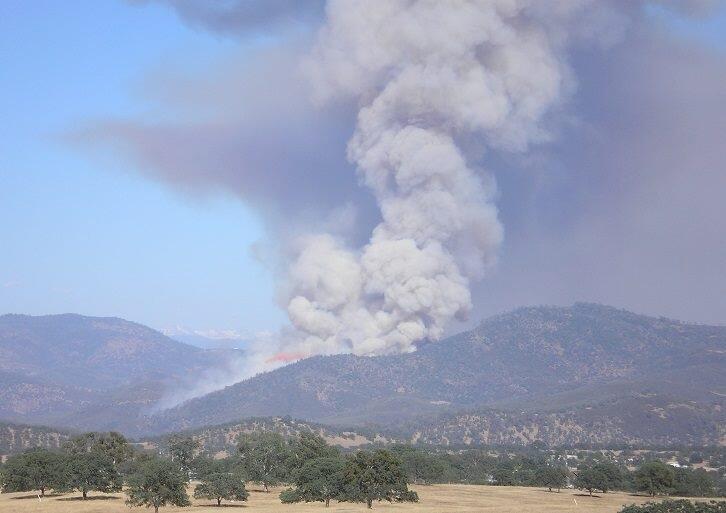
"caption": "Smoke rises from the Hunters Fire, near Lake McClure in Mariposa County. (Carol Barrentez via Twitter)",
"description": "Smoke rises from the Hunters Fire, near Lake McClure in Mariposa County. (Carol Barrentez via Twitter)",
"title": "Hunters Fire",
"credit": null,
"status": "inherit",
"isLoading": false,
"fetchFailed": false
},
"science_17792": {
"type": "attachments",
"id": "science_17792",
"meta": {
"index": "attachments_1716263798",
"site": "science",
"id": "17792",
"found": true
},
"parent": 17782,
"imgSizes": {
"kqedFullSize": {
"file": "https://ww2.kqed.org/app/uploads/sites/35/2014/05/IMG_1050_crop.jpg",
"width": 640,
"height": 360
}
},
"publishDate": 1401230100,
"modified": 1401230100,
"caption": "Siphons draw water to irrigate a wheat field in Reclamation District 108, northwest of Sacramento.",
"description": null,
"title": "IMG_1050_crop",
"credit": null,
"status": "inherit",
"isLoading": false,
"fetchFailed": false
},
"news_137195": {
"type": "attachments",
"id": "news_137195",
"meta": {
"index": "attachments_1716263798",
"site": "news",
"id": "137195",
"found": true
},
"parent": 137194,
"imgSizes": {
"kqedFullSize": {
"file": "https://ww2.kqed.org/app/uploads/sites/10/2014/05/RS8413_reservoir-full-lpr.jpg",
"width": 2000,
"height": 1254
}
},
"publishDate": 1401206030,
"modified": 1401206030,
"caption": "A security guard at the Santa Clara Valley Water District's Almaden Reservoir. (Justin Sullivan/Getty Images)",
"description": "A security guard at the Santa Clara Valley Water District's Almaden Reservoir. (Justin Sullivan/Getty Images)",
"title": "Drought-Almaden Reservoir",
"credit": null,
"status": "inherit",
"isLoading": false,
"fetchFailed": false
}
},
"audioPlayerReducer": {
"postId": "stream_live",
"isPaused": true,
"isPlaying": false,
"pfsActive": false,
"pledgeModalIsOpen": true,
"playerDrawerIsOpen": false,
"liveAudioPlayStartedAt": 0,
"liveAudioPlayContext": ""
},
"authorsReducer": {
"mollysamuel": {
"type": "authors",
"id": "200",
"meta": {
"index": "authors_1716337520",
"id": "200",
"found": true
},
"name": "Molly Samuel",
"firstName": "Molly",
"lastName": "Samuel",
"slug": "mollysamuel",
"email": "msamuel@kqed.org",
"display_author_email": false,
"staff_mastheads": [],
"title": null,
"bio": "Molly Samuel joined KQED as an intern in 2007, and since then has worked here as a reporter, producer, director and blogger. Before becoming KQED Science’s Multimedia Producer, she was a producer for Climate Watch. Molly has also reported for NPR, KALW and High Country News, and has produced audio stories for The Encyclopedia of Life and the Oakland Museum of California. She was a fellow with the Middlebury Fellowships in Environmental Journalism and a journalist-in-residence at the National Evolutionary Synthesis Center. Molly has a degree in Ancient Greek from Oberlin College and is a co-founder of the record label True Panther Sounds.",
"avatar": "https://secure.gravatar.com/avatar/a6abd3b949a89fe5109fa9917631d0b6?s=600&d=blank&r=g",
"twitter": null,
"facebook": null,
"instagram": null,
"linkedin": null,
"sites": [
{
"site": "news",
"roles": [
"subscriber"
]
},
{
"site": "stateofhealth",
"roles": [
"subscriber"
]
},
{
"site": "science",
"roles": [
"subscriber"
]
},
{
"site": "quest",
"roles": [
"edit_users",
"subscriber"
]
}
],
"headData": {
"title": "Molly Samuel | KQED",
"description": null,
"ogImgSrc": "https://secure.gravatar.com/avatar/a6abd3b949a89fe5109fa9917631d0b6?s=600&d=blank&r=g",
"twImgSrc": "https://secure.gravatar.com/avatar/a6abd3b949a89fe5109fa9917631d0b6?s=600&d=blank&r=g"
},
"isLoading": false,
"link": "/author/mollysamuel"
},
"cmiller": {
"type": "authors",
"id": "221",
"meta": {
"index": "authors_1716337520",
"id": "221",
"found": true
},
"name": "Craig Miller",
"firstName": "Craig",
"lastName": "Miller",
"slug": "cmiller",
"email": "craig@voxterra.net",
"display_author_email": false,
"staff_mastheads": [
"science"
],
"title": "Editor Emeritus, Science",
"bio": "Craig is a former KQED Science editor, specializing in weather, climate, water & energy issues, with a little seismology thrown in just to shake things up. Prior to that, he launched and led the station's award-winning multimedia project, Climate Watch. Craig is also an accomplished writer/producer of television documentaries, with a focus on natural resource issues.",
"avatar": "https://secure.gravatar.com/avatar/b91661df645e001a9cafe0861fa685f9?s=600&d=blank&r=g",
"twitter": "voxterra",
"facebook": null,
"instagram": null,
"linkedin": null,
"sites": [
{
"site": "news",
"roles": [
"author"
]
},
{
"site": "futureofyou",
"roles": [
"editor"
]
},
{
"site": "stateofhealth",
"roles": [
"author"
]
},
{
"site": "science",
"roles": [
"editor"
]
},
{
"site": "quest",
"roles": [
"editor"
]
}
],
"headData": {
"title": "Craig Miller | KQED",
"description": "Editor Emeritus, Science",
"ogImgSrc": "https://secure.gravatar.com/avatar/b91661df645e001a9cafe0861fa685f9?s=600&d=blank&r=g",
"twImgSrc": "https://secure.gravatar.com/avatar/b91661df645e001a9cafe0861fa685f9?s=600&d=blank&r=g"
},
"isLoading": false,
"link": "/author/cmiller"
},
"danbrekke": {
"type": "authors",
"id": "222",
"meta": {
"index": "authors_1716337520",
"id": "222",
"found": true
},
"name": "Dan Brekke",
"firstName": "Dan",
"lastName": "Brekke",
"slug": "danbrekke",
"email": "dbrekke@kqed.org",
"display_author_email": true,
"staff_mastheads": [
"news",
"science"
],
"title": "KQED Editor and Reporter",
"bio": "Dan Brekke is a reporter and editor for KQED News, responsible for coverage of topics ranging from California water issues to the Bay Area's transportation challenges. In a newsroom career that began in Chicago in 1972, Dan has worked for \u003cem>The San Francisco Examiner,\u003c/em> Wired and TechTV and has been published in The New York Times, The New York Times Magazine, Business 2.0, Salon and elsewhere.\r\n\r\nSince joining KQED in 2007, Dan has reported, edited and produced both radio and online features and breaking news pieces. He has shared as both editor and reporter in four Society of Professional Journalists Norcal Excellence in Journalism awards and one Edward R. Murrow regional award. He was chosen for a spring 2017 residency at the Mesa Refuge to advance his research on California salmon.\r\n\r\nEmail Dan at: \u003ca href=\"mailto:dbrekke@kqed.org\">dbrekke@kqed.org\u003c/a>\r\n\r\n\u003cstrong>Twitter:\u003c/strong> \u003ca href=\"https://twitter.com/danbrekke\" rel=\"noopener noreferrer\">twitter.com/danbrekke\u003c/a>\r\n\u003cstrong>Facebook:\u003c/strong> \u003ca href=\"https://www.facebook.com/danbrekke\" rel=\"noopener noreferrer\">www.facebook.com/danbrekke\u003c/a>\r\n\u003cstrong>LinkedIn:\u003c/strong> \u003ca href=\"https://www.linkedin.com/in/danbrekke\" rel=\"noopener noreferrer\">www.linkedin.com/in/danbrekke\u003c/a>",
"avatar": "https://secure.gravatar.com/avatar/8f1f0d2a978fb3b23426c922c7e2af558fa36905b49c4ce76a97dc3c72d27226?s=600&d=mm&r=g",
"twitter": "danbrekke",
"bluesky": null,
"facebook": null,
"instagram": "https://www.instagram.com/dan.brekke/",
"linkedin": "https://www.linkedin.com/in/danbrekke/",
"sites": [
{
"site": "news",
"roles": [
"administrator",
"create_posts"
]
},
{
"site": "stateofhealth",
"roles": [
"editor"
]
},
{
"site": "science",
"roles": [
"editor"
]
},
{
"site": "quest",
"roles": [
"contributor"
]
},
{
"site": "food",
"roles": [
"contributor"
]
},
{
"site": "forum",
"roles": [
"contributor"
]
},
{
"site": "elections",
"roles": [
"editor"
]
},
{
"site": "liveblog",
"roles": [
"editor"
]
}
],
"headData": {
"title": "Dan Brekke | KQED",
"description": "KQED Editor and Reporter",
"ogImgSrc": "https://secure.gravatar.com/avatar/8f1f0d2a978fb3b23426c922c7e2af558fa36905b49c4ce76a97dc3c72d27226?s=600&d=mm&r=g",
"twImgSrc": "https://secure.gravatar.com/avatar/8f1f0d2a978fb3b23426c922c7e2af558fa36905b49c4ce76a97dc3c72d27226?s=600&d=mm&r=g"
},
"isLoading": false,
"link": "/author/danbrekke"
},
"kqednewsstaffandwires": {
"type": "authors",
"id": "237",
"meta": {
"index": "authors_1716337520",
"id": "237",
"found": true
},
"name": "KQED News Staff and Wires",
"firstName": "KQED News Staff and Wires",
"lastName": null,
"slug": "kqednewsstaffandwires",
"email": "onlinenewsstaff@kqed.org",
"display_author_email": false,
"staff_mastheads": [],
"title": null,
"bio": null,
"avatar": "https://secure.gravatar.com/avatar/72295af8ebbfbd19a4948f5271285664?s=600&d=blank&r=g",
"twitter": null,
"facebook": null,
"instagram": null,
"linkedin": null,
"sites": [
{
"site": "arts",
"roles": [
"contributor"
]
},
{
"site": "news",
"roles": [
"contributor"
]
},
{
"site": "lowdown",
"roles": [
"author"
]
},
{
"site": "stateofhealth",
"roles": [
"contributor"
]
},
{
"site": "food",
"roles": [
"author"
]
}
],
"headData": {
"title": "KQED News Staff and Wires | KQED",
"description": null,
"ogImgSrc": "https://secure.gravatar.com/avatar/72295af8ebbfbd19a4948f5271285664?s=600&d=blank&r=g",
"twImgSrc": "https://secure.gravatar.com/avatar/72295af8ebbfbd19a4948f5271285664?s=600&d=blank&r=g"
},
"isLoading": false,
"link": "/author/kqednewsstaffandwires"
},
"laurensommer": {
"type": "authors",
"id": "239",
"meta": {
"index": "authors_1716337520",
"id": "239",
"found": true
},
"name": "Lauren Sommer",
"firstName": "Lauren",
"lastName": "Sommer",
"slug": "laurensommer",
"email": "lsommer@kqed.org",
"display_author_email": false,
"staff_mastheads": [],
"title": "KQED Contributor",
"bio": "Lauren is a radio reporter formerly covering environment, water, and energy for KQED Science. As part of her day job, she has scaled Sierra Nevada peaks, run from charging elephant seals, and desperately tried to get her sea legs - all in pursuit of good radio. Her work has appeared on Marketplace, Living on Earth, Science Friday and NPR's Morning Edition and All Things Considered. You can find her on Twitter at \u003ca href=\"https://twitter.com/lesommer\">@lesommer\u003c/a>.",
"avatar": "https://secure.gravatar.com/avatar/33aa3772bb86c6ad45b8aca6a238bbdf?s=600&d=blank&r=g",
"twitter": null,
"facebook": null,
"instagram": null,
"linkedin": null,
"sites": [
{
"site": "news",
"roles": [
"author"
]
},
{
"site": "science",
"roles": [
"editor",
"manage_content_types",
"manage_taxonomies"
]
},
{
"site": "quest",
"roles": [
"editor"
]
}
],
"headData": {
"title": "Lauren Sommer | KQED",
"description": "KQED Contributor",
"ogImgSrc": "https://secure.gravatar.com/avatar/33aa3772bb86c6ad45b8aca6a238bbdf?s=600&d=blank&r=g",
"twImgSrc": "https://secure.gravatar.com/avatar/33aa3772bb86c6ad45b8aca6a238bbdf?s=600&d=blank&r=g"
},
"isLoading": false,
"link": "/author/laurensommer"
},
"sasha-khokha": {
"type": "authors",
"id": "254",
"meta": {
"index": "authors_1716337520",
"id": "254",
"found": true
},
"name": "Sasha Khokha",
"firstName": "Sasha",
"lastName": "Khokha",
"slug": "sasha-khokha",
"email": "skhokha@kqed.org",
"display_author_email": true,
"staff_mastheads": [
"news"
],
"title": "Host, The California Report Magazine",
"bio": "Sasha Khokha is the host of \u003cem>The California Report's \u003c/em> weekly magazine program, which takes listeners on sound-rich excursions to meet the people that make the Golden State unique -- through audio documentaries and long-form stories. As \u003cem>The California Report's\u003c/em> Central Valley Bureau Chief based in Fresno for nearly a dozen years, Sasha brought the lives and concerns of rural Californians to listeners around the state. Her reporting helped expose the hidden price immigrant women janitors and farmworkers may pay to keep their jobs: sexual assault at work. It inspired two new California laws to protect them from sexual harassment. She was a key member of the reporting team for the Frontline film \u003cem>Rape on the Night Shift, \u003c/em>which was nominated for two national Emmys. Sasha has also won a national Edward R. Murrow and a national PRNDI award for investigative reporting, as well as multiple prizes from the Society for Professional Journalists. Sasha is a proud alum of the UC Berkeley Graduate School of Journalism and Brown University and a member of the South Asian Journalists Association.",
"avatar": "https://secure.gravatar.com/avatar/e4b5e1541aaeea2aa356aa1fb2a68950?s=600&d=blank&r=g",
"twitter": "KQEDSashaKhokha",
"facebook": null,
"instagram": null,
"linkedin": null,
"sites": [
{
"site": "news",
"roles": [
"editor"
]
},
{
"site": "stateofhealth",
"roles": [
"author"
]
},
{
"site": "science",
"roles": [
"author"
]
},
{
"site": "quest",
"roles": [
"subscriber"
]
}
],
"headData": {
"title": "Sasha Khokha | KQED",
"description": "Host, The California Report Magazine",
"ogImgSrc": "https://secure.gravatar.com/avatar/e4b5e1541aaeea2aa356aa1fb2a68950?s=600&d=blank&r=g",
"twImgSrc": "https://secure.gravatar.com/avatar/e4b5e1541aaeea2aa356aa1fb2a68950?s=600&d=blank&r=g"
},
"isLoading": false,
"link": "/author/sasha-khokha"
},
"sschilling": {
"type": "authors",
"id": "1565",
"meta": {
"index": "authors_1716337520",
"id": "1565",
"found": true
},
"name": "Sally Schilling",
"firstName": "Sally",
"lastName": "Schilling",
"slug": "sschilling",
"email": "sschilling@KQED.org",
"display_author_email": false,
"staff_mastheads": [],
"title": null,
"bio": "KQED Science intern Sally Schilling brings environmental conflicts to life by finding the people most affected by them. She’s recently told the stories of park rangers on the hunt for redwood burl poachers, and the accidental activists in Pittsburg who are fighting a proposed crude oil facility being built in their backyards. Sally is currently studying video journalism and investigative reporting at the UC Berkeley Graduate School of Journalism. She grew up on an organic farm near Davis, Ca.",
"avatar": "https://secure.gravatar.com/avatar/de4c082ea10bfe43a4bc1996b14a3886?s=600&d=blank&r=g",
"twitter": null,
"facebook": null,
"instagram": null,
"linkedin": null,
"sites": [
{
"site": "news",
"roles": [
"author"
]
},
{
"site": "science",
"roles": [
"editor"
]
}
],
"headData": {
"title": "Sally Schilling | KQED",
"description": null,
"ogImgSrc": "https://secure.gravatar.com/avatar/de4c082ea10bfe43a4bc1996b14a3886?s=600&d=blank&r=g",
"twImgSrc": "https://secure.gravatar.com/avatar/de4c082ea10bfe43a4bc1996b14a3886?s=600&d=blank&r=g"
},
"isLoading": false,
"link": "/author/sschilling"
},
"kqedscience": {
"type": "authors",
"id": "6387",
"meta": {
"index": "authors_1716337520",
"id": "6387",
"found": true
},
"name": "KQED Science",
"firstName": "KQED",
"lastName": "Science",
"slug": "kqedscience",
"email": "kqedscience@gmail.com",
"display_author_email": false,
"staff_mastheads": [],
"title": null,
"bio": "KQED Science brings you award-winning science and environment coverage from the Bay Area and beyond by the flagship Northern California PBS and NPR affiliate.",
"avatar": "https://secure.gravatar.com/avatar/5a295ff49cf82a8c0f30937d3f788b2f?s=600&d=blank&r=g",
"twitter": null,
"facebook": null,
"instagram": null,
"linkedin": null,
"sites": [
{
"site": "science",
"roles": [
"contributor"
]
},
{
"site": "quest",
"roles": [
"editor"
]
},
{
"site": "food",
"roles": [
"contributor"
]
}
],
"headData": {
"title": "KQED Science | KQED",
"description": null,
"ogImgSrc": "https://secure.gravatar.com/avatar/5a295ff49cf82a8c0f30937d3f788b2f?s=600&d=blank&r=g",
"twImgSrc": "https://secure.gravatar.com/avatar/5a295ff49cf82a8c0f30937d3f788b2f?s=600&d=blank&r=g"
},
"isLoading": false,
"link": "/author/kqedscience"
}
},
"pagesReducer": {
"news_category_environment": {
"type": "terms",
"id": "news_19906",
"meta": {
"index": "terms_1716263798",
"site": "news",
"id": "19906",
"score": 12.137343
},
"featImg": null,
"name": "Environment",
"description": null,
"taxonomy": "category",
"headData": {
"twImgId": null,
"twTitle": null,
"ogTitle": null,
"ogImgId": null,
"twDescription": null,
"description": null,
"title": "Environment Archives | KQED News",
"ogDescription": null
},
"ttid": 19923,
"slug": "environment",
"isLoading": false,
"title": "Environment",
"pageMeta": {
"site": "news",
"WpPageTemplate": "page-topic-editorial",
"currentPage": 264
},
"blocks": [
{
"blockName": "kqed/post-list",
"attrs": {
"layout": "cardArticle2",
"query": "posts/news?category=environment",
"seeMore": false,
"paginated": true,
"page": 264
}
},
{
"blockName": "kqed/ad"
}
]
}
},
"pfsSessionReducer": {},
"postsReducer": {
"stream_live": {
"type": "live",
"id": "stream_live",
"audioUrl": "https://streams.kqed.org/kqedradio",
"title": "Live Stream",
"excerpt": "Live Stream information currently unavailable.",
"link": "/radio",
"featImg": "",
"label": {
"name": "KQED Live",
"link": "/"
}
},
"stream_kqedNewscast": {
"type": "posts",
"id": "stream_kqedNewscast",
"audioUrl": "https://www.kqed.org/.stream/anon/radio/RDnews/newscast.mp3?_=1",
"title": "KQED Newscast",
"featImg": "",
"label": {
"name": "88.5 FM",
"link": "/"
}
},
"science_18367": {
"type": "posts",
"id": "science_18367",
"meta": {
"index": "posts_1716263798",
"site": "science",
"id": "18367",
"score": null,
"sort": [
1402696103000
]
},
"parent": 0,
"labelTerm": {
"site": "science"
},
"blocks": [],
"publishDate": 1402696103,
"format": "aside",
"title": "Berkeley Considers CO2 Warning Labels at Gas Pumps",
"headTitle": "Berkeley Considers CO2 Warning Labels at Gas Pumps | KQED",
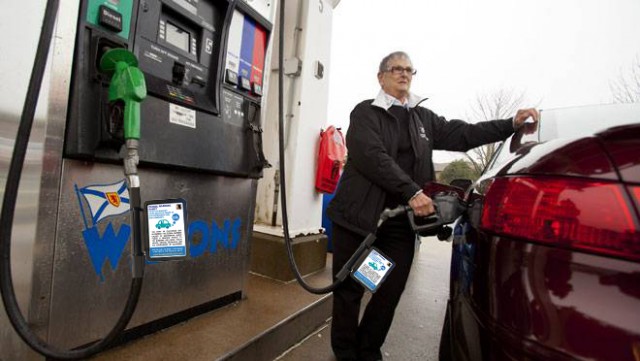
"content": "\u003cfigure id=\"attachment_18370\" class=\"wp-caption aligncenter\" style=\"max-width: 640px\">\u003ca href=\"http://ww2.kqed.org/science/wp-content/uploads/sites/35/2014/06/gaspump_hosetalker2-e1402694020933.jpg\">\u003cimg loading=\"lazy\" decoding=\"async\" class=\"wp-image-18370 size-full\" src=\"http://ww2.kqed.org/science/wp-content/uploads/sites/35/2014/06/gaspump_hosetalker2-e1402694020933.jpg\" alt=\"A working concept of a gas pump climate change warning labels that the City of Berkeley is considering. (Courtesy 350 Bay Area)\" width=\"640\" height=\"361\">\u003c/a>\u003cfigcaption class=\"wp-caption-text\">A working concept of gas pump climate change warning labels that the City of Berkeley is considering. (Courtesy Raymond Pajek)\u003c/figcaption>\u003c/figure>\n\u003cp>The City of Berkeley is considering requiring gas stations to display climate change warning labels on gas pumps. Environmental group \u003ca href=\"http://www.350bayarea.org/\">350 Bay Area\u003c/a>, which is leading the “Beyond The Pump” campaign, says the goal is to inform the public about the harmful effects of CO2 emissions.\u003c/p>\n\u003cp>“We have to change the social context of burning gasoline,” says Jamie Brooks, with 350 Bay Area. Putting messages at the point of sale of gas will influence human behavior, he says. He compared the proposed stickers to the warning labels on cigarettes.\u003c/p>\n\u003cfigure id=\"attachment_18384\" class=\"wp-caption alignright\" style=\"max-width: 298px\">\u003ca href=\"http://ww2.kqed.org/science/wp-content/uploads/sites/35/2014/06/Gas-Label-cropped-image1.jpg\">\u003cimg loading=\"lazy\" decoding=\"async\" class=\"wp-image-18384 size-full\" src=\"http://ww2.kqed.org/science/wp-content/uploads/sites/35/2014/06/Gas-Label-cropped-image1.jpg\" alt=\"A working concept of Berkeley's gas pump warning label. (Courtesy Raymond Pajek)\" width=\"298\" height=\"450\">\u003c/a>\u003cfigcaption class=\"wp-caption-text\">A working concept of Berkeley’s gas pump warning label. (Credit: 350 Bay Area)\u003c/figcaption>\u003c/figure>\n\u003cp>The Western States Petroleum Association sent \u003ca href=\"http://www.ci.berkeley.ca.us/uploadedFiles/Planning_and_Development/Level_3_-_Commissions/Commission_for_Community_Environmental_Advisory/2014%2006%2012_CEAC_AGN_Item%20XII.b.pdf\">a letter\u003c/a> to the City of Berkeley arguing that the ordinance is unconstitutional. The oil lobby group says it would violate a gas station owner’s right to free speech by compelling them to display statements about “alleged” impacts of global warming.\u003c/p>\n\u003cp>But 350 members say the labels would simply cite state laws, such as AB 32, which state that emissions are harmful to humans and the environment.\u003c/p>\n\u003cp>“We feel that the message is accurate and noncontroversial,” said Jack Fleck, a retired transportation engineer and 350 Bay Area member. “It is simply a fact that the state has found that greenhouse gases pose a serious threat to the public health.”\u003c/p>\n\u003cp>[ad fullwidth]\u003c/p>\n\u003cp>\u003c/p>\n\u003cp>Berkeley’s \u003ca href=\"http://www.ci.berkeley.ca.us/Community_Environmental_Advisory_Commission/\">Community Environmental Advisory Commission\u003c/a> voted Thursday in favor of drafting an ordinance. The city council could vote on the proposal as early as this fall.\u003c/p>\n\n",
"stats": {
"hasVideo": false,
"hasChartOrMap": false,
"hasAudio": false,
"hasPolis": false,
"wordCount": 292,
"hasGoogleForm": false,
"hasGallery": false,
"hasHearkenModule": false,
"iframeSrcs": [],
"paragraphCount": 8
},
"modified": 1704933492,
"excerpt": "Environmentalists want Berkeley drivers to see a connection between pumping gas and dumping carbon into the atmosphere.",
"headData": {
"twImgId": "",
"twTitle": "",
"ogTitle": "",
"ogImgId": "",
"twDescription": "",
"description": "Environmentalists want Berkeley drivers to see a connection between pumping gas and dumping carbon into the atmosphere.",
"title": "Berkeley Considers CO2 Warning Labels at Gas Pumps | KQED",
"ogDescription": "",
"schema": {
"@context": "https://schema.org",
"@type": "Article",
"headline": "Berkeley Considers CO2 Warning Labels at Gas Pumps",
"datePublished": "2014-06-13T14:48:23-07:00",
"dateModified": "2024-01-10T16:38:12-08:00",
"image": "https://cdn.kqed.org/wp-content/uploads/2020/02/KQED-OG-Image@1x.png"
}
},
"guestAuthors": [],
"slug": "berkeley-considers-co2-warning-labels-at-gas-pumps",
"status": "publish",
"sticky": false,
"path": "/science/18367/berkeley-considers-co2-warning-labels-at-gas-pumps",
"audioTrackLength": null,
"parsedContent": [
{
"type": "contentString",
"content": "\u003cdiv class=\"post-body\">\u003cp>\u003cfigure id=\"attachment_18370\" class=\"wp-caption aligncenter\" style=\"max-width: 640px\">\u003ca href=\"http://ww2.kqed.org/science/wp-content/uploads/sites/35/2014/06/gaspump_hosetalker2-e1402694020933.jpg\">\u003cimg loading=\"lazy\" decoding=\"async\" class=\"wp-image-18370 size-full\" src=\"http://ww2.kqed.org/science/wp-content/uploads/sites/35/2014/06/gaspump_hosetalker2-e1402694020933.jpg\" alt=\"A working concept of a gas pump climate change warning labels that the City of Berkeley is considering. (Courtesy 350 Bay Area)\" width=\"640\" height=\"361\">\u003c/a>\u003cfigcaption class=\"wp-caption-text\">A working concept of gas pump climate change warning labels that the City of Berkeley is considering. (Courtesy Raymond Pajek)\u003c/figcaption>\u003c/figure>\n\u003cp>The City of Berkeley is considering requiring gas stations to display climate change warning labels on gas pumps. Environmental group \u003ca href=\"http://www.350bayarea.org/\">350 Bay Area\u003c/a>, which is leading the “Beyond The Pump” campaign, says the goal is to inform the public about the harmful effects of CO2 emissions.\u003c/p>\n\u003cp>“We have to change the social context of burning gasoline,” says Jamie Brooks, with 350 Bay Area. Putting messages at the point of sale of gas will influence human behavior, he says. He compared the proposed stickers to the warning labels on cigarettes.\u003c/p>\n\u003cfigure id=\"attachment_18384\" class=\"wp-caption alignright\" style=\"max-width: 298px\">\u003ca href=\"http://ww2.kqed.org/science/wp-content/uploads/sites/35/2014/06/Gas-Label-cropped-image1.jpg\">\u003cimg loading=\"lazy\" decoding=\"async\" class=\"wp-image-18384 size-full\" src=\"http://ww2.kqed.org/science/wp-content/uploads/sites/35/2014/06/Gas-Label-cropped-image1.jpg\" alt=\"A working concept of Berkeley's gas pump warning label. (Courtesy Raymond Pajek)\" width=\"298\" height=\"450\">\u003c/a>\u003cfigcaption class=\"wp-caption-text\">A working concept of Berkeley’s gas pump warning label. (Credit: 350 Bay Area)\u003c/figcaption>\u003c/figure>\n\u003cp>The Western States Petroleum Association sent \u003ca href=\"http://www.ci.berkeley.ca.us/uploadedFiles/Planning_and_Development/Level_3_-_Commissions/Commission_for_Community_Environmental_Advisory/2014%2006%2012_CEAC_AGN_Item%20XII.b.pdf\">a letter\u003c/a> to the City of Berkeley arguing that the ordinance is unconstitutional. The oil lobby group says it would violate a gas station owner’s right to free speech by compelling them to display statements about “alleged” impacts of global warming.\u003c/p>\n\u003cp>But 350 members say the labels would simply cite state laws, such as AB 32, which state that emissions are harmful to humans and the environment.\u003c/p>\n\u003cp>“We feel that the message is accurate and noncontroversial,” said Jack Fleck, a retired transportation engineer and 350 Bay Area member. “It is simply a fact that the state has found that greenhouse gases pose a serious threat to the public health.”\u003c/p>\n\u003cp>\u003c/p>\u003c/div>",
"attributes": {
"named": {},
"numeric": []
}
},
{
"type": "component",
"content": "",
"name": "ad",
"attributes": {
"named": {
"label": "fullwidth"
},
"numeric": [
"fullwidth"
]
}
},
{
"type": "contentString",
"content": "\u003cdiv class=\"post-body\">\u003cp>\u003c/p>\n\u003cp>\u003c/p>\n\u003cp>Berkeley’s \u003ca href=\"http://www.ci.berkeley.ca.us/Community_Environmental_Advisory_Commission/\">Community Environmental Advisory Commission\u003c/a> voted Thursday in favor of drafting an ordinance. The city council could vote on the proposal as early as this fall.\u003c/p>\n\n\u003c/div>\u003c/p>",
"attributes": {
"named": {},
"numeric": []
}
}
],
"link": "/science/18367/berkeley-considers-co2-warning-labels-at-gas-pumps",
"authors": [
"1565"
],
"categories": [
"science_31",
"science_33",
"science_35",
"science_40"
],
"tags": [
"science_1665",
"science_194",
"science_556",
"science_952"
],
"featImg": "science_18370",
"label": "science"
},
"science_18305": {
"type": "posts",
"id": "science_18305",
"meta": {
"index": "posts_1716263798",
"site": "science",
"id": "18305",
"score": null,
"sort": [
1402616874000
]
},
"parent": 0,
"labelTerm": {
"site": "science",
"term": 1753
},
"blocks": [],
"publishDate": 1402616874,
"format": "aside",
"title": "California's Not Ready for Influx of Oil Trains, Says Report",
"headTitle": "California’s Not Ready for Influx of Oil Trains, Says Report | KQED",
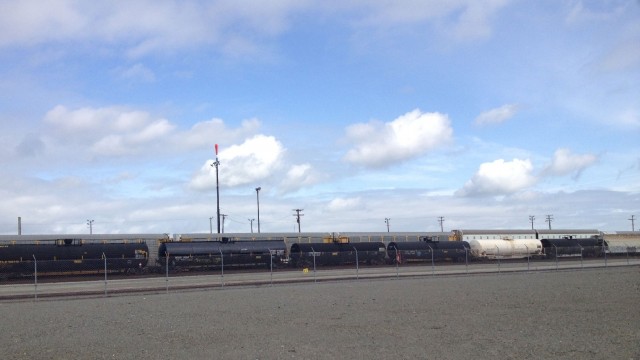
"content": "\u003cfigure id=\"attachment_15986\" class=\"wp-caption aligncenter\" style=\"max-width: 1024px\">\u003cimg loading=\"lazy\" decoding=\"async\" class=\"size-large wp-image-15986\" src=\"http://ww2.kqed.org/science/wp-content/uploads/sites/35/2014/03/tankcarsrichmond-1024x575.jpg\" alt=\"Tank cars parked in Richmond. (Molly Samuel/KQED)\" width=\"1024\" height=\"575\">\u003cfigcaption class=\"wp-caption-text\">Tank cars parked in Richmond. BNSF Railway has been bringing crude oil to this railyard. (Molly Samuel/KQED)\u003c/figcaption>\u003c/figure>\n\u003cp>Trains carrying oil can pose serious risks to public safety and the environment, and California isn’t prepared, according to a \u003ca href=\"http://www.caloes.ca.gov/HazardousMaterials/Pages/Oil-By-Rail.aspx\">report released by state agencies\u003c/a> this week.\u003c/p>\n\u003cp>Crude-by-rail is a growing concern, as an oil boom in North Dakota has meant increasing amounts of crude traveling to refineries by rail. A series of fiery derailments in the past year, including one that killed 47 people in a Quebec town, has focused attention on the need to prevent accidents and be prepared for emergency response.\u003c/p>\n\u003caside class=\"pullquote alignleft\">‘Even though we haven’t had an accident, which is great, we want to be able to respond to it when there is an accident.’\u003ccite>— Kelly Huston, Office of Emergency Services\u003c/cite>\u003c/aside>\n\u003cp>The report warns that a derailment in California could kill people, destroy neighborhoods, damage water supplies and threaten natural areas.\u003c/p>\n\u003cp>“Even though we haven’t had an accident, which is great, we want to be able to respond to it when there is an accident,” said Kelly Huston, a deputy director at the Governor’s Office of Emergency Services (OES). “With the increase in the amount of crude oil on rail coming through California’s cities and counties, we believe there should be some increased training for first responders.”\u003c/p>\n\u003cp>The report was released by an inter-agency group that includes the OES, the state Department of Fish and Wildlife and the California Public Utilities Commission (CPUC), among others. It recommends boosting funding for emergency responder training, and for equipment to handle hazardous material accidents. It also supports an item in Governor Jerry Brown’s proposed budget that would provide more money to the Office of Oil Spill Prevention and Response, which has focused on marine oil spills in the past, but is now preparing for the possibility of inland spills.\u003c/p>\n\u003cp>[ad fullwidth]\u003c/p>\n\u003cp>It’s not all about accident response; there are also recommendations for prevention. Most rail regulation is up to the federal government; the CPUC helps enforce safety rules with its own rail inspectors. There are 52 of them, responsible for monitoring more than 5,400 miles of track in the state. “This staffing level is seriously inadequate,” the report says.\u003c/p>\n\u003cp>Paul King, deputy director for the rail safety at the CPUC, said the Governor’s budget aims to help. “To meet the volume of trains and the magnitude of the risk that [crude-by-rail] presents,” King said, “the Governor has put in his budget for extra staffing.”\u003c/p>\n\u003cp>[contextly_sidebar id=”ac3ac42f887db458c1a7bc05dd24482c”]\u003c/p>\n\u003cp>There are other gaps the state cannot fill alone. As the CPUC pointed out \u003ca href=\"http://www.cpuc.ca.gov/NR/rdonlyres/7945B5AC-B200-431B-A8C4-648AB1BEAB2D/0/2013AnnualReporttotheLegRNCV.pdf\">in a report released last year\u003c/a>, there is only one federal railroad bridge inspector for 11 Western states.\u003c/p>\n\u003cp>The report also raised the need for more information. As of last weekend, railroads that are transporting large shipments of Bakken, the volatile crude oil from North Dakota, \u003ca href=\"http://ww2.kqed.org/science/2014/06/06/crude-by-rail-more-information-coming-to-california/\">must notify states\u003c/a>. Huston of the OES said he got the first batch of documents Monday, but he said they’re of limited use and not timely enough. He said the OES is following up with BNSF and the federal Department of Transportation, the agency that issued the notification order.\u003c/p>\n\u003cp>Huston said he’d also like to see a map that the public could access, showing where the oil train shipments are headed. The railroads are \u003ca href=\"http://www.sacbee.com/2014/06/09/6470835/fight-over-crude-oil-transports.html\">resisting releasing information\u003c/a> about crude shipments to the public.\u003c/p>\n\u003cp>\u003c/p>\n\u003cp>Most of California’s oil comes either from within the state or overseas, and travels to refineries here by pipeline or ship. And that’s still the case. According the the California Energy Commission, only about one percent of California’s crude came by train in 2013. But trains carrying oil are becoming more frequent, and the CEC projects that by 2016, trains could be bringing in about 23 percent of California’s crude.\u003c/p>\n\n",
"stats": {
"hasVideo": false,
"hasChartOrMap": false,
"hasAudio": false,
"hasPolis": false,
"wordCount": 677,
"hasGoogleForm": false,
"hasGallery": false,
"hasHearkenModule": false,
"iframeSrcs": [],
"paragraphCount": 14
},
"modified": 1704933500,
"excerpt": "Crude-by-rail has been a growing concern as an oil boom in North Dakota has meant more and more crude is traveling to refineries by rail. A series of fiery derailments in the past year has focused attention on the need for accident prevention and emergency response preparation. ",
"headData": {
"twImgId": "",
"twTitle": "",
"ogTitle": "",
"ogImgId": "",
"twDescription": "",
"description": "Crude-by-rail has been a growing concern as an oil boom in North Dakota has meant more and more crude is traveling to refineries by rail. A series of fiery derailments in the past year has focused attention on the need for accident prevention and emergency response preparation. ",
"title": "California's Not Ready for Influx of Oil Trains, Says Report | KQED",
"ogDescription": "",
"schema": {
"@context": "https://schema.org",
"@type": "Article",
"headline": "California's Not Ready for Influx of Oil Trains, Says Report",
"datePublished": "2014-06-12T16:47:54-07:00",
"dateModified": "2024-01-10T16:38:20-08:00",
"image": "https://cdn.kqed.org/wp-content/uploads/2020/02/KQED-OG-Image@1x.png"
}
},
"guestAuthors": [],
"slug": "californias-not-ready-for-influx-of-oil-trains-says-report",
"status": "publish",
"sticky": false,
"path": "/science/18305/californias-not-ready-for-influx-of-oil-trains-says-report",
"audioTrackLength": null,
"parsedContent": [
{
"type": "contentString",
"content": "\u003cdiv class=\"post-body\">\u003cp>\u003cfigure id=\"attachment_15986\" class=\"wp-caption aligncenter\" style=\"max-width: 1024px\">\u003cimg loading=\"lazy\" decoding=\"async\" class=\"size-large wp-image-15986\" src=\"http://ww2.kqed.org/science/wp-content/uploads/sites/35/2014/03/tankcarsrichmond-1024x575.jpg\" alt=\"Tank cars parked in Richmond. (Molly Samuel/KQED)\" width=\"1024\" height=\"575\">\u003cfigcaption class=\"wp-caption-text\">Tank cars parked in Richmond. BNSF Railway has been bringing crude oil to this railyard. (Molly Samuel/KQED)\u003c/figcaption>\u003c/figure>\n\u003cp>Trains carrying oil can pose serious risks to public safety and the environment, and California isn’t prepared, according to a \u003ca href=\"http://www.caloes.ca.gov/HazardousMaterials/Pages/Oil-By-Rail.aspx\">report released by state agencies\u003c/a> this week.\u003c/p>\n\u003cp>Crude-by-rail is a growing concern, as an oil boom in North Dakota has meant increasing amounts of crude traveling to refineries by rail. A series of fiery derailments in the past year, including one that killed 47 people in a Quebec town, has focused attention on the need to prevent accidents and be prepared for emergency response.\u003c/p>\n\u003caside class=\"pullquote alignleft\">‘Even though we haven’t had an accident, which is great, we want to be able to respond to it when there is an accident.’\u003ccite>— Kelly Huston, Office of Emergency Services\u003c/cite>\u003c/aside>\n\u003cp>The report warns that a derailment in California could kill people, destroy neighborhoods, damage water supplies and threaten natural areas.\u003c/p>\n\u003cp>“Even though we haven’t had an accident, which is great, we want to be able to respond to it when there is an accident,” said Kelly Huston, a deputy director at the Governor’s Office of Emergency Services (OES). “With the increase in the amount of crude oil on rail coming through California’s cities and counties, we believe there should be some increased training for first responders.”\u003c/p>\n\u003cp>The report was released by an inter-agency group that includes the OES, the state Department of Fish and Wildlife and the California Public Utilities Commission (CPUC), among others. It recommends boosting funding for emergency responder training, and for equipment to handle hazardous material accidents. It also supports an item in Governor Jerry Brown’s proposed budget that would provide more money to the Office of Oil Spill Prevention and Response, which has focused on marine oil spills in the past, but is now preparing for the possibility of inland spills.\u003c/p>\n\u003cp>\u003c/p>\u003c/div>",
"attributes": {
"named": {},
"numeric": []
}
},
{
"type": "component",
"content": "",
"name": "ad",
"attributes": {
"named": {
"label": "fullwidth"
},
"numeric": [
"fullwidth"
]
}
},
{
"type": "contentString",
"content": "\u003cdiv class=\"post-body\">\u003cp>\u003c/p>\n\u003cp>It’s not all about accident response; there are also recommendations for prevention. Most rail regulation is up to the federal government; the CPUC helps enforce safety rules with its own rail inspectors. There are 52 of them, responsible for monitoring more than 5,400 miles of track in the state. “This staffing level is seriously inadequate,” the report says.\u003c/p>\n\u003cp>Paul King, deputy director for the rail safety at the CPUC, said the Governor’s budget aims to help. “To meet the volume of trains and the magnitude of the risk that [crude-by-rail] presents,” King said, “the Governor has put in his budget for extra staffing.”\u003c/p>\n\u003cp>\u003c/p>\u003cp>\u003c/p>\u003cp>\u003c/p>\n\u003cp>There are other gaps the state cannot fill alone. As the CPUC pointed out \u003ca href=\"http://www.cpuc.ca.gov/NR/rdonlyres/7945B5AC-B200-431B-A8C4-648AB1BEAB2D/0/2013AnnualReporttotheLegRNCV.pdf\">in a report released last year\u003c/a>, there is only one federal railroad bridge inspector for 11 Western states.\u003c/p>\n\u003cp>The report also raised the need for more information. As of last weekend, railroads that are transporting large shipments of Bakken, the volatile crude oil from North Dakota, \u003ca href=\"http://ww2.kqed.org/science/2014/06/06/crude-by-rail-more-information-coming-to-california/\">must notify states\u003c/a>. Huston of the OES said he got the first batch of documents Monday, but he said they’re of limited use and not timely enough. He said the OES is following up with BNSF and the federal Department of Transportation, the agency that issued the notification order.\u003c/p>\n\u003cp>Huston said he’d also like to see a map that the public could access, showing where the oil train shipments are headed. The railroads are \u003ca href=\"http://www.sacbee.com/2014/06/09/6470835/fight-over-crude-oil-transports.html\">resisting releasing information\u003c/a> about crude shipments to the public.\u003c/p>\n\u003cp>\u003c/p>\n\u003cp>Most of California’s oil comes either from within the state or overseas, and travels to refineries here by pipeline or ship. And that’s still the case. According the the California Energy Commission, only about one percent of California’s crude came by train in 2013. But trains carrying oil are becoming more frequent, and the CEC projects that by 2016, trains could be bringing in about 23 percent of California’s crude.\u003c/p>\n\n\u003c/div>\u003c/p>",
"attributes": {
"named": {},
"numeric": []
}
}
],
"link": "/science/18305/californias-not-ready-for-influx-of-oil-trains-says-report",
"authors": [
"200"
],
"series": [
"science_1753"
],
"categories": [
"science_33",
"science_35",
"science_40"
],
"tags": [
"science_1043"
],
"featImg": "science_15986",
"label": "science_1753"
},
"science_18235": {
"type": "posts",
"id": "science_18235",
"meta": {
"index": "posts_1716263798",
"site": "science",
"id": "18235",
"score": null,
"sort": [
1402532259000
]
},
"parent": 0,
"labelTerm": {},
"blocks": [],
"publishDate": 1402532259,
"format": "aside",
"title": "Drought Outlook: 'Disastrous Consequences' If 2015 Is Dry",
"headTitle": "Drought Outlook: ‘Disastrous Consequences’ If 2015 Is Dry | KQED",
"content": "\u003cfigure id=\"attachment_18284\" class=\"wp-caption aligncenter\" style=\"max-width: 640px\">\u003ca href=\"http://ww2.kqed.org/science/wp-content/uploads/sites/35/2014/06/RS8926_Drought_JoshC-4394-hpf.jpg\">\u003cimg loading=\"lazy\" decoding=\"async\" class=\"size-full wp-image-18284\" src=\"http://ww2.kqed.org/science/wp-content/uploads/sites/35/2014/06/RS8926_Drought_JoshC-4394-hpf.jpg\" alt=\"An idle tractor appears to stand vigil over fallowed farm acreage in the San Joaquin Valley. (Josh Cassidy/KQED)\" width=\"640\" height=\"360\">\u003c/a>\u003cfigcaption class=\"wp-caption-text\">An idle tractor appears to stand vigil over fallowed farm acreage in the San Joaquin Valley. (Josh Cassidy/KQED)\u003c/figcaption>\u003c/figure>\n\u003cp>The assertion in a new report on California’s long-term water woes likely comes as no surprise to most Californians:\u003c/p>\n\u003cp>“A dry 2015 would have disastrous consequences for agencies and sectors up and down the state.”\u003c/p>\n\u003cp>That ominous prediction is part of a “\u003ca title=\"ACWA - policy paper\" href=\"http://www.acwa.com/sites/default/files/post/water-supply-challenges/2014/06/final-drought-action-report.pdf\">drought action report\u003c/a>” released this week by the \u003ca href=\"http://www.acwa.com/\">Association of California Water Agencies\u003c/a>, whose members manage about 90 percent of Californians’ water. The document attempts to identify key vulnerabilities to the state’s water system and offers recommendations that its authors say could stave off the worst impacts of a protracted drought.\u003c/p>\n\u003cp>“Hundreds of thousands of acres of annual and permanent crops throughout the state would be idled,” the report goes on, “affecting the growers, local communities, related industries and the statewide economy.”\u003c/p>\n\u003cp>By example, it specifically mentions the Oakdale Irrigation District, which the report says will likely run through all its water reserves just to get through this year, “so if 2015 is dry, the district would likely need to idle nearly one-third of its acreage, or 20,000 acres.”\u003c/p>\n\u003cp>[ad fullwidth]\u003c/p>\n\u003cp>It gets worse:\u003c/p>\n\u003cblockquote>\u003cp>In a worst case scenario for the agricultural industry, cotton production in California’s San Joaquin Valley could cease completely, resulting in severe economic losses from crop revenue, employment, shipping and more. Even agencies with \u003ca title=\"Q-Sci - post\" href=\"http://ww2.kqed.org/science/audio/drought-drives-drilling-frenzy-for-groundwater-in-california/\">access to groundwater\u003c/a> in 2014 would likely have to contend with an increasing number of challenges including reduced water quality, higher energy costs, and subsidence.\u003c/p>\u003c/blockquote>\n\u003cp>These kinds of projections loom especially scary since there’s no way to know what next year will bring. California has had \u003ca title=\"Q-Sci - post\" href=\"http://ww2.kqed.org/science/audio/megadroughts-four-points-to-put-californias-dry-times-in-perspective/\">multi-decade “megadroughts”\u003c/a> in the distant past and weathered a six-year drought from 1987-92 — but that drought did not have the precipitous nature of this one. Three years into \u003ca title=\"Q-Sci - Drought Watch\" href=\"http://ww2.kqed.org/science/series/california-drought-watch/?=science_widget\">the current dry spell\u003c/a>, the state has already logged its driest calendar year on record.\u003c/p>\n\u003cfigure id=\"attachment_18263\" class=\"wp-caption aligncenter\" style=\"max-width: 640px\">\u003ca href=\"http://ww2.kqed.org/science/wp-content/uploads/sites/35/2014/06/sutterslough-4986-112_crop_DWR.jpg\">\u003cimg loading=\"lazy\" decoding=\"async\" class=\"size-full wp-image-18263\" src=\"http://ww2.kqed.org/science/wp-content/uploads/sites/35/2014/06/sutterslough-4986-112_crop_DWR.jpg\" alt=\"A rock barrier to block saltwater migration in 1976. (DWR)\" width=\"640\" height=\"360\">\u003c/a>\u003cfigcaption class=\"wp-caption-text\">A rock barrier installed to block saltwater migration into the Delta in 1976. (DWR)\u003c/figcaption>\u003c/figure>\n\u003cp>Another year like this one would almost certainly force some extreme countermeasures that officials hope to avoid. Earlier this year, plans were laid for a $30 million series of rock barriers, designed to keep saltwater from pushing deeper into the Sacramento-San Joaquin Delta — something that hasn’t been necessary since the epic drought of 1976-77. Officials shelved those plans when river flows perked up after some rains in February, but would most likely need to revive the plan after another dry winter.\u003c/p>\n\u003caside class=\"pullquote alignleft\">‘The odds of another 2014 are really low.’ \u003ccite>— Jeanine Jones, DWR\u003c/cite>\u003c/aside>\n\u003cp>But forecasters say the odds are on our side.\u003c/p>\n\u003cp>“Statistically speaking the odds of a fourth dry year are low and the odds of ‘another 2014’ are really low,” says Jeanine Jones, deputy drought manager with the California Department of Water Resources. What’s more likely, says Jones, is a “mixed cycle” comprising several consecutive dry years, interspersed with an occasional wet one, akin to what the Colorado River has seen over the past 11 years.\u003c/p>\n\u003cp>And \u003ca title=\"Q-Sci - post\" href=\"http://ww2.kqed.org/science/2014/05/08/california-drought-hopes-rising-for-el-nino/\">don’t count on El Niño\u003c/a> to bail us out. Although the legendary harbinger of rain has been on everyone’s lips like a mantra lately, much of the periodic warming in the Pacific Ocean’s link to precipitation is more legend than reality. Though \u003ca title=\"NOAA - CPC - ENSO\" href=\"http://www.elnino.noaa.gov/\">current forecasts\u003c/a> call for moderate El Niño conditions to be in place by this fall, the correlation between El Niño and California precipitation is relatively shaky.\u003c/p>\n\u003cp>“Unfortunately,” says Jones, “the science of seasonal climate forecasting is not very good at this point.” It’s likely to be December or later before we have a sense of whether the drought will hang around for a fourth year. If it does, water managers don’t want to contemplate the potential mayhem.\u003c/p>\n\u003cp>Asked at a Sacramento drought briefing what the farm belt was doing to gird for another drought year, Terry Erlewine, general manager of State Water Contractors said, “There’s no way you can plan for that.”\u003c/p>\n\u003cp>\u003c/p>\n\u003cp>Steve Ottemoeller, water resources manager at the Friant Water Authority noted that whatever carry-over supply there is this year will be gone after another dry winter. “They’re probably as ready as they can be,” he said of his ag customers in the San Joaquin Valley. “Most of them are just trying to get through this year.” He also predicted that the water wars would intensify in the courts. “A lot of the preparation will be gearing up for the fight.”\u003c/p>\n\n",
"stats": {
"hasVideo": false,
"hasChartOrMap": false,
"hasAudio": false,
"hasPolis": false,
"wordCount": 812,
"hasGoogleForm": false,
"hasGallery": false,
"hasHearkenModule": false,
"iframeSrcs": [],
"paragraphCount": 17
},
"modified": 1704933511,
"excerpt": "A new report echoes some of the worst fears of a fourth straight drought year.",
"headData": {
"twImgId": "",
"twTitle": "",
"ogTitle": "",
"ogImgId": "",
"twDescription": "",
"description": "A new report echoes some of the worst fears of a fourth straight drought year.",
"title": "Drought Outlook: 'Disastrous Consequences' If 2015 Is Dry | KQED",
"ogDescription": "",
"schema": {
"@context": "https://schema.org",
"@type": "Article",
"headline": "Drought Outlook: 'Disastrous Consequences' If 2015 Is Dry",
"datePublished": "2014-06-11T17:17:39-07:00",
"dateModified": "2024-01-10T16:38:31-08:00",
"image": "https://cdn.kqed.org/wp-content/uploads/2020/02/KQED-OG-Image@1x.png"
}
},
"guestAuthors": [],
"slug": "drought-outlook-disasterous-consequences-if-2015-is-dry",
"status": "publish",
"sticky": false,
"path": "/science/18235/drought-outlook-disasterous-consequences-if-2015-is-dry",
"audioTrackLength": null,
"parsedContent": [
{
"type": "contentString",
"content": "\u003cdiv class=\"post-body\">\u003cp>\u003cfigure id=\"attachment_18284\" class=\"wp-caption aligncenter\" style=\"max-width: 640px\">\u003ca href=\"http://ww2.kqed.org/science/wp-content/uploads/sites/35/2014/06/RS8926_Drought_JoshC-4394-hpf.jpg\">\u003cimg loading=\"lazy\" decoding=\"async\" class=\"size-full wp-image-18284\" src=\"http://ww2.kqed.org/science/wp-content/uploads/sites/35/2014/06/RS8926_Drought_JoshC-4394-hpf.jpg\" alt=\"An idle tractor appears to stand vigil over fallowed farm acreage in the San Joaquin Valley. (Josh Cassidy/KQED)\" width=\"640\" height=\"360\">\u003c/a>\u003cfigcaption class=\"wp-caption-text\">An idle tractor appears to stand vigil over fallowed farm acreage in the San Joaquin Valley. (Josh Cassidy/KQED)\u003c/figcaption>\u003c/figure>\n\u003cp>The assertion in a new report on California’s long-term water woes likely comes as no surprise to most Californians:\u003c/p>\n\u003cp>“A dry 2015 would have disastrous consequences for agencies and sectors up and down the state.”\u003c/p>\n\u003cp>That ominous prediction is part of a “\u003ca title=\"ACWA - policy paper\" href=\"http://www.acwa.com/sites/default/files/post/water-supply-challenges/2014/06/final-drought-action-report.pdf\">drought action report\u003c/a>” released this week by the \u003ca href=\"http://www.acwa.com/\">Association of California Water Agencies\u003c/a>, whose members manage about 90 percent of Californians’ water. The document attempts to identify key vulnerabilities to the state’s water system and offers recommendations that its authors say could stave off the worst impacts of a protracted drought.\u003c/p>\n\u003cp>“Hundreds of thousands of acres of annual and permanent crops throughout the state would be idled,” the report goes on, “affecting the growers, local communities, related industries and the statewide economy.”\u003c/p>\n\u003cp>By example, it specifically mentions the Oakdale Irrigation District, which the report says will likely run through all its water reserves just to get through this year, “so if 2015 is dry, the district would likely need to idle nearly one-third of its acreage, or 20,000 acres.”\u003c/p>\n\u003cp>\u003c/p>\u003c/div>",
"attributes": {
"named": {},
"numeric": []
}
},
{
"type": "component",
"content": "",
"name": "ad",
"attributes": {
"named": {
"label": "fullwidth"
},
"numeric": [
"fullwidth"
]
}
},
{
"type": "contentString",
"content": "\u003cdiv class=\"post-body\">\u003cp>\u003c/p>\n\u003cp>It gets worse:\u003c/p>\n\u003cblockquote>\u003cp>In a worst case scenario for the agricultural industry, cotton production in California’s San Joaquin Valley could cease completely, resulting in severe economic losses from crop revenue, employment, shipping and more. Even agencies with \u003ca title=\"Q-Sci - post\" href=\"http://ww2.kqed.org/science/audio/drought-drives-drilling-frenzy-for-groundwater-in-california/\">access to groundwater\u003c/a> in 2014 would likely have to contend with an increasing number of challenges including reduced water quality, higher energy costs, and subsidence.\u003c/p>\u003c/blockquote>\n\u003cp>These kinds of projections loom especially scary since there’s no way to know what next year will bring. California has had \u003ca title=\"Q-Sci - post\" href=\"http://ww2.kqed.org/science/audio/megadroughts-four-points-to-put-californias-dry-times-in-perspective/\">multi-decade “megadroughts”\u003c/a> in the distant past and weathered a six-year drought from 1987-92 — but that drought did not have the precipitous nature of this one. Three years into \u003ca title=\"Q-Sci - Drought Watch\" href=\"http://ww2.kqed.org/science/series/california-drought-watch/?=science_widget\">the current dry spell\u003c/a>, the state has already logged its driest calendar year on record.\u003c/p>\n\u003cfigure id=\"attachment_18263\" class=\"wp-caption aligncenter\" style=\"max-width: 640px\">\u003ca href=\"http://ww2.kqed.org/science/wp-content/uploads/sites/35/2014/06/sutterslough-4986-112_crop_DWR.jpg\">\u003cimg loading=\"lazy\" decoding=\"async\" class=\"size-full wp-image-18263\" src=\"http://ww2.kqed.org/science/wp-content/uploads/sites/35/2014/06/sutterslough-4986-112_crop_DWR.jpg\" alt=\"A rock barrier to block saltwater migration in 1976. (DWR)\" width=\"640\" height=\"360\">\u003c/a>\u003cfigcaption class=\"wp-caption-text\">A rock barrier installed to block saltwater migration into the Delta in 1976. (DWR)\u003c/figcaption>\u003c/figure>\n\u003cp>Another year like this one would almost certainly force some extreme countermeasures that officials hope to avoid. Earlier this year, plans were laid for a $30 million series of rock barriers, designed to keep saltwater from pushing deeper into the Sacramento-San Joaquin Delta — something that hasn’t been necessary since the epic drought of 1976-77. Officials shelved those plans when river flows perked up after some rains in February, but would most likely need to revive the plan after another dry winter.\u003c/p>\n\u003caside class=\"pullquote alignleft\">‘The odds of another 2014 are really low.’ \u003ccite>— Jeanine Jones, DWR\u003c/cite>\u003c/aside>\n\u003cp>But forecasters say the odds are on our side.\u003c/p>\n\u003cp>“Statistically speaking the odds of a fourth dry year are low and the odds of ‘another 2014’ are really low,” says Jeanine Jones, deputy drought manager with the California Department of Water Resources. What’s more likely, says Jones, is a “mixed cycle” comprising several consecutive dry years, interspersed with an occasional wet one, akin to what the Colorado River has seen over the past 11 years.\u003c/p>\n\u003cp>And \u003ca title=\"Q-Sci - post\" href=\"http://ww2.kqed.org/science/2014/05/08/california-drought-hopes-rising-for-el-nino/\">don’t count on El Niño\u003c/a> to bail us out. Although the legendary harbinger of rain has been on everyone’s lips like a mantra lately, much of the periodic warming in the Pacific Ocean’s link to precipitation is more legend than reality. Though \u003ca title=\"NOAA - CPC - ENSO\" href=\"http://www.elnino.noaa.gov/\">current forecasts\u003c/a> call for moderate El Niño conditions to be in place by this fall, the correlation between El Niño and California precipitation is relatively shaky.\u003c/p>\n\u003cp>“Unfortunately,” says Jones, “the science of seasonal climate forecasting is not very good at this point.” It’s likely to be December or later before we have a sense of whether the drought will hang around for a fourth year. If it does, water managers don’t want to contemplate the potential mayhem.\u003c/p>\n\u003cp>Asked at a Sacramento drought briefing what the farm belt was doing to gird for another drought year, Terry Erlewine, general manager of State Water Contractors said, “There’s no way you can plan for that.”\u003c/p>\n\u003cp>\u003c/p>\n\u003cp>Steve Ottemoeller, water resources manager at the Friant Water Authority noted that whatever carry-over supply there is this year will be gone after another dry winter. “They’re probably as ready as they can be,” he said of his ag customers in the San Joaquin Valley. “Most of them are just trying to get through this year.” He also predicted that the water wars would intensify in the courts. “A lot of the preparation will be gearing up for the fight.”\u003c/p>\n\n\u003c/div>\u003c/p>",
"attributes": {
"named": {},
"numeric": []
}
}
],
"link": "/science/18235/drought-outlook-disasterous-consequences-if-2015-is-dry",
"authors": [
"221"
],
"series": [
"science_1151"
],
"categories": [
"science_31",
"science_89",
"science_36",
"science_40",
"science_98"
],
"tags": [
"science_392",
"science_572",
"science_371",
"science_64"
],
"featImg": "science_18284",
"label": "science"
},
"science_18232": {
"type": "posts",
"id": "science_18232",
"meta": {
"index": "posts_1716263798",
"site": "science",
"id": "18232",
"score": null,
"sort": [
1402447934000
]
},
"parent": 0,
"labelTerm": {
"site": "science",
"term": 1151
},
"blocks": [],
"publishDate": 1402447934,
"format": "aside",
"title": "Dueling Drought Strategies: Save More Water or Store More Water",
"headTitle": "Dueling Drought Strategies: Save More Water or Store More Water | KQED",
"content": "\u003cfigure id=\"attachment_18251\" class=\"wp-caption aligncenter\" style=\"max-width: 640px\">\u003ca href=\"http://ww2.kqed.org/science/wp-content/uploads/sites/35/2014/06/TCCWD-Reservoir-3-011714-fs.jpg\">\u003cimg loading=\"lazy\" decoding=\"async\" class=\"size-full wp-image-18251\" src=\"http://ww2.kqed.org/science/wp-content/uploads/sites/35/2014/06/TCCWD-Reservoir-3-011714-fs.jpg\" alt=\"Low water levels at a reservoir near Jenner. (Timber Cove County Water District)\" width=\"640\" height=\"360\">\u003c/a>\u003cfigcaption class=\"wp-caption-text\">Low water levels at a reservoir near Jenner. (Timber Cove County Water District)\u003c/figcaption>\u003c/figure>\n\u003cp>There’s no doubt that in California, water is in short supply this year. How to avoid the same situation when the next drought descends is, on the other hand, a matter of debate. Two competing camps have emerged about how to boost California’s water supplies during dry times: conserve more water or build more water storage.\u003c/p>\n\u003cp>While California has pursued both strategies in the past, two new reports released Tuesday make differing cases for how the state should spend limited resources to solve California’s water woes.\u003c/p>\n\u003cp>\u003cstrong>Conserve More Water\u003c/strong>\u003c/p>\n\u003cp>Water conservation could save more water than is used by all of California’s cities in a year, \u003ca href=\"http://pacinst.org/publication/ca-water-supply-solutions/\">according to a report\u003c/a> from the Pacific Institute and the Natural Resources Defense Council, an estimated 14 million acre-feet (one acre-foot of water is about 326,000 gallons).\u003c/p>\n\u003caside class=\"pullquote alignleft\">‘We’ve hit peak water.’\u003ccite>–Peter Gleick, Pacific Institute\u003c/cite>\u003c/aside>\n\u003cp>California is already using more water than it has, says Peter Gleick of the Pacific Institute. In any given year, the state runs a 6 million acre-foot water deficit, according to the report. That water shortage is made up by pumping groundwater and drawing water from stressed ecosystems.\u003c/p>\n\u003cp>[ad fullwidth]\u003c/p>\n\u003cp>“We’ve hit the wall in California,” says Gleick. “We’ve hit ‘peak water.’ Even in a normal year or a wet year, we’re overextended.”\u003c/p>\n\u003cp>The majority of the water savings could come from the agricultural sector, which accounts for 80 percent of water used by people in California. Switching more agricultural acres to drip irrigation and using precision scheduling to time irrigation could save 17 to 22 percent – or 5.6 to 6.6 million acre-feet of water annually.\u003c/p>\n\u003cp>“We’ve got a million acres of land that’s under flood irrigation that could go to drip,” says Bob Wilkinson, adjunct associate professor of Environmental Science & Management at University of California Santa Barbara.\u003c/p>\n\u003cp>Other strategies include:\u003c/p>\n\u003cul>\n\u003cli>Urban area water efficiency – shifting to drought-tolerant landscaping, accelerating the adoption of water-efficient appliances and fixing leaks in the urban water system.\u003c/li>\n\u003cli>Water reuse – using recycled water to irrigate landscaping and crops, installing graywater systems (to catch water that goes down the drain) in homes and businesses, and using recycled water to recharge groundwater basins.\u003c/li>\n\u003cli>Stormwater capture – catching runoff with rainwater barrels and cisterns at homes and businesses, as well as directing runoff to recharge groundwater.\u003c/li>\n\u003c/ul>\n\u003cp>The report did not examine the cost of the technologies, but Gleick says they’ve been shown to be cost-effective, particularly in comparison to desalination or building new dams.\u003c/p>\n\u003cp>\u003cstrong>Store More Water\u003c/strong>\u003c/p>\n\u003cp>The report hit the streets on the same day as \u003ca href=\"http://www.acwa.com/blog/acwa-report-puts-drought-impacts-vulnerabilities-vivid-focus\">another list of suggestions\u003c/a> for long-term water fixes from the state’s local and regional water agencies. While there is common ground between the two reports (both advocate strongly for using more reclaimed water), the manifesto from the Association of California Water Agencies takes a markedly different approach; three of the 10 key recommendations from ACWA involve expanding the state’s infrastructure for storing and moving water.\u003c/p>\n\u003cp>Asked if ACWA accepts the premise that there are millions of acre-feet that could be tapped without pouring more concrete, ACWA executive director Tim Quinn replied, “The bottom line is, we don’t.”\u003c/p>\n\u003cp>“It’s not any more true today than it has been in the past that recycling and conservation will save us all by themselves,” Quinn said. “That’s the premise of the NRDC report and…we just don’t buy it.” Nonetheless, Quinn says that water agencies are already pursuing many conservation and recycling strategies.\u003c/p>\n\u003cp>The ACWA report recommends immediate funding for “shovel-ready” projects like building interconnections between water systems. It also recommends increasing water storage through groundwater and \u003ca href=\"http://ww2.kqed.org/science/audio/is-raising-shasta-dam-the-best-bet-for-californias-water-supply/\">surface water projects\u003c/a>, like completing Sites Reservoir or modernizing existing dams.\u003c/p>\n\u003cp>The report also recommends some water conservation strategies, like building water recycling projects, desalination plants and increasing conservation efforts by water agencies.\u003c/p>\n\u003cp>Funding for any of these strategies will be largely tied up in the 2014 Water Bond, still slated for the November ballot. State legislators \u003ca href=\"http://ww2.kqed.org/news/2014/02/11/state-senate-panel-passes-democrat-backed-water-bond\">have been debating\u003c/a> how the bond should be revised.\u003c/p>\n\u003cp>\u003c/p>\n\u003cp>\u003cem>Science Editor Craig Miller contributed to this post\u003c/em>.\u003c/p>\n\n",
"stats": {
"hasVideo": false,
"hasChartOrMap": false,
"hasAudio": false,
"hasPolis": false,
"wordCount": 751,
"hasGoogleForm": false,
"hasGallery": false,
"hasHearkenModule": false,
"iframeSrcs": [],
"paragraphCount": 20
},
"modified": 1704933516,
"excerpt": "Two competing camps have emerged about how to boost California's water supplies during dry times: conserve more water or build more water storage.",
"headData": {
"twImgId": "",
"twTitle": "",
"ogTitle": "",
"ogImgId": "",
"twDescription": "",
"description": "Two competing camps have emerged about how to boost California's water supplies during dry times: conserve more water or build more water storage.",
"title": "Dueling Drought Strategies: Save More Water or Store More Water | KQED",
"ogDescription": "",
"schema": {
"@context": "https://schema.org",
"@type": "Article",
"headline": "Dueling Drought Strategies: Save More Water or Store More Water",
"datePublished": "2014-06-10T17:52:14-07:00",
"dateModified": "2024-01-10T16:38:36-08:00",
"image": "https://cdn.kqed.org/wp-content/uploads/2020/02/KQED-OG-Image@1x.png"
}
},
"guestAuthors": [],
"slug": "dueling-drought-strategies-save-more-water-or-store-more-water",
"status": "publish",
"sticky": false,
"path": "/science/18232/dueling-drought-strategies-save-more-water-or-store-more-water",
"audioTrackLength": null,
"parsedContent": [
{
"type": "contentString",
"content": "\u003cdiv class=\"post-body\">\u003cp>\u003cfigure id=\"attachment_18251\" class=\"wp-caption aligncenter\" style=\"max-width: 640px\">\u003ca href=\"http://ww2.kqed.org/science/wp-content/uploads/sites/35/2014/06/TCCWD-Reservoir-3-011714-fs.jpg\">\u003cimg loading=\"lazy\" decoding=\"async\" class=\"size-full wp-image-18251\" src=\"http://ww2.kqed.org/science/wp-content/uploads/sites/35/2014/06/TCCWD-Reservoir-3-011714-fs.jpg\" alt=\"Low water levels at a reservoir near Jenner. (Timber Cove County Water District)\" width=\"640\" height=\"360\">\u003c/a>\u003cfigcaption class=\"wp-caption-text\">Low water levels at a reservoir near Jenner. (Timber Cove County Water District)\u003c/figcaption>\u003c/figure>\n\u003cp>There’s no doubt that in California, water is in short supply this year. How to avoid the same situation when the next drought descends is, on the other hand, a matter of debate. Two competing camps have emerged about how to boost California’s water supplies during dry times: conserve more water or build more water storage.\u003c/p>\n\u003cp>While California has pursued both strategies in the past, two new reports released Tuesday make differing cases for how the state should spend limited resources to solve California’s water woes.\u003c/p>\n\u003cp>\u003cstrong>Conserve More Water\u003c/strong>\u003c/p>\n\u003cp>Water conservation could save more water than is used by all of California’s cities in a year, \u003ca href=\"http://pacinst.org/publication/ca-water-supply-solutions/\">according to a report\u003c/a> from the Pacific Institute and the Natural Resources Defense Council, an estimated 14 million acre-feet (one acre-foot of water is about 326,000 gallons).\u003c/p>\n\u003caside class=\"pullquote alignleft\">‘We’ve hit peak water.’\u003ccite>–Peter Gleick, Pacific Institute\u003c/cite>\u003c/aside>\n\u003cp>California is already using more water than it has, says Peter Gleick of the Pacific Institute. In any given year, the state runs a 6 million acre-foot water deficit, according to the report. That water shortage is made up by pumping groundwater and drawing water from stressed ecosystems.\u003c/p>\n\u003cp>\u003c/p>\u003c/div>",
"attributes": {
"named": {},
"numeric": []
}
},
{
"type": "component",
"content": "",
"name": "ad",
"attributes": {
"named": {
"label": "fullwidth"
},
"numeric": [
"fullwidth"
]
}
},
{
"type": "contentString",
"content": "\u003cdiv class=\"post-body\">\u003cp>\u003c/p>\n\u003cp>“We’ve hit the wall in California,” says Gleick. “We’ve hit ‘peak water.’ Even in a normal year or a wet year, we’re overextended.”\u003c/p>\n\u003cp>The majority of the water savings could come from the agricultural sector, which accounts for 80 percent of water used by people in California. Switching more agricultural acres to drip irrigation and using precision scheduling to time irrigation could save 17 to 22 percent – or 5.6 to 6.6 million acre-feet of water annually.\u003c/p>\n\u003cp>“We’ve got a million acres of land that’s under flood irrigation that could go to drip,” says Bob Wilkinson, adjunct associate professor of Environmental Science & Management at University of California Santa Barbara.\u003c/p>\n\u003cp>Other strategies include:\u003c/p>\n\u003cul>\n\u003cli>Urban area water efficiency – shifting to drought-tolerant landscaping, accelerating the adoption of water-efficient appliances and fixing leaks in the urban water system.\u003c/li>\n\u003cli>Water reuse – using recycled water to irrigate landscaping and crops, installing graywater systems (to catch water that goes down the drain) in homes and businesses, and using recycled water to recharge groundwater basins.\u003c/li>\n\u003cli>Stormwater capture – catching runoff with rainwater barrels and cisterns at homes and businesses, as well as directing runoff to recharge groundwater.\u003c/li>\n\u003c/ul>\n\u003cp>The report did not examine the cost of the technologies, but Gleick says they’ve been shown to be cost-effective, particularly in comparison to desalination or building new dams.\u003c/p>\n\u003cp>\u003cstrong>Store More Water\u003c/strong>\u003c/p>\n\u003cp>The report hit the streets on the same day as \u003ca href=\"http://www.acwa.com/blog/acwa-report-puts-drought-impacts-vulnerabilities-vivid-focus\">another list of suggestions\u003c/a> for long-term water fixes from the state’s local and regional water agencies. While there is common ground between the two reports (both advocate strongly for using more reclaimed water), the manifesto from the Association of California Water Agencies takes a markedly different approach; three of the 10 key recommendations from ACWA involve expanding the state’s infrastructure for storing and moving water.\u003c/p>\n\u003cp>Asked if ACWA accepts the premise that there are millions of acre-feet that could be tapped without pouring more concrete, ACWA executive director Tim Quinn replied, “The bottom line is, we don’t.”\u003c/p>\n\u003cp>“It’s not any more true today than it has been in the past that recycling and conservation will save us all by themselves,” Quinn said. “That’s the premise of the NRDC report and…we just don’t buy it.” Nonetheless, Quinn says that water agencies are already pursuing many conservation and recycling strategies.\u003c/p>\n\u003cp>The ACWA report recommends immediate funding for “shovel-ready” projects like building interconnections between water systems. It also recommends increasing water storage through groundwater and \u003ca href=\"http://ww2.kqed.org/science/audio/is-raising-shasta-dam-the-best-bet-for-californias-water-supply/\">surface water projects\u003c/a>, like completing Sites Reservoir or modernizing existing dams.\u003c/p>\n\u003cp>The report also recommends some water conservation strategies, like building water recycling projects, desalination plants and increasing conservation efforts by water agencies.\u003c/p>\n\u003cp>Funding for any of these strategies will be largely tied up in the 2014 Water Bond, still slated for the November ballot. State legislators \u003ca href=\"http://ww2.kqed.org/news/2014/02/11/state-senate-panel-passes-democrat-backed-water-bond\">have been debating\u003c/a> how the bond should be revised.\u003c/p>\n\u003cp>\u003c/p>\n\u003cp>\u003cem>Science Editor Craig Miller contributed to this post\u003c/em>.\u003c/p>\n\n\u003c/div>\u003c/p>",
"attributes": {
"named": {},
"numeric": []
}
}
],
"link": "/science/18232/dueling-drought-strategies-save-more-water-or-store-more-water",
"authors": [
"239"
],
"series": [
"science_1151"
],
"categories": [
"science_35",
"science_40",
"science_98"
],
"tags": [
"science_205",
"science_1195",
"science_572",
"science_1491",
"science_64",
"science_490",
"science_201"
],
"featImg": "science_18251",
"label": "science_1151"
},
"news_138151": {
"type": "posts",
"id": "news_138151",
"meta": {
"index": "posts_1716263798",
"site": "news",
"id": "138151",
"score": null,
"sort": [
1402153239000
]
},
"guestAuthors": [],
"slug": "victims-of-the-fukushima-nuclear-disaster-fear-being-forgotten",
"title": "Survivors of the Fukushima Dai-ichi Nuclear Disaster Fear Being Forgotten",
"publishDate": 1402153239,
"format": "aside",
"headTitle": "Survivors of the Fukushima Dai-ichi Nuclear Disaster Fear Being Forgotten | KQED",
"labelTerm": {
"term": 6944,
"site": "news"
},
"content": "\u003cfigure id=\"attachment_138165\" class=\"wp-caption aligncenter\" style=\"max-width: 640px\">\u003ca href=\"http://ww2.kqed.org/news/wp-content/uploads/sites/10/2014/06/477410077.jpg\">\u003cimg loading=\"lazy\" decoding=\"async\" class=\"size-medium wp-image-138165\" src=\"http://ww2.kqed.org/news/wp-content/uploads/sites/10/2014/06/477410077-640x426.jpg\" alt=\"An elderly woman holds a container filled with fish given by her neighbor outside her temporary house. (Yuriko Nakao/Getty Images)\" width=\"640\" height=\"426\">\u003c/a>\u003cfigcaption class=\"wp-caption-text\">An elderly woman holds a container filled with fish given by her neighbor outside her temporary house. (Yuriko Nakao/Getty Images)\u003c/figcaption>\u003c/figure>\n\u003cp>Three years after a massive earthquake and tsunami caused a meltdown of the Fukushima Dai-ichi nuclear plant more than 100,000 former residents remain displaced.\u003c/p>\n\u003cp>In Japan, the government is forging ahead with plans to decontaminate and reopen the area currently deemed a “no-go zone,” but former residents have mixed feelings about returning.\u003c/p>\n\u003cp>KQED’s Mina Kim spoke with Associated Press reporter \u003ca href=\"http://yurikageyama.com/\" target=\"_blank\" rel=\"noopener\">Yuri Kageyama\u003c/a> about the cleanup efforts.\u003c/p>\n\u003caside class=\"pullquote alignleft\">‘What we have lost can’t be measured in money.’\u003ccite>– Shigetoshi Suzuki, former resident of Tomioka, Japan\u003c/cite>\u003cbr>\n\u003c/aside>\n\n\u003cp>Many residents are concerned about the unknown health effects of radiation. After Chernobyl, there was a \u003ca href=\"http://www.who.int/ionizing_radiation/chernobyl/backgrounder/en/\" target=\"_blank\" rel=\"noopener\">large increase in people with thyroid cancer \u003c/a>who were young children and adolescents at the time of the accident and lived in the most contaminated areas of Belarus, the Russian Federation and Ukraine.\u003c/p>\n\u003cp>“We may never know because it is very difficult to link individual sicknesses with whatever causes that sickness,” Kageyama said. “So the fear just keeps building, the distress keeps building and the people are still there living every day with that uncertainty.”\u003c/p>\n\u003cp>[ad fullwidth]\u003c/p>\n\u003cp>Some residents say they are afraid to publicly voice their concerns.\u003c/p>\n\u003cp>“There’s a lot of pressure on these people not to complain, and also there’s a lot of pressure on them to say their lives are back in order, that we are over the disaster,” Kageyama said. “The perception is prevalent that the government is playing down the bad things and being upbeat about the positive things.”\u003c/p>\n\u003cp>But most of all residents are afraid of being forgotten.\u003c/p>\n\u003cp>“I wish there were more interest, because the people of Fukushima are extremely worried about being forgotten. This is an important story, it’s probably the biggest story of my life. I’ve been with AP for more than 20 years and I think it’s up to us reporters to make sure that important stories are not forgotten,” she said.\u003c/p>\n\u003cp>\u003ciframe loading=\"lazy\" src=\"https://w.soundcloud.com/player/?url=https%3A//api.soundcloud.com/tracks/152874239&color=ff5500&auto_play=false&hide_related=false&show_artwork=true&show_comments=true&show_user=true&show_reposts=false\" width=\"100%\" height=\"166\" frameborder=\"no\" scrolling=\"no\">\u003c/iframe>\u003c/p>\n\u003cp>Kageyama will continue to follow the decontamination efforts. You can read her story on Fukushima residents returning below.\u003c/p>\n\u003cp>TOMIOKA, Japan (AP) — Whenever Kazuhiro Onuki goes home, to his real home that is, the 66-year-old former librarian dons protective gear from head to toe and hangs a dosimeter around his neck.\u003c/p>\n\u003cp>Grass grows wild in the backyard. The ceiling leaks. Thieves have ransacked the shelves, leaving papers and clothing all over the floor so there is barely room to walk. Mouse dung is scattered like raisins. There is no running water or electricity.\u003c/p>\n\u003cp>Above all, radiation is everywhere.\u003c/p>\n\u003cp>It’s difficult to imagine ever living again in Tomioka, a ghost town about 10 kilometers (6 miles) from the former Fukushima Dai-ichi nuclear plant. And yet more than three years after meltdowns at the plant forced this community of 16,000 people to flee, Onuki can’t quite make the psychological break to start anew.\u003c/p>\n\u003cp>His family lived here for four generations. Every time he goes back, he is overcome by emotion. Especially during that brief time in the spring when the cherry blossoms bloom.\u003c/p>\n\u003cp>“They flower as though nothing has happened,” he said. “They are weeping because all the people have left.”\u003c/p>\n\u003cp>The Japanese government is pushing ahead with efforts to decontaminate and reopen as much of a 20-kilometer (12-mile) no-go zone around the plant as it can. Authorities declared a tiny corner of the zone safe for living as of April 1, and hope to lift evacuation orders in more areas in the coming months and years.\u003c/p>\n\u003cp>Former residents have mixed feelings. In their hearts, many want their old lives back. But distrust about the decontamination program runs deep. Will it really be safe? Others among the more than 100,000 displaced have established new lives elsewhere, in the years since the 2011 earthquake and tsunami sent three of Fukushima’s reactors into meltdown.\u003c/p>\n\u003cp>If the evacuation order is lifted for their area, they will lose a monthly stipend of 100,000 yen ($1,000) they receive from Tokyo Electric Power Co., the owner of the Fukushima plant.\u003c/p>\n\u003cp>A survey last year found that 16 percent of Tomioka residents wanted to return, 40 percent had decided never to return, and 43 percent were undecided. Two-thirds said they were working before the disaster, but only one-third had jobs at the time of the survey, underlining the challenges to starting over.\u003c/p>\n\u003cp>Former resident Shigetoshi Suzuki, a friend of Onuki, is outraged the government would even ask such a question: Do you want to go back?\u003c/p>\n\u003cp>Of course, we all want to return, he said. People like him were effectively forced into retirement, the 65-year-old land surveyor said. If he hadn’t evacuated to a Tokyo suburb with his wife, he would have continued working for his longtime clients.\u003c/p>\n\u003cp>“It is a ridiculous question,” Suzuki said. “We could have led normal lives. What we have lost can’t be measured in money.”\u003c/p>\n\u003cp>In protest, he has refused to sign the forms that would allow his property to undergo decontamination.\u003c/p>\n\u003cp>The government has divided the no-go zone into three areas by radiation level.\u003c/p>\n\u003cp>The worst areas are marked in pink on official maps and classified as “difficult to return.” They are still enclosed by a barricade.\u003c/p>\n\u003cp>Yellow designates a “restricted” area, limiting visits to a few hours. No overnight stays are allowed.\u003c/p>\n\u003cp>The green zones are “in preparations to lift evacuation orders.” They must be decontaminated, which includes scrubbing building surfaces and scraping off the top layer of soil and is being carried out throughout the zones.\u003c/p>\n\u003cp>Tomioka has all three zones within its boundaries.\u003c/p>\n\u003cp>The green zones are those where authorities have confirmed radiation exposure can be brought below 20 millisieverts a year.\u003c/p>\n\u003cp>The long-term goal is to bring annual exposure down to 1 millisievert, or the equivalent of 10 chest X-rays, which was considered the safe level before the disaster, but the government is lifting evacuation orders at higher levels. It says it will monitor the health and exposure of people who move back to such areas.\u003c/p>\n\u003cp>In the yellow restricted zone, where Sukuki’s and Onuki’s homes lie, a visitor exceeds 1 millisievert in a matter of a few hours.\u003c/p>\n\u003cp>During a recent visit, Onuki and his wife Michiko walked beneath the pink petals floating from a tunnel of cherry trees, previously a local tourist attraction.\u003c/p>\n\u003cp>The streets were abandoned, except for a car passing through now and then. The neighborhood was eerily quiet except for the chirping of the nightingales.\u003c/p>\n\u003cp>“The prime minister says the accident is under control, but we feel the thing could explode the next minute,” said Michiko Onuki, who ran a ceramic and craft shop out of their Tomioka home. “We would have to live in fear of radiation. This town is dead.”\u003c/p>\n\u003cp>Both wore oversized white astronaut-like gear, which doesn’t keep out radioactive rays out but helps prevent radioactive material from being brought back, outside the no-go zone. Filtered masks covered half their faces. They discarded the gear when they left, so they wouldn’t bring any radiation back to their Tokyo apartment, which they share with an adult son and daughter.\u003c/p>\n\u003cp>Junji Oshida, 43, whose family ran an upscale restaurant in Tomioka that specialized in eel, was at first devastated that he lost the traditional sauce for the eel that had been passed down over generations.\u003c/p>\n\u003cp>He has since opened a new restaurant just outside the zone that caters to nuclear cleanup workers. He recreated the sauce and serves pork, which is cheaper than eel. He lives apart from his wife and sons, who are in a Tokyo suburb.\u003c/p>\n\u003cp>“There is no sense in looking back,” Oshida said, still wearing the eel restaurant’s emblem on his shirt.\u003c/p>\n\u003cp>Older residents can’t give up so easily, even those who will never be able to return — like Tomioka city assemblyman Seijun Ando, whose home lies in the most irradiated, pink zone.\u003c/p>\n\u003cp>Ando, 59, said that dividing Tomioka by radiation levels has pitted one group of residents against another, feeding resentment among some. One idea he has is to bring residents from various towns in the no-go zone together to start a new community in another, less radiated part of Fukushima — a place he described as “for our grandchildren and great-grandchildren.”\u003c/p>\n\u003cp>[ad floatright]\u003c/p>\n\u003cp>“I can survive anywhere, although I had a plan for my life that was destroyed from its very roots,” said Ando, tears welling up in his eyes. “Don’t get me wrong. I’m not suffering. I’m just worried for Tomioka.”\u003c/p>\n\n",
"blocks": [],
"excerpt": "Three years after the Fukushima Dai-ichi nuclear plant meltdown, over 100,000 residents remain displaced.",
"status": "publish",
"parent": 0,
"modified": 1721147270,
"stats": {
"hasAudio": true,
"hasVideo": false,
"hasChartOrMap": false,
"iframeSrcs": [],
"hasGoogleForm": false,
"hasGallery": false,
"hasHearkenModule": false,
"hasPolis": false,
"paragraphCount": 45,
"wordCount": 1523
},
"headData": {
"title": "Survivors of the Fukushima Dai-ichi Nuclear Disaster Fear Being Forgotten | KQED",
"description": "Three years after the Fukushima Dai-ichi nuclear plant meltdown, over 100,000 residents remain displaced.",
"ogTitle": "",
"ogDescription": "",
"ogImgId": "",
"twTitle": "",
"twDescription": "",
"twImgId": "",
"schema": {
"@context": "https://schema.org",
"@type": "NewsArticle",
"headline": "Survivors of the Fukushima Dai-ichi Nuclear Disaster Fear Being Forgotten",
"datePublished": "2014-06-07T08:00:39-07:00",
"dateModified": "2024-07-16T09:27:50-07:00",
"image": "https://cdn.kqed.org/wp-content/uploads/2020/02/KQED-OG-Image@1x.png",
"isAccessibleForFree": "True",
"publisher": {
"@type": "NewsMediaOrganization",
"@id": "https://www.kqed.org/#organization",
"name": "KQED",
"logo": "https://cdn.kqed.org/wp-content/uploads/2020/02/KQED-OG-Image@1x.png",
"url": "https://www.kqed.org",
"sameAs": [
"https://www.facebook.com/KQED",
"https://twitter.com/KQED",
"https://www.instagram.com/kqed/",
"https://www.tiktok.com/@kqedofficial",
"https://www.linkedin.com/company/kqed",
"https://www.youtube.com/channel/UCeC0IOo7i1P_61zVUWbJ4nw"
]
}
}
},
"sticky": false,
"path": "/news/138151/victims-of-the-fukushima-nuclear-disaster-fear-being-forgotten",
"audioTrackLength": null,
"parsedContent": [
{
"type": "contentString",
"content": "\u003cdiv class=\"post-body\">\u003cp>\u003cfigure id=\"attachment_138165\" class=\"wp-caption aligncenter\" style=\"max-width: 640px\">\u003ca href=\"http://ww2.kqed.org/news/wp-content/uploads/sites/10/2014/06/477410077.jpg\">\u003cimg loading=\"lazy\" decoding=\"async\" class=\"size-medium wp-image-138165\" src=\"http://ww2.kqed.org/news/wp-content/uploads/sites/10/2014/06/477410077-640x426.jpg\" alt=\"An elderly woman holds a container filled with fish given by her neighbor outside her temporary house. (Yuriko Nakao/Getty Images)\" width=\"640\" height=\"426\">\u003c/a>\u003cfigcaption class=\"wp-caption-text\">An elderly woman holds a container filled with fish given by her neighbor outside her temporary house. (Yuriko Nakao/Getty Images)\u003c/figcaption>\u003c/figure>\n\u003cp>Three years after a massive earthquake and tsunami caused a meltdown of the Fukushima Dai-ichi nuclear plant more than 100,000 former residents remain displaced.\u003c/p>\n\u003cp>In Japan, the government is forging ahead with plans to decontaminate and reopen the area currently deemed a “no-go zone,” but former residents have mixed feelings about returning.\u003c/p>\n\u003cp>KQED’s Mina Kim spoke with Associated Press reporter \u003ca href=\"http://yurikageyama.com/\" target=\"_blank\" rel=\"noopener\">Yuri Kageyama\u003c/a> about the cleanup efforts.\u003c/p>\n\u003caside class=\"pullquote alignleft\">‘What we have lost can’t be measured in money.’\u003ccite>– Shigetoshi Suzuki, former resident of Tomioka, Japan\u003c/cite>\u003cbr>\n\u003c/aside>\n\n\u003cp>Many residents are concerned about the unknown health effects of radiation. After Chernobyl, there was a \u003ca href=\"http://www.who.int/ionizing_radiation/chernobyl/backgrounder/en/\" target=\"_blank\" rel=\"noopener\">large increase in people with thyroid cancer \u003c/a>who were young children and adolescents at the time of the accident and lived in the most contaminated areas of Belarus, the Russian Federation and Ukraine.\u003c/p>\n\u003cp>“We may never know because it is very difficult to link individual sicknesses with whatever causes that sickness,” Kageyama said. “So the fear just keeps building, the distress keeps building and the people are still there living every day with that uncertainty.”\u003c/p>\n\u003cp>\u003c/p>\u003c/div>",
"attributes": {
"named": {},
"numeric": []
}
},
{
"type": "component",
"content": "",
"name": "ad",
"attributes": {
"named": {
"label": "fullwidth"
},
"numeric": [
"fullwidth"
]
}
},
{
"type": "contentString",
"content": "\u003cdiv class=\"post-body\">\u003cp>\u003c/p>\n\u003cp>Some residents say they are afraid to publicly voice their concerns.\u003c/p>\n\u003cp>“There’s a lot of pressure on these people not to complain, and also there’s a lot of pressure on them to say their lives are back in order, that we are over the disaster,” Kageyama said. “The perception is prevalent that the government is playing down the bad things and being upbeat about the positive things.”\u003c/p>\n\u003cp>But most of all residents are afraid of being forgotten.\u003c/p>\n\u003cp>“I wish there were more interest, because the people of Fukushima are extremely worried about being forgotten. This is an important story, it’s probably the biggest story of my life. I’ve been with AP for more than 20 years and I think it’s up to us reporters to make sure that important stories are not forgotten,” she said.\u003c/p>\n\u003cp>\u003ciframe loading=\"lazy\" src=\"https://w.soundcloud.com/player/?url=https%3A//api.soundcloud.com/tracks/152874239&color=ff5500&auto_play=false&hide_related=false&show_artwork=true&show_comments=true&show_user=true&show_reposts=false\" width=\"100%\" height=\"166\" frameborder=\"no\" scrolling=\"no\">\u003c/iframe>\u003c/p>\n\u003cp>Kageyama will continue to follow the decontamination efforts. You can read her story on Fukushima residents returning below.\u003c/p>\n\u003cp>TOMIOKA, Japan (AP) — Whenever Kazuhiro Onuki goes home, to his real home that is, the 66-year-old former librarian dons protective gear from head to toe and hangs a dosimeter around his neck.\u003c/p>\n\u003cp>Grass grows wild in the backyard. The ceiling leaks. Thieves have ransacked the shelves, leaving papers and clothing all over the floor so there is barely room to walk. Mouse dung is scattered like raisins. There is no running water or electricity.\u003c/p>\n\u003cp>Above all, radiation is everywhere.\u003c/p>\n\u003cp>It’s difficult to imagine ever living again in Tomioka, a ghost town about 10 kilometers (6 miles) from the former Fukushima Dai-ichi nuclear plant. And yet more than three years after meltdowns at the plant forced this community of 16,000 people to flee, Onuki can’t quite make the psychological break to start anew.\u003c/p>\n\u003cp>His family lived here for four generations. Every time he goes back, he is overcome by emotion. Especially during that brief time in the spring when the cherry blossoms bloom.\u003c/p>\n\u003cp>“They flower as though nothing has happened,” he said. “They are weeping because all the people have left.”\u003c/p>\n\u003cp>The Japanese government is pushing ahead with efforts to decontaminate and reopen as much of a 20-kilometer (12-mile) no-go zone around the plant as it can. Authorities declared a tiny corner of the zone safe for living as of April 1, and hope to lift evacuation orders in more areas in the coming months and years.\u003c/p>\n\u003cp>Former residents have mixed feelings. In their hearts, many want their old lives back. But distrust about the decontamination program runs deep. Will it really be safe? Others among the more than 100,000 displaced have established new lives elsewhere, in the years since the 2011 earthquake and tsunami sent three of Fukushima’s reactors into meltdown.\u003c/p>\n\u003cp>If the evacuation order is lifted for their area, they will lose a monthly stipend of 100,000 yen ($1,000) they receive from Tokyo Electric Power Co., the owner of the Fukushima plant.\u003c/p>\n\u003cp>A survey last year found that 16 percent of Tomioka residents wanted to return, 40 percent had decided never to return, and 43 percent were undecided. Two-thirds said they were working before the disaster, but only one-third had jobs at the time of the survey, underlining the challenges to starting over.\u003c/p>\n\u003cp>Former resident Shigetoshi Suzuki, a friend of Onuki, is outraged the government would even ask such a question: Do you want to go back?\u003c/p>\n\u003cp>Of course, we all want to return, he said. People like him were effectively forced into retirement, the 65-year-old land surveyor said. If he hadn’t evacuated to a Tokyo suburb with his wife, he would have continued working for his longtime clients.\u003c/p>\n\u003cp>“It is a ridiculous question,” Suzuki said. “We could have led normal lives. What we have lost can’t be measured in money.”\u003c/p>\n\u003cp>In protest, he has refused to sign the forms that would allow his property to undergo decontamination.\u003c/p>\n\u003cp>The government has divided the no-go zone into three areas by radiation level.\u003c/p>\n\u003cp>The worst areas are marked in pink on official maps and classified as “difficult to return.” They are still enclosed by a barricade.\u003c/p>\n\u003cp>Yellow designates a “restricted” area, limiting visits to a few hours. No overnight stays are allowed.\u003c/p>\n\u003cp>The green zones are “in preparations to lift evacuation orders.” They must be decontaminated, which includes scrubbing building surfaces and scraping off the top layer of soil and is being carried out throughout the zones.\u003c/p>\n\u003cp>Tomioka has all three zones within its boundaries.\u003c/p>\n\u003cp>The green zones are those where authorities have confirmed radiation exposure can be brought below 20 millisieverts a year.\u003c/p>\n\u003cp>The long-term goal is to bring annual exposure down to 1 millisievert, or the equivalent of 10 chest X-rays, which was considered the safe level before the disaster, but the government is lifting evacuation orders at higher levels. It says it will monitor the health and exposure of people who move back to such areas.\u003c/p>\n\u003cp>In the yellow restricted zone, where Sukuki’s and Onuki’s homes lie, a visitor exceeds 1 millisievert in a matter of a few hours.\u003c/p>\n\u003cp>During a recent visit, Onuki and his wife Michiko walked beneath the pink petals floating from a tunnel of cherry trees, previously a local tourist attraction.\u003c/p>\n\u003cp>The streets were abandoned, except for a car passing through now and then. The neighborhood was eerily quiet except for the chirping of the nightingales.\u003c/p>\n\u003cp>“The prime minister says the accident is under control, but we feel the thing could explode the next minute,” said Michiko Onuki, who ran a ceramic and craft shop out of their Tomioka home. “We would have to live in fear of radiation. This town is dead.”\u003c/p>\n\u003cp>Both wore oversized white astronaut-like gear, which doesn’t keep out radioactive rays out but helps prevent radioactive material from being brought back, outside the no-go zone. Filtered masks covered half their faces. They discarded the gear when they left, so they wouldn’t bring any radiation back to their Tokyo apartment, which they share with an adult son and daughter.\u003c/p>\n\u003cp>Junji Oshida, 43, whose family ran an upscale restaurant in Tomioka that specialized in eel, was at first devastated that he lost the traditional sauce for the eel that had been passed down over generations.\u003c/p>\n\u003cp>He has since opened a new restaurant just outside the zone that caters to nuclear cleanup workers. He recreated the sauce and serves pork, which is cheaper than eel. He lives apart from his wife and sons, who are in a Tokyo suburb.\u003c/p>\n\u003cp>“There is no sense in looking back,” Oshida said, still wearing the eel restaurant’s emblem on his shirt.\u003c/p>\n\u003cp>Older residents can’t give up so easily, even those who will never be able to return — like Tomioka city assemblyman Seijun Ando, whose home lies in the most irradiated, pink zone.\u003c/p>\n\u003cp>Ando, 59, said that dividing Tomioka by radiation levels has pitted one group of residents against another, feeding resentment among some. One idea he has is to bring residents from various towns in the no-go zone together to start a new community in another, less radiated part of Fukushima — a place he described as “for our grandchildren and great-grandchildren.”\u003c/p>\n\u003cp>\u003c/p>\u003c/div>",
"attributes": {
"named": {},
"numeric": []
}
},
{
"type": "component",
"content": "",
"name": "ad",
"attributes": {
"named": {
"label": "floatright"
},
"numeric": [
"floatright"
]
}
},
{
"type": "contentString",
"content": "\u003cdiv class=\"post-body\">\u003cp>\u003c/p>\n\u003cp>“I can survive anywhere, although I had a plan for my life that was destroyed from its very roots,” said Ando, tears welling up in his eyes. “Don’t get me wrong. I’m not suffering. I’m just worried for Tomioka.”\u003c/p>\n\n\u003c/div>\u003c/p>",
"attributes": {
"named": {},
"numeric": []
}
}
],
"link": "/news/138151/victims-of-the-fukushima-nuclear-disaster-fear-being-forgotten",
"authors": [
"237"
],
"programs": [
"news_6944"
],
"categories": [
"news_19906",
"news_8"
],
"tags": [
"news_1029"
],
"featImg": "news_138165",
"label": "news_6944"
},
"news_138355": {
"type": "posts",
"id": "news_138355",
"meta": {
"index": "posts_1716263798",
"site": "news",
"id": "138355",
"score": null,
"sort": [
1402097330000
]
},
"parent": 0,
"labelTerm": {
"site": "news",
"term": 6944
},
"blocks": [],
"publishDate": 1402097330,
"format": "aside",
"disqusTitle": "Channeling Buffalo Soldiers: National Parks Seek to Draw More Black Visitors",
"title": "Channeling Buffalo Soldiers: National Parks Seek to Draw More Black Visitors",
"headTitle": "News Fix | KQED News",
"content": "\u003cfigure id=\"attachment_138365\" class=\"wp-caption aligncenter\" style=\"max-width: 640px\">\u003cimg class=\"size-full wp-image-138365\" src=\"http://ww2.kqed.org/news/wp-content/uploads/sites/10/2014/06/BuffaloSoldiers.jpg\" alt=\"In 1899, Buffalo Soldiers in the 24th Infantry carried out mounted patrol duties in Yosemite.\" width=\"640\" height=\"360\">\u003cfigcaption class=\"wp-caption-text\">In 1899, Buffalo Soldiers in the 24th Infantry carried out mounted patrol duties in Yosemite. (Courtesy Yosemite Research Library)\u003c/figcaption>\u003c/figure>\n\u003cp>\u003cstrong>By Sara Bernard\u003c/strong>\u003c/p>\n\u003cp>Yosemite National Park ranger Shelton Johnson has spent a lot of time thinking about the Buffalo Soldiers — African-American Army troops who were stationed in the Sierras in the first years of the 20th century. In fact, it's been 18 years since he graduated from Yosemite's Mounted Horse Patrol School for the express purpose of portraying them in films, podcasts and live performances. Mostly, he plays Sgt. Elizy Bowman — Troop “K,” 9th U.S. Cavalry — who was one of the real-life Buffalo Soldiers who found duty in the high country.\u003c/p>\n\u003cp>\"What that job meant was patrolling Yosemite,\" Shelton's character croons, on one of the \u003ca href=\"http://www.nps.gov/yose/historyculture/buffspodcast.htm\">episodes of the podcast\u003c/a>. \"And the way of Yosemite is that there are colored soldiers here and we are the ones enforcing the rules.\"\u003c/p>\n\u003cp>That's because the Buffalo Soldiers were some of the country’s first national park rangers —before the National Park Service was created in 1916. The second African-American National Parks Event will honor their legacy with speeches, re-enactments and a performance by Shelton Johnson in Yosemite Valley.\u003c/p>\n\u003cp>Participants will first gather at San Francisco's old Army base, the Presidio, where the Buffalo Soldiers were once stationed, and then travel by bus along the route that some took into the Sierra Nevada in 1903. They'll stop in Los Banos, where one prominent Buffalo Soldier is buried, and then spend the night camping in Yosemite, trailed by the Buffalo Soldiers Motorcycle Club.\u003c/p>\n\u003cfigure id=\"attachment_138377\" class=\"wp-caption alignright\" style=\"max-width: 200px\">\u003cimg class=\"size-full wp-image-138377\" src=\"http://ww2.kqed.org/news/wp-content/uploads/sites/10/2014/06/Shelton.jpg\" alt=\"Park Ranger Shelton Johnson portrays one of the U.S. Army's Buffalo Soldiers as part of his interpretation of Yosemite's history. \" width=\"200\" height=\"267\">\u003cfigcaption class=\"wp-caption-text\">Park Ranger Shelton Johnson portrays one of the U.S. Army's Buffalo Soldiers as part of his interpretation of Yosemite's history. (Courtesy Yosemite Research Library)\u003c/figcaption>\u003c/figure>\n\u003cp>The event focuses on African-American history in the national parks to spotlight today's reality: few African-Americans visit them. A study several years ago found that at Yosemite, the proportion of black visitors is less than 1 percent.\u003c/p>\n\u003cp>[ad fullwidth]\u003c/p>\n\u003cp>\"A lot of people feel uncomfortable being the only one,\" said Teresa Baker, event founder and community leader for Outdoor Afro, a Berkeley-based social network. Its goal is to get more African-Americans outdoors nationwide.\u003c/p>\n\u003cp>\"I think that the more we see ourselves out in these spaces, the more comfortable we will become with that,\" Baker said.\u003c/p>\n\u003cp>Outdoor Afro founder Rue Mapp calls it the “anti-program program,” because eventually, she says, this kind of work won’t be necessary.\u003c/p>\n\u003cp>\"What we're really working toward is that moment when it will just be ordinary,\" she said. \"That people are accessing these places and spaces in a way that fits into their lives and it's not a banner headline. It is just a way of life.\"\u003c/p>\n\u003cp>Ranger Kelli English, chief of interpretation for four National Park sites in the Bay Area, concedes the \"perception is out there that African-Americans don't go to national parks, that African-Americans don't explore the outdoors, they don't go hiking, they don't go camping,\" but she wants to prove that stereotype wrong.\u003c/p>\n\u003cp>For many participants and event organizers, the history of the Buffalo Soldiers dispels the perception that black Americans aren’t engaged with the outdoors. The troops built the first trail to the top of Mount Whitney. They built the first botanical garden in a national park, in Yosemite. They stopped wildlife poaching and timber theft and fought wildfires.\u003c/p>\n\u003cp>\"One can argue that without the contributions that the Buffalo Soldiers made to our national parks in California that we might not have the National Park Service as we know it today,\" English said.\u003c/p>\n\u003cfigure id=\"attachment_138369\" class=\"wp-caption alignleft\" style=\"max-width: 300px\">\u003cimg class=\"size-thumbnail wp-image-138369\" src=\"http://ww2.kqed.org/news/wp-content/uploads/sites/10/2014/06/KelliEnglish-300x300.jpg\" alt=\"Ranger Kelli English talks about camping in Yosemite, and about the Buffalo Soldiers at a logistics meeting for event participants. \" width=\"300\" height=\"300\">\u003cfigcaption class=\"wp-caption-text\">Ranger Kelli English talks about camping in Yosemite, and about the Buffalo Soldiers at a logistics meeting for event participants. (Sara Bernard/KQED)\u003c/figcaption>\u003c/figure>\n\u003cp>Still, it wasn’t easy. While many Buffalo Soldiers were veterans of overseas wars — the Spanish-American War and the Philippine-American War for the most part — they never came to be seen as capable and worthy in the white-dominated society back home.\u003c/p>\n\u003cp>\"It’s amazing when you think about Colonel Charles Young serving as superintendent of Sequoia National Park for the summer\" of 1903, English said, \"and really going head-to-head with local ranchers who didn’t think a black man should be telling them what they could or couldn’t do with their livestock. The challenges that they faced a hundred years ago trying to protect these national parks were really quite astounding.\"\u003c/p>\n\u003cp>Oakland resident C.B. Smith-Dahl agrees. She and her family will join this weekend’s trip to Yosemite, and she feels the history they’ll encounter is important for all Americans.\u003c/p>\n\u003cp>\"Just like it’s important for my kids to know that there are people who look like them who were more than just slaves, it’s also important for kids who don’t look like them to know that there is this range of black experience in the United States.\"\u003c/p>\n\u003cp>And as Shelton Johnson says — through his alter ego Elizy Bowman — that experience has been both difficult and rewarding.\u003c/p>\n\u003cp>\"Every time I hear those words, Buffalo Soldier, I think about what they mean. I think about the past. I think about who I am,\" Bowman says in the podcast. \"It’s a difficult duty. It’s a hard duty. But it’s a hard job in a beautiful place.\"\u003c/p>\n\u003cp>\u003c/p>\n\u003cp>\u003ciframe width=\"100%\" height=\"166\" scrolling=\"no\" frameborder=\"no\" src=\"https://w.soundcloud.com/player/?url=https%3A//api.soundcloud.com/tracks/153188359&color=ff5500&auto_play=false&hide_related=false&show_artwork=true&show_comments=true&show_user=true&show_reposts=false\">\u003c/iframe>\u003c/p>\n\n",
"disqusIdentifier": "138355 http://ww2.kqed.org/news/?p=138355",
"disqusUrl": "https://ww2.kqed.org/news/2014/06/06/channeling-buffalo-soldiers-national-parks-seek-to-draw-more-black-visitors/",
"stats": {
"hasVideo": false,
"hasChartOrMap": false,
"hasAudio": true,
"hasPolis": false,
"wordCount": 932,
"hasGoogleForm": false,
"hasGallery": false,
"hasHearkenModule": false,
"iframeSrcs": [],
"paragraphCount": 22
},
"modified": 1402098494,
"excerpt": "This weekend, history buffs relive trek made to the Sierra more than a century ago by black Army troops. ",
"headData": {
"twImgId": "",
"twTitle": "",
"ogTitle": "",
"ogImgId": "",
"twDescription": "",
"description": "This weekend, history buffs relive trek made to the Sierra more than a century ago by black Army troops. ",
"title": "Channeling Buffalo Soldiers: National Parks Seek to Draw More Black Visitors | KQED",
"ogDescription": "",
"schema": {
"@context": "https://schema.org",
"@type": "NewsArticle",
"headline": "Channeling Buffalo Soldiers: National Parks Seek to Draw More Black Visitors",
"datePublished": "2014-06-06T16:28:50-07:00",
"dateModified": "2014-06-06T16:48:14-07:00",
"image": "https://cdn.kqed.org/wp-content/uploads/2020/02/KQED-OG-Image@1x.png",
"isAccessibleForFree": "True",
"publisher": {
"@type": "NewsMediaOrganization",
"@id": "https://www.kqed.org/#organization",
"name": "KQED",
"logo": "https://cdn.kqed.org/wp-content/uploads/2020/02/KQED-OG-Image@1x.png",
"url": "https://www.kqed.org",
"sameAs": [
"https://www.facebook.com/KQED",
"https://twitter.com/KQED",
"https://www.instagram.com/kqed/",
"https://www.tiktok.com/@kqedofficial",
"https://www.linkedin.com/company/kqed",
"https://www.youtube.com/channel/UCeC0IOo7i1P_61zVUWbJ4nw"
]
}
}
},
"guestAuthors": [],
"slug": "channeling-buffalo-soldiers-national-parks-seek-to-draw-more-black-visitors",
"status": "publish",
"customPermalink": "buffalo-soldiers-yosemite/",
"path": "/news/138355/channeling-buffalo-soldiers-national-parks-seek-to-draw-more-black-visitors",
"audioTrackLength": null,
"parsedContent": [
{
"type": "contentString",
"content": "\u003cdiv class=\"post-body\">\u003cp>\u003cfigure id=\"attachment_138365\" class=\"wp-caption aligncenter\" style=\"max-width: 640px\">\u003cimg class=\"size-full wp-image-138365\" src=\"http://ww2.kqed.org/news/wp-content/uploads/sites/10/2014/06/BuffaloSoldiers.jpg\" alt=\"In 1899, Buffalo Soldiers in the 24th Infantry carried out mounted patrol duties in Yosemite.\" width=\"640\" height=\"360\">\u003cfigcaption class=\"wp-caption-text\">In 1899, Buffalo Soldiers in the 24th Infantry carried out mounted patrol duties in Yosemite. (Courtesy Yosemite Research Library)\u003c/figcaption>\u003c/figure>\n\u003cp>\u003cstrong>By Sara Bernard\u003c/strong>\u003c/p>\n\u003cp>Yosemite National Park ranger Shelton Johnson has spent a lot of time thinking about the Buffalo Soldiers — African-American Army troops who were stationed in the Sierras in the first years of the 20th century. In fact, it's been 18 years since he graduated from Yosemite's Mounted Horse Patrol School for the express purpose of portraying them in films, podcasts and live performances. Mostly, he plays Sgt. Elizy Bowman — Troop “K,” 9th U.S. Cavalry — who was one of the real-life Buffalo Soldiers who found duty in the high country.\u003c/p>\n\u003cp>\"What that job meant was patrolling Yosemite,\" Shelton's character croons, on one of the \u003ca href=\"http://www.nps.gov/yose/historyculture/buffspodcast.htm\">episodes of the podcast\u003c/a>. \"And the way of Yosemite is that there are colored soldiers here and we are the ones enforcing the rules.\"\u003c/p>\n\u003cp>That's because the Buffalo Soldiers were some of the country’s first national park rangers —before the National Park Service was created in 1916. The second African-American National Parks Event will honor their legacy with speeches, re-enactments and a performance by Shelton Johnson in Yosemite Valley.\u003c/p>\n\u003cp>Participants will first gather at San Francisco's old Army base, the Presidio, where the Buffalo Soldiers were once stationed, and then travel by bus along the route that some took into the Sierra Nevada in 1903. They'll stop in Los Banos, where one prominent Buffalo Soldier is buried, and then spend the night camping in Yosemite, trailed by the Buffalo Soldiers Motorcycle Club.\u003c/p>\n\u003cfigure id=\"attachment_138377\" class=\"wp-caption alignright\" style=\"max-width: 200px\">\u003cimg class=\"size-full wp-image-138377\" src=\"http://ww2.kqed.org/news/wp-content/uploads/sites/10/2014/06/Shelton.jpg\" alt=\"Park Ranger Shelton Johnson portrays one of the U.S. Army's Buffalo Soldiers as part of his interpretation of Yosemite's history. \" width=\"200\" height=\"267\">\u003cfigcaption class=\"wp-caption-text\">Park Ranger Shelton Johnson portrays one of the U.S. Army's Buffalo Soldiers as part of his interpretation of Yosemite's history. (Courtesy Yosemite Research Library)\u003c/figcaption>\u003c/figure>\n\u003cp>The event focuses on African-American history in the national parks to spotlight today's reality: few African-Americans visit them. A study several years ago found that at Yosemite, the proportion of black visitors is less than 1 percent.\u003c/p>\n\u003cp>\u003c/p>\u003c/div>",
"attributes": {
"named": {},
"numeric": []
}
},
{
"type": "component",
"content": "",
"name": "ad",
"attributes": {
"named": {
"label": "fullwidth"
},
"numeric": [
"fullwidth"
]
}
},
{
"type": "contentString",
"content": "\u003cdiv class=\"post-body\">\u003cp>\u003c/p>\n\u003cp>\"A lot of people feel uncomfortable being the only one,\" said Teresa Baker, event founder and community leader for Outdoor Afro, a Berkeley-based social network. Its goal is to get more African-Americans outdoors nationwide.\u003c/p>\n\u003cp>\"I think that the more we see ourselves out in these spaces, the more comfortable we will become with that,\" Baker said.\u003c/p>\n\u003cp>Outdoor Afro founder Rue Mapp calls it the “anti-program program,” because eventually, she says, this kind of work won’t be necessary.\u003c/p>\n\u003cp>\"What we're really working toward is that moment when it will just be ordinary,\" she said. \"That people are accessing these places and spaces in a way that fits into their lives and it's not a banner headline. It is just a way of life.\"\u003c/p>\n\u003cp>Ranger Kelli English, chief of interpretation for four National Park sites in the Bay Area, concedes the \"perception is out there that African-Americans don't go to national parks, that African-Americans don't explore the outdoors, they don't go hiking, they don't go camping,\" but she wants to prove that stereotype wrong.\u003c/p>\n\u003cp>For many participants and event organizers, the history of the Buffalo Soldiers dispels the perception that black Americans aren’t engaged with the outdoors. The troops built the first trail to the top of Mount Whitney. They built the first botanical garden in a national park, in Yosemite. They stopped wildlife poaching and timber theft and fought wildfires.\u003c/p>\n\u003cp>\"One can argue that without the contributions that the Buffalo Soldiers made to our national parks in California that we might not have the National Park Service as we know it today,\" English said.\u003c/p>\n\u003cfigure id=\"attachment_138369\" class=\"wp-caption alignleft\" style=\"max-width: 300px\">\u003cimg class=\"size-thumbnail wp-image-138369\" src=\"http://ww2.kqed.org/news/wp-content/uploads/sites/10/2014/06/KelliEnglish-300x300.jpg\" alt=\"Ranger Kelli English talks about camping in Yosemite, and about the Buffalo Soldiers at a logistics meeting for event participants. \" width=\"300\" height=\"300\">\u003cfigcaption class=\"wp-caption-text\">Ranger Kelli English talks about camping in Yosemite, and about the Buffalo Soldiers at a logistics meeting for event participants. (Sara Bernard/KQED)\u003c/figcaption>\u003c/figure>\n\u003cp>Still, it wasn’t easy. While many Buffalo Soldiers were veterans of overseas wars — the Spanish-American War and the Philippine-American War for the most part — they never came to be seen as capable and worthy in the white-dominated society back home.\u003c/p>\n\u003cp>\"It’s amazing when you think about Colonel Charles Young serving as superintendent of Sequoia National Park for the summer\" of 1903, English said, \"and really going head-to-head with local ranchers who didn’t think a black man should be telling them what they could or couldn’t do with their livestock. The challenges that they faced a hundred years ago trying to protect these national parks were really quite astounding.\"\u003c/p>\n\u003cp>Oakland resident C.B. Smith-Dahl agrees. She and her family will join this weekend’s trip to Yosemite, and she feels the history they’ll encounter is important for all Americans.\u003c/p>\n\u003cp>\"Just like it’s important for my kids to know that there are people who look like them who were more than just slaves, it’s also important for kids who don’t look like them to know that there is this range of black experience in the United States.\"\u003c/p>\n\u003cp>And as Shelton Johnson says — through his alter ego Elizy Bowman — that experience has been both difficult and rewarding.\u003c/p>\n\u003cp>\"Every time I hear those words, Buffalo Soldier, I think about what they mean. I think about the past. I think about who I am,\" Bowman says in the podcast. \"It’s a difficult duty. It’s a hard duty. But it’s a hard job in a beautiful place.\"\u003c/p>\n\u003cp>\u003c/p>\n\u003cp>\u003ciframe width=\"100%\" height=\"166\" scrolling=\"no\" frameborder=\"no\" src=\"https://w.soundcloud.com/player/?url=https%3A//api.soundcloud.com/tracks/153188359&color=ff5500&auto_play=false&hide_related=false&show_artwork=true&show_comments=true&show_user=true&show_reposts=false\">\u003c/iframe>\u003c/p>\n\n\u003c/div>\u003c/p>",
"attributes": {
"named": {},
"numeric": []
}
}
],
"link": "/news/138355/channeling-buffalo-soldiers-national-parks-seek-to-draw-more-black-visitors",
"authors": [
"237"
],
"programs": [
"news_6944"
],
"categories": [
"news_18540",
"news_19906",
"news_8"
],
"tags": [
"news_5241",
"news_4746"
],
"featImg": "news_138365",
"label": "news_6944"
},
"science_18050": {
"type": "posts",
"id": "science_18050",
"meta": {
"index": "posts_1716263798",
"site": "science",
"id": "18050",
"score": null,
"sort": [
1401905408000
]
},
"parent": 0,
"labelTerm": {
"site": "science"
},
"blocks": [],
"publishDate": 1401905408,
"format": "aside",
"title": "Brown Pelican Population Plunges in California",
"headTitle": "Brown Pelican Population Plunges in California | KQED",
"content": "\u003cp>\u003cstrong>By Associated Press\u003c/strong>\u003c/p>\n\u003cfigure id=\"attachment_18053\" class=\"wp-caption aligncenter\" style=\"max-width: 640px\">\u003cimg loading=\"lazy\" decoding=\"async\" class=\"size-full wp-image-18053\" src=\"http://ww2.kqed.org/science/wp-content/uploads/sites/35/2014/06/pelicans.jpg\" alt=\"Brown pelican populations rebounded after DDT was phased out. (MSMcCarthy Photography/Flickr)\" width=\"640\" height=\"360\">\u003cfigcaption class=\"wp-caption-text\">Brown pelicans rebounded after DDT was phased out. (\u003ca href=\"https://www.flickr.com/photos/msmccarthyphotography/6027728528/in/photolist-abDFFW-eYp4eu-4HD3B3-aKaeqM-fG7RhD-xCpoi-aCNc7a-8XGr5D-UeW2N-6djABh-e4QEHj-eXM3Xu-72KTM7-5uvwBB-9ja1k9-9rRpds-72KTMf-9awpim-dvahHe-9xCnAA-du1UtF-cxDcH7-bSGP9X-5n8Ee1-9hRoeD-du1V3Z-9VmMwg-kTrdAX-6VuMeZ-9awrZs------cN2VFJ-5P1qq8-821FC4-756vSX-kAHrgD-5Actk8-gmcs7J-93Ndix-5Mgmsj-gm5DAi-7cH7WV-5ztTro-7CYw5W-cQFuzs-6cKBXr\">MSMcCarthy Photography\u003c/a>/Flickr)\u003c/figcaption>\u003c/figure>\n\u003cp>California\u003cspan class=\"apple-converted-space\"> \u003c/span>brown pelicans, which were driven to the brink of extinction in the last century, are in trouble again.\u003c/p>\n\u003cp>An annual survey completed last month found a drastic plunge in the population of breeding pairs, according to a statement released Friday by the University of California, Davis.\u003c/p>\n\u003cp>The survey in Mexico’s Gulf of California — where about 90 percent of the\u003cspan class=\"apple-converted-space\"> \u003c/span>pelicans\u003cspan class=\"apple-converted-space\"> \u003c/span>typically breed and raise their chicks — found that areas that typically host hundreds or thousands of nesting pairs held far fewer, and a few places were completely empty, the statement said.\u003c/p>\n\u003cp>“That’s what we call a failure, a bust. The bottom dropped out,” said Dan Anderson, a wildlife biologist and UC Davis professor emeritus who conducted the survey along with members of Mexico’s National Commission of Natural Protected Areas.\u003c/p>\n\u003cp>[ad fullwidth]\u003c/p>\n\u003cp>The reason for the decline could range from food supply shifts to changes in water temperature.\u003c/p>\n\u003cp>Many birds arrived late to the Mexico breeding grounds this spring and “of those who nested, many abandoned their nests when they could not find enough food to sustain their stay,” the UC Davis statement said.\u003c/p>\n\u003cp>The bird’s range extends from Mexico to Canada, according to the National Park Service.\u003c/p>\n\u003cp>Last month, thousands of California\u003cspan class=\"apple-converted-space\"> \u003c/span>brown pelicans\u003cspan class=\"apple-converted-space\"> \u003c/span>moved up the Southern California coast and even as far north as Washington, hunting their main prey of sardines and other fish.\u003c/p>\n\u003cp>Breeding population crashes of the\u003cspan class=\"apple-converted-space\"> \u003c/span>pelicans\u003cspan class=\"apple-converted-space\"> \u003c/span>often are associated with a warming of the central Pacific Ocean, known as El Niño, but that isn’t expected to begin until this summer and the drop also was much steeper.\u003c/p>\n\u003cp>“During most El Niño events we’ve seen, numbers of nesting attempts drop by at least half to two-thirds, and production goes down, too,” Anderson said, according to the UC Davis statement. “But it drops from thousands to hundreds, not to 10 or less.”\u003c/p>\n\u003cp>The California\u003cspan class=\"apple-converted-space\"> \u003c/span>brown pelican\u003cspan class=\"apple-converted-space\"> \u003c/span>was declared an endangered species in 1970 after its population was pushed to the brink of extinction by the pesticide DDT, which caused the bird’s eggshells to become so thin that they broke. After DDT was outlawed, the bird made a recovery and was taken off the list in 2009, when the West Coast population was 150,000.\u003c/p>\n\u003cp>However, the species has faced new challenges since then because of a decline in sardines.\u003c/p>\n\u003cp>In 2010, wildlife rescue centers in California were filled with emaciated\u003cspan class=\"apple-converted-space\"> \u003c/span>pelicans. The same year, young\u003cspan class=\"apple-converted-space\"> \u003c/span>pelicans\u003cspan class=\"apple-converted-space\"> \u003c/span>attacked murre nesting colonies in Oregon, shaking the chicks until they regurgitated fish, then eating the fish.\u003c/p>\n\u003cp>They did it again in 2011 and 2012.\u003c/p>\n\u003cp>\u003c/p>\n\u003cp>Last fall, scientists said they were concerned that a crash in the West Coast population of sardines might also be starving the\u003cspan class=\"apple-converted-space\"> \u003c/span>brown pelicans. The 2013 Northwest survey by the Oregon Coast National Wildlife Refuge Complex found 7,018\u003cspan class=\"apple-converted-space\"> \u003c/span>brown pelicans, half the average of the past decade, and the lowest number since 1999.\u003c/p>\n\n",
"stats": {
"hasVideo": false,
"hasChartOrMap": false,
"hasAudio": false,
"hasPolis": false,
"wordCount": 542,
"hasGoogleForm": false,
"hasGallery": false,
"hasHearkenModule": false,
"iframeSrcs": [],
"paragraphCount": 18
},
"modified": 1704933546,
"excerpt": "California brown pelicans, which were driven to the brink of extinction in the last century, are in trouble again. The reason for the decline could range from food supply shifts to changes in water temperature.",
"headData": {
"twImgId": "",
"twTitle": "",
"ogTitle": "",
"ogImgId": "",
"twDescription": "",
"description": "California brown pelicans, which were driven to the brink of extinction in the last century, are in trouble again. The reason for the decline could range from food supply shifts to changes in water temperature.",
"title": "Brown Pelican Population Plunges in California | KQED",
"ogDescription": "",
"schema": {
"@context": "https://schema.org",
"@type": "Article",
"headline": "Brown Pelican Population Plunges in California",
"datePublished": "2014-06-04T11:10:08-07:00",
"dateModified": "2024-01-10T16:39:06-08:00",
"image": "https://cdn.kqed.org/wp-content/uploads/2020/02/KQED-OG-Image@1x.png"
}
},
"guestAuthors": [],
"slug": "brown-pelican-population-plunges-in-california",
"status": "publish",
"sticky": false,
"path": "/science/18050/brown-pelican-population-plunges-in-california",
"audioTrackLength": null,
"parsedContent": [
{
"type": "contentString",
"content": "\u003cdiv class=\"post-body\">\u003cp>\u003cp>\u003cstrong>By Associated Press\u003c/strong>\u003c/p>\n\u003cfigure id=\"attachment_18053\" class=\"wp-caption aligncenter\" style=\"max-width: 640px\">\u003cimg loading=\"lazy\" decoding=\"async\" class=\"size-full wp-image-18053\" src=\"http://ww2.kqed.org/science/wp-content/uploads/sites/35/2014/06/pelicans.jpg\" alt=\"Brown pelican populations rebounded after DDT was phased out. (MSMcCarthy Photography/Flickr)\" width=\"640\" height=\"360\">\u003cfigcaption class=\"wp-caption-text\">Brown pelicans rebounded after DDT was phased out. (\u003ca href=\"https://www.flickr.com/photos/msmccarthyphotography/6027728528/in/photolist-abDFFW-eYp4eu-4HD3B3-aKaeqM-fG7RhD-xCpoi-aCNc7a-8XGr5D-UeW2N-6djABh-e4QEHj-eXM3Xu-72KTM7-5uvwBB-9ja1k9-9rRpds-72KTMf-9awpim-dvahHe-9xCnAA-du1UtF-cxDcH7-bSGP9X-5n8Ee1-9hRoeD-du1V3Z-9VmMwg-kTrdAX-6VuMeZ-9awrZs------cN2VFJ-5P1qq8-821FC4-756vSX-kAHrgD-5Actk8-gmcs7J-93Ndix-5Mgmsj-gm5DAi-7cH7WV-5ztTro-7CYw5W-cQFuzs-6cKBXr\">MSMcCarthy Photography\u003c/a>/Flickr)\u003c/figcaption>\u003c/figure>\n\u003cp>California\u003cspan class=\"apple-converted-space\"> \u003c/span>brown pelicans, which were driven to the brink of extinction in the last century, are in trouble again.\u003c/p>\n\u003cp>An annual survey completed last month found a drastic plunge in the population of breeding pairs, according to a statement released Friday by the University of California, Davis.\u003c/p>\n\u003cp>The survey in Mexico’s Gulf of California — where about 90 percent of the\u003cspan class=\"apple-converted-space\"> \u003c/span>pelicans\u003cspan class=\"apple-converted-space\"> \u003c/span>typically breed and raise their chicks — found that areas that typically host hundreds or thousands of nesting pairs held far fewer, and a few places were completely empty, the statement said.\u003c/p>\n\u003cp>“That’s what we call a failure, a bust. The bottom dropped out,” said Dan Anderson, a wildlife biologist and UC Davis professor emeritus who conducted the survey along with members of Mexico’s National Commission of Natural Protected Areas.\u003c/p>\n\u003cp>\u003c/p>\u003c/div>",
"attributes": {
"named": {},
"numeric": []
}
},
{
"type": "component",
"content": "",
"name": "ad",
"attributes": {
"named": {
"label": "fullwidth"
},
"numeric": [
"fullwidth"
]
}
},
{
"type": "contentString",
"content": "\u003cdiv class=\"post-body\">\u003cp>\u003c/p>\n\u003cp>The reason for the decline could range from food supply shifts to changes in water temperature.\u003c/p>\n\u003cp>Many birds arrived late to the Mexico breeding grounds this spring and “of those who nested, many abandoned their nests when they could not find enough food to sustain their stay,” the UC Davis statement said.\u003c/p>\n\u003cp>The bird’s range extends from Mexico to Canada, according to the National Park Service.\u003c/p>\n\u003cp>Last month, thousands of California\u003cspan class=\"apple-converted-space\"> \u003c/span>brown pelicans\u003cspan class=\"apple-converted-space\"> \u003c/span>moved up the Southern California coast and even as far north as Washington, hunting their main prey of sardines and other fish.\u003c/p>\n\u003cp>Breeding population crashes of the\u003cspan class=\"apple-converted-space\"> \u003c/span>pelicans\u003cspan class=\"apple-converted-space\"> \u003c/span>often are associated with a warming of the central Pacific Ocean, known as El Niño, but that isn’t expected to begin until this summer and the drop also was much steeper.\u003c/p>\n\u003cp>“During most El Niño events we’ve seen, numbers of nesting attempts drop by at least half to two-thirds, and production goes down, too,” Anderson said, according to the UC Davis statement. “But it drops from thousands to hundreds, not to 10 or less.”\u003c/p>\n\u003cp>The California\u003cspan class=\"apple-converted-space\"> \u003c/span>brown pelican\u003cspan class=\"apple-converted-space\"> \u003c/span>was declared an endangered species in 1970 after its population was pushed to the brink of extinction by the pesticide DDT, which caused the bird’s eggshells to become so thin that they broke. After DDT was outlawed, the bird made a recovery and was taken off the list in 2009, when the West Coast population was 150,000.\u003c/p>\n\u003cp>However, the species has faced new challenges since then because of a decline in sardines.\u003c/p>\n\u003cp>In 2010, wildlife rescue centers in California were filled with emaciated\u003cspan class=\"apple-converted-space\"> \u003c/span>pelicans. The same year, young\u003cspan class=\"apple-converted-space\"> \u003c/span>pelicans\u003cspan class=\"apple-converted-space\"> \u003c/span>attacked murre nesting colonies in Oregon, shaking the chicks until they regurgitated fish, then eating the fish.\u003c/p>\n\u003cp>They did it again in 2011 and 2012.\u003c/p>\n\u003cp>\u003c/p>\n\u003cp>Last fall, scientists said they were concerned that a crash in the West Coast population of sardines might also be starving the\u003cspan class=\"apple-converted-space\"> \u003c/span>brown pelicans. The 2013 Northwest survey by the Oregon Coast National Wildlife Refuge Complex found 7,018\u003cspan class=\"apple-converted-space\"> \u003c/span>brown pelicans, half the average of the past decade, and the lowest number since 1999.\u003c/p>\n\n\u003c/div>\u003c/p>",
"attributes": {
"named": {},
"numeric": []
}
}
],
"link": "/science/18050/brown-pelican-population-plunges-in-california",
"authors": [
"6387"
],
"categories": [
"science_30",
"science_35",
"science_40"
],
"tags": [
"science_163",
"science_371",
"science_64",
"science_527"
],
"featImg": "science_18053",
"label": "science"
},
"science_17914": {
"type": "posts",
"id": "science_17914",
"meta": {
"index": "posts_1716263798",
"site": "science",
"id": "17914",
"score": null,
"sort": [
1401660038000
]
},
"parent": 0,
"labelTerm": {
"site": "science"
},
"blocks": [],
"publishDate": 1401660038,
"format": "aside",
"title": "New Rules for Power Plants: What They Mean for California",
"headTitle": "New Rules for Power Plants: What They Mean for California | KQED",
"content": "\u003cfigure id=\"attachment_17919\" class=\"wp-caption aligncenter\" style=\"max-width: 640px\">\u003ca href=\"http://ww2.kqed.org/science/wp-content/uploads/sites/35/2014/05/MorroBay_3600.jpg\" rel=\"attachment wp-att-17919\">\u003cimg loading=\"lazy\" decoding=\"async\" class=\"size-full wp-image-17919\" src=\"http://ww2.kqed.org/science/wp-content/uploads/sites/35/2014/05/MorroBay_3600.jpg\" alt=\"A natural gas-fired power plant in Morro Bay, on California's Central Coast. (Craig Miller)\" width=\"640\" height=\"360\">\u003c/a>\u003cfigcaption class=\"wp-caption-text\">A natural gas-fired power plant looms over Morro Bay, on California’s Central Coast. (Craig Miller)\u003c/figcaption>\u003c/figure>\n\u003cp>\u003cem>UPDATED with post-announcement reaction and details\u003c/em>\u003c/p>\n\u003cp>Following Monday’s roll-out from the federal Environmental Protection Agency, there was optimism — if not clarity — over what \u003ca title=\"EPA - release\" href=\"http://yosemite.epa.gov/opa/admpress.nsf/bd4379a92ceceeac8525735900400c27/5bb6d20668b9a18485257ceb00490c98!OpenDocument\">proposed new regulation\u003c/a> of power plant carbon emissions would mean for California.\u003c/p>\n\u003cp>“The idea of setting higher standards to cut pollution at our power plants is not new,” President Barack Obama said in his weekly address, “It’s just time for Washington to catch up with the rest of the country.”\u003c/p>\n\u003cp>When the president refers to “the rest of the country,” California looms large, given the state’s aggressive moves to cut carbon emissions. Those include a power mix with 33 percent renewable energy by 2020, and the nation’s most ambitious cap-and-trade program to throttle industrial emissions of greenhouse gases. California put specific limits on global warming emissions from power plants back in 2006, with a law that Derek Walker of the Environmental Defense Fund calls, “a forerunner” of the new federal standard.\u003c/p>\n\u003cp>But the two use different measuring sticks. California’s broader climate strategy, also passed in 2006, aims to cut emissions back to 1990 levels by 2020. The new \u003ca title=\"EPA - Clean Power Plan\" href=\"http://www2.epa.gov/carbon-pollution-standards\">federal Clean Power Plan\u003c/a> would require a 30 percent cut from 2005 levels by 2030. Nonetheless, Derek Furstenwerth, senior director for environmental services at Calpine, a major power producer in California, told reporters that while Calpine is still sifting details of the plan, California’s program is “sufficiently stringent” so that it should meet the federal goal.\u003c/p>\n\u003cp>[ad fullwidth]\u003c/p>\n\u003cp>Hit hardest by the new rules will be the nation’s 600-or-so coal-fired power plants. States that depend heavily on coal power will have to find ways to reduce carbon emissions — but how they do it will likely be left largely to them. In her announcement, EPA Administrator Gina McCarthy said the proposed rule, “is not a one-size-fits-all solution.” Less coal-dependent states might comply simply by tightening energy efficiency standards. States could also develop more clean energy sources or put a price on carbon with programs similar to California’s cap-and-trade program. That, in turn, could lead to more cap-and-trade partners for the Golden State. Currently Quebec has the only carbon market directly linked to California’s.\u003c/p>\n\u003cfigure id=\"attachment_17925\" class=\"wp-caption aligncenter\" style=\"max-width: 640px\">\u003ca href=\"http://ww2.kqed.org/science/wp-content/uploads/sites/35/2014/06/epa-nsps-co2-sector-copy.jpg\" rel=\"attachment wp-att-17925\">\u003cimg loading=\"lazy\" decoding=\"async\" class=\"size-full wp-image-17925\" src=\"http://ww2.kqed.org/science/wp-content/uploads/sites/35/2014/06/epa-nsps-co2-sector-copy.jpg\" alt=\"A snapshot of U.S. carbon emissions in 2012. (EIA/C2ES)\" width=\"640\" height=\"372\">\u003c/a>\u003cfigcaption class=\"wp-caption-text\">A snapshot of U.S. carbon emissions in 2012. (EIA/C2ES)\u003c/figcaption>\u003c/figure>\n\u003cp>While California utilities have no coal-fired plants inside the state, they do import coal power from plants in neighboring states. As recently as 2005, those imported megawatts accounted for about 33 million metric tons of carbon emissions, a number that’s been dropping dramatically in recent years as utilities in the state have begun weaning themselves from coal power, replacing some of it with renewable energy sources such as wind and solar. (Total \u003ca title=\"CARB - CO2 emissions inventory\" href=\"http://www.arb.ca.gov/cc/inventory/data/data.htm\">carbon emissions in California\u003c/a> were about 459 million in 2012, the latest year tallied.)\u003c/p>\n\u003cp>On the other hand, the proportion of electricity that Californians get from natural gas has been rising. The \u003ca title=\"LAT - post\" href=\"http://www.latimes.com/business/la-fi-san-onofre-cost-20140510-story.html\">shutdown of a major nuclear power plant\u003c/a> in Southern California combined with reduced hydroelectricity from \u003ca title=\"Q-Sci - Drought Watch\" href=\"http://ww2.kqed.org/science/series/california-drought-watch/?=science_widget\">the ongoing drought\u003c/a> have forced power producers to replace that missing power with natural gas, pushing its proportion in the state’s power mix to about 70 percent. Though far less carbon-polluting than coal, natural gas is a fossil fuel and produces substantial warming emissions.\u003c/p>\n\u003cp>The Natural Resources Defense Council has done its own \u003ca title=\"NRDC - report\" href=\"http://www.nrdc.org/air/pollution-standards/state-benefits.asp\">tally of prospective benefits\u003c/a>, most of which would accrue to 13 “key states,” where energy is currently more carbon-intensive than in California. Of course, NRDC did its math before the actual rules were unveiled. Conversely (and in similarly speculative fashion), voices from the fossil fuel industry and some utilities have \u003ca title=\"SFBT - post\" href=\"http://www.bizjournals.com/bizjournals/washingtonbureau/2014/05/will-epa-limits-on-power-plant-emissions-kill-jobs.html?page=all\">decried the new regulation\u003c/a> as a job killer.\u003c/p>\n\u003cp>States have until at least 2016 to submit their plans to meet the new standard.\u003c/p>\n\u003cp>\u003c/p>\n\u003cp> \u003c/p>\n\n",
"stats": {
"hasVideo": false,
"hasChartOrMap": false,
"hasAudio": false,
"hasPolis": false,
"wordCount": 685,
"hasGoogleForm": false,
"hasGallery": false,
"hasHearkenModule": false,
"iframeSrcs": [],
"paragraphCount": 12
},
"modified": 1704933562,
"excerpt": "New rules for existing power plants could mean more partners for California's carbon market.",
"headData": {
"twImgId": "",
"twTitle": "",
"ogTitle": "",
"ogImgId": "",
"twDescription": "",
"description": "New rules for existing power plants could mean more partners for California's carbon market.",
"title": "New Rules for Power Plants: What They Mean for California | KQED",
"ogDescription": "",
"schema": {
"@context": "https://schema.org",
"@type": "Article",
"headline": "New Rules for Power Plants: What They Mean for California",
"datePublished": "2014-06-01T15:00:38-07:00",
"dateModified": "2024-01-10T16:39:22-08:00",
"image": "https://cdn.kqed.org/wp-content/uploads/2020/02/KQED-OG-Image@1x.png"
}
},
"guestAuthors": [],
"slug": "new-rules-for-power-plants-what-they-mean-for-california",
"status": "publish",
"sticky": false,
"path": "/science/17914/new-rules-for-power-plants-what-they-mean-for-california",
"audioTrackLength": null,
"parsedContent": [
{
"type": "contentString",
"content": "\u003cdiv class=\"post-body\">\u003cp>\u003cfigure id=\"attachment_17919\" class=\"wp-caption aligncenter\" style=\"max-width: 640px\">\u003ca href=\"http://ww2.kqed.org/science/wp-content/uploads/sites/35/2014/05/MorroBay_3600.jpg\" rel=\"attachment wp-att-17919\">\u003cimg loading=\"lazy\" decoding=\"async\" class=\"size-full wp-image-17919\" src=\"http://ww2.kqed.org/science/wp-content/uploads/sites/35/2014/05/MorroBay_3600.jpg\" alt=\"A natural gas-fired power plant in Morro Bay, on California's Central Coast. (Craig Miller)\" width=\"640\" height=\"360\">\u003c/a>\u003cfigcaption class=\"wp-caption-text\">A natural gas-fired power plant looms over Morro Bay, on California’s Central Coast. (Craig Miller)\u003c/figcaption>\u003c/figure>\n\u003cp>\u003cem>UPDATED with post-announcement reaction and details\u003c/em>\u003c/p>\n\u003cp>Following Monday’s roll-out from the federal Environmental Protection Agency, there was optimism — if not clarity — over what \u003ca title=\"EPA - release\" href=\"http://yosemite.epa.gov/opa/admpress.nsf/bd4379a92ceceeac8525735900400c27/5bb6d20668b9a18485257ceb00490c98!OpenDocument\">proposed new regulation\u003c/a> of power plant carbon emissions would mean for California.\u003c/p>\n\u003cp>“The idea of setting higher standards to cut pollution at our power plants is not new,” President Barack Obama said in his weekly address, “It’s just time for Washington to catch up with the rest of the country.”\u003c/p>\n\u003cp>When the president refers to “the rest of the country,” California looms large, given the state’s aggressive moves to cut carbon emissions. Those include a power mix with 33 percent renewable energy by 2020, and the nation’s most ambitious cap-and-trade program to throttle industrial emissions of greenhouse gases. California put specific limits on global warming emissions from power plants back in 2006, with a law that Derek Walker of the Environmental Defense Fund calls, “a forerunner” of the new federal standard.\u003c/p>\n\u003cp>But the two use different measuring sticks. California’s broader climate strategy, also passed in 2006, aims to cut emissions back to 1990 levels by 2020. The new \u003ca title=\"EPA - Clean Power Plan\" href=\"http://www2.epa.gov/carbon-pollution-standards\">federal Clean Power Plan\u003c/a> would require a 30 percent cut from 2005 levels by 2030. Nonetheless, Derek Furstenwerth, senior director for environmental services at Calpine, a major power producer in California, told reporters that while Calpine is still sifting details of the plan, California’s program is “sufficiently stringent” so that it should meet the federal goal.\u003c/p>\n\u003cp>\u003c/p>\u003c/div>",
"attributes": {
"named": {},
"numeric": []
}
},
{
"type": "component",
"content": "",
"name": "ad",
"attributes": {
"named": {
"label": "fullwidth"
},
"numeric": [
"fullwidth"
]
}
},
{
"type": "contentString",
"content": "\u003cdiv class=\"post-body\">\u003cp>\u003c/p>\n\u003cp>Hit hardest by the new rules will be the nation’s 600-or-so coal-fired power plants. States that depend heavily on coal power will have to find ways to reduce carbon emissions — but how they do it will likely be left largely to them. In her announcement, EPA Administrator Gina McCarthy said the proposed rule, “is not a one-size-fits-all solution.” Less coal-dependent states might comply simply by tightening energy efficiency standards. States could also develop more clean energy sources or put a price on carbon with programs similar to California’s cap-and-trade program. That, in turn, could lead to more cap-and-trade partners for the Golden State. Currently Quebec has the only carbon market directly linked to California’s.\u003c/p>\n\u003cfigure id=\"attachment_17925\" class=\"wp-caption aligncenter\" style=\"max-width: 640px\">\u003ca href=\"http://ww2.kqed.org/science/wp-content/uploads/sites/35/2014/06/epa-nsps-co2-sector-copy.jpg\" rel=\"attachment wp-att-17925\">\u003cimg loading=\"lazy\" decoding=\"async\" class=\"size-full wp-image-17925\" src=\"http://ww2.kqed.org/science/wp-content/uploads/sites/35/2014/06/epa-nsps-co2-sector-copy.jpg\" alt=\"A snapshot of U.S. carbon emissions in 2012. (EIA/C2ES)\" width=\"640\" height=\"372\">\u003c/a>\u003cfigcaption class=\"wp-caption-text\">A snapshot of U.S. carbon emissions in 2012. (EIA/C2ES)\u003c/figcaption>\u003c/figure>\n\u003cp>While California utilities have no coal-fired plants inside the state, they do import coal power from plants in neighboring states. As recently as 2005, those imported megawatts accounted for about 33 million metric tons of carbon emissions, a number that’s been dropping dramatically in recent years as utilities in the state have begun weaning themselves from coal power, replacing some of it with renewable energy sources such as wind and solar. (Total \u003ca title=\"CARB - CO2 emissions inventory\" href=\"http://www.arb.ca.gov/cc/inventory/data/data.htm\">carbon emissions in California\u003c/a> were about 459 million in 2012, the latest year tallied.)\u003c/p>\n\u003cp>On the other hand, the proportion of electricity that Californians get from natural gas has been rising. The \u003ca title=\"LAT - post\" href=\"http://www.latimes.com/business/la-fi-san-onofre-cost-20140510-story.html\">shutdown of a major nuclear power plant\u003c/a> in Southern California combined with reduced hydroelectricity from \u003ca title=\"Q-Sci - Drought Watch\" href=\"http://ww2.kqed.org/science/series/california-drought-watch/?=science_widget\">the ongoing drought\u003c/a> have forced power producers to replace that missing power with natural gas, pushing its proportion in the state’s power mix to about 70 percent. Though far less carbon-polluting than coal, natural gas is a fossil fuel and produces substantial warming emissions.\u003c/p>\n\u003cp>The Natural Resources Defense Council has done its own \u003ca title=\"NRDC - report\" href=\"http://www.nrdc.org/air/pollution-standards/state-benefits.asp\">tally of prospective benefits\u003c/a>, most of which would accrue to 13 “key states,” where energy is currently more carbon-intensive than in California. Of course, NRDC did its math before the actual rules were unveiled. Conversely (and in similarly speculative fashion), voices from the fossil fuel industry and some utilities have \u003ca title=\"SFBT - post\" href=\"http://www.bizjournals.com/bizjournals/washingtonbureau/2014/05/will-epa-limits-on-power-plant-emissions-kill-jobs.html?page=all\">decried the new regulation\u003c/a> as a job killer.\u003c/p>\n\u003cp>States have until at least 2016 to submit their plans to meet the new standard.\u003c/p>\n\u003cp>\u003c/p>\n\u003cp> \u003c/p>\n\n\u003c/div>\u003c/p>",
"attributes": {
"named": {},
"numeric": []
}
}
],
"link": "/science/17914/new-rules-for-power-plants-what-they-mean-for-california",
"authors": [
"221"
],
"categories": [
"science_31",
"science_33",
"science_35",
"science_40",
"science_98"
],
"tags": [
"science_121",
"science_1627",
"science_135",
"science_64",
"science_306"
],
"featImg": "science_17919",
"label": "science"
},
"science_17873": {
"type": "posts",
"id": "science_17873",
"meta": {
"index": "posts_1716263798",
"site": "science",
"id": "17873",
"score": null,
"sort": [
1401714011000
]
},
"parent": 0,
"labelTerm": {
"site": "science",
"term": 1151
},
"blocks": [],
"publishDate": 1401714011,
"format": "aside",
"title": "Drought Drives Drilling Frenzy for Groundwater in California",
"headTitle": "Drought Drives Drilling Frenzy for Groundwater in California | KQED",
"content": "\u003cfigure id=\"attachment_17878\" class=\"wp-caption aligncenter\" style=\"max-width: 640px\">\u003ca href=\"http://ww2.kqed.org/science/wp-content/uploads/sites/35/2014/05/Rig_DeLaCruz_SK.jpg\" rel=\"attachment wp-att-17878\">\u003cimg loading=\"lazy\" decoding=\"async\" class=\"wp-image-17878 size-full\" src=\"http://ww2.kqed.org/science/wp-content/uploads/sites/35/2014/05/Rig_DeLaCruz_SK.jpg\" alt=\"Rig_DeLaCruz_SK\" width=\"640\" height=\"360\">\u003c/a>\u003cfigcaption class=\"wp-caption-text\">Juan de La Cruz operates a drilling rig probing for groundwater 2,500 feet beneath Fresno County. (Sasha Khokha/KQED)\u003c/figcaption>\u003c/figure>\n\u003cp>Steve Arthur practically lives out of his truck these days. But he’s not homeless. He runs one of Fresno’s busiest \u003ca href=\"http://www.arthurandorum.com/\">well drilling companies\u003c/a>.\u003c/p>\n\u003cp>“It’s officially getting crazy. We go and we go but it just seems like we can’t go fast enough,” he says, sitting behind the steering wheel as he hustles up and down Highway 99 to check on drilling rigs that run 24 hours a day, probing for water.\u003c/p>\n\u003cp>Some days, Arthur doesn’t even have time to stop for gas; he’s got an extra tank hooked up to the flatbed of his pickup. He says he’s lucky if he gets three hours of sleep a night.\u003c/p>\n\u003cp>“Toward the end of the week, I start to get run down pretty good,” he sighs. “On a Friday afternoon, you might see me parked on the side of the road taking a cat nap.”\u003c/p>\n\u003cp>Counties in the farm-rich Central Valley are issuing record numbers of permits for new water wells. Arthur says his company’s got an eight-month waiting list. Some of his competitors are backlogged more than a year. Drillers like Arthur say they’re even busier than they were\u003ca href=\"http://www.water.ca.gov/watertransfers/docs/9_drought-1976-77.pdf\"> during the drought of 1977, \u003c/a>when Californians drilled \u003ca href=\"http://www.water.ca.gov/groundwater/well_info_and_other/california_well_standards/b74-81chap1a.html\">28 thousand new wells. \u003c/a>\u003c/p>\n\u003caside class=\"pullquote alignleft\">‘It’s officially getting crazy. We go and we go but it just seems like we can’t go fast enough.’\u003ccite>— Steve Arthur, Owner, Arthur & Orum Well Drilling\u003c/cite>\u003c/aside>\n\u003cp>“This is off the scales, here,” says Arthur, shaking his head. “It’s just amazing, the amount of people that call and want wells. A customer called this morning and I’m supposed to do two for him, and he said, ‘Add 14 to the list.’”\u003c/p>\n\u003cp>[ad fullwidth]\u003c/p>\n\u003cp>\u003cem>“\u003c/em>You have to literally grab these guys and drag ‘em to your property and say ‘Please, please drill me a well!,’” laments citrus farmer Matt Fisher, who’s been \u003ca href=\"http://ww2.kqed.org/science/2014/04/08/cold-then-dry-dealing-california-citrus-farmers-a-double-punch/\">scrambling to keep his trees alive\u003c/a> after learning that he won’t get any water from federal reservoirs this year.\u003c/p>\n\u003cp>“I have even heard of drilling companies that won’t tell growers who’s in front of them, because guys are trying to buy the other guy’s spot in line,” says Fisher. “Its crazy, some of the things that are going on, but if you’re in our shoes, and you have to pay a guy $10,000 for his spot in line, that’s cheap compared to what you’re going to lose if you lose your whole orchard.”\u003c/p>\n\u003cp>It’s not always about \u003cem>losing\u003c/em> trees, though. Right where a brand new almond orchard will be planted in rural Fresno County, a 70-foot high drilling rig bores a hole in the earth 2,500 feet deep. This well will cost the farmer about a million dollars.\u003c/p>\n\u003cp>Juan de La Cruz works on this rig 12 hours a day, seven days a week, carefully guiding the drill bit. He’s standing in a little hut next to the drill hole that they call ‘the doghouse.’ It’s where workers keep a log of the layers of sand and clay they find, collecting samples every ten feet as the drill probes deeper.\u003c/p>\n\u003cfigure id=\"attachment_17880\" class=\"wp-caption aligncenter\" style=\"max-width: 640px\">\u003ca href=\"http://ww2.kqed.org/science/wp-content/uploads/sites/35/2014/05/DrillingSamples_SK.jpg\" rel=\"attachment wp-att-17880\">\u003cimg loading=\"lazy\" decoding=\"async\" class=\"size-full wp-image-17880\" src=\"http://ww2.kqed.org/science/wp-content/uploads/sites/35/2014/05/DrillingSamples_SK.jpg\" alt=\"Drillers collect samples from the bore hole for every 10 feet of depth. (Sasha Khokha/KQED)\" width=\"640\" height=\"360\">\u003c/a>\u003cfigcaption class=\"wp-caption-text\">Drillers collect samples from the bore hole for every 10 feet of depth — but the records of what they find are considered confidential and not available to the public. (Sasha Khokha/KQED)\u003c/figcaption>\u003c/figure>\n\u003cp>It’s also home to two other essential pieces of gear: a microwave and a fridge.\u003c/p>\n\u003cp>\u003cem>“\u003c/em>This is basically where we live while we’re working,” says De La Cruz in Spanish. “We’ve got some \u003cem>nopales\u003c/em> (cacti) and zucchinis in here to cook up. The farmers bring us cantaloupes, tomatoes, whatever we want. They are so grateful because when we’re done with this well, these fields will have water.”\u003c/p>\n\u003cp>Bob Zimmerer’s company,\u003ca href=\"http://www.zimwells.com/\"> Zim Industries,\u003c/a> owns this rig and a dozen others. He knows there’s a silver lining to the drought for well drillers this year. But he knows it can’t last forever.\u003c/p>\n\u003cp>“We can’t keep sustaining this amount of overdraft, we all know that,” says Zimmerer, standing on the platform next to the drill. “At this point in time, we don’t want to keep going on at this pace. It’s more of a temporary fix.”\u003c/p>\n\u003cp>That’s a sobering admission from a well driller.\u003c/p>\n\u003caside class=\"pullquote alignleft\">‘Groundwater is like a bank account. You can’t take out more than you put in on an ongoing basis.’\u003ccite>— Jerry Cadagan, water activist\u003c/cite>\u003c/aside>\n\u003cp>California’s aquifers supply 40 percent of the state’s water in normal years but in this drought year, it could be closer to 65 percent. That makes it our biggest water reserve –- bigger than the Sierra snowpack.\u003c/p>\n\u003cp>Scientists are already sounding alarm bells about pumping too much groundwater. State water managers estimate that water tables in some parts of the Valley have dropped 100 feet \u003ca href=\"http://www.californiawaterfoundation.org/uploads/1397858208-SUBSIDENCEFULLREPORT_FINAL.pdf\">below historical lows\u003c/a>. As water levels sink, \u003ca href=\"http://science.kqed.org/quest/audio/how-flooding-fields-could-alleviate-water-supply-stress/\">the land can sink, too\u003c/a> — in some places by about a foot per year. Groundwater pumping could also put \u003ca href=\"http://www.nature.com/nature/journal/v509/n7501/nature13275/metrics/news?message-global=remove\">more stress on the San Andreas Fault.\u003c/a>\u003c/p>\n\u003cp>That’s not the only seismic consequence.\u003c/p>\n\u003cp>“We are a one-way trajectory towards depletion. Toward running out of groundwater in the Central Valley,” warns Jay Famiglietti, \u003ca href=\"http://www.ess.uci.edu/~hydrogroup/\">a hydrologist at UC Irvine\u003c/a>. He points out that California is the only western state that doesn’t really monitor or regulate how much groundwater farmers and residents are using.\u003c/p>\n\u003cp>“If you own property, you can dig a well and you can pump as much groundwater as you a want,” says Famiglietti, “even if that means you are drawing water in from beneath your neighbor’s property into your well. So it’s not unlike having several straws in a glass, and everyone drinking at the same time, and no one really watching the level.”\u003c/p>\n\u003cfigure id=\"attachment_17881\" class=\"wp-caption aligncenter\" style=\"max-width: 640px\">\u003cimg loading=\"lazy\" decoding=\"async\" class=\"size-full wp-image-17881\" src=\"http://ww2.kqed.org/science/wp-content/uploads/sites/35/2014/05/FullRig_SK.jpg\" alt=\"Drillers are bringing in large rigs like this one from all over the west, to drill deeper wells in the quest for water. (Sasha Khokha/KQED)\" width=\"640\" height=\"360\">\u003cfigcaption class=\"wp-caption-text\">Drillers are bringing in large rigs like this one from all over the west, to drill deeper wells in the quest for water. (Sasha Khokha/KQED)\u003c/figcaption>\u003c/figure>\n\u003cp>That could change. \u003ca href=\"http://ww2.kqed.org/science/2014/04/22/california-edging-closer-to-regulating-groundwater-for-the-first-time/\">A bill\u003c/a> making its way through the state legislature could, for the first time ever, require local agencies to track, and in some cases, even restrict groundwater pumping. Some farmers oppose it, saying it’s a violation of their property rights.\u003c/p>\n\u003cp>But retired attorney and water activist Jerry Cadagan says counties should be thinking hard right now about the permits they’re giving to farmers to drill thousands of new wells.\u003c/p>\n\u003cp>“You’ve got to put reasonable restrictions so people are only pumping out a reasonable amount of water that underlies their land,” says Cadagan, who lives in Stanislaus County, and is \u003ca href=\"http://www.modbee.com/2014/04/28/3314605/jump-in-well-permits-in-stanislaus.html\">suing farmers there\u003c/a> for drilling wells without considering the environmental impact. “Groundwater is like a bank account. You can’t take out more than you put in on an ongoing basis.”\u003c/p>\n\u003cp>Farmers too, are starting to worry. In Merced County, farm leaders are trying to stop two private landowners from \u003ca href=\"http://www.fresnobee.com/2014/05/19/3934223/landowners-try-to-sell-groundwater.html\">selling as much as 7 billion gallons\u003c/a> of well water to farmers in another county. They call it “groundwater mining.”\u003c/p>\n\u003cp>[ad floatright]\u003c/p>\n\u003cp> \u003c/p>\n\n",
"stats": {
"hasVideo": false,
"hasChartOrMap": false,
"hasAudio": false,
"hasPolis": false,
"wordCount": 1292,
"hasGoogleForm": false,
"hasGallery": false,
"hasHearkenModule": false,
"iframeSrcs": [],
"paragraphCount": 26
},
"modified": 1704933560,
"excerpt": "The unrestrained race to drill new wells could put California's biggest water source in jeopardy.",
"headData": {
"twImgId": "",
"twTitle": "",
"ogTitle": "",
"ogImgId": "",
"twDescription": "",
"description": "The unrestrained race to drill new wells could put California's biggest water source in jeopardy.",
"title": "Drought Drives Drilling Frenzy for Groundwater in California | KQED",
"ogDescription": "",
"schema": {
"@context": "https://schema.org",
"@type": "Article",
"headline": "Drought Drives Drilling Frenzy for Groundwater in California",
"datePublished": "2014-06-02T06:00:11-07:00",
"dateModified": "2024-01-10T16:39:20-08:00",
"image": "https://cdn.kqed.org/wp-content/uploads/2020/02/KQED-OG-Image@1x.png"
}
},
"guestAuthors": [],
"slug": "drought-drives-drilling-frenzy-for-groundwater-in-california",
"status": "publish",
"audioUrl": "http://www.kqed.org/.stream/anon/radio/science/2014/05/20140602science.mp3",
"sticky": false,
"path": "/science/17873/drought-drives-drilling-frenzy-for-groundwater-in-california",
"audioTrackLength": null,
"parsedContent": [
{
"type": "contentString",
"content": "\u003cdiv class=\"post-body\">\u003cp>\u003cfigure id=\"attachment_17878\" class=\"wp-caption aligncenter\" style=\"max-width: 640px\">\u003ca href=\"http://ww2.kqed.org/science/wp-content/uploads/sites/35/2014/05/Rig_DeLaCruz_SK.jpg\" rel=\"attachment wp-att-17878\">\u003cimg loading=\"lazy\" decoding=\"async\" class=\"wp-image-17878 size-full\" src=\"http://ww2.kqed.org/science/wp-content/uploads/sites/35/2014/05/Rig_DeLaCruz_SK.jpg\" alt=\"Rig_DeLaCruz_SK\" width=\"640\" height=\"360\">\u003c/a>\u003cfigcaption class=\"wp-caption-text\">Juan de La Cruz operates a drilling rig probing for groundwater 2,500 feet beneath Fresno County. (Sasha Khokha/KQED)\u003c/figcaption>\u003c/figure>\n\u003cp>Steve Arthur practically lives out of his truck these days. But he’s not homeless. He runs one of Fresno’s busiest \u003ca href=\"http://www.arthurandorum.com/\">well drilling companies\u003c/a>.\u003c/p>\n\u003cp>“It’s officially getting crazy. We go and we go but it just seems like we can’t go fast enough,” he says, sitting behind the steering wheel as he hustles up and down Highway 99 to check on drilling rigs that run 24 hours a day, probing for water.\u003c/p>\n\u003cp>Some days, Arthur doesn’t even have time to stop for gas; he’s got an extra tank hooked up to the flatbed of his pickup. He says he’s lucky if he gets three hours of sleep a night.\u003c/p>\n\u003cp>“Toward the end of the week, I start to get run down pretty good,” he sighs. “On a Friday afternoon, you might see me parked on the side of the road taking a cat nap.”\u003c/p>\n\u003cp>Counties in the farm-rich Central Valley are issuing record numbers of permits for new water wells. Arthur says his company’s got an eight-month waiting list. Some of his competitors are backlogged more than a year. Drillers like Arthur say they’re even busier than they were\u003ca href=\"http://www.water.ca.gov/watertransfers/docs/9_drought-1976-77.pdf\"> during the drought of 1977, \u003c/a>when Californians drilled \u003ca href=\"http://www.water.ca.gov/groundwater/well_info_and_other/california_well_standards/b74-81chap1a.html\">28 thousand new wells. \u003c/a>\u003c/p>\n\u003caside class=\"pullquote alignleft\">‘It’s officially getting crazy. We go and we go but it just seems like we can’t go fast enough.’\u003ccite>— Steve Arthur, Owner, Arthur & Orum Well Drilling\u003c/cite>\u003c/aside>\n\u003cp>“This is off the scales, here,” says Arthur, shaking his head. “It’s just amazing, the amount of people that call and want wells. A customer called this morning and I’m supposed to do two for him, and he said, ‘Add 14 to the list.’”\u003c/p>\n\u003cp>\u003c/p>\u003c/div>",
"attributes": {
"named": {},
"numeric": []
}
},
{
"type": "component",
"content": "",
"name": "ad",
"attributes": {
"named": {
"label": "fullwidth"
},
"numeric": [
"fullwidth"
]
}
},
{
"type": "contentString",
"content": "\u003cdiv class=\"post-body\">\u003cp>\u003c/p>\n\u003cp>\u003cem>“\u003c/em>You have to literally grab these guys and drag ‘em to your property and say ‘Please, please drill me a well!,’” laments citrus farmer Matt Fisher, who’s been \u003ca href=\"http://ww2.kqed.org/science/2014/04/08/cold-then-dry-dealing-california-citrus-farmers-a-double-punch/\">scrambling to keep his trees alive\u003c/a> after learning that he won’t get any water from federal reservoirs this year.\u003c/p>\n\u003cp>“I have even heard of drilling companies that won’t tell growers who’s in front of them, because guys are trying to buy the other guy’s spot in line,” says Fisher. “Its crazy, some of the things that are going on, but if you’re in our shoes, and you have to pay a guy $10,000 for his spot in line, that’s cheap compared to what you’re going to lose if you lose your whole orchard.”\u003c/p>\n\u003cp>It’s not always about \u003cem>losing\u003c/em> trees, though. Right where a brand new almond orchard will be planted in rural Fresno County, a 70-foot high drilling rig bores a hole in the earth 2,500 feet deep. This well will cost the farmer about a million dollars.\u003c/p>\n\u003cp>Juan de La Cruz works on this rig 12 hours a day, seven days a week, carefully guiding the drill bit. He’s standing in a little hut next to the drill hole that they call ‘the doghouse.’ It’s where workers keep a log of the layers of sand and clay they find, collecting samples every ten feet as the drill probes deeper.\u003c/p>\n\u003cfigure id=\"attachment_17880\" class=\"wp-caption aligncenter\" style=\"max-width: 640px\">\u003ca href=\"http://ww2.kqed.org/science/wp-content/uploads/sites/35/2014/05/DrillingSamples_SK.jpg\" rel=\"attachment wp-att-17880\">\u003cimg loading=\"lazy\" decoding=\"async\" class=\"size-full wp-image-17880\" src=\"http://ww2.kqed.org/science/wp-content/uploads/sites/35/2014/05/DrillingSamples_SK.jpg\" alt=\"Drillers collect samples from the bore hole for every 10 feet of depth. (Sasha Khokha/KQED)\" width=\"640\" height=\"360\">\u003c/a>\u003cfigcaption class=\"wp-caption-text\">Drillers collect samples from the bore hole for every 10 feet of depth — but the records of what they find are considered confidential and not available to the public. (Sasha Khokha/KQED)\u003c/figcaption>\u003c/figure>\n\u003cp>It’s also home to two other essential pieces of gear: a microwave and a fridge.\u003c/p>\n\u003cp>\u003cem>“\u003c/em>This is basically where we live while we’re working,” says De La Cruz in Spanish. “We’ve got some \u003cem>nopales\u003c/em> (cacti) and zucchinis in here to cook up. The farmers bring us cantaloupes, tomatoes, whatever we want. They are so grateful because when we’re done with this well, these fields will have water.”\u003c/p>\n\u003cp>Bob Zimmerer’s company,\u003ca href=\"http://www.zimwells.com/\"> Zim Industries,\u003c/a> owns this rig and a dozen others. He knows there’s a silver lining to the drought for well drillers this year. But he knows it can’t last forever.\u003c/p>\n\u003cp>“We can’t keep sustaining this amount of overdraft, we all know that,” says Zimmerer, standing on the platform next to the drill. “At this point in time, we don’t want to keep going on at this pace. It’s more of a temporary fix.”\u003c/p>\n\u003cp>That’s a sobering admission from a well driller.\u003c/p>\n\u003caside class=\"pullquote alignleft\">‘Groundwater is like a bank account. You can’t take out more than you put in on an ongoing basis.’\u003ccite>— Jerry Cadagan, water activist\u003c/cite>\u003c/aside>\n\u003cp>California’s aquifers supply 40 percent of the state’s water in normal years but in this drought year, it could be closer to 65 percent. That makes it our biggest water reserve –- bigger than the Sierra snowpack.\u003c/p>\n\u003cp>Scientists are already sounding alarm bells about pumping too much groundwater. State water managers estimate that water tables in some parts of the Valley have dropped 100 feet \u003ca href=\"http://www.californiawaterfoundation.org/uploads/1397858208-SUBSIDENCEFULLREPORT_FINAL.pdf\">below historical lows\u003c/a>. As water levels sink, \u003ca href=\"http://science.kqed.org/quest/audio/how-flooding-fields-could-alleviate-water-supply-stress/\">the land can sink, too\u003c/a> — in some places by about a foot per year. Groundwater pumping could also put \u003ca href=\"http://www.nature.com/nature/journal/v509/n7501/nature13275/metrics/news?message-global=remove\">more stress on the San Andreas Fault.\u003c/a>\u003c/p>\n\u003cp>That’s not the only seismic consequence.\u003c/p>\n\u003cp>“We are a one-way trajectory towards depletion. Toward running out of groundwater in the Central Valley,” warns Jay Famiglietti, \u003ca href=\"http://www.ess.uci.edu/~hydrogroup/\">a hydrologist at UC Irvine\u003c/a>. He points out that California is the only western state that doesn’t really monitor or regulate how much groundwater farmers and residents are using.\u003c/p>\n\u003cp>“If you own property, you can dig a well and you can pump as much groundwater as you a want,” says Famiglietti, “even if that means you are drawing water in from beneath your neighbor’s property into your well. So it’s not unlike having several straws in a glass, and everyone drinking at the same time, and no one really watching the level.”\u003c/p>\n\u003cfigure id=\"attachment_17881\" class=\"wp-caption aligncenter\" style=\"max-width: 640px\">\u003cimg loading=\"lazy\" decoding=\"async\" class=\"size-full wp-image-17881\" src=\"http://ww2.kqed.org/science/wp-content/uploads/sites/35/2014/05/FullRig_SK.jpg\" alt=\"Drillers are bringing in large rigs like this one from all over the west, to drill deeper wells in the quest for water. (Sasha Khokha/KQED)\" width=\"640\" height=\"360\">\u003cfigcaption class=\"wp-caption-text\">Drillers are bringing in large rigs like this one from all over the west, to drill deeper wells in the quest for water. (Sasha Khokha/KQED)\u003c/figcaption>\u003c/figure>\n\u003cp>That could change. \u003ca href=\"http://ww2.kqed.org/science/2014/04/22/california-edging-closer-to-regulating-groundwater-for-the-first-time/\">A bill\u003c/a> making its way through the state legislature could, for the first time ever, require local agencies to track, and in some cases, even restrict groundwater pumping. Some farmers oppose it, saying it’s a violation of their property rights.\u003c/p>\n\u003cp>But retired attorney and water activist Jerry Cadagan says counties should be thinking hard right now about the permits they’re giving to farmers to drill thousands of new wells.\u003c/p>\n\u003cp>“You’ve got to put reasonable restrictions so people are only pumping out a reasonable amount of water that underlies their land,” says Cadagan, who lives in Stanislaus County, and is \u003ca href=\"http://www.modbee.com/2014/04/28/3314605/jump-in-well-permits-in-stanislaus.html\">suing farmers there\u003c/a> for drilling wells without considering the environmental impact. “Groundwater is like a bank account. You can’t take out more than you put in on an ongoing basis.”\u003c/p>\n\u003cp>Farmers too, are starting to worry. In Merced County, farm leaders are trying to stop two private landowners from \u003ca href=\"http://www.fresnobee.com/2014/05/19/3934223/landowners-try-to-sell-groundwater.html\">selling as much as 7 billion gallons\u003c/a> of well water to farmers in another county. They call it “groundwater mining.”\u003c/p>\n\u003cp>\u003c/p>\u003c/div>",
"attributes": {
"named": {},
"numeric": []
}
},
{
"type": "component",
"content": "",
"name": "ad",
"attributes": {
"named": {
"label": "floatright"
},
"numeric": [
"floatright"
]
}
},
{
"type": "contentString",
"content": "\u003cdiv class=\"post-body\">\u003cp>\u003c/p>\n\u003cp> \u003c/p>\n\n\u003c/div>\u003c/p>",
"attributes": {
"named": {},
"numeric": []
}
}
],
"link": "/science/17873/drought-drives-drilling-frenzy-for-groundwater-in-california",
"authors": [
"254"
],
"series": [
"science_1151"
],
"categories": [
"science_31",
"science_40",
"science_98"
],
"tags": [
"science_392",
"science_568",
"science_1622",
"science_64",
"science_490",
"science_1487",
"science_201"
],
"featImg": "science_17878",
"label": "science_1151"
},
"news_137205": {
"type": "posts",
"id": "news_137205",
"meta": {
"index": "posts_1716263798",
"site": "news",
"id": "137205",
"score": null,
"sort": [
1401297648000
]
},
"parent": 0,
"labelTerm": {
"site": "news",
"term": 6944
},
"blocks": [],
"publishDate": 1401297648,
"format": "aside",
"disqusTitle": "Eight Firefighters Injured in Battle to Contain Blaze West of Yosemite",
"title": "Eight Firefighters Injured in Battle to Contain Blaze West of Yosemite",
"headTitle": "News Fix | KQED News",
"content": "\u003cfigure id=\"attachment_137210\" class=\"wp-caption aligncenter\" style=\"max-width: 640px\">\u003ca href=\"http://ww2.kqed.org/news/wp-content/uploads/sites/10/2014/05/huntersfire.jpg\">\u003cimg class=\"size-medium wp-image-137210\" src=\"http://ww2.kqed.org/news/wp-content/uploads/sites/10/2014/05/huntersfire-640x452.jpg\" alt=\"On Monday, smoke rose from the Hunters Fire near Lake McClure in Mariposa County. (Carol Barrentez via Twitter)\" width=\"640\" height=\"452\">\u003c/a>\u003cfigcaption class=\"wp-caption-text\">On Monday, smoke rose from the Hunters Fire near Lake McClure in Mariposa County. (Carol Barrentez via Twitter)\u003c/figcaption>\u003c/figure>\n\u003cp>\u003cstrong>Update 9:40 p.m. Wednesday:\u003c/strong> Some new numbers on the Hunters Fire, burning in the Sierra foothills northwest of the town of Mariposa and west of Yosemite. Cal Fire has downgraded the acreage burned from 1,300 acres to 677 and says the blaze is now 40 percent contained. The agency says eight firefighters have been injured, including one crew member who suffered significant injuries in a chainsaw accident. The total number of firefighters now on the lines: 900. \u003c/p>\n\u003cp>\u003cstrong>Update, 10:20 a.m. Wednesday:\u003c/strong> Cal Fire's morning update on the Hunters Fire burning in the foothills west of Yosemite National Park suggests the fire hasn't grown much in the last 24 hours and that firefighters haven't made much progress yet in corralling it. The fire agency still gives the burned acreage as 1,300, with 20 percent containment. Cal Fire says 671 firefighters are on the lines.\u003c/p>\n\u003cp>Cal Fire spokesman Daniel Berlant said Wednesday morning that four firefighters have suffered minor injuries. A fifth firefighter sustained what Berlant termed \"serious lacerations\" in a chainsaw accident. He said all of the injured were treated at the scene and taken to Memorial Medical Center in Modesto.\u003c/p>\n\u003cp>Two residences and one outbuilding have been burned since the fire broke out Monday afternoon. About 100 other homes are threatened.\u003c/p>\n\u003cp>\u003cstrong>Update, 2:55 p.m. Tuesday: \u003c/strong>Cal Fire has updated the acreage figure for the Hunters Fire, burning near Lake McClure in the foothills of the central Sierra Nevada. Officials say the fire has burned about 1,300 acres. About 100 residences are threatened.\u003c/p>\n\u003cp>[ad fullwidth]\u003c/p>\n\u003cp>Cal Fire spokesperson Daniel Berlant told KQED's Ted Goldberg on Tuesday that, as elsewhere in the state, the drought is playing a major role in the Hunters Fire. \"Right now we're seeing fire activity like it was in the middle of summer, even the late summer,\" when fire activity is at its peak. \"So this fire was able to grow very, very quickly because of just how dry it is.\"\u003c/p>\n\u003cp>Smoke can be seen throughout the area, including at entrances to Yosemite National Park. But as of midafternoon Tuesday, the blaze does not pose a threat to the main routes into the park.\u003c/p>\n\u003cp>\u003cstrong>Original post:\u003c/strong> Cal Fire has sent about 500 firefighters to try to contain a fast-spreading blaze burning near Lake McClure, a big reservoir on the Merced River west of Yosemite National Park. As of midmorning Monday, the \u003ca href=\"http://cdfdata.fire.ca.gov/incidents/incidents_details_info?incident_id=970\" target=\"_blank\">Hunters Fire\u003c/a> had burned across about 900 acres and destroyed one home. \u003ca href=\"https://local.nixle.com/alert/5204544/\" target=\"_blank\">Mariposa County authorities ordered\u003c/a> 56 other homes to evacuate.\u003c/p>\n\u003cp>Cal Fire is currently using a half-dozen air tankers and four helicopters to limit the spread of the blaze, which is 20 percent contained.\u003c/p>\n\u003cp>The fire is burning about 15 miles northwest of the town of Mariposa and about 30 miles west of Yosemite Valley. The blaze is not currently threatening any of the access routes to the park.\u003c/p>\n\u003cp>Here's the latest story on the fire from the Associated Press:\u003c/p>\n\u003cp>MARIPOSA — State fire officials brought in hundreds of additional firefighters to battle a Central California blaze that had burned through 1.4 square miles as of Tuesday morning and was threatening about 100 rural homes.\u003c/p>\n\u003cp>The fire burning in foothills near Lake McClure in Mariposa County nearly doubled in size overnight and was 20 percent contained, state fire spokesman Daniel Berlant said. The threatened homes are under evacuation orders.\u003c/p>\n\u003cp>Berlant said about 500 firefighters were battling the Hunters Fire on Tuesday morning, up from 100 firefighters when the blaze began a day earlier.\u003c/p>\n\u003cp>The fire — fueled by dry brush — was burning in steep terrain that crews were having difficulty accessing. Temperatures were also expected to be in the 90s on Tuesday. Berlant said air tankers and helicopters were being used to fight the blaze.\u003c/p>\n\u003cp>\"This fire is burning like it would in summer with the dry conditions we've been experiencing,\" Berlant said.\u003c/p>\n\u003cp>The fire began on Monday afternoon as a structure fire, Berlant said. No additional structures were damaged or destroyed as of Tuesday morning, Berlant said.\u003c/p>\n\u003cp>Meanwhile, a fire burning in and around Oak Creek Canyon in northern Arizona continued to grow in size even though firefighters have established a containment line around all of it.\u003c/p>\n\u003cp>The fire's size increased from 28.9 square miles Monday evening to 31.7 square miles Tuesday morning due to burnout operations intended to deprive the flames of fuel.\u003c/p>\n\u003cp>The fire's official containment figure remains at 35 percent because some areas within the containment line still have active low-intensity fire while others remain hot to the touch.\u003c/p>\n\u003cp>\u003c/p>\n\u003cp>The human-caused fire started May 20.\u003c/p>\n\n",
"disqusIdentifier": "137205 http://ww2.kqed.org/news/?p=137205",
"disqusUrl": "https://ww2.kqed.org/news/2014/05/28/firefighters-race-to-contain-blaze-burning-west-of-yosemite/",
"stats": {
"hasVideo": false,
"hasChartOrMap": false,
"hasAudio": false,
"hasPolis": false,
"wordCount": 798,
"hasGoogleForm": false,
"hasGallery": false,
"hasHearkenModule": false,
"iframeSrcs": [],
"paragraphCount": 23
},
"modified": 1401338642,
"excerpt": "Fire burning near Lake McClure has covered a little more than a square mile since Monday afternoon. ",
"headData": {
"twImgId": "",
"twTitle": "",
"ogTitle": "",
"ogImgId": "",
"twDescription": "",
"description": "Fire burning near Lake McClure has covered a little more than a square mile since Monday afternoon. ",
"title": "Eight Firefighters Injured in Battle to Contain Blaze West of Yosemite | KQED",
"ogDescription": "",
"schema": {
"@context": "https://schema.org",
"@type": "NewsArticle",
"headline": "Eight Firefighters Injured in Battle to Contain Blaze West of Yosemite",
"datePublished": "2014-05-28T10:20:48-07:00",
"dateModified": "2014-05-28T21:44:02-07:00",
"image": "https://cdn.kqed.org/wp-content/uploads/2020/02/KQED-OG-Image@1x.png",
"isAccessibleForFree": "True",
"publisher": {
"@type": "NewsMediaOrganization",
"@id": "https://www.kqed.org/#organization",
"name": "KQED",
"logo": "https://cdn.kqed.org/wp-content/uploads/2020/02/KQED-OG-Image@1x.png",
"url": "https://www.kqed.org",
"sameAs": [
"https://www.facebook.com/KQED",
"https://twitter.com/KQED",
"https://www.instagram.com/kqed/",
"https://www.tiktok.com/@kqedofficial",
"https://www.linkedin.com/company/kqed",
"https://www.youtube.com/channel/UCeC0IOo7i1P_61zVUWbJ4nw"
]
}
}
},
"guestAuthors": [],
"slug": "firefighters-race-to-contain-blaze-burning-west-of-yosemite",
"status": "publish",
"customPermalink": "2014/05/27/firefighters-race-to-contain-blaze-burning-west-of-yosemite/",
"path": "/news/137205/firefighters-race-to-contain-blaze-burning-west-of-yosemite",
"audioTrackLength": null,
"parsedContent": [
{
"type": "contentString",
"content": "\u003cdiv class=\"post-body\">\u003cp>\u003cfigure id=\"attachment_137210\" class=\"wp-caption aligncenter\" style=\"max-width: 640px\">\u003ca href=\"http://ww2.kqed.org/news/wp-content/uploads/sites/10/2014/05/huntersfire.jpg\">\u003cimg class=\"size-medium wp-image-137210\" src=\"http://ww2.kqed.org/news/wp-content/uploads/sites/10/2014/05/huntersfire-640x452.jpg\" alt=\"On Monday, smoke rose from the Hunters Fire near Lake McClure in Mariposa County. (Carol Barrentez via Twitter)\" width=\"640\" height=\"452\">\u003c/a>\u003cfigcaption class=\"wp-caption-text\">On Monday, smoke rose from the Hunters Fire near Lake McClure in Mariposa County. (Carol Barrentez via Twitter)\u003c/figcaption>\u003c/figure>\n\u003cp>\u003cstrong>Update 9:40 p.m. Wednesday:\u003c/strong> Some new numbers on the Hunters Fire, burning in the Sierra foothills northwest of the town of Mariposa and west of Yosemite. Cal Fire has downgraded the acreage burned from 1,300 acres to 677 and says the blaze is now 40 percent contained. The agency says eight firefighters have been injured, including one crew member who suffered significant injuries in a chainsaw accident. The total number of firefighters now on the lines: 900. \u003c/p>\n\u003cp>\u003cstrong>Update, 10:20 a.m. Wednesday:\u003c/strong> Cal Fire's morning update on the Hunters Fire burning in the foothills west of Yosemite National Park suggests the fire hasn't grown much in the last 24 hours and that firefighters haven't made much progress yet in corralling it. The fire agency still gives the burned acreage as 1,300, with 20 percent containment. Cal Fire says 671 firefighters are on the lines.\u003c/p>\n\u003cp>Cal Fire spokesman Daniel Berlant said Wednesday morning that four firefighters have suffered minor injuries. A fifth firefighter sustained what Berlant termed \"serious lacerations\" in a chainsaw accident. He said all of the injured were treated at the scene and taken to Memorial Medical Center in Modesto.\u003c/p>\n\u003cp>Two residences and one outbuilding have been burned since the fire broke out Monday afternoon. About 100 other homes are threatened.\u003c/p>\n\u003cp>\u003cstrong>Update, 2:55 p.m. Tuesday: \u003c/strong>Cal Fire has updated the acreage figure for the Hunters Fire, burning near Lake McClure in the foothills of the central Sierra Nevada. Officials say the fire has burned about 1,300 acres. About 100 residences are threatened.\u003c/p>\n\u003cp>\u003c/p>\u003c/div>",
"attributes": {
"named": {},
"numeric": []
}
},
{
"type": "component",
"content": "",
"name": "ad",
"attributes": {
"named": {
"label": "fullwidth"
},
"numeric": [
"fullwidth"
]
}
},
{
"type": "contentString",
"content": "\u003cdiv class=\"post-body\">\u003cp>\u003c/p>\n\u003cp>Cal Fire spokesperson Daniel Berlant told KQED's Ted Goldberg on Tuesday that, as elsewhere in the state, the drought is playing a major role in the Hunters Fire. \"Right now we're seeing fire activity like it was in the middle of summer, even the late summer,\" when fire activity is at its peak. \"So this fire was able to grow very, very quickly because of just how dry it is.\"\u003c/p>\n\u003cp>Smoke can be seen throughout the area, including at entrances to Yosemite National Park. But as of midafternoon Tuesday, the blaze does not pose a threat to the main routes into the park.\u003c/p>\n\u003cp>\u003cstrong>Original post:\u003c/strong> Cal Fire has sent about 500 firefighters to try to contain a fast-spreading blaze burning near Lake McClure, a big reservoir on the Merced River west of Yosemite National Park. As of midmorning Monday, the \u003ca href=\"http://cdfdata.fire.ca.gov/incidents/incidents_details_info?incident_id=970\" target=\"_blank\">Hunters Fire\u003c/a> had burned across about 900 acres and destroyed one home. \u003ca href=\"https://local.nixle.com/alert/5204544/\" target=\"_blank\">Mariposa County authorities ordered\u003c/a> 56 other homes to evacuate.\u003c/p>\n\u003cp>Cal Fire is currently using a half-dozen air tankers and four helicopters to limit the spread of the blaze, which is 20 percent contained.\u003c/p>\n\u003cp>The fire is burning about 15 miles northwest of the town of Mariposa and about 30 miles west of Yosemite Valley. The blaze is not currently threatening any of the access routes to the park.\u003c/p>\n\u003cp>Here's the latest story on the fire from the Associated Press:\u003c/p>\n\u003cp>MARIPOSA — State fire officials brought in hundreds of additional firefighters to battle a Central California blaze that had burned through 1.4 square miles as of Tuesday morning and was threatening about 100 rural homes.\u003c/p>\n\u003cp>The fire burning in foothills near Lake McClure in Mariposa County nearly doubled in size overnight and was 20 percent contained, state fire spokesman Daniel Berlant said. The threatened homes are under evacuation orders.\u003c/p>\n\u003cp>Berlant said about 500 firefighters were battling the Hunters Fire on Tuesday morning, up from 100 firefighters when the blaze began a day earlier.\u003c/p>\n\u003cp>The fire — fueled by dry brush — was burning in steep terrain that crews were having difficulty accessing. Temperatures were also expected to be in the 90s on Tuesday. Berlant said air tankers and helicopters were being used to fight the blaze.\u003c/p>\n\u003cp>\"This fire is burning like it would in summer with the dry conditions we've been experiencing,\" Berlant said.\u003c/p>\n\u003cp>The fire began on Monday afternoon as a structure fire, Berlant said. No additional structures were damaged or destroyed as of Tuesday morning, Berlant said.\u003c/p>\n\u003cp>Meanwhile, a fire burning in and around Oak Creek Canyon in northern Arizona continued to grow in size even though firefighters have established a containment line around all of it.\u003c/p>\n\u003cp>The fire's size increased from 28.9 square miles Monday evening to 31.7 square miles Tuesday morning due to burnout operations intended to deprive the flames of fuel.\u003c/p>\n\u003cp>The fire's official containment figure remains at 35 percent because some areas within the containment line still have active low-intensity fire while others remain hot to the touch.\u003c/p>\n\u003cp>\u003c/p>\n\u003cp>The human-caused fire started May 20.\u003c/p>\n\n\u003c/div>\u003c/p>",
"attributes": {
"named": {},
"numeric": []
}
}
],
"link": "/news/137205/firefighters-race-to-contain-blaze-burning-west-of-yosemite",
"authors": [
"222"
],
"programs": [
"news_6944"
],
"categories": [
"news_19906",
"news_8"
],
"tags": [
"news_6383",
"news_212",
"news_6379"
],
"featImg": "news_137210",
"label": "news_6944"
},
"science_17782": {
"type": "posts",
"id": "science_17782",
"meta": {
"index": "posts_1716263798",
"site": "science",
"id": "17782",
"score": null,
"sort": [
1401260535000
]
},
"parent": 0,
"labelTerm": {
"site": "science",
"term": 1151
},
"blocks": [],
"publishDate": 1401260535,
"format": "aside",
"title": "Despite Drought, Laws to Track California’s Biggest Water Users Ignored",
"headTitle": "Despite Drought, Laws to Track California’s Biggest Water Users Ignored | KQED",
"content": "\u003cp>\u003cstrong>By Katharine Mieszkowski\u003c/strong>\u003cbr>\n\u003cstrong>\u003ca title=\"CIR - main\" href=\"http://cironline.org/\">The Center for Investigative Reporting\u003c/a>\u003c/strong>\u003c/p>\n\u003cfigure id=\"attachment_17792\" class=\"wp-caption aligncenter\" style=\"max-width: 640px\">\u003ca href=\"http://ww2.kqed.org/science/wp-content/uploads/sites/35/2014/05/IMG_1050_crop.jpg\" rel=\"attachment wp-att-17792\">\u003cimg loading=\"lazy\" decoding=\"async\" class=\"size-full wp-image-17792\" src=\"http://ww2.kqed.org/science/wp-content/uploads/sites/35/2014/05/IMG_1050_crop.jpg\" alt=\"Siphons draw water to irrigate a wheat field in Reclamation District 108, northwest of Sacramento.\" width=\"640\" height=\"360\">\u003c/a>\u003cfigcaption class=\"wp-caption-text\">Siphons draw water to irrigate a wheat field in Reclamation District 108, northwest of Sacramento. (Katharine Mieszkowski/CIR)\u003c/figcaption>\u003c/figure>\n\u003cp>The last time California endured a drought, legislators set their sights on the state’s heaviest water users: farmers.\u003c/p>\n\u003cp>The state designed laws to push agricultural water districts to closely track their water flow and make the largest districts charge farmers based on how much they use. The economic theory is simple: If you aren’t paying for how much water you actually use, you have little incentive to try to consume less.\u003c/p>\n\u003cp>But those rules are widely being ignored as they come into effect in the midst of one of the state’s \u003ca title=\"Q-Sci - Drought Watch\" href=\"http://ww2.kqed.org/science/series/california-drought-watch/\">most severe droughts\u003c/a> on record.\u003c/p>\n\u003cp>All but the smallest agricultural water districts were required to track and report to the state how much water they deliver to customers as the result of a 2007 law. Only 20 percent – 48 of 242 districts – have filed those reports, according to \u003ca title=\"DWR - main\" href=\"http://www.water.ca.gov/\">California Department of Water Resources\u003c/a> data. They were due 10 months ago.\u003c/p>\n\u003cp>[ad fullwidth]\u003c/p>\n\u003cp>Under a 2009 law, the 55 largest agricultural water districts also are required to more precisely measure how much water each farmer is using. They’re then required to charge farmers – at least in part – on that basis.\u003c/p>\n\u003cp>The state doesn’t know how many suppliers are meeting this requirement or are even taking steps toward doing so, because almost half of them have failed to turn in the relevant reports, records show.\u003c/p>\n\u003cp>Charging for water based on use had been common in some agricultural areas where water is scarce, like the San Joaquin Valley. But now, it’s mandatory for large districts throughout California. These water management plans, which spell out how the districts will make the changes, were due at the end of 2012. Districts face few consequences for failing to comply.\u003c/p>\n\u003cp>By contrast, most residential water customers in California, whose use is metered, have long seen how much water they use reflected in the bills they receive.\u003c/p>\n\u003cp>“Throughout the state, people should be paying for water based on how much they use, and that will drive conservation,” said Peter Brostrom, program manager of water use efficiency for the Department of Water Resources.\u003c/p>\n\u003cp>Agriculture, which accounts for some 80 percent of the water that’s used in the state, has met the new rules with skepticism and indifference, as growers cope with the drought.\u003c/p>\n\u003cp>The Tulelake Irrigation District in Siskiyou and Modoc counties is not following the new rules. Earl Danosky, the district’s manager, said he has no plans to charge farmers for how much water they use individually. The district currently charges a flat per-acre fee once a year.\u003c/p>\n\u003cp>“I don’t believe it would save one drop of water,” Danosky said. He said he believes farmers there already are careful with the water they use out of necessity. “Too much water will damage the crop.”\u003c/p>\n\u003cp>Danosky said he didn’t realize he was supposed to be turning the reports in to the state. The district serves hundreds of family farms, which grow potatoes, onions, alfalfa and mint near the state’s northern border with Oregon.\u003c/p>\n\u003cfigure id=\"attachment_17794\" class=\"wp-caption aligncenter\" style=\"max-width: 640px\">\u003ca href=\"http://ww2.kqed.org/science/wp-content/uploads/sites/35/2014/05/AgWater_Dist108Measure_KM.jpg\" rel=\"attachment wp-att-17794\">\u003cimg loading=\"lazy\" decoding=\"async\" class=\"size-full wp-image-17794\" src=\"http://ww2.kqed.org/science/wp-content/uploads/sites/35/2014/05/AgWater_Dist108Measure_KM.jpg\" alt=\"Chad Navarrot, operations manager for Reclamation District 108, demonstrates measuring water sent to a field.\" width=\"640\" height=\"360\">\u003c/a>\u003cfigcaption class=\"wp-caption-text\">Chad Navarrot measures the flow of irrigation water with a velocity meter which transmits cellular data to his laptop. The costly technology has discouraged some districts from complying with reporting laws. (Katharine Mieszkowski/CIR)\u003c/figcaption>\u003c/figure>\n\u003cp>Down in the Sacramento Valley, Reclamation District 108 is on track to meet the state’s new requirements. Still, farmers there doubt the changes will inspire much water conservation in their area.\u003c/p>\n\u003cp>“It’s a one-size-fits-all for the state, and for us, it didn’t fit,” said Fritz Durst, the district’s board president, who grows rice, sunflowers, alfalfa and corn. “There’s probably areas where it would give people incentives to use less water, but with the way we manage our water here, there is no benefit.”\u003c/p>\n\u003cp>Water flows from the district’s system of canals through farm gates and into ditches next to the farmers’ fields, where it is used for irrigation. Rice especially relies on a lot of water. Growers flood the fields, allowing plants to sit in four inches of water. Water that drains off the fields is reused on other fields, accounting for about 40 percent of the total water the district delivers.\u003c/p>\n\u003cp>Local farmers voted to install a $2 million system to measure how much water comes out of these canals. Now, changing the district’s pricing to meet the regulations will require another vote. District officials hope to have the new pricing in place by the start of irrigation in spring 2016.\u003c/p>\n\u003cp>If Durst’s water bill goes way up, he said he likely won’t use less water. He said he’ll probably just grow a specialty rice that will fetch more on the market.\u003c/p>\n\u003cp>Districts’ failure to comply with the requirements troubles environmentalists who promote conservation as one tool for taking on the state’s water woes.\u003c/p>\n\u003cp>“Unless these districts start taking this seriously, it’s going to be their customers that suffer,” said Claire O’Connor, agricultural water policy analyst for the Natural Resources Defense Council.\u003c/p>\n\u003cp>The Department of Water Resources has had to rely on letters and workshops to try to cajole districts into complying. There’s no penalty for agricultural districts that don’t report how much water they’re delivering to farms.\u003c/p>\n\u003cp>Large districts that haven’t submitted their water management plans to the state have lost access to $472 million in state grants to encourage conservation and improve water management. But once they turn in their plans, they are eligible for funds again.\u003c/p>\n\u003cp>That money could be used to help farmers in their districts install more efficient irrigation systems, for instance.\u003c/p>\n\u003cp>A third party could sue districts for not fulfilling the requirements, but there’s little talk of this being in the works.\u003c/p>\n\u003cp>Farmers aren’t the only ones whose water use came under the legislative microscope during the last drought. The state is now trying to achieve a 20 percent reduction in urban per-capita water use by the end of 2020, based on the same law that targeted large agricultural districts.\u003c/p>\n\u003cp>\u003cem>This story was edited by Andrew Donohue. It was copy edited by Nikki Frick and Christine Lee.\u003c/em>\u003c/p>\n\u003cp>\u003cstrong>This story was produced by The Center for Investigative Reporting, an award-winning nonprofit news organization based in the San Francisco Bay Area. For more, visit cironline.org. Mieszkowski can be reached at kmieszkowski@cironline.org. Listen to the companion radio story on \u003ca title=\"TCR - main\" href=\"http://www.californiareport.org/\">The California Report\u003c/a>.\u003c/strong>\u003c/p>\n\u003cp>[ad floatright]\u003c/p>\n\u003cp> \u003c/p>\n\n",
"stats": {
"hasVideo": false,
"hasChartOrMap": false,
"hasAudio": false,
"hasPolis": false,
"wordCount": 1151,
"hasGoogleForm": false,
"hasGallery": false,
"hasHearkenModule": false,
"iframeSrcs": [],
"paragraphCount": 30
},
"modified": 1704933573,
"excerpt": "Some farm water districts are flouting requirements to measure and report water deliveries to customers.",
"headData": {
"twImgId": "",
"twTitle": "",
"ogTitle": "",
"ogImgId": "",
"twDescription": "",
"description": "Some farm water districts are flouting requirements to measure and report water deliveries to customers.",
"title": "Despite Drought, Laws to Track California’s Biggest Water Users Ignored | KQED",
"ogDescription": "",
"schema": {
"@context": "https://schema.org",
"@type": "Article",
"headline": "Despite Drought, Laws to Track California’s Biggest Water Users Ignored",
"datePublished": "2014-05-28T00:02:15-07:00",
"dateModified": "2024-01-10T16:39:33-08:00",
"image": "https://cdn.kqed.org/wp-content/uploads/2020/02/KQED-OG-Image@1x.png"
}
},
"guestAuthors": [],
"slug": "amid-drought-laws-to-track-californias-biggest-water-users-ignored",
"status": "publish",
"sticky": false,
"path": "/science/17782/amid-drought-laws-to-track-californias-biggest-water-users-ignored",
"audioTrackLength": null,
"parsedContent": [
{
"type": "contentString",
"content": "\u003cdiv class=\"post-body\">\u003cp>\u003cp>\u003cstrong>By Katharine Mieszkowski\u003c/strong>\u003cbr>\n\u003cstrong>\u003ca title=\"CIR - main\" href=\"http://cironline.org/\">The Center for Investigative Reporting\u003c/a>\u003c/strong>\u003c/p>\n\u003cfigure id=\"attachment_17792\" class=\"wp-caption aligncenter\" style=\"max-width: 640px\">\u003ca href=\"http://ww2.kqed.org/science/wp-content/uploads/sites/35/2014/05/IMG_1050_crop.jpg\" rel=\"attachment wp-att-17792\">\u003cimg loading=\"lazy\" decoding=\"async\" class=\"size-full wp-image-17792\" src=\"http://ww2.kqed.org/science/wp-content/uploads/sites/35/2014/05/IMG_1050_crop.jpg\" alt=\"Siphons draw water to irrigate a wheat field in Reclamation District 108, northwest of Sacramento.\" width=\"640\" height=\"360\">\u003c/a>\u003cfigcaption class=\"wp-caption-text\">Siphons draw water to irrigate a wheat field in Reclamation District 108, northwest of Sacramento. (Katharine Mieszkowski/CIR)\u003c/figcaption>\u003c/figure>\n\u003cp>The last time California endured a drought, legislators set their sights on the state’s heaviest water users: farmers.\u003c/p>\n\u003cp>The state designed laws to push agricultural water districts to closely track their water flow and make the largest districts charge farmers based on how much they use. The economic theory is simple: If you aren’t paying for how much water you actually use, you have little incentive to try to consume less.\u003c/p>\n\u003cp>But those rules are widely being ignored as they come into effect in the midst of one of the state’s \u003ca title=\"Q-Sci - Drought Watch\" href=\"http://ww2.kqed.org/science/series/california-drought-watch/\">most severe droughts\u003c/a> on record.\u003c/p>\n\u003cp>All but the smallest agricultural water districts were required to track and report to the state how much water they deliver to customers as the result of a 2007 law. Only 20 percent – 48 of 242 districts – have filed those reports, according to \u003ca title=\"DWR - main\" href=\"http://www.water.ca.gov/\">California Department of Water Resources\u003c/a> data. They were due 10 months ago.\u003c/p>\n\u003cp>\u003c/p>\u003c/div>",
"attributes": {
"named": {},
"numeric": []
}
},
{
"type": "component",
"content": "",
"name": "ad",
"attributes": {
"named": {
"label": "fullwidth"
},
"numeric": [
"fullwidth"
]
}
},
{
"type": "contentString",
"content": "\u003cdiv class=\"post-body\">\u003cp>\u003c/p>\n\u003cp>Under a 2009 law, the 55 largest agricultural water districts also are required to more precisely measure how much water each farmer is using. They’re then required to charge farmers – at least in part – on that basis.\u003c/p>\n\u003cp>The state doesn’t know how many suppliers are meeting this requirement or are even taking steps toward doing so, because almost half of them have failed to turn in the relevant reports, records show.\u003c/p>\n\u003cp>Charging for water based on use had been common in some agricultural areas where water is scarce, like the San Joaquin Valley. But now, it’s mandatory for large districts throughout California. These water management plans, which spell out how the districts will make the changes, were due at the end of 2012. Districts face few consequences for failing to comply.\u003c/p>\n\u003cp>By contrast, most residential water customers in California, whose use is metered, have long seen how much water they use reflected in the bills they receive.\u003c/p>\n\u003cp>“Throughout the state, people should be paying for water based on how much they use, and that will drive conservation,” said Peter Brostrom, program manager of water use efficiency for the Department of Water Resources.\u003c/p>\n\u003cp>Agriculture, which accounts for some 80 percent of the water that’s used in the state, has met the new rules with skepticism and indifference, as growers cope with the drought.\u003c/p>\n\u003cp>The Tulelake Irrigation District in Siskiyou and Modoc counties is not following the new rules. Earl Danosky, the district’s manager, said he has no plans to charge farmers for how much water they use individually. The district currently charges a flat per-acre fee once a year.\u003c/p>\n\u003cp>“I don’t believe it would save one drop of water,” Danosky said. He said he believes farmers there already are careful with the water they use out of necessity. “Too much water will damage the crop.”\u003c/p>\n\u003cp>Danosky said he didn’t realize he was supposed to be turning the reports in to the state. The district serves hundreds of family farms, which grow potatoes, onions, alfalfa and mint near the state’s northern border with Oregon.\u003c/p>\n\u003cfigure id=\"attachment_17794\" class=\"wp-caption aligncenter\" style=\"max-width: 640px\">\u003ca href=\"http://ww2.kqed.org/science/wp-content/uploads/sites/35/2014/05/AgWater_Dist108Measure_KM.jpg\" rel=\"attachment wp-att-17794\">\u003cimg loading=\"lazy\" decoding=\"async\" class=\"size-full wp-image-17794\" src=\"http://ww2.kqed.org/science/wp-content/uploads/sites/35/2014/05/AgWater_Dist108Measure_KM.jpg\" alt=\"Chad Navarrot, operations manager for Reclamation District 108, demonstrates measuring water sent to a field.\" width=\"640\" height=\"360\">\u003c/a>\u003cfigcaption class=\"wp-caption-text\">Chad Navarrot measures the flow of irrigation water with a velocity meter which transmits cellular data to his laptop. The costly technology has discouraged some districts from complying with reporting laws. (Katharine Mieszkowski/CIR)\u003c/figcaption>\u003c/figure>\n\u003cp>Down in the Sacramento Valley, Reclamation District 108 is on track to meet the state’s new requirements. Still, farmers there doubt the changes will inspire much water conservation in their area.\u003c/p>\n\u003cp>“It’s a one-size-fits-all for the state, and for us, it didn’t fit,” said Fritz Durst, the district’s board president, who grows rice, sunflowers, alfalfa and corn. “There’s probably areas where it would give people incentives to use less water, but with the way we manage our water here, there is no benefit.”\u003c/p>\n\u003cp>Water flows from the district’s system of canals through farm gates and into ditches next to the farmers’ fields, where it is used for irrigation. Rice especially relies on a lot of water. Growers flood the fields, allowing plants to sit in four inches of water. Water that drains off the fields is reused on other fields, accounting for about 40 percent of the total water the district delivers.\u003c/p>\n\u003cp>Local farmers voted to install a $2 million system to measure how much water comes out of these canals. Now, changing the district’s pricing to meet the regulations will require another vote. District officials hope to have the new pricing in place by the start of irrigation in spring 2016.\u003c/p>\n\u003cp>If Durst’s water bill goes way up, he said he likely won’t use less water. He said he’ll probably just grow a specialty rice that will fetch more on the market.\u003c/p>\n\u003cp>Districts’ failure to comply with the requirements troubles environmentalists who promote conservation as one tool for taking on the state’s water woes.\u003c/p>\n\u003cp>“Unless these districts start taking this seriously, it’s going to be their customers that suffer,” said Claire O’Connor, agricultural water policy analyst for the Natural Resources Defense Council.\u003c/p>\n\u003cp>The Department of Water Resources has had to rely on letters and workshops to try to cajole districts into complying. There’s no penalty for agricultural districts that don’t report how much water they’re delivering to farms.\u003c/p>\n\u003cp>Large districts that haven’t submitted their water management plans to the state have lost access to $472 million in state grants to encourage conservation and improve water management. But once they turn in their plans, they are eligible for funds again.\u003c/p>\n\u003cp>That money could be used to help farmers in their districts install more efficient irrigation systems, for instance.\u003c/p>\n\u003cp>A third party could sue districts for not fulfilling the requirements, but there’s little talk of this being in the works.\u003c/p>\n\u003cp>Farmers aren’t the only ones whose water use came under the legislative microscope during the last drought. The state is now trying to achieve a 20 percent reduction in urban per-capita water use by the end of 2020, based on the same law that targeted large agricultural districts.\u003c/p>\n\u003cp>\u003cem>This story was edited by Andrew Donohue. It was copy edited by Nikki Frick and Christine Lee.\u003c/em>\u003c/p>\n\u003cp>\u003cstrong>This story was produced by The Center for Investigative Reporting, an award-winning nonprofit news organization based in the San Francisco Bay Area. For more, visit cironline.org. Mieszkowski can be reached at kmieszkowski@cironline.org. Listen to the companion radio story on \u003ca title=\"TCR - main\" href=\"http://www.californiareport.org/\">The California Report\u003c/a>.\u003c/strong>\u003c/p>\n\u003cp>\u003c/p>\u003c/div>",
"attributes": {
"named": {},
"numeric": []
}
},
{
"type": "component",
"content": "",
"name": "ad",
"attributes": {
"named": {
"label": "floatright"
},
"numeric": [
"floatright"
]
}
},
{
"type": "contentString",
"content": "\u003cdiv class=\"post-body\">\u003cp>\u003c/p>\n\u003cp> \u003c/p>\n\n\u003c/div>\u003c/p>",
"attributes": {
"named": {},
"numeric": []
}
}
],
"link": "/science/17782/amid-drought-laws-to-track-californias-biggest-water-users-ignored",
"authors": [
"6387"
],
"series": [
"science_1151"
],
"categories": [
"science_40",
"science_98"
],
"tags": [
"science_392",
"science_572",
"science_64"
],
"featImg": "science_17792",
"label": "science_1151"
},
"news_137194": {
"type": "posts",
"id": "news_137194",
"meta": {
"index": "posts_1716263798",
"site": "news",
"id": "137194",
"score": null,
"sort": [
1401209361000
]
},
"parent": 0,
"labelTerm": {
"site": "news",
"term": 6944
},
"blocks": [],
"publishDate": 1401209361,
"format": "aside",
"disqusTitle": "Amid Drought, State Water Rights System Delivers a Rich Supply to a Few",
"title": "Amid Drought, State Water Rights System Delivers a Rich Supply to a Few",
"headTitle": "News Fix | KQED News",
"content": "\u003cp>\u003cstrong>By \u003ca href=\"http://www.twitter.com/JHDearen\" target=\"_blank\">Jason Dearen\u003c/a> and \u003ca href=\"http://www.twitter.com/garanceburke\" target=\"_blank\">Garance Burke\u003c/a>\u003cbr>\nAssociated Press\u003c/strong>\u003c/p>\n\u003cfigure id=\"attachment_137195\" class=\"wp-caption aligncenter\" style=\"max-width: 640px\">\u003ca href=\"http://ww2.kqed.org/news/wp-content/uploads/sites/10/2014/05/RS8413_reservoir-full-lpr.jpg\">\u003cimg class=\"size-medium wp-image-137195\" src=\"http://ww2.kqed.org/news/wp-content/uploads/sites/10/2014/05/RS8413_reservoir-full-lpr-640x401.jpg\" alt=\"A security guard at the Santa Clara Valley Water District's Almaden Reservoir. (Justin Sullivan/Getty Images)\" width=\"640\" height=\"401\">\u003c/a>\u003cfigcaption class=\"wp-caption-text\">A security guard at the Santa Clara Valley Water District's Almaden Reservoir. (Justin Sullivan/Getty Images)\u003c/figcaption>\u003c/figure>\n\u003cp>Call them the fortunate ones: Nearly 4,000 California companies, farms and others are allowed to use free water with little oversight when the state is so bone-dry that deliveries to nearly everyone else have been severely slashed.\u003c/p>\n\u003cp>Their special status dates back to claims made more than a century ago when water was plentiful. But in the third year of a drought that has ravaged California, these \"senior rights holders\" dominated by corporations and agricultural concerns are not obliged to conserve water.\u003c/p>\n\u003cp>Nobody knows how much water they actually use, though it amounts to trillions of gallons each year, according to a review of their own reports by The Associated Press. Together, they hold more than half the rights to rivers and streams in California.\u003c/p>\n\u003cp>But the AP found the state's system is based on self-reported, incomplete records riddled with errors and years out of date. Some rights holders have vastly overstated their usage — in the mistaken belief, asserts Tom Howard, executive director of the \u003ca href=\"http://www.swrcb.ca.gov/\" target=\"_blank\">State Water Resources Control Board\u003c/a>, that it will preserve their right to draw more water in the future.\u003c/p>\n\u003cp>[ad fullwidth]\u003c/p>\n\u003cp>\"We really don't know how much water they've actually diverted,\" said Bob Rinker, a manager in the board's water rights division.\u003c/p>\n\u003cp>\u003cstrong>Relic of Gold Rush Era\u003c/strong>\u003c/p>\n\u003cp>With a burgeoning population and projections of heightened climate-related impacts on snowpack and other water supplies, the antiquated system blunts California's ability to move water where it is most needed.\u003c/p>\n\u003cp>When gold miners flocked to the West in the 1800s, the state drafted laws that rewarded those who first staked claims on the region's abundant rivers and streams. Since then, Western states have upgraded to different, more rigorous water accounting systems that track every precious drop, but California still relies on an honor system, even during drought.\u003c/p>\n\u003caside class=\"pullquote alignleft\">'Towns grew up and land was developed based on promises of a secure water supply. Do we strand those investments to start over?'\u003ccite>— Tom Howard,\u003cbr>\nExecutive director, Water Resources Control Board\u003c/cite>\u003c/aside>\n\u003cp>The system's inequities are particularly evident in California's Central Valley, where some farmers struggle while others enjoy abundant water.\u003c/p>\n\u003cp>\"In a good year we wouldn't be able to stand here unless we got wet. This year it won't produce anything,\" said second-generation rice farmer \u003ca href=\"http://www.montnafarms.com/about-montna-farm/our-team/al-montna/\" target=\"_blank\">Al Montna\u003c/a> as he knelt in the dust, pulling apart dirt clods on the 1,800 acres near Yuba City he left idle because of scarce water. \"Our workers will just have to go elsewhere to look for work.\"\u003c/p>\n\u003cp>About 35 miles north, just outside Oroville, fourth-generation rice farmer Josh Sheppard had more than enough water, thanks to superior rights to Feather River water dating to the late 1800s. On a recent afternoon, pulses of liquid spilled across his fields to soak the loamy soil for planting.\u003c/p>\n\u003cp>\"No one thinks of it when there's ample water and plenty to go around, but in these times of tightness it is a very contentious resource that gets fought over,\" Sheppard said. \"We are going to be very stark defenders into the future of ensuring that this right ... remains in place.\"\u003c/p>\n\u003cp>\u003cstrong>Analysis of State Database\u003c/strong>\u003c/p>\n\u003cp>Because the state doesn't know how many entities hold these superior rights or how much water they use, the AP obtained and analyzed \u003ca href=\"http://www.waterboards.ca.gov/waterrights/water_issues/programs/ewrims/#db\" target=\"_blank\">the water board's database\u003c/a> for 2010 — the last complete year of water usage reports — and interviewed state officials and dozens of so-called senior rights holders.\u003c/p>\n\u003cp>The state only collects the records every three years on a staggered basis, meaning some of its information is at least a few years old.\u003c/p>\n\u003cp>Howard, the board's executive director, acknowledged the state should get a better handle on water use. \"Anything to improve the information we have would help,\" he said, citing the need for annual reporting of usage and real-time stream flow data.\u003c/p>\n\u003cp>While much of the water reported by this group is consumed by people or farms, some of the biggest users generate hydroelectric power for profit and then return that water to the river for use downstream. The state doesn't know how much is used for each purpose.\u003c/p>\n\u003cp>More than half of the 3,897 entities with these water rights are corporations, such as the state's biggest utility, Pacific Gas & Electric Co., which generates hydroelectric power, and the Hearst Corp., which has water rights for its remote, Bavarian-style forest compound called Wyntoon.\u003c/p>\n\u003cp>Also among the biggest rights holders are state and local government agencies — including the water departments of \u003ca href=\"http://www.sfwater.org/index.aspx?page=162\" target=\"_blank\">San Francisco\u003c/a> and \u003ca href=\"https://www.ladwp.com/ladwp/faces/ladwp;jsessionid=yjpyTG6cNpTlkfZYL2CWp5jScpT5m17M2mB2Np8HxmlSKT2DyhD2!-90483065?_afrLoop=790631990853242&_afrWindowMode=0&_afrWindowId=null#%40%3F_afrWindowId%3Dnull%26_afrLoop%3D790631990853242%26_afrWindowMode%3D0%26_adf.ctrl-state%3D158lb48iw2_4\" target=\"_blank\">Los Angeles\u003c/a>, which channel river water to millions of residents.\u003c/p>\n\u003cp>San Francisco, whose water rights date to 1902 when its mayor nailed a handwritten notice on a tree, uses free Sierra Nevada water to generate power for its airport, schools and firehouses.\u003c/p>\n\u003cp>\u003cstrong>Amid Scarcity, Some Get Plenty of Water \u003c/strong>\u003c/p>\n\u003cp>This year, the state cut water deliveries to farmers and cities by 95 percent, and the federal government also imposed sharp restrictions on its water customers. But companies, farmers and cities with water rights that predate 1914 were exempt this year from mandatory cuts, even though they collectively are the biggest water consumers in the state.\u003c/p>\n\u003cp>As the dry summer months loom, some water scientists question the usefulness of conservation efforts that do not restrict consumption by most water users with old rights. In a catastrophic emergency, the state might ask these users to conserve, but even then they could choose not to.\u003c/p>\n\u003cp>\"Obviously, senior water rights holders have the most to benefit from the current system,\" said Peter Gleick, a water scientist and director of the nonpartisan Pacific Institute. \"It gives them first call on water and more certainty during droughts and shortages.\"\u003c/p>\n\u003cp>In an age of weather extremes, those with century-old rights say the system works well because it provides a reliable supply of water, which is crucial for farmers deciding what to plant each spring. And in a drought, the state lets some of them sell any extra water to cities, corporations and farms that need it, at the rate the market will bear.\u003c/p>\n\u003cp>\"To the degree that we can help share and develop more water resources for all the needs out there, I know we'll support that,\" said Sheppard, who irrigates his rice fields with supplies from the Joint Water Districts Board, which has pre-1914 water rights. \"We've been aggressive about conserving and we independently installed meters on our land so we know we don't waste much.\"\u003c/p>\n\u003cp>The water board's Howard said it would be impossible to do away with the system.\u003c/p>\n\u003cp>\"People have made investments based on promises in the existing system,\" Howard said. \"Towns grew up and land was developed based on promises of a secure water supply. Do we strand those investments to start over?\"\u003c/p>\n\u003cp>\u003cstrong>No Metering Required\u003c/strong>\u003c/p>\n\u003cp>The water board does not require monitoring or meters for users whose rights date back a century or more, or who have rights to draw from a waterway adjoining their land. So the bookkeeping by Sheppard's district provides the state with its only reckoning of how much water the district's landowners use.\u003c/p>\n\u003cp>The law is different in other Western states such as Wyoming and Colorado, where agencies have more sway to track water use and restrict flows in times of scarcity. California rights holders have successfully defeated legal and legislative efforts to strengthen that state's oversight, said Andy Sawyer, a longtime water rights attorney at the board.\u003c/p>\n\u003cp>California made some progress toward accountability in 2009, when a new law required rights holders to report their water use and gave the board power to punish them for failing to file statements properly and on time. But the rights holders could gain exemption from the strict monitoring requirements in that law by convincing authorities it was too costly.\u003c/p>\n\u003caside class=\"pullquote alignleft\">'Obviously, senior water rights holders have the most to benefit from the current system. It gives them first call on water and more certainty during droughts and shortages.'\u003ccite>— Peter Gleick,\u003cbr>\nPacific Institute\u003c/cite>\u003c/aside>\n\u003cp>Partly due to poor accounting, the state had issued only 28 violations since 2009 to senior water rights holders as of May 20 — 24 for failing to file the proper paperwork and four for illegally storing water. It's rare that the state catches anyone taking more than they should, and even then, there are few punishment options.\u003c/p>\n\u003cp>The water board doesn't have staff to systematically verify water usage or check even the most obvious mistakes in the records, said Aaron Miller, a senior engineer at the water board. He added that the state nonetheless uses this inaccurate data to make decisions about how and where to grant new water permits.\u003c/p>\n\u003cp>The AP found major errors in the water consumption reports for eight of the entities the state listed as its top 25 users.\u003c/p>\n\u003cp>For instance, Teichert Land Co., a Sacramento-based development firm, originally reported drawing 7.6 million acre-feet from the Valley-American River in 2010. But Teichert environmental manager Becky Wood confirmed that figure was an error, saying Teichert really only used 300 acre-feet.\u003c/p>\n\u003cp>No one from the state ever asked why the company reported using so much water, Wood said.\u003c/p>\n\u003cp>\"You would hope that they would at least have the systems to check against what your right is and what you're reporting in the middle of a drought,\" she said.\u003c/p>\n\u003cp> \u003c/p>\n\u003cp>[ad floatright]\u003c/p>\n\u003cp> \u003c/p>\n\n",
"disqusIdentifier": "137194 http://ww2.kqed.org/news/?p=137194",
"disqusUrl": "https://ww2.kqed.org/news/2014/05/27/amid-drought-state-water-rights-system-delivers-a-rich-supply-to-a-few/",
"stats": {
"hasVideo": false,
"hasChartOrMap": false,
"hasAudio": false,
"hasPolis": false,
"wordCount": 1610,
"hasGoogleForm": false,
"hasGallery": false,
"hasHearkenModule": false,
"iframeSrcs": [],
"paragraphCount": 41
},
"modified": 1401230773,
"excerpt": "Some 'senior rights' holders can get virtually all the water they want as the rest of state cuts back.",
"headData": {
"twImgId": "",
"twTitle": "",
"ogTitle": "",
"ogImgId": "",
"twDescription": "",
"description": "Some 'senior rights' holders can get virtually all the water they want as the rest of state cuts back.",
"title": "Amid Drought, State Water Rights System Delivers a Rich Supply to a Few | KQED",
"ogDescription": "",
"schema": {
"@context": "https://schema.org",
"@type": "NewsArticle",
"headline": "Amid Drought, State Water Rights System Delivers a Rich Supply to a Few",
"datePublished": "2014-05-27T09:49:21-07:00",
"dateModified": "2014-05-27T15:46:13-07:00",
"image": "https://cdn.kqed.org/wp-content/uploads/2020/02/KQED-OG-Image@1x.png",
"isAccessibleForFree": "True",
"publisher": {
"@type": "NewsMediaOrganization",
"@id": "https://www.kqed.org/#organization",
"name": "KQED",
"logo": "https://cdn.kqed.org/wp-content/uploads/2020/02/KQED-OG-Image@1x.png",
"url": "https://www.kqed.org",
"sameAs": [
"https://www.facebook.com/KQED",
"https://twitter.com/KQED",
"https://www.instagram.com/kqed/",
"https://www.tiktok.com/@kqedofficial",
"https://www.linkedin.com/company/kqed",
"https://www.youtube.com/channel/UCeC0IOo7i1P_61zVUWbJ4nw"
]
}
}
},
"guestAuthors": [],
"slug": "amid-drought-state-water-rights-system-delivers-a-rich-supply-to-a-few",
"status": "publish",
"customPermalink": "2014/05/27/drought-tests-california-system-of-water-rights/",
"path": "/news/137194/amid-drought-state-water-rights-system-delivers-a-rich-supply-to-a-few",
"audioTrackLength": null,
"parsedContent": [
{
"type": "contentString",
"content": "\u003cdiv class=\"post-body\">\u003cp>\u003cp>\u003cstrong>By \u003ca href=\"http://www.twitter.com/JHDearen\" target=\"_blank\">Jason Dearen\u003c/a> and \u003ca href=\"http://www.twitter.com/garanceburke\" target=\"_blank\">Garance Burke\u003c/a>\u003cbr>\nAssociated Press\u003c/strong>\u003c/p>\n\u003cfigure id=\"attachment_137195\" class=\"wp-caption aligncenter\" style=\"max-width: 640px\">\u003ca href=\"http://ww2.kqed.org/news/wp-content/uploads/sites/10/2014/05/RS8413_reservoir-full-lpr.jpg\">\u003cimg class=\"size-medium wp-image-137195\" src=\"http://ww2.kqed.org/news/wp-content/uploads/sites/10/2014/05/RS8413_reservoir-full-lpr-640x401.jpg\" alt=\"A security guard at the Santa Clara Valley Water District's Almaden Reservoir. (Justin Sullivan/Getty Images)\" width=\"640\" height=\"401\">\u003c/a>\u003cfigcaption class=\"wp-caption-text\">A security guard at the Santa Clara Valley Water District's Almaden Reservoir. (Justin Sullivan/Getty Images)\u003c/figcaption>\u003c/figure>\n\u003cp>Call them the fortunate ones: Nearly 4,000 California companies, farms and others are allowed to use free water with little oversight when the state is so bone-dry that deliveries to nearly everyone else have been severely slashed.\u003c/p>\n\u003cp>Their special status dates back to claims made more than a century ago when water was plentiful. But in the third year of a drought that has ravaged California, these \"senior rights holders\" dominated by corporations and agricultural concerns are not obliged to conserve water.\u003c/p>\n\u003cp>Nobody knows how much water they actually use, though it amounts to trillions of gallons each year, according to a review of their own reports by The Associated Press. Together, they hold more than half the rights to rivers and streams in California.\u003c/p>\n\u003cp>But the AP found the state's system is based on self-reported, incomplete records riddled with errors and years out of date. Some rights holders have vastly overstated their usage — in the mistaken belief, asserts Tom Howard, executive director of the \u003ca href=\"http://www.swrcb.ca.gov/\" target=\"_blank\">State Water Resources Control Board\u003c/a>, that it will preserve their right to draw more water in the future.\u003c/p>\n\u003cp>\u003c/p>\u003c/div>",
"attributes": {
"named": {},
"numeric": []
}
},
{
"type": "component",
"content": "",
"name": "ad",
"attributes": {
"named": {
"label": "fullwidth"
},
"numeric": [
"fullwidth"
]
}
},
{
"type": "contentString",
"content": "\u003cdiv class=\"post-body\">\u003cp>\u003c/p>\n\u003cp>\"We really don't know how much water they've actually diverted,\" said Bob Rinker, a manager in the board's water rights division.\u003c/p>\n\u003cp>\u003cstrong>Relic of Gold Rush Era\u003c/strong>\u003c/p>\n\u003cp>With a burgeoning population and projections of heightened climate-related impacts on snowpack and other water supplies, the antiquated system blunts California's ability to move water where it is most needed.\u003c/p>\n\u003cp>When gold miners flocked to the West in the 1800s, the state drafted laws that rewarded those who first staked claims on the region's abundant rivers and streams. Since then, Western states have upgraded to different, more rigorous water accounting systems that track every precious drop, but California still relies on an honor system, even during drought.\u003c/p>\n\u003caside class=\"pullquote alignleft\">'Towns grew up and land was developed based on promises of a secure water supply. Do we strand those investments to start over?'\u003ccite>— Tom Howard,\u003cbr>\nExecutive director, Water Resources Control Board\u003c/cite>\u003c/aside>\n\u003cp>The system's inequities are particularly evident in California's Central Valley, where some farmers struggle while others enjoy abundant water.\u003c/p>\n\u003cp>\"In a good year we wouldn't be able to stand here unless we got wet. This year it won't produce anything,\" said second-generation rice farmer \u003ca href=\"http://www.montnafarms.com/about-montna-farm/our-team/al-montna/\" target=\"_blank\">Al Montna\u003c/a> as he knelt in the dust, pulling apart dirt clods on the 1,800 acres near Yuba City he left idle because of scarce water. \"Our workers will just have to go elsewhere to look for work.\"\u003c/p>\n\u003cp>About 35 miles north, just outside Oroville, fourth-generation rice farmer Josh Sheppard had more than enough water, thanks to superior rights to Feather River water dating to the late 1800s. On a recent afternoon, pulses of liquid spilled across his fields to soak the loamy soil for planting.\u003c/p>\n\u003cp>\"No one thinks of it when there's ample water and plenty to go around, but in these times of tightness it is a very contentious resource that gets fought over,\" Sheppard said. \"We are going to be very stark defenders into the future of ensuring that this right ... remains in place.\"\u003c/p>\n\u003cp>\u003cstrong>Analysis of State Database\u003c/strong>\u003c/p>\n\u003cp>Because the state doesn't know how many entities hold these superior rights or how much water they use, the AP obtained and analyzed \u003ca href=\"http://www.waterboards.ca.gov/waterrights/water_issues/programs/ewrims/#db\" target=\"_blank\">the water board's database\u003c/a> for 2010 — the last complete year of water usage reports — and interviewed state officials and dozens of so-called senior rights holders.\u003c/p>\n\u003cp>The state only collects the records every three years on a staggered basis, meaning some of its information is at least a few years old.\u003c/p>\n\u003cp>Howard, the board's executive director, acknowledged the state should get a better handle on water use. \"Anything to improve the information we have would help,\" he said, citing the need for annual reporting of usage and real-time stream flow data.\u003c/p>\n\u003cp>While much of the water reported by this group is consumed by people or farms, some of the biggest users generate hydroelectric power for profit and then return that water to the river for use downstream. The state doesn't know how much is used for each purpose.\u003c/p>\n\u003cp>More than half of the 3,897 entities with these water rights are corporations, such as the state's biggest utility, Pacific Gas & Electric Co., which generates hydroelectric power, and the Hearst Corp., which has water rights for its remote, Bavarian-style forest compound called Wyntoon.\u003c/p>\n\u003cp>Also among the biggest rights holders are state and local government agencies — including the water departments of \u003ca href=\"http://www.sfwater.org/index.aspx?page=162\" target=\"_blank\">San Francisco\u003c/a> and \u003ca href=\"https://www.ladwp.com/ladwp/faces/ladwp;jsessionid=yjpyTG6cNpTlkfZYL2CWp5jScpT5m17M2mB2Np8HxmlSKT2DyhD2!-90483065?_afrLoop=790631990853242&_afrWindowMode=0&_afrWindowId=null#%40%3F_afrWindowId%3Dnull%26_afrLoop%3D790631990853242%26_afrWindowMode%3D0%26_adf.ctrl-state%3D158lb48iw2_4\" target=\"_blank\">Los Angeles\u003c/a>, which channel river water to millions of residents.\u003c/p>\n\u003cp>San Francisco, whose water rights date to 1902 when its mayor nailed a handwritten notice on a tree, uses free Sierra Nevada water to generate power for its airport, schools and firehouses.\u003c/p>\n\u003cp>\u003cstrong>Amid Scarcity, Some Get Plenty of Water \u003c/strong>\u003c/p>\n\u003cp>This year, the state cut water deliveries to farmers and cities by 95 percent, and the federal government also imposed sharp restrictions on its water customers. But companies, farmers and cities with water rights that predate 1914 were exempt this year from mandatory cuts, even though they collectively are the biggest water consumers in the state.\u003c/p>\n\u003cp>As the dry summer months loom, some water scientists question the usefulness of conservation efforts that do not restrict consumption by most water users with old rights. In a catastrophic emergency, the state might ask these users to conserve, but even then they could choose not to.\u003c/p>\n\u003cp>\"Obviously, senior water rights holders have the most to benefit from the current system,\" said Peter Gleick, a water scientist and director of the nonpartisan Pacific Institute. \"It gives them first call on water and more certainty during droughts and shortages.\"\u003c/p>\n\u003cp>In an age of weather extremes, those with century-old rights say the system works well because it provides a reliable supply of water, which is crucial for farmers deciding what to plant each spring. And in a drought, the state lets some of them sell any extra water to cities, corporations and farms that need it, at the rate the market will bear.\u003c/p>\n\u003cp>\"To the degree that we can help share and develop more water resources for all the needs out there, I know we'll support that,\" said Sheppard, who irrigates his rice fields with supplies from the Joint Water Districts Board, which has pre-1914 water rights. \"We've been aggressive about conserving and we independently installed meters on our land so we know we don't waste much.\"\u003c/p>\n\u003cp>The water board's Howard said it would be impossible to do away with the system.\u003c/p>\n\u003cp>\"People have made investments based on promises in the existing system,\" Howard said. \"Towns grew up and land was developed based on promises of a secure water supply. Do we strand those investments to start over?\"\u003c/p>\n\u003cp>\u003cstrong>No Metering Required\u003c/strong>\u003c/p>\n\u003cp>The water board does not require monitoring or meters for users whose rights date back a century or more, or who have rights to draw from a waterway adjoining their land. So the bookkeeping by Sheppard's district provides the state with its only reckoning of how much water the district's landowners use.\u003c/p>\n\u003cp>The law is different in other Western states such as Wyoming and Colorado, where agencies have more sway to track water use and restrict flows in times of scarcity. California rights holders have successfully defeated legal and legislative efforts to strengthen that state's oversight, said Andy Sawyer, a longtime water rights attorney at the board.\u003c/p>\n\u003cp>California made some progress toward accountability in 2009, when a new law required rights holders to report their water use and gave the board power to punish them for failing to file statements properly and on time. But the rights holders could gain exemption from the strict monitoring requirements in that law by convincing authorities it was too costly.\u003c/p>\n\u003caside class=\"pullquote alignleft\">'Obviously, senior water rights holders have the most to benefit from the current system. It gives them first call on water and more certainty during droughts and shortages.'\u003ccite>— Peter Gleick,\u003cbr>\nPacific Institute\u003c/cite>\u003c/aside>\n\u003cp>Partly due to poor accounting, the state had issued only 28 violations since 2009 to senior water rights holders as of May 20 — 24 for failing to file the proper paperwork and four for illegally storing water. It's rare that the state catches anyone taking more than they should, and even then, there are few punishment options.\u003c/p>\n\u003cp>The water board doesn't have staff to systematically verify water usage or check even the most obvious mistakes in the records, said Aaron Miller, a senior engineer at the water board. He added that the state nonetheless uses this inaccurate data to make decisions about how and where to grant new water permits.\u003c/p>\n\u003cp>The AP found major errors in the water consumption reports for eight of the entities the state listed as its top 25 users.\u003c/p>\n\u003cp>For instance, Teichert Land Co., a Sacramento-based development firm, originally reported drawing 7.6 million acre-feet from the Valley-American River in 2010. But Teichert environmental manager Becky Wood confirmed that figure was an error, saying Teichert really only used 300 acre-feet.\u003c/p>\n\u003cp>No one from the state ever asked why the company reported using so much water, Wood said.\u003c/p>\n\u003cp>\"You would hope that they would at least have the systems to check against what your right is and what you're reporting in the middle of a drought,\" she said.\u003c/p>\n\u003cp> \u003c/p>\n\u003cp>\u003c/p>\u003c/div>",
"attributes": {
"named": {},
"numeric": []
}
},
{
"type": "component",
"content": "",
"name": "ad",
"attributes": {
"named": {
"label": "floatright"
},
"numeric": [
"floatright"
]
}
},
{
"type": "contentString",
"content": "\u003cdiv class=\"post-body\">\u003cp>\u003c/p>\n\u003cp> \u003c/p>\n\n\u003c/div>\u003c/p>",
"attributes": {
"named": {},
"numeric": []
}
}
],
"link": "/news/137194/amid-drought-state-water-rights-system-delivers-a-rich-supply-to-a-few",
"authors": [
"237"
],
"programs": [
"news_6944"
],
"categories": [
"news_19906",
"news_356"
],
"tags": [
"news_17601",
"news_483"
],
"featImg": "news_137195",
"label": "news_6944"
}
},
"podcastsReducer": {
"isFetching": false,
"fetchFailed": false,
"hasFetched": false,
"podcasts": {}
},
"radioProgramsReducer": {
"isFetching": false,
"fetchFailed": false,
"hasFetched": false,
"radioPrograms": {}
},
"radioSearchSegmentsReducer": {},
"programsReducer": {
"all-things-considered": {
"id": "all-things-considered",
"title": "All Things Considered",
"info": "Every weekday, \u003cem>All Things Considered\u003c/em> hosts Robert Siegel, Audie Cornish, Ari Shapiro, and Kelly McEvers present the program's trademark mix of news, interviews, commentaries, reviews, and offbeat features. Michel Martin hosts on the weekends.",
"airtime": "MON-FRI 1pm-2pm, 4:30pm-6:30pm\u003cbr />SAT-SUN 5pm-6pm",
"imageSrc": "https://cdn.kqed.org/wp-content/uploads/2024/04/All-Things-Considered-Podcast-Tile-360x360-1.jpg",
"officialWebsiteLink": "https://www.npr.org/programs/all-things-considered/",
"meta": {
"site": "news",
"source": "npr"
},
"link": "/radio/program/all-things-considered"
},
"american-suburb-podcast": {
"id": "american-suburb-podcast",
"title": "American Suburb: The Podcast",
"tagline": "The flip side of gentrification, told through one town",
"info": "Gentrification is changing cities across America, forcing people from neighborhoods they have long called home. Call them the displaced. Now those priced out of the Bay Area are looking for a better life in an unlikely place. American Suburb follows this migration to one California town along the Delta, 45 miles from San Francisco. But is this once sleepy suburb ready for them?",
"imageSrc": "https://cdn.kqed.org/wp-content/uploads/2024/04/American-Suburb-Podcast-Tile-703x703-1.jpg",
"officialWebsiteLink": "/news/series/american-suburb-podcast",
"meta": {
"site": "news",
"source": "kqed",
"order": 19
},
"link": "/news/series/american-suburb-podcast/",
"subscribe": {
"npr": "https://rpb3r.app.goo.gl/RBrW",
"apple": "https://itunes.apple.com/WebObjects/MZStore.woa/wa/viewPodcast?mt=2&id=1287748328",
"tuneIn": "https://tunein.com/radio/American-Suburb-p1086805/",
"rss": "https://ww2.kqed.org/news/series/american-suburb-podcast/feed/podcast",
"google": "https://podcasts.google.com/feed/aHR0cHM6Ly9mZWVkcy5tZWdhcGhvbmUuZm0vS1FJTkMzMDExODgxNjA5"
}
},
"baycurious": {
"id": "baycurious",
"title": "Bay Curious",
"tagline": "Exploring the Bay Area, one question at a time",
"info": "KQED’s new podcast, Bay Curious, gets to the bottom of the mysteries — both profound and peculiar — that give the Bay Area its unique identity. And we’ll do it with your help! You ask the questions. You decide what Bay Curious investigates. And you join us on the journey to find the answers.",
"imageSrc": "https://cdn.kqed.org/wp-content/uploads/2024/04/Bay-Curious-Podcast-Tile-703x703-1.jpg",
"imageAlt": "KQED Bay Curious",
"officialWebsiteLink": "/news/series/baycurious",
"meta": {
"site": "news",
"source": "kqed",
"order": 3
},
"link": "/podcasts/baycurious",
"subscribe": {
"apple": "https://podcasts.apple.com/us/podcast/bay-curious/id1172473406",
"npr": "https://www.npr.org/podcasts/500557090/bay-curious",
"rss": "https://ww2.kqed.org/news/category/bay-curious-podcast/feed/podcast",
"amazon": "https://music.amazon.com/podcasts/9a90d476-aa04-455d-9a4c-0871ed6216d4/bay-curious",
"stitcher": "https://www.stitcher.com/podcast/kqed/bay-curious",
"spotify": "https://open.spotify.com/show/6O76IdmhixfijmhTZLIJ8k"
}
},
"bbc-world-service": {
"id": "bbc-world-service",
"title": "BBC World Service",
"info": "The day's top stories from BBC News compiled twice daily in the week, once at weekends.",
"airtime": "MON-FRI 9pm-10pm, TUE-FRI 1am-2am",
"imageSrc": "https://cdn.kqed.org/wp-content/uploads/2024/04/BBC-World-Service-Podcast-Tile-360x360-1.jpg",
"officialWebsiteLink": "https://www.bbc.co.uk/sounds/play/live:bbc_world_service",
"meta": {
"site": "news",
"source": "BBC World Service"
},
"link": "/radio/program/bbc-world-service",
"subscribe": {
"apple": "https://itunes.apple.com/us/podcast/global-news-podcast/id135067274?mt=2",
"tuneIn": "https://tunein.com/radio/BBC-World-Service-p455581/",
"rss": "https://podcasts.files.bbci.co.uk/p02nq0gn.rss"
}
},
"californiareport": {
"id": "californiareport",
"title": "The California Report",
"tagline": "California, day by day",
"info": "KQED’s statewide radio news program providing daily coverage of issues, trends and public policy decisions.",
"imageSrc": "https://cdn.kqed.org/wp-content/uploads/2024/04/The-California-Report-Podcast-Tile-703x703-1.jpg",
"imageAlt": "KQED The California Report",
"officialWebsiteLink": "/californiareport",
"meta": {
"site": "news",
"source": "kqed",
"order": 8
},
"link": "/californiareport",
"subscribe": {
"apple": "https://podcasts.apple.com/us/podcast/kqeds-the-california-report/id79681292",
"amazon": "https://music.amazon.com/podcasts/26099305-72af-4542-9dde-ac1807fe36d5/kqed-s-the-california-report",
"npr": "https://www.npr.org/podcasts/432285393/the-california-report",
"stitcher": "https://www.stitcher.com/podcast/kqedfm-kqeds-the-california-report-podcast-8838",
"rss": "https://ww2.kqed.org/news/tag/tcram/feed/podcast"
}
},
"californiareportmagazine": {
"id": "californiareportmagazine",
"title": "The California Report Magazine",
"tagline": "Your state, your stories",
"info": "Every week, The California Report Magazine takes you on a road trip for the ears: to visit the places and meet the people who make California unique. The in-depth storytelling podcast from the California Report.",
"airtime": "FRI 4:30pm-5pm, 6:30pm-7pm, 11pm-11:30pm",
"imageSrc": "https://cdn.kqed.org/wp-content/uploads/2024/04/The-California-Report-Magazine-Podcast-Tile-703x703-1.jpg",
"imageAlt": "KQED The California Report Magazine",
"officialWebsiteLink": "/californiareportmagazine",
"meta": {
"site": "news",
"source": "kqed",
"order": 10
},
"link": "/californiareportmagazine",
"subscribe": {
"apple": "https://podcasts.apple.com/us/podcast/the-california-report-magazine/id1314750545",
"google": "https://podcasts.google.com/feed/aHR0cHM6Ly9mZWVkcy5tZWdhcGhvbmUuZm0vS1FJTkM3NjkwNjk1OTAz",
"npr": "https://www.npr.org/podcasts/564733126/the-california-report-magazine",
"stitcher": "https://www.stitcher.com/podcast/kqed/the-california-report-magazine",
"rss": "https://ww2.kqed.org/news/tag/tcrmag/feed/podcast"
}
},
"city-arts": {
"id": "city-arts",
"title": "City Arts & Lectures",
"info": "A one-hour radio program to hear celebrated writers, artists and thinkers address contemporary ideas and values, often discussing the creative process. Please note: tapes or transcripts are not available",
"imageSrc": "https://ww2.kqed.org/radio/wp-content/uploads/sites/50/2018/05/cityartsandlecture-300x300.jpg",
"officialWebsiteLink": "https://www.cityarts.net/",
"airtime": "SUN 1pm-2pm, TUE 10pm, WED 1am",
"meta": {
"site": "news",
"source": "City Arts & Lectures"
},
"link": "https://www.cityarts.net",
"subscribe": {
"tuneIn": "https://tunein.com/radio/City-Arts-and-Lectures-p692/",
"rss": "https://www.cityarts.net/feed/"
}
},
"closealltabs": {
"id": "closealltabs",
"title": "Close All Tabs",
"tagline": "Your irreverent guide to the trends redefining our world",
"info": "Close All Tabs breaks down how digital culture shapes our world through thoughtful insights and irreverent humor.",
"imageSrc": "https://cdn.kqed.org/wp-content/uploads/2025/02/CAT_2_Tile-scaled.jpg",
"imageAlt": "KQED Close All Tabs",
"officialWebsiteLink": "/podcasts/closealltabs",
"meta": {
"site": "news",
"source": "kqed",
"order": 1
},
"link": "/podcasts/closealltabs",
"subscribe": {
"apple": "https://podcasts.apple.com/us/podcast/close-all-tabs/id214663465",
"rss": "https://feeds.megaphone.fm/KQINC6993880386",
"amazon": "https://music.amazon.com/podcasts/92d9d4ac-67a3-4eed-b10a-fb45d45b1ef2/close-all-tabs",
"spotify": "https://open.spotify.com/show/6LAJFHnGK1pYXYzv6SIol6?si=deb0cae19813417c"
}
},
"code-switch-life-kit": {
"id": "code-switch-life-kit",
"title": "Code Switch / Life Kit",
"info": "\u003cem>Code Switch\u003c/em>, which listeners will hear in the first part of the hour, has fearless and much-needed conversations about race. Hosted by journalists of color, the show tackles the subject of race head-on, exploring how it impacts every part of society — from politics and pop culture to history, sports and more.\u003cbr />\u003cbr />\u003cem>Life Kit\u003c/em>, which will be in the second part of the hour, guides you through spaces and feelings no one prepares you for — from finances to mental health, from workplace microaggressions to imposter syndrome, from relationships to parenting. The show features experts with real world experience and shares their knowledge. Because everyone needs a little help being human.\u003cbr />\u003cbr />\u003ca href=\"https://www.npr.org/podcasts/510312/codeswitch\">\u003cem>Code Switch\u003c/em> offical site and podcast\u003c/a>\u003cbr />\u003ca href=\"https://www.npr.org/lifekit\">\u003cem>Life Kit\u003c/em> offical site and podcast\u003c/a>\u003cbr />",
"airtime": "SUN 9pm-10pm",
"imageSrc": "https://cdn.kqed.org/wp-content/uploads/2024/04/Code-Switch-Life-Kit-Podcast-Tile-360x360-1.jpg",
"meta": {
"site": "radio",
"source": "npr"
},
"link": "/radio/program/code-switch-life-kit",
"subscribe": {
"apple": "https://podcasts.apple.com/podcast/1112190608?mt=2&at=11l79Y&ct=nprdirectory",
"google": "https://podcasts.google.com/feed/aHR0cHM6Ly93d3cubnByLm9yZy9yc3MvcG9kY2FzdC5waHA_aWQ9NTEwMzEy",
"spotify": "https://open.spotify.com/show/3bExJ9JQpkwNhoHvaIIuyV",
"rss": "https://feeds.npr.org/510312/podcast.xml"
}
},
"commonwealth-club": {
"id": "commonwealth-club",
"title": "Commonwealth Club of California Podcast",
"info": "The Commonwealth Club of California is the nation's oldest and largest public affairs forum. As a non-partisan forum, The Club brings to the public airwaves diverse viewpoints on important topics. The Club's weekly radio broadcast - the oldest in the U.S., dating back to 1924 - is carried across the nation on public radio stations and is now podcasting. Our website archive features audio of our recent programs, as well as selected speeches from our long and distinguished history. This podcast feed is usually updated twice a week and is always un-edited.",
"airtime": "THU 10pm, FRI 1am",
"imageSrc": "https://cdn.kqed.org/wp-content/uploads/2024/04/Commonwealth-Club-Podcast-Tile-360x360-1.jpg",
"officialWebsiteLink": "https://www.commonwealthclub.org/podcasts",
"meta": {
"site": "news",
"source": "Commonwealth Club of California"
},
"link": "/radio/program/commonwealth-club",
"subscribe": {
"apple": "https://itunes.apple.com/us/podcast/commonwealth-club-of-california-podcast/id976334034?mt=2",
"google": "https://podcasts.google.com/feed/aHR0cDovL3d3dy5jb21tb253ZWFsdGhjbHViLm9yZy9hdWRpby9wb2RjYXN0L3dlZWtseS54bWw",
"tuneIn": "https://tunein.com/radio/Commonwealth-Club-of-California-p1060/"
}
},
"forum": {
"id": "forum",
"title": "Forum",
"tagline": "The conversation starts here",
"info": "KQED’s live call-in program discussing local, state, national and international issues, as well as in-depth interviews.",
"airtime": "MON-FRI 9am-11am, 10pm-11pm",
"imageSrc": "https://cdn.kqed.org/wp-content/uploads/2024/04/Forum-Podcast-Tile-703x703-1.jpg",
"imageAlt": "KQED Forum with Mina Kim and Alexis Madrigal",
"officialWebsiteLink": "/forum",
"meta": {
"site": "news",
"source": "kqed",
"order": 9
},
"link": "/forum",
"subscribe": {
"apple": "https://podcasts.apple.com/us/podcast/kqeds-forum/id73329719",
"google": "https://podcasts.google.com/feed/aHR0cHM6Ly9mZWVkcy5tZWdhcGhvbmUuZm0vS1FJTkM5NTU3MzgxNjMz",
"npr": "https://www.npr.org/podcasts/432307980/forum",
"stitcher": "https://www.stitcher.com/podcast/kqedfm-kqeds-forum-podcast",
"rss": "https://feeds.megaphone.fm/KQINC9557381633"
}
},
"freakonomics-radio": {
"id": "freakonomics-radio",
"title": "Freakonomics Radio",
"info": "Freakonomics Radio is a one-hour award-winning podcast and public-radio project hosted by Stephen Dubner, with co-author Steve Levitt as a regular guest. It is produced in partnership with WNYC.",
"imageSrc": "https://ww2.kqed.org/news/wp-content/uploads/sites/10/2018/05/freakonomicsRadio.png",
"officialWebsiteLink": "http://freakonomics.com/",
"airtime": "SUN 1am-2am, SAT 3pm-4pm",
"meta": {
"site": "radio",
"source": "WNYC"
},
"link": "/radio/program/freakonomics-radio",
"subscribe": {
"npr": "https://rpb3r.app.goo.gl/4s8b",
"apple": "https://itunes.apple.com/us/podcast/freakonomics-radio/id354668519",
"tuneIn": "https://tunein.com/podcasts/WNYC-Podcasts/Freakonomics-Radio-p272293/",
"rss": "https://feeds.feedburner.com/freakonomicsradio"
}
},
"fresh-air": {
"id": "fresh-air",
"title": "Fresh Air",
"info": "Hosted by Terry Gross, \u003cem>Fresh Air from WHYY\u003c/em> is the Peabody Award-winning weekday magazine of contemporary arts and issues. One of public radio's most popular programs, Fresh Air features intimate conversations with today's biggest luminaries.",
"airtime": "MON-FRI 7pm-8pm",
"imageSrc": "https://cdn.kqed.org/wp-content/uploads/2024/04/Fresh-Air-Podcast-Tile-360x360-1.jpg",
"officialWebsiteLink": "https://www.npr.org/programs/fresh-air/",
"meta": {
"site": "radio",
"source": "npr"
},
"link": "/radio/program/fresh-air",
"subscribe": {
"npr": "https://rpb3r.app.goo.gl/4s8b",
"apple": "https://itunes.apple.com/WebObjects/MZStore.woa/wa/viewPodcast?s=143441&mt=2&id=214089682&at=11l79Y&ct=nprdirectory",
"tuneIn": "https://tunein.com/radio/Fresh-Air-p17/",
"rss": "https://feeds.npr.org/381444908/podcast.xml"
}
},
"here-and-now": {
"id": "here-and-now",
"title": "Here & Now",
"info": "A live production of NPR and WBUR Boston, in collaboration with stations across the country, Here & Now reflects the fluid world of news as it's happening in the middle of the day, with timely, in-depth news, interviews and conversation. Hosted by Robin Young, Jeremy Hobson and Tonya Mosley.",
"airtime": "MON-THU 11am-12pm",
"imageSrc": "https://cdn.kqed.org/wp-content/uploads/2024/04/Here-And-Now-Podcast-Tile-360x360-1.jpg",
"officialWebsiteLink": "http://www.wbur.org/hereandnow",
"meta": {
"site": "news",
"source": "npr"
},
"link": "/radio/program/here-and-now",
"subsdcribe": {
"apple": "https://itunes.apple.com/WebObjects/MZStore.woa/wa/viewPodcast?mt=2&id=426698661",
"tuneIn": "https://tunein.com/radio/Here--Now-p211/",
"rss": "https://feeds.npr.org/510051/podcast.xml"
}
},
"hidden-brain": {
"id": "hidden-brain",
"title": "Hidden Brain",
"info": "Shankar Vedantam uses science and storytelling to reveal the unconscious patterns that drive human behavior, shape our choices and direct our relationships.",
"imageSrc": "https://ww2.kqed.org/radio/wp-content/uploads/sites/50/2018/05/hiddenbrain.jpg",
"officialWebsiteLink": "https://www.npr.org/series/423302056/hidden-brain",
"airtime": "SUN 7pm-8pm",
"meta": {
"site": "news",
"source": "NPR"
},
"link": "/radio/program/hidden-brain",
"subscribe": {
"apple": "https://itunes.apple.com/us/podcast/hidden-brain/id1028908750?mt=2",
"tuneIn": "https://tunein.com/podcasts/Science-Podcasts/Hidden-Brain-p787503/",
"rss": "https://feeds.npr.org/510308/podcast.xml"
}
},
"how-i-built-this": {
"id": "how-i-built-this",
"title": "How I Built This with Guy Raz",
"info": "Guy Raz dives into the stories behind some of the world's best known companies. How I Built This weaves a narrative journey about innovators, entrepreneurs and idealists—and the movements they built.",
"imageSrc": "https://ww2.kqed.org/news/wp-content/uploads/sites/10/2018/05/howIBuiltThis.png",
"officialWebsiteLink": "https://www.npr.org/podcasts/510313/how-i-built-this",
"airtime": "SUN 7:30pm-8pm",
"meta": {
"site": "news",
"source": "npr"
},
"link": "/radio/program/how-i-built-this",
"subscribe": {
"npr": "https://rpb3r.app.goo.gl/3zxy",
"apple": "https://itunes.apple.com/us/podcast/how-i-built-this-with-guy-raz/id1150510297?mt=2",
"tuneIn": "https://tunein.com/podcasts/Arts--Culture-Podcasts/How-I-Built-This-p910896/",
"rss": "https://feeds.npr.org/510313/podcast.xml"
}
},
"hyphenacion": {
"id": "hyphenacion",
"title": "Hyphenación",
"tagline": "Where conversation and cultura meet",
"info": "What kind of no sabo word is Hyphenación? For us, it’s about living within a hyphenation. Like being a third-gen Mexican-American from the Texas border now living that Bay Area Chicano life. Like Xorje! Each week we bring together a couple of hyphenated Latinos to talk all about personal life choices: family, careers, relationships, belonging … everything is on the table. ",
"imageSrc": "https://cdn.kqed.org/wp-content/uploads/2025/03/Hyphenacion_FinalAssets_PodcastTile.png",
"imageAlt": "KQED Hyphenación",
"officialWebsiteLink": "/podcasts/hyphenacion",
"meta": {
"site": "news",
"source": "kqed",
"order": 15
},
"link": "/podcasts/hyphenacion",
"subscribe": {
"apple": "https://podcasts.apple.com/us/podcast/hyphenaci%C3%B3n/id1191591838",
"spotify": "https://open.spotify.com/show/2p3Fifq96nw9BPcmFdIq0o?si=39209f7b25774f38",
"youtube": "https://www.youtube.com/c/kqedarts",
"amazon": "https://music.amazon.com/podcasts/6c3dd23c-93fb-4aab-97ba-1725fa6315f1/hyphenaci%C3%B3n",
"rss": "https://feeds.megaphone.fm/KQINC2275451163"
}
},
"jerrybrown": {
"id": "jerrybrown",
"title": "The Political Mind of Jerry Brown",
"tagline": "Lessons from a lifetime in politics",
"info": "The Political Mind of Jerry Brown brings listeners the wisdom of the former Governor, Mayor, and presidential candidate. Scott Shafer interviewed Brown for more than 40 hours, covering the former governor's life and half-century in the political game – and Brown has some lessons he'd like to share. ",
"imageSrc": "https://cdn.kqed.org/wp-content/uploads/2024/04/The-Political-Mind-of-Jerry-Brown-Podcast-Tile-703x703-1.jpg",
"imageAlt": "KQED The Political Mind of Jerry Brown",
"officialWebsiteLink": "/podcasts/jerrybrown",
"meta": {
"site": "news",
"source": "kqed",
"order": 18
},
"link": "/podcasts/jerrybrown",
"subscribe": {
"npr": "https://www.npr.org/podcasts/790253322/the-political-mind-of-jerry-brown",
"apple": "https://itunes.apple.com/us/podcast/id1492194549",
"rss": "https://ww2.kqed.org/news/series/jerrybrown/feed/podcast/",
"tuneIn": "http://tun.in/pjGcK",
"stitcher": "https://www.stitcher.com/podcast/kqed/the-political-mind-of-jerry-brown",
"spotify": "https://open.spotify.com/show/54C1dmuyFyKMFttY6X2j6r?si=K8SgRCoISNK6ZbjpXrX5-w",
"amazon": "https://music.amazon.com/podcasts/44420f75-3b0e-4301-ab3b-16da6b09e543/the-political-mind-of-jerry-brown"
}
},
"latino-usa": {
"id": "latino-usa",
"title": "Latino USA",
"airtime": "MON 1am-2am, SUN 6pm-7pm",
"info": "Latino USA, the radio journal of news and culture, is the only national, English-language radio program produced from a Latino perspective.",
"imageSrc": "https://ww2.kqed.org/radio/wp-content/uploads/sites/50/2018/04/latinoUsa.jpg",
"officialWebsiteLink": "http://latinousa.org/",
"meta": {
"site": "news",
"source": "npr"
},
"link": "/radio/program/latino-usa",
"subscribe": {
"npr": "https://rpb3r.app.goo.gl/xtTd",
"apple": "https://itunes.apple.com/WebObjects/MZStore.woa/wa/viewPodcast?s=143441&mt=2&id=79681317&at=11l79Y&ct=nprdirectory",
"tuneIn": "https://tunein.com/radio/Latino-USA-p621/",
"rss": "https://feeds.npr.org/510016/podcast.xml"
}
},
"marketplace": {
"id": "marketplace",
"title": "Marketplace",
"info": "Our flagship program, helmed by Kai Ryssdal, examines what the day in money delivered, through stories, conversations, newsworthy numbers and more. Updated Monday through Friday at about 3:30 p.m. PT.",
"airtime": "MON-FRI 4pm-4:30pm, MON-WED 6:30pm-7pm",
"imageSrc": "https://cdn.kqed.org/wp-content/uploads/2024/04/Marketplace-Podcast-Tile-360x360-1.jpg",
"officialWebsiteLink": "https://www.marketplace.org/",
"meta": {
"site": "news",
"source": "American Public Media"
},
"link": "/radio/program/marketplace",
"subscribe": {
"apple": "https://itunes.apple.com/WebObjects/MZStore.woa/wa/viewPodcast?s=143441&mt=2&id=201853034&at=11l79Y&ct=nprdirectory",
"tuneIn": "https://tunein.com/radio/APM-Marketplace-p88/",
"rss": "https://feeds.publicradio.org/public_feeds/marketplace-pm/rss/rss"
}
},
"masters-of-scale": {
"id": "masters-of-scale",
"title": "Masters of Scale",
"info": "Masters of Scale is an original podcast in which LinkedIn co-founder and Greylock Partner Reid Hoffman sets out to describe and prove theories that explain how great entrepreneurs take their companies from zero to a gazillion in ingenious fashion.",
"airtime": "Every other Wednesday June 12 through October 16 at 8pm (repeats Thursdays at 2am)",
"imageSrc": "https://cdn.kqed.org/wp-content/uploads/2024/04/Masters-of-Scale-Podcast-Tile-360x360-1.jpg",
"officialWebsiteLink": "https://mastersofscale.com/",
"meta": {
"site": "radio",
"source": "WaitWhat"
},
"link": "/radio/program/masters-of-scale",
"subscribe": {
"apple": "http://mastersofscale.app.link/",
"rss": "https://rss.art19.com/masters-of-scale"
}
},
"mindshift": {
"id": "mindshift",
"title": "MindShift",
"tagline": "A podcast about the future of learning and how we raise our kids",
"info": "The MindShift podcast explores the innovations in education that are shaping how kids learn. Hosts Ki Sung and Katrina Schwartz introduce listeners to educators, researchers, parents and students who are developing effective ways to improve how kids learn. We cover topics like how fed-up administrators are developing surprising tactics to deal with classroom disruptions; how listening to podcasts are helping kids develop reading skills; the consequences of overparenting; and why interdisciplinary learning can engage students on all ends of the traditional achievement spectrum. This podcast is part of the MindShift education site, a division of KQED News. KQED is an NPR/PBS member station based in San Francisco. You can also visit the MindShift website for episodes and supplemental blog posts or tweet us \u003ca href=\"https://twitter.com/MindShiftKQED\">@MindShiftKQED\u003c/a> or visit us at \u003ca href=\"/mindshift\">MindShift.KQED.org\u003c/a>",
"imageSrc": "https://cdn.kqed.org/wp-content/uploads/2024/04/Mindshift-Podcast-Tile-703x703-1.jpg",
"imageAlt": "KQED MindShift: How We Will Learn",
"officialWebsiteLink": "/mindshift/",
"meta": {
"site": "news",
"source": "kqed",
"order": 12
},
"link": "/podcasts/mindshift",
"subscribe": {
"apple": "https://podcasts.apple.com/us/podcast/mindshift-podcast/id1078765985",
"google": "https://podcasts.google.com/feed/aHR0cHM6Ly9mZWVkcy5tZWdhcGhvbmUuZm0vS1FJTkM1NzY0NjAwNDI5",
"npr": "https://www.npr.org/podcasts/464615685/mind-shift-podcast",
"stitcher": "https://www.stitcher.com/podcast/kqed/stories-teachers-share",
"spotify": "https://open.spotify.com/show/0MxSpNYZKNprFLCl7eEtyx"
}
},
"morning-edition": {
"id": "morning-edition",
"title": "Morning Edition",
"info": "\u003cem>Morning Edition\u003c/em> takes listeners around the country and the world with multi-faceted stories and commentaries every weekday. Hosts Steve Inskeep, David Greene and Rachel Martin bring you the latest breaking news and features to prepare you for the day.",
"airtime": "MON-FRI 3am-9am",
"imageSrc": "https://cdn.kqed.org/wp-content/uploads/2024/04/Morning-Edition-Podcast-Tile-360x360-1.jpg",
"officialWebsiteLink": "https://www.npr.org/programs/morning-edition/",
"meta": {
"site": "news",
"source": "npr"
},
"link": "/radio/program/morning-edition"
},
"onourwatch": {
"id": "onourwatch",
"title": "On Our Watch",
"tagline": "Deeply-reported investigative journalism",
"info": "For decades, the process for how police police themselves has been inconsistent – if not opaque. In some states, like California, these proceedings were completely hidden. After a new police transparency law unsealed scores of internal affairs files, our reporters set out to examine these cases and the shadow world of police discipline. On Our Watch brings listeners into the rooms where officers are questioned and witnesses are interrogated to find out who this system is really protecting. Is it the officers, or the public they've sworn to serve?",
"imageSrc": "https://cdn.kqed.org/wp-content/uploads/2024/04/On-Our-Watch-Podcast-Tile-703x703-1.jpg",
"imageAlt": "On Our Watch from NPR and KQED",
"officialWebsiteLink": "/podcasts/onourwatch",
"meta": {
"site": "news",
"source": "kqed",
"order": 11
},
"link": "/podcasts/onourwatch",
"subscribe": {
"apple": "https://podcasts.apple.com/podcast/id1567098962",
"google": "https://podcasts.google.com/feed/aHR0cHM6Ly9mZWVkcy5ucHIub3JnLzUxMDM2MC9wb2RjYXN0LnhtbD9zYz1nb29nbGVwb2RjYXN0cw",
"npr": "https://rpb3r.app.goo.gl/onourwatch",
"spotify": "https://open.spotify.com/show/0OLWoyizopu6tY1XiuX70x",
"tuneIn": "https://tunein.com/radio/On-Our-Watch-p1436229/",
"stitcher": "https://www.stitcher.com/show/on-our-watch",
"rss": "https://feeds.npr.org/510360/podcast.xml"
}
},
"on-the-media": {
"id": "on-the-media",
"title": "On The Media",
"info": "Our weekly podcast explores how the media 'sausage' is made, casts an incisive eye on fluctuations in the marketplace of ideas, and examines threats to the freedom of information and expression in America and abroad. For one hour a week, the show tries to lift the veil from the process of \"making media,\" especially news media, because it's through that lens that we see the world and the world sees us",
"airtime": "SUN 2pm-3pm, MON 12am-1am",
"imageSrc": "https://ww2.kqed.org/radio/wp-content/uploads/sites/50/2018/04/onTheMedia.png",
"officialWebsiteLink": "https://www.wnycstudios.org/shows/otm",
"meta": {
"site": "news",
"source": "wnyc"
},
"link": "/radio/program/on-the-media",
"subscribe": {
"apple": "https://itunes.apple.com/us/podcast/on-the-media/id73330715?mt=2",
"tuneIn": "https://tunein.com/radio/On-the-Media-p69/",
"rss": "http://feeds.wnyc.org/onthemedia"
}
},
"pbs-newshour": {
"id": "pbs-newshour",
"title": "PBS NewsHour",
"info": "Analysis, background reports and updates from the PBS NewsHour putting today's news in context.",
"airtime": "MON-FRI 3pm-4pm",
"imageSrc": "https://cdn.kqed.org/wp-content/uploads/2024/04/PBS-News-Hour-Podcast-Tile-360x360-1.jpg",
"officialWebsiteLink": "https://www.pbs.org/newshour/",
"meta": {
"site": "news",
"source": "pbs"
},
"link": "/radio/program/pbs-newshour",
"subscribe": {
"apple": "https://itunes.apple.com/us/podcast/pbs-newshour-full-show/id394432287?mt=2",
"tuneIn": "https://tunein.com/radio/PBS-NewsHour---Full-Show-p425698/",
"rss": "https://www.pbs.org/newshour/feeds/rss/podcasts/show"
}
},
"perspectives": {
"id": "perspectives",
"title": "Perspectives",
"tagline": "KQED's series of daily listener commentaries since 1991",
"info": "KQED's series of daily listener commentaries since 1991.",
"imageSrc": "https://cdn.kqed.org/wp-content/uploads/2025/01/Perspectives_Tile_Final.jpg",
"imageAlt": "KQED Perspectives",
"officialWebsiteLink": "/perspectives/",
"meta": {
"site": "radio",
"source": "kqed",
"order": 14
},
"link": "/perspectives",
"subscribe": {
"apple": "https://podcasts.apple.com/us/podcast/id73801135",
"npr": "https://www.npr.org/podcasts/432309616/perspectives",
"rss": "https://ww2.kqed.org/perspectives/category/perspectives/feed/",
"google": "https://podcasts.google.com/feed/aHR0cHM6Ly93dzIua3FlZC5vcmcvcGVyc3BlY3RpdmVzL2NhdGVnb3J5L3BlcnNwZWN0aXZlcy9mZWVkLw"
}
},
"planet-money": {
"id": "planet-money",
"title": "Planet Money",
"info": "The economy explained. Imagine you could call up a friend and say, Meet me at the bar and tell me what's going on with the economy. Now imagine that's actually a fun evening.",
"airtime": "SUN 3pm-4pm",
"imageSrc": "https://ww2.kqed.org/radio/wp-content/uploads/sites/50/2018/04/planetmoney.jpg",
"officialWebsiteLink": "https://www.npr.org/sections/money/",
"meta": {
"site": "news",
"source": "npr"
},
"link": "/radio/program/planet-money",
"subscribe": {
"npr": "https://rpb3r.app.goo.gl/M4f5",
"apple": "https://itunes.apple.com/us/podcast/planet-money/id290783428?mt=2",
"tuneIn": "https://tunein.com/podcasts/Business--Economics-Podcasts/Planet-Money-p164680/",
"rss": "https://feeds.npr.org/510289/podcast.xml"
}
},
"politicalbreakdown": {
"id": "politicalbreakdown",
"title": "Political Breakdown",
"tagline": "Politics from a personal perspective",
"info": "Political Breakdown is a new series that explores the political intersection of California and the nation. Each week hosts Scott Shafer and Marisa Lagos are joined with a new special guest to unpack politics -- with personality — and offer an insider’s glimpse at how politics happens.",
"airtime": "THU 6:30pm-7pm",
"imageSrc": "https://cdn.kqed.org/wp-content/uploads/2024/04/Political-Breakdown-2024-Podcast-Tile-703x703-1.jpg",
"imageAlt": "KQED Political Breakdown",
"officialWebsiteLink": "/podcasts/politicalbreakdown",
"meta": {
"site": "radio",
"source": "kqed",
"order": 5
},
"link": "/podcasts/politicalbreakdown",
"subscribe": {
"apple": "https://podcasts.apple.com/us/podcast/political-breakdown/id1327641087",
"amazon": "https://music.amazon.com/podcasts/e0c2d153-ad36-4c8d-901d-f1da6a724824/political-breakdown",
"npr": "https://www.npr.org/podcasts/572155894/political-breakdown",
"stitcher": "https://www.stitcher.com/podcast/kqed/political-breakdown",
"spotify": "https://open.spotify.com/show/07RVyIjIdk2WDuVehvBMoN",
"rss": "https://ww2.kqed.org/news/tag/political-breakdown/feed/podcast"
}
},
"possible": {
"id": "possible",
"title": "Possible",
"info": "Possible is hosted by entrepreneur Reid Hoffman and writer Aria Finger. Together in Possible, Hoffman and Finger lead enlightening discussions about building a brighter collective future. The show features interviews with visionary guests like Trevor Noah, Sam Altman and Janette Sadik-Khan. Possible paints an optimistic portrait of the world we can create through science, policy, business, art and our shared humanity. It asks: What if everything goes right for once? How can we get there? Each episode also includes a short fiction story generated by advanced AI GPT-4, serving as a thought-provoking springboard to speculate how humanity could leverage technology for good.",
"airtime": "SUN 2pm",
"imageSrc": "https://cdn.kqed.org/wp-content/uploads/2024/04/Possible-Podcast-Tile-360x360-1.jpg",
"officialWebsiteLink": "https://www.possible.fm/",
"meta": {
"site": "news",
"source": "Possible"
},
"link": "/radio/program/possible",
"subscribe": {
"apple": "https://podcasts.apple.com/us/podcast/possible/id1677184070",
"spotify": "https://open.spotify.com/show/730YpdUSNlMyPQwNnyjp4k"
}
},
"pri-the-world": {
"id": "pri-the-world",
"title": "PRI's The World: Latest Edition",
"info": "Each weekday, host Marco Werman and his team of producers bring you the world's most interesting stories in an hour of radio that reminds us just how small our planet really is.",
"airtime": "MON-FRI 2pm-3pm",
"imageSrc": "https://cdn.kqed.org/wp-content/uploads/2024/04/The-World-Podcast-Tile-360x360-1.jpg",
"officialWebsiteLink": "https://www.pri.org/programs/the-world",
"meta": {
"site": "news",
"source": "PRI"
},
"link": "/radio/program/pri-the-world",
"subscribe": {
"apple": "https://itunes.apple.com/us/podcast/pris-the-world-latest-edition/id278196007?mt=2",
"tuneIn": "https://tunein.com/podcasts/News--Politics-Podcasts/PRIs-The-World-p24/",
"rss": "http://feeds.feedburner.com/pri/theworld"
}
},
"radiolab": {
"id": "radiolab",
"title": "Radiolab",
"info": "A two-time Peabody Award-winner, Radiolab is an investigation told through sounds and stories, and centered around one big idea. In the Radiolab world, information sounds like music and science and culture collide. Hosted by Jad Abumrad and Robert Krulwich, the show is designed for listeners who demand skepticism, but appreciate wonder. WNYC Studios is the producer of other leading podcasts including Freakonomics Radio, Death, Sex & Money, On the Media and many more.",
"airtime": "SUN 12am-1am, SAT 2pm-3pm",
"imageSrc": "https://ww2.kqed.org/radio/wp-content/uploads/sites/50/2018/04/radiolab1400.png",
"officialWebsiteLink": "https://www.wnycstudios.org/shows/radiolab/",
"meta": {
"site": "science",
"source": "WNYC"
},
"link": "/radio/program/radiolab",
"subscribe": {
"apple": "https://itunes.apple.com/us/podcast/radiolab/id152249110?mt=2",
"tuneIn": "https://tunein.com/radio/RadioLab-p68032/",
"rss": "https://feeds.wnyc.org/radiolab"
}
},
"reveal": {
"id": "reveal",
"title": "Reveal",
"info": "Created by The Center for Investigative Reporting and PRX, Reveal is public radios first one-hour weekly radio show and podcast dedicated to investigative reporting. Credible, fact based and without a partisan agenda, Reveal combines the power and artistry of driveway moment storytelling with data-rich reporting on critically important issues. The result is stories that inform and inspire, arming our listeners with information to right injustices, hold the powerful accountable and improve lives.Reveal is hosted by Al Letson and showcases the award-winning work of CIR and newsrooms large and small across the nation. In a radio and podcast market crowded with choices, Reveal focuses on important and often surprising stories that illuminate the world for our listeners.",
"airtime": "SAT 4pm-5pm",
"imageSrc": "https://ww2.kqed.org/radio/wp-content/uploads/sites/50/2018/04/reveal300px.png",
"officialWebsiteLink": "https://www.revealnews.org/episodes/",
"meta": {
"site": "news",
"source": "npr"
},
"link": "/radio/program/reveal",
"subscribe": {
"apple": "https://itunes.apple.com/us/podcast/reveal/id886009669",
"tuneIn": "https://tunein.com/radio/Reveal-p679597/",
"rss": "http://feeds.revealradio.org/revealpodcast"
}
},
"rightnowish": {
"id": "rightnowish",
"title": "Rightnowish",
"tagline": "Art is where you find it",
"info": "Rightnowish digs into life in the Bay Area right now… ish. Journalist Pendarvis Harshaw takes us to galleries painted on the sides of liquor stores in West Oakland. We'll dance in warehouses in the Bayview, make smoothies with kids in South Berkeley, and listen to classical music in a 1984 Cutlass Supreme in Richmond. Every week, Pen talks to movers and shakers about how the Bay Area shapes what they create, and how they shape the place we call home.",
"imageSrc": "https://cdn.kqed.org/wp-content/uploads/2024/04/Rightnowish-Podcast-Tile-500x500-1.jpg",
"imageAlt": "KQED Rightnowish with Pendarvis Harshaw",
"officialWebsiteLink": "/podcasts/rightnowish",
"meta": {
"site": "arts",
"source": "kqed",
"order": 16
},
"link": "/podcasts/rightnowish",
"subscribe": {
"npr": "https://www.npr.org/podcasts/721590300/rightnowish",
"rss": "https://ww2.kqed.org/arts/programs/rightnowish/feed/podcast",
"apple": "https://podcasts.apple.com/us/podcast/rightnowish/id1482187648",
"stitcher": "https://www.stitcher.com/podcast/kqed/rightnowish",
"google": "https://podcasts.google.com/feed/aHR0cHM6Ly9mZWVkcy5tZWdhcGhvbmUuZm0vS1FJTkMxMjU5MTY3NDc4",
"spotify": "https://open.spotify.com/show/7kEJuafTzTVan7B78ttz1I"
}
},
"science-friday": {
"id": "science-friday",
"title": "Science Friday",
"info": "Science Friday is a weekly science talk show, broadcast live over public radio stations nationwide. Each week, the show focuses on science topics that are in the news and tries to bring an educated, balanced discussion to bear on the scientific issues at hand. Panels of expert guests join host Ira Flatow, a veteran science journalist, to discuss science and to take questions from listeners during the call-in portion of the program.",
"airtime": "FRI 11am-1pm",
"imageSrc": "https://cdn.kqed.org/wp-content/uploads/2024/04/Science-Friday-Podcast-Tile-360x360-1.jpg",
"officialWebsiteLink": "https://www.wnycstudios.org/shows/science-friday",
"meta": {
"site": "news",
"source": "npr"
},
"link": "/radio/program/science-friday",
"subscribe": {
"apple": "https://itunes.apple.com/WebObjects/MZStore.woa/wa/viewPodcast?s=143441&mt=2&id=73329284&at=11l79Y&ct=nprdirectory",
"tuneIn": "https://tunein.com/radio/Science-Friday-p394/",
"rss": "http://feeds.wnyc.org/science-friday"
}
},
"snap-judgment": {
"id": "snap-judgment",
"title": "Snap Judgment",
"tagline": "Real stories with killer beats",
"info": "The Snap Judgment radio show and podcast mixes real stories with killer beats to produce cinematic, dramatic radio. Snap's musical brand of storytelling dares listeners to see the world through the eyes of another. This is storytelling... with a BEAT!! Snap first aired on public radio stations nationwide in July 2010. Today, Snap Judgment airs on over 450 public radio stations and is brought to the airwaves by KQED & PRX.",
"airtime": "SAT 1pm-2pm, 9pm-10pm",
"imageSrc": "https://cdn.kqed.org/wp-content/uploads/2024/05/Snap-Judgment-Podcast-Tile-703x703-1.jpg",
"imageAlt": "KQED Snap Judgment",
"officialWebsiteLink": "https://snapjudgment.org",
"meta": {
"site": "arts",
"source": "kqed",
"order": 4
},
"link": "https://snapjudgment.org",
"subscribe": {
"apple": "https://podcasts.apple.com/us/podcast/snap-judgment/id283657561",
"npr": "https://www.npr.org/podcasts/449018144/snap-judgment",
"stitcher": "https://www.pandora.com/podcast/snap-judgment/PC:241?source=stitcher-sunset",
"spotify": "https://open.spotify.com/show/3Cct7ZWmxHNAtLgBTqjC5v",
"rss": "https://snap.feed.snapjudgment.org/"
}
},
"soldout": {
"id": "soldout",
"title": "SOLD OUT: Rethinking Housing in America",
"tagline": "A new future for housing",
"info": "Sold Out: Rethinking Housing in America",
"imageSrc": "https://cdn.kqed.org/wp-content/uploads/2024/04/Sold-Out-Podcast-Tile-703x703-1.jpg",
"imageAlt": "KQED Sold Out: Rethinking Housing in America",
"officialWebsiteLink": "/podcasts/soldout",
"meta": {
"site": "news",
"source": "kqed",
"order": 13
},
"link": "/podcasts/soldout",
"subscribe": {
"npr": "https://www.npr.org/podcasts/911586047/s-o-l-d-o-u-t-a-new-future-for-housing",
"apple": "https://podcasts.apple.com/us/podcast/introducing-sold-out-rethinking-housing-in-america/id1531354937",
"rss": "https://feeds.megaphone.fm/soldout",
"spotify": "https://open.spotify.com/show/38dTBSk2ISFoPiyYNoKn1X",
"stitcher": "https://www.stitcher.com/podcast/kqed/sold-out-rethinking-housing-in-america",
"tunein": "https://tunein.com/radio/SOLD-OUT-Rethinking-Housing-in-America-p1365871/"
}
},
"spooked": {
"id": "spooked",
"title": "Spooked",
"tagline": "True-life supernatural stories",
"info": "",
"imageSrc": "https://cdn.kqed.org/wp-content/uploads/2024/10/Spooked-Podcast-Tile-703x703-1.jpg",
"imageAlt": "KQED Spooked",
"officialWebsiteLink": "https://spookedpodcast.org/",
"meta": {
"site": "news",
"source": "kqed",
"order": 7
},
"link": "https://spookedpodcast.org/",
"subscribe": {
"apple": "https://podcasts.apple.com/us/podcast/spooked/id1279361017",
"npr": "https://www.npr.org/podcasts/549547848/snap-judgment-presents-spooked",
"spotify": "https://open.spotify.com/show/76571Rfl3m7PLJQZKQIGCT",
"rss": "https://feeds.simplecast.com/TBotaapn"
}
},
"tech-nation": {
"id": "tech-nation",
"title": "Tech Nation Radio Podcast",
"info": "Tech Nation is a weekly public radio program, hosted by Dr. Moira Gunn. Founded in 1993, it has grown from a simple interview show to a multi-faceted production, featuring conversations with noted technology and science leaders, and a weekly science and technology-related commentary.",
"airtime": "FRI 10pm",
"imageSrc": "https://cdn.kqed.org/wp-content/uploads/2024/04/Tech-Nation-Radio-Podcast-Tile-360x360-1.jpg",
"officialWebsiteLink": "http://technation.podomatic.com/",
"meta": {
"site": "science",
"source": "Tech Nation Media"
},
"link": "/radio/program/tech-nation",
"subscribe": {
"rss": "https://technation.podomatic.com/rss2.xml"
}
},
"ted-radio-hour": {
"id": "ted-radio-hour",
"title": "TED Radio Hour",
"info": "The TED Radio Hour is a journey through fascinating ideas, astonishing inventions, fresh approaches to old problems, and new ways to think and create.",
"airtime": "SUN 3pm-4pm, SAT 10pm-11pm",
"imageSrc": "https://ww2.kqed.org/radio/wp-content/uploads/sites/50/2018/04/tedRadioHour.jpg",
"officialWebsiteLink": "https://www.npr.org/programs/ted-radio-hour/?showDate=2018-06-22",
"meta": {
"site": "news",
"source": "npr"
},
"link": "/radio/program/ted-radio-hour",
"subscribe": {
"npr": "https://rpb3r.app.goo.gl/8vsS",
"apple": "https://itunes.apple.com/WebObjects/MZStore.woa/wa/viewPodcast?s=143441&mt=2&id=523121474&at=11l79Y&ct=nprdirectory",
"tuneIn": "https://tunein.com/radio/TED-Radio-Hour-p418021/",
"rss": "https://feeds.npr.org/510298/podcast.xml"
}
},
"thebay": {
"id": "thebay",
"title": "The Bay",
"tagline": "Local news to keep you rooted",
"info": "Host Devin Katayama walks you through the biggest story of the day with reporters and newsmakers.",
"imageSrc": "https://cdn.kqed.org/wp-content/uploads/2024/04/The-Bay-Podcast-Tile-703x703-1.jpg",
"imageAlt": "KQED The Bay",
"officialWebsiteLink": "/podcasts/thebay",
"meta": {
"site": "radio",
"source": "kqed",
"order": 2
},
"link": "/podcasts/thebay",
"subscribe": {
"apple": "https://podcasts.apple.com/us/podcast/the-bay/id1350043452",
"amazon": "https://music.amazon.com/podcasts/d800ea4c-7a2c-42f2-b861-edaf78a5db0b/the-bay",
"npr": "https://www.npr.org/podcasts/586725995/the-bay",
"stitcher": "https://www.stitcher.com/podcast/kqed/the-bay",
"spotify": "https://open.spotify.com/show/4BIKBKIujizLHlIlBNaAqQ",
"rss": "https://feeds.megaphone.fm/KQINC8259786327"
}
},
"thelatest": {
"id": "thelatest",
"title": "The Latest",
"tagline": "Trusted local news in real time",
"info": "",
"imageSrc": "https://cdn.kqed.org/wp-content/uploads/2025/05/The-Latest-2025-Podcast-Tile-703x703-1.jpg",
"imageAlt": "KQED The Latest",
"officialWebsiteLink": "/thelatest",
"meta": {
"site": "news",
"source": "kqed",
"order": 6
},
"link": "/thelatest",
"subscribe": {
"apple": "https://podcasts.apple.com/us/podcast/the-latest-from-kqed/id1197721799",
"npr": "https://www.npr.org/podcasts/1257949365/the-latest-from-k-q-e-d",
"spotify": "https://open.spotify.com/show/5KIIXMgM9GTi5AepwOYvIZ?si=bd3053fec7244dba",
"rss": "https://feeds.megaphone.fm/KQINC9137121918"
}
},
"theleap": {
"id": "theleap",
"title": "The Leap",
"tagline": "What if you closed your eyes, and jumped?",
"info": "Stories about people making dramatic, risky changes, told by award-winning public radio reporter Judy Campbell.",
"imageSrc": "https://cdn.kqed.org/wp-content/uploads/2024/04/The-Leap-Podcast-Tile-703x703-1.jpg",
"imageAlt": "KQED The Leap",
"officialWebsiteLink": "/podcasts/theleap",
"meta": {
"site": "news",
"source": "kqed",
"order": 17
},
"link": "/podcasts/theleap",
"subscribe": {
"apple": "https://podcasts.apple.com/us/podcast/the-leap/id1046668171",
"npr": "https://www.npr.org/podcasts/447248267/the-leap",
"stitcher": "https://www.stitcher.com/podcast/kqed/the-leap",
"spotify": "https://open.spotify.com/show/3sSlVHHzU0ytLwuGs1SD1U",
"rss": "https://ww2.kqed.org/news/programs/the-leap/feed/podcast"
}
},
"the-moth-radio-hour": {
"id": "the-moth-radio-hour",
"title": "The Moth Radio Hour",
"info": "Since its launch in 1997, The Moth has presented thousands of true stories, told live and without notes, to standing-room-only crowds worldwide. Moth storytellers stand alone, under a spotlight, with only a microphone and a roomful of strangers. The storyteller and the audience embark on a high-wire act of shared experience which is both terrifying and exhilarating. Since 2008, The Moth podcast has featured many of our favorite stories told live on Moth stages around the country. For information on all of our programs and live events, visit themoth.org.",
"airtime": "SAT 8pm-9pm and SUN 11am-12pm",
"imageSrc": "https://ww2.kqed.org/radio/wp-content/uploads/sites/50/2018/04/theMoth.jpg",
"officialWebsiteLink": "https://themoth.org/",
"meta": {
"site": "arts",
"source": "prx"
},
"link": "/radio/program/the-moth-radio-hour",
"subscribe": {
"apple": "https://itunes.apple.com/us/podcast/the-moth-podcast/id275699983?mt=2",
"tuneIn": "https://tunein.com/radio/The-Moth-p273888/",
"rss": "http://feeds.themoth.org/themothpodcast"
}
},
"the-new-yorker-radio-hour": {
"id": "the-new-yorker-radio-hour",
"title": "The New Yorker Radio Hour",
"info": "The New Yorker Radio Hour is a weekly program presented by the magazine's editor, David Remnick, and produced by WNYC Studios and The New Yorker. Each episode features a diverse mix of interviews, profiles, storytelling, and an occasional burst of humor inspired by the magazine, and shaped by its writers, artists, and editors. This isn't a radio version of a magazine, but something all its own, reflecting the rich possibilities of audio storytelling and conversation. Theme music for the show was composed and performed by Merrill Garbus of tUnE-YArDs.",
"airtime": "SAT 10am-11am",
"imageSrc": "https://cdn.kqed.org/wp-content/uploads/2024/04/The-New-Yorker-Podcast-Tile-360x360-1.jpg",
"officialWebsiteLink": "https://www.wnycstudios.org/shows/tnyradiohour",
"meta": {
"site": "arts",
"source": "WNYC"
},
"link": "/radio/program/the-new-yorker-radio-hour",
"subscribe": {
"apple": "https://itunes.apple.com/us/podcast/id1050430296",
"tuneIn": "https://tunein.com/podcasts/WNYC-Podcasts/New-Yorker-Radio-Hour-p803804/",
"rss": "https://feeds.feedburner.com/newyorkerradiohour"
}
},
"the-sam-sanders-show": {
"id": "the-sam-sanders-show",
"title": "The Sam Sanders Show",
"info": "One of public radio's most dynamic voices, Sam Sanders helped launch The NPR Politics Podcast and hosted NPR's hit show It's Been A Minute. Now, the award-winning host returns with something brand new, The Sam Sanders Show. Every week, Sam Sanders and friends dig into the culture that shapes our lives: what's driving the biggest trends, how artists really think, and even the memes you can't stop scrolling past. Sam is beloved for his way of unpacking the world and bringing you up close to fresh currents and engaging conversations. The Sam Sanders Show is smart, funny and always a good time.",
"airtime": "FRI 12-1pm AND SAT 11am-12pm",
"imageSrc": "https://cdn.kqed.org/wp-content/uploads/2025/11/The-Sam-Sanders-Show-Podcast-Tile-400x400-1.jpg",
"officialWebsiteLink": "https://www.kcrw.com/shows/the-sam-sanders-show/latest",
"meta": {
"site": "arts",
"source": "KCRW"
},
"link": "https://www.kcrw.com/shows/the-sam-sanders-show/latest",
"subscribe": {
"rss": "https://feed.cdnstream1.com/zjb/feed/download/ac/28/59/ac28594c-e1d0-4231-8728-61865cdc80e8.xml"
}
},
"the-splendid-table": {
"id": "the-splendid-table",
"title": "The Splendid Table",
"info": "\u003cem>The Splendid Table\u003c/em> hosts our nation's conversations about cooking, sustainability and food culture.",
"imageSrc": "https://cdn.kqed.org/wp-content/uploads/2024/04/The-Splendid-Table-Podcast-Tile-360x360-1.jpg",
"officialWebsiteLink": "https://www.splendidtable.org/",
"airtime": "SUN 10-11 pm",
"meta": {
"site": "radio",
"source": "npr"
},
"link": "/radio/program/the-splendid-table"
},
"this-american-life": {
"id": "this-american-life",
"title": "This American Life",
"info": "This American Life is a weekly public radio show, heard by 2.2 million people on more than 500 stations. Another 2.5 million people download the weekly podcast. It is hosted by Ira Glass, produced in collaboration with Chicago Public Media, delivered to stations by PRX The Public Radio Exchange, and has won all of the major broadcasting awards.",
"airtime": "SAT 12pm-1pm, 7pm-8pm",
"imageSrc": "https://ww2.kqed.org/radio/wp-content/uploads/sites/50/2018/04/thisAmericanLife.png",
"officialWebsiteLink": "https://www.thisamericanlife.org/",
"meta": {
"site": "news",
"source": "wbez"
},
"link": "/radio/program/this-american-life",
"subscribe": {
"apple": "https://itunes.apple.com/WebObjects/MZStore.woa/wa/viewPodcast?s=143441&mt=2&id=201671138&at=11l79Y&ct=nprdirectory",
"rss": "https://www.thisamericanlife.org/podcast/rss.xml"
}
},
"tinydeskradio": {
"id": "tinydeskradio",
"title": "Tiny Desk Radio",
"info": "We're bringing the best of Tiny Desk to the airwaves, only on public radio.",
"airtime": "SUN 8pm and SAT 9pm",
"imageSrc": "https://cdn.kqed.org/wp-content/uploads/2025/04/300x300-For-Member-Station-Logo-Tiny-Desk-Radio-@2x.png",
"officialWebsiteLink": "https://www.npr.org/series/g-s1-52030/tiny-desk-radio",
"meta": {
"site": "news",
"source": "npr"
},
"link": "/radio/program/tinydeskradio",
"subscribe": {
"rss": "https://feeds.npr.org/g-s1-52030/rss.xml"
}
},
"wait-wait-dont-tell-me": {
"id": "wait-wait-dont-tell-me",
"title": "Wait Wait... Don't Tell Me!",
"info": "Peter Sagal and Bill Kurtis host the weekly NPR News quiz show alongside some of the best and brightest news and entertainment personalities.",
"airtime": "SUN 10am-11am, SAT 11am-12pm, SAT 6pm-7pm",
"imageSrc": "https://cdn.kqed.org/wp-content/uploads/2024/04/Wait-Wait-Podcast-Tile-300x300-1.jpg",
"officialWebsiteLink": "https://www.npr.org/programs/wait-wait-dont-tell-me/",
"meta": {
"site": "news",
"source": "npr"
},
"link": "/radio/program/wait-wait-dont-tell-me",
"subscribe": {
"npr": "https://rpb3r.app.goo.gl/Xogv",
"apple": "https://itunes.apple.com/WebObjects/MZStore.woa/wa/viewPodcast?s=143441&mt=2&id=121493804&at=11l79Y&ct=nprdirectory",
"tuneIn": "https://tunein.com/radio/Wait-Wait-Dont-Tell-Me-p46/",
"rss": "https://feeds.npr.org/344098539/podcast.xml"
}
},
"weekend-edition-saturday": {
"id": "weekend-edition-saturday",
"title": "Weekend Edition Saturday",
"info": "Weekend Edition Saturday wraps up the week's news and offers a mix of analysis and features on a wide range of topics, including arts, sports, entertainment, and human interest stories. The two-hour program is hosted by NPR's Peabody Award-winning Scott Simon.",
"airtime": "SAT 5am-10am",
"imageSrc": "https://cdn.kqed.org/wp-content/uploads/2024/04/Weekend-Edition-Podcast-Tile-360x360-1.jpg",
"officialWebsiteLink": "https://www.npr.org/programs/weekend-edition-saturday/",
"meta": {
"site": "news",
"source": "npr"
},
"link": "/radio/program/weekend-edition-saturday"
},
"weekend-edition-sunday": {
"id": "weekend-edition-sunday",
"title": "Weekend Edition Sunday",
"info": "Weekend Edition Sunday features interviews with newsmakers, artists, scientists, politicians, musicians, writers, theologians and historians. The program has covered news events from Nelson Mandela's 1990 release from a South African prison to the capture of Saddam Hussein.",
"airtime": "SUN 5am-10am",
"imageSrc": "https://cdn.kqed.org/wp-content/uploads/2024/04/Weekend-Edition-Podcast-Tile-360x360-1.jpg",
"officialWebsiteLink": "https://www.npr.org/programs/weekend-edition-sunday/",
"meta": {
"site": "news",
"source": "npr"
},
"link": "/radio/program/weekend-edition-sunday"
}
},
"racesReducer": {},
"racesGenElectionReducer": {},
"racesGenElection2026Reducer": {},
"radioSchedulesReducer": {},
"listsReducer": {
"posts/news?category=environment": {
"isFetching": false,
"latestQuery": {
"from": 3156,
"size": 12
},
"vitalsOnly": false,
"totalRequested": 12,
"isLoading": false,
"isLoadingMore": true,
"total": {
"value": 3976,
"relation": "eq"
},
"items": [
"science_18367",
"science_18305",
"science_18235",
"science_18232",
"news_138151",
"news_138355",
"science_18050",
"science_17914",
"science_17873",
"news_137205",
"science_17782",
"news_137194"
],
"complete": true
}
},
"recallGuideReducer": {
"intros": {},
"policy": {},
"candidates": {}
},
"savedArticleReducer": {
"articles": [],
"status": {}
},
"newslettersReducer": {
"isFetching": false,
"fetchFailed": false,
"hasFetched": false,
"newsletters": {},
"isSubscribing": false,
"isUnsubscribing": false,
"subscribedNewsletters": {}
},
"termsReducer": {
"about": {
"name": "About",
"type": "terms",
"id": "about",
"slug": "about",
"link": "/about",
"taxonomy": "site"
},
"arts": {
"name": "Arts & Culture",
"grouping": [
"arts",
"pop",
"trulyca"
],
"description": "KQED Arts provides daily in-depth coverage of the Bay Area's music, art, film, performing arts, literature and arts news, as well as cultural commentary and criticism.",
"type": "terms",
"id": "arts",
"slug": "arts",
"link": "/arts",
"taxonomy": "site"
},
"artschool": {
"name": "Art School",
"parent": "arts",
"type": "terms",
"id": "artschool",
"slug": "artschool",
"link": "/artschool",
"taxonomy": "site"
},
"bayareabites": {
"name": "KQED food",
"grouping": [
"food",
"bayareabites",
"checkplease"
],
"parent": "food",
"type": "terms",
"id": "bayareabites",
"slug": "bayareabites",
"link": "/food",
"taxonomy": "site"
},
"bayareahiphop": {
"name": "Bay Area Hiphop",
"type": "terms",
"id": "bayareahiphop",
"slug": "bayareahiphop",
"link": "/bayareahiphop",
"taxonomy": "site"
},
"campaign21": {
"name": "Campaign 21",
"type": "terms",
"id": "campaign21",
"slug": "campaign21",
"link": "/campaign21",
"taxonomy": "site"
},
"careers": {
"name": "Careers",
"type": "terms",
"id": "careers",
"slug": "careers",
"link": "/careers",
"taxonomy": "site"
},
"checkplease": {
"name": "KQED food",
"grouping": [
"food",
"bayareabites",
"checkplease"
],
"parent": "food",
"type": "terms",
"id": "checkplease",
"slug": "checkplease",
"link": "/food",
"taxonomy": "site"
},
"education": {
"name": "Education",
"grouping": [
"education"
],
"type": "terms",
"id": "education",
"slug": "education",
"link": "/education",
"taxonomy": "site"
},
"elections": {
"name": "Elections",
"type": "terms",
"id": "elections",
"slug": "elections",
"link": "/elections",
"taxonomy": "site"
},
"events": {
"name": "Events",
"type": "terms",
"id": "events",
"slug": "events",
"link": "/events",
"taxonomy": "site"
},
"event": {
"name": "Event",
"alias": "events",
"type": "terms",
"id": "event",
"slug": "event",
"link": "/event",
"taxonomy": "site"
},
"filmschoolshorts": {
"name": "Film School Shorts",
"type": "terms",
"id": "filmschoolshorts",
"slug": "filmschoolshorts",
"link": "/filmschoolshorts",
"taxonomy": "site"
},
"food": {
"name": "KQED food",
"grouping": [
"food",
"bayareabites",
"checkplease"
],
"type": "terms",
"id": "food",
"slug": "food",
"link": "/food",
"taxonomy": "site"
},
"forum": {
"name": "Forum",
"relatedContentQuery": "posts/forum?",
"parent": "news",
"type": "terms",
"id": "forum",
"slug": "forum",
"link": "/forum",
"taxonomy": "site"
},
"futureofyou": {
"name": "Future of You",
"grouping": [
"science",
"futureofyou"
],
"parent": "science",
"type": "terms",
"id": "futureofyou",
"slug": "futureofyou",
"link": "/futureofyou",
"taxonomy": "site"
},
"jpepinheart": {
"name": "KQED food",
"relatedContentQuery": "posts/food,bayareabites,checkplease",
"parent": "food",
"type": "terms",
"id": "jpepinheart",
"slug": "jpepinheart",
"link": "/food",
"taxonomy": "site"
},
"liveblog": {
"name": "Live Blog",
"type": "terms",
"id": "liveblog",
"slug": "liveblog",
"link": "/liveblog",
"taxonomy": "site"
},
"livetv": {
"name": "Live TV",
"parent": "tv",
"type": "terms",
"id": "livetv",
"slug": "livetv",
"link": "/livetv",
"taxonomy": "site"
},
"lowdown": {
"name": "The Lowdown",
"relatedContentQuery": "posts/lowdown?",
"parent": "news",
"type": "terms",
"id": "lowdown",
"slug": "lowdown",
"link": "/lowdown",
"taxonomy": "site"
},
"mindshift": {
"name": "Mindshift",
"parent": "news",
"description": "MindShift explores the future of education by highlighting the innovative – and sometimes counterintuitive – ways educators and parents are helping all children succeed.",
"type": "terms",
"id": "mindshift",
"slug": "mindshift",
"link": "/mindshift",
"taxonomy": "site"
},
"news": {
"name": "News",
"grouping": [
"news",
"forum"
],
"type": "terms",
"id": "news",
"slug": "news",
"link": "/news",
"taxonomy": "site"
},
"newsletters": {
"name": "newsletters",
"type": "terms",
"id": "newsletters",
"slug": "newsletters",
"link": "/newsletters",
"taxonomy": "site"
},
"perspectives": {
"name": "Perspectives",
"parent": "radio",
"type": "terms",
"id": "perspectives",
"slug": "perspectives",
"link": "/perspectives",
"taxonomy": "site"
},
"podcasts": {
"name": "Podcasts",
"type": "terms",
"id": "podcasts",
"slug": "podcasts",
"link": "/podcasts",
"taxonomy": "site"
},
"pop": {
"name": "Pop",
"parent": "arts",
"type": "terms",
"id": "pop",
"slug": "pop",
"link": "/pop",
"taxonomy": "site"
},
"pressroom": {
"name": "Pressroom",
"type": "terms",
"id": "pressroom",
"slug": "pressroom",
"link": "/pressroom",
"taxonomy": "site"
},
"quest": {
"name": "Quest",
"parent": "science",
"type": "terms",
"id": "quest",
"slug": "quest",
"link": "/quest",
"taxonomy": "site"
},
"radio": {
"name": "Radio",
"grouping": [
"forum",
"perspectives"
],
"description": "Listen to KQED Public Radio – home of Forum and The California Report – on 88.5 FM in San Francisco, 89.3 FM in Sacramento, 88.3 FM in Santa Rosa and 88.1 FM in Martinez.",
"type": "terms",
"id": "radio",
"slug": "radio",
"link": "/radio",
"taxonomy": "site"
},
"root": {
"name": "KQED",
"image": "https://ww2.kqed.org/app/uploads/2020/02/KQED-OG-Image@1x.png",
"imageWidth": 1200,
"imageHeight": 630,
"headData": {
"title": "KQED | News, Radio, Podcasts, TV | Public Media for Northern California",
"description": "KQED provides public radio, television, and independent reporting on issues that matter to the Bay Area. We’re the NPR and PBS member station for Northern California."
},
"type": "terms",
"id": "root",
"slug": "root",
"link": "/root",
"taxonomy": "site"
},
"science": {
"name": "Science",
"grouping": [
"science",
"futureofyou"
],
"description": "KQED Science brings you award-winning science and environment coverage from the Bay Area and beyond.",
"type": "terms",
"id": "science",
"slug": "science",
"link": "/science",
"taxonomy": "site"
},
"stateofhealth": {
"name": "State of Health",
"parent": "science",
"type": "terms",
"id": "stateofhealth",
"slug": "stateofhealth",
"link": "/stateofhealth",
"taxonomy": "site"
},
"support": {
"name": "Support",
"type": "terms",
"id": "support",
"slug": "support",
"link": "/support",
"taxonomy": "site"
},
"thedolist": {
"name": "The Do List",
"parent": "arts",
"type": "terms",
"id": "thedolist",
"slug": "thedolist",
"link": "/thedolist",
"taxonomy": "site"
},
"trulyca": {
"name": "Truly CA",
"grouping": [
"arts",
"pop",
"trulyca"
],
"parent": "arts",
"type": "terms",
"id": "trulyca",
"slug": "trulyca",
"link": "/trulyca",
"taxonomy": "site"
},
"tv": {
"name": "TV",
"type": "terms",
"id": "tv",
"slug": "tv",
"link": "/tv",
"taxonomy": "site"
},
"voterguide": {
"name": "Voter Guide",
"parent": "elections",
"alias": "elections",
"type": "terms",
"id": "voterguide",
"slug": "voterguide",
"link": "/voterguide",
"taxonomy": "site"
},
"guiaelectoral": {
"name": "Guia Electoral",
"parent": "elections",
"alias": "elections",
"type": "terms",
"id": "guiaelectoral",
"slug": "guiaelectoral",
"link": "/guiaelectoral",
"taxonomy": "site"
},
"news_category_environment": {
"isLoading": true
},
"news_19906": {
"type": "terms",
"id": "news_19906",
"meta": {
"index": "terms_1716263798",
"site": "news",
"id": "19906",
"found": true
},
"relationships": {},
"featImg": null,
"name": "Environment",
"description": null,
"taxonomy": "category",
"headData": {
"twImgId": null,
"twTitle": null,
"ogTitle": null,
"ogImgId": null,
"twDescription": null,
"description": null,
"title": "Environment Archives | KQED News",
"ogDescription": null
},
"ttid": 19923,
"slug": "environment",
"isLoading": false,
"link": "/news/category/environment"
},
"science_31": {
"type": "terms",
"id": "science_31",
"meta": {
"index": "terms_1716263798",
"site": "science",
"id": "31",
"found": true
},
"relationships": {},
"featImg": null,
"name": "Climate",
"description": null,
"taxonomy": "category",
"headData": {
"twImgId": null,
"twTitle": null,
"ogTitle": null,
"ogImgId": null,
"twDescription": null,
"description": null,
"title": "Climate Archives | KQED Science",
"ogDescription": null
},
"ttid": 33,
"slug": "climate",
"isLoading": false,
"link": "/science/category/climate"
},
"science_33": {
"type": "terms",
"id": "science_33",
"meta": {
"index": "terms_1716263798",
"site": "science",
"id": "33",
"found": true
},
"relationships": {},
"featImg": null,
"name": "Energy",
"description": null,
"taxonomy": "category",
"headData": {
"twImgId": null,
"twTitle": null,
"ogTitle": null,
"ogImgId": null,
"twDescription": null,
"description": null,
"title": "Energy Archives | KQED Science",
"ogDescription": null
},
"ttid": 35,
"slug": "energy",
"isLoading": false,
"link": "/science/category/energy"
},
"science_35": {
"type": "terms",
"id": "science_35",
"meta": {
"index": "terms_1716263798",
"site": "science",
"id": "35",
"found": true
},
"relationships": {},
"featImg": null,
"name": "Environment",
"description": null,
"taxonomy": "category",
"headData": {
"twImgId": null,
"twTitle": null,
"ogTitle": null,
"ogImgId": null,
"twDescription": null,
"description": null,
"title": "Environment Archives | KQED Science",
"ogDescription": null
},
"ttid": 37,
"slug": "environment",
"isLoading": false,
"link": "/science/category/environment"
},
"science_40": {
"type": "terms",
"id": "science_40",
"meta": {
"index": "terms_1716263798",
"site": "science",
"id": "40",
"found": true
},
"relationships": {},
"featImg": null,
"name": "News",
"description": null,
"taxonomy": "category",
"headData": {
"twImgId": null,
"twTitle": null,
"ogTitle": null,
"ogImgId": null,
"twDescription": null,
"description": null,
"title": "News Archives | KQED Science",
"ogDescription": null
},
"ttid": 42,
"slug": "news",
"isLoading": false,
"link": "/science/category/news"
},
"science_1665": {
"type": "terms",
"id": "science_1665",
"meta": {
"index": "terms_1716263798",
"site": "science",
"id": "1665",
"found": true
},
"relationships": {},
"featImg": null,
"name": "Berkeley",
"description": null,
"taxonomy": "tag",
"headData": {
"twImgId": null,
"twTitle": null,
"ogTitle": null,
"ogImgId": null,
"twDescription": null,
"description": null,
"title": "Berkeley Archives | KQED Science",
"ogDescription": null
},
"ttid": 1674,
"slug": "berkeley",
"isLoading": false,
"link": "/science/tag/berkeley"
},
"science_194": {
"type": "terms",
"id": "science_194",
"meta": {
"index": "terms_1716263798",
"site": "science",
"id": "194",
"found": true
},
"relationships": {},
"featImg": null,
"name": "climate change",
"description": null,
"taxonomy": "tag",
"headData": {
"twImgId": null,
"twTitle": null,
"ogTitle": null,
"ogImgId": null,
"twDescription": null,
"description": null,
"title": "climate change Archives | KQED Science",
"ogDescription": null
},
"ttid": 198,
"slug": "climate-change",
"isLoading": false,
"link": "/science/tag/climate-change"
},
"science_556": {
"type": "terms",
"id": "science_556",
"meta": {
"index": "terms_1716263798",
"site": "science",
"id": "556",
"found": true
},
"relationships": {},
"featImg": null,
"name": "global warming",
"description": null,
"taxonomy": "tag",
"headData": {
"twImgId": null,
"twTitle": null,
"ogTitle": null,
"ogImgId": null,
"twDescription": null,
"description": null,
"title": "global warming Archives | KQED Science",
"ogDescription": null
},
"ttid": 562,
"slug": "global-warming",
"isLoading": false,
"link": "/science/tag/global-warming"
},
"science_952": {
"type": "terms",
"id": "science_952",
"meta": {
"index": "terms_1716263798",
"site": "science",
"id": "952",
"found": true
},
"relationships": {},
"featImg": null,
"name": "oil",
"description": null,
"taxonomy": "tag",
"headData": {
"twImgId": null,
"twTitle": null,
"ogTitle": null,
"ogImgId": null,
"twDescription": null,
"description": null,
"title": "oil Archives | KQED Science",
"ogDescription": null
},
"ttid": 959,
"slug": "oil",
"isLoading": false,
"link": "/science/tag/oil"
},
"science_1753": {
"type": "terms",
"id": "science_1753",
"meta": {
"index": "terms_1716263798",
"site": "science",
"id": "1753",
"found": true
},
"relationships": {},
"featImg": null,
"name": "Crude by Rail in California",
"description": null,
"taxonomy": "series",
"headData": {
"twImgId": null,
"twTitle": null,
"ogTitle": null,
"ogImgId": null,
"twDescription": null,
"description": null,
"title": "Crude by Rail in California Archives | KQED Science",
"ogDescription": null
},
"ttid": 1763,
"slug": "crude-by-rail-california",
"isLoading": false,
"link": "/science/series/crude-by-rail-california"
},
"science_1043": {
"type": "terms",
"id": "science_1043",
"meta": {
"index": "terms_1716263798",
"site": "science",
"id": "1043",
"found": true
},
"relationships": {},
"featImg": null,
"name": "crude-by-rail",
"description": null,
"taxonomy": "tag",
"headData": {
"twImgId": null,
"twTitle": null,
"ogTitle": null,
"ogImgId": null,
"twDescription": null,
"description": null,
"title": "crude-by-rail Archives | KQED Science",
"ogDescription": null
},
"ttid": 1051,
"slug": "crude-by-rail",
"isLoading": false,
"link": "/science/tag/crude-by-rail"
},
"science_1151": {
"type": "terms",
"id": "science_1151",
"meta": {
"index": "terms_1716263798",
"site": "science",
"id": "1151",
"found": true
},
"relationships": {},
"featImg": null,
"name": "Drought Watch",
"description": "\u003cem>What California's reservoirs look like right now (From KQED's \u003ca href=\"http://ww2.kqed.org/lowdown/\">The Lowdown\u003c/a>)\u003c/em>\r\n\r\n[iframe src=\"http://kroodsma.com/KQED/water-supply-master/public/map.html\" width=\"640\" height=\"720\" frameborder=\"0\" scrolling=\"no\"]\r\n\r\n\u003cem>We’re collecting all of our California drought coverage here, starting with the current state of the drought, then providing the \u003ca href=\"#background\">background\u003c/a> and rounding up \u003ca href=\"#river\">all the stories\u003c/a> we’ve produced.\u003c/em>\r\n\r\n\u003cstrong>Relief at Last\r\n\u003c/strong>\r\n\r\nIn early April, after more than five years of the most withering drought on record, California Governor Jerry Brown finally lifted the emergency drought order he issued in January of 2014. By that time, the record-setting winter of 2016-17 had removed all doubt that the drought was over, though concerns over depleted groundwater levels still remain. According to the \u003ca href=\"http://droughtmonitor.unl.edu/\" target=\"_blank\">U.S. Drought Monitor\u003c/a>, less than 10 percent of California remains in “moderate drought” — compared to nearly 100 percent of the state a year ago.\r\n\r\n[http_redir]",
"taxonomy": "series",
"headData": {
"twImgId": null,
"twTitle": null,
"ogTitle": null,
"ogImgId": null,
"twDescription": null,
"description": "What California's reservoirs look like right now (From KQED's The Lowdown) [iframe src=\"http://kroodsma.com/KQED/water-supply-master/public/map.html\" width=\"640\" height=\"720\" frameborder=\"0\" scrolling=\"no\"] We’re collecting all of our California drought coverage here, starting with the current state of the drought, then providing the background and rounding up all the stories we’ve produced. Relief at Last In early April, after more than five years of the most withering drought on record, California Governor Jerry Brown finally lifted the emergency drought order he issued in January of 2014. By that time, the record-setting winter of 2016-17 had removed all doubt that the drought was over, though concerns over depleted groundwater levels still remain. According to the U.S. Drought Monitor, less than 10 percent of California remains in “moderate drought” — compared to nearly 100 percent of the state a year ago. [http_redir]",
"title": "Drought Watch Archives | KQED Science",
"ogDescription": null
},
"ttid": 1160,
"slug": "california-drought-watch",
"isLoading": false,
"link": "/science/series/california-drought-watch"
},
"science_89": {
"type": "terms",
"id": "science_89",
"meta": {
"index": "terms_1716263798",
"site": "science",
"id": "89",
"found": true
},
"relationships": {},
"featImg": null,
"name": "Engineering",
"description": null,
"taxonomy": "category",
"headData": {
"twImgId": null,
"twTitle": null,
"ogTitle": null,
"ogImgId": null,
"twDescription": null,
"description": null,
"title": "Engineering Archives | KQED Science",
"ogDescription": null
},
"ttid": 92,
"slug": "engineering",
"isLoading": false,
"link": "/science/category/engineering"
},
"science_36": {
"type": "terms",
"id": "science_36",
"meta": {
"index": "terms_1716263798",
"site": "science",
"id": "36",
"found": true
},
"relationships": {},
"featImg": null,
"name": "Food",
"description": null,
"taxonomy": "category",
"headData": {
"twImgId": null,
"twTitle": null,
"ogTitle": null,
"ogImgId": null,
"twDescription": null,
"description": null,
"title": "Food Archives | KQED Science",
"ogDescription": null
},
"ttid": 38,
"slug": "food",
"isLoading": false,
"link": "/science/category/food"
},
"science_98": {
"type": "terms",
"id": "science_98",
"meta": {
"index": "terms_1716263798",
"site": "science",
"id": "98",
"found": true
},
"relationships": {},
"featImg": null,
"name": "Water",
"description": null,
"taxonomy": "category",
"headData": {
"twImgId": null,
"twTitle": null,
"ogTitle": null,
"ogImgId": null,
"twDescription": null,
"description": null,
"title": "Water Archives | KQED Science",
"ogDescription": null
},
"ttid": 102,
"slug": "water",
"isLoading": false,
"link": "/science/category/water"
},
"science_392": {
"type": "terms",
"id": "science_392",
"meta": {
"index": "terms_1716263798",
"site": "science",
"id": "392",
"found": true
},
"relationships": {},
"featImg": null,
"name": "agriculture",
"description": null,
"taxonomy": "tag",
"headData": {
"twImgId": null,
"twTitle": null,
"ogTitle": null,
"ogImgId": null,
"twDescription": null,
"description": null,
"title": "agriculture Archives | KQED Science",
"ogDescription": null
},
"ttid": 398,
"slug": "agriculture",
"isLoading": false,
"link": "/science/tag/agriculture"
},
"science_572": {
"type": "terms",
"id": "science_572",
"meta": {
"index": "terms_1716263798",
"site": "science",
"id": "572",
"found": true
},
"relationships": {},
"featImg": null,
"name": "drought",
"description": null,
"taxonomy": "tag",
"headData": {
"twImgId": null,
"twTitle": null,
"ogTitle": null,
"ogImgId": null,
"twDescription": null,
"description": null,
"title": "drought Archives | KQED Science",
"ogDescription": null
},
"ttid": 578,
"slug": "drought",
"isLoading": false,
"link": "/science/tag/drought"
},
"science_371": {
"type": "terms",
"id": "science_371",
"meta": {
"index": "terms_1716263798",
"site": "science",
"id": "371",
"found": true
},
"relationships": {},
"featImg": null,
"name": "el nino",
"description": null,
"taxonomy": "tag",
"headData": {
"twImgId": null,
"twTitle": null,
"ogTitle": null,
"ogImgId": null,
"twDescription": null,
"description": null,
"title": "el nino Archives | KQED Science",
"ogDescription": null
},
"ttid": 377,
"slug": "el-nino",
"isLoading": false,
"link": "/science/tag/el-nino"
},
"science_64": {
"type": "terms",
"id": "science_64",
"meta": {
"index": "terms_1716263798",
"site": "science",
"id": "64",
"found": true
},
"relationships": {},
"featImg": null,
"name": "full-image",
"description": null,
"taxonomy": "tag",
"headData": {
"twImgId": null,
"twTitle": null,
"ogTitle": null,
"ogImgId": null,
"twDescription": null,
"description": null,
"title": "full-image Archives | KQED Science",
"ogDescription": null
},
"ttid": 67,
"slug": "full-image",
"isLoading": false,
"link": "/science/tag/full-image"
},
"science_205": {
"type": "terms",
"id": "science_205",
"meta": {
"index": "terms_1716263798",
"site": "science",
"id": "205",
"found": true
},
"relationships": {},
"featImg": null,
"name": "conservation",
"description": null,
"taxonomy": "tag",
"headData": {
"twImgId": null,
"twTitle": null,
"ogTitle": null,
"ogImgId": null,
"twDescription": null,
"description": null,
"title": "conservation Archives | KQED Science",
"ogDescription": null
},
"ttid": 209,
"slug": "conservation",
"isLoading": false,
"link": "/science/tag/conservation"
},
"science_1195": {
"type": "terms",
"id": "science_1195",
"meta": {
"index": "terms_1716263798",
"site": "science",
"id": "1195",
"found": true
},
"relationships": {},
"featImg": null,
"name": "dams",
"description": null,
"taxonomy": "tag",
"headData": {
"twImgId": null,
"twTitle": null,
"ogTitle": null,
"ogImgId": null,
"twDescription": null,
"description": null,
"title": "dams Archives | KQED Science",
"ogDescription": null
},
"ttid": 1204,
"slug": "dams",
"isLoading": false,
"link": "/science/tag/dams"
},
"science_1491": {
"type": "terms",
"id": "science_1491",
"meta": {
"index": "terms_1716263798",
"site": "science",
"id": "1491",
"found": true
},
"relationships": {},
"featImg": null,
"name": "Drought Watch 2014",
"description": null,
"taxonomy": "tag",
"headData": {
"twImgId": null,
"twTitle": null,
"ogTitle": null,
"ogImgId": null,
"twDescription": null,
"description": null,
"title": "Drought Watch 2014 Archives | KQED Science",
"ogDescription": null
},
"ttid": 1500,
"slug": "drought-watch-2014",
"isLoading": false,
"link": "/science/tag/drought-watch-2014"
},
"science_490": {
"type": "terms",
"id": "science_490",
"meta": {
"index": "terms_1716263798",
"site": "science",
"id": "490",
"found": true
},
"relationships": {},
"featImg": null,
"name": "groundwater",
"description": null,
"taxonomy": "tag",
"headData": {
"twImgId": null,
"twTitle": null,
"ogTitle": null,
"ogImgId": null,
"twDescription": null,
"description": null,
"title": "groundwater Archives | KQED Science",
"ogDescription": null
},
"ttid": 496,
"slug": "groundwater",
"isLoading": false,
"link": "/science/tag/groundwater"
},
"science_201": {
"type": "terms",
"id": "science_201",
"meta": {
"index": "terms_1716263798",
"site": "science",
"id": "201",
"found": true
},
"relationships": {},
"featImg": null,
"name": "water",
"description": null,
"taxonomy": "tag",
"headData": {
"twImgId": null,
"twTitle": null,
"ogTitle": null,
"ogImgId": null,
"twDescription": null,
"description": null,
"title": "water Archives | KQED Science",
"ogDescription": null
},
"ttid": 205,
"slug": "water-2",
"isLoading": false,
"link": "/science/tag/water-2"
},
"news_6944": {
"type": "terms",
"id": "news_6944",
"meta": {
"index": "terms_1716263798",
"site": "news",
"id": "6944",
"found": true
},
"relationships": {},
"featImg": "https://ww2.kqed.org/app/uploads/sites/10/2014/10/News-Fix-Logo-Web-Banners-04.png",
"name": "News Fix",
"description": null,
"taxonomy": "program",
"headData": {
"twImgId": null,
"twTitle": null,
"ogTitle": null,
"ogImgId": null,
"twDescription": null,
"description": "The News Fix is a daily news podcast from KQED that breaks down the latest headlines and provides in-depth analysis of the stories that matter to the Bay Area.",
"title": "News Fix - Daily Dose of Bay Area News | KQED",
"ogDescription": null
},
"ttid": 6968,
"slug": "news-fix",
"isLoading": false,
"link": "/news/program/news-fix"
},
"news_8": {
"type": "terms",
"id": "news_8",
"meta": {
"index": "terms_1716263798",
"site": "news",
"id": "8",
"found": true
},
"relationships": {},
"featImg": null,
"name": "News",
"description": null,
"taxonomy": "category",
"headData": {
"twImgId": null,
"twTitle": null,
"ogTitle": null,
"ogImgId": null,
"twDescription": null,
"description": null,
"title": "News Archives | KQED News",
"ogDescription": null
},
"ttid": 8,
"slug": "news",
"isLoading": false,
"link": "/news/category/news"
},
"news_1029": {
"type": "terms",
"id": "news_1029",
"meta": {
"index": "terms_1716263798",
"site": "news",
"id": "1029",
"found": true
},
"relationships": {},
"featImg": null,
"name": "nuclear plants",
"description": null,
"taxonomy": "tag",
"headData": {
"twImgId": null,
"twTitle": null,
"ogTitle": null,
"ogImgId": null,
"twDescription": null,
"description": null,
"title": "nuclear plants Archives | KQED News",
"ogDescription": null
},
"ttid": 1039,
"slug": "nuclear-plants",
"isLoading": false,
"link": "/news/tag/nuclear-plants"
},
"news_18540": {
"type": "terms",
"id": "news_18540",
"meta": {
"index": "terms_1716263798",
"site": "news",
"id": "18540",
"found": true
},
"relationships": {},
"featImg": null,
"name": "Education",
"description": null,
"taxonomy": "category",
"headData": {
"twImgId": null,
"twTitle": null,
"ogTitle": null,
"ogImgId": null,
"twDescription": null,
"description": null,
"title": "Education Archives | KQED News",
"ogDescription": null
},
"ttid": 2595,
"slug": "education",
"isLoading": false,
"link": "/news/category/education"
},
"news_5241": {
"type": "terms",
"id": "news_5241",
"meta": {
"index": "terms_1716263798",
"site": "news",
"id": "5241",
"found": true
},
"relationships": {},
"featImg": null,
"name": "African-American history",
"description": null,
"taxonomy": "tag",
"headData": {
"twImgId": null,
"twTitle": null,
"ogTitle": null,
"ogImgId": null,
"twDescription": null,
"description": null,
"title": "African-American history Archives | KQED News",
"ogDescription": null
},
"ttid": 5263,
"slug": "african-american-history",
"isLoading": false,
"link": "/news/tag/african-american-history"
},
"news_4746": {
"type": "terms",
"id": "news_4746",
"meta": {
"index": "terms_1716263798",
"site": "news",
"id": "4746",
"found": true
},
"relationships": {},
"featImg": null,
"name": "Yosemite National Park",
"description": null,
"taxonomy": "tag",
"headData": {
"twImgId": null,
"twTitle": null,
"ogTitle": null,
"ogImgId": null,
"twDescription": null,
"description": null,
"title": "Yosemite National Park Archives | KQED News",
"ogDescription": null
},
"ttid": 4765,
"slug": "yosemite-national-park",
"isLoading": false,
"link": "/news/tag/yosemite-national-park"
},
"science_30": {
"type": "terms",
"id": "science_30",
"meta": {
"index": "terms_1716263798",
"site": "science",
"id": "30",
"found": true
},
"relationships": {},
"featImg": null,
"name": "Biology",
"description": null,
"taxonomy": "category",
"headData": {
"twImgId": null,
"twTitle": null,
"ogTitle": null,
"ogImgId": null,
"twDescription": null,
"description": null,
"title": "Biology Archives | KQED Science",
"ogDescription": null
},
"ttid": 32,
"slug": "biology",
"isLoading": false,
"link": "/science/category/biology"
},
"science_163": {
"type": "terms",
"id": "science_163",
"meta": {
"index": "terms_1716263798",
"site": "science",
"id": "163",
"found": true
},
"relationships": {},
"featImg": null,
"name": "birds",
"description": null,
"taxonomy": "tag",
"headData": {
"twImgId": null,
"twTitle": null,
"ogTitle": null,
"ogImgId": null,
"twDescription": null,
"description": null,
"title": "birds Archives | KQED Science",
"ogDescription": null
},
"ttid": 167,
"slug": "birds",
"isLoading": false,
"link": "/science/tag/birds"
},
"science_527": {
"type": "terms",
"id": "science_527",
"meta": {
"index": "terms_1716263798",
"site": "science",
"id": "527",
"found": true
},
"relationships": {},
"featImg": null,
"name": "uc davis",
"description": null,
"taxonomy": "tag",
"headData": {
"twImgId": null,
"twTitle": null,
"ogTitle": null,
"ogImgId": null,
"twDescription": null,
"description": null,
"title": "uc davis Archives | KQED Science",
"ogDescription": null
},
"ttid": 533,
"slug": "uc-davis",
"isLoading": false,
"link": "/science/tag/uc-davis"
},
"science_121": {
"type": "terms",
"id": "science_121",
"meta": {
"index": "terms_1716263798",
"site": "science",
"id": "121",
"found": true
},
"relationships": {},
"featImg": null,
"name": "cap and trade",
"description": null,
"taxonomy": "tag",
"headData": {
"twImgId": null,
"twTitle": null,
"ogTitle": null,
"ogImgId": null,
"twDescription": null,
"description": null,
"title": "cap and trade Archives | KQED Science",
"ogDescription": null
},
"ttid": 125,
"slug": "cap-and-trade",
"isLoading": false,
"link": "/science/tag/cap-and-trade"
},
"science_1627": {
"type": "terms",
"id": "science_1627",
"meta": {
"index": "terms_1716263798",
"site": "science",
"id": "1627",
"found": true
},
"relationships": {},
"featImg": null,
"name": "carbon emissions",
"description": null,
"taxonomy": "tag",
"headData": {
"twImgId": null,
"twTitle": null,
"ogTitle": null,
"ogImgId": null,
"twDescription": null,
"description": null,
"title": "carbon emissions Archives | KQED Science",
"ogDescription": null
},
"ttid": 1636,
"slug": "carbon-emissions",
"isLoading": false,
"link": "/science/tag/carbon-emissions"
},
"science_135": {
"type": "terms",
"id": "science_135",
"meta": {
"index": "terms_1716263798",
"site": "science",
"id": "135",
"found": true
},
"relationships": {},
"featImg": null,
"name": "electricity",
"description": null,
"taxonomy": "tag",
"headData": {
"twImgId": null,
"twTitle": null,
"ogTitle": null,
"ogImgId": null,
"twDescription": null,
"description": null,
"title": "electricity Archives | KQED Science",
"ogDescription": null
},
"ttid": 139,
"slug": "electricity",
"isLoading": false,
"link": "/science/tag/electricity"
},
"science_306": {
"type": "terms",
"id": "science_306",
"meta": {
"index": "terms_1716263798",
"site": "science",
"id": "306",
"found": true
},
"relationships": {},
"featImg": null,
"name": "greenhouse gases",
"description": null,
"taxonomy": "tag",
"headData": {
"twImgId": null,
"twTitle": null,
"ogTitle": null,
"ogImgId": null,
"twDescription": null,
"description": null,
"title": "greenhouse gases Archives | KQED Science",
"ogDescription": null
},
"ttid": 311,
"slug": "greenhouse-gases",
"isLoading": false,
"link": "/science/tag/greenhouse-gases"
},
"science_568": {
"type": "terms",
"id": "science_568",
"meta": {
"index": "terms_1716263798",
"site": "science",
"id": "568",
"found": true
},
"relationships": {},
"featImg": null,
"name": "aquifers",
"description": null,
"taxonomy": "tag",
"headData": {
"twImgId": null,
"twTitle": null,
"ogTitle": null,
"ogImgId": null,
"twDescription": null,
"description": null,
"title": "aquifers Archives | KQED Science",
"ogDescription": null
},
"ttid": 574,
"slug": "aquifers",
"isLoading": false,
"link": "/science/tag/aquifers"
},
"science_1622": {
"type": "terms",
"id": "science_1622",
"meta": {
"index": "terms_1716263798",
"site": "science",
"id": "1622",
"found": true
},
"relationships": {},
"featImg": null,
"name": "California drought",
"description": null,
"taxonomy": "tag",
"headData": {
"twImgId": null,
"twTitle": null,
"ogTitle": null,
"ogImgId": null,
"twDescription": null,
"description": null,
"title": "California drought Archives | KQED Science",
"ogDescription": null
},
"ttid": 1631,
"slug": "california-drought",
"isLoading": false,
"link": "/science/tag/california-drought"
},
"science_1487": {
"type": "terms",
"id": "science_1487",
"meta": {
"index": "terms_1716263798",
"site": "science",
"id": "1487",
"found": true
},
"relationships": {},
"featImg": null,
"name": "San Joaquin Valley",
"description": null,
"taxonomy": "tag",
"headData": {
"twImgId": null,
"twTitle": null,
"ogTitle": null,
"ogImgId": null,
"twDescription": null,
"description": null,
"title": "San Joaquin Valley Archives | KQED Science",
"ogDescription": null
},
"ttid": 1496,
"slug": "san-joaquin-valley",
"isLoading": false,
"link": "/science/tag/san-joaquin-valley"
},
"news_6383": {
"type": "terms",
"id": "news_6383",
"meta": {
"index": "terms_1716263798",
"site": "news",
"id": "6383",
"found": true
},
"relationships": {},
"featImg": null,
"name": "Cal Fire",
"description": null,
"taxonomy": "tag",
"headData": {
"twImgId": null,
"twTitle": null,
"ogTitle": null,
"ogImgId": null,
"twDescription": null,
"description": null,
"title": "Cal Fire Archives | KQED News",
"ogDescription": null
},
"ttid": 6407,
"slug": "cal-fire",
"isLoading": false,
"link": "/news/tag/cal-fire"
},
"news_212": {
"type": "terms",
"id": "news_212",
"meta": {
"index": "terms_1716263798",
"site": "news",
"id": "212",
"found": true
},
"relationships": {},
"featImg": null,
"name": "Fire",
"description": null,
"taxonomy": "tag",
"headData": {
"twImgId": null,
"twTitle": null,
"ogTitle": null,
"ogImgId": null,
"twDescription": null,
"description": null,
"title": "Fire Archives | KQED News",
"ogDescription": null
},
"ttid": 220,
"slug": "fire",
"isLoading": false,
"link": "/news/tag/fire"
},
"news_6379": {
"type": "terms",
"id": "news_6379",
"meta": {
"index": "terms_1716263798",
"site": "news",
"id": "6379",
"found": true
},
"relationships": {},
"featImg": null,
"name": "Hunters Fire",
"description": null,
"taxonomy": "tag",
"headData": {
"twImgId": null,
"twTitle": null,
"ogTitle": null,
"ogImgId": null,
"twDescription": null,
"description": null,
"title": "Hunters Fire Archives | KQED News",
"ogDescription": null
},
"ttid": 6403,
"slug": "hunters-fire",
"isLoading": false,
"link": "/news/tag/hunters-fire"
},
"news_356": {
"type": "terms",
"id": "news_356",
"meta": {
"index": "terms_1716263798",
"site": "news",
"id": "356",
"found": true
},
"relationships": {},
"featImg": null,
"name": "Science",
"description": null,
"taxonomy": "category",
"headData": {
"twImgId": null,
"twTitle": null,
"ogTitle": null,
"ogImgId": null,
"twDescription": null,
"description": null,
"title": "Science Archives | KQED News",
"ogDescription": null
},
"ttid": 364,
"slug": "science",
"isLoading": false,
"link": "/news/category/science"
},
"news_17601": {
"type": "terms",
"id": "news_17601",
"meta": {
"index": "terms_1716263798",
"site": "news",
"id": "17601",
"found": true
},
"relationships": {},
"featImg": null,
"name": "Drought",
"description": null,
"taxonomy": "tag",
"headData": {
"twImgId": null,
"twTitle": null,
"ogTitle": null,
"ogImgId": null,
"twDescription": null,
"description": null,
"title": "Drought Archives | KQED News",
"ogDescription": null
},
"ttid": 17635,
"slug": "drought",
"isLoading": false,
"link": "/news/tag/drought"
},
"news_483": {
"type": "terms",
"id": "news_483",
"meta": {
"index": "terms_1716263798",
"site": "news",
"id": "483",
"found": true
},
"relationships": {},
"featImg": null,
"name": "water",
"description": null,
"taxonomy": "tag",
"headData": {
"twImgId": null,
"twTitle": null,
"ogTitle": null,
"ogImgId": null,
"twDescription": null,
"description": null,
"title": "water Archives | KQED News",
"ogDescription": null
},
"ttid": 492,
"slug": "water-2",
"isLoading": false,
"link": "/news/tag/water-2"
}
},
"userPermissionsReducer": {
"wpLoggedIn": false
},
"eventsReducer": {},
"fssReducer": {},
"tvDailyScheduleReducer": {},
"tvWeeklyScheduleReducer": {},
"tvPrimetimeScheduleReducer": {},
"tvMonthlyScheduleReducer": {},
"userAccountReducer": {
"user": {
"email": null,
"emailStatus": "EMAIL_UNVALIDATED",
"loggedStatus": "LOGGED_OUT",
"loggingChecked": false,
"articles": [],
"firstName": null,
"lastName": null,
"phoneNumber": null,
"fetchingMembership": false,
"membershipError": false,
"memberships": [
{
"id": null,
"startDate": null,
"firstName": null,
"lastName": null,
"familyNumber": null,
"memberNumber": null,
"memberSince": null,
"expirationDate": null,
"pfsEligible": false,
"isSustaining": false,
"membershipLevel": "Prospect",
"membershipStatus": "Non Member",
"lastGiftDate": null,
"renewalDate": null,
"lastDonationAmount": null
}
]
},
"authModal": {
"isOpen": false,
"view": "LANDING_VIEW"
},
"error": null
},
"youthMediaReducer": {},
"checkPleaseReducer": {
"filterData": {
"region": {
"key": "Restaurant Region",
"filters": [
"Any Region"
]
},
"cuisine": {
"key": "Restaurant Cuisine",
"filters": [
"Any Cuisine"
]
}
},
"restaurantDataById": {},
"restaurantIdsSorted": [],
"error": null
},
"userAgentReducer": {
"userAgent": "Mozilla/5.0 AppleWebKit/537.36 (KHTML, like Gecko; compatible; ClaudeBot/1.0; +claudebot@anthropic.com)",
"isBot": true
},
"requestOutcomesReducer": {
"notFound": []
}
}