window.__IS_SSR__=true
window.__INITIAL_STATE__={
"attachmentsReducer": {
"audio_0": {
"type": "attachments",
"id": "audio_0",
"imgSizes": {
"kqedFullSize": {
"file": "https://ww2.kqed.org/news/wp-content/themes/KQED-unified/img/audio_bgs/background0.jpg"
}
}
},
"audio_1": {
"type": "attachments",
"id": "audio_1",
"imgSizes": {
"kqedFullSize": {
"file": "https://ww2.kqed.org/news/wp-content/themes/KQED-unified/img/audio_bgs/background1.jpg"
}
}
},
"audio_2": {
"type": "attachments",
"id": "audio_2",
"imgSizes": {
"kqedFullSize": {
"file": "https://ww2.kqed.org/news/wp-content/themes/KQED-unified/img/audio_bgs/background2.jpg"
}
}
},
"audio_3": {
"type": "attachments",
"id": "audio_3",
"imgSizes": {
"kqedFullSize": {
"file": "https://ww2.kqed.org/news/wp-content/themes/KQED-unified/img/audio_bgs/background3.jpg"
}
}
},
"audio_4": {
"type": "attachments",
"id": "audio_4",
"imgSizes": {
"kqedFullSize": {
"file": "https://ww2.kqed.org/news/wp-content/themes/KQED-unified/img/audio_bgs/background4.jpg"
}
}
},
"placeholder": {
"type": "attachments",
"id": "placeholder",
"imgSizes": {
"thumbnail": {
"file": "https://cdn.kqed.org/wp-content/uploads/2024/12/KQED-Default-Image-816638274-2000x1333-1-160x107.jpg",
"width": 160,
"height": 107,
"mimeType": "image/jpeg"
},
"medium": {
"file": "https://cdn.kqed.org/wp-content/uploads/2024/12/KQED-Default-Image-816638274-2000x1333-1-800x533.jpg",
"width": 800,
"height": 533,
"mimeType": "image/jpeg"
},
"medium_large": {
"file": "https://cdn.kqed.org/wp-content/uploads/2024/12/KQED-Default-Image-816638274-2000x1333-1-768x512.jpg",
"width": 768,
"height": 512,
"mimeType": "image/jpeg"
},
"large": {
"file": "https://cdn.kqed.org/wp-content/uploads/2024/12/KQED-Default-Image-816638274-2000x1333-1-1020x680.jpg",
"width": 1020,
"height": 680,
"mimeType": "image/jpeg"
},
"1536x1536": {
"file": "https://cdn.kqed.org/wp-content/uploads/2024/12/KQED-Default-Image-816638274-2000x1333-1-1536x1024.jpg",
"width": 1536,
"height": 1024,
"mimeType": "image/jpeg"
},
"fd-lrg": {
"file": "https://cdn.kqed.org/wp-content/uploads/2024/12/KQED-Default-Image-816638274-2000x1333-1-1536x1024.jpg",
"width": 1536,
"height": 1024,
"mimeType": "image/jpeg"
},
"fd-med": {
"file": "https://cdn.kqed.org/wp-content/uploads/2024/12/KQED-Default-Image-816638274-2000x1333-1-1020x680.jpg",
"width": 1020,
"height": 680,
"mimeType": "image/jpeg"
},
"fd-sm": {
"file": "https://cdn.kqed.org/wp-content/uploads/2024/12/KQED-Default-Image-816638274-2000x1333-1-800x533.jpg",
"width": 800,
"height": 533,
"mimeType": "image/jpeg"
},
"post-thumbnail": {
"file": "https://cdn.kqed.org/wp-content/uploads/2024/12/KQED-Default-Image-816638274-2000x1333-1-672x372.jpg",
"width": 672,
"height": 372,
"mimeType": "image/jpeg"
},
"twentyfourteen-full-width": {
"file": "https://cdn.kqed.org/wp-content/uploads/2024/12/KQED-Default-Image-816638274-2000x1333-1-1038x576.jpg",
"width": 1038,
"height": 576,
"mimeType": "image/jpeg"
},
"xxsmall": {
"file": "https://cdn.kqed.org/wp-content/uploads/2024/12/KQED-Default-Image-816638274-2000x1333-1-160x107.jpg",
"width": 160,
"height": 107,
"mimeType": "image/jpeg"
},
"xsmall": {
"file": "https://cdn.kqed.org/wp-content/uploads/2024/12/KQED-Default-Image-816638274-2000x1333-1-672x372.jpg",
"width": 672,
"height": 372,
"mimeType": "image/jpeg"
},
"small": {
"file": "https://cdn.kqed.org/wp-content/uploads/2024/12/KQED-Default-Image-816638274-2000x1333-1-672x372.jpg",
"width": 672,
"height": 372,
"mimeType": "image/jpeg"
},
"xlarge": {
"file": "https://cdn.kqed.org/wp-content/uploads/2024/12/KQED-Default-Image-816638274-2000x1333-1-1020x680.jpg",
"width": 1020,
"height": 680,
"mimeType": "image/jpeg"
},
"full-width": {
"file": "https://cdn.kqed.org/wp-content/uploads/2024/12/KQED-Default-Image-816638274-2000x1333-1-1920x1280.jpg",
"width": 1920,
"height": 1280,
"mimeType": "image/jpeg"
},
"guest-author-32": {
"file": "https://cdn.kqed.org/wp-content/uploads/2025/01/KQED-Default-Image-816638274-1333x1333-1-160x160.jpg",
"width": 32,
"height": 32,
"mimeType": "image/jpeg"
},
"guest-author-50": {
"file": "https://cdn.kqed.org/wp-content/uploads/2025/01/KQED-Default-Image-816638274-1333x1333-1-160x160.jpg",
"width": 50,
"height": 50,
"mimeType": "image/jpeg"
},
"guest-author-64": {
"file": "https://cdn.kqed.org/wp-content/uploads/2025/01/KQED-Default-Image-816638274-1333x1333-1-160x160.jpg",
"width": 64,
"height": 64,
"mimeType": "image/jpeg"
},
"guest-author-96": {
"file": "https://cdn.kqed.org/wp-content/uploads/2025/01/KQED-Default-Image-816638274-1333x1333-1-160x160.jpg",
"width": 96,
"height": 96,
"mimeType": "image/jpeg"
},
"guest-author-128": {
"file": "https://cdn.kqed.org/wp-content/uploads/2025/01/KQED-Default-Image-816638274-1333x1333-1-160x160.jpg",
"width": 128,
"height": 128,
"mimeType": "image/jpeg"
},
"detail": {
"file": "https://cdn.kqed.org/wp-content/uploads/2025/01/KQED-Default-Image-816638274-1333x1333-1-160x160.jpg",
"width": 160,
"height": 160,
"mimeType": "image/jpeg"
},
"kqedFullSize": {
"file": "https://cdn.kqed.org/wp-content/uploads/2024/12/KQED-Default-Image-816638274-2000x1333-1.jpg",
"width": 2000,
"height": 1333
}
}
},
"news_11991748": {
"type": "attachments",
"id": "news_11991748",
"meta": {
"index": "attachments_1716263798",
"site": "news",
"id": "11991748",
"found": true
},
"title": "051024_Newsom-Budget_FG_CM_15-1",
"publishDate": 1719266104,
"status": "inherit",
"parent": 11991747,
"modified": 1719269062,
"caption": "Gov. Gavin Newsom addresses the media during a press conference unveiling his revised 2024–25 budget proposal at the Capitol Annex Swing Space in Sacramento on May 10, 2024. ",
"credit": "Photo by Fred Greaves/CalMatters",
"altTag": "A white man wearing a business suit stands behind a podium with flags on both sides and a state logo above him while gesturing with his left hand.",
"description": null,
"imgSizes": {
"medium": {
"file": "https://cdn.kqed.org/wp-content/uploads/sites/10/2024/06/051024_Newsom-Budget_FG_CM_15-1-800x533.jpg",
"width": 800,
"height": 533,
"mimeType": "image/jpeg"
},
"large": {
"file": "https://cdn.kqed.org/wp-content/uploads/sites/10/2024/06/051024_Newsom-Budget_FG_CM_15-1-1020x680.jpg",
"width": 1020,
"height": 680,
"mimeType": "image/jpeg"
},
"thumbnail": {
"file": "https://cdn.kqed.org/wp-content/uploads/sites/10/2024/06/051024_Newsom-Budget_FG_CM_15-1-160x107.jpg",
"width": 160,
"height": 107,
"mimeType": "image/jpeg"
},
"1536x1536": {
"file": "https://cdn.kqed.org/wp-content/uploads/sites/10/2024/06/051024_Newsom-Budget_FG_CM_15-1-1536x1024.jpg",
"width": 1536,
"height": 1024,
"mimeType": "image/jpeg"
},
"post-thumbnail": {
"file": "https://cdn.kqed.org/wp-content/uploads/sites/10/2024/06/051024_Newsom-Budget_FG_CM_15-1-672x372.jpg",
"width": 672,
"height": 372,
"mimeType": "image/jpeg"
},
"twentyfourteen-full-width": {
"file": "https://cdn.kqed.org/wp-content/uploads/sites/10/2024/06/051024_Newsom-Budget_FG_CM_15-1-1038x576.jpg",
"width": 1038,
"height": 576,
"mimeType": "image/jpeg"
},
"full-width": {
"file": "https://cdn.kqed.org/wp-content/uploads/sites/10/2024/06/051024_Newsom-Budget_FG_CM_15-1-1920x1280.jpg",
"width": 1920,
"height": 1280,
"mimeType": "image/jpeg"
},
"kqedFullSize": {
"file": "https://cdn.kqed.org/wp-content/uploads/sites/10/2024/06/051024_Newsom-Budget_FG_CM_15-1.jpg",
"width": 2000,
"height": 1333
}
},
"isLoading": false,
"fetchFailed": false
},
"news_11991402": {
"type": "attachments",
"id": "news_11991402",
"meta": {
"index": "attachments_1716263798",
"site": "news",
"id": "11991402",
"found": true
},
"title": "GOHILL-1-KQED",
"publishDate": 1718928695,
"status": "inherit",
"parent": 12030271,
"modified": 1741391989,
"caption": "Stanford Daily student journalist Dilan Gohill.",
"credit": "Courtesy of Dilan Gohill",
"altTag": null,
"description": null,
"imgSizes": {
"medium": {
"file": "https://cdn.kqed.org/wp-content/uploads/sites/10/2024/06/GOHILL-1-KQED-800x533.jpg",
"width": 800,
"height": 533,
"mimeType": "image/jpeg"
},
"large": {
"file": "https://cdn.kqed.org/wp-content/uploads/sites/10/2024/06/GOHILL-1-KQED-1020x680.jpg",
"width": 1020,
"height": 680,
"mimeType": "image/jpeg"
},
"thumbnail": {
"file": "https://cdn.kqed.org/wp-content/uploads/sites/10/2024/06/GOHILL-1-KQED-160x107.jpg",
"width": 160,
"height": 107,
"mimeType": "image/jpeg"
},
"1536x1536": {
"file": "https://cdn.kqed.org/wp-content/uploads/sites/10/2024/06/GOHILL-1-KQED-1536x1024.jpg",
"width": 1536,
"height": 1024,
"mimeType": "image/jpeg"
},
"post-thumbnail": {
"file": "https://cdn.kqed.org/wp-content/uploads/sites/10/2024/06/GOHILL-1-KQED-672x372.jpg",
"width": 672,
"height": 372,
"mimeType": "image/jpeg"
},
"twentyfourteen-full-width": {
"file": "https://cdn.kqed.org/wp-content/uploads/sites/10/2024/06/GOHILL-1-KQED-1038x576.jpg",
"width": 1038,
"height": 576,
"mimeType": "image/jpeg"
},
"full-width": {
"file": "https://cdn.kqed.org/wp-content/uploads/sites/10/2024/06/GOHILL-1-KQED-1920x1280.jpg",
"width": 1920,
"height": 1280,
"mimeType": "image/jpeg"
},
"kqedFullSize": {
"file": "https://cdn.kqed.org/wp-content/uploads/sites/10/2024/06/GOHILL-1-KQED.jpg",
"width": 2000,
"height": 1333
}
},
"isLoading": false,
"fetchFailed": false
},
"news_11990711": {
"type": "attachments",
"id": "news_11990711",
"meta": {
"index": "attachments_1716263798",
"site": "news",
"id": "11990711",
"found": true
},
"title": "070723_SF-State_SN_CM_12-ezgif.com-webp-to-jpg-converter",
"publishDate": 1718649614,
"status": "inherit",
"parent": 11990668,
"modified": 1718649743,
"caption": "Inside J. Paul Leonard Library at San Francisco State University in San Francisco on July 7, 2023.\n",
"credit": "Semantha Norris/CalMatters",
"altTag": null,
"description": null,
"imgSizes": {
"medium": {
"file": "https://cdn.kqed.org/wp-content/uploads/sites/10/2024/06/070723_SF-State_SN_CM_12-ezgif.com-webp-to-jpg-converter-800x533.jpg",
"width": 800,
"height": 533,
"mimeType": "image/jpeg"
},
"large": {
"file": "https://cdn.kqed.org/wp-content/uploads/sites/10/2024/06/070723_SF-State_SN_CM_12-ezgif.com-webp-to-jpg-converter-1020x680.jpg",
"width": 1020,
"height": 680,
"mimeType": "image/jpeg"
},
"thumbnail": {
"file": "https://cdn.kqed.org/wp-content/uploads/sites/10/2024/06/070723_SF-State_SN_CM_12-ezgif.com-webp-to-jpg-converter-160x107.jpg",
"width": 160,
"height": 107,
"mimeType": "image/jpeg"
},
"1536x1536": {
"file": "https://cdn.kqed.org/wp-content/uploads/sites/10/2024/06/070723_SF-State_SN_CM_12-ezgif.com-webp-to-jpg-converter-1536x1024.jpg",
"width": 1536,
"height": 1024,
"mimeType": "image/jpeg"
},
"post-thumbnail": {
"file": "https://cdn.kqed.org/wp-content/uploads/sites/10/2024/06/070723_SF-State_SN_CM_12-ezgif.com-webp-to-jpg-converter-672x372.jpg",
"width": 672,
"height": 372,
"mimeType": "image/jpeg"
},
"twentyfourteen-full-width": {
"file": "https://cdn.kqed.org/wp-content/uploads/sites/10/2024/06/070723_SF-State_SN_CM_12-ezgif.com-webp-to-jpg-converter-1038x576.jpg",
"width": 1038,
"height": 576,
"mimeType": "image/jpeg"
},
"full-width": {
"file": "https://cdn.kqed.org/wp-content/uploads/sites/10/2024/06/070723_SF-State_SN_CM_12-ezgif.com-webp-to-jpg-converter-1920x1280.jpg",
"width": 1920,
"height": 1280,
"mimeType": "image/jpeg"
},
"kqedFullSize": {
"file": "https://cdn.kqed.org/wp-content/uploads/sites/10/2024/06/070723_SF-State_SN_CM_12-ezgif.com-webp-to-jpg-converter.jpg",
"width": 2000,
"height": 1333
}
},
"isLoading": false,
"fetchFailed": false
},
"news_11990146": {
"type": "attachments",
"id": "news_11990146",
"meta": {
"index": "attachments_1716263798",
"site": "news",
"id": "11990146",
"found": true
},
"title": "SANDRA CRUZ PICTURE",
"publishDate": 1718254689,
"status": "inherit",
"parent": 11990145,
"modified": 1718330382,
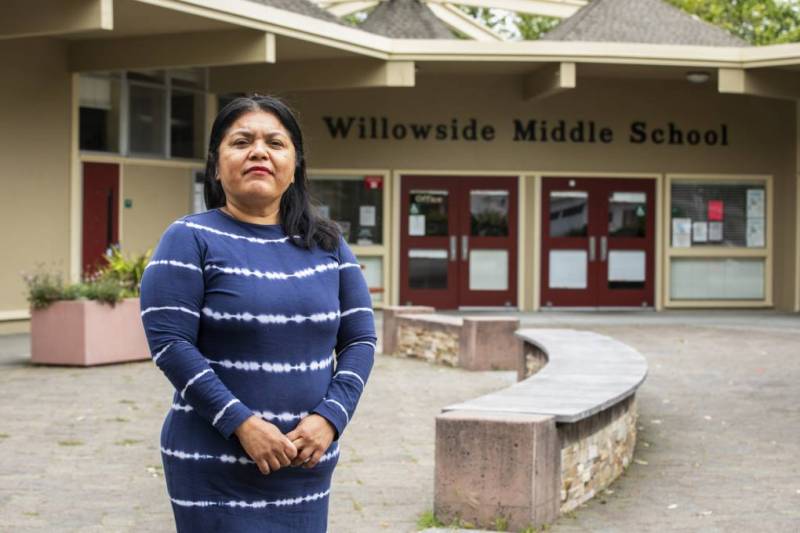
"caption": "Sandra Cruz, madre de un alumno de la Escuela Primaria Oak Grove, posa para un retrato en Santa Rosa el martes 14 de mayo de 2024. El Distrito Escolar Oak Grove Union votó a favor de despedir a su único traductor bilingüe al final del año escolar, y muchos padres latinos se han movilizado para exigir que la escuela revierta su decisión. Un tercio de los alumnos del Oak Grove Union School District proceden de hogares hispanohablantes.",
"credit": "Gina Castro/KQED",
"altTag": "Una mujer latina lleva puesta un vestido azul y ve directamente a la cámara. Ella está parada enfrente de la escuela Willowside Middle School.",
"description": null,
"imgSizes": {
"medium": {
"file": "https://cdn.kqed.org/wp-content/uploads/sites/10/2024/06/SANDRA-CRUZ-PICTURE-800x533.jpg",
"width": 800,
"height": 533,
"mimeType": "image/jpeg"
},
"thumbnail": {
"file": "https://cdn.kqed.org/wp-content/uploads/sites/10/2024/06/SANDRA-CRUZ-PICTURE-160x107.jpg",
"width": 160,
"height": 107,
"mimeType": "image/jpeg"
},
"post-thumbnail": {
"file": "https://cdn.kqed.org/wp-content/uploads/sites/10/2024/06/SANDRA-CRUZ-PICTURE-672x372.jpg",
"width": 672,
"height": 372,
"mimeType": "image/jpeg"
},
"twentyfourteen-full-width": {
"file": "https://cdn.kqed.org/wp-content/uploads/sites/10/2024/06/SANDRA-CRUZ-PICTURE-1020x576.jpg",
"width": 1020,
"height": 576,
"mimeType": "image/jpeg"
},
"kqedFullSize": {
"file": "https://cdn.kqed.org/wp-content/uploads/sites/10/2024/06/SANDRA-CRUZ-PICTURE.jpg",
"width": 1020,
"height": 680
}
},
"isLoading": false,
"fetchFailed": false
},
"news_11990270": {
"type": "attachments",
"id": "news_11990270",
"meta": {
"index": "attachments_1716263798",
"site": "news",
"id": "11990270",
"found": true
},
"title": "From Berkeley to San Francisco",
"publishDate": 1718314724,
"status": "inherit",
"parent": 11990243,
"modified": 1718315980,
"caption": "A view of San Francisco Bay from Berkeley Hill. Five Bay Area counties — San Francisco, San Mateo, Napa, Marin and Santa Clara — stand to lose millions from their budgets this year due to an obscure legal dispute with the state, and they argue it will have a big impact on county services. ",
"credit": "Sean Duan/Getty Images",
"altTag": null,
"description": null,
"imgSizes": {
"medium": {
"file": "https://cdn.kqed.org/wp-content/uploads/sites/10/2024/06/GettyImages-140849679-800x533.jpg",
"width": 800,
"height": 533,
"mimeType": "image/jpeg"
},
"large": {
"file": "https://cdn.kqed.org/wp-content/uploads/sites/10/2024/06/GettyImages-140849679-1020x680.jpg",
"width": 1020,
"height": 680,
"mimeType": "image/jpeg"
},
"thumbnail": {
"file": "https://cdn.kqed.org/wp-content/uploads/sites/10/2024/06/GettyImages-140849679-160x107.jpg",
"width": 160,
"height": 107,
"mimeType": "image/jpeg"
},
"1536x1536": {
"file": "https://cdn.kqed.org/wp-content/uploads/sites/10/2024/06/GettyImages-140849679-1536x1024.jpg",
"width": 1536,
"height": 1024,
"mimeType": "image/jpeg"
},
"2048x2048": {
"file": "https://cdn.kqed.org/wp-content/uploads/sites/10/2024/06/GettyImages-140849679-2048x1365.jpg",
"width": 2048,
"height": 1365,
"mimeType": "image/jpeg"
},
"post-thumbnail": {
"file": "https://cdn.kqed.org/wp-content/uploads/sites/10/2024/06/GettyImages-140849679-672x372.jpg",
"width": 672,
"height": 372,
"mimeType": "image/jpeg"
},
"twentyfourteen-full-width": {
"file": "https://cdn.kqed.org/wp-content/uploads/sites/10/2024/06/GettyImages-140849679-1038x576.jpg",
"width": 1038,
"height": 576,
"mimeType": "image/jpeg"
},
"full-width": {
"file": "https://cdn.kqed.org/wp-content/uploads/sites/10/2024/06/GettyImages-140849679-1920x1280.jpg",
"width": 1920,
"height": 1280,
"mimeType": "image/jpeg"
},
"kqedFullSize": {
"file": "https://cdn.kqed.org/wp-content/uploads/sites/10/2024/06/GettyImages-140849679.jpg",
"width": 2121,
"height": 1414
}
},
"isLoading": false,
"fetchFailed": false
},
"news_11990232": {
"type": "attachments",
"id": "news_11990232",
"meta": {
"index": "attachments_1716263798",
"site": "news",
"id": "11990232",
"found": true
},
"title": "Screenshot 2024-06-13 at 12.41.19 PM",
"publishDate": 1718307696,
"status": "inherit",
"parent": 11990230,
"modified": 1718310501,
"caption": "Los Angeles Unified School District's Nueva Vista Elementary School in Bell.",
"credit": "Betty Márquez Rosales",
"altTag": "A sign in front of a school building reads \"Nueva Vista Elementary and Performing Arts Magnet.\"",
"description": null,
"imgSizes": {
"medium": {
"file": "https://cdn.kqed.org/wp-content/uploads/sites/10/2024/06/Screenshot-2024-06-13-at-12.41.19 PM-800x591.png",
"width": 800,
"height": 591,
"mimeType": "image/png"
},
"large": {
"file": "https://cdn.kqed.org/wp-content/uploads/sites/10/2024/06/Screenshot-2024-06-13-at-12.41.19 PM-1020x754.png",
"width": 1020,
"height": 754,
"mimeType": "image/png"
},
"thumbnail": {
"file": "https://cdn.kqed.org/wp-content/uploads/sites/10/2024/06/Screenshot-2024-06-13-at-12.41.19 PM-160x118.png",
"width": 160,
"height": 118,
"mimeType": "image/png"
},
"1536x1536": {
"file": "https://cdn.kqed.org/wp-content/uploads/sites/10/2024/06/Screenshot-2024-06-13-at-12.41.19 PM-1536x1135.png",
"width": 1536,
"height": 1135,
"mimeType": "image/png"
},
"post-thumbnail": {
"file": "https://cdn.kqed.org/wp-content/uploads/sites/10/2024/06/Screenshot-2024-06-13-at-12.41.19 PM-672x372.png",
"width": 672,
"height": 372,
"mimeType": "image/png"
},
"twentyfourteen-full-width": {
"file": "https://cdn.kqed.org/wp-content/uploads/sites/10/2024/06/Screenshot-2024-06-13-at-12.41.19 PM-1038x576.png",
"width": 1038,
"height": 576,
"mimeType": "image/png"
},
"full-width": {
"file": "https://cdn.kqed.org/wp-content/uploads/sites/10/2024/06/Screenshot-2024-06-13-at-12.41.19 PM-1920x1419.png",
"width": 1920,
"height": 1419,
"mimeType": "image/png"
},
"kqedFullSize": {
"file": "https://cdn.kqed.org/wp-content/uploads/sites/10/2024/06/Screenshot-2024-06-13-at-12.41.19 PM.png",
"width": 2014,
"height": 1488
}
},
"isLoading": false,
"fetchFailed": false
},
"news_11989657": {
"type": "attachments",
"id": "news_11989657",
"meta": {
"index": "attachments_1716263798",
"site": "news",
"id": "11989657",
"found": true
},
"title": "240610-TKParentsDilemma-24-BL_qut",
"publishDate": 1718051259,
"status": "inherit",
"parent": 0,
"modified": 1718142095,
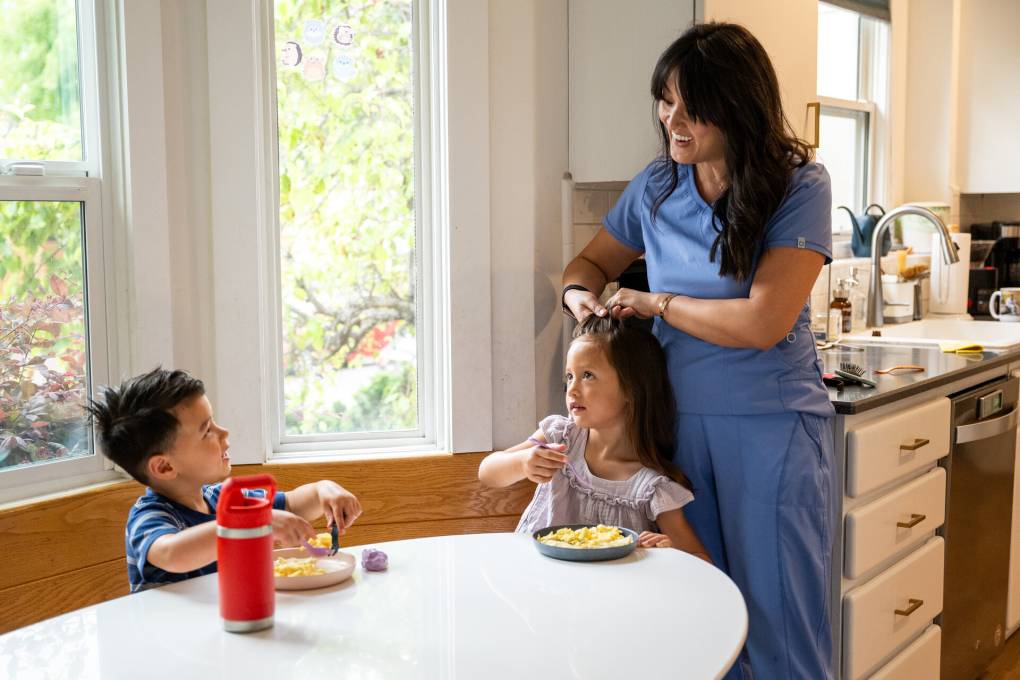
"caption": "Jennifer Currier prepares her two children, Kaia, 5, and Kane, 2, for summer camp at their home in Alameda on June 10 before her husband, Steve, takes the kids to camp and she leaves for work. On other days, a nanny takes the kids to school after both parents go to work.",
"credit": "Beth LaBerge/KQED",
"altTag": null,
"description": null,
"imgSizes": {
"medium": {
"file": "https://cdn.kqed.org/wp-content/uploads/sites/10/2024/06/240610-TKParentsDilemma-24-BL_qut-800x533.jpg",
"width": 800,
"height": 533,
"mimeType": "image/jpeg"
},
"large": {
"file": "https://cdn.kqed.org/wp-content/uploads/sites/10/2024/06/240610-TKParentsDilemma-24-BL_qut-1020x680.jpg",
"width": 1020,
"height": 680,
"mimeType": "image/jpeg"
},
"thumbnail": {
"file": "https://cdn.kqed.org/wp-content/uploads/sites/10/2024/06/240610-TKParentsDilemma-24-BL_qut-160x107.jpg",
"width": 160,
"height": 107,
"mimeType": "image/jpeg"
},
"1536x1536": {
"file": "https://cdn.kqed.org/wp-content/uploads/sites/10/2024/06/240610-TKParentsDilemma-24-BL_qut-1536x1024.jpg",
"width": 1536,
"height": 1024,
"mimeType": "image/jpeg"
},
"post-thumbnail": {
"file": "https://cdn.kqed.org/wp-content/uploads/sites/10/2024/06/240610-TKParentsDilemma-24-BL_qut-672x372.jpg",
"width": 672,
"height": 372,
"mimeType": "image/jpeg"
},
"twentyfourteen-full-width": {
"file": "https://cdn.kqed.org/wp-content/uploads/sites/10/2024/06/240610-TKParentsDilemma-24-BL_qut-1038x576.jpg",
"width": 1038,
"height": 576,
"mimeType": "image/jpeg"
},
"kqedFullSize": {
"file": "https://cdn.kqed.org/wp-content/uploads/sites/10/2024/06/240610-TKParentsDilemma-24-BL_qut.jpg",
"width": 1920,
"height": 1280
}
},
"isLoading": false,
"fetchFailed": false
},
"news_11989678": {
"type": "attachments",
"id": "news_11989678",
"meta": {
"index": "attachments_1716263798",
"site": "news",
"id": "11989678",
"found": true
},
"title": "TKBackPack",
"publishDate": 1718055818,
"status": "inherit",
"parent": 0,
"modified": 1734548641,
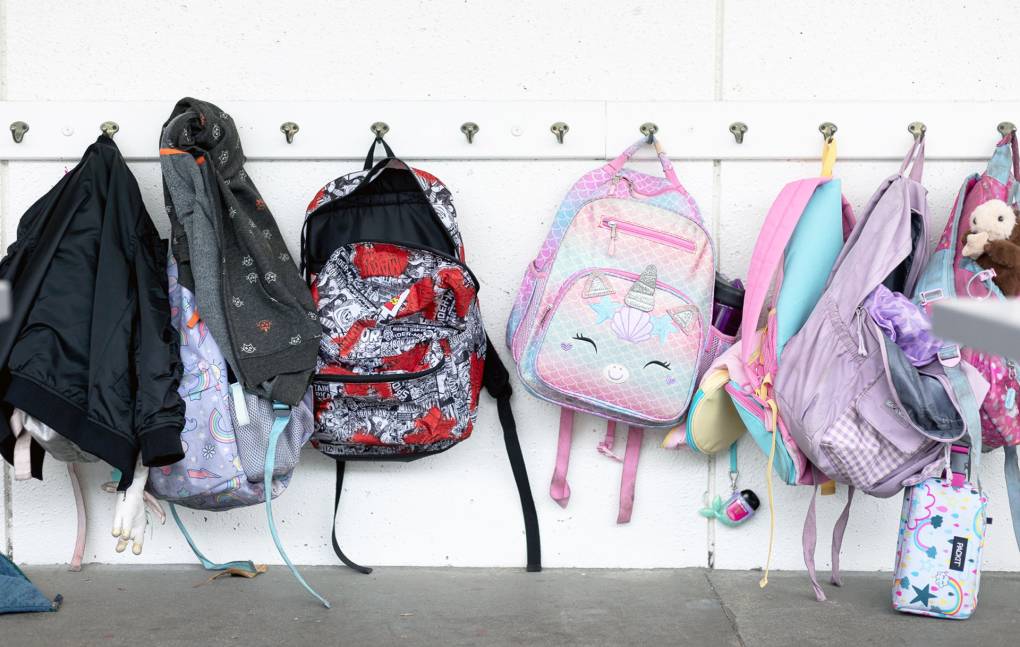
"caption": "Students' backpacks hang outside the transitional kindergarten classroom at Will Rogers Elementary School in Santa Monica.",
"credit": "Courtesy of Ashley Balderrama",
"altTag": null,
"description": null,
"imgSizes": {
"medium": {
"file": "https://cdn.kqed.org/wp-content/uploads/sites/10/2024/06/TKBackPack-800x508.jpg",
"width": 800,
"height": 508,
"mimeType": "image/jpeg"
},
"large": {
"file": "https://cdn.kqed.org/wp-content/uploads/sites/10/2024/06/TKBackPack-1020x647.jpg",
"width": 1020,
"height": 647,
"mimeType": "image/jpeg"
},
"thumbnail": {
"file": "https://cdn.kqed.org/wp-content/uploads/sites/10/2024/06/TKBackPack-160x102.jpg",
"width": 160,
"height": 102,
"mimeType": "image/jpeg"
},
"1536x1536": {
"file": "https://cdn.kqed.org/wp-content/uploads/sites/10/2024/06/TKBackPack-1536x974.jpg",
"width": 1536,
"height": 974,
"mimeType": "image/jpeg"
},
"post-thumbnail": {
"file": "https://cdn.kqed.org/wp-content/uploads/sites/10/2024/06/TKBackPack-672x372.jpg",
"width": 672,
"height": 372,
"mimeType": "image/jpeg"
},
"twentyfourteen-full-width": {
"file": "https://cdn.kqed.org/wp-content/uploads/sites/10/2024/06/TKBackPack-1038x576.jpg",
"width": 1038,
"height": 576,
"mimeType": "image/jpeg"
},
"kqedFullSize": {
"file": "https://cdn.kqed.org/wp-content/uploads/sites/10/2024/06/TKBackPack.jpg",
"width": 1920,
"height": 1218
}
},
"isLoading": false,
"fetchFailed": false
},
"news_11988055": {
"type": "attachments",
"id": "news_11988055",
"meta": {
"index": "attachments_1716263798",
"site": "news",
"id": "11988055",
"found": true
},
"title": "240517-TKBilingualLearners-27-BL_qut",
"publishDate": 1717006968,
"status": "inherit",
"parent": 0,
"modified": 1717794201,
"caption": "Teacher Cintya Valdivia sits with transitional kindergarten students during snack time at the International Community School in Oakland on May 17, 2024.",
"credit": "Beth LaBerge/KQED",
"altTag": "A teacher sits at a classroom table with young students as one student puts his arm tenderly around her neck",
"description": null,
"imgSizes": {
"medium": {
"file": "https://cdn.kqed.org/wp-content/uploads/sites/10/2024/05/240517-TKBilingualLearners-27-BL_qut-800x533.jpg",
"width": 800,
"height": 533,
"mimeType": "image/jpeg"
},
"large": {
"file": "https://cdn.kqed.org/wp-content/uploads/sites/10/2024/05/240517-TKBilingualLearners-27-BL_qut-1020x680.jpg",
"width": 1020,
"height": 680,
"mimeType": "image/jpeg"
},
"thumbnail": {
"file": "https://cdn.kqed.org/wp-content/uploads/sites/10/2024/05/240517-TKBilingualLearners-27-BL_qut-160x107.jpg",
"width": 160,
"height": 107,
"mimeType": "image/jpeg"
},
"1536x1536": {
"file": "https://cdn.kqed.org/wp-content/uploads/sites/10/2024/05/240517-TKBilingualLearners-27-BL_qut-1536x1024.jpg",
"width": 1536,
"height": 1024,
"mimeType": "image/jpeg"
},
"post-thumbnail": {
"file": "https://cdn.kqed.org/wp-content/uploads/sites/10/2024/05/240517-TKBilingualLearners-27-BL_qut-672x372.jpg",
"width": 672,
"height": 372,
"mimeType": "image/jpeg"
},
"twentyfourteen-full-width": {
"file": "https://cdn.kqed.org/wp-content/uploads/sites/10/2024/05/240517-TKBilingualLearners-27-BL_qut-1038x576.jpg",
"width": 1038,
"height": 576,
"mimeType": "image/jpeg"
},
"kqedFullSize": {
"file": "https://cdn.kqed.org/wp-content/uploads/sites/10/2024/05/240517-TKBilingualLearners-27-BL_qut.jpg",
"width": 1920,
"height": 1280
}
},
"isLoading": false,
"fetchFailed": false
},
"news_11989566": {
"type": "attachments",
"id": "news_11989566",
"meta": {
"index": "attachments_1716263798",
"site": "news",
"id": "11989566",
"found": true
},
"title": "UC Santa Cruz Workers Strike Over Treatment Of Pro-Palestinian Protesters",
"publishDate": 1717880126,
"status": "inherit",
"parent": 11989563,
"modified": 1718040922,
"caption": "UC Santa Cruz workers who are union members of UAW 4811, part of the United Auto Workers, and pro-Palestinian protesters carry signs as they demonstrate in front of the UC Santa Cruz campus on May 20, 2024, in Santa Cruz. ",
"credit": "Justin Sullivan/Getty Images",
"altTag": null,
"description": null,
"imgSizes": {
"medium": {
"file": "https://cdn.kqed.org/wp-content/uploads/sites/10/2024/06/GettyImages-2153876773-800x532.jpg",
"width": 800,
"height": 532,
"mimeType": "image/jpeg"
},
"large": {
"file": "https://cdn.kqed.org/wp-content/uploads/sites/10/2024/06/GettyImages-2153876773-1020x678.jpg",
"width": 1020,
"height": 678,
"mimeType": "image/jpeg"
},
"thumbnail": {
"file": "https://cdn.kqed.org/wp-content/uploads/sites/10/2024/06/GettyImages-2153876773-160x106.jpg",
"width": 160,
"height": 106,
"mimeType": "image/jpeg"
},
"post-thumbnail": {
"file": "https://cdn.kqed.org/wp-content/uploads/sites/10/2024/06/GettyImages-2153876773-672x372.jpg",
"width": 672,
"height": 372,
"mimeType": "image/jpeg"
},
"twentyfourteen-full-width": {
"file": "https://cdn.kqed.org/wp-content/uploads/sites/10/2024/06/GettyImages-2153876773-1024x576.jpg",
"width": 1024,
"height": 576,
"mimeType": "image/jpeg"
},
"kqedFullSize": {
"file": "https://cdn.kqed.org/wp-content/uploads/sites/10/2024/06/GettyImages-2153876773.jpg",
"width": 1024,
"height": 681
}
},
"isLoading": false,
"fetchFailed": false
},
"news_11989267": {
"type": "attachments",
"id": "news_11989267",
"meta": {
"index": "attachments_1716263798",
"site": "news",
"id": "11989267",
"found": true
},
"title": "Screenshot 2024-06-06 at 12.05.55 PM",
"publishDate": 1717700824,
"status": "inherit",
"parent": 11989248,
"modified": 1717712724,
"caption": "Students at Encore High School play basketball as a San Bernardino County Sheriff deputy parks outside of the school on Sept. 22, 2016, in Hesperia.",
"credit": "James Quigg/The Daily Press via AP",
"altTag": "A police vehicle is parked on dirt with children playing basketball in the background.",
"description": null,
"imgSizes": {
"medium": {
"file": "https://cdn.kqed.org/wp-content/uploads/sites/10/2024/06/Screenshot-2024-06-06-at-12.05.55 PM-800x508.png",
"width": 800,
"height": 508,
"mimeType": "image/png"
},
"large": {
"file": "https://cdn.kqed.org/wp-content/uploads/sites/10/2024/06/Screenshot-2024-06-06-at-12.05.55 PM-1020x647.png",
"width": 1020,
"height": 647,
"mimeType": "image/png"
},
"thumbnail": {
"file": "https://cdn.kqed.org/wp-content/uploads/sites/10/2024/06/Screenshot-2024-06-06-at-12.05.55 PM-160x102.png",
"width": 160,
"height": 102,
"mimeType": "image/png"
},
"1536x1536": {
"file": "https://cdn.kqed.org/wp-content/uploads/sites/10/2024/06/Screenshot-2024-06-06-at-12.05.55 PM-1536x975.png",
"width": 1536,
"height": 975,
"mimeType": "image/png"
},
"2048x2048": {
"file": "https://cdn.kqed.org/wp-content/uploads/sites/10/2024/06/Screenshot-2024-06-06-at-12.05.55 PM-2048x1299.png",
"width": 2048,
"height": 1299,
"mimeType": "image/png"
},
"post-thumbnail": {
"file": "https://cdn.kqed.org/wp-content/uploads/sites/10/2024/06/Screenshot-2024-06-06-at-12.05.55 PM-672x372.png",
"width": 672,
"height": 372,
"mimeType": "image/png"
},
"twentyfourteen-full-width": {
"file": "https://cdn.kqed.org/wp-content/uploads/sites/10/2024/06/Screenshot-2024-06-06-at-12.05.55 PM-1038x576.png",
"width": 1038,
"height": 576,
"mimeType": "image/png"
},
"full-width": {
"file": "https://cdn.kqed.org/wp-content/uploads/sites/10/2024/06/Screenshot-2024-06-06-at-12.05.55 PM-1920x1218.png",
"width": 1920,
"height": 1218,
"mimeType": "image/png"
},
"kqedFullSize": {
"file": "https://cdn.kqed.org/wp-content/uploads/sites/10/2024/06/Screenshot-2024-06-06-at-12.05.55 PM.png",
"width": 2528,
"height": 1604
}
},
"isLoading": false,
"fetchFailed": false
},
"news_11989242": {
"type": "attachments",
"id": "news_11989242",
"meta": {
"index": "attachments_1716263798",
"site": "news",
"id": "11989242",
"found": true
},
"title": "Construction crews work at People’s Park in Berkeley on Jan. 4, 2024.",
"publishDate": 1717694682,
"status": "inherit",
"parent": 11989237,
"modified": 1717694903,
"caption": "Construction crews work to install shipping containers closing off People’s Park in Berkeley on Jan. 4, 2024.",
"credit": "Martin do Nascimento/KQED",
"altTag": null,
"description": null,
"imgSizes": {
"medium": {
"file": "https://cdn.kqed.org/wp-content/uploads/sites/10/2024/06/240104-PEOPLES-PARK-MD-10_qut-800x533.jpg",
"width": 800,
"height": 533,
"mimeType": "image/jpeg"
},
"large": {
"file": "https://cdn.kqed.org/wp-content/uploads/sites/10/2024/06/240104-PEOPLES-PARK-MD-10_qut-1020x680.jpg",
"width": 1020,
"height": 680,
"mimeType": "image/jpeg"
},
"thumbnail": {
"file": "https://cdn.kqed.org/wp-content/uploads/sites/10/2024/06/240104-PEOPLES-PARK-MD-10_qut-160x107.jpg",
"width": 160,
"height": 107,
"mimeType": "image/jpeg"
},
"1536x1536": {
"file": "https://cdn.kqed.org/wp-content/uploads/sites/10/2024/06/240104-PEOPLES-PARK-MD-10_qut-1536x1024.jpg",
"width": 1536,
"height": 1024,
"mimeType": "image/jpeg"
},
"post-thumbnail": {
"file": "https://cdn.kqed.org/wp-content/uploads/sites/10/2024/06/240104-PEOPLES-PARK-MD-10_qut-672x372.jpg",
"width": 672,
"height": 372,
"mimeType": "image/jpeg"
},
"twentyfourteen-full-width": {
"file": "https://cdn.kqed.org/wp-content/uploads/sites/10/2024/06/240104-PEOPLES-PARK-MD-10_qut-1038x576.jpg",
"width": 1038,
"height": 576,
"mimeType": "image/jpeg"
},
"kqedFullSize": {
"file": "https://cdn.kqed.org/wp-content/uploads/sites/10/2024/06/240104-PEOPLES-PARK-MD-10_qut.jpg",
"width": 1920,
"height": 1280
}
},
"isLoading": false,
"fetchFailed": false
}
},
"audioPlayerReducer": {
"postId": "stream_live",
"isPaused": true,
"isPlaying": false,
"pfsActive": false,
"pledgeModalIsOpen": true,
"playerDrawerIsOpen": false,
"liveAudioPlayStartedAt": 0,
"liveAudioPlayContext": ""
},
"authorsReducer": {
"byline_news_11991747": {
"type": "authors",
"id": "byline_news_11991747",
"meta": {
"override": true
},
"slug": "byline_news_11991747",
"name": "Alexei Koseff, CalMatters",
"isLoading": false
},
"byline_news_11990668": {
"type": "authors",
"id": "byline_news_11990668",
"meta": {
"override": true
},
"slug": "byline_news_11990668",
"name": "Mikhail Zinshteyn ",
"isLoading": false
},
"byline_news_11990230": {
"type": "authors",
"id": "byline_news_11990230",
"meta": {
"override": true
},
"slug": "byline_news_11990230",
"name": "Betty Márquez Rosales, EdSource",
"isLoading": false
},
"byline_news_11989615": {
"type": "authors",
"id": "byline_news_11989615",
"meta": {
"override": true
},
"slug": "byline_news_11989615",
"name": "Elly Yu, LAist",
"isLoading": false
},
"byline_news_11989563": {
"type": "authors",
"id": "byline_news_11989563",
"meta": {
"override": true
},
"slug": "byline_news_11989563",
"name": "The Associated Press",
"isLoading": false
},
"byline_news_11989248": {
"type": "authors",
"id": "byline_news_11989248",
"meta": {
"override": true
},
"slug": "byline_news_11989248",
"name": "Thomas Peele and Daniel J. Willis",
"isLoading": false
},
"btorres": {
"type": "authors",
"id": "11666",
"meta": {
"index": "authors_1716337520",
"id": "11666",
"found": true
},
"name": "Blanca Torres",
"firstName": "Blanca",
"lastName": "Torres",
"slug": "btorres",
"email": "btorres@kqed.org",
"display_author_email": true,
"staff_mastheads": [
"news"
],
"title": "Producer, Forum",
"bio": "Blanca Torres brings sharp news judgement and keen sense of lively conversation to her work as producer for Forum. She loves producing shows that leave listeners feeling like they heard distinctive voices, learned something new and gained a fresh perspective.\r\n\r\nShe joined KQED in January of 2020 after 16 years of working as a newspaper reporter most recently at the \u003cem>San Francisco Business Times,\u003c/em> where she wrote about real estate and economic development. Before that, she covered a variety of beats including crime, education, retail, workplace, the economy, consumer issues, and small business for the \u003cem>Contra Costa Times, Baltimore Sun\u003c/em> and\u003cem> The Seattle Times\u003c/em>. In addition to reporting, she worked as an editorial writer and columnist for the \u003cem>Seattle Times\u003c/em>. From 2017 to 2020, Blanca won a total of ten awards from the National Association of Real Estate Editors and won first place for land use reporting from the California News Publishers Association two years in a row. She is also a member and former board member for the National Association of Hispanic Journalists.\r\n\r\nA native of the Pacific Northwest, Blanca earned her bachelor's degree from Vanderbilt University in Nashville and a master's in fine arts in creative writing at Mills College. She lives in the East Bay with her family.",
"avatar": "https://secure.gravatar.com/avatar/50b49d19b14a1eed34f26ebf4681152cdd81574ed21851100871ccd29e578cdc?s=600&d=blank&r=g",
"twitter": "@blancawrites",
"bluesky": null,
"facebook": null,
"instagram": null,
"linkedin": null,
"sites": [
{
"site": "arts",
"roles": [
"editor"
]
},
{
"site": "news",
"roles": [
"editor"
]
},
{
"site": "forum",
"roles": [
"editor"
]
}
],
"headData": {
"title": "Blanca Torres | KQED",
"description": "Producer, Forum",
"ogImgSrc": "https://secure.gravatar.com/avatar/50b49d19b14a1eed34f26ebf4681152cdd81574ed21851100871ccd29e578cdc?s=600&d=blank&r=g",
"twImgSrc": "https://secure.gravatar.com/avatar/50b49d19b14a1eed34f26ebf4681152cdd81574ed21851100871ccd29e578cdc?s=600&d=blank&r=g"
},
"isLoading": false,
"link": "/author/btorres"
},
"abandlamudi": {
"type": "authors",
"id": "11672",
"meta": {
"index": "authors_1716337520",
"id": "11672",
"found": true
},
"name": "Adhiti Bandlamudi",
"firstName": "Adhiti",
"lastName": "Bandlamudi",
"slug": "abandlamudi",
"email": "abandlamudi@kqed.org",
"display_author_email": false,
"staff_mastheads": [
"news"
],
"title": "KQED Housing Reporter",
"bio": "Adhiti Bandlamudi reports for KQED's Housing desk. She focuses on how housing gets built across the Bay Area. Before joining KQED in 2020, she reported for WUNC in Durham, North Carolina, WABE in Atlanta, Georgia and Capital Public Radio in Sacramento. In 2017, she was awarded a Kroc Fellowship at NPR where she reported on everything from sprinkles to the Golden State Killer's arrest. When she's not reporting, she's baking new recipes in her kitchen or watching movies with friends and family. She's originally from Georgia and has strong opinions about Great British Bake Off.",
"avatar": "https://secure.gravatar.com/avatar/868129c8b257bb99a3500e2c86a65400?s=600&d=mm&r=g",
"twitter": "oddity_adhiti",
"facebook": null,
"instagram": null,
"linkedin": null,
"sites": [
{
"site": "arts",
"roles": [
"author"
]
},
{
"site": "news",
"roles": [
"editor"
]
},
{
"site": "liveblog",
"roles": [
"author"
]
}
],
"headData": {
"title": "Adhiti Bandlamudi | KQED",
"description": "KQED Housing Reporter",
"ogImgSrc": "https://secure.gravatar.com/avatar/868129c8b257bb99a3500e2c86a65400?s=600&d=mm&r=g",
"twImgSrc": "https://secure.gravatar.com/avatar/868129c8b257bb99a3500e2c86a65400?s=600&d=mm&r=g"
},
"isLoading": false,
"link": "/author/abandlamudi"
},
"ccabreralomeli": {
"type": "authors",
"id": "11708",
"meta": {
"index": "authors_1716337520",
"id": "11708",
"found": true
},
"name": "Carlos Cabrera-Lomelí",
"firstName": "Carlos",
"lastName": "Cabrera-Lomelí",
"slug": "ccabreralomeli",
"email": "ccabreralomeli@KQED.org",
"display_author_email": true,
"staff_mastheads": [
"news"
],
"title": "Community Reporter",
"bio": "Carlos Cabrera-Lomelí is a community reporter with KQED's digital engagement team. He also reports and co-produces for KQED's bilingual news hub KQED en Español. He grew up in San Francisco's Mission District and has previously worked with Univision, 48 Hills and REFORMA in Mexico City.",
"avatar": "https://secure.gravatar.com/avatar/c309be9665e484f887b818c89e273ecc673004f426f36b24d00a4d813a2e0518?s=600&d=blank&r=g",
"twitter": "@LomeliCabrera",
"bluesky": null,
"facebook": null,
"instagram": null,
"linkedin": null,
"sites": [
{
"site": "arts",
"roles": [
"editor"
]
},
{
"site": "news",
"roles": [
"editor"
]
},
{
"site": "about",
"roles": [
"editor"
]
},
{
"site": "science",
"roles": [
"editor"
]
},
{
"site": "perspectives",
"roles": [
"editor"
]
},
{
"site": "elections",
"roles": [
"editor"
]
},
{
"site": "liveblog",
"roles": [
"contributor"
]
}
],
"headData": {
"title": "Carlos Cabrera-Lomelí | KQED",
"description": "Community Reporter",
"ogImgSrc": "https://secure.gravatar.com/avatar/c309be9665e484f887b818c89e273ecc673004f426f36b24d00a4d813a2e0518?s=600&d=blank&r=g",
"twImgSrc": "https://secure.gravatar.com/avatar/c309be9665e484f887b818c89e273ecc673004f426f36b24d00a4d813a2e0518?s=600&d=blank&r=g"
},
"isLoading": false,
"link": "/author/ccabreralomeli"
},
"daisynguyen": {
"type": "authors",
"id": "11829",
"meta": {
"index": "authors_1716337520",
"id": "11829",
"found": true
},
"name": "Daisy Nguyen",
"firstName": "Daisy",
"lastName": "Nguyen",
"slug": "daisynguyen",
"email": "daisynguyen@kqed.org",
"display_author_email": true,
"staff_mastheads": [
"news"
],
"title": "KQED Contributor",
"bio": "I have covered early childhood education and child care for KQED since 2022. I focus on policies aimed at increasing access to early care and education and how they shape individual lives. I've been a journalist for more than two decades, with most of that time devoted to covering breaking news throughout California for The Associated Press. I grew up in San Francisco and studied at UC Davis and Columbia University's Graduate School of Journalism. I live in Oakland with my husband and two kids.",
"avatar": "https://secure.gravatar.com/avatar/2da2127c27f7143b53ebd419800fd55f?s=600&d=blank&r=g",
"twitter": null,
"facebook": null,
"instagram": null,
"linkedin": "https://www.linkedin.com/in/daisynguyen/",
"sites": [
{
"site": "news",
"roles": [
"author"
]
},
{
"site": "liveblog",
"roles": [
"author"
]
}
],
"headData": {
"title": "Daisy Nguyen | KQED",
"description": "KQED Contributor",
"ogImgSrc": "https://secure.gravatar.com/avatar/2da2127c27f7143b53ebd419800fd55f?s=600&d=blank&r=g",
"twImgSrc": "https://secure.gravatar.com/avatar/2da2127c27f7143b53ebd419800fd55f?s=600&d=blank&r=g"
},
"isLoading": false,
"link": "/author/daisynguyen"
},
"jgeha": {
"type": "authors",
"id": "11906",
"meta": {
"index": "authors_1716337520",
"id": "11906",
"found": true
},
"name": "Joseph Geha",
"firstName": "Joseph",
"lastName": "Geha",
"slug": "jgeha",
"email": "jgeha@kqed.org",
"display_author_email": false,
"staff_mastheads": [
"news",
"science"
],
"title": "KQED Contributor",
"bio": null,
"avatar": "https://secure.gravatar.com/avatar/ea84d2b6dd93d6369d453edf19dd583f117cd1759d2d9c9c92f9de77017354fe?s=600&d=blank&r=g",
"twitter": null,
"bluesky": null,
"facebook": null,
"instagram": null,
"linkedin": null,
"sites": [
{
"site": "news",
"roles": [
"editor"
]
},
{
"site": "liveblog",
"roles": [
"author"
]
}
],
"headData": {
"title": "Joseph Geha | KQED",
"description": "KQED Contributor",
"ogImgSrc": "https://secure.gravatar.com/avatar/ea84d2b6dd93d6369d453edf19dd583f117cd1759d2d9c9c92f9de77017354fe?s=600&d=blank&r=g",
"twImgSrc": "https://secure.gravatar.com/avatar/ea84d2b6dd93d6369d453edf19dd583f117cd1759d2d9c9c92f9de77017354fe?s=600&d=blank&r=g"
},
"isLoading": false,
"link": "/author/jgeha"
},
"bkrans": {
"type": "authors",
"id": "11923",
"meta": {
"index": "authors_1716337520",
"id": "11923",
"found": true
},
"name": "Brian Krans",
"firstName": "Brian",
"lastName": "Krans",
"slug": "bkrans",
"email": "bkrans@kqed.org",
"display_author_email": false,
"staff_mastheads": [
"news"
],
"title": "KQED Contributing Reporter",
"bio": "Brian Krans is an award-winning local news and investigative reporter who has been proudly working as a general assignment reporter for KQED since August 2023. He lives in Richmond, where he also reports on air pollution for Richmondside. He is also a founding member of the Vallejo Sun.",
"avatar": "https://secure.gravatar.com/avatar/71fa91f931774612559f7640390b53d9c2840ff72b20f195a25239aab2d9fbb9?s=600&d=blank&r=g",
"twitter": "citizenkrans",
"bluesky": null,
"facebook": null,
"instagram": null,
"linkedin": null,
"sites": [
{
"site": "news",
"roles": [
"editor"
]
}
],
"headData": {
"title": "Brian Krans | KQED",
"description": "KQED Contributing Reporter",
"ogImgSrc": "https://secure.gravatar.com/avatar/71fa91f931774612559f7640390b53d9c2840ff72b20f195a25239aab2d9fbb9?s=600&d=blank&r=g",
"twImgSrc": "https://secure.gravatar.com/avatar/71fa91f931774612559f7640390b53d9c2840ff72b20f195a25239aab2d9fbb9?s=600&d=blank&r=g"
},
"isLoading": false,
"link": "/author/bkrans"
}
},
"pagesReducer": {
"news_category_education": {
"type": "terms",
"id": "news_18540",
"meta": {
"index": "terms_1716263798",
"site": "news",
"id": "18540",
"score": 10.973179
},
"featImg": null,
"name": "Education",
"description": null,
"taxonomy": "category",
"headData": {
"twImgId": null,
"twTitle": null,
"ogTitle": null,
"ogImgId": null,
"twDescription": null,
"description": null,
"title": "Education Archives | KQED News",
"ogDescription": null
},
"ttid": 2595,
"slug": "education",
"isLoading": false,
"title": "Education",
"pageMeta": {
"site": "news",
"WpPageTemplate": "page-topic-editorial",
"currentPage": 47
},
"blocks": [
{
"blockName": "kqed/post-list",
"attrs": {
"layout": "cardArticle2",
"query": "posts/news?category=education",
"seeMore": false,
"paginated": true,
"page": 47
}
},
{
"blockName": "kqed/ad"
}
]
}
},
"pfsSessionReducer": {},
"postsReducer": {
"stream_live": {
"type": "live",
"id": "stream_live",
"audioUrl": "https://streams.kqed.org/kqedradio",
"title": "Live Stream",
"excerpt": "Live Stream information currently unavailable.",
"link": "/radio",
"featImg": "",
"label": {
"name": "KQED Live",
"link": "/"
}
},
"stream_kqedNewscast": {
"type": "posts",
"id": "stream_kqedNewscast",
"audioUrl": "https://www.kqed.org/.stream/anon/radio/RDnews/newscast.mp3?_=1",
"title": "KQED Newscast",
"featImg": "",
"label": {
"name": "88.5 FM",
"link": "/"
}
},
"news_11991747": {
"type": "posts",
"id": "news_11991747",
"meta": {
"index": "posts_1716263798",
"site": "news",
"id": "11991747",
"score": null,
"sort": [
1719325805000
]
},
"guestAuthors": [],
"slug": "heres-what-you-should-know-about-californias-budget-deal",
"title": "Here's What You Should Know About California's Budget Deal",
"publishDate": 1719325805,
"format": "standard",
"headTitle": "Here’s What You Should Know About California’s Budget Deal | KQED",
"labelTerm": {
"term": 18481,
"site": "news"
},
"content": "\u003cp>California will make widespread cuts to state government operations, prisons, housing programs and health care workforce development in order to maintain its social safety net as it moves to close a multibillion-dollar budget deficit.\u003c/p>\n\u003cp>The \u003ca href=\"https://www.gov.ca.gov/wp-content/uploads/2024/06/2024-Budget-Agreement-.pdf\">$297.9 billion spending plan\u003c/a>, announced on Saturday by Gov. Gavin Newsom, Senate President Pro Tem \u003ca href=\"https://digitaldemocracy.calmatters.org/legislators/mike-mcguire-93\">Mike McGuire\u003c/a> and Assembly Speaker \u003ca href=\"https://digitaldemocracy.calmatters.org/legislators/robert-rivas-165041\">Robert Rivas\u003c/a>, also relies on reserves and pauses some business tax credits to address a remaining revenue gap estimated at $56 billion over the next two years.\u003c/p>\n\u003cp>“This agreement sets the state on a path for long-term fiscal stability — addressing the current shortfall and strengthening budget resilience down the road,” Newsom \u003ca href=\"https://www.gov.ca.gov/2024/06/22/california-leaders-announce-2024-state-budget-agreement/\">said in a statement\u003c/a>. “We’re making sure to preserve programs that serve millions of Californians, including key funding for education, health care, expanded behavioral health services, and combatting homelessness.”\u003c/p>\n\u003cp>The Legislature \u003ca href=\"https://calmatters.org/politics/capitol/2024/06/california-budget-deficit-legislature-newsom/\">passed a budget more than a week ago\u003c/a> to meet a statutory deadline, but it did not represent a final deal with Newsom as they continued to negotiate over whether to repurpose billions of dollars \u003ca href=\"https://calmatters.org/health/2024/05/medi-cal-health-care-budget/\">earmarked to increase payments\u003c/a> for health care providers who treat low-income patients and whether to further delay \u003ca href=\"https://calmatters.org/health/2024/05/minimum-wage-health-care-deadline/\">minimum wage increases for health care workers\u003c/a>, among other issues.\u003c/p>\n\u003cp>\u003ca href=\"https://www.gov.ca.gov/wp-content/uploads/2024/06/2024-Budget-Agreement-.pdf\">Their agreement\u003c/a> — which the Democratic-controlled Legislature is expected to vote on \u003ca href=\"https://jasonsisney.substack.com/p/governor-and-legislative-leaders-588\">through a series of bills this week\u003c/a> ahead of the July 1 start of the new fiscal year — does claw back the funding intended for Medi-Cal provider rates. It pushes back the \u003ca href=\"https://calmatters.org/health/2024/06/health-care-minimum-wage/\">health care wage hikes\u003c/a> until at least October and potentially until next year, depending on the strength of revenue collections in the coming months. Despite heavy opposition from labor unions, the move could save California hundreds of millions of dollars.\u003c/p>\n\u003cp>[ad fullwidth]\u003c/p>\n\u003cp>The plan makes $16 billion in cuts, including a blanket 7.95% reduction in funding for nearly all state departments and the elimination of thousands of vacant positions, which are collectively expected to save nearly $3.7 billion. The Department of Corrections and Rehabilitation will take an additional $385 million cut at the urging of progressive lawmakers, far higher than what Newsom had originally sought \u003ca href=\"https://calmatters.org/justice/2024/05/californa-prison-closures-deficit/\">for the shrinking prison system\u003c/a>.\u003c/p>\n\u003cp>Other major reductions include $1.1 billion from various affordable housing programs, $746 million for health care workforce development and $500 million to build student housing. A scholarship program for middle-class college students will lose $110 million annually, about a fifth of \u003ca href=\"https://calmatters.org/education/higher-education/2024/06/financial-aid-california-budget/\">what the governor had originally sought to cut\u003c/a>.\u003c/p>\n\u003cp>More than $3 billion in previously promised funding to expand food benefits to undocumented immigrants, increase pay for providers who care for people with developmental disabilities, add new subsidized child care slots and \u003ca href=\"https://calmatters.org/economy/technology/2024/05/california-broadband-funding/\">build out broadband internet\u003c/a> will be delayed.\u003c/p>\n\u003cp>[aside postID=\"news_11986893,news_11990465,news_11985798\" label=\"Related Stories\"]This will allow the state to protect what Newsom and legislative leaders touted in their announcement as “core programs,” including an expansion of Medi-Cal, California’s health care program for the poor, to all adults regardless of their immigration status, as well as increased funding for behavioral health, welfare grants and supplemental income for seniors. Local governments will receive another \u003ca href=\"https://calmatters.org/housing/homelessness/2022/11/california-homeless-newsom-funding-reversal/\">$1 billion to address homelessness\u003c/a>.\u003c/p>\n\u003cp>The budget deal shrinks a proposed cut to school funding following a \u003ca href=\"https://calmatters.org/newsletter/california-budget-schools-funding/\">tense negotiation with education groups\u003c/a> during which teachers unions ran a television advertising campaign criticizing Newsom. About $5.5 billion will be delayed until future years.\u003c/p>\n\u003cp>“\u003ca href=\"https://abgt.assembly.ca.gov/system/files/2024-06/floor-report-of-the-2024-25-budget-june-22-2024.pdf\">The Assembly\u003c/a> fought hard to protect the public services that matter most to Californians, and we are delivering a budget that prioritizes affordability and long-term stability,” Rivas, a Salinas Democrat, said in a statement.\u003c/p>\n\u003cp>As part of their agreement, Newsom and the Legislature will pursue several additional measures to address the circumstances that led to California’s steep deficit. While the state experienced a \u003ca href=\"https://calmatters.org/explainers/california-budget-whiplash/\">historic surplus just two years ago\u003c/a>, a delay in tax collections last year caused by winter storms shielded the extent of California’s weakening fiscal condition until after the governor and lawmakers had already committed to too much new spending.\u003c/p>\n\u003cp>The budget deal proposes legislation, to be taken up in August, that will require the state to set aside a portion of future projected surpluses so that it cannot be spent until the money is collected. It also suggests putting a constitutional amendment before voters in 2026 to grow California’s main reserve account.\u003c/p>\n\u003cp>In the meantime, the state plans to dip into that rainy day fund, pulling out more than $12 billion over the next two years to address the fiscal shortfall. It will also suspend the net operating loss for companies with more than $1 million in taxable income and limit business tax credits to $5 million annually — strategies that it previously employed at the height of the coronavirus pandemic — to raise an estimated nearly $15 billion in new revenue over the next three years.\u003c/p>\n\u003cp>\u003c/p>\n\u003cp>“Make no mistake: This is a tough budget year, but it also isn’t the budget situation we were originally fearing,” McGuire, a Healdsburg Democrat, said in a statement. “\u003ca href=\"https://sbud.senate.ca.gov/system/files/2024-06/budget-act-of-2024-key-highlights.pdf\">This balanced budget\u003c/a> helps tackle some of our toughest challenges with resources to combat the homelessness crisis, investments in housing, and funding to fight wildfires and retail theft.”\u003c/p>\n\n",
"blocks": [],
"excerpt": "Gov. Newsom and legislative leaders announced an agreement to bridge the state budget deficit by dipping into reserves and reducing some spending. ",
"status": "publish",
"parent": 0,
"modified": 1740530292,
"stats": {
"hasAudio": false,
"hasVideo": false,
"hasChartOrMap": false,
"iframeSrcs": [],
"hasGoogleForm": false,
"hasGallery": false,
"hasHearkenModule": false,
"hasPolis": false,
"paragraphCount": 17,
"wordCount": 886
},
"headData": {
"title": "Here's What You Should Know About California's Budget Deal | KQED",
"description": "Gov. Newsom and legislative leaders announced an agreement to bridge the state budget deficit by dipping into reserves and reducing some spending. ",
"ogTitle": "",
"ogDescription": "",
"ogImgId": "",
"twTitle": "",
"twDescription": "",
"twImgId": "",
"schema": {
"@context": "https://schema.org",
"@type": "NewsArticle",
"headline": "Here's What You Should Know About California's Budget Deal",
"datePublished": "2024-06-25T07:30:05-07:00",
"dateModified": "2025-02-25T16:38:12-08:00",
"image": "https://cdn.kqed.org/wp-content/uploads/2020/02/KQED-OG-Image@1x.png",
"isAccessibleForFree": "True",
"publisher": {
"@type": "NewsMediaOrganization",
"@id": "https://www.kqed.org/#organization",
"name": "KQED",
"logo": "https://cdn.kqed.org/wp-content/uploads/2020/02/KQED-OG-Image@1x.png",
"url": "https://www.kqed.org",
"sameAs": [
"https://www.facebook.com/KQED",
"https://twitter.com/KQED",
"https://www.instagram.com/kqed/",
"https://www.tiktok.com/@kqedofficial",
"https://www.linkedin.com/company/kqed",
"https://www.youtube.com/channel/UCeC0IOo7i1P_61zVUWbJ4nw"
]
}
}
},
"sticky": false,
"nprByline": "Alexei Koseff, CalMatters",
"nprStoryId": "kqed-11991747",
"excludeFromSiteSearch": "Include",
"showOnAuthorArchivePages": "No",
"articleAge": "0",
"path": "/news/11991747/heres-what-you-should-know-about-californias-budget-deal",
"audioTrackLength": null,
"parsedContent": [
{
"type": "contentString",
"content": "\u003cdiv class=\"post-body\">\u003cp>\u003cp>California will make widespread cuts to state government operations, prisons, housing programs and health care workforce development in order to maintain its social safety net as it moves to close a multibillion-dollar budget deficit.\u003c/p>\n\u003cp>The \u003ca href=\"https://www.gov.ca.gov/wp-content/uploads/2024/06/2024-Budget-Agreement-.pdf\">$297.9 billion spending plan\u003c/a>, announced on Saturday by Gov. Gavin Newsom, Senate President Pro Tem \u003ca href=\"https://digitaldemocracy.calmatters.org/legislators/mike-mcguire-93\">Mike McGuire\u003c/a> and Assembly Speaker \u003ca href=\"https://digitaldemocracy.calmatters.org/legislators/robert-rivas-165041\">Robert Rivas\u003c/a>, also relies on reserves and pauses some business tax credits to address a remaining revenue gap estimated at $56 billion over the next two years.\u003c/p>\n\u003cp>“This agreement sets the state on a path for long-term fiscal stability — addressing the current shortfall and strengthening budget resilience down the road,” Newsom \u003ca href=\"https://www.gov.ca.gov/2024/06/22/california-leaders-announce-2024-state-budget-agreement/\">said in a statement\u003c/a>. “We’re making sure to preserve programs that serve millions of Californians, including key funding for education, health care, expanded behavioral health services, and combatting homelessness.”\u003c/p>\n\u003cp>The Legislature \u003ca href=\"https://calmatters.org/politics/capitol/2024/06/california-budget-deficit-legislature-newsom/\">passed a budget more than a week ago\u003c/a> to meet a statutory deadline, but it did not represent a final deal with Newsom as they continued to negotiate over whether to repurpose billions of dollars \u003ca href=\"https://calmatters.org/health/2024/05/medi-cal-health-care-budget/\">earmarked to increase payments\u003c/a> for health care providers who treat low-income patients and whether to further delay \u003ca href=\"https://calmatters.org/health/2024/05/minimum-wage-health-care-deadline/\">minimum wage increases for health care workers\u003c/a>, among other issues.\u003c/p>\n\u003cp>\u003ca href=\"https://www.gov.ca.gov/wp-content/uploads/2024/06/2024-Budget-Agreement-.pdf\">Their agreement\u003c/a> — which the Democratic-controlled Legislature is expected to vote on \u003ca href=\"https://jasonsisney.substack.com/p/governor-and-legislative-leaders-588\">through a series of bills this week\u003c/a> ahead of the July 1 start of the new fiscal year — does claw back the funding intended for Medi-Cal provider rates. It pushes back the \u003ca href=\"https://calmatters.org/health/2024/06/health-care-minimum-wage/\">health care wage hikes\u003c/a> until at least October and potentially until next year, depending on the strength of revenue collections in the coming months. Despite heavy opposition from labor unions, the move could save California hundreds of millions of dollars.\u003c/p>\n\u003cp>\u003c/p>\u003c/div>",
"attributes": {
"named": {},
"numeric": []
}
},
{
"type": "component",
"content": "",
"name": "ad",
"attributes": {
"named": {
"label": "fullwidth"
},
"numeric": [
"fullwidth"
]
}
},
{
"type": "contentString",
"content": "\u003cdiv class=\"post-body\">\u003cp>\u003c/p>\n\u003cp>The plan makes $16 billion in cuts, including a blanket 7.95% reduction in funding for nearly all state departments and the elimination of thousands of vacant positions, which are collectively expected to save nearly $3.7 billion. The Department of Corrections and Rehabilitation will take an additional $385 million cut at the urging of progressive lawmakers, far higher than what Newsom had originally sought \u003ca href=\"https://calmatters.org/justice/2024/05/californa-prison-closures-deficit/\">for the shrinking prison system\u003c/a>.\u003c/p>\n\u003cp>Other major reductions include $1.1 billion from various affordable housing programs, $746 million for health care workforce development and $500 million to build student housing. A scholarship program for middle-class college students will lose $110 million annually, about a fifth of \u003ca href=\"https://calmatters.org/education/higher-education/2024/06/financial-aid-california-budget/\">what the governor had originally sought to cut\u003c/a>.\u003c/p>\n\u003cp>More than $3 billion in previously promised funding to expand food benefits to undocumented immigrants, increase pay for providers who care for people with developmental disabilities, add new subsidized child care slots and \u003ca href=\"https://calmatters.org/economy/technology/2024/05/california-broadband-funding/\">build out broadband internet\u003c/a> will be delayed.\u003c/p>\n\u003cp>\u003c/p>\u003c/div>",
"attributes": {
"named": {},
"numeric": []
}
},
{
"type": "component",
"content": "",
"name": "aside",
"attributes": {
"named": {
"postid": "news_11986893,news_11990465,news_11985798",
"label": "Related Stories "
},
"numeric": []
}
},
{
"type": "contentString",
"content": "\u003cdiv class=\"post-body\">\u003cp>This will allow the state to protect what Newsom and legislative leaders touted in their announcement as “core programs,” including an expansion of Medi-Cal, California’s health care program for the poor, to all adults regardless of their immigration status, as well as increased funding for behavioral health, welfare grants and supplemental income for seniors. Local governments will receive another \u003ca href=\"https://calmatters.org/housing/homelessness/2022/11/california-homeless-newsom-funding-reversal/\">$1 billion to address homelessness\u003c/a>.\u003c/p>\n\u003cp>The budget deal shrinks a proposed cut to school funding following a \u003ca href=\"https://calmatters.org/newsletter/california-budget-schools-funding/\">tense negotiation with education groups\u003c/a> during which teachers unions ran a television advertising campaign criticizing Newsom. About $5.5 billion will be delayed until future years.\u003c/p>\n\u003cp>“\u003ca href=\"https://abgt.assembly.ca.gov/system/files/2024-06/floor-report-of-the-2024-25-budget-june-22-2024.pdf\">The Assembly\u003c/a> fought hard to protect the public services that matter most to Californians, and we are delivering a budget that prioritizes affordability and long-term stability,” Rivas, a Salinas Democrat, said in a statement.\u003c/p>\n\u003cp>As part of their agreement, Newsom and the Legislature will pursue several additional measures to address the circumstances that led to California’s steep deficit. While the state experienced a \u003ca href=\"https://calmatters.org/explainers/california-budget-whiplash/\">historic surplus just two years ago\u003c/a>, a delay in tax collections last year caused by winter storms shielded the extent of California’s weakening fiscal condition until after the governor and lawmakers had already committed to too much new spending.\u003c/p>\n\u003cp>The budget deal proposes legislation, to be taken up in August, that will require the state to set aside a portion of future projected surpluses so that it cannot be spent until the money is collected. It also suggests putting a constitutional amendment before voters in 2026 to grow California’s main reserve account.\u003c/p>\n\u003cp>In the meantime, the state plans to dip into that rainy day fund, pulling out more than $12 billion over the next two years to address the fiscal shortfall. It will also suspend the net operating loss for companies with more than $1 million in taxable income and limit business tax credits to $5 million annually — strategies that it previously employed at the height of the coronavirus pandemic — to raise an estimated nearly $15 billion in new revenue over the next three years.\u003c/p>\n\u003cp>\u003c/p>\n\u003cp>“Make no mistake: This is a tough budget year, but it also isn’t the budget situation we were originally fearing,” McGuire, a Healdsburg Democrat, said in a statement. “\u003ca href=\"https://sbud.senate.ca.gov/system/files/2024-06/budget-act-of-2024-key-highlights.pdf\">This balanced budget\u003c/a> helps tackle some of our toughest challenges with resources to combat the homelessness crisis, investments in housing, and funding to fight wildfires and retail theft.”\u003c/p>\n\n\u003c/div>\u003c/p>",
"attributes": {
"named": {},
"numeric": []
}
}
],
"link": "/news/11991747/heres-what-you-should-know-about-californias-budget-deal",
"authors": [
"byline_news_11991747"
],
"categories": [
"news_18540",
"news_6266",
"news_8",
"news_13"
],
"tags": [
"news_3921",
"news_616",
"news_22178",
"news_20013",
"news_27626",
"news_23122",
"news_16",
"news_18543",
"news_4020"
],
"affiliates": [
"news_18481"
],
"featImg": "news_11991748",
"label": "news_18481"
},
"news_11991389": {
"type": "posts",
"id": "news_11991389",
"meta": {
"index": "posts_1716263798",
"site": "news",
"id": "11991389",
"score": null,
"sort": [
1718930748000
]
},
"guestAuthors": [],
"slug": "press-freedom-groups-want-charges-dropped-against-stanford-student-journalist",
"title": "Press Freedom Groups Want Charges Dropped Against Stanford Student Journalist",
"publishDate": 1718930748,
"format": "standard",
"headTitle": "Press Freedom Groups Want Charges Dropped Against Stanford Student Journalist | KQED",
"labelTerm": {
"site": "news"
},
"content": "\u003cp>A consortium of press freedom organizations is calling on Santa Clara County District Attorney Jeff Rosen not to pursue criminal charges against a student journalist who was arrested while covering a pro-Palestinian protest at Stanford University.\u003c/p>\n\u003cp>The First Amendment Coalition, the Student Press Law Center and two dozen other press organizations \u003ca href=\"https://firstamendmentcoalition.org/2024/06/coalition-calls-on-da-to-decline-charges-against-stanford-student-journalist/\">issued a letter\u003c/a> to Rosen on Thursday asking him not to charge Dilan Gohill, a freshman student journalist for The Stanford Daily.\u003c/p>\n\u003cp>Gohill was one of 13 people arrested on June 5 when protesters broke into the university president’s office and barricaded themselves inside before law enforcement later entered and removed them. Gohill was booked into Santa Clara County Main Jail on charges of burglary, vandalism and conspiracy.\u003c/p>\n\u003cp>[ad fullwidth]\u003c/p>\n\u003cp>“District attorneys have to make decisions in the interest of justice, and it’s not in the interest of justice to prosecute a reporter for reporting the news,” David Loy, the legal director for the First Amendment Coalition, said.\u003c/p>\n\u003cp>In the letter, the consortium highlights that during the protest action, Gohill was dressed in red Stanford Daily attire and displaying a press badge, while the protesters were dressed in black. Gohill did not participate in the protest in any way, nor did he vandalize any property, and he identified himself as a journalist to officers, the letter said.\u003c/p>\n\u003cp>“Based on the circumstances and absence of any criminal motivation, we urge your office to avoid expending significant resources prosecuting a young journalist who was acting in good faith to serve the public’s interest in timely coverage of newsworthy events,” the letter reads.\u003c/p>\n\u003cp>Gohill’s editors at the Daily have also issued \u003ca href=\"https://stanforddaily.com/2024/06/12/letter-from-the-board-on-our-reporters-arrest/\">multiple\u003c/a> \u003ca href=\"https://stanforddaily.com/2024/06/05/letter-from-the-editors-on-todays-arrests-at-the-presidents-office/\">statements\u003c/a> noting that he was there to cover the protest, along with another reporter who remained outside, and he was in communication with his editors.\u003c/p>\n\u003cp>A spokesperson for Rosen’s office, Sean Webby, told KQED that the district attorney’s office has still not received cases regarding the people arrested at Stanford on June 5, so the office declined to comment.\u003c/p>\n\u003cp>The consortium’s calls in defense of Gohill join \u003ca href=\"https://www.kqed.org/news/11989520/stanford-student-newspaper-editors-call-for-charges-against-reporter-to-be-dropped\">similar requests\u003c/a> from the editors of the Daily and come in the wake of Stanford University doubling down on supporting the criminal prosecution of Gohill.\u003c/p>\n\u003cp>Gohill “had no First Amendment or other legal right to be barricaded inside the president’s office,” the university said in a \u003ca href=\"https://news.stanford.edu/stories/2024/06/university-statement-on-stanford-daily-students-arrested-on-june-5\">June 10 statement\u003c/a>.\u003c/p>\n\u003cp>“We believe that the Daily reporter reporting from inside the building acted in violation of the law and university policies and fully support having him be criminally prosecuted and referred to Stanford’s Office of Community Standards along with the other students,” the statement said.\u003c/p>\n\u003cp>The press freedom organizations are not the only ones demanding Gohill not be punished. He is now being represented for free by an array of attorneys, who have also called out the university.\u003c/p>\n\u003cp>“The university taking the position that this kid’s a criminal, they’re in the wrong. And I would expect more of Stanford,” attorney Nick Rowley said. He added that he is ready to sue the school and law enforcement over the treatment of Gohill if needed.\u003c/p>\n\u003cp>Rowley said the criminal charges against Gohill should be dropped, and the university should not pursue any disciplinary action against him.\u003c/p>\n\u003cp>[aside label=\"Related Stories\" postID=\"news_11989520,news_11989050,news_11984203\"]“This was a big mistake. And we can forgive people for making mistakes and we can forget. But if they’re going to continue to press forward against this young man, they’re going to regret it. Everybody’s going to regret it,” Rowley said.\u003c/p>\n\u003cp>A prominent First Amendment and media attorney, Jean-Paul Jassy, who was also representing Gohill, said it was clear Gohill was there as a journalist to report the news.\u003c/p>\n\u003cp>“When you take a step back and you realize that the university is making a public statement that they actually encourage his criminal prosecution, that’s just ridiculous,” Jassy said. “It’s an affront not just to the sense of justice that I think we all have, but it’s really an attack on First Amendment principles of free press.”\u003c/p>\n\u003cp>The Daily’s editors previously noted that a second newspaper staffer, an editor, was present in the president’s office, but unlike Gohill, that editor was there to participate in the protest and was not there in a journalistic capacity.\u003c/p>\n\u003cp>The Daily said that the editor had not been involved in coverage related to the Israel-Gaza war “due to an established conflict of interest on this issue,” and the editor stepped down from their position at the paper earlier this month.\u003c/p>\n\u003cp>\u003c/p>\n",
"blocks": [],
"excerpt": "Stanford Daily student journalist Dilan Gohill was arrested while covering a June 5 protest inside the university president’s office. An attorney said they were ready to sue Stanford and law enforcement over the treatment of Gohill.",
"status": "publish",
"parent": 0,
"modified": 1729027159,
"stats": {
"hasAudio": false,
"hasVideo": false,
"hasChartOrMap": false,
"iframeSrcs": [],
"hasGoogleForm": false,
"hasGallery": false,
"hasHearkenModule": false,
"hasPolis": false,
"paragraphCount": 21,
"wordCount": 804
},
"headData": {
"title": "Press Freedom Groups Want Charges Dropped Against Stanford Student Journalist | KQED",
"description": "Stanford Daily student journalist Dilan Gohill was arrested while covering a June 5 protest inside the university president’s office. An attorney said they were ready to sue Stanford and law enforcement over the treatment of Gohill.",
"ogTitle": "",
"ogDescription": "",
"ogImgId": "",
"twTitle": "",
"twDescription": "",
"twImgId": "",
"schema": {
"@context": "https://schema.org",
"@type": "NewsArticle",
"headline": "Press Freedom Groups Want Charges Dropped Against Stanford Student Journalist",
"datePublished": "2024-06-20T17:45:48-07:00",
"dateModified": "2024-10-15T14:19:19-07:00",
"image": "https://cdn.kqed.org/wp-content/uploads/2020/02/KQED-OG-Image@1x.png",
"isAccessibleForFree": "True",
"publisher": {
"@type": "NewsMediaOrganization",
"@id": "https://www.kqed.org/#organization",
"name": "KQED",
"logo": "https://cdn.kqed.org/wp-content/uploads/2020/02/KQED-OG-Image@1x.png",
"url": "https://www.kqed.org",
"sameAs": [
"https://www.facebook.com/KQED",
"https://twitter.com/KQED",
"https://www.instagram.com/kqed/",
"https://www.tiktok.com/@kqedofficial",
"https://www.linkedin.com/company/kqed",
"https://www.youtube.com/channel/UCeC0IOo7i1P_61zVUWbJ4nw"
]
}
}
},
"sticky": false,
"nprStoryId": "kqed-11991389",
"excludeFromSiteSearch": "Include",
"articleAge": "0",
"path": "/news/11991389/press-freedom-groups-want-charges-dropped-against-stanford-student-journalist",
"audioTrackLength": null,
"parsedContent": [
{
"type": "contentString",
"content": "\u003cdiv class=\"post-body\">\u003cp>\u003cp>A consortium of press freedom organizations is calling on Santa Clara County District Attorney Jeff Rosen not to pursue criminal charges against a student journalist who was arrested while covering a pro-Palestinian protest at Stanford University.\u003c/p>\n\u003cp>The First Amendment Coalition, the Student Press Law Center and two dozen other press organizations \u003ca href=\"https://firstamendmentcoalition.org/2024/06/coalition-calls-on-da-to-decline-charges-against-stanford-student-journalist/\">issued a letter\u003c/a> to Rosen on Thursday asking him not to charge Dilan Gohill, a freshman student journalist for The Stanford Daily.\u003c/p>\n\u003cp>Gohill was one of 13 people arrested on June 5 when protesters broke into the university president’s office and barricaded themselves inside before law enforcement later entered and removed them. Gohill was booked into Santa Clara County Main Jail on charges of burglary, vandalism and conspiracy.\u003c/p>\n\u003cp>\u003c/p>\u003c/div>",
"attributes": {
"named": {},
"numeric": []
}
},
{
"type": "component",
"content": "",
"name": "ad",
"attributes": {
"named": {
"label": "fullwidth"
},
"numeric": [
"fullwidth"
]
}
},
{
"type": "contentString",
"content": "\u003cdiv class=\"post-body\">\u003cp>\u003c/p>\n\u003cp>“District attorneys have to make decisions in the interest of justice, and it’s not in the interest of justice to prosecute a reporter for reporting the news,” David Loy, the legal director for the First Amendment Coalition, said.\u003c/p>\n\u003cp>In the letter, the consortium highlights that during the protest action, Gohill was dressed in red Stanford Daily attire and displaying a press badge, while the protesters were dressed in black. Gohill did not participate in the protest in any way, nor did he vandalize any property, and he identified himself as a journalist to officers, the letter said.\u003c/p>\n\u003cp>“Based on the circumstances and absence of any criminal motivation, we urge your office to avoid expending significant resources prosecuting a young journalist who was acting in good faith to serve the public’s interest in timely coverage of newsworthy events,” the letter reads.\u003c/p>\n\u003cp>Gohill’s editors at the Daily have also issued \u003ca href=\"https://stanforddaily.com/2024/06/12/letter-from-the-board-on-our-reporters-arrest/\">multiple\u003c/a> \u003ca href=\"https://stanforddaily.com/2024/06/05/letter-from-the-editors-on-todays-arrests-at-the-presidents-office/\">statements\u003c/a> noting that he was there to cover the protest, along with another reporter who remained outside, and he was in communication with his editors.\u003c/p>\n\u003cp>A spokesperson for Rosen’s office, Sean Webby, told KQED that the district attorney’s office has still not received cases regarding the people arrested at Stanford on June 5, so the office declined to comment.\u003c/p>\n\u003cp>The consortium’s calls in defense of Gohill join \u003ca href=\"https://www.kqed.org/news/11989520/stanford-student-newspaper-editors-call-for-charges-against-reporter-to-be-dropped\">similar requests\u003c/a> from the editors of the Daily and come in the wake of Stanford University doubling down on supporting the criminal prosecution of Gohill.\u003c/p>\n\u003cp>Gohill “had no First Amendment or other legal right to be barricaded inside the president’s office,” the university said in a \u003ca href=\"https://news.stanford.edu/stories/2024/06/university-statement-on-stanford-daily-students-arrested-on-june-5\">June 10 statement\u003c/a>.\u003c/p>\n\u003cp>“We believe that the Daily reporter reporting from inside the building acted in violation of the law and university policies and fully support having him be criminally prosecuted and referred to Stanford’s Office of Community Standards along with the other students,” the statement said.\u003c/p>\n\u003cp>The press freedom organizations are not the only ones demanding Gohill not be punished. He is now being represented for free by an array of attorneys, who have also called out the university.\u003c/p>\n\u003cp>“The university taking the position that this kid’s a criminal, they’re in the wrong. And I would expect more of Stanford,” attorney Nick Rowley said. He added that he is ready to sue the school and law enforcement over the treatment of Gohill if needed.\u003c/p>\n\u003cp>Rowley said the criminal charges against Gohill should be dropped, and the university should not pursue any disciplinary action against him.\u003c/p>\n\u003cp>\u003c/p>\u003c/div>",
"attributes": {
"named": {},
"numeric": []
}
},
{
"type": "component",
"content": "",
"name": "aside",
"attributes": {
"named": {
"label": "Related Stories ",
"postid": "news_11989520,news_11989050,news_11984203"
},
"numeric": []
}
},
{
"type": "contentString",
"content": "\u003cdiv class=\"post-body\">\u003cp>“This was a big mistake. And we can forgive people for making mistakes and we can forget. But if they’re going to continue to press forward against this young man, they’re going to regret it. Everybody’s going to regret it,” Rowley said.\u003c/p>\n\u003cp>A prominent First Amendment and media attorney, Jean-Paul Jassy, who was also representing Gohill, said it was clear Gohill was there as a journalist to report the news.\u003c/p>\n\u003cp>“When you take a step back and you realize that the university is making a public statement that they actually encourage his criminal prosecution, that’s just ridiculous,” Jassy said. “It’s an affront not just to the sense of justice that I think we all have, but it’s really an attack on First Amendment principles of free press.”\u003c/p>\n\u003cp>The Daily’s editors previously noted that a second newspaper staffer, an editor, was present in the president’s office, but unlike Gohill, that editor was there to participate in the protest and was not there in a journalistic capacity.\u003c/p>\n\u003cp>The Daily said that the editor had not been involved in coverage related to the Israel-Gaza war “due to an established conflict of interest on this issue,” and the editor stepped down from their position at the paper earlier this month.\u003c/p>\n\u003cp>\u003c/p>\n\u003c/div>\u003c/p>",
"attributes": {
"named": {},
"numeric": []
}
}
],
"link": "/news/11991389/press-freedom-groups-want-charges-dropped-against-stanford-student-journalist",
"authors": [
"11906"
],
"categories": [
"news_18540",
"news_8",
"news_248"
],
"tags": [
"news_20013",
"news_33647",
"news_21285",
"news_1928",
"news_22646",
"news_1631"
],
"featImg": "news_11991402",
"label": "news"
},
"news_11990668": {
"type": "posts",
"id": "news_11990668",
"meta": {
"index": "posts_1716263798",
"site": "news",
"id": "11990668",
"score": null,
"sort": [
1718658017000
]
},
"guestAuthors": [],
"slug": "newsom-and-the-legislature-are-far-apart-on-college-spending-as-budget-deadline-nears",
"title": "Newsom and the Legislature Are Far Apart on College Spending as Budget Deadline Nears",
"publishDate": 1718658017,
"format": "standard",
"headTitle": "Newsom and the Legislature Are Far Apart on College Spending as Budget Deadline Nears | KQED",
"labelTerm": {},
"content": "\u003cp>Within the next week and change, Democrats who control the Legislature and fellow Democrat Gov. Gavin Newsom will need to reconcile their competing budget plans for higher education in California, with huge implications for student financial aid and the short-term fiscal health of the state’s public universities.\u003c/p>\n\u003cp>At issue is the 2024–25 \u003ca href=\"https://calmatters.org/tag/budget/\">state budget, which \u003c/a>begins July 1 and the multibillion-dollar projected deficits California faces. Lawmakers and the governor are in the \u003ca href=\"https://calmatters.org/politics/capitol/2024/06/california-budget-deficit-legislature-newsom/\">final, secretive sprint\u003c/a> of the annual process to craft the state government’s spending plan.\u003c/p>\n\u003cp>The Legislature fulfilled its constitutional duty last Thursday by passing its budget plan. That started the clock for Newsom and lawmakers to reach a compromise for the final 2024–25 budget by late June.\u003c/p>\n\u003cp>And on higher education, they’re far apart in key ways — differences that first emerged in January, when budget season publicly kicked off with \u003ca href=\"https://calmatters.org/politics/2024/01/newsom-budget-california/\">Newsom’s first proposal\u003c/a> for 2024–25.\u003c/p>\n\u003cp>“As depressed as I was in January, and as bad as some of the cuts still are that are included in this budget, in education, I think we’ve been able to step ahead with this budget,” said John Laird, a senator and Democrat from Santa Cruz who is chair of the budget subcommittee on education, \u003ca href=\"https://www.senate.ca.gov/media-archive\">at a hearing on the Legislature’s budget last week\u003c/a>.[ad fullwidth]\u003c/p>\n\u003ch2>How much for Middle Class Scholarship?\u003c/h2>\n\u003cp>Newsom’s last public spending proposal, released in May, \u003ca href=\"https://calmatters.org/education/higher-education/2024/05/california-financial-aid-2/\">would permanently gut\u003c/a> the Middle Class Scholarship \u003ca href=\"https://sbud.senate.ca.gov/system/files/2024-05/5-30-24-higher-education-all-depts-vote-only_final.pdf#page=14\">to just $100 million\u003c/a> annually — a serious blow to \u003ca href=\"https://calmatters.org/education/higher-education/2022/05/student-loans-uc/\">California’s dreams\u003c/a> of supersizing college financial aid so that no university student \u003ca href=\"https://calmatters.org/education/higher-education/2023/07/middle-class-scholarship-california/\">would need to take out student loans\u003c/a>.\u003c/p>\n\u003cp>The Legislature countered last week with a stark “nope,” instead keeping a past year’s promise to grow the program \u003ca href=\"https://sbud.senate.ca.gov/system/files/2024-05/5-30-24-higher-education-all-depts-vote-only_final.pdf#page=14\">to $926 million\u003c/a> in 2024–25 and the following year. [aside label=\"Related Stories\" tag=\"california-colleges\"]The dueling proposals would either slash how much each of the roughly 300,000 student recipients who attend the University of California and California State University would receive — or make debt-free college a closer reality.\u003c/p>\n\u003cp>Under the governor’s plan, average awards would drop from between $2,500 and $2,800 to just over $300. If the Legislature gets its way, average awards will range from $3,100 for UC students to $3,600 for Cal State students.\u003c/p>\n\u003cp>The cuts would likely mean more college loans for students, an official with the governor’s Department of Finance \u003ca href=\"https://digitaldemocracy.calmatters.org/hearings/257970?t=695&f=692440977eb96a15915fad48826affc2\">said at a hearing last month.\u003c/a>\u003c/p>\n\u003cp>The Legislature’s plan “significantly brings back the Middle Class Scholarship, right at the time that parents and students are making decisions about what colleges to go to and whether they have the financial resources to go to certain public higher education institutions in California” Laird \u003ca href=\"https://www.senate.ca.gov/media-archive?time%5Bmedia-element-17617%5D=1037.435289\">said at the budget hearing last week\u003c/a>.\u003c/p>\n\u003ch2>Will Cal Grants help more students?\u003c/h2>\n\u003cp>The Legislature also seeks to partially expand the Cal Grant, the state’s marquee financial aid program, for the 2025–26 budget year. If the plan is approved, another 21,000 students will receive the grant for the first time. About 400,000 students \u003ca href=\"https://calmatters.org/education/higher-education/2024/04/cal-grant-3/#:~:text=For%20example%2C%20under%20current%20rules%2C%20the%20income%20ceiling%20for%20a%20family%20of%20four%20with%20a%20dependent%20student%20going%20to%20college%20is%20%24131%2C000.%20It%20would%20drop%20to%20%2476%2C000%20under%20the%20Cal%20Grant%20overhaul%2C\">receive it currently\u003c/a>.\u003c/p>\n\u003cp>Newsom in May \u003ca href=\"https://calmatters.org/politics/2024/05/california-budget-deficit-newsom-may-proposal/\">formally rejected any expansion\u003c/a> of the Cal Grant, citing California’s colossal fiscal hole. But legislative budget leaders have been adamant about rolling out the Cal Grant to more students despite the state’s difficult finances to make good on years of \u003ca href=\"https://calmatters.org/education/higher-education/2021/10/cal-grant-expansion-veto/\">aggressive advocacy from lawmakers\u003c/a>.\u003c/p>\n\u003cp>The cost would be $47 million in one-time funding to ensure current students receiving the Cal Grant under the current rules would remain in the program.\u003c/p>\n\u003cp>If the plan becomes law, about 11,000 more community college students will get the grant in 2025–26, which would appear as a cash award of about $1,650 and then cover tuition at UC or Cal State if the student transfers. Cal Grants are valid for four years of full-time enrollment. The number of new recipients would grow with each subsequent year.\u003c/p>\n\u003cp>This is a lower number of new recipients, and smaller price tag, \u003ca href=\"https://calmatters.org/education/higher-education/2024/04/cal-grant-3/\">than what’s in the original Cal Grant expansion plan\u003c/a>. That’s because the partial roll-out would keep the current 2.0 GPA requirement for community college student eligibility, while the original would have removed it.\u003c/p>\n\u003cfigure id=\"attachment_11990718\" class=\"wp-caption aligncenter\" style=\"max-width: 1920px\">\u003cimg loading=\"lazy\" decoding=\"async\" class=\"size-full wp-image-11990718\" src=\"https://cdn.kqed.org/wp-content/uploads/sites/10/2024/06/ucberkeley20140213.jpg\" alt=\"\" width=\"1920\" height=\"1279\" srcset=\"https://cdn.kqed.org/wp-content/uploads/sites/10/2024/06/ucberkeley20140213.jpg 1920w, https://cdn.kqed.org/wp-content/uploads/sites/10/2024/06/ucberkeley20140213-800x533.jpg 800w, https://cdn.kqed.org/wp-content/uploads/sites/10/2024/06/ucberkeley20140213-1020x679.jpg 1020w, https://cdn.kqed.org/wp-content/uploads/sites/10/2024/06/ucberkeley20140213-160x107.jpg 160w, https://cdn.kqed.org/wp-content/uploads/sites/10/2024/06/ucberkeley20140213-1536x1023.jpg 1536w\" sizes=\"(max-width: 1920px) 100vw, 1920px\">\u003cfigcaption class=\"wp-caption-text\">UC Berkeley students walk through Sproul Plaza on the UC Berkeley campus on April 23, 2012, in Berkeley, California. \u003ccite>(Justin Sullivan/Getty Images)\u003c/cite>\u003c/figcaption>\u003c/figure>\n\u003cp>Still, under this new proposal, students would be able to re-establish eligibility by taking fewer classes \u003ca href=\"https://sac.edu/StudentServices/FinancialAid/Pages/CAL-Grant.aspx#:~:text=or%20can%20re%2Destablish%20their%20GPA%20by%20completing%20at%20least%2016%20units%20of%20credit%20at%20CCC%20with%20at%20least%20a%202.0%20GPA%2C%20as%20defined%20by%20CSAC%20regulations.\">through a special program\u003c/a> — 12 units instead of the current 16 — and earning a 2.0 GPA. The number of units a student would need to rehabilitate their GPA would drop to nine units in 2026–27 and six units in 2027–28. The plan calls for no GPA requirement by 2028–29.\u003c/p>\n\u003cp>These details were confirmed by the office of Assemblymember \u003ca href=\"https://digitaldemocracy.calmatters.org/legislators/david-alvarez-112993\">David Alvarez\u003c/a>, a Chula Vista Democrat who is chairperson of the Assembly’s budget subcommittee on education.\u003c/p>\n\u003cdiv class=\"wp-block-newspack-blocks-homepage-articles cm-inline-recirc-hppb wpnbha show-image image-alignleft ts-3 is-1 is-landscape cm-inline-recirc-hppb has-text-align-left\">\n\u003cdiv data-posts=\"\" data-current-post-id=\"428737\">\n\u003cp>The rule changes would mean 9,000 new recipients at Cal State in 2025–26, according to information the state’s financial aid agency, the California Student Aid Commission, shared with CalMatters.\u003c/p>\n\u003cp>Also, about 7,300 new students would get extra cash awards for those with dependent children. Current recipients get $6,000, but new recipients would receive $3,000 in the first year. The award for new recipients would grow by $1,000 each year until hitting $6,000.\u003c/p>\n\u003cp>However, UC would see about 1,300 fewer students receiving the Cal Grant in 2025–26 than current projections show, the result of \u003ca href=\"https://calmatters.org/education/higher-education/2024/04/cal-grant-3/#:~:text=For%20example%2C%20under%20current%20rules%2C%20the%20income%20ceiling%20for%20a%20family%20of%20four%20with%20a%20dependent%20student%20going%20to%20college%20is%20%24131%2C000.%20It%20would%20drop%20to%20%2476%2C000%20under%20the%20Cal%20Grant%20overhaul%2C\">lowering the income ceiling for who is eligible\u003c/a>. UC’s share of low-income students has declined in the past decade, \u003ca href=\"https://calmatters.org/education/higher-education/2024/04/cal-grant-3/#:~:text=Assemblymember%20David%20Alvarez%2C%20a%20Democrat%20from%20Chula%20Vista%2C%20noted%20at%20a%20March%20hearing%20that%20the%20UC%20is\">a source of worry for some lawmakers\u003c/a>.\u003c/p>\n\u003cp>Advocates pushing for Cal Grant expansion, including student associations from UC, Cal State and community colleges, \u003ca href=\"https://calmatters.org/wp-content/uploads/2024/06/CGR-Coalition-Ltr_Leg-Leadership_Support-Leg-Proposal_6.5.24-2-1.pdf\">wrote to lawmakers\u003c/a> that they are pleased with the proposal. “We respect that the cost may be too great during this budget cycle, so we agree that a phase-in as you have proposed is the right step,” the letter read.\u003c/p>\n\u003cp>If approved, these details would appear in a separate “trailer bill” sometime in late June or early July.\u003c/p>\n\u003ch2>What’s the bottom line for UC, CSU?\u003c/h2>\n\u003cp>Newsom’s plan imposes cuts and delays funding for UC and CSU in 2024–25 and then restores funding in 2025–26 — but by much less than what lawmakers and the governor promised last year.[aside label=\"Higher Education Stories\" tag=\"higher-education\"]Newsom’s funding plan has numerous moving parts, but would basically see Cal State receive $75 million less in 2024–25, then bounce up by $171 million the next year, and leap by another $265 million by 2026–27. That would increase Cal State’s main state support to $5.35 billion. However, Cal State faces numerous budget challenges, including a deficit as\u003ca href=\"https://calmatters.org/education/higher-education/2024/05/cal-state-budget/\"> high as $831 million in the next two years\u003c/a>.\u003c/p>\n\u003cp>The legislative plan would switch the order of fiscal hurt by proposing to grow the UC and CSU budgets in 2024–25 and apply cuts — if the budget deficit still calls for it — in 2025–26. The logic is that another year of additional state aid, even if it’s less than what the systems were promised last year, provides them a year to prepare for the budgetary scythe.\u003c/p>\n\u003cp>Less funding \u003ca href=\"https://abgt.assembly.ca.gov/system/files/2024-05/may-22-sub-3-agenda-and-memo.pdf#page=12\">for the UC\u003c/a> and Cal State would mean larger class sizes and more unfilled faculty and staff positions. That would limit student services and, for Cal State, likely result in more academic programs getting the ax.\u003c/p>\n\u003cp>Under both plans, though, the UC and Cal State systems would see more funding by the third year. For Cal State, that’s a jump from $4.99 billion in 2023–24 to $5.35 billion in 2026–27. And for UC, that’d mean state support growing from $4.74 billion now to $5.18 billion in 2026–27.\u003c/p>\n\u003cp>And both plans want to continue the recent trend of paying the systems to enroll more California residents — a note of sweet relief for students in the state eager to enter some of the most selective public universities in the country.\u003c/p>\n\u003cp>Laird said that “inflation, deferred maintenance, salary contracts, it is a challenge, but this really is an excellent step forward in a tough budget.”\u003c/p>\n\u003c/div>\n\u003c/div>\n\u003cp>[ad floatright]\u003c/p>\n",
"blocks": [],
"excerpt": "Gov. Newsom’s latest budget proposal cuts the Middle Class Scholarship to $100 million. The Legislature wants to provide more than $900 million for it.",
"status": "publish",
"parent": 0,
"modified": 1721753161,
"stats": {
"hasAudio": false,
"hasVideo": false,
"hasChartOrMap": false,
"iframeSrcs": [],
"hasGoogleForm": false,
"hasGallery": false,
"hasHearkenModule": false,
"hasPolis": false,
"paragraphCount": 29,
"wordCount": 1480
},
"headData": {
"title": "Newsom and the Legislature Are Far Apart on College Spending as Budget Deadline Nears | KQED",
"description": "Gov. Newsom’s latest budget proposal cuts the Middle Class Scholarship to $100 million. The Legislature wants to provide more than $900 million for it.",
"ogTitle": "",
"ogDescription": "",
"ogImgId": "",
"twTitle": "",
"twDescription": "",
"twImgId": "",
"schema": {
"@context": "https://schema.org",
"@type": "NewsArticle",
"headline": "Newsom and the Legislature Are Far Apart on College Spending as Budget Deadline Nears",
"datePublished": "2024-06-17T14:00:17-07:00",
"dateModified": "2024-07-23T09:46:01-07:00",
"image": "https://cdn.kqed.org/wp-content/uploads/2020/02/KQED-OG-Image@1x.png",
"isAccessibleForFree": "True",
"publisher": {
"@type": "NewsMediaOrganization",
"@id": "https://www.kqed.org/#organization",
"name": "KQED",
"logo": "https://cdn.kqed.org/wp-content/uploads/2020/02/KQED-OG-Image@1x.png",
"url": "https://www.kqed.org",
"sameAs": [
"https://www.facebook.com/KQED",
"https://twitter.com/KQED",
"https://www.instagram.com/kqed/",
"https://www.tiktok.com/@kqedofficial",
"https://www.linkedin.com/company/kqed",
"https://www.youtube.com/channel/UCeC0IOo7i1P_61zVUWbJ4nw"
]
}
}
},
"source": "CalMatters",
"sourceUrl": "https://calmatters.org/education/higher-education/2024/06/financial-aid-california-budget/",
"sticky": false,
"nprByline": "Mikhail Zinshteyn ",
"nprStoryId": "kqed-11990668",
"excludeFromSiteSearch": "Include",
"showOnAuthorArchivePages": "No",
"articleAge": "0",
"path": "/news/11990668/newsom-and-the-legislature-are-far-apart-on-college-spending-as-budget-deadline-nears",
"audioTrackLength": null,
"parsedContent": [
{
"type": "contentString",
"content": "\u003cdiv class=\"post-body\">\u003cp>\u003cp>Within the next week and change, Democrats who control the Legislature and fellow Democrat Gov. Gavin Newsom will need to reconcile their competing budget plans for higher education in California, with huge implications for student financial aid and the short-term fiscal health of the state’s public universities.\u003c/p>\n\u003cp>At issue is the 2024–25 \u003ca href=\"https://calmatters.org/tag/budget/\">state budget, which \u003c/a>begins July 1 and the multibillion-dollar projected deficits California faces. Lawmakers and the governor are in the \u003ca href=\"https://calmatters.org/politics/capitol/2024/06/california-budget-deficit-legislature-newsom/\">final, secretive sprint\u003c/a> of the annual process to craft the state government’s spending plan.\u003c/p>\n\u003cp>The Legislature fulfilled its constitutional duty last Thursday by passing its budget plan. That started the clock for Newsom and lawmakers to reach a compromise for the final 2024–25 budget by late June.\u003c/p>\n\u003cp>And on higher education, they’re far apart in key ways — differences that first emerged in January, when budget season publicly kicked off with \u003ca href=\"https://calmatters.org/politics/2024/01/newsom-budget-california/\">Newsom’s first proposal\u003c/a> for 2024–25.\u003c/p>\n\u003cp>“As depressed as I was in January, and as bad as some of the cuts still are that are included in this budget, in education, I think we’ve been able to step ahead with this budget,” said John Laird, a senator and Democrat from Santa Cruz who is chair of the budget subcommittee on education, \u003ca href=\"https://www.senate.ca.gov/media-archive\">at a hearing on the Legislature’s budget last week\u003c/a>.\u003c/p>\u003c/div>",
"attributes": {
"named": {},
"numeric": []
}
},
{
"type": "component",
"content": "",
"name": "ad",
"attributes": {
"named": {
"label": "fullwidth"
},
"numeric": [
"fullwidth"
]
}
},
{
"type": "contentString",
"content": "\u003cdiv class=\"post-body\">\u003cp>\u003c/p>\n\u003ch2>How much for Middle Class Scholarship?\u003c/h2>\n\u003cp>Newsom’s last public spending proposal, released in May, \u003ca href=\"https://calmatters.org/education/higher-education/2024/05/california-financial-aid-2/\">would permanently gut\u003c/a> the Middle Class Scholarship \u003ca href=\"https://sbud.senate.ca.gov/system/files/2024-05/5-30-24-higher-education-all-depts-vote-only_final.pdf#page=14\">to just $100 million\u003c/a> annually — a serious blow to \u003ca href=\"https://calmatters.org/education/higher-education/2022/05/student-loans-uc/\">California’s dreams\u003c/a> of supersizing college financial aid so that no university student \u003ca href=\"https://calmatters.org/education/higher-education/2023/07/middle-class-scholarship-california/\">would need to take out student loans\u003c/a>.\u003c/p>\n\u003cp>The Legislature countered last week with a stark “nope,” instead keeping a past year’s promise to grow the program \u003ca href=\"https://sbud.senate.ca.gov/system/files/2024-05/5-30-24-higher-education-all-depts-vote-only_final.pdf#page=14\">to $926 million\u003c/a> in 2024–25 and the following year. \u003c/p>\u003c/div>",
"attributes": {
"named": {},
"numeric": []
}
},
{
"type": "component",
"content": "",
"name": "aside",
"attributes": {
"named": {
"label": "Related Stories ",
"tag": "california-colleges"
},
"numeric": []
}
},
{
"type": "contentString",
"content": "\u003cdiv class=\"post-body\">\u003cp>The dueling proposals would either slash how much each of the roughly 300,000 student recipients who attend the University of California and California State University would receive — or make debt-free college a closer reality.\u003c/p>\n\u003cp>Under the governor’s plan, average awards would drop from between $2,500 and $2,800 to just over $300. If the Legislature gets its way, average awards will range from $3,100 for UC students to $3,600 for Cal State students.\u003c/p>\n\u003cp>The cuts would likely mean more college loans for students, an official with the governor’s Department of Finance \u003ca href=\"https://digitaldemocracy.calmatters.org/hearings/257970?t=695&f=692440977eb96a15915fad48826affc2\">said at a hearing last month.\u003c/a>\u003c/p>\n\u003cp>The Legislature’s plan “significantly brings back the Middle Class Scholarship, right at the time that parents and students are making decisions about what colleges to go to and whether they have the financial resources to go to certain public higher education institutions in California” Laird \u003ca href=\"https://www.senate.ca.gov/media-archive?time%5Bmedia-element-17617%5D=1037.435289\">said at the budget hearing last week\u003c/a>.\u003c/p>\n\u003ch2>Will Cal Grants help more students?\u003c/h2>\n\u003cp>The Legislature also seeks to partially expand the Cal Grant, the state’s marquee financial aid program, for the 2025–26 budget year. If the plan is approved, another 21,000 students will receive the grant for the first time. About 400,000 students \u003ca href=\"https://calmatters.org/education/higher-education/2024/04/cal-grant-3/#:~:text=For%20example%2C%20under%20current%20rules%2C%20the%20income%20ceiling%20for%20a%20family%20of%20four%20with%20a%20dependent%20student%20going%20to%20college%20is%20%24131%2C000.%20It%20would%20drop%20to%20%2476%2C000%20under%20the%20Cal%20Grant%20overhaul%2C\">receive it currently\u003c/a>.\u003c/p>\n\u003cp>Newsom in May \u003ca href=\"https://calmatters.org/politics/2024/05/california-budget-deficit-newsom-may-proposal/\">formally rejected any expansion\u003c/a> of the Cal Grant, citing California’s colossal fiscal hole. But legislative budget leaders have been adamant about rolling out the Cal Grant to more students despite the state’s difficult finances to make good on years of \u003ca href=\"https://calmatters.org/education/higher-education/2021/10/cal-grant-expansion-veto/\">aggressive advocacy from lawmakers\u003c/a>.\u003c/p>\n\u003cp>The cost would be $47 million in one-time funding to ensure current students receiving the Cal Grant under the current rules would remain in the program.\u003c/p>\n\u003cp>If the plan becomes law, about 11,000 more community college students will get the grant in 2025–26, which would appear as a cash award of about $1,650 and then cover tuition at UC or Cal State if the student transfers. Cal Grants are valid for four years of full-time enrollment. The number of new recipients would grow with each subsequent year.\u003c/p>\n\u003cp>This is a lower number of new recipients, and smaller price tag, \u003ca href=\"https://calmatters.org/education/higher-education/2024/04/cal-grant-3/\">than what’s in the original Cal Grant expansion plan\u003c/a>. That’s because the partial roll-out would keep the current 2.0 GPA requirement for community college student eligibility, while the original would have removed it.\u003c/p>\n\u003cfigure id=\"attachment_11990718\" class=\"wp-caption aligncenter\" style=\"max-width: 1920px\">\u003cimg loading=\"lazy\" decoding=\"async\" class=\"size-full wp-image-11990718\" src=\"https://cdn.kqed.org/wp-content/uploads/sites/10/2024/06/ucberkeley20140213.jpg\" alt=\"\" width=\"1920\" height=\"1279\" srcset=\"https://cdn.kqed.org/wp-content/uploads/sites/10/2024/06/ucberkeley20140213.jpg 1920w, https://cdn.kqed.org/wp-content/uploads/sites/10/2024/06/ucberkeley20140213-800x533.jpg 800w, https://cdn.kqed.org/wp-content/uploads/sites/10/2024/06/ucberkeley20140213-1020x679.jpg 1020w, https://cdn.kqed.org/wp-content/uploads/sites/10/2024/06/ucberkeley20140213-160x107.jpg 160w, https://cdn.kqed.org/wp-content/uploads/sites/10/2024/06/ucberkeley20140213-1536x1023.jpg 1536w\" sizes=\"(max-width: 1920px) 100vw, 1920px\">\u003cfigcaption class=\"wp-caption-text\">UC Berkeley students walk through Sproul Plaza on the UC Berkeley campus on April 23, 2012, in Berkeley, California. \u003ccite>(Justin Sullivan/Getty Images)\u003c/cite>\u003c/figcaption>\u003c/figure>\n\u003cp>Still, under this new proposal, students would be able to re-establish eligibility by taking fewer classes \u003ca href=\"https://sac.edu/StudentServices/FinancialAid/Pages/CAL-Grant.aspx#:~:text=or%20can%20re%2Destablish%20their%20GPA%20by%20completing%20at%20least%2016%20units%20of%20credit%20at%20CCC%20with%20at%20least%20a%202.0%20GPA%2C%20as%20defined%20by%20CSAC%20regulations.\">through a special program\u003c/a> — 12 units instead of the current 16 — and earning a 2.0 GPA. The number of units a student would need to rehabilitate their GPA would drop to nine units in 2026–27 and six units in 2027–28. The plan calls for no GPA requirement by 2028–29.\u003c/p>\n\u003cp>These details were confirmed by the office of Assemblymember \u003ca href=\"https://digitaldemocracy.calmatters.org/legislators/david-alvarez-112993\">David Alvarez\u003c/a>, a Chula Vista Democrat who is chairperson of the Assembly’s budget subcommittee on education.\u003c/p>\n\u003cdiv class=\"wp-block-newspack-blocks-homepage-articles cm-inline-recirc-hppb wpnbha show-image image-alignleft ts-3 is-1 is-landscape cm-inline-recirc-hppb has-text-align-left\">\n\u003cdiv data-posts=\"\" data-current-post-id=\"428737\">\n\u003cp>The rule changes would mean 9,000 new recipients at Cal State in 2025–26, according to information the state’s financial aid agency, the California Student Aid Commission, shared with CalMatters.\u003c/p>\n\u003cp>Also, about 7,300 new students would get extra cash awards for those with dependent children. Current recipients get $6,000, but new recipients would receive $3,000 in the first year. The award for new recipients would grow by $1,000 each year until hitting $6,000.\u003c/p>\n\u003cp>However, UC would see about 1,300 fewer students receiving the Cal Grant in 2025–26 than current projections show, the result of \u003ca href=\"https://calmatters.org/education/higher-education/2024/04/cal-grant-3/#:~:text=For%20example%2C%20under%20current%20rules%2C%20the%20income%20ceiling%20for%20a%20family%20of%20four%20with%20a%20dependent%20student%20going%20to%20college%20is%20%24131%2C000.%20It%20would%20drop%20to%20%2476%2C000%20under%20the%20Cal%20Grant%20overhaul%2C\">lowering the income ceiling for who is eligible\u003c/a>. UC’s share of low-income students has declined in the past decade, \u003ca href=\"https://calmatters.org/education/higher-education/2024/04/cal-grant-3/#:~:text=Assemblymember%20David%20Alvarez%2C%20a%20Democrat%20from%20Chula%20Vista%2C%20noted%20at%20a%20March%20hearing%20that%20the%20UC%20is\">a source of worry for some lawmakers\u003c/a>.\u003c/p>\n\u003cp>Advocates pushing for Cal Grant expansion, including student associations from UC, Cal State and community colleges, \u003ca href=\"https://calmatters.org/wp-content/uploads/2024/06/CGR-Coalition-Ltr_Leg-Leadership_Support-Leg-Proposal_6.5.24-2-1.pdf\">wrote to lawmakers\u003c/a> that they are pleased with the proposal. “We respect that the cost may be too great during this budget cycle, so we agree that a phase-in as you have proposed is the right step,” the letter read.\u003c/p>\n\u003cp>If approved, these details would appear in a separate “trailer bill” sometime in late June or early July.\u003c/p>\n\u003ch2>What’s the bottom line for UC, CSU?\u003c/h2>\n\u003cp>Newsom’s plan imposes cuts and delays funding for UC and CSU in 2024–25 and then restores funding in 2025–26 — but by much less than what lawmakers and the governor promised last year.\u003c/p>\u003c/div>",
"attributes": {
"named": {},
"numeric": []
}
},
{
"type": "component",
"content": "",
"name": "aside",
"attributes": {
"named": {
"label": "Higher Education Stories ",
"tag": "higher-education"
},
"numeric": []
}
},
{
"type": "contentString",
"content": "\u003cdiv class=\"post-body\">\u003cp>Newsom’s funding plan has numerous moving parts, but would basically see Cal State receive $75 million less in 2024–25, then bounce up by $171 million the next year, and leap by another $265 million by 2026–27. That would increase Cal State’s main state support to $5.35 billion. However, Cal State faces numerous budget challenges, including a deficit as\u003ca href=\"https://calmatters.org/education/higher-education/2024/05/cal-state-budget/\"> high as $831 million in the next two years\u003c/a>.\u003c/p>\n\u003cp>The legislative plan would switch the order of fiscal hurt by proposing to grow the UC and CSU budgets in 2024–25 and apply cuts — if the budget deficit still calls for it — in 2025–26. The logic is that another year of additional state aid, even if it’s less than what the systems were promised last year, provides them a year to prepare for the budgetary scythe.\u003c/p>\n\u003cp>Less funding \u003ca href=\"https://abgt.assembly.ca.gov/system/files/2024-05/may-22-sub-3-agenda-and-memo.pdf#page=12\">for the UC\u003c/a> and Cal State would mean larger class sizes and more unfilled faculty and staff positions. That would limit student services and, for Cal State, likely result in more academic programs getting the ax.\u003c/p>\n\u003cp>Under both plans, though, the UC and Cal State systems would see more funding by the third year. For Cal State, that’s a jump from $4.99 billion in 2023–24 to $5.35 billion in 2026–27. And for UC, that’d mean state support growing from $4.74 billion now to $5.18 billion in 2026–27.\u003c/p>\n\u003cp>And both plans want to continue the recent trend of paying the systems to enroll more California residents — a note of sweet relief for students in the state eager to enter some of the most selective public universities in the country.\u003c/p>\n\u003cp>Laird said that “inflation, deferred maintenance, salary contracts, it is a challenge, but this really is an excellent step forward in a tough budget.”\u003c/p>\n\u003c/div>\n\u003c/div>\n\u003cp>\u003c/p>\u003c/div>",
"attributes": {
"named": {},
"numeric": []
}
},
{
"type": "component",
"content": "",
"name": "ad",
"attributes": {
"named": {
"label": "floatright"
},
"numeric": [
"floatright"
]
}
},
{
"type": "contentString",
"content": "\u003cdiv class=\"post-body\">\u003cp>\u003c/p>\n\u003c/div>\u003c/p>",
"attributes": {
"named": {},
"numeric": []
}
}
],
"link": "/news/11990668/newsom-and-the-legislature-are-far-apart-on-college-spending-as-budget-deadline-nears",
"authors": [
"byline_news_11990668"
],
"categories": [
"news_18540",
"news_8"
],
"tags": [
"news_26542",
"news_2776",
"news_402",
"news_33638",
"news_22697",
"news_16",
"news_4843",
"news_206"
],
"featImg": "news_11990711",
"label": "source_news_11990668"
},
"news_11990145": {
"type": "posts",
"id": "news_11990145",
"meta": {
"index": "posts_1716263798",
"site": "news",
"id": "11990145",
"score": null,
"sort": [
1718389281000
]
},
"guestAuthors": [],
"slug": "en-el-condado-de-sonoma-padres-inmigrantes-luchan-para-recuperar-el-enlace-bilingue-de-las-escuelas",
"title": "En el Condado de Sonoma, padres inmigrantes luchan para recuperar el enlace bilingüe de las escuelas",
"publishDate": 1718389281,
"format": "standard",
"headTitle": "En el Condado de Sonoma, padres inmigrantes luchan para recuperar el enlace bilingüe de las escuelas | KQED",
"labelTerm": {},
"content": "\u003cp>\u003cem>\u003ca href=\"https://www.kqed.org/news/11986750/sonoma-school-district-cuts-bilingual-liaison-immigrant-families-are-fighting-back\">Read in English\u003c/a>\u003c/em>\u003c/p>\n\u003cp>“Mi única meta en este país es que mis hijos logren llegar a la universidad”, dijo Sandra Cruz.\u003c/p>\n\u003cp>Cruz llegó a Santa Rosa en 2006 con su marido y sus dos hijos. Originarios de la ciudad mexicana de Puerto Vallarta, lo habían dejado todo atrás para empezar de nuevo en el Norte de la Bahía, donde matriculó a sus dos hijos en el Distrito escolar unificado de Oak Grove, que atiende a familias en la zona este de Santa Rosa.\u003c/p>\n\u003cp>A pesar de no hablar inglés y trabajar medio tiempo limpiando casas, Cruz quería formar parte de la educación de sus hijos y empezó a trabajar como voluntaria en eventos escolares y excursiones. “Fue como encontrar una familia”, dice, “te abrían cordialmente las puertas en cualquier evento de la escuela aunque no hablábamos su idioma”.\u003c/p>\n\u003cp>De los aproximadamente 800 alumnos matriculados en los dos centros escolares de Oak Grove, alrededor de un tercio son latinos, y muchos de ellos también están aprendiendo inglés como segundo idioma. Cuando sus hijos crecieron y se trasladaron a otro distrito para cursar la preparatoria, Cruz conservó muchas de las amistades que hizo con padres y maestros. Años más tarde, ella y su marido tuvieron un tercer hijo, una niña, supo que quería volver a Oak Grove.\u003c/p>\n\u003cp>Su hija pequeña tiene ahora 9 años y cursa tercero de primaria en Oak Grove. Esta vez, Cruz dice que los alumnos hispanoparlantes están aún más atendidos en las aulas, gracias a Ana Castillo-Williams, la enlace bilingüe de tiempo parcial del distrito. Castillo-Williams se encarga de que toda la comunicación con los padres esté disponible tanto en inglés como en español, traduce en las reuniones entre padres y maestros y además ayuda a organizar los eventos multiculturales del distrito, como la celebración del Día de los Niños.\u003c/p>\n\u003cp>“Ella se ganó la confianza de las familias, porque hay muchas familias que no se atreven a hacer presencia en las escuelas porque no tienen el idioma”, dijo Cruz. “Trabaja con ellas para que tengan el valor de hacer presencia, que su voz sea escuchada en las escuelas”.\u003c/p>\n\u003cp>Sin embargo, el 13 de marzo, la junta directiva de Oak Grove \u003ca href=\"https://drive.google.com/file/d/13QfcRaf_zQFgwVCBQvkgyvNvZlgrCzh7/view\">votó a favor de recortar las horas de 10 puestos\u003c/a>, eliminando la del enlace bilingüe, ya que el distrito busca cerrar las brechas presupuestarias.\u003c/p>\n\u003cp>Desde el anuncio del distrito, Cruz y docenas de otros padres \u003ca href=\"https://www.pressdemocrat.com/article/news/oak-grove-union-spanish-speaking-parents-protest-district-firing-its-only-t/\">han liderado protestas semanales exigiendo que el distrito revierta su decisión\u003c/a>. Han conseguido el apoyo de la comunidad en general, incluido el sindicato de maestros y grupos activistas como North Bay Organizing Project.\u003c/p>\n\u003cp>En todos los distritos escolares del Área de la Bahía, los padres inmigrantes han demostrado su capacidad de movilización, con o sin el inglés. En Oakland, los padres que hablan Mam \u003ca href=\"https://www.kqed.org/news/11855640/how-native-speakers-are-helping-1300-mam-students-in-oakland-through-remote-learning\">se organizaron para ayudar a otras familias indígenas adaptarse a la educación a distancia durante la pandemia\u003c/a>. En San Francisco, los padres de habla cantonesa lideraron los esfuerzos para aprobar la Propuesta N en 2016, \u003ca href=\"https://www.cbsnews.com/sanfrancisco/news/sf-school-board-non-citizen-voting-upheld-proposition-n-california-court-of-appeal/\">la cual permite a los padres y tutores no ciudadanos votar en las elecciones de la junta escolar\u003c/a>.\u003c/p>\n\u003cp>En Oak Grove, las familias argumentan que sin el puesto de enlace bilingüe, la brecha entre los estudiantes latinos y sus compañeros seguirá creciendo. Y los padres dicen que no piensan dar un paso atrás en sus demandas.\u003c/p>\n\u003ch3>\u003cstrong>Lucha por “la justicia del lenguaje”\u003c/strong>\u003c/h3>\n\u003cp>El 8 de marzo, administradores de Oak Grove tenían prevista su primera reunión desde haber aprobado los recortes de personal. Incluso antes de que comenzara la reunión, decenas de padres ya protestaban frente al gimnasio de Willowside Middle School, donde se reúne el consejo.\u003c/p>\n\u003cp>Con pancartas en las que se leía “protegamos a nuestro enlace bilingüe” y “justicia del lenguaje”, los padres y miembros de la comunidad coreaban: “¡Amber, escucha, estamos en la lucha!” en referencia a la Superintendente del distrito, Amber Stringfellow.\u003c/p>\n\u003cfigure id=\"attachment_11990148\" class=\"wp-caption aligncenter\" style=\"max-width: 1536px\">\u003cimg loading=\"lazy\" decoding=\"async\" class=\"wp-image-11990148 size-full\" src=\"https://cdn.kqed.org/wp-content/uploads/sites/10/2024/06/WILLOWSIDE-SCHOOL.jpg\" alt=\"El patio de una escuela. El espacio es amplio y hay bastantes árboles y lugares para sentarse.\" width=\"1536\" height=\"1008\" srcset=\"https://cdn.kqed.org/wp-content/uploads/sites/10/2024/06/WILLOWSIDE-SCHOOL.jpg 1536w, https://cdn.kqed.org/wp-content/uploads/sites/10/2024/06/WILLOWSIDE-SCHOOL-800x525.jpg 800w, https://cdn.kqed.org/wp-content/uploads/sites/10/2024/06/WILLOWSIDE-SCHOOL-1020x669.jpg 1020w, https://cdn.kqed.org/wp-content/uploads/sites/10/2024/06/WILLOWSIDE-SCHOOL-160x105.jpg 160w\" sizes=\"(max-width: 1536px) 100vw, 1536px\">\u003cfigcaption class=\"wp-caption-text\">Willowside Middle School en Santa Rosa el martes 14 de mayo de 2024. \u003ccite>(Gina Castro/KQED)\u003c/cite>\u003c/figcaption>\u003c/figure>\n\u003cp>En un comunicado, Stringfellow dijo a KQED que la Oficina de Educación del Condado de Sonoma ha ordenado al distrito recortar gastos para igualar la financiación estatal prevista. La publicación The Press Democrat informó por primera vez en febrero de que \u003ca href=\"https://www.pressdemocrat.com/article/news/state-budget-better-than-expected-but-sonoma-county-school-districts-still/\">Oak Grove es uno de los tres distritos en el condado que enfrentan una seria presión financiera\u003c/a> ya que sus reservas están por debajo de los requisitos estatales. Con todos los recortes de personal anunciados en marzo, el distrito espera ahorrar 237 mil 242 dólares, pero los funcionarios siguen buscando más opciones de frenar el gasto.\u003c/p>\n\u003cp>“El distrito entiende y se compromete a proporcionar vías de comunicación para nuestra comunidad, incluidos nuestros padres y tutores que no dominan el inglés”, dijo Stringfellow. Añadió que el distrito ofrece pago adicional a otros miembros del personal que son bilingües para que colaboren con los servicios de traducción.\u003c/p>\n\u003cp>Sin embargo, para algunos maestro, conseguir que otros empleados del distrito asuman el papel de enlace bilingüe no es una solución.\u003c/p>\n\u003cp>“Tenemos a 13 personas que reciben un pago adicional por asumir estas labores”, dijo la profesora de sexto grado Cari Cardle, quien también es una de las líderes del sindicato de maestros de primaria de Oak Grove Union. “Pero, ¿sabes qué? Esas 13 personas tienen un trabajo. Y no es ser enlace bilingüe. No es ser intérprete”.\u003c/p>\n\u003cp>Cardle lleva 25 años enseñando en Oak Grove. Sea cual sea el tema, ella dice que lo puede enseñar, pero añade que con el tiempo, la responsabilidad de los maestros en las aulas ha aumentado considerablemente. “La salud mental, la salud física, el aspecto de las redes sociales, todas esas cosas han cambiado este trabajo de manera dramática”, y añade, “esa es la parte que sí es difícil”.\u003c/p>\n\u003cp>Pero todo esto pasa para establecer relaciones con los alumnos y sus familias, dijo. Esto es especialmente importante para los estudiantes que estan aprendiendo inglés como segundo idioma, que tienen que aprender el material a doble velocidad para ponerse al nivel de sus compañeros.\u003c/p>\n\u003cp>“Lo único que importa en un sistema escolar para el éxito de los estudiantes son los vínculos”, dijo Cardle. “Si no tienes una conexión, no vas a sacar lo mejor del niño”.[aside label='Más en español' tag='kqed-en-espanol']Ahí es donde Castillo-Williams ha desempeñado un papel clave como enlace bilingüe, explica Cardle. Cuando ocurría algo en casa, los padres hispanohablantes llamaban al enlace bilingüe, no a los maestros ni a los administradores de la escuela. Varios padres comentaron a KQED que ellos sienten un gran nivel de confianza con Castillo-Williams y sostienen que ella es el único miembro del personal con quien podían hablar cómodamente sobre asuntos familiares delicados. (La propia Castillo-Williams no estaba disponible para hablar con KQED para este reportaje).\u003c/p>\n\u003cp>“Y no sólo se benefician las familias. También los maestros, ya que podemos ayudar a los niños porque tenemos una vía para saber qué está pasando”, dijo Cardle. En su reunión de marzo, más del 90% del sindicato de maestros votó a favor de apoyar la demanda de los padres de recuperar el enlace bilingüe.\u003c/p>\n\u003cp>“¿Cómo se llega a ese niño que no tiene lo que necesita?”. dijo Cardle. “Si tienen hambre, no pueden aprender”.\u003c/p>\n\u003cp>[ad fullwidth]\u003c/p>\n\u003ch3>\u003cstrong>‘No nos podemos quedar callados’\u003c/strong>\u003c/h3>\n\u003cp>Los distritos escolares de California se enfrentan a déficits cada vez mayores. El Distrito escolar unificado de San Francisco \u003ca href=\"https://www.kqed.org/news/11978035/sfusd-considers-school-closures-and-mergers-amid-declining-enrollment\">podría sufrir un déficit presupuestario de 100 millones de dólares el año que viene\u003c/a>, y el distrito prevé que el número de alumnos siga disminuyendo a lo largo de la década. Mientras tanto, \u003ca href=\"https://www.latimes.com/california/story/2024-05-08/thousands-rally-over-expected-cuts-to-l-a-schools-a-rebuke-to-lausds-no-layoff-claims\">el Distrito escolar unificado de Los Ángeles podría registrar un déficit de aproximadamente 1.75 mil millones de dólares el próximo año\u003c/a>.\u003c/p>\n\u003cp>Y a pesar de las recientes promesas del gobernador Gavin Newsom de \u003ca href=\"https://edsource.org/2024/newsom-again-pledges-to-spare-cuts-for-schools-and-community-colleges-but-not-for-csu-and-uc/711722\">proteger el presupuesto para la educación del nivel kinder hasta el bachillerato\u003c/a>, las subvenciones federales que ayudaron a mantener a flote a los distritos escolares durante la pandemia \u003ca href=\"https://www.npr.org/2024/03/20/1239609135/the-190-billion-in-emergency-funds-given-to-schools-during-the-pandemic-is-endin\">se han agotado\u003c/a>. En muchas reuniones de consejos escolares a lo largo del estado, la pregunta central es, “¿Qué recortar?”\u003c/p>\n\u003cp>Sin embargo, el grupo de padres hispanohablantes de Oak Grove afirma que sin el enlace bilingüe, será más difícil para los estudiantes latinos recuperar el aprendizaje perdido durante la pandemia.\u003c/p>\n\u003cp>Según los \u003ca href=\"https://caaspp-elpac.ets.org/caaspp/DashViewReportSB?ps=true&lstTestYear=2023&lstTestType=B&lstGroup=1&lstSubGroup=1&lstGrade=13&lstSchoolType=A&lstCounty=49&lstDistrict=70839-000&lstSchool=0000000&lstFocus=a\">datos de las pruebas estatales\u003c/a>, aproximadamente el 52% de todos los estudiantes en las escuelas de Oak Grove alcanzaron o superaron los estándares de lengua y literatura en inglés (o ELA por sus siglas en inglés) al final del año escolar 2022-23. En matemáticas, ese número fue del 42%. Entre los estudiantes que se identifican como latinos o hispanos, los números son más bajos: 42% en ELA y 28% en matemáticas. Si bien múltiples estudios han confirmado que los resultados de las pruebas estandarizadas \u003ca href=\"https://www.forbes.com/sites/petergreene/2024/02/10/research-shows-what-state-standardized-tests-actually-measure/?sh=352fad7375e5\">rara vez son buenos indicadores del éxito de los estudiantes\u003c/a>, estos datos pueden mejor usarse para identificar las necesidades de los estudiantes.[aside postID=\"news_11986750\" label=\"Lea este reportaje en inglés\" hero=\"https://ww2.kqed.org/app/uploads/sites/10/2024/05/20240514_OAKGROVEUNIONDISTRICTPARENTS-3-KQED-1020x680.jpg\"]“No podemos quedarnos calladas cuando vemos cómo continúan ignorando a nuestra comunidad hispana”, dijo la madre María Gayosso en la reunión del distrito del 8 de marzo.\u003c/p>\n\u003cp>Y si un grupo de estudiantes tiene dificultades, eso también podría afectar a otros estudiantes, dijo Rhianna Casesa, profesora de la Universidad estatal de California en Sonoma. Su investigación se centra en la educación bilingüe y trabaja con muchos jóvenes maestros que quieren enseñar en las escuelas de Sonoma.\u003c/p>\n\u003cp>“Desde 2017, el Condado de Sonoma ha pasado por un trauma tras otro, como los incendios forestales, COVID-19, inundaciones”, dijo. “Si no sabes cómo es desde la perspectiva de un niño o desde la perspectiva de un padre, realmente es difícil enseñar de manera apropiada a ese niño en ese salón de clases”.\u003c/p>\n\u003cp>Y por eso es tan importante que los padres digan lo que piensan, añade la investigadora.\u003c/p>\n\u003cp>“Algo que he visto que ocurre cada vez con mayor frecuencia es que los padres exigen lo que se merecen”, dice. “Los padres se sienten ahora con capacidad para plantear estas exigencias porque, en última instancia, es el dinero de sus impuestos”.\u003c/p>\n\u003cp>En Oak Grove, el consejo escolar está considerando un proceso para reincorporar puestos una vez que el presupuesto del próximo año esté finalizado en junio. La próxima reunión es el 17 de junio, la cual decenas de padres de familia planean asistir y exigir de nuevo que se recupera la posición del enlace bilingüe.\u003c/p>\n\u003cp>Seguirán manifestandose semana tras semana, dice Sandra Cruz. “Creo que lo más importante es la semilla que sembramos en nuestros hijos”, ella agregó. “Los hacemos sentir más fuertes”.\u003c/p>\n\u003chr>\n\u003cp>\u003cem>Este artículo fue traducido por la periodista \u003ca href=\"https://www.kqed.org/author/mpena/\">María Peña\u003c/a> y esa traducción fue editada por el periodista \u003ca href=\"https://www.kqed.org/author/ccabreralomeli\">Carlos Cabrera-Lomelí\u003c/a>.\u003c/em>\u003cbr>\n[ad fullwidth]\u003c/p>\n\u003cp>[ad floatright]\u003c/p>\n",
"blocks": [],
"excerpt": "Decenas de familias latinas se han mobilizado para defender la educación bilingüe en un distrito escolar ubicado en Santa Rosa, California.",
"status": "publish",
"parent": 0,
"modified": 1718390038,
"stats": {
"hasAudio": false,
"hasVideo": false,
"hasChartOrMap": false,
"iframeSrcs": [],
"hasGoogleForm": false,
"hasGallery": false,
"hasHearkenModule": false,
"hasPolis": false,
"paragraphCount": 35,
"wordCount": 2195
},
"headData": {
"title": "En el Condado de Sonoma, padres inmigrantes luchan para recuperar el enlace bilingüe de las escuelas | KQED",
"description": "Decenas de familias latinas se han mobilizado para defender la educación bilingüe en un distrito escolar ubicado en Santa Rosa, California.",
"ogTitle": "",
"ogDescription": "",
"ogImgId": "",
"twTitle": "",
"twDescription": "",
"twImgId": "",
"schema": {
"@context": "https://schema.org",
"@type": "NewsArticle",
"headline": "En el Condado de Sonoma, padres inmigrantes luchan para recuperar el enlace bilingüe de las escuelas",
"datePublished": "2024-06-14T11:21:21-07:00",
"dateModified": "2024-06-14T11:33:58-07:00",
"image": "https://cdn.kqed.org/wp-content/uploads/2020/02/KQED-OG-Image@1x.png",
"isAccessibleForFree": "True",
"publisher": {
"@type": "NewsMediaOrganization",
"@id": "https://www.kqed.org/#organization",
"name": "KQED",
"logo": "https://cdn.kqed.org/wp-content/uploads/2020/02/KQED-OG-Image@1x.png",
"url": "https://www.kqed.org",
"sameAs": [
"https://www.facebook.com/KQED",
"https://twitter.com/KQED",
"https://www.instagram.com/kqed/",
"https://www.tiktok.com/@kqedofficial",
"https://www.linkedin.com/company/kqed",
"https://www.youtube.com/channel/UCeC0IOo7i1P_61zVUWbJ4nw"
]
}
}
},
"source": "KQED en Español",
"sourceUrl": "https://www.kqed.org/kqedenespanol",
"sticky": false,
"nprStoryId": "kqed-11990145",
"excludeFromSiteSearch": "Include",
"articleAge": "0",
"path": "/news/11990145/en-el-condado-de-sonoma-padres-inmigrantes-luchan-para-recuperar-el-enlace-bilingue-de-las-escuelas",
"audioTrackLength": null,
"parsedContent": [
{
"type": "contentString",
"content": "\u003cdiv class=\"post-body\">\u003cp>\u003cp>\u003cem>\u003ca href=\"https://www.kqed.org/news/11986750/sonoma-school-district-cuts-bilingual-liaison-immigrant-families-are-fighting-back\">Read in English\u003c/a>\u003c/em>\u003c/p>\n\u003cp>“Mi única meta en este país es que mis hijos logren llegar a la universidad”, dijo Sandra Cruz.\u003c/p>\n\u003cp>Cruz llegó a Santa Rosa en 2006 con su marido y sus dos hijos. Originarios de la ciudad mexicana de Puerto Vallarta, lo habían dejado todo atrás para empezar de nuevo en el Norte de la Bahía, donde matriculó a sus dos hijos en el Distrito escolar unificado de Oak Grove, que atiende a familias en la zona este de Santa Rosa.\u003c/p>\n\u003cp>A pesar de no hablar inglés y trabajar medio tiempo limpiando casas, Cruz quería formar parte de la educación de sus hijos y empezó a trabajar como voluntaria en eventos escolares y excursiones. “Fue como encontrar una familia”, dice, “te abrían cordialmente las puertas en cualquier evento de la escuela aunque no hablábamos su idioma”.\u003c/p>\n\u003cp>De los aproximadamente 800 alumnos matriculados en los dos centros escolares de Oak Grove, alrededor de un tercio son latinos, y muchos de ellos también están aprendiendo inglés como segundo idioma. Cuando sus hijos crecieron y se trasladaron a otro distrito para cursar la preparatoria, Cruz conservó muchas de las amistades que hizo con padres y maestros. Años más tarde, ella y su marido tuvieron un tercer hijo, una niña, supo que quería volver a Oak Grove.\u003c/p>\n\u003cp>Su hija pequeña tiene ahora 9 años y cursa tercero de primaria en Oak Grove. Esta vez, Cruz dice que los alumnos hispanoparlantes están aún más atendidos en las aulas, gracias a Ana Castillo-Williams, la enlace bilingüe de tiempo parcial del distrito. Castillo-Williams se encarga de que toda la comunicación con los padres esté disponible tanto en inglés como en español, traduce en las reuniones entre padres y maestros y además ayuda a organizar los eventos multiculturales del distrito, como la celebración del Día de los Niños.\u003c/p>\n\u003cp>“Ella se ganó la confianza de las familias, porque hay muchas familias que no se atreven a hacer presencia en las escuelas porque no tienen el idioma”, dijo Cruz. “Trabaja con ellas para que tengan el valor de hacer presencia, que su voz sea escuchada en las escuelas”.\u003c/p>\n\u003cp>Sin embargo, el 13 de marzo, la junta directiva de Oak Grove \u003ca href=\"https://drive.google.com/file/d/13QfcRaf_zQFgwVCBQvkgyvNvZlgrCzh7/view\">votó a favor de recortar las horas de 10 puestos\u003c/a>, eliminando la del enlace bilingüe, ya que el distrito busca cerrar las brechas presupuestarias.\u003c/p>\n\u003cp>Desde el anuncio del distrito, Cruz y docenas de otros padres \u003ca href=\"https://www.pressdemocrat.com/article/news/oak-grove-union-spanish-speaking-parents-protest-district-firing-its-only-t/\">han liderado protestas semanales exigiendo que el distrito revierta su decisión\u003c/a>. Han conseguido el apoyo de la comunidad en general, incluido el sindicato de maestros y grupos activistas como North Bay Organizing Project.\u003c/p>\n\u003cp>En todos los distritos escolares del Área de la Bahía, los padres inmigrantes han demostrado su capacidad de movilización, con o sin el inglés. En Oakland, los padres que hablan Mam \u003ca href=\"https://www.kqed.org/news/11855640/how-native-speakers-are-helping-1300-mam-students-in-oakland-through-remote-learning\">se organizaron para ayudar a otras familias indígenas adaptarse a la educación a distancia durante la pandemia\u003c/a>. En San Francisco, los padres de habla cantonesa lideraron los esfuerzos para aprobar la Propuesta N en 2016, \u003ca href=\"https://www.cbsnews.com/sanfrancisco/news/sf-school-board-non-citizen-voting-upheld-proposition-n-california-court-of-appeal/\">la cual permite a los padres y tutores no ciudadanos votar en las elecciones de la junta escolar\u003c/a>.\u003c/p>\n\u003cp>En Oak Grove, las familias argumentan que sin el puesto de enlace bilingüe, la brecha entre los estudiantes latinos y sus compañeros seguirá creciendo. Y los padres dicen que no piensan dar un paso atrás en sus demandas.\u003c/p>\n\u003ch3>\u003cstrong>Lucha por “la justicia del lenguaje”\u003c/strong>\u003c/h3>\n\u003cp>El 8 de marzo, administradores de Oak Grove tenían prevista su primera reunión desde haber aprobado los recortes de personal. Incluso antes de que comenzara la reunión, decenas de padres ya protestaban frente al gimnasio de Willowside Middle School, donde se reúne el consejo.\u003c/p>\n\u003cp>Con pancartas en las que se leía “protegamos a nuestro enlace bilingüe” y “justicia del lenguaje”, los padres y miembros de la comunidad coreaban: “¡Amber, escucha, estamos en la lucha!” en referencia a la Superintendente del distrito, Amber Stringfellow.\u003c/p>\n\u003cfigure id=\"attachment_11990148\" class=\"wp-caption aligncenter\" style=\"max-width: 1536px\">\u003cimg loading=\"lazy\" decoding=\"async\" class=\"wp-image-11990148 size-full\" src=\"https://cdn.kqed.org/wp-content/uploads/sites/10/2024/06/WILLOWSIDE-SCHOOL.jpg\" alt=\"El patio de una escuela. El espacio es amplio y hay bastantes árboles y lugares para sentarse.\" width=\"1536\" height=\"1008\" srcset=\"https://cdn.kqed.org/wp-content/uploads/sites/10/2024/06/WILLOWSIDE-SCHOOL.jpg 1536w, https://cdn.kqed.org/wp-content/uploads/sites/10/2024/06/WILLOWSIDE-SCHOOL-800x525.jpg 800w, https://cdn.kqed.org/wp-content/uploads/sites/10/2024/06/WILLOWSIDE-SCHOOL-1020x669.jpg 1020w, https://cdn.kqed.org/wp-content/uploads/sites/10/2024/06/WILLOWSIDE-SCHOOL-160x105.jpg 160w\" sizes=\"(max-width: 1536px) 100vw, 1536px\">\u003cfigcaption class=\"wp-caption-text\">Willowside Middle School en Santa Rosa el martes 14 de mayo de 2024. \u003ccite>(Gina Castro/KQED)\u003c/cite>\u003c/figcaption>\u003c/figure>\n\u003cp>En un comunicado, Stringfellow dijo a KQED que la Oficina de Educación del Condado de Sonoma ha ordenado al distrito recortar gastos para igualar la financiación estatal prevista. La publicación The Press Democrat informó por primera vez en febrero de que \u003ca href=\"https://www.pressdemocrat.com/article/news/state-budget-better-than-expected-but-sonoma-county-school-districts-still/\">Oak Grove es uno de los tres distritos en el condado que enfrentan una seria presión financiera\u003c/a> ya que sus reservas están por debajo de los requisitos estatales. Con todos los recortes de personal anunciados en marzo, el distrito espera ahorrar 237 mil 242 dólares, pero los funcionarios siguen buscando más opciones de frenar el gasto.\u003c/p>\n\u003cp>“El distrito entiende y se compromete a proporcionar vías de comunicación para nuestra comunidad, incluidos nuestros padres y tutores que no dominan el inglés”, dijo Stringfellow. Añadió que el distrito ofrece pago adicional a otros miembros del personal que son bilingües para que colaboren con los servicios de traducción.\u003c/p>\n\u003cp>Sin embargo, para algunos maestro, conseguir que otros empleados del distrito asuman el papel de enlace bilingüe no es una solución.\u003c/p>\n\u003cp>“Tenemos a 13 personas que reciben un pago adicional por asumir estas labores”, dijo la profesora de sexto grado Cari Cardle, quien también es una de las líderes del sindicato de maestros de primaria de Oak Grove Union. “Pero, ¿sabes qué? Esas 13 personas tienen un trabajo. Y no es ser enlace bilingüe. No es ser intérprete”.\u003c/p>\n\u003cp>Cardle lleva 25 años enseñando en Oak Grove. Sea cual sea el tema, ella dice que lo puede enseñar, pero añade que con el tiempo, la responsabilidad de los maestros en las aulas ha aumentado considerablemente. “La salud mental, la salud física, el aspecto de las redes sociales, todas esas cosas han cambiado este trabajo de manera dramática”, y añade, “esa es la parte que sí es difícil”.\u003c/p>\n\u003cp>Pero todo esto pasa para establecer relaciones con los alumnos y sus familias, dijo. Esto es especialmente importante para los estudiantes que estan aprendiendo inglés como segundo idioma, que tienen que aprender el material a doble velocidad para ponerse al nivel de sus compañeros.\u003c/p>\n\u003cp>“Lo único que importa en un sistema escolar para el éxito de los estudiantes son los vínculos”, dijo Cardle. “Si no tienes una conexión, no vas a sacar lo mejor del niño”.\u003c/p>\u003c/div>",
"attributes": {
"named": {},
"numeric": []
}
},
{
"type": "component",
"content": "",
"name": "aside",
"attributes": {
"named": {
"label": "Más en español ",
"tag": "kqed-en-espanol"
},
"numeric": []
}
},
{
"type": "contentString",
"content": "\u003cdiv class=\"post-body\">\u003cp>Ahí es donde Castillo-Williams ha desempeñado un papel clave como enlace bilingüe, explica Cardle. Cuando ocurría algo en casa, los padres hispanohablantes llamaban al enlace bilingüe, no a los maestros ni a los administradores de la escuela. Varios padres comentaron a KQED que ellos sienten un gran nivel de confianza con Castillo-Williams y sostienen que ella es el único miembro del personal con quien podían hablar cómodamente sobre asuntos familiares delicados. (La propia Castillo-Williams no estaba disponible para hablar con KQED para este reportaje).\u003c/p>\n\u003cp>“Y no sólo se benefician las familias. También los maestros, ya que podemos ayudar a los niños porque tenemos una vía para saber qué está pasando”, dijo Cardle. En su reunión de marzo, más del 90% del sindicato de maestros votó a favor de apoyar la demanda de los padres de recuperar el enlace bilingüe.\u003c/p>\n\u003cp>“¿Cómo se llega a ese niño que no tiene lo que necesita?”. dijo Cardle. “Si tienen hambre, no pueden aprender”.\u003c/p>\n\u003cp>\u003c/p>\u003c/div>",
"attributes": {
"named": {},
"numeric": []
}
},
{
"type": "component",
"content": "",
"name": "ad",
"attributes": {
"named": {
"label": "fullwidth"
},
"numeric": [
"fullwidth"
]
}
},
{
"type": "contentString",
"content": "\u003cdiv class=\"post-body\">\u003cp>\u003c/p>\n\u003ch3>\u003cstrong>‘No nos podemos quedar callados’\u003c/strong>\u003c/h3>\n\u003cp>Los distritos escolares de California se enfrentan a déficits cada vez mayores. El Distrito escolar unificado de San Francisco \u003ca href=\"https://www.kqed.org/news/11978035/sfusd-considers-school-closures-and-mergers-amid-declining-enrollment\">podría sufrir un déficit presupuestario de 100 millones de dólares el año que viene\u003c/a>, y el distrito prevé que el número de alumnos siga disminuyendo a lo largo de la década. Mientras tanto, \u003ca href=\"https://www.latimes.com/california/story/2024-05-08/thousands-rally-over-expected-cuts-to-l-a-schools-a-rebuke-to-lausds-no-layoff-claims\">el Distrito escolar unificado de Los Ángeles podría registrar un déficit de aproximadamente 1.75 mil millones de dólares el próximo año\u003c/a>.\u003c/p>\n\u003cp>Y a pesar de las recientes promesas del gobernador Gavin Newsom de \u003ca href=\"https://edsource.org/2024/newsom-again-pledges-to-spare-cuts-for-schools-and-community-colleges-but-not-for-csu-and-uc/711722\">proteger el presupuesto para la educación del nivel kinder hasta el bachillerato\u003c/a>, las subvenciones federales que ayudaron a mantener a flote a los distritos escolares durante la pandemia \u003ca href=\"https://www.npr.org/2024/03/20/1239609135/the-190-billion-in-emergency-funds-given-to-schools-during-the-pandemic-is-endin\">se han agotado\u003c/a>. En muchas reuniones de consejos escolares a lo largo del estado, la pregunta central es, “¿Qué recortar?”\u003c/p>\n\u003cp>Sin embargo, el grupo de padres hispanohablantes de Oak Grove afirma que sin el enlace bilingüe, será más difícil para los estudiantes latinos recuperar el aprendizaje perdido durante la pandemia.\u003c/p>\n\u003cp>Según los \u003ca href=\"https://caaspp-elpac.ets.org/caaspp/DashViewReportSB?ps=true&lstTestYear=2023&lstTestType=B&lstGroup=1&lstSubGroup=1&lstGrade=13&lstSchoolType=A&lstCounty=49&lstDistrict=70839-000&lstSchool=0000000&lstFocus=a\">datos de las pruebas estatales\u003c/a>, aproximadamente el 52% de todos los estudiantes en las escuelas de Oak Grove alcanzaron o superaron los estándares de lengua y literatura en inglés (o ELA por sus siglas en inglés) al final del año escolar 2022-23. En matemáticas, ese número fue del 42%. Entre los estudiantes que se identifican como latinos o hispanos, los números son más bajos: 42% en ELA y 28% en matemáticas. Si bien múltiples estudios han confirmado que los resultados de las pruebas estandarizadas \u003ca href=\"https://www.forbes.com/sites/petergreene/2024/02/10/research-shows-what-state-standardized-tests-actually-measure/?sh=352fad7375e5\">rara vez son buenos indicadores del éxito de los estudiantes\u003c/a>, estos datos pueden mejor usarse para identificar las necesidades de los estudiantes.\u003c/p>\u003c/div>",
"attributes": {
"named": {},
"numeric": []
}
},
{
"type": "component",
"content": "",
"name": "aside",
"attributes": {
"named": {
"postid": "news_11986750",
"label": "Lea este reportaje en inglés ",
"hero": "https://ww2.kqed.org/app/uploads/sites/10/2024/05/20240514_OAKGROVEUNIONDISTRICTPARENTS-3-KQED-1020x680.jpg"
},
"numeric": []
}
},
{
"type": "contentString",
"content": "\u003cdiv class=\"post-body\">\u003cp>“No podemos quedarnos calladas cuando vemos cómo continúan ignorando a nuestra comunidad hispana”, dijo la madre María Gayosso en la reunión del distrito del 8 de marzo.\u003c/p>\n\u003cp>Y si un grupo de estudiantes tiene dificultades, eso también podría afectar a otros estudiantes, dijo Rhianna Casesa, profesora de la Universidad estatal de California en Sonoma. Su investigación se centra en la educación bilingüe y trabaja con muchos jóvenes maestros que quieren enseñar en las escuelas de Sonoma.\u003c/p>\n\u003cp>“Desde 2017, el Condado de Sonoma ha pasado por un trauma tras otro, como los incendios forestales, COVID-19, inundaciones”, dijo. “Si no sabes cómo es desde la perspectiva de un niño o desde la perspectiva de un padre, realmente es difícil enseñar de manera apropiada a ese niño en ese salón de clases”.\u003c/p>\n\u003cp>Y por eso es tan importante que los padres digan lo que piensan, añade la investigadora.\u003c/p>\n\u003cp>“Algo que he visto que ocurre cada vez con mayor frecuencia es que los padres exigen lo que se merecen”, dice. “Los padres se sienten ahora con capacidad para plantear estas exigencias porque, en última instancia, es el dinero de sus impuestos”.\u003c/p>\n\u003cp>En Oak Grove, el consejo escolar está considerando un proceso para reincorporar puestos una vez que el presupuesto del próximo año esté finalizado en junio. La próxima reunión es el 17 de junio, la cual decenas de padres de familia planean asistir y exigir de nuevo que se recupera la posición del enlace bilingüe.\u003c/p>\n\u003cp>Seguirán manifestandose semana tras semana, dice Sandra Cruz. “Creo que lo más importante es la semilla que sembramos en nuestros hijos”, ella agregó. “Los hacemos sentir más fuertes”.\u003c/p>\n\u003chr>\n\u003cp>\u003cem>Este artículo fue traducido por la periodista \u003ca href=\"https://www.kqed.org/author/mpena/\">María Peña\u003c/a> y esa traducción fue editada por el periodista \u003ca href=\"https://www.kqed.org/author/ccabreralomeli\">Carlos Cabrera-Lomelí\u003c/a>.\u003c/em>\u003cbr>\n\u003c/p>\u003c/div>",
"attributes": {
"named": {},
"numeric": []
}
},
{
"type": "component",
"content": "",
"name": "ad",
"attributes": {
"named": {
"label": "fullwidth"
},
"numeric": [
"fullwidth"
]
}
},
{
"type": "contentString",
"content": "\u003cdiv class=\"post-body\">\u003cp>\u003c/p>\n\u003cp>\u003c/p>\u003c/div>",
"attributes": {
"named": {},
"numeric": []
}
},
{
"type": "component",
"content": "",
"name": "ad",
"attributes": {
"named": {
"label": "floatright"
},
"numeric": [
"floatright"
]
}
},
{
"type": "contentString",
"content": "\u003cdiv class=\"post-body\">\u003cp>\u003c/p>\n\u003c/div>\u003c/p>",
"attributes": {
"named": {},
"numeric": []
}
}
],
"link": "/news/11990145/en-el-condado-de-sonoma-padres-inmigrantes-luchan-para-recuperar-el-enlace-bilingue-de-las-escuelas",
"authors": [
"11708"
],
"categories": [
"news_18540",
"news_28523",
"news_28250",
"news_8"
],
"tags": [
"news_20013",
"news_27775",
"news_28444",
"news_25409",
"news_474",
"news_4981"
],
"featImg": "news_11990146",
"label": "source_news_11990145"
},
"news_11990243": {
"type": "posts",
"id": "news_11990243",
"meta": {
"index": "posts_1716263798",
"site": "news",
"id": "11990243",
"score": null,
"sort": [
1718314235000
]
},
"guestAuthors": [],
"slug": "why-some-bay-area-counties-may-lose-millions-over-an-obscure-legal-fight-with-the-state",
"title": "Why Some Bay Area Counties May Lose Millions Over an Obscure Legal Fight With the State",
"publishDate": 1718314235,
"format": "standard",
"headTitle": "Why Some Bay Area Counties May Lose Millions Over an Obscure Legal Fight With the State | KQED",
"labelTerm": {
"site": "news"
},
"content": "\u003cp>\u003cspan style=\"font-weight: 400;\">Five Bay Area counties could lose a collective $180 million annually if lawmakers pass the governor’s current budget proposal. \u003c/span>\u003c/p>\n\u003cp>\u003cspan style=\"font-weight: 400;\">The money is at the center of an ongoing battle between the state and counties with some of the highest property taxes in the state. \u003c/span>\u003c/p>\n\u003cp>\u003cspan style=\"font-weight: 400;\">San Francisco, Marin, San Mateo, Napa and Santa Clara are the only five counties in California that generate more property taxes than their obligations to the Educational Revenue Augmentation Fund, which is used to meet funding mandates for public schools across the state. The leftovers are called “excess ERAF.”\u003c/span>\u003c/p>\n\u003cp>[ad fullwidth]\u003c/p>\n\u003cp>\u003cspan style=\"font-weight: 400;\">For years, the state Department of Finance has said those counties are miscalculating the amount they owe to the fund by omitting kids in charter schools from their daily attendance counts. The state uses those figures to determine how much money it allocates to school districts. \u003c/span>\u003c/p>\n\u003cp>\u003cspan style=\"font-weight: 400;\">The counties thought recent lawsuits had settled the issue in their favor. However, under the governor’s current budget, charter schools would be counted for ERAF funding, which would essentially remove the excess property tax revenue that the counties use in their general funds. \u003c/span>\u003c/p>\n\u003cp>\u003cspan style=\"font-weight: 400;\">“For more than 30 years, these revenues have been directed to fund K–12 schools, but charter schools have been recently left out of the equation,” H.D. Palmer, a spokesperson for the state Department of Finance, said. “This proposal would ensure that all local educational agencies receive these funds.”\u003c/span>\u003c/p>\n\u003cp>\u003cspan style=\"font-weight: 400;\">In February, Matthew Hymel, then-Marin County executive, wrote \u003c/span>\u003ca href=\"https://www.marincounty.gov/departments/executive/budget-and-priority-setting/legislative-support-and-advocacy/legislative-3\">\u003cspan style=\"font-weight: 400;\">a letter to state lawmakers\u003c/span>\u003c/a>\u003cspan style=\"font-weight: 400;\"> calling the move unconstitutional, saying it would cost the county $1.1 million per year, affecting some 65 governmental entities.\u003c/span>\u003c/p>\n\u003cp>\u003cspan style=\"font-weight: 400;\">“This is the latest in a series of attempts by the State Department of Finance (DOF) to take constitutionally protected funds from local governments for State use at the expense of local health and safety programs and services,” Hymel’s statement reads.\u003c/span>\u003c/p>\n\u003cp>\u003cspan style=\"font-weight: 400;\">More than $47 million is at stake in Santa Clara County, between the county and its cities. County Executive James Williams argues that the governor’s proposal goes against a \u003c/span>\u003ca href=\"http://www.leginfo.ca.gov/pub/03-04/bill/sen/sb_0001-0050/sca_4_cfa_20040729_111134_asm_floor.html\">\u003cspan style=\"font-weight: 400;\">2004 constitutional amendment\u003c/span>\u003c/a>\u003cspan style=\"font-weight: 400;\"> passed by voters that precludes state lawmakers from enacting new “ERAF shifts” to take property tax money away from local governments.\u003c/span>\u003c/p>\n\u003cp>\u003cspan style=\"font-weight: 400;\">“There should be no more grab of local government money, and that’s why we’re urging the legislature to reject this,” Williams said. \u003c/span>\u003c/p>\n\u003cp>\u003cspan style=\"font-weight: 400;\">Michelle Allersma, director of budget and analysis in the San Francisco Controller’s Office, said San Francisco alone risks losing $43 million a year, which it uses to pay for basic services. It began using excess ERAF in the 2016–17 budget year.\u003c/span>\u003c/p>\n\u003cp>\u003cspan style=\"font-weight: 400;\">“We’re still kind of pulling ourselves out of the kind of pandemic aftermath,” Allersma said. “We’re still working on building back our local economy, so $43 million is objectively just an incredibly large number for us to backfill.” \u003c/span>\u003c/p>\n\u003cp>\u003cspan style=\"font-weight: 400;\">Williams said the dispute goes back to 1988 when California voters passed \u003c/span>\u003ca href=\"https://lao.ca.gov/2005/prop_98_primer/prop_98_primer_020805.htm#:~:text=Generally%2C%20Proposition%2098%20provides%20K,and%20local%20property%20tax%20revenues.\">\u003cspan style=\"font-weight: 400;\">Proposition 98\u003c/span>\u003c/a>\u003cspan style=\"font-weight: 400;\">, which guarantees funding for K–14 schools through a combination of money from the state’s general fund and local property taxes, creating ERAF. Property taxes fill those funding buckets first. If the counties don’t supply enough, the state’s general fund fills the rest. \u003c/span>\u003c/p>\n\u003cp>\u003cspan style=\"font-weight: 400;\">The Bay Area counties at issue have five of the six highest property taxes per resident in the state. That means their share of the buckets gets filled, and the leftover flows back into the counties to fund other services, like public health and safety. \u003c/span>\u003c/p>\n\u003cp>\u003cspan style=\"font-weight: 400;\">“The specific change that they’re proposing is to add another bucket: charter schools,” Williams said. “Today, that bucket gets filled by the state general fund. Instead, the Department of Finance wants that bucket to get filled by ERAF.” \u003c/span>\u003c/p>\n\u003cp>\u003cspan style=\"font-weight: 400;\">The Department of Finance previously tried to make that change through a directive from the state controller. That ended up with all interested parties in court. \u003c/span>\u003c/p>\n\u003cp>\u003cspan style=\"font-weight: 400;\">A \u003c/span>\u003ca href=\"https://lao.ca.gov/Publications/Report/4193\">\u003cspan style=\"font-weight: 400;\">2020 report from the Legislative Analyst’s Office\u003c/span>\u003c/a>\u003cspan style=\"font-weight: 400;\"> said the five counties were calculating their ERAF “in ways that seem contrary to state law and shift too much property tax revenue from schools to other agencies” to the tune of roughly $170 million per year. They anticipated that the amount would rise every year as property taxes increase.\u003c/span>\u003c/p>\n\u003cp>\u003cspan style=\"font-weight: 400;\">At the time, the Department of Finance said ERAF funding calculations should include charter school daily attendance numbers. In response, \u003c/span>\u003ca href=\"https://casetext.com/statute/california-codes/california-revenue-and-taxation-code/division-1-property-taxation/part-05-implementation-of-article-xiiia-of-the-california-constitution/chapter-6-allocation-of-property-tax-revenue/article-3-revenue-allocation-shifts-for-education/section-972-modifications-for-certain-fiscal-years\">\u003cspan style=\"font-weight: 400;\">state lawmakers compromised\u003c/span>\u003c/a>\u003cspan style=\"font-weight: 400;\"> with the five Bay Area counties, holding them harmless for past years so long as they followed guidance from the state controller. The Legislature passed the 2020–21 budget, assuming counties would meet the higher Proposition 98 guarantee by counting charter schools.\u003c/span>\u003c/p>\n\u003cp>\u003cspan style=\"font-weight: 400;\">However, \u003c/span>\u003ca href=\"https://www.sco.ca.gov/Files-ARD-Local/sco_eraf_guidance.pdf\">\u003cspan style=\"font-weight: 400;\">the controller’s guidance (PDF)\u003c/span>\u003c/a>\u003cspan style=\"font-weight: 400;\">, issued in February 2021, omitted charter schools from the definition of a school district in terms of ERAF funding “because they do not directly receive property tax revenue.” \u003c/span>\u003c/p>\n\u003cp>[aside label=\"Related Stories\" postID=\"news_11986893,news_11981977,news_11985798\"]\u003cspan style=\"font-weight: 400;\">The California School Boards Association (CSBA) objected, \u003c/span>\u003ca href=\"https://publications.csba.org/reports/ela/2022-annual-report/school-funding-educational-revenue-augmentation-fund/\">\u003cspan style=\"font-weight: 400;\">arguing in a lawsuit\u003c/span>\u003c/a>\u003cspan style=\"font-weight: 400;\"> against the state controller that the guidance was unlawful, violating the California constitution’s minimum funding guarantee because charter schools should not be excluded from daily attendance-based funding or minimum property tax funding, with local funding being “passed through” a school district to the charter school. They estimated that nearly $1 billion was lost to excess ERAF at that time. \u003c/span>\u003c/p>\n\u003cp>\u003cspan style=\"font-weight: 400;\">Three of the five counties — Marin, San Francisco and Santa Clara — intervened in the case. \u003c/span>\u003c/p>\n\u003cp>\u003cspan style=\"font-weight: 400;\">In June 2022, a judge found the controller’s guidance was within the law. The CSBA appealed, and local governments that use excess ERAF funding closely watched the case, with some even \u003c/span>\u003ca href=\"https://www.milpitas.gov/DocumentCenter/View/3397/FY23-24-Proposed-Budget-20230425-FINAL\">\u003cspan style=\"font-weight: 400;\">budgeting for legal bills in the case\u003c/span>\u003c/a>\u003cspan style=\"font-weight: 400;\">. Last July, an \u003c/span>\u003ca href=\"https://casetext.com/case/cal-sch-bds-assn-v-cohen\">\u003cspan style=\"font-weight: 400;\">appellate court ruled\u003c/span>\u003c/a>\u003cspan style=\"font-weight: 400;\"> in the controller’s and counties’ favor, essentially putting the issue to rest.\u003c/span>\u003c/p>\n\u003cp>\u003cspan style=\"font-weight: 400;\">Or so they thought, until the release of the governor’s current budget proposal.\u003c/span>\u003c/p>\n\u003cp>\u003cspan style=\"font-weight: 400;\">“To explicitly address charter schools and their interaction with existing ERAF distribution statutes, the Budget proposes statutory changes to clarify that charter schools are eligible to receive ERAF,” \u003c/span>\u003ca href=\"https://ebudget.ca.gov/2024-25/pdf/BudgetSummary/FullBudgetSummary.pdf\">\u003cspan style=\"font-weight: 400;\">the budget states (PDF)\u003c/span>\u003c/a>\u003cspan style=\"font-weight: 400;\">. \u003c/span>\u003c/p>\n\u003cp>\u003cspan style=\"font-weight: 400;\">While the governor’s budget proposes counting charter school kids, the legislative version of the budget doesn’t. \u003c/span>\u003c/p>\n\u003cp>\u003cspan style=\"font-weight: 400;\">Even if the governor’s proposal makes it into the final budget, counties would still have another year before the change takes effect.\u003c/span>\u003c/p>\n\u003cp>\u003cspan style=\"font-weight: 400;\">“The worst case scenario is that they agree on it, and it goes into effect on July 1, 2025,” Allersma said. “If it goes into effect, it would be at least out one year.”\u003c/span>\u003c/p>\n\u003cp>\u003cspan style=\"font-weight: 400;\">State lawmakers are \u003c/span>\u003ca href=\"https://dof.ca.gov/budget/californias-budget-process/\">\u003cspan style=\"font-weight: 400;\">required to vote\u003c/span>\u003c/a>\u003cspan style=\"font-weight: 400;\"> on the budget by June 15.\u003c/span>\u003c/p>\n\u003cp>[ad floatright]\u003c/p>\n",
"blocks": [],
"excerpt": "The governor’s proposed budget could cost five Bay Area counties up to $180 million annually in legal tussle over property taxes.",
"status": "publish",
"parent": 0,
"modified": 1724431529,
"stats": {
"hasAudio": false,
"hasVideo": false,
"hasChartOrMap": false,
"iframeSrcs": [],
"hasGoogleForm": false,
"hasGallery": false,
"hasHearkenModule": false,
"hasPolis": false,
"paragraphCount": 30,
"wordCount": 1165
},
"headData": {
"title": "Why Some Bay Area Counties May Lose Millions Over an Obscure Legal Fight With the State | KQED",
"description": "The governor’s proposed budget could cost five Bay Area counties up to $180 million annually in legal tussle over property taxes.",
"ogTitle": "",
"ogDescription": "",
"ogImgId": "",
"twTitle": "",
"twDescription": "",
"twImgId": "",
"schema": {
"@context": "https://schema.org",
"@type": "NewsArticle",
"headline": "Why Some Bay Area Counties May Lose Millions Over an Obscure Legal Fight With the State",
"datePublished": "2024-06-13T14:30:35-07:00",
"dateModified": "2024-08-23T09:45:29-07:00",
"image": "https://cdn.kqed.org/wp-content/uploads/2020/02/KQED-OG-Image@1x.png",
"isAccessibleForFree": "True",
"publisher": {
"@type": "NewsMediaOrganization",
"@id": "https://www.kqed.org/#organization",
"name": "KQED",
"logo": "https://cdn.kqed.org/wp-content/uploads/2020/02/KQED-OG-Image@1x.png",
"url": "https://www.kqed.org",
"sameAs": [
"https://www.facebook.com/KQED",
"https://twitter.com/KQED",
"https://www.instagram.com/kqed/",
"https://www.tiktok.com/@kqedofficial",
"https://www.linkedin.com/company/kqed",
"https://www.youtube.com/channel/UCeC0IOo7i1P_61zVUWbJ4nw"
]
}
}
},
"sticky": false,
"nprStoryId": "kqed-11990243",
"excludeFromSiteSearch": "Include",
"showOnAuthorArchivePages": "No",
"articleAge": "0",
"path": "/news/11990243/why-some-bay-area-counties-may-lose-millions-over-an-obscure-legal-fight-with-the-state",
"audioTrackLength": null,
"parsedContent": [
{
"type": "contentString",
"content": "\u003cdiv class=\"post-body\">\u003cp>\u003cp>\u003cspan style=\"font-weight: 400;\">Five Bay Area counties could lose a collective $180 million annually if lawmakers pass the governor’s current budget proposal. \u003c/span>\u003c/p>\n\u003cp>\u003cspan style=\"font-weight: 400;\">The money is at the center of an ongoing battle between the state and counties with some of the highest property taxes in the state. \u003c/span>\u003c/p>\n\u003cp>\u003cspan style=\"font-weight: 400;\">San Francisco, Marin, San Mateo, Napa and Santa Clara are the only five counties in California that generate more property taxes than their obligations to the Educational Revenue Augmentation Fund, which is used to meet funding mandates for public schools across the state. The leftovers are called “excess ERAF.”\u003c/span>\u003c/p>\n\u003cp>\u003c/p>\u003c/div>",
"attributes": {
"named": {},
"numeric": []
}
},
{
"type": "component",
"content": "",
"name": "ad",
"attributes": {
"named": {
"label": "fullwidth"
},
"numeric": [
"fullwidth"
]
}
},
{
"type": "contentString",
"content": "\u003cdiv class=\"post-body\">\u003cp>\u003c/p>\n\u003cp>\u003cspan style=\"font-weight: 400;\">For years, the state Department of Finance has said those counties are miscalculating the amount they owe to the fund by omitting kids in charter schools from their daily attendance counts. The state uses those figures to determine how much money it allocates to school districts. \u003c/span>\u003c/p>\n\u003cp>\u003cspan style=\"font-weight: 400;\">The counties thought recent lawsuits had settled the issue in their favor. However, under the governor’s current budget, charter schools would be counted for ERAF funding, which would essentially remove the excess property tax revenue that the counties use in their general funds. \u003c/span>\u003c/p>\n\u003cp>\u003cspan style=\"font-weight: 400;\">“For more than 30 years, these revenues have been directed to fund K–12 schools, but charter schools have been recently left out of the equation,” H.D. Palmer, a spokesperson for the state Department of Finance, said. “This proposal would ensure that all local educational agencies receive these funds.”\u003c/span>\u003c/p>\n\u003cp>\u003cspan style=\"font-weight: 400;\">In February, Matthew Hymel, then-Marin County executive, wrote \u003c/span>\u003ca href=\"https://www.marincounty.gov/departments/executive/budget-and-priority-setting/legislative-support-and-advocacy/legislative-3\">\u003cspan style=\"font-weight: 400;\">a letter to state lawmakers\u003c/span>\u003c/a>\u003cspan style=\"font-weight: 400;\"> calling the move unconstitutional, saying it would cost the county $1.1 million per year, affecting some 65 governmental entities.\u003c/span>\u003c/p>\n\u003cp>\u003cspan style=\"font-weight: 400;\">“This is the latest in a series of attempts by the State Department of Finance (DOF) to take constitutionally protected funds from local governments for State use at the expense of local health and safety programs and services,” Hymel’s statement reads.\u003c/span>\u003c/p>\n\u003cp>\u003cspan style=\"font-weight: 400;\">More than $47 million is at stake in Santa Clara County, between the county and its cities. County Executive James Williams argues that the governor’s proposal goes against a \u003c/span>\u003ca href=\"http://www.leginfo.ca.gov/pub/03-04/bill/sen/sb_0001-0050/sca_4_cfa_20040729_111134_asm_floor.html\">\u003cspan style=\"font-weight: 400;\">2004 constitutional amendment\u003c/span>\u003c/a>\u003cspan style=\"font-weight: 400;\"> passed by voters that precludes state lawmakers from enacting new “ERAF shifts” to take property tax money away from local governments.\u003c/span>\u003c/p>\n\u003cp>\u003cspan style=\"font-weight: 400;\">“There should be no more grab of local government money, and that’s why we’re urging the legislature to reject this,” Williams said. \u003c/span>\u003c/p>\n\u003cp>\u003cspan style=\"font-weight: 400;\">Michelle Allersma, director of budget and analysis in the San Francisco Controller’s Office, said San Francisco alone risks losing $43 million a year, which it uses to pay for basic services. It began using excess ERAF in the 2016–17 budget year.\u003c/span>\u003c/p>\n\u003cp>\u003cspan style=\"font-weight: 400;\">“We’re still kind of pulling ourselves out of the kind of pandemic aftermath,” Allersma said. “We’re still working on building back our local economy, so $43 million is objectively just an incredibly large number for us to backfill.” \u003c/span>\u003c/p>\n\u003cp>\u003cspan style=\"font-weight: 400;\">Williams said the dispute goes back to 1988 when California voters passed \u003c/span>\u003ca href=\"https://lao.ca.gov/2005/prop_98_primer/prop_98_primer_020805.htm#:~:text=Generally%2C%20Proposition%2098%20provides%20K,and%20local%20property%20tax%20revenues.\">\u003cspan style=\"font-weight: 400;\">Proposition 98\u003c/span>\u003c/a>\u003cspan style=\"font-weight: 400;\">, which guarantees funding for K–14 schools through a combination of money from the state’s general fund and local property taxes, creating ERAF. Property taxes fill those funding buckets first. If the counties don’t supply enough, the state’s general fund fills the rest. \u003c/span>\u003c/p>\n\u003cp>\u003cspan style=\"font-weight: 400;\">The Bay Area counties at issue have five of the six highest property taxes per resident in the state. That means their share of the buckets gets filled, and the leftover flows back into the counties to fund other services, like public health and safety. \u003c/span>\u003c/p>\n\u003cp>\u003cspan style=\"font-weight: 400;\">“The specific change that they’re proposing is to add another bucket: charter schools,” Williams said. “Today, that bucket gets filled by the state general fund. Instead, the Department of Finance wants that bucket to get filled by ERAF.” \u003c/span>\u003c/p>\n\u003cp>\u003cspan style=\"font-weight: 400;\">The Department of Finance previously tried to make that change through a directive from the state controller. That ended up with all interested parties in court. \u003c/span>\u003c/p>\n\u003cp>\u003cspan style=\"font-weight: 400;\">A \u003c/span>\u003ca href=\"https://lao.ca.gov/Publications/Report/4193\">\u003cspan style=\"font-weight: 400;\">2020 report from the Legislative Analyst’s Office\u003c/span>\u003c/a>\u003cspan style=\"font-weight: 400;\"> said the five counties were calculating their ERAF “in ways that seem contrary to state law and shift too much property tax revenue from schools to other agencies” to the tune of roughly $170 million per year. They anticipated that the amount would rise every year as property taxes increase.\u003c/span>\u003c/p>\n\u003cp>\u003cspan style=\"font-weight: 400;\">At the time, the Department of Finance said ERAF funding calculations should include charter school daily attendance numbers. In response, \u003c/span>\u003ca href=\"https://casetext.com/statute/california-codes/california-revenue-and-taxation-code/division-1-property-taxation/part-05-implementation-of-article-xiiia-of-the-california-constitution/chapter-6-allocation-of-property-tax-revenue/article-3-revenue-allocation-shifts-for-education/section-972-modifications-for-certain-fiscal-years\">\u003cspan style=\"font-weight: 400;\">state lawmakers compromised\u003c/span>\u003c/a>\u003cspan style=\"font-weight: 400;\"> with the five Bay Area counties, holding them harmless for past years so long as they followed guidance from the state controller. The Legislature passed the 2020–21 budget, assuming counties would meet the higher Proposition 98 guarantee by counting charter schools.\u003c/span>\u003c/p>\n\u003cp>\u003cspan style=\"font-weight: 400;\">However, \u003c/span>\u003ca href=\"https://www.sco.ca.gov/Files-ARD-Local/sco_eraf_guidance.pdf\">\u003cspan style=\"font-weight: 400;\">the controller’s guidance (PDF)\u003c/span>\u003c/a>\u003cspan style=\"font-weight: 400;\">, issued in February 2021, omitted charter schools from the definition of a school district in terms of ERAF funding “because they do not directly receive property tax revenue.” \u003c/span>\u003c/p>\n\u003cp>\u003c/p>\u003c/div>",
"attributes": {
"named": {},
"numeric": []
}
},
{
"type": "component",
"content": "",
"name": "aside",
"attributes": {
"named": {
"label": "Related Stories ",
"postid": "news_11986893,news_11981977,news_11985798"
},
"numeric": []
}
},
{
"type": "contentString",
"content": "\u003cdiv class=\"post-body\">\u003cp>\u003cspan style=\"font-weight: 400;\">The California School Boards Association (CSBA) objected, \u003c/span>\u003ca href=\"https://publications.csba.org/reports/ela/2022-annual-report/school-funding-educational-revenue-augmentation-fund/\">\u003cspan style=\"font-weight: 400;\">arguing in a lawsuit\u003c/span>\u003c/a>\u003cspan style=\"font-weight: 400;\"> against the state controller that the guidance was unlawful, violating the California constitution’s minimum funding guarantee because charter schools should not be excluded from daily attendance-based funding or minimum property tax funding, with local funding being “passed through” a school district to the charter school. They estimated that nearly $1 billion was lost to excess ERAF at that time. \u003c/span>\u003c/p>\n\u003cp>\u003cspan style=\"font-weight: 400;\">Three of the five counties — Marin, San Francisco and Santa Clara — intervened in the case. \u003c/span>\u003c/p>\n\u003cp>\u003cspan style=\"font-weight: 400;\">In June 2022, a judge found the controller’s guidance was within the law. The CSBA appealed, and local governments that use excess ERAF funding closely watched the case, with some even \u003c/span>\u003ca href=\"https://www.milpitas.gov/DocumentCenter/View/3397/FY23-24-Proposed-Budget-20230425-FINAL\">\u003cspan style=\"font-weight: 400;\">budgeting for legal bills in the case\u003c/span>\u003c/a>\u003cspan style=\"font-weight: 400;\">. Last July, an \u003c/span>\u003ca href=\"https://casetext.com/case/cal-sch-bds-assn-v-cohen\">\u003cspan style=\"font-weight: 400;\">appellate court ruled\u003c/span>\u003c/a>\u003cspan style=\"font-weight: 400;\"> in the controller’s and counties’ favor, essentially putting the issue to rest.\u003c/span>\u003c/p>\n\u003cp>\u003cspan style=\"font-weight: 400;\">Or so they thought, until the release of the governor’s current budget proposal.\u003c/span>\u003c/p>\n\u003cp>\u003cspan style=\"font-weight: 400;\">“To explicitly address charter schools and their interaction with existing ERAF distribution statutes, the Budget proposes statutory changes to clarify that charter schools are eligible to receive ERAF,” \u003c/span>\u003ca href=\"https://ebudget.ca.gov/2024-25/pdf/BudgetSummary/FullBudgetSummary.pdf\">\u003cspan style=\"font-weight: 400;\">the budget states (PDF)\u003c/span>\u003c/a>\u003cspan style=\"font-weight: 400;\">. \u003c/span>\u003c/p>\n\u003cp>\u003cspan style=\"font-weight: 400;\">While the governor’s budget proposes counting charter school kids, the legislative version of the budget doesn’t. \u003c/span>\u003c/p>\n\u003cp>\u003cspan style=\"font-weight: 400;\">Even if the governor’s proposal makes it into the final budget, counties would still have another year before the change takes effect.\u003c/span>\u003c/p>\n\u003cp>\u003cspan style=\"font-weight: 400;\">“The worst case scenario is that they agree on it, and it goes into effect on July 1, 2025,” Allersma said. “If it goes into effect, it would be at least out one year.”\u003c/span>\u003c/p>\n\u003cp>\u003cspan style=\"font-weight: 400;\">State lawmakers are \u003c/span>\u003ca href=\"https://dof.ca.gov/budget/californias-budget-process/\">\u003cspan style=\"font-weight: 400;\">required to vote\u003c/span>\u003c/a>\u003cspan style=\"font-weight: 400;\"> on the budget by June 15.\u003c/span>\u003c/p>\n\u003cp>\u003c/p>\u003c/div>",
"attributes": {
"named": {},
"numeric": []
}
},
{
"type": "component",
"content": "",
"name": "ad",
"attributes": {
"named": {
"label": "floatright"
},
"numeric": [
"floatright"
]
}
},
{
"type": "contentString",
"content": "\u003cdiv class=\"post-body\">\u003cp>\u003c/p>\n\u003c/div>\u003c/p>",
"attributes": {
"named": {},
"numeric": []
}
}
],
"link": "/news/11990243/why-some-bay-area-counties-may-lose-millions-over-an-obscure-legal-fight-with-the-state",
"authors": [
"11923"
],
"categories": [
"news_31795",
"news_1758",
"news_18540",
"news_28250",
"news_8"
],
"tags": [
"news_402",
"news_30911",
"news_19655",
"news_20013",
"news_16"
],
"featImg": "news_11990270",
"label": "news"
},
"news_11990230": {
"type": "posts",
"id": "news_11990230",
"meta": {
"index": "posts_1716263798",
"site": "news",
"id": "11990230",
"score": null,
"sort": [
1718312404000
]
},
"guestAuthors": [],
"slug": "new-report-reveals-alarming-child-well-being-stats-in-california",
"title": "New Report Reveals Alarming Child Well-Being Stats in California",
"publishDate": 1718312404,
"format": "standard",
"headTitle": "New Report Reveals Alarming Child Well-Being Stats in California | KQED",
"labelTerm": {},
"content": "\u003cp>California’s children rank in the bottom third of all states in overall well-being, according to a new report released this week.\u003c/p>\n\u003cp>The authors of the report, “\u003ca class=\"external\" href=\"https://www.aecf.org/resources/2024-kids-count-data-book\" target=\"_blank\" rel=\"noopener\">2024 KIDS COUNT Data Book: State Trends in Child Well-Being\u003c/a>,” found that over half of California’s 3- and 4-year-olds are not in school, less than one-fourth of its eighth graders are proficient in math, and a greater number children and teens per 100,000 died than in previous years.\u003c/p>\n\u003cp>“One way to think about it is where we see the most progress are the states who are investing in their children — heavily in their children,” said Leslie Boissiere, vice president of external affairs at the Annie E. Casey Foundation, who oversaw the compilation of the report.\u003c/p>\n\u003cp>Now in its 35th year and published by the foundation, a private philanthropy and research organization, the annual report measures children’s well-being across 16 indicators within the categories of education, economic well-being, health, and family and community.\u003c/p>\n\u003cp>Out of all states, California ranked 43rd in economic well-being, 35th in education, 10th in health, and 37th in family and community.\u003c/p>\n\u003cp>[ad fullwidth]\u003c/p>\n\u003cp>California’s children only fared better than most other states in the health indicator. Even so, the number of babies with low birth weight slightly increased from 7.1% in 2019 to 7.4% in 2022, as did the number of child and teen deaths, rising from 18 per 100,000 in 2019 to 22 per 100,000 in 2022.\u003c/p>\n\u003cp>“The movement in indicators generally follows investments, and it depends on the particular state of how they’re investing in their children,” Boissiere said.\u003c/p>\n\u003cp>This year’s report largely focused on comparisons between 2019 and 2022 data to provide a pre-pandemic and post-pandemic view of how children are faring, Boissiere said. Sources for the data included the U.S. Census Bureau, the U.S. Department of Education, the National Center for Education Statistics, the National Assessment of Educational Progress, and the Centers for Disease Control and Prevention.\u003c/p>\n\u003ch2>Impact of low well-being on chronic absenteeism\u003c/h2>\n\u003cp>The authors noted that the report’s findings provide context to the conversation on chronic absenteeism, which is defined as missing 10% or more of the school year.\u003c/p>\n\u003cp>The percentage of \u003ca href=\"https://edsource.org/2023/californias-dramatic-jump-in-chronically-absent-students-part-of-a-nationwide-surge/695439\">chronically absent students in California\u003c/a> skyrocketed from the pre-pandemic rate of 12.1% in the 2018–19 school year to 30% in 2021–22. The reasons for such high absenteeism vary from district to district and even from student to student, but experts agree that the issue is exacerbated when children’s basic needs are not being met.\u003c/p>\n\u003cp>“What we know is that it’s critically important that all children arrive in the classroom ready to learn and, in order for them to be ready to learn, their basic needs have to be met,” Boissiere said.\u003c/p>\n\u003cp>National data included in the report highlighted the relationship between absences and academic performance. The more students miss school, the lower their reading proficiency.\u003c/p>\n\u003cp>[aside postID=\"mindshift_63984,news_11989955,mindshift_63241\" label=\"Related Stories\"]In 2022, the percentage of fourth-grade students nationwide scoring proficient in reading was 40% for students with zero absences the month before they took the National Assessment of Educational Progress or NAEP. Reading proficiency lowered to 34% with one to two absent days in that month; to 28% with three to four absences; 25% with five to 10 absences, and down to 14% for students who had more than 10 absences in the same one-month time frame prior to taking the NAEP.\u003c/p>\n\u003cp>The authors also found that racial inequities play a critical role in nearly all the index measures in the report.\u003c/p>\n\u003cp>“As a result of generationslong inequities and discriminatory policies and practices that persist, children of color face high hurdles to success on many indicators,” the authors wrote.\u003c/p>\n\u003cp>For example, the authors found “alarming increases” in the rate of child and teen death rates among Black children nationally and that American Indian or Alaska Native children “were more than twice as likely to lack health insurance.”\u003c/p>\n\u003cp>Disaggregating racial demographic data also pointed to notable inequities.\u003c/p>\n\u003cp>For example, authors found that Asian and Pacific Islander children experienced one of the lowest rates of poverty nationally at 11%; the rate of poverty among Burmese children was 29%, 24% for Mongolian children, and 23% for Thai children. The national average for child poverty is 16%, per the report, highlighting the stark poverty rates for many Asian children nationwide.\u003c/p>\n\u003cp>Looking at distinct racial inequities, the authors found exceptions where children of color fared better than the national average. For example, Black children were more likely to be in school at ages 3 and 4, to be insured, and to have a head of household with at least a high school diploma. Latino children and teens had lower death rates, and they were also less likely to have low birth weight.\u003c/p>\n\u003cp>\u003c/p>\n\u003cp>“Today, kids of color represent a majority of the children in the country, as well as in 14 states, the District of Columbia, Puerto Rico and the U.S. Virgin Islands,” the authors wrote. “The future success of our nation depends on our ability to ensure all children have the chance to be successful.”\u003c/p>\n\n",
"blocks": [],
"excerpt": "A report found that over half of the state’s 3- and 4-year-olds aren't in school, less than one-fourth of its eighth graders are proficient in math and a greater number of children and teens died than in previous years.",
"status": "publish",
"parent": 0,
"modified": 1718315779,
"stats": {
"hasAudio": false,
"hasVideo": false,
"hasChartOrMap": false,
"iframeSrcs": [],
"hasGoogleForm": false,
"hasGallery": false,
"hasHearkenModule": false,
"hasPolis": false,
"paragraphCount": 22,
"wordCount": 904
},
"headData": {
"title": "New Report Reveals Alarming Child Well-Being Stats in California | KQED",
"description": "A report found that over half of the state’s 3- and 4-year-olds aren't in school, less than one-fourth of its eighth graders are proficient in math and a greater number of children and teens died than in previous years.",
"ogTitle": "",
"ogDescription": "",
"ogImgId": "",
"twTitle": "",
"twDescription": "",
"twImgId": "",
"schema": {
"@context": "https://schema.org",
"@type": "NewsArticle",
"headline": "New Report Reveals Alarming Child Well-Being Stats in California",
"datePublished": "2024-06-13T14:00:04-07:00",
"dateModified": "2024-06-13T14:56:19-07:00",
"image": "https://cdn.kqed.org/wp-content/uploads/2020/02/KQED-OG-Image@1x.png",
"isAccessibleForFree": "True",
"publisher": {
"@type": "NewsMediaOrganization",
"@id": "https://www.kqed.org/#organization",
"name": "KQED",
"logo": "https://cdn.kqed.org/wp-content/uploads/2020/02/KQED-OG-Image@1x.png",
"url": "https://www.kqed.org",
"sameAs": [
"https://www.facebook.com/KQED",
"https://twitter.com/KQED",
"https://www.instagram.com/kqed/",
"https://www.tiktok.com/@kqedofficial",
"https://www.linkedin.com/company/kqed",
"https://www.youtube.com/channel/UCeC0IOo7i1P_61zVUWbJ4nw"
]
}
}
},
"source": "EdSource",
"sourceUrl": "https://edsource.org",
"sticky": false,
"WpOldSlug": "california-ranks-bottom-third-in-overall-child-well-being-per-new-report",
"nprByline": "Betty Márquez Rosales, EdSource",
"nprStoryId": "kqed-11990230",
"excludeFromSiteSearch": "Include",
"showOnAuthorArchivePages": "No",
"articleAge": "0",
"path": "/news/11990230/new-report-reveals-alarming-child-well-being-stats-in-california",
"audioTrackLength": null,
"parsedContent": [
{
"type": "contentString",
"content": "\u003cdiv class=\"post-body\">\u003cp>\u003cp>California’s children rank in the bottom third of all states in overall well-being, according to a new report released this week.\u003c/p>\n\u003cp>The authors of the report, “\u003ca class=\"external\" href=\"https://www.aecf.org/resources/2024-kids-count-data-book\" target=\"_blank\" rel=\"noopener\">2024 KIDS COUNT Data Book: State Trends in Child Well-Being\u003c/a>,” found that over half of California’s 3- and 4-year-olds are not in school, less than one-fourth of its eighth graders are proficient in math, and a greater number children and teens per 100,000 died than in previous years.\u003c/p>\n\u003cp>“One way to think about it is where we see the most progress are the states who are investing in their children — heavily in their children,” said Leslie Boissiere, vice president of external affairs at the Annie E. Casey Foundation, who oversaw the compilation of the report.\u003c/p>\n\u003cp>Now in its 35th year and published by the foundation, a private philanthropy and research organization, the annual report measures children’s well-being across 16 indicators within the categories of education, economic well-being, health, and family and community.\u003c/p>\n\u003cp>Out of all states, California ranked 43rd in economic well-being, 35th in education, 10th in health, and 37th in family and community.\u003c/p>\n\u003cp>\u003c/p>\u003c/div>",
"attributes": {
"named": {},
"numeric": []
}
},
{
"type": "component",
"content": "",
"name": "ad",
"attributes": {
"named": {
"label": "fullwidth"
},
"numeric": [
"fullwidth"
]
}
},
{
"type": "contentString",
"content": "\u003cdiv class=\"post-body\">\u003cp>\u003c/p>\n\u003cp>California’s children only fared better than most other states in the health indicator. Even so, the number of babies with low birth weight slightly increased from 7.1% in 2019 to 7.4% in 2022, as did the number of child and teen deaths, rising from 18 per 100,000 in 2019 to 22 per 100,000 in 2022.\u003c/p>\n\u003cp>“The movement in indicators generally follows investments, and it depends on the particular state of how they’re investing in their children,” Boissiere said.\u003c/p>\n\u003cp>This year’s report largely focused on comparisons between 2019 and 2022 data to provide a pre-pandemic and post-pandemic view of how children are faring, Boissiere said. Sources for the data included the U.S. Census Bureau, the U.S. Department of Education, the National Center for Education Statistics, the National Assessment of Educational Progress, and the Centers for Disease Control and Prevention.\u003c/p>\n\u003ch2>Impact of low well-being on chronic absenteeism\u003c/h2>\n\u003cp>The authors noted that the report’s findings provide context to the conversation on chronic absenteeism, which is defined as missing 10% or more of the school year.\u003c/p>\n\u003cp>The percentage of \u003ca href=\"https://edsource.org/2023/californias-dramatic-jump-in-chronically-absent-students-part-of-a-nationwide-surge/695439\">chronically absent students in California\u003c/a> skyrocketed from the pre-pandemic rate of 12.1% in the 2018–19 school year to 30% in 2021–22. The reasons for such high absenteeism vary from district to district and even from student to student, but experts agree that the issue is exacerbated when children’s basic needs are not being met.\u003c/p>\n\u003cp>“What we know is that it’s critically important that all children arrive in the classroom ready to learn and, in order for them to be ready to learn, their basic needs have to be met,” Boissiere said.\u003c/p>\n\u003cp>National data included in the report highlighted the relationship between absences and academic performance. The more students miss school, the lower their reading proficiency.\u003c/p>\n\u003cp>\u003c/p>\u003c/div>",
"attributes": {
"named": {},
"numeric": []
}
},
{
"type": "component",
"content": "",
"name": "aside",
"attributes": {
"named": {
"postid": "mindshift_63984,news_11989955,mindshift_63241",
"label": "Related Stories "
},
"numeric": []
}
},
{
"type": "contentString",
"content": "\u003cdiv class=\"post-body\">\u003cp>In 2022, the percentage of fourth-grade students nationwide scoring proficient in reading was 40% for students with zero absences the month before they took the National Assessment of Educational Progress or NAEP. Reading proficiency lowered to 34% with one to two absent days in that month; to 28% with three to four absences; 25% with five to 10 absences, and down to 14% for students who had more than 10 absences in the same one-month time frame prior to taking the NAEP.\u003c/p>\n\u003cp>The authors also found that racial inequities play a critical role in nearly all the index measures in the report.\u003c/p>\n\u003cp>“As a result of generationslong inequities and discriminatory policies and practices that persist, children of color face high hurdles to success on many indicators,” the authors wrote.\u003c/p>\n\u003cp>For example, the authors found “alarming increases” in the rate of child and teen death rates among Black children nationally and that American Indian or Alaska Native children “were more than twice as likely to lack health insurance.”\u003c/p>\n\u003cp>Disaggregating racial demographic data also pointed to notable inequities.\u003c/p>\n\u003cp>For example, authors found that Asian and Pacific Islander children experienced one of the lowest rates of poverty nationally at 11%; the rate of poverty among Burmese children was 29%, 24% for Mongolian children, and 23% for Thai children. The national average for child poverty is 16%, per the report, highlighting the stark poverty rates for many Asian children nationwide.\u003c/p>\n\u003cp>Looking at distinct racial inequities, the authors found exceptions where children of color fared better than the national average. For example, Black children were more likely to be in school at ages 3 and 4, to be insured, and to have a head of household with at least a high school diploma. Latino children and teens had lower death rates, and they were also less likely to have low birth weight.\u003c/p>\n\u003cp>\u003c/p>\n\u003cp>“Today, kids of color represent a majority of the children in the country, as well as in 14 states, the District of Columbia, Puerto Rico and the U.S. Virgin Islands,” the authors wrote. “The future success of our nation depends on our ability to ensure all children have the chance to be successful.”\u003c/p>\n\n\u003c/div>\u003c/p>",
"attributes": {
"named": {},
"numeric": []
}
}
],
"link": "/news/11990230/new-report-reveals-alarming-child-well-being-stats-in-california",
"authors": [
"byline_news_11990230"
],
"categories": [
"news_18540",
"news_8"
],
"tags": [
"news_18538",
"news_20013"
],
"featImg": "news_11990232",
"label": "source_news_11990230"
},
"news_11989789": {
"type": "posts",
"id": "news_11989789",
"meta": {
"index": "posts_1716263798",
"site": "news",
"id": "11989789",
"score": null,
"sort": [
1718202634000
]
},
"guestAuthors": [],
"slug": "as-californias-transitional-kindergarten-enrollment-grows-parents-must-make-big-choices",
"title": "As California's Transitional Kindergarten Enrollment Grows, Parents Must Make Big Choices",
"publishDate": 1718202634,
"format": "standard",
"headTitle": "As California’s Transitional Kindergarten Enrollment Grows, Parents Must Make Big Choices | KQED",
"labelTerm": {
"term": 72,
"site": "news"
},
"content": "\u003cp>\u003cem>California is in the middle of an ambitious plan to offer transitional kindergarten to all 4-year-olds by the 2025–26 school year. KQED and LAist are teaming up \u003ca href=\"https://www.kqed.org/news/11989615/california-struggles-with-classroom-space-for-transitional-kindergarten\">on a series\u003c/a> examining the challenges the state faces as it tries to add a new grade to its sprawling public school system.\u003c/em>\u003c/p>\n\u003cp>[dropcap]W[/dropcap]hen the end-of-day bell buzzes in Mrs. Nobriga’s transitional kindergarten class at Holbrook Language Academy in Concord, her students excitedly cluster on the carpet, waiting to be picked up.\u003c/p>\n\u003cp>One student, Galilea, runs to her family and hugs her dad, Victor Buendia, and younger brother, Fabian.\u003c/p>\n\u003cp>For Buendia, the simple act of picking up his daughter from school requires some maneuvering.\u003c/p>\n\u003cp>[ad fullwidth]\u003c/p>\n\u003cp>As an emergency medical technician, he used to work a day shift and wouldn’t get home until late in the evening. But he switched his schedule to start at 4 a.m., so now he’s off by noon — giving him enough to get home, change, load his 2-year-old son Fabian in the car and pick up Galilea when school ends at 1:35 p.m. His wife, Karina Buendia, handles the morning drop-off before heading to her 9-to-5 job as a nurse.\u003c/p>\n\u003cp>“We talked, and we were like, ‘You know what? It’s going to be an early shift,’ but I know I’m going to be out early. I’m going to be able to come and pick her up,” Victor Buendia said. “We want her to know that we’re there for her.”\u003c/p>\n\u003cfigure id=\"attachment_11989792\" class=\"wp-caption aligncenter\" style=\"max-width: 1920px\">\u003cimg loading=\"lazy\" decoding=\"async\" class=\"size-full wp-image-11989792\" src=\"https://cdn.kqed.org/wp-content/uploads/sites/10/2024/06/240520-TKParentsDilemma-53-BL_qut.jpg\" alt=\"\" width=\"1920\" height=\"1280\" srcset=\"https://cdn.kqed.org/wp-content/uploads/sites/10/2024/06/240520-TKParentsDilemma-53-BL_qut.jpg 1920w, https://cdn.kqed.org/wp-content/uploads/sites/10/2024/06/240520-TKParentsDilemma-53-BL_qut-800x533.jpg 800w, https://cdn.kqed.org/wp-content/uploads/sites/10/2024/06/240520-TKParentsDilemma-53-BL_qut-1020x680.jpg 1020w, https://cdn.kqed.org/wp-content/uploads/sites/10/2024/06/240520-TKParentsDilemma-53-BL_qut-160x107.jpg 160w, https://cdn.kqed.org/wp-content/uploads/sites/10/2024/06/240520-TKParentsDilemma-53-BL_qut-1536x1024.jpg 1536w\" sizes=\"(max-width: 1920px) 100vw, 1920px\">\u003cfigcaption class=\"wp-caption-text\">Victor and Karina Buendia pick up their daughter Galilea, 5, after a transitional kindergarten class at Holbrook Language Academy in Concord on May 20. \u003ccite>(Beth LaBerge/KQED)\u003c/cite>\u003c/figcaption>\u003c/figure>\n\u003cp>The Buendias are among the thousands of parents who have opted into California’s ambitious $2.7 billion expansion of transitional kindergarten. In 2021, lawmakers voted to gradually phase in the grade on public school campuses over a five-year period until it covers all 4-year-olds in the state. Gov. Gavin Newsom has made universal TK a hallmark of his administration.\u003c/p>\n\u003cp>Enrollment has significantly increased to 150,000 students this past school year, but the state still has a long way to go to reach its goal of serving more than 300,000 by the fall of 2025.\u003c/p>\n\u003cp>The program’s growth will largely depend on parents buying into the program, but the transition to this new grade creates logistical challenges that force working parents like the Buendias to make difficult choices.[aside postID=news_11989465 hero='https://cdn.kqed.org/wp-content/uploads/sites/10/2024/05/240517-TKBilingualLearners-27-BL_qut-1020x680.jpg']KQED interviewed several families about their experiences with TK and many said drop-off and pick-up arrangements are a major hurdle. Others said their neighborhood school didn’t offer TK, and programs at other schools were difficult to travel to. Some parents said they missed key deadlines because they didn’t know their child was eligible.\u003c/p>\n\u003cp>“This is a major expansion over the course of five years — it’s historic,” said Hanna Melnick, senior policy advisor at the Learning Policy Institute. To accommodate a new grade, schools need additional classroom space, supplies, teachers and outreach to families. The state has provided funding, but progress has varied by school district and individual school.\u003c/p>\n\u003cp>“It’s very exciting that California has prioritized early learning,” Melnick said. “It’s going to be messy no matter where you go to expand this quickly.”\u003c/p>\n\u003cp>The Learning Policy Institute surveyed parents who didn’t enroll their kids in TK and found that the most common reasons were that the school did not offer before- or after-school care or that the available school was not close to home.\u003c/p>\n\u003cp>Some families have opted out of public school altogether or are waiting longer to enroll their kids, like when they are 6 years old. But there is still a gap of missing students, Melnick said, who are not enrolled in public school, private school or homeschooling.\u003c/p>\n\u003cfigure id=\"attachment_11988709\" class=\"wp-caption aligncenter\" style=\"max-width: 2000px\">\u003cimg loading=\"lazy\" decoding=\"async\" class=\"size-full wp-image-11988709\" src=\"https://cdn.kqed.org/wp-content/uploads/sites/10/2024/06/240520-TKPARENTSDILEMMA-60-BL-KQED.jpg\" alt=\"\" width=\"2000\" height=\"1333\" srcset=\"https://cdn.kqed.org/wp-content/uploads/sites/10/2024/06/240520-TKPARENTSDILEMMA-60-BL-KQED.jpg 2000w, https://cdn.kqed.org/wp-content/uploads/sites/10/2024/06/240520-TKPARENTSDILEMMA-60-BL-KQED-800x533.jpg 800w, https://cdn.kqed.org/wp-content/uploads/sites/10/2024/06/240520-TKPARENTSDILEMMA-60-BL-KQED-1020x680.jpg 1020w, https://cdn.kqed.org/wp-content/uploads/sites/10/2024/06/240520-TKPARENTSDILEMMA-60-BL-KQED-160x107.jpg 160w, https://cdn.kqed.org/wp-content/uploads/sites/10/2024/06/240520-TKPARENTSDILEMMA-60-BL-KQED-1536x1024.jpg 1536w, https://cdn.kqed.org/wp-content/uploads/sites/10/2024/06/240520-TKPARENTSDILEMMA-60-BL-KQED-1920x1280.jpg 1920w\" sizes=\"(max-width: 2000px) 100vw, 2000px\">\u003cfigcaption class=\"wp-caption-text\">Victor and Karina Buendia, along with their son Fabian, 3, pick up their daughter Galilea, 5, after a transitional kindergarten class at Holbrook Language Academy in Concord on May 20. \u003ccite>(Beth LaBerge/KQED)\u003c/cite>\u003c/figcaption>\u003c/figure>\n\u003cp>“We knew coming from the pandemic that enrollment across the country has fallen in preschool everywhere,” she said. “We simply don’t really know what’s happening with a lot of families.”\u003c/p>\n\u003cp>Like many parents, the Buendias worried about sending their 4-year-old to an elementary school and wondered if she would adapt to a structured school environment.\u003c/p>\n\u003cp>“I was kind of skeptical,” Victor Buendia said. “At first, I was like, I don’t know how I feel about leaving my kid for long hours.”\u003c/p>\n\u003cp>Before starting TK, Galilea stayed home with her grandparents, which had its benefits, but she also spent a lot of time isolated from other kids during the pandemic. When she did see other kids, like at the park, she didn’t know how to interact with them.\u003c/p>\n\u003cp>Now that Galilea will be off to kindergarten next fall, her parents are thrilled with the progress she’s made socially and academically and said enrolling her in TK was the right choice.\u003c/p>\n\u003cp>“In our case, [TK] was a great help,” Karina Buendia said. “Galilea turned 1 during COVID-19. She was struggling with socialization, so for us, she is getting the skills she needs.”\u003c/p>\n\u003ch2>Getting into school and getting there\u003c/h2>\n\u003cp>Alameda mom, Jennifer Currier, said when she first heard about transitional kindergarten, signing up her daughter Kaia seemed like a no-brainer. She heard great things about Alameda’s public schools and enrolling could help them save the $2,000 monthly tuition they were paying for private preschool.\u003c/p>\n\u003cp>But, their neighborhood school did not offer TK, so they had to consider other schools in the district, some of which would require driving through “horrendous traffic.”\u003c/p>\n\u003cfigure id=\"attachment_11989660\" class=\"wp-caption aligncenter\" style=\"max-width: 1920px\">\u003cimg loading=\"lazy\" decoding=\"async\" class=\"size-full wp-image-11989660\" src=\"https://cdn.kqed.org/wp-content/uploads/sites/10/2024/06/240610-TKParentsDilemma-43-BL_qut.jpg\" alt=\"\" width=\"1920\" height=\"1280\" srcset=\"https://cdn.kqed.org/wp-content/uploads/sites/10/2024/06/240610-TKParentsDilemma-43-BL_qut.jpg 1920w, https://cdn.kqed.org/wp-content/uploads/sites/10/2024/06/240610-TKParentsDilemma-43-BL_qut-800x533.jpg 800w, https://cdn.kqed.org/wp-content/uploads/sites/10/2024/06/240610-TKParentsDilemma-43-BL_qut-1020x680.jpg 1020w, https://cdn.kqed.org/wp-content/uploads/sites/10/2024/06/240610-TKParentsDilemma-43-BL_qut-160x107.jpg 160w, https://cdn.kqed.org/wp-content/uploads/sites/10/2024/06/240610-TKParentsDilemma-43-BL_qut-1536x1024.jpg 1536w\" sizes=\"(max-width: 1920px) 100vw, 1920px\">\u003cfigcaption class=\"wp-caption-text\">Jennifer and Steve Currier leave the house with their two children, Kaia, 5, and Kane, 2, in Alameda on June 10, before Steve takes the kids to camp and Jennifer leaves for work. \u003ccite>(Beth LaBerge/KQED)\u003c/cite>\u003c/figcaption>\u003c/figure>\n\u003cp>Only one Alameda school offering TK was a feasible distance away for Currier’s daughter, so landing a spot was crucial. She compared registration to securing tickets to the Coachella music festival.\u003c/p>\n\u003cp>Last school year, 81% of school districts, county offices of education and charter schools reported offering TK at all of their elementary schools. In addition, 82% reported providing full-day classes, and sometimes alongside part-day classes, according to the state Department of Education.\u003c/p>\n\u003cp>The Alameda Unified School District has taken a deliberately slow approach to implementing universal TK, said Tanya Harris, director for elementary education.\u003c/p>\n\u003cp>The district has nine elementary schools but has added TK incrementally since the statewide expansion started. This fall, six of the district’s schools will offer TK before expanding to all or most of the schools by fall 2025.\u003c/p>\n\u003cp>Demand has been high, with classes filling up to capacity each year, Harris said, but the district has not wanted to rush to add more.\u003c/p>\n\u003cp>“It has been nice to have the slower rollout to be really thoughtful and really find the right folks to be in the classroom,” Harris said.\u003c/p>\n\u003cp>Once Currier managed to enroll her daughter, the next step was figuring out transportation. Currier, an eye doctor, and her husband, an air traffic controller, need to be out of the house well before the kids start school.\u003c/p>\n\u003cfigure id=\"attachment_11989655\" class=\"wp-caption aligncenter\" style=\"max-width: 1920px\">\u003cimg loading=\"lazy\" decoding=\"async\" class=\"size-full wp-image-11989655\" src=\"https://cdn.kqed.org/wp-content/uploads/sites/10/2024/06/240610-TKParentsDilemma-37-BL_qut.jpg\" alt=\"\" width=\"1920\" height=\"1280\" srcset=\"https://cdn.kqed.org/wp-content/uploads/sites/10/2024/06/240610-TKParentsDilemma-37-BL_qut.jpg 1920w, https://cdn.kqed.org/wp-content/uploads/sites/10/2024/06/240610-TKParentsDilemma-37-BL_qut-800x533.jpg 800w, https://cdn.kqed.org/wp-content/uploads/sites/10/2024/06/240610-TKParentsDilemma-37-BL_qut-1020x680.jpg 1020w, https://cdn.kqed.org/wp-content/uploads/sites/10/2024/06/240610-TKParentsDilemma-37-BL_qut-160x107.jpg 160w, https://cdn.kqed.org/wp-content/uploads/sites/10/2024/06/240610-TKParentsDilemma-37-BL_qut-1536x1024.jpg 1536w\" sizes=\"(max-width: 1920px) 100vw, 1920px\">\u003cfigcaption class=\"wp-caption-text\">Jennifer and Steve Currier prepare their two children, Kaia, 5, and Kane, 2, for summer camp at their home in Alameda on June 10. \u003ccite>(Beth LaBerge/KQED)\u003c/cite>\u003c/figcaption>\u003c/figure>\n\u003cp>So they hired a morning nanny who ferries their daughter to school and their 3-year-old son to preschool. In the afternoon, their daughter stays on for after-school care. Even with paying for the morning nanny at $35 per hour and after-school care at $525 per month, the Curriers are saving about $800 a month on childcare.\u003c/p>\n\u003cp>Despite the difficulties, Currier said she feels grateful.\u003c/p>\n\u003cp>“It was a really good fit for [Kaia] to be in TK because she was able to encounter lots of different people from different parts of Alameda,” she said. But she knows others may not be able to make the same choice.\u003c/p>\n\u003cp>“The hours [for TK] can be challenging for a lot of people,” she said. “My husband and I have talked about this a lot, how do people make it work?”\u003c/p>\n\u003cp>State education officials say they’re encouraged by increased enrollment to TK across all racial and ethnic groups because one of their goals is to provide equitable access to the state’s youngest learners.\u003c/p>\n\u003cp>“There’s that overall hope that more and more families find access to high-quality, universal pre-K and that TK is one of those really strong options that’s available to them in a really good way in their community,” said Sarah Neville-Morgan, deputy superintendent at the CDE. A mark of quality, she added, includes having children in the same neighborhood going to the same TK classroom, regardless of their family’s income level.\u003c/p>\n\u003ch2>‘It’s hard to compete with free’\u003c/h2>\n\u003cp>For some parents, the high cost of child care drove them to choose TK.\u003c/p>\n\u003cp>“It’s hard to compete with free,” said Alexis Ford, who lives in Concord and enrolled her son Mikey in TK last fall at the same school as Galilea.\u003c/p>\n\u003cp>Alexis Ford works at a Head Start child care center, which serves low-income families, but couldn’t enroll her son there because her family’s earnings were above the eligibility requirement for the federal preschool program. Before TK, Mikey was cared for by his grandparents and went to a private preschool part-time because full-time care was too expensive.\u003c/p>\n\u003cfigure id=\"attachment_11989820\" class=\"wp-caption aligncenter\" style=\"max-width: 2000px\">\u003cimg loading=\"lazy\" decoding=\"async\" class=\"size-full wp-image-11989820\" src=\"https://cdn.kqed.org/wp-content/uploads/sites/10/2024/06/240520-TKParentsDilemma-01-BL.jpg\" alt=\"\" width=\"2000\" height=\"1333\" srcset=\"https://cdn.kqed.org/wp-content/uploads/sites/10/2024/06/240520-TKParentsDilemma-01-BL.jpg 2000w, https://cdn.kqed.org/wp-content/uploads/sites/10/2024/06/240520-TKParentsDilemma-01-BL-800x533.jpg 800w, https://cdn.kqed.org/wp-content/uploads/sites/10/2024/06/240520-TKParentsDilemma-01-BL-1020x680.jpg 1020w, https://cdn.kqed.org/wp-content/uploads/sites/10/2024/06/240520-TKParentsDilemma-01-BL-160x107.jpg 160w, https://cdn.kqed.org/wp-content/uploads/sites/10/2024/06/240520-TKParentsDilemma-01-BL-1536x1024.jpg 1536w, https://cdn.kqed.org/wp-content/uploads/sites/10/2024/06/240520-TKParentsDilemma-01-BL-1920x1280.jpg 1920w\" sizes=\"(max-width: 2000px) 100vw, 2000px\">\u003cfigcaption class=\"wp-caption-text\">Mikey, 5, (right) works on an exercise with another student in a transitional kindergarten class at Holbrook Language Academy in Concord on May 20. \u003ccite>(Beth LaBerge/KQED)\u003c/cite>\u003c/figcaption>\u003c/figure>\n\u003cp>At first, Ford said she was hesitant about making the transition to TK.\u003c/p>\n\u003cp>“If we could have afforded to send Mikey for full-time at St. Michael’s, we probably would have kept them there until kindergarten,” she said. “Preschool centers and family child care homes can offer a smaller group, more individualized care, for longer.”\u003c/p>\n\u003cp>Mikey was diagnosed with autism when he was three and now receives specialized services at school to help him with speech and other skills. So far, he’s done well in a regular classroom.\u003c/p>\n\u003cp>“We are pretty satisfied,” Ford said. “The plan is he will be here through eighth grade.”\u003c/p>\n\u003cp>For some parents, the shifting eligibility deadlines for TK have created confusion. For this current school year, kids had to turn 4 by April 2. For the class entering this fall, the cut-off is June 2. And for the 2025-26 school year, the cut-off date will move for good to Sept. 1.\u003c/p>\n\u003cp>Christina Martinez of Concord said she feels like her daughter, Skye Ruiz, “fell through the TK cracks.”[aside postID=news_11989615 hero='https://cdn.kqed.org/wp-content/uploads/sites/10/2024/06/TKBackPack-1020x647.jpg']Skye was too young to enroll in TK last fall. This year, she’s eligible for kindergarten because she will be 5 by Sept. 1, but her mother is unsure if she’s ready. Skye has been attending a half-day program that is mostly play-based. It’s great, Martinez said but hasn’t provided her daughter much academic preparation for kindergarten.\u003c/p>\n\u003cp>Martinez decided to enroll Skye in a private TK program at St. Mary’s, a Catholic School in Walnut Creek.\u003c/p>\n\u003cp>Martinez said she hopes the extra year will help Skye ease into school.\u003c/p>\n\u003cp>“I have to pay whatever I have to pay to make sure my kids get an acceptable education at this point,” she said.\u003c/p>\n\u003cp>The whole process of deciding on which school and which grade to start with was “very stressful,” Martinez said.\u003c/p>\n\u003cp>“I did not anticipate that at all,” she said. “These are the things you do not think about when you’re going to have a baby. Like, wow, I’m going to have to think about your whole academic career when you’re 4.”\u003c/p>\n\u003cp>Now that her family has decided, she’s looking forward to her daughter starting school.\u003c/p>\n\u003cp>“I’m just hopefully optimistic,” Martinez said, “that it’s the right place for my daughter.”\u003c/p>\n\u003cp>\u003ca href=\"https://www.kqed.org/author/daisynguyen\">\u003cem>Daisy Nguyen\u003c/em>\u003c/a>\u003cem> contributed reporting for this story.\u003c/em>\u003c/p>\n\u003cp>[ad floatright]\u003c/p>\n",
"blocks": [],
"excerpt": "As California moves toward its goal of serving more than 300,000 students by the fall of 2025, the success of universal TK will largely depend on parents buying into the program.",
"status": "publish",
"parent": 0,
"modified": 1718233426,
"stats": {
"hasAudio": false,
"hasVideo": false,
"hasChartOrMap": false,
"iframeSrcs": [],
"hasGoogleForm": false,
"hasGallery": false,
"hasHearkenModule": false,
"hasPolis": false,
"paragraphCount": 53,
"wordCount": 2192
},
"headData": {
"title": "As California's Transitional Kindergarten Enrollment Grows, Parents Must Make Big Choices | KQED",
"description": "As California moves toward its goal of serving more than 300,000 students by the fall of 2025, the success of universal TK will largely depend on parents buying into the program.",
"ogTitle": "",
"ogDescription": "",
"ogImgId": "",
"twTitle": "",
"twDescription": "",
"twImgId": "",
"schema": {
"@context": "https://schema.org",
"@type": "NewsArticle",
"headline": "As California's Transitional Kindergarten Enrollment Grows, Parents Must Make Big Choices",
"datePublished": "2024-06-12T07:30:34-07:00",
"dateModified": "2024-06-12T16:03:46-07:00",
"image": "https://cdn.kqed.org/wp-content/uploads/2020/02/KQED-OG-Image@1x.png",
"isAccessibleForFree": "True",
"publisher": {
"@type": "NewsMediaOrganization",
"@id": "https://www.kqed.org/#organization",
"name": "KQED",
"logo": "https://cdn.kqed.org/wp-content/uploads/2020/02/KQED-OG-Image@1x.png",
"url": "https://www.kqed.org",
"sameAs": [
"https://www.facebook.com/KQED",
"https://twitter.com/KQED",
"https://www.instagram.com/kqed/",
"https://www.tiktok.com/@kqedofficial",
"https://www.linkedin.com/company/kqed",
"https://www.youtube.com/channel/UCeC0IOo7i1P_61zVUWbJ4nw"
]
}
}
},
"audioUrl": "https://traffic.omny.fm/d/clips/0af137ef-751e-4b19-a055-aaef00d2d578/ffca7e9f-6831-41c5-bcaf-aaef00f5a073/899697ce-1677-49b5-8e27-b18d00fb2aaa/audio.mp3",
"sticky": false,
"nprStoryId": "kqed-11989789",
"excludeFromSiteSearch": "Include",
"articleAge": "0",
"path": "/news/11989789/as-californias-transitional-kindergarten-enrollment-grows-parents-must-make-big-choices",
"audioTrackLength": null,
"parsedContent": [
{
"type": "contentString",
"content": "\u003cdiv class=\"post-body\">\u003cp>\u003cp>\u003cem>California is in the middle of an ambitious plan to offer transitional kindergarten to all 4-year-olds by the 2025–26 school year. KQED and LAist are teaming up \u003ca href=\"https://www.kqed.org/news/11989615/california-struggles-with-classroom-space-for-transitional-kindergarten\">on a series\u003c/a> examining the challenges the state faces as it tries to add a new grade to its sprawling public school system.\u003c/em>\u003c/p>\n\u003cp>\u003c/p>\u003cp>\u003cspan class=\"utils-parseShortcode-shortcodes-__dropcapShortcode__dropcap\">W\u003c/span>\u003c/p>\u003cp>hen the end-of-day bell buzzes in Mrs. Nobriga’s transitional kindergarten class at Holbrook Language Academy in Concord, her students excitedly cluster on the carpet, waiting to be picked up.\u003c/p>\n\u003cp>One student, Galilea, runs to her family and hugs her dad, Victor Buendia, and younger brother, Fabian.\u003c/p>\n\u003cp>For Buendia, the simple act of picking up his daughter from school requires some maneuvering.\u003c/p>\n\u003cp>\u003c/p>\u003c/div>",
"attributes": {
"named": {},
"numeric": []
}
},
{
"type": "component",
"content": "",
"name": "ad",
"attributes": {
"named": {
"label": "fullwidth"
},
"numeric": [
"fullwidth"
]
}
},
{
"type": "contentString",
"content": "\u003cdiv class=\"post-body\">\u003cp>\u003c/p>\n\u003cp>As an emergency medical technician, he used to work a day shift and wouldn’t get home until late in the evening. But he switched his schedule to start at 4 a.m., so now he’s off by noon — giving him enough to get home, change, load his 2-year-old son Fabian in the car and pick up Galilea when school ends at 1:35 p.m. His wife, Karina Buendia, handles the morning drop-off before heading to her 9-to-5 job as a nurse.\u003c/p>\n\u003cp>“We talked, and we were like, ‘You know what? It’s going to be an early shift,’ but I know I’m going to be out early. I’m going to be able to come and pick her up,” Victor Buendia said. “We want her to know that we’re there for her.”\u003c/p>\n\u003cfigure id=\"attachment_11989792\" class=\"wp-caption aligncenter\" style=\"max-width: 1920px\">\u003cimg loading=\"lazy\" decoding=\"async\" class=\"size-full wp-image-11989792\" src=\"https://cdn.kqed.org/wp-content/uploads/sites/10/2024/06/240520-TKParentsDilemma-53-BL_qut.jpg\" alt=\"\" width=\"1920\" height=\"1280\" srcset=\"https://cdn.kqed.org/wp-content/uploads/sites/10/2024/06/240520-TKParentsDilemma-53-BL_qut.jpg 1920w, https://cdn.kqed.org/wp-content/uploads/sites/10/2024/06/240520-TKParentsDilemma-53-BL_qut-800x533.jpg 800w, https://cdn.kqed.org/wp-content/uploads/sites/10/2024/06/240520-TKParentsDilemma-53-BL_qut-1020x680.jpg 1020w, https://cdn.kqed.org/wp-content/uploads/sites/10/2024/06/240520-TKParentsDilemma-53-BL_qut-160x107.jpg 160w, https://cdn.kqed.org/wp-content/uploads/sites/10/2024/06/240520-TKParentsDilemma-53-BL_qut-1536x1024.jpg 1536w\" sizes=\"(max-width: 1920px) 100vw, 1920px\">\u003cfigcaption class=\"wp-caption-text\">Victor and Karina Buendia pick up their daughter Galilea, 5, after a transitional kindergarten class at Holbrook Language Academy in Concord on May 20. \u003ccite>(Beth LaBerge/KQED)\u003c/cite>\u003c/figcaption>\u003c/figure>\n\u003cp>The Buendias are among the thousands of parents who have opted into California’s ambitious $2.7 billion expansion of transitional kindergarten. In 2021, lawmakers voted to gradually phase in the grade on public school campuses over a five-year period until it covers all 4-year-olds in the state. Gov. Gavin Newsom has made universal TK a hallmark of his administration.\u003c/p>\n\u003cp>Enrollment has significantly increased to 150,000 students this past school year, but the state still has a long way to go to reach its goal of serving more than 300,000 by the fall of 2025.\u003c/p>\n\u003cp>The program’s growth will largely depend on parents buying into the program, but the transition to this new grade creates logistical challenges that force working parents like the Buendias to make difficult choices.\u003c/p>\u003c/div>",
"attributes": {
"named": {},
"numeric": []
}
},
{
"type": "component",
"content": "",
"name": "aside",
"attributes": {
"named": {
"postid": "news_11989465",
"hero": "https://cdn.kqed.org/wp-content/uploads/sites/10/2024/05/240517-TKBilingualLearners-27-BL_qut-1020x680.jpg",
"label": ""
},
"numeric": []
}
},
{
"type": "contentString",
"content": "\u003cdiv class=\"post-body\">\u003cp>KQED interviewed several families about their experiences with TK and many said drop-off and pick-up arrangements are a major hurdle. Others said their neighborhood school didn’t offer TK, and programs at other schools were difficult to travel to. Some parents said they missed key deadlines because they didn’t know their child was eligible.\u003c/p>\n\u003cp>“This is a major expansion over the course of five years — it’s historic,” said Hanna Melnick, senior policy advisor at the Learning Policy Institute. To accommodate a new grade, schools need additional classroom space, supplies, teachers and outreach to families. The state has provided funding, but progress has varied by school district and individual school.\u003c/p>\n\u003cp>“It’s very exciting that California has prioritized early learning,” Melnick said. “It’s going to be messy no matter where you go to expand this quickly.”\u003c/p>\n\u003cp>The Learning Policy Institute surveyed parents who didn’t enroll their kids in TK and found that the most common reasons were that the school did not offer before- or after-school care or that the available school was not close to home.\u003c/p>\n\u003cp>Some families have opted out of public school altogether or are waiting longer to enroll their kids, like when they are 6 years old. But there is still a gap of missing students, Melnick said, who are not enrolled in public school, private school or homeschooling.\u003c/p>\n\u003cfigure id=\"attachment_11988709\" class=\"wp-caption aligncenter\" style=\"max-width: 2000px\">\u003cimg loading=\"lazy\" decoding=\"async\" class=\"size-full wp-image-11988709\" src=\"https://cdn.kqed.org/wp-content/uploads/sites/10/2024/06/240520-TKPARENTSDILEMMA-60-BL-KQED.jpg\" alt=\"\" width=\"2000\" height=\"1333\" srcset=\"https://cdn.kqed.org/wp-content/uploads/sites/10/2024/06/240520-TKPARENTSDILEMMA-60-BL-KQED.jpg 2000w, https://cdn.kqed.org/wp-content/uploads/sites/10/2024/06/240520-TKPARENTSDILEMMA-60-BL-KQED-800x533.jpg 800w, https://cdn.kqed.org/wp-content/uploads/sites/10/2024/06/240520-TKPARENTSDILEMMA-60-BL-KQED-1020x680.jpg 1020w, https://cdn.kqed.org/wp-content/uploads/sites/10/2024/06/240520-TKPARENTSDILEMMA-60-BL-KQED-160x107.jpg 160w, https://cdn.kqed.org/wp-content/uploads/sites/10/2024/06/240520-TKPARENTSDILEMMA-60-BL-KQED-1536x1024.jpg 1536w, https://cdn.kqed.org/wp-content/uploads/sites/10/2024/06/240520-TKPARENTSDILEMMA-60-BL-KQED-1920x1280.jpg 1920w\" sizes=\"(max-width: 2000px) 100vw, 2000px\">\u003cfigcaption class=\"wp-caption-text\">Victor and Karina Buendia, along with their son Fabian, 3, pick up their daughter Galilea, 5, after a transitional kindergarten class at Holbrook Language Academy in Concord on May 20. \u003ccite>(Beth LaBerge/KQED)\u003c/cite>\u003c/figcaption>\u003c/figure>\n\u003cp>“We knew coming from the pandemic that enrollment across the country has fallen in preschool everywhere,” she said. “We simply don’t really know what’s happening with a lot of families.”\u003c/p>\n\u003cp>Like many parents, the Buendias worried about sending their 4-year-old to an elementary school and wondered if she would adapt to a structured school environment.\u003c/p>\n\u003cp>“I was kind of skeptical,” Victor Buendia said. “At first, I was like, I don’t know how I feel about leaving my kid for long hours.”\u003c/p>\n\u003cp>Before starting TK, Galilea stayed home with her grandparents, which had its benefits, but she also spent a lot of time isolated from other kids during the pandemic. When she did see other kids, like at the park, she didn’t know how to interact with them.\u003c/p>\n\u003cp>Now that Galilea will be off to kindergarten next fall, her parents are thrilled with the progress she’s made socially and academically and said enrolling her in TK was the right choice.\u003c/p>\n\u003cp>“In our case, [TK] was a great help,” Karina Buendia said. “Galilea turned 1 during COVID-19. She was struggling with socialization, so for us, she is getting the skills she needs.”\u003c/p>\n\u003ch2>Getting into school and getting there\u003c/h2>\n\u003cp>Alameda mom, Jennifer Currier, said when she first heard about transitional kindergarten, signing up her daughter Kaia seemed like a no-brainer. She heard great things about Alameda’s public schools and enrolling could help them save the $2,000 monthly tuition they were paying for private preschool.\u003c/p>\n\u003cp>But, their neighborhood school did not offer TK, so they had to consider other schools in the district, some of which would require driving through “horrendous traffic.”\u003c/p>\n\u003cfigure id=\"attachment_11989660\" class=\"wp-caption aligncenter\" style=\"max-width: 1920px\">\u003cimg loading=\"lazy\" decoding=\"async\" class=\"size-full wp-image-11989660\" src=\"https://cdn.kqed.org/wp-content/uploads/sites/10/2024/06/240610-TKParentsDilemma-43-BL_qut.jpg\" alt=\"\" width=\"1920\" height=\"1280\" srcset=\"https://cdn.kqed.org/wp-content/uploads/sites/10/2024/06/240610-TKParentsDilemma-43-BL_qut.jpg 1920w, https://cdn.kqed.org/wp-content/uploads/sites/10/2024/06/240610-TKParentsDilemma-43-BL_qut-800x533.jpg 800w, https://cdn.kqed.org/wp-content/uploads/sites/10/2024/06/240610-TKParentsDilemma-43-BL_qut-1020x680.jpg 1020w, https://cdn.kqed.org/wp-content/uploads/sites/10/2024/06/240610-TKParentsDilemma-43-BL_qut-160x107.jpg 160w, https://cdn.kqed.org/wp-content/uploads/sites/10/2024/06/240610-TKParentsDilemma-43-BL_qut-1536x1024.jpg 1536w\" sizes=\"(max-width: 1920px) 100vw, 1920px\">\u003cfigcaption class=\"wp-caption-text\">Jennifer and Steve Currier leave the house with their two children, Kaia, 5, and Kane, 2, in Alameda on June 10, before Steve takes the kids to camp and Jennifer leaves for work. \u003ccite>(Beth LaBerge/KQED)\u003c/cite>\u003c/figcaption>\u003c/figure>\n\u003cp>Only one Alameda school offering TK was a feasible distance away for Currier’s daughter, so landing a spot was crucial. She compared registration to securing tickets to the Coachella music festival.\u003c/p>\n\u003cp>Last school year, 81% of school districts, county offices of education and charter schools reported offering TK at all of their elementary schools. In addition, 82% reported providing full-day classes, and sometimes alongside part-day classes, according to the state Department of Education.\u003c/p>\n\u003cp>The Alameda Unified School District has taken a deliberately slow approach to implementing universal TK, said Tanya Harris, director for elementary education.\u003c/p>\n\u003cp>The district has nine elementary schools but has added TK incrementally since the statewide expansion started. This fall, six of the district’s schools will offer TK before expanding to all or most of the schools by fall 2025.\u003c/p>\n\u003cp>Demand has been high, with classes filling up to capacity each year, Harris said, but the district has not wanted to rush to add more.\u003c/p>\n\u003cp>“It has been nice to have the slower rollout to be really thoughtful and really find the right folks to be in the classroom,” Harris said.\u003c/p>\n\u003cp>Once Currier managed to enroll her daughter, the next step was figuring out transportation. Currier, an eye doctor, and her husband, an air traffic controller, need to be out of the house well before the kids start school.\u003c/p>\n\u003cfigure id=\"attachment_11989655\" class=\"wp-caption aligncenter\" style=\"max-width: 1920px\">\u003cimg loading=\"lazy\" decoding=\"async\" class=\"size-full wp-image-11989655\" src=\"https://cdn.kqed.org/wp-content/uploads/sites/10/2024/06/240610-TKParentsDilemma-37-BL_qut.jpg\" alt=\"\" width=\"1920\" height=\"1280\" srcset=\"https://cdn.kqed.org/wp-content/uploads/sites/10/2024/06/240610-TKParentsDilemma-37-BL_qut.jpg 1920w, https://cdn.kqed.org/wp-content/uploads/sites/10/2024/06/240610-TKParentsDilemma-37-BL_qut-800x533.jpg 800w, https://cdn.kqed.org/wp-content/uploads/sites/10/2024/06/240610-TKParentsDilemma-37-BL_qut-1020x680.jpg 1020w, https://cdn.kqed.org/wp-content/uploads/sites/10/2024/06/240610-TKParentsDilemma-37-BL_qut-160x107.jpg 160w, https://cdn.kqed.org/wp-content/uploads/sites/10/2024/06/240610-TKParentsDilemma-37-BL_qut-1536x1024.jpg 1536w\" sizes=\"(max-width: 1920px) 100vw, 1920px\">\u003cfigcaption class=\"wp-caption-text\">Jennifer and Steve Currier prepare their two children, Kaia, 5, and Kane, 2, for summer camp at their home in Alameda on June 10. \u003ccite>(Beth LaBerge/KQED)\u003c/cite>\u003c/figcaption>\u003c/figure>\n\u003cp>So they hired a morning nanny who ferries their daughter to school and their 3-year-old son to preschool. In the afternoon, their daughter stays on for after-school care. Even with paying for the morning nanny at $35 per hour and after-school care at $525 per month, the Curriers are saving about $800 a month on childcare.\u003c/p>\n\u003cp>Despite the difficulties, Currier said she feels grateful.\u003c/p>\n\u003cp>“It was a really good fit for [Kaia] to be in TK because she was able to encounter lots of different people from different parts of Alameda,” she said. But she knows others may not be able to make the same choice.\u003c/p>\n\u003cp>“The hours [for TK] can be challenging for a lot of people,” she said. “My husband and I have talked about this a lot, how do people make it work?”\u003c/p>\n\u003cp>State education officials say they’re encouraged by increased enrollment to TK across all racial and ethnic groups because one of their goals is to provide equitable access to the state’s youngest learners.\u003c/p>\n\u003cp>“There’s that overall hope that more and more families find access to high-quality, universal pre-K and that TK is one of those really strong options that’s available to them in a really good way in their community,” said Sarah Neville-Morgan, deputy superintendent at the CDE. A mark of quality, she added, includes having children in the same neighborhood going to the same TK classroom, regardless of their family’s income level.\u003c/p>\n\u003ch2>‘It’s hard to compete with free’\u003c/h2>\n\u003cp>For some parents, the high cost of child care drove them to choose TK.\u003c/p>\n\u003cp>“It’s hard to compete with free,” said Alexis Ford, who lives in Concord and enrolled her son Mikey in TK last fall at the same school as Galilea.\u003c/p>\n\u003cp>Alexis Ford works at a Head Start child care center, which serves low-income families, but couldn’t enroll her son there because her family’s earnings were above the eligibility requirement for the federal preschool program. Before TK, Mikey was cared for by his grandparents and went to a private preschool part-time because full-time care was too expensive.\u003c/p>\n\u003cfigure id=\"attachment_11989820\" class=\"wp-caption aligncenter\" style=\"max-width: 2000px\">\u003cimg loading=\"lazy\" decoding=\"async\" class=\"size-full wp-image-11989820\" src=\"https://cdn.kqed.org/wp-content/uploads/sites/10/2024/06/240520-TKParentsDilemma-01-BL.jpg\" alt=\"\" width=\"2000\" height=\"1333\" srcset=\"https://cdn.kqed.org/wp-content/uploads/sites/10/2024/06/240520-TKParentsDilemma-01-BL.jpg 2000w, https://cdn.kqed.org/wp-content/uploads/sites/10/2024/06/240520-TKParentsDilemma-01-BL-800x533.jpg 800w, https://cdn.kqed.org/wp-content/uploads/sites/10/2024/06/240520-TKParentsDilemma-01-BL-1020x680.jpg 1020w, https://cdn.kqed.org/wp-content/uploads/sites/10/2024/06/240520-TKParentsDilemma-01-BL-160x107.jpg 160w, https://cdn.kqed.org/wp-content/uploads/sites/10/2024/06/240520-TKParentsDilemma-01-BL-1536x1024.jpg 1536w, https://cdn.kqed.org/wp-content/uploads/sites/10/2024/06/240520-TKParentsDilemma-01-BL-1920x1280.jpg 1920w\" sizes=\"(max-width: 2000px) 100vw, 2000px\">\u003cfigcaption class=\"wp-caption-text\">Mikey, 5, (right) works on an exercise with another student in a transitional kindergarten class at Holbrook Language Academy in Concord on May 20. \u003ccite>(Beth LaBerge/KQED)\u003c/cite>\u003c/figcaption>\u003c/figure>\n\u003cp>At first, Ford said she was hesitant about making the transition to TK.\u003c/p>\n\u003cp>“If we could have afforded to send Mikey for full-time at St. Michael’s, we probably would have kept them there until kindergarten,” she said. “Preschool centers and family child care homes can offer a smaller group, more individualized care, for longer.”\u003c/p>\n\u003cp>Mikey was diagnosed with autism when he was three and now receives specialized services at school to help him with speech and other skills. So far, he’s done well in a regular classroom.\u003c/p>\n\u003cp>“We are pretty satisfied,” Ford said. “The plan is he will be here through eighth grade.”\u003c/p>\n\u003cp>For some parents, the shifting eligibility deadlines for TK have created confusion. For this current school year, kids had to turn 4 by April 2. For the class entering this fall, the cut-off is June 2. And for the 2025-26 school year, the cut-off date will move for good to Sept. 1.\u003c/p>\n\u003cp>Christina Martinez of Concord said she feels like her daughter, Skye Ruiz, “fell through the TK cracks.”\u003c/p>\u003c/div>",
"attributes": {
"named": {},
"numeric": []
}
},
{
"type": "component",
"content": "",
"name": "aside",
"attributes": {
"named": {
"postid": "news_11989615",
"hero": "https://cdn.kqed.org/wp-content/uploads/sites/10/2024/06/TKBackPack-1020x647.jpg",
"label": ""
},
"numeric": []
}
},
{
"type": "contentString",
"content": "\u003cdiv class=\"post-body\">\u003cp>Skye was too young to enroll in TK last fall. This year, she’s eligible for kindergarten because she will be 5 by Sept. 1, but her mother is unsure if she’s ready. Skye has been attending a half-day program that is mostly play-based. It’s great, Martinez said but hasn’t provided her daughter much academic preparation for kindergarten.\u003c/p>\n\u003cp>Martinez decided to enroll Skye in a private TK program at St. Mary’s, a Catholic School in Walnut Creek.\u003c/p>\n\u003cp>Martinez said she hopes the extra year will help Skye ease into school.\u003c/p>\n\u003cp>“I have to pay whatever I have to pay to make sure my kids get an acceptable education at this point,” she said.\u003c/p>\n\u003cp>The whole process of deciding on which school and which grade to start with was “very stressful,” Martinez said.\u003c/p>\n\u003cp>“I did not anticipate that at all,” she said. “These are the things you do not think about when you’re going to have a baby. Like, wow, I’m going to have to think about your whole academic career when you’re 4.”\u003c/p>\n\u003cp>Now that her family has decided, she’s looking forward to her daughter starting school.\u003c/p>\n\u003cp>“I’m just hopefully optimistic,” Martinez said, “that it’s the right place for my daughter.”\u003c/p>\n\u003cp>\u003ca href=\"https://www.kqed.org/author/daisynguyen\">\u003cem>Daisy Nguyen\u003c/em>\u003c/a>\u003cem> contributed reporting for this story.\u003c/em>\u003c/p>\n\u003cp>\u003c/p>\u003c/div>",
"attributes": {
"named": {},
"numeric": []
}
},
{
"type": "component",
"content": "",
"name": "ad",
"attributes": {
"named": {
"label": "floatright"
},
"numeric": [
"floatright"
]
}
},
{
"type": "contentString",
"content": "\u003cdiv class=\"post-body\">\u003cp>\u003c/p>\n\u003c/div>\u003c/p>",
"attributes": {
"named": {},
"numeric": []
}
}
],
"link": "/news/11989789/as-californias-transitional-kindergarten-enrollment-grows-parents-must-make-big-choices",
"authors": [
"11666"
],
"programs": [
"news_72"
],
"categories": [
"news_18540",
"news_8"
],
"tags": [
"news_18538",
"news_32102",
"news_20013",
"news_27626",
"news_6904",
"news_27924",
"news_17708",
"news_25409"
],
"featImg": "news_11989657",
"label": "news_72"
},
"news_11989615": {
"type": "posts",
"id": "news_11989615",
"meta": {
"index": "posts_1716263798",
"site": "news",
"id": "11989615",
"score": null,
"sort": [
1718103646000
]
},
"guestAuthors": [],
"slug": "california-struggles-with-classroom-space-for-transitional-kindergarten",
"title": "California Struggles With Classroom Space For Transitional Kindergarten",
"publishDate": 1718103646,
"format": "standard",
"headTitle": "California Struggles With Classroom Space For Transitional Kindergarten | KQED",
"labelTerm": {
"term": 72,
"site": "news"
},
"content": "\u003cp>\u003cem>California is in the middle of an ambitious plan to offer transitional kindergarten to all 4-year-olds by the 2025–26 school year. KQED and LAist are teaming up \u003ca href=\"https://www.kqed.org/news/11989465/california-teacher-shortage-hinders-transitional-kindergarten-and-bilingual-education-goals\">on a series\u003c/a> examining the challenges the state faces as it tries to add a new grade to its sprawling public school system.\u003c/em>\u003c/p>\n\u003cp>[dropcap]W[/dropcap]hen Thomas Pace, director of facilities at San Bernardino City Unified, thinks about all the construction that needs to happen at the schools in his district, he struggles to get the math to work.\u003c/p>\n\u003cp>Many of the existing kindergarten classrooms don’t meet \u003ca href=\"https://www.cde.ca.gov/ls/fa/sf/kindergartenstandard.asp#:~:text=Kindergarten%20classroom%20size%20for%20permanent,all%20areas%20of%20the%20classroom.\">state standards\u003c/a>, and now, they’re preparing to layer in another grade for young children: transitional kindergarten.\u003c/p>\n\u003cp>In 2021, California embarked on a \u003ca href=\"https://www.gov.ca.gov/2021/07/09/california-roars-back-governor-newsom-signs-historic-education-package-to-reimagine-public-schools/\">$2.7 billion plan\u003c/a> to offer TK to all 4-year-olds by the 2025–26 school year in what’s poised to be the largest free pre-K program in the country.\u003c/p>\n\u003cp>But school districts across the state, like Pace’s, are struggling to build or modify the facilities most appropriate for these new young learners.\u003c/p>\n\u003cp>[ad fullwidth]\u003c/p>\n\u003ch2>Why the rollout is expensive and hard\u003c/h2>\n\u003cp>San Bernardino City Unified is at the tail end of using $250 million in bond money the city raised over a decade ago for school improvements.\u003c/p>\n\u003cp>“All of the specialized space is highly expensive, and for those school districts that lack the local resources, we struggle to make those improvements on a grand scale,” Pace said. “So we were already struggling to catch up even in the kinder realm. Now, you add in a greater offering for TK, it just puts a larger burden on local school districts.”\u003c/p>\n\u003cfigure id=\"attachment_11989675\" class=\"wp-caption aligncenter\" style=\"max-width: 1920px\">\u003cimg loading=\"lazy\" decoding=\"async\" class=\"size-full wp-image-11989675\" src=\"https://cdn.kqed.org/wp-content/uploads/sites/10/2024/06/TKConstruction.jpg\" alt=\"\" width=\"1920\" height=\"1287\" srcset=\"https://cdn.kqed.org/wp-content/uploads/sites/10/2024/06/TKConstruction.jpg 1920w, https://cdn.kqed.org/wp-content/uploads/sites/10/2024/06/TKConstruction-800x536.jpg 800w, https://cdn.kqed.org/wp-content/uploads/sites/10/2024/06/TKConstruction-1020x684.jpg 1020w, https://cdn.kqed.org/wp-content/uploads/sites/10/2024/06/TKConstruction-160x107.jpg 160w, https://cdn.kqed.org/wp-content/uploads/sites/10/2024/06/TKConstruction-1536x1030.jpg 1536w\" sizes=\"(max-width: 1920px) 100vw, 1920px\">\u003cfigcaption class=\"wp-caption-text\">Mock-ups showing a planned new building and field hang on a fence in front of a construction site at Will Rogers Elementary School in Santa Monica. \u003ccite>(Courtesy Ashley Balderrama)\u003c/cite>\u003c/figcaption>\u003c/figure>\n\u003cp>\u003ca href=\"https://www.cde.ca.gov/ls/fa/sf/title5regs.asp#:~:text=Kindergarten%20classroom%20size%20for%20permanent,all%20areas%20of%20the%20classroom.\">State requirements\u003c/a> for\u003ca href=\"https://www.cde.ca.gov/ci/gs/em/kinderfaq.asp\"> new TK classrooms\u003c/a> (and kindergarten classrooms) are different than those of typical classrooms. Four-year-olds can’t just sit at desks all day. They also need space to play, indoors and outdoors. They also need supervision when going to the bathroom, which means having a restroom inside the classroom, or close by.\u003c/p>\n\u003cp>In San Bernardino, 150 of the 190 early education classrooms don’t meet those standards, Pace said.[aside postID=news_11989465 hero='https://cdn.kqed.org/wp-content/uploads/sites/10/2024/05/240517-TKBilingualLearners-27-BL_qut-1020x680.jpg']An initial analysis of state data by the Learning Policy Institute, yet to be published, found most districts reported having classroom space for early learners, but a third expressed concerns about adequate facilities, including square footage, bathrooms and outdoor play areas.\u003c/p>\n\u003cp>In 2022, California expanded a\u003ca href=\"https://www.dgs.ca.gov/OPSC/Services/Page-Content/Office-of-Public-School-Construction-Services-List-Folder/Access-Full-Day-Kindergarten-Facilities-Grant-Program-Funding\"> grant program\u003c/a> to help school districts build or renovate transitional kindergarten classrooms. Through two rounds of funding, the state has given out over $585 million.\u003c/p>\n\u003cp>However, that program requires school districts to be able to provide matching funds at the local level. And districts have asserted that the way funding is structured makes it harder for lower-resourced districts to get money.\u003c/p>\n\u003cp>“We have lots of classrooms that need to be modified,” Pace said. “We lack the local funding source to match, and we lack the state funding for it. So if the governor doesn’t continue to fund TK improvements to facilities, we are going to struggle.”\u003c/p>\n\u003cp>Last month, the governor, in his May revised budget, \u003ca href=\"https://laist.com/news/education/early-childhood-education-pre-k/governor-newsom-budget-revise-money-for-transitional-kindergarten-classrooms\">cut more than half a billion dollars\u003c/a> for that program. Lawmakers are weighing putting a statewide bond on the ballot in November.\u003c/p>\n\u003cp>A spokesperson for the Department of General Services said in its last filing round, $1.04 billion worth of requests were not funded.\u003c/p>\n\u003cp>\u003c!-- iframe plugin v.4.3 wordpress.org/plugins/iframe/ -->\u003cbr>\n\u003ciframe loading=\"lazy\" src=\"https://flo.uri.sh/visualisation/18298913/embed?auto=1\" width=\"1000\" height=\"820\" scrolling=\"yes\" class=\"iframe-class\" frameborder=\"0\">\u003c/iframe>\u003c/p>\n\u003ch2>Why learning environments matter\u003c/h2>\n\u003cp>Children gather around on a large colorful rug in the center of a TK classroom at Will Rogers Elementary in Santa Monica. The classroom has a wooden toddler play loft, puppets and toys and tiny-sized furniture for 4-year-olds. But it’s only about 900 square feet and doesn’t have a restroom inside.\u003c/p>\n\u003cp>Space is important for young children because they learn through play, said Susan Samarge-Powell, director of early learning at Santa Monica-Malibu Unified School District.\u003c/p>\n\u003cfigure id=\"attachment_11989676\" class=\"wp-caption aligncenter\" style=\"max-width: 1920px\">\u003cimg loading=\"lazy\" decoding=\"async\" class=\"size-full wp-image-11989676\" src=\"https://cdn.kqed.org/wp-content/uploads/sites/10/2024/06/TKSamargePowell.jpg\" alt=\"\" width=\"1920\" height=\"1314\" srcset=\"https://cdn.kqed.org/wp-content/uploads/sites/10/2024/06/TKSamargePowell.jpg 1920w, https://cdn.kqed.org/wp-content/uploads/sites/10/2024/06/TKSamargePowell-800x548.jpg 800w, https://cdn.kqed.org/wp-content/uploads/sites/10/2024/06/TKSamargePowell-1020x698.jpg 1020w, https://cdn.kqed.org/wp-content/uploads/sites/10/2024/06/TKSamargePowell-160x110.jpg 160w, https://cdn.kqed.org/wp-content/uploads/sites/10/2024/06/TKSamargePowell-1536x1051.jpg 1536w\" sizes=\"(max-width: 1920px) 100vw, 1920px\">\u003cfigcaption class=\"wp-caption-text\">Dr. Susan Samarge-Powell, director of Child Development Services at Santa Monica-Malibu Unified School District. \u003ccite>(Courtesy Ashley Balderrama)\u003c/cite>\u003c/figcaption>\u003c/figure>\n\u003cp>“So rather than students sitting at a desk all day long, that’s not what our early learning environments are about,” she said. “It’s about moving around, they’re moving all day long. And so, having that space to afford them that ability is a big deal.”\u003c/p>\n\u003cp>She said restrooms are also a big deal because four-year-olds don’t have quite the same bladder control as older kids.\u003c/p>\n\u003cp>“When you have little bodies, they have to go to the bathroom often. With the older kids, we can say, we’re going before recess. But with littles, whenever they’re ready, you have to go. So, it’s a challenge,” she said.\u003c/p>\n\u003cp>Across the other side of the elementary school, construction is underway to build new early learning classrooms that offer students an ideal environment — with their own play yard and bathrooms. District officials hope it’ll be ready by the summer of 2025, but the district won’t be finished with most of its other TK construction until 2026 or 2027, said Carey Upton, the district’s chief operations officer.\u003c/p>\n\u003cp>“We’re playing catchup, and I think all school districts are,” Upton said. But Upton added his district, which includes Malibu, has the benefit of high-assessed property values and bond measures that tend to pass.\u003c/p>\n\u003cp>“It works OK for school districts that have funding. It works really poorly for school districts that don’t who don’t have the money to front the costs,” Upton said.\u003c/p>\n\u003ch2>Should the state wait to expand TK?\u003c/h2>\n\u003cp>When state lawmakers \u003ca href=\"https://www.gov.ca.gov/2021/10/05/governor-newsom-signs-early-childhood-legislation-highlights-transformative-investments-in-early-learning/\">announced the expansion of TK in 2021\u003c/a>, officials said it would provide “high-quality learning opportunities” for every child.\u003c/p>\n\u003cp>However, Sara Hinkley, a program manager for the University of California, Berkeley’s Center for Cities + Schools, said quality may vary based on ZIP code.\u003c/p>\n\u003cfigure id=\"attachment_11989679\" class=\"wp-caption aligncenter\" style=\"max-width: 1920px\">\u003cimg loading=\"lazy\" decoding=\"async\" class=\"size-full wp-image-11989679\" src=\"https://cdn.kqed.org/wp-content/uploads/sites/10/2024/06/TKClassWall.jpg\" alt=\"\" width=\"1920\" height=\"1258\" srcset=\"https://cdn.kqed.org/wp-content/uploads/sites/10/2024/06/TKClassWall.jpg 1920w, https://cdn.kqed.org/wp-content/uploads/sites/10/2024/06/TKClassWall-800x524.jpg 800w, https://cdn.kqed.org/wp-content/uploads/sites/10/2024/06/TKClassWall-1020x668.jpg 1020w, https://cdn.kqed.org/wp-content/uploads/sites/10/2024/06/TKClassWall-160x105.jpg 160w, https://cdn.kqed.org/wp-content/uploads/sites/10/2024/06/TKClassWall-1536x1006.jpg 1536w\" sizes=\"(max-width: 1920px) 100vw, 1920px\">\u003cfigcaption class=\"wp-caption-text\">The transitional kindergarten classroom’s pet hamster at Will Rogers Elementary School in Santa Monica. \u003ccite>(Courtesy Ashley Balderrama)\u003c/cite>\u003c/figcaption>\u003c/figure>\n\u003cp>“If you see that as being very uneven, then the idea of TK being a way to make up the difference between kids who have access to nice, expensive preschool experiences and kids whose families can’t afford to send them to those kinds of experiences — we’ve kind of missed the entire goal of the expanded program, and that would be a shame,” Hinkley said.\u003c/p>\n\u003cp>“I think what we’ll also end up seeing is that local districts that can raise money locally, that can issue voter-approved general obligation bonds to retrofit these facilities, will have better educational environments for their very young kids,” she added.\u003c/p>\n\u003cp>LAist reached out to Assemblymember Kevin McCarty, who authored the \u003ca href=\"https://a06.asmdc.org/universal-transitional-kindergarten\">expansion of transitional kindergarten\u003c/a>. His office said he was unable to comment.\u003c/p>\n\u003cp>Dale Farran, professor emeritus at Vanderbilt University, said the state should wait to implement TK until schools have the appropriate spaces for it.\u003c/p>\n\u003cp>“[Kids] need to be up, they need to be exploring, they need to be interacting with each other and with the teacher, and they need to have an environment that facilitates all of that happening,” she said.\u003c/p>\n\u003cp>When bathrooms aren’t in the classroom, for instance, or their lunch is in the cafeteria with older students, it leads to more “transition” time, she explained, with kids having to line up to go to the bathroom or walk down the hall. Not only does that lead to less learning time, but it also leads to teachers having to exert more behavioral control on kids, she said.\u003c/p>\n\u003cp>“There’s a lot of just waiting. And what happens with 4-year-olds and 5-year-olds, is they get fidgety during all that wait time, right? And they may even start talking to a friend. And that leads teachers then to start what we call ‘behavior disapproval,’ Like, ‘Put a bubble in your mouth,’ or ‘I told you no talking in the hall,’” she said. “And so, children are hearing a lot more nos than they are hearing yeses. And that’s also not good for children.”\u003c/p>\n\u003cp>Farran worked on a 2022 study in Tennessee that found that students who went to Tennessee’s public pre-K program had more behavior problems and lower test scores.\u003c/p>\n\u003cp>If not done right, she said: “It will solidify the inequity at an earlier age.”\u003c/p>\n\u003ch2>How does the state help besides money?\u003c/h2>\n\u003cp>The California Department of Education said there are ways to make classrooms best suited for children, beyond the actual building. It’s advising local school districts on best practices — on how to arrange child-sized furniture and making classrooms appropriate for 4-year-olds. The department also has a \u003ca href=\"https://www.caeducatorstogether.org/resources/124848/developmentally-appropriate-toileting-practices-toolkit-final\">toolkit for helping kids go to the bathroom\u003c/a>.\u003c/p>\n\u003cp>When bathrooms aren’t inside the classroom, teachers work with aides and other support staff to ensure they take kids to the restrooms in teams and developmentally appropriate ways, said Sarah Neville-Morgan, deputy superintendent at CDE.\u003c/p>\n\u003cfigure id=\"attachment_11989677\" class=\"wp-caption aligncenter\" style=\"max-width: 1920px\">\u003cimg loading=\"lazy\" decoding=\"async\" class=\"size-full wp-image-11989677\" src=\"https://cdn.kqed.org/wp-content/uploads/sites/10/2024/06/TKPersonHoldingFolder.jpg\" alt=\"\" width=\"1920\" height=\"1297\" srcset=\"https://cdn.kqed.org/wp-content/uploads/sites/10/2024/06/TKPersonHoldingFolder.jpg 1920w, https://cdn.kqed.org/wp-content/uploads/sites/10/2024/06/TKPersonHoldingFolder-800x540.jpg 800w, https://cdn.kqed.org/wp-content/uploads/sites/10/2024/06/TKPersonHoldingFolder-1020x689.jpg 1020w, https://cdn.kqed.org/wp-content/uploads/sites/10/2024/06/TKPersonHoldingFolder-160x108.jpg 160w, https://cdn.kqed.org/wp-content/uploads/sites/10/2024/06/TKPersonHoldingFolder-1536x1038.jpg 1536w\" sizes=\"(max-width: 1920px) 100vw, 1920px\">\u003cfigcaption class=\"wp-caption-text\">An official holds mock-ups for future buildings currently under construction at Will Rogers Elementary School in Santa Monica. \u003ccite>(Courtesy Ashley Balderrama)\u003c/cite>\u003c/figcaption>\u003c/figure>\n\u003cp>“I think it goes far beyond what the school looks like now,” she said.\u003c/p>\n\u003cp>A study by the \u003ca href=\"https://www.air.org/resource/qa/transitional-kindergarten-qa-karen-manship\">American Institutes for Research\u003c/a> found children who attended TK in California had stronger literacy and math skills when entering kindergarten than kids who didn’t attend the program.\u003c/p>\n\u003cp>Neville-Morgan also pointed to touring Boston preschools, where in one case, children had to go up a floor to use the restroom because they were in an older building. “But their outcomes, \u003ca href=\"https://www.npr.org/sections/money/2021/05/18/997501946/the-case-for-universal-pre-k-just-got-stronger\">their results\u003c/a> from the Boston public schools, universal pre-K are phenomenal,” she said.\u003c/p>\n\u003cp>She said giving 4-year-olds access to transitional kindergarten will better set them up for success later in life.\u003c/p>\n\u003cp>“We’re investing in [universal TK] … to give more children those chances, those opportunities to later go out and have access to home ownership, to higher ed or for pathways that give them, not just a living wage, but a really good salary occupation,” she said.\u003c/p>\n\u003ch2>What do districts without local funds do?\u003c/h2>\n\u003cp>San Bernardino City Unified received some funding from the state grant program to help build an early learning center at the site of a high school. But that would just be for seven classrooms across a very large district.\u003c/p>\n\u003cp>Pace said the district didn’t apply for another round because they didn’t have enough local money to put up a match, which the state requires for the grants. There’s an exception for financial hardship, but that adds some limits on how money can be spent.\u003c/p>\n\u003cfigure id=\"attachment_11989680\" class=\"wp-caption aligncenter\" style=\"max-width: 1920px\">\u003cimg loading=\"lazy\" decoding=\"async\" class=\"size-full wp-image-11989680\" src=\"https://cdn.kqed.org/wp-content/uploads/sites/10/2024/06/KindergartenBooks.jpg\" alt=\"\" width=\"1920\" height=\"1297\" srcset=\"https://cdn.kqed.org/wp-content/uploads/sites/10/2024/06/KindergartenBooks.jpg 1920w, https://cdn.kqed.org/wp-content/uploads/sites/10/2024/06/KindergartenBooks-800x540.jpg 800w, https://cdn.kqed.org/wp-content/uploads/sites/10/2024/06/KindergartenBooks-1020x689.jpg 1020w, https://cdn.kqed.org/wp-content/uploads/sites/10/2024/06/KindergartenBooks-160x108.jpg 160w, https://cdn.kqed.org/wp-content/uploads/sites/10/2024/06/KindergartenBooks-1536x1038.jpg 1536w\" sizes=\"(max-width: 1920px) 100vw, 1920px\">\u003cfigcaption class=\"wp-caption-text\">Instruction books are displayed inside a transitional kindergarten classroom. \u003ccite>(Courtesy Ashley Balderrama)\u003c/cite>\u003c/figcaption>\u003c/figure>\n\u003cp>“That’s the inequitable part about the system — if you have the money, you can turn in [the applications],” Pace said.\u003c/p>\n\u003cp>Fontana Unified School District applied for more than $23 million but hasn’t received any of it and the district is in the process of putting a bond in November. Leslie Barnes, associate superintendent of business services at Fontana Unified, said the district is looking to put TK classrooms in seven schools.\u003c/p>\n\u003cp>“The fact that they haven’t slowed down the TK rollout, but yet aren’t providing the funding, we need to be available to provide that on our own,” Barnes said.\u003c/p>\n\u003cp>Alan Reising, business services administrator with Long Beach Unified and chair of the Coalition for Adequate School Housing, said districts will be forced to re-prioritize their local dollars.\u003c/p>\n\u003cp>“It was disappointing because there’s such a demand out there for [the funding],” he said.\u003c/p>\n\u003cp>“Whether or not we are ready for them, students are coming,” Reising said. “And so, we will do what we have done for decades, which is we will make do with what we have.”\u003c/p>\n\u003cp>[ad floatright]\u003c/p>\n",
"blocks": [],
"excerpt": "California school districts are struggling to build or modify the classroom space most appropriate to support new young learners.",
"status": "publish",
"parent": 0,
"modified": 1718216911,
"stats": {
"hasAudio": false,
"hasVideo": false,
"hasChartOrMap": true,
"iframeSrcs": [
"https://flo.uri.sh/visualisation/18298913/embed"
],
"hasGoogleForm": false,
"hasGallery": false,
"hasHearkenModule": false,
"hasPolis": false,
"paragraphCount": 51,
"wordCount": 2105
},
"headData": {
"title": "California Struggles With Classroom Space For Transitional Kindergarten | KQED",
"description": "California school districts are struggling to build or modify the classroom space most appropriate to support new young learners.",
"ogTitle": "",
"ogDescription": "",
"ogImgId": "",
"twTitle": "",
"twDescription": "",
"twImgId": "",
"schema": {
"@context": "https://schema.org",
"@type": "NewsArticle",
"headline": "California Struggles With Classroom Space For Transitional Kindergarten",
"datePublished": "2024-06-11T04:00:46-07:00",
"dateModified": "2024-06-12T11:28:31-07:00",
"image": "https://cdn.kqed.org/wp-content/uploads/2020/02/KQED-OG-Image@1x.png",
"isAccessibleForFree": "True",
"publisher": {
"@type": "NewsMediaOrganization",
"@id": "https://www.kqed.org/#organization",
"name": "KQED",
"logo": "https://cdn.kqed.org/wp-content/uploads/2020/02/KQED-OG-Image@1x.png",
"url": "https://www.kqed.org",
"sameAs": [
"https://www.facebook.com/KQED",
"https://twitter.com/KQED",
"https://www.instagram.com/kqed/",
"https://www.tiktok.com/@kqedofficial",
"https://www.linkedin.com/company/kqed",
"https://www.youtube.com/channel/UCeC0IOo7i1P_61zVUWbJ4nw"
]
}
}
},
"audioUrl": "https://traffic.omny.fm/d/clips/0af137ef-751e-4b19-a055-aaef00d2d578/ffca7e9f-6831-41c5-bcaf-aaef00f5a073/6a963ae6-bf7c-4627-9bd7-b18c0103e9a4/audio.mp3",
"sticky": false,
"nprByline": "Elly Yu, LAist",
"nprStoryId": "kqed-11989615",
"excludeFromSiteSearch": "Include",
"showOnAuthorArchivePages": "No",
"articleAge": "0",
"path": "/news/11989615/california-struggles-with-classroom-space-for-transitional-kindergarten",
"audioTrackLength": null,
"parsedContent": [
{
"type": "contentString",
"content": "\u003cdiv class=\"post-body\">\u003cp>\u003cp>\u003cem>California is in the middle of an ambitious plan to offer transitional kindergarten to all 4-year-olds by the 2025–26 school year. KQED and LAist are teaming up \u003ca href=\"https://www.kqed.org/news/11989465/california-teacher-shortage-hinders-transitional-kindergarten-and-bilingual-education-goals\">on a series\u003c/a> examining the challenges the state faces as it tries to add a new grade to its sprawling public school system.\u003c/em>\u003c/p>\n\u003cp>\u003c/p>\u003cp>\u003cspan class=\"utils-parseShortcode-shortcodes-__dropcapShortcode__dropcap\">W\u003c/span>\u003c/p>\u003cp>hen Thomas Pace, director of facilities at San Bernardino City Unified, thinks about all the construction that needs to happen at the schools in his district, he struggles to get the math to work.\u003c/p>\n\u003cp>Many of the existing kindergarten classrooms don’t meet \u003ca href=\"https://www.cde.ca.gov/ls/fa/sf/kindergartenstandard.asp#:~:text=Kindergarten%20classroom%20size%20for%20permanent,all%20areas%20of%20the%20classroom.\">state standards\u003c/a>, and now, they’re preparing to layer in another grade for young children: transitional kindergarten.\u003c/p>\n\u003cp>In 2021, California embarked on a \u003ca href=\"https://www.gov.ca.gov/2021/07/09/california-roars-back-governor-newsom-signs-historic-education-package-to-reimagine-public-schools/\">$2.7 billion plan\u003c/a> to offer TK to all 4-year-olds by the 2025–26 school year in what’s poised to be the largest free pre-K program in the country.\u003c/p>\n\u003cp>But school districts across the state, like Pace’s, are struggling to build or modify the facilities most appropriate for these new young learners.\u003c/p>\n\u003cp>\u003c/p>\u003c/div>",
"attributes": {
"named": {},
"numeric": []
}
},
{
"type": "component",
"content": "",
"name": "ad",
"attributes": {
"named": {
"label": "fullwidth"
},
"numeric": [
"fullwidth"
]
}
},
{
"type": "contentString",
"content": "\u003cdiv class=\"post-body\">\u003cp>\u003c/p>\n\u003ch2>Why the rollout is expensive and hard\u003c/h2>\n\u003cp>San Bernardino City Unified is at the tail end of using $250 million in bond money the city raised over a decade ago for school improvements.\u003c/p>\n\u003cp>“All of the specialized space is highly expensive, and for those school districts that lack the local resources, we struggle to make those improvements on a grand scale,” Pace said. “So we were already struggling to catch up even in the kinder realm. Now, you add in a greater offering for TK, it just puts a larger burden on local school districts.”\u003c/p>\n\u003cfigure id=\"attachment_11989675\" class=\"wp-caption aligncenter\" style=\"max-width: 1920px\">\u003cimg loading=\"lazy\" decoding=\"async\" class=\"size-full wp-image-11989675\" src=\"https://cdn.kqed.org/wp-content/uploads/sites/10/2024/06/TKConstruction.jpg\" alt=\"\" width=\"1920\" height=\"1287\" srcset=\"https://cdn.kqed.org/wp-content/uploads/sites/10/2024/06/TKConstruction.jpg 1920w, https://cdn.kqed.org/wp-content/uploads/sites/10/2024/06/TKConstruction-800x536.jpg 800w, https://cdn.kqed.org/wp-content/uploads/sites/10/2024/06/TKConstruction-1020x684.jpg 1020w, https://cdn.kqed.org/wp-content/uploads/sites/10/2024/06/TKConstruction-160x107.jpg 160w, https://cdn.kqed.org/wp-content/uploads/sites/10/2024/06/TKConstruction-1536x1030.jpg 1536w\" sizes=\"(max-width: 1920px) 100vw, 1920px\">\u003cfigcaption class=\"wp-caption-text\">Mock-ups showing a planned new building and field hang on a fence in front of a construction site at Will Rogers Elementary School in Santa Monica. \u003ccite>(Courtesy Ashley Balderrama)\u003c/cite>\u003c/figcaption>\u003c/figure>\n\u003cp>\u003ca href=\"https://www.cde.ca.gov/ls/fa/sf/title5regs.asp#:~:text=Kindergarten%20classroom%20size%20for%20permanent,all%20areas%20of%20the%20classroom.\">State requirements\u003c/a> for\u003ca href=\"https://www.cde.ca.gov/ci/gs/em/kinderfaq.asp\"> new TK classrooms\u003c/a> (and kindergarten classrooms) are different than those of typical classrooms. Four-year-olds can’t just sit at desks all day. They also need space to play, indoors and outdoors. They also need supervision when going to the bathroom, which means having a restroom inside the classroom, or close by.\u003c/p>\n\u003cp>In San Bernardino, 150 of the 190 early education classrooms don’t meet those standards, Pace said.\u003c/p>\u003c/div>",
"attributes": {
"named": {},
"numeric": []
}
},
{
"type": "component",
"content": "",
"name": "aside",
"attributes": {
"named": {
"postid": "news_11989465",
"hero": "https://cdn.kqed.org/wp-content/uploads/sites/10/2024/05/240517-TKBilingualLearners-27-BL_qut-1020x680.jpg",
"label": ""
},
"numeric": []
}
},
{
"type": "contentString",
"content": "\u003cdiv class=\"post-body\">\u003cp>An initial analysis of state data by the Learning Policy Institute, yet to be published, found most districts reported having classroom space for early learners, but a third expressed concerns about adequate facilities, including square footage, bathrooms and outdoor play areas.\u003c/p>\n\u003cp>In 2022, California expanded a\u003ca href=\"https://www.dgs.ca.gov/OPSC/Services/Page-Content/Office-of-Public-School-Construction-Services-List-Folder/Access-Full-Day-Kindergarten-Facilities-Grant-Program-Funding\"> grant program\u003c/a> to help school districts build or renovate transitional kindergarten classrooms. Through two rounds of funding, the state has given out over $585 million.\u003c/p>\n\u003cp>However, that program requires school districts to be able to provide matching funds at the local level. And districts have asserted that the way funding is structured makes it harder for lower-resourced districts to get money.\u003c/p>\n\u003cp>“We have lots of classrooms that need to be modified,” Pace said. “We lack the local funding source to match, and we lack the state funding for it. So if the governor doesn’t continue to fund TK improvements to facilities, we are going to struggle.”\u003c/p>\n\u003cp>Last month, the governor, in his May revised budget, \u003ca href=\"https://laist.com/news/education/early-childhood-education-pre-k/governor-newsom-budget-revise-money-for-transitional-kindergarten-classrooms\">cut more than half a billion dollars\u003c/a> for that program. Lawmakers are weighing putting a statewide bond on the ballot in November.\u003c/p>\n\u003cp>A spokesperson for the Department of General Services said in its last filing round, $1.04 billion worth of requests were not funded.\u003c/p>\n\u003cp>\u003c!-- iframe plugin v.4.3 wordpress.org/plugins/iframe/ -->\u003cbr>\n\u003ciframe loading=\"lazy\" src=\"https://flo.uri.sh/visualisation/18298913/embed?auto=1\" width=\"1000\" height=\"820\" scrolling=\"yes\" class=\"iframe-class\" frameborder=\"0\">\u003c/iframe>\u003c/p>\n\u003ch2>Why learning environments matter\u003c/h2>\n\u003cp>Children gather around on a large colorful rug in the center of a TK classroom at Will Rogers Elementary in Santa Monica. The classroom has a wooden toddler play loft, puppets and toys and tiny-sized furniture for 4-year-olds. But it’s only about 900 square feet and doesn’t have a restroom inside.\u003c/p>\n\u003cp>Space is important for young children because they learn through play, said Susan Samarge-Powell, director of early learning at Santa Monica-Malibu Unified School District.\u003c/p>\n\u003cfigure id=\"attachment_11989676\" class=\"wp-caption aligncenter\" style=\"max-width: 1920px\">\u003cimg loading=\"lazy\" decoding=\"async\" class=\"size-full wp-image-11989676\" src=\"https://cdn.kqed.org/wp-content/uploads/sites/10/2024/06/TKSamargePowell.jpg\" alt=\"\" width=\"1920\" height=\"1314\" srcset=\"https://cdn.kqed.org/wp-content/uploads/sites/10/2024/06/TKSamargePowell.jpg 1920w, https://cdn.kqed.org/wp-content/uploads/sites/10/2024/06/TKSamargePowell-800x548.jpg 800w, https://cdn.kqed.org/wp-content/uploads/sites/10/2024/06/TKSamargePowell-1020x698.jpg 1020w, https://cdn.kqed.org/wp-content/uploads/sites/10/2024/06/TKSamargePowell-160x110.jpg 160w, https://cdn.kqed.org/wp-content/uploads/sites/10/2024/06/TKSamargePowell-1536x1051.jpg 1536w\" sizes=\"(max-width: 1920px) 100vw, 1920px\">\u003cfigcaption class=\"wp-caption-text\">Dr. Susan Samarge-Powell, director of Child Development Services at Santa Monica-Malibu Unified School District. \u003ccite>(Courtesy Ashley Balderrama)\u003c/cite>\u003c/figcaption>\u003c/figure>\n\u003cp>“So rather than students sitting at a desk all day long, that’s not what our early learning environments are about,” she said. “It’s about moving around, they’re moving all day long. And so, having that space to afford them that ability is a big deal.”\u003c/p>\n\u003cp>She said restrooms are also a big deal because four-year-olds don’t have quite the same bladder control as older kids.\u003c/p>\n\u003cp>“When you have little bodies, they have to go to the bathroom often. With the older kids, we can say, we’re going before recess. But with littles, whenever they’re ready, you have to go. So, it’s a challenge,” she said.\u003c/p>\n\u003cp>Across the other side of the elementary school, construction is underway to build new early learning classrooms that offer students an ideal environment — with their own play yard and bathrooms. District officials hope it’ll be ready by the summer of 2025, but the district won’t be finished with most of its other TK construction until 2026 or 2027, said Carey Upton, the district’s chief operations officer.\u003c/p>\n\u003cp>“We’re playing catchup, and I think all school districts are,” Upton said. But Upton added his district, which includes Malibu, has the benefit of high-assessed property values and bond measures that tend to pass.\u003c/p>\n\u003cp>“It works OK for school districts that have funding. It works really poorly for school districts that don’t who don’t have the money to front the costs,” Upton said.\u003c/p>\n\u003ch2>Should the state wait to expand TK?\u003c/h2>\n\u003cp>When state lawmakers \u003ca href=\"https://www.gov.ca.gov/2021/10/05/governor-newsom-signs-early-childhood-legislation-highlights-transformative-investments-in-early-learning/\">announced the expansion of TK in 2021\u003c/a>, officials said it would provide “high-quality learning opportunities” for every child.\u003c/p>\n\u003cp>However, Sara Hinkley, a program manager for the University of California, Berkeley’s Center for Cities + Schools, said quality may vary based on ZIP code.\u003c/p>\n\u003cfigure id=\"attachment_11989679\" class=\"wp-caption aligncenter\" style=\"max-width: 1920px\">\u003cimg loading=\"lazy\" decoding=\"async\" class=\"size-full wp-image-11989679\" src=\"https://cdn.kqed.org/wp-content/uploads/sites/10/2024/06/TKClassWall.jpg\" alt=\"\" width=\"1920\" height=\"1258\" srcset=\"https://cdn.kqed.org/wp-content/uploads/sites/10/2024/06/TKClassWall.jpg 1920w, https://cdn.kqed.org/wp-content/uploads/sites/10/2024/06/TKClassWall-800x524.jpg 800w, https://cdn.kqed.org/wp-content/uploads/sites/10/2024/06/TKClassWall-1020x668.jpg 1020w, https://cdn.kqed.org/wp-content/uploads/sites/10/2024/06/TKClassWall-160x105.jpg 160w, https://cdn.kqed.org/wp-content/uploads/sites/10/2024/06/TKClassWall-1536x1006.jpg 1536w\" sizes=\"(max-width: 1920px) 100vw, 1920px\">\u003cfigcaption class=\"wp-caption-text\">The transitional kindergarten classroom’s pet hamster at Will Rogers Elementary School in Santa Monica. \u003ccite>(Courtesy Ashley Balderrama)\u003c/cite>\u003c/figcaption>\u003c/figure>\n\u003cp>“If you see that as being very uneven, then the idea of TK being a way to make up the difference between kids who have access to nice, expensive preschool experiences and kids whose families can’t afford to send them to those kinds of experiences — we’ve kind of missed the entire goal of the expanded program, and that would be a shame,” Hinkley said.\u003c/p>\n\u003cp>“I think what we’ll also end up seeing is that local districts that can raise money locally, that can issue voter-approved general obligation bonds to retrofit these facilities, will have better educational environments for their very young kids,” she added.\u003c/p>\n\u003cp>LAist reached out to Assemblymember Kevin McCarty, who authored the \u003ca href=\"https://a06.asmdc.org/universal-transitional-kindergarten\">expansion of transitional kindergarten\u003c/a>. His office said he was unable to comment.\u003c/p>\n\u003cp>Dale Farran, professor emeritus at Vanderbilt University, said the state should wait to implement TK until schools have the appropriate spaces for it.\u003c/p>\n\u003cp>“[Kids] need to be up, they need to be exploring, they need to be interacting with each other and with the teacher, and they need to have an environment that facilitates all of that happening,” she said.\u003c/p>\n\u003cp>When bathrooms aren’t in the classroom, for instance, or their lunch is in the cafeteria with older students, it leads to more “transition” time, she explained, with kids having to line up to go to the bathroom or walk down the hall. Not only does that lead to less learning time, but it also leads to teachers having to exert more behavioral control on kids, she said.\u003c/p>\n\u003cp>“There’s a lot of just waiting. And what happens with 4-year-olds and 5-year-olds, is they get fidgety during all that wait time, right? And they may even start talking to a friend. And that leads teachers then to start what we call ‘behavior disapproval,’ Like, ‘Put a bubble in your mouth,’ or ‘I told you no talking in the hall,’” she said. “And so, children are hearing a lot more nos than they are hearing yeses. And that’s also not good for children.”\u003c/p>\n\u003cp>Farran worked on a 2022 study in Tennessee that found that students who went to Tennessee’s public pre-K program had more behavior problems and lower test scores.\u003c/p>\n\u003cp>If not done right, she said: “It will solidify the inequity at an earlier age.”\u003c/p>\n\u003ch2>How does the state help besides money?\u003c/h2>\n\u003cp>The California Department of Education said there are ways to make classrooms best suited for children, beyond the actual building. It’s advising local school districts on best practices — on how to arrange child-sized furniture and making classrooms appropriate for 4-year-olds. The department also has a \u003ca href=\"https://www.caeducatorstogether.org/resources/124848/developmentally-appropriate-toileting-practices-toolkit-final\">toolkit for helping kids go to the bathroom\u003c/a>.\u003c/p>\n\u003cp>When bathrooms aren’t inside the classroom, teachers work with aides and other support staff to ensure they take kids to the restrooms in teams and developmentally appropriate ways, said Sarah Neville-Morgan, deputy superintendent at CDE.\u003c/p>\n\u003cfigure id=\"attachment_11989677\" class=\"wp-caption aligncenter\" style=\"max-width: 1920px\">\u003cimg loading=\"lazy\" decoding=\"async\" class=\"size-full wp-image-11989677\" src=\"https://cdn.kqed.org/wp-content/uploads/sites/10/2024/06/TKPersonHoldingFolder.jpg\" alt=\"\" width=\"1920\" height=\"1297\" srcset=\"https://cdn.kqed.org/wp-content/uploads/sites/10/2024/06/TKPersonHoldingFolder.jpg 1920w, https://cdn.kqed.org/wp-content/uploads/sites/10/2024/06/TKPersonHoldingFolder-800x540.jpg 800w, https://cdn.kqed.org/wp-content/uploads/sites/10/2024/06/TKPersonHoldingFolder-1020x689.jpg 1020w, https://cdn.kqed.org/wp-content/uploads/sites/10/2024/06/TKPersonHoldingFolder-160x108.jpg 160w, https://cdn.kqed.org/wp-content/uploads/sites/10/2024/06/TKPersonHoldingFolder-1536x1038.jpg 1536w\" sizes=\"(max-width: 1920px) 100vw, 1920px\">\u003cfigcaption class=\"wp-caption-text\">An official holds mock-ups for future buildings currently under construction at Will Rogers Elementary School in Santa Monica. \u003ccite>(Courtesy Ashley Balderrama)\u003c/cite>\u003c/figcaption>\u003c/figure>\n\u003cp>“I think it goes far beyond what the school looks like now,” she said.\u003c/p>\n\u003cp>A study by the \u003ca href=\"https://www.air.org/resource/qa/transitional-kindergarten-qa-karen-manship\">American Institutes for Research\u003c/a> found children who attended TK in California had stronger literacy and math skills when entering kindergarten than kids who didn’t attend the program.\u003c/p>\n\u003cp>Neville-Morgan also pointed to touring Boston preschools, where in one case, children had to go up a floor to use the restroom because they were in an older building. “But their outcomes, \u003ca href=\"https://www.npr.org/sections/money/2021/05/18/997501946/the-case-for-universal-pre-k-just-got-stronger\">their results\u003c/a> from the Boston public schools, universal pre-K are phenomenal,” she said.\u003c/p>\n\u003cp>She said giving 4-year-olds access to transitional kindergarten will better set them up for success later in life.\u003c/p>\n\u003cp>“We’re investing in [universal TK] … to give more children those chances, those opportunities to later go out and have access to home ownership, to higher ed or for pathways that give them, not just a living wage, but a really good salary occupation,” she said.\u003c/p>\n\u003ch2>What do districts without local funds do?\u003c/h2>\n\u003cp>San Bernardino City Unified received some funding from the state grant program to help build an early learning center at the site of a high school. But that would just be for seven classrooms across a very large district.\u003c/p>\n\u003cp>Pace said the district didn’t apply for another round because they didn’t have enough local money to put up a match, which the state requires for the grants. There’s an exception for financial hardship, but that adds some limits on how money can be spent.\u003c/p>\n\u003cfigure id=\"attachment_11989680\" class=\"wp-caption aligncenter\" style=\"max-width: 1920px\">\u003cimg loading=\"lazy\" decoding=\"async\" class=\"size-full wp-image-11989680\" src=\"https://cdn.kqed.org/wp-content/uploads/sites/10/2024/06/KindergartenBooks.jpg\" alt=\"\" width=\"1920\" height=\"1297\" srcset=\"https://cdn.kqed.org/wp-content/uploads/sites/10/2024/06/KindergartenBooks.jpg 1920w, https://cdn.kqed.org/wp-content/uploads/sites/10/2024/06/KindergartenBooks-800x540.jpg 800w, https://cdn.kqed.org/wp-content/uploads/sites/10/2024/06/KindergartenBooks-1020x689.jpg 1020w, https://cdn.kqed.org/wp-content/uploads/sites/10/2024/06/KindergartenBooks-160x108.jpg 160w, https://cdn.kqed.org/wp-content/uploads/sites/10/2024/06/KindergartenBooks-1536x1038.jpg 1536w\" sizes=\"(max-width: 1920px) 100vw, 1920px\">\u003cfigcaption class=\"wp-caption-text\">Instruction books are displayed inside a transitional kindergarten classroom. \u003ccite>(Courtesy Ashley Balderrama)\u003c/cite>\u003c/figcaption>\u003c/figure>\n\u003cp>“That’s the inequitable part about the system — if you have the money, you can turn in [the applications],” Pace said.\u003c/p>\n\u003cp>Fontana Unified School District applied for more than $23 million but hasn’t received any of it and the district is in the process of putting a bond in November. Leslie Barnes, associate superintendent of business services at Fontana Unified, said the district is looking to put TK classrooms in seven schools.\u003c/p>\n\u003cp>“The fact that they haven’t slowed down the TK rollout, but yet aren’t providing the funding, we need to be available to provide that on our own,” Barnes said.\u003c/p>\n\u003cp>Alan Reising, business services administrator with Long Beach Unified and chair of the Coalition for Adequate School Housing, said districts will be forced to re-prioritize their local dollars.\u003c/p>\n\u003cp>“It was disappointing because there’s such a demand out there for [the funding],” he said.\u003c/p>\n\u003cp>“Whether or not we are ready for them, students are coming,” Reising said. “And so, we will do what we have done for decades, which is we will make do with what we have.”\u003c/p>\n\u003cp>\u003c/p>\u003c/div>",
"attributes": {
"named": {},
"numeric": []
}
},
{
"type": "component",
"content": "",
"name": "ad",
"attributes": {
"named": {
"label": "floatright"
},
"numeric": [
"floatright"
]
}
},
{
"type": "contentString",
"content": "\u003cdiv class=\"post-body\">\u003cp>\u003c/p>\n\u003c/div>\u003c/p>",
"attributes": {
"named": {},
"numeric": []
}
}
],
"link": "/news/11989615/california-struggles-with-classroom-space-for-transitional-kindergarten",
"authors": [
"byline_news_11989615"
],
"programs": [
"news_72"
],
"categories": [
"news_18540",
"news_8"
],
"tags": [
"news_30911",
"news_32102",
"news_27626",
"news_2252"
],
"affiliates": [
"news_24117"
],
"featImg": "news_11989678",
"label": "news_72"
},
"news_11989465": {
"type": "posts",
"id": "news_11989465",
"meta": {
"index": "posts_1716263798",
"site": "news",
"id": "11989465",
"score": null,
"sort": [
1718017231000
]
},
"guestAuthors": [],
"slug": "california-teacher-shortage-hinders-transitional-kindergarten-and-bilingual-education-goals",
"title": "California Teacher Shortage Hinders Transitional Kindergarten and Bilingual Education Goals",
"publishDate": 1718017231,
"format": "standard",
"headTitle": "California Teacher Shortage Hinders Transitional Kindergarten and Bilingual Education Goals | KQED",
"labelTerm": {
"term": 72,
"site": "news"
},
"content": "\u003cp>\u003cem>California is in the middle of an ambitious plan to offer transitional kindergarten to all 4-year-olds by the 2025–26 school year in what’s poised to be the largest free preschool program in the country. KQED and LAist are teaming up on a series examining the challenges the state faces as it tries to add a new grade to its sprawling public school system.\u003c/em>\u003c/p>\n\u003cp>[dropcap]F[/dropcap]or students in the transitional kindergarten classroom at Oakland’s International Community Elementary School, the day is split in half. They spend their mornings speaking and learning Spanish from teacher Cintya Valdivia. After lunch, they learn everything in English from teacher Sophie Siebert.\u003c/p>\n\u003cp>When the school year began, the 4- and 5-year-olds dreaded switching to English, Seibert said. The school is in Fruitvale, home to the city’s largest Latin American immigrant community, and with many students speaking Spanish or a Mayan language called Mam at home, they were not yet comfortable with English.\u003c/p>\n\u003cp>But by the end of the year, assessments showed that the students were picking up a lot of English, Seibert said.\u003c/p>\n\u003cp>[ad fullwidth]\u003c/p>\n\u003cp>One student she called her “favorite, rebellious Venezuelan kid” often avoided talking to her by saying, “I can’t speak English, Miss.” He wound up passing his assessments with flying colors, she said.\u003c/p>\n\u003cp>“I just looked at him like, ‘OK, you can’t understand me? You did pretty well, bilingual genius,’” Seibert said. “And so, it’s really cool to see their confidence grow in another language.”\u003c/p>\n\u003cfigure id=\"attachment_11988058\" class=\"wp-caption aligncenter\" style=\"max-width: 1920px\">\u003cimg loading=\"lazy\" decoding=\"async\" class=\"size-full wp-image-11988058\" src=\"https://cdn.kqed.org/wp-content/uploads/sites/10/2024/05/240517-TKBilingualLearners-55-BL_qut.jpg\" alt=\"A teacher smiles as she plays with students at an outdoor play gym slide\" width=\"1920\" height=\"1280\" srcset=\"https://cdn.kqed.org/wp-content/uploads/sites/10/2024/05/240517-TKBilingualLearners-55-BL_qut.jpg 1920w, https://cdn.kqed.org/wp-content/uploads/sites/10/2024/05/240517-TKBilingualLearners-55-BL_qut-800x533.jpg 800w, https://cdn.kqed.org/wp-content/uploads/sites/10/2024/05/240517-TKBilingualLearners-55-BL_qut-1020x680.jpg 1020w, https://cdn.kqed.org/wp-content/uploads/sites/10/2024/05/240517-TKBilingualLearners-55-BL_qut-160x107.jpg 160w, https://cdn.kqed.org/wp-content/uploads/sites/10/2024/05/240517-TKBilingualLearners-55-BL_qut-1536x1024.jpg 1536w\" sizes=\"(max-width: 1920px) 100vw, 1920px\">\u003cfigcaption class=\"wp-caption-text\">Teacher Sophie Seiberth speaks with transitional kindergarten students during recess at the International Community School in Oakland. \u003ccite>(Beth LaBerge/KQED)\u003c/cite>\u003c/figcaption>\u003c/figure>\n\u003cp>Meanwhile, Valdivia said the Spanish-speaking students’ vocabulary grew in their native language, and their sentence structures became more complex.\u003c/p>\n\u003cp>Valdivia and Siebert’s classroom is a model of California’s effort to boost bilingual education while it also works to make transitional kindergarten available to all 4-year-olds by next fall. School districts are offering TK classes in Spanish, Vietnamese, Korean and other languages that reflect the linguistic diversity of their community and to seize upon the window when young learners are most open to language development.\u003c/p>\n\u003cp>They have a lot of catching up to do: California\u003ca href=\"https://tcf.org/content/report/moving-from-vision-to-reality-establishing-california-as-a-national-bilingual-education-and-dual-language-immersion-leader/\"> is behind other states\u003c/a> when it comes to investing in bilingual education and enrolling English learners in dual-language immersion programs, experts said, and the state may not have enough teachers to reach its big goals.\u003c/p>\n\u003cfigure id=\"attachment_11988062\" class=\"wp-caption aligncenter\" style=\"max-width: 1920px\">\u003cimg loading=\"lazy\" decoding=\"async\" class=\"size-full wp-image-11988062\" src=\"https://cdn.kqed.org/wp-content/uploads/sites/10/2024/05/240517-TKBilingualLearners-98-BL_qut.jpg\" alt=\"A young student stands and raises her hand in class as other students around her remain seated in a classroom\" width=\"1920\" height=\"1280\" srcset=\"https://cdn.kqed.org/wp-content/uploads/sites/10/2024/05/240517-TKBilingualLearners-98-BL_qut.jpg 1920w, https://cdn.kqed.org/wp-content/uploads/sites/10/2024/05/240517-TKBilingualLearners-98-BL_qut-800x533.jpg 800w, https://cdn.kqed.org/wp-content/uploads/sites/10/2024/05/240517-TKBilingualLearners-98-BL_qut-1020x680.jpg 1020w, https://cdn.kqed.org/wp-content/uploads/sites/10/2024/05/240517-TKBilingualLearners-98-BL_qut-160x107.jpg 160w, https://cdn.kqed.org/wp-content/uploads/sites/10/2024/05/240517-TKBilingualLearners-98-BL_qut-1536x1024.jpg 1536w\" sizes=\"(max-width: 1920px) 100vw, 1920px\">\u003cfigcaption class=\"wp-caption-text\">Students raise their hands in a bilingual transitional kindergarten class at Global Family Elementary School in Oakland. \u003ccite>(Beth LaBerge/KQED)\u003c/cite>\u003c/figcaption>\u003c/figure>\n\u003cp>“There are enormous numbers of dual language learners in California, and taking advantage of those children’s languages and helping them develop them fully is going to be a really big lift,” said Conor Williams, a researcher at The Century Foundation who examined the state’s bilingual education policies. “Could the state do more? Absolutely.”\u003c/p>\n\u003cp>In California, nearly 60% of children under the age of 6 live in homes where a language other than English is spoken, according to \u003ca href=\"https://www.migrationpolicy.org/sites/default/files/publications/mpi-nciip_dll-fact-sheet2022_ca-final.pdf\">an analysis of U.S Census data\u003c/a>. [aside postID=news_11979071 hero='https://cdn.kqed.org/wp-content/uploads/sites/10/2024/03/240309-EARLY-START-DEVELOPMENTAL-DELAYS-MD-02-KQED-1-1020x680.jpg']\u003ca href=\"https://www.air.org/resource/blog-post/how-expanding-transitional-kindergarten-california-can-benefit-dual-language\">A five-year study shows\u003c/a> these dual language learners, who are more likely to live in low-income households, benefit the most from a year of transitional kindergarten. When they get to kindergarten, they’re ahead of their peers in math and literacy skills.\u003c/p>\n\u003cp>“Sometimes, we hear, ‘Oh, if they want to learn English, we need to get them in English classrooms,’ but actually, the opposite is true,” said Carolyne Crolotte, who promotes dual language learner programs for Early Edge California. “If children have a very strong foundation in their home language, they actually learn English more easily.”\u003cstrong> \u003c/strong>\u003c/p>\n\u003cp>School districts across the state are promoting the value of bilingualism. In Oakland, parents can attend district-sponsored presentations on how to keep a child’s home language alive so they don’t lose it when they start going to school. In Los Angeles County, billboards and bus stop benches are plastered with the message “two languages, twice the opportunities.”\u003c/p>\n\u003cp>It’s a dramatic shift in public attitude and policy toward bilingual education.\u003c/p>\n\u003cp>In 1998, California voters passed Proposition 227, which limited bilingual education in public schools. Backers of the measure were worried bilingual instruction was delaying dual language learners’ ability to read, write and speak English because they were spending too much time learning in their home language.\u003c/p>\n\u003cfigure id=\"attachment_11988060\" class=\"wp-caption aligncenter\" style=\"max-width: 1920px\">\u003cimg loading=\"lazy\" decoding=\"async\" class=\"size-full wp-image-11988060\" src=\"https://cdn.kqed.org/wp-content/uploads/sites/10/2024/05/240517-TKBilingualLearners-80-BL_qut.jpg\" alt=\"Three young students hold hands outside as they walk away from the camera towards a play gym structure during recess\" width=\"1920\" height=\"1280\" srcset=\"https://cdn.kqed.org/wp-content/uploads/sites/10/2024/05/240517-TKBilingualLearners-80-BL_qut.jpg 1920w, https://cdn.kqed.org/wp-content/uploads/sites/10/2024/05/240517-TKBilingualLearners-80-BL_qut-800x533.jpg 800w, https://cdn.kqed.org/wp-content/uploads/sites/10/2024/05/240517-TKBilingualLearners-80-BL_qut-1020x680.jpg 1020w, https://cdn.kqed.org/wp-content/uploads/sites/10/2024/05/240517-TKBilingualLearners-80-BL_qut-160x107.jpg 160w, https://cdn.kqed.org/wp-content/uploads/sites/10/2024/05/240517-TKBilingualLearners-80-BL_qut-1536x1024.jpg 1536w\" sizes=\"(max-width: 1920px) 100vw, 1920px\">\u003cfigcaption class=\"wp-caption-text\">Transitional kindergarten students play outside during recess at the International Community School in Oakland on May 17, 2024. \u003ccite>(Beth LaBerge/KQED)\u003c/cite>\u003c/figcaption>\u003c/figure>\n\u003cp>Then, in 2016, \u003ca href=\"https://www.kqed.org/news/11146643/the-return-of-bilingual-education-in-california\">voters overturned that policy\u003c/a>, paving the way for language immersion programs.\u003c/p>\n\u003cp>But by that time, the damage was done. Proposition 227 dismantled bilingual teacher training programs, Crolotte said, and now school districts struggle to find qualified teachers as the demand for language immersion programs grows.\u003c/p>\n\u003cp>“It’s been a challenge trying to get teachers back into the classroom and then also to get new bilingual teachers to fill these classrooms,” she said.\u003c/p>\n\u003cp>The shortage affects all grades, but is particularly acute at the TK level because each classroom needs more teachers.\u003c/p>\n\u003cfigure id=\"attachment_11988071\" class=\"wp-caption aligncenter\" style=\"max-width: 1920px\">\u003cimg loading=\"lazy\" decoding=\"async\" class=\"size-full wp-image-11988071\" src=\"https://cdn.kqed.org/wp-content/uploads/sites/10/2024/05/240517-TKBilingualLearners-130-BL_qut.jpg\" alt=\"A young girl reads a bilingual exercise book at a classroom table\" width=\"1920\" height=\"1280\" srcset=\"https://cdn.kqed.org/wp-content/uploads/sites/10/2024/05/240517-TKBilingualLearners-130-BL_qut.jpg 1920w, https://cdn.kqed.org/wp-content/uploads/sites/10/2024/05/240517-TKBilingualLearners-130-BL_qut-800x533.jpg 800w, https://cdn.kqed.org/wp-content/uploads/sites/10/2024/05/240517-TKBilingualLearners-130-BL_qut-1020x680.jpg 1020w, https://cdn.kqed.org/wp-content/uploads/sites/10/2024/05/240517-TKBilingualLearners-130-BL_qut-160x107.jpg 160w, https://cdn.kqed.org/wp-content/uploads/sites/10/2024/05/240517-TKBilingualLearners-130-BL_qut-1536x1024.jpg 1536w\" sizes=\"(max-width: 1920px) 100vw, 1920px\">\u003cfigcaption class=\"wp-caption-text\">A student reads a book in English and Spanish in a bilingual transitional kindergarten class at Global Family Elementary School in Oakland on May 17, 2024. \u003ccite>(Beth LaBerge/KQED)\u003c/cite>\u003c/figcaption>\u003c/figure>\n\u003cp>Currently, the state sets the average class size for transitional kindergarten at 24, with one adult for every 12 students to ensure they receive enough attention and supervision — two marks of a high-quality early childhood education program. By the 2025–26 school year, the demand for teachers will be greater as the state lowers the average class size to 20, or one adult for every 10 students.\u003c/p>\n\u003cp>Already, school districts and charter schools surveyed by the California Department of Education said they’re having a hard time finding fully credentialed teachers to teach TK by the 2025–26 school year.\u003c/p>\n\u003cp>These agencies also had challenges hiring assistant teachers to maintain adult-child ratios, resulting in a 12% vacancy rate for the position at the beginning of the 2022–23 school year. That number slightly improved to 8% by the middle of that year.\u003c/p>\n\u003cp>“These positions are some of the most difficult to staff because pay is lower, and often those positions are part-day,” said Hanna Melnick, senior policy advisor at the Learning Policy Institute, who analyzed the survey results.\u003c/p>\n\u003cfigure id=\"attachment_11988057\" class=\"wp-caption aligncenter\" style=\"max-width: 1920px\">\u003cimg loading=\"lazy\" decoding=\"async\" class=\"size-full wp-image-11988057\" src=\"https://cdn.kqed.org/wp-content/uploads/sites/10/2024/05/240517-TKBilingualLearners-45-BL_qut.jpg\" alt=\"A teacher smiles in a classroom as a line of young children line up in front of her\" width=\"1920\" height=\"1280\" srcset=\"https://cdn.kqed.org/wp-content/uploads/sites/10/2024/05/240517-TKBilingualLearners-45-BL_qut.jpg 1920w, https://cdn.kqed.org/wp-content/uploads/sites/10/2024/05/240517-TKBilingualLearners-45-BL_qut-800x533.jpg 800w, https://cdn.kqed.org/wp-content/uploads/sites/10/2024/05/240517-TKBilingualLearners-45-BL_qut-1020x680.jpg 1020w, https://cdn.kqed.org/wp-content/uploads/sites/10/2024/05/240517-TKBilingualLearners-45-BL_qut-160x107.jpg 160w, https://cdn.kqed.org/wp-content/uploads/sites/10/2024/05/240517-TKBilingualLearners-45-BL_qut-1536x1024.jpg 1536w\" sizes=\"(max-width: 1920px) 100vw, 1920px\">\u003cfigcaption class=\"wp-caption-text\">Teacher Cintya Valdivia prepares to take transitional kindergarten students outside for recess at the International Community School in Oakland on May 17, 2024. \u003ccite>(Beth LaBerge/KQED)\u003c/cite>\u003c/figcaption>\u003c/figure>\n\u003cp>A sample audit of school districts found that at least 20 school districts and 50 charter schools failed to comply with the TK class size requirement and/or adult-to-child ratio in the 2022–23 year when the four-year expansion began. These districts and charter schools faced fines ranging from $1,706 to nearly $7 million, \u003ca href=\"https://edsource.org/2024/these-districts-charters-were-fined-for-violating-tk-requirements/712207\">according to a report by EdSource\u003c/a>.\u003c/p>\n\u003cp>The districts blamed the problem on a nationwide teacher shortage and difficulty hiring assistant teachers.\u003c/p>\n\u003cp>California invested $25 million to address the shortage to prepare teachers to work in dual-language classroom settings. As part of the TK expansion, the state also invested hundreds of millions of dollars to increase the number of early educators in TK and the California State Preschool Program, which serves income-eligible 3- to 4-year-olds.\u003c/p>\n\u003cp>Critics say the state is missing out on \u003ca href=\"https://cscce.berkeley.edu/publications/data-snapshot/early-educators-equipped-to-teach-tk/\">a valuable source of teachers\u003c/a>: those who already have experience working with 4-year-olds in private and nonprofit child care settings and may already have met some of the requirements for a teaching credential.\u003c/p>\n\u003cfigure id=\"attachment_11988064\" class=\"wp-caption aligncenter\" style=\"max-width: 1920px\">\u003cimg loading=\"lazy\" decoding=\"async\" class=\"size-full wp-image-11988064\" src=\"https://cdn.kqed.org/wp-content/uploads/sites/10/2024/05/240517-TKBilingualLearners-107-BL_qut.jpg\" alt=\"A young girl looks at a bilingual calendar on a classroom wall\" width=\"1920\" height=\"1280\" srcset=\"https://cdn.kqed.org/wp-content/uploads/sites/10/2024/05/240517-TKBilingualLearners-107-BL_qut.jpg 1920w, https://cdn.kqed.org/wp-content/uploads/sites/10/2024/05/240517-TKBilingualLearners-107-BL_qut-800x533.jpg 800w, https://cdn.kqed.org/wp-content/uploads/sites/10/2024/05/240517-TKBilingualLearners-107-BL_qut-1020x680.jpg 1020w, https://cdn.kqed.org/wp-content/uploads/sites/10/2024/05/240517-TKBilingualLearners-107-BL_qut-160x107.jpg 160w, https://cdn.kqed.org/wp-content/uploads/sites/10/2024/05/240517-TKBilingualLearners-107-BL_qut-1536x1024.jpg 1536w\" sizes=\"(max-width: 1920px) 100vw, 1920px\">\u003cfigcaption class=\"wp-caption-text\">A student works on a language exercise in a bilingual transitional kindergarten class at Global Family Elementary School in Oakland. \u003ccite>(Beth LaBerge/KQED)\u003c/cite>\u003c/figcaption>\u003c/figure>\n\u003cp>They also point out that women of color and immigrant women form the backbone of the early child care workforce, and by easing their way into the TK classrooms, they could better reflect the diversity of the student body and improve their wages.\u003c/p>\n\u003cp>“When it comes to young children, you come to work with your entire heart and your full emotional self. That requires training and experience, and just having more education [from a credentialing program] isn’t going to create that,” said Krystell Guzman, co-director of La Plazita Preschool, a private preschool chain in Oakland and San Leandro.\u003c/p>\n\u003cp>She said most 4-year-old students are leaving her program to attend the Spanish immersion TK classes at OUSD, leaving her to scramble to preserve jobs for the immigrant women on her staff.\u003c/p>\n\u003cp>Advocates for racial equity in public education support \u003ca href=\"https://legiscan.com/CA/text/AB1106/id/2829894\">a bill by Central Valley Assemblymember Esmeralda Soria\u003c/a> that would incentivize educators already in the early learning and care field to train to become TK teachers. Offering stipends, child care, transportation and academic support to those educators — many of whom already have bachelor’s degrees — would give them a boost as they pursue their credential, said Natalie Wheatfall-Lum, director of TK–12 policy at EdTrust-West.\u003c/p>\n\u003cfigure id=\"attachment_11988066\" class=\"wp-caption aligncenter\" style=\"max-width: 1920px\">\u003cimg loading=\"lazy\" decoding=\"async\" class=\"size-full wp-image-11988066\" src=\"https://cdn.kqed.org/wp-content/uploads/sites/10/2024/05/240517-TKBilingualLearners-113-BL_qut.jpg\" alt=\"Two young students, photographed from above, work on an exercise at a classroom table\" width=\"1920\" height=\"1280\" srcset=\"https://cdn.kqed.org/wp-content/uploads/sites/10/2024/05/240517-TKBilingualLearners-113-BL_qut.jpg 1920w, https://cdn.kqed.org/wp-content/uploads/sites/10/2024/05/240517-TKBilingualLearners-113-BL_qut-800x533.jpg 800w, https://cdn.kqed.org/wp-content/uploads/sites/10/2024/05/240517-TKBilingualLearners-113-BL_qut-1020x680.jpg 1020w, https://cdn.kqed.org/wp-content/uploads/sites/10/2024/05/240517-TKBilingualLearners-113-BL_qut-160x107.jpg 160w, https://cdn.kqed.org/wp-content/uploads/sites/10/2024/05/240517-TKBilingualLearners-113-BL_qut-1536x1024.jpg 1536w\" sizes=\"(max-width: 1920px) 100vw, 1920px\">\u003cfigcaption class=\"wp-caption-text\">Students work on language exercises in a bilingual transitional kindergarten class at Global Family Elementary School in Oakland. \u003ccite>(Beth LaBerge/KQED)\u003c/cite>\u003c/figcaption>\u003c/figure>\n\u003cp>“We know that being in a culturally and linguistically affirming environment and being taught by culturally and linguistically diverse educators is an effective equity strategy — that’s part of what ‘quality’ means,” she said. “So we want families to be able to choose TK without having to compromise on quality — including a space where they feel welcomed and can see themselves represented.”\u003c/p>\n\u003cp>The California Department of Education is responding to this concern by advising educators that even when they don’t speak their student’s home language, they can learn a few words or provide books that recognize the child’s home language. This recommendation will be included in a new edition of the Preschool/Transitional Kindergarten Learning Foundations, which the department will release this summer.\u003c/p>\n\u003cp>Meanwhile, school districts like Oakland Unified are partnering with a local college to recruit new teachers and offering financial aid to current staff who want to work in TK classrooms.\u003c/p>\n\u003cp>Seibert received an emergency permit through the district to co-teach the dual immersion TK classroom at International Community Elementary School while she earned her credential.\u003c/p>\n\u003cfigure id=\"attachment_11988068\" class=\"wp-caption aligncenter\" style=\"max-width: 1920px\">\u003cimg loading=\"lazy\" decoding=\"async\" class=\"size-full wp-image-11988068\" src=\"https://cdn.kqed.org/wp-content/uploads/sites/10/2024/05/240517-TKBilingualLearners-123-BL_qut.jpg\" alt=\"Three young children in the foreground work on an exercise as a bilingual alphabet hangs on the wall of a classroom behind them\" width=\"1920\" height=\"1280\" srcset=\"https://cdn.kqed.org/wp-content/uploads/sites/10/2024/05/240517-TKBilingualLearners-123-BL_qut.jpg 1920w, https://cdn.kqed.org/wp-content/uploads/sites/10/2024/05/240517-TKBilingualLearners-123-BL_qut-800x533.jpg 800w, https://cdn.kqed.org/wp-content/uploads/sites/10/2024/05/240517-TKBilingualLearners-123-BL_qut-1020x680.jpg 1020w, https://cdn.kqed.org/wp-content/uploads/sites/10/2024/05/240517-TKBilingualLearners-123-BL_qut-160x107.jpg 160w, https://cdn.kqed.org/wp-content/uploads/sites/10/2024/05/240517-TKBilingualLearners-123-BL_qut-1536x1024.jpg 1536w\" sizes=\"(max-width: 1920px) 100vw, 1920px\">\u003cfigcaption class=\"wp-caption-text\">Students work on language exercises in a bilingual transitional kindergarten class at Global Family Elementary School in Oakland. \u003ccite>(Beth LaBerge/KQED)\u003c/cite>\u003c/figcaption>\u003c/figure>\n\u003cp>The 29-year-old has experience working at a private preschool but said she was drawn to the statewide effort to provide free early education for all children. She said working side-by-side with Valdivia, and getting additional support from a classroom aide, gave her a chance to hone her teaching skills and provide one-on-one support to the students who needed it.\u003c/p>\n\u003cp>Her goal was to help students get used to the routines of the school day, learn to solve problems and collaborate with their peers — skills that she said would help them succeed in kindergarten and beyond.\u003c/p>\n\u003cp>“Those are key goals we’re trying to reach. All the letter recognition, rhyming skills and counting are just like the icing on top,” she said.\u003c/p>\n\u003cp>She knows she’s fortunate.\u003c/p>\n\u003cp>Next year, the district won’t have enough funding to put two teachers and an aide in one classroom.\u003c/p>\n\u003cp>[ad floatright]\u003c/p>\n",
"blocks": [],
"excerpt": "It’s uncertain whether California will have enough teachers to meet its ambitious goals of providing transitional kindergarten to all 4-year-olds and increasing bilingual education for dual language learners.",
"status": "publish",
"parent": 0,
"modified": 1727211879,
"stats": {
"hasAudio": false,
"hasVideo": false,
"hasChartOrMap": false,
"iframeSrcs": [],
"hasGoogleForm": false,
"hasGallery": false,
"hasHearkenModule": false,
"hasPolis": false,
"paragraphCount": 42,
"wordCount": 1975
},
"headData": {
"title": "California Teacher Shortage Hinders Transitional Kindergarten and Bilingual Education Goals | KQED",
"description": "It’s uncertain whether California will have enough teachers to meet its ambitious goals of providing transitional kindergarten to all 4-year-olds and increasing bilingual education for dual language learners.",
"ogTitle": "",
"ogDescription": "",
"ogImgId": "",
"twTitle": "",
"twDescription": "",
"twImgId": "",
"schema": {
"@context": "https://schema.org",
"@type": "NewsArticle",
"headline": "California Teacher Shortage Hinders Transitional Kindergarten and Bilingual Education Goals",
"datePublished": "2024-06-10T04:00:31-07:00",
"dateModified": "2024-09-24T14:04:39-07:00",
"image": "https://cdn.kqed.org/wp-content/uploads/2020/02/KQED-OG-Image@1x.png",
"isAccessibleForFree": "True",
"publisher": {
"@type": "NewsMediaOrganization",
"@id": "https://www.kqed.org/#organization",
"name": "KQED",
"logo": "https://cdn.kqed.org/wp-content/uploads/2020/02/KQED-OG-Image@1x.png",
"url": "https://www.kqed.org",
"sameAs": [
"https://www.facebook.com/KQED",
"https://twitter.com/KQED",
"https://www.instagram.com/kqed/",
"https://www.tiktok.com/@kqedofficial",
"https://www.linkedin.com/company/kqed",
"https://www.youtube.com/channel/UCeC0IOo7i1P_61zVUWbJ4nw"
]
}
}
},
"audioUrl": "https://traffic.omny.fm/d/clips/0af137ef-751e-4b19-a055-aaef00d2d578/ffca7e9f-6831-41c5-bcaf-aaef00f5a073/e2f48c4a-0aa2-408f-b750-b18b0103b91a/audio.mp3",
"sticky": false,
"nprStoryId": "kqed-11989465",
"excludeFromSiteSearch": "Include",
"articleAge": "0",
"path": "/news/11989465/california-teacher-shortage-hinders-transitional-kindergarten-and-bilingual-education-goals",
"audioTrackLength": null,
"parsedContent": [
{
"type": "contentString",
"content": "\u003cdiv class=\"post-body\">\u003cp>\u003cp>\u003cem>California is in the middle of an ambitious plan to offer transitional kindergarten to all 4-year-olds by the 2025–26 school year in what’s poised to be the largest free preschool program in the country. KQED and LAist are teaming up on a series examining the challenges the state faces as it tries to add a new grade to its sprawling public school system.\u003c/em>\u003c/p>\n\u003cp>\u003c/p>\u003cp>\u003cspan class=\"utils-parseShortcode-shortcodes-__dropcapShortcode__dropcap\">F\u003c/span>\u003c/p>\u003cp>or students in the transitional kindergarten classroom at Oakland’s International Community Elementary School, the day is split in half. They spend their mornings speaking and learning Spanish from teacher Cintya Valdivia. After lunch, they learn everything in English from teacher Sophie Siebert.\u003c/p>\n\u003cp>When the school year began, the 4- and 5-year-olds dreaded switching to English, Seibert said. The school is in Fruitvale, home to the city’s largest Latin American immigrant community, and with many students speaking Spanish or a Mayan language called Mam at home, they were not yet comfortable with English.\u003c/p>\n\u003cp>But by the end of the year, assessments showed that the students were picking up a lot of English, Seibert said.\u003c/p>\n\u003cp>\u003c/p>\u003c/div>",
"attributes": {
"named": {},
"numeric": []
}
},
{
"type": "component",
"content": "",
"name": "ad",
"attributes": {
"named": {
"label": "fullwidth"
},
"numeric": [
"fullwidth"
]
}
},
{
"type": "contentString",
"content": "\u003cdiv class=\"post-body\">\u003cp>\u003c/p>\n\u003cp>One student she called her “favorite, rebellious Venezuelan kid” often avoided talking to her by saying, “I can’t speak English, Miss.” He wound up passing his assessments with flying colors, she said.\u003c/p>\n\u003cp>“I just looked at him like, ‘OK, you can’t understand me? You did pretty well, bilingual genius,’” Seibert said. “And so, it’s really cool to see their confidence grow in another language.”\u003c/p>\n\u003cfigure id=\"attachment_11988058\" class=\"wp-caption aligncenter\" style=\"max-width: 1920px\">\u003cimg loading=\"lazy\" decoding=\"async\" class=\"size-full wp-image-11988058\" src=\"https://cdn.kqed.org/wp-content/uploads/sites/10/2024/05/240517-TKBilingualLearners-55-BL_qut.jpg\" alt=\"A teacher smiles as she plays with students at an outdoor play gym slide\" width=\"1920\" height=\"1280\" srcset=\"https://cdn.kqed.org/wp-content/uploads/sites/10/2024/05/240517-TKBilingualLearners-55-BL_qut.jpg 1920w, https://cdn.kqed.org/wp-content/uploads/sites/10/2024/05/240517-TKBilingualLearners-55-BL_qut-800x533.jpg 800w, https://cdn.kqed.org/wp-content/uploads/sites/10/2024/05/240517-TKBilingualLearners-55-BL_qut-1020x680.jpg 1020w, https://cdn.kqed.org/wp-content/uploads/sites/10/2024/05/240517-TKBilingualLearners-55-BL_qut-160x107.jpg 160w, https://cdn.kqed.org/wp-content/uploads/sites/10/2024/05/240517-TKBilingualLearners-55-BL_qut-1536x1024.jpg 1536w\" sizes=\"(max-width: 1920px) 100vw, 1920px\">\u003cfigcaption class=\"wp-caption-text\">Teacher Sophie Seiberth speaks with transitional kindergarten students during recess at the International Community School in Oakland. \u003ccite>(Beth LaBerge/KQED)\u003c/cite>\u003c/figcaption>\u003c/figure>\n\u003cp>Meanwhile, Valdivia said the Spanish-speaking students’ vocabulary grew in their native language, and their sentence structures became more complex.\u003c/p>\n\u003cp>Valdivia and Siebert’s classroom is a model of California’s effort to boost bilingual education while it also works to make transitional kindergarten available to all 4-year-olds by next fall. School districts are offering TK classes in Spanish, Vietnamese, Korean and other languages that reflect the linguistic diversity of their community and to seize upon the window when young learners are most open to language development.\u003c/p>\n\u003cp>They have a lot of catching up to do: California\u003ca href=\"https://tcf.org/content/report/moving-from-vision-to-reality-establishing-california-as-a-national-bilingual-education-and-dual-language-immersion-leader/\"> is behind other states\u003c/a> when it comes to investing in bilingual education and enrolling English learners in dual-language immersion programs, experts said, and the state may not have enough teachers to reach its big goals.\u003c/p>\n\u003cfigure id=\"attachment_11988062\" class=\"wp-caption aligncenter\" style=\"max-width: 1920px\">\u003cimg loading=\"lazy\" decoding=\"async\" class=\"size-full wp-image-11988062\" src=\"https://cdn.kqed.org/wp-content/uploads/sites/10/2024/05/240517-TKBilingualLearners-98-BL_qut.jpg\" alt=\"A young student stands and raises her hand in class as other students around her remain seated in a classroom\" width=\"1920\" height=\"1280\" srcset=\"https://cdn.kqed.org/wp-content/uploads/sites/10/2024/05/240517-TKBilingualLearners-98-BL_qut.jpg 1920w, https://cdn.kqed.org/wp-content/uploads/sites/10/2024/05/240517-TKBilingualLearners-98-BL_qut-800x533.jpg 800w, https://cdn.kqed.org/wp-content/uploads/sites/10/2024/05/240517-TKBilingualLearners-98-BL_qut-1020x680.jpg 1020w, https://cdn.kqed.org/wp-content/uploads/sites/10/2024/05/240517-TKBilingualLearners-98-BL_qut-160x107.jpg 160w, https://cdn.kqed.org/wp-content/uploads/sites/10/2024/05/240517-TKBilingualLearners-98-BL_qut-1536x1024.jpg 1536w\" sizes=\"(max-width: 1920px) 100vw, 1920px\">\u003cfigcaption class=\"wp-caption-text\">Students raise their hands in a bilingual transitional kindergarten class at Global Family Elementary School in Oakland. \u003ccite>(Beth LaBerge/KQED)\u003c/cite>\u003c/figcaption>\u003c/figure>\n\u003cp>“There are enormous numbers of dual language learners in California, and taking advantage of those children’s languages and helping them develop them fully is going to be a really big lift,” said Conor Williams, a researcher at The Century Foundation who examined the state’s bilingual education policies. “Could the state do more? Absolutely.”\u003c/p>\n\u003cp>In California, nearly 60% of children under the age of 6 live in homes where a language other than English is spoken, according to \u003ca href=\"https://www.migrationpolicy.org/sites/default/files/publications/mpi-nciip_dll-fact-sheet2022_ca-final.pdf\">an analysis of U.S Census data\u003c/a>. \u003c/p>\u003c/div>",
"attributes": {
"named": {},
"numeric": []
}
},
{
"type": "component",
"content": "",
"name": "aside",
"attributes": {
"named": {
"postid": "news_11979071",
"hero": "https://cdn.kqed.org/wp-content/uploads/sites/10/2024/03/240309-EARLY-START-DEVELOPMENTAL-DELAYS-MD-02-KQED-1-1020x680.jpg",
"label": ""
},
"numeric": []
}
},
{
"type": "contentString",
"content": "\u003cdiv class=\"post-body\">\u003cp>\u003ca href=\"https://www.air.org/resource/blog-post/how-expanding-transitional-kindergarten-california-can-benefit-dual-language\">A five-year study shows\u003c/a> these dual language learners, who are more likely to live in low-income households, benefit the most from a year of transitional kindergarten. When they get to kindergarten, they’re ahead of their peers in math and literacy skills.\u003c/p>\n\u003cp>“Sometimes, we hear, ‘Oh, if they want to learn English, we need to get them in English classrooms,’ but actually, the opposite is true,” said Carolyne Crolotte, who promotes dual language learner programs for Early Edge California. “If children have a very strong foundation in their home language, they actually learn English more easily.”\u003cstrong> \u003c/strong>\u003c/p>\n\u003cp>School districts across the state are promoting the value of bilingualism. In Oakland, parents can attend district-sponsored presentations on how to keep a child’s home language alive so they don’t lose it when they start going to school. In Los Angeles County, billboards and bus stop benches are plastered with the message “two languages, twice the opportunities.”\u003c/p>\n\u003cp>It’s a dramatic shift in public attitude and policy toward bilingual education.\u003c/p>\n\u003cp>In 1998, California voters passed Proposition 227, which limited bilingual education in public schools. Backers of the measure were worried bilingual instruction was delaying dual language learners’ ability to read, write and speak English because they were spending too much time learning in their home language.\u003c/p>\n\u003cfigure id=\"attachment_11988060\" class=\"wp-caption aligncenter\" style=\"max-width: 1920px\">\u003cimg loading=\"lazy\" decoding=\"async\" class=\"size-full wp-image-11988060\" src=\"https://cdn.kqed.org/wp-content/uploads/sites/10/2024/05/240517-TKBilingualLearners-80-BL_qut.jpg\" alt=\"Three young students hold hands outside as they walk away from the camera towards a play gym structure during recess\" width=\"1920\" height=\"1280\" srcset=\"https://cdn.kqed.org/wp-content/uploads/sites/10/2024/05/240517-TKBilingualLearners-80-BL_qut.jpg 1920w, https://cdn.kqed.org/wp-content/uploads/sites/10/2024/05/240517-TKBilingualLearners-80-BL_qut-800x533.jpg 800w, https://cdn.kqed.org/wp-content/uploads/sites/10/2024/05/240517-TKBilingualLearners-80-BL_qut-1020x680.jpg 1020w, https://cdn.kqed.org/wp-content/uploads/sites/10/2024/05/240517-TKBilingualLearners-80-BL_qut-160x107.jpg 160w, https://cdn.kqed.org/wp-content/uploads/sites/10/2024/05/240517-TKBilingualLearners-80-BL_qut-1536x1024.jpg 1536w\" sizes=\"(max-width: 1920px) 100vw, 1920px\">\u003cfigcaption class=\"wp-caption-text\">Transitional kindergarten students play outside during recess at the International Community School in Oakland on May 17, 2024. \u003ccite>(Beth LaBerge/KQED)\u003c/cite>\u003c/figcaption>\u003c/figure>\n\u003cp>Then, in 2016, \u003ca href=\"https://www.kqed.org/news/11146643/the-return-of-bilingual-education-in-california\">voters overturned that policy\u003c/a>, paving the way for language immersion programs.\u003c/p>\n\u003cp>But by that time, the damage was done. Proposition 227 dismantled bilingual teacher training programs, Crolotte said, and now school districts struggle to find qualified teachers as the demand for language immersion programs grows.\u003c/p>\n\u003cp>“It’s been a challenge trying to get teachers back into the classroom and then also to get new bilingual teachers to fill these classrooms,” she said.\u003c/p>\n\u003cp>The shortage affects all grades, but is particularly acute at the TK level because each classroom needs more teachers.\u003c/p>\n\u003cfigure id=\"attachment_11988071\" class=\"wp-caption aligncenter\" style=\"max-width: 1920px\">\u003cimg loading=\"lazy\" decoding=\"async\" class=\"size-full wp-image-11988071\" src=\"https://cdn.kqed.org/wp-content/uploads/sites/10/2024/05/240517-TKBilingualLearners-130-BL_qut.jpg\" alt=\"A young girl reads a bilingual exercise book at a classroom table\" width=\"1920\" height=\"1280\" srcset=\"https://cdn.kqed.org/wp-content/uploads/sites/10/2024/05/240517-TKBilingualLearners-130-BL_qut.jpg 1920w, https://cdn.kqed.org/wp-content/uploads/sites/10/2024/05/240517-TKBilingualLearners-130-BL_qut-800x533.jpg 800w, https://cdn.kqed.org/wp-content/uploads/sites/10/2024/05/240517-TKBilingualLearners-130-BL_qut-1020x680.jpg 1020w, https://cdn.kqed.org/wp-content/uploads/sites/10/2024/05/240517-TKBilingualLearners-130-BL_qut-160x107.jpg 160w, https://cdn.kqed.org/wp-content/uploads/sites/10/2024/05/240517-TKBilingualLearners-130-BL_qut-1536x1024.jpg 1536w\" sizes=\"(max-width: 1920px) 100vw, 1920px\">\u003cfigcaption class=\"wp-caption-text\">A student reads a book in English and Spanish in a bilingual transitional kindergarten class at Global Family Elementary School in Oakland on May 17, 2024. \u003ccite>(Beth LaBerge/KQED)\u003c/cite>\u003c/figcaption>\u003c/figure>\n\u003cp>Currently, the state sets the average class size for transitional kindergarten at 24, with one adult for every 12 students to ensure they receive enough attention and supervision — two marks of a high-quality early childhood education program. By the 2025–26 school year, the demand for teachers will be greater as the state lowers the average class size to 20, or one adult for every 10 students.\u003c/p>\n\u003cp>Already, school districts and charter schools surveyed by the California Department of Education said they’re having a hard time finding fully credentialed teachers to teach TK by the 2025–26 school year.\u003c/p>\n\u003cp>These agencies also had challenges hiring assistant teachers to maintain adult-child ratios, resulting in a 12% vacancy rate for the position at the beginning of the 2022–23 school year. That number slightly improved to 8% by the middle of that year.\u003c/p>\n\u003cp>“These positions are some of the most difficult to staff because pay is lower, and often those positions are part-day,” said Hanna Melnick, senior policy advisor at the Learning Policy Institute, who analyzed the survey results.\u003c/p>\n\u003cfigure id=\"attachment_11988057\" class=\"wp-caption aligncenter\" style=\"max-width: 1920px\">\u003cimg loading=\"lazy\" decoding=\"async\" class=\"size-full wp-image-11988057\" src=\"https://cdn.kqed.org/wp-content/uploads/sites/10/2024/05/240517-TKBilingualLearners-45-BL_qut.jpg\" alt=\"A teacher smiles in a classroom as a line of young children line up in front of her\" width=\"1920\" height=\"1280\" srcset=\"https://cdn.kqed.org/wp-content/uploads/sites/10/2024/05/240517-TKBilingualLearners-45-BL_qut.jpg 1920w, https://cdn.kqed.org/wp-content/uploads/sites/10/2024/05/240517-TKBilingualLearners-45-BL_qut-800x533.jpg 800w, https://cdn.kqed.org/wp-content/uploads/sites/10/2024/05/240517-TKBilingualLearners-45-BL_qut-1020x680.jpg 1020w, https://cdn.kqed.org/wp-content/uploads/sites/10/2024/05/240517-TKBilingualLearners-45-BL_qut-160x107.jpg 160w, https://cdn.kqed.org/wp-content/uploads/sites/10/2024/05/240517-TKBilingualLearners-45-BL_qut-1536x1024.jpg 1536w\" sizes=\"(max-width: 1920px) 100vw, 1920px\">\u003cfigcaption class=\"wp-caption-text\">Teacher Cintya Valdivia prepares to take transitional kindergarten students outside for recess at the International Community School in Oakland on May 17, 2024. \u003ccite>(Beth LaBerge/KQED)\u003c/cite>\u003c/figcaption>\u003c/figure>\n\u003cp>A sample audit of school districts found that at least 20 school districts and 50 charter schools failed to comply with the TK class size requirement and/or adult-to-child ratio in the 2022–23 year when the four-year expansion began. These districts and charter schools faced fines ranging from $1,706 to nearly $7 million, \u003ca href=\"https://edsource.org/2024/these-districts-charters-were-fined-for-violating-tk-requirements/712207\">according to a report by EdSource\u003c/a>.\u003c/p>\n\u003cp>The districts blamed the problem on a nationwide teacher shortage and difficulty hiring assistant teachers.\u003c/p>\n\u003cp>California invested $25 million to address the shortage to prepare teachers to work in dual-language classroom settings. As part of the TK expansion, the state also invested hundreds of millions of dollars to increase the number of early educators in TK and the California State Preschool Program, which serves income-eligible 3- to 4-year-olds.\u003c/p>\n\u003cp>Critics say the state is missing out on \u003ca href=\"https://cscce.berkeley.edu/publications/data-snapshot/early-educators-equipped-to-teach-tk/\">a valuable source of teachers\u003c/a>: those who already have experience working with 4-year-olds in private and nonprofit child care settings and may already have met some of the requirements for a teaching credential.\u003c/p>\n\u003cfigure id=\"attachment_11988064\" class=\"wp-caption aligncenter\" style=\"max-width: 1920px\">\u003cimg loading=\"lazy\" decoding=\"async\" class=\"size-full wp-image-11988064\" src=\"https://cdn.kqed.org/wp-content/uploads/sites/10/2024/05/240517-TKBilingualLearners-107-BL_qut.jpg\" alt=\"A young girl looks at a bilingual calendar on a classroom wall\" width=\"1920\" height=\"1280\" srcset=\"https://cdn.kqed.org/wp-content/uploads/sites/10/2024/05/240517-TKBilingualLearners-107-BL_qut.jpg 1920w, https://cdn.kqed.org/wp-content/uploads/sites/10/2024/05/240517-TKBilingualLearners-107-BL_qut-800x533.jpg 800w, https://cdn.kqed.org/wp-content/uploads/sites/10/2024/05/240517-TKBilingualLearners-107-BL_qut-1020x680.jpg 1020w, https://cdn.kqed.org/wp-content/uploads/sites/10/2024/05/240517-TKBilingualLearners-107-BL_qut-160x107.jpg 160w, https://cdn.kqed.org/wp-content/uploads/sites/10/2024/05/240517-TKBilingualLearners-107-BL_qut-1536x1024.jpg 1536w\" sizes=\"(max-width: 1920px) 100vw, 1920px\">\u003cfigcaption class=\"wp-caption-text\">A student works on a language exercise in a bilingual transitional kindergarten class at Global Family Elementary School in Oakland. \u003ccite>(Beth LaBerge/KQED)\u003c/cite>\u003c/figcaption>\u003c/figure>\n\u003cp>They also point out that women of color and immigrant women form the backbone of the early child care workforce, and by easing their way into the TK classrooms, they could better reflect the diversity of the student body and improve their wages.\u003c/p>\n\u003cp>“When it comes to young children, you come to work with your entire heart and your full emotional self. That requires training and experience, and just having more education [from a credentialing program] isn’t going to create that,” said Krystell Guzman, co-director of La Plazita Preschool, a private preschool chain in Oakland and San Leandro.\u003c/p>\n\u003cp>She said most 4-year-old students are leaving her program to attend the Spanish immersion TK classes at OUSD, leaving her to scramble to preserve jobs for the immigrant women on her staff.\u003c/p>\n\u003cp>Advocates for racial equity in public education support \u003ca href=\"https://legiscan.com/CA/text/AB1106/id/2829894\">a bill by Central Valley Assemblymember Esmeralda Soria\u003c/a> that would incentivize educators already in the early learning and care field to train to become TK teachers. Offering stipends, child care, transportation and academic support to those educators — many of whom already have bachelor’s degrees — would give them a boost as they pursue their credential, said Natalie Wheatfall-Lum, director of TK–12 policy at EdTrust-West.\u003c/p>\n\u003cfigure id=\"attachment_11988066\" class=\"wp-caption aligncenter\" style=\"max-width: 1920px\">\u003cimg loading=\"lazy\" decoding=\"async\" class=\"size-full wp-image-11988066\" src=\"https://cdn.kqed.org/wp-content/uploads/sites/10/2024/05/240517-TKBilingualLearners-113-BL_qut.jpg\" alt=\"Two young students, photographed from above, work on an exercise at a classroom table\" width=\"1920\" height=\"1280\" srcset=\"https://cdn.kqed.org/wp-content/uploads/sites/10/2024/05/240517-TKBilingualLearners-113-BL_qut.jpg 1920w, https://cdn.kqed.org/wp-content/uploads/sites/10/2024/05/240517-TKBilingualLearners-113-BL_qut-800x533.jpg 800w, https://cdn.kqed.org/wp-content/uploads/sites/10/2024/05/240517-TKBilingualLearners-113-BL_qut-1020x680.jpg 1020w, https://cdn.kqed.org/wp-content/uploads/sites/10/2024/05/240517-TKBilingualLearners-113-BL_qut-160x107.jpg 160w, https://cdn.kqed.org/wp-content/uploads/sites/10/2024/05/240517-TKBilingualLearners-113-BL_qut-1536x1024.jpg 1536w\" sizes=\"(max-width: 1920px) 100vw, 1920px\">\u003cfigcaption class=\"wp-caption-text\">Students work on language exercises in a bilingual transitional kindergarten class at Global Family Elementary School in Oakland. \u003ccite>(Beth LaBerge/KQED)\u003c/cite>\u003c/figcaption>\u003c/figure>\n\u003cp>“We know that being in a culturally and linguistically affirming environment and being taught by culturally and linguistically diverse educators is an effective equity strategy — that’s part of what ‘quality’ means,” she said. “So we want families to be able to choose TK without having to compromise on quality — including a space where they feel welcomed and can see themselves represented.”\u003c/p>\n\u003cp>The California Department of Education is responding to this concern by advising educators that even when they don’t speak their student’s home language, they can learn a few words or provide books that recognize the child’s home language. This recommendation will be included in a new edition of the Preschool/Transitional Kindergarten Learning Foundations, which the department will release this summer.\u003c/p>\n\u003cp>Meanwhile, school districts like Oakland Unified are partnering with a local college to recruit new teachers and offering financial aid to current staff who want to work in TK classrooms.\u003c/p>\n\u003cp>Seibert received an emergency permit through the district to co-teach the dual immersion TK classroom at International Community Elementary School while she earned her credential.\u003c/p>\n\u003cfigure id=\"attachment_11988068\" class=\"wp-caption aligncenter\" style=\"max-width: 1920px\">\u003cimg loading=\"lazy\" decoding=\"async\" class=\"size-full wp-image-11988068\" src=\"https://cdn.kqed.org/wp-content/uploads/sites/10/2024/05/240517-TKBilingualLearners-123-BL_qut.jpg\" alt=\"Three young children in the foreground work on an exercise as a bilingual alphabet hangs on the wall of a classroom behind them\" width=\"1920\" height=\"1280\" srcset=\"https://cdn.kqed.org/wp-content/uploads/sites/10/2024/05/240517-TKBilingualLearners-123-BL_qut.jpg 1920w, https://cdn.kqed.org/wp-content/uploads/sites/10/2024/05/240517-TKBilingualLearners-123-BL_qut-800x533.jpg 800w, https://cdn.kqed.org/wp-content/uploads/sites/10/2024/05/240517-TKBilingualLearners-123-BL_qut-1020x680.jpg 1020w, https://cdn.kqed.org/wp-content/uploads/sites/10/2024/05/240517-TKBilingualLearners-123-BL_qut-160x107.jpg 160w, https://cdn.kqed.org/wp-content/uploads/sites/10/2024/05/240517-TKBilingualLearners-123-BL_qut-1536x1024.jpg 1536w\" sizes=\"(max-width: 1920px) 100vw, 1920px\">\u003cfigcaption class=\"wp-caption-text\">Students work on language exercises in a bilingual transitional kindergarten class at Global Family Elementary School in Oakland. \u003ccite>(Beth LaBerge/KQED)\u003c/cite>\u003c/figcaption>\u003c/figure>\n\u003cp>The 29-year-old has experience working at a private preschool but said she was drawn to the statewide effort to provide free early education for all children. She said working side-by-side with Valdivia, and getting additional support from a classroom aide, gave her a chance to hone her teaching skills and provide one-on-one support to the students who needed it.\u003c/p>\n\u003cp>Her goal was to help students get used to the routines of the school day, learn to solve problems and collaborate with their peers — skills that she said would help them succeed in kindergarten and beyond.\u003c/p>\n\u003cp>“Those are key goals we’re trying to reach. All the letter recognition, rhyming skills and counting are just like the icing on top,” she said.\u003c/p>\n\u003cp>She knows she’s fortunate.\u003c/p>\n\u003cp>Next year, the district won’t have enough funding to put two teachers and an aide in one classroom.\u003c/p>\n\u003cp>\u003c/p>\u003c/div>",
"attributes": {
"named": {},
"numeric": []
}
},
{
"type": "component",
"content": "",
"name": "ad",
"attributes": {
"named": {
"label": "floatright"
},
"numeric": [
"floatright"
]
}
},
{
"type": "contentString",
"content": "\u003cdiv class=\"post-body\">\u003cp>\u003c/p>\n\u003c/div>\u003c/p>",
"attributes": {
"named": {},
"numeric": []
}
}
],
"link": "/news/11989465/california-teacher-shortage-hinders-transitional-kindergarten-and-bilingual-education-goals",
"authors": [
"11829"
],
"programs": [
"news_72"
],
"categories": [
"news_18540",
"news_1169",
"news_8",
"news_33520"
],
"tags": [
"news_18177",
"news_18538",
"news_32102",
"news_20013",
"news_27626",
"news_6904",
"news_20202",
"news_25409",
"news_2672",
"news_2044",
"news_2252"
],
"featImg": "news_11988055",
"label": "news_72"
},
"news_11989563": {
"type": "posts",
"id": "news_11989563",
"meta": {
"index": "posts_1716263798",
"site": "news",
"id": "11989563",
"score": null,
"sort": [
1717880895000
]
},
"guestAuthors": [],
"slug": "judge-orders-temporary-halt-to-uc-academic-workers-strike-over-war-in-gaza",
"title": "Judge Orders Temporary Halt to UC Academic Workers' Strike Over War in Gaza",
"publishDate": 1717880895,
"format": "standard",
"headTitle": "Judge Orders Temporary Halt to UC Academic Workers’ Strike Over War in Gaza | KQED",
"labelTerm": {
"site": "news"
},
"content": "\u003cp>Thousands of academic workers on strike at the University of California were ordered by a state judge on Friday to temporarily cease their weekslong strike over the war in Gaza — a decision that a UC Irvine law professor described as setting a ‘dangerous’ precedent for California labor law.\u003c/p>\n\u003cp>Orange County Superior Court Judge Randall J. Sherman issued the emergency restraining order after UC lawyers argued that the ongoing strike would cause irreversible harm as students are nearing finals.\u003c/p>\n\u003cp>The university system sued United Auto Workers Local 4811 on Tuesday even though both sides have competing unfair practice labor claims pending before the California Public Employment Relations Board (PERB), which declined twice to issue an emergency injunction.\u003c/p>\n\u003cp>[ad fullwidth]\u003c/p>\n\u003cp>The union, which represents 48,000 graduate students who work as teaching assistants, tutors, researchers and other academic employees on the 10-campus UC system, started its \u003ca href=\"https://apnews.com/article/uc-strike-palestine-protests-gaza-e31f9318cfe966d7541a92184642b9e4\">strike on May 20 in Santa Cruz\u003c/a>. The strike has since \u003ca href=\"https://apnews.com/article/university-of-california-student-workers-strike-bb95380f005e410709aded5b56efc981\">expanded to UC campuses in Davis, Los Angeles\u003c/a>, Irvine, Santa Barbara and San Diego.\u003c/p>\n\u003cp>Melissa Matella, associate vice president for labor relations, expressed gratitude for the order, saying in a statement that the ongoing strike would have set back students’ learning and possibly stalled critical research projects. Officials say the strike is unrelated to employment terms and violates the union’s contract.\u003c/p>\n\u003cp>But the union said it is protesting the treatment of its members, some of whom were arrested and forcibly ejected by police \u003ca href=\"https://apnews.com/article/gaza-war-campus-protests-966eb531279f8e4381883fc5d79d5466\">in demonstrations calling for an end\u003c/a> to the war in Gaza.\u003c/p>\n\u003cp>Rebecca Gross, a UC Santa Cruz graduate student and union leader, said Friday they are surveying rank-and-file workers on how to proceed.\u003c/p>\n\u003cp>“The struggle is not over,” she said. “It really hasn’t been confirmed yet … that what we’re doing here is illegal in any way.”\u003c/p>\n\u003cp>\u003cspan style=\"font-weight: 400\">UC Irvine law professor Veena Dubal, who teaches employment and labor law, said \u003c/span>\u003cspan style=\"font-weight: 400\">that the Superior Court judge should have left the decision to PERB.\u003c/span>\u003c/p>\n\u003cp>“The issue was alive, still at the agency, and the judge ignored that,” said Dubal in an interview with KQED on Saturday. “I think that more and more employers will feel emboldened to not defer to the agency and go straight to court where they’re more likely to get the things that they want.\u003c/p>\n\u003cp>“I think it does whittle away at the authority of PERB, which is quite dangerous for the soundness of labor law in California.”\u003c/p>\n\u003cp>On May 1, police in riot gear ordered the dispersal of more than a thousand people gathered on campus to support Palestine and warned that those who refused to leave would face arrest. The night before, police had waited to intervene as counter-protesters attacked the pro-Palestinian encampment, causing injuries.\u003c/p>\n\u003cp>Pro-Palestinian protests have roiled campuses across the U.S. and in Europe as students demand their universities \u003ca href=\"https://apnews.com/article/campus-protests-divestment-transparency-616b5d9d78e90bd478d6b5e2ee50164c\">stop doing business\u003c/a> with Israel or companies that support its war efforts.\u003c/p>\n\u003cp>Police arrested \u003ca href=\"https://apnews.com/article/campus-protests-stanford-israel-gaza-f1ec47dcac1b55839e96b5442ebcf00d\">protesters at Stanford University\u003c/a> after they occupied the office of the school president for several hours on Wednesday. Officials said demonstrators caused extensive vandalism inside and outside the building.\u003c/p>\n\u003cp>\u003cem>KQED’s Attila Pelit and Azul Dahlstrom-Eckman contributed reporting to this story.\u003c/em>\u003c/p>\n\u003cp>\u003c/p>\n",
"blocks": [],
"excerpt": "A state judge has ordered academic workers at the University of California to temporarily halt their weekslong strike. However, a UC law professor believes a 'dangerous' precedent has been set.",
"status": "publish",
"parent": 0,
"modified": 1718041908,
"stats": {
"hasAudio": false,
"hasVideo": false,
"hasChartOrMap": false,
"iframeSrcs": [],
"hasGoogleForm": false,
"hasGallery": false,
"hasHearkenModule": false,
"hasPolis": false,
"paragraphCount": 17,
"wordCount": 553
},
"headData": {
"title": "Judge Orders Temporary Halt to UC Academic Workers' Strike Over War in Gaza | KQED",
"description": "A state judge has ordered academic workers at the University of California to temporarily halt their weekslong strike. However, a UC law professor believes a 'dangerous' precedent has been set.",
"ogTitle": "",
"ogDescription": "",
"ogImgId": "",
"twTitle": "",
"twDescription": "",
"twImgId": "",
"schema": {
"@context": "https://schema.org",
"@type": "NewsArticle",
"headline": "Judge Orders Temporary Halt to UC Academic Workers' Strike Over War in Gaza",
"datePublished": "2024-06-08T14:08:15-07:00",
"dateModified": "2024-06-10T10:51:48-07:00",
"image": "https://cdn.kqed.org/wp-content/uploads/2020/02/KQED-OG-Image@1x.png",
"isAccessibleForFree": "True",
"publisher": {
"@type": "NewsMediaOrganization",
"@id": "https://www.kqed.org/#organization",
"name": "KQED",
"logo": "https://cdn.kqed.org/wp-content/uploads/2020/02/KQED-OG-Image@1x.png",
"url": "https://www.kqed.org",
"sameAs": [
"https://www.facebook.com/KQED",
"https://twitter.com/KQED",
"https://www.instagram.com/kqed/",
"https://www.tiktok.com/@kqedofficial",
"https://www.linkedin.com/company/kqed",
"https://www.youtube.com/channel/UCeC0IOo7i1P_61zVUWbJ4nw"
]
}
}
},
"sticky": false,
"nprByline": "The Associated Press",
"nprStoryId": "kqed-11989563",
"excludeFromSiteSearch": "Include",
"showOnAuthorArchivePages": "No",
"articleAge": "0",
"path": "/news/11989563/judge-orders-temporary-halt-to-uc-academic-workers-strike-over-war-in-gaza",
"audioTrackLength": null,
"parsedContent": [
{
"type": "contentString",
"content": "\u003cdiv class=\"post-body\">\u003cp>\u003cp>Thousands of academic workers on strike at the University of California were ordered by a state judge on Friday to temporarily cease their weekslong strike over the war in Gaza — a decision that a UC Irvine law professor described as setting a ‘dangerous’ precedent for California labor law.\u003c/p>\n\u003cp>Orange County Superior Court Judge Randall J. Sherman issued the emergency restraining order after UC lawyers argued that the ongoing strike would cause irreversible harm as students are nearing finals.\u003c/p>\n\u003cp>The university system sued United Auto Workers Local 4811 on Tuesday even though both sides have competing unfair practice labor claims pending before the California Public Employment Relations Board (PERB), which declined twice to issue an emergency injunction.\u003c/p>\n\u003cp>\u003c/p>\u003c/div>",
"attributes": {
"named": {},
"numeric": []
}
},
{
"type": "component",
"content": "",
"name": "ad",
"attributes": {
"named": {
"label": "fullwidth"
},
"numeric": [
"fullwidth"
]
}
},
{
"type": "contentString",
"content": "\u003cdiv class=\"post-body\">\u003cp>\u003c/p>\n\u003cp>The union, which represents 48,000 graduate students who work as teaching assistants, tutors, researchers and other academic employees on the 10-campus UC system, started its \u003ca href=\"https://apnews.com/article/uc-strike-palestine-protests-gaza-e31f9318cfe966d7541a92184642b9e4\">strike on May 20 in Santa Cruz\u003c/a>. The strike has since \u003ca href=\"https://apnews.com/article/university-of-california-student-workers-strike-bb95380f005e410709aded5b56efc981\">expanded to UC campuses in Davis, Los Angeles\u003c/a>, Irvine, Santa Barbara and San Diego.\u003c/p>\n\u003cp>Melissa Matella, associate vice president for labor relations, expressed gratitude for the order, saying in a statement that the ongoing strike would have set back students’ learning and possibly stalled critical research projects. Officials say the strike is unrelated to employment terms and violates the union’s contract.\u003c/p>\n\u003cp>But the union said it is protesting the treatment of its members, some of whom were arrested and forcibly ejected by police \u003ca href=\"https://apnews.com/article/gaza-war-campus-protests-966eb531279f8e4381883fc5d79d5466\">in demonstrations calling for an end\u003c/a> to the war in Gaza.\u003c/p>\n\u003cp>Rebecca Gross, a UC Santa Cruz graduate student and union leader, said Friday they are surveying rank-and-file workers on how to proceed.\u003c/p>\n\u003cp>“The struggle is not over,” she said. “It really hasn’t been confirmed yet … that what we’re doing here is illegal in any way.”\u003c/p>\n\u003cp>\u003cspan style=\"font-weight: 400\">UC Irvine law professor Veena Dubal, who teaches employment and labor law, said \u003c/span>\u003cspan style=\"font-weight: 400\">that the Superior Court judge should have left the decision to PERB.\u003c/span>\u003c/p>\n\u003cp>“The issue was alive, still at the agency, and the judge ignored that,” said Dubal in an interview with KQED on Saturday. “I think that more and more employers will feel emboldened to not defer to the agency and go straight to court where they’re more likely to get the things that they want.\u003c/p>\n\u003cp>“I think it does whittle away at the authority of PERB, which is quite dangerous for the soundness of labor law in California.”\u003c/p>\n\u003cp>On May 1, police in riot gear ordered the dispersal of more than a thousand people gathered on campus to support Palestine and warned that those who refused to leave would face arrest. The night before, police had waited to intervene as counter-protesters attacked the pro-Palestinian encampment, causing injuries.\u003c/p>\n\u003cp>Pro-Palestinian protests have roiled campuses across the U.S. and in Europe as students demand their universities \u003ca href=\"https://apnews.com/article/campus-protests-divestment-transparency-616b5d9d78e90bd478d6b5e2ee50164c\">stop doing business\u003c/a> with Israel or companies that support its war efforts.\u003c/p>\n\u003cp>Police arrested \u003ca href=\"https://apnews.com/article/campus-protests-stanford-israel-gaza-f1ec47dcac1b55839e96b5442ebcf00d\">protesters at Stanford University\u003c/a> after they occupied the office of the school president for several hours on Wednesday. Officials said demonstrators caused extensive vandalism inside and outside the building.\u003c/p>\n\u003cp>\u003cem>KQED’s Attila Pelit and Azul Dahlstrom-Eckman contributed reporting to this story.\u003c/em>\u003c/p>\n\u003cp>\u003c/p>\n\u003c/div>\u003c/p>",
"attributes": {
"named": {},
"numeric": []
}
}
],
"link": "/news/11989563/judge-orders-temporary-halt-to-uc-academic-workers-strike-over-war-in-gaza",
"authors": [
"byline_news_11989563"
],
"categories": [
"news_18540",
"news_8"
],
"tags": [
"news_5555",
"news_34052",
"news_33647",
"news_22646",
"news_206"
],
"featImg": "news_11989566",
"label": "news"
},
"news_11989248": {
"type": "posts",
"id": "news_11989248",
"meta": {
"index": "posts_1716263798",
"site": "news",
"id": "11989248",
"score": null,
"sort": [
1717707904000
]
},
"guestAuthors": [],
"slug": "california-schools-police-calls-shed-light-on-student-safety-concerns",
"title": "California Schools' Police Calls Shed Light on Student Safety Concerns",
"publishDate": 1717707904,
"format": "standard",
"headTitle": "California Schools’ Police Calls Shed Light on Student Safety Concerns | KQED",
"labelTerm": {},
"content": "\u003cp>\u003cem>Editor’s Note: This is the first in a continuing investigation into school policing in California.\u003c/em>\u003c/p>\n\u003cp>\u003cem>Middle schooler allegedly attacks classmate twice, choking him severely. Police recommend attempted murder charges to district attorney.\u003c/em>\u003c/p>\n\u003cp>\u003cem>School staff calls police to report squirrel with injured leg in school courtyard.\u003c/em>\u003c/p>\n\u003cp>\u003cem>Unknown man in swimsuit briefs adorned with Australian flag trespassing at high school pool. Lifeguard sees a man follow boys 9 and 12, into the locker room. Man strips, pulls back the shower curtain to see the boy and asks: “Does this make you uncomfortable?” Man flees. Police list indecent exposure and lewd acts as possible offenses.\u003c/em>\u003c/p>\n\u003cp>\u003cem>Officer dispatched to investigate ringing school alarm. Burnt English muffin found in teachers’ lounge. \u003c/em>\u003c/p>\n\u003cp>[ad fullwidth]\u003c/p>\n\u003cp>From Crescent City, Weed and Alturas in the far north to Calexico and El Cajon nearly 800 miles south, all along the Pacific Coast, across the sprawling Central Valley and up into the High Sierra and down into the Mojave Desert, police are dispatched to California schools thousands of times on any given day classes are in session.\u003c/p>\n\u003cp>Reasons are myriad: Students bringing guns and knives — and even a spear and a bow and arrow — to school, sexual assaults and “perversion reports” and fights. Then there are lost keys, malfunctioning alarms, and dogs — even cattle — loose on school grounds. Once, police were called for help with a swarm of bees.\u003c/p>\n\u003cp>Cops rush to reports of students attempting suicide and overdosing on drugs, bullying, sexual assault and unwanted touching. They surveil high schoolers leaving campuses for lunch. They break up fights between parents over spots in elementary school pickup queues. They haul drunken adults from the stands at school sporting events. They once investigated a teacher’s claim that someone stole $10,000 from her classroom desk.\u003c/p>\n\u003cp>Mostly the call logs capture the anguish of youngsters with mental health challenges, victims whose nude photos are showing up on social media for all to see and parents turning to school administrators to deal with it all.\u003c/p>\n\u003cp>Such details emerged from \u003ca class=\"external\" href=\"https://callingthecops.edsource.org/\" target=\"_blank\" rel=\"noopener\">nearly 46,000 police call logs and dispatch records EdSource obtained\u003c/a> from 164 law enforcement agencies in 57 of California’s 58 counties as part of a sweeping statewide investigation into school policing.\u003c/p>\n\u003cp>The data offered a raw, first-blush look at why school staff summon cops, reasons that sometimes lead to juvenile and adult arrests.\u003c/p>\n\u003cp>[aside postID=\"forum_2010101905485,news_11987651\" label=\"Related Stories\"]All incidents included in the police logs largely remain out of public view due to state laws that shield juveniles and allow police to withhold information on investigations. As a result, the data collected as a representative sample of the state is also clearly an undercount of what routinely occurs in California schools.\u003c/p>\n\u003cp>An EdSource analysis found that nearly a third of all calls for police were for incidents deemed serious. After consulting police experts, EdSource tagged the data with a definition for serious incidents as those that reasonably required a police presence. Included among serious incidents are those tagged as violent, which include anything involving a violent act, including self-harm.\u003c/p>\n\u003cp>The share of serious incidents increases to 4 out of 10 when police patrols are set aside. They make up about a third of all records, but most have little detail on what police were doing at or near the school.\u003c/p>\n\u003cp>The analysis also showed that high school students in districts with their own police departments are policed at a higher rate than in districts that rely on municipal police and sheriffs.\u003c/p>\n\u003ch2>School police calls across California\u003c/h2>\n\u003cp>Four years after Minneapolis police officer Derek Chauvin murdered George Floyd, igniting a national revolt and the defund-the-police movement, only about 20 of California’s 977 public school districts made significant changes to school policing.\u003c/p>\n\u003cp>Most that acted ended contracts with municipal police departments to post cops — commonly called school resource officers — in schools. And three districts that made changes reversed course and brought police back after short hiatuses.\u003c/p>\n\u003cp>EdSource’s investigation sampled records showing calls from and about schools to city and school district police departments and county sheriffs. In some cases, officers stationed in schools dispatch themselves to a problem by radioing their dispatcher. Schools without campus police often call 911. Typically, police record their activity as “patrol” or “school check,” vague descriptions that raise questions about the use of public resources.\u003c/p>\n\u003cp>Whenever a school resource officer ran along a corridor, one hand on a radio microphone, or a sheriff’s deputy raced along a country road with lights and sirens on to reach a distant rural school, they contributed to what data showed is a vast, continuing police presence in California’s pre-K to 12 public education, EdSource found.\u003c/p>\n\u003cp>The records resurfaced a debate lingering years after Floyd’s killing about how much policing schools need and if deploying armed officers does more harm than good.\u003c/p>\n\u003cp>Similarly to police debates at the municipal level, school policing can be polarizing. Across California, the issue emerges as a political divide, with some seeing the police as necessary to ensure safety and others seeing them as agents of racial injustice.\u003c/p>\n\u003cp>In 2021, the ACLU of Southern California issued a \u003ca class=\"external\" href=\"https://www.aclusocal.org/sites/default/files/field_documents/no_police_in_schools_-_report_-_aclu_-_082421.pdf\" target=\"_blank\" rel=\"noopener\">scathing report\u003c/a> that recommended an end to school policing in the Golden State, calling it “discriminatory, costly, and counterproductive.” In schools with regularly assigned cops, students across “all groups” were more likely to be arrested or referred to law enforcement, researchers found.\u003c/p>\n\u003cp>A 2020 University of Maryland study published in the journal Criminology and Public Policy, found school districts that increased policing through federal grants “did not increase school safety.” Researchers recommended improving safety through “the many alternatives” to police in schools.\u003c/p>\n\u003cp>In California, school policing is “a structure. It’s part of the budgets, it’s part of the vocabulary of the schools. It’s part of what the expectation is from the parents and the students,” said Southwestern Law School professor Jyoti Nandam, who has researched school policing for 25 years and calls it “completely unnecessary,” adding, America is the lone civilized country where it is practiced.\u003c/p>\n\u003cp>In rural California, school policing is seen as routine, allowing students to become “comfortable interacting with someone in a uniform, wearing a badge, and carrying a gun, so that as they grew older, they see those people as a friendly face, a resource that they could go to as opposed to someone that they should be afraid of,” Tulare County School Superintendent Tim Hire told EdSource. The practice is spreading in Tulare, where three small districts recently agreed to share a resource officer to travel among them.\u003c/p>\n\u003cp>Such decisions are often couched as safety matters, a vigilant effort to prevent the next school shooting and avoid the failure of Uvalde, Texas police to stop the gunman who slaughtered 19 students and two teachers in 2022.\u003c/p>\n\u003cp>When state Assemblymember Bill Essayli (R-Riverside) introduced legislation in February to require an armed police officer in each public school with more than 50 students, he described the need in base terms: “We need good guys and girls with guns, ready to act.”\u003c/p>\n\u003cp>Essayli’s idea is “a step backward,” Assembly Education Committee member Mia Bonta (D-Alameda) said at a hearing where the bill died in April. “We know it to be true that there’s a disproportionate impact on Black and brown students when police officers are in schools.”\u003c/p>\n\u003ch2>A matter of local control\u003c/h2>\n\u003cp>The state Department of Education offers no guidance or best practices, calling policing a local matter, a spokesperson said. There’s little consistency statewide in whether police are deployed in schools. Nineteen school districts have their own police departments, including Los Angeles United, which refused to release its police call data, some with only a handful of officers.\u003c/p>\n\u003cp>Los Angeles Unified cut its police department’s budget by 35% in 2020 and banned officers from being posted in schools. Following reports of escalating violence, the district recently reinstated police to two schools through mid-June. Superintendent Alberto Carvalho had informed the school board that he was planning to return police to 20 schools, but he got community and trustee backlash.\u003c/p>\n\u003cp>Oakland Unified disbanded its police department in favor of non-police staffers to keep peace in schools and respond to emergencies. Principals were trained on when to call city police only as a last resort. Still, data shows eight of the district’s 18 traditional middle and high schools combined to call city police 225 times, with nearly half of them serious, between Jan. 15 and June 30, 2023. Reasons include assault with a deadly weapon, suicide attempts, battery and terrorist/criminal threats.\u003c/p>\n\u003cp>Retired Long Beach and San Diego school Superintendent Carl Cohn, who served on the California State Board of Education from 2011 to 2018, said Oakland’s model of deploying people to talk students through peaceful resolutions of disputes can work. In the early 1990s, he ran the Long Beach schools anti-gang task force, hiring people with “street cred,” including former gang members.\u003c/p>\n\u003cp>They “could stop instantly what was going on on a campus by their mere presence,” Cohn said. “Their credibility with youngsters that might be on the verge of gang affiliation was really powerful.”\u003c/p>\n\u003cp>Yet Cohn’s “not on board with this notion of ‘let’s abandon the school police altogether.’ It’s the type of thing where ultimately there’s enough bad things from time to time happening that the safety of children has to be front and center.” Police must be well-trained, and school officials must cooperate with them, he added.\u003c/p>\n\u003cp>Shutting down the Oakland Unified police department of 11 officers and changing its policing culture is tough and ongoing, said a leader of a racial justice group that pushed for the change.\u003c/p>\n\u003cp>“There’s still the ideology of policing that exists on campus and is embedded in the infrastructure of schools that we’re also up against,” said Jessica Black, a Black Organizing Project activist. “The criminalization of young people, implicit bias, and anti-Black racist practices” still need to be confronted.\u003c/p>\n\u003cp>It was only after Floyd’s murder that Dr. Tony Moos, a physician, learned that her four children, who had each attended high school in the affluent Santa Clara County city of Los Altos, had “negative interactions” with school resources officers “that they’d kept to themselves,” she said.\u003c/p>\n\u003cp>Moos was motivated to act and got the city to examine school police practices and make changes.\u003c/p>\n\u003cp>After hearings that included a Black high school teacher saying a resource officer had once pushed her to the ground, the city pulled police from the high school. The city also replaced its police chief in 2022. The new hire, a Black woman, came with much-needed experience.\u003c/p>\n\u003ch2>Out of public view\u003c/h2>\n\u003cp>California law grants police-wide powers to withhold documents, including investigatory records, requested under the Public Records Act without revealing how many such records are being withheld. Many departments withheld from EdSource some — or even all — of the school calls they received.\u003c/p>\n\u003cp>The same is true about what information police can reveal in news releases or public statements about individual school incidents, especially involving juveniles. The public is often then not informed about police activity in schools.\u003c/p>\n\u003cp>That means that the serious incidents — weapons, death threats, rapes, assaults, fights, drugs — that police are responding to in 3 out of 10 calls often remain confidential.\u003c/p>\n\u003cp>Police in Crescent City, Del Norte County, for example, didn’t release information about the attempted murder of a student at Crescent Elk Middle School by a classmate who allegedly repeatedly choked him on Jan. 23, 2023, until EdSource asked about the incident more than a year later.\u003c/p>\n\u003cp>When EdSource asked police in Avenal, Kings County to elaborate on a call record of a late-night report of “shots fired” at the city’s high school, a lawyer responded claiming the information was exempt from disclosure.\u003c/p>\n\u003cp>“The problem is that (the exemptions) apply to virtually everything law enforcement does. They never expire. So, every police report is potentially covered by the investigatory records exemption,” said David Loy, legal director of the First Amendment Coalition, an open government group. The lack of disclosure of police activity in schools makes it all the harder to determine what the correct level of policing should be, he added.\u003c/p>\n\u003cp>Given the importance of the issue, the lack of information is troubling, Loy said. The debate over school policing “should be held on the basis of full and complete data and not driven by anecdote.”\u003c/p>\n\u003ch2>A day of policing\u003c/h2>\n\u003cp>The one-day record of police responding to a school for serious incidents was 10, the data sample shows.\u003c/p>\n\u003cp>That was May 17, 2023, at \u003ca class=\"external\" href=\"https://callingthecops.edsource.org/school/15737421531367\" target=\"_blank\" rel=\"noopener\">Burroughs High School\u003c/a> in the Sierra Sands Unified School District in Ridgecrest, a desert city of 28,000 in eastern Kern County near Death Valley.\u003c/p>\n\u003cp>The first occurred at 8:38 a.m. when a school resource officer arrested a student for battery and released him to his parents. District Assistant Superintendent Brian Auld, who’s in charge of security, told EdSource the student “didn’t even go to the police station.”\u003c/p>\n\u003cp>That was followed at 9:09 a.m. by reports of two students who appeared to be under the influence of drugs. They were evaluated and returned to class. Another report of two students apparently under the influence came in at 10:26 a.m. One student was impaired and released to their parents, Auld said.\u003c/p>\n\u003cp>Less than 10 minutes later, the resource officer responded to a student in “mental distress” who was taken for a psychological evaluation.\u003c/p>\n\u003cp>At 1:23 p.m., police were alerted to a terrorist threat that ended up involving a student threatening to beat up someone, Auld said.\u003c/p>\n\u003cp>About 20 minutes later, two girls began fighting in art class.\u003c/p>\n\u003cp>One grabbed what Auld called “an art project” — apparently a ceramic object — and allegedly swung it at the other girl’s head. Police called it assault with a deadly weapon, arresting the aggressor. “Deadly weapon sounds like a knife or a gun. The officer made the decision that (the object) could have done serious bodily harm,” Auld said. “I’m not downplaying it.”\u003c/p>\n\u003cp>At 3:14 p.m. a report of disturbing the peace came in. No details were provided.\u003c/p>\n\u003cp>At 10:26 p.m., a vandalism report to the police turned out to be benign — police found that soon-to-graduate seniors had decorated the school with toilet paper.\u003c/p>\n\u003cp>Ridgecrest is “a unique, isolated community” near a military base. The school district considers its relationship with the police as a successful partnership, Auld said.\u003c/p>\n\u003cp>District officials “have some, or even total, discretion regarding whether or not an arrest is made,” he added. The district has 15 counselors, mental health therapists and a registered behavioral therapist, Auld said. It’s also implementing restorative practices and social-emotional learning to “change behaviors before they result in suspensions, expulsions and arrests.”\u003c/p>\n\u003ch2>The Kings of calls\u003c/h2>\n\u003cp>The most total call and dispatch records in the data for one school that relies on calling 911 was \u003ca class=\"external\" href=\"https://callingthecops.edsource.org/school/16639821635606\" target=\"_blank\" rel=\"noopener\">Lemoore High School\u003c/a>, in Lemoore, a city of 26,600 in Kings County with 471 calls over a nearly six-month period.\u003c/p>\n\u003cp>Lemoore police, which refers to school police as youth development officers, provided scant detail on the reasons for the calls, listing hundreds in records as premises checks.\u003c/p>\n\u003cp>In an interview, Lt. Alvaro Santos, who supervises Lemoore’s school policing, attributed the numbers to the department’s practice of having all available officers “drop what they’re doing” during the times students arrive at school and leave for lunch and later go home, basically surrounding the buildings, some on side streets out of view of students.\u003c/p>\n\u003cp>“They’re around the school. They could be either parked on a side street or they could be driving by looking for vehicle code violations or anything that would pose a danger to the students,” Santos said. He said the schools are near a main road through the city and that there are concerns about drunk drivers in the area.\u003c/p>\n\u003ch2>More serious calls\u003c/h2>\n\u003cp>Sampled data shows that middle schools have a higher rate of serious incidents reported to police than high schools. At \u003ca class=\"external\" href=\"https://callingthecops.edsource.org/school/41689990136093\" target=\"_blank\" rel=\"noopener\">Cesar Chavez Middle School\u003c/a>, in East Palo Alto, 41% of calls to police reported violent incidents, threats and sexual misconduct, data shows.\u003c/p>\n\u003cp>In one of two calls that East Palo Alto police labeled “perversion report,” a student allegedly used a phone to make “a TikTok” of another girl using the restroom, according to a recording of a heavily redacted 911 call to police from a school official. Police refused to release any details.\u003c/p>\n\u003cp>Fresno’s \u003ca class=\"external\" href=\"https://callingthecops.edsource.org/school/10621660129338\" target=\"_blank\" rel=\"noopener\">Gaston Middle School\u003c/a> is in a neighborhood plagued by violence, gangs and drugs, all of which follow students through the school doors, both police and Fresno Unified Superintendent Bob Nelson said.\u003c/p>\n\u003cfigure id=\"attachment_11989267\" class=\"wp-caption aligncenter\" style=\"max-width: 2528px\">\u003ca href=\"https://cdn.kqed.org/wp-content/uploads/sites/10/2024/06/Screenshot-2024-06-06-at-12.05.55%E2%80%AFPM.png\">\u003cimg loading=\"lazy\" decoding=\"async\" class=\"size-full wp-image-11989267\" src=\"https://cdn.kqed.org/wp-content/uploads/sites/10/2024/06/Screenshot-2024-06-06-at-12.05.55%E2%80%AFPM.png\" alt=\"A police vehicle is parked on dirt with children playing basketball in the background.\" width=\"2528\" height=\"1604\" srcset=\"https://cdn.kqed.org/wp-content/uploads/sites/10/2024/06/Screenshot-2024-06-06-at-12.05.55 PM.png 2528w, https://cdn.kqed.org/wp-content/uploads/sites/10/2024/06/Screenshot-2024-06-06-at-12.05.55 PM-800x508.png 800w, https://cdn.kqed.org/wp-content/uploads/sites/10/2024/06/Screenshot-2024-06-06-at-12.05.55 PM-1020x647.png 1020w, https://cdn.kqed.org/wp-content/uploads/sites/10/2024/06/Screenshot-2024-06-06-at-12.05.55 PM-160x102.png 160w, https://cdn.kqed.org/wp-content/uploads/sites/10/2024/06/Screenshot-2024-06-06-at-12.05.55 PM-1536x975.png 1536w, https://cdn.kqed.org/wp-content/uploads/sites/10/2024/06/Screenshot-2024-06-06-at-12.05.55 PM-2048x1299.png 2048w, https://cdn.kqed.org/wp-content/uploads/sites/10/2024/06/Screenshot-2024-06-06-at-12.05.55 PM-1920x1218.png 1920w\" sizes=\"(max-width: 2528px) 100vw, 2528px\">\u003c/a>\u003cfigcaption class=\"wp-caption-text\">Students at Encore High School play basketball as a San Bernardino County Sheriff deputy parks outside of the school Sept. 22, 2016 in Hesperia. \u003ccite>(James Quigg/The Daily Press via AP)\u003c/cite>\u003c/figcaption>\u003c/figure>\n\u003cp>“I would love for there to be no acts of any physical harm on another person, but that’s impossible,” Sgt. Anthony Alvarado said.\u003c/p>\n\u003cp>Fresno Unified has been debating what level of policing to have in its schools for several years. In 2020 police were pulled from the district’s middle schools but remained in high schools. After several violent incidents, police were returned to some middle schools in 2022 and the rest in 2023.\u003c/p>\n\u003ch2>School “feels like a prison”\u003c/h2>\n\u003cp>The daily presence of Kern High School District police at Mira Monte High in Bakersfield “feels ghetto,” sophomore Jose Delgado said.\u003c/p>\n\u003cp>The school “feels like a prison. It’s like they don’t trust us at all.”\u003c/p>\n\u003cp>Still, Delgado said, he understands the need for police, noting a lot of fights at the school. “It’s for the best, but it makes us feel ghetto.”\u003c/p>\n\u003cp>\u003ca class=\"external\" href=\"https://callingthecops.edsource.org/school/15635290116400\" target=\"_blank\" rel=\"noopener\">Data shows 163 police call records at Delgado’s school\u003c/a> for the five-and-a-half-month period. They describe incidents including assault with a deadly weapon, an irate parent, out-of-control juveniles and resisting a police officer.\u003c/p>\n\u003cp>Delgado’s sense of school as a prison and not being trusted are among the reasons why the negatives of school policing “completely outweigh the positives,” Nandam, the Southwestern Law School professor said.\u003c/p>\n\u003cp>The students who police typically interact with “are not the children that are doing well in school,” Nandam said. “Part of why there isn’t an outrage, a global outrage, is because it’s not impacting the people that are in power, the people who have agency.”\u003c/p>\n\u003cp>Children seeing police in schools can be akin to going to an airport and encountering armed officers at a security checkpoint, said University of Florida education professor Chris Curran, who has studied school policing extensively. “It’s natural to wonder what’s wrong, why are there people with guns?” he said. “You find yourself saying, ‘What do I not know about? What’s this danger that has necessitated assault rifles?’”\u003c/p>\n\u003ch2>No state guidance\u003c/h2>\n\u003cp>When he was a state Assembly member in 2020, California Attorney General Rob Bonta, Assemblymember Mia Bonta’s spouse, clearly came down on the side of removing police from schools when he spoke at a forum after Floyd’s murder.\u003c/p>\n\u003cp>“It’s just really important to call out this incredible moment,” he said, lauding districts, including Oakland, that ended policing. “There’s a general dehumanization of children of color, a belief that they need to be surveilled and monitored and watched and policed.”\u003c/p>\n\u003cfigure id=\"attachment_11989269\" class=\"wp-caption aligncenter\" style=\"max-width: 2594px\">\u003ca href=\"https://cdn.kqed.org/wp-content/uploads/sites/10/2024/06/Screenshot-2024-06-06-at-12.06.40%E2%80%AFPM.png\">\u003cimg loading=\"lazy\" decoding=\"async\" class=\"size-full wp-image-11989269\" src=\"https://cdn.kqed.org/wp-content/uploads/sites/10/2024/06/Screenshot-2024-06-06-at-12.06.40%E2%80%AFPM.png\" alt=\"A Black man wearing a suit gestures with his hands in front of a microphone.\" width=\"2594\" height=\"1594\" srcset=\"https://cdn.kqed.org/wp-content/uploads/sites/10/2024/06/Screenshot-2024-06-06-at-12.06.40 PM.png 2594w, https://cdn.kqed.org/wp-content/uploads/sites/10/2024/06/Screenshot-2024-06-06-at-12.06.40 PM-800x492.png 800w, https://cdn.kqed.org/wp-content/uploads/sites/10/2024/06/Screenshot-2024-06-06-at-12.06.40 PM-1020x627.png 1020w, https://cdn.kqed.org/wp-content/uploads/sites/10/2024/06/Screenshot-2024-06-06-at-12.06.40 PM-160x98.png 160w, https://cdn.kqed.org/wp-content/uploads/sites/10/2024/06/Screenshot-2024-06-06-at-12.06.40 PM-1536x944.png 1536w, https://cdn.kqed.org/wp-content/uploads/sites/10/2024/06/Screenshot-2024-06-06-at-12.06.40 PM-2048x1258.png 2048w, https://cdn.kqed.org/wp-content/uploads/sites/10/2024/06/Screenshot-2024-06-06-at-12.06.40 PM-1920x1180.png 1920w\" sizes=\"(max-width: 2594px) 100vw, 2594px\">\u003c/a>\u003cfigcaption class=\"wp-caption-text\">State Superintendent of Public Instruction Tony Thurmond. \u003ccite>(Andrew Reed/EdSource)\u003c/cite>\u003c/figcaption>\u003c/figure>\n\u003cp>“The outcomes don’t make our students safer,” he said. School policing is “not achieving what we’re seeking,” \u003ca class=\"external\" href=\"https://www.facebook.com/CAEducation/videos/288417659174199\" target=\"_blank\" rel=\"noopener\">a video of the forum\u003c/a> shows. It was hosted by State Superintendent of Public Instruction Tony Thurmond.\u003c/p>\n\u003cp>Asked recently if Bonta’s position on school policing as the state’s top law enforcement officer mirrors what he said in 2020, his press secretary replied “no” via email.\u003c/p>\n\u003cp>Bonta, who’s expected to enter the 2026 governor’s race, “has always believed that there isn’t a one-size-fits-all solution for school safety and that schools need to work towards data-driven policies that fit their community,” Alexandra Duquet wrote.\u003c/p>\n\u003cp>“School resource officers can be an important component of ensuring students and school personnel safety,” Duquet wrote. “Their primary focus should be ensuring the safety of all on-campus — not discipline — and they be given tools such as implicit bias training that ensure the equitable treatment of all students.”\u003c/p>\n\u003cp>Thurmond, \u003ca class=\"external\" href=\"https://apnews.com/article/california-governor-tony-thurmond-education-schools-e31cbf14dbec595f962b615bb8704915\" target=\"_blank\" rel=\"noopener\">a declared 2026 gubernatorial candidate\u003c/a>, took no position on school policing during the forum. He recently told EdSource that he favors “well-trained school resource officers to handle serious situations.” He also called for “more training of school staff so they’re not calling police for something that’s a student discipline matter.”\u003c/p>\n\u003cp>Thurmond also said that during his time as a member of the West Contra Costa Unified School District board from 2008–12, he saw police officers help students, calling them “some of the best social workers I’ve worked with.”\u003c/p>\n\u003cp>State Sen. Nancy Skinner (D-Berkeley) who during Thurmond’s forum praised Oakland’s shuttering of its school police department, said in an interview that school districts should consider alternatives to police the way some cities have started using trained civilians to respond to 911 mental-health-crisis calls.\u003c/p>\n\u003cfigure id=\"attachment_11989270\" class=\"wp-caption aligncenter\" style=\"max-width: 2388px\">\u003ca href=\"https://cdn.kqed.org/wp-content/uploads/sites/10/2024/06/Screenshot-2024-06-06-at-12.06.48%E2%80%AFPM.png\">\u003cimg loading=\"lazy\" decoding=\"async\" class=\"size-full wp-image-11989270\" src=\"https://cdn.kqed.org/wp-content/uploads/sites/10/2024/06/Screenshot-2024-06-06-at-12.06.48%E2%80%AFPM.png\" alt=\"A white woman wearing glasses and a white jacket holds a piece of paper and speaks into a microphone in a room.\" width=\"2388\" height=\"1608\" srcset=\"https://cdn.kqed.org/wp-content/uploads/sites/10/2024/06/Screenshot-2024-06-06-at-12.06.48 PM.png 2388w, https://cdn.kqed.org/wp-content/uploads/sites/10/2024/06/Screenshot-2024-06-06-at-12.06.48 PM-800x539.png 800w, https://cdn.kqed.org/wp-content/uploads/sites/10/2024/06/Screenshot-2024-06-06-at-12.06.48 PM-1020x687.png 1020w, https://cdn.kqed.org/wp-content/uploads/sites/10/2024/06/Screenshot-2024-06-06-at-12.06.48 PM-160x108.png 160w, https://cdn.kqed.org/wp-content/uploads/sites/10/2024/06/Screenshot-2024-06-06-at-12.06.48 PM-1536x1034.png 1536w, https://cdn.kqed.org/wp-content/uploads/sites/10/2024/06/Screenshot-2024-06-06-at-12.06.48 PM-2048x1379.png 2048w, https://cdn.kqed.org/wp-content/uploads/sites/10/2024/06/Screenshot-2024-06-06-at-12.06.48 PM-1920x1293.png 1920w\" sizes=\"(max-width: 2388px) 100vw, 2388px\">\u003c/a>\u003cfigcaption class=\"wp-caption-text\">State Sen. Nancy Skinner, D-Berkeley. \u003ccite>(Rich Pedroncelli/The Associated Press)\u003c/cite>\u003c/figcaption>\u003c/figure>\n\u003cp>“Kids are emotional. Kids don’t have impulse control the way adults should, and to bring an officer in, especially since all of our officers are armed, can, rather than defuse the situation, make it worse,” Skinner said. Kids can act out what they experience at home or on the street, she added.\u003c/p>\n\u003cp>Skinner, the author of several major police accountability bills, also said she saw value in the data EdSource obtained and published.\u003c/p>\n\u003cp>Police logs can help officials decide if civilian staff should deal with more school incidents at a time when California’s \u003ca class=\"external\" href=\"https://www.mercurynews.com/2024/01/09/even-at-112000-starting-pay-fewer-people-want-to-be-cops/\" target=\"_blank\" rel=\"noopener\">suffering a police shortage\u003c/a>, she said. That could leave sworn officers available for “real public safety needs. We never want to prevent a school from calling 911 if that’s needed. However, there might be some appropriate guidelines or boundaries that cities and schools could work out.”\u003c/p>\n\u003ch2>Stopping a police chase\u003c/h2>\n\u003cp>The executive director of the Alabama-based National Association of School Resource Officers, Mo Candy, a retired cop, said districts would be mistaken to remove resource officers from campuses. Police will always be needed to respond to schools, and “we need for students and faculty to be able to feel like this officer is more than just a law enforcement officer, that they really are another trusted adult in that school environment.” A trained and well-known officer, “may be the person who comes into a situation with the coolest head,” he said.\u003c/p>\n\u003cp>Loretta Whitson, executive director of the California School Counselors Association, has seen what can happen when police approach a student situation lacking the cool-headedness Candy described.\u003c/p>\n\u003cp>As a school counselor in the Monrovia Unified School District in Los Angeles County, she once worked with a child who ran away from school multiple times. Finally, an exacerbated principal called the police, who chased after the student.\u003c/p>\n\u003cp>“The principal didn’t stop them. I felt as (officers) went on in their rant this kid is getting more damaged. So, I said, ‘Stop, stop,”’ Whitson said. “We already had a very damaged kid, and this wasn’t helping.” The student was later found to need special education services, she said.\u003c/p>\n\u003cp>Tom Nolan, a retired Boston police lieutenant turned sociologist who’s taught at several universities and studied school policing, said when law enforcement officers are called into a school situation, “they become the shot callers,” deciding what to do whether it is in the child’s best interest or not. Too often, principals are calling them for minor problems like lost keys and disciplinary matters, he said.\u003c/p>\n\u003cp>“The research is unequivocal in demonstrating that the police coming into schools, or police being assigned to schools, is almost always a bad idea. It has bad outcomes for children. It has bad outcomes for school safety.”\u003c/p>\n\u003cp>Nolan said police are not school counselors and shouldn’t play that role. “That’s something that’s a very specific skill set that is attained through years of graduate level study by mental health practitioners and clinicians.”\u003c/p>\n\u003cp>The California Police Chiefs Association declined to make anyone from its leadership available for an interview. In an email, its executive director described school policing as a matter best discussed at local levels.\u003c/p>\n\u003cp>Brian Marvel, president of the Peace Officers Research Association of California, a powerful federation of police unions, wasn’t available for an interview, a spokesperson said. In a statement, Marvel, a San Diego police officer, said cops assigned to schools “play an important role in” schools. They act as “educators, emergency/crisis managers, first responders, informal counselors, mentors, and model the kind of behavior that builds trust and respect between law enforcement and the communities they serve.”\u003c/p>\n\u003cp>Data shows that sometimes, regardless of who might be available to counsel or advise a student, one may just do something dumb, like putting a death threat in writing.\u003c/p>\n\u003cp>On June 15, 2023, James Morris, the county administrator who also acts as Inglewood Unified superintendent, received a death threat via email, police call records show. Morris, a veteran administrator, was brought on to lift Inglewood out of years of state receivership because of fiscal woes.\u003c/p>\n\u003cp>“I can just say, generally, it was a student,” Morris said when asked about the threat. Police took a report, but Morris said he didn’t want charges filed.\u003c/p>\n\u003cp>[ad floatright]\u003c/p>\n\u003cp>“I’ve been doing this for 44 years. It takes a lot to rattle me,” he said. “It was a young person who just needed help.”\u003c/p>\n\n",
"blocks": [],
"excerpt": "An investigation uncovers why school staff summons police, reasons that sometimes lead to student arrests, as well as issues affecting students like bullying, sexual assaults, weapons, drugs and fights.",
"status": "publish",
"parent": 0,
"modified": 1721132103,
"stats": {
"hasAudio": false,
"hasVideo": false,
"hasChartOrMap": false,
"iframeSrcs": [],
"hasGoogleForm": false,
"hasGallery": false,
"hasHearkenModule": false,
"hasPolis": false,
"paragraphCount": 101,
"wordCount": 4579
},
"headData": {
"title": "California Schools' Police Calls Shed Light on Student Safety Concerns | KQED",
"description": "An investigation uncovers why school staff summons police, reasons that sometimes lead to student arrests, as well as issues affecting students like bullying, sexual assaults, weapons, drugs and fights.",
"ogTitle": "",
"ogDescription": "",
"ogImgId": "",
"twTitle": "",
"twDescription": "",
"twImgId": "",
"schema": {
"@context": "https://schema.org",
"@type": "NewsArticle",
"headline": "California Schools' Police Calls Shed Light on Student Safety Concerns",
"datePublished": "2024-06-06T14:05:04-07:00",
"dateModified": "2024-07-16T05:15:03-07:00",
"image": "https://cdn.kqed.org/wp-content/uploads/2020/02/KQED-OG-Image@1x.png",
"isAccessibleForFree": "True",
"publisher": {
"@type": "NewsMediaOrganization",
"@id": "https://www.kqed.org/#organization",
"name": "KQED",
"logo": "https://cdn.kqed.org/wp-content/uploads/2020/02/KQED-OG-Image@1x.png",
"url": "https://www.kqed.org",
"sameAs": [
"https://www.facebook.com/KQED",
"https://twitter.com/KQED",
"https://www.instagram.com/kqed/",
"https://www.tiktok.com/@kqedofficial",
"https://www.linkedin.com/company/kqed",
"https://www.youtube.com/channel/UCeC0IOo7i1P_61zVUWbJ4nw"
]
}
}
},
"source": "EdSource",
"sourceUrl": "https://edsource.org",
"sticky": false,
"nprByline": "Thomas Peele and Daniel J. Willis",
"nprStoryId": "kqed-11989248",
"excludeFromSiteSearch": "Include",
"showOnAuthorArchivePages": "No",
"articleAge": "0",
"path": "/news/11989248/california-schools-police-calls-shed-light-on-student-safety-concerns",
"audioTrackLength": null,
"parsedContent": [
{
"type": "contentString",
"content": "\u003cdiv class=\"post-body\">\u003cp>\u003cp>\u003cem>Editor’s Note: This is the first in a continuing investigation into school policing in California.\u003c/em>\u003c/p>\n\u003cp>\u003cem>Middle schooler allegedly attacks classmate twice, choking him severely. Police recommend attempted murder charges to district attorney.\u003c/em>\u003c/p>\n\u003cp>\u003cem>School staff calls police to report squirrel with injured leg in school courtyard.\u003c/em>\u003c/p>\n\u003cp>\u003cem>Unknown man in swimsuit briefs adorned with Australian flag trespassing at high school pool. Lifeguard sees a man follow boys 9 and 12, into the locker room. Man strips, pulls back the shower curtain to see the boy and asks: “Does this make you uncomfortable?” Man flees. Police list indecent exposure and lewd acts as possible offenses.\u003c/em>\u003c/p>\n\u003cp>\u003cem>Officer dispatched to investigate ringing school alarm. Burnt English muffin found in teachers’ lounge. \u003c/em>\u003c/p>\n\u003cp>\u003c/p>\u003c/div>",
"attributes": {
"named": {},
"numeric": []
}
},
{
"type": "component",
"content": "",
"name": "ad",
"attributes": {
"named": {
"label": "fullwidth"
},
"numeric": [
"fullwidth"
]
}
},
{
"type": "contentString",
"content": "\u003cdiv class=\"post-body\">\u003cp>\u003c/p>\n\u003cp>From Crescent City, Weed and Alturas in the far north to Calexico and El Cajon nearly 800 miles south, all along the Pacific Coast, across the sprawling Central Valley and up into the High Sierra and down into the Mojave Desert, police are dispatched to California schools thousands of times on any given day classes are in session.\u003c/p>\n\u003cp>Reasons are myriad: Students bringing guns and knives — and even a spear and a bow and arrow — to school, sexual assaults and “perversion reports” and fights. Then there are lost keys, malfunctioning alarms, and dogs — even cattle — loose on school grounds. Once, police were called for help with a swarm of bees.\u003c/p>\n\u003cp>Cops rush to reports of students attempting suicide and overdosing on drugs, bullying, sexual assault and unwanted touching. They surveil high schoolers leaving campuses for lunch. They break up fights between parents over spots in elementary school pickup queues. They haul drunken adults from the stands at school sporting events. They once investigated a teacher’s claim that someone stole $10,000 from her classroom desk.\u003c/p>\n\u003cp>Mostly the call logs capture the anguish of youngsters with mental health challenges, victims whose nude photos are showing up on social media for all to see and parents turning to school administrators to deal with it all.\u003c/p>\n\u003cp>Such details emerged from \u003ca class=\"external\" href=\"https://callingthecops.edsource.org/\" target=\"_blank\" rel=\"noopener\">nearly 46,000 police call logs and dispatch records EdSource obtained\u003c/a> from 164 law enforcement agencies in 57 of California’s 58 counties as part of a sweeping statewide investigation into school policing.\u003c/p>\n\u003cp>The data offered a raw, first-blush look at why school staff summon cops, reasons that sometimes lead to juvenile and adult arrests.\u003c/p>\n\u003cp>\u003c/p>\u003c/div>",
"attributes": {
"named": {},
"numeric": []
}
},
{
"type": "component",
"content": "",
"name": "aside",
"attributes": {
"named": {
"postid": "forum_2010101905485,news_11987651",
"label": "Related Stories "
},
"numeric": []
}
},
{
"type": "contentString",
"content": "\u003cdiv class=\"post-body\">\u003cp>All incidents included in the police logs largely remain out of public view due to state laws that shield juveniles and allow police to withhold information on investigations. As a result, the data collected as a representative sample of the state is also clearly an undercount of what routinely occurs in California schools.\u003c/p>\n\u003cp>An EdSource analysis found that nearly a third of all calls for police were for incidents deemed serious. After consulting police experts, EdSource tagged the data with a definition for serious incidents as those that reasonably required a police presence. Included among serious incidents are those tagged as violent, which include anything involving a violent act, including self-harm.\u003c/p>\n\u003cp>The share of serious incidents increases to 4 out of 10 when police patrols are set aside. They make up about a third of all records, but most have little detail on what police were doing at or near the school.\u003c/p>\n\u003cp>The analysis also showed that high school students in districts with their own police departments are policed at a higher rate than in districts that rely on municipal police and sheriffs.\u003c/p>\n\u003ch2>School police calls across California\u003c/h2>\n\u003cp>Four years after Minneapolis police officer Derek Chauvin murdered George Floyd, igniting a national revolt and the defund-the-police movement, only about 20 of California’s 977 public school districts made significant changes to school policing.\u003c/p>\n\u003cp>Most that acted ended contracts with municipal police departments to post cops — commonly called school resource officers — in schools. And three districts that made changes reversed course and brought police back after short hiatuses.\u003c/p>\n\u003cp>EdSource’s investigation sampled records showing calls from and about schools to city and school district police departments and county sheriffs. In some cases, officers stationed in schools dispatch themselves to a problem by radioing their dispatcher. Schools without campus police often call 911. Typically, police record their activity as “patrol” or “school check,” vague descriptions that raise questions about the use of public resources.\u003c/p>\n\u003cp>Whenever a school resource officer ran along a corridor, one hand on a radio microphone, or a sheriff’s deputy raced along a country road with lights and sirens on to reach a distant rural school, they contributed to what data showed is a vast, continuing police presence in California’s pre-K to 12 public education, EdSource found.\u003c/p>\n\u003cp>The records resurfaced a debate lingering years after Floyd’s killing about how much policing schools need and if deploying armed officers does more harm than good.\u003c/p>\n\u003cp>Similarly to police debates at the municipal level, school policing can be polarizing. Across California, the issue emerges as a political divide, with some seeing the police as necessary to ensure safety and others seeing them as agents of racial injustice.\u003c/p>\n\u003cp>In 2021, the ACLU of Southern California issued a \u003ca class=\"external\" href=\"https://www.aclusocal.org/sites/default/files/field_documents/no_police_in_schools_-_report_-_aclu_-_082421.pdf\" target=\"_blank\" rel=\"noopener\">scathing report\u003c/a> that recommended an end to school policing in the Golden State, calling it “discriminatory, costly, and counterproductive.” In schools with regularly assigned cops, students across “all groups” were more likely to be arrested or referred to law enforcement, researchers found.\u003c/p>\n\u003cp>A 2020 University of Maryland study published in the journal Criminology and Public Policy, found school districts that increased policing through federal grants “did not increase school safety.” Researchers recommended improving safety through “the many alternatives” to police in schools.\u003c/p>\n\u003cp>In California, school policing is “a structure. It’s part of the budgets, it’s part of the vocabulary of the schools. It’s part of what the expectation is from the parents and the students,” said Southwestern Law School professor Jyoti Nandam, who has researched school policing for 25 years and calls it “completely unnecessary,” adding, America is the lone civilized country where it is practiced.\u003c/p>\n\u003cp>In rural California, school policing is seen as routine, allowing students to become “comfortable interacting with someone in a uniform, wearing a badge, and carrying a gun, so that as they grew older, they see those people as a friendly face, a resource that they could go to as opposed to someone that they should be afraid of,” Tulare County School Superintendent Tim Hire told EdSource. The practice is spreading in Tulare, where three small districts recently agreed to share a resource officer to travel among them.\u003c/p>\n\u003cp>Such decisions are often couched as safety matters, a vigilant effort to prevent the next school shooting and avoid the failure of Uvalde, Texas police to stop the gunman who slaughtered 19 students and two teachers in 2022.\u003c/p>\n\u003cp>When state Assemblymember Bill Essayli (R-Riverside) introduced legislation in February to require an armed police officer in each public school with more than 50 students, he described the need in base terms: “We need good guys and girls with guns, ready to act.”\u003c/p>\n\u003cp>Essayli’s idea is “a step backward,” Assembly Education Committee member Mia Bonta (D-Alameda) said at a hearing where the bill died in April. “We know it to be true that there’s a disproportionate impact on Black and brown students when police officers are in schools.”\u003c/p>\n\u003ch2>A matter of local control\u003c/h2>\n\u003cp>The state Department of Education offers no guidance or best practices, calling policing a local matter, a spokesperson said. There’s little consistency statewide in whether police are deployed in schools. Nineteen school districts have their own police departments, including Los Angeles United, which refused to release its police call data, some with only a handful of officers.\u003c/p>\n\u003cp>Los Angeles Unified cut its police department’s budget by 35% in 2020 and banned officers from being posted in schools. Following reports of escalating violence, the district recently reinstated police to two schools through mid-June. Superintendent Alberto Carvalho had informed the school board that he was planning to return police to 20 schools, but he got community and trustee backlash.\u003c/p>\n\u003cp>Oakland Unified disbanded its police department in favor of non-police staffers to keep peace in schools and respond to emergencies. Principals were trained on when to call city police only as a last resort. Still, data shows eight of the district’s 18 traditional middle and high schools combined to call city police 225 times, with nearly half of them serious, between Jan. 15 and June 30, 2023. Reasons include assault with a deadly weapon, suicide attempts, battery and terrorist/criminal threats.\u003c/p>\n\u003cp>Retired Long Beach and San Diego school Superintendent Carl Cohn, who served on the California State Board of Education from 2011 to 2018, said Oakland’s model of deploying people to talk students through peaceful resolutions of disputes can work. In the early 1990s, he ran the Long Beach schools anti-gang task force, hiring people with “street cred,” including former gang members.\u003c/p>\n\u003cp>They “could stop instantly what was going on on a campus by their mere presence,” Cohn said. “Their credibility with youngsters that might be on the verge of gang affiliation was really powerful.”\u003c/p>\n\u003cp>Yet Cohn’s “not on board with this notion of ‘let’s abandon the school police altogether.’ It’s the type of thing where ultimately there’s enough bad things from time to time happening that the safety of children has to be front and center.” Police must be well-trained, and school officials must cooperate with them, he added.\u003c/p>\n\u003cp>Shutting down the Oakland Unified police department of 11 officers and changing its policing culture is tough and ongoing, said a leader of a racial justice group that pushed for the change.\u003c/p>\n\u003cp>“There’s still the ideology of policing that exists on campus and is embedded in the infrastructure of schools that we’re also up against,” said Jessica Black, a Black Organizing Project activist. “The criminalization of young people, implicit bias, and anti-Black racist practices” still need to be confronted.\u003c/p>\n\u003cp>It was only after Floyd’s murder that Dr. Tony Moos, a physician, learned that her four children, who had each attended high school in the affluent Santa Clara County city of Los Altos, had “negative interactions” with school resources officers “that they’d kept to themselves,” she said.\u003c/p>\n\u003cp>Moos was motivated to act and got the city to examine school police practices and make changes.\u003c/p>\n\u003cp>After hearings that included a Black high school teacher saying a resource officer had once pushed her to the ground, the city pulled police from the high school. The city also replaced its police chief in 2022. The new hire, a Black woman, came with much-needed experience.\u003c/p>\n\u003ch2>Out of public view\u003c/h2>\n\u003cp>California law grants police-wide powers to withhold documents, including investigatory records, requested under the Public Records Act without revealing how many such records are being withheld. Many departments withheld from EdSource some — or even all — of the school calls they received.\u003c/p>\n\u003cp>The same is true about what information police can reveal in news releases or public statements about individual school incidents, especially involving juveniles. The public is often then not informed about police activity in schools.\u003c/p>\n\u003cp>That means that the serious incidents — weapons, death threats, rapes, assaults, fights, drugs — that police are responding to in 3 out of 10 calls often remain confidential.\u003c/p>\n\u003cp>Police in Crescent City, Del Norte County, for example, didn’t release information about the attempted murder of a student at Crescent Elk Middle School by a classmate who allegedly repeatedly choked him on Jan. 23, 2023, until EdSource asked about the incident more than a year later.\u003c/p>\n\u003cp>When EdSource asked police in Avenal, Kings County to elaborate on a call record of a late-night report of “shots fired” at the city’s high school, a lawyer responded claiming the information was exempt from disclosure.\u003c/p>\n\u003cp>“The problem is that (the exemptions) apply to virtually everything law enforcement does. They never expire. So, every police report is potentially covered by the investigatory records exemption,” said David Loy, legal director of the First Amendment Coalition, an open government group. The lack of disclosure of police activity in schools makes it all the harder to determine what the correct level of policing should be, he added.\u003c/p>\n\u003cp>Given the importance of the issue, the lack of information is troubling, Loy said. The debate over school policing “should be held on the basis of full and complete data and not driven by anecdote.”\u003c/p>\n\u003ch2>A day of policing\u003c/h2>\n\u003cp>The one-day record of police responding to a school for serious incidents was 10, the data sample shows.\u003c/p>\n\u003cp>That was May 17, 2023, at \u003ca class=\"external\" href=\"https://callingthecops.edsource.org/school/15737421531367\" target=\"_blank\" rel=\"noopener\">Burroughs High School\u003c/a> in the Sierra Sands Unified School District in Ridgecrest, a desert city of 28,000 in eastern Kern County near Death Valley.\u003c/p>\n\u003cp>The first occurred at 8:38 a.m. when a school resource officer arrested a student for battery and released him to his parents. District Assistant Superintendent Brian Auld, who’s in charge of security, told EdSource the student “didn’t even go to the police station.”\u003c/p>\n\u003cp>That was followed at 9:09 a.m. by reports of two students who appeared to be under the influence of drugs. They were evaluated and returned to class. Another report of two students apparently under the influence came in at 10:26 a.m. One student was impaired and released to their parents, Auld said.\u003c/p>\n\u003cp>Less than 10 minutes later, the resource officer responded to a student in “mental distress” who was taken for a psychological evaluation.\u003c/p>\n\u003cp>At 1:23 p.m., police were alerted to a terrorist threat that ended up involving a student threatening to beat up someone, Auld said.\u003c/p>\n\u003cp>About 20 minutes later, two girls began fighting in art class.\u003c/p>\n\u003cp>One grabbed what Auld called “an art project” — apparently a ceramic object — and allegedly swung it at the other girl’s head. Police called it assault with a deadly weapon, arresting the aggressor. “Deadly weapon sounds like a knife or a gun. The officer made the decision that (the object) could have done serious bodily harm,” Auld said. “I’m not downplaying it.”\u003c/p>\n\u003cp>At 3:14 p.m. a report of disturbing the peace came in. No details were provided.\u003c/p>\n\u003cp>At 10:26 p.m., a vandalism report to the police turned out to be benign — police found that soon-to-graduate seniors had decorated the school with toilet paper.\u003c/p>\n\u003cp>Ridgecrest is “a unique, isolated community” near a military base. The school district considers its relationship with the police as a successful partnership, Auld said.\u003c/p>\n\u003cp>District officials “have some, or even total, discretion regarding whether or not an arrest is made,” he added. The district has 15 counselors, mental health therapists and a registered behavioral therapist, Auld said. It’s also implementing restorative practices and social-emotional learning to “change behaviors before they result in suspensions, expulsions and arrests.”\u003c/p>\n\u003ch2>The Kings of calls\u003c/h2>\n\u003cp>The most total call and dispatch records in the data for one school that relies on calling 911 was \u003ca class=\"external\" href=\"https://callingthecops.edsource.org/school/16639821635606\" target=\"_blank\" rel=\"noopener\">Lemoore High School\u003c/a>, in Lemoore, a city of 26,600 in Kings County with 471 calls over a nearly six-month period.\u003c/p>\n\u003cp>Lemoore police, which refers to school police as youth development officers, provided scant detail on the reasons for the calls, listing hundreds in records as premises checks.\u003c/p>\n\u003cp>In an interview, Lt. Alvaro Santos, who supervises Lemoore’s school policing, attributed the numbers to the department’s practice of having all available officers “drop what they’re doing” during the times students arrive at school and leave for lunch and later go home, basically surrounding the buildings, some on side streets out of view of students.\u003c/p>\n\u003cp>“They’re around the school. They could be either parked on a side street or they could be driving by looking for vehicle code violations or anything that would pose a danger to the students,” Santos said. He said the schools are near a main road through the city and that there are concerns about drunk drivers in the area.\u003c/p>\n\u003ch2>More serious calls\u003c/h2>\n\u003cp>Sampled data shows that middle schools have a higher rate of serious incidents reported to police than high schools. At \u003ca class=\"external\" href=\"https://callingthecops.edsource.org/school/41689990136093\" target=\"_blank\" rel=\"noopener\">Cesar Chavez Middle School\u003c/a>, in East Palo Alto, 41% of calls to police reported violent incidents, threats and sexual misconduct, data shows.\u003c/p>\n\u003cp>In one of two calls that East Palo Alto police labeled “perversion report,” a student allegedly used a phone to make “a TikTok” of another girl using the restroom, according to a recording of a heavily redacted 911 call to police from a school official. Police refused to release any details.\u003c/p>\n\u003cp>Fresno’s \u003ca class=\"external\" href=\"https://callingthecops.edsource.org/school/10621660129338\" target=\"_blank\" rel=\"noopener\">Gaston Middle School\u003c/a> is in a neighborhood plagued by violence, gangs and drugs, all of which follow students through the school doors, both police and Fresno Unified Superintendent Bob Nelson said.\u003c/p>\n\u003cfigure id=\"attachment_11989267\" class=\"wp-caption aligncenter\" style=\"max-width: 2528px\">\u003ca href=\"https://cdn.kqed.org/wp-content/uploads/sites/10/2024/06/Screenshot-2024-06-06-at-12.05.55%E2%80%AFPM.png\">\u003cimg loading=\"lazy\" decoding=\"async\" class=\"size-full wp-image-11989267\" src=\"https://cdn.kqed.org/wp-content/uploads/sites/10/2024/06/Screenshot-2024-06-06-at-12.05.55%E2%80%AFPM.png\" alt=\"A police vehicle is parked on dirt with children playing basketball in the background.\" width=\"2528\" height=\"1604\" srcset=\"https://cdn.kqed.org/wp-content/uploads/sites/10/2024/06/Screenshot-2024-06-06-at-12.05.55 PM.png 2528w, https://cdn.kqed.org/wp-content/uploads/sites/10/2024/06/Screenshot-2024-06-06-at-12.05.55 PM-800x508.png 800w, https://cdn.kqed.org/wp-content/uploads/sites/10/2024/06/Screenshot-2024-06-06-at-12.05.55 PM-1020x647.png 1020w, https://cdn.kqed.org/wp-content/uploads/sites/10/2024/06/Screenshot-2024-06-06-at-12.05.55 PM-160x102.png 160w, https://cdn.kqed.org/wp-content/uploads/sites/10/2024/06/Screenshot-2024-06-06-at-12.05.55 PM-1536x975.png 1536w, https://cdn.kqed.org/wp-content/uploads/sites/10/2024/06/Screenshot-2024-06-06-at-12.05.55 PM-2048x1299.png 2048w, https://cdn.kqed.org/wp-content/uploads/sites/10/2024/06/Screenshot-2024-06-06-at-12.05.55 PM-1920x1218.png 1920w\" sizes=\"(max-width: 2528px) 100vw, 2528px\">\u003c/a>\u003cfigcaption class=\"wp-caption-text\">Students at Encore High School play basketball as a San Bernardino County Sheriff deputy parks outside of the school Sept. 22, 2016 in Hesperia. \u003ccite>(James Quigg/The Daily Press via AP)\u003c/cite>\u003c/figcaption>\u003c/figure>\n\u003cp>“I would love for there to be no acts of any physical harm on another person, but that’s impossible,” Sgt. Anthony Alvarado said.\u003c/p>\n\u003cp>Fresno Unified has been debating what level of policing to have in its schools for several years. In 2020 police were pulled from the district’s middle schools but remained in high schools. After several violent incidents, police were returned to some middle schools in 2022 and the rest in 2023.\u003c/p>\n\u003ch2>School “feels like a prison”\u003c/h2>\n\u003cp>The daily presence of Kern High School District police at Mira Monte High in Bakersfield “feels ghetto,” sophomore Jose Delgado said.\u003c/p>\n\u003cp>The school “feels like a prison. It’s like they don’t trust us at all.”\u003c/p>\n\u003cp>Still, Delgado said, he understands the need for police, noting a lot of fights at the school. “It’s for the best, but it makes us feel ghetto.”\u003c/p>\n\u003cp>\u003ca class=\"external\" href=\"https://callingthecops.edsource.org/school/15635290116400\" target=\"_blank\" rel=\"noopener\">Data shows 163 police call records at Delgado’s school\u003c/a> for the five-and-a-half-month period. They describe incidents including assault with a deadly weapon, an irate parent, out-of-control juveniles and resisting a police officer.\u003c/p>\n\u003cp>Delgado’s sense of school as a prison and not being trusted are among the reasons why the negatives of school policing “completely outweigh the positives,” Nandam, the Southwestern Law School professor said.\u003c/p>\n\u003cp>The students who police typically interact with “are not the children that are doing well in school,” Nandam said. “Part of why there isn’t an outrage, a global outrage, is because it’s not impacting the people that are in power, the people who have agency.”\u003c/p>\n\u003cp>Children seeing police in schools can be akin to going to an airport and encountering armed officers at a security checkpoint, said University of Florida education professor Chris Curran, who has studied school policing extensively. “It’s natural to wonder what’s wrong, why are there people with guns?” he said. “You find yourself saying, ‘What do I not know about? What’s this danger that has necessitated assault rifles?’”\u003c/p>\n\u003ch2>No state guidance\u003c/h2>\n\u003cp>When he was a state Assembly member in 2020, California Attorney General Rob Bonta, Assemblymember Mia Bonta’s spouse, clearly came down on the side of removing police from schools when he spoke at a forum after Floyd’s murder.\u003c/p>\n\u003cp>“It’s just really important to call out this incredible moment,” he said, lauding districts, including Oakland, that ended policing. “There’s a general dehumanization of children of color, a belief that they need to be surveilled and monitored and watched and policed.”\u003c/p>\n\u003cfigure id=\"attachment_11989269\" class=\"wp-caption aligncenter\" style=\"max-width: 2594px\">\u003ca href=\"https://cdn.kqed.org/wp-content/uploads/sites/10/2024/06/Screenshot-2024-06-06-at-12.06.40%E2%80%AFPM.png\">\u003cimg loading=\"lazy\" decoding=\"async\" class=\"size-full wp-image-11989269\" src=\"https://cdn.kqed.org/wp-content/uploads/sites/10/2024/06/Screenshot-2024-06-06-at-12.06.40%E2%80%AFPM.png\" alt=\"A Black man wearing a suit gestures with his hands in front of a microphone.\" width=\"2594\" height=\"1594\" srcset=\"https://cdn.kqed.org/wp-content/uploads/sites/10/2024/06/Screenshot-2024-06-06-at-12.06.40 PM.png 2594w, https://cdn.kqed.org/wp-content/uploads/sites/10/2024/06/Screenshot-2024-06-06-at-12.06.40 PM-800x492.png 800w, https://cdn.kqed.org/wp-content/uploads/sites/10/2024/06/Screenshot-2024-06-06-at-12.06.40 PM-1020x627.png 1020w, https://cdn.kqed.org/wp-content/uploads/sites/10/2024/06/Screenshot-2024-06-06-at-12.06.40 PM-160x98.png 160w, https://cdn.kqed.org/wp-content/uploads/sites/10/2024/06/Screenshot-2024-06-06-at-12.06.40 PM-1536x944.png 1536w, https://cdn.kqed.org/wp-content/uploads/sites/10/2024/06/Screenshot-2024-06-06-at-12.06.40 PM-2048x1258.png 2048w, https://cdn.kqed.org/wp-content/uploads/sites/10/2024/06/Screenshot-2024-06-06-at-12.06.40 PM-1920x1180.png 1920w\" sizes=\"(max-width: 2594px) 100vw, 2594px\">\u003c/a>\u003cfigcaption class=\"wp-caption-text\">State Superintendent of Public Instruction Tony Thurmond. \u003ccite>(Andrew Reed/EdSource)\u003c/cite>\u003c/figcaption>\u003c/figure>\n\u003cp>“The outcomes don’t make our students safer,” he said. School policing is “not achieving what we’re seeking,” \u003ca class=\"external\" href=\"https://www.facebook.com/CAEducation/videos/288417659174199\" target=\"_blank\" rel=\"noopener\">a video of the forum\u003c/a> shows. It was hosted by State Superintendent of Public Instruction Tony Thurmond.\u003c/p>\n\u003cp>Asked recently if Bonta’s position on school policing as the state’s top law enforcement officer mirrors what he said in 2020, his press secretary replied “no” via email.\u003c/p>\n\u003cp>Bonta, who’s expected to enter the 2026 governor’s race, “has always believed that there isn’t a one-size-fits-all solution for school safety and that schools need to work towards data-driven policies that fit their community,” Alexandra Duquet wrote.\u003c/p>\n\u003cp>“School resource officers can be an important component of ensuring students and school personnel safety,” Duquet wrote. “Their primary focus should be ensuring the safety of all on-campus — not discipline — and they be given tools such as implicit bias training that ensure the equitable treatment of all students.”\u003c/p>\n\u003cp>Thurmond, \u003ca class=\"external\" href=\"https://apnews.com/article/california-governor-tony-thurmond-education-schools-e31cbf14dbec595f962b615bb8704915\" target=\"_blank\" rel=\"noopener\">a declared 2026 gubernatorial candidate\u003c/a>, took no position on school policing during the forum. He recently told EdSource that he favors “well-trained school resource officers to handle serious situations.” He also called for “more training of school staff so they’re not calling police for something that’s a student discipline matter.”\u003c/p>\n\u003cp>Thurmond also said that during his time as a member of the West Contra Costa Unified School District board from 2008–12, he saw police officers help students, calling them “some of the best social workers I’ve worked with.”\u003c/p>\n\u003cp>State Sen. Nancy Skinner (D-Berkeley) who during Thurmond’s forum praised Oakland’s shuttering of its school police department, said in an interview that school districts should consider alternatives to police the way some cities have started using trained civilians to respond to 911 mental-health-crisis calls.\u003c/p>\n\u003cfigure id=\"attachment_11989270\" class=\"wp-caption aligncenter\" style=\"max-width: 2388px\">\u003ca href=\"https://cdn.kqed.org/wp-content/uploads/sites/10/2024/06/Screenshot-2024-06-06-at-12.06.48%E2%80%AFPM.png\">\u003cimg loading=\"lazy\" decoding=\"async\" class=\"size-full wp-image-11989270\" src=\"https://cdn.kqed.org/wp-content/uploads/sites/10/2024/06/Screenshot-2024-06-06-at-12.06.48%E2%80%AFPM.png\" alt=\"A white woman wearing glasses and a white jacket holds a piece of paper and speaks into a microphone in a room.\" width=\"2388\" height=\"1608\" srcset=\"https://cdn.kqed.org/wp-content/uploads/sites/10/2024/06/Screenshot-2024-06-06-at-12.06.48 PM.png 2388w, https://cdn.kqed.org/wp-content/uploads/sites/10/2024/06/Screenshot-2024-06-06-at-12.06.48 PM-800x539.png 800w, https://cdn.kqed.org/wp-content/uploads/sites/10/2024/06/Screenshot-2024-06-06-at-12.06.48 PM-1020x687.png 1020w, https://cdn.kqed.org/wp-content/uploads/sites/10/2024/06/Screenshot-2024-06-06-at-12.06.48 PM-160x108.png 160w, https://cdn.kqed.org/wp-content/uploads/sites/10/2024/06/Screenshot-2024-06-06-at-12.06.48 PM-1536x1034.png 1536w, https://cdn.kqed.org/wp-content/uploads/sites/10/2024/06/Screenshot-2024-06-06-at-12.06.48 PM-2048x1379.png 2048w, https://cdn.kqed.org/wp-content/uploads/sites/10/2024/06/Screenshot-2024-06-06-at-12.06.48 PM-1920x1293.png 1920w\" sizes=\"(max-width: 2388px) 100vw, 2388px\">\u003c/a>\u003cfigcaption class=\"wp-caption-text\">State Sen. Nancy Skinner, D-Berkeley. \u003ccite>(Rich Pedroncelli/The Associated Press)\u003c/cite>\u003c/figcaption>\u003c/figure>\n\u003cp>“Kids are emotional. Kids don’t have impulse control the way adults should, and to bring an officer in, especially since all of our officers are armed, can, rather than defuse the situation, make it worse,” Skinner said. Kids can act out what they experience at home or on the street, she added.\u003c/p>\n\u003cp>Skinner, the author of several major police accountability bills, also said she saw value in the data EdSource obtained and published.\u003c/p>\n\u003cp>Police logs can help officials decide if civilian staff should deal with more school incidents at a time when California’s \u003ca class=\"external\" href=\"https://www.mercurynews.com/2024/01/09/even-at-112000-starting-pay-fewer-people-want-to-be-cops/\" target=\"_blank\" rel=\"noopener\">suffering a police shortage\u003c/a>, she said. That could leave sworn officers available for “real public safety needs. We never want to prevent a school from calling 911 if that’s needed. However, there might be some appropriate guidelines or boundaries that cities and schools could work out.”\u003c/p>\n\u003ch2>Stopping a police chase\u003c/h2>\n\u003cp>The executive director of the Alabama-based National Association of School Resource Officers, Mo Candy, a retired cop, said districts would be mistaken to remove resource officers from campuses. Police will always be needed to respond to schools, and “we need for students and faculty to be able to feel like this officer is more than just a law enforcement officer, that they really are another trusted adult in that school environment.” A trained and well-known officer, “may be the person who comes into a situation with the coolest head,” he said.\u003c/p>\n\u003cp>Loretta Whitson, executive director of the California School Counselors Association, has seen what can happen when police approach a student situation lacking the cool-headedness Candy described.\u003c/p>\n\u003cp>As a school counselor in the Monrovia Unified School District in Los Angeles County, she once worked with a child who ran away from school multiple times. Finally, an exacerbated principal called the police, who chased after the student.\u003c/p>\n\u003cp>“The principal didn’t stop them. I felt as (officers) went on in their rant this kid is getting more damaged. So, I said, ‘Stop, stop,”’ Whitson said. “We already had a very damaged kid, and this wasn’t helping.” The student was later found to need special education services, she said.\u003c/p>\n\u003cp>Tom Nolan, a retired Boston police lieutenant turned sociologist who’s taught at several universities and studied school policing, said when law enforcement officers are called into a school situation, “they become the shot callers,” deciding what to do whether it is in the child’s best interest or not. Too often, principals are calling them for minor problems like lost keys and disciplinary matters, he said.\u003c/p>\n\u003cp>“The research is unequivocal in demonstrating that the police coming into schools, or police being assigned to schools, is almost always a bad idea. It has bad outcomes for children. It has bad outcomes for school safety.”\u003c/p>\n\u003cp>Nolan said police are not school counselors and shouldn’t play that role. “That’s something that’s a very specific skill set that is attained through years of graduate level study by mental health practitioners and clinicians.”\u003c/p>\n\u003cp>The California Police Chiefs Association declined to make anyone from its leadership available for an interview. In an email, its executive director described school policing as a matter best discussed at local levels.\u003c/p>\n\u003cp>Brian Marvel, president of the Peace Officers Research Association of California, a powerful federation of police unions, wasn’t available for an interview, a spokesperson said. In a statement, Marvel, a San Diego police officer, said cops assigned to schools “play an important role in” schools. They act as “educators, emergency/crisis managers, first responders, informal counselors, mentors, and model the kind of behavior that builds trust and respect between law enforcement and the communities they serve.”\u003c/p>\n\u003cp>Data shows that sometimes, regardless of who might be available to counsel or advise a student, one may just do something dumb, like putting a death threat in writing.\u003c/p>\n\u003cp>On June 15, 2023, James Morris, the county administrator who also acts as Inglewood Unified superintendent, received a death threat via email, police call records show. Morris, a veteran administrator, was brought on to lift Inglewood out of years of state receivership because of fiscal woes.\u003c/p>\n\u003cp>“I can just say, generally, it was a student,” Morris said when asked about the threat. Police took a report, but Morris said he didn’t want charges filed.\u003c/p>\n\u003cp>\u003c/p>\u003c/div>",
"attributes": {
"named": {},
"numeric": []
}
},
{
"type": "component",
"content": "",
"name": "ad",
"attributes": {
"named": {
"label": "floatright"
},
"numeric": [
"floatright"
]
}
},
{
"type": "contentString",
"content": "\u003cdiv class=\"post-body\">\u003cp>\u003c/p>\n\u003cp>“I’ve been doing this for 44 years. It takes a lot to rattle me,” he said. “It was a young person who just needed help.”\u003c/p>\n\n\u003c/div>\u003c/p>",
"attributes": {
"named": {},
"numeric": []
}
}
],
"link": "/news/11989248/california-schools-police-calls-shed-light-on-student-safety-concerns",
"authors": [
"byline_news_11989248"
],
"categories": [
"news_18540",
"news_6188",
"news_8"
],
"tags": [
"news_3673",
"news_3366",
"news_20625",
"news_34139",
"news_2998",
"news_23313"
],
"featImg": "news_11989267",
"label": "source_news_11989248"
},
"news_11989237": {
"type": "posts",
"id": "news_11989237",
"meta": {
"index": "posts_1716263798",
"site": "news",
"id": "11989237",
"score": null,
"sort": [
1717696660000
]
},
"guestAuthors": [],
"slug": "uc-berkeley-can-start-building-on-peoples-park-california-supreme-court-rules",
"title": "UC Berkeley Can Start Building on People's Park, California Supreme Court Rules",
"publishDate": 1717696660,
"format": "standard",
"headTitle": "UC Berkeley Can Start Building on People’s Park, California Supreme Court Rules | KQED",
"labelTerm": {
"site": "news"
},
"content": "\u003cp>\u003cem>Updated 2:30 p.m. Friday, June 7.\u003c/em>\u003c/p>\n\u003cp>Capping a decades-long \u003ca href=\"https://www.kqed.org/news/11971915/peoples-park-fight-pits-housing-against-history\">battle over the fate of People’s Park\u003c/a>, the California Supreme Court ruled Thursday that UC Berkeley can start constructing a student dormitory and supportive housing facility on the property.\u003c/p>\n\u003cp>The case stemmed from a 2021 lawsuit against UC Berkeley’s \u003ca href=\"https://capitalstrategies.berkeley.edu/planning-documents\">Long Range Development Plan\u003c/a>, which aims to add nearly 12,000 new student beds and 8 million square feet of new classrooms, research labs, libraries and other amenities.\u003c/p>\n\u003cp>“We are pleased and relieved that the Supreme Court’s decision enables the campus to resume construction at People’s Park,” Kyle Gibson, UC Berkeley’s director of communications, said in a statement. “The housing components of the project are desperately needed by our students and unhoused people.”\u003c/p>\n\u003cp>Two neighborhood groups, Make UC A Good Neighbor and the People’s Park Historic District Advocacy Group, brought the initial lawsuit, arguing that the park should be protected as a historic landmark.\u003c/p>\n\u003cp>[ad fullwidth]\u003c/p>\n\u003cp>“We’ll be losing a lot with People’s Park,” Harvey Smith, president of the People’s Park Historic District Advocacy Group, said on Thursday. “It’s a national historic site, so this goes beyond Berkeley; it goes beyond the state of California. All that is being ignored.”\u003c/p>\n\u003cp>Speaking to reporters from his Berkeley office Friday, Mayor Jesse \u003cspan style=\"font-weight: 400\">Arreguín \u003c/span>\u003cspan style=\"font-weight: 400\">acknowledged the park’s more than half-century-long role as a center for political activism and community building. But, he said, “H\u003c/span>istory should not stop us from progress\u003ci>.”\u003c/i>\u003c/p>\n\u003cp>“We face these huge challenges as a city, as a region, as a state, of rampant homelessness and housing affordability,” he said. “And I think that the city of Berkeley and the university need to do something to address those those challenges, too.”\u003c/p>\n\u003cp>The neighborhood groups had sought to make a novel case under state environmental law, arguing that noise generated by the future student residents would be a form of pollution, requiring UC Berkeley to study the impacts on neighbors. Although noise is considered pollution under the California Environmental Quality Act (CEQA), it had previously been used exclusively in arguments against concert venues or industrial sites.\u003c/p>\n\u003cp>In February 2023, an appellate court agreed with the groups and ruled that the university had to study the noise from future residents and its impact on neighbors, as well as consider alternative sites for the proposed development at People’s Park and housing built elsewhere on campus.\u003c/p>\n\u003cp>The Supreme Court ruled that none of Make UC A Good Neighbor’s claims about social noise had merit and reversed the Court of Appeal’s judgment.\u003c/p>\n\u003cp>“We decline to consider Good Neighbor’s alternative locations argument with respect to potential future housing projects,” the opinion read. “In short, as all parties have effectively acknowledged, this lawsuit poses no obstacle to the development of the People’s Park housing project.”\u003c/p>\n\u003cp>[aside postID=news_11981358,news_11971915,news_11971858 label='related coverage']In the face of the state’s and UC Berkeley’s student housing crisis, many California legislators had sought alternative ways to protect the university’s campus expansion plan. Assemblymember Buffy Wicks (D-Berkeley) \u003ca href=\"https://www.kqed.org/news/11959483/legislation-that-could-push-peoples-park-student-housing-project-forward-heads-to-newsom\">penned AB 1307\u003c/a>, a bill specifically tailored to this project. It amended CEQA so developers don’t have to consider noise generated by future residents as having a “significant effect on the environment” and allowed public universities not to have to consider alternative locations for projects.\u003c/p>\n\u003cp>That bill was quickly signed into law and effectively cleared the way for the People’s Park development, but it left the door open on whether UC Berkeley would have to study noise impacts and consider alternative sites for other housing projects in its Long Range Development Plan.\u003c/p>\n\u003cp>Thursday’s Supreme Court ruling closed that door, stating that “the new law applies to both the People’s Park housing project and the development plan.”\u003c/p>\n\u003cp>\u003cspan style=\"font-weight: 400\">Arreguín, who is \u003ca href=\"https://oaklandside.org/2024/03/06/state-senate-results-district-7-berkeley-oakland/\">running for a state Senate seat\u003c/a>, lauded the ruling, calling the lower court’s decision “misguided” and “not based in fact or law.”\u003c/span>\u003c/p>\n\u003cp>“Imagine how that could be weaponized by NIMBYs throughout California to stop affordable housing, to stop permanent supportive housing and stop student housing?” he said. “Thankfully, that will no longer be a barrier for this project or any project in California.”\u003c/p>\n\u003cp>Historically, courts have taken a more expansive view of CEQA seeking to protect the environment, according to UC Davis land-use law professor Chris Elmendorf. This ruling suggests a shift in perspective.\u003c/p>\n\u003cp>“The California Supreme Court is interpreting CEQA in light of current legislative sentiments rather than in light of judicial sentiments from the 1970s,” Elmendorf said. “The court is sort of trying to make CEQA responsive to present-day needs, as expressed by the political branches of government, rather than carrying forward a vision of CEQA that was first advanced in the courts in the 1970s.”\u003c/p>\n\u003cp>The university currently provides the lowest amount of student housing within the UC system: about 22% of its more than 45,000 undergraduate and graduate students have access to university-provided housing. The People’s Park project and other housing included in the long-range plan would effectively double the number of beds the university provides.\u003c/p>\n\u003cp>“The campus is turning its attention to the timeline for resuming construction now that all legal challenges have been resolved by the California Supreme Court,” Gibson said.\u003c/p>\n\u003cp>\u003c/p>\n\u003cp>\u003cem>KQED’s Erin Baldassari contributed to this story. \u003c/em>\u003c/p>\n\n",
"blocks": [],
"excerpt": "Capping a decadeslong battle, the state’s highest court is allowing UC Berkeley to construct a student dormitory and supportive housing facility on the historic People’s Park.",
"status": "publish",
"parent": 0,
"modified": 1740612341,
"stats": {
"hasAudio": false,
"hasVideo": false,
"hasChartOrMap": false,
"iframeSrcs": [],
"hasGoogleForm": false,
"hasGallery": false,
"hasHearkenModule": false,
"hasPolis": false,
"paragraphCount": 24,
"wordCount": 960
},
"headData": {
"title": "UC Berkeley Can Start Building on People's Park, California Supreme Court Rules | KQED",
"description": "Capping a decadeslong battle, the state’s highest court is allowing UC Berkeley to construct a student dormitory and supportive housing facility on the historic People’s Park.",
"ogTitle": "",
"ogDescription": "",
"ogImgId": "",
"twTitle": "",
"twDescription": "",
"twImgId": "",
"schema": {
"@context": "https://schema.org",
"@type": "NewsArticle",
"headline": "UC Berkeley Can Start Building on People's Park, California Supreme Court Rules",
"datePublished": "2024-06-06T10:57:40-07:00",
"dateModified": "2025-02-26T15:25:41-08:00",
"image": "https://cdn.kqed.org/wp-content/uploads/2020/02/KQED-OG-Image@1x.png",
"isAccessibleForFree": "True",
"publisher": {
"@type": "NewsMediaOrganization",
"@id": "https://www.kqed.org/#organization",
"name": "KQED",
"logo": "https://cdn.kqed.org/wp-content/uploads/2020/02/KQED-OG-Image@1x.png",
"url": "https://www.kqed.org",
"sameAs": [
"https://www.facebook.com/KQED",
"https://twitter.com/KQED",
"https://www.instagram.com/kqed/",
"https://www.tiktok.com/@kqedofficial",
"https://www.linkedin.com/company/kqed",
"https://www.youtube.com/channel/UCeC0IOo7i1P_61zVUWbJ4nw"
]
}
}
},
"sticky": false,
"nprStoryId": "kqed-11989237",
"excludeFromSiteSearch": "Include",
"articleAge": "0",
"path": "/news/11989237/uc-berkeley-can-start-building-on-peoples-park-california-supreme-court-rules",
"audioTrackLength": null,
"parsedContent": [
{
"type": "contentString",
"content": "\u003cdiv class=\"post-body\">\u003cp>\u003cp>\u003cem>Updated 2:30 p.m. Friday, June 7.\u003c/em>\u003c/p>\n\u003cp>Capping a decades-long \u003ca href=\"https://www.kqed.org/news/11971915/peoples-park-fight-pits-housing-against-history\">battle over the fate of People’s Park\u003c/a>, the California Supreme Court ruled Thursday that UC Berkeley can start constructing a student dormitory and supportive housing facility on the property.\u003c/p>\n\u003cp>The case stemmed from a 2021 lawsuit against UC Berkeley’s \u003ca href=\"https://capitalstrategies.berkeley.edu/planning-documents\">Long Range Development Plan\u003c/a>, which aims to add nearly 12,000 new student beds and 8 million square feet of new classrooms, research labs, libraries and other amenities.\u003c/p>\n\u003cp>“We are pleased and relieved that the Supreme Court’s decision enables the campus to resume construction at People’s Park,” Kyle Gibson, UC Berkeley’s director of communications, said in a statement. “The housing components of the project are desperately needed by our students and unhoused people.”\u003c/p>\n\u003cp>Two neighborhood groups, Make UC A Good Neighbor and the People’s Park Historic District Advocacy Group, brought the initial lawsuit, arguing that the park should be protected as a historic landmark.\u003c/p>\n\u003cp>\u003c/p>\u003c/div>",
"attributes": {
"named": {},
"numeric": []
}
},
{
"type": "component",
"content": "",
"name": "ad",
"attributes": {
"named": {
"label": "fullwidth"
},
"numeric": [
"fullwidth"
]
}
},
{
"type": "contentString",
"content": "\u003cdiv class=\"post-body\">\u003cp>\u003c/p>\n\u003cp>“We’ll be losing a lot with People’s Park,” Harvey Smith, president of the People’s Park Historic District Advocacy Group, said on Thursday. “It’s a national historic site, so this goes beyond Berkeley; it goes beyond the state of California. All that is being ignored.”\u003c/p>\n\u003cp>Speaking to reporters from his Berkeley office Friday, Mayor Jesse \u003cspan style=\"font-weight: 400\">Arreguín \u003c/span>\u003cspan style=\"font-weight: 400\">acknowledged the park’s more than half-century-long role as a center for political activism and community building. But, he said, “H\u003c/span>istory should not stop us from progress\u003ci>.”\u003c/i>\u003c/p>\n\u003cp>“We face these huge challenges as a city, as a region, as a state, of rampant homelessness and housing affordability,” he said. “And I think that the city of Berkeley and the university need to do something to address those those challenges, too.”\u003c/p>\n\u003cp>The neighborhood groups had sought to make a novel case under state environmental law, arguing that noise generated by the future student residents would be a form of pollution, requiring UC Berkeley to study the impacts on neighbors. Although noise is considered pollution under the California Environmental Quality Act (CEQA), it had previously been used exclusively in arguments against concert venues or industrial sites.\u003c/p>\n\u003cp>In February 2023, an appellate court agreed with the groups and ruled that the university had to study the noise from future residents and its impact on neighbors, as well as consider alternative sites for the proposed development at People’s Park and housing built elsewhere on campus.\u003c/p>\n\u003cp>The Supreme Court ruled that none of Make UC A Good Neighbor’s claims about social noise had merit and reversed the Court of Appeal’s judgment.\u003c/p>\n\u003cp>“We decline to consider Good Neighbor’s alternative locations argument with respect to potential future housing projects,” the opinion read. “In short, as all parties have effectively acknowledged, this lawsuit poses no obstacle to the development of the People’s Park housing project.”\u003c/p>\n\u003cp>\u003c/p>\u003c/div>",
"attributes": {
"named": {},
"numeric": []
}
},
{
"type": "component",
"content": "",
"name": "aside",
"attributes": {
"named": {
"postid": "news_11981358,news_11971915,news_11971858",
"label": "related coverage "
},
"numeric": []
}
},
{
"type": "contentString",
"content": "\u003cdiv class=\"post-body\">\u003cp>In the face of the state’s and UC Berkeley’s student housing crisis, many California legislators had sought alternative ways to protect the university’s campus expansion plan. Assemblymember Buffy Wicks (D-Berkeley) \u003ca href=\"https://www.kqed.org/news/11959483/legislation-that-could-push-peoples-park-student-housing-project-forward-heads-to-newsom\">penned AB 1307\u003c/a>, a bill specifically tailored to this project. It amended CEQA so developers don’t have to consider noise generated by future residents as having a “significant effect on the environment” and allowed public universities not to have to consider alternative locations for projects.\u003c/p>\n\u003cp>That bill was quickly signed into law and effectively cleared the way for the People’s Park development, but it left the door open on whether UC Berkeley would have to study noise impacts and consider alternative sites for other housing projects in its Long Range Development Plan.\u003c/p>\n\u003cp>Thursday’s Supreme Court ruling closed that door, stating that “the new law applies to both the People’s Park housing project and the development plan.”\u003c/p>\n\u003cp>\u003cspan style=\"font-weight: 400\">Arreguín, who is \u003ca href=\"https://oaklandside.org/2024/03/06/state-senate-results-district-7-berkeley-oakland/\">running for a state Senate seat\u003c/a>, lauded the ruling, calling the lower court’s decision “misguided” and “not based in fact or law.”\u003c/span>\u003c/p>\n\u003cp>“Imagine how that could be weaponized by NIMBYs throughout California to stop affordable housing, to stop permanent supportive housing and stop student housing?” he said. “Thankfully, that will no longer be a barrier for this project or any project in California.”\u003c/p>\n\u003cp>Historically, courts have taken a more expansive view of CEQA seeking to protect the environment, according to UC Davis land-use law professor Chris Elmendorf. This ruling suggests a shift in perspective.\u003c/p>\n\u003cp>“The California Supreme Court is interpreting CEQA in light of current legislative sentiments rather than in light of judicial sentiments from the 1970s,” Elmendorf said. “The court is sort of trying to make CEQA responsive to present-day needs, as expressed by the political branches of government, rather than carrying forward a vision of CEQA that was first advanced in the courts in the 1970s.”\u003c/p>\n\u003cp>The university currently provides the lowest amount of student housing within the UC system: about 22% of its more than 45,000 undergraduate and graduate students have access to university-provided housing. The People’s Park project and other housing included in the long-range plan would effectively double the number of beds the university provides.\u003c/p>\n\u003cp>“The campus is turning its attention to the timeline for resuming construction now that all legal challenges have been resolved by the California Supreme Court,” Gibson said.\u003c/p>\n\u003cp>\u003c/p>\n\u003cp>\u003cem>KQED’s Erin Baldassari contributed to this story. \u003c/em>\u003c/p>\n\n\u003c/div>\u003c/p>",
"attributes": {
"named": {},
"numeric": []
}
}
],
"link": "/news/11989237/uc-berkeley-can-start-building-on-peoples-park-california-supreme-court-rules",
"authors": [
"11672"
],
"categories": [
"news_18540",
"news_6266",
"news_8"
],
"tags": [
"news_3921",
"news_129",
"news_548",
"news_4248",
"news_20013",
"news_27626",
"news_1775",
"news_3457",
"news_17597"
],
"featImg": "news_11989242",
"label": "news"
}
},
"podcastsReducer": {
"isFetching": false,
"fetchFailed": false,
"hasFetched": false,
"podcasts": {}
},
"radioProgramsReducer": {
"isFetching": false,
"fetchFailed": false,
"hasFetched": false,
"radioPrograms": {}
},
"radioSearchSegmentsReducer": {},
"programsReducer": {
"all-things-considered": {
"id": "all-things-considered",
"title": "All Things Considered",
"info": "Every weekday, \u003cem>All Things Considered\u003c/em> hosts Robert Siegel, Audie Cornish, Ari Shapiro, and Kelly McEvers present the program's trademark mix of news, interviews, commentaries, reviews, and offbeat features. Michel Martin hosts on the weekends.",
"airtime": "MON-FRI 1pm-2pm, 4:30pm-6:30pm\u003cbr />SAT-SUN 5pm-6pm",
"imageSrc": "https://cdn.kqed.org/wp-content/uploads/2024/04/All-Things-Considered-Podcast-Tile-360x360-1.jpg",
"officialWebsiteLink": "https://www.npr.org/programs/all-things-considered/",
"meta": {
"site": "news",
"source": "npr"
},
"link": "/radio/program/all-things-considered"
},
"american-suburb-podcast": {
"id": "american-suburb-podcast",
"title": "American Suburb: The Podcast",
"tagline": "The flip side of gentrification, told through one town",
"info": "Gentrification is changing cities across America, forcing people from neighborhoods they have long called home. Call them the displaced. Now those priced out of the Bay Area are looking for a better life in an unlikely place. American Suburb follows this migration to one California town along the Delta, 45 miles from San Francisco. But is this once sleepy suburb ready for them?",
"imageSrc": "https://cdn.kqed.org/wp-content/uploads/2024/04/American-Suburb-Podcast-Tile-703x703-1.jpg",
"officialWebsiteLink": "/news/series/american-suburb-podcast",
"meta": {
"site": "news",
"source": "kqed",
"order": 19
},
"link": "/news/series/american-suburb-podcast/",
"subscribe": {
"npr": "https://rpb3r.app.goo.gl/RBrW",
"apple": "https://itunes.apple.com/WebObjects/MZStore.woa/wa/viewPodcast?mt=2&id=1287748328",
"tuneIn": "https://tunein.com/radio/American-Suburb-p1086805/",
"rss": "https://ww2.kqed.org/news/series/american-suburb-podcast/feed/podcast",
"google": "https://podcasts.google.com/feed/aHR0cHM6Ly9mZWVkcy5tZWdhcGhvbmUuZm0vS1FJTkMzMDExODgxNjA5"
}
},
"baycurious": {
"id": "baycurious",
"title": "Bay Curious",
"tagline": "Exploring the Bay Area, one question at a time",
"info": "KQED’s new podcast, Bay Curious, gets to the bottom of the mysteries — both profound and peculiar — that give the Bay Area its unique identity. And we’ll do it with your help! You ask the questions. You decide what Bay Curious investigates. And you join us on the journey to find the answers.",
"imageSrc": "https://cdn.kqed.org/wp-content/uploads/2024/04/Bay-Curious-Podcast-Tile-703x703-1.jpg",
"imageAlt": "KQED Bay Curious",
"officialWebsiteLink": "/news/series/baycurious",
"meta": {
"site": "news",
"source": "kqed",
"order": 3
},
"link": "/podcasts/baycurious",
"subscribe": {
"apple": "https://podcasts.apple.com/us/podcast/bay-curious/id1172473406",
"npr": "https://www.npr.org/podcasts/500557090/bay-curious",
"rss": "https://ww2.kqed.org/news/category/bay-curious-podcast/feed/podcast",
"amazon": "https://music.amazon.com/podcasts/9a90d476-aa04-455d-9a4c-0871ed6216d4/bay-curious",
"stitcher": "https://www.stitcher.com/podcast/kqed/bay-curious",
"spotify": "https://open.spotify.com/show/6O76IdmhixfijmhTZLIJ8k"
}
},
"bbc-world-service": {
"id": "bbc-world-service",
"title": "BBC World Service",
"info": "The day's top stories from BBC News compiled twice daily in the week, once at weekends.",
"airtime": "MON-FRI 9pm-10pm, TUE-FRI 1am-2am",
"imageSrc": "https://cdn.kqed.org/wp-content/uploads/2024/04/BBC-World-Service-Podcast-Tile-360x360-1.jpg",
"officialWebsiteLink": "https://www.bbc.co.uk/sounds/play/live:bbc_world_service",
"meta": {
"site": "news",
"source": "BBC World Service"
},
"link": "/radio/program/bbc-world-service",
"subscribe": {
"apple": "https://itunes.apple.com/us/podcast/global-news-podcast/id135067274?mt=2",
"tuneIn": "https://tunein.com/radio/BBC-World-Service-p455581/",
"rss": "https://podcasts.files.bbci.co.uk/p02nq0gn.rss"
}
},
"californiareport": {
"id": "californiareport",
"title": "The California Report",
"tagline": "California, day by day",
"info": "KQED’s statewide radio news program providing daily coverage of issues, trends and public policy decisions.",
"imageSrc": "https://cdn.kqed.org/wp-content/uploads/2024/04/The-California-Report-Podcast-Tile-703x703-1.jpg",
"imageAlt": "KQED The California Report",
"officialWebsiteLink": "/californiareport",
"meta": {
"site": "news",
"source": "kqed",
"order": 8
},
"link": "/californiareport",
"subscribe": {
"apple": "https://podcasts.apple.com/us/podcast/kqeds-the-california-report/id79681292",
"amazon": "https://music.amazon.com/podcasts/26099305-72af-4542-9dde-ac1807fe36d5/kqed-s-the-california-report",
"npr": "https://www.npr.org/podcasts/432285393/the-california-report",
"stitcher": "https://www.stitcher.com/podcast/kqedfm-kqeds-the-california-report-podcast-8838",
"rss": "https://ww2.kqed.org/news/tag/tcram/feed/podcast"
}
},
"californiareportmagazine": {
"id": "californiareportmagazine",
"title": "The California Report Magazine",
"tagline": "Your state, your stories",
"info": "Every week, The California Report Magazine takes you on a road trip for the ears: to visit the places and meet the people who make California unique. The in-depth storytelling podcast from the California Report.",
"airtime": "FRI 4:30pm-5pm, 6:30pm-7pm, 11pm-11:30pm",
"imageSrc": "https://cdn.kqed.org/wp-content/uploads/2024/04/The-California-Report-Magazine-Podcast-Tile-703x703-1.jpg",
"imageAlt": "KQED The California Report Magazine",
"officialWebsiteLink": "/californiareportmagazine",
"meta": {
"site": "news",
"source": "kqed",
"order": 10
},
"link": "/californiareportmagazine",
"subscribe": {
"apple": "https://podcasts.apple.com/us/podcast/the-california-report-magazine/id1314750545",
"google": "https://podcasts.google.com/feed/aHR0cHM6Ly9mZWVkcy5tZWdhcGhvbmUuZm0vS1FJTkM3NjkwNjk1OTAz",
"npr": "https://www.npr.org/podcasts/564733126/the-california-report-magazine",
"stitcher": "https://www.stitcher.com/podcast/kqed/the-california-report-magazine",
"rss": "https://ww2.kqed.org/news/tag/tcrmag/feed/podcast"
}
},
"city-arts": {
"id": "city-arts",
"title": "City Arts & Lectures",
"info": "A one-hour radio program to hear celebrated writers, artists and thinkers address contemporary ideas and values, often discussing the creative process. Please note: tapes or transcripts are not available",
"imageSrc": "https://ww2.kqed.org/radio/wp-content/uploads/sites/50/2018/05/cityartsandlecture-300x300.jpg",
"officialWebsiteLink": "https://www.cityarts.net/",
"airtime": "SUN 1pm-2pm, TUE 10pm, WED 1am",
"meta": {
"site": "news",
"source": "City Arts & Lectures"
},
"link": "https://www.cityarts.net",
"subscribe": {
"tuneIn": "https://tunein.com/radio/City-Arts-and-Lectures-p692/",
"rss": "https://www.cityarts.net/feed/"
}
},
"closealltabs": {
"id": "closealltabs",
"title": "Close All Tabs",
"tagline": "Your irreverent guide to the trends redefining our world",
"info": "Close All Tabs breaks down how digital culture shapes our world through thoughtful insights and irreverent humor.",
"imageSrc": "https://cdn.kqed.org/wp-content/uploads/2025/02/CAT_2_Tile-scaled.jpg",
"imageAlt": "KQED Close All Tabs",
"officialWebsiteLink": "/podcasts/closealltabs",
"meta": {
"site": "news",
"source": "kqed",
"order": 1
},
"link": "/podcasts/closealltabs",
"subscribe": {
"apple": "https://podcasts.apple.com/us/podcast/close-all-tabs/id214663465",
"rss": "https://feeds.megaphone.fm/KQINC6993880386",
"amazon": "https://music.amazon.com/podcasts/92d9d4ac-67a3-4eed-b10a-fb45d45b1ef2/close-all-tabs",
"spotify": "https://open.spotify.com/show/6LAJFHnGK1pYXYzv6SIol6?si=deb0cae19813417c"
}
},
"code-switch-life-kit": {
"id": "code-switch-life-kit",
"title": "Code Switch / Life Kit",
"info": "\u003cem>Code Switch\u003c/em>, which listeners will hear in the first part of the hour, has fearless and much-needed conversations about race. Hosted by journalists of color, the show tackles the subject of race head-on, exploring how it impacts every part of society — from politics and pop culture to history, sports and more.\u003cbr />\u003cbr />\u003cem>Life Kit\u003c/em>, which will be in the second part of the hour, guides you through spaces and feelings no one prepares you for — from finances to mental health, from workplace microaggressions to imposter syndrome, from relationships to parenting. The show features experts with real world experience and shares their knowledge. Because everyone needs a little help being human.\u003cbr />\u003cbr />\u003ca href=\"https://www.npr.org/podcasts/510312/codeswitch\">\u003cem>Code Switch\u003c/em> offical site and podcast\u003c/a>\u003cbr />\u003ca href=\"https://www.npr.org/lifekit\">\u003cem>Life Kit\u003c/em> offical site and podcast\u003c/a>\u003cbr />",
"airtime": "SUN 9pm-10pm",
"imageSrc": "https://cdn.kqed.org/wp-content/uploads/2024/04/Code-Switch-Life-Kit-Podcast-Tile-360x360-1.jpg",
"meta": {
"site": "radio",
"source": "npr"
},
"link": "/radio/program/code-switch-life-kit",
"subscribe": {
"apple": "https://podcasts.apple.com/podcast/1112190608?mt=2&at=11l79Y&ct=nprdirectory",
"google": "https://podcasts.google.com/feed/aHR0cHM6Ly93d3cubnByLm9yZy9yc3MvcG9kY2FzdC5waHA_aWQ9NTEwMzEy",
"spotify": "https://open.spotify.com/show/3bExJ9JQpkwNhoHvaIIuyV",
"rss": "https://feeds.npr.org/510312/podcast.xml"
}
},
"commonwealth-club": {
"id": "commonwealth-club",
"title": "Commonwealth Club of California Podcast",
"info": "The Commonwealth Club of California is the nation's oldest and largest public affairs forum. As a non-partisan forum, The Club brings to the public airwaves diverse viewpoints on important topics. The Club's weekly radio broadcast - the oldest in the U.S., dating back to 1924 - is carried across the nation on public radio stations and is now podcasting. Our website archive features audio of our recent programs, as well as selected speeches from our long and distinguished history. This podcast feed is usually updated twice a week and is always un-edited.",
"airtime": "THU 10pm, FRI 1am",
"imageSrc": "https://cdn.kqed.org/wp-content/uploads/2024/04/Commonwealth-Club-Podcast-Tile-360x360-1.jpg",
"officialWebsiteLink": "https://www.commonwealthclub.org/podcasts",
"meta": {
"site": "news",
"source": "Commonwealth Club of California"
},
"link": "/radio/program/commonwealth-club",
"subscribe": {
"apple": "https://itunes.apple.com/us/podcast/commonwealth-club-of-california-podcast/id976334034?mt=2",
"google": "https://podcasts.google.com/feed/aHR0cDovL3d3dy5jb21tb253ZWFsdGhjbHViLm9yZy9hdWRpby9wb2RjYXN0L3dlZWtseS54bWw",
"tuneIn": "https://tunein.com/radio/Commonwealth-Club-of-California-p1060/"
}
},
"forum": {
"id": "forum",
"title": "Forum",
"tagline": "The conversation starts here",
"info": "KQED’s live call-in program discussing local, state, national and international issues, as well as in-depth interviews.",
"airtime": "MON-FRI 9am-11am, 10pm-11pm",
"imageSrc": "https://cdn.kqed.org/wp-content/uploads/2024/04/Forum-Podcast-Tile-703x703-1.jpg",
"imageAlt": "KQED Forum with Mina Kim and Alexis Madrigal",
"officialWebsiteLink": "/forum",
"meta": {
"site": "news",
"source": "kqed",
"order": 9
},
"link": "/forum",
"subscribe": {
"apple": "https://podcasts.apple.com/us/podcast/kqeds-forum/id73329719",
"google": "https://podcasts.google.com/feed/aHR0cHM6Ly9mZWVkcy5tZWdhcGhvbmUuZm0vS1FJTkM5NTU3MzgxNjMz",
"npr": "https://www.npr.org/podcasts/432307980/forum",
"stitcher": "https://www.stitcher.com/podcast/kqedfm-kqeds-forum-podcast",
"rss": "https://feeds.megaphone.fm/KQINC9557381633"
}
},
"freakonomics-radio": {
"id": "freakonomics-radio",
"title": "Freakonomics Radio",
"info": "Freakonomics Radio is a one-hour award-winning podcast and public-radio project hosted by Stephen Dubner, with co-author Steve Levitt as a regular guest. It is produced in partnership with WNYC.",
"imageSrc": "https://ww2.kqed.org/news/wp-content/uploads/sites/10/2018/05/freakonomicsRadio.png",
"officialWebsiteLink": "http://freakonomics.com/",
"airtime": "SUN 1am-2am, SAT 3pm-4pm",
"meta": {
"site": "radio",
"source": "WNYC"
},
"link": "/radio/program/freakonomics-radio",
"subscribe": {
"npr": "https://rpb3r.app.goo.gl/4s8b",
"apple": "https://itunes.apple.com/us/podcast/freakonomics-radio/id354668519",
"tuneIn": "https://tunein.com/podcasts/WNYC-Podcasts/Freakonomics-Radio-p272293/",
"rss": "https://feeds.feedburner.com/freakonomicsradio"
}
},
"fresh-air": {
"id": "fresh-air",
"title": "Fresh Air",
"info": "Hosted by Terry Gross, \u003cem>Fresh Air from WHYY\u003c/em> is the Peabody Award-winning weekday magazine of contemporary arts and issues. One of public radio's most popular programs, Fresh Air features intimate conversations with today's biggest luminaries.",
"airtime": "MON-FRI 7pm-8pm",
"imageSrc": "https://cdn.kqed.org/wp-content/uploads/2024/04/Fresh-Air-Podcast-Tile-360x360-1.jpg",
"officialWebsiteLink": "https://www.npr.org/programs/fresh-air/",
"meta": {
"site": "radio",
"source": "npr"
},
"link": "/radio/program/fresh-air",
"subscribe": {
"npr": "https://rpb3r.app.goo.gl/4s8b",
"apple": "https://itunes.apple.com/WebObjects/MZStore.woa/wa/viewPodcast?s=143441&mt=2&id=214089682&at=11l79Y&ct=nprdirectory",
"tuneIn": "https://tunein.com/radio/Fresh-Air-p17/",
"rss": "https://feeds.npr.org/381444908/podcast.xml"
}
},
"here-and-now": {
"id": "here-and-now",
"title": "Here & Now",
"info": "A live production of NPR and WBUR Boston, in collaboration with stations across the country, Here & Now reflects the fluid world of news as it's happening in the middle of the day, with timely, in-depth news, interviews and conversation. Hosted by Robin Young, Jeremy Hobson and Tonya Mosley.",
"airtime": "MON-THU 11am-12pm",
"imageSrc": "https://cdn.kqed.org/wp-content/uploads/2024/04/Here-And-Now-Podcast-Tile-360x360-1.jpg",
"officialWebsiteLink": "http://www.wbur.org/hereandnow",
"meta": {
"site": "news",
"source": "npr"
},
"link": "/radio/program/here-and-now",
"subsdcribe": {
"apple": "https://itunes.apple.com/WebObjects/MZStore.woa/wa/viewPodcast?mt=2&id=426698661",
"tuneIn": "https://tunein.com/radio/Here--Now-p211/",
"rss": "https://feeds.npr.org/510051/podcast.xml"
}
},
"hidden-brain": {
"id": "hidden-brain",
"title": "Hidden Brain",
"info": "Shankar Vedantam uses science and storytelling to reveal the unconscious patterns that drive human behavior, shape our choices and direct our relationships.",
"imageSrc": "https://ww2.kqed.org/radio/wp-content/uploads/sites/50/2018/05/hiddenbrain.jpg",
"officialWebsiteLink": "https://www.npr.org/series/423302056/hidden-brain",
"airtime": "SUN 7pm-8pm",
"meta": {
"site": "news",
"source": "NPR"
},
"link": "/radio/program/hidden-brain",
"subscribe": {
"apple": "https://itunes.apple.com/us/podcast/hidden-brain/id1028908750?mt=2",
"tuneIn": "https://tunein.com/podcasts/Science-Podcasts/Hidden-Brain-p787503/",
"rss": "https://feeds.npr.org/510308/podcast.xml"
}
},
"how-i-built-this": {
"id": "how-i-built-this",
"title": "How I Built This with Guy Raz",
"info": "Guy Raz dives into the stories behind some of the world's best known companies. How I Built This weaves a narrative journey about innovators, entrepreneurs and idealists—and the movements they built.",
"imageSrc": "https://ww2.kqed.org/news/wp-content/uploads/sites/10/2018/05/howIBuiltThis.png",
"officialWebsiteLink": "https://www.npr.org/podcasts/510313/how-i-built-this",
"airtime": "SUN 7:30pm-8pm",
"meta": {
"site": "news",
"source": "npr"
},
"link": "/radio/program/how-i-built-this",
"subscribe": {
"npr": "https://rpb3r.app.goo.gl/3zxy",
"apple": "https://itunes.apple.com/us/podcast/how-i-built-this-with-guy-raz/id1150510297?mt=2",
"tuneIn": "https://tunein.com/podcasts/Arts--Culture-Podcasts/How-I-Built-This-p910896/",
"rss": "https://feeds.npr.org/510313/podcast.xml"
}
},
"hyphenacion": {
"id": "hyphenacion",
"title": "Hyphenación",
"tagline": "Where conversation and cultura meet",
"info": "What kind of no sabo word is Hyphenación? For us, it’s about living within a hyphenation. Like being a third-gen Mexican-American from the Texas border now living that Bay Area Chicano life. Like Xorje! Each week we bring together a couple of hyphenated Latinos to talk all about personal life choices: family, careers, relationships, belonging … everything is on the table. ",
"imageSrc": "https://cdn.kqed.org/wp-content/uploads/2025/03/Hyphenacion_FinalAssets_PodcastTile.png",
"imageAlt": "KQED Hyphenación",
"officialWebsiteLink": "/podcasts/hyphenacion",
"meta": {
"site": "news",
"source": "kqed",
"order": 15
},
"link": "/podcasts/hyphenacion",
"subscribe": {
"apple": "https://podcasts.apple.com/us/podcast/hyphenaci%C3%B3n/id1191591838",
"spotify": "https://open.spotify.com/show/2p3Fifq96nw9BPcmFdIq0o?si=39209f7b25774f38",
"youtube": "https://www.youtube.com/c/kqedarts",
"amazon": "https://music.amazon.com/podcasts/6c3dd23c-93fb-4aab-97ba-1725fa6315f1/hyphenaci%C3%B3n",
"rss": "https://feeds.megaphone.fm/KQINC2275451163"
}
},
"jerrybrown": {
"id": "jerrybrown",
"title": "The Political Mind of Jerry Brown",
"tagline": "Lessons from a lifetime in politics",
"info": "The Political Mind of Jerry Brown brings listeners the wisdom of the former Governor, Mayor, and presidential candidate. Scott Shafer interviewed Brown for more than 40 hours, covering the former governor's life and half-century in the political game – and Brown has some lessons he'd like to share. ",
"imageSrc": "https://cdn.kqed.org/wp-content/uploads/2024/04/The-Political-Mind-of-Jerry-Brown-Podcast-Tile-703x703-1.jpg",
"imageAlt": "KQED The Political Mind of Jerry Brown",
"officialWebsiteLink": "/podcasts/jerrybrown",
"meta": {
"site": "news",
"source": "kqed",
"order": 18
},
"link": "/podcasts/jerrybrown",
"subscribe": {
"npr": "https://www.npr.org/podcasts/790253322/the-political-mind-of-jerry-brown",
"apple": "https://itunes.apple.com/us/podcast/id1492194549",
"rss": "https://ww2.kqed.org/news/series/jerrybrown/feed/podcast/",
"tuneIn": "http://tun.in/pjGcK",
"stitcher": "https://www.stitcher.com/podcast/kqed/the-political-mind-of-jerry-brown",
"spotify": "https://open.spotify.com/show/54C1dmuyFyKMFttY6X2j6r?si=K8SgRCoISNK6ZbjpXrX5-w",
"amazon": "https://music.amazon.com/podcasts/44420f75-3b0e-4301-ab3b-16da6b09e543/the-political-mind-of-jerry-brown"
}
},
"latino-usa": {
"id": "latino-usa",
"title": "Latino USA",
"airtime": "MON 1am-2am, SUN 6pm-7pm",
"info": "Latino USA, the radio journal of news and culture, is the only national, English-language radio program produced from a Latino perspective.",
"imageSrc": "https://ww2.kqed.org/radio/wp-content/uploads/sites/50/2018/04/latinoUsa.jpg",
"officialWebsiteLink": "http://latinousa.org/",
"meta": {
"site": "news",
"source": "npr"
},
"link": "/radio/program/latino-usa",
"subscribe": {
"npr": "https://rpb3r.app.goo.gl/xtTd",
"apple": "https://itunes.apple.com/WebObjects/MZStore.woa/wa/viewPodcast?s=143441&mt=2&id=79681317&at=11l79Y&ct=nprdirectory",
"tuneIn": "https://tunein.com/radio/Latino-USA-p621/",
"rss": "https://feeds.npr.org/510016/podcast.xml"
}
},
"marketplace": {
"id": "marketplace",
"title": "Marketplace",
"info": "Our flagship program, helmed by Kai Ryssdal, examines what the day in money delivered, through stories, conversations, newsworthy numbers and more. Updated Monday through Friday at about 3:30 p.m. PT.",
"airtime": "MON-FRI 4pm-4:30pm, MON-WED 6:30pm-7pm",
"imageSrc": "https://cdn.kqed.org/wp-content/uploads/2024/04/Marketplace-Podcast-Tile-360x360-1.jpg",
"officialWebsiteLink": "https://www.marketplace.org/",
"meta": {
"site": "news",
"source": "American Public Media"
},
"link": "/radio/program/marketplace",
"subscribe": {
"apple": "https://itunes.apple.com/WebObjects/MZStore.woa/wa/viewPodcast?s=143441&mt=2&id=201853034&at=11l79Y&ct=nprdirectory",
"tuneIn": "https://tunein.com/radio/APM-Marketplace-p88/",
"rss": "https://feeds.publicradio.org/public_feeds/marketplace-pm/rss/rss"
}
},
"masters-of-scale": {
"id": "masters-of-scale",
"title": "Masters of Scale",
"info": "Masters of Scale is an original podcast in which LinkedIn co-founder and Greylock Partner Reid Hoffman sets out to describe and prove theories that explain how great entrepreneurs take their companies from zero to a gazillion in ingenious fashion.",
"airtime": "Every other Wednesday June 12 through October 16 at 8pm (repeats Thursdays at 2am)",
"imageSrc": "https://cdn.kqed.org/wp-content/uploads/2024/04/Masters-of-Scale-Podcast-Tile-360x360-1.jpg",
"officialWebsiteLink": "https://mastersofscale.com/",
"meta": {
"site": "radio",
"source": "WaitWhat"
},
"link": "/radio/program/masters-of-scale",
"subscribe": {
"apple": "http://mastersofscale.app.link/",
"rss": "https://rss.art19.com/masters-of-scale"
}
},
"mindshift": {
"id": "mindshift",
"title": "MindShift",
"tagline": "A podcast about the future of learning and how we raise our kids",
"info": "The MindShift podcast explores the innovations in education that are shaping how kids learn. Hosts Ki Sung and Katrina Schwartz introduce listeners to educators, researchers, parents and students who are developing effective ways to improve how kids learn. We cover topics like how fed-up administrators are developing surprising tactics to deal with classroom disruptions; how listening to podcasts are helping kids develop reading skills; the consequences of overparenting; and why interdisciplinary learning can engage students on all ends of the traditional achievement spectrum. This podcast is part of the MindShift education site, a division of KQED News. KQED is an NPR/PBS member station based in San Francisco. You can also visit the MindShift website for episodes and supplemental blog posts or tweet us \u003ca href=\"https://twitter.com/MindShiftKQED\">@MindShiftKQED\u003c/a> or visit us at \u003ca href=\"/mindshift\">MindShift.KQED.org\u003c/a>",
"imageSrc": "https://cdn.kqed.org/wp-content/uploads/2024/04/Mindshift-Podcast-Tile-703x703-1.jpg",
"imageAlt": "KQED MindShift: How We Will Learn",
"officialWebsiteLink": "/mindshift/",
"meta": {
"site": "news",
"source": "kqed",
"order": 12
},
"link": "/podcasts/mindshift",
"subscribe": {
"apple": "https://podcasts.apple.com/us/podcast/mindshift-podcast/id1078765985",
"google": "https://podcasts.google.com/feed/aHR0cHM6Ly9mZWVkcy5tZWdhcGhvbmUuZm0vS1FJTkM1NzY0NjAwNDI5",
"npr": "https://www.npr.org/podcasts/464615685/mind-shift-podcast",
"stitcher": "https://www.stitcher.com/podcast/kqed/stories-teachers-share",
"spotify": "https://open.spotify.com/show/0MxSpNYZKNprFLCl7eEtyx"
}
},
"morning-edition": {
"id": "morning-edition",
"title": "Morning Edition",
"info": "\u003cem>Morning Edition\u003c/em> takes listeners around the country and the world with multi-faceted stories and commentaries every weekday. Hosts Steve Inskeep, David Greene and Rachel Martin bring you the latest breaking news and features to prepare you for the day.",
"airtime": "MON-FRI 3am-9am",
"imageSrc": "https://cdn.kqed.org/wp-content/uploads/2024/04/Morning-Edition-Podcast-Tile-360x360-1.jpg",
"officialWebsiteLink": "https://www.npr.org/programs/morning-edition/",
"meta": {
"site": "news",
"source": "npr"
},
"link": "/radio/program/morning-edition"
},
"onourwatch": {
"id": "onourwatch",
"title": "On Our Watch",
"tagline": "Deeply-reported investigative journalism",
"info": "For decades, the process for how police police themselves has been inconsistent – if not opaque. In some states, like California, these proceedings were completely hidden. After a new police transparency law unsealed scores of internal affairs files, our reporters set out to examine these cases and the shadow world of police discipline. On Our Watch brings listeners into the rooms where officers are questioned and witnesses are interrogated to find out who this system is really protecting. Is it the officers, or the public they've sworn to serve?",
"imageSrc": "https://cdn.kqed.org/wp-content/uploads/2024/04/On-Our-Watch-Podcast-Tile-703x703-1.jpg",
"imageAlt": "On Our Watch from NPR and KQED",
"officialWebsiteLink": "/podcasts/onourwatch",
"meta": {
"site": "news",
"source": "kqed",
"order": 11
},
"link": "/podcasts/onourwatch",
"subscribe": {
"apple": "https://podcasts.apple.com/podcast/id1567098962",
"google": "https://podcasts.google.com/feed/aHR0cHM6Ly9mZWVkcy5ucHIub3JnLzUxMDM2MC9wb2RjYXN0LnhtbD9zYz1nb29nbGVwb2RjYXN0cw",
"npr": "https://rpb3r.app.goo.gl/onourwatch",
"spotify": "https://open.spotify.com/show/0OLWoyizopu6tY1XiuX70x",
"tuneIn": "https://tunein.com/radio/On-Our-Watch-p1436229/",
"stitcher": "https://www.stitcher.com/show/on-our-watch",
"rss": "https://feeds.npr.org/510360/podcast.xml"
}
},
"on-the-media": {
"id": "on-the-media",
"title": "On The Media",
"info": "Our weekly podcast explores how the media 'sausage' is made, casts an incisive eye on fluctuations in the marketplace of ideas, and examines threats to the freedom of information and expression in America and abroad. For one hour a week, the show tries to lift the veil from the process of \"making media,\" especially news media, because it's through that lens that we see the world and the world sees us",
"airtime": "SUN 2pm-3pm, MON 12am-1am",
"imageSrc": "https://ww2.kqed.org/radio/wp-content/uploads/sites/50/2018/04/onTheMedia.png",
"officialWebsiteLink": "https://www.wnycstudios.org/shows/otm",
"meta": {
"site": "news",
"source": "wnyc"
},
"link": "/radio/program/on-the-media",
"subscribe": {
"apple": "https://itunes.apple.com/us/podcast/on-the-media/id73330715?mt=2",
"tuneIn": "https://tunein.com/radio/On-the-Media-p69/",
"rss": "http://feeds.wnyc.org/onthemedia"
}
},
"pbs-newshour": {
"id": "pbs-newshour",
"title": "PBS NewsHour",
"info": "Analysis, background reports and updates from the PBS NewsHour putting today's news in context.",
"airtime": "MON-FRI 3pm-4pm",
"imageSrc": "https://cdn.kqed.org/wp-content/uploads/2024/04/PBS-News-Hour-Podcast-Tile-360x360-1.jpg",
"officialWebsiteLink": "https://www.pbs.org/newshour/",
"meta": {
"site": "news",
"source": "pbs"
},
"link": "/radio/program/pbs-newshour",
"subscribe": {
"apple": "https://itunes.apple.com/us/podcast/pbs-newshour-full-show/id394432287?mt=2",
"tuneIn": "https://tunein.com/radio/PBS-NewsHour---Full-Show-p425698/",
"rss": "https://www.pbs.org/newshour/feeds/rss/podcasts/show"
}
},
"perspectives": {
"id": "perspectives",
"title": "Perspectives",
"tagline": "KQED's series of daily listener commentaries since 1991",
"info": "KQED's series of daily listener commentaries since 1991.",
"imageSrc": "https://cdn.kqed.org/wp-content/uploads/2025/01/Perspectives_Tile_Final.jpg",
"imageAlt": "KQED Perspectives",
"officialWebsiteLink": "/perspectives/",
"meta": {
"site": "radio",
"source": "kqed",
"order": 14
},
"link": "/perspectives",
"subscribe": {
"apple": "https://podcasts.apple.com/us/podcast/id73801135",
"npr": "https://www.npr.org/podcasts/432309616/perspectives",
"rss": "https://ww2.kqed.org/perspectives/category/perspectives/feed/",
"google": "https://podcasts.google.com/feed/aHR0cHM6Ly93dzIua3FlZC5vcmcvcGVyc3BlY3RpdmVzL2NhdGVnb3J5L3BlcnNwZWN0aXZlcy9mZWVkLw"
}
},
"planet-money": {
"id": "planet-money",
"title": "Planet Money",
"info": "The economy explained. Imagine you could call up a friend and say, Meet me at the bar and tell me what's going on with the economy. Now imagine that's actually a fun evening.",
"airtime": "SUN 3pm-4pm",
"imageSrc": "https://ww2.kqed.org/radio/wp-content/uploads/sites/50/2018/04/planetmoney.jpg",
"officialWebsiteLink": "https://www.npr.org/sections/money/",
"meta": {
"site": "news",
"source": "npr"
},
"link": "/radio/program/planet-money",
"subscribe": {
"npr": "https://rpb3r.app.goo.gl/M4f5",
"apple": "https://itunes.apple.com/us/podcast/planet-money/id290783428?mt=2",
"tuneIn": "https://tunein.com/podcasts/Business--Economics-Podcasts/Planet-Money-p164680/",
"rss": "https://feeds.npr.org/510289/podcast.xml"
}
},
"politicalbreakdown": {
"id": "politicalbreakdown",
"title": "Political Breakdown",
"tagline": "Politics from a personal perspective",
"info": "Political Breakdown is a new series that explores the political intersection of California and the nation. Each week hosts Scott Shafer and Marisa Lagos are joined with a new special guest to unpack politics -- with personality — and offer an insider’s glimpse at how politics happens.",
"airtime": "THU 6:30pm-7pm",
"imageSrc": "https://cdn.kqed.org/wp-content/uploads/2024/04/Political-Breakdown-2024-Podcast-Tile-703x703-1.jpg",
"imageAlt": "KQED Political Breakdown",
"officialWebsiteLink": "/podcasts/politicalbreakdown",
"meta": {
"site": "radio",
"source": "kqed",
"order": 5
},
"link": "/podcasts/politicalbreakdown",
"subscribe": {
"apple": "https://podcasts.apple.com/us/podcast/political-breakdown/id1327641087",
"amazon": "https://music.amazon.com/podcasts/e0c2d153-ad36-4c8d-901d-f1da6a724824/political-breakdown",
"npr": "https://www.npr.org/podcasts/572155894/political-breakdown",
"stitcher": "https://www.stitcher.com/podcast/kqed/political-breakdown",
"spotify": "https://open.spotify.com/show/07RVyIjIdk2WDuVehvBMoN",
"rss": "https://ww2.kqed.org/news/tag/political-breakdown/feed/podcast"
}
},
"possible": {
"id": "possible",
"title": "Possible",
"info": "Possible is hosted by entrepreneur Reid Hoffman and writer Aria Finger. Together in Possible, Hoffman and Finger lead enlightening discussions about building a brighter collective future. The show features interviews with visionary guests like Trevor Noah, Sam Altman and Janette Sadik-Khan. Possible paints an optimistic portrait of the world we can create through science, policy, business, art and our shared humanity. It asks: What if everything goes right for once? How can we get there? Each episode also includes a short fiction story generated by advanced AI GPT-4, serving as a thought-provoking springboard to speculate how humanity could leverage technology for good.",
"airtime": "SUN 2pm",
"imageSrc": "https://cdn.kqed.org/wp-content/uploads/2024/04/Possible-Podcast-Tile-360x360-1.jpg",
"officialWebsiteLink": "https://www.possible.fm/",
"meta": {
"site": "news",
"source": "Possible"
},
"link": "/radio/program/possible",
"subscribe": {
"apple": "https://podcasts.apple.com/us/podcast/possible/id1677184070",
"spotify": "https://open.spotify.com/show/730YpdUSNlMyPQwNnyjp4k"
}
},
"pri-the-world": {
"id": "pri-the-world",
"title": "PRI's The World: Latest Edition",
"info": "Each weekday, host Marco Werman and his team of producers bring you the world's most interesting stories in an hour of radio that reminds us just how small our planet really is.",
"airtime": "MON-FRI 2pm-3pm",
"imageSrc": "https://cdn.kqed.org/wp-content/uploads/2024/04/The-World-Podcast-Tile-360x360-1.jpg",
"officialWebsiteLink": "https://www.pri.org/programs/the-world",
"meta": {
"site": "news",
"source": "PRI"
},
"link": "/radio/program/pri-the-world",
"subscribe": {
"apple": "https://itunes.apple.com/us/podcast/pris-the-world-latest-edition/id278196007?mt=2",
"tuneIn": "https://tunein.com/podcasts/News--Politics-Podcasts/PRIs-The-World-p24/",
"rss": "http://feeds.feedburner.com/pri/theworld"
}
},
"radiolab": {
"id": "radiolab",
"title": "Radiolab",
"info": "A two-time Peabody Award-winner, Radiolab is an investigation told through sounds and stories, and centered around one big idea. In the Radiolab world, information sounds like music and science and culture collide. Hosted by Jad Abumrad and Robert Krulwich, the show is designed for listeners who demand skepticism, but appreciate wonder. WNYC Studios is the producer of other leading podcasts including Freakonomics Radio, Death, Sex & Money, On the Media and many more.",
"airtime": "SUN 12am-1am, SAT 2pm-3pm",
"imageSrc": "https://ww2.kqed.org/radio/wp-content/uploads/sites/50/2018/04/radiolab1400.png",
"officialWebsiteLink": "https://www.wnycstudios.org/shows/radiolab/",
"meta": {
"site": "science",
"source": "WNYC"
},
"link": "/radio/program/radiolab",
"subscribe": {
"apple": "https://itunes.apple.com/us/podcast/radiolab/id152249110?mt=2",
"tuneIn": "https://tunein.com/radio/RadioLab-p68032/",
"rss": "https://feeds.wnyc.org/radiolab"
}
},
"reveal": {
"id": "reveal",
"title": "Reveal",
"info": "Created by The Center for Investigative Reporting and PRX, Reveal is public radios first one-hour weekly radio show and podcast dedicated to investigative reporting. Credible, fact based and without a partisan agenda, Reveal combines the power and artistry of driveway moment storytelling with data-rich reporting on critically important issues. The result is stories that inform and inspire, arming our listeners with information to right injustices, hold the powerful accountable and improve lives.Reveal is hosted by Al Letson and showcases the award-winning work of CIR and newsrooms large and small across the nation. In a radio and podcast market crowded with choices, Reveal focuses on important and often surprising stories that illuminate the world for our listeners.",
"airtime": "SAT 4pm-5pm",
"imageSrc": "https://ww2.kqed.org/radio/wp-content/uploads/sites/50/2018/04/reveal300px.png",
"officialWebsiteLink": "https://www.revealnews.org/episodes/",
"meta": {
"site": "news",
"source": "npr"
},
"link": "/radio/program/reveal",
"subscribe": {
"apple": "https://itunes.apple.com/us/podcast/reveal/id886009669",
"tuneIn": "https://tunein.com/radio/Reveal-p679597/",
"rss": "http://feeds.revealradio.org/revealpodcast"
}
},
"rightnowish": {
"id": "rightnowish",
"title": "Rightnowish",
"tagline": "Art is where you find it",
"info": "Rightnowish digs into life in the Bay Area right now… ish. Journalist Pendarvis Harshaw takes us to galleries painted on the sides of liquor stores in West Oakland. We'll dance in warehouses in the Bayview, make smoothies with kids in South Berkeley, and listen to classical music in a 1984 Cutlass Supreme in Richmond. Every week, Pen talks to movers and shakers about how the Bay Area shapes what they create, and how they shape the place we call home.",
"imageSrc": "https://cdn.kqed.org/wp-content/uploads/2024/04/Rightnowish-Podcast-Tile-500x500-1.jpg",
"imageAlt": "KQED Rightnowish with Pendarvis Harshaw",
"officialWebsiteLink": "/podcasts/rightnowish",
"meta": {
"site": "arts",
"source": "kqed",
"order": 16
},
"link": "/podcasts/rightnowish",
"subscribe": {
"npr": "https://www.npr.org/podcasts/721590300/rightnowish",
"rss": "https://ww2.kqed.org/arts/programs/rightnowish/feed/podcast",
"apple": "https://podcasts.apple.com/us/podcast/rightnowish/id1482187648",
"stitcher": "https://www.stitcher.com/podcast/kqed/rightnowish",
"google": "https://podcasts.google.com/feed/aHR0cHM6Ly9mZWVkcy5tZWdhcGhvbmUuZm0vS1FJTkMxMjU5MTY3NDc4",
"spotify": "https://open.spotify.com/show/7kEJuafTzTVan7B78ttz1I"
}
},
"science-friday": {
"id": "science-friday",
"title": "Science Friday",
"info": "Science Friday is a weekly science talk show, broadcast live over public radio stations nationwide. Each week, the show focuses on science topics that are in the news and tries to bring an educated, balanced discussion to bear on the scientific issues at hand. Panels of expert guests join host Ira Flatow, a veteran science journalist, to discuss science and to take questions from listeners during the call-in portion of the program.",
"airtime": "FRI 11am-1pm",
"imageSrc": "https://cdn.kqed.org/wp-content/uploads/2024/04/Science-Friday-Podcast-Tile-360x360-1.jpg",
"officialWebsiteLink": "https://www.wnycstudios.org/shows/science-friday",
"meta": {
"site": "news",
"source": "npr"
},
"link": "/radio/program/science-friday",
"subscribe": {
"apple": "https://itunes.apple.com/WebObjects/MZStore.woa/wa/viewPodcast?s=143441&mt=2&id=73329284&at=11l79Y&ct=nprdirectory",
"tuneIn": "https://tunein.com/radio/Science-Friday-p394/",
"rss": "http://feeds.wnyc.org/science-friday"
}
},
"snap-judgment": {
"id": "snap-judgment",
"title": "Snap Judgment",
"tagline": "Real stories with killer beats",
"info": "The Snap Judgment radio show and podcast mixes real stories with killer beats to produce cinematic, dramatic radio. Snap's musical brand of storytelling dares listeners to see the world through the eyes of another. This is storytelling... with a BEAT!! Snap first aired on public radio stations nationwide in July 2010. Today, Snap Judgment airs on over 450 public radio stations and is brought to the airwaves by KQED & PRX.",
"airtime": "SAT 1pm-2pm, 9pm-10pm",
"imageSrc": "https://cdn.kqed.org/wp-content/uploads/2024/05/Snap-Judgment-Podcast-Tile-703x703-1.jpg",
"imageAlt": "KQED Snap Judgment",
"officialWebsiteLink": "https://snapjudgment.org",
"meta": {
"site": "arts",
"source": "kqed",
"order": 4
},
"link": "https://snapjudgment.org",
"subscribe": {
"apple": "https://podcasts.apple.com/us/podcast/snap-judgment/id283657561",
"npr": "https://www.npr.org/podcasts/449018144/snap-judgment",
"stitcher": "https://www.pandora.com/podcast/snap-judgment/PC:241?source=stitcher-sunset",
"spotify": "https://open.spotify.com/show/3Cct7ZWmxHNAtLgBTqjC5v",
"rss": "https://snap.feed.snapjudgment.org/"
}
},
"soldout": {
"id": "soldout",
"title": "SOLD OUT: Rethinking Housing in America",
"tagline": "A new future for housing",
"info": "Sold Out: Rethinking Housing in America",
"imageSrc": "https://cdn.kqed.org/wp-content/uploads/2024/04/Sold-Out-Podcast-Tile-703x703-1.jpg",
"imageAlt": "KQED Sold Out: Rethinking Housing in America",
"officialWebsiteLink": "/podcasts/soldout",
"meta": {
"site": "news",
"source": "kqed",
"order": 13
},
"link": "/podcasts/soldout",
"subscribe": {
"npr": "https://www.npr.org/podcasts/911586047/s-o-l-d-o-u-t-a-new-future-for-housing",
"apple": "https://podcasts.apple.com/us/podcast/introducing-sold-out-rethinking-housing-in-america/id1531354937",
"rss": "https://feeds.megaphone.fm/soldout",
"spotify": "https://open.spotify.com/show/38dTBSk2ISFoPiyYNoKn1X",
"stitcher": "https://www.stitcher.com/podcast/kqed/sold-out-rethinking-housing-in-america",
"tunein": "https://tunein.com/radio/SOLD-OUT-Rethinking-Housing-in-America-p1365871/"
}
},
"spooked": {
"id": "spooked",
"title": "Spooked",
"tagline": "True-life supernatural stories",
"info": "",
"imageSrc": "https://cdn.kqed.org/wp-content/uploads/2024/10/Spooked-Podcast-Tile-703x703-1.jpg",
"imageAlt": "KQED Spooked",
"officialWebsiteLink": "https://spookedpodcast.org/",
"meta": {
"site": "news",
"source": "kqed",
"order": 7
},
"link": "https://spookedpodcast.org/",
"subscribe": {
"apple": "https://podcasts.apple.com/us/podcast/spooked/id1279361017",
"npr": "https://www.npr.org/podcasts/549547848/snap-judgment-presents-spooked",
"spotify": "https://open.spotify.com/show/76571Rfl3m7PLJQZKQIGCT",
"rss": "https://feeds.simplecast.com/TBotaapn"
}
},
"tech-nation": {
"id": "tech-nation",
"title": "Tech Nation Radio Podcast",
"info": "Tech Nation is a weekly public radio program, hosted by Dr. Moira Gunn. Founded in 1993, it has grown from a simple interview show to a multi-faceted production, featuring conversations with noted technology and science leaders, and a weekly science and technology-related commentary.",
"airtime": "FRI 10pm",
"imageSrc": "https://cdn.kqed.org/wp-content/uploads/2024/04/Tech-Nation-Radio-Podcast-Tile-360x360-1.jpg",
"officialWebsiteLink": "http://technation.podomatic.com/",
"meta": {
"site": "science",
"source": "Tech Nation Media"
},
"link": "/radio/program/tech-nation",
"subscribe": {
"rss": "https://technation.podomatic.com/rss2.xml"
}
},
"ted-radio-hour": {
"id": "ted-radio-hour",
"title": "TED Radio Hour",
"info": "The TED Radio Hour is a journey through fascinating ideas, astonishing inventions, fresh approaches to old problems, and new ways to think and create.",
"airtime": "SUN 3pm-4pm, SAT 10pm-11pm",
"imageSrc": "https://ww2.kqed.org/radio/wp-content/uploads/sites/50/2018/04/tedRadioHour.jpg",
"officialWebsiteLink": "https://www.npr.org/programs/ted-radio-hour/?showDate=2018-06-22",
"meta": {
"site": "news",
"source": "npr"
},
"link": "/radio/program/ted-radio-hour",
"subscribe": {
"npr": "https://rpb3r.app.goo.gl/8vsS",
"apple": "https://itunes.apple.com/WebObjects/MZStore.woa/wa/viewPodcast?s=143441&mt=2&id=523121474&at=11l79Y&ct=nprdirectory",
"tuneIn": "https://tunein.com/radio/TED-Radio-Hour-p418021/",
"rss": "https://feeds.npr.org/510298/podcast.xml"
}
},
"thebay": {
"id": "thebay",
"title": "The Bay",
"tagline": "Local news to keep you rooted",
"info": "Host Devin Katayama walks you through the biggest story of the day with reporters and newsmakers.",
"imageSrc": "https://cdn.kqed.org/wp-content/uploads/2024/04/The-Bay-Podcast-Tile-703x703-1.jpg",
"imageAlt": "KQED The Bay",
"officialWebsiteLink": "/podcasts/thebay",
"meta": {
"site": "radio",
"source": "kqed",
"order": 2
},
"link": "/podcasts/thebay",
"subscribe": {
"apple": "https://podcasts.apple.com/us/podcast/the-bay/id1350043452",
"amazon": "https://music.amazon.com/podcasts/d800ea4c-7a2c-42f2-b861-edaf78a5db0b/the-bay",
"npr": "https://www.npr.org/podcasts/586725995/the-bay",
"stitcher": "https://www.stitcher.com/podcast/kqed/the-bay",
"spotify": "https://open.spotify.com/show/4BIKBKIujizLHlIlBNaAqQ",
"rss": "https://feeds.megaphone.fm/KQINC8259786327"
}
},
"thelatest": {
"id": "thelatest",
"title": "The Latest",
"tagline": "Trusted local news in real time",
"info": "",
"imageSrc": "https://cdn.kqed.org/wp-content/uploads/2025/05/The-Latest-2025-Podcast-Tile-703x703-1.jpg",
"imageAlt": "KQED The Latest",
"officialWebsiteLink": "/thelatest",
"meta": {
"site": "news",
"source": "kqed",
"order": 6
},
"link": "/thelatest",
"subscribe": {
"apple": "https://podcasts.apple.com/us/podcast/the-latest-from-kqed/id1197721799",
"npr": "https://www.npr.org/podcasts/1257949365/the-latest-from-k-q-e-d",
"spotify": "https://open.spotify.com/show/5KIIXMgM9GTi5AepwOYvIZ?si=bd3053fec7244dba",
"rss": "https://feeds.megaphone.fm/KQINC9137121918"
}
},
"theleap": {
"id": "theleap",
"title": "The Leap",
"tagline": "What if you closed your eyes, and jumped?",
"info": "Stories about people making dramatic, risky changes, told by award-winning public radio reporter Judy Campbell.",
"imageSrc": "https://cdn.kqed.org/wp-content/uploads/2024/04/The-Leap-Podcast-Tile-703x703-1.jpg",
"imageAlt": "KQED The Leap",
"officialWebsiteLink": "/podcasts/theleap",
"meta": {
"site": "news",
"source": "kqed",
"order": 17
},
"link": "/podcasts/theleap",
"subscribe": {
"apple": "https://podcasts.apple.com/us/podcast/the-leap/id1046668171",
"npr": "https://www.npr.org/podcasts/447248267/the-leap",
"stitcher": "https://www.stitcher.com/podcast/kqed/the-leap",
"spotify": "https://open.spotify.com/show/3sSlVHHzU0ytLwuGs1SD1U",
"rss": "https://ww2.kqed.org/news/programs/the-leap/feed/podcast"
}
},
"the-moth-radio-hour": {
"id": "the-moth-radio-hour",
"title": "The Moth Radio Hour",
"info": "Since its launch in 1997, The Moth has presented thousands of true stories, told live and without notes, to standing-room-only crowds worldwide. Moth storytellers stand alone, under a spotlight, with only a microphone and a roomful of strangers. The storyteller and the audience embark on a high-wire act of shared experience which is both terrifying and exhilarating. Since 2008, The Moth podcast has featured many of our favorite stories told live on Moth stages around the country. For information on all of our programs and live events, visit themoth.org.",
"airtime": "SAT 8pm-9pm and SUN 11am-12pm",
"imageSrc": "https://ww2.kqed.org/radio/wp-content/uploads/sites/50/2018/04/theMoth.jpg",
"officialWebsiteLink": "https://themoth.org/",
"meta": {
"site": "arts",
"source": "prx"
},
"link": "/radio/program/the-moth-radio-hour",
"subscribe": {
"apple": "https://itunes.apple.com/us/podcast/the-moth-podcast/id275699983?mt=2",
"tuneIn": "https://tunein.com/radio/The-Moth-p273888/",
"rss": "http://feeds.themoth.org/themothpodcast"
}
},
"the-new-yorker-radio-hour": {
"id": "the-new-yorker-radio-hour",
"title": "The New Yorker Radio Hour",
"info": "The New Yorker Radio Hour is a weekly program presented by the magazine's editor, David Remnick, and produced by WNYC Studios and The New Yorker. Each episode features a diverse mix of interviews, profiles, storytelling, and an occasional burst of humor inspired by the magazine, and shaped by its writers, artists, and editors. This isn't a radio version of a magazine, but something all its own, reflecting the rich possibilities of audio storytelling and conversation. Theme music for the show was composed and performed by Merrill Garbus of tUnE-YArDs.",
"airtime": "SAT 10am-11am",
"imageSrc": "https://cdn.kqed.org/wp-content/uploads/2024/04/The-New-Yorker-Podcast-Tile-360x360-1.jpg",
"officialWebsiteLink": "https://www.wnycstudios.org/shows/tnyradiohour",
"meta": {
"site": "arts",
"source": "WNYC"
},
"link": "/radio/program/the-new-yorker-radio-hour",
"subscribe": {
"apple": "https://itunes.apple.com/us/podcast/id1050430296",
"tuneIn": "https://tunein.com/podcasts/WNYC-Podcasts/New-Yorker-Radio-Hour-p803804/",
"rss": "https://feeds.feedburner.com/newyorkerradiohour"
}
},
"the-sam-sanders-show": {
"id": "the-sam-sanders-show",
"title": "The Sam Sanders Show",
"info": "One of public radio's most dynamic voices, Sam Sanders helped launch The NPR Politics Podcast and hosted NPR's hit show It's Been A Minute. Now, the award-winning host returns with something brand new, The Sam Sanders Show. Every week, Sam Sanders and friends dig into the culture that shapes our lives: what's driving the biggest trends, how artists really think, and even the memes you can't stop scrolling past. Sam is beloved for his way of unpacking the world and bringing you up close to fresh currents and engaging conversations. The Sam Sanders Show is smart, funny and always a good time.",
"airtime": "FRI 12-1pm AND SAT 11am-12pm",
"imageSrc": "https://cdn.kqed.org/wp-content/uploads/2025/11/The-Sam-Sanders-Show-Podcast-Tile-400x400-1.jpg",
"officialWebsiteLink": "https://www.kcrw.com/shows/the-sam-sanders-show/latest",
"meta": {
"site": "arts",
"source": "KCRW"
},
"link": "https://www.kcrw.com/shows/the-sam-sanders-show/latest",
"subscribe": {
"rss": "https://feed.cdnstream1.com/zjb/feed/download/ac/28/59/ac28594c-e1d0-4231-8728-61865cdc80e8.xml"
}
},
"the-splendid-table": {
"id": "the-splendid-table",
"title": "The Splendid Table",
"info": "\u003cem>The Splendid Table\u003c/em> hosts our nation's conversations about cooking, sustainability and food culture.",
"imageSrc": "https://cdn.kqed.org/wp-content/uploads/2024/04/The-Splendid-Table-Podcast-Tile-360x360-1.jpg",
"officialWebsiteLink": "https://www.splendidtable.org/",
"airtime": "SUN 10-11 pm",
"meta": {
"site": "radio",
"source": "npr"
},
"link": "/radio/program/the-splendid-table"
},
"this-american-life": {
"id": "this-american-life",
"title": "This American Life",
"info": "This American Life is a weekly public radio show, heard by 2.2 million people on more than 500 stations. Another 2.5 million people download the weekly podcast. It is hosted by Ira Glass, produced in collaboration with Chicago Public Media, delivered to stations by PRX The Public Radio Exchange, and has won all of the major broadcasting awards.",
"airtime": "SAT 12pm-1pm, 7pm-8pm",
"imageSrc": "https://ww2.kqed.org/radio/wp-content/uploads/sites/50/2018/04/thisAmericanLife.png",
"officialWebsiteLink": "https://www.thisamericanlife.org/",
"meta": {
"site": "news",
"source": "wbez"
},
"link": "/radio/program/this-american-life",
"subscribe": {
"apple": "https://itunes.apple.com/WebObjects/MZStore.woa/wa/viewPodcast?s=143441&mt=2&id=201671138&at=11l79Y&ct=nprdirectory",
"rss": "https://www.thisamericanlife.org/podcast/rss.xml"
}
},
"tinydeskradio": {
"id": "tinydeskradio",
"title": "Tiny Desk Radio",
"info": "We're bringing the best of Tiny Desk to the airwaves, only on public radio.",
"airtime": "SUN 8pm and SAT 9pm",
"imageSrc": "https://cdn.kqed.org/wp-content/uploads/2025/04/300x300-For-Member-Station-Logo-Tiny-Desk-Radio-@2x.png",
"officialWebsiteLink": "https://www.npr.org/series/g-s1-52030/tiny-desk-radio",
"meta": {
"site": "news",
"source": "npr"
},
"link": "/radio/program/tinydeskradio",
"subscribe": {
"rss": "https://feeds.npr.org/g-s1-52030/rss.xml"
}
},
"wait-wait-dont-tell-me": {
"id": "wait-wait-dont-tell-me",
"title": "Wait Wait... Don't Tell Me!",
"info": "Peter Sagal and Bill Kurtis host the weekly NPR News quiz show alongside some of the best and brightest news and entertainment personalities.",
"airtime": "SUN 10am-11am, SAT 11am-12pm, SAT 6pm-7pm",
"imageSrc": "https://cdn.kqed.org/wp-content/uploads/2024/04/Wait-Wait-Podcast-Tile-300x300-1.jpg",
"officialWebsiteLink": "https://www.npr.org/programs/wait-wait-dont-tell-me/",
"meta": {
"site": "news",
"source": "npr"
},
"link": "/radio/program/wait-wait-dont-tell-me",
"subscribe": {
"npr": "https://rpb3r.app.goo.gl/Xogv",
"apple": "https://itunes.apple.com/WebObjects/MZStore.woa/wa/viewPodcast?s=143441&mt=2&id=121493804&at=11l79Y&ct=nprdirectory",
"tuneIn": "https://tunein.com/radio/Wait-Wait-Dont-Tell-Me-p46/",
"rss": "https://feeds.npr.org/344098539/podcast.xml"
}
},
"weekend-edition-saturday": {
"id": "weekend-edition-saturday",
"title": "Weekend Edition Saturday",
"info": "Weekend Edition Saturday wraps up the week's news and offers a mix of analysis and features on a wide range of topics, including arts, sports, entertainment, and human interest stories. The two-hour program is hosted by NPR's Peabody Award-winning Scott Simon.",
"airtime": "SAT 5am-10am",
"imageSrc": "https://cdn.kqed.org/wp-content/uploads/2024/04/Weekend-Edition-Podcast-Tile-360x360-1.jpg",
"officialWebsiteLink": "https://www.npr.org/programs/weekend-edition-saturday/",
"meta": {
"site": "news",
"source": "npr"
},
"link": "/radio/program/weekend-edition-saturday"
},
"weekend-edition-sunday": {
"id": "weekend-edition-sunday",
"title": "Weekend Edition Sunday",
"info": "Weekend Edition Sunday features interviews with newsmakers, artists, scientists, politicians, musicians, writers, theologians and historians. The program has covered news events from Nelson Mandela's 1990 release from a South African prison to the capture of Saddam Hussein.",
"airtime": "SUN 5am-10am",
"imageSrc": "https://cdn.kqed.org/wp-content/uploads/2024/04/Weekend-Edition-Podcast-Tile-360x360-1.jpg",
"officialWebsiteLink": "https://www.npr.org/programs/weekend-edition-sunday/",
"meta": {
"site": "news",
"source": "npr"
},
"link": "/radio/program/weekend-edition-sunday"
}
},
"racesReducer": {},
"racesGenElectionReducer": {},
"racesGenElection2026Reducer": {},
"racesGenElection2026PresidentialReducer": {},
"radioSchedulesReducer": {},
"listsReducer": {
"posts/news?category=education": {
"isFetching": false,
"latestQuery": {
"from": 552,
"size": 12
},
"vitalsOnly": false,
"totalRequested": 12,
"isLoading": false,
"isLoadingMore": true,
"total": {
"value": 2621,
"relation": "eq"
},
"items": [
"news_11991747",
"news_11991389",
"news_11990668",
"news_11990145",
"news_11990243",
"news_11990230",
"news_11989789",
"news_11989615",
"news_11989465",
"news_11989563",
"news_11989248",
"news_11989237"
],
"complete": true
}
},
"recallGuideReducer": {
"intros": {},
"policy": {},
"candidates": {}
},
"savedArticleReducer": {
"articles": [],
"status": {}
},
"newslettersReducer": {
"isFetching": false,
"fetchFailed": false,
"hasFetched": false,
"newsletters": {},
"isSubscribing": false,
"isUnsubscribing": false,
"subscribedNewsletters": {}
},
"termsReducer": {
"about": {
"name": "About",
"type": "terms",
"id": "about",
"slug": "about",
"link": "/about",
"taxonomy": "site"
},
"arts": {
"name": "Arts & Culture",
"grouping": [
"arts",
"pop",
"trulyca"
],
"description": "KQED Arts provides daily in-depth coverage of the Bay Area's music, art, film, performing arts, literature and arts news, as well as cultural commentary and criticism.",
"type": "terms",
"id": "arts",
"slug": "arts",
"link": "/arts",
"taxonomy": "site"
},
"artschool": {
"name": "Art School",
"parent": "arts",
"type": "terms",
"id": "artschool",
"slug": "artschool",
"link": "/artschool",
"taxonomy": "site"
},
"bayareabites": {
"name": "KQED food",
"grouping": [
"food",
"bayareabites",
"checkplease"
],
"parent": "food",
"type": "terms",
"id": "bayareabites",
"slug": "bayareabites",
"link": "/food",
"taxonomy": "site"
},
"bayareahiphop": {
"name": "Bay Area Hiphop",
"type": "terms",
"id": "bayareahiphop",
"slug": "bayareahiphop",
"link": "/bayareahiphop",
"taxonomy": "site"
},
"campaign21": {
"name": "Campaign 21",
"type": "terms",
"id": "campaign21",
"slug": "campaign21",
"link": "/campaign21",
"taxonomy": "site"
},
"careers": {
"name": "Careers",
"type": "terms",
"id": "careers",
"slug": "careers",
"link": "/careers",
"taxonomy": "site"
},
"checkplease": {
"name": "KQED food",
"grouping": [
"food",
"bayareabites",
"checkplease"
],
"parent": "food",
"type": "terms",
"id": "checkplease",
"slug": "checkplease",
"link": "/food",
"taxonomy": "site"
},
"education": {
"name": "Education",
"grouping": [
"education"
],
"type": "terms",
"id": "education",
"slug": "education",
"link": "/education",
"taxonomy": "site"
},
"elections": {
"name": "Elections",
"type": "terms",
"id": "elections",
"slug": "elections",
"link": "/elections",
"taxonomy": "site"
},
"events": {
"name": "Events",
"type": "terms",
"id": "events",
"slug": "events",
"link": "/events",
"taxonomy": "site"
},
"event": {
"name": "Event",
"alias": "events",
"type": "terms",
"id": "event",
"slug": "event",
"link": "/event",
"taxonomy": "site"
},
"filmschoolshorts": {
"name": "Film School Shorts",
"type": "terms",
"id": "filmschoolshorts",
"slug": "filmschoolshorts",
"link": "/filmschoolshorts",
"taxonomy": "site"
},
"food": {
"name": "KQED food",
"grouping": [
"food",
"bayareabites",
"checkplease"
],
"type": "terms",
"id": "food",
"slug": "food",
"link": "/food",
"taxonomy": "site"
},
"forum": {
"name": "Forum",
"relatedContentQuery": "posts/forum?",
"parent": "news",
"type": "terms",
"id": "forum",
"slug": "forum",
"link": "/forum",
"taxonomy": "site"
},
"futureofyou": {
"name": "Future of You",
"grouping": [
"science",
"futureofyou"
],
"parent": "science",
"type": "terms",
"id": "futureofyou",
"slug": "futureofyou",
"link": "/futureofyou",
"taxonomy": "site"
},
"jpepinheart": {
"name": "KQED food",
"relatedContentQuery": "posts/food,bayareabites,checkplease",
"parent": "food",
"type": "terms",
"id": "jpepinheart",
"slug": "jpepinheart",
"link": "/food",
"taxonomy": "site"
},
"liveblog": {
"name": "Live Blog",
"type": "terms",
"id": "liveblog",
"slug": "liveblog",
"link": "/liveblog",
"taxonomy": "site"
},
"livetv": {
"name": "Live TV",
"parent": "tv",
"type": "terms",
"id": "livetv",
"slug": "livetv",
"link": "/livetv",
"taxonomy": "site"
},
"lowdown": {
"name": "The Lowdown",
"relatedContentQuery": "posts/lowdown?",
"parent": "news",
"type": "terms",
"id": "lowdown",
"slug": "lowdown",
"link": "/lowdown",
"taxonomy": "site"
},
"mindshift": {
"name": "Mindshift",
"parent": "news",
"description": "MindShift explores the future of education by highlighting the innovative – and sometimes counterintuitive – ways educators and parents are helping all children succeed.",
"type": "terms",
"id": "mindshift",
"slug": "mindshift",
"link": "/mindshift",
"taxonomy": "site"
},
"news": {
"name": "News",
"grouping": [
"news",
"forum"
],
"type": "terms",
"id": "news",
"slug": "news",
"link": "/news",
"taxonomy": "site"
},
"newsletters": {
"name": "newsletters",
"type": "terms",
"id": "newsletters",
"slug": "newsletters",
"link": "/newsletters",
"taxonomy": "site"
},
"perspectives": {
"name": "Perspectives",
"parent": "radio",
"type": "terms",
"id": "perspectives",
"slug": "perspectives",
"link": "/perspectives",
"taxonomy": "site"
},
"podcasts": {
"name": "Podcasts",
"type": "terms",
"id": "podcasts",
"slug": "podcasts",
"link": "/podcasts",
"taxonomy": "site"
},
"pop": {
"name": "Pop",
"parent": "arts",
"type": "terms",
"id": "pop",
"slug": "pop",
"link": "/pop",
"taxonomy": "site"
},
"pressroom": {
"name": "Pressroom",
"type": "terms",
"id": "pressroom",
"slug": "pressroom",
"link": "/pressroom",
"taxonomy": "site"
},
"quest": {
"name": "Quest",
"parent": "science",
"type": "terms",
"id": "quest",
"slug": "quest",
"link": "/quest",
"taxonomy": "site"
},
"radio": {
"name": "Radio",
"grouping": [
"forum",
"perspectives"
],
"description": "Listen to KQED Public Radio – home of Forum and The California Report – on 88.5 FM in San Francisco, 89.3 FM in Sacramento, 88.3 FM in Santa Rosa and 88.1 FM in Martinez.",
"type": "terms",
"id": "radio",
"slug": "radio",
"link": "/radio",
"taxonomy": "site"
},
"root": {
"name": "KQED",
"image": "https://ww2.kqed.org/app/uploads/2020/02/KQED-OG-Image@1x.png",
"imageWidth": 1200,
"imageHeight": 630,
"headData": {
"title": "KQED | News, Radio, Podcasts, TV | Public Media for Northern California",
"description": "KQED provides public radio, television, and independent reporting on issues that matter to the Bay Area. We’re the NPR and PBS member station for Northern California."
},
"type": "terms",
"id": "root",
"slug": "root",
"link": "/root",
"taxonomy": "site"
},
"science": {
"name": "Science",
"grouping": [
"science",
"futureofyou"
],
"description": "KQED Science brings you award-winning science and environment coverage from the Bay Area and beyond.",
"type": "terms",
"id": "science",
"slug": "science",
"link": "/science",
"taxonomy": "site"
},
"stateofhealth": {
"name": "State of Health",
"parent": "science",
"type": "terms",
"id": "stateofhealth",
"slug": "stateofhealth",
"link": "/stateofhealth",
"taxonomy": "site"
},
"support": {
"name": "Support",
"type": "terms",
"id": "support",
"slug": "support",
"link": "/support",
"taxonomy": "site"
},
"thedolist": {
"name": "The Do List",
"parent": "arts",
"type": "terms",
"id": "thedolist",
"slug": "thedolist",
"link": "/thedolist",
"taxonomy": "site"
},
"trulyca": {
"name": "Truly CA",
"grouping": [
"arts",
"pop",
"trulyca"
],
"parent": "arts",
"type": "terms",
"id": "trulyca",
"slug": "trulyca",
"link": "/trulyca",
"taxonomy": "site"
},
"tv": {
"name": "TV",
"type": "terms",
"id": "tv",
"slug": "tv",
"link": "/tv",
"taxonomy": "site"
},
"voterguide": {
"name": "Voter Guide",
"parent": "elections",
"alias": "elections",
"type": "terms",
"id": "voterguide",
"slug": "voterguide",
"link": "/voterguide",
"taxonomy": "site"
},
"guiaelectoral": {
"name": "Guia Electoral",
"parent": "elections",
"alias": "elections",
"type": "terms",
"id": "guiaelectoral",
"slug": "guiaelectoral",
"link": "/guiaelectoral",
"taxonomy": "site"
},
"news_category_education": {
"isLoading": true
},
"news_18540": {
"type": "terms",
"id": "news_18540",
"meta": {
"index": "terms_1716263798",
"site": "news",
"id": "18540",
"found": true
},
"relationships": {},
"featImg": null,
"name": "Education",
"description": null,
"taxonomy": "category",
"headData": {
"twImgId": null,
"twTitle": null,
"ogTitle": null,
"ogImgId": null,
"twDescription": null,
"description": null,
"title": "Education Archives | KQED News",
"ogDescription": null
},
"ttid": 2595,
"slug": "education",
"isLoading": false,
"link": "/news/category/education"
},
"source_news_11990668": {
"type": "terms",
"id": "source_news_11990668",
"meta": {
"override": true
},
"name": "CalMatters",
"link": "https://calmatters.org/education/higher-education/2024/06/financial-aid-california-budget/",
"isLoading": false
},
"source_news_11990145": {
"type": "terms",
"id": "source_news_11990145",
"meta": {
"override": true
},
"name": "KQED en Español",
"link": "https://www.kqed.org/kqedenespanol",
"isLoading": false
},
"source_news_11990230": {
"type": "terms",
"id": "source_news_11990230",
"meta": {
"override": true
},
"name": "EdSource",
"link": "https://edsource.org",
"isLoading": false
},
"source_news_11989248": {
"type": "terms",
"id": "source_news_11989248",
"meta": {
"override": true
},
"name": "EdSource",
"link": "https://edsource.org",
"isLoading": false
},
"news_6266": {
"type": "terms",
"id": "news_6266",
"meta": {
"index": "terms_1716263798",
"site": "news",
"id": "6266",
"found": true
},
"relationships": {},
"featImg": null,
"name": "Housing",
"description": null,
"taxonomy": "category",
"headData": {
"twImgId": null,
"twTitle": null,
"ogTitle": null,
"ogImgId": null,
"twDescription": null,
"description": null,
"title": "Housing Archives | KQED News",
"ogDescription": null
},
"ttid": 6290,
"slug": "housing",
"isLoading": false,
"link": "/news/category/housing"
},
"news_8": {
"type": "terms",
"id": "news_8",
"meta": {
"index": "terms_1716263798",
"site": "news",
"id": "8",
"found": true
},
"relationships": {},
"featImg": null,
"name": "News",
"description": null,
"taxonomy": "category",
"headData": {
"twImgId": null,
"twTitle": null,
"ogTitle": null,
"ogImgId": null,
"twDescription": null,
"description": null,
"title": "News Archives | KQED News",
"ogDescription": null
},
"ttid": 8,
"slug": "news",
"isLoading": false,
"link": "/news/category/news"
},
"news_13": {
"type": "terms",
"id": "news_13",
"meta": {
"index": "terms_1716263798",
"site": "news",
"id": "13",
"found": true
},
"relationships": {},
"name": "Politics",
"slug": "politics",
"taxonomy": "category",
"description": null,
"featImg": null,
"headData": {
"title": "Politics | KQED News",
"description": null,
"ogTitle": null,
"ogDescription": null,
"ogImgId": null,
"twTitle": null,
"twDescription": null,
"twImgId": null
},
"ttid": 13,
"isLoading": false,
"link": "/news/category/politics"
},
"news_3921": {
"type": "terms",
"id": "news_3921",
"meta": {
"index": "terms_1716263798",
"site": "news",
"id": "3921",
"found": true
},
"relationships": {},
"featImg": null,
"name": "affordable housing",
"description": null,
"taxonomy": "tag",
"headData": {
"twImgId": null,
"twTitle": null,
"ogTitle": null,
"ogImgId": null,
"twDescription": null,
"description": null,
"title": "affordable housing Archives | KQED News",
"ogDescription": null
},
"ttid": 3940,
"slug": "affordable-housing",
"isLoading": false,
"link": "/news/tag/affordable-housing"
},
"news_616": {
"type": "terms",
"id": "news_616",
"meta": {
"index": "terms_1716263798",
"site": "news",
"id": "616",
"found": true
},
"relationships": {},
"featImg": null,
"name": "California prisons",
"description": null,
"taxonomy": "tag",
"headData": {
"twImgId": null,
"twTitle": null,
"ogTitle": null,
"ogImgId": null,
"twDescription": null,
"description": null,
"title": "California prisons Archives | KQED News",
"ogDescription": null
},
"ttid": 625,
"slug": "california-prisons",
"isLoading": false,
"link": "/news/tag/california-prisons"
},
"news_22178": {
"type": "terms",
"id": "news_22178",
"meta": {
"index": "terms_1716263798",
"site": "news",
"id": "22178",
"found": true
},
"relationships": {},
"featImg": null,
"name": "California State Budget",
"description": null,
"taxonomy": "tag",
"headData": {
"twImgId": null,
"twTitle": null,
"ogTitle": null,
"ogImgId": null,
"twDescription": null,
"description": null,
"title": "California State Budget Archives | KQED News",
"ogDescription": null
},
"ttid": 22195,
"slug": "california-state-budget",
"isLoading": false,
"link": "/news/tag/california-state-budget"
},
"news_20013": {
"type": "terms",
"id": "news_20013",
"meta": {
"index": "terms_1716263798",
"site": "news",
"id": "20013",
"found": true
},
"relationships": {},
"featImg": null,
"name": "education",
"description": null,
"taxonomy": "tag",
"headData": {
"twImgId": null,
"twTitle": null,
"ogTitle": null,
"ogImgId": null,
"twDescription": null,
"description": null,
"title": "education Archives | KQED News",
"ogDescription": null
},
"ttid": 20030,
"slug": "education",
"isLoading": false,
"link": "/news/tag/education"
},
"news_27626": {
"type": "terms",
"id": "news_27626",
"meta": {
"index": "terms_1716263798",
"site": "news",
"id": "27626",
"found": true
},
"relationships": {},
"featImg": null,
"name": "featured-news",
"description": null,
"taxonomy": "tag",
"headData": {
"twImgId": null,
"twTitle": null,
"ogTitle": null,
"ogImgId": null,
"twDescription": null,
"description": null,
"title": "featured-news Archives | KQED News",
"ogDescription": null
},
"ttid": 27643,
"slug": "featured-news",
"isLoading": false,
"link": "/news/tag/featured-news"
},
"news_23122": {
"type": "terms",
"id": "news_23122",
"meta": {
"index": "terms_1716263798",
"site": "news",
"id": "23122",
"found": true
},
"relationships": {},
"featImg": null,
"name": "food assistance",
"description": null,
"taxonomy": "tag",
"headData": {
"twImgId": null,
"twTitle": null,
"ogTitle": null,
"ogImgId": null,
"twDescription": null,
"description": null,
"title": "food assistance Archives | KQED News",
"ogDescription": null
},
"ttid": 23139,
"slug": "food-assistance",
"isLoading": false,
"link": "/news/tag/food-assistance"
},
"news_16": {
"type": "terms",
"id": "news_16",
"meta": {
"index": "terms_1716263798",
"site": "news",
"id": "16",
"found": true
},
"relationships": {},
"featImg": null,
"name": "Gavin Newsom",
"description": null,
"taxonomy": "tag",
"headData": {
"twImgId": null,
"twTitle": null,
"ogTitle": null,
"ogImgId": null,
"twDescription": null,
"description": null,
"title": "Gavin Newsom Archives | KQED News",
"ogDescription": null
},
"ttid": 16,
"slug": "gavin-newsom",
"isLoading": false,
"link": "/news/tag/gavin-newsom"
},
"news_18543": {
"type": "terms",
"id": "news_18543",
"meta": {
"index": "terms_1716263798",
"site": "news",
"id": "18543",
"found": true
},
"relationships": {},
"featImg": null,
"name": "Health",
"description": null,
"taxonomy": "tag",
"headData": {
"twImgId": null,
"twTitle": null,
"ogTitle": null,
"ogImgId": null,
"twDescription": null,
"description": null,
"title": "Health Archives | KQED News",
"ogDescription": null
},
"ttid": 466,
"slug": "health",
"isLoading": false,
"link": "/news/tag/health"
},
"news_4020": {
"type": "terms",
"id": "news_4020",
"meta": {
"index": "terms_1716263798",
"site": "news",
"id": "4020",
"found": true
},
"relationships": {},
"name": "Homelessness",
"slug": "homelessness",
"taxonomy": "tag",
"description": null,
"featImg": null,
"headData": {
"title": "Homelessness | KQED News",
"description": null,
"ogTitle": null,
"ogDescription": null,
"ogImgId": null,
"twTitle": null,
"twDescription": null,
"twImgId": null,
"metaRobotsNoIndex": "index"
},
"ttid": 4039,
"isLoading": false,
"link": "/news/tag/homelessness"
},
"news_18481": {
"type": "terms",
"id": "news_18481",
"meta": {
"index": "terms_1716263798",
"site": "news",
"id": "18481",
"found": true
},
"relationships": {},
"featImg": null,
"name": "CALmatters",
"description": null,
"taxonomy": "affiliate",
"headData": {
"twImgId": null,
"twTitle": null,
"ogTitle": null,
"ogImgId": null,
"twDescription": null,
"description": null,
"title": "CALmatters Archives | KQED Arts",
"ogDescription": null
},
"ttid": 18515,
"slug": "calmatters",
"isLoading": false,
"link": "/news/affiliate/calmatters"
},
"news_33738": {
"type": "terms",
"id": "news_33738",
"meta": {
"index": "terms_1716263798",
"site": "news",
"id": "33738",
"found": true
},
"relationships": {},
"featImg": null,
"name": "California",
"description": null,
"taxonomy": "interest",
"headData": {
"twImgId": null,
"twTitle": null,
"ogTitle": null,
"ogImgId": null,
"twDescription": null,
"description": null,
"title": "California Archives | KQED News",
"ogDescription": null
},
"ttid": 33755,
"slug": "california",
"isLoading": false,
"link": "/news/interest/california"
},
"news_33734": {
"type": "terms",
"id": "news_33734",
"meta": {
"index": "terms_1716263798",
"site": "news",
"id": "33734",
"found": true
},
"relationships": {},
"featImg": null,
"name": "Local Politics",
"description": null,
"taxonomy": "interest",
"headData": {
"twImgId": null,
"twTitle": null,
"ogTitle": null,
"ogImgId": null,
"twDescription": null,
"description": null,
"title": "Local Politics Archives | KQED News",
"ogDescription": null
},
"ttid": 33751,
"slug": "local-politics",
"isLoading": false,
"link": "/news/interest/local-politics"
},
"news_248": {
"type": "terms",
"id": "news_248",
"meta": {
"index": "terms_1716263798",
"site": "news",
"id": "248",
"found": true
},
"relationships": {},
"featImg": null,
"name": "Technology",
"description": null,
"taxonomy": "category",
"headData": {
"twImgId": null,
"twTitle": null,
"ogTitle": null,
"ogImgId": null,
"twDescription": null,
"description": null,
"title": "Technology Archives | KQED News",
"ogDescription": null
},
"ttid": 256,
"slug": "technology",
"isLoading": false,
"link": "/news/category/technology"
},
"news_33647": {
"type": "terms",
"id": "news_33647",
"meta": {
"index": "terms_1716263798",
"site": "news",
"id": "33647",
"found": true
},
"relationships": {},
"featImg": null,
"name": "pro-palestinian protest",
"description": null,
"taxonomy": "tag",
"headData": {
"twImgId": null,
"twTitle": null,
"ogTitle": null,
"ogImgId": null,
"twDescription": null,
"description": null,
"title": "pro-palestinian protest Archives | KQED News",
"ogDescription": null
},
"ttid": 33664,
"slug": "pro-palestinian-protest",
"isLoading": false,
"link": "/news/tag/pro-palestinian-protest"
},
"news_21285": {
"type": "terms",
"id": "news_21285",
"meta": {
"index": "terms_1716263798",
"site": "news",
"id": "21285",
"found": true
},
"relationships": {},
"featImg": null,
"name": "South Bay",
"description": null,
"taxonomy": "tag",
"headData": {
"twImgId": null,
"twTitle": null,
"ogTitle": null,
"ogImgId": null,
"twDescription": null,
"description": null,
"title": "South Bay Archives | KQED News",
"ogDescription": null
},
"ttid": 21302,
"slug": "south-bay",
"isLoading": false,
"link": "/news/tag/south-bay"
},
"news_1928": {
"type": "terms",
"id": "news_1928",
"meta": {
"index": "terms_1716263798",
"site": "news",
"id": "1928",
"found": true
},
"relationships": {},
"featImg": null,
"name": "Stanford University",
"description": null,
"taxonomy": "tag",
"headData": {
"twImgId": null,
"twTitle": null,
"ogTitle": null,
"ogImgId": null,
"twDescription": null,
"description": null,
"title": "Stanford University Archives | KQED News",
"ogDescription": null
},
"ttid": 1943,
"slug": "stanford-university",
"isLoading": false,
"link": "/news/tag/stanford-university"
},
"news_22646": {
"type": "terms",
"id": "news_22646",
"meta": {
"index": "terms_1716263798",
"site": "news",
"id": "22646",
"found": true
},
"relationships": {},
"featImg": null,
"name": "student activism",
"description": null,
"taxonomy": "tag",
"headData": {
"twImgId": null,
"twTitle": null,
"ogTitle": null,
"ogImgId": null,
"twDescription": null,
"description": null,
"title": "student activism Archives | KQED News",
"ogDescription": null
},
"ttid": 22663,
"slug": "student-activism",
"isLoading": false,
"link": "/news/tag/student-activism"
},
"news_1631": {
"type": "terms",
"id": "news_1631",
"meta": {
"index": "terms_1716263798",
"site": "news",
"id": "1631",
"found": true
},
"relationships": {},
"name": "Technology",
"slug": "technology",
"taxonomy": "tag",
"description": null,
"featImg": null,
"headData": {
"title": "Technology | KQED News",
"description": null,
"ogTitle": null,
"ogDescription": null,
"ogImgId": null,
"twTitle": null,
"twDescription": null,
"twImgId": null
},
"ttid": 1643,
"isLoading": false,
"link": "/news/tag/technology"
},
"news_33746": {
"type": "terms",
"id": "news_33746",
"meta": {
"index": "terms_1716263798",
"site": "news",
"id": "33746",
"found": true
},
"relationships": {},
"featImg": null,
"name": "Education",
"description": null,
"taxonomy": "interest",
"headData": {
"twImgId": null,
"twTitle": null,
"ogTitle": null,
"ogImgId": null,
"twDescription": null,
"description": null,
"title": "Education Archives | KQED News",
"ogDescription": null
},
"ttid": 33763,
"slug": "education",
"isLoading": false,
"link": "/news/interest/education"
},
"news_33733": {
"type": "terms",
"id": "news_33733",
"meta": {
"index": "terms_1716263798",
"site": "news",
"id": "33733",
"found": true
},
"relationships": {},
"featImg": null,
"name": "News",
"description": null,
"taxonomy": "interest",
"headData": {
"twImgId": null,
"twTitle": null,
"ogTitle": null,
"ogImgId": null,
"twDescription": null,
"description": null,
"title": "News Archives | KQED News",
"ogDescription": null
},
"ttid": 33750,
"slug": "news",
"isLoading": false,
"link": "/news/interest/news"
},
"news_26542": {
"type": "terms",
"id": "news_26542",
"meta": {
"index": "terms_1716263798",
"site": "news",
"id": "26542",
"found": true
},
"relationships": {},
"featImg": null,
"name": "CA Legislature",
"description": null,
"taxonomy": "tag",
"headData": {
"twImgId": null,
"twTitle": null,
"ogTitle": null,
"ogImgId": null,
"twDescription": null,
"description": null,
"title": "CA Legislature Archives | KQED News",
"ogDescription": null
},
"ttid": 26559,
"slug": "ca-legislature",
"isLoading": false,
"link": "/news/tag/ca-legislature"
},
"news_2776": {
"type": "terms",
"id": "news_2776",
"meta": {
"index": "terms_1716263798",
"site": "news",
"id": "2776",
"found": true
},
"relationships": {},
"featImg": null,
"name": "Cal State",
"description": null,
"taxonomy": "tag",
"headData": {
"twImgId": null,
"twTitle": null,
"ogTitle": null,
"ogImgId": null,
"twDescription": null,
"description": null,
"title": "Cal State Archives | KQED News",
"ogDescription": null
},
"ttid": 2794,
"slug": "cal-state",
"isLoading": false,
"link": "/news/tag/cal-state"
},
"news_402": {
"type": "terms",
"id": "news_402",
"meta": {
"index": "terms_1716263798",
"site": "news",
"id": "402",
"found": true
},
"relationships": {},
"featImg": null,
"name": "California budget",
"description": null,
"taxonomy": "tag",
"headData": {
"twImgId": null,
"twTitle": null,
"ogTitle": null,
"ogImgId": null,
"twDescription": null,
"description": null,
"title": "California budget Archives | KQED News",
"ogDescription": null
},
"ttid": 410,
"slug": "california-budget",
"isLoading": false,
"link": "/news/tag/california-budget"
},
"news_33638": {
"type": "terms",
"id": "news_33638",
"meta": {
"index": "terms_1716263798",
"site": "news",
"id": "33638",
"found": true
},
"relationships": {},
"featImg": null,
"name": "california colleges",
"description": null,
"taxonomy": "tag",
"headData": {
"twImgId": null,
"twTitle": null,
"ogTitle": null,
"ogImgId": null,
"twDescription": null,
"description": null,
"title": "california colleges Archives | KQED News",
"ogDescription": null
},
"ttid": 33655,
"slug": "california-colleges",
"isLoading": false,
"link": "/news/tag/california-colleges"
},
"news_22697": {
"type": "terms",
"id": "news_22697",
"meta": {
"index": "terms_1716263798",
"site": "news",
"id": "22697",
"found": true
},
"relationships": {},
"featImg": null,
"name": "financial aid",
"description": null,
"taxonomy": "tag",
"headData": {
"twImgId": null,
"twTitle": null,
"ogTitle": null,
"ogImgId": null,
"twDescription": null,
"description": null,
"title": "financial aid Archives | KQED News",
"ogDescription": null
},
"ttid": 22714,
"slug": "financial-aid",
"isLoading": false,
"link": "/news/tag/financial-aid"
},
"news_4843": {
"type": "terms",
"id": "news_4843",
"meta": {
"index": "terms_1716263798",
"site": "news",
"id": "4843",
"found": true
},
"relationships": {},
"featImg": null,
"name": "higher education",
"description": null,
"taxonomy": "tag",
"headData": {
"twImgId": null,
"twTitle": null,
"ogTitle": null,
"ogImgId": null,
"twDescription": null,
"description": null,
"title": "higher education Archives | KQED News",
"ogDescription": null
},
"ttid": 4862,
"slug": "higher-education",
"isLoading": false,
"link": "/news/tag/higher-education"
},
"news_206": {
"type": "terms",
"id": "news_206",
"meta": {
"index": "terms_1716263798",
"site": "news",
"id": "206",
"found": true
},
"relationships": {},
"featImg": null,
"name": "University of California",
"description": null,
"taxonomy": "tag",
"headData": {
"twImgId": null,
"twTitle": null,
"ogTitle": null,
"ogImgId": null,
"twDescription": null,
"description": null,
"title": "University of California Archives | KQED News",
"ogDescription": null
},
"ttid": 214,
"slug": "university-of-california",
"isLoading": false,
"link": "/news/tag/university-of-california"
},
"news_28523": {
"type": "terms",
"id": "news_28523",
"meta": {
"index": "terms_1716263798",
"site": "news",
"id": "28523",
"found": true
},
"relationships": {},
"featImg": null,
"name": "KQED en Español",
"description": null,
"taxonomy": "category",
"headData": {
"twImgId": null,
"twTitle": null,
"ogTitle": null,
"ogImgId": null,
"twDescription": null,
"description": null,
"title": "KQED en Español Archives | KQED News",
"ogDescription": null
},
"ttid": 28540,
"slug": "kqed-en-espanol",
"isLoading": false,
"link": "/news/category/kqed-en-espanol"
},
"news_28250": {
"type": "terms",
"id": "news_28250",
"meta": {
"index": "terms_1716263798",
"site": "news",
"id": "28250",
"found": true
},
"relationships": {},
"featImg": null,
"name": "Local",
"description": null,
"taxonomy": "category",
"headData": {
"twImgId": null,
"twTitle": null,
"ogTitle": null,
"ogImgId": null,
"twDescription": null,
"description": null,
"title": "Local Archives | KQED News",
"ogDescription": null
},
"ttid": 28267,
"slug": "local",
"isLoading": false,
"link": "/news/category/local"
},
"news_27775": {
"type": "terms",
"id": "news_27775",
"meta": {
"index": "terms_1716263798",
"site": "news",
"id": "27775",
"found": true
},
"relationships": {},
"featImg": null,
"name": "kqed en español",
"description": null,
"taxonomy": "tag",
"headData": {
"twImgId": null,
"twTitle": null,
"ogTitle": null,
"ogImgId": null,
"twDescription": null,
"description": null,
"title": "kqed en español Archives | KQED News",
"ogDescription": null
},
"ttid": 27792,
"slug": "kqed-en-espanol",
"isLoading": false,
"link": "/news/tag/kqed-en-espanol"
},
"news_28444": {
"type": "terms",
"id": "news_28444",
"meta": {
"index": "terms_1716263798",
"site": "news",
"id": "28444",
"found": true
},
"relationships": {},
"featImg": null,
"name": "kqedenespanol",
"description": null,
"taxonomy": "tag",
"headData": {
"twImgId": null,
"twTitle": null,
"ogTitle": null,
"ogImgId": null,
"twDescription": null,
"description": null,
"title": "kqedenespanol Archives | KQED News",
"ogDescription": null
},
"ttid": 28461,
"slug": "kqedenespanol",
"isLoading": false,
"link": "/news/tag/kqedenespanol"
},
"news_25409": {
"type": "terms",
"id": "news_25409",
"meta": {
"index": "terms_1716263798",
"site": "news",
"id": "25409",
"found": true
},
"relationships": {},
"featImg": null,
"name": "Latinx",
"description": null,
"taxonomy": "tag",
"headData": {
"twImgId": null,
"twTitle": null,
"ogTitle": null,
"ogImgId": null,
"twDescription": null,
"description": null,
"title": "Latinx Archives | KQED News",
"ogDescription": null
},
"ttid": 25426,
"slug": "latinx",
"isLoading": false,
"link": "/news/tag/latinx"
},
"news_474": {
"type": "terms",
"id": "news_474",
"meta": {
"index": "terms_1716263798",
"site": "news",
"id": "474",
"found": true
},
"relationships": {},
"featImg": null,
"name": "Santa Rosa",
"description": null,
"taxonomy": "tag",
"headData": {
"twImgId": null,
"twTitle": null,
"ogTitle": null,
"ogImgId": null,
"twDescription": null,
"description": null,
"title": "Santa Rosa Archives | KQED News",
"ogDescription": null
},
"ttid": 483,
"slug": "santa-rosa",
"isLoading": false,
"link": "/news/tag/santa-rosa"
},
"news_4981": {
"type": "terms",
"id": "news_4981",
"meta": {
"index": "terms_1716263798",
"site": "news",
"id": "4981",
"found": true
},
"relationships": {},
"featImg": null,
"name": "Sonoma County",
"description": null,
"taxonomy": "tag",
"headData": {
"twImgId": null,
"twTitle": null,
"ogTitle": null,
"ogImgId": null,
"twDescription": null,
"description": null,
"title": "Sonoma County Archives | KQED News",
"ogDescription": null
},
"ttid": 5000,
"slug": "sonoma-county",
"isLoading": false,
"link": "/news/tag/sonoma-county"
},
"news_33748": {
"type": "terms",
"id": "news_33748",
"meta": {
"index": "terms_1716263798",
"site": "news",
"id": "33748",
"found": true
},
"relationships": {},
"featImg": null,
"name": "Immigration",
"description": null,
"taxonomy": "interest",
"headData": {
"twImgId": null,
"twTitle": null,
"ogTitle": null,
"ogImgId": null,
"twDescription": null,
"description": null,
"title": "Immigration Archives | KQED News",
"ogDescription": null
},
"ttid": 33765,
"slug": "immigration",
"isLoading": false,
"link": "/news/interest/immigration"
},
"news_33743": {
"type": "terms",
"id": "news_33743",
"meta": {
"index": "terms_1716263798",
"site": "news",
"id": "33743",
"found": true
},
"relationships": {},
"featImg": null,
"name": "North Bay",
"description": null,
"taxonomy": "interest",
"headData": {
"twImgId": null,
"twTitle": null,
"ogTitle": null,
"ogImgId": null,
"twDescription": null,
"description": null,
"title": "North Bay Archives | KQED News",
"ogDescription": null
},
"ttid": 33760,
"slug": "north-bay",
"isLoading": false,
"link": "/news/interest/north-bay"
},
"news_31795": {
"type": "terms",
"id": "news_31795",
"meta": {
"index": "terms_1716263798",
"site": "news",
"id": "31795",
"found": true
},
"relationships": {},
"featImg": null,
"name": "California",
"description": null,
"taxonomy": "category",
"headData": {
"twImgId": null,
"twTitle": null,
"ogTitle": null,
"ogImgId": null,
"twDescription": null,
"description": null,
"title": "California Archives | KQED News",
"ogDescription": null
},
"ttid": 31812,
"slug": "california",
"isLoading": false,
"link": "/news/category/california"
},
"news_1758": {
"type": "terms",
"id": "news_1758",
"meta": {
"index": "terms_1716263798",
"site": "news",
"id": "1758",
"found": true
},
"relationships": {},
"featImg": null,
"name": "Economy",
"description": null,
"taxonomy": "category",
"headData": {
"twImgId": null,
"twTitle": null,
"ogTitle": null,
"ogImgId": null,
"twDescription": null,
"description": "Full coverage of the economy",
"title": "Economy Archives | KQED News",
"ogDescription": null
},
"ttid": 2648,
"slug": "economy",
"isLoading": false,
"link": "/news/category/economy"
},
"news_30911": {
"type": "terms",
"id": "news_30911",
"meta": {
"index": "terms_1716263798",
"site": "news",
"id": "30911",
"found": true
},
"relationships": {},
"featImg": null,
"name": "california schools",
"description": null,
"taxonomy": "tag",
"headData": {
"twImgId": null,
"twTitle": null,
"ogTitle": null,
"ogImgId": null,
"twDescription": null,
"description": null,
"title": "california schools Archives | KQED News",
"ogDescription": null
},
"ttid": 30928,
"slug": "california-schools",
"isLoading": false,
"link": "/news/tag/california-schools"
},
"news_19655": {
"type": "terms",
"id": "news_19655",
"meta": {
"index": "terms_1716263798",
"site": "news",
"id": "19655",
"found": true
},
"relationships": {},
"featImg": null,
"name": "charter schools",
"description": null,
"taxonomy": "tag",
"headData": {
"twImgId": null,
"twTitle": null,
"ogTitle": null,
"ogImgId": null,
"twDescription": null,
"description": null,
"title": "charter schools Archives | KQED News",
"ogDescription": null
},
"ttid": 19672,
"slug": "charter-schools",
"isLoading": false,
"link": "/news/tag/charter-schools"
},
"news_18538": {
"type": "terms",
"id": "news_18538",
"meta": {
"index": "terms_1716263798",
"site": "news",
"id": "18538",
"found": true
},
"relationships": {},
"featImg": null,
"name": "California",
"description": null,
"taxonomy": "tag",
"headData": {
"twImgId": null,
"twTitle": null,
"ogTitle": null,
"ogImgId": null,
"twDescription": null,
"description": null,
"title": "California Archives | KQED News",
"ogDescription": null
},
"ttid": 31,
"slug": "california",
"isLoading": false,
"link": "/news/tag/california"
},
"news_72": {
"type": "terms",
"id": "news_72",
"meta": {
"index": "terms_1716263798",
"site": "news",
"id": "72",
"found": true
},
"relationships": {},
"featImg": "https://ww2.kqed.org/app/uploads/sites/10/2014/10/TCR-2-Logo-Web-Banners-03.png",
"name": "The California Report",
"description": null,
"taxonomy": "program",
"headData": {
"twImgId": null,
"twTitle": null,
"ogTitle": null,
"ogImgId": null,
"twDescription": null,
"description": null,
"title": "The California Report Archives | KQED News",
"ogDescription": null
},
"ttid": 6969,
"slug": "the-california-report",
"isLoading": false,
"link": "/news/program/the-california-report"
},
"news_32102": {
"type": "terms",
"id": "news_32102",
"meta": {
"index": "terms_1716263798",
"site": "news",
"id": "32102",
"found": true
},
"relationships": {},
"featImg": null,
"name": "early childhood education and care",
"description": null,
"taxonomy": "tag",
"headData": {
"twImgId": null,
"twTitle": null,
"ogTitle": null,
"ogImgId": null,
"twDescription": null,
"description": null,
"title": "early childhood education and care Archives | KQED News",
"ogDescription": null
},
"ttid": 32119,
"slug": "early-childhood-education-and-care",
"isLoading": false,
"link": "/news/tag/early-childhood-education-and-care"
},
"news_6904": {
"type": "terms",
"id": "news_6904",
"meta": {
"index": "terms_1716263798",
"site": "news",
"id": "6904",
"found": true
},
"relationships": {},
"featImg": null,
"name": "immigrant children",
"description": null,
"taxonomy": "tag",
"headData": {
"twImgId": null,
"twTitle": null,
"ogTitle": null,
"ogImgId": null,
"twDescription": null,
"description": null,
"title": "immigrant children Archives | KQED News",
"ogDescription": null
},
"ttid": 6928,
"slug": "immigrant-children",
"isLoading": false,
"link": "/news/tag/immigrant-children"
},
"news_27924": {
"type": "terms",
"id": "news_27924",
"meta": {
"index": "terms_1716263798",
"site": "news",
"id": "27924",
"found": true
},
"relationships": {},
"featImg": null,
"name": "immigrant students",
"description": null,
"taxonomy": "tag",
"headData": {
"twImgId": null,
"twTitle": null,
"ogTitle": null,
"ogImgId": null,
"twDescription": null,
"description": null,
"title": "immigrant students Archives | KQED News",
"ogDescription": null
},
"ttid": 27941,
"slug": "immigrant-students",
"isLoading": false,
"link": "/news/tag/immigrant-students"
},
"news_17708": {
"type": "terms",
"id": "news_17708",
"meta": {
"index": "terms_1716263798",
"site": "news",
"id": "17708",
"found": true
},
"relationships": {},
"featImg": null,
"name": "immigrants",
"description": null,
"taxonomy": "tag",
"headData": {
"twImgId": null,
"twTitle": null,
"ogTitle": null,
"ogImgId": null,
"twDescription": null,
"description": null,
"title": "immigrants Archives | KQED News",
"ogDescription": null
},
"ttid": 17742,
"slug": "immigrants",
"isLoading": false,
"link": "/news/tag/immigrants"
},
"news_2252": {
"type": "terms",
"id": "news_2252",
"meta": {
"index": "terms_1716263798",
"site": "news",
"id": "2252",
"found": true
},
"relationships": {},
"featImg": null,
"name": "transitional kindergarten",
"description": null,
"taxonomy": "tag",
"headData": {
"twImgId": null,
"twTitle": null,
"ogTitle": null,
"ogImgId": null,
"twDescription": null,
"description": null,
"title": "transitional kindergarten Archives | KQED News",
"ogDescription": null
},
"ttid": 2267,
"slug": "transitional-kindergarten",
"isLoading": false,
"link": "/news/tag/transitional-kindergarten"
},
"news_24117": {
"type": "terms",
"id": "news_24117",
"meta": {
"index": "terms_1716263798",
"site": "news",
"id": "24117",
"found": true
},
"relationships": {},
"featImg": null,
"name": "LAist",
"description": null,
"taxonomy": "affiliate",
"headData": {
"twImgId": null,
"twTitle": null,
"ogTitle": null,
"ogImgId": null,
"twDescription": null,
"description": null,
"title": "LAist Archives | KQED Arts",
"ogDescription": null
},
"ttid": 24134,
"slug": "laist",
"isLoading": false,
"link": "/news/affiliate/laist"
},
"news_1169": {
"type": "terms",
"id": "news_1169",
"meta": {
"index": "terms_1716263798",
"site": "news",
"id": "1169",
"found": true
},
"relationships": {},
"featImg": null,
"name": "Immigration",
"description": null,
"taxonomy": "category",
"headData": {
"twImgId": null,
"twTitle": null,
"ogTitle": null,
"ogImgId": null,
"twDescription": null,
"description": null,
"title": "Immigration Archives | KQED News",
"ogDescription": null
},
"ttid": 1180,
"slug": "immigration",
"isLoading": false,
"link": "/news/category/immigration"
},
"news_33520": {
"type": "terms",
"id": "news_33520",
"meta": {
"index": "terms_1716263798",
"site": "news",
"id": "33520",
"found": true
},
"relationships": {},
"featImg": null,
"name": "Podcast",
"description": null,
"taxonomy": "category",
"headData": {
"twImgId": null,
"twTitle": null,
"ogTitle": null,
"ogImgId": null,
"twDescription": null,
"description": null,
"title": "Podcast Archives | KQED News",
"ogDescription": null
},
"ttid": 33537,
"slug": "podcast",
"isLoading": false,
"link": "/news/category/podcast"
},
"news_18177": {
"type": "terms",
"id": "news_18177",
"meta": {
"index": "terms_1716263798",
"site": "news",
"id": "18177",
"found": true
},
"relationships": {},
"featImg": null,
"name": "bilingual",
"description": null,
"taxonomy": "tag",
"headData": {
"twImgId": null,
"twTitle": null,
"ogTitle": null,
"ogImgId": null,
"twDescription": null,
"description": null,
"title": "bilingual Archives | KQED News",
"ogDescription": null
},
"ttid": 18211,
"slug": "bilingual",
"isLoading": false,
"link": "/news/tag/bilingual"
},
"news_20202": {
"type": "terms",
"id": "news_20202",
"meta": {
"index": "terms_1716263798",
"site": "news",
"id": "20202",
"found": true
},
"relationships": {},
"featImg": null,
"name": "immigration",
"description": null,
"taxonomy": "tag",
"headData": {
"twImgId": null,
"twTitle": null,
"ogTitle": null,
"ogImgId": null,
"twDescription": null,
"description": null,
"title": "immigration Archives | KQED News",
"ogDescription": null
},
"ttid": 20219,
"slug": "immigration",
"isLoading": false,
"link": "/news/tag/immigration"
},
"news_2672": {
"type": "terms",
"id": "news_2672",
"meta": {
"index": "terms_1716263798",
"site": "news",
"id": "2672",
"found": true
},
"relationships": {},
"featImg": null,
"name": "Photography",
"description": "Witness the Bay Area through captivating images and compelling narratives. Explore the latest visually-driven storytelling by KQED and immerse yourself in the heart of our community.",
"taxonomy": "tag",
"headData": {
"twImgId": null,
"twTitle": null,
"ogTitle": null,
"ogImgId": null,
"twDescription": null,
"description": "Witness the Bay Area through captivating images and compelling narratives. Explore the latest visually-driven storytelling by KQED and immerse yourself in the heart of our community.",
"title": "Photography Archives | KQED News",
"ogDescription": null
},
"ttid": 2689,
"slug": "photography",
"isLoading": false,
"link": "/news/tag/photography"
},
"news_2044": {
"type": "terms",
"id": "news_2044",
"meta": {
"index": "terms_1716263798",
"site": "news",
"id": "2044",
"found": true
},
"relationships": {},
"featImg": null,
"name": "teachers",
"description": null,
"taxonomy": "tag",
"headData": {
"twImgId": null,
"twTitle": null,
"ogTitle": null,
"ogImgId": null,
"twDescription": null,
"description": null,
"title": "teachers Archives | KQED News",
"ogDescription": null
},
"ttid": 2059,
"slug": "teachers",
"isLoading": false,
"link": "/news/tag/teachers"
},
"news_5555": {
"type": "terms",
"id": "news_5555",
"meta": {
"index": "terms_1716263798",
"site": "news",
"id": "5555",
"found": true
},
"relationships": {},
"featImg": null,
"name": "labor law",
"description": null,
"taxonomy": "tag",
"headData": {
"twImgId": null,
"twTitle": null,
"ogTitle": null,
"ogImgId": null,
"twDescription": null,
"description": null,
"title": "labor law Archives | KQED News",
"ogDescription": null
},
"ttid": 5578,
"slug": "labor-law",
"isLoading": false,
"link": "/news/tag/labor-law"
},
"news_34052": {
"type": "terms",
"id": "news_34052",
"meta": {
"index": "terms_1716263798",
"site": "news",
"id": "34052",
"found": true
},
"relationships": {},
"featImg": null,
"name": "labor union",
"description": null,
"taxonomy": "tag",
"headData": {
"twImgId": null,
"twTitle": null,
"ogTitle": null,
"ogImgId": null,
"twDescription": null,
"description": null,
"title": "labor union Archives | KQED News",
"ogDescription": null
},
"ttid": 34069,
"slug": "labor-union",
"isLoading": false,
"link": "/news/tag/labor-union"
},
"news_6188": {
"type": "terms",
"id": "news_6188",
"meta": {
"index": "terms_1716263798",
"site": "news",
"id": "6188",
"found": true
},
"relationships": {},
"featImg": null,
"name": "Law and Justice",
"description": null,
"taxonomy": "category",
"headData": {
"twImgId": null,
"twTitle": null,
"ogTitle": null,
"ogImgId": null,
"twDescription": null,
"description": null,
"title": "Law and Justice Archives | KQED News",
"ogDescription": null
},
"ttid": 6212,
"slug": "law-and-justice",
"isLoading": false,
"link": "/news/category/law-and-justice"
},
"news_3673": {
"type": "terms",
"id": "news_3673",
"meta": {
"index": "terms_1716263798",
"site": "news",
"id": "3673",
"found": true
},
"relationships": {},
"featImg": null,
"name": "Nancy Skinner",
"description": null,
"taxonomy": "tag",
"headData": {
"twImgId": null,
"twTitle": null,
"ogTitle": null,
"ogImgId": null,
"twDescription": null,
"description": null,
"title": "Nancy Skinner Archives | KQED News",
"ogDescription": null
},
"ttid": 3691,
"slug": "nancy-skinner",
"isLoading": false,
"link": "/news/tag/nancy-skinner"
},
"news_3366": {
"type": "terms",
"id": "news_3366",
"meta": {
"index": "terms_1716263798",
"site": "news",
"id": "3366",
"found": true
},
"relationships": {},
"featImg": null,
"name": "OUSD",
"description": null,
"taxonomy": "tag",
"headData": {
"twImgId": null,
"twTitle": null,
"ogTitle": null,
"ogImgId": null,
"twDescription": null,
"description": null,
"title": "OUSD Archives | KQED News",
"ogDescription": null
},
"ttid": 3384,
"slug": "ousd",
"isLoading": false,
"link": "/news/tag/ousd"
},
"news_20625": {
"type": "terms",
"id": "news_20625",
"meta": {
"index": "terms_1716263798",
"site": "news",
"id": "20625",
"found": true
},
"relationships": {},
"featImg": null,
"name": "policing",
"description": null,
"taxonomy": "tag",
"headData": {
"twImgId": null,
"twTitle": null,
"ogTitle": null,
"ogImgId": null,
"twDescription": null,
"description": null,
"title": "policing Archives | KQED News",
"ogDescription": null
},
"ttid": 20642,
"slug": "policing",
"isLoading": false,
"link": "/news/tag/policing"
},
"news_34139": {
"type": "terms",
"id": "news_34139",
"meta": {
"index": "terms_1716263798",
"site": "news",
"id": "34139",
"found": true
},
"relationships": {},
"name": "School Board",
"slug": "school-board",
"taxonomy": "tag",
"description": null,
"featImg": null,
"headData": {
"title": "School Board | KQED News",
"description": null,
"ogTitle": null,
"ogDescription": null,
"ogImgId": null,
"twTitle": null,
"twDescription": null,
"twImgId": null,
"metaRobotsNoIndex": "noindex"
},
"ttid": 34156,
"isLoading": false,
"link": "/news/tag/school-board"
},
"news_2998": {
"type": "terms",
"id": "news_2998",
"meta": {
"index": "terms_1716263798",
"site": "news",
"id": "2998",
"found": true
},
"relationships": {},
"featImg": null,
"name": "schools",
"description": null,
"taxonomy": "tag",
"headData": {
"twImgId": null,
"twTitle": null,
"ogTitle": null,
"ogImgId": null,
"twDescription": null,
"description": null,
"title": "schools Archives | KQED News",
"ogDescription": null
},
"ttid": 3016,
"slug": "schools",
"isLoading": false,
"link": "/news/tag/schools"
},
"news_23313": {
"type": "terms",
"id": "news_23313",
"meta": {
"index": "terms_1716263798",
"site": "news",
"id": "23313",
"found": true
},
"relationships": {},
"featImg": null,
"name": "Tony Thurmond",
"description": null,
"taxonomy": "tag",
"headData": {
"twImgId": null,
"twTitle": null,
"ogTitle": null,
"ogImgId": null,
"twDescription": null,
"description": null,
"title": "Tony Thurmond Archives | KQED News",
"ogDescription": null
},
"ttid": 23330,
"slug": "tony-thurmond",
"isLoading": false,
"link": "/news/tag/tony-thurmond"
},
"news_33745": {
"type": "terms",
"id": "news_33745",
"meta": {
"index": "terms_1716263798",
"site": "news",
"id": "33745",
"found": true
},
"relationships": {},
"featImg": null,
"name": "Criminal Justice",
"description": null,
"taxonomy": "interest",
"headData": {
"twImgId": null,
"twTitle": null,
"ogTitle": null,
"ogImgId": null,
"twDescription": null,
"description": null,
"title": "Criminal Justice Archives | KQED News",
"ogDescription": null
},
"ttid": 33762,
"slug": "criminal-justice",
"isLoading": false,
"link": "/news/interest/criminal-justice"
},
"news_129": {
"type": "terms",
"id": "news_129",
"meta": {
"index": "terms_1716263798",
"site": "news",
"id": "129",
"found": true
},
"relationships": {},
"featImg": null,
"name": "Berkeley",
"description": null,
"taxonomy": "tag",
"headData": {
"twImgId": null,
"twTitle": null,
"ogTitle": null,
"ogImgId": null,
"twDescription": null,
"description": null,
"title": "Berkeley Archives | KQED News",
"ogDescription": null
},
"ttid": 133,
"slug": "berkeley",
"isLoading": false,
"link": "/news/tag/berkeley"
},
"news_548": {
"type": "terms",
"id": "news_548",
"meta": {
"index": "terms_1716263798",
"site": "news",
"id": "548",
"found": true
},
"relationships": {},
"featImg": null,
"name": "California Supreme Court",
"description": null,
"taxonomy": "tag",
"headData": {
"twImgId": null,
"twTitle": null,
"ogTitle": null,
"ogImgId": null,
"twDescription": null,
"description": null,
"title": "California Supreme Court Archives | KQED News",
"ogDescription": null
},
"ttid": 557,
"slug": "california-supreme-court",
"isLoading": false,
"link": "/news/tag/california-supreme-court"
},
"news_4248": {
"type": "terms",
"id": "news_4248",
"meta": {
"index": "terms_1716263798",
"site": "news",
"id": "4248",
"found": true
},
"relationships": {},
"featImg": null,
"name": "ceqa",
"description": null,
"taxonomy": "tag",
"headData": {
"twImgId": null,
"twTitle": null,
"ogTitle": null,
"ogImgId": null,
"twDescription": null,
"description": null,
"title": "ceqa Archives | KQED News",
"ogDescription": null
},
"ttid": 4267,
"slug": "ceqa",
"isLoading": false,
"link": "/news/tag/ceqa"
},
"news_1775": {
"type": "terms",
"id": "news_1775",
"meta": {
"index": "terms_1716263798",
"site": "news",
"id": "1775",
"found": true
},
"relationships": {},
"featImg": null,
"name": "housing",
"description": null,
"taxonomy": "tag",
"headData": {
"twImgId": null,
"twTitle": null,
"ogTitle": null,
"ogImgId": null,
"twDescription": null,
"description": null,
"title": "housing Archives | KQED News",
"ogDescription": null
},
"ttid": 1790,
"slug": "housing",
"isLoading": false,
"link": "/news/tag/housing"
},
"news_3457": {
"type": "terms",
"id": "news_3457",
"meta": {
"index": "terms_1716263798",
"site": "news",
"id": "3457",
"found": true
},
"relationships": {},
"name": "Students",
"slug": "students",
"taxonomy": "tag",
"description": null,
"featImg": null,
"headData": {
"title": "Students | KQED News",
"description": null,
"ogTitle": null,
"ogDescription": null,
"ogImgId": null,
"twTitle": null,
"twDescription": null,
"twImgId": null
},
"ttid": 3475,
"isLoading": false,
"link": "/news/tag/students"
},
"news_17597": {
"type": "terms",
"id": "news_17597",
"meta": {
"index": "terms_1716263798",
"site": "news",
"id": "17597",
"found": true
},
"relationships": {},
"featImg": null,
"name": "UC Berkeley",
"description": null,
"taxonomy": "tag",
"headData": {
"twImgId": null,
"twTitle": null,
"ogTitle": null,
"ogImgId": null,
"twDescription": null,
"description": null,
"title": "UC Berkeley Archives | KQED News",
"ogDescription": null
},
"ttid": 17631,
"slug": "uc-berkeley",
"isLoading": false,
"link": "/news/tag/uc-berkeley"
},
"news_33742": {
"type": "terms",
"id": "news_33742",
"meta": {
"index": "terms_1716263798",
"site": "news",
"id": "33742",
"found": true
},
"relationships": {},
"featImg": null,
"name": "Berkeley",
"description": null,
"taxonomy": "interest",
"headData": {
"twImgId": null,
"twTitle": null,
"ogTitle": null,
"ogImgId": null,
"twDescription": null,
"description": null,
"title": "Berkeley Archives | KQED News",
"ogDescription": null
},
"ttid": 33759,
"slug": "berkeley",
"isLoading": false,
"link": "/news/interest/berkeley"
},
"news_33741": {
"type": "terms",
"id": "news_33741",
"meta": {
"index": "terms_1716263798",
"site": "news",
"id": "33741",
"found": true
},
"relationships": {},
"featImg": null,
"name": "East Bay",
"description": null,
"taxonomy": "interest",
"headData": {
"twImgId": null,
"twTitle": null,
"ogTitle": null,
"ogImgId": null,
"twDescription": null,
"description": null,
"title": "East Bay Archives | KQED News",
"ogDescription": null
},
"ttid": 33758,
"slug": "east-bay",
"isLoading": false,
"link": "/news/interest/east-bay"
},
"news_33739": {
"type": "terms",
"id": "news_33739",
"meta": {
"index": "terms_1716263798",
"site": "news",
"id": "33739",
"found": true
},
"relationships": {},
"featImg": null,
"name": "Housing",
"description": null,
"taxonomy": "interest",
"headData": {
"twImgId": null,
"twTitle": null,
"ogTitle": null,
"ogImgId": null,
"twDescription": null,
"description": null,
"title": "Housing Archives | KQED News",
"ogDescription": null
},
"ttid": 33756,
"slug": "housing",
"isLoading": false,
"link": "/news/interest/housing"
}
},
"userPermissionsReducer": {
"wpLoggedIn": false
},
"eventsReducer": {},
"fssReducer": {},
"tvDailyScheduleReducer": {},
"tvWeeklyScheduleReducer": {},
"tvPrimetimeScheduleReducer": {},
"tvMonthlyScheduleReducer": {},
"userAccountReducer": {
"user": {
"email": null,
"emailStatus": "EMAIL_UNVALIDATED",
"loggedStatus": "LOGGED_OUT",
"loggingChecked": false,
"articles": [],
"firstName": null,
"lastName": null,
"phoneNumber": null,
"fetchingMembership": false,
"membershipError": false,
"memberships": [
{
"id": null,
"startDate": null,
"firstName": null,
"lastName": null,
"familyNumber": null,
"memberNumber": null,
"memberSince": null,
"expirationDate": null,
"pfsEligible": false,
"isSustaining": false,
"membershipLevel": "Prospect",
"membershipStatus": "Non Member",
"lastGiftDate": null,
"renewalDate": null,
"lastDonationAmount": null
}
]
},
"authModal": {
"isOpen": false,
"view": "LANDING_VIEW"
},
"error": null
},
"youthMediaReducer": {},
"checkPleaseReducer": {
"filterData": {
"region": {
"key": "Restaurant Region",
"filters": [
"Any Region"
]
},
"cuisine": {
"key": "Restaurant Cuisine",
"filters": [
"Any Cuisine"
]
}
},
"restaurantDataById": {},
"restaurantIdsSorted": [],
"error": null
},
"userAgentReducer": {
"userAgent": "Mozilla/5.0 AppleWebKit/537.36 (KHTML, like Gecko; compatible; ClaudeBot/1.0; +claudebot@anthropic.com)",
"isBot": true
},
"requestOutcomesReducer": {
"notFound": []
}
}