window.__IS_SSR__=true
window.__INITIAL_STATE__={
"attachmentsReducer": {
"audio_0": {
"type": "attachments",
"id": "audio_0",
"imgSizes": {
"kqedFullSize": {
"file": "https://ww2.kqed.org/news/wp-content/themes/KQED-unified/img/audio_bgs/background0.jpg"
}
}
},
"audio_1": {
"type": "attachments",
"id": "audio_1",
"imgSizes": {
"kqedFullSize": {
"file": "https://ww2.kqed.org/news/wp-content/themes/KQED-unified/img/audio_bgs/background1.jpg"
}
}
},
"audio_2": {
"type": "attachments",
"id": "audio_2",
"imgSizes": {
"kqedFullSize": {
"file": "https://ww2.kqed.org/news/wp-content/themes/KQED-unified/img/audio_bgs/background2.jpg"
}
}
},
"audio_3": {
"type": "attachments",
"id": "audio_3",
"imgSizes": {
"kqedFullSize": {
"file": "https://ww2.kqed.org/news/wp-content/themes/KQED-unified/img/audio_bgs/background3.jpg"
}
}
},
"audio_4": {
"type": "attachments",
"id": "audio_4",
"imgSizes": {
"kqedFullSize": {
"file": "https://ww2.kqed.org/news/wp-content/themes/KQED-unified/img/audio_bgs/background4.jpg"
}
}
},
"placeholder": {
"type": "attachments",
"id": "placeholder",
"imgSizes": {
"thumbnail": {
"file": "https://cdn.kqed.org/wp-content/uploads/2024/12/KQED-Default-Image-816638274-2000x1333-1-160x107.jpg",
"width": 160,
"height": 107,
"mimeType": "image/jpeg"
},
"medium": {
"file": "https://cdn.kqed.org/wp-content/uploads/2024/12/KQED-Default-Image-816638274-2000x1333-1-800x533.jpg",
"width": 800,
"height": 533,
"mimeType": "image/jpeg"
},
"medium_large": {
"file": "https://cdn.kqed.org/wp-content/uploads/2024/12/KQED-Default-Image-816638274-2000x1333-1-768x512.jpg",
"width": 768,
"height": 512,
"mimeType": "image/jpeg"
},
"large": {
"file": "https://cdn.kqed.org/wp-content/uploads/2024/12/KQED-Default-Image-816638274-2000x1333-1-1020x680.jpg",
"width": 1020,
"height": 680,
"mimeType": "image/jpeg"
},
"1536x1536": {
"file": "https://cdn.kqed.org/wp-content/uploads/2024/12/KQED-Default-Image-816638274-2000x1333-1-1536x1024.jpg",
"width": 1536,
"height": 1024,
"mimeType": "image/jpeg"
},
"fd-lrg": {
"file": "https://cdn.kqed.org/wp-content/uploads/2024/12/KQED-Default-Image-816638274-2000x1333-1-1536x1024.jpg",
"width": 1536,
"height": 1024,
"mimeType": "image/jpeg"
},
"fd-med": {
"file": "https://cdn.kqed.org/wp-content/uploads/2024/12/KQED-Default-Image-816638274-2000x1333-1-1020x680.jpg",
"width": 1020,
"height": 680,
"mimeType": "image/jpeg"
},
"fd-sm": {
"file": "https://cdn.kqed.org/wp-content/uploads/2024/12/KQED-Default-Image-816638274-2000x1333-1-800x533.jpg",
"width": 800,
"height": 533,
"mimeType": "image/jpeg"
},
"post-thumbnail": {
"file": "https://cdn.kqed.org/wp-content/uploads/2024/12/KQED-Default-Image-816638274-2000x1333-1-672x372.jpg",
"width": 672,
"height": 372,
"mimeType": "image/jpeg"
},
"twentyfourteen-full-width": {
"file": "https://cdn.kqed.org/wp-content/uploads/2024/12/KQED-Default-Image-816638274-2000x1333-1-1038x576.jpg",
"width": 1038,
"height": 576,
"mimeType": "image/jpeg"
},
"xxsmall": {
"file": "https://cdn.kqed.org/wp-content/uploads/2024/12/KQED-Default-Image-816638274-2000x1333-1-160x107.jpg",
"width": 160,
"height": 107,
"mimeType": "image/jpeg"
},
"xsmall": {
"file": "https://cdn.kqed.org/wp-content/uploads/2024/12/KQED-Default-Image-816638274-2000x1333-1-672x372.jpg",
"width": 672,
"height": 372,
"mimeType": "image/jpeg"
},
"small": {
"file": "https://cdn.kqed.org/wp-content/uploads/2024/12/KQED-Default-Image-816638274-2000x1333-1-672x372.jpg",
"width": 672,
"height": 372,
"mimeType": "image/jpeg"
},
"xlarge": {
"file": "https://cdn.kqed.org/wp-content/uploads/2024/12/KQED-Default-Image-816638274-2000x1333-1-1020x680.jpg",
"width": 1020,
"height": 680,
"mimeType": "image/jpeg"
},
"full-width": {
"file": "https://cdn.kqed.org/wp-content/uploads/2024/12/KQED-Default-Image-816638274-2000x1333-1-1920x1280.jpg",
"width": 1920,
"height": 1280,
"mimeType": "image/jpeg"
},
"guest-author-32": {
"file": "https://cdn.kqed.org/wp-content/uploads/2025/01/KQED-Default-Image-816638274-1333x1333-1-160x160.jpg",
"width": 32,
"height": 32,
"mimeType": "image/jpeg"
},
"guest-author-50": {
"file": "https://cdn.kqed.org/wp-content/uploads/2025/01/KQED-Default-Image-816638274-1333x1333-1-160x160.jpg",
"width": 50,
"height": 50,
"mimeType": "image/jpeg"
},
"guest-author-64": {
"file": "https://cdn.kqed.org/wp-content/uploads/2025/01/KQED-Default-Image-816638274-1333x1333-1-160x160.jpg",
"width": 64,
"height": 64,
"mimeType": "image/jpeg"
},
"guest-author-96": {
"file": "https://cdn.kqed.org/wp-content/uploads/2025/01/KQED-Default-Image-816638274-1333x1333-1-160x160.jpg",
"width": 96,
"height": 96,
"mimeType": "image/jpeg"
},
"guest-author-128": {
"file": "https://cdn.kqed.org/wp-content/uploads/2025/01/KQED-Default-Image-816638274-1333x1333-1-160x160.jpg",
"width": 128,
"height": 128,
"mimeType": "image/jpeg"
},
"detail": {
"file": "https://cdn.kqed.org/wp-content/uploads/2025/01/KQED-Default-Image-816638274-1333x1333-1-160x160.jpg",
"width": 160,
"height": 160,
"mimeType": "image/jpeg"
},
"kqedFullSize": {
"file": "https://cdn.kqed.org/wp-content/uploads/2024/12/KQED-Default-Image-816638274-2000x1333-1.jpg",
"width": 2000,
"height": 1333
}
}
},
"news_12019722": {
"type": "attachments",
"id": "news_12019722",
"meta": {
"index": "attachments_1716263798",
"site": "news",
"id": "12019722",
"found": true
},
"title": "20240612_DosRios_GC-11_qed",
"publishDate": 1735013011,
"status": "inherit",
"parent": 12019661,
"modified": 1735013240,
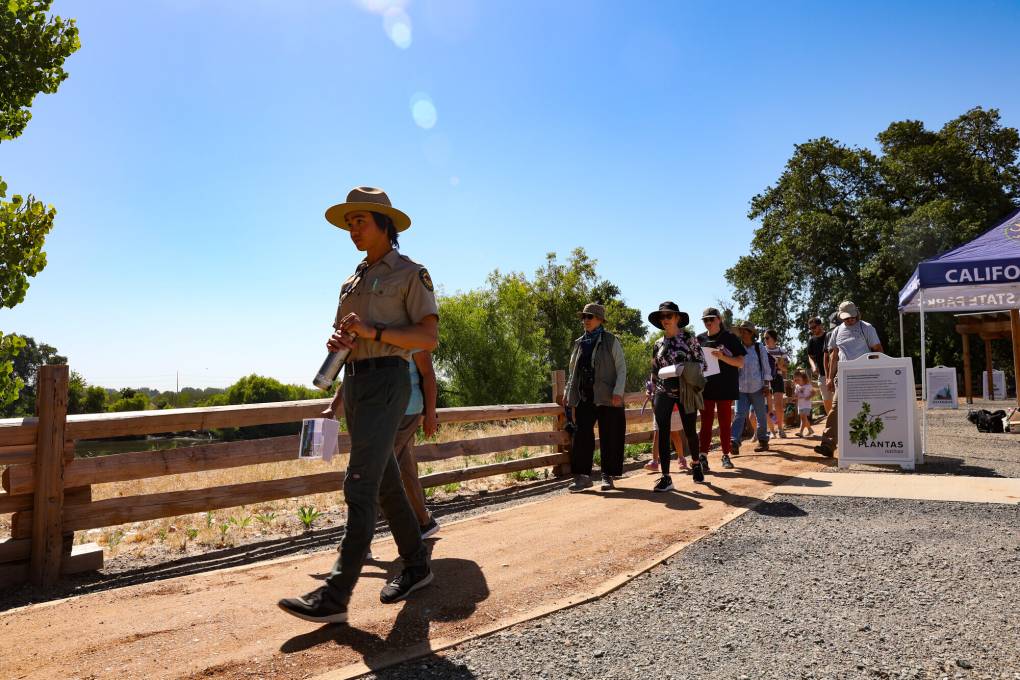
"caption": "Matt McDonnal, a California State Parks employee, leads a walking tour at Dos Rios, one of California’s newest state parks in Modesto. Dos Rios is California’s 281st state park and the first park to open in over a decade.",
"credit": "Gina Castro/KQED",
"altTag": "A person in a hat walks ahead of several others with a background of blue sky.",
"description": null,
"imgSizes": {
"medium": {
"file": "https://cdn.kqed.org/wp-content/uploads/sites/10/2024/12/20240612_DosRios_GC-11_qed-800x533.jpg",
"width": 800,
"height": 533,
"mimeType": "image/jpeg"
},
"large": {
"file": "https://cdn.kqed.org/wp-content/uploads/sites/10/2024/12/20240612_DosRios_GC-11_qed-1020x680.jpg",
"width": 1020,
"height": 680,
"mimeType": "image/jpeg"
},
"thumbnail": {
"file": "https://cdn.kqed.org/wp-content/uploads/sites/10/2024/12/20240612_DosRios_GC-11_qed-160x107.jpg",
"width": 160,
"height": 107,
"mimeType": "image/jpeg"
},
"1536x1536": {
"file": "https://cdn.kqed.org/wp-content/uploads/sites/10/2024/12/20240612_DosRios_GC-11_qed-1536x1024.jpg",
"width": 1536,
"height": 1024,
"mimeType": "image/jpeg"
},
"post-thumbnail": {
"file": "https://cdn.kqed.org/wp-content/uploads/sites/10/2024/12/20240612_DosRios_GC-11_qed-672x372.jpg",
"width": 672,
"height": 372,
"mimeType": "image/jpeg"
},
"twentyfourteen-full-width": {
"file": "https://cdn.kqed.org/wp-content/uploads/sites/10/2024/12/20240612_DosRios_GC-11_qed-1038x576.jpg",
"width": 1038,
"height": 576,
"mimeType": "image/jpeg"
},
"full-width": {
"file": "https://cdn.kqed.org/wp-content/uploads/sites/10/2024/12/20240612_DosRios_GC-11_qed-1920x1280.jpg",
"width": 1920,
"height": 1280,
"mimeType": "image/jpeg"
},
"kqedFullSize": {
"file": "https://cdn.kqed.org/wp-content/uploads/sites/10/2024/12/20240612_DosRios_GC-11_qed.jpg",
"width": 2000,
"height": 1333
}
},
"isLoading": false,
"fetchFailed": false
},
"news_12019659": {
"type": "attachments",
"id": "news_12019659",
"meta": {
"index": "attachments_1716263798",
"site": "news",
"id": "12019659",
"found": true
},
"title": "Chino Valley School Board Votes On Student Transgender Policy",
"publishDate": 1734986069,
"status": "inherit",
"parent": 12019618,
"modified": 1735000779,
"caption": "A person holds a sign in opposition to a policy that the Chino Valley school board is meeting to vote on which would require school staff to 'out' students to their parents if they ask to be identified by a gender that is not listed on their birth certificate on July 20, 2023 in Chino, San Bernardino County.",
"credit": "David McNew/Getty Images",
"altTag": null,
"description": null,
"imgSizes": {
"medium": {
"file": "https://cdn.kqed.org/wp-content/uploads/sites/10/2024/12/GettyImages-1545719795-800x534.jpg",
"width": 800,
"height": 534,
"mimeType": "image/jpeg"
},
"large": {
"file": "https://cdn.kqed.org/wp-content/uploads/sites/10/2024/12/GettyImages-1545719795-1020x680.jpg",
"width": 1020,
"height": 680,
"mimeType": "image/jpeg"
},
"thumbnail": {
"file": "https://cdn.kqed.org/wp-content/uploads/sites/10/2024/12/GettyImages-1545719795-160x107.jpg",
"width": 160,
"height": 107,
"mimeType": "image/jpeg"
},
"1536x1536": {
"file": "https://cdn.kqed.org/wp-content/uploads/sites/10/2024/12/GettyImages-1545719795-1536x1025.jpg",
"width": 1536,
"height": 1025,
"mimeType": "image/jpeg"
},
"2048x2048": {
"file": "https://cdn.kqed.org/wp-content/uploads/sites/10/2024/12/GettyImages-1545719795-2048x1366.jpg",
"width": 2048,
"height": 1366,
"mimeType": "image/jpeg"
},
"post-thumbnail": {
"file": "https://cdn.kqed.org/wp-content/uploads/sites/10/2024/12/GettyImages-1545719795-672x372.jpg",
"width": 672,
"height": 372,
"mimeType": "image/jpeg"
},
"twentyfourteen-full-width": {
"file": "https://cdn.kqed.org/wp-content/uploads/sites/10/2024/12/GettyImages-1545719795-1038x576.jpg",
"width": 1038,
"height": 576,
"mimeType": "image/jpeg"
},
"full-width": {
"file": "https://cdn.kqed.org/wp-content/uploads/sites/10/2024/12/GettyImages-1545719795-1920x1281.jpg",
"width": 1920,
"height": 1281,
"mimeType": "image/jpeg"
},
"kqedFullSize": {
"file": "https://cdn.kqed.org/wp-content/uploads/sites/10/2024/12/GettyImages-1545719795-scaled.jpg",
"width": 2560,
"height": 1708
}
},
"isLoading": false,
"fetchFailed": false
},
"news_12019077": {
"type": "attachments",
"id": "news_12019077",
"meta": {
"index": "attachments_1716263798",
"site": "news",
"id": "12019077",
"found": true
},
"title": "120324_CivicsClass_FM_CM_1",
"publishDate": 1734640788,
"status": "inherit",
"parent": 12019076,
"modified": 1734745859,
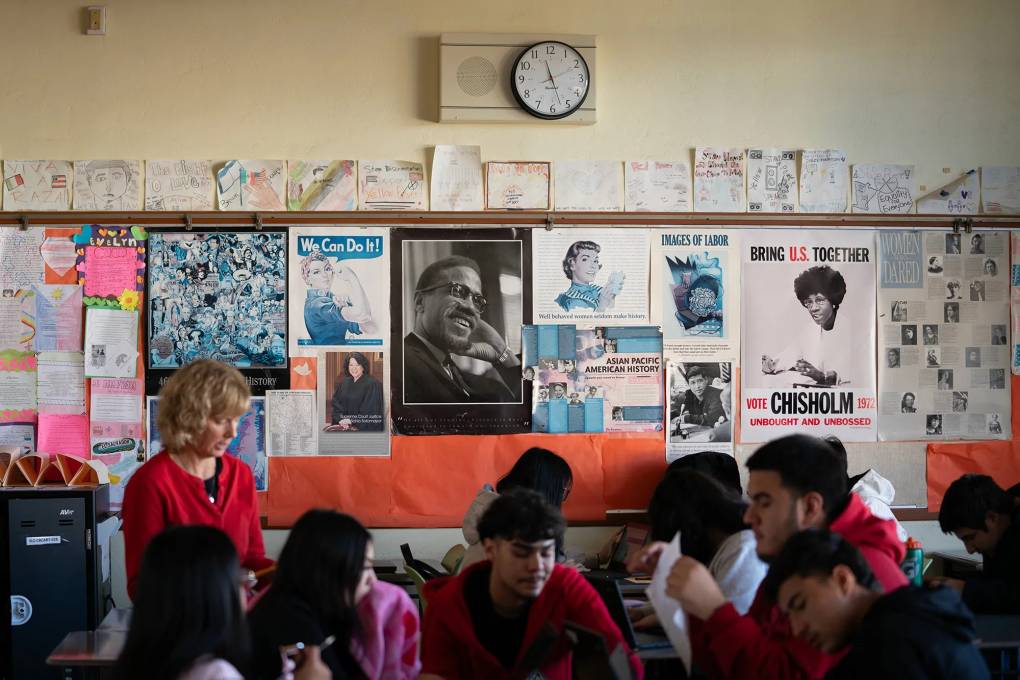
"caption": "Posters on the wall in the classroom of government and economics teacher, Judy Smith, at San Lorenzo High School in San Lorenzo on Dec. 3, 2024. All California high school students are required to take civics, but how it is taught varies widely throughout the state. ",
"credit": "Florence Middleton for CalMatters",
"altTag": null,
"description": "Posters on the wall in the classroom of government and economics teacher, Judy Smith, at San Lorenzo High School in San Lorenzo on Dec. 3, 2024. All California high school students are required to take civics, but how it is taught varies widely throughout the state. ",
"imgSizes": {
"medium": {
"file": "https://cdn.kqed.org/wp-content/uploads/sites/10/2024/12/120324_CivicsClass_FM_CM_1-800x533.jpg",
"width": 800,
"height": 533,
"mimeType": "image/jpeg"
},
"large": {
"file": "https://cdn.kqed.org/wp-content/uploads/sites/10/2024/12/120324_CivicsClass_FM_CM_1-1020x680.jpg",
"width": 1020,
"height": 680,
"mimeType": "image/jpeg"
},
"thumbnail": {
"file": "https://cdn.kqed.org/wp-content/uploads/sites/10/2024/12/120324_CivicsClass_FM_CM_1-160x107.jpg",
"width": 160,
"height": 107,
"mimeType": "image/jpeg"
},
"1536x1536": {
"file": "https://cdn.kqed.org/wp-content/uploads/sites/10/2024/12/120324_CivicsClass_FM_CM_1-1536x1024.jpg",
"width": 1536,
"height": 1024,
"mimeType": "image/jpeg"
},
"post-thumbnail": {
"file": "https://cdn.kqed.org/wp-content/uploads/sites/10/2024/12/120324_CivicsClass_FM_CM_1-672x372.jpg",
"width": 672,
"height": 372,
"mimeType": "image/jpeg"
},
"twentyfourteen-full-width": {
"file": "https://cdn.kqed.org/wp-content/uploads/sites/10/2024/12/120324_CivicsClass_FM_CM_1-1038x576.jpg",
"width": 1038,
"height": 576,
"mimeType": "image/jpeg"
},
"full-width": {
"file": "https://cdn.kqed.org/wp-content/uploads/sites/10/2024/12/120324_CivicsClass_FM_CM_1-1920x1280.jpg",
"width": 1920,
"height": 1280,
"mimeType": "image/jpeg"
},
"kqedFullSize": {
"file": "https://cdn.kqed.org/wp-content/uploads/sites/10/2024/12/120324_CivicsClass_FM_CM_1.jpg",
"width": 2000,
"height": 1333
}
},
"isLoading": false,
"fetchFailed": false
},
"news_12019461": {
"type": "attachments",
"id": "news_12019461",
"meta": {
"index": "attachments_1716263798",
"site": "news",
"id": "12019461",
"found": true
},
"title": "TOPSHOT-US-PALESTINIAN-ISRAEL-CONFLICT-EDUCATION-DEMONSTRATION",
"publishDate": 1734738715,
"status": "inherit",
"parent": 12019455,
"modified": 1734738792,
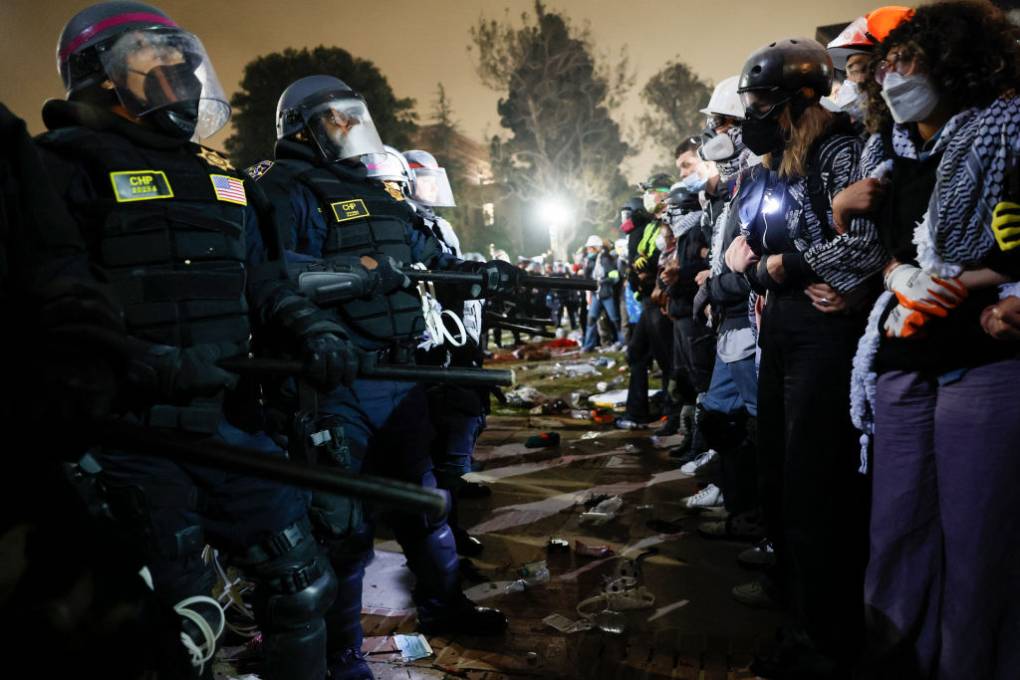
"caption": "Police face off with pro-Palestinian students after destroying part of the encampment barricade on the campus of the University of California, Los Angeles (UCLA) in Los Angeles, early on May 2, 2024. ",
"credit": "Etienne Laurent/AFP via Getty Images",
"altTag": null,
"description": null,
"imgSizes": {
"medium": {
"file": "https://cdn.kqed.org/wp-content/uploads/sites/10/2024/12/GettyImages-2150533164-800x534.jpg",
"width": 800,
"height": 534,
"mimeType": "image/jpeg"
},
"large": {
"file": "https://cdn.kqed.org/wp-content/uploads/sites/10/2024/12/GettyImages-2150533164-1020x680.jpg",
"width": 1020,
"height": 680,
"mimeType": "image/jpeg"
},
"thumbnail": {
"file": "https://cdn.kqed.org/wp-content/uploads/sites/10/2024/12/GettyImages-2150533164-160x107.jpg",
"width": 160,
"height": 107,
"mimeType": "image/jpeg"
},
"post-thumbnail": {
"file": "https://cdn.kqed.org/wp-content/uploads/sites/10/2024/12/GettyImages-2150533164-672x372.jpg",
"width": 672,
"height": 372,
"mimeType": "image/jpeg"
},
"twentyfourteen-full-width": {
"file": "https://cdn.kqed.org/wp-content/uploads/sites/10/2024/12/GettyImages-2150533164-1024x576.jpg",
"width": 1024,
"height": 576,
"mimeType": "image/jpeg"
},
"kqedFullSize": {
"file": "https://cdn.kqed.org/wp-content/uploads/sites/10/2024/12/GettyImages-2150533164.jpg",
"width": 1024,
"height": 683
}
},
"isLoading": false,
"fetchFailed": false
},
"news_12018815": {
"type": "attachments",
"id": "news_12018815",
"meta": {
"index": "attachments_1716263798",
"site": "news",
"id": "12018815",
"found": true
},
"title": "01_083023_Madera-Community-Colleges_LV_CM_17",
"publishDate": 1734547916,
"status": "inherit",
"parent": 12018809,
"modified": 1734547954,
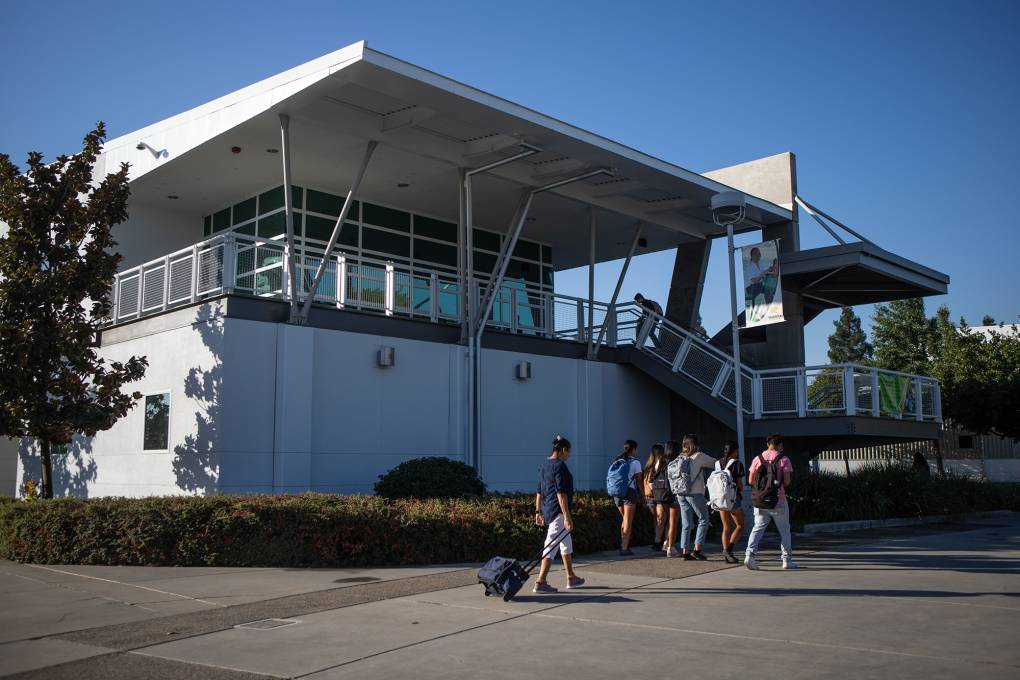
"caption": "Students walking to their classes at the Academic Village building at the Madera Community College campus on Aug. 28, 2023. ",
"credit": "Larry Valenzuela, CalMatters/CatchLight Local",
"altTag": "Several students walk in front of a university building.",
"description": null,
"imgSizes": {
"medium": {
"file": "https://cdn.kqed.org/wp-content/uploads/sites/10/2024/12/01_083023_Madera-Community-Colleges_LV_CM_17-800x533.jpg",
"width": 800,
"height": 533,
"mimeType": "image/jpeg"
},
"large": {
"file": "https://cdn.kqed.org/wp-content/uploads/sites/10/2024/12/01_083023_Madera-Community-Colleges_LV_CM_17-1020x680.jpg",
"width": 1020,
"height": 680,
"mimeType": "image/jpeg"
},
"thumbnail": {
"file": "https://cdn.kqed.org/wp-content/uploads/sites/10/2024/12/01_083023_Madera-Community-Colleges_LV_CM_17-160x107.jpg",
"width": 160,
"height": 107,
"mimeType": "image/jpeg"
},
"1536x1536": {
"file": "https://cdn.kqed.org/wp-content/uploads/sites/10/2024/12/01_083023_Madera-Community-Colleges_LV_CM_17-1536x1024.jpg",
"width": 1536,
"height": 1024,
"mimeType": "image/jpeg"
},
"post-thumbnail": {
"file": "https://cdn.kqed.org/wp-content/uploads/sites/10/2024/12/01_083023_Madera-Community-Colleges_LV_CM_17-672x372.jpg",
"width": 672,
"height": 372,
"mimeType": "image/jpeg"
},
"twentyfourteen-full-width": {
"file": "https://cdn.kqed.org/wp-content/uploads/sites/10/2024/12/01_083023_Madera-Community-Colleges_LV_CM_17-1038x576.jpg",
"width": 1038,
"height": 576,
"mimeType": "image/jpeg"
},
"full-width": {
"file": "https://cdn.kqed.org/wp-content/uploads/sites/10/2024/12/01_083023_Madera-Community-Colleges_LV_CM_17-1920x1280.jpg",
"width": 1920,
"height": 1280,
"mimeType": "image/jpeg"
},
"kqedFullSize": {
"file": "https://cdn.kqed.org/wp-content/uploads/sites/10/2024/12/01_083023_Madera-Community-Colleges_LV_CM_17.jpg",
"width": 2000,
"height": 1333
}
},
"isLoading": false,
"fetchFailed": false
},
"news_12018686": {
"type": "attachments",
"id": "news_12018686",
"meta": {
"index": "attachments_1716263798",
"site": "news",
"id": "12018686",
"found": true
},
"title": "230601-MindShift-33-BL_qed",
"publishDate": 1734473312,
"status": "inherit",
"parent": 12018681,
"modified": 1734473354,
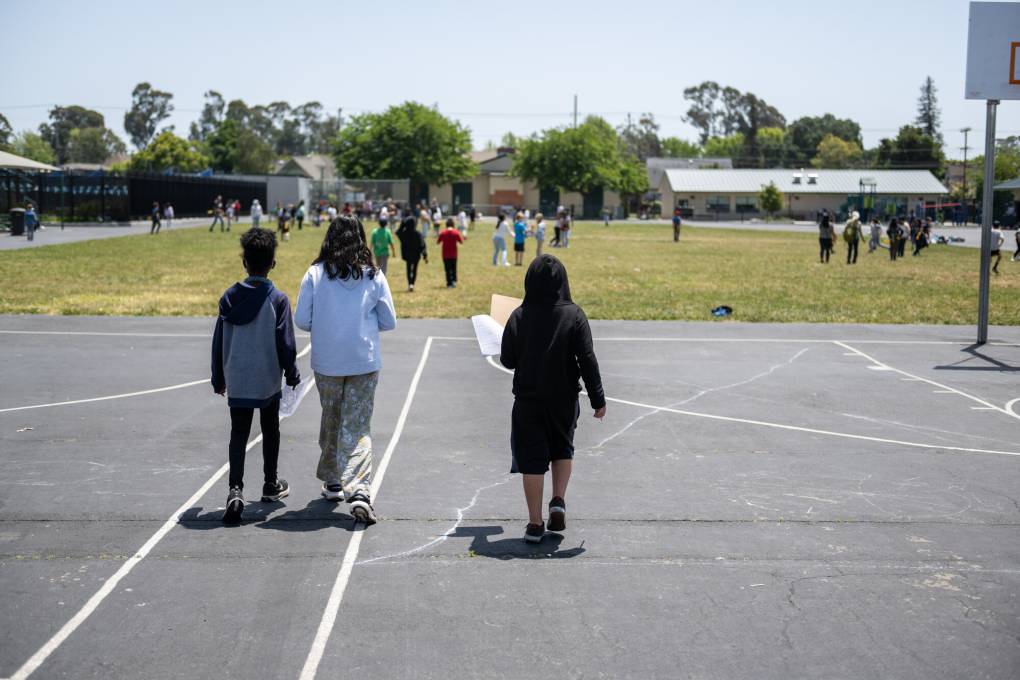
"caption": "Students in the schoolyard at Roosevelt Elementary School in San Leandro on June 1, 2023. ",
"credit": "Beth LaBerge/KQED",
"altTag": null,
"description": null,
"imgSizes": {
"medium": {
"file": "https://cdn.kqed.org/wp-content/uploads/sites/10/2024/12/230601-MindShift-33-BL_qed-800x533.jpg",
"width": 800,
"height": 533,
"mimeType": "image/jpeg"
},
"large": {
"file": "https://cdn.kqed.org/wp-content/uploads/sites/10/2024/12/230601-MindShift-33-BL_qed-1020x680.jpg",
"width": 1020,
"height": 680,
"mimeType": "image/jpeg"
},
"thumbnail": {
"file": "https://cdn.kqed.org/wp-content/uploads/sites/10/2024/12/230601-MindShift-33-BL_qed-160x107.jpg",
"width": 160,
"height": 107,
"mimeType": "image/jpeg"
},
"1536x1536": {
"file": "https://cdn.kqed.org/wp-content/uploads/sites/10/2024/12/230601-MindShift-33-BL_qed-1536x1024.jpg",
"width": 1536,
"height": 1024,
"mimeType": "image/jpeg"
},
"post-thumbnail": {
"file": "https://cdn.kqed.org/wp-content/uploads/sites/10/2024/12/230601-MindShift-33-BL_qed-672x372.jpg",
"width": 672,
"height": 372,
"mimeType": "image/jpeg"
},
"twentyfourteen-full-width": {
"file": "https://cdn.kqed.org/wp-content/uploads/sites/10/2024/12/230601-MindShift-33-BL_qed-1038x576.jpg",
"width": 1038,
"height": 576,
"mimeType": "image/jpeg"
},
"full-width": {
"file": "https://cdn.kqed.org/wp-content/uploads/sites/10/2024/12/230601-MindShift-33-BL_qed-1920x1280.jpg",
"width": 1920,
"height": 1280,
"mimeType": "image/jpeg"
},
"kqedFullSize": {
"file": "https://cdn.kqed.org/wp-content/uploads/sites/10/2024/12/230601-MindShift-33-BL_qed.jpg",
"width": 2000,
"height": 1333
}
},
"isLoading": false,
"fetchFailed": false
},
"news_12018753": {
"type": "attachments",
"id": "news_12018753",
"meta": {
"index": "attachments_1716263798",
"site": "news",
"id": "12018753",
"found": true
},
"title": "when-fafsa-due-2025-2026",
"publishDate": 1734485406,
"status": "inherit",
"parent": 12018723,
"modified": 1734548697,
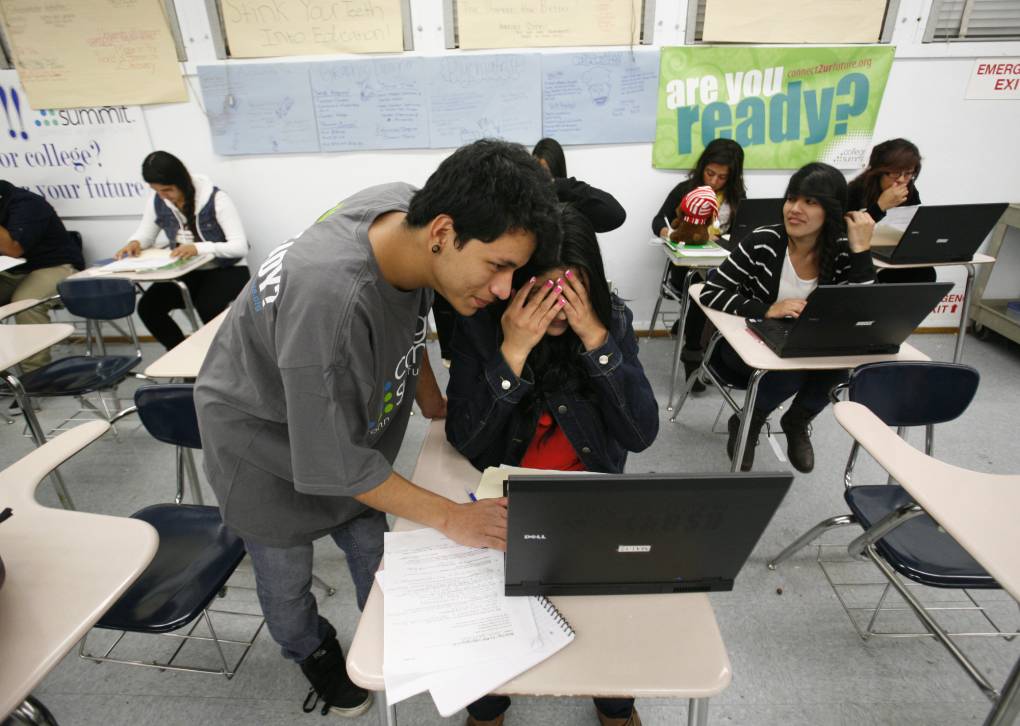
"caption": "Juan Santacruz, 17, helps Ariana Alvarez, 17, get into college application website as they and other students in Laurie Kornblau's College Summit class at Sylmar High School helped each other write their personal history essays and college applications on Nov. 16, 2012. ",
"credit": "Bob Chamberlin/Los Angeles Times via Getty Images",
"altTag": "People look at a computer and appear frustrated.",
"description": null,
"imgSizes": {
"medium": {
"file": "https://cdn.kqed.org/wp-content/uploads/sites/10/2024/12/GettyImages-564011653-800x569.jpg",
"width": 800,
"height": 569,
"mimeType": "image/jpeg"
},
"large": {
"file": "https://cdn.kqed.org/wp-content/uploads/sites/10/2024/12/GettyImages-564011653-1020x726.jpg",
"width": 1020,
"height": 726,
"mimeType": "image/jpeg"
},
"thumbnail": {
"file": "https://cdn.kqed.org/wp-content/uploads/sites/10/2024/12/GettyImages-564011653-160x114.jpg",
"width": 160,
"height": 114,
"mimeType": "image/jpeg"
},
"1536x1536": {
"file": "https://cdn.kqed.org/wp-content/uploads/sites/10/2024/12/GettyImages-564011653-1536x1093.jpg",
"width": 1536,
"height": 1093,
"mimeType": "image/jpeg"
},
"post-thumbnail": {
"file": "https://cdn.kqed.org/wp-content/uploads/sites/10/2024/12/GettyImages-564011653-672x372.jpg",
"width": 672,
"height": 372,
"mimeType": "image/jpeg"
},
"twentyfourteen-full-width": {
"file": "https://cdn.kqed.org/wp-content/uploads/sites/10/2024/12/GettyImages-564011653-1038x576.jpg",
"width": 1038,
"height": 576,
"mimeType": "image/jpeg"
},
"full-width": {
"file": "https://cdn.kqed.org/wp-content/uploads/sites/10/2024/12/GettyImages-564011653-1920x1366.jpg",
"width": 1920,
"height": 1366,
"mimeType": "image/jpeg"
},
"kqedFullSize": {
"file": "https://cdn.kqed.org/wp-content/uploads/sites/10/2024/12/GettyImages-564011653.jpg",
"width": 2000,
"height": 1423
}
},
"isLoading": false,
"fetchFailed": false
},
"news_12017836": {
"type": "attachments",
"id": "news_12017836",
"meta": {
"index": "attachments_1716263798",
"site": "news",
"id": "12017836",
"found": true
},
"title": "241211-SFStateFacultyLosingJobs-13-BL",
"publishDate": 1733964564,
"status": "inherit",
"parent": 0,
"modified": 1733964721,
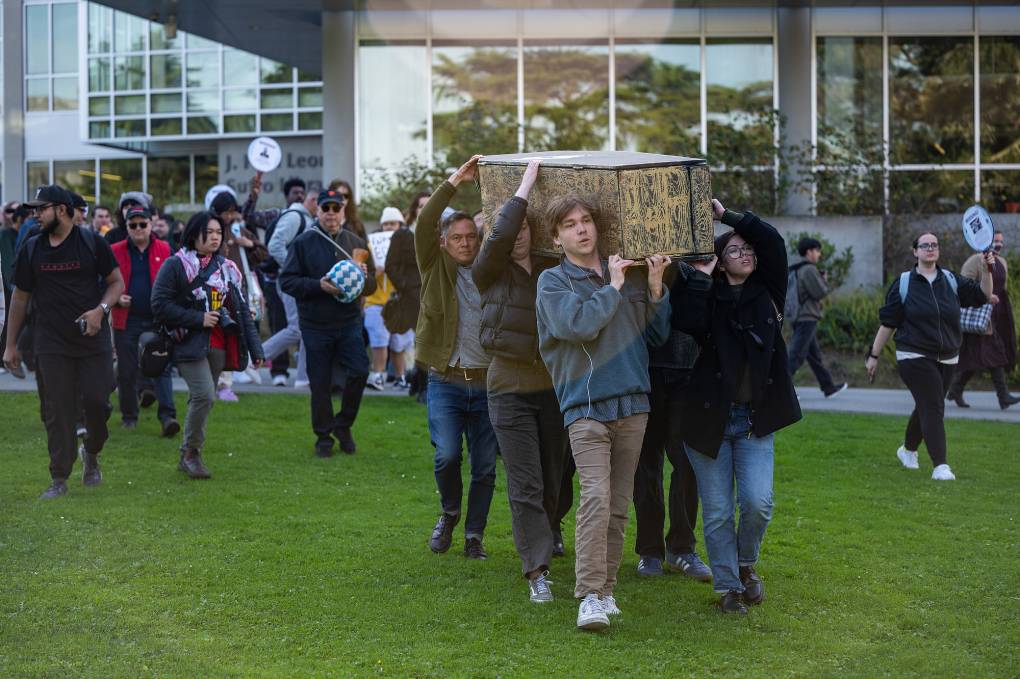
"caption": "Students and staff carry a coffin from the theater department during a protest against potential staff layoffs and cuts to classes at San Francisco State University in San Francisco on Dec. 11, 2024.",
"credit": "Beth LaBerge/KQED",
"altTag": null,
"description": null,
"imgSizes": {
"medium": {
"file": "https://cdn.kqed.org/wp-content/uploads/sites/10/2024/12/241211-SFStateFacultyLosingJobs-13-BL-800x533.jpg",
"width": 800,
"height": 533,
"mimeType": "image/jpeg"
},
"large": {
"file": "https://cdn.kqed.org/wp-content/uploads/sites/10/2024/12/241211-SFStateFacultyLosingJobs-13-BL-1020x679.jpg",
"width": 1020,
"height": 679,
"mimeType": "image/jpeg"
},
"thumbnail": {
"file": "https://cdn.kqed.org/wp-content/uploads/sites/10/2024/12/241211-SFStateFacultyLosingJobs-13-BL-160x107.jpg",
"width": 160,
"height": 107,
"mimeType": "image/jpeg"
},
"1536x1536": {
"file": "https://cdn.kqed.org/wp-content/uploads/sites/10/2024/12/241211-SFStateFacultyLosingJobs-13-BL-1536x1023.jpg",
"width": 1536,
"height": 1023,
"mimeType": "image/jpeg"
},
"post-thumbnail": {
"file": "https://cdn.kqed.org/wp-content/uploads/sites/10/2024/12/241211-SFStateFacultyLosingJobs-13-BL-672x372.jpg",
"width": 672,
"height": 372,
"mimeType": "image/jpeg"
},
"twentyfourteen-full-width": {
"file": "https://cdn.kqed.org/wp-content/uploads/sites/10/2024/12/241211-SFStateFacultyLosingJobs-13-BL-1038x576.jpg",
"width": 1038,
"height": 576,
"mimeType": "image/jpeg"
},
"full-width": {
"file": "https://cdn.kqed.org/wp-content/uploads/sites/10/2024/12/241211-SFStateFacultyLosingJobs-13-BL-1920x1279.jpg",
"width": 1920,
"height": 1279,
"mimeType": "image/jpeg"
},
"kqedFullSize": {
"file": "https://cdn.kqed.org/wp-content/uploads/sites/10/2024/12/241211-SFStateFacultyLosingJobs-13-BL.jpg",
"width": 2000,
"height": 1332
}
},
"isLoading": false,
"fetchFailed": false
},
"news_12018446": {
"type": "attachments",
"id": "news_12018446",
"meta": {
"index": "attachments_1716263798",
"site": "news",
"id": "12018446",
"found": true
},
"title": "Math Concept",
"publishDate": 1734298175,
"status": "inherit",
"parent": 12018441,
"modified": 1734298859,
"caption": "Calculus is often a required course for many STEM majors.",
"credit": "Christian Chan via iStock/Getty Images Plus",
"altTag": "A closeup shot of complex math formulas on paper with a hand holding a ball pen.",
"description": null,
"imgSizes": {
"medium": {
"file": "https://cdn.kqed.org/wp-content/uploads/sites/10/2024/12/GettyImages-657678850-800x533.jpg",
"width": 800,
"height": 533,
"mimeType": "image/jpeg"
},
"large": {
"file": "https://cdn.kqed.org/wp-content/uploads/sites/10/2024/12/GettyImages-657678850-1020x680.jpg",
"width": 1020,
"height": 680,
"mimeType": "image/jpeg"
},
"thumbnail": {
"file": "https://cdn.kqed.org/wp-content/uploads/sites/10/2024/12/GettyImages-657678850-160x107.jpg",
"width": 160,
"height": 107,
"mimeType": "image/jpeg"
},
"1536x1536": {
"file": "https://cdn.kqed.org/wp-content/uploads/sites/10/2024/12/GettyImages-657678850-1536x1024.jpg",
"width": 1536,
"height": 1024,
"mimeType": "image/jpeg"
},
"2048x2048": {
"file": "https://cdn.kqed.org/wp-content/uploads/sites/10/2024/12/GettyImages-657678850-2048x1365.jpg",
"width": 2048,
"height": 1365,
"mimeType": "image/jpeg"
},
"post-thumbnail": {
"file": "https://cdn.kqed.org/wp-content/uploads/sites/10/2024/12/GettyImages-657678850-672x372.jpg",
"width": 672,
"height": 372,
"mimeType": "image/jpeg"
},
"twentyfourteen-full-width": {
"file": "https://cdn.kqed.org/wp-content/uploads/sites/10/2024/12/GettyImages-657678850-1038x576.jpg",
"width": 1038,
"height": 576,
"mimeType": "image/jpeg"
},
"full-width": {
"file": "https://cdn.kqed.org/wp-content/uploads/sites/10/2024/12/GettyImages-657678850-1920x1280.jpg",
"width": 1920,
"height": 1280,
"mimeType": "image/jpeg"
},
"kqedFullSize": {
"file": "https://cdn.kqed.org/wp-content/uploads/sites/10/2024/12/GettyImages-657678850.jpg",
"width": 2121,
"height": 1414
}
},
"isLoading": false,
"fetchFailed": false
},
"news_11989124": {
"type": "attachments",
"id": "news_11989124",
"meta": {
"index": "attachments_1716263798",
"site": "news",
"id": "11989124",
"found": true
},
"title": "240605-STANFORD-JG-10-KQED",
"publishDate": 1717611523,
"status": "inherit",
"parent": 12058280,
"modified": 1759358920,
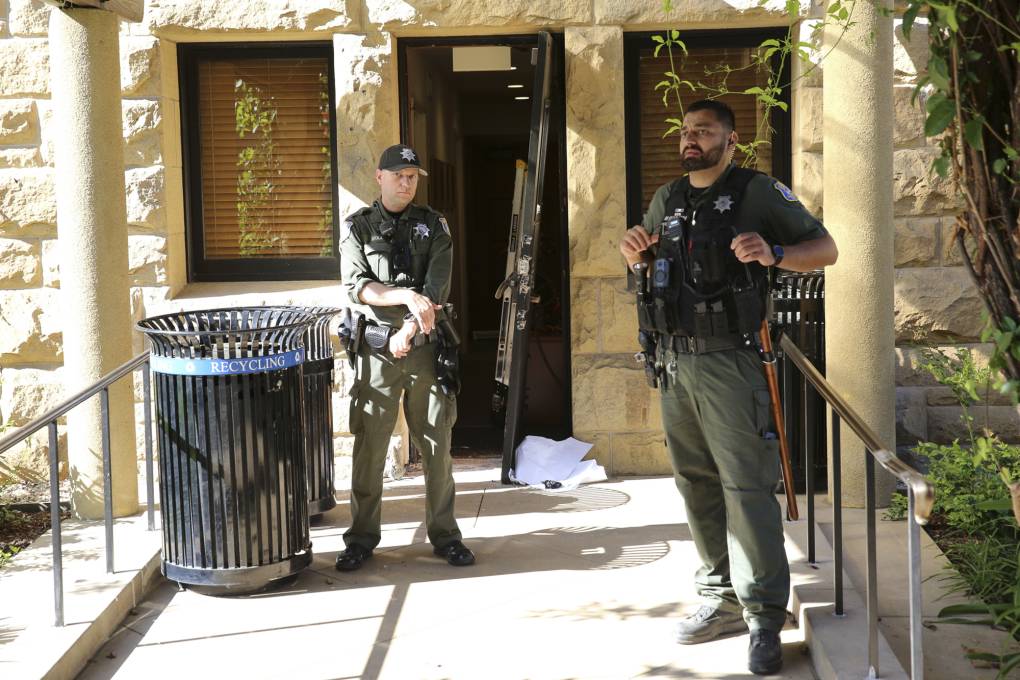
"caption": "Santa Clara County Sheriff's Office Deputies stand guard outside Building 10 at Stanford University, where pro-Palestinian protesters broke into the university president's office and occupied it before being arrested on June 5, 2024.",
"credit": "Joseph Geha/KQED",
"altTag": null,
"description": null,
"imgSizes": {
"medium": {
"file": "https://cdn.kqed.org/wp-content/uploads/sites/10/2024/06/240605-STANFORD-JG-10-KQED-800x533.jpg",
"width": 800,
"height": 533,
"mimeType": "image/jpeg"
},
"large": {
"file": "https://cdn.kqed.org/wp-content/uploads/sites/10/2024/06/240605-STANFORD-JG-10-KQED-1020x680.jpg",
"width": 1020,
"height": 680,
"mimeType": "image/jpeg"
},
"thumbnail": {
"file": "https://cdn.kqed.org/wp-content/uploads/sites/10/2024/06/240605-STANFORD-JG-10-KQED-160x107.jpg",
"width": 160,
"height": 107,
"mimeType": "image/jpeg"
},
"1536x1536": {
"file": "https://cdn.kqed.org/wp-content/uploads/sites/10/2024/06/240605-STANFORD-JG-10-KQED-1536x1024.jpg",
"width": 1536,
"height": 1024,
"mimeType": "image/jpeg"
},
"post-thumbnail": {
"file": "https://cdn.kqed.org/wp-content/uploads/sites/10/2024/06/240605-STANFORD-JG-10-KQED-672x372.jpg",
"width": 672,
"height": 372,
"mimeType": "image/jpeg"
},
"twentyfourteen-full-width": {
"file": "https://cdn.kqed.org/wp-content/uploads/sites/10/2024/06/240605-STANFORD-JG-10-KQED-1038x576.jpg",
"width": 1038,
"height": 576,
"mimeType": "image/jpeg"
},
"full-width": {
"file": "https://cdn.kqed.org/wp-content/uploads/sites/10/2024/06/240605-STANFORD-JG-10-KQED-1920x1280.jpg",
"width": 1920,
"height": 1280,
"mimeType": "image/jpeg"
},
"kqedFullSize": {
"file": "https://cdn.kqed.org/wp-content/uploads/sites/10/2024/06/240605-STANFORD-JG-10-KQED.jpg",
"width": 2000,
"height": 1333
}
},
"isLoading": false,
"fetchFailed": false
},
"news_12018069": {
"type": "attachments",
"id": "news_12018069",
"meta": {
"index": "attachments_1716263798",
"site": "news",
"id": "12018069",
"found": true
},
"title": "20241212-SFSUInvestmentVote-JY-021",
"publishDate": 1734063244,
"status": "inherit",
"parent": 0,
"modified": 1734110016,
"caption": "Students at San Francisco State University celebrate after the SF State Foundation Board voted to divest from weapons manufacturing companies at the Seven Hills Conference Center on campus in San Francisco on Thursday, Dec. 12, 2024.",
"credit": "Juliana Yamada/KQED",
"altTag": null,
"description": null,
"imgSizes": {
"medium": {
"file": "https://cdn.kqed.org/wp-content/uploads/sites/10/2024/12/20241212-SFSUInvestmentVote-JY-021-800x533.jpg",
"width": 800,
"height": 533,
"mimeType": "image/jpeg"
},
"large": {
"file": "https://cdn.kqed.org/wp-content/uploads/sites/10/2024/12/20241212-SFSUInvestmentVote-JY-021-1020x679.jpg",
"width": 1020,
"height": 679,
"mimeType": "image/jpeg"
},
"thumbnail": {
"file": "https://cdn.kqed.org/wp-content/uploads/sites/10/2024/12/20241212-SFSUInvestmentVote-JY-021-160x107.jpg",
"width": 160,
"height": 107,
"mimeType": "image/jpeg"
},
"1536x1536": {
"file": "https://cdn.kqed.org/wp-content/uploads/sites/10/2024/12/20241212-SFSUInvestmentVote-JY-021-1536x1023.jpg",
"width": 1536,
"height": 1023,
"mimeType": "image/jpeg"
},
"post-thumbnail": {
"file": "https://cdn.kqed.org/wp-content/uploads/sites/10/2024/12/20241212-SFSUInvestmentVote-JY-021-672x372.jpg",
"width": 672,
"height": 372,
"mimeType": "image/jpeg"
},
"twentyfourteen-full-width": {
"file": "https://cdn.kqed.org/wp-content/uploads/sites/10/2024/12/20241212-SFSUInvestmentVote-JY-021-1038x576.jpg",
"width": 1038,
"height": 576,
"mimeType": "image/jpeg"
},
"full-width": {
"file": "https://cdn.kqed.org/wp-content/uploads/sites/10/2024/12/20241212-SFSUInvestmentVote-JY-021-1920x1279.jpg",
"width": 1920,
"height": 1279,
"mimeType": "image/jpeg"
},
"kqedFullSize": {
"file": "https://cdn.kqed.org/wp-content/uploads/sites/10/2024/12/20241212-SFSUInvestmentVote-JY-021.jpg",
"width": 2000,
"height": 1332
}
},
"isLoading": false,
"fetchFailed": false
},
"news_12018030": {
"type": "attachments",
"id": "news_12018030",
"meta": {
"index": "attachments_1716263798",
"site": "news",
"id": "12018030",
"found": true
},
"title": "High school girl listening",
"publishDate": 1734049328,
"status": "inherit",
"parent": 12017969,
"modified": 1734049376,
"caption": "A high school student listens to a presentation by her classmate.",
"credit": "Allison Shelley/American Education",
"altTag": null,
"description": null,
"imgSizes": {
"medium": {
"file": "https://cdn.kqed.org/wp-content/uploads/sites/10/2024/12/AMERICANED_SKYLINE_008-2048x1365-1-800x533.jpg",
"width": 800,
"height": 533,
"mimeType": "image/jpeg"
},
"large": {
"file": "https://cdn.kqed.org/wp-content/uploads/sites/10/2024/12/AMERICANED_SKYLINE_008-2048x1365-1-1020x680.jpg",
"width": 1020,
"height": 680,
"mimeType": "image/jpeg"
},
"thumbnail": {
"file": "https://cdn.kqed.org/wp-content/uploads/sites/10/2024/12/AMERICANED_SKYLINE_008-2048x1365-1-160x107.jpg",
"width": 160,
"height": 107,
"mimeType": "image/jpeg"
},
"1536x1536": {
"file": "https://cdn.kqed.org/wp-content/uploads/sites/10/2024/12/AMERICANED_SKYLINE_008-2048x1365-1-1536x1024.jpg",
"width": 1536,
"height": 1024,
"mimeType": "image/jpeg"
},
"post-thumbnail": {
"file": "https://cdn.kqed.org/wp-content/uploads/sites/10/2024/12/AMERICANED_SKYLINE_008-2048x1365-1-672x372.jpg",
"width": 672,
"height": 372,
"mimeType": "image/jpeg"
},
"twentyfourteen-full-width": {
"file": "https://cdn.kqed.org/wp-content/uploads/sites/10/2024/12/AMERICANED_SKYLINE_008-2048x1365-1-1038x576.jpg",
"width": 1038,
"height": 576,
"mimeType": "image/jpeg"
},
"full-width": {
"file": "https://cdn.kqed.org/wp-content/uploads/sites/10/2024/12/AMERICANED_SKYLINE_008-2048x1365-1-1920x1280.jpg",
"width": 1920,
"height": 1280,
"mimeType": "image/jpeg"
},
"kqedFullSize": {
"file": "https://cdn.kqed.org/wp-content/uploads/sites/10/2024/12/AMERICANED_SKYLINE_008-2048x1365-1.jpg",
"width": 2048,
"height": 1365
}
},
"isLoading": false,
"fetchFailed": false
}
},
"audioPlayerReducer": {
"postId": "stream_live",
"isPaused": true,
"isPlaying": false,
"pfsActive": false,
"pledgeModalIsOpen": true,
"playerDrawerIsOpen": false,
"liveAudioPlayStartedAt": 0,
"liveAudioPlayContext": ""
},
"authorsReducer": {
"byline_news_12019618": {
"type": "authors",
"id": "byline_news_12019618",
"meta": {
"override": true
},
"slug": "byline_news_12019618",
"name": "\u003ca href=\"https://calmatters.org/author/carolyn-jones/\">Carolyn Jones\u003c/a>, CalMatters",
"isLoading": false
},
"byline_news_12019076": {
"type": "authors",
"id": "byline_news_12019076",
"meta": {
"override": true
},
"slug": "byline_news_12019076",
"name": "\u003ca href=\"https://calmatters.org/author/carolyn-jones/\">Carolyn Jones\u003c/a>, CalMatters",
"isLoading": false
},
"byline_news_12019455": {
"type": "authors",
"id": "byline_news_12019455",
"meta": {
"override": true
},
"slug": "byline_news_12019455",
"name": "Jocelyn Gecker, The Associated Press",
"isLoading": false
},
"byline_news_12018809": {
"type": "authors",
"id": "byline_news_12018809",
"meta": {
"override": true
},
"slug": "byline_news_12018809",
"name": "Adam Echelman \u003cbr> CalMatters",
"isLoading": false
},
"byline_news_12018441": {
"type": "authors",
"id": "byline_news_12018441",
"meta": {
"override": true
},
"slug": "byline_news_12018441",
"name": "\u003ca href=\"https://edsource.org/author/mburke\">Michael Burke\u003c/a> and \u003ca href=\"https://edsource.org/author/adipierro\">Amy DiPierro, \u003c/a>EdSource",
"isLoading": false
},
"byline_news_12017969": {
"type": "authors",
"id": "byline_news_12017969",
"meta": {
"override": true
},
"slug": "byline_news_12017969",
"name": "\u003ca href=\"https://edsource.org/author/jfensterwald\">John Fensterwald\u003c/a>, EdSource",
"isLoading": false
},
"fjhabvala": {
"type": "authors",
"id": "8659",
"meta": {
"index": "authors_1716337520",
"id": "8659",
"found": true
},
"name": "Farida Jhabvala Romero",
"firstName": "Farida",
"lastName": "Jhabvala Romero",
"slug": "fjhabvala",
"email": "fjhabvala@kqed.org",
"display_author_email": true,
"staff_mastheads": [
"news"
],
"title": "KQED Contributor",
"bio": "Farida Jhabvala Romero is a Labor Correspondent for KQED. She previously covered immigration. Farida was \u003ca href=\"https://www.ccnma.org/2022-most-influential-latina-journalists\">named\u003c/a> one of the 10 Most Influential Latina Journalists in California in 2022 by the California Chicano News Media Association. Her work has won awards from the Society of Professional Journalists (Northern California), as well as a national and regional Edward M. Murrow Award for the collaborative reporting projects “Dangerous Air” and “Graying California.” Before joining KQED, Farida worked as a producer at Radio Bilingüe, a national public radio network. Farida earned her master’s degree in journalism from Stanford University.",
"avatar": "https://secure.gravatar.com/avatar/f9f022d4e2609741874222a1e9d41f48fea74011aa7c615eef91d9a50c944ebe?s=600&d=blank&r=g",
"twitter": "FaridaJhabvala",
"bluesky": null,
"facebook": null,
"instagram": null,
"linkedin": "https://www.linkedin.com/in/faridajhabvala/",
"sites": [
{
"site": "news",
"roles": [
"editor"
]
},
{
"site": "stateofhealth",
"roles": [
"author"
]
},
{
"site": "liveblog",
"roles": [
"author"
]
}
],
"headData": {
"title": "Farida Jhabvala Romero | KQED",
"description": "KQED Contributor",
"ogImgSrc": "https://secure.gravatar.com/avatar/f9f022d4e2609741874222a1e9d41f48fea74011aa7c615eef91d9a50c944ebe?s=600&d=blank&r=g",
"twImgSrc": "https://secure.gravatar.com/avatar/f9f022d4e2609741874222a1e9d41f48fea74011aa7c615eef91d9a50c944ebe?s=600&d=blank&r=g"
},
"isLoading": false,
"link": "/author/fjhabvala"
},
"smohamad": {
"type": "authors",
"id": "11631",
"meta": {
"index": "authors_1716337520",
"id": "11631",
"found": true
},
"name": "Sarah Mohamad",
"firstName": "Sarah",
"lastName": "Mohamad",
"slug": "smohamad",
"email": "smohamad@KQED.org",
"display_author_email": true,
"staff_mastheads": [],
"title": "Engagement Producer and Reporter, KQED Science",
"bio": "Sarah Mohamad is an audience engagement reporter and producer for KQED Science. She reports on audience-focused science and environment stories and manages the team's social media, newsletter, and engagement efforts. Prior to this role, she played a key role as project manager for NSF's \u003ca href=\"https://www.kqed.org/crackingthecode\">\u003cem>Cracking the Code: Influencing Millennial Science Engagement\u003c/em> \u003c/a>audience research.",
"avatar": "https://secure.gravatar.com/avatar/e6224957cd82d015183756ddde1f928013a563d7ca2e4565f8c4de1ec64886c5?s=600&d=blank&r=g",
"twitter": "sarahkmohamad",
"bluesky": null,
"facebook": null,
"instagram": null,
"linkedin": null,
"sites": [
{
"site": "",
"roles": [
"editor"
]
},
{
"site": "arts",
"roles": [
"editor"
]
},
{
"site": "news",
"roles": [
"editor"
]
},
{
"site": "about",
"roles": [
"editor"
]
},
{
"site": "science",
"roles": [
"editor"
]
}
],
"headData": {
"title": "Sarah Mohamad | KQED",
"description": "Engagement Producer and Reporter, KQED Science",
"ogImgSrc": "https://secure.gravatar.com/avatar/e6224957cd82d015183756ddde1f928013a563d7ca2e4565f8c4de1ec64886c5?s=600&d=blank&r=g",
"twImgSrc": "https://secure.gravatar.com/avatar/e6224957cd82d015183756ddde1f928013a563d7ca2e4565f8c4de1ec64886c5?s=600&d=blank&r=g"
},
"isLoading": false,
"link": "/author/smohamad"
},
"ccabreralomeli": {
"type": "authors",
"id": "11708",
"meta": {
"index": "authors_1716337520",
"id": "11708",
"found": true
},
"name": "Carlos Cabrera-Lomelí",
"firstName": "Carlos",
"lastName": "Cabrera-Lomelí",
"slug": "ccabreralomeli",
"email": "ccabreralomeli@KQED.org",
"display_author_email": true,
"staff_mastheads": [
"news"
],
"title": "Community Reporter",
"bio": "Carlos Cabrera-Lomelí is a community reporter with KQED's digital engagement team. He also reports and co-produces for KQED's bilingual news hub KQED en Español. He grew up in San Francisco's Mission District and has previously worked with Univision, 48 Hills and REFORMA in Mexico City.",
"avatar": "https://secure.gravatar.com/avatar/c309be9665e484f887b818c89e273ecc673004f426f36b24d00a4d813a2e0518?s=600&d=blank&r=g",
"twitter": "@LomeliCabrera",
"bluesky": null,
"facebook": null,
"instagram": null,
"linkedin": null,
"sites": [
{
"site": "arts",
"roles": [
"editor"
]
},
{
"site": "news",
"roles": [
"editor"
]
},
{
"site": "about",
"roles": [
"editor"
]
},
{
"site": "science",
"roles": [
"editor"
]
},
{
"site": "perspectives",
"roles": [
"editor"
]
},
{
"site": "elections",
"roles": [
"editor"
]
},
{
"site": "liveblog",
"roles": [
"contributor"
]
}
],
"headData": {
"title": "Carlos Cabrera-Lomelí | KQED",
"description": "Community Reporter",
"ogImgSrc": "https://secure.gravatar.com/avatar/c309be9665e484f887b818c89e273ecc673004f426f36b24d00a4d813a2e0518?s=600&d=blank&r=g",
"twImgSrc": "https://secure.gravatar.com/avatar/c309be9665e484f887b818c89e273ecc673004f426f36b24d00a4d813a2e0518?s=600&d=blank&r=g"
},
"isLoading": false,
"link": "/author/ccabreralomeli"
},
"adahlstromeckman": {
"type": "authors",
"id": "11785",
"meta": {
"index": "authors_1716337520",
"id": "11785",
"found": true
},
"name": "Azul Dahlstrom-Eckman",
"firstName": "Azul",
"lastName": "Dahlstrom-Eckman",
"slug": "adahlstromeckman",
"email": "adahlstrom-eckman@kqed.org",
"display_author_email": true,
"staff_mastheads": [],
"title": "Reporter",
"bio": "Azul is a reporter for KQED focusing on transportation and features. He joined KQED in 2021 as an alumna of KALW's Audio Academy radio journalism training program.",
"avatar": "https://secure.gravatar.com/avatar/9cb750298435add7815a777f55bf1f46845c1386bb8452555c60a7b820b5aba3?s=600&d=blank&r=g",
"twitter": "@zuliemann",
"bluesky": "@azul415.bsky.social",
"facebook": null,
"instagram": null,
"linkedin": null,
"sites": [
{
"site": "arts",
"roles": [
"editor"
]
},
{
"site": "news",
"roles": [
"editor"
]
},
{
"site": "science",
"roles": [
"editor"
]
},
{
"site": "liveblog",
"roles": [
"author"
]
}
],
"headData": {
"title": "Azul Dahlstrom-Eckman | KQED",
"description": "Reporter",
"ogImgSrc": "https://secure.gravatar.com/avatar/9cb750298435add7815a777f55bf1f46845c1386bb8452555c60a7b820b5aba3?s=600&d=blank&r=g",
"twImgSrc": "https://secure.gravatar.com/avatar/9cb750298435add7815a777f55bf1f46845c1386bb8452555c60a7b820b5aba3?s=600&d=blank&r=g"
},
"isLoading": false,
"link": "/author/adahlstromeckman"
},
"daisynguyen": {
"type": "authors",
"id": "11829",
"meta": {
"index": "authors_1716337520",
"id": "11829",
"found": true
},
"name": "Daisy Nguyen",
"firstName": "Daisy",
"lastName": "Nguyen",
"slug": "daisynguyen",
"email": "daisynguyen@kqed.org",
"display_author_email": true,
"staff_mastheads": [
"news"
],
"title": "KQED Contributor",
"bio": "I have covered early childhood education and child care for KQED since 2022. I focus on policies aimed at increasing access to early care and education and how they shape individual lives. I've been a journalist for more than two decades, with most of that time devoted to covering breaking news throughout California for The Associated Press. I grew up in San Francisco and studied at UC Davis and Columbia University's Graduate School of Journalism. I live in Oakland with my husband and two kids.",
"avatar": "https://secure.gravatar.com/avatar/2da2127c27f7143b53ebd419800fd55f?s=600&d=blank&r=g",
"twitter": null,
"facebook": null,
"instagram": null,
"linkedin": "https://www.linkedin.com/in/daisynguyen/",
"sites": [
{
"site": "news",
"roles": [
"author"
]
},
{
"site": "liveblog",
"roles": [
"author"
]
}
],
"headData": {
"title": "Daisy Nguyen | KQED",
"description": "KQED Contributor",
"ogImgSrc": "https://secure.gravatar.com/avatar/2da2127c27f7143b53ebd419800fd55f?s=600&d=blank&r=g",
"twImgSrc": "https://secure.gravatar.com/avatar/2da2127c27f7143b53ebd419800fd55f?s=600&d=blank&r=g"
},
"isLoading": false,
"link": "/author/daisynguyen"
},
"nkhan": {
"type": "authors",
"id": "11867",
"meta": {
"index": "authors_1716337520",
"id": "11867",
"found": true
},
"name": "Nisa Khan",
"firstName": "Nisa",
"lastName": "Khan",
"slug": "nkhan",
"email": "nkhan@kqed.org",
"display_author_email": false,
"staff_mastheads": [],
"title": "KQED Contributor",
"bio": "Nisa Khan is a reporter for KQED's Audience News Desk. She was formerly a data reporter at Michigan Radio. She earned a Bachelor of Science in Information from the University of Michigan and a Master of Arts in Communication from Stanford University.",
"avatar": "https://secure.gravatar.com/avatar/8720459eef081ff64582b3506b124d58523e80e120704a0cbd9892533c914991?s=600&d=blank&r=g",
"twitter": "mnisakhan",
"bluesky": null,
"facebook": null,
"instagram": null,
"linkedin": null,
"sites": [
{
"site": "arts",
"roles": [
"editor"
]
},
{
"site": "news",
"roles": [
"editor"
]
},
{
"site": "science",
"roles": [
"editor",
"author"
]
},
{
"site": "forum",
"roles": [
"editor"
]
},
{
"site": "liveblog",
"roles": [
"contributor"
]
}
],
"headData": {
"title": "Nisa Khan | KQED",
"description": "KQED Contributor",
"ogImgSrc": "https://secure.gravatar.com/avatar/8720459eef081ff64582b3506b124d58523e80e120704a0cbd9892533c914991?s=600&d=blank&r=g",
"twImgSrc": "https://secure.gravatar.com/avatar/8720459eef081ff64582b3506b124d58523e80e120704a0cbd9892533c914991?s=600&d=blank&r=g"
},
"isLoading": false,
"link": "/author/nkhan"
},
"slim": {
"type": "authors",
"id": "11920",
"meta": {
"index": "authors_1716337520",
"id": "11920",
"found": true
},
"name": "Samantha Lim",
"firstName": "Samantha",
"lastName": "Lim",
"slug": "slim",
"email": "slim@KQED.org",
"display_author_email": false,
"staff_mastheads": [],
"title": "KQED Contributor",
"bio": null,
"avatar": "https://secure.gravatar.com/avatar/82e592e6c15fe1a04d385e8ad0fb0b4e?s=600&d=blank&r=g",
"twitter": null,
"facebook": null,
"instagram": null,
"linkedin": null,
"sites": [
{
"site": "news",
"roles": []
}
],
"headData": {
"title": "Samantha Lim | KQED",
"description": "KQED Contributor",
"ogImgSrc": "https://secure.gravatar.com/avatar/82e592e6c15fe1a04d385e8ad0fb0b4e?s=600&d=blank&r=g",
"twImgSrc": "https://secure.gravatar.com/avatar/82e592e6c15fe1a04d385e8ad0fb0b4e?s=600&d=blank&r=g"
},
"isLoading": false,
"link": "/author/slim"
}
},
"pagesReducer": {
"news_category_education": {
"type": "terms",
"id": "news_18540",
"meta": {
"index": "terms_1716263798",
"site": "news",
"id": "18540",
"score": 10.973221
},
"featImg": null,
"name": "Education",
"description": null,
"taxonomy": "category",
"headData": {
"twImgId": null,
"twTitle": null,
"ogTitle": null,
"ogImgId": null,
"twDescription": null,
"description": null,
"title": "Education Archives | KQED News",
"ogDescription": null
},
"ttid": 2595,
"slug": "education",
"isLoading": false,
"title": "Education",
"pageMeta": {
"site": "news",
"WpPageTemplate": "page-topic-editorial",
"currentPage": 35
},
"blocks": [
{
"blockName": "kqed/post-list",
"attrs": {
"layout": "cardArticle2",
"query": "posts/news?category=education",
"seeMore": false,
"paginated": true,
"page": 35
}
},
{
"blockName": "kqed/ad"
}
]
}
},
"pfsSessionReducer": {},
"postsReducer": {
"stream_live": {
"type": "live",
"id": "stream_live",
"audioUrl": "https://streams.kqed.org/kqedradio",
"title": "Live Stream",
"excerpt": "Live Stream information currently unavailable.",
"link": "/radio",
"featImg": "",
"label": {
"name": "KQED Live",
"link": "/"
}
},
"stream_kqedNewscast": {
"type": "posts",
"id": "stream_kqedNewscast",
"audioUrl": "https://www.kqed.org/.stream/anon/radio/RDnews/newscast.mp3?_=1",
"title": "KQED Newscast",
"featImg": "",
"label": {
"name": "88.5 FM",
"link": "/"
}
},
"news_12019661": {
"type": "posts",
"id": "news_12019661",
"meta": {
"index": "posts_1716263798",
"site": "news",
"id": "12019661",
"score": null,
"sort": [
1735313430000
]
},
"guestAuthors": [],
"slug": "free-guided-hikes-for-new-years-day-in-california-state-parks",
"title": "Free Guided Hikes for New Year's Day in California State Parks",
"publishDate": 1735313430,
"format": "standard",
"headTitle": "Free Guided Hikes for New Year’s Day in California State Parks | KQED",
"labelTerm": {
"site": "news"
},
"content": "\u003cp>On New Year’s Day — Wednesday, Jan. 1 — California State Parks will be offering First Day Hikes: a nationwide initiative that invites the public to experience the first day of 2025 out in nature with guided hikes, for free.\u003c/p>\n\u003cp>During these guided hikes, you’ll be able to enjoy the outdoors and learn about local geology, wildlife and cultural treasures around California’s state parks — which could spark some inspiration for exploring our state parks all year round.\u003c/p>\n\u003cp>You can find a free guided hike with \u003ca href=\"https://www.parks.ca.gov/?page_id=30737\">California State Parks’ interactive map\u003c/a>, which allows you to search for the best hikes near you by park, county or region.\u003c/p>\n\u003cp>When you’ve found a guided New Year’s Day hike that interests you, be sure to click through for important information including:\u003c/p>\n\u003cul>\n\u003cli>How long and strenuous the hike is, and which ages it’s suitable for.\u003c/li>\n\u003cli>Whether pre-registration is necessary.\u003c/li>\n\u003cli>Any parking fees at the facility.\u003c/li>\n\u003cli>Whether pets are allowed (before you leash up your pup).\u003c/li>\n\u003cli>Where and when you can meet to start the hike.\u003c/li>\n\u003cli>Any recommended clothing, footwear and food.\u003c/li>\n\u003c/ul>\n\u003cp>Don’t forget to dress for cool weather, wear comfortable supportive shoes and bring snacks and water — plus plenty of enthusiasm.\u003c/p>\n\u003cp>[ad fullwidth]\u003c/p>\n\u003ch2>8 ideas for guided hikes in California State Parks for New Year’s Day\u003c/h2>\n\u003cp>There’s a large amount of free guided hikes to choose from, but here are eight picks around the wider Bay Area that you can join on New Year’s Day:\u003c/p>\n\u003cp>\u003ca href=\"http://www.parks.ca.gov/?page_id=540\">Big Basin State Park:\u003c/a> Join a 5.5-mile guided hike on Jan. 1 at 11 a.m., or a shorter 0.7-mile one at 8 a.m. Parking is $10. You’ll learn about the devastating CZU fire that hit areas of the park, see the park’s recovery and regrowth up-close and discuss the role that fire plays in the area’s ecology.\u003c/p>\n\u003cp>\u003ca href=\"http://www.parks.ca.gov/?page_id=517\">Mount Diablo State Park:\u003c/a> Join a 4-mile guided hike on Jan. 1 at 9 a.m. to search for signs of winter: mistletoe, beard lichen, California holly and more. You can also join a shorter 1.5-mile hike at noon, to learn about how fire has helped the park.\u003c/p>\n\u003cp>\u003ca href=\"http://www.parks.ca.gov/?page_id=546\">Henry Cowell Redwoods State Park:\u003c/a> Join a 1-mile guided hike on Jan. 1 at noon. Participants can meet in front of the visitor center, a one-minute walk from the main parking lot. Walk under giant trees to learn about coastal redwoods.\u003c/p>\n\u003cp>\u003ca href=\"http://www.parks.ca.gov/?page_id=666\">The Forest of Nisene Marks State Park:\u003c/a> Join a 4-mile guided hike on Jan. 1 at 9 a.m. During the hike, you’ll see the site where the town of Loma Prieta was located and a hidden spot deep in the redwood forest where marine fossils can be found.\u003c/p>\n\u003cp>\u003ca href=\"http://www.parks.ca.gov/?page_id=538\">Castle Rock State Park:\u003c/a> There will be two guided hikes available on Jan. 1 at 10 a.m. One is 5.2 miles long with views of the San Lorenzo Valley and Pacific, and the other is a shorter 2.5-mile one where you’ll learn about the rich native history of the park’s land. Parking is $10.\u003c/p>\n\u003cp>\u003ca href=\"https://www.parks.ca.gov/?page_id=30737\">See all of California State Parks’ free guided hikes on New Year’s Day.\u003c/a>\u003c/p>\n\u003cp>\u003c/p>\n",
"blocks": [],
"excerpt": "Enjoy the outdoors and learn about local geology, wildlife and cultural treasures around California’s state parks to start the year off right. ",
"status": "publish",
"parent": 0,
"modified": 1735263129,
"stats": {
"hasAudio": false,
"hasVideo": false,
"hasChartOrMap": false,
"iframeSrcs": [],
"hasGoogleForm": false,
"hasGallery": false,
"hasHearkenModule": false,
"hasPolis": false,
"paragraphCount": 14,
"wordCount": 557
},
"headData": {
"title": "Free Guided Hikes for New Year's Day in California State Parks | KQED",
"description": "Enjoy the outdoors and learn about local geology, wildlife and cultural treasures around California’s state parks to start the year off right. ",
"ogTitle": "",
"ogDescription": "",
"ogImgId": "",
"twTitle": "",
"twDescription": "",
"twImgId": "",
"schema": {
"@context": "https://schema.org",
"@type": "NewsArticle",
"headline": "Free Guided Hikes for New Year's Day in California State Parks",
"datePublished": "2024-12-27T07:30:30-08:00",
"dateModified": "2024-12-26T17:32:09-08:00",
"image": "https://cdn.kqed.org/wp-content/uploads/2020/02/KQED-OG-Image@1x.png",
"isAccessibleForFree": "True",
"publisher": {
"@type": "NewsMediaOrganization",
"@id": "https://www.kqed.org/#organization",
"name": "KQED",
"logo": "https://cdn.kqed.org/wp-content/uploads/2020/02/KQED-OG-Image@1x.png",
"url": "https://www.kqed.org",
"sameAs": [
"https://www.facebook.com/KQED",
"https://twitter.com/KQED",
"https://www.instagram.com/kqed/",
"https://www.tiktok.com/@kqedofficial",
"https://www.linkedin.com/company/kqed",
"https://www.youtube.com/channel/UCeC0IOo7i1P_61zVUWbJ4nw"
]
}
}
},
"sticky": false,
"excludeFromSiteSearch": "Include",
"articleAge": "0",
"path": "/news/12019661/free-guided-hikes-for-new-years-day-in-california-state-parks",
"audioTrackLength": null,
"parsedContent": [
{
"type": "contentString",
"content": "\u003cdiv class=\"post-body\">\u003cp>\u003cp>On New Year’s Day — Wednesday, Jan. 1 — California State Parks will be offering First Day Hikes: a nationwide initiative that invites the public to experience the first day of 2025 out in nature with guided hikes, for free.\u003c/p>\n\u003cp>During these guided hikes, you’ll be able to enjoy the outdoors and learn about local geology, wildlife and cultural treasures around California’s state parks — which could spark some inspiration for exploring our state parks all year round.\u003c/p>\n\u003cp>You can find a free guided hike with \u003ca href=\"https://www.parks.ca.gov/?page_id=30737\">California State Parks’ interactive map\u003c/a>, which allows you to search for the best hikes near you by park, county or region.\u003c/p>\n\u003cp>When you’ve found a guided New Year’s Day hike that interests you, be sure to click through for important information including:\u003c/p>\n\u003cul>\n\u003cli>How long and strenuous the hike is, and which ages it’s suitable for.\u003c/li>\n\u003cli>Whether pre-registration is necessary.\u003c/li>\n\u003cli>Any parking fees at the facility.\u003c/li>\n\u003cli>Whether pets are allowed (before you leash up your pup).\u003c/li>\n\u003cli>Where and when you can meet to start the hike.\u003c/li>\n\u003cli>Any recommended clothing, footwear and food.\u003c/li>\n\u003c/ul>\n\u003cp>Don’t forget to dress for cool weather, wear comfortable supportive shoes and bring snacks and water — plus plenty of enthusiasm.\u003c/p>\n\u003cp>\u003c/p>\u003c/div>",
"attributes": {
"named": {},
"numeric": []
}
},
{
"type": "component",
"content": "",
"name": "ad",
"attributes": {
"named": {
"label": "fullwidth"
},
"numeric": [
"fullwidth"
]
}
},
{
"type": "contentString",
"content": "\u003cdiv class=\"post-body\">\u003cp>\u003c/p>\n\u003ch2>8 ideas for guided hikes in California State Parks for New Year’s Day\u003c/h2>\n\u003cp>There’s a large amount of free guided hikes to choose from, but here are eight picks around the wider Bay Area that you can join on New Year’s Day:\u003c/p>\n\u003cp>\u003ca href=\"http://www.parks.ca.gov/?page_id=540\">Big Basin State Park:\u003c/a> Join a 5.5-mile guided hike on Jan. 1 at 11 a.m., or a shorter 0.7-mile one at 8 a.m. Parking is $10. You’ll learn about the devastating CZU fire that hit areas of the park, see the park’s recovery and regrowth up-close and discuss the role that fire plays in the area’s ecology.\u003c/p>\n\u003cp>\u003ca href=\"http://www.parks.ca.gov/?page_id=517\">Mount Diablo State Park:\u003c/a> Join a 4-mile guided hike on Jan. 1 at 9 a.m. to search for signs of winter: mistletoe, beard lichen, California holly and more. You can also join a shorter 1.5-mile hike at noon, to learn about how fire has helped the park.\u003c/p>\n\u003cp>\u003ca href=\"http://www.parks.ca.gov/?page_id=546\">Henry Cowell Redwoods State Park:\u003c/a> Join a 1-mile guided hike on Jan. 1 at noon. Participants can meet in front of the visitor center, a one-minute walk from the main parking lot. Walk under giant trees to learn about coastal redwoods.\u003c/p>\n\u003cp>\u003ca href=\"http://www.parks.ca.gov/?page_id=666\">The Forest of Nisene Marks State Park:\u003c/a> Join a 4-mile guided hike on Jan. 1 at 9 a.m. During the hike, you’ll see the site where the town of Loma Prieta was located and a hidden spot deep in the redwood forest where marine fossils can be found.\u003c/p>\n\u003cp>\u003ca href=\"http://www.parks.ca.gov/?page_id=538\">Castle Rock State Park:\u003c/a> There will be two guided hikes available on Jan. 1 at 10 a.m. One is 5.2 miles long with views of the San Lorenzo Valley and Pacific, and the other is a shorter 2.5-mile one where you’ll learn about the rich native history of the park’s land. Parking is $10.\u003c/p>\n\u003cp>\u003ca href=\"https://www.parks.ca.gov/?page_id=30737\">See all of California State Parks’ free guided hikes on New Year’s Day.\u003c/a>\u003c/p>\n\u003cp>\u003c/p>\n\u003c/div>\u003c/p>",
"attributes": {
"named": {},
"numeric": []
}
}
],
"link": "/news/12019661/free-guided-hikes-for-new-years-day-in-california-state-parks",
"authors": [
"11631"
],
"categories": [
"news_31795",
"news_18540",
"news_19906",
"news_28250",
"news_8"
],
"tags": [
"news_27626",
"news_17925",
"news_21950",
"news_3187"
],
"featImg": "news_12019722",
"label": "news"
},
"news_12019618": {
"type": "posts",
"id": "news_12019618",
"meta": {
"index": "posts_1716263798",
"site": "news",
"id": "12019618",
"score": null,
"sort": [
1734987608000
]
},
"guestAuthors": [],
"slug": "california-bans-schools-from-forcing-teachers-to-out-lgbtq-students",
"title": "California Bans Schools From Forcing Teachers to 'Out' LGBTQ Students",
"publishDate": 1734987608,
"format": "standard",
"headTitle": "California Bans Schools From Forcing Teachers to ‘Out’ LGBTQ Students | KQED",
"labelTerm": {
"site": "news"
},
"content": "\u003cp>Amid a flurry of recent school board policies aimed at the rights of transgender students, California passed a new law in July that prevents schools from requiring staff to notify parents if a student identifies as LGBTQ.\u003c/p>\n\u003cp>The new law, \u003ca href=\"https://digitaldemocracy.calmatters.org/bills/ca_202320240ab1955?slug=CA_202320240AB1955&_gl=1*x7e72b*_gcl_au*NzkyMjg5MTU1LjE3MzI3MzQ2Mzg.*_ga*MTg3NzMyNTU5Ny4xNzMyNzM0NjM5*_ga_5TKXNLE5NK*MTczNDk4MDc5MC44LjAuMTczNDk4MDk0NS4yMi4wLjA.*_ga_DX0K9PCWYH*MTczNDk4MDc5MC44LjAuMTczNDk4MDc5MC4wLjAuMA..*_ga_GNY4L81DZE*MTczNDk4MDc5MS44LjAuMTczNDk4MDc5MS4wLjAuMA..\">AB 1955\u003c/a>, came in response to a \u003ca href=\"https://calmatters.org/education/k-12-education/2023/08/culture-wars/\">handful of school boards\u003c/a> adopting policies that require teachers and other \u003ca href=\"https://calmatters.org/education/k-12-education/2024/07/trans-youth-california/\">school staff to notify parents\u003c/a> if a student identifies as a gender other than what’s on their school records.\u003c/p>\n\u003cp>“Teachers can still talk to their parents,” Gov. Gavin Newsom said at a press conference on Monday in which he \u003ca href=\"https://calmatters.org/education/higher-education/2024/12/job-training/\">touted a new plan to improve career opportunities for adults\u003c/a>. “What they can’t do is fire a teacher for not being a snitch. I don’t think teachers should be gender police.”\u003c/p>\n\u003cp>LGBTQ advocates said that “forced outing” policies, such as those adopted in Chino, Temecula and a dozen other districts, infringe on students’ privacy and could potentially harm students whose parents disapprove of their identity.\u003c/p>\n\u003cp>[ad fullwidth]\u003c/p>\n\u003cp>The state sued to \u003ca href=\"https://calmatters.org/education/k-12-education/2023/08/culture-wars/\">stop Chino’s policy\u003c/a>, and most districts either scrapped their policies, tweaked the language or put them on hold.\u003c/p>\n\u003cp>This act “could not be more timely or necessary, and LGBTQ+ students across California can breathe a sigh of relief,” Tony Hoang, executive director of Equality California, which advocates for LGBTQ rights, wrote. “LGBTQ+ youth can now have these important family conversations when they are ready and in ways that strengthen the relationship between parent and child, not as a result of extremist politicians intruding into the parent-child relationship.”\u003c/p>\n\u003ch2>‘The battle continues’\u003c/h2>\n\u003cp>Opponents of the new law said that parental notification policies actually strengthen ties between students and parents, and schools should not withhold information on such important matters. Even though a parental notification measure that would have applied to all schools \u003ca href=\"https://calmatters.org/education/k-12-education/2024/07/trans-youth-california/\">failed to qualify for the ballot\u003c/a>, opponents vowed to keep fighting.\u003c/p>\n\u003cp>“This (law) doesn’t clarify anything. And nothing prevents individual teachers from bringing the issue up with parents,” said Roseville school board member Jonathan Zachreson, an organizer of the failed ballot measure and whose district was among those that passed parental notification policies. “So the battle continues.”\u003c/p>\n\u003cp>The new law also requires the state Department of Education to update its \u003ca href=\"https://www.cde.ca.gov/ci/pl/supportlgbtq.asp\">LGBTQ resources\u003c/a> and encourage school districts to offer counseling, support groups, clubs, anti-bullying policies and other measures to support LGBTQ students and their families. Schools would have to pay for those services with their existing funding.\u003c/p>\n\u003cp>LGBTQ young people are particularly vulnerable on school campuses. In a \u003ca href=\"https://www.thetrevorproject.org/survey-2024/\">recent survey\u003c/a> of 18,000 LGBTQ young people nationwide, nearly half said they had been bullied in the past year, and 10% said they had attempted suicide. Those whose schools supported LGBTQ rights were less likely to suffer from mental health challenges.\u003c/p>\n\u003cp>Even if the new law sparks a backlash in more conservative areas of the state, California was right to move forward with it, especially as some states push ahead with their own parental notification policies, said USC education professor Morgan Polikoff.\u003c/p>\n\u003cp>“Will everyone like this law? Certainly not. Will it lead to conflict? There is no doubt,” Polikoff said. “But I am hopeful this will be good for the queer kids in California’s schools and will point the way toward similar efforts in other states.”\u003c/p>\n\u003cp>\u003cem>CalMatters’ Adam Echelman contributed to this story.\u003c/em>\u003c/p>\n\u003cp>\u003c/p>\n",
"blocks": [],
"excerpt": "New California law prevents schools from requiring staff to notify parents if a student identifies as LGBTQ. It’s in response to some districts requiring staff to notify parents when students identify as a gender other than what’s in their official files.",
"status": "publish",
"parent": 0,
"modified": 1735000783,
"stats": {
"hasAudio": false,
"hasVideo": false,
"hasChartOrMap": false,
"iframeSrcs": [],
"hasGoogleForm": false,
"hasGallery": false,
"hasHearkenModule": false,
"hasPolis": false,
"paragraphCount": 15,
"wordCount": 585
},
"headData": {
"title": "California Bans Schools From Forcing Teachers to 'Out' LGBTQ Students | KQED",
"description": "New California law prevents schools from requiring staff to notify parents if a student identifies as LGBTQ. It’s in response to some districts requiring staff to notify parents when students identify as a gender other than what’s in their official files.",
"ogTitle": "",
"ogDescription": "",
"ogImgId": "",
"twTitle": "",
"twDescription": "",
"twImgId": "",
"schema": {
"@context": "https://schema.org",
"@type": "NewsArticle",
"headline": "California Bans Schools From Forcing Teachers to 'Out' LGBTQ Students",
"datePublished": "2024-12-23T13:00:08-08:00",
"dateModified": "2024-12-23T16:39:43-08:00",
"image": "https://cdn.kqed.org/wp-content/uploads/2020/02/KQED-OG-Image@1x.png",
"isAccessibleForFree": "True",
"publisher": {
"@type": "NewsMediaOrganization",
"@id": "https://www.kqed.org/#organization",
"name": "KQED",
"logo": "https://cdn.kqed.org/wp-content/uploads/2020/02/KQED-OG-Image@1x.png",
"url": "https://www.kqed.org",
"sameAs": [
"https://www.facebook.com/KQED",
"https://twitter.com/KQED",
"https://www.instagram.com/kqed/",
"https://www.tiktok.com/@kqedofficial",
"https://www.linkedin.com/company/kqed",
"https://www.youtube.com/channel/UCeC0IOo7i1P_61zVUWbJ4nw"
]
}
}
},
"sticky": false,
"nprByline": "\u003ca href=\"https://calmatters.org/author/carolyn-jones/\">Carolyn Jones\u003c/a>, CalMatters",
"nprStoryId": "kqed-12019618",
"excludeFromSiteSearch": "Include",
"showOnAuthorArchivePages": "No",
"articleAge": "0",
"path": "/news/12019618/california-bans-schools-from-forcing-teachers-to-out-lgbtq-students",
"audioTrackLength": null,
"parsedContent": [
{
"type": "contentString",
"content": "\u003cdiv class=\"post-body\">\u003cp>\u003cp>Amid a flurry of recent school board policies aimed at the rights of transgender students, California passed a new law in July that prevents schools from requiring staff to notify parents if a student identifies as LGBTQ.\u003c/p>\n\u003cp>The new law, \u003ca href=\"https://digitaldemocracy.calmatters.org/bills/ca_202320240ab1955?slug=CA_202320240AB1955&_gl=1*x7e72b*_gcl_au*NzkyMjg5MTU1LjE3MzI3MzQ2Mzg.*_ga*MTg3NzMyNTU5Ny4xNzMyNzM0NjM5*_ga_5TKXNLE5NK*MTczNDk4MDc5MC44LjAuMTczNDk4MDk0NS4yMi4wLjA.*_ga_DX0K9PCWYH*MTczNDk4MDc5MC44LjAuMTczNDk4MDc5MC4wLjAuMA..*_ga_GNY4L81DZE*MTczNDk4MDc5MS44LjAuMTczNDk4MDc5MS4wLjAuMA..\">AB 1955\u003c/a>, came in response to a \u003ca href=\"https://calmatters.org/education/k-12-education/2023/08/culture-wars/\">handful of school boards\u003c/a> adopting policies that require teachers and other \u003ca href=\"https://calmatters.org/education/k-12-education/2024/07/trans-youth-california/\">school staff to notify parents\u003c/a> if a student identifies as a gender other than what’s on their school records.\u003c/p>\n\u003cp>“Teachers can still talk to their parents,” Gov. Gavin Newsom said at a press conference on Monday in which he \u003ca href=\"https://calmatters.org/education/higher-education/2024/12/job-training/\">touted a new plan to improve career opportunities for adults\u003c/a>. “What they can’t do is fire a teacher for not being a snitch. I don’t think teachers should be gender police.”\u003c/p>\n\u003cp>LGBTQ advocates said that “forced outing” policies, such as those adopted in Chino, Temecula and a dozen other districts, infringe on students’ privacy and could potentially harm students whose parents disapprove of their identity.\u003c/p>\n\u003cp>\u003c/p>\u003c/div>",
"attributes": {
"named": {},
"numeric": []
}
},
{
"type": "component",
"content": "",
"name": "ad",
"attributes": {
"named": {
"label": "fullwidth"
},
"numeric": [
"fullwidth"
]
}
},
{
"type": "contentString",
"content": "\u003cdiv class=\"post-body\">\u003cp>\u003c/p>\n\u003cp>The state sued to \u003ca href=\"https://calmatters.org/education/k-12-education/2023/08/culture-wars/\">stop Chino’s policy\u003c/a>, and most districts either scrapped their policies, tweaked the language or put them on hold.\u003c/p>\n\u003cp>This act “could not be more timely or necessary, and LGBTQ+ students across California can breathe a sigh of relief,” Tony Hoang, executive director of Equality California, which advocates for LGBTQ rights, wrote. “LGBTQ+ youth can now have these important family conversations when they are ready and in ways that strengthen the relationship between parent and child, not as a result of extremist politicians intruding into the parent-child relationship.”\u003c/p>\n\u003ch2>‘The battle continues’\u003c/h2>\n\u003cp>Opponents of the new law said that parental notification policies actually strengthen ties between students and parents, and schools should not withhold information on such important matters. Even though a parental notification measure that would have applied to all schools \u003ca href=\"https://calmatters.org/education/k-12-education/2024/07/trans-youth-california/\">failed to qualify for the ballot\u003c/a>, opponents vowed to keep fighting.\u003c/p>\n\u003cp>“This (law) doesn’t clarify anything. And nothing prevents individual teachers from bringing the issue up with parents,” said Roseville school board member Jonathan Zachreson, an organizer of the failed ballot measure and whose district was among those that passed parental notification policies. “So the battle continues.”\u003c/p>\n\u003cp>The new law also requires the state Department of Education to update its \u003ca href=\"https://www.cde.ca.gov/ci/pl/supportlgbtq.asp\">LGBTQ resources\u003c/a> and encourage school districts to offer counseling, support groups, clubs, anti-bullying policies and other measures to support LGBTQ students and their families. Schools would have to pay for those services with their existing funding.\u003c/p>\n\u003cp>LGBTQ young people are particularly vulnerable on school campuses. In a \u003ca href=\"https://www.thetrevorproject.org/survey-2024/\">recent survey\u003c/a> of 18,000 LGBTQ young people nationwide, nearly half said they had been bullied in the past year, and 10% said they had attempted suicide. Those whose schools supported LGBTQ rights were less likely to suffer from mental health challenges.\u003c/p>\n\u003cp>Even if the new law sparks a backlash in more conservative areas of the state, California was right to move forward with it, especially as some states push ahead with their own parental notification policies, said USC education professor Morgan Polikoff.\u003c/p>\n\u003cp>“Will everyone like this law? Certainly not. Will it lead to conflict? There is no doubt,” Polikoff said. “But I am hopeful this will be good for the queer kids in California’s schools and will point the way toward similar efforts in other states.”\u003c/p>\n\u003cp>\u003cem>CalMatters’ Adam Echelman contributed to this story.\u003c/em>\u003c/p>\n\u003cp>\u003c/p>\n\u003c/div>\u003c/p>",
"attributes": {
"named": {},
"numeric": []
}
}
],
"link": "/news/12019618/california-bans-schools-from-forcing-teachers-to-out-lgbtq-students",
"authors": [
"byline_news_12019618"
],
"categories": [
"news_31795",
"news_18540",
"news_8"
],
"tags": [
"news_18538",
"news_20013",
"news_20004",
"news_19345"
],
"featImg": "news_12019659",
"label": "news"
},
"news_12019076": {
"type": "posts",
"id": "news_12019076",
"meta": {
"index": "posts_1716263798",
"site": "news",
"id": "12019076",
"score": null,
"sort": [
1734789610000
]
},
"guestAuthors": [],
"slug": "not-all-california-schools-get-the-same-civics-lessons-heres-why",
"title": "Not All California Schools Get the Same Civics Lessons. Here's Why",
"publishDate": 1734789610,
"format": "standard",
"headTitle": "Not All California Schools Get the Same Civics Lessons. Here’s Why | KQED",
"labelTerm": {},
"content": "\u003cp>At some high schools in California, civics is everywhere. It’s part of science and history classes. It’s after school at student council and newspaper meetings. It even happens outside of school, on field trips to the Capitol and volunteer projects in the community. And after four years, it’s recognized with a gold seal on students’ diplomas.\u003c/p>\n\u003cp>But most California high school students don’t have those opportunities. Lower-income students and those in politically mixed — or “purple” — areas where parent pushback is more common often miss out on a comprehensive education on how government works and why it matters. \u003ca href=\"https://www.pewresearch.org/politics/2023/07/12/voter-turnout-2018-2022/\">Voter turnout\u003c/a> among adults nationwide might reflect that disparity in civic engagement, although there are many factors that influence people’s decision to vote and be civically engaged.\u003c/p>\n\u003cp>The stakes are high, as \u003ca href=\"https://sps.columbia.edu/news/real-impact-fake-news-rise-political-misinformation-and-how-we-can-combat-its-influence\">misinformation\u003c/a> and \u003ca href=\"https://www.cde.ca.gov/be/cc/rd/index.asp\">mistrust in government\u003c/a> are on the rise, and the country reflects on a particularly divisive election season.\u003c/p>\n\u003cp>“At a time when we need civics the most, it’s become harder to deliver for everyone,” said Joseph Kahne, an education professor at UC Riverside who’s extensively studied civics education in California.\u003c/p>\n\u003cp>[ad fullwidth]\u003c/p>\n\u003cp>All high school students in California are required to take a one-semester government course to graduate. But there’s wide variation in how schools teach that class. For example, some of those classes include hands-on projects that show how the Constitution is relevant today, while others adhere to dry textbook material that’s less engaging.\u003c/p>\n\u003cp>Many lower-income students don’t have access to extracurricular activities, the backbone of civics education outside the classroom. Schools that mostly serve lower-income students are \u003ca href=\"https://www.rand.org/pubs/commentary/2024/03/many-high-schools-across-the-united-states-offer-limited.html\">less likely to have those activities\u003c/a> because they typically require resources like a faculty advisor or money for materials. Nearly 60% of wealthier schools, for example, have a student news outlet, while only 39% of lower-income schools do, \u003ca href=\"https://www.rand.org/pubs/commentary/2024/03/many-high-schools-across-the-united-states-offer-limited.html\">RAND found\u003c/a>. Eighty-five percent of wealthier schools have a student council, but only 73% of lower-income schools do.\u003c/p>\n\u003cp>Even at wealthier schools, there’s a disparity in who participates. Lower-income students tend to have after-school jobs or family obligations, so they can’t take advantage of the same opportunities as their wealthier classmates.\u003c/p>\n\u003cp>“Civics education needs to be woven into the existing school day, in all subjects, so it’s accessible to all students,” said Michelle Herczog, program director of Californians for Civic Learning, which promotes civic education for all grades. “That’s the only way to make it equitable.”\u003c/p>\n\u003cp>The inequities are reflected in adults’ rates of civic engagement nationwide. Americans from both parties who are financially secure are \u003ca href=\"https://www.urban.org/urban-wire/civic-engagement-higher-among-americans-who-are-financially-secure#:~:text=In%20a%20nationally%20representative%20survey,those%20who%20are%20financially%20insecure.\">more likely to vote, volunteer\u003c/a>, trust election results and support democracy, according to the Urban Institute. Latinos are especially affected. According to the Latino Policy and Politics Institute at UCLA, Latinos have the lowest voter registration rate of any ethnic group.\u003c/p>\n\u003cp>“We know that some groups of people are less likely to be civically engaged. It isn’t fair to have your voice not heard,” Kahne said.\u003c/p>\n\u003ch2>Empathy and activism in San Lorenzo\u003c/h2>\n\u003cp>Some schools that serve low-income students have embraced civics education even without a surplus of funding. Students in Judy Smith’s civics classes at San Lorenzo High in the East Bay spend their days delving into issues they care about: homelessness, air pollution, police brutality, drug abuse and other topics.\u003c/p>\n\u003cp>After spending a few weeks learning the nuts-and-bolts of government and democracy, students pick their research topics and set about their plans for addressing the issues. They grill politicians, survey their classmates, write letters to government officials and present their findings to the community.\u003c/p>\n\u003cp>On a recent morning, students were busy debating the subtleties of various policies, and poring over survey results. In a week they were scheduled to make their presentations in the school library, and Smith encouraged them to wear professional attire for the occasion.\u003c/p>\n\u003cp>Armando Espinoza, a senior, said the class has been life-changing. His group was looking into gun violence and its impact on young people, exploring existing laws and legal failures to restrict firearms, especially ghost guns.\u003c/p>\n\u003cp>“At the beginning of the year, it was like, oh, this is just for a grade,” he said. “But as I started learning more, I got engaged in how this problem affects our community. No teenager should have to live through a shooting. For me, it’s been empowering.”\u003c/p>\n\u003cfigure id=\"attachment_12019090\" class=\"wp-caption aligncenter\" style=\"max-width: 1200px\">\u003cimg loading=\"lazy\" decoding=\"async\" class=\"size-full wp-image-12019090\" src=\"https://cdn.kqed.org/wp-content/uploads/sites/10/2024/12/120324_CivicsClass_FM_CM_2.jpg\" alt=\"\" width=\"1200\" height=\"800\" srcset=\"https://cdn.kqed.org/wp-content/uploads/sites/10/2024/12/120324_CivicsClass_FM_CM_2.jpg 1200w, https://cdn.kqed.org/wp-content/uploads/sites/10/2024/12/120324_CivicsClass_FM_CM_2-800x533.jpg 800w, https://cdn.kqed.org/wp-content/uploads/sites/10/2024/12/120324_CivicsClass_FM_CM_2-1020x680.jpg 1020w, https://cdn.kqed.org/wp-content/uploads/sites/10/2024/12/120324_CivicsClass_FM_CM_2-160x107.jpg 160w\" sizes=\"auto, (max-width: 1200px) 100vw, 1200px\">\u003cfigcaption class=\"wp-caption-text\">A student works on their storyboard about gun violence, during government and economics teacher Judy Smith’s 3rd period government class at San Lorenzo High School in San Lorenzo on Dec. 3, 2024. \u003ccite>(Florence Middleton for CalMatters)\u003c/cite>\u003c/figcaption>\u003c/figure>\n\u003cp>His classmate Moniba Hussain said she chose the topic because gun violence is what drove her family from Oakland to the quiet, working-class community of San Lorenzo. Talking to politicians and debating laws with her classmates brought the issue into focus.\u003c/p>\n\u003cp>“We learn that it could be us someday, affected by a shooting,” Hussain said. “This class has pushed us to be more passionate about issues in our community. We learn how issues affect people. We learn empathy.”\u003c/p>\n\u003cp>She was so inspired by the class, in fact, she’s decided to become a lawyer.\u003c/p>\n\u003cp>Meanwhile, another group of students was researching domestic violence against immigrant women, an issue that resonates in a community where more than a third of families are immigrants. Surveying more than 120 classmates, the students learned that 59% had either been a victim of domestic violence or knew someone who was, yet very few knew that there was help available for women who need it.\u003c/p>\n\u003cp>That told them that outreach needed improvement.\u003c/p>\n\u003cp>“Women need to know there’s support for them, that they won’t be deported,” said senior Shary Cetino. “But what we learned is that there really needs to be more outreach and awareness. That’s what we’re hoping for.”\u003c/p>\n\u003ch2>Pushback from parents\u003c/h2>\n\u003cp>For students in politically mixed areas of California, the obstacle isn’t money — it’s often parents. Purple areas tend to see more political conflicts, \u003ca href=\"https://calmatters.org/education/k-12-education/2024/07/trans-youth-california/\">which often play out at schools\u003c/a> in the form of parental protests over “woke” curriculum, trans students’ rights or so-called culture war issues. In a 2023 RAND survey, two-thirds of teachers nationwide said they limit discussions of politics and social issues in the classroom for fear of being attacked by parents and not supported by their administrators.\u003c/p>\n\u003cp>“Among some parents, on the left and right, there’s a fear that civics education includes indoctrination,” said Keri Doggett, vice president of Teach Democracy, which promotes civic education. “Both Democrats and Republicans support civics education. So it’s important, now maybe more than ever, to provide a balanced point of view with multiple perspectives so students can reach their own conclusions.”\u003c/p>\n\u003cp>Shawn Healy, senior policy director at the nonprofit iCivics, which provides civics curriculum, said that declining trust in institutions is at the crux of the debate. Why teach about elections, for example, if elections are rigged? But civics education “is not about teaching blind allegiance to these institutions,” he said, “It’s about improving these institutions.”\u003c/p>\n\u003cfigure id=\"attachment_12019096\" class=\"wp-caption aligncenter\" style=\"max-width: 1200px\">\u003cimg loading=\"lazy\" decoding=\"async\" class=\"size-full wp-image-12019096\" src=\"https://cdn.kqed.org/wp-content/uploads/sites/10/2024/12/120324_CivicsClass_FM_CM_3.jpg\" alt=\"\" width=\"1200\" height=\"800\" srcset=\"https://cdn.kqed.org/wp-content/uploads/sites/10/2024/12/120324_CivicsClass_FM_CM_3.jpg 1200w, https://cdn.kqed.org/wp-content/uploads/sites/10/2024/12/120324_CivicsClass_FM_CM_3-800x533.jpg 800w, https://cdn.kqed.org/wp-content/uploads/sites/10/2024/12/120324_CivicsClass_FM_CM_3-1020x680.jpg 1020w, https://cdn.kqed.org/wp-content/uploads/sites/10/2024/12/120324_CivicsClass_FM_CM_3-160x107.jpg 160w\" sizes=\"auto, (max-width: 1200px) 100vw, 1200px\">\u003cfigcaption class=\"wp-caption-text\">San Lorenzo High School teacher Judy Smith teaches her 3rd period government class in San Lorenzo on Dec. 3, 2024, as they develop civic action infographics on topics ranging from gun violence to vaping. \u003ccite>(Florence Middleton for CalMatters)\u003c/cite>\u003c/figcaption>\u003c/figure>\n\u003cp>“That’s what makes this work difficult,” Healy added. “There’s a sense that there’s a political agenda, that schools are trying to lead students in one direction or another. The reaction has been to pull back.”\u003c/p>\n\u003cp>Addressing controversial issues in class is a core part of civics education, Healy said. It’s how students learn to articulate their viewpoints about important issues, listen to those they don’t agree with and even occasionally change their minds. Avoiding classroom debates is “educational malpractice,” he said.\u003c/p>\n\u003ch2>Giving students a voice\u003c/h2>\n\u003cp>At Sierra Vista Middle School in Covina in the San Gabriel Valley, social studies teacher Sheila Edwards has been able to minimize pushback from parents by inviting them into the classroom, sharing lesson plans and generally being transparent about what happens in the classroom.\u003c/p>\n\u003cp>Edwards leads her classes in monthly “civil dialogues,” where students study multiple sides of an issue, such as Supreme Court rulings or the practice of reciting the Pledge of Allegiance in school, and then debate their viewpoints. The general rules, created by students, are that speakers should be polite, attack ideas and not people, and not monopolize the discussion.\u003c/p>\n\u003cp>“When students create their own guidelines and lead the conversations, I’ve found that they really buy into it,” Edwards said. “When you give them a voice, they will use it.”\u003c/p>\n\u003cfigure id=\"attachment_12019102\" class=\"wp-caption aligncenter\" style=\"max-width: 1200px\">\u003cimg loading=\"lazy\" decoding=\"async\" class=\"size-full wp-image-12019102\" src=\"https://cdn.kqed.org/wp-content/uploads/sites/10/2024/12/120324_CivicsClass_FM_CM_4.jpg\" alt=\"\" width=\"1200\" height=\"800\" srcset=\"https://cdn.kqed.org/wp-content/uploads/sites/10/2024/12/120324_CivicsClass_FM_CM_4.jpg 1200w, https://cdn.kqed.org/wp-content/uploads/sites/10/2024/12/120324_CivicsClass_FM_CM_4-800x533.jpg 800w, https://cdn.kqed.org/wp-content/uploads/sites/10/2024/12/120324_CivicsClass_FM_CM_4-1020x680.jpg 1020w, https://cdn.kqed.org/wp-content/uploads/sites/10/2024/12/120324_CivicsClass_FM_CM_4-160x107.jpg 160w\" sizes=\"auto, (max-width: 1200px) 100vw, 1200px\">\u003cfigcaption class=\"wp-caption-text\">Posters on the wall in the classroom of government and economics teacher, Judy Smith, at San Lorenzo High School in San Lorenzo on Dec. 3, 2024. Smith challenges her students to do innovative civic engagement projects like interviewing local politicians about social issues and creating civic action infographics. \u003ccite>(Florence Middleton for CalMatters)\u003c/cite>\u003c/figcaption>\u003c/figure>\n\u003cp>As an adviser for the National Constitution Center, a national civics education organization, Edwards has trained hundreds of teachers to lead class discussions of contentious issues. She advises teachers to stick to the facts, whether it’s curriculum standards or primary sources like party platforms or the Declaration of Independence, rather than focus on individuals. If a student says they like a politician, for example, she asks them to talk about specific issues instead of their support for the person generally.\u003c/p>\n\u003cp>Still, it’s always dicey discussing issues like gun control or LGBTQ rights in classrooms, she said, especially in conservative areas. She often hears from teachers who feel beleaguered because of pushback from parents.\u003c/p>\n\u003cp>“It’s a hard time to be a teacher, social studies teachers in particular,” said Edwards, who’s been a teacher for three decades. “We are on the hot seat. But I like to think of it as an opportunity.”\u003c/p>\n\u003ch2>Struggles in California\u003c/h2>\n\u003cp>Nationwide, 24 states have strengthened their civics education programs in the past few years, and the federal government has quadrupled its grant money for civics education in the last decade.\u003c/p>\n\u003cp>The picture in California is less rosy.[aside tag='education' label='More Education Coverage']Five years ago, California adopted a “seal of civic engagement” for high school students as an incentive for schools to beef up their civics programs. Modeled on the state’s popular seal of biliteracy, the civics seal allows students to receive a badge on their diplomas indicating that they understand how government and citizenship works, and have researched and taken action on a problem that affects their community. The seal is meant to make the student more competitive on college and job applications.\u003c/p>\n\u003cp>But last year, just 2% — or 11,000 — of graduating seniors \u003ca href=\"https://www.cde.ca.gov/ci/pl/hssstateseal.asp\">received a seal\u003c/a>. Only 86 districts, out of 1,000, participated. The state paperwork is fairly simple, Herczog said, but money and potential backlash from parents is often a deterrent. Although there are plenty of free and low-cost options available, some hands-on civics projects cost money, whether it’s for teacher training or for hiring a bus to take students to the capitol, and districts are reluctant to commit to new expenses.\u003c/p>\n\u003cp>“Who wouldn’t love getting a seal on their diploma? Students love it, but sometimes it comes down to district leadership,” Herczog said.\u003c/p>\n\u003cfigure id=\"attachment_12019107\" class=\"wp-caption aligncenter\" style=\"max-width: 1200px\">\u003cimg loading=\"lazy\" decoding=\"async\" class=\"size-full wp-image-12019107\" src=\"https://cdn.kqed.org/wp-content/uploads/sites/10/2024/12/120324_CivicsClass_FM_CM_5.jpg\" alt=\"\" width=\"1200\" height=\"800\" srcset=\"https://cdn.kqed.org/wp-content/uploads/sites/10/2024/12/120324_CivicsClass_FM_CM_5.jpg 1200w, https://cdn.kqed.org/wp-content/uploads/sites/10/2024/12/120324_CivicsClass_FM_CM_5-800x533.jpg 800w, https://cdn.kqed.org/wp-content/uploads/sites/10/2024/12/120324_CivicsClass_FM_CM_5-1020x680.jpg 1020w, https://cdn.kqed.org/wp-content/uploads/sites/10/2024/12/120324_CivicsClass_FM_CM_5-160x107.jpg 160w\" sizes=\"auto, (max-width: 1200px) 100vw, 1200px\">\u003cfigcaption class=\"wp-caption-text\">Paloma Esqueda and her classmates work on developing a storyboard to plan their civic action infographic during government and economics teacher Judy Smith’s 3rd period government class at San Lorenzo High School in San Lorenzo on Dec. 3, 2024. \u003ccite>(Florence Middleton for CalMatters)\u003c/cite>\u003c/figcaption>\u003c/figure>\n\u003cp>In addition, a number of bills to strengthen civic engagement have failed in recent years. One would have \u003ca href=\"https://digitaldemocracy.calmatters.org/bills/ca_202320240ab1520?_gl=1*es1vus*_gcl_au*Nzk3MzE2MDMuMTczMTAyMjU2Mg..*_ga*Mjk2NjI4MjAxLjE3MzEwMjI1NjI.*_ga_5TKXNLE5NK*MTczNDYzOTk0OC4yNC4xLjE3MzQ2NDExMzQuMzIuMC4w*_ga_DX0K9PCWYH*MTczNDYzOTk0OC4yNC4xLjE3MzQ2NDA1MTQuMC4wLjA.*_ga_GNY4L81DZE*MTczNDYzOTk0OC4yNC4xLjE3MzQ2NDA1MTQuMC4wLjA.\">created a new position\u003c/a> at the California Department of Education to help school districts build their seal of civic engagement programs. Another would have required schools to offer \u003ca href=\"https://digitaldemocracy.calmatters.org/bills/ca_202320240sb1094?_gl=1*es1vus*_gcl_au*Nzk3MzE2MDMuMTczMTAyMjU2Mg..*_ga*Mjk2NjI4MjAxLjE3MzEwMjI1NjI.*_ga_5TKXNLE5NK*MTczNDYzOTk0OC4yNC4xLjE3MzQ2NDExMzQuMzIuMC4w*_ga_DX0K9PCWYH*MTczNDYzOTk0OC4yNC4xLjE3MzQ2NDA1MTQuMC4wLjA.*_ga_GNY4L81DZE*MTczNDYzOTk0OC4yNC4xLjE3MzQ2NDA1MTQuMC4wLjA.\">hands-on civics projects\u003c/a> to complement their textbook lessons, beginning in elementary school. Both bills died in the Assembly Appropriations Committee.\u003c/p>\n\u003cp>“California absolutely has a ways to go,” Healy said.\u003c/p>\n\u003cp>Change might be tough to come by. While some states teach civics as a year-long course, that’s not likely to happen in California because students’ schedules are so packed with other requirements. Anything that requires money, even if it’s minimal, is likely to face opposition in the \u003ca href=\"https://calmatters.org/politics/capitol/2024/11/california-budget-deficit-legislative-analyst/\">current budget climate\u003c/a>.\u003c/p>\n\u003cp>But advocates need to persist, Herczog said, because there’s a lot at stake.\u003c/p>\n\u003cp>“The future of our democracy is threatened if civic education is not made a priority,” she said. “But it takes wisdom and bold leadership to make it happen.”\u003c/p>\n\u003cp>Smith, the San Lorenzo High civics teacher, started including hands-on projects in her civics class 15 years ago, but expanded it to include \u003ca href=\"https://calmatters.org/education/k-12-education/2023/11/fake-news-california-school/\">media literacy\u003c/a> recently when she noticed the rise of misinformation on social media and in public discourse. She wanted her students to understand how to research issues they care about, and know how to lobby for change.\u003c/p>\n\u003cp>“I get lots of help, but it’s extra work and I do have high standards for the students. I want them to push themselves,” Smith said. “There are so many skills they need to be effective participants in our democracy. My hope is that this class plants the seeds.”\u003c/p>\n\u003cp>[ad floatright]\u003c/p>\n",
"blocks": [],
"excerpt": "All high school students are required to take civics, but a lack of money can limit opportunities. And in some communities, parent objections pressure teachers to avoid certain topics.",
"status": "publish",
"parent": 0,
"modified": 1734745968,
"stats": {
"hasAudio": false,
"hasVideo": false,
"hasChartOrMap": false,
"iframeSrcs": [],
"hasGoogleForm": false,
"hasGallery": false,
"hasHearkenModule": false,
"hasPolis": false,
"paragraphCount": 45,
"wordCount": 2337
},
"headData": {
"title": "Not All California Schools Get the Same Civics Lessons. Here's Why | KQED",
"description": "All high school students are required to take civics, but a lack of money can limit opportunities. And in some communities, parent objections pressure teachers to avoid certain topics.",
"ogTitle": "",
"ogDescription": "",
"ogImgId": "",
"twTitle": "",
"twDescription": "",
"twImgId": "",
"schema": {
"@context": "https://schema.org",
"@type": "NewsArticle",
"headline": "Not All California Schools Get the Same Civics Lessons. Here's Why",
"datePublished": "2024-12-21T06:00:10-08:00",
"dateModified": "2024-12-20T17:52:48-08:00",
"image": "https://cdn.kqed.org/wp-content/uploads/2020/02/KQED-OG-Image@1x.png",
"isAccessibleForFree": "True",
"publisher": {
"@type": "NewsMediaOrganization",
"@id": "https://www.kqed.org/#organization",
"name": "KQED",
"logo": "https://cdn.kqed.org/wp-content/uploads/2020/02/KQED-OG-Image@1x.png",
"url": "https://www.kqed.org",
"sameAs": [
"https://www.facebook.com/KQED",
"https://twitter.com/KQED",
"https://www.instagram.com/kqed/",
"https://www.tiktok.com/@kqedofficial",
"https://www.linkedin.com/company/kqed",
"https://www.youtube.com/channel/UCeC0IOo7i1P_61zVUWbJ4nw"
]
}
}
},
"source": "CalMatters",
"sourceUrl": "https://calmatters.org/",
"sticky": false,
"nprByline": "\u003ca href=\"https://calmatters.org/author/carolyn-jones/\">Carolyn Jones\u003c/a>, CalMatters",
"excludeFromSiteSearch": "Include",
"showOnAuthorArchivePages": "No",
"articleAge": "0",
"path": "/news/12019076/not-all-california-schools-get-the-same-civics-lessons-heres-why",
"audioTrackLength": null,
"parsedContent": [
{
"type": "contentString",
"content": "\u003cdiv class=\"post-body\">\u003cp>\u003cp>At some high schools in California, civics is everywhere. It’s part of science and history classes. It’s after school at student council and newspaper meetings. It even happens outside of school, on field trips to the Capitol and volunteer projects in the community. And after four years, it’s recognized with a gold seal on students’ diplomas.\u003c/p>\n\u003cp>But most California high school students don’t have those opportunities. Lower-income students and those in politically mixed — or “purple” — areas where parent pushback is more common often miss out on a comprehensive education on how government works and why it matters. \u003ca href=\"https://www.pewresearch.org/politics/2023/07/12/voter-turnout-2018-2022/\">Voter turnout\u003c/a> among adults nationwide might reflect that disparity in civic engagement, although there are many factors that influence people’s decision to vote and be civically engaged.\u003c/p>\n\u003cp>The stakes are high, as \u003ca href=\"https://sps.columbia.edu/news/real-impact-fake-news-rise-political-misinformation-and-how-we-can-combat-its-influence\">misinformation\u003c/a> and \u003ca href=\"https://www.cde.ca.gov/be/cc/rd/index.asp\">mistrust in government\u003c/a> are on the rise, and the country reflects on a particularly divisive election season.\u003c/p>\n\u003cp>“At a time when we need civics the most, it’s become harder to deliver for everyone,” said Joseph Kahne, an education professor at UC Riverside who’s extensively studied civics education in California.\u003c/p>\n\u003cp>\u003c/p>\u003c/div>",
"attributes": {
"named": {},
"numeric": []
}
},
{
"type": "component",
"content": "",
"name": "ad",
"attributes": {
"named": {
"label": "fullwidth"
},
"numeric": [
"fullwidth"
]
}
},
{
"type": "contentString",
"content": "\u003cdiv class=\"post-body\">\u003cp>\u003c/p>\n\u003cp>All high school students in California are required to take a one-semester government course to graduate. But there’s wide variation in how schools teach that class. For example, some of those classes include hands-on projects that show how the Constitution is relevant today, while others adhere to dry textbook material that’s less engaging.\u003c/p>\n\u003cp>Many lower-income students don’t have access to extracurricular activities, the backbone of civics education outside the classroom. Schools that mostly serve lower-income students are \u003ca href=\"https://www.rand.org/pubs/commentary/2024/03/many-high-schools-across-the-united-states-offer-limited.html\">less likely to have those activities\u003c/a> because they typically require resources like a faculty advisor or money for materials. Nearly 60% of wealthier schools, for example, have a student news outlet, while only 39% of lower-income schools do, \u003ca href=\"https://www.rand.org/pubs/commentary/2024/03/many-high-schools-across-the-united-states-offer-limited.html\">RAND found\u003c/a>. Eighty-five percent of wealthier schools have a student council, but only 73% of lower-income schools do.\u003c/p>\n\u003cp>Even at wealthier schools, there’s a disparity in who participates. Lower-income students tend to have after-school jobs or family obligations, so they can’t take advantage of the same opportunities as their wealthier classmates.\u003c/p>\n\u003cp>“Civics education needs to be woven into the existing school day, in all subjects, so it’s accessible to all students,” said Michelle Herczog, program director of Californians for Civic Learning, which promotes civic education for all grades. “That’s the only way to make it equitable.”\u003c/p>\n\u003cp>The inequities are reflected in adults’ rates of civic engagement nationwide. Americans from both parties who are financially secure are \u003ca href=\"https://www.urban.org/urban-wire/civic-engagement-higher-among-americans-who-are-financially-secure#:~:text=In%20a%20nationally%20representative%20survey,those%20who%20are%20financially%20insecure.\">more likely to vote, volunteer\u003c/a>, trust election results and support democracy, according to the Urban Institute. Latinos are especially affected. According to the Latino Policy and Politics Institute at UCLA, Latinos have the lowest voter registration rate of any ethnic group.\u003c/p>\n\u003cp>“We know that some groups of people are less likely to be civically engaged. It isn’t fair to have your voice not heard,” Kahne said.\u003c/p>\n\u003ch2>Empathy and activism in San Lorenzo\u003c/h2>\n\u003cp>Some schools that serve low-income students have embraced civics education even without a surplus of funding. Students in Judy Smith’s civics classes at San Lorenzo High in the East Bay spend their days delving into issues they care about: homelessness, air pollution, police brutality, drug abuse and other topics.\u003c/p>\n\u003cp>After spending a few weeks learning the nuts-and-bolts of government and democracy, students pick their research topics and set about their plans for addressing the issues. They grill politicians, survey their classmates, write letters to government officials and present their findings to the community.\u003c/p>\n\u003cp>On a recent morning, students were busy debating the subtleties of various policies, and poring over survey results. In a week they were scheduled to make their presentations in the school library, and Smith encouraged them to wear professional attire for the occasion.\u003c/p>\n\u003cp>Armando Espinoza, a senior, said the class has been life-changing. His group was looking into gun violence and its impact on young people, exploring existing laws and legal failures to restrict firearms, especially ghost guns.\u003c/p>\n\u003cp>“At the beginning of the year, it was like, oh, this is just for a grade,” he said. “But as I started learning more, I got engaged in how this problem affects our community. No teenager should have to live through a shooting. For me, it’s been empowering.”\u003c/p>\n\u003cfigure id=\"attachment_12019090\" class=\"wp-caption aligncenter\" style=\"max-width: 1200px\">\u003cimg loading=\"lazy\" decoding=\"async\" class=\"size-full wp-image-12019090\" src=\"https://cdn.kqed.org/wp-content/uploads/sites/10/2024/12/120324_CivicsClass_FM_CM_2.jpg\" alt=\"\" width=\"1200\" height=\"800\" srcset=\"https://cdn.kqed.org/wp-content/uploads/sites/10/2024/12/120324_CivicsClass_FM_CM_2.jpg 1200w, https://cdn.kqed.org/wp-content/uploads/sites/10/2024/12/120324_CivicsClass_FM_CM_2-800x533.jpg 800w, https://cdn.kqed.org/wp-content/uploads/sites/10/2024/12/120324_CivicsClass_FM_CM_2-1020x680.jpg 1020w, https://cdn.kqed.org/wp-content/uploads/sites/10/2024/12/120324_CivicsClass_FM_CM_2-160x107.jpg 160w\" sizes=\"auto, (max-width: 1200px) 100vw, 1200px\">\u003cfigcaption class=\"wp-caption-text\">A student works on their storyboard about gun violence, during government and economics teacher Judy Smith’s 3rd period government class at San Lorenzo High School in San Lorenzo on Dec. 3, 2024. \u003ccite>(Florence Middleton for CalMatters)\u003c/cite>\u003c/figcaption>\u003c/figure>\n\u003cp>His classmate Moniba Hussain said she chose the topic because gun violence is what drove her family from Oakland to the quiet, working-class community of San Lorenzo. Talking to politicians and debating laws with her classmates brought the issue into focus.\u003c/p>\n\u003cp>“We learn that it could be us someday, affected by a shooting,” Hussain said. “This class has pushed us to be more passionate about issues in our community. We learn how issues affect people. We learn empathy.”\u003c/p>\n\u003cp>She was so inspired by the class, in fact, she’s decided to become a lawyer.\u003c/p>\n\u003cp>Meanwhile, another group of students was researching domestic violence against immigrant women, an issue that resonates in a community where more than a third of families are immigrants. Surveying more than 120 classmates, the students learned that 59% had either been a victim of domestic violence or knew someone who was, yet very few knew that there was help available for women who need it.\u003c/p>\n\u003cp>That told them that outreach needed improvement.\u003c/p>\n\u003cp>“Women need to know there’s support for them, that they won’t be deported,” said senior Shary Cetino. “But what we learned is that there really needs to be more outreach and awareness. That’s what we’re hoping for.”\u003c/p>\n\u003ch2>Pushback from parents\u003c/h2>\n\u003cp>For students in politically mixed areas of California, the obstacle isn’t money — it’s often parents. Purple areas tend to see more political conflicts, \u003ca href=\"https://calmatters.org/education/k-12-education/2024/07/trans-youth-california/\">which often play out at schools\u003c/a> in the form of parental protests over “woke” curriculum, trans students’ rights or so-called culture war issues. In a 2023 RAND survey, two-thirds of teachers nationwide said they limit discussions of politics and social issues in the classroom for fear of being attacked by parents and not supported by their administrators.\u003c/p>\n\u003cp>“Among some parents, on the left and right, there’s a fear that civics education includes indoctrination,” said Keri Doggett, vice president of Teach Democracy, which promotes civic education. “Both Democrats and Republicans support civics education. So it’s important, now maybe more than ever, to provide a balanced point of view with multiple perspectives so students can reach their own conclusions.”\u003c/p>\n\u003cp>Shawn Healy, senior policy director at the nonprofit iCivics, which provides civics curriculum, said that declining trust in institutions is at the crux of the debate. Why teach about elections, for example, if elections are rigged? But civics education “is not about teaching blind allegiance to these institutions,” he said, “It’s about improving these institutions.”\u003c/p>\n\u003cfigure id=\"attachment_12019096\" class=\"wp-caption aligncenter\" style=\"max-width: 1200px\">\u003cimg loading=\"lazy\" decoding=\"async\" class=\"size-full wp-image-12019096\" src=\"https://cdn.kqed.org/wp-content/uploads/sites/10/2024/12/120324_CivicsClass_FM_CM_3.jpg\" alt=\"\" width=\"1200\" height=\"800\" srcset=\"https://cdn.kqed.org/wp-content/uploads/sites/10/2024/12/120324_CivicsClass_FM_CM_3.jpg 1200w, https://cdn.kqed.org/wp-content/uploads/sites/10/2024/12/120324_CivicsClass_FM_CM_3-800x533.jpg 800w, https://cdn.kqed.org/wp-content/uploads/sites/10/2024/12/120324_CivicsClass_FM_CM_3-1020x680.jpg 1020w, https://cdn.kqed.org/wp-content/uploads/sites/10/2024/12/120324_CivicsClass_FM_CM_3-160x107.jpg 160w\" sizes=\"auto, (max-width: 1200px) 100vw, 1200px\">\u003cfigcaption class=\"wp-caption-text\">San Lorenzo High School teacher Judy Smith teaches her 3rd period government class in San Lorenzo on Dec. 3, 2024, as they develop civic action infographics on topics ranging from gun violence to vaping. \u003ccite>(Florence Middleton for CalMatters)\u003c/cite>\u003c/figcaption>\u003c/figure>\n\u003cp>“That’s what makes this work difficult,” Healy added. “There’s a sense that there’s a political agenda, that schools are trying to lead students in one direction or another. The reaction has been to pull back.”\u003c/p>\n\u003cp>Addressing controversial issues in class is a core part of civics education, Healy said. It’s how students learn to articulate their viewpoints about important issues, listen to those they don’t agree with and even occasionally change their minds. Avoiding classroom debates is “educational malpractice,” he said.\u003c/p>\n\u003ch2>Giving students a voice\u003c/h2>\n\u003cp>At Sierra Vista Middle School in Covina in the San Gabriel Valley, social studies teacher Sheila Edwards has been able to minimize pushback from parents by inviting them into the classroom, sharing lesson plans and generally being transparent about what happens in the classroom.\u003c/p>\n\u003cp>Edwards leads her classes in monthly “civil dialogues,” where students study multiple sides of an issue, such as Supreme Court rulings or the practice of reciting the Pledge of Allegiance in school, and then debate their viewpoints. The general rules, created by students, are that speakers should be polite, attack ideas and not people, and not monopolize the discussion.\u003c/p>\n\u003cp>“When students create their own guidelines and lead the conversations, I’ve found that they really buy into it,” Edwards said. “When you give them a voice, they will use it.”\u003c/p>\n\u003cfigure id=\"attachment_12019102\" class=\"wp-caption aligncenter\" style=\"max-width: 1200px\">\u003cimg loading=\"lazy\" decoding=\"async\" class=\"size-full wp-image-12019102\" src=\"https://cdn.kqed.org/wp-content/uploads/sites/10/2024/12/120324_CivicsClass_FM_CM_4.jpg\" alt=\"\" width=\"1200\" height=\"800\" srcset=\"https://cdn.kqed.org/wp-content/uploads/sites/10/2024/12/120324_CivicsClass_FM_CM_4.jpg 1200w, https://cdn.kqed.org/wp-content/uploads/sites/10/2024/12/120324_CivicsClass_FM_CM_4-800x533.jpg 800w, https://cdn.kqed.org/wp-content/uploads/sites/10/2024/12/120324_CivicsClass_FM_CM_4-1020x680.jpg 1020w, https://cdn.kqed.org/wp-content/uploads/sites/10/2024/12/120324_CivicsClass_FM_CM_4-160x107.jpg 160w\" sizes=\"auto, (max-width: 1200px) 100vw, 1200px\">\u003cfigcaption class=\"wp-caption-text\">Posters on the wall in the classroom of government and economics teacher, Judy Smith, at San Lorenzo High School in San Lorenzo on Dec. 3, 2024. Smith challenges her students to do innovative civic engagement projects like interviewing local politicians about social issues and creating civic action infographics. \u003ccite>(Florence Middleton for CalMatters)\u003c/cite>\u003c/figcaption>\u003c/figure>\n\u003cp>As an adviser for the National Constitution Center, a national civics education organization, Edwards has trained hundreds of teachers to lead class discussions of contentious issues. She advises teachers to stick to the facts, whether it’s curriculum standards or primary sources like party platforms or the Declaration of Independence, rather than focus on individuals. If a student says they like a politician, for example, she asks them to talk about specific issues instead of their support for the person generally.\u003c/p>\n\u003cp>Still, it’s always dicey discussing issues like gun control or LGBTQ rights in classrooms, she said, especially in conservative areas. She often hears from teachers who feel beleaguered because of pushback from parents.\u003c/p>\n\u003cp>“It’s a hard time to be a teacher, social studies teachers in particular,” said Edwards, who’s been a teacher for three decades. “We are on the hot seat. But I like to think of it as an opportunity.”\u003c/p>\n\u003ch2>Struggles in California\u003c/h2>\n\u003cp>Nationwide, 24 states have strengthened their civics education programs in the past few years, and the federal government has quadrupled its grant money for civics education in the last decade.\u003c/p>\n\u003cp>The picture in California is less rosy.\u003c/p>\u003c/div>",
"attributes": {
"named": {},
"numeric": []
}
},
{
"type": "component",
"content": "",
"name": "aside",
"attributes": {
"named": {
"tag": "education",
"label": "More Education Coverage "
},
"numeric": []
}
},
{
"type": "contentString",
"content": "\u003cdiv class=\"post-body\">\u003cp>Five years ago, California adopted a “seal of civic engagement” for high school students as an incentive for schools to beef up their civics programs. Modeled on the state’s popular seal of biliteracy, the civics seal allows students to receive a badge on their diplomas indicating that they understand how government and citizenship works, and have researched and taken action on a problem that affects their community. The seal is meant to make the student more competitive on college and job applications.\u003c/p>\n\u003cp>But last year, just 2% — or 11,000 — of graduating seniors \u003ca href=\"https://www.cde.ca.gov/ci/pl/hssstateseal.asp\">received a seal\u003c/a>. Only 86 districts, out of 1,000, participated. The state paperwork is fairly simple, Herczog said, but money and potential backlash from parents is often a deterrent. Although there are plenty of free and low-cost options available, some hands-on civics projects cost money, whether it’s for teacher training or for hiring a bus to take students to the capitol, and districts are reluctant to commit to new expenses.\u003c/p>\n\u003cp>“Who wouldn’t love getting a seal on their diploma? Students love it, but sometimes it comes down to district leadership,” Herczog said.\u003c/p>\n\u003cfigure id=\"attachment_12019107\" class=\"wp-caption aligncenter\" style=\"max-width: 1200px\">\u003cimg loading=\"lazy\" decoding=\"async\" class=\"size-full wp-image-12019107\" src=\"https://cdn.kqed.org/wp-content/uploads/sites/10/2024/12/120324_CivicsClass_FM_CM_5.jpg\" alt=\"\" width=\"1200\" height=\"800\" srcset=\"https://cdn.kqed.org/wp-content/uploads/sites/10/2024/12/120324_CivicsClass_FM_CM_5.jpg 1200w, https://cdn.kqed.org/wp-content/uploads/sites/10/2024/12/120324_CivicsClass_FM_CM_5-800x533.jpg 800w, https://cdn.kqed.org/wp-content/uploads/sites/10/2024/12/120324_CivicsClass_FM_CM_5-1020x680.jpg 1020w, https://cdn.kqed.org/wp-content/uploads/sites/10/2024/12/120324_CivicsClass_FM_CM_5-160x107.jpg 160w\" sizes=\"auto, (max-width: 1200px) 100vw, 1200px\">\u003cfigcaption class=\"wp-caption-text\">Paloma Esqueda and her classmates work on developing a storyboard to plan their civic action infographic during government and economics teacher Judy Smith’s 3rd period government class at San Lorenzo High School in San Lorenzo on Dec. 3, 2024. \u003ccite>(Florence Middleton for CalMatters)\u003c/cite>\u003c/figcaption>\u003c/figure>\n\u003cp>In addition, a number of bills to strengthen civic engagement have failed in recent years. One would have \u003ca href=\"https://digitaldemocracy.calmatters.org/bills/ca_202320240ab1520?_gl=1*es1vus*_gcl_au*Nzk3MzE2MDMuMTczMTAyMjU2Mg..*_ga*Mjk2NjI4MjAxLjE3MzEwMjI1NjI.*_ga_5TKXNLE5NK*MTczNDYzOTk0OC4yNC4xLjE3MzQ2NDExMzQuMzIuMC4w*_ga_DX0K9PCWYH*MTczNDYzOTk0OC4yNC4xLjE3MzQ2NDA1MTQuMC4wLjA.*_ga_GNY4L81DZE*MTczNDYzOTk0OC4yNC4xLjE3MzQ2NDA1MTQuMC4wLjA.\">created a new position\u003c/a> at the California Department of Education to help school districts build their seal of civic engagement programs. Another would have required schools to offer \u003ca href=\"https://digitaldemocracy.calmatters.org/bills/ca_202320240sb1094?_gl=1*es1vus*_gcl_au*Nzk3MzE2MDMuMTczMTAyMjU2Mg..*_ga*Mjk2NjI4MjAxLjE3MzEwMjI1NjI.*_ga_5TKXNLE5NK*MTczNDYzOTk0OC4yNC4xLjE3MzQ2NDExMzQuMzIuMC4w*_ga_DX0K9PCWYH*MTczNDYzOTk0OC4yNC4xLjE3MzQ2NDA1MTQuMC4wLjA.*_ga_GNY4L81DZE*MTczNDYzOTk0OC4yNC4xLjE3MzQ2NDA1MTQuMC4wLjA.\">hands-on civics projects\u003c/a> to complement their textbook lessons, beginning in elementary school. Both bills died in the Assembly Appropriations Committee.\u003c/p>\n\u003cp>“California absolutely has a ways to go,” Healy said.\u003c/p>\n\u003cp>Change might be tough to come by. While some states teach civics as a year-long course, that’s not likely to happen in California because students’ schedules are so packed with other requirements. Anything that requires money, even if it’s minimal, is likely to face opposition in the \u003ca href=\"https://calmatters.org/politics/capitol/2024/11/california-budget-deficit-legislative-analyst/\">current budget climate\u003c/a>.\u003c/p>\n\u003cp>But advocates need to persist, Herczog said, because there’s a lot at stake.\u003c/p>\n\u003cp>“The future of our democracy is threatened if civic education is not made a priority,” she said. “But it takes wisdom and bold leadership to make it happen.”\u003c/p>\n\u003cp>Smith, the San Lorenzo High civics teacher, started including hands-on projects in her civics class 15 years ago, but expanded it to include \u003ca href=\"https://calmatters.org/education/k-12-education/2023/11/fake-news-california-school/\">media literacy\u003c/a> recently when she noticed the rise of misinformation on social media and in public discourse. She wanted her students to understand how to research issues they care about, and know how to lobby for change.\u003c/p>\n\u003cp>“I get lots of help, but it’s extra work and I do have high standards for the students. I want them to push themselves,” Smith said. “There are so many skills they need to be effective participants in our democracy. My hope is that this class plants the seeds.”\u003c/p>\n\u003cp>\u003c/p>\u003c/div>",
"attributes": {
"named": {},
"numeric": []
}
},
{
"type": "component",
"content": "",
"name": "ad",
"attributes": {
"named": {
"label": "floatright"
},
"numeric": [
"floatright"
]
}
},
{
"type": "contentString",
"content": "\u003cdiv class=\"post-body\">\u003cp>\u003c/p>\n\u003c/div>\u003c/p>",
"attributes": {
"named": {},
"numeric": []
}
}
],
"link": "/news/12019076/not-all-california-schools-get-the-same-civics-lessons-heres-why",
"authors": [
"byline_news_12019076"
],
"categories": [
"news_31795",
"news_18540",
"news_28250",
"news_8",
"news_13"
],
"tags": [
"news_18538",
"news_20013",
"news_27626",
"news_152"
],
"affiliates": [
"news_18481"
],
"featImg": "news_12019077",
"label": "source_news_12019076"
},
"news_12019455": {
"type": "posts",
"id": "news_12019455",
"meta": {
"index": "posts_1716263798",
"site": "news",
"id": "12019455",
"score": null,
"sort": [
1734740806000
]
},
"guestAuthors": [],
"slug": "uc-campuses-resolve-discrimination-complaints-stemming-from-gaza-protests",
"title": "UC Campuses Resolve Discrimination Complaints Stemming From Gaza Protests",
"publishDate": 1734740806,
"format": "standard",
"headTitle": "UC Campuses Resolve Discrimination Complaints Stemming From Gaza Protests | KQED",
"labelTerm": {
"site": "news"
},
"content": "\u003cp>The U.S. Department of Education said Friday it has reached an agreement with the University of California system resolving complaints from Jewish and Muslim students of discrimination and harassment during \u003ca href=\"https://apnews.com/article/israel-palestinian-campus-student-protests-war-c6e5549532c85f13493daa22d0d143ac\">protests last spring\u003c/a> over the war in Gaza.\u003c/p>\n\u003cp>The department’s Office for Civil Rights said it investigated nine complaints against University of California schools in Los Angeles (UCLA), Santa Barbara, San Diego, Davis and Santa Cruz. The complaints alleged the schools failed to respond effectively to anti-Semitic and anti-Arab harassment.\u003c/p>\n\u003cp>The civil rights office concluded the universities “appear not to have responded promptly or effectively” to allegations of discrimination and harassment that were brought to the administrations’ attention.\u003c/p>\n\u003cp>[ad fullwidth]\u003c/p>\n\u003cp>Under the agreement, the schools must step up reporting of complaints to the OCR office and review all complaints and reports of harassment from the past two academic years to determine if further action is needed. The agreement also calls for more training of university employees and campus police officers about their obligations under federal law.\u003c/p>\n\u003cp>The University of California system said the agreement is one of several steps it is taking to ensure its campuses are respectful and welcoming to all.\u003c/p>\n\u003cp>“Ensuring an inclusive University environment requires sustained focus and action,” the system said in a written statement.\u003c/p>\n\u003cp>Colleges and universities nationwide saw tension and at times violence \u003ca href=\"https://apnews.com/article/college-protest-israel-hamas-war-arrest-charges-7cb75debddc2e8bd795d16515d07de09\">erupt on campuses\u003c/a> after the onset of the Israel-Hamas war, with dueling campus rallies and widespread allegations of anti-Semitism and anti-Arab harassment.\u003c/p>\n\u003cp>The Department of Education has been investigating dozens of complaints that campuses violated Title VI, which bars discrimination or harassment on the basis of race, color and national origin at colleges and universities that receive federal funding. Examples of harassment can include slurs, taunts, stereotypes, name-calling and racially motivated attacks or hateful conduct, according to the department’s website.\u003c/p>\n\u003cp>The department reached a similar \u003ca href=\"https://apnews.com/article/brown-university-discrimination-harassment-agreement-c795628a9f53df2a91b4d4086cc0629d\">agreement with Brown University\u003c/a> in July.\u003c/p>\n\u003cp>A separate investigation found the University of Cincinnati did not respond appropriately to reports of harassment, the Office of Civil Rights said Friday. Examples from some two dozen complaints include a Palestinian student who reported receiving death threats, which the university did not investigate, and a Jewish student whose home was egged and smeared with feces. Like the University of California, Cincinnati agreed to take steps to improve compliance with Title VI.[aside label=\"Related Stories\" postID=\"news_12000859,news_12001778,news_12005478\"]UCLA’s \u003ca href=\"https://apnews.com/article/ucla-palestine-gaza-protests-783ea2f4ba88a8cfa2fa15c5ae5ba611\">handling of dispersing its encampment\u003c/a> in the spring drew widespread criticism. Chaos erupted after hundreds of protesters defied orders from campus police to leave the encampment. One night, counter-protesters attacked the pro-Palestinian encampment, throwing traffic cones and firing pepper spray, with fighting that continued for hours before police stepped in.\u003c/p>\n\u003cp>The investigation into UCLA stemmed partly from concerns of compliance related to about 150 reports the school received about rallies in October and November 2023 as well as a pro-Palestinian encampment in the spring, the department said.\u003c/p>\n\u003cp>“Of particular concern were reports of violence against students of Jewish ancestry … and of a violent assault by counter-protesters on pro-Palestinian protesters” at the encampment, the department said.\u003c/p>\n\u003cp>At rallies, protesters chanted “death to Israel” and “no peace until they’re dead,” the department said. At the encampment, protesters maintained checkpoints that excluded Jewish students from the protest area and parts of the campus, prompting the school’s chancellor to issue a statement saying Jewish students on campus, among others, felt “a state of anxiety and fear.”\u003c/p>\n\u003cp>Muslim and Palestinian students experienced “unwanted filming, doxing, and being followed” on or near the UCLA campus, the department said. A task force report cited by the department said counter-protesters heckled people inside the encampment, saying things like, “you’re a jihadist,” and “you’re a terrorist.”\u003c/p>\n\u003cp>The four other UC campuses also had “widely reported incidents” of alleged harassment against students, the civil rights office said. UC Santa Barbara was notified of anti-Semitic vandalism at a dorm and signs posted at a student center that targeted Jewish students by name; UC San Diego and UC Davis also received complaints about students experiencing or witnessing anti-Semitic comments or actions by students and professors.\u003c/p>\n\u003cp>\u003c/p>\n",
"blocks": [],
"excerpt": "The US Department of Education's Office for Civil Rights said it investigated nine complaints against University of California schools in Los Angeles (UCLA), Santa Barbara, San Diego, Davis and Santa Cruz.",
"status": "publish",
"parent": 0,
"modified": 1734741461,
"stats": {
"hasAudio": false,
"hasVideo": false,
"hasChartOrMap": false,
"iframeSrcs": [],
"hasGoogleForm": false,
"hasGallery": false,
"hasHearkenModule": false,
"hasPolis": false,
"paragraphCount": 17,
"wordCount": 732
},
"headData": {
"title": "UC Campuses Resolve Discrimination Complaints Stemming From Gaza Protests | KQED",
"description": "The US Department of Education's Office for Civil Rights said it investigated nine complaints against University of California schools in Los Angeles (UCLA), Santa Barbara, San Diego, Davis and Santa Cruz.",
"ogTitle": "",
"ogDescription": "",
"ogImgId": "",
"twTitle": "",
"twDescription": "",
"twImgId": "",
"schema": {
"@context": "https://schema.org",
"@type": "NewsArticle",
"headline": "UC Campuses Resolve Discrimination Complaints Stemming From Gaza Protests",
"datePublished": "2024-12-20T16:26:46-08:00",
"dateModified": "2024-12-20T16:37:41-08:00",
"image": "https://cdn.kqed.org/wp-content/uploads/2020/02/KQED-OG-Image@1x.png",
"isAccessibleForFree": "True",
"publisher": {
"@type": "NewsMediaOrganization",
"@id": "https://www.kqed.org/#organization",
"name": "KQED",
"logo": "https://cdn.kqed.org/wp-content/uploads/2020/02/KQED-OG-Image@1x.png",
"url": "https://www.kqed.org",
"sameAs": [
"https://www.facebook.com/KQED",
"https://twitter.com/KQED",
"https://www.instagram.com/kqed/",
"https://www.tiktok.com/@kqedofficial",
"https://www.linkedin.com/company/kqed",
"https://www.youtube.com/channel/UCeC0IOo7i1P_61zVUWbJ4nw"
]
}
}
},
"sticky": false,
"nprByline": "Jocelyn Gecker, The Associated Press",
"nprStoryId": "kqed-12019455",
"excludeFromSiteSearch": "Include",
"showOnAuthorArchivePages": "No",
"articleAge": "0",
"path": "/news/12019455/uc-campuses-resolve-discrimination-complaints-stemming-from-gaza-protests",
"audioTrackLength": null,
"parsedContent": [
{
"type": "contentString",
"content": "\u003cdiv class=\"post-body\">\u003cp>\u003cp>The U.S. Department of Education said Friday it has reached an agreement with the University of California system resolving complaints from Jewish and Muslim students of discrimination and harassment during \u003ca href=\"https://apnews.com/article/israel-palestinian-campus-student-protests-war-c6e5549532c85f13493daa22d0d143ac\">protests last spring\u003c/a> over the war in Gaza.\u003c/p>\n\u003cp>The department’s Office for Civil Rights said it investigated nine complaints against University of California schools in Los Angeles (UCLA), Santa Barbara, San Diego, Davis and Santa Cruz. The complaints alleged the schools failed to respond effectively to anti-Semitic and anti-Arab harassment.\u003c/p>\n\u003cp>The civil rights office concluded the universities “appear not to have responded promptly or effectively” to allegations of discrimination and harassment that were brought to the administrations’ attention.\u003c/p>\n\u003cp>\u003c/p>\u003c/div>",
"attributes": {
"named": {},
"numeric": []
}
},
{
"type": "component",
"content": "",
"name": "ad",
"attributes": {
"named": {
"label": "fullwidth"
},
"numeric": [
"fullwidth"
]
}
},
{
"type": "contentString",
"content": "\u003cdiv class=\"post-body\">\u003cp>\u003c/p>\n\u003cp>Under the agreement, the schools must step up reporting of complaints to the OCR office and review all complaints and reports of harassment from the past two academic years to determine if further action is needed. The agreement also calls for more training of university employees and campus police officers about their obligations under federal law.\u003c/p>\n\u003cp>The University of California system said the agreement is one of several steps it is taking to ensure its campuses are respectful and welcoming to all.\u003c/p>\n\u003cp>“Ensuring an inclusive University environment requires sustained focus and action,” the system said in a written statement.\u003c/p>\n\u003cp>Colleges and universities nationwide saw tension and at times violence \u003ca href=\"https://apnews.com/article/college-protest-israel-hamas-war-arrest-charges-7cb75debddc2e8bd795d16515d07de09\">erupt on campuses\u003c/a> after the onset of the Israel-Hamas war, with dueling campus rallies and widespread allegations of anti-Semitism and anti-Arab harassment.\u003c/p>\n\u003cp>The Department of Education has been investigating dozens of complaints that campuses violated Title VI, which bars discrimination or harassment on the basis of race, color and national origin at colleges and universities that receive federal funding. Examples of harassment can include slurs, taunts, stereotypes, name-calling and racially motivated attacks or hateful conduct, according to the department’s website.\u003c/p>\n\u003cp>The department reached a similar \u003ca href=\"https://apnews.com/article/brown-university-discrimination-harassment-agreement-c795628a9f53df2a91b4d4086cc0629d\">agreement with Brown University\u003c/a> in July.\u003c/p>\n\u003cp>A separate investigation found the University of Cincinnati did not respond appropriately to reports of harassment, the Office of Civil Rights said Friday. Examples from some two dozen complaints include a Palestinian student who reported receiving death threats, which the university did not investigate, and a Jewish student whose home was egged and smeared with feces. Like the University of California, Cincinnati agreed to take steps to improve compliance with Title VI.\u003c/p>\u003c/div>",
"attributes": {
"named": {},
"numeric": []
}
},
{
"type": "component",
"content": "",
"name": "aside",
"attributes": {
"named": {
"label": "Related Stories ",
"postid": "news_12000859,news_12001778,news_12005478"
},
"numeric": []
}
},
{
"type": "contentString",
"content": "\u003cdiv class=\"post-body\">\u003cp>UCLA’s \u003ca href=\"https://apnews.com/article/ucla-palestine-gaza-protests-783ea2f4ba88a8cfa2fa15c5ae5ba611\">handling of dispersing its encampment\u003c/a> in the spring drew widespread criticism. Chaos erupted after hundreds of protesters defied orders from campus police to leave the encampment. One night, counter-protesters attacked the pro-Palestinian encampment, throwing traffic cones and firing pepper spray, with fighting that continued for hours before police stepped in.\u003c/p>\n\u003cp>The investigation into UCLA stemmed partly from concerns of compliance related to about 150 reports the school received about rallies in October and November 2023 as well as a pro-Palestinian encampment in the spring, the department said.\u003c/p>\n\u003cp>“Of particular concern were reports of violence against students of Jewish ancestry … and of a violent assault by counter-protesters on pro-Palestinian protesters” at the encampment, the department said.\u003c/p>\n\u003cp>At rallies, protesters chanted “death to Israel” and “no peace until they’re dead,” the department said. At the encampment, protesters maintained checkpoints that excluded Jewish students from the protest area and parts of the campus, prompting the school’s chancellor to issue a statement saying Jewish students on campus, among others, felt “a state of anxiety and fear.”\u003c/p>\n\u003cp>Muslim and Palestinian students experienced “unwanted filming, doxing, and being followed” on or near the UCLA campus, the department said. A task force report cited by the department said counter-protesters heckled people inside the encampment, saying things like, “you’re a jihadist,” and “you’re a terrorist.”\u003c/p>\n\u003cp>The four other UC campuses also had “widely reported incidents” of alleged harassment against students, the civil rights office said. UC Santa Barbara was notified of anti-Semitic vandalism at a dorm and signs posted at a student center that targeted Jewish students by name; UC San Diego and UC Davis also received complaints about students experiencing or witnessing anti-Semitic comments or actions by students and professors.\u003c/p>\n\u003cp>\u003c/p>\n\u003c/div>\u003c/p>",
"attributes": {
"named": {},
"numeric": []
}
}
],
"link": "/news/12019455/uc-campuses-resolve-discrimination-complaints-stemming-from-gaza-protests",
"authors": [
"byline_news_12019455"
],
"categories": [
"news_18540",
"news_8"
],
"tags": [
"news_20228",
"news_21892",
"news_33647",
"news_22646",
"news_206"
],
"featImg": "news_12019461",
"label": "news"
},
"news_12018809": {
"type": "posts",
"id": "news_12018809",
"meta": {
"index": "posts_1716263798",
"site": "news",
"id": "12018809",
"score": null,
"sort": [
1734559240000
]
},
"guestAuthors": [],
"slug": "california-wants-to-give-degrees-based-on-skills-not-grades-its-dividing-this-college",
"title": "No More Grades in Community College? Skills Take Center Stage in New Learning Model",
"publishDate": 1734559240,
"format": "standard",
"headTitle": "No More Grades in Community College? Skills Take Center Stage in New Learning Model | KQED",
"labelTerm": {
"site": "news"
},
"content": "\u003cp>California’s community colleges are experimenting with a radical new model of education, but some professors are pushing back. Faculty at Madera Community College have become the most vocal opposition, though issues with the new education model have popped up across the state.\u003c/p>\n\u003cp>In the new model, known as competency-based education, \u003ca href=\"https://calmatters.org/education/higher-education/2023/09/california-community-colleges-3/\">students don’t receive grades, and they don’t have to attend class\u003c/a>. They learn at their own pace and can finish the course whenever they can prove that they’ve mastered the requisite skill or “competency.” Advocates, including Gov. Gavin Newsom, have called for \u003ca href=\"https://www.gov.ca.gov/wp-content/uploads/2023/08/8.31.23-Career-Education-Executive-Order.pdf\">more competency-based learning\u003c/a>, saying that it’s an opportunity to help employers and get older adults who lack a college degree back to school. Similar models already \u003ca href=\"https://calmatters.org/education/higher-education/2023/09/community-colleges/\">exist in other states\u003c/a>, at Calbright College, the state’s all-online community college, and at many private and for-profit institutions.\u003c/p>\n\u003cp>Starting these programs isn’t easy. In many cases, it means changing a college’s accreditation, its employee contracts, and its financial aid system. Those changes require faculty input, and some professors say it’s too much, too soon.\u003c/p>\n\u003cp>In 2021, California lawmakers approved more than $4 million to expand the competency-based model to eight community colleges, including Madera Community College, by the 2024-25 academic year.\u003c/p>\n\u003cp>In \u003ca href=\"https://calmatters.org/wp-content/uploads/2023/08/CBE-Resolution-adopted-08.25.23.pdf\">a resolution (PDF)\u003c/a> last year, the Madera Community College Academic Senate said it was “deeply concerned” about the new model after pointing out problems with the volume of work it requires and alleging that faculty weren’t part of the decision-making. The program has been on pause ever since, Madera Community College President Angel Reyna said. This spring, the faculty group, which determines academic matters for the campus, said it wants the school to \u003ca href=\"https://calmatters.org/wp-content/uploads/2024/12/8-MCC-Academic-Senate-statement-regarding-continued-CBE-efforts.pdf\">withdraw from the experiment altogether (PDF)\u003c/a>.\u003c/p>\n\u003cp>[ad fullwidth]\u003c/p>\n\u003cp>These faculty members have stoked the ire of the college’s leadership, members of the town’s business community, the former mayor of Madera, Santos Garcia, and Madera County Supervisor Leticia Gonzalez, who all defended the program \u003ca href=\"https://www.youtube.com/watch?v=OxVP2bkF0Rc&t=2928s\">at a public meeting\u003c/a>.\u003c/p>\n\u003cp>Last month, the state approved another influx of cash to each of the colleges participating in the skills-based program, putting the total budget at nearly $9 million. Initially, all eight colleges planned to begin offering new coursework by the 2024-25 academic year, but the state granted an extension until the end of 2027 since only one school, Coastline College in Orange County, is poised to meet that initial deadline.\u003c/p>\n\u003cp>Speaking broadly of the program, Melissa Villarin, a spokesperson for the California Community Colleges Chancellor’s Office, said, “There were a couple of delays in meeting our self-imposed deadlines” and pointed to challenges with accreditation and financial aid. Madera Community College is “making progress…albeit at a slower pace,” she said. Madera Community College was the only college not to receive an additional award last month, but Villarin said that it will still be eligible for the money in the future.\u003c/p>\n\u003ch2>A vote of ‘no confidence’\u003c/h2>\n\u003cp>The new program at Madera Community College will focus on one major, business administration, and enroll just a handful of students. Compared to the school’s total enrollment — more than 10,000 this academic year — it’s a drop in the bucket.\u003c/p>\n\u003cp>But for faculty, it’s an existential threat. They say competency-based education has created an overwhelming amount of work for some faculty — who are largely responsible for designing the new curricula — and they worry the model is so different that it could be hard for certain employers or four-year universities to interpret, according to\u003ca href=\"https://calmatters.org/wp-content/uploads/2024/12/7-MCC_AS_Special_Meeting_Minutes_4.5.24.pdf\"> statements (PDF)\u003c/a> made by members of the Madera Community College Academic Senate.\u003c/p>\n\u003cp>Last month, the group issued \u003ca href=\"https://calmatters.org/wp-content/uploads/2024/12/MCC-AS-Resolution-2024-004.pdf\">a vote of “no confidence” (PDF)\u003c/a> for the college president, citing the competency-based education program as a key reason why.\u003c/p>\n\u003cp>The other seven schools have faced their own roadblocks. “It’s a big challenge,” said Leticia Barajas, the president of the academic senate at East Los Angeles College. “You’re trying to completely change systems in a relatively short period of time.” She said the faculty senate recently decided to move the focus of the college’s program from technology and logistics to biotechnology because the biotechnology department had more staff who were able to assist.\u003c/p>\n\u003cp>Starting a competency-based program is “quite a bit more daunting” than faculty initially expected, she said, but insisted the program would still continue with her support. “We’re going to keep going. It’s going to take us a while, but we’re still going to get there,” she said.\u003c/p>\n\u003cp>Reyna said he’s asking for the same approach from faculty in Madera. “The seven other colleges are all moving forward. They hit bumps, and they persevered, but for whatever reason, our folks don’t want to,” he said.\u003c/p>\n\u003cfigure id=\"attachment_12018818\" class=\"wp-caption alignnone\" style=\"max-width: 2000px\">\u003cimg loading=\"lazy\" decoding=\"async\" class=\"size-full wp-image-12018818\" src=\"https://cdn.kqed.org/wp-content/uploads/sites/10/2024/12/02_031424_ELAC_JH_CM_02.jpg\" alt='A student walks next to campus buildings with the letters \"E\" \"L\" \"A\" and \"C\"' width=\"2000\" height=\"1333\" srcset=\"https://cdn.kqed.org/wp-content/uploads/sites/10/2024/12/02_031424_ELAC_JH_CM_02.jpg 2000w, https://cdn.kqed.org/wp-content/uploads/sites/10/2024/12/02_031424_ELAC_JH_CM_02-800x533.jpg 800w, https://cdn.kqed.org/wp-content/uploads/sites/10/2024/12/02_031424_ELAC_JH_CM_02-1020x680.jpg 1020w, https://cdn.kqed.org/wp-content/uploads/sites/10/2024/12/02_031424_ELAC_JH_CM_02-160x107.jpg 160w, https://cdn.kqed.org/wp-content/uploads/sites/10/2024/12/02_031424_ELAC_JH_CM_02-1536x1024.jpg 1536w, https://cdn.kqed.org/wp-content/uploads/sites/10/2024/12/02_031424_ELAC_JH_CM_02-1920x1280.jpg 1920w\" sizes=\"auto, (max-width: 2000px) 100vw, 2000px\">\u003cfigcaption class=\"wp-caption-text\">East Los Angeles College campus in Monterey Park on March 14, 2024. \u003ccite>(Jules Hotz/CalMatters)\u003c/cite>\u003c/figcaption>\u003c/figure>\n\u003cp>Faculty leaders in Madera say the issues extend beyond competency-based education. “It’s a participatory government problem, and it’s a leadership problem,” said Lynette Cortes Howden, the president of Madera’s academic senate. In various resolutions, the academic senate has said that the president and other college leaders violated state and college policy by failing to consult with faculty before pushing for new programs or staff. Though the academic senate occasionally points to other examples, competency-based education is the primary source of tension.\u003c/p>\n\u003cp>Before Cortes Howden assumed her position, the previous president of the academic senate, Brad Millar, signed a proposal agreeing to launch competency-based education at the college. But Cortes Howen said the proposal was supposed to include a full resolution from the academic senate and a description of all the people who would work on the pilot. Since the proposal lacked those attachments, she said it’s invalid.\u003c/p>\n\u003ch2>While Merced plows forward, Madera stalls\u003c/h2>\n\u003cp>In a number of tense meetings this fall, Reyna said the faculty is jeopardizing the college’s reputation and its goals. He pointed to an oft-cited statistic — 6.8 million adults in California who graduated high school but lack a college degree — and said this program aligns with \u003ca href=\"https://calmatters.org/education/higher-education/2024/12/job-training/\">the governor’s goal\u003c/a> to increase the number of adults with college degrees. “This is our mission.”\u003c/p>\n\u003cp>In addition to the eight-college pilot, Madera is also part of a federal grant to support the expansion of competency-based education in agriculture. Merced College, which is just under an hour’s drive north of Madera, has already launched its version and enrolled 25 students, according to\u003ca href=\"https://www.mccd.edu/news/the-future-of-ag-education-is-blossoming-at-merced-college/\"> a blog post\u003c/a> on the school’s website. The students must demonstrate 14 different skills, at which point they’ll receive an “Ag Systems” certificate.\u003c/p>\n\u003cp>It’s a point of pride for Merced College, which said in the post that the program is “a boon for students and for the ag industry as a whole.”[aside tag=\"education, college\" label=\"More Related Stories\"]\u003c/p>\n\u003cp>However, at Madera Community College, the curriculum committee within the academic senate has yet to approve the agriculture program.\u003c/p>\n\u003cp>In a September meeting with the college’s academic senate, Reyna said that these competency-based initiatives are about educating underserved communities, such as farmworkers. “It’s shameful that we would ignore this student population,” he said. College administrators then accused the academic senate of \u003ca href=\"https://reedleycollege.hosted.panopto.com/Panopto/Pages/Viewer.aspx?id=26b569a8-30b6-4b7f-b732-b21b013bf183\">violating\u003c/a> the state’s Brown Act, which requires public access and comment during government meetings, and of using its ability to issue votes of no confidence to target Latino leaders.\u003c/p>\n\u003cp>[ad floatright]\u003c/p>\n\u003cp>The last word in that meeting came from one faculty member, William Mask II, who disagrees with the college’s academic senate and supports competency-based education. “You shamed this institution today. You shamed it badly,” he said and exited the room. Shortly after, Reyna and other college leaders followed him out.\u003c/p>\n\n",
"blocks": [],
"excerpt": "California’s community colleges are experimenting with a new model, known as competency-based education, but at one school, it’s created a divide between faculty and college administrators.",
"status": "publish",
"parent": 0,
"modified": 1734561218,
"stats": {
"hasAudio": false,
"hasVideo": false,
"hasChartOrMap": false,
"iframeSrcs": [],
"hasGoogleForm": false,
"hasGallery": false,
"hasHearkenModule": false,
"hasPolis": false,
"paragraphCount": 24,
"wordCount": 1380
},
"headData": {
"title": "No More Grades in Community College? Skills Take Center Stage in New Learning Model | KQED",
"description": "California’s community colleges are experimenting with a new model, known as competency-based education, but at one school, it’s created a divide between faculty and college administrators.",
"ogTitle": "",
"ogDescription": "",
"ogImgId": "",
"twTitle": "",
"twDescription": "",
"twImgId": "",
"schema": {
"@context": "https://schema.org",
"@type": "NewsArticle",
"headline": "No More Grades in Community College? Skills Take Center Stage in New Learning Model",
"datePublished": "2024-12-18T14:00:40-08:00",
"dateModified": "2024-12-18T14:33:38-08:00",
"image": "https://cdn.kqed.org/wp-content/uploads/2020/02/KQED-OG-Image@1x.png",
"isAccessibleForFree": "True",
"publisher": {
"@type": "NewsMediaOrganization",
"@id": "https://www.kqed.org/#organization",
"name": "KQED",
"logo": "https://cdn.kqed.org/wp-content/uploads/2020/02/KQED-OG-Image@1x.png",
"url": "https://www.kqed.org",
"sameAs": [
"https://www.facebook.com/KQED",
"https://twitter.com/KQED",
"https://www.instagram.com/kqed/",
"https://www.tiktok.com/@kqedofficial",
"https://www.linkedin.com/company/kqed",
"https://www.youtube.com/channel/UCeC0IOo7i1P_61zVUWbJ4nw"
]
}
}
},
"sticky": false,
"nprByline": "Adam Echelman \u003cbr> CalMatters",
"nprStoryId": "kqed-12018809",
"excludeFromSiteSearch": "Include",
"showOnAuthorArchivePages": "No",
"articleAge": "0",
"path": "/news/12018809/california-wants-to-give-degrees-based-on-skills-not-grades-its-dividing-this-college",
"audioTrackLength": null,
"parsedContent": [
{
"type": "contentString",
"content": "\u003cdiv class=\"post-body\">\u003cp>\u003cp>California’s community colleges are experimenting with a radical new model of education, but some professors are pushing back. Faculty at Madera Community College have become the most vocal opposition, though issues with the new education model have popped up across the state.\u003c/p>\n\u003cp>In the new model, known as competency-based education, \u003ca href=\"https://calmatters.org/education/higher-education/2023/09/california-community-colleges-3/\">students don’t receive grades, and they don’t have to attend class\u003c/a>. They learn at their own pace and can finish the course whenever they can prove that they’ve mastered the requisite skill or “competency.” Advocates, including Gov. Gavin Newsom, have called for \u003ca href=\"https://www.gov.ca.gov/wp-content/uploads/2023/08/8.31.23-Career-Education-Executive-Order.pdf\">more competency-based learning\u003c/a>, saying that it’s an opportunity to help employers and get older adults who lack a college degree back to school. Similar models already \u003ca href=\"https://calmatters.org/education/higher-education/2023/09/community-colleges/\">exist in other states\u003c/a>, at Calbright College, the state’s all-online community college, and at many private and for-profit institutions.\u003c/p>\n\u003cp>Starting these programs isn’t easy. In many cases, it means changing a college’s accreditation, its employee contracts, and its financial aid system. Those changes require faculty input, and some professors say it’s too much, too soon.\u003c/p>\n\u003cp>In 2021, California lawmakers approved more than $4 million to expand the competency-based model to eight community colleges, including Madera Community College, by the 2024-25 academic year.\u003c/p>\n\u003cp>In \u003ca href=\"https://calmatters.org/wp-content/uploads/2023/08/CBE-Resolution-adopted-08.25.23.pdf\">a resolution (PDF)\u003c/a> last year, the Madera Community College Academic Senate said it was “deeply concerned” about the new model after pointing out problems with the volume of work it requires and alleging that faculty weren’t part of the decision-making. The program has been on pause ever since, Madera Community College President Angel Reyna said. This spring, the faculty group, which determines academic matters for the campus, said it wants the school to \u003ca href=\"https://calmatters.org/wp-content/uploads/2024/12/8-MCC-Academic-Senate-statement-regarding-continued-CBE-efforts.pdf\">withdraw from the experiment altogether (PDF)\u003c/a>.\u003c/p>\n\u003cp>\u003c/p>\u003c/div>",
"attributes": {
"named": {},
"numeric": []
}
},
{
"type": "component",
"content": "",
"name": "ad",
"attributes": {
"named": {
"label": "fullwidth"
},
"numeric": [
"fullwidth"
]
}
},
{
"type": "contentString",
"content": "\u003cdiv class=\"post-body\">\u003cp>\u003c/p>\n\u003cp>These faculty members have stoked the ire of the college’s leadership, members of the town’s business community, the former mayor of Madera, Santos Garcia, and Madera County Supervisor Leticia Gonzalez, who all defended the program \u003ca href=\"https://www.youtube.com/watch?v=OxVP2bkF0Rc&t=2928s\">at a public meeting\u003c/a>.\u003c/p>\n\u003cp>Last month, the state approved another influx of cash to each of the colleges participating in the skills-based program, putting the total budget at nearly $9 million. Initially, all eight colleges planned to begin offering new coursework by the 2024-25 academic year, but the state granted an extension until the end of 2027 since only one school, Coastline College in Orange County, is poised to meet that initial deadline.\u003c/p>\n\u003cp>Speaking broadly of the program, Melissa Villarin, a spokesperson for the California Community Colleges Chancellor’s Office, said, “There were a couple of delays in meeting our self-imposed deadlines” and pointed to challenges with accreditation and financial aid. Madera Community College is “making progress…albeit at a slower pace,” she said. Madera Community College was the only college not to receive an additional award last month, but Villarin said that it will still be eligible for the money in the future.\u003c/p>\n\u003ch2>A vote of ‘no confidence’\u003c/h2>\n\u003cp>The new program at Madera Community College will focus on one major, business administration, and enroll just a handful of students. Compared to the school’s total enrollment — more than 10,000 this academic year — it’s a drop in the bucket.\u003c/p>\n\u003cp>But for faculty, it’s an existential threat. They say competency-based education has created an overwhelming amount of work for some faculty — who are largely responsible for designing the new curricula — and they worry the model is so different that it could be hard for certain employers or four-year universities to interpret, according to\u003ca href=\"https://calmatters.org/wp-content/uploads/2024/12/7-MCC_AS_Special_Meeting_Minutes_4.5.24.pdf\"> statements (PDF)\u003c/a> made by members of the Madera Community College Academic Senate.\u003c/p>\n\u003cp>Last month, the group issued \u003ca href=\"https://calmatters.org/wp-content/uploads/2024/12/MCC-AS-Resolution-2024-004.pdf\">a vote of “no confidence” (PDF)\u003c/a> for the college president, citing the competency-based education program as a key reason why.\u003c/p>\n\u003cp>The other seven schools have faced their own roadblocks. “It’s a big challenge,” said Leticia Barajas, the president of the academic senate at East Los Angeles College. “You’re trying to completely change systems in a relatively short period of time.” She said the faculty senate recently decided to move the focus of the college’s program from technology and logistics to biotechnology because the biotechnology department had more staff who were able to assist.\u003c/p>\n\u003cp>Starting a competency-based program is “quite a bit more daunting” than faculty initially expected, she said, but insisted the program would still continue with her support. “We’re going to keep going. It’s going to take us a while, but we’re still going to get there,” she said.\u003c/p>\n\u003cp>Reyna said he’s asking for the same approach from faculty in Madera. “The seven other colleges are all moving forward. They hit bumps, and they persevered, but for whatever reason, our folks don’t want to,” he said.\u003c/p>\n\u003cfigure id=\"attachment_12018818\" class=\"wp-caption alignnone\" style=\"max-width: 2000px\">\u003cimg loading=\"lazy\" decoding=\"async\" class=\"size-full wp-image-12018818\" src=\"https://cdn.kqed.org/wp-content/uploads/sites/10/2024/12/02_031424_ELAC_JH_CM_02.jpg\" alt='A student walks next to campus buildings with the letters \"E\" \"L\" \"A\" and \"C\"' width=\"2000\" height=\"1333\" srcset=\"https://cdn.kqed.org/wp-content/uploads/sites/10/2024/12/02_031424_ELAC_JH_CM_02.jpg 2000w, https://cdn.kqed.org/wp-content/uploads/sites/10/2024/12/02_031424_ELAC_JH_CM_02-800x533.jpg 800w, https://cdn.kqed.org/wp-content/uploads/sites/10/2024/12/02_031424_ELAC_JH_CM_02-1020x680.jpg 1020w, https://cdn.kqed.org/wp-content/uploads/sites/10/2024/12/02_031424_ELAC_JH_CM_02-160x107.jpg 160w, https://cdn.kqed.org/wp-content/uploads/sites/10/2024/12/02_031424_ELAC_JH_CM_02-1536x1024.jpg 1536w, https://cdn.kqed.org/wp-content/uploads/sites/10/2024/12/02_031424_ELAC_JH_CM_02-1920x1280.jpg 1920w\" sizes=\"auto, (max-width: 2000px) 100vw, 2000px\">\u003cfigcaption class=\"wp-caption-text\">East Los Angeles College campus in Monterey Park on March 14, 2024. \u003ccite>(Jules Hotz/CalMatters)\u003c/cite>\u003c/figcaption>\u003c/figure>\n\u003cp>Faculty leaders in Madera say the issues extend beyond competency-based education. “It’s a participatory government problem, and it’s a leadership problem,” said Lynette Cortes Howden, the president of Madera’s academic senate. In various resolutions, the academic senate has said that the president and other college leaders violated state and college policy by failing to consult with faculty before pushing for new programs or staff. Though the academic senate occasionally points to other examples, competency-based education is the primary source of tension.\u003c/p>\n\u003cp>Before Cortes Howden assumed her position, the previous president of the academic senate, Brad Millar, signed a proposal agreeing to launch competency-based education at the college. But Cortes Howen said the proposal was supposed to include a full resolution from the academic senate and a description of all the people who would work on the pilot. Since the proposal lacked those attachments, she said it’s invalid.\u003c/p>\n\u003ch2>While Merced plows forward, Madera stalls\u003c/h2>\n\u003cp>In a number of tense meetings this fall, Reyna said the faculty is jeopardizing the college’s reputation and its goals. He pointed to an oft-cited statistic — 6.8 million adults in California who graduated high school but lack a college degree — and said this program aligns with \u003ca href=\"https://calmatters.org/education/higher-education/2024/12/job-training/\">the governor’s goal\u003c/a> to increase the number of adults with college degrees. “This is our mission.”\u003c/p>\n\u003cp>In addition to the eight-college pilot, Madera is also part of a federal grant to support the expansion of competency-based education in agriculture. Merced College, which is just under an hour’s drive north of Madera, has already launched its version and enrolled 25 students, according to\u003ca href=\"https://www.mccd.edu/news/the-future-of-ag-education-is-blossoming-at-merced-college/\"> a blog post\u003c/a> on the school’s website. The students must demonstrate 14 different skills, at which point they’ll receive an “Ag Systems” certificate.\u003c/p>\n\u003cp>It’s a point of pride for Merced College, which said in the post that the program is “a boon for students and for the ag industry as a whole.”\u003c/p>\u003c/div>",
"attributes": {
"named": {},
"numeric": []
}
},
{
"type": "component",
"content": "",
"name": "aside",
"attributes": {
"named": {
"tag": "education, college",
"label": "More Related Stories "
},
"numeric": []
}
},
{
"type": "contentString",
"content": "\u003cdiv class=\"post-body\">\u003cp>\u003c/p>\n\u003cp>However, at Madera Community College, the curriculum committee within the academic senate has yet to approve the agriculture program.\u003c/p>\n\u003cp>In a September meeting with the college’s academic senate, Reyna said that these competency-based initiatives are about educating underserved communities, such as farmworkers. “It’s shameful that we would ignore this student population,” he said. College administrators then accused the academic senate of \u003ca href=\"https://reedleycollege.hosted.panopto.com/Panopto/Pages/Viewer.aspx?id=26b569a8-30b6-4b7f-b732-b21b013bf183\">violating\u003c/a> the state’s Brown Act, which requires public access and comment during government meetings, and of using its ability to issue votes of no confidence to target Latino leaders.\u003c/p>\n\u003cp>\u003c/p>\u003c/div>",
"attributes": {
"named": {},
"numeric": []
}
},
{
"type": "component",
"content": "",
"name": "ad",
"attributes": {
"named": {
"label": "floatright"
},
"numeric": [
"floatright"
]
}
},
{
"type": "contentString",
"content": "\u003cdiv class=\"post-body\">\u003cp>\u003c/p>\n\u003cp>The last word in that meeting came from one faculty member, William Mask II, who disagrees with the college’s academic senate and supports competency-based education. “You shamed this institution today. You shamed it badly,” he said and exited the room. Shortly after, Reyna and other college leaders followed him out.\u003c/p>\n\n\u003c/div>\u003c/p>",
"attributes": {
"named": {},
"numeric": []
}
}
],
"link": "/news/12018809/california-wants-to-give-degrees-based-on-skills-not-grades-its-dividing-this-college",
"authors": [
"byline_news_12018809"
],
"categories": [
"news_18540",
"news_8"
],
"tags": [
"news_20013",
"news_4843"
],
"featImg": "news_12018815",
"label": "news"
},
"news_12018681": {
"type": "posts",
"id": "news_12018681",
"meta": {
"index": "posts_1716263798",
"site": "news",
"id": "12018681",
"score": null,
"sort": [
1734548800000
]
},
"guestAuthors": [],
"slug": "california-lawmaker-seeks-keep-ice-agents-1-mile-from-schools",
"title": "California Lawmaker Seeks to Keep ICE Agents 1 Mile From Schools",
"publishDate": 1734548800,
"format": "standard",
"headTitle": "California Lawmaker Seeks to Keep ICE Agents 1 Mile From Schools | KQED",
"labelTerm": {
"site": "news"
},
"content": "\u003cp>A\u003ca href=\"https://www.kqed.org/news/tag/california\"> California\u003c/a> lawmaker wants to create a safe zone around schools to protect immigrant students and their parents against the threat of large-scale deportations by President-elect Donald Trump’s incoming administration.\u003c/p>\n\u003cp>State Senate Majority Leader Lena Gonzalez introduced a bill this week in response to concerns that Trump would scrap the federal government’s long-standing policy to generally avoid conducting \u003ca href=\"https://www.ice.gov/doclib/ero-outreach/pdf/10029.2-policy.pdf\">immigration enforcement actions in “sensitive locations\u003c/a>” such as schools, hospitals and places of worship. One in five, or 20%, of California children \u003ca href=\"https://immigrantdataca.org/indicators/mixed-status-families\">live in mixed-status families\u003c/a> where at least one one of their relatives is an undocumented immigrant.\u003c/p>\n\u003cp>Gonzalez’s \u003ca href=\"https://leginfo.legislature.ca.gov/faces/billNavClient.xhtml?bill_id=202520260SB48\">bill \u003c/a>would prohibit local police from assisting U.S. Immigration and Customs Enforcement agents in the one-mile radius around a school. It also would not allow immigration authorities to enter schools or obtain information about students, their families and school employees without a judicial warrant.\u003c/p>\n\u003cp>[ad fullwidth]\u003c/p>\n\u003cp>“All California children deserve safe school environments that prioritize student learning, regardless of immigration status,” Gonzalez said in a statement.\u003c/p>\n\u003cp>Her bill comes two weeks after \u003ca href=\"https://www.kqed.org/news/12016440/california-bill-would-protect-schools-child-care-centers-from-immigration-raids\">another state lawmaker proposed\u003c/a> barring ICE agents from entering a school or child care center without a statement of purpose, court order and approval from the district superintendent or other supervisors.\u003c/p>\n\u003cp>The proposals come amid escalating fears of mass deportation as Trump’s inauguration approaches on Jan. 20, 2025. \u003ca href=\"https://time.com/7200212/person-of-the-year-2024-donald-trump/\">In an interview published by Time magazine\u003c/a> last week, Trump said he was willing to enlist the military to round up and deport undocumented immigrants.\u003c/p>\n\u003cfigure id=\"attachment_11989678\" class=\"wp-caption aligncenter\" style=\"max-width: 1920px\">\u003cimg loading=\"lazy\" decoding=\"async\" class=\"size-full wp-image-11989678\" src=\"https://cdn.kqed.org/wp-content/uploads/sites/10/2024/06/TKBackPack.jpg\" alt=\"\" width=\"1920\" height=\"1218\" srcset=\"https://cdn.kqed.org/wp-content/uploads/sites/10/2024/06/TKBackPack.jpg 1920w, https://cdn.kqed.org/wp-content/uploads/sites/10/2024/06/TKBackPack-800x508.jpg 800w, https://cdn.kqed.org/wp-content/uploads/sites/10/2024/06/TKBackPack-1020x647.jpg 1020w, https://cdn.kqed.org/wp-content/uploads/sites/10/2024/06/TKBackPack-160x102.jpg 160w, https://cdn.kqed.org/wp-content/uploads/sites/10/2024/06/TKBackPack-1536x974.jpg 1536w\" sizes=\"auto, (max-width: 1920px) 100vw, 1920px\">\u003cfigcaption class=\"wp-caption-text\">Students’ backpacks hang outside the transitional kindergarten classroom at Will Rogers Elementary School in Santa Monica. \u003ccite>(Courtesy of Ashley Balderrama)\u003c/cite>\u003c/figcaption>\u003c/figure>\n\u003cp>Education leaders say his rhetoric is already creating a chilling effect on immigrant children and parents who live in fear of deportation.\u003c/p>\n\u003cp>“I’ve heard from elementary school teachers experiencing a kid coming to school, just crying and wanting to be held because they’re so worried [about whether] their parent is going to pick them up after school,’” said Xilonin Cruz-Gonzalez, co-founder of National Newcomer Network, a coalition of educators, researchers and advocates dedicated to newcomer education.\u003c/p>\n\u003cp>She said teachers are concerned the stress will impede student’s ability to learn.\u003c/p>\n\u003cp>At Oakland International High School, some newcomer students with after-school jobs are facing additional pressure to work more to pay immigration lawyers to fight their cases, said Lauren Markham, director of the school’s learning lab.\u003c/p>\n\u003cp>Markham expressed concern that the urgency to work more may lead the students to miss classes.\u003c/p>\n\u003cp>[aside postID=news_12017430 hero='https://cdn.kqed.org/wp-content/uploads/sites/10/2018/04/HarmeetDhillon-1180x793.jpg']\u003c/p>\n\u003cp>“Our students are incredibly afraid that they or their parents are going to be swept up in immigration raids,” Markham said. “There is a pervasive sense of uncertainty, and this kind of looming, amorphous threat that ‘at any moment I may be sent home’ to, in many cases, a place of danger.”\u003c/p>\n\u003cp>Oakland Unified School District already has trained staff on how to respond to potential immigration enforcement at schools, and it urges immigrant parents to make a \u003ca href=\"https://www.ousd.org/know-your-rights/for-immigrant-families\">“family safety plan,”\u003c/a> including naming a trusted adult to take care of their child in case they get detained or deported.\u003c/p>\n\u003cp>During Trump’s first term, \u003ca href=\"https://www.civilrightsproject.ucla.edu/research/k-12-education/immigration-immigrant-students/u.s.-immigration-enforcement-policy-and-its-impact-on-teaching-and-learning-in-the-nations-schools\">researchers at the Civil Rights Project at UCLA \u003c/a>found that his immigration policies contributed to increased absenteeism, decreased student achievement and parent disengagement.\u003c/p>\n\u003cp>\u003cspan style=\"font-weight: 400\">The researchers surveyed 3600 educators in more than 700 schools in 12 states and discovered that increased absenteeism led to lower funding for schools, which affected support services for all students, said Patricia Gandara, a co-director of the project. \u003c/span>\u003c/p>\n\u003cp>“Because most of the schools where immigrant students are found are poor schools, they [had] a hard time meeting the very deep needs of the students,” Gandara said. “Even the students who were not from immigrant families were being affected by this because of the climate in the school, the climate in the classroom, and the concern for the other students who were more targeted. So it was having a devastating effect on the schools that most need help,” she said.\u003c/p>\n\u003cp>She said legislation to beef up protections for immigrant students sends a message to those students that schools have their back.\u003c/p>\n\u003cp>“One of the really sad things that we heard from teachers was that oftentimes, their best students were giving up. Because the kids would say, ‘I don’t see that I have a future in this country. Why am I knocking myself out to try and go to college if I have no future?” Gandara said. “So if these young people hear that legislators and other people in the schools are really working on their behalf and are trying to protect them, I think that’s helpful.”\u003c/p>\n\u003cp>\u003cem>Correction: An earlier version of this story incorrectly stated the number of schools surveyed by researchers at the Civil Rights Project at UCLA. The story has been updated to reflect that they surveyed 3600 educators in more than 700 schools in 12 states.\u003c/em>\u003c/p>\n\u003cp>\u003c/p>\n",
"blocks": [],
"excerpt": "A California lawmaker wants to create a safe zone around schools to protect immigrant students and their parents against the threat of large-scale deportations by the incoming Trump administration.",
"status": "publish",
"parent": 0,
"modified": 1734712257,
"stats": {
"hasAudio": false,
"hasVideo": false,
"hasChartOrMap": false,
"iframeSrcs": [],
"hasGoogleForm": false,
"hasGallery": false,
"hasHearkenModule": false,
"hasPolis": false,
"paragraphCount": 22,
"wordCount": 872
},
"headData": {
"title": "California Lawmaker Seeks to Keep ICE Agents 1 Mile From Schools | KQED",
"description": "A California lawmaker wants to create a safe zone around schools to protect immigrant students and their parents against the threat of large-scale deportations by the incoming Trump administration.",
"ogTitle": "",
"ogDescription": "",
"ogImgId": "",
"twTitle": "",
"twDescription": "",
"twImgId": "",
"schema": {
"@context": "https://schema.org",
"@type": "NewsArticle",
"headline": "California Lawmaker Seeks to Keep ICE Agents 1 Mile From Schools",
"datePublished": "2024-12-18T11:06:40-08:00",
"dateModified": "2024-12-20T08:30:57-08:00",
"image": "https://cdn.kqed.org/wp-content/uploads/2020/02/KQED-OG-Image@1x.png",
"isAccessibleForFree": "True",
"publisher": {
"@type": "NewsMediaOrganization",
"@id": "https://www.kqed.org/#organization",
"name": "KQED",
"logo": "https://cdn.kqed.org/wp-content/uploads/2020/02/KQED-OG-Image@1x.png",
"url": "https://www.kqed.org",
"sameAs": [
"https://www.facebook.com/KQED",
"https://twitter.com/KQED",
"https://www.instagram.com/kqed/",
"https://www.tiktok.com/@kqedofficial",
"https://www.linkedin.com/company/kqed",
"https://www.youtube.com/channel/UCeC0IOo7i1P_61zVUWbJ4nw"
]
}
}
},
"sticky": false,
"nprStoryId": "kqed-12018681",
"excludeFromSiteSearch": "Include",
"articleAge": "0",
"path": "/news/12018681/california-lawmaker-seeks-keep-ice-agents-1-mile-from-schools",
"audioTrackLength": null,
"parsedContent": [
{
"type": "contentString",
"content": "\u003cdiv class=\"post-body\">\u003cp>\u003cp>A\u003ca href=\"https://www.kqed.org/news/tag/california\"> California\u003c/a> lawmaker wants to create a safe zone around schools to protect immigrant students and their parents against the threat of large-scale deportations by President-elect Donald Trump’s incoming administration.\u003c/p>\n\u003cp>State Senate Majority Leader Lena Gonzalez introduced a bill this week in response to concerns that Trump would scrap the federal government’s long-standing policy to generally avoid conducting \u003ca href=\"https://www.ice.gov/doclib/ero-outreach/pdf/10029.2-policy.pdf\">immigration enforcement actions in “sensitive locations\u003c/a>” such as schools, hospitals and places of worship. One in five, or 20%, of California children \u003ca href=\"https://immigrantdataca.org/indicators/mixed-status-families\">live in mixed-status families\u003c/a> where at least one one of their relatives is an undocumented immigrant.\u003c/p>\n\u003cp>Gonzalez’s \u003ca href=\"https://leginfo.legislature.ca.gov/faces/billNavClient.xhtml?bill_id=202520260SB48\">bill \u003c/a>would prohibit local police from assisting U.S. Immigration and Customs Enforcement agents in the one-mile radius around a school. It also would not allow immigration authorities to enter schools or obtain information about students, their families and school employees without a judicial warrant.\u003c/p>\n\u003cp>\u003c/p>\u003c/div>",
"attributes": {
"named": {},
"numeric": []
}
},
{
"type": "component",
"content": "",
"name": "ad",
"attributes": {
"named": {
"label": "fullwidth"
},
"numeric": [
"fullwidth"
]
}
},
{
"type": "contentString",
"content": "\u003cdiv class=\"post-body\">\u003cp>\u003c/p>\n\u003cp>“All California children deserve safe school environments that prioritize student learning, regardless of immigration status,” Gonzalez said in a statement.\u003c/p>\n\u003cp>Her bill comes two weeks after \u003ca href=\"https://www.kqed.org/news/12016440/california-bill-would-protect-schools-child-care-centers-from-immigration-raids\">another state lawmaker proposed\u003c/a> barring ICE agents from entering a school or child care center without a statement of purpose, court order and approval from the district superintendent or other supervisors.\u003c/p>\n\u003cp>The proposals come amid escalating fears of mass deportation as Trump’s inauguration approaches on Jan. 20, 2025. \u003ca href=\"https://time.com/7200212/person-of-the-year-2024-donald-trump/\">In an interview published by Time magazine\u003c/a> last week, Trump said he was willing to enlist the military to round up and deport undocumented immigrants.\u003c/p>\n\u003cfigure id=\"attachment_11989678\" class=\"wp-caption aligncenter\" style=\"max-width: 1920px\">\u003cimg loading=\"lazy\" decoding=\"async\" class=\"size-full wp-image-11989678\" src=\"https://cdn.kqed.org/wp-content/uploads/sites/10/2024/06/TKBackPack.jpg\" alt=\"\" width=\"1920\" height=\"1218\" srcset=\"https://cdn.kqed.org/wp-content/uploads/sites/10/2024/06/TKBackPack.jpg 1920w, https://cdn.kqed.org/wp-content/uploads/sites/10/2024/06/TKBackPack-800x508.jpg 800w, https://cdn.kqed.org/wp-content/uploads/sites/10/2024/06/TKBackPack-1020x647.jpg 1020w, https://cdn.kqed.org/wp-content/uploads/sites/10/2024/06/TKBackPack-160x102.jpg 160w, https://cdn.kqed.org/wp-content/uploads/sites/10/2024/06/TKBackPack-1536x974.jpg 1536w\" sizes=\"auto, (max-width: 1920px) 100vw, 1920px\">\u003cfigcaption class=\"wp-caption-text\">Students’ backpacks hang outside the transitional kindergarten classroom at Will Rogers Elementary School in Santa Monica. \u003ccite>(Courtesy of Ashley Balderrama)\u003c/cite>\u003c/figcaption>\u003c/figure>\n\u003cp>Education leaders say his rhetoric is already creating a chilling effect on immigrant children and parents who live in fear of deportation.\u003c/p>\n\u003cp>“I’ve heard from elementary school teachers experiencing a kid coming to school, just crying and wanting to be held because they’re so worried [about whether] their parent is going to pick them up after school,’” said Xilonin Cruz-Gonzalez, co-founder of National Newcomer Network, a coalition of educators, researchers and advocates dedicated to newcomer education.\u003c/p>\n\u003cp>She said teachers are concerned the stress will impede student’s ability to learn.\u003c/p>\n\u003cp>At Oakland International High School, some newcomer students with after-school jobs are facing additional pressure to work more to pay immigration lawyers to fight their cases, said Lauren Markham, director of the school’s learning lab.\u003c/p>\n\u003cp>Markham expressed concern that the urgency to work more may lead the students to miss classes.\u003c/p>\n\u003cp>\u003c/p>\u003c/div>",
"attributes": {
"named": {},
"numeric": []
}
},
{
"type": "component",
"content": "",
"name": "aside",
"attributes": {
"named": {
"postid": "news_12017430",
"hero": "https://cdn.kqed.org/wp-content/uploads/sites/10/2018/04/HarmeetDhillon-1180x793.jpg",
"label": ""
},
"numeric": []
}
},
{
"type": "contentString",
"content": "\u003cdiv class=\"post-body\">\u003cp>\u003c/p>\n\u003cp>“Our students are incredibly afraid that they or their parents are going to be swept up in immigration raids,” Markham said. “There is a pervasive sense of uncertainty, and this kind of looming, amorphous threat that ‘at any moment I may be sent home’ to, in many cases, a place of danger.”\u003c/p>\n\u003cp>Oakland Unified School District already has trained staff on how to respond to potential immigration enforcement at schools, and it urges immigrant parents to make a \u003ca href=\"https://www.ousd.org/know-your-rights/for-immigrant-families\">“family safety plan,”\u003c/a> including naming a trusted adult to take care of their child in case they get detained or deported.\u003c/p>\n\u003cp>During Trump’s first term, \u003ca href=\"https://www.civilrightsproject.ucla.edu/research/k-12-education/immigration-immigrant-students/u.s.-immigration-enforcement-policy-and-its-impact-on-teaching-and-learning-in-the-nations-schools\">researchers at the Civil Rights Project at UCLA \u003c/a>found that his immigration policies contributed to increased absenteeism, decreased student achievement and parent disengagement.\u003c/p>\n\u003cp>\u003cspan style=\"font-weight: 400\">The researchers surveyed 3600 educators in more than 700 schools in 12 states and discovered that increased absenteeism led to lower funding for schools, which affected support services for all students, said Patricia Gandara, a co-director of the project. \u003c/span>\u003c/p>\n\u003cp>“Because most of the schools where immigrant students are found are poor schools, they [had] a hard time meeting the very deep needs of the students,” Gandara said. “Even the students who were not from immigrant families were being affected by this because of the climate in the school, the climate in the classroom, and the concern for the other students who were more targeted. So it was having a devastating effect on the schools that most need help,” she said.\u003c/p>\n\u003cp>She said legislation to beef up protections for immigrant students sends a message to those students that schools have their back.\u003c/p>\n\u003cp>“One of the really sad things that we heard from teachers was that oftentimes, their best students were giving up. Because the kids would say, ‘I don’t see that I have a future in this country. Why am I knocking myself out to try and go to college if I have no future?” Gandara said. “So if these young people hear that legislators and other people in the schools are really working on their behalf and are trying to protect them, I think that’s helpful.”\u003c/p>\n\u003cp>\u003cem>Correction: An earlier version of this story incorrectly stated the number of schools surveyed by researchers at the Civil Rights Project at UCLA. The story has been updated to reflect that they surveyed 3600 educators in more than 700 schools in 12 states.\u003c/em>\u003c/p>\n\u003cp>\u003c/p>\n\u003c/div>\u003c/p>",
"attributes": {
"named": {},
"numeric": []
}
}
],
"link": "/news/12018681/california-lawmaker-seeks-keep-ice-agents-1-mile-from-schools",
"authors": [
"11829"
],
"categories": [
"news_31795",
"news_18540",
"news_1169",
"news_8"
],
"tags": [
"news_18538",
"news_20226",
"news_1323",
"news_32102",
"news_32928",
"news_20013",
"news_34377",
"news_6904",
"news_20202",
"news_17968",
"news_20445",
"news_23272"
],
"featImg": "news_12018686",
"label": "news"
},
"news_12018723": {
"type": "posts",
"id": "news_12018723",
"meta": {
"index": "posts_1716263798",
"site": "news",
"id": "12018723",
"score": null,
"sort": [
1734523236000
]
},
"guestAuthors": [],
"slug": "fafsa-2025-california-deadlines",
"title": "FAFSA 2025: What California Students Need to Know",
"publishDate": 1734523236,
"format": "standard",
"headTitle": "FAFSA 2025: What California Students Need to Know | KQED",
"labelTerm": {
"site": "news"
},
"content": "\u003cp>\u003cem>Updated March 12, 2025\u003c/em>\u003c/p>\n\u003cp>It’s FAFSA — the \u003ca href=\"https://studentaid.gov/h/apply-for-aid/fafsa\">Free Application for Federal Student Aid\u003c/a> — season again. And for some applicants, the memories of last year’s troubled rollout may still be fresh.\u003c/p>\n\u003cp>During the 2023–24 FAFSA cycle, the federal government \u003ca href=\"https://www.kqed.org/news/11957693/applying-for-fafsa-in-2023-will-be-different-what-to-know-including-deadlines\">launched a new version\u003c/a> of the financial aid application in hopes of making the traditionally lengthy process more streamlined. However, students trying to use the new form faced \u003ca href=\"https://www.kqed.org/news/11988925/applying-for-student-aid-was-supposed-to-be-easier-this-year-it-wasnt\">delays, glitches and other technical problems\u003c/a> that stopped many from being able to complete their application.\u003c/p>\n\u003cul>\n\u003cli>\u003cstrong>Jump straight to: \u003ca href=\"#fafsa-deadlines-2025\">FAFSA deadlines to keep track of in 2025\u003c/a>\u003c/strong>\u003c/li>\n\u003c/ul>\n\u003ch2>After serious snags, new hopes for a new FAFSA\u003c/h2>\n\u003cp>The problems with last year’s FAFSA especially impacted \u003ca href=\"https://www.kqed.org/news/11979367/fafsa-2024-the-big-error-affecting-mixed-status-families-and-what-to-do-if-youre-an-affected-student\">mixed-status individuals\u003c/a> and \u003ca href=\"https://www.kqed.org/news/11987754/californias-class-of-2024-lags-in-student-aid-applications-data-shows\">created a major workload for school counselors\u003c/a> across the state. And with those \u003ca href=\"https://www.kqed.org/news/11987754/californias-class-of-2024-lags-in-student-aid-applications-data-shows\">technical issues\u003c/a> persisting — and a \u003ca href=\"https://www.npr.org/2023/06/30/1185226895/heres-what-happened-when-affirmative-action-ended-at-california-public-colleges#:~:text=And%20as%20the%20nation's%20highest,and%20private%20universities%20and%20colleges.\">national ban of affirmative action\u003c/a> unfolding in the background — \u003ca href=\"https://www.ncan.org/news/685038/Freshman-Enrollment-Down-5-Following-FAFSA-Completion-Declines.htm\">fall semester enrollment declined by 5%\u003c/a> after a similar decline in FAFSA completion rates, according to data from the National College Attainment Network (NCAN), a nonprofit that aims to increase postsecondary degree access.\u003c/p>\n\u003cp>However, the 2024-2025 cycle could be the year that the simplified FAFSA form proves to be a more efficient process for students — something that Daisy Gonzales, executive director of \u003ca href=\"https://www.csac.ca.gov/\" target=\"_blank\" rel=\"noopener\">the California Student Aid Commission\u003c/a>, is optimistic about.\u003c/p>\n\u003cp>Many of the FAFSA challenges from last year “have been fixed,” Gonzales said. “As students and families are completing that application, they should have a more seamless experience. There was a lot of testing nationally — and here in California — to make sure that in the beta phases, students could complete the application.”\u003c/p>\n\u003cp>These \u003ca href=\"https://www.ncan.org/news/686253/Restoring-Trust-in-the-FAFSA-Helping-the-Class-of-2025-Rebound.htm\">fixes include\u003c/a>: FAFSA no longer requiring an identity verification process for those without a Social Security number; keeping a dossier of students who started an application for easier tracking by counselors; and increased call center staffing.\u003c/p>\n\u003cp>Another big improvement, Gonzales said, is that the \u003ca href=\"https://studentaid.gov/h/apply-for-aid/fafsa\">FAFSA this year opened on Dec. 1\u003c/a>, as opposed to Dec. 30 last year (although still later than the pre-2024 \u003ca href=\"https://www.nerdwallet.com/article/loans/student-loans/fafsa-deadline\">October opening date\u003c/a>.)\u003c/p>\n\u003cp>Read on to learn more about what students and families should expect from this year’s FAFSA form — and the key FAFSA deadlines to know.\u003c/p>\n\u003ch2>What if I am unsure about going to college this year?\u003c/h2>\n\u003cp>Gonzales said that the biggest misconception people can make about the FAFSA is believing that they don’t qualify — whether that’s because their family is \u003ca href=\"https://www.csac.ca.gov/middle-class-scholarship\">middle class\u003c/a>, they’re thinking about joining the military or they’re going on a gap year.\u003c/p>\n\u003cp>Even if you’re uncertain about going to college at all, Gonzales said you should apply for FAFSA anyway. That way, you’ll have it completed in case they change your mind about your plans, and you’ll be sure you haven’t missed any deadlines.\u003c/p>\n\u003cp>“It’s never a bad idea to apply,” she said. And because “the aid here in California is very generous, very diverse,” many students — especially first-year college students — will qualify for some form of aid like grants, scholarships, subsidized loans or work-study. Among \u003ca href=\"https://www.csac.ca.gov/financial-aid-programs\">those programs\u003c/a> is the Cal Grant — the \u003ca href=\"https://www.csac.ca.gov/cal-grants\">state-specific aid program\u003c/a> that California students can apply for through the FAFSA.\u003c/p>\n\u003cp>Other programs include:\u003c/p>\n\u003cul>\n\u003cli>The Cal-HBCU program, which provides aid for California students transferring from California Community Colleges to a partnering Historically Black College.\u003c/li>\n\u003cli>A grant for foster youth under 26 that funds five years of schooling\u003c/li>\n\u003cli>Aid for undocumented students who also participate in community service\u003c/li>\n\u003cli>Grants for students who are also parents\u003c/li>\n\u003cli>Students planning to enter the teaching profession.\u003c/li>\n\u003c/ul>\n\u003ch3>What tax documents do I need to complete the FAFSA??\u003c/h3>\n\u003cp>First, a quick breakdown of tax vocabulary:\u003c/p>\n\u003cul>\n\u003cli>A \u003cstrong>W-2 form\u003c/strong> is a tax document that an employer gives workers once a year, which shows how much the employer paid the worker that year.\u003c/li>\n\u003cli>A \u003cstrong>1040 form\u003c/strong> is a tax document, also known as a tax return, that a worker completes themselves, usually with the help of a tax expert. This document is sent to the IRS each year to confirm how much that worker got paid and how much they owe the government in taxes.\u003c/li>\n\u003c/ul>\n\u003cp>Most people in the U.S. receive a W-2 form and then complete a 1040 form themselves. FAFSA will ask parents to share information from last year’s documents. If the parents do not have this information, it could be for one of these reasons:\u003c/p>\n\u003cul>\n\u003cli>The parent is a gig worker, such as driving for Uber or doing deliveries for GrubHub, they most likely did not get a W-2 form. Instead, the company they work for gave them a 1099 form. Ask for “their 1099” instead.\u003c/li>\n\u003cli>The parents did not work last year and received unemployment benefits instead; they most likely did not get a W-2 form. In this case, the state government will have sent them a 1099-G form, which lists how much they received from unemployment benefits.\u003c/li>\n\u003c/ul>\n\u003cp>If a student’s parent has a W-2 form but does not have last year’s 1040 form, this probably means they haven’t filed their taxes yet. Colleges will still want to see their taxes, and applicants should ask their parents about scheduling an appointment with a tax preparer to catch up on this.\u003c/p>\n\u003cp>Many community organizations offer free tax filing services year-round. In the Bay Area, \u003ca href=\"https://uwba.org/freetaxhelp/\">United Way can connect people to online and in-person tax help\u003c/a> — and parents could potentially qualify to get cash back from the government when they file, based on their income and the size of the family.\u003c/p>\n\u003cp>If your family still needs to file their taxes, keep the schools you’re applying to updated about this.\u003c/p>\n\u003ch3>What if I don’t have the documents I need to complete FAFSA?\u003c/h3>\n\u003cp>In some cases, parents may be working at a job where they just won’t receive a W-2 or 1099 at all. Perhaps they work as a housecleaner, a nanny, a landscaper, a farmworker or another job where they haven’t signed a formal paper contract and are getting paid in cash. In these cases, Rosanna Ferro, chief of education at Oakland-based nonprofit College Track, told KQED earlier in 2024 that students can ask their parents, “How have you gotten paid in the past year or two?”\u003c/p>\n\u003cp>Ferro, whose organization works to help first-generation and low-income high school students from across the country graduate college, said that the point of this question is twofold: How often do their parents get paid, and how much do they get paid? The piece of information you need is what’s called “proof of income,” which can help you calculate how much your parents got paid per year.\u003c/p>\n\u003cp>For example, your father cleans houses and charges $100 per house. Based on the information he shares, you estimate that he can usually clean 10 houses a week. That approximates that he’s earning roughly $4,000 a month. Multiply that by 12 months, and you get an estimated $48,000 per year.\u003c/p>\n\u003cp>FAFSA applicants may have to get crafty to help their parents organize this information, Ferro said. “Whether it’s creating an Excel sheet, a Google folder or scanning something — taking a picture, a receipt or anything that shows income in any kind of way and storing it in a way that’s going to be accessible to you,” she said. This digital record can be especially helpful if the student applies for the FAFSA again next year.\u003c/p>\n\u003cp>While you’re doing this, you should remember to contact a financial aid officer from any of the schools you’re applying to, who can advise your family on how to best input this information into FAFSA. Schools may ask applicants to share additional documents, like a letter from an employer or potentially file a 1040 form with the data you’ve gathered.\u003c/p>\n\u003cp>[ad fullwidth]\u003c/p>\n\u003ch3>I’m from a mixed-status family. What should I know?\u003c/h3>\n\u003cp>Glitches \u003ca href=\"https://www.kqed.org/news/11957693/applying-for-fafsa-in-2023-will-be-different-what-to-know-including-deadlines#undocumented\">prevented students of mixed-status backgrounds\u003c/a> — that is, when a student has a Social Security Number but one of their parents does not — from finishing the FAFSA last year. But those errors \u003ca href=\"https://www.ncan.org/news/686253/Restoring-Trust-in-the-FAFSA-Helping-the-Class-of-2025-Rebound.htm\">have now been resolved\u003c/a>, according to the National College Attainment Network. Meaning undocumented parents can make an FSA ID and fill out the parent’s portion of the form without needing to input a Social Security number.\u003c/p>\n\u003cp>Undocumented parents should also prepare to manually enter \u003ca href=\"https://www.csac.ca.gov/cadaa-msf\">last year’s tax information\u003c/a>.\u003c/p>\n\u003cp>However, the National College Attainment Network \u003ca href=\"https://www.ncan.org/news/686253/Restoring-Trust-in-the-FAFSA-Helping-the-Class-of-2025-Rebound.htm\">emphasized in a PSA\u003c/a> that counselors and financial aid officers will need to restore trust with these communities since “mixed-status families were one of, if not the most, negatively impacted populations by the FAFSA rollout last year.”\u003c/p>\n\u003ch3>Do immigration officials have access to the personal information I share on FAFSA?\u003c/h3>\n\u003cp>The National College Attainment Network \u003ca href=\"https://www.ncan.org/news/687899/NCAN-Shares-FAFSA-Guidance-for-Mixed-Status-Families.htm\">acknowledged\u003c/a> the incoming Trump administration’s \u003ca href=\"https://www.kqed.org/news/12017970/trump-has-promised-mass-deportations-can-california-fight-back\">hostile attitude towards undocumented immigrants\u003c/a>, recognizing that this could make students from mixed-status families hesitant to complete FAFSA — despite the 1965 Higher Education Act explicitly prohibiting the \u003ca href=\"https://studentaid.gov/notices/privacy\">use of this type of student data\u003c/a> for any purpose other than determining federal financial assistance.\u003c/p>\n\u003cp>“At this time NCAN cannot assure mixed-status students and families that data submitted to the US Department of Education, as part of the FAFSA process, will continue to be protected,” NCAN’s guidance reads. “We believe mixed-status families should make a considered decision about whether to submit identifying information to the federal government in an FSA ID or FAFSA.”\u003c/p>\n\u003cp>The organization said that it “understands the grave ramifications of this guidance and deeply regrets that we feel it is necessary to issue it,” calling it “dreadful” that students and their families “have been put in a position of potentially choosing between their safety and the pursuit of postsecondary education.”\u003c/p>\n\u003cp>This issue is especially pertinent in California, where 20% of residents under 18 are either undocumented or living with undocumented family members. KQED has a guide on \u003ca href=\"https://www.kqed.org/news/11968584/fafsa-application-money-family-discussions\">how to navigate difficult conversations\u003c/a> around the financial aid application with family members.\u003c/p>\n\u003cp>The \u003ca href=\"https://dream.csac.ca.gov/landing\">California Dream Act Application\u003c/a> — the state-specific financial aid application for students without a permanent immigration status — is also open to students from mixed-status families, if they need access to aid, \u003ca href=\"https://laist.com/news/education/mixed-status-fafsa-cadaa-financial-aid-undocumented-trump-administration\">without applying to FAFSA\u003c/a>. These funds would be limited to schools only in California.\u003c/p>\n\u003cp>In addition to undocumented students, who are barred entirely from completing the federal aid application, Gonzales said that these students are “still in \u003ca href=\"https://www.kqed.org/news/12016037/california-is-a-sanctuary-state-how-much-protection-will-that-give-immigrants-from-trumps-deportation-plans\">the state that believes that higher education is for everyone\u003c/a>.”\u003c/p>\n\u003cp>She said it’s “very important” for students to complete their application for California Dream Act financial aid “and that they know that the California Student Aid Commission never \u003ca href=\"https://www.csac.ca.gov/cadaa-information-safety\">shares their data with the federal government\u003c/a>.”\u003c/p>\n\u003cp>If you complete the California Dream Act application, you can receive state aid to pay for your college education — regardless of your immigration status.\u003c/p>\n\u003ch3>\u003ca id=\"fafsa-deadlines-2025\">\u003c/a>What are the FAFSA deadlines to know for 2025?\u003c/h3>\n\u003cp>What deadlines you should keep track of largely depends on what type of college or university you are hoping to enroll in.\u003c/p>\n\u003cp>For students hoping to go to a four-year institution, the priority deadline for the FAFSA is March 3, and \u003ca href=\"https://edsource.org/2025/california-extends-state-financial-aid-deadline-until-april-2/727398\">the state priority deadline has now been extended to April 2, 2025\u003c/a>. But it’s “never a bad idea to just submit that application sooner rather than later — or to at least get it started,” Gonzales said.\u003c/p>\n\u003cp>The financial aid deadline for students going to community college is on Sept. 2, 2025.\u003c/p>\n\u003cp>For students hoping to go to a private institution, they should consider filling out the CSS Profile in addition to the FAFSA, which is \u003ca href=\"https://cssprofile.collegeboard.org/frequently-asked-questions\">a separate aid application\u003c/a>. The CSS Profile’s deadline is dependent on \u003ca href=\"https://cssprofile.collegeboard.org/getting-started\">the student’s private school priority deadline\u003c/a>.\u003c/p>\n\u003ch3>Where can I find help to complete FAFSA?\u003c/h3>\n\u003cp>Along with the 2024 FAFSA form glitches, Gonzales said that many schools are still catching up after the disruption of the COVID-19 pandemic, which also led to \u003ca href=\"https://www.kqed.org/mindshift/58693/college-enrollment-plummeted-during-the-pandemic-this-fall-its-even-worse\">a drop in higher education enrollment\u003c/a>.\u003c/p>\n\u003cp>“We are coming out of a global pandemic. It’s something that we have never gone through as a community, as a state and as a country and in the world,” she said. “A lot of students and families have had to make very difficult decisions as they think about their future.”\u003c/p>\n\u003cp>“But 2025–26 is that year where we want all students to consider coming back to higher education.”\u003c/p>\n\u003cp>For students and family members who still have questions, FAFSA resources state-wide and nationally include:\u003c/p>\n\u003cul>\n\u003cli>\u003ca href=\"https://www.ncan.org/news/687244/NCANs-2025-26-FAFSA-Page-A-How-To-Guide.htm\">The National College Attainment Network’s 2025–26 FAFSA Page: A How-To Guide\u003c/a>\u003c/li>\n\u003cli>\u003ca href=\"https://studentaid.gov/apply-for-aid/fafsa/filling-out/help\">FAFSA’s official FAQ\u003c/a> (with \u003ca href=\"https://studentaid.gov/help-center/contact\">the help center’s contact information\u003c/a>)\u003c/li>\n\u003cli>\u003ca href=\"https://www.csac.ca.gov/sites/default/files/file-attachments/spanish_paper_better_cadaa_2024-2025.pdf\">Solicitud Dream Act de California\u003c/a>\u003c/li>\n\u003cli>\u003ca href=\"https://www.csac.ca.gov/students\">California Student Aid Commission\u003c/a>\u003c/li>\n\u003cli>\u003ca href=\"https://www.csac.ca.gov/cash-college\">CSAC’s Cash for College\u003c/a>\u003c/li>\n\u003cli>\u003ca href=\"https://www.casfaa.org/\">California Association of Student Financial Aid Administrators\u003c/a>.\u003c/li>\n\u003c/ul>\n\u003cp>[ad floatright]\u003c/p>\n",
"blocks": [],
"excerpt": "It's FAFSA season. Here's everything you need to know about the Free Application for Federal Student Aid.",
"status": "publish",
"parent": 0,
"modified": 1741812717,
"stats": {
"hasAudio": false,
"hasVideo": false,
"hasChartOrMap": false,
"iframeSrcs": [],
"hasGoogleForm": false,
"hasGallery": false,
"hasHearkenModule": false,
"hasPolis": false,
"paragraphCount": 44,
"wordCount": 2236
},
"headData": {
"title": "FAFSA 2025: What California Students Need to Know | KQED",
"description": "It's FAFSA season. Here's everything you need to know about the Free Application for Federal Student Aid.",
"ogTitle": "",
"ogDescription": "",
"ogImgId": "",
"twTitle": "",
"twDescription": "",
"twImgId": "",
"schema": {
"@context": "https://schema.org",
"@type": "NewsArticle",
"headline": "FAFSA 2025: What California Students Need to Know",
"datePublished": "2024-12-18T04:00:36-08:00",
"dateModified": "2025-03-12T13:51:57-07:00",
"image": "https://cdn.kqed.org/wp-content/uploads/2020/02/KQED-OG-Image@1x.png",
"isAccessibleForFree": "True",
"publisher": {
"@type": "NewsMediaOrganization",
"@id": "https://www.kqed.org/#organization",
"name": "KQED",
"logo": "https://cdn.kqed.org/wp-content/uploads/2020/02/KQED-OG-Image@1x.png",
"url": "https://www.kqed.org",
"sameAs": [
"https://www.facebook.com/KQED",
"https://twitter.com/KQED",
"https://www.instagram.com/kqed/",
"https://www.tiktok.com/@kqedofficial",
"https://www.linkedin.com/company/kqed",
"https://www.youtube.com/channel/UCeC0IOo7i1P_61zVUWbJ4nw"
]
}
}
},
"sticky": false,
"nprStoryId": "kqed-12018723",
"templateType": "standard",
"featuredImageType": "standard",
"excludeFromSiteSearch": "Include",
"articleAge": "0",
"path": "/news/12018723/fafsa-2025-california-deadlines",
"audioTrackLength": null,
"parsedContent": [
{
"type": "contentString",
"content": "\u003cdiv class=\"post-body\">\u003cp>\u003cp>\u003cem>Updated March 12, 2025\u003c/em>\u003c/p>\n\u003cp>It’s FAFSA — the \u003ca href=\"https://studentaid.gov/h/apply-for-aid/fafsa\">Free Application for Federal Student Aid\u003c/a> — season again. And for some applicants, the memories of last year’s troubled rollout may still be fresh.\u003c/p>\n\u003cp>During the 2023–24 FAFSA cycle, the federal government \u003ca href=\"https://www.kqed.org/news/11957693/applying-for-fafsa-in-2023-will-be-different-what-to-know-including-deadlines\">launched a new version\u003c/a> of the financial aid application in hopes of making the traditionally lengthy process more streamlined. However, students trying to use the new form faced \u003ca href=\"https://www.kqed.org/news/11988925/applying-for-student-aid-was-supposed-to-be-easier-this-year-it-wasnt\">delays, glitches and other technical problems\u003c/a> that stopped many from being able to complete their application.\u003c/p>\n\u003cul>\n\u003cli>\u003cstrong>Jump straight to: \u003ca href=\"#fafsa-deadlines-2025\">FAFSA deadlines to keep track of in 2025\u003c/a>\u003c/strong>\u003c/li>\n\u003c/ul>\n\u003ch2>After serious snags, new hopes for a new FAFSA\u003c/h2>\n\u003cp>The problems with last year’s FAFSA especially impacted \u003ca href=\"https://www.kqed.org/news/11979367/fafsa-2024-the-big-error-affecting-mixed-status-families-and-what-to-do-if-youre-an-affected-student\">mixed-status individuals\u003c/a> and \u003ca href=\"https://www.kqed.org/news/11987754/californias-class-of-2024-lags-in-student-aid-applications-data-shows\">created a major workload for school counselors\u003c/a> across the state. And with those \u003ca href=\"https://www.kqed.org/news/11987754/californias-class-of-2024-lags-in-student-aid-applications-data-shows\">technical issues\u003c/a> persisting — and a \u003ca href=\"https://www.npr.org/2023/06/30/1185226895/heres-what-happened-when-affirmative-action-ended-at-california-public-colleges#:~:text=And%20as%20the%20nation's%20highest,and%20private%20universities%20and%20colleges.\">national ban of affirmative action\u003c/a> unfolding in the background — \u003ca href=\"https://www.ncan.org/news/685038/Freshman-Enrollment-Down-5-Following-FAFSA-Completion-Declines.htm\">fall semester enrollment declined by 5%\u003c/a> after a similar decline in FAFSA completion rates, according to data from the National College Attainment Network (NCAN), a nonprofit that aims to increase postsecondary degree access.\u003c/p>\n\u003cp>However, the 2024-2025 cycle could be the year that the simplified FAFSA form proves to be a more efficient process for students — something that Daisy Gonzales, executive director of \u003ca href=\"https://www.csac.ca.gov/\" target=\"_blank\" rel=\"noopener\">the California Student Aid Commission\u003c/a>, is optimistic about.\u003c/p>\n\u003cp>Many of the FAFSA challenges from last year “have been fixed,” Gonzales said. “As students and families are completing that application, they should have a more seamless experience. There was a lot of testing nationally — and here in California — to make sure that in the beta phases, students could complete the application.”\u003c/p>\n\u003cp>These \u003ca href=\"https://www.ncan.org/news/686253/Restoring-Trust-in-the-FAFSA-Helping-the-Class-of-2025-Rebound.htm\">fixes include\u003c/a>: FAFSA no longer requiring an identity verification process for those without a Social Security number; keeping a dossier of students who started an application for easier tracking by counselors; and increased call center staffing.\u003c/p>\n\u003cp>Another big improvement, Gonzales said, is that the \u003ca href=\"https://studentaid.gov/h/apply-for-aid/fafsa\">FAFSA this year opened on Dec. 1\u003c/a>, as opposed to Dec. 30 last year (although still later than the pre-2024 \u003ca href=\"https://www.nerdwallet.com/article/loans/student-loans/fafsa-deadline\">October opening date\u003c/a>.)\u003c/p>\n\u003cp>Read on to learn more about what students and families should expect from this year’s FAFSA form — and the key FAFSA deadlines to know.\u003c/p>\n\u003ch2>What if I am unsure about going to college this year?\u003c/h2>\n\u003cp>Gonzales said that the biggest misconception people can make about the FAFSA is believing that they don’t qualify — whether that’s because their family is \u003ca href=\"https://www.csac.ca.gov/middle-class-scholarship\">middle class\u003c/a>, they’re thinking about joining the military or they’re going on a gap year.\u003c/p>\n\u003cp>Even if you’re uncertain about going to college at all, Gonzales said you should apply for FAFSA anyway. That way, you’ll have it completed in case they change your mind about your plans, and you’ll be sure you haven’t missed any deadlines.\u003c/p>\n\u003cp>“It’s never a bad idea to apply,” she said. And because “the aid here in California is very generous, very diverse,” many students — especially first-year college students — will qualify for some form of aid like grants, scholarships, subsidized loans or work-study. Among \u003ca href=\"https://www.csac.ca.gov/financial-aid-programs\">those programs\u003c/a> is the Cal Grant — the \u003ca href=\"https://www.csac.ca.gov/cal-grants\">state-specific aid program\u003c/a> that California students can apply for through the FAFSA.\u003c/p>\n\u003cp>Other programs include:\u003c/p>\n\u003cul>\n\u003cli>The Cal-HBCU program, which provides aid for California students transferring from California Community Colleges to a partnering Historically Black College.\u003c/li>\n\u003cli>A grant for foster youth under 26 that funds five years of schooling\u003c/li>\n\u003cli>Aid for undocumented students who also participate in community service\u003c/li>\n\u003cli>Grants for students who are also parents\u003c/li>\n\u003cli>Students planning to enter the teaching profession.\u003c/li>\n\u003c/ul>\n\u003ch3>What tax documents do I need to complete the FAFSA??\u003c/h3>\n\u003cp>First, a quick breakdown of tax vocabulary:\u003c/p>\n\u003cul>\n\u003cli>A \u003cstrong>W-2 form\u003c/strong> is a tax document that an employer gives workers once a year, which shows how much the employer paid the worker that year.\u003c/li>\n\u003cli>A \u003cstrong>1040 form\u003c/strong> is a tax document, also known as a tax return, that a worker completes themselves, usually with the help of a tax expert. This document is sent to the IRS each year to confirm how much that worker got paid and how much they owe the government in taxes.\u003c/li>\n\u003c/ul>\n\u003cp>Most people in the U.S. receive a W-2 form and then complete a 1040 form themselves. FAFSA will ask parents to share information from last year’s documents. If the parents do not have this information, it could be for one of these reasons:\u003c/p>\n\u003cul>\n\u003cli>The parent is a gig worker, such as driving for Uber or doing deliveries for GrubHub, they most likely did not get a W-2 form. Instead, the company they work for gave them a 1099 form. Ask for “their 1099” instead.\u003c/li>\n\u003cli>The parents did not work last year and received unemployment benefits instead; they most likely did not get a W-2 form. In this case, the state government will have sent them a 1099-G form, which lists how much they received from unemployment benefits.\u003c/li>\n\u003c/ul>\n\u003cp>If a student’s parent has a W-2 form but does not have last year’s 1040 form, this probably means they haven’t filed their taxes yet. Colleges will still want to see their taxes, and applicants should ask their parents about scheduling an appointment with a tax preparer to catch up on this.\u003c/p>\n\u003cp>Many community organizations offer free tax filing services year-round. In the Bay Area, \u003ca href=\"https://uwba.org/freetaxhelp/\">United Way can connect people to online and in-person tax help\u003c/a> — and parents could potentially qualify to get cash back from the government when they file, based on their income and the size of the family.\u003c/p>\n\u003cp>If your family still needs to file their taxes, keep the schools you’re applying to updated about this.\u003c/p>\n\u003ch3>What if I don’t have the documents I need to complete FAFSA?\u003c/h3>\n\u003cp>In some cases, parents may be working at a job where they just won’t receive a W-2 or 1099 at all. Perhaps they work as a housecleaner, a nanny, a landscaper, a farmworker or another job where they haven’t signed a formal paper contract and are getting paid in cash. In these cases, Rosanna Ferro, chief of education at Oakland-based nonprofit College Track, told KQED earlier in 2024 that students can ask their parents, “How have you gotten paid in the past year or two?”\u003c/p>\n\u003cp>Ferro, whose organization works to help first-generation and low-income high school students from across the country graduate college, said that the point of this question is twofold: How often do their parents get paid, and how much do they get paid? The piece of information you need is what’s called “proof of income,” which can help you calculate how much your parents got paid per year.\u003c/p>\n\u003cp>For example, your father cleans houses and charges $100 per house. Based on the information he shares, you estimate that he can usually clean 10 houses a week. That approximates that he’s earning roughly $4,000 a month. Multiply that by 12 months, and you get an estimated $48,000 per year.\u003c/p>\n\u003cp>FAFSA applicants may have to get crafty to help their parents organize this information, Ferro said. “Whether it’s creating an Excel sheet, a Google folder or scanning something — taking a picture, a receipt or anything that shows income in any kind of way and storing it in a way that’s going to be accessible to you,” she said. This digital record can be especially helpful if the student applies for the FAFSA again next year.\u003c/p>\n\u003cp>While you’re doing this, you should remember to contact a financial aid officer from any of the schools you’re applying to, who can advise your family on how to best input this information into FAFSA. Schools may ask applicants to share additional documents, like a letter from an employer or potentially file a 1040 form with the data you’ve gathered.\u003c/p>\n\u003cp>\u003c/p>\u003c/div>",
"attributes": {
"named": {},
"numeric": []
}
},
{
"type": "component",
"content": "",
"name": "ad",
"attributes": {
"named": {
"label": "fullwidth"
},
"numeric": [
"fullwidth"
]
}
},
{
"type": "contentString",
"content": "\u003cdiv class=\"post-body\">\u003cp>\u003c/p>\n\u003ch3>I’m from a mixed-status family. What should I know?\u003c/h3>\n\u003cp>Glitches \u003ca href=\"https://www.kqed.org/news/11957693/applying-for-fafsa-in-2023-will-be-different-what-to-know-including-deadlines#undocumented\">prevented students of mixed-status backgrounds\u003c/a> — that is, when a student has a Social Security Number but one of their parents does not — from finishing the FAFSA last year. But those errors \u003ca href=\"https://www.ncan.org/news/686253/Restoring-Trust-in-the-FAFSA-Helping-the-Class-of-2025-Rebound.htm\">have now been resolved\u003c/a>, according to the National College Attainment Network. Meaning undocumented parents can make an FSA ID and fill out the parent’s portion of the form without needing to input a Social Security number.\u003c/p>\n\u003cp>Undocumented parents should also prepare to manually enter \u003ca href=\"https://www.csac.ca.gov/cadaa-msf\">last year’s tax information\u003c/a>.\u003c/p>\n\u003cp>However, the National College Attainment Network \u003ca href=\"https://www.ncan.org/news/686253/Restoring-Trust-in-the-FAFSA-Helping-the-Class-of-2025-Rebound.htm\">emphasized in a PSA\u003c/a> that counselors and financial aid officers will need to restore trust with these communities since “mixed-status families were one of, if not the most, negatively impacted populations by the FAFSA rollout last year.”\u003c/p>\n\u003ch3>Do immigration officials have access to the personal information I share on FAFSA?\u003c/h3>\n\u003cp>The National College Attainment Network \u003ca href=\"https://www.ncan.org/news/687899/NCAN-Shares-FAFSA-Guidance-for-Mixed-Status-Families.htm\">acknowledged\u003c/a> the incoming Trump administration’s \u003ca href=\"https://www.kqed.org/news/12017970/trump-has-promised-mass-deportations-can-california-fight-back\">hostile attitude towards undocumented immigrants\u003c/a>, recognizing that this could make students from mixed-status families hesitant to complete FAFSA — despite the 1965 Higher Education Act explicitly prohibiting the \u003ca href=\"https://studentaid.gov/notices/privacy\">use of this type of student data\u003c/a> for any purpose other than determining federal financial assistance.\u003c/p>\n\u003cp>“At this time NCAN cannot assure mixed-status students and families that data submitted to the US Department of Education, as part of the FAFSA process, will continue to be protected,” NCAN’s guidance reads. “We believe mixed-status families should make a considered decision about whether to submit identifying information to the federal government in an FSA ID or FAFSA.”\u003c/p>\n\u003cp>The organization said that it “understands the grave ramifications of this guidance and deeply regrets that we feel it is necessary to issue it,” calling it “dreadful” that students and their families “have been put in a position of potentially choosing between their safety and the pursuit of postsecondary education.”\u003c/p>\n\u003cp>This issue is especially pertinent in California, where 20% of residents under 18 are either undocumented or living with undocumented family members. KQED has a guide on \u003ca href=\"https://www.kqed.org/news/11968584/fafsa-application-money-family-discussions\">how to navigate difficult conversations\u003c/a> around the financial aid application with family members.\u003c/p>\n\u003cp>The \u003ca href=\"https://dream.csac.ca.gov/landing\">California Dream Act Application\u003c/a> — the state-specific financial aid application for students without a permanent immigration status — is also open to students from mixed-status families, if they need access to aid, \u003ca href=\"https://laist.com/news/education/mixed-status-fafsa-cadaa-financial-aid-undocumented-trump-administration\">without applying to FAFSA\u003c/a>. These funds would be limited to schools only in California.\u003c/p>\n\u003cp>In addition to undocumented students, who are barred entirely from completing the federal aid application, Gonzales said that these students are “still in \u003ca href=\"https://www.kqed.org/news/12016037/california-is-a-sanctuary-state-how-much-protection-will-that-give-immigrants-from-trumps-deportation-plans\">the state that believes that higher education is for everyone\u003c/a>.”\u003c/p>\n\u003cp>She said it’s “very important” for students to complete their application for California Dream Act financial aid “and that they know that the California Student Aid Commission never \u003ca href=\"https://www.csac.ca.gov/cadaa-information-safety\">shares their data with the federal government\u003c/a>.”\u003c/p>\n\u003cp>If you complete the California Dream Act application, you can receive state aid to pay for your college education — regardless of your immigration status.\u003c/p>\n\u003ch3>\u003ca id=\"fafsa-deadlines-2025\">\u003c/a>What are the FAFSA deadlines to know for 2025?\u003c/h3>\n\u003cp>What deadlines you should keep track of largely depends on what type of college or university you are hoping to enroll in.\u003c/p>\n\u003cp>For students hoping to go to a four-year institution, the priority deadline for the FAFSA is March 3, and \u003ca href=\"https://edsource.org/2025/california-extends-state-financial-aid-deadline-until-april-2/727398\">the state priority deadline has now been extended to April 2, 2025\u003c/a>. But it’s “never a bad idea to just submit that application sooner rather than later — or to at least get it started,” Gonzales said.\u003c/p>\n\u003cp>The financial aid deadline for students going to community college is on Sept. 2, 2025.\u003c/p>\n\u003cp>For students hoping to go to a private institution, they should consider filling out the CSS Profile in addition to the FAFSA, which is \u003ca href=\"https://cssprofile.collegeboard.org/frequently-asked-questions\">a separate aid application\u003c/a>. The CSS Profile’s deadline is dependent on \u003ca href=\"https://cssprofile.collegeboard.org/getting-started\">the student’s private school priority deadline\u003c/a>.\u003c/p>\n\u003ch3>Where can I find help to complete FAFSA?\u003c/h3>\n\u003cp>Along with the 2024 FAFSA form glitches, Gonzales said that many schools are still catching up after the disruption of the COVID-19 pandemic, which also led to \u003ca href=\"https://www.kqed.org/mindshift/58693/college-enrollment-plummeted-during-the-pandemic-this-fall-its-even-worse\">a drop in higher education enrollment\u003c/a>.\u003c/p>\n\u003cp>“We are coming out of a global pandemic. It’s something that we have never gone through as a community, as a state and as a country and in the world,” she said. “A lot of students and families have had to make very difficult decisions as they think about their future.”\u003c/p>\n\u003cp>“But 2025–26 is that year where we want all students to consider coming back to higher education.”\u003c/p>\n\u003cp>For students and family members who still have questions, FAFSA resources state-wide and nationally include:\u003c/p>\n\u003cul>\n\u003cli>\u003ca href=\"https://www.ncan.org/news/687244/NCANs-2025-26-FAFSA-Page-A-How-To-Guide.htm\">The National College Attainment Network’s 2025–26 FAFSA Page: A How-To Guide\u003c/a>\u003c/li>\n\u003cli>\u003ca href=\"https://studentaid.gov/apply-for-aid/fafsa/filling-out/help\">FAFSA’s official FAQ\u003c/a> (with \u003ca href=\"https://studentaid.gov/help-center/contact\">the help center’s contact information\u003c/a>)\u003c/li>\n\u003cli>\u003ca href=\"https://www.csac.ca.gov/sites/default/files/file-attachments/spanish_paper_better_cadaa_2024-2025.pdf\">Solicitud Dream Act de California\u003c/a>\u003c/li>\n\u003cli>\u003ca href=\"https://www.csac.ca.gov/students\">California Student Aid Commission\u003c/a>\u003c/li>\n\u003cli>\u003ca href=\"https://www.csac.ca.gov/cash-college\">CSAC’s Cash for College\u003c/a>\u003c/li>\n\u003cli>\u003ca href=\"https://www.casfaa.org/\">California Association of Student Financial Aid Administrators\u003c/a>.\u003c/li>\n\u003c/ul>\n\u003cp>\u003c/p>\u003c/div>",
"attributes": {
"named": {},
"numeric": []
}
},
{
"type": "component",
"content": "",
"name": "ad",
"attributes": {
"named": {
"label": "floatright"
},
"numeric": [
"floatright"
]
}
},
{
"type": "contentString",
"content": "\u003cdiv class=\"post-body\">\u003cp>\u003c/p>\n\u003c/div>\u003c/p>",
"attributes": {
"named": {},
"numeric": []
}
}
],
"link": "/news/12018723/fafsa-2025-california-deadlines",
"authors": [
"11867",
"11708"
],
"categories": [
"news_31795",
"news_18540",
"news_28250",
"news_8"
],
"tags": [
"news_20013",
"news_31715"
],
"featImg": "news_12018753",
"label": "news"
},
"news_12018149": {
"type": "posts",
"id": "news_12018149",
"meta": {
"index": "posts_1716263798",
"site": "news",
"id": "12018149",
"score": null,
"sort": [
1734381040000
]
},
"guestAuthors": [],
"slug": "san-francisco-state-students-faculty-mourn-job-cuts-funeral-march",
"title": "San Francisco State Students and Faculty Mourn Job Cuts With a Funeral March",
"publishDate": 1734381040,
"format": "standard",
"headTitle": "San Francisco State Students and Faculty Mourn Job Cuts With a Funeral March | KQED",
"labelTerm": {
"site": "news"
},
"content": "\u003cp>Ryan Moore, a \u003ca href=\"https://www.kqed.org/news/tag/san-francisco-state-university\">San Francisco State University\u003c/a> lecturer, hoisted an empty wooden coffin to his shoulders with the help of five other people. They carried the heavy prop, loaned from the school’s drama department, in a jazz funeral. Hundreds joined the procession through campus, with a brass band in tow.\u003c/p>\n\u003cp>The protest on the last day of the university’s fall semester mourned the loss of nontenured faculty — known as lecturers — who were let go to reduce costs.\u003c/p>\n\u003cp>“Our friends have taught here at SF State for five, 10, 15 or 20 years,” Moore, who teaches sociology, told the crowd. “And yet, we are gathering here in ceremony because they have been so unceremoniously dismissed and tossed away without so much as a pink slip\u003cem>.\u003c/em>”\u003c/p>\n\u003cp>[ad fullwidth]\u003c/p>\n\u003cp>Students and faculty marked the \u003ca href=\"https://www.kqed.org/news/12016316/sf-state-lecturers-rattled-by-looming-job-cuts-enrollment-slides\">latest round of academic job cuts\u003c/a> at San Francisco State, which administrators attributed to shrinking enrollment. The campus, which is part of the California State University system, faces ongoing financial woes that are expected to deepen next year due to state budget cuts.\u003c/p>\n\u003cp>Other CSU campuses, such as Sonoma State University, Cal State East Bay and Cal Poly Humboldt, are also experiencing enrollment declines. Administrators at San Francisco State said the city’s high cost of housing contributed to the \u003ca href=\"https://adminfin.sfsu.edu/sites/default/files/documents/UBC%20Presentation%20Oct.%202024%20FINAL3.pdf\">school’s challenges\u003c/a> in competing with CSUs in Southern California that meet or exceed their enrollment targets, as well as other colleges with more elite reputations.\u003c/p>\n\u003cfigure id=\"attachment_12017838\" class=\"wp-caption aligncenter\" style=\"max-width: 2000px\">\u003cimg loading=\"lazy\" decoding=\"async\" class=\"size-full wp-image-12017838\" src=\"https://cdn.kqed.org/wp-content/uploads/sites/10/2024/12/241211-SFStateFacultyLosingJobs-16-BL.jpg\" alt=\"\" width=\"2000\" height=\"1332\" srcset=\"https://cdn.kqed.org/wp-content/uploads/sites/10/2024/12/241211-SFStateFacultyLosingJobs-16-BL.jpg 2000w, https://cdn.kqed.org/wp-content/uploads/sites/10/2024/12/241211-SFStateFacultyLosingJobs-16-BL-800x533.jpg 800w, https://cdn.kqed.org/wp-content/uploads/sites/10/2024/12/241211-SFStateFacultyLosingJobs-16-BL-1020x679.jpg 1020w, https://cdn.kqed.org/wp-content/uploads/sites/10/2024/12/241211-SFStateFacultyLosingJobs-16-BL-160x107.jpg 160w, https://cdn.kqed.org/wp-content/uploads/sites/10/2024/12/241211-SFStateFacultyLosingJobs-16-BL-1536x1023.jpg 1536w, https://cdn.kqed.org/wp-content/uploads/sites/10/2024/12/241211-SFStateFacultyLosingJobs-16-BL-1920x1279.jpg 1920w\" sizes=\"auto, (max-width: 2000px) 100vw, 2000px\">\u003cfigcaption class=\"wp-caption-text\">Faculty, staff and students protest against potential staff layoffs and cuts to classes at San Francisco State University in San Francisco on Dec. 11, 2024. \u003ccite>(Beth LaBerge/KQED)\u003c/cite>\u003c/figcaption>\u003c/figure>\n\u003cp>Moore said that as \u003ca href=\"https://www.kqed.org/news/12017889/sf-state-limits-investments-weapons-manufacturers-after-student-activists-push\">SF State\u003c/a> becomes smaller, the course and job cuts are disproportionately hitting certain academic departments, such as the humanities and liberal arts. He believes those reductions threaten the state’s vision of higher public education for all, regardless of ability to pay.\u003c/p>\n\u003cp>“We are losing this vision, the idea that everybody deserves access to not just some kind of vocational training, but like a full, well-rounded education in the humanities and in the social sciences,” Moore, 54, said.\u003c/p>\n\u003cp>SF State enrollment hovered \u003ca href=\"https://sfstandard.com/2022/09/16/college-student-population-in-sf-drops-by-10000/\">around 30,000\u003c/a> throughout much of the 2010s, but since the fall of 2019, it has been declining quickly. In the fall 2024 semester, the college had just over 22,300 registered students. That enrollment drop has led to less money from tuition and state allocations, the two \u003ca href=\"https://budget.sfsu.edu/node/10\">main sources of revenue\u003c/a> for SF State.\u003c/p>\n\u003cp>Campus administrators eliminated 1,080 course sections between the fall of 2019 and 2024, letting go of 155 lecturers whose positions were dependent on the availability of classes to teach.\u003c/p>\n\u003cp>That figure does not include current job cuts. SF State won’t know how many lecturers are losing their positions until it finalizes its course schedule in January, according to a spokesperson.\u003c/p>\n\u003cp>“This is a political decision that politicians and administrators are making. They’ve chosen this response, and it’s the wrong response,” said Sean Connelly, a lecturer who was told he would not be rehired next semester.\u003c/p>\n\u003cfigure id=\"attachment_12017839\" class=\"wp-caption aligncenter\" style=\"max-width: 2000px\">\u003cimg loading=\"lazy\" decoding=\"async\" class=\"size-full wp-image-12017839\" src=\"https://cdn.kqed.org/wp-content/uploads/sites/10/2024/12/241211-SFStateFacultyLosingJobs-35-BL.jpg\" alt=\"\" width=\"2000\" height=\"1332\" srcset=\"https://cdn.kqed.org/wp-content/uploads/sites/10/2024/12/241211-SFStateFacultyLosingJobs-35-BL.jpg 2000w, https://cdn.kqed.org/wp-content/uploads/sites/10/2024/12/241211-SFStateFacultyLosingJobs-35-BL-800x533.jpg 800w, https://cdn.kqed.org/wp-content/uploads/sites/10/2024/12/241211-SFStateFacultyLosingJobs-35-BL-1020x679.jpg 1020w, https://cdn.kqed.org/wp-content/uploads/sites/10/2024/12/241211-SFStateFacultyLosingJobs-35-BL-160x107.jpg 160w, https://cdn.kqed.org/wp-content/uploads/sites/10/2024/12/241211-SFStateFacultyLosingJobs-35-BL-1536x1023.jpg 1536w, https://cdn.kqed.org/wp-content/uploads/sites/10/2024/12/241211-SFStateFacultyLosingJobs-35-BL-1920x1279.jpg 1920w\" sizes=\"auto, (max-width: 2000px) 100vw, 2000px\">\u003cfigcaption class=\"wp-caption-text\">Faculty, staff and students rally against potential staff layoffs and cuts to classes at San Francisco State University in San Francisco on Dec. 11, 2024. \u003ccite>(Beth LaBerge/KQED)\u003c/cite>\u003c/figcaption>\u003c/figure>\n\u003cp>After 17 years teaching in the school’s humanities and comparative literature department, Connelly’s last day is Dec. 30. He likened the loss of his job to the “death of a friend.”\u003c/p>\n\u003cp>“This is my vocation. This is the thing that I studied for years and went into debt to do,” said Connelly, 57, who is applying to positions at high schools and other universities. He even put in an application with the U.S. Postal Service.\u003c/p>\n\u003cp>“I was very depressed, anxious about the future,” he said. “Angry, though, too, because public education is a fundamental right, in my view, and the state of California needs to fund it.”\u003c/p>\n\u003cp>As a public institution, CSU has served as an avenue for upward mobility, especially for young people from lower-income backgrounds. Nearly one-third of students at SF State are the first in their families to attend college, and \u003ca href=\"https://marcomm.sfsu.edu/sf-state-facts\">70% receive financial aid\u003c/a>.\u003c/p>\n\u003cp>[aside postID=news_12017253 hero='https://cdn.kqed.org/wp-content/uploads/sites/10/2024/12/241022-HOTEL-STRIKE-ONE-MONTH-MD-02_qed-1020x680.jpg']\u003c/p>\n\u003cp>Moore, a close friend of Connelly, is teaching at San Francisco State next semester, but is applying to other jobs.\u003c/p>\n\u003cp>“I’m proud to teach here, and if I had it my way, I would be here for the rest of my teaching career,” he said. “That’s what I really would like, but that seems increasingly unrealistic.”\u003c/p>\n\u003cp>In an October letter sent to university staff, Lynn Mahoney, SF State’s president, asked employees to reaffirm to students that the university is committed to preserving the quality of their education and the support they receive.\u003c/p>\n\u003cp>But at the funeral march, many students said they had already been impacted by fewer course options and the departure of beloved lecturers at a time when student \u003ca href=\"https://www.calstate.edu/csu-system/news/Pages/CSU-Board-of-Trustees-Approves-Multi-Year-Tuition-Proposal.aspx\">tuition is increasing\u003c/a> by about 26% over the next four years. Brie Flowers, a sociology major who had just taken her last class with Connelly, had a message for the university’s administration.\u003c/p>\n\u003cp>“Do better. Figure it out. We need more teachers. If you are going to cut courses, your enrollment is going to continue to decline,” said Flowers, a junior who transferred from community college in Los Altos Hills, California, and is minoring in counseling. “No one wants to come to a college where they won’t be able to graduate on time and get the courses that they need to graduate.”\u003c/p>\n\u003cp>San Francisco State must reduce its budget by about $25 million, according to Mahoney. In addition, the school is expecting state budget cuts next year. Mahoney declared a financial emergency in an email to faculty on Dec. 5, adding that every university unit will need to make “hard reductions.” She urged staff to advocate for SF State to lawmakers.\u003c/p>\n\u003cp>“We need to make it clear how important it is to fund the CSU and SF State. Cuts will inevitably have negative impacts on our students and the state’s workforce,” she wrote.\u003c/p>\n\u003cp>\u003c/p>\n",
"blocks": [],
"excerpt": "San Francisco State’s enrollment decline has led to the elimination of courses and lecturers, which some say harms the academic experience.",
"status": "publish",
"parent": 0,
"modified": 1734382734,
"stats": {
"hasAudio": false,
"hasVideo": false,
"hasChartOrMap": false,
"iframeSrcs": [],
"hasGoogleForm": false,
"hasGallery": false,
"hasHearkenModule": false,
"hasPolis": false,
"paragraphCount": 25,
"wordCount": 1077
},
"headData": {
"title": "San Francisco State Students and Faculty Mourn Job Cuts With a Funeral March | KQED",
"description": "San Francisco State’s enrollment decline has led to the elimination of courses and lecturers, which some say harms the academic experience.",
"ogTitle": "",
"ogDescription": "",
"ogImgId": "",
"twTitle": "",
"twDescription": "",
"twImgId": "",
"schema": {
"@context": "https://schema.org",
"@type": "NewsArticle",
"headline": "San Francisco State Students and Faculty Mourn Job Cuts With a Funeral March",
"datePublished": "2024-12-16T12:30:40-08:00",
"dateModified": "2024-12-16T12:58:54-08:00",
"image": "https://cdn.kqed.org/wp-content/uploads/2020/02/KQED-OG-Image@1x.png",
"isAccessibleForFree": "True",
"publisher": {
"@type": "NewsMediaOrganization",
"@id": "https://www.kqed.org/#organization",
"name": "KQED",
"logo": "https://cdn.kqed.org/wp-content/uploads/2020/02/KQED-OG-Image@1x.png",
"url": "https://www.kqed.org",
"sameAs": [
"https://www.facebook.com/KQED",
"https://twitter.com/KQED",
"https://www.instagram.com/kqed/",
"https://www.tiktok.com/@kqedofficial",
"https://www.linkedin.com/company/kqed",
"https://www.youtube.com/channel/UCeC0IOo7i1P_61zVUWbJ4nw"
]
}
}
},
"audioUrl": "https://traffic.omny.fm/d/clips/0af137ef-751e-4b19-a055-aaef00d2d578/ffca7e9f-6831-41c5-bcaf-aaef00f5a073/9d5c0102-c536-40ac-8fdf-b24501107702/audio.mp3",
"sticky": false,
"nprStoryId": "kqed-12018149",
"excludeFromSiteSearch": "Include",
"articleAge": "0",
"path": "/news/12018149/san-francisco-state-students-faculty-mourn-job-cuts-funeral-march",
"audioTrackLength": null,
"parsedContent": [
{
"type": "contentString",
"content": "\u003cdiv class=\"post-body\">\u003cp>\u003cp>Ryan Moore, a \u003ca href=\"https://www.kqed.org/news/tag/san-francisco-state-university\">San Francisco State University\u003c/a> lecturer, hoisted an empty wooden coffin to his shoulders with the help of five other people. They carried the heavy prop, loaned from the school’s drama department, in a jazz funeral. Hundreds joined the procession through campus, with a brass band in tow.\u003c/p>\n\u003cp>The protest on the last day of the university’s fall semester mourned the loss of nontenured faculty — known as lecturers — who were let go to reduce costs.\u003c/p>\n\u003cp>“Our friends have taught here at SF State for five, 10, 15 or 20 years,” Moore, who teaches sociology, told the crowd. “And yet, we are gathering here in ceremony because they have been so unceremoniously dismissed and tossed away without so much as a pink slip\u003cem>.\u003c/em>”\u003c/p>\n\u003cp>\u003c/p>\u003c/div>",
"attributes": {
"named": {},
"numeric": []
}
},
{
"type": "component",
"content": "",
"name": "ad",
"attributes": {
"named": {
"label": "fullwidth"
},
"numeric": [
"fullwidth"
]
}
},
{
"type": "contentString",
"content": "\u003cdiv class=\"post-body\">\u003cp>\u003c/p>\n\u003cp>Students and faculty marked the \u003ca href=\"https://www.kqed.org/news/12016316/sf-state-lecturers-rattled-by-looming-job-cuts-enrollment-slides\">latest round of academic job cuts\u003c/a> at San Francisco State, which administrators attributed to shrinking enrollment. The campus, which is part of the California State University system, faces ongoing financial woes that are expected to deepen next year due to state budget cuts.\u003c/p>\n\u003cp>Other CSU campuses, such as Sonoma State University, Cal State East Bay and Cal Poly Humboldt, are also experiencing enrollment declines. Administrators at San Francisco State said the city’s high cost of housing contributed to the \u003ca href=\"https://adminfin.sfsu.edu/sites/default/files/documents/UBC%20Presentation%20Oct.%202024%20FINAL3.pdf\">school’s challenges\u003c/a> in competing with CSUs in Southern California that meet or exceed their enrollment targets, as well as other colleges with more elite reputations.\u003c/p>\n\u003cfigure id=\"attachment_12017838\" class=\"wp-caption aligncenter\" style=\"max-width: 2000px\">\u003cimg loading=\"lazy\" decoding=\"async\" class=\"size-full wp-image-12017838\" src=\"https://cdn.kqed.org/wp-content/uploads/sites/10/2024/12/241211-SFStateFacultyLosingJobs-16-BL.jpg\" alt=\"\" width=\"2000\" height=\"1332\" srcset=\"https://cdn.kqed.org/wp-content/uploads/sites/10/2024/12/241211-SFStateFacultyLosingJobs-16-BL.jpg 2000w, https://cdn.kqed.org/wp-content/uploads/sites/10/2024/12/241211-SFStateFacultyLosingJobs-16-BL-800x533.jpg 800w, https://cdn.kqed.org/wp-content/uploads/sites/10/2024/12/241211-SFStateFacultyLosingJobs-16-BL-1020x679.jpg 1020w, https://cdn.kqed.org/wp-content/uploads/sites/10/2024/12/241211-SFStateFacultyLosingJobs-16-BL-160x107.jpg 160w, https://cdn.kqed.org/wp-content/uploads/sites/10/2024/12/241211-SFStateFacultyLosingJobs-16-BL-1536x1023.jpg 1536w, https://cdn.kqed.org/wp-content/uploads/sites/10/2024/12/241211-SFStateFacultyLosingJobs-16-BL-1920x1279.jpg 1920w\" sizes=\"auto, (max-width: 2000px) 100vw, 2000px\">\u003cfigcaption class=\"wp-caption-text\">Faculty, staff and students protest against potential staff layoffs and cuts to classes at San Francisco State University in San Francisco on Dec. 11, 2024. \u003ccite>(Beth LaBerge/KQED)\u003c/cite>\u003c/figcaption>\u003c/figure>\n\u003cp>Moore said that as \u003ca href=\"https://www.kqed.org/news/12017889/sf-state-limits-investments-weapons-manufacturers-after-student-activists-push\">SF State\u003c/a> becomes smaller, the course and job cuts are disproportionately hitting certain academic departments, such as the humanities and liberal arts. He believes those reductions threaten the state’s vision of higher public education for all, regardless of ability to pay.\u003c/p>\n\u003cp>“We are losing this vision, the idea that everybody deserves access to not just some kind of vocational training, but like a full, well-rounded education in the humanities and in the social sciences,” Moore, 54, said.\u003c/p>\n\u003cp>SF State enrollment hovered \u003ca href=\"https://sfstandard.com/2022/09/16/college-student-population-in-sf-drops-by-10000/\">around 30,000\u003c/a> throughout much of the 2010s, but since the fall of 2019, it has been declining quickly. In the fall 2024 semester, the college had just over 22,300 registered students. That enrollment drop has led to less money from tuition and state allocations, the two \u003ca href=\"https://budget.sfsu.edu/node/10\">main sources of revenue\u003c/a> for SF State.\u003c/p>\n\u003cp>Campus administrators eliminated 1,080 course sections between the fall of 2019 and 2024, letting go of 155 lecturers whose positions were dependent on the availability of classes to teach.\u003c/p>\n\u003cp>That figure does not include current job cuts. SF State won’t know how many lecturers are losing their positions until it finalizes its course schedule in January, according to a spokesperson.\u003c/p>\n\u003cp>“This is a political decision that politicians and administrators are making. They’ve chosen this response, and it’s the wrong response,” said Sean Connelly, a lecturer who was told he would not be rehired next semester.\u003c/p>\n\u003cfigure id=\"attachment_12017839\" class=\"wp-caption aligncenter\" style=\"max-width: 2000px\">\u003cimg loading=\"lazy\" decoding=\"async\" class=\"size-full wp-image-12017839\" src=\"https://cdn.kqed.org/wp-content/uploads/sites/10/2024/12/241211-SFStateFacultyLosingJobs-35-BL.jpg\" alt=\"\" width=\"2000\" height=\"1332\" srcset=\"https://cdn.kqed.org/wp-content/uploads/sites/10/2024/12/241211-SFStateFacultyLosingJobs-35-BL.jpg 2000w, https://cdn.kqed.org/wp-content/uploads/sites/10/2024/12/241211-SFStateFacultyLosingJobs-35-BL-800x533.jpg 800w, https://cdn.kqed.org/wp-content/uploads/sites/10/2024/12/241211-SFStateFacultyLosingJobs-35-BL-1020x679.jpg 1020w, https://cdn.kqed.org/wp-content/uploads/sites/10/2024/12/241211-SFStateFacultyLosingJobs-35-BL-160x107.jpg 160w, https://cdn.kqed.org/wp-content/uploads/sites/10/2024/12/241211-SFStateFacultyLosingJobs-35-BL-1536x1023.jpg 1536w, https://cdn.kqed.org/wp-content/uploads/sites/10/2024/12/241211-SFStateFacultyLosingJobs-35-BL-1920x1279.jpg 1920w\" sizes=\"auto, (max-width: 2000px) 100vw, 2000px\">\u003cfigcaption class=\"wp-caption-text\">Faculty, staff and students rally against potential staff layoffs and cuts to classes at San Francisco State University in San Francisco on Dec. 11, 2024. \u003ccite>(Beth LaBerge/KQED)\u003c/cite>\u003c/figcaption>\u003c/figure>\n\u003cp>After 17 years teaching in the school’s humanities and comparative literature department, Connelly’s last day is Dec. 30. He likened the loss of his job to the “death of a friend.”\u003c/p>\n\u003cp>“This is my vocation. This is the thing that I studied for years and went into debt to do,” said Connelly, 57, who is applying to positions at high schools and other universities. He even put in an application with the U.S. Postal Service.\u003c/p>\n\u003cp>“I was very depressed, anxious about the future,” he said. “Angry, though, too, because public education is a fundamental right, in my view, and the state of California needs to fund it.”\u003c/p>\n\u003cp>As a public institution, CSU has served as an avenue for upward mobility, especially for young people from lower-income backgrounds. Nearly one-third of students at SF State are the first in their families to attend college, and \u003ca href=\"https://marcomm.sfsu.edu/sf-state-facts\">70% receive financial aid\u003c/a>.\u003c/p>\n\u003cp>\u003c/p>\u003c/div>",
"attributes": {
"named": {},
"numeric": []
}
},
{
"type": "component",
"content": "",
"name": "aside",
"attributes": {
"named": {
"postid": "news_12017253",
"hero": "https://cdn.kqed.org/wp-content/uploads/sites/10/2024/12/241022-HOTEL-STRIKE-ONE-MONTH-MD-02_qed-1020x680.jpg",
"label": ""
},
"numeric": []
}
},
{
"type": "contentString",
"content": "\u003cdiv class=\"post-body\">\u003cp>\u003c/p>\n\u003cp>Moore, a close friend of Connelly, is teaching at San Francisco State next semester, but is applying to other jobs.\u003c/p>\n\u003cp>“I’m proud to teach here, and if I had it my way, I would be here for the rest of my teaching career,” he said. “That’s what I really would like, but that seems increasingly unrealistic.”\u003c/p>\n\u003cp>In an October letter sent to university staff, Lynn Mahoney, SF State’s president, asked employees to reaffirm to students that the university is committed to preserving the quality of their education and the support they receive.\u003c/p>\n\u003cp>But at the funeral march, many students said they had already been impacted by fewer course options and the departure of beloved lecturers at a time when student \u003ca href=\"https://www.calstate.edu/csu-system/news/Pages/CSU-Board-of-Trustees-Approves-Multi-Year-Tuition-Proposal.aspx\">tuition is increasing\u003c/a> by about 26% over the next four years. Brie Flowers, a sociology major who had just taken her last class with Connelly, had a message for the university’s administration.\u003c/p>\n\u003cp>“Do better. Figure it out. We need more teachers. If you are going to cut courses, your enrollment is going to continue to decline,” said Flowers, a junior who transferred from community college in Los Altos Hills, California, and is minoring in counseling. “No one wants to come to a college where they won’t be able to graduate on time and get the courses that they need to graduate.”\u003c/p>\n\u003cp>San Francisco State must reduce its budget by about $25 million, according to Mahoney. In addition, the school is expecting state budget cuts next year. Mahoney declared a financial emergency in an email to faculty on Dec. 5, adding that every university unit will need to make “hard reductions.” She urged staff to advocate for SF State to lawmakers.\u003c/p>\n\u003cp>“We need to make it clear how important it is to fund the CSU and SF State. Cuts will inevitably have negative impacts on our students and the state’s workforce,” she wrote.\u003c/p>\n\u003cp>\u003c/p>\n\u003c/div>\u003c/p>",
"attributes": {
"named": {},
"numeric": []
}
}
],
"link": "/news/12018149/san-francisco-state-students-faculty-mourn-job-cuts-funeral-march",
"authors": [
"8659"
],
"categories": [
"news_18540",
"news_34551",
"news_8"
],
"tags": [
"news_20013",
"news_19904",
"news_38",
"news_1260",
"news_2200"
],
"featImg": "news_12017836",
"label": "news"
},
"news_12018441": {
"type": "posts",
"id": "news_12018441",
"meta": {
"index": "posts_1716263798",
"site": "news",
"id": "12018441",
"score": null,
"sort": [
1734300007000
]
},
"guestAuthors": [],
"slug": "community-colleges-ease-stem-math-placement-rules-addressing-critics",
"title": "Community Colleges Ease STEM Math Placement Rules, Addressing Critics",
"publishDate": 1734300007,
"format": "standard",
"headTitle": "Community Colleges Ease STEM Math Placement Rules, Addressing Critics | KQED",
"labelTerm": {
"term": 33681,
"site": "news"
},
"content": "\u003cp>California math educators this fall have been locked in a vigorous debate: Will the implementation of \u003ca class=\"external\" href=\"https://leginfo.legislature.ca.gov/faces/billTextClient.xhtml?bill_id=202120220AB1705\" target=\"_blank\" rel=\"noopener\">a new law\u003c/a> help more community college STEM students by skipping prerequisites and placing them directly into calculus, or will it set up the state’s least-prepared students for failure?\u003c/p>\n\u003cp>This week, critics scored something of a victory. In a move that already faces legal scrutiny, the chancellor’s office for the state’s community colleges \u003ca class=\"external\" href=\"https://edsource.org/wp-content/uploads/2024/12/Academic-Affairs-24-69-AB-1705-STEM-Preparatory-Course-Validations-Final-1-1.pdf\" target=\"_blank\" rel=\"noopener\">issued a memo\u003c/a> making clear that, when the law takes effect next fall, students in science, technology, engineering and math majors who haven’t passed courses like trigonometry in high school will still have the option to start college math with up to two semesters of courses that are considered preparation for calculus.\u003c/p>\n\u003cp>Previous guidance instructed colleges to enroll those students directly into calculus — sometimes with a simultaneous 1- or 2-unit support class — or place them in new semester-long preparatory classes offered on a trial basis.\u003c/p>\n\u003cp>The changes were made after some math faculty across the state criticized the original guidance, \u003ca href=\"https://edsource.org/broadcasts/a-new-law-aims-to-boost-equity-in-stem-what-troubles-some-educators\">including during an EdSource roundtable on the topic hosted last month\u003c/a>. They worried that students without a solid math foundation would struggle if forced to start right away in calculus and said the original guidance went beyond what is required by the law, Assembly Bill 1705.\u003c/p>\n\u003cp>Other math faculty joined advocacy groups in defending the initial rollout plan, citing research that students perform better when they can go straight into calculus regardless of their high school math preparation. Critics, though, say some of that research is flawed.\u003c/p>\n\u003cp>[ad fullwidth]\u003c/p>\n\u003cp>The chancellor’s office issued the memo after gathering feedback from faculty, administrators and students about whether the state’s least experienced math students, such as those who didn’t take a class higher than geometry in high school, would be ready for calculus without taking prerequisites, said Melissa Villarin, a spokesperson for the office.\u003c/p>\n\u003cp>“We’ve been listening to folks, examining the evidence that colleges are bringing to us, and we got to the point that we needed to make a decision,” added John Hetts, the college system’s executive vice chancellor for the Office of Innovation, Data, Evidence and Analytics. “If we didn’t make a decision now, it would not leave colleges enough time to prepare for fall 2025.”\u003c/p>\n\u003cp>Calculus is often a required course for many science, technology and engineering majors. In the past, research has shown that some students never get to calculus because they fail to complete necessary prerequisite courses like trigonometry or precalculus, effectively blocking those students from pursuing their degrees. [aside postID=\"news_12014835,mindshift_63058\" label=\"Related Stories\"]\u003c/p>\n\u003cp>AB 1705, signed into law in 2022, requires the college system to evaluate the impact of enrolling students in prerequisites to calculus and, if they can’t prove students benefit from those classes, to stop requiring or even recommending them.\u003c/p>\n\u003cp>Some backers of the law interpret it as mandating a shift as much as possible to enrolling all STEM students directly into calculus. They cite a section that states students “shall be directly placed into” the transfer-level class that satisfies the requirement for their degree.\u003c/p>\n\u003cp>Chancellor’s office officials, however, maintain that the latest guidance is consistent with the law. “The guidance is fully within the parameters of AB 1705,” Paul Feist, a spokesperson for the system, said in an email.\u003c/p>\n\u003cp>Under the new guidance, students who didn’t pass Algebra II or its equivalent in high school will be allowed to take two semesters worth of calculus prerequisites, which could include some combination of college algebra, trigonometry or precalculus. Students who did pass that course but not trigonometry or precalculus will be allowed to enroll in a one-semester prerequisite course, typically precalculus.\u003c/p>\n\u003cp>The new guidance is a compromise, said Pamela Burdman, executive director of Just Equations, a nonprofit organization focused on the role of math in education equity.\u003c/p>\n\u003cp>“I think the chancellor’s office is trying to strike a balance here,” she added. “I do think there has been a tendency to place students in more prerequisites than they may need, but we don’t know enough from the research exactly what the optimal placement system is and how to identify which students need which levels of support.”\u003c/p>\n\u003cp>The guidance won’t be the final word on the issue. It could face a future legal challenge. Jetaun Stevens, an attorney with the civil rights law firm Public Advocates, said the chancellor’s new directive urges colleges “to violate the law.” Stevens said the firm is still “assessing what we can do” and did not rule out a lawsuit.\u003c/p>\n\u003cp>“This guidance gives colleges permission to completely ignore students’ rights to be placed in calculus. It creates exceptions in the law that don’t exist,” Stevens said. “This is illegal and beyond the chancellor’s office’s authority. They don’t get to pick what part of the law they want to enforce.”\u003c/p>\n\u003cp>Faculty, meanwhile, still plan to pursue legislation next year that would permanently clarify that colleges can offer “standalone foundational pre-transfer courses,” according to a memo being circulated by the Faculty Association for California Community Colleges, a faculty advocacy organization. Wendy Brill-Wynkoop, president of the association, said the draft is being “shared widely with system partners and legislators.”\u003c/p>\n\u003cp>In the meantime, starting next year, the chancellor’s office plans to collect data from each college and examine how students are accessing calculus. Colleges will have to prove that students are at least as likely to get to and complete calculus when they start in prerequisites as when they start right away in calculus. If the prerequisite path shows worse results, guidance says those prerequisites will need to be eliminated for STEM majors by 2027.\u003c/p>\n\u003cp>The updated guidance is “simple and based in common sense,” said Tina Akers-Porter, a math professor at Modesto Junior College and one of the leading critics of the original guidance. “If you’ve taken the preparatory courses, then go into calculus. But if you haven’t, then still offer the preparatory courses. That’s what we wanted.”\u003c/p>\n\u003cp>Tammi Marshall, dean of math, science and engineering at Cuyamaca College, was disappointed in the chancellor’s office’s new direction. She said the chancellor’s office has previously “done a great job of holding the colleges accountable” to evidence suggesting students perform better when placed directly into calculus with a companion support course than in longer sequences of preparatory courses. Her college has been highlighted as an early adopter of AB 1705 and has reported improved calculus completion rates across racial groups.\u003c/p>\n\u003cp>“I felt like they were pressured into making a decision that isn’t completely based on the data,” she said of the new guidance.\u003c/p>\n\u003cp>Some math faculty said the new guidance leaves departments little time to adapt and may sap energy from attempts to reimagine math courses ahead of next fall. Many departments have designed new classes to prepare students for calculus in anticipation of AB 1705, but it’s unclear whether colleges will choose to offer those courses next fall, as they initially planned, or fall back on older courses.\u003c/p>\n\u003cp>“We just don’t know where to focus our energy right now,” said Rena Weiss, a math professor at Moorpark College, adding that she’s glad the chancellor’s office listened to faculty members’ concerns and is grateful for the option to place STEM students into courses like trigonometry.\u003c/p>\n\u003cp>Other faculty are hoping for more information about exactly which students they can now place into precalculus courses.\u003c/p>\n\u003cp>Forecasts of what the guidance means for access to STEM education varied. Marshall predicted greater inequity at colleges that opt to continue calculus prerequisite sequences with high attrition rates, which she said have a “disproportionate impact on our Black and brown STEM students.”\u003cstrong> \u003c/strong>\u003c/p>\n\u003cp>On the other side, Southwestern College math professor Kimberly Eclar said this week’s guidance gives more options to students whose high schools do not offer higher math classes. James Sullivan, a math professor at Sierra College, said the updated rules will benefit students who transition into a STEM career later in life but haven’t yet learned the concepts they’ll need for calculus.\u003c/p>\n\u003cp>Hetts, the executive vice chancellor, said the current evidence is simply “not strong enough” to prohibit colleges from offering prerequisites next year. The chancellor’s office, in consultation with the RP Group, a nonprofit that conducts research on behalf of the college system, plans to conduct additional research starting in 2025 “to more thoroughly understand” how students access calculus.\u003c/p>\n\u003cp>[ad floatright]\u003c/p>\n\u003cp>The RP Group is also deciding whether to conduct a follow-up study that would compare the longer-term outcomes of students who enroll directly in calculus to those who do not, according to Alyssa T. Nguyen, the organization’s senior director of research and evaluation. Such a study could examine how often each group of students completes associate degrees or transfers. Nguyen wrote in an email that RP Group will continue to draw from student records in its analysis and may also survey, interview or conduct focus groups with students.\u003c/p>\n\n",
"blocks": [],
"excerpt": "Math professors were torn on STEM math placement at community colleges. Will new rules published this week ease their concerns?",
"status": "publish",
"parent": 0,
"modified": 1734298874,
"stats": {
"hasAudio": false,
"hasVideo": false,
"hasChartOrMap": false,
"iframeSrcs": [],
"hasGoogleForm": false,
"hasGallery": false,
"hasHearkenModule": false,
"hasPolis": false,
"paragraphCount": 30,
"wordCount": 1603
},
"headData": {
"title": "Community Colleges Ease STEM Math Placement Rules, Addressing Critics | KQED",
"description": "Math professors were torn on STEM math placement at community colleges. Will new rules published this week ease their concerns?",
"ogTitle": "",
"ogDescription": "",
"ogImgId": "",
"twTitle": "",
"twDescription": "",
"twImgId": "",
"schema": {
"@context": "https://schema.org",
"@type": "NewsArticle",
"headline": "Community Colleges Ease STEM Math Placement Rules, Addressing Critics",
"datePublished": "2024-12-15T14:00:07-08:00",
"dateModified": "2024-12-15T13:41:14-08:00",
"image": "https://cdn.kqed.org/wp-content/uploads/2020/02/KQED-OG-Image@1x.png",
"isAccessibleForFree": "True",
"publisher": {
"@type": "NewsMediaOrganization",
"@id": "https://www.kqed.org/#organization",
"name": "KQED",
"logo": "https://cdn.kqed.org/wp-content/uploads/2020/02/KQED-OG-Image@1x.png",
"url": "https://www.kqed.org",
"sameAs": [
"https://www.facebook.com/KQED",
"https://twitter.com/KQED",
"https://www.instagram.com/kqed/",
"https://www.tiktok.com/@kqedofficial",
"https://www.linkedin.com/company/kqed",
"https://www.youtube.com/channel/UCeC0IOo7i1P_61zVUWbJ4nw"
]
}
}
},
"sticky": false,
"nprByline": "\u003ca href=\"https://edsource.org/author/mburke\">Michael Burke\u003c/a> and \u003ca href=\"https://edsource.org/author/adipierro\">Amy DiPierro, \u003c/a>EdSource",
"excludeFromSiteSearch": "Include",
"showOnAuthorArchivePages": "No",
"articleAge": "0",
"path": "/news/12018441/community-colleges-ease-stem-math-placement-rules-addressing-critics",
"audioTrackLength": null,
"parsedContent": [
{
"type": "contentString",
"content": "\u003cdiv class=\"post-body\">\u003cp>\u003cp>California math educators this fall have been locked in a vigorous debate: Will the implementation of \u003ca class=\"external\" href=\"https://leginfo.legislature.ca.gov/faces/billTextClient.xhtml?bill_id=202120220AB1705\" target=\"_blank\" rel=\"noopener\">a new law\u003c/a> help more community college STEM students by skipping prerequisites and placing them directly into calculus, or will it set up the state’s least-prepared students for failure?\u003c/p>\n\u003cp>This week, critics scored something of a victory. In a move that already faces legal scrutiny, the chancellor’s office for the state’s community colleges \u003ca class=\"external\" href=\"https://edsource.org/wp-content/uploads/2024/12/Academic-Affairs-24-69-AB-1705-STEM-Preparatory-Course-Validations-Final-1-1.pdf\" target=\"_blank\" rel=\"noopener\">issued a memo\u003c/a> making clear that, when the law takes effect next fall, students in science, technology, engineering and math majors who haven’t passed courses like trigonometry in high school will still have the option to start college math with up to two semesters of courses that are considered preparation for calculus.\u003c/p>\n\u003cp>Previous guidance instructed colleges to enroll those students directly into calculus — sometimes with a simultaneous 1- or 2-unit support class — or place them in new semester-long preparatory classes offered on a trial basis.\u003c/p>\n\u003cp>The changes were made after some math faculty across the state criticized the original guidance, \u003ca href=\"https://edsource.org/broadcasts/a-new-law-aims-to-boost-equity-in-stem-what-troubles-some-educators\">including during an EdSource roundtable on the topic hosted last month\u003c/a>. They worried that students without a solid math foundation would struggle if forced to start right away in calculus and said the original guidance went beyond what is required by the law, Assembly Bill 1705.\u003c/p>\n\u003cp>Other math faculty joined advocacy groups in defending the initial rollout plan, citing research that students perform better when they can go straight into calculus regardless of their high school math preparation. Critics, though, say some of that research is flawed.\u003c/p>\n\u003cp>\u003c/p>\u003c/div>",
"attributes": {
"named": {},
"numeric": []
}
},
{
"type": "component",
"content": "",
"name": "ad",
"attributes": {
"named": {
"label": "fullwidth"
},
"numeric": [
"fullwidth"
]
}
},
{
"type": "contentString",
"content": "\u003cdiv class=\"post-body\">\u003cp>\u003c/p>\n\u003cp>The chancellor’s office issued the memo after gathering feedback from faculty, administrators and students about whether the state’s least experienced math students, such as those who didn’t take a class higher than geometry in high school, would be ready for calculus without taking prerequisites, said Melissa Villarin, a spokesperson for the office.\u003c/p>\n\u003cp>“We’ve been listening to folks, examining the evidence that colleges are bringing to us, and we got to the point that we needed to make a decision,” added John Hetts, the college system’s executive vice chancellor for the Office of Innovation, Data, Evidence and Analytics. “If we didn’t make a decision now, it would not leave colleges enough time to prepare for fall 2025.”\u003c/p>\n\u003cp>Calculus is often a required course for many science, technology and engineering majors. In the past, research has shown that some students never get to calculus because they fail to complete necessary prerequisite courses like trigonometry or precalculus, effectively blocking those students from pursuing their degrees. \u003c/p>\u003c/div>",
"attributes": {
"named": {},
"numeric": []
}
},
{
"type": "component",
"content": "",
"name": "aside",
"attributes": {
"named": {
"postid": "news_12014835,mindshift_63058",
"label": "Related Stories "
},
"numeric": []
}
},
{
"type": "contentString",
"content": "\u003cdiv class=\"post-body\">\u003cp>\u003c/p>\n\u003cp>AB 1705, signed into law in 2022, requires the college system to evaluate the impact of enrolling students in prerequisites to calculus and, if they can’t prove students benefit from those classes, to stop requiring or even recommending them.\u003c/p>\n\u003cp>Some backers of the law interpret it as mandating a shift as much as possible to enrolling all STEM students directly into calculus. They cite a section that states students “shall be directly placed into” the transfer-level class that satisfies the requirement for their degree.\u003c/p>\n\u003cp>Chancellor’s office officials, however, maintain that the latest guidance is consistent with the law. “The guidance is fully within the parameters of AB 1705,” Paul Feist, a spokesperson for the system, said in an email.\u003c/p>\n\u003cp>Under the new guidance, students who didn’t pass Algebra II or its equivalent in high school will be allowed to take two semesters worth of calculus prerequisites, which could include some combination of college algebra, trigonometry or precalculus. Students who did pass that course but not trigonometry or precalculus will be allowed to enroll in a one-semester prerequisite course, typically precalculus.\u003c/p>\n\u003cp>The new guidance is a compromise, said Pamela Burdman, executive director of Just Equations, a nonprofit organization focused on the role of math in education equity.\u003c/p>\n\u003cp>“I think the chancellor’s office is trying to strike a balance here,” she added. “I do think there has been a tendency to place students in more prerequisites than they may need, but we don’t know enough from the research exactly what the optimal placement system is and how to identify which students need which levels of support.”\u003c/p>\n\u003cp>The guidance won’t be the final word on the issue. It could face a future legal challenge. Jetaun Stevens, an attorney with the civil rights law firm Public Advocates, said the chancellor’s new directive urges colleges “to violate the law.” Stevens said the firm is still “assessing what we can do” and did not rule out a lawsuit.\u003c/p>\n\u003cp>“This guidance gives colleges permission to completely ignore students’ rights to be placed in calculus. It creates exceptions in the law that don’t exist,” Stevens said. “This is illegal and beyond the chancellor’s office’s authority. They don’t get to pick what part of the law they want to enforce.”\u003c/p>\n\u003cp>Faculty, meanwhile, still plan to pursue legislation next year that would permanently clarify that colleges can offer “standalone foundational pre-transfer courses,” according to a memo being circulated by the Faculty Association for California Community Colleges, a faculty advocacy organization. Wendy Brill-Wynkoop, president of the association, said the draft is being “shared widely with system partners and legislators.”\u003c/p>\n\u003cp>In the meantime, starting next year, the chancellor’s office plans to collect data from each college and examine how students are accessing calculus. Colleges will have to prove that students are at least as likely to get to and complete calculus when they start in prerequisites as when they start right away in calculus. If the prerequisite path shows worse results, guidance says those prerequisites will need to be eliminated for STEM majors by 2027.\u003c/p>\n\u003cp>The updated guidance is “simple and based in common sense,” said Tina Akers-Porter, a math professor at Modesto Junior College and one of the leading critics of the original guidance. “If you’ve taken the preparatory courses, then go into calculus. But if you haven’t, then still offer the preparatory courses. That’s what we wanted.”\u003c/p>\n\u003cp>Tammi Marshall, dean of math, science and engineering at Cuyamaca College, was disappointed in the chancellor’s office’s new direction. She said the chancellor’s office has previously “done a great job of holding the colleges accountable” to evidence suggesting students perform better when placed directly into calculus with a companion support course than in longer sequences of preparatory courses. Her college has been highlighted as an early adopter of AB 1705 and has reported improved calculus completion rates across racial groups.\u003c/p>\n\u003cp>“I felt like they were pressured into making a decision that isn’t completely based on the data,” she said of the new guidance.\u003c/p>\n\u003cp>Some math faculty said the new guidance leaves departments little time to adapt and may sap energy from attempts to reimagine math courses ahead of next fall. Many departments have designed new classes to prepare students for calculus in anticipation of AB 1705, but it’s unclear whether colleges will choose to offer those courses next fall, as they initially planned, or fall back on older courses.\u003c/p>\n\u003cp>“We just don’t know where to focus our energy right now,” said Rena Weiss, a math professor at Moorpark College, adding that she’s glad the chancellor’s office listened to faculty members’ concerns and is grateful for the option to place STEM students into courses like trigonometry.\u003c/p>\n\u003cp>Other faculty are hoping for more information about exactly which students they can now place into precalculus courses.\u003c/p>\n\u003cp>Forecasts of what the guidance means for access to STEM education varied. Marshall predicted greater inequity at colleges that opt to continue calculus prerequisite sequences with high attrition rates, which she said have a “disproportionate impact on our Black and brown STEM students.”\u003cstrong> \u003c/strong>\u003c/p>\n\u003cp>On the other side, Southwestern College math professor Kimberly Eclar said this week’s guidance gives more options to students whose high schools do not offer higher math classes. James Sullivan, a math professor at Sierra College, said the updated rules will benefit students who transition into a STEM career later in life but haven’t yet learned the concepts they’ll need for calculus.\u003c/p>\n\u003cp>Hetts, the executive vice chancellor, said the current evidence is simply “not strong enough” to prohibit colleges from offering prerequisites next year. The chancellor’s office, in consultation with the RP Group, a nonprofit that conducts research on behalf of the college system, plans to conduct additional research starting in 2025 “to more thoroughly understand” how students access calculus.\u003c/p>\n\u003cp>\u003c/p>\u003c/div>",
"attributes": {
"named": {},
"numeric": []
}
},
{
"type": "component",
"content": "",
"name": "ad",
"attributes": {
"named": {
"label": "floatright"
},
"numeric": [
"floatright"
]
}
},
{
"type": "contentString",
"content": "\u003cdiv class=\"post-body\">\u003cp>\u003c/p>\n\u003cp>The RP Group is also deciding whether to conduct a follow-up study that would compare the longer-term outcomes of students who enroll directly in calculus to those who do not, according to Alyssa T. Nguyen, the organization’s senior director of research and evaluation. Such a study could examine how often each group of students completes associate degrees or transfers. Nguyen wrote in an email that RP Group will continue to draw from student records in its analysis and may also survey, interview or conduct focus groups with students.\u003c/p>\n\n\u003c/div>\u003c/p>",
"attributes": {
"named": {},
"numeric": []
}
}
],
"link": "/news/12018441/community-colleges-ease-stem-math-placement-rules-addressing-critics",
"authors": [
"byline_news_12018441"
],
"categories": [
"news_18540",
"news_8"
],
"tags": [
"news_32903",
"news_6793",
"news_3457"
],
"affiliates": [
"news_33681"
],
"featImg": "news_12018446",
"label": "news_33681"
},
"news_12018109": {
"type": "posts",
"id": "news_12018109",
"meta": {
"index": "posts_1716263798",
"site": "news",
"id": "12018109",
"score": null,
"sort": [
1734130165000
]
},
"guestAuthors": [],
"slug": "stanford-student-reporters-fate-still-in-limbo-months-after-arrest-at-protest",
"title": "Stanford Student Reporter’s Fate Still in Limbo Months After Arrest at Protest",
"publishDate": 1734130165,
"format": "standard",
"headTitle": "Stanford Student Reporter’s Fate Still in Limbo Months After Arrest at Protest | KQED",
"labelTerm": {
"site": "news"
},
"content": "\u003cp>Months after a \u003ca href=\"https://www.kqed.org/news/tag/stanford-university\">Stanford\u003c/a> student journalist was arrested while covering pro-Palestinian protesters occupying the president’s office, a scathing \u003ca href=\"https://alumni.stanforddaily.com/the-universitys-conduct-and-public-communications-regarding-the-stanford-daily-and-dilan-gohill/?_gl=1*1d89y6b*_ga*MTkxNTI0Nzg2OS4xNzM0MDI2Njc0*_ga_670VKRM1J5*MTczNDAyNjY3My4xLjAuMTczNDAyNjY3My4wLjAuMA..*_ga_098QKBX2FB*MTczNDAyNjY3NC4xLjAuMTczNDAyNjY3NC4wLjAuMA..*_ga_J2D2RWCL0Q*MTczNDAyNjY3NC4xLjAuMTczNDAyNjY3NC4wLjAuMA..\">letter\u003c/a> from a group of alumni criticizes the university for leaving his fate in limbo.\u003c/p>\n\u003cp>Dilan Gohill, 19, was a first-year student when he was arrested on suspicion of felony vandalism, burglary and conspiracy in June. As a student journalist with the \u003ca href=\"https://www.kqed.org/news/11989520/stanford-student-newspaper-editors-call-for-charges-against-reporter-to-be-dropped\">\u003cem>Stanford Daily\u003c/em>\u003c/a>, Gohill was covering the demonstration and building occupation at the time of his arrest, his editors and attorneys have said.\u003c/p>\n\u003cp>No formal charges have been filed against Gohill by the Santa Clara County district attorney’s office, but the case remains under investigation, according to Assistant District Attorney Brian Welch.\u003c/p>\n\u003cp>[ad fullwidth]\u003c/p>\n\u003cp>“The university has left the reporter in question sort of twisting in the wind for months now,” said Rich Jaroslovsky, founder of the nonprofit Online News Association and one of the letter’s signatories. “It is very unclear whether the university, in fact, is pressing for criminal charges to be brought against this young man when he was, in fact, on the scene in his capacity as a journalist for the \u003cem>Stanford Daily\u003c/em>.”\u003c/p>\n\u003cp>Gohill “did not engage in illegal activities,” Jaroslovsky said.\u003c/p>\n\u003cp>Alumni who signed the letter published Tuesday, many of whom are prominent figures in law and journalism, demanded that the university withdraw its support for any criminal prosecution against Gohill and issue a formal apology to both Gohill and the \u003cem>Daily\u003c/em>.\u003c/p>\n\u003cp>[aside postID=news_12017333 hero='https://cdn.kqed.org/wp-content/uploads/sites/10/2024/12/LuigiMangioneAP1-1020x680.jpg']\u003c/p>\n\u003cp>“The bottom line is that he was not one of the protesters,” said Andrew Bridges, a retired partner at law firm Fenwick & West and president of the Friends of the Stanford Daily Foundation. “He was not there to facilitate or assist the protesters. He was there to report on the protest and on the occupation.”\u003c/p>\n\u003cp>Stanford University did not respond to a request for comment.\u003c/p>\n\u003cp>Gohill was arrested along with a dozen others on June 5 after a group of students and activists \u003ca href=\"https://www.kqed.org/news/11989050/pro-palestinian-stanford-protesters-detained-after-occupying-presidents-office\">occupied the president’s office\u003c/a> with the intention of barricading themselves inside the building. Gohill, who was donning both a red \u003cem>Stanford Daily\u003c/em> hoodie and his student press credentials, had followed the demonstrators into the building shortly before police officers arrived.\u003c/p>\n\u003cp>Despite telling law enforcement multiple times that he had not participated in the break-in or in the protest and that he was there in his capacity as a reporter, Gohill was arrested and taken into custody before being released on $20,000 bail.\u003c/p>\n\u003cp>In a \u003ca href=\"https://news.stanford.edu/stories/2024/06/university-statement-on-stanford-daily-students-arrested-on-june-5\">statement issued by the university\u003c/a> on June 10, it said it had lifted an interim suspension and indefinite campus ban against Gohill after finding that he did not present “an immediate threat to the health and safety of campus.” The statement did, however, accuse Gohill of “knowingly [coming] along for planned criminal activity” and said university officials “fully support having him be criminally prosecuted.”\u003c/p>\n\u003cp>Bridges, who led the drafting of the letter, said he was disturbed by the statement and found that it purposefully maligned Gohill and the \u003cem>Stanford Daily\u003c/em>.\u003c/p>\n\u003cp>According to Bridges, Gohill did nothing to warrant the three suspected charges that were first presented to him on the day of his arrest. He said Gohill had not entered the building with the intent to commit any crime and had not engaged in destruction of property.\u003c/p>\n\u003cp>As it stands, he said there’s no reason to believe that Gohill’s case should still be open.\u003c/p>\n\u003cp>But according to the letter, Stanford Provost Jenny Martinez told the Faculty Senate during a Nov. 21 meeting that “criminal prosecution is still possible,” a threat that continues to cause Gohill undue anxiety.\u003c/p>\n\u003cp>“For a university renowned for turning out some of the brightest minds, Stanford leadership’s calls for the criminal prosecution of a young journalist covering a protest is decidedly dimwitted,” said Maxwell Szabo, an attorney and spokesperson for Gohill.\u003c/p>\n\u003cp>Peter Bhatia, CEO of the journalism startup Houston Landing and another of the letter’s signatories, said the university’s treatment of Gohill as a criminal and its refusal to recognize his role as a \u003ca href=\"https://www.kqed.org/news/11991389/press-freedom-groups-want-charges-dropped-against-stanford-student-journalist\">journalist with First Amendment rights\u003c/a> has the potential to set a bad precedent for both student reporters and other journalists seeking to keep the community informed.\u003c/p>\n\u003cp>“Some of the best journalism in the United States right now is student journalism,” Bridges said. “They have a critically important role within the sort of communities and ecosystems that exist at universities and colleges.”\u003c/p>\n\u003cp>Gohill “was there as a reporter,” Bridges added. “Why this has never been accorded respect by the university is incredibly puzzling, and I think reflects some dereliction of duty by the university.”\u003c/p>\n\u003cp>\u003c/p>\n",
"blocks": [],
"excerpt": "Dilan Gohill was arrested while covering a pro-Palestinian building occupation in June. His case is still open, leading alumni to criticize Stanford in a scathing letter.",
"status": "publish",
"parent": 0,
"modified": 1734132359,
"stats": {
"hasAudio": false,
"hasVideo": false,
"hasChartOrMap": false,
"iframeSrcs": [],
"hasGoogleForm": false,
"hasGallery": false,
"hasHearkenModule": false,
"hasPolis": false,
"paragraphCount": 22,
"wordCount": 822
},
"headData": {
"title": "Stanford Student Reporter’s Fate Still in Limbo Months After Arrest at Protest | KQED",
"description": "Dilan Gohill was arrested while covering a pro-Palestinian building occupation in June. His case is still open, leading alumni to criticize Stanford in a scathing letter.",
"ogTitle": "",
"ogDescription": "",
"ogImgId": "",
"twTitle": "",
"twDescription": "",
"twImgId": "",
"schema": {
"@context": "https://schema.org",
"@type": "NewsArticle",
"headline": "Stanford Student Reporter’s Fate Still in Limbo Months After Arrest at Protest",
"datePublished": "2024-12-13T14:49:25-08:00",
"dateModified": "2024-12-13T15:25:59-08:00",
"image": "https://cdn.kqed.org/wp-content/uploads/2020/02/KQED-OG-Image@1x.png",
"isAccessibleForFree": "True",
"publisher": {
"@type": "NewsMediaOrganization",
"@id": "https://www.kqed.org/#organization",
"name": "KQED",
"logo": "https://cdn.kqed.org/wp-content/uploads/2020/02/KQED-OG-Image@1x.png",
"url": "https://www.kqed.org",
"sameAs": [
"https://www.facebook.com/KQED",
"https://twitter.com/KQED",
"https://www.instagram.com/kqed/",
"https://www.tiktok.com/@kqedofficial",
"https://www.linkedin.com/company/kqed",
"https://www.youtube.com/channel/UCeC0IOo7i1P_61zVUWbJ4nw"
]
}
}
},
"sticky": false,
"nprStoryId": "kqed-12018109",
"excludeFromSiteSearch": "Include",
"articleAge": "0",
"path": "/news/12018109/stanford-student-reporters-fate-still-in-limbo-months-after-arrest-at-protest",
"audioTrackLength": null,
"parsedContent": [
{
"type": "contentString",
"content": "\u003cdiv class=\"post-body\">\u003cp>\u003cp>Months after a \u003ca href=\"https://www.kqed.org/news/tag/stanford-university\">Stanford\u003c/a> student journalist was arrested while covering pro-Palestinian protesters occupying the president’s office, a scathing \u003ca href=\"https://alumni.stanforddaily.com/the-universitys-conduct-and-public-communications-regarding-the-stanford-daily-and-dilan-gohill/?_gl=1*1d89y6b*_ga*MTkxNTI0Nzg2OS4xNzM0MDI2Njc0*_ga_670VKRM1J5*MTczNDAyNjY3My4xLjAuMTczNDAyNjY3My4wLjAuMA..*_ga_098QKBX2FB*MTczNDAyNjY3NC4xLjAuMTczNDAyNjY3NC4wLjAuMA..*_ga_J2D2RWCL0Q*MTczNDAyNjY3NC4xLjAuMTczNDAyNjY3NC4wLjAuMA..\">letter\u003c/a> from a group of alumni criticizes the university for leaving his fate in limbo.\u003c/p>\n\u003cp>Dilan Gohill, 19, was a first-year student when he was arrested on suspicion of felony vandalism, burglary and conspiracy in June. As a student journalist with the \u003ca href=\"https://www.kqed.org/news/11989520/stanford-student-newspaper-editors-call-for-charges-against-reporter-to-be-dropped\">\u003cem>Stanford Daily\u003c/em>\u003c/a>, Gohill was covering the demonstration and building occupation at the time of his arrest, his editors and attorneys have said.\u003c/p>\n\u003cp>No formal charges have been filed against Gohill by the Santa Clara County district attorney’s office, but the case remains under investigation, according to Assistant District Attorney Brian Welch.\u003c/p>\n\u003cp>\u003c/p>\u003c/div>",
"attributes": {
"named": {},
"numeric": []
}
},
{
"type": "component",
"content": "",
"name": "ad",
"attributes": {
"named": {
"label": "fullwidth"
},
"numeric": [
"fullwidth"
]
}
},
{
"type": "contentString",
"content": "\u003cdiv class=\"post-body\">\u003cp>\u003c/p>\n\u003cp>“The university has left the reporter in question sort of twisting in the wind for months now,” said Rich Jaroslovsky, founder of the nonprofit Online News Association and one of the letter’s signatories. “It is very unclear whether the university, in fact, is pressing for criminal charges to be brought against this young man when he was, in fact, on the scene in his capacity as a journalist for the \u003cem>Stanford Daily\u003c/em>.”\u003c/p>\n\u003cp>Gohill “did not engage in illegal activities,” Jaroslovsky said.\u003c/p>\n\u003cp>Alumni who signed the letter published Tuesday, many of whom are prominent figures in law and journalism, demanded that the university withdraw its support for any criminal prosecution against Gohill and issue a formal apology to both Gohill and the \u003cem>Daily\u003c/em>.\u003c/p>\n\u003cp>\u003c/p>\u003c/div>",
"attributes": {
"named": {},
"numeric": []
}
},
{
"type": "component",
"content": "",
"name": "aside",
"attributes": {
"named": {
"postid": "news_12017333",
"hero": "https://cdn.kqed.org/wp-content/uploads/sites/10/2024/12/LuigiMangioneAP1-1020x680.jpg",
"label": ""
},
"numeric": []
}
},
{
"type": "contentString",
"content": "\u003cdiv class=\"post-body\">\u003cp>\u003c/p>\n\u003cp>“The bottom line is that he was not one of the protesters,” said Andrew Bridges, a retired partner at law firm Fenwick & West and president of the Friends of the Stanford Daily Foundation. “He was not there to facilitate or assist the protesters. He was there to report on the protest and on the occupation.”\u003c/p>\n\u003cp>Stanford University did not respond to a request for comment.\u003c/p>\n\u003cp>Gohill was arrested along with a dozen others on June 5 after a group of students and activists \u003ca href=\"https://www.kqed.org/news/11989050/pro-palestinian-stanford-protesters-detained-after-occupying-presidents-office\">occupied the president’s office\u003c/a> with the intention of barricading themselves inside the building. Gohill, who was donning both a red \u003cem>Stanford Daily\u003c/em> hoodie and his student press credentials, had followed the demonstrators into the building shortly before police officers arrived.\u003c/p>\n\u003cp>Despite telling law enforcement multiple times that he had not participated in the break-in or in the protest and that he was there in his capacity as a reporter, Gohill was arrested and taken into custody before being released on $20,000 bail.\u003c/p>\n\u003cp>In a \u003ca href=\"https://news.stanford.edu/stories/2024/06/university-statement-on-stanford-daily-students-arrested-on-june-5\">statement issued by the university\u003c/a> on June 10, it said it had lifted an interim suspension and indefinite campus ban against Gohill after finding that he did not present “an immediate threat to the health and safety of campus.” The statement did, however, accuse Gohill of “knowingly [coming] along for planned criminal activity” and said university officials “fully support having him be criminally prosecuted.”\u003c/p>\n\u003cp>Bridges, who led the drafting of the letter, said he was disturbed by the statement and found that it purposefully maligned Gohill and the \u003cem>Stanford Daily\u003c/em>.\u003c/p>\n\u003cp>According to Bridges, Gohill did nothing to warrant the three suspected charges that were first presented to him on the day of his arrest. He said Gohill had not entered the building with the intent to commit any crime and had not engaged in destruction of property.\u003c/p>\n\u003cp>As it stands, he said there’s no reason to believe that Gohill’s case should still be open.\u003c/p>\n\u003cp>But according to the letter, Stanford Provost Jenny Martinez told the Faculty Senate during a Nov. 21 meeting that “criminal prosecution is still possible,” a threat that continues to cause Gohill undue anxiety.\u003c/p>\n\u003cp>“For a university renowned for turning out some of the brightest minds, Stanford leadership’s calls for the criminal prosecution of a young journalist covering a protest is decidedly dimwitted,” said Maxwell Szabo, an attorney and spokesperson for Gohill.\u003c/p>\n\u003cp>Peter Bhatia, CEO of the journalism startup Houston Landing and another of the letter’s signatories, said the university’s treatment of Gohill as a criminal and its refusal to recognize his role as a \u003ca href=\"https://www.kqed.org/news/11991389/press-freedom-groups-want-charges-dropped-against-stanford-student-journalist\">journalist with First Amendment rights\u003c/a> has the potential to set a bad precedent for both student reporters and other journalists seeking to keep the community informed.\u003c/p>\n\u003cp>“Some of the best journalism in the United States right now is student journalism,” Bridges said. “They have a critically important role within the sort of communities and ecosystems that exist at universities and colleges.”\u003c/p>\n\u003cp>Gohill “was there as a reporter,” Bridges added. “Why this has never been accorded respect by the university is incredibly puzzling, and I think reflects some dereliction of duty by the university.”\u003c/p>\n\u003cp>\u003c/p>\n\u003c/div>\u003c/p>",
"attributes": {
"named": {},
"numeric": []
}
}
],
"link": "/news/12018109/stanford-student-reporters-fate-still-in-limbo-months-after-arrest-at-protest",
"authors": [
"11920"
],
"categories": [
"news_31795",
"news_18540",
"news_8"
],
"tags": [
"news_20013",
"news_6631",
"news_2670",
"news_178"
],
"featImg": "news_11989124",
"label": "news"
},
"news_12017889": {
"type": "posts",
"id": "news_12017889",
"meta": {
"index": "posts_1716263798",
"site": "news",
"id": "12017889",
"score": null,
"sort": [
1734114626000
]
},
"guestAuthors": [],
"slug": "sf-state-limits-investments-weapons-manufacturers-after-student-activists-push",
"title": "SF State Limits Investments in Weapons Manufacturers After Student Activists’ Push",
"publishDate": 1734114626,
"format": "standard",
"headTitle": "SF State Limits Investments in Weapons Manufacturers After Student Activists’ Push | KQED",
"labelTerm": {
"site": "news"
},
"content": "\u003cp>\u003ca href=\"https://www.kqed.org/news/tag/san-francisco-state-university\">San Francisco State University\u003c/a> officials gave final approval Thursday night to a new investment policy that includes a commitment to human rights and limits around companies that profit from weapons manufacturing, capping months of organizing by pro-Palestinian students and faculty.\u003c/p>\n\u003cp>The revision is effective immediately and covers how the university’s foundation invests its endowment, currently valued at $175 million, which comes exclusively from philanthropic donations and supports scholarships, faculty and campus programming. Going forward, the university will not invest in companies that generate more than 5% of their revenue from weapons manufacturing.\u003c/p>\n\u003cp>The changes passed on a nearly unanimous vote by the foundation board, with all members voting in favor of the changes except for Dana Corvin, who abstained.\u003c/p>\n\u003cp>[ad fullwidth]\u003c/p>\n\u003cp>Though the revised policy came about after a wide student protest movement against Israel’s war in Gaza, it does not specifically mention Israel or the conflict.\u003c/p>\n\u003cp>“ We adopted non-geographically specific and non-conflict-specific language around including human rights in our investment policy statement,” Board President Jeff Jackanicz said after the vote. “There may well be, as some of us have already experienced, a range of opinions of what this means. I would just encourage people to focus on what it is that we actually did, and I thank you for it very much.”\u003c/p>\n\u003cfigure id=\"attachment_12018067\" class=\"wp-caption aligncenter\" style=\"max-width: 2000px\">\u003cimg loading=\"lazy\" decoding=\"async\" class=\"size-full wp-image-12018067\" src=\"https://cdn.kqed.org/wp-content/uploads/sites/10/2024/12/20241212-SFSUInvestmentVote-JY-007.jpg\" alt=\"\" width=\"2000\" height=\"1332\" srcset=\"https://cdn.kqed.org/wp-content/uploads/sites/10/2024/12/20241212-SFSUInvestmentVote-JY-007.jpg 2000w, https://cdn.kqed.org/wp-content/uploads/sites/10/2024/12/20241212-SFSUInvestmentVote-JY-007-800x533.jpg 800w, https://cdn.kqed.org/wp-content/uploads/sites/10/2024/12/20241212-SFSUInvestmentVote-JY-007-1020x679.jpg 1020w, https://cdn.kqed.org/wp-content/uploads/sites/10/2024/12/20241212-SFSUInvestmentVote-JY-007-160x107.jpg 160w, https://cdn.kqed.org/wp-content/uploads/sites/10/2024/12/20241212-SFSUInvestmentVote-JY-007-1536x1023.jpg 1536w, https://cdn.kqed.org/wp-content/uploads/sites/10/2024/12/20241212-SFSUInvestmentVote-JY-007-1920x1279.jpg 1920w\" sizes=\"auto, (max-width: 2000px) 100vw, 2000px\">\u003cfigcaption class=\"wp-caption-text\">SF State President Lynn Mahoney listens as students make public comments regarding the university’s investment in weapons manufacturing companies at the Seven Hills Conference Center on campus in San Francisco on Thursday, Dec. 12, 2024. \u003ccite>(Juliana Yamada/KQED)\u003c/cite>\u003c/figcaption>\u003c/figure>\n\u003cp>Students for Gaza SFSU, one of the groups supporting the changes, said the new policy was developed by a working group comprising students, faculty and administrators that came together as a result of last spring’s student protest encampment.\u003c/p>\n\u003cp>“I hope this will move forward the conversations on other CSU campuses and lay the groundwork for students on those campuses to achieve their own divestment goals,” said Travis Montgomery, a student who spoke during public comment.\u003c/p>\n\u003cp>Omar Zahzah, a professor in the Department of Race and Resistance Studies, said he supported the student-led effort.\u003c/p>\n\u003cp>“ The bare minimum that universities can be doing is making sure that they have ethical investments policies that prioritize and respect basic principles such as human rights,” Zahzah said.\u003c/p>\n\u003cfigure id=\"attachment_12018068\" class=\"wp-caption aligncenter\" style=\"max-width: 2000px\">\u003cimg loading=\"lazy\" decoding=\"async\" class=\"size-full wp-image-12018068\" src=\"https://cdn.kqed.org/wp-content/uploads/sites/10/2024/12/20241212-SFSUInvestmentVote-JY-020.jpg\" alt=\"\" width=\"2000\" height=\"1332\" srcset=\"https://cdn.kqed.org/wp-content/uploads/sites/10/2024/12/20241212-SFSUInvestmentVote-JY-020.jpg 2000w, https://cdn.kqed.org/wp-content/uploads/sites/10/2024/12/20241212-SFSUInvestmentVote-JY-020-800x533.jpg 800w, https://cdn.kqed.org/wp-content/uploads/sites/10/2024/12/20241212-SFSUInvestmentVote-JY-020-1020x679.jpg 1020w, https://cdn.kqed.org/wp-content/uploads/sites/10/2024/12/20241212-SFSUInvestmentVote-JY-020-160x107.jpg 160w, https://cdn.kqed.org/wp-content/uploads/sites/10/2024/12/20241212-SFSUInvestmentVote-JY-020-1536x1023.jpg 1536w, https://cdn.kqed.org/wp-content/uploads/sites/10/2024/12/20241212-SFSUInvestmentVote-JY-020-1920x1279.jpg 1920w\" sizes=\"auto, (max-width: 2000px) 100vw, 2000px\">\u003cfigcaption class=\"wp-caption-text\">Students at SF State applaud as the Foundation Board voted to divest from weapons manufacturing companies at the Seven Hills Conference Center on campus in San Francisco on Thursday, Dec. 12, 2024. \u003ccite>(Juliana Yamada/KQED)\u003c/cite>\u003c/figcaption>\u003c/figure>\n\u003cp>The changes were \u003ca href=\"https://www.kqed.org/news/12002307/san-francisco-state-divests-from-weapons-makers-after-working-with-student-activists\">first announced in August\u003c/a> when SFSU said it had divested from four companies as a result of the working group’s summer meetings.\u003c/p>\n\u003cp>The foundation sold its stocks and bonds in weapons manufacturers Lockheed Martin and Leonardo, as well as data analysis company and military contractor Palantir.\u003c/p>\n\u003cp>It also said it had screened out construction equipment maker Caterpillar — whose bulldozers have been armored and, in some cases, weaponized by the Israel Defense Forces — due to a pre-existing policy against fossil fuel investments.\u003c/p>\n\u003cp>[aside postID=news_12018086 hero='https://cdn.kqed.org/wp-content/uploads/sites/10/2024/04/GettyImages-2010716215-1020x673.jpg']\u003c/p>\n\u003cp>Max Flynt, a fourth-year student at SFSU and a member of the General Union of Palestine Students there, said Thursday’s vote made sure those kinds of investments would never happen again.\u003c/p>\n\u003cp>“We wanted to make sure that we cemented the wins and that they weren’t just a one-off temporary thing, and that required us to create human rights language as an investment policy because that policy did not exist before,” Flynt said.\u003c/p>\n\u003cp>A draft of the revised investment policy provided to KQED by a university spokesperson includes the following language:\u003c/p>\n\u003cp>“As part of including human rights in its investment policy, the Foundation shall not hold any direct investments in companies that primarily engage in or profit from weapons manufacturing and will make best efforts to minimize exposure to such holdings in indirect investments. We additionally strive not to invest in companies that consistently, knowingly, and directly facilitate or enable severe violations of international law and human rights. This commitment includes an annual review and ongoing monitoring of holdings.”\u003c/p>\n\u003cp>Flynt said the General Union of Palestine Students at SFSU is planning to pressure other universities across California and the country to make similar commitments to human rights and divestment from weapons manufacturers in their investment policies. He said he wished the vote had come sooner.\u003c/p>\n\u003cp>“ We’re grateful for the win, but there is no victory during an ongoing genocide, and we’d like to emphasize that,” Flynt said.\u003c/p>\n\u003cp>\u003cem>KQED’s \u003ca href=\"https://www.kqed.org/author/jlara\">Juan Carlos Lara\u003c/a> contributed to this report.\u003c/em>\u003c/p>\n\u003cp>\u003c/p>\n",
"blocks": [],
"excerpt": "A monthslong campaign by pro-Palestinian students at San Francisco State University has resulted in a major policy change for the school’s investments.",
"status": "publish",
"parent": 0,
"modified": 1734403267,
"stats": {
"hasAudio": false,
"hasVideo": false,
"hasChartOrMap": false,
"iframeSrcs": [],
"hasGoogleForm": false,
"hasGallery": false,
"hasHearkenModule": false,
"hasPolis": false,
"paragraphCount": 22,
"wordCount": 802
},
"headData": {
"title": "SF State Limits Investments in Weapons Manufacturers After Student Activists’ Push | KQED",
"description": "A monthslong campaign by pro-Palestinian students at San Francisco State University has resulted in a major policy change for the school’s investments.",
"ogTitle": "",
"ogDescription": "",
"ogImgId": "",
"twTitle": "",
"twDescription": "",
"twImgId": "",
"schema": {
"@context": "https://schema.org",
"@type": "NewsArticle",
"headline": "SF State Limits Investments in Weapons Manufacturers After Student Activists’ Push",
"datePublished": "2024-12-13T10:30:26-08:00",
"dateModified": "2024-12-16T18:41:07-08:00",
"image": "https://cdn.kqed.org/wp-content/uploads/2020/02/KQED-OG-Image@1x.png",
"isAccessibleForFree": "True",
"publisher": {
"@type": "NewsMediaOrganization",
"@id": "https://www.kqed.org/#organization",
"name": "KQED",
"logo": "https://cdn.kqed.org/wp-content/uploads/2020/02/KQED-OG-Image@1x.png",
"url": "https://www.kqed.org",
"sameAs": [
"https://www.facebook.com/KQED",
"https://twitter.com/KQED",
"https://www.instagram.com/kqed/",
"https://www.tiktok.com/@kqedofficial",
"https://www.linkedin.com/company/kqed",
"https://www.youtube.com/channel/UCeC0IOo7i1P_61zVUWbJ4nw"
]
}
}
},
"audioUrl": "https://traffic.omny.fm/d/clips/0af137ef-751e-4b19-a055-aaef00d2d578/ffca7e9f-6831-41c5-bcaf-aaef00f5a073/b32ae2b4-bb5f-4f7e-bb5b-b248011be442/audio.mp3",
"sticky": false,
"nprStoryId": "kqed-12017889",
"excludeFromSiteSearch": "Include",
"articleAge": "0",
"path": "/news/12017889/sf-state-limits-investments-weapons-manufacturers-after-student-activists-push",
"audioTrackLength": null,
"parsedContent": [
{
"type": "contentString",
"content": "\u003cdiv class=\"post-body\">\u003cp>\u003cp>\u003ca href=\"https://www.kqed.org/news/tag/san-francisco-state-university\">San Francisco State University\u003c/a> officials gave final approval Thursday night to a new investment policy that includes a commitment to human rights and limits around companies that profit from weapons manufacturing, capping months of organizing by pro-Palestinian students and faculty.\u003c/p>\n\u003cp>The revision is effective immediately and covers how the university’s foundation invests its endowment, currently valued at $175 million, which comes exclusively from philanthropic donations and supports scholarships, faculty and campus programming. Going forward, the university will not invest in companies that generate more than 5% of their revenue from weapons manufacturing.\u003c/p>\n\u003cp>The changes passed on a nearly unanimous vote by the foundation board, with all members voting in favor of the changes except for Dana Corvin, who abstained.\u003c/p>\n\u003cp>\u003c/p>\u003c/div>",
"attributes": {
"named": {},
"numeric": []
}
},
{
"type": "component",
"content": "",
"name": "ad",
"attributes": {
"named": {
"label": "fullwidth"
},
"numeric": [
"fullwidth"
]
}
},
{
"type": "contentString",
"content": "\u003cdiv class=\"post-body\">\u003cp>\u003c/p>\n\u003cp>Though the revised policy came about after a wide student protest movement against Israel’s war in Gaza, it does not specifically mention Israel or the conflict.\u003c/p>\n\u003cp>“ We adopted non-geographically specific and non-conflict-specific language around including human rights in our investment policy statement,” Board President Jeff Jackanicz said after the vote. “There may well be, as some of us have already experienced, a range of opinions of what this means. I would just encourage people to focus on what it is that we actually did, and I thank you for it very much.”\u003c/p>\n\u003cfigure id=\"attachment_12018067\" class=\"wp-caption aligncenter\" style=\"max-width: 2000px\">\u003cimg loading=\"lazy\" decoding=\"async\" class=\"size-full wp-image-12018067\" src=\"https://cdn.kqed.org/wp-content/uploads/sites/10/2024/12/20241212-SFSUInvestmentVote-JY-007.jpg\" alt=\"\" width=\"2000\" height=\"1332\" srcset=\"https://cdn.kqed.org/wp-content/uploads/sites/10/2024/12/20241212-SFSUInvestmentVote-JY-007.jpg 2000w, https://cdn.kqed.org/wp-content/uploads/sites/10/2024/12/20241212-SFSUInvestmentVote-JY-007-800x533.jpg 800w, https://cdn.kqed.org/wp-content/uploads/sites/10/2024/12/20241212-SFSUInvestmentVote-JY-007-1020x679.jpg 1020w, https://cdn.kqed.org/wp-content/uploads/sites/10/2024/12/20241212-SFSUInvestmentVote-JY-007-160x107.jpg 160w, https://cdn.kqed.org/wp-content/uploads/sites/10/2024/12/20241212-SFSUInvestmentVote-JY-007-1536x1023.jpg 1536w, https://cdn.kqed.org/wp-content/uploads/sites/10/2024/12/20241212-SFSUInvestmentVote-JY-007-1920x1279.jpg 1920w\" sizes=\"auto, (max-width: 2000px) 100vw, 2000px\">\u003cfigcaption class=\"wp-caption-text\">SF State President Lynn Mahoney listens as students make public comments regarding the university’s investment in weapons manufacturing companies at the Seven Hills Conference Center on campus in San Francisco on Thursday, Dec. 12, 2024. \u003ccite>(Juliana Yamada/KQED)\u003c/cite>\u003c/figcaption>\u003c/figure>\n\u003cp>Students for Gaza SFSU, one of the groups supporting the changes, said the new policy was developed by a working group comprising students, faculty and administrators that came together as a result of last spring’s student protest encampment.\u003c/p>\n\u003cp>“I hope this will move forward the conversations on other CSU campuses and lay the groundwork for students on those campuses to achieve their own divestment goals,” said Travis Montgomery, a student who spoke during public comment.\u003c/p>\n\u003cp>Omar Zahzah, a professor in the Department of Race and Resistance Studies, said he supported the student-led effort.\u003c/p>\n\u003cp>“ The bare minimum that universities can be doing is making sure that they have ethical investments policies that prioritize and respect basic principles such as human rights,” Zahzah said.\u003c/p>\n\u003cfigure id=\"attachment_12018068\" class=\"wp-caption aligncenter\" style=\"max-width: 2000px\">\u003cimg loading=\"lazy\" decoding=\"async\" class=\"size-full wp-image-12018068\" src=\"https://cdn.kqed.org/wp-content/uploads/sites/10/2024/12/20241212-SFSUInvestmentVote-JY-020.jpg\" alt=\"\" width=\"2000\" height=\"1332\" srcset=\"https://cdn.kqed.org/wp-content/uploads/sites/10/2024/12/20241212-SFSUInvestmentVote-JY-020.jpg 2000w, https://cdn.kqed.org/wp-content/uploads/sites/10/2024/12/20241212-SFSUInvestmentVote-JY-020-800x533.jpg 800w, https://cdn.kqed.org/wp-content/uploads/sites/10/2024/12/20241212-SFSUInvestmentVote-JY-020-1020x679.jpg 1020w, https://cdn.kqed.org/wp-content/uploads/sites/10/2024/12/20241212-SFSUInvestmentVote-JY-020-160x107.jpg 160w, https://cdn.kqed.org/wp-content/uploads/sites/10/2024/12/20241212-SFSUInvestmentVote-JY-020-1536x1023.jpg 1536w, https://cdn.kqed.org/wp-content/uploads/sites/10/2024/12/20241212-SFSUInvestmentVote-JY-020-1920x1279.jpg 1920w\" sizes=\"auto, (max-width: 2000px) 100vw, 2000px\">\u003cfigcaption class=\"wp-caption-text\">Students at SF State applaud as the Foundation Board voted to divest from weapons manufacturing companies at the Seven Hills Conference Center on campus in San Francisco on Thursday, Dec. 12, 2024. \u003ccite>(Juliana Yamada/KQED)\u003c/cite>\u003c/figcaption>\u003c/figure>\n\u003cp>The changes were \u003ca href=\"https://www.kqed.org/news/12002307/san-francisco-state-divests-from-weapons-makers-after-working-with-student-activists\">first announced in August\u003c/a> when SFSU said it had divested from four companies as a result of the working group’s summer meetings.\u003c/p>\n\u003cp>The foundation sold its stocks and bonds in weapons manufacturers Lockheed Martin and Leonardo, as well as data analysis company and military contractor Palantir.\u003c/p>\n\u003cp>It also said it had screened out construction equipment maker Caterpillar — whose bulldozers have been armored and, in some cases, weaponized by the Israel Defense Forces — due to a pre-existing policy against fossil fuel investments.\u003c/p>\n\u003cp>\u003c/p>\u003c/div>",
"attributes": {
"named": {},
"numeric": []
}
},
{
"type": "component",
"content": "",
"name": "aside",
"attributes": {
"named": {
"postid": "news_12018086",
"hero": "https://cdn.kqed.org/wp-content/uploads/sites/10/2024/04/GettyImages-2010716215-1020x673.jpg",
"label": ""
},
"numeric": []
}
},
{
"type": "contentString",
"content": "\u003cdiv class=\"post-body\">\u003cp>\u003c/p>\n\u003cp>Max Flynt, a fourth-year student at SFSU and a member of the General Union of Palestine Students there, said Thursday’s vote made sure those kinds of investments would never happen again.\u003c/p>\n\u003cp>“We wanted to make sure that we cemented the wins and that they weren’t just a one-off temporary thing, and that required us to create human rights language as an investment policy because that policy did not exist before,” Flynt said.\u003c/p>\n\u003cp>A draft of the revised investment policy provided to KQED by a university spokesperson includes the following language:\u003c/p>\n\u003cp>“As part of including human rights in its investment policy, the Foundation shall not hold any direct investments in companies that primarily engage in or profit from weapons manufacturing and will make best efforts to minimize exposure to such holdings in indirect investments. We additionally strive not to invest in companies that consistently, knowingly, and directly facilitate or enable severe violations of international law and human rights. This commitment includes an annual review and ongoing monitoring of holdings.”\u003c/p>\n\u003cp>Flynt said the General Union of Palestine Students at SFSU is planning to pressure other universities across California and the country to make similar commitments to human rights and divestment from weapons manufacturers in their investment policies. He said he wished the vote had come sooner.\u003c/p>\n\u003cp>“ We’re grateful for the win, but there is no victory during an ongoing genocide, and we’d like to emphasize that,” Flynt said.\u003c/p>\n\u003cp>\u003cem>KQED’s \u003ca href=\"https://www.kqed.org/author/jlara\">Juan Carlos Lara\u003c/a> contributed to this report.\u003c/em>\u003c/p>\n\u003cp>\u003c/p>\n\u003c/div>\u003c/p>",
"attributes": {
"named": {},
"numeric": []
}
}
],
"link": "/news/12017889/sf-state-limits-investments-weapons-manufacturers-after-student-activists-push",
"authors": [
"11785"
],
"categories": [
"news_31795",
"news_18540",
"news_8"
],
"tags": [
"news_20013",
"news_27626"
],
"featImg": "news_12018069",
"label": "news"
},
"news_12017969": {
"type": "posts",
"id": "news_12017969",
"meta": {
"index": "posts_1716263798",
"site": "news",
"id": "12017969",
"score": null,
"sort": [
1734048018000
]
},
"guestAuthors": [],
"slug": "the-deadline-is-looming-to-fund-mandatory-ethnic-studies-in-california-schools",
"title": "The Deadline Is Looming to Fund Mandatory Ethnic Studies in California Schools",
"publishDate": 1734048018,
"format": "standard",
"headTitle": "The Deadline Is Looming to Fund Mandatory Ethnic Studies in California Schools | KQED",
"labelTerm": {},
"content": "\u003cp>Three years ago, Gov. Gavin Newsom \u003ca href=\"https://leginfo.legislature.ca.gov/faces/billNavClient.xhtml?bill_id=202120220AB101\">signed legislation mandating that high schools offer ethnic studies\u003c/a> “upon appropriation,” starting in 2025–26.\u003c/p>\n\u003cp>Now, those two words — upon appropriation — loom large. The deadline to offer a semester of ethnic studies in 2025–26 is only seven months away, and requiring the course for graduation is due to begin with the graduating class of 2029–30.\u003c/p>\n\u003cp>Since 2022, the California Department of Finance has taken the position that there has been no appropriation to implement the course, and some other legislators agree — no money, no requirement to develop or offer classes. As a result, school districts might conclude that the law’s “guardrails,” intended to prevent bias, bigotry, and discrimination from seeping into instruction, could be ignored. However, the guardrails language was copied from existing state education statutes (\u003ca href=\"https://leginfo.legislature.ca.gov/faces/codes_displaySection.xhtml?sectionNum=220.&lawCode=EDC\">Education Code 220\u003c/a>), which would still prevail.\u003c/p>\n\u003cp>That lack of funding is creating uncertainty about the future of ethnic studies and suspense about whether Newsom will deliver the money next month when he proposes his 2025–26 budget — and, as importantly, whether he will condition funding on amendments to the law (Assembly Bill 101), including those championed by the Jewish Legislative Caucus.\u003c/p>\n\u003cp>“I come at this with a fresh set of eyes. It’s pretty clear that the law only really takes effect if there is funding for this during the budgetary process. There has been no budget allocated for that,” said Assemblymember David Alvarez (D-San Diego), who was elected to the Legislature in 2022 and chairs the Assembly Budget Subcommittee on Education Finance while serving on the Assembly Budget and Education committees.\u003c/p>\n\u003cp>“But that doesn’t mean that that won’t happen in the budget that’s to be released in January, which then funds the 2025–26 school year, which is when this would take effect,” he said. “I would expect it would” be funded.\u003c/p>\n\u003ch2>Options ‘upon appropriation’\u003c/h2>\n\u003cp>There is no statutory definition of “upon appropriation,” which is sometimes inserted in bills requiring significant funding. That leaves the governor and Legislature several options, according to legislative staff. One would be a significant one-time investment with dedicated funding in subsequent years. Another would be to eliminate “upon appropriation” by amending the bill — although that wouldn’t eliminate the state’s obligation to fund the mandate. The Legislature could then leave it to the Commission on State Mandates to decide how much should be reimbursed annually. Districts have complained that the commission tends to lowball reimbursements.\u003c/p>\n\u003cp>Advisers to and spokespeople for Newsom refused to discuss the unfunded mandate or what to expect in January, and leaders of one of the strongest advocates of ethnic studies, the controversial \u003ca href=\"https://www.liberatedethnicstudies.org/\">Liberated Ethnic Studies Model Curriculum Consortium\u003c/a>, aren’t answering requests for comment. An administrator of the \u003ca href=\"https://www.sdcoe.net/educators/curriculum-instruction/ethnic-studies\">San Diego County Office of Education\u003c/a>, which is coordinating state grants to develop ethnic studies course curriculums, also declined to comment.\u003c/p>\n\u003cp>\u003cspan style=\"font-weight: 400\">[ad fullwidth]\u003c/span>\u003c/p>\n\u003ch2>Finance Dept. states its position\u003c/h2>\n\u003cp>A spokesperson for Newsom referred EdSource to the Department of Finance, which, in turn, pointed to a link to a Feb. 22, 2022, webcast of the Budget Subcommittee on Education Finance hearing (\u003ca href=\"https://www.assembly.ca.gov/media/assembly-budget-subcommittee-2-education-finance-20220222\">\u003cem>watch between 2:57 to 3:07\u003c/em>\u003c/a>).\u003c/p>\n\u003cp>At the hearing, then-Assemblymember Kevin McCarthy (D-Sacramento), a strong proponent of ethnic studies, noted that the 2021–22 state budget included $50 million that would be disbursed to school districts to “launch this work.”\u003c/p>\n\u003cp>“Do we think that’s the adequate amount we need to make sure we have a successful ethnic studies requirement for high schools throughout California?” he asked state officials.\u003c/p>\n\u003cp>Amber Alexander, representing the Department of Finance, clarified that the $50 million was one-time funding for districts to create, not implement, the graduation mandate. “Nor,” she added, “does the Finance Department believe the $50 million would be sufficient, should the mandate progress.”\u003c/p>\n\u003cp>“I know that we have some debate about that, and I’m not sure why you need an appropriation because you’re going to have that class taught in a high school anyway, and you’ll have a teacher teaching that class as opposed to another class,” McCarthy responded. “Just simple mathematics; I don’t get it yet.”\u003c/p>\n\u003cp>Turning to Mike Torres, director of the curriculum frameworks division of the California Department of Education, McCarthy asked, “Do we think that we need any other resources? On the lead-up to ethnic studies throughout California?”\u003c/p>\n\u003cp>Torres answered, “Gearing up for this requirement is likely to be a multi-year process with costs exceeding $50 million statewide (for districts) to make that happen.”\u003c/p>\n\u003cp>In an analysis of the financial impact of AB 101, the Finance Department estimated the implementation cost of ethnic studies at $272 million. Alvares said that the 2021 ballpark estimate would need to be recalculated, and he wouldn’t hazard a guess of the cost other than to say it would be well over $100 million annually to reimburse districts.\u003c/p>\n\u003ch2>Jewish caucus finds an ally in Newsom\u003c/h2>\n\u003cp>Despite uncertainty over funding, intense work continues on developing ethnic studies curricula and piloting courses throughout the state. This week, the California Department of Education \u003ca href=\"https://camodelcurricula.ucdavis.edu/about\">launched a website\u003c/a> dedicated to Southeast Asian ethnic studies, including separate K–12 lesson plans exploring Vietnamese, Cambodian and Hmong histories and experiences. Chapters on Native American studies are planned for next fall.\u003c/p>\n\u003cp>The site was developed by the county education offices in Orange, Humboldt and San Diego counties, with $14 million in state funding from the 2021–22 budget. San Diego County has also hosted multiple series of ethnic studies webinars for teachers.\u003c/p>\n\u003cp>Meanwhile, the spread of the liberated ethnic studies curriculum developed as an alternative to the state’s Ethnic Studies Model Curriculum Framework has escalated tensions between its creator and promoter, the Liberated Ethnic Studies Model Curriculum Consortium and the Jewish Legislative Caucus. The “liberated” version has been a focus of several lawsuits (see \u003ca href=\"https://edsource.org/2024/lawsuits-charge-antisemitism-civil-rights-violations-at-charter-school-and-high-school-district/722503\">here\u003c/a>, \u003ca href=\"https://edsource.org/2024/judge-rejects-lawsuit-over-liberated-ethnic-studies-classes-in-lausd/723380\">here\u003c/a> and \u003ca href=\"https://www.berkeleyside.org/2024/04/12/berkeley-unified-israel-palestine-curriculum-lawsuit-deborah-project\">here\u003c/a>) brought by Jewish families and supportive law firms charging that its one-sided, ideological opposition to the state of Israel and its ongoing war with Hamas in Gaza has fostered antisemitism in schools.\u003c/p>\n\u003cp>Critics say that “liberated” ethnic studies view race relations in America as a continuing struggle against white supremacy and its oppression of people of color. It stresses the importance for students to challenge capitalism and the forces of imperialism, including Israel, which the curriculum calls a modern outpost of “settler colonialism.”\u003c/p>\n\u003cp>At the urging of the Legislative Jewish Caucus, the Legislature wrote into AB 101 that school districts should not use unadopted portions of earlier drafts of the model curriculum — an oblique reference to the elements of the liberated curriculum that were excised from the first draft. Advocates of liberated ethnic studies charged that the clause and other “guardrails” seek to squelch their free speech.\u003c/p>\n\u003cp>But the Jewish caucus has found an ally in Newsom. In August 2023, Brooks Allen, executive director of the State Board of Education and a Newsom adviser, wrote in \u003ca href=\"https://www.gov.ca.gov/wp-content/uploads/2023/08/8.23.23-Ethnic-Studies-Letter.pdf\">a memo to school districts (PDF)\u003c/a>, “We have been advised, however, that some vendors are offering materials that may not meet the requirements of AB 101, particularly the second requirement (not reflecting or promoting any bias, bigotry, or discrimination), an important guardrail highlighted when the bill was signed. Accordingly, before any curriculum or instructional materials for ethnic studies courses are selected, we strongly encourage you to closely scrutinize them to ensure that they meet the above requirements.”\u003c/p>\n\u003cp>Newsom cites the need to include lessons about Jewish Americans in the ethnic studies curriculum in his 17-page \u003ca href=\"https://www.gov.ca.gov/wp-content/uploads/2024/04/Golden-State-Plan-to-Counter-Antisemitism.pdf\">Golden State Plan to Combat Antisemitism (PDF)\u003c/a>, issued in April 2024. It also includes, “The Governor will work with the Jewish Caucus and Legislature to pursue legislation strengthening the guardrails established by AB 101 to ensure all ethnic studies courses are free from bias, bigotry, and discriminatory content.”\u003c/p>\n\u003ch2>Second attempt at tighter guardrails\u003c/h2>\n\u003cp>That is the intent of \u003ca href=\"https://leginfo.legislature.ca.gov/faces/billTextClient.xhtml?bill_id=202320240AB2918\">Assembly Bill 2918\u003c/a>, authored by Assemblymembers Rick Zbur (D-Los Angeles) and Dawn Addis (D-Morro Bay). Introduced late in the last legislative session, \u003ca href=\"https://edsource.org/2024/jewish-legislators-not-giving-up-on-more-guardrails-on-ethnic-studies/717999\">it ran aground amid opposition\u003c/a> from the liberated consortium and the California Teachers Association, as well as criticism that it short-circuited the full legislative process. Addis and Zbur promised to start from scratch and confer with opponents and Latino, Black, and Asian legislative caucuses.[aside label=\"Related Stories\" postID=\"news_11993071,news_12009426,news_12003861\"]The bill called for strengthening vague wording of the guardrails as well as requirements that more opportunities for the public to weigh in on the development of local ethnic studies courses be created before a final vote for adoption by school boards. This has not been the case in some districts and is central to a \u003ca href=\"https://edsource.org/2024/liberated-ethnic-studies-course-challenged-amid-allegations-of-antisemitism/718347\">lawsuit against Santa Ana Unified\u003c/a>.\u003c/p>\n\u003cp>Newsom has not given any sign of whether he would treat funding and amending AB 101 separately or use funding as leverage for added protections. Zbur, a member of the Jewish caucus, said he’s not calling for that approach.\u003c/p>\n\u003cp>“I want ethnic studies to move forward. The entire Jewish caucus supported ethnic studies when it came up (for a vote). We (he and Addis) don’t view this in a context of leverage,” he said. “We actually have faith that the education unions and our colleagues want to ensure that we meet the goals of ethnic studies in a manner that’s appropriate for all students, including Jewish students.”\u003c/p>\n\u003cp>However, Alvarez, who said he is “fully supportive of ensuring that the guardrails exist from the Jewish caucus perspective,” added that it’s appropriate to revise AB 101 while discussing how to fund it.\u003c/p>\n\u003cp>“We have an opportunity to ensure we get this right,” he said. “And so as we go forward and implement, we need to make sure that we do so in the best way possible. It’s germane to the requirement that it needs to be funded.”\u003c/p>\n\u003cp>\u003ca href=\"https://edsource.org/2024/the-clock-is-ticking-ethnic-studies-remains-an-unfunded-mandate-what-will-newsom-do/723665\">\u003cem>This story originally appeared in EdSource.\u003c/em>\u003c/a>\u003c/p>\n\u003cp>[ad floatright]\u003c/p>\n",
"blocks": [],
"excerpt": "Governor could tie funding required for ethnic studies to strengthening the law’s guardrails aimed at Liberated Ethnic Studies.",
"status": "publish",
"parent": 0,
"modified": 1734049679,
"stats": {
"hasAudio": false,
"hasVideo": false,
"hasChartOrMap": false,
"iframeSrcs": [],
"hasGoogleForm": false,
"hasGallery": false,
"hasHearkenModule": false,
"hasPolis": false,
"paragraphCount": 31,
"wordCount": 1734
},
"headData": {
"title": "The Deadline Is Looming to Fund Mandatory Ethnic Studies in California Schools | KQED",
"description": "Governor could tie funding required for ethnic studies to strengthening the law’s guardrails aimed at Liberated Ethnic Studies.",
"ogTitle": "",
"ogDescription": "",
"ogImgId": "",
"twTitle": "",
"twDescription": "",
"twImgId": "",
"schema": {
"@context": "https://schema.org",
"@type": "NewsArticle",
"headline": "The Deadline Is Looming to Fund Mandatory Ethnic Studies in California Schools",
"datePublished": "2024-12-12T16:00:18-08:00",
"dateModified": "2024-12-12T16:27:59-08:00",
"image": "https://cdn.kqed.org/wp-content/uploads/2020/02/KQED-OG-Image@1x.png",
"isAccessibleForFree": "True",
"publisher": {
"@type": "NewsMediaOrganization",
"@id": "https://www.kqed.org/#organization",
"name": "KQED",
"logo": "https://cdn.kqed.org/wp-content/uploads/2020/02/KQED-OG-Image@1x.png",
"url": "https://www.kqed.org",
"sameAs": [
"https://www.facebook.com/KQED",
"https://twitter.com/KQED",
"https://www.instagram.com/kqed/",
"https://www.tiktok.com/@kqedofficial",
"https://www.linkedin.com/company/kqed",
"https://www.youtube.com/channel/UCeC0IOo7i1P_61zVUWbJ4nw"
]
}
}
},
"source": "EdSource",
"sourceUrl": "https://edsource.org/",
"sticky": false,
"nprByline": "\u003ca href=\"https://edsource.org/author/jfensterwald\">John Fensterwald\u003c/a>, EdSource",
"nprStoryId": "kqed-12017969",
"excludeFromSiteSearch": "Include",
"showOnAuthorArchivePages": "No",
"articleAge": "0",
"path": "/news/12017969/the-deadline-is-looming-to-fund-mandatory-ethnic-studies-in-california-schools",
"audioTrackLength": null,
"parsedContent": [
{
"type": "contentString",
"content": "\u003cdiv class=\"post-body\">\u003cp>\u003cp>Three years ago, Gov. Gavin Newsom \u003ca href=\"https://leginfo.legislature.ca.gov/faces/billNavClient.xhtml?bill_id=202120220AB101\">signed legislation mandating that high schools offer ethnic studies\u003c/a> “upon appropriation,” starting in 2025–26.\u003c/p>\n\u003cp>Now, those two words — upon appropriation — loom large. The deadline to offer a semester of ethnic studies in 2025–26 is only seven months away, and requiring the course for graduation is due to begin with the graduating class of 2029–30.\u003c/p>\n\u003cp>Since 2022, the California Department of Finance has taken the position that there has been no appropriation to implement the course, and some other legislators agree — no money, no requirement to develop or offer classes. As a result, school districts might conclude that the law’s “guardrails,” intended to prevent bias, bigotry, and discrimination from seeping into instruction, could be ignored. However, the guardrails language was copied from existing state education statutes (\u003ca href=\"https://leginfo.legislature.ca.gov/faces/codes_displaySection.xhtml?sectionNum=220.&lawCode=EDC\">Education Code 220\u003c/a>), which would still prevail.\u003c/p>\n\u003cp>That lack of funding is creating uncertainty about the future of ethnic studies and suspense about whether Newsom will deliver the money next month when he proposes his 2025–26 budget — and, as importantly, whether he will condition funding on amendments to the law (Assembly Bill 101), including those championed by the Jewish Legislative Caucus.\u003c/p>\n\u003cp>“I come at this with a fresh set of eyes. It’s pretty clear that the law only really takes effect if there is funding for this during the budgetary process. There has been no budget allocated for that,” said Assemblymember David Alvarez (D-San Diego), who was elected to the Legislature in 2022 and chairs the Assembly Budget Subcommittee on Education Finance while serving on the Assembly Budget and Education committees.\u003c/p>\n\u003cp>“But that doesn’t mean that that won’t happen in the budget that’s to be released in January, which then funds the 2025–26 school year, which is when this would take effect,” he said. “I would expect it would” be funded.\u003c/p>\n\u003ch2>Options ‘upon appropriation’\u003c/h2>\n\u003cp>There is no statutory definition of “upon appropriation,” which is sometimes inserted in bills requiring significant funding. That leaves the governor and Legislature several options, according to legislative staff. One would be a significant one-time investment with dedicated funding in subsequent years. Another would be to eliminate “upon appropriation” by amending the bill — although that wouldn’t eliminate the state’s obligation to fund the mandate. The Legislature could then leave it to the Commission on State Mandates to decide how much should be reimbursed annually. Districts have complained that the commission tends to lowball reimbursements.\u003c/p>\n\u003cp>Advisers to and spokespeople for Newsom refused to discuss the unfunded mandate or what to expect in January, and leaders of one of the strongest advocates of ethnic studies, the controversial \u003ca href=\"https://www.liberatedethnicstudies.org/\">Liberated Ethnic Studies Model Curriculum Consortium\u003c/a>, aren’t answering requests for comment. An administrator of the \u003ca href=\"https://www.sdcoe.net/educators/curriculum-instruction/ethnic-studies\">San Diego County Office of Education\u003c/a>, which is coordinating state grants to develop ethnic studies course curriculums, also declined to comment.\u003c/p>\n\u003cp>\u003cspan style=\"font-weight: 400\">\u003c/p>\u003c/div>",
"attributes": {
"named": {},
"numeric": []
}
},
{
"type": "component",
"content": "",
"name": "ad",
"attributes": {
"named": {
"label": "fullwidth"
},
"numeric": [
"fullwidth"
]
}
},
{
"type": "contentString",
"content": "\u003cdiv class=\"post-body\">\u003cp>\u003c/span>\u003c/p>\n\u003ch2>Finance Dept. states its position\u003c/h2>\n\u003cp>A spokesperson for Newsom referred EdSource to the Department of Finance, which, in turn, pointed to a link to a Feb. 22, 2022, webcast of the Budget Subcommittee on Education Finance hearing (\u003ca href=\"https://www.assembly.ca.gov/media/assembly-budget-subcommittee-2-education-finance-20220222\">\u003cem>watch between 2:57 to 3:07\u003c/em>\u003c/a>).\u003c/p>\n\u003cp>At the hearing, then-Assemblymember Kevin McCarthy (D-Sacramento), a strong proponent of ethnic studies, noted that the 2021–22 state budget included $50 million that would be disbursed to school districts to “launch this work.”\u003c/p>\n\u003cp>“Do we think that’s the adequate amount we need to make sure we have a successful ethnic studies requirement for high schools throughout California?” he asked state officials.\u003c/p>\n\u003cp>Amber Alexander, representing the Department of Finance, clarified that the $50 million was one-time funding for districts to create, not implement, the graduation mandate. “Nor,” she added, “does the Finance Department believe the $50 million would be sufficient, should the mandate progress.”\u003c/p>\n\u003cp>“I know that we have some debate about that, and I’m not sure why you need an appropriation because you’re going to have that class taught in a high school anyway, and you’ll have a teacher teaching that class as opposed to another class,” McCarthy responded. “Just simple mathematics; I don’t get it yet.”\u003c/p>\n\u003cp>Turning to Mike Torres, director of the curriculum frameworks division of the California Department of Education, McCarthy asked, “Do we think that we need any other resources? On the lead-up to ethnic studies throughout California?”\u003c/p>\n\u003cp>Torres answered, “Gearing up for this requirement is likely to be a multi-year process with costs exceeding $50 million statewide (for districts) to make that happen.”\u003c/p>\n\u003cp>In an analysis of the financial impact of AB 101, the Finance Department estimated the implementation cost of ethnic studies at $272 million. Alvares said that the 2021 ballpark estimate would need to be recalculated, and he wouldn’t hazard a guess of the cost other than to say it would be well over $100 million annually to reimburse districts.\u003c/p>\n\u003ch2>Jewish caucus finds an ally in Newsom\u003c/h2>\n\u003cp>Despite uncertainty over funding, intense work continues on developing ethnic studies curricula and piloting courses throughout the state. This week, the California Department of Education \u003ca href=\"https://camodelcurricula.ucdavis.edu/about\">launched a website\u003c/a> dedicated to Southeast Asian ethnic studies, including separate K–12 lesson plans exploring Vietnamese, Cambodian and Hmong histories and experiences. Chapters on Native American studies are planned for next fall.\u003c/p>\n\u003cp>The site was developed by the county education offices in Orange, Humboldt and San Diego counties, with $14 million in state funding from the 2021–22 budget. San Diego County has also hosted multiple series of ethnic studies webinars for teachers.\u003c/p>\n\u003cp>Meanwhile, the spread of the liberated ethnic studies curriculum developed as an alternative to the state’s Ethnic Studies Model Curriculum Framework has escalated tensions between its creator and promoter, the Liberated Ethnic Studies Model Curriculum Consortium and the Jewish Legislative Caucus. The “liberated” version has been a focus of several lawsuits (see \u003ca href=\"https://edsource.org/2024/lawsuits-charge-antisemitism-civil-rights-violations-at-charter-school-and-high-school-district/722503\">here\u003c/a>, \u003ca href=\"https://edsource.org/2024/judge-rejects-lawsuit-over-liberated-ethnic-studies-classes-in-lausd/723380\">here\u003c/a> and \u003ca href=\"https://www.berkeleyside.org/2024/04/12/berkeley-unified-israel-palestine-curriculum-lawsuit-deborah-project\">here\u003c/a>) brought by Jewish families and supportive law firms charging that its one-sided, ideological opposition to the state of Israel and its ongoing war with Hamas in Gaza has fostered antisemitism in schools.\u003c/p>\n\u003cp>Critics say that “liberated” ethnic studies view race relations in America as a continuing struggle against white supremacy and its oppression of people of color. It stresses the importance for students to challenge capitalism and the forces of imperialism, including Israel, which the curriculum calls a modern outpost of “settler colonialism.”\u003c/p>\n\u003cp>At the urging of the Legislative Jewish Caucus, the Legislature wrote into AB 101 that school districts should not use unadopted portions of earlier drafts of the model curriculum — an oblique reference to the elements of the liberated curriculum that were excised from the first draft. Advocates of liberated ethnic studies charged that the clause and other “guardrails” seek to squelch their free speech.\u003c/p>\n\u003cp>But the Jewish caucus has found an ally in Newsom. In August 2023, Brooks Allen, executive director of the State Board of Education and a Newsom adviser, wrote in \u003ca href=\"https://www.gov.ca.gov/wp-content/uploads/2023/08/8.23.23-Ethnic-Studies-Letter.pdf\">a memo to school districts (PDF)\u003c/a>, “We have been advised, however, that some vendors are offering materials that may not meet the requirements of AB 101, particularly the second requirement (not reflecting or promoting any bias, bigotry, or discrimination), an important guardrail highlighted when the bill was signed. Accordingly, before any curriculum or instructional materials for ethnic studies courses are selected, we strongly encourage you to closely scrutinize them to ensure that they meet the above requirements.”\u003c/p>\n\u003cp>Newsom cites the need to include lessons about Jewish Americans in the ethnic studies curriculum in his 17-page \u003ca href=\"https://www.gov.ca.gov/wp-content/uploads/2024/04/Golden-State-Plan-to-Counter-Antisemitism.pdf\">Golden State Plan to Combat Antisemitism (PDF)\u003c/a>, issued in April 2024. It also includes, “The Governor will work with the Jewish Caucus and Legislature to pursue legislation strengthening the guardrails established by AB 101 to ensure all ethnic studies courses are free from bias, bigotry, and discriminatory content.”\u003c/p>\n\u003ch2>Second attempt at tighter guardrails\u003c/h2>\n\u003cp>That is the intent of \u003ca href=\"https://leginfo.legislature.ca.gov/faces/billTextClient.xhtml?bill_id=202320240AB2918\">Assembly Bill 2918\u003c/a>, authored by Assemblymembers Rick Zbur (D-Los Angeles) and Dawn Addis (D-Morro Bay). Introduced late in the last legislative session, \u003ca href=\"https://edsource.org/2024/jewish-legislators-not-giving-up-on-more-guardrails-on-ethnic-studies/717999\">it ran aground amid opposition\u003c/a> from the liberated consortium and the California Teachers Association, as well as criticism that it short-circuited the full legislative process. Addis and Zbur promised to start from scratch and confer with opponents and Latino, Black, and Asian legislative caucuses.\u003c/p>\u003c/div>",
"attributes": {
"named": {},
"numeric": []
}
},
{
"type": "component",
"content": "",
"name": "aside",
"attributes": {
"named": {
"label": "Related Stories ",
"postid": "news_11993071,news_12009426,news_12003861"
},
"numeric": []
}
},
{
"type": "contentString",
"content": "\u003cdiv class=\"post-body\">\u003cp>The bill called for strengthening vague wording of the guardrails as well as requirements that more opportunities for the public to weigh in on the development of local ethnic studies courses be created before a final vote for adoption by school boards. This has not been the case in some districts and is central to a \u003ca href=\"https://edsource.org/2024/liberated-ethnic-studies-course-challenged-amid-allegations-of-antisemitism/718347\">lawsuit against Santa Ana Unified\u003c/a>.\u003c/p>\n\u003cp>Newsom has not given any sign of whether he would treat funding and amending AB 101 separately or use funding as leverage for added protections. Zbur, a member of the Jewish caucus, said he’s not calling for that approach.\u003c/p>\n\u003cp>“I want ethnic studies to move forward. The entire Jewish caucus supported ethnic studies when it came up (for a vote). We (he and Addis) don’t view this in a context of leverage,” he said. “We actually have faith that the education unions and our colleagues want to ensure that we meet the goals of ethnic studies in a manner that’s appropriate for all students, including Jewish students.”\u003c/p>\n\u003cp>However, Alvarez, who said he is “fully supportive of ensuring that the guardrails exist from the Jewish caucus perspective,” added that it’s appropriate to revise AB 101 while discussing how to fund it.\u003c/p>\n\u003cp>“We have an opportunity to ensure we get this right,” he said. “And so as we go forward and implement, we need to make sure that we do so in the best way possible. It’s germane to the requirement that it needs to be funded.”\u003c/p>\n\u003cp>\u003ca href=\"https://edsource.org/2024/the-clock-is-ticking-ethnic-studies-remains-an-unfunded-mandate-what-will-newsom-do/723665\">\u003cem>This story originally appeared in EdSource.\u003c/em>\u003c/a>\u003c/p>\n\u003cp>\u003c/p>\u003c/div>",
"attributes": {
"named": {},
"numeric": []
}
},
{
"type": "component",
"content": "",
"name": "ad",
"attributes": {
"named": {
"label": "floatright"
},
"numeric": [
"floatright"
]
}
},
{
"type": "contentString",
"content": "\u003cdiv class=\"post-body\">\u003cp>\u003c/p>\n\u003c/div>\u003c/p>",
"attributes": {
"named": {},
"numeric": []
}
}
],
"link": "/news/12017969/the-deadline-is-looming-to-fund-mandatory-ethnic-studies-in-california-schools",
"authors": [
"byline_news_12017969"
],
"categories": [
"news_31795",
"news_18540",
"news_8"
],
"tags": [
"news_18538",
"news_20013"
],
"affiliates": [
"news_33681"
],
"featImg": "news_12018030",
"label": "source_news_12017969"
}
},
"podcastsReducer": {
"isFetching": false,
"fetchFailed": false,
"hasFetched": false,
"podcasts": {}
},
"radioProgramsReducer": {
"isFetching": false,
"fetchFailed": false,
"hasFetched": false,
"radioPrograms": {}
},
"radioSearchSegmentsReducer": {},
"programsReducer": {
"all-things-considered": {
"id": "all-things-considered",
"title": "All Things Considered",
"info": "Every weekday, \u003cem>All Things Considered\u003c/em> hosts Robert Siegel, Audie Cornish, Ari Shapiro, and Kelly McEvers present the program's trademark mix of news, interviews, commentaries, reviews, and offbeat features. Michel Martin hosts on the weekends.",
"airtime": "MON-FRI 1pm-2pm, 4:30pm-6:30pm\u003cbr />SAT-SUN 5pm-6pm",
"imageSrc": "https://cdn.kqed.org/wp-content/uploads/2024/04/All-Things-Considered-Podcast-Tile-360x360-1.jpg",
"officialWebsiteLink": "https://www.npr.org/programs/all-things-considered/",
"meta": {
"site": "news",
"source": "npr"
},
"link": "/radio/program/all-things-considered"
},
"american-suburb-podcast": {
"id": "american-suburb-podcast",
"title": "American Suburb: The Podcast",
"tagline": "The flip side of gentrification, told through one town",
"info": "Gentrification is changing cities across America, forcing people from neighborhoods they have long called home. Call them the displaced. Now those priced out of the Bay Area are looking for a better life in an unlikely place. American Suburb follows this migration to one California town along the Delta, 45 miles from San Francisco. But is this once sleepy suburb ready for them?",
"imageSrc": "https://cdn.kqed.org/wp-content/uploads/2024/04/American-Suburb-Podcast-Tile-703x703-1.jpg",
"officialWebsiteLink": "/news/series/american-suburb-podcast",
"meta": {
"site": "news",
"source": "kqed",
"order": 19
},
"link": "/news/series/american-suburb-podcast/",
"subscribe": {
"npr": "https://rpb3r.app.goo.gl/RBrW",
"apple": "https://itunes.apple.com/WebObjects/MZStore.woa/wa/viewPodcast?mt=2&id=1287748328",
"tuneIn": "https://tunein.com/radio/American-Suburb-p1086805/",
"rss": "https://ww2.kqed.org/news/series/american-suburb-podcast/feed/podcast",
"google": "https://podcasts.google.com/feed/aHR0cHM6Ly9mZWVkcy5tZWdhcGhvbmUuZm0vS1FJTkMzMDExODgxNjA5"
}
},
"baycurious": {
"id": "baycurious",
"title": "Bay Curious",
"tagline": "Exploring the Bay Area, one question at a time",
"info": "KQED’s new podcast, Bay Curious, gets to the bottom of the mysteries — both profound and peculiar — that give the Bay Area its unique identity. And we’ll do it with your help! You ask the questions. You decide what Bay Curious investigates. And you join us on the journey to find the answers.",
"imageSrc": "https://cdn.kqed.org/wp-content/uploads/2024/04/Bay-Curious-Podcast-Tile-703x703-1.jpg",
"imageAlt": "KQED Bay Curious",
"officialWebsiteLink": "/news/series/baycurious",
"meta": {
"site": "news",
"source": "kqed",
"order": 3
},
"link": "/podcasts/baycurious",
"subscribe": {
"apple": "https://podcasts.apple.com/us/podcast/bay-curious/id1172473406",
"npr": "https://www.npr.org/podcasts/500557090/bay-curious",
"rss": "https://ww2.kqed.org/news/category/bay-curious-podcast/feed/podcast",
"amazon": "https://music.amazon.com/podcasts/9a90d476-aa04-455d-9a4c-0871ed6216d4/bay-curious",
"stitcher": "https://www.stitcher.com/podcast/kqed/bay-curious",
"spotify": "https://open.spotify.com/show/6O76IdmhixfijmhTZLIJ8k"
}
},
"bbc-world-service": {
"id": "bbc-world-service",
"title": "BBC World Service",
"info": "The day's top stories from BBC News compiled twice daily in the week, once at weekends.",
"airtime": "MON-FRI 9pm-10pm, TUE-FRI 1am-2am",
"imageSrc": "https://cdn.kqed.org/wp-content/uploads/2024/04/BBC-World-Service-Podcast-Tile-360x360-1.jpg",
"officialWebsiteLink": "https://www.bbc.co.uk/sounds/play/live:bbc_world_service",
"meta": {
"site": "news",
"source": "BBC World Service"
},
"link": "/radio/program/bbc-world-service",
"subscribe": {
"apple": "https://itunes.apple.com/us/podcast/global-news-podcast/id135067274?mt=2",
"tuneIn": "https://tunein.com/radio/BBC-World-Service-p455581/",
"rss": "https://podcasts.files.bbci.co.uk/p02nq0gn.rss"
}
},
"californiareport": {
"id": "californiareport",
"title": "The California Report",
"tagline": "California, day by day",
"info": "KQED’s statewide radio news program providing daily coverage of issues, trends and public policy decisions.",
"imageSrc": "https://cdn.kqed.org/wp-content/uploads/2024/04/The-California-Report-Podcast-Tile-703x703-1.jpg",
"imageAlt": "KQED The California Report",
"officialWebsiteLink": "/californiareport",
"meta": {
"site": "news",
"source": "kqed",
"order": 8
},
"link": "/californiareport",
"subscribe": {
"apple": "https://podcasts.apple.com/us/podcast/kqeds-the-california-report/id79681292",
"amazon": "https://music.amazon.com/podcasts/26099305-72af-4542-9dde-ac1807fe36d5/kqed-s-the-california-report",
"npr": "https://www.npr.org/podcasts/432285393/the-california-report",
"stitcher": "https://www.stitcher.com/podcast/kqedfm-kqeds-the-california-report-podcast-8838",
"rss": "https://ww2.kqed.org/news/tag/tcram/feed/podcast"
}
},
"californiareportmagazine": {
"id": "californiareportmagazine",
"title": "The California Report Magazine",
"tagline": "Your state, your stories",
"info": "Every week, The California Report Magazine takes you on a road trip for the ears: to visit the places and meet the people who make California unique. The in-depth storytelling podcast from the California Report.",
"airtime": "FRI 4:30pm-5pm, 6:30pm-7pm, 11pm-11:30pm",
"imageSrc": "https://cdn.kqed.org/wp-content/uploads/2024/04/The-California-Report-Magazine-Podcast-Tile-703x703-1.jpg",
"imageAlt": "KQED The California Report Magazine",
"officialWebsiteLink": "/californiareportmagazine",
"meta": {
"site": "news",
"source": "kqed",
"order": 10
},
"link": "/californiareportmagazine",
"subscribe": {
"apple": "https://podcasts.apple.com/us/podcast/the-california-report-magazine/id1314750545",
"google": "https://podcasts.google.com/feed/aHR0cHM6Ly9mZWVkcy5tZWdhcGhvbmUuZm0vS1FJTkM3NjkwNjk1OTAz",
"npr": "https://www.npr.org/podcasts/564733126/the-california-report-magazine",
"stitcher": "https://www.stitcher.com/podcast/kqed/the-california-report-magazine",
"rss": "https://ww2.kqed.org/news/tag/tcrmag/feed/podcast"
}
},
"city-arts": {
"id": "city-arts",
"title": "City Arts & Lectures",
"info": "A one-hour radio program to hear celebrated writers, artists and thinkers address contemporary ideas and values, often discussing the creative process. Please note: tapes or transcripts are not available",
"imageSrc": "https://ww2.kqed.org/radio/wp-content/uploads/sites/50/2018/05/cityartsandlecture-300x300.jpg",
"officialWebsiteLink": "https://www.cityarts.net/",
"airtime": "SUN 1pm-2pm, TUE 10pm, WED 1am",
"meta": {
"site": "news",
"source": "City Arts & Lectures"
},
"link": "https://www.cityarts.net",
"subscribe": {
"tuneIn": "https://tunein.com/radio/City-Arts-and-Lectures-p692/",
"rss": "https://www.cityarts.net/feed/"
}
},
"closealltabs": {
"id": "closealltabs",
"title": "Close All Tabs",
"tagline": "Your irreverent guide to the trends redefining our world",
"info": "Close All Tabs breaks down how digital culture shapes our world through thoughtful insights and irreverent humor.",
"imageSrc": "https://cdn.kqed.org/wp-content/uploads/2025/02/CAT_2_Tile-scaled.jpg",
"imageAlt": "KQED Close All Tabs",
"officialWebsiteLink": "/podcasts/closealltabs",
"meta": {
"site": "news",
"source": "kqed",
"order": 1
},
"link": "/podcasts/closealltabs",
"subscribe": {
"apple": "https://podcasts.apple.com/us/podcast/close-all-tabs/id214663465",
"rss": "https://feeds.megaphone.fm/KQINC6993880386",
"amazon": "https://music.amazon.com/podcasts/92d9d4ac-67a3-4eed-b10a-fb45d45b1ef2/close-all-tabs",
"spotify": "https://open.spotify.com/show/6LAJFHnGK1pYXYzv6SIol6?si=deb0cae19813417c"
}
},
"code-switch-life-kit": {
"id": "code-switch-life-kit",
"title": "Code Switch / Life Kit",
"info": "\u003cem>Code Switch\u003c/em>, which listeners will hear in the first part of the hour, has fearless and much-needed conversations about race. Hosted by journalists of color, the show tackles the subject of race head-on, exploring how it impacts every part of society — from politics and pop culture to history, sports and more.\u003cbr />\u003cbr />\u003cem>Life Kit\u003c/em>, which will be in the second part of the hour, guides you through spaces and feelings no one prepares you for — from finances to mental health, from workplace microaggressions to imposter syndrome, from relationships to parenting. The show features experts with real world experience and shares their knowledge. Because everyone needs a little help being human.\u003cbr />\u003cbr />\u003ca href=\"https://www.npr.org/podcasts/510312/codeswitch\">\u003cem>Code Switch\u003c/em> offical site and podcast\u003c/a>\u003cbr />\u003ca href=\"https://www.npr.org/lifekit\">\u003cem>Life Kit\u003c/em> offical site and podcast\u003c/a>\u003cbr />",
"airtime": "SUN 9pm-10pm",
"imageSrc": "https://cdn.kqed.org/wp-content/uploads/2024/04/Code-Switch-Life-Kit-Podcast-Tile-360x360-1.jpg",
"meta": {
"site": "radio",
"source": "npr"
},
"link": "/radio/program/code-switch-life-kit",
"subscribe": {
"apple": "https://podcasts.apple.com/podcast/1112190608?mt=2&at=11l79Y&ct=nprdirectory",
"google": "https://podcasts.google.com/feed/aHR0cHM6Ly93d3cubnByLm9yZy9yc3MvcG9kY2FzdC5waHA_aWQ9NTEwMzEy",
"spotify": "https://open.spotify.com/show/3bExJ9JQpkwNhoHvaIIuyV",
"rss": "https://feeds.npr.org/510312/podcast.xml"
}
},
"commonwealth-club": {
"id": "commonwealth-club",
"title": "Commonwealth Club of California Podcast",
"info": "The Commonwealth Club of California is the nation's oldest and largest public affairs forum. As a non-partisan forum, The Club brings to the public airwaves diverse viewpoints on important topics. The Club's weekly radio broadcast - the oldest in the U.S., dating back to 1924 - is carried across the nation on public radio stations and is now podcasting. Our website archive features audio of our recent programs, as well as selected speeches from our long and distinguished history. This podcast feed is usually updated twice a week and is always un-edited.",
"airtime": "THU 10pm, FRI 1am",
"imageSrc": "https://cdn.kqed.org/wp-content/uploads/2024/04/Commonwealth-Club-Podcast-Tile-360x360-1.jpg",
"officialWebsiteLink": "https://www.commonwealthclub.org/podcasts",
"meta": {
"site": "news",
"source": "Commonwealth Club of California"
},
"link": "/radio/program/commonwealth-club",
"subscribe": {
"apple": "https://itunes.apple.com/us/podcast/commonwealth-club-of-california-podcast/id976334034?mt=2",
"google": "https://podcasts.google.com/feed/aHR0cDovL3d3dy5jb21tb253ZWFsdGhjbHViLm9yZy9hdWRpby9wb2RjYXN0L3dlZWtseS54bWw",
"tuneIn": "https://tunein.com/radio/Commonwealth-Club-of-California-p1060/"
}
},
"forum": {
"id": "forum",
"title": "Forum",
"tagline": "The conversation starts here",
"info": "KQED’s live call-in program discussing local, state, national and international issues, as well as in-depth interviews.",
"airtime": "MON-FRI 9am-11am, 10pm-11pm",
"imageSrc": "https://cdn.kqed.org/wp-content/uploads/2024/04/Forum-Podcast-Tile-703x703-1.jpg",
"imageAlt": "KQED Forum with Mina Kim and Alexis Madrigal",
"officialWebsiteLink": "/forum",
"meta": {
"site": "news",
"source": "kqed",
"order": 9
},
"link": "/forum",
"subscribe": {
"apple": "https://podcasts.apple.com/us/podcast/kqeds-forum/id73329719",
"google": "https://podcasts.google.com/feed/aHR0cHM6Ly9mZWVkcy5tZWdhcGhvbmUuZm0vS1FJTkM5NTU3MzgxNjMz",
"npr": "https://www.npr.org/podcasts/432307980/forum",
"stitcher": "https://www.stitcher.com/podcast/kqedfm-kqeds-forum-podcast",
"rss": "https://feeds.megaphone.fm/KQINC9557381633"
}
},
"freakonomics-radio": {
"id": "freakonomics-radio",
"title": "Freakonomics Radio",
"info": "Freakonomics Radio is a one-hour award-winning podcast and public-radio project hosted by Stephen Dubner, with co-author Steve Levitt as a regular guest. It is produced in partnership with WNYC.",
"imageSrc": "https://ww2.kqed.org/news/wp-content/uploads/sites/10/2018/05/freakonomicsRadio.png",
"officialWebsiteLink": "http://freakonomics.com/",
"airtime": "SUN 1am-2am, SAT 3pm-4pm",
"meta": {
"site": "radio",
"source": "WNYC"
},
"link": "/radio/program/freakonomics-radio",
"subscribe": {
"npr": "https://rpb3r.app.goo.gl/4s8b",
"apple": "https://itunes.apple.com/us/podcast/freakonomics-radio/id354668519",
"tuneIn": "https://tunein.com/podcasts/WNYC-Podcasts/Freakonomics-Radio-p272293/",
"rss": "https://feeds.feedburner.com/freakonomicsradio"
}
},
"fresh-air": {
"id": "fresh-air",
"title": "Fresh Air",
"info": "Hosted by Terry Gross, \u003cem>Fresh Air from WHYY\u003c/em> is the Peabody Award-winning weekday magazine of contemporary arts and issues. One of public radio's most popular programs, Fresh Air features intimate conversations with today's biggest luminaries.",
"airtime": "MON-FRI 7pm-8pm",
"imageSrc": "https://cdn.kqed.org/wp-content/uploads/2024/04/Fresh-Air-Podcast-Tile-360x360-1.jpg",
"officialWebsiteLink": "https://www.npr.org/programs/fresh-air/",
"meta": {
"site": "radio",
"source": "npr"
},
"link": "/radio/program/fresh-air",
"subscribe": {
"npr": "https://rpb3r.app.goo.gl/4s8b",
"apple": "https://itunes.apple.com/WebObjects/MZStore.woa/wa/viewPodcast?s=143441&mt=2&id=214089682&at=11l79Y&ct=nprdirectory",
"tuneIn": "https://tunein.com/radio/Fresh-Air-p17/",
"rss": "https://feeds.npr.org/381444908/podcast.xml"
}
},
"here-and-now": {
"id": "here-and-now",
"title": "Here & Now",
"info": "A live production of NPR and WBUR Boston, in collaboration with stations across the country, Here & Now reflects the fluid world of news as it's happening in the middle of the day, with timely, in-depth news, interviews and conversation. Hosted by Robin Young, Jeremy Hobson and Tonya Mosley.",
"airtime": "MON-THU 11am-12pm",
"imageSrc": "https://cdn.kqed.org/wp-content/uploads/2024/04/Here-And-Now-Podcast-Tile-360x360-1.jpg",
"officialWebsiteLink": "http://www.wbur.org/hereandnow",
"meta": {
"site": "news",
"source": "npr"
},
"link": "/radio/program/here-and-now",
"subsdcribe": {
"apple": "https://itunes.apple.com/WebObjects/MZStore.woa/wa/viewPodcast?mt=2&id=426698661",
"tuneIn": "https://tunein.com/radio/Here--Now-p211/",
"rss": "https://feeds.npr.org/510051/podcast.xml"
}
},
"hidden-brain": {
"id": "hidden-brain",
"title": "Hidden Brain",
"info": "Shankar Vedantam uses science and storytelling to reveal the unconscious patterns that drive human behavior, shape our choices and direct our relationships.",
"imageSrc": "https://ww2.kqed.org/radio/wp-content/uploads/sites/50/2018/05/hiddenbrain.jpg",
"officialWebsiteLink": "https://www.npr.org/series/423302056/hidden-brain",
"airtime": "SUN 7pm-8pm",
"meta": {
"site": "news",
"source": "NPR"
},
"link": "/radio/program/hidden-brain",
"subscribe": {
"apple": "https://itunes.apple.com/us/podcast/hidden-brain/id1028908750?mt=2",
"tuneIn": "https://tunein.com/podcasts/Science-Podcasts/Hidden-Brain-p787503/",
"rss": "https://feeds.npr.org/510308/podcast.xml"
}
},
"how-i-built-this": {
"id": "how-i-built-this",
"title": "How I Built This with Guy Raz",
"info": "Guy Raz dives into the stories behind some of the world's best known companies. How I Built This weaves a narrative journey about innovators, entrepreneurs and idealists—and the movements they built.",
"imageSrc": "https://ww2.kqed.org/news/wp-content/uploads/sites/10/2018/05/howIBuiltThis.png",
"officialWebsiteLink": "https://www.npr.org/podcasts/510313/how-i-built-this",
"airtime": "SUN 7:30pm-8pm",
"meta": {
"site": "news",
"source": "npr"
},
"link": "/radio/program/how-i-built-this",
"subscribe": {
"npr": "https://rpb3r.app.goo.gl/3zxy",
"apple": "https://itunes.apple.com/us/podcast/how-i-built-this-with-guy-raz/id1150510297?mt=2",
"tuneIn": "https://tunein.com/podcasts/Arts--Culture-Podcasts/How-I-Built-This-p910896/",
"rss": "https://feeds.npr.org/510313/podcast.xml"
}
},
"hyphenacion": {
"id": "hyphenacion",
"title": "Hyphenación",
"tagline": "Where conversation and cultura meet",
"info": "What kind of no sabo word is Hyphenación? For us, it’s about living within a hyphenation. Like being a third-gen Mexican-American from the Texas border now living that Bay Area Chicano life. Like Xorje! Each week we bring together a couple of hyphenated Latinos to talk all about personal life choices: family, careers, relationships, belonging … everything is on the table. ",
"imageSrc": "https://cdn.kqed.org/wp-content/uploads/2025/03/Hyphenacion_FinalAssets_PodcastTile.png",
"imageAlt": "KQED Hyphenación",
"officialWebsiteLink": "/podcasts/hyphenacion",
"meta": {
"site": "news",
"source": "kqed",
"order": 15
},
"link": "/podcasts/hyphenacion",
"subscribe": {
"apple": "https://podcasts.apple.com/us/podcast/hyphenaci%C3%B3n/id1191591838",
"spotify": "https://open.spotify.com/show/2p3Fifq96nw9BPcmFdIq0o?si=39209f7b25774f38",
"youtube": "https://www.youtube.com/c/kqedarts",
"amazon": "https://music.amazon.com/podcasts/6c3dd23c-93fb-4aab-97ba-1725fa6315f1/hyphenaci%C3%B3n",
"rss": "https://feeds.megaphone.fm/KQINC2275451163"
}
},
"jerrybrown": {
"id": "jerrybrown",
"title": "The Political Mind of Jerry Brown",
"tagline": "Lessons from a lifetime in politics",
"info": "The Political Mind of Jerry Brown brings listeners the wisdom of the former Governor, Mayor, and presidential candidate. Scott Shafer interviewed Brown for more than 40 hours, covering the former governor's life and half-century in the political game – and Brown has some lessons he'd like to share. ",
"imageSrc": "https://cdn.kqed.org/wp-content/uploads/2024/04/The-Political-Mind-of-Jerry-Brown-Podcast-Tile-703x703-1.jpg",
"imageAlt": "KQED The Political Mind of Jerry Brown",
"officialWebsiteLink": "/podcasts/jerrybrown",
"meta": {
"site": "news",
"source": "kqed",
"order": 18
},
"link": "/podcasts/jerrybrown",
"subscribe": {
"npr": "https://www.npr.org/podcasts/790253322/the-political-mind-of-jerry-brown",
"apple": "https://itunes.apple.com/us/podcast/id1492194549",
"rss": "https://ww2.kqed.org/news/series/jerrybrown/feed/podcast/",
"tuneIn": "http://tun.in/pjGcK",
"stitcher": "https://www.stitcher.com/podcast/kqed/the-political-mind-of-jerry-brown",
"spotify": "https://open.spotify.com/show/54C1dmuyFyKMFttY6X2j6r?si=K8SgRCoISNK6ZbjpXrX5-w",
"amazon": "https://music.amazon.com/podcasts/44420f75-3b0e-4301-ab3b-16da6b09e543/the-political-mind-of-jerry-brown"
}
},
"latino-usa": {
"id": "latino-usa",
"title": "Latino USA",
"airtime": "MON 1am-2am, SUN 6pm-7pm",
"info": "Latino USA, the radio journal of news and culture, is the only national, English-language radio program produced from a Latino perspective.",
"imageSrc": "https://ww2.kqed.org/radio/wp-content/uploads/sites/50/2018/04/latinoUsa.jpg",
"officialWebsiteLink": "http://latinousa.org/",
"meta": {
"site": "news",
"source": "npr"
},
"link": "/radio/program/latino-usa",
"subscribe": {
"npr": "https://rpb3r.app.goo.gl/xtTd",
"apple": "https://itunes.apple.com/WebObjects/MZStore.woa/wa/viewPodcast?s=143441&mt=2&id=79681317&at=11l79Y&ct=nprdirectory",
"tuneIn": "https://tunein.com/radio/Latino-USA-p621/",
"rss": "https://feeds.npr.org/510016/podcast.xml"
}
},
"marketplace": {
"id": "marketplace",
"title": "Marketplace",
"info": "Our flagship program, helmed by Kai Ryssdal, examines what the day in money delivered, through stories, conversations, newsworthy numbers and more. Updated Monday through Friday at about 3:30 p.m. PT.",
"airtime": "MON-FRI 4pm-4:30pm, MON-WED 6:30pm-7pm",
"imageSrc": "https://cdn.kqed.org/wp-content/uploads/2024/04/Marketplace-Podcast-Tile-360x360-1.jpg",
"officialWebsiteLink": "https://www.marketplace.org/",
"meta": {
"site": "news",
"source": "American Public Media"
},
"link": "/radio/program/marketplace",
"subscribe": {
"apple": "https://itunes.apple.com/WebObjects/MZStore.woa/wa/viewPodcast?s=143441&mt=2&id=201853034&at=11l79Y&ct=nprdirectory",
"tuneIn": "https://tunein.com/radio/APM-Marketplace-p88/",
"rss": "https://feeds.publicradio.org/public_feeds/marketplace-pm/rss/rss"
}
},
"masters-of-scale": {
"id": "masters-of-scale",
"title": "Masters of Scale",
"info": "Masters of Scale is an original podcast in which LinkedIn co-founder and Greylock Partner Reid Hoffman sets out to describe and prove theories that explain how great entrepreneurs take their companies from zero to a gazillion in ingenious fashion.",
"airtime": "Every other Wednesday June 12 through October 16 at 8pm (repeats Thursdays at 2am)",
"imageSrc": "https://cdn.kqed.org/wp-content/uploads/2024/04/Masters-of-Scale-Podcast-Tile-360x360-1.jpg",
"officialWebsiteLink": "https://mastersofscale.com/",
"meta": {
"site": "radio",
"source": "WaitWhat"
},
"link": "/radio/program/masters-of-scale",
"subscribe": {
"apple": "http://mastersofscale.app.link/",
"rss": "https://rss.art19.com/masters-of-scale"
}
},
"mindshift": {
"id": "mindshift",
"title": "MindShift",
"tagline": "A podcast about the future of learning and how we raise our kids",
"info": "The MindShift podcast explores the innovations in education that are shaping how kids learn. Hosts Ki Sung and Katrina Schwartz introduce listeners to educators, researchers, parents and students who are developing effective ways to improve how kids learn. We cover topics like how fed-up administrators are developing surprising tactics to deal with classroom disruptions; how listening to podcasts are helping kids develop reading skills; the consequences of overparenting; and why interdisciplinary learning can engage students on all ends of the traditional achievement spectrum. This podcast is part of the MindShift education site, a division of KQED News. KQED is an NPR/PBS member station based in San Francisco. You can also visit the MindShift website for episodes and supplemental blog posts or tweet us \u003ca href=\"https://twitter.com/MindShiftKQED\">@MindShiftKQED\u003c/a> or visit us at \u003ca href=\"/mindshift\">MindShift.KQED.org\u003c/a>",
"imageSrc": "https://cdn.kqed.org/wp-content/uploads/2024/04/Mindshift-Podcast-Tile-703x703-1.jpg",
"imageAlt": "KQED MindShift: How We Will Learn",
"officialWebsiteLink": "/mindshift/",
"meta": {
"site": "news",
"source": "kqed",
"order": 12
},
"link": "/podcasts/mindshift",
"subscribe": {
"apple": "https://podcasts.apple.com/us/podcast/mindshift-podcast/id1078765985",
"google": "https://podcasts.google.com/feed/aHR0cHM6Ly9mZWVkcy5tZWdhcGhvbmUuZm0vS1FJTkM1NzY0NjAwNDI5",
"npr": "https://www.npr.org/podcasts/464615685/mind-shift-podcast",
"stitcher": "https://www.stitcher.com/podcast/kqed/stories-teachers-share",
"spotify": "https://open.spotify.com/show/0MxSpNYZKNprFLCl7eEtyx"
}
},
"morning-edition": {
"id": "morning-edition",
"title": "Morning Edition",
"info": "\u003cem>Morning Edition\u003c/em> takes listeners around the country and the world with multi-faceted stories and commentaries every weekday. Hosts Steve Inskeep, David Greene and Rachel Martin bring you the latest breaking news and features to prepare you for the day.",
"airtime": "MON-FRI 3am-9am",
"imageSrc": "https://cdn.kqed.org/wp-content/uploads/2024/04/Morning-Edition-Podcast-Tile-360x360-1.jpg",
"officialWebsiteLink": "https://www.npr.org/programs/morning-edition/",
"meta": {
"site": "news",
"source": "npr"
},
"link": "/radio/program/morning-edition"
},
"onourwatch": {
"id": "onourwatch",
"title": "On Our Watch",
"tagline": "Deeply-reported investigative journalism",
"info": "For decades, the process for how police police themselves has been inconsistent – if not opaque. In some states, like California, these proceedings were completely hidden. After a new police transparency law unsealed scores of internal affairs files, our reporters set out to examine these cases and the shadow world of police discipline. On Our Watch brings listeners into the rooms where officers are questioned and witnesses are interrogated to find out who this system is really protecting. Is it the officers, or the public they've sworn to serve?",
"imageSrc": "https://cdn.kqed.org/wp-content/uploads/2024/04/On-Our-Watch-Podcast-Tile-703x703-1.jpg",
"imageAlt": "On Our Watch from NPR and KQED",
"officialWebsiteLink": "/podcasts/onourwatch",
"meta": {
"site": "news",
"source": "kqed",
"order": 11
},
"link": "/podcasts/onourwatch",
"subscribe": {
"apple": "https://podcasts.apple.com/podcast/id1567098962",
"google": "https://podcasts.google.com/feed/aHR0cHM6Ly9mZWVkcy5ucHIub3JnLzUxMDM2MC9wb2RjYXN0LnhtbD9zYz1nb29nbGVwb2RjYXN0cw",
"npr": "https://rpb3r.app.goo.gl/onourwatch",
"spotify": "https://open.spotify.com/show/0OLWoyizopu6tY1XiuX70x",
"tuneIn": "https://tunein.com/radio/On-Our-Watch-p1436229/",
"stitcher": "https://www.stitcher.com/show/on-our-watch",
"rss": "https://feeds.npr.org/510360/podcast.xml"
}
},
"on-the-media": {
"id": "on-the-media",
"title": "On The Media",
"info": "Our weekly podcast explores how the media 'sausage' is made, casts an incisive eye on fluctuations in the marketplace of ideas, and examines threats to the freedom of information and expression in America and abroad. For one hour a week, the show tries to lift the veil from the process of \"making media,\" especially news media, because it's through that lens that we see the world and the world sees us",
"airtime": "SUN 2pm-3pm, MON 12am-1am",
"imageSrc": "https://ww2.kqed.org/radio/wp-content/uploads/sites/50/2018/04/onTheMedia.png",
"officialWebsiteLink": "https://www.wnycstudios.org/shows/otm",
"meta": {
"site": "news",
"source": "wnyc"
},
"link": "/radio/program/on-the-media",
"subscribe": {
"apple": "https://itunes.apple.com/us/podcast/on-the-media/id73330715?mt=2",
"tuneIn": "https://tunein.com/radio/On-the-Media-p69/",
"rss": "http://feeds.wnyc.org/onthemedia"
}
},
"pbs-newshour": {
"id": "pbs-newshour",
"title": "PBS NewsHour",
"info": "Analysis, background reports and updates from the PBS NewsHour putting today's news in context.",
"airtime": "MON-FRI 3pm-4pm",
"imageSrc": "https://cdn.kqed.org/wp-content/uploads/2024/04/PBS-News-Hour-Podcast-Tile-360x360-1.jpg",
"officialWebsiteLink": "https://www.pbs.org/newshour/",
"meta": {
"site": "news",
"source": "pbs"
},
"link": "/radio/program/pbs-newshour",
"subscribe": {
"apple": "https://itunes.apple.com/us/podcast/pbs-newshour-full-show/id394432287?mt=2",
"tuneIn": "https://tunein.com/radio/PBS-NewsHour---Full-Show-p425698/",
"rss": "https://www.pbs.org/newshour/feeds/rss/podcasts/show"
}
},
"perspectives": {
"id": "perspectives",
"title": "Perspectives",
"tagline": "KQED's series of daily listener commentaries since 1991",
"info": "KQED's series of daily listener commentaries since 1991.",
"imageSrc": "https://cdn.kqed.org/wp-content/uploads/2025/01/Perspectives_Tile_Final.jpg",
"imageAlt": "KQED Perspectives",
"officialWebsiteLink": "/perspectives/",
"meta": {
"site": "radio",
"source": "kqed",
"order": 14
},
"link": "/perspectives",
"subscribe": {
"apple": "https://podcasts.apple.com/us/podcast/id73801135",
"npr": "https://www.npr.org/podcasts/432309616/perspectives",
"rss": "https://ww2.kqed.org/perspectives/category/perspectives/feed/",
"google": "https://podcasts.google.com/feed/aHR0cHM6Ly93dzIua3FlZC5vcmcvcGVyc3BlY3RpdmVzL2NhdGVnb3J5L3BlcnNwZWN0aXZlcy9mZWVkLw"
}
},
"planet-money": {
"id": "planet-money",
"title": "Planet Money",
"info": "The economy explained. Imagine you could call up a friend and say, Meet me at the bar and tell me what's going on with the economy. Now imagine that's actually a fun evening.",
"airtime": "SUN 3pm-4pm",
"imageSrc": "https://ww2.kqed.org/radio/wp-content/uploads/sites/50/2018/04/planetmoney.jpg",
"officialWebsiteLink": "https://www.npr.org/sections/money/",
"meta": {
"site": "news",
"source": "npr"
},
"link": "/radio/program/planet-money",
"subscribe": {
"npr": "https://rpb3r.app.goo.gl/M4f5",
"apple": "https://itunes.apple.com/us/podcast/planet-money/id290783428?mt=2",
"tuneIn": "https://tunein.com/podcasts/Business--Economics-Podcasts/Planet-Money-p164680/",
"rss": "https://feeds.npr.org/510289/podcast.xml"
}
},
"politicalbreakdown": {
"id": "politicalbreakdown",
"title": "Political Breakdown",
"tagline": "Politics from a personal perspective",
"info": "Political Breakdown is a new series that explores the political intersection of California and the nation. Each week hosts Scott Shafer and Marisa Lagos are joined with a new special guest to unpack politics -- with personality — and offer an insider’s glimpse at how politics happens.",
"airtime": "THU 6:30pm-7pm",
"imageSrc": "https://cdn.kqed.org/wp-content/uploads/2024/04/Political-Breakdown-2024-Podcast-Tile-703x703-1.jpg",
"imageAlt": "KQED Political Breakdown",
"officialWebsiteLink": "/podcasts/politicalbreakdown",
"meta": {
"site": "radio",
"source": "kqed",
"order": 5
},
"link": "/podcasts/politicalbreakdown",
"subscribe": {
"apple": "https://podcasts.apple.com/us/podcast/political-breakdown/id1327641087",
"amazon": "https://music.amazon.com/podcasts/e0c2d153-ad36-4c8d-901d-f1da6a724824/political-breakdown",
"npr": "https://www.npr.org/podcasts/572155894/political-breakdown",
"stitcher": "https://www.stitcher.com/podcast/kqed/political-breakdown",
"spotify": "https://open.spotify.com/show/07RVyIjIdk2WDuVehvBMoN",
"rss": "https://ww2.kqed.org/news/tag/political-breakdown/feed/podcast"
}
},
"possible": {
"id": "possible",
"title": "Possible",
"info": "Possible is hosted by entrepreneur Reid Hoffman and writer Aria Finger. Together in Possible, Hoffman and Finger lead enlightening discussions about building a brighter collective future. The show features interviews with visionary guests like Trevor Noah, Sam Altman and Janette Sadik-Khan. Possible paints an optimistic portrait of the world we can create through science, policy, business, art and our shared humanity. It asks: What if everything goes right for once? How can we get there? Each episode also includes a short fiction story generated by advanced AI GPT-4, serving as a thought-provoking springboard to speculate how humanity could leverage technology for good.",
"airtime": "SUN 2pm",
"imageSrc": "https://cdn.kqed.org/wp-content/uploads/2024/04/Possible-Podcast-Tile-360x360-1.jpg",
"officialWebsiteLink": "https://www.possible.fm/",
"meta": {
"site": "news",
"source": "Possible"
},
"link": "/radio/program/possible",
"subscribe": {
"apple": "https://podcasts.apple.com/us/podcast/possible/id1677184070",
"spotify": "https://open.spotify.com/show/730YpdUSNlMyPQwNnyjp4k"
}
},
"pri-the-world": {
"id": "pri-the-world",
"title": "PRI's The World: Latest Edition",
"info": "Each weekday, host Marco Werman and his team of producers bring you the world's most interesting stories in an hour of radio that reminds us just how small our planet really is.",
"airtime": "MON-FRI 2pm-3pm",
"imageSrc": "https://cdn.kqed.org/wp-content/uploads/2024/04/The-World-Podcast-Tile-360x360-1.jpg",
"officialWebsiteLink": "https://www.pri.org/programs/the-world",
"meta": {
"site": "news",
"source": "PRI"
},
"link": "/radio/program/pri-the-world",
"subscribe": {
"apple": "https://itunes.apple.com/us/podcast/pris-the-world-latest-edition/id278196007?mt=2",
"tuneIn": "https://tunein.com/podcasts/News--Politics-Podcasts/PRIs-The-World-p24/",
"rss": "http://feeds.feedburner.com/pri/theworld"
}
},
"radiolab": {
"id": "radiolab",
"title": "Radiolab",
"info": "A two-time Peabody Award-winner, Radiolab is an investigation told through sounds and stories, and centered around one big idea. In the Radiolab world, information sounds like music and science and culture collide. Hosted by Jad Abumrad and Robert Krulwich, the show is designed for listeners who demand skepticism, but appreciate wonder. WNYC Studios is the producer of other leading podcasts including Freakonomics Radio, Death, Sex & Money, On the Media and many more.",
"airtime": "SUN 12am-1am, SAT 2pm-3pm",
"imageSrc": "https://ww2.kqed.org/radio/wp-content/uploads/sites/50/2018/04/radiolab1400.png",
"officialWebsiteLink": "https://www.wnycstudios.org/shows/radiolab/",
"meta": {
"site": "science",
"source": "WNYC"
},
"link": "/radio/program/radiolab",
"subscribe": {
"apple": "https://itunes.apple.com/us/podcast/radiolab/id152249110?mt=2",
"tuneIn": "https://tunein.com/radio/RadioLab-p68032/",
"rss": "https://feeds.wnyc.org/radiolab"
}
},
"reveal": {
"id": "reveal",
"title": "Reveal",
"info": "Created by The Center for Investigative Reporting and PRX, Reveal is public radios first one-hour weekly radio show and podcast dedicated to investigative reporting. Credible, fact based and without a partisan agenda, Reveal combines the power and artistry of driveway moment storytelling with data-rich reporting on critically important issues. The result is stories that inform and inspire, arming our listeners with information to right injustices, hold the powerful accountable and improve lives.Reveal is hosted by Al Letson and showcases the award-winning work of CIR and newsrooms large and small across the nation. In a radio and podcast market crowded with choices, Reveal focuses on important and often surprising stories that illuminate the world for our listeners.",
"airtime": "SAT 4pm-5pm",
"imageSrc": "https://ww2.kqed.org/radio/wp-content/uploads/sites/50/2018/04/reveal300px.png",
"officialWebsiteLink": "https://www.revealnews.org/episodes/",
"meta": {
"site": "news",
"source": "npr"
},
"link": "/radio/program/reveal",
"subscribe": {
"apple": "https://itunes.apple.com/us/podcast/reveal/id886009669",
"tuneIn": "https://tunein.com/radio/Reveal-p679597/",
"rss": "http://feeds.revealradio.org/revealpodcast"
}
},
"rightnowish": {
"id": "rightnowish",
"title": "Rightnowish",
"tagline": "Art is where you find it",
"info": "Rightnowish digs into life in the Bay Area right now… ish. Journalist Pendarvis Harshaw takes us to galleries painted on the sides of liquor stores in West Oakland. We'll dance in warehouses in the Bayview, make smoothies with kids in South Berkeley, and listen to classical music in a 1984 Cutlass Supreme in Richmond. Every week, Pen talks to movers and shakers about how the Bay Area shapes what they create, and how they shape the place we call home.",
"imageSrc": "https://cdn.kqed.org/wp-content/uploads/2024/04/Rightnowish-Podcast-Tile-500x500-1.jpg",
"imageAlt": "KQED Rightnowish with Pendarvis Harshaw",
"officialWebsiteLink": "/podcasts/rightnowish",
"meta": {
"site": "arts",
"source": "kqed",
"order": 16
},
"link": "/podcasts/rightnowish",
"subscribe": {
"npr": "https://www.npr.org/podcasts/721590300/rightnowish",
"rss": "https://ww2.kqed.org/arts/programs/rightnowish/feed/podcast",
"apple": "https://podcasts.apple.com/us/podcast/rightnowish/id1482187648",
"stitcher": "https://www.stitcher.com/podcast/kqed/rightnowish",
"google": "https://podcasts.google.com/feed/aHR0cHM6Ly9mZWVkcy5tZWdhcGhvbmUuZm0vS1FJTkMxMjU5MTY3NDc4",
"spotify": "https://open.spotify.com/show/7kEJuafTzTVan7B78ttz1I"
}
},
"science-friday": {
"id": "science-friday",
"title": "Science Friday",
"info": "Science Friday is a weekly science talk show, broadcast live over public radio stations nationwide. Each week, the show focuses on science topics that are in the news and tries to bring an educated, balanced discussion to bear on the scientific issues at hand. Panels of expert guests join host Ira Flatow, a veteran science journalist, to discuss science and to take questions from listeners during the call-in portion of the program.",
"airtime": "FRI 11am-1pm",
"imageSrc": "https://cdn.kqed.org/wp-content/uploads/2024/04/Science-Friday-Podcast-Tile-360x360-1.jpg",
"officialWebsiteLink": "https://www.wnycstudios.org/shows/science-friday",
"meta": {
"site": "news",
"source": "npr"
},
"link": "/radio/program/science-friday",
"subscribe": {
"apple": "https://itunes.apple.com/WebObjects/MZStore.woa/wa/viewPodcast?s=143441&mt=2&id=73329284&at=11l79Y&ct=nprdirectory",
"tuneIn": "https://tunein.com/radio/Science-Friday-p394/",
"rss": "http://feeds.wnyc.org/science-friday"
}
},
"snap-judgment": {
"id": "snap-judgment",
"title": "Snap Judgment",
"tagline": "Real stories with killer beats",
"info": "The Snap Judgment radio show and podcast mixes real stories with killer beats to produce cinematic, dramatic radio. Snap's musical brand of storytelling dares listeners to see the world through the eyes of another. This is storytelling... with a BEAT!! Snap first aired on public radio stations nationwide in July 2010. Today, Snap Judgment airs on over 450 public radio stations and is brought to the airwaves by KQED & PRX.",
"airtime": "SAT 1pm-2pm, 9pm-10pm",
"imageSrc": "https://cdn.kqed.org/wp-content/uploads/2024/05/Snap-Judgment-Podcast-Tile-703x703-1.jpg",
"imageAlt": "KQED Snap Judgment",
"officialWebsiteLink": "https://snapjudgment.org",
"meta": {
"site": "arts",
"source": "kqed",
"order": 4
},
"link": "https://snapjudgment.org",
"subscribe": {
"apple": "https://podcasts.apple.com/us/podcast/snap-judgment/id283657561",
"npr": "https://www.npr.org/podcasts/449018144/snap-judgment",
"stitcher": "https://www.pandora.com/podcast/snap-judgment/PC:241?source=stitcher-sunset",
"spotify": "https://open.spotify.com/show/3Cct7ZWmxHNAtLgBTqjC5v",
"rss": "https://snap.feed.snapjudgment.org/"
}
},
"soldout": {
"id": "soldout",
"title": "SOLD OUT: Rethinking Housing in America",
"tagline": "A new future for housing",
"info": "Sold Out: Rethinking Housing in America",
"imageSrc": "https://cdn.kqed.org/wp-content/uploads/2024/04/Sold-Out-Podcast-Tile-703x703-1.jpg",
"imageAlt": "KQED Sold Out: Rethinking Housing in America",
"officialWebsiteLink": "/podcasts/soldout",
"meta": {
"site": "news",
"source": "kqed",
"order": 13
},
"link": "/podcasts/soldout",
"subscribe": {
"npr": "https://www.npr.org/podcasts/911586047/s-o-l-d-o-u-t-a-new-future-for-housing",
"apple": "https://podcasts.apple.com/us/podcast/introducing-sold-out-rethinking-housing-in-america/id1531354937",
"rss": "https://feeds.megaphone.fm/soldout",
"spotify": "https://open.spotify.com/show/38dTBSk2ISFoPiyYNoKn1X",
"stitcher": "https://www.stitcher.com/podcast/kqed/sold-out-rethinking-housing-in-america",
"tunein": "https://tunein.com/radio/SOLD-OUT-Rethinking-Housing-in-America-p1365871/"
}
},
"spooked": {
"id": "spooked",
"title": "Spooked",
"tagline": "True-life supernatural stories",
"info": "",
"imageSrc": "https://cdn.kqed.org/wp-content/uploads/2024/10/Spooked-Podcast-Tile-703x703-1.jpg",
"imageAlt": "KQED Spooked",
"officialWebsiteLink": "https://spookedpodcast.org/",
"meta": {
"site": "news",
"source": "kqed",
"order": 7
},
"link": "https://spookedpodcast.org/",
"subscribe": {
"apple": "https://podcasts.apple.com/us/podcast/spooked/id1279361017",
"npr": "https://www.npr.org/podcasts/549547848/snap-judgment-presents-spooked",
"spotify": "https://open.spotify.com/show/76571Rfl3m7PLJQZKQIGCT",
"rss": "https://feeds.simplecast.com/TBotaapn"
}
},
"tech-nation": {
"id": "tech-nation",
"title": "Tech Nation Radio Podcast",
"info": "Tech Nation is a weekly public radio program, hosted by Dr. Moira Gunn. Founded in 1993, it has grown from a simple interview show to a multi-faceted production, featuring conversations with noted technology and science leaders, and a weekly science and technology-related commentary.",
"airtime": "FRI 10pm",
"imageSrc": "https://cdn.kqed.org/wp-content/uploads/2024/04/Tech-Nation-Radio-Podcast-Tile-360x360-1.jpg",
"officialWebsiteLink": "http://technation.podomatic.com/",
"meta": {
"site": "science",
"source": "Tech Nation Media"
},
"link": "/radio/program/tech-nation",
"subscribe": {
"rss": "https://technation.podomatic.com/rss2.xml"
}
},
"ted-radio-hour": {
"id": "ted-radio-hour",
"title": "TED Radio Hour",
"info": "The TED Radio Hour is a journey through fascinating ideas, astonishing inventions, fresh approaches to old problems, and new ways to think and create.",
"airtime": "SUN 3pm-4pm, SAT 10pm-11pm",
"imageSrc": "https://ww2.kqed.org/radio/wp-content/uploads/sites/50/2018/04/tedRadioHour.jpg",
"officialWebsiteLink": "https://www.npr.org/programs/ted-radio-hour/?showDate=2018-06-22",
"meta": {
"site": "news",
"source": "npr"
},
"link": "/radio/program/ted-radio-hour",
"subscribe": {
"npr": "https://rpb3r.app.goo.gl/8vsS",
"apple": "https://itunes.apple.com/WebObjects/MZStore.woa/wa/viewPodcast?s=143441&mt=2&id=523121474&at=11l79Y&ct=nprdirectory",
"tuneIn": "https://tunein.com/radio/TED-Radio-Hour-p418021/",
"rss": "https://feeds.npr.org/510298/podcast.xml"
}
},
"thebay": {
"id": "thebay",
"title": "The Bay",
"tagline": "Local news to keep you rooted",
"info": "Host Devin Katayama walks you through the biggest story of the day with reporters and newsmakers.",
"imageSrc": "https://cdn.kqed.org/wp-content/uploads/2024/04/The-Bay-Podcast-Tile-703x703-1.jpg",
"imageAlt": "KQED The Bay",
"officialWebsiteLink": "/podcasts/thebay",
"meta": {
"site": "radio",
"source": "kqed",
"order": 2
},
"link": "/podcasts/thebay",
"subscribe": {
"apple": "https://podcasts.apple.com/us/podcast/the-bay/id1350043452",
"amazon": "https://music.amazon.com/podcasts/d800ea4c-7a2c-42f2-b861-edaf78a5db0b/the-bay",
"npr": "https://www.npr.org/podcasts/586725995/the-bay",
"stitcher": "https://www.stitcher.com/podcast/kqed/the-bay",
"spotify": "https://open.spotify.com/show/4BIKBKIujizLHlIlBNaAqQ",
"rss": "https://feeds.megaphone.fm/KQINC8259786327"
}
},
"thelatest": {
"id": "thelatest",
"title": "The Latest",
"tagline": "Trusted local news in real time",
"info": "",
"imageSrc": "https://cdn.kqed.org/wp-content/uploads/2025/05/The-Latest-2025-Podcast-Tile-703x703-1.jpg",
"imageAlt": "KQED The Latest",
"officialWebsiteLink": "/thelatest",
"meta": {
"site": "news",
"source": "kqed",
"order": 6
},
"link": "/thelatest",
"subscribe": {
"apple": "https://podcasts.apple.com/us/podcast/the-latest-from-kqed/id1197721799",
"npr": "https://www.npr.org/podcasts/1257949365/the-latest-from-k-q-e-d",
"spotify": "https://open.spotify.com/show/5KIIXMgM9GTi5AepwOYvIZ?si=bd3053fec7244dba",
"rss": "https://feeds.megaphone.fm/KQINC9137121918"
}
},
"theleap": {
"id": "theleap",
"title": "The Leap",
"tagline": "What if you closed your eyes, and jumped?",
"info": "Stories about people making dramatic, risky changes, told by award-winning public radio reporter Judy Campbell.",
"imageSrc": "https://cdn.kqed.org/wp-content/uploads/2024/04/The-Leap-Podcast-Tile-703x703-1.jpg",
"imageAlt": "KQED The Leap",
"officialWebsiteLink": "/podcasts/theleap",
"meta": {
"site": "news",
"source": "kqed",
"order": 17
},
"link": "/podcasts/theleap",
"subscribe": {
"apple": "https://podcasts.apple.com/us/podcast/the-leap/id1046668171",
"npr": "https://www.npr.org/podcasts/447248267/the-leap",
"stitcher": "https://www.stitcher.com/podcast/kqed/the-leap",
"spotify": "https://open.spotify.com/show/3sSlVHHzU0ytLwuGs1SD1U",
"rss": "https://ww2.kqed.org/news/programs/the-leap/feed/podcast"
}
},
"the-moth-radio-hour": {
"id": "the-moth-radio-hour",
"title": "The Moth Radio Hour",
"info": "Since its launch in 1997, The Moth has presented thousands of true stories, told live and without notes, to standing-room-only crowds worldwide. Moth storytellers stand alone, under a spotlight, with only a microphone and a roomful of strangers. The storyteller and the audience embark on a high-wire act of shared experience which is both terrifying and exhilarating. Since 2008, The Moth podcast has featured many of our favorite stories told live on Moth stages around the country. For information on all of our programs and live events, visit themoth.org.",
"airtime": "SAT 8pm-9pm and SUN 11am-12pm",
"imageSrc": "https://ww2.kqed.org/radio/wp-content/uploads/sites/50/2018/04/theMoth.jpg",
"officialWebsiteLink": "https://themoth.org/",
"meta": {
"site": "arts",
"source": "prx"
},
"link": "/radio/program/the-moth-radio-hour",
"subscribe": {
"apple": "https://itunes.apple.com/us/podcast/the-moth-podcast/id275699983?mt=2",
"tuneIn": "https://tunein.com/radio/The-Moth-p273888/",
"rss": "http://feeds.themoth.org/themothpodcast"
}
},
"the-new-yorker-radio-hour": {
"id": "the-new-yorker-radio-hour",
"title": "The New Yorker Radio Hour",
"info": "The New Yorker Radio Hour is a weekly program presented by the magazine's editor, David Remnick, and produced by WNYC Studios and The New Yorker. Each episode features a diverse mix of interviews, profiles, storytelling, and an occasional burst of humor inspired by the magazine, and shaped by its writers, artists, and editors. This isn't a radio version of a magazine, but something all its own, reflecting the rich possibilities of audio storytelling and conversation. Theme music for the show was composed and performed by Merrill Garbus of tUnE-YArDs.",
"airtime": "SAT 10am-11am",
"imageSrc": "https://cdn.kqed.org/wp-content/uploads/2024/04/The-New-Yorker-Podcast-Tile-360x360-1.jpg",
"officialWebsiteLink": "https://www.wnycstudios.org/shows/tnyradiohour",
"meta": {
"site": "arts",
"source": "WNYC"
},
"link": "/radio/program/the-new-yorker-radio-hour",
"subscribe": {
"apple": "https://itunes.apple.com/us/podcast/id1050430296",
"tuneIn": "https://tunein.com/podcasts/WNYC-Podcasts/New-Yorker-Radio-Hour-p803804/",
"rss": "https://feeds.feedburner.com/newyorkerradiohour"
}
},
"the-sam-sanders-show": {
"id": "the-sam-sanders-show",
"title": "The Sam Sanders Show",
"info": "One of public radio's most dynamic voices, Sam Sanders helped launch The NPR Politics Podcast and hosted NPR's hit show It's Been A Minute. Now, the award-winning host returns with something brand new, The Sam Sanders Show. Every week, Sam Sanders and friends dig into the culture that shapes our lives: what's driving the biggest trends, how artists really think, and even the memes you can't stop scrolling past. Sam is beloved for his way of unpacking the world and bringing you up close to fresh currents and engaging conversations. The Sam Sanders Show is smart, funny and always a good time.",
"airtime": "FRI 12-1pm AND SAT 11am-12pm",
"imageSrc": "https://cdn.kqed.org/wp-content/uploads/2025/11/The-Sam-Sanders-Show-Podcast-Tile-400x400-1.jpg",
"officialWebsiteLink": "https://www.kcrw.com/shows/the-sam-sanders-show/latest",
"meta": {
"site": "arts",
"source": "KCRW"
},
"link": "https://www.kcrw.com/shows/the-sam-sanders-show/latest",
"subscribe": {
"rss": "https://feed.cdnstream1.com/zjb/feed/download/ac/28/59/ac28594c-e1d0-4231-8728-61865cdc80e8.xml"
}
},
"the-splendid-table": {
"id": "the-splendid-table",
"title": "The Splendid Table",
"info": "\u003cem>The Splendid Table\u003c/em> hosts our nation's conversations about cooking, sustainability and food culture.",
"imageSrc": "https://cdn.kqed.org/wp-content/uploads/2024/04/The-Splendid-Table-Podcast-Tile-360x360-1.jpg",
"officialWebsiteLink": "https://www.splendidtable.org/",
"airtime": "SUN 10-11 pm",
"meta": {
"site": "radio",
"source": "npr"
},
"link": "/radio/program/the-splendid-table"
},
"this-american-life": {
"id": "this-american-life",
"title": "This American Life",
"info": "This American Life is a weekly public radio show, heard by 2.2 million people on more than 500 stations. Another 2.5 million people download the weekly podcast. It is hosted by Ira Glass, produced in collaboration with Chicago Public Media, delivered to stations by PRX The Public Radio Exchange, and has won all of the major broadcasting awards.",
"airtime": "SAT 12pm-1pm, 7pm-8pm",
"imageSrc": "https://ww2.kqed.org/radio/wp-content/uploads/sites/50/2018/04/thisAmericanLife.png",
"officialWebsiteLink": "https://www.thisamericanlife.org/",
"meta": {
"site": "news",
"source": "wbez"
},
"link": "/radio/program/this-american-life",
"subscribe": {
"apple": "https://itunes.apple.com/WebObjects/MZStore.woa/wa/viewPodcast?s=143441&mt=2&id=201671138&at=11l79Y&ct=nprdirectory",
"rss": "https://www.thisamericanlife.org/podcast/rss.xml"
}
},
"tinydeskradio": {
"id": "tinydeskradio",
"title": "Tiny Desk Radio",
"info": "We're bringing the best of Tiny Desk to the airwaves, only on public radio.",
"airtime": "SUN 8pm and SAT 9pm",
"imageSrc": "https://cdn.kqed.org/wp-content/uploads/2025/04/300x300-For-Member-Station-Logo-Tiny-Desk-Radio-@2x.png",
"officialWebsiteLink": "https://www.npr.org/series/g-s1-52030/tiny-desk-radio",
"meta": {
"site": "news",
"source": "npr"
},
"link": "/radio/program/tinydeskradio",
"subscribe": {
"rss": "https://feeds.npr.org/g-s1-52030/rss.xml"
}
},
"wait-wait-dont-tell-me": {
"id": "wait-wait-dont-tell-me",
"title": "Wait Wait... Don't Tell Me!",
"info": "Peter Sagal and Bill Kurtis host the weekly NPR News quiz show alongside some of the best and brightest news and entertainment personalities.",
"airtime": "SUN 10am-11am, SAT 11am-12pm, SAT 6pm-7pm",
"imageSrc": "https://cdn.kqed.org/wp-content/uploads/2024/04/Wait-Wait-Podcast-Tile-300x300-1.jpg",
"officialWebsiteLink": "https://www.npr.org/programs/wait-wait-dont-tell-me/",
"meta": {
"site": "news",
"source": "npr"
},
"link": "/radio/program/wait-wait-dont-tell-me",
"subscribe": {
"npr": "https://rpb3r.app.goo.gl/Xogv",
"apple": "https://itunes.apple.com/WebObjects/MZStore.woa/wa/viewPodcast?s=143441&mt=2&id=121493804&at=11l79Y&ct=nprdirectory",
"tuneIn": "https://tunein.com/radio/Wait-Wait-Dont-Tell-Me-p46/",
"rss": "https://feeds.npr.org/344098539/podcast.xml"
}
},
"weekend-edition-saturday": {
"id": "weekend-edition-saturday",
"title": "Weekend Edition Saturday",
"info": "Weekend Edition Saturday wraps up the week's news and offers a mix of analysis and features on a wide range of topics, including arts, sports, entertainment, and human interest stories. The two-hour program is hosted by NPR's Peabody Award-winning Scott Simon.",
"airtime": "SAT 5am-10am",
"imageSrc": "https://cdn.kqed.org/wp-content/uploads/2024/04/Weekend-Edition-Podcast-Tile-360x360-1.jpg",
"officialWebsiteLink": "https://www.npr.org/programs/weekend-edition-saturday/",
"meta": {
"site": "news",
"source": "npr"
},
"link": "/radio/program/weekend-edition-saturday"
},
"weekend-edition-sunday": {
"id": "weekend-edition-sunday",
"title": "Weekend Edition Sunday",
"info": "Weekend Edition Sunday features interviews with newsmakers, artists, scientists, politicians, musicians, writers, theologians and historians. The program has covered news events from Nelson Mandela's 1990 release from a South African prison to the capture of Saddam Hussein.",
"airtime": "SUN 5am-10am",
"imageSrc": "https://cdn.kqed.org/wp-content/uploads/2024/04/Weekend-Edition-Podcast-Tile-360x360-1.jpg",
"officialWebsiteLink": "https://www.npr.org/programs/weekend-edition-sunday/",
"meta": {
"site": "news",
"source": "npr"
},
"link": "/radio/program/weekend-edition-sunday"
}
},
"racesReducer": {},
"racesGenElectionReducer": {},
"racesGenElection2026Reducer": {},
"racesGenElection2026PresidentialReducer": {},
"radioSchedulesReducer": {},
"listsReducer": {
"posts/news?category=education": {
"isFetching": false,
"latestQuery": {
"from": 408,
"size": 12
},
"vitalsOnly": false,
"totalRequested": 12,
"isLoading": false,
"isLoadingMore": true,
"total": {
"value": 2621,
"relation": "eq"
},
"items": [
"news_12019661",
"news_12019618",
"news_12019076",
"news_12019455",
"news_12018809",
"news_12018681",
"news_12018723",
"news_12018149",
"news_12018441",
"news_12018109",
"news_12017889",
"news_12017969"
],
"complete": true
}
},
"recallGuideReducer": {
"intros": {},
"policy": {},
"candidates": {}
},
"savedArticleReducer": {
"articles": [],
"status": {}
},
"newslettersReducer": {
"isFetching": false,
"fetchFailed": false,
"hasFetched": false,
"newsletters": {},
"isSubscribing": false,
"isUnsubscribing": false,
"subscribedNewsletters": {}
},
"termsReducer": {
"about": {
"name": "About",
"type": "terms",
"id": "about",
"slug": "about",
"link": "/about",
"taxonomy": "site"
},
"arts": {
"name": "Arts & Culture",
"grouping": [
"arts",
"pop",
"trulyca"
],
"description": "KQED Arts provides daily in-depth coverage of the Bay Area's music, art, film, performing arts, literature and arts news, as well as cultural commentary and criticism.",
"type": "terms",
"id": "arts",
"slug": "arts",
"link": "/arts",
"taxonomy": "site"
},
"artschool": {
"name": "Art School",
"parent": "arts",
"type": "terms",
"id": "artschool",
"slug": "artschool",
"link": "/artschool",
"taxonomy": "site"
},
"bayareabites": {
"name": "KQED food",
"grouping": [
"food",
"bayareabites",
"checkplease"
],
"parent": "food",
"type": "terms",
"id": "bayareabites",
"slug": "bayareabites",
"link": "/food",
"taxonomy": "site"
},
"bayareahiphop": {
"name": "Bay Area Hiphop",
"type": "terms",
"id": "bayareahiphop",
"slug": "bayareahiphop",
"link": "/bayareahiphop",
"taxonomy": "site"
},
"campaign21": {
"name": "Campaign 21",
"type": "terms",
"id": "campaign21",
"slug": "campaign21",
"link": "/campaign21",
"taxonomy": "site"
},
"careers": {
"name": "Careers",
"type": "terms",
"id": "careers",
"slug": "careers",
"link": "/careers",
"taxonomy": "site"
},
"checkplease": {
"name": "KQED food",
"grouping": [
"food",
"bayareabites",
"checkplease"
],
"parent": "food",
"type": "terms",
"id": "checkplease",
"slug": "checkplease",
"link": "/food",
"taxonomy": "site"
},
"education": {
"name": "Education",
"grouping": [
"education"
],
"type": "terms",
"id": "education",
"slug": "education",
"link": "/education",
"taxonomy": "site"
},
"elections": {
"name": "Elections",
"type": "terms",
"id": "elections",
"slug": "elections",
"link": "/elections",
"taxonomy": "site"
},
"events": {
"name": "Events",
"type": "terms",
"id": "events",
"slug": "events",
"link": "/events",
"taxonomy": "site"
},
"event": {
"name": "Event",
"alias": "events",
"type": "terms",
"id": "event",
"slug": "event",
"link": "/event",
"taxonomy": "site"
},
"filmschoolshorts": {
"name": "Film School Shorts",
"type": "terms",
"id": "filmschoolshorts",
"slug": "filmschoolshorts",
"link": "/filmschoolshorts",
"taxonomy": "site"
},
"food": {
"name": "KQED food",
"grouping": [
"food",
"bayareabites",
"checkplease"
],
"type": "terms",
"id": "food",
"slug": "food",
"link": "/food",
"taxonomy": "site"
},
"forum": {
"name": "Forum",
"relatedContentQuery": "posts/forum?",
"parent": "news",
"type": "terms",
"id": "forum",
"slug": "forum",
"link": "/forum",
"taxonomy": "site"
},
"futureofyou": {
"name": "Future of You",
"grouping": [
"science",
"futureofyou"
],
"parent": "science",
"type": "terms",
"id": "futureofyou",
"slug": "futureofyou",
"link": "/futureofyou",
"taxonomy": "site"
},
"jpepinheart": {
"name": "KQED food",
"relatedContentQuery": "posts/food,bayareabites,checkplease",
"parent": "food",
"type": "terms",
"id": "jpepinheart",
"slug": "jpepinheart",
"link": "/food",
"taxonomy": "site"
},
"liveblog": {
"name": "Live Blog",
"type": "terms",
"id": "liveblog",
"slug": "liveblog",
"link": "/liveblog",
"taxonomy": "site"
},
"livetv": {
"name": "Live TV",
"parent": "tv",
"type": "terms",
"id": "livetv",
"slug": "livetv",
"link": "/livetv",
"taxonomy": "site"
},
"lowdown": {
"name": "The Lowdown",
"relatedContentQuery": "posts/lowdown?",
"parent": "news",
"type": "terms",
"id": "lowdown",
"slug": "lowdown",
"link": "/lowdown",
"taxonomy": "site"
},
"mindshift": {
"name": "Mindshift",
"parent": "news",
"description": "MindShift explores the future of education by highlighting the innovative – and sometimes counterintuitive – ways educators and parents are helping all children succeed.",
"type": "terms",
"id": "mindshift",
"slug": "mindshift",
"link": "/mindshift",
"taxonomy": "site"
},
"news": {
"name": "News",
"grouping": [
"news",
"forum"
],
"type": "terms",
"id": "news",
"slug": "news",
"link": "/news",
"taxonomy": "site"
},
"newsletters": {
"name": "newsletters",
"type": "terms",
"id": "newsletters",
"slug": "newsletters",
"link": "/newsletters",
"taxonomy": "site"
},
"perspectives": {
"name": "Perspectives",
"parent": "radio",
"type": "terms",
"id": "perspectives",
"slug": "perspectives",
"link": "/perspectives",
"taxonomy": "site"
},
"podcasts": {
"name": "Podcasts",
"type": "terms",
"id": "podcasts",
"slug": "podcasts",
"link": "/podcasts",
"taxonomy": "site"
},
"pop": {
"name": "Pop",
"parent": "arts",
"type": "terms",
"id": "pop",
"slug": "pop",
"link": "/pop",
"taxonomy": "site"
},
"pressroom": {
"name": "Pressroom",
"type": "terms",
"id": "pressroom",
"slug": "pressroom",
"link": "/pressroom",
"taxonomy": "site"
},
"quest": {
"name": "Quest",
"parent": "science",
"type": "terms",
"id": "quest",
"slug": "quest",
"link": "/quest",
"taxonomy": "site"
},
"radio": {
"name": "Radio",
"grouping": [
"forum",
"perspectives"
],
"description": "Listen to KQED Public Radio – home of Forum and The California Report – on 88.5 FM in San Francisco, 89.3 FM in Sacramento, 88.3 FM in Santa Rosa and 88.1 FM in Martinez.",
"type": "terms",
"id": "radio",
"slug": "radio",
"link": "/radio",
"taxonomy": "site"
},
"root": {
"name": "KQED",
"image": "https://ww2.kqed.org/app/uploads/2020/02/KQED-OG-Image@1x.png",
"imageWidth": 1200,
"imageHeight": 630,
"headData": {
"title": "KQED | News, Radio, Podcasts, TV | Public Media for Northern California",
"description": "KQED provides public radio, television, and independent reporting on issues that matter to the Bay Area. We’re the NPR and PBS member station for Northern California."
},
"type": "terms",
"id": "root",
"slug": "root",
"link": "/root",
"taxonomy": "site"
},
"science": {
"name": "Science",
"grouping": [
"science",
"futureofyou"
],
"description": "KQED Science brings you award-winning science and environment coverage from the Bay Area and beyond.",
"type": "terms",
"id": "science",
"slug": "science",
"link": "/science",
"taxonomy": "site"
},
"stateofhealth": {
"name": "State of Health",
"parent": "science",
"type": "terms",
"id": "stateofhealth",
"slug": "stateofhealth",
"link": "/stateofhealth",
"taxonomy": "site"
},
"support": {
"name": "Support",
"type": "terms",
"id": "support",
"slug": "support",
"link": "/support",
"taxonomy": "site"
},
"thedolist": {
"name": "The Do List",
"parent": "arts",
"type": "terms",
"id": "thedolist",
"slug": "thedolist",
"link": "/thedolist",
"taxonomy": "site"
},
"trulyca": {
"name": "Truly CA",
"grouping": [
"arts",
"pop",
"trulyca"
],
"parent": "arts",
"type": "terms",
"id": "trulyca",
"slug": "trulyca",
"link": "/trulyca",
"taxonomy": "site"
},
"tv": {
"name": "TV",
"type": "terms",
"id": "tv",
"slug": "tv",
"link": "/tv",
"taxonomy": "site"
},
"voterguide": {
"name": "Voter Guide",
"parent": "elections",
"alias": "elections",
"type": "terms",
"id": "voterguide",
"slug": "voterguide",
"link": "/voterguide",
"taxonomy": "site"
},
"guiaelectoral": {
"name": "Guia Electoral",
"parent": "elections",
"alias": "elections",
"type": "terms",
"id": "guiaelectoral",
"slug": "guiaelectoral",
"link": "/guiaelectoral",
"taxonomy": "site"
},
"news_category_education": {
"isLoading": true
},
"news_18540": {
"type": "terms",
"id": "news_18540",
"meta": {
"index": "terms_1716263798",
"site": "news",
"id": "18540",
"found": true
},
"relationships": {},
"featImg": null,
"name": "Education",
"description": null,
"taxonomy": "category",
"headData": {
"twImgId": null,
"twTitle": null,
"ogTitle": null,
"ogImgId": null,
"twDescription": null,
"description": null,
"title": "Education Archives | KQED News",
"ogDescription": null
},
"ttid": 2595,
"slug": "education",
"isLoading": false,
"link": "/news/category/education"
},
"source_news_12019076": {
"type": "terms",
"id": "source_news_12019076",
"meta": {
"override": true
},
"name": "CalMatters",
"link": "https://calmatters.org/",
"isLoading": false
},
"source_news_12017969": {
"type": "terms",
"id": "source_news_12017969",
"meta": {
"override": true
},
"name": "EdSource",
"link": "https://edsource.org/",
"isLoading": false
},
"news_31795": {
"type": "terms",
"id": "news_31795",
"meta": {
"index": "terms_1716263798",
"site": "news",
"id": "31795",
"found": true
},
"relationships": {},
"featImg": null,
"name": "California",
"description": null,
"taxonomy": "category",
"headData": {
"twImgId": null,
"twTitle": null,
"ogTitle": null,
"ogImgId": null,
"twDescription": null,
"description": null,
"title": "California Archives | KQED News",
"ogDescription": null
},
"ttid": 31812,
"slug": "california",
"isLoading": false,
"link": "/news/category/california"
},
"news_19906": {
"type": "terms",
"id": "news_19906",
"meta": {
"index": "terms_1716263798",
"site": "news",
"id": "19906",
"found": true
},
"relationships": {},
"featImg": null,
"name": "Environment",
"description": null,
"taxonomy": "category",
"headData": {
"twImgId": null,
"twTitle": null,
"ogTitle": null,
"ogImgId": null,
"twDescription": null,
"description": null,
"title": "Environment Archives | KQED News",
"ogDescription": null
},
"ttid": 19923,
"slug": "environment",
"isLoading": false,
"link": "/news/category/environment"
},
"news_28250": {
"type": "terms",
"id": "news_28250",
"meta": {
"index": "terms_1716263798",
"site": "news",
"id": "28250",
"found": true
},
"relationships": {},
"featImg": null,
"name": "Local",
"description": null,
"taxonomy": "category",
"headData": {
"twImgId": null,
"twTitle": null,
"ogTitle": null,
"ogImgId": null,
"twDescription": null,
"description": null,
"title": "Local Archives | KQED News",
"ogDescription": null
},
"ttid": 28267,
"slug": "local",
"isLoading": false,
"link": "/news/category/local"
},
"news_8": {
"type": "terms",
"id": "news_8",
"meta": {
"index": "terms_1716263798",
"site": "news",
"id": "8",
"found": true
},
"relationships": {},
"featImg": null,
"name": "News",
"description": null,
"taxonomy": "category",
"headData": {
"twImgId": null,
"twTitle": null,
"ogTitle": null,
"ogImgId": null,
"twDescription": null,
"description": null,
"title": "News Archives | KQED News",
"ogDescription": null
},
"ttid": 8,
"slug": "news",
"isLoading": false,
"link": "/news/category/news"
},
"news_27626": {
"type": "terms",
"id": "news_27626",
"meta": {
"index": "terms_1716263798",
"site": "news",
"id": "27626",
"found": true
},
"relationships": {},
"featImg": null,
"name": "featured-news",
"description": null,
"taxonomy": "tag",
"headData": {
"twImgId": null,
"twTitle": null,
"ogTitle": null,
"ogImgId": null,
"twDescription": null,
"description": null,
"title": "featured-news Archives | KQED News",
"ogDescription": null
},
"ttid": 27643,
"slug": "featured-news",
"isLoading": false,
"link": "/news/tag/featured-news"
},
"news_17925": {
"type": "terms",
"id": "news_17925",
"meta": {
"index": "terms_1716263798",
"site": "news",
"id": "17925",
"found": true
},
"relationships": {},
"featImg": null,
"name": "hiking",
"description": null,
"taxonomy": "tag",
"headData": {
"twImgId": null,
"twTitle": null,
"ogTitle": null,
"ogImgId": null,
"twDescription": null,
"description": null,
"title": "hiking Archives | KQED News",
"ogDescription": null
},
"ttid": 17959,
"slug": "hiking",
"isLoading": false,
"link": "/news/tag/hiking"
},
"news_21950": {
"type": "terms",
"id": "news_21950",
"meta": {
"index": "terms_1716263798",
"site": "news",
"id": "21950",
"found": true
},
"relationships": {},
"featImg": null,
"name": "nature",
"description": null,
"taxonomy": "tag",
"headData": {
"twImgId": null,
"twTitle": null,
"ogTitle": null,
"ogImgId": null,
"twDescription": null,
"description": null,
"title": "nature Archives | KQED News",
"ogDescription": null
},
"ttid": 21967,
"slug": "nature",
"isLoading": false,
"link": "/news/tag/nature"
},
"news_3187": {
"type": "terms",
"id": "news_3187",
"meta": {
"index": "terms_1716263798",
"site": "news",
"id": "3187",
"found": true
},
"relationships": {},
"featImg": null,
"name": "science",
"description": null,
"taxonomy": "tag",
"headData": {
"twImgId": null,
"twTitle": null,
"ogTitle": null,
"ogImgId": null,
"twDescription": null,
"description": null,
"title": "science Archives | KQED News",
"ogDescription": null
},
"ttid": 3205,
"slug": "science-2",
"isLoading": false,
"link": "/news/tag/science-2"
},
"news_33738": {
"type": "terms",
"id": "news_33738",
"meta": {
"index": "terms_1716263798",
"site": "news",
"id": "33738",
"found": true
},
"relationships": {},
"featImg": null,
"name": "California",
"description": null,
"taxonomy": "interest",
"headData": {
"twImgId": null,
"twTitle": null,
"ogTitle": null,
"ogImgId": null,
"twDescription": null,
"description": null,
"title": "California Archives | KQED News",
"ogDescription": null
},
"ttid": 33755,
"slug": "california",
"isLoading": false,
"link": "/news/interest/california"
},
"news_33733": {
"type": "terms",
"id": "news_33733",
"meta": {
"index": "terms_1716263798",
"site": "news",
"id": "33733",
"found": true
},
"relationships": {},
"featImg": null,
"name": "News",
"description": null,
"taxonomy": "interest",
"headData": {
"twImgId": null,
"twTitle": null,
"ogTitle": null,
"ogImgId": null,
"twDescription": null,
"description": null,
"title": "News Archives | KQED News",
"ogDescription": null
},
"ttid": 33750,
"slug": "news",
"isLoading": false,
"link": "/news/interest/news"
},
"news_18538": {
"type": "terms",
"id": "news_18538",
"meta": {
"index": "terms_1716263798",
"site": "news",
"id": "18538",
"found": true
},
"relationships": {},
"featImg": null,
"name": "California",
"description": null,
"taxonomy": "tag",
"headData": {
"twImgId": null,
"twTitle": null,
"ogTitle": null,
"ogImgId": null,
"twDescription": null,
"description": null,
"title": "California Archives | KQED News",
"ogDescription": null
},
"ttid": 31,
"slug": "california",
"isLoading": false,
"link": "/news/tag/california"
},
"news_20013": {
"type": "terms",
"id": "news_20013",
"meta": {
"index": "terms_1716263798",
"site": "news",
"id": "20013",
"found": true
},
"relationships": {},
"featImg": null,
"name": "education",
"description": null,
"taxonomy": "tag",
"headData": {
"twImgId": null,
"twTitle": null,
"ogTitle": null,
"ogImgId": null,
"twDescription": null,
"description": null,
"title": "education Archives | KQED News",
"ogDescription": null
},
"ttid": 20030,
"slug": "education",
"isLoading": false,
"link": "/news/tag/education"
},
"news_20004": {
"type": "terms",
"id": "news_20004",
"meta": {
"index": "terms_1716263798",
"site": "news",
"id": "20004",
"found": true
},
"relationships": {},
"featImg": null,
"name": "LGBTQ",
"description": null,
"taxonomy": "tag",
"headData": {
"twImgId": null,
"twTitle": null,
"ogTitle": null,
"ogImgId": null,
"twDescription": null,
"description": null,
"title": "LGBTQ Archives | KQED News",
"ogDescription": null
},
"ttid": 20021,
"slug": "lgbtq",
"isLoading": false,
"link": "/news/tag/lgbtq"
},
"news_19345": {
"type": "terms",
"id": "news_19345",
"meta": {
"index": "terms_1716263798",
"site": "news",
"id": "19345",
"found": true
},
"relationships": {},
"featImg": null,
"name": "LGBTQ rights",
"description": null,
"taxonomy": "tag",
"headData": {
"twImgId": null,
"twTitle": null,
"ogTitle": null,
"ogImgId": null,
"twDescription": null,
"description": null,
"title": "LGBTQ rights Archives | KQED News",
"ogDescription": null
},
"ttid": 19362,
"slug": "lgbtq-rights",
"isLoading": false,
"link": "/news/tag/lgbtq-rights"
},
"news_33746": {
"type": "terms",
"id": "news_33746",
"meta": {
"index": "terms_1716263798",
"site": "news",
"id": "33746",
"found": true
},
"relationships": {},
"featImg": null,
"name": "Education",
"description": null,
"taxonomy": "interest",
"headData": {
"twImgId": null,
"twTitle": null,
"ogTitle": null,
"ogImgId": null,
"twDescription": null,
"description": null,
"title": "Education Archives | KQED News",
"ogDescription": null
},
"ttid": 33763,
"slug": "education",
"isLoading": false,
"link": "/news/interest/education"
},
"news_13": {
"type": "terms",
"id": "news_13",
"meta": {
"index": "terms_1716263798",
"site": "news",
"id": "13",
"found": true
},
"relationships": {},
"name": "Politics",
"slug": "politics",
"taxonomy": "category",
"description": null,
"featImg": null,
"headData": {
"title": "Politics | KQED News",
"description": null,
"ogTitle": null,
"ogDescription": null,
"ogImgId": null,
"twTitle": null,
"twDescription": null,
"twImgId": null
},
"ttid": 13,
"isLoading": false,
"link": "/news/category/politics"
},
"news_152": {
"type": "terms",
"id": "news_152",
"meta": {
"index": "terms_1716263798",
"site": "news",
"id": "152",
"found": true
},
"relationships": {},
"featImg": null,
"name": "Government",
"description": null,
"taxonomy": "tag",
"headData": {
"twImgId": null,
"twTitle": null,
"ogTitle": null,
"ogImgId": null,
"twDescription": null,
"description": null,
"title": "Government Archives | KQED News",
"ogDescription": null
},
"ttid": 159,
"slug": "government",
"isLoading": false,
"link": "/news/tag/government"
},
"news_18481": {
"type": "terms",
"id": "news_18481",
"meta": {
"index": "terms_1716263798",
"site": "news",
"id": "18481",
"found": true
},
"relationships": {},
"featImg": null,
"name": "CALmatters",
"description": null,
"taxonomy": "affiliate",
"headData": {
"twImgId": null,
"twTitle": null,
"ogTitle": null,
"ogImgId": null,
"twDescription": null,
"description": null,
"title": "CALmatters Archives | KQED Arts",
"ogDescription": null
},
"ttid": 18515,
"slug": "calmatters",
"isLoading": false,
"link": "/news/affiliate/calmatters"
},
"news_33741": {
"type": "terms",
"id": "news_33741",
"meta": {
"index": "terms_1716263798",
"site": "news",
"id": "33741",
"found": true
},
"relationships": {},
"featImg": null,
"name": "East Bay",
"description": null,
"taxonomy": "interest",
"headData": {
"twImgId": null,
"twTitle": null,
"ogTitle": null,
"ogImgId": null,
"twDescription": null,
"description": null,
"title": "East Bay Archives | KQED News",
"ogDescription": null
},
"ttid": 33758,
"slug": "east-bay",
"isLoading": false,
"link": "/news/interest/east-bay"
},
"news_33734": {
"type": "terms",
"id": "news_33734",
"meta": {
"index": "terms_1716263798",
"site": "news",
"id": "33734",
"found": true
},
"relationships": {},
"featImg": null,
"name": "Local Politics",
"description": null,
"taxonomy": "interest",
"headData": {
"twImgId": null,
"twTitle": null,
"ogTitle": null,
"ogImgId": null,
"twDescription": null,
"description": null,
"title": "Local Politics Archives | KQED News",
"ogDescription": null
},
"ttid": 33751,
"slug": "local-politics",
"isLoading": false,
"link": "/news/interest/local-politics"
},
"news_20228": {
"type": "terms",
"id": "news_20228",
"meta": {
"index": "terms_1716263798",
"site": "news",
"id": "20228",
"found": true
},
"relationships": {},
"featImg": null,
"name": "discrimination",
"description": null,
"taxonomy": "tag",
"headData": {
"twImgId": null,
"twTitle": null,
"ogTitle": null,
"ogImgId": null,
"twDescription": null,
"description": null,
"title": "discrimination Archives | KQED News",
"ogDescription": null
},
"ttid": 20245,
"slug": "discrimination",
"isLoading": false,
"link": "/news/tag/discrimination"
},
"news_21892": {
"type": "terms",
"id": "news_21892",
"meta": {
"index": "terms_1716263798",
"site": "news",
"id": "21892",
"found": true
},
"relationships": {},
"featImg": null,
"name": "Harassment",
"description": null,
"taxonomy": "tag",
"headData": {
"twImgId": null,
"twTitle": null,
"ogTitle": null,
"ogImgId": null,
"twDescription": null,
"description": null,
"title": "Harassment Archives | KQED News",
"ogDescription": null
},
"ttid": 21909,
"slug": "harassment",
"isLoading": false,
"link": "/news/tag/harassment"
},
"news_33647": {
"type": "terms",
"id": "news_33647",
"meta": {
"index": "terms_1716263798",
"site": "news",
"id": "33647",
"found": true
},
"relationships": {},
"featImg": null,
"name": "pro-palestinian protest",
"description": null,
"taxonomy": "tag",
"headData": {
"twImgId": null,
"twTitle": null,
"ogTitle": null,
"ogImgId": null,
"twDescription": null,
"description": null,
"title": "pro-palestinian protest Archives | KQED News",
"ogDescription": null
},
"ttid": 33664,
"slug": "pro-palestinian-protest",
"isLoading": false,
"link": "/news/tag/pro-palestinian-protest"
},
"news_22646": {
"type": "terms",
"id": "news_22646",
"meta": {
"index": "terms_1716263798",
"site": "news",
"id": "22646",
"found": true
},
"relationships": {},
"featImg": null,
"name": "student activism",
"description": null,
"taxonomy": "tag",
"headData": {
"twImgId": null,
"twTitle": null,
"ogTitle": null,
"ogImgId": null,
"twDescription": null,
"description": null,
"title": "student activism Archives | KQED News",
"ogDescription": null
},
"ttid": 22663,
"slug": "student-activism",
"isLoading": false,
"link": "/news/tag/student-activism"
},
"news_206": {
"type": "terms",
"id": "news_206",
"meta": {
"index": "terms_1716263798",
"site": "news",
"id": "206",
"found": true
},
"relationships": {},
"featImg": null,
"name": "University of California",
"description": null,
"taxonomy": "tag",
"headData": {
"twImgId": null,
"twTitle": null,
"ogTitle": null,
"ogImgId": null,
"twDescription": null,
"description": null,
"title": "University of California Archives | KQED News",
"ogDescription": null
},
"ttid": 214,
"slug": "university-of-california",
"isLoading": false,
"link": "/news/tag/university-of-california"
},
"news_4843": {
"type": "terms",
"id": "news_4843",
"meta": {
"index": "terms_1716263798",
"site": "news",
"id": "4843",
"found": true
},
"relationships": {},
"featImg": null,
"name": "higher education",
"description": null,
"taxonomy": "tag",
"headData": {
"twImgId": null,
"twTitle": null,
"ogTitle": null,
"ogImgId": null,
"twDescription": null,
"description": null,
"title": "higher education Archives | KQED News",
"ogDescription": null
},
"ttid": 4862,
"slug": "higher-education",
"isLoading": false,
"link": "/news/tag/higher-education"
},
"news_1169": {
"type": "terms",
"id": "news_1169",
"meta": {
"index": "terms_1716263798",
"site": "news",
"id": "1169",
"found": true
},
"relationships": {},
"featImg": null,
"name": "Immigration",
"description": null,
"taxonomy": "category",
"headData": {
"twImgId": null,
"twTitle": null,
"ogTitle": null,
"ogImgId": null,
"twDescription": null,
"description": null,
"title": "Immigration Archives | KQED News",
"ogDescription": null
},
"ttid": 1180,
"slug": "immigration",
"isLoading": false,
"link": "/news/category/immigration"
},
"news_20226": {
"type": "terms",
"id": "news_20226",
"meta": {
"index": "terms_1716263798",
"site": "news",
"id": "20226",
"found": true
},
"relationships": {},
"featImg": null,
"name": "DACA",
"description": null,
"taxonomy": "tag",
"headData": {
"twImgId": null,
"twTitle": null,
"ogTitle": null,
"ogImgId": null,
"twDescription": null,
"description": null,
"title": "DACA Archives | KQED News",
"ogDescription": null
},
"ttid": 20243,
"slug": "daca",
"isLoading": false,
"link": "/news/tag/daca"
},
"news_1323": {
"type": "terms",
"id": "news_1323",
"meta": {
"index": "terms_1716263798",
"site": "news",
"id": "1323",
"found": true
},
"relationships": {},
"featImg": null,
"name": "Donald Trump",
"description": null,
"taxonomy": "tag",
"headData": {
"twImgId": null,
"twTitle": null,
"ogTitle": null,
"ogImgId": null,
"twDescription": null,
"description": null,
"title": "Donald Trump Archives | KQED News",
"ogDescription": null
},
"ttid": 1335,
"slug": "donald-trump",
"isLoading": false,
"link": "/news/tag/donald-trump"
},
"news_32102": {
"type": "terms",
"id": "news_32102",
"meta": {
"index": "terms_1716263798",
"site": "news",
"id": "32102",
"found": true
},
"relationships": {},
"featImg": null,
"name": "early childhood education and care",
"description": null,
"taxonomy": "tag",
"headData": {
"twImgId": null,
"twTitle": null,
"ogTitle": null,
"ogImgId": null,
"twDescription": null,
"description": null,
"title": "early childhood education and care Archives | KQED News",
"ogDescription": null
},
"ttid": 32119,
"slug": "early-childhood-education-and-care",
"isLoading": false,
"link": "/news/tag/early-childhood-education-and-care"
},
"news_32928": {
"type": "terms",
"id": "news_32928",
"meta": {
"index": "terms_1716263798",
"site": "news",
"id": "32928",
"found": true
},
"relationships": {},
"featImg": null,
"name": "early childhood services",
"description": null,
"taxonomy": "tag",
"headData": {
"twImgId": null,
"twTitle": null,
"ogTitle": null,
"ogImgId": null,
"twDescription": null,
"description": null,
"title": "early childhood services Archives | KQED News",
"ogDescription": null
},
"ttid": 32945,
"slug": "early-childhood-services",
"isLoading": false,
"link": "/news/tag/early-childhood-services"
},
"news_34377": {
"type": "terms",
"id": "news_34377",
"meta": {
"index": "terms_1716263798",
"site": "news",
"id": "34377",
"found": true
},
"relationships": {},
"name": "featured-politics",
"slug": "featured-politics",
"taxonomy": "tag",
"description": null,
"featImg": null,
"headData": {
"title": "featured-politics Archives | KQED News",
"description": null,
"ogTitle": null,
"ogDescription": null,
"ogImgId": null,
"twTitle": null,
"twDescription": null,
"twImgId": null
},
"ttid": 34394,
"isLoading": false,
"link": "/news/tag/featured-politics"
},
"news_6904": {
"type": "terms",
"id": "news_6904",
"meta": {
"index": "terms_1716263798",
"site": "news",
"id": "6904",
"found": true
},
"relationships": {},
"featImg": null,
"name": "immigrant children",
"description": null,
"taxonomy": "tag",
"headData": {
"twImgId": null,
"twTitle": null,
"ogTitle": null,
"ogImgId": null,
"twDescription": null,
"description": null,
"title": "immigrant children Archives | KQED News",
"ogDescription": null
},
"ttid": 6928,
"slug": "immigrant-children",
"isLoading": false,
"link": "/news/tag/immigrant-children"
},
"news_20202": {
"type": "terms",
"id": "news_20202",
"meta": {
"index": "terms_1716263798",
"site": "news",
"id": "20202",
"found": true
},
"relationships": {},
"featImg": null,
"name": "immigration",
"description": null,
"taxonomy": "tag",
"headData": {
"twImgId": null,
"twTitle": null,
"ogTitle": null,
"ogImgId": null,
"twDescription": null,
"description": null,
"title": "immigration Archives | KQED News",
"ogDescription": null
},
"ttid": 20219,
"slug": "immigration",
"isLoading": false,
"link": "/news/tag/immigration"
},
"news_17968": {
"type": "terms",
"id": "news_17968",
"meta": {
"index": "terms_1716263798",
"site": "news",
"id": "17968",
"found": true
},
"relationships": {},
"name": "Politics",
"slug": "politics",
"taxonomy": "tag",
"description": null,
"featImg": null,
"headData": {
"title": "Politics | KQED News",
"description": null,
"ogTitle": null,
"ogDescription": null,
"ogImgId": null,
"twTitle": null,
"twDescription": null,
"twImgId": null
},
"ttid": 18002,
"isLoading": false,
"link": "/news/tag/politics"
},
"news_20445": {
"type": "terms",
"id": "news_20445",
"meta": {
"index": "terms_1716263798",
"site": "news",
"id": "20445",
"found": true
},
"relationships": {},
"featImg": null,
"name": "Sanctuary Cities",
"description": null,
"taxonomy": "tag",
"headData": {
"twImgId": null,
"twTitle": null,
"ogTitle": null,
"ogImgId": null,
"twDescription": null,
"description": null,
"title": "Sanctuary Cities Archives | KQED News",
"ogDescription": null
},
"ttid": 20462,
"slug": "sanctuary-cities",
"isLoading": false,
"link": "/news/tag/sanctuary-cities"
},
"news_23272": {
"type": "terms",
"id": "news_23272",
"meta": {
"index": "terms_1716263798",
"site": "news",
"id": "23272",
"found": true
},
"relationships": {},
"featImg": null,
"name": "Sanctuary State",
"description": null,
"taxonomy": "tag",
"headData": {
"twImgId": null,
"twTitle": null,
"ogTitle": null,
"ogImgId": null,
"twDescription": null,
"description": null,
"title": "Sanctuary State Archives | KQED News",
"ogDescription": null
},
"ttid": 23289,
"slug": "sanctuary-state",
"isLoading": false,
"link": "/news/tag/sanctuary-state"
},
"news_33748": {
"type": "terms",
"id": "news_33748",
"meta": {
"index": "terms_1716263798",
"site": "news",
"id": "33748",
"found": true
},
"relationships": {},
"featImg": null,
"name": "Immigration",
"description": null,
"taxonomy": "interest",
"headData": {
"twImgId": null,
"twTitle": null,
"ogTitle": null,
"ogImgId": null,
"twDescription": null,
"description": null,
"title": "Immigration Archives | KQED News",
"ogDescription": null
},
"ttid": 33765,
"slug": "immigration",
"isLoading": false,
"link": "/news/interest/immigration"
},
"news_31715": {
"type": "terms",
"id": "news_31715",
"meta": {
"index": "terms_1716263798",
"site": "news",
"id": "31715",
"found": true
},
"relationships": {},
"featImg": null,
"name": "FAFSA",
"description": null,
"taxonomy": "tag",
"headData": {
"twImgId": null,
"twTitle": null,
"ogTitle": null,
"ogImgId": null,
"twDescription": null,
"description": null,
"title": "FAFSA Archives | KQED News",
"ogDescription": null
},
"ttid": 31732,
"slug": "fafsa",
"isLoading": false,
"link": "/news/tag/fafsa"
},
"news_34551": {
"type": "terms",
"id": "news_34551",
"meta": {
"index": "terms_1716263798",
"site": "news",
"id": "34551",
"found": true
},
"relationships": {},
"name": "Labor",
"slug": "labor",
"taxonomy": "category",
"description": "We examine worker safety, workplace regulation, employment trends and union organizing.",
"featImg": null,
"headData": {
"title": "Labor | KQED News",
"description": "We examine worker safety, workplace regulation, employment trends and union organizing.",
"ogTitle": null,
"ogDescription": null,
"ogImgId": null,
"twTitle": null,
"twDescription": null,
"twImgId": null
},
"ttid": 34568,
"isLoading": false,
"link": "/news/category/labor"
},
"news_19904": {
"type": "terms",
"id": "news_19904",
"meta": {
"index": "terms_1716263798",
"site": "news",
"id": "19904",
"found": true
},
"relationships": {},
"name": "Labor",
"slug": "labor",
"taxonomy": "tag",
"description": null,
"featImg": null,
"headData": {
"title": "Labor | KQED News",
"description": null,
"ogTitle": null,
"ogDescription": null,
"ogImgId": null,
"twTitle": null,
"twDescription": null,
"twImgId": null
},
"ttid": 19921,
"isLoading": false,
"link": "/news/tag/labor"
},
"news_38": {
"type": "terms",
"id": "news_38",
"meta": {
"index": "terms_1716263798",
"site": "news",
"id": "38",
"found": true
},
"relationships": {},
"featImg": null,
"name": "San Francisco",
"description": null,
"taxonomy": "tag",
"headData": {
"twImgId": null,
"twTitle": null,
"ogTitle": null,
"ogImgId": null,
"twDescription": null,
"description": null,
"title": "San Francisco Archives | KQED News",
"ogDescription": null
},
"ttid": 58,
"slug": "san-francisco",
"isLoading": false,
"link": "/news/tag/san-francisco"
},
"news_1260": {
"type": "terms",
"id": "news_1260",
"meta": {
"index": "terms_1716263798",
"site": "news",
"id": "1260",
"found": true
},
"relationships": {},
"featImg": null,
"name": "San Francisco State",
"description": null,
"taxonomy": "tag",
"headData": {
"twImgId": null,
"twTitle": null,
"ogTitle": null,
"ogImgId": null,
"twDescription": null,
"description": null,
"title": "San Francisco State Archives | KQED News",
"ogDescription": null
},
"ttid": 1272,
"slug": "san-francisco-state",
"isLoading": false,
"link": "/news/tag/san-francisco-state"
},
"news_2200": {
"type": "terms",
"id": "news_2200",
"meta": {
"index": "terms_1716263798",
"site": "news",
"id": "2200",
"found": true
},
"relationships": {},
"featImg": null,
"name": "San Francisco State University",
"description": null,
"taxonomy": "tag",
"headData": {
"twImgId": null,
"twTitle": null,
"ogTitle": null,
"ogImgId": null,
"twDescription": null,
"description": null,
"title": "San Francisco State University Archives | KQED News",
"ogDescription": null
},
"ttid": 2215,
"slug": "san-francisco-state-university",
"isLoading": false,
"link": "/news/tag/san-francisco-state-university"
},
"news_33729": {
"type": "terms",
"id": "news_33729",
"meta": {
"index": "terms_1716263798",
"site": "news",
"id": "33729",
"found": true
},
"relationships": {},
"featImg": null,
"name": "San Francisco",
"description": null,
"taxonomy": "interest",
"headData": {
"twImgId": null,
"twTitle": null,
"ogTitle": null,
"ogImgId": null,
"twDescription": null,
"description": null,
"title": "San Francisco Archives | KQED News",
"ogDescription": null
},
"ttid": 33746,
"slug": "san-francisco",
"isLoading": false,
"link": "/news/interest/san-francisco"
},
"news_32903": {
"type": "terms",
"id": "news_32903",
"meta": {
"index": "terms_1716263798",
"site": "news",
"id": "32903",
"found": true
},
"relationships": {},
"featImg": null,
"name": "mathematics",
"description": null,
"taxonomy": "tag",
"headData": {
"twImgId": null,
"twTitle": null,
"ogTitle": null,
"ogImgId": null,
"twDescription": null,
"description": null,
"title": "mathematics Archives | KQED News",
"ogDescription": null
},
"ttid": 32920,
"slug": "mathematics",
"isLoading": false,
"link": "/news/tag/mathematics"
},
"news_6793": {
"type": "terms",
"id": "news_6793",
"meta": {
"index": "terms_1716263798",
"site": "news",
"id": "6793",
"found": true
},
"relationships": {},
"featImg": null,
"name": "STEM",
"description": null,
"taxonomy": "tag",
"headData": {
"twImgId": null,
"twTitle": null,
"ogTitle": null,
"ogImgId": null,
"twDescription": null,
"description": null,
"title": "STEM Archives | KQED News",
"ogDescription": null
},
"ttid": 6817,
"slug": "stem",
"isLoading": false,
"link": "/news/tag/stem"
},
"news_3457": {
"type": "terms",
"id": "news_3457",
"meta": {
"index": "terms_1716263798",
"site": "news",
"id": "3457",
"found": true
},
"relationships": {},
"name": "Students",
"slug": "students",
"taxonomy": "tag",
"description": null,
"featImg": null,
"headData": {
"title": "Students | KQED News",
"description": null,
"ogTitle": null,
"ogDescription": null,
"ogImgId": null,
"twTitle": null,
"twDescription": null,
"twImgId": null
},
"ttid": 3475,
"isLoading": false,
"link": "/news/tag/students"
},
"news_33681": {
"type": "terms",
"id": "news_33681",
"meta": {
"index": "terms_1716263798",
"site": "news",
"id": "33681",
"found": true
},
"relationships": {},
"featImg": null,
"name": "EdSource",
"description": null,
"taxonomy": "affiliate",
"headData": {
"twImgId": null,
"twTitle": null,
"ogTitle": null,
"ogImgId": null,
"twDescription": null,
"description": null,
"title": "EdSource Archives | KQED News",
"ogDescription": null
},
"ttid": 33698,
"slug": "edsource",
"isLoading": false,
"link": "/news/affiliate/edsource"
},
"news_6631": {
"type": "terms",
"id": "news_6631",
"meta": {
"index": "terms_1716263798",
"site": "news",
"id": "6631",
"found": true
},
"relationships": {},
"featImg": null,
"name": "Gaza",
"description": null,
"taxonomy": "tag",
"headData": {
"twImgId": null,
"twTitle": null,
"ogTitle": null,
"ogImgId": null,
"twDescription": null,
"description": null,
"title": "Gaza Archives | KQED News",
"ogDescription": null
},
"ttid": 6655,
"slug": "gaza",
"isLoading": false,
"link": "/news/tag/gaza"
},
"news_2670": {
"type": "terms",
"id": "news_2670",
"meta": {
"index": "terms_1716263798",
"site": "news",
"id": "2670",
"found": true
},
"relationships": {},
"featImg": null,
"name": "journalism",
"description": null,
"taxonomy": "tag",
"headData": {
"twImgId": null,
"twTitle": null,
"ogTitle": null,
"ogImgId": null,
"twDescription": null,
"description": null,
"title": "journalism Archives | KQED News",
"ogDescription": null
},
"ttid": 2687,
"slug": "journalism",
"isLoading": false,
"link": "/news/tag/journalism"
},
"news_178": {
"type": "terms",
"id": "news_178",
"meta": {
"index": "terms_1716263798",
"site": "news",
"id": "178",
"found": true
},
"relationships": {},
"featImg": null,
"name": "Stanford",
"description": null,
"taxonomy": "tag",
"headData": {
"twImgId": null,
"twTitle": null,
"ogTitle": null,
"ogImgId": null,
"twDescription": null,
"description": null,
"title": "Stanford Archives | KQED News",
"ogDescription": null
},
"ttid": 185,
"slug": "stanford",
"isLoading": false,
"link": "/news/tag/stanford"
},
"news_33731": {
"type": "terms",
"id": "news_33731",
"meta": {
"index": "terms_1716263798",
"site": "news",
"id": "33731",
"found": true
},
"relationships": {},
"featImg": null,
"name": "South Bay",
"description": null,
"taxonomy": "interest",
"headData": {
"twImgId": null,
"twTitle": null,
"ogTitle": null,
"ogImgId": null,
"twDescription": null,
"description": null,
"title": "South Bay Archives | KQED News",
"ogDescription": null
},
"ttid": 33748,
"slug": "south-bay",
"isLoading": false,
"link": "/news/interest/south-bay"
}
},
"userPermissionsReducer": {
"wpLoggedIn": false
},
"eventsReducer": {},
"fssReducer": {},
"tvDailyScheduleReducer": {},
"tvWeeklyScheduleReducer": {},
"tvPrimetimeScheduleReducer": {},
"tvMonthlyScheduleReducer": {},
"userAccountReducer": {
"user": {
"email": null,
"emailStatus": "EMAIL_UNVALIDATED",
"loggedStatus": "LOGGED_OUT",
"loggingChecked": false,
"articles": [],
"firstName": null,
"lastName": null,
"phoneNumber": null,
"fetchingMembership": false,
"membershipError": false,
"memberships": [
{
"id": null,
"startDate": null,
"firstName": null,
"lastName": null,
"familyNumber": null,
"memberNumber": null,
"memberSince": null,
"expirationDate": null,
"pfsEligible": false,
"isSustaining": false,
"membershipLevel": "Prospect",
"membershipStatus": "Non Member",
"lastGiftDate": null,
"renewalDate": null,
"lastDonationAmount": null
}
]
},
"authModal": {
"isOpen": false,
"view": "LANDING_VIEW"
},
"error": null
},
"youthMediaReducer": {},
"checkPleaseReducer": {
"filterData": {
"region": {
"key": "Restaurant Region",
"filters": [
"Any Region"
]
},
"cuisine": {
"key": "Restaurant Cuisine",
"filters": [
"Any Cuisine"
]
}
},
"restaurantDataById": {},
"restaurantIdsSorted": [],
"error": null
},
"userAgentReducer": {
"userAgent": "Mozilla/5.0 AppleWebKit/537.36 (KHTML, like Gecko; compatible; ClaudeBot/1.0; +claudebot@anthropic.com)",
"isBot": true
},
"requestOutcomesReducer": {
"notFound": []
}
}