window.__IS_SSR__=true
window.__INITIAL_STATE__={
"attachmentsReducer": {
"audio_0": {
"type": "attachments",
"id": "audio_0",
"imgSizes": {
"kqedFullSize": {
"file": "https://ww2.kqed.org/news/wp-content/themes/KQED-unified/img/audio_bgs/background0.jpg"
}
}
},
"audio_1": {
"type": "attachments",
"id": "audio_1",
"imgSizes": {
"kqedFullSize": {
"file": "https://ww2.kqed.org/news/wp-content/themes/KQED-unified/img/audio_bgs/background1.jpg"
}
}
},
"audio_2": {
"type": "attachments",
"id": "audio_2",
"imgSizes": {
"kqedFullSize": {
"file": "https://ww2.kqed.org/news/wp-content/themes/KQED-unified/img/audio_bgs/background2.jpg"
}
}
},
"audio_3": {
"type": "attachments",
"id": "audio_3",
"imgSizes": {
"kqedFullSize": {
"file": "https://ww2.kqed.org/news/wp-content/themes/KQED-unified/img/audio_bgs/background3.jpg"
}
}
},
"audio_4": {
"type": "attachments",
"id": "audio_4",
"imgSizes": {
"kqedFullSize": {
"file": "https://ww2.kqed.org/news/wp-content/themes/KQED-unified/img/audio_bgs/background4.jpg"
}
}
},
"placeholder": {
"type": "attachments",
"id": "placeholder",
"imgSizes": {
"thumbnail": {
"file": "https://cdn.kqed.org/wp-content/uploads/2024/12/KQED-Default-Image-816638274-2000x1333-1-160x107.jpg",
"width": 160,
"height": 107,
"mimeType": "image/jpeg"
},
"medium": {
"file": "https://cdn.kqed.org/wp-content/uploads/2024/12/KQED-Default-Image-816638274-2000x1333-1-800x533.jpg",
"width": 800,
"height": 533,
"mimeType": "image/jpeg"
},
"medium_large": {
"file": "https://cdn.kqed.org/wp-content/uploads/2024/12/KQED-Default-Image-816638274-2000x1333-1-768x512.jpg",
"width": 768,
"height": 512,
"mimeType": "image/jpeg"
},
"large": {
"file": "https://cdn.kqed.org/wp-content/uploads/2024/12/KQED-Default-Image-816638274-2000x1333-1-1020x680.jpg",
"width": 1020,
"height": 680,
"mimeType": "image/jpeg"
},
"1536x1536": {
"file": "https://cdn.kqed.org/wp-content/uploads/2024/12/KQED-Default-Image-816638274-2000x1333-1-1536x1024.jpg",
"width": 1536,
"height": 1024,
"mimeType": "image/jpeg"
},
"fd-lrg": {
"file": "https://cdn.kqed.org/wp-content/uploads/2024/12/KQED-Default-Image-816638274-2000x1333-1-1536x1024.jpg",
"width": 1536,
"height": 1024,
"mimeType": "image/jpeg"
},
"fd-med": {
"file": "https://cdn.kqed.org/wp-content/uploads/2024/12/KQED-Default-Image-816638274-2000x1333-1-1020x680.jpg",
"width": 1020,
"height": 680,
"mimeType": "image/jpeg"
},
"fd-sm": {
"file": "https://cdn.kqed.org/wp-content/uploads/2024/12/KQED-Default-Image-816638274-2000x1333-1-800x533.jpg",
"width": 800,
"height": 533,
"mimeType": "image/jpeg"
},
"post-thumbnail": {
"file": "https://cdn.kqed.org/wp-content/uploads/2024/12/KQED-Default-Image-816638274-2000x1333-1-672x372.jpg",
"width": 672,
"height": 372,
"mimeType": "image/jpeg"
},
"twentyfourteen-full-width": {
"file": "https://cdn.kqed.org/wp-content/uploads/2024/12/KQED-Default-Image-816638274-2000x1333-1-1038x576.jpg",
"width": 1038,
"height": 576,
"mimeType": "image/jpeg"
},
"xxsmall": {
"file": "https://cdn.kqed.org/wp-content/uploads/2024/12/KQED-Default-Image-816638274-2000x1333-1-160x107.jpg",
"width": 160,
"height": 107,
"mimeType": "image/jpeg"
},
"xsmall": {
"file": "https://cdn.kqed.org/wp-content/uploads/2024/12/KQED-Default-Image-816638274-2000x1333-1-672x372.jpg",
"width": 672,
"height": 372,
"mimeType": "image/jpeg"
},
"small": {
"file": "https://cdn.kqed.org/wp-content/uploads/2024/12/KQED-Default-Image-816638274-2000x1333-1-672x372.jpg",
"width": 672,
"height": 372,
"mimeType": "image/jpeg"
},
"xlarge": {
"file": "https://cdn.kqed.org/wp-content/uploads/2024/12/KQED-Default-Image-816638274-2000x1333-1-1020x680.jpg",
"width": 1020,
"height": 680,
"mimeType": "image/jpeg"
},
"full-width": {
"file": "https://cdn.kqed.org/wp-content/uploads/2024/12/KQED-Default-Image-816638274-2000x1333-1-1920x1280.jpg",
"width": 1920,
"height": 1280,
"mimeType": "image/jpeg"
},
"guest-author-32": {
"file": "https://cdn.kqed.org/wp-content/uploads/2025/01/KQED-Default-Image-816638274-1333x1333-1-160x160.jpg",
"width": 32,
"height": 32,
"mimeType": "image/jpeg"
},
"guest-author-50": {
"file": "https://cdn.kqed.org/wp-content/uploads/2025/01/KQED-Default-Image-816638274-1333x1333-1-160x160.jpg",
"width": 50,
"height": 50,
"mimeType": "image/jpeg"
},
"guest-author-64": {
"file": "https://cdn.kqed.org/wp-content/uploads/2025/01/KQED-Default-Image-816638274-1333x1333-1-160x160.jpg",
"width": 64,
"height": 64,
"mimeType": "image/jpeg"
},
"guest-author-96": {
"file": "https://cdn.kqed.org/wp-content/uploads/2025/01/KQED-Default-Image-816638274-1333x1333-1-160x160.jpg",
"width": 96,
"height": 96,
"mimeType": "image/jpeg"
},
"guest-author-128": {
"file": "https://cdn.kqed.org/wp-content/uploads/2025/01/KQED-Default-Image-816638274-1333x1333-1-160x160.jpg",
"width": 128,
"height": 128,
"mimeType": "image/jpeg"
},
"detail": {
"file": "https://cdn.kqed.org/wp-content/uploads/2025/01/KQED-Default-Image-816638274-1333x1333-1-160x160.jpg",
"width": 160,
"height": 160,
"mimeType": "image/jpeg"
},
"kqedFullSize": {
"file": "https://cdn.kqed.org/wp-content/uploads/2024/12/KQED-Default-Image-816638274-2000x1333-1.jpg",
"width": 2000,
"height": 1333
}
}
},
"news_12004391": {
"type": "attachments",
"id": "news_12004391",
"meta": {
"index": "attachments_1716263798",
"site": "news",
"id": "12004391",
"found": true
},
"title": null,
"publishDate": 1726086686,
"status": "inherit",
"parent": 12004368,
"modified": 1726091610,
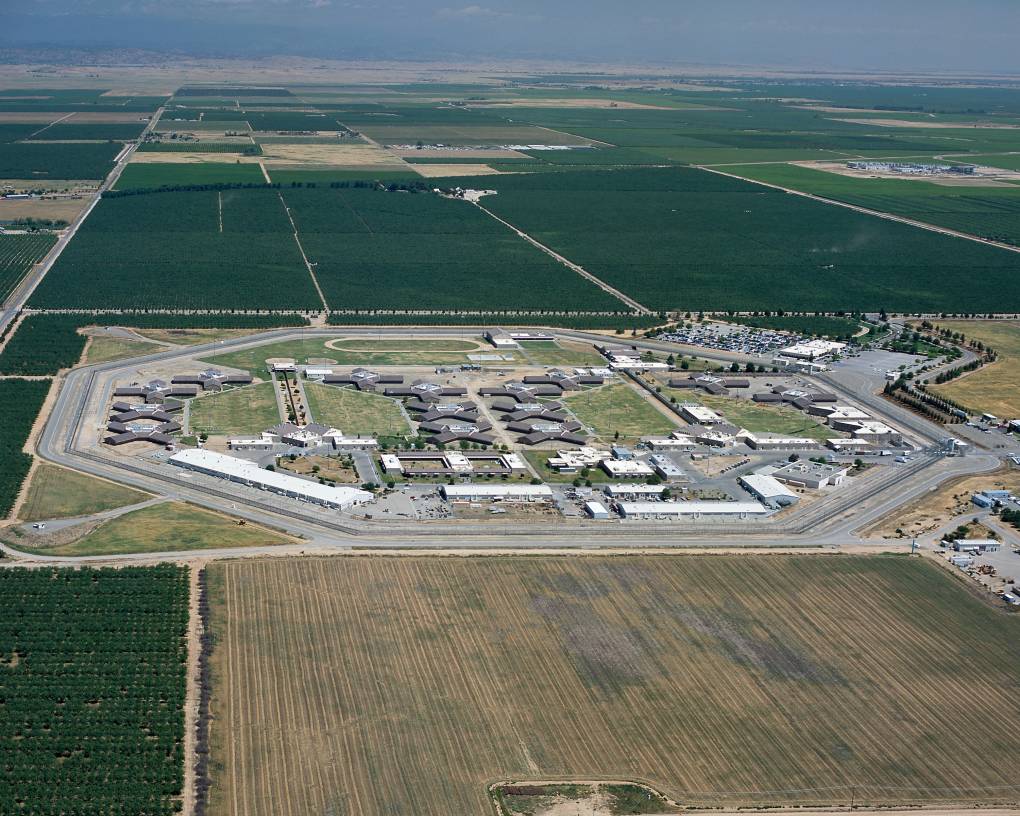
"caption": "Women incarcerated at the Central California Women’s facility in Chowchilla say officers used pepper spray, tear gas and rubber bullets on them, including while they were restrained.",
"credit": "Wikimedia Commons",
"altTag": null,
"description": null,
"imgSizes": {
"medium": {
"file": "https://cdn.kqed.org/wp-content/uploads/sites/10/2024/09/CentralCaliforniaWomensFacility-800x640.jpg",
"width": 800,
"height": 640,
"mimeType": "image/jpeg"
},
"large": {
"file": "https://cdn.kqed.org/wp-content/uploads/sites/10/2024/09/CentralCaliforniaWomensFacility-1020x816.jpg",
"width": 1020,
"height": 816,
"mimeType": "image/jpeg"
},
"thumbnail": {
"file": "https://cdn.kqed.org/wp-content/uploads/sites/10/2024/09/CentralCaliforniaWomensFacility-160x128.jpg",
"width": 160,
"height": 128,
"mimeType": "image/jpeg"
},
"1536x1536": {
"file": "https://cdn.kqed.org/wp-content/uploads/sites/10/2024/09/CentralCaliforniaWomensFacility-1536x1229.jpg",
"width": 1536,
"height": 1229,
"mimeType": "image/jpeg"
},
"2048x2048": {
"file": "https://cdn.kqed.org/wp-content/uploads/sites/10/2024/09/CentralCaliforniaWomensFacility-2048x1638.jpg",
"width": 2048,
"height": 1638,
"mimeType": "image/jpeg"
},
"post-thumbnail": {
"file": "https://cdn.kqed.org/wp-content/uploads/sites/10/2024/09/CentralCaliforniaWomensFacility-672x372.jpg",
"width": 672,
"height": 372,
"mimeType": "image/jpeg"
},
"twentyfourteen-full-width": {
"file": "https://cdn.kqed.org/wp-content/uploads/sites/10/2024/09/CentralCaliforniaWomensFacility-1038x576.jpg",
"width": 1038,
"height": 576,
"mimeType": "image/jpeg"
},
"full-width": {
"file": "https://cdn.kqed.org/wp-content/uploads/sites/10/2024/09/CentralCaliforniaWomensFacility-1920x1536.jpg",
"width": 1920,
"height": 1536,
"mimeType": "image/jpeg"
},
"kqedFullSize": {
"file": "https://cdn.kqed.org/wp-content/uploads/sites/10/2024/09/CentralCaliforniaWomensFacility-scaled-e1736960985623.jpg",
"width": 2000,
"height": 1600
}
},
"isLoading": false,
"fetchFailed": false
},
"news_12004326": {
"type": "attachments",
"id": "news_12004326",
"meta": {
"index": "attachments_1716263798",
"site": "news",
"id": "12004326",
"found": true
},
"title": "240910-TERRY WILLIAMS-KQED",
"publishDate": 1726011517,
"status": "inherit",
"parent": 0,
"modified": 1726011536,
"caption": "Terry Williams has worked as a dog walker in the San Francisco neighborhood of Alamo Square for more than 30 years.",
"credit": "Courtesy of Terry Williams",
"altTag": null,
"description": null,
"imgSizes": {
"medium": {
"file": "https://cdn.kqed.org/wp-content/uploads/sites/10/2024/09/240910-TERRY-WILLIAMS-KQED-800x533.jpg",
"width": 800,
"height": 533,
"mimeType": "image/jpeg"
},
"large": {
"file": "https://cdn.kqed.org/wp-content/uploads/sites/10/2024/09/240910-TERRY-WILLIAMS-KQED-1020x680.jpg",
"width": 1020,
"height": 680,
"mimeType": "image/jpeg"
},
"thumbnail": {
"file": "https://cdn.kqed.org/wp-content/uploads/sites/10/2024/09/240910-TERRY-WILLIAMS-KQED-160x107.jpg",
"width": 160,
"height": 107,
"mimeType": "image/jpeg"
},
"1536x1536": {
"file": "https://cdn.kqed.org/wp-content/uploads/sites/10/2024/09/240910-TERRY-WILLIAMS-KQED-1536x1024.jpg",
"width": 1536,
"height": 1024,
"mimeType": "image/jpeg"
},
"post-thumbnail": {
"file": "https://cdn.kqed.org/wp-content/uploads/sites/10/2024/09/240910-TERRY-WILLIAMS-KQED-672x372.jpg",
"width": 672,
"height": 372,
"mimeType": "image/jpeg"
},
"twentyfourteen-full-width": {
"file": "https://cdn.kqed.org/wp-content/uploads/sites/10/2024/09/240910-TERRY-WILLIAMS-KQED-1038x576.jpg",
"width": 1038,
"height": 576,
"mimeType": "image/jpeg"
},
"full-width": {
"file": "https://cdn.kqed.org/wp-content/uploads/sites/10/2024/09/240910-TERRY-WILLIAMS-KQED-1920x1280.jpg",
"width": 1920,
"height": 1280,
"mimeType": "image/jpeg"
},
"kqedFullSize": {
"file": "https://cdn.kqed.org/wp-content/uploads/sites/10/2024/09/240910-TERRY-WILLIAMS-KQED.jpg",
"width": 2000,
"height": 1333
}
},
"isLoading": false,
"fetchFailed": false
},
"news_12003703": {
"type": "attachments",
"id": "news_12003703",
"meta": {
"index": "attachments_1716263798",
"site": "news",
"id": "12003703",
"found": true
},
"title": "Matthew Olsen",
"publishDate": 1725924525,
"status": "inherit",
"parent": 12003644,
"modified": 1725924564,
"caption": "The DOJ announced the arrest of Dallas Humber, 34, of Elk Grove, one of two accused leaders of the Terrorgram group on Telegram, where they allegedly solicited hate crimes and the murder of federal officials \"in the name of violent white supremacist ideology.\"",
"credit": "Jose Luis Magana/AP Photo",
"altTag": null,
"description": null,
"imgSizes": {
"medium": {
"file": "https://cdn.kqed.org/wp-content/uploads/sites/10/2024/09/DOJAP1-800x533.jpg",
"width": 800,
"height": 533,
"mimeType": "image/jpeg"
},
"large": {
"file": "https://cdn.kqed.org/wp-content/uploads/sites/10/2024/09/DOJAP1-1020x680.jpg",
"width": 1020,
"height": 680,
"mimeType": "image/jpeg"
},
"thumbnail": {
"file": "https://cdn.kqed.org/wp-content/uploads/sites/10/2024/09/DOJAP1-160x107.jpg",
"width": 160,
"height": 107,
"mimeType": "image/jpeg"
},
"1536x1536": {
"file": "https://cdn.kqed.org/wp-content/uploads/sites/10/2024/09/DOJAP1-1536x1024.jpg",
"width": 1536,
"height": 1024,
"mimeType": "image/jpeg"
},
"post-thumbnail": {
"file": "https://cdn.kqed.org/wp-content/uploads/sites/10/2024/09/DOJAP1-672x372.jpg",
"width": 672,
"height": 372,
"mimeType": "image/jpeg"
},
"twentyfourteen-full-width": {
"file": "https://cdn.kqed.org/wp-content/uploads/sites/10/2024/09/DOJAP1-1038x576.jpg",
"width": 1038,
"height": 576,
"mimeType": "image/jpeg"
},
"full-width": {
"file": "https://cdn.kqed.org/wp-content/uploads/sites/10/2024/09/DOJAP1-1920x1280.jpg",
"width": 1920,
"height": 1280,
"mimeType": "image/jpeg"
},
"kqedFullSize": {
"file": "https://cdn.kqed.org/wp-content/uploads/sites/10/2024/09/DOJAP1.jpg",
"width": 2000,
"height": 1333
}
},
"isLoading": false,
"fetchFailed": false
},
"news_12003358": {
"type": "attachments",
"id": "news_12003358",
"meta": {
"index": "attachments_1716263798",
"site": "news",
"id": "12003358",
"found": true
},
"title": "74350f9b1b654584973654c53bd3ae3d",
"publishDate": 1725579765,
"status": "inherit",
"parent": 0,
"modified": 1725580337,
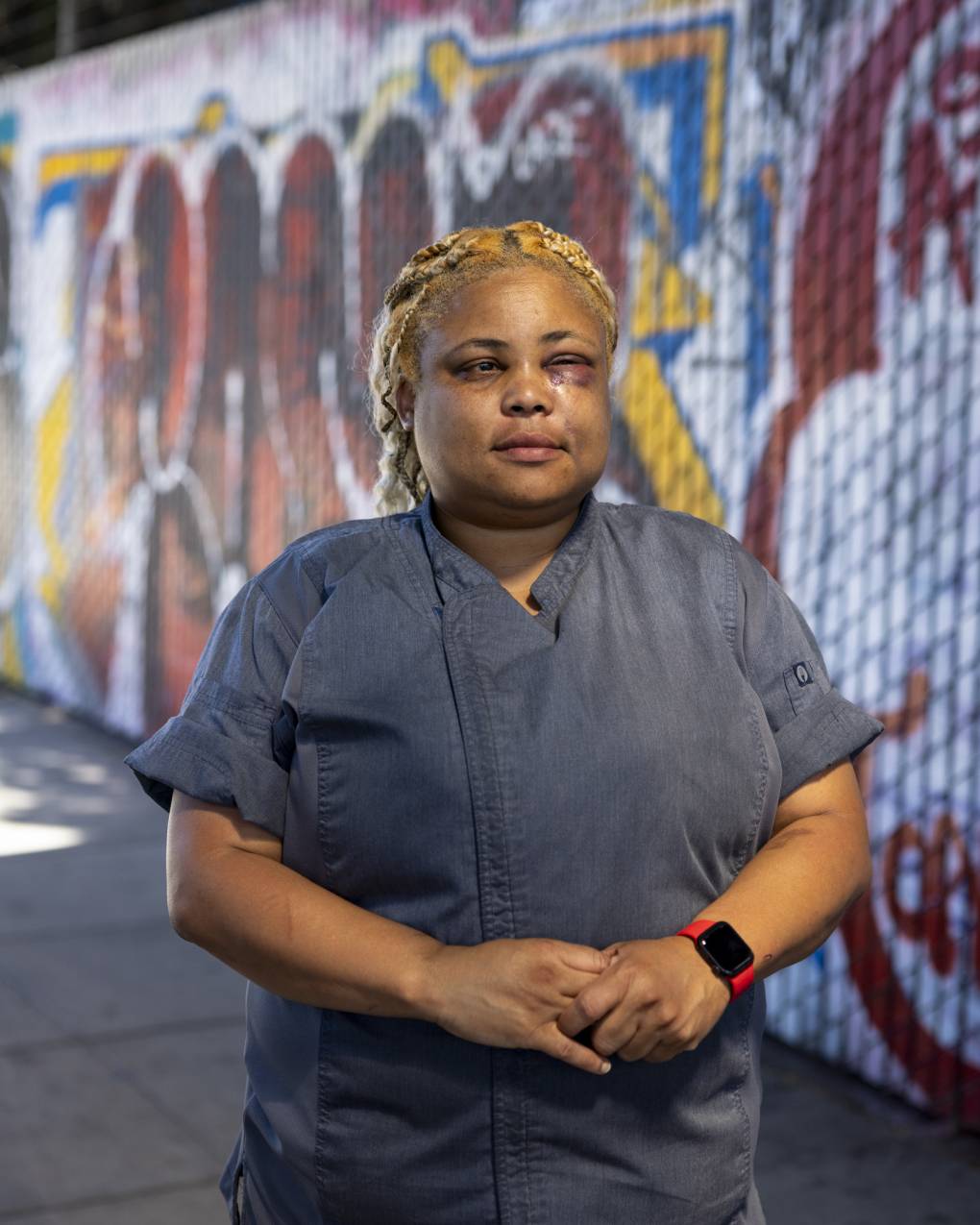
"caption": "Chef Wendy Drew poses for a portrait in San Francisco on September 3, 2024. When Wendy responded to a man’s racist slur, he assaulted her, breaking her nose in the process.",
"credit": "Amanda Andrade-Rhoades/The San Francisco Standard",
"altTag": null,
"description": null,
"imgSizes": {
"medium": {
"file": "https://cdn.kqed.org/wp-content/uploads/sites/10/2024/09/20240903-RACISTASSAULT_AAR_11-KQED-800x1000.jpg",
"width": 800,
"height": 1000,
"mimeType": "image/jpeg"
},
"large": {
"file": "https://cdn.kqed.org/wp-content/uploads/sites/10/2024/09/20240903-RACISTASSAULT_AAR_11-KQED-1020x1275.jpg",
"width": 1020,
"height": 1275,
"mimeType": "image/jpeg"
},
"thumbnail": {
"file": "https://cdn.kqed.org/wp-content/uploads/sites/10/2024/09/20240903-RACISTASSAULT_AAR_11-KQED-160x200.jpg",
"width": 160,
"height": 200,
"mimeType": "image/jpeg"
},
"1536x1536": {
"file": "https://cdn.kqed.org/wp-content/uploads/sites/10/2024/09/20240903-RACISTASSAULT_AAR_11-KQED-1229x1536.jpg",
"width": 1229,
"height": 1536,
"mimeType": "image/jpeg"
},
"post-thumbnail": {
"file": "https://cdn.kqed.org/wp-content/uploads/sites/10/2024/09/20240903-RACISTASSAULT_AAR_11-KQED-672x372.jpg",
"width": 672,
"height": 372,
"mimeType": "image/jpeg"
},
"twentyfourteen-full-width": {
"file": "https://cdn.kqed.org/wp-content/uploads/sites/10/2024/09/20240903-RACISTASSAULT_AAR_11-KQED-1038x576.jpg",
"width": 1038,
"height": 576,
"mimeType": "image/jpeg"
},
"kqedFullSize": {
"file": "https://cdn.kqed.org/wp-content/uploads/sites/10/2024/09/20240903-RACISTASSAULT_AAR_11-KQED.jpg",
"width": 1600,
"height": 2000
}
},
"isLoading": false,
"fetchFailed": false
},
"news_12003275": {
"type": "attachments",
"id": "news_12003275",
"meta": {
"index": "attachments_1716263798",
"site": "news",
"id": "12003275",
"found": true
},
"title": "Justice Department Headquarters Building",
"publishDate": 1725564890,
"status": "inherit",
"parent": 12003230,
"modified": 1788997808,
"caption": "The U.S. Department of Justice headquarters on Sept. 5, 2024.",
"credit": "J. David Ake/Getty Images",
"altTag": null,
"description": null,
"imgSizes": {
"medium": {
"file": "https://cdn.kqed.org/wp-content/uploads/sites/10/2024/09/USDeptofJusticeGetty-800x533.jpg",
"width": 800,
"height": 533,
"mimeType": "image/jpeg"
},
"large": {
"file": "https://cdn.kqed.org/wp-content/uploads/sites/10/2024/09/USDeptofJusticeGetty-1020x680.jpg",
"width": 1020,
"height": 680,
"mimeType": "image/jpeg"
},
"thumbnail": {
"file": "https://cdn.kqed.org/wp-content/uploads/sites/10/2024/09/USDeptofJusticeGetty-160x107.jpg",
"width": 160,
"height": 107,
"mimeType": "image/jpeg"
},
"1536x1536": {
"file": "https://cdn.kqed.org/wp-content/uploads/sites/10/2024/09/USDeptofJusticeGetty-1536x1024.jpg",
"width": 1536,
"height": 1024,
"mimeType": "image/jpeg"
},
"post-thumbnail": {
"file": "https://cdn.kqed.org/wp-content/uploads/sites/10/2024/09/USDeptofJusticeGetty-672x372.jpg",
"width": 672,
"height": 372,
"mimeType": "image/jpeg"
},
"twentyfourteen-full-width": {
"file": "https://cdn.kqed.org/wp-content/uploads/sites/10/2024/09/USDeptofJusticeGetty-1038x576.jpg",
"width": 1038,
"height": 576,
"mimeType": "image/jpeg"
},
"full-width": {
"file": "https://cdn.kqed.org/wp-content/uploads/sites/10/2024/09/USDeptofJusticeGetty-1920x1280.jpg",
"width": 1920,
"height": 1280,
"mimeType": "image/jpeg"
},
"kqedFullSize": {
"file": "https://cdn.kqed.org/wp-content/uploads/sites/10/2024/09/USDeptofJusticeGetty.jpg",
"width": 2000,
"height": 1333
}
},
"isLoading": false,
"fetchFailed": false
},
"news_12003183": {
"type": "attachments",
"id": "news_12003183",
"meta": {
"index": "attachments_1716263798",
"site": "news",
"id": "12003183",
"found": true
},
"title": "240904-JUVENILE JUSTICE-VB-01-KQED",
"publishDate": 1725493749,
"status": "inherit",
"parent": 0,
"modified": 1725493955,
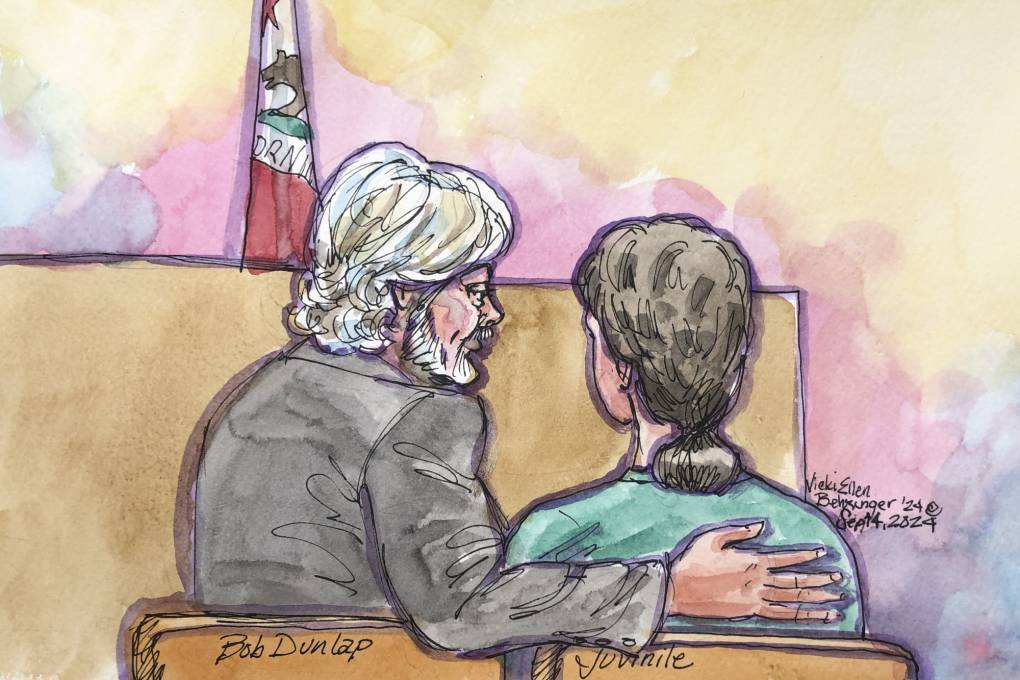
"caption": "A courtroom sketch of defense attorney Bob Dunlap and the teen charged with the attempted murder of San Francisco 49ers rookie Ricky Pearsall on Sept. 4, 2024.",
"credit": "Vicki Behringer for KQED",
"altTag": null,
"description": null,
"imgSizes": {
"medium": {
"file": "https://cdn.kqed.org/wp-content/uploads/sites/10/2024/09/240904-JUVENILE-JUSTICE-VB-01-KQED-800x533.jpg",
"width": 800,
"height": 533,
"mimeType": "image/jpeg"
},
"large": {
"file": "https://cdn.kqed.org/wp-content/uploads/sites/10/2024/09/240904-JUVENILE-JUSTICE-VB-01-KQED-1020x680.jpg",
"width": 1020,
"height": 680,
"mimeType": "image/jpeg"
},
"thumbnail": {
"file": "https://cdn.kqed.org/wp-content/uploads/sites/10/2024/09/240904-JUVENILE-JUSTICE-VB-01-KQED-160x107.jpg",
"width": 160,
"height": 107,
"mimeType": "image/jpeg"
},
"1536x1536": {
"file": "https://cdn.kqed.org/wp-content/uploads/sites/10/2024/09/240904-JUVENILE-JUSTICE-VB-01-KQED-1536x1024.jpg",
"width": 1536,
"height": 1024,
"mimeType": "image/jpeg"
},
"post-thumbnail": {
"file": "https://cdn.kqed.org/wp-content/uploads/sites/10/2024/09/240904-JUVENILE-JUSTICE-VB-01-KQED-672x372.jpg",
"width": 672,
"height": 372,
"mimeType": "image/jpeg"
},
"twentyfourteen-full-width": {
"file": "https://cdn.kqed.org/wp-content/uploads/sites/10/2024/09/240904-JUVENILE-JUSTICE-VB-01-KQED-1038x576.jpg",
"width": 1038,
"height": 576,
"mimeType": "image/jpeg"
},
"full-width": {
"file": "https://cdn.kqed.org/wp-content/uploads/sites/10/2024/09/240904-JUVENILE-JUSTICE-VB-01-KQED-1920x1280.jpg",
"width": 1920,
"height": 1280,
"mimeType": "image/jpeg"
},
"kqedFullSize": {
"file": "https://cdn.kqed.org/wp-content/uploads/sites/10/2024/09/240904-JUVENILE-JUSTICE-VB-01-KQED.jpg",
"width": 2000,
"height": 1333
}
},
"isLoading": false,
"fetchFailed": false
},
"news_12002872": {
"type": "attachments",
"id": "news_12002872",
"meta": {
"index": "attachments_1716263798",
"site": "news",
"id": "12002872",
"found": true
},
"title": "San Francisco 49ers v Las Vegas Raiders",
"publishDate": 1725397204,
"status": "inherit",
"parent": 12002868,
"modified": 1725412745,
"caption": "Wide receiver Ricky Pearsall, #14 of the San Francisco 49ers, walks off the field before an NFL preseason game against the Las Vegas Raiders at Allegiant Stadium on Aug. 23. On Tuesday, San Francisco District Attorney Brooke Jenkins announced charges against the 17-year-old accused of shooting the 49ers rookie in a Union Square robbery attempt.",
"credit": "Brooke Sutton/Getty Images",
"altTag": null,
"description": null,
"imgSizes": {
"medium": {
"file": "https://cdn.kqed.org/wp-content/uploads/sites/10/2024/09/RickyPearsallGetty1-800x533.jpg",
"width": 800,
"height": 533,
"mimeType": "image/jpeg"
},
"large": {
"file": "https://cdn.kqed.org/wp-content/uploads/sites/10/2024/09/RickyPearsallGetty1-1020x680.jpg",
"width": 1020,
"height": 680,
"mimeType": "image/jpeg"
},
"thumbnail": {
"file": "https://cdn.kqed.org/wp-content/uploads/sites/10/2024/09/RickyPearsallGetty1-160x107.jpg",
"width": 160,
"height": 107,
"mimeType": "image/jpeg"
},
"1536x1536": {
"file": "https://cdn.kqed.org/wp-content/uploads/sites/10/2024/09/RickyPearsallGetty1-1536x1024.jpg",
"width": 1536,
"height": 1024,
"mimeType": "image/jpeg"
},
"post-thumbnail": {
"file": "https://cdn.kqed.org/wp-content/uploads/sites/10/2024/09/RickyPearsallGetty1-672x372.jpg",
"width": 672,
"height": 372,
"mimeType": "image/jpeg"
},
"twentyfourteen-full-width": {
"file": "https://cdn.kqed.org/wp-content/uploads/sites/10/2024/09/RickyPearsallGetty1-1038x576.jpg",
"width": 1038,
"height": 576,
"mimeType": "image/jpeg"
},
"full-width": {
"file": "https://cdn.kqed.org/wp-content/uploads/sites/10/2024/09/RickyPearsallGetty1-1920x1280.jpg",
"width": 1920,
"height": 1280,
"mimeType": "image/jpeg"
},
"kqedFullSize": {
"file": "https://cdn.kqed.org/wp-content/uploads/sites/10/2024/09/RickyPearsallGetty1.jpg",
"width": 2000,
"height": 1333
}
},
"isLoading": false,
"fetchFailed": false
},
"news_12002878": {
"type": "attachments",
"id": "news_12002878",
"meta": {
"index": "attachments_1716263798",
"site": "news",
"id": "12002878",
"found": true
},
"title": "121_KQED_NewFolsomPrisonSacramento_04132023_qed",
"publishDate": 1725399681,
"status": "inherit",
"parent": 12002854,
"modified": 1725399700,
"caption": "A patch for the California Department of Correction and Rehabilitation at California State Prison, Sacramento, also known as New Folsom Prison, on April 13, 2023.",
"credit": "Beth LaBerge/KQED",
"altTag": null,
"description": null,
"imgSizes": {
"medium": {
"file": "https://cdn.kqed.org/wp-content/uploads/sites/10/2024/09/121_KQED_NewFolsomPrisonSacramento_04132023_qed-800x533.jpg",
"width": 800,
"height": 533,
"mimeType": "image/jpeg"
},
"large": {
"file": "https://cdn.kqed.org/wp-content/uploads/sites/10/2024/09/121_KQED_NewFolsomPrisonSacramento_04132023_qed-1020x680.jpg",
"width": 1020,
"height": 680,
"mimeType": "image/jpeg"
},
"thumbnail": {
"file": "https://cdn.kqed.org/wp-content/uploads/sites/10/2024/09/121_KQED_NewFolsomPrisonSacramento_04132023_qed-160x107.jpg",
"width": 160,
"height": 107,
"mimeType": "image/jpeg"
},
"1536x1536": {
"file": "https://cdn.kqed.org/wp-content/uploads/sites/10/2024/09/121_KQED_NewFolsomPrisonSacramento_04132023_qed-1536x1024.jpg",
"width": 1536,
"height": 1024,
"mimeType": "image/jpeg"
},
"post-thumbnail": {
"file": "https://cdn.kqed.org/wp-content/uploads/sites/10/2024/09/121_KQED_NewFolsomPrisonSacramento_04132023_qed-672x372.jpg",
"width": 672,
"height": 372,
"mimeType": "image/jpeg"
},
"twentyfourteen-full-width": {
"file": "https://cdn.kqed.org/wp-content/uploads/sites/10/2024/09/121_KQED_NewFolsomPrisonSacramento_04132023_qed-1038x576.jpg",
"width": 1038,
"height": 576,
"mimeType": "image/jpeg"
},
"full-width": {
"file": "https://cdn.kqed.org/wp-content/uploads/sites/10/2024/09/121_KQED_NewFolsomPrisonSacramento_04132023_qed-1920x1280.jpg",
"width": 1920,
"height": 1280,
"mimeType": "image/jpeg"
},
"kqedFullSize": {
"file": "https://cdn.kqed.org/wp-content/uploads/sites/10/2024/09/121_KQED_NewFolsomPrisonSacramento_04132023_qed.jpg",
"width": 1999,
"height": 1333
}
},
"isLoading": false,
"fetchFailed": false
},
"news_12002848": {
"type": "attachments",
"id": "news_12002848",
"meta": {
"index": "attachments_1716263798",
"site": "news",
"id": "12002848",
"found": true
},
"title": "OPDOfficerGrowHouse1",
"publishDate": 1725394638,
"status": "inherit",
"parent": 12002781,
"modified": 1725395040,
"caption": "Law enforcement seized 80 pounds of marijuana from a grow house in Antioch owned by Oakland Police Officer Samson Liu after a raid on April 30, 2024. ",
"credit": "Courtesy California Department of Cannabis Control",
"altTag": null,
"description": null,
"imgSizes": {
"medium": {
"file": "https://cdn.kqed.org/wp-content/uploads/sites/10/2024/09/OPDOfficerGrowHouse1-800x533.jpg",
"width": 800,
"height": 533,
"mimeType": "image/jpeg"
},
"large": {
"file": "https://cdn.kqed.org/wp-content/uploads/sites/10/2024/09/OPDOfficerGrowHouse1-1020x680.jpg",
"width": 1020,
"height": 680,
"mimeType": "image/jpeg"
},
"thumbnail": {
"file": "https://cdn.kqed.org/wp-content/uploads/sites/10/2024/09/OPDOfficerGrowHouse1-160x107.jpg",
"width": 160,
"height": 107,
"mimeType": "image/jpeg"
},
"1536x1536": {
"file": "https://cdn.kqed.org/wp-content/uploads/sites/10/2024/09/OPDOfficerGrowHouse1-1536x1024.jpg",
"width": 1536,
"height": 1024,
"mimeType": "image/jpeg"
},
"post-thumbnail": {
"file": "https://cdn.kqed.org/wp-content/uploads/sites/10/2024/09/OPDOfficerGrowHouse1-672x372.jpg",
"width": 672,
"height": 372,
"mimeType": "image/jpeg"
},
"twentyfourteen-full-width": {
"file": "https://cdn.kqed.org/wp-content/uploads/sites/10/2024/09/OPDOfficerGrowHouse1-1038x576.jpg",
"width": 1038,
"height": 576,
"mimeType": "image/jpeg"
},
"full-width": {
"file": "https://cdn.kqed.org/wp-content/uploads/sites/10/2024/09/OPDOfficerGrowHouse1-1920x1280.jpg",
"width": 1920,
"height": 1280,
"mimeType": "image/jpeg"
},
"kqedFullSize": {
"file": "https://cdn.kqed.org/wp-content/uploads/sites/10/2024/09/OPDOfficerGrowHouse1.jpg",
"width": 2000,
"height": 1333
}
},
"isLoading": false,
"fetchFailed": false
},
"news_12002795": {
"type": "attachments",
"id": "news_12002795",
"meta": {
"index": "attachments_1716263798",
"site": "news",
"id": "12002795",
"found": true
},
"title": "240408-FCIDublin-009-BL_qed",
"publishDate": 1725383562,
"status": "inherit",
"parent": 12002790,
"modified": 1748470018,
"caption": "The Federal Correctional Institution, Dublin, a prison for women, in Dublin, on April 8, 2024.",
"credit": "Beth LaBerge/KQED",
"altTag": null,
"description": null,
"imgSizes": {
"medium": {
"file": "https://cdn.kqed.org/wp-content/uploads/sites/10/2024/09/240408-FCIDublin-009-BL_qed-800x533.jpg",
"width": 800,
"height": 533,
"mimeType": "image/jpeg"
},
"large": {
"file": "https://cdn.kqed.org/wp-content/uploads/sites/10/2024/09/240408-FCIDublin-009-BL_qed-1020x680.jpg",
"width": 1020,
"height": 680,
"mimeType": "image/jpeg"
},
"thumbnail": {
"file": "https://cdn.kqed.org/wp-content/uploads/sites/10/2024/09/240408-FCIDublin-009-BL_qed-160x107.jpg",
"width": 160,
"height": 107,
"mimeType": "image/jpeg"
},
"1536x1536": {
"file": "https://cdn.kqed.org/wp-content/uploads/sites/10/2024/09/240408-FCIDublin-009-BL_qed-1536x1024.jpg",
"width": 1536,
"height": 1024,
"mimeType": "image/jpeg"
},
"post-thumbnail": {
"file": "https://cdn.kqed.org/wp-content/uploads/sites/10/2024/09/240408-FCIDublin-009-BL_qed-672x372.jpg",
"width": 672,
"height": 372,
"mimeType": "image/jpeg"
},
"twentyfourteen-full-width": {
"file": "https://cdn.kqed.org/wp-content/uploads/sites/10/2024/09/240408-FCIDublin-009-BL_qed-1038x576.jpg",
"width": 1038,
"height": 576,
"mimeType": "image/jpeg"
},
"full-width": {
"file": "https://cdn.kqed.org/wp-content/uploads/sites/10/2024/09/240408-FCIDublin-009-BL_qed-1920x1280.jpg",
"width": 1920,
"height": 1280,
"mimeType": "image/jpeg"
},
"kqedFullSize": {
"file": "https://cdn.kqed.org/wp-content/uploads/sites/10/2024/09/240408-FCIDublin-009-BL_qed.jpg",
"width": 2000,
"height": 1333
}
},
"isLoading": false,
"fetchFailed": false
},
"news_12002567": {
"type": "attachments",
"id": "news_12002567",
"meta": {
"index": "attachments_1716263798",
"site": "news",
"id": "12002567",
"found": true
},
"title": "240830-SFSIDESHOWLEGISLATION-07-BL-KQED",
"publishDate": 1725047547,
"status": "inherit",
"parent": 0,
"modified": 1725486491,
"caption": "Mayor London Breed speaks during a press conference regarding sideshows in the Bay Area at the San Francisco Police Department headquarters on Aug. 30, 2024.",
"credit": "Beth LaBerge/KQED",
"altTag": null,
"description": null,
"imgSizes": {
"medium": {
"file": "https://cdn.kqed.org/wp-content/uploads/sites/10/2024/08/240830-SFSIDESHOWLEGISLATION-07-BL-KQED-800x533.jpg",
"width": 800,
"height": 533,
"mimeType": "image/jpeg"
},
"large": {
"file": "https://cdn.kqed.org/wp-content/uploads/sites/10/2024/08/240830-SFSIDESHOWLEGISLATION-07-BL-KQED-1020x680.jpg",
"width": 1020,
"height": 680,
"mimeType": "image/jpeg"
},
"thumbnail": {
"file": "https://cdn.kqed.org/wp-content/uploads/sites/10/2024/08/240830-SFSIDESHOWLEGISLATION-07-BL-KQED-160x107.jpg",
"width": 160,
"height": 107,
"mimeType": "image/jpeg"
},
"1536x1536": {
"file": "https://cdn.kqed.org/wp-content/uploads/sites/10/2024/08/240830-SFSIDESHOWLEGISLATION-07-BL-KQED-1536x1024.jpg",
"width": 1536,
"height": 1024,
"mimeType": "image/jpeg"
},
"post-thumbnail": {
"file": "https://cdn.kqed.org/wp-content/uploads/sites/10/2024/08/240830-SFSIDESHOWLEGISLATION-07-BL-KQED-672x372.jpg",
"width": 672,
"height": 372,
"mimeType": "image/jpeg"
},
"twentyfourteen-full-width": {
"file": "https://cdn.kqed.org/wp-content/uploads/sites/10/2024/08/240830-SFSIDESHOWLEGISLATION-07-BL-KQED-1038x576.jpg",
"width": 1038,
"height": 576,
"mimeType": "image/jpeg"
},
"full-width": {
"file": "https://cdn.kqed.org/wp-content/uploads/sites/10/2024/08/240830-SFSIDESHOWLEGISLATION-07-BL-KQED-1920x1280.jpg",
"width": 1920,
"height": 1280,
"mimeType": "image/jpeg"
},
"kqedFullSize": {
"file": "https://cdn.kqed.org/wp-content/uploads/sites/10/2024/08/240830-SFSIDESHOWLEGISLATION-07-BL-KQED.jpg",
"width": 2000,
"height": 1333
}
},
"isLoading": false,
"fetchFailed": false
},
"news_12002375": {
"type": "attachments",
"id": "news_12002375",
"meta": {
"index": "attachments_1716263798",
"site": "news",
"id": "12002375",
"found": true
},
"title": "BontaCannabis2",
"publishDate": 1724961234,
"status": "inherit",
"parent": 0,
"modified": 1724963131,
"caption": "A portion of the cannabis products recovered by law enforcement officers following a July operation against what California Attorney General Rob Bonta described as organized statewide retail crime targeting cannabis stores.",
"credit": "Courtesy California Department of Justice",
"altTag": null,
"description": null,
"imgSizes": {
"medium": {
"file": "https://cdn.kqed.org/wp-content/uploads/sites/10/2024/08/BontaCannabis2-800x477.jpg",
"width": 800,
"height": 477,
"mimeType": "image/jpeg"
},
"large": {
"file": "https://cdn.kqed.org/wp-content/uploads/sites/10/2024/08/BontaCannabis2-1020x608.jpg",
"width": 1020,
"height": 608,
"mimeType": "image/jpeg"
},
"thumbnail": {
"file": "https://cdn.kqed.org/wp-content/uploads/sites/10/2024/08/BontaCannabis2-160x95.jpg",
"width": 160,
"height": 95,
"mimeType": "image/jpeg"
},
"1536x1536": {
"file": "https://cdn.kqed.org/wp-content/uploads/sites/10/2024/08/BontaCannabis2-1536x916.jpg",
"width": 1536,
"height": 916,
"mimeType": "image/jpeg"
},
"post-thumbnail": {
"file": "https://cdn.kqed.org/wp-content/uploads/sites/10/2024/08/BontaCannabis2-672x372.jpg",
"width": 672,
"height": 372,
"mimeType": "image/jpeg"
},
"twentyfourteen-full-width": {
"file": "https://cdn.kqed.org/wp-content/uploads/sites/10/2024/08/BontaCannabis2-1038x576.jpg",
"width": 1038,
"height": 576,
"mimeType": "image/jpeg"
},
"full-width": {
"file": "https://cdn.kqed.org/wp-content/uploads/sites/10/2024/08/BontaCannabis2-1920x1145.jpg",
"width": 1920,
"height": 1145,
"mimeType": "image/jpeg"
},
"kqedFullSize": {
"file": "https://cdn.kqed.org/wp-content/uploads/sites/10/2024/08/BontaCannabis2.jpg",
"width": 1939,
"height": 1156
}
},
"isLoading": false,
"fetchFailed": false
}
},
"audioPlayerReducer": {
"postId": "stream_live",
"isPaused": true,
"isPlaying": false,
"pfsActive": false,
"pledgeModalIsOpen": true,
"playerDrawerIsOpen": false,
"liveAudioPlayStartedAt": 0,
"liveAudioPlayContext": ""
},
"authorsReducer": {
"jsmall": {
"type": "authors",
"id": "6625",
"meta": {
"index": "authors_1716337520",
"id": "6625",
"found": true
},
"name": "Julie Small",
"firstName": "Julie",
"lastName": "Small",
"slug": "jsmall",
"email": "jsmall@kqed.org",
"display_author_email": true,
"staff_mastheads": [
"news"
],
"title": "KQED Contributor",
"bio": "Julie Small reports on criminal justice and immigration.\r\n\r\nShe was part of a team at KQED awarded a regional 2019 Edward R. Murrow award for continuing coverage of the Trump Administration's family separation policy.\r\n\r\nThe Society for Professional Journalists recognized Julie's 2018 \u003ca href=\"https://www.kqed.org/news/11636262/the-officer-tased-him-31-times-the-sheriff-called-his-death-an-accident\">reporting\u003c/a> on the San Joaquin County Sheriff's \u003ca href=\"https://www.kqed.org/news/11634689/autopsy-doctors-sheriff-overrode-death-findings-to-protect-law-enforcement\">interference\u003c/a> in death investigations with an Excellence in Journalism Award for Ongoing Coverage.\r\n\r\nJulie's\u003ca href=\"https://www.kqed.org/news/11039666/two-mentally-ill-inmates-died-one-month-in-santa-clara\"> reporting\u003c/a> with Lisa Pickoff-White on the treatment of mentally ill offenders in California jails earned a 2017 regional Edward R. Murrow Award for news reporting and an investigative reporting award from the SPJ of Northern California.\r\n\r\nBefore joining KQED, Julie covered government and politics in Sacramento for Southern California Public Radio (SCPR). Her 2010 \u003ca href=\"https://www.scpr.org/specials/prisonmedical/\">series\u003c/a> on lapses in California’s prison medical care also won a regional Edward R. Murrow Award for investigative reporting and a Golden Mic Award from the RTNDA of Southern California.\r\n\r\nJulie began her career in journalism in 2000 as the deputy foreign editor for public radio's \u003cem>Marketplace, \u003c/em>while earning her master's degree in journalism from USC’s Annenberg School of Communication.",
"avatar": "https://secure.gravatar.com/avatar/4baedf201468df97be97c2a9dd7585d0?s=600&d=blank&r=g",
"twitter": "@SmallRadio2",
"facebook": null,
"instagram": null,
"linkedin": null,
"sites": [
{
"site": "news",
"roles": [
"editor"
]
},
{
"site": "stateofhealth",
"roles": [
"author"
]
},
{
"site": "science",
"roles": [
"author"
]
}
],
"headData": {
"title": "Julie Small | KQED",
"description": "KQED Contributor",
"ogImgSrc": "https://secure.gravatar.com/avatar/4baedf201468df97be97c2a9dd7585d0?s=600&d=blank&r=g",
"twImgSrc": "https://secure.gravatar.com/avatar/4baedf201468df97be97c2a9dd7585d0?s=600&d=blank&r=g"
},
"isLoading": false,
"link": "/author/jsmall"
},
"ahall": {
"type": "authors",
"id": "11490",
"meta": {
"index": "authors_1716337520",
"id": "11490",
"found": true
},
"name": "Alex Hall",
"firstName": "Alex",
"lastName": "Hall",
"slug": "ahall",
"email": "ahall@kqed.org",
"display_author_email": false,
"staff_mastheads": [
"news"
],
"title": "KQED Enterprise & Accountability Reporter",
"bio": "Alex Hall is KQED's Enterprise and Accountability Reporter. She previously covered the Central Valley for five years from KQED's bureau in Fresno. Before joining KQED, Alex was an investigative reporting fellow at Wisconsin Public Radio and the Wisconsin Center for Investigative Journalism. She has also worked as a bilingual producer for NPR's investigative unit and freelance video producer for Reuters TV on the Latin America desk. She got her start in journalism in South America, where she worked as a radio producer and Spanish-English translator for CNN Chile. Her documentary and investigation into the series of deadly COVID-19 outbreaks at Foster Farms won a national Edward R. Murrow award and was named an Investigative Reporters & Editors award finalist. Alex's reporting for Reveal on the Wisconsin dairy industry's reliance on undocumented immigrant labor was made into a film, Los Lecheros, which won a regional Edward R. Murrow award for best news documentary.",
"avatar": "https://secure.gravatar.com/avatar/04c28ad4a7caa7ac2ef39c655c4030c993a3f331481d1da4799bb76ea85b9afa?s=600&d=blank&r=g",
"twitter": "@chalexhall",
"bluesky": null,
"facebook": null,
"instagram": null,
"linkedin": null,
"sites": [
{
"site": "news",
"roles": [
"editor"
]
},
{
"site": "liveblog",
"roles": [
"author"
]
}
],
"headData": {
"title": "Alex Hall | KQED",
"description": "KQED Enterprise & Accountability Reporter",
"ogImgSrc": "https://secure.gravatar.com/avatar/04c28ad4a7caa7ac2ef39c655c4030c993a3f331481d1da4799bb76ea85b9afa?s=600&d=blank&r=g",
"twImgSrc": "https://secure.gravatar.com/avatar/04c28ad4a7caa7ac2ef39c655c4030c993a3f331481d1da4799bb76ea85b9afa?s=600&d=blank&r=g"
},
"isLoading": false,
"link": "/author/ahall"
},
"mbolanos": {
"type": "authors",
"id": "11895",
"meta": {
"index": "authors_1716337520",
"id": "11895",
"found": true
},
"name": "Madi Bolaños",
"firstName": "Madi",
"lastName": "Bolaños",
"slug": "mbolanos",
"email": "mbolanos@kqed.org",
"display_author_email": false,
"staff_mastheads": [],
"title": "KQED Contributor",
"bio": null,
"avatar": "https://secure.gravatar.com/avatar/e6df5601c1f2d951e46a3fb42764330f?s=600&d=blank&r=g",
"twitter": null,
"bluesky": null,
"facebook": null,
"instagram": null,
"linkedin": null,
"sites": [
{
"site": "news",
"roles": [
"author"
]
}
],
"headData": {
"title": "Madi Bolaños | KQED",
"description": "KQED Contributor",
"ogImgSrc": "https://secure.gravatar.com/avatar/e6df5601c1f2d951e46a3fb42764330f?s=600&d=blank&r=g",
"twImgSrc": "https://secure.gravatar.com/avatar/e6df5601c1f2d951e46a3fb42764330f?s=600&d=blank&r=g"
},
"isLoading": false,
"link": "/author/mbolanos"
},
"kdebenedetti": {
"type": "authors",
"id": "11913",
"meta": {
"index": "authors_1716337520",
"id": "11913",
"found": true
},
"name": "Katie DeBenedetti",
"firstName": "Katie",
"lastName": "DeBenedetti",
"slug": "kdebenedetti",
"email": "kdebenedetti@kqed.org",
"display_author_email": false,
"staff_mastheads": [
"news",
"science"
],
"title": "KQED Contributor",
"bio": "Katie DeBenedetti is a digital reporter covering daily news for the Express Desk. Prior to joining KQED as a culture reporting intern in January 2024, she covered education and city government for the Napa Valley Register.",
"avatar": "https://secure.gravatar.com/avatar/6e31073cb8f7e4214ab03f42771d0f45?s=600&d=blank&r=g",
"twitter": null,
"facebook": null,
"instagram": null,
"linkedin": null,
"sites": [
{
"site": "news",
"roles": [
"author"
]
},
{
"site": "science",
"roles": [
"author"
]
},
{
"site": "liveblog",
"roles": [
"author"
]
}
],
"headData": {
"title": "Katie DeBenedetti | KQED",
"description": "KQED Contributor",
"ogImgSrc": "https://secure.gravatar.com/avatar/6e31073cb8f7e4214ab03f42771d0f45?s=600&d=blank&r=g",
"twImgSrc": "https://secure.gravatar.com/avatar/6e31073cb8f7e4214ab03f42771d0f45?s=600&d=blank&r=g"
},
"isLoading": false,
"link": "/author/kdebenedetti"
},
"emanoukian": {
"type": "authors",
"id": "11925",
"meta": {
"index": "authors_1716337520",
"id": "11925",
"found": true
},
"name": "Elize Manoukian",
"firstName": "Elize",
"lastName": "Manoukian",
"slug": "emanoukian",
"email": "emanoukian@KQED.org",
"display_author_email": false,
"staff_mastheads": [
"news"
],
"title": "Digital News Editor",
"bio": "Elize Manoukian is an award-winning audio producer and Senior Editor on the Express Desk, KQED's digital news platform. Her work has appeared on KPFA, Interlochen Public Radio, Oregon Public Broadcast, the New York Daily News, LA Times and the San Diego Union-Tribune.",
"avatar": "https://secure.gravatar.com/avatar/4525f1a8e46ccb30933b32653d9772064cfefe3fa655eb45b3b3a80341f6bdad?s=600&d=blank&r=g",
"twitter": null,
"bluesky": null,
"facebook": null,
"instagram": null,
"linkedin": null,
"sites": [
{
"site": "arts",
"roles": [
"editor"
]
},
{
"site": "news",
"roles": [
"editor"
]
},
{
"site": "science",
"roles": [
"editor"
]
}
],
"headData": {
"title": "Elize Manoukian | KQED",
"description": "Digital News Editor",
"ogImgSrc": "https://secure.gravatar.com/avatar/4525f1a8e46ccb30933b32653d9772064cfefe3fa655eb45b3b3a80341f6bdad?s=600&d=blank&r=g",
"twImgSrc": "https://secure.gravatar.com/avatar/4525f1a8e46ccb30933b32653d9772064cfefe3fa655eb45b3b3a80341f6bdad?s=600&d=blank&r=g"
},
"isLoading": false,
"link": "/author/emanoukian"
}
},
"pagesReducer": {
"news_category_criminal-justice": {
"type": "terms",
"id": "news_34167",
"meta": {
"index": "terms_1716263798",
"site": "news",
"id": "34167",
"score": 11.18808
},
"name": "Criminal Justice",
"slug": "criminal-justice",
"taxonomy": "category",
"description": null,
"featImg": null,
"headData": {
"title": "Criminal Justice Archives | KQED News",
"description": null,
"ogTitle": null,
"ogDescription": null,
"ogImgId": null,
"twTitle": null,
"twDescription": null,
"twImgId": null
},
"ttid": 34184,
"isLoading": false,
"title": "Criminal Justice",
"pageMeta": {
"site": "news",
"WpPageTemplate": "page-topic-editorial",
"currentPage": 38
},
"blocks": [
{
"blockName": "kqed/post-list",
"attrs": {
"layout": "cardArticle2",
"query": "posts/news?category=criminal-justice",
"seeMore": false,
"paginated": true,
"page": 38
}
},
{
"blockName": "kqed/ad"
}
]
}
},
"pfsSessionReducer": {},
"postsReducer": {
"stream_live": {
"type": "live",
"id": "stream_live",
"audioUrl": "https://streams.kqed.org/kqedradio",
"title": "Live Stream",
"excerpt": "Live Stream information currently unavailable.",
"link": "/radio",
"featImg": "",
"label": {
"name": "KQED Live",
"link": "/"
}
},
"stream_kqedNewscast": {
"type": "posts",
"id": "stream_kqedNewscast",
"audioUrl": "https://www.kqed.org/.stream/anon/radio/RDnews/newscast.mp3?_=1",
"title": "KQED Newscast",
"featImg": "",
"label": {
"name": "88.5 FM",
"link": "/"
}
},
"news_12004368": {
"type": "posts",
"id": "news_12004368",
"meta": {
"index": "posts_1716263798",
"site": "news",
"id": "12004368",
"score": null,
"sort": [
1726138886000
]
},
"guestAuthors": [],
"slug": "like-a-war-zone-prison-officers-used-unprecedented-force-in-august-attack-incarcerated-women-say",
"title": "'Like a War Zone': Prison Officers Used Unprecedented Force in August Attack, Incarcerated Women Say",
"publishDate": 1726138886,
"format": "standard",
"headTitle": "‘Like a War Zone’: Prison Officers Used Unprecedented Force in August Attack, Incarcerated Women Say | KQED",
"labelTerm": {
"term": 72,
"site": "news"
},
"content": "\u003cp>[dropcap]I[/dropcap]ncarcerated women at the Central California Women’s facility in Chowchilla say correctional officers used pepper spray, tear gas and rubber bullets on them after forcing them into a cafeteria with no food, water or medication for more than four hours.\u003c/p>\n\u003cp>Four women told KQED they were left injured, had difficulty breathing and were traumatized by the incident that occurred last month on Aug. 2.\u003c/p>\n\u003cp>Three incarcerated people had difficulty breathing and were transported to an offsite medical facility, according to an emailed statement from the California Department of Corrections and Rehabilitation.\u003c/p>\n\u003cp>In its statement, CDCR said officials have “identified concerning information about the handling of the Aug. 2 incident at the Central California Women’s Facility (CCWF) and are taking swift action.” The statement adds that a fight between two inmates prompted the incident and that approximately 100 others became “disruptive,” requiring staff to “quell the incident.”\u003c/p>\n\u003cp>Sources told KQED that a fight had broken out earlier, well before the alleged use of force by officers, whose later behavior was unprovoked.\u003c/p>\n\u003cp>[ad fullwidth]\u003c/p>\n\u003cp>The Central California Women’s Facility is the largest female institution in the state. It houses over 2,000 incarcerated people at all security levels, \u003ca href=\"https://www.oig.ca.gov/wp-content/uploads/2019/05/Warden-Mary-Lattimore-One-Year-Audit-Central-California-Womens-Facility.pdf\">according to a report\u003c/a> by the California Office of the Inspector General.\u003c/p>\n\u003ch2>‘People were screaming for help’\u003c/h2>\n\u003cp>On Aug. 2, correctional officers informed the women in one of the units that they were going to conduct a contraband search of the entire building, according to half a dozen formerly and currently incarcerated women who spoke to KQED.\u003c/p>\n\u003cp>Antoinette Yancey said she is a member of the Inmate Advisory Council, which communicates with prison staff about prisoners’ needs. She said everyone who was there that day complied with the order from officers to file into the cafeteria, also known as the chow hall.\u003c/p>\n\u003cp>Yancey said that after nearly four hours inside the cafeteria, the women had missed their state-issued lunch and others had not been given their medication. She said she asked to speak to Sergeant Fernando Arroyo, the officer she believed to be in charge that day. Meanwhile, another woman was seen having a seizure, according to Yancey and other witnesses. Yancey told KQED that a guard called a “medical code.” Moments later, she said, 30 to 40 officers entered the cafeteria, including Sgt. Arroyo.\u003c/p>\n\u003cp>“When I saw Sergeant Arroyo, I assumed that he was coming in to talk to us about lunches, food, water and things like that,” she said. Yancey said Arroyo did not address the women.\u003c/p>\n\u003cp>The officers then formed a skirmish line around them, according to three of the women. Yancey said she saw Sergeant Arroyo tap officers on the shoulder before officers started screaming “Get back!” at the women, who, she said, posed no threat. Officers began to spray pepper spray and tear gas at the women, according to four accounts.\u003c/p>\n\u003cp>“Some of the inmates ran away from the [chemical] bomb. Officers chased them, body slamming people who had walkers and couldn’t get down,” Yancey said, “Snatching shirts off people’s faces and [pepper] spraying them directly in the face.”\u003c/p>\n\u003cp>As the chaos unfolded, Elaine De Leon Guerrero, an Iraq war veteran, said she immediately threw herself to the ground.\u003c/p>\n\u003cp>“I ended up getting trampled on. People were screaming for help, crying, asking to please stop,” she said. “There were multiple orders being sent by different staff. Some were screaming at us, saying, get down. Others were saying, ‘Get up and file.’”\u003c/p>\n\u003cp>De Leon Guerrero said she saw two women have seizures.\u003c/p>\n\u003cp>In the statement, CDCR officials acknowledged that correctional officers used chemical weapons but would not provide any more details; the agency said no rubber bullets were used and maintained that the incident did not amount to excessive force. CDCR declined to specify whether other projectiles were used.\u003c/p>\n\u003cp>The agency also declined to confirm whether a Sgt. Fernando Arroyo works at the Chowchilla facility or was in charge that day. \u003ca href=\"https://openpayrolls.com/employee/fernando-arroyo-9571\">Public records show\u003c/a> that a Sgt. Fernando Arroyo worked at the Chowchilla facility until at least 2023. A Chowchilla prison employee named Fernando Arroyo is listed as one of several defendants in an \u003ca href=\"https://www.courthousenews.com/wp-content/uploads/2024/09/roe-vs-cdcr-complaint-sacramento.pdf\">ongoing civil suit filed by 144 plaintiffs\u003c/a> in Sacramento County alleging sexual assault and sexual battery at the Chowchilla facility. Arroyo could not be reached by phone; CDCR did not respond to KQED’s request to make Arroyo available for an interview.\u003c/p>\n\u003ch2>‘They just wouldn’t stop. It was like a war zone’\u003c/h2>\n\u003cp>Witnesses interviewed by KQED said that eventually, officers zip-tied all the women’s hands and escorted them outside to the yard, where they were made to sit.\u003c/p>\n\u003cp>“We’re thinking, okay, we’re sitting, we’re defenseless, now we’re going to get answers,” inmate Johnnyne Ramirez said. Instead, Ramirez said the officers continued another round of pepper spraying and tear gas bombing. Yancey and De Leon Guerrero gave KQED a matching account of the events.\u003c/p>\n\u003cp>“I really thought I was going to die that day because they were shooting. They were throwing [tear gas] grenades. They just wouldn’t stop. It was like a war zone,” Ramirez said.\u003c/p>\n\u003cp>[aside postID=news_12003230 hero='https://cdn.kqed.org/wp-content/uploads/sites/10/2024/09/USDeptofJusticeGetty-1020x680.jpg']\u003c/p>\n\u003cp>Witnesses told KQED that the unrest in the yard went on for another hour before prison staff escorted the women back to their cells.\u003c/p>\n\u003cp>“But they didn’t decontaminate us after using the chemical agents, which they’re supposed to do,” De Leon Guerrero said. “They just sent us, little at a time, back to the cells.”\u003c/p>\n\u003cp>A CDCR spokesperson declined to comment on specific allegations following the system’s written statement, citing an active investigation.\u003c/p>\n\u003cp>Staff at the facility began an immediate week-long intensive training on appropriate incident response, according to the statement from CDRC.\u003c/p>\n\u003ch2>An unprecedented use of force\u003c/h2>\n\u003cp>When told about the incident, Deputy Director for the ACLU National Prison Project Corene Kendrick said she had never seen this level of force at a women’s prison.\u003c/p>\n\u003cp>“I’ve never heard of anything this severe of an overreaction, especially when it’s in the context of something like a property search. And the women were just asking ‘what’s going on? And how much longer is this going to take?’” she said.\u003c/p>\n\u003cp>She pointed to a CDCR policy that states chemical agents should not be used once a person is restrained.\u003c/p>\n\u003cp>Sara Norman, an attorney who monitors jails and prisons, said the alleged violence by CDCR staff is disturbing but not surprising. In 2020, staff at the men’s correctional facility in Soledad rounded up incarcerated Black men and locked them in a cafeteria for hours at a time.\u003c/p>\n\u003cp>“They were zip-tied and they were interrogated about involvement with Black Lives Matter,” Norman said. “So these sorts of things tend to burst out in the current culture at CDCR.”\u003c/p>\n\u003ch2>History of alleged abuse at the Chowchilla Facility\u003c/h2>\n\u003cp>The U.S. Department of Justice \u003ca href=\"https://www.kqed.org/news/12003230/feds-investigate-california-prisons-where-women-say-culture-of-impunity-surrounded-abuse\">announced last week\u003c/a> that it is investigating the CDCR’s handling of sexual abuse allegations at the state women’s prisons in Chowchilla and Chino.\u003c/p>\n\u003cp>\u003ca href=\"https://www.justice.gov/opa/pr/justice-department-announces-civil-rights-investigation-correctional-staff-sexual-abuse-two\">In a statement\u003c/a>, the DOJ said it found significant justification to open the investigation, including “hundreds of private lawsuits” and reports alleging sexual abuse by correctional officers. Last year a correctional officer at the Chowchilla facility was charged with \u003ca href=\"https://www.theguardian.com/us-news/2023/oct/25/gregory-rodriguez-california-correctional-officer-accused-sexual-assault-womens-prison\">96 criminal counts\u003c/a>, including rape, sodomy and sexual battery over a 13-year period.\u003c/p>\n\u003cp>The DOJ’s investigation is appropriate given the charges brought against the correctional officer, said state Sen. Nancy Skinner, the chair of the Women’s Legislative Caucus.\u003c/p>\n\u003cp>“It’s hard to imagine that that individual was able to get away with that without other officials knowing. And it really puts a spotlight on what is happening there,” the East Bay lawmaker told KQED.\u003c/p>\n\u003cp>The women who were in the chow hall at the Central California Women’s Facility on Aug. 2 said they hope the CDCR’s investigation leads to transparency and accountability. All of the women said they were traumatized by the alleged attack.\u003c/p>\n\u003cp>“I don’t like being around a lot of people now, so I kind of stay secluded,” De Leon Guerrero said. “I cannot go into the chow hall. I’ve tried it. I start[ed] getting anxiety and a panic attack.”\u003c/p>\n\u003cp>[ad floatright]\u003c/p>\n\u003cp>\u003cem>This story has been updated.\u003c/em>\u003c/p>\n\n",
"blocks": [],
"excerpt": "Women incarcerated at a Chowchilla state prison say officers used pepper spray and tear gas on them after forcing them into a cafeteria with no food, water or medication for more than four hours.",
"status": "publish",
"parent": 0,
"modified": 1726164627,
"stats": {
"hasAudio": false,
"hasVideo": false,
"hasChartOrMap": false,
"iframeSrcs": [],
"hasGoogleForm": false,
"hasGallery": false,
"hasHearkenModule": false,
"hasPolis": false,
"paragraphCount": 39,
"wordCount": 1474
},
"headData": {
"title": "'Like a War Zone': Prison Officers Used Unprecedented Force in August Attack, Incarcerated Women Say | KQED",
"description": "Women incarcerated at a Chowchilla state prison say officers used pepper spray and tear gas on them after forcing them into a cafeteria with no food, water or medication for more than four hours.",
"ogTitle": "",
"ogDescription": "",
"ogImgId": "",
"twTitle": "",
"twDescription": "",
"twImgId": "",
"schema": {
"@context": "https://schema.org",
"@type": "NewsArticle",
"headline": "'Like a War Zone': Prison Officers Used Unprecedented Force in August Attack, Incarcerated Women Say",
"datePublished": "2024-09-12T04:01:26-07:00",
"dateModified": "2024-09-12T11:10:27-07:00",
"image": "https://cdn.kqed.org/wp-content/uploads/2020/02/KQED-OG-Image@1x.png",
"isAccessibleForFree": "True",
"publisher": {
"@type": "NewsMediaOrganization",
"@id": "https://www.kqed.org/#organization",
"name": "KQED",
"logo": "https://cdn.kqed.org/wp-content/uploads/2020/02/KQED-OG-Image@1x.png",
"url": "https://www.kqed.org",
"sameAs": [
"https://www.facebook.com/KQED",
"https://twitter.com/KQED",
"https://www.instagram.com/kqed/",
"https://www.tiktok.com/@kqedofficial",
"https://www.linkedin.com/company/kqed",
"https://www.youtube.com/channel/UCeC0IOo7i1P_61zVUWbJ4nw"
]
}
}
},
"audioUrl": "https://traffic.omny.fm/d/clips/0af137ef-751e-4b19-a055-aaef00d2d578/ffca7e9f-6831-41c5-bcaf-aaef00f5a073/0f7adbbf-feaa-48cc-bf14-b1e90107f085/audio.mp3",
"sticky": false,
"nprStoryId": "kqed-12004368",
"excludeFromSiteSearch": "Include",
"articleAge": "0",
"path": "/news/12004368/like-a-war-zone-prison-officers-used-unprecedented-force-in-august-attack-incarcerated-women-say",
"audioTrackLength": null,
"parsedContent": [
{
"type": "contentString",
"content": "\u003cdiv class=\"post-body\">\u003cp>\u003cp>\u003c/p>\u003cp>\u003cspan class=\"utils-parseShortcode-shortcodes-__dropcapShortcode__dropcap\">I\u003c/span>\u003c/p>\u003cp>ncarcerated women at the Central California Women’s facility in Chowchilla say correctional officers used pepper spray, tear gas and rubber bullets on them after forcing them into a cafeteria with no food, water or medication for more than four hours.\u003c/p>\n\u003cp>Four women told KQED they were left injured, had difficulty breathing and were traumatized by the incident that occurred last month on Aug. 2.\u003c/p>\n\u003cp>Three incarcerated people had difficulty breathing and were transported to an offsite medical facility, according to an emailed statement from the California Department of Corrections and Rehabilitation.\u003c/p>\n\u003cp>In its statement, CDCR said officials have “identified concerning information about the handling of the Aug. 2 incident at the Central California Women’s Facility (CCWF) and are taking swift action.” The statement adds that a fight between two inmates prompted the incident and that approximately 100 others became “disruptive,” requiring staff to “quell the incident.”\u003c/p>\n\u003cp>Sources told KQED that a fight had broken out earlier, well before the alleged use of force by officers, whose later behavior was unprovoked.\u003c/p>\n\u003cp>\u003c/p>\u003c/div>",
"attributes": {
"named": {},
"numeric": []
}
},
{
"type": "component",
"content": "",
"name": "ad",
"attributes": {
"named": {
"label": "fullwidth"
},
"numeric": [
"fullwidth"
]
}
},
{
"type": "contentString",
"content": "\u003cdiv class=\"post-body\">\u003cp>\u003c/p>\n\u003cp>The Central California Women’s Facility is the largest female institution in the state. It houses over 2,000 incarcerated people at all security levels, \u003ca href=\"https://www.oig.ca.gov/wp-content/uploads/2019/05/Warden-Mary-Lattimore-One-Year-Audit-Central-California-Womens-Facility.pdf\">according to a report\u003c/a> by the California Office of the Inspector General.\u003c/p>\n\u003ch2>‘People were screaming for help’\u003c/h2>\n\u003cp>On Aug. 2, correctional officers informed the women in one of the units that they were going to conduct a contraband search of the entire building, according to half a dozen formerly and currently incarcerated women who spoke to KQED.\u003c/p>\n\u003cp>Antoinette Yancey said she is a member of the Inmate Advisory Council, which communicates with prison staff about prisoners’ needs. She said everyone who was there that day complied with the order from officers to file into the cafeteria, also known as the chow hall.\u003c/p>\n\u003cp>Yancey said that after nearly four hours inside the cafeteria, the women had missed their state-issued lunch and others had not been given their medication. She said she asked to speak to Sergeant Fernando Arroyo, the officer she believed to be in charge that day. Meanwhile, another woman was seen having a seizure, according to Yancey and other witnesses. Yancey told KQED that a guard called a “medical code.” Moments later, she said, 30 to 40 officers entered the cafeteria, including Sgt. Arroyo.\u003c/p>\n\u003cp>“When I saw Sergeant Arroyo, I assumed that he was coming in to talk to us about lunches, food, water and things like that,” she said. Yancey said Arroyo did not address the women.\u003c/p>\n\u003cp>The officers then formed a skirmish line around them, according to three of the women. Yancey said she saw Sergeant Arroyo tap officers on the shoulder before officers started screaming “Get back!” at the women, who, she said, posed no threat. Officers began to spray pepper spray and tear gas at the women, according to four accounts.\u003c/p>\n\u003cp>“Some of the inmates ran away from the [chemical] bomb. Officers chased them, body slamming people who had walkers and couldn’t get down,” Yancey said, “Snatching shirts off people’s faces and [pepper] spraying them directly in the face.”\u003c/p>\n\u003cp>As the chaos unfolded, Elaine De Leon Guerrero, an Iraq war veteran, said she immediately threw herself to the ground.\u003c/p>\n\u003cp>“I ended up getting trampled on. People were screaming for help, crying, asking to please stop,” she said. “There were multiple orders being sent by different staff. Some were screaming at us, saying, get down. Others were saying, ‘Get up and file.’”\u003c/p>\n\u003cp>De Leon Guerrero said she saw two women have seizures.\u003c/p>\n\u003cp>In the statement, CDCR officials acknowledged that correctional officers used chemical weapons but would not provide any more details; the agency said no rubber bullets were used and maintained that the incident did not amount to excessive force. CDCR declined to specify whether other projectiles were used.\u003c/p>\n\u003cp>The agency also declined to confirm whether a Sgt. Fernando Arroyo works at the Chowchilla facility or was in charge that day. \u003ca href=\"https://openpayrolls.com/employee/fernando-arroyo-9571\">Public records show\u003c/a> that a Sgt. Fernando Arroyo worked at the Chowchilla facility until at least 2023. A Chowchilla prison employee named Fernando Arroyo is listed as one of several defendants in an \u003ca href=\"https://www.courthousenews.com/wp-content/uploads/2024/09/roe-vs-cdcr-complaint-sacramento.pdf\">ongoing civil suit filed by 144 plaintiffs\u003c/a> in Sacramento County alleging sexual assault and sexual battery at the Chowchilla facility. Arroyo could not be reached by phone; CDCR did not respond to KQED’s request to make Arroyo available for an interview.\u003c/p>\n\u003ch2>‘They just wouldn’t stop. It was like a war zone’\u003c/h2>\n\u003cp>Witnesses interviewed by KQED said that eventually, officers zip-tied all the women’s hands and escorted them outside to the yard, where they were made to sit.\u003c/p>\n\u003cp>“We’re thinking, okay, we’re sitting, we’re defenseless, now we’re going to get answers,” inmate Johnnyne Ramirez said. Instead, Ramirez said the officers continued another round of pepper spraying and tear gas bombing. Yancey and De Leon Guerrero gave KQED a matching account of the events.\u003c/p>\n\u003cp>“I really thought I was going to die that day because they were shooting. They were throwing [tear gas] grenades. They just wouldn’t stop. It was like a war zone,” Ramirez said.\u003c/p>\n\u003cp>\u003c/p>\u003c/div>",
"attributes": {
"named": {},
"numeric": []
}
},
{
"type": "component",
"content": "",
"name": "aside",
"attributes": {
"named": {
"postid": "news_12003230",
"hero": "https://cdn.kqed.org/wp-content/uploads/sites/10/2024/09/USDeptofJusticeGetty-1020x680.jpg",
"label": ""
},
"numeric": []
}
},
{
"type": "contentString",
"content": "\u003cdiv class=\"post-body\">\u003cp>\u003c/p>\n\u003cp>Witnesses told KQED that the unrest in the yard went on for another hour before prison staff escorted the women back to their cells.\u003c/p>\n\u003cp>“But they didn’t decontaminate us after using the chemical agents, which they’re supposed to do,” De Leon Guerrero said. “They just sent us, little at a time, back to the cells.”\u003c/p>\n\u003cp>A CDCR spokesperson declined to comment on specific allegations following the system’s written statement, citing an active investigation.\u003c/p>\n\u003cp>Staff at the facility began an immediate week-long intensive training on appropriate incident response, according to the statement from CDRC.\u003c/p>\n\u003ch2>An unprecedented use of force\u003c/h2>\n\u003cp>When told about the incident, Deputy Director for the ACLU National Prison Project Corene Kendrick said she had never seen this level of force at a women’s prison.\u003c/p>\n\u003cp>“I’ve never heard of anything this severe of an overreaction, especially when it’s in the context of something like a property search. And the women were just asking ‘what’s going on? And how much longer is this going to take?’” she said.\u003c/p>\n\u003cp>She pointed to a CDCR policy that states chemical agents should not be used once a person is restrained.\u003c/p>\n\u003cp>Sara Norman, an attorney who monitors jails and prisons, said the alleged violence by CDCR staff is disturbing but not surprising. In 2020, staff at the men’s correctional facility in Soledad rounded up incarcerated Black men and locked them in a cafeteria for hours at a time.\u003c/p>\n\u003cp>“They were zip-tied and they were interrogated about involvement with Black Lives Matter,” Norman said. “So these sorts of things tend to burst out in the current culture at CDCR.”\u003c/p>\n\u003ch2>History of alleged abuse at the Chowchilla Facility\u003c/h2>\n\u003cp>The U.S. Department of Justice \u003ca href=\"https://www.kqed.org/news/12003230/feds-investigate-california-prisons-where-women-say-culture-of-impunity-surrounded-abuse\">announced last week\u003c/a> that it is investigating the CDCR’s handling of sexual abuse allegations at the state women’s prisons in Chowchilla and Chino.\u003c/p>\n\u003cp>\u003ca href=\"https://www.justice.gov/opa/pr/justice-department-announces-civil-rights-investigation-correctional-staff-sexual-abuse-two\">In a statement\u003c/a>, the DOJ said it found significant justification to open the investigation, including “hundreds of private lawsuits” and reports alleging sexual abuse by correctional officers. Last year a correctional officer at the Chowchilla facility was charged with \u003ca href=\"https://www.theguardian.com/us-news/2023/oct/25/gregory-rodriguez-california-correctional-officer-accused-sexual-assault-womens-prison\">96 criminal counts\u003c/a>, including rape, sodomy and sexual battery over a 13-year period.\u003c/p>\n\u003cp>The DOJ’s investigation is appropriate given the charges brought against the correctional officer, said state Sen. Nancy Skinner, the chair of the Women’s Legislative Caucus.\u003c/p>\n\u003cp>“It’s hard to imagine that that individual was able to get away with that without other officials knowing. And it really puts a spotlight on what is happening there,” the East Bay lawmaker told KQED.\u003c/p>\n\u003cp>The women who were in the chow hall at the Central California Women’s Facility on Aug. 2 said they hope the CDCR’s investigation leads to transparency and accountability. All of the women said they were traumatized by the alleged attack.\u003c/p>\n\u003cp>“I don’t like being around a lot of people now, so I kind of stay secluded,” De Leon Guerrero said. “I cannot go into the chow hall. I’ve tried it. I start[ed] getting anxiety and a panic attack.”\u003c/p>\n\u003cp>\u003c/p>\u003c/div>",
"attributes": {
"named": {},
"numeric": []
}
},
{
"type": "component",
"content": "",
"name": "ad",
"attributes": {
"named": {
"label": "floatright"
},
"numeric": [
"floatright"
]
}
},
{
"type": "contentString",
"content": "\u003cdiv class=\"post-body\">\u003cp>\u003c/p>\n\u003cp>\u003cem>This story has been updated.\u003c/em>\u003c/p>\n\n\u003c/div>\u003c/p>",
"attributes": {
"named": {},
"numeric": []
}
}
],
"link": "/news/12004368/like-a-war-zone-prison-officers-used-unprecedented-force-in-august-attack-incarcerated-women-say",
"authors": [
"11895"
],
"programs": [
"news_72"
],
"categories": [
"news_34167",
"news_6188",
"news_8"
],
"tags": [
"news_616",
"news_1629",
"news_22050",
"news_1471",
"news_32043"
],
"featImg": "news_12004391",
"label": "news_72"
},
"news_12003785": {
"type": "posts",
"id": "news_12003785",
"meta": {
"index": "posts_1716263798",
"site": "news",
"id": "12003785",
"score": null,
"sort": [
1726011627000
]
},
"guestAuthors": [],
"slug": "san-francisco-police-search-for-missing-suspect-in-alamo-square-racist-threats",
"title": "San Francisco Police Search for Missing Suspect in Alamo Square Racist Threats",
"publishDate": 1726011627,
"format": "standard",
"headTitle": "San Francisco Police Search for Missing Suspect in Alamo Square Racist Threats | KQED",
"labelTerm": {
"site": "news"
},
"content": "\u003cp>More than four months after Terry Williams first received a \u003ca href=\"https://www.kqed.org/news/11985347/san-francisco-police-urged-to-take-alarming-racist-threats-seriously\">racist, threatening package at his home in San Francisco’s Alamo Square\u003c/a>, police have announced a suspect and are seeking the public’s assistance to find her.\u003c/p>\n\u003cp>April Martin Chartrand, a 67-year-old Black woman who Williams said he had one interaction with years ago, was named by police as a suspect in the \u003ca href=\"https://www.kqed.org/news/11989467/sfpd-seeks-person-of-interest-in-racist-threats-against-alamo-square-man\">hate crime investigation\u003c/a> on Friday. Her family reported her missing two weeks earlier.\u003c/p>\n\u003cp>Williams, who is also Black, said Police Chief William Scott called him on Friday to let him know police had identified a suspect, but he didn’t know it was Chartrand until he looked at the release online.\u003c/p>\n\u003cp>“I couldn’t believe it,” Williams said. “I was like, ‘A Black person doing this?’ It was crazy to me.”\u003c/p>\n\u003cp>[ad fullwidth]\u003c/p>\n\u003cp>Chartrand, who, according to social media, is an artist and holds a master’s degree in counseling, in August had detailed an incident in which a woman yelled a racist comment at her on the street.\u003c/p>\n\u003cp>“This kind of thing is so triggering and just scary beyond anything I can say here,” she wrote on Facebook. “So, use this as a lesson to open your perceptions about the undercurrents of racism and bigotry that is pervasive in all of society and also in San Francisco.”\u003c/p>\n\u003cp>Williams said he first woke up to a threatening, racist package at his front door on April 26. It included a doll in blackface with a noose around its neck and racist slurs written on it, along with printouts of racist imagery. He received a similar package on May 5, this one including a doll in blackface with the words “Get out of the Alamo Square district” on its front as well as a small plastic grenade and Ku Klux Klan imagery.\u003c/p>\n\u003cp>Williams \u003ca href=\"https://www.kqed.org/news/11985347/san-francisco-police-urged-to-take-alarming-racist-threats-seriously\">told KQED at the time\u003c/a> that he felt the packages sent a message: “It’s not a Black neighborhood no more — get out of here, you don’t belong here,” he said.\u003c/p>\n\u003cp>[aside postID=news_12003644 hero='https://cdn.kqed.org/wp-content/uploads/sites/10/2024/09/DOJAP1-1020x680.jpg']\u003c/p>\n\u003cp>In the following weeks, Williams said he was sent more messages through the mail to his address. On May 21, the home where he and his parents live was \u003ca href=\"https://www.kqed.org/news/11987465/neighbors-rally-again-to-support-san-francisco-dog-walker-following-house-fire\">destroyed in a fire\u003c/a>, which officials say is still listed as “under investigation.”\u003c/p>\n\u003cp>A family member reported Chartrand missing on Aug. 23. She describes herself on social media as a designer and researcher, and according to a \u003ca href=\"https://sfsu.academia.edu/AprilMartinChartrand\">profile on the networking platform Academia\u003c/a>, she did research focused on the subculture of “women of color in the Bay Area in the fetish lifestyle” before and during her time at San Francisco State.\u003c/p>\n\u003cp>Williams knew Chartrand from around the neighborhood and said he recalled one interaction with her years ago when she was placing broken plates in front of her home. He said he had an issue with that since the sharp pieces could hurt neighborhood dogs.\u003c/p>\n\u003cp>“I’m an animal lover. I don’t want any animals getting hurt,” said Williams, who is known around Alamo Square for running a dog-walking business.\u003c/p>\n\u003cp>As of Monday afternoon, a police department spokesperson could not offer any updated information about Chartrand’s status.\u003c/p>\n\u003cp>“I can protect myself, I’m not worried about it,” Williams told KQED. But he said he did worry about his family. “My mom, ever since the fire, she’s not been the same.”\u003c/p>\n\u003cp>\u003c/p>\n",
"blocks": [],
"excerpt": "Terry Williams, who first received a threatening package at his home in April, said he was shocked to learn a Black woman is suspected of being behind it.",
"status": "publish",
"parent": 0,
"modified": 1730493284,
"stats": {
"hasAudio": false,
"hasVideo": false,
"hasChartOrMap": false,
"iframeSrcs": [],
"hasGoogleForm": false,
"hasGallery": false,
"hasHearkenModule": false,
"hasPolis": false,
"paragraphCount": 17,
"wordCount": 616
},
"headData": {
"title": "San Francisco Police Search for Missing Suspect in Alamo Square Racist Threats | KQED",
"description": "Terry Williams, who first received a threatening package at his home in April, said he was shocked to learn a Black woman is suspected of being behind it.",
"ogTitle": "",
"ogDescription": "",
"ogImgId": "",
"twTitle": "",
"twDescription": "",
"twImgId": "",
"schema": {
"@context": "https://schema.org",
"@type": "NewsArticle",
"headline": "San Francisco Police Search for Missing Suspect in Alamo Square Racist Threats",
"datePublished": "2024-09-10T16:40:27-07:00",
"dateModified": "2024-11-01T13:34:44-07:00",
"image": "https://cdn.kqed.org/wp-content/uploads/2020/02/KQED-OG-Image@1x.png",
"isAccessibleForFree": "True",
"publisher": {
"@type": "NewsMediaOrganization",
"@id": "https://www.kqed.org/#organization",
"name": "KQED",
"logo": "https://cdn.kqed.org/wp-content/uploads/2020/02/KQED-OG-Image@1x.png",
"url": "https://www.kqed.org",
"sameAs": [
"https://www.facebook.com/KQED",
"https://twitter.com/KQED",
"https://www.instagram.com/kqed/",
"https://www.tiktok.com/@kqedofficial",
"https://www.linkedin.com/company/kqed",
"https://www.youtube.com/channel/UCeC0IOo7i1P_61zVUWbJ4nw"
]
}
}
},
"sticky": false,
"nprStoryId": "kqed-12003785",
"excludeFromSiteSearch": "Include",
"articleAge": "0",
"path": "/news/12003785/san-francisco-police-search-for-missing-suspect-in-alamo-square-racist-threats",
"audioTrackLength": null,
"parsedContent": [
{
"type": "contentString",
"content": "\u003cdiv class=\"post-body\">\u003cp>\u003cp>More than four months after Terry Williams first received a \u003ca href=\"https://www.kqed.org/news/11985347/san-francisco-police-urged-to-take-alarming-racist-threats-seriously\">racist, threatening package at his home in San Francisco’s Alamo Square\u003c/a>, police have announced a suspect and are seeking the public’s assistance to find her.\u003c/p>\n\u003cp>April Martin Chartrand, a 67-year-old Black woman who Williams said he had one interaction with years ago, was named by police as a suspect in the \u003ca href=\"https://www.kqed.org/news/11989467/sfpd-seeks-person-of-interest-in-racist-threats-against-alamo-square-man\">hate crime investigation\u003c/a> on Friday. Her family reported her missing two weeks earlier.\u003c/p>\n\u003cp>Williams, who is also Black, said Police Chief William Scott called him on Friday to let him know police had identified a suspect, but he didn’t know it was Chartrand until he looked at the release online.\u003c/p>\n\u003cp>“I couldn’t believe it,” Williams said. “I was like, ‘A Black person doing this?’ It was crazy to me.”\u003c/p>\n\u003cp>\u003c/p>\u003c/div>",
"attributes": {
"named": {},
"numeric": []
}
},
{
"type": "component",
"content": "",
"name": "ad",
"attributes": {
"named": {
"label": "fullwidth"
},
"numeric": [
"fullwidth"
]
}
},
{
"type": "contentString",
"content": "\u003cdiv class=\"post-body\">\u003cp>\u003c/p>\n\u003cp>Chartrand, who, according to social media, is an artist and holds a master’s degree in counseling, in August had detailed an incident in which a woman yelled a racist comment at her on the street.\u003c/p>\n\u003cp>“This kind of thing is so triggering and just scary beyond anything I can say here,” she wrote on Facebook. “So, use this as a lesson to open your perceptions about the undercurrents of racism and bigotry that is pervasive in all of society and also in San Francisco.”\u003c/p>\n\u003cp>Williams said he first woke up to a threatening, racist package at his front door on April 26. It included a doll in blackface with a noose around its neck and racist slurs written on it, along with printouts of racist imagery. He received a similar package on May 5, this one including a doll in blackface with the words “Get out of the Alamo Square district” on its front as well as a small plastic grenade and Ku Klux Klan imagery.\u003c/p>\n\u003cp>Williams \u003ca href=\"https://www.kqed.org/news/11985347/san-francisco-police-urged-to-take-alarming-racist-threats-seriously\">told KQED at the time\u003c/a> that he felt the packages sent a message: “It’s not a Black neighborhood no more — get out of here, you don’t belong here,” he said.\u003c/p>\n\u003cp>\u003c/p>\u003c/div>",
"attributes": {
"named": {},
"numeric": []
}
},
{
"type": "component",
"content": "",
"name": "aside",
"attributes": {
"named": {
"postid": "news_12003644",
"hero": "https://cdn.kqed.org/wp-content/uploads/sites/10/2024/09/DOJAP1-1020x680.jpg",
"label": ""
},
"numeric": []
}
},
{
"type": "contentString",
"content": "\u003cdiv class=\"post-body\">\u003cp>\u003c/p>\n\u003cp>In the following weeks, Williams said he was sent more messages through the mail to his address. On May 21, the home where he and his parents live was \u003ca href=\"https://www.kqed.org/news/11987465/neighbors-rally-again-to-support-san-francisco-dog-walker-following-house-fire\">destroyed in a fire\u003c/a>, which officials say is still listed as “under investigation.”\u003c/p>\n\u003cp>A family member reported Chartrand missing on Aug. 23. She describes herself on social media as a designer and researcher, and according to a \u003ca href=\"https://sfsu.academia.edu/AprilMartinChartrand\">profile on the networking platform Academia\u003c/a>, she did research focused on the subculture of “women of color in the Bay Area in the fetish lifestyle” before and during her time at San Francisco State.\u003c/p>\n\u003cp>Williams knew Chartrand from around the neighborhood and said he recalled one interaction with her years ago when she was placing broken plates in front of her home. He said he had an issue with that since the sharp pieces could hurt neighborhood dogs.\u003c/p>\n\u003cp>“I’m an animal lover. I don’t want any animals getting hurt,” said Williams, who is known around Alamo Square for running a dog-walking business.\u003c/p>\n\u003cp>As of Monday afternoon, a police department spokesperson could not offer any updated information about Chartrand’s status.\u003c/p>\n\u003cp>“I can protect myself, I’m not worried about it,” Williams told KQED. But he said he did worry about his family. “My mom, ever since the fire, she’s not been the same.”\u003c/p>\n\u003cp>\u003c/p>\n\u003c/div>\u003c/p>",
"attributes": {
"named": {},
"numeric": []
}
}
],
"link": "/news/12003785/san-francisco-police-search-for-missing-suspect-in-alamo-square-racist-threats",
"authors": [
"11913"
],
"categories": [
"news_34167",
"news_8"
],
"tags": [
"news_17725",
"news_4273",
"news_19216",
"news_38",
"news_545"
],
"featImg": "news_12004326",
"label": "news"
},
"news_12003644": {
"type": "posts",
"id": "news_12003644",
"meta": {
"index": "posts_1716263798",
"site": "news",
"id": "12003644",
"score": null,
"sort": [
1725924876000
]
},
"guestAuthors": [],
"slug": "elk-grove-woman-led-neo-nazi-terror-group-that-sought-to-spark-race-war-feds-say",
"title": "Elk Grove Woman Led Neo-Nazi Terror Group That Sought to Spark Race War, Feds Say",
"publishDate": 1725924876,
"format": "standard",
"headTitle": "Elk Grove Woman Led Neo-Nazi Terror Group That Sought to Spark Race War, Feds Say | KQED",
"labelTerm": {
"site": "news"
},
"content": "\u003cp>A Sacramento-area woman known as the “Lolita of the Far Right” and identified as one of the leaders of an online white supremacist terrorist group has been arrested and charged with soliciting murder and hate crimes around the world.\u003c/p>\n\u003cp>The Justice Department charged Dallas Humber, 34, of Elk Grove and Matthew Allison, 37, of Boise, Idaho, with 15 counts, including soliciting hate crimes, soliciting the murder of federal officials and conspiring to provide material support to terrorists as part of a group known as the Terrorgram Collective.\u003c/p>\n\u003cp>“The defendants’ goal was to ignite a race war, accelerate the collapse of what they viewed as an irreparably corrupt government, and bring about a white ethnostate,” Assistant Attorney General Kristen Clarke, who leads the department’s Civil Rights Division, said in a press conference on Monday.\u003c/p>\n\u003cp>Humber and Allison used the social media platform Telegram to celebrate white supremacist attacks around the world, provide advice for carrying out terrorist acts and solicit racially motivated violence, according to an indictment unsealed Monday in federal court in Sacramento.\u003c/p>\n\u003cp>[ad fullwidth]\u003c/p>\n\u003cp>“This indictment reflects the department’s response to the new technological face of white supremacist violence, as those seeking mass violence expand their reach online to encourage, solicit, and facilitate terrorist activities,” Clarke said.\u003c/p>\n\u003cp>“Technology evolves, and we keep up. These charges reveal that the department will come after violent white supremacists with every legitimate means at our disposal.”\u003c/p>\n\u003cp>The group also disseminated a hit list of “high-value targets,” including a sitting U.S. senator and a federal judge who were viewed as enemies of white supremacy, prosecutors alleged.\u003c/p>\n\u003cfigure id=\"attachment_12003647\" class=\"wp-caption aligncenter\" style=\"max-width: 2000px\">\u003cimg loading=\"lazy\" decoding=\"async\" class=\"size-full wp-image-12003647\" src=\"https://cdn.kqed.org/wp-content/uploads/sites/10/2024/09/ElkGroveCaliforniaGetty1.jpg\" alt=\"\" width=\"2000\" height=\"1123\" srcset=\"https://cdn.kqed.org/wp-content/uploads/sites/10/2024/09/ElkGroveCaliforniaGetty1.jpg 2000w, https://cdn.kqed.org/wp-content/uploads/sites/10/2024/09/ElkGroveCaliforniaGetty1-800x449.jpg 800w, https://cdn.kqed.org/wp-content/uploads/sites/10/2024/09/ElkGroveCaliforniaGetty1-1020x573.jpg 1020w, https://cdn.kqed.org/wp-content/uploads/sites/10/2024/09/ElkGroveCaliforniaGetty1-160x90.jpg 160w, https://cdn.kqed.org/wp-content/uploads/sites/10/2024/09/ElkGroveCaliforniaGetty1-1536x862.jpg 1536w, https://cdn.kqed.org/wp-content/uploads/sites/10/2024/09/ElkGroveCaliforniaGetty1-1920x1078.jpg 1920w\" sizes=\"(max-width: 2000px) 100vw, 2000px\">\u003cfigcaption class=\"wp-caption-text\">A neighborhood in Elk Grove, California. \u003ccite>(Matt Gush/Getty Images)\u003c/cite>\u003c/figcaption>\u003c/figure>\n\u003cp>Humber and Allison were motivated by white supremacist accelerationism, a fringe philosophy that calls for escalating violence and destruction to bring about social collapse to replace democratic government with a new white nationalist order.\u003c/p>\n\u003cp>Their social media group, the Terrorgram Collective, is a network of neo-Nazi propaganda channels that fuse the glorification of political violence with a distinctive, heavily edited visual aesthetic, according to the Southern Poverty Law Center. These channels share memes extolling the idea of race war, instructions for 3-D printing weapons, extremist literature and manifestos, and praise for white supremacist terrorists, dubbed “Saints.”\u003c/p>\n\u003cp>Many of these channels came into existence in 2019, and by 2020, they had grown their subscriber counts from tens or hundreds into the thousands, according to the SPLC, which monitors hate groups by tracking data from Telegram’s API (application programming interface).\u003c/p>\n\u003cp>By then, Humber was already well acquainted with the online far right, according to the antifascist watchdog site \u003ca href=\"https://leftcoastrightwatch.org/articles/heres-the-gore-artist-turning-terrorgram-manuals-manifestos-into-audiobooks/\">Left Coast Right Watch\u003c/a>, which outlined a “two-decade trek through the underworld of the internet” during which she primarily posted using aliases such as “Ms. Gorehound” and “pretty_dictator.”\u003c/p>\n\u003cp>Following a trail of online breadcrumbs, antifascist researchers identified and unmasked Humber’s identity in early 2023, \u003ca href=\"https://www.huffpost.com/entry/dallas-humber-terrorgram-narrator-mass-shootings_n_64010e78e4b0d14ed6a6a545\">HuffPost reported that year\u003c/a>. The researchers pieced together a story of a young woman radicalized in her adolescence by posting online in far-right corners of websites like LiveJournal and DeviantArt, developing a following as a teen for creating and sharing Nazi-inspired anime art.\u003c/p>\n\u003cp>Humber and Allison joined Terrorgram in 2019, and in the summer of 2022, they became leaders after one previous leader was arrested and another became aware that he was being investigated, according to the indictment.\u003c/p>\n\u003cp>They are also accused of disseminating instructional manuals and videos to carry out lethal and effective attacks.\u003c/p>\n\u003cp>The acts allegedly incited by Humber and Allison “are not just words,” said Assistant Attorney General Matt Olsen from the Justice Department’s National Security Division.\u003c/p>\n\u003cp>[aside postID=news_12003327 hero='https://cdn.kqed.org/wp-content/uploads/sites/10/2024/09/20240903-RACISTASSAULT_AAR_11-KQED-1020x1275.jpg']\u003c/p>\n\u003cp>In October 2022, a 19-year-old identifying as a white supremacist in Slovakia shot and killed two people and injured a third outside a popular gay bar in Bratislava. In his manifesto, he directly credited the Terrorgram Collective for their “writing, art, and political texts” and thanked them for their “practical guides,” according to the indictment.\u003c/p>\n\u003cp>The terroristic network immediately exploited the events in Bratislava and dubbed the gunman “Terrorgram’s First Saint.”\u003c/p>\n\u003cp>Immediately after the shooting, Humber recorded an audiobook of the shooter’s 65-page manifesto and stated that the gunman’s words would “resonate intensely with [the listener’s] soul,” according to Left Coast Right Watch.\u003c/p>\n\u003cp>Last year, after an attack on an energy substation in North Carolina, Humber praised Terrogram for the network’s efforts to encourage such acts, Olsen said in Monday’s press conference.\u003c/p>\n\u003cp>This summer, another active participant in the channels was arrested for planning a similar attack in New Jersey.\u003c/p>\n\u003cp>And just last month, an 18-year-old in Turkey livestreamed himself stabbing five people outside a mosque. The attacker shared multiple terrorism publications with others before committing the attack. Humber allegedly posted in a group chat after the attacks, saying: “He is 100% our guy.”\u003c/p>\n\u003cp>“It would be difficult to overstate the danger and risks that this group posed. And their reach is as far as the internet because of the platform that they’ve created,” Olsen said.\u003c/p>\n\u003cp>Humber was set to appear in federal court in Sacramento on Monday afternoon for her initial appearance on these charges. Allison will appear in federal court in Boise, Idaho, on Tuesday afternoon.\u003c/p>\n\u003cp>If convicted of all charges, they face a maximum of 220 years in prison, according to the Justice Department.\u003c/p>\n\u003cp>The charges against the Terrorgram Collective leaders were announced weeks after the arrest of Telegram CEO Pavel Durov at the Paris airport in August on charges of publishing extremist and illegal content. Durov’s arrest has sparked discussions about free speech and whether tech platforms can and should be held responsible for user-generated content.\u003c/p>\n\u003cp>\u003c/p>\n",
"blocks": [],
"excerpt": "A Sacramento-area woman is facing more than a dozen charges in connection with a white supremacist propaganda group that incited transnational terrorism and violence on Telegram, according to the Department of Justice.",
"status": "publish",
"parent": 0,
"modified": 1730493293,
"stats": {
"hasAudio": false,
"hasVideo": false,
"hasChartOrMap": false,
"iframeSrcs": [],
"hasGoogleForm": false,
"hasGallery": false,
"hasHearkenModule": false,
"hasPolis": false,
"paragraphCount": 28,
"wordCount": 1015
},
"headData": {
"title": "Elk Grove Woman Led Neo-Nazi Terror Group That Sought to Spark Race War, Feds Say | KQED",
"description": "A Sacramento-area woman is facing more than a dozen charges in connection with a white supremacist propaganda group that incited transnational terrorism and violence on Telegram, according to the Department of Justice.",
"ogTitle": "",
"ogDescription": "",
"ogImgId": "",
"twTitle": "",
"twDescription": "",
"twImgId": "",
"schema": {
"@context": "https://schema.org",
"@type": "NewsArticle",
"headline": "Elk Grove Woman Led Neo-Nazi Terror Group That Sought to Spark Race War, Feds Say",
"datePublished": "2024-09-09T16:34:36-07:00",
"dateModified": "2024-11-01T13:34:53-07:00",
"image": "https://cdn.kqed.org/wp-content/uploads/2020/02/KQED-OG-Image@1x.png",
"isAccessibleForFree": "True",
"publisher": {
"@type": "NewsMediaOrganization",
"@id": "https://www.kqed.org/#organization",
"name": "KQED",
"logo": "https://cdn.kqed.org/wp-content/uploads/2020/02/KQED-OG-Image@1x.png",
"url": "https://www.kqed.org",
"sameAs": [
"https://www.facebook.com/KQED",
"https://twitter.com/KQED",
"https://www.instagram.com/kqed/",
"https://www.tiktok.com/@kqedofficial",
"https://www.linkedin.com/company/kqed",
"https://www.youtube.com/channel/UCeC0IOo7i1P_61zVUWbJ4nw"
]
}
}
},
"sticky": false,
"nprStoryId": "kqed-12003644",
"excludeFromSiteSearch": "Include",
"articleAge": "0",
"path": "/news/12003644/elk-grove-woman-led-neo-nazi-terror-group-that-sought-to-spark-race-war-feds-say",
"audioTrackLength": null,
"parsedContent": [
{
"type": "contentString",
"content": "\u003cdiv class=\"post-body\">\u003cp>\u003cp>A Sacramento-area woman known as the “Lolita of the Far Right” and identified as one of the leaders of an online white supremacist terrorist group has been arrested and charged with soliciting murder and hate crimes around the world.\u003c/p>\n\u003cp>The Justice Department charged Dallas Humber, 34, of Elk Grove and Matthew Allison, 37, of Boise, Idaho, with 15 counts, including soliciting hate crimes, soliciting the murder of federal officials and conspiring to provide material support to terrorists as part of a group known as the Terrorgram Collective.\u003c/p>\n\u003cp>“The defendants’ goal was to ignite a race war, accelerate the collapse of what they viewed as an irreparably corrupt government, and bring about a white ethnostate,” Assistant Attorney General Kristen Clarke, who leads the department’s Civil Rights Division, said in a press conference on Monday.\u003c/p>\n\u003cp>Humber and Allison used the social media platform Telegram to celebrate white supremacist attacks around the world, provide advice for carrying out terrorist acts and solicit racially motivated violence, according to an indictment unsealed Monday in federal court in Sacramento.\u003c/p>\n\u003cp>\u003c/p>\u003c/div>",
"attributes": {
"named": {},
"numeric": []
}
},
{
"type": "component",
"content": "",
"name": "ad",
"attributes": {
"named": {
"label": "fullwidth"
},
"numeric": [
"fullwidth"
]
}
},
{
"type": "contentString",
"content": "\u003cdiv class=\"post-body\">\u003cp>\u003c/p>\n\u003cp>“This indictment reflects the department’s response to the new technological face of white supremacist violence, as those seeking mass violence expand their reach online to encourage, solicit, and facilitate terrorist activities,” Clarke said.\u003c/p>\n\u003cp>“Technology evolves, and we keep up. These charges reveal that the department will come after violent white supremacists with every legitimate means at our disposal.”\u003c/p>\n\u003cp>The group also disseminated a hit list of “high-value targets,” including a sitting U.S. senator and a federal judge who were viewed as enemies of white supremacy, prosecutors alleged.\u003c/p>\n\u003cfigure id=\"attachment_12003647\" class=\"wp-caption aligncenter\" style=\"max-width: 2000px\">\u003cimg loading=\"lazy\" decoding=\"async\" class=\"size-full wp-image-12003647\" src=\"https://cdn.kqed.org/wp-content/uploads/sites/10/2024/09/ElkGroveCaliforniaGetty1.jpg\" alt=\"\" width=\"2000\" height=\"1123\" srcset=\"https://cdn.kqed.org/wp-content/uploads/sites/10/2024/09/ElkGroveCaliforniaGetty1.jpg 2000w, https://cdn.kqed.org/wp-content/uploads/sites/10/2024/09/ElkGroveCaliforniaGetty1-800x449.jpg 800w, https://cdn.kqed.org/wp-content/uploads/sites/10/2024/09/ElkGroveCaliforniaGetty1-1020x573.jpg 1020w, https://cdn.kqed.org/wp-content/uploads/sites/10/2024/09/ElkGroveCaliforniaGetty1-160x90.jpg 160w, https://cdn.kqed.org/wp-content/uploads/sites/10/2024/09/ElkGroveCaliforniaGetty1-1536x862.jpg 1536w, https://cdn.kqed.org/wp-content/uploads/sites/10/2024/09/ElkGroveCaliforniaGetty1-1920x1078.jpg 1920w\" sizes=\"(max-width: 2000px) 100vw, 2000px\">\u003cfigcaption class=\"wp-caption-text\">A neighborhood in Elk Grove, California. \u003ccite>(Matt Gush/Getty Images)\u003c/cite>\u003c/figcaption>\u003c/figure>\n\u003cp>Humber and Allison were motivated by white supremacist accelerationism, a fringe philosophy that calls for escalating violence and destruction to bring about social collapse to replace democratic government with a new white nationalist order.\u003c/p>\n\u003cp>Their social media group, the Terrorgram Collective, is a network of neo-Nazi propaganda channels that fuse the glorification of political violence with a distinctive, heavily edited visual aesthetic, according to the Southern Poverty Law Center. These channels share memes extolling the idea of race war, instructions for 3-D printing weapons, extremist literature and manifestos, and praise for white supremacist terrorists, dubbed “Saints.”\u003c/p>\n\u003cp>Many of these channels came into existence in 2019, and by 2020, they had grown their subscriber counts from tens or hundreds into the thousands, according to the SPLC, which monitors hate groups by tracking data from Telegram’s API (application programming interface).\u003c/p>\n\u003cp>By then, Humber was already well acquainted with the online far right, according to the antifascist watchdog site \u003ca href=\"https://leftcoastrightwatch.org/articles/heres-the-gore-artist-turning-terrorgram-manuals-manifestos-into-audiobooks/\">Left Coast Right Watch\u003c/a>, which outlined a “two-decade trek through the underworld of the internet” during which she primarily posted using aliases such as “Ms. Gorehound” and “pretty_dictator.”\u003c/p>\n\u003cp>Following a trail of online breadcrumbs, antifascist researchers identified and unmasked Humber’s identity in early 2023, \u003ca href=\"https://www.huffpost.com/entry/dallas-humber-terrorgram-narrator-mass-shootings_n_64010e78e4b0d14ed6a6a545\">HuffPost reported that year\u003c/a>. The researchers pieced together a story of a young woman radicalized in her adolescence by posting online in far-right corners of websites like LiveJournal and DeviantArt, developing a following as a teen for creating and sharing Nazi-inspired anime art.\u003c/p>\n\u003cp>Humber and Allison joined Terrorgram in 2019, and in the summer of 2022, they became leaders after one previous leader was arrested and another became aware that he was being investigated, according to the indictment.\u003c/p>\n\u003cp>They are also accused of disseminating instructional manuals and videos to carry out lethal and effective attacks.\u003c/p>\n\u003cp>The acts allegedly incited by Humber and Allison “are not just words,” said Assistant Attorney General Matt Olsen from the Justice Department’s National Security Division.\u003c/p>\n\u003cp>\u003c/p>\u003c/div>",
"attributes": {
"named": {},
"numeric": []
}
},
{
"type": "component",
"content": "",
"name": "aside",
"attributes": {
"named": {
"postid": "news_12003327",
"hero": "https://cdn.kqed.org/wp-content/uploads/sites/10/2024/09/20240903-RACISTASSAULT_AAR_11-KQED-1020x1275.jpg",
"label": ""
},
"numeric": []
}
},
{
"type": "contentString",
"content": "\u003cdiv class=\"post-body\">\u003cp>\u003c/p>\n\u003cp>In October 2022, a 19-year-old identifying as a white supremacist in Slovakia shot and killed two people and injured a third outside a popular gay bar in Bratislava. In his manifesto, he directly credited the Terrorgram Collective for their “writing, art, and political texts” and thanked them for their “practical guides,” according to the indictment.\u003c/p>\n\u003cp>The terroristic network immediately exploited the events in Bratislava and dubbed the gunman “Terrorgram’s First Saint.”\u003c/p>\n\u003cp>Immediately after the shooting, Humber recorded an audiobook of the shooter’s 65-page manifesto and stated that the gunman’s words would “resonate intensely with [the listener’s] soul,” according to Left Coast Right Watch.\u003c/p>\n\u003cp>Last year, after an attack on an energy substation in North Carolina, Humber praised Terrogram for the network’s efforts to encourage such acts, Olsen said in Monday’s press conference.\u003c/p>\n\u003cp>This summer, another active participant in the channels was arrested for planning a similar attack in New Jersey.\u003c/p>\n\u003cp>And just last month, an 18-year-old in Turkey livestreamed himself stabbing five people outside a mosque. The attacker shared multiple terrorism publications with others before committing the attack. Humber allegedly posted in a group chat after the attacks, saying: “He is 100% our guy.”\u003c/p>\n\u003cp>“It would be difficult to overstate the danger and risks that this group posed. And their reach is as far as the internet because of the platform that they’ve created,” Olsen said.\u003c/p>\n\u003cp>Humber was set to appear in federal court in Sacramento on Monday afternoon for her initial appearance on these charges. Allison will appear in federal court in Boise, Idaho, on Tuesday afternoon.\u003c/p>\n\u003cp>If convicted of all charges, they face a maximum of 220 years in prison, according to the Justice Department.\u003c/p>\n\u003cp>The charges against the Terrorgram Collective leaders were announced weeks after the arrest of Telegram CEO Pavel Durov at the Paris airport in August on charges of publishing extremist and illegal content. Durov’s arrest has sparked discussions about free speech and whether tech platforms can and should be held responsible for user-generated content.\u003c/p>\n\u003cp>\u003c/p>\n\u003c/div>\u003c/p>",
"attributes": {
"named": {},
"numeric": []
}
}
],
"link": "/news/12003644/elk-grove-woman-led-neo-nazi-terror-group-that-sought-to-spark-race-war-feds-say",
"authors": [
"11925"
],
"categories": [
"news_31795",
"news_34167",
"news_8"
],
"tags": [
"news_18538",
"news_17626",
"news_17725",
"news_4016",
"news_29027",
"news_4273",
"news_19216",
"news_95",
"news_18878",
"news_21025"
],
"featImg": "news_12003703",
"label": "news"
},
"news_12003327": {
"type": "posts",
"id": "news_12003327",
"meta": {
"index": "posts_1716263798",
"site": "news",
"id": "12003327",
"score": null,
"sort": [
1725640505000
]
},
"guestAuthors": [],
"slug": "san-francisco-man-charged-with-hate-crime-after-brutal-attack-on-chef",
"title": "San Francisco Man Charged With Hate Crime After Brutal Attack on Chef",
"publishDate": 1725640505,
"format": "standard",
"headTitle": "San Francisco Man Charged With Hate Crime After Brutal Attack on Chef | KQED",
"labelTerm": {
"site": "news"
},
"content": "\u003cp>Wendy Drew spoke publicly on Thursday about the attack she endured on Sept. 1.\u003c/p>\n\u003cp>Drew, who is Black, shared the story of how she was followed by a man through \u003ca href=\"https://www.kqed.org/news/tag/san-francisco\">San Francisco\u003c/a>’s Financial District as he called her racial expletives in front of a small audience largely made up of local politicians and law enforcement officials seated in the pews of Third Baptist Church of San Francisco.\u003c/p>\n\u003cp>When she turned around to confront the man, she said he began pummeling her.\u003c/p>\n\u003cp>[ad fullwidth]\u003c/p>\n\u003cp>“Why are you calling me this? Why are you hitting me?” Drew recalled asking him. “You’re not going to get away with such attacks.”\u003c/p>\n\u003cp>The assault follows a string of other racist incidents reported in San Francisco over the past few months. In May, the \u003ca href=\"https://www.kqed.org/news/11987205/fire-burns-home-of-sf-dog-walker-targeted-by-racist-threats\">home of dog walker Terry Williams was burned\u003c/a>. Before the fire gutted his Alamo Square home, Williams had received packages that contained racist slurs, death threats and a doll painted in blackface, \u003ca href=\"https://www.kqed.org/news/11985347/san-francisco-police-urged-to-take-alarming-racist-threats-seriously\">according to previous KQED reporting\u003c/a>.\u003c/p>\n\u003cfigure id=\"attachment_12003380\" class=\"wp-caption aligncenter\" style=\"max-width: 2000px\">\u003cimg loading=\"lazy\" decoding=\"async\" class=\"size-full wp-image-12003380\" src=\"https://cdn.kqed.org/wp-content/uploads/sites/10/2024/09/FinancialDistrictGetty.jpg\" alt=\"\" width=\"2000\" height=\"1333\" srcset=\"https://cdn.kqed.org/wp-content/uploads/sites/10/2024/09/FinancialDistrictGetty.jpg 2000w, https://cdn.kqed.org/wp-content/uploads/sites/10/2024/09/FinancialDistrictGetty-800x533.jpg 800w, https://cdn.kqed.org/wp-content/uploads/sites/10/2024/09/FinancialDistrictGetty-1020x680.jpg 1020w, https://cdn.kqed.org/wp-content/uploads/sites/10/2024/09/FinancialDistrictGetty-160x107.jpg 160w, https://cdn.kqed.org/wp-content/uploads/sites/10/2024/09/FinancialDistrictGetty-1536x1024.jpg 1536w, https://cdn.kqed.org/wp-content/uploads/sites/10/2024/09/FinancialDistrictGetty-1920x1280.jpg 1920w\" sizes=\"(max-width: 2000px) 100vw, 2000px\">\u003cfigcaption class=\"wp-caption-text\">Pedestrians walk through the Financial District on March 17, 2020, in San Francisco, California. \u003ccite>(Gabrielle Lurie/The San Francisco Chronicle via Getty Images)\u003c/cite>\u003c/figcaption>\u003c/figure>\n\u003cp>In June, \u003ca href=\"https://www.kqed.org/news/11989185/racist-misogynistic-slurs-spray-painted-on-sf-city-hall\">racist graffiti\u003c/a> was painted next to the front doors of City Hall. And just last week, an \u003ca href=\"https://www.kqed.org/news/12002601/da-jenkins-calls-sf-playground-graffiti-a-hate-crime-promises-investigation\">anti-Black slur was graffitied\u003c/a> on a building at a city-owned playground. The slur appeared to be directed at Youth 1st, an organization that uses the space for summer and after-school programs.\u003c/p>\n\u003cp>On Thursday, San Francisco resident Irvin Lara-Rivera was charged with multiple hate crimes for allegedly calling Drew a racial slur before beating her. District Attorney Brooke Jenkins charged Lara-Rivera, 31, with assault likely to cause great bodily injury and battery with serious bodily injury.\u003c/p>\n\u003cp>Both charges carry special hate-crime allegations. Lara-Rivera, who also goes by Irvin Rivera-Lara, was scheduled to be arraigned Thursday afternoon.\u003c/p>\n\u003cp>[aside postID=news_12002601 hero='https://cdn.kqed.org/wp-content/uploads/sites/10/2024/08/SFGraffitiIncident1-1020x765.jpg']\u003c/p>\n\u003cp>“Hate crimes have no place in our community and must be addressed swiftly by the criminal justice system,” Jenkins said in a press release. “Attacks like this demean and degrade individuals while also shaking whole communities.”\u003c/p>\n\u003cp>At Third Baptist Church, Drew described how she fought back by dragging Lara-Rivera into a convenience store in the hopes that he would appear on surveillance footage. Her boyfriend and several others heard her screams and ran into the store, holding the suspect until the police arrived.\u003c/p>\n\u003cp>Drew, a chef who has appeared on a Netflix reality show about cooking, was born in South Africa in 1980 and said her experiences growing up during apartheid made her especially vigilant about racism and discrimination.\u003c/p>\n\u003cp>“Please make these streets better for people of color, for women in general,” Drew said. “I love this city, and this incident has put fear in my heart. I’ve been here for close to 20 years. We just need San Francisco to be a safe place again.”\u003c/p>\n\u003cp>Jenkins also spoke at the event, which the SF NAACP organized.\u003c/p>\n\u003cp>“We have not only seen a rise of hate crimes against Black people in the city, we’re seeing them overwhelmingly across many different races and ethnicities,” she said. “This is becoming the culture of San Francisco, and it’s up to us — people who have a history of fighting against it our entire existence in this country — to make sure that it ends here.”\u003c/p>\n\u003cp>\u003c/p>\n",
"blocks": [],
"excerpt": "A San Francisco man accused of using a racial slur and beating a woman last weekend has been charged with multiple hate crimes, District Attorney Brooke Jenkins announced Thursday.",
"status": "publish",
"parent": 0,
"modified": 1725644895,
"stats": {
"hasAudio": false,
"hasVideo": false,
"hasChartOrMap": false,
"iframeSrcs": [],
"hasGoogleForm": false,
"hasGallery": false,
"hasHearkenModule": false,
"hasPolis": false,
"paragraphCount": 17,
"wordCount": 597
},
"headData": {
"title": "San Francisco Man Charged With Hate Crime After Brutal Attack on Chef | KQED",
"description": "A San Francisco man accused of using a racial slur and beating a woman last weekend has been charged with multiple hate crimes, District Attorney Brooke Jenkins announced Thursday.",
"ogTitle": "",
"ogDescription": "",
"ogImgId": "",
"twTitle": "",
"twDescription": "",
"twImgId": "",
"schema": {
"@context": "https://schema.org",
"@type": "NewsArticle",
"headline": "San Francisco Man Charged With Hate Crime After Brutal Attack on Chef",
"datePublished": "2024-09-06T09:35:05-07:00",
"dateModified": "2024-09-06T10:48:15-07:00",
"image": "https://cdn.kqed.org/wp-content/uploads/2020/02/KQED-OG-Image@1x.png",
"isAccessibleForFree": "True",
"publisher": {
"@type": "NewsMediaOrganization",
"@id": "https://www.kqed.org/#organization",
"name": "KQED",
"logo": "https://cdn.kqed.org/wp-content/uploads/2020/02/KQED-OG-Image@1x.png",
"url": "https://www.kqed.org",
"sameAs": [
"https://www.facebook.com/KQED",
"https://twitter.com/KQED",
"https://www.instagram.com/kqed/",
"https://www.tiktok.com/@kqedofficial",
"https://www.linkedin.com/company/kqed",
"https://www.youtube.com/channel/UCeC0IOo7i1P_61zVUWbJ4nw"
]
}
}
},
"sticky": false,
"nprStoryId": "kqed-12003327",
"excludeFromSiteSearch": "Include",
"articleAge": "0",
"path": "/news/12003327/san-francisco-man-charged-with-hate-crime-after-brutal-attack-on-chef",
"audioTrackLength": null,
"parsedContent": [
{
"type": "contentString",
"content": "\u003cdiv class=\"post-body\">\u003cp>\u003cp>Wendy Drew spoke publicly on Thursday about the attack she endured on Sept. 1.\u003c/p>\n\u003cp>Drew, who is Black, shared the story of how she was followed by a man through \u003ca href=\"https://www.kqed.org/news/tag/san-francisco\">San Francisco\u003c/a>’s Financial District as he called her racial expletives in front of a small audience largely made up of local politicians and law enforcement officials seated in the pews of Third Baptist Church of San Francisco.\u003c/p>\n\u003cp>When she turned around to confront the man, she said he began pummeling her.\u003c/p>\n\u003cp>\u003c/p>\u003c/div>",
"attributes": {
"named": {},
"numeric": []
}
},
{
"type": "component",
"content": "",
"name": "ad",
"attributes": {
"named": {
"label": "fullwidth"
},
"numeric": [
"fullwidth"
]
}
},
{
"type": "contentString",
"content": "\u003cdiv class=\"post-body\">\u003cp>\u003c/p>\n\u003cp>“Why are you calling me this? Why are you hitting me?” Drew recalled asking him. “You’re not going to get away with such attacks.”\u003c/p>\n\u003cp>The assault follows a string of other racist incidents reported in San Francisco over the past few months. In May, the \u003ca href=\"https://www.kqed.org/news/11987205/fire-burns-home-of-sf-dog-walker-targeted-by-racist-threats\">home of dog walker Terry Williams was burned\u003c/a>. Before the fire gutted his Alamo Square home, Williams had received packages that contained racist slurs, death threats and a doll painted in blackface, \u003ca href=\"https://www.kqed.org/news/11985347/san-francisco-police-urged-to-take-alarming-racist-threats-seriously\">according to previous KQED reporting\u003c/a>.\u003c/p>\n\u003cfigure id=\"attachment_12003380\" class=\"wp-caption aligncenter\" style=\"max-width: 2000px\">\u003cimg loading=\"lazy\" decoding=\"async\" class=\"size-full wp-image-12003380\" src=\"https://cdn.kqed.org/wp-content/uploads/sites/10/2024/09/FinancialDistrictGetty.jpg\" alt=\"\" width=\"2000\" height=\"1333\" srcset=\"https://cdn.kqed.org/wp-content/uploads/sites/10/2024/09/FinancialDistrictGetty.jpg 2000w, https://cdn.kqed.org/wp-content/uploads/sites/10/2024/09/FinancialDistrictGetty-800x533.jpg 800w, https://cdn.kqed.org/wp-content/uploads/sites/10/2024/09/FinancialDistrictGetty-1020x680.jpg 1020w, https://cdn.kqed.org/wp-content/uploads/sites/10/2024/09/FinancialDistrictGetty-160x107.jpg 160w, https://cdn.kqed.org/wp-content/uploads/sites/10/2024/09/FinancialDistrictGetty-1536x1024.jpg 1536w, https://cdn.kqed.org/wp-content/uploads/sites/10/2024/09/FinancialDistrictGetty-1920x1280.jpg 1920w\" sizes=\"(max-width: 2000px) 100vw, 2000px\">\u003cfigcaption class=\"wp-caption-text\">Pedestrians walk through the Financial District on March 17, 2020, in San Francisco, California. \u003ccite>(Gabrielle Lurie/The San Francisco Chronicle via Getty Images)\u003c/cite>\u003c/figcaption>\u003c/figure>\n\u003cp>In June, \u003ca href=\"https://www.kqed.org/news/11989185/racist-misogynistic-slurs-spray-painted-on-sf-city-hall\">racist graffiti\u003c/a> was painted next to the front doors of City Hall. And just last week, an \u003ca href=\"https://www.kqed.org/news/12002601/da-jenkins-calls-sf-playground-graffiti-a-hate-crime-promises-investigation\">anti-Black slur was graffitied\u003c/a> on a building at a city-owned playground. The slur appeared to be directed at Youth 1st, an organization that uses the space for summer and after-school programs.\u003c/p>\n\u003cp>On Thursday, San Francisco resident Irvin Lara-Rivera was charged with multiple hate crimes for allegedly calling Drew a racial slur before beating her. District Attorney Brooke Jenkins charged Lara-Rivera, 31, with assault likely to cause great bodily injury and battery with serious bodily injury.\u003c/p>\n\u003cp>Both charges carry special hate-crime allegations. Lara-Rivera, who also goes by Irvin Rivera-Lara, was scheduled to be arraigned Thursday afternoon.\u003c/p>\n\u003cp>\u003c/p>\u003c/div>",
"attributes": {
"named": {},
"numeric": []
}
},
{
"type": "component",
"content": "",
"name": "aside",
"attributes": {
"named": {
"postid": "news_12002601",
"hero": "https://cdn.kqed.org/wp-content/uploads/sites/10/2024/08/SFGraffitiIncident1-1020x765.jpg",
"label": ""
},
"numeric": []
}
},
{
"type": "contentString",
"content": "\u003cdiv class=\"post-body\">\u003cp>\u003c/p>\n\u003cp>“Hate crimes have no place in our community and must be addressed swiftly by the criminal justice system,” Jenkins said in a press release. “Attacks like this demean and degrade individuals while also shaking whole communities.”\u003c/p>\n\u003cp>At Third Baptist Church, Drew described how she fought back by dragging Lara-Rivera into a convenience store in the hopes that he would appear on surveillance footage. Her boyfriend and several others heard her screams and ran into the store, holding the suspect until the police arrived.\u003c/p>\n\u003cp>Drew, a chef who has appeared on a Netflix reality show about cooking, was born in South Africa in 1980 and said her experiences growing up during apartheid made her especially vigilant about racism and discrimination.\u003c/p>\n\u003cp>“Please make these streets better for people of color, for women in general,” Drew said. “I love this city, and this incident has put fear in my heart. I’ve been here for close to 20 years. We just need San Francisco to be a safe place again.”\u003c/p>\n\u003cp>Jenkins also spoke at the event, which the SF NAACP organized.\u003c/p>\n\u003cp>“We have not only seen a rise of hate crimes against Black people in the city, we’re seeing them overwhelmingly across many different races and ethnicities,” she said. “This is becoming the culture of San Francisco, and it’s up to us — people who have a history of fighting against it our entire existence in this country — to make sure that it ends here.”\u003c/p>\n\u003cp>\u003c/p>\n\u003c/div>\u003c/p>",
"attributes": {
"named": {},
"numeric": []
}
}
],
"link": "/news/12003327/san-francisco-man-charged-with-hate-crime-after-brutal-attack-on-chef",
"authors": [
"11925"
],
"categories": [
"news_31795",
"news_34167",
"news_8"
],
"tags": [
"news_17626",
"news_19216"
],
"featImg": "news_12003358",
"label": "news"
},
"news_12003230": {
"type": "posts",
"id": "news_12003230",
"meta": {
"index": "posts_1716263798",
"site": "news",
"id": "12003230",
"score": null,
"sort": [
1725571843000
]
},
"guestAuthors": [],
"slug": "feds-investigate-california-prisons-where-women-say-culture-of-impunity-surrounded-abuse",
"title": "Feds Investigate California Prisons Where Women Say ‘Culture of Impunity’ Surrounded Abuse",
"publishDate": 1725571843,
"format": "standard",
"headTitle": "Feds Investigate California Prisons Where Women Say ‘Culture of Impunity’ Surrounded Abuse | KQED",
"labelTerm": {
"site": "news"
},
"content": "\u003cp>Following hundreds of lawsuits alleging systemic sexual abuse by correctional officers at two California state prisons, advocates for incarcerated women are hopeful a newly launched federal investigation by the Department of Justice will bring change.\u003c/p>\n\u003cp>The department said on Wednesday that it had “significant justification” to evaluate whether the state was meeting its constitutional duty to protect residents of the Central California Women’s Facility in Chowchilla and the California Institution for Women in Chino, which for years have been plagued by misconduct scandals.\u003c/p>\n\u003cp>The announcement references\u003ca href=\"https://www.kqed.org/news/11936438/former-california-prison-officer-accused-of-sexual-misconduct-against-multiple-inmates\"> the May arrest of \u003c/a>Gregory Rodriguez, 56, who is accused of abusing or raping 22 women in his custody at Chowchilla, the state’s largest women’s facility, for years. The former correctional officer is set to go on trial in state court this week on nearly 100 counts of sexual abuse.\u003c/p>\n\u003cp>Among his accusers is Latasha Brown, a Vallejo woman who has been incarcerated at both the Chino and Chowchilla facilities over the past 21 years. She \u003ca href=\"https://www.theguardian.com/us-news/2023/oct/29/womens-prison-guards-sexual-abuse\">testified \u003c/a>last year at a legislative hearing on sexual violence that she suffered abuse at the hands of Rodriguez and other officers.\u003c/p>\n\u003cp>[ad fullwidth]\u003c/p>\n\u003cp>“Not everyone employed by [California Department of Corrections and Rehabilitation] is a predator. I’m only saying that the uniform or the suit makes a perfect camouflage for one,” Brown said in recorded remarks from prison.\u003c/p>\n\u003cp>In the Justice Department’s announcement of its investigation, Kristen Clarke, who leads the department’s Civil Rights Division, said, “California must ensure that the people it incarcerates are housed in conditions that protect them from sexual abuse.”\u003c/p>\n\u003cp>“No woman incarcerated in a jail or prison should be subjected to sexual abuse by prison staff who are constitutionally bound to protect them,” Clarke said.\u003c/p>\n\u003cp>The investigation comes more than two and a half years after the \u003ca href=\"https://leginfo.legislature.ca.gov/faces/billNavClient.xhtml?bill_id=202120220AB1455\">passage of a state bill\u003c/a> that extended the statute of limitations for victims of sexual assault by police and correctional officers to sue their assailants in civil court.\u003c/p>\n\u003cp>[aside postID=news_12002790 hero='https://cdn.kqed.org/wp-content/uploads/sites/10/2024/09/240408-FCIDublin-009-BL_qed-1020x680.jpg']\u003c/p>\n\u003cp>“We are incredibly grateful that the DOJ is stepping in,” said Amika Mota, executive director of advocacy group Sister Warriors Freedom Coalition.\u003c/p>\n\u003cp>“As formerly incarcerated people that have lived inside, it tends to be when the feds get involved that we see some action and shift. And unfortunately, in these last couple of years working closely with CDCR and also trying to get access to provide more trauma-informed support to people on the inside, we’ve seen reluctance to allow advocates inside.”\u003c/p>\n\u003cp>The state bill, AB 1455, allows victims to sue in civil court up to 10 years after their assailants are convicted of sexual assault or a crime in which sexual assault was initially alleged. It also gives victims the option to sue up to 10 years after their assailants leave the law enforcement agency they were working at when the assault occurred.\u003c/p>\n\u003cp>Since the law took effect, women have filed hundreds of lawsuits describing numerous instances of sexual assault by correctional officers overseen by CDCR, including the Chowchilla and Chino facilities.\u003c/p>\n\u003cp>The lawsuits range from allegations of inappropriate searching to forcible rape, and officers at both facilities reportedly sought sexual favors in return for contraband and privileges, the DOJ said in a press release. And among the correctional officers accused of misconduct are some of the very people responsible for handling complaints of sexual abuse made by women incarcerated there, according to the DOJ.\u003c/p>\n\u003cfigure id=\"attachment_11997597\" class=\"wp-caption aligncenter\" style=\"max-width: 2000px\">\u003cimg loading=\"lazy\" decoding=\"async\" class=\"size-full wp-image-11997597\" src=\"https://cdn.kqed.org/wp-content/uploads/sites/10/2024/07/240408-FCIDublin-012-BL_qed.jpg\" alt=\"\" width=\"2000\" height=\"1333\" srcset=\"https://cdn.kqed.org/wp-content/uploads/sites/10/2024/07/240408-FCIDublin-012-BL_qed.jpg 2000w, https://cdn.kqed.org/wp-content/uploads/sites/10/2024/07/240408-FCIDublin-012-BL_qed-800x533.jpg 800w, https://cdn.kqed.org/wp-content/uploads/sites/10/2024/07/240408-FCIDublin-012-BL_qed-1020x680.jpg 1020w, https://cdn.kqed.org/wp-content/uploads/sites/10/2024/07/240408-FCIDublin-012-BL_qed-160x107.jpg 160w, https://cdn.kqed.org/wp-content/uploads/sites/10/2024/07/240408-FCIDublin-012-BL_qed-1536x1024.jpg 1536w, https://cdn.kqed.org/wp-content/uploads/sites/10/2024/07/240408-FCIDublin-012-BL_qed-1920x1280.jpg 1920w\" sizes=\"auto, (max-width: 2000px) 100vw, 2000px\">\u003cfigcaption class=\"wp-caption-text\">A sign for the Federal Correctional Institution, Dublin, a prison for women, in Dublin on April 8, 2024. \u003ccite>(Beth LaBerge/KQED)\u003c/cite>\u003c/figcaption>\u003c/figure>\n\u003cp>“Prisons were initially built to ‘reform,’ places of ‘penance,’ but they have become places where society’s throwaways suffer a litany of abuses by the ones we hold responsible for our safety and security. Places where a culture of impunity pervades,” Brown said.\u003c/p>\n\u003cp>In her testimony, Brown described the retribution she faced after speaking out against sexual violence.\u003c/p>\n\u003cp>“Since I am completely at the mercy of my captors, I have a feeling of perpetual uneasiness since I know the lengths they will go to cover up their misconduct,” she said. “I was stripped of my property, isolated, surveilled and deprived of communication with my loved ones when I came forward.”\u003c/p>\n\u003cp>State Sen. Nancy Skinner, who represents the East Bay, visited the Chowchilla prison with other legislators last January and spoke with women inside about the difficulties of reporting abuse.\u003c/p>\n\u003cp>“No person, … no matter what the actions that they took that resulted in their getting a sentence, should be subject to being assaulted or raped while they are incarcerated. Nobody,” said Skinner, chair of the California Legislative Women’s Caucus.\u003c/p>\n\u003cp>[aside postID=news_11999317 hero='https://cdn.kqed.org/wp-content/uploads/sites/10/2023/07/230726-SAN-QUENTIN-MHN-04-KQED-1020x680.jpg']\u003c/p>\n\u003cp>The joint efforts of the California Legislative Women’s Caucus and Sister Warriors Freedom Coalition to shine a light on sexual abuse were cited by the Justice Department for helping launch its investigation.\u003c/p>\n\u003cp>“I’m relieved that some of our work in the Women’s Caucus has come to the surface, and people are acknowledging the work we’ve done by having this investigation,” said Assemblymember Cecilia Aguiar-Curry of East Sacramento.\u003c/p>\n\u003cp>“When people say the government doesn’t work, well, it does. Sometimes, it takes a little bit longer than we would like.”\u003c/p>\n\u003cp>As part of their work, the Women’s Caucus will travel next week to visit prisons in the United Kingdom and Ireland, Aguiar-Curry added, to learn from other countries about rehabilitation and how they prepare women for reentry into society.\u003c/p>\n\u003cp>In response to the allegations around the Chowchilla and Chino facilities, CDCR plans to intensify staff training with a focus on misconduct and will increase cameras and surveillance at both of the facilities, according to a statement from department secretary Jeff Macomber.\u003c/p>\n\u003cp>“Sexual assault is a heinous violation of fundamental human dignity that is not tolerated — under any circumstances — within California’s state prison system,” Macomber said.\u003c/p>\n\u003cp>“Our department embraces transparency, and we fully welcome the U.S. Department of Justice’s independent investigation.”\u003c/p>\n\u003cp>The investigation also comes after the closure of a federal women’s prison in the East Bay following years of sexual misconduct allegations and scandals. Seven former corrections officers at FCI Dublin have been sentenced, and the eighth is set to go to trial after \u003ca href=\"https://www.kqed.org/news/12002790/fci-dublin-officer-pleads-not-guilty-after-facing-new-sex-abuse-charges\">pleading not guilty on Tuesday\u003c/a> to 15 counts of sexual abuse of incarcerated women.\u003c/p>\n\u003cp>\u003cem>KQED’s \u003ca href=\"https://www.kqed.org/author/mbolanos\">Madi Bolaños\u003c/a> contributed to this report.\u003c/em>\u003c/p>\n\u003cp>[ad floatright]\u003c/p>\n",
"blocks": [],
"excerpt": "The Department of Justice found “significant justification” to investigate whether California protected incarcerated people from sexual abuse by correctional officers.",
"status": "publish",
"parent": 0,
"modified": 1738782727,
"stats": {
"hasAudio": false,
"hasVideo": false,
"hasChartOrMap": false,
"iframeSrcs": [],
"hasGoogleForm": false,
"hasGallery": false,
"hasHearkenModule": false,
"hasPolis": false,
"paragraphCount": 31,
"wordCount": 1154
},
"headData": {
"title": "Feds Investigate California Prisons Where Women Say ‘Culture of Impunity’ Surrounded Abuse | KQED",
"description": "The Department of Justice found “significant justification” to investigate whether California protected incarcerated people from sexual abuse by correctional officers.",
"ogTitle": "",
"ogDescription": "",
"ogImgId": "",
"twTitle": "",
"twDescription": "",
"twImgId": "",
"schema": {
"@context": "https://schema.org",
"@type": "NewsArticle",
"headline": "Feds Investigate California Prisons Where Women Say ‘Culture of Impunity’ Surrounded Abuse",
"datePublished": "2024-09-05T14:30:43-07:00",
"dateModified": "2025-02-05T11:12:07-08:00",
"image": "https://cdn.kqed.org/wp-content/uploads/2020/02/KQED-OG-Image@1x.png",
"isAccessibleForFree": "True",
"publisher": {
"@type": "NewsMediaOrganization",
"@id": "https://www.kqed.org/#organization",
"name": "KQED",
"logo": "https://cdn.kqed.org/wp-content/uploads/2020/02/KQED-OG-Image@1x.png",
"url": "https://www.kqed.org",
"sameAs": [
"https://www.facebook.com/KQED",
"https://twitter.com/KQED",
"https://www.instagram.com/kqed/",
"https://www.tiktok.com/@kqedofficial",
"https://www.linkedin.com/company/kqed",
"https://www.youtube.com/channel/UCeC0IOo7i1P_61zVUWbJ4nw"
]
}
}
},
"sticky": false,
"nprStoryId": "kqed-12003230",
"excludeFromSiteSearch": "Include",
"showOnAuthorArchivePages": "No",
"articleAge": "0",
"path": "/news/12003230/feds-investigate-california-prisons-where-women-say-culture-of-impunity-surrounded-abuse",
"audioTrackLength": null,
"parsedContent": [
{
"type": "contentString",
"content": "\u003cdiv class=\"post-body\">\u003cp>\u003cp>Following hundreds of lawsuits alleging systemic sexual abuse by correctional officers at two California state prisons, advocates for incarcerated women are hopeful a newly launched federal investigation by the Department of Justice will bring change.\u003c/p>\n\u003cp>The department said on Wednesday that it had “significant justification” to evaluate whether the state was meeting its constitutional duty to protect residents of the Central California Women’s Facility in Chowchilla and the California Institution for Women in Chino, which for years have been plagued by misconduct scandals.\u003c/p>\n\u003cp>The announcement references\u003ca href=\"https://www.kqed.org/news/11936438/former-california-prison-officer-accused-of-sexual-misconduct-against-multiple-inmates\"> the May arrest of \u003c/a>Gregory Rodriguez, 56, who is accused of abusing or raping 22 women in his custody at Chowchilla, the state’s largest women’s facility, for years. The former correctional officer is set to go on trial in state court this week on nearly 100 counts of sexual abuse.\u003c/p>\n\u003cp>Among his accusers is Latasha Brown, a Vallejo woman who has been incarcerated at both the Chino and Chowchilla facilities over the past 21 years. She \u003ca href=\"https://www.theguardian.com/us-news/2023/oct/29/womens-prison-guards-sexual-abuse\">testified \u003c/a>last year at a legislative hearing on sexual violence that she suffered abuse at the hands of Rodriguez and other officers.\u003c/p>\n\u003cp>\u003c/p>\u003c/div>",
"attributes": {
"named": {},
"numeric": []
}
},
{
"type": "component",
"content": "",
"name": "ad",
"attributes": {
"named": {
"label": "fullwidth"
},
"numeric": [
"fullwidth"
]
}
},
{
"type": "contentString",
"content": "\u003cdiv class=\"post-body\">\u003cp>\u003c/p>\n\u003cp>“Not everyone employed by [California Department of Corrections and Rehabilitation] is a predator. I’m only saying that the uniform or the suit makes a perfect camouflage for one,” Brown said in recorded remarks from prison.\u003c/p>\n\u003cp>In the Justice Department’s announcement of its investigation, Kristen Clarke, who leads the department’s Civil Rights Division, said, “California must ensure that the people it incarcerates are housed in conditions that protect them from sexual abuse.”\u003c/p>\n\u003cp>“No woman incarcerated in a jail or prison should be subjected to sexual abuse by prison staff who are constitutionally bound to protect them,” Clarke said.\u003c/p>\n\u003cp>The investigation comes more than two and a half years after the \u003ca href=\"https://leginfo.legislature.ca.gov/faces/billNavClient.xhtml?bill_id=202120220AB1455\">passage of a state bill\u003c/a> that extended the statute of limitations for victims of sexual assault by police and correctional officers to sue their assailants in civil court.\u003c/p>\n\u003cp>\u003c/p>\u003c/div>",
"attributes": {
"named": {},
"numeric": []
}
},
{
"type": "component",
"content": "",
"name": "aside",
"attributes": {
"named": {
"postid": "news_12002790",
"hero": "https://cdn.kqed.org/wp-content/uploads/sites/10/2024/09/240408-FCIDublin-009-BL_qed-1020x680.jpg",
"label": ""
},
"numeric": []
}
},
{
"type": "contentString",
"content": "\u003cdiv class=\"post-body\">\u003cp>\u003c/p>\n\u003cp>“We are incredibly grateful that the DOJ is stepping in,” said Amika Mota, executive director of advocacy group Sister Warriors Freedom Coalition.\u003c/p>\n\u003cp>“As formerly incarcerated people that have lived inside, it tends to be when the feds get involved that we see some action and shift. And unfortunately, in these last couple of years working closely with CDCR and also trying to get access to provide more trauma-informed support to people on the inside, we’ve seen reluctance to allow advocates inside.”\u003c/p>\n\u003cp>The state bill, AB 1455, allows victims to sue in civil court up to 10 years after their assailants are convicted of sexual assault or a crime in which sexual assault was initially alleged. It also gives victims the option to sue up to 10 years after their assailants leave the law enforcement agency they were working at when the assault occurred.\u003c/p>\n\u003cp>Since the law took effect, women have filed hundreds of lawsuits describing numerous instances of sexual assault by correctional officers overseen by CDCR, including the Chowchilla and Chino facilities.\u003c/p>\n\u003cp>The lawsuits range from allegations of inappropriate searching to forcible rape, and officers at both facilities reportedly sought sexual favors in return for contraband and privileges, the DOJ said in a press release. And among the correctional officers accused of misconduct are some of the very people responsible for handling complaints of sexual abuse made by women incarcerated there, according to the DOJ.\u003c/p>\n\u003cfigure id=\"attachment_11997597\" class=\"wp-caption aligncenter\" style=\"max-width: 2000px\">\u003cimg loading=\"lazy\" decoding=\"async\" class=\"size-full wp-image-11997597\" src=\"https://cdn.kqed.org/wp-content/uploads/sites/10/2024/07/240408-FCIDublin-012-BL_qed.jpg\" alt=\"\" width=\"2000\" height=\"1333\" srcset=\"https://cdn.kqed.org/wp-content/uploads/sites/10/2024/07/240408-FCIDublin-012-BL_qed.jpg 2000w, https://cdn.kqed.org/wp-content/uploads/sites/10/2024/07/240408-FCIDublin-012-BL_qed-800x533.jpg 800w, https://cdn.kqed.org/wp-content/uploads/sites/10/2024/07/240408-FCIDublin-012-BL_qed-1020x680.jpg 1020w, https://cdn.kqed.org/wp-content/uploads/sites/10/2024/07/240408-FCIDublin-012-BL_qed-160x107.jpg 160w, https://cdn.kqed.org/wp-content/uploads/sites/10/2024/07/240408-FCIDublin-012-BL_qed-1536x1024.jpg 1536w, https://cdn.kqed.org/wp-content/uploads/sites/10/2024/07/240408-FCIDublin-012-BL_qed-1920x1280.jpg 1920w\" sizes=\"auto, (max-width: 2000px) 100vw, 2000px\">\u003cfigcaption class=\"wp-caption-text\">A sign for the Federal Correctional Institution, Dublin, a prison for women, in Dublin on April 8, 2024. \u003ccite>(Beth LaBerge/KQED)\u003c/cite>\u003c/figcaption>\u003c/figure>\n\u003cp>“Prisons were initially built to ‘reform,’ places of ‘penance,’ but they have become places where society’s throwaways suffer a litany of abuses by the ones we hold responsible for our safety and security. Places where a culture of impunity pervades,” Brown said.\u003c/p>\n\u003cp>In her testimony, Brown described the retribution she faced after speaking out against sexual violence.\u003c/p>\n\u003cp>“Since I am completely at the mercy of my captors, I have a feeling of perpetual uneasiness since I know the lengths they will go to cover up their misconduct,” she said. “I was stripped of my property, isolated, surveilled and deprived of communication with my loved ones when I came forward.”\u003c/p>\n\u003cp>State Sen. Nancy Skinner, who represents the East Bay, visited the Chowchilla prison with other legislators last January and spoke with women inside about the difficulties of reporting abuse.\u003c/p>\n\u003cp>“No person, … no matter what the actions that they took that resulted in their getting a sentence, should be subject to being assaulted or raped while they are incarcerated. Nobody,” said Skinner, chair of the California Legislative Women’s Caucus.\u003c/p>\n\u003cp>\u003c/p>\u003c/div>",
"attributes": {
"named": {},
"numeric": []
}
},
{
"type": "component",
"content": "",
"name": "aside",
"attributes": {
"named": {
"postid": "news_11999317",
"hero": "https://cdn.kqed.org/wp-content/uploads/sites/10/2023/07/230726-SAN-QUENTIN-MHN-04-KQED-1020x680.jpg",
"label": ""
},
"numeric": []
}
},
{
"type": "contentString",
"content": "\u003cdiv class=\"post-body\">\u003cp>\u003c/p>\n\u003cp>The joint efforts of the California Legislative Women’s Caucus and Sister Warriors Freedom Coalition to shine a light on sexual abuse were cited by the Justice Department for helping launch its investigation.\u003c/p>\n\u003cp>“I’m relieved that some of our work in the Women’s Caucus has come to the surface, and people are acknowledging the work we’ve done by having this investigation,” said Assemblymember Cecilia Aguiar-Curry of East Sacramento.\u003c/p>\n\u003cp>“When people say the government doesn’t work, well, it does. Sometimes, it takes a little bit longer than we would like.”\u003c/p>\n\u003cp>As part of their work, the Women’s Caucus will travel next week to visit prisons in the United Kingdom and Ireland, Aguiar-Curry added, to learn from other countries about rehabilitation and how they prepare women for reentry into society.\u003c/p>\n\u003cp>In response to the allegations around the Chowchilla and Chino facilities, CDCR plans to intensify staff training with a focus on misconduct and will increase cameras and surveillance at both of the facilities, according to a statement from department secretary Jeff Macomber.\u003c/p>\n\u003cp>“Sexual assault is a heinous violation of fundamental human dignity that is not tolerated — under any circumstances — within California’s state prison system,” Macomber said.\u003c/p>\n\u003cp>“Our department embraces transparency, and we fully welcome the U.S. Department of Justice’s independent investigation.”\u003c/p>\n\u003cp>The investigation also comes after the closure of a federal women’s prison in the East Bay following years of sexual misconduct allegations and scandals. Seven former corrections officers at FCI Dublin have been sentenced, and the eighth is set to go to trial after \u003ca href=\"https://www.kqed.org/news/12002790/fci-dublin-officer-pleads-not-guilty-after-facing-new-sex-abuse-charges\">pleading not guilty on Tuesday\u003c/a> to 15 counts of sexual abuse of incarcerated women.\u003c/p>\n\u003cp>\u003cem>KQED’s \u003ca href=\"https://www.kqed.org/author/mbolanos\">Madi Bolaños\u003c/a> contributed to this report.\u003c/em>\u003c/p>\n\u003cp>\u003c/p>\u003c/div>",
"attributes": {
"named": {},
"numeric": []
}
},
{
"type": "component",
"content": "",
"name": "ad",
"attributes": {
"named": {
"label": "floatright"
},
"numeric": [
"floatright"
]
}
},
{
"type": "contentString",
"content": "\u003cdiv class=\"post-body\">\u003cp>\u003c/p>\n\u003c/div>\u003c/p>",
"attributes": {
"named": {},
"numeric": []
}
}
],
"link": "/news/12003230/feds-investigate-california-prisons-where-women-say-culture-of-impunity-surrounded-abuse",
"authors": [
"11925"
],
"categories": [
"news_31795",
"news_34167",
"news_8"
],
"tags": [
"news_616",
"news_17725",
"news_4016",
"news_27626",
"news_2842",
"news_1305",
"news_1471",
"news_2700",
"news_1527",
"news_32043"
],
"featImg": "news_12003275",
"label": "news"
},
"news_12003023": {
"type": "posts",
"id": "news_12003023",
"meta": {
"index": "posts_1716263798",
"site": "news",
"id": "12003023",
"score": null,
"sort": [
1725494355000
]
},
"guestAuthors": [],
"slug": "sf-49ers-receiver-ricky-pearsalls-alleged-teen-shooter-very-sorry-attorney-says",
"title": "SF 49ers Receiver Ricky Pearsall’s Alleged Teen Shooter ‘Very Sorry,’ Attorney Says",
"publishDate": 1725494355,
"format": "standard",
"headTitle": "SF 49ers Receiver Ricky Pearsall’s Alleged Teen Shooter ‘Very Sorry,’ Attorney Says | KQED",
"labelTerm": {
"site": "news"
},
"content": "\u003cp>The teenage boy accused of \u003ca href=\"https://www.kqed.org/news/12002674/san-francisco-49ers-player-ricky-pearsall-stable-after-shooting-during-attempted-robbery-police-say\">shooting San Francisco 49ers wide receiver Ricky Pearsall\u003c/a> near Union Square on Saturday apologized to Pearsall and his family through his attorney on Wednesday at the San Francisco Juvenile Justice Center.\u003c/p>\n\u003cp>“I can say on their behalf that our thoughts go out to the Pearsall family and Mr. Pearsall himself,” Bob Dunlap, the teen’s lawyer and a deputy public defender, said at a press conference after the arraignment at Juvenile Hall. “There’s genuine, genuine remorse in that regard.”\u003c/p>\n\u003cp>The 17-year-old teen, who is from Tracy, California, was apprehended fleeing the scene. He was transferred to San Francisco General Hospital for treatment of his injuries, including a gunshot wound he suffered during a physical struggle with Pearsall.\u003c/p>\n\u003cp>The teen’s parents were in the courtroom, as were representatives of Pearsall’s family.\u003c/p>\n\u003cp>[ad fullwidth]\u003c/p>\n\u003cp>Dunlap clarified that the teen would be held in San Francisco and would likely be sentenced in San Joaquin County, where he would face another unrelated charge. Dunlap couldn’t confirm what kind of gun was used in the shooting.\u003c/p>\n\u003cp>On Tuesday, San Francisco District Attorney Brooke Jenkins charged the teen with attempted murder, assault with a semiautomatic weapon and attempted second-degree robbery. On Wednesday, her office added several gun-related charges.\u003c/p>\n\u003cp>The district attorney has not decided whether to try the teen as an adult, saying more time is needed to investigate and, if appropriate, file a petition to transfer the case to adult court. California law prevents prosecutors from charging a minor as an adult without judicial approval.\u003c/p>\n\u003cp>Both Dunlap and Judge Roger C. Chan, the juvenile court’s presiding judge, referred to the defendant by his initials. KQED is not identifying the defendant by his initials or by his name to protect his privacy because he is a juvenile who has not been charged as an adult.\u003c/p>\n\u003cp>While the court can legally allow reporters into the courtroom, juvenile courts are faced with the issue of balancing a juvenile’s privacy rights with the media’s right to access information, especially in high-profile cases.\u003c/p>\n\u003cfigure id=\"attachment_12003132\" class=\"wp-caption aligncenter\" style=\"max-width: 2000px\">\u003cimg loading=\"lazy\" decoding=\"async\" class=\"size-full wp-image-12003132\" src=\"https://cdn.kqed.org/wp-content/uploads/sites/10/2024/09/240804-Juvenile-Justice-JCM-KQED.jpg\" alt=\"\" width=\"2000\" height=\"1333\" srcset=\"https://cdn.kqed.org/wp-content/uploads/sites/10/2024/09/240804-Juvenile-Justice-JCM-KQED.jpg 2000w, https://cdn.kqed.org/wp-content/uploads/sites/10/2024/09/240804-Juvenile-Justice-JCM-KQED-800x533.jpg 800w, https://cdn.kqed.org/wp-content/uploads/sites/10/2024/09/240804-Juvenile-Justice-JCM-KQED-1020x680.jpg 1020w, https://cdn.kqed.org/wp-content/uploads/sites/10/2024/09/240804-Juvenile-Justice-JCM-KQED-160x107.jpg 160w, https://cdn.kqed.org/wp-content/uploads/sites/10/2024/09/240804-Juvenile-Justice-JCM-KQED-1536x1024.jpg 1536w, https://cdn.kqed.org/wp-content/uploads/sites/10/2024/09/240804-Juvenile-Justice-JCM-KQED-1920x1280.jpg 1920w\" sizes=\"(max-width: 2000px) 100vw, 2000px\">\u003cfigcaption class=\"wp-caption-text\">Deputy Public Defender Bob Dunlap speaks to reporters outside of the Juvenile Justice Center on Sept. 4, 2024. \u003ccite>(Juan Carlos Lara/KQED)\u003c/cite>\u003c/figcaption>\u003c/figure>\n\u003cp>Dunlap suggested that Pearsall’s celebrity and subsequent media interest in the case contributed to the attempted murder charge, as well as the debate of whether or not the teen would be tried as an adult.\u003c/p>\n\u003cp>“I don’t want the media presence in this case to warp the trajectory of what would normally happen in a case like this,” Dunlap said. “The status of the victim shouldn’t determine the outcome of the decision. My client should be treated as a juvenile. In the normal course of events, this would not warrant [transfer to adult court], and I hope that’s the case.\u003c/p>\n\u003cp>The teen will be back in court on Sept.10 for a pretrial hearing.\u003c/p>\n\u003cp>[aside postID=news_12002868 hero='https://cdn.kqed.org/wp-content/uploads/sites/10/2024/09/RickyPearsallGetty1-1020x680.jpg']\u003c/p>\n\u003cp>The suspect approached Pearsall at gunpoint over the Rolex watch near the corner of Geary Street and Grant Avenue. Pearsall and the suspect struggled over the gun, and during the tussle, both were shot, police said.\u003c/p>\n\u003cp>Video recorded by witnesses shows Pearsall in a daze in front of the Diptyque store, shirtless with blood streaming down his chest and a large bandage over the wound, as paramedics help him into an ambulance. Both Pearsall and the shooter were transferred to San Francisco General Hospital for care.\u003c/p>\n\u003cp>Pearsall’s mother posted on social media on Sunday that her son had been shot in the chest, with the bullet exiting his back and missing his vital organs. Pearsall’s wound did not require surgery, the 49ers confirmed in a statement, and the player was reportedly “back in the weight room” on Tuesday, according to General Manager John Lynch.\u003c/p>\n\u003cp>The attack on Pearsall has renewed fears over crime despite city data showing declining rates — in the first quarter of 2024, property crime fell by 32%, violent crime by 14% and gun violence by 38%, \u003ca href=\"https://www.sf.gov/news/san-francisco-2024-crime-rates-down-city-prepares-implement-new-voter-approved-public-safety\">according to the city\u003c/a>.\u003c/p>\n\u003cp>Concerns about public safety have remained a top issue for voters, and a high-profile shooting in broad daylight is a setback as San Francisco struggles to rehabilitate the image of downtown.\u003c/p>\n\u003cp>\u003cem>KQED’s\u003c/em>\u003ca href=\"https://www.kqed.org/author/jlara\">\u003cem> Juan Carlos Lara\u003c/em>\u003c/a>\u003cem> contributed to this report.\u003c/em>\u003c/p>\n\u003cp>\u003c/p>\n",
"blocks": [],
"excerpt": "At a Wednesday press conference, the teen’s public defender said he should not be tried as an adult, saying the case has only gotten heightened attention because Pearsall is an NFL player.",
"status": "publish",
"parent": 0,
"modified": 1725572830,
"stats": {
"hasAudio": false,
"hasVideo": false,
"hasChartOrMap": false,
"iframeSrcs": [],
"hasGoogleForm": false,
"hasGallery": false,
"hasHearkenModule": false,
"hasPolis": false,
"paragraphCount": 21,
"wordCount": 760
},
"headData": {
"title": "SF 49ers Receiver Ricky Pearsall’s Alleged Teen Shooter ‘Very Sorry,’ Attorney Says | KQED",
"description": "At a Wednesday press conference, the teen’s public defender said he should not be tried as an adult, saying the case has only gotten heightened attention because Pearsall is an NFL player.",
"ogTitle": "",
"ogDescription": "",
"ogImgId": "",
"twTitle": "",
"twDescription": "",
"twImgId": "",
"schema": {
"@context": "https://schema.org",
"@type": "NewsArticle",
"headline": "SF 49ers Receiver Ricky Pearsall’s Alleged Teen Shooter ‘Very Sorry,’ Attorney Says",
"datePublished": "2024-09-04T16:59:15-07:00",
"dateModified": "2024-09-05T14:47:10-07:00",
"image": "https://cdn.kqed.org/wp-content/uploads/2020/02/KQED-OG-Image@1x.png",
"isAccessibleForFree": "True",
"publisher": {
"@type": "NewsMediaOrganization",
"@id": "https://www.kqed.org/#organization",
"name": "KQED",
"logo": "https://cdn.kqed.org/wp-content/uploads/2020/02/KQED-OG-Image@1x.png",
"url": "https://www.kqed.org",
"sameAs": [
"https://www.facebook.com/KQED",
"https://twitter.com/KQED",
"https://www.instagram.com/kqed/",
"https://www.tiktok.com/@kqedofficial",
"https://www.linkedin.com/company/kqed",
"https://www.youtube.com/channel/UCeC0IOo7i1P_61zVUWbJ4nw"
]
}
}
},
"sticky": false,
"nprStoryId": "kqed-12003023",
"excludeFromSiteSearch": "Include",
"showOnAuthorArchivePages": "No",
"articleAge": "0",
"path": "/news/12003023/sf-49ers-receiver-ricky-pearsalls-alleged-teen-shooter-very-sorry-attorney-says",
"audioTrackLength": null,
"parsedContent": [
{
"type": "contentString",
"content": "\u003cdiv class=\"post-body\">\u003cp>\u003cp>The teenage boy accused of \u003ca href=\"https://www.kqed.org/news/12002674/san-francisco-49ers-player-ricky-pearsall-stable-after-shooting-during-attempted-robbery-police-say\">shooting San Francisco 49ers wide receiver Ricky Pearsall\u003c/a> near Union Square on Saturday apologized to Pearsall and his family through his attorney on Wednesday at the San Francisco Juvenile Justice Center.\u003c/p>\n\u003cp>“I can say on their behalf that our thoughts go out to the Pearsall family and Mr. Pearsall himself,” Bob Dunlap, the teen’s lawyer and a deputy public defender, said at a press conference after the arraignment at Juvenile Hall. “There’s genuine, genuine remorse in that regard.”\u003c/p>\n\u003cp>The 17-year-old teen, who is from Tracy, California, was apprehended fleeing the scene. He was transferred to San Francisco General Hospital for treatment of his injuries, including a gunshot wound he suffered during a physical struggle with Pearsall.\u003c/p>\n\u003cp>The teen’s parents were in the courtroom, as were representatives of Pearsall’s family.\u003c/p>\n\u003cp>\u003c/p>\u003c/div>",
"attributes": {
"named": {},
"numeric": []
}
},
{
"type": "component",
"content": "",
"name": "ad",
"attributes": {
"named": {
"label": "fullwidth"
},
"numeric": [
"fullwidth"
]
}
},
{
"type": "contentString",
"content": "\u003cdiv class=\"post-body\">\u003cp>\u003c/p>\n\u003cp>Dunlap clarified that the teen would be held in San Francisco and would likely be sentenced in San Joaquin County, where he would face another unrelated charge. Dunlap couldn’t confirm what kind of gun was used in the shooting.\u003c/p>\n\u003cp>On Tuesday, San Francisco District Attorney Brooke Jenkins charged the teen with attempted murder, assault with a semiautomatic weapon and attempted second-degree robbery. On Wednesday, her office added several gun-related charges.\u003c/p>\n\u003cp>The district attorney has not decided whether to try the teen as an adult, saying more time is needed to investigate and, if appropriate, file a petition to transfer the case to adult court. California law prevents prosecutors from charging a minor as an adult without judicial approval.\u003c/p>\n\u003cp>Both Dunlap and Judge Roger C. Chan, the juvenile court’s presiding judge, referred to the defendant by his initials. KQED is not identifying the defendant by his initials or by his name to protect his privacy because he is a juvenile who has not been charged as an adult.\u003c/p>\n\u003cp>While the court can legally allow reporters into the courtroom, juvenile courts are faced with the issue of balancing a juvenile’s privacy rights with the media’s right to access information, especially in high-profile cases.\u003c/p>\n\u003cfigure id=\"attachment_12003132\" class=\"wp-caption aligncenter\" style=\"max-width: 2000px\">\u003cimg loading=\"lazy\" decoding=\"async\" class=\"size-full wp-image-12003132\" src=\"https://cdn.kqed.org/wp-content/uploads/sites/10/2024/09/240804-Juvenile-Justice-JCM-KQED.jpg\" alt=\"\" width=\"2000\" height=\"1333\" srcset=\"https://cdn.kqed.org/wp-content/uploads/sites/10/2024/09/240804-Juvenile-Justice-JCM-KQED.jpg 2000w, https://cdn.kqed.org/wp-content/uploads/sites/10/2024/09/240804-Juvenile-Justice-JCM-KQED-800x533.jpg 800w, https://cdn.kqed.org/wp-content/uploads/sites/10/2024/09/240804-Juvenile-Justice-JCM-KQED-1020x680.jpg 1020w, https://cdn.kqed.org/wp-content/uploads/sites/10/2024/09/240804-Juvenile-Justice-JCM-KQED-160x107.jpg 160w, https://cdn.kqed.org/wp-content/uploads/sites/10/2024/09/240804-Juvenile-Justice-JCM-KQED-1536x1024.jpg 1536w, https://cdn.kqed.org/wp-content/uploads/sites/10/2024/09/240804-Juvenile-Justice-JCM-KQED-1920x1280.jpg 1920w\" sizes=\"(max-width: 2000px) 100vw, 2000px\">\u003cfigcaption class=\"wp-caption-text\">Deputy Public Defender Bob Dunlap speaks to reporters outside of the Juvenile Justice Center on Sept. 4, 2024. \u003ccite>(Juan Carlos Lara/KQED)\u003c/cite>\u003c/figcaption>\u003c/figure>\n\u003cp>Dunlap suggested that Pearsall’s celebrity and subsequent media interest in the case contributed to the attempted murder charge, as well as the debate of whether or not the teen would be tried as an adult.\u003c/p>\n\u003cp>“I don’t want the media presence in this case to warp the trajectory of what would normally happen in a case like this,” Dunlap said. “The status of the victim shouldn’t determine the outcome of the decision. My client should be treated as a juvenile. In the normal course of events, this would not warrant [transfer to adult court], and I hope that’s the case.\u003c/p>\n\u003cp>The teen will be back in court on Sept.10 for a pretrial hearing.\u003c/p>\n\u003cp>\u003c/p>\u003c/div>",
"attributes": {
"named": {},
"numeric": []
}
},
{
"type": "component",
"content": "",
"name": "aside",
"attributes": {
"named": {
"postid": "news_12002868",
"hero": "https://cdn.kqed.org/wp-content/uploads/sites/10/2024/09/RickyPearsallGetty1-1020x680.jpg",
"label": ""
},
"numeric": []
}
},
{
"type": "contentString",
"content": "\u003cdiv class=\"post-body\">\u003cp>\u003c/p>\n\u003cp>The suspect approached Pearsall at gunpoint over the Rolex watch near the corner of Geary Street and Grant Avenue. Pearsall and the suspect struggled over the gun, and during the tussle, both were shot, police said.\u003c/p>\n\u003cp>Video recorded by witnesses shows Pearsall in a daze in front of the Diptyque store, shirtless with blood streaming down his chest and a large bandage over the wound, as paramedics help him into an ambulance. Both Pearsall and the shooter were transferred to San Francisco General Hospital for care.\u003c/p>\n\u003cp>Pearsall’s mother posted on social media on Sunday that her son had been shot in the chest, with the bullet exiting his back and missing his vital organs. Pearsall’s wound did not require surgery, the 49ers confirmed in a statement, and the player was reportedly “back in the weight room” on Tuesday, according to General Manager John Lynch.\u003c/p>\n\u003cp>The attack on Pearsall has renewed fears over crime despite city data showing declining rates — in the first quarter of 2024, property crime fell by 32%, violent crime by 14% and gun violence by 38%, \u003ca href=\"https://www.sf.gov/news/san-francisco-2024-crime-rates-down-city-prepares-implement-new-voter-approved-public-safety\">according to the city\u003c/a>.\u003c/p>\n\u003cp>Concerns about public safety have remained a top issue for voters, and a high-profile shooting in broad daylight is a setback as San Francisco struggles to rehabilitate the image of downtown.\u003c/p>\n\u003cp>\u003cem>KQED’s\u003c/em>\u003ca href=\"https://www.kqed.org/author/jlara\">\u003cem> Juan Carlos Lara\u003c/em>\u003c/a>\u003cem> contributed to this report.\u003c/em>\u003c/p>\n\u003cp>\u003c/p>\n\u003c/div>\u003c/p>",
"attributes": {
"named": {},
"numeric": []
}
}
],
"link": "/news/12003023/sf-49ers-receiver-ricky-pearsalls-alleged-teen-shooter-very-sorry-attorney-says",
"authors": [
"11925"
],
"categories": [
"news_34167",
"news_8",
"news_10"
],
"tags": [
"news_17681",
"news_17626",
"news_17725",
"news_4245",
"news_499",
"news_38",
"news_505",
"news_34078",
"news_21068"
],
"featImg": "news_12003183",
"label": "news"
},
"news_12002868": {
"type": "posts",
"id": "news_12002868",
"meta": {
"index": "posts_1716263798",
"site": "news",
"id": "12002868",
"score": null,
"sort": [
1725410619000
]
},
"guestAuthors": [],
"slug": "teen-accused-of-shooting-49ers-rookie-ricky-pearsall-is-charged-with-attempted-murder",
"title": "Teen Accused of Shooting 49ers Rookie Ricky Pearsall Is Charged With Attempted Murder",
"publishDate": 1725410619,
"format": "standard",
"headTitle": "Teen Accused of Shooting 49ers Rookie Ricky Pearsall Is Charged With Attempted Murder | KQED",
"labelTerm": {
"site": "news"
},
"content": "\u003cp>\u003cem>Updated 6:40 p.m. Tuesday\u003c/em>\u003c/p>\n\u003cp>The teenage boy suspected of \u003ca href=\"https://www.kqed.org/news/12002674/san-francisco-49ers-player-ricky-pearsall-stable-after-shooting-during-attempted-robbery-police-say\">shooting San Francisco 49ers wide receiver Ricky Pearsall\u003c/a> near Union Square was charged Tuesday with attempted murder and other crimes, District Attorney Brooke Jenkins said.\u003c/p>\n\u003cp>The attempted murder charge carries a special allegation of the personal and intentional discharge of a firearm. The suspect, identified only as a 17-year-old boy from Tracy, also faces charges of assault with a semiautomatic firearm and attempted second-degree robbery.\u003c/p>\n\u003cp>For now, the charges will be filed in juvenile court, Jenkins said at an afternoon press conference, noting that California law requires prosecutors to request a judge to rule on a minor’s fitness to be tried in the adult system. Jenkins’ office is still reviewing the case as it considers whether to seek a transfer to adult court, she said.\u003c/p>\n\u003cp>“This is still a very fresh investigation,” Jenkins said, calling it “premature” for her to say whether she believes the suspect should be tried as an adult. \u003c/p>\n\u003cp>The teenager is expected to be arraigned Wednesday afternoon.\u003c/p>\n\u003cp>[ad fullwidth]\u003c/p>\n\u003cp>Pearsall, 23, was shot in the chest on Saturday afternoon and released from San Francisco General Hospital the next day.\u003c/p>\n\u003cp>While the rookie has been added to the non-football injury list, meaning he will not play in at least the 49ers’ first four games, his team has confirmed he is back in the weight room and will be expected on the field this season. At a press conference on Tuesday, general manager John Lynch called the recovery of the team’s first-round draft pick “nothing short of miraculous.”\u003c/p>\n\u003cp>“By the grace of God, Ricky Pearsall is here with the team, and doing well,” Lynch said. “We just all feel incredibly blessed.”\u003c/p>\n\u003cp>After appearing at an autograph signing earlier Saturday, Pearsall was walking to his car alone at 3:30 p.m., carrying shopping bags from one of Union Square’s luxury stores, when the suspect “spotted him for his expensive watch,” the\u003cem> San Francisco Chronicle\u003c/em> reported.\u003c/p>\n\u003cp>The suspect approached Pearsall at gunpoint over the Rolex near the corner of Geary Street and Grant Avenue. Pearsall and the suspect struggled over the gun, and during the tussle, both were shot, police said.\u003c/p>\n\u003cp>Video recorded by witnesses shows Pearsall in a daze in front of the Diptyque store, shirtless with blood streaming down his chest and a large bandage over the wound, as paramedics help him into an ambulance. Both Pearsall and the suspected shooter were transferred to San Francisco General Hospital for care.\u003c/p>\n\u003cp>Pearsall’s mother posted on social media on Sunday that her son had been shot in the chest, with the bullet exiting his back and missing his vital organs. Pearsall’s wound did not require surgery, the 49ers confirmed in a statement.\u003c/p>\n\u003cp>San Francisco Police Chief William Scott said a gun was recovered at the scene.\u003c/p>\n\u003cp>Scott, who spoke with Pearsall about what happened, added it doesn’t appear Pearsall was targeted due to being an NFL player. Jenkins said Tuesday that it was not yet clear whether the suspect acted alone or with anyone else, adding that police were still reviewing surveillance video and other evidence.\u003c/p>\n\u003cp>[aside label=\"criminal justice coverage\" tag=\"criminal-justice\"]\u003c/p>\n\u003cp>In 2022, the San Francisco Police Department \u003ca href=\"https://www.sanfranciscopolice.org/news/sfpd-warns-public-about-high-value-watch-robberies-22-094\">warned\u003c/a> of thieves targeting individuals wearing luxury watches such as Rolexes valued at tens of thousands of dollars.\u003c/p>\n\u003cp>Mayor London Breed noted that this kind of incident is rare, and thanked law enforcement and first responders. “We hope that people who think that they can come to San Francisco and commit these acts understand that they will be held to account,” Breed said.\u003c/p>\n\u003cp>The attack on Pearsall has renewed fears over crime despite city data showing declining rates — in the first quarter of 2024, property crime fell by 32%, violent crime by 14%, and gun violence by 38%, \u003ca href=\"https://www.sf.gov/news/san-francisco-2024-crime-rates-down-city-prepares-implement-new-voter-approved-public-safety\">according to the city\u003c/a>. On the day of the shooting, mayoral candidate Mark Farrell criticized Breed on social media.\u003c/p>\n\u003cp>“Enough is enough,” he posted on X. “If we want public safety in San Francisco, then we need change in City Hall.”\u003c/p>\n\u003cp>Farrell also referenced the Aug. 21 shooting of a Galileo High School student and the severe injury of a young girl in a shooting in the Crocker-Amazon neighborhood the same day Pearsall was attacked.\u003c/p>\n\u003cp>Farrell’s opponents quickly responded and called the move to politicize the shooting “crass” and “opportunistic.”\u003c/p>\n\u003cp>Concerns about public safety have remained a top issue for voters, and such a high-profile shooting in broad daylight threatens to become a public relations disaster as San Francisco struggles to rehabilitate the image of downtown.\u003c/p>\n\u003cp>Jenkins said she did not want to make an example of any case but argued she was elected district attorney “in large part because the city was fed up with the fact that crime was being overly tolerated.” \u003c/p>\n\u003cp>“And so I have attempted to make it clear that there will be accountability when people commit crimes, most certainly serious crimes of this nature,” she said. “Regardless of the status of the victim, my office’s job is to ensure that we have appropriate consequences, and I do want it to spread far and wide that that will be the case when something happens in San Francisco.”\u003c/p>\n\u003cp>\u003cem>KQED’s \u003ca href=\"https://www.kqed.org/author/jservantez\">Jared Servantez\u003c/a> and Billy Cruz contributed to this report.\u003c/em>\u003c/p>\n\u003cp>\u003c/p>\n",
"blocks": [],
"excerpt": "The 17-year-old boy was charged in the juvenile court system with attempted murder, assault with a semiautomatic firearm and attempted second-degree robbery.",
"status": "publish",
"parent": 0,
"modified": 1725572869,
"stats": {
"hasAudio": false,
"hasVideo": false,
"hasChartOrMap": false,
"iframeSrcs": [],
"hasGoogleForm": false,
"hasGallery": false,
"hasHearkenModule": false,
"hasPolis": false,
"paragraphCount": 28,
"wordCount": 928
},
"headData": {
"title": "Teen Accused of Shooting 49ers Rookie Ricky Pearsall Is Charged With Attempted Murder | KQED",
"description": "The 17-year-old boy was charged in the juvenile court system with attempted murder, assault with a semiautomatic firearm and attempted second-degree robbery.",
"ogTitle": "",
"ogDescription": "",
"ogImgId": "",
"twTitle": "",
"twDescription": "",
"twImgId": "",
"schema": {
"@context": "https://schema.org",
"@type": "NewsArticle",
"headline": "Teen Accused of Shooting 49ers Rookie Ricky Pearsall Is Charged With Attempted Murder",
"datePublished": "2024-09-03T17:43:39-07:00",
"dateModified": "2024-09-05T14:47:49-07:00",
"image": "https://cdn.kqed.org/wp-content/uploads/2020/02/KQED-OG-Image@1x.png",
"isAccessibleForFree": "True",
"publisher": {
"@type": "NewsMediaOrganization",
"@id": "https://www.kqed.org/#organization",
"name": "KQED",
"logo": "https://cdn.kqed.org/wp-content/uploads/2020/02/KQED-OG-Image@1x.png",
"url": "https://www.kqed.org",
"sameAs": [
"https://www.facebook.com/KQED",
"https://twitter.com/KQED",
"https://www.instagram.com/kqed/",
"https://www.tiktok.com/@kqedofficial",
"https://www.linkedin.com/company/kqed",
"https://www.youtube.com/channel/UCeC0IOo7i1P_61zVUWbJ4nw"
]
}
}
},
"sticky": false,
"nprStoryId": "kqed-12002868",
"excludeFromSiteSearch": "Include",
"showOnAuthorArchivePages": "No",
"articleAge": "0",
"path": "/news/12002868/teen-accused-of-shooting-49ers-rookie-ricky-pearsall-is-charged-with-attempted-murder",
"audioTrackLength": null,
"parsedContent": [
{
"type": "contentString",
"content": "\u003cdiv class=\"post-body\">\u003cp>\u003cp>\u003cem>Updated 6:40 p.m. Tuesday\u003c/em>\u003c/p>\n\u003cp>The teenage boy suspected of \u003ca href=\"https://www.kqed.org/news/12002674/san-francisco-49ers-player-ricky-pearsall-stable-after-shooting-during-attempted-robbery-police-say\">shooting San Francisco 49ers wide receiver Ricky Pearsall\u003c/a> near Union Square was charged Tuesday with attempted murder and other crimes, District Attorney Brooke Jenkins said.\u003c/p>\n\u003cp>The attempted murder charge carries a special allegation of the personal and intentional discharge of a firearm. The suspect, identified only as a 17-year-old boy from Tracy, also faces charges of assault with a semiautomatic firearm and attempted second-degree robbery.\u003c/p>\n\u003cp>For now, the charges will be filed in juvenile court, Jenkins said at an afternoon press conference, noting that California law requires prosecutors to request a judge to rule on a minor’s fitness to be tried in the adult system. Jenkins’ office is still reviewing the case as it considers whether to seek a transfer to adult court, she said.\u003c/p>\n\u003cp>“This is still a very fresh investigation,” Jenkins said, calling it “premature” for her to say whether she believes the suspect should be tried as an adult. \u003c/p>\n\u003cp>The teenager is expected to be arraigned Wednesday afternoon.\u003c/p>\n\u003cp>\u003c/p>\u003c/div>",
"attributes": {
"named": {},
"numeric": []
}
},
{
"type": "component",
"content": "",
"name": "ad",
"attributes": {
"named": {
"label": "fullwidth"
},
"numeric": [
"fullwidth"
]
}
},
{
"type": "contentString",
"content": "\u003cdiv class=\"post-body\">\u003cp>\u003c/p>\n\u003cp>Pearsall, 23, was shot in the chest on Saturday afternoon and released from San Francisco General Hospital the next day.\u003c/p>\n\u003cp>While the rookie has been added to the non-football injury list, meaning he will not play in at least the 49ers’ first four games, his team has confirmed he is back in the weight room and will be expected on the field this season. At a press conference on Tuesday, general manager John Lynch called the recovery of the team’s first-round draft pick “nothing short of miraculous.”\u003c/p>\n\u003cp>“By the grace of God, Ricky Pearsall is here with the team, and doing well,” Lynch said. “We just all feel incredibly blessed.”\u003c/p>\n\u003cp>After appearing at an autograph signing earlier Saturday, Pearsall was walking to his car alone at 3:30 p.m., carrying shopping bags from one of Union Square’s luxury stores, when the suspect “spotted him for his expensive watch,” the\u003cem> San Francisco Chronicle\u003c/em> reported.\u003c/p>\n\u003cp>The suspect approached Pearsall at gunpoint over the Rolex near the corner of Geary Street and Grant Avenue. Pearsall and the suspect struggled over the gun, and during the tussle, both were shot, police said.\u003c/p>\n\u003cp>Video recorded by witnesses shows Pearsall in a daze in front of the Diptyque store, shirtless with blood streaming down his chest and a large bandage over the wound, as paramedics help him into an ambulance. Both Pearsall and the suspected shooter were transferred to San Francisco General Hospital for care.\u003c/p>\n\u003cp>Pearsall’s mother posted on social media on Sunday that her son had been shot in the chest, with the bullet exiting his back and missing his vital organs. Pearsall’s wound did not require surgery, the 49ers confirmed in a statement.\u003c/p>\n\u003cp>San Francisco Police Chief William Scott said a gun was recovered at the scene.\u003c/p>\n\u003cp>Scott, who spoke with Pearsall about what happened, added it doesn’t appear Pearsall was targeted due to being an NFL player. Jenkins said Tuesday that it was not yet clear whether the suspect acted alone or with anyone else, adding that police were still reviewing surveillance video and other evidence.\u003c/p>\n\u003cp>\u003c/p>\u003c/div>",
"attributes": {
"named": {},
"numeric": []
}
},
{
"type": "component",
"content": "",
"name": "aside",
"attributes": {
"named": {
"label": "criminal justice coverage ",
"tag": "criminal-justice"
},
"numeric": []
}
},
{
"type": "contentString",
"content": "\u003cdiv class=\"post-body\">\u003cp>\u003c/p>\n\u003cp>In 2022, the San Francisco Police Department \u003ca href=\"https://www.sanfranciscopolice.org/news/sfpd-warns-public-about-high-value-watch-robberies-22-094\">warned\u003c/a> of thieves targeting individuals wearing luxury watches such as Rolexes valued at tens of thousands of dollars.\u003c/p>\n\u003cp>Mayor London Breed noted that this kind of incident is rare, and thanked law enforcement and first responders. “We hope that people who think that they can come to San Francisco and commit these acts understand that they will be held to account,” Breed said.\u003c/p>\n\u003cp>The attack on Pearsall has renewed fears over crime despite city data showing declining rates — in the first quarter of 2024, property crime fell by 32%, violent crime by 14%, and gun violence by 38%, \u003ca href=\"https://www.sf.gov/news/san-francisco-2024-crime-rates-down-city-prepares-implement-new-voter-approved-public-safety\">according to the city\u003c/a>. On the day of the shooting, mayoral candidate Mark Farrell criticized Breed on social media.\u003c/p>\n\u003cp>“Enough is enough,” he posted on X. “If we want public safety in San Francisco, then we need change in City Hall.”\u003c/p>\n\u003cp>Farrell also referenced the Aug. 21 shooting of a Galileo High School student and the severe injury of a young girl in a shooting in the Crocker-Amazon neighborhood the same day Pearsall was attacked.\u003c/p>\n\u003cp>Farrell’s opponents quickly responded and called the move to politicize the shooting “crass” and “opportunistic.”\u003c/p>\n\u003cp>Concerns about public safety have remained a top issue for voters, and such a high-profile shooting in broad daylight threatens to become a public relations disaster as San Francisco struggles to rehabilitate the image of downtown.\u003c/p>\n\u003cp>Jenkins said she did not want to make an example of any case but argued she was elected district attorney “in large part because the city was fed up with the fact that crime was being overly tolerated.” \u003c/p>\n\u003cp>“And so I have attempted to make it clear that there will be accountability when people commit crimes, most certainly serious crimes of this nature,” she said. “Regardless of the status of the victim, my office’s job is to ensure that we have appropriate consequences, and I do want it to spread far and wide that that will be the case when something happens in San Francisco.”\u003c/p>\n\u003cp>\u003cem>KQED’s \u003ca href=\"https://www.kqed.org/author/jservantez\">Jared Servantez\u003c/a> and Billy Cruz contributed to this report.\u003c/em>\u003c/p>\n\u003cp>\u003c/p>\n\u003c/div>\u003c/p>",
"attributes": {
"named": {},
"numeric": []
}
}
],
"link": "/news/12002868/teen-accused-of-shooting-49ers-rookie-ricky-pearsall-is-charged-with-attempted-murder",
"authors": [
"11925"
],
"categories": [
"news_31795",
"news_34167",
"news_6188",
"news_8"
],
"tags": [
"news_17681",
"news_17626",
"news_27626",
"news_2231",
"news_4245",
"news_34078",
"news_21068"
],
"featImg": "news_12002872",
"label": "news"
},
"news_12002854": {
"type": "posts",
"id": "news_12002854",
"meta": {
"index": "posts_1716263798",
"site": "news",
"id": "12002854",
"score": null,
"sort": [
1725402995000
]
},
"guestAuthors": [],
"slug": "court-weighing-takeover-of-mental-health-care-in-california-prisons",
"title": "Court Weighing Takeover of Mental Health Care in California Prisons",
"publishDate": 1725402995,
"format": "standard",
"headTitle": "Court Weighing Takeover of Mental Health Care in California Prisons | KQED",
"labelTerm": {
"site": "news"
},
"content": "\u003cp>A federal judge overseeing a settlement meant to improve psychiatric care in California state prisons is poised to do the one thing she’s tried hardest to avoid: wrest control of prison mental health from the California Department of Corrections and Rehabilitation.\u003c/p>\n\u003cp>“The court has done every single thing within its authority to allow defendants to achieve compliance while still exercising a great degree of discretion and autonomy,” District Judge Kimberly J. Mueller wrote in a July 12, 2024, order. “The court concludes the only way to achieve full compliance in this action is for the court to appoint its own receiver.”\u003c/p>\n\u003cp>A court-appointed federal receiver could hire staff, implement improvements and spend the state’s money to fulfill the court’s numerous outstanding orders.\u003c/p>\n\u003cp>[ad fullwidth]\u003c/p>\n\u003cp>The move comes two months after Mueller held the department in civil contempt for ongoing staffing shortages, delays in treatment and insufficient suicide prevention efforts. The judge imposed a $112 million fine and directed the state to spend those funds to carry out measures she’d previously ordered. The 9th Circuit Court of Appeals will hear the state’s appeal of the order, but denied a stay of the payment. The fines are due on Friday.\u003c/p>\n\u003cp>In her July 12 order, Mueller wrote that instead of signaling a willingness to achieve compliance, the state sought “further delays” and “repeatedly asserted positions the court has found are not supported by the record.”\u003c/p>\n\u003ch2>A 34-year-old court saga\u003c/h2>\n\u003cp>In 1990, Ralph Coleman, a former Sacramento resident serving a sentence of life without parole, sued CDCR alleging its repeated failure to diagnose and treat his mental illness violated the Eighth Amendment’s ban on cruel and unusual punishment.\u003c/p>\n\u003cp>The suit eventually became a class action, and in 1994, a federal court found that incarcerated people with serious mental disorders in California prisons went years without diagnosis or care.\u003c/p>\n\u003cp>[aside label=\"Related Stories\" tag=\"california-department-of-correction-and-rehabilitation\"]\u003c/p>\n\u003cp>“Untold thousands of mentally ill inmates have gone undiscovered, undiagnosed and untreated while at the same time being subjected to conditions that aggravate their illnesses,” Judge John F. Moulds wrote.\u003c/p>\n\u003cp>Moulds identified chronic staff shortages and the lack of any system for screening for mental illness among the incarcerated as two key shortcomings.\u003c/p>\n\u003cp>The following year, U.S. District Judge Lawrence Karlton ruled CDCR was failing to provide adequate mental health care to the incarcerated and placed psychiatric care in the prisons under the supervision of a special master.\u003c/p>\n\u003cp>For nearly three decades, the special master has monitored prison psychiatric care, issued reports and made recommendations. But unlike a receiver, the special master lacks the power to implement or pay for improvements in care.\u003c/p>\n\u003cp>The Coleman attorneys have argued those limits on the special master’s authority have stymied reforms, pointing to CDCR’s inability to achieve agreed-upon staffing ratios and suicide prevention protocols.\u003c/p>\n\u003ch2>High suicide rates\u003c/h2>\n\u003cp>In 2013, CDCR’s suicide prevention expert Raymond Patterson quit after a decade with the department to protest what he called the indifference of prison officials. In court filings, Patterson said his recommendations went “unheeded, year after year” and that continuing to make them would be “a further waste of time and effort.”\u003c/p>\n\u003cp>Later that year the parties in the Coleman case agreed on 33 measures to improve suicide prevention.\u003c/p>\n\u003cp>Last month, more than a decade later, CDCR attorneys acknowledged in court papers that just 14 of the measures are complete. However they argued that current suicide prevention protocols are “more robust, thorough and extensive” than they were when the court first ruled that such care was inadequate.\u003c/p>\n\u003cp>Michael Bien, the attorney who filed Coleman’s original case in 1990, disputes the state’s claim. “The (suicide) rates are up beyond where they’ve ever been before,” he said in an interview.\u003c/p>\n\u003cp>In court filings arguing for appointing a receiver to oversee psychiatric care, Bien said the CDCR’s own data shows the prison suicide rate is tied directly to its high number of staff vacancies.\u003c/p>\n\u003cp>“Defendants’ most recent annual report on suicides in CDCR concedes that inadequate mental health staffing plays a significant role in the unusually and unacceptably high suicide rate among people incarcerated in CDCR institutions,” Bien wrote.\u003c/p>\n\u003cfigure id=\"attachment_12002888\" class=\"wp-caption aligncenter\" style=\"max-width: 1777px\">\u003cimg loading=\"lazy\" decoding=\"async\" src=\"https://cdn.kqed.org/wp-content/uploads/sites/10/2024/09/IMG_0165_qed.jpg\" alt=\"\" width=\"1777\" height=\"1333\" class=\"size-full wp-image-12002888\" srcset=\"https://cdn.kqed.org/wp-content/uploads/sites/10/2024/09/IMG_0165_qed.jpg 1777w, https://cdn.kqed.org/wp-content/uploads/sites/10/2024/09/IMG_0165_qed-800x600.jpg 800w, https://cdn.kqed.org/wp-content/uploads/sites/10/2024/09/IMG_0165_qed-1020x765.jpg 1020w, https://cdn.kqed.org/wp-content/uploads/sites/10/2024/09/IMG_0165_qed-160x120.jpg 160w, https://cdn.kqed.org/wp-content/uploads/sites/10/2024/09/IMG_0165_qed-1536x1152.jpg 1536w\" sizes=\"(max-width: 1777px) 100vw, 1777px\">\u003cfigcaption class=\"wp-caption-text\">The former Psychiatric Segregation Unit at California State Prison, Sacramento, also known as New Folsom Prison, pictured in 2014. \u003ccite>(Julie Small/KQED)\u003c/cite>\u003c/figcaption>\u003c/figure>\n\u003cp>CDCR’s most recent report on suicide prevention found that from 2003 through 2022, its prisons averaged 30 suicides per year. The rate of suicide in CDCR during 2023 was 32.2 suicide deaths per 100,000 incarcerated individuals. In 2021, the rate was 15.5 suicide deaths per 100,000; it rose to 21.6 in 2022.\u003c/p>\n\u003cp>The U.S. Bureau of Justice Statistics estimates the suicide rate among state prison inmates nationally was 27 per 100,000 in 2019, the most recent data available.\u003c/p>\n\u003ch2>Who should be tasked with bringing prisons into compliance?\u003c/h2>\n\u003cp>In a joint filing Aug. 1, attorneys for both prison officials and inmates proposed that the court consider appointing Clark Kelso, the federal receiver in another long-running case about substandard prison medical care, Plata v. Newsom. Federal court investigators in that case, \u003ca href=\"https://www.lao.ca.gov/Publications/Report/4813#:~:text=Federal%20Court%20Found%20State%20Provided,hours%20a%20day%20year%E2%80%91round.\">first filed in 2001\u003c/a>, found that one person a week was dying in state prison from inadequate access to medical care.\u003c/p>\n\u003cp>In 2008, a federal judge appointed Kelso, a law professor at the University of the Pacific’s McGeorge School of Law, as a receiver empowered to impose sweeping reforms across CDCR’s health care system. The two sides in the Coleman case have said in court filings they agree that during Kelso’s tenure access to and the quality of prison medical care have improved.\u003c/p>\n\u003cp>The attorneys noted Kelso has been able to return authority over medical care to 26 of the state’s 33 prisons and is on track to bring all of the facilities into compliance with court orders.\u003c/p>\n\u003cp>Kelso has told the two sides he “does not rule out” taking on the additional role of receiver for prison psychiatric care, pending discussions with the special master in the case. Those discussions are reportedly taking place this week.\u003c/p>\n\u003cp>\u003c/p>\n",
"blocks": [],
"excerpt": "A federal judge may appoint a receiver with the power to impose measures to improve psychiatric care in state prisons, where suicide remains a persistent problem.",
"status": "publish",
"parent": 0,
"modified": 1725468288,
"stats": {
"hasAudio": false,
"hasVideo": false,
"hasChartOrMap": false,
"iframeSrcs": [],
"hasGoogleForm": false,
"hasGallery": false,
"hasHearkenModule": false,
"hasPolis": false,
"paragraphCount": 27,
"wordCount": 1066
},
"headData": {
"title": "Court Weighing Takeover of Mental Health Care in California Prisons | KQED",
"description": "A federal judge may appoint a receiver with the power to impose measures to improve psychiatric care in state prisons, where suicide remains a persistent problem.",
"ogTitle": "",
"ogDescription": "",
"ogImgId": "",
"twTitle": "",
"twDescription": "",
"twImgId": "",
"schema": {
"@context": "https://schema.org",
"@type": "NewsArticle",
"headline": "Court Weighing Takeover of Mental Health Care in California Prisons",
"datePublished": "2024-09-03T15:36:35-07:00",
"dateModified": "2024-09-04T09:44:48-07:00",
"image": "https://cdn.kqed.org/wp-content/uploads/2020/02/KQED-OG-Image@1x.png",
"isAccessibleForFree": "True",
"publisher": {
"@type": "NewsMediaOrganization",
"@id": "https://www.kqed.org/#organization",
"name": "KQED",
"logo": "https://cdn.kqed.org/wp-content/uploads/2020/02/KQED-OG-Image@1x.png",
"url": "https://www.kqed.org",
"sameAs": [
"https://www.facebook.com/KQED",
"https://twitter.com/KQED",
"https://www.instagram.com/kqed/",
"https://www.tiktok.com/@kqedofficial",
"https://www.linkedin.com/company/kqed",
"https://www.youtube.com/channel/UCeC0IOo7i1P_61zVUWbJ4nw"
]
}
}
},
"sticky": false,
"nprStoryId": "kqed-12002854",
"excludeFromSiteSearch": "Include",
"articleAge": "0",
"path": "/news/12002854/court-weighing-takeover-of-mental-health-care-in-california-prisons",
"audioTrackLength": null,
"parsedContent": [
{
"type": "contentString",
"content": "\u003cdiv class=\"post-body\">\u003cp>\u003cp>A federal judge overseeing a settlement meant to improve psychiatric care in California state prisons is poised to do the one thing she’s tried hardest to avoid: wrest control of prison mental health from the California Department of Corrections and Rehabilitation.\u003c/p>\n\u003cp>“The court has done every single thing within its authority to allow defendants to achieve compliance while still exercising a great degree of discretion and autonomy,” District Judge Kimberly J. Mueller wrote in a July 12, 2024, order. “The court concludes the only way to achieve full compliance in this action is for the court to appoint its own receiver.”\u003c/p>\n\u003cp>A court-appointed federal receiver could hire staff, implement improvements and spend the state’s money to fulfill the court’s numerous outstanding orders.\u003c/p>\n\u003cp>\u003c/p>\u003c/div>",
"attributes": {
"named": {},
"numeric": []
}
},
{
"type": "component",
"content": "",
"name": "ad",
"attributes": {
"named": {
"label": "fullwidth"
},
"numeric": [
"fullwidth"
]
}
},
{
"type": "contentString",
"content": "\u003cdiv class=\"post-body\">\u003cp>\u003c/p>\n\u003cp>The move comes two months after Mueller held the department in civil contempt for ongoing staffing shortages, delays in treatment and insufficient suicide prevention efforts. The judge imposed a $112 million fine and directed the state to spend those funds to carry out measures she’d previously ordered. The 9th Circuit Court of Appeals will hear the state’s appeal of the order, but denied a stay of the payment. The fines are due on Friday.\u003c/p>\n\u003cp>In her July 12 order, Mueller wrote that instead of signaling a willingness to achieve compliance, the state sought “further delays” and “repeatedly asserted positions the court has found are not supported by the record.”\u003c/p>\n\u003ch2>A 34-year-old court saga\u003c/h2>\n\u003cp>In 1990, Ralph Coleman, a former Sacramento resident serving a sentence of life without parole, sued CDCR alleging its repeated failure to diagnose and treat his mental illness violated the Eighth Amendment’s ban on cruel and unusual punishment.\u003c/p>\n\u003cp>The suit eventually became a class action, and in 1994, a federal court found that incarcerated people with serious mental disorders in California prisons went years without diagnosis or care.\u003c/p>\n\u003cp>\u003c/p>\u003c/div>",
"attributes": {
"named": {},
"numeric": []
}
},
{
"type": "component",
"content": "",
"name": "aside",
"attributes": {
"named": {
"label": "Related Stories ",
"tag": "california-department-of-correction-and-rehabilitation"
},
"numeric": []
}
},
{
"type": "contentString",
"content": "\u003cdiv class=\"post-body\">\u003cp>\u003c/p>\n\u003cp>“Untold thousands of mentally ill inmates have gone undiscovered, undiagnosed and untreated while at the same time being subjected to conditions that aggravate their illnesses,” Judge John F. Moulds wrote.\u003c/p>\n\u003cp>Moulds identified chronic staff shortages and the lack of any system for screening for mental illness among the incarcerated as two key shortcomings.\u003c/p>\n\u003cp>The following year, U.S. District Judge Lawrence Karlton ruled CDCR was failing to provide adequate mental health care to the incarcerated and placed psychiatric care in the prisons under the supervision of a special master.\u003c/p>\n\u003cp>For nearly three decades, the special master has monitored prison psychiatric care, issued reports and made recommendations. But unlike a receiver, the special master lacks the power to implement or pay for improvements in care.\u003c/p>\n\u003cp>The Coleman attorneys have argued those limits on the special master’s authority have stymied reforms, pointing to CDCR’s inability to achieve agreed-upon staffing ratios and suicide prevention protocols.\u003c/p>\n\u003ch2>High suicide rates\u003c/h2>\n\u003cp>In 2013, CDCR’s suicide prevention expert Raymond Patterson quit after a decade with the department to protest what he called the indifference of prison officials. In court filings, Patterson said his recommendations went “unheeded, year after year” and that continuing to make them would be “a further waste of time and effort.”\u003c/p>\n\u003cp>Later that year the parties in the Coleman case agreed on 33 measures to improve suicide prevention.\u003c/p>\n\u003cp>Last month, more than a decade later, CDCR attorneys acknowledged in court papers that just 14 of the measures are complete. However they argued that current suicide prevention protocols are “more robust, thorough and extensive” than they were when the court first ruled that such care was inadequate.\u003c/p>\n\u003cp>Michael Bien, the attorney who filed Coleman’s original case in 1990, disputes the state’s claim. “The (suicide) rates are up beyond where they’ve ever been before,” he said in an interview.\u003c/p>\n\u003cp>In court filings arguing for appointing a receiver to oversee psychiatric care, Bien said the CDCR’s own data shows the prison suicide rate is tied directly to its high number of staff vacancies.\u003c/p>\n\u003cp>“Defendants’ most recent annual report on suicides in CDCR concedes that inadequate mental health staffing plays a significant role in the unusually and unacceptably high suicide rate among people incarcerated in CDCR institutions,” Bien wrote.\u003c/p>\n\u003cfigure id=\"attachment_12002888\" class=\"wp-caption aligncenter\" style=\"max-width: 1777px\">\u003cimg loading=\"lazy\" decoding=\"async\" src=\"https://cdn.kqed.org/wp-content/uploads/sites/10/2024/09/IMG_0165_qed.jpg\" alt=\"\" width=\"1777\" height=\"1333\" class=\"size-full wp-image-12002888\" srcset=\"https://cdn.kqed.org/wp-content/uploads/sites/10/2024/09/IMG_0165_qed.jpg 1777w, https://cdn.kqed.org/wp-content/uploads/sites/10/2024/09/IMG_0165_qed-800x600.jpg 800w, https://cdn.kqed.org/wp-content/uploads/sites/10/2024/09/IMG_0165_qed-1020x765.jpg 1020w, https://cdn.kqed.org/wp-content/uploads/sites/10/2024/09/IMG_0165_qed-160x120.jpg 160w, https://cdn.kqed.org/wp-content/uploads/sites/10/2024/09/IMG_0165_qed-1536x1152.jpg 1536w\" sizes=\"(max-width: 1777px) 100vw, 1777px\">\u003cfigcaption class=\"wp-caption-text\">The former Psychiatric Segregation Unit at California State Prison, Sacramento, also known as New Folsom Prison, pictured in 2014. \u003ccite>(Julie Small/KQED)\u003c/cite>\u003c/figcaption>\u003c/figure>\n\u003cp>CDCR’s most recent report on suicide prevention found that from 2003 through 2022, its prisons averaged 30 suicides per year. The rate of suicide in CDCR during 2023 was 32.2 suicide deaths per 100,000 incarcerated individuals. In 2021, the rate was 15.5 suicide deaths per 100,000; it rose to 21.6 in 2022.\u003c/p>\n\u003cp>The U.S. Bureau of Justice Statistics estimates the suicide rate among state prison inmates nationally was 27 per 100,000 in 2019, the most recent data available.\u003c/p>\n\u003ch2>Who should be tasked with bringing prisons into compliance?\u003c/h2>\n\u003cp>In a joint filing Aug. 1, attorneys for both prison officials and inmates proposed that the court consider appointing Clark Kelso, the federal receiver in another long-running case about substandard prison medical care, Plata v. Newsom. Federal court investigators in that case, \u003ca href=\"https://www.lao.ca.gov/Publications/Report/4813#:~:text=Federal%20Court%20Found%20State%20Provided,hours%20a%20day%20year%E2%80%91round.\">first filed in 2001\u003c/a>, found that one person a week was dying in state prison from inadequate access to medical care.\u003c/p>\n\u003cp>In 2008, a federal judge appointed Kelso, a law professor at the University of the Pacific’s McGeorge School of Law, as a receiver empowered to impose sweeping reforms across CDCR’s health care system. The two sides in the Coleman case have said in court filings they agree that during Kelso’s tenure access to and the quality of prison medical care have improved.\u003c/p>\n\u003cp>The attorneys noted Kelso has been able to return authority over medical care to 26 of the state’s 33 prisons and is on track to bring all of the facilities into compliance with court orders.\u003c/p>\n\u003cp>Kelso has told the two sides he “does not rule out” taking on the additional role of receiver for prison psychiatric care, pending discussions with the special master in the case. Those discussions are reportedly taking place this week.\u003c/p>\n\u003cp>\u003c/p>\n\u003c/div>\u003c/p>",
"attributes": {
"named": {},
"numeric": []
}
}
],
"link": "/news/12002854/court-weighing-takeover-of-mental-health-care-in-california-prisons",
"authors": [
"6625"
],
"categories": [
"news_34167",
"news_457",
"news_8"
],
"tags": [
"news_27626"
],
"featImg": "news_12002878",
"label": "news"
},
"news_12002781": {
"type": "posts",
"id": "news_12002781",
"meta": {
"index": "posts_1716263798",
"site": "news",
"id": "12002781",
"score": null,
"sort": [
1725395887000
]
},
"guestAuthors": [],
"slug": "oakland-police-officer-on-leave-after-illegal-marijuana-grow-found-at-his-house",
"title": "Oakland Police Officer on Leave After Illegal Marijuana Grow Found at His House",
"publishDate": 1725395887,
"format": "standard",
"headTitle": "Oakland Police Officer on Leave After Illegal Marijuana Grow Found at His House | KQED",
"labelTerm": {
"site": "news"
},
"content": "\u003cp>An \u003ca href=\"https://www.kqed.org/news/tag/oakland-police\">Oakland police\u003c/a> officer is on leave after a large-scale, illegal marijuana-growing operation was discovered at his Antioch home, the Oakland Police Department said.\u003c/p>\n\u003cp>On an April morning, officers from the California Department of Cannabis Control used a power saw to cut through the steel-reinforced door at Samson Liu’s five-bedroom house in Contra Costa County. Inside they found exactly what they expected.\u003c/p>\n\u003cp>“Every room was converted into a grow room,” said Charles Smith, deputy chief of law enforcement at the Department of Cannabis Control (DCC), which polices the illegal marijuana market in the Golden State. “The carpet and walls are covered with plastic, tables in every room, all of the electrical is haphazard and all over the place.”\u003c/p>\n\u003cp>[ad fullwidth]\u003c/p>\n\u003cp>DCC officers found more than 80 pounds of marijuana in Liu’s house. That same morning, they also raided two other homes on the block, filling a dump truck with about $1 million worth of weed cultivated by unlicensed growers. Whether the three houses are connected is still under investigation.\u003c/p>\n\u003cp>The agency follows up on anonymous tips to identify illicit cannabis operations, which is how officers found Liu’s house in Antioch. Agents surveyed the property and identified an excessively high use of electric power from the home.\u003c/p>\n\u003cfigure id=\"attachment_12002851\" class=\"wp-caption aligncenter\" style=\"max-width: 2000px\">\u003cimg loading=\"lazy\" decoding=\"async\" class=\"size-full wp-image-12002851\" src=\"https://cdn.kqed.org/wp-content/uploads/sites/10/2024/09/OPDOfficerGrowHouse2.jpg\" alt=\"\" width=\"2000\" height=\"1333\" srcset=\"https://cdn.kqed.org/wp-content/uploads/sites/10/2024/09/OPDOfficerGrowHouse2.jpg 2000w, https://cdn.kqed.org/wp-content/uploads/sites/10/2024/09/OPDOfficerGrowHouse2-800x533.jpg 800w, https://cdn.kqed.org/wp-content/uploads/sites/10/2024/09/OPDOfficerGrowHouse2-1020x680.jpg 1020w, https://cdn.kqed.org/wp-content/uploads/sites/10/2024/09/OPDOfficerGrowHouse2-160x107.jpg 160w, https://cdn.kqed.org/wp-content/uploads/sites/10/2024/09/OPDOfficerGrowHouse2-1536x1024.jpg 1536w, https://cdn.kqed.org/wp-content/uploads/sites/10/2024/09/OPDOfficerGrowHouse2-1920x1280.jpg 1920w\" sizes=\"(max-width: 2000px) 100vw, 2000px\">\u003cfigcaption class=\"wp-caption-text\">Officers used a power saw to cut through a reinforced steel door during a raid on April 30, 2024, of a marijuana grow house owned by Oakland Police Officer Samson Liu. \u003ccite>(Courtesy California Department of Cannabis Control)\u003c/cite>\u003c/figcaption>\u003c/figure>\n\u003cp>However, DCC officers didn’t realize Liu was an Oakland police officer until they began their investigation, and they notified the Oakland Police Department on the day of the raid.\u003c/p>\n\u003cp>A spokesperson for the Oakland Police Department told KQED on Tuesday that Liu was placed on administrative leave effective April 30 and said the matter is still under investigation, declining to provide further details. Liu’s Oakland Police Department salary in 2023 was $137,239.46, with an additional $157,814.37 in overtime, according to watchdog site Transparent California.\u003c/p>\n\u003cp>Although California voters legalized adult consumption of marijuana in 2016, illegal pot is still big business. The benefits of participating in the underground economy are obvious.\u003c/p>\n\u003cp>“It’s just lucrative. It’s a cash business,” Smith said. “You don’t have to pay any taxes. You don’t have to pay any overhead. A lot of the individuals that are brought in for labor are being taken advantage of, and therefore [growers] have really low overhead, and they can make a lot of money.”\u003c/p>\n\u003cp>[aside postID=news_12002332 hero='https://cdn.kqed.org/wp-content/uploads/sites/10/2024/08/BontaCannabis2-1020x608.jpg']\u003c/p>\n\u003cp>But Smith and investigators are not sure why the Contra Costa area in particular has become a hotbed of illegal indoor cultivation. A recent CNN investigation that first reported Liu’s connection to the home raided in April found that Antioch has had the second-most marijuana raids in the state, just after Los Angeles.\u003c/p>\n\u003cp>“I don’t know if it’s just ease of getting into the market, lots of new houses, or if there’s something else going on,” Smith said.\u003c/p>\n\u003cp>Illegal cultivation can pose high risks for consumers and for neighbors of underground grow operations. “There’s the local risk of fire because they’re pulling so much power that they’re overloading and they’re usually bypassing the meters and the safeties on the house,” Smith said.\u003c/p>\n\u003cp>“Additionally, because they’re not regulated, growers are using all kinds of illegal pesticides and things that are hazardous to individuals who may consume them. You don’t want to smoke a pesticide — let alone illegal pesticides.”\u003c/p>\n\u003cp>Just last week, DCC officers led an operation with the Unified Cannabis Enforcement Taskforce in Contra Costa County, carrying out four search warrants for illegal sites. The operation yielded the seizure of over 1,000 pounds of unlicensed pot products — including 2,300 plants — with a total value of over $2 million. Officers also confiscated seven firearms and nearly $20,000 in cash.\u003c/p>\n\u003cp>Significant mold was also found, which Smith said is common in indoor cultivation. Growing houses are extremely humid inside due to the water needed to grow the crop.\u003c/p>\n\u003cp>While the CNN investigation into the illegal operations in Antioch suggested a connection to foreign growers, particularly from China, Smith pointed out that local gangs and cartels are heavily involved and active in the underground cannabis economy.\u003c/p>\n\u003cp>\u003c/p>\n",
"blocks": [],
"excerpt": "More than 80 pounds of marijuana were found in a raid at his home in Contra Costa County, which investigators say has become a hotbed of illegal cultivation.",
"status": "publish",
"parent": 0,
"modified": 1725572813,
"stats": {
"hasAudio": false,
"hasVideo": false,
"hasChartOrMap": false,
"iframeSrcs": [],
"hasGoogleForm": false,
"hasGallery": false,
"hasHearkenModule": false,
"hasPolis": false,
"paragraphCount": 19,
"wordCount": 774
},
"headData": {
"title": "Oakland Police Officer on Leave After Illegal Marijuana Grow Found at His House | KQED",
"description": "More than 80 pounds of marijuana were found in a raid at his home in Contra Costa County, which investigators say has become a hotbed of illegal cultivation.",
"ogTitle": "",
"ogDescription": "",
"ogImgId": "",
"twTitle": "",
"twDescription": "",
"twImgId": "",
"schema": {
"@context": "https://schema.org",
"@type": "NewsArticle",
"headline": "Oakland Police Officer on Leave After Illegal Marijuana Grow Found at His House",
"datePublished": "2024-09-03T13:38:07-07:00",
"dateModified": "2024-09-05T14:46:53-07:00",
"image": "https://cdn.kqed.org/wp-content/uploads/2020/02/KQED-OG-Image@1x.png",
"isAccessibleForFree": "True",
"publisher": {
"@type": "NewsMediaOrganization",
"@id": "https://www.kqed.org/#organization",
"name": "KQED",
"logo": "https://cdn.kqed.org/wp-content/uploads/2020/02/KQED-OG-Image@1x.png",
"url": "https://www.kqed.org",
"sameAs": [
"https://www.facebook.com/KQED",
"https://twitter.com/KQED",
"https://www.instagram.com/kqed/",
"https://www.tiktok.com/@kqedofficial",
"https://www.linkedin.com/company/kqed",
"https://www.youtube.com/channel/UCeC0IOo7i1P_61zVUWbJ4nw"
]
}
}
},
"sticky": false,
"nprStoryId": "kqed-12002781",
"excludeFromSiteSearch": "Include",
"showOnAuthorArchivePages": "No",
"articleAge": "0",
"path": "/news/12002781/oakland-police-officer-on-leave-after-illegal-marijuana-grow-found-at-his-house",
"audioTrackLength": null,
"parsedContent": [
{
"type": "contentString",
"content": "\u003cdiv class=\"post-body\">\u003cp>\u003cp>An \u003ca href=\"https://www.kqed.org/news/tag/oakland-police\">Oakland police\u003c/a> officer is on leave after a large-scale, illegal marijuana-growing operation was discovered at his Antioch home, the Oakland Police Department said.\u003c/p>\n\u003cp>On an April morning, officers from the California Department of Cannabis Control used a power saw to cut through the steel-reinforced door at Samson Liu’s five-bedroom house in Contra Costa County. Inside they found exactly what they expected.\u003c/p>\n\u003cp>“Every room was converted into a grow room,” said Charles Smith, deputy chief of law enforcement at the Department of Cannabis Control (DCC), which polices the illegal marijuana market in the Golden State. “The carpet and walls are covered with plastic, tables in every room, all of the electrical is haphazard and all over the place.”\u003c/p>\n\u003cp>\u003c/p>\u003c/div>",
"attributes": {
"named": {},
"numeric": []
}
},
{
"type": "component",
"content": "",
"name": "ad",
"attributes": {
"named": {
"label": "fullwidth"
},
"numeric": [
"fullwidth"
]
}
},
{
"type": "contentString",
"content": "\u003cdiv class=\"post-body\">\u003cp>\u003c/p>\n\u003cp>DCC officers found more than 80 pounds of marijuana in Liu’s house. That same morning, they also raided two other homes on the block, filling a dump truck with about $1 million worth of weed cultivated by unlicensed growers. Whether the three houses are connected is still under investigation.\u003c/p>\n\u003cp>The agency follows up on anonymous tips to identify illicit cannabis operations, which is how officers found Liu’s house in Antioch. Agents surveyed the property and identified an excessively high use of electric power from the home.\u003c/p>\n\u003cfigure id=\"attachment_12002851\" class=\"wp-caption aligncenter\" style=\"max-width: 2000px\">\u003cimg loading=\"lazy\" decoding=\"async\" class=\"size-full wp-image-12002851\" src=\"https://cdn.kqed.org/wp-content/uploads/sites/10/2024/09/OPDOfficerGrowHouse2.jpg\" alt=\"\" width=\"2000\" height=\"1333\" srcset=\"https://cdn.kqed.org/wp-content/uploads/sites/10/2024/09/OPDOfficerGrowHouse2.jpg 2000w, https://cdn.kqed.org/wp-content/uploads/sites/10/2024/09/OPDOfficerGrowHouse2-800x533.jpg 800w, https://cdn.kqed.org/wp-content/uploads/sites/10/2024/09/OPDOfficerGrowHouse2-1020x680.jpg 1020w, https://cdn.kqed.org/wp-content/uploads/sites/10/2024/09/OPDOfficerGrowHouse2-160x107.jpg 160w, https://cdn.kqed.org/wp-content/uploads/sites/10/2024/09/OPDOfficerGrowHouse2-1536x1024.jpg 1536w, https://cdn.kqed.org/wp-content/uploads/sites/10/2024/09/OPDOfficerGrowHouse2-1920x1280.jpg 1920w\" sizes=\"(max-width: 2000px) 100vw, 2000px\">\u003cfigcaption class=\"wp-caption-text\">Officers used a power saw to cut through a reinforced steel door during a raid on April 30, 2024, of a marijuana grow house owned by Oakland Police Officer Samson Liu. \u003ccite>(Courtesy California Department of Cannabis Control)\u003c/cite>\u003c/figcaption>\u003c/figure>\n\u003cp>However, DCC officers didn’t realize Liu was an Oakland police officer until they began their investigation, and they notified the Oakland Police Department on the day of the raid.\u003c/p>\n\u003cp>A spokesperson for the Oakland Police Department told KQED on Tuesday that Liu was placed on administrative leave effective April 30 and said the matter is still under investigation, declining to provide further details. Liu’s Oakland Police Department salary in 2023 was $137,239.46, with an additional $157,814.37 in overtime, according to watchdog site Transparent California.\u003c/p>\n\u003cp>Although California voters legalized adult consumption of marijuana in 2016, illegal pot is still big business. The benefits of participating in the underground economy are obvious.\u003c/p>\n\u003cp>“It’s just lucrative. It’s a cash business,” Smith said. “You don’t have to pay any taxes. You don’t have to pay any overhead. A lot of the individuals that are brought in for labor are being taken advantage of, and therefore [growers] have really low overhead, and they can make a lot of money.”\u003c/p>\n\u003cp>\u003c/p>\u003c/div>",
"attributes": {
"named": {},
"numeric": []
}
},
{
"type": "component",
"content": "",
"name": "aside",
"attributes": {
"named": {
"postid": "news_12002332",
"hero": "https://cdn.kqed.org/wp-content/uploads/sites/10/2024/08/BontaCannabis2-1020x608.jpg",
"label": ""
},
"numeric": []
}
},
{
"type": "contentString",
"content": "\u003cdiv class=\"post-body\">\u003cp>\u003c/p>\n\u003cp>But Smith and investigators are not sure why the Contra Costa area in particular has become a hotbed of illegal indoor cultivation. A recent CNN investigation that first reported Liu’s connection to the home raided in April found that Antioch has had the second-most marijuana raids in the state, just after Los Angeles.\u003c/p>\n\u003cp>“I don’t know if it’s just ease of getting into the market, lots of new houses, or if there’s something else going on,” Smith said.\u003c/p>\n\u003cp>Illegal cultivation can pose high risks for consumers and for neighbors of underground grow operations. “There’s the local risk of fire because they’re pulling so much power that they’re overloading and they’re usually bypassing the meters and the safeties on the house,” Smith said.\u003c/p>\n\u003cp>“Additionally, because they’re not regulated, growers are using all kinds of illegal pesticides and things that are hazardous to individuals who may consume them. You don’t want to smoke a pesticide — let alone illegal pesticides.”\u003c/p>\n\u003cp>Just last week, DCC officers led an operation with the Unified Cannabis Enforcement Taskforce in Contra Costa County, carrying out four search warrants for illegal sites. The operation yielded the seizure of over 1,000 pounds of unlicensed pot products — including 2,300 plants — with a total value of over $2 million. Officers also confiscated seven firearms and nearly $20,000 in cash.\u003c/p>\n\u003cp>Significant mold was also found, which Smith said is common in indoor cultivation. Growing houses are extremely humid inside due to the water needed to grow the crop.\u003c/p>\n\u003cp>While the CNN investigation into the illegal operations in Antioch suggested a connection to foreign growers, particularly from China, Smith pointed out that local gangs and cartels are heavily involved and active in the underground cannabis economy.\u003c/p>\n\u003cp>\u003c/p>\n\u003c/div>\u003c/p>",
"attributes": {
"named": {},
"numeric": []
}
}
],
"link": "/news/12002781/oakland-police-officer-on-leave-after-illegal-marijuana-grow-found-at-his-house",
"authors": [
"11925"
],
"categories": [
"news_31795",
"news_34167",
"news_8"
],
"tags": [
"news_19122",
"news_19963",
"news_2587",
"news_18352",
"news_102",
"news_34054",
"news_412",
"news_416"
],
"featImg": "news_12002848",
"label": "news"
},
"news_12002790": {
"type": "posts",
"id": "news_12002790",
"meta": {
"index": "posts_1716263798",
"site": "news",
"id": "12002790",
"score": null,
"sort": [
1725393256000
]
},
"guestAuthors": [],
"slug": "fci-dublin-officer-pleads-not-guilty-after-facing-new-sex-abuse-charges",
"title": "FCI Dublin Officer Pleads Not Guilty After Facing New Sex Abuse Charges",
"publishDate": 1725393256,
"format": "standard",
"headTitle": "FCI Dublin Officer Pleads Not Guilty After Facing New Sex Abuse Charges | KQED",
"labelTerm": {
"site": "news"
},
"content": "\u003cp>A former correctional officer at the now-shuttered East Bay women’s prison \u003ca href=\"https://www.kqed.org/news/tag/fci-dublin\">FCI Dublin\u003c/a> pleaded not guilty Tuesday to 15 counts of sexual abuse of incarcerated women, including three new charges.\u003c/p>\n\u003cp>Darrell Wayne Smith appeared in federal court via Zoom with his attorney, Naomi Chung, for arraignment on a superseding indictment detailing his alleged encounters with five women in their cells, a laundry area and a janitor’s closet.\u003c/p>\n\u003cp>Smith was \u003ca href=\"https://www.justice.gov/usao-ndca/pr/former-federal-correctional-officer-faces-additional-charges-involving-sexual-abuse\">initially charged last year with 12 counts of sexual abuse\u003c/a> involving three women in his custody between 2019 and 2021. In July, a federal grand jury issued a \u003ca href=\"https://www.kqed.org/news/11997595/former-east-bay-prison-officer-charged-with-more-sex-crimes-against-women-in-his-custody\">superseding indictment\u003c/a> that included two new allegations of sexual assault against two additional women dating back to as early as 2016. It also alleged a federal civil rights violation stemming from Smith’s aggravated sexual abuse of one of the women.\u003c/p>\n\u003cp>[ad fullwidth]\u003c/p>\n\u003cp>The superseding indictment describes 14 incidents during which Smith allegedly engaged in illegal sexual contact with inmates, including digitally penetrating a victim’s anus without her consent, resulting in bodily injury.\u003c/p>\n\u003cp>Smith allegedly “engaged in appalling criminal acts when he sexually abused those in his care and custody,” Deputy Attorney General Lisa Monaco said in a statement. “This superseding indictment is the latest product of the Department’s ongoing work to seek justice for victims of sexual assault at FCI Dublin. We remain steadfast in our commitment to root out sexual assault within the [Bureau of Prisons] and hold to account those who so egregiously violate their duty.”\u003c/p>\n\u003cp>[aside postID=news_11998682 hero='https://cdn.kqed.org/wp-content/uploads/sites/10/2024/03/230816-FCI-DUBLIN-WOMENS-PRISON-MD-02_qut-1020x680.jpg']\u003c/p>\n\u003cp>Smith is set to \u003ca href=\"https://www.kqed.org/news/11983422/another-former-fci-dublin-officer-facing-criminal-charges-is-scheduled-for-trial\">go to trial in March\u003c/a>. If convicted, he faces a potential life sentence.\u003c/p>\n\u003cp>Smith was arrested in Florida in May 2023. He is one of eight former FCI Dublin correctional officers to be charged with sexual abuse. Seven other officers have already been sentenced.\u003c/p>\n\u003cp>The U.S. Bureau of Prisons announced it was closing FCI Dublin in April following years of sexual misconduct allegations and scandals. Within weeks, thousands of inmates were \u003ca href=\"https://www.kqed.org/news/11984115/women-forced-to-relocate-from-fci-dublin-prison-report-traumatizing-journey-seek-compassionate-release\">transferred to other facilities throughout the country\u003c/a>.\u003c/p>\n\u003cp>A class-action lawsuit filed on behalf of women incarcerated at the facility is scheduled to go to trial next year. \u003ca href=\"https://www.kqed.org/news/11978712/infamous-east-bay-womens-prison-hit-with-12-additional-sexual-assault-lawsuits\">Dozens of individual damages lawsuits\u003c/a> have also been filed against the agency and its current and former staff.\u003c/p>\n\u003cp>Last month, a federal judge \u003ca href=\"https://www.kqed.org/news/11998682/special-master-slams-conditions-at-fci-dublin-in-report\">unsealed a report on FCI Dublin\u003c/a> that provided a scathing picture of conditions inside the facility.\u003c/p>\n\u003cp>“Management’s failure to ensure staff adhered to [the Bureau of Prisons] policy put the health, safety and liberty of [adults in custody] at great risk for many years,” the report from Wendy Still, who was appointed special master in April, reads.\u003c/p>\n\u003cp>“It is unconscionable that any correctional agency could allow incarcerated individuals under their control and responsibility to be subject to the conditions that existed at FCI-Dublin for such an extended period of time without correction.”\u003c/p>\n\u003cp>\u003c/p>\n",
"blocks": [],
"excerpt": "The former correctional officer at the now-shuttered East Bay women’s prison faces 15 counts, including three new charges added in July.",
"status": "publish",
"parent": 0,
"modified": 1725394837,
"stats": {
"hasAudio": false,
"hasVideo": false,
"hasChartOrMap": false,
"iframeSrcs": [],
"hasGoogleForm": false,
"hasGallery": false,
"hasHearkenModule": false,
"hasPolis": false,
"paragraphCount": 15,
"wordCount": 510
},
"headData": {
"title": "FCI Dublin Officer Pleads Not Guilty After Facing New Sex Abuse Charges | KQED",
"description": "The former correctional officer at the now-shuttered East Bay women’s prison faces 15 counts, including three new charges added in July.",
"ogTitle": "",
"ogDescription": "",
"ogImgId": "",
"twTitle": "",
"twDescription": "",
"twImgId": "",
"schema": {
"@context": "https://schema.org",
"@type": "NewsArticle",
"headline": "FCI Dublin Officer Pleads Not Guilty After Facing New Sex Abuse Charges",
"datePublished": "2024-09-03T12:54:16-07:00",
"dateModified": "2024-09-03T13:20:37-07:00",
"image": "https://cdn.kqed.org/wp-content/uploads/2020/02/KQED-OG-Image@1x.png",
"isAccessibleForFree": "True",
"publisher": {
"@type": "NewsMediaOrganization",
"@id": "https://www.kqed.org/#organization",
"name": "KQED",
"logo": "https://cdn.kqed.org/wp-content/uploads/2020/02/KQED-OG-Image@1x.png",
"url": "https://www.kqed.org",
"sameAs": [
"https://www.facebook.com/KQED",
"https://twitter.com/KQED",
"https://www.instagram.com/kqed/",
"https://www.tiktok.com/@kqedofficial",
"https://www.linkedin.com/company/kqed",
"https://www.youtube.com/channel/UCeC0IOo7i1P_61zVUWbJ4nw"
]
}
}
},
"sticky": false,
"nprStoryId": "kqed-12002790",
"excludeFromSiteSearch": "Include",
"articleAge": "0",
"path": "/news/12002790/fci-dublin-officer-pleads-not-guilty-after-facing-new-sex-abuse-charges",
"audioTrackLength": null,
"parsedContent": [
{
"type": "contentString",
"content": "\u003cdiv class=\"post-body\">\u003cp>\u003cp>A former correctional officer at the now-shuttered East Bay women’s prison \u003ca href=\"https://www.kqed.org/news/tag/fci-dublin\">FCI Dublin\u003c/a> pleaded not guilty Tuesday to 15 counts of sexual abuse of incarcerated women, including three new charges.\u003c/p>\n\u003cp>Darrell Wayne Smith appeared in federal court via Zoom with his attorney, Naomi Chung, for arraignment on a superseding indictment detailing his alleged encounters with five women in their cells, a laundry area and a janitor’s closet.\u003c/p>\n\u003cp>Smith was \u003ca href=\"https://www.justice.gov/usao-ndca/pr/former-federal-correctional-officer-faces-additional-charges-involving-sexual-abuse\">initially charged last year with 12 counts of sexual abuse\u003c/a> involving three women in his custody between 2019 and 2021. In July, a federal grand jury issued a \u003ca href=\"https://www.kqed.org/news/11997595/former-east-bay-prison-officer-charged-with-more-sex-crimes-against-women-in-his-custody\">superseding indictment\u003c/a> that included two new allegations of sexual assault against two additional women dating back to as early as 2016. It also alleged a federal civil rights violation stemming from Smith’s aggravated sexual abuse of one of the women.\u003c/p>\n\u003cp>\u003c/p>\u003c/div>",
"attributes": {
"named": {},
"numeric": []
}
},
{
"type": "component",
"content": "",
"name": "ad",
"attributes": {
"named": {
"label": "fullwidth"
},
"numeric": [
"fullwidth"
]
}
},
{
"type": "contentString",
"content": "\u003cdiv class=\"post-body\">\u003cp>\u003c/p>\n\u003cp>The superseding indictment describes 14 incidents during which Smith allegedly engaged in illegal sexual contact with inmates, including digitally penetrating a victim’s anus without her consent, resulting in bodily injury.\u003c/p>\n\u003cp>Smith allegedly “engaged in appalling criminal acts when he sexually abused those in his care and custody,” Deputy Attorney General Lisa Monaco said in a statement. “This superseding indictment is the latest product of the Department’s ongoing work to seek justice for victims of sexual assault at FCI Dublin. We remain steadfast in our commitment to root out sexual assault within the [Bureau of Prisons] and hold to account those who so egregiously violate their duty.”\u003c/p>\n\u003cp>\u003c/p>\u003c/div>",
"attributes": {
"named": {},
"numeric": []
}
},
{
"type": "component",
"content": "",
"name": "aside",
"attributes": {
"named": {
"postid": "news_11998682",
"hero": "https://cdn.kqed.org/wp-content/uploads/sites/10/2024/03/230816-FCI-DUBLIN-WOMENS-PRISON-MD-02_qut-1020x680.jpg",
"label": ""
},
"numeric": []
}
},
{
"type": "contentString",
"content": "\u003cdiv class=\"post-body\">\u003cp>\u003c/p>\n\u003cp>Smith is set to \u003ca href=\"https://www.kqed.org/news/11983422/another-former-fci-dublin-officer-facing-criminal-charges-is-scheduled-for-trial\">go to trial in March\u003c/a>. If convicted, he faces a potential life sentence.\u003c/p>\n\u003cp>Smith was arrested in Florida in May 2023. He is one of eight former FCI Dublin correctional officers to be charged with sexual abuse. Seven other officers have already been sentenced.\u003c/p>\n\u003cp>The U.S. Bureau of Prisons announced it was closing FCI Dublin in April following years of sexual misconduct allegations and scandals. Within weeks, thousands of inmates were \u003ca href=\"https://www.kqed.org/news/11984115/women-forced-to-relocate-from-fci-dublin-prison-report-traumatizing-journey-seek-compassionate-release\">transferred to other facilities throughout the country\u003c/a>.\u003c/p>\n\u003cp>A class-action lawsuit filed on behalf of women incarcerated at the facility is scheduled to go to trial next year. \u003ca href=\"https://www.kqed.org/news/11978712/infamous-east-bay-womens-prison-hit-with-12-additional-sexual-assault-lawsuits\">Dozens of individual damages lawsuits\u003c/a> have also been filed against the agency and its current and former staff.\u003c/p>\n\u003cp>Last month, a federal judge \u003ca href=\"https://www.kqed.org/news/11998682/special-master-slams-conditions-at-fci-dublin-in-report\">unsealed a report on FCI Dublin\u003c/a> that provided a scathing picture of conditions inside the facility.\u003c/p>\n\u003cp>“Management’s failure to ensure staff adhered to [the Bureau of Prisons] policy put the health, safety and liberty of [adults in custody] at great risk for many years,” the report from Wendy Still, who was appointed special master in April, reads.\u003c/p>\n\u003cp>“It is unconscionable that any correctional agency could allow incarcerated individuals under their control and responsibility to be subject to the conditions that existed at FCI-Dublin for such an extended period of time without correction.”\u003c/p>\n\u003cp>\u003c/p>\n\u003c/div>\u003c/p>",
"attributes": {
"named": {},
"numeric": []
}
}
],
"link": "/news/12002790/fci-dublin-officer-pleads-not-guilty-after-facing-new-sex-abuse-charges",
"authors": [
"11490"
],
"categories": [
"news_31795",
"news_34167",
"news_6188",
"news_8"
],
"tags": [
"news_18538",
"news_3215",
"news_17725",
"news_3543",
"news_33723",
"news_27626",
"news_33888",
"news_4435",
"news_1527"
],
"featImg": "news_12002795",
"label": "news"
},
"news_12002515": {
"type": "posts",
"id": "news_12002515",
"meta": {
"index": "posts_1716263798",
"site": "news",
"id": "12002515",
"score": null,
"sort": [
1725042242000
]
},
"guestAuthors": [],
"slug": "san-francisco-aims-to-crack-down-on-sideshows-dirt-bikers-with-stiffer-penalties",
"title": "San Francisco Aims to Crack Down on Sideshows, Dirt Bikers With Stiffer Penalties",
"publishDate": 1725042242,
"format": "standard",
"headTitle": "San Francisco Aims to Crack Down on Sideshows, Dirt Bikers With Stiffer Penalties | KQED",
"labelTerm": {
"site": "news"
},
"content": "\u003cp>\u003cem>Updated 1 p.m. Friday\u003c/em>\u003c/p>\n\u003cp>San Francisco officials will aim to crack down on sideshows with new criminal penalties and law enforcement strategies, Mayor \u003ca href=\"https://www.kqed.org/news/tag/london-breed\">London Breed\u003c/a> announced Friday.\u003c/p>\n\u003cp>Breed and Supervisor Matt Dorsey, alongside local law enforcement officials, revealed proposed legislation targeting the illegal street car shows and stunt driving that has been a topic of anger and discord among Bay Area residents.\u003c/p>\n\u003cp>The proposal focuses on cars that take over intersections and “roving groups of dirt bikers” by making it illegal to participate in promoting or assembling for a sideshow, according to a press release.\u003c/p>\n\u003cp>People whose vehicles block streets for the action and those who impede law enforcement from breaking up the events would face penalties, and the amount of time that the city could hold seized vehicles would be extended beyond 30 days if the district attorney is charging the case.\u003c/p>\n\u003cp>[ad fullwidth]\u003c/p>\n\u003cp>“We are coming after everything we can, whether it’s your car or your dirt bike,” Breed said during a press conference on Friday morning at San Francisco Police Department headquarters. “We welcome the opportunity for people to ride the streets of San Francisco safely, but when you start crossing those lines, we will take action, and we will be aggressive.”\u003c/p>\n\u003cp>While sideshows have been a \u003ca href=\"https://www.kqed.org/news/10647205/sideshows-the-birth-of-oaklands-hyphy-culture\">part of Bay Area street culture\u003c/a> for decades, the events, which some consider a public annoyance while stuck at intersections or trying to sleep, have escalated to dangerous situations in recent months.\u003c/p>\n\u003cp>This summer, 14 people were shot and wounded when fights broke out during a raucous sideshow following a Juneteenth celebration in Oakland. And more recently, groups on dirt bikes speeding down streets, blocking intersections and doing stunts have frustrated many in San Francisco. Last week, a video on Reddit began circulating after one group of riders assaulted a man on a scooter at a \u003ca href=\"https://www.reddit.com/r/sanfrancisco/comments/1ey7woi/i_love_my_city_but_goddamn_san_francisco/?utm_source=embedv2&utm_medium=post_embed&utm_content=whitespace&embed_host_url=https%3A%2F%2Fsfstandard.com%2F2024%2F08%2F22%2Fvideo-san-francisco-dirt-bike-rider-fights-scooter-rider%2F&force_seo=1\">stoplight on Valencia Street.\u003c/a>\u003c/p>\n\u003cp>[aside postID=news_11998404 hero='https://cdn.kqed.org/wp-content/uploads/sites/10/2024/08/240725-BreedEndorsementPresser-17-BL_qed-1020x680.jpg']\u003c/p>\n\u003cp>The number of sideshows across the Bay Area \u003ca href=\"https://www.sfchronicle.com/bayarea/article/Inside-the-massive-surge-in-sideshows-across-the-16530766.php\">spiked\u003c/a> during the pandemic, and it has remained a fairly common weekend and late-night occurrence to see drivers doing donuts while other cars block intersections and roads. In 2020, SFPD created a unit dedicated to responding to these street takeovers.\u003c/p>\n\u003cp>“Sideshows are reckless and endanger pedestrians, local businesses, and participants themselves. Too many of these illegal events have led to serious injuries and even fatalities in some cities,” Dorsey said in a statement. “Recent events make it clear we must continue to send a strong message: these activities have no place in San Francisco. Our streets belong to the community, and we will take every measure necessary to ensure the safety of all residents.”\u003c/p>\n\u003cp>Breed said during the conference that if passed by the Board of Supervisors, the new legislation could be implemented as soon as October or, “at the absolute latest,” November.\u003c/p>\n\u003cp>That would put the law in effect right as Breed, who is facing mounting accusations from her political opponents that she has not done enough to prevent crime and disarray, goes up for reelection.\u003c/p>\n\u003cp>Several polls show that public safety is a top issue for San Francisco voters this year. And while neither sideshows nor residents’ frustration over them are new for the city, Breed’s latest announcement follows several other efforts to increase criminal penalties for a variety of issues, such as homelessness.\u003c/p>\n\u003cfigure id=\"attachment_12002568\" class=\"wp-caption aligncenter\" style=\"max-width: 2000px\">\u003cimg loading=\"lazy\" decoding=\"async\" class=\"size-full wp-image-12002568\" src=\"https://cdn.kqed.org/wp-content/uploads/sites/10/2024/08/240830-SFSIDESHOWLEGISLATION-24-BL-KQED.jpg\" alt=\"\" width=\"2000\" height=\"1333\" srcset=\"https://cdn.kqed.org/wp-content/uploads/sites/10/2024/08/240830-SFSIDESHOWLEGISLATION-24-BL-KQED.jpg 2000w, https://cdn.kqed.org/wp-content/uploads/sites/10/2024/08/240830-SFSIDESHOWLEGISLATION-24-BL-KQED-800x533.jpg 800w, https://cdn.kqed.org/wp-content/uploads/sites/10/2024/08/240830-SFSIDESHOWLEGISLATION-24-BL-KQED-1020x680.jpg 1020w, https://cdn.kqed.org/wp-content/uploads/sites/10/2024/08/240830-SFSIDESHOWLEGISLATION-24-BL-KQED-160x107.jpg 160w, https://cdn.kqed.org/wp-content/uploads/sites/10/2024/08/240830-SFSIDESHOWLEGISLATION-24-BL-KQED-1536x1024.jpg 1536w, https://cdn.kqed.org/wp-content/uploads/sites/10/2024/08/240830-SFSIDESHOWLEGISLATION-24-BL-KQED-1920x1280.jpg 1920w\" sizes=\"(max-width: 2000px) 100vw, 2000px\">\u003cfigcaption class=\"wp-caption-text\">Chief of Police William Scott speaks during a press conference regarding sideshows in the Bay Area at the San Francisco Police Department headquarters on Aug. 30, 2024. \u003ccite>(Beth LaBerge/KQED)\u003c/cite>\u003c/figcaption>\u003c/figure>\n\u003cp>In March, she also backed two controversial ballot measures that passed, giving police more access to surveillance technology and expanding their ability to carry out car pursuits, along with a measure requiring drug treatment for welfare recipients who have a substance use disorder.\u003c/p>\n\u003cp>One of those measures, Proposition E, led to a new SFPD \u003ca href=\"https://www.kqed.org/news/11999063/san-francisco-police-deploy-drone-surveillance-after-24-year-break\">drone program\u003c/a> that police said this month had already been used to track down and arrest bippers on dirt bikes and disrupt an illegal street gathering and firework display on July 4.\u003c/p>\n\u003cp>SFPD will use drone and license plate reader technology to track and corral sideshow participants, according to Friday’s release, and the department plans to work regionally with other law enforcement agencies since officials say many of the groups of vehicles putting on the shows are often traveling through multiple jurisdictions.\u003c/p>\n\u003cp>“We’re going to go after people involved in these sideshows with all of the gusto that we can, and make sure that those [vehicles] that we can identify … are seized, if there’s a criminal conviction with the passage of this legislation, they will be seized permanently,” Police Chief Bill Scott said.\u003c/p>\n\u003cp>Since January, the SFPD said it had seized 67 vehicles related to sideshows and reckless evasion and documented 15 sideshows. In 2021, there were 72 reported sideshows.\u003c/p>\n\u003cp>\u003cem>KQED’s \u003ca href=\"https://www.kqed.org/author/sjohnson\">Sydney Johnson\u003c/a> contributed to this report.\u003c/em>\u003c/p>\n\u003cp>\u003c/p>\n",
"blocks": [],
"excerpt": "Mayor London Breed proposed legislation for new criminal penalties against people who promote or assemble for a sideshow saying, “We are coming after everything we can.”",
"status": "publish",
"parent": 0,
"modified": 1725049233,
"stats": {
"hasAudio": false,
"hasVideo": false,
"hasChartOrMap": false,
"iframeSrcs": [],
"hasGoogleForm": false,
"hasGallery": false,
"hasHearkenModule": false,
"hasPolis": false,
"paragraphCount": 22,
"wordCount": 846
},
"headData": {
"title": "San Francisco Aims to Crack Down on Sideshows, Dirt Bikers With Stiffer Penalties | KQED",
"description": "Mayor London Breed proposed legislation for new criminal penalties against people who promote or assemble for a sideshow saying, “We are coming after everything we can.”",
"ogTitle": "",
"ogDescription": "",
"ogImgId": "",
"twTitle": "",
"twDescription": "",
"twImgId": "",
"schema": {
"@context": "https://schema.org",
"@type": "NewsArticle",
"headline": "San Francisco Aims to Crack Down on Sideshows, Dirt Bikers With Stiffer Penalties",
"datePublished": "2024-08-30T11:24:02-07:00",
"dateModified": "2024-08-30T13:20:33-07:00",
"image": "https://cdn.kqed.org/wp-content/uploads/2020/02/KQED-OG-Image@1x.png",
"isAccessibleForFree": "True",
"publisher": {
"@type": "NewsMediaOrganization",
"@id": "https://www.kqed.org/#organization",
"name": "KQED",
"logo": "https://cdn.kqed.org/wp-content/uploads/2020/02/KQED-OG-Image@1x.png",
"url": "https://www.kqed.org",
"sameAs": [
"https://www.facebook.com/KQED",
"https://twitter.com/KQED",
"https://www.instagram.com/kqed/",
"https://www.tiktok.com/@kqedofficial",
"https://www.linkedin.com/company/kqed",
"https://www.youtube.com/channel/UCeC0IOo7i1P_61zVUWbJ4nw"
]
}
}
},
"sticky": false,
"nprStoryId": "kqed-12002515",
"excludeFromSiteSearch": "Include",
"articleAge": "0",
"path": "/news/12002515/san-francisco-aims-to-crack-down-on-sideshows-dirt-bikers-with-stiffer-penalties",
"audioTrackLength": null,
"parsedContent": [
{
"type": "contentString",
"content": "\u003cdiv class=\"post-body\">\u003cp>\u003cp>\u003cem>Updated 1 p.m. Friday\u003c/em>\u003c/p>\n\u003cp>San Francisco officials will aim to crack down on sideshows with new criminal penalties and law enforcement strategies, Mayor \u003ca href=\"https://www.kqed.org/news/tag/london-breed\">London Breed\u003c/a> announced Friday.\u003c/p>\n\u003cp>Breed and Supervisor Matt Dorsey, alongside local law enforcement officials, revealed proposed legislation targeting the illegal street car shows and stunt driving that has been a topic of anger and discord among Bay Area residents.\u003c/p>\n\u003cp>The proposal focuses on cars that take over intersections and “roving groups of dirt bikers” by making it illegal to participate in promoting or assembling for a sideshow, according to a press release.\u003c/p>\n\u003cp>People whose vehicles block streets for the action and those who impede law enforcement from breaking up the events would face penalties, and the amount of time that the city could hold seized vehicles would be extended beyond 30 days if the district attorney is charging the case.\u003c/p>\n\u003cp>\u003c/p>\u003c/div>",
"attributes": {
"named": {},
"numeric": []
}
},
{
"type": "component",
"content": "",
"name": "ad",
"attributes": {
"named": {
"label": "fullwidth"
},
"numeric": [
"fullwidth"
]
}
},
{
"type": "contentString",
"content": "\u003cdiv class=\"post-body\">\u003cp>\u003c/p>\n\u003cp>“We are coming after everything we can, whether it’s your car or your dirt bike,” Breed said during a press conference on Friday morning at San Francisco Police Department headquarters. “We welcome the opportunity for people to ride the streets of San Francisco safely, but when you start crossing those lines, we will take action, and we will be aggressive.”\u003c/p>\n\u003cp>While sideshows have been a \u003ca href=\"https://www.kqed.org/news/10647205/sideshows-the-birth-of-oaklands-hyphy-culture\">part of Bay Area street culture\u003c/a> for decades, the events, which some consider a public annoyance while stuck at intersections or trying to sleep, have escalated to dangerous situations in recent months.\u003c/p>\n\u003cp>This summer, 14 people were shot and wounded when fights broke out during a raucous sideshow following a Juneteenth celebration in Oakland. And more recently, groups on dirt bikes speeding down streets, blocking intersections and doing stunts have frustrated many in San Francisco. Last week, a video on Reddit began circulating after one group of riders assaulted a man on a scooter at a \u003ca href=\"https://www.reddit.com/r/sanfrancisco/comments/1ey7woi/i_love_my_city_but_goddamn_san_francisco/?utm_source=embedv2&utm_medium=post_embed&utm_content=whitespace&embed_host_url=https%3A%2F%2Fsfstandard.com%2F2024%2F08%2F22%2Fvideo-san-francisco-dirt-bike-rider-fights-scooter-rider%2F&force_seo=1\">stoplight on Valencia Street.\u003c/a>\u003c/p>\n\u003cp>\u003c/p>\u003c/div>",
"attributes": {
"named": {},
"numeric": []
}
},
{
"type": "component",
"content": "",
"name": "aside",
"attributes": {
"named": {
"postid": "news_11998404",
"hero": "https://cdn.kqed.org/wp-content/uploads/sites/10/2024/08/240725-BreedEndorsementPresser-17-BL_qed-1020x680.jpg",
"label": ""
},
"numeric": []
}
},
{
"type": "contentString",
"content": "\u003cdiv class=\"post-body\">\u003cp>\u003c/p>\n\u003cp>The number of sideshows across the Bay Area \u003ca href=\"https://www.sfchronicle.com/bayarea/article/Inside-the-massive-surge-in-sideshows-across-the-16530766.php\">spiked\u003c/a> during the pandemic, and it has remained a fairly common weekend and late-night occurrence to see drivers doing donuts while other cars block intersections and roads. In 2020, SFPD created a unit dedicated to responding to these street takeovers.\u003c/p>\n\u003cp>“Sideshows are reckless and endanger pedestrians, local businesses, and participants themselves. Too many of these illegal events have led to serious injuries and even fatalities in some cities,” Dorsey said in a statement. “Recent events make it clear we must continue to send a strong message: these activities have no place in San Francisco. Our streets belong to the community, and we will take every measure necessary to ensure the safety of all residents.”\u003c/p>\n\u003cp>Breed said during the conference that if passed by the Board of Supervisors, the new legislation could be implemented as soon as October or, “at the absolute latest,” November.\u003c/p>\n\u003cp>That would put the law in effect right as Breed, who is facing mounting accusations from her political opponents that she has not done enough to prevent crime and disarray, goes up for reelection.\u003c/p>\n\u003cp>Several polls show that public safety is a top issue for San Francisco voters this year. And while neither sideshows nor residents’ frustration over them are new for the city, Breed’s latest announcement follows several other efforts to increase criminal penalties for a variety of issues, such as homelessness.\u003c/p>\n\u003cfigure id=\"attachment_12002568\" class=\"wp-caption aligncenter\" style=\"max-width: 2000px\">\u003cimg loading=\"lazy\" decoding=\"async\" class=\"size-full wp-image-12002568\" src=\"https://cdn.kqed.org/wp-content/uploads/sites/10/2024/08/240830-SFSIDESHOWLEGISLATION-24-BL-KQED.jpg\" alt=\"\" width=\"2000\" height=\"1333\" srcset=\"https://cdn.kqed.org/wp-content/uploads/sites/10/2024/08/240830-SFSIDESHOWLEGISLATION-24-BL-KQED.jpg 2000w, https://cdn.kqed.org/wp-content/uploads/sites/10/2024/08/240830-SFSIDESHOWLEGISLATION-24-BL-KQED-800x533.jpg 800w, https://cdn.kqed.org/wp-content/uploads/sites/10/2024/08/240830-SFSIDESHOWLEGISLATION-24-BL-KQED-1020x680.jpg 1020w, https://cdn.kqed.org/wp-content/uploads/sites/10/2024/08/240830-SFSIDESHOWLEGISLATION-24-BL-KQED-160x107.jpg 160w, https://cdn.kqed.org/wp-content/uploads/sites/10/2024/08/240830-SFSIDESHOWLEGISLATION-24-BL-KQED-1536x1024.jpg 1536w, https://cdn.kqed.org/wp-content/uploads/sites/10/2024/08/240830-SFSIDESHOWLEGISLATION-24-BL-KQED-1920x1280.jpg 1920w\" sizes=\"(max-width: 2000px) 100vw, 2000px\">\u003cfigcaption class=\"wp-caption-text\">Chief of Police William Scott speaks during a press conference regarding sideshows in the Bay Area at the San Francisco Police Department headquarters on Aug. 30, 2024. \u003ccite>(Beth LaBerge/KQED)\u003c/cite>\u003c/figcaption>\u003c/figure>\n\u003cp>In March, she also backed two controversial ballot measures that passed, giving police more access to surveillance technology and expanding their ability to carry out car pursuits, along with a measure requiring drug treatment for welfare recipients who have a substance use disorder.\u003c/p>\n\u003cp>One of those measures, Proposition E, led to a new SFPD \u003ca href=\"https://www.kqed.org/news/11999063/san-francisco-police-deploy-drone-surveillance-after-24-year-break\">drone program\u003c/a> that police said this month had already been used to track down and arrest bippers on dirt bikes and disrupt an illegal street gathering and firework display on July 4.\u003c/p>\n\u003cp>SFPD will use drone and license plate reader technology to track and corral sideshow participants, according to Friday’s release, and the department plans to work regionally with other law enforcement agencies since officials say many of the groups of vehicles putting on the shows are often traveling through multiple jurisdictions.\u003c/p>\n\u003cp>“We’re going to go after people involved in these sideshows with all of the gusto that we can, and make sure that those [vehicles] that we can identify … are seized, if there’s a criminal conviction with the passage of this legislation, they will be seized permanently,” Police Chief Bill Scott said.\u003c/p>\n\u003cp>Since January, the SFPD said it had seized 67 vehicles related to sideshows and reckless evasion and documented 15 sideshows. In 2021, there were 72 reported sideshows.\u003c/p>\n\u003cp>\u003cem>KQED’s \u003ca href=\"https://www.kqed.org/author/sjohnson\">Sydney Johnson\u003c/a> contributed to this report.\u003c/em>\u003c/p>\n\u003cp>\u003c/p>\n\u003c/div>\u003c/p>",
"attributes": {
"named": {},
"numeric": []
}
}
],
"link": "/news/12002515/san-francisco-aims-to-crack-down-on-sideshows-dirt-bikers-with-stiffer-penalties",
"authors": [
"11913"
],
"categories": [
"news_31795",
"news_34167",
"news_8"
],
"tags": [
"news_17626",
"news_34054"
],
"featImg": "news_12002567",
"label": "news"
},
"news_12002332": {
"type": "posts",
"id": "news_12002332",
"meta": {
"index": "posts_1716263798",
"site": "news",
"id": "12002332",
"score": null,
"sort": [
1724968961000
]
},
"guestAuthors": [],
"slug": "sweeping-cannabis-crime-bust-spurred-by-officers-killing-at-oakland-dispensary-police-say",
"title": "Sweeping Cannabis Crime Bust Spurred by Officer’s Killing at Oakland Dispensary, Police Say",
"publishDate": 1724968961,
"format": "standard",
"headTitle": "Sweeping Cannabis Crime Bust Spurred by Officer’s Killing at Oakland Dispensary, Police Say | KQED",
"labelTerm": {
"site": "news"
},
"content": "\u003cp>The California Department of Justice has filed charges against 22 individuals suspected of organized theft from cannabis dispensaries across nine counties, part of a new push by state prosecutors to \u003ca href=\"https://www.kqed.org/news/12000513/new-california-laws-aim-to-crack-down-on-retail-theft-voters-could-decide-to-go-further\">crack down on coordinated retail crime\u003c/a>.\u003c/p>\n\u003cp>“We are not talking about shoplifting,” Attorney General Rob Bonta said at a Thursday press conference announcing the charges. “We’re talking about coordinated schemes, organized efforts which pose a threat to our communities. We will continue to investigate and prosecute retail crime until it stops across California.”\u003c/p>\n\u003cp>According to Bonta, half of the 15 dispensary break-ins took place in Santa Cruz County. The stolen products are valued at $1 million and included nearly 1,000 pounds of marijuana, Bonta said.\u003c/p>\n\u003cp>The burglaries included several high-profile incidents across Northern California. In May, suspects drove through a window at a Watsonville dispensary then escaped on foot in Hayward after a high-speed police chase through Santa Cruz, Santa Clara and Alameda counties.\u003c/p>\n\u003cp>[ad fullwidth]\u003c/p>\n\u003cp>The investigation began after the December 2023 \u003ca href=\"https://www.kqed.org/news/11971828/vigil-held-for-slain-oakland-police-officer-tuan-le\">fatal shooting of Oakland Police Officer Tuan Le\u003c/a> during a botched burglary at a dispensary in Oakland, according to Oakland Deputy Chief of Investigations Frederick Shavies. Police began investigating break-ins at cannabis retailers and large-scale marijuana trafficking in Alameda County and discovered “a nexus of criminals” working across the state, Shavies said.\u003c/p>\n\u003cp>Three suspects currently face murder charges for Le’s shooting after charges were dropped against an alleged lookout this week.\u003c/p>\n\u003cp>Other burglaries linked to the organized group took place in Monterey, Solano, Kern, San Luis Obispo, Fresno, Merced, Sonoma and San Diego counties, according to the attorney general’s office.\u003c/p>\n\u003cp>The majority of the suspects are from Alameda County, Shavies said, with 12 coming from the city of Oakland. Fourteen of the suspects have already “been inside California courts,” Bonta said, and six have not been arrested.\u003c/p>\n\u003cp>[aside postID=news_12000513 hero='https://cdn.kqed.org/wp-content/uploads/sites/10/2024/08/AP24207558088069-1020x680.jpg']\u003c/p>\n\u003cp>“Our message to those involved in these crimes is unwavering,” Bonta said. “If you organize coordinated retail thefts, if you steal from our businesses and put our people in harm’s way, if you try to make an easy buck off of others’ hard work, we will come for you.”\u003c/p>\n\u003cp>The operation was announced two weeks after Gov. Gavin Newsom signed a slate of bills to combat rising retail theft. The 10 bills are intended to make it easier to prosecute people suspected of retail theft without undoing changes voters approved a decade ago \u003ca href=\"https://www.kqed.org/news/11975692/prop-47s-impact-on-californias-criminal-justice-system\">reducing prison sentences for nonviolent crimes\u003c/a>.\u003c/p>\n\u003cp>In November, voters will \u003ca href=\"https://www.kqed.org/news/12000513/new-california-laws-aim-to-crack-down-on-retail-theft-voters-could-decide-to-go-further\">decide on Proposition 36\u003c/a>, which would go further to increase sentences for property and drug crimes. Newsom and other Democrats oppose the measure, which they say would restore policies that previously packed prisons and failed to improve public safety.\u003c/p>\n\u003cp>Commercial burglaries in California dropped by nearly 10% last year but have soared overall since the COVID-19 pandemic, and rates of shoplifting — targeting lower-value items — have continued to rise, \u003ca href=\"https://www.ppic.org/blog/commercial-burglaries-fell-in-2023-but-shoplifting-continued-to-rise/\">according to an analysis from the Public Policy Institute of California\u003c/a>.\u003c/p>\n\u003cp>\u003c/p>\n",
"blocks": [],
"excerpt": "California Attorney General Rob Bonta has charged 22 suspects in an alleged organized theft scheme targeting dispensaries statewide.",
"status": "publish",
"parent": 0,
"modified": 1730493684,
"stats": {
"hasAudio": false,
"hasVideo": false,
"hasChartOrMap": false,
"iframeSrcs": [],
"hasGoogleForm": false,
"hasGallery": false,
"hasHearkenModule": false,
"hasPolis": false,
"paragraphCount": 15,
"wordCount": 531
},
"headData": {
"title": "Sweeping Cannabis Crime Bust Spurred by Officer’s Killing at Oakland Dispensary, Police Say | KQED",
"description": "California Attorney General Rob Bonta has charged 22 suspects in an alleged organized theft scheme targeting dispensaries statewide.",
"ogTitle": "",
"ogDescription": "",
"ogImgId": "",
"twTitle": "",
"twDescription": "",
"twImgId": "",
"schema": {
"@context": "https://schema.org",
"@type": "NewsArticle",
"headline": "Sweeping Cannabis Crime Bust Spurred by Officer’s Killing at Oakland Dispensary, Police Say",
"datePublished": "2024-08-29T15:02:41-07:00",
"dateModified": "2024-11-01T13:41:24-07:00",
"image": "https://cdn.kqed.org/wp-content/uploads/2020/02/KQED-OG-Image@1x.png",
"isAccessibleForFree": "True",
"publisher": {
"@type": "NewsMediaOrganization",
"@id": "https://www.kqed.org/#organization",
"name": "KQED",
"logo": "https://cdn.kqed.org/wp-content/uploads/2020/02/KQED-OG-Image@1x.png",
"url": "https://www.kqed.org",
"sameAs": [
"https://www.facebook.com/KQED",
"https://twitter.com/KQED",
"https://www.instagram.com/kqed/",
"https://www.tiktok.com/@kqedofficial",
"https://www.linkedin.com/company/kqed",
"https://www.youtube.com/channel/UCeC0IOo7i1P_61zVUWbJ4nw"
]
}
}
},
"sticky": false,
"nprStoryId": "kqed-12002332",
"excludeFromSiteSearch": "Include",
"showOnAuthorArchivePages": "No",
"articleAge": "0",
"path": "/news/12002332/sweeping-cannabis-crime-bust-spurred-by-officers-killing-at-oakland-dispensary-police-say",
"audioTrackLength": null,
"parsedContent": [
{
"type": "contentString",
"content": "\u003cdiv class=\"post-body\">\u003cp>\u003cp>The California Department of Justice has filed charges against 22 individuals suspected of organized theft from cannabis dispensaries across nine counties, part of a new push by state prosecutors to \u003ca href=\"https://www.kqed.org/news/12000513/new-california-laws-aim-to-crack-down-on-retail-theft-voters-could-decide-to-go-further\">crack down on coordinated retail crime\u003c/a>.\u003c/p>\n\u003cp>“We are not talking about shoplifting,” Attorney General Rob Bonta said at a Thursday press conference announcing the charges. “We’re talking about coordinated schemes, organized efforts which pose a threat to our communities. We will continue to investigate and prosecute retail crime until it stops across California.”\u003c/p>\n\u003cp>According to Bonta, half of the 15 dispensary break-ins took place in Santa Cruz County. The stolen products are valued at $1 million and included nearly 1,000 pounds of marijuana, Bonta said.\u003c/p>\n\u003cp>The burglaries included several high-profile incidents across Northern California. In May, suspects drove through a window at a Watsonville dispensary then escaped on foot in Hayward after a high-speed police chase through Santa Cruz, Santa Clara and Alameda counties.\u003c/p>\n\u003cp>\u003c/p>\u003c/div>",
"attributes": {
"named": {},
"numeric": []
}
},
{
"type": "component",
"content": "",
"name": "ad",
"attributes": {
"named": {
"label": "fullwidth"
},
"numeric": [
"fullwidth"
]
}
},
{
"type": "contentString",
"content": "\u003cdiv class=\"post-body\">\u003cp>\u003c/p>\n\u003cp>The investigation began after the December 2023 \u003ca href=\"https://www.kqed.org/news/11971828/vigil-held-for-slain-oakland-police-officer-tuan-le\">fatal shooting of Oakland Police Officer Tuan Le\u003c/a> during a botched burglary at a dispensary in Oakland, according to Oakland Deputy Chief of Investigations Frederick Shavies. Police began investigating break-ins at cannabis retailers and large-scale marijuana trafficking in Alameda County and discovered “a nexus of criminals” working across the state, Shavies said.\u003c/p>\n\u003cp>Three suspects currently face murder charges for Le’s shooting after charges were dropped against an alleged lookout this week.\u003c/p>\n\u003cp>Other burglaries linked to the organized group took place in Monterey, Solano, Kern, San Luis Obispo, Fresno, Merced, Sonoma and San Diego counties, according to the attorney general’s office.\u003c/p>\n\u003cp>The majority of the suspects are from Alameda County, Shavies said, with 12 coming from the city of Oakland. Fourteen of the suspects have already “been inside California courts,” Bonta said, and six have not been arrested.\u003c/p>\n\u003cp>\u003c/p>\u003c/div>",
"attributes": {
"named": {},
"numeric": []
}
},
{
"type": "component",
"content": "",
"name": "aside",
"attributes": {
"named": {
"postid": "news_12000513",
"hero": "https://cdn.kqed.org/wp-content/uploads/sites/10/2024/08/AP24207558088069-1020x680.jpg",
"label": ""
},
"numeric": []
}
},
{
"type": "contentString",
"content": "\u003cdiv class=\"post-body\">\u003cp>\u003c/p>\n\u003cp>“Our message to those involved in these crimes is unwavering,” Bonta said. “If you organize coordinated retail thefts, if you steal from our businesses and put our people in harm’s way, if you try to make an easy buck off of others’ hard work, we will come for you.”\u003c/p>\n\u003cp>The operation was announced two weeks after Gov. Gavin Newsom signed a slate of bills to combat rising retail theft. The 10 bills are intended to make it easier to prosecute people suspected of retail theft without undoing changes voters approved a decade ago \u003ca href=\"https://www.kqed.org/news/11975692/prop-47s-impact-on-californias-criminal-justice-system\">reducing prison sentences for nonviolent crimes\u003c/a>.\u003c/p>\n\u003cp>In November, voters will \u003ca href=\"https://www.kqed.org/news/12000513/new-california-laws-aim-to-crack-down-on-retail-theft-voters-could-decide-to-go-further\">decide on Proposition 36\u003c/a>, which would go further to increase sentences for property and drug crimes. Newsom and other Democrats oppose the measure, which they say would restore policies that previously packed prisons and failed to improve public safety.\u003c/p>\n\u003cp>Commercial burglaries in California dropped by nearly 10% last year but have soared overall since the COVID-19 pandemic, and rates of shoplifting — targeting lower-value items — have continued to rise, \u003ca href=\"https://www.ppic.org/blog/commercial-burglaries-fell-in-2023-but-shoplifting-continued-to-rise/\">according to an analysis from the Public Policy Institute of California\u003c/a>.\u003c/p>\n\u003cp>\u003c/p>\n\u003c/div>\u003c/p>",
"attributes": {
"named": {},
"numeric": []
}
}
],
"link": "/news/12002332/sweeping-cannabis-crime-bust-spurred-by-officers-killing-at-oakland-dispensary-police-say",
"authors": [
"11925"
],
"categories": [
"news_31795",
"news_34167",
"news_8"
],
"tags": [
"news_18538",
"news_3014",
"news_19963",
"news_17626",
"news_17725",
"news_5279",
"news_34195",
"news_3674",
"news_20527"
],
"featImg": "news_12002375",
"label": "news"
}
},
"podcastsReducer": {
"isFetching": false,
"fetchFailed": false,
"hasFetched": false,
"podcasts": {}
},
"radioProgramsReducer": {
"isFetching": false,
"fetchFailed": false,
"hasFetched": false,
"radioPrograms": {}
},
"radioSearchSegmentsReducer": {},
"programsReducer": {
"all-things-considered": {
"id": "all-things-considered",
"title": "All Things Considered",
"info": "Every weekday, \u003cem>All Things Considered\u003c/em> hosts Robert Siegel, Audie Cornish, Ari Shapiro, and Kelly McEvers present the program's trademark mix of news, interviews, commentaries, reviews, and offbeat features. Michel Martin hosts on the weekends.",
"airtime": "MON-FRI 1pm-2pm, 4:30pm-6:30pm\u003cbr />SAT-SUN 5pm-6pm",
"imageSrc": "https://cdn.kqed.org/wp-content/uploads/2024/04/All-Things-Considered-Podcast-Tile-360x360-1.jpg",
"officialWebsiteLink": "https://www.npr.org/programs/all-things-considered/",
"meta": {
"site": "news",
"source": "npr"
},
"link": "/radio/program/all-things-considered"
},
"american-suburb-podcast": {
"id": "american-suburb-podcast",
"title": "American Suburb: The Podcast",
"tagline": "The flip side of gentrification, told through one town",
"info": "Gentrification is changing cities across America, forcing people from neighborhoods they have long called home. Call them the displaced. Now those priced out of the Bay Area are looking for a better life in an unlikely place. American Suburb follows this migration to one California town along the Delta, 45 miles from San Francisco. But is this once sleepy suburb ready for them?",
"imageSrc": "https://cdn.kqed.org/wp-content/uploads/2024/04/American-Suburb-Podcast-Tile-703x703-1.jpg",
"officialWebsiteLink": "/news/series/american-suburb-podcast",
"meta": {
"site": "news",
"source": "kqed",
"order": 19
},
"link": "/news/series/american-suburb-podcast/",
"subscribe": {
"npr": "https://rpb3r.app.goo.gl/RBrW",
"apple": "https://itunes.apple.com/WebObjects/MZStore.woa/wa/viewPodcast?mt=2&id=1287748328",
"tuneIn": "https://tunein.com/radio/American-Suburb-p1086805/",
"rss": "https://ww2.kqed.org/news/series/american-suburb-podcast/feed/podcast",
"google": "https://podcasts.google.com/feed/aHR0cHM6Ly9mZWVkcy5tZWdhcGhvbmUuZm0vS1FJTkMzMDExODgxNjA5"
}
},
"baycurious": {
"id": "baycurious",
"title": "Bay Curious",
"tagline": "Exploring the Bay Area, one question at a time",
"info": "KQED’s new podcast, Bay Curious, gets to the bottom of the mysteries — both profound and peculiar — that give the Bay Area its unique identity. And we’ll do it with your help! You ask the questions. You decide what Bay Curious investigates. And you join us on the journey to find the answers.",
"imageSrc": "https://cdn.kqed.org/wp-content/uploads/2024/04/Bay-Curious-Podcast-Tile-703x703-1.jpg",
"imageAlt": "KQED Bay Curious",
"officialWebsiteLink": "/news/series/baycurious",
"meta": {
"site": "news",
"source": "kqed",
"order": 3
},
"link": "/podcasts/baycurious",
"subscribe": {
"apple": "https://podcasts.apple.com/us/podcast/bay-curious/id1172473406",
"npr": "https://www.npr.org/podcasts/500557090/bay-curious",
"rss": "https://ww2.kqed.org/news/category/bay-curious-podcast/feed/podcast",
"amazon": "https://music.amazon.com/podcasts/9a90d476-aa04-455d-9a4c-0871ed6216d4/bay-curious",
"stitcher": "https://www.stitcher.com/podcast/kqed/bay-curious",
"spotify": "https://open.spotify.com/show/6O76IdmhixfijmhTZLIJ8k"
}
},
"bbc-world-service": {
"id": "bbc-world-service",
"title": "BBC World Service",
"info": "The day's top stories from BBC News compiled twice daily in the week, once at weekends.",
"airtime": "MON-FRI 9pm-10pm, TUE-FRI 1am-2am",
"imageSrc": "https://cdn.kqed.org/wp-content/uploads/2024/04/BBC-World-Service-Podcast-Tile-360x360-1.jpg",
"officialWebsiteLink": "https://www.bbc.co.uk/sounds/play/live:bbc_world_service",
"meta": {
"site": "news",
"source": "BBC World Service"
},
"link": "/radio/program/bbc-world-service",
"subscribe": {
"apple": "https://itunes.apple.com/us/podcast/global-news-podcast/id135067274?mt=2",
"tuneIn": "https://tunein.com/radio/BBC-World-Service-p455581/",
"rss": "https://podcasts.files.bbci.co.uk/p02nq0gn.rss"
}
},
"californiareport": {
"id": "californiareport",
"title": "The California Report",
"tagline": "California, day by day",
"info": "KQED’s statewide radio news program providing daily coverage of issues, trends and public policy decisions.",
"imageSrc": "https://cdn.kqed.org/wp-content/uploads/2024/04/The-California-Report-Podcast-Tile-703x703-1.jpg",
"imageAlt": "KQED The California Report",
"officialWebsiteLink": "/californiareport",
"meta": {
"site": "news",
"source": "kqed",
"order": 8
},
"link": "/californiareport",
"subscribe": {
"apple": "https://podcasts.apple.com/us/podcast/kqeds-the-california-report/id79681292",
"amazon": "https://music.amazon.com/podcasts/26099305-72af-4542-9dde-ac1807fe36d5/kqed-s-the-california-report",
"npr": "https://www.npr.org/podcasts/432285393/the-california-report",
"stitcher": "https://www.stitcher.com/podcast/kqedfm-kqeds-the-california-report-podcast-8838",
"rss": "https://ww2.kqed.org/news/tag/tcram/feed/podcast"
}
},
"californiareportmagazine": {
"id": "californiareportmagazine",
"title": "The California Report Magazine",
"tagline": "Your state, your stories",
"info": "Every week, The California Report Magazine takes you on a road trip for the ears: to visit the places and meet the people who make California unique. The in-depth storytelling podcast from the California Report.",
"airtime": "FRI 4:30pm-5pm, 6:30pm-7pm, 11pm-11:30pm",
"imageSrc": "https://cdn.kqed.org/wp-content/uploads/2024/04/The-California-Report-Magazine-Podcast-Tile-703x703-1.jpg",
"imageAlt": "KQED The California Report Magazine",
"officialWebsiteLink": "/californiareportmagazine",
"meta": {
"site": "news",
"source": "kqed",
"order": 10
},
"link": "/californiareportmagazine",
"subscribe": {
"apple": "https://podcasts.apple.com/us/podcast/the-california-report-magazine/id1314750545",
"google": "https://podcasts.google.com/feed/aHR0cHM6Ly9mZWVkcy5tZWdhcGhvbmUuZm0vS1FJTkM3NjkwNjk1OTAz",
"npr": "https://www.npr.org/podcasts/564733126/the-california-report-magazine",
"stitcher": "https://www.stitcher.com/podcast/kqed/the-california-report-magazine",
"rss": "https://ww2.kqed.org/news/tag/tcrmag/feed/podcast"
}
},
"city-arts": {
"id": "city-arts",
"title": "City Arts & Lectures",
"info": "A one-hour radio program to hear celebrated writers, artists and thinkers address contemporary ideas and values, often discussing the creative process. Please note: tapes or transcripts are not available",
"imageSrc": "https://ww2.kqed.org/radio/wp-content/uploads/sites/50/2018/05/cityartsandlecture-300x300.jpg",
"officialWebsiteLink": "https://www.cityarts.net/",
"airtime": "SUN 1pm-2pm, TUE 10pm, WED 1am",
"meta": {
"site": "news",
"source": "City Arts & Lectures"
},
"link": "https://www.cityarts.net",
"subscribe": {
"tuneIn": "https://tunein.com/radio/City-Arts-and-Lectures-p692/",
"rss": "https://www.cityarts.net/feed/"
}
},
"closealltabs": {
"id": "closealltabs",
"title": "Close All Tabs",
"tagline": "Your irreverent guide to the trends redefining our world",
"info": "Close All Tabs breaks down how digital culture shapes our world through thoughtful insights and irreverent humor.",
"imageSrc": "https://cdn.kqed.org/wp-content/uploads/2025/02/CAT_2_Tile-scaled.jpg",
"imageAlt": "KQED Close All Tabs",
"officialWebsiteLink": "/podcasts/closealltabs",
"meta": {
"site": "news",
"source": "kqed",
"order": 1
},
"link": "/podcasts/closealltabs",
"subscribe": {
"apple": "https://podcasts.apple.com/us/podcast/close-all-tabs/id214663465",
"rss": "https://feeds.megaphone.fm/KQINC6993880386",
"amazon": "https://music.amazon.com/podcasts/92d9d4ac-67a3-4eed-b10a-fb45d45b1ef2/close-all-tabs",
"spotify": "https://open.spotify.com/show/6LAJFHnGK1pYXYzv6SIol6?si=deb0cae19813417c"
}
},
"code-switch-life-kit": {
"id": "code-switch-life-kit",
"title": "Code Switch / Life Kit",
"info": "\u003cem>Code Switch\u003c/em>, which listeners will hear in the first part of the hour, has fearless and much-needed conversations about race. Hosted by journalists of color, the show tackles the subject of race head-on, exploring how it impacts every part of society — from politics and pop culture to history, sports and more.\u003cbr />\u003cbr />\u003cem>Life Kit\u003c/em>, which will be in the second part of the hour, guides you through spaces and feelings no one prepares you for — from finances to mental health, from workplace microaggressions to imposter syndrome, from relationships to parenting. The show features experts with real world experience and shares their knowledge. Because everyone needs a little help being human.\u003cbr />\u003cbr />\u003ca href=\"https://www.npr.org/podcasts/510312/codeswitch\">\u003cem>Code Switch\u003c/em> offical site and podcast\u003c/a>\u003cbr />\u003ca href=\"https://www.npr.org/lifekit\">\u003cem>Life Kit\u003c/em> offical site and podcast\u003c/a>\u003cbr />",
"airtime": "SUN 9pm-10pm",
"imageSrc": "https://cdn.kqed.org/wp-content/uploads/2024/04/Code-Switch-Life-Kit-Podcast-Tile-360x360-1.jpg",
"meta": {
"site": "radio",
"source": "npr"
},
"link": "/radio/program/code-switch-life-kit",
"subscribe": {
"apple": "https://podcasts.apple.com/podcast/1112190608?mt=2&at=11l79Y&ct=nprdirectory",
"google": "https://podcasts.google.com/feed/aHR0cHM6Ly93d3cubnByLm9yZy9yc3MvcG9kY2FzdC5waHA_aWQ9NTEwMzEy",
"spotify": "https://open.spotify.com/show/3bExJ9JQpkwNhoHvaIIuyV",
"rss": "https://feeds.npr.org/510312/podcast.xml"
}
},
"commonwealth-club": {
"id": "commonwealth-club",
"title": "Commonwealth Club of California Podcast",
"info": "The Commonwealth Club of California is the nation's oldest and largest public affairs forum. As a non-partisan forum, The Club brings to the public airwaves diverse viewpoints on important topics. The Club's weekly radio broadcast - the oldest in the U.S., dating back to 1924 - is carried across the nation on public radio stations and is now podcasting. Our website archive features audio of our recent programs, as well as selected speeches from our long and distinguished history. This podcast feed is usually updated twice a week and is always un-edited.",
"airtime": "THU 10pm, FRI 1am",
"imageSrc": "https://cdn.kqed.org/wp-content/uploads/2024/04/Commonwealth-Club-Podcast-Tile-360x360-1.jpg",
"officialWebsiteLink": "https://www.commonwealthclub.org/podcasts",
"meta": {
"site": "news",
"source": "Commonwealth Club of California"
},
"link": "/radio/program/commonwealth-club",
"subscribe": {
"apple": "https://itunes.apple.com/us/podcast/commonwealth-club-of-california-podcast/id976334034?mt=2",
"google": "https://podcasts.google.com/feed/aHR0cDovL3d3dy5jb21tb253ZWFsdGhjbHViLm9yZy9hdWRpby9wb2RjYXN0L3dlZWtseS54bWw",
"tuneIn": "https://tunein.com/radio/Commonwealth-Club-of-California-p1060/"
}
},
"forum": {
"id": "forum",
"title": "Forum",
"tagline": "The conversation starts here",
"info": "KQED’s live call-in program discussing local, state, national and international issues, as well as in-depth interviews.",
"airtime": "MON-FRI 9am-11am, 10pm-11pm",
"imageSrc": "https://cdn.kqed.org/wp-content/uploads/2024/04/Forum-Podcast-Tile-703x703-1.jpg",
"imageAlt": "KQED Forum with Mina Kim and Alexis Madrigal",
"officialWebsiteLink": "/forum",
"meta": {
"site": "news",
"source": "kqed",
"order": 9
},
"link": "/forum",
"subscribe": {
"apple": "https://podcasts.apple.com/us/podcast/kqeds-forum/id73329719",
"google": "https://podcasts.google.com/feed/aHR0cHM6Ly9mZWVkcy5tZWdhcGhvbmUuZm0vS1FJTkM5NTU3MzgxNjMz",
"npr": "https://www.npr.org/podcasts/432307980/forum",
"stitcher": "https://www.stitcher.com/podcast/kqedfm-kqeds-forum-podcast",
"rss": "https://feeds.megaphone.fm/KQINC9557381633"
}
},
"freakonomics-radio": {
"id": "freakonomics-radio",
"title": "Freakonomics Radio",
"info": "Freakonomics Radio is a one-hour award-winning podcast and public-radio project hosted by Stephen Dubner, with co-author Steve Levitt as a regular guest. It is produced in partnership with WNYC.",
"imageSrc": "https://ww2.kqed.org/news/wp-content/uploads/sites/10/2018/05/freakonomicsRadio.png",
"officialWebsiteLink": "http://freakonomics.com/",
"airtime": "SUN 1am-2am, SAT 3pm-4pm",
"meta": {
"site": "radio",
"source": "WNYC"
},
"link": "/radio/program/freakonomics-radio",
"subscribe": {
"npr": "https://rpb3r.app.goo.gl/4s8b",
"apple": "https://itunes.apple.com/us/podcast/freakonomics-radio/id354668519",
"tuneIn": "https://tunein.com/podcasts/WNYC-Podcasts/Freakonomics-Radio-p272293/",
"rss": "https://feeds.feedburner.com/freakonomicsradio"
}
},
"fresh-air": {
"id": "fresh-air",
"title": "Fresh Air",
"info": "Hosted by Terry Gross, \u003cem>Fresh Air from WHYY\u003c/em> is the Peabody Award-winning weekday magazine of contemporary arts and issues. One of public radio's most popular programs, Fresh Air features intimate conversations with today's biggest luminaries.",
"airtime": "MON-FRI 7pm-8pm",
"imageSrc": "https://cdn.kqed.org/wp-content/uploads/2024/04/Fresh-Air-Podcast-Tile-360x360-1.jpg",
"officialWebsiteLink": "https://www.npr.org/programs/fresh-air/",
"meta": {
"site": "radio",
"source": "npr"
},
"link": "/radio/program/fresh-air",
"subscribe": {
"npr": "https://rpb3r.app.goo.gl/4s8b",
"apple": "https://itunes.apple.com/WebObjects/MZStore.woa/wa/viewPodcast?s=143441&mt=2&id=214089682&at=11l79Y&ct=nprdirectory",
"tuneIn": "https://tunein.com/radio/Fresh-Air-p17/",
"rss": "https://feeds.npr.org/381444908/podcast.xml"
}
},
"here-and-now": {
"id": "here-and-now",
"title": "Here & Now",
"info": "A live production of NPR and WBUR Boston, in collaboration with stations across the country, Here & Now reflects the fluid world of news as it's happening in the middle of the day, with timely, in-depth news, interviews and conversation. Hosted by Robin Young, Jeremy Hobson and Tonya Mosley.",
"airtime": "MON-THU 11am-12pm",
"imageSrc": "https://cdn.kqed.org/wp-content/uploads/2024/04/Here-And-Now-Podcast-Tile-360x360-1.jpg",
"officialWebsiteLink": "http://www.wbur.org/hereandnow",
"meta": {
"site": "news",
"source": "npr"
},
"link": "/radio/program/here-and-now",
"subsdcribe": {
"apple": "https://itunes.apple.com/WebObjects/MZStore.woa/wa/viewPodcast?mt=2&id=426698661",
"tuneIn": "https://tunein.com/radio/Here--Now-p211/",
"rss": "https://feeds.npr.org/510051/podcast.xml"
}
},
"hidden-brain": {
"id": "hidden-brain",
"title": "Hidden Brain",
"info": "Shankar Vedantam uses science and storytelling to reveal the unconscious patterns that drive human behavior, shape our choices and direct our relationships.",
"imageSrc": "https://ww2.kqed.org/radio/wp-content/uploads/sites/50/2018/05/hiddenbrain.jpg",
"officialWebsiteLink": "https://www.npr.org/series/423302056/hidden-brain",
"airtime": "SUN 7pm-8pm",
"meta": {
"site": "news",
"source": "NPR"
},
"link": "/radio/program/hidden-brain",
"subscribe": {
"apple": "https://itunes.apple.com/us/podcast/hidden-brain/id1028908750?mt=2",
"tuneIn": "https://tunein.com/podcasts/Science-Podcasts/Hidden-Brain-p787503/",
"rss": "https://feeds.npr.org/510308/podcast.xml"
}
},
"how-i-built-this": {
"id": "how-i-built-this",
"title": "How I Built This with Guy Raz",
"info": "Guy Raz dives into the stories behind some of the world's best known companies. How I Built This weaves a narrative journey about innovators, entrepreneurs and idealists—and the movements they built.",
"imageSrc": "https://ww2.kqed.org/news/wp-content/uploads/sites/10/2018/05/howIBuiltThis.png",
"officialWebsiteLink": "https://www.npr.org/podcasts/510313/how-i-built-this",
"airtime": "SUN 7:30pm-8pm",
"meta": {
"site": "news",
"source": "npr"
},
"link": "/radio/program/how-i-built-this",
"subscribe": {
"npr": "https://rpb3r.app.goo.gl/3zxy",
"apple": "https://itunes.apple.com/us/podcast/how-i-built-this-with-guy-raz/id1150510297?mt=2",
"tuneIn": "https://tunein.com/podcasts/Arts--Culture-Podcasts/How-I-Built-This-p910896/",
"rss": "https://feeds.npr.org/510313/podcast.xml"
}
},
"hyphenacion": {
"id": "hyphenacion",
"title": "Hyphenación",
"tagline": "Where conversation and cultura meet",
"info": "What kind of no sabo word is Hyphenación? For us, it’s about living within a hyphenation. Like being a third-gen Mexican-American from the Texas border now living that Bay Area Chicano life. Like Xorje! Each week we bring together a couple of hyphenated Latinos to talk all about personal life choices: family, careers, relationships, belonging … everything is on the table. ",
"imageSrc": "https://cdn.kqed.org/wp-content/uploads/2025/03/Hyphenacion_FinalAssets_PodcastTile.png",
"imageAlt": "KQED Hyphenación",
"officialWebsiteLink": "/podcasts/hyphenacion",
"meta": {
"site": "news",
"source": "kqed",
"order": 15
},
"link": "/podcasts/hyphenacion",
"subscribe": {
"apple": "https://podcasts.apple.com/us/podcast/hyphenaci%C3%B3n/id1191591838",
"spotify": "https://open.spotify.com/show/2p3Fifq96nw9BPcmFdIq0o?si=39209f7b25774f38",
"youtube": "https://www.youtube.com/c/kqedarts",
"amazon": "https://music.amazon.com/podcasts/6c3dd23c-93fb-4aab-97ba-1725fa6315f1/hyphenaci%C3%B3n",
"rss": "https://feeds.megaphone.fm/KQINC2275451163"
}
},
"jerrybrown": {
"id": "jerrybrown",
"title": "The Political Mind of Jerry Brown",
"tagline": "Lessons from a lifetime in politics",
"info": "The Political Mind of Jerry Brown brings listeners the wisdom of the former Governor, Mayor, and presidential candidate. Scott Shafer interviewed Brown for more than 40 hours, covering the former governor's life and half-century in the political game – and Brown has some lessons he'd like to share. ",
"imageSrc": "https://cdn.kqed.org/wp-content/uploads/2024/04/The-Political-Mind-of-Jerry-Brown-Podcast-Tile-703x703-1.jpg",
"imageAlt": "KQED The Political Mind of Jerry Brown",
"officialWebsiteLink": "/podcasts/jerrybrown",
"meta": {
"site": "news",
"source": "kqed",
"order": 18
},
"link": "/podcasts/jerrybrown",
"subscribe": {
"npr": "https://www.npr.org/podcasts/790253322/the-political-mind-of-jerry-brown",
"apple": "https://itunes.apple.com/us/podcast/id1492194549",
"rss": "https://ww2.kqed.org/news/series/jerrybrown/feed/podcast/",
"tuneIn": "http://tun.in/pjGcK",
"stitcher": "https://www.stitcher.com/podcast/kqed/the-political-mind-of-jerry-brown",
"spotify": "https://open.spotify.com/show/54C1dmuyFyKMFttY6X2j6r?si=K8SgRCoISNK6ZbjpXrX5-w",
"amazon": "https://music.amazon.com/podcasts/44420f75-3b0e-4301-ab3b-16da6b09e543/the-political-mind-of-jerry-brown"
}
},
"latino-usa": {
"id": "latino-usa",
"title": "Latino USA",
"airtime": "MON 1am-2am, SUN 6pm-7pm",
"info": "Latino USA, the radio journal of news and culture, is the only national, English-language radio program produced from a Latino perspective.",
"imageSrc": "https://ww2.kqed.org/radio/wp-content/uploads/sites/50/2018/04/latinoUsa.jpg",
"officialWebsiteLink": "http://latinousa.org/",
"meta": {
"site": "news",
"source": "npr"
},
"link": "/radio/program/latino-usa",
"subscribe": {
"npr": "https://rpb3r.app.goo.gl/xtTd",
"apple": "https://itunes.apple.com/WebObjects/MZStore.woa/wa/viewPodcast?s=143441&mt=2&id=79681317&at=11l79Y&ct=nprdirectory",
"tuneIn": "https://tunein.com/radio/Latino-USA-p621/",
"rss": "https://feeds.npr.org/510016/podcast.xml"
}
},
"marketplace": {
"id": "marketplace",
"title": "Marketplace",
"info": "Our flagship program, helmed by Kai Ryssdal, examines what the day in money delivered, through stories, conversations, newsworthy numbers and more. Updated Monday through Friday at about 3:30 p.m. PT.",
"airtime": "MON-FRI 4pm-4:30pm, MON-WED 6:30pm-7pm",
"imageSrc": "https://cdn.kqed.org/wp-content/uploads/2024/04/Marketplace-Podcast-Tile-360x360-1.jpg",
"officialWebsiteLink": "https://www.marketplace.org/",
"meta": {
"site": "news",
"source": "American Public Media"
},
"link": "/radio/program/marketplace",
"subscribe": {
"apple": "https://itunes.apple.com/WebObjects/MZStore.woa/wa/viewPodcast?s=143441&mt=2&id=201853034&at=11l79Y&ct=nprdirectory",
"tuneIn": "https://tunein.com/radio/APM-Marketplace-p88/",
"rss": "https://feeds.publicradio.org/public_feeds/marketplace-pm/rss/rss"
}
},
"masters-of-scale": {
"id": "masters-of-scale",
"title": "Masters of Scale",
"info": "Masters of Scale is an original podcast in which LinkedIn co-founder and Greylock Partner Reid Hoffman sets out to describe and prove theories that explain how great entrepreneurs take their companies from zero to a gazillion in ingenious fashion.",
"airtime": "Every other Wednesday June 12 through October 16 at 8pm (repeats Thursdays at 2am)",
"imageSrc": "https://cdn.kqed.org/wp-content/uploads/2024/04/Masters-of-Scale-Podcast-Tile-360x360-1.jpg",
"officialWebsiteLink": "https://mastersofscale.com/",
"meta": {
"site": "radio",
"source": "WaitWhat"
},
"link": "/radio/program/masters-of-scale",
"subscribe": {
"apple": "http://mastersofscale.app.link/",
"rss": "https://rss.art19.com/masters-of-scale"
}
},
"mindshift": {
"id": "mindshift",
"title": "MindShift",
"tagline": "A podcast about the future of learning and how we raise our kids",
"info": "The MindShift podcast explores the innovations in education that are shaping how kids learn. Hosts Ki Sung and Katrina Schwartz introduce listeners to educators, researchers, parents and students who are developing effective ways to improve how kids learn. We cover topics like how fed-up administrators are developing surprising tactics to deal with classroom disruptions; how listening to podcasts are helping kids develop reading skills; the consequences of overparenting; and why interdisciplinary learning can engage students on all ends of the traditional achievement spectrum. This podcast is part of the MindShift education site, a division of KQED News. KQED is an NPR/PBS member station based in San Francisco. You can also visit the MindShift website for episodes and supplemental blog posts or tweet us \u003ca href=\"https://twitter.com/MindShiftKQED\">@MindShiftKQED\u003c/a> or visit us at \u003ca href=\"/mindshift\">MindShift.KQED.org\u003c/a>",
"imageSrc": "https://cdn.kqed.org/wp-content/uploads/2024/04/Mindshift-Podcast-Tile-703x703-1.jpg",
"imageAlt": "KQED MindShift: How We Will Learn",
"officialWebsiteLink": "/mindshift/",
"meta": {
"site": "news",
"source": "kqed",
"order": 12
},
"link": "/podcasts/mindshift",
"subscribe": {
"apple": "https://podcasts.apple.com/us/podcast/mindshift-podcast/id1078765985",
"google": "https://podcasts.google.com/feed/aHR0cHM6Ly9mZWVkcy5tZWdhcGhvbmUuZm0vS1FJTkM1NzY0NjAwNDI5",
"npr": "https://www.npr.org/podcasts/464615685/mind-shift-podcast",
"stitcher": "https://www.stitcher.com/podcast/kqed/stories-teachers-share",
"spotify": "https://open.spotify.com/show/0MxSpNYZKNprFLCl7eEtyx"
}
},
"morning-edition": {
"id": "morning-edition",
"title": "Morning Edition",
"info": "\u003cem>Morning Edition\u003c/em> takes listeners around the country and the world with multi-faceted stories and commentaries every weekday. Hosts Steve Inskeep, David Greene and Rachel Martin bring you the latest breaking news and features to prepare you for the day.",
"airtime": "MON-FRI 3am-9am",
"imageSrc": "https://cdn.kqed.org/wp-content/uploads/2024/04/Morning-Edition-Podcast-Tile-360x360-1.jpg",
"officialWebsiteLink": "https://www.npr.org/programs/morning-edition/",
"meta": {
"site": "news",
"source": "npr"
},
"link": "/radio/program/morning-edition"
},
"onourwatch": {
"id": "onourwatch",
"title": "On Our Watch",
"tagline": "Deeply-reported investigative journalism",
"info": "For decades, the process for how police police themselves has been inconsistent – if not opaque. In some states, like California, these proceedings were completely hidden. After a new police transparency law unsealed scores of internal affairs files, our reporters set out to examine these cases and the shadow world of police discipline. On Our Watch brings listeners into the rooms where officers are questioned and witnesses are interrogated to find out who this system is really protecting. Is it the officers, or the public they've sworn to serve?",
"imageSrc": "https://cdn.kqed.org/wp-content/uploads/2024/04/On-Our-Watch-Podcast-Tile-703x703-1.jpg",
"imageAlt": "On Our Watch from NPR and KQED",
"officialWebsiteLink": "/podcasts/onourwatch",
"meta": {
"site": "news",
"source": "kqed",
"order": 11
},
"link": "/podcasts/onourwatch",
"subscribe": {
"apple": "https://podcasts.apple.com/podcast/id1567098962",
"google": "https://podcasts.google.com/feed/aHR0cHM6Ly9mZWVkcy5ucHIub3JnLzUxMDM2MC9wb2RjYXN0LnhtbD9zYz1nb29nbGVwb2RjYXN0cw",
"npr": "https://rpb3r.app.goo.gl/onourwatch",
"spotify": "https://open.spotify.com/show/0OLWoyizopu6tY1XiuX70x",
"tuneIn": "https://tunein.com/radio/On-Our-Watch-p1436229/",
"stitcher": "https://www.stitcher.com/show/on-our-watch",
"rss": "https://feeds.npr.org/510360/podcast.xml"
}
},
"on-the-media": {
"id": "on-the-media",
"title": "On The Media",
"info": "Our weekly podcast explores how the media 'sausage' is made, casts an incisive eye on fluctuations in the marketplace of ideas, and examines threats to the freedom of information and expression in America and abroad. For one hour a week, the show tries to lift the veil from the process of \"making media,\" especially news media, because it's through that lens that we see the world and the world sees us",
"airtime": "SUN 2pm-3pm, MON 12am-1am",
"imageSrc": "https://ww2.kqed.org/radio/wp-content/uploads/sites/50/2018/04/onTheMedia.png",
"officialWebsiteLink": "https://www.wnycstudios.org/shows/otm",
"meta": {
"site": "news",
"source": "wnyc"
},
"link": "/radio/program/on-the-media",
"subscribe": {
"apple": "https://itunes.apple.com/us/podcast/on-the-media/id73330715?mt=2",
"tuneIn": "https://tunein.com/radio/On-the-Media-p69/",
"rss": "http://feeds.wnyc.org/onthemedia"
}
},
"pbs-newshour": {
"id": "pbs-newshour",
"title": "PBS NewsHour",
"info": "Analysis, background reports and updates from the PBS NewsHour putting today's news in context.",
"airtime": "MON-FRI 3pm-4pm",
"imageSrc": "https://cdn.kqed.org/wp-content/uploads/2024/04/PBS-News-Hour-Podcast-Tile-360x360-1.jpg",
"officialWebsiteLink": "https://www.pbs.org/newshour/",
"meta": {
"site": "news",
"source": "pbs"
},
"link": "/radio/program/pbs-newshour",
"subscribe": {
"apple": "https://itunes.apple.com/us/podcast/pbs-newshour-full-show/id394432287?mt=2",
"tuneIn": "https://tunein.com/radio/PBS-NewsHour---Full-Show-p425698/",
"rss": "https://www.pbs.org/newshour/feeds/rss/podcasts/show"
}
},
"perspectives": {
"id": "perspectives",
"title": "Perspectives",
"tagline": "KQED's series of daily listener commentaries since 1991",
"info": "KQED's series of daily listener commentaries since 1991.",
"imageSrc": "https://cdn.kqed.org/wp-content/uploads/2025/01/Perspectives_Tile_Final.jpg",
"imageAlt": "KQED Perspectives",
"officialWebsiteLink": "/perspectives/",
"meta": {
"site": "radio",
"source": "kqed",
"order": 14
},
"link": "/perspectives",
"subscribe": {
"apple": "https://podcasts.apple.com/us/podcast/id73801135",
"npr": "https://www.npr.org/podcasts/432309616/perspectives",
"rss": "https://ww2.kqed.org/perspectives/category/perspectives/feed/",
"google": "https://podcasts.google.com/feed/aHR0cHM6Ly93dzIua3FlZC5vcmcvcGVyc3BlY3RpdmVzL2NhdGVnb3J5L3BlcnNwZWN0aXZlcy9mZWVkLw"
}
},
"planet-money": {
"id": "planet-money",
"title": "Planet Money",
"info": "The economy explained. Imagine you could call up a friend and say, Meet me at the bar and tell me what's going on with the economy. Now imagine that's actually a fun evening.",
"airtime": "SUN 3pm-4pm",
"imageSrc": "https://ww2.kqed.org/radio/wp-content/uploads/sites/50/2018/04/planetmoney.jpg",
"officialWebsiteLink": "https://www.npr.org/sections/money/",
"meta": {
"site": "news",
"source": "npr"
},
"link": "/radio/program/planet-money",
"subscribe": {
"npr": "https://rpb3r.app.goo.gl/M4f5",
"apple": "https://itunes.apple.com/us/podcast/planet-money/id290783428?mt=2",
"tuneIn": "https://tunein.com/podcasts/Business--Economics-Podcasts/Planet-Money-p164680/",
"rss": "https://feeds.npr.org/510289/podcast.xml"
}
},
"politicalbreakdown": {
"id": "politicalbreakdown",
"title": "Political Breakdown",
"tagline": "Politics from a personal perspective",
"info": "Political Breakdown is a new series that explores the political intersection of California and the nation. Each week hosts Scott Shafer and Marisa Lagos are joined with a new special guest to unpack politics -- with personality — and offer an insider’s glimpse at how politics happens.",
"airtime": "THU 6:30pm-7pm",
"imageSrc": "https://cdn.kqed.org/wp-content/uploads/2024/04/Political-Breakdown-2024-Podcast-Tile-703x703-1.jpg",
"imageAlt": "KQED Political Breakdown",
"officialWebsiteLink": "/podcasts/politicalbreakdown",
"meta": {
"site": "radio",
"source": "kqed",
"order": 5
},
"link": "/podcasts/politicalbreakdown",
"subscribe": {
"apple": "https://podcasts.apple.com/us/podcast/political-breakdown/id1327641087",
"amazon": "https://music.amazon.com/podcasts/e0c2d153-ad36-4c8d-901d-f1da6a724824/political-breakdown",
"npr": "https://www.npr.org/podcasts/572155894/political-breakdown",
"stitcher": "https://www.stitcher.com/podcast/kqed/political-breakdown",
"spotify": "https://open.spotify.com/show/07RVyIjIdk2WDuVehvBMoN",
"rss": "https://ww2.kqed.org/news/tag/political-breakdown/feed/podcast"
}
},
"possible": {
"id": "possible",
"title": "Possible",
"info": "Possible is hosted by entrepreneur Reid Hoffman and writer Aria Finger. Together in Possible, Hoffman and Finger lead enlightening discussions about building a brighter collective future. The show features interviews with visionary guests like Trevor Noah, Sam Altman and Janette Sadik-Khan. Possible paints an optimistic portrait of the world we can create through science, policy, business, art and our shared humanity. It asks: What if everything goes right for once? How can we get there? Each episode also includes a short fiction story generated by advanced AI GPT-4, serving as a thought-provoking springboard to speculate how humanity could leverage technology for good.",
"airtime": "SUN 2pm",
"imageSrc": "https://cdn.kqed.org/wp-content/uploads/2024/04/Possible-Podcast-Tile-360x360-1.jpg",
"officialWebsiteLink": "https://www.possible.fm/",
"meta": {
"site": "news",
"source": "Possible"
},
"link": "/radio/program/possible",
"subscribe": {
"apple": "https://podcasts.apple.com/us/podcast/possible/id1677184070",
"spotify": "https://open.spotify.com/show/730YpdUSNlMyPQwNnyjp4k"
}
},
"pri-the-world": {
"id": "pri-the-world",
"title": "PRI's The World: Latest Edition",
"info": "Each weekday, host Marco Werman and his team of producers bring you the world's most interesting stories in an hour of radio that reminds us just how small our planet really is.",
"airtime": "MON-FRI 2pm-3pm",
"imageSrc": "https://cdn.kqed.org/wp-content/uploads/2024/04/The-World-Podcast-Tile-360x360-1.jpg",
"officialWebsiteLink": "https://www.pri.org/programs/the-world",
"meta": {
"site": "news",
"source": "PRI"
},
"link": "/radio/program/pri-the-world",
"subscribe": {
"apple": "https://itunes.apple.com/us/podcast/pris-the-world-latest-edition/id278196007?mt=2",
"tuneIn": "https://tunein.com/podcasts/News--Politics-Podcasts/PRIs-The-World-p24/",
"rss": "http://feeds.feedburner.com/pri/theworld"
}
},
"radiolab": {
"id": "radiolab",
"title": "Radiolab",
"info": "A two-time Peabody Award-winner, Radiolab is an investigation told through sounds and stories, and centered around one big idea. In the Radiolab world, information sounds like music and science and culture collide. Hosted by Jad Abumrad and Robert Krulwich, the show is designed for listeners who demand skepticism, but appreciate wonder. WNYC Studios is the producer of other leading podcasts including Freakonomics Radio, Death, Sex & Money, On the Media and many more.",
"airtime": "SUN 12am-1am, SAT 2pm-3pm",
"imageSrc": "https://ww2.kqed.org/radio/wp-content/uploads/sites/50/2018/04/radiolab1400.png",
"officialWebsiteLink": "https://www.wnycstudios.org/shows/radiolab/",
"meta": {
"site": "science",
"source": "WNYC"
},
"link": "/radio/program/radiolab",
"subscribe": {
"apple": "https://itunes.apple.com/us/podcast/radiolab/id152249110?mt=2",
"tuneIn": "https://tunein.com/radio/RadioLab-p68032/",
"rss": "https://feeds.wnyc.org/radiolab"
}
},
"reveal": {
"id": "reveal",
"title": "Reveal",
"info": "Created by The Center for Investigative Reporting and PRX, Reveal is public radios first one-hour weekly radio show and podcast dedicated to investigative reporting. Credible, fact based and without a partisan agenda, Reveal combines the power and artistry of driveway moment storytelling with data-rich reporting on critically important issues. The result is stories that inform and inspire, arming our listeners with information to right injustices, hold the powerful accountable and improve lives.Reveal is hosted by Al Letson and showcases the award-winning work of CIR and newsrooms large and small across the nation. In a radio and podcast market crowded with choices, Reveal focuses on important and often surprising stories that illuminate the world for our listeners.",
"airtime": "SAT 4pm-5pm",
"imageSrc": "https://ww2.kqed.org/radio/wp-content/uploads/sites/50/2018/04/reveal300px.png",
"officialWebsiteLink": "https://www.revealnews.org/episodes/",
"meta": {
"site": "news",
"source": "npr"
},
"link": "/radio/program/reveal",
"subscribe": {
"apple": "https://itunes.apple.com/us/podcast/reveal/id886009669",
"tuneIn": "https://tunein.com/radio/Reveal-p679597/",
"rss": "http://feeds.revealradio.org/revealpodcast"
}
},
"rightnowish": {
"id": "rightnowish",
"title": "Rightnowish",
"tagline": "Art is where you find it",
"info": "Rightnowish digs into life in the Bay Area right now… ish. Journalist Pendarvis Harshaw takes us to galleries painted on the sides of liquor stores in West Oakland. We'll dance in warehouses in the Bayview, make smoothies with kids in South Berkeley, and listen to classical music in a 1984 Cutlass Supreme in Richmond. Every week, Pen talks to movers and shakers about how the Bay Area shapes what they create, and how they shape the place we call home.",
"imageSrc": "https://cdn.kqed.org/wp-content/uploads/2024/04/Rightnowish-Podcast-Tile-500x500-1.jpg",
"imageAlt": "KQED Rightnowish with Pendarvis Harshaw",
"officialWebsiteLink": "/podcasts/rightnowish",
"meta": {
"site": "arts",
"source": "kqed",
"order": 16
},
"link": "/podcasts/rightnowish",
"subscribe": {
"npr": "https://www.npr.org/podcasts/721590300/rightnowish",
"rss": "https://ww2.kqed.org/arts/programs/rightnowish/feed/podcast",
"apple": "https://podcasts.apple.com/us/podcast/rightnowish/id1482187648",
"stitcher": "https://www.stitcher.com/podcast/kqed/rightnowish",
"google": "https://podcasts.google.com/feed/aHR0cHM6Ly9mZWVkcy5tZWdhcGhvbmUuZm0vS1FJTkMxMjU5MTY3NDc4",
"spotify": "https://open.spotify.com/show/7kEJuafTzTVan7B78ttz1I"
}
},
"science-friday": {
"id": "science-friday",
"title": "Science Friday",
"info": "Science Friday is a weekly science talk show, broadcast live over public radio stations nationwide. Each week, the show focuses on science topics that are in the news and tries to bring an educated, balanced discussion to bear on the scientific issues at hand. Panels of expert guests join host Ira Flatow, a veteran science journalist, to discuss science and to take questions from listeners during the call-in portion of the program.",
"airtime": "FRI 11am-1pm",
"imageSrc": "https://cdn.kqed.org/wp-content/uploads/2024/04/Science-Friday-Podcast-Tile-360x360-1.jpg",
"officialWebsiteLink": "https://www.wnycstudios.org/shows/science-friday",
"meta": {
"site": "news",
"source": "npr"
},
"link": "/radio/program/science-friday",
"subscribe": {
"apple": "https://itunes.apple.com/WebObjects/MZStore.woa/wa/viewPodcast?s=143441&mt=2&id=73329284&at=11l79Y&ct=nprdirectory",
"tuneIn": "https://tunein.com/radio/Science-Friday-p394/",
"rss": "http://feeds.wnyc.org/science-friday"
}
},
"snap-judgment": {
"id": "snap-judgment",
"title": "Snap Judgment",
"tagline": "Real stories with killer beats",
"info": "The Snap Judgment radio show and podcast mixes real stories with killer beats to produce cinematic, dramatic radio. Snap's musical brand of storytelling dares listeners to see the world through the eyes of another. This is storytelling... with a BEAT!! Snap first aired on public radio stations nationwide in July 2010. Today, Snap Judgment airs on over 450 public radio stations and is brought to the airwaves by KQED & PRX.",
"airtime": "SAT 1pm-2pm, 9pm-10pm",
"imageSrc": "https://cdn.kqed.org/wp-content/uploads/2024/05/Snap-Judgment-Podcast-Tile-703x703-1.jpg",
"imageAlt": "KQED Snap Judgment",
"officialWebsiteLink": "https://snapjudgment.org",
"meta": {
"site": "arts",
"source": "kqed",
"order": 4
},
"link": "https://snapjudgment.org",
"subscribe": {
"apple": "https://podcasts.apple.com/us/podcast/snap-judgment/id283657561",
"npr": "https://www.npr.org/podcasts/449018144/snap-judgment",
"stitcher": "https://www.pandora.com/podcast/snap-judgment/PC:241?source=stitcher-sunset",
"spotify": "https://open.spotify.com/show/3Cct7ZWmxHNAtLgBTqjC5v",
"rss": "https://snap.feed.snapjudgment.org/"
}
},
"soldout": {
"id": "soldout",
"title": "SOLD OUT: Rethinking Housing in America",
"tagline": "A new future for housing",
"info": "Sold Out: Rethinking Housing in America",
"imageSrc": "https://cdn.kqed.org/wp-content/uploads/2024/04/Sold-Out-Podcast-Tile-703x703-1.jpg",
"imageAlt": "KQED Sold Out: Rethinking Housing in America",
"officialWebsiteLink": "/podcasts/soldout",
"meta": {
"site": "news",
"source": "kqed",
"order": 13
},
"link": "/podcasts/soldout",
"subscribe": {
"npr": "https://www.npr.org/podcasts/911586047/s-o-l-d-o-u-t-a-new-future-for-housing",
"apple": "https://podcasts.apple.com/us/podcast/introducing-sold-out-rethinking-housing-in-america/id1531354937",
"rss": "https://feeds.megaphone.fm/soldout",
"spotify": "https://open.spotify.com/show/38dTBSk2ISFoPiyYNoKn1X",
"stitcher": "https://www.stitcher.com/podcast/kqed/sold-out-rethinking-housing-in-america",
"tunein": "https://tunein.com/radio/SOLD-OUT-Rethinking-Housing-in-America-p1365871/"
}
},
"spooked": {
"id": "spooked",
"title": "Spooked",
"tagline": "True-life supernatural stories",
"info": "",
"imageSrc": "https://cdn.kqed.org/wp-content/uploads/2024/10/Spooked-Podcast-Tile-703x703-1.jpg",
"imageAlt": "KQED Spooked",
"officialWebsiteLink": "https://spookedpodcast.org/",
"meta": {
"site": "news",
"source": "kqed",
"order": 7
},
"link": "https://spookedpodcast.org/",
"subscribe": {
"apple": "https://podcasts.apple.com/us/podcast/spooked/id1279361017",
"npr": "https://www.npr.org/podcasts/549547848/snap-judgment-presents-spooked",
"spotify": "https://open.spotify.com/show/76571Rfl3m7PLJQZKQIGCT",
"rss": "https://feeds.simplecast.com/TBotaapn"
}
},
"tech-nation": {
"id": "tech-nation",
"title": "Tech Nation Radio Podcast",
"info": "Tech Nation is a weekly public radio program, hosted by Dr. Moira Gunn. Founded in 1993, it has grown from a simple interview show to a multi-faceted production, featuring conversations with noted technology and science leaders, and a weekly science and technology-related commentary.",
"airtime": "FRI 10pm",
"imageSrc": "https://cdn.kqed.org/wp-content/uploads/2024/04/Tech-Nation-Radio-Podcast-Tile-360x360-1.jpg",
"officialWebsiteLink": "http://technation.podomatic.com/",
"meta": {
"site": "science",
"source": "Tech Nation Media"
},
"link": "/radio/program/tech-nation",
"subscribe": {
"rss": "https://technation.podomatic.com/rss2.xml"
}
},
"ted-radio-hour": {
"id": "ted-radio-hour",
"title": "TED Radio Hour",
"info": "The TED Radio Hour is a journey through fascinating ideas, astonishing inventions, fresh approaches to old problems, and new ways to think and create.",
"airtime": "SUN 3pm-4pm, SAT 10pm-11pm",
"imageSrc": "https://ww2.kqed.org/radio/wp-content/uploads/sites/50/2018/04/tedRadioHour.jpg",
"officialWebsiteLink": "https://www.npr.org/programs/ted-radio-hour/?showDate=2018-06-22",
"meta": {
"site": "news",
"source": "npr"
},
"link": "/radio/program/ted-radio-hour",
"subscribe": {
"npr": "https://rpb3r.app.goo.gl/8vsS",
"apple": "https://itunes.apple.com/WebObjects/MZStore.woa/wa/viewPodcast?s=143441&mt=2&id=523121474&at=11l79Y&ct=nprdirectory",
"tuneIn": "https://tunein.com/radio/TED-Radio-Hour-p418021/",
"rss": "https://feeds.npr.org/510298/podcast.xml"
}
},
"thebay": {
"id": "thebay",
"title": "The Bay",
"tagline": "Local news to keep you rooted",
"info": "Host Devin Katayama walks you through the biggest story of the day with reporters and newsmakers.",
"imageSrc": "https://cdn.kqed.org/wp-content/uploads/2024/04/The-Bay-Podcast-Tile-703x703-1.jpg",
"imageAlt": "KQED The Bay",
"officialWebsiteLink": "/podcasts/thebay",
"meta": {
"site": "radio",
"source": "kqed",
"order": 2
},
"link": "/podcasts/thebay",
"subscribe": {
"apple": "https://podcasts.apple.com/us/podcast/the-bay/id1350043452",
"amazon": "https://music.amazon.com/podcasts/d800ea4c-7a2c-42f2-b861-edaf78a5db0b/the-bay",
"npr": "https://www.npr.org/podcasts/586725995/the-bay",
"stitcher": "https://www.stitcher.com/podcast/kqed/the-bay",
"spotify": "https://open.spotify.com/show/4BIKBKIujizLHlIlBNaAqQ",
"rss": "https://feeds.megaphone.fm/KQINC8259786327"
}
},
"thelatest": {
"id": "thelatest",
"title": "The Latest",
"tagline": "Trusted local news in real time",
"info": "",
"imageSrc": "https://cdn.kqed.org/wp-content/uploads/2025/05/The-Latest-2025-Podcast-Tile-703x703-1.jpg",
"imageAlt": "KQED The Latest",
"officialWebsiteLink": "/thelatest",
"meta": {
"site": "news",
"source": "kqed",
"order": 6
},
"link": "/thelatest",
"subscribe": {
"apple": "https://podcasts.apple.com/us/podcast/the-latest-from-kqed/id1197721799",
"npr": "https://www.npr.org/podcasts/1257949365/the-latest-from-k-q-e-d",
"spotify": "https://open.spotify.com/show/5KIIXMgM9GTi5AepwOYvIZ?si=bd3053fec7244dba",
"rss": "https://feeds.megaphone.fm/KQINC9137121918"
}
},
"theleap": {
"id": "theleap",
"title": "The Leap",
"tagline": "What if you closed your eyes, and jumped?",
"info": "Stories about people making dramatic, risky changes, told by award-winning public radio reporter Judy Campbell.",
"imageSrc": "https://cdn.kqed.org/wp-content/uploads/2024/04/The-Leap-Podcast-Tile-703x703-1.jpg",
"imageAlt": "KQED The Leap",
"officialWebsiteLink": "/podcasts/theleap",
"meta": {
"site": "news",
"source": "kqed",
"order": 17
},
"link": "/podcasts/theleap",
"subscribe": {
"apple": "https://podcasts.apple.com/us/podcast/the-leap/id1046668171",
"npr": "https://www.npr.org/podcasts/447248267/the-leap",
"stitcher": "https://www.stitcher.com/podcast/kqed/the-leap",
"spotify": "https://open.spotify.com/show/3sSlVHHzU0ytLwuGs1SD1U",
"rss": "https://ww2.kqed.org/news/programs/the-leap/feed/podcast"
}
},
"the-moth-radio-hour": {
"id": "the-moth-radio-hour",
"title": "The Moth Radio Hour",
"info": "Since its launch in 1997, The Moth has presented thousands of true stories, told live and without notes, to standing-room-only crowds worldwide. Moth storytellers stand alone, under a spotlight, with only a microphone and a roomful of strangers. The storyteller and the audience embark on a high-wire act of shared experience which is both terrifying and exhilarating. Since 2008, The Moth podcast has featured many of our favorite stories told live on Moth stages around the country. For information on all of our programs and live events, visit themoth.org.",
"airtime": "SAT 8pm-9pm and SUN 11am-12pm",
"imageSrc": "https://ww2.kqed.org/radio/wp-content/uploads/sites/50/2018/04/theMoth.jpg",
"officialWebsiteLink": "https://themoth.org/",
"meta": {
"site": "arts",
"source": "prx"
},
"link": "/radio/program/the-moth-radio-hour",
"subscribe": {
"apple": "https://itunes.apple.com/us/podcast/the-moth-podcast/id275699983?mt=2",
"tuneIn": "https://tunein.com/radio/The-Moth-p273888/",
"rss": "http://feeds.themoth.org/themothpodcast"
}
},
"the-new-yorker-radio-hour": {
"id": "the-new-yorker-radio-hour",
"title": "The New Yorker Radio Hour",
"info": "The New Yorker Radio Hour is a weekly program presented by the magazine's editor, David Remnick, and produced by WNYC Studios and The New Yorker. Each episode features a diverse mix of interviews, profiles, storytelling, and an occasional burst of humor inspired by the magazine, and shaped by its writers, artists, and editors. This isn't a radio version of a magazine, but something all its own, reflecting the rich possibilities of audio storytelling and conversation. Theme music for the show was composed and performed by Merrill Garbus of tUnE-YArDs.",
"airtime": "SAT 10am-11am",
"imageSrc": "https://cdn.kqed.org/wp-content/uploads/2024/04/The-New-Yorker-Podcast-Tile-360x360-1.jpg",
"officialWebsiteLink": "https://www.wnycstudios.org/shows/tnyradiohour",
"meta": {
"site": "arts",
"source": "WNYC"
},
"link": "/radio/program/the-new-yorker-radio-hour",
"subscribe": {
"apple": "https://itunes.apple.com/us/podcast/id1050430296",
"tuneIn": "https://tunein.com/podcasts/WNYC-Podcasts/New-Yorker-Radio-Hour-p803804/",
"rss": "https://feeds.feedburner.com/newyorkerradiohour"
}
},
"the-sam-sanders-show": {
"id": "the-sam-sanders-show",
"title": "The Sam Sanders Show",
"info": "One of public radio's most dynamic voices, Sam Sanders helped launch The NPR Politics Podcast and hosted NPR's hit show It's Been A Minute. Now, the award-winning host returns with something brand new, The Sam Sanders Show. Every week, Sam Sanders and friends dig into the culture that shapes our lives: what's driving the biggest trends, how artists really think, and even the memes you can't stop scrolling past. Sam is beloved for his way of unpacking the world and bringing you up close to fresh currents and engaging conversations. The Sam Sanders Show is smart, funny and always a good time.",
"airtime": "FRI 12-1pm AND SAT 11am-12pm",
"imageSrc": "https://cdn.kqed.org/wp-content/uploads/2025/11/The-Sam-Sanders-Show-Podcast-Tile-400x400-1.jpg",
"officialWebsiteLink": "https://www.kcrw.com/shows/the-sam-sanders-show/latest",
"meta": {
"site": "arts",
"source": "KCRW"
},
"link": "https://www.kcrw.com/shows/the-sam-sanders-show/latest",
"subscribe": {
"rss": "https://feed.cdnstream1.com/zjb/feed/download/ac/28/59/ac28594c-e1d0-4231-8728-61865cdc80e8.xml"
}
},
"the-splendid-table": {
"id": "the-splendid-table",
"title": "The Splendid Table",
"info": "\u003cem>The Splendid Table\u003c/em> hosts our nation's conversations about cooking, sustainability and food culture.",
"imageSrc": "https://cdn.kqed.org/wp-content/uploads/2024/04/The-Splendid-Table-Podcast-Tile-360x360-1.jpg",
"officialWebsiteLink": "https://www.splendidtable.org/",
"airtime": "SUN 10-11 pm",
"meta": {
"site": "radio",
"source": "npr"
},
"link": "/radio/program/the-splendid-table"
},
"this-american-life": {
"id": "this-american-life",
"title": "This American Life",
"info": "This American Life is a weekly public radio show, heard by 2.2 million people on more than 500 stations. Another 2.5 million people download the weekly podcast. It is hosted by Ira Glass, produced in collaboration with Chicago Public Media, delivered to stations by PRX The Public Radio Exchange, and has won all of the major broadcasting awards.",
"airtime": "SAT 12pm-1pm, 7pm-8pm",
"imageSrc": "https://ww2.kqed.org/radio/wp-content/uploads/sites/50/2018/04/thisAmericanLife.png",
"officialWebsiteLink": "https://www.thisamericanlife.org/",
"meta": {
"site": "news",
"source": "wbez"
},
"link": "/radio/program/this-american-life",
"subscribe": {
"apple": "https://itunes.apple.com/WebObjects/MZStore.woa/wa/viewPodcast?s=143441&mt=2&id=201671138&at=11l79Y&ct=nprdirectory",
"rss": "https://www.thisamericanlife.org/podcast/rss.xml"
}
},
"tinydeskradio": {
"id": "tinydeskradio",
"title": "Tiny Desk Radio",
"info": "We're bringing the best of Tiny Desk to the airwaves, only on public radio.",
"airtime": "SUN 8pm and SAT 9pm",
"imageSrc": "https://cdn.kqed.org/wp-content/uploads/2025/04/300x300-For-Member-Station-Logo-Tiny-Desk-Radio-@2x.png",
"officialWebsiteLink": "https://www.npr.org/series/g-s1-52030/tiny-desk-radio",
"meta": {
"site": "news",
"source": "npr"
},
"link": "/radio/program/tinydeskradio",
"subscribe": {
"rss": "https://feeds.npr.org/g-s1-52030/rss.xml"
}
},
"wait-wait-dont-tell-me": {
"id": "wait-wait-dont-tell-me",
"title": "Wait Wait... Don't Tell Me!",
"info": "Peter Sagal and Bill Kurtis host the weekly NPR News quiz show alongside some of the best and brightest news and entertainment personalities.",
"airtime": "SUN 10am-11am, SAT 11am-12pm, SAT 6pm-7pm",
"imageSrc": "https://cdn.kqed.org/wp-content/uploads/2024/04/Wait-Wait-Podcast-Tile-300x300-1.jpg",
"officialWebsiteLink": "https://www.npr.org/programs/wait-wait-dont-tell-me/",
"meta": {
"site": "news",
"source": "npr"
},
"link": "/radio/program/wait-wait-dont-tell-me",
"subscribe": {
"npr": "https://rpb3r.app.goo.gl/Xogv",
"apple": "https://itunes.apple.com/WebObjects/MZStore.woa/wa/viewPodcast?s=143441&mt=2&id=121493804&at=11l79Y&ct=nprdirectory",
"tuneIn": "https://tunein.com/radio/Wait-Wait-Dont-Tell-Me-p46/",
"rss": "https://feeds.npr.org/344098539/podcast.xml"
}
},
"weekend-edition-saturday": {
"id": "weekend-edition-saturday",
"title": "Weekend Edition Saturday",
"info": "Weekend Edition Saturday wraps up the week's news and offers a mix of analysis and features on a wide range of topics, including arts, sports, entertainment, and human interest stories. The two-hour program is hosted by NPR's Peabody Award-winning Scott Simon.",
"airtime": "SAT 5am-10am",
"imageSrc": "https://cdn.kqed.org/wp-content/uploads/2024/04/Weekend-Edition-Podcast-Tile-360x360-1.jpg",
"officialWebsiteLink": "https://www.npr.org/programs/weekend-edition-saturday/",
"meta": {
"site": "news",
"source": "npr"
},
"link": "/radio/program/weekend-edition-saturday"
},
"weekend-edition-sunday": {
"id": "weekend-edition-sunday",
"title": "Weekend Edition Sunday",
"info": "Weekend Edition Sunday features interviews with newsmakers, artists, scientists, politicians, musicians, writers, theologians and historians. The program has covered news events from Nelson Mandela's 1990 release from a South African prison to the capture of Saddam Hussein.",
"airtime": "SUN 5am-10am",
"imageSrc": "https://cdn.kqed.org/wp-content/uploads/2024/04/Weekend-Edition-Podcast-Tile-360x360-1.jpg",
"officialWebsiteLink": "https://www.npr.org/programs/weekend-edition-sunday/",
"meta": {
"site": "news",
"source": "npr"
},
"link": "/radio/program/weekend-edition-sunday"
}
},
"racesReducer": {},
"racesGenElectionReducer": {},
"racesGenElection2026Reducer": {},
"racesGenElection2026PresidentialReducer": {},
"radioSchedulesReducer": {},
"listsReducer": {
"posts/news?category=criminal-justice": {
"isFetching": false,
"latestQuery": {
"from": 444,
"size": 12
},
"vitalsOnly": false,
"totalRequested": 12,
"isLoading": false,
"isLoadingMore": true,
"total": {
"value": 577,
"relation": "eq"
},
"items": [
"news_12004368",
"news_12003785",
"news_12003644",
"news_12003327",
"news_12003230",
"news_12003023",
"news_12002868",
"news_12002854",
"news_12002781",
"news_12002790",
"news_12002515",
"news_12002332"
],
"complete": true
}
},
"recallGuideReducer": {
"intros": {},
"policy": {},
"candidates": {}
},
"savedArticleReducer": {
"articles": [],
"status": {}
},
"newslettersReducer": {
"isFetching": false,
"fetchFailed": false,
"hasFetched": false,
"newsletters": {},
"isSubscribing": false,
"isUnsubscribing": false,
"subscribedNewsletters": {}
},
"termsReducer": {
"about": {
"name": "About",
"type": "terms",
"id": "about",
"slug": "about",
"link": "/about",
"taxonomy": "site"
},
"arts": {
"name": "Arts & Culture",
"grouping": [
"arts",
"pop",
"trulyca"
],
"description": "KQED Arts provides daily in-depth coverage of the Bay Area's music, art, film, performing arts, literature and arts news, as well as cultural commentary and criticism.",
"type": "terms",
"id": "arts",
"slug": "arts",
"link": "/arts",
"taxonomy": "site"
},
"artschool": {
"name": "Art School",
"parent": "arts",
"type": "terms",
"id": "artschool",
"slug": "artschool",
"link": "/artschool",
"taxonomy": "site"
},
"bayareabites": {
"name": "KQED food",
"grouping": [
"food",
"bayareabites",
"checkplease"
],
"parent": "food",
"type": "terms",
"id": "bayareabites",
"slug": "bayareabites",
"link": "/food",
"taxonomy": "site"
},
"bayareahiphop": {
"name": "Bay Area Hiphop",
"type": "terms",
"id": "bayareahiphop",
"slug": "bayareahiphop",
"link": "/bayareahiphop",
"taxonomy": "site"
},
"campaign21": {
"name": "Campaign 21",
"type": "terms",
"id": "campaign21",
"slug": "campaign21",
"link": "/campaign21",
"taxonomy": "site"
},
"careers": {
"name": "Careers",
"type": "terms",
"id": "careers",
"slug": "careers",
"link": "/careers",
"taxonomy": "site"
},
"checkplease": {
"name": "KQED food",
"grouping": [
"food",
"bayareabites",
"checkplease"
],
"parent": "food",
"type": "terms",
"id": "checkplease",
"slug": "checkplease",
"link": "/food",
"taxonomy": "site"
},
"education": {
"name": "Education",
"grouping": [
"education"
],
"type": "terms",
"id": "education",
"slug": "education",
"link": "/education",
"taxonomy": "site"
},
"elections": {
"name": "Elections",
"type": "terms",
"id": "elections",
"slug": "elections",
"link": "/elections",
"taxonomy": "site"
},
"events": {
"name": "Events",
"type": "terms",
"id": "events",
"slug": "events",
"link": "/events",
"taxonomy": "site"
},
"event": {
"name": "Event",
"alias": "events",
"type": "terms",
"id": "event",
"slug": "event",
"link": "/event",
"taxonomy": "site"
},
"filmschoolshorts": {
"name": "Film School Shorts",
"type": "terms",
"id": "filmschoolshorts",
"slug": "filmschoolshorts",
"link": "/filmschoolshorts",
"taxonomy": "site"
},
"food": {
"name": "KQED food",
"grouping": [
"food",
"bayareabites",
"checkplease"
],
"type": "terms",
"id": "food",
"slug": "food",
"link": "/food",
"taxonomy": "site"
},
"forum": {
"name": "Forum",
"relatedContentQuery": "posts/forum?",
"parent": "news",
"type": "terms",
"id": "forum",
"slug": "forum",
"link": "/forum",
"taxonomy": "site"
},
"futureofyou": {
"name": "Future of You",
"grouping": [
"science",
"futureofyou"
],
"parent": "science",
"type": "terms",
"id": "futureofyou",
"slug": "futureofyou",
"link": "/futureofyou",
"taxonomy": "site"
},
"jpepinheart": {
"name": "KQED food",
"relatedContentQuery": "posts/food,bayareabites,checkplease",
"parent": "food",
"type": "terms",
"id": "jpepinheart",
"slug": "jpepinheart",
"link": "/food",
"taxonomy": "site"
},
"liveblog": {
"name": "Live Blog",
"type": "terms",
"id": "liveblog",
"slug": "liveblog",
"link": "/liveblog",
"taxonomy": "site"
},
"livetv": {
"name": "Live TV",
"parent": "tv",
"type": "terms",
"id": "livetv",
"slug": "livetv",
"link": "/livetv",
"taxonomy": "site"
},
"lowdown": {
"name": "The Lowdown",
"relatedContentQuery": "posts/lowdown?",
"parent": "news",
"type": "terms",
"id": "lowdown",
"slug": "lowdown",
"link": "/lowdown",
"taxonomy": "site"
},
"mindshift": {
"name": "Mindshift",
"parent": "news",
"description": "MindShift explores the future of education by highlighting the innovative – and sometimes counterintuitive – ways educators and parents are helping all children succeed.",
"type": "terms",
"id": "mindshift",
"slug": "mindshift",
"link": "/mindshift",
"taxonomy": "site"
},
"news": {
"name": "News",
"grouping": [
"news",
"forum"
],
"type": "terms",
"id": "news",
"slug": "news",
"link": "/news",
"taxonomy": "site"
},
"newsletters": {
"name": "newsletters",
"type": "terms",
"id": "newsletters",
"slug": "newsletters",
"link": "/newsletters",
"taxonomy": "site"
},
"perspectives": {
"name": "Perspectives",
"parent": "radio",
"type": "terms",
"id": "perspectives",
"slug": "perspectives",
"link": "/perspectives",
"taxonomy": "site"
},
"podcasts": {
"name": "Podcasts",
"type": "terms",
"id": "podcasts",
"slug": "podcasts",
"link": "/podcasts",
"taxonomy": "site"
},
"pop": {
"name": "Pop",
"parent": "arts",
"type": "terms",
"id": "pop",
"slug": "pop",
"link": "/pop",
"taxonomy": "site"
},
"pressroom": {
"name": "Pressroom",
"type": "terms",
"id": "pressroom",
"slug": "pressroom",
"link": "/pressroom",
"taxonomy": "site"
},
"quest": {
"name": "Quest",
"parent": "science",
"type": "terms",
"id": "quest",
"slug": "quest",
"link": "/quest",
"taxonomy": "site"
},
"radio": {
"name": "Radio",
"grouping": [
"forum",
"perspectives"
],
"description": "Listen to KQED Public Radio – home of Forum and The California Report – on 88.5 FM in San Francisco, 89.3 FM in Sacramento, 88.3 FM in Santa Rosa and 88.1 FM in Martinez.",
"type": "terms",
"id": "radio",
"slug": "radio",
"link": "/radio",
"taxonomy": "site"
},
"root": {
"name": "KQED",
"image": "https://ww2.kqed.org/app/uploads/2020/02/KQED-OG-Image@1x.png",
"imageWidth": 1200,
"imageHeight": 630,
"headData": {
"title": "KQED | News, Radio, Podcasts, TV | Public Media for Northern California",
"description": "KQED provides public radio, television, and independent reporting on issues that matter to the Bay Area. We’re the NPR and PBS member station for Northern California."
},
"type": "terms",
"id": "root",
"slug": "root",
"link": "/root",
"taxonomy": "site"
},
"science": {
"name": "Science",
"grouping": [
"science",
"futureofyou"
],
"description": "KQED Science brings you award-winning science and environment coverage from the Bay Area and beyond.",
"type": "terms",
"id": "science",
"slug": "science",
"link": "/science",
"taxonomy": "site"
},
"stateofhealth": {
"name": "State of Health",
"parent": "science",
"type": "terms",
"id": "stateofhealth",
"slug": "stateofhealth",
"link": "/stateofhealth",
"taxonomy": "site"
},
"support": {
"name": "Support",
"type": "terms",
"id": "support",
"slug": "support",
"link": "/support",
"taxonomy": "site"
},
"thedolist": {
"name": "The Do List",
"parent": "arts",
"type": "terms",
"id": "thedolist",
"slug": "thedolist",
"link": "/thedolist",
"taxonomy": "site"
},
"trulyca": {
"name": "Truly CA",
"grouping": [
"arts",
"pop",
"trulyca"
],
"parent": "arts",
"type": "terms",
"id": "trulyca",
"slug": "trulyca",
"link": "/trulyca",
"taxonomy": "site"
},
"tv": {
"name": "TV",
"type": "terms",
"id": "tv",
"slug": "tv",
"link": "/tv",
"taxonomy": "site"
},
"voterguide": {
"name": "Voter Guide",
"parent": "elections",
"alias": "elections",
"type": "terms",
"id": "voterguide",
"slug": "voterguide",
"link": "/voterguide",
"taxonomy": "site"
},
"guiaelectoral": {
"name": "Guia Electoral",
"parent": "elections",
"alias": "elections",
"type": "terms",
"id": "guiaelectoral",
"slug": "guiaelectoral",
"link": "/guiaelectoral",
"taxonomy": "site"
},
"news_category_criminal-justice": {
"isLoading": true
},
"news_34167": {
"type": "terms",
"id": "news_34167",
"meta": {
"index": "terms_1716263798",
"site": "news",
"id": "34167",
"found": true
},
"relationships": {},
"name": "Criminal Justice",
"slug": "criminal-justice",
"taxonomy": "category",
"description": null,
"featImg": null,
"headData": {
"title": "Criminal Justice Archives | KQED News",
"description": null,
"ogTitle": null,
"ogDescription": null,
"ogImgId": null,
"twTitle": null,
"twDescription": null,
"twImgId": null
},
"ttid": 34184,
"isLoading": false,
"link": "/news/category/criminal-justice"
},
"news_72": {
"type": "terms",
"id": "news_72",
"meta": {
"index": "terms_1716263798",
"site": "news",
"id": "72",
"found": true
},
"relationships": {},
"featImg": "https://ww2.kqed.org/app/uploads/sites/10/2014/10/TCR-2-Logo-Web-Banners-03.png",
"name": "The California Report",
"description": null,
"taxonomy": "program",
"headData": {
"twImgId": null,
"twTitle": null,
"ogTitle": null,
"ogImgId": null,
"twDescription": null,
"description": null,
"title": "The California Report Archives | KQED News",
"ogDescription": null
},
"ttid": 6969,
"slug": "the-california-report",
"isLoading": false,
"link": "/news/program/the-california-report"
},
"news_6188": {
"type": "terms",
"id": "news_6188",
"meta": {
"index": "terms_1716263798",
"site": "news",
"id": "6188",
"found": true
},
"relationships": {},
"featImg": null,
"name": "Law and Justice",
"description": null,
"taxonomy": "category",
"headData": {
"twImgId": null,
"twTitle": null,
"ogTitle": null,
"ogImgId": null,
"twDescription": null,
"description": null,
"title": "Law and Justice Archives | KQED News",
"ogDescription": null
},
"ttid": 6212,
"slug": "law-and-justice",
"isLoading": false,
"link": "/news/category/law-and-justice"
},
"news_8": {
"type": "terms",
"id": "news_8",
"meta": {
"index": "terms_1716263798",
"site": "news",
"id": "8",
"found": true
},
"relationships": {},
"featImg": null,
"name": "News",
"description": null,
"taxonomy": "category",
"headData": {
"twImgId": null,
"twTitle": null,
"ogTitle": null,
"ogImgId": null,
"twDescription": null,
"description": null,
"title": "News Archives | KQED News",
"ogDescription": null
},
"ttid": 8,
"slug": "news",
"isLoading": false,
"link": "/news/category/news"
},
"news_616": {
"type": "terms",
"id": "news_616",
"meta": {
"index": "terms_1716263798",
"site": "news",
"id": "616",
"found": true
},
"relationships": {},
"featImg": null,
"name": "California prisons",
"description": null,
"taxonomy": "tag",
"headData": {
"twImgId": null,
"twTitle": null,
"ogTitle": null,
"ogImgId": null,
"twDescription": null,
"description": null,
"title": "California prisons Archives | KQED News",
"ogDescription": null
},
"ttid": 625,
"slug": "california-prisons",
"isLoading": false,
"link": "/news/tag/california-prisons"
},
"news_1629": {
"type": "terms",
"id": "news_1629",
"meta": {
"index": "terms_1716263798",
"site": "news",
"id": "1629",
"found": true
},
"relationships": {},
"featImg": null,
"name": "CDCR",
"description": null,
"taxonomy": "tag",
"headData": {
"twImgId": null,
"twTitle": null,
"ogTitle": null,
"ogImgId": null,
"twDescription": null,
"description": null,
"title": "CDCR Archives | KQED News",
"ogDescription": null
},
"ttid": 1641,
"slug": "cdcr",
"isLoading": false,
"link": "/news/tag/cdcr"
},
"news_22050": {
"type": "terms",
"id": "news_22050",
"meta": {
"index": "terms_1716263798",
"site": "news",
"id": "22050",
"found": true
},
"relationships": {},
"featImg": null,
"name": "police brutality",
"description": null,
"taxonomy": "tag",
"headData": {
"twImgId": null,
"twTitle": null,
"ogTitle": null,
"ogImgId": null,
"twDescription": null,
"description": null,
"title": "police brutality Archives | KQED News",
"ogDescription": null
},
"ttid": 22067,
"slug": "police-brutality",
"isLoading": false,
"link": "/news/tag/police-brutality"
},
"news_1471": {
"type": "terms",
"id": "news_1471",
"meta": {
"index": "terms_1716263798",
"site": "news",
"id": "1471",
"found": true
},
"relationships": {},
"featImg": null,
"name": "prisons",
"description": null,
"taxonomy": "tag",
"headData": {
"twImgId": null,
"twTitle": null,
"ogTitle": null,
"ogImgId": null,
"twDescription": null,
"description": null,
"title": "prisons Archives | KQED News",
"ogDescription": null
},
"ttid": 1483,
"slug": "prisons",
"isLoading": false,
"link": "/news/tag/prisons"
},
"news_32043": {
"type": "terms",
"id": "news_32043",
"meta": {
"index": "terms_1716263798",
"site": "news",
"id": "32043",
"found": true
},
"relationships": {},
"featImg": null,
"name": "women's prison",
"description": null,
"taxonomy": "tag",
"headData": {
"twImgId": null,
"twTitle": null,
"ogTitle": null,
"ogImgId": null,
"twDescription": null,
"description": null,
"title": "women's prison Archives | KQED News",
"ogDescription": null
},
"ttid": 32060,
"slug": "womens-prison",
"isLoading": false,
"link": "/news/tag/womens-prison"
},
"news_33738": {
"type": "terms",
"id": "news_33738",
"meta": {
"index": "terms_1716263798",
"site": "news",
"id": "33738",
"found": true
},
"relationships": {},
"featImg": null,
"name": "California",
"description": null,
"taxonomy": "interest",
"headData": {
"twImgId": null,
"twTitle": null,
"ogTitle": null,
"ogImgId": null,
"twDescription": null,
"description": null,
"title": "California Archives | KQED News",
"ogDescription": null
},
"ttid": 33755,
"slug": "california",
"isLoading": false,
"link": "/news/interest/california"
},
"news_33745": {
"type": "terms",
"id": "news_33745",
"meta": {
"index": "terms_1716263798",
"site": "news",
"id": "33745",
"found": true
},
"relationships": {},
"featImg": null,
"name": "Criminal Justice",
"description": null,
"taxonomy": "interest",
"headData": {
"twImgId": null,
"twTitle": null,
"ogTitle": null,
"ogImgId": null,
"twDescription": null,
"description": null,
"title": "Criminal Justice Archives | KQED News",
"ogDescription": null
},
"ttid": 33762,
"slug": "criminal-justice",
"isLoading": false,
"link": "/news/interest/criminal-justice"
},
"news_33733": {
"type": "terms",
"id": "news_33733",
"meta": {
"index": "terms_1716263798",
"site": "news",
"id": "33733",
"found": true
},
"relationships": {},
"featImg": null,
"name": "News",
"description": null,
"taxonomy": "interest",
"headData": {
"twImgId": null,
"twTitle": null,
"ogTitle": null,
"ogImgId": null,
"twDescription": null,
"description": null,
"title": "News Archives | KQED News",
"ogDescription": null
},
"ttid": 33750,
"slug": "news",
"isLoading": false,
"link": "/news/interest/news"
},
"news_17725": {
"type": "terms",
"id": "news_17725",
"meta": {
"index": "terms_1716263798",
"site": "news",
"id": "17725",
"found": true
},
"relationships": {},
"featImg": null,
"name": "criminal justice",
"description": null,
"taxonomy": "tag",
"headData": {
"twImgId": null,
"twTitle": null,
"ogTitle": null,
"ogImgId": null,
"twDescription": null,
"description": null,
"title": "criminal justice Archives | KQED News",
"ogDescription": null
},
"ttid": 17759,
"slug": "criminal-justice",
"isLoading": false,
"link": "/news/tag/criminal-justice"
},
"news_4273": {
"type": "terms",
"id": "news_4273",
"meta": {
"index": "terms_1716263798",
"site": "news",
"id": "4273",
"found": true
},
"relationships": {},
"featImg": null,
"name": "hate crimes",
"description": null,
"taxonomy": "tag",
"headData": {
"twImgId": null,
"twTitle": null,
"ogTitle": null,
"ogImgId": null,
"twDescription": null,
"description": null,
"title": "hate crimes Archives | KQED News",
"ogDescription": null
},
"ttid": 4292,
"slug": "hate-crimes",
"isLoading": false,
"link": "/news/tag/hate-crimes"
},
"news_19216": {
"type": "terms",
"id": "news_19216",
"meta": {
"index": "terms_1716263798",
"site": "news",
"id": "19216",
"found": true
},
"relationships": {},
"featImg": null,
"name": "racism",
"description": null,
"taxonomy": "tag",
"headData": {
"twImgId": null,
"twTitle": null,
"ogTitle": null,
"ogImgId": null,
"twDescription": null,
"description": null,
"title": "racism Archives | KQED News",
"ogDescription": null
},
"ttid": 19233,
"slug": "racism",
"isLoading": false,
"link": "/news/tag/racism"
},
"news_38": {
"type": "terms",
"id": "news_38",
"meta": {
"index": "terms_1716263798",
"site": "news",
"id": "38",
"found": true
},
"relationships": {},
"featImg": null,
"name": "San Francisco",
"description": null,
"taxonomy": "tag",
"headData": {
"twImgId": null,
"twTitle": null,
"ogTitle": null,
"ogImgId": null,
"twDescription": null,
"description": null,
"title": "San Francisco Archives | KQED News",
"ogDescription": null
},
"ttid": 58,
"slug": "san-francisco",
"isLoading": false,
"link": "/news/tag/san-francisco"
},
"news_545": {
"type": "terms",
"id": "news_545",
"meta": {
"index": "terms_1716263798",
"site": "news",
"id": "545",
"found": true
},
"relationships": {},
"featImg": null,
"name": "San Francisco Police Department",
"description": null,
"taxonomy": "tag",
"headData": {
"twImgId": null,
"twTitle": null,
"ogTitle": null,
"ogImgId": null,
"twDescription": null,
"description": null,
"title": "San Francisco Police Department Archives | KQED News",
"ogDescription": null
},
"ttid": 554,
"slug": "san-francisco-police-department",
"isLoading": false,
"link": "/news/tag/san-francisco-police-department"
},
"news_33729": {
"type": "terms",
"id": "news_33729",
"meta": {
"index": "terms_1716263798",
"site": "news",
"id": "33729",
"found": true
},
"relationships": {},
"featImg": null,
"name": "San Francisco",
"description": null,
"taxonomy": "interest",
"headData": {
"twImgId": null,
"twTitle": null,
"ogTitle": null,
"ogImgId": null,
"twDescription": null,
"description": null,
"title": "San Francisco Archives | KQED News",
"ogDescription": null
},
"ttid": 33746,
"slug": "san-francisco",
"isLoading": false,
"link": "/news/interest/san-francisco"
},
"news_31795": {
"type": "terms",
"id": "news_31795",
"meta": {
"index": "terms_1716263798",
"site": "news",
"id": "31795",
"found": true
},
"relationships": {},
"featImg": null,
"name": "California",
"description": null,
"taxonomy": "category",
"headData": {
"twImgId": null,
"twTitle": null,
"ogTitle": null,
"ogImgId": null,
"twDescription": null,
"description": null,
"title": "California Archives | KQED News",
"ogDescription": null
},
"ttid": 31812,
"slug": "california",
"isLoading": false,
"link": "/news/category/california"
},
"news_18538": {
"type": "terms",
"id": "news_18538",
"meta": {
"index": "terms_1716263798",
"site": "news",
"id": "18538",
"found": true
},
"relationships": {},
"featImg": null,
"name": "California",
"description": null,
"taxonomy": "tag",
"headData": {
"twImgId": null,
"twTitle": null,
"ogTitle": null,
"ogImgId": null,
"twDescription": null,
"description": null,
"title": "California Archives | KQED News",
"ogDescription": null
},
"ttid": 31,
"slug": "california",
"isLoading": false,
"link": "/news/tag/california"
},
"news_17626": {
"type": "terms",
"id": "news_17626",
"meta": {
"index": "terms_1716263798",
"site": "news",
"id": "17626",
"found": true
},
"relationships": {},
"featImg": null,
"name": "crime",
"description": null,
"taxonomy": "tag",
"headData": {
"twImgId": null,
"twTitle": null,
"ogTitle": null,
"ogImgId": null,
"twDescription": null,
"description": null,
"title": "crime Archives | KQED News",
"ogDescription": null
},
"ttid": 17660,
"slug": "crime",
"isLoading": false,
"link": "/news/tag/crime"
},
"news_4016": {
"type": "terms",
"id": "news_4016",
"meta": {
"index": "terms_1716263798",
"site": "news",
"id": "4016",
"found": true
},
"relationships": {},
"featImg": null,
"name": "Department of Justice",
"description": null,
"taxonomy": "tag",
"headData": {
"twImgId": null,
"twTitle": null,
"ogTitle": null,
"ogImgId": null,
"twDescription": null,
"description": null,
"title": "Department of Justice Archives | KQED News",
"ogDescription": null
},
"ttid": 4035,
"slug": "department-of-justice",
"isLoading": false,
"link": "/news/tag/department-of-justice"
},
"news_29027": {
"type": "terms",
"id": "news_29027",
"meta": {
"index": "terms_1716263798",
"site": "news",
"id": "29027",
"found": true
},
"relationships": {},
"featImg": null,
"name": "domestic terrorism",
"description": null,
"taxonomy": "tag",
"headData": {
"twImgId": null,
"twTitle": null,
"ogTitle": null,
"ogImgId": null,
"twDescription": null,
"description": null,
"title": "domestic terrorism Archives | KQED News",
"ogDescription": null
},
"ttid": 29044,
"slug": "domestic-terrorism",
"isLoading": false,
"link": "/news/tag/domestic-terrorism"
},
"news_95": {
"type": "terms",
"id": "news_95",
"meta": {
"index": "terms_1716263798",
"site": "news",
"id": "95",
"found": true
},
"relationships": {},
"featImg": null,
"name": "Sacramento",
"description": null,
"taxonomy": "tag",
"headData": {
"twImgId": null,
"twTitle": null,
"ogTitle": null,
"ogImgId": null,
"twDescription": null,
"description": null,
"title": "Sacramento Archives | KQED News",
"ogDescription": null
},
"ttid": 411,
"slug": "sacramento",
"isLoading": false,
"link": "/news/tag/sacramento"
},
"news_18878": {
"type": "terms",
"id": "news_18878",
"meta": {
"index": "terms_1716263798",
"site": "news",
"id": "18878",
"found": true
},
"relationships": {},
"featImg": null,
"name": "terrorism",
"description": null,
"taxonomy": "tag",
"headData": {
"twImgId": null,
"twTitle": null,
"ogTitle": null,
"ogImgId": null,
"twDescription": null,
"description": null,
"title": "terrorism Archives | KQED News",
"ogDescription": null
},
"ttid": 18895,
"slug": "terrorism",
"isLoading": false,
"link": "/news/tag/terrorism"
},
"news_21025": {
"type": "terms",
"id": "news_21025",
"meta": {
"index": "terms_1716263798",
"site": "news",
"id": "21025",
"found": true
},
"relationships": {},
"featImg": null,
"name": "white supremacy",
"description": null,
"taxonomy": "tag",
"headData": {
"twImgId": null,
"twTitle": null,
"ogTitle": null,
"ogImgId": null,
"twDescription": null,
"description": null,
"title": "white supremacy Archives | KQED News",
"ogDescription": null
},
"ttid": 21042,
"slug": "white-supremacy",
"isLoading": false,
"link": "/news/tag/white-supremacy"
},
"news_27626": {
"type": "terms",
"id": "news_27626",
"meta": {
"index": "terms_1716263798",
"site": "news",
"id": "27626",
"found": true
},
"relationships": {},
"featImg": null,
"name": "featured-news",
"description": null,
"taxonomy": "tag",
"headData": {
"twImgId": null,
"twTitle": null,
"ogTitle": null,
"ogImgId": null,
"twDescription": null,
"description": null,
"title": "featured-news Archives | KQED News",
"ogDescription": null
},
"ttid": 27643,
"slug": "featured-news",
"isLoading": false,
"link": "/news/tag/featured-news"
},
"news_2842": {
"type": "terms",
"id": "news_2842",
"meta": {
"index": "terms_1716263798",
"site": "news",
"id": "2842",
"found": true
},
"relationships": {},
"featImg": null,
"name": "incarceration",
"description": null,
"taxonomy": "tag",
"headData": {
"twImgId": null,
"twTitle": null,
"ogTitle": null,
"ogImgId": null,
"twDescription": null,
"description": null,
"title": "incarceration Archives | KQED News",
"ogDescription": null
},
"ttid": 2860,
"slug": "incarceration",
"isLoading": false,
"link": "/news/tag/incarceration"
},
"news_1305": {
"type": "terms",
"id": "news_1305",
"meta": {
"index": "terms_1716263798",
"site": "news",
"id": "1305",
"found": true
},
"relationships": {},
"featImg": null,
"name": "prison guards",
"description": null,
"taxonomy": "tag",
"headData": {
"twImgId": null,
"twTitle": null,
"ogTitle": null,
"ogImgId": null,
"twDescription": null,
"description": null,
"title": "prison guards Archives | KQED News",
"ogDescription": null
},
"ttid": 1317,
"slug": "prison-guards",
"isLoading": false,
"link": "/news/tag/prison-guards"
},
"news_2700": {
"type": "terms",
"id": "news_2700",
"meta": {
"index": "terms_1716263798",
"site": "news",
"id": "2700",
"found": true
},
"relationships": {},
"featImg": null,
"name": "sexual abuse",
"description": null,
"taxonomy": "tag",
"headData": {
"twImgId": null,
"twTitle": null,
"ogTitle": null,
"ogImgId": null,
"twDescription": null,
"description": null,
"title": "sexual abuse Archives | KQED News",
"ogDescription": null
},
"ttid": 2718,
"slug": "sexual-abuse",
"isLoading": false,
"link": "/news/tag/sexual-abuse"
},
"news_1527": {
"type": "terms",
"id": "news_1527",
"meta": {
"index": "terms_1716263798",
"site": "news",
"id": "1527",
"found": true
},
"relationships": {},
"featImg": null,
"name": "sexual assault",
"description": null,
"taxonomy": "tag",
"headData": {
"twImgId": null,
"twTitle": null,
"ogTitle": null,
"ogImgId": null,
"twDescription": null,
"description": null,
"title": "sexual assault Archives | KQED News",
"ogDescription": null
},
"ttid": 1539,
"slug": "sexual-assault",
"isLoading": false,
"link": "/news/tag/sexual-assault"
},
"news_10": {
"type": "terms",
"id": "news_10",
"meta": {
"index": "terms_1716263798",
"site": "news",
"id": "10",
"found": true
},
"relationships": {},
"featImg": null,
"name": "Sports",
"description": null,
"taxonomy": "category",
"headData": {
"twImgId": null,
"twTitle": null,
"ogTitle": null,
"ogImgId": null,
"twDescription": null,
"description": null,
"title": "Sports Archives | KQED News",
"ogDescription": null
},
"ttid": 10,
"slug": "sports",
"isLoading": false,
"link": "/news/category/sports"
},
"news_17681": {
"type": "terms",
"id": "news_17681",
"meta": {
"index": "terms_1716263798",
"site": "news",
"id": "17681",
"found": true
},
"relationships": {},
"name": "49ers",
"slug": "49ers",
"taxonomy": "tag",
"description": null,
"featImg": null,
"headData": {
"title": "49ers | KQED News",
"description": null,
"ogTitle": null,
"ogDescription": null,
"ogImgId": null,
"twTitle": null,
"twDescription": null,
"twImgId": null
},
"ttid": 17715,
"isLoading": false,
"link": "/news/tag/49ers"
},
"news_4245": {
"type": "terms",
"id": "news_4245",
"meta": {
"index": "terms_1716263798",
"site": "news",
"id": "4245",
"found": true
},
"relationships": {},
"featImg": null,
"name": "gunshots",
"description": null,
"taxonomy": "tag",
"headData": {
"twImgId": null,
"twTitle": null,
"ogTitle": null,
"ogImgId": null,
"twDescription": null,
"description": null,
"title": "gunshots Archives | KQED News",
"ogDescription": null
},
"ttid": 4264,
"slug": "gunshots",
"isLoading": false,
"link": "/news/tag/gunshots"
},
"news_499": {
"type": "terms",
"id": "news_499",
"meta": {
"index": "terms_1716263798",
"site": "news",
"id": "499",
"found": true
},
"relationships": {},
"featImg": null,
"name": "NFL",
"description": null,
"taxonomy": "tag",
"headData": {
"twImgId": null,
"twTitle": null,
"ogTitle": null,
"ogImgId": null,
"twDescription": null,
"description": null,
"title": "NFL Archives | KQED News",
"ogDescription": null
},
"ttid": 508,
"slug": "nfl",
"isLoading": false,
"link": "/news/tag/nfl"
},
"news_505": {
"type": "terms",
"id": "news_505",
"meta": {
"index": "terms_1716263798",
"site": "news",
"id": "505",
"found": true
},
"relationships": {},
"featImg": null,
"name": "San Francisco 49ers",
"description": null,
"taxonomy": "tag",
"headData": {
"twImgId": null,
"twTitle": null,
"ogTitle": null,
"ogImgId": null,
"twDescription": null,
"description": null,
"title": "San Francisco 49ers Archives | KQED News",
"ogDescription": null
},
"ttid": 514,
"slug": "san-francisco-49ers",
"isLoading": false,
"link": "/news/tag/san-francisco-49ers"
},
"news_34078": {
"type": "terms",
"id": "news_34078",
"meta": {
"index": "terms_1716263798",
"site": "news",
"id": "34078",
"found": true
},
"relationships": {},
"featImg": null,
"name": "sports",
"description": null,
"taxonomy": "tag",
"headData": {
"twImgId": null,
"twTitle": null,
"ogTitle": null,
"ogImgId": null,
"twDescription": null,
"description": null,
"title": "sports Archives | KQED News",
"ogDescription": null
},
"ttid": 34095,
"slug": "sports",
"isLoading": false,
"link": "/news/tag/sports"
},
"news_21068": {
"type": "terms",
"id": "news_21068",
"meta": {
"index": "terms_1716263798",
"site": "news",
"id": "21068",
"found": true
},
"relationships": {},
"featImg": null,
"name": "Tracy",
"description": null,
"taxonomy": "tag",
"headData": {
"twImgId": null,
"twTitle": null,
"ogTitle": null,
"ogImgId": null,
"twDescription": null,
"description": null,
"title": "Tracy Archives | KQED News",
"ogDescription": null
},
"ttid": 21085,
"slug": "tracy",
"isLoading": false,
"link": "/news/tag/tracy"
},
"news_2231": {
"type": "terms",
"id": "news_2231",
"meta": {
"index": "terms_1716263798",
"site": "news",
"id": "2231",
"found": true
},
"relationships": {},
"featImg": null,
"name": "Football",
"description": null,
"taxonomy": "tag",
"headData": {
"twImgId": null,
"twTitle": null,
"ogTitle": null,
"ogImgId": null,
"twDescription": null,
"description": null,
"title": "Football Archives | KQED News",
"ogDescription": null
},
"ttid": 2246,
"slug": "football",
"isLoading": false,
"link": "/news/tag/football"
},
"news_457": {
"type": "terms",
"id": "news_457",
"meta": {
"index": "terms_1716263798",
"site": "news",
"id": "457",
"found": true
},
"relationships": {},
"featImg": null,
"name": "Health",
"description": null,
"taxonomy": "category",
"headData": {
"twImgId": null,
"twTitle": null,
"ogTitle": null,
"ogImgId": null,
"twDescription": null,
"description": null,
"title": "Health Archives | KQED News",
"ogDescription": null
},
"ttid": 16998,
"slug": "health",
"isLoading": false,
"link": "/news/category/health"
},
"news_33747": {
"type": "terms",
"id": "news_33747",
"meta": {
"index": "terms_1716263798",
"site": "news",
"id": "33747",
"found": true
},
"relationships": {},
"featImg": null,
"name": "Health",
"description": null,
"taxonomy": "interest",
"headData": {
"twImgId": null,
"twTitle": null,
"ogTitle": null,
"ogImgId": null,
"twDescription": null,
"description": null,
"title": "Health Archives | KQED News",
"ogDescription": null
},
"ttid": 33764,
"slug": "health",
"isLoading": false,
"link": "/news/interest/health"
},
"news_19122": {
"type": "terms",
"id": "news_19122",
"meta": {
"index": "terms_1716263798",
"site": "news",
"id": "19122",
"found": true
},
"relationships": {},
"featImg": null,
"name": "Antioch",
"description": null,
"taxonomy": "tag",
"headData": {
"twImgId": null,
"twTitle": null,
"ogTitle": null,
"ogImgId": null,
"twDescription": null,
"description": null,
"title": "Antioch Archives | KQED News",
"ogDescription": null
},
"ttid": 19139,
"slug": "antioch",
"isLoading": false,
"link": "/news/tag/antioch"
},
"news_19963": {
"type": "terms",
"id": "news_19963",
"meta": {
"index": "terms_1716263798",
"site": "news",
"id": "19963",
"found": true
},
"relationships": {},
"featImg": null,
"name": "Cannabis",
"description": null,
"taxonomy": "tag",
"headData": {
"twImgId": null,
"twTitle": null,
"ogTitle": null,
"ogImgId": null,
"twDescription": null,
"description": null,
"title": "Cannabis Archives | KQED News",
"ogDescription": null
},
"ttid": 19980,
"slug": "cannabis",
"isLoading": false,
"link": "/news/tag/cannabis"
},
"news_2587": {
"type": "terms",
"id": "news_2587",
"meta": {
"index": "terms_1716263798",
"site": "news",
"id": "2587",
"found": true
},
"relationships": {},
"featImg": null,
"name": "drugs",
"description": null,
"taxonomy": "tag",
"headData": {
"twImgId": null,
"twTitle": null,
"ogTitle": null,
"ogImgId": null,
"twDescription": null,
"description": null,
"title": "drugs Archives | KQED News",
"ogDescription": null
},
"ttid": 2603,
"slug": "drugs",
"isLoading": false,
"link": "/news/tag/drugs"
},
"news_18352": {
"type": "terms",
"id": "news_18352",
"meta": {
"index": "terms_1716263798",
"site": "news",
"id": "18352",
"found": true
},
"relationships": {},
"featImg": null,
"name": "East Bay",
"description": null,
"taxonomy": "tag",
"headData": {
"twImgId": null,
"twTitle": null,
"ogTitle": null,
"ogImgId": null,
"twDescription": null,
"description": null,
"title": "East Bay Archives | KQED News",
"ogDescription": null
},
"ttid": 18386,
"slug": "east-bay",
"isLoading": false,
"link": "/news/tag/east-bay"
},
"news_102": {
"type": "terms",
"id": "news_102",
"meta": {
"index": "terms_1716263798",
"site": "news",
"id": "102",
"found": true
},
"relationships": {},
"featImg": null,
"name": "marijuana",
"description": null,
"taxonomy": "tag",
"headData": {
"twImgId": null,
"twTitle": null,
"ogTitle": null,
"ogImgId": null,
"twDescription": null,
"description": null,
"title": "marijuana Archives | KQED News",
"ogDescription": null
},
"ttid": 106,
"slug": "marijuana",
"isLoading": false,
"link": "/news/tag/marijuana"
},
"news_34054": {
"type": "terms",
"id": "news_34054",
"meta": {
"index": "terms_1716263798",
"site": "news",
"id": "34054",
"found": true
},
"relationships": {},
"featImg": null,
"name": "oakland",
"description": null,
"taxonomy": "tag",
"headData": {
"twImgId": null,
"twTitle": null,
"ogTitle": null,
"ogImgId": null,
"twDescription": null,
"description": null,
"title": "oakland Archives | KQED News",
"ogDescription": null
},
"ttid": 34071,
"slug": "oakland",
"isLoading": false,
"link": "/news/tag/oakland"
},
"news_412": {
"type": "terms",
"id": "news_412",
"meta": {
"index": "terms_1716263798",
"site": "news",
"id": "412",
"found": true
},
"relationships": {},
"featImg": null,
"name": "Oakland police",
"description": null,
"taxonomy": "tag",
"headData": {
"twImgId": null,
"twTitle": null,
"ogTitle": null,
"ogImgId": null,
"twDescription": null,
"description": null,
"title": "Oakland police Archives | KQED News",
"ogDescription": null
},
"ttid": 421,
"slug": "oakland-police",
"isLoading": false,
"link": "/news/tag/oakland-police"
},
"news_416": {
"type": "terms",
"id": "news_416",
"meta": {
"index": "terms_1716263798",
"site": "news",
"id": "416",
"found": true
},
"relationships": {},
"featImg": null,
"name": "Oakland Police Department",
"description": null,
"taxonomy": "tag",
"headData": {
"twImgId": null,
"twTitle": null,
"ogTitle": null,
"ogImgId": null,
"twDescription": null,
"description": null,
"title": "Oakland Police Department Archives | KQED News",
"ogDescription": null
},
"ttid": 425,
"slug": "oakland-police-department",
"isLoading": false,
"link": "/news/tag/oakland-police-department"
},
"news_33730": {
"type": "terms",
"id": "news_33730",
"meta": {
"index": "terms_1716263798",
"site": "news",
"id": "33730",
"found": true
},
"relationships": {},
"featImg": null,
"name": "Oakland",
"description": null,
"taxonomy": "interest",
"headData": {
"twImgId": null,
"twTitle": null,
"ogTitle": null,
"ogImgId": null,
"twDescription": null,
"description": null,
"title": "Oakland Archives | KQED News",
"ogDescription": null
},
"ttid": 33747,
"slug": "oakland",
"isLoading": false,
"link": "/news/interest/oakland"
},
"news_3215": {
"type": "terms",
"id": "news_3215",
"meta": {
"index": "terms_1716263798",
"site": "news",
"id": "3215",
"found": true
},
"relationships": {},
"featImg": null,
"name": "California Department of Corrections",
"description": null,
"taxonomy": "tag",
"headData": {
"twImgId": null,
"twTitle": null,
"ogTitle": null,
"ogImgId": null,
"twDescription": null,
"description": null,
"title": "California Department of Corrections Archives | KQED News",
"ogDescription": null
},
"ttid": 3233,
"slug": "california-department-of-corrections",
"isLoading": false,
"link": "/news/tag/california-department-of-corrections"
},
"news_3543": {
"type": "terms",
"id": "news_3543",
"meta": {
"index": "terms_1716263798",
"site": "news",
"id": "3543",
"found": true
},
"relationships": {},
"featImg": null,
"name": "Dublin",
"description": null,
"taxonomy": "tag",
"headData": {
"twImgId": null,
"twTitle": null,
"ogTitle": null,
"ogImgId": null,
"twDescription": null,
"description": null,
"title": "Dublin Archives | KQED News",
"ogDescription": null
},
"ttid": 3561,
"slug": "dublin",
"isLoading": false,
"link": "/news/tag/dublin"
},
"news_33723": {
"type": "terms",
"id": "news_33723",
"meta": {
"index": "terms_1716263798",
"site": "news",
"id": "33723",
"found": true
},
"relationships": {},
"featImg": null,
"name": "fci dublin",
"description": null,
"taxonomy": "tag",
"headData": {
"twImgId": null,
"twTitle": null,
"ogTitle": null,
"ogImgId": null,
"twDescription": null,
"description": null,
"title": "fci dublin Archives | KQED News",
"ogDescription": null
},
"ttid": 33740,
"slug": "fci-dublin",
"isLoading": false,
"link": "/news/tag/fci-dublin"
},
"news_33888": {
"type": "terms",
"id": "news_33888",
"meta": {
"index": "terms_1716263798",
"site": "news",
"id": "33888",
"found": true
},
"relationships": {},
"featImg": null,
"name": "Federal Correctional Institution in Dublin",
"description": null,
"taxonomy": "tag",
"headData": {
"twImgId": null,
"twTitle": null,
"ogTitle": null,
"ogImgId": null,
"twDescription": null,
"description": null,
"title": "Federal Correctional Institution in Dublin Archives | KQED News",
"ogDescription": null
},
"ttid": 33905,
"slug": "federal-correctional-institution-in-dublin",
"isLoading": false,
"link": "/news/tag/federal-correctional-institution-in-dublin"
},
"news_4435": {
"type": "terms",
"id": "news_4435",
"meta": {
"index": "terms_1716263798",
"site": "news",
"id": "4435",
"found": true
},
"relationships": {},
"featImg": null,
"name": "Rape",
"description": null,
"taxonomy": "tag",
"headData": {
"twImgId": null,
"twTitle": null,
"ogTitle": null,
"ogImgId": null,
"twDescription": null,
"description": null,
"title": "Rape Archives | KQED News",
"ogDescription": null
},
"ttid": 4454,
"slug": "rape",
"isLoading": false,
"link": "/news/tag/rape"
},
"news_33741": {
"type": "terms",
"id": "news_33741",
"meta": {
"index": "terms_1716263798",
"site": "news",
"id": "33741",
"found": true
},
"relationships": {},
"featImg": null,
"name": "East Bay",
"description": null,
"taxonomy": "interest",
"headData": {
"twImgId": null,
"twTitle": null,
"ogTitle": null,
"ogImgId": null,
"twDescription": null,
"description": null,
"title": "East Bay Archives | KQED News",
"ogDescription": null
},
"ttid": 33758,
"slug": "east-bay",
"isLoading": false,
"link": "/news/interest/east-bay"
},
"news_3014": {
"type": "terms",
"id": "news_3014",
"meta": {
"index": "terms_1716263798",
"site": "news",
"id": "3014",
"found": true
},
"relationships": {},
"featImg": null,
"name": "California Department of Justice",
"description": null,
"taxonomy": "tag",
"headData": {
"twImgId": null,
"twTitle": null,
"ogTitle": null,
"ogImgId": null,
"twDescription": null,
"description": null,
"title": "California Department of Justice Archives | KQED News",
"ogDescription": null
},
"ttid": 3032,
"slug": "california-department-of-justice",
"isLoading": false,
"link": "/news/tag/california-department-of-justice"
},
"news_5279": {
"type": "terms",
"id": "news_5279",
"meta": {
"index": "terms_1716263798",
"site": "news",
"id": "5279",
"found": true
},
"relationships": {},
"featImg": null,
"name": "marijuana dispensaries",
"description": null,
"taxonomy": "tag",
"headData": {
"twImgId": null,
"twTitle": null,
"ogTitle": null,
"ogImgId": null,
"twDescription": null,
"description": null,
"title": "marijuana dispensaries Archives | KQED News",
"ogDescription": null
},
"ttid": 5301,
"slug": "marijuana-dispensaries",
"isLoading": false,
"link": "/news/tag/marijuana-dispensaries"
},
"news_34195": {
"type": "terms",
"id": "news_34195",
"meta": {
"index": "terms_1716263798",
"site": "news",
"id": "34195",
"found": true
},
"relationships": {},
"name": "retail theft",
"slug": "retail-theft",
"taxonomy": "tag",
"description": null,
"featImg": null,
"headData": {
"title": "retail theft Archives | KQED News",
"description": null,
"ogTitle": null,
"ogDescription": null,
"ogImgId": null,
"twTitle": null,
"twDescription": null,
"twImgId": null
},
"ttid": 34212,
"isLoading": false,
"link": "/news/tag/retail-theft"
},
"news_3674": {
"type": "terms",
"id": "news_3674",
"meta": {
"index": "terms_1716263798",
"site": "news",
"id": "3674",
"found": true
},
"relationships": {},
"featImg": null,
"name": "Rob Bonta",
"description": null,
"taxonomy": "tag",
"headData": {
"twImgId": null,
"twTitle": null,
"ogTitle": null,
"ogImgId": null,
"twDescription": null,
"description": null,
"title": "Rob Bonta Archives | KQED News",
"ogDescription": null
},
"ttid": 3692,
"slug": "rob-bonta",
"isLoading": false,
"link": "/news/tag/rob-bonta"
},
"news_20527": {
"type": "terms",
"id": "news_20527",
"meta": {
"index": "terms_1716263798",
"site": "news",
"id": "20527",
"found": true
},
"relationships": {},
"featImg": null,
"name": "Santa Cruz County",
"description": null,
"taxonomy": "tag",
"headData": {
"twImgId": null,
"twTitle": null,
"ogTitle": null,
"ogImgId": null,
"twDescription": null,
"description": null,
"title": "Santa Cruz County Archives | KQED News",
"ogDescription": null
},
"ttid": 20544,
"slug": "santa-cruz-county",
"isLoading": false,
"link": "/news/tag/santa-cruz-county"
}
},
"userPermissionsReducer": {
"wpLoggedIn": false
},
"eventsReducer": {},
"fssReducer": {},
"tvDailyScheduleReducer": {},
"tvWeeklyScheduleReducer": {},
"tvPrimetimeScheduleReducer": {},
"tvMonthlyScheduleReducer": {},
"userAccountReducer": {
"user": {
"email": null,
"emailStatus": "EMAIL_UNVALIDATED",
"loggedStatus": "LOGGED_OUT",
"loggingChecked": false,
"articles": [],
"firstName": null,
"lastName": null,
"phoneNumber": null,
"fetchingMembership": false,
"membershipError": false,
"memberships": [
{
"id": null,
"startDate": null,
"firstName": null,
"lastName": null,
"familyNumber": null,
"memberNumber": null,
"memberSince": null,
"expirationDate": null,
"pfsEligible": false,
"isSustaining": false,
"membershipLevel": "Prospect",
"membershipStatus": "Non Member",
"lastGiftDate": null,
"renewalDate": null,
"lastDonationAmount": null
}
]
},
"authModal": {
"isOpen": false,
"view": "LANDING_VIEW"
},
"error": null
},
"youthMediaReducer": {},
"checkPleaseReducer": {
"filterData": {
"region": {
"key": "Restaurant Region",
"filters": [
"Any Region"
]
},
"cuisine": {
"key": "Restaurant Cuisine",
"filters": [
"Any Cuisine"
]
}
},
"restaurantDataById": {},
"restaurantIdsSorted": [],
"error": null
},
"userAgentReducer": {
"userAgent": "Mozilla/5.0 AppleWebKit/537.36 (KHTML, like Gecko; compatible; ClaudeBot/1.0; +claudebot@anthropic.com)",
"isBot": true
},
"requestOutcomesReducer": {
"notFound": []
}
}