window.__IS_SSR__=true
window.__INITIAL_STATE__={
"attachmentsReducer": {
"audio_0": {
"type": "attachments",
"id": "audio_0",
"imgSizes": {
"kqedFullSize": {
"file": "https://ww2.kqed.org/news/wp-content/themes/KQED-unified/img/audio_bgs/background0.jpg"
}
}
},
"audio_1": {
"type": "attachments",
"id": "audio_1",
"imgSizes": {
"kqedFullSize": {
"file": "https://ww2.kqed.org/news/wp-content/themes/KQED-unified/img/audio_bgs/background1.jpg"
}
}
},
"audio_2": {
"type": "attachments",
"id": "audio_2",
"imgSizes": {
"kqedFullSize": {
"file": "https://ww2.kqed.org/news/wp-content/themes/KQED-unified/img/audio_bgs/background2.jpg"
}
}
},
"audio_3": {
"type": "attachments",
"id": "audio_3",
"imgSizes": {
"kqedFullSize": {
"file": "https://ww2.kqed.org/news/wp-content/themes/KQED-unified/img/audio_bgs/background3.jpg"
}
}
},
"audio_4": {
"type": "attachments",
"id": "audio_4",
"imgSizes": {
"kqedFullSize": {
"file": "https://ww2.kqed.org/news/wp-content/themes/KQED-unified/img/audio_bgs/background4.jpg"
}
}
},
"placeholder": {
"type": "attachments",
"id": "placeholder",
"imgSizes": {
"thumbnail": {
"file": "https://cdn.kqed.org/wp-content/uploads/2024/12/KQED-Default-Image-816638274-2000x1333-1-160x107.jpg",
"width": 160,
"height": 107,
"mimeType": "image/jpeg"
},
"medium": {
"file": "https://cdn.kqed.org/wp-content/uploads/2024/12/KQED-Default-Image-816638274-2000x1333-1-800x533.jpg",
"width": 800,
"height": 533,
"mimeType": "image/jpeg"
},
"medium_large": {
"file": "https://cdn.kqed.org/wp-content/uploads/2024/12/KQED-Default-Image-816638274-2000x1333-1-768x512.jpg",
"width": 768,
"height": 512,
"mimeType": "image/jpeg"
},
"large": {
"file": "https://cdn.kqed.org/wp-content/uploads/2024/12/KQED-Default-Image-816638274-2000x1333-1-1020x680.jpg",
"width": 1020,
"height": 680,
"mimeType": "image/jpeg"
},
"1536x1536": {
"file": "https://cdn.kqed.org/wp-content/uploads/2024/12/KQED-Default-Image-816638274-2000x1333-1-1536x1024.jpg",
"width": 1536,
"height": 1024,
"mimeType": "image/jpeg"
},
"fd-lrg": {
"file": "https://cdn.kqed.org/wp-content/uploads/2024/12/KQED-Default-Image-816638274-2000x1333-1-1536x1024.jpg",
"width": 1536,
"height": 1024,
"mimeType": "image/jpeg"
},
"fd-med": {
"file": "https://cdn.kqed.org/wp-content/uploads/2024/12/KQED-Default-Image-816638274-2000x1333-1-1020x680.jpg",
"width": 1020,
"height": 680,
"mimeType": "image/jpeg"
},
"fd-sm": {
"file": "https://cdn.kqed.org/wp-content/uploads/2024/12/KQED-Default-Image-816638274-2000x1333-1-800x533.jpg",
"width": 800,
"height": 533,
"mimeType": "image/jpeg"
},
"post-thumbnail": {
"file": "https://cdn.kqed.org/wp-content/uploads/2024/12/KQED-Default-Image-816638274-2000x1333-1-672x372.jpg",
"width": 672,
"height": 372,
"mimeType": "image/jpeg"
},
"twentyfourteen-full-width": {
"file": "https://cdn.kqed.org/wp-content/uploads/2024/12/KQED-Default-Image-816638274-2000x1333-1-1038x576.jpg",
"width": 1038,
"height": 576,
"mimeType": "image/jpeg"
},
"xxsmall": {
"file": "https://cdn.kqed.org/wp-content/uploads/2024/12/KQED-Default-Image-816638274-2000x1333-1-160x107.jpg",
"width": 160,
"height": 107,
"mimeType": "image/jpeg"
},
"xsmall": {
"file": "https://cdn.kqed.org/wp-content/uploads/2024/12/KQED-Default-Image-816638274-2000x1333-1-672x372.jpg",
"width": 672,
"height": 372,
"mimeType": "image/jpeg"
},
"small": {
"file": "https://cdn.kqed.org/wp-content/uploads/2024/12/KQED-Default-Image-816638274-2000x1333-1-672x372.jpg",
"width": 672,
"height": 372,
"mimeType": "image/jpeg"
},
"xlarge": {
"file": "https://cdn.kqed.org/wp-content/uploads/2024/12/KQED-Default-Image-816638274-2000x1333-1-1020x680.jpg",
"width": 1020,
"height": 680,
"mimeType": "image/jpeg"
},
"full-width": {
"file": "https://cdn.kqed.org/wp-content/uploads/2024/12/KQED-Default-Image-816638274-2000x1333-1-1920x1280.jpg",
"width": 1920,
"height": 1280,
"mimeType": "image/jpeg"
},
"guest-author-32": {
"file": "https://cdn.kqed.org/wp-content/uploads/2025/01/KQED-Default-Image-816638274-1333x1333-1-160x160.jpg",
"width": 32,
"height": 32,
"mimeType": "image/jpeg"
},
"guest-author-50": {
"file": "https://cdn.kqed.org/wp-content/uploads/2025/01/KQED-Default-Image-816638274-1333x1333-1-160x160.jpg",
"width": 50,
"height": 50,
"mimeType": "image/jpeg"
},
"guest-author-64": {
"file": "https://cdn.kqed.org/wp-content/uploads/2025/01/KQED-Default-Image-816638274-1333x1333-1-160x160.jpg",
"width": 64,
"height": 64,
"mimeType": "image/jpeg"
},
"guest-author-96": {
"file": "https://cdn.kqed.org/wp-content/uploads/2025/01/KQED-Default-Image-816638274-1333x1333-1-160x160.jpg",
"width": 96,
"height": 96,
"mimeType": "image/jpeg"
},
"guest-author-128": {
"file": "https://cdn.kqed.org/wp-content/uploads/2025/01/KQED-Default-Image-816638274-1333x1333-1-160x160.jpg",
"width": 128,
"height": 128,
"mimeType": "image/jpeg"
},
"detail": {
"file": "https://cdn.kqed.org/wp-content/uploads/2025/01/KQED-Default-Image-816638274-1333x1333-1-160x160.jpg",
"width": 160,
"height": 160,
"mimeType": "image/jpeg"
},
"kqedFullSize": {
"file": "https://cdn.kqed.org/wp-content/uploads/2024/12/KQED-Default-Image-816638274-2000x1333-1.jpg",
"width": 2000,
"height": 1333
}
}
},
"news_12055492": {
"type": "attachments",
"id": "news_12055492",
"meta": {
"index": "attachments_1716263798",
"site": "news",
"id": "12055492",
"found": true
},
"title": "Charlie Kirk",
"publishDate": 1757538669,
"status": "inherit",
"parent": 12055470,
"modified": 1757538703,
"caption": "President Donald Trump shakes hands with moderator Charlie Kirk, during a Generation Next White House forum at the Eisenhower Executive Office Building on the White House complex in Washington, on March 22, 2018. Charlie Kirk, who rose from a teenage conservative campus activist to a top podcaster, and ally of President Donald Trump, has been shot and killed. The shooting Wednesday occurred during one of his trademark appearances at a college in Utah.",
"credit": "Manuel Balce Ceneta/AP Photo",
"altTag": null,
"description": null,
"imgSizes": {
"thumbnail": {
"file": "https://cdn.kqed.org/wp-content/uploads/sites/10/2025/09/CharlieKirkAP2-160x113.jpg",
"width": 160,
"height": 113,
"mimeType": "image/jpeg"
},
"1536x1536": {
"file": "https://cdn.kqed.org/wp-content/uploads/sites/10/2025/09/CharlieKirkAP2-1536x1084.jpg",
"width": 1536,
"height": 1084,
"mimeType": "image/jpeg"
},
"post-thumbnail": {
"file": "https://cdn.kqed.org/wp-content/uploads/sites/10/2025/09/CharlieKirkAP2-672x372.jpg",
"width": 672,
"height": 372,
"mimeType": "image/jpeg"
},
"twentyfourteen-full-width": {
"file": "https://cdn.kqed.org/wp-content/uploads/sites/10/2025/09/CharlieKirkAP2-1038x576.jpg",
"width": 1038,
"height": 576,
"mimeType": "image/jpeg"
},
"kqedFullSize": {
"file": "https://cdn.kqed.org/wp-content/uploads/sites/10/2025/09/CharlieKirkAP2.jpg",
"width": 2000,
"height": 1411
}
},
"isLoading": false,
"fetchFailed": false
},
"news_12048131": {
"type": "attachments",
"id": "news_12048131",
"meta": {
"index": "attachments_1716263798",
"site": "news",
"id": "12048131",
"found": true
},
"title": "250715-ImmigrationCourtProtests-16-BL_qed",
"publishDate": 1752605220,
"status": "inherit",
"parent": 12047875,
"modified": 1752862905,
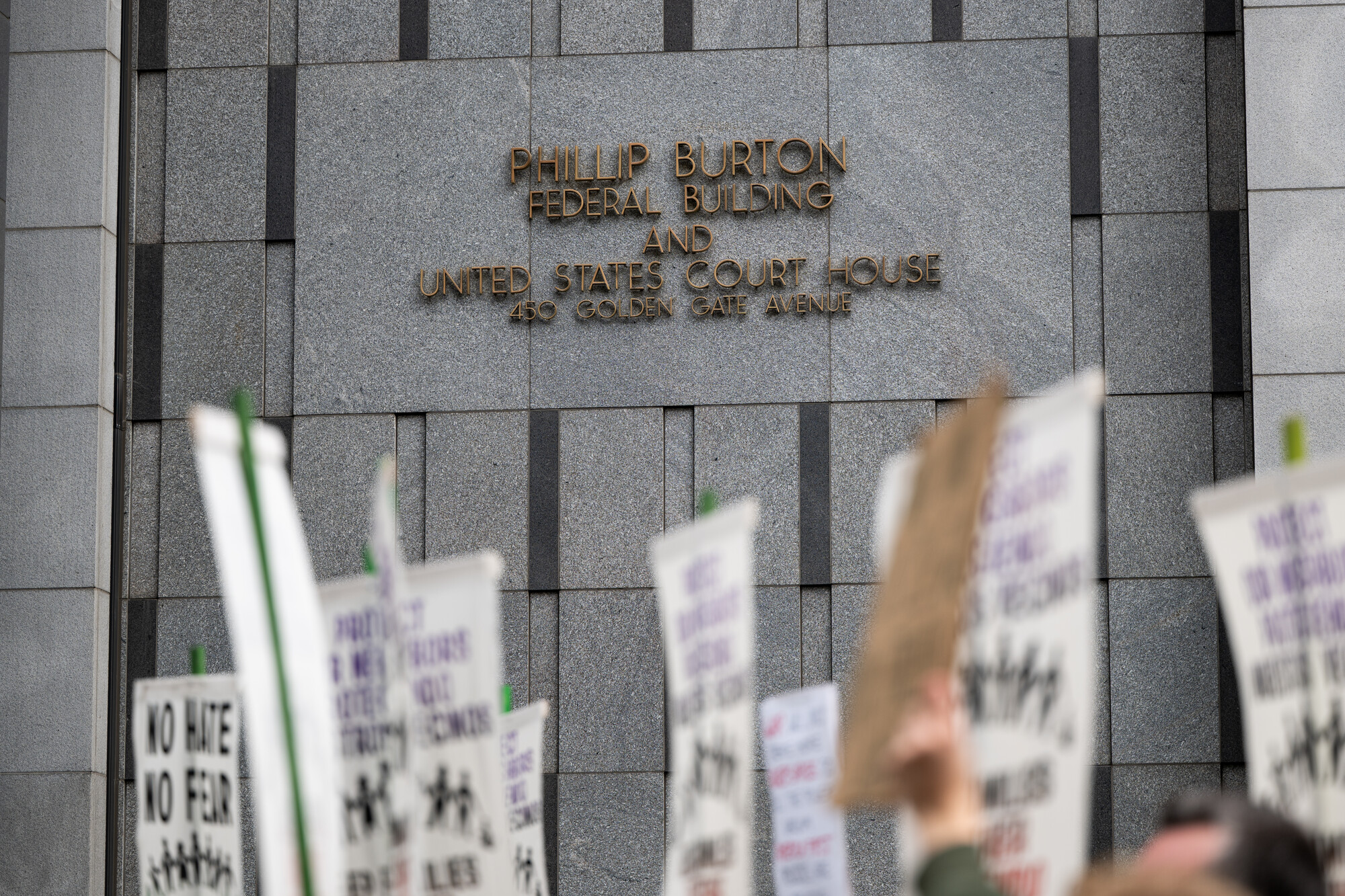
"caption": "Supporters rally outside the U.S. District Court in San Francisco on July 15, 2025, calling on ICE to release Guillermo Medina Reyes ahead of his preliminary injunction hearing.",
"credit": "Beth LaBerge/KQED",
"altTag": null,
"description": null,
"imgSizes": {
"thumbnail": {
"file": "https://cdn.kqed.org/wp-content/uploads/sites/10/2025/07/250715-ImmigrationCourtProtests-16-BL_qed-160x107.jpg",
"width": 160,
"height": 107,
"mimeType": "image/jpeg"
},
"1536x1536": {
"file": "https://cdn.kqed.org/wp-content/uploads/sites/10/2025/07/250715-ImmigrationCourtProtests-16-BL_qed-1536x1024.jpg",
"width": 1536,
"height": 1024,
"mimeType": "image/jpeg"
},
"post-thumbnail": {
"file": "https://cdn.kqed.org/wp-content/uploads/sites/10/2025/07/250715-ImmigrationCourtProtests-16-BL_qed-672x372.jpg",
"width": 672,
"height": 372,
"mimeType": "image/jpeg"
},
"twentyfourteen-full-width": {
"file": "https://cdn.kqed.org/wp-content/uploads/sites/10/2025/07/250715-ImmigrationCourtProtests-16-BL_qed-1038x576.jpg",
"width": 1038,
"height": 576,
"mimeType": "image/jpeg"
},
"kqedFullSize": {
"file": "https://cdn.kqed.org/wp-content/uploads/sites/10/2025/07/250715-ImmigrationCourtProtests-16-BL_qed.jpg",
"width": 2000,
"height": 1333
}
},
"isLoading": false,
"fetchFailed": false
},
"news_12054683": {
"type": "attachments",
"id": "news_12054683",
"meta": {
"index": "attachments_1716263798",
"site": "news",
"id": "12054683",
"found": true
},
"title": "ChowchillaCalMattersGetty",
"publishDate": 1757020998,
"status": "inherit",
"parent": 12054658,
"modified": 1757021291,
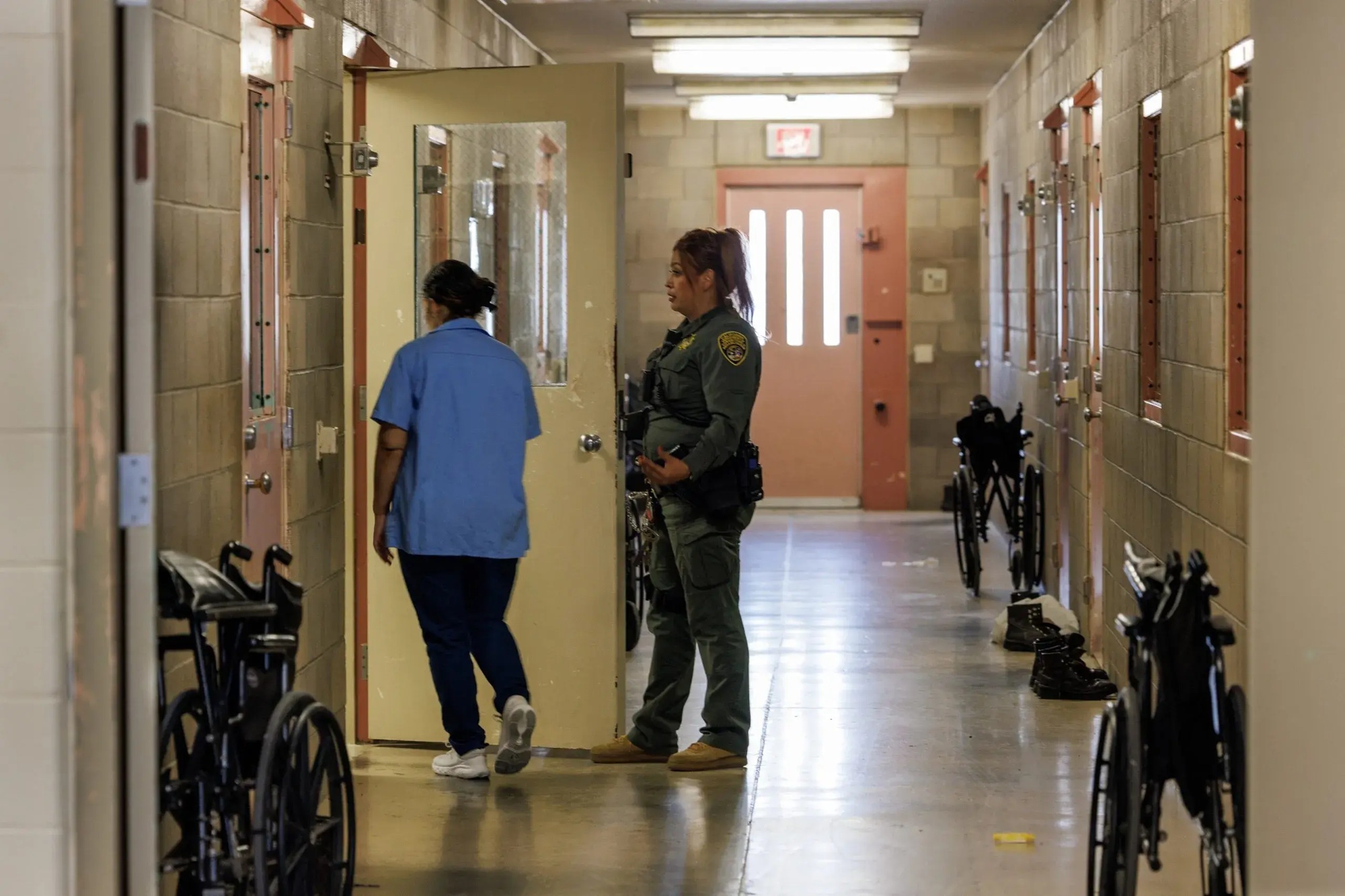
"caption": "An officer opens a dorm room for an inmate at the Central California Women's Facility in Chowchilla on June 18, 2024. After years of complaints from inmates and advocates about hot temperatures inside prison cells, California is finally embarking on a plan to cool some cells. But it’s only a test, and it will only help a fraction of inmates.",
"credit": "Gina Ferazzi/Los Angeles Times via Getty Images",
"altTag": null,
"description": null,
"imgSizes": {
"thumbnail": {
"file": "https://cdn.kqed.org/wp-content/uploads/sites/10/2025/09/ChowchillaCalMattersGetty-160x107.jpg",
"width": 160,
"height": 107,
"mimeType": "image/jpeg"
},
"1536x1536": {
"file": "https://cdn.kqed.org/wp-content/uploads/sites/10/2025/09/ChowchillaCalMattersGetty-1536x1024.jpg",
"width": 1536,
"height": 1024,
"mimeType": "image/jpeg"
},
"post-thumbnail": {
"file": "https://cdn.kqed.org/wp-content/uploads/sites/10/2025/09/ChowchillaCalMattersGetty-672x372.jpg",
"width": 672,
"height": 372,
"mimeType": "image/jpeg"
},
"twentyfourteen-full-width": {
"file": "https://cdn.kqed.org/wp-content/uploads/sites/10/2025/09/ChowchillaCalMattersGetty-1038x576.jpg",
"width": 1038,
"height": 576,
"mimeType": "image/jpeg"
},
"kqedFullSize": {
"file": "https://cdn.kqed.org/wp-content/uploads/sites/10/2025/09/ChowchillaCalMattersGetty.jpg",
"width": 2000,
"height": 1333
}
},
"isLoading": false,
"fetchFailed": false
},
"news_12054579": {
"type": "attachments",
"id": "news_12054579",
"meta": {
"index": "attachments_1716263798",
"site": "news",
"id": "12054579",
"found": true
},
"title": "Mexico v Honduras - Gold Cup 2025: Semifinal",
"publishDate": 1756943543,
"status": "inherit",
"parent": 12054576,
"modified": 1756943610,
"caption": "A Santa Clara Police patch on July 2, 2025, in Santa Clara, California. ",
"credit": "Robbie Jay Barratt/AMA via Getty Images",
"altTag": null,
"description": null,
"imgSizes": {
"thumbnail": {
"file": "https://cdn.kqed.org/wp-content/uploads/sites/10/2025/09/SantaClaraPoliceDepartmentGetty-160x107.jpg",
"width": 160,
"height": 107,
"mimeType": "image/jpeg"
},
"1536x1536": {
"file": "https://cdn.kqed.org/wp-content/uploads/sites/10/2025/09/SantaClaraPoliceDepartmentGetty-1536x1024.jpg",
"width": 1536,
"height": 1024,
"mimeType": "image/jpeg"
},
"post-thumbnail": {
"file": "https://cdn.kqed.org/wp-content/uploads/sites/10/2025/09/SantaClaraPoliceDepartmentGetty-672x372.jpg",
"width": 672,
"height": 372,
"mimeType": "image/jpeg"
},
"twentyfourteen-full-width": {
"file": "https://cdn.kqed.org/wp-content/uploads/sites/10/2025/09/SantaClaraPoliceDepartmentGetty-1038x576.jpg",
"width": 1038,
"height": 576,
"mimeType": "image/jpeg"
},
"kqedFullSize": {
"file": "https://cdn.kqed.org/wp-content/uploads/sites/10/2025/09/SantaClaraPoliceDepartmentGetty.jpg",
"width": 2000,
"height": 1333
}
},
"isLoading": false,
"fetchFailed": false
},
"news_12051233": {
"type": "attachments",
"id": "news_12051233",
"meta": {
"index": "attachments_1716263798",
"site": "news",
"id": "12051233",
"found": true
},
"title": "AngelMontano",
"publishDate": 1754583423,
"status": "inherit",
"parent": 12051256,
"modified": 1754674142,
"caption": "Photos from the GoFundMe account of Angel Montaño.",
"credit": "Courtesy of the Montaño Family",
"altTag": null,
"description": null,
"imgSizes": {
"thumbnail": {
"file": "https://cdn.kqed.org/wp-content/uploads/sites/10/2025/08/AngelMontano-160x90.jpg",
"width": 160,
"height": 90,
"mimeType": "image/jpeg"
},
"post-thumbnail": {
"file": "https://cdn.kqed.org/wp-content/uploads/sites/10/2025/08/AngelMontano-672x372.jpg",
"width": 672,
"height": 372,
"mimeType": "image/jpeg"
},
"kqedFullSize": {
"file": "https://cdn.kqed.org/wp-content/uploads/sites/10/2025/08/AngelMontano.jpg",
"width": 720,
"height": 405
}
},
"isLoading": false,
"fetchFailed": false
},
"news_12009735": {
"type": "attachments",
"id": "news_12009735",
"meta": {
"index": "attachments_1716263798",
"site": "news",
"id": "12009735",
"found": true
},
"title": "241016-OMAR TORRES-GH-1-KQED",
"publishDate": 1729121458,
"status": "inherit",
"parent": 12009671,
"modified": 1729121486,
"caption": "First-term San José Councilmember Omar Torres is facing increasing pressure to resign following a police investigation into text messages he sent referencing sexually explicit acts with a minor.",
"credit": "Joseph Geha/KQED",
"altTag": null,
"description": null,
"imgSizes": {
"medium": {
"file": "https://cdn.kqed.org/wp-content/uploads/sites/10/2024/10/241016-OMAR-TORRES-GH-1-KQED-800x533.jpg",
"width": 800,
"height": 533,
"mimeType": "image/jpeg"
},
"large": {
"file": "https://cdn.kqed.org/wp-content/uploads/sites/10/2024/10/241016-OMAR-TORRES-GH-1-KQED-1020x680.jpg",
"width": 1020,
"height": 680,
"mimeType": "image/jpeg"
},
"thumbnail": {
"file": "https://cdn.kqed.org/wp-content/uploads/sites/10/2024/10/241016-OMAR-TORRES-GH-1-KQED-160x107.jpg",
"width": 160,
"height": 107,
"mimeType": "image/jpeg"
},
"1536x1536": {
"file": "https://cdn.kqed.org/wp-content/uploads/sites/10/2024/10/241016-OMAR-TORRES-GH-1-KQED-1536x1024.jpg",
"width": 1536,
"height": 1024,
"mimeType": "image/jpeg"
},
"post-thumbnail": {
"file": "https://cdn.kqed.org/wp-content/uploads/sites/10/2024/10/241016-OMAR-TORRES-GH-1-KQED-672x372.jpg",
"width": 672,
"height": 372,
"mimeType": "image/jpeg"
},
"twentyfourteen-full-width": {
"file": "https://cdn.kqed.org/wp-content/uploads/sites/10/2024/10/241016-OMAR-TORRES-GH-1-KQED-1038x576.jpg",
"width": 1038,
"height": 576,
"mimeType": "image/jpeg"
},
"full-width": {
"file": "https://cdn.kqed.org/wp-content/uploads/sites/10/2024/10/241016-OMAR-TORRES-GH-1-KQED-1920x1280.jpg",
"width": 1920,
"height": 1280,
"mimeType": "image/jpeg"
},
"kqedFullSize": {
"file": "https://cdn.kqed.org/wp-content/uploads/sites/10/2024/10/241016-OMAR-TORRES-GH-1-KQED.jpg",
"width": 2000,
"height": 1333
}
},
"isLoading": false,
"fetchFailed": false
},
"news_12053962": {
"type": "attachments",
"id": "news_12053962",
"meta": {
"index": "attachments_1716263798",
"site": "news",
"id": "12053962",
"found": true
},
"title": "20230608_ksuzuki_adelanteschool 172_qed",
"publishDate": 1756333041,
"status": "inherit",
"parent": 12053938,
"modified": 1756401471,
"caption": "A sign outside Adelante Dual Language Academy is pictured in San José, California, on June 8, 2023. Records obtained by KQED show a music teacher arrested this year for sexually abusing 10 students at Adelante Academy had complaints at a different school for inappropriately touching students before he was transferred.",
"credit": "Kori Suzuki/KQED",
"altTag": null,
"description": null,
"imgSizes": {
"thumbnail": {
"file": "https://cdn.kqed.org/wp-content/uploads/sites/10/2025/08/20230608_ksuzuki_adelanteschool-172_qed-160x106.jpg",
"width": 160,
"height": 106,
"mimeType": "image/jpeg"
},
"1536x1536": {
"file": "https://cdn.kqed.org/wp-content/uploads/sites/10/2025/08/20230608_ksuzuki_adelanteschool-172_qed-1536x1022.jpg",
"width": 1536,
"height": 1022,
"mimeType": "image/jpeg"
},
"post-thumbnail": {
"file": "https://cdn.kqed.org/wp-content/uploads/sites/10/2025/08/20230608_ksuzuki_adelanteschool-172_qed-672x372.jpg",
"width": 672,
"height": 372,
"mimeType": "image/jpeg"
},
"twentyfourteen-full-width": {
"file": "https://cdn.kqed.org/wp-content/uploads/sites/10/2025/08/20230608_ksuzuki_adelanteschool-172_qed-1038x576.jpg",
"width": 1038,
"height": 576,
"mimeType": "image/jpeg"
},
"kqedFullSize": {
"file": "https://cdn.kqed.org/wp-content/uploads/sites/10/2025/08/20230608_ksuzuki_adelanteschool-172_qed.jpg",
"width": 2000,
"height": 1331
}
},
"isLoading": false,
"fetchFailed": false
},
"news_12049066": {
"type": "attachments",
"id": "news_12049066",
"meta": {
"index": "attachments_1716263798",
"site": "news",
"id": "12049066",
"found": true
},
"title": "SanJosePostOfficeFireTwitter",
"publishDate": 1753136364,
"status": "inherit",
"parent": 12049042,
"modified": 1753139688,
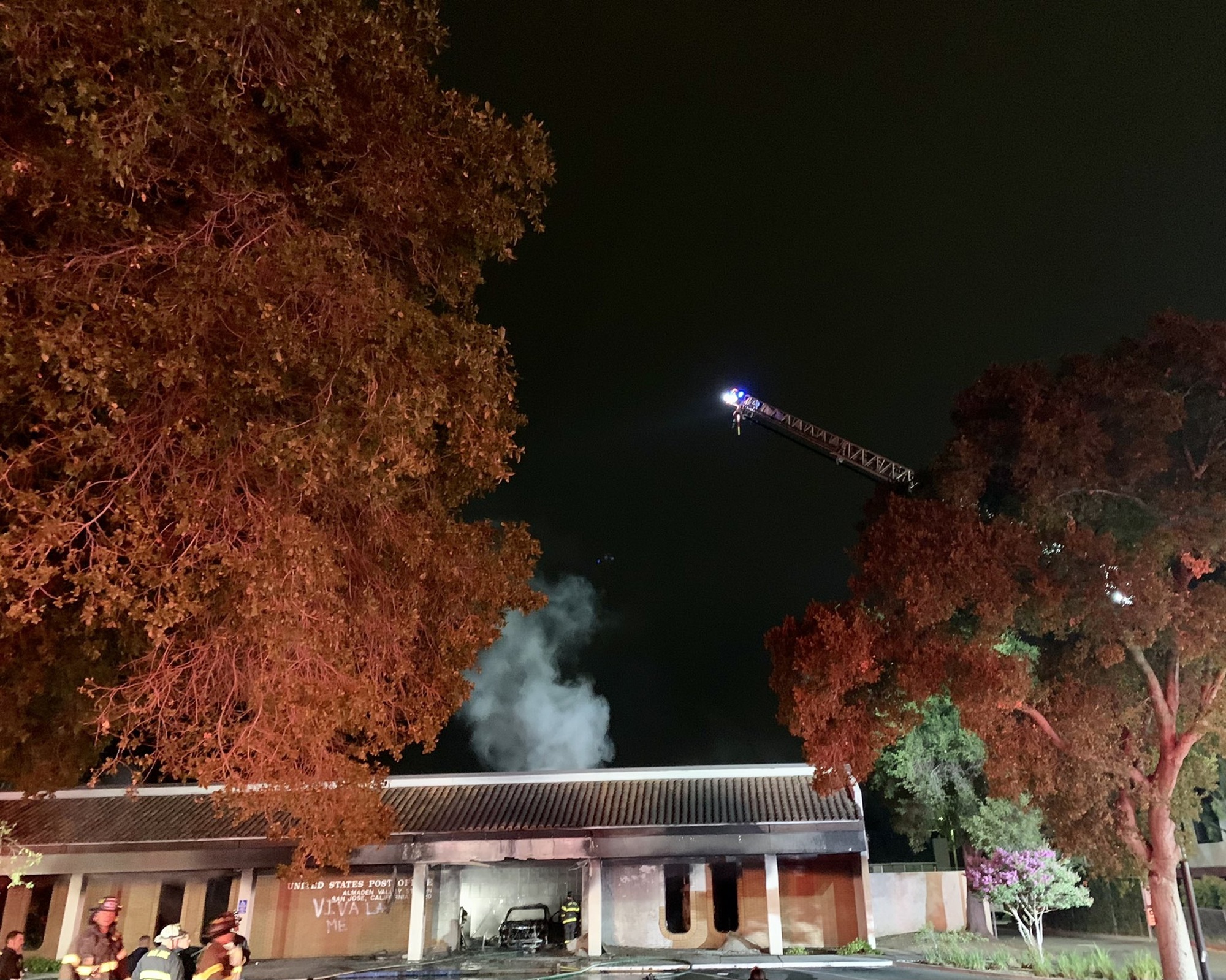
"caption": "San José Fire Department firefighters respond to a fire after a car crashed into a Post Office on Sunday, July 20, 2025, in San José, California.",
"credit": "Courtesy of San José Fire Department via X",
"altTag": null,
"description": null,
"imgSizes": {
"thumbnail": {
"file": "https://cdn.kqed.org/wp-content/uploads/sites/10/2025/07/SanJosePostOfficeFireTwitter-160x128.jpg",
"width": 160,
"height": 128,
"mimeType": "image/jpeg"
},
"1536x1536": {
"file": "https://cdn.kqed.org/wp-content/uploads/sites/10/2025/07/SanJosePostOfficeFireTwitter-1536x1228.jpg",
"width": 1536,
"height": 1228,
"mimeType": "image/jpeg"
},
"post-thumbnail": {
"file": "https://cdn.kqed.org/wp-content/uploads/sites/10/2025/07/SanJosePostOfficeFireTwitter-672x372.jpg",
"width": 672,
"height": 372,
"mimeType": "image/jpeg"
},
"twentyfourteen-full-width": {
"file": "https://cdn.kqed.org/wp-content/uploads/sites/10/2025/07/SanJosePostOfficeFireTwitter-1038x576.jpg",
"width": 1038,
"height": 576,
"mimeType": "image/jpeg"
},
"kqedFullSize": {
"file": "https://cdn.kqed.org/wp-content/uploads/sites/10/2025/07/SanJosePostOfficeFireTwitter.jpg",
"width": 2000,
"height": 1599
}
},
"isLoading": false,
"fetchFailed": false
},
"news_12053472": {
"type": "attachments",
"id": "news_12053472",
"meta": {
"index": "attachments_1716263798",
"site": "news",
"id": "12053472",
"found": true
},
"title": "6FC5A20F-7F41-4BE6-ABB8-702A2C0E7B67remote80beaaf8c5620ae308dd0e490b5e15c7fef2b86e-2-original-Edit",
"publishDate": 1755908337,
"status": "inherit",
"parent": 12053314,
"modified": 1755908417,
"caption": "San Francisco District Attorney Brooke Jenkins announced murder charges against Anthony James Tyree for his alleged role in the fatal 2015 shooting of Maria Lourdes Soza.",
"credit": "Courtesy of the Soza Family",
"altTag": null,
"description": null,
"imgSizes": {
"thumbnail": {
"file": "https://cdn.kqed.org/wp-content/uploads/sites/10/2025/08/6FC5A20F-7F41-4BE6-ABB8-702A2C0E7B67remote80beaaf8c5620ae308dd0e490b5e15c7fef2b86e-2-original-Edit-160x124.jpg",
"width": 160,
"height": 124,
"mimeType": "image/jpeg"
},
"1536x1536": {
"file": "https://cdn.kqed.org/wp-content/uploads/sites/10/2025/08/6FC5A20F-7F41-4BE6-ABB8-702A2C0E7B67remote80beaaf8c5620ae308dd0e490b5e15c7fef2b86e-2-original-Edit-1536x1187.jpg",
"width": 1536,
"height": 1187,
"mimeType": "image/jpeg"
},
"post-thumbnail": {
"file": "https://cdn.kqed.org/wp-content/uploads/sites/10/2025/08/6FC5A20F-7F41-4BE6-ABB8-702A2C0E7B67remote80beaaf8c5620ae308dd0e490b5e15c7fef2b86e-2-original-Edit-672x372.jpg",
"width": 672,
"height": 372,
"mimeType": "image/jpeg"
},
"twentyfourteen-full-width": {
"file": "https://cdn.kqed.org/wp-content/uploads/sites/10/2025/08/6FC5A20F-7F41-4BE6-ABB8-702A2C0E7B67remote80beaaf8c5620ae308dd0e490b5e15c7fef2b86e-2-original-Edit-1038x576.jpg",
"width": 1038,
"height": 576,
"mimeType": "image/jpeg"
},
"kqedFullSize": {
"file": "https://cdn.kqed.org/wp-content/uploads/sites/10/2025/08/6FC5A20F-7F41-4BE6-ABB8-702A2C0E7B67remote80beaaf8c5620ae308dd0e490b5e15c7fef2b86e-2-original-Edit.jpg",
"width": 2000,
"height": 1545
}
},
"isLoading": false,
"fetchFailed": false
},
"news_12053221": {
"type": "attachments",
"id": "news_12053221",
"meta": {
"index": "attachments_1716263798",
"site": "news",
"id": "12053221",
"found": true
},
"title": "SanJoseCourthouse",
"publishDate": 1755811154,
"status": "inherit",
"parent": 12053206,
"modified": 1755811178,
"caption": "Richard Tillman pleaded not guilty to a federal arson charge Thursday at the Robert F. Peckham federal courthouse in San José.",
"credit": "Joseph Geha/KQED",
"altTag": null,
"description": null,
"imgSizes": {
"thumbnail": {
"file": "https://cdn.kqed.org/wp-content/uploads/sites/10/2025/08/SanJoseCourthouse-160x120.jpg",
"width": 160,
"height": 120,
"mimeType": "image/jpeg"
},
"1536x1536": {
"file": "https://cdn.kqed.org/wp-content/uploads/sites/10/2025/08/SanJoseCourthouse-1536x1156.jpg",
"width": 1536,
"height": 1156,
"mimeType": "image/jpeg"
},
"post-thumbnail": {
"file": "https://cdn.kqed.org/wp-content/uploads/sites/10/2025/08/SanJoseCourthouse-672x372.jpg",
"width": 672,
"height": 372,
"mimeType": "image/jpeg"
},
"twentyfourteen-full-width": {
"file": "https://cdn.kqed.org/wp-content/uploads/sites/10/2025/08/SanJoseCourthouse-1038x576.jpg",
"width": 1038,
"height": 576,
"mimeType": "image/jpeg"
},
"kqedFullSize": {
"file": "https://cdn.kqed.org/wp-content/uploads/sites/10/2025/08/SanJoseCourthouse.jpg",
"width": 2000,
"height": 1505
}
},
"isLoading": false,
"fetchFailed": false
},
"news_12053169": {
"type": "attachments",
"id": "news_12053169",
"meta": {
"index": "attachments_1716263798",
"site": "news",
"id": "12053169",
"found": true
},
"title": "250821-MONK HEARING-MD-07-KQED",
"publishDate": 1755802264,
"status": "inherit",
"parent": 0,
"modified": 1755802298,
"caption": "Debbie Bow holds a banner calling for justice for Maurice Monk outside the Wiley Manuel Courthouse in Oakland on Aug. 21, 2025.",
"credit": "Martin do Nascimento/KQED",
"altTag": null,
"description": null,
"imgSizes": {
"thumbnail": {
"file": "https://cdn.kqed.org/wp-content/uploads/sites/10/2025/08/250821-MONK-HEARING-MD-07-KQED-160x107.jpg",
"width": 160,
"height": 107,
"mimeType": "image/jpeg"
},
"1536x1536": {
"file": "https://cdn.kqed.org/wp-content/uploads/sites/10/2025/08/250821-MONK-HEARING-MD-07-KQED-1536x1025.jpg",
"width": 1536,
"height": 1025,
"mimeType": "image/jpeg"
},
"post-thumbnail": {
"file": "https://cdn.kqed.org/wp-content/uploads/sites/10/2025/08/250821-MONK-HEARING-MD-07-KQED-672x372.jpg",
"width": 672,
"height": 372,
"mimeType": "image/jpeg"
},
"twentyfourteen-full-width": {
"file": "https://cdn.kqed.org/wp-content/uploads/sites/10/2025/08/250821-MONK-HEARING-MD-07-KQED-1038x576.jpg",
"width": 1038,
"height": 576,
"mimeType": "image/jpeg"
},
"kqedFullSize": {
"file": "https://cdn.kqed.org/wp-content/uploads/sites/10/2025/08/250821-MONK-HEARING-MD-07-KQED.jpg",
"width": 2000,
"height": 1334
}
},
"isLoading": false,
"fetchFailed": false
},
"news_12053154": {
"type": "attachments",
"id": "news_12053154",
"meta": {
"index": "attachments_1716263798",
"site": "news",
"id": "12053154",
"found": true
},
"title": "250821-OAK CHINATOWN ROBBERIES-MD-01-KQED",
"publishDate": 1755801207,
"status": "inherit",
"parent": 0,
"modified": 1755801424,
"caption": "The Sterling Bank & Trust in Oakland's Chinatown was one of two banks targeted in early morning robberies on Aug. 21, 2025.",
"credit": "Martin do Nascimento/KQED",
"altTag": null,
"description": null,
"imgSizes": {
"thumbnail": {
"file": "https://cdn.kqed.org/wp-content/uploads/sites/10/2025/08/250821-OAK-CHINATOWN-ROBBERIES-MD-01-KQED-160x107.jpg",
"width": 160,
"height": 107,
"mimeType": "image/jpeg"
},
"1536x1536": {
"file": "https://cdn.kqed.org/wp-content/uploads/sites/10/2025/08/250821-OAK-CHINATOWN-ROBBERIES-MD-01-KQED-1536x1025.jpg",
"width": 1536,
"height": 1025,
"mimeType": "image/jpeg"
},
"post-thumbnail": {
"file": "https://cdn.kqed.org/wp-content/uploads/sites/10/2025/08/250821-OAK-CHINATOWN-ROBBERIES-MD-01-KQED-672x372.jpg",
"width": 672,
"height": 372,
"mimeType": "image/jpeg"
},
"twentyfourteen-full-width": {
"file": "https://cdn.kqed.org/wp-content/uploads/sites/10/2025/08/250821-OAK-CHINATOWN-ROBBERIES-MD-01-KQED-1038x576.jpg",
"width": 1038,
"height": 576,
"mimeType": "image/jpeg"
},
"kqedFullSize": {
"file": "https://cdn.kqed.org/wp-content/uploads/sites/10/2025/08/250821-OAK-CHINATOWN-ROBBERIES-MD-01-KQED.jpg",
"width": 2000,
"height": 1334
}
},
"isLoading": false,
"fetchFailed": false
}
},
"audioPlayerReducer": {
"postId": "stream_live",
"isPaused": true,
"isPlaying": false,
"pfsActive": false,
"pledgeModalIsOpen": true,
"playerDrawerIsOpen": false,
"liveAudioPlayStartedAt": 0,
"liveAudioPlayContext": ""
},
"authorsReducer": {
"byline_news_12055470": {
"type": "authors",
"id": "byline_news_12055470",
"meta": {
"override": true
},
"slug": "byline_news_12055470",
"name": "Nicholas Riccardi and Ali Swenson, The Associated Press",
"isLoading": false
},
"byline_news_12054658": {
"type": "authors",
"id": "byline_news_12054658",
"meta": {
"override": true
},
"slug": "byline_news_12054658",
"name": "Jeanne Kuang, CalMatters",
"isLoading": false
},
"hmcdede": {
"type": "authors",
"id": "11635",
"meta": {
"index": "authors_1716337520",
"id": "11635",
"found": true
},
"name": "Holly McDede",
"firstName": "Holly",
"lastName": "McDede",
"slug": "hmcdede",
"email": "hmcdede@KQED.org",
"display_author_email": false,
"staff_mastheads": [],
"title": "KQED Contributor",
"bio": null,
"avatar": "https://secure.gravatar.com/avatar/35d1a1f5422c9d266f7ace9348d170f2136671a65fffc90a592e4d7fbf8dc3f6?s=600&d=blank&r=g",
"twitter": null,
"bluesky": null,
"facebook": null,
"instagram": null,
"linkedin": null,
"sites": [
{
"site": "arts",
"roles": [
"editor"
]
},
{
"site": "news",
"roles": [
"edit_others_posts",
"editor"
]
},
{
"site": "science",
"roles": [
"editor"
]
},
{
"site": "forum",
"roles": [
"editor"
]
},
{
"site": "perspectives",
"roles": [
"administrator"
]
}
],
"headData": {
"title": "Holly McDede | KQED",
"description": "KQED Contributor",
"ogImgSrc": "https://secure.gravatar.com/avatar/35d1a1f5422c9d266f7ace9348d170f2136671a65fffc90a592e4d7fbf8dc3f6?s=600&d=blank&r=g",
"twImgSrc": "https://secure.gravatar.com/avatar/35d1a1f5422c9d266f7ace9348d170f2136671a65fffc90a592e4d7fbf8dc3f6?s=600&d=blank&r=g"
},
"isLoading": false,
"link": "/author/hmcdede"
},
"jgeha": {
"type": "authors",
"id": "11906",
"meta": {
"index": "authors_1716337520",
"id": "11906",
"found": true
},
"name": "Joseph Geha",
"firstName": "Joseph",
"lastName": "Geha",
"slug": "jgeha",
"email": "jgeha@kqed.org",
"display_author_email": false,
"staff_mastheads": [
"news",
"science"
],
"title": "KQED Contributor",
"bio": null,
"avatar": "https://secure.gravatar.com/avatar/ea84d2b6dd93d6369d453edf19dd583f117cd1759d2d9c9c92f9de77017354fe?s=600&d=blank&r=g",
"twitter": null,
"bluesky": null,
"facebook": null,
"instagram": null,
"linkedin": null,
"sites": [
{
"site": "news",
"roles": [
"editor"
]
},
{
"site": "liveblog",
"roles": [
"author"
]
}
],
"headData": {
"title": "Joseph Geha | KQED",
"description": "KQED Contributor",
"ogImgSrc": "https://secure.gravatar.com/avatar/ea84d2b6dd93d6369d453edf19dd583f117cd1759d2d9c9c92f9de77017354fe?s=600&d=blank&r=g",
"twImgSrc": "https://secure.gravatar.com/avatar/ea84d2b6dd93d6369d453edf19dd583f117cd1759d2d9c9c92f9de77017354fe?s=600&d=blank&r=g"
},
"isLoading": false,
"link": "/author/jgeha"
},
"kdebenedetti": {
"type": "authors",
"id": "11913",
"meta": {
"index": "authors_1716337520",
"id": "11913",
"found": true
},
"name": "Katie DeBenedetti",
"firstName": "Katie",
"lastName": "DeBenedetti",
"slug": "kdebenedetti",
"email": "kdebenedetti@kqed.org",
"display_author_email": false,
"staff_mastheads": [
"news",
"science"
],
"title": "KQED Contributor",
"bio": "Katie DeBenedetti is a digital reporter covering daily news for the Express Desk. Prior to joining KQED as a culture reporting intern in January 2024, she covered education and city government for the Napa Valley Register.",
"avatar": "https://secure.gravatar.com/avatar/6e31073cb8f7e4214ab03f42771d0f45?s=600&d=blank&r=g",
"twitter": null,
"facebook": null,
"instagram": null,
"linkedin": null,
"sites": [
{
"site": "news",
"roles": [
"author"
]
},
{
"site": "science",
"roles": [
"author"
]
},
{
"site": "liveblog",
"roles": [
"author"
]
}
],
"headData": {
"title": "Katie DeBenedetti | KQED",
"description": "KQED Contributor",
"ogImgSrc": "https://secure.gravatar.com/avatar/6e31073cb8f7e4214ab03f42771d0f45?s=600&d=blank&r=g",
"twImgSrc": "https://secure.gravatar.com/avatar/6e31073cb8f7e4214ab03f42771d0f45?s=600&d=blank&r=g"
},
"isLoading": false,
"link": "/author/kdebenedetti"
},
"gzada": {
"type": "authors",
"id": "11929",
"meta": {
"index": "authors_1716337520",
"id": "11929",
"found": true
},
"name": "Gilare Zada",
"firstName": "Gilare",
"lastName": "Zada",
"slug": "gzada",
"email": "gzada@kqed.org",
"display_author_email": true,
"staff_mastheads": [
"news"
],
"title": null,
"bio": "Gilare Zada is a Kurdish-American from San Diego, CA. Storytelling, fitness, and binge reading are some of her passions outside of news reporting. Her work has appeared in Mission Local, the Peninsula Press, the San Francisco Press Club, and more. She also writes as a class correspondent for the Stanford Magazine - go Card!",
"avatar": "https://secure.gravatar.com/avatar/33a75f2b947669a488a805edec3fbf3838c1cedaedda710e983770633b4d6a75?s=600&d=blank&r=g",
"twitter": null,
"bluesky": null,
"facebook": null,
"instagram": null,
"linkedin": null,
"sites": [
{
"site": "",
"roles": [
"editor"
]
},
{
"site": "arts",
"roles": [
"editor"
]
},
{
"site": "news",
"roles": [
"administrator"
]
},
{
"site": "science",
"roles": [
"editor"
]
}
],
"headData": {
"title": "Gilare Zada | KQED",
"description": null,
"ogImgSrc": "https://secure.gravatar.com/avatar/33a75f2b947669a488a805edec3fbf3838c1cedaedda710e983770633b4d6a75?s=600&d=blank&r=g",
"twImgSrc": "https://secure.gravatar.com/avatar/33a75f2b947669a488a805edec3fbf3838c1cedaedda710e983770633b4d6a75?s=600&d=blank&r=g"
},
"isLoading": false,
"link": "/author/gzada"
},
"mbernal": {
"type": "authors",
"id": "11977",
"meta": {
"index": "authors_1716337520",
"id": "11977",
"found": true
},
"name": "María Fernanda Bernal",
"firstName": "María Fernanda",
"lastName": "Bernal",
"slug": "mbernal",
"email": "mbernal@kqed.org",
"display_author_email": false,
"staff_mastheads": [
"news"
],
"title": "KQED Contributor",
"bio": "Maria Fernanda is a UC Berkeley J-School alum and was named Innovation Fellow in 2023. She was the 2022 White House Correspondents' Fellow and Cokie Roberts Scholar. In her time at the Investigative Reporting Program, she led an investigative team and received a National Press Award in 2025 for the story on Chevron's Manipulation of Media. She is most proud of her international recognition with the first place podcast award from the Insituto Mexicano de la radio in 2021. Maria Fernanda is a Bay Area-based journalist who is currently working as a general assignment reporter, weekend host and producer at KQED.",
"avatar": "https://secure.gravatar.com/avatar/f44c9ad4bd3426006b0def803428a08a?s=600&d=blank&r=g",
"twitter": null,
"facebook": null,
"instagram": null,
"linkedin": null,
"sites": [
{
"site": "arts",
"roles": [
"editor"
]
},
{
"site": "news",
"roles": [
"editor",
"author"
]
},
{
"site": "science",
"roles": [
"editor"
]
}
],
"headData": {
"title": "María Fernanda Bernal | KQED",
"description": "KQED Contributor",
"ogImgSrc": "https://secure.gravatar.com/avatar/f44c9ad4bd3426006b0def803428a08a?s=600&d=blank&r=g",
"twImgSrc": "https://secure.gravatar.com/avatar/f44c9ad4bd3426006b0def803428a08a?s=600&d=blank&r=g"
},
"isLoading": false,
"link": "/author/mbernal"
}
},
"pagesReducer": {
"news_category_criminal-justice": {
"type": "terms",
"id": "news_34167",
"meta": {
"index": "terms_1716263798",
"site": "news",
"id": "34167",
"score": 11.188038
},
"name": "Criminal Justice",
"slug": "criminal-justice",
"taxonomy": "category",
"description": null,
"featImg": null,
"headData": {
"title": "Criminal Justice Archives | KQED News",
"description": null,
"ogTitle": null,
"ogDescription": null,
"ogImgId": null,
"twTitle": null,
"twDescription": null,
"twImgId": null
},
"ttid": 34184,
"isLoading": false,
"title": "Criminal Justice",
"pageMeta": {
"site": "news",
"WpPageTemplate": "page-topic-editorial",
"currentPage": 20
},
"blocks": [
{
"blockName": "kqed/post-list",
"attrs": {
"layout": "cardArticle2",
"query": "posts/news?category=criminal-justice",
"seeMore": false,
"paginated": true,
"page": 20
}
},
{
"blockName": "kqed/ad"
}
]
}
},
"pfsSessionReducer": {},
"postsReducer": {
"stream_live": {
"type": "live",
"id": "stream_live",
"audioUrl": "https://streams.kqed.org/kqedradio",
"title": "Live Stream",
"excerpt": "Live Stream information currently unavailable.",
"link": "/radio",
"featImg": "",
"label": {
"name": "KQED Live",
"link": "/"
}
},
"stream_kqedNewscast": {
"type": "posts",
"id": "stream_kqedNewscast",
"audioUrl": "https://www.kqed.org/.stream/anon/radio/RDnews/newscast.mp3?_=1",
"title": "KQED Newscast",
"featImg": "",
"label": {
"name": "88.5 FM",
"link": "/"
}
},
"news_12055470": {
"type": "posts",
"id": "news_12055470",
"meta": {
"index": "posts_1716263798",
"site": "news",
"id": "12055470",
"score": null,
"sort": [
1757535308000
]
},
"guestAuthors": [],
"slug": "conservative-activist-charlie-kirk-in-critical-condition-after-being-shot-during-utah-college-event",
"title": "Charlie Kirk, Who Helped Build Support for Trump Among Young People, Dies After Campus Shooting",
"publishDate": 1757535308,
"format": "standard",
"headTitle": "Charlie Kirk, Who Helped Build Support for Trump Among Young People, Dies After Campus Shooting | KQED",
"labelTerm": {
"site": "news"
},
"content": "\u003cp>Charlie Kirk, who rose from a teenage conservative campus activist to a top podcaster, culture warrior and ally of President Donald Trump, \u003ca href=\"https://apnews.com/article/charlie-kirk-conservative-activist-shot-546165a8151104e0938a5e085be1e8bd\">was shot and killed Wednesday\u003c/a> during one of his trademark public appearances at a college in Utah. He was 31.\u003c/p>\n\u003cp>Kirk died doing what made him a potent political force — rallying the right on a college campus, this time Utah Valley University. His shooting is one of an escalating number of attacks on political figures, from the assassination of a Democratic state lawmaker and her husband in Minnesota to last summer’s shooting of Trump, that have roiled the nation.\u003c/p>\n\u003cp>Trump announced Kirk’s death on his social media site, Truth Social: “No one understood or had the Heart of the Youth in the United States of America better than Charlie,” Trump wrote.\u003c/p>\n\u003cp>[ad fullwidth]\u003c/p>\n\u003cp>Kirk personified the pugnacious, populist conservatism that has taken over the Republican Party in the age of Trump. He launched his organization, Turning Point USA, in 2012, targeting younger people and venturing onto liberal-leaning college campuses where many GOP activists were nervous to tread.\u003c/p>\n\u003cp>A backer of Trump during the president’s initial 2016 run, Kirk took Turning Point from one of a constellation of well-funded conservative groups to the center of the right-of-center universe.\u003c/p>\n\u003cp>Turning Point’s political wing helped run get-out-the-vote for Trump’s 2024 campaign, trying to energize disaffected conservatives who rarely vote. Trump won Arizona, Turning Point’s home state, by five percentage points after narrowly losing it in 2020. The group is known for its flamboyant events that often feature strobe lighting and pyrotechnics. It claims more than 250,000 student members.\u003c/p>\n\u003cfigure id=\"attachment_12055472\" class=\"wp-caption aligncenter\" style=\"max-width: 2000px\">\u003cimg loading=\"lazy\" decoding=\"async\" class=\"size-full wp-image-12055472\" src=\"https://cdn.kqed.org/wp-content/uploads/sites/10/2025/09/CharlieKirkAP.jpg\" alt=\"\" width=\"2000\" height=\"1333\" srcset=\"https://cdn.kqed.org/wp-content/uploads/sites/10/2025/09/CharlieKirkAP.jpg 2000w, https://cdn.kqed.org/wp-content/uploads/sites/10/2025/09/CharlieKirkAP-160x107.jpg 160w, https://cdn.kqed.org/wp-content/uploads/sites/10/2025/09/CharlieKirkAP-1536x1024.jpg 1536w\" sizes=\"auto, (max-width: 2000px) 100vw, 2000px\">\u003cfigcaption class=\"wp-caption-text\">Charlie Kirk speaks during a town hall meeting on March 17, 2025, in Oconomowoc, Wisconsin. \u003ccite>(Jeffrey Phelps/AP Photo)\u003c/cite>\u003c/figcaption>\u003c/figure>\n\u003cp>Trump on Wednesday praised Kirk, who started as an unofficial adviser during Trump’s 2016 campaign and more recently became a confidant. “He was a very, very good friend of mine and he was a tremendous person,” Trump told the New York Post.\u003c/p>\n\u003cp>Kirk showed off an apocalyptic style in his popular podcast, radio show and on the campaign trail. During an appearance with Trump in Georgia last fall, he said that Democrats “stand for everything God hates.” Kirk called the Trump vs. Kamala Harris choice “a spiritual battle.”\u003c/p>\n\u003cp>“This is a Christian state. I’d like to see it stay that way,” Kirk told the 10,000 or so Georgians, who at one point joined Kirk in a deafening chant of “Christ is King! Christ is King!”\u003c/p>\n\u003cp>Kirk had also remained a regular presence on college campuses. Last year, for the social media program “Surrounded,” he faced off against 20 liberal college students to defend his viewpoints, including that abortion is murder and should be illegal.[aside postID=news_12054838 hero='https://cdn.kqed.org/wp-content/uploads/sites/10/2025/09/250905_OAKLANDWALKOUT_GH-KQED.jpg']Kirk was married to podcaster Erika Frantzve. They have two young children.\u003c/p>\n\u003cp>Turning Point was founded in suburban Chicago in 2012 by a then 18-year-old Kirk and William Montgomery, a tea party activist, to proselytize on college campuses for low taxes and limited government. It was not an immediate success.\u003c/p>\n\u003cp>But Kirk’s zeal for confronting liberals in academia eventually won over an influential set of conservative financiers.\u003c/p>\n\u003cp>Despite early misgivings, Turning Point enthusiastically backed Trump after he clinched the GOP nomination in 2016. Kirk served as a personal aide to Donald Trump Jr., the former president’s eldest son, during the general election campaign.\u003c/p>\n\u003cp>Soon, Kirk was a regular presence on cable TV, where he leaned into the culture wars and heaped praise on the then-president. Trump and his son were equally effusive and often spoke at Turning Point conferences.\u003c/p>\n\u003cp>As money poured in, Kirk bought a $4.75 million Spanish-style estate on a gated Arizona country club. Turning Point steered millions of dollars to contractors owned by Kirk and his associates, and some Republicans were skeptical when it announced it would spearhead an attempt to turn out infrequent voters during Trump’s 2024 campaign.\u003c/p>\n\u003cp>But as younger voters shifted right in 2024 and Trump ran up a five-point margin of victory in Arizona, Kirk and his allies claimed vindication of his view of a sharp-elbowed, culture-war-oriented conservatism.\u003c/p>\n\u003cp>Kirk’s evangelical Christian beliefs were intertwined with his political perspective, and he argued that there was no true separation of church and state.\u003c/p>\n\u003cp>He also referenced the Seven Mountain Mandate, which specifies seven areas where Christians are to lead — politics, religion, media, business, family, education and the arts, and entertainment.\u003c/p>\n\u003cp>Kirk argued for a new conservatism that advocated for freedom of speech, challenging Big Tech and the media, and centering working-class Americans beyond the nation’s capital.\u003c/p>\n\u003cp>“We have to ask ourselves a question as a conservative movement: Are we going to revert back to the party of the status quo ruling class?” he said in his speech opening the Conservative Political Action Conference in 2020.\u003c/p>\n\u003cp>“Or are we going to learn from what I call the MAGA doctrine? The MAGA doctrine, which is a doctrine of American renewal, revival, one that America is the greatest country in the history of the world.”\u003c/p>\n\u003cp>\u003c/p>\n",
"blocks": [],
"excerpt": "Charlie Kirk, who rose from a teenage conservative campus activist to a top podcaster, and ally of President Donald Trump, has been shot and killed. The shooting Wednesday occurred during one of his trademark appearances at a college in Utah.",
"status": "publish",
"parent": 0,
"modified": 1757544305,
"stats": {
"hasAudio": false,
"hasVideo": false,
"hasChartOrMap": false,
"iframeSrcs": [],
"hasGoogleForm": false,
"hasGallery": false,
"hasHearkenModule": false,
"hasPolis": false,
"paragraphCount": 23,
"wordCount": 912
},
"headData": {
"title": "Charlie Kirk, Who Helped Build Support for Trump Among Young People, Dies After Campus Shooting | KQED",
"description": "Charlie Kirk, who rose from a teenage conservative campus activist to a top podcaster, and ally of President Donald Trump, has been shot and killed. The shooting Wednesday occurred during one of his trademark appearances at a college in Utah.",
"ogTitle": "",
"ogDescription": "",
"ogImgId": "",
"twTitle": "",
"twDescription": "",
"twImgId": "",
"schema": {
"@context": "https://schema.org",
"@type": "NewsArticle",
"headline": "Charlie Kirk, Who Helped Build Support for Trump Among Young People, Dies After Campus Shooting",
"datePublished": "2025-09-10T13:15:08-07:00",
"dateModified": "2025-09-10T15:45:05-07:00",
"image": "https://cdn.kqed.org/wp-content/uploads/2020/02/KQED-OG-Image@1x.png",
"isAccessibleForFree": "True",
"publisher": {
"@type": "NewsMediaOrganization",
"@id": "https://www.kqed.org/#organization",
"name": "KQED",
"logo": "https://cdn.kqed.org/wp-content/uploads/2020/02/KQED-OG-Image@1x.png",
"url": "https://www.kqed.org",
"sameAs": [
"https://www.facebook.com/KQED",
"https://twitter.com/KQED",
"https://www.instagram.com/kqed/",
"https://www.tiktok.com/@kqedofficial",
"https://www.linkedin.com/company/kqed",
"https://www.youtube.com/channel/UCeC0IOo7i1P_61zVUWbJ4nw"
]
}
}
},
"primaryCategory": {
"termId": 13,
"slug": "politics",
"name": "Politics"
},
"sticky": false,
"nprByline": "Nicholas Riccardi and Ali Swenson, The Associated Press",
"nprStoryId": "kqed-12055470",
"templateType": "standard",
"featuredImageType": "standard",
"excludeFromSiteSearch": "Include",
"showOnAuthorArchivePages": "No",
"articleAge": "0",
"path": "/news/12055470/conservative-activist-charlie-kirk-in-critical-condition-after-being-shot-during-utah-college-event",
"audioTrackLength": null,
"parsedContent": [
{
"type": "contentString",
"content": "\u003cdiv class=\"post-body\">\u003cp>\u003cp>Charlie Kirk, who rose from a teenage conservative campus activist to a top podcaster, culture warrior and ally of President Donald Trump, \u003ca href=\"https://apnews.com/article/charlie-kirk-conservative-activist-shot-546165a8151104e0938a5e085be1e8bd\">was shot and killed Wednesday\u003c/a> during one of his trademark public appearances at a college in Utah. He was 31.\u003c/p>\n\u003cp>Kirk died doing what made him a potent political force — rallying the right on a college campus, this time Utah Valley University. His shooting is one of an escalating number of attacks on political figures, from the assassination of a Democratic state lawmaker and her husband in Minnesota to last summer’s shooting of Trump, that have roiled the nation.\u003c/p>\n\u003cp>Trump announced Kirk’s death on his social media site, Truth Social: “No one understood or had the Heart of the Youth in the United States of America better than Charlie,” Trump wrote.\u003c/p>\n\u003cp>\u003c/p>\u003c/div>",
"attributes": {
"named": {},
"numeric": []
}
},
{
"type": "component",
"content": "",
"name": "ad",
"attributes": {
"named": {
"label": "fullwidth"
},
"numeric": [
"fullwidth"
]
}
},
{
"type": "contentString",
"content": "\u003cdiv class=\"post-body\">\u003cp>\u003c/p>\n\u003cp>Kirk personified the pugnacious, populist conservatism that has taken over the Republican Party in the age of Trump. He launched his organization, Turning Point USA, in 2012, targeting younger people and venturing onto liberal-leaning college campuses where many GOP activists were nervous to tread.\u003c/p>\n\u003cp>A backer of Trump during the president’s initial 2016 run, Kirk took Turning Point from one of a constellation of well-funded conservative groups to the center of the right-of-center universe.\u003c/p>\n\u003cp>Turning Point’s political wing helped run get-out-the-vote for Trump’s 2024 campaign, trying to energize disaffected conservatives who rarely vote. Trump won Arizona, Turning Point’s home state, by five percentage points after narrowly losing it in 2020. The group is known for its flamboyant events that often feature strobe lighting and pyrotechnics. It claims more than 250,000 student members.\u003c/p>\n\u003cfigure id=\"attachment_12055472\" class=\"wp-caption aligncenter\" style=\"max-width: 2000px\">\u003cimg loading=\"lazy\" decoding=\"async\" class=\"size-full wp-image-12055472\" src=\"https://cdn.kqed.org/wp-content/uploads/sites/10/2025/09/CharlieKirkAP.jpg\" alt=\"\" width=\"2000\" height=\"1333\" srcset=\"https://cdn.kqed.org/wp-content/uploads/sites/10/2025/09/CharlieKirkAP.jpg 2000w, https://cdn.kqed.org/wp-content/uploads/sites/10/2025/09/CharlieKirkAP-160x107.jpg 160w, https://cdn.kqed.org/wp-content/uploads/sites/10/2025/09/CharlieKirkAP-1536x1024.jpg 1536w\" sizes=\"auto, (max-width: 2000px) 100vw, 2000px\">\u003cfigcaption class=\"wp-caption-text\">Charlie Kirk speaks during a town hall meeting on March 17, 2025, in Oconomowoc, Wisconsin. \u003ccite>(Jeffrey Phelps/AP Photo)\u003c/cite>\u003c/figcaption>\u003c/figure>\n\u003cp>Trump on Wednesday praised Kirk, who started as an unofficial adviser during Trump’s 2016 campaign and more recently became a confidant. “He was a very, very good friend of mine and he was a tremendous person,” Trump told the New York Post.\u003c/p>\n\u003cp>Kirk showed off an apocalyptic style in his popular podcast, radio show and on the campaign trail. During an appearance with Trump in Georgia last fall, he said that Democrats “stand for everything God hates.” Kirk called the Trump vs. Kamala Harris choice “a spiritual battle.”\u003c/p>\n\u003cp>“This is a Christian state. I’d like to see it stay that way,” Kirk told the 10,000 or so Georgians, who at one point joined Kirk in a deafening chant of “Christ is King! Christ is King!”\u003c/p>\n\u003cp>Kirk had also remained a regular presence on college campuses. Last year, for the social media program “Surrounded,” he faced off against 20 liberal college students to defend his viewpoints, including that abortion is murder and should be illegal.\u003c/p>\u003c/div>",
"attributes": {
"named": {},
"numeric": []
}
},
{
"type": "component",
"content": "",
"name": "aside",
"attributes": {
"named": {
"postid": "news_12054838",
"hero": "https://cdn.kqed.org/wp-content/uploads/sites/10/2025/09/250905_OAKLANDWALKOUT_GH-KQED.jpg",
"label": ""
},
"numeric": []
}
},
{
"type": "contentString",
"content": "\u003cdiv class=\"post-body\">\u003cp>Kirk was married to podcaster Erika Frantzve. They have two young children.\u003c/p>\n\u003cp>Turning Point was founded in suburban Chicago in 2012 by a then 18-year-old Kirk and William Montgomery, a tea party activist, to proselytize on college campuses for low taxes and limited government. It was not an immediate success.\u003c/p>\n\u003cp>But Kirk’s zeal for confronting liberals in academia eventually won over an influential set of conservative financiers.\u003c/p>\n\u003cp>Despite early misgivings, Turning Point enthusiastically backed Trump after he clinched the GOP nomination in 2016. Kirk served as a personal aide to Donald Trump Jr., the former president’s eldest son, during the general election campaign.\u003c/p>\n\u003cp>Soon, Kirk was a regular presence on cable TV, where he leaned into the culture wars and heaped praise on the then-president. Trump and his son were equally effusive and often spoke at Turning Point conferences.\u003c/p>\n\u003cp>As money poured in, Kirk bought a $4.75 million Spanish-style estate on a gated Arizona country club. Turning Point steered millions of dollars to contractors owned by Kirk and his associates, and some Republicans were skeptical when it announced it would spearhead an attempt to turn out infrequent voters during Trump’s 2024 campaign.\u003c/p>\n\u003cp>But as younger voters shifted right in 2024 and Trump ran up a five-point margin of victory in Arizona, Kirk and his allies claimed vindication of his view of a sharp-elbowed, culture-war-oriented conservatism.\u003c/p>\n\u003cp>Kirk’s evangelical Christian beliefs were intertwined with his political perspective, and he argued that there was no true separation of church and state.\u003c/p>\n\u003cp>He also referenced the Seven Mountain Mandate, which specifies seven areas where Christians are to lead — politics, religion, media, business, family, education and the arts, and entertainment.\u003c/p>\n\u003cp>Kirk argued for a new conservatism that advocated for freedom of speech, challenging Big Tech and the media, and centering working-class Americans beyond the nation’s capital.\u003c/p>\n\u003cp>“We have to ask ourselves a question as a conservative movement: Are we going to revert back to the party of the status quo ruling class?” he said in his speech opening the Conservative Political Action Conference in 2020.\u003c/p>\n\u003cp>“Or are we going to learn from what I call the MAGA doctrine? The MAGA doctrine, which is a doctrine of American renewal, revival, one that America is the greatest country in the history of the world.”\u003c/p>\n\u003cp>\u003c/p>\n\u003c/div>\u003c/p>",
"attributes": {
"named": {},
"numeric": []
}
}
],
"link": "/news/12055470/conservative-activist-charlie-kirk-in-critical-condition-after-being-shot-during-utah-college-event",
"authors": [
"byline_news_12055470"
],
"categories": [
"news_34167",
"news_8",
"news_13"
],
"tags": [
"news_17626",
"news_17725",
"news_1323",
"news_2795",
"news_17968",
"news_22456",
"news_21447",
"news_386"
],
"featImg": "news_12055492",
"label": "news"
},
"news_12055416": {
"type": "posts",
"id": "news_12055416",
"meta": {
"index": "posts_1716263798",
"site": "news",
"id": "12055416",
"score": null,
"sort": [
1757464557000
]
},
"guestAuthors": [],
"slug": "trump-fires-san-franciscos-top-immigration-judge",
"title": "Trump Fires San Francisco’s Top Immigration Judge",
"publishDate": 1757464557,
"format": "standard",
"headTitle": "Trump Fires San Francisco’s Top Immigration Judge | KQED",
"labelTerm": {
"site": "news"
},
"content": "\u003cp>The Trump administration fired San Francisco’s top immigration judge on Tuesday, marking the \u003ca href=\"https://www.kqed.org/news/12054620/despite-a-growing-case-backlog-trump-fires-6th-san-francisco-immigration-judge\">seventh firing in the office\u003c/a> since January and adding to concerns that the White House is targeting judges who are unwilling to bend to its desires.\u003c/p>\n\u003cp>Loi McCleskey, who has served as the court’s assistant chief immigration judge for just over a year, was terminated by the Department of Justice’s Executive Office for Immigration Review — the body that adjudicates immigration cases and administers national law — according to an internal email shared with the office’s staff and viewed by KQED.\u003c/p>\n\u003cp>The move follows a national trend, as more than 100 immigration judges have been fired since Trump took office, according to the \u003ca href=\"https://www.aila.org/aila-executive-director-trump-administration-furthers-erodes-immigration-courts\">American Immigration Lawyers Association.\u003c/a>\u003c/p>\n\u003cp>[ad fullwidth]\u003c/p>\n\u003cp>“I want to let you know that my employment with EOIR has been terminated effective today,” McCleskey told the office team via email. “It has been an honor to serve as your ACIJ and to work alongside such a dedicated and talented group of professionals.”\u003c/p>\n\u003cp>In her role, McCleskey supervised all of the judges in San Francisco’s office, which has a record of granting asylum at a higher rate than the national average, according to data collected by \u003ca href=\"https://tracreports.org/phptools/immigration/asylum/\">Transaction Records Access Clearinghouse at Syracuse University.\u003c/a>\u003c/p>\n\u003cp>Attorneys told KQED that the discrepancy between San Francisco’s and rates in other jurisdictions is likely due to a multitude of factors, including that asylum seekers in San Francisco are more likely to have representation and required to meet different standards than in some other states.\u003c/p>\n\u003cp>Her firing, and those of six other judges in the office, have prompted local attorneys and former staff in recent weeks to suspect that the federal government is targeting adjudicators who are more likely to grant asylum or have spent their careers defending immigrants.\u003c/p>\n\u003cp>“It appears to be completely ideologically based,” former San Francisco immigration judge Dana Leigh Marks said of the firings last week. “It appears to be very results-oriented, targeted towards individuals who think more independently and are willing to listen to both sides when a case is presented to them rather than just accepting the government assertions.”\u003cbr>\n[aside postID=news_12055084 hero='https://cdn.kqed.org/wp-content/uploads/sites/10/2025/09/250905-ADOPTACORNER_00645_TV-KQED.jpg']McCleskey granted asylum to just more than 72% of the asylum seekers whose cases she heard, according to \u003ca href=\"https://tracreports.org/immigration/reports/judge2024/00867SFR/index.html\">TRAC data\u003c/a>. That figure is significantly higher than the countrywide average, which has hovered below 50% in most recent years, but about the norm within the Bay Area court.\u003c/p>\n\u003cp>The three San Francisco judges with the highest asylum-granting rates have all been terminated in recent months, including Judge Shira Levine, who was fired last week.\u003c/p>\n\u003cp>Levine said that McCleskey was well respected and had navigated the difficult role of heading an immigration court in recent months with “competence and grace.”\u003c/p>\n\u003cp>“She truly was the glue holding the San Francisco court together as political appointees and ideologues in Washington were doing their best to dismantle and tear apart the court,” Levine told KQED on Tuesday.\u003c/p>\n\u003cp>Levine said she’s worried that the administration is trying to create chaos in immigration courts and get rid of people who “play by the rules.”\u003c/p>\n\u003cp>In August, the DOJ lowered the prerequisites to qualify for temporary judge positions, removing the requirement that candidates have prior immigration experience, and the following week, the federal government authorized 600 military lawyers to serve in those roles.\u003c/p>\n\u003cp>“The Trump administration, in terminating ACIJ McCleskey, is seeking to replace upstanding, experienced, knowledgeable, fair judges with people who possess none of those skills but people who may come from the military and will follow orders,” Levine said.\u003c/p>\n\u003cp>\u003c/p>\n",
"blocks": [],
"excerpt": "The seventh firing of a San Francisco immigration judge has added to concerns that the Trump administration is targeting adjudicators who don’t support the President’s aggressive immigration agenda. ",
"status": "publish",
"parent": 0,
"modified": 1757467255,
"stats": {
"hasAudio": false,
"hasVideo": false,
"hasChartOrMap": false,
"iframeSrcs": [],
"hasGoogleForm": false,
"hasGallery": false,
"hasHearkenModule": false,
"hasPolis": false,
"paragraphCount": 16,
"wordCount": 637
},
"headData": {
"title": "Trump Fires San Francisco’s Top Immigration Judge | KQED",
"description": "The seventh firing of a San Francisco immigration judge has added to concerns that the Trump administration is targeting adjudicators who don’t support the President’s aggressive immigration agenda. ",
"ogTitle": "",
"ogDescription": "",
"ogImgId": "",
"twTitle": "",
"twDescription": "",
"twImgId": "",
"schema": {
"@context": "https://schema.org",
"@type": "NewsArticle",
"headline": "Trump Fires San Francisco’s Top Immigration Judge",
"datePublished": "2025-09-09T17:35:57-07:00",
"dateModified": "2025-09-09T18:20:55-07:00",
"image": "https://cdn.kqed.org/wp-content/uploads/2020/02/KQED-OG-Image@1x.png",
"isAccessibleForFree": "True",
"publisher": {
"@type": "NewsMediaOrganization",
"@id": "https://www.kqed.org/#organization",
"name": "KQED",
"logo": "https://cdn.kqed.org/wp-content/uploads/2020/02/KQED-OG-Image@1x.png",
"url": "https://www.kqed.org",
"sameAs": [
"https://www.facebook.com/KQED",
"https://twitter.com/KQED",
"https://www.instagram.com/kqed/",
"https://www.tiktok.com/@kqedofficial",
"https://www.linkedin.com/company/kqed",
"https://www.youtube.com/channel/UCeC0IOo7i1P_61zVUWbJ4nw"
]
}
}
},
"primaryCategory": {
"termId": 1169,
"slug": "immigration",
"name": "Immigration"
},
"sticky": false,
"nprStoryId": "kqed-12055416",
"templateType": "standard",
"featuredImageType": "standard",
"excludeFromSiteSearch": "Include",
"articleAge": "0",
"path": "/news/12055416/trump-fires-san-franciscos-top-immigration-judge",
"audioTrackLength": null,
"parsedContent": [
{
"type": "contentString",
"content": "\u003cdiv class=\"post-body\">\u003cp>\u003cp>The Trump administration fired San Francisco’s top immigration judge on Tuesday, marking the \u003ca href=\"https://www.kqed.org/news/12054620/despite-a-growing-case-backlog-trump-fires-6th-san-francisco-immigration-judge\">seventh firing in the office\u003c/a> since January and adding to concerns that the White House is targeting judges who are unwilling to bend to its desires.\u003c/p>\n\u003cp>Loi McCleskey, who has served as the court’s assistant chief immigration judge for just over a year, was terminated by the Department of Justice’s Executive Office for Immigration Review — the body that adjudicates immigration cases and administers national law — according to an internal email shared with the office’s staff and viewed by KQED.\u003c/p>\n\u003cp>The move follows a national trend, as more than 100 immigration judges have been fired since Trump took office, according to the \u003ca href=\"https://www.aila.org/aila-executive-director-trump-administration-furthers-erodes-immigration-courts\">American Immigration Lawyers Association.\u003c/a>\u003c/p>\n\u003cp>\u003c/p>\u003c/div>",
"attributes": {
"named": {},
"numeric": []
}
},
{
"type": "component",
"content": "",
"name": "ad",
"attributes": {
"named": {
"label": "fullwidth"
},
"numeric": [
"fullwidth"
]
}
},
{
"type": "contentString",
"content": "\u003cdiv class=\"post-body\">\u003cp>\u003c/p>\n\u003cp>“I want to let you know that my employment with EOIR has been terminated effective today,” McCleskey told the office team via email. “It has been an honor to serve as your ACIJ and to work alongside such a dedicated and talented group of professionals.”\u003c/p>\n\u003cp>In her role, McCleskey supervised all of the judges in San Francisco’s office, which has a record of granting asylum at a higher rate than the national average, according to data collected by \u003ca href=\"https://tracreports.org/phptools/immigration/asylum/\">Transaction Records Access Clearinghouse at Syracuse University.\u003c/a>\u003c/p>\n\u003cp>Attorneys told KQED that the discrepancy between San Francisco’s and rates in other jurisdictions is likely due to a multitude of factors, including that asylum seekers in San Francisco are more likely to have representation and required to meet different standards than in some other states.\u003c/p>\n\u003cp>Her firing, and those of six other judges in the office, have prompted local attorneys and former staff in recent weeks to suspect that the federal government is targeting adjudicators who are more likely to grant asylum or have spent their careers defending immigrants.\u003c/p>\n\u003cp>“It appears to be completely ideologically based,” former San Francisco immigration judge Dana Leigh Marks said of the firings last week. “It appears to be very results-oriented, targeted towards individuals who think more independently and are willing to listen to both sides when a case is presented to them rather than just accepting the government assertions.”\u003cbr>\n\u003c/p>\u003c/div>",
"attributes": {
"named": {},
"numeric": []
}
},
{
"type": "component",
"content": "",
"name": "aside",
"attributes": {
"named": {
"postid": "news_12055084",
"hero": "https://cdn.kqed.org/wp-content/uploads/sites/10/2025/09/250905-ADOPTACORNER_00645_TV-KQED.jpg",
"label": ""
},
"numeric": []
}
},
{
"type": "contentString",
"content": "\u003cdiv class=\"post-body\">\u003cp>McCleskey granted asylum to just more than 72% of the asylum seekers whose cases she heard, according to \u003ca href=\"https://tracreports.org/immigration/reports/judge2024/00867SFR/index.html\">TRAC data\u003c/a>. That figure is significantly higher than the countrywide average, which has hovered below 50% in most recent years, but about the norm within the Bay Area court.\u003c/p>\n\u003cp>The three San Francisco judges with the highest asylum-granting rates have all been terminated in recent months, including Judge Shira Levine, who was fired last week.\u003c/p>\n\u003cp>Levine said that McCleskey was well respected and had navigated the difficult role of heading an immigration court in recent months with “competence and grace.”\u003c/p>\n\u003cp>“She truly was the glue holding the San Francisco court together as political appointees and ideologues in Washington were doing their best to dismantle and tear apart the court,” Levine told KQED on Tuesday.\u003c/p>\n\u003cp>Levine said she’s worried that the administration is trying to create chaos in immigration courts and get rid of people who “play by the rules.”\u003c/p>\n\u003cp>In August, the DOJ lowered the prerequisites to qualify for temporary judge positions, removing the requirement that candidates have prior immigration experience, and the following week, the federal government authorized 600 military lawyers to serve in those roles.\u003c/p>\n\u003cp>“The Trump administration, in terminating ACIJ McCleskey, is seeking to replace upstanding, experienced, knowledgeable, fair judges with people who possess none of those skills but people who may come from the military and will follow orders,” Levine said.\u003c/p>\n\u003cp>\u003c/p>\n\u003c/div>\u003c/p>",
"attributes": {
"named": {},
"numeric": []
}
}
],
"link": "/news/12055416/trump-fires-san-franciscos-top-immigration-judge",
"authors": [
"11913"
],
"categories": [
"news_34167",
"news_1169",
"news_28250",
"news_8"
],
"tags": [
"news_1386",
"news_17825",
"news_1323",
"news_27626",
"news_20202",
"news_38"
],
"featImg": "news_12048131",
"label": "news"
},
"news_12054658": {
"type": "posts",
"id": "news_12054658",
"meta": {
"index": "posts_1716263798",
"site": "news",
"id": "12054658",
"score": null,
"sort": [
1757271624000
]
},
"guestAuthors": [],
"slug": "complaints-about-californias-hellishly-hot-prison-cells-have-been-mounting-for-years",
"title": "Complaints About California’s Hellishly Hot Prison Cells Have Been Mounting for Years",
"publishDate": 1757271624,
"format": "standard",
"headTitle": "Complaints About California’s Hellishly Hot Prison Cells Have Been Mounting for Years | KQED",
"labelTerm": {},
"content": "\u003cp>\u003cem>This story was originally published by \u003ca href=\"https://calmatters.org/\">CalMatters\u003c/a>. \u003ca href=\"https://calmatters.org/subscribe-to-calmatters/\">Sign up\u003c/a> for their newsletters.\u003c/em>\u003c/p>\n\u003cp>As climate change exacerbates the risks of extreme heat across California, the state’s prison officials plan to embark on a $38 million pilot program to figure out how to keep their prison cells cool.\u003c/p>\n\u003cp>It comes after years of complaints from prisoners about dangerous temperatures during the state’s brutal summer heat waves, warnings by advocates that the problem will only get worse as the planet warms and the death of an incarcerated woman last year during California’s hottest month on record — which officials from the California Department of Corrections and Rehabilitation insist was unrelated to the heat.\u003c/p>\n\u003cp>But don’t expect the prisons to become air conditioned anytime soon.\u003c/p>\n\u003cp>[ad fullwidth]\u003c/p>\n\u003cp>The pilot, approved by the Legislature this year amid a budget deficit, is a limited test of cooling systems and new insulation over the next four years at just three of the department’s 31 prisons. Results of the test are not expected until mid-2029.\u003c/p>\n\u003cp>The corrections department has pointed to the pilot as a step toward addressing the heat problem as it faces pressure from activists, lawmakers and judges to do more. Critics say it falls short, since it only applies to parts of facilities that house about 8,000 of California’s 91,000 inmates and does not require any future concrete action. The department is currently required in a federal court case to protect inmates with mental illness from heat risks, and uses a decades-old protocol to do so.\u003c/p>\n\u003cp>With temperatures in some prisons reaching 95 degrees each summer, some prisoners’ advocates say the only safe solution to protect all prisoners is to install air conditioning statewide.\u003c/p>\n\u003cp>“Extreme heat poses a serious health risk to all in CDCR,” said Lily Harvey, senior staff attorney at the Prison Law Office, which represents inmates in several federal class-action court cases covering health care in state prisons. “Air-conditioned housing units are the only effective way to protect against that risk.”[aside postID=news_11993408 hero='https://cdn.kqed.org/wp-content/uploads/sites/10/2024/07/GettyImages-1322060041_qed-1020x781.jpg']But department attorneys have pushed back, arguing in court that some facilities in more temperate areas might not need air conditioning. They have \u003ca href=\"https://www.cdcr.ca.gov/green/wp-content/uploads/sites/176/2025/06/Climate-and-the-Impact-on-CDCR.pdf\">put the price tag\u003c/a> of “statewide implementation of effective air cooling mechanisms” at $6 billion, but have refused to provide a cost breakdown of that figure.\u003c/p>\n\u003cp>Department officials declined to be interviewed for this story. Instead, in response to a detailed list of questions, department spokesperson Mary Xjimenez sent a written statement saying the heat problem can’t be solved statewide by installing air conditioning alone. For facilities that will need air conditioning, the department will also have to fix corroded roofs and other structural issues.\u003c/p>\n\u003cp>The pilot will test different ways — air conditioning, insulation, or some combination of the two — to reduce indoor prison temperatures to 78 degrees at Kern Valley State Prison, Central California Women’s Facility and the California State Prison in Los Angeles County.\u003c/p>\n\u003cp>Most prisons currently rely on fans or evaporative cooling units (known commonly as swamp coolers), that have limited effectiveness when temperatures near triple digits. Xjimenez said the department will use the results of the pilot “to recommend a statewide strategy for scaling air cooling in a timely, efficient and cost-effective manner.” She pointed to $246 million worth of cooling improvements the department has started at five prisons over the past five years, though not all cover the cells where prisoners are housed.\u003c/p>\n\u003cfigure id=\"attachment_12054782\" class=\"wp-caption aligncenter\" style=\"max-width: 2000px\">\u003cimg loading=\"lazy\" decoding=\"async\" class=\"size-full wp-image-12054782\" src=\"https://cdn.kqed.org/wp-content/uploads/sites/10/2025/09/PrisonHeatCM1.jpg\" alt=\"\" width=\"2000\" height=\"1333\" srcset=\"https://cdn.kqed.org/wp-content/uploads/sites/10/2025/09/PrisonHeatCM1.jpg 2000w, https://cdn.kqed.org/wp-content/uploads/sites/10/2025/09/PrisonHeatCM1-160x107.jpg 160w, https://cdn.kqed.org/wp-content/uploads/sites/10/2025/09/PrisonHeatCM1-1536x1024.jpg 1536w\" sizes=\"auto, (max-width: 2000px) 100vw, 2000px\">\u003cfigcaption class=\"wp-caption-text\">Guard towers outside Kern Valley State Prison, one of three state facilities that will operate the cooling test, on Nov. 15, 2022. \u003ccite>(Larry Valenzuela/CalMatters via CatchLight Local)\u003c/cite>\u003c/figcaption>\u003c/figure>\n\u003cp>In the meantime, officials point to what they call their successful heat protocol, required by the court, which they use to monitor inmates who are most at risk of heat illness. From May to October, staff at every prison must record indoor and outdoor temperatures daily, move at-risk inmates indoors and, on the hottest days, check on them every few hours for signs of heat stroke.\u003c/p>\n\u003cp>But a monitor for the federal courts this year found gaping holes in its usage, calling consistent implementation of the rules “elusive.”\u003c/p>\n\u003cp>At half of the 14 prisons he toured, monitor Matthew Lopes found staff who were unaware of the protocol. He questioned the accuracy of officers’ temperature logs at two prisons; at three, he found broken or missing thermometers.\u003c/p>\n\u003cp>While some prison officials “commendably” go out of their way to ease conditions during heat waves, he wrote, others are “failing to approach compliance.”\u003c/p>\n\u003ch2>‘There’s really no reprieve’\u003c/h2>\n\u003cp>Extreme heat is \u003ca href=\"https://calmatters.org/environment/climate-change/2024/09/california-extreme-heat-population-growth-inland-communities/\">warping life for all Californians\u003c/a>, but state prisoners will be hit especially hard. Many are housed in inland or desert environments where temperatures are slated to rise more than the statewide average over the next few decades.\u003c/p>\n\u003cp>There were 182 days last year in which at least one of the state’s 31 prisons was experiencing weather hotter than 90 degrees — amounting to half the year, according to a June CDCR report. On 46 days last year, at least one prison was hotter than 95 degrees indoors.\u003c/p>\n\u003cp>\u003cimg loading=\"lazy\" decoding=\"async\" class=\"aligncenter size-full wp-image-12054785\" src=\"https://cdn.kqed.org/wp-content/uploads/sites/10/2025/09/PrisonHeatChartCM1.png\" alt=\"\" width=\"1220\" height=\"678\" srcset=\"https://cdn.kqed.org/wp-content/uploads/sites/10/2025/09/PrisonHeatChartCM1.png 1220w, https://cdn.kqed.org/wp-content/uploads/sites/10/2025/09/PrisonHeatChartCM1-160x89.png 160w, https://cdn.kqed.org/wp-content/uploads/sites/10/2025/09/PrisonHeatChartCM1-672x372.png 672w, https://cdn.kqed.org/wp-content/uploads/sites/10/2025/09/PrisonHeatChartCM1-1038x576.png 1038w\" sizes=\"auto, (max-width: 1220px) 100vw, 1220px\">Cal/OSHA only recently began \u003ca href=\"https://calmatters.org/california-divide/2024/06/extreme-heat-california-workplace-rules/\">requiring indoor workplaces to be lower than 87 degrees\u003c/a> and to provide cooling areas that are no hotter than 82 degrees, but \u003ca href=\"https://calmatters.org/politics/capitol/2024/04/workplace-safety-california-indoor-heat-prisons/\">correctional facilities \u003c/a>were exempted because of how much it would cost the state to comply. Some experts recommend cooling homes to at most 78 degrees during heat waves to avoid health risks.\u003c/p>\n\u003cp>CDCR instituted its summer heat protocol under federal court order after \u003ca href=\"https://www.latimes.com/archives/la-xpm-1991-07-05-mn-1789-story.html\">three inmates died in their cells of hyperthermia\u003c/a> at the California Medical Facility psychiatric prison in Vacaville in 1991. The men, all in their 30s, had been taking psychotropic medications to treat mental illness, which elevate patients’ body temperatures.\u003c/p>\n\u003cp>Under \u003ca href=\"https://www.cdcr.ca.gov/family-resources/2022/09/02/cdcr-and-cchcs-extreme-heat-prevention-and-response-efforts/\">the protocol\u003c/a>, prison staff are required to share a list of inmates who take heat-sensitive medications every summer.\u003c/p>\n\u003cp>When outdoor temperatures reach 90 degrees, they are supposed to activate Stage 1, moving heat-sensitive inmates indoors. When indoor temperatures reach 90 degrees, they call Stage 2, giving those inmates more access to showers and ice. Indoor temperatures of 95 degrees should trigger Stage 3, during which medical staff are mandated to check on inmates every two hours to monitor for signs of heat illness.\u003c/p>\n\u003cp>Even outside the cells, heat affects every corner of prison life, the court-appointed monitor Lopes has found.[aside postID=news_12022075 hero='https://cdn.kqed.org/wp-content/uploads/sites/10/2025/01/ChowchillaWomensPrisonGetty-1020x680.jpg']Heat forces staff to shuffle counseling to less private spaces, disrupts group therapy and when inmates are forced inside during heat alerts, they sometimes lose out on programs and recreation time to stay in even hotter cells.\u003c/p>\n\u003cp>One prisoner at the California Rehabilitation Center in Norco declined to take an antipsychotic medication urged by his psychiatrist because he didn’t want to lose his maintenance job over heat concerns.\u003c/p>\n\u003cp>In their housing units, there’s little inmates can do other than take showers and scoop ice when officers provide it. Concrete, uninsulated cells can be as much as 21 degrees hotter than common areas, the department \u003ca href=\"https://www.cdcr.ca.gov/green/wp-content/uploads/sites/176/2025/06/Climate-and-the-Impact-on-CDCR.pdf\">has noted\u003c/a>.\u003c/p>\n\u003cp>Inmates may keep a personal fan in their cells; it’s available for $27 from the commissary. An inmate with no family support would have to work a minimum-wage prison job for about 4 weeks to afford one, estimates Bharat Venkat, a UCLA anthropologist who has researched the effects of heat on incarcerated people.\u003c/p>\n\u003cp>Lawrence Cox, an advocate with Legal Services for Prisoners with Children, spent years incarcerated in Calipatria State Prison, in the Imperial County desert and California State Prison Solano, in Vacaville. He and his cellmate would wet their bedsheets in the sink to try to keep cool, but with little ventilation, the cell only became more humid, and he developed heat rashes that he said left lasting marks on his skin.\u003c/p>\n\u003cp>“I have never sweated so much, continuously, all day, just simply by sitting there,” he said. “There’s really no reprieve.”\u003c/p>\n\u003cp>The heat protocol’s success depends on who’s on shift. Over the years, the monitor has found inconsistent record-keeping and compliance, according to thousands of pages of court records reviewed by CalMatters.\u003c/p>\n\u003cp>Though some facilities are testing digital temperature use, most prison staff maintain outdoor and indoor records on paper, in handwritten logs. A department spokesperson said supervisors are required to verify those records daily.\u003c/p>\n\u003cp>Reviewing logs from the Central California Women’s Facility in Madera County obtained through a public records request, CalMatters found days in which prison staff did not record any indoor temperatures. Two days in 2022 the same indoor temperature was recorded at one of the facility’s housing units every three hours for the entire day, in the same handwriting.\u003c/p>\n\u003ch2>A death at California’s largest women’s prison\u003c/h2>\n\u003cp>Every summer, incarcerated women at the Chowchilla prison flood the phone lines of community advocacy groups and attorneys’ offices, raising alarms about hot conditions. About 2,000 women are incarcerated across 15 housing units at the facility, which opened in 1990.\u003c/p>\n\u003cp>Every summer from 2020 through 2024, Chowchilla saw at least seven days that reached or surpassed 105 degrees; last summer set a record at 28 days.\u003c/p>\n\u003cp>\u003c!-- iframe plugin v.4.3 wordpress.org/plugins/iframe/ -->\u003cbr>\n\u003ciframe loading=\"lazy\" title=\"Chowchilla, where imprisoned California woman died during heat wave, sees triple digits every year\" aria-label=\"Line chart\" id=\"datawrapper-chart-N9qjd\" src=\"https://datawrapper.dwcdn.net/N9qjd/1/\" scrolling=\"no\" frameborder=\"0\" style=\"width: 0; min-width: 100% !important; border: none;\" height=\"516\" data-external=\"1\" width=\"100%\" class=\"iframe-class\">\u003c/iframe>\u003c/p>\n\u003cp>Adrienne Boulware, who had been incarcerated there for about a decade by 2024, told her family each summer that the prison’s evaporative cooling units weren’t working, said her daughter Michaela Nelson.\u003c/p>\n\u003cp>“We were usually worried about her every summer,” Nelson said.\u003c/p>\n\u003cp>Even driving through the Central Valley to visit Boulware felt “treacherous” because of the heat, Nelson said. The family had helped her buy a fan for her cell, and she took showers to cool off, but in phone calls to her daughters in the summer of 2024, Boulware described the prison as “hot as hell.”\u003c/p>\n\u003cp>Boulware raised Nelson and three siblings in Sacramento. She was serving a 15 years-to-life sentence for second-degree murder in the 2011 beating death of a man she and another woman argued with in an abandoned car wash in north Sacramento. Nelson said her mother had been steadily repaying her debt to society, taking classes and running a Bible study. In recent years Boulware had started going to parole hearings, so her family was hoping for her release. Nelson, a home care worker in Georgia, planned to move back to California.\u003c/p>\n\u003cp>Like much of the state, Chowchilla was three days into a searing two-week heat wave during last year’s long Independence Day weekend when Boulware, 47, collapsed.\u003c/p>\n\u003cfigure id=\"attachment_12054792\" class=\"wp-caption aligncenter\" style=\"max-width: 2000px\">\u003cimg loading=\"lazy\" decoding=\"async\" class=\"size-full wp-image-12054792\" src=\"https://cdn.kqed.org/wp-content/uploads/sites/10/2025/09/PrisonHeatCM2.jpg\" alt=\"\" width=\"2000\" height=\"1333\" srcset=\"https://cdn.kqed.org/wp-content/uploads/sites/10/2025/09/PrisonHeatCM2.jpg 2000w, https://cdn.kqed.org/wp-content/uploads/sites/10/2025/09/PrisonHeatCM2-160x107.jpg 160w, https://cdn.kqed.org/wp-content/uploads/sites/10/2025/09/PrisonHeatCM2-1536x1024.jpg 1536w\" sizes=\"auto, (max-width: 2000px) 100vw, 2000px\">\u003cfigcaption class=\"wp-caption-text\">The Central California Women’s Facility in Chowchilla in 2008. \u003ccite>(Tomas O’Valle/Fresno Bee via Reuters)\u003c/cite>\u003c/figcaption>\u003c/figure>\n\u003cp>On July 4, when temperatures were as high as 109 degrees outside, the swamp cooler in Boulware’s building was “blowing warm air but was fixed the same day,” CDCR attorney Melissa Bentz wrote in an email later included in court records. Staff placed coolers of ice water and “large industrial floor fans” in the housing units.\u003c/p>\n\u003cp>On July 5, outside temperatures reached 108. A lieutenant at the prison told the Madera County Sheriff’s Office that Boulware, who court records say was prescribed the mood stabilizer lithium, was “outside in the yard most of the day,” according to a coroner’s report. After they returned inside, dorm-mates found Boulware on the floor of the shower.\u003c/p>\n\u003cp>Officers were unsure if she was having a seizure or overdose. She was given four rounds of Narcan and taken to a hospital in Merced, where she died early the next morning.\u003c/p>\n\u003cp>Amid a \u003ca href=\"https://www.instagram.com/p/C9yChJSSSO3/?hl=en\">public outcry\u003c/a> in the days that followed, department spokespeople downplayed the role of heat in Boulware’s death, telling reporters it “appears to be the result of an ongoing medical condition and not heat-related.”\u003c/p>\n\u003cp>A toxicology report showed fentanyl was found in her blood. The Madera County coroner this year listed the cause of death as undetermined.\u003c/p>\n\u003cp>Experts say it can often be \u003ca href=\"https://www.latimes.com/projects/california-extreme-heat-deaths-show-climate-change-risks/#nt=0000017c-3247-d42d-adfd-32ef494d0000-showMedia-title-promoSuperLeadSmall-1col-enhancement\">hard to identify heat as a cause\u003c/a> in deaths and medical events, especially when people have other health conditions.\u003c/p>\n\u003cp>Advocates and Boulware’s family believe her death was preventable. Records show the department itself suspected heat from the beginning.\u003c/p>\n\u003cp>In prison staff’s first phone call to Boulware’s family before she was taken to the hospital on July 5, Nelson said, they told her sister she had suffered a heat stroke. In an email to plaintiffs’ attorneys and the court monitor a few days after the death, a prison medical provider wrote that the causes of death were listed as loss of consciousness, seizures, “heat stroke and possible overdose.” The email was included in court records.\u003c/p>\n\u003cp>An alarmed plaintiffs’ attorney, Steven Fama, wrote to the court monitor on July 8 asking for an investigation. Citing Boulware’s prison medical records, Fama noted her body temperature was 41.5 degrees Celsius when she arrived at the hospital — 106.7 degrees Fahrenheit, eight degrees higher than the normal human body temperature.\u003c/p>\n\u003cp>He also raised more questions: Why, he wrote, was an inmate who was prescribed the heat-sensitive medication lithium “outside all day” during a triple-digit heat wave?\u003c/p>\n\u003cp>Nelson said her family is still waiting for an answer. They also haven’t received her mother’s belongings — years of letters, photographs, everything the family bought her from the prison commissary and her mother’s Bible. Asked by CalMatters for comment, CDCR said it is following department procedures for returning Boulware’s belongings. Officials declined to comment on her death, deferring to the coroner’s report.\u003c/p>\n\u003cp>“It’s hard to not know,” Nelson said. “It’s always better to know than to just be wondering, wondering if she suffered, and how things could have been different.”\u003c/p>\n\u003ch2>Increasing pressure on the state\u003c/h2>\n\u003cp>Seven months after Boulware died, in February of this year, court-appointed prison monitor Matthew Lopes wrote that her death was a “tragic reminder of the very real harm that can result from failing to properly monitor and treat patients on heat-sensitive medication.”\u003c/p>\n\u003cp>But corrections department attorneys urged him not to include that in his report evaluating CDCR’s heat protocol. In court records, staff attorney Nick Weber called it “charged language,” noting that, as of this spring, the coroner had not yet documented an official cause of death.\u003c/p>\n\u003cp>Since Boulware’s death a year ago, advocates have used the incident to demand that CDCR do more to protect incarcerated people.\u003c/p>\n\u003cp>Earlier this year, activists pleaded with the Cal/OSHA standards board to adopt a promised new workplace standard for state prisons. They argued that many prison inmates work in the facilities, whether in kitchens, facility maintenance, or as part of state programs that place inmates in jobs with private contractors.\u003c/p>\n\u003cp>Any new rule would require a drafting and public hearings process which can take years. Spokespeople for both the department and the Cal/OSHA board said they are in “discussions” about a rule, but no public process has begun.\u003c/p>\n\u003cp>Cox’s group, Legal Services for Prisoners with Children, \u003ca href=\"https://calmatters.digitaldemocracy.org/bills/ca_202520260ab1424\">sponsored a bill\u003c/a> this year that would have forced the state to lower temperatures in all the prisons and require digitized, live temperature monitoring. The bill sailed through state Assembly committees and didn’t garner any official opposition.\u003c/p>\n\u003cp>But with the corrections department estimating it would cost between $10 billion and $20 billion to make the changes, author Assemblymember Celeste Rodriguez said she knew it would be a tough sell amid a budget deficit. Rodriguez, a Democrat from Chino, agreed to hold it and revisit it next year.\u003c/p>\n\u003cp>She said she’s encouraged by the pilot program the department is starting, but wants to keep the legislation alive so officials don’t lose urgency to address the heat.\u003c/p>\n\u003cp>“Managing litigation costs is a factor when we consider infrastructure projects,” she said of the potential cost of installing air conditioning across prisons.\u003c/p>\n\u003cp>Meanwhile, in a class action federal court case on medical care in California prisons, plaintiffs representing virtually every prisoner in the state have sought to bring heat issues before a judge.\u003c/p>\n\u003cp>They’ve pointed to \u003ca href=\"https://www.texastribune.org/2025/05/15/texas-AC-prison-heat-summer/\">a case in Texas\u003c/a> in which a judge ruled in March that the lack of systemwide air conditioning there violates constitutional protections against cruel and unusual punishment.\u003c/p>\n\u003cp>The department has objected to the comparison. Unlike Texas, attorneys for the CDCR wrote in June, California prisons have experienced “very few sentinel events (such as deaths) among its patient population directly related to extreme heat.”\u003c/p>\n\u003cp>But in California, U.S. District Judge Jon S. Tigar has expressed interest in the issue, and directed the department to provide the plaintiffs data on the matter.\u003c/p>\n\u003cp>“I want to say this very clearly, this is a medical issue,” he said in a June conference with attorneys on all sides. “This is a big issue, that’s only going to get bigger with the passage of time.”\u003c/p>\n\u003cp>\u003cem>This article was \u003ca href=\"https://calmatters.org/politics/2025/09/california-prison-heat-death-pilot/\">originally published on CalMatters\u003c/a> and was republished under the \u003ca href=\"https://creativecommons.org/licenses/by-nc-nd/4.0/\">Creative Commons Attribution-NonCommercial-NoDerivatives\u003c/a> license.\u003c/em>\u003c/p>\n\u003cp>[ad floatright]\u003c/p>\n",
"blocks": [],
"excerpt": "After years of complaints from inmates and advocates about hot temperatures inside prison cells, California is finally embarking on a plan to cool some cells. But it’s only a test, and it will only help a fraction of inmates.",
"status": "publish",
"parent": 0,
"modified": 1757272348,
"stats": {
"hasAudio": false,
"hasVideo": false,
"hasChartOrMap": true,
"iframeSrcs": [
"https://datawrapper.dwcdn.net/N9qjd/1/"
],
"hasGoogleForm": false,
"hasGallery": false,
"hasHearkenModule": false,
"hasPolis": false,
"paragraphCount": 67,
"wordCount": 2960
},
"headData": {
"title": "Complaints About California’s Hellishly Hot Prison Cells Have Been Mounting for Years | KQED",
"description": "After years of complaints from inmates and advocates about hot temperatures inside prison cells, California is finally embarking on a plan to cool some cells. But it’s only a test, and it will only help a fraction of inmates.",
"ogTitle": "",
"ogDescription": "",
"ogImgId": "",
"twTitle": "",
"twDescription": "",
"twImgId": "",
"schema": {
"@context": "https://schema.org",
"@type": "NewsArticle",
"headline": "Complaints About California’s Hellishly Hot Prison Cells Have Been Mounting for Years",
"datePublished": "2025-09-07T12:00:24-07:00",
"dateModified": "2025-09-07T12:12:28-07:00",
"image": "https://cdn.kqed.org/wp-content/uploads/2020/02/KQED-OG-Image@1x.png",
"isAccessibleForFree": "True",
"publisher": {
"@type": "NewsMediaOrganization",
"@id": "https://www.kqed.org/#organization",
"name": "KQED",
"logo": "https://cdn.kqed.org/wp-content/uploads/2020/02/KQED-OG-Image@1x.png",
"url": "https://www.kqed.org",
"sameAs": [
"https://www.facebook.com/KQED",
"https://twitter.com/KQED",
"https://www.instagram.com/kqed/",
"https://www.tiktok.com/@kqedofficial",
"https://www.linkedin.com/company/kqed",
"https://www.youtube.com/channel/UCeC0IOo7i1P_61zVUWbJ4nw"
]
}
}
},
"primaryCategory": {
"termId": 34167,
"slug": "criminal-justice",
"name": "Criminal Justice"
},
"source": "CalMatters",
"sourceUrl": "https://calmatters.org/",
"sticky": false,
"nprByline": "Jeanne Kuang, CalMatters",
"nprStoryId": "kqed-12054658",
"templateType": "standard",
"featuredImageType": "standard",
"excludeFromSiteSearch": "Include",
"showOnAuthorArchivePages": "No",
"articleAge": "0",
"path": "/news/12054658/complaints-about-californias-hellishly-hot-prison-cells-have-been-mounting-for-years",
"audioTrackLength": null,
"parsedContent": [
{
"type": "contentString",
"content": "\u003cdiv class=\"post-body\">\u003cp>\u003cp>\u003cem>This story was originally published by \u003ca href=\"https://calmatters.org/\">CalMatters\u003c/a>. \u003ca href=\"https://calmatters.org/subscribe-to-calmatters/\">Sign up\u003c/a> for their newsletters.\u003c/em>\u003c/p>\n\u003cp>As climate change exacerbates the risks of extreme heat across California, the state’s prison officials plan to embark on a $38 million pilot program to figure out how to keep their prison cells cool.\u003c/p>\n\u003cp>It comes after years of complaints from prisoners about dangerous temperatures during the state’s brutal summer heat waves, warnings by advocates that the problem will only get worse as the planet warms and the death of an incarcerated woman last year during California’s hottest month on record — which officials from the California Department of Corrections and Rehabilitation insist was unrelated to the heat.\u003c/p>\n\u003cp>But don’t expect the prisons to become air conditioned anytime soon.\u003c/p>\n\u003cp>\u003c/p>\u003c/div>",
"attributes": {
"named": {},
"numeric": []
}
},
{
"type": "component",
"content": "",
"name": "ad",
"attributes": {
"named": {
"label": "fullwidth"
},
"numeric": [
"fullwidth"
]
}
},
{
"type": "contentString",
"content": "\u003cdiv class=\"post-body\">\u003cp>\u003c/p>\n\u003cp>The pilot, approved by the Legislature this year amid a budget deficit, is a limited test of cooling systems and new insulation over the next four years at just three of the department’s 31 prisons. Results of the test are not expected until mid-2029.\u003c/p>\n\u003cp>The corrections department has pointed to the pilot as a step toward addressing the heat problem as it faces pressure from activists, lawmakers and judges to do more. Critics say it falls short, since it only applies to parts of facilities that house about 8,000 of California’s 91,000 inmates and does not require any future concrete action. The department is currently required in a federal court case to protect inmates with mental illness from heat risks, and uses a decades-old protocol to do so.\u003c/p>\n\u003cp>With temperatures in some prisons reaching 95 degrees each summer, some prisoners’ advocates say the only safe solution to protect all prisoners is to install air conditioning statewide.\u003c/p>\n\u003cp>“Extreme heat poses a serious health risk to all in CDCR,” said Lily Harvey, senior staff attorney at the Prison Law Office, which represents inmates in several federal class-action court cases covering health care in state prisons. “Air-conditioned housing units are the only effective way to protect against that risk.”\u003c/p>\u003c/div>",
"attributes": {
"named": {},
"numeric": []
}
},
{
"type": "component",
"content": "",
"name": "aside",
"attributes": {
"named": {
"postid": "news_11993408",
"hero": "https://cdn.kqed.org/wp-content/uploads/sites/10/2024/07/GettyImages-1322060041_qed-1020x781.jpg",
"label": ""
},
"numeric": []
}
},
{
"type": "contentString",
"content": "\u003cdiv class=\"post-body\">\u003cp>But department attorneys have pushed back, arguing in court that some facilities in more temperate areas might not need air conditioning. They have \u003ca href=\"https://www.cdcr.ca.gov/green/wp-content/uploads/sites/176/2025/06/Climate-and-the-Impact-on-CDCR.pdf\">put the price tag\u003c/a> of “statewide implementation of effective air cooling mechanisms” at $6 billion, but have refused to provide a cost breakdown of that figure.\u003c/p>\n\u003cp>Department officials declined to be interviewed for this story. Instead, in response to a detailed list of questions, department spokesperson Mary Xjimenez sent a written statement saying the heat problem can’t be solved statewide by installing air conditioning alone. For facilities that will need air conditioning, the department will also have to fix corroded roofs and other structural issues.\u003c/p>\n\u003cp>The pilot will test different ways — air conditioning, insulation, or some combination of the two — to reduce indoor prison temperatures to 78 degrees at Kern Valley State Prison, Central California Women’s Facility and the California State Prison in Los Angeles County.\u003c/p>\n\u003cp>Most prisons currently rely on fans or evaporative cooling units (known commonly as swamp coolers), that have limited effectiveness when temperatures near triple digits. Xjimenez said the department will use the results of the pilot “to recommend a statewide strategy for scaling air cooling in a timely, efficient and cost-effective manner.” She pointed to $246 million worth of cooling improvements the department has started at five prisons over the past five years, though not all cover the cells where prisoners are housed.\u003c/p>\n\u003cfigure id=\"attachment_12054782\" class=\"wp-caption aligncenter\" style=\"max-width: 2000px\">\u003cimg loading=\"lazy\" decoding=\"async\" class=\"size-full wp-image-12054782\" src=\"https://cdn.kqed.org/wp-content/uploads/sites/10/2025/09/PrisonHeatCM1.jpg\" alt=\"\" width=\"2000\" height=\"1333\" srcset=\"https://cdn.kqed.org/wp-content/uploads/sites/10/2025/09/PrisonHeatCM1.jpg 2000w, https://cdn.kqed.org/wp-content/uploads/sites/10/2025/09/PrisonHeatCM1-160x107.jpg 160w, https://cdn.kqed.org/wp-content/uploads/sites/10/2025/09/PrisonHeatCM1-1536x1024.jpg 1536w\" sizes=\"auto, (max-width: 2000px) 100vw, 2000px\">\u003cfigcaption class=\"wp-caption-text\">Guard towers outside Kern Valley State Prison, one of three state facilities that will operate the cooling test, on Nov. 15, 2022. \u003ccite>(Larry Valenzuela/CalMatters via CatchLight Local)\u003c/cite>\u003c/figcaption>\u003c/figure>\n\u003cp>In the meantime, officials point to what they call their successful heat protocol, required by the court, which they use to monitor inmates who are most at risk of heat illness. From May to October, staff at every prison must record indoor and outdoor temperatures daily, move at-risk inmates indoors and, on the hottest days, check on them every few hours for signs of heat stroke.\u003c/p>\n\u003cp>But a monitor for the federal courts this year found gaping holes in its usage, calling consistent implementation of the rules “elusive.”\u003c/p>\n\u003cp>At half of the 14 prisons he toured, monitor Matthew Lopes found staff who were unaware of the protocol. He questioned the accuracy of officers’ temperature logs at two prisons; at three, he found broken or missing thermometers.\u003c/p>\n\u003cp>While some prison officials “commendably” go out of their way to ease conditions during heat waves, he wrote, others are “failing to approach compliance.”\u003c/p>\n\u003ch2>‘There’s really no reprieve’\u003c/h2>\n\u003cp>Extreme heat is \u003ca href=\"https://calmatters.org/environment/climate-change/2024/09/california-extreme-heat-population-growth-inland-communities/\">warping life for all Californians\u003c/a>, but state prisoners will be hit especially hard. Many are housed in inland or desert environments where temperatures are slated to rise more than the statewide average over the next few decades.\u003c/p>\n\u003cp>There were 182 days last year in which at least one of the state’s 31 prisons was experiencing weather hotter than 90 degrees — amounting to half the year, according to a June CDCR report. On 46 days last year, at least one prison was hotter than 95 degrees indoors.\u003c/p>\n\u003cp>\u003cimg loading=\"lazy\" decoding=\"async\" class=\"aligncenter size-full wp-image-12054785\" src=\"https://cdn.kqed.org/wp-content/uploads/sites/10/2025/09/PrisonHeatChartCM1.png\" alt=\"\" width=\"1220\" height=\"678\" srcset=\"https://cdn.kqed.org/wp-content/uploads/sites/10/2025/09/PrisonHeatChartCM1.png 1220w, https://cdn.kqed.org/wp-content/uploads/sites/10/2025/09/PrisonHeatChartCM1-160x89.png 160w, https://cdn.kqed.org/wp-content/uploads/sites/10/2025/09/PrisonHeatChartCM1-672x372.png 672w, https://cdn.kqed.org/wp-content/uploads/sites/10/2025/09/PrisonHeatChartCM1-1038x576.png 1038w\" sizes=\"auto, (max-width: 1220px) 100vw, 1220px\">Cal/OSHA only recently began \u003ca href=\"https://calmatters.org/california-divide/2024/06/extreme-heat-california-workplace-rules/\">requiring indoor workplaces to be lower than 87 degrees\u003c/a> and to provide cooling areas that are no hotter than 82 degrees, but \u003ca href=\"https://calmatters.org/politics/capitol/2024/04/workplace-safety-california-indoor-heat-prisons/\">correctional facilities \u003c/a>were exempted because of how much it would cost the state to comply. Some experts recommend cooling homes to at most 78 degrees during heat waves to avoid health risks.\u003c/p>\n\u003cp>CDCR instituted its summer heat protocol under federal court order after \u003ca href=\"https://www.latimes.com/archives/la-xpm-1991-07-05-mn-1789-story.html\">three inmates died in their cells of hyperthermia\u003c/a> at the California Medical Facility psychiatric prison in Vacaville in 1991. The men, all in their 30s, had been taking psychotropic medications to treat mental illness, which elevate patients’ body temperatures.\u003c/p>\n\u003cp>Under \u003ca href=\"https://www.cdcr.ca.gov/family-resources/2022/09/02/cdcr-and-cchcs-extreme-heat-prevention-and-response-efforts/\">the protocol\u003c/a>, prison staff are required to share a list of inmates who take heat-sensitive medications every summer.\u003c/p>\n\u003cp>When outdoor temperatures reach 90 degrees, they are supposed to activate Stage 1, moving heat-sensitive inmates indoors. When indoor temperatures reach 90 degrees, they call Stage 2, giving those inmates more access to showers and ice. Indoor temperatures of 95 degrees should trigger Stage 3, during which medical staff are mandated to check on inmates every two hours to monitor for signs of heat illness.\u003c/p>\n\u003cp>Even outside the cells, heat affects every corner of prison life, the court-appointed monitor Lopes has found.\u003c/p>\u003c/div>",
"attributes": {
"named": {},
"numeric": []
}
},
{
"type": "component",
"content": "",
"name": "aside",
"attributes": {
"named": {
"postid": "news_12022075",
"hero": "https://cdn.kqed.org/wp-content/uploads/sites/10/2025/01/ChowchillaWomensPrisonGetty-1020x680.jpg",
"label": ""
},
"numeric": []
}
},
{
"type": "contentString",
"content": "\u003cdiv class=\"post-body\">\u003cp>Heat forces staff to shuffle counseling to less private spaces, disrupts group therapy and when inmates are forced inside during heat alerts, they sometimes lose out on programs and recreation time to stay in even hotter cells.\u003c/p>\n\u003cp>One prisoner at the California Rehabilitation Center in Norco declined to take an antipsychotic medication urged by his psychiatrist because he didn’t want to lose his maintenance job over heat concerns.\u003c/p>\n\u003cp>In their housing units, there’s little inmates can do other than take showers and scoop ice when officers provide it. Concrete, uninsulated cells can be as much as 21 degrees hotter than common areas, the department \u003ca href=\"https://www.cdcr.ca.gov/green/wp-content/uploads/sites/176/2025/06/Climate-and-the-Impact-on-CDCR.pdf\">has noted\u003c/a>.\u003c/p>\n\u003cp>Inmates may keep a personal fan in their cells; it’s available for $27 from the commissary. An inmate with no family support would have to work a minimum-wage prison job for about 4 weeks to afford one, estimates Bharat Venkat, a UCLA anthropologist who has researched the effects of heat on incarcerated people.\u003c/p>\n\u003cp>Lawrence Cox, an advocate with Legal Services for Prisoners with Children, spent years incarcerated in Calipatria State Prison, in the Imperial County desert and California State Prison Solano, in Vacaville. He and his cellmate would wet their bedsheets in the sink to try to keep cool, but with little ventilation, the cell only became more humid, and he developed heat rashes that he said left lasting marks on his skin.\u003c/p>\n\u003cp>“I have never sweated so much, continuously, all day, just simply by sitting there,” he said. “There’s really no reprieve.”\u003c/p>\n\u003cp>The heat protocol’s success depends on who’s on shift. Over the years, the monitor has found inconsistent record-keeping and compliance, according to thousands of pages of court records reviewed by CalMatters.\u003c/p>\n\u003cp>Though some facilities are testing digital temperature use, most prison staff maintain outdoor and indoor records on paper, in handwritten logs. A department spokesperson said supervisors are required to verify those records daily.\u003c/p>\n\u003cp>Reviewing logs from the Central California Women’s Facility in Madera County obtained through a public records request, CalMatters found days in which prison staff did not record any indoor temperatures. Two days in 2022 the same indoor temperature was recorded at one of the facility’s housing units every three hours for the entire day, in the same handwriting.\u003c/p>\n\u003ch2>A death at California’s largest women’s prison\u003c/h2>\n\u003cp>Every summer, incarcerated women at the Chowchilla prison flood the phone lines of community advocacy groups and attorneys’ offices, raising alarms about hot conditions. About 2,000 women are incarcerated across 15 housing units at the facility, which opened in 1990.\u003c/p>\n\u003cp>Every summer from 2020 through 2024, Chowchilla saw at least seven days that reached or surpassed 105 degrees; last summer set a record at 28 days.\u003c/p>\n\u003cp>\u003c!-- iframe plugin v.4.3 wordpress.org/plugins/iframe/ -->\u003cbr>\n\u003ciframe loading=\"lazy\" title=\"Chowchilla, where imprisoned California woman died during heat wave, sees triple digits every year\" aria-label=\"Line chart\" id=\"datawrapper-chart-N9qjd\" src=\"https://datawrapper.dwcdn.net/N9qjd/1/\" scrolling=\"no\" frameborder=\"0\" style=\"width: 0; min-width: 100% !important; border: none;\" height=\"516\" data-external=\"1\" width=\"100%\" class=\"iframe-class\">\u003c/iframe>\u003c/p>\n\u003cp>Adrienne Boulware, who had been incarcerated there for about a decade by 2024, told her family each summer that the prison’s evaporative cooling units weren’t working, said her daughter Michaela Nelson.\u003c/p>\n\u003cp>“We were usually worried about her every summer,” Nelson said.\u003c/p>\n\u003cp>Even driving through the Central Valley to visit Boulware felt “treacherous” because of the heat, Nelson said. The family had helped her buy a fan for her cell, and she took showers to cool off, but in phone calls to her daughters in the summer of 2024, Boulware described the prison as “hot as hell.”\u003c/p>\n\u003cp>Boulware raised Nelson and three siblings in Sacramento. She was serving a 15 years-to-life sentence for second-degree murder in the 2011 beating death of a man she and another woman argued with in an abandoned car wash in north Sacramento. Nelson said her mother had been steadily repaying her debt to society, taking classes and running a Bible study. In recent years Boulware had started going to parole hearings, so her family was hoping for her release. Nelson, a home care worker in Georgia, planned to move back to California.\u003c/p>\n\u003cp>Like much of the state, Chowchilla was three days into a searing two-week heat wave during last year’s long Independence Day weekend when Boulware, 47, collapsed.\u003c/p>\n\u003cfigure id=\"attachment_12054792\" class=\"wp-caption aligncenter\" style=\"max-width: 2000px\">\u003cimg loading=\"lazy\" decoding=\"async\" class=\"size-full wp-image-12054792\" src=\"https://cdn.kqed.org/wp-content/uploads/sites/10/2025/09/PrisonHeatCM2.jpg\" alt=\"\" width=\"2000\" height=\"1333\" srcset=\"https://cdn.kqed.org/wp-content/uploads/sites/10/2025/09/PrisonHeatCM2.jpg 2000w, https://cdn.kqed.org/wp-content/uploads/sites/10/2025/09/PrisonHeatCM2-160x107.jpg 160w, https://cdn.kqed.org/wp-content/uploads/sites/10/2025/09/PrisonHeatCM2-1536x1024.jpg 1536w\" sizes=\"auto, (max-width: 2000px) 100vw, 2000px\">\u003cfigcaption class=\"wp-caption-text\">The Central California Women’s Facility in Chowchilla in 2008. \u003ccite>(Tomas O’Valle/Fresno Bee via Reuters)\u003c/cite>\u003c/figcaption>\u003c/figure>\n\u003cp>On July 4, when temperatures were as high as 109 degrees outside, the swamp cooler in Boulware’s building was “blowing warm air but was fixed the same day,” CDCR attorney Melissa Bentz wrote in an email later included in court records. Staff placed coolers of ice water and “large industrial floor fans” in the housing units.\u003c/p>\n\u003cp>On July 5, outside temperatures reached 108. A lieutenant at the prison told the Madera County Sheriff’s Office that Boulware, who court records say was prescribed the mood stabilizer lithium, was “outside in the yard most of the day,” according to a coroner’s report. After they returned inside, dorm-mates found Boulware on the floor of the shower.\u003c/p>\n\u003cp>Officers were unsure if she was having a seizure or overdose. She was given four rounds of Narcan and taken to a hospital in Merced, where she died early the next morning.\u003c/p>\n\u003cp>Amid a \u003ca href=\"https://www.instagram.com/p/C9yChJSSSO3/?hl=en\">public outcry\u003c/a> in the days that followed, department spokespeople downplayed the role of heat in Boulware’s death, telling reporters it “appears to be the result of an ongoing medical condition and not heat-related.”\u003c/p>\n\u003cp>A toxicology report showed fentanyl was found in her blood. The Madera County coroner this year listed the cause of death as undetermined.\u003c/p>\n\u003cp>Experts say it can often be \u003ca href=\"https://www.latimes.com/projects/california-extreme-heat-deaths-show-climate-change-risks/#nt=0000017c-3247-d42d-adfd-32ef494d0000-showMedia-title-promoSuperLeadSmall-1col-enhancement\">hard to identify heat as a cause\u003c/a> in deaths and medical events, especially when people have other health conditions.\u003c/p>\n\u003cp>Advocates and Boulware’s family believe her death was preventable. Records show the department itself suspected heat from the beginning.\u003c/p>\n\u003cp>In prison staff’s first phone call to Boulware’s family before she was taken to the hospital on July 5, Nelson said, they told her sister she had suffered a heat stroke. In an email to plaintiffs’ attorneys and the court monitor a few days after the death, a prison medical provider wrote that the causes of death were listed as loss of consciousness, seizures, “heat stroke and possible overdose.” The email was included in court records.\u003c/p>\n\u003cp>An alarmed plaintiffs’ attorney, Steven Fama, wrote to the court monitor on July 8 asking for an investigation. Citing Boulware’s prison medical records, Fama noted her body temperature was 41.5 degrees Celsius when she arrived at the hospital — 106.7 degrees Fahrenheit, eight degrees higher than the normal human body temperature.\u003c/p>\n\u003cp>He also raised more questions: Why, he wrote, was an inmate who was prescribed the heat-sensitive medication lithium “outside all day” during a triple-digit heat wave?\u003c/p>\n\u003cp>Nelson said her family is still waiting for an answer. They also haven’t received her mother’s belongings — years of letters, photographs, everything the family bought her from the prison commissary and her mother’s Bible. Asked by CalMatters for comment, CDCR said it is following department procedures for returning Boulware’s belongings. Officials declined to comment on her death, deferring to the coroner’s report.\u003c/p>\n\u003cp>“It’s hard to not know,” Nelson said. “It’s always better to know than to just be wondering, wondering if she suffered, and how things could have been different.”\u003c/p>\n\u003ch2>Increasing pressure on the state\u003c/h2>\n\u003cp>Seven months after Boulware died, in February of this year, court-appointed prison monitor Matthew Lopes wrote that her death was a “tragic reminder of the very real harm that can result from failing to properly monitor and treat patients on heat-sensitive medication.”\u003c/p>\n\u003cp>But corrections department attorneys urged him not to include that in his report evaluating CDCR’s heat protocol. In court records, staff attorney Nick Weber called it “charged language,” noting that, as of this spring, the coroner had not yet documented an official cause of death.\u003c/p>\n\u003cp>Since Boulware’s death a year ago, advocates have used the incident to demand that CDCR do more to protect incarcerated people.\u003c/p>\n\u003cp>Earlier this year, activists pleaded with the Cal/OSHA standards board to adopt a promised new workplace standard for state prisons. They argued that many prison inmates work in the facilities, whether in kitchens, facility maintenance, or as part of state programs that place inmates in jobs with private contractors.\u003c/p>\n\u003cp>Any new rule would require a drafting and public hearings process which can take years. Spokespeople for both the department and the Cal/OSHA board said they are in “discussions” about a rule, but no public process has begun.\u003c/p>\n\u003cp>Cox’s group, Legal Services for Prisoners with Children, \u003ca href=\"https://calmatters.digitaldemocracy.org/bills/ca_202520260ab1424\">sponsored a bill\u003c/a> this year that would have forced the state to lower temperatures in all the prisons and require digitized, live temperature monitoring. The bill sailed through state Assembly committees and didn’t garner any official opposition.\u003c/p>\n\u003cp>But with the corrections department estimating it would cost between $10 billion and $20 billion to make the changes, author Assemblymember Celeste Rodriguez said she knew it would be a tough sell amid a budget deficit. Rodriguez, a Democrat from Chino, agreed to hold it and revisit it next year.\u003c/p>\n\u003cp>She said she’s encouraged by the pilot program the department is starting, but wants to keep the legislation alive so officials don’t lose urgency to address the heat.\u003c/p>\n\u003cp>“Managing litigation costs is a factor when we consider infrastructure projects,” she said of the potential cost of installing air conditioning across prisons.\u003c/p>\n\u003cp>Meanwhile, in a class action federal court case on medical care in California prisons, plaintiffs representing virtually every prisoner in the state have sought to bring heat issues before a judge.\u003c/p>\n\u003cp>They’ve pointed to \u003ca href=\"https://www.texastribune.org/2025/05/15/texas-AC-prison-heat-summer/\">a case in Texas\u003c/a> in which a judge ruled in March that the lack of systemwide air conditioning there violates constitutional protections against cruel and unusual punishment.\u003c/p>\n\u003cp>The department has objected to the comparison. Unlike Texas, attorneys for the CDCR wrote in June, California prisons have experienced “very few sentinel events (such as deaths) among its patient population directly related to extreme heat.”\u003c/p>\n\u003cp>But in California, U.S. District Judge Jon S. Tigar has expressed interest in the issue, and directed the department to provide the plaintiffs data on the matter.\u003c/p>\n\u003cp>“I want to say this very clearly, this is a medical issue,” he said in a June conference with attorneys on all sides. “This is a big issue, that’s only going to get bigger with the passage of time.”\u003c/p>\n\u003cp>\u003cem>This article was \u003ca href=\"https://calmatters.org/politics/2025/09/california-prison-heat-death-pilot/\">originally published on CalMatters\u003c/a> and was republished under the \u003ca href=\"https://creativecommons.org/licenses/by-nc-nd/4.0/\">Creative Commons Attribution-NonCommercial-NoDerivatives\u003c/a> license.\u003c/em>\u003c/p>\n\u003cp>\u003c/p>\u003c/div>",
"attributes": {
"named": {},
"numeric": []
}
},
{
"type": "component",
"content": "",
"name": "ad",
"attributes": {
"named": {
"label": "floatright"
},
"numeric": [
"floatright"
]
}
},
{
"type": "contentString",
"content": "\u003cdiv class=\"post-body\">\u003cp>\u003c/p>\n\u003c/div>\u003c/p>",
"attributes": {
"named": {},
"numeric": []
}
}
],
"link": "/news/12054658/complaints-about-californias-hellishly-hot-prison-cells-have-been-mounting-for-years",
"authors": [
"byline_news_12054658"
],
"categories": [
"news_34165",
"news_34167",
"news_8"
],
"tags": [
"news_1628",
"news_17725",
"news_2929",
"news_32043"
],
"affiliates": [
"news_18481"
],
"featImg": "news_12054683",
"label": "source_news_12054658"
},
"news_12054576": {
"type": "posts",
"id": "news_12054576",
"meta": {
"index": "posts_1716263798",
"site": "news",
"id": "12054576",
"score": null,
"sort": [
1756944949000
]
},
"guestAuthors": [],
"slug": "santa-clara-police-fatally-shoot-stabbing-suspect",
"title": "Santa Clara Police Fatally Shoot Stabbing Suspect",
"publishDate": 1756944949,
"format": "standard",
"headTitle": "Santa Clara Police Fatally Shoot Stabbing Suspect | KQED",
"labelTerm": {
"site": "news"
},
"content": "\u003cp>\u003ca href=\"https://www.kqed.org/news/tag/santa-clara\">Santa Clara\u003c/a> police fatally shot someone while responding to a report of a stabbing on Wednesday morning, according to the department.\u003c/p>\n\u003cp>Officers responded to a home in the 1800 block of Eisenhower Drive in north Santa Clara around 6:18 a.m., after someone called police to report a stabbing in the home.\u003c/p>\n\u003cp>[ad fullwidth]\u003c/p>\n\u003cp>Officers arrived and shot the suspect. The person was taken to a hospital and later pronounced deceased, police said in a press release on Wednesday.\u003c/p>\n\u003cp>“The officer was not injured as a result of the incident,” the statement said. The victim of the stabbing was hospitalized and is being treated for their injuries.\u003c/p>\n\u003cp>Police released no other details, but department officials said they expect to provide an update on the incident on Thursday afternoon.\u003c/p>\n\u003cp>The Santa Clara County District Attorney’s Office and the Santa Clara Police Department are conducting a joint investigation.\u003c/p>\n\u003cp>\u003c/p>\n",
"blocks": [],
"excerpt": "A person shot by Santa Clara police was transported to a hospital and pronounced dead. ",
"status": "publish",
"parent": 0,
"modified": 1756946754,
"stats": {
"hasAudio": false,
"hasVideo": false,
"hasChartOrMap": false,
"iframeSrcs": [],
"hasGoogleForm": false,
"hasGallery": false,
"hasHearkenModule": false,
"hasPolis": false,
"paragraphCount": 8,
"wordCount": 151
},
"headData": {
"title": "Santa Clara Police Fatally Shoot Stabbing Suspect | KQED",
"description": "A person shot by Santa Clara police was transported to a hospital and pronounced dead. ",
"ogTitle": "",
"ogDescription": "",
"ogImgId": "",
"twTitle": "",
"twDescription": "",
"twImgId": "",
"schema": {
"@context": "https://schema.org",
"@type": "NewsArticle",
"headline": "Santa Clara Police Fatally Shoot Stabbing Suspect",
"datePublished": "2025-09-03T17:15:49-07:00",
"dateModified": "2025-09-03T17:45:54-07:00",
"image": "https://cdn.kqed.org/wp-content/uploads/2020/02/KQED-OG-Image@1x.png",
"isAccessibleForFree": "True",
"publisher": {
"@type": "NewsMediaOrganization",
"@id": "https://www.kqed.org/#organization",
"name": "KQED",
"logo": "https://cdn.kqed.org/wp-content/uploads/2020/02/KQED-OG-Image@1x.png",
"url": "https://www.kqed.org",
"sameAs": [
"https://www.facebook.com/KQED",
"https://twitter.com/KQED",
"https://www.instagram.com/kqed/",
"https://www.tiktok.com/@kqedofficial",
"https://www.linkedin.com/company/kqed",
"https://www.youtube.com/channel/UCeC0IOo7i1P_61zVUWbJ4nw"
]
}
}
},
"primaryCategory": {
"termId": 34167,
"slug": "criminal-justice",
"name": "Criminal Justice"
},
"sticky": false,
"nprStoryId": "kqed-12054576",
"templateType": "standard",
"featuredImageType": "standard",
"excludeFromSiteSearch": "Include",
"articleAge": "0",
"path": "/news/12054576/santa-clara-police-fatally-shoot-stabbing-suspect",
"audioTrackLength": null,
"parsedContent": [
{
"type": "contentString",
"content": "\u003cdiv class=\"post-body\">\u003cp>\u003cp>\u003ca href=\"https://www.kqed.org/news/tag/santa-clara\">Santa Clara\u003c/a> police fatally shot someone while responding to a report of a stabbing on Wednesday morning, according to the department.\u003c/p>\n\u003cp>Officers responded to a home in the 1800 block of Eisenhower Drive in north Santa Clara around 6:18 a.m., after someone called police to report a stabbing in the home.\u003c/p>\n\u003cp>\u003c/p>\u003c/div>",
"attributes": {
"named": {},
"numeric": []
}
},
{
"type": "component",
"content": "",
"name": "ad",
"attributes": {
"named": {
"label": "fullwidth"
},
"numeric": [
"fullwidth"
]
}
},
{
"type": "contentString",
"content": "\u003cdiv class=\"post-body\">\u003cp>\u003c/p>\n\u003cp>Officers arrived and shot the suspect. The person was taken to a hospital and later pronounced deceased, police said in a press release on Wednesday.\u003c/p>\n\u003cp>“The officer was not injured as a result of the incident,” the statement said. The victim of the stabbing was hospitalized and is being treated for their injuries.\u003c/p>\n\u003cp>Police released no other details, but department officials said they expect to provide an update on the incident on Thursday afternoon.\u003c/p>\n\u003cp>The Santa Clara County District Attorney’s Office and the Santa Clara Police Department are conducting a joint investigation.\u003c/p>\n\u003cp>\u003c/p>\n\u003c/div>\u003c/p>",
"attributes": {
"named": {},
"numeric": []
}
}
],
"link": "/news/12054576/santa-clara-police-fatally-shoot-stabbing-suspect",
"authors": [
"11906"
],
"categories": [
"news_34167",
"news_28250",
"news_8"
],
"tags": [
"news_1386",
"news_17725",
"news_19954",
"news_22850",
"news_22456",
"news_1749",
"news_18188",
"news_21285"
],
"featImg": "news_12054579",
"label": "news"
},
"news_12054383": {
"type": "posts",
"id": "news_12054383",
"meta": {
"index": "posts_1716263798",
"site": "news",
"id": "12054383",
"score": null,
"sort": [
1756933665000
]
},
"guestAuthors": [],
"slug": "during-mental-health-crises-california-police-are-still-first-responders-its-not-working",
"title": "During Mental Health Crises, California Police Are Still First Responders. It’s Not Working",
"publishDate": 1756933665,
"format": "standard",
"headTitle": "During Mental Health Crises, California Police Are Still First Responders. It’s Not Working | KQED",
"labelTerm": {
"site": "news"
},
"content": "\u003cp>In August, a Richmond man called 911 for assistance: \u003ca href=\"https://www.kqed.org/news/12051745/richmond-police-release-details-in-fatal-shooting-of-man-in-mental-health-crisis\">his brother, Angel Montaño, was armed with a knife\u003c/a> in the family home, threatening to kill members of his family.\u003c/p>\n\u003cp>“My brother became aggressive. He has mental issues,” Montaño’s brother, whose name has been redacted, told the emergency dispatcher in an audio recording released by the Richmond Police Department.\u003c/p>\n\u003cp>Responding officers rushed to the scene, waiting out of view for less-lethal weapons as Montaño’s family tried to de-escalate the situation. But when the caller said Angel, 27, had grabbed a second knife, they rushed to the door and shot him. Montaño, a U.S. Marine reserve officer, died of his wounds on the scene.\u003c/p>\n\u003cp>[ad fullwidth]\u003c/p>\n\u003cp>Following the shooting, Richmond Police Chief Bisa French had a clear message about mental health and public safety: “Something has to change.”\u003c/p>\n\u003cp>“This is an extremely unfortunate and tragic event,” French said at a press conference the week after the shooting. “I don’t have the answers of what can be done differently, but I do hope that there will be some conversation around legislation and laws to get the people that actually need some mental health assistance the help that they need so that we do not end up in these types of situations.”\u003c/p>\n\u003cfigure id=\"attachment_12051143\" class=\"wp-caption aligncenter\" style=\"max-width: 2000px\">\u003ca href=\"https://cdn.kqed.org/wp-content/uploads/sites/10/2025/08/250806-RICHMOND-POLICE-FILE-MD-03-KQED.jpg\">\u003cimg loading=\"lazy\" decoding=\"async\" class=\"size-full wp-image-12051143\" src=\"https://cdn.kqed.org/wp-content/uploads/sites/10/2025/08/250806-RICHMOND-POLICE-FILE-MD-03-KQED.jpg\" alt=\"\" width=\"2000\" height=\"1334\" srcset=\"https://cdn.kqed.org/wp-content/uploads/sites/10/2025/08/250806-RICHMOND-POLICE-FILE-MD-03-KQED.jpg 2000w, https://cdn.kqed.org/wp-content/uploads/sites/10/2025/08/250806-RICHMOND-POLICE-FILE-MD-03-KQED-160x107.jpg 160w, https://cdn.kqed.org/wp-content/uploads/sites/10/2025/08/250806-RICHMOND-POLICE-FILE-MD-03-KQED-1536x1025.jpg 1536w\" sizes=\"auto, (max-width: 2000px) 100vw, 2000px\">\u003c/a>\u003cfigcaption class=\"wp-caption-text\">The Richmond Police Department in Richmond on Aug. 6, 2025. \u003ccite>(Martin do Nascimento/KQED)\u003c/cite>\u003c/figcaption>\u003c/figure>\n\u003cp>The sentiment isn’t a new one. Experts have debated how to more effectively respond to mental health crises for decades, and most recently, a movement to move away from law enforcement responses entirely gained momentum after \u003ca href=\"http://v\">George Floyd’s murder in 2020\u003c/a>.\u003c/p>\n\u003cp>While police remain the de facto responders to mental health emergencies in many places, including Richmond, experts say there are still a number of reforms law enforcement agencies could implement to improve their responses. Many, though, remain sluggish or stagnant.\u003c/p>\n\u003cp>“What kind of precedent are we setting when families of individuals experiencing a mental health crisis are now afraid to call 911 because they’re forced to weigh the impossible decision between getting help or keeping their loved ones alive,” asked one of Montaño’s former classmates at a Richmond City Council meeting shortly after Montaño’s death.\u003c/p>\n\u003cp>Since 2020, jurisdictions nationwide have piloted mental health response teams based on a program out of Eugene, Oregon known as CAHOOTS, or Crisis Assistance Helping Out On The Streets.\u003c/p>\n\u003cp>If a nonviolent mental health call came in, 911 dispatchers in the city could send a two-person team made up of a medic and mental health worker to respond instead of police.[aside postID=news_12051745 hero='https://cdn.kqed.org/wp-content/uploads/sites/10/2025/08/250811_RICHMOND-PD-SHOOTING-UPDATE-_GH-KQED.jpg']None of these teams’ responders carried weapons or had law enforcement training.\u003c/p>\n\u003cp>Richmond was one of the cities inspired by CAHOOTS, but its version, the Community Crisis Response Program, still isn’t operational. While some residents blamed the City Council for not activating the program more quickly, Richmond police spokesperson Lt. Donald Patchin said even if the civilian-led team was operational, it would have passed Montaño’s case to the police, since he was armed.\u003c/p>\n\u003cp>Because “the civilian was already exhibiting a threat of deadly force, that means that there’s a better argument for the police at that point coming in with potential deadly force,” said Robert Weisberg, who heads Stanford’s Criminal Justice Center.\u003c/p>\n\u003cp>“These are often very scary, very heated, intense situations,” said Jen Skeem, a UC Berkeley psychologist who studies mental health and criminal justice. “[Citizen-led] programs usually get just a very small assortment of the calls that have already been triaged, they don’t involve any risk and they’re not going to get responded to [by police] because there’s no, as they say, ‘blood and bullets.’”\u003c/p>\n\u003cp>Still, Skeem said there are other reforms within police departments that could improve their mental health responses. \u003ca href=\"https://www.nami.org/advocacy/crisis-intervention/crisis-intervention-team-cit-programs/#:~:text=In%20over%202%2C700%20communities%20nationwide,ensures%20officer%20and%20community%20safety.\">More than 2,700 departments\u003c/a> nationwide have units whose officers complete crisis intervention training and others have piloted programs that embed a mental health counselor into an existing police squad.\u003c/p>\n\u003cp>More than 70% of officers in San Francisco’s police department have taken a 40-hour crisis intervention training course, \u003ca href=\"https://www.sanfranciscopolice.org/your-sfpd/explore-department/crisis-intervention-team-cit-program\">according to department data\u003c/a>. SFPD said that the training led to a 68% decrease in officer use of force and 18 consecutive months without a police shooting between 2016 and 2020.\u003c/p>\n\u003cp>The training, first developed in 1988, focuses on expanding officers’ understanding of mental health conditions, emphasizing de-escalation and creating connections between officers and people with relevant lived experiences, according to the \u003ca href=\"https://bja.ojp.gov/events/crisis-response-and-intervention-training-crit\">Department of Justice\u003c/a>.[aside postID=news_11964307 hero='https://ww2.kqed.org/app/uploads/sites/10/2022/10/RS12714_491213158_af42d77b95_o-qut-1020x627.jpg']Richmond police did not respond to questions about whether its officers underwent crisis intervention training. The city’s website said that it has a \u003ca href=\"https://www.ci.richmond.ca.us/4705/Community-Crisis-Response-Program\">crisis negotiation team\u003c/a> trained in “negotiating with armed subjects, barricaded subjects, suicidal subjects and incidents where hostages have been taken.”\u003c/p>\n\u003cp>Some cities, including Mobile, Alabama, now hire mental health clinicians who ride along with police officers to the scene of the crisis.\u003c/p>\n\u003cp>“You have a clinician who’s trained in, hopefully, dealing appropriately with people and de-escalating situations, along with a police officer who’s really trained to respond to situations that can involve danger,” Skeem said.\u003c/p>\n\u003cp>Experts are also studying how providing mental health training to 911 dispatchers affects outcomes.\u003c/p>\n\u003cp>Skeem said she and other researchers are assessing the efficacy of training dispatchers to convey information to officers or other responders “in a way that will not trigger a lot of stigma or fear … that can make the response ineffective or involve more force than maybe it needs to.”\u003c/p>\n\u003cp>Dispatchers also learn how to ask questions to extract better information from callers and more accurately assess how much imminent risk is involved.\u003c/p>\n\u003cp>Skeem said she’s observed that when a mental health clinician responds, they tend to treat the caller as an expert in the situation, since they are usually a friend or family member of the person in crisis.\u003c/p>\n\u003cp>“They can get more information about what’s helped in the past, what might be helpful now, if there’s someone in the house that has the most positive relationship with the person that might try some way of approaching the issue,” Skeem said. “It’s leveraging the expertise of the caller to really inform the way that the response goes.”\u003c/p>\n\u003cp>Richmond’s police department did not respond to questions about whether it had implemented any of these alternative response methods prior to Montaño’s death, or if it is considering further reform moving forward.\u003c/p>\n\u003cp>All U.S.residents can call the \u003ca href=\"https://www.kqed.org/news/11919553/a-new-mental-health-crisis-line-launches-on-saturday-is-california-ready-to-operate-it\">988 crisis line,\u003c/a> an alternative to 911 that connects people having psychiatric emergencies with non-police options where they’re available.\u003c/p>\n\u003cp>Richmond’s Community Crisis Response Program, which the City Council approved in 2023, hopes to begin responding to incidents later this year\u003ca href=\"https://www.grandviewindependent.com/richmond-opens-applications-for-crisis-intervention-positions/\"> after opening applications for crisis intervention specialists in May\u003c/a>. When it launches, the team will only respond to nonviolent incidents.\u003c/p>\n\u003cp>[ad floatright]\u003c/p>\n",
"blocks": [],
"excerpt": "The death of 27-year-old Richmond resident Angel Montaño has prompted renewed discussions over the role of police in responding to calls about people in psychiatric distress. ",
"status": "publish",
"parent": 0,
"modified": 1756935607,
"stats": {
"hasAudio": false,
"hasVideo": false,
"hasChartOrMap": false,
"iframeSrcs": [],
"hasGoogleForm": false,
"hasGallery": false,
"hasHearkenModule": false,
"hasPolis": false,
"paragraphCount": 28,
"wordCount": 1256
},
"headData": {
"title": "During Mental Health Crises, California Police Are Still First Responders. It’s Not Working | KQED",
"description": "The death of 27-year-old Richmond resident Angel Montaño has prompted renewed discussions over the role of police in responding to calls about people in psychiatric distress. ",
"ogTitle": "",
"ogDescription": "",
"ogImgId": "",
"twTitle": "",
"twDescription": "",
"twImgId": "",
"schema": {
"@context": "https://schema.org",
"@type": "NewsArticle",
"headline": "During Mental Health Crises, California Police Are Still First Responders. It’s Not Working",
"datePublished": "2025-09-03T14:07:45-07:00",
"dateModified": "2025-09-03T14:40:07-07:00",
"image": "https://cdn.kqed.org/wp-content/uploads/2020/02/KQED-OG-Image@1x.png",
"isAccessibleForFree": "True",
"publisher": {
"@type": "NewsMediaOrganization",
"@id": "https://www.kqed.org/#organization",
"name": "KQED",
"logo": "https://cdn.kqed.org/wp-content/uploads/2020/02/KQED-OG-Image@1x.png",
"url": "https://www.kqed.org",
"sameAs": [
"https://www.facebook.com/KQED",
"https://twitter.com/KQED",
"https://www.instagram.com/kqed/",
"https://www.tiktok.com/@kqedofficial",
"https://www.linkedin.com/company/kqed",
"https://www.youtube.com/channel/UCeC0IOo7i1P_61zVUWbJ4nw"
]
}
}
},
"primaryCategory": {
"termId": 34167,
"slug": "criminal-justice",
"name": "Criminal Justice"
},
"audioUrl": "https://traffic.omny.fm/d/clips/0af137ef-751e-4b19-a055-aaef00d2d578/ffca7e9f-6831-4[…]f-aaef00f5a073/4019d8dc-0c97-47b3-83ad-b34d010e11af/audio.mp3",
"sticky": false,
"nprStoryId": "kqed-12054383",
"templateType": "standard",
"featuredImageType": "standard",
"excludeFromSiteSearch": "Include",
"articleAge": "0",
"path": "/news/12054383/during-mental-health-crises-california-police-are-still-first-responders-its-not-working",
"audioTrackLength": null,
"parsedContent": [
{
"type": "contentString",
"content": "\u003cdiv class=\"post-body\">\u003cp>\u003cp>In August, a Richmond man called 911 for assistance: \u003ca href=\"https://www.kqed.org/news/12051745/richmond-police-release-details-in-fatal-shooting-of-man-in-mental-health-crisis\">his brother, Angel Montaño, was armed with a knife\u003c/a> in the family home, threatening to kill members of his family.\u003c/p>\n\u003cp>“My brother became aggressive. He has mental issues,” Montaño’s brother, whose name has been redacted, told the emergency dispatcher in an audio recording released by the Richmond Police Department.\u003c/p>\n\u003cp>Responding officers rushed to the scene, waiting out of view for less-lethal weapons as Montaño’s family tried to de-escalate the situation. But when the caller said Angel, 27, had grabbed a second knife, they rushed to the door and shot him. Montaño, a U.S. Marine reserve officer, died of his wounds on the scene.\u003c/p>\n\u003cp>\u003c/p>\u003c/div>",
"attributes": {
"named": {},
"numeric": []
}
},
{
"type": "component",
"content": "",
"name": "ad",
"attributes": {
"named": {
"label": "fullwidth"
},
"numeric": [
"fullwidth"
]
}
},
{
"type": "contentString",
"content": "\u003cdiv class=\"post-body\">\u003cp>\u003c/p>\n\u003cp>Following the shooting, Richmond Police Chief Bisa French had a clear message about mental health and public safety: “Something has to change.”\u003c/p>\n\u003cp>“This is an extremely unfortunate and tragic event,” French said at a press conference the week after the shooting. “I don’t have the answers of what can be done differently, but I do hope that there will be some conversation around legislation and laws to get the people that actually need some mental health assistance the help that they need so that we do not end up in these types of situations.”\u003c/p>\n\u003cfigure id=\"attachment_12051143\" class=\"wp-caption aligncenter\" style=\"max-width: 2000px\">\u003ca href=\"https://cdn.kqed.org/wp-content/uploads/sites/10/2025/08/250806-RICHMOND-POLICE-FILE-MD-03-KQED.jpg\">\u003cimg loading=\"lazy\" decoding=\"async\" class=\"size-full wp-image-12051143\" src=\"https://cdn.kqed.org/wp-content/uploads/sites/10/2025/08/250806-RICHMOND-POLICE-FILE-MD-03-KQED.jpg\" alt=\"\" width=\"2000\" height=\"1334\" srcset=\"https://cdn.kqed.org/wp-content/uploads/sites/10/2025/08/250806-RICHMOND-POLICE-FILE-MD-03-KQED.jpg 2000w, https://cdn.kqed.org/wp-content/uploads/sites/10/2025/08/250806-RICHMOND-POLICE-FILE-MD-03-KQED-160x107.jpg 160w, https://cdn.kqed.org/wp-content/uploads/sites/10/2025/08/250806-RICHMOND-POLICE-FILE-MD-03-KQED-1536x1025.jpg 1536w\" sizes=\"auto, (max-width: 2000px) 100vw, 2000px\">\u003c/a>\u003cfigcaption class=\"wp-caption-text\">The Richmond Police Department in Richmond on Aug. 6, 2025. \u003ccite>(Martin do Nascimento/KQED)\u003c/cite>\u003c/figcaption>\u003c/figure>\n\u003cp>The sentiment isn’t a new one. Experts have debated how to more effectively respond to mental health crises for decades, and most recently, a movement to move away from law enforcement responses entirely gained momentum after \u003ca href=\"http://v\">George Floyd’s murder in 2020\u003c/a>.\u003c/p>\n\u003cp>While police remain the de facto responders to mental health emergencies in many places, including Richmond, experts say there are still a number of reforms law enforcement agencies could implement to improve their responses. Many, though, remain sluggish or stagnant.\u003c/p>\n\u003cp>“What kind of precedent are we setting when families of individuals experiencing a mental health crisis are now afraid to call 911 because they’re forced to weigh the impossible decision between getting help or keeping their loved ones alive,” asked one of Montaño’s former classmates at a Richmond City Council meeting shortly after Montaño’s death.\u003c/p>\n\u003cp>Since 2020, jurisdictions nationwide have piloted mental health response teams based on a program out of Eugene, Oregon known as CAHOOTS, or Crisis Assistance Helping Out On The Streets.\u003c/p>\n\u003cp>If a nonviolent mental health call came in, 911 dispatchers in the city could send a two-person team made up of a medic and mental health worker to respond instead of police.\u003c/p>\u003c/div>",
"attributes": {
"named": {},
"numeric": []
}
},
{
"type": "component",
"content": "",
"name": "aside",
"attributes": {
"named": {
"postid": "news_12051745",
"hero": "https://cdn.kqed.org/wp-content/uploads/sites/10/2025/08/250811_RICHMOND-PD-SHOOTING-UPDATE-_GH-KQED.jpg",
"label": ""
},
"numeric": []
}
},
{
"type": "contentString",
"content": "\u003cdiv class=\"post-body\">\u003cp>None of these teams’ responders carried weapons or had law enforcement training.\u003c/p>\n\u003cp>Richmond was one of the cities inspired by CAHOOTS, but its version, the Community Crisis Response Program, still isn’t operational. While some residents blamed the City Council for not activating the program more quickly, Richmond police spokesperson Lt. Donald Patchin said even if the civilian-led team was operational, it would have passed Montaño’s case to the police, since he was armed.\u003c/p>\n\u003cp>Because “the civilian was already exhibiting a threat of deadly force, that means that there’s a better argument for the police at that point coming in with potential deadly force,” said Robert Weisberg, who heads Stanford’s Criminal Justice Center.\u003c/p>\n\u003cp>“These are often very scary, very heated, intense situations,” said Jen Skeem, a UC Berkeley psychologist who studies mental health and criminal justice. “[Citizen-led] programs usually get just a very small assortment of the calls that have already been triaged, they don’t involve any risk and they’re not going to get responded to [by police] because there’s no, as they say, ‘blood and bullets.’”\u003c/p>\n\u003cp>Still, Skeem said there are other reforms within police departments that could improve their mental health responses. \u003ca href=\"https://www.nami.org/advocacy/crisis-intervention/crisis-intervention-team-cit-programs/#:~:text=In%20over%202%2C700%20communities%20nationwide,ensures%20officer%20and%20community%20safety.\">More than 2,700 departments\u003c/a> nationwide have units whose officers complete crisis intervention training and others have piloted programs that embed a mental health counselor into an existing police squad.\u003c/p>\n\u003cp>More than 70% of officers in San Francisco’s police department have taken a 40-hour crisis intervention training course, \u003ca href=\"https://www.sanfranciscopolice.org/your-sfpd/explore-department/crisis-intervention-team-cit-program\">according to department data\u003c/a>. SFPD said that the training led to a 68% decrease in officer use of force and 18 consecutive months without a police shooting between 2016 and 2020.\u003c/p>\n\u003cp>The training, first developed in 1988, focuses on expanding officers’ understanding of mental health conditions, emphasizing de-escalation and creating connections between officers and people with relevant lived experiences, according to the \u003ca href=\"https://bja.ojp.gov/events/crisis-response-and-intervention-training-crit\">Department of Justice\u003c/a>.\u003c/p>\u003c/div>",
"attributes": {
"named": {},
"numeric": []
}
},
{
"type": "component",
"content": "",
"name": "aside",
"attributes": {
"named": {
"postid": "news_11964307",
"hero": "https://ww2.kqed.org/app/uploads/sites/10/2022/10/RS12714_491213158_af42d77b95_o-qut-1020x627.jpg",
"label": ""
},
"numeric": []
}
},
{
"type": "contentString",
"content": "\u003cdiv class=\"post-body\">\u003cp>Richmond police did not respond to questions about whether its officers underwent crisis intervention training. The city’s website said that it has a \u003ca href=\"https://www.ci.richmond.ca.us/4705/Community-Crisis-Response-Program\">crisis negotiation team\u003c/a> trained in “negotiating with armed subjects, barricaded subjects, suicidal subjects and incidents where hostages have been taken.”\u003c/p>\n\u003cp>Some cities, including Mobile, Alabama, now hire mental health clinicians who ride along with police officers to the scene of the crisis.\u003c/p>\n\u003cp>“You have a clinician who’s trained in, hopefully, dealing appropriately with people and de-escalating situations, along with a police officer who’s really trained to respond to situations that can involve danger,” Skeem said.\u003c/p>\n\u003cp>Experts are also studying how providing mental health training to 911 dispatchers affects outcomes.\u003c/p>\n\u003cp>Skeem said she and other researchers are assessing the efficacy of training dispatchers to convey information to officers or other responders “in a way that will not trigger a lot of stigma or fear … that can make the response ineffective or involve more force than maybe it needs to.”\u003c/p>\n\u003cp>Dispatchers also learn how to ask questions to extract better information from callers and more accurately assess how much imminent risk is involved.\u003c/p>\n\u003cp>Skeem said she’s observed that when a mental health clinician responds, they tend to treat the caller as an expert in the situation, since they are usually a friend or family member of the person in crisis.\u003c/p>\n\u003cp>“They can get more information about what’s helped in the past, what might be helpful now, if there’s someone in the house that has the most positive relationship with the person that might try some way of approaching the issue,” Skeem said. “It’s leveraging the expertise of the caller to really inform the way that the response goes.”\u003c/p>\n\u003cp>Richmond’s police department did not respond to questions about whether it had implemented any of these alternative response methods prior to Montaño’s death, or if it is considering further reform moving forward.\u003c/p>\n\u003cp>All U.S.residents can call the \u003ca href=\"https://www.kqed.org/news/11919553/a-new-mental-health-crisis-line-launches-on-saturday-is-california-ready-to-operate-it\">988 crisis line,\u003c/a> an alternative to 911 that connects people having psychiatric emergencies with non-police options where they’re available.\u003c/p>\n\u003cp>Richmond’s Community Crisis Response Program, which the City Council approved in 2023, hopes to begin responding to incidents later this year\u003ca href=\"https://www.grandviewindependent.com/richmond-opens-applications-for-crisis-intervention-positions/\"> after opening applications for crisis intervention specialists in May\u003c/a>. When it launches, the team will only respond to nonviolent incidents.\u003c/p>\n\u003cp>\u003c/p>\u003c/div>",
"attributes": {
"named": {},
"numeric": []
}
},
{
"type": "component",
"content": "",
"name": "ad",
"attributes": {
"named": {
"label": "floatright"
},
"numeric": [
"floatright"
]
}
},
{
"type": "contentString",
"content": "\u003cdiv class=\"post-body\">\u003cp>\u003c/p>\n\u003c/div>\u003c/p>",
"attributes": {
"named": {},
"numeric": []
}
}
],
"link": "/news/12054383/during-mental-health-crises-california-police-are-still-first-responders-its-not-working",
"authors": [
"11913"
],
"categories": [
"news_34167",
"news_457",
"news_8"
],
"tags": [
"news_1386",
"news_17725",
"news_27626",
"news_18543",
"news_2109",
"news_4379",
"news_579",
"news_19662"
],
"featImg": "news_12051233",
"label": "news"
},
"news_12054245": {
"type": "posts",
"id": "news_12054245",
"meta": {
"index": "posts_1716263798",
"site": "news",
"id": "12054245",
"score": null,
"sort": [
1756501004000
]
},
"guestAuthors": [],
"slug": "former-san-jose-councilmember-omar-torres-sentenced-to-18-years-in-prison",
"title": "Former San José Councilmember Omar Torres Sentenced to 18 Years in Prison",
"publishDate": 1756501004,
"format": "standard",
"headTitle": "Former San José Councilmember Omar Torres Sentenced to 18 Years in Prison | KQED",
"labelTerm": {
"site": "news"
},
"content": "\u003cp>Former \u003ca href=\"https://www.kqed.org/news/tag/san-jose\">San José\u003c/a> City Councilmember Omar Torres has been sentenced to 18 years in prison after he was convicted earlier this year of sexually assaulting his teenage relative more than 20 years ago.\u003c/p>\n\u003cp>Torres, who served as the District 3 council member for San José’s downtown and northside neighborhoods from 2023 through most of 2024, was charged in November with sodomy, oral copulation and lewd and lascivious acts on a minor under the age of 14.\u003c/p>\n\u003cp>He resigned from the council and was \u003ca href=\"https://www.kqed.org/news/12013122/san-jose-councilmember-omar-torres-resigns-arrested\">arrested\u003c/a> on Nov. 5, 2024, election day, and pleaded no contest to the charges in \u003ca href=\"https://www.kqed.org/news/12035071/former-san-jose-council-member-pleads-no-contest-to-child-sexual-abuse\">April\u003c/a>.\u003c/p>\n\u003cp>[ad fullwidth]\u003c/p>\n\u003cp>“Today’s sentence holds Omar Torres accountable for perpetrating horrendous crimes against a child,” District Attorney Jeff Rosen said in a \u003ca href=\"https://da.santaclaracounty.gov/former-san-jose-city-councilman-sentenced-18-years-molesting-minor\">statement\u003c/a> on Friday. “This sentence sends a strong message that no one is above the law, and it is never too late for justice. We admire the victim’s courage to come forward to report the abuse he suffered.”\u003c/p>\n\u003cp>The district attorney’s office also said Torres will need to register as a sex offender for life.\u003c/p>\n\u003cp>He was accused of abusing his relative for years, starting when Torres and his victim were both minors, and continuing after Torres turned 18 in 1999.[aside postID=news_12053938 hero='https://cdn.kqed.org/wp-content/uploads/sites/10/2025/08/20230608_ksuzuki_adelanteschool-172_qed.jpg']The district attorney’s office, in a statement, said Torres only stopped the abuse when he “became concerned he would be caught.”\u003c/p>\n\u003cp>Nelson McElmurry, Torres’ attorney, wasn’t immediately available for comment on Friday afternoon.\u003c/p>\n\u003cp>The victim in the case came forward in November after reports surfaced of a separate police investigation into Torres over allegations of sexual abuse of a minor. No charges were filed from that investigation.\u003c/p>\n\u003cp>Police recorded a phone call from the relative to Torres in early November, during which investigators said Torres admitted to the crimes.\u003c/p>\n\u003cp>“From the bottom of my heart, I’m so sorry that I hurt you,” Torres said to the victim during the call, according to the police report. “I’m in intense therapy right now to, you know, to work on myself, and I haven’t stopped thinking about the harm that I caused you.”\u003c/p>\n\u003cp>Following Torres’ resignation, the San José City Council appointed businessman Carl Salas to hold the District 3 seat while a special election was held. Former Planning Commission Chair Anthony Tordillos \u003ca href=\"https://www.kqed.org/news/12045682/tordillos-cites-desire-for-new-type-of-politics-in-san-jose-in-apparent-council-win\">won the seat\u003c/a> in a late June runoff.\u003c/p>\n\u003cp>This story will be updated.\u003c/p>\n\u003cp>\u003c/p>\n",
"blocks": [],
"excerpt": "Omar Torres, the disgraced former San José City Council member, received a sentence of 18 years on Friday for sexually assaulting a teenage relative more than 20 years ago. ",
"status": "publish",
"parent": 0,
"modified": 1756501931,
"stats": {
"hasAudio": false,
"hasVideo": false,
"hasChartOrMap": false,
"iframeSrcs": [],
"hasGoogleForm": false,
"hasGallery": false,
"hasHearkenModule": false,
"hasPolis": false,
"paragraphCount": 14,
"wordCount": 436
},
"headData": {
"title": "Former San José Councilmember Omar Torres Sentenced to 18 Years in Prison | KQED",
"description": "Omar Torres, the disgraced former San José City Council member, received a sentence of 18 years on Friday for sexually assaulting a teenage relative more than 20 years ago. ",
"ogTitle": "",
"ogDescription": "",
"ogImgId": "",
"twTitle": "",
"twDescription": "",
"twImgId": "",
"schema": {
"@context": "https://schema.org",
"@type": "NewsArticle",
"headline": "Former San José Councilmember Omar Torres Sentenced to 18 Years in Prison",
"datePublished": "2025-08-29T13:56:44-07:00",
"dateModified": "2025-08-29T14:12:11-07:00",
"image": "https://cdn.kqed.org/wp-content/uploads/2020/02/KQED-OG-Image@1x.png",
"isAccessibleForFree": "True",
"publisher": {
"@type": "NewsMediaOrganization",
"@id": "https://www.kqed.org/#organization",
"name": "KQED",
"logo": "https://cdn.kqed.org/wp-content/uploads/2020/02/KQED-OG-Image@1x.png",
"url": "https://www.kqed.org",
"sameAs": [
"https://www.facebook.com/KQED",
"https://twitter.com/KQED",
"https://www.instagram.com/kqed/",
"https://www.tiktok.com/@kqedofficial",
"https://www.linkedin.com/company/kqed",
"https://www.youtube.com/channel/UCeC0IOo7i1P_61zVUWbJ4nw"
]
}
}
},
"primaryCategory": {
"termId": 8,
"slug": "news",
"name": "News"
},
"sticky": false,
"nprStoryId": "kqed-12054245",
"templateType": "standard",
"featuredImageType": "standard",
"excludeFromSiteSearch": "Include",
"articleAge": "0",
"path": "/news/12054245/former-san-jose-councilmember-omar-torres-sentenced-to-18-years-in-prison",
"audioTrackLength": null,
"parsedContent": [
{
"type": "contentString",
"content": "\u003cdiv class=\"post-body\">\u003cp>\u003cp>Former \u003ca href=\"https://www.kqed.org/news/tag/san-jose\">San José\u003c/a> City Councilmember Omar Torres has been sentenced to 18 years in prison after he was convicted earlier this year of sexually assaulting his teenage relative more than 20 years ago.\u003c/p>\n\u003cp>Torres, who served as the District 3 council member for San José’s downtown and northside neighborhoods from 2023 through most of 2024, was charged in November with sodomy, oral copulation and lewd and lascivious acts on a minor under the age of 14.\u003c/p>\n\u003cp>He resigned from the council and was \u003ca href=\"https://www.kqed.org/news/12013122/san-jose-councilmember-omar-torres-resigns-arrested\">arrested\u003c/a> on Nov. 5, 2024, election day, and pleaded no contest to the charges in \u003ca href=\"https://www.kqed.org/news/12035071/former-san-jose-council-member-pleads-no-contest-to-child-sexual-abuse\">April\u003c/a>.\u003c/p>\n\u003cp>\u003c/p>\u003c/div>",
"attributes": {
"named": {},
"numeric": []
}
},
{
"type": "component",
"content": "",
"name": "ad",
"attributes": {
"named": {
"label": "fullwidth"
},
"numeric": [
"fullwidth"
]
}
},
{
"type": "contentString",
"content": "\u003cdiv class=\"post-body\">\u003cp>\u003c/p>\n\u003cp>“Today’s sentence holds Omar Torres accountable for perpetrating horrendous crimes against a child,” District Attorney Jeff Rosen said in a \u003ca href=\"https://da.santaclaracounty.gov/former-san-jose-city-councilman-sentenced-18-years-molesting-minor\">statement\u003c/a> on Friday. “This sentence sends a strong message that no one is above the law, and it is never too late for justice. We admire the victim’s courage to come forward to report the abuse he suffered.”\u003c/p>\n\u003cp>The district attorney’s office also said Torres will need to register as a sex offender for life.\u003c/p>\n\u003cp>He was accused of abusing his relative for years, starting when Torres and his victim were both minors, and continuing after Torres turned 18 in 1999.\u003c/p>\u003c/div>",
"attributes": {
"named": {},
"numeric": []
}
},
{
"type": "component",
"content": "",
"name": "aside",
"attributes": {
"named": {
"postid": "news_12053938",
"hero": "https://cdn.kqed.org/wp-content/uploads/sites/10/2025/08/20230608_ksuzuki_adelanteschool-172_qed.jpg",
"label": ""
},
"numeric": []
}
},
{
"type": "contentString",
"content": "\u003cdiv class=\"post-body\">\u003cp>The district attorney’s office, in a statement, said Torres only stopped the abuse when he “became concerned he would be caught.”\u003c/p>\n\u003cp>Nelson McElmurry, Torres’ attorney, wasn’t immediately available for comment on Friday afternoon.\u003c/p>\n\u003cp>The victim in the case came forward in November after reports surfaced of a separate police investigation into Torres over allegations of sexual abuse of a minor. No charges were filed from that investigation.\u003c/p>\n\u003cp>Police recorded a phone call from the relative to Torres in early November, during which investigators said Torres admitted to the crimes.\u003c/p>\n\u003cp>“From the bottom of my heart, I’m so sorry that I hurt you,” Torres said to the victim during the call, according to the police report. “I’m in intense therapy right now to, you know, to work on myself, and I haven’t stopped thinking about the harm that I caused you.”\u003c/p>\n\u003cp>Following Torres’ resignation, the San José City Council appointed businessman Carl Salas to hold the District 3 seat while a special election was held. Former Planning Commission Chair Anthony Tordillos \u003ca href=\"https://www.kqed.org/news/12045682/tordillos-cites-desire-for-new-type-of-politics-in-san-jose-in-apparent-council-win\">won the seat\u003c/a> in a late June runoff.\u003c/p>\n\u003cp>This story will be updated.\u003c/p>\n\u003cp>\u003c/p>\n\u003c/div>\u003c/p>",
"attributes": {
"named": {},
"numeric": []
}
}
],
"link": "/news/12054245/former-san-jose-councilmember-omar-torres-sentenced-to-18-years-in-prison",
"authors": [
"11906"
],
"categories": [
"news_34167",
"news_28250",
"news_8",
"news_13"
],
"tags": [
"news_17725",
"news_18541",
"news_2700",
"news_1527",
"news_21285"
],
"featImg": "news_12009735",
"label": "news"
},
"news_12053938": {
"type": "posts",
"id": "news_12053938",
"meta": {
"index": "posts_1716263798",
"site": "news",
"id": "12053938",
"score": null,
"sort": [
1756400654000
]
},
"guestAuthors": [],
"slug": "former-san-jose-principal-sues-alum-rock-school-district-alleging-retaliation-over-abuse-report",
"title": "Former San José Principal Sues Alum Rock School District, Alleging Retaliation Over Abuse Report",
"publishDate": 1756400654,
"format": "standard",
"headTitle": "Former San José Principal Sues Alum Rock School District, Alleging Retaliation Over Abuse Report | KQED",
"labelTerm": {
"site": "news"
},
"content": "\u003cp>More than two years ago, parents of children at Adelante Dual Language Academy in San José called on the district to bring back their principal, Maria Gutierrez. Now, Gutierrez is suing Alum Rock Union School District, alleging she was placed on leave and eventually terminated in retaliation for \u003ca href=\"https://www.kqed.org/news/11990571/east-san-jose-school-conspired-to-hide-teachers-sexual-abuse-11-victims-allege-in-lawsuit\">reporting the school’s music teacher\u003c/a>, Israel Santiago, to authorities for suspected abuse.\u003c/p>\n\u003cp>Gutierrez said she was a well-respected principal, known for her dedication to student success and fostering a supportive school culture. But she claims district administrators responded with hostility, engaging in a systemic effort to discredit, intimidate and isolate her.\u003c/p>\n\u003cp>The Alum Rock Union School District declined to comment on pending litigation.\u003c/p>\n\u003cp>According to the complaint, Gutierrez reported Santiago to Child Protective Services and law enforcement in November 2022, triggering a criminal investigation that led to his arrest for multiple counts of molestation and lewd acts on a child by force. Santiago is currently serving a prison sentence for the abuse.\u003c/p>\n\u003cp>[ad fullwidth]\u003c/p>\n\u003cp>Days after reporting Santiago, Gutierrez said she was placed on administrative leave and later terminated. She alleges the district reported her to the Commission on Teacher Credentialing in an effort to damage her career prospects and prevent future employment in education.\u003c/p>\n\u003cp>“Defendants made Plaintiff a scapegoat for their systemic failures in addressing Santiago’s misconduct,” the suit reads. “Rather than taking accountability, they shifted blame onto Plaintiff to protect their reputations and evade responsibility for their inaction.”\u003c/p>\n\u003cfigure id=\"attachment_12053963\" class=\"wp-caption aligncenter\" style=\"max-width: 2000px\">\u003cimg loading=\"lazy\" decoding=\"async\" class=\"size-full wp-image-12053963\" src=\"https://cdn.kqed.org/wp-content/uploads/sites/10/2025/08/20230608_ksuzuki_adelanteschool-081_qed.jpg\" alt=\"\" width=\"2000\" height=\"1331\" srcset=\"https://cdn.kqed.org/wp-content/uploads/sites/10/2025/08/20230608_ksuzuki_adelanteschool-081_qed.jpg 2000w, https://cdn.kqed.org/wp-content/uploads/sites/10/2025/08/20230608_ksuzuki_adelanteschool-081_qed-160x106.jpg 160w, https://cdn.kqed.org/wp-content/uploads/sites/10/2025/08/20230608_ksuzuki_adelanteschool-081_qed-1536x1022.jpg 1536w\" sizes=\"auto, (max-width: 2000px) 100vw, 2000px\">\u003cfigcaption class=\"wp-caption-text\">A sign outside Adelante Dual Language Academy is pictured in San José, California on June 8 2023. Records obtained by KQED show a music teacher arrested this year for sexually abusing 10 students at Adelante Academy had complaints at a different school for inappropriately touching students before he was transferred. \u003ccite>(Kori Suzuki/KQED)\u003c/cite>\u003c/figcaption>\u003c/figure>\n\u003cp>Records obtained by KQED show that students at two other district schools had reported Santiago’s behavior from 2012 through 2014. Despite repeated complaints of inappropriate touching, the district issued a letter of reprimand and transferred him to another school.\u003c/p>\n\u003cp>After transferring Santiago to Adelante, the district did not inform site leadership or parents about his history of complaints, according to the lawsuit. Gutierrez alleges she was punished for exposing the district’s institutional failures, while those who failed to report or shielded Santiago were not disciplined.\u003c/p>\n\u003cp>Imee Almazan, the former Sheppard Middle School principal who investigated Santiago in 2014, was appointed interim superintendent in 2024, though she is no longer with the district, according to her LinkedIn.[aside postID=news_11990571 hero='https://cdn.kqed.org/wp-content/uploads/sites/10/2023/06/RS66175_20230608_ksuzuki_adelanteschool-111-KQED-1020x678.jpg']The Alum Rock school board is also facing scrutiny over its decision to close or consolidate schools, and the abrupt firing of its most recent superintendent. In an interview with \u003ca href=\"https://sanjosespotlight.com/east-san-jose-alum-rock-union-school-district-leader-fired-for-looking-into-questionable-expenses/\">\u003cem>San José Spotlight\u003c/em>\u003c/a>, former superintendent German Cerda said he was let go after asking board members to reimburse questionable expenses billed to the district. Cerda said Board Vice President Andres Quintero received more than $27,000 in reimbursements from the district for an online doctorate program.\u003c/p>\n\u003cp>In a written statement, Quintero called the claims “baseless,” saying every reimbursement request he submitted followed proper procedures and was approved by district administration.\u003c/p>\n\u003cp>He is calling on Cerda to release his own personnel file.\u003c/p>\n\u003cp>“The Alum Rock community deserves facts, not insinuations. While I remain committed to transparency and accountability, I will not be silent in the face of false and damaging accusations,” Quintero wrote.\u003c/p>\n\u003cp>The Santa Clara County Office of Education has \u003ca href=\"https://www.sccoe.org/news/NR/Pages/audit-request-ARUSD.aspx\">requested an audit\u003c/a> of the Alum Rock Union School District in response to concerns regarding the “reimbursement of board members for education and training.”\u003c/p>\n\u003cp>The next Alum Rock board meeting is scheduled for Thursday night.\u003c/p>\n\u003cp>\u003c/p>\n",
"blocks": [],
"excerpt": "The lawsuit highlights alleged retaliation against a principal who reported child abuse, raising questions about district oversight, board accountability and student safety in San José schools.",
"status": "publish",
"parent": 0,
"modified": 1756402247,
"stats": {
"hasAudio": false,
"hasVideo": false,
"hasChartOrMap": false,
"iframeSrcs": [],
"hasGoogleForm": false,
"hasGallery": false,
"hasHearkenModule": false,
"hasPolis": false,
"paragraphCount": 16,
"wordCount": 634
},
"headData": {
"title": "Former San José Principal Sues Alum Rock School District, Alleging Retaliation Over Abuse Report | KQED",
"description": "The lawsuit highlights alleged retaliation against a principal who reported child abuse, raising questions about district oversight, board accountability and student safety in San José schools.",
"ogTitle": "",
"ogDescription": "",
"ogImgId": "",
"twTitle": "",
"twDescription": "",
"twImgId": "",
"schema": {
"@context": "https://schema.org",
"@type": "NewsArticle",
"headline": "Former San José Principal Sues Alum Rock School District, Alleging Retaliation Over Abuse Report",
"datePublished": "2025-08-28T10:04:14-07:00",
"dateModified": "2025-08-28T10:30:47-07:00",
"image": "https://cdn.kqed.org/wp-content/uploads/2020/02/KQED-OG-Image@1x.png",
"isAccessibleForFree": "True",
"publisher": {
"@type": "NewsMediaOrganization",
"@id": "https://www.kqed.org/#organization",
"name": "KQED",
"logo": "https://cdn.kqed.org/wp-content/uploads/2020/02/KQED-OG-Image@1x.png",
"url": "https://www.kqed.org",
"sameAs": [
"https://www.facebook.com/KQED",
"https://twitter.com/KQED",
"https://www.instagram.com/kqed/",
"https://www.tiktok.com/@kqedofficial",
"https://www.linkedin.com/company/kqed",
"https://www.youtube.com/channel/UCeC0IOo7i1P_61zVUWbJ4nw"
]
}
}
},
"primaryCategory": {
"termId": 8,
"slug": "news",
"name": "News"
},
"sticky": false,
"nprStoryId": "kqed-12053938",
"templateType": "standard",
"featuredImageType": "standard",
"excludeFromSiteSearch": "Include",
"articleAge": "0",
"path": "/news/12053938/former-san-jose-principal-sues-alum-rock-school-district-alleging-retaliation-over-abuse-report",
"audioTrackLength": null,
"parsedContent": [
{
"type": "contentString",
"content": "\u003cdiv class=\"post-body\">\u003cp>\u003cp>More than two years ago, parents of children at Adelante Dual Language Academy in San José called on the district to bring back their principal, Maria Gutierrez. Now, Gutierrez is suing Alum Rock Union School District, alleging she was placed on leave and eventually terminated in retaliation for \u003ca href=\"https://www.kqed.org/news/11990571/east-san-jose-school-conspired-to-hide-teachers-sexual-abuse-11-victims-allege-in-lawsuit\">reporting the school’s music teacher\u003c/a>, Israel Santiago, to authorities for suspected abuse.\u003c/p>\n\u003cp>Gutierrez said she was a well-respected principal, known for her dedication to student success and fostering a supportive school culture. But she claims district administrators responded with hostility, engaging in a systemic effort to discredit, intimidate and isolate her.\u003c/p>\n\u003cp>The Alum Rock Union School District declined to comment on pending litigation.\u003c/p>\n\u003cp>According to the complaint, Gutierrez reported Santiago to Child Protective Services and law enforcement in November 2022, triggering a criminal investigation that led to his arrest for multiple counts of molestation and lewd acts on a child by force. Santiago is currently serving a prison sentence for the abuse.\u003c/p>\n\u003cp>\u003c/p>\u003c/div>",
"attributes": {
"named": {},
"numeric": []
}
},
{
"type": "component",
"content": "",
"name": "ad",
"attributes": {
"named": {
"label": "fullwidth"
},
"numeric": [
"fullwidth"
]
}
},
{
"type": "contentString",
"content": "\u003cdiv class=\"post-body\">\u003cp>\u003c/p>\n\u003cp>Days after reporting Santiago, Gutierrez said she was placed on administrative leave and later terminated. She alleges the district reported her to the Commission on Teacher Credentialing in an effort to damage her career prospects and prevent future employment in education.\u003c/p>\n\u003cp>“Defendants made Plaintiff a scapegoat for their systemic failures in addressing Santiago’s misconduct,” the suit reads. “Rather than taking accountability, they shifted blame onto Plaintiff to protect their reputations and evade responsibility for their inaction.”\u003c/p>\n\u003cfigure id=\"attachment_12053963\" class=\"wp-caption aligncenter\" style=\"max-width: 2000px\">\u003cimg loading=\"lazy\" decoding=\"async\" class=\"size-full wp-image-12053963\" src=\"https://cdn.kqed.org/wp-content/uploads/sites/10/2025/08/20230608_ksuzuki_adelanteschool-081_qed.jpg\" alt=\"\" width=\"2000\" height=\"1331\" srcset=\"https://cdn.kqed.org/wp-content/uploads/sites/10/2025/08/20230608_ksuzuki_adelanteschool-081_qed.jpg 2000w, https://cdn.kqed.org/wp-content/uploads/sites/10/2025/08/20230608_ksuzuki_adelanteschool-081_qed-160x106.jpg 160w, https://cdn.kqed.org/wp-content/uploads/sites/10/2025/08/20230608_ksuzuki_adelanteschool-081_qed-1536x1022.jpg 1536w\" sizes=\"auto, (max-width: 2000px) 100vw, 2000px\">\u003cfigcaption class=\"wp-caption-text\">A sign outside Adelante Dual Language Academy is pictured in San José, California on June 8 2023. Records obtained by KQED show a music teacher arrested this year for sexually abusing 10 students at Adelante Academy had complaints at a different school for inappropriately touching students before he was transferred. \u003ccite>(Kori Suzuki/KQED)\u003c/cite>\u003c/figcaption>\u003c/figure>\n\u003cp>Records obtained by KQED show that students at two other district schools had reported Santiago’s behavior from 2012 through 2014. Despite repeated complaints of inappropriate touching, the district issued a letter of reprimand and transferred him to another school.\u003c/p>\n\u003cp>After transferring Santiago to Adelante, the district did not inform site leadership or parents about his history of complaints, according to the lawsuit. Gutierrez alleges she was punished for exposing the district’s institutional failures, while those who failed to report or shielded Santiago were not disciplined.\u003c/p>\n\u003cp>Imee Almazan, the former Sheppard Middle School principal who investigated Santiago in 2014, was appointed interim superintendent in 2024, though she is no longer with the district, according to her LinkedIn.\u003c/p>\u003c/div>",
"attributes": {
"named": {},
"numeric": []
}
},
{
"type": "component",
"content": "",
"name": "aside",
"attributes": {
"named": {
"postid": "news_11990571",
"hero": "https://cdn.kqed.org/wp-content/uploads/sites/10/2023/06/RS66175_20230608_ksuzuki_adelanteschool-111-KQED-1020x678.jpg",
"label": ""
},
"numeric": []
}
},
{
"type": "contentString",
"content": "\u003cdiv class=\"post-body\">\u003cp>The Alum Rock school board is also facing scrutiny over its decision to close or consolidate schools, and the abrupt firing of its most recent superintendent. In an interview with \u003ca href=\"https://sanjosespotlight.com/east-san-jose-alum-rock-union-school-district-leader-fired-for-looking-into-questionable-expenses/\">\u003cem>San José Spotlight\u003c/em>\u003c/a>, former superintendent German Cerda said he was let go after asking board members to reimburse questionable expenses billed to the district. Cerda said Board Vice President Andres Quintero received more than $27,000 in reimbursements from the district for an online doctorate program.\u003c/p>\n\u003cp>In a written statement, Quintero called the claims “baseless,” saying every reimbursement request he submitted followed proper procedures and was approved by district administration.\u003c/p>\n\u003cp>He is calling on Cerda to release his own personnel file.\u003c/p>\n\u003cp>“The Alum Rock community deserves facts, not insinuations. While I remain committed to transparency and accountability, I will not be silent in the face of false and damaging accusations,” Quintero wrote.\u003c/p>\n\u003cp>The Santa Clara County Office of Education has \u003ca href=\"https://www.sccoe.org/news/NR/Pages/audit-request-ARUSD.aspx\">requested an audit\u003c/a> of the Alum Rock Union School District in response to concerns regarding the “reimbursement of board members for education and training.”\u003c/p>\n\u003cp>The next Alum Rock board meeting is scheduled for Thursday night.\u003c/p>\n\u003cp>\u003c/p>\n\u003c/div>\u003c/p>",
"attributes": {
"named": {},
"numeric": []
}
}
],
"link": "/news/12053938/former-san-jose-principal-sues-alum-rock-school-district-alleging-retaliation-over-abuse-report",
"authors": [
"11635"
],
"categories": [
"news_34167",
"news_18540",
"news_8"
],
"tags": [
"news_17725",
"news_20013",
"news_27626",
"news_19904",
"news_18541",
"news_2700",
"news_21285"
],
"featImg": "news_12053962",
"label": "news"
},
"news_12053558": {
"type": "posts",
"id": "news_12053558",
"meta": {
"index": "posts_1716263798",
"site": "news",
"id": "12053558",
"score": null,
"sort": [
1756148820000
]
},
"guestAuthors": [],
"slug": "santa-clara-county-da-drops-arson-case-against-richard-tillman-as-federal-case-continues",
"title": "Santa Clara County DA Drops Arson Case Against Richard Tillman as Federal Case Continues",
"publishDate": 1756148820,
"format": "standard",
"headTitle": "Santa Clara County DA Drops Arson Case Against Richard Tillman as Federal Case Continues | KQED",
"labelTerm": {
"site": "news"
},
"content": "\u003cp>Santa Clara County prosecutors on Monday dismissed their arson case against Richard Tillman in connection with a San José post office fire, in light of an ongoing \u003ca href=\"https://www.kqed.org/news/12053206/richard-tillman-pleads-not-guilty-to-federal-arson-in-san-jose-post-office-fire\">federal case against him\u003c/a> for the same incident.\u003c/p>\n\u003cp>Tillman, the younger brother of late NFL player and Army Ranger Pat Tillman Jr., was facing three state felony charges in county court, including arson and vandalism, after he was arrested July 20 near a burning post office in South San José.\u003c/p>\n\u003cp>On Friday, Tillman was formally arraigned in federal court in San José on one count of malicious destruction of government property by fire stemming from the same alleged actions, following his Aug. 7 indictment by a grand jury. He entered a plea of \u003ca href=\"https://www.kqed.org/news/12053206/richard-tillman-pleads-not-guilty-to-federal-arson-in-san-jose-post-office-fire\">not guilty\u003c/a> through his attorney.\u003c/p>\n\u003cp>[ad fullwidth]\u003c/p>\n\u003cp>The federal charge carries a minimum of five years in prison if convicted, and a maximum of 20 years, along with possible fines and penalties. He is scheduled to appear in federal court again on Oct. 20.\u003c/p>\n\u003cp>Emily Lessard, a deputy district attorney in Santa Clara County, moved to dismiss the state case in a San José courtroom this morning, in light of the federal prosecution for the same alleged conduct.\u003c/p>\n\u003cp>“The goal is to ensure accountability while preserving judicial economy,” Lessard told KQED in an emailed statement.[aside postID=news_12053206 hero='https://cdn.kqed.org/wp-content/uploads/sites/10/2025/08/SanJoseCourthouse.jpg']Tillman’s case in Santa Clara County was \u003ca href=\"https://www.kqed.org/news/12049354/richard-tillman-used-fireplace-logs-to-ignite-san-jose-post-office-prosecutors-say\">suspended\u003c/a> in late July by a judge until doctors could evaluate Tillman to determine whether he was competent enough to stand trial for his alleged actions.\u003c/p>\n\u003cp>In investigative documents filed in court, both federal postal inspectors and local authorities have alleged that Tillman loaded his car with fireplace “insta-logs” he bought from a grocery store, soaked them in lighter fluid, and backed his car into the post office in the early morning hours of July 20.\u003c/p>\n\u003cp>He then used a match to light the car on fire, causing significant damage to the building, officials said.\u003c/p>\n\u003cp>Police said that when an officer spoke to Tillman, he was \u003ca href=\"https://www.kqed.org/news/12049042/pat-tillmans-brother-arrested-in-san-jose-post-office-fire-had-alarming-posts-online\">livestreaming\u003c/a> the incident from his phone to his YouTube account and was “trying to make a statement to the United States Government.”\u003c/p>\n\u003cp>While his family and attorneys at both the local and federal levels have declined to comment on the case, his brother, Kevin Tillman, issued a statement on his family’s behalf shortly after the arrest in July, saying Richard Tillman has been dealing with “severe mental health issues” for years.\u003c/p>\n\u003cp>“He has been livestreaming, what I’ll call, his altered self on social media for anyone to witness. Unfortunately, securing the proper care and support for him has proven incredibly difficult — or rather, impossible. As a result, none of this is as shocking as it should be,” the statement said.\u003c/p>\n\u003cp>\u003c/p>\n",
"blocks": [],
"excerpt": "County prosecutors said they dropped their case in light of the ongoing federal case and in the name of “judicial economy.”",
"status": "publish",
"parent": 0,
"modified": 1756149980,
"stats": {
"hasAudio": false,
"hasVideo": false,
"hasChartOrMap": false,
"iframeSrcs": [],
"hasGoogleForm": false,
"hasGallery": false,
"hasHearkenModule": false,
"hasPolis": false,
"paragraphCount": 13,
"wordCount": 487
},
"headData": {
"title": "Santa Clara County DA Drops Arson Case Against Richard Tillman as Federal Case Continues | KQED",
"description": "County prosecutors said they dropped their case in light of the ongoing federal case and in the name of “judicial economy.”",
"ogTitle": "",
"ogDescription": "",
"ogImgId": "",
"twTitle": "",
"twDescription": "",
"twImgId": "",
"schema": {
"@context": "https://schema.org",
"@type": "NewsArticle",
"headline": "Santa Clara County DA Drops Arson Case Against Richard Tillman as Federal Case Continues",
"datePublished": "2025-08-25T12:07:00-07:00",
"dateModified": "2025-08-25T12:26:20-07:00",
"image": "https://cdn.kqed.org/wp-content/uploads/2020/02/KQED-OG-Image@1x.png",
"isAccessibleForFree": "True",
"publisher": {
"@type": "NewsMediaOrganization",
"@id": "https://www.kqed.org/#organization",
"name": "KQED",
"logo": "https://cdn.kqed.org/wp-content/uploads/2020/02/KQED-OG-Image@1x.png",
"url": "https://www.kqed.org",
"sameAs": [
"https://www.facebook.com/KQED",
"https://twitter.com/KQED",
"https://www.instagram.com/kqed/",
"https://www.tiktok.com/@kqedofficial",
"https://www.linkedin.com/company/kqed",
"https://www.youtube.com/channel/UCeC0IOo7i1P_61zVUWbJ4nw"
]
}
}
},
"primaryCategory": {
"termId": 8,
"slug": "news",
"name": "News"
},
"sticky": false,
"nprStoryId": "kqed-12053558",
"templateType": "standard",
"featuredImageType": "standard",
"excludeFromSiteSearch": "Include",
"articleAge": "0",
"path": "/news/12053558/santa-clara-county-da-drops-arson-case-against-richard-tillman-as-federal-case-continues",
"audioTrackLength": null,
"parsedContent": [
{
"type": "contentString",
"content": "\u003cdiv class=\"post-body\">\u003cp>\u003cp>Santa Clara County prosecutors on Monday dismissed their arson case against Richard Tillman in connection with a San José post office fire, in light of an ongoing \u003ca href=\"https://www.kqed.org/news/12053206/richard-tillman-pleads-not-guilty-to-federal-arson-in-san-jose-post-office-fire\">federal case against him\u003c/a> for the same incident.\u003c/p>\n\u003cp>Tillman, the younger brother of late NFL player and Army Ranger Pat Tillman Jr., was facing three state felony charges in county court, including arson and vandalism, after he was arrested July 20 near a burning post office in South San José.\u003c/p>\n\u003cp>On Friday, Tillman was formally arraigned in federal court in San José on one count of malicious destruction of government property by fire stemming from the same alleged actions, following his Aug. 7 indictment by a grand jury. He entered a plea of \u003ca href=\"https://www.kqed.org/news/12053206/richard-tillman-pleads-not-guilty-to-federal-arson-in-san-jose-post-office-fire\">not guilty\u003c/a> through his attorney.\u003c/p>\n\u003cp>\u003c/p>\u003c/div>",
"attributes": {
"named": {},
"numeric": []
}
},
{
"type": "component",
"content": "",
"name": "ad",
"attributes": {
"named": {
"label": "fullwidth"
},
"numeric": [
"fullwidth"
]
}
},
{
"type": "contentString",
"content": "\u003cdiv class=\"post-body\">\u003cp>\u003c/p>\n\u003cp>The federal charge carries a minimum of five years in prison if convicted, and a maximum of 20 years, along with possible fines and penalties. He is scheduled to appear in federal court again on Oct. 20.\u003c/p>\n\u003cp>Emily Lessard, a deputy district attorney in Santa Clara County, moved to dismiss the state case in a San José courtroom this morning, in light of the federal prosecution for the same alleged conduct.\u003c/p>\n\u003cp>“The goal is to ensure accountability while preserving judicial economy,” Lessard told KQED in an emailed statement.\u003c/p>\u003c/div>",
"attributes": {
"named": {},
"numeric": []
}
},
{
"type": "component",
"content": "",
"name": "aside",
"attributes": {
"named": {
"postid": "news_12053206",
"hero": "https://cdn.kqed.org/wp-content/uploads/sites/10/2025/08/SanJoseCourthouse.jpg",
"label": ""
},
"numeric": []
}
},
{
"type": "contentString",
"content": "\u003cdiv class=\"post-body\">\u003cp>Tillman’s case in Santa Clara County was \u003ca href=\"https://www.kqed.org/news/12049354/richard-tillman-used-fireplace-logs-to-ignite-san-jose-post-office-prosecutors-say\">suspended\u003c/a> in late July by a judge until doctors could evaluate Tillman to determine whether he was competent enough to stand trial for his alleged actions.\u003c/p>\n\u003cp>In investigative documents filed in court, both federal postal inspectors and local authorities have alleged that Tillman loaded his car with fireplace “insta-logs” he bought from a grocery store, soaked them in lighter fluid, and backed his car into the post office in the early morning hours of July 20.\u003c/p>\n\u003cp>He then used a match to light the car on fire, causing significant damage to the building, officials said.\u003c/p>\n\u003cp>Police said that when an officer spoke to Tillman, he was \u003ca href=\"https://www.kqed.org/news/12049042/pat-tillmans-brother-arrested-in-san-jose-post-office-fire-had-alarming-posts-online\">livestreaming\u003c/a> the incident from his phone to his YouTube account and was “trying to make a statement to the United States Government.”\u003c/p>\n\u003cp>While his family and attorneys at both the local and federal levels have declined to comment on the case, his brother, Kevin Tillman, issued a statement on his family’s behalf shortly after the arrest in July, saying Richard Tillman has been dealing with “severe mental health issues” for years.\u003c/p>\n\u003cp>“He has been livestreaming, what I’ll call, his altered self on social media for anyone to witness. Unfortunately, securing the proper care and support for him has proven incredibly difficult — or rather, impossible. As a result, none of this is as shocking as it should be,” the statement said.\u003c/p>\n\u003cp>\u003c/p>\n\u003c/div>\u003c/p>",
"attributes": {
"named": {},
"numeric": []
}
}
],
"link": "/news/12053558/santa-clara-county-da-drops-arson-case-against-richard-tillman-as-federal-case-continues",
"authors": [
"11906"
],
"categories": [
"news_34167",
"news_28250",
"news_8"
],
"tags": [
"news_24350",
"news_1386",
"news_17626",
"news_17725",
"news_2109",
"news_34926",
"news_22456",
"news_18541",
"news_21285"
],
"featImg": "news_12049066",
"label": "news"
},
"news_12053314": {
"type": "posts",
"id": "news_12053314",
"meta": {
"index": "posts_1716263798",
"site": "news",
"id": "12053314",
"score": null,
"sort": [
1755957627000
]
},
"guestAuthors": [],
"slug": "family-of-murdered-san-francisco-woman-share-relief-after-suspect-arrested-in-cold-case",
"title": "Family of Murdered San Francisco Woman Share ‘Relief’ After Suspect Arrested in Cold Case",
"publishDate": 1755957627,
"format": "standard",
"headTitle": "Family of Murdered San Francisco Woman Share ‘Relief’ After Suspect Arrested in Cold Case | KQED",
"labelTerm": {
"site": "news"
},
"content": "\u003cp>Gabriela Soza was shocked when she got a text Monday morning saying that the man who shot and killed her sister 10 years ago was arrested.\u003c/p>\n\u003cp>The news came just two months after her father, who she said had never given up on justice for his daughter, Maria Lourdes Soza, passed away from cancer. For Soza, the timing was hard to believe, and felt like a rock had been lifted from her shoulders now that both he, and Maria Lourdes, could rest in peace.\u003c/p>\n\u003cp>“It was just a relief,” she said. “Like you could breathe now. It was like a pain in the chest. It is like everybody can really rest and be calm.”\u003c/p>\n\u003cp>Soza recalled the January day in 2015 when Maria Lourdes, who went by Lourdes among family and friends, was struck by a stray bullet in the crosshairs of a drive-by shooting.\u003c/p>\n\u003cp>[ad fullwidth]\u003c/p>\n\u003cp>Lourdes had just picked up her three children from her parents’ house on her way home from work at San Francisco International Airport in Millbrae. After pulling up to her home in the Bayview, she was checking her mailbox when she heard shots ring out.\u003c/p>\n\u003cp>“When she heard that gun, like a mom, like a lion, you protect,” Soza said. “Like eagles you just put your wings on it.\u003c/p>\n\u003cp>“She told her kids to go down, she pushed her partner [down],” she continued. Soza remembered Lourdes’ partner telling her” she didn’t get a chance to even squat.”\u003c/p>\n\u003ch2>A decade-old cold case\u003c/h2>\n\u003cp>Anthony James Tyree, 34, was arrested Wednesday for allegedly firing the “barrage” of shots that hit Lourdes from a passenger seat in the Dodge pick-up truck speeding down Ingalls Street just after 4 p.m. on Jan. 27, 2015.\u003c/p>\n\u003cfigure id=\"attachment_12053471\" class=\"wp-caption alignleft\" style=\"max-width: 350px\">\u003cimg loading=\"lazy\" decoding=\"async\" class=\"size-full wp-image-12053471\" src=\"https://cdn.kqed.org/wp-content/uploads/sites/10/2025/08/9DE60379-75D8-4AD1-9352-72EB8C262735remote80beaaf8c5620ae308dd0e490b5e15c7fef2b86e-1-original-Edit-e1755909459951.jpg\" alt=\"\" width=\"350\" height=\"485\">\u003cfigcaption class=\"wp-caption-text\">Maria Lourdes Soza and her family. \u003ccite>(Courtesy of the Soza Family)\u003c/cite>\u003c/figcaption>\u003c/figure>\n\u003cp>District Attorney Brooke Jenkins alleged in a press release that as the Dodge overtook a black Infinity, he and another person in the car opened fire, striking two people in the Infinity, including the driver, and Lourdes Soza, whose home happened to be behind the incident.\u003c/p>\n\u003cp>Lourdes and the Infinity’s passenger both died of their wounds. The driver was injured, according to San Francisco police.\u003c/p>\n\u003cp>For months following the tragedy, the San Francisco Police Department searched for the shooters, launching a double-homicide investigation that \u003ca href=\"https://www.sfgate.com/crime/article/Family-of-innocent-mother-killed-in-SF-drive-by-6451865.php\">led to publicly-released surveillance footage\u003c/a> of a suspect vehicle seven months later.\u003c/p>\n\u003cp>At the time, the Soza family pleaded for people to help locate the person who killed Lourdes, but no arrests were made.\u003c/p>\n\u003cp>Soza said after a certain period of time had passed, they felt like no one was looking anymore.\u003c/p>\n\u003cp>Still, she said, until her father died, he continued to believe that he would find the person who had killed his daughter.\u003c/p>\n\u003cp>“Because to him, the kids are supposed to bury the parents, not the parents, their child,” Soza said. “He stayed with that. [For] 10 years, my father was waiting for justice to be served. It was an obsession of my father.”\u003c/p>\n\u003ch2>‘Her kids were her world’\u003c/h2>\n\u003cp>Soza said the decade since her sister’s passing has been difficult for the family, but has also brought them together.\u003c/p>\n\u003cp>After her death, Lourdes’ kids were separated. Her oldest daughter stayed with Lourdes’ parents, while her son and younger daughter went to live with their fathers.\u003c/p>\n\u003cp>“We tried to be there, even though it was hard because [Lourdes’ kids] were small [when it] happened,” Soza said. “We were trying to be moms, no matter what.”[aside postID=news_12053158 hero='https://cdn.kqed.org/wp-content/uploads/sites/10/2025/08/250821-MONK-HEARING-MD-07-KQED.jpg']She remembers going to their homes and sitting outside in the car or on the curb with the kids.\u003c/p>\n\u003cp>“They were still in San Francisco, but they were not in one home like how they were when my sister was alive,” Soza said.\u003c/p>\n\u003cp>Now that they’re older, though, Soza said they do everything together with their extended family. She and her three sisters have also kept Lourdes close.\u003c/p>\n\u003cp>“We’re five. We’re always going to be five,” she told KQED.\u003c/p>\n\u003cp>Soza credited her family’s enduring closeness and ability to forgive Tyree to Lourdes.\u003c/p>\n\u003cp>“I kind of forgave that person, because I know that’s something that my sister was, she would forgive,” Soza said. “She’ll be upset with [you] one day, and then the next day she’ll be talking to you, just because family always is strong.”\u003c/p>\n\u003cp>Lourdes always protected her children and put her family above everything, Soza recalled.\u003c/p>\n\u003cp>“Her kids were her world,” she said.\u003c/p>\n\u003cp>“She always gave without nothing [in] return,” Soza continued. “She helped a lot of people without [caring] even if you said thank you. If you ask her for a favor, she’ll give it to you; if you ask for money, she’ll do it. She was a very giving, loving person.”\u003c/p>\n\u003ch2>Long-awaited relief\u003c/h2>\n\u003cp>According to police, the cold case was turned over to homicide investigators in August 2024. During their investigation, officers developed probable cause to believe Tyree was responsible for both murders and obtained a warrant to arrest him on Aug. 13.\u003c/p>\n\u003cp>Early Monday morning, homicide investigators and SFPD’s specialized tactical unit served a search warrant at Tyree’s Pittsburg home, where they found an AR-15 short-barreled ghost gun rifle.\u003c/p>\n\u003cfigure id=\"attachment_12053476\" class=\"wp-caption aligncenter\" style=\"max-width: 1998px\">\u003cimg loading=\"lazy\" decoding=\"async\" class=\"size-full wp-image-12053476\" src=\"https://cdn.kqed.org/wp-content/uploads/sites/10/2025/08/475371681_qed-2.jpg\" alt=\"\" width=\"1998\" height=\"1333\" srcset=\"https://cdn.kqed.org/wp-content/uploads/sites/10/2025/08/475371681_qed-2.jpg 1998w, https://cdn.kqed.org/wp-content/uploads/sites/10/2025/08/475371681_qed-2-160x107.jpg 160w, https://cdn.kqed.org/wp-content/uploads/sites/10/2025/08/475371681_qed-2-1536x1025.jpg 1536w\" sizes=\"auto, (max-width: 1998px) 100vw, 1998px\">\u003cfigcaption class=\"wp-caption-text\">A San Francisco police car sits parked in front of the Hall of Justice on Feb. 27, 2014 in San Francisco, California. \u003ccite>(Justin Sullivan/Getty Images)\u003c/cite>\u003c/figcaption>\u003c/figure>\n\u003cp>Tyree was arrested and transported to San Francisco County Jail. On Tuesday, he was arraigned on two murder charges, along with single counts for attempted murder and illegal possession of a firearm by a felon.\u003c/p>\n\u003cp>He did not enter a plea and is currently being held in the county jail without bail. He’s expected to return to court Monday.\u003c/p>\n\u003cp>“We’re all emotional, not in a bad way or sad way, but relieved that now my sister could rest in peace and we could get this person out of the street because he could harm other families,” Soza said. “That justice finally came after 10 years, I know my father would have been very happy.”\u003c/p>\n\u003cp>[ad floatright]\u003c/p>\n",
"blocks": [],
"excerpt": "San Francisco District Attorney Brooke Jenkins announced murder charges against Anthony James Tyree for his alleged role in the fatal 2015 shooting of Maria Lourdes Soza.",
"status": "publish",
"parent": 0,
"modified": 1755909656,
"stats": {
"hasAudio": false,
"hasVideo": false,
"hasChartOrMap": false,
"iframeSrcs": [],
"hasGoogleForm": false,
"hasGallery": false,
"hasHearkenModule": false,
"hasPolis": false,
"paragraphCount": 33,
"wordCount": 1101
},
"headData": {
"title": "Family of Murdered San Francisco Woman Share ‘Relief’ After Suspect Arrested in Cold Case | KQED",
"description": "San Francisco District Attorney Brooke Jenkins announced murder charges against Anthony James Tyree for his alleged role in the fatal 2015 shooting of Maria Lourdes Soza.",
"ogTitle": "",
"ogDescription": "",
"ogImgId": "",
"twTitle": "",
"twDescription": "",
"twImgId": "",
"schema": {
"@context": "https://schema.org",
"@type": "NewsArticle",
"headline": "Family of Murdered San Francisco Woman Share ‘Relief’ After Suspect Arrested in Cold Case",
"datePublished": "2025-08-23T07:00:27-07:00",
"dateModified": "2025-08-22T17:40:56-07:00",
"image": "https://cdn.kqed.org/wp-content/uploads/2020/02/KQED-OG-Image@1x.png",
"isAccessibleForFree": "True",
"publisher": {
"@type": "NewsMediaOrganization",
"@id": "https://www.kqed.org/#organization",
"name": "KQED",
"logo": "https://cdn.kqed.org/wp-content/uploads/2020/02/KQED-OG-Image@1x.png",
"url": "https://www.kqed.org",
"sameAs": [
"https://www.facebook.com/KQED",
"https://twitter.com/KQED",
"https://www.instagram.com/kqed/",
"https://www.tiktok.com/@kqedofficial",
"https://www.linkedin.com/company/kqed",
"https://www.youtube.com/channel/UCeC0IOo7i1P_61zVUWbJ4nw"
]
}
}
},
"primaryCategory": {
"termId": 8,
"slug": "news",
"name": "News"
},
"sticky": false,
"templateType": "standard",
"featuredImageType": "standard",
"excludeFromSiteSearch": "Include",
"articleAge": "0",
"path": "/news/12053314/family-of-murdered-san-francisco-woman-share-relief-after-suspect-arrested-in-cold-case",
"audioTrackLength": null,
"parsedContent": [
{
"type": "contentString",
"content": "\u003cdiv class=\"post-body\">\u003cp>\u003cp>Gabriela Soza was shocked when she got a text Monday morning saying that the man who shot and killed her sister 10 years ago was arrested.\u003c/p>\n\u003cp>The news came just two months after her father, who she said had never given up on justice for his daughter, Maria Lourdes Soza, passed away from cancer. For Soza, the timing was hard to believe, and felt like a rock had been lifted from her shoulders now that both he, and Maria Lourdes, could rest in peace.\u003c/p>\n\u003cp>“It was just a relief,” she said. “Like you could breathe now. It was like a pain in the chest. It is like everybody can really rest and be calm.”\u003c/p>\n\u003cp>Soza recalled the January day in 2015 when Maria Lourdes, who went by Lourdes among family and friends, was struck by a stray bullet in the crosshairs of a drive-by shooting.\u003c/p>\n\u003cp>\u003c/p>\u003c/div>",
"attributes": {
"named": {},
"numeric": []
}
},
{
"type": "component",
"content": "",
"name": "ad",
"attributes": {
"named": {
"label": "fullwidth"
},
"numeric": [
"fullwidth"
]
}
},
{
"type": "contentString",
"content": "\u003cdiv class=\"post-body\">\u003cp>\u003c/p>\n\u003cp>Lourdes had just picked up her three children from her parents’ house on her way home from work at San Francisco International Airport in Millbrae. After pulling up to her home in the Bayview, she was checking her mailbox when she heard shots ring out.\u003c/p>\n\u003cp>“When she heard that gun, like a mom, like a lion, you protect,” Soza said. “Like eagles you just put your wings on it.\u003c/p>\n\u003cp>“She told her kids to go down, she pushed her partner [down],” she continued. Soza remembered Lourdes’ partner telling her” she didn’t get a chance to even squat.”\u003c/p>\n\u003ch2>A decade-old cold case\u003c/h2>\n\u003cp>Anthony James Tyree, 34, was arrested Wednesday for allegedly firing the “barrage” of shots that hit Lourdes from a passenger seat in the Dodge pick-up truck speeding down Ingalls Street just after 4 p.m. on Jan. 27, 2015.\u003c/p>\n\u003cfigure id=\"attachment_12053471\" class=\"wp-caption alignleft\" style=\"max-width: 350px\">\u003cimg loading=\"lazy\" decoding=\"async\" class=\"size-full wp-image-12053471\" src=\"https://cdn.kqed.org/wp-content/uploads/sites/10/2025/08/9DE60379-75D8-4AD1-9352-72EB8C262735remote80beaaf8c5620ae308dd0e490b5e15c7fef2b86e-1-original-Edit-e1755909459951.jpg\" alt=\"\" width=\"350\" height=\"485\">\u003cfigcaption class=\"wp-caption-text\">Maria Lourdes Soza and her family. \u003ccite>(Courtesy of the Soza Family)\u003c/cite>\u003c/figcaption>\u003c/figure>\n\u003cp>District Attorney Brooke Jenkins alleged in a press release that as the Dodge overtook a black Infinity, he and another person in the car opened fire, striking two people in the Infinity, including the driver, and Lourdes Soza, whose home happened to be behind the incident.\u003c/p>\n\u003cp>Lourdes and the Infinity’s passenger both died of their wounds. The driver was injured, according to San Francisco police.\u003c/p>\n\u003cp>For months following the tragedy, the San Francisco Police Department searched for the shooters, launching a double-homicide investigation that \u003ca href=\"https://www.sfgate.com/crime/article/Family-of-innocent-mother-killed-in-SF-drive-by-6451865.php\">led to publicly-released surveillance footage\u003c/a> of a suspect vehicle seven months later.\u003c/p>\n\u003cp>At the time, the Soza family pleaded for people to help locate the person who killed Lourdes, but no arrests were made.\u003c/p>\n\u003cp>Soza said after a certain period of time had passed, they felt like no one was looking anymore.\u003c/p>\n\u003cp>Still, she said, until her father died, he continued to believe that he would find the person who had killed his daughter.\u003c/p>\n\u003cp>“Because to him, the kids are supposed to bury the parents, not the parents, their child,” Soza said. “He stayed with that. [For] 10 years, my father was waiting for justice to be served. It was an obsession of my father.”\u003c/p>\n\u003ch2>‘Her kids were her world’\u003c/h2>\n\u003cp>Soza said the decade since her sister’s passing has been difficult for the family, but has also brought them together.\u003c/p>\n\u003cp>After her death, Lourdes’ kids were separated. Her oldest daughter stayed with Lourdes’ parents, while her son and younger daughter went to live with their fathers.\u003c/p>\n\u003cp>“We tried to be there, even though it was hard because [Lourdes’ kids] were small [when it] happened,” Soza said. “We were trying to be moms, no matter what.”\u003c/p>\u003c/div>",
"attributes": {
"named": {},
"numeric": []
}
},
{
"type": "component",
"content": "",
"name": "aside",
"attributes": {
"named": {
"postid": "news_12053158",
"hero": "https://cdn.kqed.org/wp-content/uploads/sites/10/2025/08/250821-MONK-HEARING-MD-07-KQED.jpg",
"label": ""
},
"numeric": []
}
},
{
"type": "contentString",
"content": "\u003cdiv class=\"post-body\">\u003cp>She remembers going to their homes and sitting outside in the car or on the curb with the kids.\u003c/p>\n\u003cp>“They were still in San Francisco, but they were not in one home like how they were when my sister was alive,” Soza said.\u003c/p>\n\u003cp>Now that they’re older, though, Soza said they do everything together with their extended family. She and her three sisters have also kept Lourdes close.\u003c/p>\n\u003cp>“We’re five. We’re always going to be five,” she told KQED.\u003c/p>\n\u003cp>Soza credited her family’s enduring closeness and ability to forgive Tyree to Lourdes.\u003c/p>\n\u003cp>“I kind of forgave that person, because I know that’s something that my sister was, she would forgive,” Soza said. “She’ll be upset with [you] one day, and then the next day she’ll be talking to you, just because family always is strong.”\u003c/p>\n\u003cp>Lourdes always protected her children and put her family above everything, Soza recalled.\u003c/p>\n\u003cp>“Her kids were her world,” she said.\u003c/p>\n\u003cp>“She always gave without nothing [in] return,” Soza continued. “She helped a lot of people without [caring] even if you said thank you. If you ask her for a favor, she’ll give it to you; if you ask for money, she’ll do it. She was a very giving, loving person.”\u003c/p>\n\u003ch2>Long-awaited relief\u003c/h2>\n\u003cp>According to police, the cold case was turned over to homicide investigators in August 2024. During their investigation, officers developed probable cause to believe Tyree was responsible for both murders and obtained a warrant to arrest him on Aug. 13.\u003c/p>\n\u003cp>Early Monday morning, homicide investigators and SFPD’s specialized tactical unit served a search warrant at Tyree’s Pittsburg home, where they found an AR-15 short-barreled ghost gun rifle.\u003c/p>\n\u003cfigure id=\"attachment_12053476\" class=\"wp-caption aligncenter\" style=\"max-width: 1998px\">\u003cimg loading=\"lazy\" decoding=\"async\" class=\"size-full wp-image-12053476\" src=\"https://cdn.kqed.org/wp-content/uploads/sites/10/2025/08/475371681_qed-2.jpg\" alt=\"\" width=\"1998\" height=\"1333\" srcset=\"https://cdn.kqed.org/wp-content/uploads/sites/10/2025/08/475371681_qed-2.jpg 1998w, https://cdn.kqed.org/wp-content/uploads/sites/10/2025/08/475371681_qed-2-160x107.jpg 160w, https://cdn.kqed.org/wp-content/uploads/sites/10/2025/08/475371681_qed-2-1536x1025.jpg 1536w\" sizes=\"auto, (max-width: 1998px) 100vw, 1998px\">\u003cfigcaption class=\"wp-caption-text\">A San Francisco police car sits parked in front of the Hall of Justice on Feb. 27, 2014 in San Francisco, California. \u003ccite>(Justin Sullivan/Getty Images)\u003c/cite>\u003c/figcaption>\u003c/figure>\n\u003cp>Tyree was arrested and transported to San Francisco County Jail. On Tuesday, he was arraigned on two murder charges, along with single counts for attempted murder and illegal possession of a firearm by a felon.\u003c/p>\n\u003cp>He did not enter a plea and is currently being held in the county jail without bail. He’s expected to return to court Monday.\u003c/p>\n\u003cp>“We’re all emotional, not in a bad way or sad way, but relieved that now my sister could rest in peace and we could get this person out of the street because he could harm other families,” Soza said. “That justice finally came after 10 years, I know my father would have been very happy.”\u003c/p>\n\u003cp>\u003c/p>\u003c/div>",
"attributes": {
"named": {},
"numeric": []
}
},
{
"type": "component",
"content": "",
"name": "ad",
"attributes": {
"named": {
"label": "floatright"
},
"numeric": [
"floatright"
]
}
},
{
"type": "contentString",
"content": "\u003cdiv class=\"post-body\">\u003cp>\u003c/p>\n\u003c/div>\u003c/p>",
"attributes": {
"named": {},
"numeric": []
}
}
],
"link": "/news/12053314/family-of-murdered-san-francisco-woman-share-relief-after-suspect-arrested-in-cold-case",
"authors": [
"11913"
],
"categories": [
"news_34167",
"news_28250",
"news_8"
],
"tags": [
"news_1386",
"news_5706",
"news_34568",
"news_17725",
"news_22434",
"news_1103",
"news_4245",
"news_38"
],
"featImg": "news_12053472",
"label": "news"
},
"news_12053206": {
"type": "posts",
"id": "news_12053206",
"meta": {
"index": "posts_1716263798",
"site": "news",
"id": "12053206",
"score": null,
"sort": [
1755818559000
]
},
"guestAuthors": [],
"slug": "richard-tillman-pleads-not-guilty-to-federal-arson-in-san-jose-post-office-fire",
"title": "Richard Tillman Pleads Not Guilty to Federal Arson in San José Post Office Fire",
"publishDate": 1755818559,
"format": "standard",
"headTitle": "Richard Tillman Pleads Not Guilty to Federal Arson in San José Post Office Fire | KQED",
"labelTerm": {
"site": "news"
},
"content": "\u003cp>Richard Tillman, the younger brother of late NFL player and Army Ranger Pat Tillman Jr., pleaded not guilty Thursday to a federal arson charge, about a month after he was arrested near a burning post office in South \u003ca href=\"https://www.kqed.org/news/tag/san-jose\">San José\u003c/a>.\u003c/p>\n\u003cp>Tillman entered the plea in federal court in San José, about two weeks after a grand jury indicted him on one count of malicious destruction of government property by fire.\u003c/p>\n\u003cp>He was \u003ca href=\"https://www.kqed.org/news/12049042/pat-tillmans-brother-arrested-in-san-jose-post-office-fire-had-alarming-posts-online\">arrested\u003c/a> by San José police in the early morning hours of July 20 outside the Almaden Valley U.S. Post Office branch on Crown Boulevard.\u003c/p>\n\u003cp>[ad fullwidth]\u003c/p>\n\u003cp>Federal postal inspectors say he drove a car full of fireplace logs soaked in lighter fluid into the building, then used a match to light the car on fire.\u003c/p>\n\u003cp>According to investigative documents filed with the court, Tillman told San José police officers he live-streamed the incident on YouTube using his phone.\u003c/p>\n\u003cfigure id=\"attachment_12049066\" class=\"wp-caption aligncenter\" style=\"max-width: 2000px\">\u003cimg loading=\"lazy\" decoding=\"async\" class=\"size-full wp-image-12049066\" src=\"https://cdn.kqed.org/wp-content/uploads/sites/10/2025/07/SanJosePostOfficeFireTwitter.jpg\" alt=\"\" width=\"2000\" height=\"1599\" srcset=\"https://cdn.kqed.org/wp-content/uploads/sites/10/2025/07/SanJosePostOfficeFireTwitter.jpg 2000w, https://cdn.kqed.org/wp-content/uploads/sites/10/2025/07/SanJosePostOfficeFireTwitter-160x128.jpg 160w, https://cdn.kqed.org/wp-content/uploads/sites/10/2025/07/SanJosePostOfficeFireTwitter-1536x1228.jpg 1536w\" sizes=\"auto, (max-width: 2000px) 100vw, 2000px\">\u003cfigcaption class=\"wp-caption-text\">San José Fire Department firefighters respond to a fire after a car crashed into a Post Office on Sunday, July 20, 2025, in San José, California. \u003ccite>(Courtesy of San José Fire Department via X)\u003c/cite>\u003c/figcaption>\u003c/figure>\n\u003cp>He allegedly told officers he did so because he was “trying to make a statement to the United States Government.”\u003c/p>\n\u003cp>The federal felony charge carries a minimum of five years in prison if convicted, and a maximum of 20 years, along with possible fines and penalties. He is scheduled to appear in federal court again on Oct. 20.\u003c/p>\n\u003cp>His attorney, Assistant Federal Public Defender Varell Fuller, has not responded to requests for comment from KQED during the case. Tillman’s immediate family members have also declined interview requests.\u003c/p>\n\u003cp>His brother, Kevin Tillman, issued a statement on the family’s behalf shortly after the arrest in July, saying Richard Tillman has been dealing with “severe mental health issues” for years.[aside postID=news_12049042 hero='https://cdn.kqed.org/wp-content/uploads/sites/10/2025/07/SanJosePostOfficeFireAP1.jpg']“He has been livestreaming, what I’ll call, his altered self on social media for anyone to witness. Unfortunately, securing the proper care and support for him has proven incredibly difficult — or rather, impossible. As a result, none of this is as shocking as it should be,” the statement said.\u003c/p>\n\u003cp>Richard Tillman also faces three state felony charges in Santa Clara County — arson, vandalism and possession of combustible material or incendiary device for malicious use — stemming from the same incident.\u003c/p>\n\u003cp>His state case was \u003ca href=\"https://www.kqed.org/news/12049354/richard-tillman-used-fireplace-logs-to-ignite-san-jose-post-office-prosecutors-say\">suspended\u003c/a> in July until doctors can evaluate his competency to stand trial. His next state court hearing is set for Aug. 25.\u003c/p>\n\u003cp>It’s unclear whether the federal case will affect the state case, which has run concurrently to date. In an emailed statement to KQED on Thursday, the Santa Clara County District Attorney’s Office said the matter “will be determined at a later date.”\u003c/p>\n\u003cp>He is being held in Santa Clara County Main Jail, according to county records, but is technically in custody of the U.S. Marshals and is not eligible for bail.\u003c/p>\n\u003cp>Pat Tillman Jr. was killed in Afghanistan in 2004 when members of his U.S. platoon mistakenly fired on him and an Afghan militia member, thinking they were enemy fighters. The U.S. government subsequently attempted to cover up the truth about his death, including instructing an officer to lie to the family about the circumstances.\u003c/p>\n\u003cp>In recent years, Richard Tillman frequently livestreamed from inside a car on his YouTube account. He referred to himself as a god-like figure named “Yeshua,” and often railed against the government or the “Hollywood elite.”\u003c/p>\n\u003cp>A caption of a post on Tillman’s Facebook profile from 2023 included apparent threats to the families of postal workers and other delivery companies.\u003c/p>\n\u003cp>YouTube terminated his account shortly after the news of the fire became public.\u003c/p>\n\u003cp>\u003c/p>\n",
"blocks": [],
"excerpt": "Federal prosecutors say Richard Tillman livestreamed himself igniting a car full of logs at a San José post office, an act that could carry up to 20 years in prison if he’s convicted.",
"status": "publish",
"parent": 0,
"modified": 1755824138,
"stats": {
"hasAudio": false,
"hasVideo": false,
"hasChartOrMap": false,
"iframeSrcs": [],
"hasGoogleForm": false,
"hasGallery": false,
"hasHearkenModule": false,
"hasPolis": false,
"paragraphCount": 19,
"wordCount": 660
},
"headData": {
"title": "Richard Tillman Pleads Not Guilty to Federal Arson in San José Post Office Fire | KQED",
"description": "Federal prosecutors say Richard Tillman livestreamed himself igniting a car full of logs at a San José post office, an act that could carry up to 20 years in prison if he’s convicted.",
"ogTitle": "",
"ogDescription": "",
"ogImgId": "",
"twTitle": "",
"twDescription": "",
"twImgId": "",
"schema": {
"@context": "https://schema.org",
"@type": "NewsArticle",
"headline": "Richard Tillman Pleads Not Guilty to Federal Arson in San José Post Office Fire",
"datePublished": "2025-08-21T16:22:39-07:00",
"dateModified": "2025-08-21T17:55:38-07:00",
"image": "https://cdn.kqed.org/wp-content/uploads/2020/02/KQED-OG-Image@1x.png",
"isAccessibleForFree": "True",
"publisher": {
"@type": "NewsMediaOrganization",
"@id": "https://www.kqed.org/#organization",
"name": "KQED",
"logo": "https://cdn.kqed.org/wp-content/uploads/2020/02/KQED-OG-Image@1x.png",
"url": "https://www.kqed.org",
"sameAs": [
"https://www.facebook.com/KQED",
"https://twitter.com/KQED",
"https://www.instagram.com/kqed/",
"https://www.tiktok.com/@kqedofficial",
"https://www.linkedin.com/company/kqed",
"https://www.youtube.com/channel/UCeC0IOo7i1P_61zVUWbJ4nw"
]
}
}
},
"primaryCategory": {
"termId": 8,
"slug": "news",
"name": "News"
},
"sticky": false,
"nprStoryId": "kqed-12053206",
"templateType": "standard",
"featuredImageType": "standard",
"excludeFromSiteSearch": "Include",
"articleAge": "0",
"path": "/news/12053206/richard-tillman-pleads-not-guilty-to-federal-arson-in-san-jose-post-office-fire",
"audioTrackLength": null,
"parsedContent": [
{
"type": "contentString",
"content": "\u003cdiv class=\"post-body\">\u003cp>\u003cp>Richard Tillman, the younger brother of late NFL player and Army Ranger Pat Tillman Jr., pleaded not guilty Thursday to a federal arson charge, about a month after he was arrested near a burning post office in South \u003ca href=\"https://www.kqed.org/news/tag/san-jose\">San José\u003c/a>.\u003c/p>\n\u003cp>Tillman entered the plea in federal court in San José, about two weeks after a grand jury indicted him on one count of malicious destruction of government property by fire.\u003c/p>\n\u003cp>He was \u003ca href=\"https://www.kqed.org/news/12049042/pat-tillmans-brother-arrested-in-san-jose-post-office-fire-had-alarming-posts-online\">arrested\u003c/a> by San José police in the early morning hours of July 20 outside the Almaden Valley U.S. Post Office branch on Crown Boulevard.\u003c/p>\n\u003cp>\u003c/p>\u003c/div>",
"attributes": {
"named": {},
"numeric": []
}
},
{
"type": "component",
"content": "",
"name": "ad",
"attributes": {
"named": {
"label": "fullwidth"
},
"numeric": [
"fullwidth"
]
}
},
{
"type": "contentString",
"content": "\u003cdiv class=\"post-body\">\u003cp>\u003c/p>\n\u003cp>Federal postal inspectors say he drove a car full of fireplace logs soaked in lighter fluid into the building, then used a match to light the car on fire.\u003c/p>\n\u003cp>According to investigative documents filed with the court, Tillman told San José police officers he live-streamed the incident on YouTube using his phone.\u003c/p>\n\u003cfigure id=\"attachment_12049066\" class=\"wp-caption aligncenter\" style=\"max-width: 2000px\">\u003cimg loading=\"lazy\" decoding=\"async\" class=\"size-full wp-image-12049066\" src=\"https://cdn.kqed.org/wp-content/uploads/sites/10/2025/07/SanJosePostOfficeFireTwitter.jpg\" alt=\"\" width=\"2000\" height=\"1599\" srcset=\"https://cdn.kqed.org/wp-content/uploads/sites/10/2025/07/SanJosePostOfficeFireTwitter.jpg 2000w, https://cdn.kqed.org/wp-content/uploads/sites/10/2025/07/SanJosePostOfficeFireTwitter-160x128.jpg 160w, https://cdn.kqed.org/wp-content/uploads/sites/10/2025/07/SanJosePostOfficeFireTwitter-1536x1228.jpg 1536w\" sizes=\"auto, (max-width: 2000px) 100vw, 2000px\">\u003cfigcaption class=\"wp-caption-text\">San José Fire Department firefighters respond to a fire after a car crashed into a Post Office on Sunday, July 20, 2025, in San José, California. \u003ccite>(Courtesy of San José Fire Department via X)\u003c/cite>\u003c/figcaption>\u003c/figure>\n\u003cp>He allegedly told officers he did so because he was “trying to make a statement to the United States Government.”\u003c/p>\n\u003cp>The federal felony charge carries a minimum of five years in prison if convicted, and a maximum of 20 years, along with possible fines and penalties. He is scheduled to appear in federal court again on Oct. 20.\u003c/p>\n\u003cp>His attorney, Assistant Federal Public Defender Varell Fuller, has not responded to requests for comment from KQED during the case. Tillman’s immediate family members have also declined interview requests.\u003c/p>\n\u003cp>His brother, Kevin Tillman, issued a statement on the family’s behalf shortly after the arrest in July, saying Richard Tillman has been dealing with “severe mental health issues” for years.\u003c/p>\u003c/div>",
"attributes": {
"named": {},
"numeric": []
}
},
{
"type": "component",
"content": "",
"name": "aside",
"attributes": {
"named": {
"postid": "news_12049042",
"hero": "https://cdn.kqed.org/wp-content/uploads/sites/10/2025/07/SanJosePostOfficeFireAP1.jpg",
"label": ""
},
"numeric": []
}
},
{
"type": "contentString",
"content": "\u003cdiv class=\"post-body\">\u003cp>“He has been livestreaming, what I’ll call, his altered self on social media for anyone to witness. Unfortunately, securing the proper care and support for him has proven incredibly difficult — or rather, impossible. As a result, none of this is as shocking as it should be,” the statement said.\u003c/p>\n\u003cp>Richard Tillman also faces three state felony charges in Santa Clara County — arson, vandalism and possession of combustible material or incendiary device for malicious use — stemming from the same incident.\u003c/p>\n\u003cp>His state case was \u003ca href=\"https://www.kqed.org/news/12049354/richard-tillman-used-fireplace-logs-to-ignite-san-jose-post-office-prosecutors-say\">suspended\u003c/a> in July until doctors can evaluate his competency to stand trial. His next state court hearing is set for Aug. 25.\u003c/p>\n\u003cp>It’s unclear whether the federal case will affect the state case, which has run concurrently to date. In an emailed statement to KQED on Thursday, the Santa Clara County District Attorney’s Office said the matter “will be determined at a later date.”\u003c/p>\n\u003cp>He is being held in Santa Clara County Main Jail, according to county records, but is technically in custody of the U.S. Marshals and is not eligible for bail.\u003c/p>\n\u003cp>Pat Tillman Jr. was killed in Afghanistan in 2004 when members of his U.S. platoon mistakenly fired on him and an Afghan militia member, thinking they were enemy fighters. The U.S. government subsequently attempted to cover up the truth about his death, including instructing an officer to lie to the family about the circumstances.\u003c/p>\n\u003cp>In recent years, Richard Tillman frequently livestreamed from inside a car on his YouTube account. He referred to himself as a god-like figure named “Yeshua,” and often railed against the government or the “Hollywood elite.”\u003c/p>\n\u003cp>A caption of a post on Tillman’s Facebook profile from 2023 included apparent threats to the families of postal workers and other delivery companies.\u003c/p>\n\u003cp>YouTube terminated his account shortly after the news of the fire became public.\u003c/p>\n\u003cp>\u003c/p>\n\u003c/div>\u003c/p>",
"attributes": {
"named": {},
"numeric": []
}
}
],
"link": "/news/12053206/richard-tillman-pleads-not-guilty-to-federal-arson-in-san-jose-post-office-fire",
"authors": [
"11906"
],
"categories": [
"news_34167",
"news_28250",
"news_8"
],
"tags": [
"news_24350",
"news_17626",
"news_17725",
"news_18541",
"news_21285"
],
"featImg": "news_12053221",
"label": "news"
},
"news_12053158": {
"type": "posts",
"id": "news_12053158",
"meta": {
"index": "posts_1716263798",
"site": "news",
"id": "12053158",
"score": null,
"sort": [
1755817976000
]
},
"guestAuthors": [],
"slug": "alameda-da-drops-charges-against-8-involved-in-maurice-monk-case",
"title": "Alameda DA Drops Charges Against 8 Involved in Maurice Monk Case",
"publishDate": 1755817976,
"format": "standard",
"headTitle": "Alameda DA Drops Charges Against 8 Involved in Maurice Monk Case | KQED",
"labelTerm": {
"site": "news"
},
"content": "\u003cp>The Alameda County District Attorney dropped felony charges on Thursday against eight staffers of a Santa Rita jail in connection with the \u003ca href=\"https://www.kqed.org/news/12014238/11-charged-in-alameda-county-jail-death-but-recall-leaves-case-up-in-the-air\">2021 death of Maurice Monk\u003c/a>, a man who died in custody after allegedly being left unresponsive for days.\u003c/p>\n\u003cp>Three other staffers still face felony charges of dependent adult abuse and neglect.\u003c/p>\n\u003cp>Monk’s family attended the hearing at the Wiley Manuel Courthouse in Oakland and told KQED they were heartbroken when they learned the news.\u003c/p>\n\u003cp>[ad fullwidth]\u003c/p>\n\u003cp>“The people who should have got charged and already got away with my brother’s murder — they still got a job, they’re still living their life,” Tiffany Monk said. “There’s no justice in this so-called justice system that we’re supposed to have.”\u003c/p>\n\u003cp>Charges against nine jail deputies and two health care workers were first filed last November by former district attorney Pamela Price, just days after Alameda County voters recalled her. On Thursday, prosecutors said in court that there was insufficient evidence to charge all 11 staff members.\u003c/p>\n\u003cfigure id=\"attachment_12053164\" class=\"wp-caption aligncenter\" style=\"max-width: 2000px\">\u003cimg loading=\"lazy\" decoding=\"async\" class=\"size-full wp-image-12053164\" src=\"https://cdn.kqed.org/wp-content/uploads/sites/10/2025/08/250821-MONK-HEARING-MD-02-KQED.jpg\" alt=\"\" width=\"2000\" height=\"1334\" srcset=\"https://cdn.kqed.org/wp-content/uploads/sites/10/2025/08/250821-MONK-HEARING-MD-02-KQED.jpg 2000w, https://cdn.kqed.org/wp-content/uploads/sites/10/2025/08/250821-MONK-HEARING-MD-02-KQED-160x107.jpg 160w, https://cdn.kqed.org/wp-content/uploads/sites/10/2025/08/250821-MONK-HEARING-MD-02-KQED-1536x1025.jpg 1536w\" sizes=\"auto, (max-width: 2000px) 100vw, 2000px\">\u003cfigcaption class=\"wp-caption-text\">Tiffany Monk, Maurice Monk’s sister, stands outside the Wiley Manuel Courthouse in Oakland on Aug. 21, 2025. \u003ccite>(Martin do Nascimento/KQED)\u003c/cite>\u003c/figcaption>\u003c/figure>\n\u003cp>Monk was found dead in his cell after days of neglect by jail staff, according to \u003ca href=\"https://www.documentcloud.org/documents/24019056-maurice-monk-amended-complaint/\">court documents\u003c/a>. \u003ca href=\"https://www.kqed.org/news/11945438/community-and-civil-rights-groups-hold-vigil-and-rally-over-recent-deaths-at-santa-rita-jail\">Tiffany Monk\u003c/a>, Maurice’s younger sister, told KQED her brother suffered from schizophrenia, bipolar disorder and high blood pressure.\u003c/p>\n\u003cp>Security footage of Santa Rita Jail revealed deputies and nurses throwing pill cups into his cell. Body camera footage from Nov. 11, 2021, showed a deputy county sheriff officer knocking on Monk’s cell asking if he wanted his medicine. The officer can be heard commenting to the nurse that Monk is “butt-naked and asleep.”[aside postID=news_12014238 hero='https://cdn.kqed.org/wp-content/uploads/sites/10/2024/11/240408-FCIDublin-022-BL_qed-1020x680.jpg']This continued for days, until Monk’s death on Nov. 15.\u003c/p>\n\u003cp>Sheriff’s deputies Donall Rowe, Robinderpal Hayer and former deputy Thomas Mowrer will continue to face felony charges in Monk’s death. Hayer also faces charges of falsifying documents.\u003c/p>\n\u003cp>Alameda County Deputy District Attorney dismissed charges against Alameda County Behavioral Health clinician Dr. Neal Edwards, Wellpath nurse David E. Donoho and Alameda County Sheriff’s Deputies Ross Burruel, Andre Gaston, Syear Osmani, Mateusz Laszuk, Troy White and Christopher Haendel.\u003c/p>\n\u003cp>Monk’s sister said the family learned of the prosecutors’ decision on Wednesday — Monk’s birthday.\u003c/p>\n\u003cp>Monk’s family reached a $7 million settlement with Alameda County, but Monk said her family never received an apology.\u003c/p>\n\u003cfigure id=\"attachment_12053168\" class=\"wp-caption aligncenter\" style=\"max-width: 2000px\">\u003cimg loading=\"lazy\" decoding=\"async\" class=\"size-full wp-image-12053168\" src=\"https://cdn.kqed.org/wp-content/uploads/sites/10/2025/08/250821-MONK-HEARING-MD-06-KQED.jpg\" alt=\"\" width=\"2000\" height=\"1334\" srcset=\"https://cdn.kqed.org/wp-content/uploads/sites/10/2025/08/250821-MONK-HEARING-MD-06-KQED.jpg 2000w, https://cdn.kqed.org/wp-content/uploads/sites/10/2025/08/250821-MONK-HEARING-MD-06-KQED-160x107.jpg 160w, https://cdn.kqed.org/wp-content/uploads/sites/10/2025/08/250821-MONK-HEARING-MD-06-KQED-1536x1025.jpg 1536w\" sizes=\"auto, (max-width: 2000px) 100vw, 2000px\">\u003cfigcaption class=\"wp-caption-text\">Niaamore Monk holds a banner calling for justice for her father, Maurice Monk, outside the Wiley Manuel Courthouse in Oakland on Aug. 21, 2025. \u003ccite>(Martin do Nascimento/KQED)\u003c/cite>\u003c/figcaption>\u003c/figure>\n\u003cp>Before and after the hearing on Thursday, Monk’s children, siblings and supporters rallied outside of the courthouse, holding a banner that said “Justice for Maurice Monk,” and signs with the names of the 11 staff members originally charged.\u003c/p>\n\u003cp>The protesters eyed a small group of Sheriff’s Deputies who stood outside of the hearing. Tiffany Monk said the family was warned there would be several cops at the hearing for protection, but she said it wasn’t made clear to her who they were protecting.\u003c/p>\n\u003cp>“We just want justice,” Monk said. “They’re the one that did something wrong, but y’all are looking at us like we’re the criminals, like we’re about to attack them.”\u003c/p>\n\u003cp>\u003c/p>\n",
"blocks": [],
"excerpt": "Former Alameda County District Attorney Pamela Price originally filed charges against 11 Santa Rita jail staff members, days after her recall in November 2024. ",
"status": "publish",
"parent": 0,
"modified": 1755823021,
"stats": {
"hasAudio": false,
"hasVideo": false,
"hasChartOrMap": false,
"iframeSrcs": [],
"hasGoogleForm": false,
"hasGallery": false,
"hasHearkenModule": false,
"hasPolis": false,
"paragraphCount": 16,
"wordCount": 607
},
"headData": {
"title": "Alameda DA Drops Charges Against 8 Involved in Maurice Monk Case | KQED",
"description": "Former Alameda County District Attorney Pamela Price originally filed charges against 11 Santa Rita jail staff members, days after her recall in November 2024. ",
"ogTitle": "",
"ogDescription": "",
"ogImgId": "",
"twTitle": "",
"twDescription": "",
"twImgId": "",
"schema": {
"@context": "https://schema.org",
"@type": "NewsArticle",
"headline": "Alameda DA Drops Charges Against 8 Involved in Maurice Monk Case",
"datePublished": "2025-08-21T16:12:56-07:00",
"dateModified": "2025-08-21T17:37:01-07:00",
"image": "https://cdn.kqed.org/wp-content/uploads/2020/02/KQED-OG-Image@1x.png",
"isAccessibleForFree": "True",
"publisher": {
"@type": "NewsMediaOrganization",
"@id": "https://www.kqed.org/#organization",
"name": "KQED",
"logo": "https://cdn.kqed.org/wp-content/uploads/2020/02/KQED-OG-Image@1x.png",
"url": "https://www.kqed.org",
"sameAs": [
"https://www.facebook.com/KQED",
"https://twitter.com/KQED",
"https://www.instagram.com/kqed/",
"https://www.tiktok.com/@kqedofficial",
"https://www.linkedin.com/company/kqed",
"https://www.youtube.com/channel/UCeC0IOo7i1P_61zVUWbJ4nw"
]
}
}
},
"primaryCategory": {
"termId": 8,
"slug": "news",
"name": "News"
},
"sticky": false,
"nprStoryId": "kqed-12053158",
"templateType": "standard",
"featuredImageType": "standard",
"excludeFromSiteSearch": "Include",
"articleAge": "0",
"path": "/news/12053158/alameda-da-drops-charges-against-8-involved-in-maurice-monk-case",
"audioTrackLength": null,
"parsedContent": [
{
"type": "contentString",
"content": "\u003cdiv class=\"post-body\">\u003cp>\u003cp>The Alameda County District Attorney dropped felony charges on Thursday against eight staffers of a Santa Rita jail in connection with the \u003ca href=\"https://www.kqed.org/news/12014238/11-charged-in-alameda-county-jail-death-but-recall-leaves-case-up-in-the-air\">2021 death of Maurice Monk\u003c/a>, a man who died in custody after allegedly being left unresponsive for days.\u003c/p>\n\u003cp>Three other staffers still face felony charges of dependent adult abuse and neglect.\u003c/p>\n\u003cp>Monk’s family attended the hearing at the Wiley Manuel Courthouse in Oakland and told KQED they were heartbroken when they learned the news.\u003c/p>\n\u003cp>\u003c/p>\u003c/div>",
"attributes": {
"named": {},
"numeric": []
}
},
{
"type": "component",
"content": "",
"name": "ad",
"attributes": {
"named": {
"label": "fullwidth"
},
"numeric": [
"fullwidth"
]
}
},
{
"type": "contentString",
"content": "\u003cdiv class=\"post-body\">\u003cp>\u003c/p>\n\u003cp>“The people who should have got charged and already got away with my brother’s murder — they still got a job, they’re still living their life,” Tiffany Monk said. “There’s no justice in this so-called justice system that we’re supposed to have.”\u003c/p>\n\u003cp>Charges against nine jail deputies and two health care workers were first filed last November by former district attorney Pamela Price, just days after Alameda County voters recalled her. On Thursday, prosecutors said in court that there was insufficient evidence to charge all 11 staff members.\u003c/p>\n\u003cfigure id=\"attachment_12053164\" class=\"wp-caption aligncenter\" style=\"max-width: 2000px\">\u003cimg loading=\"lazy\" decoding=\"async\" class=\"size-full wp-image-12053164\" src=\"https://cdn.kqed.org/wp-content/uploads/sites/10/2025/08/250821-MONK-HEARING-MD-02-KQED.jpg\" alt=\"\" width=\"2000\" height=\"1334\" srcset=\"https://cdn.kqed.org/wp-content/uploads/sites/10/2025/08/250821-MONK-HEARING-MD-02-KQED.jpg 2000w, https://cdn.kqed.org/wp-content/uploads/sites/10/2025/08/250821-MONK-HEARING-MD-02-KQED-160x107.jpg 160w, https://cdn.kqed.org/wp-content/uploads/sites/10/2025/08/250821-MONK-HEARING-MD-02-KQED-1536x1025.jpg 1536w\" sizes=\"auto, (max-width: 2000px) 100vw, 2000px\">\u003cfigcaption class=\"wp-caption-text\">Tiffany Monk, Maurice Monk’s sister, stands outside the Wiley Manuel Courthouse in Oakland on Aug. 21, 2025. \u003ccite>(Martin do Nascimento/KQED)\u003c/cite>\u003c/figcaption>\u003c/figure>\n\u003cp>Monk was found dead in his cell after days of neglect by jail staff, according to \u003ca href=\"https://www.documentcloud.org/documents/24019056-maurice-monk-amended-complaint/\">court documents\u003c/a>. \u003ca href=\"https://www.kqed.org/news/11945438/community-and-civil-rights-groups-hold-vigil-and-rally-over-recent-deaths-at-santa-rita-jail\">Tiffany Monk\u003c/a>, Maurice’s younger sister, told KQED her brother suffered from schizophrenia, bipolar disorder and high blood pressure.\u003c/p>\n\u003cp>Security footage of Santa Rita Jail revealed deputies and nurses throwing pill cups into his cell. Body camera footage from Nov. 11, 2021, showed a deputy county sheriff officer knocking on Monk’s cell asking if he wanted his medicine. The officer can be heard commenting to the nurse that Monk is “butt-naked and asleep.”\u003c/p>\u003c/div>",
"attributes": {
"named": {},
"numeric": []
}
},
{
"type": "component",
"content": "",
"name": "aside",
"attributes": {
"named": {
"postid": "news_12014238",
"hero": "https://cdn.kqed.org/wp-content/uploads/sites/10/2024/11/240408-FCIDublin-022-BL_qed-1020x680.jpg",
"label": ""
},
"numeric": []
}
},
{
"type": "contentString",
"content": "\u003cdiv class=\"post-body\">\u003cp>This continued for days, until Monk’s death on Nov. 15.\u003c/p>\n\u003cp>Sheriff’s deputies Donall Rowe, Robinderpal Hayer and former deputy Thomas Mowrer will continue to face felony charges in Monk’s death. Hayer also faces charges of falsifying documents.\u003c/p>\n\u003cp>Alameda County Deputy District Attorney dismissed charges against Alameda County Behavioral Health clinician Dr. Neal Edwards, Wellpath nurse David E. Donoho and Alameda County Sheriff’s Deputies Ross Burruel, Andre Gaston, Syear Osmani, Mateusz Laszuk, Troy White and Christopher Haendel.\u003c/p>\n\u003cp>Monk’s sister said the family learned of the prosecutors’ decision on Wednesday — Monk’s birthday.\u003c/p>\n\u003cp>Monk’s family reached a $7 million settlement with Alameda County, but Monk said her family never received an apology.\u003c/p>\n\u003cfigure id=\"attachment_12053168\" class=\"wp-caption aligncenter\" style=\"max-width: 2000px\">\u003cimg loading=\"lazy\" decoding=\"async\" class=\"size-full wp-image-12053168\" src=\"https://cdn.kqed.org/wp-content/uploads/sites/10/2025/08/250821-MONK-HEARING-MD-06-KQED.jpg\" alt=\"\" width=\"2000\" height=\"1334\" srcset=\"https://cdn.kqed.org/wp-content/uploads/sites/10/2025/08/250821-MONK-HEARING-MD-06-KQED.jpg 2000w, https://cdn.kqed.org/wp-content/uploads/sites/10/2025/08/250821-MONK-HEARING-MD-06-KQED-160x107.jpg 160w, https://cdn.kqed.org/wp-content/uploads/sites/10/2025/08/250821-MONK-HEARING-MD-06-KQED-1536x1025.jpg 1536w\" sizes=\"auto, (max-width: 2000px) 100vw, 2000px\">\u003cfigcaption class=\"wp-caption-text\">Niaamore Monk holds a banner calling for justice for her father, Maurice Monk, outside the Wiley Manuel Courthouse in Oakland on Aug. 21, 2025. \u003ccite>(Martin do Nascimento/KQED)\u003c/cite>\u003c/figcaption>\u003c/figure>\n\u003cp>Before and after the hearing on Thursday, Monk’s children, siblings and supporters rallied outside of the courthouse, holding a banner that said “Justice for Maurice Monk,” and signs with the names of the 11 staff members originally charged.\u003c/p>\n\u003cp>The protesters eyed a small group of Sheriff’s Deputies who stood outside of the hearing. Tiffany Monk said the family was warned there would be several cops at the hearing for protection, but she said it wasn’t made clear to her who they were protecting.\u003c/p>\n\u003cp>“We just want justice,” Monk said. “They’re the one that did something wrong, but y’all are looking at us like we’re the criminals, like we’re about to attack them.”\u003c/p>\n\u003cp>\u003c/p>\n\u003c/div>\u003c/p>",
"attributes": {
"named": {},
"numeric": []
}
}
],
"link": "/news/12053158/alameda-da-drops-charges-against-8-involved-in-maurice-monk-case",
"authors": [
"11977"
],
"categories": [
"news_31795",
"news_34167",
"news_28250",
"news_8"
],
"tags": [
"news_260",
"news_18906",
"news_17725",
"news_22434",
"news_18563",
"news_34054"
],
"featImg": "news_12053169",
"label": "news"
},
"news_12053148": {
"type": "posts",
"id": "news_12053148",
"meta": {
"index": "posts_1716263798",
"site": "news",
"id": "12053148",
"score": null,
"sort": [
1755814355000
]
},
"guestAuthors": [],
"slug": "after-smash-and-grab-bank-robberies-oakland-business-leaders-call-for-more-police",
"title": "After Smash-and-Grab Bank Robberies, Oakland Business Leaders Call for More Police",
"publishDate": 1755814355,
"format": "standard",
"headTitle": "After Smash-and-Grab Bank Robberies, Oakland Business Leaders Call for More Police | KQED",
"labelTerm": {
"site": "news"
},
"content": "\u003cp>A group of business leaders in \u003ca href=\"https://www.kqed.org/news/tag/oakland-chinatown\">Oakland’s Chinatown\u003c/a> is demanding an increased police presence to protect the commercial corridor following two smash-and-grab bank robberies earlier this week.\u003c/p>\n\u003cp>The suspects reportedly used a U-Haul truck to smash into the front windows of Sterling Bank and Cathay Bank, both located on Chinatown’s Webster Street, a few hours before dawn on Wednesday.\u003c/p>\n\u003cp>“These crimes are not just about broken windows and stolen property,” Oakland Chinatown Chamber of Commerce’s President Stephanie Tran said at a press conference about the robberies on Thursday. “They are about the safety, stability and trust of an entire neighborhood.”\u003c/p>\n\u003cp>[ad fullwidth]\u003c/p>\n\u003cp>The thieves were able to make away with an ATM from Cathay Bank, according to a statement from the Chamber of Commerce.\u003c/p>\n\u003cp>The robberies hit a sore spot for public safety; Oakland experienced an uptick in property crime since the pandemic, according to a \u003ca href=\"https://www.bayareaeconomy.org/files/pdf/BACEI_OaklandPublicSafety_June2025_FINAL-WebReady.pdf\">report\u003c/a> by the Bay Area Council Economic Institute.\u003c/p>\n\u003cfigure id=\"attachment_12053157\" class=\"wp-caption aligncenter\" style=\"max-width: 2000px\">\u003cimg loading=\"lazy\" decoding=\"async\" class=\"size-full wp-image-12053157\" src=\"https://cdn.kqed.org/wp-content/uploads/sites/10/2025/08/250821-OAK-CHINATOWN-ROBBERIES-MD-04-KQED.jpg\" alt=\"\" width=\"2000\" height=\"1334\" srcset=\"https://cdn.kqed.org/wp-content/uploads/sites/10/2025/08/250821-OAK-CHINATOWN-ROBBERIES-MD-04-KQED.jpg 2000w, https://cdn.kqed.org/wp-content/uploads/sites/10/2025/08/250821-OAK-CHINATOWN-ROBBERIES-MD-04-KQED-160x107.jpg 160w, https://cdn.kqed.org/wp-content/uploads/sites/10/2025/08/250821-OAK-CHINATOWN-ROBBERIES-MD-04-KQED-1536x1025.jpg 1536w\" sizes=\"auto, (max-width: 2000px) 100vw, 2000px\">\u003cfigcaption class=\"wp-caption-text\">Cathay Bank in Oakland’s Chinatown was one of two banks targeted in early morning robberies on Aug. 21, 2025. \u003ccite>(Martin do Nascimento/KQED)\u003c/cite>\u003c/figcaption>\u003c/figure>\n\u003cp>The study, which was sponsored by a coalition of Oakland employers, revealed that between 2020 and 2023, reports of property crime increased by an average of 20% annually, and listed Oakland’s Chinatown as one of the target areas in the goal to “strengthen OPD’s [Oakland Police Department] real-time crime response and investigative capabilities.”\u003c/p>\n\u003cp>Since the start of the COVID-19 pandemic, Oakland’s Chinatown has also experienced a documented \u003ca href=\"https://www.npr.org/2022/06/14/1104881768/as-hate-crimes-against-asian-americans-rise-a-california-neighborhood-takes-acti\">spike\u003c/a> in anti-Asian sentiment and hate crimes, fueled by xenophobic rhetoric and scapegoating.\u003c/p>\n\u003cp>Tran, other members of the Chamber of Commerce and local business owners gathered at Oakland’s Pacific Renaissance Plaza to air their grievances about the lack of police presence in the corridor.[aside postID=news_12038033 hero='https://cdn.kqed.org/wp-content/uploads/sites/10/2025/04/250421-CHINATOWNTARIFFS-30-BL-KQED-1020x680.jpg']Tran expressed a sense of collective outrage, “that our community continues to be a repeated target.”\u003c/p>\n\u003cp>Oakland Chinatown Chamber Foundation President Carl Chan pointed out that during pandemic years, which saw an increase in anti-Asian hate crimes, Oakland police were deployed to the area in greater numbers, cutting crime “down more than 95% immediately.”\u003c/p>\n\u003cp>“We want to make sure that we have sufficient police officers on the street,” Chan said. “In order to do that, we have to put resources back into OPD.”\u003c/p>\n\u003cp>Tran said that while the community appreciated Oakland Police’s response to the incident on Wednesday, they would “like to see a more coordinated effort between city and law enforcement to protect local Chinatown.”\u003c/p>\n\u003cp>“Especially when we’re seeing incidents like this,” Tran added.\u003c/p>\n\u003cp>Oakland Police did not respond to KQED’s requests for comment or for the police report pertaining to the robbery.\u003c/p>\n\u003cp>Fiona Ngan, a manager at the Webster Street location of Cathay Bank, said she felt that Oakland Chinatown was being targeted.\u003c/p>\n\u003cp>“No one comes here,” Ngan said. “We need support, we need police, we need someone to make this area safe.”\u003c/p>\n\u003cp>\u003cem>KQED’s Eliza Peppel contributed to this report.\u003c/em>\u003c/p>\n\u003cp>\u003c/p>\n",
"blocks": [],
"excerpt": "After thieves targeted two banks in Oakland’s Chinatown, the city’s Chamber of Commerce gathered to demand better police protection.",
"status": "publish",
"parent": 0,
"modified": 1755819923,
"stats": {
"hasAudio": false,
"hasVideo": false,
"hasChartOrMap": false,
"iframeSrcs": [],
"hasGoogleForm": false,
"hasGallery": false,
"hasHearkenModule": false,
"hasPolis": false,
"paragraphCount": 18,
"wordCount": 555
},
"headData": {
"title": "After Smash-and-Grab Bank Robberies, Oakland Business Leaders Call for More Police | KQED",
"description": "After thieves targeted two banks in Oakland’s Chinatown, the city’s Chamber of Commerce gathered to demand better police protection.",
"ogTitle": "",
"ogDescription": "",
"ogImgId": "",
"twTitle": "",
"twDescription": "",
"twImgId": "",
"schema": {
"@context": "https://schema.org",
"@type": "NewsArticle",
"headline": "After Smash-and-Grab Bank Robberies, Oakland Business Leaders Call for More Police",
"datePublished": "2025-08-21T15:12:35-07:00",
"dateModified": "2025-08-21T16:45:23-07:00",
"image": "https://cdn.kqed.org/wp-content/uploads/2020/02/KQED-OG-Image@1x.png",
"isAccessibleForFree": "True",
"publisher": {
"@type": "NewsMediaOrganization",
"@id": "https://www.kqed.org/#organization",
"name": "KQED",
"logo": "https://cdn.kqed.org/wp-content/uploads/2020/02/KQED-OG-Image@1x.png",
"url": "https://www.kqed.org",
"sameAs": [
"https://www.facebook.com/KQED",
"https://twitter.com/KQED",
"https://www.instagram.com/kqed/",
"https://www.tiktok.com/@kqedofficial",
"https://www.linkedin.com/company/kqed",
"https://www.youtube.com/channel/UCeC0IOo7i1P_61zVUWbJ4nw"
]
}
}
},
"primaryCategory": {
"termId": 8,
"slug": "news",
"name": "News"
},
"sticky": false,
"nprStoryId": "kqed-12053148",
"templateType": "standard",
"featuredImageType": "standard",
"excludeFromSiteSearch": "Include",
"articleAge": "0",
"path": "/news/12053148/after-smash-and-grab-bank-robberies-oakland-business-leaders-call-for-more-police",
"audioTrackLength": null,
"parsedContent": [
{
"type": "contentString",
"content": "\u003cdiv class=\"post-body\">\u003cp>\u003cp>A group of business leaders in \u003ca href=\"https://www.kqed.org/news/tag/oakland-chinatown\">Oakland’s Chinatown\u003c/a> is demanding an increased police presence to protect the commercial corridor following two smash-and-grab bank robberies earlier this week.\u003c/p>\n\u003cp>The suspects reportedly used a U-Haul truck to smash into the front windows of Sterling Bank and Cathay Bank, both located on Chinatown’s Webster Street, a few hours before dawn on Wednesday.\u003c/p>\n\u003cp>“These crimes are not just about broken windows and stolen property,” Oakland Chinatown Chamber of Commerce’s President Stephanie Tran said at a press conference about the robberies on Thursday. “They are about the safety, stability and trust of an entire neighborhood.”\u003c/p>\n\u003cp>\u003c/p>\u003c/div>",
"attributes": {
"named": {},
"numeric": []
}
},
{
"type": "component",
"content": "",
"name": "ad",
"attributes": {
"named": {
"label": "fullwidth"
},
"numeric": [
"fullwidth"
]
}
},
{
"type": "contentString",
"content": "\u003cdiv class=\"post-body\">\u003cp>\u003c/p>\n\u003cp>The thieves were able to make away with an ATM from Cathay Bank, according to a statement from the Chamber of Commerce.\u003c/p>\n\u003cp>The robberies hit a sore spot for public safety; Oakland experienced an uptick in property crime since the pandemic, according to a \u003ca href=\"https://www.bayareaeconomy.org/files/pdf/BACEI_OaklandPublicSafety_June2025_FINAL-WebReady.pdf\">report\u003c/a> by the Bay Area Council Economic Institute.\u003c/p>\n\u003cfigure id=\"attachment_12053157\" class=\"wp-caption aligncenter\" style=\"max-width: 2000px\">\u003cimg loading=\"lazy\" decoding=\"async\" class=\"size-full wp-image-12053157\" src=\"https://cdn.kqed.org/wp-content/uploads/sites/10/2025/08/250821-OAK-CHINATOWN-ROBBERIES-MD-04-KQED.jpg\" alt=\"\" width=\"2000\" height=\"1334\" srcset=\"https://cdn.kqed.org/wp-content/uploads/sites/10/2025/08/250821-OAK-CHINATOWN-ROBBERIES-MD-04-KQED.jpg 2000w, https://cdn.kqed.org/wp-content/uploads/sites/10/2025/08/250821-OAK-CHINATOWN-ROBBERIES-MD-04-KQED-160x107.jpg 160w, https://cdn.kqed.org/wp-content/uploads/sites/10/2025/08/250821-OAK-CHINATOWN-ROBBERIES-MD-04-KQED-1536x1025.jpg 1536w\" sizes=\"auto, (max-width: 2000px) 100vw, 2000px\">\u003cfigcaption class=\"wp-caption-text\">Cathay Bank in Oakland’s Chinatown was one of two banks targeted in early morning robberies on Aug. 21, 2025. \u003ccite>(Martin do Nascimento/KQED)\u003c/cite>\u003c/figcaption>\u003c/figure>\n\u003cp>The study, which was sponsored by a coalition of Oakland employers, revealed that between 2020 and 2023, reports of property crime increased by an average of 20% annually, and listed Oakland’s Chinatown as one of the target areas in the goal to “strengthen OPD’s [Oakland Police Department] real-time crime response and investigative capabilities.”\u003c/p>\n\u003cp>Since the start of the COVID-19 pandemic, Oakland’s Chinatown has also experienced a documented \u003ca href=\"https://www.npr.org/2022/06/14/1104881768/as-hate-crimes-against-asian-americans-rise-a-california-neighborhood-takes-acti\">spike\u003c/a> in anti-Asian sentiment and hate crimes, fueled by xenophobic rhetoric and scapegoating.\u003c/p>\n\u003cp>Tran, other members of the Chamber of Commerce and local business owners gathered at Oakland’s Pacific Renaissance Plaza to air their grievances about the lack of police presence in the corridor.\u003c/p>\u003c/div>",
"attributes": {
"named": {},
"numeric": []
}
},
{
"type": "component",
"content": "",
"name": "aside",
"attributes": {
"named": {
"postid": "news_12038033",
"hero": "https://cdn.kqed.org/wp-content/uploads/sites/10/2025/04/250421-CHINATOWNTARIFFS-30-BL-KQED-1020x680.jpg",
"label": ""
},
"numeric": []
}
},
{
"type": "contentString",
"content": "\u003cdiv class=\"post-body\">\u003cp>Tran expressed a sense of collective outrage, “that our community continues to be a repeated target.”\u003c/p>\n\u003cp>Oakland Chinatown Chamber Foundation President Carl Chan pointed out that during pandemic years, which saw an increase in anti-Asian hate crimes, Oakland police were deployed to the area in greater numbers, cutting crime “down more than 95% immediately.”\u003c/p>\n\u003cp>“We want to make sure that we have sufficient police officers on the street,” Chan said. “In order to do that, we have to put resources back into OPD.”\u003c/p>\n\u003cp>Tran said that while the community appreciated Oakland Police’s response to the incident on Wednesday, they would “like to see a more coordinated effort between city and law enforcement to protect local Chinatown.”\u003c/p>\n\u003cp>“Especially when we’re seeing incidents like this,” Tran added.\u003c/p>\n\u003cp>Oakland Police did not respond to KQED’s requests for comment or for the police report pertaining to the robbery.\u003c/p>\n\u003cp>Fiona Ngan, a manager at the Webster Street location of Cathay Bank, said she felt that Oakland Chinatown was being targeted.\u003c/p>\n\u003cp>“No one comes here,” Ngan said. “We need support, we need police, we need someone to make this area safe.”\u003c/p>\n\u003cp>\u003cem>KQED’s Eliza Peppel contributed to this report.\u003c/em>\u003c/p>\n\u003cp>\u003c/p>\n\u003c/div>\u003c/p>",
"attributes": {
"named": {},
"numeric": []
}
}
],
"link": "/news/12053148/after-smash-and-grab-bank-robberies-oakland-business-leaders-call-for-more-police",
"authors": [
"11929"
],
"categories": [
"news_34167",
"news_28250",
"news_8"
],
"tags": [
"news_22185",
"news_1386",
"news_17626",
"news_17725",
"news_18352",
"news_34054",
"news_29160"
],
"featImg": "news_12053154",
"label": "news"
}
},
"podcastsReducer": {
"isFetching": false,
"fetchFailed": false,
"hasFetched": false,
"podcasts": {}
},
"radioProgramsReducer": {
"isFetching": false,
"fetchFailed": false,
"hasFetched": false,
"radioPrograms": {}
},
"radioSearchSegmentsReducer": {},
"programsReducer": {
"all-things-considered": {
"id": "all-things-considered",
"title": "All Things Considered",
"info": "Every weekday, \u003cem>All Things Considered\u003c/em> hosts Robert Siegel, Audie Cornish, Ari Shapiro, and Kelly McEvers present the program's trademark mix of news, interviews, commentaries, reviews, and offbeat features. Michel Martin hosts on the weekends.",
"airtime": "MON-FRI 1pm-2pm, 4:30pm-6:30pm\u003cbr />SAT-SUN 5pm-6pm",
"imageSrc": "https://cdn.kqed.org/wp-content/uploads/2024/04/All-Things-Considered-Podcast-Tile-360x360-1.jpg",
"officialWebsiteLink": "https://www.npr.org/programs/all-things-considered/",
"meta": {
"site": "news",
"source": "npr"
},
"link": "/radio/program/all-things-considered"
},
"american-suburb-podcast": {
"id": "american-suburb-podcast",
"title": "American Suburb: The Podcast",
"tagline": "The flip side of gentrification, told through one town",
"info": "Gentrification is changing cities across America, forcing people from neighborhoods they have long called home. Call them the displaced. Now those priced out of the Bay Area are looking for a better life in an unlikely place. American Suburb follows this migration to one California town along the Delta, 45 miles from San Francisco. But is this once sleepy suburb ready for them?",
"imageSrc": "https://cdn.kqed.org/wp-content/uploads/2024/04/American-Suburb-Podcast-Tile-703x703-1.jpg",
"officialWebsiteLink": "/news/series/american-suburb-podcast",
"meta": {
"site": "news",
"source": "kqed",
"order": 19
},
"link": "/news/series/american-suburb-podcast/",
"subscribe": {
"npr": "https://rpb3r.app.goo.gl/RBrW",
"apple": "https://itunes.apple.com/WebObjects/MZStore.woa/wa/viewPodcast?mt=2&id=1287748328",
"tuneIn": "https://tunein.com/radio/American-Suburb-p1086805/",
"rss": "https://ww2.kqed.org/news/series/american-suburb-podcast/feed/podcast",
"google": "https://podcasts.google.com/feed/aHR0cHM6Ly9mZWVkcy5tZWdhcGhvbmUuZm0vS1FJTkMzMDExODgxNjA5"
}
},
"baycurious": {
"id": "baycurious",
"title": "Bay Curious",
"tagline": "Exploring the Bay Area, one question at a time",
"info": "KQED’s new podcast, Bay Curious, gets to the bottom of the mysteries — both profound and peculiar — that give the Bay Area its unique identity. And we’ll do it with your help! You ask the questions. You decide what Bay Curious investigates. And you join us on the journey to find the answers.",
"imageSrc": "https://cdn.kqed.org/wp-content/uploads/2024/04/Bay-Curious-Podcast-Tile-703x703-1.jpg",
"imageAlt": "KQED Bay Curious",
"officialWebsiteLink": "/news/series/baycurious",
"meta": {
"site": "news",
"source": "kqed",
"order": 3
},
"link": "/podcasts/baycurious",
"subscribe": {
"apple": "https://podcasts.apple.com/us/podcast/bay-curious/id1172473406",
"npr": "https://www.npr.org/podcasts/500557090/bay-curious",
"rss": "https://ww2.kqed.org/news/category/bay-curious-podcast/feed/podcast",
"amazon": "https://music.amazon.com/podcasts/9a90d476-aa04-455d-9a4c-0871ed6216d4/bay-curious",
"stitcher": "https://www.stitcher.com/podcast/kqed/bay-curious",
"spotify": "https://open.spotify.com/show/6O76IdmhixfijmhTZLIJ8k"
}
},
"bbc-world-service": {
"id": "bbc-world-service",
"title": "BBC World Service",
"info": "The day's top stories from BBC News compiled twice daily in the week, once at weekends.",
"airtime": "MON-FRI 9pm-10pm, TUE-FRI 1am-2am",
"imageSrc": "https://cdn.kqed.org/wp-content/uploads/2024/04/BBC-World-Service-Podcast-Tile-360x360-1.jpg",
"officialWebsiteLink": "https://www.bbc.co.uk/sounds/play/live:bbc_world_service",
"meta": {
"site": "news",
"source": "BBC World Service"
},
"link": "/radio/program/bbc-world-service",
"subscribe": {
"apple": "https://itunes.apple.com/us/podcast/global-news-podcast/id135067274?mt=2",
"tuneIn": "https://tunein.com/radio/BBC-World-Service-p455581/",
"rss": "https://podcasts.files.bbci.co.uk/p02nq0gn.rss"
}
},
"californiareport": {
"id": "californiareport",
"title": "The California Report",
"tagline": "California, day by day",
"info": "KQED’s statewide radio news program providing daily coverage of issues, trends and public policy decisions.",
"imageSrc": "https://cdn.kqed.org/wp-content/uploads/2024/04/The-California-Report-Podcast-Tile-703x703-1.jpg",
"imageAlt": "KQED The California Report",
"officialWebsiteLink": "/californiareport",
"meta": {
"site": "news",
"source": "kqed",
"order": 8
},
"link": "/californiareport",
"subscribe": {
"apple": "https://podcasts.apple.com/us/podcast/kqeds-the-california-report/id79681292",
"amazon": "https://music.amazon.com/podcasts/26099305-72af-4542-9dde-ac1807fe36d5/kqed-s-the-california-report",
"npr": "https://www.npr.org/podcasts/432285393/the-california-report",
"stitcher": "https://www.stitcher.com/podcast/kqedfm-kqeds-the-california-report-podcast-8838",
"rss": "https://ww2.kqed.org/news/tag/tcram/feed/podcast"
}
},
"californiareportmagazine": {
"id": "californiareportmagazine",
"title": "The California Report Magazine",
"tagline": "Your state, your stories",
"info": "Every week, The California Report Magazine takes you on a road trip for the ears: to visit the places and meet the people who make California unique. The in-depth storytelling podcast from the California Report.",
"airtime": "FRI 4:30pm-5pm, 6:30pm-7pm, 11pm-11:30pm",
"imageSrc": "https://cdn.kqed.org/wp-content/uploads/2024/04/The-California-Report-Magazine-Podcast-Tile-703x703-1.jpg",
"imageAlt": "KQED The California Report Magazine",
"officialWebsiteLink": "/californiareportmagazine",
"meta": {
"site": "news",
"source": "kqed",
"order": 10
},
"link": "/californiareportmagazine",
"subscribe": {
"apple": "https://podcasts.apple.com/us/podcast/the-california-report-magazine/id1314750545",
"google": "https://podcasts.google.com/feed/aHR0cHM6Ly9mZWVkcy5tZWdhcGhvbmUuZm0vS1FJTkM3NjkwNjk1OTAz",
"npr": "https://www.npr.org/podcasts/564733126/the-california-report-magazine",
"stitcher": "https://www.stitcher.com/podcast/kqed/the-california-report-magazine",
"rss": "https://ww2.kqed.org/news/tag/tcrmag/feed/podcast"
}
},
"city-arts": {
"id": "city-arts",
"title": "City Arts & Lectures",
"info": "A one-hour radio program to hear celebrated writers, artists and thinkers address contemporary ideas and values, often discussing the creative process. Please note: tapes or transcripts are not available",
"imageSrc": "https://ww2.kqed.org/radio/wp-content/uploads/sites/50/2018/05/cityartsandlecture-300x300.jpg",
"officialWebsiteLink": "https://www.cityarts.net/",
"airtime": "SUN 1pm-2pm, TUE 10pm, WED 1am",
"meta": {
"site": "news",
"source": "City Arts & Lectures"
},
"link": "https://www.cityarts.net",
"subscribe": {
"tuneIn": "https://tunein.com/radio/City-Arts-and-Lectures-p692/",
"rss": "https://www.cityarts.net/feed/"
}
},
"closealltabs": {
"id": "closealltabs",
"title": "Close All Tabs",
"tagline": "Your irreverent guide to the trends redefining our world",
"info": "Close All Tabs breaks down how digital culture shapes our world through thoughtful insights and irreverent humor.",
"imageSrc": "https://cdn.kqed.org/wp-content/uploads/2025/02/CAT_2_Tile-scaled.jpg",
"imageAlt": "KQED Close All Tabs",
"officialWebsiteLink": "/podcasts/closealltabs",
"meta": {
"site": "news",
"source": "kqed",
"order": 1
},
"link": "/podcasts/closealltabs",
"subscribe": {
"apple": "https://podcasts.apple.com/us/podcast/close-all-tabs/id214663465",
"rss": "https://feeds.megaphone.fm/KQINC6993880386",
"amazon": "https://music.amazon.com/podcasts/92d9d4ac-67a3-4eed-b10a-fb45d45b1ef2/close-all-tabs",
"spotify": "https://open.spotify.com/show/6LAJFHnGK1pYXYzv6SIol6?si=deb0cae19813417c"
}
},
"code-switch-life-kit": {
"id": "code-switch-life-kit",
"title": "Code Switch / Life Kit",
"info": "\u003cem>Code Switch\u003c/em>, which listeners will hear in the first part of the hour, has fearless and much-needed conversations about race. Hosted by journalists of color, the show tackles the subject of race head-on, exploring how it impacts every part of society — from politics and pop culture to history, sports and more.\u003cbr />\u003cbr />\u003cem>Life Kit\u003c/em>, which will be in the second part of the hour, guides you through spaces and feelings no one prepares you for — from finances to mental health, from workplace microaggressions to imposter syndrome, from relationships to parenting. The show features experts with real world experience and shares their knowledge. Because everyone needs a little help being human.\u003cbr />\u003cbr />\u003ca href=\"https://www.npr.org/podcasts/510312/codeswitch\">\u003cem>Code Switch\u003c/em> offical site and podcast\u003c/a>\u003cbr />\u003ca href=\"https://www.npr.org/lifekit\">\u003cem>Life Kit\u003c/em> offical site and podcast\u003c/a>\u003cbr />",
"airtime": "SUN 9pm-10pm",
"imageSrc": "https://cdn.kqed.org/wp-content/uploads/2024/04/Code-Switch-Life-Kit-Podcast-Tile-360x360-1.jpg",
"meta": {
"site": "radio",
"source": "npr"
},
"link": "/radio/program/code-switch-life-kit",
"subscribe": {
"apple": "https://podcasts.apple.com/podcast/1112190608?mt=2&at=11l79Y&ct=nprdirectory",
"google": "https://podcasts.google.com/feed/aHR0cHM6Ly93d3cubnByLm9yZy9yc3MvcG9kY2FzdC5waHA_aWQ9NTEwMzEy",
"spotify": "https://open.spotify.com/show/3bExJ9JQpkwNhoHvaIIuyV",
"rss": "https://feeds.npr.org/510312/podcast.xml"
}
},
"commonwealth-club": {
"id": "commonwealth-club",
"title": "Commonwealth Club of California Podcast",
"info": "The Commonwealth Club of California is the nation's oldest and largest public affairs forum. As a non-partisan forum, The Club brings to the public airwaves diverse viewpoints on important topics. The Club's weekly radio broadcast - the oldest in the U.S., dating back to 1924 - is carried across the nation on public radio stations and is now podcasting. Our website archive features audio of our recent programs, as well as selected speeches from our long and distinguished history. This podcast feed is usually updated twice a week and is always un-edited.",
"airtime": "THU 10pm, FRI 1am",
"imageSrc": "https://cdn.kqed.org/wp-content/uploads/2024/04/Commonwealth-Club-Podcast-Tile-360x360-1.jpg",
"officialWebsiteLink": "https://www.commonwealthclub.org/podcasts",
"meta": {
"site": "news",
"source": "Commonwealth Club of California"
},
"link": "/radio/program/commonwealth-club",
"subscribe": {
"apple": "https://itunes.apple.com/us/podcast/commonwealth-club-of-california-podcast/id976334034?mt=2",
"google": "https://podcasts.google.com/feed/aHR0cDovL3d3dy5jb21tb253ZWFsdGhjbHViLm9yZy9hdWRpby9wb2RjYXN0L3dlZWtseS54bWw",
"tuneIn": "https://tunein.com/radio/Commonwealth-Club-of-California-p1060/"
}
},
"forum": {
"id": "forum",
"title": "Forum",
"tagline": "The conversation starts here",
"info": "KQED’s live call-in program discussing local, state, national and international issues, as well as in-depth interviews.",
"airtime": "MON-FRI 9am-11am, 10pm-11pm",
"imageSrc": "https://cdn.kqed.org/wp-content/uploads/2024/04/Forum-Podcast-Tile-703x703-1.jpg",
"imageAlt": "KQED Forum with Mina Kim and Alexis Madrigal",
"officialWebsiteLink": "/forum",
"meta": {
"site": "news",
"source": "kqed",
"order": 9
},
"link": "/forum",
"subscribe": {
"apple": "https://podcasts.apple.com/us/podcast/kqeds-forum/id73329719",
"google": "https://podcasts.google.com/feed/aHR0cHM6Ly9mZWVkcy5tZWdhcGhvbmUuZm0vS1FJTkM5NTU3MzgxNjMz",
"npr": "https://www.npr.org/podcasts/432307980/forum",
"stitcher": "https://www.stitcher.com/podcast/kqedfm-kqeds-forum-podcast",
"rss": "https://feeds.megaphone.fm/KQINC9557381633"
}
},
"freakonomics-radio": {
"id": "freakonomics-radio",
"title": "Freakonomics Radio",
"info": "Freakonomics Radio is a one-hour award-winning podcast and public-radio project hosted by Stephen Dubner, with co-author Steve Levitt as a regular guest. It is produced in partnership with WNYC.",
"imageSrc": "https://ww2.kqed.org/news/wp-content/uploads/sites/10/2018/05/freakonomicsRadio.png",
"officialWebsiteLink": "http://freakonomics.com/",
"airtime": "SUN 1am-2am, SAT 3pm-4pm",
"meta": {
"site": "radio",
"source": "WNYC"
},
"link": "/radio/program/freakonomics-radio",
"subscribe": {
"npr": "https://rpb3r.app.goo.gl/4s8b",
"apple": "https://itunes.apple.com/us/podcast/freakonomics-radio/id354668519",
"tuneIn": "https://tunein.com/podcasts/WNYC-Podcasts/Freakonomics-Radio-p272293/",
"rss": "https://feeds.feedburner.com/freakonomicsradio"
}
},
"fresh-air": {
"id": "fresh-air",
"title": "Fresh Air",
"info": "Hosted by Terry Gross, \u003cem>Fresh Air from WHYY\u003c/em> is the Peabody Award-winning weekday magazine of contemporary arts and issues. One of public radio's most popular programs, Fresh Air features intimate conversations with today's biggest luminaries.",
"airtime": "MON-FRI 7pm-8pm",
"imageSrc": "https://cdn.kqed.org/wp-content/uploads/2024/04/Fresh-Air-Podcast-Tile-360x360-1.jpg",
"officialWebsiteLink": "https://www.npr.org/programs/fresh-air/",
"meta": {
"site": "radio",
"source": "npr"
},
"link": "/radio/program/fresh-air",
"subscribe": {
"npr": "https://rpb3r.app.goo.gl/4s8b",
"apple": "https://itunes.apple.com/WebObjects/MZStore.woa/wa/viewPodcast?s=143441&mt=2&id=214089682&at=11l79Y&ct=nprdirectory",
"tuneIn": "https://tunein.com/radio/Fresh-Air-p17/",
"rss": "https://feeds.npr.org/381444908/podcast.xml"
}
},
"here-and-now": {
"id": "here-and-now",
"title": "Here & Now",
"info": "A live production of NPR and WBUR Boston, in collaboration with stations across the country, Here & Now reflects the fluid world of news as it's happening in the middle of the day, with timely, in-depth news, interviews and conversation. Hosted by Robin Young, Jeremy Hobson and Tonya Mosley.",
"airtime": "MON-THU 11am-12pm",
"imageSrc": "https://cdn.kqed.org/wp-content/uploads/2024/04/Here-And-Now-Podcast-Tile-360x360-1.jpg",
"officialWebsiteLink": "http://www.wbur.org/hereandnow",
"meta": {
"site": "news",
"source": "npr"
},
"link": "/radio/program/here-and-now",
"subsdcribe": {
"apple": "https://itunes.apple.com/WebObjects/MZStore.woa/wa/viewPodcast?mt=2&id=426698661",
"tuneIn": "https://tunein.com/radio/Here--Now-p211/",
"rss": "https://feeds.npr.org/510051/podcast.xml"
}
},
"hidden-brain": {
"id": "hidden-brain",
"title": "Hidden Brain",
"info": "Shankar Vedantam uses science and storytelling to reveal the unconscious patterns that drive human behavior, shape our choices and direct our relationships.",
"imageSrc": "https://ww2.kqed.org/radio/wp-content/uploads/sites/50/2018/05/hiddenbrain.jpg",
"officialWebsiteLink": "https://www.npr.org/series/423302056/hidden-brain",
"airtime": "SUN 7pm-8pm",
"meta": {
"site": "news",
"source": "NPR"
},
"link": "/radio/program/hidden-brain",
"subscribe": {
"apple": "https://itunes.apple.com/us/podcast/hidden-brain/id1028908750?mt=2",
"tuneIn": "https://tunein.com/podcasts/Science-Podcasts/Hidden-Brain-p787503/",
"rss": "https://feeds.npr.org/510308/podcast.xml"
}
},
"how-i-built-this": {
"id": "how-i-built-this",
"title": "How I Built This with Guy Raz",
"info": "Guy Raz dives into the stories behind some of the world's best known companies. How I Built This weaves a narrative journey about innovators, entrepreneurs and idealists—and the movements they built.",
"imageSrc": "https://ww2.kqed.org/news/wp-content/uploads/sites/10/2018/05/howIBuiltThis.png",
"officialWebsiteLink": "https://www.npr.org/podcasts/510313/how-i-built-this",
"airtime": "SUN 7:30pm-8pm",
"meta": {
"site": "news",
"source": "npr"
},
"link": "/radio/program/how-i-built-this",
"subscribe": {
"npr": "https://rpb3r.app.goo.gl/3zxy",
"apple": "https://itunes.apple.com/us/podcast/how-i-built-this-with-guy-raz/id1150510297?mt=2",
"tuneIn": "https://tunein.com/podcasts/Arts--Culture-Podcasts/How-I-Built-This-p910896/",
"rss": "https://feeds.npr.org/510313/podcast.xml"
}
},
"hyphenacion": {
"id": "hyphenacion",
"title": "Hyphenación",
"tagline": "Where conversation and cultura meet",
"info": "What kind of no sabo word is Hyphenación? For us, it’s about living within a hyphenation. Like being a third-gen Mexican-American from the Texas border now living that Bay Area Chicano life. Like Xorje! Each week we bring together a couple of hyphenated Latinos to talk all about personal life choices: family, careers, relationships, belonging … everything is on the table. ",
"imageSrc": "https://cdn.kqed.org/wp-content/uploads/2025/03/Hyphenacion_FinalAssets_PodcastTile.png",
"imageAlt": "KQED Hyphenación",
"officialWebsiteLink": "/podcasts/hyphenacion",
"meta": {
"site": "news",
"source": "kqed",
"order": 15
},
"link": "/podcasts/hyphenacion",
"subscribe": {
"apple": "https://podcasts.apple.com/us/podcast/hyphenaci%C3%B3n/id1191591838",
"spotify": "https://open.spotify.com/show/2p3Fifq96nw9BPcmFdIq0o?si=39209f7b25774f38",
"youtube": "https://www.youtube.com/c/kqedarts",
"amazon": "https://music.amazon.com/podcasts/6c3dd23c-93fb-4aab-97ba-1725fa6315f1/hyphenaci%C3%B3n",
"rss": "https://feeds.megaphone.fm/KQINC2275451163"
}
},
"jerrybrown": {
"id": "jerrybrown",
"title": "The Political Mind of Jerry Brown",
"tagline": "Lessons from a lifetime in politics",
"info": "The Political Mind of Jerry Brown brings listeners the wisdom of the former Governor, Mayor, and presidential candidate. Scott Shafer interviewed Brown for more than 40 hours, covering the former governor's life and half-century in the political game – and Brown has some lessons he'd like to share. ",
"imageSrc": "https://cdn.kqed.org/wp-content/uploads/2024/04/The-Political-Mind-of-Jerry-Brown-Podcast-Tile-703x703-1.jpg",
"imageAlt": "KQED The Political Mind of Jerry Brown",
"officialWebsiteLink": "/podcasts/jerrybrown",
"meta": {
"site": "news",
"source": "kqed",
"order": 18
},
"link": "/podcasts/jerrybrown",
"subscribe": {
"npr": "https://www.npr.org/podcasts/790253322/the-political-mind-of-jerry-brown",
"apple": "https://itunes.apple.com/us/podcast/id1492194549",
"rss": "https://ww2.kqed.org/news/series/jerrybrown/feed/podcast/",
"tuneIn": "http://tun.in/pjGcK",
"stitcher": "https://www.stitcher.com/podcast/kqed/the-political-mind-of-jerry-brown",
"spotify": "https://open.spotify.com/show/54C1dmuyFyKMFttY6X2j6r?si=K8SgRCoISNK6ZbjpXrX5-w",
"amazon": "https://music.amazon.com/podcasts/44420f75-3b0e-4301-ab3b-16da6b09e543/the-political-mind-of-jerry-brown"
}
},
"latino-usa": {
"id": "latino-usa",
"title": "Latino USA",
"airtime": "MON 1am-2am, SUN 6pm-7pm",
"info": "Latino USA, the radio journal of news and culture, is the only national, English-language radio program produced from a Latino perspective.",
"imageSrc": "https://ww2.kqed.org/radio/wp-content/uploads/sites/50/2018/04/latinoUsa.jpg",
"officialWebsiteLink": "http://latinousa.org/",
"meta": {
"site": "news",
"source": "npr"
},
"link": "/radio/program/latino-usa",
"subscribe": {
"npr": "https://rpb3r.app.goo.gl/xtTd",
"apple": "https://itunes.apple.com/WebObjects/MZStore.woa/wa/viewPodcast?s=143441&mt=2&id=79681317&at=11l79Y&ct=nprdirectory",
"tuneIn": "https://tunein.com/radio/Latino-USA-p621/",
"rss": "https://feeds.npr.org/510016/podcast.xml"
}
},
"marketplace": {
"id": "marketplace",
"title": "Marketplace",
"info": "Our flagship program, helmed by Kai Ryssdal, examines what the day in money delivered, through stories, conversations, newsworthy numbers and more. Updated Monday through Friday at about 3:30 p.m. PT.",
"airtime": "MON-FRI 4pm-4:30pm, MON-WED 6:30pm-7pm",
"imageSrc": "https://cdn.kqed.org/wp-content/uploads/2024/04/Marketplace-Podcast-Tile-360x360-1.jpg",
"officialWebsiteLink": "https://www.marketplace.org/",
"meta": {
"site": "news",
"source": "American Public Media"
},
"link": "/radio/program/marketplace",
"subscribe": {
"apple": "https://itunes.apple.com/WebObjects/MZStore.woa/wa/viewPodcast?s=143441&mt=2&id=201853034&at=11l79Y&ct=nprdirectory",
"tuneIn": "https://tunein.com/radio/APM-Marketplace-p88/",
"rss": "https://feeds.publicradio.org/public_feeds/marketplace-pm/rss/rss"
}
},
"masters-of-scale": {
"id": "masters-of-scale",
"title": "Masters of Scale",
"info": "Masters of Scale is an original podcast in which LinkedIn co-founder and Greylock Partner Reid Hoffman sets out to describe and prove theories that explain how great entrepreneurs take their companies from zero to a gazillion in ingenious fashion.",
"airtime": "Every other Wednesday June 12 through October 16 at 8pm (repeats Thursdays at 2am)",
"imageSrc": "https://cdn.kqed.org/wp-content/uploads/2024/04/Masters-of-Scale-Podcast-Tile-360x360-1.jpg",
"officialWebsiteLink": "https://mastersofscale.com/",
"meta": {
"site": "radio",
"source": "WaitWhat"
},
"link": "/radio/program/masters-of-scale",
"subscribe": {
"apple": "http://mastersofscale.app.link/",
"rss": "https://rss.art19.com/masters-of-scale"
}
},
"mindshift": {
"id": "mindshift",
"title": "MindShift",
"tagline": "A podcast about the future of learning and how we raise our kids",
"info": "The MindShift podcast explores the innovations in education that are shaping how kids learn. Hosts Ki Sung and Katrina Schwartz introduce listeners to educators, researchers, parents and students who are developing effective ways to improve how kids learn. We cover topics like how fed-up administrators are developing surprising tactics to deal with classroom disruptions; how listening to podcasts are helping kids develop reading skills; the consequences of overparenting; and why interdisciplinary learning can engage students on all ends of the traditional achievement spectrum. This podcast is part of the MindShift education site, a division of KQED News. KQED is an NPR/PBS member station based in San Francisco. You can also visit the MindShift website for episodes and supplemental blog posts or tweet us \u003ca href=\"https://twitter.com/MindShiftKQED\">@MindShiftKQED\u003c/a> or visit us at \u003ca href=\"/mindshift\">MindShift.KQED.org\u003c/a>",
"imageSrc": "https://cdn.kqed.org/wp-content/uploads/2024/04/Mindshift-Podcast-Tile-703x703-1.jpg",
"imageAlt": "KQED MindShift: How We Will Learn",
"officialWebsiteLink": "/mindshift/",
"meta": {
"site": "news",
"source": "kqed",
"order": 12
},
"link": "/podcasts/mindshift",
"subscribe": {
"apple": "https://podcasts.apple.com/us/podcast/mindshift-podcast/id1078765985",
"google": "https://podcasts.google.com/feed/aHR0cHM6Ly9mZWVkcy5tZWdhcGhvbmUuZm0vS1FJTkM1NzY0NjAwNDI5",
"npr": "https://www.npr.org/podcasts/464615685/mind-shift-podcast",
"stitcher": "https://www.stitcher.com/podcast/kqed/stories-teachers-share",
"spotify": "https://open.spotify.com/show/0MxSpNYZKNprFLCl7eEtyx"
}
},
"morning-edition": {
"id": "morning-edition",
"title": "Morning Edition",
"info": "\u003cem>Morning Edition\u003c/em> takes listeners around the country and the world with multi-faceted stories and commentaries every weekday. Hosts Steve Inskeep, David Greene and Rachel Martin bring you the latest breaking news and features to prepare you for the day.",
"airtime": "MON-FRI 3am-9am",
"imageSrc": "https://cdn.kqed.org/wp-content/uploads/2024/04/Morning-Edition-Podcast-Tile-360x360-1.jpg",
"officialWebsiteLink": "https://www.npr.org/programs/morning-edition/",
"meta": {
"site": "news",
"source": "npr"
},
"link": "/radio/program/morning-edition"
},
"onourwatch": {
"id": "onourwatch",
"title": "On Our Watch",
"tagline": "Deeply-reported investigative journalism",
"info": "For decades, the process for how police police themselves has been inconsistent – if not opaque. In some states, like California, these proceedings were completely hidden. After a new police transparency law unsealed scores of internal affairs files, our reporters set out to examine these cases and the shadow world of police discipline. On Our Watch brings listeners into the rooms where officers are questioned and witnesses are interrogated to find out who this system is really protecting. Is it the officers, or the public they've sworn to serve?",
"imageSrc": "https://cdn.kqed.org/wp-content/uploads/2024/04/On-Our-Watch-Podcast-Tile-703x703-1.jpg",
"imageAlt": "On Our Watch from NPR and KQED",
"officialWebsiteLink": "/podcasts/onourwatch",
"meta": {
"site": "news",
"source": "kqed",
"order": 11
},
"link": "/podcasts/onourwatch",
"subscribe": {
"apple": "https://podcasts.apple.com/podcast/id1567098962",
"google": "https://podcasts.google.com/feed/aHR0cHM6Ly9mZWVkcy5ucHIub3JnLzUxMDM2MC9wb2RjYXN0LnhtbD9zYz1nb29nbGVwb2RjYXN0cw",
"npr": "https://rpb3r.app.goo.gl/onourwatch",
"spotify": "https://open.spotify.com/show/0OLWoyizopu6tY1XiuX70x",
"tuneIn": "https://tunein.com/radio/On-Our-Watch-p1436229/",
"stitcher": "https://www.stitcher.com/show/on-our-watch",
"rss": "https://feeds.npr.org/510360/podcast.xml"
}
},
"on-the-media": {
"id": "on-the-media",
"title": "On The Media",
"info": "Our weekly podcast explores how the media 'sausage' is made, casts an incisive eye on fluctuations in the marketplace of ideas, and examines threats to the freedom of information and expression in America and abroad. For one hour a week, the show tries to lift the veil from the process of \"making media,\" especially news media, because it's through that lens that we see the world and the world sees us",
"airtime": "SUN 2pm-3pm, MON 12am-1am",
"imageSrc": "https://ww2.kqed.org/radio/wp-content/uploads/sites/50/2018/04/onTheMedia.png",
"officialWebsiteLink": "https://www.wnycstudios.org/shows/otm",
"meta": {
"site": "news",
"source": "wnyc"
},
"link": "/radio/program/on-the-media",
"subscribe": {
"apple": "https://itunes.apple.com/us/podcast/on-the-media/id73330715?mt=2",
"tuneIn": "https://tunein.com/radio/On-the-Media-p69/",
"rss": "http://feeds.wnyc.org/onthemedia"
}
},
"pbs-newshour": {
"id": "pbs-newshour",
"title": "PBS NewsHour",
"info": "Analysis, background reports and updates from the PBS NewsHour putting today's news in context.",
"airtime": "MON-FRI 3pm-4pm",
"imageSrc": "https://cdn.kqed.org/wp-content/uploads/2024/04/PBS-News-Hour-Podcast-Tile-360x360-1.jpg",
"officialWebsiteLink": "https://www.pbs.org/newshour/",
"meta": {
"site": "news",
"source": "pbs"
},
"link": "/radio/program/pbs-newshour",
"subscribe": {
"apple": "https://itunes.apple.com/us/podcast/pbs-newshour-full-show/id394432287?mt=2",
"tuneIn": "https://tunein.com/radio/PBS-NewsHour---Full-Show-p425698/",
"rss": "https://www.pbs.org/newshour/feeds/rss/podcasts/show"
}
},
"perspectives": {
"id": "perspectives",
"title": "Perspectives",
"tagline": "KQED's series of daily listener commentaries since 1991",
"info": "KQED's series of daily listener commentaries since 1991.",
"imageSrc": "https://cdn.kqed.org/wp-content/uploads/2025/01/Perspectives_Tile_Final.jpg",
"imageAlt": "KQED Perspectives",
"officialWebsiteLink": "/perspectives/",
"meta": {
"site": "radio",
"source": "kqed",
"order": 14
},
"link": "/perspectives",
"subscribe": {
"apple": "https://podcasts.apple.com/us/podcast/id73801135",
"npr": "https://www.npr.org/podcasts/432309616/perspectives",
"rss": "https://ww2.kqed.org/perspectives/category/perspectives/feed/",
"google": "https://podcasts.google.com/feed/aHR0cHM6Ly93dzIua3FlZC5vcmcvcGVyc3BlY3RpdmVzL2NhdGVnb3J5L3BlcnNwZWN0aXZlcy9mZWVkLw"
}
},
"planet-money": {
"id": "planet-money",
"title": "Planet Money",
"info": "The economy explained. Imagine you could call up a friend and say, Meet me at the bar and tell me what's going on with the economy. Now imagine that's actually a fun evening.",
"airtime": "SUN 3pm-4pm",
"imageSrc": "https://ww2.kqed.org/radio/wp-content/uploads/sites/50/2018/04/planetmoney.jpg",
"officialWebsiteLink": "https://www.npr.org/sections/money/",
"meta": {
"site": "news",
"source": "npr"
},
"link": "/radio/program/planet-money",
"subscribe": {
"npr": "https://rpb3r.app.goo.gl/M4f5",
"apple": "https://itunes.apple.com/us/podcast/planet-money/id290783428?mt=2",
"tuneIn": "https://tunein.com/podcasts/Business--Economics-Podcasts/Planet-Money-p164680/",
"rss": "https://feeds.npr.org/510289/podcast.xml"
}
},
"politicalbreakdown": {
"id": "politicalbreakdown",
"title": "Political Breakdown",
"tagline": "Politics from a personal perspective",
"info": "Political Breakdown is a new series that explores the political intersection of California and the nation. Each week hosts Scott Shafer and Marisa Lagos are joined with a new special guest to unpack politics -- with personality — and offer an insider’s glimpse at how politics happens.",
"airtime": "THU 6:30pm-7pm",
"imageSrc": "https://cdn.kqed.org/wp-content/uploads/2024/04/Political-Breakdown-2024-Podcast-Tile-703x703-1.jpg",
"imageAlt": "KQED Political Breakdown",
"officialWebsiteLink": "/podcasts/politicalbreakdown",
"meta": {
"site": "radio",
"source": "kqed",
"order": 5
},
"link": "/podcasts/politicalbreakdown",
"subscribe": {
"apple": "https://podcasts.apple.com/us/podcast/political-breakdown/id1327641087",
"amazon": "https://music.amazon.com/podcasts/e0c2d153-ad36-4c8d-901d-f1da6a724824/political-breakdown",
"npr": "https://www.npr.org/podcasts/572155894/political-breakdown",
"stitcher": "https://www.stitcher.com/podcast/kqed/political-breakdown",
"spotify": "https://open.spotify.com/show/07RVyIjIdk2WDuVehvBMoN",
"rss": "https://ww2.kqed.org/news/tag/political-breakdown/feed/podcast"
}
},
"possible": {
"id": "possible",
"title": "Possible",
"info": "Possible is hosted by entrepreneur Reid Hoffman and writer Aria Finger. Together in Possible, Hoffman and Finger lead enlightening discussions about building a brighter collective future. The show features interviews with visionary guests like Trevor Noah, Sam Altman and Janette Sadik-Khan. Possible paints an optimistic portrait of the world we can create through science, policy, business, art and our shared humanity. It asks: What if everything goes right for once? How can we get there? Each episode also includes a short fiction story generated by advanced AI GPT-4, serving as a thought-provoking springboard to speculate how humanity could leverage technology for good.",
"airtime": "SUN 2pm",
"imageSrc": "https://cdn.kqed.org/wp-content/uploads/2024/04/Possible-Podcast-Tile-360x360-1.jpg",
"officialWebsiteLink": "https://www.possible.fm/",
"meta": {
"site": "news",
"source": "Possible"
},
"link": "/radio/program/possible",
"subscribe": {
"apple": "https://podcasts.apple.com/us/podcast/possible/id1677184070",
"spotify": "https://open.spotify.com/show/730YpdUSNlMyPQwNnyjp4k"
}
},
"pri-the-world": {
"id": "pri-the-world",
"title": "PRI's The World: Latest Edition",
"info": "Each weekday, host Marco Werman and his team of producers bring you the world's most interesting stories in an hour of radio that reminds us just how small our planet really is.",
"airtime": "MON-FRI 2pm-3pm",
"imageSrc": "https://cdn.kqed.org/wp-content/uploads/2024/04/The-World-Podcast-Tile-360x360-1.jpg",
"officialWebsiteLink": "https://www.pri.org/programs/the-world",
"meta": {
"site": "news",
"source": "PRI"
},
"link": "/radio/program/pri-the-world",
"subscribe": {
"apple": "https://itunes.apple.com/us/podcast/pris-the-world-latest-edition/id278196007?mt=2",
"tuneIn": "https://tunein.com/podcasts/News--Politics-Podcasts/PRIs-The-World-p24/",
"rss": "http://feeds.feedburner.com/pri/theworld"
}
},
"radiolab": {
"id": "radiolab",
"title": "Radiolab",
"info": "A two-time Peabody Award-winner, Radiolab is an investigation told through sounds and stories, and centered around one big idea. In the Radiolab world, information sounds like music and science and culture collide. Hosted by Jad Abumrad and Robert Krulwich, the show is designed for listeners who demand skepticism, but appreciate wonder. WNYC Studios is the producer of other leading podcasts including Freakonomics Radio, Death, Sex & Money, On the Media and many more.",
"airtime": "SUN 12am-1am, SAT 2pm-3pm",
"imageSrc": "https://ww2.kqed.org/radio/wp-content/uploads/sites/50/2018/04/radiolab1400.png",
"officialWebsiteLink": "https://www.wnycstudios.org/shows/radiolab/",
"meta": {
"site": "science",
"source": "WNYC"
},
"link": "/radio/program/radiolab",
"subscribe": {
"apple": "https://itunes.apple.com/us/podcast/radiolab/id152249110?mt=2",
"tuneIn": "https://tunein.com/radio/RadioLab-p68032/",
"rss": "https://feeds.wnyc.org/radiolab"
}
},
"reveal": {
"id": "reveal",
"title": "Reveal",
"info": "Created by The Center for Investigative Reporting and PRX, Reveal is public radios first one-hour weekly radio show and podcast dedicated to investigative reporting. Credible, fact based and without a partisan agenda, Reveal combines the power and artistry of driveway moment storytelling with data-rich reporting on critically important issues. The result is stories that inform and inspire, arming our listeners with information to right injustices, hold the powerful accountable and improve lives.Reveal is hosted by Al Letson and showcases the award-winning work of CIR and newsrooms large and small across the nation. In a radio and podcast market crowded with choices, Reveal focuses on important and often surprising stories that illuminate the world for our listeners.",
"airtime": "SAT 4pm-5pm",
"imageSrc": "https://ww2.kqed.org/radio/wp-content/uploads/sites/50/2018/04/reveal300px.png",
"officialWebsiteLink": "https://www.revealnews.org/episodes/",
"meta": {
"site": "news",
"source": "npr"
},
"link": "/radio/program/reveal",
"subscribe": {
"apple": "https://itunes.apple.com/us/podcast/reveal/id886009669",
"tuneIn": "https://tunein.com/radio/Reveal-p679597/",
"rss": "http://feeds.revealradio.org/revealpodcast"
}
},
"rightnowish": {
"id": "rightnowish",
"title": "Rightnowish",
"tagline": "Art is where you find it",
"info": "Rightnowish digs into life in the Bay Area right now… ish. Journalist Pendarvis Harshaw takes us to galleries painted on the sides of liquor stores in West Oakland. We'll dance in warehouses in the Bayview, make smoothies with kids in South Berkeley, and listen to classical music in a 1984 Cutlass Supreme in Richmond. Every week, Pen talks to movers and shakers about how the Bay Area shapes what they create, and how they shape the place we call home.",
"imageSrc": "https://cdn.kqed.org/wp-content/uploads/2024/04/Rightnowish-Podcast-Tile-500x500-1.jpg",
"imageAlt": "KQED Rightnowish with Pendarvis Harshaw",
"officialWebsiteLink": "/podcasts/rightnowish",
"meta": {
"site": "arts",
"source": "kqed",
"order": 16
},
"link": "/podcasts/rightnowish",
"subscribe": {
"npr": "https://www.npr.org/podcasts/721590300/rightnowish",
"rss": "https://ww2.kqed.org/arts/programs/rightnowish/feed/podcast",
"apple": "https://podcasts.apple.com/us/podcast/rightnowish/id1482187648",
"stitcher": "https://www.stitcher.com/podcast/kqed/rightnowish",
"google": "https://podcasts.google.com/feed/aHR0cHM6Ly9mZWVkcy5tZWdhcGhvbmUuZm0vS1FJTkMxMjU5MTY3NDc4",
"spotify": "https://open.spotify.com/show/7kEJuafTzTVan7B78ttz1I"
}
},
"science-friday": {
"id": "science-friday",
"title": "Science Friday",
"info": "Science Friday is a weekly science talk show, broadcast live over public radio stations nationwide. Each week, the show focuses on science topics that are in the news and tries to bring an educated, balanced discussion to bear on the scientific issues at hand. Panels of expert guests join host Ira Flatow, a veteran science journalist, to discuss science and to take questions from listeners during the call-in portion of the program.",
"airtime": "FRI 11am-1pm",
"imageSrc": "https://cdn.kqed.org/wp-content/uploads/2024/04/Science-Friday-Podcast-Tile-360x360-1.jpg",
"officialWebsiteLink": "https://www.wnycstudios.org/shows/science-friday",
"meta": {
"site": "news",
"source": "npr"
},
"link": "/radio/program/science-friday",
"subscribe": {
"apple": "https://itunes.apple.com/WebObjects/MZStore.woa/wa/viewPodcast?s=143441&mt=2&id=73329284&at=11l79Y&ct=nprdirectory",
"tuneIn": "https://tunein.com/radio/Science-Friday-p394/",
"rss": "http://feeds.wnyc.org/science-friday"
}
},
"snap-judgment": {
"id": "snap-judgment",
"title": "Snap Judgment",
"tagline": "Real stories with killer beats",
"info": "The Snap Judgment radio show and podcast mixes real stories with killer beats to produce cinematic, dramatic radio. Snap's musical brand of storytelling dares listeners to see the world through the eyes of another. This is storytelling... with a BEAT!! Snap first aired on public radio stations nationwide in July 2010. Today, Snap Judgment airs on over 450 public radio stations and is brought to the airwaves by KQED & PRX.",
"airtime": "SAT 1pm-2pm, 9pm-10pm",
"imageSrc": "https://cdn.kqed.org/wp-content/uploads/2024/05/Snap-Judgment-Podcast-Tile-703x703-1.jpg",
"imageAlt": "KQED Snap Judgment",
"officialWebsiteLink": "https://snapjudgment.org",
"meta": {
"site": "arts",
"source": "kqed",
"order": 4
},
"link": "https://snapjudgment.org",
"subscribe": {
"apple": "https://podcasts.apple.com/us/podcast/snap-judgment/id283657561",
"npr": "https://www.npr.org/podcasts/449018144/snap-judgment",
"stitcher": "https://www.pandora.com/podcast/snap-judgment/PC:241?source=stitcher-sunset",
"spotify": "https://open.spotify.com/show/3Cct7ZWmxHNAtLgBTqjC5v",
"rss": "https://snap.feed.snapjudgment.org/"
}
},
"soldout": {
"id": "soldout",
"title": "SOLD OUT: Rethinking Housing in America",
"tagline": "A new future for housing",
"info": "Sold Out: Rethinking Housing in America",
"imageSrc": "https://cdn.kqed.org/wp-content/uploads/2024/04/Sold-Out-Podcast-Tile-703x703-1.jpg",
"imageAlt": "KQED Sold Out: Rethinking Housing in America",
"officialWebsiteLink": "/podcasts/soldout",
"meta": {
"site": "news",
"source": "kqed",
"order": 13
},
"link": "/podcasts/soldout",
"subscribe": {
"npr": "https://www.npr.org/podcasts/911586047/s-o-l-d-o-u-t-a-new-future-for-housing",
"apple": "https://podcasts.apple.com/us/podcast/introducing-sold-out-rethinking-housing-in-america/id1531354937",
"rss": "https://feeds.megaphone.fm/soldout",
"spotify": "https://open.spotify.com/show/38dTBSk2ISFoPiyYNoKn1X",
"stitcher": "https://www.stitcher.com/podcast/kqed/sold-out-rethinking-housing-in-america",
"tunein": "https://tunein.com/radio/SOLD-OUT-Rethinking-Housing-in-America-p1365871/"
}
},
"spooked": {
"id": "spooked",
"title": "Spooked",
"tagline": "True-life supernatural stories",
"info": "",
"imageSrc": "https://cdn.kqed.org/wp-content/uploads/2024/10/Spooked-Podcast-Tile-703x703-1.jpg",
"imageAlt": "KQED Spooked",
"officialWebsiteLink": "https://spookedpodcast.org/",
"meta": {
"site": "news",
"source": "kqed",
"order": 7
},
"link": "https://spookedpodcast.org/",
"subscribe": {
"apple": "https://podcasts.apple.com/us/podcast/spooked/id1279361017",
"npr": "https://www.npr.org/podcasts/549547848/snap-judgment-presents-spooked",
"spotify": "https://open.spotify.com/show/76571Rfl3m7PLJQZKQIGCT",
"rss": "https://feeds.simplecast.com/TBotaapn"
}
},
"tech-nation": {
"id": "tech-nation",
"title": "Tech Nation Radio Podcast",
"info": "Tech Nation is a weekly public radio program, hosted by Dr. Moira Gunn. Founded in 1993, it has grown from a simple interview show to a multi-faceted production, featuring conversations with noted technology and science leaders, and a weekly science and technology-related commentary.",
"airtime": "FRI 10pm",
"imageSrc": "https://cdn.kqed.org/wp-content/uploads/2024/04/Tech-Nation-Radio-Podcast-Tile-360x360-1.jpg",
"officialWebsiteLink": "http://technation.podomatic.com/",
"meta": {
"site": "science",
"source": "Tech Nation Media"
},
"link": "/radio/program/tech-nation",
"subscribe": {
"rss": "https://technation.podomatic.com/rss2.xml"
}
},
"ted-radio-hour": {
"id": "ted-radio-hour",
"title": "TED Radio Hour",
"info": "The TED Radio Hour is a journey through fascinating ideas, astonishing inventions, fresh approaches to old problems, and new ways to think and create.",
"airtime": "SUN 3pm-4pm, SAT 10pm-11pm",
"imageSrc": "https://ww2.kqed.org/radio/wp-content/uploads/sites/50/2018/04/tedRadioHour.jpg",
"officialWebsiteLink": "https://www.npr.org/programs/ted-radio-hour/?showDate=2018-06-22",
"meta": {
"site": "news",
"source": "npr"
},
"link": "/radio/program/ted-radio-hour",
"subscribe": {
"npr": "https://rpb3r.app.goo.gl/8vsS",
"apple": "https://itunes.apple.com/WebObjects/MZStore.woa/wa/viewPodcast?s=143441&mt=2&id=523121474&at=11l79Y&ct=nprdirectory",
"tuneIn": "https://tunein.com/radio/TED-Radio-Hour-p418021/",
"rss": "https://feeds.npr.org/510298/podcast.xml"
}
},
"thebay": {
"id": "thebay",
"title": "The Bay",
"tagline": "Local news to keep you rooted",
"info": "Host Devin Katayama walks you through the biggest story of the day with reporters and newsmakers.",
"imageSrc": "https://cdn.kqed.org/wp-content/uploads/2024/04/The-Bay-Podcast-Tile-703x703-1.jpg",
"imageAlt": "KQED The Bay",
"officialWebsiteLink": "/podcasts/thebay",
"meta": {
"site": "radio",
"source": "kqed",
"order": 2
},
"link": "/podcasts/thebay",
"subscribe": {
"apple": "https://podcasts.apple.com/us/podcast/the-bay/id1350043452",
"amazon": "https://music.amazon.com/podcasts/d800ea4c-7a2c-42f2-b861-edaf78a5db0b/the-bay",
"npr": "https://www.npr.org/podcasts/586725995/the-bay",
"stitcher": "https://www.stitcher.com/podcast/kqed/the-bay",
"spotify": "https://open.spotify.com/show/4BIKBKIujizLHlIlBNaAqQ",
"rss": "https://feeds.megaphone.fm/KQINC8259786327"
}
},
"thelatest": {
"id": "thelatest",
"title": "The Latest",
"tagline": "Trusted local news in real time",
"info": "",
"imageSrc": "https://cdn.kqed.org/wp-content/uploads/2025/05/The-Latest-2025-Podcast-Tile-703x703-1.jpg",
"imageAlt": "KQED The Latest",
"officialWebsiteLink": "/thelatest",
"meta": {
"site": "news",
"source": "kqed",
"order": 6
},
"link": "/thelatest",
"subscribe": {
"apple": "https://podcasts.apple.com/us/podcast/the-latest-from-kqed/id1197721799",
"npr": "https://www.npr.org/podcasts/1257949365/the-latest-from-k-q-e-d",
"spotify": "https://open.spotify.com/show/5KIIXMgM9GTi5AepwOYvIZ?si=bd3053fec7244dba",
"rss": "https://feeds.megaphone.fm/KQINC9137121918"
}
},
"theleap": {
"id": "theleap",
"title": "The Leap",
"tagline": "What if you closed your eyes, and jumped?",
"info": "Stories about people making dramatic, risky changes, told by award-winning public radio reporter Judy Campbell.",
"imageSrc": "https://cdn.kqed.org/wp-content/uploads/2024/04/The-Leap-Podcast-Tile-703x703-1.jpg",
"imageAlt": "KQED The Leap",
"officialWebsiteLink": "/podcasts/theleap",
"meta": {
"site": "news",
"source": "kqed",
"order": 17
},
"link": "/podcasts/theleap",
"subscribe": {
"apple": "https://podcasts.apple.com/us/podcast/the-leap/id1046668171",
"npr": "https://www.npr.org/podcasts/447248267/the-leap",
"stitcher": "https://www.stitcher.com/podcast/kqed/the-leap",
"spotify": "https://open.spotify.com/show/3sSlVHHzU0ytLwuGs1SD1U",
"rss": "https://ww2.kqed.org/news/programs/the-leap/feed/podcast"
}
},
"the-moth-radio-hour": {
"id": "the-moth-radio-hour",
"title": "The Moth Radio Hour",
"info": "Since its launch in 1997, The Moth has presented thousands of true stories, told live and without notes, to standing-room-only crowds worldwide. Moth storytellers stand alone, under a spotlight, with only a microphone and a roomful of strangers. The storyteller and the audience embark on a high-wire act of shared experience which is both terrifying and exhilarating. Since 2008, The Moth podcast has featured many of our favorite stories told live on Moth stages around the country. For information on all of our programs and live events, visit themoth.org.",
"airtime": "SAT 8pm-9pm and SUN 11am-12pm",
"imageSrc": "https://ww2.kqed.org/radio/wp-content/uploads/sites/50/2018/04/theMoth.jpg",
"officialWebsiteLink": "https://themoth.org/",
"meta": {
"site": "arts",
"source": "prx"
},
"link": "/radio/program/the-moth-radio-hour",
"subscribe": {
"apple": "https://itunes.apple.com/us/podcast/the-moth-podcast/id275699983?mt=2",
"tuneIn": "https://tunein.com/radio/The-Moth-p273888/",
"rss": "http://feeds.themoth.org/themothpodcast"
}
},
"the-new-yorker-radio-hour": {
"id": "the-new-yorker-radio-hour",
"title": "The New Yorker Radio Hour",
"info": "The New Yorker Radio Hour is a weekly program presented by the magazine's editor, David Remnick, and produced by WNYC Studios and The New Yorker. Each episode features a diverse mix of interviews, profiles, storytelling, and an occasional burst of humor inspired by the magazine, and shaped by its writers, artists, and editors. This isn't a radio version of a magazine, but something all its own, reflecting the rich possibilities of audio storytelling and conversation. Theme music for the show was composed and performed by Merrill Garbus of tUnE-YArDs.",
"airtime": "SAT 10am-11am",
"imageSrc": "https://cdn.kqed.org/wp-content/uploads/2024/04/The-New-Yorker-Podcast-Tile-360x360-1.jpg",
"officialWebsiteLink": "https://www.wnycstudios.org/shows/tnyradiohour",
"meta": {
"site": "arts",
"source": "WNYC"
},
"link": "/radio/program/the-new-yorker-radio-hour",
"subscribe": {
"apple": "https://itunes.apple.com/us/podcast/id1050430296",
"tuneIn": "https://tunein.com/podcasts/WNYC-Podcasts/New-Yorker-Radio-Hour-p803804/",
"rss": "https://feeds.feedburner.com/newyorkerradiohour"
}
},
"the-sam-sanders-show": {
"id": "the-sam-sanders-show",
"title": "The Sam Sanders Show",
"info": "One of public radio's most dynamic voices, Sam Sanders helped launch The NPR Politics Podcast and hosted NPR's hit show It's Been A Minute. Now, the award-winning host returns with something brand new, The Sam Sanders Show. Every week, Sam Sanders and friends dig into the culture that shapes our lives: what's driving the biggest trends, how artists really think, and even the memes you can't stop scrolling past. Sam is beloved for his way of unpacking the world and bringing you up close to fresh currents and engaging conversations. The Sam Sanders Show is smart, funny and always a good time.",
"airtime": "FRI 12-1pm AND SAT 11am-12pm",
"imageSrc": "https://cdn.kqed.org/wp-content/uploads/2025/11/The-Sam-Sanders-Show-Podcast-Tile-400x400-1.jpg",
"officialWebsiteLink": "https://www.kcrw.com/shows/the-sam-sanders-show/latest",
"meta": {
"site": "arts",
"source": "KCRW"
},
"link": "https://www.kcrw.com/shows/the-sam-sanders-show/latest",
"subscribe": {
"rss": "https://feed.cdnstream1.com/zjb/feed/download/ac/28/59/ac28594c-e1d0-4231-8728-61865cdc80e8.xml"
}
},
"the-splendid-table": {
"id": "the-splendid-table",
"title": "The Splendid Table",
"info": "\u003cem>The Splendid Table\u003c/em> hosts our nation's conversations about cooking, sustainability and food culture.",
"imageSrc": "https://cdn.kqed.org/wp-content/uploads/2024/04/The-Splendid-Table-Podcast-Tile-360x360-1.jpg",
"officialWebsiteLink": "https://www.splendidtable.org/",
"airtime": "SUN 10-11 pm",
"meta": {
"site": "radio",
"source": "npr"
},
"link": "/radio/program/the-splendid-table"
},
"this-american-life": {
"id": "this-american-life",
"title": "This American Life",
"info": "This American Life is a weekly public radio show, heard by 2.2 million people on more than 500 stations. Another 2.5 million people download the weekly podcast. It is hosted by Ira Glass, produced in collaboration with Chicago Public Media, delivered to stations by PRX The Public Radio Exchange, and has won all of the major broadcasting awards.",
"airtime": "SAT 12pm-1pm, 7pm-8pm",
"imageSrc": "https://ww2.kqed.org/radio/wp-content/uploads/sites/50/2018/04/thisAmericanLife.png",
"officialWebsiteLink": "https://www.thisamericanlife.org/",
"meta": {
"site": "news",
"source": "wbez"
},
"link": "/radio/program/this-american-life",
"subscribe": {
"apple": "https://itunes.apple.com/WebObjects/MZStore.woa/wa/viewPodcast?s=143441&mt=2&id=201671138&at=11l79Y&ct=nprdirectory",
"rss": "https://www.thisamericanlife.org/podcast/rss.xml"
}
},
"tinydeskradio": {
"id": "tinydeskradio",
"title": "Tiny Desk Radio",
"info": "We're bringing the best of Tiny Desk to the airwaves, only on public radio.",
"airtime": "SUN 8pm and SAT 9pm",
"imageSrc": "https://cdn.kqed.org/wp-content/uploads/2025/04/300x300-For-Member-Station-Logo-Tiny-Desk-Radio-@2x.png",
"officialWebsiteLink": "https://www.npr.org/series/g-s1-52030/tiny-desk-radio",
"meta": {
"site": "news",
"source": "npr"
},
"link": "/radio/program/tinydeskradio",
"subscribe": {
"rss": "https://feeds.npr.org/g-s1-52030/rss.xml"
}
},
"wait-wait-dont-tell-me": {
"id": "wait-wait-dont-tell-me",
"title": "Wait Wait... Don't Tell Me!",
"info": "Peter Sagal and Bill Kurtis host the weekly NPR News quiz show alongside some of the best and brightest news and entertainment personalities.",
"airtime": "SUN 10am-11am, SAT 11am-12pm, SAT 6pm-7pm",
"imageSrc": "https://cdn.kqed.org/wp-content/uploads/2024/04/Wait-Wait-Podcast-Tile-300x300-1.jpg",
"officialWebsiteLink": "https://www.npr.org/programs/wait-wait-dont-tell-me/",
"meta": {
"site": "news",
"source": "npr"
},
"link": "/radio/program/wait-wait-dont-tell-me",
"subscribe": {
"npr": "https://rpb3r.app.goo.gl/Xogv",
"apple": "https://itunes.apple.com/WebObjects/MZStore.woa/wa/viewPodcast?s=143441&mt=2&id=121493804&at=11l79Y&ct=nprdirectory",
"tuneIn": "https://tunein.com/radio/Wait-Wait-Dont-Tell-Me-p46/",
"rss": "https://feeds.npr.org/344098539/podcast.xml"
}
},
"weekend-edition-saturday": {
"id": "weekend-edition-saturday",
"title": "Weekend Edition Saturday",
"info": "Weekend Edition Saturday wraps up the week's news and offers a mix of analysis and features on a wide range of topics, including arts, sports, entertainment, and human interest stories. The two-hour program is hosted by NPR's Peabody Award-winning Scott Simon.",
"airtime": "SAT 5am-10am",
"imageSrc": "https://cdn.kqed.org/wp-content/uploads/2024/04/Weekend-Edition-Podcast-Tile-360x360-1.jpg",
"officialWebsiteLink": "https://www.npr.org/programs/weekend-edition-saturday/",
"meta": {
"site": "news",
"source": "npr"
},
"link": "/radio/program/weekend-edition-saturday"
},
"weekend-edition-sunday": {
"id": "weekend-edition-sunday",
"title": "Weekend Edition Sunday",
"info": "Weekend Edition Sunday features interviews with newsmakers, artists, scientists, politicians, musicians, writers, theologians and historians. The program has covered news events from Nelson Mandela's 1990 release from a South African prison to the capture of Saddam Hussein.",
"airtime": "SUN 5am-10am",
"imageSrc": "https://cdn.kqed.org/wp-content/uploads/2024/04/Weekend-Edition-Podcast-Tile-360x360-1.jpg",
"officialWebsiteLink": "https://www.npr.org/programs/weekend-edition-sunday/",
"meta": {
"site": "news",
"source": "npr"
},
"link": "/radio/program/weekend-edition-sunday"
}
},
"racesReducer": {},
"racesGenElectionReducer": {},
"racesGenElection2026Reducer": {},
"racesGenElection2026PresidentialReducer": {},
"radioSchedulesReducer": {},
"listsReducer": {
"posts/news?category=criminal-justice": {
"isFetching": false,
"latestQuery": {
"from": 228,
"size": 12
},
"vitalsOnly": false,
"totalRequested": 12,
"isLoading": false,
"isLoadingMore": true,
"total": {
"value": 577,
"relation": "eq"
},
"items": [
"news_12055470",
"news_12055416",
"news_12054658",
"news_12054576",
"news_12054383",
"news_12054245",
"news_12053938",
"news_12053558",
"news_12053314",
"news_12053206",
"news_12053158",
"news_12053148"
],
"complete": true
}
},
"recallGuideReducer": {
"intros": {},
"policy": {},
"candidates": {}
},
"savedArticleReducer": {
"articles": [],
"status": {}
},
"newslettersReducer": {
"isFetching": false,
"fetchFailed": false,
"hasFetched": false,
"newsletters": {},
"isSubscribing": false,
"isUnsubscribing": false,
"subscribedNewsletters": {}
},
"termsReducer": {
"about": {
"name": "About",
"type": "terms",
"id": "about",
"slug": "about",
"link": "/about",
"taxonomy": "site"
},
"arts": {
"name": "Arts & Culture",
"grouping": [
"arts",
"pop",
"trulyca"
],
"description": "KQED Arts provides daily in-depth coverage of the Bay Area's music, art, film, performing arts, literature and arts news, as well as cultural commentary and criticism.",
"type": "terms",
"id": "arts",
"slug": "arts",
"link": "/arts",
"taxonomy": "site"
},
"artschool": {
"name": "Art School",
"parent": "arts",
"type": "terms",
"id": "artschool",
"slug": "artschool",
"link": "/artschool",
"taxonomy": "site"
},
"bayareabites": {
"name": "KQED food",
"grouping": [
"food",
"bayareabites",
"checkplease"
],
"parent": "food",
"type": "terms",
"id": "bayareabites",
"slug": "bayareabites",
"link": "/food",
"taxonomy": "site"
},
"bayareahiphop": {
"name": "Bay Area Hiphop",
"type": "terms",
"id": "bayareahiphop",
"slug": "bayareahiphop",
"link": "/bayareahiphop",
"taxonomy": "site"
},
"campaign21": {
"name": "Campaign 21",
"type": "terms",
"id": "campaign21",
"slug": "campaign21",
"link": "/campaign21",
"taxonomy": "site"
},
"careers": {
"name": "Careers",
"type": "terms",
"id": "careers",
"slug": "careers",
"link": "/careers",
"taxonomy": "site"
},
"checkplease": {
"name": "KQED food",
"grouping": [
"food",
"bayareabites",
"checkplease"
],
"parent": "food",
"type": "terms",
"id": "checkplease",
"slug": "checkplease",
"link": "/food",
"taxonomy": "site"
},
"education": {
"name": "Education",
"grouping": [
"education"
],
"type": "terms",
"id": "education",
"slug": "education",
"link": "/education",
"taxonomy": "site"
},
"elections": {
"name": "Elections",
"type": "terms",
"id": "elections",
"slug": "elections",
"link": "/elections",
"taxonomy": "site"
},
"events": {
"name": "Events",
"type": "terms",
"id": "events",
"slug": "events",
"link": "/events",
"taxonomy": "site"
},
"event": {
"name": "Event",
"alias": "events",
"type": "terms",
"id": "event",
"slug": "event",
"link": "/event",
"taxonomy": "site"
},
"filmschoolshorts": {
"name": "Film School Shorts",
"type": "terms",
"id": "filmschoolshorts",
"slug": "filmschoolshorts",
"link": "/filmschoolshorts",
"taxonomy": "site"
},
"food": {
"name": "KQED food",
"grouping": [
"food",
"bayareabites",
"checkplease"
],
"type": "terms",
"id": "food",
"slug": "food",
"link": "/food",
"taxonomy": "site"
},
"forum": {
"name": "Forum",
"relatedContentQuery": "posts/forum?",
"parent": "news",
"type": "terms",
"id": "forum",
"slug": "forum",
"link": "/forum",
"taxonomy": "site"
},
"futureofyou": {
"name": "Future of You",
"grouping": [
"science",
"futureofyou"
],
"parent": "science",
"type": "terms",
"id": "futureofyou",
"slug": "futureofyou",
"link": "/futureofyou",
"taxonomy": "site"
},
"jpepinheart": {
"name": "KQED food",
"relatedContentQuery": "posts/food,bayareabites,checkplease",
"parent": "food",
"type": "terms",
"id": "jpepinheart",
"slug": "jpepinheart",
"link": "/food",
"taxonomy": "site"
},
"liveblog": {
"name": "Live Blog",
"type": "terms",
"id": "liveblog",
"slug": "liveblog",
"link": "/liveblog",
"taxonomy": "site"
},
"livetv": {
"name": "Live TV",
"parent": "tv",
"type": "terms",
"id": "livetv",
"slug": "livetv",
"link": "/livetv",
"taxonomy": "site"
},
"lowdown": {
"name": "The Lowdown",
"relatedContentQuery": "posts/lowdown?",
"parent": "news",
"type": "terms",
"id": "lowdown",
"slug": "lowdown",
"link": "/lowdown",
"taxonomy": "site"
},
"mindshift": {
"name": "Mindshift",
"parent": "news",
"description": "MindShift explores the future of education by highlighting the innovative – and sometimes counterintuitive – ways educators and parents are helping all children succeed.",
"type": "terms",
"id": "mindshift",
"slug": "mindshift",
"link": "/mindshift",
"taxonomy": "site"
},
"news": {
"name": "News",
"grouping": [
"news",
"forum"
],
"type": "terms",
"id": "news",
"slug": "news",
"link": "/news",
"taxonomy": "site"
},
"newsletters": {
"name": "newsletters",
"type": "terms",
"id": "newsletters",
"slug": "newsletters",
"link": "/newsletters",
"taxonomy": "site"
},
"perspectives": {
"name": "Perspectives",
"parent": "radio",
"type": "terms",
"id": "perspectives",
"slug": "perspectives",
"link": "/perspectives",
"taxonomy": "site"
},
"podcasts": {
"name": "Podcasts",
"type": "terms",
"id": "podcasts",
"slug": "podcasts",
"link": "/podcasts",
"taxonomy": "site"
},
"pop": {
"name": "Pop",
"parent": "arts",
"type": "terms",
"id": "pop",
"slug": "pop",
"link": "/pop",
"taxonomy": "site"
},
"pressroom": {
"name": "Pressroom",
"type": "terms",
"id": "pressroom",
"slug": "pressroom",
"link": "/pressroom",
"taxonomy": "site"
},
"quest": {
"name": "Quest",
"parent": "science",
"type": "terms",
"id": "quest",
"slug": "quest",
"link": "/quest",
"taxonomy": "site"
},
"radio": {
"name": "Radio",
"grouping": [
"forum",
"perspectives"
],
"description": "Listen to KQED Public Radio – home of Forum and The California Report – on 88.5 FM in San Francisco, 89.3 FM in Sacramento, 88.3 FM in Santa Rosa and 88.1 FM in Martinez.",
"type": "terms",
"id": "radio",
"slug": "radio",
"link": "/radio",
"taxonomy": "site"
},
"root": {
"name": "KQED",
"image": "https://ww2.kqed.org/app/uploads/2020/02/KQED-OG-Image@1x.png",
"imageWidth": 1200,
"imageHeight": 630,
"headData": {
"title": "KQED | News, Radio, Podcasts, TV | Public Media for Northern California",
"description": "KQED provides public radio, television, and independent reporting on issues that matter to the Bay Area. We’re the NPR and PBS member station for Northern California."
},
"type": "terms",
"id": "root",
"slug": "root",
"link": "/root",
"taxonomy": "site"
},
"science": {
"name": "Science",
"grouping": [
"science",
"futureofyou"
],
"description": "KQED Science brings you award-winning science and environment coverage from the Bay Area and beyond.",
"type": "terms",
"id": "science",
"slug": "science",
"link": "/science",
"taxonomy": "site"
},
"stateofhealth": {
"name": "State of Health",
"parent": "science",
"type": "terms",
"id": "stateofhealth",
"slug": "stateofhealth",
"link": "/stateofhealth",
"taxonomy": "site"
},
"support": {
"name": "Support",
"type": "terms",
"id": "support",
"slug": "support",
"link": "/support",
"taxonomy": "site"
},
"thedolist": {
"name": "The Do List",
"parent": "arts",
"type": "terms",
"id": "thedolist",
"slug": "thedolist",
"link": "/thedolist",
"taxonomy": "site"
},
"trulyca": {
"name": "Truly CA",
"grouping": [
"arts",
"pop",
"trulyca"
],
"parent": "arts",
"type": "terms",
"id": "trulyca",
"slug": "trulyca",
"link": "/trulyca",
"taxonomy": "site"
},
"tv": {
"name": "TV",
"type": "terms",
"id": "tv",
"slug": "tv",
"link": "/tv",
"taxonomy": "site"
},
"voterguide": {
"name": "Voter Guide",
"parent": "elections",
"alias": "elections",
"type": "terms",
"id": "voterguide",
"slug": "voterguide",
"link": "/voterguide",
"taxonomy": "site"
},
"guiaelectoral": {
"name": "Guia Electoral",
"parent": "elections",
"alias": "elections",
"type": "terms",
"id": "guiaelectoral",
"slug": "guiaelectoral",
"link": "/guiaelectoral",
"taxonomy": "site"
},
"news_category_criminal-justice": {
"isLoading": true
},
"news_34167": {
"type": "terms",
"id": "news_34167",
"meta": {
"index": "terms_1716263798",
"site": "news",
"id": "34167",
"found": true
},
"relationships": {},
"name": "Criminal Justice",
"slug": "criminal-justice",
"taxonomy": "category",
"description": null,
"featImg": null,
"headData": {
"title": "Criminal Justice Archives | KQED News",
"description": null,
"ogTitle": null,
"ogDescription": null,
"ogImgId": null,
"twTitle": null,
"twDescription": null,
"twImgId": null
},
"ttid": 34184,
"isLoading": false,
"link": "/news/category/criminal-justice"
},
"source_news_12054658": {
"type": "terms",
"id": "source_news_12054658",
"meta": {
"override": true
},
"name": "CalMatters",
"link": "https://calmatters.org/",
"isLoading": false
},
"news_8": {
"type": "terms",
"id": "news_8",
"meta": {
"index": "terms_1716263798",
"site": "news",
"id": "8",
"found": true
},
"relationships": {},
"featImg": null,
"name": "News",
"description": null,
"taxonomy": "category",
"headData": {
"twImgId": null,
"twTitle": null,
"ogTitle": null,
"ogImgId": null,
"twDescription": null,
"description": null,
"title": "News Archives | KQED News",
"ogDescription": null
},
"ttid": 8,
"slug": "news",
"isLoading": false,
"link": "/news/category/news"
},
"news_13": {
"type": "terms",
"id": "news_13",
"meta": {
"index": "terms_1716263798",
"site": "news",
"id": "13",
"found": true
},
"relationships": {},
"name": "Politics",
"slug": "politics",
"taxonomy": "category",
"description": null,
"featImg": null,
"headData": {
"title": "Politics | KQED News",
"description": null,
"ogTitle": null,
"ogDescription": null,
"ogImgId": null,
"twTitle": null,
"twDescription": null,
"twImgId": null
},
"ttid": 13,
"isLoading": false,
"link": "/news/category/politics"
},
"news_17626": {
"type": "terms",
"id": "news_17626",
"meta": {
"index": "terms_1716263798",
"site": "news",
"id": "17626",
"found": true
},
"relationships": {},
"featImg": null,
"name": "crime",
"description": null,
"taxonomy": "tag",
"headData": {
"twImgId": null,
"twTitle": null,
"ogTitle": null,
"ogImgId": null,
"twDescription": null,
"description": null,
"title": "crime Archives | KQED News",
"ogDescription": null
},
"ttid": 17660,
"slug": "crime",
"isLoading": false,
"link": "/news/tag/crime"
},
"news_17725": {
"type": "terms",
"id": "news_17725",
"meta": {
"index": "terms_1716263798",
"site": "news",
"id": "17725",
"found": true
},
"relationships": {},
"featImg": null,
"name": "criminal justice",
"description": null,
"taxonomy": "tag",
"headData": {
"twImgId": null,
"twTitle": null,
"ogTitle": null,
"ogImgId": null,
"twDescription": null,
"description": null,
"title": "criminal justice Archives | KQED News",
"ogDescription": null
},
"ttid": 17759,
"slug": "criminal-justice",
"isLoading": false,
"link": "/news/tag/criminal-justice"
},
"news_1323": {
"type": "terms",
"id": "news_1323",
"meta": {
"index": "terms_1716263798",
"site": "news",
"id": "1323",
"found": true
},
"relationships": {},
"featImg": null,
"name": "Donald Trump",
"description": null,
"taxonomy": "tag",
"headData": {
"twImgId": null,
"twTitle": null,
"ogTitle": null,
"ogImgId": null,
"twDescription": null,
"description": null,
"title": "Donald Trump Archives | KQED News",
"ogDescription": null
},
"ttid": 1335,
"slug": "donald-trump",
"isLoading": false,
"link": "/news/tag/donald-trump"
},
"news_2795": {
"type": "terms",
"id": "news_2795",
"meta": {
"index": "terms_1716263798",
"site": "news",
"id": "2795",
"found": true
},
"relationships": {},
"featImg": null,
"name": "gun control",
"description": null,
"taxonomy": "tag",
"headData": {
"twImgId": null,
"twTitle": null,
"ogTitle": null,
"ogImgId": null,
"twDescription": null,
"description": null,
"title": "gun control Archives | KQED News",
"ogDescription": null
},
"ttid": 2813,
"slug": "gun-control",
"isLoading": false,
"link": "/news/tag/gun-control"
},
"news_17968": {
"type": "terms",
"id": "news_17968",
"meta": {
"index": "terms_1716263798",
"site": "news",
"id": "17968",
"found": true
},
"relationships": {},
"name": "Politics",
"slug": "politics",
"taxonomy": "tag",
"description": null,
"featImg": null,
"headData": {
"title": "Politics | KQED News",
"description": null,
"ogTitle": null,
"ogDescription": null,
"ogImgId": null,
"twTitle": null,
"twDescription": null,
"twImgId": null
},
"ttid": 18002,
"isLoading": false,
"link": "/news/tag/politics"
},
"news_22456": {
"type": "terms",
"id": "news_22456",
"meta": {
"index": "terms_1716263798",
"site": "news",
"id": "22456",
"found": true
},
"relationships": {},
"featImg": null,
"name": "public safety",
"description": null,
"taxonomy": "tag",
"headData": {
"twImgId": null,
"twTitle": null,
"ogTitle": null,
"ogImgId": null,
"twDescription": null,
"description": null,
"title": "public safety Archives | KQED News",
"ogDescription": null
},
"ttid": 22473,
"slug": "public-safety",
"isLoading": false,
"link": "/news/tag/public-safety"
},
"news_21447": {
"type": "terms",
"id": "news_21447",
"meta": {
"index": "terms_1716263798",
"site": "news",
"id": "21447",
"found": true
},
"relationships": {},
"featImg": null,
"name": "Republican Party",
"description": null,
"taxonomy": "tag",
"headData": {
"twImgId": null,
"twTitle": null,
"ogTitle": null,
"ogImgId": null,
"twDescription": null,
"description": null,
"title": "Republican Party Archives | KQED News",
"ogDescription": null
},
"ttid": 21464,
"slug": "republican-party",
"isLoading": false,
"link": "/news/tag/republican-party"
},
"news_386": {
"type": "terms",
"id": "news_386",
"meta": {
"index": "terms_1716263798",
"site": "news",
"id": "386",
"found": true
},
"relationships": {},
"featImg": null,
"name": "Republicans",
"description": null,
"taxonomy": "tag",
"headData": {
"twImgId": null,
"twTitle": null,
"ogTitle": null,
"ogImgId": null,
"twDescription": null,
"description": null,
"title": "Republicans Archives | KQED News",
"ogDescription": null
},
"ttid": 394,
"slug": "republicans",
"isLoading": false,
"link": "/news/tag/republicans"
},
"news_33745": {
"type": "terms",
"id": "news_33745",
"meta": {
"index": "terms_1716263798",
"site": "news",
"id": "33745",
"found": true
},
"relationships": {},
"featImg": null,
"name": "Criminal Justice",
"description": null,
"taxonomy": "interest",
"headData": {
"twImgId": null,
"twTitle": null,
"ogTitle": null,
"ogImgId": null,
"twDescription": null,
"description": null,
"title": "Criminal Justice Archives | KQED News",
"ogDescription": null
},
"ttid": 33762,
"slug": "criminal-justice",
"isLoading": false,
"link": "/news/interest/criminal-justice"
},
"news_33734": {
"type": "terms",
"id": "news_33734",
"meta": {
"index": "terms_1716263798",
"site": "news",
"id": "33734",
"found": true
},
"relationships": {},
"featImg": null,
"name": "Local Politics",
"description": null,
"taxonomy": "interest",
"headData": {
"twImgId": null,
"twTitle": null,
"ogTitle": null,
"ogImgId": null,
"twDescription": null,
"description": null,
"title": "Local Politics Archives | KQED News",
"ogDescription": null
},
"ttid": 33751,
"slug": "local-politics",
"isLoading": false,
"link": "/news/interest/local-politics"
},
"news_33733": {
"type": "terms",
"id": "news_33733",
"meta": {
"index": "terms_1716263798",
"site": "news",
"id": "33733",
"found": true
},
"relationships": {},
"featImg": null,
"name": "News",
"description": null,
"taxonomy": "interest",
"headData": {
"twImgId": null,
"twTitle": null,
"ogTitle": null,
"ogImgId": null,
"twDescription": null,
"description": null,
"title": "News Archives | KQED News",
"ogDescription": null
},
"ttid": 33750,
"slug": "news",
"isLoading": false,
"link": "/news/interest/news"
},
"news_1169": {
"type": "terms",
"id": "news_1169",
"meta": {
"index": "terms_1716263798",
"site": "news",
"id": "1169",
"found": true
},
"relationships": {},
"featImg": null,
"name": "Immigration",
"description": null,
"taxonomy": "category",
"headData": {
"twImgId": null,
"twTitle": null,
"ogTitle": null,
"ogImgId": null,
"twDescription": null,
"description": null,
"title": "Immigration Archives | KQED News",
"ogDescription": null
},
"ttid": 1180,
"slug": "immigration",
"isLoading": false,
"link": "/news/category/immigration"
},
"news_28250": {
"type": "terms",
"id": "news_28250",
"meta": {
"index": "terms_1716263798",
"site": "news",
"id": "28250",
"found": true
},
"relationships": {},
"featImg": null,
"name": "Local",
"description": null,
"taxonomy": "category",
"headData": {
"twImgId": null,
"twTitle": null,
"ogTitle": null,
"ogImgId": null,
"twDescription": null,
"description": null,
"title": "Local Archives | KQED News",
"ogDescription": null
},
"ttid": 28267,
"slug": "local",
"isLoading": false,
"link": "/news/category/local"
},
"news_1386": {
"type": "terms",
"id": "news_1386",
"meta": {
"index": "terms_1716263798",
"site": "news",
"id": "1386",
"found": true
},
"relationships": {},
"featImg": null,
"name": "Bay Area",
"description": null,
"taxonomy": "tag",
"headData": {
"twImgId": null,
"twTitle": null,
"ogTitle": null,
"ogImgId": null,
"twDescription": null,
"description": null,
"title": "Bay Area Archives | KQED News",
"ogDescription": null
},
"ttid": 1398,
"slug": "bay-area",
"isLoading": false,
"link": "/news/tag/bay-area"
},
"news_17825": {
"type": "terms",
"id": "news_17825",
"meta": {
"index": "terms_1716263798",
"site": "news",
"id": "17825",
"found": true
},
"relationships": {},
"featImg": null,
"name": "courts",
"description": null,
"taxonomy": "tag",
"headData": {
"twImgId": null,
"twTitle": null,
"ogTitle": null,
"ogImgId": null,
"twDescription": null,
"description": null,
"title": "courts Archives | KQED News",
"ogDescription": null
},
"ttid": 17859,
"slug": "courts",
"isLoading": false,
"link": "/news/tag/courts"
},
"news_27626": {
"type": "terms",
"id": "news_27626",
"meta": {
"index": "terms_1716263798",
"site": "news",
"id": "27626",
"found": true
},
"relationships": {},
"featImg": null,
"name": "featured-news",
"description": null,
"taxonomy": "tag",
"headData": {
"twImgId": null,
"twTitle": null,
"ogTitle": null,
"ogImgId": null,
"twDescription": null,
"description": null,
"title": "featured-news Archives | KQED News",
"ogDescription": null
},
"ttid": 27643,
"slug": "featured-news",
"isLoading": false,
"link": "/news/tag/featured-news"
},
"news_20202": {
"type": "terms",
"id": "news_20202",
"meta": {
"index": "terms_1716263798",
"site": "news",
"id": "20202",
"found": true
},
"relationships": {},
"featImg": null,
"name": "immigration",
"description": null,
"taxonomy": "tag",
"headData": {
"twImgId": null,
"twTitle": null,
"ogTitle": null,
"ogImgId": null,
"twDescription": null,
"description": null,
"title": "immigration Archives | KQED News",
"ogDescription": null
},
"ttid": 20219,
"slug": "immigration",
"isLoading": false,
"link": "/news/tag/immigration"
},
"news_38": {
"type": "terms",
"id": "news_38",
"meta": {
"index": "terms_1716263798",
"site": "news",
"id": "38",
"found": true
},
"relationships": {},
"featImg": null,
"name": "San Francisco",
"description": null,
"taxonomy": "tag",
"headData": {
"twImgId": null,
"twTitle": null,
"ogTitle": null,
"ogImgId": null,
"twDescription": null,
"description": null,
"title": "San Francisco Archives | KQED News",
"ogDescription": null
},
"ttid": 58,
"slug": "san-francisco",
"isLoading": false,
"link": "/news/tag/san-francisco"
},
"news_33748": {
"type": "terms",
"id": "news_33748",
"meta": {
"index": "terms_1716263798",
"site": "news",
"id": "33748",
"found": true
},
"relationships": {},
"featImg": null,
"name": "Immigration",
"description": null,
"taxonomy": "interest",
"headData": {
"twImgId": null,
"twTitle": null,
"ogTitle": null,
"ogImgId": null,
"twDescription": null,
"description": null,
"title": "Immigration Archives | KQED News",
"ogDescription": null
},
"ttid": 33765,
"slug": "immigration",
"isLoading": false,
"link": "/news/interest/immigration"
},
"news_34165": {
"type": "terms",
"id": "news_34165",
"meta": {
"index": "terms_1716263798",
"site": "news",
"id": "34165",
"found": true
},
"relationships": {},
"name": "Climate",
"slug": "climate",
"taxonomy": "category",
"description": null,
"featImg": null,
"headData": {
"title": "Climate Archives | KQED News",
"description": null,
"ogTitle": null,
"ogDescription": null,
"ogImgId": null,
"twTitle": null,
"twDescription": null,
"twImgId": null
},
"ttid": 34182,
"isLoading": false,
"link": "/news/category/climate"
},
"news_1628": {
"type": "terms",
"id": "news_1628",
"meta": {
"index": "terms_1716263798",
"site": "news",
"id": "1628",
"found": true
},
"relationships": {},
"featImg": null,
"name": "California Department of Corrections and Rehabilitation",
"description": null,
"taxonomy": "tag",
"headData": {
"twImgId": null,
"twTitle": null,
"ogTitle": null,
"ogImgId": null,
"twDescription": null,
"description": null,
"title": "California Department of Corrections and Rehabilitation Archives | KQED News",
"ogDescription": null
},
"ttid": 1640,
"slug": "california-department-of-corrections-and-rehabilitation",
"isLoading": false,
"link": "/news/tag/california-department-of-corrections-and-rehabilitation"
},
"news_2929": {
"type": "terms",
"id": "news_2929",
"meta": {
"index": "terms_1716263798",
"site": "news",
"id": "2929",
"found": true
},
"relationships": {},
"featImg": null,
"name": "heat",
"description": null,
"taxonomy": "tag",
"headData": {
"twImgId": null,
"twTitle": null,
"ogTitle": null,
"ogImgId": null,
"twDescription": null,
"description": null,
"title": "heat Archives | KQED News",
"ogDescription": null
},
"ttid": 2947,
"slug": "heat",
"isLoading": false,
"link": "/news/tag/heat"
},
"news_32043": {
"type": "terms",
"id": "news_32043",
"meta": {
"index": "terms_1716263798",
"site": "news",
"id": "32043",
"found": true
},
"relationships": {},
"featImg": null,
"name": "women's prison",
"description": null,
"taxonomy": "tag",
"headData": {
"twImgId": null,
"twTitle": null,
"ogTitle": null,
"ogImgId": null,
"twDescription": null,
"description": null,
"title": "women's prison Archives | KQED News",
"ogDescription": null
},
"ttid": 32060,
"slug": "womens-prison",
"isLoading": false,
"link": "/news/tag/womens-prison"
},
"news_18481": {
"type": "terms",
"id": "news_18481",
"meta": {
"index": "terms_1716263798",
"site": "news",
"id": "18481",
"found": true
},
"relationships": {},
"featImg": null,
"name": "CALmatters",
"description": null,
"taxonomy": "affiliate",
"headData": {
"twImgId": null,
"twTitle": null,
"ogTitle": null,
"ogImgId": null,
"twDescription": null,
"description": null,
"title": "CALmatters Archives | KQED Arts",
"ogDescription": null
},
"ttid": 18515,
"slug": "calmatters",
"isLoading": false,
"link": "/news/affiliate/calmatters"
},
"news_33738": {
"type": "terms",
"id": "news_33738",
"meta": {
"index": "terms_1716263798",
"site": "news",
"id": "33738",
"found": true
},
"relationships": {},
"featImg": null,
"name": "California",
"description": null,
"taxonomy": "interest",
"headData": {
"twImgId": null,
"twTitle": null,
"ogTitle": null,
"ogImgId": null,
"twDescription": null,
"description": null,
"title": "California Archives | KQED News",
"ogDescription": null
},
"ttid": 33755,
"slug": "california",
"isLoading": false,
"link": "/news/interest/california"
},
"news_33750": {
"type": "terms",
"id": "news_33750",
"meta": {
"index": "terms_1716263798",
"site": "news",
"id": "33750",
"found": true
},
"relationships": {},
"featImg": null,
"name": "Climate",
"description": null,
"taxonomy": "interest",
"headData": {
"twImgId": null,
"twTitle": null,
"ogTitle": null,
"ogImgId": null,
"twDescription": null,
"description": null,
"title": "Climate Archives | KQED News",
"ogDescription": null
},
"ttid": 33767,
"slug": "climate",
"isLoading": false,
"link": "/news/interest/climate"
},
"news_19954": {
"type": "terms",
"id": "news_19954",
"meta": {
"index": "terms_1716263798",
"site": "news",
"id": "19954",
"found": true
},
"relationships": {},
"featImg": null,
"name": "Law and Justice",
"description": null,
"taxonomy": "tag",
"headData": {
"twImgId": null,
"twTitle": null,
"ogTitle": null,
"ogImgId": null,
"twDescription": null,
"description": null,
"title": "Law and Justice Archives | KQED News",
"ogDescription": null
},
"ttid": 19971,
"slug": "law-and-justice",
"isLoading": false,
"link": "/news/tag/law-and-justice"
},
"news_22850": {
"type": "terms",
"id": "news_22850",
"meta": {
"index": "terms_1716263798",
"site": "news",
"id": "22850",
"found": true
},
"relationships": {},
"featImg": null,
"name": "Police shooting",
"description": null,
"taxonomy": "tag",
"headData": {
"twImgId": null,
"twTitle": null,
"ogTitle": null,
"ogImgId": null,
"twDescription": null,
"description": null,
"title": "Police shooting Archives | KQED News",
"ogDescription": null
},
"ttid": 22867,
"slug": "police-shooting",
"isLoading": false,
"link": "/news/tag/police-shooting"
},
"news_1749": {
"type": "terms",
"id": "news_1749",
"meta": {
"index": "terms_1716263798",
"site": "news",
"id": "1749",
"found": true
},
"relationships": {},
"featImg": null,
"name": "Santa Clara",
"description": null,
"taxonomy": "tag",
"headData": {
"twImgId": null,
"twTitle": null,
"ogTitle": null,
"ogImgId": null,
"twDescription": null,
"description": null,
"title": "Santa Clara Archives | KQED News",
"ogDescription": null
},
"ttid": 1761,
"slug": "santa-clara",
"isLoading": false,
"link": "/news/tag/santa-clara"
},
"news_18188": {
"type": "terms",
"id": "news_18188",
"meta": {
"index": "terms_1716263798",
"site": "news",
"id": "18188",
"found": true
},
"relationships": {},
"featImg": null,
"name": "Santa Clara County",
"description": null,
"taxonomy": "tag",
"headData": {
"twImgId": null,
"twTitle": null,
"ogTitle": null,
"ogImgId": null,
"twDescription": null,
"description": null,
"title": "Santa Clara County Archives | KQED News",
"ogDescription": null
},
"ttid": 18222,
"slug": "santa-clara-county",
"isLoading": false,
"link": "/news/tag/santa-clara-county"
},
"news_21285": {
"type": "terms",
"id": "news_21285",
"meta": {
"index": "terms_1716263798",
"site": "news",
"id": "21285",
"found": true
},
"relationships": {},
"featImg": null,
"name": "South Bay",
"description": null,
"taxonomy": "tag",
"headData": {
"twImgId": null,
"twTitle": null,
"ogTitle": null,
"ogImgId": null,
"twDescription": null,
"description": null,
"title": "South Bay Archives | KQED News",
"ogDescription": null
},
"ttid": 21302,
"slug": "south-bay",
"isLoading": false,
"link": "/news/tag/south-bay"
},
"news_33731": {
"type": "terms",
"id": "news_33731",
"meta": {
"index": "terms_1716263798",
"site": "news",
"id": "33731",
"found": true
},
"relationships": {},
"featImg": null,
"name": "South Bay",
"description": null,
"taxonomy": "interest",
"headData": {
"twImgId": null,
"twTitle": null,
"ogTitle": null,
"ogImgId": null,
"twDescription": null,
"description": null,
"title": "South Bay Archives | KQED News",
"ogDescription": null
},
"ttid": 33748,
"slug": "south-bay",
"isLoading": false,
"link": "/news/interest/south-bay"
},
"news_457": {
"type": "terms",
"id": "news_457",
"meta": {
"index": "terms_1716263798",
"site": "news",
"id": "457",
"found": true
},
"relationships": {},
"featImg": null,
"name": "Health",
"description": null,
"taxonomy": "category",
"headData": {
"twImgId": null,
"twTitle": null,
"ogTitle": null,
"ogImgId": null,
"twDescription": null,
"description": null,
"title": "Health Archives | KQED News",
"ogDescription": null
},
"ttid": 16998,
"slug": "health",
"isLoading": false,
"link": "/news/category/health"
},
"news_18543": {
"type": "terms",
"id": "news_18543",
"meta": {
"index": "terms_1716263798",
"site": "news",
"id": "18543",
"found": true
},
"relationships": {},
"featImg": null,
"name": "Health",
"description": null,
"taxonomy": "tag",
"headData": {
"twImgId": null,
"twTitle": null,
"ogTitle": null,
"ogImgId": null,
"twDescription": null,
"description": null,
"title": "Health Archives | KQED News",
"ogDescription": null
},
"ttid": 466,
"slug": "health",
"isLoading": false,
"link": "/news/tag/health"
},
"news_2109": {
"type": "terms",
"id": "news_2109",
"meta": {
"index": "terms_1716263798",
"site": "news",
"id": "2109",
"found": true
},
"relationships": {},
"featImg": null,
"name": "mental health",
"description": null,
"taxonomy": "tag",
"headData": {
"twImgId": null,
"twTitle": null,
"ogTitle": null,
"ogImgId": null,
"twDescription": null,
"description": null,
"title": "mental health Archives | KQED News",
"ogDescription": null
},
"ttid": 2124,
"slug": "mental-health",
"isLoading": false,
"link": "/news/tag/mental-health"
},
"news_4379": {
"type": "terms",
"id": "news_4379",
"meta": {
"index": "terms_1716263798",
"site": "news",
"id": "4379",
"found": true
},
"relationships": {},
"featImg": null,
"name": "police shootings",
"description": null,
"taxonomy": "tag",
"headData": {
"twImgId": null,
"twTitle": null,
"ogTitle": null,
"ogImgId": null,
"twDescription": null,
"description": null,
"title": "police shootings Archives | KQED News",
"ogDescription": null
},
"ttid": 4398,
"slug": "police-shootings",
"isLoading": false,
"link": "/news/tag/police-shootings"
},
"news_579": {
"type": "terms",
"id": "news_579",
"meta": {
"index": "terms_1716263798",
"site": "news",
"id": "579",
"found": true
},
"relationships": {},
"featImg": null,
"name": "Richmond",
"description": null,
"taxonomy": "tag",
"headData": {
"twImgId": null,
"twTitle": null,
"ogTitle": null,
"ogImgId": null,
"twDescription": null,
"description": null,
"title": "Richmond Archives | KQED News",
"ogDescription": null
},
"ttid": 2717,
"slug": "richmond",
"isLoading": false,
"link": "/news/tag/richmond"
},
"news_19662": {
"type": "terms",
"id": "news_19662",
"meta": {
"index": "terms_1716263798",
"site": "news",
"id": "19662",
"found": true
},
"relationships": {},
"featImg": null,
"name": "Richmond Police Department",
"description": null,
"taxonomy": "tag",
"headData": {
"twImgId": null,
"twTitle": null,
"ogTitle": null,
"ogImgId": null,
"twDescription": null,
"description": null,
"title": "Richmond Police Department Archives | KQED News",
"ogDescription": null
},
"ttid": 19679,
"slug": "richmond-police-department",
"isLoading": false,
"link": "/news/tag/richmond-police-department"
},
"news_33747": {
"type": "terms",
"id": "news_33747",
"meta": {
"index": "terms_1716263798",
"site": "news",
"id": "33747",
"found": true
},
"relationships": {},
"featImg": null,
"name": "Health",
"description": null,
"taxonomy": "interest",
"headData": {
"twImgId": null,
"twTitle": null,
"ogTitle": null,
"ogImgId": null,
"twDescription": null,
"description": null,
"title": "Health Archives | KQED News",
"ogDescription": null
},
"ttid": 33764,
"slug": "health",
"isLoading": false,
"link": "/news/interest/health"
},
"news_18541": {
"type": "terms",
"id": "news_18541",
"meta": {
"index": "terms_1716263798",
"site": "news",
"id": "18541",
"found": true
},
"relationships": {},
"featImg": null,
"name": "San Jose",
"description": null,
"taxonomy": "tag",
"headData": {
"twImgId": null,
"twTitle": null,
"ogTitle": null,
"ogImgId": null,
"twDescription": null,
"description": null,
"title": "San Jose Archives | KQED News",
"ogDescription": null
},
"ttid": 91,
"slug": "san-jose",
"isLoading": false,
"link": "/news/tag/san-jose"
},
"news_2700": {
"type": "terms",
"id": "news_2700",
"meta": {
"index": "terms_1716263798",
"site": "news",
"id": "2700",
"found": true
},
"relationships": {},
"featImg": null,
"name": "sexual abuse",
"description": null,
"taxonomy": "tag",
"headData": {
"twImgId": null,
"twTitle": null,
"ogTitle": null,
"ogImgId": null,
"twDescription": null,
"description": null,
"title": "sexual abuse Archives | KQED News",
"ogDescription": null
},
"ttid": 2718,
"slug": "sexual-abuse",
"isLoading": false,
"link": "/news/tag/sexual-abuse"
},
"news_1527": {
"type": "terms",
"id": "news_1527",
"meta": {
"index": "terms_1716263798",
"site": "news",
"id": "1527",
"found": true
},
"relationships": {},
"featImg": null,
"name": "sexual assault",
"description": null,
"taxonomy": "tag",
"headData": {
"twImgId": null,
"twTitle": null,
"ogTitle": null,
"ogImgId": null,
"twDescription": null,
"description": null,
"title": "sexual assault Archives | KQED News",
"ogDescription": null
},
"ttid": 1539,
"slug": "sexual-assault",
"isLoading": false,
"link": "/news/tag/sexual-assault"
},
"news_18540": {
"type": "terms",
"id": "news_18540",
"meta": {
"index": "terms_1716263798",
"site": "news",
"id": "18540",
"found": true
},
"relationships": {},
"featImg": null,
"name": "Education",
"description": null,
"taxonomy": "category",
"headData": {
"twImgId": null,
"twTitle": null,
"ogTitle": null,
"ogImgId": null,
"twDescription": null,
"description": null,
"title": "Education Archives | KQED News",
"ogDescription": null
},
"ttid": 2595,
"slug": "education",
"isLoading": false,
"link": "/news/category/education"
},
"news_20013": {
"type": "terms",
"id": "news_20013",
"meta": {
"index": "terms_1716263798",
"site": "news",
"id": "20013",
"found": true
},
"relationships": {},
"featImg": null,
"name": "education",
"description": null,
"taxonomy": "tag",
"headData": {
"twImgId": null,
"twTitle": null,
"ogTitle": null,
"ogImgId": null,
"twDescription": null,
"description": null,
"title": "education Archives | KQED News",
"ogDescription": null
},
"ttid": 20030,
"slug": "education",
"isLoading": false,
"link": "/news/tag/education"
},
"news_19904": {
"type": "terms",
"id": "news_19904",
"meta": {
"index": "terms_1716263798",
"site": "news",
"id": "19904",
"found": true
},
"relationships": {},
"name": "Labor",
"slug": "labor",
"taxonomy": "tag",
"description": null,
"featImg": null,
"headData": {
"title": "Labor | KQED News",
"description": null,
"ogTitle": null,
"ogDescription": null,
"ogImgId": null,
"twTitle": null,
"twDescription": null,
"twImgId": null
},
"ttid": 19921,
"isLoading": false,
"link": "/news/tag/labor"
},
"news_24350": {
"type": "terms",
"id": "news_24350",
"meta": {
"index": "terms_1716263798",
"site": "news",
"id": "24350",
"found": true
},
"relationships": {},
"featImg": null,
"name": "arson",
"description": null,
"taxonomy": "tag",
"headData": {
"twImgId": null,
"twTitle": null,
"ogTitle": null,
"ogImgId": null,
"twDescription": null,
"description": null,
"title": "arson Archives | KQED News",
"ogDescription": null
},
"ttid": 24367,
"slug": "arson",
"isLoading": false,
"link": "/news/tag/arson"
},
"news_34926": {
"type": "terms",
"id": "news_34926",
"meta": {
"index": "terms_1716263798",
"site": "news",
"id": "34926",
"found": true
},
"relationships": {},
"name": "post office",
"slug": "post-office",
"taxonomy": "tag",
"description": null,
"featImg": null,
"headData": {
"title": "post office | KQED News",
"description": null,
"ogTitle": null,
"ogDescription": null,
"ogImgId": null,
"twTitle": null,
"twDescription": null,
"twImgId": null
},
"ttid": 34943,
"isLoading": false,
"link": "/news/tag/post-office"
},
"news_5706": {
"type": "terms",
"id": "news_5706",
"meta": {
"index": "terms_1716263798",
"site": "news",
"id": "5706",
"found": true
},
"relationships": {},
"featImg": null,
"name": "Bayview",
"description": null,
"taxonomy": "tag",
"headData": {
"twImgId": null,
"twTitle": null,
"ogTitle": null,
"ogImgId": null,
"twDescription": null,
"description": null,
"title": "Bayview Archives | KQED News",
"ogDescription": null
},
"ttid": 5730,
"slug": "bayview",
"isLoading": false,
"link": "/news/tag/bayview"
},
"news_34568": {
"type": "terms",
"id": "news_34568",
"meta": {
"index": "terms_1716263798",
"site": "news",
"id": "34568",
"found": true
},
"relationships": {},
"name": "cold case",
"slug": "cold-case",
"taxonomy": "tag",
"description": null,
"featImg": null,
"headData": {
"title": "cold case | KQED News",
"description": null,
"ogTitle": null,
"ogDescription": null,
"ogImgId": null,
"twTitle": null,
"twDescription": null,
"twImgId": null,
"metaRobotsNoIndex": "noindex"
},
"ttid": 34585,
"isLoading": false,
"link": "/news/tag/cold-case"
},
"news_22434": {
"type": "terms",
"id": "news_22434",
"meta": {
"index": "terms_1716263798",
"site": "news",
"id": "22434",
"found": true
},
"relationships": {},
"featImg": null,
"name": "death",
"description": null,
"taxonomy": "tag",
"headData": {
"twImgId": null,
"twTitle": null,
"ogTitle": null,
"ogImgId": null,
"twDescription": null,
"description": null,
"title": "death Archives | KQED News",
"ogDescription": null
},
"ttid": 22451,
"slug": "death",
"isLoading": false,
"link": "/news/tag/death"
},
"news_1103": {
"type": "terms",
"id": "news_1103",
"meta": {
"index": "terms_1716263798",
"site": "news",
"id": "1103",
"found": true
},
"relationships": {},
"featImg": null,
"name": "guns",
"description": null,
"taxonomy": "tag",
"headData": {
"twImgId": null,
"twTitle": null,
"ogTitle": null,
"ogImgId": null,
"twDescription": null,
"description": null,
"title": "guns Archives | KQED News",
"ogDescription": null
},
"ttid": 1114,
"slug": "guns",
"isLoading": false,
"link": "/news/tag/guns"
},
"news_4245": {
"type": "terms",
"id": "news_4245",
"meta": {
"index": "terms_1716263798",
"site": "news",
"id": "4245",
"found": true
},
"relationships": {},
"featImg": null,
"name": "gunshots",
"description": null,
"taxonomy": "tag",
"headData": {
"twImgId": null,
"twTitle": null,
"ogTitle": null,
"ogImgId": null,
"twDescription": null,
"description": null,
"title": "gunshots Archives | KQED News",
"ogDescription": null
},
"ttid": 4264,
"slug": "gunshots",
"isLoading": false,
"link": "/news/tag/gunshots"
},
"news_33729": {
"type": "terms",
"id": "news_33729",
"meta": {
"index": "terms_1716263798",
"site": "news",
"id": "33729",
"found": true
},
"relationships": {},
"featImg": null,
"name": "San Francisco",
"description": null,
"taxonomy": "interest",
"headData": {
"twImgId": null,
"twTitle": null,
"ogTitle": null,
"ogImgId": null,
"twDescription": null,
"description": null,
"title": "San Francisco Archives | KQED News",
"ogDescription": null
},
"ttid": 33746,
"slug": "san-francisco",
"isLoading": false,
"link": "/news/interest/san-francisco"
},
"news_31795": {
"type": "terms",
"id": "news_31795",
"meta": {
"index": "terms_1716263798",
"site": "news",
"id": "31795",
"found": true
},
"relationships": {},
"featImg": null,
"name": "California",
"description": null,
"taxonomy": "category",
"headData": {
"twImgId": null,
"twTitle": null,
"ogTitle": null,
"ogImgId": null,
"twDescription": null,
"description": null,
"title": "California Archives | KQED News",
"ogDescription": null
},
"ttid": 31812,
"slug": "california",
"isLoading": false,
"link": "/news/category/california"
},
"news_260": {
"type": "terms",
"id": "news_260",
"meta": {
"index": "terms_1716263798",
"site": "news",
"id": "260",
"found": true
},
"relationships": {},
"featImg": null,
"name": "Alameda County",
"description": null,
"taxonomy": "tag",
"headData": {
"twImgId": null,
"twTitle": null,
"ogTitle": null,
"ogImgId": null,
"twDescription": null,
"description": null,
"title": "Alameda County Archives | KQED News",
"ogDescription": null
},
"ttid": 268,
"slug": "alameda-county",
"isLoading": false,
"link": "/news/tag/alameda-county"
},
"news_18906": {
"type": "terms",
"id": "news_18906",
"meta": {
"index": "terms_1716263798",
"site": "news",
"id": "18906",
"found": true
},
"relationships": {},
"featImg": null,
"name": "Alameda County Sheriff's Office",
"description": null,
"taxonomy": "tag",
"headData": {
"twImgId": null,
"twTitle": null,
"ogTitle": null,
"ogImgId": null,
"twDescription": null,
"description": null,
"title": "Alameda County Sheriff's Office Archives | KQED News",
"ogDescription": null
},
"ttid": 18923,
"slug": "alameda-county-sheriffs-office",
"isLoading": false,
"link": "/news/tag/alameda-county-sheriffs-office"
},
"news_18563": {
"type": "terms",
"id": "news_18563",
"meta": {
"index": "terms_1716263798",
"site": "news",
"id": "18563",
"found": true
},
"relationships": {},
"featImg": null,
"name": "in-custody death",
"description": null,
"taxonomy": "tag",
"headData": {
"twImgId": null,
"twTitle": null,
"ogTitle": null,
"ogImgId": null,
"twDescription": null,
"description": null,
"title": "in-custody death Archives | KQED News",
"ogDescription": null
},
"ttid": 18580,
"slug": "in-custody-death",
"isLoading": false,
"link": "/news/tag/in-custody-death"
},
"news_34054": {
"type": "terms",
"id": "news_34054",
"meta": {
"index": "terms_1716263798",
"site": "news",
"id": "34054",
"found": true
},
"relationships": {},
"featImg": null,
"name": "oakland",
"description": null,
"taxonomy": "tag",
"headData": {
"twImgId": null,
"twTitle": null,
"ogTitle": null,
"ogImgId": null,
"twDescription": null,
"description": null,
"title": "oakland Archives | KQED News",
"ogDescription": null
},
"ttid": 34071,
"slug": "oakland",
"isLoading": false,
"link": "/news/tag/oakland"
},
"news_33730": {
"type": "terms",
"id": "news_33730",
"meta": {
"index": "terms_1716263798",
"site": "news",
"id": "33730",
"found": true
},
"relationships": {},
"featImg": null,
"name": "Oakland",
"description": null,
"taxonomy": "interest",
"headData": {
"twImgId": null,
"twTitle": null,
"ogTitle": null,
"ogImgId": null,
"twDescription": null,
"description": null,
"title": "Oakland Archives | KQED News",
"ogDescription": null
},
"ttid": 33747,
"slug": "oakland",
"isLoading": false,
"link": "/news/interest/oakland"
},
"news_22185": {
"type": "terms",
"id": "news_22185",
"meta": {
"index": "terms_1716263798",
"site": "news",
"id": "22185",
"found": true
},
"relationships": {},
"featImg": null,
"name": "Barbara Lee",
"description": null,
"taxonomy": "tag",
"headData": {
"twImgId": null,
"twTitle": null,
"ogTitle": null,
"ogImgId": null,
"twDescription": null,
"description": null,
"title": "Barbara Lee Archives | KQED News",
"ogDescription": null
},
"ttid": 22202,
"slug": "barbara-lee",
"isLoading": false,
"link": "/news/tag/barbara-lee"
},
"news_18352": {
"type": "terms",
"id": "news_18352",
"meta": {
"index": "terms_1716263798",
"site": "news",
"id": "18352",
"found": true
},
"relationships": {},
"featImg": null,
"name": "East Bay",
"description": null,
"taxonomy": "tag",
"headData": {
"twImgId": null,
"twTitle": null,
"ogTitle": null,
"ogImgId": null,
"twDescription": null,
"description": null,
"title": "East Bay Archives | KQED News",
"ogDescription": null
},
"ttid": 18386,
"slug": "east-bay",
"isLoading": false,
"link": "/news/tag/east-bay"
},
"news_29160": {
"type": "terms",
"id": "news_29160",
"meta": {
"index": "terms_1716263798",
"site": "news",
"id": "29160",
"found": true
},
"relationships": {},
"featImg": null,
"name": "Oakland Chinatown",
"description": null,
"taxonomy": "tag",
"headData": {
"twImgId": null,
"twTitle": null,
"ogTitle": null,
"ogImgId": null,
"twDescription": null,
"description": null,
"title": "Oakland Chinatown Archives | KQED News",
"ogDescription": null
},
"ttid": 29177,
"slug": "oakland-chinatown",
"isLoading": false,
"link": "/news/tag/oakland-chinatown"
}
},
"userPermissionsReducer": {
"wpLoggedIn": false
},
"eventsReducer": {},
"fssReducer": {},
"tvDailyScheduleReducer": {},
"tvWeeklyScheduleReducer": {},
"tvPrimetimeScheduleReducer": {},
"tvMonthlyScheduleReducer": {},
"userAccountReducer": {
"user": {
"email": null,
"emailStatus": "EMAIL_UNVALIDATED",
"loggedStatus": "LOGGED_OUT",
"loggingChecked": false,
"articles": [],
"firstName": null,
"lastName": null,
"phoneNumber": null,
"fetchingMembership": false,
"membershipError": false,
"memberships": [
{
"id": null,
"startDate": null,
"firstName": null,
"lastName": null,
"familyNumber": null,
"memberNumber": null,
"memberSince": null,
"expirationDate": null,
"pfsEligible": false,
"isSustaining": false,
"membershipLevel": "Prospect",
"membershipStatus": "Non Member",
"lastGiftDate": null,
"renewalDate": null,
"lastDonationAmount": null
}
]
},
"authModal": {
"isOpen": false,
"view": "LANDING_VIEW"
},
"error": null
},
"youthMediaReducer": {},
"checkPleaseReducer": {
"filterData": {
"region": {
"key": "Restaurant Region",
"filters": [
"Any Region"
]
},
"cuisine": {
"key": "Restaurant Cuisine",
"filters": [
"Any Cuisine"
]
}
},
"restaurantDataById": {},
"restaurantIdsSorted": [],
"error": null
},
"userAgentReducer": {
"userAgent": "Mozilla/5.0 AppleWebKit/537.36 (KHTML, like Gecko; compatible; ClaudeBot/1.0; +claudebot@anthropic.com)",
"isBot": true
},
"requestOutcomesReducer": {
"notFound": []
}
}