window.__IS_SSR__=true
window.__INITIAL_STATE__={
"attachmentsReducer": {
"audio_0": {
"type": "attachments",
"id": "audio_0",
"imgSizes": {
"kqedFullSize": {
"file": "https://ww2.kqed.org/news/wp-content/themes/KQED-unified/img/audio_bgs/background0.jpg"
}
}
},
"audio_1": {
"type": "attachments",
"id": "audio_1",
"imgSizes": {
"kqedFullSize": {
"file": "https://ww2.kqed.org/news/wp-content/themes/KQED-unified/img/audio_bgs/background1.jpg"
}
}
},
"audio_2": {
"type": "attachments",
"id": "audio_2",
"imgSizes": {
"kqedFullSize": {
"file": "https://ww2.kqed.org/news/wp-content/themes/KQED-unified/img/audio_bgs/background2.jpg"
}
}
},
"audio_3": {
"type": "attachments",
"id": "audio_3",
"imgSizes": {
"kqedFullSize": {
"file": "https://ww2.kqed.org/news/wp-content/themes/KQED-unified/img/audio_bgs/background3.jpg"
}
}
},
"audio_4": {
"type": "attachments",
"id": "audio_4",
"imgSizes": {
"kqedFullSize": {
"file": "https://ww2.kqed.org/news/wp-content/themes/KQED-unified/img/audio_bgs/background4.jpg"
}
}
},
"placeholder": {
"type": "attachments",
"id": "placeholder",
"imgSizes": {
"thumbnail": {
"file": "https://cdn.kqed.org/wp-content/uploads/2024/12/KQED-Default-Image-816638274-2000x1333-1-160x107.jpg",
"width": 160,
"height": 107,
"mimeType": "image/jpeg"
},
"medium": {
"file": "https://cdn.kqed.org/wp-content/uploads/2024/12/KQED-Default-Image-816638274-2000x1333-1-800x533.jpg",
"width": 800,
"height": 533,
"mimeType": "image/jpeg"
},
"medium_large": {
"file": "https://cdn.kqed.org/wp-content/uploads/2024/12/KQED-Default-Image-816638274-2000x1333-1-768x512.jpg",
"width": 768,
"height": 512,
"mimeType": "image/jpeg"
},
"large": {
"file": "https://cdn.kqed.org/wp-content/uploads/2024/12/KQED-Default-Image-816638274-2000x1333-1-1020x680.jpg",
"width": 1020,
"height": 680,
"mimeType": "image/jpeg"
},
"1536x1536": {
"file": "https://cdn.kqed.org/wp-content/uploads/2024/12/KQED-Default-Image-816638274-2000x1333-1-1536x1024.jpg",
"width": 1536,
"height": 1024,
"mimeType": "image/jpeg"
},
"fd-lrg": {
"file": "https://cdn.kqed.org/wp-content/uploads/2024/12/KQED-Default-Image-816638274-2000x1333-1-1536x1024.jpg",
"width": 1536,
"height": 1024,
"mimeType": "image/jpeg"
},
"fd-med": {
"file": "https://cdn.kqed.org/wp-content/uploads/2024/12/KQED-Default-Image-816638274-2000x1333-1-1020x680.jpg",
"width": 1020,
"height": 680,
"mimeType": "image/jpeg"
},
"fd-sm": {
"file": "https://cdn.kqed.org/wp-content/uploads/2024/12/KQED-Default-Image-816638274-2000x1333-1-800x533.jpg",
"width": 800,
"height": 533,
"mimeType": "image/jpeg"
},
"post-thumbnail": {
"file": "https://cdn.kqed.org/wp-content/uploads/2024/12/KQED-Default-Image-816638274-2000x1333-1-672x372.jpg",
"width": 672,
"height": 372,
"mimeType": "image/jpeg"
},
"twentyfourteen-full-width": {
"file": "https://cdn.kqed.org/wp-content/uploads/2024/12/KQED-Default-Image-816638274-2000x1333-1-1038x576.jpg",
"width": 1038,
"height": 576,
"mimeType": "image/jpeg"
},
"xxsmall": {
"file": "https://cdn.kqed.org/wp-content/uploads/2024/12/KQED-Default-Image-816638274-2000x1333-1-160x107.jpg",
"width": 160,
"height": 107,
"mimeType": "image/jpeg"
},
"xsmall": {
"file": "https://cdn.kqed.org/wp-content/uploads/2024/12/KQED-Default-Image-816638274-2000x1333-1-672x372.jpg",
"width": 672,
"height": 372,
"mimeType": "image/jpeg"
},
"small": {
"file": "https://cdn.kqed.org/wp-content/uploads/2024/12/KQED-Default-Image-816638274-2000x1333-1-672x372.jpg",
"width": 672,
"height": 372,
"mimeType": "image/jpeg"
},
"xlarge": {
"file": "https://cdn.kqed.org/wp-content/uploads/2024/12/KQED-Default-Image-816638274-2000x1333-1-1020x680.jpg",
"width": 1020,
"height": 680,
"mimeType": "image/jpeg"
},
"full-width": {
"file": "https://cdn.kqed.org/wp-content/uploads/2024/12/KQED-Default-Image-816638274-2000x1333-1-1920x1280.jpg",
"width": 1920,
"height": 1280,
"mimeType": "image/jpeg"
},
"guest-author-32": {
"file": "https://cdn.kqed.org/wp-content/uploads/2025/01/KQED-Default-Image-816638274-1333x1333-1-160x160.jpg",
"width": 32,
"height": 32,
"mimeType": "image/jpeg"
},
"guest-author-50": {
"file": "https://cdn.kqed.org/wp-content/uploads/2025/01/KQED-Default-Image-816638274-1333x1333-1-160x160.jpg",
"width": 50,
"height": 50,
"mimeType": "image/jpeg"
},
"guest-author-64": {
"file": "https://cdn.kqed.org/wp-content/uploads/2025/01/KQED-Default-Image-816638274-1333x1333-1-160x160.jpg",
"width": 64,
"height": 64,
"mimeType": "image/jpeg"
},
"guest-author-96": {
"file": "https://cdn.kqed.org/wp-content/uploads/2025/01/KQED-Default-Image-816638274-1333x1333-1-160x160.jpg",
"width": 96,
"height": 96,
"mimeType": "image/jpeg"
},
"guest-author-128": {
"file": "https://cdn.kqed.org/wp-content/uploads/2025/01/KQED-Default-Image-816638274-1333x1333-1-160x160.jpg",
"width": 128,
"height": 128,
"mimeType": "image/jpeg"
},
"detail": {
"file": "https://cdn.kqed.org/wp-content/uploads/2025/01/KQED-Default-Image-816638274-1333x1333-1-160x160.jpg",
"width": 160,
"height": 160,
"mimeType": "image/jpeg"
},
"kqedFullSize": {
"file": "https://cdn.kqed.org/wp-content/uploads/2024/12/KQED-Default-Image-816638274-2000x1333-1.jpg",
"width": 2000,
"height": 1333
}
}
},
"news_12020448": {
"type": "attachments",
"id": "news_12020448",
"meta": {
"index": "attachments_1716263798",
"site": "news",
"id": "12020448",
"found": true
},
"title": "20250106_KishiBashi_DMB_00206",
"publishDate": 1736198069,
"status": "inherit",
"parent": 12026067,
"modified": 1738886858,
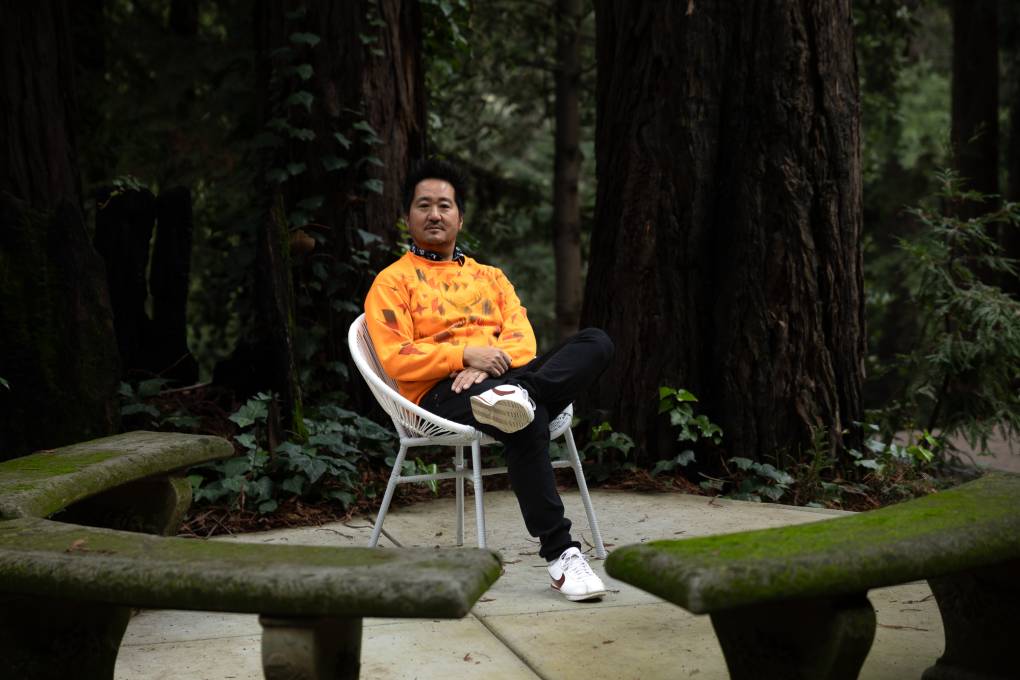
"caption": "Composer Kishi Bashi poses for a portrait at his home in the Santa Cruz Mountains of Los Gatos, Calif., Jan. 6, 2025.",
"credit": "David M. Barreda/KQED",
"altTag": null,
"description": null,
"imgSizes": {
"medium": {
"file": "https://cdn.kqed.org/wp-content/uploads/sites/10/2025/01/20250106_KishiBashi_DMB_00206-800x533.jpg",
"width": 800,
"height": 533,
"mimeType": "image/jpeg"
},
"large": {
"file": "https://cdn.kqed.org/wp-content/uploads/sites/10/2025/01/20250106_KishiBashi_DMB_00206-1020x680.jpg",
"width": 1020,
"height": 680,
"mimeType": "image/jpeg"
},
"thumbnail": {
"file": "https://cdn.kqed.org/wp-content/uploads/sites/10/2025/01/20250106_KishiBashi_DMB_00206-160x107.jpg",
"width": 160,
"height": 107,
"mimeType": "image/jpeg"
},
"1536x1536": {
"file": "https://cdn.kqed.org/wp-content/uploads/sites/10/2025/01/20250106_KishiBashi_DMB_00206-1536x1024.jpg",
"width": 1536,
"height": 1024,
"mimeType": "image/jpeg"
},
"post-thumbnail": {
"file": "https://cdn.kqed.org/wp-content/uploads/sites/10/2025/01/20250106_KishiBashi_DMB_00206-672x372.jpg",
"width": 672,
"height": 372,
"mimeType": "image/jpeg"
},
"twentyfourteen-full-width": {
"file": "https://cdn.kqed.org/wp-content/uploads/sites/10/2025/01/20250106_KishiBashi_DMB_00206-1038x576.jpg",
"width": 1038,
"height": 576,
"mimeType": "image/jpeg"
},
"full-width": {
"file": "https://cdn.kqed.org/wp-content/uploads/sites/10/2025/01/20250106_KishiBashi_DMB_00206-1920x1280.jpg",
"width": 1920,
"height": 1280,
"mimeType": "image/jpeg"
},
"kqedFullSize": {
"file": "https://cdn.kqed.org/wp-content/uploads/sites/10/2025/01/20250106_KishiBashi_DMB_00206.jpg",
"width": 2000,
"height": 1333
}
},
"isLoading": false,
"fetchFailed": false
},
"news_12044676": {
"type": "attachments",
"id": "news_12044676",
"meta": {
"index": "attachments_1716263798",
"site": "news",
"id": "12044676",
"found": true
},
"title": "20250616_UNHOUSEDCREEKRESTORATION_GC-37-KQED",
"publishDate": 1750184018,
"status": "inherit",
"parent": 12058952,
"modified": 1760397367,
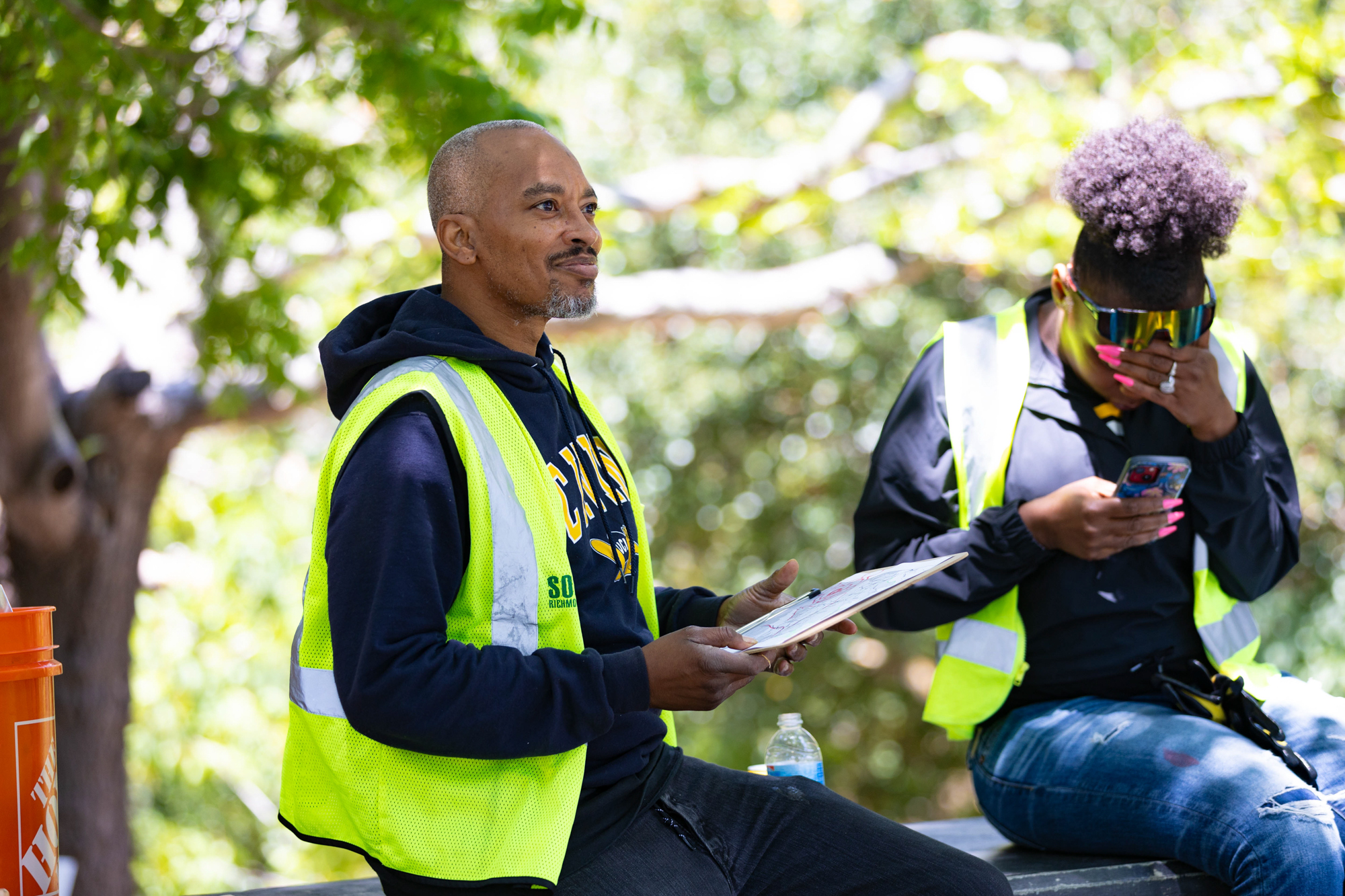
"caption": "Eric Adams, a participant of the Pinole Creek Unhoused Stewards Pilot Program, listens during a classroom session outside of Pinole Library in Pinole on June 16, 2025.",
"credit": "Gina Castro/KQED",
"altTag": null,
"description": null,
"imgSizes": {
"thumbnail": {
"file": "https://cdn.kqed.org/wp-content/uploads/sites/10/2025/06/20250616_UNHOUSEDCREEKRESTORATION_GC-37-KQED-160x107.jpg",
"width": 160,
"height": 107,
"mimeType": "image/jpeg"
},
"1536x1536": {
"file": "https://cdn.kqed.org/wp-content/uploads/sites/10/2025/06/20250616_UNHOUSEDCREEKRESTORATION_GC-37-KQED-1536x1024.jpg",
"width": 1536,
"height": 1024,
"mimeType": "image/jpeg"
},
"post-thumbnail": {
"file": "https://cdn.kqed.org/wp-content/uploads/sites/10/2025/06/20250616_UNHOUSEDCREEKRESTORATION_GC-37-KQED-672x372.jpg",
"width": 672,
"height": 372,
"mimeType": "image/jpeg"
},
"twentyfourteen-full-width": {
"file": "https://cdn.kqed.org/wp-content/uploads/sites/10/2025/06/20250616_UNHOUSEDCREEKRESTORATION_GC-37-KQED-1038x576.jpg",
"width": 1038,
"height": 576,
"mimeType": "image/jpeg"
},
"kqedFullSize": {
"file": "https://cdn.kqed.org/wp-content/uploads/sites/10/2025/06/20250616_UNHOUSEDCREEKRESTORATION_GC-37-KQED.jpg",
"width": 2000,
"height": 1333
}
},
"isLoading": false,
"fetchFailed": false
},
"news_12060142": {
"type": "attachments",
"id": "news_12060142",
"meta": {
"index": "attachments_1716263798",
"site": "news",
"id": "12060142",
"found": true
},
"title": "Border Patrol Agents Detain Migrants Near US-Mexico Border",
"publishDate": 1760641072,
"status": "inherit",
"parent": 12060135,
"modified": 1760643684,
"caption": "A 2-year-old Honduran asylum seeker cries as her mother is searched and detained near the U.S.-Mexico border on June 12, 2018, in McAllen, Texas. ",
"credit": "John Moore/Getty Images",
"altTag": null,
"description": null,
"imgSizes": {
"thumbnail": {
"file": "https://cdn.kqed.org/wp-content/uploads/sites/10/2025/10/FamilySeparationGetty1-160x107.jpg",
"width": 160,
"height": 107,
"mimeType": "image/jpeg"
},
"1536x1536": {
"file": "https://cdn.kqed.org/wp-content/uploads/sites/10/2025/10/FamilySeparationGetty1-1536x1024.jpg",
"width": 1536,
"height": 1024,
"mimeType": "image/jpeg"
},
"post-thumbnail": {
"file": "https://cdn.kqed.org/wp-content/uploads/sites/10/2025/10/FamilySeparationGetty1-672x372.jpg",
"width": 672,
"height": 372,
"mimeType": "image/jpeg"
},
"twentyfourteen-full-width": {
"file": "https://cdn.kqed.org/wp-content/uploads/sites/10/2025/10/FamilySeparationGetty1-1038x576.jpg",
"width": 1038,
"height": 576,
"mimeType": "image/jpeg"
},
"kqedFullSize": {
"file": "https://cdn.kqed.org/wp-content/uploads/sites/10/2025/10/FamilySeparationGetty1.jpg",
"width": 2000,
"height": 1333
}
},
"isLoading": false,
"fetchFailed": false
},
"news_12060218": {
"type": "attachments",
"id": "news_12060218",
"meta": {
"index": "attachments_1716263798",
"site": "news",
"id": "12060218",
"found": true
},
"title": "SFFireDeptLomaPrieta1",
"publishDate": 1760659262,
"status": "inherit",
"parent": 12060130,
"modified": 1760659307,
"caption": "San Francisco Fire Department firefighters test the city's Emergency Firefighting Water System on Oct. 16, 2025 on the north tip of Van Ness Avenue.",
"credit": "Nibras Suliman/KQED",
"altTag": null,
"description": null,
"imgSizes": {
"thumbnail": {
"file": "https://cdn.kqed.org/wp-content/uploads/sites/10/2025/10/SFFireDeptLomaPrieta1-160x120.jpg",
"width": 160,
"height": 120,
"mimeType": "image/jpeg"
},
"1536x1536": {
"file": "https://cdn.kqed.org/wp-content/uploads/sites/10/2025/10/SFFireDeptLomaPrieta1-1536x1152.jpg",
"width": 1536,
"height": 1152,
"mimeType": "image/jpeg"
},
"post-thumbnail": {
"file": "https://cdn.kqed.org/wp-content/uploads/sites/10/2025/10/SFFireDeptLomaPrieta1-672x372.jpg",
"width": 672,
"height": 372,
"mimeType": "image/jpeg"
},
"twentyfourteen-full-width": {
"file": "https://cdn.kqed.org/wp-content/uploads/sites/10/2025/10/SFFireDeptLomaPrieta1-1038x576.jpg",
"width": 1038,
"height": 576,
"mimeType": "image/jpeg"
},
"kqedFullSize": {
"file": "https://cdn.kqed.org/wp-content/uploads/sites/10/2025/10/SFFireDeptLomaPrieta1.jpg",
"width": 2000,
"height": 1500
}
},
"isLoading": false,
"fetchFailed": false
},
"news_12060184": {
"type": "attachments",
"id": "news_12060184",
"meta": {
"index": "attachments_1716263798",
"site": "news",
"id": "12060184",
"found": true
},
"title": "251016_FOODBANKSHUTDOWN-_GH-5-KQED",
"publishDate": 1760648914,
"status": "inherit",
"parent": 0,
"modified": 1760649072,
"caption": "TSA officer Leandro Banuelos Jr., center, helps colleagues unload boxes of food at Oakland International Airport on Oct. 16, 2025. The Alameda County Community Food Bank provided produce and pantry staples to TSA staff during the federal shutdown.",
"credit": "Gustavo Hernandez/KQED",
"altTag": null,
"description": null,
"imgSizes": {
"thumbnail": {
"file": "https://cdn.kqed.org/wp-content/uploads/sites/10/2025/10/251016_FOODBANKSHUTDOWN-_GH-5-KQED-160x107.jpg",
"width": 160,
"height": 107,
"mimeType": "image/jpeg"
},
"1536x1536": {
"file": "https://cdn.kqed.org/wp-content/uploads/sites/10/2025/10/251016_FOODBANKSHUTDOWN-_GH-5-KQED-1536x1024.jpg",
"width": 1536,
"height": 1024,
"mimeType": "image/jpeg"
},
"post-thumbnail": {
"file": "https://cdn.kqed.org/wp-content/uploads/sites/10/2025/10/251016_FOODBANKSHUTDOWN-_GH-5-KQED-672x372.jpg",
"width": 672,
"height": 372,
"mimeType": "image/jpeg"
},
"twentyfourteen-full-width": {
"file": "https://cdn.kqed.org/wp-content/uploads/sites/10/2025/10/251016_FOODBANKSHUTDOWN-_GH-5-KQED-1038x576.jpg",
"width": 1038,
"height": 576,
"mimeType": "image/jpeg"
},
"kqedFullSize": {
"file": "https://cdn.kqed.org/wp-content/uploads/sites/10/2025/10/251016_FOODBANKSHUTDOWN-_GH-5-KQED.jpg",
"width": 2000,
"height": 1333
}
},
"isLoading": false,
"fetchFailed": false
},
"news_12060163": {
"type": "attachments",
"id": "news_12060163",
"meta": {
"index": "attachments_1716263798",
"site": "news",
"id": "12060163",
"found": true
},
"title": "Views over the Yosemite Valley floor at sunset.",
"publishDate": 1760644001,
"status": "inherit",
"parent": 12060120,
"modified": 1760644029,
"caption": "Views over the Yosemite Valley floor at sunset.",
"credit": "Matthew Micah Wright/Getty Images",
"altTag": null,
"description": null,
"imgSizes": {
"thumbnail": {
"file": "https://cdn.kqed.org/wp-content/uploads/sites/10/2025/10/YosemiteGetty3-160x107.jpg",
"width": 160,
"height": 107,
"mimeType": "image/jpeg"
},
"1536x1536": {
"file": "https://cdn.kqed.org/wp-content/uploads/sites/10/2025/10/YosemiteGetty3-1536x1024.jpg",
"width": 1536,
"height": 1024,
"mimeType": "image/jpeg"
},
"post-thumbnail": {
"file": "https://cdn.kqed.org/wp-content/uploads/sites/10/2025/10/YosemiteGetty3-672x372.jpg",
"width": 672,
"height": 372,
"mimeType": "image/jpeg"
},
"twentyfourteen-full-width": {
"file": "https://cdn.kqed.org/wp-content/uploads/sites/10/2025/10/YosemiteGetty3-1038x576.jpg",
"width": 1038,
"height": 576,
"mimeType": "image/jpeg"
},
"kqedFullSize": {
"file": "https://cdn.kqed.org/wp-content/uploads/sites/10/2025/10/YosemiteGetty3.jpg",
"width": 2000,
"height": 1333
}
},
"isLoading": false,
"fetchFailed": false
},
"news_12059706": {
"type": "attachments",
"id": "news_12059706",
"meta": {
"index": "attachments_1716263798",
"site": "news",
"id": "12059706",
"found": true
},
"title": "MyShake_WP",
"publishDate": 1760381926,
"status": "inherit",
"parent": 12059704,
"modified": 1760382317,
"caption": "If you’re one of the over 4 million Californians who have the MyShake earthquake warning app downloaded, you might get a loud alert on Thursday morning. This test will be part of the Annual Great ShakeOut quake preparedness drill, taking place across the globe.",
"credit": "Courtesy of Suresh Raman",
"altTag": null,
"description": null,
"imgSizes": {
"thumbnail": {
"file": "https://cdn.kqed.org/wp-content/uploads/sites/10/2025/10/MyShake_WP-160x105.png",
"width": 160,
"height": 105,
"mimeType": "image/png"
},
"1536x1536": {
"file": "https://cdn.kqed.org/wp-content/uploads/sites/10/2025/10/MyShake_WP-1536x1009.png",
"width": 1536,
"height": 1009,
"mimeType": "image/png"
},
"post-thumbnail": {
"file": "https://cdn.kqed.org/wp-content/uploads/sites/10/2025/10/MyShake_WP-672x372.png",
"width": 672,
"height": 372,
"mimeType": "image/png"
},
"twentyfourteen-full-width": {
"file": "https://cdn.kqed.org/wp-content/uploads/sites/10/2025/10/MyShake_WP-1038x576.png",
"width": 1038,
"height": 576,
"mimeType": "image/png"
},
"kqedFullSize": {
"file": "https://cdn.kqed.org/wp-content/uploads/sites/10/2025/10/MyShake_WP.png",
"width": 1920,
"height": 1261
}
},
"isLoading": false,
"fetchFailed": false
},
"news_12058589": {
"type": "attachments",
"id": "news_12058589",
"meta": {
"index": "attachments_1716263798",
"site": "news",
"id": "12058589",
"found": true
},
"title": "IMG_1173",
"publishDate": 1759518161,
"status": "inherit",
"parent": 12058586,
"modified": 1759518178,
"caption": null,
"credit": "Anna Vignet/KQED",
"altTag": null,
"description": null,
"imgSizes": {
"medium": {
"file": "https://cdn.kqed.org/wp-content/uploads/sites/10/2025/10/IMG_1173-2000x1500.jpg",
"width": 2000,
"height": 1500,
"mimeType": "image/jpeg"
},
"large": {
"file": "https://cdn.kqed.org/wp-content/uploads/sites/10/2025/10/IMG_1173-2000x1500.jpg",
"width": 2000,
"height": 1500,
"mimeType": "image/jpeg"
},
"thumbnail": {
"file": "https://cdn.kqed.org/wp-content/uploads/sites/10/2025/10/IMG_1173-160x120.jpg",
"width": 160,
"height": 120,
"mimeType": "image/jpeg"
},
"1536x1536": {
"file": "https://cdn.kqed.org/wp-content/uploads/sites/10/2025/10/IMG_1173-1536x1152.jpg",
"width": 1536,
"height": 1152,
"mimeType": "image/jpeg"
},
"2048x2048": {
"file": "https://cdn.kqed.org/wp-content/uploads/sites/10/2025/10/IMG_1173-2048x1536.jpg",
"width": 2048,
"height": 1536,
"mimeType": "image/jpeg"
},
"post-thumbnail": {
"file": "https://cdn.kqed.org/wp-content/uploads/sites/10/2025/10/IMG_1173-672x372.jpg",
"width": 672,
"height": 372,
"mimeType": "image/jpeg"
},
"twentyfourteen-full-width": {
"file": "https://cdn.kqed.org/wp-content/uploads/sites/10/2025/10/IMG_1173-1038x576.jpg",
"width": 1038,
"height": 576,
"mimeType": "image/jpeg"
},
"full-width": {
"file": "https://cdn.kqed.org/wp-content/uploads/sites/10/2025/10/IMG_1173-2000x1500.jpg",
"width": 2000,
"height": 1500,
"mimeType": "image/jpeg"
},
"kqedFullSize": {
"file": "https://cdn.kqed.org/wp-content/uploads/sites/10/2025/10/IMG_1173.jpg",
"width": 2560,
"height": 1920
}
},
"isLoading": false,
"fetchFailed": false
},
"news_12059877": {
"type": "attachments",
"id": "news_12059877",
"meta": {
"index": "attachments_1716263798",
"site": "news",
"id": "12059877",
"found": true
},
"title": "251014-ANTIFAROUNDTABLEFOLO-03-BL-KQED",
"publishDate": 1760467761,
"status": "inherit",
"parent": 0,
"modified": 1760467820,
"caption": "Rev. Deborah Lee speaks with people in line outside the ICE Field Office in downtown San Francisco on Oct. 14, 2025, as they wait for scheduled check-ins and immigration-related appointments.",
"credit": "Beth LaBerge/KQED",
"altTag": null,
"description": null,
"imgSizes": {
"thumbnail": {
"file": "https://cdn.kqed.org/wp-content/uploads/sites/10/2025/10/251014-ANTIFAROUNDTABLEFOLO-03-BL-KQED-160x107.jpg",
"width": 160,
"height": 107,
"mimeType": "image/jpeg"
},
"1536x1536": {
"file": "https://cdn.kqed.org/wp-content/uploads/sites/10/2025/10/251014-ANTIFAROUNDTABLEFOLO-03-BL-KQED-1536x1024.jpg",
"width": 1536,
"height": 1024,
"mimeType": "image/jpeg"
},
"post-thumbnail": {
"file": "https://cdn.kqed.org/wp-content/uploads/sites/10/2025/10/251014-ANTIFAROUNDTABLEFOLO-03-BL-KQED-672x372.jpg",
"width": 672,
"height": 372,
"mimeType": "image/jpeg"
},
"twentyfourteen-full-width": {
"file": "https://cdn.kqed.org/wp-content/uploads/sites/10/2025/10/251014-ANTIFAROUNDTABLEFOLO-03-BL-KQED-1038x576.jpg",
"width": 1038,
"height": 576,
"mimeType": "image/jpeg"
},
"kqedFullSize": {
"file": "https://cdn.kqed.org/wp-content/uploads/sites/10/2025/10/251014-ANTIFAROUNDTABLEFOLO-03-BL-KQED.jpg",
"width": 2000,
"height": 1333
}
},
"isLoading": false,
"fetchFailed": false
},
"news_12060061": {
"type": "attachments",
"id": "news_12060061",
"meta": {
"index": "attachments_1716263798",
"site": "news",
"id": "12060061",
"found": true
},
"title": "WH Shutdown Meeting",
"publishDate": 1760567714,
"status": "inherit",
"parent": 12060025,
"modified": 1760570048,
"caption": "Office of Management and Budget Director Russell Vought speaks during a news conference after a meeting with President Donald Trump, Senate Minority Leader Charles Schumer, D-N.Y., and House Minority Leader Hakeem Jeffries, D-N.Y., ahead of the deadline to fund the government and try to avoid a government shutdown, at the White House on Monday, Sept. 29, 2025. ",
"credit": "Tom Williams/CQ-Roll Call, Inc. via Getty Images",
"altTag": null,
"description": null,
"imgSizes": {
"thumbnail": {
"file": "https://cdn.kqed.org/wp-content/uploads/sites/10/2025/10/VoughtJohnsonVanceGetty-160x107.jpg",
"width": 160,
"height": 107,
"mimeType": "image/jpeg"
},
"1536x1536": {
"file": "https://cdn.kqed.org/wp-content/uploads/sites/10/2025/10/VoughtJohnsonVanceGetty-1536x1024.jpg",
"width": 1536,
"height": 1024,
"mimeType": "image/jpeg"
},
"post-thumbnail": {
"file": "https://cdn.kqed.org/wp-content/uploads/sites/10/2025/10/VoughtJohnsonVanceGetty-672x372.jpg",
"width": 672,
"height": 372,
"mimeType": "image/jpeg"
},
"twentyfourteen-full-width": {
"file": "https://cdn.kqed.org/wp-content/uploads/sites/10/2025/10/VoughtJohnsonVanceGetty-1038x576.jpg",
"width": 1038,
"height": 576,
"mimeType": "image/jpeg"
},
"kqedFullSize": {
"file": "https://cdn.kqed.org/wp-content/uploads/sites/10/2025/10/VoughtJohnsonVanceGetty.jpg",
"width": 2000,
"height": 1333
}
},
"isLoading": false,
"fetchFailed": false
},
"news_12052354": {
"type": "attachments",
"id": "news_12052354",
"meta": {
"index": "attachments_1716263798",
"site": "news",
"id": "12052354",
"found": true
},
"title": "250804-CALIFORNIAFOREVERSUISUNCITY-53-KQED",
"publishDate": 1755277845,
"status": "inherit",
"parent": 12059985,
"modified": 1760555312,
"caption": "An aerial view of the Suisun Slough in Suisun City, Solano County, on Aug. 4, 2025.",
"credit": "Beth LaBerge/KQED",
"altTag": null,
"description": null,
"imgSizes": {
"thumbnail": {
"file": "https://cdn.kqed.org/wp-content/uploads/sites/10/2025/08/250804-CALIFORNIAFOREVERSUISUNCITY-53-KQED-160x107.jpg",
"width": 160,
"height": 107,
"mimeType": "image/jpeg"
},
"1536x1536": {
"file": "https://cdn.kqed.org/wp-content/uploads/sites/10/2025/08/250804-CALIFORNIAFOREVERSUISUNCITY-53-KQED-1536x1025.jpg",
"width": 1536,
"height": 1025,
"mimeType": "image/jpeg"
},
"post-thumbnail": {
"file": "https://cdn.kqed.org/wp-content/uploads/sites/10/2025/08/250804-CALIFORNIAFOREVERSUISUNCITY-53-KQED-672x372.jpg",
"width": 672,
"height": 372,
"mimeType": "image/jpeg"
},
"twentyfourteen-full-width": {
"file": "https://cdn.kqed.org/wp-content/uploads/sites/10/2025/08/250804-CALIFORNIAFOREVERSUISUNCITY-53-KQED-1038x576.jpg",
"width": 1038,
"height": 576,
"mimeType": "image/jpeg"
},
"kqedFullSize": {
"file": "https://cdn.kqed.org/wp-content/uploads/sites/10/2025/08/250804-CALIFORNIAFOREVERSUISUNCITY-53-KQED.jpg",
"width": 2000,
"height": 1334
}
},
"isLoading": false,
"fetchFailed": false
},
"news_12051700": {
"type": "attachments",
"id": "news_12051700",
"meta": {
"index": "attachments_1716263798",
"site": "news",
"id": "12051700",
"found": true
},
"title": "Election 2026 Redistricting",
"publishDate": 1754931212,
"status": "inherit",
"parent": 12051699,
"modified": 1760555699,
"caption": "Accompanied by California and Texas lawmakers, California Gov. Gavin Newsom speaks in support of the Texas Democratic lawmakers for their nearly weeklong walkout to block a vote on a congressional redistricting plan sought by President Donald Trump, during a news conference in Sacramento, California, on Friday, Aug. 8, 2025.",
"credit": "AP Photo/Rich Pedroncelli",
"altTag": null,
"description": null,
"imgSizes": {
"medium": {
"file": "https://cdn.kqed.org/wp-content/uploads/sites/10/2025/08/AP25221029877312-2000x1333.jpg",
"width": 2000,
"height": 1333,
"mimeType": "image/jpeg"
},
"large": {
"file": "https://cdn.kqed.org/wp-content/uploads/sites/10/2025/08/AP25221029877312-2000x1333.jpg",
"width": 2000,
"height": 1333,
"mimeType": "image/jpeg"
},
"thumbnail": {
"file": "https://cdn.kqed.org/wp-content/uploads/sites/10/2025/08/AP25221029877312-160x107.jpg",
"width": 160,
"height": 107,
"mimeType": "image/jpeg"
},
"1536x1536": {
"file": "https://cdn.kqed.org/wp-content/uploads/sites/10/2025/08/AP25221029877312-1536x1024.jpg",
"width": 1536,
"height": 1024,
"mimeType": "image/jpeg"
},
"2048x2048": {
"file": "https://cdn.kqed.org/wp-content/uploads/sites/10/2025/08/AP25221029877312-2048x1365.jpg",
"width": 2048,
"height": 1365,
"mimeType": "image/jpeg"
},
"post-thumbnail": {
"file": "https://cdn.kqed.org/wp-content/uploads/sites/10/2025/08/AP25221029877312-672x372.jpg",
"width": 672,
"height": 372,
"mimeType": "image/jpeg"
},
"twentyfourteen-full-width": {
"file": "https://cdn.kqed.org/wp-content/uploads/sites/10/2025/08/AP25221029877312-1038x576.jpg",
"width": 1038,
"height": 576,
"mimeType": "image/jpeg"
},
"full-width": {
"file": "https://cdn.kqed.org/wp-content/uploads/sites/10/2025/08/AP25221029877312-2000x1333.jpg",
"width": 2000,
"height": 1333,
"mimeType": "image/jpeg"
},
"kqedFullSize": {
"file": "https://cdn.kqed.org/wp-content/uploads/sites/10/2025/08/AP25221029877312-scaled-e1760554140189.jpg",
"width": 2000,
"height": 1333
}
},
"isLoading": false,
"fetchFailed": false
}
},
"audioPlayerReducer": {
"postId": "stream_live",
"isPaused": true,
"isPlaying": false,
"pfsActive": false,
"pledgeModalIsOpen": true,
"playerDrawerIsOpen": false,
"liveAudioPlayStartedAt": 0,
"liveAudioPlayContext": ""
},
"authorsReducer": {
"byline_news_12060135": {
"type": "authors",
"id": "byline_news_12060135",
"meta": {
"override": true
},
"slug": "byline_news_12060135",
"name": "Mark Betancourt, The California Newsroom",
"isLoading": false
},
"kqed": {
"type": "authors",
"id": "236",
"meta": {
"index": "authors_1716337520",
"id": "236",
"found": true
},
"name": "KQED News Staff",
"firstName": "KQED News Staff",
"lastName": null,
"slug": "kqed",
"email": "faq@kqed.org",
"display_author_email": false,
"staff_mastheads": [],
"title": null,
"bio": null,
"avatar": "https://secure.gravatar.com/avatar/ef0e801a68c4c54afa9180db14084167?s=600&d=blank&r=g",
"twitter": null,
"facebook": null,
"instagram": null,
"linkedin": null,
"sites": [
{
"site": "arts",
"roles": [
"contributor"
]
},
{
"site": "news",
"roles": [
"editor"
]
},
{
"site": "futureofyou",
"roles": [
"author"
]
}
],
"headData": {
"title": "KQED News Staff | KQED",
"description": null,
"ogImgSrc": "https://secure.gravatar.com/avatar/ef0e801a68c4c54afa9180db14084167?s=600&d=blank&r=g",
"twImgSrc": "https://secure.gravatar.com/avatar/ef0e801a68c4c54afa9180db14084167?s=600&d=blank&r=g"
},
"isLoading": false,
"link": "/author/kqed"
},
"rachael-myrow": {
"type": "authors",
"id": "251",
"meta": {
"index": "authors_1716337520",
"id": "251",
"found": true
},
"name": "Rachael Myrow",
"firstName": "Rachael",
"lastName": "Myrow",
"slug": "rachael-myrow",
"email": "rmyrow@kqed.org",
"display_author_email": true,
"staff_mastheads": [
"news"
],
"title": "Senior Editor of KQED's Silicon Valley News Desk",
"bio": "• I write and edit stories about how Silicon Valley power and policies shape everyday life in California. I’m also passionate about making Bay Area history and culture more accessible to a broad public. • I’ve been a journalist for most of my life, starting in high school with The Franklin Press in Los Angeles, where I grew up. While earning my first degree in English at UC Berkeley, I got my start in public radio at KALX-FM. After completing a second degree in journalism at Cal, I landed my first professional job at Marketplace, then moved on to KPCC (now LAist), and then KQED, where I hosted The California Report for more than seven years. • My reporting has appeared on NPR, The World, WBUR’s \u003ci>Here & Now\u003c/i>, and the BBC. I also guest host for KQED’s \u003ci>Forum\u003c/i>, as well as the Commonwealth Club in San Francisco. • I speak periodically on media, democracy and technology issues, and do voiceover work for documentaries and educational video projects. • Outside of the studio, you'll find me hiking Bay Area trails and whipping up Insta-ready meals in my kitchen. • I do not accept gifts, money, or favors from anyone connected to my reporting, I don't pay people for information, and I do not support or donate to political causes. • I strive to treat the people I report on with fairness, honesty, and respect. I also recognize there are often multiple sides to a story and work to verify information through multiple sources and documentation. If I get something wrong, I correct it.",
"avatar": "https://secure.gravatar.com/avatar/3ed8a3c5f26025e4a805ba634cda8cd764906b97438a6d9ce216b044e340da4e?s=600&d=blank&r=g",
"twitter": "rachaelmyrow",
"bluesky": null,
"facebook": null,
"instagram": null,
"linkedin": "https://www.linkedin.com/in/rachaelmyrow/",
"sites": [
{
"site": "arts",
"roles": [
"administrator"
]
},
{
"site": "news",
"roles": [
"edit_others_posts",
"editor"
]
},
{
"site": "futureofyou",
"roles": [
"editor"
]
},
{
"site": "bayareabites",
"roles": [
"editor"
]
},
{
"site": "stateofhealth",
"roles": [
"editor"
]
},
{
"site": "science",
"roles": [
"editor"
]
},
{
"site": "food",
"roles": [
"editor"
]
},
{
"site": "forum",
"roles": [
"editor"
]
},
{
"site": "liveblog",
"roles": [
"author"
]
}
],
"headData": {
"title": "Rachael Myrow | KQED",
"description": "Senior Editor of KQED's Silicon Valley News Desk",
"ogImgSrc": "https://secure.gravatar.com/avatar/3ed8a3c5f26025e4a805ba634cda8cd764906b97438a6d9ce216b044e340da4e?s=600&d=blank&r=g",
"twImgSrc": "https://secure.gravatar.com/avatar/3ed8a3c5f26025e4a805ba634cda8cd764906b97438a6d9ce216b044e340da4e?s=600&d=blank&r=g"
},
"isLoading": false,
"link": "/author/rachael-myrow"
},
"mlagos": {
"type": "authors",
"id": "3239",
"meta": {
"index": "authors_1716337520",
"id": "3239",
"found": true
},
"name": "Marisa Lagos",
"firstName": "Marisa",
"lastName": "Lagos",
"slug": "mlagos",
"email": "mlagos@kqed.org",
"display_author_email": false,
"staff_mastheads": [
"news"
],
"title": "KQED Contributor",
"bio": "Marisa Lagos is a correspondent for KQED’s California Politics and Government Desk and co-hosts the award-winning show and podcast, Political Breakdown. At KQED, Lagos also conducts reporting, analysis and investigations into state, local and national politics for radio, TV, online and onstage. In 2022, she and co-host, Scott Shafer, moderated the only gubernatorial debate in California. In 2020, the \u003ci>Washington Post\u003c/i> named her one of the top political journalists in California; she was nominated for a Peabody and won several other awards for her work investigating the 2017 California wildfires. She has worked at the \u003ci>San Francisco Chronicle\u003c/i>, \u003ci>San Francisco Examiner\u003c/i> and \u003ci>Los Angeles Times\u003c/i>. A UC Santa Barbara graduate, she lives in San Francisco with her two sons and husband.",
"avatar": "https://secure.gravatar.com/avatar/a261a0d3696fc066871ef96b85b5e7d2?s=600&d=blank&r=g",
"twitter": "@mlagos",
"facebook": null,
"instagram": null,
"linkedin": null,
"sites": [
{
"site": "arts",
"roles": [
"author"
]
},
{
"site": "news",
"roles": [
"editor"
]
},
{
"site": "science",
"roles": [
"editor"
]
},
{
"site": "forum",
"roles": [
"author"
]
},
{
"site": "liveblog",
"roles": [
"author"
]
}
],
"headData": {
"title": "Marisa Lagos | KQED",
"description": "KQED Contributor",
"ogImgSrc": "https://secure.gravatar.com/avatar/a261a0d3696fc066871ef96b85b5e7d2?s=600&d=blank&r=g",
"twImgSrc": "https://secure.gravatar.com/avatar/a261a0d3696fc066871ef96b85b5e7d2?s=600&d=blank&r=g"
},
"isLoading": false,
"link": "/author/mlagos"
},
"vrancano": {
"type": "authors",
"id": "11276",
"meta": {
"index": "authors_1716337520",
"id": "11276",
"found": true
},
"name": "Vanessa Rancaño",
"firstName": "Vanessa",
"lastName": "Rancaño",
"slug": "vrancano",
"email": "vrancano@kqed.org",
"display_author_email": false,
"staff_mastheads": [
"news"
],
"title": "Reporter",
"bio": "Vanessa Rancaño is a features reporter for KQED. She’s also covered homelessness and education for the station and reported from the Central Valley. Her work has aired across public radio, from flagship national news shows to longform narrative podcasts. Before taking up a mic, she worked as a freelance print journalist. She’s been recognized with a number of national and regional awards. Vanessa grew up in California's Central Valley. She's a former NPR Kroc Fellow, and a graduate of the UC Berkeley Graduate School of Journalism.",
"avatar": "https://secure.gravatar.com/avatar/b3a383dfb0e7ee1c17568f2cf067904ab654d6e3de9743fc661f3c788ade1bed?s=600&d=blank&r=g",
"twitter": "vanessarancano",
"bluesky": null,
"facebook": null,
"instagram": null,
"linkedin": null,
"sites": [
{
"site": "arts",
"roles": [
"editor"
]
},
{
"site": "news",
"roles": [
"editor"
]
},
{
"site": "liveblog",
"roles": [
"contributor"
]
}
],
"headData": {
"title": "Vanessa Rancaño | KQED",
"description": "Reporter",
"ogImgSrc": "https://secure.gravatar.com/avatar/b3a383dfb0e7ee1c17568f2cf067904ab654d6e3de9743fc661f3c788ade1bed?s=600&d=blank&r=g",
"twImgSrc": "https://secure.gravatar.com/avatar/b3a383dfb0e7ee1c17568f2cf067904ab654d6e3de9743fc661f3c788ade1bed?s=600&d=blank&r=g"
},
"isLoading": false,
"link": "/author/vrancano"
},
"smohamad": {
"type": "authors",
"id": "11631",
"meta": {
"index": "authors_1716337520",
"id": "11631",
"found": true
},
"name": "Sarah Mohamad",
"firstName": "Sarah",
"lastName": "Mohamad",
"slug": "smohamad",
"email": "smohamad@KQED.org",
"display_author_email": true,
"staff_mastheads": [],
"title": "Engagement Producer and Reporter, KQED Science",
"bio": "Sarah Mohamad is an audience engagement reporter and producer for KQED Science. She reports on audience-focused science and environment stories and manages the team's social media, newsletter, and engagement efforts. Prior to this role, she played a key role as project manager for NSF's \u003ca href=\"https://www.kqed.org/crackingthecode\">\u003cem>Cracking the Code: Influencing Millennial Science Engagement\u003c/em> \u003c/a>audience research.",
"avatar": "https://secure.gravatar.com/avatar/e6224957cd82d015183756ddde1f928013a563d7ca2e4565f8c4de1ec64886c5?s=600&d=blank&r=g",
"twitter": "sarahkmohamad",
"bluesky": null,
"facebook": null,
"instagram": null,
"linkedin": null,
"sites": [
{
"site": "",
"roles": [
"editor"
]
},
{
"site": "arts",
"roles": [
"editor"
]
},
{
"site": "news",
"roles": [
"editor"
]
},
{
"site": "about",
"roles": [
"editor"
]
},
{
"site": "science",
"roles": [
"editor"
]
}
],
"headData": {
"title": "Sarah Mohamad | KQED",
"description": "Engagement Producer and Reporter, KQED Science",
"ogImgSrc": "https://secure.gravatar.com/avatar/e6224957cd82d015183756ddde1f928013a563d7ca2e4565f8c4de1ec64886c5?s=600&d=blank&r=g",
"twImgSrc": "https://secure.gravatar.com/avatar/e6224957cd82d015183756ddde1f928013a563d7ca2e4565f8c4de1ec64886c5?s=600&d=blank&r=g"
},
"isLoading": false,
"link": "/author/smohamad"
},
"abandlamudi": {
"type": "authors",
"id": "11672",
"meta": {
"index": "authors_1716337520",
"id": "11672",
"found": true
},
"name": "Adhiti Bandlamudi",
"firstName": "Adhiti",
"lastName": "Bandlamudi",
"slug": "abandlamudi",
"email": "abandlamudi@kqed.org",
"display_author_email": false,
"staff_mastheads": [
"news"
],
"title": "KQED Housing Reporter",
"bio": "Adhiti Bandlamudi reports for KQED's Housing desk. She focuses on how housing gets built across the Bay Area. Before joining KQED in 2020, she reported for WUNC in Durham, North Carolina, WABE in Atlanta, Georgia and Capital Public Radio in Sacramento. In 2017, she was awarded a Kroc Fellowship at NPR where she reported on everything from sprinkles to the Golden State Killer's arrest. When she's not reporting, she's baking new recipes in her kitchen or watching movies with friends and family. She's originally from Georgia and has strong opinions about Great British Bake Off.",
"avatar": "https://secure.gravatar.com/avatar/868129c8b257bb99a3500e2c86a65400?s=600&d=mm&r=g",
"twitter": "oddity_adhiti",
"facebook": null,
"instagram": null,
"linkedin": null,
"sites": [
{
"site": "arts",
"roles": [
"author"
]
},
{
"site": "news",
"roles": [
"editor"
]
},
{
"site": "liveblog",
"roles": [
"author"
]
}
],
"headData": {
"title": "Adhiti Bandlamudi | KQED",
"description": "KQED Housing Reporter",
"ogImgSrc": "https://secure.gravatar.com/avatar/868129c8b257bb99a3500e2c86a65400?s=600&d=mm&r=g",
"twImgSrc": "https://secure.gravatar.com/avatar/868129c8b257bb99a3500e2c86a65400?s=600&d=mm&r=g"
},
"isLoading": false,
"link": "/author/abandlamudi"
},
"jlara": {
"type": "authors",
"id": "11761",
"meta": {
"index": "authors_1716337520",
"id": "11761",
"found": true
},
"name": "Juan Carlos Lara",
"firstName": "Juan Carlos",
"lastName": "Lara",
"slug": "jlara",
"email": "jlara@kqed.org",
"display_author_email": false,
"staff_mastheads": [],
"title": "KQED Contributor",
"bio": null,
"avatar": "https://secure.gravatar.com/avatar/19e2052b9b05657c5ff2af2121846e9c?s=600&d=blank&r=g",
"twitter": null,
"facebook": null,
"instagram": null,
"linkedin": null,
"sites": [
{
"site": "arts",
"roles": [
"editor"
]
},
{
"site": "news",
"roles": [
"editor"
]
},
{
"site": "forum",
"roles": [
"editor"
]
},
{
"site": "liveblog",
"roles": [
"contributor"
]
}
],
"headData": {
"title": "Juan Carlos Lara | KQED",
"description": "KQED Contributor",
"ogImgSrc": "https://secure.gravatar.com/avatar/19e2052b9b05657c5ff2af2121846e9c?s=600&d=blank&r=g",
"twImgSrc": "https://secure.gravatar.com/avatar/19e2052b9b05657c5ff2af2121846e9c?s=600&d=blank&r=g"
},
"isLoading": false,
"link": "/author/jlara"
},
"kdebenedetti": {
"type": "authors",
"id": "11913",
"meta": {
"index": "authors_1716337520",
"id": "11913",
"found": true
},
"name": "Katie DeBenedetti",
"firstName": "Katie",
"lastName": "DeBenedetti",
"slug": "kdebenedetti",
"email": "kdebenedetti@kqed.org",
"display_author_email": false,
"staff_mastheads": [
"news",
"science"
],
"title": "KQED Contributor",
"bio": "Katie DeBenedetti is a digital reporter covering daily news for the Express Desk. Prior to joining KQED as a culture reporting intern in January 2024, she covered education and city government for the Napa Valley Register.",
"avatar": "https://secure.gravatar.com/avatar/6e31073cb8f7e4214ab03f42771d0f45?s=600&d=blank&r=g",
"twitter": null,
"facebook": null,
"instagram": null,
"linkedin": null,
"sites": [
{
"site": "news",
"roles": [
"author"
]
},
{
"site": "science",
"roles": [
"author"
]
},
{
"site": "liveblog",
"roles": [
"author"
]
}
],
"headData": {
"title": "Katie DeBenedetti | KQED",
"description": "KQED Contributor",
"ogImgSrc": "https://secure.gravatar.com/avatar/6e31073cb8f7e4214ab03f42771d0f45?s=600&d=blank&r=g",
"twImgSrc": "https://secure.gravatar.com/avatar/6e31073cb8f7e4214ab03f42771d0f45?s=600&d=blank&r=g"
},
"isLoading": false,
"link": "/author/kdebenedetti"
},
"sarahwright": {
"type": "authors",
"id": "11956",
"meta": {
"index": "authors_1716337520",
"id": "11956",
"found": true
},
"name": "Sarah Wright",
"firstName": "Sarah",
"lastName": "Wright",
"slug": "sarahwright",
"email": "swright@kqed.org",
"display_author_email": true,
"staff_mastheads": [],
"title": "Outdoors Engagement Reporter",
"bio": "Sarah Wright is KQED's Outdoors Engagement Reporter. Originally from Lake Tahoe, she completed a thru-hike of the Pacific Crest Trail in 2019 and was a U.S. Fulbright Program grantee to Argentina in 2023. Her journalism has appeared in The Guardian, The San Francisco Standard, The Palo Alto Weekly and the Half Moon Bay Review.",
"avatar": "https://secure.gravatar.com/avatar/c161a3d6441865cba25e6db4fa561099ad665799e9432e34da2b84d7e371524c?s=600&d=blank&r=g",
"twitter": null,
"bluesky": null,
"facebook": null,
"instagram": null,
"linkedin": null,
"sites": [
{
"site": "arts",
"roles": [
"editor"
]
},
{
"site": "news",
"roles": [
"editor"
]
},
{
"site": "science",
"roles": [
"contributor",
"author"
]
},
{
"site": "forum",
"roles": [
"editor"
]
}
],
"headData": {
"title": "Sarah Wright | KQED",
"description": "Outdoors Engagement Reporter",
"ogImgSrc": "https://secure.gravatar.com/avatar/c161a3d6441865cba25e6db4fa561099ad665799e9432e34da2b84d7e371524c?s=600&d=blank&r=g",
"twImgSrc": "https://secure.gravatar.com/avatar/c161a3d6441865cba25e6db4fa561099ad665799e9432e34da2b84d7e371524c?s=600&d=blank&r=g"
},
"isLoading": false,
"link": "/author/sarahwright"
},
"nsuliman": {
"type": "authors",
"id": "11985",
"meta": {
"index": "authors_1716337520",
"id": "11985",
"found": true
},
"name": "Nibras Suliman",
"firstName": "Nibras",
"lastName": "Suliman",
"slug": "nsuliman",
"email": "nsuliman@kqed.org",
"display_author_email": false,
"staff_mastheads": [],
"title": "KQED Contributor",
"bio": null,
"avatar": "https://secure.gravatar.com/avatar/581946774e0249b1fcdfb01d4f143d12?s=600&d=blank&r=g",
"twitter": null,
"facebook": null,
"instagram": null,
"linkedin": null,
"sites": [
{
"site": "news",
"roles": []
}
],
"headData": {
"title": "Nibras Suliman | KQED",
"description": "KQED Contributor",
"ogImgSrc": "https://secure.gravatar.com/avatar/581946774e0249b1fcdfb01d4f143d12?s=600&d=blank&r=g",
"twImgSrc": "https://secure.gravatar.com/avatar/581946774e0249b1fcdfb01d4f143d12?s=600&d=blank&r=g"
},
"isLoading": false,
"link": "/author/nsuliman"
}
},
"pagesReducer": {
"news_category_california": {
"type": "terms",
"id": "news_31795",
"meta": {
"index": "terms_1716263798",
"site": "news",
"id": "31795",
"score": 10.849665
},
"featImg": null,
"name": "California",
"description": null,
"taxonomy": "category",
"headData": {
"twImgId": null,
"twTitle": null,
"ogTitle": null,
"ogImgId": null,
"twDescription": null,
"description": null,
"title": "California Archives | KQED News",
"ogDescription": null
},
"ttid": 31812,
"slug": "california",
"isLoading": false,
"title": "California",
"pageMeta": {
"site": "news",
"WpPageTemplate": "page-topic-editorial",
"currentPage": 95
},
"blocks": [
{
"blockName": "kqed/post-list",
"attrs": {
"layout": "cardArticle2",
"query": "posts/news?category=california",
"seeMore": false,
"paginated": true,
"page": 95
}
},
{
"blockName": "kqed/ad"
}
]
}
},
"pfsSessionReducer": {},
"postsReducer": {
"stream_live": {
"type": "live",
"id": "stream_live",
"audioUrl": "https://hls.kqed.org/hls/kqed_app/playlist.m3u8",
"title": "Live Stream",
"excerpt": "Live Stream information currently unavailable.",
"link": "/radio",
"featImg": "",
"label": {
"name": "KQED Live",
"link": "/"
}
},
"stream_kqedNewscast": {
"type": "posts",
"id": "stream_kqedNewscast",
"audioUrl": "https://www.kqed.org/.stream/anon/radio/RDnews/newscast.mp3?_=1",
"title": "KQED Newscast",
"featImg": "",
"label": {
"name": "88.5 FM",
"link": "/"
}
},
"news_12060121": {
"type": "posts",
"id": "news_12060121",
"meta": {
"index": "posts_1716263798",
"site": "news",
"id": "12060121",
"score": null,
"sort": [
1760724011000
]
},
"guestAuthors": [],
"slug": "celebrating-30-years-of-the-california-report-with-kishi-bashi-and-california-foodways",
"title": "Celebrating 30 Years of The California Report with Kishi Bashi and California Foodways",
"publishDate": 1760724011,
"format": "standard",
"headTitle": "Celebrating 30 Years of The California Report with Kishi Bashi and California Foodways | KQED",
"labelTerm": {},
"content": "\u003cp>\u003cem>\u003ca href=\"http://itunes.apple.com/us/podcast/the-california-report-magazine/id1314750545?mt=2\" target=\"_blank\" rel=\"noopener noreferrer\">Listen to this and more in-depth storytelling by subscribing to The California Report Magazine podcast.\u003c/a>\u003c/em>\u003c/p>\n\u003cdiv class=\"routes-Site-routes-Post-SinglePost-__SinglePost__mpost_Title\">\n\u003cp>\u003ci>\u003cspan style=\"font-weight: 400\">The California Report just turned 30! On November 4, we’re \u003c/span>\u003c/i>\u003ca href=\"https://www.kqed.org/event/5670\">\u003ci>\u003cspan style=\"font-weight: 400\">throwing a party\u003c/span>\u003c/i>\u003c/a>\u003ci>\u003cspan style=\"font-weight: 400\"> to celebrate, at KQED in San Francisco, with special guests whose stories we’ve featured on our show. This week we’re reprising two of those stories.\u003c/span>\u003c/i>\u003c/p>\n\u003ch2>\u003ca href=\"https://www.kqed.org/news/12026067/how-experimental-composer-and-performer-kishi-bashi-brings-new-ideas-to-life\">\u003cb>How Experimental Composer and Performer Kishi Bashi Brings New Ideas to Life\u003c/b>\u003c/a>\u003c/h2>\n\u003cp>\u003cspan style=\"font-weight: 400\">Kishi Bashi has been releasing music for over a decade. The Santa Cruz-based musician and composer defies genre, and it’s hard even for his fans to describe his work – yet they feel deeply connected to his music. For our series on California Composers, we sent reporter Lusen Mendel to one of his shows in San Francisco to see if they could figure it out. \u003c/span>\u003c/p>\n\u003ch2>\u003ca href=\"https://www.kqed.org/news/11973699/this-stockton-park-is-a-weekend-haven-for-hmong-and-cambodian-bites\">\u003cb>This Stockton Park Is a Weekend Haven for Hmong and Cambodian Bites\u003c/b>\u003cb>\u003cbr>\n\u003c/b>\u003c/a>\u003c/h2>\n\u003cp>\u003cspan style=\"font-weight: 400\">On the northern end of Stockton, you’ll find Angel Cruz Park. Most weekends it’s lined with food vendors, many of them Hmong and Cambodian immigrants. For more than 30 years, this has been a destination for made-to-order dishes, where locals argue over who has the best beef sticks or papaya salad. For her series California Foodways, Lisa Morehouse spent a day at the park, learning about the people behind the food.\u003c/span>\u003c/p>\n\u003ch2>\u003cspan style=\"font-size: 16px;font-weight: 400\">[ad fullwidth]\u003c/span>\u003c/h2>\n\u003c/div>\n\u003cp>\u003c/p>\n",
"blocks": [],
"excerpt": "The California Report just turned 30! On November 4, we’re throwing a party at KQED in San Francisco, with special guests including musician Kishi Bashi and reporter Lisa Morehouse whose stories we’ve featured on our show. ",
"status": "publish",
"parent": 0,
"modified": 1760738653,
"stats": {
"hasAudio": false,
"hasVideo": false,
"hasChartOrMap": false,
"iframeSrcs": [],
"hasGoogleForm": false,
"hasGallery": false,
"hasHearkenModule": false,
"hasPolis": false,
"paragraphCount": 5,
"wordCount": 231
},
"headData": {
"title": "Celebrating 30 Years of The California Report with Kishi Bashi and California Foodways | KQED",
"description": "The California Report just turned 30! On November 4, we’re throwing a party at KQED in San Francisco, with special guests including musician Kishi Bashi and reporter Lisa Morehouse whose stories we’ve featured on our show. ",
"ogTitle": "",
"ogDescription": "",
"ogImgId": "",
"twTitle": "",
"twDescription": "",
"twImgId": "",
"schema": {
"@context": "https://schema.org",
"@type": "NewsArticle",
"headline": "Celebrating 30 Years of The California Report with Kishi Bashi and California Foodways",
"datePublished": "2025-10-17T11:00:11-07:00",
"dateModified": "2025-10-17T15:04:13-07:00",
"image": "https://cdn.kqed.org/wp-content/uploads/2020/02/KQED-OG-Image@1x.png",
"isAccessibleForFree": "True",
"publisher": {
"@type": "NewsMediaOrganization",
"@id": "https://www.kqed.org/#organization",
"name": "KQED",
"logo": "https://cdn.kqed.org/wp-content/uploads/2020/02/KQED-OG-Image@1x.png",
"url": "https://www.kqed.org",
"sameAs": [
"https://www.facebook.com/KQED",
"https://twitter.com/KQED",
"https://www.instagram.com/kqed/",
"https://www.tiktok.com/@kqedofficial",
"https://www.linkedin.com/company/kqed",
"https://www.youtube.com/channel/UCeC0IOo7i1P_61zVUWbJ4nw"
]
}
}
},
"primaryCategory": {
"termId": 31795,
"slug": "california",
"name": "California"
},
"source": "The California Report Magazine",
"sourceUrl": "https://www.kqed.org/news/tag/tcrmag/ ",
"audioUrl": "https://www.podtrac.com/pts/redirect.mp3/chrt.fm/track/G6C7C3/traffic.megaphone.fm/KQINC3655935277.mp3",
"sticky": false,
"templateType": "standard",
"featuredImageType": "standard",
"excludeFromSiteSearch": "Include",
"articleAge": "0",
"path": "/news/12060121/celebrating-30-years-of-the-california-report-with-kishi-bashi-and-california-foodways",
"audioTrackLength": null,
"parsedContent": [
{
"type": "contentString",
"content": "\u003cdiv class=\"post-body\">\u003cp>\u003cp>\u003cem>\u003ca href=\"http://itunes.apple.com/us/podcast/the-california-report-magazine/id1314750545?mt=2\" target=\"_blank\" rel=\"noopener noreferrer\">Listen to this and more in-depth storytelling by subscribing to The California Report Magazine podcast.\u003c/a>\u003c/em>\u003c/p>\n\u003cdiv class=\"routes-Site-routes-Post-SinglePost-__SinglePost__mpost_Title\">\n\u003cp>\u003ci>\u003cspan style=\"font-weight: 400\">The California Report just turned 30! On November 4, we’re \u003c/span>\u003c/i>\u003ca href=\"https://www.kqed.org/event/5670\">\u003ci>\u003cspan style=\"font-weight: 400\">throwing a party\u003c/span>\u003c/i>\u003c/a>\u003ci>\u003cspan style=\"font-weight: 400\"> to celebrate, at KQED in San Francisco, with special guests whose stories we’ve featured on our show. This week we’re reprising two of those stories.\u003c/span>\u003c/i>\u003c/p>\n\u003ch2>\u003ca href=\"https://www.kqed.org/news/12026067/how-experimental-composer-and-performer-kishi-bashi-brings-new-ideas-to-life\">\u003cb>How Experimental Composer and Performer Kishi Bashi Brings New Ideas to Life\u003c/b>\u003c/a>\u003c/h2>\n\u003cp>\u003cspan style=\"font-weight: 400\">Kishi Bashi has been releasing music for over a decade. The Santa Cruz-based musician and composer defies genre, and it’s hard even for his fans to describe his work – yet they feel deeply connected to his music. For our series on California Composers, we sent reporter Lusen Mendel to one of his shows in San Francisco to see if they could figure it out. \u003c/span>\u003c/p>\n\u003ch2>\u003ca href=\"https://www.kqed.org/news/11973699/this-stockton-park-is-a-weekend-haven-for-hmong-and-cambodian-bites\">\u003cb>This Stockton Park Is a Weekend Haven for Hmong and Cambodian Bites\u003c/b>\u003cb>\u003cbr>\n\u003c/b>\u003c/a>\u003c/h2>\n\u003cp>\u003cspan style=\"font-weight: 400\">On the northern end of Stockton, you’ll find Angel Cruz Park. Most weekends it’s lined with food vendors, many of them Hmong and Cambodian immigrants. For more than 30 years, this has been a destination for made-to-order dishes, where locals argue over who has the best beef sticks or papaya salad. For her series California Foodways, Lisa Morehouse spent a day at the park, learning about the people behind the food.\u003c/span>\u003c/p>\n\u003ch2>\u003cspan style=\"font-size: 16px;font-weight: 400\">\u003c/p>\u003c/div>",
"attributes": {
"named": {},
"numeric": []
}
},
{
"type": "component",
"content": "",
"name": "ad",
"attributes": {
"named": {
"label": "fullwidth"
},
"numeric": [
"fullwidth"
]
}
},
{
"type": "contentString",
"content": "\u003cdiv class=\"post-body\">\u003cp>\u003c/span>\u003c/h2>\n\u003c/div>\n\u003cp>\u003c/p>\n\u003c/div>\u003c/p>",
"attributes": {
"named": {},
"numeric": []
}
}
],
"link": "/news/12060121/celebrating-30-years-of-the-california-report-with-kishi-bashi-and-california-foodways",
"authors": [
"236"
],
"programs": [
"news_72",
"news_26731"
],
"categories": [
"news_31795",
"news_33520"
],
"tags": [
"news_18538"
],
"featImg": "news_12020448",
"label": "source_news_12060121"
},
"news_12058952": {
"type": "posts",
"id": "news_12058952",
"meta": {
"index": "posts_1716263798",
"site": "news",
"id": "12058952",
"score": null,
"sort": [
1760716847000
]
},
"guestAuthors": [],
"slug": "encampments-are-polluting-bay-area-creeks-can-those-who-live-there-help-restore-them",
"title": "How a Bay Area Program Helps Unhoused Residents Become Protectors of Their Environment",
"publishDate": 1760716847,
"format": "standard",
"headTitle": "How a Bay Area Program Helps Unhoused Residents Become Protectors of Their Environment | KQED",
"labelTerm": {
"site": "news"
},
"content": "\u003cp>Outside his tent, among the dead leaves and saplings, Eric Adams keeps a neat stack of bags stuffed with garbage.\u003c/p>\n\u003cp>“I just try to pick it up and try to do the best that I can,” he said.\u003c/p>\n\u003cp>Adams is one of twenty-some people who live on a wooded strip of land tucked between a freeway and a busy street in \u003ca href=\"https://www.kqed.org/news/tag/el-sobrante\">El Sobrante\u003c/a>.\u003c/p>\n\u003cp>The 48-year-old keeps his patch tidy, but all around him the ground is strewn with plastic bags, food wrappers, even a mattress and a tire. He’s so fed up that he’s started confronting his neighbors.\u003c/p>\n\u003cp>[ad fullwidth]\u003c/p>\n\u003cp>“I’m like, ‘This is nasty,’” he said. “‘I don’t want to pick up this mess for you to throw it all back.’”\u003c/p>\n\u003cp>Adams doesn’t just pick up garbage. He pulls debris from the creek nearby and yanks out invasive ivy, “because I enjoy it,” he said.\u003c/p>\n\u003cp>He wasn’t always like this.\u003c/p>\n\u003cp>“I never thought I would give a damn,” he said. “I’m aware now.”\u003c/p>\n\u003cfigure id=\"attachment_12044675\" class=\"wp-caption aligncenter\" style=\"max-width: 2000px\">\u003cimg loading=\"lazy\" decoding=\"async\" class=\"size-full wp-image-12044675\" src=\"https://cdn.kqed.org/wp-content/uploads/sites/10/2025/06/20250616_UNHOUSEDCREEKRESTORATION_GC-34-KQED.jpg\" alt=\"\" width=\"2000\" height=\"1333\" srcset=\"https://cdn.kqed.org/wp-content/uploads/sites/10/2025/06/20250616_UNHOUSEDCREEKRESTORATION_GC-34-KQED.jpg 2000w, https://cdn.kqed.org/wp-content/uploads/sites/10/2025/06/20250616_UNHOUSEDCREEKRESTORATION_GC-34-KQED-160x107.jpg 160w, https://cdn.kqed.org/wp-content/uploads/sites/10/2025/06/20250616_UNHOUSEDCREEKRESTORATION_GC-34-KQED-1536x1024.jpg 1536w\" sizes=\"auto, (max-width: 2000px) 100vw, 2000px\">\u003cfigcaption class=\"wp-caption-text\">Participants of the Pinole Creek Unhoused Stewards Pilot Program remove English Ivy, an invasive species, along Pinole Creek, in Pinole on June 16, 2025. \u003ccite>(Gina Castro/KQED)\u003c/cite>\u003c/figcaption>\u003c/figure>\n\u003cp>That changed after Adams joined a pilot program teaching unhoused residents ecological literacy and creek restoration. It’s a novel approach to addressing the environmental harms brought on by the growing number of people setting up camp along creeks and canals as homelessness surges in California.\u003c/p>\n\u003cp>The eight-week program was put on this summer by the Contra Costa Resource Conservation District, the nonprofit \u003ca href=\"https://www.motherjones.com/politics/2025/05/sos-richmond-housing-crisis-california-homelessness/\">Safe Organized Spaces Richmond\u003c/a> and a pair of researchers. It’s part of \u003ca href=\"https://pasternack.ucdavis.edu/research/projects/stream-side-encampments\">a larger study\u003c/a> examining the intersection of homelessness, climate change, and urban streams across the Bay Area’s nine counties.\u003c/p>\n\u003cp>The researchers estimate 10% of California’s unhoused population — about 18,700 people — lives along waterways. In the absence of enough affordable housing and shelter, it feels like the best of bad options for many.\u003c/p>\n\u003cfigure id=\"attachment_12044669\" class=\"wp-caption aligncenter\" style=\"max-width: 2000px\">\u003cimg loading=\"lazy\" decoding=\"async\" class=\"wp-image-12044669 size-full\" src=\"https://cdn.kqed.org/wp-content/uploads/sites/10/2025/06/20250616_UNHOUSEDCREEKRESTORATION_GC-13-KQED.jpg\" alt=\"\" width=\"2000\" height=\"1333\" srcset=\"https://cdn.kqed.org/wp-content/uploads/sites/10/2025/06/20250616_UNHOUSEDCREEKRESTORATION_GC-13-KQED.jpg 2000w, https://cdn.kqed.org/wp-content/uploads/sites/10/2025/06/20250616_UNHOUSEDCREEKRESTORATION_GC-13-KQED-160x107.jpg 160w, https://cdn.kqed.org/wp-content/uploads/sites/10/2025/06/20250616_UNHOUSEDCREEKRESTORATION_GC-13-KQED-1536x1024.jpg 1536w\" sizes=\"auto, (max-width: 2000px) 100vw, 2000px\">\u003cfigcaption class=\"wp-caption-text\">A sign reading “Pinole Creek don’t trash it” is posted by Pinole Creek in Pinole on June 16, 2025. \u003ccite>(Gina Castro/KQED)\u003c/cite>\u003c/figcaption>\u003c/figure>\n\u003cp>“People like to be along streams because they’re out of sight, out of mind,” said Costanza Rampini, an environmental studies professor at San José State University and one of the study leads. She and her students interviewed more than 300 people living along waterways. “They’re not on our sidewalks where they’re going to be confronted more with local residents, with local law enforcement.”\u003c/p>\n\u003cp>That’s even more true since cities started cracking down on encampments last year. But people are also seeking out water for drinking, bathing and washing clothes, and for shade and softer ground to sleep on.\u003c/p>\n\u003cp>“The problem is it’s polluting the water,” said Eileen White, executive officer of the San Francisco Bay Regional Water Quality Control Board. “We want to protect our waterways, for the beauty, for the environment, for the wildlife.”\u003c/p>\n\u003ch2>Stewards of their streams\u003c/h2>\n\u003cp>The pilot program Adams joined was designed to test whether encampment residents could become partners in protecting streams.\u003c/p>\n\u003cp>Rampini’s hope is that the program can benefit the environment while improving people’s well-being and helping them stabilize their lives. “Can we provide opportunities for them to maybe make some income and feel a sense of usefulness and agency?” she said.\u003c/p>\n\u003cfigure id=\"attachment_12044672\" class=\"wp-caption aligncenter\" style=\"max-width: 2000px\">\u003cimg loading=\"lazy\" decoding=\"async\" class=\"size-full wp-image-12044672\" src=\"https://cdn.kqed.org/wp-content/uploads/sites/10/2025/06/20250616_UNHOUSEDCREEKRESTORATION_GC-20-KQED.jpg\" alt=\"\" width=\"2000\" height=\"1333\" srcset=\"https://cdn.kqed.org/wp-content/uploads/sites/10/2025/06/20250616_UNHOUSEDCREEKRESTORATION_GC-20-KQED.jpg 2000w, https://cdn.kqed.org/wp-content/uploads/sites/10/2025/06/20250616_UNHOUSEDCREEKRESTORATION_GC-20-KQED-160x107.jpg 160w, https://cdn.kqed.org/wp-content/uploads/sites/10/2025/06/20250616_UNHOUSEDCREEKRESTORATION_GC-20-KQED-1536x1024.jpg 1536w\" sizes=\"auto, (max-width: 2000px) 100vw, 2000px\">\u003cfigcaption class=\"wp-caption-text\">Ronnie Walker, a participant of the Pinole Creek Unhoused Stewards Pilot Program, pulls out English Ivy, an invasive species, along Pinole Creek in Pinole on June 16, 2025. \u003ccite>(Gina Castro/KQED)\u003c/cite>\u003c/figcaption>\u003c/figure>\n\u003cp>On a Friday afternoon this summer, Adams and a group of unhoused and formerly homeless men and women gathered along a stream behind the Pinole Library. They had just finished a class on erosion control and were putting it into practice.\u003c/p>\n\u003cp>Standing in the shade of tall trees, they trimmed willow branches into stakes and hammered them into the soil to stabilize the banks.\u003c/p>\n\u003cp>“Ooh! This is the kid in me now,” Adams said, scrambling down to the water.\u003c/p>\n\u003cp>Knee-deep in the creek, he and classmates Brianni Peters and Ronnie Walker scouted spots to drive the stakes.\u003c/p>\n\u003cp>“Hey, Eric! Look where I put mine,” Peters shouted. “I did it!”\u003c/p>\n\u003cfigure id=\"attachment_12044674\" class=\"wp-caption aligncenter\" style=\"max-width: 2000px\">\u003cimg loading=\"lazy\" decoding=\"async\" class=\"size-full wp-image-12044674\" src=\"https://cdn.kqed.org/wp-content/uploads/sites/10/2025/06/20250616_UNHOUSEDCREEKRESTORATION_GC-31-KQED.jpg\" alt=\"\" width=\"2000\" height=\"1333\" srcset=\"https://cdn.kqed.org/wp-content/uploads/sites/10/2025/06/20250616_UNHOUSEDCREEKRESTORATION_GC-31-KQED.jpg 2000w, https://cdn.kqed.org/wp-content/uploads/sites/10/2025/06/20250616_UNHOUSEDCREEKRESTORATION_GC-31-KQED-160x107.jpg 160w, https://cdn.kqed.org/wp-content/uploads/sites/10/2025/06/20250616_UNHOUSEDCREEKRESTORATION_GC-31-KQED-1536x1024.jpg 1536w\" sizes=\"auto, (max-width: 2000px) 100vw, 2000px\">\u003cfigcaption class=\"wp-caption-text\">Brianni Peters, a participant of the Pinole Creek Unhoused Stewards Pilot Program, right, speaks during a classroom session, outside of the Pinole Library, in Pinole on June 16, 2025. \u003ccite>(Gina Castro/KQED)\u003c/cite>\u003c/figcaption>\u003c/figure>\n\u003cp>They laughed as water splashed into Walker’s boots.\u003c/p>\n\u003cp>“My bad!” Adams said with a mischievous grin.\u003c/p>\n\u003cp>“I’m having fun, man,” Walker said. “I’m here for the journey.”\u003c/p>\n\u003cp>The group has also learned about steelhead trout and their habitat, studied invasive and native plants, and practiced other restoration techniques.\u003c/p>\n\u003cp>“I feel like I’m halfway a botanist right now,” said Walker, who’s 36 and has been homeless for three years. “I love the environment. I love being outside.”\u003c/p>\n\u003ch2>A dire need for cleanups\u003c/h2>\n\u003cp>As more encampments spring up along streams and canals, trash, human waste and chemicals are taking a toll on water quality, drawing pressure from regulators.\u003c/p>\n\u003cp>Nowhere in the Bay Area is this challenge more evident than in San José, where \u003ca href=\"https://sanjose.legistar.com/View.ashx?M=F&ID=14775079&GUID=75AEB53E-EE69-472A-AF32-C23354EC09CA\">at least 1,200 people\u003c/a> were living along streams earlier this year.\u003c/p>\n\u003cfigure id=\"attachment_12044671\" class=\"wp-caption aligncenter\" style=\"max-width: 2000px\">\u003cimg loading=\"lazy\" decoding=\"async\" class=\"size-full wp-image-12044671\" src=\"https://cdn.kqed.org/wp-content/uploads/sites/10/2025/06/20250616_UNHOUSEDCREEKRESTORATION_GC-18-KQED.jpg\" alt=\"\" width=\"2000\" height=\"1333\" srcset=\"https://cdn.kqed.org/wp-content/uploads/sites/10/2025/06/20250616_UNHOUSEDCREEKRESTORATION_GC-18-KQED.jpg 2000w, https://cdn.kqed.org/wp-content/uploads/sites/10/2025/06/20250616_UNHOUSEDCREEKRESTORATION_GC-18-KQED-160x107.jpg 160w, https://cdn.kqed.org/wp-content/uploads/sites/10/2025/06/20250616_UNHOUSEDCREEKRESTORATION_GC-18-KQED-1536x1024.jpg 1536w\" sizes=\"auto, (max-width: 2000px) 100vw, 2000px\">\u003cfigcaption class=\"wp-caption-text\">Participants of the Pinole Creek Unhoused Stewards Pilot Program remove English Ivy, an invasive species, along Pinole Creek, in Pinole on June 16, 2025. \u003ccite>(Gina Castro/KQED)\u003c/cite>\u003c/figcaption>\u003c/figure>\n\u003cp>“It was just unmanageable,” said Rajani Nair, deputy director of the Watershed Protection Division of the city’s Environmental Services Department. “The best solution was really to ensure these encampments are not living in the waterways.”\u003c/p>\n\u003cp>Under pressure from regulators, the \u003ca href=\"https://sanjose.legistar.com/LegislationDetail.aspx?ID=7652910&GUID=D042E67C-69C8-4595-9BD6-00019551F223&Options=&Search=\">city cleared encampments\u003c/a> from 16 miles of waterways last fiscal year. Workers hauled away almost 2,000 tons of trash and set up no-encampment zones.\u003c/p>\n\u003cp>It cost the city nearly $64 million, including the cost of building new shelters.\u003c/p>\n\u003cp>Officials say their efforts have led to healthier streams. But despite new shelter investments, there are still \u003ca href=\"https://news.santaclaracounty.gov/county-santa-clara-releases-preliminary-results-2025-point-time-homeless-count\">far more unsheltered people\u003c/a> than \u003ca href=\"https://sanjosespotlight.com/santa-clara-county-has-1-shelter-bed-for-every-3-homeless-people/\">beds in San José\u003c/a> and across the state. And, advocates say, what is available doesn’t work for everyone.\u003c/p>\n\u003cp>For some, the city’s tiny homes, motel shelters and sanctioned campgrounds offer a welcome alternative to creekside life. For others, giving up their belongings for a short-term placement is a losing bet, said Tristia Bauman, directing attorney of housing at the Law Foundation of Silicon Valley. “There are also many people who are in far worse situations, who will be far less able to be self-sufficient, who lost a lot of money and lost a lot of trust in the system,” Bauman said.\u003c/p>\n\u003cfigure id=\"attachment_12044668\" class=\"wp-caption aligncenter\" style=\"max-width: 2000px\">\u003cimg loading=\"lazy\" decoding=\"async\" class=\"size-full wp-image-12044668\" src=\"https://cdn.kqed.org/wp-content/uploads/sites/10/2025/06/20250616_UNHOUSEDCREEKRESTORATION_GC-10-KQED.jpg\" alt=\"\" width=\"2000\" height=\"1333\" srcset=\"https://cdn.kqed.org/wp-content/uploads/sites/10/2025/06/20250616_UNHOUSEDCREEKRESTORATION_GC-10-KQED.jpg 2000w, https://cdn.kqed.org/wp-content/uploads/sites/10/2025/06/20250616_UNHOUSEDCREEKRESTORATION_GC-10-KQED-160x107.jpg 160w, https://cdn.kqed.org/wp-content/uploads/sites/10/2025/06/20250616_UNHOUSEDCREEKRESTORATION_GC-10-KQED-1536x1024.jpg 1536w\" sizes=\"auto, (max-width: 2000px) 100vw, 2000px\">\u003cfigcaption class=\"wp-caption-text\">Adam Gelfand, Habitat Restoration Manager at Contra Costa Resource Conservation District, center, leads a classroom session for Pinole Creek Unhoused Stewards Pilot Program participants, outside of the Pinole Library, in Pinole on June 16, 2025. \u003ccite>(Gina Castro/KQED)\u003c/cite>\u003c/figcaption>\u003c/figure>\n\u003cp>As long as that’s the case, the researchers say people will find their way back to waterways.\u003c/p>\n\u003cp>“People are voting with their feet where they want to be,” UC Davis hydrology professor and study co-lead Greg Pasternack said. That’s why he and Rampini are looking for a way to work with encampment residents where they are.\u003c/p>\n\u003cp>“We have to find a way that the environmental goals of our society and the social goals of our society can coexist,” he said.\u003c/p>\n\u003cp>As a scientist who’s spent nearly three decades working in environmental restoration, Pasternack admits he didn’t always see things this way.\u003c/p>\n\u003cp>“I’ve dedicated my life — made major sacrifices — to try to help support the environment,” he said.\u003c/p>\n\u003cp>The time he’s spent studying encampments and talking with the people who live in them, shifted his perspective.\u003c/p>\n\u003cp>“I can’t look at the suffering of people and say that we should just ignore that, that the stream in and of itself is more important,” he said.\u003c/p>\n\u003ch2>Restoration as recovery\u003c/h2>\n\u003cp>There’s plenty of evidence that spending time in nature improves mental and physical health.\u003c/p>\n\u003cp>But, Rampini pointed out, “We haven’t really extended that idea to people experiencing homelessness, who may actually be dealing with … more mental and physical health issues than a majority of housed folks.”\u003c/p>\n\u003cp>She said the goal isn’t to turn restoration into a career track out of homelessness, but to test whether it can be beneficial for those living along waterways and at the fringes of society.\u003c/p>\n\u003cfigure id=\"attachment_12044670\" class=\"wp-caption aligncenter\" style=\"max-width: 2000px\">\u003cimg loading=\"lazy\" decoding=\"async\" class=\"size-full wp-image-12044670\" src=\"https://cdn.kqed.org/wp-content/uploads/sites/10/2025/06/20250616_UNHOUSEDCREEKRESTORATION_GC-14-KQED.jpg\" alt=\"\" width=\"2000\" height=\"1333\" srcset=\"https://cdn.kqed.org/wp-content/uploads/sites/10/2025/06/20250616_UNHOUSEDCREEKRESTORATION_GC-14-KQED.jpg 2000w, https://cdn.kqed.org/wp-content/uploads/sites/10/2025/06/20250616_UNHOUSEDCREEKRESTORATION_GC-14-KQED-160x107.jpg 160w, https://cdn.kqed.org/wp-content/uploads/sites/10/2025/06/20250616_UNHOUSEDCREEKRESTORATION_GC-14-KQED-1536x1024.jpg 1536w\" sizes=\"auto, (max-width: 2000px) 100vw, 2000px\">\u003cfigcaption class=\"wp-caption-text\">Participants of the Pinole Creek Unhoused Stewards Pilot Program do a group activity during a classroom session, outside of the Pinole Library, in Pinole on June 16, 2025. \u003ccite>(Gina Castro/KQED)\u003c/cite>\u003c/figcaption>\u003c/figure>\n\u003cp>Walker and Adams say it has.\u003c/p>\n\u003cp>“I never thought in a million years I’d be out here doing what I’m doing now. It’s so surreal. And it’s so relaxing,” Adams said. “There are a lot of things that went on in my lifetime, and I just get to sit here and just think about it and realize everything’s not all that bad.”\u003c/p>\n\u003cp>A few years ago, Adams said he was working as a substitute teacher. He has a college degree, a teenage son and he had a partner. Then his life unraveled. He said he got shot, his relationship fell apart, and he lost his closest family members.\u003c/p>\n\u003cp>“I lost my crutch, my grandmother, and I lost my dad, who was my best friend,” he said. His father had himself been homeless for much of Adams’ life.[aside postID=news_12054270 hero='https://cdn.kqed.org/wp-content/uploads/sites/10/2025/08/250820-HOUSINGFIRST_02100_TV-KQED.jpg']After his father’s death, Adams began spending more time on the streets with people who’d known him. He went from couch surfing to sleeping in his car to pitching a tent. He stopped working, and his drug problem got worse.\u003c/p>\n\u003cp>“I literally just gave up. I sat down,” he said.\u003c/p>\n\u003cp>After five years of homelessness and often-debilitating depression, he said the creek restoration program has given him motivation again. He was one of three participants kept on after the initial training and now earns $19 an hour doing part-time restoration work.\u003c/p>\n\u003cp>“They saw something inside of us, regardless of our living situation,” he said.\u003c/p>\n\u003cp>So far, the part-time work isn’t enough to get Adams out of his tent. But it’s given him something else.\u003c/p>\n\u003cp>“I feel like I got a purpose now in life,” he said.\u003c/p>\n\u003cp>Adams said he wants to keep learning ecology. He knows jobs in the field aren’t easy to come by, but if he could, he’d work full-time for the county conservation district — restoring the same creek he lives beside.\u003c/p>\n\u003cp>“I want this to be my creek,” he said. “I want to take pride in cleaning up this creek.”\u003c/p>\n\u003cp>[ad floatright]\u003c/p>\n",
"blocks": [],
"excerpt": "Thousands of unhoused Californians live along streams, creeks and canals, often in conflict with environmental goals. A Bay Area program is betting it can be part of the solution.",
"status": "publish",
"parent": 0,
"modified": 1760717039,
"stats": {
"hasAudio": false,
"hasVideo": false,
"hasChartOrMap": false,
"iframeSrcs": [],
"hasGoogleForm": false,
"hasGallery": false,
"hasHearkenModule": false,
"hasPolis": false,
"paragraphCount": 56,
"wordCount": 1934
},
"headData": {
"title": "How a Bay Area Program Helps Unhoused Residents Become Protectors of Their Environment | KQED",
"description": "Thousands of unhoused Californians live along streams, creeks and canals, often in conflict with environmental goals. A Bay Area program is betting it can be part of the solution.",
"ogTitle": "",
"ogDescription": "",
"ogImgId": "",
"twTitle": "",
"twDescription": "",
"twImgId": "",
"schema": {
"@context": "https://schema.org",
"@type": "NewsArticle",
"headline": "How a Bay Area Program Helps Unhoused Residents Become Protectors of Their Environment",
"datePublished": "2025-10-17T09:00:47-07:00",
"dateModified": "2025-10-17T09:03:59-07:00",
"image": "https://cdn.kqed.org/wp-content/uploads/2020/02/KQED-OG-Image@1x.png",
"isAccessibleForFree": "True",
"publisher": {
"@type": "NewsMediaOrganization",
"@id": "https://www.kqed.org/#organization",
"name": "KQED",
"logo": "https://cdn.kqed.org/wp-content/uploads/2020/02/KQED-OG-Image@1x.png",
"url": "https://www.kqed.org",
"sameAs": [
"https://www.facebook.com/KQED",
"https://twitter.com/KQED",
"https://www.instagram.com/kqed/",
"https://www.tiktok.com/@kqedofficial",
"https://www.linkedin.com/company/kqed",
"https://www.youtube.com/channel/UCeC0IOo7i1P_61zVUWbJ4nw"
]
}
}
},
"primaryCategory": {
"termId": 6266,
"slug": "housing",
"name": "Housing"
},
"audioUrl": "https://traffic.omny.fm/d/clips/0af137ef-751e-4b19-a055-aaef00d2d578/ffca7e9f-6831-41c5-bcaf-aaef00f5a073/4bab00d8-e94f-45c9-9602-b376011051e0/audio.mp3",
"sticky": false,
"nprStoryId": "kqed-12058952",
"templateType": "standard",
"featuredImageType": "standard",
"excludeFromSiteSearch": "Include",
"articleAge": "0",
"path": "/news/12058952/encampments-are-polluting-bay-area-creeks-can-those-who-live-there-help-restore-them",
"audioTrackLength": null,
"parsedContent": [
{
"type": "contentString",
"content": "\u003cdiv class=\"post-body\">\u003cp>\u003cp>Outside his tent, among the dead leaves and saplings, Eric Adams keeps a neat stack of bags stuffed with garbage.\u003c/p>\n\u003cp>“I just try to pick it up and try to do the best that I can,” he said.\u003c/p>\n\u003cp>Adams is one of twenty-some people who live on a wooded strip of land tucked between a freeway and a busy street in \u003ca href=\"https://www.kqed.org/news/tag/el-sobrante\">El Sobrante\u003c/a>.\u003c/p>\n\u003cp>The 48-year-old keeps his patch tidy, but all around him the ground is strewn with plastic bags, food wrappers, even a mattress and a tire. He’s so fed up that he’s started confronting his neighbors.\u003c/p>\n\u003cp>\u003c/p>\u003c/div>",
"attributes": {
"named": {},
"numeric": []
}
},
{
"type": "component",
"content": "",
"name": "ad",
"attributes": {
"named": {
"label": "fullwidth"
},
"numeric": [
"fullwidth"
]
}
},
{
"type": "contentString",
"content": "\u003cdiv class=\"post-body\">\u003cp>\u003c/p>\n\u003cp>“I’m like, ‘This is nasty,’” he said. “‘I don’t want to pick up this mess for you to throw it all back.’”\u003c/p>\n\u003cp>Adams doesn’t just pick up garbage. He pulls debris from the creek nearby and yanks out invasive ivy, “because I enjoy it,” he said.\u003c/p>\n\u003cp>He wasn’t always like this.\u003c/p>\n\u003cp>“I never thought I would give a damn,” he said. “I’m aware now.”\u003c/p>\n\u003cfigure id=\"attachment_12044675\" class=\"wp-caption aligncenter\" style=\"max-width: 2000px\">\u003cimg loading=\"lazy\" decoding=\"async\" class=\"size-full wp-image-12044675\" src=\"https://cdn.kqed.org/wp-content/uploads/sites/10/2025/06/20250616_UNHOUSEDCREEKRESTORATION_GC-34-KQED.jpg\" alt=\"\" width=\"2000\" height=\"1333\" srcset=\"https://cdn.kqed.org/wp-content/uploads/sites/10/2025/06/20250616_UNHOUSEDCREEKRESTORATION_GC-34-KQED.jpg 2000w, https://cdn.kqed.org/wp-content/uploads/sites/10/2025/06/20250616_UNHOUSEDCREEKRESTORATION_GC-34-KQED-160x107.jpg 160w, https://cdn.kqed.org/wp-content/uploads/sites/10/2025/06/20250616_UNHOUSEDCREEKRESTORATION_GC-34-KQED-1536x1024.jpg 1536w\" sizes=\"auto, (max-width: 2000px) 100vw, 2000px\">\u003cfigcaption class=\"wp-caption-text\">Participants of the Pinole Creek Unhoused Stewards Pilot Program remove English Ivy, an invasive species, along Pinole Creek, in Pinole on June 16, 2025. \u003ccite>(Gina Castro/KQED)\u003c/cite>\u003c/figcaption>\u003c/figure>\n\u003cp>That changed after Adams joined a pilot program teaching unhoused residents ecological literacy and creek restoration. It’s a novel approach to addressing the environmental harms brought on by the growing number of people setting up camp along creeks and canals as homelessness surges in California.\u003c/p>\n\u003cp>The eight-week program was put on this summer by the Contra Costa Resource Conservation District, the nonprofit \u003ca href=\"https://www.motherjones.com/politics/2025/05/sos-richmond-housing-crisis-california-homelessness/\">Safe Organized Spaces Richmond\u003c/a> and a pair of researchers. It’s part of \u003ca href=\"https://pasternack.ucdavis.edu/research/projects/stream-side-encampments\">a larger study\u003c/a> examining the intersection of homelessness, climate change, and urban streams across the Bay Area’s nine counties.\u003c/p>\n\u003cp>The researchers estimate 10% of California’s unhoused population — about 18,700 people — lives along waterways. In the absence of enough affordable housing and shelter, it feels like the best of bad options for many.\u003c/p>\n\u003cfigure id=\"attachment_12044669\" class=\"wp-caption aligncenter\" style=\"max-width: 2000px\">\u003cimg loading=\"lazy\" decoding=\"async\" class=\"wp-image-12044669 size-full\" src=\"https://cdn.kqed.org/wp-content/uploads/sites/10/2025/06/20250616_UNHOUSEDCREEKRESTORATION_GC-13-KQED.jpg\" alt=\"\" width=\"2000\" height=\"1333\" srcset=\"https://cdn.kqed.org/wp-content/uploads/sites/10/2025/06/20250616_UNHOUSEDCREEKRESTORATION_GC-13-KQED.jpg 2000w, https://cdn.kqed.org/wp-content/uploads/sites/10/2025/06/20250616_UNHOUSEDCREEKRESTORATION_GC-13-KQED-160x107.jpg 160w, https://cdn.kqed.org/wp-content/uploads/sites/10/2025/06/20250616_UNHOUSEDCREEKRESTORATION_GC-13-KQED-1536x1024.jpg 1536w\" sizes=\"auto, (max-width: 2000px) 100vw, 2000px\">\u003cfigcaption class=\"wp-caption-text\">A sign reading “Pinole Creek don’t trash it” is posted by Pinole Creek in Pinole on June 16, 2025. \u003ccite>(Gina Castro/KQED)\u003c/cite>\u003c/figcaption>\u003c/figure>\n\u003cp>“People like to be along streams because they’re out of sight, out of mind,” said Costanza Rampini, an environmental studies professor at San José State University and one of the study leads. She and her students interviewed more than 300 people living along waterways. “They’re not on our sidewalks where they’re going to be confronted more with local residents, with local law enforcement.”\u003c/p>\n\u003cp>That’s even more true since cities started cracking down on encampments last year. But people are also seeking out water for drinking, bathing and washing clothes, and for shade and softer ground to sleep on.\u003c/p>\n\u003cp>“The problem is it’s polluting the water,” said Eileen White, executive officer of the San Francisco Bay Regional Water Quality Control Board. “We want to protect our waterways, for the beauty, for the environment, for the wildlife.”\u003c/p>\n\u003ch2>Stewards of their streams\u003c/h2>\n\u003cp>The pilot program Adams joined was designed to test whether encampment residents could become partners in protecting streams.\u003c/p>\n\u003cp>Rampini’s hope is that the program can benefit the environment while improving people’s well-being and helping them stabilize their lives. “Can we provide opportunities for them to maybe make some income and feel a sense of usefulness and agency?” she said.\u003c/p>\n\u003cfigure id=\"attachment_12044672\" class=\"wp-caption aligncenter\" style=\"max-width: 2000px\">\u003cimg loading=\"lazy\" decoding=\"async\" class=\"size-full wp-image-12044672\" src=\"https://cdn.kqed.org/wp-content/uploads/sites/10/2025/06/20250616_UNHOUSEDCREEKRESTORATION_GC-20-KQED.jpg\" alt=\"\" width=\"2000\" height=\"1333\" srcset=\"https://cdn.kqed.org/wp-content/uploads/sites/10/2025/06/20250616_UNHOUSEDCREEKRESTORATION_GC-20-KQED.jpg 2000w, https://cdn.kqed.org/wp-content/uploads/sites/10/2025/06/20250616_UNHOUSEDCREEKRESTORATION_GC-20-KQED-160x107.jpg 160w, https://cdn.kqed.org/wp-content/uploads/sites/10/2025/06/20250616_UNHOUSEDCREEKRESTORATION_GC-20-KQED-1536x1024.jpg 1536w\" sizes=\"auto, (max-width: 2000px) 100vw, 2000px\">\u003cfigcaption class=\"wp-caption-text\">Ronnie Walker, a participant of the Pinole Creek Unhoused Stewards Pilot Program, pulls out English Ivy, an invasive species, along Pinole Creek in Pinole on June 16, 2025. \u003ccite>(Gina Castro/KQED)\u003c/cite>\u003c/figcaption>\u003c/figure>\n\u003cp>On a Friday afternoon this summer, Adams and a group of unhoused and formerly homeless men and women gathered along a stream behind the Pinole Library. They had just finished a class on erosion control and were putting it into practice.\u003c/p>\n\u003cp>Standing in the shade of tall trees, they trimmed willow branches into stakes and hammered them into the soil to stabilize the banks.\u003c/p>\n\u003cp>“Ooh! This is the kid in me now,” Adams said, scrambling down to the water.\u003c/p>\n\u003cp>Knee-deep in the creek, he and classmates Brianni Peters and Ronnie Walker scouted spots to drive the stakes.\u003c/p>\n\u003cp>“Hey, Eric! Look where I put mine,” Peters shouted. “I did it!”\u003c/p>\n\u003cfigure id=\"attachment_12044674\" class=\"wp-caption aligncenter\" style=\"max-width: 2000px\">\u003cimg loading=\"lazy\" decoding=\"async\" class=\"size-full wp-image-12044674\" src=\"https://cdn.kqed.org/wp-content/uploads/sites/10/2025/06/20250616_UNHOUSEDCREEKRESTORATION_GC-31-KQED.jpg\" alt=\"\" width=\"2000\" height=\"1333\" srcset=\"https://cdn.kqed.org/wp-content/uploads/sites/10/2025/06/20250616_UNHOUSEDCREEKRESTORATION_GC-31-KQED.jpg 2000w, https://cdn.kqed.org/wp-content/uploads/sites/10/2025/06/20250616_UNHOUSEDCREEKRESTORATION_GC-31-KQED-160x107.jpg 160w, https://cdn.kqed.org/wp-content/uploads/sites/10/2025/06/20250616_UNHOUSEDCREEKRESTORATION_GC-31-KQED-1536x1024.jpg 1536w\" sizes=\"auto, (max-width: 2000px) 100vw, 2000px\">\u003cfigcaption class=\"wp-caption-text\">Brianni Peters, a participant of the Pinole Creek Unhoused Stewards Pilot Program, right, speaks during a classroom session, outside of the Pinole Library, in Pinole on June 16, 2025. \u003ccite>(Gina Castro/KQED)\u003c/cite>\u003c/figcaption>\u003c/figure>\n\u003cp>They laughed as water splashed into Walker’s boots.\u003c/p>\n\u003cp>“My bad!” Adams said with a mischievous grin.\u003c/p>\n\u003cp>“I’m having fun, man,” Walker said. “I’m here for the journey.”\u003c/p>\n\u003cp>The group has also learned about steelhead trout and their habitat, studied invasive and native plants, and practiced other restoration techniques.\u003c/p>\n\u003cp>“I feel like I’m halfway a botanist right now,” said Walker, who’s 36 and has been homeless for three years. “I love the environment. I love being outside.”\u003c/p>\n\u003ch2>A dire need for cleanups\u003c/h2>\n\u003cp>As more encampments spring up along streams and canals, trash, human waste and chemicals are taking a toll on water quality, drawing pressure from regulators.\u003c/p>\n\u003cp>Nowhere in the Bay Area is this challenge more evident than in San José, where \u003ca href=\"https://sanjose.legistar.com/View.ashx?M=F&ID=14775079&GUID=75AEB53E-EE69-472A-AF32-C23354EC09CA\">at least 1,200 people\u003c/a> were living along streams earlier this year.\u003c/p>\n\u003cfigure id=\"attachment_12044671\" class=\"wp-caption aligncenter\" style=\"max-width: 2000px\">\u003cimg loading=\"lazy\" decoding=\"async\" class=\"size-full wp-image-12044671\" src=\"https://cdn.kqed.org/wp-content/uploads/sites/10/2025/06/20250616_UNHOUSEDCREEKRESTORATION_GC-18-KQED.jpg\" alt=\"\" width=\"2000\" height=\"1333\" srcset=\"https://cdn.kqed.org/wp-content/uploads/sites/10/2025/06/20250616_UNHOUSEDCREEKRESTORATION_GC-18-KQED.jpg 2000w, https://cdn.kqed.org/wp-content/uploads/sites/10/2025/06/20250616_UNHOUSEDCREEKRESTORATION_GC-18-KQED-160x107.jpg 160w, https://cdn.kqed.org/wp-content/uploads/sites/10/2025/06/20250616_UNHOUSEDCREEKRESTORATION_GC-18-KQED-1536x1024.jpg 1536w\" sizes=\"auto, (max-width: 2000px) 100vw, 2000px\">\u003cfigcaption class=\"wp-caption-text\">Participants of the Pinole Creek Unhoused Stewards Pilot Program remove English Ivy, an invasive species, along Pinole Creek, in Pinole on June 16, 2025. \u003ccite>(Gina Castro/KQED)\u003c/cite>\u003c/figcaption>\u003c/figure>\n\u003cp>“It was just unmanageable,” said Rajani Nair, deputy director of the Watershed Protection Division of the city’s Environmental Services Department. “The best solution was really to ensure these encampments are not living in the waterways.”\u003c/p>\n\u003cp>Under pressure from regulators, the \u003ca href=\"https://sanjose.legistar.com/LegislationDetail.aspx?ID=7652910&GUID=D042E67C-69C8-4595-9BD6-00019551F223&Options=&Search=\">city cleared encampments\u003c/a> from 16 miles of waterways last fiscal year. Workers hauled away almost 2,000 tons of trash and set up no-encampment zones.\u003c/p>\n\u003cp>It cost the city nearly $64 million, including the cost of building new shelters.\u003c/p>\n\u003cp>Officials say their efforts have led to healthier streams. But despite new shelter investments, there are still \u003ca href=\"https://news.santaclaracounty.gov/county-santa-clara-releases-preliminary-results-2025-point-time-homeless-count\">far more unsheltered people\u003c/a> than \u003ca href=\"https://sanjosespotlight.com/santa-clara-county-has-1-shelter-bed-for-every-3-homeless-people/\">beds in San José\u003c/a> and across the state. And, advocates say, what is available doesn’t work for everyone.\u003c/p>\n\u003cp>For some, the city’s tiny homes, motel shelters and sanctioned campgrounds offer a welcome alternative to creekside life. For others, giving up their belongings for a short-term placement is a losing bet, said Tristia Bauman, directing attorney of housing at the Law Foundation of Silicon Valley. “There are also many people who are in far worse situations, who will be far less able to be self-sufficient, who lost a lot of money and lost a lot of trust in the system,” Bauman said.\u003c/p>\n\u003cfigure id=\"attachment_12044668\" class=\"wp-caption aligncenter\" style=\"max-width: 2000px\">\u003cimg loading=\"lazy\" decoding=\"async\" class=\"size-full wp-image-12044668\" src=\"https://cdn.kqed.org/wp-content/uploads/sites/10/2025/06/20250616_UNHOUSEDCREEKRESTORATION_GC-10-KQED.jpg\" alt=\"\" width=\"2000\" height=\"1333\" srcset=\"https://cdn.kqed.org/wp-content/uploads/sites/10/2025/06/20250616_UNHOUSEDCREEKRESTORATION_GC-10-KQED.jpg 2000w, https://cdn.kqed.org/wp-content/uploads/sites/10/2025/06/20250616_UNHOUSEDCREEKRESTORATION_GC-10-KQED-160x107.jpg 160w, https://cdn.kqed.org/wp-content/uploads/sites/10/2025/06/20250616_UNHOUSEDCREEKRESTORATION_GC-10-KQED-1536x1024.jpg 1536w\" sizes=\"auto, (max-width: 2000px) 100vw, 2000px\">\u003cfigcaption class=\"wp-caption-text\">Adam Gelfand, Habitat Restoration Manager at Contra Costa Resource Conservation District, center, leads a classroom session for Pinole Creek Unhoused Stewards Pilot Program participants, outside of the Pinole Library, in Pinole on June 16, 2025. \u003ccite>(Gina Castro/KQED)\u003c/cite>\u003c/figcaption>\u003c/figure>\n\u003cp>As long as that’s the case, the researchers say people will find their way back to waterways.\u003c/p>\n\u003cp>“People are voting with their feet where they want to be,” UC Davis hydrology professor and study co-lead Greg Pasternack said. That’s why he and Rampini are looking for a way to work with encampment residents where they are.\u003c/p>\n\u003cp>“We have to find a way that the environmental goals of our society and the social goals of our society can coexist,” he said.\u003c/p>\n\u003cp>As a scientist who’s spent nearly three decades working in environmental restoration, Pasternack admits he didn’t always see things this way.\u003c/p>\n\u003cp>“I’ve dedicated my life — made major sacrifices — to try to help support the environment,” he said.\u003c/p>\n\u003cp>The time he’s spent studying encampments and talking with the people who live in them, shifted his perspective.\u003c/p>\n\u003cp>“I can’t look at the suffering of people and say that we should just ignore that, that the stream in and of itself is more important,” he said.\u003c/p>\n\u003ch2>Restoration as recovery\u003c/h2>\n\u003cp>There’s plenty of evidence that spending time in nature improves mental and physical health.\u003c/p>\n\u003cp>But, Rampini pointed out, “We haven’t really extended that idea to people experiencing homelessness, who may actually be dealing with … more mental and physical health issues than a majority of housed folks.”\u003c/p>\n\u003cp>She said the goal isn’t to turn restoration into a career track out of homelessness, but to test whether it can be beneficial for those living along waterways and at the fringes of society.\u003c/p>\n\u003cfigure id=\"attachment_12044670\" class=\"wp-caption aligncenter\" style=\"max-width: 2000px\">\u003cimg loading=\"lazy\" decoding=\"async\" class=\"size-full wp-image-12044670\" src=\"https://cdn.kqed.org/wp-content/uploads/sites/10/2025/06/20250616_UNHOUSEDCREEKRESTORATION_GC-14-KQED.jpg\" alt=\"\" width=\"2000\" height=\"1333\" srcset=\"https://cdn.kqed.org/wp-content/uploads/sites/10/2025/06/20250616_UNHOUSEDCREEKRESTORATION_GC-14-KQED.jpg 2000w, https://cdn.kqed.org/wp-content/uploads/sites/10/2025/06/20250616_UNHOUSEDCREEKRESTORATION_GC-14-KQED-160x107.jpg 160w, https://cdn.kqed.org/wp-content/uploads/sites/10/2025/06/20250616_UNHOUSEDCREEKRESTORATION_GC-14-KQED-1536x1024.jpg 1536w\" sizes=\"auto, (max-width: 2000px) 100vw, 2000px\">\u003cfigcaption class=\"wp-caption-text\">Participants of the Pinole Creek Unhoused Stewards Pilot Program do a group activity during a classroom session, outside of the Pinole Library, in Pinole on June 16, 2025. \u003ccite>(Gina Castro/KQED)\u003c/cite>\u003c/figcaption>\u003c/figure>\n\u003cp>Walker and Adams say it has.\u003c/p>\n\u003cp>“I never thought in a million years I’d be out here doing what I’m doing now. It’s so surreal. And it’s so relaxing,” Adams said. “There are a lot of things that went on in my lifetime, and I just get to sit here and just think about it and realize everything’s not all that bad.”\u003c/p>\n\u003cp>A few years ago, Adams said he was working as a substitute teacher. He has a college degree, a teenage son and he had a partner. Then his life unraveled. He said he got shot, his relationship fell apart, and he lost his closest family members.\u003c/p>\n\u003cp>“I lost my crutch, my grandmother, and I lost my dad, who was my best friend,” he said. His father had himself been homeless for much of Adams’ life.\u003c/p>\u003c/div>",
"attributes": {
"named": {},
"numeric": []
}
},
{
"type": "component",
"content": "",
"name": "aside",
"attributes": {
"named": {
"postid": "news_12054270",
"hero": "https://cdn.kqed.org/wp-content/uploads/sites/10/2025/08/250820-HOUSINGFIRST_02100_TV-KQED.jpg",
"label": ""
},
"numeric": []
}
},
{
"type": "contentString",
"content": "\u003cdiv class=\"post-body\">\u003cp>After his father’s death, Adams began spending more time on the streets with people who’d known him. He went from couch surfing to sleeping in his car to pitching a tent. He stopped working, and his drug problem got worse.\u003c/p>\n\u003cp>“I literally just gave up. I sat down,” he said.\u003c/p>\n\u003cp>After five years of homelessness and often-debilitating depression, he said the creek restoration program has given him motivation again. He was one of three participants kept on after the initial training and now earns $19 an hour doing part-time restoration work.\u003c/p>\n\u003cp>“They saw something inside of us, regardless of our living situation,” he said.\u003c/p>\n\u003cp>So far, the part-time work isn’t enough to get Adams out of his tent. But it’s given him something else.\u003c/p>\n\u003cp>“I feel like I got a purpose now in life,” he said.\u003c/p>\n\u003cp>Adams said he wants to keep learning ecology. He knows jobs in the field aren’t easy to come by, but if he could, he’d work full-time for the county conservation district — restoring the same creek he lives beside.\u003c/p>\n\u003cp>“I want this to be my creek,” he said. “I want to take pride in cleaning up this creek.”\u003c/p>\n\u003cp>\u003c/p>\u003c/div>",
"attributes": {
"named": {},
"numeric": []
}
},
{
"type": "component",
"content": "",
"name": "ad",
"attributes": {
"named": {
"label": "floatright"
},
"numeric": [
"floatright"
]
}
},
{
"type": "contentString",
"content": "\u003cdiv class=\"post-body\">\u003cp>\u003c/p>\n\u003c/div>\u003c/p>",
"attributes": {
"named": {},
"numeric": []
}
}
],
"link": "/news/12058952/encampments-are-polluting-bay-area-creeks-can-those-who-live-there-help-restore-them",
"authors": [
"11276"
],
"categories": [
"news_31795",
"news_6266",
"news_8"
],
"tags": [
"news_3921",
"news_1386",
"news_18538",
"news_20447",
"news_25968",
"news_18352",
"news_20023",
"news_31830",
"news_27626",
"news_4020",
"news_1775",
"news_26225",
"news_483"
],
"featImg": "news_12044676",
"label": "news"
},
"news_12060135": {
"type": "posts",
"id": "news_12060135",
"meta": {
"index": "posts_1716263798",
"site": "news",
"id": "12060135",
"score": null,
"sort": [
1760706056000
]
},
"guestAuthors": [],
"slug": "families-once-torn-apart-at-border-face-renewed-threat-of-separation",
"title": "Families Once Torn Apart at Border Face Renewed Threat of Separation",
"publishDate": 1760706056,
"format": "standard",
"headTitle": "Families Once Torn Apart at Border Face Renewed Threat of Separation | KQED",
"labelTerm": {
"site": "news"
},
"content": "\u003cp>Seven years ago, the first Trump administration triggered \u003ca href=\"https://www.npr.org/2018/06/01/616257822/immigration-rights-activists-protest-trump-administration-child-separation-polic\">global condemnation\u003c/a> when news broke that it was\u003ca href=\"https://www.npr.org/2018/06/19/621065383/what-we-know-family-separation-and-zero-tolerance-at-the-border\"> forcibly separating children\u003c/a> from their families at the U.S.-Mexico Border. The outcry led the administration to \u003ca href=\"https://www.npr.org/2018/06/20/621798823/speaker-ryan-plans-immigration-votes-amid-doubts-that-bills-can-pass\">shutter the program\u003c/a>, but thousands of families remained shattered.\u003c/p>\n\u003cp>The American Academy of Pediatrics called the policy “government-sanctioned child abuse.” Physicians who examined statements from many separated parents and children noted that most met the diagnostic criteria for major mental health disorders as a result of their experience at the border.\u003c/p>\n\u003cp>A class-action lawsuit followed, and the Biden administration later \u003ca href=\"https://www.aclu.org/documents/ms-l-amended-settlement\">settled the case.\u003c/a> In the settlement agreement, the federal government promised to repair some of the damage by reuniting the families in the U.S. and providing them with a path to asylum.\u003c/p>\n\u003cp>[ad fullwidth]\u003c/p>\n\u003cp>Now the second Trump administration is \u003ca href=\"https://www.kqed.org/news/12026959/families-separated-at-the-border-are-protected-by-a-2023-settlement-will-trump-honor-it\">quietly abandoning that promise\u003c/a>, putting thousands of once-separated families at risk of being split up a second time. At least four families have been deported already.\u003c/p>\n\u003cp>That’s according to the American Civil Liberties Union, which brought the original lawsuit, known as \u003cem>Ms. L. v. ICE\u003c/em>, on behalf of separated families. The ACLU filed a motion in federal court on Tuesday asking for the recently deported families to be returned to the U.S., alleging that at least one of the deportations violated an explicit court order.\u003c/p>\n\u003cp>It’s only one skirmish in a pitched battle that the ACLU and advocates across the country have been fighting since Trump was reelected. The organization said the settlement agreement is now in danger of unraveling.\u003c/p>\n\u003cfigure id=\"attachment_12060144\" class=\"wp-caption aligncenter\" style=\"max-width: 2000px\">\u003cimg loading=\"lazy\" decoding=\"async\" class=\"wp-image-12060144 size-full\" src=\"https://cdn.kqed.org/wp-content/uploads/sites/10/2025/10/FamilySeparationGetty2.jpg\" alt=\"\" width=\"2000\" height=\"1403\" srcset=\"https://cdn.kqed.org/wp-content/uploads/sites/10/2025/10/FamilySeparationGetty2.jpg 2000w, https://cdn.kqed.org/wp-content/uploads/sites/10/2025/10/FamilySeparationGetty2-160x112.jpg 160w, https://cdn.kqed.org/wp-content/uploads/sites/10/2025/10/FamilySeparationGetty2-1536x1078.jpg 1536w\" sizes=\"auto, (max-width: 2000px) 100vw, 2000px\">\u003cfigcaption class=\"wp-caption-text\">Protesters stand outside the James A. Musick Facility, a detention center that houses unauthorized immigrants, to protest President Trump’s immigration policies and demand that children be reunited with their families in Irvine on Saturday, June 30, 2018. \u003ccite>(Kevin Sullivan/Orange County Register via Getty Images)\u003c/cite>\u003c/figcaption>\u003c/figure>\n\u003cp>Since April, the administration has chipped away at \u003cem>Ms. L.\u003c/em> in a series of technical maneuvers that have profoundly impacted families covered by the settlement, according to ACLU filings. Most notably, the government pulled funding for services laid out in the agreement — like help navigating the complex immigration process, assistance with housing and medical costs, and mental health treatment. Defending its actions in court, government lawyers cited the president’s agenda to cut costs and purge contractors with diversity, equity and inclusion policies.\u003c/p>\n\u003cp>While the services were eventually restored, the families are still facing the consequences of the lapse, and the government has only continued to make things harder for them.\u003c/p>\n\u003cp>Despite orders from a judge to give \u003cem>Ms. L.\u003c/em> class members more time to stay in the country legally while plodding through the asylum process, court filings say the administration has failed to demonstrate that it is doing so.\u003c/p>\n\u003cp>“It started off slowly, but now we’re seeing breach after breach” of the settlement agreement, said Lee Gelernt, the ACLU’s lead attorney in the case. “The administration, while claiming the settlement is still in place, is trying to undermine it in various ways that will have the effect of allowing families to be reseparated and deported.”[aside postID=news_12026959 hero='https://ww2.kqed.org/app/uploads/sites/10/2020/10/CBP-family-border-1020x680.jpg']It’s not unusual or improper for the government to renegotiate court-ordered settlement agreements, said David Super, an administrative law expert at Georgetown University who has litigated against both Democratic and Republican administrations. But, he said, it’s “extraordinary” for the government to change its policy before receiving permission from the court, as the DOJ has done in \u003cem>Ms. L.\u003c/em> this year.\u003c/p>\n\u003cp>“When the government unilaterally stops complying, that’s not negotiation,” he said. “That’s contempt of court.”\u003c/p>\n\u003cp>The Department of Justice declined to answer questions about its challenges to the settlement agreement, saying it doesn’t comment on matters that are in litigation. But in hearings before Judge Dana M. Sabraw, of the U.S. District Court for the Southern District of California in San Diego, DOJ attorneys have maintained that government agencies are “trying to meet their obligations under the settlement agreement,” and that the deportations are legal.\u003c/p>\n\u003cp>The California Newsroom also asked the Department of Homeland Security, which oversees Immigration and Customs Enforcement, how it avoids reseparating families that are entitled to protection under the \u003cem>Ms. L.\u003c/em> agreement.\u003c/p>\n\u003cp>“ICE does not separate families,” an unnamed DHS spokesperson wrote in an email. “Parents are asked if they want to be removed with their children or ICE will place the children with a safe person the parent designates.”\u003c/p>\n\u003cp>Among those deported was a mother of five who was detained at a routine ICE check-in, along with her two youngest children, according to an ACLU court filing. The woman, whose family members had been separated during the first Trump presidency, had permission to stay in the United States under the terms of the settlement. She and the toddlers were deported to Honduras anyway, while the rest of their family was left behind in the U.S.\u003c/p>\n\u003cp>“My two youngest children cry for their father and siblings every day,” the woman, who was identified only by her initials, wrote in a declaration to the court. “It breaks my heart to see them in such pain.”\u003c/p>\n\u003ch2>‘The sole purpose of causing them harm’\u003c/h2>\n\u003cp>Upon approving the \u003cem>Ms. L.\u003c/em> settlement agreement in December 2023, Sabraw called family separation “one of the most shameful chapters in the history of our country.”\u003c/p>\n\u003cp>For decades, the federal government\u003ca href=\"https://www.congress.gov/crs-product/R45266\"> rarely separated families\u003c/a> at the border, often allowing them to stay in the country together while they pursued asylum. But soon after Trump took office in 2017, immigration officials began a coordinated effort to apprehend all adults who crossed without authorization, including those with children in tow. While adults were detained and deported, kids — \u003ca href=\"https://www.nytimes.com/2019/06/14/the-weekly/trump-immigration-border-separation-family.html\">some only a few months old\u003c/a> — were placed in federal custody. They \u003ca href=\"https://www.npr.org/2018/06/19/621065383/what-we-know-family-separation-and-zero-tolerance-at-the-border\">slept on the floors\u003c/a> of \u003ca href=\"https://www.nbcnews.com/storyline/immigration-border-crisis/trump-admin-s-tent-cities-cost-more-keeping-migrant-kids-n884871\">makeshift detention centers\u003c/a> and were later sent to other relatives or foster homes.\u003c/p>\n\u003cfigure id=\"attachment_11844000\" class=\"wp-caption aligncenter\" style=\"max-width: 1920px\">\u003cimg loading=\"lazy\" decoding=\"async\" class=\"size-full wp-image-11844000\" src=\"https://cdn.kqed.org/wp-content/uploads/sites/10/2020/10/CBPAgent.jpg\" alt=\"CBP agent detains migrants\" width=\"1920\" height=\"1280\" srcset=\"https://cdn.kqed.org/wp-content/uploads/sites/10/2020/10/CBPAgent.jpg 1920w, https://cdn.kqed.org/wp-content/uploads/sites/10/2020/10/CBPAgent-800x533.jpg 800w, https://cdn.kqed.org/wp-content/uploads/sites/10/2020/10/CBPAgent-1020x680.jpg 1020w, https://cdn.kqed.org/wp-content/uploads/sites/10/2020/10/CBPAgent-160x107.jpg 160w, https://cdn.kqed.org/wp-content/uploads/sites/10/2020/10/CBPAgent-1536x1024.jpg 1536w\" sizes=\"auto, (max-width: 1920px) 100vw, 1920px\">\u003cfigcaption class=\"wp-caption-text\">Central American asylum seekers wait as U.S. Border Patrol agents take them into custody in 2018 near McAllen, Texas. The families were then sent to a U.S. Customs and Border Protection (CBP) processing center for possible separation as part of the Trump administration’s “zero tolerance” policy toward undocumented immigrants. \u003ccite>(John Moore/Getty Images)\u003c/cite>\u003c/figcaption>\u003c/figure>\n\u003cp>The Trump administration called the policy “zero tolerance.”\u003c/p>\n\u003cp>In its rush to scale up the campaign, the government \u003ca href=\"https://www.cnn.com/2018/09/19/politics/undocumented-immigrant-children-not-located-detention-released\">lost track\u003c/a> of which children belonged to which families. Anguished parents were \u003ca href=\"https://www.buzzfeednews.com/article/zoetillman/migrant-parents-in-their-own-words-tell-a-judge-whats-like\">kept in the dark\u003c/a> about where immigration officials had taken their kids — and when they could see them again. Families \u003ca href=\"https://www.hrw.org/report/2024/12/16/we-need-take-away-children/zero-accountability-six-years-after-zero-tolerance\">remained separated\u003c/a> for weeks, months, and in some cases even years. As many as 1,000 children, parents and guardians may still be separated today, according to the ACLU, which is struggling to locate and reunite them all.\u003c/p>\n\u003cp>Trump officials have said, both during and since “zero tolerance,” that the explicit purpose of family separation was to make the crossing so painful that it would discourage other families from trying.\u003c/p>\n\u003cp>The pain has lasted.\u003c/p>\n\u003cp>“These events caused by the government have integrated into the psyche,” said Alfonso Mercado, a psychologist in South Texas who has done clinical research and consulted as an expert witness in family separation cases at the border. The trauma, he added, makes it difficult for families to function as they struggle to move on with a new life in the U.S.\u003c/p>\n\u003cfigure id=\"attachment_11331900\" class=\"wp-caption aligncenter\" style=\"max-width: 1920px\">\u003cimg loading=\"lazy\" decoding=\"async\" class=\"size-full wp-image-11331900\" src=\"https://cdn.kqed.org/wp-content/uploads/sites/10/2017/02/ChildBorderPatrol.jpg\" alt=\"Border Patrol agents take Central American immigrants into custody on January 4, 2017 near McAllen, Texas. Thousands of families and unaccompanied children, most from Central America, are crossing the border illegally to request asylum in the U.S. from violence and poverty in their home countries.\" width=\"1920\" height=\"1280\" srcset=\"https://cdn.kqed.org/wp-content/uploads/sites/10/2017/02/ChildBorderPatrol.jpg 1920w, https://cdn.kqed.org/wp-content/uploads/sites/10/2017/02/ChildBorderPatrol-160x107.jpg 160w, https://cdn.kqed.org/wp-content/uploads/sites/10/2017/02/ChildBorderPatrol-800x533.jpg 800w, https://cdn.kqed.org/wp-content/uploads/sites/10/2017/02/ChildBorderPatrol-1020x680.jpg 1020w, https://cdn.kqed.org/wp-content/uploads/sites/10/2017/02/ChildBorderPatrol-1180x787.jpg 1180w, https://cdn.kqed.org/wp-content/uploads/sites/10/2017/02/ChildBorderPatrol-960x640.jpg 960w, https://cdn.kqed.org/wp-content/uploads/sites/10/2017/02/ChildBorderPatrol-240x160.jpg 240w, https://cdn.kqed.org/wp-content/uploads/sites/10/2017/02/ChildBorderPatrol-375x250.jpg 375w, https://cdn.kqed.org/wp-content/uploads/sites/10/2017/02/ChildBorderPatrol-520x347.jpg 520w\" sizes=\"auto, (max-width: 1920px) 100vw, 1920px\">\u003cfigcaption class=\"wp-caption-text\">Border Patrol agents take Central American immigrants into custody on Jan. 4, 2017, near McAllen, Texas. \u003ccite>(John Moore/Getty Images)\u003c/cite>\u003c/figcaption>\u003c/figure>\n\u003cp>“We were intentionally tearing parents and kids from each other with the sole purpose of causing them harm,” said Sara Van Hofwegen of Acacia Center for Justice, the main contractor tasked with providing separated families with legal help. “Part of what the government did through \u003cem>Ms. L.\u003c/em> was it promised to help people rebuild their lives and give them a small piece of redress for everything that they went through.”\u003c/p>\n\u003cp>In all, the \u003cem>Ms. L.\u003c/em> settlement agreement applies to roughly 8,000 people, including close family members who were affected by the separation. California is home to the largest proportion — about 12% — of class members with known addresses, according to Acacia. The organization placed two of its eight contractors in California to manage the heavier caseload.\u003c/p>\n\u003cp>The vast majority of the families came to the U.S. seeking refuge from violence or persecution in their home countries, Van Hofwegen said. But before pursuing asylum cases, attorneys working with families through Acacia’s legal-services contract have helped them establish temporary immigration status and get permission to work, so they can support themselves and not worry about being deported during the asylum process, which can take years.\u003c/p>\n\u003cp>That work ground to a halt with little warning in April, when the Trump administration \u003ca href=\"https://www.kqed.org/news/12037508/aclu-fights-trump-court-preserve-legal-aid-border-separated-families\">abruptly cut off funding\u003c/a> for Acacia’s legal services.\u003c/p>\n\u003ch2>Rolling back protections\u003c/h2>\n\u003cp>Pulling the plug on the Acacia contract was only the first of a series of government steps that have made it more difficult for formerly separated families to stay in the U.S., according to the ACLU’s court filings and advocates who provide services to them.\u003c/p>\n\u003cp>In May, for example, the government stopped paying travel expenses for reuniting families. It also lets invoices pile up from an adjudicator who handles disputes about who qualifies for protections. Both services are required under the settlement agreement.\u003c/p>\n\u003cfigure id=\"attachment_12060151\" class=\"wp-caption aligncenter\" style=\"max-width: 2000px\">\u003cimg loading=\"lazy\" decoding=\"async\" class=\"wp-image-12060151 size-full\" src=\"https://cdn.kqed.org/wp-content/uploads/sites/10/2025/10/FamilySeparationGetty3.jpg\" alt=\"\" width=\"2000\" height=\"1333\" srcset=\"https://cdn.kqed.org/wp-content/uploads/sites/10/2025/10/FamilySeparationGetty3.jpg 2000w, https://cdn.kqed.org/wp-content/uploads/sites/10/2025/10/FamilySeparationGetty3-160x107.jpg 160w, https://cdn.kqed.org/wp-content/uploads/sites/10/2025/10/FamilySeparationGetty3-1536x1024.jpg 1536w\" sizes=\"auto, (max-width: 2000px) 100vw, 2000px\">\u003cfigcaption class=\"wp-caption-text\">A Honduran migrant and his daughter, who are taking part in a caravan heading to the U.S., rest as they wait to cross the border from Ciudad Tecun Uman in Guatemala to Ciudad Hidalgo, Mexico, on Oct. 22, 2018. \u003ccite>(Orlando Sierra/AFP via Getty Images)\u003c/cite>\u003c/figcaption>\u003c/figure>\n\u003cp>The next month, the DOJ let another contract lapse, this one with Oakland-based Seneca Family of Agencies, which provided mental health care, medical copays and general case management for separated families.\u003c/p>\n\u003cp>While the ACLU fought to get funding reinstated, some families couldn’t afford medications or access mental health care on their own. Some parents, who should have been flying to reunite with their children, were stuck in their home countries. One of the deported mothers searched for legal help to keep her family in the country, but none was available during the lapse of Acacia’s contract, according to the recent ACLU filing.\u003c/p>\n\u003cp>“One of the M.O.s of the Trump administration in this case has been to wait until there’s almost no time to fix things and then force us to rush into court,” said Gelernt, the ACLU attorney. “But while we’re litigating that issue, there’s this lapse in services.”\u003c/p>\n\u003cp>DOJ lawyers defended cutting off the Acacia contract by saying it would be cheaper for the agency to provide some legal services itself and let pro bono lawyers do the rest. The ACLU argued there aren’t enough private lawyers with the willingness and expertise to do that. The Justice Department also told the court that the government had only “temporarily paused” the travel and adjudication payments while officials reviewed the contracts for cost savings.\u003c/p>\n\u003cfigure id=\"attachment_11692190\" class=\"wp-caption aligncenter\" style=\"max-width: 1920px\">\u003cimg loading=\"lazy\" decoding=\"async\" class=\"size-full wp-image-11692190\" src=\"https://cdn.kqed.org/wp-content/uploads/sites/10/2018/09/ap_18207644894177-bf4e7bceee939dda2a4262cf80ca6777a3d16a80-e1536865057762.jpg\" alt=\"Asylum seekers line up at the San Ysidro port of entry in Tijuana, Mexico. The ACLU announced today a preliminary agreement with the Trump administration to allow some parents already in the U.S. but separated from their children at the border to apply for asylum.\" width=\"1920\" height=\"1440\">\u003cfigcaption class=\"wp-caption-text\">Asylum seekers line up at the San Ysidro port of entry in Tijuana, Mexico, on Sept. 13, 2018. The ACLU announced on Tuesday a preliminary agreement with the Trump administration to allow some parents already in the U.S. but separated from their children at the border to apply for asylum. \u003ccite>(Gregory Bull/AP Photo)\u003c/cite>\u003c/figcaption>\u003c/figure>\n\u003cp>As for the checks the government stopped cutting to Seneca, the administration suggested the organization’s efforts to hire a diverse staff may have violated anti-discrimination laws, an allegation that Seneca rejected.\u003c/p>\n\u003cp>“We take pride in our compliance with civil rights and employment laws and have received no specific evidence of any violations,” Seneca wrote in a June statement. “Should such information emerge, we would welcome the opportunity to review and address it.”\u003c/p>\n\u003cp>In four separate orders throughout the summer, Sabraw found the government was in breach of the settlement agreement by withholding funding for services. After a series of failed attempts to push back, the DOJ finally reinstated the Acacia and Seneca contracts and paid for the other lapsed services.\u003c/p>\n\u003cp>Advocates say they welcome the reversal, but don’t expect the government to give up its fight against the settlement agreement.\u003c/p>\n\u003cp>“While we’re really grateful that our contract is reinstated and that people are getting services,” Acacia’s Van Hofwegen said, “we’re prepared for ongoing attempts to roll back protections for class members.”\u003c/p>\n\u003ch2>‘In real jeopardy’\u003c/h2>\n\u003cp>In fact, while Acacia and Seneca scramble to rebuild teams they were forced to lay off during the lapse in services, slog through their backlog of cases and attempt to reach families they’d turned away, the government has continued to undermine the settlement agreement and fight the court on multiple fronts.\u003c/p>\n\u003cp>Last month, it challenged Sabraw’s standing order that requires DHS to notify the ACLU within 24 hours if it detains anyone covered by the settlement agreement, and to provide a list of those already in ICE custody or required to check in with the agency. The DOJ told Sabraw that following the orders would be too “operationally challenging,” and in early September, it appealed them in the 9th Circuit. The case is not scheduled to be heard until December.\u003c/p>\n\u003cfigure id=\"attachment_11868594\" class=\"wp-caption aligncenter\" style=\"max-width: 2000px\">\u003cimg loading=\"lazy\" decoding=\"async\" class=\"size-full wp-image-11868594\" src=\"https://cdn.kqed.org/wp-content/uploads/sites/10/2021/04/ap21089772775412-a8735e2cecb75d66dc4f6b59c06f7845a07e1342-scaled-e1760642201475.jpg\" alt=\"\" width=\"2000\" height=\"1500\">\u003cfigcaption class=\"wp-caption-text\">Young migrants lie down inside a pod at a Department of Homeland Security holding facility in Donna, Texas, the main detention center for unaccompanied children in the Rio Grande Valley, on March 30, 2021. The minors are housed by the hundreds in eight pods that are about 3,200 square feet in size. Many of the pods have more than 500 children in them. \u003ccite>(Dario Lopez-Mills/AP/Pool)\u003c/cite>\u003c/figcaption>\u003c/figure>\n\u003cp>Meanwhile, the ACLU remains in the dark about how many \u003cem>Ms. L.\u003c/em> families are at risk of being swept up by immigration enforcement.\u003c/p>\n\u003cp>“Everyone’s entitled to notice and everyone’s entitled to good faith in the exercise of their contractual rights,” Sabraw told DOJ lawyers during a July 17 hearing. “The fear, of course, is that the government is detaining and removing people, and to the extent they fall within the corners of the settlement agreement, it seems to me it would have an obligation, no matter how burdensome, to get it right.”\u003c/p>\n\u003cp>The DOJ also recently opened an entirely new objection to the settlement agreement, arguing that noncitizens applying for legal status — including \u003cem>Ms. L.\u003c/em> families — should pay hundreds of dollars in fees per person and be required to reapply annually, as laid out in the One Big Beautiful Bill Act passed in July. Under the settlement agreement, applying should be free and status should last for three years at a time, according to an ACLU court filing.\u003c/p>\n\u003cp>In declarations filed with the court, legal services providers wrote that nearly 30 people protected by the settlement agreement have already been denied work authorization renewals over the fees, even though Sabraw has not yet ruled on whether they should have to pay. According to one example in the ACLU’s court filings, a family of 10 could not come up with the $2,475 to renew their papers. Several of them have lost their jobs because their work authorization expired during the lapse in legal services.[aside postID=news_12038327 hero='https://cdn.kqed.org/wp-content/uploads/sites/10/2021/09/GettyImages-1031228044-1020x680.jpg']If the chaos continues, Van Hofwegen said, the added burden of renewing status more often will also tax legal-services providers, delay asylum applications and ultimately eat away at the support the settlement agreement is supposed to provide for separated families.\u003c/p>\n\u003cp>“It makes every piece of this legal process that’s supposed to exist for them harder and harder, with the goal of denying permanency in the U.S. to as many class members as possible,” she said.\u003c/p>\n\u003cp>Given the lapse in legal services, Sabraw recently extended deadlines for class members to apply for immigration documents and ordered the government to reinstate their legal status or work authorizations that expired during the stoppage.\u003c/p>\n\u003cp>But it’s unclear if the government has complied with that order, according to the filings. Attorneys advising class members say the administration has not responded to their requests for proof of the extension. Without official documents, the attorneys said, \u003cem>Ms. L.\u003c/em> families can’t show they have a right to be in the country if they’re stopped by law enforcement.\u003c/p>\n\u003cp>Even if the administration eventually complies with the court’s orders, say advocates, formerly separated families can only be protected by the settlement agreement if the government is willing to honor it.\u003c/p>\n\u003cp>“All the work the court did and all the work the parties did over two years to reach this settlement is in real jeopardy,” Gelernt told the court during one of many hearings this summer. “We cannot leave these families drifting.”\u003c/p>\n\u003cp>\u003cem>This story was produced with \u003c/em>\u003ca href=\"https://www.kqed.org/californianewsroom\">\u003cem>The California Newsroom\u003c/em>\u003c/a>\u003cem>, a collaboration of public media outlets throughout the state. \u003c/em>\u003c/p>\n\u003cp>[ad floatright]\u003c/p>\n",
"blocks": [],
"excerpt": "The Trump administration is quietly unraveling a court settlement meant to reunite and help families separated at the U.S.-Mexico border, the ACLU says, putting thousands at risk of being torn apart again.",
"status": "publish",
"parent": 0,
"modified": 1760711688,
"stats": {
"hasAudio": false,
"hasVideo": false,
"hasChartOrMap": false,
"iframeSrcs": [],
"hasGoogleForm": false,
"hasGallery": false,
"hasHearkenModule": false,
"hasPolis": false,
"paragraphCount": 52,
"wordCount": 2933
},
"headData": {
"title": "Families Once Torn Apart at Border Face Renewed Threat of Separation | KQED",
"description": "The Trump administration is quietly unraveling a court settlement meant to reunite and help families separated at the U.S.-Mexico border, the ACLU says, putting thousands at risk of being torn apart again.",
"ogTitle": "",
"ogDescription": "",
"ogImgId": "",
"twTitle": "",
"twDescription": "",
"twImgId": "",
"schema": {
"@context": "https://schema.org",
"@type": "NewsArticle",
"headline": "Families Once Torn Apart at Border Face Renewed Threat of Separation",
"datePublished": "2025-10-17T06:00:56-07:00",
"dateModified": "2025-10-17T07:34:48-07:00",
"image": "https://cdn.kqed.org/wp-content/uploads/2020/02/KQED-OG-Image@1x.png",
"isAccessibleForFree": "True",
"publisher": {
"@type": "NewsMediaOrganization",
"@id": "https://www.kqed.org/#organization",
"name": "KQED",
"logo": "https://cdn.kqed.org/wp-content/uploads/2020/02/KQED-OG-Image@1x.png",
"url": "https://www.kqed.org",
"sameAs": [
"https://www.facebook.com/KQED",
"https://twitter.com/KQED",
"https://www.instagram.com/kqed/",
"https://www.tiktok.com/@kqedofficial",
"https://www.linkedin.com/company/kqed",
"https://www.youtube.com/channel/UCeC0IOo7i1P_61zVUWbJ4nw"
]
}
}
},
"primaryCategory": {
"termId": 1169,
"slug": "immigration",
"name": "Immigration"
},
"sticky": false,
"nprByline": "Mark Betancourt, The California Newsroom",
"nprStoryId": "kqed-12060135",
"templateType": "standard",
"featuredImageType": "standard",
"excludeFromSiteSearch": "Include",
"showOnAuthorArchivePages": "No",
"articleAge": "0",
"path": "/news/12060135/families-once-torn-apart-at-border-face-renewed-threat-of-separation",
"audioTrackLength": null,
"parsedContent": [
{
"type": "contentString",
"content": "\u003cdiv class=\"post-body\">\u003cp>\u003cp>Seven years ago, the first Trump administration triggered \u003ca href=\"https://www.npr.org/2018/06/01/616257822/immigration-rights-activists-protest-trump-administration-child-separation-polic\">global condemnation\u003c/a> when news broke that it was\u003ca href=\"https://www.npr.org/2018/06/19/621065383/what-we-know-family-separation-and-zero-tolerance-at-the-border\"> forcibly separating children\u003c/a> from their families at the U.S.-Mexico Border. The outcry led the administration to \u003ca href=\"https://www.npr.org/2018/06/20/621798823/speaker-ryan-plans-immigration-votes-amid-doubts-that-bills-can-pass\">shutter the program\u003c/a>, but thousands of families remained shattered.\u003c/p>\n\u003cp>The American Academy of Pediatrics called the policy “government-sanctioned child abuse.” Physicians who examined statements from many separated parents and children noted that most met the diagnostic criteria for major mental health disorders as a result of their experience at the border.\u003c/p>\n\u003cp>A class-action lawsuit followed, and the Biden administration later \u003ca href=\"https://www.aclu.org/documents/ms-l-amended-settlement\">settled the case.\u003c/a> In the settlement agreement, the federal government promised to repair some of the damage by reuniting the families in the U.S. and providing them with a path to asylum.\u003c/p>\n\u003cp>\u003c/p>\u003c/div>",
"attributes": {
"named": {},
"numeric": []
}
},
{
"type": "component",
"content": "",
"name": "ad",
"attributes": {
"named": {
"label": "fullwidth"
},
"numeric": [
"fullwidth"
]
}
},
{
"type": "contentString",
"content": "\u003cdiv class=\"post-body\">\u003cp>\u003c/p>\n\u003cp>Now the second Trump administration is \u003ca href=\"https://www.kqed.org/news/12026959/families-separated-at-the-border-are-protected-by-a-2023-settlement-will-trump-honor-it\">quietly abandoning that promise\u003c/a>, putting thousands of once-separated families at risk of being split up a second time. At least four families have been deported already.\u003c/p>\n\u003cp>That’s according to the American Civil Liberties Union, which brought the original lawsuit, known as \u003cem>Ms. L. v. ICE\u003c/em>, on behalf of separated families. The ACLU filed a motion in federal court on Tuesday asking for the recently deported families to be returned to the U.S., alleging that at least one of the deportations violated an explicit court order.\u003c/p>\n\u003cp>It’s only one skirmish in a pitched battle that the ACLU and advocates across the country have been fighting since Trump was reelected. The organization said the settlement agreement is now in danger of unraveling.\u003c/p>\n\u003cfigure id=\"attachment_12060144\" class=\"wp-caption aligncenter\" style=\"max-width: 2000px\">\u003cimg loading=\"lazy\" decoding=\"async\" class=\"wp-image-12060144 size-full\" src=\"https://cdn.kqed.org/wp-content/uploads/sites/10/2025/10/FamilySeparationGetty2.jpg\" alt=\"\" width=\"2000\" height=\"1403\" srcset=\"https://cdn.kqed.org/wp-content/uploads/sites/10/2025/10/FamilySeparationGetty2.jpg 2000w, https://cdn.kqed.org/wp-content/uploads/sites/10/2025/10/FamilySeparationGetty2-160x112.jpg 160w, https://cdn.kqed.org/wp-content/uploads/sites/10/2025/10/FamilySeparationGetty2-1536x1078.jpg 1536w\" sizes=\"auto, (max-width: 2000px) 100vw, 2000px\">\u003cfigcaption class=\"wp-caption-text\">Protesters stand outside the James A. Musick Facility, a detention center that houses unauthorized immigrants, to protest President Trump’s immigration policies and demand that children be reunited with their families in Irvine on Saturday, June 30, 2018. \u003ccite>(Kevin Sullivan/Orange County Register via Getty Images)\u003c/cite>\u003c/figcaption>\u003c/figure>\n\u003cp>Since April, the administration has chipped away at \u003cem>Ms. L.\u003c/em> in a series of technical maneuvers that have profoundly impacted families covered by the settlement, according to ACLU filings. Most notably, the government pulled funding for services laid out in the agreement — like help navigating the complex immigration process, assistance with housing and medical costs, and mental health treatment. Defending its actions in court, government lawyers cited the president’s agenda to cut costs and purge contractors with diversity, equity and inclusion policies.\u003c/p>\n\u003cp>While the services were eventually restored, the families are still facing the consequences of the lapse, and the government has only continued to make things harder for them.\u003c/p>\n\u003cp>Despite orders from a judge to give \u003cem>Ms. L.\u003c/em> class members more time to stay in the country legally while plodding through the asylum process, court filings say the administration has failed to demonstrate that it is doing so.\u003c/p>\n\u003cp>“It started off slowly, but now we’re seeing breach after breach” of the settlement agreement, said Lee Gelernt, the ACLU’s lead attorney in the case. “The administration, while claiming the settlement is still in place, is trying to undermine it in various ways that will have the effect of allowing families to be reseparated and deported.”\u003c/p>\u003c/div>",
"attributes": {
"named": {},
"numeric": []
}
},
{
"type": "component",
"content": "",
"name": "aside",
"attributes": {
"named": {
"postid": "news_12026959",
"hero": "https://ww2.kqed.org/app/uploads/sites/10/2020/10/CBP-family-border-1020x680.jpg",
"label": ""
},
"numeric": []
}
},
{
"type": "contentString",
"content": "\u003cdiv class=\"post-body\">\u003cp>It’s not unusual or improper for the government to renegotiate court-ordered settlement agreements, said David Super, an administrative law expert at Georgetown University who has litigated against both Democratic and Republican administrations. But, he said, it’s “extraordinary” for the government to change its policy before receiving permission from the court, as the DOJ has done in \u003cem>Ms. L.\u003c/em> this year.\u003c/p>\n\u003cp>“When the government unilaterally stops complying, that’s not negotiation,” he said. “That’s contempt of court.”\u003c/p>\n\u003cp>The Department of Justice declined to answer questions about its challenges to the settlement agreement, saying it doesn’t comment on matters that are in litigation. But in hearings before Judge Dana M. Sabraw, of the U.S. District Court for the Southern District of California in San Diego, DOJ attorneys have maintained that government agencies are “trying to meet their obligations under the settlement agreement,” and that the deportations are legal.\u003c/p>\n\u003cp>The California Newsroom also asked the Department of Homeland Security, which oversees Immigration and Customs Enforcement, how it avoids reseparating families that are entitled to protection under the \u003cem>Ms. L.\u003c/em> agreement.\u003c/p>\n\u003cp>“ICE does not separate families,” an unnamed DHS spokesperson wrote in an email. “Parents are asked if they want to be removed with their children or ICE will place the children with a safe person the parent designates.”\u003c/p>\n\u003cp>Among those deported was a mother of five who was detained at a routine ICE check-in, along with her two youngest children, according to an ACLU court filing. The woman, whose family members had been separated during the first Trump presidency, had permission to stay in the United States under the terms of the settlement. She and the toddlers were deported to Honduras anyway, while the rest of their family was left behind in the U.S.\u003c/p>\n\u003cp>“My two youngest children cry for their father and siblings every day,” the woman, who was identified only by her initials, wrote in a declaration to the court. “It breaks my heart to see them in such pain.”\u003c/p>\n\u003ch2>‘The sole purpose of causing them harm’\u003c/h2>\n\u003cp>Upon approving the \u003cem>Ms. L.\u003c/em> settlement agreement in December 2023, Sabraw called family separation “one of the most shameful chapters in the history of our country.”\u003c/p>\n\u003cp>For decades, the federal government\u003ca href=\"https://www.congress.gov/crs-product/R45266\"> rarely separated families\u003c/a> at the border, often allowing them to stay in the country together while they pursued asylum. But soon after Trump took office in 2017, immigration officials began a coordinated effort to apprehend all adults who crossed without authorization, including those with children in tow. While adults were detained and deported, kids — \u003ca href=\"https://www.nytimes.com/2019/06/14/the-weekly/trump-immigration-border-separation-family.html\">some only a few months old\u003c/a> — were placed in federal custody. They \u003ca href=\"https://www.npr.org/2018/06/19/621065383/what-we-know-family-separation-and-zero-tolerance-at-the-border\">slept on the floors\u003c/a> of \u003ca href=\"https://www.nbcnews.com/storyline/immigration-border-crisis/trump-admin-s-tent-cities-cost-more-keeping-migrant-kids-n884871\">makeshift detention centers\u003c/a> and were later sent to other relatives or foster homes.\u003c/p>\n\u003cfigure id=\"attachment_11844000\" class=\"wp-caption aligncenter\" style=\"max-width: 1920px\">\u003cimg loading=\"lazy\" decoding=\"async\" class=\"size-full wp-image-11844000\" src=\"https://cdn.kqed.org/wp-content/uploads/sites/10/2020/10/CBPAgent.jpg\" alt=\"CBP agent detains migrants\" width=\"1920\" height=\"1280\" srcset=\"https://cdn.kqed.org/wp-content/uploads/sites/10/2020/10/CBPAgent.jpg 1920w, https://cdn.kqed.org/wp-content/uploads/sites/10/2020/10/CBPAgent-800x533.jpg 800w, https://cdn.kqed.org/wp-content/uploads/sites/10/2020/10/CBPAgent-1020x680.jpg 1020w, https://cdn.kqed.org/wp-content/uploads/sites/10/2020/10/CBPAgent-160x107.jpg 160w, https://cdn.kqed.org/wp-content/uploads/sites/10/2020/10/CBPAgent-1536x1024.jpg 1536w\" sizes=\"auto, (max-width: 1920px) 100vw, 1920px\">\u003cfigcaption class=\"wp-caption-text\">Central American asylum seekers wait as U.S. Border Patrol agents take them into custody in 2018 near McAllen, Texas. The families were then sent to a U.S. Customs and Border Protection (CBP) processing center for possible separation as part of the Trump administration’s “zero tolerance” policy toward undocumented immigrants. \u003ccite>(John Moore/Getty Images)\u003c/cite>\u003c/figcaption>\u003c/figure>\n\u003cp>The Trump administration called the policy “zero tolerance.”\u003c/p>\n\u003cp>In its rush to scale up the campaign, the government \u003ca href=\"https://www.cnn.com/2018/09/19/politics/undocumented-immigrant-children-not-located-detention-released\">lost track\u003c/a> of which children belonged to which families. Anguished parents were \u003ca href=\"https://www.buzzfeednews.com/article/zoetillman/migrant-parents-in-their-own-words-tell-a-judge-whats-like\">kept in the dark\u003c/a> about where immigration officials had taken their kids — and when they could see them again. Families \u003ca href=\"https://www.hrw.org/report/2024/12/16/we-need-take-away-children/zero-accountability-six-years-after-zero-tolerance\">remained separated\u003c/a> for weeks, months, and in some cases even years. As many as 1,000 children, parents and guardians may still be separated today, according to the ACLU, which is struggling to locate and reunite them all.\u003c/p>\n\u003cp>Trump officials have said, both during and since “zero tolerance,” that the explicit purpose of family separation was to make the crossing so painful that it would discourage other families from trying.\u003c/p>\n\u003cp>The pain has lasted.\u003c/p>\n\u003cp>“These events caused by the government have integrated into the psyche,” said Alfonso Mercado, a psychologist in South Texas who has done clinical research and consulted as an expert witness in family separation cases at the border. The trauma, he added, makes it difficult for families to function as they struggle to move on with a new life in the U.S.\u003c/p>\n\u003cfigure id=\"attachment_11331900\" class=\"wp-caption aligncenter\" style=\"max-width: 1920px\">\u003cimg loading=\"lazy\" decoding=\"async\" class=\"size-full wp-image-11331900\" src=\"https://cdn.kqed.org/wp-content/uploads/sites/10/2017/02/ChildBorderPatrol.jpg\" alt=\"Border Patrol agents take Central American immigrants into custody on January 4, 2017 near McAllen, Texas. Thousands of families and unaccompanied children, most from Central America, are crossing the border illegally to request asylum in the U.S. from violence and poverty in their home countries.\" width=\"1920\" height=\"1280\" srcset=\"https://cdn.kqed.org/wp-content/uploads/sites/10/2017/02/ChildBorderPatrol.jpg 1920w, https://cdn.kqed.org/wp-content/uploads/sites/10/2017/02/ChildBorderPatrol-160x107.jpg 160w, https://cdn.kqed.org/wp-content/uploads/sites/10/2017/02/ChildBorderPatrol-800x533.jpg 800w, https://cdn.kqed.org/wp-content/uploads/sites/10/2017/02/ChildBorderPatrol-1020x680.jpg 1020w, https://cdn.kqed.org/wp-content/uploads/sites/10/2017/02/ChildBorderPatrol-1180x787.jpg 1180w, https://cdn.kqed.org/wp-content/uploads/sites/10/2017/02/ChildBorderPatrol-960x640.jpg 960w, https://cdn.kqed.org/wp-content/uploads/sites/10/2017/02/ChildBorderPatrol-240x160.jpg 240w, https://cdn.kqed.org/wp-content/uploads/sites/10/2017/02/ChildBorderPatrol-375x250.jpg 375w, https://cdn.kqed.org/wp-content/uploads/sites/10/2017/02/ChildBorderPatrol-520x347.jpg 520w\" sizes=\"auto, (max-width: 1920px) 100vw, 1920px\">\u003cfigcaption class=\"wp-caption-text\">Border Patrol agents take Central American immigrants into custody on Jan. 4, 2017, near McAllen, Texas. \u003ccite>(John Moore/Getty Images)\u003c/cite>\u003c/figcaption>\u003c/figure>\n\u003cp>“We were intentionally tearing parents and kids from each other with the sole purpose of causing them harm,” said Sara Van Hofwegen of Acacia Center for Justice, the main contractor tasked with providing separated families with legal help. “Part of what the government did through \u003cem>Ms. L.\u003c/em> was it promised to help people rebuild their lives and give them a small piece of redress for everything that they went through.”\u003c/p>\n\u003cp>In all, the \u003cem>Ms. L.\u003c/em> settlement agreement applies to roughly 8,000 people, including close family members who were affected by the separation. California is home to the largest proportion — about 12% — of class members with known addresses, according to Acacia. The organization placed two of its eight contractors in California to manage the heavier caseload.\u003c/p>\n\u003cp>The vast majority of the families came to the U.S. seeking refuge from violence or persecution in their home countries, Van Hofwegen said. But before pursuing asylum cases, attorneys working with families through Acacia’s legal-services contract have helped them establish temporary immigration status and get permission to work, so they can support themselves and not worry about being deported during the asylum process, which can take years.\u003c/p>\n\u003cp>That work ground to a halt with little warning in April, when the Trump administration \u003ca href=\"https://www.kqed.org/news/12037508/aclu-fights-trump-court-preserve-legal-aid-border-separated-families\">abruptly cut off funding\u003c/a> for Acacia’s legal services.\u003c/p>\n\u003ch2>Rolling back protections\u003c/h2>\n\u003cp>Pulling the plug on the Acacia contract was only the first of a series of government steps that have made it more difficult for formerly separated families to stay in the U.S., according to the ACLU’s court filings and advocates who provide services to them.\u003c/p>\n\u003cp>In May, for example, the government stopped paying travel expenses for reuniting families. It also lets invoices pile up from an adjudicator who handles disputes about who qualifies for protections. Both services are required under the settlement agreement.\u003c/p>\n\u003cfigure id=\"attachment_12060151\" class=\"wp-caption aligncenter\" style=\"max-width: 2000px\">\u003cimg loading=\"lazy\" decoding=\"async\" class=\"wp-image-12060151 size-full\" src=\"https://cdn.kqed.org/wp-content/uploads/sites/10/2025/10/FamilySeparationGetty3.jpg\" alt=\"\" width=\"2000\" height=\"1333\" srcset=\"https://cdn.kqed.org/wp-content/uploads/sites/10/2025/10/FamilySeparationGetty3.jpg 2000w, https://cdn.kqed.org/wp-content/uploads/sites/10/2025/10/FamilySeparationGetty3-160x107.jpg 160w, https://cdn.kqed.org/wp-content/uploads/sites/10/2025/10/FamilySeparationGetty3-1536x1024.jpg 1536w\" sizes=\"auto, (max-width: 2000px) 100vw, 2000px\">\u003cfigcaption class=\"wp-caption-text\">A Honduran migrant and his daughter, who are taking part in a caravan heading to the U.S., rest as they wait to cross the border from Ciudad Tecun Uman in Guatemala to Ciudad Hidalgo, Mexico, on Oct. 22, 2018. \u003ccite>(Orlando Sierra/AFP via Getty Images)\u003c/cite>\u003c/figcaption>\u003c/figure>\n\u003cp>The next month, the DOJ let another contract lapse, this one with Oakland-based Seneca Family of Agencies, which provided mental health care, medical copays and general case management for separated families.\u003c/p>\n\u003cp>While the ACLU fought to get funding reinstated, some families couldn’t afford medications or access mental health care on their own. Some parents, who should have been flying to reunite with their children, were stuck in their home countries. One of the deported mothers searched for legal help to keep her family in the country, but none was available during the lapse of Acacia’s contract, according to the recent ACLU filing.\u003c/p>\n\u003cp>“One of the M.O.s of the Trump administration in this case has been to wait until there’s almost no time to fix things and then force us to rush into court,” said Gelernt, the ACLU attorney. “But while we’re litigating that issue, there’s this lapse in services.”\u003c/p>\n\u003cp>DOJ lawyers defended cutting off the Acacia contract by saying it would be cheaper for the agency to provide some legal services itself and let pro bono lawyers do the rest. The ACLU argued there aren’t enough private lawyers with the willingness and expertise to do that. The Justice Department also told the court that the government had only “temporarily paused” the travel and adjudication payments while officials reviewed the contracts for cost savings.\u003c/p>\n\u003cfigure id=\"attachment_11692190\" class=\"wp-caption aligncenter\" style=\"max-width: 1920px\">\u003cimg loading=\"lazy\" decoding=\"async\" class=\"size-full wp-image-11692190\" src=\"https://cdn.kqed.org/wp-content/uploads/sites/10/2018/09/ap_18207644894177-bf4e7bceee939dda2a4262cf80ca6777a3d16a80-e1536865057762.jpg\" alt=\"Asylum seekers line up at the San Ysidro port of entry in Tijuana, Mexico. The ACLU announced today a preliminary agreement with the Trump administration to allow some parents already in the U.S. but separated from their children at the border to apply for asylum.\" width=\"1920\" height=\"1440\">\u003cfigcaption class=\"wp-caption-text\">Asylum seekers line up at the San Ysidro port of entry in Tijuana, Mexico, on Sept. 13, 2018. The ACLU announced on Tuesday a preliminary agreement with the Trump administration to allow some parents already in the U.S. but separated from their children at the border to apply for asylum. \u003ccite>(Gregory Bull/AP Photo)\u003c/cite>\u003c/figcaption>\u003c/figure>\n\u003cp>As for the checks the government stopped cutting to Seneca, the administration suggested the organization’s efforts to hire a diverse staff may have violated anti-discrimination laws, an allegation that Seneca rejected.\u003c/p>\n\u003cp>“We take pride in our compliance with civil rights and employment laws and have received no specific evidence of any violations,” Seneca wrote in a June statement. “Should such information emerge, we would welcome the opportunity to review and address it.”\u003c/p>\n\u003cp>In four separate orders throughout the summer, Sabraw found the government was in breach of the settlement agreement by withholding funding for services. After a series of failed attempts to push back, the DOJ finally reinstated the Acacia and Seneca contracts and paid for the other lapsed services.\u003c/p>\n\u003cp>Advocates say they welcome the reversal, but don’t expect the government to give up its fight against the settlement agreement.\u003c/p>\n\u003cp>“While we’re really grateful that our contract is reinstated and that people are getting services,” Acacia’s Van Hofwegen said, “we’re prepared for ongoing attempts to roll back protections for class members.”\u003c/p>\n\u003ch2>‘In real jeopardy’\u003c/h2>\n\u003cp>In fact, while Acacia and Seneca scramble to rebuild teams they were forced to lay off during the lapse in services, slog through their backlog of cases and attempt to reach families they’d turned away, the government has continued to undermine the settlement agreement and fight the court on multiple fronts.\u003c/p>\n\u003cp>Last month, it challenged Sabraw’s standing order that requires DHS to notify the ACLU within 24 hours if it detains anyone covered by the settlement agreement, and to provide a list of those already in ICE custody or required to check in with the agency. The DOJ told Sabraw that following the orders would be too “operationally challenging,” and in early September, it appealed them in the 9th Circuit. The case is not scheduled to be heard until December.\u003c/p>\n\u003cfigure id=\"attachment_11868594\" class=\"wp-caption aligncenter\" style=\"max-width: 2000px\">\u003cimg loading=\"lazy\" decoding=\"async\" class=\"size-full wp-image-11868594\" src=\"https://cdn.kqed.org/wp-content/uploads/sites/10/2021/04/ap21089772775412-a8735e2cecb75d66dc4f6b59c06f7845a07e1342-scaled-e1760642201475.jpg\" alt=\"\" width=\"2000\" height=\"1500\">\u003cfigcaption class=\"wp-caption-text\">Young migrants lie down inside a pod at a Department of Homeland Security holding facility in Donna, Texas, the main detention center for unaccompanied children in the Rio Grande Valley, on March 30, 2021. The minors are housed by the hundreds in eight pods that are about 3,200 square feet in size. Many of the pods have more than 500 children in them. \u003ccite>(Dario Lopez-Mills/AP/Pool)\u003c/cite>\u003c/figcaption>\u003c/figure>\n\u003cp>Meanwhile, the ACLU remains in the dark about how many \u003cem>Ms. L.\u003c/em> families are at risk of being swept up by immigration enforcement.\u003c/p>\n\u003cp>“Everyone’s entitled to notice and everyone’s entitled to good faith in the exercise of their contractual rights,” Sabraw told DOJ lawyers during a July 17 hearing. “The fear, of course, is that the government is detaining and removing people, and to the extent they fall within the corners of the settlement agreement, it seems to me it would have an obligation, no matter how burdensome, to get it right.”\u003c/p>\n\u003cp>The DOJ also recently opened an entirely new objection to the settlement agreement, arguing that noncitizens applying for legal status — including \u003cem>Ms. L.\u003c/em> families — should pay hundreds of dollars in fees per person and be required to reapply annually, as laid out in the One Big Beautiful Bill Act passed in July. Under the settlement agreement, applying should be free and status should last for three years at a time, according to an ACLU court filing.\u003c/p>\n\u003cp>In declarations filed with the court, legal services providers wrote that nearly 30 people protected by the settlement agreement have already been denied work authorization renewals over the fees, even though Sabraw has not yet ruled on whether they should have to pay. According to one example in the ACLU’s court filings, a family of 10 could not come up with the $2,475 to renew their papers. Several of them have lost their jobs because their work authorization expired during the lapse in legal services.\u003c/p>\u003c/div>",
"attributes": {
"named": {},
"numeric": []
}
},
{
"type": "component",
"content": "",
"name": "aside",
"attributes": {
"named": {
"postid": "news_12038327",
"hero": "https://cdn.kqed.org/wp-content/uploads/sites/10/2021/09/GettyImages-1031228044-1020x680.jpg",
"label": ""
},
"numeric": []
}
},
{
"type": "contentString",
"content": "\u003cdiv class=\"post-body\">\u003cp>If the chaos continues, Van Hofwegen said, the added burden of renewing status more often will also tax legal-services providers, delay asylum applications and ultimately eat away at the support the settlement agreement is supposed to provide for separated families.\u003c/p>\n\u003cp>“It makes every piece of this legal process that’s supposed to exist for them harder and harder, with the goal of denying permanency in the U.S. to as many class members as possible,” she said.\u003c/p>\n\u003cp>Given the lapse in legal services, Sabraw recently extended deadlines for class members to apply for immigration documents and ordered the government to reinstate their legal status or work authorizations that expired during the stoppage.\u003c/p>\n\u003cp>But it’s unclear if the government has complied with that order, according to the filings. Attorneys advising class members say the administration has not responded to their requests for proof of the extension. Without official documents, the attorneys said, \u003cem>Ms. L.\u003c/em> families can’t show they have a right to be in the country if they’re stopped by law enforcement.\u003c/p>\n\u003cp>Even if the administration eventually complies with the court’s orders, say advocates, formerly separated families can only be protected by the settlement agreement if the government is willing to honor it.\u003c/p>\n\u003cp>“All the work the court did and all the work the parties did over two years to reach this settlement is in real jeopardy,” Gelernt told the court during one of many hearings this summer. “We cannot leave these families drifting.”\u003c/p>\n\u003cp>\u003cem>This story was produced with \u003c/em>\u003ca href=\"https://www.kqed.org/californianewsroom\">\u003cem>The California Newsroom\u003c/em>\u003c/a>\u003cem>, a collaboration of public media outlets throughout the state. \u003c/em>\u003c/p>\n\u003cp>\u003c/p>\u003c/div>",
"attributes": {
"named": {},
"numeric": []
}
},
{
"type": "component",
"content": "",
"name": "ad",
"attributes": {
"named": {
"label": "floatright"
},
"numeric": [
"floatright"
]
}
},
{
"type": "contentString",
"content": "\u003cdiv class=\"post-body\">\u003cp>\u003c/p>\n\u003c/div>\u003c/p>",
"attributes": {
"named": {},
"numeric": []
}
}
],
"link": "/news/12060135/families-once-torn-apart-at-border-face-renewed-threat-of-separation",
"authors": [
"byline_news_12060135"
],
"categories": [
"news_31795",
"news_1169",
"news_8",
"news_13"
],
"tags": [
"news_350",
"news_18538",
"news_1323",
"news_23456",
"news_27626",
"news_34377",
"news_35606",
"news_35558",
"news_20202",
"news_17968",
"news_22226",
"news_20058",
"news_20529"
],
"featImg": "news_12060142",
"label": "news"
},
"news_12060130": {
"type": "posts",
"id": "news_12060130",
"meta": {
"index": "posts_1716263798",
"site": "news",
"id": "12060130",
"score": null,
"sort": [
1760702401000
]
},
"guestAuthors": [],
"slug": "san-francisco-reveals-new-earthquake-firefighting-system-36-years-after-loma-prieta",
"title": "San Francisco Reveals Upgraded Earthquake Firefighting System, 36 Years After Loma Prieta",
"publishDate": 1760702401,
"format": "standard",
"headTitle": "San Francisco Reveals Upgraded Earthquake Firefighting System, 36 Years After Loma Prieta | KQED",
"labelTerm": {
"site": "news"
},
"content": "\u003cp>Just minutes after a minor earthquake shook the \u003ca href=\"https://www.kqed.org/news/tag/bay-area\">Bay Area\u003c/a>, San Francisco officials demonstrated the city’s preparedness for a more serious natural disaster — with what they called the nation’s only dedicated emergency firefighting system.\u003c/p>\n\u003cp>The demonstration also commemorated the anniversary of the 1989 \u003ca href=\"https://www.kqed.org/news/tag/loma-prieta\">Loma Prieta\u003c/a> earthquake — which caused catastrophic consequences to Bay Area residents.\u003c/p>\n\u003cp>The 6.9 magnitude disaster, 36 years ago on Friday, killed 63 people, injured 3,800 and led to the collapse of the upper deck of the San Francisco-Oakland Bay Bridge. A natural gas main rupture in the Marina District caused a \u003ca href=\"http://www.sfmuseum.org/hist2/presidio.html\" target=\"_blank\" rel=\"noopener\">fire\u003c/a> to break out, and the neighborhood’s hydrants ran dry.\u003c/p>\n\u003cp>[ad fullwidth]\u003c/p>\n\u003cp>Standing on a fire truck parked outside of Pump Station 2, at 3455 Van Ness Ave., firefighters pumped water from the San Francisco Bay through the pipes, and back into the Bay in a large stream.\u003c/p>\n\u003cp>The test marked the end of an eight-year, $20 million upgrade to Pump Station 2, part of the city’s auxiliary water supply system. The system should now be able to withstand a 7.9 magnitude earthquake, and will allow the city to have a limitless supply of water to respond to fires when a similar quake were to occur again here.\u003c/p>\n\u003cp>\u003cstrong>“\u003c/strong>This building has strengthened walls, a new roof, a new generator, and is designed to withstand a 7.9 magnitude earthquake, and it can operate even when the electric grid is down,” said Dennis Herrera, general manager at the San Francisco Public Utilities Commission.\u003c/p>\n\u003cfigure id=\"attachment_11804757\" class=\"wp-caption aligncenter\" style=\"max-width: 1920px\">\u003cimg loading=\"lazy\" decoding=\"async\" class=\"size-full wp-image-11804757\" src=\"https://cdn.kqed.org/wp-content/uploads/sites/10/2021/02/RS41727_earthquake-qut.jpg\" alt=\"Firefighters extinguish fire in the Marina District in San Francisco in October 1989 after the Loma Prieta earthquake erupted in the city.\" width=\"1920\" height=\"1294\" srcset=\"https://cdn.kqed.org/wp-content/uploads/sites/10/2021/02/RS41727_earthquake-qut.jpg 1920w, https://cdn.kqed.org/wp-content/uploads/sites/10/2021/02/RS41727_earthquake-qut-160x108.jpg 160w, https://cdn.kqed.org/wp-content/uploads/sites/10/2021/02/RS41727_earthquake-qut-800x539.jpg 800w, https://cdn.kqed.org/wp-content/uploads/sites/10/2021/02/RS41727_earthquake-qut-1020x687.jpg 1020w\" sizes=\"auto, (max-width: 1920px) 100vw, 1920px\">\u003cfigcaption class=\"wp-caption-text\">Firefighters extinguish fires in the Marina District in San Francisco in October 1989 after the Loma Prieta earthquake erupted in the city. \u003ccite>(Jonathan Nourok/AFP/Getty Images)\u003c/cite>\u003c/figcaption>\u003c/figure>\n\u003cp>But the water won’t reach all parts of the city equally. In bracing for “the big one,” city officials admit that some parts of the city are more prepared than others.\u003c/p>\n\u003cp>Katie Miller, the director of water capital programs at the San Francisco Public Utilities Commission, said that the western and southern parts of the city, like the Sunset and Richmond districts, have fewer pipes connected to the city’s water supply. Most of the pipe is in older parts of the city, like downtown.\u003c/p>\n\u003cp>“We have already installed about two miles of the pipe, and we have additional funding available for another four miles in the Sunset. But we’re looking to future emergency safety and earthquake response bond funding that will come to the voters in 2026 or 2028,” she said.\u003c/p>\n\u003cp>Mayor Daniel Lurie attended Thursday’s demonstration and told attendees the city is “always preparing” for the “Big One.”\u003c/p>\n\u003cp>“We have made real progress. We’ve upgraded our emergency water systems, strengthened our fire stations, and improved public safety infrastructure,” he said.\u003c/p>\n\u003cp>\u003c/p>\n",
"blocks": [],
"excerpt": "The test capped upgrades to a pump station, which will withstand a 7.9 magnitude earthquake in San Francisco. ",
"status": "publish",
"parent": 0,
"modified": 1767641855,
"stats": {
"hasAudio": false,
"hasVideo": false,
"hasChartOrMap": false,
"iframeSrcs": [],
"hasGoogleForm": false,
"hasGallery": false,
"hasHearkenModule": false,
"hasPolis": false,
"paragraphCount": 13,
"wordCount": 481
},
"headData": {
"title": "San Francisco Reveals Upgraded Earthquake Firefighting System, 36 Years After Loma Prieta | KQED",
"description": "The test capped upgrades to a pump station, which will withstand a 7.9 magnitude earthquake in San Francisco. ",
"ogTitle": "",
"ogDescription": "",
"ogImgId": "",
"twTitle": "",
"twDescription": "",
"twImgId": "",
"schema": {
"@context": "https://schema.org",
"@type": "NewsArticle",
"headline": "San Francisco Reveals Upgraded Earthquake Firefighting System, 36 Years After Loma Prieta",
"datePublished": "2025-10-17T05:00:01-07:00",
"dateModified": "2026-01-05T11:37:35-08:00",
"image": "https://cdn.kqed.org/wp-content/uploads/2020/02/KQED-OG-Image@1x.png",
"isAccessibleForFree": "True",
"publisher": {
"@type": "NewsMediaOrganization",
"@id": "https://www.kqed.org/#organization",
"name": "KQED",
"logo": "https://cdn.kqed.org/wp-content/uploads/2020/02/KQED-OG-Image@1x.png",
"url": "https://www.kqed.org",
"sameAs": [
"https://www.facebook.com/KQED",
"https://twitter.com/KQED",
"https://www.instagram.com/kqed/",
"https://www.tiktok.com/@kqedofficial",
"https://www.linkedin.com/company/kqed",
"https://www.youtube.com/channel/UCeC0IOo7i1P_61zVUWbJ4nw"
]
}
}
},
"primaryCategory": {
"termId": 28250,
"slug": "local",
"name": "Local"
},
"sticky": false,
"nprStoryId": "kqed-12060130",
"templateType": "standard",
"featuredImageType": "standard",
"excludeFromSiteSearch": "Include",
"showOnAuthorArchivePages": "No",
"articleAge": "0",
"path": "/news/12060130/san-francisco-reveals-new-earthquake-firefighting-system-36-years-after-loma-prieta",
"audioTrackLength": null,
"parsedContent": [
{
"type": "contentString",
"content": "\u003cdiv class=\"post-body\">\u003cp>\u003cp>Just minutes after a minor earthquake shook the \u003ca href=\"https://www.kqed.org/news/tag/bay-area\">Bay Area\u003c/a>, San Francisco officials demonstrated the city’s preparedness for a more serious natural disaster — with what they called the nation’s only dedicated emergency firefighting system.\u003c/p>\n\u003cp>The demonstration also commemorated the anniversary of the 1989 \u003ca href=\"https://www.kqed.org/news/tag/loma-prieta\">Loma Prieta\u003c/a> earthquake — which caused catastrophic consequences to Bay Area residents.\u003c/p>\n\u003cp>The 6.9 magnitude disaster, 36 years ago on Friday, killed 63 people, injured 3,800 and led to the collapse of the upper deck of the San Francisco-Oakland Bay Bridge. A natural gas main rupture in the Marina District caused a \u003ca href=\"http://www.sfmuseum.org/hist2/presidio.html\" target=\"_blank\" rel=\"noopener\">fire\u003c/a> to break out, and the neighborhood’s hydrants ran dry.\u003c/p>\n\u003cp>\u003c/p>\u003c/div>",
"attributes": {
"named": {},
"numeric": []
}
},
{
"type": "component",
"content": "",
"name": "ad",
"attributes": {
"named": {
"label": "fullwidth"
},
"numeric": [
"fullwidth"
]
}
},
{
"type": "contentString",
"content": "\u003cdiv class=\"post-body\">\u003cp>\u003c/p>\n\u003cp>Standing on a fire truck parked outside of Pump Station 2, at 3455 Van Ness Ave., firefighters pumped water from the San Francisco Bay through the pipes, and back into the Bay in a large stream.\u003c/p>\n\u003cp>The test marked the end of an eight-year, $20 million upgrade to Pump Station 2, part of the city’s auxiliary water supply system. The system should now be able to withstand a 7.9 magnitude earthquake, and will allow the city to have a limitless supply of water to respond to fires when a similar quake were to occur again here.\u003c/p>\n\u003cp>\u003cstrong>“\u003c/strong>This building has strengthened walls, a new roof, a new generator, and is designed to withstand a 7.9 magnitude earthquake, and it can operate even when the electric grid is down,” said Dennis Herrera, general manager at the San Francisco Public Utilities Commission.\u003c/p>\n\u003cfigure id=\"attachment_11804757\" class=\"wp-caption aligncenter\" style=\"max-width: 1920px\">\u003cimg loading=\"lazy\" decoding=\"async\" class=\"size-full wp-image-11804757\" src=\"https://cdn.kqed.org/wp-content/uploads/sites/10/2021/02/RS41727_earthquake-qut.jpg\" alt=\"Firefighters extinguish fire in the Marina District in San Francisco in October 1989 after the Loma Prieta earthquake erupted in the city.\" width=\"1920\" height=\"1294\" srcset=\"https://cdn.kqed.org/wp-content/uploads/sites/10/2021/02/RS41727_earthquake-qut.jpg 1920w, https://cdn.kqed.org/wp-content/uploads/sites/10/2021/02/RS41727_earthquake-qut-160x108.jpg 160w, https://cdn.kqed.org/wp-content/uploads/sites/10/2021/02/RS41727_earthquake-qut-800x539.jpg 800w, https://cdn.kqed.org/wp-content/uploads/sites/10/2021/02/RS41727_earthquake-qut-1020x687.jpg 1020w\" sizes=\"auto, (max-width: 1920px) 100vw, 1920px\">\u003cfigcaption class=\"wp-caption-text\">Firefighters extinguish fires in the Marina District in San Francisco in October 1989 after the Loma Prieta earthquake erupted in the city. \u003ccite>(Jonathan Nourok/AFP/Getty Images)\u003c/cite>\u003c/figcaption>\u003c/figure>\n\u003cp>But the water won’t reach all parts of the city equally. In bracing for “the big one,” city officials admit that some parts of the city are more prepared than others.\u003c/p>\n\u003cp>Katie Miller, the director of water capital programs at the San Francisco Public Utilities Commission, said that the western and southern parts of the city, like the Sunset and Richmond districts, have fewer pipes connected to the city’s water supply. Most of the pipe is in older parts of the city, like downtown.\u003c/p>\n\u003cp>“We have already installed about two miles of the pipe, and we have additional funding available for another four miles in the Sunset. But we’re looking to future emergency safety and earthquake response bond funding that will come to the voters in 2026 or 2028,” she said.\u003c/p>\n\u003cp>Mayor Daniel Lurie attended Thursday’s demonstration and told attendees the city is “always preparing” for the “Big One.”\u003c/p>\n\u003cp>“We have made real progress. We’ve upgraded our emergency water systems, strengthened our fire stations, and improved public safety infrastructure,” he said.\u003c/p>\n\u003cp>\u003c/p>\n\u003c/div>\u003c/p>",
"attributes": {
"named": {},
"numeric": []
}
}
],
"link": "/news/12060130/san-francisco-reveals-new-earthquake-firefighting-system-36-years-after-loma-prieta",
"authors": [
"11985"
],
"categories": [
"news_31795",
"news_19906",
"news_28250",
"news_8",
"news_356"
],
"tags": [
"news_1386",
"news_18538",
"news_20397",
"news_17826",
"news_20023",
"news_27626",
"news_26807",
"news_881",
"news_1256",
"news_6627"
],
"featImg": "news_12060218",
"label": "news"
},
"news_12060106": {
"type": "posts",
"id": "news_12060106",
"meta": {
"index": "posts_1716263798",
"site": "news",
"id": "12060106",
"score": null,
"sort": [
1760656600000
]
},
"guestAuthors": [],
"slug": "alameda-county-food-bank-delivers-to-tsa-employees-working-without-pay-at-oakland-airport",
"title": "Alameda County Food Bank Delivers to TSA Employees Working Without Pay at Oakland Airport",
"publishDate": 1760656600,
"format": "standard",
"headTitle": "Alameda County Food Bank Delivers to TSA Employees Working Without Pay at Oakland Airport | KQED",
"labelTerm": {
"site": "news"
},
"content": "\u003cp>As the \u003ca href=\"https://www.kqed.org/news/tag/government-shutdown\">government shutdown\u003c/a> continues into its third week, Transportation and Security Administration officers in Northern California are worried about continuing to work without pay.\u003c/p>\n\u003cp>The longer the deadlock continues, the more dire the circumstances for TSA workers, union officials said.\u003c/p>\n\u003cp>“I’m nearing retirement age and I’ve got some things saved up … but a lot of our people, especially the younger ones, don’t,” said James Mudrock, president of the American Federation of Government Employees Local 1230, which represents TSA officers across Northern California. “A lot of the younger employees, particularly, are working paycheck to paycheck. You miss one, it’s bad. You miss two, it is really a problem.”\u003c/p>\n\u003cp>[ad fullwidth]\u003c/p>\n\u003cp>Mudrock says since the start of October, employees have only received half of a paycheck — the pay owed for the last week of work before the start of the shutdown.\u003c/p>\n\u003cp>On Thursday, the Alameda County Community Food Bank delivered free food packages to TSA workers in Oakland after the food bank said it received a request for support from the agency.\u003c/p>\n\u003cp>“One of the big challenges for a number of federal employees throughout this time frame is that if their dollars are cut, well, then they do not have the ability to just recover from that really quickly, right?” said Regi Young, the food bank’s executive director. “So a lot of it is really just an emergency need, and we’re happy to fill that need.”\u003c/p>\n\u003cfigure id=\"attachment_12060186\" class=\"wp-caption aligncenter\" style=\"max-width: 2000px\">\u003cimg loading=\"lazy\" decoding=\"async\" class=\"size-full wp-image-12060186\" src=\"https://cdn.kqed.org/wp-content/uploads/sites/10/2025/10/251016_FOODBANKSHUTDOWN-_GH-15-KQED.jpg\" alt=\"\" width=\"2000\" height=\"1333\" srcset=\"https://cdn.kqed.org/wp-content/uploads/sites/10/2025/10/251016_FOODBANKSHUTDOWN-_GH-15-KQED.jpg 2000w, https://cdn.kqed.org/wp-content/uploads/sites/10/2025/10/251016_FOODBANKSHUTDOWN-_GH-15-KQED-160x107.jpg 160w, https://cdn.kqed.org/wp-content/uploads/sites/10/2025/10/251016_FOODBANKSHUTDOWN-_GH-15-KQED-1536x1024.jpg 1536w\" sizes=\"auto, (max-width: 2000px) 100vw, 2000px\">\u003cfigcaption class=\"wp-caption-text\">Regi Young, executive director of the Alameda County Community Food Bank, stands outside a terminal building at Oakland International Airport on Oct. 16, 2025. The food bank partnered with TSA to support federal employees during the shutdown. \u003ccite>(Gustavo Hernandez/KQED)\u003c/cite>\u003c/figcaption>\u003c/figure>\n\u003cp>The packages, brought to Oakland San Francisco Bay International Airport, contained enough food for more than 300 employees. Each package includes a dozen eggs, a box of mixed produce, coffee and dry goods including pasta, rice and beans.\u003c/p>\n\u003cp>To greet the food bank staff, TSA workers formed a human chain, passing the boxes from one person to the next until they formed neat stacks in a nearby breakroom for employees to collect at the end of their shifts.\u003c/p>\n\u003cp>“We appreciate Alameda County Community Food Bank for their generous contribution to our TSA officers here at OAK,” said Kaley Skantz, the airport’s public information officer. “They provide a very essential service to us here at the OAK, and we’re glad that they’re able to receive some relief from the food bank.” Mudrock said the support from the food bank means a lot, but he expressed frustration at the position workers are now in.[aside postID=news_12056927 hero='https://cdn.kqed.org/wp-content/uploads/sites/10/2025/09/250730-COMMUNITYFARM-10-KQED.jpg']“It’s just disgraceful that people who are working to serve the public are put in a position where they’re having to rely on food banks to feed themselves or their family. There’s absolutely no excuse for this,” Mudrock said.\u003c/p>\n\u003cp>The food bank also said it supported around 1,200 federal employees — including TSA officers, Coast Guard, Federal Bureau of Prisons and IRS employees — with groceries during a lapse in federal funding in 2018. Young said the food bank is also prepared for the possibility that the current deadlock could drag on.\u003c/p>\n\u003cp>“One of the things that we saw back in 2018 is that when something continues to go on, the need increases dramatically,” Young said. “So we are absolutely prepared for what we may need to do in the future.”\u003c/p>\n\u003cp>Even with food assistance, Mudrock said a prolonged lack of pay could have serious consequences for workers.\u003c/p>\n\u003cp>“You can’t just go to the company that’s holding your mortgage and say, ‘Well, I’ll probably get a check in like a month or so, maybe, just hold off until then.’ Things don’t work that way,” Mudrock said.\u003c/p>\n\u003cp>TSA officials did not respond to a request for comment.\u003c/p>\n\u003cfigure id=\"attachment_12060185\" class=\"wp-caption aligncenter\" style=\"max-width: 2000px\">\u003cimg loading=\"lazy\" decoding=\"async\" class=\"size-full wp-image-12060185\" src=\"https://cdn.kqed.org/wp-content/uploads/sites/10/2025/10/251016_FOODBANKSHUTDOWN-_GH-13-KQED.jpg\" alt=\"\" width=\"2000\" height=\"1333\" srcset=\"https://cdn.kqed.org/wp-content/uploads/sites/10/2025/10/251016_FOODBANKSHUTDOWN-_GH-13-KQED.jpg 2000w, https://cdn.kqed.org/wp-content/uploads/sites/10/2025/10/251016_FOODBANKSHUTDOWN-_GH-13-KQED-160x107.jpg 160w, https://cdn.kqed.org/wp-content/uploads/sites/10/2025/10/251016_FOODBANKSHUTDOWN-_GH-13-KQED-1536x1024.jpg 1536w\" sizes=\"auto, (max-width: 2000px) 100vw, 2000px\">\u003cfigcaption class=\"wp-caption-text\">TSA officers organize cartons of eggs in a breakroom refrigerator at Oakland International Airport on Oct. 16, 2025. \u003ccite>(Gustavo Hernandez/KQED)\u003c/cite>\u003c/figcaption>\u003c/figure>\n\u003cp>Along with TSA officers, Skantz said air traffic controllers with the Federal Aviation Administration and some employees with Customs and Border Protection are also currently working at the airport without pay.\u003c/p>\n\u003cp>“So far, we’ve been fortunate in that we have not had any significant impacts to airport operations as a result of the shutdown,” Skantz said. “Obviously, we are continuing to monitor the situation closely just to ensure that passengers and cargo are able to pass through OAK safely throughout the shutdown.”\u003c/p>\n\u003cp>OAK is one of several airports in the Bay Area that are not playing a video from Department of Homeland Security Secretary Kristi Noem blaming congressional Democrats for the lapse in federal funding, Skantz said earlier this week.\u003c/p>\n\u003cp>“Democrats in Congress refuse to fund the federal government, and because of this, many of our operations are impacted, and most of our TSA employees are working without pay,” Noem said in the video.\u003c/p>\n\u003cp>Airport leaders around the country have declined to show the video, fearing it violates state or federal laws prohibiting the use of public resources for political messages.\u003c/p>\n\u003cp>\u003c/p>\n",
"blocks": [],
"excerpt": "As the government shutdown drags on, an Alameda County food bank delivered food for about 300 federal employees, working without pay.",
"status": "publish",
"parent": 0,
"modified": 1760725387,
"stats": {
"hasAudio": false,
"hasVideo": false,
"hasChartOrMap": false,
"iframeSrcs": [],
"hasGoogleForm": false,
"hasGallery": false,
"hasHearkenModule": false,
"hasPolis": false,
"paragraphCount": 21,
"wordCount": 910
},
"headData": {
"title": "Alameda County Food Bank Delivers to TSA Employees Working Without Pay at Oakland Airport | KQED",
"description": "As the government shutdown drags on, an Alameda County food bank delivered food for about 300 federal employees, working without pay.",
"ogTitle": "",
"ogDescription": "",
"ogImgId": "",
"twTitle": "",
"twDescription": "",
"twImgId": "",
"schema": {
"@context": "https://schema.org",
"@type": "NewsArticle",
"headline": "Alameda County Food Bank Delivers to TSA Employees Working Without Pay at Oakland Airport",
"datePublished": "2025-10-16T16:16:40-07:00",
"dateModified": "2025-10-17T11:23:07-07:00",
"image": "https://cdn.kqed.org/wp-content/uploads/2020/02/KQED-OG-Image@1x.png",
"isAccessibleForFree": "True",
"publisher": {
"@type": "NewsMediaOrganization",
"@id": "https://www.kqed.org/#organization",
"name": "KQED",
"logo": "https://cdn.kqed.org/wp-content/uploads/2020/02/KQED-OG-Image@1x.png",
"url": "https://www.kqed.org",
"sameAs": [
"https://www.facebook.com/KQED",
"https://twitter.com/KQED",
"https://www.instagram.com/kqed/",
"https://www.tiktok.com/@kqedofficial",
"https://www.linkedin.com/company/kqed",
"https://www.youtube.com/channel/UCeC0IOo7i1P_61zVUWbJ4nw"
]
}
}
},
"primaryCategory": {
"termId": 8,
"slug": "news",
"name": "News"
},
"sticky": false,
"nprStoryId": "kqed-12060106",
"templateType": "standard",
"featuredImageType": "standard",
"excludeFromSiteSearch": "Include",
"articleAge": "0",
"path": "/news/12060106/alameda-county-food-bank-delivers-to-tsa-employees-working-without-pay-at-oakland-airport",
"audioTrackLength": null,
"parsedContent": [
{
"type": "contentString",
"content": "\u003cdiv class=\"post-body\">\u003cp>\u003cp>As the \u003ca href=\"https://www.kqed.org/news/tag/government-shutdown\">government shutdown\u003c/a> continues into its third week, Transportation and Security Administration officers in Northern California are worried about continuing to work without pay.\u003c/p>\n\u003cp>The longer the deadlock continues, the more dire the circumstances for TSA workers, union officials said.\u003c/p>\n\u003cp>“I’m nearing retirement age and I’ve got some things saved up … but a lot of our people, especially the younger ones, don’t,” said James Mudrock, president of the American Federation of Government Employees Local 1230, which represents TSA officers across Northern California. “A lot of the younger employees, particularly, are working paycheck to paycheck. You miss one, it’s bad. You miss two, it is really a problem.”\u003c/p>\n\u003cp>\u003c/p>\u003c/div>",
"attributes": {
"named": {},
"numeric": []
}
},
{
"type": "component",
"content": "",
"name": "ad",
"attributes": {
"named": {
"label": "fullwidth"
},
"numeric": [
"fullwidth"
]
}
},
{
"type": "contentString",
"content": "\u003cdiv class=\"post-body\">\u003cp>\u003c/p>\n\u003cp>Mudrock says since the start of October, employees have only received half of a paycheck — the pay owed for the last week of work before the start of the shutdown.\u003c/p>\n\u003cp>On Thursday, the Alameda County Community Food Bank delivered free food packages to TSA workers in Oakland after the food bank said it received a request for support from the agency.\u003c/p>\n\u003cp>“One of the big challenges for a number of federal employees throughout this time frame is that if their dollars are cut, well, then they do not have the ability to just recover from that really quickly, right?” said Regi Young, the food bank’s executive director. “So a lot of it is really just an emergency need, and we’re happy to fill that need.”\u003c/p>\n\u003cfigure id=\"attachment_12060186\" class=\"wp-caption aligncenter\" style=\"max-width: 2000px\">\u003cimg loading=\"lazy\" decoding=\"async\" class=\"size-full wp-image-12060186\" src=\"https://cdn.kqed.org/wp-content/uploads/sites/10/2025/10/251016_FOODBANKSHUTDOWN-_GH-15-KQED.jpg\" alt=\"\" width=\"2000\" height=\"1333\" srcset=\"https://cdn.kqed.org/wp-content/uploads/sites/10/2025/10/251016_FOODBANKSHUTDOWN-_GH-15-KQED.jpg 2000w, https://cdn.kqed.org/wp-content/uploads/sites/10/2025/10/251016_FOODBANKSHUTDOWN-_GH-15-KQED-160x107.jpg 160w, https://cdn.kqed.org/wp-content/uploads/sites/10/2025/10/251016_FOODBANKSHUTDOWN-_GH-15-KQED-1536x1024.jpg 1536w\" sizes=\"auto, (max-width: 2000px) 100vw, 2000px\">\u003cfigcaption class=\"wp-caption-text\">Regi Young, executive director of the Alameda County Community Food Bank, stands outside a terminal building at Oakland International Airport on Oct. 16, 2025. The food bank partnered with TSA to support federal employees during the shutdown. \u003ccite>(Gustavo Hernandez/KQED)\u003c/cite>\u003c/figcaption>\u003c/figure>\n\u003cp>The packages, brought to Oakland San Francisco Bay International Airport, contained enough food for more than 300 employees. Each package includes a dozen eggs, a box of mixed produce, coffee and dry goods including pasta, rice and beans.\u003c/p>\n\u003cp>To greet the food bank staff, TSA workers formed a human chain, passing the boxes from one person to the next until they formed neat stacks in a nearby breakroom for employees to collect at the end of their shifts.\u003c/p>\n\u003cp>“We appreciate Alameda County Community Food Bank for their generous contribution to our TSA officers here at OAK,” said Kaley Skantz, the airport’s public information officer. “They provide a very essential service to us here at the OAK, and we’re glad that they’re able to receive some relief from the food bank.” Mudrock said the support from the food bank means a lot, but he expressed frustration at the position workers are now in.\u003c/p>\u003c/div>",
"attributes": {
"named": {},
"numeric": []
}
},
{
"type": "component",
"content": "",
"name": "aside",
"attributes": {
"named": {
"postid": "news_12056927",
"hero": "https://cdn.kqed.org/wp-content/uploads/sites/10/2025/09/250730-COMMUNITYFARM-10-KQED.jpg",
"label": ""
},
"numeric": []
}
},
{
"type": "contentString",
"content": "\u003cdiv class=\"post-body\">\u003cp>“It’s just disgraceful that people who are working to serve the public are put in a position where they’re having to rely on food banks to feed themselves or their family. There’s absolutely no excuse for this,” Mudrock said.\u003c/p>\n\u003cp>The food bank also said it supported around 1,200 federal employees — including TSA officers, Coast Guard, Federal Bureau of Prisons and IRS employees — with groceries during a lapse in federal funding in 2018. Young said the food bank is also prepared for the possibility that the current deadlock could drag on.\u003c/p>\n\u003cp>“One of the things that we saw back in 2018 is that when something continues to go on, the need increases dramatically,” Young said. “So we are absolutely prepared for what we may need to do in the future.”\u003c/p>\n\u003cp>Even with food assistance, Mudrock said a prolonged lack of pay could have serious consequences for workers.\u003c/p>\n\u003cp>“You can’t just go to the company that’s holding your mortgage and say, ‘Well, I’ll probably get a check in like a month or so, maybe, just hold off until then.’ Things don’t work that way,” Mudrock said.\u003c/p>\n\u003cp>TSA officials did not respond to a request for comment.\u003c/p>\n\u003cfigure id=\"attachment_12060185\" class=\"wp-caption aligncenter\" style=\"max-width: 2000px\">\u003cimg loading=\"lazy\" decoding=\"async\" class=\"size-full wp-image-12060185\" src=\"https://cdn.kqed.org/wp-content/uploads/sites/10/2025/10/251016_FOODBANKSHUTDOWN-_GH-13-KQED.jpg\" alt=\"\" width=\"2000\" height=\"1333\" srcset=\"https://cdn.kqed.org/wp-content/uploads/sites/10/2025/10/251016_FOODBANKSHUTDOWN-_GH-13-KQED.jpg 2000w, https://cdn.kqed.org/wp-content/uploads/sites/10/2025/10/251016_FOODBANKSHUTDOWN-_GH-13-KQED-160x107.jpg 160w, https://cdn.kqed.org/wp-content/uploads/sites/10/2025/10/251016_FOODBANKSHUTDOWN-_GH-13-KQED-1536x1024.jpg 1536w\" sizes=\"auto, (max-width: 2000px) 100vw, 2000px\">\u003cfigcaption class=\"wp-caption-text\">TSA officers organize cartons of eggs in a breakroom refrigerator at Oakland International Airport on Oct. 16, 2025. \u003ccite>(Gustavo Hernandez/KQED)\u003c/cite>\u003c/figcaption>\u003c/figure>\n\u003cp>Along with TSA officers, Skantz said air traffic controllers with the Federal Aviation Administration and some employees with Customs and Border Protection are also currently working at the airport without pay.\u003c/p>\n\u003cp>“So far, we’ve been fortunate in that we have not had any significant impacts to airport operations as a result of the shutdown,” Skantz said. “Obviously, we are continuing to monitor the situation closely just to ensure that passengers and cargo are able to pass through OAK safely throughout the shutdown.”\u003c/p>\n\u003cp>OAK is one of several airports in the Bay Area that are not playing a video from Department of Homeland Security Secretary Kristi Noem blaming congressional Democrats for the lapse in federal funding, Skantz said earlier this week.\u003c/p>\n\u003cp>“Democrats in Congress refuse to fund the federal government, and because of this, many of our operations are impacted, and most of our TSA employees are working without pay,” Noem said in the video.\u003c/p>\n\u003cp>Airport leaders around the country have declined to show the video, fearing it violates state or federal laws prohibiting the use of public resources for political messages.\u003c/p>\n\u003cp>\u003c/p>\n\u003c/div>\u003c/p>",
"attributes": {
"named": {},
"numeric": []
}
}
],
"link": "/news/12060106/alameda-county-food-bank-delivers-to-tsa-employees-working-without-pay-at-oakland-airport",
"authors": [
"11761"
],
"categories": [
"news_31795",
"news_24114",
"news_28250",
"news_8",
"news_13"
],
"tags": [
"news_260",
"news_1386",
"news_18538",
"news_23122",
"news_20337",
"news_1204",
"news_19904"
],
"featImg": "news_12060184",
"label": "news"
},
"news_12060120": {
"type": "posts",
"id": "news_12060120",
"meta": {
"index": "posts_1716263798",
"site": "news",
"id": "12060120",
"score": null,
"sort": [
1760644618000
]
},
"guestAuthors": [],
"slug": "what-is-the-shutdown-doing-to-yosemite",
"title": "What Is the Government Shutdown Doing to Yosemite?",
"publishDate": 1760644618,
"format": "standard",
"headTitle": "What Is the Government Shutdown Doing to Yosemite? | KQED",
"labelTerm": {
"site": "news"
},
"content": "\u003cp>When Santa Rosa resident Sean Jennings arrived at Yosemite National Park last week on a weekday during the ongoing \u003ca href=\"https://www.kqed.org/news/tag/government-shutdown\">government shutdown\u003c/a>, he was shocked by how busy the park was: “There were people everywhere,” he said.\u003c/p>\n\u003cp>Jennings had planned a leaf peeping trip through the Sierra with his daughter Sugar and had reserved one night’s stay in Yosemite itself at Porcupine Flats campground, near Tioga Pass.\u003c/p>\n\u003cp>As frequent visitors to national parks, Jennings said he and his daughter were surprised to find bumper-to-bumper traffic, full parking lots and piled-up garbage — especially for a Monday in October. He also reported “a general undercurrent of, I wouldn’t say hostility, but unease” among their fellow visitors.\u003c/p>\n\u003cp>[ad fullwidth]\u003c/p>\n\u003cp>And on top of it all, when the family pulled into their campground, with no rangers around to check in campground guests and enforce bookings, there was somebody already set up in the spot that they had reserved and paid for weeks ago.\u003c/p>\n\u003cp>Jennings said the person did politely pack up and leave when confronted. But overall, “there was definitely a level of brusqueness” to most of his interactions with other visitors in the park, he said.\u003c/p>\n\u003cfigure id=\"attachment_11970738\" class=\"wp-caption aligncenter\" style=\"max-width: 2000px\">\u003cimg loading=\"lazy\" decoding=\"async\" class=\"size-full wp-image-11970738\" src=\"https://cdn.kqed.org/wp-content/uploads/sites/10/2023/12/GettyImages-1846156476-scaled-e1759449061670.jpg\" alt=\"state parks\" width=\"2000\" height=\"1334\">\u003cfigcaption class=\"wp-caption-text\">A welcome sign is seen at the Yosemite National Park on Dec. 13, 2023. \u003ccite>(Tayfun Coskun/Anadolu via Getty Images)\u003c/cite>\u003c/figcaption>\u003c/figure>\n\u003cp>“It didn’t feel as welcoming, as open as it has in the past for us,” he said. “It felt disorganized and had sort of a ‘first-come-first-serve,’ ‘screw you’ type of feeling to it.”\u003c/p>\n\u003cp>\u003ca href=\"https://www.kqed.org/news/12058298/at-muir-woods-tourists-heartbroken-over-national-park-closure-during-shutdown\">Unlike other national parks\u003c/a>, \u003ca href=\"https://www.kqed.org/news/12058508/yes-yosemite-is-open-during-the-shutdown-but-with-lots-of-changes-for-visitors\">Yosemite has remained open during the federal government shutdown\u003c/a>, albeit with a drastically reduced workforce. And more than two weeks in, with many of their workers off the job, \u003ca href=\"http://kqed.org/news/12059380/should-i-still-visit-yosemite-and-other-questions-about-national-parks-during-the-shutdown\">national parks are starting to feel the effects\u003c/a> of the federal government shutdown.\u003c/p>\n\u003cp>While some say reports of unpermitted activity at Yosemite National Park are overblown, others say an uptick in visitors has been significant and noticeable – so much that they’re worried about the long-term effects not just on the park, but on the behavior of future park visitors.\u003c/p>\n\u003ch2>‘Eerie’ in the Valley\u003c/h2>\n\u003cp>Mark Rose, Sierra Nevada program manager for the National Parks Conservation Association, visited Yosemite late last week and said most things appeared normal. For the most part, the bathrooms he saw were clean, and the trash had been taken out, and a volunteer was even on duty as his campground host. But the park had an “eerie” feel, Rose said.\u003c/p>\n\u003cp>“It almost felt like you showed up to class and none of the teachers were there,” he said. “I didn’t see a single National Park Service employee — not a single ranger wearing a ranger suit, walking around or helping visitors.”\u003c/p>\n\u003cfigure id=\"attachment_12059383\" class=\"wp-caption aligncenter\" style=\"max-width: 2000px\">\u003cimg loading=\"lazy\" decoding=\"async\" class=\"size-full wp-image-12059383\" src=\"https://cdn.kqed.org/wp-content/uploads/sites/10/2025/10/YosemiteGetty-1.jpg\" alt=\"\" width=\"2000\" height=\"1334\" srcset=\"https://cdn.kqed.org/wp-content/uploads/sites/10/2025/10/YosemiteGetty-1.jpg 2000w, https://cdn.kqed.org/wp-content/uploads/sites/10/2025/10/YosemiteGetty-1-160x107.jpg 160w, https://cdn.kqed.org/wp-content/uploads/sites/10/2025/10/YosemiteGetty-1-1536x1025.jpg 1536w\" sizes=\"auto, (max-width: 2000px) 100vw, 2000px\">\u003cfigcaption class=\"wp-caption-text\">A motorist passes through the Tioga Pass fee station at the eastern entrance to Yosemite National Park, which is vacant of available employees to collect fees that help fund the park, on the first day of the government shutdown on Oct. 1, 2025, in Yosemite National Park, California. \u003ccite>(David McNew/Getty Images)\u003c/cite>\u003c/figcaption>\u003c/figure>\n\u003cp>That’s because most park rangers, particularly “interpretive rangers” — those that share park information with the public — \u003ca href=\"https://www.kqed.org/news/12057777/government-shutdown-who-affected-bay-area-california-social-security-airports-national-parks-courts-fleet-week-sf\">have been furloughed during the shutdown\u003c/a>.\u003c/p>\n\u003cp>In the interim, volunteers and employees from the nonprofit Yosemite Conservancy are staffing a single welcome center in the Valley. But all other visitor centers and museums, as well as the park entrance kiosks, are closed. There are no ranger programs, no maps being handed out and some Yosemite campgrounds don’t even have a volunteer making sure that reservations are being honored — or that \u003ca href=\"https://www.kqed.org/news/12002429/california-camping-tahoe-yosemite-bears-safety-what-to-do-bear-spray\">people are storing their food away from bears \u003c/a>and other wildlife.\u003c/p>\n\u003cp>Many weekend visitors to Yosemite posting \u003ca href=\"https://www.reddit.com/r/Yosemite/comments/1o6mltd/current_state_of_campgrounds/\">to Reddit\u003c/a> reported that, like Rose, they saw nothing out of the ordinary in the park during the shutdown. But nonetheless, Rose said, just one bad actor can have a major impact — and with \u003ca href=\"https://www.kqed.org/forum/2010101910047/yosemite-and-other-ca-national-parks-underfunded-understaffed-this-summer\">staffing already down this year\u003c/a> in national parks, added to President Donald Trump’s threats to cut even more employees during the shutdown, Rose is worried about the bigger picture.\u003c/p>\n\u003cp>“We saw before the shutdown and during the shutdown, \u003ca href=\"https://www.nytimes.com/2025/08/27/us/politics/trump-cuts-national-parks.html\">we don’t have adequate levels of staffing\u003c/a> to protect visitors and protect resources,” Rose said. “The concern is the longer this drags on, the more of these impacts we’re going to continue to see.”\u003c/p>\n\u003ch2>Short on staff\u003c/h2>\n\u003cp>As the shutdown loomed in late September, \u003ca href=\"https://www.kqed.org/news/12058137/government-shutdown-2025-national-parks-planning-memo\">a group of former national parks superintendents sounded the alarm\u003c/a> about the effect that keeping parks open without full staff could have.\u003c/p>\n\u003cp>With so many of their colleagues off the job, the few people deemed essential and still working in Yosemite — including fire and search-and-rescue crews — are under strain. One federal worker in the park, who spoke to KQED on condition of anonymity for fear of retaliation and losing their job, said the park has been busy, “like all the time,” since the shutdown, with visitorship more resembling the park’s summer peaks.\u003c/p>\n\u003cfigure id=\"attachment_12058519\" class=\"wp-caption aligncenter\" style=\"max-width: 2000px\">\u003cimg loading=\"lazy\" decoding=\"async\" class=\"size-full wp-image-12058519\" src=\"https://cdn.kqed.org/wp-content/uploads/sites/10/2025/10/YosemiteGetty.jpg\" alt=\"\" width=\"2000\" height=\"1298\" srcset=\"https://cdn.kqed.org/wp-content/uploads/sites/10/2025/10/YosemiteGetty.jpg 2000w, https://cdn.kqed.org/wp-content/uploads/sites/10/2025/10/YosemiteGetty-160x104.jpg 160w, https://cdn.kqed.org/wp-content/uploads/sites/10/2025/10/YosemiteGetty-1536x997.jpg 1536w\" sizes=\"auto, (max-width: 2000px) 100vw, 2000px\">\u003cfigcaption class=\"wp-caption-text\">Visitors look up at El Capitan from El Capitan Meadow in Yosemite National Park, California, on May 20, 2025. \u003ccite>(Carlos Avila Gonzalez/San Francisco Chronicle via Getty Images)\u003c/cite>\u003c/figcaption>\u003c/figure>\n\u003cp>“There’s nobody to stop them at the gate,” they said. With nobody on duty to collect entrance fees, “everybody knows that it’s free, so they’re just coming.” KQED reached out to Yosemite National Park representatives for comment, but received no response.\u003c/p>\n\u003cp>Also still working are law enforcement rangers, essentially the police at parks, but Elisabeth Barton, founding member and CEO of tour company Echo Adventure Cooperative, said they are doing “double duty,” as they attempt to enforce rules that visitors were never apprised of.\u003c/p>\n\u003cp>Barton, whose group guides trips in Yosemite and Stanislaus National Forest, described the scene in Yosemite during the last two weeks as “wild.”[aside postID=news_12059380 hero='https://cdn.kqed.org/wp-content/uploads/sites/10/2025/10/251001-NATIONAL-PARKS-SHUTDOWN-MD-04-KQED-1536x1024.jpg']Barton said she fears the shutdown has actually attracted a more “aggressive” type of visitor — one that saw that parks would be open but unstaffed, and decided to come anyway. And for some, to take the opportunity to do an activity that’s normally banned or requires a permit.\u003c/p>\n\u003cp>The \u003ca href=\"https://theoxfordblue.co.uk/why-does-everyone-suddenly-want-to-rock-climb/\">soaring popularity of climbing as a sport\u003c/a>, which is in one of its \u003ca href=\"https://wildlandtrekking.com/blog/the-ultimate-guide-to-rock-climbing-in-yosemite/\">peak seasons\u003c/a> in the park, may explain the lines she’s seen during the shutdown at popular Yosemite routes like “The Nose” of El Capitan, she said. And while you’ll find people doing unpermitted things in the park all year round, Barton said, she thinks people have gotten more bold — \u003ca href=\"https://www.usatoday.com/story/news/nation/2025/10/15/yosemite-national-park-base-jumpers-government-shutdown/86703269007/\">BASE jumping off cliffs without a permit in broad daylight\u003c/a> and flying drones, \u003ca href=\"https://www.nps.gov/yose/learn/news/use-of-unmanned-aircraft-systems-drones-prohibited-in-yosemite-national-park.htm%3Fcmpid%3Dpscau\">an activity that’s banned in national parks\u003c/a> — knowing there aren’t enough staff to enforce the rules.\u003c/p>\n\u003cp>Members of her guiding company have “been trying to do our part and just remind people that [drones are] illegal, and they do not care,” she said. “And they have told us such.”\u003c/p>\n\u003cp>“This past weekend felt like the Fourth of July, it was so busy,” the anonymous park worker said — and is especially concerned about the unchecked visitor behavior they’ve witnessed during the shutdown. “There are so many people parked all over the place, parked in the dirt, parked on plants and other resources.”\u003c/p>\n\u003cp>In the campgrounds themselves, “there’s definitely been an uptick in people squatting,” they said — just like the Jennings family encountered at Porcupine Flats.\u003c/p>\n\u003ch2>A bad standard\u003c/h2>\n\u003cp>The Yosemite shutdown crowds have Barton feeling “very conflicted,” she said. On the one hand, her co-op’s guiding business, hotel and outdoor shop have thrived during this period. “It’s incredibly beneficial to my company to have the shutdown when it’s happening, because the shoulder season is now busier than it’s ever been,” she said.\u003c/p>\n\u003cp>And Barton believes everyone should experience the beauty of national parks, especially those who’ve never been to one before.\u003c/p>\n\u003cfigure id=\"attachment_11740802\" class=\"wp-caption aligncenter\" style=\"max-width: 1920px\">\u003cimg loading=\"lazy\" decoding=\"async\" class=\"size-full wp-image-11740802\" src=\"https://cdn.kqed.org/wp-content/uploads/sites/10/2019/04/RS1491_STA_629-e1555526819429.jpg\" alt=\"El Capitan in Yosemite National Park.\" width=\"1920\" height=\"1440\">\u003cfigcaption class=\"wp-caption-text\">El Capitan in Yosemite National Park. \u003ccite>(Craig Miller/KQED)\u003c/cite>\u003c/figcaption>\u003c/figure>\n\u003cp>“But at the same time, I’m seeing unprecedented damage to my park,” she said. And while the number of people actually breaking the rules — intentionally or unintentionally — may be relatively small, Barton worries that bad actors are setting a particularly bad example for those first-time visitors, who may build undesirable habits and cause damage at parks in the future.\u003c/p>\n\u003cp>“There is a standard being set for a national park visitor — the folks who would never dare pull a drone out of their vehicle because it’s just against the rules and they know it,” she said. “While they’re in the park, they’re seeing all these drones moving and they’re like, ‘You know what, maybe it’s not that big of a deal?’”\u003c/p>\n\u003cp>The anonymous park worker said there’s not much they can do to stop the behavior. Law enforcement is generally too busy to ticket everyone, and they’re skeptical they’ll receive word of changes from park leadership anytime soon. “Information is not being disseminated,” they said — and the leadership above them “doesn’t know anything.”\u003c/p>\n\u003cp>Rose, too, worries this may just be the start of bigger impacts for national parks.\u003c/p>\n\u003cp>“The last shutdown was 35 days,” he said. “And it wasn’t until we got about 3 weeks into it that you really started to see some of the impacts.”\u003c/p>\n\u003cp>[ad floatright]\u003c/p>\n",
"blocks": [],
"excerpt": "During the government shutdown, some parkgoers are being flagrant about unpermitted activity, according to visitors, workers and advocates.",
"status": "publish",
"parent": 0,
"modified": 1761760248,
"stats": {
"hasAudio": false,
"hasVideo": false,
"hasChartOrMap": false,
"iframeSrcs": [],
"hasGoogleForm": false,
"hasGallery": false,
"hasHearkenModule": false,
"hasPolis": false,
"paragraphCount": 32,
"wordCount": 1689
},
"headData": {
"title": "What Is the Government Shutdown Doing to Yosemite? | KQED",
"description": "During the government shutdown, some parkgoers are being flagrant about unpermitted activity, according to visitors, workers and advocates.",
"ogTitle": "",
"ogDescription": "",
"ogImgId": "",
"twTitle": "",
"twDescription": "",
"twImgId": "",
"schema": {
"@context": "https://schema.org",
"@type": "NewsArticle",
"headline": "What Is the Government Shutdown Doing to Yosemite?",
"datePublished": "2025-10-16T12:56:58-07:00",
"dateModified": "2025-10-29T10:50:48-07:00",
"image": "https://cdn.kqed.org/wp-content/uploads/2020/02/KQED-OG-Image@1x.png",
"isAccessibleForFree": "True",
"publisher": {
"@type": "NewsMediaOrganization",
"@id": "https://www.kqed.org/#organization",
"name": "KQED",
"logo": "https://cdn.kqed.org/wp-content/uploads/2020/02/KQED-OG-Image@1x.png",
"url": "https://www.kqed.org",
"sameAs": [
"https://www.facebook.com/KQED",
"https://twitter.com/KQED",
"https://www.instagram.com/kqed/",
"https://www.tiktok.com/@kqedofficial",
"https://www.linkedin.com/company/kqed",
"https://www.youtube.com/channel/UCeC0IOo7i1P_61zVUWbJ4nw"
]
}
}
},
"primaryCategory": {
"termId": 34168,
"slug": "guides-and-explainers",
"name": "Guides and Explainers"
},
"sticky": false,
"nprStoryId": "kqed-12060120",
"templateType": "standard",
"featuredImageType": "standard",
"excludeFromSiteSearch": "Include",
"articleAge": "0",
"path": "/news/12060120/what-is-the-shutdown-doing-to-yosemite",
"audioTrackLength": null,
"parsedContent": [
{
"type": "contentString",
"content": "\u003cdiv class=\"post-body\">\u003cp>\u003cp>When Santa Rosa resident Sean Jennings arrived at Yosemite National Park last week on a weekday during the ongoing \u003ca href=\"https://www.kqed.org/news/tag/government-shutdown\">government shutdown\u003c/a>, he was shocked by how busy the park was: “There were people everywhere,” he said.\u003c/p>\n\u003cp>Jennings had planned a leaf peeping trip through the Sierra with his daughter Sugar and had reserved one night’s stay in Yosemite itself at Porcupine Flats campground, near Tioga Pass.\u003c/p>\n\u003cp>As frequent visitors to national parks, Jennings said he and his daughter were surprised to find bumper-to-bumper traffic, full parking lots and piled-up garbage — especially for a Monday in October. He also reported “a general undercurrent of, I wouldn’t say hostility, but unease” among their fellow visitors.\u003c/p>\n\u003cp>\u003c/p>\u003c/div>",
"attributes": {
"named": {},
"numeric": []
}
},
{
"type": "component",
"content": "",
"name": "ad",
"attributes": {
"named": {
"label": "fullwidth"
},
"numeric": [
"fullwidth"
]
}
},
{
"type": "contentString",
"content": "\u003cdiv class=\"post-body\">\u003cp>\u003c/p>\n\u003cp>And on top of it all, when the family pulled into their campground, with no rangers around to check in campground guests and enforce bookings, there was somebody already set up in the spot that they had reserved and paid for weeks ago.\u003c/p>\n\u003cp>Jennings said the person did politely pack up and leave when confronted. But overall, “there was definitely a level of brusqueness” to most of his interactions with other visitors in the park, he said.\u003c/p>\n\u003cfigure id=\"attachment_11970738\" class=\"wp-caption aligncenter\" style=\"max-width: 2000px\">\u003cimg loading=\"lazy\" decoding=\"async\" class=\"size-full wp-image-11970738\" src=\"https://cdn.kqed.org/wp-content/uploads/sites/10/2023/12/GettyImages-1846156476-scaled-e1759449061670.jpg\" alt=\"state parks\" width=\"2000\" height=\"1334\">\u003cfigcaption class=\"wp-caption-text\">A welcome sign is seen at the Yosemite National Park on Dec. 13, 2023. \u003ccite>(Tayfun Coskun/Anadolu via Getty Images)\u003c/cite>\u003c/figcaption>\u003c/figure>\n\u003cp>“It didn’t feel as welcoming, as open as it has in the past for us,” he said. “It felt disorganized and had sort of a ‘first-come-first-serve,’ ‘screw you’ type of feeling to it.”\u003c/p>\n\u003cp>\u003ca href=\"https://www.kqed.org/news/12058298/at-muir-woods-tourists-heartbroken-over-national-park-closure-during-shutdown\">Unlike other national parks\u003c/a>, \u003ca href=\"https://www.kqed.org/news/12058508/yes-yosemite-is-open-during-the-shutdown-but-with-lots-of-changes-for-visitors\">Yosemite has remained open during the federal government shutdown\u003c/a>, albeit with a drastically reduced workforce. And more than two weeks in, with many of their workers off the job, \u003ca href=\"http://kqed.org/news/12059380/should-i-still-visit-yosemite-and-other-questions-about-national-parks-during-the-shutdown\">national parks are starting to feel the effects\u003c/a> of the federal government shutdown.\u003c/p>\n\u003cp>While some say reports of unpermitted activity at Yosemite National Park are overblown, others say an uptick in visitors has been significant and noticeable – so much that they’re worried about the long-term effects not just on the park, but on the behavior of future park visitors.\u003c/p>\n\u003ch2>‘Eerie’ in the Valley\u003c/h2>\n\u003cp>Mark Rose, Sierra Nevada program manager for the National Parks Conservation Association, visited Yosemite late last week and said most things appeared normal. For the most part, the bathrooms he saw were clean, and the trash had been taken out, and a volunteer was even on duty as his campground host. But the park had an “eerie” feel, Rose said.\u003c/p>\n\u003cp>“It almost felt like you showed up to class and none of the teachers were there,” he said. “I didn’t see a single National Park Service employee — not a single ranger wearing a ranger suit, walking around or helping visitors.”\u003c/p>\n\u003cfigure id=\"attachment_12059383\" class=\"wp-caption aligncenter\" style=\"max-width: 2000px\">\u003cimg loading=\"lazy\" decoding=\"async\" class=\"size-full wp-image-12059383\" src=\"https://cdn.kqed.org/wp-content/uploads/sites/10/2025/10/YosemiteGetty-1.jpg\" alt=\"\" width=\"2000\" height=\"1334\" srcset=\"https://cdn.kqed.org/wp-content/uploads/sites/10/2025/10/YosemiteGetty-1.jpg 2000w, https://cdn.kqed.org/wp-content/uploads/sites/10/2025/10/YosemiteGetty-1-160x107.jpg 160w, https://cdn.kqed.org/wp-content/uploads/sites/10/2025/10/YosemiteGetty-1-1536x1025.jpg 1536w\" sizes=\"auto, (max-width: 2000px) 100vw, 2000px\">\u003cfigcaption class=\"wp-caption-text\">A motorist passes through the Tioga Pass fee station at the eastern entrance to Yosemite National Park, which is vacant of available employees to collect fees that help fund the park, on the first day of the government shutdown on Oct. 1, 2025, in Yosemite National Park, California. \u003ccite>(David McNew/Getty Images)\u003c/cite>\u003c/figcaption>\u003c/figure>\n\u003cp>That’s because most park rangers, particularly “interpretive rangers” — those that share park information with the public — \u003ca href=\"https://www.kqed.org/news/12057777/government-shutdown-who-affected-bay-area-california-social-security-airports-national-parks-courts-fleet-week-sf\">have been furloughed during the shutdown\u003c/a>.\u003c/p>\n\u003cp>In the interim, volunteers and employees from the nonprofit Yosemite Conservancy are staffing a single welcome center in the Valley. But all other visitor centers and museums, as well as the park entrance kiosks, are closed. There are no ranger programs, no maps being handed out and some Yosemite campgrounds don’t even have a volunteer making sure that reservations are being honored — or that \u003ca href=\"https://www.kqed.org/news/12002429/california-camping-tahoe-yosemite-bears-safety-what-to-do-bear-spray\">people are storing their food away from bears \u003c/a>and other wildlife.\u003c/p>\n\u003cp>Many weekend visitors to Yosemite posting \u003ca href=\"https://www.reddit.com/r/Yosemite/comments/1o6mltd/current_state_of_campgrounds/\">to Reddit\u003c/a> reported that, like Rose, they saw nothing out of the ordinary in the park during the shutdown. But nonetheless, Rose said, just one bad actor can have a major impact — and with \u003ca href=\"https://www.kqed.org/forum/2010101910047/yosemite-and-other-ca-national-parks-underfunded-understaffed-this-summer\">staffing already down this year\u003c/a> in national parks, added to President Donald Trump’s threats to cut even more employees during the shutdown, Rose is worried about the bigger picture.\u003c/p>\n\u003cp>“We saw before the shutdown and during the shutdown, \u003ca href=\"https://www.nytimes.com/2025/08/27/us/politics/trump-cuts-national-parks.html\">we don’t have adequate levels of staffing\u003c/a> to protect visitors and protect resources,” Rose said. “The concern is the longer this drags on, the more of these impacts we’re going to continue to see.”\u003c/p>\n\u003ch2>Short on staff\u003c/h2>\n\u003cp>As the shutdown loomed in late September, \u003ca href=\"https://www.kqed.org/news/12058137/government-shutdown-2025-national-parks-planning-memo\">a group of former national parks superintendents sounded the alarm\u003c/a> about the effect that keeping parks open without full staff could have.\u003c/p>\n\u003cp>With so many of their colleagues off the job, the few people deemed essential and still working in Yosemite — including fire and search-and-rescue crews — are under strain. One federal worker in the park, who spoke to KQED on condition of anonymity for fear of retaliation and losing their job, said the park has been busy, “like all the time,” since the shutdown, with visitorship more resembling the park’s summer peaks.\u003c/p>\n\u003cfigure id=\"attachment_12058519\" class=\"wp-caption aligncenter\" style=\"max-width: 2000px\">\u003cimg loading=\"lazy\" decoding=\"async\" class=\"size-full wp-image-12058519\" src=\"https://cdn.kqed.org/wp-content/uploads/sites/10/2025/10/YosemiteGetty.jpg\" alt=\"\" width=\"2000\" height=\"1298\" srcset=\"https://cdn.kqed.org/wp-content/uploads/sites/10/2025/10/YosemiteGetty.jpg 2000w, https://cdn.kqed.org/wp-content/uploads/sites/10/2025/10/YosemiteGetty-160x104.jpg 160w, https://cdn.kqed.org/wp-content/uploads/sites/10/2025/10/YosemiteGetty-1536x997.jpg 1536w\" sizes=\"auto, (max-width: 2000px) 100vw, 2000px\">\u003cfigcaption class=\"wp-caption-text\">Visitors look up at El Capitan from El Capitan Meadow in Yosemite National Park, California, on May 20, 2025. \u003ccite>(Carlos Avila Gonzalez/San Francisco Chronicle via Getty Images)\u003c/cite>\u003c/figcaption>\u003c/figure>\n\u003cp>“There’s nobody to stop them at the gate,” they said. With nobody on duty to collect entrance fees, “everybody knows that it’s free, so they’re just coming.” KQED reached out to Yosemite National Park representatives for comment, but received no response.\u003c/p>\n\u003cp>Also still working are law enforcement rangers, essentially the police at parks, but Elisabeth Barton, founding member and CEO of tour company Echo Adventure Cooperative, said they are doing “double duty,” as they attempt to enforce rules that visitors were never apprised of.\u003c/p>\n\u003cp>Barton, whose group guides trips in Yosemite and Stanislaus National Forest, described the scene in Yosemite during the last two weeks as “wild.”\u003c/p>\u003c/div>",
"attributes": {
"named": {},
"numeric": []
}
},
{
"type": "component",
"content": "",
"name": "aside",
"attributes": {
"named": {
"postid": "news_12059380",
"hero": "https://cdn.kqed.org/wp-content/uploads/sites/10/2025/10/251001-NATIONAL-PARKS-SHUTDOWN-MD-04-KQED-1536x1024.jpg",
"label": ""
},
"numeric": []
}
},
{
"type": "contentString",
"content": "\u003cdiv class=\"post-body\">\u003cp>Barton said she fears the shutdown has actually attracted a more “aggressive” type of visitor — one that saw that parks would be open but unstaffed, and decided to come anyway. And for some, to take the opportunity to do an activity that’s normally banned or requires a permit.\u003c/p>\n\u003cp>The \u003ca href=\"https://theoxfordblue.co.uk/why-does-everyone-suddenly-want-to-rock-climb/\">soaring popularity of climbing as a sport\u003c/a>, which is in one of its \u003ca href=\"https://wildlandtrekking.com/blog/the-ultimate-guide-to-rock-climbing-in-yosemite/\">peak seasons\u003c/a> in the park, may explain the lines she’s seen during the shutdown at popular Yosemite routes like “The Nose” of El Capitan, she said. And while you’ll find people doing unpermitted things in the park all year round, Barton said, she thinks people have gotten more bold — \u003ca href=\"https://www.usatoday.com/story/news/nation/2025/10/15/yosemite-national-park-base-jumpers-government-shutdown/86703269007/\">BASE jumping off cliffs without a permit in broad daylight\u003c/a> and flying drones, \u003ca href=\"https://www.nps.gov/yose/learn/news/use-of-unmanned-aircraft-systems-drones-prohibited-in-yosemite-national-park.htm%3Fcmpid%3Dpscau\">an activity that’s banned in national parks\u003c/a> — knowing there aren’t enough staff to enforce the rules.\u003c/p>\n\u003cp>Members of her guiding company have “been trying to do our part and just remind people that [drones are] illegal, and they do not care,” she said. “And they have told us such.”\u003c/p>\n\u003cp>“This past weekend felt like the Fourth of July, it was so busy,” the anonymous park worker said — and is especially concerned about the unchecked visitor behavior they’ve witnessed during the shutdown. “There are so many people parked all over the place, parked in the dirt, parked on plants and other resources.”\u003c/p>\n\u003cp>In the campgrounds themselves, “there’s definitely been an uptick in people squatting,” they said — just like the Jennings family encountered at Porcupine Flats.\u003c/p>\n\u003ch2>A bad standard\u003c/h2>\n\u003cp>The Yosemite shutdown crowds have Barton feeling “very conflicted,” she said. On the one hand, her co-op’s guiding business, hotel and outdoor shop have thrived during this period. “It’s incredibly beneficial to my company to have the shutdown when it’s happening, because the shoulder season is now busier than it’s ever been,” she said.\u003c/p>\n\u003cp>And Barton believes everyone should experience the beauty of national parks, especially those who’ve never been to one before.\u003c/p>\n\u003cfigure id=\"attachment_11740802\" class=\"wp-caption aligncenter\" style=\"max-width: 1920px\">\u003cimg loading=\"lazy\" decoding=\"async\" class=\"size-full wp-image-11740802\" src=\"https://cdn.kqed.org/wp-content/uploads/sites/10/2019/04/RS1491_STA_629-e1555526819429.jpg\" alt=\"El Capitan in Yosemite National Park.\" width=\"1920\" height=\"1440\">\u003cfigcaption class=\"wp-caption-text\">El Capitan in Yosemite National Park. \u003ccite>(Craig Miller/KQED)\u003c/cite>\u003c/figcaption>\u003c/figure>\n\u003cp>“But at the same time, I’m seeing unprecedented damage to my park,” she said. And while the number of people actually breaking the rules — intentionally or unintentionally — may be relatively small, Barton worries that bad actors are setting a particularly bad example for those first-time visitors, who may build undesirable habits and cause damage at parks in the future.\u003c/p>\n\u003cp>“There is a standard being set for a national park visitor — the folks who would never dare pull a drone out of their vehicle because it’s just against the rules and they know it,” she said. “While they’re in the park, they’re seeing all these drones moving and they’re like, ‘You know what, maybe it’s not that big of a deal?’”\u003c/p>\n\u003cp>The anonymous park worker said there’s not much they can do to stop the behavior. Law enforcement is generally too busy to ticket everyone, and they’re skeptical they’ll receive word of changes from park leadership anytime soon. “Information is not being disseminated,” they said — and the leadership above them “doesn’t know anything.”\u003c/p>\n\u003cp>Rose, too, worries this may just be the start of bigger impacts for national parks.\u003c/p>\n\u003cp>“The last shutdown was 35 days,” he said. “And it wasn’t until we got about 3 weeks into it that you really started to see some of the impacts.”\u003c/p>\n\u003cp>\u003c/p>\u003c/div>",
"attributes": {
"named": {},
"numeric": []
}
},
{
"type": "component",
"content": "",
"name": "ad",
"attributes": {
"named": {
"label": "floatright"
},
"numeric": [
"floatright"
]
}
},
{
"type": "contentString",
"content": "\u003cdiv class=\"post-body\">\u003cp>\u003c/p>\n\u003c/div>\u003c/p>",
"attributes": {
"named": {},
"numeric": []
}
}
],
"link": "/news/12060120/what-is-the-shutdown-doing-to-yosemite",
"authors": [
"11956"
],
"categories": [
"news_31795",
"news_34168",
"news_8",
"news_13"
],
"tags": [
"news_32707",
"news_36020",
"news_18538",
"news_35888",
"news_1204",
"news_3971",
"news_2715",
"news_35725",
"news_21950",
"news_1419",
"news_4746"
],
"featImg": "news_12060163",
"label": "news"
},
"news_12059704": {
"type": "posts",
"id": "news_12059704",
"meta": {
"index": "posts_1716263798",
"site": "news",
"id": "12059704",
"score": null,
"sort": [
1760633446000
]
},
"guestAuthors": [],
"slug": "why-your-phone-may-get-a-loud-earthquake-test-alert-this-week-and-how-the-myshake-app-works",
"title": "Why Your Phone May Get a Loud Earthquake Test Alert Today — and How the MyShake App Works",
"publishDate": 1760633446,
"format": "standard",
"headTitle": "Why Your Phone May Get a Loud Earthquake Test Alert Today — and How the MyShake App Works | KQED",
"labelTerm": {
"site": "news"
},
"content": "\u003cp>A heads-up: your phone might be getting a loud \u003ca href=\"https://www.kqed.org/news/tag/earthquake\">earthquake\u003c/a> test alert this morning.\u003c/p>\n\u003cp>At least, you will if you’re one of the over 4 million Californians who have the \u003ca href=\"https://www.kqed.org/science/1977213/heres-where-to-download-californias-earthquake-early-warning-app\">MyShake earthquake warning app downloaded\u003c/a> on your cellphone. And this test alert will be part of the \u003ca href=\"https://www.shakeout.org/\">Annual Great ShakeOut\u003c/a> quake preparedness drill that takes place across the globe.\u003c/p>\n\u003cp>The practice run is particularly aptly timed for East Bay residents, who felt \u003ca href=\"https://earthquake.usgs.gov/earthquakes/eventpage/nc75250206/executive\">a 3.1 quake for real on Thursday\u003c/a>, located on the UC Berkeley campus.\u003c/p>\n\u003cp>The drill also takes place on the day before the 36th anniversary of\u003ca href=\"https://www.kqed.org/news/11780552/when-the-big-one-hit-unearthed-images-of-loma-prieta\"> the devastating Loma Prieta earthquake, \u003c/a>a 6.9 magnitude quake on the San Andreas fault in 1989 that killed 63 people, injured nearly 3,800 more and caused an estimated $6 billion in property damage.\u003c/p>\n\u003cp>Every second counts when an earthquake strikes. And that’s where the MyShake app, developed at \u003ca href=\"https://earthquakes.berkeley.edu/\">UC Berkeley’s Seismology Lab\u003c/a> and funded by the \u003ca href=\"https://www.caloes.ca.gov/\">California Governor’s Office of Emergency Services (Cal OES)\u003c/a>, comes in.\u003c/p>\n\u003cp>[ad fullwidth]\u003c/p>\n\u003cp>\u003cstrong>Jump straight to:\u003c/strong>\u003c/p>\n\u003cul>\n\u003cli>\u003cstrong>\u003ca href=\"#Whenwilltheearthquaketestalert\">When will the earthquake test alert hit my phone on Thursday?\u003c/a>\u003c/strong>\u003c/li>\n\u003c/ul>\n\u003cp>Since its launch in 2019, MyShake has sent early warning alerts to more than 5.5 million devices across California, Oregon and Washington for over 170 earthquakes. The app delivers crucial seconds of warning before shaking begins, allowing users to take life-saving actions — drop, cover and hold on — before the ground moves.\u003c/p>\n\u003cp>“We can’t predict earthquakes,” said Julien Marty, operations manager at the Berkeley Seismology Lab. “But we can detect them as soon as they start and alert the public within seconds.”\u003c/p>\n\u003cp>“MyShake really excels at making that time as short as possible,” he said.\u003c/p>\n\u003ch2>Are you ready for an earthquake?\u003c/h2>\n\u003cp>The app is powered by the \u003ca href=\"https://www.shakealert.org/media-kit/\">U.S. Geological Survey’s (USGS) ShakeAlert system\u003c/a>, which uses a network of seismic sensors to detect earthquakes in real time. Once an event is detected, MyShake pushes alerts to users’ phones almost instantly, giving them anywhere from a few seconds to half a minute to react.\u003c/p>\n\u003cp>MyShake is the only app officially delivering earthquake early warnings on behalf of the state. But beyond alerts, it’s also intended as an educational tool.[aside postID=news_12057001 hero='https://cdn.kqed.org/wp-content/uploads/sites/10/2025/09/250922-BERKELEY-EARTHQUAKE-KQED-1.jpg']Users can explore recent quakes on an interactive map, learn about earthquake safety and receive guidance on how to prepare their homes and families. “There’s lots of safety information in the app for educating people how to prepare their area for better protection in the event of an earthquake, and also on how to respond to an earthquake properly,” said Suresh Raman, who manages the MyShake team at the Berkeley Seismology Lab.\u003c/p>\n\u003cp>However, Raman and Marty emphasized that \u003ca href=\"https://www.kqed.org/science/1949019/its-about-time-how-to-get-ready-for-the-next-emergency\">preparation goes beyond drills\u003c/a>. Secure heavy furniture, build an emergency kit and know what to do when the next quake hits. “It has been well-documented that in the case of the Loma Prieta event or the Northridge event, more than 50% of the injuries were caused by things falling on people or people falling on things,” Marty said. “If everyone takes a few simple steps to prepare, we can really reduce injuries and save lives.” \u003ca href=\"https://www.kqed.org/science/1949019/its-about-time-how-to-get-ready-for-the-next-emergency\">Read more from KQED about how to prep your home for an earthquake.\u003c/a>\u003c/p>\n\u003cp>Here’s what you need to know about this latest test alert that’s happening on Thursday — and more ways to get these earthquake warnings for real.\u003c/p>\n\u003ch2>\u003ca id=\"Whenwilltheearthquaketestalert\">\u003c/a>When will the earthquake test alert happen?\u003c/h2>\n\u003cp>The \u003ca href=\"https://www.kqed.org/science/1977213/heres-where-to-download-californias-earthquake-early-warning-app\">MyShake app\u003c/a> will send the test alert at 10:16 a.m. Thursday.\u003c/p>\n\u003cp>This phone alert will only be received by people with the MyShake app who live in California, Oregon and Washington.\u003c/p>\n\u003ch2>What will the alert look and sound like?\u003c/h2>\n\u003cp>The \u003ca href=\"https://myshake.berkeley.edu/FAQ_en.html#shakeout2\">MyShake test alert\u003c/a> will say “Drill: Drop! Cover! Hold On!” You’ll also get an audio alert that will signify that this is an earthquake drill.\u003c/p>\n\u003ch2>I want this alert — how can I make sure I get it?\u003c/h2>\n\u003cp>If you have an iPhone, you can \u003ca href=\"https://apps.apple.com/us/app/myshake/id1467058529\">download the MyShake app from the Apple App Store\u003c/a>.\u003c/p>\n\u003cp>If you have an Android phone, you can\u003ca href=\"https://play.google.com/store/apps/details?id=edu.berkeley.bsl.myshake&pli=1\"> download MyShake from the Google Play store\u003c/a>.\u003c/p>\n\u003ch2>How will this system be used when a real earthquake is detected?\u003c/h2>\n\u003cp>When an earthquake occurs, multiple earthquake stations will detect the shaking of the ground. Algorithms then estimate the earthquake’s location and expected magnitude.\u003c/p>\n\u003cp>\u003ca href=\"https://myshake.berkeley.edu/faq.html#troubleshooting\">If the earthquake is estimated to be magnitude 4.5 or greater,\u003c/a> MyShake will send an alert to phones in the affected area.\u003c/p>\n\u003cp>https://www.youtube.com/watch?v=y1p0pFFbH8M\u003c/p>\n\u003cp>“Just this year, there have been 15 such events greater than magnitude 4.5,” Raman said. December 2024 saw the year’s largest magnitude: a \u003ca href=\"https://earthquake.usgs.gov/earthquakes/eventpage/us7000nw7b/executive\">7.0 earthquake in Cape Mendocino.\u003c/a>\u003c/p>\n\u003cp>“It is important for the public to understand that earthquakes do happen throughout the state, and whatever they can do to prepare would be beneficial at some point,” he said.\u003c/p>\n\u003ch2>I have the app, but what if I don’t get the test alert?\u003c/h2>\n\u003cp>If you have the MyShake app and you still don’t get the alert on your phone on Thursday, don’t worry: It might be due to a few reasons.\u003c/p>\n\u003cp>Your alerts and notifications might be disabled for the MyShake app, or MyShake may not have permission to run in your phone’s background. Since the alert will be sent to phones in California, Oregon and Washington, the app will rely on your location data in order to send you the test alert.\u003c/p>\n\u003cp>This means that if you have your location services turned off, you might not be able to receive the alert. You can \u003ca href=\"https://www.kqed.org/science/1994754/myshake-info@berkeley.edu\">contact MyShake suppor\u003c/a>t if you think you’ve encountered a problem with the app.\u003c/p>\n\u003cp>(If you did install MyShake in the past on your iPhone, but you still don’t receive the alert, check that you don’t have the “Offload Unused Apps” turned on. This feature could have automatically uninstalled MyShake to save storage space if you haven’t used it in a while.)\u003c/p>\n\u003ch2>If my phone is off or on airplane mode, will I receive the alert?\u003c/h2>\n\u003cp>Just like a normal alert, MyShake is unable to send test alerts to phones that are off or in airplane mode.\u003c/p>\n\u003cp>For people who have the MyShake app and prefer not to receive the alerts on Thursday, \u003ca href=\"https://myshake.berkeley.edu/faq.html#shakeout\">MyShake advises people to turn off notifications on their phones\u003c/a> from 10:00 a.m. to 11:00 a.m. on that day.\u003c/p>\n\u003cp>\u003ca href=\"https://myshake.berkeley.edu/FAQ_en.html#science\">Find more frequently asked questions about MyShake here.\u003c/a>\u003c/p>\n\u003ch2>What are other ways than MyShake to get an alert if a real earthquake hits?\u003c/h2>\n\u003cp>The ShakeAlert Earthquake Early Warning System (EEW) from USGS and the Federal Emergency Management Agency sends \u003ca href=\"https://www.usgs.gov/faqs/how-do-i-sign-shakealertr-earthquake-early-warning-system\">earthquake alerts to people’s phones in multiple ways.\u003c/a>[aside postID=news_12027026 hero='https://cdn.kqed.org/wp-content/uploads/sites/10/2023/08/Bridges_2412527-e1692820851937-1020x765.jpg']The most widespread way is through Wireless Emergency Alerts (WEA), which sends loud alerts to all cellphones. If an earthquake is expected to be magnitude 5 or greater, \u003ca href=\"https://earthquake.ca.gov/wireless-emergency-alerts/#:~:text=WEA%20alerts%20will%20be%20sent,5.0%20with%20shaking%20intensity%204.\">USGS and FEMA will send a WEA to all capable devices.\u003c/a>\u003c/p>\n\u003cp>ShakeAlert also powers other systems like MyShake alerts and \u003ca href=\"https://www.readysandiego.org/SDEmergencyApp/\">the ShakeReadySD app for San Diego residents.\u003c/a>\u003c/p>\n\u003cp>Since 2020, \u003ca href=\"https://www.kqed.org/science/1968352/android-phones-will-now-automatically-receive-california-earthquake-warnings\">Android phones have also been capable of receiving earthquake early warning alerts\u003c/a> through Google’s Android operating system — though users should still check their settings to make sure that earthquake alerts are enabled.\u003c/p>\n\u003cp>MyShake differs from other alert delivery tools in that it collects user experience reports for earthquakes greater than magnitude 3.5 and uses motion data captured by phones for research purposes.\u003c/p>\n\u003cp>The hope for this test alert is that when people receive it, they drop, cover and hold on.\u003c/p>\n\u003cp>[ad floatright]\u003c/p>\n",
"blocks": [],
"excerpt": "California’s annual earthquake drill happens today. Get the details and learn how to be prepared. ",
"status": "publish",
"parent": 0,
"modified": 1760635528,
"stats": {
"hasAudio": false,
"hasVideo": true,
"hasChartOrMap": false,
"iframeSrcs": [],
"hasGoogleForm": false,
"hasGallery": false,
"hasHearkenModule": false,
"hasPolis": false,
"paragraphCount": 36,
"wordCount": 1347
},
"headData": {
"title": "Why Your Phone May Get a Loud Earthquake Test Alert Today — and How the MyShake App Works | KQED",
"description": "California’s annual earthquake drill happens today. Get the details and learn how to be prepared. ",
"ogTitle": "",
"ogDescription": "",
"ogImgId": "",
"twTitle": "",
"twDescription": "",
"twImgId": "",
"schema": {
"@context": "https://schema.org",
"@type": "NewsArticle",
"headline": "Why Your Phone May Get a Loud Earthquake Test Alert Today — and How the MyShake App Works",
"datePublished": "2025-10-16T09:50:46-07:00",
"dateModified": "2025-10-16T10:25:28-07:00",
"image": "https://cdn.kqed.org/wp-content/uploads/2020/02/KQED-OG-Image@1x.png",
"isAccessibleForFree": "True",
"publisher": {
"@type": "NewsMediaOrganization",
"@id": "https://www.kqed.org/#organization",
"name": "KQED",
"logo": "https://cdn.kqed.org/wp-content/uploads/2020/02/KQED-OG-Image@1x.png",
"url": "https://www.kqed.org",
"sameAs": [
"https://www.facebook.com/KQED",
"https://twitter.com/KQED",
"https://www.instagram.com/kqed/",
"https://www.tiktok.com/@kqedofficial",
"https://www.linkedin.com/company/kqed",
"https://www.youtube.com/channel/UCeC0IOo7i1P_61zVUWbJ4nw"
]
}
}
},
"primaryCategory": {
"termId": 34168,
"slug": "guides-and-explainers",
"name": "Guides and Explainers"
},
"sticky": false,
"nprStoryId": "kqed-12059704",
"templateType": "standard",
"featuredImageType": "standard",
"excludeFromSiteSearch": "Include",
"articleAge": "0",
"path": "/news/12059704/why-your-phone-may-get-a-loud-earthquake-test-alert-this-week-and-how-the-myshake-app-works",
"audioTrackLength": null,
"parsedContent": [
{
"type": "contentString",
"content": "\u003cdiv class=\"post-body\">\u003cp>\u003cp>A heads-up: your phone might be getting a loud \u003ca href=\"https://www.kqed.org/news/tag/earthquake\">earthquake\u003c/a> test alert this morning.\u003c/p>\n\u003cp>At least, you will if you’re one of the over 4 million Californians who have the \u003ca href=\"https://www.kqed.org/science/1977213/heres-where-to-download-californias-earthquake-early-warning-app\">MyShake earthquake warning app downloaded\u003c/a> on your cellphone. And this test alert will be part of the \u003ca href=\"https://www.shakeout.org/\">Annual Great ShakeOut\u003c/a> quake preparedness drill that takes place across the globe.\u003c/p>\n\u003cp>The practice run is particularly aptly timed for East Bay residents, who felt \u003ca href=\"https://earthquake.usgs.gov/earthquakes/eventpage/nc75250206/executive\">a 3.1 quake for real on Thursday\u003c/a>, located on the UC Berkeley campus.\u003c/p>\n\u003cp>The drill also takes place on the day before the 36th anniversary of\u003ca href=\"https://www.kqed.org/news/11780552/when-the-big-one-hit-unearthed-images-of-loma-prieta\"> the devastating Loma Prieta earthquake, \u003c/a>a 6.9 magnitude quake on the San Andreas fault in 1989 that killed 63 people, injured nearly 3,800 more and caused an estimated $6 billion in property damage.\u003c/p>\n\u003cp>Every second counts when an earthquake strikes. And that’s where the MyShake app, developed at \u003ca href=\"https://earthquakes.berkeley.edu/\">UC Berkeley’s Seismology Lab\u003c/a> and funded by the \u003ca href=\"https://www.caloes.ca.gov/\">California Governor’s Office of Emergency Services (Cal OES)\u003c/a>, comes in.\u003c/p>\n\u003cp>\u003c/p>\u003c/div>",
"attributes": {
"named": {},
"numeric": []
}
},
{
"type": "component",
"content": "",
"name": "ad",
"attributes": {
"named": {
"label": "fullwidth"
},
"numeric": [
"fullwidth"
]
}
},
{
"type": "contentString",
"content": "\u003cdiv class=\"post-body\">\u003cp>\u003c/p>\n\u003cp>\u003cstrong>Jump straight to:\u003c/strong>\u003c/p>\n\u003cul>\n\u003cli>\u003cstrong>\u003ca href=\"#Whenwilltheearthquaketestalert\">When will the earthquake test alert hit my phone on Thursday?\u003c/a>\u003c/strong>\u003c/li>\n\u003c/ul>\n\u003cp>Since its launch in 2019, MyShake has sent early warning alerts to more than 5.5 million devices across California, Oregon and Washington for over 170 earthquakes. The app delivers crucial seconds of warning before shaking begins, allowing users to take life-saving actions — drop, cover and hold on — before the ground moves.\u003c/p>\n\u003cp>“We can’t predict earthquakes,” said Julien Marty, operations manager at the Berkeley Seismology Lab. “But we can detect them as soon as they start and alert the public within seconds.”\u003c/p>\n\u003cp>“MyShake really excels at making that time as short as possible,” he said.\u003c/p>\n\u003ch2>Are you ready for an earthquake?\u003c/h2>\n\u003cp>The app is powered by the \u003ca href=\"https://www.shakealert.org/media-kit/\">U.S. Geological Survey’s (USGS) ShakeAlert system\u003c/a>, which uses a network of seismic sensors to detect earthquakes in real time. Once an event is detected, MyShake pushes alerts to users’ phones almost instantly, giving them anywhere from a few seconds to half a minute to react.\u003c/p>\n\u003cp>MyShake is the only app officially delivering earthquake early warnings on behalf of the state. But beyond alerts, it’s also intended as an educational tool.\u003c/p>\u003c/div>",
"attributes": {
"named": {},
"numeric": []
}
},
{
"type": "component",
"content": "",
"name": "aside",
"attributes": {
"named": {
"postid": "news_12057001",
"hero": "https://cdn.kqed.org/wp-content/uploads/sites/10/2025/09/250922-BERKELEY-EARTHQUAKE-KQED-1.jpg",
"label": ""
},
"numeric": []
}
},
{
"type": "contentString",
"content": "\u003cdiv class=\"post-body\">\u003cp>Users can explore recent quakes on an interactive map, learn about earthquake safety and receive guidance on how to prepare their homes and families. “There’s lots of safety information in the app for educating people how to prepare their area for better protection in the event of an earthquake, and also on how to respond to an earthquake properly,” said Suresh Raman, who manages the MyShake team at the Berkeley Seismology Lab.\u003c/p>\n\u003cp>However, Raman and Marty emphasized that \u003ca href=\"https://www.kqed.org/science/1949019/its-about-time-how-to-get-ready-for-the-next-emergency\">preparation goes beyond drills\u003c/a>. Secure heavy furniture, build an emergency kit and know what to do when the next quake hits. “It has been well-documented that in the case of the Loma Prieta event or the Northridge event, more than 50% of the injuries were caused by things falling on people or people falling on things,” Marty said. “If everyone takes a few simple steps to prepare, we can really reduce injuries and save lives.” \u003ca href=\"https://www.kqed.org/science/1949019/its-about-time-how-to-get-ready-for-the-next-emergency\">Read more from KQED about how to prep your home for an earthquake.\u003c/a>\u003c/p>\n\u003cp>Here’s what you need to know about this latest test alert that’s happening on Thursday — and more ways to get these earthquake warnings for real.\u003c/p>\n\u003ch2>\u003ca id=\"Whenwilltheearthquaketestalert\">\u003c/a>When will the earthquake test alert happen?\u003c/h2>\n\u003cp>The \u003ca href=\"https://www.kqed.org/science/1977213/heres-where-to-download-californias-earthquake-early-warning-app\">MyShake app\u003c/a> will send the test alert at 10:16 a.m. Thursday.\u003c/p>\n\u003cp>This phone alert will only be received by people with the MyShake app who live in California, Oregon and Washington.\u003c/p>\n\u003ch2>What will the alert look and sound like?\u003c/h2>\n\u003cp>The \u003ca href=\"https://myshake.berkeley.edu/FAQ_en.html#shakeout2\">MyShake test alert\u003c/a> will say “Drill: Drop! Cover! Hold On!” You’ll also get an audio alert that will signify that this is an earthquake drill.\u003c/p>\n\u003ch2>I want this alert — how can I make sure I get it?\u003c/h2>\n\u003cp>If you have an iPhone, you can \u003ca href=\"https://apps.apple.com/us/app/myshake/id1467058529\">download the MyShake app from the Apple App Store\u003c/a>.\u003c/p>\n\u003cp>If you have an Android phone, you can\u003ca href=\"https://play.google.com/store/apps/details?id=edu.berkeley.bsl.myshake&pli=1\"> download MyShake from the Google Play store\u003c/a>.\u003c/p>\n\u003ch2>How will this system be used when a real earthquake is detected?\u003c/h2>\n\u003cp>When an earthquake occurs, multiple earthquake stations will detect the shaking of the ground. Algorithms then estimate the earthquake’s location and expected magnitude.\u003c/p>\n\u003cp>\u003ca href=\"https://myshake.berkeley.edu/faq.html#troubleshooting\">If the earthquake is estimated to be magnitude 4.5 or greater,\u003c/a> MyShake will send an alert to phones in the affected area.\u003c/p>\u003c/p>\u003cp>\u003cspan class='utils-parseShortcode-shortcodes-__youtubeShortcode__embedYoutube'>\n \u003cspan class='utils-parseShortcode-shortcodes-__youtubeShortcode__embedYoutubeInside'>\n \u003ciframe\n loading='lazy'\n class='utils-parseShortcode-shortcodes-__youtubeShortcode__youtubePlayer'\n type='text/html'\n src='//www.youtube.com/embed/y1p0pFFbH8M'\n title='//www.youtube.com/embed/y1p0pFFbH8M'\n allowfullscreen='true'\n style='border:0;'>\u003c/iframe>\n \u003c/span>\n \u003c/span>\u003c/p>\u003cp>\u003cp>“Just this year, there have been 15 such events greater than magnitude 4.5,” Raman said. December 2024 saw the year’s largest magnitude: a \u003ca href=\"https://earthquake.usgs.gov/earthquakes/eventpage/us7000nw7b/executive\">7.0 earthquake in Cape Mendocino.\u003c/a>\u003c/p>\n\u003cp>“It is important for the public to understand that earthquakes do happen throughout the state, and whatever they can do to prepare would be beneficial at some point,” he said.\u003c/p>\n\u003ch2>I have the app, but what if I don’t get the test alert?\u003c/h2>\n\u003cp>If you have the MyShake app and you still don’t get the alert on your phone on Thursday, don’t worry: It might be due to a few reasons.\u003c/p>\n\u003cp>Your alerts and notifications might be disabled for the MyShake app, or MyShake may not have permission to run in your phone’s background. Since the alert will be sent to phones in California, Oregon and Washington, the app will rely on your location data in order to send you the test alert.\u003c/p>\n\u003cp>This means that if you have your location services turned off, you might not be able to receive the alert. You can \u003ca href=\"https://www.kqed.org/science/1994754/myshake-info@berkeley.edu\">contact MyShake suppor\u003c/a>t if you think you’ve encountered a problem with the app.\u003c/p>\n\u003cp>(If you did install MyShake in the past on your iPhone, but you still don’t receive the alert, check that you don’t have the “Offload Unused Apps” turned on. This feature could have automatically uninstalled MyShake to save storage space if you haven’t used it in a while.)\u003c/p>\n\u003ch2>If my phone is off or on airplane mode, will I receive the alert?\u003c/h2>\n\u003cp>Just like a normal alert, MyShake is unable to send test alerts to phones that are off or in airplane mode.\u003c/p>\n\u003cp>For people who have the MyShake app and prefer not to receive the alerts on Thursday, \u003ca href=\"https://myshake.berkeley.edu/faq.html#shakeout\">MyShake advises people to turn off notifications on their phones\u003c/a> from 10:00 a.m. to 11:00 a.m. on that day.\u003c/p>\n\u003cp>\u003ca href=\"https://myshake.berkeley.edu/FAQ_en.html#science\">Find more frequently asked questions about MyShake here.\u003c/a>\u003c/p>\n\u003ch2>What are other ways than MyShake to get an alert if a real earthquake hits?\u003c/h2>\n\u003cp>The ShakeAlert Earthquake Early Warning System (EEW) from USGS and the Federal Emergency Management Agency sends \u003ca href=\"https://www.usgs.gov/faqs/how-do-i-sign-shakealertr-earthquake-early-warning-system\">earthquake alerts to people’s phones in multiple ways.\u003c/a>\u003c/p>\u003c/div>",
"attributes": {
"named": {},
"numeric": []
}
},
{
"type": "component",
"content": "",
"name": "aside",
"attributes": {
"named": {
"postid": "news_12027026",
"hero": "https://cdn.kqed.org/wp-content/uploads/sites/10/2023/08/Bridges_2412527-e1692820851937-1020x765.jpg",
"label": ""
},
"numeric": []
}
},
{
"type": "contentString",
"content": "\u003cdiv class=\"post-body\">\u003cp>The most widespread way is through Wireless Emergency Alerts (WEA), which sends loud alerts to all cellphones. If an earthquake is expected to be magnitude 5 or greater, \u003ca href=\"https://earthquake.ca.gov/wireless-emergency-alerts/#:~:text=WEA%20alerts%20will%20be%20sent,5.0%20with%20shaking%20intensity%204.\">USGS and FEMA will send a WEA to all capable devices.\u003c/a>\u003c/p>\n\u003cp>ShakeAlert also powers other systems like MyShake alerts and \u003ca href=\"https://www.readysandiego.org/SDEmergencyApp/\">the ShakeReadySD app for San Diego residents.\u003c/a>\u003c/p>\n\u003cp>Since 2020, \u003ca href=\"https://www.kqed.org/science/1968352/android-phones-will-now-automatically-receive-california-earthquake-warnings\">Android phones have also been capable of receiving earthquake early warning alerts\u003c/a> through Google’s Android operating system — though users should still check their settings to make sure that earthquake alerts are enabled.\u003c/p>\n\u003cp>MyShake differs from other alert delivery tools in that it collects user experience reports for earthquakes greater than magnitude 3.5 and uses motion data captured by phones for research purposes.\u003c/p>\n\u003cp>The hope for this test alert is that when people receive it, they drop, cover and hold on.\u003c/p>\n\u003cp>\u003c/p>\u003c/div>",
"attributes": {
"named": {},
"numeric": []
}
},
{
"type": "component",
"content": "",
"name": "ad",
"attributes": {
"named": {
"label": "floatright"
},
"numeric": [
"floatright"
]
}
},
{
"type": "contentString",
"content": "\u003cdiv class=\"post-body\">\u003cp>\u003c/p>\n\u003c/div>\u003c/p>",
"attributes": {
"named": {},
"numeric": []
}
}
],
"link": "/news/12059704/why-your-phone-may-get-a-loud-earthquake-test-alert-this-week-and-how-the-myshake-app-works",
"authors": [
"11631"
],
"categories": [
"news_31795",
"news_34165",
"news_19906",
"news_34168",
"news_28250",
"news_8"
],
"tags": [
"news_32707",
"news_1386",
"news_18538",
"news_1012",
"news_35888",
"news_3091",
"news_17597"
],
"featImg": "news_12059706",
"label": "news"
},
"news_12058586": {
"type": "posts",
"id": "news_12058586",
"meta": {
"index": "posts_1716263798",
"site": "news",
"id": "12058586",
"score": null,
"sort": [
1760631172000
]
},
"guestAuthors": [],
"slug": "silicon-valley-dreams-at-risk-current-h-1bs-sidestep-trumps-100k-fee-for-now",
"title": "H-1B Workers Fear Uncertainty After Trump Imposes $100,000 Visa Petition Fee",
"publishDate": 1760631172,
"format": "audio",
"headTitle": "H-1B Workers Fear Uncertainty After Trump Imposes $100,000 Visa Petition Fee | KQED",
"labelTerm": {
"site": "news"
},
"content": "\u003cp>The 31-year-old South Bay software engineer was driving home from the office a couple of weeks ago, when a friend called him with the news. President Donald Trump had \u003ca href=\"https://www.kqed.org/news/12057742/h1b-visa-executive-order-trump-green-card-citizenship-september-19\">suddenly announced\u003c/a> his administration would be slapping a $100,000 fee on companies petitioning for H-1B visas, \u003ca href=\"https://www.whitehouse.gov/presidential-actions/2025/09/restriction-on-entry-of-certain-nonimmigrant-workers/\">effective within a few days\u003c/a>.\u003c/p>\n\u003cp>Standing behind Trump in the Oval Office, Commerce Secretary Howard Lutnick seemed to say the fee\u003ca href=\"https://x.com/RapidResponse47/status/1969155493701571049\"> would apply annually\u003c/a> to all H-1B holders. Employers scrambled to alert staff abroad to return immediately, before Press Secretary Karoline Leavitt\u003ca href=\"https://x.com/PressSec/status/1969495900478488745\"> walked the chaos back on the social media platform X\u003c/a>: “This is NOT an annual fee. It’s a one-time fee that applies only to the petition.”\u003c/p>\n\u003cp>But given the mercurial nature of this president and the chaotic nature of this announcement, there’s no telling if or when the policy will change. Silicon Valley has been well and truly rattled, especially the hundreds of thousands of foreign professionals who\u003ca href=\"https://www.kqed.org/news/11707255/what-silicon-valley-could-lose-if-trump-revokes-h-1b-spousal-work-visas\"> rely on the program\u003c/a> to live and work in the San Francisco Bay Area.\u003c/p>\n\u003cp>[ad fullwidth]\u003c/p>\n\u003cp>“You cannot buy a house. You cannot raise a family if there is an uncertainty,” said the software engineer, who requested anonymity because of fears his immigration status could be jeopardized. “I don’t want to be here till the age of 40 or 45, and then this happens, and I have to leave. I won’t be in a situation to restart my career.”\u003c/p>\n\u003cp>He has been thinking a lot about risk and how it affects his life plan ever since he arrived in San Jose five and a half years ago on an H-1B visa sponsored by his employer. “Like they say, if you want to become an actor, move to L.A. So if you want to be a great software engineer, probably S.F. and the Valley is where you should be. And yeah, here I am, exploring it.”\u003c/p>\n\u003cfigure id=\"attachment_11848802\" class=\"wp-caption aligncenter\" style=\"max-width: 1920px\">\u003ca href=\"https://cdn.kqed.org/wp-content/uploads/sites/10/2020/11/iStock-1130785257_1_1920x.jpg\">\u003cimg loading=\"lazy\" decoding=\"async\" class=\"size-full wp-image-11848802\" src=\"https://cdn.kqed.org/wp-content/uploads/sites/10/2020/11/iStock-1130785257_1_1920x.jpg\" alt=\"Biometric passport with visa stamp for United States\" width=\"1920\" height=\"1281\" srcset=\"https://cdn.kqed.org/wp-content/uploads/sites/10/2020/11/iStock-1130785257_1_1920x.jpg 1920w, https://cdn.kqed.org/wp-content/uploads/sites/10/2020/11/iStock-1130785257_1_1920x-800x534.jpg 800w, https://cdn.kqed.org/wp-content/uploads/sites/10/2020/11/iStock-1130785257_1_1920x-1020x681.jpg 1020w, https://cdn.kqed.org/wp-content/uploads/sites/10/2020/11/iStock-1130785257_1_1920x-160x107.jpg 160w, https://cdn.kqed.org/wp-content/uploads/sites/10/2020/11/iStock-1130785257_1_1920x-1536x1025.jpg 1536w\" sizes=\"auto, (max-width: 1920px) 100vw, 1920px\">\u003c/a>\u003cfigcaption class=\"wp-caption-text\">An H1=B visa issued Nov. 25, 2020. Hundreds of thousands of foreign professionals rely on the program to live and work in the San Francisco Bay Area. \u003ccite>(iStock)\u003c/cite>\u003c/figcaption>\u003c/figure>\n\u003cp>Truth be told, his excitement to experience Silicon Valley culture cooled soon after he arrived in the Bay Area. First came the COVID-19 pandemic, which put a crimp in the social vibe he was hoping to experience, as meetups and conferences were canceled.\u003c/p>\n\u003cp>Then came the\u003ca href=\"https://www.kqed.org/news/11933511/mass-bay-area-tech-layoffs-thrust-thousands-of-h-1b-visa-holders-into-frantic-job-hunt\"> mass layoffs\u003c/a> in tech, starting in late 2022. He’d moved between companies since he first arrived here, but decided to return to the relatively stable retail giant that sponsored him to begin with, mindful that H-1B visa holders have\u003ca href=\"https://www.kqed.org/news/11933923/a-frantic-job-hunt-for-h-1b-visa-holders-in-tech\"> up to 60 days\u003c/a> to find new employers to sponsor them if they’re laid off.\u003c/p>\n\u003cp>The Mumbai native applied for a green card, but knew he was unlikely to receive it\u003ca href=\"https://www.kqed.org/news/11707158/indian-entrepreneurs-with-no-green-cards-pursue-silicon-valley-dreams-elsewhere\"> during his lifetime\u003c/a>. That said, the federal government has updated immigration policy to acknowledge the backlog. The \u003ca href=\"https://www.congress.gov/committee-report/106th-congress/senate-report/260/1\">American Competitiveness in the 21st Century Act\u003c/a> allows for H-1B holders who’ve applied for a green card to \u003ca href=\"https://www.uscis.gov/policy-manual/volume-7-part-e-chapter-5\">maintain their legal status\u003c/a> while they wait. Even before Donald Trump became president again in 2025, the queue for Indian nationals waiting on an employment-based green card had grown impossibly long, due to antiquated caps and increased demand.\u003c/p>\n\u003cp>So when he first met his wife a couple of years ago, he made sure to ask her on the first date whether she saw herself moving back to India to take care of parents and start a family, as he did. She, too, is on an H-1B visa.\u003c/p>\n\u003cp>They recently had friends over, and when the talk turned to the visa situation, it struck him that their social circle is filled with people who’ve already given up on the United States, before the latest upset. “They just want some certainty. They cannot predict their future and life based on a visa, which is unpredictable, and it can get revoked anytime,” he said.[aside postID=news_12057742 hero='https://cdn.kqed.org/wp-content/uploads/sites/10/2025/09/GettyImages-2236329361-2000x1333.jpg']Since the H-1B program was introduced as part of the\u003ca href=\"https://www.congress.gov/bill/101st-congress/senate-bill/358\"> Immigration Act of 1990\u003c/a>, the visa has been the primary pathway for Silicon Valley companies to take advantage of foreign talent. Microsoft’s Satya Nadella, Tesla’s Elon Musk, Arista Networks’ Jayshree Ullal and former eBay President Jeffrey Skoll all began their careers on H-1B visas. Meta, Apple, Google, LinkedIn, Cisco and Nvidia are the \u003ca href=\"https://jointventure.org/publications/institute-publications/329-our-shared-economy/2771-acute-local-impacts-silicon-valley-s-concentrated-exposure-to-h-1b-policy\">biggest users in the Bay Area\u003c/a> today. If the region’s employers filed the same \u003ca href=\"https://www.uscis.gov/tools/reports-and-studies/h-1b-employer-data-hub\">number of new petitions as last fiscal year\u003c/a> — about 7,660 applications — the bill would come to roughly $766 million in fees alone, according to \u003ca href=\"https://jointventure.org/publications/institute-publications/329-our-shared-economy/2771-acute-local-impacts-silicon-valley-s-concentrated-exposure-to-h-1b-policy\">Joint Venture Silicon Valley\u003c/a>.\u003c/p>\n\u003cp>In a wide-ranging\u003ca href=\"https://youtu.be/blqIZGXWUpU?si=1qvLcRBkN8QzSaEq&t=2622\"> conversation last year\u003c/a> with the four chatty investor-bros who host the “All In” podcast — three of whom were born overseas — then-presidential candidate Trump promised to import more of the best and brightest. “It’s so sad when we lose people from Harvard, MIT, the greatest schools, and lesser schools that are phenomenal also,” Trump said. In his next administration, he said, any foreign student who completes even a two-year degree in the U.S. would get a green card. “You need brilliant people,” he insisted. The co-hosts or “besties,” as they call themselves, agreed.\u003c/p>\n\u003cp>Compare that with the opening line of the White House\u003ca href=\"https://www.whitehouse.gov/presidential-actions/2025/09/restriction-on-entry-of-certain-nonimmigrant-workers/\"> proclamation\u003c/a> two weeks ago that levied a broadside at U.S. immigration policy for the last 35 years. “The H-1B nonimmigrant visa program was created to bring temporary workers into the United States to perform additive, high-skilled functions, but it has been deliberately exploited to replace, rather than supplement, American workers with lower-paid, lower-skilled labor.”\u003c/p>\n\u003cp>“Many of my clients are senior technology executives who have lived here for 20 years,” said Sophie Alcorn, who runs\u003ca href=\"https://www.alcorn.law/\"> Alcorn Immigration Law\u003c/a> in Mountain View and writes about immigration for\u003ca href=\"https://techcrunch.com/2022/11/07/dear-sophie-how-can-i-stay-in-the-us-if-ive-been-laid-off/\"> TechCrunch\u003c/a>. She’s talking about clients still on H-1B visas, still waiting on a green card.\u003c/p>\n\u003cp>Alcorn called Trump’s proclamation a “huge affront” to people like her clients, who have diligently played by the complicated and confusing rules the federal government has laid out. “They have advanced degrees from U.S. colleges and universities that they forked out full tuition for. They have spouses. They have U.S. citizen children who were born here. They own homes. They volunteer in the PTA. They donate. They pay taxes.”\u003c/p>\n\u003cp>Already, the Trump administration has been challenged in court over the latest changes to the H-1B program. The lawsuit, filed in federal court in the Northern District of California on Friday, was brought by a coalition led by recruitment firm Global Nurse Force. The coalition argues President Trump does not have the power to unilaterally impose a hefty immigration fee without the approval of Congress, and that the sudden regulatory changes violate the Administrative Procedure Act.\u003c/p>\n\u003cp>Alcorn is not surprised. “Immigration lawyers are scratching our heads. We’re trying to figure out exactly what we can do, what we cannot do,” she said. “We don’t even know how we would have our clients pay the $100,000. When will there be a temporary restraining order? Because that could just simply pause all of this for the foreseeable future,” Alcorn said.[aside postID=news_12058090 hero='https://cdn.kqed.org/wp-content/uploads/sites/10/2025/09/GettyImages-2236330121-2000x1333.jpg']Concern about the growth of H-1B visa abuse is bipartisan, however. Employers as varied as\u003ca href=\"https://insider.govtech.com/california/news/jury-finds-discrimination-in-h-1b-visa-tech-worker-case?utm_source=chatgpt.com\"> Cognizant\u003c/a>,\u003ca href=\"https://www.hollywoodreporter.com/business/business-news/disney-defends-lawsuit-immigrants-replacing-894469/?utm_source=chatgpt.com\"> Disney\u003c/a> and\u003ca href=\"https://www.judiciary.senate.gov/imo/media/doc/02-25-16%20Hira%20Testimony.pdf?utm_source=chatgpt.com\"> Southern California Edison\u003c/a> have been accused of taking advantage of foreign workers, using them as a cheaper and more compliant labor force. Cognizant was found liable in 2024 in a jury verdict.\u003c/p>\n\u003cp>High-tech firms have long pushed for a relaxation of the H-1B visa cap, \u003ca href=\"https://www.americanimmigrationcouncil.org/research/h1b-visa-program-fact-sheet\">85,000 annually since 2006\u003c/a>. Between fiscal years 2017 and 2022, more than 380,000 H-1B petitions were approved in the San Francisco Bay Area alone, according to the\u003ca href=\"https://www.americanimmigrationcouncil.org/fact-sheet/h1b-visa-program-fact-sheet/#:~:text=Since%20the%20category%20was%20created,H%2D1B%20Registration%20Process\"> American Immigration Council.\u003c/a>\u003c/p>\n\u003cp>“This is a crisis that has been 35 years in the making that a competent Congress would have addressed long ago,” John Miano, a former tech worker who became an attorney to sue over the H-1B program, wrote KQED. “The United States Congress is the only national legislature in the world that has voted to make it explicitly legal to replace citizens with foreign workers.”\u003c/p>\n\u003cp>Even those who hold the H-1B visas acknowledge there’s plenty of room for improvement to guard against the established abuses of the program. The South Bay software engineer said he agrees with Trump’s intentions, but not his methods.\u003c/p>\n\u003cp>“The way he tries executing it is so wrong that cannot be justified, because this process was there in place,” he said. “So you cannot just flip it overnight,” without upending the lives of millions of people.\u003c/p>\n\u003cp>Additionally, he noted that the changes are not expected to force companies, which typically pay much of the cost of an H-1B visa, to hire more Americans. Immigration experts and visa holders alike say multinational corporations are likely to replace H-1B visa holders with more workers overseas, at one of their foreign offices.\u003c/p>\n\u003cp>As for H-1B visa holders, there’s a menu of options. Their current employer might invite them to transfer to one of those far-flung offices. They might move to a country like Canada, China\u003ca href=\"https://x.com/AmbAckermann/status/1970450472642482473\"> or Germany\u003c/a>, which are inviting distressed visa holders with open arms.\u003c/p>\n\u003cp>The software engineer, already planning his return to India, might get a job with an American company there, maybe with his current employer, which has a significant presence in the country, albeit in cities other than his hometown. But even if he has to take a less desirable job, even if he has to take a job that pays less, he accepts that might be the cost of doing what he always planned to do eventually: return home.\u003c/p>\n\u003cp>\u003cem>KQED’s \u003c/em>\u003ca href=\"https://www.kqed.org/author/abandlamudi\">\u003cem>Adhiti Bandlamudi\u003c/em>\u003c/a>\u003cem> contributed to this report.\u003c/em>\u003c/p>\n\u003cp>[ad floatright]\u003c/p>\n",
"blocks": [],
"excerpt": "The Trump administration’s recent H1-B visa changes have rattled thousands of foreign professionals who live in the Bay Area, leaving them to ask hard questions about their future. ",
"status": "publish",
"parent": 0,
"modified": 1760647803,
"stats": {
"hasAudio": false,
"hasVideo": false,
"hasChartOrMap": false,
"iframeSrcs": [],
"hasGoogleForm": false,
"hasGallery": false,
"hasHearkenModule": false,
"hasPolis": false,
"paragraphCount": 26,
"wordCount": 1742
},
"headData": {
"title": "H-1B Workers Fear Uncertainty After Trump Imposes $100,000 Visa Petition Fee | KQED",
"description": "The Trump administration’s recent H1-B visa changes have rattled thousands of foreign professionals who live in the Bay Area, leaving them to ask hard questions about their future. ",
"ogTitle": "",
"ogDescription": "",
"ogImgId": "",
"twTitle": "",
"twDescription": "",
"twImgId": "",
"schema": {
"@context": "https://schema.org",
"@type": "NewsArticle",
"headline": "H-1B Workers Fear Uncertainty After Trump Imposes $100,000 Visa Petition Fee",
"datePublished": "2025-10-16T09:12:52-07:00",
"dateModified": "2025-10-16T13:50:03-07:00",
"image": "https://cdn.kqed.org/wp-content/uploads/2020/02/KQED-OG-Image@1x.png",
"isAccessibleForFree": "True",
"publisher": {
"@type": "NewsMediaOrganization",
"@id": "https://www.kqed.org/#organization",
"name": "KQED",
"logo": "https://cdn.kqed.org/wp-content/uploads/2020/02/KQED-OG-Image@1x.png",
"url": "https://www.kqed.org",
"sameAs": [
"https://www.facebook.com/KQED",
"https://twitter.com/KQED",
"https://www.instagram.com/kqed/",
"https://www.tiktok.com/@kqedofficial",
"https://www.linkedin.com/company/kqed",
"https://www.youtube.com/channel/UCeC0IOo7i1P_61zVUWbJ4nw"
]
}
}
},
"primaryCategory": {
"termId": 1169,
"slug": "immigration",
"name": "Immigration"
},
"audioUrl": "https://traffic.omny.fm/d/clips/0af137ef-751e-4b19-a055-aaef00d2d578/ffca7e9f-6831-4[…]f-aaef00f5a073/2f6a6a3e-1cf0-4c6d-a891-b37801151a4a/audio.mp3",
"sticky": false,
"nprStoryId": "kqed-12058586",
"templateType": "standard",
"featuredImageType": "standard",
"excludeFromSiteSearch": "Include",
"articleAge": "0",
"path": "/news/12058586/silicon-valley-dreams-at-risk-current-h-1bs-sidestep-trumps-100k-fee-for-now",
"audioTrackLength": null,
"parsedContent": [
{
"type": "contentString",
"content": "\u003cdiv class=\"post-body\">\u003cp>\u003cp>The 31-year-old South Bay software engineer was driving home from the office a couple of weeks ago, when a friend called him with the news. President Donald Trump had \u003ca href=\"https://www.kqed.org/news/12057742/h1b-visa-executive-order-trump-green-card-citizenship-september-19\">suddenly announced\u003c/a> his administration would be slapping a $100,000 fee on companies petitioning for H-1B visas, \u003ca href=\"https://www.whitehouse.gov/presidential-actions/2025/09/restriction-on-entry-of-certain-nonimmigrant-workers/\">effective within a few days\u003c/a>.\u003c/p>\n\u003cp>Standing behind Trump in the Oval Office, Commerce Secretary Howard Lutnick seemed to say the fee\u003ca href=\"https://x.com/RapidResponse47/status/1969155493701571049\"> would apply annually\u003c/a> to all H-1B holders. Employers scrambled to alert staff abroad to return immediately, before Press Secretary Karoline Leavitt\u003ca href=\"https://x.com/PressSec/status/1969495900478488745\"> walked the chaos back on the social media platform X\u003c/a>: “This is NOT an annual fee. It’s a one-time fee that applies only to the petition.”\u003c/p>\n\u003cp>But given the mercurial nature of this president and the chaotic nature of this announcement, there’s no telling if or when the policy will change. Silicon Valley has been well and truly rattled, especially the hundreds of thousands of foreign professionals who\u003ca href=\"https://www.kqed.org/news/11707255/what-silicon-valley-could-lose-if-trump-revokes-h-1b-spousal-work-visas\"> rely on the program\u003c/a> to live and work in the San Francisco Bay Area.\u003c/p>\n\u003cp>\u003c/p>\u003c/div>",
"attributes": {
"named": {},
"numeric": []
}
},
{
"type": "component",
"content": "",
"name": "ad",
"attributes": {
"named": {
"label": "fullwidth"
},
"numeric": [
"fullwidth"
]
}
},
{
"type": "contentString",
"content": "\u003cdiv class=\"post-body\">\u003cp>\u003c/p>\n\u003cp>“You cannot buy a house. You cannot raise a family if there is an uncertainty,” said the software engineer, who requested anonymity because of fears his immigration status could be jeopardized. “I don’t want to be here till the age of 40 or 45, and then this happens, and I have to leave. I won’t be in a situation to restart my career.”\u003c/p>\n\u003cp>He has been thinking a lot about risk and how it affects his life plan ever since he arrived in San Jose five and a half years ago on an H-1B visa sponsored by his employer. “Like they say, if you want to become an actor, move to L.A. So if you want to be a great software engineer, probably S.F. and the Valley is where you should be. And yeah, here I am, exploring it.”\u003c/p>\n\u003cfigure id=\"attachment_11848802\" class=\"wp-caption aligncenter\" style=\"max-width: 1920px\">\u003ca href=\"https://cdn.kqed.org/wp-content/uploads/sites/10/2020/11/iStock-1130785257_1_1920x.jpg\">\u003cimg loading=\"lazy\" decoding=\"async\" class=\"size-full wp-image-11848802\" src=\"https://cdn.kqed.org/wp-content/uploads/sites/10/2020/11/iStock-1130785257_1_1920x.jpg\" alt=\"Biometric passport with visa stamp for United States\" width=\"1920\" height=\"1281\" srcset=\"https://cdn.kqed.org/wp-content/uploads/sites/10/2020/11/iStock-1130785257_1_1920x.jpg 1920w, https://cdn.kqed.org/wp-content/uploads/sites/10/2020/11/iStock-1130785257_1_1920x-800x534.jpg 800w, https://cdn.kqed.org/wp-content/uploads/sites/10/2020/11/iStock-1130785257_1_1920x-1020x681.jpg 1020w, https://cdn.kqed.org/wp-content/uploads/sites/10/2020/11/iStock-1130785257_1_1920x-160x107.jpg 160w, https://cdn.kqed.org/wp-content/uploads/sites/10/2020/11/iStock-1130785257_1_1920x-1536x1025.jpg 1536w\" sizes=\"auto, (max-width: 1920px) 100vw, 1920px\">\u003c/a>\u003cfigcaption class=\"wp-caption-text\">An H1=B visa issued Nov. 25, 2020. Hundreds of thousands of foreign professionals rely on the program to live and work in the San Francisco Bay Area. \u003ccite>(iStock)\u003c/cite>\u003c/figcaption>\u003c/figure>\n\u003cp>Truth be told, his excitement to experience Silicon Valley culture cooled soon after he arrived in the Bay Area. First came the COVID-19 pandemic, which put a crimp in the social vibe he was hoping to experience, as meetups and conferences were canceled.\u003c/p>\n\u003cp>Then came the\u003ca href=\"https://www.kqed.org/news/11933511/mass-bay-area-tech-layoffs-thrust-thousands-of-h-1b-visa-holders-into-frantic-job-hunt\"> mass layoffs\u003c/a> in tech, starting in late 2022. He’d moved between companies since he first arrived here, but decided to return to the relatively stable retail giant that sponsored him to begin with, mindful that H-1B visa holders have\u003ca href=\"https://www.kqed.org/news/11933923/a-frantic-job-hunt-for-h-1b-visa-holders-in-tech\"> up to 60 days\u003c/a> to find new employers to sponsor them if they’re laid off.\u003c/p>\n\u003cp>The Mumbai native applied for a green card, but knew he was unlikely to receive it\u003ca href=\"https://www.kqed.org/news/11707158/indian-entrepreneurs-with-no-green-cards-pursue-silicon-valley-dreams-elsewhere\"> during his lifetime\u003c/a>. That said, the federal government has updated immigration policy to acknowledge the backlog. The \u003ca href=\"https://www.congress.gov/committee-report/106th-congress/senate-report/260/1\">American Competitiveness in the 21st Century Act\u003c/a> allows for H-1B holders who’ve applied for a green card to \u003ca href=\"https://www.uscis.gov/policy-manual/volume-7-part-e-chapter-5\">maintain their legal status\u003c/a> while they wait. Even before Donald Trump became president again in 2025, the queue for Indian nationals waiting on an employment-based green card had grown impossibly long, due to antiquated caps and increased demand.\u003c/p>\n\u003cp>So when he first met his wife a couple of years ago, he made sure to ask her on the first date whether she saw herself moving back to India to take care of parents and start a family, as he did. She, too, is on an H-1B visa.\u003c/p>\n\u003cp>They recently had friends over, and when the talk turned to the visa situation, it struck him that their social circle is filled with people who’ve already given up on the United States, before the latest upset. “They just want some certainty. They cannot predict their future and life based on a visa, which is unpredictable, and it can get revoked anytime,” he said.\u003c/p>\u003c/div>",
"attributes": {
"named": {},
"numeric": []
}
},
{
"type": "component",
"content": "",
"name": "aside",
"attributes": {
"named": {
"postid": "news_12057742",
"hero": "https://cdn.kqed.org/wp-content/uploads/sites/10/2025/09/GettyImages-2236329361-2000x1333.jpg",
"label": ""
},
"numeric": []
}
},
{
"type": "contentString",
"content": "\u003cdiv class=\"post-body\">\u003cp>Since the H-1B program was introduced as part of the\u003ca href=\"https://www.congress.gov/bill/101st-congress/senate-bill/358\"> Immigration Act of 1990\u003c/a>, the visa has been the primary pathway for Silicon Valley companies to take advantage of foreign talent. Microsoft’s Satya Nadella, Tesla’s Elon Musk, Arista Networks’ Jayshree Ullal and former eBay President Jeffrey Skoll all began their careers on H-1B visas. Meta, Apple, Google, LinkedIn, Cisco and Nvidia are the \u003ca href=\"https://jointventure.org/publications/institute-publications/329-our-shared-economy/2771-acute-local-impacts-silicon-valley-s-concentrated-exposure-to-h-1b-policy\">biggest users in the Bay Area\u003c/a> today. If the region’s employers filed the same \u003ca href=\"https://www.uscis.gov/tools/reports-and-studies/h-1b-employer-data-hub\">number of new petitions as last fiscal year\u003c/a> — about 7,660 applications — the bill would come to roughly $766 million in fees alone, according to \u003ca href=\"https://jointventure.org/publications/institute-publications/329-our-shared-economy/2771-acute-local-impacts-silicon-valley-s-concentrated-exposure-to-h-1b-policy\">Joint Venture Silicon Valley\u003c/a>.\u003c/p>\n\u003cp>In a wide-ranging\u003ca href=\"https://youtu.be/blqIZGXWUpU?si=1qvLcRBkN8QzSaEq&t=2622\"> conversation last year\u003c/a> with the four chatty investor-bros who host the “All In” podcast — three of whom were born overseas — then-presidential candidate Trump promised to import more of the best and brightest. “It’s so sad when we lose people from Harvard, MIT, the greatest schools, and lesser schools that are phenomenal also,” Trump said. In his next administration, he said, any foreign student who completes even a two-year degree in the U.S. would get a green card. “You need brilliant people,” he insisted. The co-hosts or “besties,” as they call themselves, agreed.\u003c/p>\n\u003cp>Compare that with the opening line of the White House\u003ca href=\"https://www.whitehouse.gov/presidential-actions/2025/09/restriction-on-entry-of-certain-nonimmigrant-workers/\"> proclamation\u003c/a> two weeks ago that levied a broadside at U.S. immigration policy for the last 35 years. “The H-1B nonimmigrant visa program was created to bring temporary workers into the United States to perform additive, high-skilled functions, but it has been deliberately exploited to replace, rather than supplement, American workers with lower-paid, lower-skilled labor.”\u003c/p>\n\u003cp>“Many of my clients are senior technology executives who have lived here for 20 years,” said Sophie Alcorn, who runs\u003ca href=\"https://www.alcorn.law/\"> Alcorn Immigration Law\u003c/a> in Mountain View and writes about immigration for\u003ca href=\"https://techcrunch.com/2022/11/07/dear-sophie-how-can-i-stay-in-the-us-if-ive-been-laid-off/\"> TechCrunch\u003c/a>. She’s talking about clients still on H-1B visas, still waiting on a green card.\u003c/p>\n\u003cp>Alcorn called Trump’s proclamation a “huge affront” to people like her clients, who have diligently played by the complicated and confusing rules the federal government has laid out. “They have advanced degrees from U.S. colleges and universities that they forked out full tuition for. They have spouses. They have U.S. citizen children who were born here. They own homes. They volunteer in the PTA. They donate. They pay taxes.”\u003c/p>\n\u003cp>Already, the Trump administration has been challenged in court over the latest changes to the H-1B program. The lawsuit, filed in federal court in the Northern District of California on Friday, was brought by a coalition led by recruitment firm Global Nurse Force. The coalition argues President Trump does not have the power to unilaterally impose a hefty immigration fee without the approval of Congress, and that the sudden regulatory changes violate the Administrative Procedure Act.\u003c/p>\n\u003cp>Alcorn is not surprised. “Immigration lawyers are scratching our heads. We’re trying to figure out exactly what we can do, what we cannot do,” she said. “We don’t even know how we would have our clients pay the $100,000. When will there be a temporary restraining order? Because that could just simply pause all of this for the foreseeable future,” Alcorn said.\u003c/p>\u003c/div>",
"attributes": {
"named": {},
"numeric": []
}
},
{
"type": "component",
"content": "",
"name": "aside",
"attributes": {
"named": {
"postid": "news_12058090",
"hero": "https://cdn.kqed.org/wp-content/uploads/sites/10/2025/09/GettyImages-2236330121-2000x1333.jpg",
"label": ""
},
"numeric": []
}
},
{
"type": "contentString",
"content": "\u003cdiv class=\"post-body\">\u003cp>Concern about the growth of H-1B visa abuse is bipartisan, however. Employers as varied as\u003ca href=\"https://insider.govtech.com/california/news/jury-finds-discrimination-in-h-1b-visa-tech-worker-case?utm_source=chatgpt.com\"> Cognizant\u003c/a>,\u003ca href=\"https://www.hollywoodreporter.com/business/business-news/disney-defends-lawsuit-immigrants-replacing-894469/?utm_source=chatgpt.com\"> Disney\u003c/a> and\u003ca href=\"https://www.judiciary.senate.gov/imo/media/doc/02-25-16%20Hira%20Testimony.pdf?utm_source=chatgpt.com\"> Southern California Edison\u003c/a> have been accused of taking advantage of foreign workers, using them as a cheaper and more compliant labor force. Cognizant was found liable in 2024 in a jury verdict.\u003c/p>\n\u003cp>High-tech firms have long pushed for a relaxation of the H-1B visa cap, \u003ca href=\"https://www.americanimmigrationcouncil.org/research/h1b-visa-program-fact-sheet\">85,000 annually since 2006\u003c/a>. Between fiscal years 2017 and 2022, more than 380,000 H-1B petitions were approved in the San Francisco Bay Area alone, according to the\u003ca href=\"https://www.americanimmigrationcouncil.org/fact-sheet/h1b-visa-program-fact-sheet/#:~:text=Since%20the%20category%20was%20created,H%2D1B%20Registration%20Process\"> American Immigration Council.\u003c/a>\u003c/p>\n\u003cp>“This is a crisis that has been 35 years in the making that a competent Congress would have addressed long ago,” John Miano, a former tech worker who became an attorney to sue over the H-1B program, wrote KQED. “The United States Congress is the only national legislature in the world that has voted to make it explicitly legal to replace citizens with foreign workers.”\u003c/p>\n\u003cp>Even those who hold the H-1B visas acknowledge there’s plenty of room for improvement to guard against the established abuses of the program. The South Bay software engineer said he agrees with Trump’s intentions, but not his methods.\u003c/p>\n\u003cp>“The way he tries executing it is so wrong that cannot be justified, because this process was there in place,” he said. “So you cannot just flip it overnight,” without upending the lives of millions of people.\u003c/p>\n\u003cp>Additionally, he noted that the changes are not expected to force companies, which typically pay much of the cost of an H-1B visa, to hire more Americans. Immigration experts and visa holders alike say multinational corporations are likely to replace H-1B visa holders with more workers overseas, at one of their foreign offices.\u003c/p>\n\u003cp>As for H-1B visa holders, there’s a menu of options. Their current employer might invite them to transfer to one of those far-flung offices. They might move to a country like Canada, China\u003ca href=\"https://x.com/AmbAckermann/status/1970450472642482473\"> or Germany\u003c/a>, which are inviting distressed visa holders with open arms.\u003c/p>\n\u003cp>The software engineer, already planning his return to India, might get a job with an American company there, maybe with his current employer, which has a significant presence in the country, albeit in cities other than his hometown. But even if he has to take a less desirable job, even if he has to take a job that pays less, he accepts that might be the cost of doing what he always planned to do eventually: return home.\u003c/p>\n\u003cp>\u003cem>KQED’s \u003c/em>\u003ca href=\"https://www.kqed.org/author/abandlamudi\">\u003cem>Adhiti Bandlamudi\u003c/em>\u003c/a>\u003cem> contributed to this report.\u003c/em>\u003c/p>\n\u003cp>\u003c/p>\u003c/div>",
"attributes": {
"named": {},
"numeric": []
}
},
{
"type": "component",
"content": "",
"name": "ad",
"attributes": {
"named": {
"label": "floatright"
},
"numeric": [
"floatright"
]
}
},
{
"type": "contentString",
"content": "\u003cdiv class=\"post-body\">\u003cp>\u003c/p>\n\u003c/div>\u003c/p>",
"attributes": {
"named": {},
"numeric": []
}
}
],
"link": "/news/12058586/silicon-valley-dreams-at-risk-current-h-1bs-sidestep-trumps-100k-fee-for-now",
"authors": [
"251"
],
"categories": [
"news_31795",
"news_1169",
"news_34551",
"news_8",
"news_248"
],
"tags": [
"news_1386",
"news_18538",
"news_1323",
"news_28145",
"news_20202",
"news_19904",
"news_1631"
],
"featImg": "news_12058589",
"label": "news"
},
"news_12059840": {
"type": "posts",
"id": "news_12059840",
"meta": {
"index": "posts_1716263798",
"site": "news",
"id": "12059840",
"score": null,
"sort": [
1760619638000
]
},
"guestAuthors": [],
"slug": "trump-says-anti-ice-protests-are-a-campaign-of-violence-reality-looks-far-different",
"title": "Trump Says Anti-ICE Protests Are a ‘Campaign of Violence.’ Reality Looks Far Different",
"publishDate": 1760619638,
"format": "standard",
"headTitle": "Trump Says Anti-ICE Protests Are a ‘Campaign of Violence.’ Reality Looks Far Different | KQED",
"labelTerm": {
"site": "news"
},
"content": "\u003cp>Just after 8 a.m. Tuesday, a mother balancing her young child and stacks of paperwork in her arms walked upstream of the growing line outside San Francisco’s \u003ca href=\"https://www.kqed.org/news/12057093/bay-area-lawmaker-inspects-ice-detention-facility-in-sf-after-reports-of-mistreatment\">Immigration and Customs Enforcement office\u003c/a> on Sansome Street.\u003c/p>\n\u003cp>As she rewrapped the blanket around her daughter’s shoulders, hiking her onto her hip, a slew of immigration check-in forms flew from her hands.\u003c/p>\n\u003cp>Russell Jeung, who is part of an interfaith coalition that stations outside the office a few days a week, rushed over to collect the splayed paperwork as he called to her: “You’re out?”\u003c/p>\n\u003cp>[ad fullwidth]\u003c/p>\n\u003cp>“Yes, yes,” the woman’s husband said eagerly from a few feet behind.\u003c/p>\n\u003cp>The family laughed and cheered with Jeung, relief evident on all of their faces.\u003c/p>\n\u003cp>“They were waiting to check in and were able to check in without having to go inside,” Jeung said. “That’s the best-case scenario. They have another maybe year to wait for a hearing.”\u003c/p>\n\u003cfigure id=\"attachment_12059876\" class=\"wp-caption aligncenter\" style=\"max-width: 2000px\">\u003cimg loading=\"lazy\" decoding=\"async\" class=\"size-full wp-image-12059876\" src=\"https://cdn.kqed.org/wp-content/uploads/sites/10/2025/10/251014-ANTIFAROUNDTABLEFOLO-02-BL-KQED.jpg\" alt=\"\" width=\"2000\" height=\"1333\" srcset=\"https://cdn.kqed.org/wp-content/uploads/sites/10/2025/10/251014-ANTIFAROUNDTABLEFOLO-02-BL-KQED.jpg 2000w, https://cdn.kqed.org/wp-content/uploads/sites/10/2025/10/251014-ANTIFAROUNDTABLEFOLO-02-BL-KQED-160x107.jpg 160w, https://cdn.kqed.org/wp-content/uploads/sites/10/2025/10/251014-ANTIFAROUNDTABLEFOLO-02-BL-KQED-1536x1024.jpg 1536w\" sizes=\"auto, (max-width: 2000px) 100vw, 2000px\">\u003cfigcaption class=\"wp-caption-text\">Members of the Interfaith Movement for Human Integrity hang signs outside the ICE Field Office in downtown San Francisco on Oct. 14, 2025, as people wait for scheduled check-ins and immigration-related appointments. \u003ccite>(Beth LaBerge/KQED)\u003c/cite>\u003c/figcaption>\u003c/figure>\n\u003cp>For months, Jeung has joined faith leaders and congregants early on Tuesday mornings outside the downtown San Francisco ICE office, where they hope to stand as “sacred witness” as an increasing number of asylum seekers and immigrants appearing for routine check-in appointments are detained.\u003c/p>\n\u003cp>It’s a far cry from the violent anarchy President Donald Trump described when discussing growing anti-ICE movements in cities across the country, including Portland, Ore., Chicago and Los Angeles, where he’s \u003ca href=\"https://www.kqed.org/news/12058799/trumps-national-guard-moves-are-part-of-a-dangerous-plan-california-ag-warns\">deployed National Guard troops\u003c/a>.\u003c/p>\n\u003cp>“Far-left extremists have been carrying out a campaign of violence against ICE agents and other officials charged with enforcing federal law,” he said during a \u003ca href=\"https://www.whitehouse.gov/videos/antifa-roundtable/\">discussion with right-wing media\u003c/a>, dubbed the “Antifa Roundtable,” last week. “In Chicago, anarchists have surveilled at least four local ICE facilities and posted diagrams of the buildings online. … And in Portland, Oregon, antifa thugs have repeatedly attacked our officers and laid siege to federal property in an attempt to violently stop the execution of federal law.”[aside postID=news_12059728 hero='https://cdn.kqed.org/wp-content/uploads/sites/10/2025/10/MarcBenioffGetty.jpg']On Wednesday, city officials and Democratic representatives \u003ca href=\"https://www.kqed.org/news/12060033/trump-calls-out-san-francisco-as-next-target-for-national-guard-deployment\">slammed Trump’s latest threats\u003c/a> to add San Francisco to that list, with state Sen. Scott Wiener calling the guard deployments an “authoritarian crackdown.”\u003c/p>\n\u003cp>Outside the downtown ICE office, the Interfaith Movement for Human Integrity has a standing presence on Tuesdays, Wednesdays and Thursdays to pray, sing hymns and serve hot coffee and pastries from the streetside of a chain of metal barricades lining the sidewalk.\u003c/p>\n\u003cp>Along with nonprofits and community organizations and a group of autonomous protesters, IMHI volunteers have been gathering outside the office and immigration court a half-mile away multiple times per week since May, when immigration officials began unprecedented detentions of immigrants who were summoned to court or ICE field offices for mandatory asylum hearings or check-in appointments.\u003c/p>\n\u003cp>A few violent altercations between federal officials and protesters marked the summer.\u003c/p>\n\u003cp>The immigration court shut down early one day in June after throngs of protesters rallied outside, and in July, one activist was \u003ca href=\"https://www.kqed.org/news/12047397/ice-officers-drive-through-protesters-trying-to-stop-arrest-at-sf-immigration-court\">sent flying from the side of a car\u003c/a> driven by ICE officers after a group attempted to block it from leaving with a man detained inside the building.\u003c/p>\n\u003cfigure id=\"attachment_12059881\" class=\"wp-caption aligncenter\" style=\"max-width: 2000px\">\u003cimg loading=\"lazy\" decoding=\"async\" class=\"size-full wp-image-12059881\" src=\"https://cdn.kqed.org/wp-content/uploads/sites/10/2025/10/251014-ANTIFAROUNDTABLEFOLO-16-BL-KQED.jpg\" alt=\"\" width=\"2000\" height=\"1333\" srcset=\"https://cdn.kqed.org/wp-content/uploads/sites/10/2025/10/251014-ANTIFAROUNDTABLEFOLO-16-BL-KQED.jpg 2000w, https://cdn.kqed.org/wp-content/uploads/sites/10/2025/10/251014-ANTIFAROUNDTABLEFOLO-16-BL-KQED-160x107.jpg 160w, https://cdn.kqed.org/wp-content/uploads/sites/10/2025/10/251014-ANTIFAROUNDTABLEFOLO-16-BL-KQED-1536x1024.jpg 1536w\" sizes=\"auto, (max-width: 2000px) 100vw, 2000px\">\u003cfigcaption class=\"wp-caption-text\">Cindy McPherson, with the Interfaith Movement For Human Integrity, hugs a friend outside the ICE Field Office in downtown San Francisco on Oct. 14, 2025, as people wait for scheduled check-ins and immigration-related appointments. \u003ccite>(Beth LaBerge/KQED)\u003c/cite>\u003c/figcaption>\u003c/figure>\n\u003cp>More recently, protesters trailed ICE officials on foot from the courthouse to the field office after a person was detained following their hearing. During the standoff, one U.S. citizen was arrested after slashing the tires on an ICE vehicle, while another was pepper-sprayed unprompted alongside a journalist \u003ca href=\"https://www.kqed.org/news/12052975/federal-officers-detain-protester-after-clash-outside-san-francisco-ice-office\">reporting on the altercation\u003c/a>.\u003c/p>\n\u003cp>But most mornings, like Tuesday, are calm.\u003c/p>\n\u003cp>As the line of immigrants grew along most of Sansome Street, Jeung and the Rev. Deborah Lee, who heads IMHI, spoke with terrified families, offered prayers of safety and took down asylum seekers’ alien registration numbers and emergency contact information to be passed along to the city’s Rapid Response Network. If they don’t come out of an appointment, the \u003ca href=\"https://www.kqed.org/news/12049326/as-ice-operations-expand-how-are-immigrant-allies-responding\">group of immigrant rights organizations\u003c/a> connects them to legal representation.\u003c/p>\n\u003cp>The volunteers greeted and stood with people they recognized, like a grandfather who two weeks ago was instructed to return to his appointment that morning “with documents so we can deport you,” Lee said.\u003c/p>\n\u003cfigure id=\"attachment_12059879\" class=\"wp-caption aligncenter\" style=\"max-width: 2000px\">\u003cimg loading=\"lazy\" decoding=\"async\" class=\"size-full wp-image-12059879\" src=\"https://cdn.kqed.org/wp-content/uploads/sites/10/2025/10/251014-ANTIFAROUNDTABLEFOLO-13-BL-KQED.jpg\" alt=\"\" width=\"2000\" height=\"1333\" srcset=\"https://cdn.kqed.org/wp-content/uploads/sites/10/2025/10/251014-ANTIFAROUNDTABLEFOLO-13-BL-KQED.jpg 2000w, https://cdn.kqed.org/wp-content/uploads/sites/10/2025/10/251014-ANTIFAROUNDTABLEFOLO-13-BL-KQED-160x107.jpg 160w, https://cdn.kqed.org/wp-content/uploads/sites/10/2025/10/251014-ANTIFAROUNDTABLEFOLO-13-BL-KQED-1536x1024.jpg 1536w\" sizes=\"auto, (max-width: 2000px) 100vw, 2000px\">\u003cfigcaption class=\"wp-caption-text\">Rev. Deborah Lee (center left) and members of the Interfaith Movement for Human Integrity gather for a prayer outside the ICE Field Office in downtown San Francisco on Oct. 14, 2025. \u003ccite>(Beth LaBerge/KQED)\u003c/cite>\u003c/figcaption>\u003c/figure>\n\u003cp>“He could get deported to a country that he hasn’t been in since he was 3 years old,” she told KQED. The man was born in Laos but has been in California with his family for 40 years.\u003c/p>\n\u003cp>“For decades, he’s been here in the Bay Area and contributing,” Lee said. “Our economy needs him, our community needs him, his family needs him — and probably we could say the same thing about every single person in this line.”\u003c/p>\n\u003cp>He and three others were detained on Tuesday, Lee told KQED.\u003c/p>\n\u003cp>Across downtown, half a dozen protesters stood outside the multi-use building that houses San Francisco’s immigration court, where they gather on Tuesdays, Wednesdays and Thursdays.\u003c/p>\n\u003cp>A few were set up behind a fold-out table covered in legal resource flyers and red, pocket-sized \u003ca href=\"https://www.kqed.org/news/12025647/what-to-do-if-you-encounter-ice\">“Know Your Rights”\u003c/a> cards that contain translated scripts immigrants are encouraged to use if they encounter ICE.\u003c/p>\n\u003cfigure id=\"attachment_12059883\" class=\"wp-caption aligncenter\" style=\"max-width: 2000px\">\u003cimg loading=\"lazy\" decoding=\"async\" class=\"size-full wp-image-12059883\" src=\"https://cdn.kqed.org/wp-content/uploads/sites/10/2025/10/251014-ANTIFAROUNDTABLEFOLO-20-BL-KQED.jpg\" alt=\"\" width=\"2000\" height=\"1333\" srcset=\"https://cdn.kqed.org/wp-content/uploads/sites/10/2025/10/251014-ANTIFAROUNDTABLEFOLO-20-BL-KQED.jpg 2000w, https://cdn.kqed.org/wp-content/uploads/sites/10/2025/10/251014-ANTIFAROUNDTABLEFOLO-20-BL-KQED-160x107.jpg 160w, https://cdn.kqed.org/wp-content/uploads/sites/10/2025/10/251014-ANTIFAROUNDTABLEFOLO-20-BL-KQED-1536x1024.jpg 1536w\" sizes=\"auto, (max-width: 2000px) 100vw, 2000px\">\u003cfigcaption class=\"wp-caption-text\">Ernesto Reyes holds a sign outside the San Francisco Immigration Court in downtown San Francisco on Oct. 14, 2025. \u003ccite>(Beth LaBerge/KQED)\u003c/cite>\u003c/figcaption>\u003c/figure>\n\u003cp>Once a week, the cohort is joined by a troupe of clowns who put on a show mocking immigration officials. Other days, artists sketch chalk drawings on the sidewalks and bands play music.\u003c/p>\n\u003cp>The group also stations a few people just outside the building’s entrance to offer interpretation and accompaniment to anyone headed to court.\u003c/p>\n\u003cp>“It’s not all like militarized confrontation as the federal government would have you believe,” said Ernesto Reyes, 27, who’s been joining the protests weekly since June.\u003c/p>\n\u003cp>“We’re just helping immigrants out by accompanying them and helping them not feel so alone,” they told KQED. As a Spanish speaker, Reyes said they can help immigrants navigate to the right room and explain what’s happening during the proceedings.\u003c/p>\n\u003cfigure id=\"attachment_12059882\" class=\"wp-caption aligncenter\" style=\"max-width: 2000px\">\u003cimg loading=\"lazy\" decoding=\"async\" class=\"size-full wp-image-12059882\" src=\"https://cdn.kqed.org/wp-content/uploads/sites/10/2025/10/251014-ANTIFAROUNDTABLEFOLO-19-BL-KQED.jpg\" alt=\"\" width=\"2000\" height=\"1333\" srcset=\"https://cdn.kqed.org/wp-content/uploads/sites/10/2025/10/251014-ANTIFAROUNDTABLEFOLO-19-BL-KQED.jpg 2000w, https://cdn.kqed.org/wp-content/uploads/sites/10/2025/10/251014-ANTIFAROUNDTABLEFOLO-19-BL-KQED-160x107.jpg 160w, https://cdn.kqed.org/wp-content/uploads/sites/10/2025/10/251014-ANTIFAROUNDTABLEFOLO-19-BL-KQED-1536x1024.jpg 1536w\" sizes=\"auto, (max-width: 2000px) 100vw, 2000px\">\u003cfigcaption class=\"wp-caption-text\">People line up outside the ICE Field Office in downtown San Francisco on Oct. 14, 2025, for scheduled check-ins and immigration-related appointments. \u003ccite>(Beth LaBerge/KQED)\u003c/cite>\u003c/figcaption>\u003c/figure>\n\u003cp>If the person being escorted is detained, they also coordinate with the Rapid Response Network. Even if no one is accompanying a person who is arrested, protesters often try to write down the person’s name or a phone number to call on their behalf as immigration officials escort them from the building.\u003c/p>\n\u003cp>Reyes credits the protest movement’s presence — and the standoffs with ICE officers on the street — with slowing the pace of enforcement actions at the courthouse. There hasn’t been a detention, they said, in nearly two months.\u003c/p>\n\u003cp>“The people here make it so much harder and make it cost so much more money for them to do it. And every time that happens, they get more and more discouraged,” Reyes told KQED.\u003c/p>\n\u003cp>Still, they said, protesters are preparing for increased ICE and federal law enforcement presence. During a press conference with FBI Director Kash Patel on Wednesday, Trump called San Francisco “a mess” and said he had encouraged his administration to look at it for future federal law enforcement interventions.\u003c/p>\n\u003cfigure id=\"attachment_12059878\" class=\"wp-caption aligncenter\" style=\"max-width: 2000px\">\u003cimg loading=\"lazy\" decoding=\"async\" class=\"size-full wp-image-12059878\" src=\"https://cdn.kqed.org/wp-content/uploads/sites/10/2025/10/251014-ANTIFAROUNDTABLEFOLO-09-BL-KQED.jpg\" alt=\"\" width=\"2000\" height=\"1333\" srcset=\"https://cdn.kqed.org/wp-content/uploads/sites/10/2025/10/251014-ANTIFAROUNDTABLEFOLO-09-BL-KQED.jpg 2000w, https://cdn.kqed.org/wp-content/uploads/sites/10/2025/10/251014-ANTIFAROUNDTABLEFOLO-09-BL-KQED-160x107.jpg 160w, https://cdn.kqed.org/wp-content/uploads/sites/10/2025/10/251014-ANTIFAROUNDTABLEFOLO-09-BL-KQED-1536x1024.jpg 1536w\" sizes=\"auto, (max-width: 2000px) 100vw, 2000px\">\u003cfigcaption class=\"wp-caption-text\">Rev. Deborah Lee (center left) and members of the Interfaith Movement for Human Integrity gather to share intentions outside the ICE Field Office in downtown San Francisco on Oct. 14, 2025. \u003ccite>(Beth LaBerge/KQED)\u003c/cite>\u003c/figcaption>\u003c/figure>\n\u003cp>In recent days, \u003ca href=\"https://x.com/elonmusk/status/1977277765415321926\">billionaire Elon Musk\u003c/a> and \u003ca href=\"https://www.kqed.org/news/12059728/salesforce-ceo-marc-benioff-sf-mayor-scrap-event-after-national-guard-comment\">Salesforce CEO Marc Benioff\u003c/a> joined in with calls for federal troops, raising alarms about acute safety concerns in the city.\u003c/p>\n\u003cp>Both Reyes and Lee said even if federal forces are deployed, they’ll keep showing up.\u003c/p>\n\u003cp>“All those mischaracterizations that are being leveled are a way to scare people from bearing witness,” Lee said. “They want to keep people away from these areas; they want people to stop being good neighbors, stop showing love and care.\u003c/p>\n\u003cp>“I’m not surprised, but it’s a set of lies.”\u003c/p>\n\u003cp>[ad floatright]\u003c/p>\n",
"blocks": [],
"excerpt": "For months, interfaith leaders and activists have been a steady presence outside San Francisco’s ICE office. It’s a far cry from the “antifa” violence described by President Trump.",
"status": "publish",
"parent": 0,
"modified": 1760573805,
"stats": {
"hasAudio": false,
"hasVideo": false,
"hasChartOrMap": false,
"iframeSrcs": [],
"hasGoogleForm": false,
"hasGallery": false,
"hasHearkenModule": false,
"hasPolis": false,
"paragraphCount": 36,
"wordCount": 1515
},
"headData": {
"title": "Trump Says Anti-ICE Protests Are a ‘Campaign of Violence.’ Reality Looks Far Different | KQED",
"description": "For months, interfaith leaders and activists have been a steady presence outside San Francisco’s ICE office. It’s a far cry from the “antifa” violence described by President Trump.",
"ogTitle": "",
"ogDescription": "",
"ogImgId": "",
"twTitle": "",
"twDescription": "",
"twImgId": "",
"schema": {
"@context": "https://schema.org",
"@type": "NewsArticle",
"headline": "Trump Says Anti-ICE Protests Are a ‘Campaign of Violence.’ Reality Looks Far Different",
"datePublished": "2025-10-16T06:00:38-07:00",
"dateModified": "2025-10-15T17:16:45-07:00",
"image": "https://cdn.kqed.org/wp-content/uploads/2020/02/KQED-OG-Image@1x.png",
"isAccessibleForFree": "True",
"publisher": {
"@type": "NewsMediaOrganization",
"@id": "https://www.kqed.org/#organization",
"name": "KQED",
"logo": "https://cdn.kqed.org/wp-content/uploads/2020/02/KQED-OG-Image@1x.png",
"url": "https://www.kqed.org",
"sameAs": [
"https://www.facebook.com/KQED",
"https://twitter.com/KQED",
"https://www.instagram.com/kqed/",
"https://www.tiktok.com/@kqedofficial",
"https://www.linkedin.com/company/kqed",
"https://www.youtube.com/channel/UCeC0IOo7i1P_61zVUWbJ4nw"
]
}
}
},
"primaryCategory": {
"termId": 13,
"slug": "politics",
"name": "Politics"
},
"sticky": false,
"templateType": "standard",
"featuredImageType": "standard",
"excludeFromSiteSearch": "Include",
"articleAge": "0",
"path": "/news/12059840/trump-says-anti-ice-protests-are-a-campaign-of-violence-reality-looks-far-different",
"audioTrackLength": null,
"parsedContent": [
{
"type": "contentString",
"content": "\u003cdiv class=\"post-body\">\u003cp>\u003cp>Just after 8 a.m. Tuesday, a mother balancing her young child and stacks of paperwork in her arms walked upstream of the growing line outside San Francisco’s \u003ca href=\"https://www.kqed.org/news/12057093/bay-area-lawmaker-inspects-ice-detention-facility-in-sf-after-reports-of-mistreatment\">Immigration and Customs Enforcement office\u003c/a> on Sansome Street.\u003c/p>\n\u003cp>As she rewrapped the blanket around her daughter’s shoulders, hiking her onto her hip, a slew of immigration check-in forms flew from her hands.\u003c/p>\n\u003cp>Russell Jeung, who is part of an interfaith coalition that stations outside the office a few days a week, rushed over to collect the splayed paperwork as he called to her: “You’re out?”\u003c/p>\n\u003cp>\u003c/p>\u003c/div>",
"attributes": {
"named": {},
"numeric": []
}
},
{
"type": "component",
"content": "",
"name": "ad",
"attributes": {
"named": {
"label": "fullwidth"
},
"numeric": [
"fullwidth"
]
}
},
{
"type": "contentString",
"content": "\u003cdiv class=\"post-body\">\u003cp>\u003c/p>\n\u003cp>“Yes, yes,” the woman’s husband said eagerly from a few feet behind.\u003c/p>\n\u003cp>The family laughed and cheered with Jeung, relief evident on all of their faces.\u003c/p>\n\u003cp>“They were waiting to check in and were able to check in without having to go inside,” Jeung said. “That’s the best-case scenario. They have another maybe year to wait for a hearing.”\u003c/p>\n\u003cfigure id=\"attachment_12059876\" class=\"wp-caption aligncenter\" style=\"max-width: 2000px\">\u003cimg loading=\"lazy\" decoding=\"async\" class=\"size-full wp-image-12059876\" src=\"https://cdn.kqed.org/wp-content/uploads/sites/10/2025/10/251014-ANTIFAROUNDTABLEFOLO-02-BL-KQED.jpg\" alt=\"\" width=\"2000\" height=\"1333\" srcset=\"https://cdn.kqed.org/wp-content/uploads/sites/10/2025/10/251014-ANTIFAROUNDTABLEFOLO-02-BL-KQED.jpg 2000w, https://cdn.kqed.org/wp-content/uploads/sites/10/2025/10/251014-ANTIFAROUNDTABLEFOLO-02-BL-KQED-160x107.jpg 160w, https://cdn.kqed.org/wp-content/uploads/sites/10/2025/10/251014-ANTIFAROUNDTABLEFOLO-02-BL-KQED-1536x1024.jpg 1536w\" sizes=\"auto, (max-width: 2000px) 100vw, 2000px\">\u003cfigcaption class=\"wp-caption-text\">Members of the Interfaith Movement for Human Integrity hang signs outside the ICE Field Office in downtown San Francisco on Oct. 14, 2025, as people wait for scheduled check-ins and immigration-related appointments. \u003ccite>(Beth LaBerge/KQED)\u003c/cite>\u003c/figcaption>\u003c/figure>\n\u003cp>For months, Jeung has joined faith leaders and congregants early on Tuesday mornings outside the downtown San Francisco ICE office, where they hope to stand as “sacred witness” as an increasing number of asylum seekers and immigrants appearing for routine check-in appointments are detained.\u003c/p>\n\u003cp>It’s a far cry from the violent anarchy President Donald Trump described when discussing growing anti-ICE movements in cities across the country, including Portland, Ore., Chicago and Los Angeles, where he’s \u003ca href=\"https://www.kqed.org/news/12058799/trumps-national-guard-moves-are-part-of-a-dangerous-plan-california-ag-warns\">deployed National Guard troops\u003c/a>.\u003c/p>\n\u003cp>“Far-left extremists have been carrying out a campaign of violence against ICE agents and other officials charged with enforcing federal law,” he said during a \u003ca href=\"https://www.whitehouse.gov/videos/antifa-roundtable/\">discussion with right-wing media\u003c/a>, dubbed the “Antifa Roundtable,” last week. “In Chicago, anarchists have surveilled at least four local ICE facilities and posted diagrams of the buildings online. … And in Portland, Oregon, antifa thugs have repeatedly attacked our officers and laid siege to federal property in an attempt to violently stop the execution of federal law.”\u003c/p>\u003c/div>",
"attributes": {
"named": {},
"numeric": []
}
},
{
"type": "component",
"content": "",
"name": "aside",
"attributes": {
"named": {
"postid": "news_12059728",
"hero": "https://cdn.kqed.org/wp-content/uploads/sites/10/2025/10/MarcBenioffGetty.jpg",
"label": ""
},
"numeric": []
}
},
{
"type": "contentString",
"content": "\u003cdiv class=\"post-body\">\u003cp>On Wednesday, city officials and Democratic representatives \u003ca href=\"https://www.kqed.org/news/12060033/trump-calls-out-san-francisco-as-next-target-for-national-guard-deployment\">slammed Trump’s latest threats\u003c/a> to add San Francisco to that list, with state Sen. Scott Wiener calling the guard deployments an “authoritarian crackdown.”\u003c/p>\n\u003cp>Outside the downtown ICE office, the Interfaith Movement for Human Integrity has a standing presence on Tuesdays, Wednesdays and Thursdays to pray, sing hymns and serve hot coffee and pastries from the streetside of a chain of metal barricades lining the sidewalk.\u003c/p>\n\u003cp>Along with nonprofits and community organizations and a group of autonomous protesters, IMHI volunteers have been gathering outside the office and immigration court a half-mile away multiple times per week since May, when immigration officials began unprecedented detentions of immigrants who were summoned to court or ICE field offices for mandatory asylum hearings or check-in appointments.\u003c/p>\n\u003cp>A few violent altercations between federal officials and protesters marked the summer.\u003c/p>\n\u003cp>The immigration court shut down early one day in June after throngs of protesters rallied outside, and in July, one activist was \u003ca href=\"https://www.kqed.org/news/12047397/ice-officers-drive-through-protesters-trying-to-stop-arrest-at-sf-immigration-court\">sent flying from the side of a car\u003c/a> driven by ICE officers after a group attempted to block it from leaving with a man detained inside the building.\u003c/p>\n\u003cfigure id=\"attachment_12059881\" class=\"wp-caption aligncenter\" style=\"max-width: 2000px\">\u003cimg loading=\"lazy\" decoding=\"async\" class=\"size-full wp-image-12059881\" src=\"https://cdn.kqed.org/wp-content/uploads/sites/10/2025/10/251014-ANTIFAROUNDTABLEFOLO-16-BL-KQED.jpg\" alt=\"\" width=\"2000\" height=\"1333\" srcset=\"https://cdn.kqed.org/wp-content/uploads/sites/10/2025/10/251014-ANTIFAROUNDTABLEFOLO-16-BL-KQED.jpg 2000w, https://cdn.kqed.org/wp-content/uploads/sites/10/2025/10/251014-ANTIFAROUNDTABLEFOLO-16-BL-KQED-160x107.jpg 160w, https://cdn.kqed.org/wp-content/uploads/sites/10/2025/10/251014-ANTIFAROUNDTABLEFOLO-16-BL-KQED-1536x1024.jpg 1536w\" sizes=\"auto, (max-width: 2000px) 100vw, 2000px\">\u003cfigcaption class=\"wp-caption-text\">Cindy McPherson, with the Interfaith Movement For Human Integrity, hugs a friend outside the ICE Field Office in downtown San Francisco on Oct. 14, 2025, as people wait for scheduled check-ins and immigration-related appointments. \u003ccite>(Beth LaBerge/KQED)\u003c/cite>\u003c/figcaption>\u003c/figure>\n\u003cp>More recently, protesters trailed ICE officials on foot from the courthouse to the field office after a person was detained following their hearing. During the standoff, one U.S. citizen was arrested after slashing the tires on an ICE vehicle, while another was pepper-sprayed unprompted alongside a journalist \u003ca href=\"https://www.kqed.org/news/12052975/federal-officers-detain-protester-after-clash-outside-san-francisco-ice-office\">reporting on the altercation\u003c/a>.\u003c/p>\n\u003cp>But most mornings, like Tuesday, are calm.\u003c/p>\n\u003cp>As the line of immigrants grew along most of Sansome Street, Jeung and the Rev. Deborah Lee, who heads IMHI, spoke with terrified families, offered prayers of safety and took down asylum seekers’ alien registration numbers and emergency contact information to be passed along to the city’s Rapid Response Network. If they don’t come out of an appointment, the \u003ca href=\"https://www.kqed.org/news/12049326/as-ice-operations-expand-how-are-immigrant-allies-responding\">group of immigrant rights organizations\u003c/a> connects them to legal representation.\u003c/p>\n\u003cp>The volunteers greeted and stood with people they recognized, like a grandfather who two weeks ago was instructed to return to his appointment that morning “with documents so we can deport you,” Lee said.\u003c/p>\n\u003cfigure id=\"attachment_12059879\" class=\"wp-caption aligncenter\" style=\"max-width: 2000px\">\u003cimg loading=\"lazy\" decoding=\"async\" class=\"size-full wp-image-12059879\" src=\"https://cdn.kqed.org/wp-content/uploads/sites/10/2025/10/251014-ANTIFAROUNDTABLEFOLO-13-BL-KQED.jpg\" alt=\"\" width=\"2000\" height=\"1333\" srcset=\"https://cdn.kqed.org/wp-content/uploads/sites/10/2025/10/251014-ANTIFAROUNDTABLEFOLO-13-BL-KQED.jpg 2000w, https://cdn.kqed.org/wp-content/uploads/sites/10/2025/10/251014-ANTIFAROUNDTABLEFOLO-13-BL-KQED-160x107.jpg 160w, https://cdn.kqed.org/wp-content/uploads/sites/10/2025/10/251014-ANTIFAROUNDTABLEFOLO-13-BL-KQED-1536x1024.jpg 1536w\" sizes=\"auto, (max-width: 2000px) 100vw, 2000px\">\u003cfigcaption class=\"wp-caption-text\">Rev. Deborah Lee (center left) and members of the Interfaith Movement for Human Integrity gather for a prayer outside the ICE Field Office in downtown San Francisco on Oct. 14, 2025. \u003ccite>(Beth LaBerge/KQED)\u003c/cite>\u003c/figcaption>\u003c/figure>\n\u003cp>“He could get deported to a country that he hasn’t been in since he was 3 years old,” she told KQED. The man was born in Laos but has been in California with his family for 40 years.\u003c/p>\n\u003cp>“For decades, he’s been here in the Bay Area and contributing,” Lee said. “Our economy needs him, our community needs him, his family needs him — and probably we could say the same thing about every single person in this line.”\u003c/p>\n\u003cp>He and three others were detained on Tuesday, Lee told KQED.\u003c/p>\n\u003cp>Across downtown, half a dozen protesters stood outside the multi-use building that houses San Francisco’s immigration court, where they gather on Tuesdays, Wednesdays and Thursdays.\u003c/p>\n\u003cp>A few were set up behind a fold-out table covered in legal resource flyers and red, pocket-sized \u003ca href=\"https://www.kqed.org/news/12025647/what-to-do-if-you-encounter-ice\">“Know Your Rights”\u003c/a> cards that contain translated scripts immigrants are encouraged to use if they encounter ICE.\u003c/p>\n\u003cfigure id=\"attachment_12059883\" class=\"wp-caption aligncenter\" style=\"max-width: 2000px\">\u003cimg loading=\"lazy\" decoding=\"async\" class=\"size-full wp-image-12059883\" src=\"https://cdn.kqed.org/wp-content/uploads/sites/10/2025/10/251014-ANTIFAROUNDTABLEFOLO-20-BL-KQED.jpg\" alt=\"\" width=\"2000\" height=\"1333\" srcset=\"https://cdn.kqed.org/wp-content/uploads/sites/10/2025/10/251014-ANTIFAROUNDTABLEFOLO-20-BL-KQED.jpg 2000w, https://cdn.kqed.org/wp-content/uploads/sites/10/2025/10/251014-ANTIFAROUNDTABLEFOLO-20-BL-KQED-160x107.jpg 160w, https://cdn.kqed.org/wp-content/uploads/sites/10/2025/10/251014-ANTIFAROUNDTABLEFOLO-20-BL-KQED-1536x1024.jpg 1536w\" sizes=\"auto, (max-width: 2000px) 100vw, 2000px\">\u003cfigcaption class=\"wp-caption-text\">Ernesto Reyes holds a sign outside the San Francisco Immigration Court in downtown San Francisco on Oct. 14, 2025. \u003ccite>(Beth LaBerge/KQED)\u003c/cite>\u003c/figcaption>\u003c/figure>\n\u003cp>Once a week, the cohort is joined by a troupe of clowns who put on a show mocking immigration officials. Other days, artists sketch chalk drawings on the sidewalks and bands play music.\u003c/p>\n\u003cp>The group also stations a few people just outside the building’s entrance to offer interpretation and accompaniment to anyone headed to court.\u003c/p>\n\u003cp>“It’s not all like militarized confrontation as the federal government would have you believe,” said Ernesto Reyes, 27, who’s been joining the protests weekly since June.\u003c/p>\n\u003cp>“We’re just helping immigrants out by accompanying them and helping them not feel so alone,” they told KQED. As a Spanish speaker, Reyes said they can help immigrants navigate to the right room and explain what’s happening during the proceedings.\u003c/p>\n\u003cfigure id=\"attachment_12059882\" class=\"wp-caption aligncenter\" style=\"max-width: 2000px\">\u003cimg loading=\"lazy\" decoding=\"async\" class=\"size-full wp-image-12059882\" src=\"https://cdn.kqed.org/wp-content/uploads/sites/10/2025/10/251014-ANTIFAROUNDTABLEFOLO-19-BL-KQED.jpg\" alt=\"\" width=\"2000\" height=\"1333\" srcset=\"https://cdn.kqed.org/wp-content/uploads/sites/10/2025/10/251014-ANTIFAROUNDTABLEFOLO-19-BL-KQED.jpg 2000w, https://cdn.kqed.org/wp-content/uploads/sites/10/2025/10/251014-ANTIFAROUNDTABLEFOLO-19-BL-KQED-160x107.jpg 160w, https://cdn.kqed.org/wp-content/uploads/sites/10/2025/10/251014-ANTIFAROUNDTABLEFOLO-19-BL-KQED-1536x1024.jpg 1536w\" sizes=\"auto, (max-width: 2000px) 100vw, 2000px\">\u003cfigcaption class=\"wp-caption-text\">People line up outside the ICE Field Office in downtown San Francisco on Oct. 14, 2025, for scheduled check-ins and immigration-related appointments. \u003ccite>(Beth LaBerge/KQED)\u003c/cite>\u003c/figcaption>\u003c/figure>\n\u003cp>If the person being escorted is detained, they also coordinate with the Rapid Response Network. Even if no one is accompanying a person who is arrested, protesters often try to write down the person’s name or a phone number to call on their behalf as immigration officials escort them from the building.\u003c/p>\n\u003cp>Reyes credits the protest movement’s presence — and the standoffs with ICE officers on the street — with slowing the pace of enforcement actions at the courthouse. There hasn’t been a detention, they said, in nearly two months.\u003c/p>\n\u003cp>“The people here make it so much harder and make it cost so much more money for them to do it. And every time that happens, they get more and more discouraged,” Reyes told KQED.\u003c/p>\n\u003cp>Still, they said, protesters are preparing for increased ICE and federal law enforcement presence. During a press conference with FBI Director Kash Patel on Wednesday, Trump called San Francisco “a mess” and said he had encouraged his administration to look at it for future federal law enforcement interventions.\u003c/p>\n\u003cfigure id=\"attachment_12059878\" class=\"wp-caption aligncenter\" style=\"max-width: 2000px\">\u003cimg loading=\"lazy\" decoding=\"async\" class=\"size-full wp-image-12059878\" src=\"https://cdn.kqed.org/wp-content/uploads/sites/10/2025/10/251014-ANTIFAROUNDTABLEFOLO-09-BL-KQED.jpg\" alt=\"\" width=\"2000\" height=\"1333\" srcset=\"https://cdn.kqed.org/wp-content/uploads/sites/10/2025/10/251014-ANTIFAROUNDTABLEFOLO-09-BL-KQED.jpg 2000w, https://cdn.kqed.org/wp-content/uploads/sites/10/2025/10/251014-ANTIFAROUNDTABLEFOLO-09-BL-KQED-160x107.jpg 160w, https://cdn.kqed.org/wp-content/uploads/sites/10/2025/10/251014-ANTIFAROUNDTABLEFOLO-09-BL-KQED-1536x1024.jpg 1536w\" sizes=\"auto, (max-width: 2000px) 100vw, 2000px\">\u003cfigcaption class=\"wp-caption-text\">Rev. Deborah Lee (center left) and members of the Interfaith Movement for Human Integrity gather to share intentions outside the ICE Field Office in downtown San Francisco on Oct. 14, 2025. \u003ccite>(Beth LaBerge/KQED)\u003c/cite>\u003c/figcaption>\u003c/figure>\n\u003cp>In recent days, \u003ca href=\"https://x.com/elonmusk/status/1977277765415321926\">billionaire Elon Musk\u003c/a> and \u003ca href=\"https://www.kqed.org/news/12059728/salesforce-ceo-marc-benioff-sf-mayor-scrap-event-after-national-guard-comment\">Salesforce CEO Marc Benioff\u003c/a> joined in with calls for federal troops, raising alarms about acute safety concerns in the city.\u003c/p>\n\u003cp>Both Reyes and Lee said even if federal forces are deployed, they’ll keep showing up.\u003c/p>\n\u003cp>“All those mischaracterizations that are being leveled are a way to scare people from bearing witness,” Lee said. “They want to keep people away from these areas; they want people to stop being good neighbors, stop showing love and care.\u003c/p>\n\u003cp>“I’m not surprised, but it’s a set of lies.”\u003c/p>\n\u003cp>\u003c/p>\u003c/div>",
"attributes": {
"named": {},
"numeric": []
}
},
{
"type": "component",
"content": "",
"name": "ad",
"attributes": {
"named": {
"label": "floatright"
},
"numeric": [
"floatright"
]
}
},
{
"type": "contentString",
"content": "\u003cdiv class=\"post-body\">\u003cp>\u003c/p>\n\u003c/div>\u003c/p>",
"attributes": {
"named": {},
"numeric": []
}
}
],
"link": "/news/12059840/trump-says-anti-ice-protests-are-a-campaign-of-violence-reality-looks-far-different",
"authors": [
"11913"
],
"categories": [
"news_31795",
"news_28250",
"news_8",
"news_13"
],
"tags": [
"news_21450",
"news_1386",
"news_18538",
"news_1323",
"news_27626",
"news_34377",
"news_35606",
"news_20202",
"news_17968",
"news_38",
"news_20529"
],
"featImg": "news_12059877",
"label": "news"
},
"news_12060025": {
"type": "posts",
"id": "news_12060025",
"meta": {
"index": "posts_1716263798",
"site": "news",
"id": "12060025",
"score": null,
"sort": [
1760568614000
]
},
"guestAuthors": [],
"slug": "sf-judge-blocks-trumps-politically-motivated-layoffs-of-federal-workers-during-shutdown",
"title": "SF Judge Blocks Trump’s ‘Politically Motivated’ Layoffs of Federal Workers During Shutdown",
"publishDate": 1760568614,
"format": "standard",
"headTitle": "SF Judge Blocks Trump’s ‘Politically Motivated’ Layoffs of Federal Workers During Shutdown | KQED",
"labelTerm": {
"site": "news"
},
"content": "\u003cp>A judge in \u003ca href=\"https://www.kqed.org/news/tag/san-francisco\">San Francisco\u003c/a> has ordered the Trump administration to temporarily pause the mass firing of federal employees amid the ongoing \u003ca href=\"https://www.kqed.org/news/tag/government-shutdown\">government shutdown\u003c/a>.\u003c/p>\n\u003cp>U.S. District Judge Susan Illston made clear at the beginning of Wednesday’s hearing that she was inclined to rule in favor of the federal worker unions suing to stop the firings because she said the layoffs seemed to be politically motivated and rushed.\u003c/p>\n\u003cp>“It is a situation where things are being done before they’re being thought through. It’s very much ‘ready, fire, aim,’ on most of these programs,” Illston said. “And it has a human cost, which is really why we’re here today. It’s a human cost that cannot be tolerated.”\u003c/p>\n\u003cp>[ad fullwidth]\u003c/p>\n\u003cp>The judge cited several public comments by President Donald Trump expressing his intention to target “Democrat programs.”\u003c/p>\n\u003cp>“It will be Democrat-oriented because we figure, you know, they started this thing … it will be a lot of people,” the president said about the layoffs on Oct. 10.\u003c/p>\n\u003cp>The ruling stops any layoffs that have already been announced and prevents the government from issuing reduction-in-force notices at any government agency where employees are represented by the American Federation of Government Employees and the American Federation of State, County and Municipal Employees. Collectively, the unions represent more than 800,000 workers.\u003c/p>\n\u003cfigure id=\"attachment_12034488\" class=\"wp-caption aligncenter\" style=\"max-width: 2000px\">\u003cimg loading=\"lazy\" decoding=\"async\" class=\"size-full wp-image-12034488\" src=\"https://cdn.kqed.org/wp-content/uploads/sites/10/2025/04/FederalEmployeeLayoffsGetty.jpg\" alt=\"\" width=\"2000\" height=\"1333\" srcset=\"https://cdn.kqed.org/wp-content/uploads/sites/10/2025/04/FederalEmployeeLayoffsGetty.jpg 2000w, https://cdn.kqed.org/wp-content/uploads/sites/10/2025/04/FederalEmployeeLayoffsGetty-800x533.jpg 800w, https://cdn.kqed.org/wp-content/uploads/sites/10/2025/04/FederalEmployeeLayoffsGetty-1020x680.jpg 1020w, https://cdn.kqed.org/wp-content/uploads/sites/10/2025/04/FederalEmployeeLayoffsGetty-160x107.jpg 160w, https://cdn.kqed.org/wp-content/uploads/sites/10/2025/04/FederalEmployeeLayoffsGetty-1536x1024.jpg 1536w, https://cdn.kqed.org/wp-content/uploads/sites/10/2025/04/FederalEmployeeLayoffsGetty-1920x1280.jpg 1920w\" sizes=\"auto, (max-width: 2000px) 100vw, 2000px\">\u003cfigcaption class=\"wp-caption-text\">A former USAID employee pushes personal items on a skateboard as he leaves the former USAID offices at the Ronald Reagan Building and International Trade Center on Feb. 27, 2025, in Washington, D.C. \u003ccite>(Pete Kiehart/The Washington Post via Getty Images)\u003c/cite>\u003c/figcaption>\u003c/figure>\n\u003cp>Officials with AFGE Local 3172, which represents workers within the Social Security Administration across parts of California and Nevada, applauded the decision.\u003c/p>\n\u003cp>“We were glad that she was able to articulate that these decisions were made pretty flippantly and not based on the merits of the work that we’re doing here in Social Security,” said union representative Jacqueline Hopkins.\u003c/p>\n\u003cp>Hopkins agreed that the firing decisions appear to be politically motivated.\u003c/p>\n\u003cp>“You feel like a pawn in a game that, as employees, we shouldn’t have to feel like,” Hopkins said.[aside postID=news_12059259 hero='https://cdn.kqed.org/wp-content/uploads/sites/10/2025/10/FortPointSFGetty.jpg']More than 4,100 workers have received RIF notices, \u003ca href=\"https://storage.courtlistener.com/recap/gov.uscourts.cand.457131/gov.uscourts.cand.457131.40.0.pdf\">according to a legal declaration\u003c/a> by Stephen Billy, a senior advisor at the Office of Management and Budget.\u003c/p>\n\u003cp>Affected departments include the Department of Commerce, Department of Education, Department of Energy, Environmental Protection Agency, Health and Human Services, Housing and Urban Development, Department of Homeland Security and Department of the Treasury.\u003c/p>\n\u003cp>Hundreds more notices were also sent out by mistake last week.\u003c/p>\n\u003cp>The Department of Health and Human Services sent out more than 1,700 RIF notices on Oct. 10, but actually meant to send out less than 1,000, according to Thomas Nagy, a human resources official within the Department of Health and Human Services.\u003c/p>\n\u003cp>“Employees have been working since Oct. 10, 2025, to rescind the notices that had been issued in error,” Nagy said in a \u003ca href=\"https://storage.courtlistener.com/recap/gov.uscourts.cand.457131/gov.uscourts.cand.457131.49.1.pdf\">declaration\u003c/a> to the court.\u003c/p>\n\u003cp>Department of Justice lawyers argued that the judge did not have jurisdiction in this case and that workers were not entitled to relief through the courts because the layoffs had a 60-day notice period — so the government’s actions would not technically harm workers until after that period had lapsed.\u003c/p>\n\u003cfigure id=\"attachment_12057746\" class=\"wp-caption aligncenter\" style=\"max-width: 2000px\">\u003cimg loading=\"lazy\" decoding=\"async\" class=\"wp-image-12057746 size-full\" src=\"https://cdn.kqed.org/wp-content/uploads/sites/10/2025/09/GettyImages-2236329361-scaled-e1760568167148.jpg\" alt=\"\" width=\"2000\" height=\"1333\">\u003cfigcaption class=\"wp-caption-text\">A poster of the “Trump Gold Card” is seen as President Donald Trump signs an executive order in the Oval Office at the White House on Sept. 19, 2025, in Washington, DC. \u003ccite>(Andrew Harnik/Getty Images)\u003c/cite>\u003c/figcaption>\u003c/figure>\n\u003cp>Danielle Leonard, an attorney for the unions, pushed back on the assertion that employees aren’t suffering any harm.\u003c/p>\n\u003cp>“They’re making people come in, work without pay, to fire their fellow employees, and then those employees are being fired in this context. It is traumatic, it is distressing,” said Leonard, \u003ca href=\"https://www.npr.org/2025/10/14/nx-s1-5574469/cdc-shutdown-federal-layoffs\">alluding to reports\u003c/a> that human resources workers at the Centers for Disease Control were called back into work to process layoffs, including members of their own team.\u003c/p>\n\u003cp>The defense declined to address the lawsuit’s core claim that the layoffs are illegal.\u003c/p>\n\u003cp>“I just want to be clear, you’re not making any statement concerning the government’s position on the merits of this, on whether these RIFs are legal or not?” Illston asked during the hearing.\u003c/p>\n\u003cp>“Not today, your honor,” Assistant United States Attorney Elizabeth Hedges said.\u003c/p>\n\u003cp>\u003c/p>\n",
"blocks": [],
"excerpt": "U.S. District Judge Susan Illston in San Francisco said the layoffs ordered by President Donald Trump seemed to be illegal. ",
"status": "publish",
"parent": 0,
"modified": 1760571309,
"stats": {
"hasAudio": false,
"hasVideo": false,
"hasChartOrMap": false,
"iframeSrcs": [],
"hasGoogleForm": false,
"hasGallery": false,
"hasHearkenModule": false,
"hasPolis": false,
"paragraphCount": 22,
"wordCount": 780
},
"headData": {
"title": "SF Judge Blocks Trump’s ‘Politically Motivated’ Layoffs of Federal Workers During Shutdown | KQED",
"description": "U.S. District Judge Susan Illston in San Francisco said the layoffs ordered by President Donald Trump seemed to be illegal. ",
"ogTitle": "",
"ogDescription": "",
"ogImgId": "",
"twTitle": "",
"twDescription": "",
"twImgId": "",
"schema": {
"@context": "https://schema.org",
"@type": "NewsArticle",
"headline": "SF Judge Blocks Trump’s ‘Politically Motivated’ Layoffs of Federal Workers During Shutdown",
"datePublished": "2025-10-15T15:50:14-07:00",
"dateModified": "2025-10-15T16:35:09-07:00",
"image": "https://cdn.kqed.org/wp-content/uploads/2020/02/KQED-OG-Image@1x.png",
"isAccessibleForFree": "True",
"publisher": {
"@type": "NewsMediaOrganization",
"@id": "https://www.kqed.org/#organization",
"name": "KQED",
"logo": "https://cdn.kqed.org/wp-content/uploads/2020/02/KQED-OG-Image@1x.png",
"url": "https://www.kqed.org",
"sameAs": [
"https://www.facebook.com/KQED",
"https://twitter.com/KQED",
"https://www.instagram.com/kqed/",
"https://www.tiktok.com/@kqedofficial",
"https://www.linkedin.com/company/kqed",
"https://www.youtube.com/channel/UCeC0IOo7i1P_61zVUWbJ4nw"
]
}
}
},
"primaryCategory": {
"termId": 34551,
"slug": "labor",
"name": "Labor"
},
"sticky": false,
"nprStoryId": "kqed-12060025",
"templateType": "standard",
"featuredImageType": "standard",
"excludeFromSiteSearch": "Include",
"articleAge": "0",
"path": "/news/12060025/sf-judge-blocks-trumps-politically-motivated-layoffs-of-federal-workers-during-shutdown",
"audioTrackLength": null,
"parsedContent": [
{
"type": "contentString",
"content": "\u003cdiv class=\"post-body\">\u003cp>\u003cp>A judge in \u003ca href=\"https://www.kqed.org/news/tag/san-francisco\">San Francisco\u003c/a> has ordered the Trump administration to temporarily pause the mass firing of federal employees amid the ongoing \u003ca href=\"https://www.kqed.org/news/tag/government-shutdown\">government shutdown\u003c/a>.\u003c/p>\n\u003cp>U.S. District Judge Susan Illston made clear at the beginning of Wednesday’s hearing that she was inclined to rule in favor of the federal worker unions suing to stop the firings because she said the layoffs seemed to be politically motivated and rushed.\u003c/p>\n\u003cp>“It is a situation where things are being done before they’re being thought through. It’s very much ‘ready, fire, aim,’ on most of these programs,” Illston said. “And it has a human cost, which is really why we’re here today. It’s a human cost that cannot be tolerated.”\u003c/p>\n\u003cp>\u003c/p>\u003c/div>",
"attributes": {
"named": {},
"numeric": []
}
},
{
"type": "component",
"content": "",
"name": "ad",
"attributes": {
"named": {
"label": "fullwidth"
},
"numeric": [
"fullwidth"
]
}
},
{
"type": "contentString",
"content": "\u003cdiv class=\"post-body\">\u003cp>\u003c/p>\n\u003cp>The judge cited several public comments by President Donald Trump expressing his intention to target “Democrat programs.”\u003c/p>\n\u003cp>“It will be Democrat-oriented because we figure, you know, they started this thing … it will be a lot of people,” the president said about the layoffs on Oct. 10.\u003c/p>\n\u003cp>The ruling stops any layoffs that have already been announced and prevents the government from issuing reduction-in-force notices at any government agency where employees are represented by the American Federation of Government Employees and the American Federation of State, County and Municipal Employees. Collectively, the unions represent more than 800,000 workers.\u003c/p>\n\u003cfigure id=\"attachment_12034488\" class=\"wp-caption aligncenter\" style=\"max-width: 2000px\">\u003cimg loading=\"lazy\" decoding=\"async\" class=\"size-full wp-image-12034488\" src=\"https://cdn.kqed.org/wp-content/uploads/sites/10/2025/04/FederalEmployeeLayoffsGetty.jpg\" alt=\"\" width=\"2000\" height=\"1333\" srcset=\"https://cdn.kqed.org/wp-content/uploads/sites/10/2025/04/FederalEmployeeLayoffsGetty.jpg 2000w, https://cdn.kqed.org/wp-content/uploads/sites/10/2025/04/FederalEmployeeLayoffsGetty-800x533.jpg 800w, https://cdn.kqed.org/wp-content/uploads/sites/10/2025/04/FederalEmployeeLayoffsGetty-1020x680.jpg 1020w, https://cdn.kqed.org/wp-content/uploads/sites/10/2025/04/FederalEmployeeLayoffsGetty-160x107.jpg 160w, https://cdn.kqed.org/wp-content/uploads/sites/10/2025/04/FederalEmployeeLayoffsGetty-1536x1024.jpg 1536w, https://cdn.kqed.org/wp-content/uploads/sites/10/2025/04/FederalEmployeeLayoffsGetty-1920x1280.jpg 1920w\" sizes=\"auto, (max-width: 2000px) 100vw, 2000px\">\u003cfigcaption class=\"wp-caption-text\">A former USAID employee pushes personal items on a skateboard as he leaves the former USAID offices at the Ronald Reagan Building and International Trade Center on Feb. 27, 2025, in Washington, D.C. \u003ccite>(Pete Kiehart/The Washington Post via Getty Images)\u003c/cite>\u003c/figcaption>\u003c/figure>\n\u003cp>Officials with AFGE Local 3172, which represents workers within the Social Security Administration across parts of California and Nevada, applauded the decision.\u003c/p>\n\u003cp>“We were glad that she was able to articulate that these decisions were made pretty flippantly and not based on the merits of the work that we’re doing here in Social Security,” said union representative Jacqueline Hopkins.\u003c/p>\n\u003cp>Hopkins agreed that the firing decisions appear to be politically motivated.\u003c/p>\n\u003cp>“You feel like a pawn in a game that, as employees, we shouldn’t have to feel like,” Hopkins said.\u003c/p>\u003c/div>",
"attributes": {
"named": {},
"numeric": []
}
},
{
"type": "component",
"content": "",
"name": "aside",
"attributes": {
"named": {
"postid": "news_12059259",
"hero": "https://cdn.kqed.org/wp-content/uploads/sites/10/2025/10/FortPointSFGetty.jpg",
"label": ""
},
"numeric": []
}
},
{
"type": "contentString",
"content": "\u003cdiv class=\"post-body\">\u003cp>More than 4,100 workers have received RIF notices, \u003ca href=\"https://storage.courtlistener.com/recap/gov.uscourts.cand.457131/gov.uscourts.cand.457131.40.0.pdf\">according to a legal declaration\u003c/a> by Stephen Billy, a senior advisor at the Office of Management and Budget.\u003c/p>\n\u003cp>Affected departments include the Department of Commerce, Department of Education, Department of Energy, Environmental Protection Agency, Health and Human Services, Housing and Urban Development, Department of Homeland Security and Department of the Treasury.\u003c/p>\n\u003cp>Hundreds more notices were also sent out by mistake last week.\u003c/p>\n\u003cp>The Department of Health and Human Services sent out more than 1,700 RIF notices on Oct. 10, but actually meant to send out less than 1,000, according to Thomas Nagy, a human resources official within the Department of Health and Human Services.\u003c/p>\n\u003cp>“Employees have been working since Oct. 10, 2025, to rescind the notices that had been issued in error,” Nagy said in a \u003ca href=\"https://storage.courtlistener.com/recap/gov.uscourts.cand.457131/gov.uscourts.cand.457131.49.1.pdf\">declaration\u003c/a> to the court.\u003c/p>\n\u003cp>Department of Justice lawyers argued that the judge did not have jurisdiction in this case and that workers were not entitled to relief through the courts because the layoffs had a 60-day notice period — so the government’s actions would not technically harm workers until after that period had lapsed.\u003c/p>\n\u003cfigure id=\"attachment_12057746\" class=\"wp-caption aligncenter\" style=\"max-width: 2000px\">\u003cimg loading=\"lazy\" decoding=\"async\" class=\"wp-image-12057746 size-full\" src=\"https://cdn.kqed.org/wp-content/uploads/sites/10/2025/09/GettyImages-2236329361-scaled-e1760568167148.jpg\" alt=\"\" width=\"2000\" height=\"1333\">\u003cfigcaption class=\"wp-caption-text\">A poster of the “Trump Gold Card” is seen as President Donald Trump signs an executive order in the Oval Office at the White House on Sept. 19, 2025, in Washington, DC. \u003ccite>(Andrew Harnik/Getty Images)\u003c/cite>\u003c/figcaption>\u003c/figure>\n\u003cp>Danielle Leonard, an attorney for the unions, pushed back on the assertion that employees aren’t suffering any harm.\u003c/p>\n\u003cp>“They’re making people come in, work without pay, to fire their fellow employees, and then those employees are being fired in this context. It is traumatic, it is distressing,” said Leonard, \u003ca href=\"https://www.npr.org/2025/10/14/nx-s1-5574469/cdc-shutdown-federal-layoffs\">alluding to reports\u003c/a> that human resources workers at the Centers for Disease Control were called back into work to process layoffs, including members of their own team.\u003c/p>\n\u003cp>The defense declined to address the lawsuit’s core claim that the layoffs are illegal.\u003c/p>\n\u003cp>“I just want to be clear, you’re not making any statement concerning the government’s position on the merits of this, on whether these RIFs are legal or not?” Illston asked during the hearing.\u003c/p>\n\u003cp>“Not today, your honor,” Assistant United States Attorney Elizabeth Hedges said.\u003c/p>\n\u003cp>\u003c/p>\n\u003c/div>\u003c/p>",
"attributes": {
"named": {},
"numeric": []
}
}
],
"link": "/news/12060025/sf-judge-blocks-trumps-politically-motivated-layoffs-of-federal-workers-during-shutdown",
"authors": [
"11761"
],
"categories": [
"news_31795",
"news_34551",
"news_28250",
"news_8",
"news_13"
],
"tags": [
"news_1386",
"news_1323",
"news_34377",
"news_34974",
"news_1204",
"news_19904",
"news_17968",
"news_38"
],
"featImg": "news_12060061",
"label": "news"
},
"news_12059985": {
"type": "posts",
"id": "news_12059985",
"meta": {
"index": "posts_1716263798",
"site": "news",
"id": "12059985",
"score": null,
"sort": [
1760555463000
]
},
"guestAuthors": [],
"slug": "california-forever-clears-first-hurdle-in-suisun-city-annexation",
"title": "California Forever Clears First Hurdle in Suisun City Annexation",
"publishDate": 1760555463,
"format": "standard",
"headTitle": "California Forever Clears First Hurdle in Suisun City Annexation | KQED",
"labelTerm": {
"site": "news"
},
"content": "\u003cp>\u003ca href=\"https://www.kqed.org/news/tag/california-forever\">California Forever\u003c/a>’s proposed mega-development has crossed its first hurdle in its bid for \u003ca href=\"https://www.kqed.org/news/12043295/suisun-city-proposes-annexing-most-of-california-forevers-new-city\">annexation\u003c/a> by Suisun City. After receiving the company’s development application earlier this month, City Manager Bret Prebula said Tuesday he and other officials deemed it complete.\u003c/p>\n\u003cp>Now, city staff will prepare for the next step in the \u003ca href=\"https://www.kqed.org/news/12040357/2-solano-cities-could-annex-some-california-forevers-land-heres-how\">lengthy annexation process\u003c/a>: the environmental impact report.\u003c/p>\n\u003cp>“We’ve been having really high-level conversations with [California Forever] about our interests with jobs and housing and transportation and the need to have open space,” Prebula said \u003ca href=\"https://x.com/SuisunCity/status/1978155118785610144\">in a video posted on the social media platform X\u003c/a>. “They’ve really listened, and we expect this continued dialog and negotiation as the project evolves.”\u003c/p>\n\u003cp>[ad fullwidth]\u003c/p>\n\u003cp>The announcement means California Forever likely won’t bring its plan before voters, as it \u003ca href=\"https://www.kqed.org/news/11996747/california-forever-pulls-bid-to-build-new-city-from-this-years-ballot\">initially proposed last year\u003c/a>.\u003c/p>\n\u003cp>When it was first introduced, residents received the proposal with mixed reactions. \u003ca href=\"https://www.kqed.org/news/11996888/after-ballot-measure-for-new-city-is-delayed-solano-residents-breathe-a-sigh-of-relief\">Some were excited\u003c/a> at the prospect of more jobs and homes, while \u003ca href=\"https://www.kqed.org/news/11996536/farmers-are-divided-over-california-forevers-plan-in-solano-county\">others remained skeptical\u003c/a> about the company’s intentions and the project’s viability. Many were confused as to why California Forever wanted to build a new city, instead of developing a project within an existing one.\u003c/p>\n\u003cfigure id=\"attachment_12060008\" class=\"wp-caption aligncenter\" style=\"max-width: 2000px\">\u003cimg loading=\"lazy\" decoding=\"async\" class=\"size-full wp-image-12060008\" src=\"https://cdn.kqed.org/wp-content/uploads/sites/10/2025/10/250513-CaliforniaForeverAnnexExplainer-17-BL_qed.jpg\" alt=\"\" width=\"2000\" height=\"1333\" srcset=\"https://cdn.kqed.org/wp-content/uploads/sites/10/2025/10/250513-CaliforniaForeverAnnexExplainer-17-BL_qed.jpg 2000w, https://cdn.kqed.org/wp-content/uploads/sites/10/2025/10/250513-CaliforniaForeverAnnexExplainer-17-BL_qed-160x107.jpg 160w, https://cdn.kqed.org/wp-content/uploads/sites/10/2025/10/250513-CaliforniaForeverAnnexExplainer-17-BL_qed-1536x1024.jpg 1536w\" sizes=\"auto, (max-width: 2000px) 100vw, 2000px\">\u003cfigcaption class=\"wp-caption-text\">The intersection of Highway 12 and Highway 113 in Solano County outside of Suisun City on May 13, 2025. \u003ccite>(Beth LaBerge/KQED)\u003c/cite>\u003c/figcaption>\u003c/figure>\n\u003cp>In an \u003ca href=\"https://x.com/jansramek/status/1978161081928572975\">X thread\u003c/a> posted Tuesday, CEO Jan Sramek said the Suisun Expansion Plan would solve those problems by connecting the original 2024 plan to an existing city.\u003c/p>\n\u003cp>“Last year, the community was clear — ‘We like the plan, but in Solano County, “what is urban shall be municipal,” — so make this an extension of an existing city, not a new community,’” Sramek said in his post. “Suisun City stepped up and proposed building the city as part of the Suisun Expansion Project. They’re now on the way to becoming California’s best example of the Abundance Agenda.”\u003c/p>\n\u003cp>The company’s application remains largely similar to its original plan, but instead of the project becoming a new city in unincorporated Solano County, the mega-development could now be located largely within Suisun City, if city and county leaders eventually approve the annexation deal. Rio Vista leaders have also expressed interest in annexing a portion of California Forever’s plan, but those details have yet to be publicly unveiled.[aside postID=news_12043295 hero='https://cdn.kqed.org/wp-content/uploads/sites/10/2025/06/250513-CaliforniaForeverAnnexExplainer-38-BL_qed.jpg']\u003ca href=\"https://www.kqed.org/news/12031818/another-solano-county-city-wants-annex-some-california-forevers-land\">Suisun City leaders\u003c/a> have said they are exploring annexation to grow the city’s tax base and solve a structural deficit. \u003ca href=\"https://www.kqed.org/news/12029950/rio-vista-explores-annexing-some-california-forevers-land\">Officials in Rio Vista\u003c/a> also want to expand their tax base, but aim to preserve the city’s character as a quaint, river-side town.\u003c/p>\n\u003cp>\u003ca href=\"https://www.suisun.com/files/sharedassets/suisuncity/v/1/training/resources/images/michaels-images/documents/cover-letter.pdf\">The project\u003c/a> would be built in two phases: Over 20 years, the company would focus on development west of Highway 113 and would build 65,217 new homes, the majority of its advanced manufacturing park called the “\u003ca href=\"https://www.kqed.org/news/12048321/california-forever-wants-to-build-a-manufacturing-town\">Solano Foundry\u003c/a>,” along with a downtown and entertainment district. In its application, California Forever anticipates that the first phase would be able to support around 150,000 people.\u003c/p>\n\u003cp>Later, around 2050, the company would start development east of the highway and fully build out the community, which could eventually support 400,000 people.\u003c/p>\n\u003cp>Sramek called it “the next great American city.”\u003c/p>\n\u003cp>“The Suisun Expansion Plan is a story of a small city that is dreaming big and tackling some of California’s biggest challenges head on,” he said \u003ca href=\"https://x.com/jansramek/status/1978161120889442519\">in the X post\u003c/a>. “It’s something that should be applauded and is worthy of the greatest support from people who care about abundance, urbanism and housing.”\u003c/p>\n\u003cp>Now that the application is complete, Prebula said he will spend the next month holding meetings with staff and Suisun City officials to start an environmental impact report, and eventually, the public will be able to read and comment on it.\u003c/p>\n\u003cp>\u003c/p>\n",
"blocks": [],
"excerpt": "Suisun City leaders announced Tuesday they approved the company’s official application for a controversial mega-development, which could become part of their city.",
"status": "publish",
"parent": 0,
"modified": 1760558153,
"stats": {
"hasAudio": false,
"hasVideo": false,
"hasChartOrMap": false,
"iframeSrcs": [],
"hasGoogleForm": false,
"hasGallery": false,
"hasHearkenModule": false,
"hasPolis": false,
"paragraphCount": 15,
"wordCount": 682
},
"headData": {
"title": "California Forever Clears First Hurdle in Suisun City Annexation | KQED",
"description": "Suisun City leaders announced Tuesday they approved the company’s official application for a controversial mega-development, which could become part of their city.",
"ogTitle": "",
"ogDescription": "",
"ogImgId": "",
"twTitle": "",
"twDescription": "",
"twImgId": "",
"schema": {
"@context": "https://schema.org",
"@type": "NewsArticle",
"headline": "California Forever Clears First Hurdle in Suisun City Annexation",
"datePublished": "2025-10-15T12:11:03-07:00",
"dateModified": "2025-10-15T12:55:53-07:00",
"image": "https://cdn.kqed.org/wp-content/uploads/2020/02/KQED-OG-Image@1x.png",
"isAccessibleForFree": "True",
"publisher": {
"@type": "NewsMediaOrganization",
"@id": "https://www.kqed.org/#organization",
"name": "KQED",
"logo": "https://cdn.kqed.org/wp-content/uploads/2020/02/KQED-OG-Image@1x.png",
"url": "https://www.kqed.org",
"sameAs": [
"https://www.facebook.com/KQED",
"https://twitter.com/KQED",
"https://www.instagram.com/kqed/",
"https://www.tiktok.com/@kqedofficial",
"https://www.linkedin.com/company/kqed",
"https://www.youtube.com/channel/UCeC0IOo7i1P_61zVUWbJ4nw"
]
}
}
},
"primaryCategory": {
"termId": 6266,
"slug": "housing",
"name": "Housing"
},
"sticky": false,
"nprStoryId": "kqed-12059985",
"templateType": "standard",
"featuredImageType": "standard",
"excludeFromSiteSearch": "Include",
"articleAge": "0",
"path": "/news/12059985/california-forever-clears-first-hurdle-in-suisun-city-annexation",
"audioTrackLength": null,
"parsedContent": [
{
"type": "contentString",
"content": "\u003cdiv class=\"post-body\">\u003cp>\u003cp>\u003ca href=\"https://www.kqed.org/news/tag/california-forever\">California Forever\u003c/a>’s proposed mega-development has crossed its first hurdle in its bid for \u003ca href=\"https://www.kqed.org/news/12043295/suisun-city-proposes-annexing-most-of-california-forevers-new-city\">annexation\u003c/a> by Suisun City. After receiving the company’s development application earlier this month, City Manager Bret Prebula said Tuesday he and other officials deemed it complete.\u003c/p>\n\u003cp>Now, city staff will prepare for the next step in the \u003ca href=\"https://www.kqed.org/news/12040357/2-solano-cities-could-annex-some-california-forevers-land-heres-how\">lengthy annexation process\u003c/a>: the environmental impact report.\u003c/p>\n\u003cp>“We’ve been having really high-level conversations with [California Forever] about our interests with jobs and housing and transportation and the need to have open space,” Prebula said \u003ca href=\"https://x.com/SuisunCity/status/1978155118785610144\">in a video posted on the social media platform X\u003c/a>. “They’ve really listened, and we expect this continued dialog and negotiation as the project evolves.”\u003c/p>\n\u003cp>\u003c/p>\u003c/div>",
"attributes": {
"named": {},
"numeric": []
}
},
{
"type": "component",
"content": "",
"name": "ad",
"attributes": {
"named": {
"label": "fullwidth"
},
"numeric": [
"fullwidth"
]
}
},
{
"type": "contentString",
"content": "\u003cdiv class=\"post-body\">\u003cp>\u003c/p>\n\u003cp>The announcement means California Forever likely won’t bring its plan before voters, as it \u003ca href=\"https://www.kqed.org/news/11996747/california-forever-pulls-bid-to-build-new-city-from-this-years-ballot\">initially proposed last year\u003c/a>.\u003c/p>\n\u003cp>When it was first introduced, residents received the proposal with mixed reactions. \u003ca href=\"https://www.kqed.org/news/11996888/after-ballot-measure-for-new-city-is-delayed-solano-residents-breathe-a-sigh-of-relief\">Some were excited\u003c/a> at the prospect of more jobs and homes, while \u003ca href=\"https://www.kqed.org/news/11996536/farmers-are-divided-over-california-forevers-plan-in-solano-county\">others remained skeptical\u003c/a> about the company’s intentions and the project’s viability. Many were confused as to why California Forever wanted to build a new city, instead of developing a project within an existing one.\u003c/p>\n\u003cfigure id=\"attachment_12060008\" class=\"wp-caption aligncenter\" style=\"max-width: 2000px\">\u003cimg loading=\"lazy\" decoding=\"async\" class=\"size-full wp-image-12060008\" src=\"https://cdn.kqed.org/wp-content/uploads/sites/10/2025/10/250513-CaliforniaForeverAnnexExplainer-17-BL_qed.jpg\" alt=\"\" width=\"2000\" height=\"1333\" srcset=\"https://cdn.kqed.org/wp-content/uploads/sites/10/2025/10/250513-CaliforniaForeverAnnexExplainer-17-BL_qed.jpg 2000w, https://cdn.kqed.org/wp-content/uploads/sites/10/2025/10/250513-CaliforniaForeverAnnexExplainer-17-BL_qed-160x107.jpg 160w, https://cdn.kqed.org/wp-content/uploads/sites/10/2025/10/250513-CaliforniaForeverAnnexExplainer-17-BL_qed-1536x1024.jpg 1536w\" sizes=\"auto, (max-width: 2000px) 100vw, 2000px\">\u003cfigcaption class=\"wp-caption-text\">The intersection of Highway 12 and Highway 113 in Solano County outside of Suisun City on May 13, 2025. \u003ccite>(Beth LaBerge/KQED)\u003c/cite>\u003c/figcaption>\u003c/figure>\n\u003cp>In an \u003ca href=\"https://x.com/jansramek/status/1978161081928572975\">X thread\u003c/a> posted Tuesday, CEO Jan Sramek said the Suisun Expansion Plan would solve those problems by connecting the original 2024 plan to an existing city.\u003c/p>\n\u003cp>“Last year, the community was clear — ‘We like the plan, but in Solano County, “what is urban shall be municipal,” — so make this an extension of an existing city, not a new community,’” Sramek said in his post. “Suisun City stepped up and proposed building the city as part of the Suisun Expansion Project. They’re now on the way to becoming California’s best example of the Abundance Agenda.”\u003c/p>\n\u003cp>The company’s application remains largely similar to its original plan, but instead of the project becoming a new city in unincorporated Solano County, the mega-development could now be located largely within Suisun City, if city and county leaders eventually approve the annexation deal. Rio Vista leaders have also expressed interest in annexing a portion of California Forever’s plan, but those details have yet to be publicly unveiled.\u003c/p>\u003c/div>",
"attributes": {
"named": {},
"numeric": []
}
},
{
"type": "component",
"content": "",
"name": "aside",
"attributes": {
"named": {
"postid": "news_12043295",
"hero": "https://cdn.kqed.org/wp-content/uploads/sites/10/2025/06/250513-CaliforniaForeverAnnexExplainer-38-BL_qed.jpg",
"label": ""
},
"numeric": []
}
},
{
"type": "contentString",
"content": "\u003cdiv class=\"post-body\">\u003cp>\u003ca href=\"https://www.kqed.org/news/12031818/another-solano-county-city-wants-annex-some-california-forevers-land\">Suisun City leaders\u003c/a> have said they are exploring annexation to grow the city’s tax base and solve a structural deficit. \u003ca href=\"https://www.kqed.org/news/12029950/rio-vista-explores-annexing-some-california-forevers-land\">Officials in Rio Vista\u003c/a> also want to expand their tax base, but aim to preserve the city’s character as a quaint, river-side town.\u003c/p>\n\u003cp>\u003ca href=\"https://www.suisun.com/files/sharedassets/suisuncity/v/1/training/resources/images/michaels-images/documents/cover-letter.pdf\">The project\u003c/a> would be built in two phases: Over 20 years, the company would focus on development west of Highway 113 and would build 65,217 new homes, the majority of its advanced manufacturing park called the “\u003ca href=\"https://www.kqed.org/news/12048321/california-forever-wants-to-build-a-manufacturing-town\">Solano Foundry\u003c/a>,” along with a downtown and entertainment district. In its application, California Forever anticipates that the first phase would be able to support around 150,000 people.\u003c/p>\n\u003cp>Later, around 2050, the company would start development east of the highway and fully build out the community, which could eventually support 400,000 people.\u003c/p>\n\u003cp>Sramek called it “the next great American city.”\u003c/p>\n\u003cp>“The Suisun Expansion Plan is a story of a small city that is dreaming big and tackling some of California’s biggest challenges head on,” he said \u003ca href=\"https://x.com/jansramek/status/1978161120889442519\">in the X post\u003c/a>. “It’s something that should be applauded and is worthy of the greatest support from people who care about abundance, urbanism and housing.”\u003c/p>\n\u003cp>Now that the application is complete, Prebula said he will spend the next month holding meetings with staff and Suisun City officials to start an environmental impact report, and eventually, the public will be able to read and comment on it.\u003c/p>\n\u003cp>\u003c/p>\n\u003c/div>\u003c/p>",
"attributes": {
"named": {},
"numeric": []
}
}
],
"link": "/news/12059985/california-forever-clears-first-hurdle-in-suisun-city-annexation",
"authors": [
"11672"
],
"categories": [
"news_31795",
"news_6266",
"news_8"
],
"tags": [
"news_3921",
"news_1386",
"news_18538",
"news_33689",
"news_1775"
],
"featImg": "news_12052354",
"label": "news"
},
"news_12059996": {
"type": "posts",
"id": "news_12059996",
"meta": {
"index": "posts_1716263798",
"site": "news",
"id": "12059996",
"score": null,
"sort": [
1760554271000
]
},
"guestAuthors": [],
"slug": "california-joins-breakaway-public-health-alliance-in-rebuke-of-extremists-at-cdc",
"title": "California Joins Breakaway Public Health Alliance in Rebuke of ‘Extremists’ at CDC",
"publishDate": 1760554271,
"format": "standard",
"headTitle": "California Joins Breakaway Public Health Alliance in Rebuke of ‘Extremists’ at CDC | KQED",
"labelTerm": {
"site": "news"
},
"content": "\u003cp>California is joining 13 other states to create an alliance aimed at coordinating public health, Gov. \u003ca href=\"https://www.kqed.org/news/tag/gavin-newsom\">Gavin Newsom\u003c/a> announced Wednesday in a direct rebuke of the Trump administration and Health Secretary Robert F. Kennedy Jr.’s dramatic overhaul of the nation’s public health systems.\u003c/p>\n\u003cp>The move comes as public health experts grow increasingly concerned about Kennedy’s transformation of the Centers for Disease Control and Prevention, where he’s \u003ca href=\"https://www.kqed.org/news/12054282/its-been-a-week-of-chaos-at-the-cdc-here-are-5-things-to-know\">fired top officials\u003c/a>, \u003ca href=\"https://www.kqed.org/news/12051152/health-experts-alarmed-by-rfk-jr-s-frightening-cuts-to-mrna-vaccine-funding\">slashed research funding\u003c/a>, changed \u003ca href=\"https://www.kqed.org/news/12056934/rfk-jr-s-vaccine-panel-backs-away-from-plan-to-require-an-rx-for-a-covid-shot\">vaccine recommendations\u003c/a> and gutted the leadership of a key \u003ca href=\"https://www.kqed.org/forum/2010101910276/rfk-jr-stacks-key-federal-immunization-committee-with-vaccine-skeptics\">federal immunization committee\u003c/a> and replaced them with novices.\u003c/p>\n\u003cp>[ad fullwidth]\u003c/p>\n\u003cp>Newsom also noted the deep health care cuts President Trump and congressional Republicans have made this year in announcing the new alliance.\u003c/p>\n\u003cp>“The American people deserve a public health system that puts science before politics,” Newsom said in a statement. “As extremists try to weaponize the CDC and spread misinformation, we’re stepping up to coordinate across states, protect communities, and ensure decisions are driven by data, facts, and the health of the American people.”[aside postID=news_12059875 hero='https://cdn.kqed.org/wp-content/uploads/sites/10/2025/10/251014-JESSICAALTMANPB-04-BL-KQED.jpg']The new partnership is meant to coordinate public health leadership to improve communication, share information and position states to respond quickly to new threats. It includes the governors of Washington, Oregon, Hawaii, Colorado, Illinois, Massachusetts, New York, New Jersey, Connecticut, Rhode Island, Delaware, Maryland and North Carolina, plus the U.S. territory of Guam.\u003c/p>\n\u003cp>It comes just weeks after Gov. Gavin Newsom also announced California would \u003ca href=\"https://www.kqed.org/news/12054491/in-rebuke-of-rfk-jr-the-west-coast-unites-on-vaccine-policy\">band together with Oregon and Washington\u003c/a> to issue vaccine recommendations \u003ca href=\"https://www.kqed.org/news/12056289/california-law-sets-states-own-vaccine-schedules-deepening-rift-with-cdc\">separate from the federal government’s\u003c/a>. That move came in response to the Trump administration’s \u003ca href=\"https://www.kqed.org/news/12056934/rfk-jr-s-vaccine-panel-backs-away-from-plan-to-require-an-rx-for-a-covid-shot\">inconsistent guidance\u003c/a> on vaccines.\u003c/p>\n\u003cp>Newsom called the new Governors Public Health Alliance, a nonpartisan hub, though all the participating governors are Democrats.\u003c/p>\n\u003cp>But he said the alliance is being financially supported by GovAct, a nonpartisan, nonprofit initiative whose advisory board includes both Democratic and Republican former governors.\u003c/p>\n\u003cp>\u003c/p>\n",
"blocks": [],
"excerpt": "Gov. Gavin Newsom and 14 other Democratic governors are banding together as experts grow increasingly concerned about the transformation of the nation’s public health system.",
"status": "publish",
"parent": 0,
"modified": 1760556041,
"stats": {
"hasAudio": false,
"hasVideo": false,
"hasChartOrMap": false,
"iframeSrcs": [],
"hasGoogleForm": false,
"hasGallery": false,
"hasHearkenModule": false,
"hasPolis": false,
"paragraphCount": 9,
"wordCount": 342
},
"headData": {
"title": "California Joins Breakaway Public Health Alliance in Rebuke of ‘Extremists’ at CDC | KQED",
"description": "Gov. Gavin Newsom and 14 other Democratic governors are banding together as experts grow increasingly concerned about the transformation of the nation’s public health system.",
"ogTitle": "",
"ogDescription": "",
"ogImgId": "",
"twTitle": "",
"twDescription": "",
"twImgId": "",
"schema": {
"@context": "https://schema.org",
"@type": "NewsArticle",
"headline": "California Joins Breakaway Public Health Alliance in Rebuke of ‘Extremists’ at CDC",
"datePublished": "2025-10-15T11:51:11-07:00",
"dateModified": "2025-10-15T12:20:41-07:00",
"image": "https://cdn.kqed.org/wp-content/uploads/2020/02/KQED-OG-Image@1x.png",
"isAccessibleForFree": "True",
"publisher": {
"@type": "NewsMediaOrganization",
"@id": "https://www.kqed.org/#organization",
"name": "KQED",
"logo": "https://cdn.kqed.org/wp-content/uploads/2020/02/KQED-OG-Image@1x.png",
"url": "https://www.kqed.org",
"sameAs": [
"https://www.facebook.com/KQED",
"https://twitter.com/KQED",
"https://www.instagram.com/kqed/",
"https://www.tiktok.com/@kqedofficial",
"https://www.linkedin.com/company/kqed",
"https://www.youtube.com/channel/UCeC0IOo7i1P_61zVUWbJ4nw"
]
}
}
},
"primaryCategory": {
"termId": 13,
"slug": "politics",
"name": "Politics"
},
"sticky": false,
"nprStoryId": "kqed-12059996",
"templateType": "standard",
"featuredImageType": "standard",
"excludeFromSiteSearch": "Include",
"articleAge": "0",
"path": "/news/12059996/california-joins-breakaway-public-health-alliance-in-rebuke-of-extremists-at-cdc",
"audioTrackLength": null,
"parsedContent": [
{
"type": "contentString",
"content": "\u003cdiv class=\"post-body\">\u003cp>\u003cp>California is joining 13 other states to create an alliance aimed at coordinating public health, Gov. \u003ca href=\"https://www.kqed.org/news/tag/gavin-newsom\">Gavin Newsom\u003c/a> announced Wednesday in a direct rebuke of the Trump administration and Health Secretary Robert F. Kennedy Jr.’s dramatic overhaul of the nation’s public health systems.\u003c/p>\n\u003cp>The move comes as public health experts grow increasingly concerned about Kennedy’s transformation of the Centers for Disease Control and Prevention, where he’s \u003ca href=\"https://www.kqed.org/news/12054282/its-been-a-week-of-chaos-at-the-cdc-here-are-5-things-to-know\">fired top officials\u003c/a>, \u003ca href=\"https://www.kqed.org/news/12051152/health-experts-alarmed-by-rfk-jr-s-frightening-cuts-to-mrna-vaccine-funding\">slashed research funding\u003c/a>, changed \u003ca href=\"https://www.kqed.org/news/12056934/rfk-jr-s-vaccine-panel-backs-away-from-plan-to-require-an-rx-for-a-covid-shot\">vaccine recommendations\u003c/a> and gutted the leadership of a key \u003ca href=\"https://www.kqed.org/forum/2010101910276/rfk-jr-stacks-key-federal-immunization-committee-with-vaccine-skeptics\">federal immunization committee\u003c/a> and replaced them with novices.\u003c/p>\n\u003cp>\u003c/p>\u003c/div>",
"attributes": {
"named": {},
"numeric": []
}
},
{
"type": "component",
"content": "",
"name": "ad",
"attributes": {
"named": {
"label": "fullwidth"
},
"numeric": [
"fullwidth"
]
}
},
{
"type": "contentString",
"content": "\u003cdiv class=\"post-body\">\u003cp>\u003c/p>\n\u003cp>Newsom also noted the deep health care cuts President Trump and congressional Republicans have made this year in announcing the new alliance.\u003c/p>\n\u003cp>“The American people deserve a public health system that puts science before politics,” Newsom said in a statement. “As extremists try to weaponize the CDC and spread misinformation, we’re stepping up to coordinate across states, protect communities, and ensure decisions are driven by data, facts, and the health of the American people.”\u003c/p>\u003c/div>",
"attributes": {
"named": {},
"numeric": []
}
},
{
"type": "component",
"content": "",
"name": "aside",
"attributes": {
"named": {
"postid": "news_12059875",
"hero": "https://cdn.kqed.org/wp-content/uploads/sites/10/2025/10/251014-JESSICAALTMANPB-04-BL-KQED.jpg",
"label": ""
},
"numeric": []
}
},
{
"type": "contentString",
"content": "\u003cdiv class=\"post-body\">\u003cp>The new partnership is meant to coordinate public health leadership to improve communication, share information and position states to respond quickly to new threats. It includes the governors of Washington, Oregon, Hawaii, Colorado, Illinois, Massachusetts, New York, New Jersey, Connecticut, Rhode Island, Delaware, Maryland and North Carolina, plus the U.S. territory of Guam.\u003c/p>\n\u003cp>It comes just weeks after Gov. Gavin Newsom also announced California would \u003ca href=\"https://www.kqed.org/news/12054491/in-rebuke-of-rfk-jr-the-west-coast-unites-on-vaccine-policy\">band together with Oregon and Washington\u003c/a> to issue vaccine recommendations \u003ca href=\"https://www.kqed.org/news/12056289/california-law-sets-states-own-vaccine-schedules-deepening-rift-with-cdc\">separate from the federal government’s\u003c/a>. That move came in response to the Trump administration’s \u003ca href=\"https://www.kqed.org/news/12056934/rfk-jr-s-vaccine-panel-backs-away-from-plan-to-require-an-rx-for-a-covid-shot\">inconsistent guidance\u003c/a> on vaccines.\u003c/p>\n\u003cp>Newsom called the new Governors Public Health Alliance, a nonpartisan hub, though all the participating governors are Democrats.\u003c/p>\n\u003cp>But he said the alliance is being financially supported by GovAct, a nonpartisan, nonprofit initiative whose advisory board includes both Democratic and Republican former governors.\u003c/p>\n\u003cp>\u003c/p>\n\u003c/div>\u003c/p>",
"attributes": {
"named": {},
"numeric": []
}
}
],
"link": "/news/12059996/california-joins-breakaway-public-health-alliance-in-rebuke-of-extremists-at-cdc",
"authors": [
"3239"
],
"categories": [
"news_31795",
"news_457",
"news_8",
"news_13"
],
"tags": [
"news_18538",
"news_34377",
"news_16",
"news_18543",
"news_35118",
"news_17968"
],
"featImg": "news_12051700",
"label": "news"
}
},
"podcastsReducer": {
"isFetching": false,
"fetchFailed": false,
"hasFetched": false,
"podcasts": {}
},
"radioProgramsReducer": {
"isFetching": false,
"fetchFailed": false,
"hasFetched": false,
"radioPrograms": {}
},
"radioSearchSegmentsReducer": {},
"programsReducer": {
"all-things-considered": {
"id": "all-things-considered",
"title": "All Things Considered",
"info": "Every weekday, \u003cem>All Things Considered\u003c/em> hosts Robert Siegel, Audie Cornish, Ari Shapiro, and Kelly McEvers present the program's trademark mix of news, interviews, commentaries, reviews, and offbeat features. Michel Martin hosts on the weekends.",
"airtime": "MON-FRI 1pm-2pm, 4:30pm-6:30pm\u003cbr />SAT-SUN 5pm-6pm",
"imageSrc": "https://cdn.kqed.org/wp-content/uploads/2024/04/All-Things-Considered-Podcast-Tile-360x360-1.jpg",
"officialWebsiteLink": "https://www.npr.org/programs/all-things-considered/",
"meta": {
"site": "news",
"source": "npr"
},
"link": "/radio/program/all-things-considered"
},
"american-suburb-podcast": {
"id": "american-suburb-podcast",
"title": "American Suburb: The Podcast",
"tagline": "The flip side of gentrification, told through one town",
"info": "Gentrification is changing cities across America, forcing people from neighborhoods they have long called home. Call them the displaced. Now those priced out of the Bay Area are looking for a better life in an unlikely place. American Suburb follows this migration to one California town along the Delta, 45 miles from San Francisco. But is this once sleepy suburb ready for them?",
"imageSrc": "https://cdn.kqed.org/wp-content/uploads/2024/04/American-Suburb-Podcast-Tile-703x703-1.jpg",
"officialWebsiteLink": "/news/series/american-suburb-podcast",
"meta": {
"site": "news",
"source": "kqed",
"order": 19
},
"link": "/news/series/american-suburb-podcast/",
"subscribe": {
"npr": "https://rpb3r.app.goo.gl/RBrW",
"apple": "https://itunes.apple.com/WebObjects/MZStore.woa/wa/viewPodcast?mt=2&id=1287748328",
"tuneIn": "https://tunein.com/radio/American-Suburb-p1086805/",
"rss": "https://ww2.kqed.org/news/series/american-suburb-podcast/feed/podcast",
"google": "https://podcasts.google.com/feed/aHR0cHM6Ly9mZWVkcy5tZWdhcGhvbmUuZm0vS1FJTkMzMDExODgxNjA5"
}
},
"baycurious": {
"id": "baycurious",
"title": "Bay Curious",
"tagline": "Exploring the Bay Area, one question at a time",
"info": "KQED’s new podcast, Bay Curious, gets to the bottom of the mysteries — both profound and peculiar — that give the Bay Area its unique identity. And we’ll do it with your help! You ask the questions. You decide what Bay Curious investigates. And you join us on the journey to find the answers.",
"imageSrc": "https://cdn.kqed.org/wp-content/uploads/2024/04/Bay-Curious-Podcast-Tile-703x703-1.jpg",
"imageAlt": "KQED Bay Curious",
"officialWebsiteLink": "/news/series/baycurious",
"meta": {
"site": "news",
"source": "kqed",
"order": 3
},
"link": "/podcasts/baycurious",
"subscribe": {
"apple": "https://podcasts.apple.com/us/podcast/bay-curious/id1172473406",
"npr": "https://www.npr.org/podcasts/500557090/bay-curious",
"rss": "https://ww2.kqed.org/news/category/bay-curious-podcast/feed/podcast",
"amazon": "https://music.amazon.com/podcasts/9a90d476-aa04-455d-9a4c-0871ed6216d4/bay-curious",
"stitcher": "https://www.stitcher.com/podcast/kqed/bay-curious",
"spotify": "https://open.spotify.com/show/6O76IdmhixfijmhTZLIJ8k"
}
},
"bbc-world-service": {
"id": "bbc-world-service",
"title": "BBC World Service",
"info": "The day's top stories from BBC News compiled twice daily in the week, once at weekends.",
"airtime": "MON-FRI 9pm-10pm, TUE-FRI 1am-2am",
"imageSrc": "https://cdn.kqed.org/wp-content/uploads/2024/04/BBC-World-Service-Podcast-Tile-360x360-1.jpg",
"officialWebsiteLink": "https://www.bbc.co.uk/sounds/play/live:bbc_world_service",
"meta": {
"site": "news",
"source": "BBC World Service"
},
"link": "/radio/program/bbc-world-service",
"subscribe": {
"apple": "https://itunes.apple.com/us/podcast/global-news-podcast/id135067274?mt=2",
"tuneIn": "https://tunein.com/radio/BBC-World-Service-p455581/",
"rss": "https://podcasts.files.bbci.co.uk/p02nq0gn.rss"
}
},
"californiareport": {
"id": "californiareport",
"title": "The California Report",
"tagline": "California, day by day",
"info": "KQED’s statewide radio news program providing daily coverage of issues, trends and public policy decisions.",
"imageSrc": "https://cdn.kqed.org/wp-content/uploads/2024/04/The-California-Report-Podcast-Tile-703x703-1.jpg",
"imageAlt": "KQED The California Report",
"officialWebsiteLink": "/californiareport",
"meta": {
"site": "news",
"source": "kqed",
"order": 8
},
"link": "/californiareport",
"subscribe": {
"apple": "https://podcasts.apple.com/us/podcast/kqeds-the-california-report/id79681292",
"amazon": "https://music.amazon.com/podcasts/26099305-72af-4542-9dde-ac1807fe36d5/kqed-s-the-california-report",
"npr": "https://www.npr.org/podcasts/432285393/the-california-report",
"stitcher": "https://www.stitcher.com/podcast/kqedfm-kqeds-the-california-report-podcast-8838",
"rss": "https://ww2.kqed.org/news/tag/tcram/feed/podcast"
}
},
"californiareportmagazine": {
"id": "californiareportmagazine",
"title": "The California Report Magazine",
"tagline": "Your state, your stories",
"info": "Every week, The California Report Magazine takes you on a road trip for the ears: to visit the places and meet the people who make California unique. The in-depth storytelling podcast from the California Report.",
"airtime": "FRI 4:30pm-5pm, 6:30pm-7pm, 11pm-11:30pm",
"imageSrc": "https://cdn.kqed.org/wp-content/uploads/2024/04/The-California-Report-Magazine-Podcast-Tile-703x703-1.jpg",
"imageAlt": "KQED The California Report Magazine",
"officialWebsiteLink": "/californiareportmagazine",
"meta": {
"site": "news",
"source": "kqed",
"order": 10
},
"link": "/californiareportmagazine",
"subscribe": {
"apple": "https://podcasts.apple.com/us/podcast/the-california-report-magazine/id1314750545",
"google": "https://podcasts.google.com/feed/aHR0cHM6Ly9mZWVkcy5tZWdhcGhvbmUuZm0vS1FJTkM3NjkwNjk1OTAz",
"npr": "https://www.npr.org/podcasts/564733126/the-california-report-magazine",
"stitcher": "https://www.stitcher.com/podcast/kqed/the-california-report-magazine",
"rss": "https://ww2.kqed.org/news/tag/tcrmag/feed/podcast"
}
},
"city-arts": {
"id": "city-arts",
"title": "City Arts & Lectures",
"info": "A one-hour radio program to hear celebrated writers, artists and thinkers address contemporary ideas and values, often discussing the creative process. Please note: tapes or transcripts are not available",
"imageSrc": "https://ww2.kqed.org/radio/wp-content/uploads/sites/50/2018/05/cityartsandlecture-300x300.jpg",
"officialWebsiteLink": "https://www.cityarts.net/",
"airtime": "SUN 1pm-2pm, TUE 10pm, WED 1am",
"meta": {
"site": "news",
"source": "City Arts & Lectures"
},
"link": "https://www.cityarts.net",
"subscribe": {
"tuneIn": "https://tunein.com/radio/City-Arts-and-Lectures-p692/",
"rss": "https://www.cityarts.net/feed/"
}
},
"closealltabs": {
"id": "closealltabs",
"title": "Close All Tabs",
"tagline": "Your irreverent guide to the trends redefining our world",
"info": "Close All Tabs breaks down how digital culture shapes our world through thoughtful insights and irreverent humor.",
"imageSrc": "https://cdn.kqed.org/wp-content/uploads/2025/02/CAT_2_Tile-scaled.jpg",
"imageAlt": "KQED Close All Tabs",
"officialWebsiteLink": "/podcasts/closealltabs",
"meta": {
"site": "news",
"source": "kqed",
"order": 1
},
"link": "/podcasts/closealltabs",
"subscribe": {
"apple": "https://podcasts.apple.com/us/podcast/close-all-tabs/id214663465",
"rss": "https://feeds.megaphone.fm/KQINC6993880386",
"amazon": "https://music.amazon.com/podcasts/92d9d4ac-67a3-4eed-b10a-fb45d45b1ef2/close-all-tabs",
"spotify": "https://open.spotify.com/show/6LAJFHnGK1pYXYzv6SIol6?si=deb0cae19813417c"
}
},
"code-switch-life-kit": {
"id": "code-switch-life-kit",
"title": "Code Switch / Life Kit",
"info": "\u003cem>Code Switch\u003c/em>, which listeners will hear in the first part of the hour, has fearless and much-needed conversations about race. Hosted by journalists of color, the show tackles the subject of race head-on, exploring how it impacts every part of society — from politics and pop culture to history, sports and more.\u003cbr />\u003cbr />\u003cem>Life Kit\u003c/em>, which will be in the second part of the hour, guides you through spaces and feelings no one prepares you for — from finances to mental health, from workplace microaggressions to imposter syndrome, from relationships to parenting. The show features experts with real world experience and shares their knowledge. Because everyone needs a little help being human.\u003cbr />\u003cbr />\u003ca href=\"https://www.npr.org/podcasts/510312/codeswitch\">\u003cem>Code Switch\u003c/em> offical site and podcast\u003c/a>\u003cbr />\u003ca href=\"https://www.npr.org/lifekit\">\u003cem>Life Kit\u003c/em> offical site and podcast\u003c/a>\u003cbr />",
"airtime": "SUN 9pm-10pm",
"imageSrc": "https://cdn.kqed.org/wp-content/uploads/2024/04/Code-Switch-Life-Kit-Podcast-Tile-360x360-1.jpg",
"meta": {
"site": "radio",
"source": "npr"
},
"link": "/radio/program/code-switch-life-kit",
"subscribe": {
"apple": "https://podcasts.apple.com/podcast/1112190608?mt=2&at=11l79Y&ct=nprdirectory",
"google": "https://podcasts.google.com/feed/aHR0cHM6Ly93d3cubnByLm9yZy9yc3MvcG9kY2FzdC5waHA_aWQ9NTEwMzEy",
"spotify": "https://open.spotify.com/show/3bExJ9JQpkwNhoHvaIIuyV",
"rss": "https://feeds.npr.org/510312/podcast.xml"
}
},
"commonwealth-club": {
"id": "commonwealth-club",
"title": "Commonwealth Club of California Podcast",
"info": "The Commonwealth Club of California is the nation's oldest and largest public affairs forum. As a non-partisan forum, The Club brings to the public airwaves diverse viewpoints on important topics. The Club's weekly radio broadcast - the oldest in the U.S., dating back to 1924 - is carried across the nation on public radio stations and is now podcasting. Our website archive features audio of our recent programs, as well as selected speeches from our long and distinguished history. This podcast feed is usually updated twice a week and is always un-edited.",
"airtime": "THU 10pm, FRI 1am",
"imageSrc": "https://cdn.kqed.org/wp-content/uploads/2024/04/Commonwealth-Club-Podcast-Tile-360x360-1.jpg",
"officialWebsiteLink": "https://www.commonwealthclub.org/podcasts",
"meta": {
"site": "news",
"source": "Commonwealth Club of California"
},
"link": "/radio/program/commonwealth-club",
"subscribe": {
"apple": "https://itunes.apple.com/us/podcast/commonwealth-club-of-california-podcast/id976334034?mt=2",
"google": "https://podcasts.google.com/feed/aHR0cDovL3d3dy5jb21tb253ZWFsdGhjbHViLm9yZy9hdWRpby9wb2RjYXN0L3dlZWtseS54bWw",
"tuneIn": "https://tunein.com/radio/Commonwealth-Club-of-California-p1060/"
}
},
"forum": {
"id": "forum",
"title": "Forum",
"tagline": "The conversation starts here",
"info": "KQED’s live call-in program discussing local, state, national and international issues, as well as in-depth interviews.",
"airtime": "MON-FRI 9am-11am, 10pm-11pm",
"imageSrc": "https://cdn.kqed.org/wp-content/uploads/2024/04/Forum-Podcast-Tile-703x703-1.jpg",
"imageAlt": "KQED Forum with Mina Kim and Alexis Madrigal",
"officialWebsiteLink": "/forum",
"meta": {
"site": "news",
"source": "kqed",
"order": 9
},
"link": "/forum",
"subscribe": {
"apple": "https://podcasts.apple.com/us/podcast/kqeds-forum/id73329719",
"google": "https://podcasts.google.com/feed/aHR0cHM6Ly9mZWVkcy5tZWdhcGhvbmUuZm0vS1FJTkM5NTU3MzgxNjMz",
"npr": "https://www.npr.org/podcasts/432307980/forum",
"stitcher": "https://www.stitcher.com/podcast/kqedfm-kqeds-forum-podcast",
"rss": "https://feeds.megaphone.fm/KQINC9557381633"
}
},
"freakonomics-radio": {
"id": "freakonomics-radio",
"title": "Freakonomics Radio",
"info": "Freakonomics Radio is a one-hour award-winning podcast and public-radio project hosted by Stephen Dubner, with co-author Steve Levitt as a regular guest. It is produced in partnership with WNYC.",
"imageSrc": "https://ww2.kqed.org/news/wp-content/uploads/sites/10/2018/05/freakonomicsRadio.png",
"officialWebsiteLink": "http://freakonomics.com/",
"airtime": "SUN 1am-2am, SAT 3pm-4pm",
"meta": {
"site": "radio",
"source": "WNYC"
},
"link": "/radio/program/freakonomics-radio",
"subscribe": {
"npr": "https://rpb3r.app.goo.gl/4s8b",
"apple": "https://itunes.apple.com/us/podcast/freakonomics-radio/id354668519",
"tuneIn": "https://tunein.com/podcasts/WNYC-Podcasts/Freakonomics-Radio-p272293/",
"rss": "https://feeds.feedburner.com/freakonomicsradio"
}
},
"fresh-air": {
"id": "fresh-air",
"title": "Fresh Air",
"info": "Hosted by Terry Gross, \u003cem>Fresh Air from WHYY\u003c/em> is the Peabody Award-winning weekday magazine of contemporary arts and issues. One of public radio's most popular programs, Fresh Air features intimate conversations with today's biggest luminaries.",
"airtime": "MON-FRI 7pm-8pm",
"imageSrc": "https://cdn.kqed.org/wp-content/uploads/2024/04/Fresh-Air-Podcast-Tile-360x360-1.jpg",
"officialWebsiteLink": "https://www.npr.org/programs/fresh-air/",
"meta": {
"site": "radio",
"source": "npr"
},
"link": "/radio/program/fresh-air",
"subscribe": {
"npr": "https://rpb3r.app.goo.gl/4s8b",
"apple": "https://itunes.apple.com/WebObjects/MZStore.woa/wa/viewPodcast?s=143441&mt=2&id=214089682&at=11l79Y&ct=nprdirectory",
"tuneIn": "https://tunein.com/radio/Fresh-Air-p17/",
"rss": "https://feeds.npr.org/381444908/podcast.xml"
}
},
"here-and-now": {
"id": "here-and-now",
"title": "Here & Now",
"info": "A live production of NPR and WBUR Boston, in collaboration with stations across the country, Here & Now reflects the fluid world of news as it's happening in the middle of the day, with timely, in-depth news, interviews and conversation. Hosted by Robin Young, Jeremy Hobson and Tonya Mosley.",
"airtime": "MON-THU 11am-12pm",
"imageSrc": "https://cdn.kqed.org/wp-content/uploads/2024/04/Here-And-Now-Podcast-Tile-360x360-1.jpg",
"officialWebsiteLink": "http://www.wbur.org/hereandnow",
"meta": {
"site": "news",
"source": "npr"
},
"link": "/radio/program/here-and-now",
"subsdcribe": {
"apple": "https://itunes.apple.com/WebObjects/MZStore.woa/wa/viewPodcast?mt=2&id=426698661",
"tuneIn": "https://tunein.com/radio/Here--Now-p211/",
"rss": "https://feeds.npr.org/510051/podcast.xml"
}
},
"hidden-brain": {
"id": "hidden-brain",
"title": "Hidden Brain",
"info": "Shankar Vedantam uses science and storytelling to reveal the unconscious patterns that drive human behavior, shape our choices and direct our relationships.",
"imageSrc": "https://ww2.kqed.org/radio/wp-content/uploads/sites/50/2018/05/hiddenbrain.jpg",
"officialWebsiteLink": "https://www.npr.org/series/423302056/hidden-brain",
"airtime": "SUN 7pm-8pm",
"meta": {
"site": "news",
"source": "NPR"
},
"link": "/radio/program/hidden-brain",
"subscribe": {
"apple": "https://itunes.apple.com/us/podcast/hidden-brain/id1028908750?mt=2",
"tuneIn": "https://tunein.com/podcasts/Science-Podcasts/Hidden-Brain-p787503/",
"rss": "https://feeds.npr.org/510308/podcast.xml"
}
},
"how-i-built-this": {
"id": "how-i-built-this",
"title": "How I Built This with Guy Raz",
"info": "Guy Raz dives into the stories behind some of the world's best known companies. How I Built This weaves a narrative journey about innovators, entrepreneurs and idealists—and the movements they built.",
"imageSrc": "https://ww2.kqed.org/news/wp-content/uploads/sites/10/2018/05/howIBuiltThis.png",
"officialWebsiteLink": "https://www.npr.org/podcasts/510313/how-i-built-this",
"airtime": "SUN 7:30pm-8pm",
"meta": {
"site": "news",
"source": "npr"
},
"link": "/radio/program/how-i-built-this",
"subscribe": {
"npr": "https://rpb3r.app.goo.gl/3zxy",
"apple": "https://itunes.apple.com/us/podcast/how-i-built-this-with-guy-raz/id1150510297?mt=2",
"tuneIn": "https://tunein.com/podcasts/Arts--Culture-Podcasts/How-I-Built-This-p910896/",
"rss": "https://feeds.npr.org/510313/podcast.xml"
}
},
"hyphenacion": {
"id": "hyphenacion",
"title": "Hyphenación",
"tagline": "Where conversation and cultura meet",
"info": "What kind of no sabo word is Hyphenación? For us, it’s about living within a hyphenation. Like being a third-gen Mexican-American from the Texas border now living that Bay Area Chicano life. Like Xorje! Each week we bring together a couple of hyphenated Latinos to talk all about personal life choices: family, careers, relationships, belonging … everything is on the table. ",
"imageSrc": "https://cdn.kqed.org/wp-content/uploads/2025/03/Hyphenacion_FinalAssets_PodcastTile.png",
"imageAlt": "KQED Hyphenación",
"officialWebsiteLink": "/podcasts/hyphenacion",
"meta": {
"site": "news",
"source": "kqed",
"order": 15
},
"link": "/podcasts/hyphenacion",
"subscribe": {
"apple": "https://podcasts.apple.com/us/podcast/hyphenaci%C3%B3n/id1191591838",
"spotify": "https://open.spotify.com/show/2p3Fifq96nw9BPcmFdIq0o?si=39209f7b25774f38",
"youtube": "https://www.youtube.com/c/kqedarts",
"amazon": "https://music.amazon.com/podcasts/6c3dd23c-93fb-4aab-97ba-1725fa6315f1/hyphenaci%C3%B3n",
"rss": "https://feeds.megaphone.fm/KQINC2275451163"
}
},
"jerrybrown": {
"id": "jerrybrown",
"title": "The Political Mind of Jerry Brown",
"tagline": "Lessons from a lifetime in politics",
"info": "The Political Mind of Jerry Brown brings listeners the wisdom of the former Governor, Mayor, and presidential candidate. Scott Shafer interviewed Brown for more than 40 hours, covering the former governor's life and half-century in the political game – and Brown has some lessons he'd like to share. ",
"imageSrc": "https://cdn.kqed.org/wp-content/uploads/2024/04/The-Political-Mind-of-Jerry-Brown-Podcast-Tile-703x703-1.jpg",
"imageAlt": "KQED The Political Mind of Jerry Brown",
"officialWebsiteLink": "/podcasts/jerrybrown",
"meta": {
"site": "news",
"source": "kqed",
"order": 18
},
"link": "/podcasts/jerrybrown",
"subscribe": {
"npr": "https://www.npr.org/podcasts/790253322/the-political-mind-of-jerry-brown",
"apple": "https://itunes.apple.com/us/podcast/id1492194549",
"rss": "https://ww2.kqed.org/news/series/jerrybrown/feed/podcast/",
"tuneIn": "http://tun.in/pjGcK",
"stitcher": "https://www.stitcher.com/podcast/kqed/the-political-mind-of-jerry-brown",
"spotify": "https://open.spotify.com/show/54C1dmuyFyKMFttY6X2j6r?si=K8SgRCoISNK6ZbjpXrX5-w",
"amazon": "https://music.amazon.com/podcasts/44420f75-3b0e-4301-ab3b-16da6b09e543/the-political-mind-of-jerry-brown"
}
},
"latino-usa": {
"id": "latino-usa",
"title": "Latino USA",
"airtime": "MON 1am-2am, SUN 6pm-7pm",
"info": "Latino USA, the radio journal of news and culture, is the only national, English-language radio program produced from a Latino perspective.",
"imageSrc": "https://ww2.kqed.org/radio/wp-content/uploads/sites/50/2018/04/latinoUsa.jpg",
"officialWebsiteLink": "http://latinousa.org/",
"meta": {
"site": "news",
"source": "npr"
},
"link": "/radio/program/latino-usa",
"subscribe": {
"npr": "https://rpb3r.app.goo.gl/xtTd",
"apple": "https://itunes.apple.com/WebObjects/MZStore.woa/wa/viewPodcast?s=143441&mt=2&id=79681317&at=11l79Y&ct=nprdirectory",
"tuneIn": "https://tunein.com/radio/Latino-USA-p621/",
"rss": "https://feeds.npr.org/510016/podcast.xml"
}
},
"marketplace": {
"id": "marketplace",
"title": "Marketplace",
"info": "Our flagship program, helmed by Kai Ryssdal, examines what the day in money delivered, through stories, conversations, newsworthy numbers and more. Updated Monday through Friday at about 3:30 p.m. PT.",
"airtime": "MON-FRI 4pm-4:30pm, MON-WED 6:30pm-7pm",
"imageSrc": "https://cdn.kqed.org/wp-content/uploads/2024/04/Marketplace-Podcast-Tile-360x360-1.jpg",
"officialWebsiteLink": "https://www.marketplace.org/",
"meta": {
"site": "news",
"source": "American Public Media"
},
"link": "/radio/program/marketplace",
"subscribe": {
"apple": "https://itunes.apple.com/WebObjects/MZStore.woa/wa/viewPodcast?s=143441&mt=2&id=201853034&at=11l79Y&ct=nprdirectory",
"tuneIn": "https://tunein.com/radio/APM-Marketplace-p88/",
"rss": "https://feeds.publicradio.org/public_feeds/marketplace-pm/rss/rss"
}
},
"masters-of-scale": {
"id": "masters-of-scale",
"title": "Masters of Scale",
"info": "Masters of Scale is an original podcast in which LinkedIn co-founder and Greylock Partner Reid Hoffman sets out to describe and prove theories that explain how great entrepreneurs take their companies from zero to a gazillion in ingenious fashion.",
"airtime": "Every other Wednesday June 12 through October 16 at 8pm (repeats Thursdays at 2am)",
"imageSrc": "https://cdn.kqed.org/wp-content/uploads/2024/04/Masters-of-Scale-Podcast-Tile-360x360-1.jpg",
"officialWebsiteLink": "https://mastersofscale.com/",
"meta": {
"site": "radio",
"source": "WaitWhat"
},
"link": "/radio/program/masters-of-scale",
"subscribe": {
"apple": "http://mastersofscale.app.link/",
"rss": "https://rss.art19.com/masters-of-scale"
}
},
"mindshift": {
"id": "mindshift",
"title": "MindShift",
"tagline": "A podcast about the future of learning and how we raise our kids",
"info": "The MindShift podcast explores the innovations in education that are shaping how kids learn. Hosts Ki Sung and Katrina Schwartz introduce listeners to educators, researchers, parents and students who are developing effective ways to improve how kids learn. We cover topics like how fed-up administrators are developing surprising tactics to deal with classroom disruptions; how listening to podcasts are helping kids develop reading skills; the consequences of overparenting; and why interdisciplinary learning can engage students on all ends of the traditional achievement spectrum. This podcast is part of the MindShift education site, a division of KQED News. KQED is an NPR/PBS member station based in San Francisco. You can also visit the MindShift website for episodes and supplemental blog posts or tweet us \u003ca href=\"https://twitter.com/MindShiftKQED\">@MindShiftKQED\u003c/a> or visit us at \u003ca href=\"/mindshift\">MindShift.KQED.org\u003c/a>",
"imageSrc": "https://cdn.kqed.org/wp-content/uploads/2024/04/Mindshift-Podcast-Tile-703x703-1.jpg",
"imageAlt": "KQED MindShift: How We Will Learn",
"officialWebsiteLink": "/mindshift/",
"meta": {
"site": "news",
"source": "kqed",
"order": 12
},
"link": "/podcasts/mindshift",
"subscribe": {
"apple": "https://podcasts.apple.com/us/podcast/mindshift-podcast/id1078765985",
"google": "https://podcasts.google.com/feed/aHR0cHM6Ly9mZWVkcy5tZWdhcGhvbmUuZm0vS1FJTkM1NzY0NjAwNDI5",
"npr": "https://www.npr.org/podcasts/464615685/mind-shift-podcast",
"stitcher": "https://www.stitcher.com/podcast/kqed/stories-teachers-share",
"spotify": "https://open.spotify.com/show/0MxSpNYZKNprFLCl7eEtyx"
}
},
"morning-edition": {
"id": "morning-edition",
"title": "Morning Edition",
"info": "\u003cem>Morning Edition\u003c/em> takes listeners around the country and the world with multi-faceted stories and commentaries every weekday. Hosts Steve Inskeep, David Greene and Rachel Martin bring you the latest breaking news and features to prepare you for the day.",
"airtime": "MON-FRI 3am-9am",
"imageSrc": "https://cdn.kqed.org/wp-content/uploads/2024/04/Morning-Edition-Podcast-Tile-360x360-1.jpg",
"officialWebsiteLink": "https://www.npr.org/programs/morning-edition/",
"meta": {
"site": "news",
"source": "npr"
},
"link": "/radio/program/morning-edition"
},
"onourwatch": {
"id": "onourwatch",
"title": "On Our Watch",
"tagline": "Deeply-reported investigative journalism",
"info": "For decades, the process for how police police themselves has been inconsistent – if not opaque. In some states, like California, these proceedings were completely hidden. After a new police transparency law unsealed scores of internal affairs files, our reporters set out to examine these cases and the shadow world of police discipline. On Our Watch brings listeners into the rooms where officers are questioned and witnesses are interrogated to find out who this system is really protecting. Is it the officers, or the public they've sworn to serve?",
"imageSrc": "https://cdn.kqed.org/wp-content/uploads/2024/04/On-Our-Watch-Podcast-Tile-703x703-1.jpg",
"imageAlt": "On Our Watch from NPR and KQED",
"officialWebsiteLink": "/podcasts/onourwatch",
"meta": {
"site": "news",
"source": "kqed",
"order": 11
},
"link": "/podcasts/onourwatch",
"subscribe": {
"apple": "https://podcasts.apple.com/podcast/id1567098962",
"google": "https://podcasts.google.com/feed/aHR0cHM6Ly9mZWVkcy5ucHIub3JnLzUxMDM2MC9wb2RjYXN0LnhtbD9zYz1nb29nbGVwb2RjYXN0cw",
"npr": "https://rpb3r.app.goo.gl/onourwatch",
"spotify": "https://open.spotify.com/show/0OLWoyizopu6tY1XiuX70x",
"tuneIn": "https://tunein.com/radio/On-Our-Watch-p1436229/",
"stitcher": "https://www.stitcher.com/show/on-our-watch",
"rss": "https://feeds.npr.org/510360/podcast.xml"
}
},
"on-the-media": {
"id": "on-the-media",
"title": "On The Media",
"info": "Our weekly podcast explores how the media 'sausage' is made, casts an incisive eye on fluctuations in the marketplace of ideas, and examines threats to the freedom of information and expression in America and abroad. For one hour a week, the show tries to lift the veil from the process of \"making media,\" especially news media, because it's through that lens that we see the world and the world sees us",
"airtime": "SUN 2pm-3pm, MON 12am-1am",
"imageSrc": "https://ww2.kqed.org/radio/wp-content/uploads/sites/50/2018/04/onTheMedia.png",
"officialWebsiteLink": "https://www.wnycstudios.org/shows/otm",
"meta": {
"site": "news",
"source": "wnyc"
},
"link": "/radio/program/on-the-media",
"subscribe": {
"apple": "https://itunes.apple.com/us/podcast/on-the-media/id73330715?mt=2",
"tuneIn": "https://tunein.com/radio/On-the-Media-p69/",
"rss": "http://feeds.wnyc.org/onthemedia"
}
},
"pbs-newshour": {
"id": "pbs-newshour",
"title": "PBS NewsHour",
"info": "Analysis, background reports and updates from the PBS NewsHour putting today's news in context.",
"airtime": "MON-FRI 3pm-4pm",
"imageSrc": "https://cdn.kqed.org/wp-content/uploads/2024/04/PBS-News-Hour-Podcast-Tile-360x360-1.jpg",
"officialWebsiteLink": "https://www.pbs.org/newshour/",
"meta": {
"site": "news",
"source": "pbs"
},
"link": "/radio/program/pbs-newshour",
"subscribe": {
"apple": "https://itunes.apple.com/us/podcast/pbs-newshour-full-show/id394432287?mt=2",
"tuneIn": "https://tunein.com/radio/PBS-NewsHour---Full-Show-p425698/",
"rss": "https://www.pbs.org/newshour/feeds/rss/podcasts/show"
}
},
"perspectives": {
"id": "perspectives",
"title": "Perspectives",
"tagline": "KQED's series of daily listener commentaries since 1991",
"info": "KQED's series of daily listener commentaries since 1991.",
"imageSrc": "https://cdn.kqed.org/wp-content/uploads/2025/01/Perspectives_Tile_Final.jpg",
"imageAlt": "KQED Perspectives",
"officialWebsiteLink": "/perspectives/",
"meta": {
"site": "radio",
"source": "kqed",
"order": 14
},
"link": "/perspectives",
"subscribe": {
"apple": "https://podcasts.apple.com/us/podcast/id73801135",
"npr": "https://www.npr.org/podcasts/432309616/perspectives",
"rss": "https://ww2.kqed.org/perspectives/category/perspectives/feed/",
"google": "https://podcasts.google.com/feed/aHR0cHM6Ly93dzIua3FlZC5vcmcvcGVyc3BlY3RpdmVzL2NhdGVnb3J5L3BlcnNwZWN0aXZlcy9mZWVkLw"
}
},
"planet-money": {
"id": "planet-money",
"title": "Planet Money",
"info": "The economy explained. Imagine you could call up a friend and say, Meet me at the bar and tell me what's going on with the economy. Now imagine that's actually a fun evening.",
"airtime": "SUN 3pm-4pm",
"imageSrc": "https://ww2.kqed.org/radio/wp-content/uploads/sites/50/2018/04/planetmoney.jpg",
"officialWebsiteLink": "https://www.npr.org/sections/money/",
"meta": {
"site": "news",
"source": "npr"
},
"link": "/radio/program/planet-money",
"subscribe": {
"npr": "https://rpb3r.app.goo.gl/M4f5",
"apple": "https://itunes.apple.com/us/podcast/planet-money/id290783428?mt=2",
"tuneIn": "https://tunein.com/podcasts/Business--Economics-Podcasts/Planet-Money-p164680/",
"rss": "https://feeds.npr.org/510289/podcast.xml"
}
},
"politicalbreakdown": {
"id": "politicalbreakdown",
"title": "Political Breakdown",
"tagline": "Politics from a personal perspective",
"info": "Political Breakdown is a new series that explores the political intersection of California and the nation. Each week hosts Scott Shafer and Marisa Lagos are joined with a new special guest to unpack politics -- with personality — and offer an insider’s glimpse at how politics happens.",
"airtime": "THU 6:30pm-7pm",
"imageSrc": "https://cdn.kqed.org/wp-content/uploads/2024/04/Political-Breakdown-2024-Podcast-Tile-703x703-1.jpg",
"imageAlt": "KQED Political Breakdown",
"officialWebsiteLink": "/podcasts/politicalbreakdown",
"meta": {
"site": "radio",
"source": "kqed",
"order": 5
},
"link": "/podcasts/politicalbreakdown",
"subscribe": {
"apple": "https://podcasts.apple.com/us/podcast/political-breakdown/id1327641087",
"amazon": "https://music.amazon.com/podcasts/e0c2d153-ad36-4c8d-901d-f1da6a724824/political-breakdown",
"npr": "https://www.npr.org/podcasts/572155894/political-breakdown",
"stitcher": "https://www.stitcher.com/podcast/kqed/political-breakdown",
"spotify": "https://open.spotify.com/show/07RVyIjIdk2WDuVehvBMoN",
"rss": "https://ww2.kqed.org/news/tag/political-breakdown/feed/podcast"
}
},
"possible": {
"id": "possible",
"title": "Possible",
"info": "Possible is hosted by entrepreneur Reid Hoffman and writer Aria Finger. Together in Possible, Hoffman and Finger lead enlightening discussions about building a brighter collective future. The show features interviews with visionary guests like Trevor Noah, Sam Altman and Janette Sadik-Khan. Possible paints an optimistic portrait of the world we can create through science, policy, business, art and our shared humanity. It asks: What if everything goes right for once? How can we get there? Each episode also includes a short fiction story generated by advanced AI GPT-4, serving as a thought-provoking springboard to speculate how humanity could leverage technology for good.",
"airtime": "SUN 2pm",
"imageSrc": "https://cdn.kqed.org/wp-content/uploads/2024/04/Possible-Podcast-Tile-360x360-1.jpg",
"officialWebsiteLink": "https://www.possible.fm/",
"meta": {
"site": "news",
"source": "Possible"
},
"link": "/radio/program/possible",
"subscribe": {
"apple": "https://podcasts.apple.com/us/podcast/possible/id1677184070",
"spotify": "https://open.spotify.com/show/730YpdUSNlMyPQwNnyjp4k"
}
},
"pri-the-world": {
"id": "pri-the-world",
"title": "PRI's The World: Latest Edition",
"info": "Each weekday, host Marco Werman and his team of producers bring you the world's most interesting stories in an hour of radio that reminds us just how small our planet really is.",
"airtime": "MON-FRI 2pm-3pm",
"imageSrc": "https://cdn.kqed.org/wp-content/uploads/2024/04/The-World-Podcast-Tile-360x360-1.jpg",
"officialWebsiteLink": "https://www.pri.org/programs/the-world",
"meta": {
"site": "news",
"source": "PRI"
},
"link": "/radio/program/pri-the-world",
"subscribe": {
"apple": "https://itunes.apple.com/us/podcast/pris-the-world-latest-edition/id278196007?mt=2",
"tuneIn": "https://tunein.com/podcasts/News--Politics-Podcasts/PRIs-The-World-p24/",
"rss": "http://feeds.feedburner.com/pri/theworld"
}
},
"radiolab": {
"id": "radiolab",
"title": "Radiolab",
"info": "A two-time Peabody Award-winner, Radiolab is an investigation told through sounds and stories, and centered around one big idea. In the Radiolab world, information sounds like music and science and culture collide. Hosted by Jad Abumrad and Robert Krulwich, the show is designed for listeners who demand skepticism, but appreciate wonder. WNYC Studios is the producer of other leading podcasts including Freakonomics Radio, Death, Sex & Money, On the Media and many more.",
"airtime": "SUN 12am-1am, SAT 2pm-3pm",
"imageSrc": "https://ww2.kqed.org/radio/wp-content/uploads/sites/50/2018/04/radiolab1400.png",
"officialWebsiteLink": "https://www.wnycstudios.org/shows/radiolab/",
"meta": {
"site": "science",
"source": "WNYC"
},
"link": "/radio/program/radiolab",
"subscribe": {
"apple": "https://itunes.apple.com/us/podcast/radiolab/id152249110?mt=2",
"tuneIn": "https://tunein.com/radio/RadioLab-p68032/",
"rss": "https://feeds.wnyc.org/radiolab"
}
},
"reveal": {
"id": "reveal",
"title": "Reveal",
"info": "Created by The Center for Investigative Reporting and PRX, Reveal is public radios first one-hour weekly radio show and podcast dedicated to investigative reporting. Credible, fact based and without a partisan agenda, Reveal combines the power and artistry of driveway moment storytelling with data-rich reporting on critically important issues. The result is stories that inform and inspire, arming our listeners with information to right injustices, hold the powerful accountable and improve lives.Reveal is hosted by Al Letson and showcases the award-winning work of CIR and newsrooms large and small across the nation. In a radio and podcast market crowded with choices, Reveal focuses on important and often surprising stories that illuminate the world for our listeners.",
"airtime": "SAT 4pm-5pm",
"imageSrc": "https://ww2.kqed.org/radio/wp-content/uploads/sites/50/2018/04/reveal300px.png",
"officialWebsiteLink": "https://www.revealnews.org/episodes/",
"meta": {
"site": "news",
"source": "npr"
},
"link": "/radio/program/reveal",
"subscribe": {
"apple": "https://itunes.apple.com/us/podcast/reveal/id886009669",
"tuneIn": "https://tunein.com/radio/Reveal-p679597/",
"rss": "http://feeds.revealradio.org/revealpodcast"
}
},
"rightnowish": {
"id": "rightnowish",
"title": "Rightnowish",
"tagline": "Art is where you find it",
"info": "Rightnowish digs into life in the Bay Area right now… ish. Journalist Pendarvis Harshaw takes us to galleries painted on the sides of liquor stores in West Oakland. We'll dance in warehouses in the Bayview, make smoothies with kids in South Berkeley, and listen to classical music in a 1984 Cutlass Supreme in Richmond. Every week, Pen talks to movers and shakers about how the Bay Area shapes what they create, and how they shape the place we call home.",
"imageSrc": "https://cdn.kqed.org/wp-content/uploads/2024/04/Rightnowish-Podcast-Tile-500x500-1.jpg",
"imageAlt": "KQED Rightnowish with Pendarvis Harshaw",
"officialWebsiteLink": "/podcasts/rightnowish",
"meta": {
"site": "arts",
"source": "kqed",
"order": 16
},
"link": "/podcasts/rightnowish",
"subscribe": {
"npr": "https://www.npr.org/podcasts/721590300/rightnowish",
"rss": "https://ww2.kqed.org/arts/programs/rightnowish/feed/podcast",
"apple": "https://podcasts.apple.com/us/podcast/rightnowish/id1482187648",
"stitcher": "https://www.stitcher.com/podcast/kqed/rightnowish",
"google": "https://podcasts.google.com/feed/aHR0cHM6Ly9mZWVkcy5tZWdhcGhvbmUuZm0vS1FJTkMxMjU5MTY3NDc4",
"spotify": "https://open.spotify.com/show/7kEJuafTzTVan7B78ttz1I"
}
},
"science-friday": {
"id": "science-friday",
"title": "Science Friday",
"info": "Science Friday is a weekly science talk show, broadcast live over public radio stations nationwide. Each week, the show focuses on science topics that are in the news and tries to bring an educated, balanced discussion to bear on the scientific issues at hand. Panels of expert guests join host Ira Flatow, a veteran science journalist, to discuss science and to take questions from listeners during the call-in portion of the program.",
"airtime": "FRI 11am-1pm",
"imageSrc": "https://cdn.kqed.org/wp-content/uploads/2024/04/Science-Friday-Podcast-Tile-360x360-1.jpg",
"officialWebsiteLink": "https://www.wnycstudios.org/shows/science-friday",
"meta": {
"site": "news",
"source": "npr"
},
"link": "/radio/program/science-friday",
"subscribe": {
"apple": "https://itunes.apple.com/WebObjects/MZStore.woa/wa/viewPodcast?s=143441&mt=2&id=73329284&at=11l79Y&ct=nprdirectory",
"tuneIn": "https://tunein.com/radio/Science-Friday-p394/",
"rss": "http://feeds.wnyc.org/science-friday"
}
},
"snap-judgment": {
"id": "snap-judgment",
"title": "Snap Judgment",
"tagline": "Real stories with killer beats",
"info": "The Snap Judgment radio show and podcast mixes real stories with killer beats to produce cinematic, dramatic radio. Snap's musical brand of storytelling dares listeners to see the world through the eyes of another. This is storytelling... with a BEAT!! Snap first aired on public radio stations nationwide in July 2010. Today, Snap Judgment airs on over 450 public radio stations and is brought to the airwaves by KQED & PRX.",
"airtime": "SAT 1pm-2pm, 9pm-10pm",
"imageSrc": "https://cdn.kqed.org/wp-content/uploads/2024/05/Snap-Judgment-Podcast-Tile-703x703-1.jpg",
"imageAlt": "KQED Snap Judgment",
"officialWebsiteLink": "https://snapjudgment.org",
"meta": {
"site": "arts",
"source": "kqed",
"order": 4
},
"link": "https://snapjudgment.org",
"subscribe": {
"apple": "https://podcasts.apple.com/us/podcast/snap-judgment/id283657561",
"npr": "https://www.npr.org/podcasts/449018144/snap-judgment",
"stitcher": "https://www.pandora.com/podcast/snap-judgment/PC:241?source=stitcher-sunset",
"spotify": "https://open.spotify.com/show/3Cct7ZWmxHNAtLgBTqjC5v",
"rss": "https://snap.feed.snapjudgment.org/"
}
},
"soldout": {
"id": "soldout",
"title": "SOLD OUT: Rethinking Housing in America",
"tagline": "A new future for housing",
"info": "Sold Out: Rethinking Housing in America",
"imageSrc": "https://cdn.kqed.org/wp-content/uploads/2024/04/Sold-Out-Podcast-Tile-703x703-1.jpg",
"imageAlt": "KQED Sold Out: Rethinking Housing in America",
"officialWebsiteLink": "/podcasts/soldout",
"meta": {
"site": "news",
"source": "kqed",
"order": 13
},
"link": "/podcasts/soldout",
"subscribe": {
"npr": "https://www.npr.org/podcasts/911586047/s-o-l-d-o-u-t-a-new-future-for-housing",
"apple": "https://podcasts.apple.com/us/podcast/introducing-sold-out-rethinking-housing-in-america/id1531354937",
"rss": "https://feeds.megaphone.fm/soldout",
"spotify": "https://open.spotify.com/show/38dTBSk2ISFoPiyYNoKn1X",
"stitcher": "https://www.stitcher.com/podcast/kqed/sold-out-rethinking-housing-in-america",
"tunein": "https://tunein.com/radio/SOLD-OUT-Rethinking-Housing-in-America-p1365871/"
}
},
"spooked": {
"id": "spooked",
"title": "Spooked",
"tagline": "True-life supernatural stories",
"info": "",
"imageSrc": "https://cdn.kqed.org/wp-content/uploads/2024/10/Spooked-Podcast-Tile-703x703-1.jpg",
"imageAlt": "KQED Spooked",
"officialWebsiteLink": "https://spookedpodcast.org/",
"meta": {
"site": "news",
"source": "kqed",
"order": 7
},
"link": "https://spookedpodcast.org/",
"subscribe": {
"apple": "https://podcasts.apple.com/us/podcast/spooked/id1279361017",
"npr": "https://www.npr.org/podcasts/549547848/snap-judgment-presents-spooked",
"spotify": "https://open.spotify.com/show/76571Rfl3m7PLJQZKQIGCT",
"rss": "https://feeds.simplecast.com/TBotaapn"
}
},
"tech-nation": {
"id": "tech-nation",
"title": "Tech Nation Radio Podcast",
"info": "Tech Nation is a weekly public radio program, hosted by Dr. Moira Gunn. Founded in 1993, it has grown from a simple interview show to a multi-faceted production, featuring conversations with noted technology and science leaders, and a weekly science and technology-related commentary.",
"airtime": "FRI 10pm",
"imageSrc": "https://cdn.kqed.org/wp-content/uploads/2024/04/Tech-Nation-Radio-Podcast-Tile-360x360-1.jpg",
"officialWebsiteLink": "http://technation.podomatic.com/",
"meta": {
"site": "science",
"source": "Tech Nation Media"
},
"link": "/radio/program/tech-nation",
"subscribe": {
"rss": "https://technation.podomatic.com/rss2.xml"
}
},
"ted-radio-hour": {
"id": "ted-radio-hour",
"title": "TED Radio Hour",
"info": "The TED Radio Hour is a journey through fascinating ideas, astonishing inventions, fresh approaches to old problems, and new ways to think and create.",
"airtime": "SUN 3pm-4pm, SAT 10pm-11pm",
"imageSrc": "https://ww2.kqed.org/radio/wp-content/uploads/sites/50/2018/04/tedRadioHour.jpg",
"officialWebsiteLink": "https://www.npr.org/programs/ted-radio-hour/?showDate=2018-06-22",
"meta": {
"site": "news",
"source": "npr"
},
"link": "/radio/program/ted-radio-hour",
"subscribe": {
"npr": "https://rpb3r.app.goo.gl/8vsS",
"apple": "https://itunes.apple.com/WebObjects/MZStore.woa/wa/viewPodcast?s=143441&mt=2&id=523121474&at=11l79Y&ct=nprdirectory",
"tuneIn": "https://tunein.com/radio/TED-Radio-Hour-p418021/",
"rss": "https://feeds.npr.org/510298/podcast.xml"
}
},
"thebay": {
"id": "thebay",
"title": "The Bay",
"tagline": "Local news to keep you rooted",
"info": "Host Devin Katayama walks you through the biggest story of the day with reporters and newsmakers.",
"imageSrc": "https://cdn.kqed.org/wp-content/uploads/2024/04/The-Bay-Podcast-Tile-703x703-1.jpg",
"imageAlt": "KQED The Bay",
"officialWebsiteLink": "/podcasts/thebay",
"meta": {
"site": "radio",
"source": "kqed",
"order": 2
},
"link": "/podcasts/thebay",
"subscribe": {
"apple": "https://podcasts.apple.com/us/podcast/the-bay/id1350043452",
"amazon": "https://music.amazon.com/podcasts/d800ea4c-7a2c-42f2-b861-edaf78a5db0b/the-bay",
"npr": "https://www.npr.org/podcasts/586725995/the-bay",
"stitcher": "https://www.stitcher.com/podcast/kqed/the-bay",
"spotify": "https://open.spotify.com/show/4BIKBKIujizLHlIlBNaAqQ",
"rss": "https://feeds.megaphone.fm/KQINC8259786327"
}
},
"thelatest": {
"id": "thelatest",
"title": "The Latest",
"tagline": "Trusted local news in real time",
"info": "",
"imageSrc": "https://cdn.kqed.org/wp-content/uploads/2025/05/The-Latest-2025-Podcast-Tile-703x703-1.jpg",
"imageAlt": "KQED The Latest",
"officialWebsiteLink": "/thelatest",
"meta": {
"site": "news",
"source": "kqed",
"order": 6
},
"link": "/thelatest",
"subscribe": {
"apple": "https://podcasts.apple.com/us/podcast/the-latest-from-kqed/id1197721799",
"npr": "https://www.npr.org/podcasts/1257949365/the-latest-from-k-q-e-d",
"spotify": "https://open.spotify.com/show/5KIIXMgM9GTi5AepwOYvIZ?si=bd3053fec7244dba",
"rss": "https://feeds.megaphone.fm/KQINC9137121918"
}
},
"theleap": {
"id": "theleap",
"title": "The Leap",
"tagline": "What if you closed your eyes, and jumped?",
"info": "Stories about people making dramatic, risky changes, told by award-winning public radio reporter Judy Campbell.",
"imageSrc": "https://cdn.kqed.org/wp-content/uploads/2024/04/The-Leap-Podcast-Tile-703x703-1.jpg",
"imageAlt": "KQED The Leap",
"officialWebsiteLink": "/podcasts/theleap",
"meta": {
"site": "news",
"source": "kqed",
"order": 17
},
"link": "/podcasts/theleap",
"subscribe": {
"apple": "https://podcasts.apple.com/us/podcast/the-leap/id1046668171",
"npr": "https://www.npr.org/podcasts/447248267/the-leap",
"stitcher": "https://www.stitcher.com/podcast/kqed/the-leap",
"spotify": "https://open.spotify.com/show/3sSlVHHzU0ytLwuGs1SD1U",
"rss": "https://ww2.kqed.org/news/programs/the-leap/feed/podcast"
}
},
"the-moth-radio-hour": {
"id": "the-moth-radio-hour",
"title": "The Moth Radio Hour",
"info": "Since its launch in 1997, The Moth has presented thousands of true stories, told live and without notes, to standing-room-only crowds worldwide. Moth storytellers stand alone, under a spotlight, with only a microphone and a roomful of strangers. The storyteller and the audience embark on a high-wire act of shared experience which is both terrifying and exhilarating. Since 2008, The Moth podcast has featured many of our favorite stories told live on Moth stages around the country. For information on all of our programs and live events, visit themoth.org.",
"airtime": "SAT 8pm-9pm and SUN 11am-12pm",
"imageSrc": "https://ww2.kqed.org/radio/wp-content/uploads/sites/50/2018/04/theMoth.jpg",
"officialWebsiteLink": "https://themoth.org/",
"meta": {
"site": "arts",
"source": "prx"
},
"link": "/radio/program/the-moth-radio-hour",
"subscribe": {
"apple": "https://itunes.apple.com/us/podcast/the-moth-podcast/id275699983?mt=2",
"tuneIn": "https://tunein.com/radio/The-Moth-p273888/",
"rss": "http://feeds.themoth.org/themothpodcast"
}
},
"the-new-yorker-radio-hour": {
"id": "the-new-yorker-radio-hour",
"title": "The New Yorker Radio Hour",
"info": "The New Yorker Radio Hour is a weekly program presented by the magazine's editor, David Remnick, and produced by WNYC Studios and The New Yorker. Each episode features a diverse mix of interviews, profiles, storytelling, and an occasional burst of humor inspired by the magazine, and shaped by its writers, artists, and editors. This isn't a radio version of a magazine, but something all its own, reflecting the rich possibilities of audio storytelling and conversation. Theme music for the show was composed and performed by Merrill Garbus of tUnE-YArDs.",
"airtime": "SAT 10am-11am",
"imageSrc": "https://cdn.kqed.org/wp-content/uploads/2024/04/The-New-Yorker-Podcast-Tile-360x360-1.jpg",
"officialWebsiteLink": "https://www.wnycstudios.org/shows/tnyradiohour",
"meta": {
"site": "arts",
"source": "WNYC"
},
"link": "/radio/program/the-new-yorker-radio-hour",
"subscribe": {
"apple": "https://itunes.apple.com/us/podcast/id1050430296",
"tuneIn": "https://tunein.com/podcasts/WNYC-Podcasts/New-Yorker-Radio-Hour-p803804/",
"rss": "https://feeds.feedburner.com/newyorkerradiohour"
}
},
"the-sam-sanders-show": {
"id": "the-sam-sanders-show",
"title": "The Sam Sanders Show",
"info": "One of public radio's most dynamic voices, Sam Sanders helped launch The NPR Politics Podcast and hosted NPR's hit show It's Been A Minute. Now, the award-winning host returns with something brand new, The Sam Sanders Show. Every week, Sam Sanders and friends dig into the culture that shapes our lives: what's driving the biggest trends, how artists really think, and even the memes you can't stop scrolling past. Sam is beloved for his way of unpacking the world and bringing you up close to fresh currents and engaging conversations. The Sam Sanders Show is smart, funny and always a good time.",
"airtime": "FRI 12-1pm AND SAT 11am-12pm",
"imageSrc": "https://cdn.kqed.org/wp-content/uploads/2025/11/The-Sam-Sanders-Show-Podcast-Tile-400x400-1.jpg",
"officialWebsiteLink": "https://www.kcrw.com/shows/the-sam-sanders-show/latest",
"meta": {
"site": "arts",
"source": "KCRW"
},
"link": "https://www.kcrw.com/shows/the-sam-sanders-show/latest",
"subscribe": {
"rss": "https://feed.cdnstream1.com/zjb/feed/download/ac/28/59/ac28594c-e1d0-4231-8728-61865cdc80e8.xml"
}
},
"the-splendid-table": {
"id": "the-splendid-table",
"title": "The Splendid Table",
"info": "\u003cem>The Splendid Table\u003c/em> hosts our nation's conversations about cooking, sustainability and food culture.",
"imageSrc": "https://cdn.kqed.org/wp-content/uploads/2024/04/The-Splendid-Table-Podcast-Tile-360x360-1.jpg",
"officialWebsiteLink": "https://www.splendidtable.org/",
"airtime": "SUN 10-11 pm",
"meta": {
"site": "radio",
"source": "npr"
},
"link": "/radio/program/the-splendid-table"
},
"this-american-life": {
"id": "this-american-life",
"title": "This American Life",
"info": "This American Life is a weekly public radio show, heard by 2.2 million people on more than 500 stations. Another 2.5 million people download the weekly podcast. It is hosted by Ira Glass, produced in collaboration with Chicago Public Media, delivered to stations by PRX The Public Radio Exchange, and has won all of the major broadcasting awards.",
"airtime": "SAT 12pm-1pm, 7pm-8pm",
"imageSrc": "https://ww2.kqed.org/radio/wp-content/uploads/sites/50/2018/04/thisAmericanLife.png",
"officialWebsiteLink": "https://www.thisamericanlife.org/",
"meta": {
"site": "news",
"source": "wbez"
},
"link": "/radio/program/this-american-life",
"subscribe": {
"apple": "https://itunes.apple.com/WebObjects/MZStore.woa/wa/viewPodcast?s=143441&mt=2&id=201671138&at=11l79Y&ct=nprdirectory",
"rss": "https://www.thisamericanlife.org/podcast/rss.xml"
}
},
"tinydeskradio": {
"id": "tinydeskradio",
"title": "Tiny Desk Radio",
"info": "We're bringing the best of Tiny Desk to the airwaves, only on public radio.",
"airtime": "SUN 8pm and SAT 9pm",
"imageSrc": "https://cdn.kqed.org/wp-content/uploads/2025/04/300x300-For-Member-Station-Logo-Tiny-Desk-Radio-@2x.png",
"officialWebsiteLink": "https://www.npr.org/series/g-s1-52030/tiny-desk-radio",
"meta": {
"site": "news",
"source": "npr"
},
"link": "/radio/program/tinydeskradio",
"subscribe": {
"rss": "https://feeds.npr.org/g-s1-52030/rss.xml"
}
},
"wait-wait-dont-tell-me": {
"id": "wait-wait-dont-tell-me",
"title": "Wait Wait... Don't Tell Me!",
"info": "Peter Sagal and Bill Kurtis host the weekly NPR News quiz show alongside some of the best and brightest news and entertainment personalities.",
"airtime": "SUN 10am-11am, SAT 11am-12pm, SAT 6pm-7pm",
"imageSrc": "https://cdn.kqed.org/wp-content/uploads/2024/04/Wait-Wait-Podcast-Tile-300x300-1.jpg",
"officialWebsiteLink": "https://www.npr.org/programs/wait-wait-dont-tell-me/",
"meta": {
"site": "news",
"source": "npr"
},
"link": "/radio/program/wait-wait-dont-tell-me",
"subscribe": {
"npr": "https://rpb3r.app.goo.gl/Xogv",
"apple": "https://itunes.apple.com/WebObjects/MZStore.woa/wa/viewPodcast?s=143441&mt=2&id=121493804&at=11l79Y&ct=nprdirectory",
"tuneIn": "https://tunein.com/radio/Wait-Wait-Dont-Tell-Me-p46/",
"rss": "https://feeds.npr.org/344098539/podcast.xml"
}
},
"weekend-edition-saturday": {
"id": "weekend-edition-saturday",
"title": "Weekend Edition Saturday",
"info": "Weekend Edition Saturday wraps up the week's news and offers a mix of analysis and features on a wide range of topics, including arts, sports, entertainment, and human interest stories. The two-hour program is hosted by NPR's Peabody Award-winning Scott Simon.",
"airtime": "SAT 5am-10am",
"imageSrc": "https://cdn.kqed.org/wp-content/uploads/2024/04/Weekend-Edition-Podcast-Tile-360x360-1.jpg",
"officialWebsiteLink": "https://www.npr.org/programs/weekend-edition-saturday/",
"meta": {
"site": "news",
"source": "npr"
},
"link": "/radio/program/weekend-edition-saturday"
},
"weekend-edition-sunday": {
"id": "weekend-edition-sunday",
"title": "Weekend Edition Sunday",
"info": "Weekend Edition Sunday features interviews with newsmakers, artists, scientists, politicians, musicians, writers, theologians and historians. The program has covered news events from Nelson Mandela's 1990 release from a South African prison to the capture of Saddam Hussein.",
"airtime": "SUN 5am-10am",
"imageSrc": "https://cdn.kqed.org/wp-content/uploads/2024/04/Weekend-Edition-Podcast-Tile-360x360-1.jpg",
"officialWebsiteLink": "https://www.npr.org/programs/weekend-edition-sunday/",
"meta": {
"site": "news",
"source": "npr"
},
"link": "/radio/program/weekend-edition-sunday"
}
},
"racesReducer": {},
"racesGenElectionReducer": {},
"racesGenElection2026Reducer": {},
"racesGeneralEl2026Reducer": {},
"radioSchedulesReducer": {},
"listsReducer": {
"posts/news?category=california": {
"isFetching": false,
"latestQuery": {
"from": 1128,
"size": 12
},
"vitalsOnly": false,
"totalRequested": 12,
"isLoading": false,
"isLoadingMore": true,
"total": {
"value": 2956,
"relation": "eq"
},
"items": [
"news_12060121",
"news_12058952",
"news_12060135",
"news_12060130",
"news_12060106",
"news_12060120",
"news_12059704",
"news_12058586",
"news_12059840",
"news_12060025",
"news_12059985",
"news_12059996"
],
"complete": true
}
},
"recallGuideReducer": {
"intros": {},
"policy": {},
"candidates": {}
},
"savedArticleReducer": {
"articles": [],
"status": {}
},
"newslettersReducer": {
"isFetching": false,
"fetchFailed": false,
"hasFetched": false,
"newsletters": {},
"isSubscribing": false,
"isUnsubscribing": false,
"subscribedNewsletters": {}
},
"termsReducer": {
"about": {
"name": "About",
"type": "terms",
"id": "about",
"slug": "about",
"link": "/about",
"taxonomy": "site"
},
"arts": {
"name": "Arts & Culture",
"grouping": [
"arts",
"pop",
"trulyca"
],
"description": "KQED Arts provides daily in-depth coverage of the Bay Area's music, art, film, performing arts, literature and arts news, as well as cultural commentary and criticism.",
"type": "terms",
"id": "arts",
"slug": "arts",
"link": "/arts",
"taxonomy": "site"
},
"artschool": {
"name": "Art School",
"parent": "arts",
"type": "terms",
"id": "artschool",
"slug": "artschool",
"link": "/artschool",
"taxonomy": "site"
},
"bayareabites": {
"name": "KQED food",
"grouping": [
"food",
"bayareabites",
"checkplease"
],
"parent": "food",
"type": "terms",
"id": "bayareabites",
"slug": "bayareabites",
"link": "/food",
"taxonomy": "site"
},
"bayareahiphop": {
"name": "Bay Area Hiphop",
"type": "terms",
"id": "bayareahiphop",
"slug": "bayareahiphop",
"link": "/bayareahiphop",
"taxonomy": "site"
},
"campaign21": {
"name": "Campaign 21",
"type": "terms",
"id": "campaign21",
"slug": "campaign21",
"link": "/campaign21",
"taxonomy": "site"
},
"careers": {
"name": "Careers",
"type": "terms",
"id": "careers",
"slug": "careers",
"link": "/careers",
"taxonomy": "site"
},
"checkplease": {
"name": "KQED food",
"grouping": [
"food",
"bayareabites",
"checkplease"
],
"parent": "food",
"type": "terms",
"id": "checkplease",
"slug": "checkplease",
"link": "/food",
"taxonomy": "site"
},
"education": {
"name": "Education",
"grouping": [
"education"
],
"type": "terms",
"id": "education",
"slug": "education",
"link": "/education",
"taxonomy": "site"
},
"elections": {
"name": "Elections",
"type": "terms",
"id": "elections",
"slug": "elections",
"link": "/elections",
"taxonomy": "site"
},
"events": {
"name": "Events",
"type": "terms",
"id": "events",
"slug": "events",
"link": "/events",
"taxonomy": "site"
},
"event": {
"name": "Event",
"alias": "events",
"type": "terms",
"id": "event",
"slug": "event",
"link": "/event",
"taxonomy": "site"
},
"filmschoolshorts": {
"name": "Film School Shorts",
"type": "terms",
"id": "filmschoolshorts",
"slug": "filmschoolshorts",
"link": "/filmschoolshorts",
"taxonomy": "site"
},
"food": {
"name": "KQED food",
"grouping": [
"food",
"bayareabites",
"checkplease"
],
"type": "terms",
"id": "food",
"slug": "food",
"link": "/food",
"taxonomy": "site"
},
"forum": {
"name": "Forum",
"relatedContentQuery": "posts/forum?",
"parent": "news",
"type": "terms",
"id": "forum",
"slug": "forum",
"link": "/forum",
"taxonomy": "site"
},
"futureofyou": {
"name": "Future of You",
"grouping": [
"science",
"futureofyou"
],
"parent": "science",
"type": "terms",
"id": "futureofyou",
"slug": "futureofyou",
"link": "/futureofyou",
"taxonomy": "site"
},
"jpepinheart": {
"name": "KQED food",
"relatedContentQuery": "posts/food,bayareabites,checkplease",
"parent": "food",
"type": "terms",
"id": "jpepinheart",
"slug": "jpepinheart",
"link": "/food",
"taxonomy": "site"
},
"liveblog": {
"name": "Live Blog",
"type": "terms",
"id": "liveblog",
"slug": "liveblog",
"link": "/liveblog",
"taxonomy": "site"
},
"livetv": {
"name": "Live TV",
"parent": "tv",
"type": "terms",
"id": "livetv",
"slug": "livetv",
"link": "/livetv",
"taxonomy": "site"
},
"lowdown": {
"name": "The Lowdown",
"relatedContentQuery": "posts/lowdown?",
"parent": "news",
"type": "terms",
"id": "lowdown",
"slug": "lowdown",
"link": "/lowdown",
"taxonomy": "site"
},
"mindshift": {
"name": "Mindshift",
"parent": "news",
"description": "MindShift explores the future of education by highlighting the innovative – and sometimes counterintuitive – ways educators and parents are helping all children succeed.",
"type": "terms",
"id": "mindshift",
"slug": "mindshift",
"link": "/mindshift",
"taxonomy": "site"
},
"news": {
"name": "News",
"grouping": [
"news",
"forum"
],
"type": "terms",
"id": "news",
"slug": "news",
"link": "/news",
"taxonomy": "site"
},
"newsletters": {
"name": "newsletters",
"type": "terms",
"id": "newsletters",
"slug": "newsletters",
"link": "/newsletters",
"taxonomy": "site"
},
"perspectives": {
"name": "Perspectives",
"parent": "radio",
"type": "terms",
"id": "perspectives",
"slug": "perspectives",
"link": "/perspectives",
"taxonomy": "site"
},
"podcasts": {
"name": "Podcasts",
"type": "terms",
"id": "podcasts",
"slug": "podcasts",
"link": "/podcasts",
"taxonomy": "site"
},
"pop": {
"name": "Pop",
"parent": "arts",
"type": "terms",
"id": "pop",
"slug": "pop",
"link": "/pop",
"taxonomy": "site"
},
"pressroom": {
"name": "Pressroom",
"type": "terms",
"id": "pressroom",
"slug": "pressroom",
"link": "/pressroom",
"taxonomy": "site"
},
"quest": {
"name": "Quest",
"parent": "science",
"type": "terms",
"id": "quest",
"slug": "quest",
"link": "/quest",
"taxonomy": "site"
},
"radio": {
"name": "Radio",
"grouping": [
"forum",
"perspectives"
],
"description": "Listen to KQED Public Radio – home of Forum and The California Report – on 88.5 FM in San Francisco, 89.3 FM in Sacramento, 88.3 FM in Santa Rosa and 88.1 FM in Martinez.",
"type": "terms",
"id": "radio",
"slug": "radio",
"link": "/radio",
"taxonomy": "site"
},
"root": {
"name": "KQED",
"image": "https://ww2.kqed.org/app/uploads/2020/02/KQED-OG-Image@1x.png",
"imageWidth": 1200,
"imageHeight": 630,
"headData": {
"title": "KQED | News, Radio, Podcasts, TV | Public Media for Northern California",
"description": "KQED provides public radio, television, and independent reporting on issues that matter to the Bay Area. We’re the NPR and PBS member station for Northern California."
},
"type": "terms",
"id": "root",
"slug": "root",
"link": "/root",
"taxonomy": "site"
},
"science": {
"name": "Science",
"grouping": [
"science",
"futureofyou"
],
"description": "KQED Science brings you award-winning science and environment coverage from the Bay Area and beyond.",
"type": "terms",
"id": "science",
"slug": "science",
"link": "/science",
"taxonomy": "site"
},
"stateofhealth": {
"name": "State of Health",
"parent": "science",
"type": "terms",
"id": "stateofhealth",
"slug": "stateofhealth",
"link": "/stateofhealth",
"taxonomy": "site"
},
"support": {
"name": "Support",
"type": "terms",
"id": "support",
"slug": "support",
"link": "/support",
"taxonomy": "site"
},
"thedolist": {
"name": "The Do List",
"parent": "arts",
"type": "terms",
"id": "thedolist",
"slug": "thedolist",
"link": "/thedolist",
"taxonomy": "site"
},
"trulyca": {
"name": "Truly CA",
"grouping": [
"arts",
"pop",
"trulyca"
],
"parent": "arts",
"type": "terms",
"id": "trulyca",
"slug": "trulyca",
"link": "/trulyca",
"taxonomy": "site"
},
"tv": {
"name": "TV",
"type": "terms",
"id": "tv",
"slug": "tv",
"link": "/tv",
"taxonomy": "site"
},
"voterguide": {
"name": "Voter Guide",
"parent": "elections",
"alias": "elections",
"type": "terms",
"id": "voterguide",
"slug": "voterguide",
"link": "/voterguide",
"taxonomy": "site"
},
"guiaelectoral": {
"name": "Guia Electoral",
"parent": "elections",
"alias": "elections",
"type": "terms",
"id": "guiaelectoral",
"slug": "guiaelectoral",
"link": "/guiaelectoral",
"taxonomy": "site"
},
"news_category_california": {
"isLoading": true
},
"news_31795": {
"type": "terms",
"id": "news_31795",
"meta": {
"index": "terms_1716263798",
"site": "news",
"id": "31795",
"found": true
},
"relationships": {},
"featImg": null,
"name": "California",
"description": null,
"taxonomy": "category",
"headData": {
"twImgId": null,
"twTitle": null,
"ogTitle": null,
"ogImgId": null,
"twDescription": null,
"description": null,
"title": "California Archives | KQED News",
"ogDescription": null
},
"ttid": 31812,
"slug": "california",
"isLoading": false,
"link": "/news/category/california"
},
"source_news_12060121": {
"type": "terms",
"id": "source_news_12060121",
"meta": {
"override": true
},
"name": "The California Report Magazine",
"link": "https://www.kqed.org/news/tag/tcrmag/ ",
"isLoading": false
},
"news_72": {
"type": "terms",
"id": "news_72",
"meta": {
"index": "terms_1716263798",
"site": "news",
"id": "72",
"found": true
},
"relationships": {},
"featImg": "https://ww2.kqed.org/app/uploads/sites/10/2014/10/TCR-2-Logo-Web-Banners-03.png",
"name": "The California Report",
"description": null,
"taxonomy": "program",
"headData": {
"twImgId": null,
"twTitle": null,
"ogTitle": null,
"ogImgId": null,
"twDescription": null,
"description": null,
"title": "The California Report Archives | KQED News",
"ogDescription": null
},
"ttid": 6969,
"slug": "the-california-report",
"isLoading": false,
"link": "/news/program/the-california-report"
},
"news_26731": {
"type": "terms",
"id": "news_26731",
"meta": {
"index": "terms_1716263798",
"site": "news",
"id": "26731",
"found": true
},
"relationships": {},
"featImg": null,
"name": "The California Report Magazine",
"description": null,
"taxonomy": "program",
"headData": {
"twImgId": null,
"twTitle": null,
"ogTitle": null,
"ogImgId": null,
"twDescription": null,
"description": null,
"title": "The California Report Magazine Archives | KQED News",
"ogDescription": null
},
"ttid": 26748,
"slug": "the-california-report-magazine",
"isLoading": false,
"link": "/news/program/the-california-report-magazine"
},
"news_33520": {
"type": "terms",
"id": "news_33520",
"meta": {
"index": "terms_1716263798",
"site": "news",
"id": "33520",
"found": true
},
"relationships": {},
"featImg": null,
"name": "Podcast",
"description": null,
"taxonomy": "category",
"headData": {
"twImgId": null,
"twTitle": null,
"ogTitle": null,
"ogImgId": null,
"twDescription": null,
"description": null,
"title": "Podcast Archives | KQED News",
"ogDescription": null
},
"ttid": 33537,
"slug": "podcast",
"isLoading": false,
"link": "/news/category/podcast"
},
"news_18538": {
"type": "terms",
"id": "news_18538",
"meta": {
"index": "terms_1716263798",
"site": "news",
"id": "18538",
"found": true
},
"relationships": {},
"featImg": null,
"name": "California",
"description": null,
"taxonomy": "tag",
"headData": {
"twImgId": null,
"twTitle": null,
"ogTitle": null,
"ogImgId": null,
"twDescription": null,
"description": null,
"title": "California Archives | KQED News",
"ogDescription": null
},
"ttid": 31,
"slug": "california",
"isLoading": false,
"link": "/news/tag/california"
},
"news_6266": {
"type": "terms",
"id": "news_6266",
"meta": {
"index": "terms_1716263798",
"site": "news",
"id": "6266",
"found": true
},
"relationships": {},
"featImg": null,
"name": "Housing",
"description": null,
"taxonomy": "category",
"headData": {
"twImgId": null,
"twTitle": null,
"ogTitle": null,
"ogImgId": null,
"twDescription": null,
"description": null,
"title": "Housing Archives | KQED News",
"ogDescription": null
},
"ttid": 6290,
"slug": "housing",
"isLoading": false,
"link": "/news/category/housing"
},
"news_8": {
"type": "terms",
"id": "news_8",
"meta": {
"index": "terms_1716263798",
"site": "news",
"id": "8",
"found": true
},
"relationships": {},
"featImg": null,
"name": "News",
"description": null,
"taxonomy": "category",
"headData": {
"twImgId": null,
"twTitle": null,
"ogTitle": null,
"ogImgId": null,
"twDescription": null,
"description": null,
"title": "News Archives | KQED News",
"ogDescription": null
},
"ttid": 8,
"slug": "news",
"isLoading": false,
"link": "/news/category/news"
},
"news_3921": {
"type": "terms",
"id": "news_3921",
"meta": {
"index": "terms_1716263798",
"site": "news",
"id": "3921",
"found": true
},
"relationships": {},
"featImg": null,
"name": "affordable housing",
"description": null,
"taxonomy": "tag",
"headData": {
"twImgId": null,
"twTitle": null,
"ogTitle": null,
"ogImgId": null,
"twDescription": null,
"description": null,
"title": "affordable housing Archives | KQED News",
"ogDescription": null
},
"ttid": 3940,
"slug": "affordable-housing",
"isLoading": false,
"link": "/news/tag/affordable-housing"
},
"news_1386": {
"type": "terms",
"id": "news_1386",
"meta": {
"index": "terms_1716263798",
"site": "news",
"id": "1386",
"found": true
},
"relationships": {},
"featImg": null,
"name": "Bay Area",
"description": null,
"taxonomy": "tag",
"headData": {
"twImgId": null,
"twTitle": null,
"ogTitle": null,
"ogImgId": null,
"twDescription": null,
"description": null,
"title": "Bay Area Archives | KQED News",
"ogDescription": null
},
"ttid": 1398,
"slug": "bay-area",
"isLoading": false,
"link": "/news/tag/bay-area"
},
"news_20447": {
"type": "terms",
"id": "news_20447",
"meta": {
"index": "terms_1716263798",
"site": "news",
"id": "20447",
"found": true
},
"relationships": {},
"featImg": null,
"name": "California water",
"description": null,
"taxonomy": "tag",
"headData": {
"twImgId": null,
"twTitle": null,
"ogTitle": null,
"ogImgId": null,
"twDescription": null,
"description": null,
"title": "California water Archives | KQED News",
"ogDescription": null
},
"ttid": 20464,
"slug": "california-water",
"isLoading": false,
"link": "/news/tag/california-water"
},
"news_25968": {
"type": "terms",
"id": "news_25968",
"meta": {
"index": "terms_1716263798",
"site": "news",
"id": "25968",
"found": true
},
"relationships": {},
"featImg": null,
"name": "drug addiction",
"description": null,
"taxonomy": "tag",
"headData": {
"twImgId": null,
"twTitle": null,
"ogTitle": null,
"ogImgId": null,
"twDescription": null,
"description": null,
"title": "drug addiction Archives | KQED News",
"ogDescription": null
},
"ttid": 25985,
"slug": "drug-addiction",
"isLoading": false,
"link": "/news/tag/drug-addiction"
},
"news_18352": {
"type": "terms",
"id": "news_18352",
"meta": {
"index": "terms_1716263798",
"site": "news",
"id": "18352",
"found": true
},
"relationships": {},
"featImg": null,
"name": "East Bay",
"description": null,
"taxonomy": "tag",
"headData": {
"twImgId": null,
"twTitle": null,
"ogTitle": null,
"ogImgId": null,
"twDescription": null,
"description": null,
"title": "East Bay Archives | KQED News",
"ogDescription": null
},
"ttid": 18386,
"slug": "east-bay",
"isLoading": false,
"link": "/news/tag/east-bay"
},
"news_20023": {
"type": "terms",
"id": "news_20023",
"meta": {
"index": "terms_1716263798",
"site": "news",
"id": "20023",
"found": true
},
"relationships": {},
"featImg": null,
"name": "environment",
"description": null,
"taxonomy": "tag",
"headData": {
"twImgId": null,
"twTitle": null,
"ogTitle": null,
"ogImgId": null,
"twDescription": null,
"description": null,
"title": "environment Archives | KQED News",
"ogDescription": null
},
"ttid": 20040,
"slug": "environment",
"isLoading": false,
"link": "/news/tag/environment"
},
"news_31830": {
"type": "terms",
"id": "news_31830",
"meta": {
"index": "terms_1716263798",
"site": "news",
"id": "31830",
"found": true
},
"relationships": {},
"featImg": null,
"name": "environmental pollution",
"description": null,
"taxonomy": "tag",
"headData": {
"twImgId": null,
"twTitle": null,
"ogTitle": null,
"ogImgId": null,
"twDescription": null,
"description": null,
"title": "environmental pollution Archives | KQED News",
"ogDescription": null
},
"ttid": 31847,
"slug": "environmental-pollution",
"isLoading": false,
"link": "/news/tag/environmental-pollution"
},
"news_27626": {
"type": "terms",
"id": "news_27626",
"meta": {
"index": "terms_1716263798",
"site": "news",
"id": "27626",
"found": true
},
"relationships": {},
"featImg": null,
"name": "featured-news",
"description": null,
"taxonomy": "tag",
"headData": {
"twImgId": null,
"twTitle": null,
"ogTitle": null,
"ogImgId": null,
"twDescription": null,
"description": null,
"title": "featured-news Archives | KQED News",
"ogDescription": null
},
"ttid": 27643,
"slug": "featured-news",
"isLoading": false,
"link": "/news/tag/featured-news"
},
"news_4020": {
"type": "terms",
"id": "news_4020",
"meta": {
"index": "terms_1716263798",
"site": "news",
"id": "4020",
"found": true
},
"relationships": {},
"name": "Homelessness",
"slug": "homelessness",
"taxonomy": "tag",
"description": null,
"featImg": null,
"headData": {
"title": "Homelessness | KQED News",
"description": null,
"ogTitle": null,
"ogDescription": null,
"ogImgId": null,
"twTitle": null,
"twDescription": null,
"twImgId": null,
"metaRobotsNoIndex": "index"
},
"ttid": 4039,
"isLoading": false,
"link": "/news/tag/homelessness"
},
"news_1775": {
"type": "terms",
"id": "news_1775",
"meta": {
"index": "terms_1716263798",
"site": "news",
"id": "1775",
"found": true
},
"relationships": {},
"featImg": null,
"name": "housing",
"description": null,
"taxonomy": "tag",
"headData": {
"twImgId": null,
"twTitle": null,
"ogTitle": null,
"ogImgId": null,
"twDescription": null,
"description": null,
"title": "housing Archives | KQED News",
"ogDescription": null
},
"ttid": 1790,
"slug": "housing",
"isLoading": false,
"link": "/news/tag/housing"
},
"news_26225": {
"type": "terms",
"id": "news_26225",
"meta": {
"index": "terms_1716263798",
"site": "news",
"id": "26225",
"found": true
},
"relationships": {},
"name": "Pinole",
"slug": "pinole",
"taxonomy": "tag",
"description": null,
"featImg": null,
"headData": {
"title": "Pinole | KQED News",
"description": null,
"ogTitle": null,
"ogDescription": null,
"ogImgId": null,
"twTitle": null,
"twDescription": null,
"twImgId": null,
"metaRobotsNoIndex": "noindex"
},
"ttid": 26242,
"isLoading": false,
"link": "/news/tag/pinole"
},
"news_483": {
"type": "terms",
"id": "news_483",
"meta": {
"index": "terms_1716263798",
"site": "news",
"id": "483",
"found": true
},
"relationships": {},
"featImg": null,
"name": "water",
"description": null,
"taxonomy": "tag",
"headData": {
"twImgId": null,
"twTitle": null,
"ogTitle": null,
"ogImgId": null,
"twDescription": null,
"description": null,
"title": "water Archives | KQED News",
"ogDescription": null
},
"ttid": 492,
"slug": "water-2",
"isLoading": false,
"link": "/news/tag/water-2"
},
"news_33738": {
"type": "terms",
"id": "news_33738",
"meta": {
"index": "terms_1716263798",
"site": "news",
"id": "33738",
"found": true
},
"relationships": {},
"featImg": null,
"name": "California",
"description": null,
"taxonomy": "interest",
"headData": {
"twImgId": null,
"twTitle": null,
"ogTitle": null,
"ogImgId": null,
"twDescription": null,
"description": null,
"title": "California Archives | KQED News",
"ogDescription": null
},
"ttid": 33755,
"slug": "california",
"isLoading": false,
"link": "/news/interest/california"
},
"news_33739": {
"type": "terms",
"id": "news_33739",
"meta": {
"index": "terms_1716263798",
"site": "news",
"id": "33739",
"found": true
},
"relationships": {},
"featImg": null,
"name": "Housing",
"description": null,
"taxonomy": "interest",
"headData": {
"twImgId": null,
"twTitle": null,
"ogTitle": null,
"ogImgId": null,
"twDescription": null,
"description": null,
"title": "Housing Archives | KQED News",
"ogDescription": null
},
"ttid": 33756,
"slug": "housing",
"isLoading": false,
"link": "/news/interest/housing"
},
"news_33733": {
"type": "terms",
"id": "news_33733",
"meta": {
"index": "terms_1716263798",
"site": "news",
"id": "33733",
"found": true
},
"relationships": {},
"featImg": null,
"name": "News",
"description": null,
"taxonomy": "interest",
"headData": {
"twImgId": null,
"twTitle": null,
"ogTitle": null,
"ogImgId": null,
"twDescription": null,
"description": null,
"title": "News Archives | KQED News",
"ogDescription": null
},
"ttid": 33750,
"slug": "news",
"isLoading": false,
"link": "/news/interest/news"
},
"news_1169": {
"type": "terms",
"id": "news_1169",
"meta": {
"index": "terms_1716263798",
"site": "news",
"id": "1169",
"found": true
},
"relationships": {},
"featImg": null,
"name": "Immigration",
"description": null,
"taxonomy": "category",
"headData": {
"twImgId": null,
"twTitle": null,
"ogTitle": null,
"ogImgId": null,
"twDescription": null,
"description": null,
"title": "Immigration Archives | KQED News",
"ogDescription": null
},
"ttid": 1180,
"slug": "immigration",
"isLoading": false,
"link": "/news/category/immigration"
},
"news_13": {
"type": "terms",
"id": "news_13",
"meta": {
"index": "terms_1716263798",
"site": "news",
"id": "13",
"found": true
},
"relationships": {},
"name": "Politics",
"slug": "politics",
"taxonomy": "category",
"description": null,
"featImg": null,
"headData": {
"title": "Politics | KQED News",
"description": null,
"ogTitle": null,
"ogDescription": null,
"ogImgId": null,
"twTitle": null,
"twDescription": null,
"twImgId": null
},
"ttid": 13,
"isLoading": false,
"link": "/news/category/politics"
},
"news_350": {
"type": "terms",
"id": "news_350",
"meta": {
"index": "terms_1716263798",
"site": "news",
"id": "350",
"found": true
},
"relationships": {},
"featImg": null,
"name": "ACLU",
"description": null,
"taxonomy": "tag",
"headData": {
"twImgId": null,
"twTitle": null,
"ogTitle": null,
"ogImgId": null,
"twDescription": null,
"description": null,
"title": "ACLU Archives | KQED News",
"ogDescription": null
},
"ttid": 358,
"slug": "aclu",
"isLoading": false,
"link": "/news/tag/aclu"
},
"news_1323": {
"type": "terms",
"id": "news_1323",
"meta": {
"index": "terms_1716263798",
"site": "news",
"id": "1323",
"found": true
},
"relationships": {},
"featImg": null,
"name": "Donald Trump",
"description": null,
"taxonomy": "tag",
"headData": {
"twImgId": null,
"twTitle": null,
"ogTitle": null,
"ogImgId": null,
"twDescription": null,
"description": null,
"title": "Donald Trump Archives | KQED News",
"ogDescription": null
},
"ttid": 1335,
"slug": "donald-trump",
"isLoading": false,
"link": "/news/tag/donald-trump"
},
"news_23456": {
"type": "terms",
"id": "news_23456",
"meta": {
"index": "terms_1716263798",
"site": "news",
"id": "23456",
"found": true
},
"relationships": {},
"featImg": null,
"name": "family separation",
"description": null,
"taxonomy": "tag",
"headData": {
"twImgId": null,
"twTitle": null,
"ogTitle": null,
"ogImgId": null,
"twDescription": null,
"description": null,
"title": "family separation Archives | KQED News",
"ogDescription": null
},
"ttid": 23473,
"slug": "family-separation",
"isLoading": false,
"link": "/news/tag/family-separation"
},
"news_34377": {
"type": "terms",
"id": "news_34377",
"meta": {
"index": "terms_1716263798",
"site": "news",
"id": "34377",
"found": true
},
"relationships": {},
"name": "featured-politics",
"slug": "featured-politics",
"taxonomy": "tag",
"description": null,
"featImg": null,
"headData": {
"title": "featured-politics Archives | KQED News",
"description": null,
"ogTitle": null,
"ogDescription": null,
"ogImgId": null,
"twTitle": null,
"twDescription": null,
"twImgId": null
},
"ttid": 34394,
"isLoading": false,
"link": "/news/tag/featured-politics"
},
"news_35606": {
"type": "terms",
"id": "news_35606",
"meta": {
"index": "terms_1716263798",
"site": "news",
"id": "35606",
"found": true
},
"relationships": {},
"name": "ICE raids",
"slug": "ice-raids",
"taxonomy": "tag",
"description": null,
"featImg": null,
"headData": {
"title": "ICE raids | KQED News",
"description": null,
"ogTitle": null,
"ogDescription": null,
"ogImgId": null,
"twTitle": null,
"twDescription": null,
"twImgId": null
},
"ttid": 35623,
"isLoading": false,
"link": "/news/tag/ice-raids"
},
"news_35558": {
"type": "terms",
"id": "news_35558",
"meta": {
"index": "terms_1716263798",
"site": "news",
"id": "35558",
"found": true
},
"relationships": {},
"name": "immigrant families",
"slug": "immigrant-families",
"taxonomy": "tag",
"description": null,
"featImg": null,
"headData": {
"title": "immigrant families | KQED News",
"description": null,
"ogTitle": null,
"ogDescription": null,
"ogImgId": null,
"twTitle": null,
"twDescription": null,
"twImgId": null
},
"ttid": 35575,
"isLoading": false,
"link": "/news/tag/immigrant-families"
},
"news_20202": {
"type": "terms",
"id": "news_20202",
"meta": {
"index": "terms_1716263798",
"site": "news",
"id": "20202",
"found": true
},
"relationships": {},
"featImg": null,
"name": "immigration",
"description": null,
"taxonomy": "tag",
"headData": {
"twImgId": null,
"twTitle": null,
"ogTitle": null,
"ogImgId": null,
"twDescription": null,
"description": null,
"title": "immigration Archives | KQED News",
"ogDescription": null
},
"ttid": 20219,
"slug": "immigration",
"isLoading": false,
"link": "/news/tag/immigration"
},
"news_17968": {
"type": "terms",
"id": "news_17968",
"meta": {
"index": "terms_1716263798",
"site": "news",
"id": "17968",
"found": true
},
"relationships": {},
"name": "Politics",
"slug": "politics",
"taxonomy": "tag",
"description": null,
"featImg": null,
"headData": {
"title": "Politics | KQED News",
"description": null,
"ogTitle": null,
"ogDescription": null,
"ogImgId": null,
"twTitle": null,
"twDescription": null,
"twImgId": null
},
"ttid": 18002,
"isLoading": false,
"link": "/news/tag/politics"
},
"news_22226": {
"type": "terms",
"id": "news_22226",
"meta": {
"index": "terms_1716263798",
"site": "news",
"id": "22226",
"found": true
},
"relationships": {},
"featImg": null,
"name": "U.S. Department of Homeland Security",
"description": null,
"taxonomy": "tag",
"headData": {
"twImgId": null,
"twTitle": null,
"ogTitle": null,
"ogImgId": null,
"twDescription": null,
"description": null,
"title": "U.S. Department of Homeland Security Archives | KQED News",
"ogDescription": null
},
"ttid": 22243,
"slug": "u-s-department-of-homeland-security",
"isLoading": false,
"link": "/news/tag/u-s-department-of-homeland-security"
},
"news_20058": {
"type": "terms",
"id": "news_20058",
"meta": {
"index": "terms_1716263798",
"site": "news",
"id": "20058",
"found": true
},
"relationships": {},
"featImg": null,
"name": "U.S. Department of Justice",
"description": null,
"taxonomy": "tag",
"headData": {
"twImgId": null,
"twTitle": null,
"ogTitle": null,
"ogImgId": null,
"twDescription": null,
"description": null,
"title": "U.S. Department of Justice Archives | KQED News",
"ogDescription": null
},
"ttid": 20075,
"slug": "u-s-department-of-justice",
"isLoading": false,
"link": "/news/tag/u-s-department-of-justice"
},
"news_20529": {
"type": "terms",
"id": "news_20529",
"meta": {
"index": "terms_1716263798",
"site": "news",
"id": "20529",
"found": true
},
"relationships": {},
"featImg": null,
"name": "U.S. Immigration and Customs Enforcement",
"description": null,
"taxonomy": "tag",
"headData": {
"twImgId": null,
"twTitle": null,
"ogTitle": null,
"ogImgId": null,
"twDescription": null,
"description": null,
"title": "U.S. Immigration and Customs Enforcement Archives | KQED News",
"ogDescription": null
},
"ttid": 20546,
"slug": "u-s-immigration-and-customs-enforcement",
"isLoading": false,
"link": "/news/tag/u-s-immigration-and-customs-enforcement"
},
"news_33748": {
"type": "terms",
"id": "news_33748",
"meta": {
"index": "terms_1716263798",
"site": "news",
"id": "33748",
"found": true
},
"relationships": {},
"featImg": null,
"name": "Immigration",
"description": null,
"taxonomy": "interest",
"headData": {
"twImgId": null,
"twTitle": null,
"ogTitle": null,
"ogImgId": null,
"twDescription": null,
"description": null,
"title": "Immigration Archives | KQED News",
"ogDescription": null
},
"ttid": 33765,
"slug": "immigration",
"isLoading": false,
"link": "/news/interest/immigration"
},
"news_33734": {
"type": "terms",
"id": "news_33734",
"meta": {
"index": "terms_1716263798",
"site": "news",
"id": "33734",
"found": true
},
"relationships": {},
"featImg": null,
"name": "Local Politics",
"description": null,
"taxonomy": "interest",
"headData": {
"twImgId": null,
"twTitle": null,
"ogTitle": null,
"ogImgId": null,
"twDescription": null,
"description": null,
"title": "Local Politics Archives | KQED News",
"ogDescription": null
},
"ttid": 33751,
"slug": "local-politics",
"isLoading": false,
"link": "/news/interest/local-politics"
},
"news_19906": {
"type": "terms",
"id": "news_19906",
"meta": {
"index": "terms_1716263798",
"site": "news",
"id": "19906",
"found": true
},
"relationships": {},
"featImg": null,
"name": "Environment",
"description": null,
"taxonomy": "category",
"headData": {
"twImgId": null,
"twTitle": null,
"ogTitle": null,
"ogImgId": null,
"twDescription": null,
"description": null,
"title": "Environment Archives | KQED News",
"ogDescription": null
},
"ttid": 19923,
"slug": "environment",
"isLoading": false,
"link": "/news/category/environment"
},
"news_28250": {
"type": "terms",
"id": "news_28250",
"meta": {
"index": "terms_1716263798",
"site": "news",
"id": "28250",
"found": true
},
"relationships": {},
"featImg": null,
"name": "Local",
"description": null,
"taxonomy": "category",
"headData": {
"twImgId": null,
"twTitle": null,
"ogTitle": null,
"ogImgId": null,
"twDescription": null,
"description": null,
"title": "Local Archives | KQED News",
"ogDescription": null
},
"ttid": 28267,
"slug": "local",
"isLoading": false,
"link": "/news/category/local"
},
"news_356": {
"type": "terms",
"id": "news_356",
"meta": {
"index": "terms_1716263798",
"site": "news",
"id": "356",
"found": true
},
"relationships": {},
"featImg": null,
"name": "Science",
"description": null,
"taxonomy": "category",
"headData": {
"twImgId": null,
"twTitle": null,
"ogTitle": null,
"ogImgId": null,
"twDescription": null,
"description": null,
"title": "Science Archives | KQED News",
"ogDescription": null
},
"ttid": 364,
"slug": "science",
"isLoading": false,
"link": "/news/category/science"
},
"news_20397": {
"type": "terms",
"id": "news_20397",
"meta": {
"index": "terms_1716263798",
"site": "news",
"id": "20397",
"found": true
},
"relationships": {},
"featImg": null,
"name": "California history",
"description": null,
"taxonomy": "tag",
"headData": {
"twImgId": null,
"twTitle": null,
"ogTitle": null,
"ogImgId": null,
"twDescription": null,
"description": null,
"title": "California history Archives | KQED News",
"ogDescription": null
},
"ttid": 20414,
"slug": "california-history",
"isLoading": false,
"link": "/news/tag/california-history"
},
"news_17826": {
"type": "terms",
"id": "news_17826",
"meta": {
"index": "terms_1716263798",
"site": "news",
"id": "17826",
"found": true
},
"relationships": {},
"featImg": null,
"name": "earthquakes",
"description": null,
"taxonomy": "tag",
"headData": {
"twImgId": null,
"twTitle": null,
"ogTitle": null,
"ogImgId": null,
"twDescription": null,
"description": null,
"title": "earthquakes Archives | KQED News",
"ogDescription": null
},
"ttid": 17860,
"slug": "earthquakes",
"isLoading": false,
"link": "/news/tag/earthquakes"
},
"news_26807": {
"type": "terms",
"id": "news_26807",
"meta": {
"index": "terms_1716263798",
"site": "news",
"id": "26807",
"found": true
},
"relationships": {},
"featImg": null,
"name": "Loma Prieta",
"description": null,
"taxonomy": "tag",
"headData": {
"twImgId": null,
"twTitle": null,
"ogTitle": null,
"ogImgId": null,
"twDescription": null,
"description": null,
"title": "Loma Prieta Archives | KQED News",
"ogDescription": null
},
"ttid": 26824,
"slug": "loma-prieta",
"isLoading": false,
"link": "/news/tag/loma-prieta"
},
"news_881": {
"type": "terms",
"id": "news_881",
"meta": {
"index": "terms_1716263798",
"site": "news",
"id": "881",
"found": true
},
"relationships": {},
"featImg": null,
"name": "Natural Disasters",
"description": null,
"taxonomy": "tag",
"headData": {
"twImgId": null,
"twTitle": null,
"ogTitle": null,
"ogImgId": null,
"twDescription": null,
"description": null,
"title": "Natural Disasters Archives | KQED News",
"ogDescription": null
},
"ttid": 891,
"slug": "natural-disasters",
"isLoading": false,
"link": "/news/tag/natural-disasters"
},
"news_1256": {
"type": "terms",
"id": "news_1256",
"meta": {
"index": "terms_1716263798",
"site": "news",
"id": "1256",
"found": true
},
"relationships": {},
"name": "San Francisco Earthquake",
"slug": "san-francisco-earthquake",
"taxonomy": "tag",
"description": null,
"featImg": null,
"headData": {
"title": "San Francisco Earthquake | KQED News",
"description": null,
"ogTitle": null,
"ogDescription": null,
"ogImgId": null,
"twTitle": null,
"twDescription": null,
"twImgId": null,
"metaRobotsNoIndex": "noindex"
},
"ttid": 1268,
"isLoading": false,
"link": "/news/tag/san-francisco-earthquake"
},
"news_6627": {
"type": "terms",
"id": "news_6627",
"meta": {
"index": "terms_1716263798",
"site": "news",
"id": "6627",
"found": true
},
"relationships": {},
"featImg": null,
"name": "San Francisco history",
"description": null,
"taxonomy": "tag",
"headData": {
"twImgId": null,
"twTitle": null,
"ogTitle": null,
"ogImgId": null,
"twDescription": null,
"description": null,
"title": "San Francisco history Archives | KQED News",
"ogDescription": null
},
"ttid": 6651,
"slug": "san-francisco-history",
"isLoading": false,
"link": "/news/tag/san-francisco-history"
},
"news_33729": {
"type": "terms",
"id": "news_33729",
"meta": {
"index": "terms_1716263798",
"site": "news",
"id": "33729",
"found": true
},
"relationships": {},
"featImg": null,
"name": "San Francisco",
"description": null,
"taxonomy": "interest",
"headData": {
"twImgId": null,
"twTitle": null,
"ogTitle": null,
"ogImgId": null,
"twDescription": null,
"description": null,
"title": "San Francisco Archives | KQED News",
"ogDescription": null
},
"ttid": 33746,
"slug": "san-francisco",
"isLoading": false,
"link": "/news/interest/san-francisco"
},
"news_24114": {
"type": "terms",
"id": "news_24114",
"meta": {
"index": "terms_1716263798",
"site": "news",
"id": "24114",
"found": true
},
"relationships": {},
"featImg": null,
"name": "Food",
"description": null,
"taxonomy": "category",
"headData": {
"twImgId": null,
"twTitle": null,
"ogTitle": null,
"ogImgId": null,
"twDescription": null,
"description": null,
"title": "Food Archives | KQED News",
"ogDescription": null
},
"ttid": 24131,
"slug": "food",
"isLoading": false,
"link": "/news/category/food"
},
"news_260": {
"type": "terms",
"id": "news_260",
"meta": {
"index": "terms_1716263798",
"site": "news",
"id": "260",
"found": true
},
"relationships": {},
"featImg": null,
"name": "Alameda County",
"description": null,
"taxonomy": "tag",
"headData": {
"twImgId": null,
"twTitle": null,
"ogTitle": null,
"ogImgId": null,
"twDescription": null,
"description": null,
"title": "Alameda County Archives | KQED News",
"ogDescription": null
},
"ttid": 268,
"slug": "alameda-county",
"isLoading": false,
"link": "/news/tag/alameda-county"
},
"news_23122": {
"type": "terms",
"id": "news_23122",
"meta": {
"index": "terms_1716263798",
"site": "news",
"id": "23122",
"found": true
},
"relationships": {},
"featImg": null,
"name": "food assistance",
"description": null,
"taxonomy": "tag",
"headData": {
"twImgId": null,
"twTitle": null,
"ogTitle": null,
"ogImgId": null,
"twDescription": null,
"description": null,
"title": "food assistance Archives | KQED News",
"ogDescription": null
},
"ttid": 23139,
"slug": "food-assistance",
"isLoading": false,
"link": "/news/tag/food-assistance"
},
"news_20337": {
"type": "terms",
"id": "news_20337",
"meta": {
"index": "terms_1716263798",
"site": "news",
"id": "20337",
"found": true
},
"relationships": {},
"featImg": null,
"name": "food banks",
"description": null,
"taxonomy": "tag",
"headData": {
"twImgId": null,
"twTitle": null,
"ogTitle": null,
"ogImgId": null,
"twDescription": null,
"description": null,
"title": "food banks Archives | KQED News",
"ogDescription": null
},
"ttid": 20354,
"slug": "food-banks",
"isLoading": false,
"link": "/news/tag/food-banks"
},
"news_1204": {
"type": "terms",
"id": "news_1204",
"meta": {
"index": "terms_1716263798",
"site": "news",
"id": "1204",
"found": true
},
"relationships": {},
"featImg": null,
"name": "government shutdown",
"description": null,
"taxonomy": "tag",
"headData": {
"twImgId": null,
"twTitle": null,
"ogTitle": null,
"ogImgId": null,
"twDescription": null,
"description": null,
"title": "government shutdown Archives | KQED News",
"ogDescription": null
},
"ttid": 1216,
"slug": "government-shutdown",
"isLoading": false,
"link": "/news/tag/government-shutdown"
},
"news_19904": {
"type": "terms",
"id": "news_19904",
"meta": {
"index": "terms_1716263798",
"site": "news",
"id": "19904",
"found": true
},
"relationships": {},
"name": "Labor",
"slug": "labor",
"taxonomy": "tag",
"description": null,
"featImg": null,
"headData": {
"title": "Labor | KQED News",
"description": null,
"ogTitle": null,
"ogDescription": null,
"ogImgId": null,
"twTitle": null,
"twDescription": null,
"twImgId": null
},
"ttid": 19921,
"isLoading": false,
"link": "/news/tag/labor"
},
"news_33741": {
"type": "terms",
"id": "news_33741",
"meta": {
"index": "terms_1716263798",
"site": "news",
"id": "33741",
"found": true
},
"relationships": {},
"featImg": null,
"name": "East Bay",
"description": null,
"taxonomy": "interest",
"headData": {
"twImgId": null,
"twTitle": null,
"ogTitle": null,
"ogImgId": null,
"twDescription": null,
"description": null,
"title": "East Bay Archives | KQED News",
"ogDescription": null
},
"ttid": 33758,
"slug": "east-bay",
"isLoading": false,
"link": "/news/interest/east-bay"
},
"news_34168": {
"type": "terms",
"id": "news_34168",
"meta": {
"index": "terms_1716263798",
"site": "news",
"id": "34168",
"found": true
},
"relationships": {},
"name": "Guides",
"slug": "guides",
"taxonomy": "category",
"description": null,
"featImg": null,
"headData": {
"title": "Guides | KQED News",
"description": null,
"ogTitle": null,
"ogDescription": null,
"ogImgId": null,
"twTitle": null,
"twDescription": null,
"twImgId": null
},
"ttid": 34185,
"isLoading": false,
"link": "/news/category/guides"
},
"news_32707": {
"type": "terms",
"id": "news_32707",
"meta": {
"index": "terms_1716263798",
"site": "news",
"id": "32707",
"found": true
},
"relationships": {},
"featImg": null,
"name": "audience-news",
"description": null,
"taxonomy": "tag",
"headData": {
"twImgId": null,
"twTitle": null,
"ogTitle": null,
"ogImgId": null,
"twDescription": null,
"description": null,
"title": "audience-news Archives | KQED News",
"ogDescription": null
},
"ttid": 32724,
"slug": "audience-news",
"isLoading": false,
"link": "/news/tag/audience-news"
},
"news_36020": {
"type": "terms",
"id": "news_36020",
"meta": {
"index": "terms_1716263798",
"site": "news",
"id": "36020",
"found": true
},
"relationships": {},
"name": "audience-shutdown",
"slug": "audience-shutdown",
"taxonomy": "tag",
"description": null,
"featImg": null,
"headData": {
"title": "audience-shutdown | KQED News",
"description": null,
"ogTitle": null,
"ogDescription": null,
"ogImgId": null,
"twTitle": null,
"twDescription": null,
"twImgId": null
},
"ttid": 36037,
"isLoading": false,
"link": "/news/tag/audience-shutdown"
},
"news_35888": {
"type": "terms",
"id": "news_35888",
"meta": {
"index": "terms_1716263798",
"site": "news",
"id": "35888",
"found": true
},
"relationships": {},
"name": "featured-audience-news",
"slug": "featured-audience-news",
"taxonomy": "tag",
"description": null,
"featImg": null,
"headData": {
"title": "featured-audience-news | KQED News",
"description": null,
"ogTitle": null,
"ogDescription": null,
"ogImgId": null,
"twTitle": null,
"twDescription": null,
"twImgId": null
},
"ttid": 35905,
"isLoading": false,
"link": "/news/tag/featured-audience-news"
},
"news_3971": {
"type": "terms",
"id": "news_3971",
"meta": {
"index": "terms_1716263798",
"site": "news",
"id": "3971",
"found": true
},
"relationships": {},
"featImg": null,
"name": "muir woods",
"description": null,
"taxonomy": "tag",
"headData": {
"twImgId": null,
"twTitle": null,
"ogTitle": null,
"ogImgId": null,
"twDescription": null,
"description": null,
"title": "muir woods Archives | KQED News",
"ogDescription": null
},
"ttid": 3990,
"slug": "muir-woods",
"isLoading": false,
"link": "/news/tag/muir-woods"
},
"news_2715": {
"type": "terms",
"id": "news_2715",
"meta": {
"index": "terms_1716263798",
"site": "news",
"id": "2715",
"found": true
},
"relationships": {},
"featImg": null,
"name": "national parks",
"description": null,
"taxonomy": "tag",
"headData": {
"twImgId": null,
"twTitle": null,
"ogTitle": null,
"ogImgId": null,
"twDescription": null,
"description": null,
"title": "national parks Archives | KQED News",
"ogDescription": null
},
"ttid": 2733,
"slug": "national-parks",
"isLoading": false,
"link": "/news/tag/national-parks"
},
"news_35725": {
"type": "terms",
"id": "news_35725",
"meta": {
"index": "terms_1716263798",
"site": "news",
"id": "35725",
"found": true
},
"relationships": {},
"name": "National Parks Service",
"slug": "national-parks-service",
"taxonomy": "tag",
"description": null,
"featImg": null,
"headData": {
"title": "National Parks Service | KQED News",
"description": null,
"ogTitle": null,
"ogDescription": null,
"ogImgId": null,
"twTitle": null,
"twDescription": null,
"twImgId": null
},
"ttid": 35742,
"isLoading": false,
"link": "/news/tag/national-parks-service"
},
"news_21950": {
"type": "terms",
"id": "news_21950",
"meta": {
"index": "terms_1716263798",
"site": "news",
"id": "21950",
"found": true
},
"relationships": {},
"featImg": null,
"name": "nature",
"description": null,
"taxonomy": "tag",
"headData": {
"twImgId": null,
"twTitle": null,
"ogTitle": null,
"ogImgId": null,
"twDescription": null,
"description": null,
"title": "nature Archives | KQED News",
"ogDescription": null
},
"ttid": 21967,
"slug": "nature",
"isLoading": false,
"link": "/news/tag/nature"
},
"news_1419": {
"type": "terms",
"id": "news_1419",
"meta": {
"index": "terms_1716263798",
"site": "news",
"id": "1419",
"found": true
},
"relationships": {},
"featImg": null,
"name": "state parks",
"description": null,
"taxonomy": "tag",
"headData": {
"twImgId": null,
"twTitle": null,
"ogTitle": null,
"ogImgId": null,
"twDescription": null,
"description": null,
"title": "state parks Archives | KQED News",
"ogDescription": null
},
"ttid": 1431,
"slug": "state-parks",
"isLoading": false,
"link": "/news/tag/state-parks"
},
"news_4746": {
"type": "terms",
"id": "news_4746",
"meta": {
"index": "terms_1716263798",
"site": "news",
"id": "4746",
"found": true
},
"relationships": {},
"featImg": null,
"name": "Yosemite National Park",
"description": null,
"taxonomy": "tag",
"headData": {
"twImgId": null,
"twTitle": null,
"ogTitle": null,
"ogImgId": null,
"twDescription": null,
"description": null,
"title": "Yosemite National Park Archives | KQED News",
"ogDescription": null
},
"ttid": 4765,
"slug": "yosemite-national-park",
"isLoading": false,
"link": "/news/tag/yosemite-national-park"
},
"news_34165": {
"type": "terms",
"id": "news_34165",
"meta": {
"index": "terms_1716263798",
"site": "news",
"id": "34165",
"found": true
},
"relationships": {},
"name": "Climate",
"slug": "climate",
"taxonomy": "category",
"description": null,
"featImg": null,
"headData": {
"title": "Climate Archives | KQED News",
"description": null,
"ogTitle": null,
"ogDescription": null,
"ogImgId": null,
"twTitle": null,
"twDescription": null,
"twImgId": null
},
"ttid": 34182,
"isLoading": false,
"link": "/news/category/climate"
},
"news_1012": {
"type": "terms",
"id": "news_1012",
"meta": {
"index": "terms_1716263798",
"site": "news",
"id": "1012",
"found": true
},
"relationships": {},
"featImg": null,
"name": "earthquake",
"description": null,
"taxonomy": "tag",
"headData": {
"twImgId": null,
"twTitle": null,
"ogTitle": null,
"ogImgId": null,
"twDescription": null,
"description": null,
"title": "earthquake Archives | KQED News",
"ogDescription": null
},
"ttid": 1022,
"slug": "earthquake",
"isLoading": false,
"link": "/news/tag/earthquake"
},
"news_3091": {
"type": "terms",
"id": "news_3091",
"meta": {
"index": "terms_1716263798",
"site": "news",
"id": "3091",
"found": true
},
"relationships": {},
"featImg": null,
"name": "seismic safety",
"description": null,
"taxonomy": "tag",
"headData": {
"twImgId": null,
"twTitle": null,
"ogTitle": null,
"ogImgId": null,
"twDescription": null,
"description": null,
"title": "seismic safety Archives | KQED News",
"ogDescription": null
},
"ttid": 3109,
"slug": "seismic-safety",
"isLoading": false,
"link": "/news/tag/seismic-safety"
},
"news_17597": {
"type": "terms",
"id": "news_17597",
"meta": {
"index": "terms_1716263798",
"site": "news",
"id": "17597",
"found": true
},
"relationships": {},
"featImg": null,
"name": "UC Berkeley",
"description": null,
"taxonomy": "tag",
"headData": {
"twImgId": null,
"twTitle": null,
"ogTitle": null,
"ogImgId": null,
"twDescription": null,
"description": null,
"title": "UC Berkeley Archives | KQED News",
"ogDescription": null
},
"ttid": 17631,
"slug": "uc-berkeley",
"isLoading": false,
"link": "/news/tag/uc-berkeley"
},
"news_33750": {
"type": "terms",
"id": "news_33750",
"meta": {
"index": "terms_1716263798",
"site": "news",
"id": "33750",
"found": true
},
"relationships": {},
"featImg": null,
"name": "Climate",
"description": null,
"taxonomy": "interest",
"headData": {
"twImgId": null,
"twTitle": null,
"ogTitle": null,
"ogImgId": null,
"twDescription": null,
"description": null,
"title": "Climate Archives | KQED News",
"ogDescription": null
},
"ttid": 33767,
"slug": "climate",
"isLoading": false,
"link": "/news/interest/climate"
},
"news_34551": {
"type": "terms",
"id": "news_34551",
"meta": {
"index": "terms_1716263798",
"site": "news",
"id": "34551",
"found": true
},
"relationships": {},
"name": "Labor",
"slug": "labor",
"taxonomy": "category",
"description": "We examine worker safety, workplace regulation, employment trends and union organizing.",
"featImg": null,
"headData": {
"title": "Labor | KQED News",
"description": "We examine worker safety, workplace regulation, employment trends and union organizing.",
"ogTitle": null,
"ogDescription": null,
"ogImgId": null,
"twTitle": null,
"twDescription": null,
"twImgId": null
},
"ttid": 34568,
"isLoading": false,
"link": "/news/category/labor"
},
"news_248": {
"type": "terms",
"id": "news_248",
"meta": {
"index": "terms_1716263798",
"site": "news",
"id": "248",
"found": true
},
"relationships": {},
"featImg": null,
"name": "Technology",
"description": null,
"taxonomy": "category",
"headData": {
"twImgId": null,
"twTitle": null,
"ogTitle": null,
"ogImgId": null,
"twDescription": null,
"description": null,
"title": "Technology Archives | KQED News",
"ogDescription": null
},
"ttid": 256,
"slug": "technology",
"isLoading": false,
"link": "/news/category/technology"
},
"news_28145": {
"type": "terms",
"id": "news_28145",
"meta": {
"index": "terms_1716263798",
"site": "news",
"id": "28145",
"found": true
},
"relationships": {},
"featImg": null,
"name": "H1B visas",
"description": null,
"taxonomy": "tag",
"headData": {
"twImgId": null,
"twTitle": null,
"ogTitle": null,
"ogImgId": null,
"twDescription": null,
"description": null,
"title": "H1B visas Archives | KQED News",
"ogDescription": null
},
"ttid": 28162,
"slug": "h1b-visas",
"isLoading": false,
"link": "/news/tag/h1b-visas"
},
"news_1631": {
"type": "terms",
"id": "news_1631",
"meta": {
"index": "terms_1716263798",
"site": "news",
"id": "1631",
"found": true
},
"relationships": {},
"name": "Technology",
"slug": "technology",
"taxonomy": "tag",
"description": null,
"featImg": null,
"headData": {
"title": "Technology | KQED News",
"description": null,
"ogTitle": null,
"ogDescription": null,
"ogImgId": null,
"twTitle": null,
"twDescription": null,
"twImgId": null
},
"ttid": 1643,
"isLoading": false,
"link": "/news/tag/technology"
},
"news_21450": {
"type": "terms",
"id": "news_21450",
"meta": {
"index": "terms_1716263798",
"site": "news",
"id": "21450",
"found": true
},
"relationships": {},
"name": "antifa",
"slug": "antifa",
"taxonomy": "tag",
"description": null,
"featImg": null,
"headData": {
"title": "antifa | KQED News",
"description": null,
"ogTitle": null,
"ogDescription": null,
"ogImgId": null,
"twTitle": null,
"twDescription": null,
"twImgId": null,
"metaRobotsNoIndex": "noindex"
},
"ttid": 21467,
"isLoading": false,
"link": "/news/tag/antifa"
},
"news_38": {
"type": "terms",
"id": "news_38",
"meta": {
"index": "terms_1716263798",
"site": "news",
"id": "38",
"found": true
},
"relationships": {},
"featImg": null,
"name": "San Francisco",
"description": null,
"taxonomy": "tag",
"headData": {
"twImgId": null,
"twTitle": null,
"ogTitle": null,
"ogImgId": null,
"twDescription": null,
"description": null,
"title": "San Francisco Archives | KQED News",
"ogDescription": null
},
"ttid": 58,
"slug": "san-francisco",
"isLoading": false,
"link": "/news/tag/san-francisco"
},
"news_34974": {
"type": "terms",
"id": "news_34974",
"meta": {
"index": "terms_1716263798",
"site": "news",
"id": "34974",
"found": true
},
"relationships": {},
"name": "federal workers",
"slug": "federal-workers",
"taxonomy": "tag",
"description": null,
"featImg": null,
"headData": {
"title": "federal workers | KQED News",
"description": null,
"ogTitle": null,
"ogDescription": null,
"ogImgId": null,
"twTitle": null,
"twDescription": null,
"twImgId": null
},
"ttid": 34991,
"isLoading": false,
"link": "/news/tag/federal-workers"
},
"news_33689": {
"type": "terms",
"id": "news_33689",
"meta": {
"index": "terms_1716263798",
"site": "news",
"id": "33689",
"found": true
},
"relationships": {},
"featImg": null,
"name": "california forever",
"description": null,
"taxonomy": "tag",
"headData": {
"twImgId": null,
"twTitle": null,
"ogTitle": null,
"ogImgId": null,
"twDescription": null,
"description": null,
"title": "california forever Archives | KQED News",
"ogDescription": null
},
"ttid": 33706,
"slug": "california-forever",
"isLoading": false,
"link": "/news/tag/california-forever"
},
"news_457": {
"type": "terms",
"id": "news_457",
"meta": {
"index": "terms_1716263798",
"site": "news",
"id": "457",
"found": true
},
"relationships": {},
"featImg": null,
"name": "Health",
"description": null,
"taxonomy": "category",
"headData": {
"twImgId": null,
"twTitle": null,
"ogTitle": null,
"ogImgId": null,
"twDescription": null,
"description": null,
"title": "Health Archives | KQED News",
"ogDescription": null
},
"ttid": 16998,
"slug": "health",
"isLoading": false,
"link": "/news/category/health"
},
"news_16": {
"type": "terms",
"id": "news_16",
"meta": {
"index": "terms_1716263798",
"site": "news",
"id": "16",
"found": true
},
"relationships": {},
"featImg": null,
"name": "Gavin Newsom",
"description": null,
"taxonomy": "tag",
"headData": {
"twImgId": null,
"twTitle": null,
"ogTitle": null,
"ogImgId": null,
"twDescription": null,
"description": null,
"title": "Gavin Newsom Archives | KQED News",
"ogDescription": null
},
"ttid": 16,
"slug": "gavin-newsom",
"isLoading": false,
"link": "/news/tag/gavin-newsom"
},
"news_18543": {
"type": "terms",
"id": "news_18543",
"meta": {
"index": "terms_1716263798",
"site": "news",
"id": "18543",
"found": true
},
"relationships": {},
"featImg": null,
"name": "Health",
"description": null,
"taxonomy": "tag",
"headData": {
"twImgId": null,
"twTitle": null,
"ogTitle": null,
"ogImgId": null,
"twDescription": null,
"description": null,
"title": "Health Archives | KQED News",
"ogDescription": null
},
"ttid": 466,
"slug": "health",
"isLoading": false,
"link": "/news/tag/health"
},
"news_35118": {
"type": "terms",
"id": "news_35118",
"meta": {
"index": "terms_1716263798",
"site": "news",
"id": "35118",
"found": true
},
"relationships": {},
"name": "health care",
"slug": "health-care",
"taxonomy": "tag",
"description": null,
"featImg": null,
"headData": {
"title": "health care | KQED News",
"description": null,
"ogTitle": null,
"ogDescription": null,
"ogImgId": null,
"twTitle": null,
"twDescription": null,
"twImgId": null
},
"ttid": 35135,
"isLoading": false,
"link": "/news/tag/health-care"
}
},
"userPermissionsReducer": {
"wpLoggedIn": false
},
"eventsReducer": {},
"fssReducer": {},
"tvDailyScheduleReducer": {},
"tvWeeklyScheduleReducer": {},
"tvPrimetimeScheduleReducer": {},
"tvMonthlyScheduleReducer": {},
"userAccountReducer": {
"user": {
"email": null,
"emailStatus": "EMAIL_UNVALIDATED",
"loggedStatus": "LOGGED_OUT",
"loggingChecked": false,
"articles": [],
"firstName": null,
"lastName": null,
"phoneNumber": null,
"fetchingMembership": false,
"membershipError": false,
"memberships": [
{
"id": null,
"startDate": null,
"firstName": null,
"lastName": null,
"familyNumber": null,
"memberNumber": null,
"memberSince": null,
"expirationDate": null,
"pfsEligible": false,
"isSustaining": false,
"membershipLevel": "Prospect",
"membershipStatus": "Non Member",
"lastGiftDate": null,
"renewalDate": null,
"lastDonationAmount": null
}
]
},
"authModal": {
"isOpen": false,
"view": "LANDING_VIEW"
},
"error": null
},
"youthMediaReducer": {},
"checkPleaseReducer": {
"filterData": {
"region": {
"key": "Restaurant Region",
"filters": [
"Any Region"
]
},
"cuisine": {
"key": "Restaurant Cuisine",
"filters": [
"Any Cuisine"
]
}
},
"restaurantDataById": {},
"restaurantIdsSorted": [],
"error": null
},
"userAgentReducer": {
"userAgent": "Mozilla/5.0 AppleWebKit/537.36 (KHTML, like Gecko; compatible; ClaudeBot/1.0; +claudebot@anthropic.com)",
"isBot": true
},
"requestOutcomesReducer": {
"notFound": []
},
"navPromosReducer": {
"isFetching": false,
"fetchFailed": false,
"hasFetched": true,
"promos": {
"news": {},
"podcasts-radio": {},
"video-tv": {},
"events": {},
"support": {
"name": "Shop exclusive Bay Area offers",
"link": "https://shop.kqed.org/",
"imageURL": "https://cdn.kqed.org/wp-content/uploads/2026/11/Nav-Support-KQED-Marketplace@2x-e29b8111.png",
"description": "100% of net proceeds go to support KQED’s mission."
}
}
}
}