window.__IS_SSR__=true
window.__INITIAL_STATE__={
"attachmentsReducer": {
"audio_0": {
"type": "attachments",
"id": "audio_0",
"imgSizes": {
"kqedFullSize": {
"file": "https://ww2.kqed.org/news/wp-content/themes/KQED-unified/img/audio_bgs/background0.jpg"
}
}
},
"audio_1": {
"type": "attachments",
"id": "audio_1",
"imgSizes": {
"kqedFullSize": {
"file": "https://ww2.kqed.org/news/wp-content/themes/KQED-unified/img/audio_bgs/background1.jpg"
}
}
},
"audio_2": {
"type": "attachments",
"id": "audio_2",
"imgSizes": {
"kqedFullSize": {
"file": "https://ww2.kqed.org/news/wp-content/themes/KQED-unified/img/audio_bgs/background2.jpg"
}
}
},
"audio_3": {
"type": "attachments",
"id": "audio_3",
"imgSizes": {
"kqedFullSize": {
"file": "https://ww2.kqed.org/news/wp-content/themes/KQED-unified/img/audio_bgs/background3.jpg"
}
}
},
"audio_4": {
"type": "attachments",
"id": "audio_4",
"imgSizes": {
"kqedFullSize": {
"file": "https://ww2.kqed.org/news/wp-content/themes/KQED-unified/img/audio_bgs/background4.jpg"
}
}
},
"placeholder": {
"type": "attachments",
"id": "placeholder",
"imgSizes": {
"thumbnail": {
"file": "https://cdn.kqed.org/wp-content/uploads/2024/12/KQED-Default-Image-816638274-2000x1333-1-160x107.jpg",
"width": 160,
"height": 107,
"mimeType": "image/jpeg"
},
"medium": {
"file": "https://cdn.kqed.org/wp-content/uploads/2024/12/KQED-Default-Image-816638274-2000x1333-1-800x533.jpg",
"width": 800,
"height": 533,
"mimeType": "image/jpeg"
},
"medium_large": {
"file": "https://cdn.kqed.org/wp-content/uploads/2024/12/KQED-Default-Image-816638274-2000x1333-1-768x512.jpg",
"width": 768,
"height": 512,
"mimeType": "image/jpeg"
},
"large": {
"file": "https://cdn.kqed.org/wp-content/uploads/2024/12/KQED-Default-Image-816638274-2000x1333-1-1020x680.jpg",
"width": 1020,
"height": 680,
"mimeType": "image/jpeg"
},
"1536x1536": {
"file": "https://cdn.kqed.org/wp-content/uploads/2024/12/KQED-Default-Image-816638274-2000x1333-1-1536x1024.jpg",
"width": 1536,
"height": 1024,
"mimeType": "image/jpeg"
},
"fd-lrg": {
"file": "https://cdn.kqed.org/wp-content/uploads/2024/12/KQED-Default-Image-816638274-2000x1333-1-1536x1024.jpg",
"width": 1536,
"height": 1024,
"mimeType": "image/jpeg"
},
"fd-med": {
"file": "https://cdn.kqed.org/wp-content/uploads/2024/12/KQED-Default-Image-816638274-2000x1333-1-1020x680.jpg",
"width": 1020,
"height": 680,
"mimeType": "image/jpeg"
},
"fd-sm": {
"file": "https://cdn.kqed.org/wp-content/uploads/2024/12/KQED-Default-Image-816638274-2000x1333-1-800x533.jpg",
"width": 800,
"height": 533,
"mimeType": "image/jpeg"
},
"post-thumbnail": {
"file": "https://cdn.kqed.org/wp-content/uploads/2024/12/KQED-Default-Image-816638274-2000x1333-1-672x372.jpg",
"width": 672,
"height": 372,
"mimeType": "image/jpeg"
},
"twentyfourteen-full-width": {
"file": "https://cdn.kqed.org/wp-content/uploads/2024/12/KQED-Default-Image-816638274-2000x1333-1-1038x576.jpg",
"width": 1038,
"height": 576,
"mimeType": "image/jpeg"
},
"xxsmall": {
"file": "https://cdn.kqed.org/wp-content/uploads/2024/12/KQED-Default-Image-816638274-2000x1333-1-160x107.jpg",
"width": 160,
"height": 107,
"mimeType": "image/jpeg"
},
"xsmall": {
"file": "https://cdn.kqed.org/wp-content/uploads/2024/12/KQED-Default-Image-816638274-2000x1333-1-672x372.jpg",
"width": 672,
"height": 372,
"mimeType": "image/jpeg"
},
"small": {
"file": "https://cdn.kqed.org/wp-content/uploads/2024/12/KQED-Default-Image-816638274-2000x1333-1-672x372.jpg",
"width": 672,
"height": 372,
"mimeType": "image/jpeg"
},
"xlarge": {
"file": "https://cdn.kqed.org/wp-content/uploads/2024/12/KQED-Default-Image-816638274-2000x1333-1-1020x680.jpg",
"width": 1020,
"height": 680,
"mimeType": "image/jpeg"
},
"full-width": {
"file": "https://cdn.kqed.org/wp-content/uploads/2024/12/KQED-Default-Image-816638274-2000x1333-1-1920x1280.jpg",
"width": 1920,
"height": 1280,
"mimeType": "image/jpeg"
},
"guest-author-32": {
"file": "https://cdn.kqed.org/wp-content/uploads/2025/01/KQED-Default-Image-816638274-1333x1333-1-160x160.jpg",
"width": 32,
"height": 32,
"mimeType": "image/jpeg"
},
"guest-author-50": {
"file": "https://cdn.kqed.org/wp-content/uploads/2025/01/KQED-Default-Image-816638274-1333x1333-1-160x160.jpg",
"width": 50,
"height": 50,
"mimeType": "image/jpeg"
},
"guest-author-64": {
"file": "https://cdn.kqed.org/wp-content/uploads/2025/01/KQED-Default-Image-816638274-1333x1333-1-160x160.jpg",
"width": 64,
"height": 64,
"mimeType": "image/jpeg"
},
"guest-author-96": {
"file": "https://cdn.kqed.org/wp-content/uploads/2025/01/KQED-Default-Image-816638274-1333x1333-1-160x160.jpg",
"width": 96,
"height": 96,
"mimeType": "image/jpeg"
},
"guest-author-128": {
"file": "https://cdn.kqed.org/wp-content/uploads/2025/01/KQED-Default-Image-816638274-1333x1333-1-160x160.jpg",
"width": 128,
"height": 128,
"mimeType": "image/jpeg"
},
"detail": {
"file": "https://cdn.kqed.org/wp-content/uploads/2025/01/KQED-Default-Image-816638274-1333x1333-1-160x160.jpg",
"width": 160,
"height": 160,
"mimeType": "image/jpeg"
},
"kqedFullSize": {
"file": "https://cdn.kqed.org/wp-content/uploads/2024/12/KQED-Default-Image-816638274-2000x1333-1.jpg",
"width": 2000,
"height": 1333
}
}
},
"news_11626084": {
"type": "attachments",
"id": "news_11626084",
"meta": {
"index": "attachments_1716263798",
"site": "news",
"id": "11626084",
"found": true
},
"parent": 11626083,
"imgSizes": {
"small": {
"file": "https://ww2.kqed.org/app/uploads/sites/10/2017/10/RS27731_CaliforniaDream_interstate-1920x1080-tight-crop-qut-520x293.jpg",
"width": 520,
"mimeType": "image/jpeg",
"height": 293
},
"twentyfourteen-full-width": {
"file": "https://ww2.kqed.org/app/uploads/sites/10/2017/10/RS27731_CaliforniaDream_interstate-1920x1080-tight-crop-qut-1038x576.jpg",
"width": 1038,
"mimeType": "image/jpeg",
"height": 576
},
"thumbnail": {
"file": "https://ww2.kqed.org/app/uploads/sites/10/2017/10/RS27731_CaliforniaDream_interstate-1920x1080-tight-crop-qut-160x90.jpg",
"width": 160,
"mimeType": "image/jpeg",
"height": 90
},
"fd-sm": {
"file": "https://ww2.kqed.org/app/uploads/sites/10/2017/10/RS27731_CaliforniaDream_interstate-1920x1080-tight-crop-qut-960x540.jpg",
"width": 960,
"mimeType": "image/jpeg",
"height": 540
},
"post-thumbnail": {
"file": "https://ww2.kqed.org/app/uploads/sites/10/2017/10/RS27731_CaliforniaDream_interstate-1920x1080-tight-crop-qut-672x372.jpg",
"width": 672,
"mimeType": "image/jpeg",
"height": 372
},
"xsmall": {
"file": "https://ww2.kqed.org/app/uploads/sites/10/2017/10/RS27731_CaliforniaDream_interstate-1920x1080-tight-crop-qut-375x211.jpg",
"width": 375,
"mimeType": "image/jpeg",
"height": 211
},
"kqedFullSize": {
"file": "https://ww2.kqed.org/app/uploads/sites/10/2017/10/RS27731_CaliforniaDream_interstate-1920x1080-tight-crop-qut.jpg",
"width": 1920,
"height": 1080
},
"large": {
"file": "https://ww2.kqed.org/app/uploads/sites/10/2017/10/RS27731_CaliforniaDream_interstate-1920x1080-tight-crop-qut-1020x574.jpg",
"width": 1020,
"mimeType": "image/jpeg",
"height": 574
},
"xlarge": {
"file": "https://ww2.kqed.org/app/uploads/sites/10/2017/10/RS27731_CaliforniaDream_interstate-1920x1080-tight-crop-qut-1180x664.jpg",
"width": 1180,
"mimeType": "image/jpeg",
"height": 664
},
"guest-author-50": {
"file": "https://ww2.kqed.org/app/uploads/sites/10/2017/10/RS27731_CaliforniaDream_interstate-1920x1080-tight-crop-qut-50x50.jpg",
"width": 50,
"mimeType": "image/jpeg",
"height": 50
},
"guest-author-96": {
"file": "https://ww2.kqed.org/app/uploads/sites/10/2017/10/RS27731_CaliforniaDream_interstate-1920x1080-tight-crop-qut-96x96.jpg",
"width": 96,
"mimeType": "image/jpeg",
"height": 96
},
"medium": {
"file": "https://ww2.kqed.org/app/uploads/sites/10/2017/10/RS27731_CaliforniaDream_interstate-1920x1080-tight-crop-qut-800x450.jpg",
"width": 800,
"mimeType": "image/jpeg",
"height": 450
},
"guest-author-64": {
"file": "https://ww2.kqed.org/app/uploads/sites/10/2017/10/RS27731_CaliforniaDream_interstate-1920x1080-tight-crop-qut-64x64.jpg",
"width": 64,
"mimeType": "image/jpeg",
"height": 64
},
"guest-author-32": {
"file": "https://ww2.kqed.org/app/uploads/sites/10/2017/10/RS27731_CaliforniaDream_interstate-1920x1080-tight-crop-qut-32x32.jpg",
"width": 32,
"mimeType": "image/jpeg",
"height": 32
},
"fd-lrg": {
"file": "https://ww2.kqed.org/app/uploads/sites/10/2017/10/RS27731_CaliforniaDream_interstate-1920x1080-tight-crop-qut-1920x1080.jpg",
"width": 1920,
"mimeType": "image/jpeg",
"height": 1080
},
"fd-med": {
"file": "https://ww2.kqed.org/app/uploads/sites/10/2017/10/RS27731_CaliforniaDream_interstate-1920x1080-tight-crop-qut-1180x664.jpg",
"width": 1180,
"mimeType": "image/jpeg",
"height": 664
},
"full-width": {
"file": "https://ww2.kqed.org/app/uploads/sites/10/2017/10/RS27731_CaliforniaDream_interstate-1920x1080-tight-crop-qut-1920x1080.jpg",
"width": 1920,
"mimeType": "image/jpeg",
"height": 1080
},
"detail": {
"file": "https://ww2.kqed.org/app/uploads/sites/10/2017/10/RS27731_CaliforniaDream_interstate-1920x1080-tight-crop-qut-150x150.jpg",
"width": 150,
"mimeType": "image/jpeg",
"height": 150
},
"guest-author-128": {
"file": "https://ww2.kqed.org/app/uploads/sites/10/2017/10/RS27731_CaliforniaDream_interstate-1920x1080-tight-crop-qut-128x128.jpg",
"width": 128,
"mimeType": "image/jpeg",
"height": 128
},
"xxsmall": {
"file": "https://ww2.kqed.org/app/uploads/sites/10/2017/10/RS27731_CaliforniaDream_interstate-1920x1080-tight-crop-qut-240x135.jpg",
"width": 240,
"mimeType": "image/jpeg",
"height": 135
}
},
"publishDate": 1508975134,
"modified": 1508975194,
"caption": "Pacific Coast Highway 1 road sign",
"description": null,
"title": "RS27731_CaliforniaDream_interstate-1920x1080-tight-crop-qut",
"credit": "Aleksandar Nakic/iStock",
"status": "inherit",
"isLoading": false,
"fetchFailed": false
},
"news_11627231": {
"type": "attachments",
"id": "news_11627231",
"meta": {
"index": "attachments_1716263798",
"site": "news",
"id": "11627231",
"found": true
},
"parent": 11627222,
"imgSizes": {
"small": {
"file": "https://ww2.kqed.org/app/uploads/sites/10/2017/10/tricktreat_103117_final-520x520.jpg",
"width": 520,
"mimeType": "image/jpeg",
"height": 520
},
"twentyfourteen-full-width": {
"file": "https://ww2.kqed.org/app/uploads/sites/10/2017/10/tricktreat_103117_final-1038x576.jpg",
"width": 1038,
"mimeType": "image/jpeg",
"height": 576
},
"thumbnail": {
"file": "https://ww2.kqed.org/app/uploads/sites/10/2017/10/tricktreat_103117_final-160x160.jpg",
"width": 160,
"mimeType": "image/jpeg",
"height": 160
},
"fd-sm": {
"file": "https://ww2.kqed.org/app/uploads/sites/10/2017/10/tricktreat_103117_final-960x960.jpg",
"width": 960,
"mimeType": "image/jpeg",
"height": 960
},
"post-thumbnail": {
"file": "https://ww2.kqed.org/app/uploads/sites/10/2017/10/tricktreat_103117_final-672x372.jpg",
"width": 672,
"mimeType": "image/jpeg",
"height": 372
},
"xsmall": {
"file": "https://ww2.kqed.org/app/uploads/sites/10/2017/10/tricktreat_103117_final-375x375.jpg",
"width": 375,
"mimeType": "image/jpeg",
"height": 375
},
"kqedFullSize": {
"file": "https://ww2.kqed.org/app/uploads/sites/10/2017/10/tricktreat_103117_final.jpg",
"width": 1920,
"height": 1920
},
"large": {
"file": "https://ww2.kqed.org/app/uploads/sites/10/2017/10/tricktreat_103117_final-1020x1020.jpg",
"width": 1020,
"mimeType": "image/jpeg",
"height": 1020
},
"xlarge": {
"file": "https://ww2.kqed.org/app/uploads/sites/10/2017/10/tricktreat_103117_final-1180x1180.jpg",
"width": 1180,
"mimeType": "image/jpeg",
"height": 1180
},
"guest-author-50": {
"file": "https://ww2.kqed.org/app/uploads/sites/10/2017/10/tricktreat_103117_final-50x50.jpg",
"width": 50,
"mimeType": "image/jpeg",
"height": 50
},
"guest-author-96": {
"file": "https://ww2.kqed.org/app/uploads/sites/10/2017/10/tricktreat_103117_final-96x96.jpg",
"width": 96,
"mimeType": "image/jpeg",
"height": 96
},
"medium": {
"file": "https://ww2.kqed.org/app/uploads/sites/10/2017/10/tricktreat_103117_final-800x800.jpg",
"width": 800,
"mimeType": "image/jpeg",
"height": 800
},
"guest-author-64": {
"file": "https://ww2.kqed.org/app/uploads/sites/10/2017/10/tricktreat_103117_final-64x64.jpg",
"width": 64,
"mimeType": "image/jpeg",
"height": 64
},
"guest-author-32": {
"file": "https://ww2.kqed.org/app/uploads/sites/10/2017/10/tricktreat_103117_final-32x32.jpg",
"width": 32,
"mimeType": "image/jpeg",
"height": 32
},
"fd-lrg": {
"file": "https://ww2.kqed.org/app/uploads/sites/10/2017/10/tricktreat_103117_final-1920x1920.jpg",
"width": 1920,
"mimeType": "image/jpeg",
"height": 1920
},
"fd-med": {
"file": "https://ww2.kqed.org/app/uploads/sites/10/2017/10/tricktreat_103117_final-1180x1180.jpg",
"width": 1180,
"mimeType": "image/jpeg",
"height": 1180
},
"full-width": {
"file": "https://ww2.kqed.org/app/uploads/sites/10/2017/10/tricktreat_103117_final-1920x1920.jpg",
"width": 1920,
"mimeType": "image/jpeg",
"height": 1920
},
"detail": {
"file": "https://ww2.kqed.org/app/uploads/sites/10/2017/10/tricktreat_103117_final-150x150.jpg",
"width": 150,
"mimeType": "image/jpeg",
"height": 150
},
"guest-author-128": {
"file": "https://ww2.kqed.org/app/uploads/sites/10/2017/10/tricktreat_103117_final-128x128.jpg",
"width": 128,
"mimeType": "image/jpeg",
"height": 128
},
"xxsmall": {
"file": "https://ww2.kqed.org/app/uploads/sites/10/2017/10/tricktreat_103117_final-240x240.jpg",
"width": 240,
"mimeType": "image/jpeg",
"height": 240
}
},
"publishDate": 1509488025,
"modified": 1509488052,
"caption": null,
"description": null,
"title": "tricktreat_103117_final",
"credit": null,
"status": "inherit",
"isLoading": false,
"fetchFailed": false
},
"news_11626907": {
"type": "attachments",
"id": "news_11626907",
"meta": {
"index": "attachments_1716263798",
"site": "news",
"id": "11626907",
"found": true
},
"parent": 11626850,
"imgSizes": {
"small": {
"file": "https://ww2.kqed.org/app/uploads/sites/10/2017/10/RS27805_IMG_3754-2-qut-520x293.jpg",
"width": 520,
"mimeType": "image/jpeg",
"height": 293
},
"twentyfourteen-full-width": {
"file": "https://ww2.kqed.org/app/uploads/sites/10/2017/10/RS27805_IMG_3754-2-qut-1038x576.jpg",
"width": 1038,
"mimeType": "image/jpeg",
"height": 576
},
"thumbnail": {
"file": "https://ww2.kqed.org/app/uploads/sites/10/2017/10/RS27805_IMG_3754-2-qut-160x90.jpg",
"width": 160,
"mimeType": "image/jpeg",
"height": 90
},
"fd-sm": {
"file": "https://ww2.kqed.org/app/uploads/sites/10/2017/10/RS27805_IMG_3754-2-qut-960x540.jpg",
"width": 960,
"mimeType": "image/jpeg",
"height": 540
},
"post-thumbnail": {
"file": "https://ww2.kqed.org/app/uploads/sites/10/2017/10/RS27805_IMG_3754-2-qut-672x372.jpg",
"width": 672,
"mimeType": "image/jpeg",
"height": 372
},
"xsmall": {
"file": "https://ww2.kqed.org/app/uploads/sites/10/2017/10/RS27805_IMG_3754-2-qut-375x211.jpg",
"width": 375,
"mimeType": "image/jpeg",
"height": 211
},
"kqedFullSize": {
"file": "https://ww2.kqed.org/app/uploads/sites/10/2017/10/RS27805_IMG_3754-2-qut.jpg",
"width": 1920,
"height": 1080
},
"large": {
"file": "https://ww2.kqed.org/app/uploads/sites/10/2017/10/RS27805_IMG_3754-2-qut-1020x574.jpg",
"width": 1020,
"mimeType": "image/jpeg",
"height": 574
},
"xlarge": {
"file": "https://ww2.kqed.org/app/uploads/sites/10/2017/10/RS27805_IMG_3754-2-qut-1180x664.jpg",
"width": 1180,
"mimeType": "image/jpeg",
"height": 664
},
"guest-author-50": {
"file": "https://ww2.kqed.org/app/uploads/sites/10/2017/10/RS27805_IMG_3754-2-qut-50x50.jpg",
"width": 50,
"mimeType": "image/jpeg",
"height": 50
},
"guest-author-96": {
"file": "https://ww2.kqed.org/app/uploads/sites/10/2017/10/RS27805_IMG_3754-2-qut-96x96.jpg",
"width": 96,
"mimeType": "image/jpeg",
"height": 96
},
"medium": {
"file": "https://ww2.kqed.org/app/uploads/sites/10/2017/10/RS27805_IMG_3754-2-qut-800x450.jpg",
"width": 800,
"mimeType": "image/jpeg",
"height": 450
},
"guest-author-64": {
"file": "https://ww2.kqed.org/app/uploads/sites/10/2017/10/RS27805_IMG_3754-2-qut-64x64.jpg",
"width": 64,
"mimeType": "image/jpeg",
"height": 64
},
"guest-author-32": {
"file": "https://ww2.kqed.org/app/uploads/sites/10/2017/10/RS27805_IMG_3754-2-qut-32x32.jpg",
"width": 32,
"mimeType": "image/jpeg",
"height": 32
},
"fd-lrg": {
"file": "https://ww2.kqed.org/app/uploads/sites/10/2017/10/RS27805_IMG_3754-2-qut-1920x1080.jpg",
"width": 1920,
"mimeType": "image/jpeg",
"height": 1080
},
"fd-med": {
"file": "https://ww2.kqed.org/app/uploads/sites/10/2017/10/RS27805_IMG_3754-2-qut-1180x664.jpg",
"width": 1180,
"mimeType": "image/jpeg",
"height": 664
},
"full-width": {
"file": "https://ww2.kqed.org/app/uploads/sites/10/2017/10/RS27805_IMG_3754-2-qut-1920x1080.jpg",
"width": 1920,
"mimeType": "image/jpeg",
"height": 1080
},
"detail": {
"file": "https://ww2.kqed.org/app/uploads/sites/10/2017/10/RS27805_IMG_3754-2-qut-150x150.jpg",
"width": 150,
"mimeType": "image/jpeg",
"height": 150
},
"guest-author-128": {
"file": "https://ww2.kqed.org/app/uploads/sites/10/2017/10/RS27805_IMG_3754-2-qut-128x128.jpg",
"width": 128,
"mimeType": "image/jpeg",
"height": 128
},
"xxsmall": {
"file": "https://ww2.kqed.org/app/uploads/sites/10/2017/10/RS27805_IMG_3754-2-qut-240x135.jpg",
"width": 240,
"mimeType": "image/jpeg",
"height": 135
}
},
"publishDate": 1509400884,
"modified": 1509412616,
"caption": "Richard Yue's ancestors came to California seeking a better life. At first, they may have intended to make their fortune and return to China. But over time, they set down roots and helped establish a Chinese community in the foothills of the Sierra Nevada.",
"description": "Richard Yue's ancestors came to California seeking a better life. At first, they may have intended to make their fortune and return to China. But over time, they set down roots and helped establish a Chinese community in the foothills of the Sierra Nevada.",
"title": "RS27805_IMG_3754 2-qut",
"credit": "Rachael Myrow/KQED",
"status": "inherit",
"isLoading": false,
"fetchFailed": false
},
"news_11620273": {
"type": "attachments",
"id": "news_11620273",
"meta": {
"index": "attachments_1716263798",
"site": "news",
"id": "11620273",
"found": true
},
"parent": 11619842,
"imgSizes": {
"small": {
"file": "https://ww2.kqed.org/app/uploads/sites/10/2017/10/RS27116_Hollywood-TC-qut-520x347.jpg",
"width": 520,
"mimeType": "image/jpeg",
"height": 347
},
"twentyfourteen-full-width": {
"file": "https://ww2.kqed.org/app/uploads/sites/10/2017/10/RS27116_Hollywood-TC-qut-1038x576.jpg",
"width": 1038,
"mimeType": "image/jpeg",
"height": 576
},
"thumbnail": {
"file": "https://ww2.kqed.org/app/uploads/sites/10/2017/10/RS27116_Hollywood-TC-qut-160x107.jpg",
"width": 160,
"mimeType": "image/jpeg",
"height": 107
},
"fd-sm": {
"file": "https://ww2.kqed.org/app/uploads/sites/10/2017/10/RS27116_Hollywood-TC-qut-960x640.jpg",
"width": 960,
"mimeType": "image/jpeg",
"height": 640
},
"post-thumbnail": {
"file": "https://ww2.kqed.org/app/uploads/sites/10/2017/10/RS27116_Hollywood-TC-qut-672x372.jpg",
"width": 672,
"mimeType": "image/jpeg",
"height": 372
},
"xsmall": {
"file": "https://ww2.kqed.org/app/uploads/sites/10/2017/10/RS27116_Hollywood-TC-qut-375x250.jpg",
"width": 375,
"mimeType": "image/jpeg",
"height": 250
},
"kqedFullSize": {
"file": "https://ww2.kqed.org/app/uploads/sites/10/2017/10/RS27116_Hollywood-TC-qut.jpg",
"width": 1920,
"height": 1280
},
"large": {
"file": "https://ww2.kqed.org/app/uploads/sites/10/2017/10/RS27116_Hollywood-TC-qut-1020x680.jpg",
"width": 1020,
"mimeType": "image/jpeg",
"height": 680
},
"xlarge": {
"file": "https://ww2.kqed.org/app/uploads/sites/10/2017/10/RS27116_Hollywood-TC-qut-1180x787.jpg",
"width": 1180,
"mimeType": "image/jpeg",
"height": 787
},
"guest-author-50": {
"file": "https://ww2.kqed.org/app/uploads/sites/10/2017/10/RS27116_Hollywood-TC-qut-50x50.jpg",
"width": 50,
"mimeType": "image/jpeg",
"height": 50
},
"guest-author-96": {
"file": "https://ww2.kqed.org/app/uploads/sites/10/2017/10/RS27116_Hollywood-TC-qut-96x96.jpg",
"width": 96,
"mimeType": "image/jpeg",
"height": 96
},
"medium": {
"file": "https://ww2.kqed.org/app/uploads/sites/10/2017/10/RS27116_Hollywood-TC-qut-800x533.jpg",
"width": 800,
"mimeType": "image/jpeg",
"height": 533
},
"guest-author-64": {
"file": "https://ww2.kqed.org/app/uploads/sites/10/2017/10/RS27116_Hollywood-TC-qut-64x64.jpg",
"width": 64,
"mimeType": "image/jpeg",
"height": 64
},
"guest-author-32": {
"file": "https://ww2.kqed.org/app/uploads/sites/10/2017/10/RS27116_Hollywood-TC-qut-32x32.jpg",
"width": 32,
"mimeType": "image/jpeg",
"height": 32
},
"fd-lrg": {
"file": "https://ww2.kqed.org/app/uploads/sites/10/2017/10/RS27116_Hollywood-TC-qut-1920x1280.jpg",
"width": 1920,
"mimeType": "image/jpeg",
"height": 1280
},
"fd-med": {
"file": "https://ww2.kqed.org/app/uploads/sites/10/2017/10/RS27116_Hollywood-TC-qut-1180x787.jpg",
"width": 1180,
"mimeType": "image/jpeg",
"height": 787
},
"full-width": {
"file": "https://ww2.kqed.org/app/uploads/sites/10/2017/10/RS27116_Hollywood-TC-qut-1920x1280.jpg",
"width": 1920,
"mimeType": "image/jpeg",
"height": 1280
},
"detail": {
"file": "https://ww2.kqed.org/app/uploads/sites/10/2017/10/RS27116_Hollywood-TC-qut-150x150.jpg",
"width": 150,
"mimeType": "image/jpeg",
"height": 150
},
"guest-author-128": {
"file": "https://ww2.kqed.org/app/uploads/sites/10/2017/10/RS27116_Hollywood-TC-qut-128x128.jpg",
"width": 128,
"mimeType": "image/jpeg",
"height": 128
},
"xxsmall": {
"file": "https://ww2.kqed.org/app/uploads/sites/10/2017/10/RS27116_Hollywood-TC-qut-240x160.jpg",
"width": 240,
"mimeType": "image/jpeg",
"height": 160
}
},
"publishDate": 1506912024,
"modified": 1509408575,
"caption": "The refurbished Hollywood Sign is seen atop of Mount Lee.",
"description": null,
"title": "Hollywood Sign Repainting Project Completed With LA Mayor Antonio Villaraigosa",
"credit": "David Livingston/Getty Images",
"status": "inherit",
"isLoading": false,
"fetchFailed": false
},
"news_11626728": {
"type": "attachments",
"id": "news_11626728",
"meta": {
"index": "attachments_1716263798",
"site": "news",
"id": "11626728",
"found": true
},
"parent": 11626709,
"imgSizes": {
"small": {
"file": "https://ww2.kqed.org/app/uploads/sites/10/2017/10/RS27797_Image-uploaded-from-iOS-9-qut-520x390.jpg",
"width": 520,
"mimeType": "image/jpeg",
"height": 390
},
"twentyfourteen-full-width": {
"file": "https://ww2.kqed.org/app/uploads/sites/10/2017/10/RS27797_Image-uploaded-from-iOS-9-qut-1038x576.jpg",
"width": 1038,
"mimeType": "image/jpeg",
"height": 576
},
"thumbnail": {
"file": "https://ww2.kqed.org/app/uploads/sites/10/2017/10/RS27797_Image-uploaded-from-iOS-9-qut-160x120.jpg",
"width": 160,
"mimeType": "image/jpeg",
"height": 120
},
"fd-sm": {
"file": "https://ww2.kqed.org/app/uploads/sites/10/2017/10/RS27797_Image-uploaded-from-iOS-9-qut-960x720.jpg",
"width": 960,
"mimeType": "image/jpeg",
"height": 720
},
"post-thumbnail": {
"file": "https://ww2.kqed.org/app/uploads/sites/10/2017/10/RS27797_Image-uploaded-from-iOS-9-qut-672x372.jpg",
"width": 672,
"mimeType": "image/jpeg",
"height": 372
},
"xsmall": {
"file": "https://ww2.kqed.org/app/uploads/sites/10/2017/10/RS27797_Image-uploaded-from-iOS-9-qut-375x281.jpg",
"width": 375,
"mimeType": "image/jpeg",
"height": 281
},
"kqedFullSize": {
"file": "https://ww2.kqed.org/app/uploads/sites/10/2017/10/RS27797_Image-uploaded-from-iOS-9-qut.jpg",
"width": 1920,
"height": 1440
},
"large": {
"file": "https://ww2.kqed.org/app/uploads/sites/10/2017/10/RS27797_Image-uploaded-from-iOS-9-qut-1020x765.jpg",
"width": 1020,
"mimeType": "image/jpeg",
"height": 765
},
"xlarge": {
"file": "https://ww2.kqed.org/app/uploads/sites/10/2017/10/RS27797_Image-uploaded-from-iOS-9-qut-1180x885.jpg",
"width": 1180,
"mimeType": "image/jpeg",
"height": 885
},
"guest-author-50": {
"file": "https://ww2.kqed.org/app/uploads/sites/10/2017/10/RS27797_Image-uploaded-from-iOS-9-qut-50x50.jpg",
"width": 50,
"mimeType": "image/jpeg",
"height": 50
},
"guest-author-96": {
"file": "https://ww2.kqed.org/app/uploads/sites/10/2017/10/RS27797_Image-uploaded-from-iOS-9-qut-96x96.jpg",
"width": 96,
"mimeType": "image/jpeg",
"height": 96
},
"medium": {
"file": "https://ww2.kqed.org/app/uploads/sites/10/2017/10/RS27797_Image-uploaded-from-iOS-9-qut-800x600.jpg",
"width": 800,
"mimeType": "image/jpeg",
"height": 600
},
"guest-author-64": {
"file": "https://ww2.kqed.org/app/uploads/sites/10/2017/10/RS27797_Image-uploaded-from-iOS-9-qut-64x64.jpg",
"width": 64,
"mimeType": "image/jpeg",
"height": 64
},
"guest-author-32": {
"file": "https://ww2.kqed.org/app/uploads/sites/10/2017/10/RS27797_Image-uploaded-from-iOS-9-qut-32x32.jpg",
"width": 32,
"mimeType": "image/jpeg",
"height": 32
},
"fd-lrg": {
"file": "https://ww2.kqed.org/app/uploads/sites/10/2017/10/RS27797_Image-uploaded-from-iOS-9-qut-1920x1440.jpg",
"width": 1920,
"mimeType": "image/jpeg",
"height": 1440
},
"fd-med": {
"file": "https://ww2.kqed.org/app/uploads/sites/10/2017/10/RS27797_Image-uploaded-from-iOS-9-qut-1180x885.jpg",
"width": 1180,
"mimeType": "image/jpeg",
"height": 885
},
"full-width": {
"file": "https://ww2.kqed.org/app/uploads/sites/10/2017/10/RS27797_Image-uploaded-from-iOS-9-qut-1920x1440.jpg",
"width": 1920,
"mimeType": "image/jpeg",
"height": 1440
},
"detail": {
"file": "https://ww2.kqed.org/app/uploads/sites/10/2017/10/RS27797_Image-uploaded-from-iOS-9-qut-150x150.jpg",
"width": 150,
"mimeType": "image/jpeg",
"height": 150
},
"guest-author-128": {
"file": "https://ww2.kqed.org/app/uploads/sites/10/2017/10/RS27797_Image-uploaded-from-iOS-9-qut-128x128.jpg",
"width": 128,
"mimeType": "image/jpeg",
"height": 128
},
"xxsmall": {
"file": "https://ww2.kqed.org/app/uploads/sites/10/2017/10/RS27797_Image-uploaded-from-iOS-9-qut-240x180.jpg",
"width": 240,
"mimeType": "image/jpeg",
"height": 180
}
},
"publishDate": 1509317686,
"modified": 1509318081,
"caption": "Artist Andrea Luna adorned her altar with \"Amor Eterna,\" which depicts a calavera holding the favorite drink of deceased loved one.",
"description": "Artist Andrea Luna adorned her altar with \"Amor Eterna,\" which depicts a calavera holding the favorite drink of deceased loved one.",
"title": "RS27797_Image uploaded from iOS (9)-qut",
"credit": "Tiffany Camhi/KQED",
"status": "inherit",
"isLoading": false,
"fetchFailed": false
},
"news_11626275": {
"type": "attachments",
"id": "news_11626275",
"meta": {
"index": "attachments_1716263798",
"site": "news",
"id": "11626275",
"found": true
},
"parent": 11626245,
"imgSizes": {
"small": {
"file": "https://ww2.kqed.org/app/uploads/sites/10/2017/10/RS27726_Hale_ProdStill_H_3-qut-520x371.jpg",
"width": 520,
"mimeType": "image/jpeg",
"height": 371
},
"twentyfourteen-full-width": {
"file": "https://ww2.kqed.org/app/uploads/sites/10/2017/10/RS27726_Hale_ProdStill_H_3-qut-1038x576.jpg",
"width": 1038,
"mimeType": "image/jpeg",
"height": 576
},
"thumbnail": {
"file": "https://ww2.kqed.org/app/uploads/sites/10/2017/10/RS27726_Hale_ProdStill_H_3-qut-160x114.jpg",
"width": 160,
"mimeType": "image/jpeg",
"height": 114
},
"fd-sm": {
"file": "https://ww2.kqed.org/app/uploads/sites/10/2017/10/RS27726_Hale_ProdStill_H_3-qut-960x686.jpg",
"width": 960,
"mimeType": "image/jpeg",
"height": 686
},
"post-thumbnail": {
"file": "https://ww2.kqed.org/app/uploads/sites/10/2017/10/RS27726_Hale_ProdStill_H_3-qut-672x372.jpg",
"width": 672,
"mimeType": "image/jpeg",
"height": 372
},
"xsmall": {
"file": "https://ww2.kqed.org/app/uploads/sites/10/2017/10/RS27726_Hale_ProdStill_H_3-qut-375x268.jpg",
"width": 375,
"mimeType": "image/jpeg",
"height": 268
},
"kqedFullSize": {
"file": "https://ww2.kqed.org/app/uploads/sites/10/2017/10/RS27726_Hale_ProdStill_H_3-qut.jpg",
"width": 1920,
"height": 1371
},
"large": {
"file": "https://ww2.kqed.org/app/uploads/sites/10/2017/10/RS27726_Hale_ProdStill_H_3-qut-1020x728.jpg",
"width": 1020,
"mimeType": "image/jpeg",
"height": 728
},
"xlarge": {
"file": "https://ww2.kqed.org/app/uploads/sites/10/2017/10/RS27726_Hale_ProdStill_H_3-qut-1180x843.jpg",
"width": 1180,
"mimeType": "image/jpeg",
"height": 843
},
"guest-author-50": {
"file": "https://ww2.kqed.org/app/uploads/sites/10/2017/10/RS27726_Hale_ProdStill_H_3-qut-50x50.jpg",
"width": 50,
"mimeType": "image/jpeg",
"height": 50
},
"guest-author-96": {
"file": "https://ww2.kqed.org/app/uploads/sites/10/2017/10/RS27726_Hale_ProdStill_H_3-qut-96x96.jpg",
"width": 96,
"mimeType": "image/jpeg",
"height": 96
},
"medium": {
"file": "https://ww2.kqed.org/app/uploads/sites/10/2017/10/RS27726_Hale_ProdStill_H_3-qut-800x571.jpg",
"width": 800,
"mimeType": "image/jpeg",
"height": 571
},
"guest-author-64": {
"file": "https://ww2.kqed.org/app/uploads/sites/10/2017/10/RS27726_Hale_ProdStill_H_3-qut-64x64.jpg",
"width": 64,
"mimeType": "image/jpeg",
"height": 64
},
"guest-author-32": {
"file": "https://ww2.kqed.org/app/uploads/sites/10/2017/10/RS27726_Hale_ProdStill_H_3-qut-32x32.jpg",
"width": 32,
"mimeType": "image/jpeg",
"height": 32
},
"fd-lrg": {
"file": "https://ww2.kqed.org/app/uploads/sites/10/2017/10/RS27726_Hale_ProdStill_H_3-qut-1920x1371.jpg",
"width": 1920,
"mimeType": "image/jpeg",
"height": 1371
},
"fd-med": {
"file": "https://ww2.kqed.org/app/uploads/sites/10/2017/10/RS27726_Hale_ProdStill_H_3-qut-1180x843.jpg",
"width": 1180,
"mimeType": "image/jpeg",
"height": 843
},
"full-width": {
"file": "https://ww2.kqed.org/app/uploads/sites/10/2017/10/RS27726_Hale_ProdStill_H_3-qut-1920x1371.jpg",
"width": 1920,
"mimeType": "image/jpeg",
"height": 1371
},
"detail": {
"file": "https://ww2.kqed.org/app/uploads/sites/10/2017/10/RS27726_Hale_ProdStill_H_3-qut-150x150.jpg",
"width": 150,
"mimeType": "image/jpeg",
"height": 150
},
"guest-author-128": {
"file": "https://ww2.kqed.org/app/uploads/sites/10/2017/10/RS27726_Hale_ProdStill_H_3-qut-128x128.jpg",
"width": 128,
"mimeType": "image/jpeg",
"height": 128
},
"xxsmall": {
"file": "https://ww2.kqed.org/app/uploads/sites/10/2017/10/RS27726_Hale_ProdStill_H_3-qut-240x171.jpg",
"width": 240,
"mimeType": "image/jpeg",
"height": 171
}
},
"publishDate": 1509051437,
"modified": 1509146869,
"caption": "Hale Zukas was a founder of the disability rights movement at UC Berkeley, and was involved in building a national civil rights movement for people with disabilities. ",
"description": "A lot of UC Berkeley students may have noticed Hale Zukas in his wheelchair, but they may not realize he's one of the country's early disability rights activists.",
"title": "RS27726_Hale_ProdStill_H_3-qut",
"credit": "Photo Courtesy of Brad Bailey",
"status": "inherit",
"isLoading": false,
"fetchFailed": false
},
"news_11626504": {
"type": "attachments",
"id": "news_11626504",
"meta": {
"index": "attachments_1716263798",
"site": "news",
"id": "11626504",
"found": true
},
"parent": 11626474,
"imgSizes": {
"small": {
"file": "https://ww2.kqed.org/app/uploads/sites/10/2017/10/Antonio-4-e1509139212405-520x382.jpg",
"width": 520,
"mimeType": "image/jpeg",
"height": 382
},
"twentyfourteen-full-width": {
"file": "https://ww2.kqed.org/app/uploads/sites/10/2017/10/Antonio-4-e1509139212405-1038x576.jpg",
"width": 1038,
"mimeType": "image/jpeg",
"height": 576
},
"thumbnail": {
"file": "https://ww2.kqed.org/app/uploads/sites/10/2017/10/Antonio-4-e1509139212405-160x118.jpg",
"width": 160,
"mimeType": "image/jpeg",
"height": 118
},
"fd-sm": {
"file": "https://ww2.kqed.org/app/uploads/sites/10/2017/10/Antonio-4-e1509139212405-960x705.jpg",
"width": 960,
"mimeType": "image/jpeg",
"height": 705
},
"post-thumbnail": {
"file": "https://ww2.kqed.org/app/uploads/sites/10/2017/10/Antonio-4-e1509139212405-672x372.jpg",
"width": 672,
"mimeType": "image/jpeg",
"height": 372
},
"xsmall": {
"file": "https://ww2.kqed.org/app/uploads/sites/10/2017/10/Antonio-4-e1509139212405-375x275.jpg",
"width": 375,
"mimeType": "image/jpeg",
"height": 275
},
"kqedFullSize": {
"file": "https://ww2.kqed.org/app/uploads/sites/10/2017/10/Antonio-4-e1509139212405.jpg",
"width": 1536,
"height": 1128
},
"large": {
"file": "https://ww2.kqed.org/app/uploads/sites/10/2017/10/Antonio-4-e1509139212405-1020x749.jpg",
"width": 1020,
"mimeType": "image/jpeg",
"height": 749
},
"xlarge": {
"file": "https://ww2.kqed.org/app/uploads/sites/10/2017/10/Antonio-4-e1509139212405-1180x867.jpg",
"width": 1180,
"mimeType": "image/jpeg",
"height": 867
},
"guest-author-50": {
"file": "https://ww2.kqed.org/app/uploads/sites/10/2017/10/Antonio-4-e1509139212405-50x50.jpg",
"width": 50,
"mimeType": "image/jpeg",
"height": 50
},
"guest-author-96": {
"file": "https://ww2.kqed.org/app/uploads/sites/10/2017/10/Antonio-4-e1509139212405-96x96.jpg",
"width": 96,
"mimeType": "image/jpeg",
"height": 96
},
"medium": {
"file": "https://ww2.kqed.org/app/uploads/sites/10/2017/10/Antonio-4-e1509139212405-800x588.jpg",
"width": 800,
"mimeType": "image/jpeg",
"height": 588
},
"guest-author-64": {
"file": "https://ww2.kqed.org/app/uploads/sites/10/2017/10/Antonio-4-e1509139212405-64x64.jpg",
"width": 64,
"mimeType": "image/jpeg",
"height": 64
},
"guest-author-32": {
"file": "https://ww2.kqed.org/app/uploads/sites/10/2017/10/Antonio-4-e1509139212405-32x32.jpg",
"width": 32,
"mimeType": "image/jpeg",
"height": 32
},
"fd-lrg": {
"file": "https://ww2.kqed.org/app/uploads/sites/10/2017/10/Antonio-4-1920x1280.jpg",
"width": 1920,
"mimeType": "image/jpeg",
"height": 1280
},
"fd-med": {
"file": "https://ww2.kqed.org/app/uploads/sites/10/2017/10/Antonio-4-e1509139212405-1180x867.jpg",
"width": 1180,
"mimeType": "image/jpeg",
"height": 867
},
"full-width": {
"file": "https://ww2.kqed.org/app/uploads/sites/10/2017/10/Antonio-4-1920x1280.jpg",
"width": 1920,
"mimeType": "image/jpeg",
"height": 1280
},
"detail": {
"file": "https://ww2.kqed.org/app/uploads/sites/10/2017/10/Antonio-4-e1509139212405-150x150.jpg",
"width": 150,
"mimeType": "image/jpeg",
"height": 150
},
"guest-author-128": {
"file": "https://ww2.kqed.org/app/uploads/sites/10/2017/10/Antonio-4-e1509139212405-128x128.jpg",
"width": 128,
"mimeType": "image/jpeg",
"height": 128
},
"xxsmall": {
"file": "https://ww2.kqed.org/app/uploads/sites/10/2017/10/Antonio-4-e1509139212405-240x176.jpg",
"width": 240,
"mimeType": "image/jpeg",
"height": 176
}
},
"publishDate": 1509137171,
"modified": 1509666400,
"caption": "Antonio Chavez leases a 7-acre farm from a family friend to grow what he grew in Oaxaca: squash, chilies and marigolds. ",
"description": "Antionio Chavez leases a 7-acre farm from a family friend to grow what he grew in Oaxaca: squash, chilies and marigolds. ",
"title": "Antonio 4",
"credit": "Vanessa Rancano/KQED",
"status": "inherit",
"isLoading": false,
"fetchFailed": false
},
"news_11626377": {
"type": "attachments",
"id": "news_11626377",
"meta": {
"index": "attachments_1716263798",
"site": "news",
"id": "11626377",
"found": true
},
"parent": 11626361,
"imgSizes": {
"small": {
"file": "https://ww2.kqed.org/app/uploads/sites/10/2017/10/later_102617_final-520x520.jpg",
"width": 520,
"mimeType": "image/jpeg",
"height": 520
},
"twentyfourteen-full-width": {
"file": "https://ww2.kqed.org/app/uploads/sites/10/2017/10/later_102617_final-1038x576.jpg",
"width": 1038,
"mimeType": "image/jpeg",
"height": 576
},
"thumbnail": {
"file": "https://ww2.kqed.org/app/uploads/sites/10/2017/10/later_102617_final-160x160.jpg",
"width": 160,
"mimeType": "image/jpeg",
"height": 160
},
"fd-sm": {
"file": "https://ww2.kqed.org/app/uploads/sites/10/2017/10/later_102617_final-960x960.jpg",
"width": 960,
"mimeType": "image/jpeg",
"height": 960
},
"post-thumbnail": {
"file": "https://ww2.kqed.org/app/uploads/sites/10/2017/10/later_102617_final-672x372.jpg",
"width": 672,
"mimeType": "image/jpeg",
"height": 372
},
"xsmall": {
"file": "https://ww2.kqed.org/app/uploads/sites/10/2017/10/later_102617_final-375x375.jpg",
"width": 375,
"mimeType": "image/jpeg",
"height": 375
},
"kqedFullSize": {
"file": "https://ww2.kqed.org/app/uploads/sites/10/2017/10/later_102617_final.jpg",
"width": 1920,
"height": 1920
},
"large": {
"file": "https://ww2.kqed.org/app/uploads/sites/10/2017/10/later_102617_final-1020x1020.jpg",
"width": 1020,
"mimeType": "image/jpeg",
"height": 1020
},
"xlarge": {
"file": "https://ww2.kqed.org/app/uploads/sites/10/2017/10/later_102617_final-1180x1180.jpg",
"width": 1180,
"mimeType": "image/jpeg",
"height": 1180
},
"guest-author-50": {
"file": "https://ww2.kqed.org/app/uploads/sites/10/2017/10/later_102617_final-50x50.jpg",
"width": 50,
"mimeType": "image/jpeg",
"height": 50
},
"guest-author-96": {
"file": "https://ww2.kqed.org/app/uploads/sites/10/2017/10/later_102617_final-96x96.jpg",
"width": 96,
"mimeType": "image/jpeg",
"height": 96
},
"medium": {
"file": "https://ww2.kqed.org/app/uploads/sites/10/2017/10/later_102617_final-800x800.jpg",
"width": 800,
"mimeType": "image/jpeg",
"height": 800
},
"guest-author-64": {
"file": "https://ww2.kqed.org/app/uploads/sites/10/2017/10/later_102617_final-64x64.jpg",
"width": 64,
"mimeType": "image/jpeg",
"height": 64
},
"guest-author-32": {
"file": "https://ww2.kqed.org/app/uploads/sites/10/2017/10/later_102617_final-32x32.jpg",
"width": 32,
"mimeType": "image/jpeg",
"height": 32
},
"fd-lrg": {
"file": "https://ww2.kqed.org/app/uploads/sites/10/2017/10/later_102617_final-1920x1920.jpg",
"width": 1920,
"mimeType": "image/jpeg",
"height": 1920
},
"fd-med": {
"file": "https://ww2.kqed.org/app/uploads/sites/10/2017/10/later_102617_final-1180x1180.jpg",
"width": 1180,
"mimeType": "image/jpeg",
"height": 1180
},
"full-width": {
"file": "https://ww2.kqed.org/app/uploads/sites/10/2017/10/later_102617_final-1920x1920.jpg",
"width": 1920,
"mimeType": "image/jpeg",
"height": 1920
},
"detail": {
"file": "https://ww2.kqed.org/app/uploads/sites/10/2017/10/later_102617_final-150x150.jpg",
"width": 150,
"mimeType": "image/jpeg",
"height": 150
},
"guest-author-128": {
"file": "https://ww2.kqed.org/app/uploads/sites/10/2017/10/later_102617_final-128x128.jpg",
"width": 128,
"mimeType": "image/jpeg",
"height": 128
},
"xxsmall": {
"file": "https://ww2.kqed.org/app/uploads/sites/10/2017/10/later_102617_final-240x240.jpg",
"width": 240,
"mimeType": "image/jpeg",
"height": 240
}
},
"publishDate": 1509058960,
"modified": 1509058985,
"caption": null,
"description": null,
"title": "later_102617_final",
"credit": null,
"status": "inherit",
"isLoading": false,
"fetchFailed": false
},
"news_11625487": {
"type": "attachments",
"id": "news_11625487",
"meta": {
"index": "attachments_1716263798",
"site": "news",
"id": "11625487",
"found": true
},
"parent": 11625451,
"imgSizes": {
"small": {
"file": "https://ww2.kqed.org/app/uploads/sites/10/2017/10/RS27692_Charlies20Acres-62028129-2-qut-520x292.jpg",
"width": 520,
"mimeType": "image/jpeg",
"height": 292
},
"twentyfourteen-full-width": {
"file": "https://ww2.kqed.org/app/uploads/sites/10/2017/10/RS27692_Charlies20Acres-62028129-2-qut-1038x576.jpg",
"width": 1038,
"mimeType": "image/jpeg",
"height": 576
},
"thumbnail": {
"file": "https://ww2.kqed.org/app/uploads/sites/10/2017/10/RS27692_Charlies20Acres-62028129-2-qut-160x90.jpg",
"width": 160,
"mimeType": "image/jpeg",
"height": 90
},
"fd-sm": {
"file": "https://ww2.kqed.org/app/uploads/sites/10/2017/10/RS27692_Charlies20Acres-62028129-2-qut-960x540.jpg",
"width": 960,
"mimeType": "image/jpeg",
"height": 540
},
"post-thumbnail": {
"file": "https://ww2.kqed.org/app/uploads/sites/10/2017/10/RS27692_Charlies20Acres-62028129-2-qut-672x372.jpg",
"width": 672,
"mimeType": "image/jpeg",
"height": 372
},
"xsmall": {
"file": "https://ww2.kqed.org/app/uploads/sites/10/2017/10/RS27692_Charlies20Acres-62028129-2-qut-375x211.jpg",
"width": 375,
"mimeType": "image/jpeg",
"height": 211
},
"kqedFullSize": {
"file": "https://ww2.kqed.org/app/uploads/sites/10/2017/10/RS27692_Charlies20Acres-62028129-2-qut.jpg",
"width": 1920,
"height": 1079
},
"large": {
"file": "https://ww2.kqed.org/app/uploads/sites/10/2017/10/RS27692_Charlies20Acres-62028129-2-qut-1020x573.jpg",
"width": 1020,
"mimeType": "image/jpeg",
"height": 573
},
"xlarge": {
"file": "https://ww2.kqed.org/app/uploads/sites/10/2017/10/RS27692_Charlies20Acres-62028129-2-qut-1180x663.jpg",
"width": 1180,
"mimeType": "image/jpeg",
"height": 663
},
"guest-author-50": {
"file": "https://ww2.kqed.org/app/uploads/sites/10/2017/10/RS27692_Charlies20Acres-62028129-2-qut-50x50.jpg",
"width": 50,
"mimeType": "image/jpeg",
"height": 50
},
"guest-author-96": {
"file": "https://ww2.kqed.org/app/uploads/sites/10/2017/10/RS27692_Charlies20Acres-62028129-2-qut-96x96.jpg",
"width": 96,
"mimeType": "image/jpeg",
"height": 96
},
"medium": {
"file": "https://ww2.kqed.org/app/uploads/sites/10/2017/10/RS27692_Charlies20Acres-62028129-2-qut-800x450.jpg",
"width": 800,
"mimeType": "image/jpeg",
"height": 450
},
"guest-author-64": {
"file": "https://ww2.kqed.org/app/uploads/sites/10/2017/10/RS27692_Charlies20Acres-62028129-2-qut-64x64.jpg",
"width": 64,
"mimeType": "image/jpeg",
"height": 64
},
"guest-author-32": {
"file": "https://ww2.kqed.org/app/uploads/sites/10/2017/10/RS27692_Charlies20Acres-62028129-2-qut-32x32.jpg",
"width": 32,
"mimeType": "image/jpeg",
"height": 32
},
"fd-lrg": {
"file": "https://ww2.kqed.org/app/uploads/sites/10/2017/10/RS27692_Charlies20Acres-62028129-2-qut-1920x1079.jpg",
"width": 1920,
"mimeType": "image/jpeg",
"height": 1079
},
"fd-med": {
"file": "https://ww2.kqed.org/app/uploads/sites/10/2017/10/RS27692_Charlies20Acres-62028129-2-qut-1180x663.jpg",
"width": 1180,
"mimeType": "image/jpeg",
"height": 663
},
"full-width": {
"file": "https://ww2.kqed.org/app/uploads/sites/10/2017/10/RS27692_Charlies20Acres-62028129-2-qut-1920x1079.jpg",
"width": 1920,
"mimeType": "image/jpeg",
"height": 1079
},
"detail": {
"file": "https://ww2.kqed.org/app/uploads/sites/10/2017/10/RS27692_Charlies20Acres-62028129-2-qut-150x150.jpg",
"width": 150,
"mimeType": "image/jpeg",
"height": 150
},
"guest-author-128": {
"file": "https://ww2.kqed.org/app/uploads/sites/10/2017/10/RS27692_Charlies20Acres-62028129-2-qut-128x128.jpg",
"width": 128,
"mimeType": "image/jpeg",
"height": 128
},
"xxsmall": {
"file": "https://ww2.kqed.org/app/uploads/sites/10/2017/10/RS27692_Charlies20Acres-62028129-2-qut-240x135.jpg",
"width": 240,
"mimeType": "image/jpeg",
"height": 135
}
},
"publishDate": 1508795575,
"modified": 1508800027,
"caption": "Gertrude has survived two wildfires in the last two years, but in the hands of Charlie's Acres, she's expected to live a long and happy life.",
"description": "Gertrude has survived two wildfires in the last two years, but in the hands of Charlie's Acres, she's expected to live a long and happy life.",
"title": "RS27692_CharliesAcres-61 2-qut",
"credit": "Courtesy of Chris McCann",
"status": "inherit",
"isLoading": false,
"fetchFailed": false
},
"news_11625498": {
"type": "attachments",
"id": "news_11625498",
"meta": {
"index": "attachments_1716263798",
"site": "news",
"id": "11625498",
"found": true
},
"parent": 11625391,
"imgSizes": {
"small": {
"file": "https://ww2.kqed.org/app/uploads/sites/10/2017/10/Schulz9-520x362.jpg",
"width": 520,
"mimeType": "image/jpeg",
"height": 362
},
"twentyfourteen-full-width": {
"file": "https://ww2.kqed.org/app/uploads/sites/10/2017/10/Schulz9-1038x576.jpg",
"width": 1038,
"mimeType": "image/jpeg",
"height": 576
},
"thumbnail": {
"file": "https://ww2.kqed.org/app/uploads/sites/10/2017/10/Schulz9-160x112.jpg",
"width": 160,
"mimeType": "image/jpeg",
"height": 112
},
"fd-sm": {
"file": "https://ww2.kqed.org/app/uploads/sites/10/2017/10/Schulz9-960x669.jpg",
"width": 960,
"mimeType": "image/jpeg",
"height": 669
},
"post-thumbnail": {
"file": "https://ww2.kqed.org/app/uploads/sites/10/2017/10/Schulz9-672x372.jpg",
"width": 672,
"mimeType": "image/jpeg",
"height": 372
},
"xsmall": {
"file": "https://ww2.kqed.org/app/uploads/sites/10/2017/10/Schulz9-375x261.jpg",
"width": 375,
"mimeType": "image/jpeg",
"height": 261
},
"kqedFullSize": {
"file": "https://ww2.kqed.org/app/uploads/sites/10/2017/10/Schulz9.jpg",
"width": 1920,
"height": 1338
},
"large": {
"file": "https://ww2.kqed.org/app/uploads/sites/10/2017/10/Schulz9-1020x711.jpg",
"width": 1020,
"mimeType": "image/jpeg",
"height": 711
},
"xlarge": {
"file": "https://ww2.kqed.org/app/uploads/sites/10/2017/10/Schulz9-1180x822.jpg",
"width": 1180,
"mimeType": "image/jpeg",
"height": 822
},
"guest-author-50": {
"file": "https://ww2.kqed.org/app/uploads/sites/10/2017/10/Schulz9-50x50.jpg",
"width": 50,
"mimeType": "image/jpeg",
"height": 50
},
"guest-author-96": {
"file": "https://ww2.kqed.org/app/uploads/sites/10/2017/10/Schulz9-96x96.jpg",
"width": 96,
"mimeType": "image/jpeg",
"height": 96
},
"medium": {
"file": "https://ww2.kqed.org/app/uploads/sites/10/2017/10/Schulz9-800x558.jpg",
"width": 800,
"mimeType": "image/jpeg",
"height": 558
},
"guest-author-64": {
"file": "https://ww2.kqed.org/app/uploads/sites/10/2017/10/Schulz9-64x64.jpg",
"width": 64,
"mimeType": "image/jpeg",
"height": 64
},
"guest-author-32": {
"file": "https://ww2.kqed.org/app/uploads/sites/10/2017/10/Schulz9-32x32.jpg",
"width": 32,
"mimeType": "image/jpeg",
"height": 32
},
"fd-lrg": {
"file": "https://ww2.kqed.org/app/uploads/sites/10/2017/10/Schulz9-1920x1338.jpg",
"width": 1920,
"mimeType": "image/jpeg",
"height": 1338
},
"fd-med": {
"file": "https://ww2.kqed.org/app/uploads/sites/10/2017/10/Schulz9-1180x822.jpg",
"width": 1180,
"mimeType": "image/jpeg",
"height": 822
},
"full-width": {
"file": "https://ww2.kqed.org/app/uploads/sites/10/2017/10/Schulz9-1920x1338.jpg",
"width": 1920,
"mimeType": "image/jpeg",
"height": 1338
},
"detail": {
"file": "https://ww2.kqed.org/app/uploads/sites/10/2017/10/Schulz9-150x150.jpg",
"width": 150,
"mimeType": "image/jpeg",
"height": 150
},
"guest-author-128": {
"file": "https://ww2.kqed.org/app/uploads/sites/10/2017/10/Schulz9-128x128.jpg",
"width": 128,
"mimeType": "image/jpeg",
"height": 128
},
"xxsmall": {
"file": "https://ww2.kqed.org/app/uploads/sites/10/2017/10/Schulz9-240x167.jpg",
"width": 240,
"mimeType": "image/jpeg",
"height": 167
}
},
"publishDate": 1508796854,
"modified": 1508797142,
"caption": "Charles Schulz’s No. 9 jersey hangs from the rafters during a game of Snoopy's Senior World Hockey Tournament in 2015.",
"description": "Charles Schulz’s No. 9 jersey hangs from the rafters during a game of Snoopy's Senior World Hockey Tournament in 2015.",
"title": "Schulz9",
"credit": "Jim Noonan/Flickr",
"status": "inherit",
"isLoading": false,
"fetchFailed": false
},
"news_11625178": {
"type": "attachments",
"id": "news_11625178",
"meta": {
"index": "attachments_1716263798",
"site": "news",
"id": "11625178",
"found": true
},
"parent": 11625176,
"imgSizes": {
"small": {
"file": "https://ww2.kqed.org/app/uploads/sites/10/2017/10/MARQUEE_SHOW-520x293.jpg",
"width": 520,
"mimeType": "image/jpeg",
"height": 293
},
"twentyfourteen-full-width": {
"file": "https://ww2.kqed.org/app/uploads/sites/10/2017/10/MARQUEE_SHOW-1038x576.jpg",
"width": 1038,
"mimeType": "image/jpeg",
"height": 576
},
"thumbnail": {
"file": "https://ww2.kqed.org/app/uploads/sites/10/2017/10/MARQUEE_SHOW-160x90.jpg",
"width": 160,
"mimeType": "image/jpeg",
"height": 90
},
"fd-sm": {
"file": "https://ww2.kqed.org/app/uploads/sites/10/2017/10/MARQUEE_SHOW-960x540.jpg",
"width": 960,
"mimeType": "image/jpeg",
"height": 540
},
"post-thumbnail": {
"file": "https://ww2.kqed.org/app/uploads/sites/10/2017/10/MARQUEE_SHOW-672x372.jpg",
"width": 672,
"mimeType": "image/jpeg",
"height": 372
},
"xsmall": {
"file": "https://ww2.kqed.org/app/uploads/sites/10/2017/10/MARQUEE_SHOW-375x211.jpg",
"width": 375,
"mimeType": "image/jpeg",
"height": 211
},
"kqedFullSize": {
"file": "https://ww2.kqed.org/app/uploads/sites/10/2017/10/MARQUEE_SHOW.jpg",
"width": 1280,
"height": 720
},
"large": {
"file": "https://ww2.kqed.org/app/uploads/sites/10/2017/10/MARQUEE_SHOW-1020x574.jpg",
"width": 1020,
"mimeType": "image/jpeg",
"height": 574
},
"xlarge": {
"file": "https://ww2.kqed.org/app/uploads/sites/10/2017/10/MARQUEE_SHOW-1180x664.jpg",
"width": 1180,
"mimeType": "image/jpeg",
"height": 664
},
"guest-author-50": {
"file": "https://ww2.kqed.org/app/uploads/sites/10/2017/10/MARQUEE_SHOW-50x50.jpg",
"width": 50,
"mimeType": "image/jpeg",
"height": 50
},
"guest-author-96": {
"file": "https://ww2.kqed.org/app/uploads/sites/10/2017/10/MARQUEE_SHOW-96x96.jpg",
"width": 96,
"mimeType": "image/jpeg",
"height": 96
},
"medium": {
"file": "https://ww2.kqed.org/app/uploads/sites/10/2017/10/MARQUEE_SHOW-800x450.jpg",
"width": 800,
"mimeType": "image/jpeg",
"height": 450
},
"guest-author-64": {
"file": "https://ww2.kqed.org/app/uploads/sites/10/2017/10/MARQUEE_SHOW-64x64.jpg",
"width": 64,
"mimeType": "image/jpeg",
"height": 64
},
"guest-author-32": {
"file": "https://ww2.kqed.org/app/uploads/sites/10/2017/10/MARQUEE_SHOW-32x32.jpg",
"width": 32,
"mimeType": "image/jpeg",
"height": 32
},
"fd-med": {
"file": "https://ww2.kqed.org/app/uploads/sites/10/2017/10/MARQUEE_SHOW-1180x664.jpg",
"width": 1180,
"mimeType": "image/jpeg",
"height": 664
},
"detail": {
"file": "https://ww2.kqed.org/app/uploads/sites/10/2017/10/MARQUEE_SHOW-150x150.jpg",
"width": 150,
"mimeType": "image/jpeg",
"height": 150
},
"guest-author-128": {
"file": "https://ww2.kqed.org/app/uploads/sites/10/2017/10/MARQUEE_SHOW-128x128.jpg",
"width": 128,
"mimeType": "image/jpeg",
"height": 128
},
"xxsmall": {
"file": "https://ww2.kqed.org/app/uploads/sites/10/2017/10/MARQUEE_SHOW-240x135.jpg",
"width": 240,
"mimeType": "image/jpeg",
"height": 135
}
},
"publishDate": 1508543223,
"modified": 1508543223,
"caption": null,
"description": null,
"title": "MARQUEE_SHOW",
"credit": null,
"status": "inherit",
"isLoading": false,
"fetchFailed": false
},
"news_11624938": {
"type": "attachments",
"id": "news_11624938",
"meta": {
"index": "attachments_1716263798",
"site": "news",
"id": "11624938",
"found": true
},
"parent": 11623995,
"imgSizes": {
"small": {
"file": "https://ww2.kqed.org/app/uploads/sites/10/2017/10/RS27566_kevin-5_alt1-qut-520x390.jpg",
"width": 520,
"mimeType": "image/jpeg",
"height": 390
},
"twentyfourteen-full-width": {
"file": "https://ww2.kqed.org/app/uploads/sites/10/2017/10/RS27566_kevin-5_alt1-qut-1038x576.jpg",
"width": 1038,
"mimeType": "image/jpeg",
"height": 576
},
"thumbnail": {
"file": "https://ww2.kqed.org/app/uploads/sites/10/2017/10/RS27566_kevin-5_alt1-qut-160x120.jpg",
"width": 160,
"mimeType": "image/jpeg",
"height": 120
},
"fd-sm": {
"file": "https://ww2.kqed.org/app/uploads/sites/10/2017/10/RS27566_kevin-5_alt1-qut-960x720.jpg",
"width": 960,
"mimeType": "image/jpeg",
"height": 720
},
"post-thumbnail": {
"file": "https://ww2.kqed.org/app/uploads/sites/10/2017/10/RS27566_kevin-5_alt1-qut-672x372.jpg",
"width": 672,
"mimeType": "image/jpeg",
"height": 372
},
"xsmall": {
"file": "https://ww2.kqed.org/app/uploads/sites/10/2017/10/RS27566_kevin-5_alt1-qut-375x281.jpg",
"width": 375,
"mimeType": "image/jpeg",
"height": 281
},
"kqedFullSize": {
"file": "https://ww2.kqed.org/app/uploads/sites/10/2017/10/RS27566_kevin-5_alt1-qut.jpg",
"width": 1920,
"height": 1440
},
"large": {
"file": "https://ww2.kqed.org/app/uploads/sites/10/2017/10/RS27566_kevin-5_alt1-qut-1020x765.jpg",
"width": 1020,
"mimeType": "image/jpeg",
"height": 765
},
"xlarge": {
"file": "https://ww2.kqed.org/app/uploads/sites/10/2017/10/RS27566_kevin-5_alt1-qut-1180x885.jpg",
"width": 1180,
"mimeType": "image/jpeg",
"height": 885
},
"guest-author-50": {
"file": "https://ww2.kqed.org/app/uploads/sites/10/2017/10/RS27566_kevin-5_alt1-qut-50x50.jpg",
"width": 50,
"mimeType": "image/jpeg",
"height": 50
},
"guest-author-96": {
"file": "https://ww2.kqed.org/app/uploads/sites/10/2017/10/RS27566_kevin-5_alt1-qut-96x96.jpg",
"width": 96,
"mimeType": "image/jpeg",
"height": 96
},
"medium": {
"file": "https://ww2.kqed.org/app/uploads/sites/10/2017/10/RS27566_kevin-5_alt1-qut-800x600.jpg",
"width": 800,
"mimeType": "image/jpeg",
"height": 600
},
"guest-author-64": {
"file": "https://ww2.kqed.org/app/uploads/sites/10/2017/10/RS27566_kevin-5_alt1-qut-64x64.jpg",
"width": 64,
"mimeType": "image/jpeg",
"height": 64
},
"guest-author-32": {
"file": "https://ww2.kqed.org/app/uploads/sites/10/2017/10/RS27566_kevin-5_alt1-qut-32x32.jpg",
"width": 32,
"mimeType": "image/jpeg",
"height": 32
},
"fd-lrg": {
"file": "https://ww2.kqed.org/app/uploads/sites/10/2017/10/RS27566_kevin-5_alt1-qut-1920x1440.jpg",
"width": 1920,
"mimeType": "image/jpeg",
"height": 1440
},
"fd-med": {
"file": "https://ww2.kqed.org/app/uploads/sites/10/2017/10/RS27566_kevin-5_alt1-qut-1180x885.jpg",
"width": 1180,
"mimeType": "image/jpeg",
"height": 885
},
"full-width": {
"file": "https://ww2.kqed.org/app/uploads/sites/10/2017/10/RS27566_kevin-5_alt1-qut-1920x1440.jpg",
"width": 1920,
"mimeType": "image/jpeg",
"height": 1440
},
"detail": {
"file": "https://ww2.kqed.org/app/uploads/sites/10/2017/10/RS27566_kevin-5_alt1-qut-150x150.jpg",
"width": 150,
"mimeType": "image/jpeg",
"height": 150
},
"guest-author-128": {
"file": "https://ww2.kqed.org/app/uploads/sites/10/2017/10/RS27566_kevin-5_alt1-qut-128x128.jpg",
"width": 128,
"mimeType": "image/jpeg",
"height": 128
},
"xxsmall": {
"file": "https://ww2.kqed.org/app/uploads/sites/10/2017/10/RS27566_kevin-5_alt1-qut-240x180.jpg",
"width": 240,
"mimeType": "image/jpeg",
"height": 180
}
},
"publishDate": 1508522657,
"modified": 1508522716,
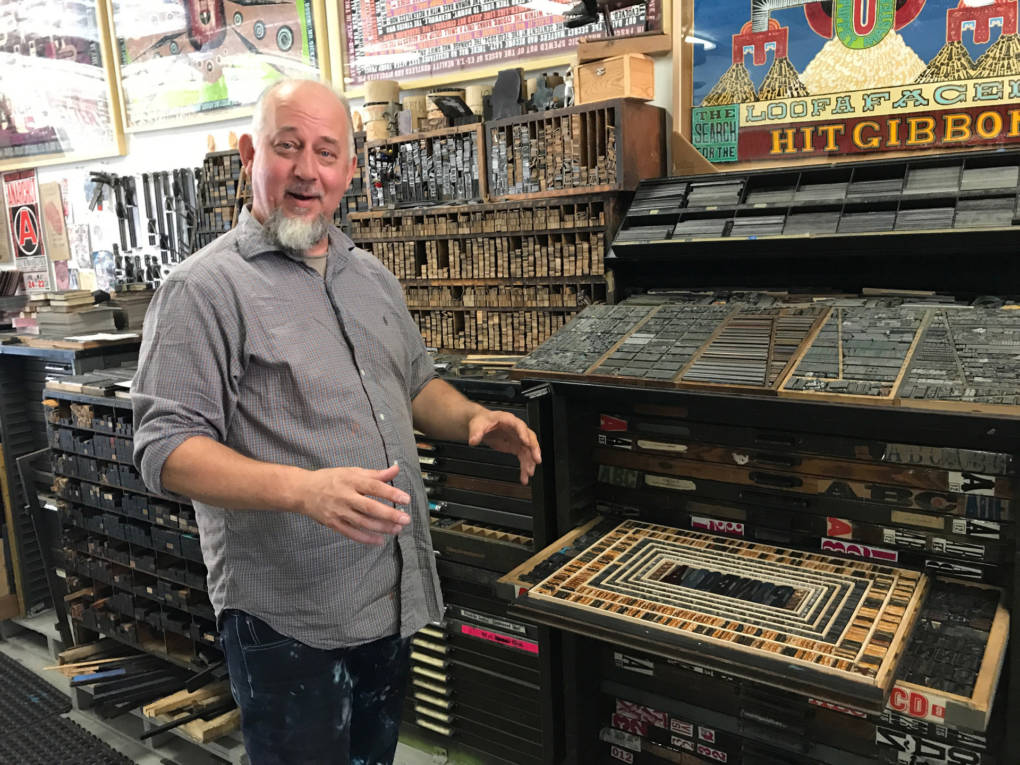
"caption": "Church of Type owner/operator Kevin Bradley with main ingredient in his house of worship, the type itself.\n",
"description": null,
"title": "RS27566_kevin 5_alt1-qut",
"credit": "Peter Gilstrap/KQED",
"status": "inherit",
"isLoading": false,
"fetchFailed": false
}
},
"audioPlayerReducer": {
"postId": "stream_live",
"isPaused": true,
"isPlaying": false,
"pfsActive": false,
"pledgeModalIsOpen": true,
"playerDrawerIsOpen": false,
"liveAudioPlayStartedAt": 0,
"liveAudioPlayContext": ""
},
"authorsReducer": {
"byline_news_11625391": {
"type": "authors",
"id": "byline_news_11625391",
"meta": {
"override": true
},
"slug": "byline_news_11625391",
"name": "Paul Elias\u003cbr>Associated Press",
"isLoading": false
},
"gmarzorati": {
"type": "authors",
"id": "227",
"meta": {
"index": "authors_1716337520",
"id": "227",
"found": true
},
"name": "Guy Marzorati",
"firstName": "Guy",
"lastName": "Marzorati",
"slug": "gmarzorati",
"email": "gmarzorati@KQED.org",
"display_author_email": true,
"staff_mastheads": [
"news"
],
"title": "Correspondent",
"bio": "Guy Marzorati is a correspondent on KQED's California Politics and Government Desk, based in San Jose. A graduate of Santa Clara University, Guy joined KQED in 2013. He reports on state and local politics and produces KQED's digital voter guide.",
"avatar": "https://secure.gravatar.com/avatar/e7038b8dbfd55b104369b76b1cd0b9de?s=600&d=blank&r=g",
"twitter": "guymarzorati",
"facebook": null,
"instagram": null,
"linkedin": null,
"sites": [
{
"site": "",
"roles": [
"editor"
]
},
{
"site": "news",
"roles": [
"editor"
]
},
{
"site": "science",
"roles": [
"editor"
]
},
{
"site": "forum",
"roles": [
"editor"
]
},
{
"site": "elections",
"roles": [
"editor"
]
},
{
"site": "liveblog",
"roles": [
"editor"
]
}
],
"headData": {
"title": "Guy Marzorati | KQED",
"description": "Correspondent",
"ogImgSrc": "https://secure.gravatar.com/avatar/e7038b8dbfd55b104369b76b1cd0b9de?s=600&d=blank&r=g",
"twImgSrc": "https://secure.gravatar.com/avatar/e7038b8dbfd55b104369b76b1cd0b9de?s=600&d=blank&r=g"
},
"isLoading": false,
"link": "/author/gmarzorati"
},
"kqed": {
"type": "authors",
"id": "236",
"meta": {
"index": "authors_1716337520",
"id": "236",
"found": true
},
"name": "KQED News Staff",
"firstName": "KQED News Staff",
"lastName": null,
"slug": "kqed",
"email": "faq@kqed.org",
"display_author_email": false,
"staff_mastheads": [],
"title": null,
"bio": null,
"avatar": "https://secure.gravatar.com/avatar/ef0e801a68c4c54afa9180db14084167?s=600&d=blank&r=g",
"twitter": null,
"facebook": null,
"instagram": null,
"linkedin": null,
"sites": [
{
"site": "arts",
"roles": [
"contributor"
]
},
{
"site": "news",
"roles": [
"editor"
]
},
{
"site": "futureofyou",
"roles": [
"author"
]
}
],
"headData": {
"title": "KQED News Staff | KQED",
"description": null,
"ogImgSrc": "https://secure.gravatar.com/avatar/ef0e801a68c4c54afa9180db14084167?s=600&d=blank&r=g",
"twImgSrc": "https://secure.gravatar.com/avatar/ef0e801a68c4c54afa9180db14084167?s=600&d=blank&r=g"
},
"isLoading": false,
"link": "/author/kqed"
},
"rachael-myrow": {
"type": "authors",
"id": "251",
"meta": {
"index": "authors_1716337520",
"id": "251",
"found": true
},
"name": "Rachael Myrow",
"firstName": "Rachael",
"lastName": "Myrow",
"slug": "rachael-myrow",
"email": "rmyrow@kqed.org",
"display_author_email": true,
"staff_mastheads": [
"news"
],
"title": "Senior Editor of KQED's Silicon Valley News Desk",
"bio": "• I write and edit stories about how Silicon Valley power and policies shape everyday life in California. I’m also passionate about making Bay Area history and culture more accessible to a broad public. • I’ve been a journalist for most of my life, starting in high school with The Franklin Press in Los Angeles, where I grew up. While earning my first degree in English at UC Berkeley, I got my start in public radio at KALX-FM. After completing a second degree in journalism at Cal, I landed my first professional job at Marketplace, then moved on to KPCC (now LAist), and then KQED, where I hosted The California Report for more than seven years. • My reporting has appeared on NPR, The World, WBUR’s \u003ci>Here & Now\u003c/i>, and the BBC. I also guest host for KQED’s \u003ci>Forum\u003c/i>, as well as the Commonwealth Club in San Francisco. • I speak periodically on media, democracy and technology issues, and do voiceover work for documentaries and educational video projects. • Outside of the studio, you'll find me hiking Bay Area trails and whipping up Insta-ready meals in my kitchen. • I do not accept gifts, money, or favors from anyone connected to my reporting, I don't pay people for information, and I do not support or donate to political causes. • I strive to treat the people I report on with fairness, honesty, and respect. I also recognize there are often multiple sides to a story and work to verify information through multiple sources and documentation. If I get something wrong, I correct it.",
"avatar": "https://secure.gravatar.com/avatar/3ed8a3c5f26025e4a805ba634cda8cd764906b97438a6d9ce216b044e340da4e?s=600&d=blank&r=g",
"twitter": "rachaelmyrow",
"bluesky": null,
"facebook": null,
"instagram": null,
"linkedin": "https://www.linkedin.com/in/rachaelmyrow/",
"sites": [
{
"site": "arts",
"roles": [
"administrator"
]
},
{
"site": "news",
"roles": [
"edit_others_posts",
"editor"
]
},
{
"site": "futureofyou",
"roles": [
"editor"
]
},
{
"site": "bayareabites",
"roles": [
"editor"
]
},
{
"site": "stateofhealth",
"roles": [
"editor"
]
},
{
"site": "science",
"roles": [
"editor"
]
},
{
"site": "food",
"roles": [
"editor"
]
},
{
"site": "forum",
"roles": [
"editor"
]
},
{
"site": "liveblog",
"roles": [
"author"
]
}
],
"headData": {
"title": "Rachael Myrow | KQED",
"description": "Senior Editor of KQED's Silicon Valley News Desk",
"ogImgSrc": "https://secure.gravatar.com/avatar/3ed8a3c5f26025e4a805ba634cda8cd764906b97438a6d9ce216b044e340da4e?s=600&d=blank&r=g",
"twImgSrc": "https://secure.gravatar.com/avatar/3ed8a3c5f26025e4a805ba634cda8cd764906b97438a6d9ce216b044e340da4e?s=600&d=blank&r=g"
},
"isLoading": false,
"link": "/author/rachael-myrow"
},
"sasha-khokha": {
"type": "authors",
"id": "254",
"meta": {
"index": "authors_1716337520",
"id": "254",
"found": true
},
"name": "Sasha Khokha",
"firstName": "Sasha",
"lastName": "Khokha",
"slug": "sasha-khokha",
"email": "skhokha@kqed.org",
"display_author_email": true,
"staff_mastheads": [
"news"
],
"title": "Host, The California Report Magazine",
"bio": "Sasha Khokha is the host of \u003cem>The California Report's \u003c/em> weekly magazine program, which takes listeners on sound-rich excursions to meet the people that make the Golden State unique -- through audio documentaries and long-form stories. As \u003cem>The California Report's\u003c/em> Central Valley Bureau Chief based in Fresno for nearly a dozen years, Sasha brought the lives and concerns of rural Californians to listeners around the state. Her reporting helped expose the hidden price immigrant women janitors and farmworkers may pay to keep their jobs: sexual assault at work. It inspired two new California laws to protect them from sexual harassment. She was a key member of the reporting team for the Frontline film \u003cem>Rape on the Night Shift, \u003c/em>which was nominated for two national Emmys. Sasha has also won a national Edward R. Murrow and a national PRNDI award for investigative reporting, as well as multiple prizes from the Society for Professional Journalists. Sasha is a proud alum of the UC Berkeley Graduate School of Journalism and Brown University and a member of the South Asian Journalists Association.",
"avatar": "https://secure.gravatar.com/avatar/e4b5e1541aaeea2aa356aa1fb2a68950?s=600&d=blank&r=g",
"twitter": "KQEDSashaKhokha",
"facebook": null,
"instagram": null,
"linkedin": null,
"sites": [
{
"site": "news",
"roles": [
"editor"
]
},
{
"site": "stateofhealth",
"roles": [
"author"
]
},
{
"site": "science",
"roles": [
"author"
]
},
{
"site": "quest",
"roles": [
"subscriber"
]
}
],
"headData": {
"title": "Sasha Khokha | KQED",
"description": "Host, The California Report Magazine",
"ogImgSrc": "https://secure.gravatar.com/avatar/e4b5e1541aaeea2aa356aa1fb2a68950?s=600&d=blank&r=g",
"twImgSrc": "https://secure.gravatar.com/avatar/e4b5e1541aaeea2aa356aa1fb2a68950?s=600&d=blank&r=g"
},
"isLoading": false,
"link": "/author/sasha-khokha"
},
"markfiore": {
"type": "authors",
"id": "3236",
"meta": {
"index": "authors_1716337520",
"id": "3236",
"found": true
},
"name": "Mark Fiore",
"firstName": "Mark",
"lastName": "Fiore",
"slug": "markfiore",
"email": "mark@markfiore.com",
"display_author_email": false,
"staff_mastheads": [
"news"
],
"title": "KQED News Cartoonist",
"bio": "\u003ca href=\"http://www.MarkFiore.com\">MarkFiore.com\u003c/a> | \u003ca href=\"https://twitter.com/markfiore\">Follow on Twitter\u003c/a> | \u003ca href=\"https://www.facebook.com/pages/Mark-Fiore-Animated-Political-Cartoons/94451707396?ref=bookmarks\">Facebook\u003c/a> | \u003ca href=\"mailto:mark@markfiore.com\">email\u003c/a>\r\n\r\nPulitzer Prize-winner, Mark Fiore, who the Wall Street Journal has called “the undisputed guru of the form,” creates animated political cartoons in San Francisco, where his work has been featured regularly on the San Francisco Chronicle’s web site, SFGate.com. His work has appeared on Newsweek.com, Slate.com, CBSNews.com, MotherJones.com, DailyKos.com and NPR’s web site. Fiore’s political animation has appeared on CNN, Frontline, Bill Moyers Journal, Salon.com and cable and broadcast outlets across the globe.\r\n\r\nBeginning his professional life by drawing traditional political cartoons for newspapers, Fiore’s work appeared in publications ranging from the Washington Post to the Los Angeles Times. In the late 1990s, he began to experiment with animating political cartoons and, after a short stint at the San Jose Mercury News as their staff cartoonist, Fiore devoted all his energies to animation.\r\nGrowing up in California, Fiore also spent a good portion of his life in the backwoods of Idaho. It was this combination that shaped him politically. Mark majored in political science at Colorado College, where, in a perfect send-off for a cartoonist, he received his diploma in 1991 as commencement speaker Dick Cheney smiled approvingly.\r\nMark Fiore was awarded the Pulitzer Prize for political cartooning in 2010, a Robert F. Kennedy Journalism Award in 2004 and has twice received an Online Journalism Award for commentary from the Online News Association (2002, 2008). Fiore has received two awards for his work in new media from the National Cartoonists Society (2001, 2002), and in 2006 received The James Madison Freedom of Information Award from The Society of Professional Journalists.",
"avatar": "https://secure.gravatar.com/avatar/fc4e2a612b15b67bad0c6f0e1db4ca9b?s=600&d=blank&r=g",
"twitter": "MarkFiore",
"facebook": null,
"instagram": "https://www.instagram.com/markfiore/?hl=en",
"linkedin": null,
"sites": [
{
"site": "arts",
"roles": [
"contributor"
]
},
{
"site": "news",
"roles": [
"editor"
]
},
{
"site": "futureofyou",
"roles": [
"editor"
]
},
{
"site": "science",
"roles": [
"editor"
]
}
],
"headData": {
"title": "Mark Fiore | KQED",
"description": "KQED News Cartoonist",
"ogImgSrc": "https://secure.gravatar.com/avatar/fc4e2a612b15b67bad0c6f0e1db4ca9b?s=600&d=blank&r=g",
"twImgSrc": "https://secure.gravatar.com/avatar/fc4e2a612b15b67bad0c6f0e1db4ca9b?s=600&d=blank&r=g"
},
"isLoading": false,
"link": "/author/markfiore"
},
"tcamhi": {
"type": "authors",
"id": "3251",
"meta": {
"index": "authors_1716337520",
"id": "3251",
"found": true
},
"name": "Tiffany Camhi",
"firstName": "Tiffany",
"lastName": "Camhi",
"slug": "tcamhi",
"email": "tiffanycamhi@gmail.com",
"display_author_email": false,
"staff_mastheads": [],
"title": "KQED Contributor",
"bio": null,
"avatar": "https://secure.gravatar.com/avatar/f8204ce351139205d3b3dc1581016a5e30d7d8b38cb2c139348c151ec14b792e?s=600&d=blank&r=g",
"twitter": null,
"bluesky": null,
"facebook": null,
"instagram": null,
"linkedin": null,
"sites": [
{
"site": "arts",
"roles": [
"subscriber"
]
},
{
"site": "news",
"roles": [
"subscriber"
]
}
],
"headData": {
"title": "Tiffany Camhi | KQED",
"description": "KQED Contributor",
"ogImgSrc": "https://secure.gravatar.com/avatar/f8204ce351139205d3b3dc1581016a5e30d7d8b38cb2c139348c151ec14b792e?s=600&d=blank&r=g",
"twImgSrc": "https://secure.gravatar.com/avatar/f8204ce351139205d3b3dc1581016a5e30d7d8b38cb2c139348c151ec14b792e?s=600&d=blank&r=g"
},
"isLoading": false,
"link": "/author/tcamhi"
},
"pgilstrap": {
"type": "authors",
"id": "11275",
"meta": {
"index": "authors_1716337520",
"id": "11275",
"found": true
},
"name": "Peter Gilstrap",
"firstName": "Peter",
"lastName": "Gilstrap",
"slug": "pgilstrap",
"email": "pgilstrap@sbcglobal.net",
"display_author_email": false,
"staff_mastheads": [],
"title": null,
"bio": null,
"avatar": "https://secure.gravatar.com/avatar/2bf93e4a8c1e35493845045175273916?s=600&d=blank&r=g",
"twitter": null,
"facebook": null,
"instagram": null,
"linkedin": null,
"sites": [
{
"site": "news",
"roles": [
"author"
]
}
],
"headData": {
"title": "Peter Gilstrap | KQED",
"description": null,
"ogImgSrc": "https://secure.gravatar.com/avatar/2bf93e4a8c1e35493845045175273916?s=600&d=blank&r=g",
"twImgSrc": "https://secure.gravatar.com/avatar/2bf93e4a8c1e35493845045175273916?s=600&d=blank&r=g"
},
"isLoading": false,
"link": "/author/pgilstrap"
},
"vrancano": {
"type": "authors",
"id": "11276",
"meta": {
"index": "authors_1716337520",
"id": "11276",
"found": true
},
"name": "Vanessa Rancaño",
"firstName": "Vanessa",
"lastName": "Rancaño",
"slug": "vrancano",
"email": "vrancano@kqed.org",
"display_author_email": false,
"staff_mastheads": [
"news"
],
"title": "Reporter",
"bio": "Vanessa Rancaño is a features reporter for KQED. She’s also covered homelessness and education for the station and reported from the Central Valley. Her work has aired across public radio, from flagship national news shows to longform narrative podcasts. Before taking up a mic, she worked as a freelance print journalist. She’s been recognized with a number of national and regional awards. Vanessa grew up in California's Central Valley. She's a former NPR Kroc Fellow, and a graduate of the UC Berkeley Graduate School of Journalism.",
"avatar": "https://secure.gravatar.com/avatar/b3a383dfb0e7ee1c17568f2cf067904ab654d6e3de9743fc661f3c788ade1bed?s=600&d=blank&r=g",
"twitter": "vanessarancano",
"bluesky": null,
"facebook": null,
"instagram": null,
"linkedin": null,
"sites": [
{
"site": "arts",
"roles": [
"editor"
]
},
{
"site": "news",
"roles": [
"editor"
]
},
{
"site": "liveblog",
"roles": [
"contributor"
]
}
],
"headData": {
"title": "Vanessa Rancaño | KQED",
"description": "Reporter",
"ogImgSrc": "https://secure.gravatar.com/avatar/b3a383dfb0e7ee1c17568f2cf067904ab654d6e3de9743fc661f3c788ade1bed?s=600&d=blank&r=g",
"twImgSrc": "https://secure.gravatar.com/avatar/b3a383dfb0e7ee1c17568f2cf067904ab654d6e3de9743fc661f3c788ade1bed?s=600&d=blank&r=g"
},
"isLoading": false,
"link": "/author/vrancano"
}
},
"pagesReducer": {
"news_category_arts-and-culture": {
"type": "terms",
"id": "news_223",
"meta": {
"index": "terms_1716263798",
"site": "news",
"id": "223",
"score": 11.24217
},
"featImg": null,
"name": "Arts and Culture",
"description": null,
"taxonomy": "category",
"headData": {
"twImgId": null,
"twTitle": null,
"ogTitle": null,
"ogImgId": null,
"twDescription": null,
"description": null,
"title": "Arts and Culture Archives | KQED News",
"ogDescription": null
},
"ttid": 231,
"slug": "arts-and-culture",
"isLoading": false,
"title": "Arts and Culture",
"pageMeta": {
"site": "news",
"WpPageTemplate": "page-topic-editorial",
"currentPage": 90
},
"blocks": [
{
"blockName": "kqed/post-list",
"attrs": {
"layout": "cardArticle2",
"query": "posts/news?category=arts-and-culture",
"seeMore": false,
"paginated": true,
"page": 90
}
},
{
"blockName": "kqed/ad"
}
]
}
},
"pfsSessionReducer": {},
"postsReducer": {
"stream_live": {
"type": "live",
"id": "stream_live",
"audioUrl": "https://streams.kqed.org/kqedradio",
"title": "Live Stream",
"excerpt": "Live Stream information currently unavailable.",
"link": "/radio",
"featImg": "",
"label": {
"name": "KQED Live",
"link": "/"
}
},
"stream_kqedNewscast": {
"type": "posts",
"id": "stream_kqedNewscast",
"audioUrl": "https://www.kqed.org/.stream/anon/radio/RDnews/newscast.mp3?_=1",
"title": "KQED Newscast",
"featImg": "",
"label": {
"name": "88.5 FM",
"link": "/"
}
},
"news_11626083": {
"type": "posts",
"id": "news_11626083",
"meta": {
"index": "posts_1716263798",
"site": "news",
"id": "11626083",
"score": null,
"sort": [
1509550254000
]
},
"parent": 0,
"labelTerm": {
"site": "news",
"term": 72
},
"blocks": [],
"publishDate": 1509550254,
"format": "standard",
"disqusTitle": "Tell Us: What Is Your 'California Dream'? (And Are You Living It?)",
"title": "Tell Us: What Is Your 'California Dream'? (And Are You Living It?)",
"headTitle": "The California Dream | The California Report | KQED News",
"content": "\u003cp>You became a Californian because someone in your family believed in a dream. A strong public education. The promise of a job. The weather. (Ahhh, the weather.) In its long history, the California Dream has meant different things to different people.\u003c/p>\n\u003cp>Today, the state’s identity is in marked contrast to the rest of the country. The dream may still be alive, but it’s challenged at every corner. What does it mean today?\u003c/p>\n\u003cp>KQED and mission-driven media organizations around the state will \u003ca href=\"https://ww2.kqed.org/news/series/californiadream/\" rel=\"noopener\" target=\"_blank\">explore the California Dream\u003c/a> starting this year. Reporters and producers will tell the personal stories and discuss the ideas that make up the history, future and current state of the California Dream. And we’ll ask: Is the dream still attainable for most people who live here? Share your California Dream in the form below.\u003c/p>\n\u003cp>http://bit.ly/kqedcadream\u003c/p>\n\u003cp>\u003cem>\u003ca href=\"https://www.kqed.org/news/series/californiadream/\" target=\"_blank\" rel=\"noopener\">The California Dream series\u003c/a> is a statewide media collaboration of CALmatters, KPBS, KPCC, KQED and Capital Public Radio with support from the Corporation for Public Broadcasting, the James Irvine Foundation and the College Futures Foundation.\u003c/em>\u003c/p>\n\u003cp>[ad fullwidth]\u003c/p>\n\u003cp>\u003c/p>\n\u003cp>\u003cimg class=\"aligncenter size-medium wp-image-11660142\" src=\"https://ww2.kqed.org/news/wp-content/uploads/sites/10/2018/04/CADreamBanner-800x219.jpg\" alt=\"\" width=\"800\" height=\"219\" srcset=\"https://ww2.kqed.org/app/uploads/sites/10/2018/04/CADreamBanner-800x219.jpg 800w, https://ww2.kqed.org/app/uploads/sites/10/2018/04/CADreamBanner-160x44.jpg 160w, https://ww2.kqed.org/app/uploads/sites/10/2018/04/CADreamBanner-1020x280.jpg 1020w, https://ww2.kqed.org/app/uploads/sites/10/2018/04/CADreamBanner-1180x324.jpg 1180w, https://ww2.kqed.org/app/uploads/sites/10/2018/04/CADreamBanner-960x263.jpg 960w, https://ww2.kqed.org/app/uploads/sites/10/2018/04/CADreamBanner-240x66.jpg 240w, https://ww2.kqed.org/app/uploads/sites/10/2018/04/CADreamBanner-375x103.jpg 375w, https://ww2.kqed.org/app/uploads/sites/10/2018/04/CADreamBanner-520x143.jpg 520w, https://ww2.kqed.org/app/uploads/sites/10/2018/04/CADreamBanner.jpg 1867w\" sizes=\"(max-width: 800px) 100vw, 800px\">\u003c/p>\n\n",
"disqusIdentifier": "11626083 https://ww2.kqed.org/news/?p=11626083",
"disqusUrl": "https://ww2.kqed.org/news/2017/11/01/tell-us-what-is-your-california-dream-and-are-you-living-it/",
"stats": {
"hasVideo": false,
"hasChartOrMap": false,
"hasAudio": false,
"hasPolis": false,
"wordCount": 184,
"hasGoogleForm": false,
"hasGallery": false,
"hasHearkenModule": false,
"iframeSrcs": [],
"paragraphCount": 7
},
"modified": 1523647626,
"excerpt": "KQED and mission-driven media organizations around the state will explore the California Dream starting this year. ",
"headData": {
"twImgId": "",
"twTitle": "",
"ogTitle": "",
"ogImgId": "",
"twDescription": "",
"description": "KQED and mission-driven media organizations around the state will explore the California Dream starting this year. ",
"title": "Tell Us: What Is Your 'California Dream'? (And Are You Living It?) | KQED",
"ogDescription": "",
"schema": {
"@context": "https://schema.org",
"@type": "NewsArticle",
"headline": "Tell Us: What Is Your 'California Dream'? (And Are You Living It?)",
"datePublished": "2017-11-01T08:30:54-07:00",
"dateModified": "2018-04-13T12:27:06-07:00",
"image": "https://cdn.kqed.org/wp-content/uploads/2020/02/KQED-OG-Image@1x.png",
"isAccessibleForFree": "True",
"publisher": {
"@type": "NewsMediaOrganization",
"@id": "https://www.kqed.org/#organization",
"name": "KQED",
"logo": "https://cdn.kqed.org/wp-content/uploads/2020/02/KQED-OG-Image@1x.png",
"url": "https://www.kqed.org",
"sameAs": [
"https://www.facebook.com/KQED",
"https://twitter.com/KQED",
"https://www.instagram.com/kqed/",
"https://www.tiktok.com/@kqedofficial",
"https://www.linkedin.com/company/kqed",
"https://www.youtube.com/channel/UCeC0IOo7i1P_61zVUWbJ4nw"
]
}
}
},
"guestAuthors": [],
"slug": "tell-us-what-is-your-california-dream-and-are-you-living-it",
"status": "publish",
"path": "/news/11626083/tell-us-what-is-your-california-dream-and-are-you-living-it",
"audioTrackLength": null,
"parsedContent": [
{
"type": "contentString",
"content": "\u003cdiv class=\"post-body\">\u003cp>\u003cp>You became a Californian because someone in your family believed in a dream. A strong public education. The promise of a job. The weather. (Ahhh, the weather.) In its long history, the California Dream has meant different things to different people.\u003c/p>\n\u003cp>Today, the state’s identity is in marked contrast to the rest of the country. The dream may still be alive, but it’s challenged at every corner. What does it mean today?\u003c/p>\n\u003cp>KQED and mission-driven media organizations around the state will \u003ca href=\"https://ww2.kqed.org/news/series/californiadream/\" rel=\"noopener\" target=\"_blank\">explore the California Dream\u003c/a> starting this year. Reporters and producers will tell the personal stories and discuss the ideas that make up the history, future and current state of the California Dream. And we’ll ask: Is the dream still attainable for most people who live here? Share your California Dream in the form below.\u003c/p>\n\u003cp>http://bit.ly/kqedcadream\u003c/p>\n\u003cp>\u003cem>\u003ca href=\"https://www.kqed.org/news/series/californiadream/\" target=\"_blank\" rel=\"noopener\">The California Dream series\u003c/a> is a statewide media collaboration of CALmatters, KPBS, KPCC, KQED and Capital Public Radio with support from the Corporation for Public Broadcasting, the James Irvine Foundation and the College Futures Foundation.\u003c/em>\u003c/p>\n\u003cp>\u003c/p>\u003c/div>",
"attributes": {
"named": {},
"numeric": []
}
},
{
"type": "component",
"content": "",
"name": "ad",
"attributes": {
"named": {
"label": "fullwidth"
},
"numeric": [
"fullwidth"
]
}
},
{
"type": "contentString",
"content": "\u003cdiv class=\"post-body\">\u003cp>\u003c/p>\n\u003cp>\u003c/p>\n\u003cp>\u003cimg class=\"aligncenter size-medium wp-image-11660142\" src=\"https://ww2.kqed.org/news/wp-content/uploads/sites/10/2018/04/CADreamBanner-800x219.jpg\" alt=\"\" width=\"800\" height=\"219\" srcset=\"https://ww2.kqed.org/app/uploads/sites/10/2018/04/CADreamBanner-800x219.jpg 800w, https://ww2.kqed.org/app/uploads/sites/10/2018/04/CADreamBanner-160x44.jpg 160w, https://ww2.kqed.org/app/uploads/sites/10/2018/04/CADreamBanner-1020x280.jpg 1020w, https://ww2.kqed.org/app/uploads/sites/10/2018/04/CADreamBanner-1180x324.jpg 1180w, https://ww2.kqed.org/app/uploads/sites/10/2018/04/CADreamBanner-960x263.jpg 960w, https://ww2.kqed.org/app/uploads/sites/10/2018/04/CADreamBanner-240x66.jpg 240w, https://ww2.kqed.org/app/uploads/sites/10/2018/04/CADreamBanner-375x103.jpg 375w, https://ww2.kqed.org/app/uploads/sites/10/2018/04/CADreamBanner-520x143.jpg 520w, https://ww2.kqed.org/app/uploads/sites/10/2018/04/CADreamBanner.jpg 1867w\" sizes=\"(max-width: 800px) 100vw, 800px\">\u003c/p>\n\n\u003c/div>\u003c/p>",
"attributes": {
"named": {},
"numeric": []
}
}
],
"link": "/news/11626083/tell-us-what-is-your-california-dream-and-are-you-living-it",
"authors": [
"236"
],
"programs": [
"news_6944",
"news_72"
],
"series": [
"news_21879"
],
"categories": [
"news_223",
"news_1758",
"news_18540",
"news_19906",
"news_457",
"news_6266",
"news_6188",
"news_8"
],
"tags": [
"news_3921",
"news_21840"
],
"featImg": "news_11626084",
"label": "news_72"
},
"news_11627222": {
"type": "posts",
"id": "news_11627222",
"meta": {
"index": "posts_1716263798",
"site": "news",
"id": "11627222",
"score": null,
"sort": [
1509488872000
]
},
"parent": 0,
"labelTerm": {
"site": "news",
"term": 18515
},
"blocks": [],
"publishDate": 1509488872,
"format": "standard",
"disqusTitle": "Trick or Tweet",
"title": "Trick or Tweet",
"headTitle": "Mark Fiore: Drawn to the Bay | KQED News",
"content": "\u003cp>Russian trolls used social media to \u003ca href=\"https://ww2.kqed.org/news/2017/10/31/how-russian-trolls-used-silicon-valleys-influence-to-create-divisions/\">sow divisions in an attempt to influence voters\u003c/a> and sway the 2016 presidential election.\u003c/p>\n\u003cp>Representatives from Google, Facebook and Twitter \u003ca href=\"https://ww2.kqed.org/news/2017/10/31/russian-interference-campaign-was-broader-than-first-known-big-tech-tells-hill/\" rel=\"noopener\" target=\"_blank\">testified\u003c/a> before a Senate judiciary subcommittee on Tuesday.\u003c/p>\n\u003cp>The Silicon Valley companies revealed that the secret Russian social media campaign targeting Americans was much bigger than initially reported.\u003c/p>\n\u003cp>[ad fullwidth]\u003c/p>\u003cp>\u003c/p>\n",
"disqusIdentifier": "11627222 https://ww2.kqed.org/news/?p=11627222",
"disqusUrl": "https://ww2.kqed.org/news/2017/10/31/trick-or-tweet/",
"stats": {
"hasVideo": false,
"hasChartOrMap": false,
"hasAudio": false,
"hasPolis": false,
"wordCount": 56,
"hasGoogleForm": false,
"hasGallery": false,
"hasHearkenModule": false,
"iframeSrcs": [],
"paragraphCount": 5
},
"modified": 1509492445,
"excerpt": "Russian trolls used social media to sow divisions in an attempt to influence voters. Google, Facebook and Twitter testified on Capitol Hill on Tuesday.",
"headData": {
"twImgId": "",
"twTitle": "",
"ogTitle": "",
"ogImgId": "",
"twDescription": "",
"description": "Russian trolls used social media to sow divisions in an attempt to influence voters. Google, Facebook and Twitter testified on Capitol Hill on Tuesday.",
"title": "Trick or Tweet | KQED",
"ogDescription": "",
"schema": {
"@context": "https://schema.org",
"@type": "NewsArticle",
"headline": "Trick or Tweet",
"datePublished": "2017-10-31T15:27:52-07:00",
"dateModified": "2017-10-31T16:27:25-07:00",
"image": "https://cdn.kqed.org/wp-content/uploads/2020/02/KQED-OG-Image@1x.png",
"isAccessibleForFree": "True",
"publisher": {
"@type": "NewsMediaOrganization",
"@id": "https://www.kqed.org/#organization",
"name": "KQED",
"logo": "https://cdn.kqed.org/wp-content/uploads/2020/02/KQED-OG-Image@1x.png",
"url": "https://www.kqed.org",
"sameAs": [
"https://www.facebook.com/KQED",
"https://twitter.com/KQED",
"https://www.instagram.com/kqed/",
"https://www.tiktok.com/@kqedofficial",
"https://www.linkedin.com/company/kqed",
"https://www.youtube.com/channel/UCeC0IOo7i1P_61zVUWbJ4nw"
]
}
}
},
"guestAuthors": [],
"slug": "trick-or-tweet",
"status": "publish",
"path": "/news/11627222/trick-or-tweet",
"audioTrackLength": null,
"parsedContent": [
{
"type": "contentString",
"content": "\u003cdiv class=\"post-body\">\u003cp>\u003cp>Russian trolls used social media to \u003ca href=\"https://ww2.kqed.org/news/2017/10/31/how-russian-trolls-used-silicon-valleys-influence-to-create-divisions/\">sow divisions in an attempt to influence voters\u003c/a> and sway the 2016 presidential election.\u003c/p>\n\u003cp>Representatives from Google, Facebook and Twitter \u003ca href=\"https://ww2.kqed.org/news/2017/10/31/russian-interference-campaign-was-broader-than-first-known-big-tech-tells-hill/\" rel=\"noopener\" target=\"_blank\">testified\u003c/a> before a Senate judiciary subcommittee on Tuesday.\u003c/p>\n\u003cp>The Silicon Valley companies revealed that the secret Russian social media campaign targeting Americans was much bigger than initially reported.\u003c/p>\n\u003cp>\u003c/p>\u003c/div>",
"attributes": {
"named": {},
"numeric": []
}
},
{
"type": "component",
"content": "",
"name": "ad",
"attributes": {
"named": {
"label": "fullwidth"
},
"numeric": [
"fullwidth"
]
}
},
{
"type": "contentString",
"content": "\u003cdiv class=\"post-body\">\u003cp>\u003c/p>\u003cp>\u003c/p>\n\u003c/div>\u003c/p>",
"attributes": {
"named": {},
"numeric": []
}
}
],
"link": "/news/11627222/trick-or-tweet",
"authors": [
"3236"
],
"series": [
"news_18515"
],
"categories": [
"news_223",
"news_6188",
"news_8",
"news_13"
],
"tags": [
"news_20150",
"news_249",
"news_93",
"news_20949",
"news_21120",
"news_21254",
"news_1089",
"news_346"
],
"featImg": "news_11627231",
"label": "news_18515"
},
"news_11626850": {
"type": "posts",
"id": "news_11626850",
"meta": {
"index": "posts_1716263798",
"site": "news",
"id": "11626850",
"score": null,
"sort": [
1509454811000
]
},
"guestAuthors": [],
"slug": "for-chinas-gold-rush-prospectors-bone-scraping-was-the-last-way-home",
"title": "For China’s Gold Rush Prospectors, ‘Bone Scraping’ Was the Last Way Home",
"publishDate": 1509454811,
"format": "audio",
"headTitle": "For China’s Gold Rush Prospectors, ‘Bone Scraping’ Was the Last Way Home | KQED",
"labelTerm": {
"term": 72,
"site": "news"
},
"content": "\u003cp>During the Gold Rush, thousands of Chinese prospectors came to California looking to “hit pay dirt,” and then head home rich. But like so many miners with the same ambition, most Chinese immigrants ended up in less shiny pursuits — like railroads, restaurants and retail. They sent money back to the home country when they could, and planned to return eventually.\u003c/p>\n\u003cp>So what happened when they died in California?\u003c/p>\n\u003cp>Richard Yue owns the Chinese cemetery in Auburn, where his great-grandfather’s bones still lie buried in a terra-cotta pot.\u003c/p>\n\u003cp>“Unfortunately, somebody popped open the lid of it and stole the skull out of it, but the bones are in there,” Yue says.\u003c/p>\n\u003cp>His ancestors didn’t expect their remains to stay in California. But given the long, expensive boat trip between San Francisco and China in the 19th century, it made more sense to bury the bodies in shallow graves for approximately seven years, and let the perishable flesh decompose first.\u003c/p>\n\u003cfigure id=\"attachment_11626909\" class=\"wp-caption aligncenter\" style=\"max-width: 800px\">\u003cimg loading=\"lazy\" decoding=\"async\" class=\"wp-image-11626909 size-medium\" src=\"https://ww2.kqed.org/news/wp-content/uploads/sites/10/2017/10/RS27806_IMG_9671-1-qut-800x450.jpg\" alt=\"You'd have to go looking for Auburn's Chinese cemetery, located as it far off the main drag. Many Chinese communities during the Gold Rush did not have their own cemeteries. Others had several, each dedication to different families coming from different regions of China.\" width=\"800\" height=\"450\" srcset=\"https://cdn.kqed.org/wp-content/uploads/sites/10/2017/10/RS27806_IMG_9671-1-qut-800x450.jpg 800w, https://cdn.kqed.org/wp-content/uploads/sites/10/2017/10/RS27806_IMG_9671-1-qut-160x90.jpg 160w, https://cdn.kqed.org/wp-content/uploads/sites/10/2017/10/RS27806_IMG_9671-1-qut-1020x574.jpg 1020w, https://cdn.kqed.org/wp-content/uploads/sites/10/2017/10/RS27806_IMG_9671-1-qut-1180x664.jpg 1180w, https://cdn.kqed.org/wp-content/uploads/sites/10/2017/10/RS27806_IMG_9671-1-qut-960x540.jpg 960w, https://cdn.kqed.org/wp-content/uploads/sites/10/2017/10/RS27806_IMG_9671-1-qut-240x135.jpg 240w, https://cdn.kqed.org/wp-content/uploads/sites/10/2017/10/RS27806_IMG_9671-1-qut-375x211.jpg 375w, https://cdn.kqed.org/wp-content/uploads/sites/10/2017/10/RS27806_IMG_9671-1-qut-520x293.jpg 520w, https://cdn.kqed.org/wp-content/uploads/sites/10/2017/10/RS27806_IMG_9671-1-qut.jpg 1280w\" sizes=\"(max-width: 800px) 100vw, 800px\">\u003cfigcaption class=\"wp-caption-text\">Many Chinese communities during the Gold Rush did not have their own cemeteries. Others had several, each dedication to different families coming from different regions of China. \u003ccite>(Photo: Rachael Myrow/KQED)\u003c/cite>\u003c/figcaption>\u003c/figure>\n\u003cp>In the case of those buried in Auburn, most of the bones were headed back to a particular region of southwestern Guangdong known as Toishan, or Taishan today.\u003c/p>\n\u003cp>[ad fullwidth]\u003c/p>\n\u003cp>Yue explains that when enough time had passed, the deceased’s relatives would contact one of a handful of companies in San Francisco that did bone scraping.\u003c/p>\n\u003cp>“[They] would come here and exhume the bones and clean them and arrange them very carefully into tin boxes or into crocks. Then they would take them to San Francisco and have them shipped back to their home village to be buried with their ancestors,” Yue says.\u003c/p>\n\u003cfigure id=\"attachment_11626922\" class=\"wp-caption aligncenter\" style=\"max-width: 800px\">\u003cimg loading=\"lazy\" decoding=\"async\" class=\"size-medium wp-image-11626922\" src=\"https://ww2.kqed.org/news/wp-content/uploads/sites/10/2017/10/RS27808_IMG_9684-qut-800x600.jpg\" alt=\"What remains of the remains of Richard Yue's great-grandfather, Chong You. Under this cap lies a terra cotta jar with Chong You's bones, minus the skull (stolen by vandals).\" width=\"800\" height=\"600\" srcset=\"https://cdn.kqed.org/wp-content/uploads/sites/10/2017/10/RS27808_IMG_9684-qut-800x600.jpg 800w, https://cdn.kqed.org/wp-content/uploads/sites/10/2017/10/RS27808_IMG_9684-qut-160x120.jpg 160w, https://cdn.kqed.org/wp-content/uploads/sites/10/2017/10/RS27808_IMG_9684-qut-1020x765.jpg 1020w, https://cdn.kqed.org/wp-content/uploads/sites/10/2017/10/RS27808_IMG_9684-qut.jpg 1920w, https://cdn.kqed.org/wp-content/uploads/sites/10/2017/10/RS27808_IMG_9684-qut-1180x885.jpg 1180w, https://cdn.kqed.org/wp-content/uploads/sites/10/2017/10/RS27808_IMG_9684-qut-960x720.jpg 960w, https://cdn.kqed.org/wp-content/uploads/sites/10/2017/10/RS27808_IMG_9684-qut-240x180.jpg 240w, https://cdn.kqed.org/wp-content/uploads/sites/10/2017/10/RS27808_IMG_9684-qut-375x281.jpg 375w, https://cdn.kqed.org/wp-content/uploads/sites/10/2017/10/RS27808_IMG_9684-qut-520x390.jpg 520w\" sizes=\"(max-width: 800px) 100vw, 800px\">\u003cfigcaption class=\"wp-caption-text\">What remains of the remains of Richard Yue’s great-grandfather, Chong You. Under this cap lies a terra cotta jar with Chong You’s bones, minus the skull (stolen by vandals). \u003ccite>(Photo: Rachael Myrow/KQED)\u003c/cite>\u003c/figcaption>\u003c/figure>\n\u003cp>“Funerary rites are a wonderful lens to understand and view a culture,” says Linda Sun Crowder. A cultural anthropologist who teaches at Cal State Fullerton, she’s also one of the state’s foremost experts on the practice of Chinese “bone scraping.”\u003c/p>\n\u003cp>Crowder says the bones are believed to harness powerful energy. “Every Chinese wants to be buried together with their ancestors, so that all the combined energy from these bones will help to fortify the family and bring good fortune.”\u003c/p>\n\u003cp>Even the lowliest laborer would contract — or his family association would contract for him — bone scraping in the event of his death. While it was common for many fortune hunters to presume their stay in California would be temporary, the Chinese had strong reasons to doubt they could set down roots.\u003c/p>\n\u003cp>Anti-Chinese sentiment was rife in 19th century America, peaking in 1882 with the federal establishment of the Chinese Exclusion Act, suspending all immigration of Chinese laborers. The Chinese Exclusion Act was the first law implemented to prevent a specific ethnic group from immigrating to the United States. It would not be repealed until 1943.\u003c/p>\n\u003cfigure id=\"attachment_11626923\" class=\"wp-caption aligncenter\" style=\"max-width: 800px\">\u003cimg loading=\"lazy\" decoding=\"async\" class=\"size-medium wp-image-11626923\" src=\"https://ww2.kqed.org/news/wp-content/uploads/sites/10/2017/10/RS27804_Chong-You-1894-qut-800x727.jpg\" alt=\"Richard Yue's ancestors came to California seeking a better life. At first, they may have intended to make their fortune and return to China. But over time, they set down roots and helped establish a Chinese community in the foothills of the Sierra Nevada.\" width=\"800\" height=\"727\" srcset=\"https://cdn.kqed.org/wp-content/uploads/sites/10/2017/10/RS27804_Chong-You-1894-qut-800x727.jpg 800w, https://cdn.kqed.org/wp-content/uploads/sites/10/2017/10/RS27804_Chong-You-1894-qut-160x145.jpg 160w, https://cdn.kqed.org/wp-content/uploads/sites/10/2017/10/RS27804_Chong-You-1894-qut-1020x926.jpg 1020w, https://cdn.kqed.org/wp-content/uploads/sites/10/2017/10/RS27804_Chong-You-1894-qut-1180x1072.jpg 1180w, https://cdn.kqed.org/wp-content/uploads/sites/10/2017/10/RS27804_Chong-You-1894-qut-960x872.jpg 960w, https://cdn.kqed.org/wp-content/uploads/sites/10/2017/10/RS27804_Chong-You-1894-qut-240x218.jpg 240w, https://cdn.kqed.org/wp-content/uploads/sites/10/2017/10/RS27804_Chong-You-1894-qut-375x341.jpg 375w, https://cdn.kqed.org/wp-content/uploads/sites/10/2017/10/RS27804_Chong-You-1894-qut-520x472.jpg 520w, https://cdn.kqed.org/wp-content/uploads/sites/10/2017/10/RS27804_Chong-You-1894-qut.jpg 1843w\" sizes=\"(max-width: 800px) 100vw, 800px\">\u003cfigcaption class=\"wp-caption-text\">Richard Yue’s ancestors came to California seeking a better life. At first, they may have intended to make their fortune and return to China. But over time, they set down roots and helped establish a Chinese community in the foothills of the Sierra Nevada. \u003ccite>(Photo: Courtesy of Richard Yue)\u003c/cite>\u003c/figcaption>\u003c/figure>\n\u003cp>Bone scraping in the U.S. lasted until the 1950s, in large part because Communist China then was closed off from the rest of the world.\u003c/p>\n\u003cp>Nowadays, Crowder says, there’s a reverse trend in effect.\u003c/p>\n\u003cp>“Since many Chinese are now living overseas, they want to, again, keep their family together, and they are bringing remains out of China over to America … wherever they are making their new home,” Crowder says.\u003c/p>\n\u003cp>“Wherever” means all over the world.\u003c/p>\n\u003cp>Terry Abraham of the University of Idaho has compiled an impressively long list of \u003ca href=\"http://webpages.uidaho.edu/special-collections/papers/ch_cem.htm\" target=\"_blank\" rel=\"noopener\">Chinese cemeteries outside China\u003c/a>.\u003c/p>\n\u003cp>\u003c/p>\n\u003cp>Today, you can still find Gold Rush-era Chinese cemeteries, or Chinese sections of cemeteries, all over California. Among the altars and stone grave markers you’ll find a number of shallow depressions in the grass-covered earth: the last evidence here of the Chinese whose bones made it back to China.\u003c/p>\n\u003cfigure id=\"attachment_11626927\" class=\"wp-caption aligncenter\" style=\"max-width: 800px\">\u003cimg loading=\"lazy\" decoding=\"async\" class=\"size-medium wp-image-11626927\" src=\"https://ww2.kqed.org/news/wp-content/uploads/sites/10/2017/10/RS27807_IMG_9675-1-qut-800x600.jpg\" alt=\"Many of California's historic Chinese cemeteries are in need of restoration. History buff groups like E Clampus Vitus are working to support that effort, providing clean up crews and plaques explaining the importance of these sites for all. \" width=\"800\" height=\"600\" srcset=\"https://cdn.kqed.org/wp-content/uploads/sites/10/2017/10/RS27807_IMG_9675-1-qut-800x600.jpg 800w, https://cdn.kqed.org/wp-content/uploads/sites/10/2017/10/RS27807_IMG_9675-1-qut-160x120.jpg 160w, https://cdn.kqed.org/wp-content/uploads/sites/10/2017/10/RS27807_IMG_9675-1-qut-1020x765.jpg 1020w, https://cdn.kqed.org/wp-content/uploads/sites/10/2017/10/RS27807_IMG_9675-1-qut.jpg 1920w, https://cdn.kqed.org/wp-content/uploads/sites/10/2017/10/RS27807_IMG_9675-1-qut-1180x885.jpg 1180w, https://cdn.kqed.org/wp-content/uploads/sites/10/2017/10/RS27807_IMG_9675-1-qut-960x720.jpg 960w, https://cdn.kqed.org/wp-content/uploads/sites/10/2017/10/RS27807_IMG_9675-1-qut-240x180.jpg 240w, https://cdn.kqed.org/wp-content/uploads/sites/10/2017/10/RS27807_IMG_9675-1-qut-375x281.jpg 375w, https://cdn.kqed.org/wp-content/uploads/sites/10/2017/10/RS27807_IMG_9675-1-qut-520x390.jpg 520w\" sizes=\"(max-width: 800px) 100vw, 800px\">\u003cfigcaption class=\"wp-caption-text\">Many of California’s historic Chinese cemeteries are in need of restoration. History buff groups like E Clampus Vitus are working to support that effort, providing cleanup crews and plaques explaining the importance of these sites for all. \u003ccite>(Photo: Rachael Myrow/KQED)\u003c/cite>\u003c/figcaption>\u003c/figure>\n\n",
"blocks": [],
"excerpt": "For many in 1800s California, the long passage back home was prohibitively expensive -- and this all-but-forgotten practice was the only way to be buried with their ancestors.",
"status": "publish",
"parent": 0,
"modified": 1721147550,
"stats": {
"hasAudio": false,
"hasVideo": false,
"hasChartOrMap": false,
"iframeSrcs": [],
"hasGoogleForm": false,
"hasGallery": false,
"hasHearkenModule": false,
"hasPolis": false,
"paragraphCount": 20,
"wordCount": 795
},
"headData": {
"title": "For China’s Gold Rush Prospectors, ‘Bone Scraping’ Was the Last Way Home | KQED",
"description": "For many in 1800s California, the long passage back home was prohibitively expensive -- and this all-but-forgotten practice was the only way to be buried with their ancestors.",
"ogTitle": "",
"ogDescription": "",
"ogImgId": "",
"twTitle": "",
"twDescription": "",
"twImgId": "",
"schema": {
"@context": "https://schema.org",
"@type": "NewsArticle",
"headline": "For China’s Gold Rush Prospectors, ‘Bone Scraping’ Was the Last Way Home",
"datePublished": "2017-10-31T06:00:11-07:00",
"dateModified": "2024-07-16T09:32:30-07:00",
"image": "https://cdn.kqed.org/wp-content/uploads/2020/02/KQED-OG-Image@1x.png",
"isAccessibleForFree": "True",
"publisher": {
"@type": "NewsMediaOrganization",
"@id": "https://www.kqed.org/#organization",
"name": "KQED",
"logo": "https://cdn.kqed.org/wp-content/uploads/2020/02/KQED-OG-Image@1x.png",
"url": "https://www.kqed.org",
"sameAs": [
"https://www.facebook.com/KQED",
"https://twitter.com/KQED",
"https://www.instagram.com/kqed/",
"https://www.tiktok.com/@kqedofficial",
"https://www.linkedin.com/company/kqed",
"https://www.youtube.com/channel/UCeC0IOo7i1P_61zVUWbJ4nw"
]
}
}
},
"audioUrl": "https://www.kqed.org/.stream/anon/radio/tcr/2017/10/ChineseGraveyardAuburnMyrow.mp3",
"sticky": false,
"path": "/news/11626850/for-chinas-gold-rush-prospectors-bone-scraping-was-the-last-way-home",
"audioTrackLength": null,
"parsedContent": [
{
"type": "contentString",
"content": "\u003cdiv class=\"post-body\">\u003cp>\u003cp>During the Gold Rush, thousands of Chinese prospectors came to California looking to “hit pay dirt,” and then head home rich. But like so many miners with the same ambition, most Chinese immigrants ended up in less shiny pursuits — like railroads, restaurants and retail. They sent money back to the home country when they could, and planned to return eventually.\u003c/p>\n\u003cp>So what happened when they died in California?\u003c/p>\n\u003cp>Richard Yue owns the Chinese cemetery in Auburn, where his great-grandfather’s bones still lie buried in a terra-cotta pot.\u003c/p>\n\u003cp>“Unfortunately, somebody popped open the lid of it and stole the skull out of it, but the bones are in there,” Yue says.\u003c/p>\n\u003cp>His ancestors didn’t expect their remains to stay in California. But given the long, expensive boat trip between San Francisco and China in the 19th century, it made more sense to bury the bodies in shallow graves for approximately seven years, and let the perishable flesh decompose first.\u003c/p>\n\u003cfigure id=\"attachment_11626909\" class=\"wp-caption aligncenter\" style=\"max-width: 800px\">\u003cimg loading=\"lazy\" decoding=\"async\" class=\"wp-image-11626909 size-medium\" src=\"https://ww2.kqed.org/news/wp-content/uploads/sites/10/2017/10/RS27806_IMG_9671-1-qut-800x450.jpg\" alt=\"You'd have to go looking for Auburn's Chinese cemetery, located as it far off the main drag. Many Chinese communities during the Gold Rush did not have their own cemeteries. Others had several, each dedication to different families coming from different regions of China.\" width=\"800\" height=\"450\" srcset=\"https://cdn.kqed.org/wp-content/uploads/sites/10/2017/10/RS27806_IMG_9671-1-qut-800x450.jpg 800w, https://cdn.kqed.org/wp-content/uploads/sites/10/2017/10/RS27806_IMG_9671-1-qut-160x90.jpg 160w, https://cdn.kqed.org/wp-content/uploads/sites/10/2017/10/RS27806_IMG_9671-1-qut-1020x574.jpg 1020w, https://cdn.kqed.org/wp-content/uploads/sites/10/2017/10/RS27806_IMG_9671-1-qut-1180x664.jpg 1180w, https://cdn.kqed.org/wp-content/uploads/sites/10/2017/10/RS27806_IMG_9671-1-qut-960x540.jpg 960w, https://cdn.kqed.org/wp-content/uploads/sites/10/2017/10/RS27806_IMG_9671-1-qut-240x135.jpg 240w, https://cdn.kqed.org/wp-content/uploads/sites/10/2017/10/RS27806_IMG_9671-1-qut-375x211.jpg 375w, https://cdn.kqed.org/wp-content/uploads/sites/10/2017/10/RS27806_IMG_9671-1-qut-520x293.jpg 520w, https://cdn.kqed.org/wp-content/uploads/sites/10/2017/10/RS27806_IMG_9671-1-qut.jpg 1280w\" sizes=\"(max-width: 800px) 100vw, 800px\">\u003cfigcaption class=\"wp-caption-text\">Many Chinese communities during the Gold Rush did not have their own cemeteries. Others had several, each dedication to different families coming from different regions of China. \u003ccite>(Photo: Rachael Myrow/KQED)\u003c/cite>\u003c/figcaption>\u003c/figure>\n\u003cp>In the case of those buried in Auburn, most of the bones were headed back to a particular region of southwestern Guangdong known as Toishan, or Taishan today.\u003c/p>\n\u003cp>\u003c/p>\u003c/div>",
"attributes": {
"named": {},
"numeric": []
}
},
{
"type": "component",
"content": "",
"name": "ad",
"attributes": {
"named": {
"label": "fullwidth"
},
"numeric": [
"fullwidth"
]
}
},
{
"type": "contentString",
"content": "\u003cdiv class=\"post-body\">\u003cp>\u003c/p>\n\u003cp>Yue explains that when enough time had passed, the deceased’s relatives would contact one of a handful of companies in San Francisco that did bone scraping.\u003c/p>\n\u003cp>“[They] would come here and exhume the bones and clean them and arrange them very carefully into tin boxes or into crocks. Then they would take them to San Francisco and have them shipped back to their home village to be buried with their ancestors,” Yue says.\u003c/p>\n\u003cfigure id=\"attachment_11626922\" class=\"wp-caption aligncenter\" style=\"max-width: 800px\">\u003cimg loading=\"lazy\" decoding=\"async\" class=\"size-medium wp-image-11626922\" src=\"https://ww2.kqed.org/news/wp-content/uploads/sites/10/2017/10/RS27808_IMG_9684-qut-800x600.jpg\" alt=\"What remains of the remains of Richard Yue's great-grandfather, Chong You. Under this cap lies a terra cotta jar with Chong You's bones, minus the skull (stolen by vandals).\" width=\"800\" height=\"600\" srcset=\"https://cdn.kqed.org/wp-content/uploads/sites/10/2017/10/RS27808_IMG_9684-qut-800x600.jpg 800w, https://cdn.kqed.org/wp-content/uploads/sites/10/2017/10/RS27808_IMG_9684-qut-160x120.jpg 160w, https://cdn.kqed.org/wp-content/uploads/sites/10/2017/10/RS27808_IMG_9684-qut-1020x765.jpg 1020w, https://cdn.kqed.org/wp-content/uploads/sites/10/2017/10/RS27808_IMG_9684-qut.jpg 1920w, https://cdn.kqed.org/wp-content/uploads/sites/10/2017/10/RS27808_IMG_9684-qut-1180x885.jpg 1180w, https://cdn.kqed.org/wp-content/uploads/sites/10/2017/10/RS27808_IMG_9684-qut-960x720.jpg 960w, https://cdn.kqed.org/wp-content/uploads/sites/10/2017/10/RS27808_IMG_9684-qut-240x180.jpg 240w, https://cdn.kqed.org/wp-content/uploads/sites/10/2017/10/RS27808_IMG_9684-qut-375x281.jpg 375w, https://cdn.kqed.org/wp-content/uploads/sites/10/2017/10/RS27808_IMG_9684-qut-520x390.jpg 520w\" sizes=\"(max-width: 800px) 100vw, 800px\">\u003cfigcaption class=\"wp-caption-text\">What remains of the remains of Richard Yue’s great-grandfather, Chong You. Under this cap lies a terra cotta jar with Chong You’s bones, minus the skull (stolen by vandals). \u003ccite>(Photo: Rachael Myrow/KQED)\u003c/cite>\u003c/figcaption>\u003c/figure>\n\u003cp>“Funerary rites are a wonderful lens to understand and view a culture,” says Linda Sun Crowder. A cultural anthropologist who teaches at Cal State Fullerton, she’s also one of the state’s foremost experts on the practice of Chinese “bone scraping.”\u003c/p>\n\u003cp>Crowder says the bones are believed to harness powerful energy. “Every Chinese wants to be buried together with their ancestors, so that all the combined energy from these bones will help to fortify the family and bring good fortune.”\u003c/p>\n\u003cp>Even the lowliest laborer would contract — or his family association would contract for him — bone scraping in the event of his death. While it was common for many fortune hunters to presume their stay in California would be temporary, the Chinese had strong reasons to doubt they could set down roots.\u003c/p>\n\u003cp>Anti-Chinese sentiment was rife in 19th century America, peaking in 1882 with the federal establishment of the Chinese Exclusion Act, suspending all immigration of Chinese laborers. The Chinese Exclusion Act was the first law implemented to prevent a specific ethnic group from immigrating to the United States. It would not be repealed until 1943.\u003c/p>\n\u003cfigure id=\"attachment_11626923\" class=\"wp-caption aligncenter\" style=\"max-width: 800px\">\u003cimg loading=\"lazy\" decoding=\"async\" class=\"size-medium wp-image-11626923\" src=\"https://ww2.kqed.org/news/wp-content/uploads/sites/10/2017/10/RS27804_Chong-You-1894-qut-800x727.jpg\" alt=\"Richard Yue's ancestors came to California seeking a better life. At first, they may have intended to make their fortune and return to China. But over time, they set down roots and helped establish a Chinese community in the foothills of the Sierra Nevada.\" width=\"800\" height=\"727\" srcset=\"https://cdn.kqed.org/wp-content/uploads/sites/10/2017/10/RS27804_Chong-You-1894-qut-800x727.jpg 800w, https://cdn.kqed.org/wp-content/uploads/sites/10/2017/10/RS27804_Chong-You-1894-qut-160x145.jpg 160w, https://cdn.kqed.org/wp-content/uploads/sites/10/2017/10/RS27804_Chong-You-1894-qut-1020x926.jpg 1020w, https://cdn.kqed.org/wp-content/uploads/sites/10/2017/10/RS27804_Chong-You-1894-qut-1180x1072.jpg 1180w, https://cdn.kqed.org/wp-content/uploads/sites/10/2017/10/RS27804_Chong-You-1894-qut-960x872.jpg 960w, https://cdn.kqed.org/wp-content/uploads/sites/10/2017/10/RS27804_Chong-You-1894-qut-240x218.jpg 240w, https://cdn.kqed.org/wp-content/uploads/sites/10/2017/10/RS27804_Chong-You-1894-qut-375x341.jpg 375w, https://cdn.kqed.org/wp-content/uploads/sites/10/2017/10/RS27804_Chong-You-1894-qut-520x472.jpg 520w, https://cdn.kqed.org/wp-content/uploads/sites/10/2017/10/RS27804_Chong-You-1894-qut.jpg 1843w\" sizes=\"(max-width: 800px) 100vw, 800px\">\u003cfigcaption class=\"wp-caption-text\">Richard Yue’s ancestors came to California seeking a better life. At first, they may have intended to make their fortune and return to China. But over time, they set down roots and helped establish a Chinese community in the foothills of the Sierra Nevada. \u003ccite>(Photo: Courtesy of Richard Yue)\u003c/cite>\u003c/figcaption>\u003c/figure>\n\u003cp>Bone scraping in the U.S. lasted until the 1950s, in large part because Communist China then was closed off from the rest of the world.\u003c/p>\n\u003cp>Nowadays, Crowder says, there’s a reverse trend in effect.\u003c/p>\n\u003cp>“Since many Chinese are now living overseas, they want to, again, keep their family together, and they are bringing remains out of China over to America … wherever they are making their new home,” Crowder says.\u003c/p>\n\u003cp>“Wherever” means all over the world.\u003c/p>\n\u003cp>Terry Abraham of the University of Idaho has compiled an impressively long list of \u003ca href=\"http://webpages.uidaho.edu/special-collections/papers/ch_cem.htm\" target=\"_blank\" rel=\"noopener\">Chinese cemeteries outside China\u003c/a>.\u003c/p>\n\u003cp>\u003c/p>\n\u003cp>Today, you can still find Gold Rush-era Chinese cemeteries, or Chinese sections of cemeteries, all over California. Among the altars and stone grave markers you’ll find a number of shallow depressions in the grass-covered earth: the last evidence here of the Chinese whose bones made it back to China.\u003c/p>\n\u003cfigure id=\"attachment_11626927\" class=\"wp-caption aligncenter\" style=\"max-width: 800px\">\u003cimg loading=\"lazy\" decoding=\"async\" class=\"size-medium wp-image-11626927\" src=\"https://ww2.kqed.org/news/wp-content/uploads/sites/10/2017/10/RS27807_IMG_9675-1-qut-800x600.jpg\" alt=\"Many of California's historic Chinese cemeteries are in need of restoration. History buff groups like E Clampus Vitus are working to support that effort, providing clean up crews and plaques explaining the importance of these sites for all. \" width=\"800\" height=\"600\" srcset=\"https://cdn.kqed.org/wp-content/uploads/sites/10/2017/10/RS27807_IMG_9675-1-qut-800x600.jpg 800w, https://cdn.kqed.org/wp-content/uploads/sites/10/2017/10/RS27807_IMG_9675-1-qut-160x120.jpg 160w, https://cdn.kqed.org/wp-content/uploads/sites/10/2017/10/RS27807_IMG_9675-1-qut-1020x765.jpg 1020w, https://cdn.kqed.org/wp-content/uploads/sites/10/2017/10/RS27807_IMG_9675-1-qut.jpg 1920w, https://cdn.kqed.org/wp-content/uploads/sites/10/2017/10/RS27807_IMG_9675-1-qut-1180x885.jpg 1180w, https://cdn.kqed.org/wp-content/uploads/sites/10/2017/10/RS27807_IMG_9675-1-qut-960x720.jpg 960w, https://cdn.kqed.org/wp-content/uploads/sites/10/2017/10/RS27807_IMG_9675-1-qut-240x180.jpg 240w, https://cdn.kqed.org/wp-content/uploads/sites/10/2017/10/RS27807_IMG_9675-1-qut-375x281.jpg 375w, https://cdn.kqed.org/wp-content/uploads/sites/10/2017/10/RS27807_IMG_9675-1-qut-520x390.jpg 520w\" sizes=\"(max-width: 800px) 100vw, 800px\">\u003cfigcaption class=\"wp-caption-text\">Many of California’s historic Chinese cemeteries are in need of restoration. History buff groups like E Clampus Vitus are working to support that effort, providing cleanup crews and plaques explaining the importance of these sites for all. \u003ccite>(Photo: Rachael Myrow/KQED)\u003c/cite>\u003c/figcaption>\u003c/figure>\n\n\u003c/div>\u003c/p>",
"attributes": {
"named": {},
"numeric": []
}
}
],
"link": "/news/11626850/for-chinas-gold-rush-prospectors-bone-scraping-was-the-last-way-home",
"authors": [
"251"
],
"programs": [
"news_6944",
"news_72"
],
"categories": [
"news_223",
"news_1169",
"news_8"
],
"tags": [
"news_20397",
"news_17653",
"news_23078",
"news_20023",
"news_18607",
"news_2011",
"news_17286",
"news_17041"
],
"featImg": "news_11626907",
"label": "news_72"
},
"news_11619842": {
"type": "posts",
"id": "news_11619842",
"meta": {
"index": "posts_1716263798",
"site": "news",
"id": "11619842",
"score": null,
"sort": [
1509348627000
]
},
"parent": 0,
"labelTerm": {
"site": "news",
"term": 72
},
"blocks": [],
"publishDate": 1509348627,
"format": "audio",
"disqusTitle": "Is a Hollywood Tax Credit Still Needed to Protect Industry Jobs?",
"title": "Is a Hollywood Tax Credit Still Needed to Protect Industry Jobs?",
"headTitle": "The California Report | KQED News",
"content": "\u003cp>Posters in the hallway announce upcoming club meetings and homecoming events. Placards next to lockers note yearly academic achievements. In a nearby basketball gym, banners hang from the ceiling to celebrate the Liberty High Tigers' past championships.\u003c/p>\n\u003cp>But you won't find any students at this meticulously detailed production set, constructed inside a former Navy recreation center on Mare Island in the Bay Area city of Vallejo.\u003c/p>\n\u003cp>Fields and buildings abandoned by the Navy in 1996 have been transformed into Film Mare Island, a production facility that hosted the soon-to-be-released second season of \"13 Reasons Why,\" the controversial Netflix show about a teen's suicide.\u003c/p>\n\u003cp>The facility has been heralded as a successful product of California's expanded film tax credit program, \u003ca href=\"https://www.youtube.com/watch?v=kLwZ3VAValw\" target=\"_blank\" rel=\"noopener\">signed by Gov. Jerry Brown \u003c/a>in 2014. The initiative aims to expand production to all corners of the state and to protect an industry at risk of losing film jobs to other countries and states.\u003c/p>\n\u003cfigure id=\"attachment_11620274\" class=\"wp-caption alignnone\" style=\"max-width: 800px\">\u003cimg class=\"wp-image-11620274 size-medium\" src=\"https://ww2.kqed.org/news/wp-content/uploads/sites/10/2017/10/13RW-e1506912178829-800x600.jpg\" alt=\"\" width=\"800\" height=\"600\" srcset=\"https://ww2.kqed.org/app/uploads/sites/10/2017/10/13RW-e1506912178829-800x600.jpg 800w, https://ww2.kqed.org/app/uploads/sites/10/2017/10/13RW-e1506912178829-160x120.jpg 160w, https://ww2.kqed.org/app/uploads/sites/10/2017/10/13RW-e1506912178829-1020x765.jpg 1020w, https://ww2.kqed.org/app/uploads/sites/10/2017/10/13RW-e1506912178829-1920x1440.jpg 1920w, https://ww2.kqed.org/app/uploads/sites/10/2017/10/13RW-e1506912178829-1180x885.jpg 1180w, https://ww2.kqed.org/app/uploads/sites/10/2017/10/13RW-e1506912178829-960x720.jpg 960w, https://ww2.kqed.org/app/uploads/sites/10/2017/10/13RW-e1506912178829-240x180.jpg 240w, https://ww2.kqed.org/app/uploads/sites/10/2017/10/13RW-e1506912178829-375x281.jpg 375w, https://ww2.kqed.org/app/uploads/sites/10/2017/10/13RW-e1506912178829-520x390.jpg 520w\" sizes=\"(max-width: 800px) 100vw, 800px\">\u003cfigcaption class=\"wp-caption-text\">A former naval building on Mare Island in Vallejo is transformed into the set of the Netflix hit \"13 Reasons Why.\" \u003ccite>(Guy Marzorati/KQED)\u003c/cite>\u003c/figcaption>\u003c/figure>\n\u003cp>But as many competing programs have come up short in their goal of creating sustained film production, it seems that the threat of new Tinseltowns sprouting up across the country has diminished.\u003c/p>\n\u003cp>[ad fullwidth]\u003c/p>\n\u003cp>Speaking in front of the Hollywood Chamber of Commerce \u003ca href=\"https://www.youtube.com/watch?v=gloBpyzENg8&t=2613s\" target=\"_blank\" rel=\"noopener\">in August\u003c/a>, Senate President Pro Tem Kevin de León said the film tax credit investment \"is paying off\" as other states reduce their incentive programs.\u003c/p>\n\u003cp>\"With the sheer scale of our commitment to the industry, we’re out-competing states like Florida and North Carolina,\" he said. \"Both states have dropped their programs after we overhauled ours here in California.\"\u003c/p>\n\u003cp>The extension and expansion of California's film and TV tax credit was chaptered in \u003ca href=\"https://leginfo.legislature.ca.gov/faces/billNavClient.xhtml?bill_id=201320140AB1839\" target=\"_blank\" rel=\"noopener\">Assembly Bill 1839\u003c/a>, which grew the program from $100 million to $330 million annually through 2020.\u003c/p>\n\u003cp>Proponents argued that the legislation, which received bipartisan support, would stem the tide of thousands of film production jobs \u003ca href=\"http://www.milkeninstitute.org/publications/view/620\" target=\"_blank\" rel=\"noopener\">leaving the state\u003c/a> every year.\u003c/p>\n\u003cp>\"The film and TV industry is an indigenous kind of industry, especially in Southern California,\" said Assemblyman Raul Bocanegra, D-Pacoima, who helped write the tax credit bill. \"We were losing our lunch to other places in the country and the world for filming.\"\u003c/p>\n\u003cp>The solution offers greater incentives to production companies than the original film tax credit program did and changed a number of features of the earlier program.\u003c/p>\n\u003cp>A budget cap that excluded blockbuster films from receiving credits was eliminated, and the process of selecting films to receive credits was changed from a random lottery to a formula that aims to choose productions most likely to deliver jobs.\u003c/p>\n\u003cp>Films and TV shows can receive a tax credit covering 20 percent of expenses with added incentives for shows relocating to California. The qualified expenses include wages for cameramen and crew, and money spent on equipment, but not the salaries of actors or directors.\u003c/p>\n\u003cp>[contextly_sidebar id=\"rqjy3ZLpNvtZJlhkJ0BNnG0JDPe5QqUY\"]\u003c/p>\n\u003cp>Without the tax credit, the money given back to film studios would go to the state's general fund to help pay for programs like public education and Medi-Cal.\u003c/p>\n\u003cp>The direct benefits of the program can be challenging to track.\u003c/p>\n\u003cp>Brian Weatherford, a fiscal and policy analyst with the Legislative Analyst's Office, says a \u003ca href=\"http://www.lao.ca.gov/reports/2016/3502/First-Film-Tax-Credit-Prog-092916.pdf\" target=\"_blank\" rel=\"noopener\">study of the first film incentive program \u003c/a>found that many productions that missed out on a tax credit in California ended up relocating to another state or country.\u003c/p>\n\u003cp>But the circumstances for each project are so unique that researchers found it impossible to simulate what would have happened to the industry if no tax breaks were given.\u003c/p>\n\u003cp>\"We found that there was some justification to consider having [the tax credits] because of this very aggressive competition from other states,\" Weatherford said, \"but we have no way of knowing what the alternative is.\"\u003c/p>\n\u003cp>Backers of the program say it has delivered on its goal of providing a shot in the arm to one of California's signature industries.\u003c/p>\n\u003cp>A \u003ca href=\"http://film.ca.gov/wp-content/uploads/CA-Tax-Credit-Progress-Report-09-2017-FINAL.pdf\" target=\"_blank\" rel=\"noopener\">recent report\u003c/a> from the California Film Commission concluded that during the program's first two years, the state \"attracted or retained\" 100 projects, which created an estimated $3.7 billion of spending.\u003c/p>\n\u003cp>\"We’re definitely seeing a resurgence in the level of production all over the state,\" said Amy Lemisch, executive director of the California Film Commission. \"Our soundstage facilities are pretty much operating at capacity.\"\u003c/p>\n\u003cp>Legislators behind the expansion also tout an extra 5 percent credit given to projects filming outside the 30-mile zone around Los Angeles.\u003c/p>\n\u003cp>Among the projects taking advantage of the bonus tax credit is \"13 Reasons Why,\" which this summer filmed its second season in the Bay Area.\u003c/p>\n\u003cp>\"It is the catalyst for why we're here today,\" said Mark Walter, general manager of Film Mare Island, where the Netflix show and an additional feature film are being shot. \"We would not be here if it wasn’t for that added incentive.\"\u003c/p>\n\u003cfigure id=\"attachment_11620275\" class=\"wp-caption alignnone\" style=\"max-width: 800px\">\u003cimg class=\"wp-image-11620275 size-medium\" src=\"https://ww2.kqed.org/news/wp-content/uploads/sites/10/2017/10/Mark-Walter-800x600.jpg\" alt=\"\" width=\"800\" height=\"600\" srcset=\"https://ww2.kqed.org/app/uploads/sites/10/2017/10/Mark-Walter-800x600.jpg 800w, https://ww2.kqed.org/app/uploads/sites/10/2017/10/Mark-Walter-160x120.jpg 160w, https://ww2.kqed.org/app/uploads/sites/10/2017/10/Mark-Walter-1020x765.jpg 1020w, https://ww2.kqed.org/app/uploads/sites/10/2017/10/Mark-Walter-1920x1440.jpg 1920w, https://ww2.kqed.org/app/uploads/sites/10/2017/10/Mark-Walter-1180x885.jpg 1180w, https://ww2.kqed.org/app/uploads/sites/10/2017/10/Mark-Walter-960x720.jpg 960w, https://ww2.kqed.org/app/uploads/sites/10/2017/10/Mark-Walter-240x180.jpg 240w, https://ww2.kqed.org/app/uploads/sites/10/2017/10/Mark-Walter-375x281.jpg 375w, https://ww2.kqed.org/app/uploads/sites/10/2017/10/Mark-Walter-520x390.jpg 520w\" sizes=\"(max-width: 800px) 100vw, 800px\">\u003cfigcaption class=\"wp-caption-text\">Film Mare Island General Manager Mark Walter, outside his office in Vallejo. \u003ccite>(Guy Marzorati/KQED)\u003c/cite>\u003c/figcaption>\u003c/figure>\n\u003cp>As he zips between soundstages and design studios in his golf cart, Walter points to the network of lumber yards, catering companies and hotels that benefit from a production coming to town.\u003c/p>\n\u003cp>The California Film Commission report found that during the production of the first season of \"13 Reasons Why,\" nearly $22 million was spent in Contra Costa, Marin, Solano and Sonoma counties.\u003c/p>\n\u003cp>\"The bill is doing what it was intended to do,\" said Assemblyman Bocanegra. \"Keep as many jobs as we can in California and to spread it around. Not just in Southern California but throughout the state.\"\u003c/p>\n\u003cp>The question that will face lawmakers when the current tax credit program expires in 2020 is whether California's well-established film infrastructure still needs help to stave off competition.\u003c/p>\n\u003cp>\"In an ideal world, we’d be competing on how good our soundstages are,\" said the Legislative Analyst's Office's Weatherford. \"Not because our government is giving away money.\"\u003c/p>\n\u003cp>Increasingly, other states are deciding that the tax credits are a race to the bottom.\u003c/p>\n\u003cp>A \u003ca href=\"https://priceschool.usc.edu/fade-to-black-exploring-policy-enactment-and-termination-through-the-rise-and-fall-of-state-tax-incentives-for-the-motion-picture-industry/\" target=\"_blank\" rel=\"noopener\">study\u003c/a> by University of Southern California Assistant Professor Michael Thom found that 11 of the 45 states that once offered film tax credits have ended their programs.\u003c/p>\n\u003cp>Others, like Louisiana, have \u003ca href=\"https://www.usnews.com/news/best-states/louisiana/articles/2017-06-02/louisianas-film-tax-credit-program-to-continue-with-a-cap\" target=\"_blank\" rel=\"noopener\">scaled back\u003c/a> investments after seeing little growth in jobs and productions.\u003c/p>\n\u003cp>“It did not help states attract larger shares of the industry,\" Thom said. \"In the long term, most of Hollywood stayed in Hollywood.\"\u003c/p>\n\u003cp>California and New York's inherent advantages (scenery; an established pool of actors, directors and writers; proximity to existing studios) were apparently too difficult to overcome, save for picking off an occasional big-name feature.\u003c/p>\n\u003cfigure id=\"attachment_11620276\" class=\"wp-caption alignnone\" style=\"max-width: 800px\">\u003cimg class=\"wp-image-11620276 size-medium\" src=\"https://ww2.kqed.org/news/wp-content/uploads/sites/10/2017/10/RS24761_20170324_SenatorKevindeLeon_Credit_BertJohnson-1-qut-800x533.jpg\" alt=\"\" width=\"800\" height=\"533\" srcset=\"https://ww2.kqed.org/app/uploads/sites/10/2017/10/RS24761_20170324_SenatorKevindeLeon_Credit_BertJohnson-1-qut-800x533.jpg 800w, https://ww2.kqed.org/app/uploads/sites/10/2017/10/RS24761_20170324_SenatorKevindeLeon_Credit_BertJohnson-1-qut-160x107.jpg 160w, https://ww2.kqed.org/app/uploads/sites/10/2017/10/RS24761_20170324_SenatorKevindeLeon_Credit_BertJohnson-1-qut-1020x680.jpg 1020w, https://ww2.kqed.org/app/uploads/sites/10/2017/10/RS24761_20170324_SenatorKevindeLeon_Credit_BertJohnson-1-qut.jpg 1920w, https://ww2.kqed.org/app/uploads/sites/10/2017/10/RS24761_20170324_SenatorKevindeLeon_Credit_BertJohnson-1-qut-1180x787.jpg 1180w, https://ww2.kqed.org/app/uploads/sites/10/2017/10/RS24761_20170324_SenatorKevindeLeon_Credit_BertJohnson-1-qut-960x640.jpg 960w, https://ww2.kqed.org/app/uploads/sites/10/2017/10/RS24761_20170324_SenatorKevindeLeon_Credit_BertJohnson-1-qut-240x160.jpg 240w, https://ww2.kqed.org/app/uploads/sites/10/2017/10/RS24761_20170324_SenatorKevindeLeon_Credit_BertJohnson-1-qut-375x250.jpg 375w, https://ww2.kqed.org/app/uploads/sites/10/2017/10/RS24761_20170324_SenatorKevindeLeon_Credit_BertJohnson-1-qut-520x347.jpg 520w\" sizes=\"(max-width: 800px) 100vw, 800px\">\u003cfigcaption class=\"wp-caption-text\">State Senate President Pro Tem Kevin de León, D-Los Angeles. \u003ccite>(Bert Johnson/KQED)\u003c/cite>\u003c/figcaption>\u003c/figure>\n\u003cp>As California's current film tax credit nears its midway point, lawmakers will consider an expansion amid a field of fewer competitors.\u003c/p>\n\u003cp>\"It’s sort of bizarre to watch California spend more money to retain jobs that there’s no real incentive to leave the state,\" Thom said.\u003c/p>\n\u003cp>Senate President Pro Tem de León said he'll consider possible changes to the program, but he doesn't want to take any chances in letting the incentives expire.\u003c/p>\n\u003cp>\"We have to extend it, and we have to send the signal that we're in this for the long haul,\" de León said. \"We're not out of the woods.\"\u003c/p>\n\u003cp>It may simply prove more politically costly to ditch the tax credits, which de León said many businesses view as \"catnip.\" That metaphor was echoed in Thom's research at USC, which found that the more a state invested in film tax credits, the less likely they were to scale back the incentive.\u003c/p>\n\u003cp>[ad floatright]\u003c/p>\n\u003cp>Once the investment is made and the industry becomes used to the benefit, \"it's very hard to overcome,\" Thom said.\u003c/p>\n\n",
"disqusIdentifier": "11619842 https://ww2.kqed.org/news/?p=11619842",
"disqusUrl": "https://ww2.kqed.org/news/2017/10/30/is-a-hollywood-tax-credit-still-needed-to-protect-industry-jobs/",
"stats": {
"hasVideo": false,
"hasChartOrMap": false,
"hasAudio": false,
"hasPolis": false,
"wordCount": 1349,
"hasGoogleForm": false,
"hasGallery": false,
"hasHearkenModule": false,
"iframeSrcs": [],
"paragraphCount": 43
},
"modified": 1509408692,
"excerpt": "California spends $330 million annually on film tax credits, but dozens of other states have scaled back their programs. ",
"headData": {
"twImgId": "",
"twTitle": "",
"ogTitle": "",
"ogImgId": "",
"twDescription": "",
"description": "California spends $330 million annually on film tax credits, but dozens of other states have scaled back their programs. ",
"title": "Is a Hollywood Tax Credit Still Needed to Protect Industry Jobs? | KQED",
"ogDescription": "",
"schema": {
"@context": "https://schema.org",
"@type": "NewsArticle",
"headline": "Is a Hollywood Tax Credit Still Needed to Protect Industry Jobs?",
"datePublished": "2017-10-30T00:30:27-07:00",
"dateModified": "2017-10-30T17:11:32-07:00",
"image": "https://cdn.kqed.org/wp-content/uploads/2020/02/KQED-OG-Image@1x.png",
"isAccessibleForFree": "True",
"publisher": {
"@type": "NewsMediaOrganization",
"@id": "https://www.kqed.org/#organization",
"name": "KQED",
"logo": "https://cdn.kqed.org/wp-content/uploads/2020/02/KQED-OG-Image@1x.png",
"url": "https://www.kqed.org",
"sameAs": [
"https://www.facebook.com/KQED",
"https://twitter.com/KQED",
"https://www.instagram.com/kqed/",
"https://www.tiktok.com/@kqedofficial",
"https://www.linkedin.com/company/kqed",
"https://www.youtube.com/channel/UCeC0IOo7i1P_61zVUWbJ4nw"
]
}
}
},
"guestAuthors": [],
"slug": "is-a-hollywood-tax-credit-still-needed-to-protect-industry-jobs",
"status": "publish",
"audioUrl": "https://www.kqed.org/.stream/anon/radio/tcr/2017/10/FilmTaxCreditsMarzorati171030.mp3",
"path": "/news/11619842/is-a-hollywood-tax-credit-still-needed-to-protect-industry-jobs",
"audioTrackLength": null,
"parsedContent": [
{
"type": "contentString",
"content": "\u003cdiv class=\"post-body\">\u003cp>\u003cp>Posters in the hallway announce upcoming club meetings and homecoming events. Placards next to lockers note yearly academic achievements. In a nearby basketball gym, banners hang from the ceiling to celebrate the Liberty High Tigers' past championships.\u003c/p>\n\u003cp>But you won't find any students at this meticulously detailed production set, constructed inside a former Navy recreation center on Mare Island in the Bay Area city of Vallejo.\u003c/p>\n\u003cp>Fields and buildings abandoned by the Navy in 1996 have been transformed into Film Mare Island, a production facility that hosted the soon-to-be-released second season of \"13 Reasons Why,\" the controversial Netflix show about a teen's suicide.\u003c/p>\n\u003cp>The facility has been heralded as a successful product of California's expanded film tax credit program, \u003ca href=\"https://www.youtube.com/watch?v=kLwZ3VAValw\" target=\"_blank\" rel=\"noopener\">signed by Gov. Jerry Brown \u003c/a>in 2014. The initiative aims to expand production to all corners of the state and to protect an industry at risk of losing film jobs to other countries and states.\u003c/p>\n\u003cfigure id=\"attachment_11620274\" class=\"wp-caption alignnone\" style=\"max-width: 800px\">\u003cimg class=\"wp-image-11620274 size-medium\" src=\"https://ww2.kqed.org/news/wp-content/uploads/sites/10/2017/10/13RW-e1506912178829-800x600.jpg\" alt=\"\" width=\"800\" height=\"600\" srcset=\"https://ww2.kqed.org/app/uploads/sites/10/2017/10/13RW-e1506912178829-800x600.jpg 800w, https://ww2.kqed.org/app/uploads/sites/10/2017/10/13RW-e1506912178829-160x120.jpg 160w, https://ww2.kqed.org/app/uploads/sites/10/2017/10/13RW-e1506912178829-1020x765.jpg 1020w, https://ww2.kqed.org/app/uploads/sites/10/2017/10/13RW-e1506912178829-1920x1440.jpg 1920w, https://ww2.kqed.org/app/uploads/sites/10/2017/10/13RW-e1506912178829-1180x885.jpg 1180w, https://ww2.kqed.org/app/uploads/sites/10/2017/10/13RW-e1506912178829-960x720.jpg 960w, https://ww2.kqed.org/app/uploads/sites/10/2017/10/13RW-e1506912178829-240x180.jpg 240w, https://ww2.kqed.org/app/uploads/sites/10/2017/10/13RW-e1506912178829-375x281.jpg 375w, https://ww2.kqed.org/app/uploads/sites/10/2017/10/13RW-e1506912178829-520x390.jpg 520w\" sizes=\"(max-width: 800px) 100vw, 800px\">\u003cfigcaption class=\"wp-caption-text\">A former naval building on Mare Island in Vallejo is transformed into the set of the Netflix hit \"13 Reasons Why.\" \u003ccite>(Guy Marzorati/KQED)\u003c/cite>\u003c/figcaption>\u003c/figure>\n\u003cp>But as many competing programs have come up short in their goal of creating sustained film production, it seems that the threat of new Tinseltowns sprouting up across the country has diminished.\u003c/p>\n\u003cp>\u003c/p>\u003c/div>",
"attributes": {
"named": {},
"numeric": []
}
},
{
"type": "component",
"content": "",
"name": "ad",
"attributes": {
"named": {
"label": "fullwidth"
},
"numeric": [
"fullwidth"
]
}
},
{
"type": "contentString",
"content": "\u003cdiv class=\"post-body\">\u003cp>\u003c/p>\n\u003cp>Speaking in front of the Hollywood Chamber of Commerce \u003ca href=\"https://www.youtube.com/watch?v=gloBpyzENg8&t=2613s\" target=\"_blank\" rel=\"noopener\">in August\u003c/a>, Senate President Pro Tem Kevin de León said the film tax credit investment \"is paying off\" as other states reduce their incentive programs.\u003c/p>\n\u003cp>\"With the sheer scale of our commitment to the industry, we’re out-competing states like Florida and North Carolina,\" he said. \"Both states have dropped their programs after we overhauled ours here in California.\"\u003c/p>\n\u003cp>The extension and expansion of California's film and TV tax credit was chaptered in \u003ca href=\"https://leginfo.legislature.ca.gov/faces/billNavClient.xhtml?bill_id=201320140AB1839\" target=\"_blank\" rel=\"noopener\">Assembly Bill 1839\u003c/a>, which grew the program from $100 million to $330 million annually through 2020.\u003c/p>\n\u003cp>Proponents argued that the legislation, which received bipartisan support, would stem the tide of thousands of film production jobs \u003ca href=\"http://www.milkeninstitute.org/publications/view/620\" target=\"_blank\" rel=\"noopener\">leaving the state\u003c/a> every year.\u003c/p>\n\u003cp>\"The film and TV industry is an indigenous kind of industry, especially in Southern California,\" said Assemblyman Raul Bocanegra, D-Pacoima, who helped write the tax credit bill. \"We were losing our lunch to other places in the country and the world for filming.\"\u003c/p>\n\u003cp>The solution offers greater incentives to production companies than the original film tax credit program did and changed a number of features of the earlier program.\u003c/p>\n\u003cp>A budget cap that excluded blockbuster films from receiving credits was eliminated, and the process of selecting films to receive credits was changed from a random lottery to a formula that aims to choose productions most likely to deliver jobs.\u003c/p>\n\u003cp>Films and TV shows can receive a tax credit covering 20 percent of expenses with added incentives for shows relocating to California. The qualified expenses include wages for cameramen and crew, and money spent on equipment, but not the salaries of actors or directors.\u003c/p>\n\u003cp>\u003c/p>\u003cp>\u003c/p>\u003cp>\u003c/p>\n\u003cp>Without the tax credit, the money given back to film studios would go to the state's general fund to help pay for programs like public education and Medi-Cal.\u003c/p>\n\u003cp>The direct benefits of the program can be challenging to track.\u003c/p>\n\u003cp>Brian Weatherford, a fiscal and policy analyst with the Legislative Analyst's Office, says a \u003ca href=\"http://www.lao.ca.gov/reports/2016/3502/First-Film-Tax-Credit-Prog-092916.pdf\" target=\"_blank\" rel=\"noopener\">study of the first film incentive program \u003c/a>found that many productions that missed out on a tax credit in California ended up relocating to another state or country.\u003c/p>\n\u003cp>But the circumstances for each project are so unique that researchers found it impossible to simulate what would have happened to the industry if no tax breaks were given.\u003c/p>\n\u003cp>\"We found that there was some justification to consider having [the tax credits] because of this very aggressive competition from other states,\" Weatherford said, \"but we have no way of knowing what the alternative is.\"\u003c/p>\n\u003cp>Backers of the program say it has delivered on its goal of providing a shot in the arm to one of California's signature industries.\u003c/p>\n\u003cp>A \u003ca href=\"http://film.ca.gov/wp-content/uploads/CA-Tax-Credit-Progress-Report-09-2017-FINAL.pdf\" target=\"_blank\" rel=\"noopener\">recent report\u003c/a> from the California Film Commission concluded that during the program's first two years, the state \"attracted or retained\" 100 projects, which created an estimated $3.7 billion of spending.\u003c/p>\n\u003cp>\"We’re definitely seeing a resurgence in the level of production all over the state,\" said Amy Lemisch, executive director of the California Film Commission. \"Our soundstage facilities are pretty much operating at capacity.\"\u003c/p>\n\u003cp>Legislators behind the expansion also tout an extra 5 percent credit given to projects filming outside the 30-mile zone around Los Angeles.\u003c/p>\n\u003cp>Among the projects taking advantage of the bonus tax credit is \"13 Reasons Why,\" which this summer filmed its second season in the Bay Area.\u003c/p>\n\u003cp>\"It is the catalyst for why we're here today,\" said Mark Walter, general manager of Film Mare Island, where the Netflix show and an additional feature film are being shot. \"We would not be here if it wasn’t for that added incentive.\"\u003c/p>\n\u003cfigure id=\"attachment_11620275\" class=\"wp-caption alignnone\" style=\"max-width: 800px\">\u003cimg class=\"wp-image-11620275 size-medium\" src=\"https://ww2.kqed.org/news/wp-content/uploads/sites/10/2017/10/Mark-Walter-800x600.jpg\" alt=\"\" width=\"800\" height=\"600\" srcset=\"https://ww2.kqed.org/app/uploads/sites/10/2017/10/Mark-Walter-800x600.jpg 800w, https://ww2.kqed.org/app/uploads/sites/10/2017/10/Mark-Walter-160x120.jpg 160w, https://ww2.kqed.org/app/uploads/sites/10/2017/10/Mark-Walter-1020x765.jpg 1020w, https://ww2.kqed.org/app/uploads/sites/10/2017/10/Mark-Walter-1920x1440.jpg 1920w, https://ww2.kqed.org/app/uploads/sites/10/2017/10/Mark-Walter-1180x885.jpg 1180w, https://ww2.kqed.org/app/uploads/sites/10/2017/10/Mark-Walter-960x720.jpg 960w, https://ww2.kqed.org/app/uploads/sites/10/2017/10/Mark-Walter-240x180.jpg 240w, https://ww2.kqed.org/app/uploads/sites/10/2017/10/Mark-Walter-375x281.jpg 375w, https://ww2.kqed.org/app/uploads/sites/10/2017/10/Mark-Walter-520x390.jpg 520w\" sizes=\"(max-width: 800px) 100vw, 800px\">\u003cfigcaption class=\"wp-caption-text\">Film Mare Island General Manager Mark Walter, outside his office in Vallejo. \u003ccite>(Guy Marzorati/KQED)\u003c/cite>\u003c/figcaption>\u003c/figure>\n\u003cp>As he zips between soundstages and design studios in his golf cart, Walter points to the network of lumber yards, catering companies and hotels that benefit from a production coming to town.\u003c/p>\n\u003cp>The California Film Commission report found that during the production of the first season of \"13 Reasons Why,\" nearly $22 million was spent in Contra Costa, Marin, Solano and Sonoma counties.\u003c/p>\n\u003cp>\"The bill is doing what it was intended to do,\" said Assemblyman Bocanegra. \"Keep as many jobs as we can in California and to spread it around. Not just in Southern California but throughout the state.\"\u003c/p>\n\u003cp>The question that will face lawmakers when the current tax credit program expires in 2020 is whether California's well-established film infrastructure still needs help to stave off competition.\u003c/p>\n\u003cp>\"In an ideal world, we’d be competing on how good our soundstages are,\" said the Legislative Analyst's Office's Weatherford. \"Not because our government is giving away money.\"\u003c/p>\n\u003cp>Increasingly, other states are deciding that the tax credits are a race to the bottom.\u003c/p>\n\u003cp>A \u003ca href=\"https://priceschool.usc.edu/fade-to-black-exploring-policy-enactment-and-termination-through-the-rise-and-fall-of-state-tax-incentives-for-the-motion-picture-industry/\" target=\"_blank\" rel=\"noopener\">study\u003c/a> by University of Southern California Assistant Professor Michael Thom found that 11 of the 45 states that once offered film tax credits have ended their programs.\u003c/p>\n\u003cp>Others, like Louisiana, have \u003ca href=\"https://www.usnews.com/news/best-states/louisiana/articles/2017-06-02/louisianas-film-tax-credit-program-to-continue-with-a-cap\" target=\"_blank\" rel=\"noopener\">scaled back\u003c/a> investments after seeing little growth in jobs and productions.\u003c/p>\n\u003cp>“It did not help states attract larger shares of the industry,\" Thom said. \"In the long term, most of Hollywood stayed in Hollywood.\"\u003c/p>\n\u003cp>California and New York's inherent advantages (scenery; an established pool of actors, directors and writers; proximity to existing studios) were apparently too difficult to overcome, save for picking off an occasional big-name feature.\u003c/p>\n\u003cfigure id=\"attachment_11620276\" class=\"wp-caption alignnone\" style=\"max-width: 800px\">\u003cimg class=\"wp-image-11620276 size-medium\" src=\"https://ww2.kqed.org/news/wp-content/uploads/sites/10/2017/10/RS24761_20170324_SenatorKevindeLeon_Credit_BertJohnson-1-qut-800x533.jpg\" alt=\"\" width=\"800\" height=\"533\" srcset=\"https://ww2.kqed.org/app/uploads/sites/10/2017/10/RS24761_20170324_SenatorKevindeLeon_Credit_BertJohnson-1-qut-800x533.jpg 800w, https://ww2.kqed.org/app/uploads/sites/10/2017/10/RS24761_20170324_SenatorKevindeLeon_Credit_BertJohnson-1-qut-160x107.jpg 160w, https://ww2.kqed.org/app/uploads/sites/10/2017/10/RS24761_20170324_SenatorKevindeLeon_Credit_BertJohnson-1-qut-1020x680.jpg 1020w, https://ww2.kqed.org/app/uploads/sites/10/2017/10/RS24761_20170324_SenatorKevindeLeon_Credit_BertJohnson-1-qut.jpg 1920w, https://ww2.kqed.org/app/uploads/sites/10/2017/10/RS24761_20170324_SenatorKevindeLeon_Credit_BertJohnson-1-qut-1180x787.jpg 1180w, https://ww2.kqed.org/app/uploads/sites/10/2017/10/RS24761_20170324_SenatorKevindeLeon_Credit_BertJohnson-1-qut-960x640.jpg 960w, https://ww2.kqed.org/app/uploads/sites/10/2017/10/RS24761_20170324_SenatorKevindeLeon_Credit_BertJohnson-1-qut-240x160.jpg 240w, https://ww2.kqed.org/app/uploads/sites/10/2017/10/RS24761_20170324_SenatorKevindeLeon_Credit_BertJohnson-1-qut-375x250.jpg 375w, https://ww2.kqed.org/app/uploads/sites/10/2017/10/RS24761_20170324_SenatorKevindeLeon_Credit_BertJohnson-1-qut-520x347.jpg 520w\" sizes=\"(max-width: 800px) 100vw, 800px\">\u003cfigcaption class=\"wp-caption-text\">State Senate President Pro Tem Kevin de León, D-Los Angeles. \u003ccite>(Bert Johnson/KQED)\u003c/cite>\u003c/figcaption>\u003c/figure>\n\u003cp>As California's current film tax credit nears its midway point, lawmakers will consider an expansion amid a field of fewer competitors.\u003c/p>\n\u003cp>\"It’s sort of bizarre to watch California spend more money to retain jobs that there’s no real incentive to leave the state,\" Thom said.\u003c/p>\n\u003cp>Senate President Pro Tem de León said he'll consider possible changes to the program, but he doesn't want to take any chances in letting the incentives expire.\u003c/p>\n\u003cp>\"We have to extend it, and we have to send the signal that we're in this for the long haul,\" de León said. \"We're not out of the woods.\"\u003c/p>\n\u003cp>It may simply prove more politically costly to ditch the tax credits, which de León said many businesses view as \"catnip.\" That metaphor was echoed in Thom's research at USC, which found that the more a state invested in film tax credits, the less likely they were to scale back the incentive.\u003c/p>\n\u003cp>\u003c/p>\u003c/div>",
"attributes": {
"named": {},
"numeric": []
}
},
{
"type": "component",
"content": "",
"name": "ad",
"attributes": {
"named": {
"label": "floatright"
},
"numeric": [
"floatright"
]
}
},
{
"type": "contentString",
"content": "\u003cdiv class=\"post-body\">\u003cp>\u003c/p>\n\u003cp>Once the investment is made and the industry becomes used to the benefit, \"it's very hard to overcome,\" Thom said.\u003c/p>\n\n\u003c/div>\u003c/p>",
"attributes": {
"named": {},
"numeric": []
}
}
],
"link": "/news/11619842/is-a-hollywood-tax-credit-still-needed-to-protect-industry-jobs",
"authors": [
"227"
],
"programs": [
"news_72"
],
"categories": [
"news_223",
"news_1758",
"news_8",
"news_13"
],
"tags": [
"news_18538",
"news_5396",
"news_17286",
"news_273"
],
"featImg": "news_11620273",
"label": "news_72"
},
"news_11626709": {
"type": "posts",
"id": "news_11626709",
"meta": {
"index": "posts_1716263798",
"site": "news",
"id": "11626709",
"score": null,
"sort": [
1509323064000
]
},
"parent": 0,
"labelTerm": {
"site": "news",
"term": 6944
},
"blocks": [],
"publishDate": 1509323064,
"format": "image",
"disqusTitle": "PHOTOS: Thousands Celebrate Dia de los Muertos in Oakland",
"title": "PHOTOS: Thousands Celebrate Dia de los Muertos in Oakland",
"headTitle": "News Fix | KQED News",
"content": "\u003cp>Dia de los Muertos, or Day of the Dead, dates back nearly 3,000 years ago, to the Aztecs in Central America. The Mexican holiday, which honors and remembers the dead, was originally celebrated in the summer, but after a few hundred years and some mixing of Spanish Catholicism, it now takes place in the fall. \u003c/p>\n\u003cp>This year, the holiday falls on Oct. 31 and Nov. 1.\u003c/p>\n\u003cp>In the Bay Area, community Day of the Dead celebrations are becoming more popular including the annual Dia de los Muertos Festival in Oakland, which is put on by the Unity Council. Organizers say the outdoor festival regularly attracts more than 60,000 people to downtown Fruitvale. This year's festival -- held on Sunday, Oct. 29 -- was the 22nd and included traditional Aztec dancing, live music, more than 100 Latin American vendors and 30 altars designed by local artists.\u003c/p>\n\u003cp>A large part of Dia de los Muertos includes building altars, or \u003cem>ofrendas\u003c/em>, to loved ones who have died. They’re filled with items that are thought to help guide spirits back home like attractive and fragrant yellow and orange marigolds. Copal and salvia incense is also often burned.\u003c/p>\n\u003cp>And of course, favorite foods of the dead, like avocados and apples, are laid out along with brightly colored sugar skulls, calaveras figurines, candles and photos of the deceased fill out the rest of traditional altars.\u003c/p>\n\u003cfigure id=\"attachment_11626710\" class=\"wp-caption aligncenter\" style=\"max-width: 800px\">\u003ca href=\"https://ww2.kqed.org/news/wp-content/uploads/sites/10/2017/10/Image-uploaded-from-iOS-26.jpg\">\u003cimg src=\"https://ww2.kqed.org/news/wp-content/uploads/sites/10/2017/10/Image-uploaded-from-iOS-26-800x600.jpg\" alt='Lilia Olson entitled her altar \"Memories.\" ' width=\"800\" height=\"600\" class=\"size-medium wp-image-11626710\" srcset=\"https://ww2.kqed.org/app/uploads/sites/10/2017/10/Image-uploaded-from-iOS-26-800x600.jpg 800w, https://ww2.kqed.org/app/uploads/sites/10/2017/10/Image-uploaded-from-iOS-26-160x120.jpg 160w, https://ww2.kqed.org/app/uploads/sites/10/2017/10/Image-uploaded-from-iOS-26-1020x765.jpg 1020w, https://ww2.kqed.org/app/uploads/sites/10/2017/10/Image-uploaded-from-iOS-26-1920x1440.jpg 1920w, https://ww2.kqed.org/app/uploads/sites/10/2017/10/Image-uploaded-from-iOS-26-1180x885.jpg 1180w, https://ww2.kqed.org/app/uploads/sites/10/2017/10/Image-uploaded-from-iOS-26-960x720.jpg 960w, https://ww2.kqed.org/app/uploads/sites/10/2017/10/Image-uploaded-from-iOS-26-240x180.jpg 240w, https://ww2.kqed.org/app/uploads/sites/10/2017/10/Image-uploaded-from-iOS-26-375x281.jpg 375w, https://ww2.kqed.org/app/uploads/sites/10/2017/10/Image-uploaded-from-iOS-26-520x390.jpg 520w\" sizes=\"(max-width: 800px) 100vw, 800px\">\u003c/a>\u003cfigcaption class=\"wp-caption-text\">Artist Lilia Olson entitled her altar \"Memories.\" It is filled with photos, calaveras and other items important to her loved ones. \u003ccite>(Tiffany Camhi/KQED)\u003c/cite>\u003c/figcaption>\u003c/figure>\n\u003cfigure id=\"attachment_11626727\" class=\"wp-caption aligncenter\" style=\"max-width: 800px\">\u003ca href=\"https://ww2.kqed.org/news/wp-content/uploads/sites/10/2017/10/RS27801_Image-uploaded-from-iOS-5-qut.jpg\">\u003cimg class=\"size-medium wp-image-11626727\" src=\"https://ww2.kqed.org/news/wp-content/uploads/sites/10/2017/10/RS27801_Image-uploaded-from-iOS-5-qut-800x600.jpg\" alt=\"Artist Gonzalo Hildago included a reference to DACA -- or Deferred Action for Childhood Arrivals -- on his altar. It was an allusion to President Donald Trump's decision to end the program that allows undocumented immigrants brought to the country as children to obtain legal status.\" width=\"800\" height=\"600\" srcset=\"https://ww2.kqed.org/app/uploads/sites/10/2017/10/RS27801_Image-uploaded-from-iOS-5-qut-800x600.jpg 800w, https://ww2.kqed.org/app/uploads/sites/10/2017/10/RS27801_Image-uploaded-from-iOS-5-qut-160x120.jpg 160w, https://ww2.kqed.org/app/uploads/sites/10/2017/10/RS27801_Image-uploaded-from-iOS-5-qut-1020x765.jpg 1020w, https://ww2.kqed.org/app/uploads/sites/10/2017/10/RS27801_Image-uploaded-from-iOS-5-qut.jpg 1920w, https://ww2.kqed.org/app/uploads/sites/10/2017/10/RS27801_Image-uploaded-from-iOS-5-qut-1180x885.jpg 1180w, https://ww2.kqed.org/app/uploads/sites/10/2017/10/RS27801_Image-uploaded-from-iOS-5-qut-960x720.jpg 960w, https://ww2.kqed.org/app/uploads/sites/10/2017/10/RS27801_Image-uploaded-from-iOS-5-qut-240x180.jpg 240w, https://ww2.kqed.org/app/uploads/sites/10/2017/10/RS27801_Image-uploaded-from-iOS-5-qut-375x281.jpg 375w, https://ww2.kqed.org/app/uploads/sites/10/2017/10/RS27801_Image-uploaded-from-iOS-5-qut-520x390.jpg 520w\" sizes=\"(max-width: 800px) 100vw, 800px\">\u003c/a>\u003cfigcaption class=\"wp-caption-text\">Artist Gonzalo Hildago included a reference to DACA -- or Deferred Action for Childhood Arrivals -- on his altar. It was an allusion to President Donald Trump's decision to end the program that allows undocumented immigrants brought to the country as children to obtain legal status. \u003ccite>(Tiffany Camhi/KQED)\u003c/cite>\u003c/figcaption>\u003c/figure>\n\u003cfigure id=\"attachment_11626725\" class=\"wp-caption aligncenter\" style=\"max-width: 800px\">\u003ca href=\"https://ww2.kqed.org/news/wp-content/uploads/sites/10/2017/10/RS27798_Image-uploaded-from-iOS-8-qut.jpg\">\u003cimg class=\"size-medium wp-image-11626725\" src=\"https://ww2.kqed.org/news/wp-content/uploads/sites/10/2017/10/RS27798_Image-uploaded-from-iOS-8-qut-800x600.jpg\" alt=\"Artist Alicia Diaz included a tree of butterflies with the names of loved ones on her altar. Monarch butterflies are thought to help guide spirits home.\" width=\"800\" height=\"600\" srcset=\"https://ww2.kqed.org/app/uploads/sites/10/2017/10/RS27798_Image-uploaded-from-iOS-8-qut-800x600.jpg 800w, https://ww2.kqed.org/app/uploads/sites/10/2017/10/RS27798_Image-uploaded-from-iOS-8-qut-160x120.jpg 160w, https://ww2.kqed.org/app/uploads/sites/10/2017/10/RS27798_Image-uploaded-from-iOS-8-qut-1020x765.jpg 1020w, https://ww2.kqed.org/app/uploads/sites/10/2017/10/RS27798_Image-uploaded-from-iOS-8-qut.jpg 1920w, https://ww2.kqed.org/app/uploads/sites/10/2017/10/RS27798_Image-uploaded-from-iOS-8-qut-1180x885.jpg 1180w, https://ww2.kqed.org/app/uploads/sites/10/2017/10/RS27798_Image-uploaded-from-iOS-8-qut-960x720.jpg 960w, https://ww2.kqed.org/app/uploads/sites/10/2017/10/RS27798_Image-uploaded-from-iOS-8-qut-240x180.jpg 240w, https://ww2.kqed.org/app/uploads/sites/10/2017/10/RS27798_Image-uploaded-from-iOS-8-qut-375x281.jpg 375w, https://ww2.kqed.org/app/uploads/sites/10/2017/10/RS27798_Image-uploaded-from-iOS-8-qut-520x390.jpg 520w\" sizes=\"(max-width: 800px) 100vw, 800px\">\u003c/a>\u003cfigcaption class=\"wp-caption-text\">Artist Alicia Diaz included a tree of butterflies with the names of loved ones on her altar. Monarch butterflies are thought to help guide spirits home. \u003ccite>(Tiffany Camhi/KQED)\u003c/cite>\u003c/figcaption>\u003c/figure>\n\u003cfigure id=\"attachment_11626711\" class=\"wp-caption aligncenter\" style=\"max-width: 800px\">\u003cimg class=\"size-medium wp-image-11626711\" src=\"https://ww2.kqed.org/news/wp-content/uploads/sites/10/2017/10/Image-uploaded-from-iOS-22-800x600.jpg\" alt=\"Aztec dancers helped open the 2017 festivities. \" width=\"800\" height=\"600\" srcset=\"https://ww2.kqed.org/app/uploads/sites/10/2017/10/Image-uploaded-from-iOS-22-800x600.jpg 800w, https://ww2.kqed.org/app/uploads/sites/10/2017/10/Image-uploaded-from-iOS-22-160x120.jpg 160w, https://ww2.kqed.org/app/uploads/sites/10/2017/10/Image-uploaded-from-iOS-22-1020x765.jpg 1020w, https://ww2.kqed.org/app/uploads/sites/10/2017/10/Image-uploaded-from-iOS-22-1920x1440.jpg 1920w, https://ww2.kqed.org/app/uploads/sites/10/2017/10/Image-uploaded-from-iOS-22-1180x885.jpg 1180w, https://ww2.kqed.org/app/uploads/sites/10/2017/10/Image-uploaded-from-iOS-22-960x720.jpg 960w, https://ww2.kqed.org/app/uploads/sites/10/2017/10/Image-uploaded-from-iOS-22-240x180.jpg 240w, https://ww2.kqed.org/app/uploads/sites/10/2017/10/Image-uploaded-from-iOS-22-375x281.jpg 375w, https://ww2.kqed.org/app/uploads/sites/10/2017/10/Image-uploaded-from-iOS-22-520x390.jpg 520w\" sizes=\"(max-width: 800px) 100vw, 800px\">\u003cfigcaption class=\"wp-caption-text\">Aztec ritual dancers helped open the festival on 12th Street outside the Fruitvale BART station. \u003ccite>(Tiffany Camhi/KQED)\u003c/cite>\u003c/figcaption>\u003c/figure>\n\u003cfigure id=\"attachment_11626713\" class=\"wp-caption aligncenter\" style=\"max-width: 800px\">\u003cimg class=\"size-medium wp-image-11626713\" src=\"https://ww2.kqed.org/news/wp-content/uploads/sites/10/2017/10/Image-uploaded-from-iOS-27-800x600.jpg\" alt=\"Whisper Torres, 17, and Leilani Holley, 13, came to the festival to perform as part of the dance group Lak’Ech. \" width=\"800\" height=\"600\" srcset=\"https://ww2.kqed.org/app/uploads/sites/10/2017/10/Image-uploaded-from-iOS-27-800x600.jpg 800w, https://ww2.kqed.org/app/uploads/sites/10/2017/10/Image-uploaded-from-iOS-27-160x120.jpg 160w, https://ww2.kqed.org/app/uploads/sites/10/2017/10/Image-uploaded-from-iOS-27-1020x765.jpg 1020w, https://ww2.kqed.org/app/uploads/sites/10/2017/10/Image-uploaded-from-iOS-27-1920x1440.jpg 1920w, https://ww2.kqed.org/app/uploads/sites/10/2017/10/Image-uploaded-from-iOS-27-1180x885.jpg 1180w, https://ww2.kqed.org/app/uploads/sites/10/2017/10/Image-uploaded-from-iOS-27-960x720.jpg 960w, https://ww2.kqed.org/app/uploads/sites/10/2017/10/Image-uploaded-from-iOS-27-240x180.jpg 240w, https://ww2.kqed.org/app/uploads/sites/10/2017/10/Image-uploaded-from-iOS-27-375x281.jpg 375w, https://ww2.kqed.org/app/uploads/sites/10/2017/10/Image-uploaded-from-iOS-27-520x390.jpg 520w\" sizes=\"(max-width: 800px) 100vw, 800px\">\u003cfigcaption class=\"wp-caption-text\">Whisper Torres, 17, and Leilani Holley, 13, came to the festival to perform as part of the dance group In Lak’Ech. \u003ccite>(Tiffany Camhi/KQED)\u003c/cite>\u003c/figcaption>\u003c/figure>\n\u003cfigure id=\"attachment_11626714\" class=\"wp-caption aligncenter\" style=\"max-width: 800px\">\u003cimg class=\"size-medium wp-image-11626714\" src=\"https://ww2.kqed.org/news/wp-content/uploads/sites/10/2017/10/Image-uploaded-from-iOS-20-800x600.jpg\" alt=\"Jennifer Hale and Lorenzo Ortiz had their faces painted as Dia de los Muertos skulls. They were among the many young people at the festival. \" width=\"800\" height=\"600\" srcset=\"https://ww2.kqed.org/app/uploads/sites/10/2017/10/Image-uploaded-from-iOS-20-800x600.jpg 800w, https://ww2.kqed.org/app/uploads/sites/10/2017/10/Image-uploaded-from-iOS-20-160x120.jpg 160w, https://ww2.kqed.org/app/uploads/sites/10/2017/10/Image-uploaded-from-iOS-20-1020x765.jpg 1020w, https://ww2.kqed.org/app/uploads/sites/10/2017/10/Image-uploaded-from-iOS-20-1920x1440.jpg 1920w, https://ww2.kqed.org/app/uploads/sites/10/2017/10/Image-uploaded-from-iOS-20-1180x885.jpg 1180w, https://ww2.kqed.org/app/uploads/sites/10/2017/10/Image-uploaded-from-iOS-20-960x720.jpg 960w, https://ww2.kqed.org/app/uploads/sites/10/2017/10/Image-uploaded-from-iOS-20-240x180.jpg 240w, https://ww2.kqed.org/app/uploads/sites/10/2017/10/Image-uploaded-from-iOS-20-375x281.jpg 375w, https://ww2.kqed.org/app/uploads/sites/10/2017/10/Image-uploaded-from-iOS-20-520x390.jpg 520w\" sizes=\"(max-width: 800px) 100vw, 800px\">\u003cfigcaption class=\"wp-caption-text\">Jennifer Hale and Lorenzo Ortiz had their faces painted as calaveras skulls. They were among the many young people at the festival. \u003ccite>(Tiffany Camhi/KQED)\u003c/cite>\u003c/figcaption>\u003c/figure>\n\u003cfigure id=\"attachment_11626715\" class=\"wp-caption aligncenter\" style=\"max-width: 800px\">\u003cimg class=\"size-medium wp-image-11626715\" src=\"https://ww2.kqed.org/news/wp-content/uploads/sites/10/2017/10/Image-uploaded-from-iOS-19-800x600.jpg\" alt=\"This altar was created on the hood of a car. Altars are a way to honor the memory of loved ones. \" width=\"800\" height=\"600\" srcset=\"https://ww2.kqed.org/app/uploads/sites/10/2017/10/Image-uploaded-from-iOS-19-800x600.jpg 800w, https://ww2.kqed.org/app/uploads/sites/10/2017/10/Image-uploaded-from-iOS-19-160x120.jpg 160w, https://ww2.kqed.org/app/uploads/sites/10/2017/10/Image-uploaded-from-iOS-19-1020x765.jpg 1020w, https://ww2.kqed.org/app/uploads/sites/10/2017/10/Image-uploaded-from-iOS-19-1920x1440.jpg 1920w, https://ww2.kqed.org/app/uploads/sites/10/2017/10/Image-uploaded-from-iOS-19-1180x885.jpg 1180w, https://ww2.kqed.org/app/uploads/sites/10/2017/10/Image-uploaded-from-iOS-19-960x720.jpg 960w, https://ww2.kqed.org/app/uploads/sites/10/2017/10/Image-uploaded-from-iOS-19-240x180.jpg 240w, https://ww2.kqed.org/app/uploads/sites/10/2017/10/Image-uploaded-from-iOS-19-375x281.jpg 375w, https://ww2.kqed.org/app/uploads/sites/10/2017/10/Image-uploaded-from-iOS-19-520x390.jpg 520w\" sizes=\"(max-width: 800px) 100vw, 800px\">\u003cfigcaption class=\"wp-caption-text\">This altar was created on the hood of a car. Altars are a way to honor the memory of loved ones. \u003ccite>(Tiffany Camhi/KQED)\u003c/cite>\u003c/figcaption>\u003c/figure>\n\u003cfigure id=\"attachment_11626717\" class=\"wp-caption aligncenter\" style=\"max-width: 800px\">\u003cimg class=\"size-medium wp-image-11626717\" src=\"https://ww2.kqed.org/news/wp-content/uploads/sites/10/2017/10/Image-uploaded-from-iOS-21-800x600.jpg\" alt=\"This is part of an altar by the Oakland Workers' Collective called "honrando la vida y muerte de los immigrantes." \" width=\"800\" height=\"600\" srcset=\"https://ww2.kqed.org/app/uploads/sites/10/2017/10/Image-uploaded-from-iOS-21-800x600.jpg 800w, https://ww2.kqed.org/app/uploads/sites/10/2017/10/Image-uploaded-from-iOS-21-160x120.jpg 160w, https://ww2.kqed.org/app/uploads/sites/10/2017/10/Image-uploaded-from-iOS-21-1020x765.jpg 1020w, https://ww2.kqed.org/app/uploads/sites/10/2017/10/Image-uploaded-from-iOS-21-1920x1440.jpg 1920w, https://ww2.kqed.org/app/uploads/sites/10/2017/10/Image-uploaded-from-iOS-21-1180x885.jpg 1180w, https://ww2.kqed.org/app/uploads/sites/10/2017/10/Image-uploaded-from-iOS-21-960x720.jpg 960w, https://ww2.kqed.org/app/uploads/sites/10/2017/10/Image-uploaded-from-iOS-21-240x180.jpg 240w, https://ww2.kqed.org/app/uploads/sites/10/2017/10/Image-uploaded-from-iOS-21-375x281.jpg 375w, https://ww2.kqed.org/app/uploads/sites/10/2017/10/Image-uploaded-from-iOS-21-520x390.jpg 520w\" sizes=\"(max-width: 800px) 100vw, 800px\">\u003cfigcaption class=\"wp-caption-text\">This is part of an altar by the Oakland Workers' Collective called \"Honrando la vida y muerte de los immigrantes.\" It means \"honoring the life and death of immigrants.\" \u003ccite>(Tiffany Camhi/KQED)\u003c/cite>\u003c/figcaption>\u003c/figure>\n\u003cp>[ad fullwidth]\u003c/p>\u003cp>\u003c/p>\n",
"disqusIdentifier": "11626709 https://ww2.kqed.org/news/?p=11626709",
"disqusUrl": "https://ww2.kqed.org/news/2017/10/29/photos-thousands-celebrate-dia-de-los-muertos-in-oakland/",
"stats": {
"hasVideo": false,
"hasChartOrMap": false,
"hasAudio": false,
"hasPolis": false,
"wordCount": 460,
"hasGoogleForm": false,
"hasGallery": false,
"hasHearkenModule": false,
"iframeSrcs": [],
"paragraphCount": 7
},
"modified": 1509408118,
"excerpt": "Organizers say more than 60,000 people came to downtown Fruitvale to celebrate the Mexican holiday of Dia de los Muertos.",
"headData": {
"twImgId": "",
"twTitle": "",
"ogTitle": "",
"ogImgId": "",
"twDescription": "",
"description": "Organizers say more than 60,000 people came to downtown Fruitvale to celebrate the Mexican holiday of Dia de los Muertos.",
"title": "PHOTOS: Thousands Celebrate Dia de los Muertos in Oakland | KQED",
"ogDescription": "",
"schema": {
"@context": "https://schema.org",
"@type": "NewsArticle",
"headline": "PHOTOS: Thousands Celebrate Dia de los Muertos in Oakland",
"datePublished": "2017-10-29T17:24:24-07:00",
"dateModified": "2017-10-30T17:01:58-07:00",
"image": "https://cdn.kqed.org/wp-content/uploads/2020/02/KQED-OG-Image@1x.png",
"isAccessibleForFree": "True",
"publisher": {
"@type": "NewsMediaOrganization",
"@id": "https://www.kqed.org/#organization",
"name": "KQED",
"logo": "https://cdn.kqed.org/wp-content/uploads/2020/02/KQED-OG-Image@1x.png",
"url": "https://www.kqed.org",
"sameAs": [
"https://www.facebook.com/KQED",
"https://twitter.com/KQED",
"https://www.instagram.com/kqed/",
"https://www.tiktok.com/@kqedofficial",
"https://www.linkedin.com/company/kqed",
"https://www.youtube.com/channel/UCeC0IOo7i1P_61zVUWbJ4nw"
]
}
}
},
"guestAuthors": [],
"slug": "photos-thousands-celebrate-dia-de-los-muertos-in-oakland",
"status": "publish",
"path": "/news/11626709/photos-thousands-celebrate-dia-de-los-muertos-in-oakland",
"audioTrackLength": null,
"parsedContent": [
{
"type": "contentString",
"content": "\u003cdiv class=\"post-body\">\u003cp>\u003cp>Dia de los Muertos, or Day of the Dead, dates back nearly 3,000 years ago, to the Aztecs in Central America. The Mexican holiday, which honors and remembers the dead, was originally celebrated in the summer, but after a few hundred years and some mixing of Spanish Catholicism, it now takes place in the fall. \u003c/p>\n\u003cp>This year, the holiday falls on Oct. 31 and Nov. 1.\u003c/p>\n\u003cp>In the Bay Area, community Day of the Dead celebrations are becoming more popular including the annual Dia de los Muertos Festival in Oakland, which is put on by the Unity Council. Organizers say the outdoor festival regularly attracts more than 60,000 people to downtown Fruitvale. This year's festival -- held on Sunday, Oct. 29 -- was the 22nd and included traditional Aztec dancing, live music, more than 100 Latin American vendors and 30 altars designed by local artists.\u003c/p>\n\u003cp>A large part of Dia de los Muertos includes building altars, or \u003cem>ofrendas\u003c/em>, to loved ones who have died. They’re filled with items that are thought to help guide spirits back home like attractive and fragrant yellow and orange marigolds. Copal and salvia incense is also often burned.\u003c/p>\n\u003cp>And of course, favorite foods of the dead, like avocados and apples, are laid out along with brightly colored sugar skulls, calaveras figurines, candles and photos of the deceased fill out the rest of traditional altars.\u003c/p>\n\u003cfigure id=\"attachment_11626710\" class=\"wp-caption aligncenter\" style=\"max-width: 800px\">\u003ca href=\"https://ww2.kqed.org/news/wp-content/uploads/sites/10/2017/10/Image-uploaded-from-iOS-26.jpg\">\u003cimg src=\"https://ww2.kqed.org/news/wp-content/uploads/sites/10/2017/10/Image-uploaded-from-iOS-26-800x600.jpg\" alt='Lilia Olson entitled her altar \"Memories.\" ' width=\"800\" height=\"600\" class=\"size-medium wp-image-11626710\" srcset=\"https://ww2.kqed.org/app/uploads/sites/10/2017/10/Image-uploaded-from-iOS-26-800x600.jpg 800w, https://ww2.kqed.org/app/uploads/sites/10/2017/10/Image-uploaded-from-iOS-26-160x120.jpg 160w, https://ww2.kqed.org/app/uploads/sites/10/2017/10/Image-uploaded-from-iOS-26-1020x765.jpg 1020w, https://ww2.kqed.org/app/uploads/sites/10/2017/10/Image-uploaded-from-iOS-26-1920x1440.jpg 1920w, https://ww2.kqed.org/app/uploads/sites/10/2017/10/Image-uploaded-from-iOS-26-1180x885.jpg 1180w, https://ww2.kqed.org/app/uploads/sites/10/2017/10/Image-uploaded-from-iOS-26-960x720.jpg 960w, https://ww2.kqed.org/app/uploads/sites/10/2017/10/Image-uploaded-from-iOS-26-240x180.jpg 240w, https://ww2.kqed.org/app/uploads/sites/10/2017/10/Image-uploaded-from-iOS-26-375x281.jpg 375w, https://ww2.kqed.org/app/uploads/sites/10/2017/10/Image-uploaded-from-iOS-26-520x390.jpg 520w\" sizes=\"(max-width: 800px) 100vw, 800px\">\u003c/a>\u003cfigcaption class=\"wp-caption-text\">Artist Lilia Olson entitled her altar \"Memories.\" It is filled with photos, calaveras and other items important to her loved ones. \u003ccite>(Tiffany Camhi/KQED)\u003c/cite>\u003c/figcaption>\u003c/figure>\n\u003cfigure id=\"attachment_11626727\" class=\"wp-caption aligncenter\" style=\"max-width: 800px\">\u003ca href=\"https://ww2.kqed.org/news/wp-content/uploads/sites/10/2017/10/RS27801_Image-uploaded-from-iOS-5-qut.jpg\">\u003cimg class=\"size-medium wp-image-11626727\" src=\"https://ww2.kqed.org/news/wp-content/uploads/sites/10/2017/10/RS27801_Image-uploaded-from-iOS-5-qut-800x600.jpg\" alt=\"Artist Gonzalo Hildago included a reference to DACA -- or Deferred Action for Childhood Arrivals -- on his altar. It was an allusion to President Donald Trump's decision to end the program that allows undocumented immigrants brought to the country as children to obtain legal status.\" width=\"800\" height=\"600\" srcset=\"https://ww2.kqed.org/app/uploads/sites/10/2017/10/RS27801_Image-uploaded-from-iOS-5-qut-800x600.jpg 800w, https://ww2.kqed.org/app/uploads/sites/10/2017/10/RS27801_Image-uploaded-from-iOS-5-qut-160x120.jpg 160w, https://ww2.kqed.org/app/uploads/sites/10/2017/10/RS27801_Image-uploaded-from-iOS-5-qut-1020x765.jpg 1020w, https://ww2.kqed.org/app/uploads/sites/10/2017/10/RS27801_Image-uploaded-from-iOS-5-qut.jpg 1920w, https://ww2.kqed.org/app/uploads/sites/10/2017/10/RS27801_Image-uploaded-from-iOS-5-qut-1180x885.jpg 1180w, https://ww2.kqed.org/app/uploads/sites/10/2017/10/RS27801_Image-uploaded-from-iOS-5-qut-960x720.jpg 960w, https://ww2.kqed.org/app/uploads/sites/10/2017/10/RS27801_Image-uploaded-from-iOS-5-qut-240x180.jpg 240w, https://ww2.kqed.org/app/uploads/sites/10/2017/10/RS27801_Image-uploaded-from-iOS-5-qut-375x281.jpg 375w, https://ww2.kqed.org/app/uploads/sites/10/2017/10/RS27801_Image-uploaded-from-iOS-5-qut-520x390.jpg 520w\" sizes=\"(max-width: 800px) 100vw, 800px\">\u003c/a>\u003cfigcaption class=\"wp-caption-text\">Artist Gonzalo Hildago included a reference to DACA -- or Deferred Action for Childhood Arrivals -- on his altar. It was an allusion to President Donald Trump's decision to end the program that allows undocumented immigrants brought to the country as children to obtain legal status. \u003ccite>(Tiffany Camhi/KQED)\u003c/cite>\u003c/figcaption>\u003c/figure>\n\u003cfigure id=\"attachment_11626725\" class=\"wp-caption aligncenter\" style=\"max-width: 800px\">\u003ca href=\"https://ww2.kqed.org/news/wp-content/uploads/sites/10/2017/10/RS27798_Image-uploaded-from-iOS-8-qut.jpg\">\u003cimg class=\"size-medium wp-image-11626725\" src=\"https://ww2.kqed.org/news/wp-content/uploads/sites/10/2017/10/RS27798_Image-uploaded-from-iOS-8-qut-800x600.jpg\" alt=\"Artist Alicia Diaz included a tree of butterflies with the names of loved ones on her altar. Monarch butterflies are thought to help guide spirits home.\" width=\"800\" height=\"600\" srcset=\"https://ww2.kqed.org/app/uploads/sites/10/2017/10/RS27798_Image-uploaded-from-iOS-8-qut-800x600.jpg 800w, https://ww2.kqed.org/app/uploads/sites/10/2017/10/RS27798_Image-uploaded-from-iOS-8-qut-160x120.jpg 160w, https://ww2.kqed.org/app/uploads/sites/10/2017/10/RS27798_Image-uploaded-from-iOS-8-qut-1020x765.jpg 1020w, https://ww2.kqed.org/app/uploads/sites/10/2017/10/RS27798_Image-uploaded-from-iOS-8-qut.jpg 1920w, https://ww2.kqed.org/app/uploads/sites/10/2017/10/RS27798_Image-uploaded-from-iOS-8-qut-1180x885.jpg 1180w, https://ww2.kqed.org/app/uploads/sites/10/2017/10/RS27798_Image-uploaded-from-iOS-8-qut-960x720.jpg 960w, https://ww2.kqed.org/app/uploads/sites/10/2017/10/RS27798_Image-uploaded-from-iOS-8-qut-240x180.jpg 240w, https://ww2.kqed.org/app/uploads/sites/10/2017/10/RS27798_Image-uploaded-from-iOS-8-qut-375x281.jpg 375w, https://ww2.kqed.org/app/uploads/sites/10/2017/10/RS27798_Image-uploaded-from-iOS-8-qut-520x390.jpg 520w\" sizes=\"(max-width: 800px) 100vw, 800px\">\u003c/a>\u003cfigcaption class=\"wp-caption-text\">Artist Alicia Diaz included a tree of butterflies with the names of loved ones on her altar. Monarch butterflies are thought to help guide spirits home. \u003ccite>(Tiffany Camhi/KQED)\u003c/cite>\u003c/figcaption>\u003c/figure>\n\u003cfigure id=\"attachment_11626711\" class=\"wp-caption aligncenter\" style=\"max-width: 800px\">\u003cimg class=\"size-medium wp-image-11626711\" src=\"https://ww2.kqed.org/news/wp-content/uploads/sites/10/2017/10/Image-uploaded-from-iOS-22-800x600.jpg\" alt=\"Aztec dancers helped open the 2017 festivities. \" width=\"800\" height=\"600\" srcset=\"https://ww2.kqed.org/app/uploads/sites/10/2017/10/Image-uploaded-from-iOS-22-800x600.jpg 800w, https://ww2.kqed.org/app/uploads/sites/10/2017/10/Image-uploaded-from-iOS-22-160x120.jpg 160w, https://ww2.kqed.org/app/uploads/sites/10/2017/10/Image-uploaded-from-iOS-22-1020x765.jpg 1020w, https://ww2.kqed.org/app/uploads/sites/10/2017/10/Image-uploaded-from-iOS-22-1920x1440.jpg 1920w, https://ww2.kqed.org/app/uploads/sites/10/2017/10/Image-uploaded-from-iOS-22-1180x885.jpg 1180w, https://ww2.kqed.org/app/uploads/sites/10/2017/10/Image-uploaded-from-iOS-22-960x720.jpg 960w, https://ww2.kqed.org/app/uploads/sites/10/2017/10/Image-uploaded-from-iOS-22-240x180.jpg 240w, https://ww2.kqed.org/app/uploads/sites/10/2017/10/Image-uploaded-from-iOS-22-375x281.jpg 375w, https://ww2.kqed.org/app/uploads/sites/10/2017/10/Image-uploaded-from-iOS-22-520x390.jpg 520w\" sizes=\"(max-width: 800px) 100vw, 800px\">\u003cfigcaption class=\"wp-caption-text\">Aztec ritual dancers helped open the festival on 12th Street outside the Fruitvale BART station. \u003ccite>(Tiffany Camhi/KQED)\u003c/cite>\u003c/figcaption>\u003c/figure>\n\u003cfigure id=\"attachment_11626713\" class=\"wp-caption aligncenter\" style=\"max-width: 800px\">\u003cimg class=\"size-medium wp-image-11626713\" src=\"https://ww2.kqed.org/news/wp-content/uploads/sites/10/2017/10/Image-uploaded-from-iOS-27-800x600.jpg\" alt=\"Whisper Torres, 17, and Leilani Holley, 13, came to the festival to perform as part of the dance group Lak’Ech. \" width=\"800\" height=\"600\" srcset=\"https://ww2.kqed.org/app/uploads/sites/10/2017/10/Image-uploaded-from-iOS-27-800x600.jpg 800w, https://ww2.kqed.org/app/uploads/sites/10/2017/10/Image-uploaded-from-iOS-27-160x120.jpg 160w, https://ww2.kqed.org/app/uploads/sites/10/2017/10/Image-uploaded-from-iOS-27-1020x765.jpg 1020w, https://ww2.kqed.org/app/uploads/sites/10/2017/10/Image-uploaded-from-iOS-27-1920x1440.jpg 1920w, https://ww2.kqed.org/app/uploads/sites/10/2017/10/Image-uploaded-from-iOS-27-1180x885.jpg 1180w, https://ww2.kqed.org/app/uploads/sites/10/2017/10/Image-uploaded-from-iOS-27-960x720.jpg 960w, https://ww2.kqed.org/app/uploads/sites/10/2017/10/Image-uploaded-from-iOS-27-240x180.jpg 240w, https://ww2.kqed.org/app/uploads/sites/10/2017/10/Image-uploaded-from-iOS-27-375x281.jpg 375w, https://ww2.kqed.org/app/uploads/sites/10/2017/10/Image-uploaded-from-iOS-27-520x390.jpg 520w\" sizes=\"(max-width: 800px) 100vw, 800px\">\u003cfigcaption class=\"wp-caption-text\">Whisper Torres, 17, and Leilani Holley, 13, came to the festival to perform as part of the dance group In Lak’Ech. \u003ccite>(Tiffany Camhi/KQED)\u003c/cite>\u003c/figcaption>\u003c/figure>\n\u003cfigure id=\"attachment_11626714\" class=\"wp-caption aligncenter\" style=\"max-width: 800px\">\u003cimg class=\"size-medium wp-image-11626714\" src=\"https://ww2.kqed.org/news/wp-content/uploads/sites/10/2017/10/Image-uploaded-from-iOS-20-800x600.jpg\" alt=\"Jennifer Hale and Lorenzo Ortiz had their faces painted as Dia de los Muertos skulls. They were among the many young people at the festival. \" width=\"800\" height=\"600\" srcset=\"https://ww2.kqed.org/app/uploads/sites/10/2017/10/Image-uploaded-from-iOS-20-800x600.jpg 800w, https://ww2.kqed.org/app/uploads/sites/10/2017/10/Image-uploaded-from-iOS-20-160x120.jpg 160w, https://ww2.kqed.org/app/uploads/sites/10/2017/10/Image-uploaded-from-iOS-20-1020x765.jpg 1020w, https://ww2.kqed.org/app/uploads/sites/10/2017/10/Image-uploaded-from-iOS-20-1920x1440.jpg 1920w, https://ww2.kqed.org/app/uploads/sites/10/2017/10/Image-uploaded-from-iOS-20-1180x885.jpg 1180w, https://ww2.kqed.org/app/uploads/sites/10/2017/10/Image-uploaded-from-iOS-20-960x720.jpg 960w, https://ww2.kqed.org/app/uploads/sites/10/2017/10/Image-uploaded-from-iOS-20-240x180.jpg 240w, https://ww2.kqed.org/app/uploads/sites/10/2017/10/Image-uploaded-from-iOS-20-375x281.jpg 375w, https://ww2.kqed.org/app/uploads/sites/10/2017/10/Image-uploaded-from-iOS-20-520x390.jpg 520w\" sizes=\"(max-width: 800px) 100vw, 800px\">\u003cfigcaption class=\"wp-caption-text\">Jennifer Hale and Lorenzo Ortiz had their faces painted as calaveras skulls. They were among the many young people at the festival. \u003ccite>(Tiffany Camhi/KQED)\u003c/cite>\u003c/figcaption>\u003c/figure>\n\u003cfigure id=\"attachment_11626715\" class=\"wp-caption aligncenter\" style=\"max-width: 800px\">\u003cimg class=\"size-medium wp-image-11626715\" src=\"https://ww2.kqed.org/news/wp-content/uploads/sites/10/2017/10/Image-uploaded-from-iOS-19-800x600.jpg\" alt=\"This altar was created on the hood of a car. Altars are a way to honor the memory of loved ones. \" width=\"800\" height=\"600\" srcset=\"https://ww2.kqed.org/app/uploads/sites/10/2017/10/Image-uploaded-from-iOS-19-800x600.jpg 800w, https://ww2.kqed.org/app/uploads/sites/10/2017/10/Image-uploaded-from-iOS-19-160x120.jpg 160w, https://ww2.kqed.org/app/uploads/sites/10/2017/10/Image-uploaded-from-iOS-19-1020x765.jpg 1020w, https://ww2.kqed.org/app/uploads/sites/10/2017/10/Image-uploaded-from-iOS-19-1920x1440.jpg 1920w, https://ww2.kqed.org/app/uploads/sites/10/2017/10/Image-uploaded-from-iOS-19-1180x885.jpg 1180w, https://ww2.kqed.org/app/uploads/sites/10/2017/10/Image-uploaded-from-iOS-19-960x720.jpg 960w, https://ww2.kqed.org/app/uploads/sites/10/2017/10/Image-uploaded-from-iOS-19-240x180.jpg 240w, https://ww2.kqed.org/app/uploads/sites/10/2017/10/Image-uploaded-from-iOS-19-375x281.jpg 375w, https://ww2.kqed.org/app/uploads/sites/10/2017/10/Image-uploaded-from-iOS-19-520x390.jpg 520w\" sizes=\"(max-width: 800px) 100vw, 800px\">\u003cfigcaption class=\"wp-caption-text\">This altar was created on the hood of a car. Altars are a way to honor the memory of loved ones. \u003ccite>(Tiffany Camhi/KQED)\u003c/cite>\u003c/figcaption>\u003c/figure>\n\u003cfigure id=\"attachment_11626717\" class=\"wp-caption aligncenter\" style=\"max-width: 800px\">\u003cimg class=\"size-medium wp-image-11626717\" src=\"https://ww2.kqed.org/news/wp-content/uploads/sites/10/2017/10/Image-uploaded-from-iOS-21-800x600.jpg\" alt=\"This is part of an altar by the Oakland Workers' Collective called "honrando la vida y muerte de los immigrantes." \" width=\"800\" height=\"600\" srcset=\"https://ww2.kqed.org/app/uploads/sites/10/2017/10/Image-uploaded-from-iOS-21-800x600.jpg 800w, https://ww2.kqed.org/app/uploads/sites/10/2017/10/Image-uploaded-from-iOS-21-160x120.jpg 160w, https://ww2.kqed.org/app/uploads/sites/10/2017/10/Image-uploaded-from-iOS-21-1020x765.jpg 1020w, https://ww2.kqed.org/app/uploads/sites/10/2017/10/Image-uploaded-from-iOS-21-1920x1440.jpg 1920w, https://ww2.kqed.org/app/uploads/sites/10/2017/10/Image-uploaded-from-iOS-21-1180x885.jpg 1180w, https://ww2.kqed.org/app/uploads/sites/10/2017/10/Image-uploaded-from-iOS-21-960x720.jpg 960w, https://ww2.kqed.org/app/uploads/sites/10/2017/10/Image-uploaded-from-iOS-21-240x180.jpg 240w, https://ww2.kqed.org/app/uploads/sites/10/2017/10/Image-uploaded-from-iOS-21-375x281.jpg 375w, https://ww2.kqed.org/app/uploads/sites/10/2017/10/Image-uploaded-from-iOS-21-520x390.jpg 520w\" sizes=\"(max-width: 800px) 100vw, 800px\">\u003cfigcaption class=\"wp-caption-text\">This is part of an altar by the Oakland Workers' Collective called \"Honrando la vida y muerte de los immigrantes.\" It means \"honoring the life and death of immigrants.\" \u003ccite>(Tiffany Camhi/KQED)\u003c/cite>\u003c/figcaption>\u003c/figure>\n\u003cp>\u003c/p>\u003c/div>",
"attributes": {
"named": {},
"numeric": []
}
},
{
"type": "component",
"content": "",
"name": "ad",
"attributes": {
"named": {
"label": "fullwidth"
},
"numeric": [
"fullwidth"
]
}
},
{
"type": "contentString",
"content": "\u003cdiv class=\"post-body\">\u003cp>\u003c/p>\u003cp>\u003c/p>\n\u003c/div>\u003c/p>",
"attributes": {
"named": {},
"numeric": []
}
}
],
"link": "/news/11626709/photos-thousands-celebrate-dia-de-los-muertos-in-oakland",
"authors": [
"3251"
],
"programs": [
"news_6944"
],
"categories": [
"news_223",
"news_8"
],
"tags": [
"news_20132",
"news_85",
"news_18"
],
"featImg": "news_11626728",
"label": "news_6944"
},
"news_11626245": {
"type": "posts",
"id": "news_11626245",
"meta": {
"index": "posts_1716263798",
"site": "news",
"id": "11626245",
"score": null,
"sort": [
1509219275000
]
},
"parent": 0,
"labelTerm": {
"site": "news",
"term": 72
},
"blocks": [],
"publishDate": 1509219275,
"format": "standard",
"disqusTitle": "Meet the Berkeley Man Who Helped Lead the Disability Rights Movement",
"title": "Meet the Berkeley Man Who Helped Lead the Disability Rights Movement",
"headTitle": "The California Report | KQED News",
"content": "\u003cp>\u003ci>“Hale” is a new short documentary film about \u003ca href=\"http://bancroft.berkeley.edu/collections/drilm/collection/items/zukas.html\">Hale Zukas\u003c/a>, who helped make Berkeley the birthplace of the disability rights movement. He was diagnosed with cerebral palsy as a child. He went on to study Russian and math at UC Berkeley in the 1970s and he helped found Berkeley’s groundbreaking \u003ca href=\"http://www.thecil.org/\">Center for Independent Living\u003c/a>, which has become a nationwide model.\u003c/i>\u003c/p>\n\u003cp>\u003ci>Filmmaker Brad Bailey made the documentary as his thesis project at UC Berkeley’s Graduate School of Journalism. He just picked up a Student Academy Award for the project, joining some big names like Spike Lee and Robert Zemeckis. He spoke with Sasha Khokha, host of The California Report Magazine. What follows are some excerpts from their radio interview. \u003c/i>\u003c/p>\n\u003cp>[audio src=\"https://www.kqed.org/.stream/anon/radio/tcrmag/2017/10/Hale2Way.mp3\" Image=\"https://ww2.kqed.org/news/wp-content/uploads/sites/10/2017/10/Hale-Crop.jpg\" Title=\"Meet the Berkeley Man Who Helped Lead the Disability Rights Movement\" program=\"The California Report\"]\u003c/p>\n\u003cp>\u003cb>On choosing to tell the story of Hale Zukas: \u003c/b>\u003c/p>\n\u003cp>I was heading to school to return some equipment one day, and I saw this interesting man in a wheelchair in the courtyard of the journalism school. When I saw him, I could tell that he had overcome a lot of obstacles, despite whatever perceived limitations people may think he has. There was something very witty and very intelligent about him. He’s got a wicked sense of humor, that came out immediately. And then I found out later that he was one of the country’s premier disability rights activists.\u003c/p>\n\u003cp>[ad fullwidth]\u003c/p>\n\u003cp>\u003cb>How disability touched Bailey's own life, and influenced his decision to make the film:\u003c/b>\u003c/p>\n\u003cp>When I was 15, my dad had an accident. He got hit by a Mack Truck driving down the expressway. That changed my childhood forever. When that happened, disability affected me and my family firsthand. Disability touches everybody. Nobody is immune from that. No matter your race, your gender, your sexuality, disability is universal. It affects everyone. Hale’s work affected everything from ramp to curb cuts, to the way we build buildings today.\u003c/p>\n\u003cfigure id=\"attachment_11626613\" class=\"wp-caption aligncenter\" style=\"max-width: 800px\">\u003ca href=\"https://ww2.kqed.org/news/wp-content/uploads/sites/10/2017/10/RS27724_HALE_prod_BB_H_5x7_300dpi-qut-1.jpg\">\u003cimg class=\"size-medium wp-image-11626613\" src=\"https://ww2.kqed.org/news/wp-content/uploads/sites/10/2017/10/RS27724_HALE_prod_BB_H_5x7_300dpi-qut-1-800x571.jpg\" alt='Hale Zukas (left) speaks with director Brad Bailey for his award-winning documentary \"Hale.\"' width=\"800\" height=\"571\" srcset=\"https://ww2.kqed.org/app/uploads/sites/10/2017/10/RS27724_HALE_prod_BB_H_5x7_300dpi-qut-1-800x571.jpg 800w, https://ww2.kqed.org/app/uploads/sites/10/2017/10/RS27724_HALE_prod_BB_H_5x7_300dpi-qut-1-160x114.jpg 160w, https://ww2.kqed.org/app/uploads/sites/10/2017/10/RS27724_HALE_prod_BB_H_5x7_300dpi-qut-1-1020x728.jpg 1020w, https://ww2.kqed.org/app/uploads/sites/10/2017/10/RS27724_HALE_prod_BB_H_5x7_300dpi-qut-1.jpg 1920w, https://ww2.kqed.org/app/uploads/sites/10/2017/10/RS27724_HALE_prod_BB_H_5x7_300dpi-qut-1-1180x843.jpg 1180w, https://ww2.kqed.org/app/uploads/sites/10/2017/10/RS27724_HALE_prod_BB_H_5x7_300dpi-qut-1-960x686.jpg 960w, https://ww2.kqed.org/app/uploads/sites/10/2017/10/RS27724_HALE_prod_BB_H_5x7_300dpi-qut-1-240x171.jpg 240w, https://ww2.kqed.org/app/uploads/sites/10/2017/10/RS27724_HALE_prod_BB_H_5x7_300dpi-qut-1-375x268.jpg 375w, https://ww2.kqed.org/app/uploads/sites/10/2017/10/RS27724_HALE_prod_BB_H_5x7_300dpi-qut-1-520x371.jpg 520w\" sizes=\"(max-width: 800px) 100vw, 800px\">\u003c/a>\u003cfigcaption class=\"wp-caption-text\">Hale Zukas (left) speaks with director Brad Bailey for his award-winning documentary \"Hale.\" \u003ccite>(Photo courtesy of Brad Bailey)\u003c/cite>\u003c/figcaption>\u003c/figure>\n\u003cp>\u003cb>On the challenges of making this film when the main subject can’t speak, but uses a pointer, attached to a helmet, to indicate words on a board: \u003c/b>\u003c/p>\n\u003cp>That was our particular challenge with this film. How do you communicate the brilliance, and wittiness, and insight of a man who can’t verbally communicate? I had to go through my own transformation through my filming with Hale. I learned patience. I learned to sit down and to be able to listen to every single letter he was pointing to and understand what he was communicating to me. I wanted to show in a 20-minute film what I went through in six months. I wanted to obliterate whatever preconceptions people have about people with disabilities. If you get up in the morning and you have life in you, you can achieve whatever challenge that you face.\u003c/p>\n\u003cfigure id=\"attachment_11626614\" class=\"wp-caption aligncenter\" style=\"max-width: 800px\">\u003cimg class=\"size-medium wp-image-11626614\" src=\"https://ww2.kqed.org/news/wp-content/uploads/sites/10/2017/10/RS27727_Hale_ProdStill_H_2-qut-1-800x571.jpg\" alt=\"Filmmaker Brad Bailey affixed a camera to Hale Zukas’ wheelchair, to show his perspective as he zooms around the Bay Area.\" width=\"800\" height=\"571\" srcset=\"https://ww2.kqed.org/app/uploads/sites/10/2017/10/RS27727_Hale_ProdStill_H_2-qut-1-800x571.jpg 800w, https://ww2.kqed.org/app/uploads/sites/10/2017/10/RS27727_Hale_ProdStill_H_2-qut-1-160x114.jpg 160w, https://ww2.kqed.org/app/uploads/sites/10/2017/10/RS27727_Hale_ProdStill_H_2-qut-1-1020x728.jpg 1020w, https://ww2.kqed.org/app/uploads/sites/10/2017/10/RS27727_Hale_ProdStill_H_2-qut-1.jpg 1920w, https://ww2.kqed.org/app/uploads/sites/10/2017/10/RS27727_Hale_ProdStill_H_2-qut-1-1180x843.jpg 1180w, https://ww2.kqed.org/app/uploads/sites/10/2017/10/RS27727_Hale_ProdStill_H_2-qut-1-960x686.jpg 960w, https://ww2.kqed.org/app/uploads/sites/10/2017/10/RS27727_Hale_ProdStill_H_2-qut-1-240x171.jpg 240w, https://ww2.kqed.org/app/uploads/sites/10/2017/10/RS27727_Hale_ProdStill_H_2-qut-1-375x268.jpg 375w, https://ww2.kqed.org/app/uploads/sites/10/2017/10/RS27727_Hale_ProdStill_H_2-qut-1-520x371.jpg 520w\" sizes=\"(max-width: 800px) 100vw, 800px\">\u003cfigcaption class=\"wp-caption-text\">Filmmaker Brad Bailey affixed a camera to Hale Zukas’ wheelchair, to show his perspective as he zooms around the Bay Area. \u003ccite>(Photo courtesy of Brad Bailey)\u003c/cite>\u003c/figcaption>\u003c/figure>\n\u003cp>\u003cstrong>On why Hale agreed to affix a camera to his wheelchair and have a filmmaker follow him through his day:\u003c/strong>\u003c/p>\n\u003cp>Hale is brilliant, and he can also read people. He knew I was going through my own challenge with my own family with disabilities. He recognized there was something I was trying to understand, and understand in him. Hale is a civil rights hero, but his story hasn’t really been out there. His goal was to build an infrastructure where he could move around independently. And now he’s benefiting from the fruits of that labor. I think he allowed me to do this story because he knows it would continue that advocacy and continue to show what people with disabilities are capable of doing.\u003c/p>\n\u003cp>\u003cb>On California and the Bay Area’s pivotal role in the disability rights movement:\u003c/b>\u003c/p>\n\u003cp>Hale was always there, every single day. He dealt with the nuts and bolts of advocacy and policy. If you look through the extensive oral history archive at UC Berkeley’s Bancroft Library about the disability rights movement, you see that people like Judy Heumann and Ed Roberts were the mouthpieces, but Hale was the workhorse. He started writing \u003ca href=\"http://oac.cdlib.org/findaid/ark:/13030/tf796nb2t9/\">advocacy and policy papers \u003c/a>from the early 1970s. He was instrumental in the first bill which allowed people to hire and fire their own attendants.\u003c/p>\n\u003cfigure id=\"attachment_11626615\" class=\"wp-caption aligncenter\" style=\"max-width: 800px\">\u003cimg class=\"size-medium wp-image-11626615\" src=\"https://ww2.kqed.org/news/wp-content/uploads/sites/10/2017/10/RS27722_Hale_4shot_archival_5x7_300dpi-qut-1-800x571.jpg\" alt=\"Disability rights activists in the Bay Area in the 1970s, lobbying for federal protections. Hale Zekas is on the left.\" width=\"800\" height=\"571\" srcset=\"https://ww2.kqed.org/app/uploads/sites/10/2017/10/RS27722_Hale_4shot_archival_5x7_300dpi-qut-1-800x571.jpg 800w, https://ww2.kqed.org/app/uploads/sites/10/2017/10/RS27722_Hale_4shot_archival_5x7_300dpi-qut-1-160x114.jpg 160w, https://ww2.kqed.org/app/uploads/sites/10/2017/10/RS27722_Hale_4shot_archival_5x7_300dpi-qut-1-1020x728.jpg 1020w, https://ww2.kqed.org/app/uploads/sites/10/2017/10/RS27722_Hale_4shot_archival_5x7_300dpi-qut-1.jpg 1920w, https://ww2.kqed.org/app/uploads/sites/10/2017/10/RS27722_Hale_4shot_archival_5x7_300dpi-qut-1-1180x843.jpg 1180w, https://ww2.kqed.org/app/uploads/sites/10/2017/10/RS27722_Hale_4shot_archival_5x7_300dpi-qut-1-960x686.jpg 960w, https://ww2.kqed.org/app/uploads/sites/10/2017/10/RS27722_Hale_4shot_archival_5x7_300dpi-qut-1-240x171.jpg 240w, https://ww2.kqed.org/app/uploads/sites/10/2017/10/RS27722_Hale_4shot_archival_5x7_300dpi-qut-1-375x268.jpg 375w, https://ww2.kqed.org/app/uploads/sites/10/2017/10/RS27722_Hale_4shot_archival_5x7_300dpi-qut-1-520x371.jpg 520w\" sizes=\"(max-width: 800px) 100vw, 800px\">\u003cfigcaption class=\"wp-caption-text\">Disability rights activists in the Bay Area in the 1970s, lobbying for federal protections. Hale Zukas is on the left. \u003ccite>(Film still courtesy of Brad Bailey.)\u003c/cite>\u003c/figcaption>\u003c/figure>\n\u003cp>If you look at the San Francisco BART system, for example, Hale was the one they consulted with to design things to be accessible. The buttons on all the elevators were really designed by Hale. He had direct input into things like the height, the location of the button. The Bay Area was used as a model worldwide for transit accessibility.\u003c/p>\n\u003cp>\u003cb>On a scene in the film when the BART elevator is out, and Hale has to get back on a train to go to a station with a working elevator. \u003c/b>\u003c/p>\n\u003cp>\u003c/p>\n\u003cp>It’s important to show this happens every single day, all over the country. When an elevator is out for you and me that can walk and go up the stairs, it's no big deal. But for other people, it is. Hale was 40 minutes late to the transit accessibility board meeting on that day when the elevator went out. He was able to relate that experience specifically to the people that make those decisions. He was able to go straight to their ear to effect change.\u003c/p>\n\n",
"disqusIdentifier": "11626245 https://ww2.kqed.org/news/?p=11626245",
"disqusUrl": "https://ww2.kqed.org/news/2017/10/28/meet-the-berkeley-man-who-helped-lead-the-disability-rights-movement/",
"stats": {
"hasVideo": false,
"hasChartOrMap": false,
"hasAudio": true,
"hasPolis": false,
"wordCount": 998,
"hasGoogleForm": false,
"hasGallery": false,
"hasHearkenModule": false,
"iframeSrcs": [],
"paragraphCount": 17
},
"modified": 1509664303,
"excerpt": "For decades, Hale Zukas has been a silent hero in California's disability rights movement.",
"headData": {
"twImgId": "",
"twTitle": "",
"ogTitle": "",
"ogImgId": "",
"twDescription": "",
"description": "For decades, Hale Zukas has been a silent hero in California's disability rights movement.",
"title": "Meet the Berkeley Man Who Helped Lead the Disability Rights Movement | KQED",
"ogDescription": "",
"schema": {
"@context": "https://schema.org",
"@type": "NewsArticle",
"headline": "Meet the Berkeley Man Who Helped Lead the Disability Rights Movement",
"datePublished": "2017-10-28T12:34:35-07:00",
"dateModified": "2017-11-02T16:11:43-07:00",
"image": "https://cdn.kqed.org/wp-content/uploads/2020/02/KQED-OG-Image@1x.png",
"isAccessibleForFree": "True",
"publisher": {
"@type": "NewsMediaOrganization",
"@id": "https://www.kqed.org/#organization",
"name": "KQED",
"logo": "https://cdn.kqed.org/wp-content/uploads/2020/02/KQED-OG-Image@1x.png",
"url": "https://www.kqed.org",
"sameAs": [
"https://www.facebook.com/KQED",
"https://twitter.com/KQED",
"https://www.instagram.com/kqed/",
"https://www.tiktok.com/@kqedofficial",
"https://www.linkedin.com/company/kqed",
"https://www.youtube.com/channel/UCeC0IOo7i1P_61zVUWbJ4nw"
]
}
}
},
"guestAuthors": [],
"slug": "meet-the-berkeley-man-who-helped-lead-the-disability-rights-movement",
"status": "publish",
"path": "/news/11626245/meet-the-berkeley-man-who-helped-lead-the-disability-rights-movement",
"audioTrackLength": null,
"parsedContent": [
{
"type": "contentString",
"content": "\u003cdiv class=\"post-body\">\u003cp>\u003cp>\u003ci>“Hale” is a new short documentary film about \u003ca href=\"http://bancroft.berkeley.edu/collections/drilm/collection/items/zukas.html\">Hale Zukas\u003c/a>, who helped make Berkeley the birthplace of the disability rights movement. He was diagnosed with cerebral palsy as a child. He went on to study Russian and math at UC Berkeley in the 1970s and he helped found Berkeley’s groundbreaking \u003ca href=\"http://www.thecil.org/\">Center for Independent Living\u003c/a>, which has become a nationwide model.\u003c/i>\u003c/p>\n\u003cp>\u003ci>Filmmaker Brad Bailey made the documentary as his thesis project at UC Berkeley’s Graduate School of Journalism. He just picked up a Student Academy Award for the project, joining some big names like Spike Lee and Robert Zemeckis. He spoke with Sasha Khokha, host of The California Report Magazine. What follows are some excerpts from their radio interview. \u003c/i>\u003c/p>\n\u003cp>\u003c/p>\u003c/div>",
"attributes": {
"named": {},
"numeric": []
}
},
{
"type": "component",
"content": "",
"name": "audio",
"attributes": {
"named": {
"src": "https://www.kqed.org/.stream/anon/radio/tcrmag/2017/10/Hale2Way.mp3",
"image": "https://ww2.kqed.org/news/wp-content/uploads/sites/10/2017/10/Hale-Crop.jpg",
"title": "Meet the Berkeley Man Who Helped Lead the Disability Rights Movement",
"program": "The California Report",
"label": ""
},
"numeric": []
}
},
{
"type": "contentString",
"content": "\u003cdiv class=\"post-body\">\u003cp>\u003c/p>\n\u003cp>\u003cb>On choosing to tell the story of Hale Zukas: \u003c/b>\u003c/p>\n\u003cp>I was heading to school to return some equipment one day, and I saw this interesting man in a wheelchair in the courtyard of the journalism school. When I saw him, I could tell that he had overcome a lot of obstacles, despite whatever perceived limitations people may think he has. There was something very witty and very intelligent about him. He’s got a wicked sense of humor, that came out immediately. And then I found out later that he was one of the country’s premier disability rights activists.\u003c/p>\n\u003cp>\u003c/p>\u003c/div>",
"attributes": {
"named": {},
"numeric": []
}
},
{
"type": "component",
"content": "",
"name": "ad",
"attributes": {
"named": {
"label": "fullwidth"
},
"numeric": [
"fullwidth"
]
}
},
{
"type": "contentString",
"content": "\u003cdiv class=\"post-body\">\u003cp>\u003c/p>\n\u003cp>\u003cb>How disability touched Bailey's own life, and influenced his decision to make the film:\u003c/b>\u003c/p>\n\u003cp>When I was 15, my dad had an accident. He got hit by a Mack Truck driving down the expressway. That changed my childhood forever. When that happened, disability affected me and my family firsthand. Disability touches everybody. Nobody is immune from that. No matter your race, your gender, your sexuality, disability is universal. It affects everyone. Hale’s work affected everything from ramp to curb cuts, to the way we build buildings today.\u003c/p>\n\u003cfigure id=\"attachment_11626613\" class=\"wp-caption aligncenter\" style=\"max-width: 800px\">\u003ca href=\"https://ww2.kqed.org/news/wp-content/uploads/sites/10/2017/10/RS27724_HALE_prod_BB_H_5x7_300dpi-qut-1.jpg\">\u003cimg class=\"size-medium wp-image-11626613\" src=\"https://ww2.kqed.org/news/wp-content/uploads/sites/10/2017/10/RS27724_HALE_prod_BB_H_5x7_300dpi-qut-1-800x571.jpg\" alt='Hale Zukas (left) speaks with director Brad Bailey for his award-winning documentary \"Hale.\"' width=\"800\" height=\"571\" srcset=\"https://ww2.kqed.org/app/uploads/sites/10/2017/10/RS27724_HALE_prod_BB_H_5x7_300dpi-qut-1-800x571.jpg 800w, https://ww2.kqed.org/app/uploads/sites/10/2017/10/RS27724_HALE_prod_BB_H_5x7_300dpi-qut-1-160x114.jpg 160w, https://ww2.kqed.org/app/uploads/sites/10/2017/10/RS27724_HALE_prod_BB_H_5x7_300dpi-qut-1-1020x728.jpg 1020w, https://ww2.kqed.org/app/uploads/sites/10/2017/10/RS27724_HALE_prod_BB_H_5x7_300dpi-qut-1.jpg 1920w, https://ww2.kqed.org/app/uploads/sites/10/2017/10/RS27724_HALE_prod_BB_H_5x7_300dpi-qut-1-1180x843.jpg 1180w, https://ww2.kqed.org/app/uploads/sites/10/2017/10/RS27724_HALE_prod_BB_H_5x7_300dpi-qut-1-960x686.jpg 960w, https://ww2.kqed.org/app/uploads/sites/10/2017/10/RS27724_HALE_prod_BB_H_5x7_300dpi-qut-1-240x171.jpg 240w, https://ww2.kqed.org/app/uploads/sites/10/2017/10/RS27724_HALE_prod_BB_H_5x7_300dpi-qut-1-375x268.jpg 375w, https://ww2.kqed.org/app/uploads/sites/10/2017/10/RS27724_HALE_prod_BB_H_5x7_300dpi-qut-1-520x371.jpg 520w\" sizes=\"(max-width: 800px) 100vw, 800px\">\u003c/a>\u003cfigcaption class=\"wp-caption-text\">Hale Zukas (left) speaks with director Brad Bailey for his award-winning documentary \"Hale.\" \u003ccite>(Photo courtesy of Brad Bailey)\u003c/cite>\u003c/figcaption>\u003c/figure>\n\u003cp>\u003cb>On the challenges of making this film when the main subject can’t speak, but uses a pointer, attached to a helmet, to indicate words on a board: \u003c/b>\u003c/p>\n\u003cp>That was our particular challenge with this film. How do you communicate the brilliance, and wittiness, and insight of a man who can’t verbally communicate? I had to go through my own transformation through my filming with Hale. I learned patience. I learned to sit down and to be able to listen to every single letter he was pointing to and understand what he was communicating to me. I wanted to show in a 20-minute film what I went through in six months. I wanted to obliterate whatever preconceptions people have about people with disabilities. If you get up in the morning and you have life in you, you can achieve whatever challenge that you face.\u003c/p>\n\u003cfigure id=\"attachment_11626614\" class=\"wp-caption aligncenter\" style=\"max-width: 800px\">\u003cimg class=\"size-medium wp-image-11626614\" src=\"https://ww2.kqed.org/news/wp-content/uploads/sites/10/2017/10/RS27727_Hale_ProdStill_H_2-qut-1-800x571.jpg\" alt=\"Filmmaker Brad Bailey affixed a camera to Hale Zukas’ wheelchair, to show his perspective as he zooms around the Bay Area.\" width=\"800\" height=\"571\" srcset=\"https://ww2.kqed.org/app/uploads/sites/10/2017/10/RS27727_Hale_ProdStill_H_2-qut-1-800x571.jpg 800w, https://ww2.kqed.org/app/uploads/sites/10/2017/10/RS27727_Hale_ProdStill_H_2-qut-1-160x114.jpg 160w, https://ww2.kqed.org/app/uploads/sites/10/2017/10/RS27727_Hale_ProdStill_H_2-qut-1-1020x728.jpg 1020w, https://ww2.kqed.org/app/uploads/sites/10/2017/10/RS27727_Hale_ProdStill_H_2-qut-1.jpg 1920w, https://ww2.kqed.org/app/uploads/sites/10/2017/10/RS27727_Hale_ProdStill_H_2-qut-1-1180x843.jpg 1180w, https://ww2.kqed.org/app/uploads/sites/10/2017/10/RS27727_Hale_ProdStill_H_2-qut-1-960x686.jpg 960w, https://ww2.kqed.org/app/uploads/sites/10/2017/10/RS27727_Hale_ProdStill_H_2-qut-1-240x171.jpg 240w, https://ww2.kqed.org/app/uploads/sites/10/2017/10/RS27727_Hale_ProdStill_H_2-qut-1-375x268.jpg 375w, https://ww2.kqed.org/app/uploads/sites/10/2017/10/RS27727_Hale_ProdStill_H_2-qut-1-520x371.jpg 520w\" sizes=\"(max-width: 800px) 100vw, 800px\">\u003cfigcaption class=\"wp-caption-text\">Filmmaker Brad Bailey affixed a camera to Hale Zukas’ wheelchair, to show his perspective as he zooms around the Bay Area. \u003ccite>(Photo courtesy of Brad Bailey)\u003c/cite>\u003c/figcaption>\u003c/figure>\n\u003cp>\u003cstrong>On why Hale agreed to affix a camera to his wheelchair and have a filmmaker follow him through his day:\u003c/strong>\u003c/p>\n\u003cp>Hale is brilliant, and he can also read people. He knew I was going through my own challenge with my own family with disabilities. He recognized there was something I was trying to understand, and understand in him. Hale is a civil rights hero, but his story hasn’t really been out there. His goal was to build an infrastructure where he could move around independently. And now he’s benefiting from the fruits of that labor. I think he allowed me to do this story because he knows it would continue that advocacy and continue to show what people with disabilities are capable of doing.\u003c/p>\n\u003cp>\u003cb>On California and the Bay Area’s pivotal role in the disability rights movement:\u003c/b>\u003c/p>\n\u003cp>Hale was always there, every single day. He dealt with the nuts and bolts of advocacy and policy. If you look through the extensive oral history archive at UC Berkeley’s Bancroft Library about the disability rights movement, you see that people like Judy Heumann and Ed Roberts were the mouthpieces, but Hale was the workhorse. He started writing \u003ca href=\"http://oac.cdlib.org/findaid/ark:/13030/tf796nb2t9/\">advocacy and policy papers \u003c/a>from the early 1970s. He was instrumental in the first bill which allowed people to hire and fire their own attendants.\u003c/p>\n\u003cfigure id=\"attachment_11626615\" class=\"wp-caption aligncenter\" style=\"max-width: 800px\">\u003cimg class=\"size-medium wp-image-11626615\" src=\"https://ww2.kqed.org/news/wp-content/uploads/sites/10/2017/10/RS27722_Hale_4shot_archival_5x7_300dpi-qut-1-800x571.jpg\" alt=\"Disability rights activists in the Bay Area in the 1970s, lobbying for federal protections. Hale Zekas is on the left.\" width=\"800\" height=\"571\" srcset=\"https://ww2.kqed.org/app/uploads/sites/10/2017/10/RS27722_Hale_4shot_archival_5x7_300dpi-qut-1-800x571.jpg 800w, https://ww2.kqed.org/app/uploads/sites/10/2017/10/RS27722_Hale_4shot_archival_5x7_300dpi-qut-1-160x114.jpg 160w, https://ww2.kqed.org/app/uploads/sites/10/2017/10/RS27722_Hale_4shot_archival_5x7_300dpi-qut-1-1020x728.jpg 1020w, https://ww2.kqed.org/app/uploads/sites/10/2017/10/RS27722_Hale_4shot_archival_5x7_300dpi-qut-1.jpg 1920w, https://ww2.kqed.org/app/uploads/sites/10/2017/10/RS27722_Hale_4shot_archival_5x7_300dpi-qut-1-1180x843.jpg 1180w, https://ww2.kqed.org/app/uploads/sites/10/2017/10/RS27722_Hale_4shot_archival_5x7_300dpi-qut-1-960x686.jpg 960w, https://ww2.kqed.org/app/uploads/sites/10/2017/10/RS27722_Hale_4shot_archival_5x7_300dpi-qut-1-240x171.jpg 240w, https://ww2.kqed.org/app/uploads/sites/10/2017/10/RS27722_Hale_4shot_archival_5x7_300dpi-qut-1-375x268.jpg 375w, https://ww2.kqed.org/app/uploads/sites/10/2017/10/RS27722_Hale_4shot_archival_5x7_300dpi-qut-1-520x371.jpg 520w\" sizes=\"(max-width: 800px) 100vw, 800px\">\u003cfigcaption class=\"wp-caption-text\">Disability rights activists in the Bay Area in the 1970s, lobbying for federal protections. Hale Zukas is on the left. \u003ccite>(Film still courtesy of Brad Bailey.)\u003c/cite>\u003c/figcaption>\u003c/figure>\n\u003cp>If you look at the San Francisco BART system, for example, Hale was the one they consulted with to design things to be accessible. The buttons on all the elevators were really designed by Hale. He had direct input into things like the height, the location of the button. The Bay Area was used as a model worldwide for transit accessibility.\u003c/p>\n\u003cp>\u003cb>On a scene in the film when the BART elevator is out, and Hale has to get back on a train to go to a station with a working elevator. \u003c/b>\u003c/p>\n\u003cp>\u003c/p>\n\u003cp>It’s important to show this happens every single day, all over the country. When an elevator is out for you and me that can walk and go up the stairs, it's no big deal. But for other people, it is. Hale was 40 minutes late to the transit accessibility board meeting on that day when the elevator went out. He was able to relate that experience specifically to the people that make those decisions. He was able to go straight to their ear to effect change.\u003c/p>\n\n\u003c/div>\u003c/p>",
"attributes": {
"named": {},
"numeric": []
}
}
],
"link": "/news/11626245/meet-the-berkeley-man-who-helped-lead-the-disability-rights-movement",
"authors": [
"254"
],
"programs": [
"news_6944",
"news_72"
],
"categories": [
"news_223",
"news_8"
],
"tags": [
"news_21077",
"news_129",
"news_21845",
"news_17286"
],
"featImg": "news_11626275",
"label": "news_72"
},
"news_11626474": {
"type": "posts",
"id": "news_11626474",
"meta": {
"index": "posts_1716263798",
"site": "news",
"id": "11626474",
"score": null,
"sort": [
1509147655000
]
},
"parent": 0,
"labelTerm": {
"site": "news",
"term": 72
},
"blocks": [],
"publishDate": 1509147655,
"format": "standard",
"disqusTitle": "A Day of the Dead Tradition Blooms in the Central Valley",
"title": "A Day of the Dead Tradition Blooms in the Central Valley",
"headTitle": "The California Report | KQED News",
"content": "\u003cp>In some California communities with roots in Latin America, especially Mexico, the last days of October are spent getting ready for \u003ca href=\"https://www.nationalgeographic.org/media/dia-de-los-muertos/\" target=\"_blank\" rel=\"noopener\">Day of the Dead\u003c/a>. That means making altars for loved ones and covering them with marigolds.\u003c/p>\n\u003cp>With their flashy color and strong perfume, marigolds help spirits find their way back to their families. At least that’s one theory about why they’re the \u003cem>flor de muerto\u003c/em> -- the flower of the dead.\u003c/p>\n\u003cp>[audio src=\"https://www.kqed.org/.stream/anon/radio/tcrmag/2017/10/Marigolds.mp3\" Image=\"https://ww2.kqed.org/news/wp-content/uploads/sites/10/2017/10/Antonio-2-1180x787.jpg\" Title=\"A Day of the Dead Tradition Blooms in the Central Valley\" program=\"The California Report\"]\u003c/p>\n\u003cp>These bright orange blooms aren’t always easy to find, and Central Valley farmer Antonio Chavez is trying to change that. He's growing them for people like him, who are longing for a piece of home.\u003c/p>\n\u003cp>For Chavez these aren't marigolds, they're \u003ca href=\"http://www.gdn.unam.mx/termino/search?queryCreiterio=cempohualxochitl&modulo=termino&action=search&queryEnDiccionarios%5B%5D=15&queryPartePalabra=inic\" target=\"_blank\" rel=\"noopener\">\u003cem>cempasuchils\u003c/em>, a word with Nahuatl origins. \u003c/a> He never thought much about why cempasuchils are so important, he just knew they were. \"It’s the tradition our grandparents handed down,\" he says. \"The flowers are sacred. They’re essential for Day of the Dead.\"\u003c/p>\n\u003cp>[ad fullwidth]\u003c/p>\n\u003cp>Chavez and his parents left Oaxaca, Mexico, a decade ago, and missed celebrating like they did back home. So a couple of years ago they started growing marigolds in Kerman, a small town outside Fresno.\u003c/p>\n\u003cp>They farm a few acres along a country road; mostly squash and chilies with a few rows of fiery flowers mixed in.\u003c/p>\n\u003cp>\"The first year we just planted a small amount for ourselves,\" Chavez says, \"but then people started coming by saying 'Sell us some.' \"\u003c/p>\n\u003cp>So many people bought flowers that the family ran out. This year Chavez planted more. His family still gets first dibs.\u003c/p>\n\u003cfigure id=\"attachment_11626500\" class=\"wp-caption aligncenter\" style=\"max-width: 800px\">\u003cimg class=\"size-medium wp-image-11626500\" src=\"https://ww2.kqed.org/news/wp-content/uploads/sites/10/2017/10/Antonio-1-800x533.jpg\" alt=\"\" width=\"800\" height=\"533\" srcset=\"https://ww2.kqed.org/app/uploads/sites/10/2017/10/Antonio-1-800x533.jpg 800w, https://ww2.kqed.org/app/uploads/sites/10/2017/10/Antonio-1-160x107.jpg 160w, https://ww2.kqed.org/app/uploads/sites/10/2017/10/Antonio-1-1020x680.jpg 1020w, https://ww2.kqed.org/app/uploads/sites/10/2017/10/Antonio-1.jpg 1920w, https://ww2.kqed.org/app/uploads/sites/10/2017/10/Antonio-1-1180x787.jpg 1180w, https://ww2.kqed.org/app/uploads/sites/10/2017/10/Antonio-1-960x640.jpg 960w, https://ww2.kqed.org/app/uploads/sites/10/2017/10/Antonio-1-240x160.jpg 240w, https://ww2.kqed.org/app/uploads/sites/10/2017/10/Antonio-1-375x250.jpg 375w, https://ww2.kqed.org/app/uploads/sites/10/2017/10/Antonio-1-520x347.jpg 520w\" sizes=\"(max-width: 800px) 100vw, 800px\">\u003cfigcaption class=\"wp-caption-text\">Antonio Chavez picks out a few especially beautiful flowers, like the ones he'll use for his family's Day of the Dead altar. \u003ccite>(Vanessa Rancano/KQED)\u003c/cite>\u003c/figcaption>\u003c/figure>\n\u003cp>On the last day of October they’ll pick the flowers and make big arches out of them to place over the altar. They'll arrange others in the shape of a cross. Then they’ll set out fruits and sweets for Chavez's sister, who died as a child, and tamales and mole for the grandparents who once taught him these traditions.\u003c/p>\n\u003cp>For Chavez these rituals are especially important now that his hometown in Oaxaca has been abandoned.\u003c/p>\n\u003cp>Life was hard there, he says: no TV, no phones, no money. But he describes it as a beautiful place tucked into a green mountain valley.\u003c/p>\n\u003cp>When he was young there was a school there, and lots of kids. Now, he says, \"there's nothing.\"\u003c/p>\n\u003cp>Only the elderly are left, because they couldn’t make the trip across the border to the U.S. \"Sometimes it makes me sad to know that in a few years there won't be anyone left in the town.\"\u003c/p>\n\u003cp>But Chavez says growing these marigolds makes him feel like at least he’s sharing the spirit of the place with his fellow immigrants.\u003c/p>\n\u003cp>\u003c/p>\n\u003cp>\"Everything has changed,\" he says, \"but we haven’t. We haven’t changed who we are.\"\u003c/p>\n\n",
"disqusIdentifier": "11626474 https://ww2.kqed.org/news/?p=11626474",
"disqusUrl": "https://ww2.kqed.org/news/2017/10/27/a-day-of-the-dead-tradition-blooms-in-the-central-valley/",
"stats": {
"hasVideo": false,
"hasChartOrMap": false,
"hasAudio": true,
"hasPolis": false,
"wordCount": 558,
"hasGoogleForm": false,
"hasGallery": false,
"hasHearkenModule": false,
"iframeSrcs": [],
"paragraphCount": 17
},
"modified": 1509666406,
"excerpt": "This farmer is growing marigolds in the Central Valley for people like him, who long for a piece of home.",
"headData": {
"twImgId": "",
"twTitle": "",
"ogTitle": "",
"ogImgId": "",
"twDescription": "",
"description": "This farmer is growing marigolds in the Central Valley for people like him, who long for a piece of home.",
"title": "A Day of the Dead Tradition Blooms in the Central Valley | KQED",
"ogDescription": "",
"schema": {
"@context": "https://schema.org",
"@type": "NewsArticle",
"headline": "A Day of the Dead Tradition Blooms in the Central Valley",
"datePublished": "2017-10-27T16:40:55-07:00",
"dateModified": "2017-11-02T16:46:46-07:00",
"image": "https://cdn.kqed.org/wp-content/uploads/2020/02/KQED-OG-Image@1x.png",
"isAccessibleForFree": "True",
"publisher": {
"@type": "NewsMediaOrganization",
"@id": "https://www.kqed.org/#organization",
"name": "KQED",
"logo": "https://cdn.kqed.org/wp-content/uploads/2020/02/KQED-OG-Image@1x.png",
"url": "https://www.kqed.org",
"sameAs": [
"https://www.facebook.com/KQED",
"https://twitter.com/KQED",
"https://www.instagram.com/kqed/",
"https://www.tiktok.com/@kqedofficial",
"https://www.linkedin.com/company/kqed",
"https://www.youtube.com/channel/UCeC0IOo7i1P_61zVUWbJ4nw"
]
}
}
},
"guestAuthors": [],
"slug": "a-day-of-the-dead-tradition-blooms-in-the-central-valley",
"status": "publish",
"path": "/news/11626474/a-day-of-the-dead-tradition-blooms-in-the-central-valley",
"audioUrl": "https://www.kqed.org/.stream/anon/radio/tcrmag/2017/10/Marigolds.mp3",
"audioDuration": 199000,
"audioTrackLength": null,
"parsedContent": [
{
"type": "contentString",
"content": "\u003cdiv class=\"post-body\">\u003cp>\u003cp>In some California communities with roots in Latin America, especially Mexico, the last days of October are spent getting ready for \u003ca href=\"https://www.nationalgeographic.org/media/dia-de-los-muertos/\" target=\"_blank\" rel=\"noopener\">Day of the Dead\u003c/a>. That means making altars for loved ones and covering them with marigolds.\u003c/p>\n\u003cp>With their flashy color and strong perfume, marigolds help spirits find their way back to their families. At least that’s one theory about why they’re the \u003cem>flor de muerto\u003c/em> -- the flower of the dead.\u003c/p>\n\u003cp>\u003c/p>\u003c/div>",
"attributes": {
"named": {},
"numeric": []
}
},
{
"type": "component",
"content": "",
"name": "audio",
"attributes": {
"named": {
"src": "https://www.kqed.org/.stream/anon/radio/tcrmag/2017/10/Marigolds.mp3",
"image": "https://ww2.kqed.org/news/wp-content/uploads/sites/10/2017/10/Antonio-2-1180x787.jpg",
"title": "A Day of the Dead Tradition Blooms in the Central Valley",
"program": "The California Report",
"label": ""
},
"numeric": []
}
},
{
"type": "contentString",
"content": "\u003cdiv class=\"post-body\">\u003cp>\u003c/p>\n\u003cp>These bright orange blooms aren’t always easy to find, and Central Valley farmer Antonio Chavez is trying to change that. He's growing them for people like him, who are longing for a piece of home.\u003c/p>\n\u003cp>For Chavez these aren't marigolds, they're \u003ca href=\"http://www.gdn.unam.mx/termino/search?queryCreiterio=cempohualxochitl&modulo=termino&action=search&queryEnDiccionarios%5B%5D=15&queryPartePalabra=inic\" target=\"_blank\" rel=\"noopener\">\u003cem>cempasuchils\u003c/em>, a word with Nahuatl origins. \u003c/a> He never thought much about why cempasuchils are so important, he just knew they were. \"It’s the tradition our grandparents handed down,\" he says. \"The flowers are sacred. They’re essential for Day of the Dead.\"\u003c/p>\n\u003cp>\u003c/p>\u003c/div>",
"attributes": {
"named": {},
"numeric": []
}
},
{
"type": "component",
"content": "",
"name": "ad",
"attributes": {
"named": {
"label": "fullwidth"
},
"numeric": [
"fullwidth"
]
}
},
{
"type": "contentString",
"content": "\u003cdiv class=\"post-body\">\u003cp>\u003c/p>\n\u003cp>Chavez and his parents left Oaxaca, Mexico, a decade ago, and missed celebrating like they did back home. So a couple of years ago they started growing marigolds in Kerman, a small town outside Fresno.\u003c/p>\n\u003cp>They farm a few acres along a country road; mostly squash and chilies with a few rows of fiery flowers mixed in.\u003c/p>\n\u003cp>\"The first year we just planted a small amount for ourselves,\" Chavez says, \"but then people started coming by saying 'Sell us some.' \"\u003c/p>\n\u003cp>So many people bought flowers that the family ran out. This year Chavez planted more. His family still gets first dibs.\u003c/p>\n\u003cfigure id=\"attachment_11626500\" class=\"wp-caption aligncenter\" style=\"max-width: 800px\">\u003cimg class=\"size-medium wp-image-11626500\" src=\"https://ww2.kqed.org/news/wp-content/uploads/sites/10/2017/10/Antonio-1-800x533.jpg\" alt=\"\" width=\"800\" height=\"533\" srcset=\"https://ww2.kqed.org/app/uploads/sites/10/2017/10/Antonio-1-800x533.jpg 800w, https://ww2.kqed.org/app/uploads/sites/10/2017/10/Antonio-1-160x107.jpg 160w, https://ww2.kqed.org/app/uploads/sites/10/2017/10/Antonio-1-1020x680.jpg 1020w, https://ww2.kqed.org/app/uploads/sites/10/2017/10/Antonio-1.jpg 1920w, https://ww2.kqed.org/app/uploads/sites/10/2017/10/Antonio-1-1180x787.jpg 1180w, https://ww2.kqed.org/app/uploads/sites/10/2017/10/Antonio-1-960x640.jpg 960w, https://ww2.kqed.org/app/uploads/sites/10/2017/10/Antonio-1-240x160.jpg 240w, https://ww2.kqed.org/app/uploads/sites/10/2017/10/Antonio-1-375x250.jpg 375w, https://ww2.kqed.org/app/uploads/sites/10/2017/10/Antonio-1-520x347.jpg 520w\" sizes=\"(max-width: 800px) 100vw, 800px\">\u003cfigcaption class=\"wp-caption-text\">Antonio Chavez picks out a few especially beautiful flowers, like the ones he'll use for his family's Day of the Dead altar. \u003ccite>(Vanessa Rancano/KQED)\u003c/cite>\u003c/figcaption>\u003c/figure>\n\u003cp>On the last day of October they’ll pick the flowers and make big arches out of them to place over the altar. They'll arrange others in the shape of a cross. Then they’ll set out fruits and sweets for Chavez's sister, who died as a child, and tamales and mole for the grandparents who once taught him these traditions.\u003c/p>\n\u003cp>For Chavez these rituals are especially important now that his hometown in Oaxaca has been abandoned.\u003c/p>\n\u003cp>Life was hard there, he says: no TV, no phones, no money. But he describes it as a beautiful place tucked into a green mountain valley.\u003c/p>\n\u003cp>When he was young there was a school there, and lots of kids. Now, he says, \"there's nothing.\"\u003c/p>\n\u003cp>Only the elderly are left, because they couldn’t make the trip across the border to the U.S. \"Sometimes it makes me sad to know that in a few years there won't be anyone left in the town.\"\u003c/p>\n\u003cp>But Chavez says growing these marigolds makes him feel like at least he’s sharing the spirit of the place with his fellow immigrants.\u003c/p>\n\u003cp>\u003c/p>\n\u003cp>\"Everything has changed,\" he says, \"but we haven’t. We haven’t changed who we are.\"\u003c/p>\n\n\u003c/div>\u003c/p>",
"attributes": {
"named": {},
"numeric": []
}
}
],
"link": "/news/11626474/a-day-of-the-dead-tradition-blooms-in-the-central-valley",
"authors": [
"11276"
],
"programs": [
"news_6944",
"news_72"
],
"categories": [
"news_223",
"news_1169",
"news_8"
],
"tags": [
"news_311",
"news_20131",
"news_20132",
"news_17286"
],
"featImg": "news_11626504",
"label": "news_72"
},
"news_11626361": {
"type": "posts",
"id": "news_11626361",
"meta": {
"index": "posts_1716263798",
"site": "news",
"id": "11626361",
"score": null,
"sort": [
1509059399000
]
},
"parent": 0,
"labelTerm": {
"site": "news",
"term": 18515
},
"blocks": [],
"publishDate": 1509059399,
"format": "standard",
"disqusTitle": "Surfing Heals the Wounds of War",
"title": "Surfing Heals the Wounds of War",
"headTitle": "Mark Fiore: Drawn to the Bay | KQED News",
"content": "\u003cp>Surfing still helps Vietnam veterans heal the wounds of war: \"\u003ca href=\"https://ww2.kqed.org/news/2017/10/25/how-surfing-still-helps-vietnam-veterans-heal-wounds-of-war/\">It's a lot like going to therapy\u003c/a>.\"\u003c/p>\n\u003cp>Over 40 years after returning from the Vietnam War, veterans touted the benefits of surfing as they gathered in Oceanside for the California Surf Museum's new exhibit, “\u003ca href=\"https://surfmuseum.org/events/china-beach-surfers-vietnam-war-healing-power-wave-riding/\">China Beach: Surfers, the Vietnam War and the Healing of Wave-Riding\u003c/a>.”\u003c/p>\n\u003cp>Vietnam offered soldiers a chance to surf while deployed overseas -- and while there's no surfing in Afghanistan and Iraq, I'm sure there are plenty of recent veterans who are hitting the waves.\u003c/p>\n\u003cp>[ad fullwidth]\u003c/p>\u003cp>\u003c/p>\n",
"disqusIdentifier": "11626361 https://ww2.kqed.org/news/?p=11626361",
"disqusUrl": "https://ww2.kqed.org/news/2017/10/26/surfing-heals-the-wounds-of-war/",
"stats": {
"hasVideo": false,
"hasChartOrMap": false,
"hasAudio": false,
"hasPolis": false,
"wordCount": 97,
"hasGoogleForm": false,
"hasGallery": false,
"hasHearkenModule": false,
"iframeSrcs": [],
"paragraphCount": 5
},
"modified": 1509059399,
"excerpt": "Surfing still helps Vietnam veterans heal the wounds of war: 'It's a lot like going to therapy.'",
"headData": {
"twImgId": "",
"twTitle": "",
"ogTitle": "",
"ogImgId": "",
"twDescription": "",
"description": "Surfing still helps Vietnam veterans heal the wounds of war: 'It's a lot like going to therapy.'",
"title": "Surfing Heals the Wounds of War | KQED",
"ogDescription": "",
"schema": {
"@context": "https://schema.org",
"@type": "NewsArticle",
"headline": "Surfing Heals the Wounds of War",
"datePublished": "2017-10-26T16:09:59-07:00",
"dateModified": "2017-10-26T16:09:59-07:00",
"image": "https://cdn.kqed.org/wp-content/uploads/2020/02/KQED-OG-Image@1x.png",
"isAccessibleForFree": "True",
"publisher": {
"@type": "NewsMediaOrganization",
"@id": "https://www.kqed.org/#organization",
"name": "KQED",
"logo": "https://cdn.kqed.org/wp-content/uploads/2020/02/KQED-OG-Image@1x.png",
"url": "https://www.kqed.org",
"sameAs": [
"https://www.facebook.com/KQED",
"https://twitter.com/KQED",
"https://www.instagram.com/kqed/",
"https://www.tiktok.com/@kqedofficial",
"https://www.linkedin.com/company/kqed",
"https://www.youtube.com/channel/UCeC0IOo7i1P_61zVUWbJ4nw"
]
}
}
},
"guestAuthors": [],
"slug": "surfing-heals-the-wounds-of-war",
"status": "publish",
"path": "/news/11626361/surfing-heals-the-wounds-of-war",
"audioTrackLength": null,
"parsedContent": [
{
"type": "contentString",
"content": "\u003cdiv class=\"post-body\">\u003cp>\u003cp>Surfing still helps Vietnam veterans heal the wounds of war: \"\u003ca href=\"https://ww2.kqed.org/news/2017/10/25/how-surfing-still-helps-vietnam-veterans-heal-wounds-of-war/\">It's a lot like going to therapy\u003c/a>.\"\u003c/p>\n\u003cp>Over 40 years after returning from the Vietnam War, veterans touted the benefits of surfing as they gathered in Oceanside for the California Surf Museum's new exhibit, “\u003ca href=\"https://surfmuseum.org/events/china-beach-surfers-vietnam-war-healing-power-wave-riding/\">China Beach: Surfers, the Vietnam War and the Healing of Wave-Riding\u003c/a>.”\u003c/p>\n\u003cp>Vietnam offered soldiers a chance to surf while deployed overseas -- and while there's no surfing in Afghanistan and Iraq, I'm sure there are plenty of recent veterans who are hitting the waves.\u003c/p>\n\u003cp>\u003c/p>\u003c/div>",
"attributes": {
"named": {},
"numeric": []
}
},
{
"type": "component",
"content": "",
"name": "ad",
"attributes": {
"named": {
"label": "fullwidth"
},
"numeric": [
"fullwidth"
]
}
},
{
"type": "contentString",
"content": "\u003cdiv class=\"post-body\">\u003cp>\u003c/p>\u003cp>\u003c/p>\n\u003c/div>\u003c/p>",
"attributes": {
"named": {},
"numeric": []
}
}
],
"link": "/news/11626361/surfing-heals-the-wounds-of-war",
"authors": [
"3236"
],
"series": [
"news_18515"
],
"categories": [
"news_223",
"news_457",
"news_8",
"news_10"
],
"tags": [
"news_20150",
"news_20949",
"news_2109",
"news_2139",
"news_1071",
"news_5067"
],
"featImg": "news_11626377",
"label": "news_18515"
},
"news_11625451": {
"type": "posts",
"id": "news_11625451",
"meta": {
"index": "posts_1716263798",
"site": "news",
"id": "11625451",
"score": null,
"sort": [
1508850015000
]
},
"guestAuthors": [],
"slug": "pigs-fleeing-north-bay-fires-find-refuge-in-half-moon-bay",
"title": "Pigs Fleeing North Bay Fires Find Refuge in Half Moon Bay",
"publishDate": 1508850015,
"format": "audio",
"headTitle": "Pigs Fleeing North Bay Fires Find Refuge in Half Moon Bay | KQED",
"labelTerm": {
"term": 72,
"site": "news"
},
"content": "\u003cp>\u003cspan style=\"font-weight: 400\">When Anna Sweet of \u003ca href=\"http://www.sweetfarm.org\" target=\"_blank\" rel=\"noopener noreferrer\">Sweet Farm\u003c/a> got the call in the middle of the night, she said she’d be happy to take in emergency guests fleeing the fires in Sonoma County. And then realized she needed to get up and get busy.\u003c/span>\u003c/p>\n\u003cp>“We were not set up yet for pigs at all,” Sweet recalls. “We didn’t have a shelter for them. We weren’t quite sure our fences were going to work.”\u003c/p>\n\u003cp>They did need to build new fencing. Not to embarrass these fine ladies, but Gertrude weighs about 600 pounds and Punky’s just a wee bit smaller than that.\u003c/p>\n\u003cfigure id=\"attachment_11625489\" class=\"wp-caption aligncenter\" style=\"max-width: 800px\">\u003cimg loading=\"lazy\" decoding=\"async\" class=\"wp-image-11625489 size-medium\" src=\"https://ww2.kqed.org/news/wp-content/uploads/sites/10/2017/10/RS27691_Charlies20Acres-12028129-2-qut-800x450.jpg\" alt=\"Punky and her buddy Gertrude have found refuge from the North Bay Fires in Half Moon Bay at Sweet Ranch, a non-profit farm animal sanctuary.\" width=\"800\" height=\"450\" srcset=\"https://cdn.kqed.org/wp-content/uploads/sites/10/2017/10/RS27691_Charlies20Acres-12028129-2-qut-800x450.jpg 800w, https://cdn.kqed.org/wp-content/uploads/sites/10/2017/10/RS27691_Charlies20Acres-12028129-2-qut-160x90.jpg 160w, https://cdn.kqed.org/wp-content/uploads/sites/10/2017/10/RS27691_Charlies20Acres-12028129-2-qut-1020x574.jpg 1020w, https://cdn.kqed.org/wp-content/uploads/sites/10/2017/10/RS27691_Charlies20Acres-12028129-2-qut.jpg 1920w, https://cdn.kqed.org/wp-content/uploads/sites/10/2017/10/RS27691_Charlies20Acres-12028129-2-qut-1180x664.jpg 1180w, https://cdn.kqed.org/wp-content/uploads/sites/10/2017/10/RS27691_Charlies20Acres-12028129-2-qut-960x540.jpg 960w, https://cdn.kqed.org/wp-content/uploads/sites/10/2017/10/RS27691_Charlies20Acres-12028129-2-qut-240x135.jpg 240w, https://cdn.kqed.org/wp-content/uploads/sites/10/2017/10/RS27691_Charlies20Acres-12028129-2-qut-375x211.jpg 375w, https://cdn.kqed.org/wp-content/uploads/sites/10/2017/10/RS27691_Charlies20Acres-12028129-2-qut-520x293.jpg 520w\" sizes=\"(max-width: 800px) 100vw, 800px\">\u003cfigcaption class=\"wp-caption-text\">Punky and her buddy, Gertrude, have found refuge from the North Bay Fires in Half Moon Bay at Sweet Ranch, a nonprofit farm animal sanctuary. \u003ccite>(Courtesy of Chris McCann)\u003c/cite>\u003c/figcaption>\u003c/figure>\n\u003cp>These porcine refugees came from \u003ca href=\"https://www.charliesacres.org\" target=\"_blank\" rel=\"noopener noreferrer\">Charlie’s Acres\u003c/a>, escaping the Partrick Fire. Charlie’s Acres, like Sweet Farm, is a nonprofit farm animal sanctuary. They provide a “forever” home for all kinds of animals that would otherwise be headed for slaughter, including chickens, llamas and horses.\u003c/p>\n\u003cp>“Sheep and goats and a few, probably more, cows, and then definitely on the pig side, we’re ready,” Sweet adds.\u003c/p>\n\u003cp>[ad fullwidth]\u003c/p>\n\u003cp>Some animals are “liberated” — or stolen, depending on your perspective — from industrial farms. A lot of bulls and roosters are rescued in this fashion. Other animals are given up for adoption or abandoned, often when families are surprised to discover an animal they procured when small has grown quite large.\u003c/p>\n\u003cfigure id=\"attachment_11625490\" class=\"wp-caption aligncenter\" style=\"max-width: 800px\">\u003cimg loading=\"lazy\" decoding=\"async\" class=\"wp-image-11625490 size-medium\" src=\"https://ww2.kqed.org/news/wp-content/uploads/sites/10/2017/10/RS27695_IMG_3487-2-qut-800x450.jpg\" alt=\"You can't ask just anyone to babysit two 600 lb pigs. Tracy Vogt (left) of Charlie's Acres in Sonoma County knew she could count on Anna Sweet and Nate Salpeter of Sweet Farm to help out in a pinch. \" width=\"800\" height=\"450\" srcset=\"https://cdn.kqed.org/wp-content/uploads/sites/10/2017/10/RS27695_IMG_3487-2-qut-800x450.jpg 800w, https://cdn.kqed.org/wp-content/uploads/sites/10/2017/10/RS27695_IMG_3487-2-qut-160x90.jpg 160w, https://cdn.kqed.org/wp-content/uploads/sites/10/2017/10/RS27695_IMG_3487-2-qut-1020x574.jpg 1020w, https://cdn.kqed.org/wp-content/uploads/sites/10/2017/10/RS27695_IMG_3487-2-qut.jpg 1920w, https://cdn.kqed.org/wp-content/uploads/sites/10/2017/10/RS27695_IMG_3487-2-qut-1180x664.jpg 1180w, https://cdn.kqed.org/wp-content/uploads/sites/10/2017/10/RS27695_IMG_3487-2-qut-960x540.jpg 960w, https://cdn.kqed.org/wp-content/uploads/sites/10/2017/10/RS27695_IMG_3487-2-qut-240x135.jpg 240w, https://cdn.kqed.org/wp-content/uploads/sites/10/2017/10/RS27695_IMG_3487-2-qut-375x211.jpg 375w, https://cdn.kqed.org/wp-content/uploads/sites/10/2017/10/RS27695_IMG_3487-2-qut-520x293.jpg 520w\" sizes=\"(max-width: 800px) 100vw, 800px\">\u003cfigcaption class=\"wp-caption-text\">You can’t ask just anyone to baby-sit two 600-lb pigs. Tracy Vogt (left) of Charlie’s Acres in Sonoma County knew she could count on Anna Sweet and Nate Salpeter of Sweet Farm to help out in a pinch. \u003ccite>(Rachael Myrow/KQED)\u003c/cite>\u003c/figcaption>\u003c/figure>\n\u003cp>Gertrude was found wandering around during a wildfire: the 2016 Blue Cut Fire in San Bernardino County. Tracy Vogt of Charlie’s Acres explains, “Somebody had just left her there when they were evacuating. She had a burned back hoof. She had smoke inhalation issues, and hadn’t eaten or drank anything for three days.”\u003c/p>\n\u003cp>Now Gertrude is a fire survivor twice over. For Vogt, the help from Sweet Farm is sweet in more ways than one. The fire was on her property when the animals were shuttled away in trucks and trailers. Her barn and fences burned, and it’s going to take some time to get the electricity up and running again.\u003c/p>\n\u003cp>“I feel very lucky. I feel very blessed that we were able to get the animals to a really nice spot. And it was really cool to see that the community stepped in and helped each other out,” Vogt says.\u003c/p>\n\u003cfigure id=\"attachment_11625494\" class=\"wp-caption aligncenter\" style=\"max-width: 800px\">\u003cimg loading=\"lazy\" decoding=\"async\" class=\"size-medium wp-image-11625494\" src=\"https://ww2.kqed.org/news/wp-content/uploads/sites/10/2017/10/RS27694_IMG_3476-2-qut-800x450.jpg\" alt=\"Paco the llama is almost 10 years old and good friends with the steers and horse at Sweet Farm. The reasons why animals end up at a sanctuary are as varied as the animals themselves. Paco came from a horse farm where he was getting attacked by neighborhood dogs.\" width=\"800\" height=\"450\" srcset=\"https://cdn.kqed.org/wp-content/uploads/sites/10/2017/10/RS27694_IMG_3476-2-qut-800x450.jpg 800w, https://cdn.kqed.org/wp-content/uploads/sites/10/2017/10/RS27694_IMG_3476-2-qut-160x90.jpg 160w, https://cdn.kqed.org/wp-content/uploads/sites/10/2017/10/RS27694_IMG_3476-2-qut-1020x574.jpg 1020w, https://cdn.kqed.org/wp-content/uploads/sites/10/2017/10/RS27694_IMG_3476-2-qut.jpg 1920w, https://cdn.kqed.org/wp-content/uploads/sites/10/2017/10/RS27694_IMG_3476-2-qut-1180x664.jpg 1180w, https://cdn.kqed.org/wp-content/uploads/sites/10/2017/10/RS27694_IMG_3476-2-qut-960x540.jpg 960w, https://cdn.kqed.org/wp-content/uploads/sites/10/2017/10/RS27694_IMG_3476-2-qut-240x135.jpg 240w, https://cdn.kqed.org/wp-content/uploads/sites/10/2017/10/RS27694_IMG_3476-2-qut-375x211.jpg 375w, https://cdn.kqed.org/wp-content/uploads/sites/10/2017/10/RS27694_IMG_3476-2-qut-520x293.jpg 520w\" sizes=\"(max-width: 800px) 100vw, 800px\">\u003cfigcaption class=\"wp-caption-text\">Paco the llama is almost 10 years old and good friends with the steers and horse at Sweet Farm. The reasons why animals end up at a sanctuary are as varied as the animals themselves. Paco came from a horse farm where he was getting attacked by neighborhood dogs. \u003ccite>(Rachael Myrow/KQED)\u003c/cite>\u003c/figcaption>\u003c/figure>\n\u003cp>For Sweet, who like her husband, Nate Salpeter, has a day job in tech, this nonprofit work is what feeds the soul.\u003c/p>\n\u003cp>“I like coming home and turning everything off and focusing on the animals and the land. It’s a good balance,” Sweet says. The couple gets help paying for this passion project from fans and members who come out for tours and classes. Their \u003ca href=\"https://www.facebook.com/SweetFarmCA/\" target=\"_blank\" rel=\"noopener noreferrer\">Facebook page\u003c/a> boasts more than 86,000 followers.\u003c/p>\n\u003cp>\u003c/p>\n\u003cp>Another sanctuary near Sweet Farm is housing Vogt’s chickens and ducks. Now that Vogt’s brood is safely settled, she and Sweet are turning their attention to anyone else who needs help with housing and supplies for farm animals in the wake of the North Bay wildfires. Vogt has set up a \u003ca href=\"https://www.gofundme.com/z2brs-sonoma-fire-victims\" target=\"_blank\" rel=\"noopener noreferrer\">GoFundMe campaign\u003c/a> to further that mission.\u003c/p>\n\n",
"blocks": [],
"excerpt": "The farm animal sanctuary community has rallied to help animals left homeless by the deadly North Bay fires.",
"status": "publish",
"parent": 0,
"modified": 1726009305,
"stats": {
"hasAudio": false,
"hasVideo": false,
"hasChartOrMap": false,
"iframeSrcs": [],
"hasGoogleForm": false,
"hasGallery": false,
"hasHearkenModule": false,
"hasPolis": false,
"paragraphCount": 14,
"wordCount": 670
},
"headData": {
"title": "Pigs Fleeing North Bay Fires Find Refuge in Half Moon Bay | KQED",
"description": "The farm animal sanctuary community has rallied to help animals left homeless by the deadly North Bay fires.",
"ogTitle": "",
"ogDescription": "",
"ogImgId": "",
"twTitle": "",
"twDescription": "",
"twImgId": "",
"schema": {
"@context": "https://schema.org",
"@type": "NewsArticle",
"headline": "Pigs Fleeing North Bay Fires Find Refuge in Half Moon Bay",
"datePublished": "2017-10-24T06:00:15-07:00",
"dateModified": "2024-09-10T16:01:45-07:00",
"image": "https://cdn.kqed.org/wp-content/uploads/2020/02/KQED-OG-Image@1x.png",
"isAccessibleForFree": "True",
"publisher": {
"@type": "NewsMediaOrganization",
"@id": "https://www.kqed.org/#organization",
"name": "KQED",
"logo": "https://cdn.kqed.org/wp-content/uploads/2020/02/KQED-OG-Image@1x.png",
"url": "https://www.kqed.org",
"sameAs": [
"https://www.facebook.com/KQED",
"https://twitter.com/KQED",
"https://www.instagram.com/kqed/",
"https://www.tiktok.com/@kqedofficial",
"https://www.linkedin.com/company/kqed",
"https://www.youtube.com/channel/UCeC0IOo7i1P_61zVUWbJ4nw"
]
}
}
},
"audioUrl": "https://www.kqed.org/.stream/anon/radio/tcr/2017/10/FireAnimalRescureMyrow.mp3",
"sticky": false,
"path": "/news/11625451/pigs-fleeing-north-bay-fires-find-refuge-in-half-moon-bay",
"audioTrackLength": null,
"parsedContent": [
{
"type": "contentString",
"content": "\u003cdiv class=\"post-body\">\u003cp>\u003cp>\u003cspan style=\"font-weight: 400\">When Anna Sweet of \u003ca href=\"http://www.sweetfarm.org\" target=\"_blank\" rel=\"noopener noreferrer\">Sweet Farm\u003c/a> got the call in the middle of the night, she said she’d be happy to take in emergency guests fleeing the fires in Sonoma County. And then realized she needed to get up and get busy.\u003c/span>\u003c/p>\n\u003cp>“We were not set up yet for pigs at all,” Sweet recalls. “We didn’t have a shelter for them. We weren’t quite sure our fences were going to work.”\u003c/p>\n\u003cp>They did need to build new fencing. Not to embarrass these fine ladies, but Gertrude weighs about 600 pounds and Punky’s just a wee bit smaller than that.\u003c/p>\n\u003cfigure id=\"attachment_11625489\" class=\"wp-caption aligncenter\" style=\"max-width: 800px\">\u003cimg loading=\"lazy\" decoding=\"async\" class=\"wp-image-11625489 size-medium\" src=\"https://ww2.kqed.org/news/wp-content/uploads/sites/10/2017/10/RS27691_Charlies20Acres-12028129-2-qut-800x450.jpg\" alt=\"Punky and her buddy Gertrude have found refuge from the North Bay Fires in Half Moon Bay at Sweet Ranch, a non-profit farm animal sanctuary.\" width=\"800\" height=\"450\" srcset=\"https://cdn.kqed.org/wp-content/uploads/sites/10/2017/10/RS27691_Charlies20Acres-12028129-2-qut-800x450.jpg 800w, https://cdn.kqed.org/wp-content/uploads/sites/10/2017/10/RS27691_Charlies20Acres-12028129-2-qut-160x90.jpg 160w, https://cdn.kqed.org/wp-content/uploads/sites/10/2017/10/RS27691_Charlies20Acres-12028129-2-qut-1020x574.jpg 1020w, https://cdn.kqed.org/wp-content/uploads/sites/10/2017/10/RS27691_Charlies20Acres-12028129-2-qut.jpg 1920w, https://cdn.kqed.org/wp-content/uploads/sites/10/2017/10/RS27691_Charlies20Acres-12028129-2-qut-1180x664.jpg 1180w, https://cdn.kqed.org/wp-content/uploads/sites/10/2017/10/RS27691_Charlies20Acres-12028129-2-qut-960x540.jpg 960w, https://cdn.kqed.org/wp-content/uploads/sites/10/2017/10/RS27691_Charlies20Acres-12028129-2-qut-240x135.jpg 240w, https://cdn.kqed.org/wp-content/uploads/sites/10/2017/10/RS27691_Charlies20Acres-12028129-2-qut-375x211.jpg 375w, https://cdn.kqed.org/wp-content/uploads/sites/10/2017/10/RS27691_Charlies20Acres-12028129-2-qut-520x293.jpg 520w\" sizes=\"(max-width: 800px) 100vw, 800px\">\u003cfigcaption class=\"wp-caption-text\">Punky and her buddy, Gertrude, have found refuge from the North Bay Fires in Half Moon Bay at Sweet Ranch, a nonprofit farm animal sanctuary. \u003ccite>(Courtesy of Chris McCann)\u003c/cite>\u003c/figcaption>\u003c/figure>\n\u003cp>These porcine refugees came from \u003ca href=\"https://www.charliesacres.org\" target=\"_blank\" rel=\"noopener noreferrer\">Charlie’s Acres\u003c/a>, escaping the Partrick Fire. Charlie’s Acres, like Sweet Farm, is a nonprofit farm animal sanctuary. They provide a “forever” home for all kinds of animals that would otherwise be headed for slaughter, including chickens, llamas and horses.\u003c/p>\n\u003cp>“Sheep and goats and a few, probably more, cows, and then definitely on the pig side, we’re ready,” Sweet adds.\u003c/p>\n\u003cp>\u003c/p>\u003c/div>",
"attributes": {
"named": {},
"numeric": []
}
},
{
"type": "component",
"content": "",
"name": "ad",
"attributes": {
"named": {
"label": "fullwidth"
},
"numeric": [
"fullwidth"
]
}
},
{
"type": "contentString",
"content": "\u003cdiv class=\"post-body\">\u003cp>\u003c/p>\n\u003cp>Some animals are “liberated” — or stolen, depending on your perspective — from industrial farms. A lot of bulls and roosters are rescued in this fashion. Other animals are given up for adoption or abandoned, often when families are surprised to discover an animal they procured when small has grown quite large.\u003c/p>\n\u003cfigure id=\"attachment_11625490\" class=\"wp-caption aligncenter\" style=\"max-width: 800px\">\u003cimg loading=\"lazy\" decoding=\"async\" class=\"wp-image-11625490 size-medium\" src=\"https://ww2.kqed.org/news/wp-content/uploads/sites/10/2017/10/RS27695_IMG_3487-2-qut-800x450.jpg\" alt=\"You can't ask just anyone to babysit two 600 lb pigs. Tracy Vogt (left) of Charlie's Acres in Sonoma County knew she could count on Anna Sweet and Nate Salpeter of Sweet Farm to help out in a pinch. \" width=\"800\" height=\"450\" srcset=\"https://cdn.kqed.org/wp-content/uploads/sites/10/2017/10/RS27695_IMG_3487-2-qut-800x450.jpg 800w, https://cdn.kqed.org/wp-content/uploads/sites/10/2017/10/RS27695_IMG_3487-2-qut-160x90.jpg 160w, https://cdn.kqed.org/wp-content/uploads/sites/10/2017/10/RS27695_IMG_3487-2-qut-1020x574.jpg 1020w, https://cdn.kqed.org/wp-content/uploads/sites/10/2017/10/RS27695_IMG_3487-2-qut.jpg 1920w, https://cdn.kqed.org/wp-content/uploads/sites/10/2017/10/RS27695_IMG_3487-2-qut-1180x664.jpg 1180w, https://cdn.kqed.org/wp-content/uploads/sites/10/2017/10/RS27695_IMG_3487-2-qut-960x540.jpg 960w, https://cdn.kqed.org/wp-content/uploads/sites/10/2017/10/RS27695_IMG_3487-2-qut-240x135.jpg 240w, https://cdn.kqed.org/wp-content/uploads/sites/10/2017/10/RS27695_IMG_3487-2-qut-375x211.jpg 375w, https://cdn.kqed.org/wp-content/uploads/sites/10/2017/10/RS27695_IMG_3487-2-qut-520x293.jpg 520w\" sizes=\"(max-width: 800px) 100vw, 800px\">\u003cfigcaption class=\"wp-caption-text\">You can’t ask just anyone to baby-sit two 600-lb pigs. Tracy Vogt (left) of Charlie’s Acres in Sonoma County knew she could count on Anna Sweet and Nate Salpeter of Sweet Farm to help out in a pinch. \u003ccite>(Rachael Myrow/KQED)\u003c/cite>\u003c/figcaption>\u003c/figure>\n\u003cp>Gertrude was found wandering around during a wildfire: the 2016 Blue Cut Fire in San Bernardino County. Tracy Vogt of Charlie’s Acres explains, “Somebody had just left her there when they were evacuating. She had a burned back hoof. She had smoke inhalation issues, and hadn’t eaten or drank anything for three days.”\u003c/p>\n\u003cp>Now Gertrude is a fire survivor twice over. For Vogt, the help from Sweet Farm is sweet in more ways than one. The fire was on her property when the animals were shuttled away in trucks and trailers. Her barn and fences burned, and it’s going to take some time to get the electricity up and running again.\u003c/p>\n\u003cp>“I feel very lucky. I feel very blessed that we were able to get the animals to a really nice spot. And it was really cool to see that the community stepped in and helped each other out,” Vogt says.\u003c/p>\n\u003cfigure id=\"attachment_11625494\" class=\"wp-caption aligncenter\" style=\"max-width: 800px\">\u003cimg loading=\"lazy\" decoding=\"async\" class=\"size-medium wp-image-11625494\" src=\"https://ww2.kqed.org/news/wp-content/uploads/sites/10/2017/10/RS27694_IMG_3476-2-qut-800x450.jpg\" alt=\"Paco the llama is almost 10 years old and good friends with the steers and horse at Sweet Farm. The reasons why animals end up at a sanctuary are as varied as the animals themselves. Paco came from a horse farm where he was getting attacked by neighborhood dogs.\" width=\"800\" height=\"450\" srcset=\"https://cdn.kqed.org/wp-content/uploads/sites/10/2017/10/RS27694_IMG_3476-2-qut-800x450.jpg 800w, https://cdn.kqed.org/wp-content/uploads/sites/10/2017/10/RS27694_IMG_3476-2-qut-160x90.jpg 160w, https://cdn.kqed.org/wp-content/uploads/sites/10/2017/10/RS27694_IMG_3476-2-qut-1020x574.jpg 1020w, https://cdn.kqed.org/wp-content/uploads/sites/10/2017/10/RS27694_IMG_3476-2-qut.jpg 1920w, https://cdn.kqed.org/wp-content/uploads/sites/10/2017/10/RS27694_IMG_3476-2-qut-1180x664.jpg 1180w, https://cdn.kqed.org/wp-content/uploads/sites/10/2017/10/RS27694_IMG_3476-2-qut-960x540.jpg 960w, https://cdn.kqed.org/wp-content/uploads/sites/10/2017/10/RS27694_IMG_3476-2-qut-240x135.jpg 240w, https://cdn.kqed.org/wp-content/uploads/sites/10/2017/10/RS27694_IMG_3476-2-qut-375x211.jpg 375w, https://cdn.kqed.org/wp-content/uploads/sites/10/2017/10/RS27694_IMG_3476-2-qut-520x293.jpg 520w\" sizes=\"(max-width: 800px) 100vw, 800px\">\u003cfigcaption class=\"wp-caption-text\">Paco the llama is almost 10 years old and good friends with the steers and horse at Sweet Farm. The reasons why animals end up at a sanctuary are as varied as the animals themselves. Paco came from a horse farm where he was getting attacked by neighborhood dogs. \u003ccite>(Rachael Myrow/KQED)\u003c/cite>\u003c/figcaption>\u003c/figure>\n\u003cp>For Sweet, who like her husband, Nate Salpeter, has a day job in tech, this nonprofit work is what feeds the soul.\u003c/p>\n\u003cp>“I like coming home and turning everything off and focusing on the animals and the land. It’s a good balance,” Sweet says. The couple gets help paying for this passion project from fans and members who come out for tours and classes. Their \u003ca href=\"https://www.facebook.com/SweetFarmCA/\" target=\"_blank\" rel=\"noopener noreferrer\">Facebook page\u003c/a> boasts more than 86,000 followers.\u003c/p>\n\u003cp>\u003c/p>\n\u003cp>Another sanctuary near Sweet Farm is housing Vogt’s chickens and ducks. Now that Vogt’s brood is safely settled, she and Sweet are turning their attention to anyone else who needs help with housing and supplies for farm animals in the wake of the North Bay wildfires. Vogt has set up a \u003ca href=\"https://www.gofundme.com/z2brs-sonoma-fire-victims\" target=\"_blank\" rel=\"noopener noreferrer\">GoFundMe campaign\u003c/a> to further that mission.\u003c/p>\n\n\u003c/div>\u003c/p>",
"attributes": {
"named": {},
"numeric": []
}
}
],
"link": "/news/11625451/pigs-fleeing-north-bay-fires-find-refuge-in-half-moon-bay",
"authors": [
"251"
],
"programs": [
"news_6944",
"news_72"
],
"categories": [
"news_223",
"news_457",
"news_8"
],
"tags": [
"news_4092",
"news_18132",
"news_1164",
"news_18543",
"news_2011",
"news_4981",
"news_17286",
"news_4463"
],
"featImg": "news_11625487",
"label": "news_72"
},
"news_11625391": {
"type": "posts",
"id": "news_11625391",
"meta": {
"index": "posts_1716263798",
"site": "news",
"id": "11625391",
"score": null,
"sort": [
1508722652000
]
},
"guestAuthors": [],
"slug": "fire-ravaged-santa-rosa-turns-to-hockey-for-respite",
"title": "Fire-Ravaged Santa Rosa Turns to Hockey for Respite",
"publishDate": 1508722652,
"format": "standard",
"headTitle": "Fire-Ravaged Santa Rosa Turns to Hockey for Respite | KQED",
"labelTerm": {
"term": 72,
"site": "news"
},
"content": "\u003cp>For one Sunday, the \u003ca href=\"http://kqed.org/wildfires\" target=\"_blank\" rel=\"noopener\">fires\u003c/a> that staggered this small city and wiped out thousands of homes were an afterthought at Snoopy’s Home Ice in Santa Rosa.\u003c/p>\n\u003cp>In an ice rink built by Peanuts cartoon creator \u003ca href=\"https://ww2.kqed.org/arts/2017/10/12/wildfire-burns-home-of-peanuts-creator-charles-schulz/\" target=\"_blank\" rel=\"noopener\">Charles Schulz\u003c/a>, hundreds of 7- and 8-year-olds gathered to play the annual Great Halloween Jamboree tournament, a daylong hockey tournament that brought the Santa Rosa community together after the devastation.\u003c/p>\n\u003cp>The annual tournament routinely attracts dozens of the youngest hockey players throughout the area. Canceling the event this year was considered — and then quickly rejected.\u003c/p>\n\u003cp>Organizers found ways to work through a weeklong power outage that melted the ice, a lack of motel space and burned-up gear for 19 hockey families who lost their homes.\u003c/p>\n\u003cp>[contextly_sidebar id=”0C58AKetjKCqNyTiDLVd10sVmz7lnuRz”]\u003c/p>\n\u003cp>The nearby San Jose Sharks of the National Hockey League donated new skates and gear to the affected families. A Santa Rosa coach also owns a local pizza parlor, which donated pizza for lunch. Families greeted each other with hugs as their children returned to the ice for the first time since the fires started the night of Oct. 8, killing at least 43 people and destroying more than 8,000 buildings.\u003c/p>\n\u003cp>[ad fullwidth]\u003c/p>\n\u003cp>“We needed to be here,” said Rebecca Henderson, one of the tournament’s organizers.\u003c/p>\n\u003cp>Many more families aside from those who lost their homes have endured damage and displacement, she said.\u003c/p>\n\u003cp>The family of Daniel Chang, 8, prevailed upon the police to escort them to their smoke-damaged home still within a mandatory evacuation zone so they could retrieve his hockey equipment. Nearly all the homes in their Fountain Grove neighborhood were destroyed. They have been barred from returning to their house until law enforcement officials lift the evacuation order.\u003c/p>\n\u003cp>“The tournament is a welcome distraction,” said Seohee Cho, Chang’s mother.\u003c/p>\n\u003cfigure id=\"attachment_11625505\" class=\"wp-caption aligncenter\" style=\"max-width: 800px\">\u003cimg loading=\"lazy\" decoding=\"async\" src=\"https://ww2.kqed.org/news/wp-content/uploads/sites/10/2017/10/SnoopyHomeIce-800x1031.jpg\" alt=\"The Redwood Empire Ice Arena in Santa Rosa, better-known as Snoopy's Home Ice.\" width=\"800\" height=\"1031\" class=\"size-medium wp-image-11625505\" srcset=\"https://cdn.kqed.org/wp-content/uploads/sites/10/2017/10/SnoopyHomeIce-800x1031.jpg 800w, https://cdn.kqed.org/wp-content/uploads/sites/10/2017/10/SnoopyHomeIce-160x206.jpg 160w, https://cdn.kqed.org/wp-content/uploads/sites/10/2017/10/SnoopyHomeIce-1020x1314.jpg 1020w, https://cdn.kqed.org/wp-content/uploads/sites/10/2017/10/SnoopyHomeIce.jpg 1920w, https://cdn.kqed.org/wp-content/uploads/sites/10/2017/10/SnoopyHomeIce-1180x1520.jpg 1180w, https://cdn.kqed.org/wp-content/uploads/sites/10/2017/10/SnoopyHomeIce-960x1237.jpg 960w, https://cdn.kqed.org/wp-content/uploads/sites/10/2017/10/SnoopyHomeIce-240x309.jpg 240w, https://cdn.kqed.org/wp-content/uploads/sites/10/2017/10/SnoopyHomeIce-375x483.jpg 375w, https://cdn.kqed.org/wp-content/uploads/sites/10/2017/10/SnoopyHomeIce-520x670.jpg 520w\" sizes=\"(max-width: 800px) 100vw, 800px\">\u003cfigcaption class=\"wp-caption-text\">The Redwood Empire Ice Arena in Santa Rosa, better-known as Snoopy’s Home Ice. \u003ccite>(cplbasilisk/Flickr)\u003c/cite>\u003c/figcaption>\u003c/figure>\n\u003cp>Charles Schulz, a Minnesota native who lived in Santa Rosa and was a hockey fanatic, financed the building of the rink in 1969 in the same complex that houses the Peanuts museum. The rink helped turn the small city about 50 miles north of San Francisco into an unlikely hockey haven. Schulz’s No. 9 Santa Rosa Flyer jersey is the only jersey hanging from the rafters.\u003c/p>\n\u003cp>Nearby buildings were destroyed in the fire, but the rink and its Warm Puppy Cafe came through unscathed.\u003c/p>\n\u003cp>The Wagner family lost two homes in one of the hardest-hit Santa Rosa neighborhoods. They fled their new home of 10 months with little more than the clothes on their back, and their eldest son did the same in their older home a few blocks away, which they were trying to sell. The two Harley Davidson motorcycles in the garage were destroyed with everything else.\u003c/p>\n\u003cp>Everything was lost, including 8-year-old Daniel Wagner’s pet bunny and his hockey gear. School remains closed until next week.\u003c/p>\n\u003cp>“It’s terrible to be 8 years old and have to run out of your house with nothing,” Daniel’s father David Wagner said. “He has no toys, no Legos … nothing.”\u003c/p>\n\u003cp>David Wagner said Daniel’s participation in the hockey tournament Sunday “was definitely needed.” He said Daniel suffers from nightmares of fire and evacuation. Anything that reminds him of his routine before the fire is welcome.\u003c/p>\n\u003cp>Standing in his shiny new skates and holding his new stick, Daniel said life may never be the same after the fire.\u003c/p>\n\u003cp>\u003c/p>\n\u003cp>“I miss my old skates,” he said, still vowing to play professional hockey someday. “I miss my old stick.”\u003c/p>\n\n",
"blocks": [],
"excerpt": "An annual youth hockey tournament played in a rink built by Charles Schulz is helping Santa Rosa heal.",
"status": "publish",
"parent": 0,
"modified": 1722635031,
"stats": {
"hasAudio": false,
"hasVideo": false,
"hasChartOrMap": false,
"iframeSrcs": [],
"hasGoogleForm": false,
"hasGallery": false,
"hasHearkenModule": false,
"hasPolis": false,
"paragraphCount": 20,
"wordCount": 628
},
"headData": {
"title": "Fire-Ravaged Santa Rosa Turns to Hockey for Respite | KQED",
"description": "An annual youth hockey tournament played in a rink built by Charles Schulz is helping Santa Rosa heal.",
"ogTitle": "",
"ogDescription": "",
"ogImgId": "",
"twTitle": "",
"twDescription": "",
"twImgId": "",
"schema": {
"@context": "https://schema.org",
"@type": "NewsArticle",
"headline": "Fire-Ravaged Santa Rosa Turns to Hockey for Respite",
"datePublished": "2017-10-22T18:37:32-07:00",
"dateModified": "2024-08-02T14:43:51-07:00",
"image": "https://cdn.kqed.org/wp-content/uploads/2020/02/KQED-OG-Image@1x.png",
"isAccessibleForFree": "True",
"publisher": {
"@type": "NewsMediaOrganization",
"@id": "https://www.kqed.org/#organization",
"name": "KQED",
"logo": "https://cdn.kqed.org/wp-content/uploads/2020/02/KQED-OG-Image@1x.png",
"url": "https://www.kqed.org",
"sameAs": [
"https://www.facebook.com/KQED",
"https://twitter.com/KQED",
"https://www.instagram.com/kqed/",
"https://www.tiktok.com/@kqedofficial",
"https://www.linkedin.com/company/kqed",
"https://www.youtube.com/channel/UCeC0IOo7i1P_61zVUWbJ4nw"
]
}
}
},
"sticky": false,
"nprByline": "Paul Elias\u003cbr>Associated Press",
"path": "/news/11625391/fire-ravaged-santa-rosa-turns-to-hockey-for-respite",
"audioTrackLength": null,
"parsedContent": [
{
"type": "contentString",
"content": "\u003cdiv class=\"post-body\">\u003cp>\u003cp>For one Sunday, the \u003ca href=\"http://kqed.org/wildfires\" target=\"_blank\" rel=\"noopener\">fires\u003c/a> that staggered this small city and wiped out thousands of homes were an afterthought at Snoopy’s Home Ice in Santa Rosa.\u003c/p>\n\u003cp>In an ice rink built by Peanuts cartoon creator \u003ca href=\"https://ww2.kqed.org/arts/2017/10/12/wildfire-burns-home-of-peanuts-creator-charles-schulz/\" target=\"_blank\" rel=\"noopener\">Charles Schulz\u003c/a>, hundreds of 7- and 8-year-olds gathered to play the annual Great Halloween Jamboree tournament, a daylong hockey tournament that brought the Santa Rosa community together after the devastation.\u003c/p>\n\u003cp>The annual tournament routinely attracts dozens of the youngest hockey players throughout the area. Canceling the event this year was considered — and then quickly rejected.\u003c/p>\n\u003cp>Organizers found ways to work through a weeklong power outage that melted the ice, a lack of motel space and burned-up gear for 19 hockey families who lost their homes.\u003c/p>\n\u003cp>\u003c/p>\u003cp>\u003c/p>\u003cp>\u003c/p>\n\u003cp>The nearby San Jose Sharks of the National Hockey League donated new skates and gear to the affected families. A Santa Rosa coach also owns a local pizza parlor, which donated pizza for lunch. Families greeted each other with hugs as their children returned to the ice for the first time since the fires started the night of Oct. 8, killing at least 43 people and destroying more than 8,000 buildings.\u003c/p>\n\u003cp>\u003c/p>\u003c/div>",
"attributes": {
"named": {},
"numeric": []
}
},
{
"type": "component",
"content": "",
"name": "ad",
"attributes": {
"named": {
"label": "fullwidth"
},
"numeric": [
"fullwidth"
]
}
},
{
"type": "contentString",
"content": "\u003cdiv class=\"post-body\">\u003cp>\u003c/p>\n\u003cp>“We needed to be here,” said Rebecca Henderson, one of the tournament’s organizers.\u003c/p>\n\u003cp>Many more families aside from those who lost their homes have endured damage and displacement, she said.\u003c/p>\n\u003cp>The family of Daniel Chang, 8, prevailed upon the police to escort them to their smoke-damaged home still within a mandatory evacuation zone so they could retrieve his hockey equipment. Nearly all the homes in their Fountain Grove neighborhood were destroyed. They have been barred from returning to their house until law enforcement officials lift the evacuation order.\u003c/p>\n\u003cp>“The tournament is a welcome distraction,” said Seohee Cho, Chang’s mother.\u003c/p>\n\u003cfigure id=\"attachment_11625505\" class=\"wp-caption aligncenter\" style=\"max-width: 800px\">\u003cimg loading=\"lazy\" decoding=\"async\" src=\"https://ww2.kqed.org/news/wp-content/uploads/sites/10/2017/10/SnoopyHomeIce-800x1031.jpg\" alt=\"The Redwood Empire Ice Arena in Santa Rosa, better-known as Snoopy's Home Ice.\" width=\"800\" height=\"1031\" class=\"size-medium wp-image-11625505\" srcset=\"https://cdn.kqed.org/wp-content/uploads/sites/10/2017/10/SnoopyHomeIce-800x1031.jpg 800w, https://cdn.kqed.org/wp-content/uploads/sites/10/2017/10/SnoopyHomeIce-160x206.jpg 160w, https://cdn.kqed.org/wp-content/uploads/sites/10/2017/10/SnoopyHomeIce-1020x1314.jpg 1020w, https://cdn.kqed.org/wp-content/uploads/sites/10/2017/10/SnoopyHomeIce.jpg 1920w, https://cdn.kqed.org/wp-content/uploads/sites/10/2017/10/SnoopyHomeIce-1180x1520.jpg 1180w, https://cdn.kqed.org/wp-content/uploads/sites/10/2017/10/SnoopyHomeIce-960x1237.jpg 960w, https://cdn.kqed.org/wp-content/uploads/sites/10/2017/10/SnoopyHomeIce-240x309.jpg 240w, https://cdn.kqed.org/wp-content/uploads/sites/10/2017/10/SnoopyHomeIce-375x483.jpg 375w, https://cdn.kqed.org/wp-content/uploads/sites/10/2017/10/SnoopyHomeIce-520x670.jpg 520w\" sizes=\"(max-width: 800px) 100vw, 800px\">\u003cfigcaption class=\"wp-caption-text\">The Redwood Empire Ice Arena in Santa Rosa, better-known as Snoopy’s Home Ice. \u003ccite>(cplbasilisk/Flickr)\u003c/cite>\u003c/figcaption>\u003c/figure>\n\u003cp>Charles Schulz, a Minnesota native who lived in Santa Rosa and was a hockey fanatic, financed the building of the rink in 1969 in the same complex that houses the Peanuts museum. The rink helped turn the small city about 50 miles north of San Francisco into an unlikely hockey haven. Schulz’s No. 9 Santa Rosa Flyer jersey is the only jersey hanging from the rafters.\u003c/p>\n\u003cp>Nearby buildings were destroyed in the fire, but the rink and its Warm Puppy Cafe came through unscathed.\u003c/p>\n\u003cp>The Wagner family lost two homes in one of the hardest-hit Santa Rosa neighborhoods. They fled their new home of 10 months with little more than the clothes on their back, and their eldest son did the same in their older home a few blocks away, which they were trying to sell. The two Harley Davidson motorcycles in the garage were destroyed with everything else.\u003c/p>\n\u003cp>Everything was lost, including 8-year-old Daniel Wagner’s pet bunny and his hockey gear. School remains closed until next week.\u003c/p>\n\u003cp>“It’s terrible to be 8 years old and have to run out of your house with nothing,” Daniel’s father David Wagner said. “He has no toys, no Legos … nothing.”\u003c/p>\n\u003cp>David Wagner said Daniel’s participation in the hockey tournament Sunday “was definitely needed.” He said Daniel suffers from nightmares of fire and evacuation. Anything that reminds him of his routine before the fire is welcome.\u003c/p>\n\u003cp>Standing in his shiny new skates and holding his new stick, Daniel said life may never be the same after the fire.\u003c/p>\n\u003cp>\u003c/p>\n\u003cp>“I miss my old skates,” he said, still vowing to play professional hockey someday. “I miss my old stick.”\u003c/p>\n\n\u003c/div>\u003c/p>",
"attributes": {
"named": {},
"numeric": []
}
}
],
"link": "/news/11625391/fire-ravaged-santa-rosa-turns-to-hockey-for-respite",
"authors": [
"byline_news_11625391"
],
"programs": [
"news_6944",
"news_72"
],
"categories": [
"news_223",
"news_8"
],
"tags": [
"news_21784",
"news_4445",
"news_474",
"news_17286",
"news_4463"
],
"featImg": "news_11625498",
"label": "news_72"
},
"news_11625176": {
"type": "posts",
"id": "news_11625176",
"meta": {
"index": "posts_1716263798",
"site": "news",
"id": "11625176",
"score": null,
"sort": [
1508548203000
]
},
"guestAuthors": [],
"slug": "metoo-organizing-to-end-sexual-harassment-hazardous-wildfire-waste-ai-weiweis-human-flow",
"title": "#MeToo: Organizing to End Sexual Harassment, Hazardous Wildfire Waste, Ai Weiwei’s “Human Flow”",
"publishDate": 1508548203,
"format": "video",
"headTitle": "#MeToo: Organizing to End Sexual Harassment, Hazardous Wildfire Waste, Ai Weiwei’s “Human Flow” | KQED",
"labelTerm": {
"term": 7052,
"site": "news"
},
"content": "\u003cp>\u003cstrong>#MeToo: Organizing to End Sexual Harassment\u003cbr>\n\u003c/strong>Hollywood has been forced to take a hard look at itself as sexual assault allegations against Harvey Weinstein spiraled into a scandal. This week, women in California politics added their voices: More than 140 women, from lobbyists to elected officials, signed a letter calling out the culture of sexual harassment and assault in the halls of state government.\u003c/p>\n\u003cp>\u003cspan style=\"font-weight: 400\">Guests:\u003c/span>\u003c/p>\n\u003cul>\n\u003cli style=\"font-weight: 400\">\u003cspan style=\"font-weight: 400\">Marisa Lagos, KQED politics and government reporter\u003c/span>\u003c/li>\n\u003cli style=\"font-weight: 400\">\u003cspan style=\"font-weight: 400\">Pamela Lopez, K Street Consulting partner\u003c/span>\u003c/li>\n\u003cli style=\"font-weight: 400\">\u003cspan style=\"font-weight: 400\">State Sen. Nancy Skinner (D-Berkeley)\u003c/span>\u003c/li>\n\u003c/ul>\n\u003cp>\u003cstrong>Hazardous Wildfire Waste\u003cbr>\n\u003c/strong>In the wake of the devastating California wildfires, another hazard remains: toxic chemicals left lingering in the ash and debris. We’ll hear about what threats they pose to residents and the environment.\u003c/p>\n\u003cp>Guests:\u003c/p>\n\u003cul>\n\u003cli>Dr. Robert Blount, UCSF professor of pulmonology\u003c/li>\n\u003cli>Christine Sosko, Sonoma County director of environmental health\u003c/li>\n\u003c/ul>\n\u003cp>\u003cstrong>Ai Weiwei’s “Human Flow”\u003cbr>\n\u003c/strong>\u003cspan style=\"line-height: inherit\">Chinese dissident and artist Ai Weiwei has long tackled politically controversial subjects, from government corruption to incarceration at Alcatraz Island. His latest film, “Human Flow,” tackles the global refugee crisis. KQED’s Monica Lam talks to Ai about the film, which opens in Bay Area theaters this weekend.\u003c/span>\u003c/p>\n\u003cp>[ad fullwidth]\u003c/p>\n\u003cp>\u003c/p>\n\u003cp>\u003cem>Additional Credit Info: \u003c/em>\u003cbr>\n\u003cem>\u003cspan style=\"font-weight: 400\">\u003ca href=\"https://www.dvidshub.net/\">Defense Video & Imagery Distribution System\u003c/a> \u003c/span>\u003c/em>\u003cbr>\n\u003cem>\u003ca href=\"https://www.flickr.com/photos/archer10/\">\u003cspan style=\"font-weight: 400\">Dennis Jarvis\u003c/span>\u003c/a> \u003c/em>\u003c/p>\n\n",
"blocks": [],
"excerpt": "More than 140 women, from lobbyists to elected officials, signed a letter calling out the culture of sexual harassment and assault in the halls of state government. ",
"status": "publish",
"parent": 0,
"modified": 1722635735,
"stats": {
"hasAudio": false,
"hasVideo": false,
"hasChartOrMap": false,
"iframeSrcs": [],
"hasGoogleForm": false,
"hasGallery": false,
"hasHearkenModule": false,
"hasPolis": false,
"paragraphCount": 8,
"wordCount": 211
},
"headData": {
"title": "#MeToo: Organizing to End Sexual Harassment, Hazardous Wildfire Waste, Ai Weiwei’s “Human Flow” | KQED",
"description": "More than 140 women, from lobbyists to elected officials, signed a letter calling out the culture of sexual harassment and assault in the halls of state government. ",
"ogTitle": "",
"ogDescription": "",
"ogImgId": "",
"twTitle": "",
"twDescription": "",
"twImgId": "",
"schema": {
"@context": "https://schema.org",
"@type": "NewsArticle",
"headline": "#MeToo: Organizing to End Sexual Harassment, Hazardous Wildfire Waste, Ai Weiwei’s “Human Flow”",
"datePublished": "2017-10-20T18:10:03-07:00",
"dateModified": "2024-08-02T14:55:35-07:00",
"image": "https://cdn.kqed.org/wp-content/uploads/2020/02/KQED-OG-Image@1x.png",
"isAccessibleForFree": "True",
"publisher": {
"@type": "NewsMediaOrganization",
"@id": "https://www.kqed.org/#organization",
"name": "KQED",
"logo": "https://cdn.kqed.org/wp-content/uploads/2020/02/KQED-OG-Image@1x.png",
"url": "https://www.kqed.org",
"sameAs": [
"https://www.facebook.com/KQED",
"https://twitter.com/KQED",
"https://www.instagram.com/kqed/",
"https://www.tiktok.com/@kqedofficial",
"https://www.linkedin.com/company/kqed",
"https://www.youtube.com/channel/UCeC0IOo7i1P_61zVUWbJ4nw"
]
}
}
},
"videoEmbed": "https://youtu.be/B3L1_p3JxXE",
"sticky": false,
"path": "/news/11625176/metoo-organizing-to-end-sexual-harassment-hazardous-wildfire-waste-ai-weiweis-human-flow",
"audioTrackLength": null,
"parsedContent": [
{
"type": "contentString",
"content": "\u003cdiv class=\"post-body\">\u003cp>\u003cp>\u003cstrong>#MeToo: Organizing to End Sexual Harassment\u003cbr>\n\u003c/strong>Hollywood has been forced to take a hard look at itself as sexual assault allegations against Harvey Weinstein spiraled into a scandal. This week, women in California politics added their voices: More than 140 women, from lobbyists to elected officials, signed a letter calling out the culture of sexual harassment and assault in the halls of state government.\u003c/p>\n\u003cp>\u003cspan style=\"font-weight: 400\">Guests:\u003c/span>\u003c/p>\n\u003cul>\n\u003cli style=\"font-weight: 400\">\u003cspan style=\"font-weight: 400\">Marisa Lagos, KQED politics and government reporter\u003c/span>\u003c/li>\n\u003cli style=\"font-weight: 400\">\u003cspan style=\"font-weight: 400\">Pamela Lopez, K Street Consulting partner\u003c/span>\u003c/li>\n\u003cli style=\"font-weight: 400\">\u003cspan style=\"font-weight: 400\">State Sen. Nancy Skinner (D-Berkeley)\u003c/span>\u003c/li>\n\u003c/ul>\n\u003cp>\u003cstrong>Hazardous Wildfire Waste\u003cbr>\n\u003c/strong>In the wake of the devastating California wildfires, another hazard remains: toxic chemicals left lingering in the ash and debris. We’ll hear about what threats they pose to residents and the environment.\u003c/p>\n\u003cp>Guests:\u003c/p>\n\u003cul>\n\u003cli>Dr. Robert Blount, UCSF professor of pulmonology\u003c/li>\n\u003cli>Christine Sosko, Sonoma County director of environmental health\u003c/li>\n\u003c/ul>\n\u003cp>\u003cstrong>Ai Weiwei’s “Human Flow”\u003cbr>\n\u003c/strong>\u003cspan style=\"line-height: inherit\">Chinese dissident and artist Ai Weiwei has long tackled politically controversial subjects, from government corruption to incarceration at Alcatraz Island. His latest film, “Human Flow,” tackles the global refugee crisis. KQED’s Monica Lam talks to Ai about the film, which opens in Bay Area theaters this weekend.\u003c/span>\u003c/p>\n\u003cp>\u003c/p>\u003c/div>",
"attributes": {
"named": {},
"numeric": []
}
},
{
"type": "component",
"content": "",
"name": "ad",
"attributes": {
"named": {
"label": "fullwidth"
},
"numeric": [
"fullwidth"
]
}
},
{
"type": "contentString",
"content": "\u003cdiv class=\"post-body\">\u003cp>\u003c/p>\n\u003cp>\u003c/p>\n\u003cp>\u003cem>Additional Credit Info: \u003c/em>\u003cbr>\n\u003cem>\u003cspan style=\"font-weight: 400\">\u003ca href=\"https://www.dvidshub.net/\">Defense Video & Imagery Distribution System\u003c/a> \u003c/span>\u003c/em>\u003cbr>\n\u003cem>\u003ca href=\"https://www.flickr.com/photos/archer10/\">\u003cspan style=\"font-weight: 400\">Dennis Jarvis\u003c/span>\u003c/a> \u003c/em>\u003c/p>\n\n\u003c/div>\u003c/p>",
"attributes": {
"named": {},
"numeric": []
}
}
],
"link": "/news/11625176/metoo-organizing-to-end-sexual-harassment-hazardous-wildfire-waste-ai-weiweis-human-flow",
"authors": [
"236"
],
"programs": [
"news_7052"
],
"categories": [
"news_223",
"news_19906",
"news_457",
"news_6266",
"news_8",
"news_13"
],
"tags": [
"news_21818",
"news_16987",
"news_18538",
"news_17725",
"news_20023",
"news_21812",
"news_5396",
"news_20202",
"news_20297",
"news_20052",
"news_19177",
"news_21804",
"news_17968",
"news_1527",
"news_2838",
"news_4463"
],
"featImg": "news_11625178",
"label": "news_7052"
},
"news_11623995": {
"type": "posts",
"id": "news_11623995",
"meta": {
"index": "posts_1716263798",
"site": "news",
"id": "11623995",
"score": null,
"sort": [
1508540029000
]
},
"parent": 0,
"labelTerm": {
"site": "news",
"term": 72
},
"blocks": [],
"publishDate": 1508540029,
"format": "standard",
"disqusTitle": "The 'Church of Type' Spreads the Gospel of Letterpress",
"title": "The 'Church of Type' Spreads the Gospel of Letterpress",
"headTitle": "The California Report | KQED News",
"content": "\u003cp>If Johannes Gutenberg or Ben Franklin walked off of Pico Boulevard and into Kevin Bradley’s Santa Monica shop, they’d feel pretty much at home.\u003c/p>\n\u003cp>“It's keeping that direct connection to the past alive in a contemporary fashion, but this doesn't exist in L.A.,” says Bradley. “It's been pure madness to come here and do this alone and try and make it work.”\u003c/p>\n\u003caside class=\"pullquote alignright\">'I just do it by hand... I’m a dinosaur. But it’s satisfying. It’s so satisfying to make something that you feel good about.'\u003c/aside>\n\u003cp>Like those old school giants of the printing world, Bradley is a master of the handset \u003ca href=\"https://www.britannica.com/technology/letterpress-printing\">letterpress\u003c/a>. After two decades working in Tennessee -- including a stint at the famed Hatch Show Print design company in Nashville -- he came to California five years ago to carry on the sacred tradition in his storefront studio, the Church of Type.\u003c/p>\n\u003cp>The higher power is obvious the minute you enter this holy place. The walls and ceiling are covered with posters heralding classic country, blues and soul singers and prints boldly announcing wrestlers, robots, civil rights heroes, pork chops, Communists and Bigfoot.\u003c/p>\n\u003cp>It’s a sensory overload, like hundreds of people screaming at your eyeballs in big block letters.\u003c/p>\n\u003cp>[ad fullwidth]\u003c/p>\n\u003cp>[audio src=\"https://www.kqed.org/.stream/anon/radio/tcrmag/2017/10/ChurchOfType.mp3\" Image=\"https://u.s.kqed.net/2017/10/20/ChurchofType.jpg\" Title=\"The Church of Type Spreads the Gospel of Letterpress\" program=\"The California Report\"]\u003c/p>\n\u003cp>There are trays of ancient of fonts, massive drawers heavy with metal type, and at the heart of it all, the enormous machines that speak a mechanical language from a time gone by.\u003c/p>\n\u003cp>“The printing presses, one's called Baby and one's called Maimy because she pinched my finger off once,” Bradley says. “But they all have personalities, idiosyncrasies; they're temperamental. They want some love.”\u003c/p>\n\u003cp>That’s not something you would say about a cold, silent, brushed steel laptop.\u003c/p>\n\u003cp>“I'm the only guy who's 100 percent no computer,” says Bradley. “I just do it by hand, I carve wood blocks or set type. I have over 2,000 fonts of type in here from six point to three feet tall. And so I'm a traditionalist in that way. I’m a dinosaur. But it's satisfying. It's so satisfying to make something that you feel good about.”\u003c/p>\n\u003cp>Bradley’s pouring a teaspoon of black ink onto the roller of a machine the size of buffalo, which creates a sound that pretty much mimics the sizzle of bacon frying. He’s making a poster for \u003ca href=\"https://www.lucindawilliams.com/\">Lucinda Williams\u003c/a> right now. It’s taken him two full days just to set the type. He scrapes off excess ink bumps -- 'hickeys' in print shop talk -- with a razor blade and his finger.\u003c/p>\n\u003cp>“Everyone thinks this is so glamorous when they come in here,” he says. “But you know, I'm a dirty monkey every day with ink all over me, and my clothes are ruined. And that's how glamorous it is, you know? I'm a glorified janitor in most ways.”\u003c/p>\n\u003cfigure id=\"attachment_11624940\" class=\"wp-caption aligncenter\" style=\"max-width: 800px\">\u003cimg class=\"size-medium wp-image-11624940\" src=\"https://ww2.kqed.org/news/wp-content/uploads/sites/10/2017/10/RS27567_kevin-3-qut-800x600.jpg\" alt=\"\" width=\"800\" height=\"600\" srcset=\"https://ww2.kqed.org/app/uploads/sites/10/2017/10/RS27567_kevin-3-qut-800x600.jpg 800w, https://ww2.kqed.org/app/uploads/sites/10/2017/10/RS27567_kevin-3-qut-160x120.jpg 160w, https://ww2.kqed.org/app/uploads/sites/10/2017/10/RS27567_kevin-3-qut-1020x765.jpg 1020w, https://ww2.kqed.org/app/uploads/sites/10/2017/10/RS27567_kevin-3-qut.jpg 1920w, https://ww2.kqed.org/app/uploads/sites/10/2017/10/RS27567_kevin-3-qut-1180x885.jpg 1180w, https://ww2.kqed.org/app/uploads/sites/10/2017/10/RS27567_kevin-3-qut-960x720.jpg 960w, https://ww2.kqed.org/app/uploads/sites/10/2017/10/RS27567_kevin-3-qut-240x180.jpg 240w, https://ww2.kqed.org/app/uploads/sites/10/2017/10/RS27567_kevin-3-qut-375x281.jpg 375w, https://ww2.kqed.org/app/uploads/sites/10/2017/10/RS27567_kevin-3-qut-520x390.jpg 520w\" sizes=\"(max-width: 800px) 100vw, 800px\">\u003cfigcaption class=\"wp-caption-text\">Kevin Bradley holds a 200-year-old \"K,\" used on a recent poster he created for musician Lucinda Williams. \u003ccite>(Peter Gilstrap/KQED)\u003c/cite>\u003c/figcaption>\u003c/figure>\n\u003cp>Bradley has the janitor look down pat. He wears a rumpled work shirt with the sleeves rolled up, and his splattered jeans look like a printing press threw up on them. But the shoes are a different story: vintage black and white wing tips that could have come from the closet of a Tennessee Williams lawyer.\u003c/p>\n\u003cp>There’s ink on the shoes too, but it goes with the work. And one-man-show Bradley certainly works, often seven days a week, well into the night as James Brown, Will Oldham and George Jones keep him company blasting from the stereo. He designs and prints everything from business cards to album covers to wedding invitations.\u003c/p>\n\u003cp>For the last decade he’s created posters for the \u003ca href=\"http://www.ponderosastomp.com/\">Ponderosa Stomp\u003c/a>, the yearly New Orleans roots music festival.\u003c/p>\n\u003cp>“To be honest, when he does posters for the Stomp, I don't even know what they are until he sends them to me,” says Dr. Ike Padnos, who founded the Stomp. He became a Church of Type disciple after seeing Bradley’s posters displayed at New Orleans’ \u003ca href=\"http://www.nojazzfest.com/\">Jazz Fest\u003c/a>.\u003c/p>\n\u003cp>“It was that old school letterpress that just was so cool,” reveals Padnos. “People don't do that anymore. And then he's just taken it to another level and started going back and doing posters that almost look like the ‘50s and ‘60s with the coloring and photos, and the subject matter. Here was a guy doing wrestling stuff. You'd see the Ox. I mean, who puts the Ox on posters? Who puts Link Wray on posters? Who puts Robert Johnson on posters? It’s things that people weren’t doing at the time that made it so cool.”\u003c/p>\n\u003cp>But Bradley also creates pieces for himself, unexpected combinations of words, images, block print and primitive, outsider drawings. It’s striking, raw and original stuff, but is it art?\u003c/p>\n\u003cp>“I think that Kevin does make art and is an artist. It’s not his fault that he’s not rich and famous,” says painter and musician \u003ca href=\"http://www.bobneuwirth.com/\">Bob Neuwirth\u003c/a>. He produced the traditional country music documentary \"\u003ca href=\"https://phfilms.com/films/down-from-the-mountain/\">Down From the Mountain\u003c/a>,\" hiring Bradley to do some design work.\u003c/p>\n\u003cp>“One of the things that might be standing in Kevin's way is his authenticity,” continues Neuwirth. “I mean, he actually means it. I better keep my mouth shut after saying that, but part of what goes with being an artist are the vicissitudes of the art world.”\u003c/p>\n\u003cfigure id=\"attachment_11625098\" class=\"wp-caption aligncenter\" style=\"max-width: 800px\">\u003cimg src=\"https://ww2.kqed.org/news/wp-content/uploads/sites/10/2017/10/InsidePrintShop-800x990.jpg\" alt=\"Kevin Bradley with one of his larger letterpress works at his Santa Monica-based Church of Type.\" width=\"800\" height=\"990\" class=\"size-medium wp-image-11625098\" srcset=\"https://ww2.kqed.org/app/uploads/sites/10/2017/10/InsidePrintShop-800x990.jpg 800w, https://ww2.kqed.org/app/uploads/sites/10/2017/10/InsidePrintShop-160x198.jpg 160w, https://ww2.kqed.org/app/uploads/sites/10/2017/10/InsidePrintShop-1020x1262.jpg 1020w, https://ww2.kqed.org/app/uploads/sites/10/2017/10/InsidePrintShop.jpg 1920w, https://ww2.kqed.org/app/uploads/sites/10/2017/10/InsidePrintShop-1180x1460.jpg 1180w, https://ww2.kqed.org/app/uploads/sites/10/2017/10/InsidePrintShop-960x1188.jpg 960w, https://ww2.kqed.org/app/uploads/sites/10/2017/10/InsidePrintShop-240x297.jpg 240w, https://ww2.kqed.org/app/uploads/sites/10/2017/10/InsidePrintShop-375x464.jpg 375w, https://ww2.kqed.org/app/uploads/sites/10/2017/10/InsidePrintShop-520x644.jpg 520w\" sizes=\"(max-width: 800px) 100vw, 800px\">\u003cfigcaption class=\"wp-caption-text\">Kevin Bradley with one of his larger letterpress works at his Santa Monica-based Church of Type. \u003ccite>(Peter Gilstrap/KQED)\u003c/cite>\u003c/figcaption>\u003c/figure>\n\u003cp>“My overriding idea coming to L.A. with this was I wanted to present letterpress as an art form,” Bradley says.\u003c/p>\n\u003cp>The Los Angeles art community apparently didn’t see it that way.\u003c/p>\n\u003cp>“I haven't fit into the art scene proper hardly at all. I'm such an outsider, I work on the outside of almost everything, but I can live there and do my thing.”\u003c/p>\n\u003cp>But he won’t be doing his thing in Los Angeles much longer. Bradley, who shares a Tennessee hometown and a passion for coonskin caps with the late Davy Crockett, will soon be returning to his roots.\u003c/p>\n\u003cp>“You know, it works better in the South and I think I'll be moving back there as my lease comes up here next year,” he says. “You can afford real estate, you can afford to live. It's a labor of love to be here. There's no money to be made. I wanted to share this so much with L.A. and I'm so glad I did, but they just never seen it before, and I don't know that they'll see a big operation like this again.”\u003c/p>\n\u003cp>With 30 tons of equipment to haul, relocating the Church will be a tribulation to be reckoned with. But moving the spirit behind the place is an effortless task for a man driven by faith.\u003c/p>\n\u003cp>[ad floatright]\u003c/p>\n\u003cp>“I want it to live and breathe and get people excited about it,” Bradley says. “And usually if I can get'em in my door I can win 'em over and at least sell 'em a poster on the way out. So that's just the uphill battle that we're all going to face with it, is trying to keep it alive.”\u003c/p>\n\n",
"disqusIdentifier": "11623995 https://ww2.kqed.org/news/?p=11623995",
"disqusUrl": "https://ww2.kqed.org/news/2017/10/20/the-church-of-type-spreads-the-gospel-of-letterpress/",
"stats": {
"hasVideo": false,
"hasChartOrMap": false,
"hasAudio": true,
"hasPolis": false,
"wordCount": 1336,
"hasGoogleForm": false,
"hasGallery": false,
"hasHearkenModule": false,
"iframeSrcs": [],
"paragraphCount": 28
},
"modified": 1508540193,
"excerpt": "Kevin Bradley keeps the historic art of letterpress printing alive at his Church of Type in Santa Monica.",
"headData": {
"twImgId": "",
"twTitle": "",
"ogTitle": "",
"ogImgId": "",
"twDescription": "",
"description": "Kevin Bradley keeps the historic art of letterpress printing alive at his Church of Type in Santa Monica.",
"title": "The 'Church of Type' Spreads the Gospel of Letterpress | KQED",
"ogDescription": "",
"schema": {
"@context": "https://schema.org",
"@type": "NewsArticle",
"headline": "The 'Church of Type' Spreads the Gospel of Letterpress",
"datePublished": "2017-10-20T15:53:49-07:00",
"dateModified": "2017-10-20T15:56:33-07:00",
"image": "https://cdn.kqed.org/wp-content/uploads/2020/02/KQED-OG-Image@1x.png",
"isAccessibleForFree": "True",
"publisher": {
"@type": "NewsMediaOrganization",
"@id": "https://www.kqed.org/#organization",
"name": "KQED",
"logo": "https://cdn.kqed.org/wp-content/uploads/2020/02/KQED-OG-Image@1x.png",
"url": "https://www.kqed.org",
"sameAs": [
"https://www.facebook.com/KQED",
"https://twitter.com/KQED",
"https://www.instagram.com/kqed/",
"https://www.tiktok.com/@kqedofficial",
"https://www.linkedin.com/company/kqed",
"https://www.youtube.com/channel/UCeC0IOo7i1P_61zVUWbJ4nw"
]
}
}
},
"guestAuthors": [],
"slug": "the-church-of-type-spreads-the-gospel-of-letterpress",
"status": "publish",
"path": "/news/11623995/the-church-of-type-spreads-the-gospel-of-letterpress",
"audioUrl": "https://www.kqed.org/.stream/anon/radio/tcrmag/2017/10/ChurchOfType.mp3",
"audioDuration": 413000,
"audioTrackLength": null,
"parsedContent": [
{
"type": "contentString",
"content": "\u003cdiv class=\"post-body\">\u003cp>\u003cp>If Johannes Gutenberg or Ben Franklin walked off of Pico Boulevard and into Kevin Bradley’s Santa Monica shop, they’d feel pretty much at home.\u003c/p>\n\u003cp>“It's keeping that direct connection to the past alive in a contemporary fashion, but this doesn't exist in L.A.,” says Bradley. “It's been pure madness to come here and do this alone and try and make it work.”\u003c/p>\n\u003caside class=\"pullquote alignright\">'I just do it by hand... I’m a dinosaur. But it’s satisfying. It’s so satisfying to make something that you feel good about.'\u003c/aside>\n\u003cp>Like those old school giants of the printing world, Bradley is a master of the handset \u003ca href=\"https://www.britannica.com/technology/letterpress-printing\">letterpress\u003c/a>. After two decades working in Tennessee -- including a stint at the famed Hatch Show Print design company in Nashville -- he came to California five years ago to carry on the sacred tradition in his storefront studio, the Church of Type.\u003c/p>\n\u003cp>The higher power is obvious the minute you enter this holy place. The walls and ceiling are covered with posters heralding classic country, blues and soul singers and prints boldly announcing wrestlers, robots, civil rights heroes, pork chops, Communists and Bigfoot.\u003c/p>\n\u003cp>It’s a sensory overload, like hundreds of people screaming at your eyeballs in big block letters.\u003c/p>\n\u003cp>\u003c/p>\u003c/div>",
"attributes": {
"named": {},
"numeric": []
}
},
{
"type": "component",
"content": "",
"name": "ad",
"attributes": {
"named": {
"label": "fullwidth"
},
"numeric": [
"fullwidth"
]
}
},
{
"type": "contentString",
"content": "\u003cdiv class=\"post-body\">\u003cp>\u003c/p>\n\u003cp>\u003c/p>\u003c/div>",
"attributes": {
"named": {},
"numeric": []
}
},
{
"type": "component",
"content": "",
"name": "audio",
"attributes": {
"named": {
"src": "https://www.kqed.org/.stream/anon/radio/tcrmag/2017/10/ChurchOfType.mp3",
"image": "https://u.s.kqed.net/2017/10/20/ChurchofType.jpg",
"title": "The Church of Type Spreads the Gospel of Letterpress",
"program": "The California Report",
"label": ""
},
"numeric": []
}
},
{
"type": "contentString",
"content": "\u003cdiv class=\"post-body\">\u003cp>\u003c/p>\n\u003cp>There are trays of ancient of fonts, massive drawers heavy with metal type, and at the heart of it all, the enormous machines that speak a mechanical language from a time gone by.\u003c/p>\n\u003cp>“The printing presses, one's called Baby and one's called Maimy because she pinched my finger off once,” Bradley says. “But they all have personalities, idiosyncrasies; they're temperamental. They want some love.”\u003c/p>\n\u003cp>That’s not something you would say about a cold, silent, brushed steel laptop.\u003c/p>\n\u003cp>“I'm the only guy who's 100 percent no computer,” says Bradley. “I just do it by hand, I carve wood blocks or set type. I have over 2,000 fonts of type in here from six point to three feet tall. And so I'm a traditionalist in that way. I’m a dinosaur. But it's satisfying. It's so satisfying to make something that you feel good about.”\u003c/p>\n\u003cp>Bradley’s pouring a teaspoon of black ink onto the roller of a machine the size of buffalo, which creates a sound that pretty much mimics the sizzle of bacon frying. He’s making a poster for \u003ca href=\"https://www.lucindawilliams.com/\">Lucinda Williams\u003c/a> right now. It’s taken him two full days just to set the type. He scrapes off excess ink bumps -- 'hickeys' in print shop talk -- with a razor blade and his finger.\u003c/p>\n\u003cp>“Everyone thinks this is so glamorous when they come in here,” he says. “But you know, I'm a dirty monkey every day with ink all over me, and my clothes are ruined. And that's how glamorous it is, you know? I'm a glorified janitor in most ways.”\u003c/p>\n\u003cfigure id=\"attachment_11624940\" class=\"wp-caption aligncenter\" style=\"max-width: 800px\">\u003cimg class=\"size-medium wp-image-11624940\" src=\"https://ww2.kqed.org/news/wp-content/uploads/sites/10/2017/10/RS27567_kevin-3-qut-800x600.jpg\" alt=\"\" width=\"800\" height=\"600\" srcset=\"https://ww2.kqed.org/app/uploads/sites/10/2017/10/RS27567_kevin-3-qut-800x600.jpg 800w, https://ww2.kqed.org/app/uploads/sites/10/2017/10/RS27567_kevin-3-qut-160x120.jpg 160w, https://ww2.kqed.org/app/uploads/sites/10/2017/10/RS27567_kevin-3-qut-1020x765.jpg 1020w, https://ww2.kqed.org/app/uploads/sites/10/2017/10/RS27567_kevin-3-qut.jpg 1920w, https://ww2.kqed.org/app/uploads/sites/10/2017/10/RS27567_kevin-3-qut-1180x885.jpg 1180w, https://ww2.kqed.org/app/uploads/sites/10/2017/10/RS27567_kevin-3-qut-960x720.jpg 960w, https://ww2.kqed.org/app/uploads/sites/10/2017/10/RS27567_kevin-3-qut-240x180.jpg 240w, https://ww2.kqed.org/app/uploads/sites/10/2017/10/RS27567_kevin-3-qut-375x281.jpg 375w, https://ww2.kqed.org/app/uploads/sites/10/2017/10/RS27567_kevin-3-qut-520x390.jpg 520w\" sizes=\"(max-width: 800px) 100vw, 800px\">\u003cfigcaption class=\"wp-caption-text\">Kevin Bradley holds a 200-year-old \"K,\" used on a recent poster he created for musician Lucinda Williams. \u003ccite>(Peter Gilstrap/KQED)\u003c/cite>\u003c/figcaption>\u003c/figure>\n\u003cp>Bradley has the janitor look down pat. He wears a rumpled work shirt with the sleeves rolled up, and his splattered jeans look like a printing press threw up on them. But the shoes are a different story: vintage black and white wing tips that could have come from the closet of a Tennessee Williams lawyer.\u003c/p>\n\u003cp>There’s ink on the shoes too, but it goes with the work. And one-man-show Bradley certainly works, often seven days a week, well into the night as James Brown, Will Oldham and George Jones keep him company blasting from the stereo. He designs and prints everything from business cards to album covers to wedding invitations.\u003c/p>\n\u003cp>For the last decade he’s created posters for the \u003ca href=\"http://www.ponderosastomp.com/\">Ponderosa Stomp\u003c/a>, the yearly New Orleans roots music festival.\u003c/p>\n\u003cp>“To be honest, when he does posters for the Stomp, I don't even know what they are until he sends them to me,” says Dr. Ike Padnos, who founded the Stomp. He became a Church of Type disciple after seeing Bradley’s posters displayed at New Orleans’ \u003ca href=\"http://www.nojazzfest.com/\">Jazz Fest\u003c/a>.\u003c/p>\n\u003cp>“It was that old school letterpress that just was so cool,” reveals Padnos. “People don't do that anymore. And then he's just taken it to another level and started going back and doing posters that almost look like the ‘50s and ‘60s with the coloring and photos, and the subject matter. Here was a guy doing wrestling stuff. You'd see the Ox. I mean, who puts the Ox on posters? Who puts Link Wray on posters? Who puts Robert Johnson on posters? It’s things that people weren’t doing at the time that made it so cool.”\u003c/p>\n\u003cp>But Bradley also creates pieces for himself, unexpected combinations of words, images, block print and primitive, outsider drawings. It’s striking, raw and original stuff, but is it art?\u003c/p>\n\u003cp>“I think that Kevin does make art and is an artist. It’s not his fault that he’s not rich and famous,” says painter and musician \u003ca href=\"http://www.bobneuwirth.com/\">Bob Neuwirth\u003c/a>. He produced the traditional country music documentary \"\u003ca href=\"https://phfilms.com/films/down-from-the-mountain/\">Down From the Mountain\u003c/a>,\" hiring Bradley to do some design work.\u003c/p>\n\u003cp>“One of the things that might be standing in Kevin's way is his authenticity,” continues Neuwirth. “I mean, he actually means it. I better keep my mouth shut after saying that, but part of what goes with being an artist are the vicissitudes of the art world.”\u003c/p>\n\u003cfigure id=\"attachment_11625098\" class=\"wp-caption aligncenter\" style=\"max-width: 800px\">\u003cimg src=\"https://ww2.kqed.org/news/wp-content/uploads/sites/10/2017/10/InsidePrintShop-800x990.jpg\" alt=\"Kevin Bradley with one of his larger letterpress works at his Santa Monica-based Church of Type.\" width=\"800\" height=\"990\" class=\"size-medium wp-image-11625098\" srcset=\"https://ww2.kqed.org/app/uploads/sites/10/2017/10/InsidePrintShop-800x990.jpg 800w, https://ww2.kqed.org/app/uploads/sites/10/2017/10/InsidePrintShop-160x198.jpg 160w, https://ww2.kqed.org/app/uploads/sites/10/2017/10/InsidePrintShop-1020x1262.jpg 1020w, https://ww2.kqed.org/app/uploads/sites/10/2017/10/InsidePrintShop.jpg 1920w, https://ww2.kqed.org/app/uploads/sites/10/2017/10/InsidePrintShop-1180x1460.jpg 1180w, https://ww2.kqed.org/app/uploads/sites/10/2017/10/InsidePrintShop-960x1188.jpg 960w, https://ww2.kqed.org/app/uploads/sites/10/2017/10/InsidePrintShop-240x297.jpg 240w, https://ww2.kqed.org/app/uploads/sites/10/2017/10/InsidePrintShop-375x464.jpg 375w, https://ww2.kqed.org/app/uploads/sites/10/2017/10/InsidePrintShop-520x644.jpg 520w\" sizes=\"(max-width: 800px) 100vw, 800px\">\u003cfigcaption class=\"wp-caption-text\">Kevin Bradley with one of his larger letterpress works at his Santa Monica-based Church of Type. \u003ccite>(Peter Gilstrap/KQED)\u003c/cite>\u003c/figcaption>\u003c/figure>\n\u003cp>“My overriding idea coming to L.A. with this was I wanted to present letterpress as an art form,” Bradley says.\u003c/p>\n\u003cp>The Los Angeles art community apparently didn’t see it that way.\u003c/p>\n\u003cp>“I haven't fit into the art scene proper hardly at all. I'm such an outsider, I work on the outside of almost everything, but I can live there and do my thing.”\u003c/p>\n\u003cp>But he won’t be doing his thing in Los Angeles much longer. Bradley, who shares a Tennessee hometown and a passion for coonskin caps with the late Davy Crockett, will soon be returning to his roots.\u003c/p>\n\u003cp>“You know, it works better in the South and I think I'll be moving back there as my lease comes up here next year,” he says. “You can afford real estate, you can afford to live. It's a labor of love to be here. There's no money to be made. I wanted to share this so much with L.A. and I'm so glad I did, but they just never seen it before, and I don't know that they'll see a big operation like this again.”\u003c/p>\n\u003cp>With 30 tons of equipment to haul, relocating the Church will be a tribulation to be reckoned with. But moving the spirit behind the place is an effortless task for a man driven by faith.\u003c/p>\n\u003cp>\u003c/p>\u003c/div>",
"attributes": {
"named": {},
"numeric": []
}
},
{
"type": "component",
"content": "",
"name": "ad",
"attributes": {
"named": {
"label": "floatright"
},
"numeric": [
"floatright"
]
}
},
{
"type": "contentString",
"content": "\u003cdiv class=\"post-body\">\u003cp>\u003c/p>\n\u003cp>“I want it to live and breathe and get people excited about it,” Bradley says. “And usually if I can get'em in my door I can win 'em over and at least sell 'em a poster on the way out. So that's just the uphill battle that we're all going to face with it, is trying to keep it alive.”\u003c/p>\n\n\u003c/div>\u003c/p>",
"attributes": {
"named": {},
"numeric": []
}
}
],
"link": "/news/11623995/the-church-of-type-spreads-the-gospel-of-letterpress",
"authors": [
"11275"
],
"programs": [
"news_72"
],
"categories": [
"news_223"
],
"tags": [
"news_18226",
"news_17286"
],
"featImg": "news_11624938",
"label": "news_72"
}
},
"podcastsReducer": {
"isFetching": false,
"fetchFailed": false,
"hasFetched": false,
"podcasts": {}
},
"radioProgramsReducer": {
"isFetching": false,
"fetchFailed": false,
"hasFetched": false,
"radioPrograms": {}
},
"radioSearchSegmentsReducer": {},
"programsReducer": {
"all-things-considered": {
"id": "all-things-considered",
"title": "All Things Considered",
"info": "Every weekday, \u003cem>All Things Considered\u003c/em> hosts Robert Siegel, Audie Cornish, Ari Shapiro, and Kelly McEvers present the program's trademark mix of news, interviews, commentaries, reviews, and offbeat features. Michel Martin hosts on the weekends.",
"airtime": "MON-FRI 1pm-2pm, 4:30pm-6:30pm\u003cbr />SAT-SUN 5pm-6pm",
"imageSrc": "https://cdn.kqed.org/wp-content/uploads/2024/04/All-Things-Considered-Podcast-Tile-360x360-1.jpg",
"officialWebsiteLink": "https://www.npr.org/programs/all-things-considered/",
"meta": {
"site": "news",
"source": "npr"
},
"link": "/radio/program/all-things-considered"
},
"american-suburb-podcast": {
"id": "american-suburb-podcast",
"title": "American Suburb: The Podcast",
"tagline": "The flip side of gentrification, told through one town",
"info": "Gentrification is changing cities across America, forcing people from neighborhoods they have long called home. Call them the displaced. Now those priced out of the Bay Area are looking for a better life in an unlikely place. American Suburb follows this migration to one California town along the Delta, 45 miles from San Francisco. But is this once sleepy suburb ready for them?",
"imageSrc": "https://cdn.kqed.org/wp-content/uploads/2024/04/American-Suburb-Podcast-Tile-703x703-1.jpg",
"officialWebsiteLink": "/news/series/american-suburb-podcast",
"meta": {
"site": "news",
"source": "kqed",
"order": 19
},
"link": "/news/series/american-suburb-podcast/",
"subscribe": {
"npr": "https://rpb3r.app.goo.gl/RBrW",
"apple": "https://itunes.apple.com/WebObjects/MZStore.woa/wa/viewPodcast?mt=2&id=1287748328",
"tuneIn": "https://tunein.com/radio/American-Suburb-p1086805/",
"rss": "https://ww2.kqed.org/news/series/american-suburb-podcast/feed/podcast",
"google": "https://podcasts.google.com/feed/aHR0cHM6Ly9mZWVkcy5tZWdhcGhvbmUuZm0vS1FJTkMzMDExODgxNjA5"
}
},
"baycurious": {
"id": "baycurious",
"title": "Bay Curious",
"tagline": "Exploring the Bay Area, one question at a time",
"info": "KQED’s new podcast, Bay Curious, gets to the bottom of the mysteries — both profound and peculiar — that give the Bay Area its unique identity. And we’ll do it with your help! You ask the questions. You decide what Bay Curious investigates. And you join us on the journey to find the answers.",
"imageSrc": "https://cdn.kqed.org/wp-content/uploads/2024/04/Bay-Curious-Podcast-Tile-703x703-1.jpg",
"imageAlt": "KQED Bay Curious",
"officialWebsiteLink": "/news/series/baycurious",
"meta": {
"site": "news",
"source": "kqed",
"order": 3
},
"link": "/podcasts/baycurious",
"subscribe": {
"apple": "https://podcasts.apple.com/us/podcast/bay-curious/id1172473406",
"npr": "https://www.npr.org/podcasts/500557090/bay-curious",
"rss": "https://ww2.kqed.org/news/category/bay-curious-podcast/feed/podcast",
"amazon": "https://music.amazon.com/podcasts/9a90d476-aa04-455d-9a4c-0871ed6216d4/bay-curious",
"stitcher": "https://www.stitcher.com/podcast/kqed/bay-curious",
"spotify": "https://open.spotify.com/show/6O76IdmhixfijmhTZLIJ8k"
}
},
"bbc-world-service": {
"id": "bbc-world-service",
"title": "BBC World Service",
"info": "The day's top stories from BBC News compiled twice daily in the week, once at weekends.",
"airtime": "MON-FRI 9pm-10pm, TUE-FRI 1am-2am",
"imageSrc": "https://cdn.kqed.org/wp-content/uploads/2024/04/BBC-World-Service-Podcast-Tile-360x360-1.jpg",
"officialWebsiteLink": "https://www.bbc.co.uk/sounds/play/live:bbc_world_service",
"meta": {
"site": "news",
"source": "BBC World Service"
},
"link": "/radio/program/bbc-world-service",
"subscribe": {
"apple": "https://itunes.apple.com/us/podcast/global-news-podcast/id135067274?mt=2",
"tuneIn": "https://tunein.com/radio/BBC-World-Service-p455581/",
"rss": "https://podcasts.files.bbci.co.uk/p02nq0gn.rss"
}
},
"californiareport": {
"id": "californiareport",
"title": "The California Report",
"tagline": "California, day by day",
"info": "KQED’s statewide radio news program providing daily coverage of issues, trends and public policy decisions.",
"imageSrc": "https://cdn.kqed.org/wp-content/uploads/2024/04/The-California-Report-Podcast-Tile-703x703-1.jpg",
"imageAlt": "KQED The California Report",
"officialWebsiteLink": "/californiareport",
"meta": {
"site": "news",
"source": "kqed",
"order": 8
},
"link": "/californiareport",
"subscribe": {
"apple": "https://podcasts.apple.com/us/podcast/kqeds-the-california-report/id79681292",
"amazon": "https://music.amazon.com/podcasts/26099305-72af-4542-9dde-ac1807fe36d5/kqed-s-the-california-report",
"npr": "https://www.npr.org/podcasts/432285393/the-california-report",
"stitcher": "https://www.stitcher.com/podcast/kqedfm-kqeds-the-california-report-podcast-8838",
"rss": "https://ww2.kqed.org/news/tag/tcram/feed/podcast"
}
},
"californiareportmagazine": {
"id": "californiareportmagazine",
"title": "The California Report Magazine",
"tagline": "Your state, your stories",
"info": "Every week, The California Report Magazine takes you on a road trip for the ears: to visit the places and meet the people who make California unique. The in-depth storytelling podcast from the California Report.",
"airtime": "FRI 4:30pm-5pm, 6:30pm-7pm, 11pm-11:30pm",
"imageSrc": "https://cdn.kqed.org/wp-content/uploads/2024/04/The-California-Report-Magazine-Podcast-Tile-703x703-1.jpg",
"imageAlt": "KQED The California Report Magazine",
"officialWebsiteLink": "/californiareportmagazine",
"meta": {
"site": "news",
"source": "kqed",
"order": 10
},
"link": "/californiareportmagazine",
"subscribe": {
"apple": "https://podcasts.apple.com/us/podcast/the-california-report-magazine/id1314750545",
"google": "https://podcasts.google.com/feed/aHR0cHM6Ly9mZWVkcy5tZWdhcGhvbmUuZm0vS1FJTkM3NjkwNjk1OTAz",
"npr": "https://www.npr.org/podcasts/564733126/the-california-report-magazine",
"stitcher": "https://www.stitcher.com/podcast/kqed/the-california-report-magazine",
"rss": "https://ww2.kqed.org/news/tag/tcrmag/feed/podcast"
}
},
"city-arts": {
"id": "city-arts",
"title": "City Arts & Lectures",
"info": "A one-hour radio program to hear celebrated writers, artists and thinkers address contemporary ideas and values, often discussing the creative process. Please note: tapes or transcripts are not available",
"imageSrc": "https://ww2.kqed.org/radio/wp-content/uploads/sites/50/2018/05/cityartsandlecture-300x300.jpg",
"officialWebsiteLink": "https://www.cityarts.net/",
"airtime": "SUN 1pm-2pm, TUE 10pm, WED 1am",
"meta": {
"site": "news",
"source": "City Arts & Lectures"
},
"link": "https://www.cityarts.net",
"subscribe": {
"tuneIn": "https://tunein.com/radio/City-Arts-and-Lectures-p692/",
"rss": "https://www.cityarts.net/feed/"
}
},
"closealltabs": {
"id": "closealltabs",
"title": "Close All Tabs",
"tagline": "Your irreverent guide to the trends redefining our world",
"info": "Close All Tabs breaks down how digital culture shapes our world through thoughtful insights and irreverent humor.",
"imageSrc": "https://cdn.kqed.org/wp-content/uploads/2025/02/CAT_2_Tile-scaled.jpg",
"imageAlt": "KQED Close All Tabs",
"officialWebsiteLink": "/podcasts/closealltabs",
"meta": {
"site": "news",
"source": "kqed",
"order": 1
},
"link": "/podcasts/closealltabs",
"subscribe": {
"apple": "https://podcasts.apple.com/us/podcast/close-all-tabs/id214663465",
"rss": "https://feeds.megaphone.fm/KQINC6993880386",
"amazon": "https://music.amazon.com/podcasts/92d9d4ac-67a3-4eed-b10a-fb45d45b1ef2/close-all-tabs",
"spotify": "https://open.spotify.com/show/6LAJFHnGK1pYXYzv6SIol6?si=deb0cae19813417c"
}
},
"code-switch-life-kit": {
"id": "code-switch-life-kit",
"title": "Code Switch / Life Kit",
"info": "\u003cem>Code Switch\u003c/em>, which listeners will hear in the first part of the hour, has fearless and much-needed conversations about race. Hosted by journalists of color, the show tackles the subject of race head-on, exploring how it impacts every part of society — from politics and pop culture to history, sports and more.\u003cbr />\u003cbr />\u003cem>Life Kit\u003c/em>, which will be in the second part of the hour, guides you through spaces and feelings no one prepares you for — from finances to mental health, from workplace microaggressions to imposter syndrome, from relationships to parenting. The show features experts with real world experience and shares their knowledge. Because everyone needs a little help being human.\u003cbr />\u003cbr />\u003ca href=\"https://www.npr.org/podcasts/510312/codeswitch\">\u003cem>Code Switch\u003c/em> offical site and podcast\u003c/a>\u003cbr />\u003ca href=\"https://www.npr.org/lifekit\">\u003cem>Life Kit\u003c/em> offical site and podcast\u003c/a>\u003cbr />",
"airtime": "SUN 9pm-10pm",
"imageSrc": "https://cdn.kqed.org/wp-content/uploads/2024/04/Code-Switch-Life-Kit-Podcast-Tile-360x360-1.jpg",
"meta": {
"site": "radio",
"source": "npr"
},
"link": "/radio/program/code-switch-life-kit",
"subscribe": {
"apple": "https://podcasts.apple.com/podcast/1112190608?mt=2&at=11l79Y&ct=nprdirectory",
"google": "https://podcasts.google.com/feed/aHR0cHM6Ly93d3cubnByLm9yZy9yc3MvcG9kY2FzdC5waHA_aWQ9NTEwMzEy",
"spotify": "https://open.spotify.com/show/3bExJ9JQpkwNhoHvaIIuyV",
"rss": "https://feeds.npr.org/510312/podcast.xml"
}
},
"commonwealth-club": {
"id": "commonwealth-club",
"title": "Commonwealth Club of California Podcast",
"info": "The Commonwealth Club of California is the nation's oldest and largest public affairs forum. As a non-partisan forum, The Club brings to the public airwaves diverse viewpoints on important topics. The Club's weekly radio broadcast - the oldest in the U.S., dating back to 1924 - is carried across the nation on public radio stations and is now podcasting. Our website archive features audio of our recent programs, as well as selected speeches from our long and distinguished history. This podcast feed is usually updated twice a week and is always un-edited.",
"airtime": "THU 10pm, FRI 1am",
"imageSrc": "https://cdn.kqed.org/wp-content/uploads/2024/04/Commonwealth-Club-Podcast-Tile-360x360-1.jpg",
"officialWebsiteLink": "https://www.commonwealthclub.org/podcasts",
"meta": {
"site": "news",
"source": "Commonwealth Club of California"
},
"link": "/radio/program/commonwealth-club",
"subscribe": {
"apple": "https://itunes.apple.com/us/podcast/commonwealth-club-of-california-podcast/id976334034?mt=2",
"google": "https://podcasts.google.com/feed/aHR0cDovL3d3dy5jb21tb253ZWFsdGhjbHViLm9yZy9hdWRpby9wb2RjYXN0L3dlZWtseS54bWw",
"tuneIn": "https://tunein.com/radio/Commonwealth-Club-of-California-p1060/"
}
},
"forum": {
"id": "forum",
"title": "Forum",
"tagline": "The conversation starts here",
"info": "KQED’s live call-in program discussing local, state, national and international issues, as well as in-depth interviews.",
"airtime": "MON-FRI 9am-11am, 10pm-11pm",
"imageSrc": "https://cdn.kqed.org/wp-content/uploads/2024/04/Forum-Podcast-Tile-703x703-1.jpg",
"imageAlt": "KQED Forum with Mina Kim and Alexis Madrigal",
"officialWebsiteLink": "/forum",
"meta": {
"site": "news",
"source": "kqed",
"order": 9
},
"link": "/forum",
"subscribe": {
"apple": "https://podcasts.apple.com/us/podcast/kqeds-forum/id73329719",
"google": "https://podcasts.google.com/feed/aHR0cHM6Ly9mZWVkcy5tZWdhcGhvbmUuZm0vS1FJTkM5NTU3MzgxNjMz",
"npr": "https://www.npr.org/podcasts/432307980/forum",
"stitcher": "https://www.stitcher.com/podcast/kqedfm-kqeds-forum-podcast",
"rss": "https://feeds.megaphone.fm/KQINC9557381633"
}
},
"freakonomics-radio": {
"id": "freakonomics-radio",
"title": "Freakonomics Radio",
"info": "Freakonomics Radio is a one-hour award-winning podcast and public-radio project hosted by Stephen Dubner, with co-author Steve Levitt as a regular guest. It is produced in partnership with WNYC.",
"imageSrc": "https://ww2.kqed.org/news/wp-content/uploads/sites/10/2018/05/freakonomicsRadio.png",
"officialWebsiteLink": "http://freakonomics.com/",
"airtime": "SUN 1am-2am, SAT 3pm-4pm",
"meta": {
"site": "radio",
"source": "WNYC"
},
"link": "/radio/program/freakonomics-radio",
"subscribe": {
"npr": "https://rpb3r.app.goo.gl/4s8b",
"apple": "https://itunes.apple.com/us/podcast/freakonomics-radio/id354668519",
"tuneIn": "https://tunein.com/podcasts/WNYC-Podcasts/Freakonomics-Radio-p272293/",
"rss": "https://feeds.feedburner.com/freakonomicsradio"
}
},
"fresh-air": {
"id": "fresh-air",
"title": "Fresh Air",
"info": "Hosted by Terry Gross, \u003cem>Fresh Air from WHYY\u003c/em> is the Peabody Award-winning weekday magazine of contemporary arts and issues. One of public radio's most popular programs, Fresh Air features intimate conversations with today's biggest luminaries.",
"airtime": "MON-FRI 7pm-8pm",
"imageSrc": "https://cdn.kqed.org/wp-content/uploads/2024/04/Fresh-Air-Podcast-Tile-360x360-1.jpg",
"officialWebsiteLink": "https://www.npr.org/programs/fresh-air/",
"meta": {
"site": "radio",
"source": "npr"
},
"link": "/radio/program/fresh-air",
"subscribe": {
"npr": "https://rpb3r.app.goo.gl/4s8b",
"apple": "https://itunes.apple.com/WebObjects/MZStore.woa/wa/viewPodcast?s=143441&mt=2&id=214089682&at=11l79Y&ct=nprdirectory",
"tuneIn": "https://tunein.com/radio/Fresh-Air-p17/",
"rss": "https://feeds.npr.org/381444908/podcast.xml"
}
},
"here-and-now": {
"id": "here-and-now",
"title": "Here & Now",
"info": "A live production of NPR and WBUR Boston, in collaboration with stations across the country, Here & Now reflects the fluid world of news as it's happening in the middle of the day, with timely, in-depth news, interviews and conversation. Hosted by Robin Young, Jeremy Hobson and Tonya Mosley.",
"airtime": "MON-THU 11am-12pm",
"imageSrc": "https://cdn.kqed.org/wp-content/uploads/2024/04/Here-And-Now-Podcast-Tile-360x360-1.jpg",
"officialWebsiteLink": "http://www.wbur.org/hereandnow",
"meta": {
"site": "news",
"source": "npr"
},
"link": "/radio/program/here-and-now",
"subsdcribe": {
"apple": "https://itunes.apple.com/WebObjects/MZStore.woa/wa/viewPodcast?mt=2&id=426698661",
"tuneIn": "https://tunein.com/radio/Here--Now-p211/",
"rss": "https://feeds.npr.org/510051/podcast.xml"
}
},
"hidden-brain": {
"id": "hidden-brain",
"title": "Hidden Brain",
"info": "Shankar Vedantam uses science and storytelling to reveal the unconscious patterns that drive human behavior, shape our choices and direct our relationships.",
"imageSrc": "https://ww2.kqed.org/radio/wp-content/uploads/sites/50/2018/05/hiddenbrain.jpg",
"officialWebsiteLink": "https://www.npr.org/series/423302056/hidden-brain",
"airtime": "SUN 7pm-8pm",
"meta": {
"site": "news",
"source": "NPR"
},
"link": "/radio/program/hidden-brain",
"subscribe": {
"apple": "https://itunes.apple.com/us/podcast/hidden-brain/id1028908750?mt=2",
"tuneIn": "https://tunein.com/podcasts/Science-Podcasts/Hidden-Brain-p787503/",
"rss": "https://feeds.npr.org/510308/podcast.xml"
}
},
"how-i-built-this": {
"id": "how-i-built-this",
"title": "How I Built This with Guy Raz",
"info": "Guy Raz dives into the stories behind some of the world's best known companies. How I Built This weaves a narrative journey about innovators, entrepreneurs and idealists—and the movements they built.",
"imageSrc": "https://ww2.kqed.org/news/wp-content/uploads/sites/10/2018/05/howIBuiltThis.png",
"officialWebsiteLink": "https://www.npr.org/podcasts/510313/how-i-built-this",
"airtime": "SUN 7:30pm-8pm",
"meta": {
"site": "news",
"source": "npr"
},
"link": "/radio/program/how-i-built-this",
"subscribe": {
"npr": "https://rpb3r.app.goo.gl/3zxy",
"apple": "https://itunes.apple.com/us/podcast/how-i-built-this-with-guy-raz/id1150510297?mt=2",
"tuneIn": "https://tunein.com/podcasts/Arts--Culture-Podcasts/How-I-Built-This-p910896/",
"rss": "https://feeds.npr.org/510313/podcast.xml"
}
},
"hyphenacion": {
"id": "hyphenacion",
"title": "Hyphenación",
"tagline": "Where conversation and cultura meet",
"info": "What kind of no sabo word is Hyphenación? For us, it’s about living within a hyphenation. Like being a third-gen Mexican-American from the Texas border now living that Bay Area Chicano life. Like Xorje! Each week we bring together a couple of hyphenated Latinos to talk all about personal life choices: family, careers, relationships, belonging … everything is on the table. ",
"imageSrc": "https://cdn.kqed.org/wp-content/uploads/2025/03/Hyphenacion_FinalAssets_PodcastTile.png",
"imageAlt": "KQED Hyphenación",
"officialWebsiteLink": "/podcasts/hyphenacion",
"meta": {
"site": "news",
"source": "kqed",
"order": 15
},
"link": "/podcasts/hyphenacion",
"subscribe": {
"apple": "https://podcasts.apple.com/us/podcast/hyphenaci%C3%B3n/id1191591838",
"spotify": "https://open.spotify.com/show/2p3Fifq96nw9BPcmFdIq0o?si=39209f7b25774f38",
"youtube": "https://www.youtube.com/c/kqedarts",
"amazon": "https://music.amazon.com/podcasts/6c3dd23c-93fb-4aab-97ba-1725fa6315f1/hyphenaci%C3%B3n",
"rss": "https://feeds.megaphone.fm/KQINC2275451163"
}
},
"jerrybrown": {
"id": "jerrybrown",
"title": "The Political Mind of Jerry Brown",
"tagline": "Lessons from a lifetime in politics",
"info": "The Political Mind of Jerry Brown brings listeners the wisdom of the former Governor, Mayor, and presidential candidate. Scott Shafer interviewed Brown for more than 40 hours, covering the former governor's life and half-century in the political game – and Brown has some lessons he'd like to share. ",
"imageSrc": "https://cdn.kqed.org/wp-content/uploads/2024/04/The-Political-Mind-of-Jerry-Brown-Podcast-Tile-703x703-1.jpg",
"imageAlt": "KQED The Political Mind of Jerry Brown",
"officialWebsiteLink": "/podcasts/jerrybrown",
"meta": {
"site": "news",
"source": "kqed",
"order": 18
},
"link": "/podcasts/jerrybrown",
"subscribe": {
"npr": "https://www.npr.org/podcasts/790253322/the-political-mind-of-jerry-brown",
"apple": "https://itunes.apple.com/us/podcast/id1492194549",
"rss": "https://ww2.kqed.org/news/series/jerrybrown/feed/podcast/",
"tuneIn": "http://tun.in/pjGcK",
"stitcher": "https://www.stitcher.com/podcast/kqed/the-political-mind-of-jerry-brown",
"spotify": "https://open.spotify.com/show/54C1dmuyFyKMFttY6X2j6r?si=K8SgRCoISNK6ZbjpXrX5-w",
"amazon": "https://music.amazon.com/podcasts/44420f75-3b0e-4301-ab3b-16da6b09e543/the-political-mind-of-jerry-brown"
}
},
"latino-usa": {
"id": "latino-usa",
"title": "Latino USA",
"airtime": "MON 1am-2am, SUN 6pm-7pm",
"info": "Latino USA, the radio journal of news and culture, is the only national, English-language radio program produced from a Latino perspective.",
"imageSrc": "https://ww2.kqed.org/radio/wp-content/uploads/sites/50/2018/04/latinoUsa.jpg",
"officialWebsiteLink": "http://latinousa.org/",
"meta": {
"site": "news",
"source": "npr"
},
"link": "/radio/program/latino-usa",
"subscribe": {
"npr": "https://rpb3r.app.goo.gl/xtTd",
"apple": "https://itunes.apple.com/WebObjects/MZStore.woa/wa/viewPodcast?s=143441&mt=2&id=79681317&at=11l79Y&ct=nprdirectory",
"tuneIn": "https://tunein.com/radio/Latino-USA-p621/",
"rss": "https://feeds.npr.org/510016/podcast.xml"
}
},
"marketplace": {
"id": "marketplace",
"title": "Marketplace",
"info": "Our flagship program, helmed by Kai Ryssdal, examines what the day in money delivered, through stories, conversations, newsworthy numbers and more. Updated Monday through Friday at about 3:30 p.m. PT.",
"airtime": "MON-FRI 4pm-4:30pm, MON-WED 6:30pm-7pm",
"imageSrc": "https://cdn.kqed.org/wp-content/uploads/2024/04/Marketplace-Podcast-Tile-360x360-1.jpg",
"officialWebsiteLink": "https://www.marketplace.org/",
"meta": {
"site": "news",
"source": "American Public Media"
},
"link": "/radio/program/marketplace",
"subscribe": {
"apple": "https://itunes.apple.com/WebObjects/MZStore.woa/wa/viewPodcast?s=143441&mt=2&id=201853034&at=11l79Y&ct=nprdirectory",
"tuneIn": "https://tunein.com/radio/APM-Marketplace-p88/",
"rss": "https://feeds.publicradio.org/public_feeds/marketplace-pm/rss/rss"
}
},
"masters-of-scale": {
"id": "masters-of-scale",
"title": "Masters of Scale",
"info": "Masters of Scale is an original podcast in which LinkedIn co-founder and Greylock Partner Reid Hoffman sets out to describe and prove theories that explain how great entrepreneurs take their companies from zero to a gazillion in ingenious fashion.",
"airtime": "Every other Wednesday June 12 through October 16 at 8pm (repeats Thursdays at 2am)",
"imageSrc": "https://cdn.kqed.org/wp-content/uploads/2024/04/Masters-of-Scale-Podcast-Tile-360x360-1.jpg",
"officialWebsiteLink": "https://mastersofscale.com/",
"meta": {
"site": "radio",
"source": "WaitWhat"
},
"link": "/radio/program/masters-of-scale",
"subscribe": {
"apple": "http://mastersofscale.app.link/",
"rss": "https://rss.art19.com/masters-of-scale"
}
},
"mindshift": {
"id": "mindshift",
"title": "MindShift",
"tagline": "A podcast about the future of learning and how we raise our kids",
"info": "The MindShift podcast explores the innovations in education that are shaping how kids learn. Hosts Ki Sung and Katrina Schwartz introduce listeners to educators, researchers, parents and students who are developing effective ways to improve how kids learn. We cover topics like how fed-up administrators are developing surprising tactics to deal with classroom disruptions; how listening to podcasts are helping kids develop reading skills; the consequences of overparenting; and why interdisciplinary learning can engage students on all ends of the traditional achievement spectrum. This podcast is part of the MindShift education site, a division of KQED News. KQED is an NPR/PBS member station based in San Francisco. You can also visit the MindShift website for episodes and supplemental blog posts or tweet us \u003ca href=\"https://twitter.com/MindShiftKQED\">@MindShiftKQED\u003c/a> or visit us at \u003ca href=\"/mindshift\">MindShift.KQED.org\u003c/a>",
"imageSrc": "https://cdn.kqed.org/wp-content/uploads/2024/04/Mindshift-Podcast-Tile-703x703-1.jpg",
"imageAlt": "KQED MindShift: How We Will Learn",
"officialWebsiteLink": "/mindshift/",
"meta": {
"site": "news",
"source": "kqed",
"order": 12
},
"link": "/podcasts/mindshift",
"subscribe": {
"apple": "https://podcasts.apple.com/us/podcast/mindshift-podcast/id1078765985",
"google": "https://podcasts.google.com/feed/aHR0cHM6Ly9mZWVkcy5tZWdhcGhvbmUuZm0vS1FJTkM1NzY0NjAwNDI5",
"npr": "https://www.npr.org/podcasts/464615685/mind-shift-podcast",
"stitcher": "https://www.stitcher.com/podcast/kqed/stories-teachers-share",
"spotify": "https://open.spotify.com/show/0MxSpNYZKNprFLCl7eEtyx"
}
},
"morning-edition": {
"id": "morning-edition",
"title": "Morning Edition",
"info": "\u003cem>Morning Edition\u003c/em> takes listeners around the country and the world with multi-faceted stories and commentaries every weekday. Hosts Steve Inskeep, David Greene and Rachel Martin bring you the latest breaking news and features to prepare you for the day.",
"airtime": "MON-FRI 3am-9am",
"imageSrc": "https://cdn.kqed.org/wp-content/uploads/2024/04/Morning-Edition-Podcast-Tile-360x360-1.jpg",
"officialWebsiteLink": "https://www.npr.org/programs/morning-edition/",
"meta": {
"site": "news",
"source": "npr"
},
"link": "/radio/program/morning-edition"
},
"onourwatch": {
"id": "onourwatch",
"title": "On Our Watch",
"tagline": "Deeply-reported investigative journalism",
"info": "For decades, the process for how police police themselves has been inconsistent – if not opaque. In some states, like California, these proceedings were completely hidden. After a new police transparency law unsealed scores of internal affairs files, our reporters set out to examine these cases and the shadow world of police discipline. On Our Watch brings listeners into the rooms where officers are questioned and witnesses are interrogated to find out who this system is really protecting. Is it the officers, or the public they've sworn to serve?",
"imageSrc": "https://cdn.kqed.org/wp-content/uploads/2024/04/On-Our-Watch-Podcast-Tile-703x703-1.jpg",
"imageAlt": "On Our Watch from NPR and KQED",
"officialWebsiteLink": "/podcasts/onourwatch",
"meta": {
"site": "news",
"source": "kqed",
"order": 11
},
"link": "/podcasts/onourwatch",
"subscribe": {
"apple": "https://podcasts.apple.com/podcast/id1567098962",
"google": "https://podcasts.google.com/feed/aHR0cHM6Ly9mZWVkcy5ucHIub3JnLzUxMDM2MC9wb2RjYXN0LnhtbD9zYz1nb29nbGVwb2RjYXN0cw",
"npr": "https://rpb3r.app.goo.gl/onourwatch",
"spotify": "https://open.spotify.com/show/0OLWoyizopu6tY1XiuX70x",
"tuneIn": "https://tunein.com/radio/On-Our-Watch-p1436229/",
"stitcher": "https://www.stitcher.com/show/on-our-watch",
"rss": "https://feeds.npr.org/510360/podcast.xml"
}
},
"on-the-media": {
"id": "on-the-media",
"title": "On The Media",
"info": "Our weekly podcast explores how the media 'sausage' is made, casts an incisive eye on fluctuations in the marketplace of ideas, and examines threats to the freedom of information and expression in America and abroad. For one hour a week, the show tries to lift the veil from the process of \"making media,\" especially news media, because it's through that lens that we see the world and the world sees us",
"airtime": "SUN 2pm-3pm, MON 12am-1am",
"imageSrc": "https://ww2.kqed.org/radio/wp-content/uploads/sites/50/2018/04/onTheMedia.png",
"officialWebsiteLink": "https://www.wnycstudios.org/shows/otm",
"meta": {
"site": "news",
"source": "wnyc"
},
"link": "/radio/program/on-the-media",
"subscribe": {
"apple": "https://itunes.apple.com/us/podcast/on-the-media/id73330715?mt=2",
"tuneIn": "https://tunein.com/radio/On-the-Media-p69/",
"rss": "http://feeds.wnyc.org/onthemedia"
}
},
"pbs-newshour": {
"id": "pbs-newshour",
"title": "PBS NewsHour",
"info": "Analysis, background reports and updates from the PBS NewsHour putting today's news in context.",
"airtime": "MON-FRI 3pm-4pm",
"imageSrc": "https://cdn.kqed.org/wp-content/uploads/2024/04/PBS-News-Hour-Podcast-Tile-360x360-1.jpg",
"officialWebsiteLink": "https://www.pbs.org/newshour/",
"meta": {
"site": "news",
"source": "pbs"
},
"link": "/radio/program/pbs-newshour",
"subscribe": {
"apple": "https://itunes.apple.com/us/podcast/pbs-newshour-full-show/id394432287?mt=2",
"tuneIn": "https://tunein.com/radio/PBS-NewsHour---Full-Show-p425698/",
"rss": "https://www.pbs.org/newshour/feeds/rss/podcasts/show"
}
},
"perspectives": {
"id": "perspectives",
"title": "Perspectives",
"tagline": "KQED's series of daily listener commentaries since 1991",
"info": "KQED's series of daily listener commentaries since 1991.",
"imageSrc": "https://cdn.kqed.org/wp-content/uploads/2025/01/Perspectives_Tile_Final.jpg",
"imageAlt": "KQED Perspectives",
"officialWebsiteLink": "/perspectives/",
"meta": {
"site": "radio",
"source": "kqed",
"order": 14
},
"link": "/perspectives",
"subscribe": {
"apple": "https://podcasts.apple.com/us/podcast/id73801135",
"npr": "https://www.npr.org/podcasts/432309616/perspectives",
"rss": "https://ww2.kqed.org/perspectives/category/perspectives/feed/",
"google": "https://podcasts.google.com/feed/aHR0cHM6Ly93dzIua3FlZC5vcmcvcGVyc3BlY3RpdmVzL2NhdGVnb3J5L3BlcnNwZWN0aXZlcy9mZWVkLw"
}
},
"planet-money": {
"id": "planet-money",
"title": "Planet Money",
"info": "The economy explained. Imagine you could call up a friend and say, Meet me at the bar and tell me what's going on with the economy. Now imagine that's actually a fun evening.",
"airtime": "SUN 3pm-4pm",
"imageSrc": "https://ww2.kqed.org/radio/wp-content/uploads/sites/50/2018/04/planetmoney.jpg",
"officialWebsiteLink": "https://www.npr.org/sections/money/",
"meta": {
"site": "news",
"source": "npr"
},
"link": "/radio/program/planet-money",
"subscribe": {
"npr": "https://rpb3r.app.goo.gl/M4f5",
"apple": "https://itunes.apple.com/us/podcast/planet-money/id290783428?mt=2",
"tuneIn": "https://tunein.com/podcasts/Business--Economics-Podcasts/Planet-Money-p164680/",
"rss": "https://feeds.npr.org/510289/podcast.xml"
}
},
"politicalbreakdown": {
"id": "politicalbreakdown",
"title": "Political Breakdown",
"tagline": "Politics from a personal perspective",
"info": "Political Breakdown is a new series that explores the political intersection of California and the nation. Each week hosts Scott Shafer and Marisa Lagos are joined with a new special guest to unpack politics -- with personality — and offer an insider’s glimpse at how politics happens.",
"airtime": "THU 6:30pm-7pm",
"imageSrc": "https://cdn.kqed.org/wp-content/uploads/2024/04/Political-Breakdown-2024-Podcast-Tile-703x703-1.jpg",
"imageAlt": "KQED Political Breakdown",
"officialWebsiteLink": "/podcasts/politicalbreakdown",
"meta": {
"site": "radio",
"source": "kqed",
"order": 5
},
"link": "/podcasts/politicalbreakdown",
"subscribe": {
"apple": "https://podcasts.apple.com/us/podcast/political-breakdown/id1327641087",
"amazon": "https://music.amazon.com/podcasts/e0c2d153-ad36-4c8d-901d-f1da6a724824/political-breakdown",
"npr": "https://www.npr.org/podcasts/572155894/political-breakdown",
"stitcher": "https://www.stitcher.com/podcast/kqed/political-breakdown",
"spotify": "https://open.spotify.com/show/07RVyIjIdk2WDuVehvBMoN",
"rss": "https://ww2.kqed.org/news/tag/political-breakdown/feed/podcast"
}
},
"possible": {
"id": "possible",
"title": "Possible",
"info": "Possible is hosted by entrepreneur Reid Hoffman and writer Aria Finger. Together in Possible, Hoffman and Finger lead enlightening discussions about building a brighter collective future. The show features interviews with visionary guests like Trevor Noah, Sam Altman and Janette Sadik-Khan. Possible paints an optimistic portrait of the world we can create through science, policy, business, art and our shared humanity. It asks: What if everything goes right for once? How can we get there? Each episode also includes a short fiction story generated by advanced AI GPT-4, serving as a thought-provoking springboard to speculate how humanity could leverage technology for good.",
"airtime": "SUN 2pm",
"imageSrc": "https://cdn.kqed.org/wp-content/uploads/2024/04/Possible-Podcast-Tile-360x360-1.jpg",
"officialWebsiteLink": "https://www.possible.fm/",
"meta": {
"site": "news",
"source": "Possible"
},
"link": "/radio/program/possible",
"subscribe": {
"apple": "https://podcasts.apple.com/us/podcast/possible/id1677184070",
"spotify": "https://open.spotify.com/show/730YpdUSNlMyPQwNnyjp4k"
}
},
"pri-the-world": {
"id": "pri-the-world",
"title": "PRI's The World: Latest Edition",
"info": "Each weekday, host Marco Werman and his team of producers bring you the world's most interesting stories in an hour of radio that reminds us just how small our planet really is.",
"airtime": "MON-FRI 2pm-3pm",
"imageSrc": "https://cdn.kqed.org/wp-content/uploads/2024/04/The-World-Podcast-Tile-360x360-1.jpg",
"officialWebsiteLink": "https://www.pri.org/programs/the-world",
"meta": {
"site": "news",
"source": "PRI"
},
"link": "/radio/program/pri-the-world",
"subscribe": {
"apple": "https://itunes.apple.com/us/podcast/pris-the-world-latest-edition/id278196007?mt=2",
"tuneIn": "https://tunein.com/podcasts/News--Politics-Podcasts/PRIs-The-World-p24/",
"rss": "http://feeds.feedburner.com/pri/theworld"
}
},
"radiolab": {
"id": "radiolab",
"title": "Radiolab",
"info": "A two-time Peabody Award-winner, Radiolab is an investigation told through sounds and stories, and centered around one big idea. In the Radiolab world, information sounds like music and science and culture collide. Hosted by Jad Abumrad and Robert Krulwich, the show is designed for listeners who demand skepticism, but appreciate wonder. WNYC Studios is the producer of other leading podcasts including Freakonomics Radio, Death, Sex & Money, On the Media and many more.",
"airtime": "SUN 12am-1am, SAT 2pm-3pm",
"imageSrc": "https://ww2.kqed.org/radio/wp-content/uploads/sites/50/2018/04/radiolab1400.png",
"officialWebsiteLink": "https://www.wnycstudios.org/shows/radiolab/",
"meta": {
"site": "science",
"source": "WNYC"
},
"link": "/radio/program/radiolab",
"subscribe": {
"apple": "https://itunes.apple.com/us/podcast/radiolab/id152249110?mt=2",
"tuneIn": "https://tunein.com/radio/RadioLab-p68032/",
"rss": "https://feeds.wnyc.org/radiolab"
}
},
"reveal": {
"id": "reveal",
"title": "Reveal",
"info": "Created by The Center for Investigative Reporting and PRX, Reveal is public radios first one-hour weekly radio show and podcast dedicated to investigative reporting. Credible, fact based and without a partisan agenda, Reveal combines the power and artistry of driveway moment storytelling with data-rich reporting on critically important issues. The result is stories that inform and inspire, arming our listeners with information to right injustices, hold the powerful accountable and improve lives.Reveal is hosted by Al Letson and showcases the award-winning work of CIR and newsrooms large and small across the nation. In a radio and podcast market crowded with choices, Reveal focuses on important and often surprising stories that illuminate the world for our listeners.",
"airtime": "SAT 4pm-5pm",
"imageSrc": "https://ww2.kqed.org/radio/wp-content/uploads/sites/50/2018/04/reveal300px.png",
"officialWebsiteLink": "https://www.revealnews.org/episodes/",
"meta": {
"site": "news",
"source": "npr"
},
"link": "/radio/program/reveal",
"subscribe": {
"apple": "https://itunes.apple.com/us/podcast/reveal/id886009669",
"tuneIn": "https://tunein.com/radio/Reveal-p679597/",
"rss": "http://feeds.revealradio.org/revealpodcast"
}
},
"rightnowish": {
"id": "rightnowish",
"title": "Rightnowish",
"tagline": "Art is where you find it",
"info": "Rightnowish digs into life in the Bay Area right now… ish. Journalist Pendarvis Harshaw takes us to galleries painted on the sides of liquor stores in West Oakland. We'll dance in warehouses in the Bayview, make smoothies with kids in South Berkeley, and listen to classical music in a 1984 Cutlass Supreme in Richmond. Every week, Pen talks to movers and shakers about how the Bay Area shapes what they create, and how they shape the place we call home.",
"imageSrc": "https://cdn.kqed.org/wp-content/uploads/2024/04/Rightnowish-Podcast-Tile-500x500-1.jpg",
"imageAlt": "KQED Rightnowish with Pendarvis Harshaw",
"officialWebsiteLink": "/podcasts/rightnowish",
"meta": {
"site": "arts",
"source": "kqed",
"order": 16
},
"link": "/podcasts/rightnowish",
"subscribe": {
"npr": "https://www.npr.org/podcasts/721590300/rightnowish",
"rss": "https://ww2.kqed.org/arts/programs/rightnowish/feed/podcast",
"apple": "https://podcasts.apple.com/us/podcast/rightnowish/id1482187648",
"stitcher": "https://www.stitcher.com/podcast/kqed/rightnowish",
"google": "https://podcasts.google.com/feed/aHR0cHM6Ly9mZWVkcy5tZWdhcGhvbmUuZm0vS1FJTkMxMjU5MTY3NDc4",
"spotify": "https://open.spotify.com/show/7kEJuafTzTVan7B78ttz1I"
}
},
"science-friday": {
"id": "science-friday",
"title": "Science Friday",
"info": "Science Friday is a weekly science talk show, broadcast live over public radio stations nationwide. Each week, the show focuses on science topics that are in the news and tries to bring an educated, balanced discussion to bear on the scientific issues at hand. Panels of expert guests join host Ira Flatow, a veteran science journalist, to discuss science and to take questions from listeners during the call-in portion of the program.",
"airtime": "FRI 11am-1pm",
"imageSrc": "https://cdn.kqed.org/wp-content/uploads/2024/04/Science-Friday-Podcast-Tile-360x360-1.jpg",
"officialWebsiteLink": "https://www.wnycstudios.org/shows/science-friday",
"meta": {
"site": "news",
"source": "npr"
},
"link": "/radio/program/science-friday",
"subscribe": {
"apple": "https://itunes.apple.com/WebObjects/MZStore.woa/wa/viewPodcast?s=143441&mt=2&id=73329284&at=11l79Y&ct=nprdirectory",
"tuneIn": "https://tunein.com/radio/Science-Friday-p394/",
"rss": "http://feeds.wnyc.org/science-friday"
}
},
"snap-judgment": {
"id": "snap-judgment",
"title": "Snap Judgment",
"tagline": "Real stories with killer beats",
"info": "The Snap Judgment radio show and podcast mixes real stories with killer beats to produce cinematic, dramatic radio. Snap's musical brand of storytelling dares listeners to see the world through the eyes of another. This is storytelling... with a BEAT!! Snap first aired on public radio stations nationwide in July 2010. Today, Snap Judgment airs on over 450 public radio stations and is brought to the airwaves by KQED & PRX.",
"airtime": "SAT 1pm-2pm, 9pm-10pm",
"imageSrc": "https://cdn.kqed.org/wp-content/uploads/2024/05/Snap-Judgment-Podcast-Tile-703x703-1.jpg",
"imageAlt": "KQED Snap Judgment",
"officialWebsiteLink": "https://snapjudgment.org",
"meta": {
"site": "arts",
"source": "kqed",
"order": 4
},
"link": "https://snapjudgment.org",
"subscribe": {
"apple": "https://podcasts.apple.com/us/podcast/snap-judgment/id283657561",
"npr": "https://www.npr.org/podcasts/449018144/snap-judgment",
"stitcher": "https://www.pandora.com/podcast/snap-judgment/PC:241?source=stitcher-sunset",
"spotify": "https://open.spotify.com/show/3Cct7ZWmxHNAtLgBTqjC5v",
"rss": "https://snap.feed.snapjudgment.org/"
}
},
"soldout": {
"id": "soldout",
"title": "SOLD OUT: Rethinking Housing in America",
"tagline": "A new future for housing",
"info": "Sold Out: Rethinking Housing in America",
"imageSrc": "https://cdn.kqed.org/wp-content/uploads/2024/04/Sold-Out-Podcast-Tile-703x703-1.jpg",
"imageAlt": "KQED Sold Out: Rethinking Housing in America",
"officialWebsiteLink": "/podcasts/soldout",
"meta": {
"site": "news",
"source": "kqed",
"order": 13
},
"link": "/podcasts/soldout",
"subscribe": {
"npr": "https://www.npr.org/podcasts/911586047/s-o-l-d-o-u-t-a-new-future-for-housing",
"apple": "https://podcasts.apple.com/us/podcast/introducing-sold-out-rethinking-housing-in-america/id1531354937",
"rss": "https://feeds.megaphone.fm/soldout",
"spotify": "https://open.spotify.com/show/38dTBSk2ISFoPiyYNoKn1X",
"stitcher": "https://www.stitcher.com/podcast/kqed/sold-out-rethinking-housing-in-america",
"tunein": "https://tunein.com/radio/SOLD-OUT-Rethinking-Housing-in-America-p1365871/"
}
},
"spooked": {
"id": "spooked",
"title": "Spooked",
"tagline": "True-life supernatural stories",
"info": "",
"imageSrc": "https://cdn.kqed.org/wp-content/uploads/2024/10/Spooked-Podcast-Tile-703x703-1.jpg",
"imageAlt": "KQED Spooked",
"officialWebsiteLink": "https://spookedpodcast.org/",
"meta": {
"site": "news",
"source": "kqed",
"order": 7
},
"link": "https://spookedpodcast.org/",
"subscribe": {
"apple": "https://podcasts.apple.com/us/podcast/spooked/id1279361017",
"npr": "https://www.npr.org/podcasts/549547848/snap-judgment-presents-spooked",
"spotify": "https://open.spotify.com/show/76571Rfl3m7PLJQZKQIGCT",
"rss": "https://feeds.simplecast.com/TBotaapn"
}
},
"tech-nation": {
"id": "tech-nation",
"title": "Tech Nation Radio Podcast",
"info": "Tech Nation is a weekly public radio program, hosted by Dr. Moira Gunn. Founded in 1993, it has grown from a simple interview show to a multi-faceted production, featuring conversations with noted technology and science leaders, and a weekly science and technology-related commentary.",
"airtime": "FRI 10pm",
"imageSrc": "https://cdn.kqed.org/wp-content/uploads/2024/04/Tech-Nation-Radio-Podcast-Tile-360x360-1.jpg",
"officialWebsiteLink": "http://technation.podomatic.com/",
"meta": {
"site": "science",
"source": "Tech Nation Media"
},
"link": "/radio/program/tech-nation",
"subscribe": {
"rss": "https://technation.podomatic.com/rss2.xml"
}
},
"ted-radio-hour": {
"id": "ted-radio-hour",
"title": "TED Radio Hour",
"info": "The TED Radio Hour is a journey through fascinating ideas, astonishing inventions, fresh approaches to old problems, and new ways to think and create.",
"airtime": "SUN 3pm-4pm, SAT 10pm-11pm",
"imageSrc": "https://ww2.kqed.org/radio/wp-content/uploads/sites/50/2018/04/tedRadioHour.jpg",
"officialWebsiteLink": "https://www.npr.org/programs/ted-radio-hour/?showDate=2018-06-22",
"meta": {
"site": "news",
"source": "npr"
},
"link": "/radio/program/ted-radio-hour",
"subscribe": {
"npr": "https://rpb3r.app.goo.gl/8vsS",
"apple": "https://itunes.apple.com/WebObjects/MZStore.woa/wa/viewPodcast?s=143441&mt=2&id=523121474&at=11l79Y&ct=nprdirectory",
"tuneIn": "https://tunein.com/radio/TED-Radio-Hour-p418021/",
"rss": "https://feeds.npr.org/510298/podcast.xml"
}
},
"thebay": {
"id": "thebay",
"title": "The Bay",
"tagline": "Local news to keep you rooted",
"info": "Host Devin Katayama walks you through the biggest story of the day with reporters and newsmakers.",
"imageSrc": "https://cdn.kqed.org/wp-content/uploads/2024/04/The-Bay-Podcast-Tile-703x703-1.jpg",
"imageAlt": "KQED The Bay",
"officialWebsiteLink": "/podcasts/thebay",
"meta": {
"site": "radio",
"source": "kqed",
"order": 2
},
"link": "/podcasts/thebay",
"subscribe": {
"apple": "https://podcasts.apple.com/us/podcast/the-bay/id1350043452",
"amazon": "https://music.amazon.com/podcasts/d800ea4c-7a2c-42f2-b861-edaf78a5db0b/the-bay",
"npr": "https://www.npr.org/podcasts/586725995/the-bay",
"stitcher": "https://www.stitcher.com/podcast/kqed/the-bay",
"spotify": "https://open.spotify.com/show/4BIKBKIujizLHlIlBNaAqQ",
"rss": "https://feeds.megaphone.fm/KQINC8259786327"
}
},
"thelatest": {
"id": "thelatest",
"title": "The Latest",
"tagline": "Trusted local news in real time",
"info": "",
"imageSrc": "https://cdn.kqed.org/wp-content/uploads/2025/05/The-Latest-2025-Podcast-Tile-703x703-1.jpg",
"imageAlt": "KQED The Latest",
"officialWebsiteLink": "/thelatest",
"meta": {
"site": "news",
"source": "kqed",
"order": 6
},
"link": "/thelatest",
"subscribe": {
"apple": "https://podcasts.apple.com/us/podcast/the-latest-from-kqed/id1197721799",
"npr": "https://www.npr.org/podcasts/1257949365/the-latest-from-k-q-e-d",
"spotify": "https://open.spotify.com/show/5KIIXMgM9GTi5AepwOYvIZ?si=bd3053fec7244dba",
"rss": "https://feeds.megaphone.fm/KQINC9137121918"
}
},
"theleap": {
"id": "theleap",
"title": "The Leap",
"tagline": "What if you closed your eyes, and jumped?",
"info": "Stories about people making dramatic, risky changes, told by award-winning public radio reporter Judy Campbell.",
"imageSrc": "https://cdn.kqed.org/wp-content/uploads/2024/04/The-Leap-Podcast-Tile-703x703-1.jpg",
"imageAlt": "KQED The Leap",
"officialWebsiteLink": "/podcasts/theleap",
"meta": {
"site": "news",
"source": "kqed",
"order": 17
},
"link": "/podcasts/theleap",
"subscribe": {
"apple": "https://podcasts.apple.com/us/podcast/the-leap/id1046668171",
"npr": "https://www.npr.org/podcasts/447248267/the-leap",
"stitcher": "https://www.stitcher.com/podcast/kqed/the-leap",
"spotify": "https://open.spotify.com/show/3sSlVHHzU0ytLwuGs1SD1U",
"rss": "https://ww2.kqed.org/news/programs/the-leap/feed/podcast"
}
},
"the-moth-radio-hour": {
"id": "the-moth-radio-hour",
"title": "The Moth Radio Hour",
"info": "Since its launch in 1997, The Moth has presented thousands of true stories, told live and without notes, to standing-room-only crowds worldwide. Moth storytellers stand alone, under a spotlight, with only a microphone and a roomful of strangers. The storyteller and the audience embark on a high-wire act of shared experience which is both terrifying and exhilarating. Since 2008, The Moth podcast has featured many of our favorite stories told live on Moth stages around the country. For information on all of our programs and live events, visit themoth.org.",
"airtime": "SAT 8pm-9pm and SUN 11am-12pm",
"imageSrc": "https://ww2.kqed.org/radio/wp-content/uploads/sites/50/2018/04/theMoth.jpg",
"officialWebsiteLink": "https://themoth.org/",
"meta": {
"site": "arts",
"source": "prx"
},
"link": "/radio/program/the-moth-radio-hour",
"subscribe": {
"apple": "https://itunes.apple.com/us/podcast/the-moth-podcast/id275699983?mt=2",
"tuneIn": "https://tunein.com/radio/The-Moth-p273888/",
"rss": "http://feeds.themoth.org/themothpodcast"
}
},
"the-new-yorker-radio-hour": {
"id": "the-new-yorker-radio-hour",
"title": "The New Yorker Radio Hour",
"info": "The New Yorker Radio Hour is a weekly program presented by the magazine's editor, David Remnick, and produced by WNYC Studios and The New Yorker. Each episode features a diverse mix of interviews, profiles, storytelling, and an occasional burst of humor inspired by the magazine, and shaped by its writers, artists, and editors. This isn't a radio version of a magazine, but something all its own, reflecting the rich possibilities of audio storytelling and conversation. Theme music for the show was composed and performed by Merrill Garbus of tUnE-YArDs.",
"airtime": "SAT 10am-11am",
"imageSrc": "https://cdn.kqed.org/wp-content/uploads/2024/04/The-New-Yorker-Podcast-Tile-360x360-1.jpg",
"officialWebsiteLink": "https://www.wnycstudios.org/shows/tnyradiohour",
"meta": {
"site": "arts",
"source": "WNYC"
},
"link": "/radio/program/the-new-yorker-radio-hour",
"subscribe": {
"apple": "https://itunes.apple.com/us/podcast/id1050430296",
"tuneIn": "https://tunein.com/podcasts/WNYC-Podcasts/New-Yorker-Radio-Hour-p803804/",
"rss": "https://feeds.feedburner.com/newyorkerradiohour"
}
},
"the-sam-sanders-show": {
"id": "the-sam-sanders-show",
"title": "The Sam Sanders Show",
"info": "One of public radio's most dynamic voices, Sam Sanders helped launch The NPR Politics Podcast and hosted NPR's hit show It's Been A Minute. Now, the award-winning host returns with something brand new, The Sam Sanders Show. Every week, Sam Sanders and friends dig into the culture that shapes our lives: what's driving the biggest trends, how artists really think, and even the memes you can't stop scrolling past. Sam is beloved for his way of unpacking the world and bringing you up close to fresh currents and engaging conversations. The Sam Sanders Show is smart, funny and always a good time.",
"airtime": "FRI 12-1pm AND SAT 11am-12pm",
"imageSrc": "https://cdn.kqed.org/wp-content/uploads/2025/11/The-Sam-Sanders-Show-Podcast-Tile-400x400-1.jpg",
"officialWebsiteLink": "https://www.kcrw.com/shows/the-sam-sanders-show/latest",
"meta": {
"site": "arts",
"source": "KCRW"
},
"link": "https://www.kcrw.com/shows/the-sam-sanders-show/latest",
"subscribe": {
"rss": "https://feed.cdnstream1.com/zjb/feed/download/ac/28/59/ac28594c-e1d0-4231-8728-61865cdc80e8.xml"
}
},
"the-splendid-table": {
"id": "the-splendid-table",
"title": "The Splendid Table",
"info": "\u003cem>The Splendid Table\u003c/em> hosts our nation's conversations about cooking, sustainability and food culture.",
"imageSrc": "https://cdn.kqed.org/wp-content/uploads/2024/04/The-Splendid-Table-Podcast-Tile-360x360-1.jpg",
"officialWebsiteLink": "https://www.splendidtable.org/",
"airtime": "SUN 10-11 pm",
"meta": {
"site": "radio",
"source": "npr"
},
"link": "/radio/program/the-splendid-table"
},
"this-american-life": {
"id": "this-american-life",
"title": "This American Life",
"info": "This American Life is a weekly public radio show, heard by 2.2 million people on more than 500 stations. Another 2.5 million people download the weekly podcast. It is hosted by Ira Glass, produced in collaboration with Chicago Public Media, delivered to stations by PRX The Public Radio Exchange, and has won all of the major broadcasting awards.",
"airtime": "SAT 12pm-1pm, 7pm-8pm",
"imageSrc": "https://ww2.kqed.org/radio/wp-content/uploads/sites/50/2018/04/thisAmericanLife.png",
"officialWebsiteLink": "https://www.thisamericanlife.org/",
"meta": {
"site": "news",
"source": "wbez"
},
"link": "/radio/program/this-american-life",
"subscribe": {
"apple": "https://itunes.apple.com/WebObjects/MZStore.woa/wa/viewPodcast?s=143441&mt=2&id=201671138&at=11l79Y&ct=nprdirectory",
"rss": "https://www.thisamericanlife.org/podcast/rss.xml"
}
},
"tinydeskradio": {
"id": "tinydeskradio",
"title": "Tiny Desk Radio",
"info": "We're bringing the best of Tiny Desk to the airwaves, only on public radio.",
"airtime": "SUN 8pm and SAT 9pm",
"imageSrc": "https://cdn.kqed.org/wp-content/uploads/2025/04/300x300-For-Member-Station-Logo-Tiny-Desk-Radio-@2x.png",
"officialWebsiteLink": "https://www.npr.org/series/g-s1-52030/tiny-desk-radio",
"meta": {
"site": "news",
"source": "npr"
},
"link": "/radio/program/tinydeskradio",
"subscribe": {
"rss": "https://feeds.npr.org/g-s1-52030/rss.xml"
}
},
"wait-wait-dont-tell-me": {
"id": "wait-wait-dont-tell-me",
"title": "Wait Wait... Don't Tell Me!",
"info": "Peter Sagal and Bill Kurtis host the weekly NPR News quiz show alongside some of the best and brightest news and entertainment personalities.",
"airtime": "SUN 10am-11am, SAT 11am-12pm, SAT 6pm-7pm",
"imageSrc": "https://cdn.kqed.org/wp-content/uploads/2024/04/Wait-Wait-Podcast-Tile-300x300-1.jpg",
"officialWebsiteLink": "https://www.npr.org/programs/wait-wait-dont-tell-me/",
"meta": {
"site": "news",
"source": "npr"
},
"link": "/radio/program/wait-wait-dont-tell-me",
"subscribe": {
"npr": "https://rpb3r.app.goo.gl/Xogv",
"apple": "https://itunes.apple.com/WebObjects/MZStore.woa/wa/viewPodcast?s=143441&mt=2&id=121493804&at=11l79Y&ct=nprdirectory",
"tuneIn": "https://tunein.com/radio/Wait-Wait-Dont-Tell-Me-p46/",
"rss": "https://feeds.npr.org/344098539/podcast.xml"
}
},
"weekend-edition-saturday": {
"id": "weekend-edition-saturday",
"title": "Weekend Edition Saturday",
"info": "Weekend Edition Saturday wraps up the week's news and offers a mix of analysis and features on a wide range of topics, including arts, sports, entertainment, and human interest stories. The two-hour program is hosted by NPR's Peabody Award-winning Scott Simon.",
"airtime": "SAT 5am-10am",
"imageSrc": "https://cdn.kqed.org/wp-content/uploads/2024/04/Weekend-Edition-Podcast-Tile-360x360-1.jpg",
"officialWebsiteLink": "https://www.npr.org/programs/weekend-edition-saturday/",
"meta": {
"site": "news",
"source": "npr"
},
"link": "/radio/program/weekend-edition-saturday"
},
"weekend-edition-sunday": {
"id": "weekend-edition-sunday",
"title": "Weekend Edition Sunday",
"info": "Weekend Edition Sunday features interviews with newsmakers, artists, scientists, politicians, musicians, writers, theologians and historians. The program has covered news events from Nelson Mandela's 1990 release from a South African prison to the capture of Saddam Hussein.",
"airtime": "SUN 5am-10am",
"imageSrc": "https://cdn.kqed.org/wp-content/uploads/2024/04/Weekend-Edition-Podcast-Tile-360x360-1.jpg",
"officialWebsiteLink": "https://www.npr.org/programs/weekend-edition-sunday/",
"meta": {
"site": "news",
"source": "npr"
},
"link": "/radio/program/weekend-edition-sunday"
}
},
"racesReducer": {},
"racesGenElectionReducer": {},
"racesGenElection2026Reducer": {},
"racesGenElection2026PresidentialReducer": {},
"radioSchedulesReducer": {},
"listsReducer": {
"posts/news?category=arts-and-culture": {
"isFetching": false,
"latestQuery": {
"from": 1068,
"size": 12
},
"vitalsOnly": false,
"totalRequested": 12,
"isLoading": false,
"isLoadingMore": true,
"total": {
"value": 2196,
"relation": "eq"
},
"items": [
"news_11626083",
"news_11627222",
"news_11626850",
"news_11619842",
"news_11626709",
"news_11626245",
"news_11626474",
"news_11626361",
"news_11625451",
"news_11625391",
"news_11625176",
"news_11623995"
],
"complete": true
}
},
"recallGuideReducer": {
"intros": {},
"policy": {},
"candidates": {}
},
"savedArticleReducer": {
"articles": [],
"status": {}
},
"newslettersReducer": {
"isFetching": false,
"fetchFailed": false,
"hasFetched": false,
"newsletters": {},
"isSubscribing": false,
"isUnsubscribing": false,
"subscribedNewsletters": {}
},
"termsReducer": {
"about": {
"name": "About",
"type": "terms",
"id": "about",
"slug": "about",
"link": "/about",
"taxonomy": "site"
},
"arts": {
"name": "Arts & Culture",
"grouping": [
"arts",
"pop",
"trulyca"
],
"description": "KQED Arts provides daily in-depth coverage of the Bay Area's music, art, film, performing arts, literature and arts news, as well as cultural commentary and criticism.",
"type": "terms",
"id": "arts",
"slug": "arts",
"link": "/arts",
"taxonomy": "site"
},
"artschool": {
"name": "Art School",
"parent": "arts",
"type": "terms",
"id": "artschool",
"slug": "artschool",
"link": "/artschool",
"taxonomy": "site"
},
"bayareabites": {
"name": "KQED food",
"grouping": [
"food",
"bayareabites",
"checkplease"
],
"parent": "food",
"type": "terms",
"id": "bayareabites",
"slug": "bayareabites",
"link": "/food",
"taxonomy": "site"
},
"bayareahiphop": {
"name": "Bay Area Hiphop",
"type": "terms",
"id": "bayareahiphop",
"slug": "bayareahiphop",
"link": "/bayareahiphop",
"taxonomy": "site"
},
"campaign21": {
"name": "Campaign 21",
"type": "terms",
"id": "campaign21",
"slug": "campaign21",
"link": "/campaign21",
"taxonomy": "site"
},
"careers": {
"name": "Careers",
"type": "terms",
"id": "careers",
"slug": "careers",
"link": "/careers",
"taxonomy": "site"
},
"checkplease": {
"name": "KQED food",
"grouping": [
"food",
"bayareabites",
"checkplease"
],
"parent": "food",
"type": "terms",
"id": "checkplease",
"slug": "checkplease",
"link": "/food",
"taxonomy": "site"
},
"education": {
"name": "Education",
"grouping": [
"education"
],
"type": "terms",
"id": "education",
"slug": "education",
"link": "/education",
"taxonomy": "site"
},
"elections": {
"name": "Elections",
"type": "terms",
"id": "elections",
"slug": "elections",
"link": "/elections",
"taxonomy": "site"
},
"events": {
"name": "Events",
"type": "terms",
"id": "events",
"slug": "events",
"link": "/events",
"taxonomy": "site"
},
"event": {
"name": "Event",
"alias": "events",
"type": "terms",
"id": "event",
"slug": "event",
"link": "/event",
"taxonomy": "site"
},
"filmschoolshorts": {
"name": "Film School Shorts",
"type": "terms",
"id": "filmschoolshorts",
"slug": "filmschoolshorts",
"link": "/filmschoolshorts",
"taxonomy": "site"
},
"food": {
"name": "KQED food",
"grouping": [
"food",
"bayareabites",
"checkplease"
],
"type": "terms",
"id": "food",
"slug": "food",
"link": "/food",
"taxonomy": "site"
},
"forum": {
"name": "Forum",
"relatedContentQuery": "posts/forum?",
"parent": "news",
"type": "terms",
"id": "forum",
"slug": "forum",
"link": "/forum",
"taxonomy": "site"
},
"futureofyou": {
"name": "Future of You",
"grouping": [
"science",
"futureofyou"
],
"parent": "science",
"type": "terms",
"id": "futureofyou",
"slug": "futureofyou",
"link": "/futureofyou",
"taxonomy": "site"
},
"jpepinheart": {
"name": "KQED food",
"relatedContentQuery": "posts/food,bayareabites,checkplease",
"parent": "food",
"type": "terms",
"id": "jpepinheart",
"slug": "jpepinheart",
"link": "/food",
"taxonomy": "site"
},
"liveblog": {
"name": "Live Blog",
"type": "terms",
"id": "liveblog",
"slug": "liveblog",
"link": "/liveblog",
"taxonomy": "site"
},
"livetv": {
"name": "Live TV",
"parent": "tv",
"type": "terms",
"id": "livetv",
"slug": "livetv",
"link": "/livetv",
"taxonomy": "site"
},
"lowdown": {
"name": "The Lowdown",
"relatedContentQuery": "posts/lowdown?",
"parent": "news",
"type": "terms",
"id": "lowdown",
"slug": "lowdown",
"link": "/lowdown",
"taxonomy": "site"
},
"mindshift": {
"name": "Mindshift",
"parent": "news",
"description": "MindShift explores the future of education by highlighting the innovative – and sometimes counterintuitive – ways educators and parents are helping all children succeed.",
"type": "terms",
"id": "mindshift",
"slug": "mindshift",
"link": "/mindshift",
"taxonomy": "site"
},
"news": {
"name": "News",
"grouping": [
"news",
"forum"
],
"type": "terms",
"id": "news",
"slug": "news",
"link": "/news",
"taxonomy": "site"
},
"newsletters": {
"name": "newsletters",
"type": "terms",
"id": "newsletters",
"slug": "newsletters",
"link": "/newsletters",
"taxonomy": "site"
},
"perspectives": {
"name": "Perspectives",
"parent": "radio",
"type": "terms",
"id": "perspectives",
"slug": "perspectives",
"link": "/perspectives",
"taxonomy": "site"
},
"podcasts": {
"name": "Podcasts",
"type": "terms",
"id": "podcasts",
"slug": "podcasts",
"link": "/podcasts",
"taxonomy": "site"
},
"pop": {
"name": "Pop",
"parent": "arts",
"type": "terms",
"id": "pop",
"slug": "pop",
"link": "/pop",
"taxonomy": "site"
},
"pressroom": {
"name": "Pressroom",
"type": "terms",
"id": "pressroom",
"slug": "pressroom",
"link": "/pressroom",
"taxonomy": "site"
},
"quest": {
"name": "Quest",
"parent": "science",
"type": "terms",
"id": "quest",
"slug": "quest",
"link": "/quest",
"taxonomy": "site"
},
"radio": {
"name": "Radio",
"grouping": [
"forum",
"perspectives"
],
"description": "Listen to KQED Public Radio – home of Forum and The California Report – on 88.5 FM in San Francisco, 89.3 FM in Sacramento, 88.3 FM in Santa Rosa and 88.1 FM in Martinez.",
"type": "terms",
"id": "radio",
"slug": "radio",
"link": "/radio",
"taxonomy": "site"
},
"root": {
"name": "KQED",
"image": "https://ww2.kqed.org/app/uploads/2020/02/KQED-OG-Image@1x.png",
"imageWidth": 1200,
"imageHeight": 630,
"headData": {
"title": "KQED | News, Radio, Podcasts, TV | Public Media for Northern California",
"description": "KQED provides public radio, television, and independent reporting on issues that matter to the Bay Area. We’re the NPR and PBS member station for Northern California."
},
"type": "terms",
"id": "root",
"slug": "root",
"link": "/root",
"taxonomy": "site"
},
"science": {
"name": "Science",
"grouping": [
"science",
"futureofyou"
],
"description": "KQED Science brings you award-winning science and environment coverage from the Bay Area and beyond.",
"type": "terms",
"id": "science",
"slug": "science",
"link": "/science",
"taxonomy": "site"
},
"stateofhealth": {
"name": "State of Health",
"parent": "science",
"type": "terms",
"id": "stateofhealth",
"slug": "stateofhealth",
"link": "/stateofhealth",
"taxonomy": "site"
},
"support": {
"name": "Support",
"type": "terms",
"id": "support",
"slug": "support",
"link": "/support",
"taxonomy": "site"
},
"thedolist": {
"name": "The Do List",
"parent": "arts",
"type": "terms",
"id": "thedolist",
"slug": "thedolist",
"link": "/thedolist",
"taxonomy": "site"
},
"trulyca": {
"name": "Truly CA",
"grouping": [
"arts",
"pop",
"trulyca"
],
"parent": "arts",
"type": "terms",
"id": "trulyca",
"slug": "trulyca",
"link": "/trulyca",
"taxonomy": "site"
},
"tv": {
"name": "TV",
"type": "terms",
"id": "tv",
"slug": "tv",
"link": "/tv",
"taxonomy": "site"
},
"voterguide": {
"name": "Voter Guide",
"parent": "elections",
"alias": "elections",
"type": "terms",
"id": "voterguide",
"slug": "voterguide",
"link": "/voterguide",
"taxonomy": "site"
},
"guiaelectoral": {
"name": "Guia Electoral",
"parent": "elections",
"alias": "elections",
"type": "terms",
"id": "guiaelectoral",
"slug": "guiaelectoral",
"link": "/guiaelectoral",
"taxonomy": "site"
},
"news_category_arts-and-culture": {
"isLoading": true
},
"news_223": {
"type": "terms",
"id": "news_223",
"meta": {
"index": "terms_1716263798",
"site": "news",
"id": "223",
"found": true
},
"relationships": {},
"featImg": null,
"name": "Arts and Culture",
"description": null,
"taxonomy": "category",
"headData": {
"twImgId": null,
"twTitle": null,
"ogTitle": null,
"ogImgId": null,
"twDescription": null,
"description": null,
"title": "Arts and Culture Archives | KQED News",
"ogDescription": null
},
"ttid": 231,
"slug": "arts-and-culture",
"isLoading": false,
"link": "/news/category/arts-and-culture"
},
"news_6944": {
"type": "terms",
"id": "news_6944",
"meta": {
"index": "terms_1716263798",
"site": "news",
"id": "6944",
"found": true
},
"relationships": {},
"featImg": "https://ww2.kqed.org/app/uploads/sites/10/2014/10/News-Fix-Logo-Web-Banners-04.png",
"name": "News Fix",
"description": null,
"taxonomy": "program",
"headData": {
"twImgId": null,
"twTitle": null,
"ogTitle": null,
"ogImgId": null,
"twDescription": null,
"description": "The News Fix is a daily news podcast from KQED that breaks down the latest headlines and provides in-depth analysis of the stories that matter to the Bay Area.",
"title": "News Fix - Daily Dose of Bay Area News | KQED",
"ogDescription": null
},
"ttid": 6968,
"slug": "news-fix",
"isLoading": false,
"link": "/news/program/news-fix"
},
"news_72": {
"type": "terms",
"id": "news_72",
"meta": {
"index": "terms_1716263798",
"site": "news",
"id": "72",
"found": true
},
"relationships": {},
"featImg": "https://ww2.kqed.org/app/uploads/sites/10/2014/10/TCR-2-Logo-Web-Banners-03.png",
"name": "The California Report",
"description": null,
"taxonomy": "program",
"headData": {
"twImgId": null,
"twTitle": null,
"ogTitle": null,
"ogImgId": null,
"twDescription": null,
"description": null,
"title": "The California Report Archives | KQED News",
"ogDescription": null
},
"ttid": 6969,
"slug": "the-california-report",
"isLoading": false,
"link": "/news/program/the-california-report"
},
"news_21879": {
"type": "terms",
"id": "news_21879",
"meta": {
"index": "terms_1716263798",
"site": "news",
"id": "21879",
"found": true
},
"relationships": {},
"featImg": "https://ww2.kqed.org/app/uploads/sites/10/2017/10/interstate-1920x1080-tight-crop.jpg",
"name": "The California Dream",
"description": "\u003ch1>The California Dream\u003c/h1>\r\nYou became a Californian because someone in your family believed in a dream. A strong public education. The promise of a job. The weather. (Ahhh, the weather.) In its long history, the California Dream has meant different things to different people. Today, the state’s identity is in marked contrast to the rest of the country. The dream may still be alive, but it’s challenged at every corner.\r\n\r\nWhat does it mean today?\r\n\r\nKQED and mission-driven media organizations around the state will explore the California Dream starting this year. Reporters and producers will tell the personal stories and discuss the ideas that make up the history, future and current state of the California Dream.\r\n\r\nIs the dream still attainable for most people who live here? \u003ca href=\"https://www.kqed.org/news/11671006/what-was-your-familys-california-dream\">\u003cstrong>Tell us your California Dream story\u003c/strong>\u003c/a>.\r\n\r\n\u003ca href=\"https://www.kqed.org/news/11671006/what-was-your-familys-california-dream\">\u003cimg class=\"aligncenter size-medium wp-image-11660152\" src=\"https://ww2.kqed.org/news/wp-content/uploads/sites/10/2018/04/CADreamBanner-1-800x219.jpg\" alt=\"\" width=\"800\" height=\"219\" />\u003c/a>",
"taxonomy": "series",
"headData": {
"twImgId": null,
"twTitle": null,
"ogTitle": null,
"ogImgId": null,
"twDescription": null,
"description": "The California Dream You became a Californian because someone in your family believed in a dream. A strong public education. The promise of a job. The weather. (Ahhh, the weather.) In its long history, the California Dream has meant different things to different people. Today, the state’s identity is in marked contrast to the rest of the country. The dream may still be alive, but it’s challenged at every corner. What does it mean today? KQED and mission-driven media organizations around the state will explore the California Dream starting this year. Reporters and producers will tell the personal stories and discuss the ideas that make up the history, future and current state of the California Dream. Is the dream still attainable for most people who live here? Tell us your California Dream story.",
"title": "The California Dream Archives | KQED News",
"ogDescription": null
},
"ttid": 21896,
"slug": "californiadream",
"isLoading": false,
"link": "/news/series/californiadream"
},
"news_1758": {
"type": "terms",
"id": "news_1758",
"meta": {
"index": "terms_1716263798",
"site": "news",
"id": "1758",
"found": true
},
"relationships": {},
"featImg": null,
"name": "Economy",
"description": null,
"taxonomy": "category",
"headData": {
"twImgId": null,
"twTitle": null,
"ogTitle": null,
"ogImgId": null,
"twDescription": null,
"description": "Full coverage of the economy",
"title": "Economy Archives | KQED News",
"ogDescription": null
},
"ttid": 2648,
"slug": "economy",
"isLoading": false,
"link": "/news/category/economy"
},
"news_18540": {
"type": "terms",
"id": "news_18540",
"meta": {
"index": "terms_1716263798",
"site": "news",
"id": "18540",
"found": true
},
"relationships": {},
"featImg": null,
"name": "Education",
"description": null,
"taxonomy": "category",
"headData": {
"twImgId": null,
"twTitle": null,
"ogTitle": null,
"ogImgId": null,
"twDescription": null,
"description": null,
"title": "Education Archives | KQED News",
"ogDescription": null
},
"ttid": 2595,
"slug": "education",
"isLoading": false,
"link": "/news/category/education"
},
"news_19906": {
"type": "terms",
"id": "news_19906",
"meta": {
"index": "terms_1716263798",
"site": "news",
"id": "19906",
"found": true
},
"relationships": {},
"featImg": null,
"name": "Environment",
"description": null,
"taxonomy": "category",
"headData": {
"twImgId": null,
"twTitle": null,
"ogTitle": null,
"ogImgId": null,
"twDescription": null,
"description": null,
"title": "Environment Archives | KQED News",
"ogDescription": null
},
"ttid": 19923,
"slug": "environment",
"isLoading": false,
"link": "/news/category/environment"
},
"news_457": {
"type": "terms",
"id": "news_457",
"meta": {
"index": "terms_1716263798",
"site": "news",
"id": "457",
"found": true
},
"relationships": {},
"featImg": null,
"name": "Health",
"description": null,
"taxonomy": "category",
"headData": {
"twImgId": null,
"twTitle": null,
"ogTitle": null,
"ogImgId": null,
"twDescription": null,
"description": null,
"title": "Health Archives | KQED News",
"ogDescription": null
},
"ttid": 16998,
"slug": "health",
"isLoading": false,
"link": "/news/category/health"
},
"news_6266": {
"type": "terms",
"id": "news_6266",
"meta": {
"index": "terms_1716263798",
"site": "news",
"id": "6266",
"found": true
},
"relationships": {},
"featImg": null,
"name": "Housing",
"description": null,
"taxonomy": "category",
"headData": {
"twImgId": null,
"twTitle": null,
"ogTitle": null,
"ogImgId": null,
"twDescription": null,
"description": null,
"title": "Housing Archives | KQED News",
"ogDescription": null
},
"ttid": 6290,
"slug": "housing",
"isLoading": false,
"link": "/news/category/housing"
},
"news_6188": {
"type": "terms",
"id": "news_6188",
"meta": {
"index": "terms_1716263798",
"site": "news",
"id": "6188",
"found": true
},
"relationships": {},
"featImg": null,
"name": "Law and Justice",
"description": null,
"taxonomy": "category",
"headData": {
"twImgId": null,
"twTitle": null,
"ogTitle": null,
"ogImgId": null,
"twDescription": null,
"description": null,
"title": "Law and Justice Archives | KQED News",
"ogDescription": null
},
"ttid": 6212,
"slug": "law-and-justice",
"isLoading": false,
"link": "/news/category/law-and-justice"
},
"news_8": {
"type": "terms",
"id": "news_8",
"meta": {
"index": "terms_1716263798",
"site": "news",
"id": "8",
"found": true
},
"relationships": {},
"featImg": null,
"name": "News",
"description": null,
"taxonomy": "category",
"headData": {
"twImgId": null,
"twTitle": null,
"ogTitle": null,
"ogImgId": null,
"twDescription": null,
"description": null,
"title": "News Archives | KQED News",
"ogDescription": null
},
"ttid": 8,
"slug": "news",
"isLoading": false,
"link": "/news/category/news"
},
"news_3921": {
"type": "terms",
"id": "news_3921",
"meta": {
"index": "terms_1716263798",
"site": "news",
"id": "3921",
"found": true
},
"relationships": {},
"featImg": null,
"name": "affordable housing",
"description": null,
"taxonomy": "tag",
"headData": {
"twImgId": null,
"twTitle": null,
"ogTitle": null,
"ogImgId": null,
"twDescription": null,
"description": null,
"title": "affordable housing Archives | KQED News",
"ogDescription": null
},
"ttid": 3940,
"slug": "affordable-housing",
"isLoading": false,
"link": "/news/tag/affordable-housing"
},
"news_21840": {
"type": "terms",
"id": "news_21840",
"meta": {
"index": "terms_1716263798",
"site": "news",
"id": "21840",
"found": true
},
"relationships": {},
"featImg": null,
"name": "California Dream",
"description": null,
"taxonomy": "tag",
"headData": {
"twImgId": null,
"twTitle": null,
"ogTitle": null,
"ogImgId": null,
"twDescription": null,
"description": null,
"title": "California Dream Archives | KQED News",
"ogDescription": null
},
"ttid": 21857,
"slug": "california-dream",
"isLoading": false,
"link": "/news/tag/california-dream"
},
"news_18515": {
"type": "terms",
"id": "news_18515",
"meta": {
"index": "terms_1716263798",
"site": "news",
"id": "18515",
"found": true
},
"relationships": {},
"featImg": "https://ww2.kqed.org/app/uploads/sites/10/2015/09/DrawnBayHeader.jpg",
"name": "Mark Fiore: Drawn to the Bay",
"description": "\"Mark Fiore: Drawn to the Bay\" is a look at the Bay Area through the eyes of a longtime local cartoonist. Sometimes current, sometimes quirky, always interesting and engaging, you can find Drawn to the Bay here and on KQED’s Facebook, Twitter and Instagram feeds Monday through Friday. Mark Fiore is a Pulitzer Prize-winning political animator and cartoonist who hatched in California before the Intertubes were even invented.\r\n",
"taxonomy": "series",
"headData": {
"twImgId": null,
"twTitle": null,
"ogTitle": null,
"ogImgId": null,
"twDescription": null,
"description": "\"Mark Fiore: Drawn to the Bay\" is a look at the Bay Area through the eyes of a longtime local cartoonist. Sometimes current, sometimes quirky, always interesting and engaging, you can find Drawn to the Bay here and on KQED’s Facebook, Twitter and Instagram feeds Monday through Friday. Mark Fiore is a Pulitzer Prize-winning political animator and cartoonist who hatched in California before the Intertubes were even invented.",
"title": "Mark Fiore: Drawn to the Bay Archives | KQED News",
"ogDescription": null
},
"ttid": 18549,
"slug": "mark-fiore-drawn-to-the-bay",
"isLoading": false,
"link": "/news/series/mark-fiore-drawn-to-the-bay"
},
"news_13": {
"type": "terms",
"id": "news_13",
"meta": {
"index": "terms_1716263798",
"site": "news",
"id": "13",
"found": true
},
"relationships": {},
"name": "Politics",
"slug": "politics",
"taxonomy": "category",
"description": null,
"featImg": null,
"headData": {
"title": "Politics | KQED News",
"description": null,
"ogTitle": null,
"ogDescription": null,
"ogImgId": null,
"twTitle": null,
"twDescription": null,
"twImgId": null
},
"ttid": 13,
"isLoading": false,
"link": "/news/category/politics"
},
"news_20150": {
"type": "terms",
"id": "news_20150",
"meta": {
"index": "terms_1716263798",
"site": "news",
"id": "20150",
"found": true
},
"relationships": {},
"featImg": null,
"name": "exclude",
"description": null,
"taxonomy": "tag",
"headData": {
"twImgId": null,
"twTitle": null,
"ogTitle": null,
"ogImgId": null,
"twDescription": null,
"description": null,
"title": "exclude Archives | KQED News",
"ogDescription": null
},
"ttid": 20167,
"slug": "exclude",
"isLoading": false,
"link": "/news/tag/exclude"
},
"news_249": {
"type": "terms",
"id": "news_249",
"meta": {
"index": "terms_1716263798",
"site": "news",
"id": "249",
"found": true
},
"relationships": {},
"featImg": null,
"name": "Facebook",
"description": null,
"taxonomy": "tag",
"headData": {
"twImgId": null,
"twTitle": null,
"ogTitle": null,
"ogImgId": null,
"twDescription": null,
"description": null,
"title": "Facebook Archives | KQED News",
"ogDescription": null
},
"ttid": 257,
"slug": "facebook",
"isLoading": false,
"link": "/news/tag/facebook"
},
"news_93": {
"type": "terms",
"id": "news_93",
"meta": {
"index": "terms_1716263798",
"site": "news",
"id": "93",
"found": true
},
"relationships": {},
"featImg": null,
"name": "Google",
"description": null,
"taxonomy": "tag",
"headData": {
"twImgId": null,
"twTitle": null,
"ogTitle": null,
"ogImgId": null,
"twDescription": null,
"description": null,
"title": "Google Archives | KQED News",
"ogDescription": null
},
"ttid": 96,
"slug": "google",
"isLoading": false,
"link": "/news/tag/google"
},
"news_20949": {
"type": "terms",
"id": "news_20949",
"meta": {
"index": "terms_1716263798",
"site": "news",
"id": "20949",
"found": true
},
"relationships": {},
"featImg": null,
"name": "mark-fiore-drawn-to-the-bay-featured",
"description": null,
"taxonomy": "tag",
"headData": {
"twImgId": null,
"twTitle": null,
"ogTitle": null,
"ogImgId": null,
"twDescription": null,
"description": null,
"title": "mark-fiore-drawn-to-the-bay-featured Archives | KQED News",
"ogDescription": null
},
"ttid": 20966,
"slug": "mark-fiore-drawn-to-the-bay-featured",
"isLoading": false,
"link": "/news/tag/mark-fiore-drawn-to-the-bay-featured"
},
"news_21120": {
"type": "terms",
"id": "news_21120",
"meta": {
"index": "terms_1716263798",
"site": "news",
"id": "21120",
"found": true
},
"relationships": {},
"featImg": null,
"name": "Russia investigation",
"description": null,
"taxonomy": "tag",
"headData": {
"twImgId": null,
"twTitle": null,
"ogTitle": null,
"ogImgId": null,
"twDescription": null,
"description": null,
"title": "Russia investigation Archives | KQED News",
"ogDescription": null
},
"ttid": 21137,
"slug": "russia-investigation",
"isLoading": false,
"link": "/news/tag/russia-investigation"
},
"news_21254": {
"type": "terms",
"id": "news_21254",
"meta": {
"index": "terms_1716263798",
"site": "news",
"id": "21254",
"found": true
},
"relationships": {},
"featImg": null,
"name": "Russian meddling",
"description": null,
"taxonomy": "tag",
"headData": {
"twImgId": null,
"twTitle": null,
"ogTitle": null,
"ogImgId": null,
"twDescription": null,
"description": null,
"title": "Russian meddling Archives | KQED News",
"ogDescription": null
},
"ttid": 21271,
"slug": "russian-meddling",
"isLoading": false,
"link": "/news/tag/russian-meddling"
},
"news_1089": {
"type": "terms",
"id": "news_1089",
"meta": {
"index": "terms_1716263798",
"site": "news",
"id": "1089",
"found": true
},
"relationships": {},
"featImg": null,
"name": "social media",
"description": null,
"taxonomy": "tag",
"headData": {
"twImgId": null,
"twTitle": null,
"ogTitle": null,
"ogImgId": null,
"twDescription": null,
"description": null,
"title": "social media Archives | KQED News",
"ogDescription": null
},
"ttid": 1100,
"slug": "social-media",
"isLoading": false,
"link": "/news/tag/social-media"
},
"news_346": {
"type": "terms",
"id": "news_346",
"meta": {
"index": "terms_1716263798",
"site": "news",
"id": "346",
"found": true
},
"relationships": {},
"featImg": null,
"name": "Twitter",
"description": null,
"taxonomy": "tag",
"headData": {
"twImgId": null,
"twTitle": null,
"ogTitle": null,
"ogImgId": null,
"twDescription": null,
"description": null,
"title": "Twitter Archives | KQED News",
"ogDescription": null
},
"ttid": 354,
"slug": "twitter",
"isLoading": false,
"link": "/news/tag/twitter"
},
"news_1169": {
"type": "terms",
"id": "news_1169",
"meta": {
"index": "terms_1716263798",
"site": "news",
"id": "1169",
"found": true
},
"relationships": {},
"featImg": null,
"name": "Immigration",
"description": null,
"taxonomy": "category",
"headData": {
"twImgId": null,
"twTitle": null,
"ogTitle": null,
"ogImgId": null,
"twDescription": null,
"description": null,
"title": "Immigration Archives | KQED News",
"ogDescription": null
},
"ttid": 1180,
"slug": "immigration",
"isLoading": false,
"link": "/news/category/immigration"
},
"news_20397": {
"type": "terms",
"id": "news_20397",
"meta": {
"index": "terms_1716263798",
"site": "news",
"id": "20397",
"found": true
},
"relationships": {},
"featImg": null,
"name": "California history",
"description": null,
"taxonomy": "tag",
"headData": {
"twImgId": null,
"twTitle": null,
"ogTitle": null,
"ogImgId": null,
"twDescription": null,
"description": null,
"title": "California history Archives | KQED News",
"ogDescription": null
},
"ttid": 20414,
"slug": "california-history",
"isLoading": false,
"link": "/news/tag/california-history"
},
"news_17653": {
"type": "terms",
"id": "news_17653",
"meta": {
"index": "terms_1716263798",
"site": "news",
"id": "17653",
"found": true
},
"relationships": {},
"featImg": null,
"name": "Chinese",
"description": null,
"taxonomy": "tag",
"headData": {
"twImgId": null,
"twTitle": null,
"ogTitle": null,
"ogImgId": null,
"twDescription": null,
"description": null,
"title": "Chinese Archives | KQED News",
"ogDescription": null
},
"ttid": 17687,
"slug": "chinese",
"isLoading": false,
"link": "/news/tag/chinese"
},
"news_23078": {
"type": "terms",
"id": "news_23078",
"meta": {
"index": "terms_1716263798",
"site": "news",
"id": "23078",
"found": true
},
"relationships": {},
"featImg": null,
"name": "Chinese Americans",
"description": null,
"taxonomy": "tag",
"headData": {
"twImgId": null,
"twTitle": null,
"ogTitle": null,
"ogImgId": null,
"twDescription": null,
"description": null,
"title": "Chinese Americans Archives | KQED News",
"ogDescription": null
},
"ttid": 23095,
"slug": "chinese-americans",
"isLoading": false,
"link": "/news/tag/chinese-americans"
},
"news_20023": {
"type": "terms",
"id": "news_20023",
"meta": {
"index": "terms_1716263798",
"site": "news",
"id": "20023",
"found": true
},
"relationships": {},
"featImg": null,
"name": "environment",
"description": null,
"taxonomy": "tag",
"headData": {
"twImgId": null,
"twTitle": null,
"ogTitle": null,
"ogImgId": null,
"twDescription": null,
"description": null,
"title": "environment Archives | KQED News",
"ogDescription": null
},
"ttid": 20040,
"slug": "environment",
"isLoading": false,
"link": "/news/tag/environment"
},
"news_18607": {
"type": "terms",
"id": "news_18607",
"meta": {
"index": "terms_1716263798",
"site": "news",
"id": "18607",
"found": true
},
"relationships": {},
"featImg": null,
"name": "Gold rush",
"description": null,
"taxonomy": "tag",
"headData": {
"twImgId": null,
"twTitle": null,
"ogTitle": null,
"ogImgId": null,
"twDescription": null,
"description": null,
"title": "Gold rush Archives | KQED News",
"ogDescription": null
},
"ttid": 18624,
"slug": "gold-rush",
"isLoading": false,
"link": "/news/tag/gold-rush"
},
"news_2011": {
"type": "terms",
"id": "news_2011",
"meta": {
"index": "terms_1716263798",
"site": "news",
"id": "2011",
"found": true
},
"relationships": {},
"featImg": null,
"name": "Rachael Myrow",
"description": null,
"taxonomy": "tag",
"headData": {
"twImgId": null,
"twTitle": null,
"ogTitle": null,
"ogImgId": null,
"twDescription": null,
"description": null,
"title": "Rachael Myrow Archives | KQED News",
"ogDescription": null
},
"ttid": 2026,
"slug": "rachael-myrow-2",
"isLoading": false,
"link": "/news/tag/rachael-myrow-2"
},
"news_17286": {
"type": "terms",
"id": "news_17286",
"meta": {
"index": "terms_1716263798",
"site": "news",
"id": "17286",
"found": true
},
"relationships": {},
"featImg": null,
"name": "tcr",
"description": null,
"taxonomy": "tag",
"headData": {
"twImgId": null,
"twTitle": null,
"ogTitle": null,
"ogImgId": null,
"twDescription": null,
"description": null,
"title": "tcr Archives | KQED News",
"ogDescription": null
},
"ttid": 17318,
"slug": "tcr",
"isLoading": false,
"link": "/news/tag/tcr"
},
"news_17041": {
"type": "terms",
"id": "news_17041",
"meta": {
"index": "terms_1716263798",
"site": "news",
"id": "17041",
"found": true
},
"relationships": {},
"featImg": null,
"name": "the-california-report-featured",
"description": null,
"taxonomy": "tag",
"headData": {
"twImgId": null,
"twTitle": null,
"ogTitle": null,
"ogImgId": null,
"twDescription": null,
"description": null,
"title": "the-california-report-featured Archives | KQED News",
"ogDescription": null
},
"ttid": 17067,
"slug": "the-california-report-featured",
"isLoading": false,
"link": "/news/tag/the-california-report-featured"
},
"news_18538": {
"type": "terms",
"id": "news_18538",
"meta": {
"index": "terms_1716263798",
"site": "news",
"id": "18538",
"found": true
},
"relationships": {},
"featImg": null,
"name": "California",
"description": null,
"taxonomy": "tag",
"headData": {
"twImgId": null,
"twTitle": null,
"ogTitle": null,
"ogImgId": null,
"twDescription": null,
"description": null,
"title": "California Archives | KQED News",
"ogDescription": null
},
"ttid": 31,
"slug": "california",
"isLoading": false,
"link": "/news/tag/california"
},
"news_5396": {
"type": "terms",
"id": "news_5396",
"meta": {
"index": "terms_1716263798",
"site": "news",
"id": "5396",
"found": true
},
"relationships": {},
"featImg": null,
"name": "hollywood",
"description": null,
"taxonomy": "tag",
"headData": {
"twImgId": null,
"twTitle": null,
"ogTitle": null,
"ogImgId": null,
"twDescription": null,
"description": null,
"title": "hollywood Archives | KQED News",
"ogDescription": null
},
"ttid": 5419,
"slug": "hollywood",
"isLoading": false,
"link": "/news/tag/hollywood"
},
"news_273": {
"type": "terms",
"id": "news_273",
"meta": {
"index": "terms_1716263798",
"site": "news",
"id": "273",
"found": true
},
"relationships": {},
"featImg": null,
"name": "Vallejo",
"description": null,
"taxonomy": "tag",
"headData": {
"twImgId": null,
"twTitle": null,
"ogTitle": null,
"ogImgId": null,
"twDescription": null,
"description": null,
"title": "Vallejo Archives | KQED News",
"ogDescription": null
},
"ttid": 281,
"slug": "vallejo",
"isLoading": false,
"link": "/news/tag/vallejo"
},
"news_20132": {
"type": "terms",
"id": "news_20132",
"meta": {
"index": "terms_1716263798",
"site": "news",
"id": "20132",
"found": true
},
"relationships": {},
"featImg": null,
"name": "Dia de Los Muertos",
"description": null,
"taxonomy": "tag",
"headData": {
"twImgId": null,
"twTitle": null,
"ogTitle": null,
"ogImgId": null,
"twDescription": null,
"description": null,
"title": "Dia de Los Muertos Archives | KQED News",
"ogDescription": null
},
"ttid": 20149,
"slug": "dia-de-los-muertos",
"isLoading": false,
"link": "/news/tag/dia-de-los-muertos"
},
"news_85": {
"type": "terms",
"id": "news_85",
"meta": {
"index": "terms_1716263798",
"site": "news",
"id": "85",
"found": true
},
"relationships": {},
"featImg": null,
"name": "Fruitvale",
"description": null,
"taxonomy": "tag",
"headData": {
"twImgId": null,
"twTitle": null,
"ogTitle": null,
"ogImgId": null,
"twDescription": null,
"description": null,
"title": "Fruitvale Archives | KQED News",
"ogDescription": null
},
"ttid": 87,
"slug": "fruitvale",
"isLoading": false,
"link": "/news/tag/fruitvale"
},
"news_21077": {
"type": "terms",
"id": "news_21077",
"meta": {
"index": "terms_1716263798",
"site": "news",
"id": "21077",
"found": true
},
"relationships": {},
"featImg": null,
"name": "activism",
"description": null,
"taxonomy": "tag",
"headData": {
"twImgId": null,
"twTitle": null,
"ogTitle": null,
"ogImgId": null,
"twDescription": null,
"description": null,
"title": "activism Archives | KQED News",
"ogDescription": null
},
"ttid": 21094,
"slug": "activism",
"isLoading": false,
"link": "/news/tag/activism"
},
"news_129": {
"type": "terms",
"id": "news_129",
"meta": {
"index": "terms_1716263798",
"site": "news",
"id": "129",
"found": true
},
"relationships": {},
"featImg": null,
"name": "Berkeley",
"description": null,
"taxonomy": "tag",
"headData": {
"twImgId": null,
"twTitle": null,
"ogTitle": null,
"ogImgId": null,
"twDescription": null,
"description": null,
"title": "Berkeley Archives | KQED News",
"ogDescription": null
},
"ttid": 133,
"slug": "berkeley",
"isLoading": false,
"link": "/news/tag/berkeley"
},
"news_21845": {
"type": "terms",
"id": "news_21845",
"meta": {
"index": "terms_1716263798",
"site": "news",
"id": "21845",
"found": true
},
"relationships": {},
"featImg": null,
"name": "disability",
"description": null,
"taxonomy": "tag",
"headData": {
"twImgId": null,
"twTitle": null,
"ogTitle": null,
"ogImgId": null,
"twDescription": null,
"description": null,
"title": "disability Archives | KQED News",
"ogDescription": null
},
"ttid": 21862,
"slug": "disability",
"isLoading": false,
"link": "/news/tag/disability"
},
"news_311": {
"type": "terms",
"id": "news_311",
"meta": {
"index": "terms_1716263798",
"site": "news",
"id": "311",
"found": true
},
"relationships": {},
"featImg": null,
"name": "Central Valley",
"description": null,
"taxonomy": "tag",
"headData": {
"twImgId": null,
"twTitle": null,
"ogTitle": null,
"ogImgId": null,
"twDescription": null,
"description": null,
"title": "Central Valley Archives | KQED News",
"ogDescription": null
},
"ttid": 319,
"slug": "central-valley",
"isLoading": false,
"link": "/news/tag/central-valley"
},
"news_20131": {
"type": "terms",
"id": "news_20131",
"meta": {
"index": "terms_1716263798",
"site": "news",
"id": "20131",
"found": true
},
"relationships": {},
"featImg": null,
"name": "Day of the Dead",
"description": null,
"taxonomy": "tag",
"headData": {
"twImgId": null,
"twTitle": null,
"ogTitle": null,
"ogImgId": null,
"twDescription": null,
"description": null,
"title": "Day of the Dead Archives | KQED News",
"ogDescription": null
},
"ttid": 20148,
"slug": "day-of-the-dead",
"isLoading": false,
"link": "/news/tag/day-of-the-dead"
},
"news_10": {
"type": "terms",
"id": "news_10",
"meta": {
"index": "terms_1716263798",
"site": "news",
"id": "10",
"found": true
},
"relationships": {},
"featImg": null,
"name": "Sports",
"description": null,
"taxonomy": "category",
"headData": {
"twImgId": null,
"twTitle": null,
"ogTitle": null,
"ogImgId": null,
"twDescription": null,
"description": null,
"title": "Sports Archives | KQED News",
"ogDescription": null
},
"ttid": 10,
"slug": "sports",
"isLoading": false,
"link": "/news/category/sports"
},
"news_2109": {
"type": "terms",
"id": "news_2109",
"meta": {
"index": "terms_1716263798",
"site": "news",
"id": "2109",
"found": true
},
"relationships": {},
"featImg": null,
"name": "mental health",
"description": null,
"taxonomy": "tag",
"headData": {
"twImgId": null,
"twTitle": null,
"ogTitle": null,
"ogImgId": null,
"twDescription": null,
"description": null,
"title": "mental health Archives | KQED News",
"ogDescription": null
},
"ttid": 2124,
"slug": "mental-health",
"isLoading": false,
"link": "/news/tag/mental-health"
},
"news_2139": {
"type": "terms",
"id": "news_2139",
"meta": {
"index": "terms_1716263798",
"site": "news",
"id": "2139",
"found": true
},
"relationships": {},
"featImg": null,
"name": "ptsd",
"description": null,
"taxonomy": "tag",
"headData": {
"twImgId": null,
"twTitle": null,
"ogTitle": null,
"ogImgId": null,
"twDescription": null,
"description": null,
"title": "ptsd Archives | KQED News",
"ogDescription": null
},
"ttid": 2154,
"slug": "ptsd",
"isLoading": false,
"link": "/news/tag/ptsd"
},
"news_1071": {
"type": "terms",
"id": "news_1071",
"meta": {
"index": "terms_1716263798",
"site": "news",
"id": "1071",
"found": true
},
"relationships": {},
"featImg": null,
"name": "surfing",
"description": null,
"taxonomy": "tag",
"headData": {
"twImgId": null,
"twTitle": null,
"ogTitle": null,
"ogImgId": null,
"twDescription": null,
"description": null,
"title": "surfing Archives | KQED News",
"ogDescription": null
},
"ttid": 1082,
"slug": "surfing",
"isLoading": false,
"link": "/news/tag/surfing"
},
"news_5067": {
"type": "terms",
"id": "news_5067",
"meta": {
"index": "terms_1716263798",
"site": "news",
"id": "5067",
"found": true
},
"relationships": {},
"featImg": null,
"name": "Vietnam War",
"description": null,
"taxonomy": "tag",
"headData": {
"twImgId": null,
"twTitle": null,
"ogTitle": null,
"ogImgId": null,
"twDescription": null,
"description": null,
"title": "Vietnam War Archives | KQED News",
"ogDescription": null
},
"ttid": 5088,
"slug": "vietnam-war",
"isLoading": false,
"link": "/news/tag/vietnam-war"
},
"news_4092": {
"type": "terms",
"id": "news_4092",
"meta": {
"index": "terms_1716263798",
"site": "news",
"id": "4092",
"found": true
},
"relationships": {},
"featImg": null,
"name": "agriculture",
"description": null,
"taxonomy": "tag",
"headData": {
"twImgId": null,
"twTitle": null,
"ogTitle": null,
"ogImgId": null,
"twDescription": null,
"description": null,
"title": "agriculture Archives | KQED News",
"ogDescription": null
},
"ttid": 4111,
"slug": "agriculture-2",
"isLoading": false,
"link": "/news/tag/agriculture-2"
},
"news_18132": {
"type": "terms",
"id": "news_18132",
"meta": {
"index": "terms_1716263798",
"site": "news",
"id": "18132",
"found": true
},
"relationships": {},
"featImg": null,
"name": "animals",
"description": null,
"taxonomy": "tag",
"headData": {
"twImgId": null,
"twTitle": null,
"ogTitle": null,
"ogImgId": null,
"twDescription": null,
"description": null,
"title": "animals Archives | KQED News",
"ogDescription": null
},
"ttid": 18166,
"slug": "animals",
"isLoading": false,
"link": "/news/tag/animals"
},
"news_1164": {
"type": "terms",
"id": "news_1164",
"meta": {
"index": "terms_1716263798",
"site": "news",
"id": "1164",
"found": true
},
"relationships": {},
"featImg": null,
"name": "Half Moon Bay",
"description": null,
"taxonomy": "tag",
"headData": {
"twImgId": null,
"twTitle": null,
"ogTitle": null,
"ogImgId": null,
"twDescription": null,
"description": null,
"title": "Half Moon Bay Archives | KQED News",
"ogDescription": null
},
"ttid": 1175,
"slug": "half-moon-bay",
"isLoading": false,
"link": "/news/tag/half-moon-bay"
},
"news_18543": {
"type": "terms",
"id": "news_18543",
"meta": {
"index": "terms_1716263798",
"site": "news",
"id": "18543",
"found": true
},
"relationships": {},
"featImg": null,
"name": "Health",
"description": null,
"taxonomy": "tag",
"headData": {
"twImgId": null,
"twTitle": null,
"ogTitle": null,
"ogImgId": null,
"twDescription": null,
"description": null,
"title": "Health Archives | KQED News",
"ogDescription": null
},
"ttid": 466,
"slug": "health",
"isLoading": false,
"link": "/news/tag/health"
},
"news_4981": {
"type": "terms",
"id": "news_4981",
"meta": {
"index": "terms_1716263798",
"site": "news",
"id": "4981",
"found": true
},
"relationships": {},
"featImg": null,
"name": "Sonoma County",
"description": null,
"taxonomy": "tag",
"headData": {
"twImgId": null,
"twTitle": null,
"ogTitle": null,
"ogImgId": null,
"twDescription": null,
"description": null,
"title": "Sonoma County Archives | KQED News",
"ogDescription": null
},
"ttid": 5000,
"slug": "sonoma-county",
"isLoading": false,
"link": "/news/tag/sonoma-county"
},
"news_4463": {
"type": "terms",
"id": "news_4463",
"meta": {
"index": "terms_1716263798",
"site": "news",
"id": "4463",
"found": true
},
"relationships": {},
"featImg": null,
"name": "wildfires",
"description": null,
"taxonomy": "tag",
"headData": {
"twImgId": null,
"twTitle": null,
"ogTitle": null,
"ogImgId": null,
"twDescription": null,
"description": null,
"title": "wildfires Archives | KQED News",
"ogDescription": null
},
"ttid": 4482,
"slug": "wildfires",
"isLoading": false,
"link": "/news/tag/wildfires"
},
"news_21784": {
"type": "terms",
"id": "news_21784",
"meta": {
"index": "terms_1716263798",
"site": "news",
"id": "21784",
"found": true
},
"relationships": {},
"name": "Charles Schulz",
"slug": "charles-schulz",
"taxonomy": "tag",
"description": null,
"featImg": null,
"headData": {
"title": "Charles Schulz | KQED News",
"description": null,
"ogTitle": null,
"ogDescription": null,
"ogImgId": null,
"twTitle": null,
"twDescription": null,
"twImgId": null,
"metaRobotsNoIndex": "noindex"
},
"ttid": 21801,
"isLoading": false,
"link": "/news/tag/charles-schulz"
},
"news_4445": {
"type": "terms",
"id": "news_4445",
"meta": {
"index": "terms_1716263798",
"site": "news",
"id": "4445",
"found": true
},
"relationships": {},
"featImg": null,
"name": "hockey",
"description": null,
"taxonomy": "tag",
"headData": {
"twImgId": null,
"twTitle": null,
"ogTitle": null,
"ogImgId": null,
"twDescription": null,
"description": null,
"title": "hockey Archives | KQED News",
"ogDescription": null
},
"ttid": 4464,
"slug": "hockey",
"isLoading": false,
"link": "/news/tag/hockey"
},
"news_474": {
"type": "terms",
"id": "news_474",
"meta": {
"index": "terms_1716263798",
"site": "news",
"id": "474",
"found": true
},
"relationships": {},
"featImg": null,
"name": "Santa Rosa",
"description": null,
"taxonomy": "tag",
"headData": {
"twImgId": null,
"twTitle": null,
"ogTitle": null,
"ogImgId": null,
"twDescription": null,
"description": null,
"title": "Santa Rosa Archives | KQED News",
"ogDescription": null
},
"ttid": 483,
"slug": "santa-rosa",
"isLoading": false,
"link": "/news/tag/santa-rosa"
},
"news_7052": {
"type": "terms",
"id": "news_7052",
"meta": {
"index": "terms_1716263798",
"site": "news",
"id": "7052",
"found": true
},
"relationships": {
"ogImgId": {
"data": {
"type": "attachments",
"id": "news_117396"
}
}
},
"featImg": "https://ww2.kqed.org/app/uploads/sites/10/2014/10/KQED-Newsroom-Logo-Web-Banners-051.png",
"name": "KQED Newsroom",
"description": null,
"taxonomy": "program",
"headData": {
"twImgId": null,
"twTitle": null,
"ogTitle": "KQED Newsroom",
"ogImgId": "news_117396",
"twDescription": null,
"description": "KQED Newsroom airs every Friday on KQED-9",
"title": "KQED Newsroom | KQED Arts",
"ogDescription": "KQED Newsroom is our weekly show highlighting the issues that matter most to the people of Northern California."
},
"ttid": 7078,
"slug": "kqed-newsroom",
"isLoading": false,
"link": "/news/program/kqed-newsroom"
},
"news_21818": {
"type": "terms",
"id": "news_21818",
"meta": {
"index": "terms_1716263798",
"site": "news",
"id": "21818",
"found": true
},
"relationships": {},
"name": "#ustoo",
"slug": "ustoo",
"taxonomy": "tag",
"description": null,
"featImg": null,
"headData": {
"title": "#ustoo | KQED News",
"description": null,
"ogTitle": null,
"ogDescription": null,
"ogImgId": null,
"twTitle": null,
"twDescription": null,
"twImgId": null
},
"ttid": 21835,
"isLoading": false,
"link": "/news/tag/ustoo"
},
"news_16987": {
"type": "terms",
"id": "news_16987",
"meta": {
"index": "terms_1716263798",
"site": "news",
"id": "16987",
"found": true
},
"relationships": {},
"featImg": null,
"name": "Ai Weiwei",
"description": null,
"taxonomy": "tag",
"headData": {
"twImgId": null,
"twTitle": null,
"ogTitle": null,
"ogImgId": null,
"twDescription": null,
"description": null,
"title": "Ai Weiwei Archives | KQED News",
"ogDescription": null
},
"ttid": 17013,
"slug": "ai-weiwei",
"isLoading": false,
"link": "/news/tag/ai-weiwei"
},
"news_17725": {
"type": "terms",
"id": "news_17725",
"meta": {
"index": "terms_1716263798",
"site": "news",
"id": "17725",
"found": true
},
"relationships": {},
"featImg": null,
"name": "criminal justice",
"description": null,
"taxonomy": "tag",
"headData": {
"twImgId": null,
"twTitle": null,
"ogTitle": null,
"ogImgId": null,
"twDescription": null,
"description": null,
"title": "criminal justice Archives | KQED News",
"ogDescription": null
},
"ttid": 17759,
"slug": "criminal-justice",
"isLoading": false,
"link": "/news/tag/criminal-justice"
},
"news_21812": {
"type": "terms",
"id": "news_21812",
"meta": {
"index": "terms_1716263798",
"site": "news",
"id": "21812",
"found": true
},
"relationships": {},
"featImg": null,
"name": "harvey weinstein",
"description": null,
"taxonomy": "tag",
"headData": {
"twImgId": null,
"twTitle": null,
"ogTitle": null,
"ogImgId": null,
"twDescription": null,
"description": null,
"title": "harvey weinstein Archives | KQED News",
"ogDescription": null
},
"ttid": 21829,
"slug": "harvey-weinstein",
"isLoading": false,
"link": "/news/tag/harvey-weinstein"
},
"news_20202": {
"type": "terms",
"id": "news_20202",
"meta": {
"index": "terms_1716263798",
"site": "news",
"id": "20202",
"found": true
},
"relationships": {},
"featImg": null,
"name": "immigration",
"description": null,
"taxonomy": "tag",
"headData": {
"twImgId": null,
"twTitle": null,
"ogTitle": null,
"ogImgId": null,
"twDescription": null,
"description": null,
"title": "immigration Archives | KQED News",
"ogDescription": null
},
"ttid": 20219,
"slug": "immigration",
"isLoading": false,
"link": "/news/tag/immigration"
},
"news_20297": {
"type": "terms",
"id": "news_20297",
"meta": {
"index": "terms_1716263798",
"site": "news",
"id": "20297",
"found": true
},
"relationships": {},
"featImg": "https://ww2.kqed.org/app/uploads/sites/10/2014/10/KQED-Newsroom-Logo-Web-Banners-051.png",
"name": "KQED Newsroom Full Episodes",
"description": null,
"taxonomy": "tag",
"headData": {
"twImgId": null,
"twTitle": null,
"ogTitle": null,
"ogImgId": null,
"twDescription": null,
"description": null,
"title": "KQED Newsroom Full Episodes Archives | KQED News",
"ogDescription": null
},
"ttid": 20314,
"slug": "kqed-newsroom-episode",
"isLoading": false,
"link": "/news/tag/kqed-newsroom-episode"
},
"news_20052": {
"type": "terms",
"id": "news_20052",
"meta": {
"index": "terms_1716263798",
"site": "news",
"id": "20052",
"found": true
},
"relationships": {},
"featImg": null,
"name": "KQED Newsroom Segments",
"description": null,
"taxonomy": "tag",
"headData": {
"twImgId": null,
"twTitle": null,
"ogTitle": null,
"ogImgId": null,
"twDescription": null,
"description": null,
"title": "KQED Newsroom Segments Archives | KQED News",
"ogDescription": null
},
"ttid": 20069,
"slug": "kqed-newsroom-video",
"isLoading": false,
"link": "/news/tag/kqed-newsroom-video"
},
"news_19177": {
"type": "terms",
"id": "news_19177",
"meta": {
"index": "terms_1716263798",
"site": "news",
"id": "19177",
"found": true
},
"relationships": {},
"featImg": null,
"name": "kqed-newsroom-featured",
"description": null,
"taxonomy": "tag",
"headData": {
"twImgId": null,
"twTitle": null,
"ogTitle": null,
"ogImgId": null,
"twDescription": null,
"description": null,
"title": "kqed-newsroom-featured Archives | KQED News",
"ogDescription": null
},
"ttid": 19194,
"slug": "kqed-newsroom-featured",
"isLoading": false,
"link": "/news/tag/kqed-newsroom-featured"
},
"news_21804": {
"type": "terms",
"id": "news_21804",
"meta": {
"index": "terms_1716263798",
"site": "news",
"id": "21804",
"found": true
},
"relationships": {},
"featImg": null,
"name": "MeToo",
"description": null,
"taxonomy": "tag",
"headData": {
"twImgId": null,
"twTitle": null,
"ogTitle": null,
"ogImgId": null,
"twDescription": null,
"description": null,
"title": "MeToo Archives | KQED News",
"ogDescription": null
},
"ttid": 21821,
"slug": "metoo",
"isLoading": false,
"link": "/news/tag/metoo"
},
"news_17968": {
"type": "terms",
"id": "news_17968",
"meta": {
"index": "terms_1716263798",
"site": "news",
"id": "17968",
"found": true
},
"relationships": {},
"name": "Politics",
"slug": "politics",
"taxonomy": "tag",
"description": null,
"featImg": null,
"headData": {
"title": "Politics | KQED News",
"description": null,
"ogTitle": null,
"ogDescription": null,
"ogImgId": null,
"twTitle": null,
"twDescription": null,
"twImgId": null
},
"ttid": 18002,
"isLoading": false,
"link": "/news/tag/politics"
},
"news_1527": {
"type": "terms",
"id": "news_1527",
"meta": {
"index": "terms_1716263798",
"site": "news",
"id": "1527",
"found": true
},
"relationships": {},
"featImg": null,
"name": "sexual assault",
"description": null,
"taxonomy": "tag",
"headData": {
"twImgId": null,
"twTitle": null,
"ogTitle": null,
"ogImgId": null,
"twDescription": null,
"description": null,
"title": "sexual assault Archives | KQED News",
"ogDescription": null
},
"ttid": 1539,
"slug": "sexual-assault",
"isLoading": false,
"link": "/news/tag/sexual-assault"
},
"news_2838": {
"type": "terms",
"id": "news_2838",
"meta": {
"index": "terms_1716263798",
"site": "news",
"id": "2838",
"found": true
},
"relationships": {},
"featImg": null,
"name": "sexual harassment",
"description": null,
"taxonomy": "tag",
"headData": {
"twImgId": null,
"twTitle": null,
"ogTitle": null,
"ogImgId": null,
"twDescription": null,
"description": null,
"title": "sexual harassment Archives | KQED News",
"ogDescription": null
},
"ttid": 2856,
"slug": "sexual-harassment",
"isLoading": false,
"link": "/news/tag/sexual-harassment"
},
"news_18226": {
"type": "terms",
"id": "news_18226",
"meta": {
"index": "terms_1716263798",
"site": "news",
"id": "18226",
"found": true
},
"relationships": {},
"featImg": null,
"name": "Santa Monica",
"description": null,
"taxonomy": "tag",
"headData": {
"twImgId": null,
"twTitle": null,
"ogTitle": null,
"ogImgId": null,
"twDescription": null,
"description": null,
"title": "Santa Monica Archives | KQED News",
"ogDescription": null
},
"ttid": 18260,
"slug": "santa-monica",
"isLoading": false,
"link": "/news/tag/santa-monica"
}
},
"userPermissionsReducer": {
"wpLoggedIn": false
},
"eventsReducer": {},
"fssReducer": {},
"tvDailyScheduleReducer": {},
"tvWeeklyScheduleReducer": {},
"tvPrimetimeScheduleReducer": {},
"tvMonthlyScheduleReducer": {},
"userAccountReducer": {
"user": {
"email": null,
"emailStatus": "EMAIL_UNVALIDATED",
"loggedStatus": "LOGGED_OUT",
"loggingChecked": false,
"articles": [],
"firstName": null,
"lastName": null,
"phoneNumber": null,
"fetchingMembership": false,
"membershipError": false,
"memberships": [
{
"id": null,
"startDate": null,
"firstName": null,
"lastName": null,
"familyNumber": null,
"memberNumber": null,
"memberSince": null,
"expirationDate": null,
"pfsEligible": false,
"isSustaining": false,
"membershipLevel": "Prospect",
"membershipStatus": "Non Member",
"lastGiftDate": null,
"renewalDate": null,
"lastDonationAmount": null
}
]
},
"authModal": {
"isOpen": false,
"view": "LANDING_VIEW"
},
"error": null
},
"youthMediaReducer": {},
"checkPleaseReducer": {
"filterData": {
"region": {
"key": "Restaurant Region",
"filters": [
"Any Region"
]
},
"cuisine": {
"key": "Restaurant Cuisine",
"filters": [
"Any Cuisine"
]
}
},
"restaurantDataById": {},
"restaurantIdsSorted": [],
"error": null
},
"userAgentReducer": {
"userAgent": "Mozilla/5.0 AppleWebKit/537.36 (KHTML, like Gecko; compatible; ClaudeBot/1.0; +claudebot@anthropic.com)",
"isBot": true
},
"requestOutcomesReducer": {
"notFound": []
}
}