window.__IS_SSR__=true
window.__INITIAL_STATE__={
"attachmentsReducer": {
"audio_0": {
"type": "attachments",
"id": "audio_0",
"imgSizes": {
"kqedFullSize": {
"file": "https://ww2.kqed.org/news/wp-content/themes/KQED-unified/img/audio_bgs/background0.jpg"
}
}
},
"audio_1": {
"type": "attachments",
"id": "audio_1",
"imgSizes": {
"kqedFullSize": {
"file": "https://ww2.kqed.org/news/wp-content/themes/KQED-unified/img/audio_bgs/background1.jpg"
}
}
},
"audio_2": {
"type": "attachments",
"id": "audio_2",
"imgSizes": {
"kqedFullSize": {
"file": "https://ww2.kqed.org/news/wp-content/themes/KQED-unified/img/audio_bgs/background2.jpg"
}
}
},
"audio_3": {
"type": "attachments",
"id": "audio_3",
"imgSizes": {
"kqedFullSize": {
"file": "https://ww2.kqed.org/news/wp-content/themes/KQED-unified/img/audio_bgs/background3.jpg"
}
}
},
"audio_4": {
"type": "attachments",
"id": "audio_4",
"imgSizes": {
"kqedFullSize": {
"file": "https://ww2.kqed.org/news/wp-content/themes/KQED-unified/img/audio_bgs/background4.jpg"
}
}
},
"placeholder": {
"type": "attachments",
"id": "placeholder",
"imgSizes": {
"thumbnail": {
"file": "https://cdn.kqed.org/wp-content/uploads/2024/12/KQED-Default-Image-816638274-2000x1333-1-160x107.jpg",
"width": 160,
"height": 107,
"mimeType": "image/jpeg"
},
"medium": {
"file": "https://cdn.kqed.org/wp-content/uploads/2024/12/KQED-Default-Image-816638274-2000x1333-1-800x533.jpg",
"width": 800,
"height": 533,
"mimeType": "image/jpeg"
},
"medium_large": {
"file": "https://cdn.kqed.org/wp-content/uploads/2024/12/KQED-Default-Image-816638274-2000x1333-1-768x512.jpg",
"width": 768,
"height": 512,
"mimeType": "image/jpeg"
},
"large": {
"file": "https://cdn.kqed.org/wp-content/uploads/2024/12/KQED-Default-Image-816638274-2000x1333-1-1020x680.jpg",
"width": 1020,
"height": 680,
"mimeType": "image/jpeg"
},
"1536x1536": {
"file": "https://cdn.kqed.org/wp-content/uploads/2024/12/KQED-Default-Image-816638274-2000x1333-1-1536x1024.jpg",
"width": 1536,
"height": 1024,
"mimeType": "image/jpeg"
},
"fd-lrg": {
"file": "https://cdn.kqed.org/wp-content/uploads/2024/12/KQED-Default-Image-816638274-2000x1333-1-1536x1024.jpg",
"width": 1536,
"height": 1024,
"mimeType": "image/jpeg"
},
"fd-med": {
"file": "https://cdn.kqed.org/wp-content/uploads/2024/12/KQED-Default-Image-816638274-2000x1333-1-1020x680.jpg",
"width": 1020,
"height": 680,
"mimeType": "image/jpeg"
},
"fd-sm": {
"file": "https://cdn.kqed.org/wp-content/uploads/2024/12/KQED-Default-Image-816638274-2000x1333-1-800x533.jpg",
"width": 800,
"height": 533,
"mimeType": "image/jpeg"
},
"post-thumbnail": {
"file": "https://cdn.kqed.org/wp-content/uploads/2024/12/KQED-Default-Image-816638274-2000x1333-1-672x372.jpg",
"width": 672,
"height": 372,
"mimeType": "image/jpeg"
},
"twentyfourteen-full-width": {
"file": "https://cdn.kqed.org/wp-content/uploads/2024/12/KQED-Default-Image-816638274-2000x1333-1-1038x576.jpg",
"width": 1038,
"height": 576,
"mimeType": "image/jpeg"
},
"xxsmall": {
"file": "https://cdn.kqed.org/wp-content/uploads/2024/12/KQED-Default-Image-816638274-2000x1333-1-160x107.jpg",
"width": 160,
"height": 107,
"mimeType": "image/jpeg"
},
"xsmall": {
"file": "https://cdn.kqed.org/wp-content/uploads/2024/12/KQED-Default-Image-816638274-2000x1333-1-672x372.jpg",
"width": 672,
"height": 372,
"mimeType": "image/jpeg"
},
"small": {
"file": "https://cdn.kqed.org/wp-content/uploads/2024/12/KQED-Default-Image-816638274-2000x1333-1-672x372.jpg",
"width": 672,
"height": 372,
"mimeType": "image/jpeg"
},
"xlarge": {
"file": "https://cdn.kqed.org/wp-content/uploads/2024/12/KQED-Default-Image-816638274-2000x1333-1-1020x680.jpg",
"width": 1020,
"height": 680,
"mimeType": "image/jpeg"
},
"full-width": {
"file": "https://cdn.kqed.org/wp-content/uploads/2024/12/KQED-Default-Image-816638274-2000x1333-1-1920x1280.jpg",
"width": 1920,
"height": 1280,
"mimeType": "image/jpeg"
},
"guest-author-32": {
"file": "https://cdn.kqed.org/wp-content/uploads/2025/01/KQED-Default-Image-816638274-1333x1333-1-160x160.jpg",
"width": 32,
"height": 32,
"mimeType": "image/jpeg"
},
"guest-author-50": {
"file": "https://cdn.kqed.org/wp-content/uploads/2025/01/KQED-Default-Image-816638274-1333x1333-1-160x160.jpg",
"width": 50,
"height": 50,
"mimeType": "image/jpeg"
},
"guest-author-64": {
"file": "https://cdn.kqed.org/wp-content/uploads/2025/01/KQED-Default-Image-816638274-1333x1333-1-160x160.jpg",
"width": 64,
"height": 64,
"mimeType": "image/jpeg"
},
"guest-author-96": {
"file": "https://cdn.kqed.org/wp-content/uploads/2025/01/KQED-Default-Image-816638274-1333x1333-1-160x160.jpg",
"width": 96,
"height": 96,
"mimeType": "image/jpeg"
},
"guest-author-128": {
"file": "https://cdn.kqed.org/wp-content/uploads/2025/01/KQED-Default-Image-816638274-1333x1333-1-160x160.jpg",
"width": 128,
"height": 128,
"mimeType": "image/jpeg"
},
"detail": {
"file": "https://cdn.kqed.org/wp-content/uploads/2025/01/KQED-Default-Image-816638274-1333x1333-1-160x160.jpg",
"width": 160,
"height": 160,
"mimeType": "image/jpeg"
},
"kqedFullSize": {
"file": "https://cdn.kqed.org/wp-content/uploads/2024/12/KQED-Default-Image-816638274-2000x1333-1.jpg",
"width": 2000,
"height": 1333
}
}
},
"news_10341653": {
"type": "attachments",
"id": "news_10341653",
"meta": {
"index": "attachments_1716263798",
"site": "news",
"id": "10341653",
"found": true
},
"parent": 10341651,
"imgSizes": {
"thumbnail": {
"file": "https://ww2.kqed.org/app/uploads/sites/10/2014/09/BillyChilds-400x225.jpg",
"width": 400,
"mimeType": "image/jpeg",
"height": 225
},
"post-thumbnail": {
"file": "https://ww2.kqed.org/app/uploads/sites/10/2014/09/BillyChilds-672x372.jpg",
"width": 672,
"mimeType": "image/jpeg",
"height": 372
},
"kqedFullSize": {
"file": "https://ww2.kqed.org/app/uploads/sites/10/2014/09/BillyChilds.jpg",
"width": 800,
"height": 450
},
"guest-author-96": {
"file": "https://ww2.kqed.org/app/uploads/sites/10/2014/09/BillyChilds-96x96.jpg",
"width": 96,
"mimeType": "image/jpeg",
"height": 96
},
"guest-author-64": {
"file": "https://ww2.kqed.org/app/uploads/sites/10/2014/09/BillyChilds-64x64.jpg",
"width": 64,
"mimeType": "image/jpeg",
"height": 64
},
"detail": {
"file": "https://ww2.kqed.org/app/uploads/sites/10/2014/09/BillyChilds-75x75.jpg",
"width": 75,
"mimeType": "image/jpeg",
"height": 75
},
"guest-author-32": {
"file": "https://ww2.kqed.org/app/uploads/sites/10/2014/09/BillyChilds-32x32.jpg",
"width": 32,
"mimeType": "image/jpeg",
"height": 32
},
"guest-author-128": {
"file": "https://ww2.kqed.org/app/uploads/sites/10/2014/09/BillyChilds-128x128.jpg",
"width": 128,
"mimeType": "image/jpeg",
"height": 128
}
},
"publishDate": 1412109689,
"modified": 1412109689,
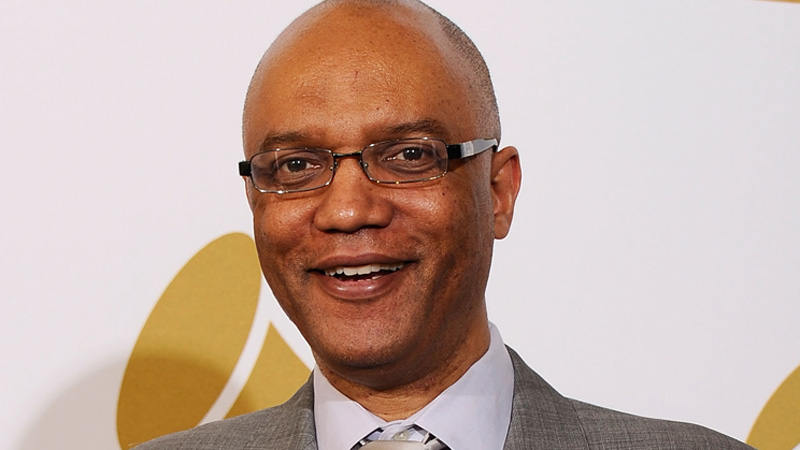
"caption": "Billy Childs (Kevork Djansezian/Getty Images)",
"description": null,
"title": "BillyChilds",
"credit": null,
"status": "inherit",
"isLoading": false,
"fetchFailed": false
},
"news_146950": {
"type": "attachments",
"id": "news_146950",
"meta": {
"index": "attachments_1716263798",
"site": "news",
"id": "146950",
"found": true
},
"parent": 146938,
"imgSizes": {
"thumbnail": {
"file": "https://ww2.kqed.org/app/uploads/sites/10/2014/09/Thunderbird-series-400x277.jpg",
"width": 400,
"mimeType": "image/jpeg",
"height": 277
},
"post-thumbnail": {
"file": "https://ww2.kqed.org/app/uploads/sites/10/2014/09/Thunderbird-series-672x372.jpg",
"width": 672,
"mimeType": "image/jpeg",
"height": 372
},
"kqedFullSize": {
"file": "https://ww2.kqed.org/app/uploads/sites/10/2014/09/Thunderbird-series.jpg",
"width": 720,
"height": 499
}
},
"publishDate": 1409943953,
"modified": 1409943953,
"caption": null,
"description": null,
"title": "Quirky Berkeley",
"credit": null,
"status": "inherit",
"isLoading": false,
"fetchFailed": false
},
"news_10340999": {
"type": "attachments",
"id": "news_10340999",
"meta": {
"index": "attachments_1716263798",
"site": "news",
"id": "10340999",
"found": true
},
"parent": 10140975,
"imgSizes": {
"thumbnail": {
"file": "https://ww2.kqed.org/app/uploads/sites/10/2014/09/1-Remembering-Santa-Monicas-Seaside-Amusement-Park-400x225.jpg",
"width": 400,
"mimeType": "image/jpeg",
"height": 225
},
"kqedFullSize": {
"file": "https://ww2.kqed.org/app/uploads/sites/10/2014/09/1-Remembering-Santa-Monicas-Seaside-Amusement-Park.jpg",
"width": 640,
"height": 360
},
"guest-author-96": {
"file": "https://ww2.kqed.org/app/uploads/sites/10/2014/09/1-Remembering-Santa-Monicas-Seaside-Amusement-Park-96x96.jpg",
"width": 96,
"mimeType": "image/jpeg",
"height": 96
},
"guest-author-64": {
"file": "https://ww2.kqed.org/app/uploads/sites/10/2014/09/1-Remembering-Santa-Monicas-Seaside-Amusement-Park-64x64.jpg",
"width": 64,
"mimeType": "image/jpeg",
"height": 64
},
"detail": {
"file": "https://ww2.kqed.org/app/uploads/sites/10/2014/09/1-Remembering-Santa-Monicas-Seaside-Amusement-Park-75x75.jpg",
"width": 75,
"mimeType": "image/jpeg",
"height": 75
},
"guest-author-32": {
"file": "https://ww2.kqed.org/app/uploads/sites/10/2014/09/1-Remembering-Santa-Monicas-Seaside-Amusement-Park-32x32.jpg",
"width": 32,
"mimeType": "image/jpeg",
"height": 32
},
"guest-author-128": {
"file": "https://ww2.kqed.org/app/uploads/sites/10/2014/09/1-Remembering-Santa-Monicas-Seaside-Amusement-Park-128x128.jpg",
"width": 128,
"mimeType": "image/jpeg",
"height": 128
}
},
"publishDate": 1410474749,
"modified": 1410474749,
"caption": "Guests riding the Mystery Island Banana Train had to traverse a tiki-flanked suspended bridge over a waterfall pumping seawater from the ocean below. (Pacific Ocean Park Book/Process)",
"description": null,
"title": "1-Remembering Santa Monica's Seaside Amusement Park",
"credit": null,
"status": "inherit",
"isLoading": false,
"fetchFailed": false
},
"news_146195": {
"type": "attachments",
"id": "news_146195",
"meta": {
"index": "attachments_1716263798",
"site": "news",
"id": "146195",
"found": true
},
"parent": 146185,
"imgSizes": {
"kqedFullSize": {
"file": "https://ww2.kqed.org/app/uploads/sites/10/2014/08/Turfin-5.png",
"width": 2560,
"height": 1440
}
},
"publishDate": 1409270316,
"modified": 1409270316,
"caption": null,
"description": null,
"title": "Turfin 5",
"credit": null,
"status": "inherit",
"isLoading": false,
"fetchFailed": false
},
"news_10341641": {
"type": "attachments",
"id": "news_10341641",
"meta": {
"index": "attachments_1716263798",
"site": "news",
"id": "10341641",
"found": true
},
"parent": 10341638,
"imgSizes": {
"thumbnail": {
"file": "https://ww2.kqed.org/app/uploads/sites/10/2014/08/WandGanglion-400x225.jpg",
"width": 400,
"mimeType": "image/jpeg",
"height": 225
},
"kqedFullSize": {
"file": "https://ww2.kqed.org/app/uploads/sites/10/2014/08/WandGanglion.jpg",
"width": 640,
"height": 360
},
"guest-author-96": {
"file": "https://ww2.kqed.org/app/uploads/sites/10/2014/08/WandGanglion-96x96.jpg",
"width": 96,
"mimeType": "image/jpeg",
"height": 96
},
"guest-author-64": {
"file": "https://ww2.kqed.org/app/uploads/sites/10/2014/08/WandGanglion-64x64.jpg",
"width": 64,
"mimeType": "image/jpeg",
"height": 64
},
"detail": {
"file": "https://ww2.kqed.org/app/uploads/sites/10/2014/08/WandGanglion-75x75.jpg",
"width": 75,
"mimeType": "image/jpeg",
"height": 75
},
"guest-author-32": {
"file": "https://ww2.kqed.org/app/uploads/sites/10/2014/08/WandGanglion-32x32.jpg",
"width": 32,
"mimeType": "image/jpeg",
"height": 32
},
"guest-author-128": {
"file": "https://ww2.kqed.org/app/uploads/sites/10/2014/08/WandGanglion-128x128.jpg",
"width": 128,
"mimeType": "image/jpeg",
"height": 128
}
},
"publishDate": 1412107604,
"modified": 1412107604,
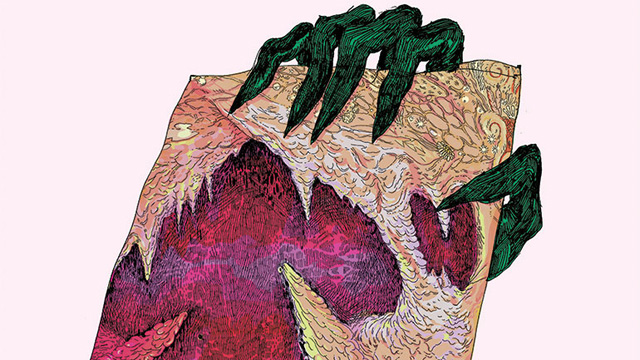
"caption": "The cover art for \"Ganglion Reef.\" (Courtesy Wand)",
"description": null,
"title": "WandGanglion",
"credit": null,
"status": "inherit",
"isLoading": false,
"fetchFailed": false
},
"news_146106": {
"type": "attachments",
"id": "news_146106",
"meta": {
"index": "attachments_1716263798",
"site": "news",
"id": "146106",
"found": true
},
"parent": 146087,
"imgSizes": {
"kqedFullSize": {
"file": "https://ww2.kqed.org/app/uploads/sites/10/2014/08/organplay.jpg",
"width": 640,
"height": 360
}
},
"publishDate": 1409246848,
"modified": 1409246848,
"caption": "Hegarty has been playing organ at the Castro Theatre for 36 years. (Olivia Allen-Price/KQED)",
"description": "Hegarty has been playing organ at the Castro Theatre for 36 years. (Olivia Allen-Price/KQED)",
"title": "organplay",
"credit": null,
"status": "inherit",
"isLoading": false,
"fetchFailed": false
},
"news_145891": {
"type": "attachments",
"id": "news_145891",
"meta": {
"index": "attachments_1716263798",
"site": "news",
"id": "145891",
"found": true
},
"parent": 145890,
"imgSizes": {
"kqedFullSize": {
"file": "https://ww2.kqed.org/app/uploads/sites/10/2014/08/burningman1.png",
"width": 1024,
"height": 512
}
},
"publishDate": 1409069150,
"modified": 1440116563,
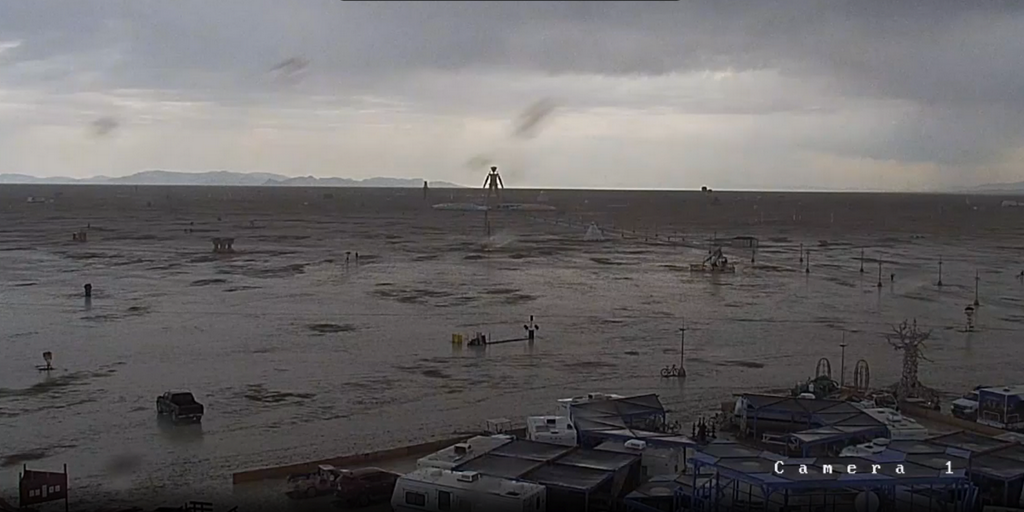
"caption": "A 2014 image from Burning Man webcam showing inundated playa at Black Rock City. ",
"description": "A Monday image from Burning Man webcam showing inundated playa at Black Rock City. ",
"title": "Burning Man-Weather",
"credit": null,
"status": "inherit",
"isLoading": false,
"fetchFailed": false
},
"news_145358": {
"type": "attachments",
"id": "news_145358",
"meta": {
"index": "attachments_1716263798",
"site": "news",
"id": "145358",
"found": true
},
"parent": 145356,
"imgSizes": {
"kqedFullSize": {
"file": "https://ww2.kqed.org/app/uploads/sites/10/2014/08/RS11719_DACA-014.jpg",
"width": 2048,
"height": 1536
}
},
"publishDate": 1408666198,
"modified": 1408666198,
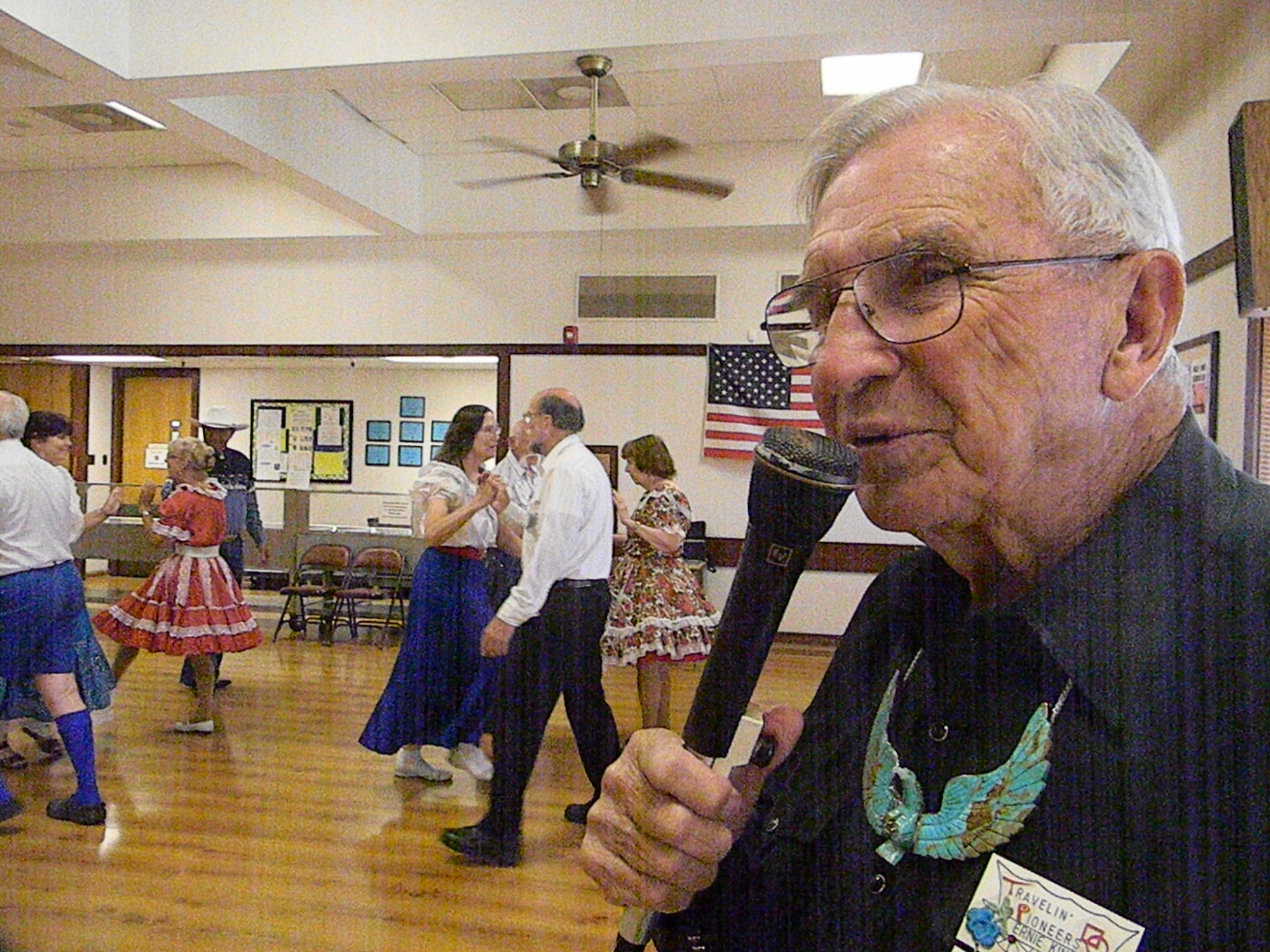
"caption": "Ernie Kinney, the world's oldest active square dance caller, calls at the Clovis Senior Center every Thursday night. (Alice Daniel/KQED)",
"description": "Ernie Kinney, the world's oldest active square dance caller, calls at the Clovis Senior Center every Thursday night. (Alice Daniel/KQED)",
"title": "RS11719_DACA 014",
"credit": null,
"status": "inherit",
"isLoading": false,
"fetchFailed": false
},
"news_10340838": {
"type": "attachments",
"id": "news_10340838",
"meta": {
"index": "attachments_1716263798",
"site": "news",
"id": "10340838",
"found": true
},
"parent": 10140836,
"imgSizes": {
"thumbnail": {
"file": "https://ww2.kqed.org/app/uploads/sites/10/2014/09/LeeHerrick-400x225.jpg",
"width": 400,
"mimeType": "image/jpeg",
"height": 225
},
"kqedFullSize": {
"file": "https://ww2.kqed.org/app/uploads/sites/10/2014/09/LeeHerrick.jpg",
"width": 640,
"height": 360
},
"guest-author-96": {
"file": "https://ww2.kqed.org/app/uploads/sites/10/2014/09/LeeHerrick-96x96.jpg",
"width": 96,
"mimeType": "image/jpeg",
"height": 96
},
"guest-author-64": {
"file": "https://ww2.kqed.org/app/uploads/sites/10/2014/09/LeeHerrick-64x64.jpg",
"width": 64,
"mimeType": "image/jpeg",
"height": 64
},
"detail": {
"file": "https://ww2.kqed.org/app/uploads/sites/10/2014/09/LeeHerrick-75x75.jpg",
"width": 75,
"mimeType": "image/jpeg",
"height": 75
},
"guest-author-32": {
"file": "https://ww2.kqed.org/app/uploads/sites/10/2014/09/LeeHerrick-32x32.jpg",
"width": 32,
"mimeType": "image/jpeg",
"height": 32
},
"guest-author-128": {
"file": "https://ww2.kqed.org/app/uploads/sites/10/2014/09/LeeHerrick-128x128.jpg",
"width": 128,
"mimeType": "image/jpeg",
"height": 128
}
},
"publishDate": 1410379115,
"modified": 1410379115,
"caption": "Lee Herrick (Courtesy of Anh Dao Kolbe)",
"description": null,
"title": "LeeHerrick",
"credit": null,
"status": "inherit",
"isLoading": false,
"fetchFailed": false
},
"news_10340844": {
"type": "attachments",
"id": "news_10340844",
"meta": {
"index": "attachments_1716263798",
"site": "news",
"id": "10340844",
"found": true
},
"parent": 10140842,
"imgSizes": {
"thumbnail": {
"file": "https://ww2.kqed.org/app/uploads/sites/10/2014/09/takeicrop-400x225.jpg",
"width": 400,
"mimeType": "image/jpeg",
"height": 225
},
"kqedFullSize": {
"file": "https://ww2.kqed.org/app/uploads/sites/10/2014/09/takeicrop.jpg",
"width": 640,
"height": 360
},
"guest-author-96": {
"file": "https://ww2.kqed.org/app/uploads/sites/10/2014/09/takeicrop-96x96.jpg",
"width": 96,
"mimeType": "image/jpeg",
"height": 96
},
"guest-author-64": {
"file": "https://ww2.kqed.org/app/uploads/sites/10/2014/09/takeicrop-64x64.jpg",
"width": 64,
"mimeType": "image/jpeg",
"height": 64
},
"detail": {
"file": "https://ww2.kqed.org/app/uploads/sites/10/2014/09/takeicrop-75x75.jpg",
"width": 75,
"mimeType": "image/jpeg",
"height": 75
},
"guest-author-32": {
"file": "https://ww2.kqed.org/app/uploads/sites/10/2014/09/takeicrop-32x32.jpg",
"width": 32,
"mimeType": "image/jpeg",
"height": 32
},
"guest-author-128": {
"file": "https://ww2.kqed.org/app/uploads/sites/10/2014/09/takeicrop-128x128.jpg",
"width": 128,
"mimeType": "image/jpeg",
"height": 128
}
},
"publishDate": 1410381804,
"modified": 1410381804,
"caption": "George Takei (Frederick M. Brown/Getty Images)",
"description": null,
"title": "takeicrop",
"credit": null,
"status": "inherit",
"isLoading": false,
"fetchFailed": false
},
"news_144548": {
"type": "attachments",
"id": "news_144548",
"meta": {
"index": "attachments_1716263798",
"site": "news",
"id": "144548",
"found": true
},
"parent": 144524,
"imgSizes": {
"kqedFullSize": {
"file": "https://ww2.kqed.org/app/uploads/sites/10/2014/08/robinwilliams.png",
"width": 561,
"height": 564
}
},
"publishDate": 1407803819,
"modified": 1407803819,
"caption": "An Instagram photo comedian and actor Robin Williams posted on his last birthday, July 21. The caption: 'Happy Birthday to me! A visit from one of my favorite leading ladies, Crystal.'",
"description": "An Instagram photo comedian and actor Robin Williams posted on his last birthday, July 21. The caption: 'Happy Birthday to me! A visit from one of my favorite leading ladies, Crystal.'",
"title": "Robin Williams-Instagram",
"credit": null,
"status": "inherit",
"isLoading": false,
"fetchFailed": false
}
},
"audioPlayerReducer": {
"postId": "stream_live",
"isPaused": true,
"isPlaying": false,
"pfsActive": false,
"pledgeModalIsOpen": true,
"playerDrawerIsOpen": false,
"liveAudioPlayStartedAt": 0,
"liveAudioPlayContext": ""
},
"authorsReducer": {
"byline_news_10341651": {
"type": "authors",
"id": "byline_news_10341651",
"meta": {
"override": true
},
"slug": "byline_news_10341651",
"name": "Andrew Gilbert",
"isLoading": false
},
"byline_news_10340975": {
"type": "authors",
"id": "byline_news_10340975",
"meta": {
"override": true
},
"slug": "byline_news_10340975",
"name": "Steve Chiotakis",
"isLoading": false
},
"byline_news_10341638": {
"type": "authors",
"id": "byline_news_10341638",
"meta": {
"override": true
},
"slug": "byline_news_10341638",
"name": "Steve Hochman",
"isLoading": false
},
"byline_news_10340836": {
"type": "authors",
"id": "byline_news_10340836",
"meta": {
"override": true
},
"slug": "byline_news_10340836",
"name": "Jefferson Beavers",
"isLoading": false
},
"ohubertallen": {
"type": "authors",
"id": "102",
"meta": {
"index": "authors_1716337520",
"id": "102",
"found": true
},
"name": "Olivia Allen-Price",
"firstName": "Olivia",
"lastName": "Allen-Price",
"slug": "ohubertallen",
"email": "oallenprice@kqed.org",
"display_author_email": false,
"staff_mastheads": [
"news"
],
"title": "Senior Editor",
"bio": "Olivia Allen-Price is senior editor and host of the award-winning Bay Curious podcast. Prior to joining KQED in 2013, Olivia worked at The Baltimore Sun and The Virginian-Pilot in Norfolk, Va. She holds degrees in journalism and political science from Elon University. Her work has earned awards from the Society of Professional Journalists, the Hearst Foundation and Hearken. She loves to talk about running and curly hair.\r\n\r\nFollow: \u003ca href=\"https://twitter.com/oallenprice\">@oallenprice\u003c/a>\r\nEmail: \u003ca href=\"mailto:oallenprice@kqed.org\">oallenprice@kqed.org\u003c/a>",
"avatar": "https://secure.gravatar.com/avatar/07f7803c1f6be56f3be58ef276dfa64dce898502e0554408ef4858451a8294f7?s=600&d=blank&r=g",
"twitter": "oallenprice",
"bluesky": null,
"facebook": null,
"instagram": null,
"linkedin": null,
"sites": [
{
"site": "",
"roles": [
"editor"
]
},
{
"site": "arts",
"roles": [
"subscriber"
]
},
{
"site": "news",
"roles": [
"administrator"
]
},
{
"site": "pop",
"roles": [
"administrator"
]
},
{
"site": "bayareabites",
"roles": [
"contributor"
]
},
{
"site": "stateofhealth",
"roles": [
"administrator"
]
},
{
"site": "science",
"roles": [
"editor"
]
}
],
"headData": {
"title": "Olivia Allen-Price | KQED",
"description": "Senior Editor",
"ogImgSrc": "https://secure.gravatar.com/avatar/07f7803c1f6be56f3be58ef276dfa64dce898502e0554408ef4858451a8294f7?s=600&d=blank&r=g",
"twImgSrc": "https://secure.gravatar.com/avatar/07f7803c1f6be56f3be58ef276dfa64dce898502e0554408ef4858451a8294f7?s=600&d=blank&r=g"
},
"isLoading": false,
"link": "/author/ohubertallen"
},
"aliceldaniel": {
"type": "authors",
"id": "208",
"meta": {
"index": "authors_1716337520",
"id": "208",
"found": true
},
"name": "Alice Daniel",
"firstName": "Alice",
"lastName": "Daniel",
"slug": "aliceldaniel",
"email": "adaniel@kqed.org",
"display_author_email": false,
"staff_mastheads": [],
"title": null,
"bio": "Alice Daniel loves the listening aspect of reporting because she gets to briefly walk in other people’s shoes. She has rappelled down into caves and gone up in helicopters for KQED’s The California Report but her favorite place to pursue a story is the High Sierra or any family-run bakery, of course. Alice has a masters in journalism from Columbia University and teaches at Fresno State. She is a California Healthline Regional Correspondent and a frequent contributor to Success magazine. In her free time, she skis and hikes, throws pottery, practices piano and looks out the window.",
"avatar": "https://secure.gravatar.com/avatar/e611aa06593b114a67f9f123a8e875ad?s=600&d=blank&r=g",
"twitter": null,
"facebook": null,
"instagram": null,
"linkedin": null,
"sites": [
{
"site": "news",
"roles": [
"author"
]
},
{
"site": "stateofhealth",
"roles": [
"author"
]
}
],
"headData": {
"title": "Alice Daniel | KQED",
"description": null,
"ogImgSrc": "https://secure.gravatar.com/avatar/e611aa06593b114a67f9f123a8e875ad?s=600&d=blank&r=g",
"twImgSrc": "https://secure.gravatar.com/avatar/e611aa06593b114a67f9f123a8e875ad?s=600&d=blank&r=g"
},
"isLoading": false,
"link": "/author/aliceldaniel"
},
"andrewstelzer": {
"type": "authors",
"id": "213",
"meta": {
"index": "authors_1716337520",
"id": "213",
"found": true
},
"name": "Andrew Stelzer",
"firstName": "Andrew",
"lastName": "Stelzer",
"slug": "andrewstelzer",
"email": "andrewstelzer@gmail.com",
"display_author_email": false,
"staff_mastheads": [],
"title": null,
"bio": "Andrew Stelzer has been reporting for KQED since 2010, and is a producer at \u003ca href=\"http://www.radioproject.org\" target=\"_blank\">Making Contact\u003c/a> in Oakland.. His work has been featured on programs including \u003ca href=\"http://www.npr.org/templates/story/story.php?storyId=5010\" target=\"_blank\">NPR’s Weekend Edition\u003c/a>, \u003ca href=\"http://www.theworld.org/\" target=\"_blank\">PRI’s The World\u003c/a>, \u003ca href=\"http://www.studio360.org/\" target=\"_blank\">Studio 360\u003c/a>, \u003ca href=\"http://marketplace.publicradio.org/\" target=\"_blank\">Marketplace\u003c/a>,\u003ca href=\"http://www.loe.org/\" target=\"_blank\">Living on Earth\u003c/a>, \u003ca href=\"http://www.onthemedia.org/\" target=\"_blank\">On the Media\u003c/a>, \u003ca href=\"http://www.latinousa.org/index.html\" target=\"_blank\">Latino USA,\u003c/a> \u003ca href=\"http://www.onlyagame.org/\" rel=\"tag\">Only a Game,\u003c/a> \u003ca href=\"http://www.tswi.org/\" target=\"_blank\">Radio Netherlands,\u003c/a> \u003ca href=\"http://worldradio.ch/index.shtml\" target=\"_blank\">World Radio Switzerland,\u003c/a> and \u003ca href=\"http://www.rfi.fr/langues/statiques/rfi_anglais.asp\" target=\"_blank\">Radio France International\u003c/a>. Andrew has written for publications including \u003ca href=\"http://www.inthesetimes.com/site/about/author/2369\" target=\"_blank\">In These Times\u003c/a>, \u003ca href=\"http://www.progressive.org/\" target=\"_blank\">The Progressive\u003c/a>, \u003ca href=\"http://ipsnews.net/\" target=\"_blank\">Interpress Service\u003c/a>, \u003ca href=\"http://www.tampabay.com/\" target=\"_blank\">The St. Petersburg Times\u003c/a>, and \u003ca href=\"http://www.eastbayexpress.com/ebx/Home\" target=\"_blank\">The East Bay Express\u003c/a>.\r\n\r\nAndrew’s work has received numerous awards from the Society of Professional Journalists, the National Lesbian and Gay Journalists Association, and the National Council on Crime and Delinquency.\r\n\r\nHe previously was a reporter at \u003ca href=\"http://www.wmnf.org/\" target=\"_blank\">WMNF\u003c/a> radio in Tampa, FL, and reporter and youth advocate st \u003ca href=\"http://www.kboo.org/\" target=\"_blank\">KBOO \u003c/a> in Portland, Oregon. Andrew has conducted radio production trainings around the world, from Algeria, to New Orleans, to the desert of Southern Jordan.",
"avatar": "https://secure.gravatar.com/avatar/14c7e75469395cb2468d45c9f6896ca9?s=600&d=blank&r=g",
"twitter": null,
"facebook": null,
"instagram": null,
"linkedin": null,
"sites": [
{
"site": "arts",
"roles": [
"contributor"
]
},
{
"site": "news",
"roles": [
"author"
]
},
{
"site": "stateofhealth",
"roles": [
"author"
]
}
],
"headData": {
"title": "Andrew Stelzer | KQED",
"description": null,
"ogImgSrc": "https://secure.gravatar.com/avatar/14c7e75469395cb2468d45c9f6896ca9?s=600&d=blank&r=g",
"twImgSrc": "https://secure.gravatar.com/avatar/14c7e75469395cb2468d45c9f6896ca9?s=600&d=blank&r=g"
},
"isLoading": false,
"link": "/author/andrewstelzer"
},
"danbrekke": {
"type": "authors",
"id": "222",
"meta": {
"index": "authors_1716337520",
"id": "222",
"found": true
},
"name": "Dan Brekke",
"firstName": "Dan",
"lastName": "Brekke",
"slug": "danbrekke",
"email": "dbrekke@kqed.org",
"display_author_email": true,
"staff_mastheads": [
"news",
"science"
],
"title": "KQED Editor and Reporter",
"bio": "Dan Brekke is a reporter and editor for KQED News, responsible for coverage of topics ranging from California water issues to the Bay Area's transportation challenges. In a newsroom career that began in Chicago in 1972, Dan has worked for \u003cem>The San Francisco Examiner,\u003c/em> Wired and TechTV and has been published in The New York Times, The New York Times Magazine, Business 2.0, Salon and elsewhere.\r\n\r\nSince joining KQED in 2007, Dan has reported, edited and produced both radio and online features and breaking news pieces. He has shared as both editor and reporter in four Society of Professional Journalists Norcal Excellence in Journalism awards and one Edward R. Murrow regional award. He was chosen for a spring 2017 residency at the Mesa Refuge to advance his research on California salmon.\r\n\r\nEmail Dan at: \u003ca href=\"mailto:dbrekke@kqed.org\">dbrekke@kqed.org\u003c/a>\r\n\r\n\u003cstrong>Twitter:\u003c/strong> \u003ca href=\"https://twitter.com/danbrekke\" rel=\"noopener noreferrer\">twitter.com/danbrekke\u003c/a>\r\n\u003cstrong>Facebook:\u003c/strong> \u003ca href=\"https://www.facebook.com/danbrekke\" rel=\"noopener noreferrer\">www.facebook.com/danbrekke\u003c/a>\r\n\u003cstrong>LinkedIn:\u003c/strong> \u003ca href=\"https://www.linkedin.com/in/danbrekke\" rel=\"noopener noreferrer\">www.linkedin.com/in/danbrekke\u003c/a>",
"avatar": "https://secure.gravatar.com/avatar/8f1f0d2a978fb3b23426c922c7e2af558fa36905b49c4ce76a97dc3c72d27226?s=600&d=mm&r=g",
"twitter": "danbrekke",
"bluesky": null,
"facebook": null,
"instagram": "https://www.instagram.com/dan.brekke/",
"linkedin": "https://www.linkedin.com/in/danbrekke/",
"sites": [
{
"site": "news",
"roles": [
"administrator",
"create_posts"
]
},
{
"site": "stateofhealth",
"roles": [
"editor"
]
},
{
"site": "science",
"roles": [
"editor"
]
},
{
"site": "quest",
"roles": [
"contributor"
]
},
{
"site": "food",
"roles": [
"contributor"
]
},
{
"site": "forum",
"roles": [
"contributor"
]
},
{
"site": "elections",
"roles": [
"editor"
]
},
{
"site": "liveblog",
"roles": [
"editor"
]
}
],
"headData": {
"title": "Dan Brekke | KQED",
"description": "KQED Editor and Reporter",
"ogImgSrc": "https://secure.gravatar.com/avatar/8f1f0d2a978fb3b23426c922c7e2af558fa36905b49c4ce76a97dc3c72d27226?s=600&d=mm&r=g",
"twImgSrc": "https://secure.gravatar.com/avatar/8f1f0d2a978fb3b23426c922c7e2af558fa36905b49c4ce76a97dc3c72d27226?s=600&d=mm&r=g"
},
"isLoading": false,
"link": "/author/danbrekke"
},
"jeremyraff": {
"type": "authors",
"id": "230",
"meta": {
"index": "authors_1716337520",
"id": "230",
"found": true
},
"name": "Jeremy Raff",
"firstName": "Jeremy",
"lastName": "Raff",
"slug": "jeremyraff",
"email": "jeremyraff@gmail.com",
"display_author_email": false,
"staff_mastheads": [],
"title": null,
"bio": "Jeremy Raff is a multimedia producer interested in migration, rural change, and health disparities. He produces KQED's community health series\u003ca href=\"http://blogs.kqed.org/stateofhealth/series/vital-signs/\" target=\"_blank\" rel=\"noopener\"> Vital Signs\u003c/a>. Reach him at jraff@kqed.org",
"avatar": "https://secure.gravatar.com/avatar/1444299e18b67b815fbbdc87a85e7dff?s=600&d=blank&r=g",
"twitter": null,
"facebook": null,
"instagram": null,
"linkedin": null,
"sites": [
{
"site": "news",
"roles": [
"subscriber"
]
},
{
"site": "stateofhealth",
"roles": [
"subscriber"
]
}
],
"headData": {
"title": "Jeremy Raff | KQED",
"description": null,
"ogImgSrc": "https://secure.gravatar.com/avatar/1444299e18b67b815fbbdc87a85e7dff?s=600&d=blank&r=g",
"twImgSrc": "https://secure.gravatar.com/avatar/1444299e18b67b815fbbdc87a85e7dff?s=600&d=blank&r=g"
},
"isLoading": false,
"link": "/author/jeremyraff"
},
"kqednewsstaffandwires": {
"type": "authors",
"id": "237",
"meta": {
"index": "authors_1716337520",
"id": "237",
"found": true
},
"name": "KQED News Staff and Wires",
"firstName": "KQED News Staff and Wires",
"lastName": null,
"slug": "kqednewsstaffandwires",
"email": "onlinenewsstaff@kqed.org",
"display_author_email": false,
"staff_mastheads": [],
"title": null,
"bio": null,
"avatar": "https://secure.gravatar.com/avatar/72295af8ebbfbd19a4948f5271285664?s=600&d=blank&r=g",
"twitter": null,
"facebook": null,
"instagram": null,
"linkedin": null,
"sites": [
{
"site": "arts",
"roles": [
"contributor"
]
},
{
"site": "news",
"roles": [
"contributor"
]
},
{
"site": "lowdown",
"roles": [
"author"
]
},
{
"site": "stateofhealth",
"roles": [
"contributor"
]
},
{
"site": "food",
"roles": [
"author"
]
}
],
"headData": {
"title": "KQED News Staff and Wires | KQED",
"description": null,
"ogImgSrc": "https://secure.gravatar.com/avatar/72295af8ebbfbd19a4948f5271285664?s=600&d=blank&r=g",
"twImgSrc": "https://secure.gravatar.com/avatar/72295af8ebbfbd19a4948f5271285664?s=600&d=blank&r=g"
},
"isLoading": false,
"link": "/author/kqednewsstaffandwires"
},
"plancour": {
"type": "authors",
"id": "249",
"meta": {
"index": "authors_1716337520",
"id": "249",
"found": true
},
"name": "Paul Lancour",
"firstName": "Paul",
"lastName": "Lancour",
"slug": "plancour",
"email": "plancour@kqed.org",
"display_author_email": false,
"staff_mastheads": [],
"title": "KQED Contributor",
"bio": "Paul is Media Operations Manager at KQED. He has a long and storied history with KQED, having worked on-air and behind the scenes for KQED radio for quite some time. You can reach him at \u003ca href=\"mailto:plancour@kqed.org\">plancour@kqed.org\u003c/a>.",
"avatar": "https://secure.gravatar.com/avatar/94da89f619cb14c22d7f61ea5a9e8543?s=600&d=blank&r=g",
"twitter": null,
"facebook": null,
"instagram": null,
"linkedin": null,
"sites": [
{
"site": "styleguide",
"roles": [
"editor"
]
},
{
"site": "news",
"roles": [
"administrator"
]
}
],
"headData": {
"title": "Paul Lancour | KQED",
"description": "KQED Contributor",
"ogImgSrc": "https://secure.gravatar.com/avatar/94da89f619cb14c22d7f61ea5a9e8543?s=600&d=blank&r=g",
"twImgSrc": "https://secure.gravatar.com/avatar/94da89f619cb14c22d7f61ea5a9e8543?s=600&d=blank&r=g"
},
"isLoading": false,
"link": "/author/plancour"
},
"rachael-myrow": {
"type": "authors",
"id": "251",
"meta": {
"index": "authors_1716337520",
"id": "251",
"found": true
},
"name": "Rachael Myrow",
"firstName": "Rachael",
"lastName": "Myrow",
"slug": "rachael-myrow",
"email": "rmyrow@kqed.org",
"display_author_email": true,
"staff_mastheads": [
"news"
],
"title": "Senior Editor of KQED's Silicon Valley News Desk",
"bio": "• I write and edit stories about how Silicon Valley power and policies shape everyday life in California. I’m also passionate about making Bay Area history and culture more accessible to a broad public. • I’ve been a journalist for most of my life, starting in high school with The Franklin Press in Los Angeles, where I grew up. While earning my first degree in English at UC Berkeley, I got my start in public radio at KALX-FM. After completing a second degree in journalism at Cal, I landed my first professional job at Marketplace, then moved on to KPCC (now LAist), and then KQED, where I hosted The California Report for more than seven years. • My reporting has appeared on NPR, The World, WBUR’s \u003ci>Here & Now\u003c/i>, and the BBC. I also guest host for KQED’s \u003ci>Forum\u003c/i>, as well as the Commonwealth Club in San Francisco. • I speak periodically on media, democracy and technology issues, and do voiceover work for documentaries and educational video projects. • Outside of the studio, you'll find me hiking Bay Area trails and whipping up Insta-ready meals in my kitchen. • I do not accept gifts, money, or favors from anyone connected to my reporting, I don't pay people for information, and I do not support or donate to political causes. • I strive to treat the people I report on with fairness, honesty, and respect. I also recognize there are often multiple sides to a story and work to verify information through multiple sources and documentation. If I get something wrong, I correct it.",
"avatar": "https://secure.gravatar.com/avatar/3ed8a3c5f26025e4a805ba634cda8cd764906b97438a6d9ce216b044e340da4e?s=600&d=blank&r=g",
"twitter": "rachaelmyrow",
"bluesky": null,
"facebook": null,
"instagram": null,
"linkedin": "https://www.linkedin.com/in/rachaelmyrow/",
"sites": [
{
"site": "arts",
"roles": [
"administrator"
]
},
{
"site": "news",
"roles": [
"edit_others_posts",
"editor"
]
},
{
"site": "futureofyou",
"roles": [
"editor"
]
},
{
"site": "bayareabites",
"roles": [
"editor"
]
},
{
"site": "stateofhealth",
"roles": [
"editor"
]
},
{
"site": "science",
"roles": [
"editor"
]
},
{
"site": "food",
"roles": [
"editor"
]
},
{
"site": "forum",
"roles": [
"editor"
]
},
{
"site": "liveblog",
"roles": [
"author"
]
}
],
"headData": {
"title": "Rachael Myrow | KQED",
"description": "Senior Editor of KQED's Silicon Valley News Desk",
"ogImgSrc": "https://secure.gravatar.com/avatar/3ed8a3c5f26025e4a805ba634cda8cd764906b97438a6d9ce216b044e340da4e?s=600&d=blank&r=g",
"twImgSrc": "https://secure.gravatar.com/avatar/3ed8a3c5f26025e4a805ba634cda8cd764906b97438a6d9ce216b044e340da4e?s=600&d=blank&r=g"
},
"isLoading": false,
"link": "/author/rachael-myrow"
}
},
"pagesReducer": {
"news_category_arts-and-culture": {
"type": "terms",
"id": "news_223",
"meta": {
"index": "terms_1716263798",
"site": "news",
"id": "223",
"score": 11.242846
},
"featImg": null,
"name": "Arts and Culture",
"description": null,
"taxonomy": "category",
"headData": {
"twImgId": null,
"twTitle": null,
"ogTitle": null,
"ogImgId": null,
"twDescription": null,
"description": null,
"title": "Arts and Culture Archives | KQED News",
"ogDescription": null
},
"ttid": 231,
"slug": "arts-and-culture",
"isLoading": false,
"title": "Arts and Culture",
"pageMeta": {
"site": "news",
"WpPageTemplate": "page-topic-editorial",
"currentPage": 136
},
"blocks": [
{
"blockName": "kqed/post-list",
"attrs": {
"layout": "cardArticle2",
"query": "posts/news?category=arts-and-culture",
"seeMore": false,
"paginated": true,
"page": 136
}
},
{
"blockName": "kqed/ad"
}
]
}
},
"pfsSessionReducer": {},
"postsReducer": {
"stream_live": {
"type": "live",
"id": "stream_live",
"audioUrl": "https://streams.kqed.org/kqedradio",
"title": "Live Stream",
"excerpt": "Live Stream information currently unavailable.",
"link": "/radio",
"featImg": "",
"label": {
"name": "KQED Live",
"link": "/"
}
},
"stream_kqedNewscast": {
"type": "posts",
"id": "stream_kqedNewscast",
"audioUrl": "https://www.kqed.org/.stream/anon/radio/RDnews/newscast.mp3?_=1",
"title": "KQED Newscast",
"featImg": "",
"label": {
"name": "88.5 FM",
"link": "/"
}
},
"news_10341651": {
"type": "posts",
"id": "news_10341651",
"meta": {
"index": "posts_1716263798",
"site": "news",
"id": "10341651",
"score": null,
"sort": [
1410534020000
]
},
"parent": 0,
"labelTerm": {
"site": "news"
},
"blocks": [],
"publishDate": 1410534020,
"format": "standard",
"disqusTitle": "Jazz Review: Billy Childs' 'Map to the Treasure: Reimagining Laura Nyro'",
"title": "Jazz Review: Billy Childs' 'Map to the Treasure: Reimagining Laura Nyro'",
"headTitle": "KQED News",
"content": "\u003cp>http://www.kqed.org/.stream/anon/radio/tcrmag/2014/09/2014-09-12d-tcrmag.mp3\u003c/p>\n\u003cp>As an artist rooted in jazz, pianist and arranger \u003ca href=\"http://www.billychilds.com/\" target=\"_blank\">Billy Childs\u003c/a> knows that the best way to honor another musician is not to try to recreate their sound. On his new concept album exploring the music of \u003ca href=\"http://www.lauranyro.com/\" target=\"_blank\">Laura Nyro\u003c/a>, he takes a deeply personal journey on which many paths converge.\u003c/p>\n\u003cp>Working with producer Larry Klein -- who’s known for his collaborations with A-list singer-songwriters like Joni Mitchell, Shawn Colvin, Melody Gardot, and Luciana Souza -- Childs arranges 10 poetically charged tunes by Nyro, whose death from cancer in 1997 still feels raw.\u003c/p>\n\u003cp>From the blockbuster opening track featuring the great soprano Renée Fleming tearing through “New York Tendaberry” with Yo-Yo Ma’s unmistakably lyrical cello, it’s clear this is an opulent project overstuffed with talent, emotion and musical ideas.\u003c/p>\n\u003cp>Superficially, “Map to the Treasure” resembles Herbie Hancock’s Grammy-winning 2007 album “River: The Joni Letters,” which was also produced by Klein. But Hancock was essentially discovering Joni Mitchell’s music. For Childs, a faithful Nyro fan who turned Klein onto her music when they were teenagers in the early ‘70s, the project cuts deeply, like only the music of your adolescence can. Their mutual love of Nyro’s songs provides a perfect meeting ground, like the dreamy dance between Esperanza Spalding’s vocals and Wayne Shorter’s soprano sax on “Upstairs by a Chinese Lamp.”\u003c/p>\n\u003cp>[ad fullwidth]\u003c/p>\n\u003cp>Childs and Klein, a top-shelf jazz bassist, first gained national recognition in trumpet star Freddie Hubbard’s blazing band in the early 1980s. Their career paths diverged after that, with Klein eventually making a name for himself as a producer, while Childs recorded a series of acclaimed albums showcasing his improvisation prowess and passionately lyrical compositions.\u003c/p>\n\u003cp>http://youtu.be/S1b1MDl6Kc8\u003c/p>\n\u003cp>In recent years, Childs has concentrated on writing richly textured chamber jazz, and he brings a similar instrumental palette to Nyro’s songs, with a string quartet, jazz rhythm section, electric guitar, and Carol Robbins’ rhythmically assured harp on every track.\u003c/p>\n\u003cp>More than anything, this is an album that succeeds due to brilliant casting, as each song pairs a singular vocalist with a song that Childs cherishes.\u003c/p>\n\u003cp>Soul diva Ledisi infuses “Stoned Soul Picnic” with sweetness and light, while jazz queen Dianne Reeves, a longtime Childs’ confederate, gives “To a Child” a tenderly majestic reading.\u003c/p>\n\u003cp>Childs and Klein coaxed rhythm and blues great Lisa Fischer out of her comfort zone as a backup singer to give a tour-de-force interpretation of the title track, and they expertly deploy Ricki Lee Jones on “Been on a Train,” a shadowy nightmare ride into addiction. At the moment, my favorite track features folk and jazz singer Becca Stevens waxing Dionysian on “The Confession.”\u003c/p>\n\u003cp>If there’s one thing the album’s missing, it’s a little space to take in all of the roiling emotion and sonic information. A piece or two featuring Childs alone at the piano with a singer could have provided more room to absorb Nyro’s richly allusive lyrics. But that’s a quibble, as there’s not a track I would trade. A true act of devotion, “Map to the Treasure” delivers exactly what it promises, as Childs honors Nyro by revealing his own musical riches.\u003c/p>\n\u003cp>Childs premieres the project on Saturday, Sept. 20, at the Monterey Jazz Festival with violinist Jeremy Cohen’s Quartet San Francisco and special guests Lisa Fischer, Becca Stevens, and Shawn Colvin (whose version of “Save the Children” with trumpeter Chris Botti is yet another highpoint).\u003c/p>\n\u003cp>\u003c/p>\n\u003cp>More: \u003ca href=\"http://www.billychilds.com/\" target=\"_blank\">About Billy Childs (official website)\u003c/a>\u003c/p>\n\n",
"disqusIdentifier": "10341651 http://ww2.kqed.org/news/?p=10341651",
"disqusUrl": "https://ww2.kqed.org/news/2014/09/12/jazz-review-billy-childs-map-to-the-treasure-reimagining-laura-nyro/",
"stats": {
"hasVideo": false,
"hasChartOrMap": false,
"hasAudio": true,
"hasPolis": false,
"wordCount": 649,
"hasGoogleForm": false,
"hasGallery": false,
"hasHearkenModule": false,
"iframeSrcs": [],
"paragraphCount": 14
},
"modified": 1412109791,
"excerpt": "On Childs' concept album exploring the music of Laura Nyro, he takes a journey where many paths converge.",
"headData": {
"twImgId": "",
"twTitle": "",
"ogTitle": "",
"ogImgId": "",
"twDescription": "",
"description": "On Childs' concept album exploring the music of Laura Nyro, he takes a journey where many paths converge.",
"title": "Jazz Review: Billy Childs' 'Map to the Treasure: Reimagining Laura Nyro' | KQED",
"ogDescription": "",
"schema": {
"@context": "https://schema.org",
"@type": "NewsArticle",
"headline": "Jazz Review: Billy Childs' 'Map to the Treasure: Reimagining Laura Nyro'",
"datePublished": "2014-09-12T08:00:20-07:00",
"dateModified": "2014-09-30T13:43:11-07:00",
"image": "https://cdn.kqed.org/wp-content/uploads/2020/02/KQED-OG-Image@1x.png",
"isAccessibleForFree": "True",
"publisher": {
"@type": "NewsMediaOrganization",
"@id": "https://www.kqed.org/#organization",
"name": "KQED",
"logo": "https://cdn.kqed.org/wp-content/uploads/2020/02/KQED-OG-Image@1x.png",
"url": "https://www.kqed.org",
"sameAs": [
"https://www.facebook.com/KQED",
"https://twitter.com/KQED",
"https://www.instagram.com/kqed/",
"https://www.tiktok.com/@kqedofficial",
"https://www.linkedin.com/company/kqed",
"https://www.youtube.com/channel/UCeC0IOo7i1P_61zVUWbJ4nw"
]
}
}
},
"guestAuthors": [],
"slug": "jazz-review-billy-childs-map-to-the-treasure-reimagining-laura-nyro",
"status": "publish",
"nprByline": "Andrew Gilbert",
"path": "/news/10341651/jazz-review-billy-childs-map-to-the-treasure-reimagining-laura-nyro",
"audioUrl": "http://www.kqed.org/.stream/anon/radio/tcrmag/2014/09/2014-09-12d-tcrmag.mp3",
"audioDuration": null,
"audioTrackLength": null,
"parsedContent": [
{
"type": "contentString",
"content": "\u003cdiv class=\"post-body\">\u003cp>\u003cp>http://www.kqed.org/.stream/anon/radio/tcrmag/2014/09/2014-09-12d-tcrmag.mp3\u003c/p>\n\u003cp>As an artist rooted in jazz, pianist and arranger \u003ca href=\"http://www.billychilds.com/\" target=\"_blank\">Billy Childs\u003c/a> knows that the best way to honor another musician is not to try to recreate their sound. On his new concept album exploring the music of \u003ca href=\"http://www.lauranyro.com/\" target=\"_blank\">Laura Nyro\u003c/a>, he takes a deeply personal journey on which many paths converge.\u003c/p>\n\u003cp>Working with producer Larry Klein -- who’s known for his collaborations with A-list singer-songwriters like Joni Mitchell, Shawn Colvin, Melody Gardot, and Luciana Souza -- Childs arranges 10 poetically charged tunes by Nyro, whose death from cancer in 1997 still feels raw.\u003c/p>\n\u003cp>From the blockbuster opening track featuring the great soprano Renée Fleming tearing through “New York Tendaberry” with Yo-Yo Ma’s unmistakably lyrical cello, it’s clear this is an opulent project overstuffed with talent, emotion and musical ideas.\u003c/p>\n\u003cp>Superficially, “Map to the Treasure” resembles Herbie Hancock’s Grammy-winning 2007 album “River: The Joni Letters,” which was also produced by Klein. But Hancock was essentially discovering Joni Mitchell’s music. For Childs, a faithful Nyro fan who turned Klein onto her music when they were teenagers in the early ‘70s, the project cuts deeply, like only the music of your adolescence can. Their mutual love of Nyro’s songs provides a perfect meeting ground, like the dreamy dance between Esperanza Spalding’s vocals and Wayne Shorter’s soprano sax on “Upstairs by a Chinese Lamp.”\u003c/p>\n\u003cp>\u003c/p>\u003c/div>",
"attributes": {
"named": {},
"numeric": []
}
},
{
"type": "component",
"content": "",
"name": "ad",
"attributes": {
"named": {
"label": "fullwidth"
},
"numeric": [
"fullwidth"
]
}
},
{
"type": "contentString",
"content": "\u003cdiv class=\"post-body\">\u003cp>\u003c/p>\n\u003cp>Childs and Klein, a top-shelf jazz bassist, first gained national recognition in trumpet star Freddie Hubbard’s blazing band in the early 1980s. Their career paths diverged after that, with Klein eventually making a name for himself as a producer, while Childs recorded a series of acclaimed albums showcasing his improvisation prowess and passionately lyrical compositions.\u003c/p>\u003c/p>\u003cp>\u003cspan class='utils-parseShortcode-shortcodes-__youtubeShortcode__embedYoutube'>\n \u003cspan class='utils-parseShortcode-shortcodes-__youtubeShortcode__embedYoutubeInside'>\n \u003ciframe\n loading='lazy'\n class='utils-parseShortcode-shortcodes-__youtubeShortcode__youtubePlayer'\n type='text/html'\n src='//www.youtube.com/embed/S1b1MDl6Kc8'\n title='//www.youtube.com/embed/S1b1MDl6Kc8'\n allowfullscreen='true'\n style='border:0;'>\u003c/iframe>\n \u003c/span>\n \u003c/span>\u003c/p>\u003cp>\u003cp>In recent years, Childs has concentrated on writing richly textured chamber jazz, and he brings a similar instrumental palette to Nyro’s songs, with a string quartet, jazz rhythm section, electric guitar, and Carol Robbins’ rhythmically assured harp on every track.\u003c/p>\n\u003cp>More than anything, this is an album that succeeds due to brilliant casting, as each song pairs a singular vocalist with a song that Childs cherishes.\u003c/p>\n\u003cp>Soul diva Ledisi infuses “Stoned Soul Picnic” with sweetness and light, while jazz queen Dianne Reeves, a longtime Childs’ confederate, gives “To a Child” a tenderly majestic reading.\u003c/p>\n\u003cp>Childs and Klein coaxed rhythm and blues great Lisa Fischer out of her comfort zone as a backup singer to give a tour-de-force interpretation of the title track, and they expertly deploy Ricki Lee Jones on “Been on a Train,” a shadowy nightmare ride into addiction. At the moment, my favorite track features folk and jazz singer Becca Stevens waxing Dionysian on “The Confession.”\u003c/p>\n\u003cp>If there’s one thing the album’s missing, it’s a little space to take in all of the roiling emotion and sonic information. A piece or two featuring Childs alone at the piano with a singer could have provided more room to absorb Nyro’s richly allusive lyrics. But that’s a quibble, as there’s not a track I would trade. A true act of devotion, “Map to the Treasure” delivers exactly what it promises, as Childs honors Nyro by revealing his own musical riches.\u003c/p>\n\u003cp>Childs premieres the project on Saturday, Sept. 20, at the Monterey Jazz Festival with violinist Jeremy Cohen’s Quartet San Francisco and special guests Lisa Fischer, Becca Stevens, and Shawn Colvin (whose version of “Save the Children” with trumpeter Chris Botti is yet another highpoint).\u003c/p>\n\u003cp>\u003c/p>\n\u003cp>More: \u003ca href=\"http://www.billychilds.com/\" target=\"_blank\">About Billy Childs (official website)\u003c/a>\u003c/p>\n\n\u003c/div>\u003c/p>",
"attributes": {
"named": {},
"numeric": []
}
}
],
"link": "/news/10341651/jazz-review-billy-childs-map-to-the-treasure-reimagining-laura-nyro",
"authors": [
"byline_news_10341651"
],
"categories": [
"news_223"
],
"tags": [
"news_3771"
],
"featImg": "news_10341653",
"label": "news"
},
"news_146938": {
"type": "posts",
"id": "news_146938",
"meta": {
"index": "posts_1716263798",
"site": "news",
"id": "146938",
"score": null,
"sort": [
1410105622000
]
},
"parent": 0,
"labelTerm": {
"site": "news",
"term": 6944
},
"blocks": [],
"publishDate": 1410105622,
"format": "aside",
"disqusTitle": "Salvaged Beach Trash Becomes Art in Berkeley Resident's Front Yard",
"title": "Salvaged Beach Trash Becomes Art in Berkeley Resident's Front Yard",
"headTitle": "News Fix | KQED News",
"content": "\u003cp>\u003cstrong>By Tom Dalzell, \u003ca href=\"http://www.berkeleyside.com/2014/09/04/how-quirky-is-berkeley-mark-oliviers-colusa-avenue-beach-trash-sculpture/\" target=\"_blank\">Berkeleyside\u003c/a>\u003c/strong>\u003c/p>\n\u003cfigure id=\"attachment_146922\" class=\"wp-caption aligncenter\" style=\"max-width: 480px\">\u003ca href=\"http://ww2.kqed.org/news/wp-content/uploads/sites/10/2014/09/RS11949_Cathy-ThirdBuddha1.jpg\">\u003cimg class=\"wp-image-146922 size-medium\" src=\"http://ww2.kqed.org/news/wp-content/uploads/sites/10/2014/09/RS11949_Cathy-ThirdBuddha1-480x640.jpg\" alt=\"RS11949_Cathy-ThirdBuddha1\" width=\"480\" height=\"640\">\u003c/a>\u003cfigcaption class=\"wp-caption-text\">Third Buddha and other sculpture at 1118 Colusa Ave. (Catherine MacNeal/Berkeleyside)\u003c/figcaption>\u003c/figure>\n\u003cp>Colusa Avenue between Marin and Hopkins is not well-traveled, but people who have heard about Mark Olivier’s incredible — as in unbelievable — front yard at 1118 Colusa often make a point to go there.\u003c/p>\n\u003cp>Olivier, a carpenter who found himself as a sculptor, has created a fantastical display from found objects. He walks the Albany Bulb and other beaches to collect trash, mostly plastic, that has washed up. He takes the trash home, sorts it in boxes and bins. And then the magic happens: unexpected animals and masks and figures and machines.\u003c/p>\n\u003cp>For some pieces, Olivier sticks to one basic trash commodity. Baseball caps wash up on the beaches with some regularity, and one man’s washed-up baseball cap is another man’s material for sculpture:\u003c/p>\n\u003cfigure id=\"attachment_146943\" class=\"wp-caption aligncenter\" style=\"max-width: 640px\">\u003ca href=\"http://ww2.kqed.org/news/wp-content/uploads/sites/10/2014/09/Nike-of-Samothrace.jpg\">\u003cimg class=\"wp-image-146943 size-medium\" src=\"http://ww2.kqed.org/news/wp-content/uploads/sites/10/2014/09/Nike-of-Samothrace-640x488.jpg\" alt=\"Quirky Berkeley\" width=\"640\" height=\"488\">\u003c/a>\u003cfigcaption class=\"wp-caption-text\">Nike of Samothrace at 1118 Colusa Ave. (John Storey/Berkeleyside)\u003c/figcaption>\u003c/figure>\n\u003cp>This sculpture is one of the few Olivier sculptures which is an allusion to classical sculpture. The \u003cem>Winged Victory of Samothrace\u003c/em> or \u003cem>Nike of Samothrace\u003c/em> is a second-century B.C. marble sculpture found in the Louvre. It is believed that Pythokritos of Rhodes was the sculptor and that it was erected by Macedonian general Demetrius I Poliocretes after a naval victory at Cyprus. That is quite a bit of heritage for a bunch of washed-up baseball caps in Berkeley.\u003cbr>\nOlivier has created a series of thunderbird sculptures, also made primarily from baseball caps:\u003c/p>\n\u003cfigure id=\"attachment_146950\" class=\"wp-caption aligncenter\" style=\"max-width: 640px\">\u003ca href=\"http://ww2.kqed.org/news/wp-content/uploads/sites/10/2014/09/Thunderbird-series.jpg\">\u003cimg class=\"wp-image-146950 size-medium\" src=\"http://ww2.kqed.org/news/wp-content/uploads/sites/10/2014/09/Thunderbird-series-640x443.jpg\" alt=\"Quirky Berkeley\" width=\"640\" height=\"443\">\u003c/a>\u003cfigcaption class=\"wp-caption-text\">One of the Thunderbird Series at 1118 Colusa Ave. (John Storey/Berkeleyside)\u003c/figcaption>\u003c/figure>\n\u003cp>The number of disposable butane lighters that Olivier has rescued and repurposed is staggering. The Zippo lighter was introduced in 1932. Great thought was put into its design and care was exercised in preserving and using a Zippo for years of smoking pleasure. Not so with the disposables. Beaches are littered with them, and Olivier is especially fond of their symmetry and bright colors. He has several intricate bridge sculptures made almost entirely with lighters, as well as this serpent:\u003c/p>\n\u003cfigure id=\"attachment_146956\" class=\"wp-caption aligncenter\" style=\"max-width: 640px\">\u003ca href=\"http://ww2.kqed.org/news/wp-content/uploads/sites/10/2014/09/Doubleheaded-Aztec-Serpent.jpg\">\u003cimg class=\"wp-image-146956 size-medium\" src=\"http://ww2.kqed.org/news/wp-content/uploads/sites/10/2014/09/Doubleheaded-Aztec-Serpent-640x399.jpg\" alt=\"Quirky Berkeley\" width=\"640\" height=\"399\">\u003c/a>\u003cfigcaption class=\"wp-caption-text\">Double-headed Aztec serpent at 1118 Colusa Ave. (Tom Dalzell/Berkeleyside)\u003c/figcaption>\u003c/figure>\n\u003cp>Braided nylon rope, especially dynamic kernmantle rope, washes up by the mile on beaches. Olivier salvages the rope and builds around wooden frames. Margate, New Jersey may have Lucy the Elephant, but we have Mark Olivier’s Babu:\u003c/p>\n\u003cfigure id=\"attachment_146961\" class=\"wp-caption aligncenter\" style=\"max-width: 640px\">\u003ca href=\"http://ww2.kqed.org/news/wp-content/uploads/sites/10/2014/09/Sweet-Babu-Cathy.jpg\">\u003cimg class=\"wp-image-146961 size-medium\" src=\"http://ww2.kqed.org/news/wp-content/uploads/sites/10/2014/09/Sweet-Babu-Cathy-640x480.jpg\" alt=\"Sweet-Babu-Cathy\" width=\"640\" height=\"480\">\u003c/a>\u003cfigcaption class=\"wp-caption-text\">Sweet Babu at 1118 Colusa Ave.\u003c/figcaption>\u003c/figure>\n\u003cp>Any one of Olivier’s sculptures is a marvel of color, form and reuse of trash. Seen as a whole in his front yard, the effect is overwhelming in a Dr. Seuss world kind of way. I visit every month or so, seeing old friends and making new ones. I am always amazed.\u003c/p>\n\u003cp>[ad fullwidth]\u003c/p>\n\u003cp>For a fuller treatment of Mark Olivier’s beach detritus sculpture, see \u003ca href=\"http://quirkyberkeley.com/major-quirky-9-beach-detritus-art-1118-colusa/\" target=\"_blank\">Quirky Berkeley\u003c/a>.\u003c/p>\n\u003cp>Read the full article and see more photos \u003ca href=\"http://www.berkeleyside.com/2014/09/04/how-quirky-is-berkeley-mark-oliviers-colusa-avenue-beach-trash-sculpture/\" target=\"_blank\">here\u003c/a>.\u003c/p>\n\u003cp>\u003cem>Tom Dalzell, a labor lawyer, created a website, Quirky Berkeley, to share all the whimsical objects he has captured with his iPhone. The site now has more than 8,400 photographs of quirky objects around town as well as posts where the 30-year resident muses on what it all means. This is the eighth installment in the series.\u003c/em>\u003c/p>\n\u003cp>\u003c/p>\n\u003cp>\u003cstrong>Berkeleyside publishes many articles every day. To see all our stories in chronological order, and read ones you may have missed, check out \u003ca href=\"http://www.berkeleyside.com/all-the-news/\" target=\"_blank\">All the News\u003c/a>.\u003c/strong>\u003c/p>\n\n",
"disqusIdentifier": "146938 http://ww2.kqed.org/news/?p=146938",
"disqusUrl": "https://ww2.kqed.org/news/2014/09/07/berkeley-resident-makes-sculpture-garden-of-beach-trash-in-front-yard/",
"stats": {
"hasVideo": false,
"hasChartOrMap": false,
"hasAudio": false,
"hasPolis": false,
"wordCount": 574,
"hasGoogleForm": false,
"hasGallery": false,
"hasHearkenModule": false,
"iframeSrcs": [],
"paragraphCount": 14
},
"modified": 1410032867,
"excerpt": "Carpenter turned sculptor creates a whimsical world with baseball caps, rope and other washed-up junk.",
"headData": {
"twImgId": "",
"twTitle": "",
"ogTitle": "",
"ogImgId": "",
"twDescription": "",
"description": "Carpenter turned sculptor creates a whimsical world with baseball caps, rope and other washed-up junk.",
"title": "Salvaged Beach Trash Becomes Art in Berkeley Resident's Front Yard | KQED",
"ogDescription": "",
"schema": {
"@context": "https://schema.org",
"@type": "NewsArticle",
"headline": "Salvaged Beach Trash Becomes Art in Berkeley Resident's Front Yard",
"datePublished": "2014-09-07T09:00:22-07:00",
"dateModified": "2014-09-06T12:47:47-07:00",
"image": "https://cdn.kqed.org/wp-content/uploads/2020/02/KQED-OG-Image@1x.png",
"isAccessibleForFree": "True",
"publisher": {
"@type": "NewsMediaOrganization",
"@id": "https://www.kqed.org/#organization",
"name": "KQED",
"logo": "https://cdn.kqed.org/wp-content/uploads/2020/02/KQED-OG-Image@1x.png",
"url": "https://www.kqed.org",
"sameAs": [
"https://www.facebook.com/KQED",
"https://twitter.com/KQED",
"https://www.instagram.com/kqed/",
"https://www.tiktok.com/@kqedofficial",
"https://www.linkedin.com/company/kqed",
"https://www.youtube.com/channel/UCeC0IOo7i1P_61zVUWbJ4nw"
]
}
}
},
"guestAuthors": [],
"slug": "berkeley-resident-makes-sculpture-garden-of-beach-trash-in-front-yard",
"status": "publish",
"customPermalink": "2014/09/07/Berkeley-Sculpture-Garden-Beach-Trash-Front-Yard-Colusa/",
"path": "/news/146938/berkeley-resident-makes-sculpture-garden-of-beach-trash-in-front-yard",
"audioTrackLength": null,
"parsedContent": [
{
"type": "contentString",
"content": "\u003cdiv class=\"post-body\">\u003cp>\u003cp>\u003cstrong>By Tom Dalzell, \u003ca href=\"http://www.berkeleyside.com/2014/09/04/how-quirky-is-berkeley-mark-oliviers-colusa-avenue-beach-trash-sculpture/\" target=\"_blank\">Berkeleyside\u003c/a>\u003c/strong>\u003c/p>\n\u003cfigure id=\"attachment_146922\" class=\"wp-caption aligncenter\" style=\"max-width: 480px\">\u003ca href=\"http://ww2.kqed.org/news/wp-content/uploads/sites/10/2014/09/RS11949_Cathy-ThirdBuddha1.jpg\">\u003cimg class=\"wp-image-146922 size-medium\" src=\"http://ww2.kqed.org/news/wp-content/uploads/sites/10/2014/09/RS11949_Cathy-ThirdBuddha1-480x640.jpg\" alt=\"RS11949_Cathy-ThirdBuddha1\" width=\"480\" height=\"640\">\u003c/a>\u003cfigcaption class=\"wp-caption-text\">Third Buddha and other sculpture at 1118 Colusa Ave. (Catherine MacNeal/Berkeleyside)\u003c/figcaption>\u003c/figure>\n\u003cp>Colusa Avenue between Marin and Hopkins is not well-traveled, but people who have heard about Mark Olivier’s incredible — as in unbelievable — front yard at 1118 Colusa often make a point to go there.\u003c/p>\n\u003cp>Olivier, a carpenter who found himself as a sculptor, has created a fantastical display from found objects. He walks the Albany Bulb and other beaches to collect trash, mostly plastic, that has washed up. He takes the trash home, sorts it in boxes and bins. And then the magic happens: unexpected animals and masks and figures and machines.\u003c/p>\n\u003cp>For some pieces, Olivier sticks to one basic trash commodity. Baseball caps wash up on the beaches with some regularity, and one man’s washed-up baseball cap is another man’s material for sculpture:\u003c/p>\n\u003cfigure id=\"attachment_146943\" class=\"wp-caption aligncenter\" style=\"max-width: 640px\">\u003ca href=\"http://ww2.kqed.org/news/wp-content/uploads/sites/10/2014/09/Nike-of-Samothrace.jpg\">\u003cimg class=\"wp-image-146943 size-medium\" src=\"http://ww2.kqed.org/news/wp-content/uploads/sites/10/2014/09/Nike-of-Samothrace-640x488.jpg\" alt=\"Quirky Berkeley\" width=\"640\" height=\"488\">\u003c/a>\u003cfigcaption class=\"wp-caption-text\">Nike of Samothrace at 1118 Colusa Ave. (John Storey/Berkeleyside)\u003c/figcaption>\u003c/figure>\n\u003cp>This sculpture is one of the few Olivier sculptures which is an allusion to classical sculpture. The \u003cem>Winged Victory of Samothrace\u003c/em> or \u003cem>Nike of Samothrace\u003c/em> is a second-century B.C. marble sculpture found in the Louvre. It is believed that Pythokritos of Rhodes was the sculptor and that it was erected by Macedonian general Demetrius I Poliocretes after a naval victory at Cyprus. That is quite a bit of heritage for a bunch of washed-up baseball caps in Berkeley.\u003cbr>\nOlivier has created a series of thunderbird sculptures, also made primarily from baseball caps:\u003c/p>\n\u003cfigure id=\"attachment_146950\" class=\"wp-caption aligncenter\" style=\"max-width: 640px\">\u003ca href=\"http://ww2.kqed.org/news/wp-content/uploads/sites/10/2014/09/Thunderbird-series.jpg\">\u003cimg class=\"wp-image-146950 size-medium\" src=\"http://ww2.kqed.org/news/wp-content/uploads/sites/10/2014/09/Thunderbird-series-640x443.jpg\" alt=\"Quirky Berkeley\" width=\"640\" height=\"443\">\u003c/a>\u003cfigcaption class=\"wp-caption-text\">One of the Thunderbird Series at 1118 Colusa Ave. (John Storey/Berkeleyside)\u003c/figcaption>\u003c/figure>\n\u003cp>The number of disposable butane lighters that Olivier has rescued and repurposed is staggering. The Zippo lighter was introduced in 1932. Great thought was put into its design and care was exercised in preserving and using a Zippo for years of smoking pleasure. Not so with the disposables. Beaches are littered with them, and Olivier is especially fond of their symmetry and bright colors. He has several intricate bridge sculptures made almost entirely with lighters, as well as this serpent:\u003c/p>\n\u003cfigure id=\"attachment_146956\" class=\"wp-caption aligncenter\" style=\"max-width: 640px\">\u003ca href=\"http://ww2.kqed.org/news/wp-content/uploads/sites/10/2014/09/Doubleheaded-Aztec-Serpent.jpg\">\u003cimg class=\"wp-image-146956 size-medium\" src=\"http://ww2.kqed.org/news/wp-content/uploads/sites/10/2014/09/Doubleheaded-Aztec-Serpent-640x399.jpg\" alt=\"Quirky Berkeley\" width=\"640\" height=\"399\">\u003c/a>\u003cfigcaption class=\"wp-caption-text\">Double-headed Aztec serpent at 1118 Colusa Ave. (Tom Dalzell/Berkeleyside)\u003c/figcaption>\u003c/figure>\n\u003cp>Braided nylon rope, especially dynamic kernmantle rope, washes up by the mile on beaches. Olivier salvages the rope and builds around wooden frames. Margate, New Jersey may have Lucy the Elephant, but we have Mark Olivier’s Babu:\u003c/p>\n\u003cfigure id=\"attachment_146961\" class=\"wp-caption aligncenter\" style=\"max-width: 640px\">\u003ca href=\"http://ww2.kqed.org/news/wp-content/uploads/sites/10/2014/09/Sweet-Babu-Cathy.jpg\">\u003cimg class=\"wp-image-146961 size-medium\" src=\"http://ww2.kqed.org/news/wp-content/uploads/sites/10/2014/09/Sweet-Babu-Cathy-640x480.jpg\" alt=\"Sweet-Babu-Cathy\" width=\"640\" height=\"480\">\u003c/a>\u003cfigcaption class=\"wp-caption-text\">Sweet Babu at 1118 Colusa Ave.\u003c/figcaption>\u003c/figure>\n\u003cp>Any one of Olivier’s sculptures is a marvel of color, form and reuse of trash. Seen as a whole in his front yard, the effect is overwhelming in a Dr. Seuss world kind of way. I visit every month or so, seeing old friends and making new ones. I am always amazed.\u003c/p>\n\u003cp>\u003c/p>\u003c/div>",
"attributes": {
"named": {},
"numeric": []
}
},
{
"type": "component",
"content": "",
"name": "ad",
"attributes": {
"named": {
"label": "fullwidth"
},
"numeric": [
"fullwidth"
]
}
},
{
"type": "contentString",
"content": "\u003cdiv class=\"post-body\">\u003cp>\u003c/p>\n\u003cp>For a fuller treatment of Mark Olivier’s beach detritus sculpture, see \u003ca href=\"http://quirkyberkeley.com/major-quirky-9-beach-detritus-art-1118-colusa/\" target=\"_blank\">Quirky Berkeley\u003c/a>.\u003c/p>\n\u003cp>Read the full article and see more photos \u003ca href=\"http://www.berkeleyside.com/2014/09/04/how-quirky-is-berkeley-mark-oliviers-colusa-avenue-beach-trash-sculpture/\" target=\"_blank\">here\u003c/a>.\u003c/p>\n\u003cp>\u003cem>Tom Dalzell, a labor lawyer, created a website, Quirky Berkeley, to share all the whimsical objects he has captured with his iPhone. The site now has more than 8,400 photographs of quirky objects around town as well as posts where the 30-year resident muses on what it all means. This is the eighth installment in the series.\u003c/em>\u003c/p>\n\u003cp>\u003c/p>\n\u003cp>\u003cstrong>Berkeleyside publishes many articles every day. To see all our stories in chronological order, and read ones you may have missed, check out \u003ca href=\"http://www.berkeleyside.com/all-the-news/\" target=\"_blank\">All the News\u003c/a>.\u003c/strong>\u003c/p>\n\n\u003c/div>\u003c/p>",
"attributes": {
"named": {},
"numeric": []
}
}
],
"link": "/news/146938/berkeley-resident-makes-sculpture-garden-of-beach-trash-in-front-yard",
"authors": [
"237"
],
"programs": [
"news_6944"
],
"categories": [
"news_223",
"news_8"
],
"tags": [
"news_129"
],
"affiliates": [
"news_5078"
],
"featImg": "news_146950",
"label": "news_6944"
},
"news_10340975": {
"type": "posts",
"id": "news_10340975",
"meta": {
"index": "posts_1716263798",
"site": "news",
"id": "10340975",
"score": null,
"sort": [
1409904058000
]
},
"parent": 0,
"labelTerm": {
"site": "news",
"term": 72
},
"blocks": [],
"publishDate": 1409904058,
"format": "standard",
"disqusTitle": "Remembering Santa Monica's Seaside Amusement Park",
"title": "Remembering Santa Monica's Seaside Amusement Park",
"headTitle": "The California Report | KQED News",
"content": "\u003cp>http://www.kqed.org/.stream/anon/radio/tcrmag/2014/09/2014-09-05e-tcrmag.mp3\u003c/p>\n\u003cp>From the late 1950s to the late ‘60s, Angelenos looking for music, dancing and rides, found the party at Pacific Ocean Park.\u003c/p>\n\u003cp>The beachside theme park that jetted out into the Pacific Ocean sat on 28 acres of land at the border of Santa Monica and Venice.\u003c/p>\n\u003cp>It featured rides created by Hollywood set designers, setting it apart from the standard, ordinary rides at Santa Monica Pier.\u003c/p>\n\u003cp>“This was a full blown theme park,” said Christopher Merritt, the park’s designer. “There were carnival-type attractions, but there were a lot of very high-end, super-stylized theme park attractions that were built and designed to take on other Southern California parks like Disneyland and Knott’s Berry Farm.”\u003c/p>\n\u003cp>[ad fullwidth]\u003c/p>\n\u003cp>Merritt and pop culture historian Domenic Priore co-authored “Pacific Ocean Park: the Rise and Fall of Los Angeles’ Space-Age Nautical Pleasure Pier.” The two chronicled the park’s beginnings and endings – and its futuristic, cutting-edge design that made it so popular.\u003c/p>\n\u003cfigure id=\"attachment_10141295\" class=\"wp-caption alignright\" style=\"max-width: 444px\">\u003ca href=\"http://ww2.kqed.org/news/wp-content/uploads/sites/10/2014/09/MRDolphin.jpg\">\u003cimg src=\"http://ww2.kqed.org/news/wp-content/uploads/sites/10/2014/09/MRDolphin-444x450.jpg\" alt='Mr. Dolphin (later given the name Mahi-Mahi) was an oceanic redressing of the existing \"Strat-O-Liner\" which gave the sensation of flying over the water once it got going. (Pacific Ocean Park Book/Process)' width=\"444\" height=\"450\" class=\"size-medium wp-image-10141295\">\u003c/a>\u003cfigcaption class=\"wp-caption-text\">Mr. Dolphin (later given the name Mahi-Mahi) was an oceanic redressing of the existing \"Strat-O-Liner\" which gave the sensation of flying over the water once it got going. (Pacific Ocean Park Book/Process)\u003c/figcaption>\u003c/figure>\n\u003cp>Pacific Ocean Park was also a place to see live music. The Aragon Ballroom, which had been around for decades, brought in bands from all over the world -- from Frank Sinatra, to Harry Owens and his Royal Hawaiians, to Lawrence Welk, and later Pink Floyd, The Byrds and Janis Joplin.\u003c/p>\n\u003cp>The musicians who performed at Pacific Ocean Park were reflective of the time, and of a changing America.\u003c/p>\n\u003cp>If Pacific Ocean Park’s history is of coastal development and competition, its postmortem is practically the same.\u003c/p>\n\u003cp>The city of Santa Monica decided to redevelop the area. Beachfront condos replaced the bungalows across from the park. Streets leading to the park were closed, causing attendance to plummet.\u003c/p>\n\u003cfigure id=\"attachment_10141297\" class=\"wp-caption alignleft\" style=\"max-width: 231px\">\u003ca href=\"http://ww2.kqed.org/news/wp-content/uploads/sites/10/2014/09/KidTrain.jpg\">\u003cimg src=\"http://ww2.kqed.org/news/wp-content/uploads/sites/10/2014/09/KidTrain-231x225.jpg\" alt=\"A young boy stares in awe at the Banana Train, which pushed rather than pulled guests through the unique attraction. (Pacific Ocean Park Book/Process)\" width=\"231\" height=\"225\" class=\"size-thumbnail wp-image-10141297\">\u003c/a>\u003cfigcaption class=\"wp-caption-text\">A young boy stares in awe at the Banana Train, which pushed rather than pulled guests through the unique attraction. (Pacific Ocean Park Book/Process)\u003c/figcaption>\u003c/figure>\n\u003cp>The city and the park’s creditors sued the park’s new owner to collect overdue rent and taxes. Pacific Ocean Park closed down for good in 1967, only nine years after it opened.\u003c/p>\n\u003cp>And its afterlife turned hellish.\u003c/p>\n\u003cp>“It sits there, from 1967 until 1975, rotting, burning, catching fire, falling apart, while the cities of Santa Monica and Los Angeles argue over who’s responsible for tearing down this eyesore,” Merritt said. “So all the kids in Venice are running through this incredibly unsafe environment. It looks like a war zone at the end.”\u003c/p>\n\u003cp>Eventually what was left of the park was demolished completely.\u003c/p>\n\u003cp>The condos are still there, overlooking a playground and a bike and walking path that meander the old footprint. The park however, is just a memory of a brighter time.\u003c/p>\n\u003cp>“There’s an overall sociology to this kind of park in the ‘50s in Los Angeles, where we had an idealism and optimism in L.A. at the time, and in America as a whole, that faded away with the coming ‘70s,” Priore said. “So these are things we try to recapture now that we can fix things again. It’s really a preservationist-oriented book.\u003c/p>\n\u003cp>\u003c/p>\n\u003cp>He added, “We’re trying to show how beautiful things could be, rather than accepting the lowest common denominator. This was a highly designed park because people had that kind of optimism, and we need to start saving places that are really good.”\u003c/p>\n\n",
"disqusIdentifier": "10340975 http://ww2.kqed.org/news/?p=10140975",
"disqusUrl": "https://ww2.kqed.org/news/2014/09/05/remembering-santa-monicas-seaside-amusement-park-2/",
"stats": {
"hasVideo": false,
"hasChartOrMap": false,
"hasAudio": true,
"hasPolis": false,
"wordCount": 631,
"hasGoogleForm": false,
"hasGallery": false,
"hasHearkenModule": false,
"iframeSrcs": [],
"paragraphCount": 18
},
"modified": 1411755185,
"excerpt": "From KCRW in Los Angeles, Steve Chiotakis reports on a long-forgotten theme park.",
"headData": {
"twImgId": "",
"twTitle": "",
"ogTitle": "",
"ogImgId": "",
"twDescription": "",
"description": "From KCRW in Los Angeles, Steve Chiotakis reports on a long-forgotten theme park.",
"title": "Remembering Santa Monica's Seaside Amusement Park | KQED",
"ogDescription": "",
"schema": {
"@context": "https://schema.org",
"@type": "NewsArticle",
"headline": "Remembering Santa Monica's Seaside Amusement Park",
"datePublished": "2014-09-05T01:00:58-07:00",
"dateModified": "2014-09-26T11:13:05-07:00",
"image": "https://cdn.kqed.org/wp-content/uploads/2020/02/KQED-OG-Image@1x.png",
"isAccessibleForFree": "True",
"publisher": {
"@type": "NewsMediaOrganization",
"@id": "https://www.kqed.org/#organization",
"name": "KQED",
"logo": "https://cdn.kqed.org/wp-content/uploads/2020/02/KQED-OG-Image@1x.png",
"url": "https://www.kqed.org",
"sameAs": [
"https://www.facebook.com/KQED",
"https://twitter.com/KQED",
"https://www.instagram.com/kqed/",
"https://www.tiktok.com/@kqedofficial",
"https://www.linkedin.com/company/kqed",
"https://www.youtube.com/channel/UCeC0IOo7i1P_61zVUWbJ4nw"
]
}
}
},
"guestAuthors": [],
"slug": "remembering-santa-monicas-seaside-amusement-park-2",
"status": "publish",
"nprByline": "Steve Chiotakis",
"path": "/news/10340975/remembering-santa-monicas-seaside-amusement-park-2",
"audioUrl": "http://www.kqed.org/.stream/anon/radio/tcrmag/2014/09/2014-09-05e-tcrmag.mp3",
"audioDuration": null,
"audioTrackLength": null,
"parsedContent": [
{
"type": "contentString",
"content": "\u003cdiv class=\"post-body\">\u003cp>\u003cp>http://www.kqed.org/.stream/anon/radio/tcrmag/2014/09/2014-09-05e-tcrmag.mp3\u003c/p>\n\u003cp>From the late 1950s to the late ‘60s, Angelenos looking for music, dancing and rides, found the party at Pacific Ocean Park.\u003c/p>\n\u003cp>The beachside theme park that jetted out into the Pacific Ocean sat on 28 acres of land at the border of Santa Monica and Venice.\u003c/p>\n\u003cp>It featured rides created by Hollywood set designers, setting it apart from the standard, ordinary rides at Santa Monica Pier.\u003c/p>\n\u003cp>“This was a full blown theme park,” said Christopher Merritt, the park’s designer. “There were carnival-type attractions, but there were a lot of very high-end, super-stylized theme park attractions that were built and designed to take on other Southern California parks like Disneyland and Knott’s Berry Farm.”\u003c/p>\n\u003cp>\u003c/p>\u003c/div>",
"attributes": {
"named": {},
"numeric": []
}
},
{
"type": "component",
"content": "",
"name": "ad",
"attributes": {
"named": {
"label": "fullwidth"
},
"numeric": [
"fullwidth"
]
}
},
{
"type": "contentString",
"content": "\u003cdiv class=\"post-body\">\u003cp>\u003c/p>\n\u003cp>Merritt and pop culture historian Domenic Priore co-authored “Pacific Ocean Park: the Rise and Fall of Los Angeles’ Space-Age Nautical Pleasure Pier.” The two chronicled the park’s beginnings and endings – and its futuristic, cutting-edge design that made it so popular.\u003c/p>\n\u003cfigure id=\"attachment_10141295\" class=\"wp-caption alignright\" style=\"max-width: 444px\">\u003ca href=\"http://ww2.kqed.org/news/wp-content/uploads/sites/10/2014/09/MRDolphin.jpg\">\u003cimg src=\"http://ww2.kqed.org/news/wp-content/uploads/sites/10/2014/09/MRDolphin-444x450.jpg\" alt='Mr. Dolphin (later given the name Mahi-Mahi) was an oceanic redressing of the existing \"Strat-O-Liner\" which gave the sensation of flying over the water once it got going. (Pacific Ocean Park Book/Process)' width=\"444\" height=\"450\" class=\"size-medium wp-image-10141295\">\u003c/a>\u003cfigcaption class=\"wp-caption-text\">Mr. Dolphin (later given the name Mahi-Mahi) was an oceanic redressing of the existing \"Strat-O-Liner\" which gave the sensation of flying over the water once it got going. (Pacific Ocean Park Book/Process)\u003c/figcaption>\u003c/figure>\n\u003cp>Pacific Ocean Park was also a place to see live music. The Aragon Ballroom, which had been around for decades, brought in bands from all over the world -- from Frank Sinatra, to Harry Owens and his Royal Hawaiians, to Lawrence Welk, and later Pink Floyd, The Byrds and Janis Joplin.\u003c/p>\n\u003cp>The musicians who performed at Pacific Ocean Park were reflective of the time, and of a changing America.\u003c/p>\n\u003cp>If Pacific Ocean Park’s history is of coastal development and competition, its postmortem is practically the same.\u003c/p>\n\u003cp>The city of Santa Monica decided to redevelop the area. Beachfront condos replaced the bungalows across from the park. Streets leading to the park were closed, causing attendance to plummet.\u003c/p>\n\u003cfigure id=\"attachment_10141297\" class=\"wp-caption alignleft\" style=\"max-width: 231px\">\u003ca href=\"http://ww2.kqed.org/news/wp-content/uploads/sites/10/2014/09/KidTrain.jpg\">\u003cimg src=\"http://ww2.kqed.org/news/wp-content/uploads/sites/10/2014/09/KidTrain-231x225.jpg\" alt=\"A young boy stares in awe at the Banana Train, which pushed rather than pulled guests through the unique attraction. (Pacific Ocean Park Book/Process)\" width=\"231\" height=\"225\" class=\"size-thumbnail wp-image-10141297\">\u003c/a>\u003cfigcaption class=\"wp-caption-text\">A young boy stares in awe at the Banana Train, which pushed rather than pulled guests through the unique attraction. (Pacific Ocean Park Book/Process)\u003c/figcaption>\u003c/figure>\n\u003cp>The city and the park’s creditors sued the park’s new owner to collect overdue rent and taxes. Pacific Ocean Park closed down for good in 1967, only nine years after it opened.\u003c/p>\n\u003cp>And its afterlife turned hellish.\u003c/p>\n\u003cp>“It sits there, from 1967 until 1975, rotting, burning, catching fire, falling apart, while the cities of Santa Monica and Los Angeles argue over who’s responsible for tearing down this eyesore,” Merritt said. “So all the kids in Venice are running through this incredibly unsafe environment. It looks like a war zone at the end.”\u003c/p>\n\u003cp>Eventually what was left of the park was demolished completely.\u003c/p>\n\u003cp>The condos are still there, overlooking a playground and a bike and walking path that meander the old footprint. The park however, is just a memory of a brighter time.\u003c/p>\n\u003cp>“There’s an overall sociology to this kind of park in the ‘50s in Los Angeles, where we had an idealism and optimism in L.A. at the time, and in America as a whole, that faded away with the coming ‘70s,” Priore said. “So these are things we try to recapture now that we can fix things again. It’s really a preservationist-oriented book.\u003c/p>\n\u003cp>\u003c/p>\n\u003cp>He added, “We’re trying to show how beautiful things could be, rather than accepting the lowest common denominator. This was a highly designed park because people had that kind of optimism, and we need to start saving places that are really good.”\u003c/p>\n\n\u003c/div>\u003c/p>",
"attributes": {
"named": {},
"numeric": []
}
}
],
"link": "/news/10340975/remembering-santa-monicas-seaside-amusement-park-2",
"authors": [
"byline_news_10340975"
],
"programs": [
"news_72"
],
"categories": [
"news_223"
],
"featImg": "news_10340999",
"label": "news_72"
},
"news_146185": {
"type": "posts",
"id": "news_146185",
"meta": {
"index": "posts_1716263798",
"site": "news",
"id": "146185",
"score": null,
"sort": [
1409414425000
]
},
"parent": 0,
"labelTerm": {
"site": "news",
"term": 6944
},
"blocks": [],
"publishDate": 1409414425,
"format": "aside",
"disqusTitle": "Female Dancers In Oakland Strut, Waack And Flex Their Way Into A Male-Dominated Scene",
"title": "Female Dancers In Oakland Strut, Waack And Flex Their Way Into A Male-Dominated Scene",
"headTitle": "News Fix | KQED News",
"content": "\u003caside class=\"aligncenter\">[vimeo 104668194 w=640 h=360]\u003c/aside>\n\u003cp>While hip-hop was born in New York City, one of the culture's elements — breakdancing — owes a lot to L.A. and the Bay Area. And one of the newer styles of hip-hop dance was created on the streets of Oakland. It’s called turfin, and it looks like a mix between breakdancing and ballet.\u003c/p>\n\u003cp>“Turf dancing consists of pantomiming, acting out a story, footwork, something like Michael Jackson — a little bit of slipping and sliding, popping, staying on beat. And just putting your own swagger to it,” explains Jasmine Haynes, who hails from Richmond and goes by TurferGirl. She’s one of a growing group of women trying to make their name in this male-dominated street-dance culture.\u003c/p>\n\u003cp>Turfin is the latest in a long line of street-dance styles that borrow and evolve from each other. Many people have heard of popping and locking, popularized during the 1980s breakdancing craze. But there’s also strutting, waacking, flexing, roboting, tutting and — going way back to the 1960s — boogalooing, which was also an Oakland creation.\u003c/p>\n\u003cp>“Strutting, boogaloo and robot started first, and then it went in to popping in the '80s,” explains \u003ca href=\"http://agatron.carbonmade.com/\" target=\"_blank\">Agatha Rupniewski, also known as Agatron\u003c/a>. After competing in organized dance battles in Oakland for years as one of very few women, she became a promoter and has put on several all-female dance battles. A \u003ca href=\"https://www.facebook.com/events/655507991195038/\" target=\"_blank\">July 26 event\u003c/a>, held in a classic car restoration shop, was open to all styles, not just turfin.\u003c/p>\n\u003cfigure id=\"attachment_146189\" class=\"wp-caption alignnone\" style=\"max-width: 640px\">\u003ca href=\"http://ww2.kqed.org/news/wp-content/uploads/sites/10/2014/08/Turfing-Screen4.png\">\u003cimg class=\"wp-image-146189 size-medium\" src=\"http://ww2.kqed.org/news/wp-content/uploads/sites/10/2014/08/Turfing-Screen4-640x360.png\" alt=\"Jasmine Haynes, AKA TurferGirl, "finger tutting," a key element of Turfin', a hip-hop dance style that originated in Oakland. (Jeremy Raff/KQED)\" width=\"640\" height=\"360\">\u003c/a>\u003cfigcaption class=\"wp-caption-text\">Jasmine Haynes, AKA TurferGirl, \"finger tutting,\" a key element of Turfin', a hip-hop dance style that originated in Oakland. (Jeremy Raff/KQED)\u003c/figcaption>\u003c/figure>\n\u003cp>Dance battles like these date back at least to the 1970s. Two dancers get about a minute apiece going back and forth a couple of times before a panel of judges decides who won that round. Like any sports tournament, the winners of each match advance to the next round; the final winner gets a $500 prize.\u003c/p>\n\u003cp>[ad fullwidth]\u003c/p>\n\u003cp>“We didn't have as many women involved in the '70s and '80s, so it’s nice to see such a big number,” says \u003ca href=\"http://broadwaydancecenter.com/faculty/bios/shirakawa_aiko.shtml\" target=\"_blank\">Aiko Shirakawa\u003c/a>, one of the judges. She’s a bit of a street-dance legend, having started back in 1979 in San Jose.\u003c/p>\n\u003cp>“They (men) would make fun of you ... and then copy you and make fun of your move as if it was weak. ... And you’re like ‘Aww, really? OK, forget it, I’m never stepping in.’ Then next thing you know, some girls couldn't take it and they just wouldn’t dance anymore.”\u003c/p>\n\u003cp>Those who buy tickets get to see an open battle as well, where anyone can compete. But it’s almost exclusively men. There’s a lot of posturing on stage, some aggressive dance moves, and it’s very competitive. In contrast, none of the women say they’re here to win, but just to support each other.\u003c/p>\n\u003cp>“Hip-hop culture is a male-dominated thing, so I think women can get intimidated by going against men” says Angel, who flew all the way from New York to Oakland. She mixes grand modern dance gestures with robotic facial expressions, and she battles a lot. But she says battling men has different dynamics.\u003c/p>\n\u003cfigure id=\"attachment_146188\" class=\"wp-caption alignnone\" style=\"max-width: 640px\">\u003ca href=\"http://ww2.kqed.org/news/wp-content/uploads/sites/10/2014/08/Turfing-Screen.png\">\u003cimg class=\"wp-image-146188 size-medium\" src=\"http://ww2.kqed.org/news/wp-content/uploads/sites/10/2014/08/Turfing-Screen-640x360.png\" alt=\"Sixteen women competed for $500 at an all-female, all-styles dance battle in Oakland. (Jeremy Raff/KQED)\" width=\"640\" height=\"360\">\u003c/a>\u003cfigcaption class=\"wp-caption-text\">Sixteen women competed for $500 at an all-female, all-styles dance battle in Oakland. (Jeremy Raff/KQED)\u003c/figcaption>\u003c/figure>\n\u003cp>“A girl will enter a battle and she’s amazing. And then a guy will enter a battle who’s just as amazing, and sometimes they’ll pick her just because she’s a girl ... she doesn’t have to try as hard,\" Angel explains.\u003c/p>\n\u003cp>Angel makes it to the finals. But working the hometown advantage, TurferGirl gets the loudest cheers, and takes home the $500 prize. In her day job as a schoolteacher, she says the kids, especially girls, love to see her dance.\u003c/p>\n\u003cp>“I’m sure there’s more girls that turf that are underground right now but haven’t exactly made it to this point. ... You know if you’re breakdancing, you’re popping, you’re strutting, boogalooing, turfin, you just got to come out and do your thing!”\u003c/p>\n\u003cp>\u003c/p>\n\u003cp>Building a truly integrated dance community will take some time. This Oakland series of events, put on by a group called \u003ca href=\"https://www.facebook.com/2012TURFinc\" target=\"_blank\">Turf Inc.\u003c/a>, will feature a two-on-two team ladies battle this fall. Agatron says all-female battles have been taking place in France and New York for many years, so California has some catching up to do ... one step at a time.\u003c/p>\n\n",
"disqusIdentifier": "146185 http://ww2.kqed.org/news/?p=146185",
"disqusUrl": "https://ww2.kqed.org/news/2014/08/30/strutting-whacking-flexing-their-way-into-a-male-dominated-scene/",
"stats": {
"hasVideo": true,
"hasChartOrMap": false,
"hasAudio": false,
"hasPolis": false,
"wordCount": 806,
"hasGoogleForm": false,
"hasGallery": false,
"hasHearkenModule": false,
"iframeSrcs": [],
"paragraphCount": 15
},
"modified": 1418173362,
"excerpt": "The Bay Area, and especially Oakland, has long been an incubator for hip-hop dance styles. ",
"headData": {
"twImgId": "",
"twTitle": "",
"ogTitle": "",
"ogImgId": "",
"twDescription": "",
"description": "The Bay Area, and especially Oakland, has long been an incubator for hip-hop dance styles. ",
"title": "Female Dancers In Oakland Strut, Waack And Flex Their Way Into A Male-Dominated Scene | KQED",
"ogDescription": "",
"schema": {
"@context": "https://schema.org",
"@type": "NewsArticle",
"headline": "Female Dancers In Oakland Strut, Waack And Flex Their Way Into A Male-Dominated Scene",
"datePublished": "2014-08-30T09:00:25-07:00",
"dateModified": "2014-12-09T17:02:42-08:00",
"image": "https://cdn.kqed.org/wp-content/uploads/2020/02/KQED-OG-Image@1x.png",
"isAccessibleForFree": "True",
"publisher": {
"@type": "NewsMediaOrganization",
"@id": "https://www.kqed.org/#organization",
"name": "KQED",
"logo": "https://cdn.kqed.org/wp-content/uploads/2020/02/KQED-OG-Image@1x.png",
"url": "https://www.kqed.org",
"sameAs": [
"https://www.facebook.com/KQED",
"https://twitter.com/KQED",
"https://www.instagram.com/kqed/",
"https://www.tiktok.com/@kqedofficial",
"https://www.linkedin.com/company/kqed",
"https://www.youtube.com/channel/UCeC0IOo7i1P_61zVUWbJ4nw"
]
}
}
},
"guestAuthors": [],
"slug": "strutting-whacking-flexing-their-way-into-a-male-dominated-scene",
"status": "publish",
"videoEmbed": "\u003ciframe src=\"//player.vimeo.com/video/104668194?title=0\" width=\"640\" height=\"360\" frameborder=\"0\" webkitallowfullscreen mozallowfullscreen allowfullscreen>\u003c/iframe>",
"path": "/news/146185/strutting-whacking-flexing-their-way-into-a-male-dominated-scene",
"audioTrackLength": null,
"parsedContent": [
{
"type": "contentString",
"content": "\u003cdiv class=\"post-body\">\u003cp>\u003caside class=\"aligncenter\">\u003c/p>\u003c/div>",
"attributes": {
"named": {},
"numeric": []
}
},
{
"type": "component",
"content": "",
"name": "vimeo",
"attributes": {
"named": {
"w": "640",
"h": "360",
"label": "104668194"
},
"numeric": [
"104668194"
]
}
},
{
"type": "contentString",
"content": "\u003cdiv class=\"post-body\">\u003cp>\u003c/aside>\n\u003cp>While hip-hop was born in New York City, one of the culture's elements — breakdancing — owes a lot to L.A. and the Bay Area. And one of the newer styles of hip-hop dance was created on the streets of Oakland. It’s called turfin, and it looks like a mix between breakdancing and ballet.\u003c/p>\n\u003cp>“Turf dancing consists of pantomiming, acting out a story, footwork, something like Michael Jackson — a little bit of slipping and sliding, popping, staying on beat. And just putting your own swagger to it,” explains Jasmine Haynes, who hails from Richmond and goes by TurferGirl. She’s one of a growing group of women trying to make their name in this male-dominated street-dance culture.\u003c/p>\n\u003cp>Turfin is the latest in a long line of street-dance styles that borrow and evolve from each other. Many people have heard of popping and locking, popularized during the 1980s breakdancing craze. But there’s also strutting, waacking, flexing, roboting, tutting and — going way back to the 1960s — boogalooing, which was also an Oakland creation.\u003c/p>\n\u003cp>“Strutting, boogaloo and robot started first, and then it went in to popping in the '80s,” explains \u003ca href=\"http://agatron.carbonmade.com/\" target=\"_blank\">Agatha Rupniewski, also known as Agatron\u003c/a>. After competing in organized dance battles in Oakland for years as one of very few women, she became a promoter and has put on several all-female dance battles. A \u003ca href=\"https://www.facebook.com/events/655507991195038/\" target=\"_blank\">July 26 event\u003c/a>, held in a classic car restoration shop, was open to all styles, not just turfin.\u003c/p>\n\u003cfigure id=\"attachment_146189\" class=\"wp-caption alignnone\" style=\"max-width: 640px\">\u003ca href=\"http://ww2.kqed.org/news/wp-content/uploads/sites/10/2014/08/Turfing-Screen4.png\">\u003cimg class=\"wp-image-146189 size-medium\" src=\"http://ww2.kqed.org/news/wp-content/uploads/sites/10/2014/08/Turfing-Screen4-640x360.png\" alt=\"Jasmine Haynes, AKA TurferGirl, "finger tutting," a key element of Turfin', a hip-hop dance style that originated in Oakland. (Jeremy Raff/KQED)\" width=\"640\" height=\"360\">\u003c/a>\u003cfigcaption class=\"wp-caption-text\">Jasmine Haynes, AKA TurferGirl, \"finger tutting,\" a key element of Turfin', a hip-hop dance style that originated in Oakland. (Jeremy Raff/KQED)\u003c/figcaption>\u003c/figure>\n\u003cp>Dance battles like these date back at least to the 1970s. Two dancers get about a minute apiece going back and forth a couple of times before a panel of judges decides who won that round. Like any sports tournament, the winners of each match advance to the next round; the final winner gets a $500 prize.\u003c/p>\n\u003cp>\u003c/p>\u003c/div>",
"attributes": {
"named": {},
"numeric": []
}
},
{
"type": "component",
"content": "",
"name": "ad",
"attributes": {
"named": {
"label": "fullwidth"
},
"numeric": [
"fullwidth"
]
}
},
{
"type": "contentString",
"content": "\u003cdiv class=\"post-body\">\u003cp>\u003c/p>\n\u003cp>“We didn't have as many women involved in the '70s and '80s, so it’s nice to see such a big number,” says \u003ca href=\"http://broadwaydancecenter.com/faculty/bios/shirakawa_aiko.shtml\" target=\"_blank\">Aiko Shirakawa\u003c/a>, one of the judges. She’s a bit of a street-dance legend, having started back in 1979 in San Jose.\u003c/p>\n\u003cp>“They (men) would make fun of you ... and then copy you and make fun of your move as if it was weak. ... And you’re like ‘Aww, really? OK, forget it, I’m never stepping in.’ Then next thing you know, some girls couldn't take it and they just wouldn’t dance anymore.”\u003c/p>\n\u003cp>Those who buy tickets get to see an open battle as well, where anyone can compete. But it’s almost exclusively men. There’s a lot of posturing on stage, some aggressive dance moves, and it’s very competitive. In contrast, none of the women say they’re here to win, but just to support each other.\u003c/p>\n\u003cp>“Hip-hop culture is a male-dominated thing, so I think women can get intimidated by going against men” says Angel, who flew all the way from New York to Oakland. She mixes grand modern dance gestures with robotic facial expressions, and she battles a lot. But she says battling men has different dynamics.\u003c/p>\n\u003cfigure id=\"attachment_146188\" class=\"wp-caption alignnone\" style=\"max-width: 640px\">\u003ca href=\"http://ww2.kqed.org/news/wp-content/uploads/sites/10/2014/08/Turfing-Screen.png\">\u003cimg class=\"wp-image-146188 size-medium\" src=\"http://ww2.kqed.org/news/wp-content/uploads/sites/10/2014/08/Turfing-Screen-640x360.png\" alt=\"Sixteen women competed for $500 at an all-female, all-styles dance battle in Oakland. (Jeremy Raff/KQED)\" width=\"640\" height=\"360\">\u003c/a>\u003cfigcaption class=\"wp-caption-text\">Sixteen women competed for $500 at an all-female, all-styles dance battle in Oakland. (Jeremy Raff/KQED)\u003c/figcaption>\u003c/figure>\n\u003cp>“A girl will enter a battle and she’s amazing. And then a guy will enter a battle who’s just as amazing, and sometimes they’ll pick her just because she’s a girl ... she doesn’t have to try as hard,\" Angel explains.\u003c/p>\n\u003cp>Angel makes it to the finals. But working the hometown advantage, TurferGirl gets the loudest cheers, and takes home the $500 prize. In her day job as a schoolteacher, she says the kids, especially girls, love to see her dance.\u003c/p>\n\u003cp>“I’m sure there’s more girls that turf that are underground right now but haven’t exactly made it to this point. ... You know if you’re breakdancing, you’re popping, you’re strutting, boogalooing, turfin, you just got to come out and do your thing!”\u003c/p>\n\u003cp>\u003c/p>\n\u003cp>Building a truly integrated dance community will take some time. This Oakland series of events, put on by a group called \u003ca href=\"https://www.facebook.com/2012TURFinc\" target=\"_blank\">Turf Inc.\u003c/a>, will feature a two-on-two team ladies battle this fall. Agatron says all-female battles have been taking place in France and New York for many years, so California has some catching up to do ... one step at a time.\u003c/p>\n\n\u003c/div>\u003c/p>",
"attributes": {
"named": {},
"numeric": []
}
}
],
"link": "/news/146185/strutting-whacking-flexing-their-way-into-a-male-dominated-scene",
"authors": [
"213",
"230"
],
"programs": [
"news_6944"
],
"categories": [
"news_223",
"news_8"
],
"tags": [
"news_18"
],
"featImg": "news_146195",
"label": "news_6944"
},
"news_146287": {
"type": "posts",
"id": "news_146287",
"meta": {
"index": "posts_1716263798",
"site": "news",
"id": "146287",
"score": null,
"sort": [
1409414402000
]
},
"parent": 0,
"labelTerm": {
"site": "news",
"term": 6944
},
"blocks": [],
"publishDate": 1409414402,
"format": "aside",
"disqusTitle": "Oakland Pride to Celebrate its Fifth Year With First Parade Ever",
"title": "Oakland Pride to Celebrate its Fifth Year With First Parade Ever",
"headTitle": "News Fix | KQED News",
"content": "\u003cp>\u003ca href=\"http://ww2.kqed.org/news/wp-content/uploads/sites/10/2014/08/11908_transform.jpg\">\u003cimg class=\"alignnone size-full wp-image-146288\" src=\"http://ww2.kqed.org/news/wp-content/uploads/sites/10/2014/08/11908_transform.jpg\" alt=\"11908_transform\" width=\"639\" height=\"480\">\u003c/a>\u003c/p>\n\u003cp style=\"color: #444444\">By \u003ca href=\"http://oaklandlocal.com/author/jeanhlee/\">Jean Lee\u003c/a>\u003c/p>\n\u003cp style=\"color: #444444\">\u003ca href=\"http://oaklandlocal.com/2014/08/oakland-pride-to-celebrate-its-fifth-year-with-parade/\">Oakland Local \u003c/a>\u003c/p>\n\u003cp style=\"color: #444444\">The \u003ca style=\"font-weight: inherit;font-style: inherit;color: #ff9100\" title=\"Oakland Pride Festival\" href=\"http://www.oaklandpride.org/\">Oakland Pride Festival\u003c/a> returns to Oakland for its fifth year this Sunday, with the city’s first LGBT Pride Parade also added to the event’s festivities.\u003c/p>\n\u003cp style=\"color: #444444\">The parade helps celebrate the festival’s five-year anniversary, according to Oakland Pride board member Carlos Uribe.\u003c/p>\n\u003cp>[ad fullwidth]\u003c/p>\n\u003cp style=\"color: #444444\">“As a board we decided to move forward with the parade,” Uribe said. “Last year we did a community survey just asking them, ‘What more do you want to see?’ Overwhelmingly, people were very much in favor of the parade.\"\u003c/p>\n\u003cp style=\"color: #444444\">Starting at 10:30 a.m., the parade begins at 14th Street and Broadway and goes up to the festival’s main entrance at 20th Street and Broadway. The festival begins at 11 a.m. and goes on until 7 p.m.; admission is $10, and $5 for children under 12.\u003c/p>\n\u003cp style=\"color: #444444\">Festival-goers have a chance to catch numerous performances across four stages, each with different themes: the Pride (Main) Stage, the Womyn’s Stage, the Latin Stage and the White Horse Stage. Grammy award-nominated artist Sheila E — best known for her collaboration with Prince on \"Erotic City\" — will be the festival’s headliner and will perform at the Pride Stage, along with being the celebrity grand marshal for the parade.\u003c/p>\n\u003cp style=\"color: #444444\">Other festival activities include a Family and Children’s Garden, where LGBT parents and caregivers can take part in specially designated activities — like face-painting and a petting zoo — with their kids. It’ll be located at the Union Bank parking lot, on Franklin and 20th Streets.\u003c/p>\n\u003cp style=\"color: #444444\">According to Uribe, the festival is about “bringing folks more of what they’ve come to love from Oakland Pride: a safe, family-friendly environment.”\u003c/p>\n\u003cp style=\"color: #444444\">Sponsors this year include companies like Tesla Motors and Pandora, along with longtime supporters like PG&E and the City of Oakland. Support also comes from Assembly members Rob Bonta and Nancy Skinner.\u003c/p>\n\u003cp style=\"color: #444444\">The Oakland Pride team has been moving over the past year to make the event “more Oakland.” “We’re encouraging local vendors and local community groups to be a part of Oakland pride — and to bridge any kind of gap that would be between various groups in Oakland,” said Uribe.\u003c/p>\n\u003cp style=\"color: #444444\">The\u003ca href=\"http://www.oaklandpride.org/official_pride_after_party\"> Official Pride After-Party\u003c/a> will be at Club 21 from 7 p.m. to midnight. It is an 18+ event and costs $10 at the gate.\u003c/p>\n\u003cp>\u003c/p>\n\u003cp style=\"color: #444444\">Also happening this week is the 2014 Revolve Fest, a seven-day Oakland event featuring LGBTQIA-related art, music and film with each day carrying a different theme. Its final day is Saturday, so make sure to \u003ca href=\"http://www.spectrumqueermedia.com/\">check it out\u003c/a> before it ends.\u003c/p>\n\n",
"disqusIdentifier": "146287 http://ww2.kqed.org/news/?p=146287",
"disqusUrl": "https://ww2.kqed.org/news/2014/08/30/oakland-pride-to-celebrate-its-fifth-year-with-parade/",
"stats": {
"hasVideo": false,
"hasChartOrMap": false,
"hasAudio": false,
"hasPolis": false,
"wordCount": 473,
"hasGoogleForm": false,
"hasGallery": false,
"hasHearkenModule": false,
"iframeSrcs": [],
"paragraphCount": 3
},
"modified": 1409357917,
"excerpt": "Festival includes various performances across four stages, each with different themes. ",
"headData": {
"twImgId": "",
"twTitle": "",
"ogTitle": "",
"ogImgId": "",
"twDescription": "",
"description": "Festival includes various performances across four stages, each with different themes. ",
"title": "Oakland Pride to Celebrate its Fifth Year With First Parade Ever | KQED",
"ogDescription": "",
"schema": {
"@context": "https://schema.org",
"@type": "NewsArticle",
"headline": "Oakland Pride to Celebrate its Fifth Year With First Parade Ever",
"datePublished": "2014-08-30T09:00:02-07:00",
"dateModified": "2014-08-29T17:18:37-07:00",
"image": "https://cdn.kqed.org/wp-content/uploads/2020/02/KQED-OG-Image@1x.png",
"isAccessibleForFree": "True",
"publisher": {
"@type": "NewsMediaOrganization",
"@id": "https://www.kqed.org/#organization",
"name": "KQED",
"logo": "https://cdn.kqed.org/wp-content/uploads/2020/02/KQED-OG-Image@1x.png",
"url": "https://www.kqed.org",
"sameAs": [
"https://www.facebook.com/KQED",
"https://twitter.com/KQED",
"https://www.instagram.com/kqed/",
"https://www.tiktok.com/@kqedofficial",
"https://www.linkedin.com/company/kqed",
"https://www.youtube.com/channel/UCeC0IOo7i1P_61zVUWbJ4nw"
]
}
}
},
"guestAuthors": [],
"slug": "oakland-pride-to-celebrate-its-fifth-year-with-parade",
"status": "publish",
"customPermalink": "2014/08/30/Oakland-Pride-Festival-Parade/",
"path": "/news/146287/oakland-pride-to-celebrate-its-fifth-year-with-parade",
"audioTrackLength": null,
"parsedContent": [
{
"type": "contentString",
"content": "\u003cdiv class=\"post-body\">\u003cp>\u003cp>\u003ca href=\"http://ww2.kqed.org/news/wp-content/uploads/sites/10/2014/08/11908_transform.jpg\">\u003cimg class=\"alignnone size-full wp-image-146288\" src=\"http://ww2.kqed.org/news/wp-content/uploads/sites/10/2014/08/11908_transform.jpg\" alt=\"11908_transform\" width=\"639\" height=\"480\">\u003c/a>\u003c/p>\n\u003cp style=\"color: #444444\">By \u003ca href=\"http://oaklandlocal.com/author/jeanhlee/\">Jean Lee\u003c/a>\u003c/p>\n\u003cp style=\"color: #444444\">\u003ca href=\"http://oaklandlocal.com/2014/08/oakland-pride-to-celebrate-its-fifth-year-with-parade/\">Oakland Local \u003c/a>\u003c/p>\n\u003cp style=\"color: #444444\">The \u003ca style=\"font-weight: inherit;font-style: inherit;color: #ff9100\" title=\"Oakland Pride Festival\" href=\"http://www.oaklandpride.org/\">Oakland Pride Festival\u003c/a> returns to Oakland for its fifth year this Sunday, with the city’s first LGBT Pride Parade also added to the event’s festivities.\u003c/p>\n\u003cp style=\"color: #444444\">The parade helps celebrate the festival’s five-year anniversary, according to Oakland Pride board member Carlos Uribe.\u003c/p>\n\u003cp>\u003c/p>\u003c/div>",
"attributes": {
"named": {},
"numeric": []
}
},
{
"type": "component",
"content": "",
"name": "ad",
"attributes": {
"named": {
"label": "fullwidth"
},
"numeric": [
"fullwidth"
]
}
},
{
"type": "contentString",
"content": "\u003cdiv class=\"post-body\">\u003cp>\u003c/p>\n\u003cp style=\"color: #444444\">“As a board we decided to move forward with the parade,” Uribe said. “Last year we did a community survey just asking them, ‘What more do you want to see?’ Overwhelmingly, people were very much in favor of the parade.\"\u003c/p>\n\u003cp style=\"color: #444444\">Starting at 10:30 a.m., the parade begins at 14th Street and Broadway and goes up to the festival’s main entrance at 20th Street and Broadway. The festival begins at 11 a.m. and goes on until 7 p.m.; admission is $10, and $5 for children under 12.\u003c/p>\n\u003cp style=\"color: #444444\">Festival-goers have a chance to catch numerous performances across four stages, each with different themes: the Pride (Main) Stage, the Womyn’s Stage, the Latin Stage and the White Horse Stage. Grammy award-nominated artist Sheila E — best known for her collaboration with Prince on \"Erotic City\" — will be the festival’s headliner and will perform at the Pride Stage, along with being the celebrity grand marshal for the parade.\u003c/p>\n\u003cp style=\"color: #444444\">Other festival activities include a Family and Children’s Garden, where LGBT parents and caregivers can take part in specially designated activities — like face-painting and a petting zoo — with their kids. It’ll be located at the Union Bank parking lot, on Franklin and 20th Streets.\u003c/p>\n\u003cp style=\"color: #444444\">According to Uribe, the festival is about “bringing folks more of what they’ve come to love from Oakland Pride: a safe, family-friendly environment.”\u003c/p>\n\u003cp style=\"color: #444444\">Sponsors this year include companies like Tesla Motors and Pandora, along with longtime supporters like PG&E and the City of Oakland. Support also comes from Assembly members Rob Bonta and Nancy Skinner.\u003c/p>\n\u003cp style=\"color: #444444\">The Oakland Pride team has been moving over the past year to make the event “more Oakland.” “We’re encouraging local vendors and local community groups to be a part of Oakland pride — and to bridge any kind of gap that would be between various groups in Oakland,” said Uribe.\u003c/p>\n\u003cp style=\"color: #444444\">The\u003ca href=\"http://www.oaklandpride.org/official_pride_after_party\"> Official Pride After-Party\u003c/a> will be at Club 21 from 7 p.m. to midnight. It is an 18+ event and costs $10 at the gate.\u003c/p>\n\u003cp>\u003c/p>\n\u003cp style=\"color: #444444\">Also happening this week is the 2014 Revolve Fest, a seven-day Oakland event featuring LGBTQIA-related art, music and film with each day carrying a different theme. Its final day is Saturday, so make sure to \u003ca href=\"http://www.spectrumqueermedia.com/\">check it out\u003c/a> before it ends.\u003c/p>\n\n\u003c/div>\u003c/p>",
"attributes": {
"named": {},
"numeric": []
}
}
],
"link": "/news/146287/oakland-pride-to-celebrate-its-fifth-year-with-parade",
"authors": [
"237"
],
"programs": [
"news_6944"
],
"categories": [
"news_223"
],
"affiliates": [
"news_1983"
],
"label": "news_6944"
},
"news_10341638": {
"type": "posts",
"id": "news_10341638",
"meta": {
"index": "posts_1716263798",
"site": "news",
"id": "10341638",
"score": null,
"sort": [
1409324447000
]
},
"parent": 0,
"labelTerm": {
"site": "news",
"term": 72
},
"blocks": [],
"publishDate": 1409324447,
"format": "standard",
"disqusTitle": "Pop Music Review: Wand's 'Ganglion Reef'",
"title": "Pop Music Review: Wand's 'Ganglion Reef'",
"headTitle": "The California Report | KQED News",
"content": "\u003cp>http://www.kqed.org/.stream/anon/radio/tcrmag/2014/08/2014-08-29d-tcrmag.mp3\u003c/p>\n\u003cp>A ganglion is a cluster of nerve cells. \"Ganglion Reef\" is the title of the debut album from the Los Angeles band Wand. If that makes you expect some sensory overload, you’d be right.\u003c/p>\n\u003cp>The quartet brings spirit, style and appealing pop sensibilities to the world of fuzzed-out, DIY psychedelia. But it also brings wit and whimsy, as the song titles “Flying Golem” and “Strange Inertia (Cntl Alt Death)” make plain. Throughout this album, the band is as equally inclined to poke fun at its chosen genre as it is to embrace it.\u003c/p>\n\u003cp>But of course if “Strange Inertia”and “Flying Golem” were only whimsy, they wouldn’t, well, fly. The thing is, these are good songs. Wand may joke, but this is no joke act. And the band does embrace the genre: Right from the start, with the album’s opening song “Send/Receive (Mind),” Wand firmly sets the controls for the heart of the sun.\u003c/p>\n\u003cp>Listen to \"Flying Golem\":\u003c/p>\n\u003cp>[ad fullwidth]\u003c/p>\n\u003cp>[soundcloud url=\"https://api.soundcloud.com/tracks/151929554\" params=\"color=ff5500&auto_play=false&hide_related=false&show_comments=true&show_user=true&show_reposts=false\" width=\"100%\" height=\"166\" iframe=\"true\" /]\u003c/p>\n\u003cp>Early Pink Floyd, the Syd Barrett years in particular, are at the heart of Wand’s sun. Frontman Cory Hanson has affection for and affinity with Barrett’s askew, lysergic bent. But a range of psychedelic styles get the nod here: “Clearer” recalls Status Quo’s ‘60s classic “Pictures of Matchstick Men”—and while it’s hard to make out the lyrics, it sounds like Hanson sings something about Lucy? Maybe in the skies? Distinct lyrics are not the Wand's strong point, nor really the point.\u003c/p>\n\u003cp>In the context of the current, vibrant California fuzz-rock scene, Wand at times leans closer to the pop fun of fellow Angelenos Foxygen than to tireless garage-savant Ty Segall, who is putting this album out on his new GOD? Records label and taking the band on tour as his opening act.\u003c/p>\n\u003cp>Where Wand comes into its own is in some of the textures, including places where Hanson adds occasional electronic noises to the guitar-centric sound — think Brian Eno in early \u003ca href=\"http://www.roxymusic.co.uk/\" target=\"_blank\">Roxy Music\u003c/a>, not Rick Wakeman in Yes. And there are signs of ambition to balance the whimsy: “Fire On the Mountain” goes through several phases in the course of its five minutes, from floaty to funky-bouncy to freak-folky.\u003c/p>\n\u003cp>Ganglion Reef ends with “Generator Larping,” its longest and most sonically refined piece, a closing note pointing to a world of possibilities. Not that we’re predicting this will be the next Radiohead, let alone Pink Floyd. Of course, Radiohead has never really been known for a sense of humor. Nor has Pink Floyd. Maybe that will be the Wand magic.\u003c/p>\n\u003cp>\u003c/p>\n\u003cp>More: \u003ca href=\"http://www.dragcity.com/artists/wand\" target=\"_blank\">About Wand (DragCity.com)\u003c/a>\u003c/p>\n\n",
"disqusIdentifier": "10341638 http://ww2.kqed.org/news/?p=10341638",
"disqusUrl": "https://ww2.kqed.org/news/2014/08/29/pop-music-review-wands-ganglion-reef/",
"stats": {
"hasVideo": false,
"hasChartOrMap": false,
"hasAudio": true,
"hasPolis": false,
"wordCount": 517,
"hasGoogleForm": false,
"hasGallery": false,
"hasHearkenModule": false,
"iframeSrcs": [],
"paragraphCount": 12
},
"modified": 1412142956,
"excerpt": "Quartet brings spirit, style and appealing pop sensibilities to the world of fuzzed-out, DIY psychedelia.",
"headData": {
"twImgId": "",
"twTitle": "",
"ogTitle": "",
"ogImgId": "",
"twDescription": "",
"description": "Quartet brings spirit, style and appealing pop sensibilities to the world of fuzzed-out, DIY psychedelia.",
"title": "Pop Music Review: Wand's 'Ganglion Reef' | KQED",
"ogDescription": "",
"schema": {
"@context": "https://schema.org",
"@type": "NewsArticle",
"headline": "Pop Music Review: Wand's 'Ganglion Reef'",
"datePublished": "2014-08-29T08:00:47-07:00",
"dateModified": "2014-09-30T22:55:56-07:00",
"image": "https://cdn.kqed.org/wp-content/uploads/2020/02/KQED-OG-Image@1x.png",
"isAccessibleForFree": "True",
"publisher": {
"@type": "NewsMediaOrganization",
"@id": "https://www.kqed.org/#organization",
"name": "KQED",
"logo": "https://cdn.kqed.org/wp-content/uploads/2020/02/KQED-OG-Image@1x.png",
"url": "https://www.kqed.org",
"sameAs": [
"https://www.facebook.com/KQED",
"https://twitter.com/KQED",
"https://www.instagram.com/kqed/",
"https://www.tiktok.com/@kqedofficial",
"https://www.linkedin.com/company/kqed",
"https://www.youtube.com/channel/UCeC0IOo7i1P_61zVUWbJ4nw"
]
}
}
},
"guestAuthors": [],
"slug": "pop-music-review-wands-ganglion-reef",
"status": "publish",
"nprByline": "Steve Hochman",
"path": "/news/10341638/pop-music-review-wands-ganglion-reef",
"audioUrl": "http://www.kqed.org/.stream/anon/radio/tcrmag/2014/08/2014-08-29d-tcrmag.mp3",
"audioDuration": null,
"audioTrackLength": null,
"parsedContent": [
{
"type": "contentString",
"content": "\u003cdiv class=\"post-body\">\u003cp>\u003cp>http://www.kqed.org/.stream/anon/radio/tcrmag/2014/08/2014-08-29d-tcrmag.mp3\u003c/p>\n\u003cp>A ganglion is a cluster of nerve cells. \"Ganglion Reef\" is the title of the debut album from the Los Angeles band Wand. If that makes you expect some sensory overload, you’d be right.\u003c/p>\n\u003cp>The quartet brings spirit, style and appealing pop sensibilities to the world of fuzzed-out, DIY psychedelia. But it also brings wit and whimsy, as the song titles “Flying Golem” and “Strange Inertia (Cntl Alt Death)” make plain. Throughout this album, the band is as equally inclined to poke fun at its chosen genre as it is to embrace it.\u003c/p>\n\u003cp>But of course if “Strange Inertia”and “Flying Golem” were only whimsy, they wouldn’t, well, fly. The thing is, these are good songs. Wand may joke, but this is no joke act. And the band does embrace the genre: Right from the start, with the album’s opening song “Send/Receive (Mind),” Wand firmly sets the controls for the heart of the sun.\u003c/p>\n\u003cp>Listen to \"Flying Golem\":\u003c/p>\n\u003cp>\u003c/p>\u003c/div>",
"attributes": {
"named": {},
"numeric": []
}
},
{
"type": "component",
"content": "",
"name": "ad",
"attributes": {
"named": {
"label": "fullwidth"
},
"numeric": [
"fullwidth"
]
}
},
{
"type": "contentString",
"content": "\u003cdiv class=\"post-body\">\u003cp>\u003c/p>\n\u003cp>\u003c/p>\u003cp>\u003cdiv class='utils-parseShortcode-shortcodes-__shortcodes__shortcodeWrapper'>\n \u003ciframe width='100%' height='166'\n scrolling='no' frameborder='no'\n src='https://w.soundcloud.com/player/?url=https://api.soundcloud.com/tracks/151929554&visual=true&color=ff5500&auto_play=false&hide_related=false&show_comments=true&show_user=true&show_reposts=false'\n title='https://api.soundcloud.com/tracks/151929554'>\n \u003c/iframe>\n \u003c/div>\u003c/p>\u003cp>\u003c/p>\n\u003cp>Early Pink Floyd, the Syd Barrett years in particular, are at the heart of Wand’s sun. Frontman Cory Hanson has affection for and affinity with Barrett’s askew, lysergic bent. But a range of psychedelic styles get the nod here: “Clearer” recalls Status Quo’s ‘60s classic “Pictures of Matchstick Men”—and while it’s hard to make out the lyrics, it sounds like Hanson sings something about Lucy? Maybe in the skies? Distinct lyrics are not the Wand's strong point, nor really the point.\u003c/p>\n\u003cp>In the context of the current, vibrant California fuzz-rock scene, Wand at times leans closer to the pop fun of fellow Angelenos Foxygen than to tireless garage-savant Ty Segall, who is putting this album out on his new GOD? Records label and taking the band on tour as his opening act.\u003c/p>\n\u003cp>Where Wand comes into its own is in some of the textures, including places where Hanson adds occasional electronic noises to the guitar-centric sound — think Brian Eno in early \u003ca href=\"http://www.roxymusic.co.uk/\" target=\"_blank\">Roxy Music\u003c/a>, not Rick Wakeman in Yes. And there are signs of ambition to balance the whimsy: “Fire On the Mountain” goes through several phases in the course of its five minutes, from floaty to funky-bouncy to freak-folky.\u003c/p>\n\u003cp>Ganglion Reef ends with “Generator Larping,” its longest and most sonically refined piece, a closing note pointing to a world of possibilities. Not that we’re predicting this will be the next Radiohead, let alone Pink Floyd. Of course, Radiohead has never really been known for a sense of humor. Nor has Pink Floyd. Maybe that will be the Wand magic.\u003c/p>\n\u003cp>\u003c/p>\n\u003cp>More: \u003ca href=\"http://www.dragcity.com/artists/wand\" target=\"_blank\">About Wand (DragCity.com)\u003c/a>\u003c/p>\n\n\u003c/div>\u003c/p>",
"attributes": {
"named": {},
"numeric": []
}
}
],
"link": "/news/10341638/pop-music-review-wands-ganglion-reef",
"authors": [
"byline_news_10341638"
],
"programs": [
"news_72"
],
"categories": [
"news_223"
],
"tags": [
"news_7072",
"news_4",
"news_1425",
"news_7073"
],
"featImg": "news_10341641",
"label": "news_72"
},
"news_146087": {
"type": "posts",
"id": "news_146087",
"meta": {
"index": "posts_1716263798",
"site": "news",
"id": "146087",
"score": null,
"sort": [
1409249242000
]
},
"parent": 0,
"labelTerm": {
"site": "news",
"term": 6944
},
"blocks": [],
"publishDate": 1409249242,
"format": "aside",
"disqusTitle": "New Organ Planned For Castro Theatre Will Be Among Largest in the World",
"title": "New Organ Planned For Castro Theatre Will Be Among Largest in the World",
"headTitle": "News Fix | KQED News",
"content": "\u003cp>\u003ciframe src=\"https://w.soundcloud.com/player/?url=https%3A//api.soundcloud.com/tracks/165184212&auto_play=false&hide_related=false&show_comments=true&show_user=true&show_reposts=false&visual=true\" width=\"100%\" height=\"450\" frameborder=\"no\" scrolling=\"no\">\u003c/iframe>\u003c/p>\n\u003cp>Castro Theatre regulars know to come early.\u003c/p>\n\u003cp>They know to sink deep into the plush red seats and to to savor the intricate details around them: golden woodwork, the art deco chandelier, a pair of unexpected murals on the theater's side walls.\u003c/p>\n\u003cp>But mostly, they know to listen. Because 15 minutes before each movie showing, the organ music begins.\u003c/p>\n\u003cp>Rising from the orchestra pit on a lift, organist David Hegarty plays a dramatic tune on the theater's creamy yellow Wurlitzer. He started playing at the Castro 36 years ago -- before the current organ was even installed in the space.\u003c/p>\n\u003cfigure id=\"attachment_146107\" class=\"wp-caption alignright\" style=\"max-width: 320px\">\u003cimg class=\"wp-image-146107\" src=\"http://ww2.kqed.org/news/wp-content/uploads/sites/10/2014/08/2014-08-06-14.41.01-640x480.jpg\" alt=\"Hegarty practices the Castro's signature song, "San Francisco." (Olivia Allen-Price/KQED)\" width=\"320\" height=\"240\">\u003cfigcaption class=\"wp-caption-text\">Hegarty practices the Castro's signature song, \"San Francisco.\" (Olivia Allen-Price/KQED)\u003c/figcaption>\u003c/figure>\n\u003cp>And he'll be around after it's gone, too. The Wurlitzer that has entertained audiences for 30 years is up for sale.\u003c/p>\n\u003cp>[ad fullwidth]\u003c/p>\n\u003cp>The Castro Theatre doesn't actually own the organ, and the man who does has decided to move from the Bay Area and sell the instrument.\u003c/p>\n\u003cp>\"It's been considered one of the finest organs in the country,\" says Hegarty. \"It's been a great pleasure for me to play it all these years.\"\u003c/p>\n\u003cp>Hegarty is the president of the Castro Organ Devotees Association (SFCODA), a nonprofit working to bring a new organ to the Castro. For a time, they considered purchasing the current Wurlitzer.\u003c/p>\n\u003cp>\"Unfortunately, this organ, having been played constantly for over 30 years, is wearing out. It needs a total rebuild, which is very expensive,\" he says. \"Recently we've received a donation of a very fine pipe organ that doesn't need all of this refurbishing.\"\u003c/p>\n\u003cp>Though some parts of the organ have been donated, SFCODA still needs about $700,000 to complete the organ and install it in the theater. They are working to raise money through private and corporate donations, grants and public funding. An \u003ca href=\"https://www.indiegogo.com/projects/the-castro-symphonic-theatre-organ\" target=\"_blank\">Indiegogo campaign\u003c/a> ends on Sept. 25.\u003c/p>\n\u003cp>The new symphonic organ will have seven keyboards, 800 stop tabs and 400 ranks -- for those of you not versed in organ lingo, that's really, really big. It's so big that if the organ were made only of pipes, it would nearly fill the 1,400-seat theater. But because it will incorporate digital technology, the new organ will fit into the same space as the current Wurlitzer.\u003c/p>\n\u003cp>After it's finished, Hegarty says, the Castro's new organ will be the third largest in the world -- behind only the \u003ca href=\"http://www.wanamakerorgan.com/\" target=\"_blank\">Macy's Wanamaker Organ\u003c/a> in Philadelphia and the \u003ca href=\"http://www.boardwalkhall.com/organs.asp\" target=\"_blank\">Boardwalk Hall Organ\u003c/a> in Atlantic City, New Jersey.\u003c/p>\n\u003cp>\"If you took the sound you hear in the Castro at the present and envision a symphony orchestra sitting up there with the organ, that's the sound you're going to hear from the new organ,\" says instrument designer Allen Harrah. He's been a pioneer in melding digital systems with all-pipe organs, and is designing the new organ for the Castro.\u003c/p>\n\u003cp>Built around a theater organ core, the new instrument will have the capability of sounding just like the current Wurlitzer, Harrah says. Additional classical pipework will give it a wider range, and an advanced digital system will make the virtual sounds of many other instruments accessible.\u003c/p>\n\u003cp>\"These virtual sounds are extremely highly developed recordings of the actual instruments that are stored in massive amounts of memory,\" says Harrah. \"It's very, very difficult to tell that they're not the real thing.\"\u003c/p>\n\u003cp>Listen to David Hegarty playing music from \"2001: Space Odyssey\" on an organ similar to the one planned for the Castro. An organ is the only instrument being played here, though it sounds as if a whole orchestra may be at work:\u003c/p>\n\u003cp>\u003ciframe src=\"https://w.soundcloud.com/player/?url=https%3A//api.soundcloud.com/tracks/165183121&color=ff5500&auto_play=false&hide_related=false&show_comments=true&show_user=true&show_reposts=false\" width=\"100%\" height=\"166\" frameborder=\"no\" scrolling=\"no\">\u003c/iframe>\u003c/p>\n\u003cp>\u003c/p>\n\u003cp>If all goes well, SFCODA hopes to have the new organ in the theater by spring 2015. If the current Wurlitzer sells before the new organ is ready, Hegarty plans to bring an organ from his house to use temporarily. So fear not, Castro patrons, the music will not stop.\u003c/p>\n\n",
"disqusIdentifier": "146087 http://ww2.kqed.org/news/?p=146087",
"disqusUrl": "https://ww2.kqed.org/news/2014/08/28/new-organ-planned-for-castro-theatre-will-be-among-largest-in-the-world/",
"stats": {
"hasVideo": false,
"hasChartOrMap": false,
"hasAudio": true,
"hasPolis": false,
"wordCount": 683,
"hasGoogleForm": false,
"hasGallery": false,
"hasHearkenModule": false,
"iframeSrcs": [],
"paragraphCount": 21
},
"modified": 1414184756,
"excerpt": "A group is working to raise funds to install a one-of-a-kind symphonic organ in the Castro Theatre.",
"headData": {
"twImgId": "",
"twTitle": "",
"ogTitle": "",
"ogImgId": "",
"twDescription": "",
"description": "A group is working to raise funds to install a one-of-a-kind symphonic organ in the Castro Theatre.",
"title": "New Organ Planned For Castro Theatre Will Be Among Largest in the World | KQED",
"ogDescription": "",
"schema": {
"@context": "https://schema.org",
"@type": "NewsArticle",
"headline": "New Organ Planned For Castro Theatre Will Be Among Largest in the World",
"datePublished": "2014-08-28T11:07:22-07:00",
"dateModified": "2014-10-24T14:05:56-07:00",
"image": "https://cdn.kqed.org/wp-content/uploads/2020/02/KQED-OG-Image@1x.png",
"isAccessibleForFree": "True",
"publisher": {
"@type": "NewsMediaOrganization",
"@id": "https://www.kqed.org/#organization",
"name": "KQED",
"logo": "https://cdn.kqed.org/wp-content/uploads/2020/02/KQED-OG-Image@1x.png",
"url": "https://www.kqed.org",
"sameAs": [
"https://www.facebook.com/KQED",
"https://twitter.com/KQED",
"https://www.instagram.com/kqed/",
"https://www.tiktok.com/@kqedofficial",
"https://www.linkedin.com/company/kqed",
"https://www.youtube.com/channel/UCeC0IOo7i1P_61zVUWbJ4nw"
]
}
}
},
"guestAuthors": [],
"slug": "new-organ-planned-for-castro-theatre-will-be-among-largest-in-the-world",
"status": "publish",
"customPermalink": "2014/08/28/fundriasing-underway-for-new-organ-castro-theatre/",
"path": "/news/146087/new-organ-planned-for-castro-theatre-will-be-among-largest-in-the-world",
"audioTrackLength": null,
"parsedContent": [
{
"type": "contentString",
"content": "\u003cdiv class=\"post-body\">\u003cp>\u003cp>\u003ciframe src=\"https://w.soundcloud.com/player/?url=https%3A//api.soundcloud.com/tracks/165184212&auto_play=false&hide_related=false&show_comments=true&show_user=true&show_reposts=false&visual=true\" width=\"100%\" height=\"450\" frameborder=\"no\" scrolling=\"no\">\u003c/iframe>\u003c/p>\n\u003cp>Castro Theatre regulars know to come early.\u003c/p>\n\u003cp>They know to sink deep into the plush red seats and to to savor the intricate details around them: golden woodwork, the art deco chandelier, a pair of unexpected murals on the theater's side walls.\u003c/p>\n\u003cp>But mostly, they know to listen. Because 15 minutes before each movie showing, the organ music begins.\u003c/p>\n\u003cp>Rising from the orchestra pit on a lift, organist David Hegarty plays a dramatic tune on the theater's creamy yellow Wurlitzer. He started playing at the Castro 36 years ago -- before the current organ was even installed in the space.\u003c/p>\n\u003cfigure id=\"attachment_146107\" class=\"wp-caption alignright\" style=\"max-width: 320px\">\u003cimg class=\"wp-image-146107\" src=\"http://ww2.kqed.org/news/wp-content/uploads/sites/10/2014/08/2014-08-06-14.41.01-640x480.jpg\" alt=\"Hegarty practices the Castro's signature song, "San Francisco." (Olivia Allen-Price/KQED)\" width=\"320\" height=\"240\">\u003cfigcaption class=\"wp-caption-text\">Hegarty practices the Castro's signature song, \"San Francisco.\" (Olivia Allen-Price/KQED)\u003c/figcaption>\u003c/figure>\n\u003cp>And he'll be around after it's gone, too. The Wurlitzer that has entertained audiences for 30 years is up for sale.\u003c/p>\n\u003cp>\u003c/p>\u003c/div>",
"attributes": {
"named": {},
"numeric": []
}
},
{
"type": "component",
"content": "",
"name": "ad",
"attributes": {
"named": {
"label": "fullwidth"
},
"numeric": [
"fullwidth"
]
}
},
{
"type": "contentString",
"content": "\u003cdiv class=\"post-body\">\u003cp>\u003c/p>\n\u003cp>The Castro Theatre doesn't actually own the organ, and the man who does has decided to move from the Bay Area and sell the instrument.\u003c/p>\n\u003cp>\"It's been considered one of the finest organs in the country,\" says Hegarty. \"It's been a great pleasure for me to play it all these years.\"\u003c/p>\n\u003cp>Hegarty is the president of the Castro Organ Devotees Association (SFCODA), a nonprofit working to bring a new organ to the Castro. For a time, they considered purchasing the current Wurlitzer.\u003c/p>\n\u003cp>\"Unfortunately, this organ, having been played constantly for over 30 years, is wearing out. It needs a total rebuild, which is very expensive,\" he says. \"Recently we've received a donation of a very fine pipe organ that doesn't need all of this refurbishing.\"\u003c/p>\n\u003cp>Though some parts of the organ have been donated, SFCODA still needs about $700,000 to complete the organ and install it in the theater. They are working to raise money through private and corporate donations, grants and public funding. An \u003ca href=\"https://www.indiegogo.com/projects/the-castro-symphonic-theatre-organ\" target=\"_blank\">Indiegogo campaign\u003c/a> ends on Sept. 25.\u003c/p>\n\u003cp>The new symphonic organ will have seven keyboards, 800 stop tabs and 400 ranks -- for those of you not versed in organ lingo, that's really, really big. It's so big that if the organ were made only of pipes, it would nearly fill the 1,400-seat theater. But because it will incorporate digital technology, the new organ will fit into the same space as the current Wurlitzer.\u003c/p>\n\u003cp>After it's finished, Hegarty says, the Castro's new organ will be the third largest in the world -- behind only the \u003ca href=\"http://www.wanamakerorgan.com/\" target=\"_blank\">Macy's Wanamaker Organ\u003c/a> in Philadelphia and the \u003ca href=\"http://www.boardwalkhall.com/organs.asp\" target=\"_blank\">Boardwalk Hall Organ\u003c/a> in Atlantic City, New Jersey.\u003c/p>\n\u003cp>\"If you took the sound you hear in the Castro at the present and envision a symphony orchestra sitting up there with the organ, that's the sound you're going to hear from the new organ,\" says instrument designer Allen Harrah. He's been a pioneer in melding digital systems with all-pipe organs, and is designing the new organ for the Castro.\u003c/p>\n\u003cp>Built around a theater organ core, the new instrument will have the capability of sounding just like the current Wurlitzer, Harrah says. Additional classical pipework will give it a wider range, and an advanced digital system will make the virtual sounds of many other instruments accessible.\u003c/p>\n\u003cp>\"These virtual sounds are extremely highly developed recordings of the actual instruments that are stored in massive amounts of memory,\" says Harrah. \"It's very, very difficult to tell that they're not the real thing.\"\u003c/p>\n\u003cp>Listen to David Hegarty playing music from \"2001: Space Odyssey\" on an organ similar to the one planned for the Castro. An organ is the only instrument being played here, though it sounds as if a whole orchestra may be at work:\u003c/p>\n\u003cp>\u003ciframe src=\"https://w.soundcloud.com/player/?url=https%3A//api.soundcloud.com/tracks/165183121&color=ff5500&auto_play=false&hide_related=false&show_comments=true&show_user=true&show_reposts=false\" width=\"100%\" height=\"166\" frameborder=\"no\" scrolling=\"no\">\u003c/iframe>\u003c/p>\n\u003cp>\u003c/p>\n\u003cp>If all goes well, SFCODA hopes to have the new organ in the theater by spring 2015. If the current Wurlitzer sells before the new organ is ready, Hegarty plans to bring an organ from his house to use temporarily. So fear not, Castro patrons, the music will not stop.\u003c/p>\n\n\u003c/div>\u003c/p>",
"attributes": {
"named": {},
"numeric": []
}
}
],
"link": "/news/146087/new-organ-planned-for-castro-theatre-will-be-among-largest-in-the-world",
"authors": [
"102",
"249"
],
"programs": [
"news_6944"
],
"categories": [
"news_223",
"news_8"
],
"tags": [
"news_1425"
],
"featImg": "news_146106",
"label": "news_6944"
},
"news_145890": {
"type": "posts",
"id": "news_145890",
"meta": {
"index": "posts_1716263798",
"site": "news",
"id": "145890",
"score": null,
"sort": [
1409071200000
]
},
"parent": 0,
"labelTerm": {
"site": "news",
"term": 6944
},
"blocks": [],
"publishDate": 1409071200,
"format": "aside",
"disqusTitle": "Burning Man Weather: Rain and Muck, Followed by Sun and Rave",
"title": "Burning Man Weather: Rain and Muck, Followed by Sun and Rave",
"headTitle": "News Fix | KQED News",
"content": "\u003cfigure id=\"attachment_145891\" class=\"wp-caption aligncenter\" style=\"max-width: 640px\">\u003ca href=\"http://ww2.kqed.org/news/wp-content/uploads/sites/10/2014/08/burningman1.png\">\u003cimg class=\"size-medium wp-image-145891\" src=\"http://ww2.kqed.org/news/wp-content/uploads/sites/10/2014/08/burningman1-640x320.png\" alt=\"A Monday image from Burning Man webcam showing inundated playa at Black Rock City. \" width=\"640\" height=\"320\">\u003c/a>\u003cfigcaption class=\"wp-caption-text\">A Monday image from Burning Man webcam showing inundated playa at Black Rock City.\u003c/figcaption>\u003c/figure>\n\u003cp>The weather forecast for the rest of the week at Burning Man: perfect. T\u003ca href=\"http://forecast.weather.gov/MapClick.php?map.x=178&map.y=68&minlon=-123&maxlon=-115&minlat=37.19&maxlat=42.03&mapwidth=354&site=rev&zmx=1&zmy=1#.U_zB9Ly0-AQ\" target=\"_blank\">he National Weather Service says\u003c/a> the weather will be clear and hot -- temperatures in the mid-80s today ranging into the low- to mid-90s later in the week. Nighttime temps: in the high 50s.\u003c/p>\n\u003cp>That forecast follows an atypical start to the annual gathering in north-central Nevada's Black Rock Desert. Thunderstorms swept across the site Monday morning, flooding the desert playa that's transformed every year into Black Rock City. The wet weather turned the site into muck. Since Burners headed to the site Monday would be driving across the temporarily impassable desert floor, event organizers asked police to shut down access to the site Monday; the route was reopened early Tuesday. A Burning Man live webcam (\u003ca href=\"#burningmanwebcam\">embedded below\u003c/a>) shows the site has drained.\u003c/p>\n\u003cp>After Monday's road closure, in Wadsworth, on Nevada Highway 447 just north of Interstate 80 east of Reno, Burners were forced to find alternate sites to park overnight. According to the Associated Press:\u003c/p>\n\u003cblockquote>\u003cp>... In Reno, hundreds of \"Burners\" were forced to overnight on the Wal-Mart blacktop. Nearly a hundred other RVs pulled into the parking lot of the Grand Sierra Resort casino, across the street.\u003c/p>\n\u003cp>\"We're just trying to stay positive,\" said a woman from Oakland, who identified herself only as \"Driftwood,\" and was hanging out with some first-timers from Texas. \"Positivity can raise everything up.\"\u003c/p>\n\u003cp>Most took the rain delay in stride, and sure enough, organizers announced after midnight that they could roll onto the lake bed Tuesday.\u003c/p>\n\u003cp>\"You take it as it comes,\" said Mark Vanlerberghe, who pulled into the Wal-Mart in an RV he drove from San Jose. \"I guess that's part of being a Burning Man: Don't get stressed about it.\"\u003c/p>\u003c/blockquote>\n\u003cp>The \u003ca href=\"http://www.rgj.com/story/news/2014/08/25/facing-rain-delay-burners-head-pyramid-lake/14602621/\" target=\"_blank\">Reno Gazette-Journal reports\u003c/a> that many other Burners headed to \u003ca href=\"http://www.pyramidlake.us/\" target=\"_blank\">Pyramid Lake\u003c/a>, on the large Paiute tribal reservation northeast of Reno. Here's how the paper describes the scene:\u003c/p>\n\u003cblockquote>\u003cp>\"We're going to make good of a bad situation,\" said Shaft Uddin, also of London, attending his second Burning Man. \"I hear Pyramid Lake is beautiful and apparently there is going to be a big party there and potentially a massive orgy.\"\u003c/p>\n\u003cp>By 2 p.m. Monday, yellow Volkswagen buses, countless recreation vehicles and at least one school bus painted to look like a cheetah with whiskers on the hood packed Block House beach at Pyramid Lake.\u003c/p>\n\u003cp>Close to a dozen of those first arrivals took off their clothes and entered the lake. Within an hour, a park ranger drove up and asked them to put their clothes back on.\u003c/p>\n\u003cp>\"How can you not know that it is not OK to be naked in public?\" the ranger asked.\u003c/p>\n\u003cp>The ranger then asked an Israeli man named Otto to leave.\u003c/p>\n\u003cp>\"They told me to leave,\" a then-clothed Otto said. \"I said, 'I'm sorry' and he told me I could stay.\"\u003c/p>\u003c/blockquote>\n\u003cp>[ad fullwidth]\u003c/p>\u003cp>\u003c/p>\n",
"disqusIdentifier": "145890 http://ww2.kqed.org/news/?p=145890",
"disqusUrl": "https://ww2.kqed.org/news/2014/08/26/burning-man-weather-rain-and-muck-followed-by-sun/",
"stats": {
"hasVideo": false,
"hasChartOrMap": false,
"hasAudio": false,
"hasPolis": false,
"wordCount": 510,
"hasGoogleForm": false,
"hasGallery": false,
"hasHearkenModule": false,
"iframeSrcs": [],
"paragraphCount": 16
},
"modified": 1412203330,
"excerpt": "Playa at Black Rock City is drying out after rain that forced a temporary closure of roads to the site.",
"headData": {
"twImgId": "",
"twTitle": "",
"ogTitle": "",
"ogImgId": "",
"twDescription": "",
"description": "Playa at Black Rock City is drying out after rain that forced a temporary closure of roads to the site.",
"title": "Burning Man Weather: Rain and Muck, Followed by Sun and Rave | KQED",
"ogDescription": "",
"schema": {
"@context": "https://schema.org",
"@type": "NewsArticle",
"headline": "Burning Man Weather: Rain and Muck, Followed by Sun and Rave",
"datePublished": "2014-08-26T09:40:00-07:00",
"dateModified": "2014-10-01T15:42:10-07:00",
"image": "https://cdn.kqed.org/wp-content/uploads/2020/02/KQED-OG-Image@1x.png",
"isAccessibleForFree": "True",
"publisher": {
"@type": "NewsMediaOrganization",
"@id": "https://www.kqed.org/#organization",
"name": "KQED",
"logo": "https://cdn.kqed.org/wp-content/uploads/2020/02/KQED-OG-Image@1x.png",
"url": "https://www.kqed.org",
"sameAs": [
"https://www.facebook.com/KQED",
"https://twitter.com/KQED",
"https://www.instagram.com/kqed/",
"https://www.tiktok.com/@kqedofficial",
"https://www.linkedin.com/company/kqed",
"https://www.youtube.com/channel/UCeC0IOo7i1P_61zVUWbJ4nw"
]
}
}
},
"guestAuthors": [],
"slug": "burning-man-weather-rain-and-muck-followed-by-sun",
"status": "publish",
"customPermalink": "2014/08/26/burning-man-weather-forecast/",
"path": "/news/145890/burning-man-weather-rain-and-muck-followed-by-sun",
"audioTrackLength": null,
"parsedContent": [
{
"type": "contentString",
"content": "\u003cdiv class=\"post-body\">\u003cp>\u003cfigure id=\"attachment_145891\" class=\"wp-caption aligncenter\" style=\"max-width: 640px\">\u003ca href=\"http://ww2.kqed.org/news/wp-content/uploads/sites/10/2014/08/burningman1.png\">\u003cimg class=\"size-medium wp-image-145891\" src=\"http://ww2.kqed.org/news/wp-content/uploads/sites/10/2014/08/burningman1-640x320.png\" alt=\"A Monday image from Burning Man webcam showing inundated playa at Black Rock City. \" width=\"640\" height=\"320\">\u003c/a>\u003cfigcaption class=\"wp-caption-text\">A Monday image from Burning Man webcam showing inundated playa at Black Rock City.\u003c/figcaption>\u003c/figure>\n\u003cp>The weather forecast for the rest of the week at Burning Man: perfect. T\u003ca href=\"http://forecast.weather.gov/MapClick.php?map.x=178&map.y=68&minlon=-123&maxlon=-115&minlat=37.19&maxlat=42.03&mapwidth=354&site=rev&zmx=1&zmy=1#.U_zB9Ly0-AQ\" target=\"_blank\">he National Weather Service says\u003c/a> the weather will be clear and hot -- temperatures in the mid-80s today ranging into the low- to mid-90s later in the week. Nighttime temps: in the high 50s.\u003c/p>\n\u003cp>That forecast follows an atypical start to the annual gathering in north-central Nevada's Black Rock Desert. Thunderstorms swept across the site Monday morning, flooding the desert playa that's transformed every year into Black Rock City. The wet weather turned the site into muck. Since Burners headed to the site Monday would be driving across the temporarily impassable desert floor, event organizers asked police to shut down access to the site Monday; the route was reopened early Tuesday. A Burning Man live webcam (\u003ca href=\"#burningmanwebcam\">embedded below\u003c/a>) shows the site has drained.\u003c/p>\n\u003cp>After Monday's road closure, in Wadsworth, on Nevada Highway 447 just north of Interstate 80 east of Reno, Burners were forced to find alternate sites to park overnight. According to the Associated Press:\u003c/p>\n\u003cblockquote>\u003cp>... In Reno, hundreds of \"Burners\" were forced to overnight on the Wal-Mart blacktop. Nearly a hundred other RVs pulled into the parking lot of the Grand Sierra Resort casino, across the street.\u003c/p>\n\u003cp>\"We're just trying to stay positive,\" said a woman from Oakland, who identified herself only as \"Driftwood,\" and was hanging out with some first-timers from Texas. \"Positivity can raise everything up.\"\u003c/p>\n\u003cp>Most took the rain delay in stride, and sure enough, organizers announced after midnight that they could roll onto the lake bed Tuesday.\u003c/p>\n\u003cp>\"You take it as it comes,\" said Mark Vanlerberghe, who pulled into the Wal-Mart in an RV he drove from San Jose. \"I guess that's part of being a Burning Man: Don't get stressed about it.\"\u003c/p>\u003c/blockquote>\n\u003cp>The \u003ca href=\"http://www.rgj.com/story/news/2014/08/25/facing-rain-delay-burners-head-pyramid-lake/14602621/\" target=\"_blank\">Reno Gazette-Journal reports\u003c/a> that many other Burners headed to \u003ca href=\"http://www.pyramidlake.us/\" target=\"_blank\">Pyramid Lake\u003c/a>, on the large Paiute tribal reservation northeast of Reno. Here's how the paper describes the scene:\u003c/p>\n\u003cblockquote>\u003cp>\"We're going to make good of a bad situation,\" said Shaft Uddin, also of London, attending his second Burning Man. \"I hear Pyramid Lake is beautiful and apparently there is going to be a big party there and potentially a massive orgy.\"\u003c/p>\n\u003cp>By 2 p.m. Monday, yellow Volkswagen buses, countless recreation vehicles and at least one school bus painted to look like a cheetah with whiskers on the hood packed Block House beach at Pyramid Lake.\u003c/p>\n\u003cp>Close to a dozen of those first arrivals took off their clothes and entered the lake. Within an hour, a park ranger drove up and asked them to put their clothes back on.\u003c/p>\n\u003cp>\"How can you not know that it is not OK to be naked in public?\" the ranger asked.\u003c/p>\n\u003cp>The ranger then asked an Israeli man named Otto to leave.\u003c/p>\n\u003cp>\"They told me to leave,\" a then-clothed Otto said. \"I said, 'I'm sorry' and he told me I could stay.\"\u003c/p>\u003c/blockquote>\n\u003cp>\u003c/p>\u003c/div>",
"attributes": {
"named": {},
"numeric": []
}
},
{
"type": "component",
"content": "",
"name": "ad",
"attributes": {
"named": {
"label": "fullwidth"
},
"numeric": [
"fullwidth"
]
}
},
{
"type": "contentString",
"content": "\u003cdiv class=\"post-body\">\u003cp>\u003c/p>\u003cp>\u003c/p>\n\u003c/div>\u003c/p>",
"attributes": {
"named": {},
"numeric": []
}
}
],
"link": "/news/145890/burning-man-weather-rain-and-muck-followed-by-sun",
"authors": [
"222"
],
"programs": [
"news_6944"
],
"categories": [
"news_223",
"news_8"
],
"tags": [
"news_6870",
"news_680",
"news_6871"
],
"featImg": "news_145891",
"label": "news_6944"
},
"news_145356": {
"type": "posts",
"id": "news_145356",
"meta": {
"index": "posts_1716263798",
"site": "news",
"id": "145356",
"score": null,
"sort": [
1408719646000
]
},
"parent": 0,
"labelTerm": {
"site": "news",
"term": 6944
},
"blocks": [],
"publishDate": 1408719646,
"format": "aside",
"disqusTitle": "World's Oldest Square Dance Caller Keeps Central Valley Dancing [Video]",
"title": "World's Oldest Square Dance Caller Keeps Central Valley Dancing [Video]",
"headTitle": "News Fix | KQED News",
"content": "\u003caside class=\"aligncenter\">[vimeo 104055254 w=640 h=360]\u003c/aside>\n\u003cp>At 89, Ernie Kinney is the oldest active square dance caller in the world. That’s according to \u003ca href=\"http://www.callerlab.org/\" target=\"_blank\">CALLERLAB, the International Association of Square Dance Callers\u003c/a>.\u003c/p>\n\u003cp>The former Marine and schoolteacher has called all over the world and in all 50 states. These days, he’s still in demand — just sticking a little closer to his longtime Fresno home. He calls every Monday night in Hanford, about 45 minutes away. And every Thursday, dancers dressed in Western wear can find him calling for the Travelin’ Pioneers Square Dance Club at the Clovis Senior Center outside Fresno.\u003c/p>\n\u003cp>“I’m the only caller who still uses 45 rpm records. That’s all I have. I don’t want to do that other stuff. I’m not gonna be here that much longer anyway,” he says. “I’m gonna retire probably in 15 years.”\u003c/p>\n\u003cfigure id=\"attachment_145362\" class=\"wp-caption alignright\" style=\"max-width: 350px\">\u003cimg class=\"wp-image-145362\" src=\"http://ww2.kqed.org/news/wp-content/uploads/sites/10/2014/08/ernie-kinney-640x360.jpeg\" alt=\"ernie kinney\" width=\"350\" height=\"197\">\u003cfigcaption class=\"wp-caption-text\">Ernie Kinney says he won't call a dance on the day he dies. But maybe the day before. (Jeremy Raff/KQED)\u003c/figcaption>\u003c/figure>\n\u003cp>Mirdza Ward does round dance cueing and has spent plenty of time around Kinney.\u003c/p>\n\u003cp>“You go to other states and you talk to your square dance friends and they cannot get over that we can dance to Ernie Kinney every week!” she says. “They’re very jealous of that.”\u003c/p>\n\u003cp>[ad fullwidth]\u003c/p>\n\u003cp>She says Kinney’s “humor is funny as all get-out. Of course we’ve heard it a number of times but it gets funnier every time he tells it to us.”\u003c/p>\n\u003cp>It’s not long before Kinney comes up to Ward with a joke. “I’ve told ‘em three times,” he says. “Ten times. Never go to bed right after you take a laxative and a sleeping pill.”\u003c/p>\n\u003cp>Kinney was born in Oklahoma but has lived in the Central Valley for most of his adult life. He taught in the tiny town of Cantua Creek on the west side of the valley for 24 years, the last 10 as superintendent.\u003c/p>\n\u003cp>“We would start in September back in those days with 350 kids. By mid-October, when the cotton was being picked, we’d have 500,” he says.\u003c/p>\n\u003cp>Kinney says he started calling square dances when he lived in Cantua Creek. He’s been invited just about everywhere as a caller, including Hong Kong, Tokyo, Australia, New Zealand, England and Sweden.\u003c/p>\n\u003cp>\u003c/p>\n\u003cp>“I’ll call until the day I die,” he says. “Maybe not the day I die but until the day I die.”\u003c/p>\n\n",
"disqusIdentifier": "145356 http://ww2.kqed.org/news/?p=145356",
"disqusUrl": "https://ww2.kqed.org/news/2014/08/22/at-89-worlds-oldest-square-dance-caller-keeps-the-central-valley-dancing/",
"stats": {
"hasVideo": true,
"hasChartOrMap": false,
"hasAudio": false,
"hasPolis": false,
"wordCount": 452,
"hasGoogleForm": false,
"hasGallery": false,
"hasHearkenModule": false,
"iframeSrcs": [],
"paragraphCount": 13
},
"modified": 1412115268,
"excerpt": "Ernie Kinney, who is 89, has called square dances all over the world and in all 50 states.",
"headData": {
"twImgId": "",
"twTitle": "",
"ogTitle": "",
"ogImgId": "",
"twDescription": "",
"description": "Ernie Kinney, who is 89, has called square dances all over the world and in all 50 states.",
"title": "World's Oldest Square Dance Caller Keeps Central Valley Dancing [Video] | KQED",
"ogDescription": "",
"schema": {
"@context": "https://schema.org",
"@type": "NewsArticle",
"headline": "World's Oldest Square Dance Caller Keeps Central Valley Dancing [Video]",
"datePublished": "2014-08-22T08:00:46-07:00",
"dateModified": "2014-09-30T15:14:28-07:00",
"image": "https://cdn.kqed.org/wp-content/uploads/2020/02/KQED-OG-Image@1x.png",
"isAccessibleForFree": "True",
"publisher": {
"@type": "NewsMediaOrganization",
"@id": "https://www.kqed.org/#organization",
"name": "KQED",
"logo": "https://cdn.kqed.org/wp-content/uploads/2020/02/KQED-OG-Image@1x.png",
"url": "https://www.kqed.org",
"sameAs": [
"https://www.facebook.com/KQED",
"https://twitter.com/KQED",
"https://www.instagram.com/kqed/",
"https://www.tiktok.com/@kqedofficial",
"https://www.linkedin.com/company/kqed",
"https://www.youtube.com/channel/UCeC0IOo7i1P_61zVUWbJ4nw"
]
}
}
},
"guestAuthors": [],
"slug": "at-89-worlds-oldest-square-dance-caller-keeps-the-central-valley-dancing",
"status": "publish",
"customPermalink": "2014/08/21/at-89-worlds-oldest-square-dance-caller-keeps-the-central-valley-dancing/",
"path": "/news/145356/at-89-worlds-oldest-square-dance-caller-keeps-the-central-valley-dancing",
"audioTrackLength": null,
"parsedContent": [
{
"type": "contentString",
"content": "\u003cdiv class=\"post-body\">\u003cp>\u003caside class=\"aligncenter\">\u003c/p>\u003c/div>",
"attributes": {
"named": {},
"numeric": []
}
},
{
"type": "component",
"content": "",
"name": "vimeo",
"attributes": {
"named": {
"w": "640",
"h": "360",
"label": "104055254"
},
"numeric": [
"104055254"
]
}
},
{
"type": "contentString",
"content": "\u003cdiv class=\"post-body\">\u003cp>\u003c/aside>\n\u003cp>At 89, Ernie Kinney is the oldest active square dance caller in the world. That’s according to \u003ca href=\"http://www.callerlab.org/\" target=\"_blank\">CALLERLAB, the International Association of Square Dance Callers\u003c/a>.\u003c/p>\n\u003cp>The former Marine and schoolteacher has called all over the world and in all 50 states. These days, he’s still in demand — just sticking a little closer to his longtime Fresno home. He calls every Monday night in Hanford, about 45 minutes away. And every Thursday, dancers dressed in Western wear can find him calling for the Travelin’ Pioneers Square Dance Club at the Clovis Senior Center outside Fresno.\u003c/p>\n\u003cp>“I’m the only caller who still uses 45 rpm records. That’s all I have. I don’t want to do that other stuff. I’m not gonna be here that much longer anyway,” he says. “I’m gonna retire probably in 15 years.”\u003c/p>\n\u003cfigure id=\"attachment_145362\" class=\"wp-caption alignright\" style=\"max-width: 350px\">\u003cimg class=\"wp-image-145362\" src=\"http://ww2.kqed.org/news/wp-content/uploads/sites/10/2014/08/ernie-kinney-640x360.jpeg\" alt=\"ernie kinney\" width=\"350\" height=\"197\">\u003cfigcaption class=\"wp-caption-text\">Ernie Kinney says he won't call a dance on the day he dies. But maybe the day before. (Jeremy Raff/KQED)\u003c/figcaption>\u003c/figure>\n\u003cp>Mirdza Ward does round dance cueing and has spent plenty of time around Kinney.\u003c/p>\n\u003cp>“You go to other states and you talk to your square dance friends and they cannot get over that we can dance to Ernie Kinney every week!” she says. “They’re very jealous of that.”\u003c/p>\n\u003cp>\u003c/p>\u003c/div>",
"attributes": {
"named": {},
"numeric": []
}
},
{
"type": "component",
"content": "",
"name": "ad",
"attributes": {
"named": {
"label": "fullwidth"
},
"numeric": [
"fullwidth"
]
}
},
{
"type": "contentString",
"content": "\u003cdiv class=\"post-body\">\u003cp>\u003c/p>\n\u003cp>She says Kinney’s “humor is funny as all get-out. Of course we’ve heard it a number of times but it gets funnier every time he tells it to us.”\u003c/p>\n\u003cp>It’s not long before Kinney comes up to Ward with a joke. “I’ve told ‘em three times,” he says. “Ten times. Never go to bed right after you take a laxative and a sleeping pill.”\u003c/p>\n\u003cp>Kinney was born in Oklahoma but has lived in the Central Valley for most of his adult life. He taught in the tiny town of Cantua Creek on the west side of the valley for 24 years, the last 10 as superintendent.\u003c/p>\n\u003cp>“We would start in September back in those days with 350 kids. By mid-October, when the cotton was being picked, we’d have 500,” he says.\u003c/p>\n\u003cp>Kinney says he started calling square dances when he lived in Cantua Creek. He’s been invited just about everywhere as a caller, including Hong Kong, Tokyo, Australia, New Zealand, England and Sweden.\u003c/p>\n\u003cp>\u003c/p>\n\u003cp>“I’ll call until the day I die,” he says. “Maybe not the day I die but until the day I die.”\u003c/p>\n\n\u003c/div>\u003c/p>",
"attributes": {
"named": {},
"numeric": []
}
}
],
"link": "/news/145356/at-89-worlds-oldest-square-dance-caller-keeps-the-central-valley-dancing",
"authors": [
"208"
],
"programs": [
"news_6944"
],
"categories": [
"news_223"
],
"tags": [
"news_311",
"news_37",
"news_6332"
],
"featImg": "news_145358",
"label": "news_6944"
},
"news_10340836": {
"type": "posts",
"id": "news_10340836",
"meta": {
"index": "posts_1716263798",
"site": "news",
"id": "10340836",
"score": null,
"sort": [
1408694433000
]
},
"parent": 0,
"labelTerm": {
"site": "news",
"term": 72
},
"blocks": [],
"publishDate": 1408694433,
"format": "standard",
"disqusTitle": "Fresno Teacher Belongs to a Long Line of Central Valley Poets",
"title": "Fresno Teacher Belongs to a Long Line of Central Valley Poets",
"headTitle": "The California Report | KQED News",
"content": "\u003cp>http://www.kqed.org/.stream/anon/radio/tcrmag/2014/08/2014-08-22b-tcrmag.mp3\u003c/p>\n\u003cp>In Lee Herrick's California, Korean 20-somethings talk about hyphens, good pot and the quality of wines in Napa Valley versus Lodi.\u003c/p>\n\u003cp>In Lee Herrick's California, the streets remember the Chicano poet whose songs still bank off Fresno's beer-soaked gutters and almond trees in partial blossom.\u003c/p>\n\u003cp>In Lee Herrick's California, we fish out long noodles from the pho with such accuracy that you'd know we'd done this before.\u003c/p>\n\u003cp>Herrick is a South Korean adoptee who grew up in the Bay Area, in Danville, and later moved to Modesto. He came to Fresno 20 years ago to write and teach. Herrick is one of a long line of poets who have made a home in the Central Valley, a hardscrabble landscape that has produced fertile ground for writers, including a national poet laureate, a state poet laureate and multiple winners of the National Book Award.\u003c/p>\n\u003cp>[ad fullwidth]\u003c/p>\n\u003cp>But before he moved to Fresno, Herrick didn't realize the riches that the Central Valley held.\u003c/p>\n\u003cp>\"I was one of those who, having been raised in the Bay Area, I would say, 'Oh, I've maybe driven through Fresno on the way here or there,' \" he says.\u003c/p>\n\u003cp>Teaching English and poetry at Fresno City College, Herrick has grown to recognize the juxtapositions that are part of everyday life in the center of the state. Bullets mix with prayer. A police state mixes with a state of grace. And in spite of it all, a bounty of peaches, grapes, red onions, salsa, wine and chapchae grows.\u003c/p>\n\u003cp>\"You can have a U.S. poet laureate coming out of Trader Joe's,\" he says, \"down the same street where there is some pretty substantial poverty and some pretty substantial illiteracy.\"\u003c/p>\n\u003cp>The poets grow in the Central Valley, too. Herrick tries to make a list: Philip Levine, Juan Felipe Herrera, Andr?s Montoya, Peter Everwine, Gary Soto, Lawson Fusao Inada, Corrinne Clegg Hales, Tim Z. Hernandez, Brian Turner, Marisol Baca, Carleigh Takemoto ...\u003c/p>\n\u003cp>Herrick realizes there are too many poets to try and remember to keep the list going.\u003c/p>\n\u003cp>\"I think all of those poets, or at least many of them, somehow embody some sort of grit and sweat and hope that you see in the poetry,\" Herrick says. \"There is sort of a brutal realism, often, and a great sense of desire in the poets' work here.\"\u003c/p>\n\u003cp>Herrick likes to imagine a space in Central California where paperbacks are free, where farmers markets are 24 hours a day and are always packed, and where both priests and the homeless can eat equally well.\u003c/p>\n\u003cp>As he writes in his poem, \"My California:\"\u003c/p>\n\u003cp>\u003cem>... everywhere is Chinatown,\u003c/em>\u003c/p>\n\u003cp>\u003cem>everywhere is K-Town, everywhere is Armeniatown,\u003c/em>\u003c/p>\n\u003cp>\u003cem>everywhere a Little Italy. Less confederacy.\u003c/em>\u003c/p>\n\u003cp>Like in any city, Herrick says, you can grow accustomed to its norms. But after traveling the state and the world, he thinks the norms in Fresno are anything but normal.\u003c/p>\n\u003cp>\u003c/p>\n\u003cp>\"They're quite extraordinary, rich. And those are some of the things I think a person might miss if they just skip by and glance from the 99.\"\u003c/p>\n\n",
"disqusIdentifier": "10340836 http://ww2.kqed.org/news/?p=10140836",
"disqusUrl": "https://ww2.kqed.org/news/2014/08/22/fresno-teacher-belongs-to-a-long-line-of-central-valley-poets/",
"stats": {
"hasVideo": false,
"hasChartOrMap": false,
"hasAudio": true,
"hasPolis": false,
"wordCount": 531,
"hasGoogleForm": false,
"hasGallery": false,
"hasHearkenModule": false,
"iframeSrcs": [],
"paragraphCount": 20
},
"modified": 1411774423,
"excerpt": "Poet Lee Herrick left the Bay Area and moved to the San Joaquin Valley 20 years ago to write and teach.",
"headData": {
"twImgId": "",
"twTitle": "",
"ogTitle": "",
"ogImgId": "",
"twDescription": "",
"description": "Poet Lee Herrick left the Bay Area and moved to the San Joaquin Valley 20 years ago to write and teach.",
"title": "Fresno Teacher Belongs to a Long Line of Central Valley Poets | KQED",
"ogDescription": "",
"schema": {
"@context": "https://schema.org",
"@type": "NewsArticle",
"headline": "Fresno Teacher Belongs to a Long Line of Central Valley Poets",
"datePublished": "2014-08-22T01:00:33-07:00",
"dateModified": "2014-09-26T16:33:43-07:00",
"image": "https://cdn.kqed.org/wp-content/uploads/2020/02/KQED-OG-Image@1x.png",
"isAccessibleForFree": "True",
"publisher": {
"@type": "NewsMediaOrganization",
"@id": "https://www.kqed.org/#organization",
"name": "KQED",
"logo": "https://cdn.kqed.org/wp-content/uploads/2020/02/KQED-OG-Image@1x.png",
"url": "https://www.kqed.org",
"sameAs": [
"https://www.facebook.com/KQED",
"https://twitter.com/KQED",
"https://www.instagram.com/kqed/",
"https://www.tiktok.com/@kqedofficial",
"https://www.linkedin.com/company/kqed",
"https://www.youtube.com/channel/UCeC0IOo7i1P_61zVUWbJ4nw"
]
}
}
},
"guestAuthors": [],
"slug": "fresno-teacher-belongs-to-a-long-line-of-central-valley-poets",
"status": "publish",
"nprByline": "Jefferson Beavers",
"path": "/news/10340836/fresno-teacher-belongs-to-a-long-line-of-central-valley-poets",
"audioUrl": "http://www.kqed.org/.stream/anon/radio/tcrmag/2014/08/2014-08-22b-tcrmag.mp3",
"audioDuration": null,
"audioTrackLength": null,
"parsedContent": [
{
"type": "contentString",
"content": "\u003cdiv class=\"post-body\">\u003cp>\u003cp>http://www.kqed.org/.stream/anon/radio/tcrmag/2014/08/2014-08-22b-tcrmag.mp3\u003c/p>\n\u003cp>In Lee Herrick's California, Korean 20-somethings talk about hyphens, good pot and the quality of wines in Napa Valley versus Lodi.\u003c/p>\n\u003cp>In Lee Herrick's California, the streets remember the Chicano poet whose songs still bank off Fresno's beer-soaked gutters and almond trees in partial blossom.\u003c/p>\n\u003cp>In Lee Herrick's California, we fish out long noodles from the pho with such accuracy that you'd know we'd done this before.\u003c/p>\n\u003cp>Herrick is a South Korean adoptee who grew up in the Bay Area, in Danville, and later moved to Modesto. He came to Fresno 20 years ago to write and teach. Herrick is one of a long line of poets who have made a home in the Central Valley, a hardscrabble landscape that has produced fertile ground for writers, including a national poet laureate, a state poet laureate and multiple winners of the National Book Award.\u003c/p>\n\u003cp>\u003c/p>\u003c/div>",
"attributes": {
"named": {},
"numeric": []
}
},
{
"type": "component",
"content": "",
"name": "ad",
"attributes": {
"named": {
"label": "fullwidth"
},
"numeric": [
"fullwidth"
]
}
},
{
"type": "contentString",
"content": "\u003cdiv class=\"post-body\">\u003cp>\u003c/p>\n\u003cp>But before he moved to Fresno, Herrick didn't realize the riches that the Central Valley held.\u003c/p>\n\u003cp>\"I was one of those who, having been raised in the Bay Area, I would say, 'Oh, I've maybe driven through Fresno on the way here or there,' \" he says.\u003c/p>\n\u003cp>Teaching English and poetry at Fresno City College, Herrick has grown to recognize the juxtapositions that are part of everyday life in the center of the state. Bullets mix with prayer. A police state mixes with a state of grace. And in spite of it all, a bounty of peaches, grapes, red onions, salsa, wine and chapchae grows.\u003c/p>\n\u003cp>\"You can have a U.S. poet laureate coming out of Trader Joe's,\" he says, \"down the same street where there is some pretty substantial poverty and some pretty substantial illiteracy.\"\u003c/p>\n\u003cp>The poets grow in the Central Valley, too. Herrick tries to make a list: Philip Levine, Juan Felipe Herrera, Andr?s Montoya, Peter Everwine, Gary Soto, Lawson Fusao Inada, Corrinne Clegg Hales, Tim Z. Hernandez, Brian Turner, Marisol Baca, Carleigh Takemoto ...\u003c/p>\n\u003cp>Herrick realizes there are too many poets to try and remember to keep the list going.\u003c/p>\n\u003cp>\"I think all of those poets, or at least many of them, somehow embody some sort of grit and sweat and hope that you see in the poetry,\" Herrick says. \"There is sort of a brutal realism, often, and a great sense of desire in the poets' work here.\"\u003c/p>\n\u003cp>Herrick likes to imagine a space in Central California where paperbacks are free, where farmers markets are 24 hours a day and are always packed, and where both priests and the homeless can eat equally well.\u003c/p>\n\u003cp>As he writes in his poem, \"My California:\"\u003c/p>\n\u003cp>\u003cem>... everywhere is Chinatown,\u003c/em>\u003c/p>\n\u003cp>\u003cem>everywhere is K-Town, everywhere is Armeniatown,\u003c/em>\u003c/p>\n\u003cp>\u003cem>everywhere a Little Italy. Less confederacy.\u003c/em>\u003c/p>\n\u003cp>Like in any city, Herrick says, you can grow accustomed to its norms. But after traveling the state and the world, he thinks the norms in Fresno are anything but normal.\u003c/p>\n\u003cp>\u003c/p>\n\u003cp>\"They're quite extraordinary, rich. And those are some of the things I think a person might miss if they just skip by and glance from the 99.\"\u003c/p>\n\n\u003c/div>\u003c/p>",
"attributes": {
"named": {},
"numeric": []
}
}
],
"link": "/news/10340836/fresno-teacher-belongs-to-a-long-line-of-central-valley-poets",
"authors": [
"byline_news_10340836"
],
"programs": [
"news_72"
],
"categories": [
"news_223"
],
"tags": [
"news_311",
"news_1222"
],
"featImg": "news_10340838",
"label": "news_72"
},
"news_10340842": {
"type": "posts",
"id": "news_10340842",
"meta": {
"index": "posts_1716263798",
"site": "news",
"id": "10340842",
"score": null,
"sort": [
1408089658000
]
},
"parent": 0,
"labelTerm": {
"site": "news",
"term": 72
},
"blocks": [],
"publishDate": 1408089658,
"format": "standard",
"disqusTitle": "New Documentary Captures the Many Faces of George Takei",
"title": "New Documentary Captures the Many Faces of George Takei",
"headTitle": "The California Report | KQED News",
"content": "\u003cp>http://www.kqed.org/.stream/anon/radio/tcrmag/2014/08/2014-08-15e-tcrmag.mp3\u003c/p>\n\u003cp>\"To Be Takei,” a documentary profile of the actor and political activist George Takei, opens in theaters Aug. 22. We knew him first as Sulu on \"Star Trek,\" but Takei has proved a master of reinvention several times in his life. Rachael Myrow spoke with him and filmmaker Jennifer Kroot.\u003c/p>\n\u003cp>RM: George Takei is so much in the public eye. A lot of people probably feel like they already know him — already on a first-name basis with George — why did you want to make this film?\u003c/p>\n\u003cp>JK: Originally, I was a fan of the original \"Star Trek.\" And then when I heard George’s LGBT activism after he came out in 2005, I just thought that was a very interesting thing for him to do. I admired it very much and found out then that he’d been imprisoned in internment camps, and I really wanted to connect the dots between all of those tremendous obstacles and issues that he had faced. And he remained such a positive — relentlessly positive — public figure that I just felt compelled to try to put this together.\u003c/p>\n\u003cp>RM: Like many people, I know you as an LGBT activist, fighting against Proposition 8, fighting for gay marriage. What I was less familiar with was the fact that you’ve become a spokesman for the history of the internment camps during WWII. Like other Japanese-Americans, you survived a couple of those camps. I wanted to play a short clip of one of the many presentations you’ve given over the years:\u003c/p>\n\u003cp>[ad fullwidth]\u003c/p>\n\u003cp>[Film clip, from “To Be Takei”] George Takei: “With no charges, with no trial, the pillar of our justice system – due process – just disappeared.”\u003c/p>\n\u003cfigure id=\"attachment_10140845\" class=\"wp-caption alignright\" style=\"max-width: 377px\">\u003ca href=\"http://ww2.kqed.org/news/wp-content/uploads/sites/10/2014/09/TakeiCemetary.jpg\">\u003cimg src=\"http://ww2.kqed.org/news/wp-content/uploads/sites/10/2014/09/TakeiCemetary.jpg\" alt='George and Brad Takei on a pilgrimage at the cemetery at Rohwer Relocation Center in Arkansas, where the Takei family was imprisoned during World War II. (Cinematographer Chris Million/\"To Be Takei\")' width=\"377\" height=\"452\" class=\"size-full wp-image-10140845\">\u003c/a>\u003cfigcaption class=\"wp-caption-text\">George and Brad Takei on a pilgrimage at the cemetery at Rohwer Relocation Center in Arkansas, where the Takei family was imprisoned during World War II. (Cinematographer Chris Million/\"To Be Takei\")\u003c/figcaption>\u003c/figure>\n\u003cp>GT: Well, I’ve been active in the movement to raise America’s awareness of that dark chapter of American history way back in the late '60s and '70s, when we began a movement to get an apology and redress for that unconstitutional imprisonment.\u003c/p>\n\u003cp>RM: Do you feel that people you encounter know of the history, or are you sometimes the first person to tell them about it?\u003c/p>\n\u003cp>GT: I’m often the first person to tell them about it. And when I tell them about the imprisonment of innocent American citizens, simply because we happened to look like the people who bombed Pearl Harbor, they are aghast. They can’t believe that something like that happened in the United States. And so, that makes it that much more important. So we developed a musical on that subject, which is covered in the documentary. And we were hoping to end that documentary with our Broadway opening. Alas, the film was finished before we got to that point. We’re waiting for a theater. However, the film does cover what we call \"the West Coast premiere\" of “Allegiance.” The New Yorkers prefer to call it “the out-of-town tryout.” But we were a big success in San Diego at the Old Globe Theatre, broke all box office and attendance records. We are confident about our reception on Broadway when we finally find the appropriate size theater that’s vacant.\u003c/p>\n\u003cp>RM: You are so many things: an actor, a political activist and an Internet phenomenon. There aren’t that many people in the world with more than 7 million followers on Facebook, more than a million followers on Twitter. Lots of celebrities promote themselves online, but you really seem to take to it like a digital native.\u003c/p>\n\u003cfigure id=\"attachment_10140848\" class=\"wp-caption alignleft\" style=\"max-width: 400px\">\u003ca href=\"http://ww2.kqed.org/news/wp-content/uploads/sites/10/2014/09/TakeiBarber.jpg\">\u003cimg src=\"http://ww2.kqed.org/news/wp-content/uploads/sites/10/2014/09/TakeiBarber-400x434.jpg\" alt='George Takei gets a massage from his barber (and childhood friend) Jerry Cottone. (Patrick Siemer/\"To Be Takei\")' width=\"400\" height=\"434\" class=\"size-thumbnail wp-image-10140848\">\u003c/a>\u003cfigcaption class=\"wp-caption-text\">George Takei gets a massage from his barber (and childhood friend) Jerry Cottone. (Patrick Siemer/\"To Be Takei\")\u003c/figcaption>\u003c/figure>\n\u003cp>GT: Well, the phrase \"social media\" defines us, but celebrities seem to take the “me” in media to be the operative thing. I find that it’s not going to be the thing that connects you with people. It isn’t “me.” It’s the word “social” in front of it. Finding that common connection between people, rather than just showing people what I had for breakfast or what fancy restaurant I went to last night. It’s finding what we have in common, songs that we remember from a few decades back. Or what we found awfully exciting about a recent movie or a book we’ve read. It’s the connection that’s important, rather than showing off your beautiful new outfit. I do that, too! But, at the same time, it’s a sharing process.\u003c/p>\n\u003cp>RM: And it’s fair to say that one of the things you share terrifically well is your sense of humor. Anybody who’s following you on any or all of these mediums should be laughing out loud on a regular basis.\u003c/p>\n\u003cp>GT: That’s the honey. It’s the humor that brings people together. I mean, my base is disparate. It’s LGBT people, it’s political issues-oriented people, it’s people who admire science fiction and are geeks and nerds, it’s the Asian people. You know, it’s all of that coming together. And what brings us all together is humor. That’s the binder. That’s what serves as the glue for the many, many disparate sectors.\u003c/p>\n\u003cp>\u003c/p>\n\u003cp>RM: Jennifer Kroot, George Takei, thank you for joining us.\u003c/p>\n\n",
"disqusIdentifier": "10340842 http://ww2.kqed.org/news/?p=10140842",
"disqusUrl": "https://ww2.kqed.org/news/2014/08/15/new-documentary-captures-the-many-faces-of-george-takei/",
"stats": {
"hasVideo": false,
"hasChartOrMap": false,
"hasAudio": true,
"hasPolis": false,
"wordCount": 965,
"hasGoogleForm": false,
"hasGallery": false,
"hasHearkenModule": false,
"iframeSrcs": [],
"paragraphCount": 15
},
"modified": 1410382611,
"excerpt": "\"To Be Takei,\" a documentary profile of the actor and political activist George Takei, opens in theaters Aug. 22.",
"headData": {
"twImgId": "",
"twTitle": "",
"ogTitle": "",
"ogImgId": "",
"twDescription": "",
"description": ""To Be Takei," a documentary profile of the actor and political activist George Takei, opens in theaters Aug. 22.",
"title": "New Documentary Captures the Many Faces of George Takei | KQED",
"ogDescription": "",
"schema": {
"@context": "https://schema.org",
"@type": "NewsArticle",
"headline": "New Documentary Captures the Many Faces of George Takei",
"datePublished": "2014-08-15T01:00:58-07:00",
"dateModified": "2014-09-10T13:56:51-07:00",
"image": "https://cdn.kqed.org/wp-content/uploads/2020/02/KQED-OG-Image@1x.png",
"isAccessibleForFree": "True",
"publisher": {
"@type": "NewsMediaOrganization",
"@id": "https://www.kqed.org/#organization",
"name": "KQED",
"logo": "https://cdn.kqed.org/wp-content/uploads/2020/02/KQED-OG-Image@1x.png",
"url": "https://www.kqed.org",
"sameAs": [
"https://www.facebook.com/KQED",
"https://twitter.com/KQED",
"https://www.instagram.com/kqed/",
"https://www.tiktok.com/@kqedofficial",
"https://www.linkedin.com/company/kqed",
"https://www.youtube.com/channel/UCeC0IOo7i1P_61zVUWbJ4nw"
]
}
}
},
"guestAuthors": [],
"slug": "new-documentary-captures-the-many-faces-of-george-takei",
"status": "publish",
"path": "/news/10340842/new-documentary-captures-the-many-faces-of-george-takei",
"audioUrl": "http://www.kqed.org/.stream/anon/radio/tcrmag/2014/08/2014-08-15e-tcrmag.mp3",
"audioDuration": null,
"audioTrackLength": null,
"parsedContent": [
{
"type": "contentString",
"content": "\u003cdiv class=\"post-body\">\u003cp>\u003cp>http://www.kqed.org/.stream/anon/radio/tcrmag/2014/08/2014-08-15e-tcrmag.mp3\u003c/p>\n\u003cp>\"To Be Takei,” a documentary profile of the actor and political activist George Takei, opens in theaters Aug. 22. We knew him first as Sulu on \"Star Trek,\" but Takei has proved a master of reinvention several times in his life. Rachael Myrow spoke with him and filmmaker Jennifer Kroot.\u003c/p>\n\u003cp>RM: George Takei is so much in the public eye. A lot of people probably feel like they already know him — already on a first-name basis with George — why did you want to make this film?\u003c/p>\n\u003cp>JK: Originally, I was a fan of the original \"Star Trek.\" And then when I heard George’s LGBT activism after he came out in 2005, I just thought that was a very interesting thing for him to do. I admired it very much and found out then that he’d been imprisoned in internment camps, and I really wanted to connect the dots between all of those tremendous obstacles and issues that he had faced. And he remained such a positive — relentlessly positive — public figure that I just felt compelled to try to put this together.\u003c/p>\n\u003cp>RM: Like many people, I know you as an LGBT activist, fighting against Proposition 8, fighting for gay marriage. What I was less familiar with was the fact that you’ve become a spokesman for the history of the internment camps during WWII. Like other Japanese-Americans, you survived a couple of those camps. I wanted to play a short clip of one of the many presentations you’ve given over the years:\u003c/p>\n\u003cp>\u003c/p>\u003c/div>",
"attributes": {
"named": {},
"numeric": []
}
},
{
"type": "component",
"content": "",
"name": "ad",
"attributes": {
"named": {
"label": "fullwidth"
},
"numeric": [
"fullwidth"
]
}
},
{
"type": "contentString",
"content": "\u003cdiv class=\"post-body\">\u003cp>\u003c/p>\n\u003cp>[Film clip, from “To Be Takei”] George Takei: “With no charges, with no trial, the pillar of our justice system – due process – just disappeared.”\u003c/p>\n\u003cfigure id=\"attachment_10140845\" class=\"wp-caption alignright\" style=\"max-width: 377px\">\u003ca href=\"http://ww2.kqed.org/news/wp-content/uploads/sites/10/2014/09/TakeiCemetary.jpg\">\u003cimg src=\"http://ww2.kqed.org/news/wp-content/uploads/sites/10/2014/09/TakeiCemetary.jpg\" alt='George and Brad Takei on a pilgrimage at the cemetery at Rohwer Relocation Center in Arkansas, where the Takei family was imprisoned during World War II. (Cinematographer Chris Million/\"To Be Takei\")' width=\"377\" height=\"452\" class=\"size-full wp-image-10140845\">\u003c/a>\u003cfigcaption class=\"wp-caption-text\">George and Brad Takei on a pilgrimage at the cemetery at Rohwer Relocation Center in Arkansas, where the Takei family was imprisoned during World War II. (Cinematographer Chris Million/\"To Be Takei\")\u003c/figcaption>\u003c/figure>\n\u003cp>GT: Well, I’ve been active in the movement to raise America’s awareness of that dark chapter of American history way back in the late '60s and '70s, when we began a movement to get an apology and redress for that unconstitutional imprisonment.\u003c/p>\n\u003cp>RM: Do you feel that people you encounter know of the history, or are you sometimes the first person to tell them about it?\u003c/p>\n\u003cp>GT: I’m often the first person to tell them about it. And when I tell them about the imprisonment of innocent American citizens, simply because we happened to look like the people who bombed Pearl Harbor, they are aghast. They can’t believe that something like that happened in the United States. And so, that makes it that much more important. So we developed a musical on that subject, which is covered in the documentary. And we were hoping to end that documentary with our Broadway opening. Alas, the film was finished before we got to that point. We’re waiting for a theater. However, the film does cover what we call \"the West Coast premiere\" of “Allegiance.” The New Yorkers prefer to call it “the out-of-town tryout.” But we were a big success in San Diego at the Old Globe Theatre, broke all box office and attendance records. We are confident about our reception on Broadway when we finally find the appropriate size theater that’s vacant.\u003c/p>\n\u003cp>RM: You are so many things: an actor, a political activist and an Internet phenomenon. There aren’t that many people in the world with more than 7 million followers on Facebook, more than a million followers on Twitter. Lots of celebrities promote themselves online, but you really seem to take to it like a digital native.\u003c/p>\n\u003cfigure id=\"attachment_10140848\" class=\"wp-caption alignleft\" style=\"max-width: 400px\">\u003ca href=\"http://ww2.kqed.org/news/wp-content/uploads/sites/10/2014/09/TakeiBarber.jpg\">\u003cimg src=\"http://ww2.kqed.org/news/wp-content/uploads/sites/10/2014/09/TakeiBarber-400x434.jpg\" alt='George Takei gets a massage from his barber (and childhood friend) Jerry Cottone. (Patrick Siemer/\"To Be Takei\")' width=\"400\" height=\"434\" class=\"size-thumbnail wp-image-10140848\">\u003c/a>\u003cfigcaption class=\"wp-caption-text\">George Takei gets a massage from his barber (and childhood friend) Jerry Cottone. (Patrick Siemer/\"To Be Takei\")\u003c/figcaption>\u003c/figure>\n\u003cp>GT: Well, the phrase \"social media\" defines us, but celebrities seem to take the “me” in media to be the operative thing. I find that it’s not going to be the thing that connects you with people. It isn’t “me.” It’s the word “social” in front of it. Finding that common connection between people, rather than just showing people what I had for breakfast or what fancy restaurant I went to last night. It’s finding what we have in common, songs that we remember from a few decades back. Or what we found awfully exciting about a recent movie or a book we’ve read. It’s the connection that’s important, rather than showing off your beautiful new outfit. I do that, too! But, at the same time, it’s a sharing process.\u003c/p>\n\u003cp>RM: And it’s fair to say that one of the things you share terrifically well is your sense of humor. Anybody who’s following you on any or all of these mediums should be laughing out loud on a regular basis.\u003c/p>\n\u003cp>GT: That’s the honey. It’s the humor that brings people together. I mean, my base is disparate. It’s LGBT people, it’s political issues-oriented people, it’s people who admire science fiction and are geeks and nerds, it’s the Asian people. You know, it’s all of that coming together. And what brings us all together is humor. That’s the binder. That’s what serves as the glue for the many, many disparate sectors.\u003c/p>\n\u003cp>\u003c/p>\n\u003cp>RM: Jennifer Kroot, George Takei, thank you for joining us.\u003c/p>\n\n\u003c/div>\u003c/p>",
"attributes": {
"named": {},
"numeric": []
}
}
],
"link": "/news/10340842/new-documentary-captures-the-many-faces-of-george-takei",
"authors": [
"251"
],
"programs": [
"news_72"
],
"categories": [
"news_223"
],
"tags": [
"news_6948",
"news_2267",
"news_82"
],
"featImg": "news_10340844",
"label": "news_72"
},
"news_144524": {
"type": "posts",
"id": "news_144524",
"meta": {
"index": "posts_1716263798",
"site": "news",
"id": "144524",
"score": null,
"sort": [
1408042807000
]
},
"parent": 0,
"labelTerm": {
"site": "news",
"term": 6944
},
"blocks": [],
"publishDate": 1408042807,
"format": "aside",
"disqusTitle": "Robin Williams Suffered From Parkinson's Disease, Wife Says",
"title": "Robin Williams Suffered From Parkinson's Disease, Wife Says",
"headTitle": "News Fix | KQED News",
"content": "\u003cfigure id=\"attachment_144548\" class=\"wp-caption aligncenter\" style=\"max-width: 561px\">\u003ca href=\"http://ww2.kqed.org/news/wp-content/uploads/sites/10/2014/08/robinwilliams.png\">\u003cimg class=\"size-full wp-image-144548\" src=\"http://ww2.kqed.org/news/wp-content/uploads/sites/10/2014/08/robinwilliams.png\" alt=\"An Instagram photo comedian and actor Robin Williams posted on his last birthday, July 21. The caption: 'Happy Birthday to me! A visit from one of my favorite leading ladies, Crystal.'\" width=\"561\" height=\"564\">\u003c/a>\u003cfigcaption class=\"wp-caption-text\">An Instagram photo that comedian and actor Robin Williams posted on his last birthday, July 21. The caption: 'Happy Birthday to me! A visit from one of my favorite leading ladies, Crystal.'\u003c/figcaption>\u003c/figure>\n\u003cp>\u003cstrong>Update, 12 p.m. Thursday: \u003c/strong>Robin Williams was in the early stages of Parkinson's disease, his wife said in a statement Thursday, and he had not relapsed into drinking alcohol.\u003c/p>\n\u003cp>\"Robin's sobriety was intact and he was brave as he struggled with his own battles of depression, anxiety as well as early stages of Parkinson's disease, which he was not yet ready to share publicly,\" Susan Schneider said.\u003c/p>\n\u003cp>Parkinson's disease is a progressive disorder of the nervous system that often is first noticed through trembling hands.\u003c/p>\n\u003cp>\u003cstrong>Update, 11:30 a.m. Tuesday: \u003c/strong> Marin County sheriff's officials say that actor and comedian Robin Williams, found dead at his Tiburon home at midday Monday, hanged himself. Here are the relevant details \u003ca href=\"http://www.sfgate.com/bayarea/article/More-details-to-be-released-in-Robin-Williams-5683229.php\" target=\"_blank\">by way of the San Francisco Chronicle, which reports that Williams' body was discovered by his personal assistant\u003c/a>:\u003c/p>\n\u003cblockquote>\u003cp>The assistant became concerned about 11:45 a.m. Monday after Williams, 63, failed to answer knocks at his bedroom door, said Marin County sheriff's Lt. Keith Boyd.\u003c/p>\n\u003cp>The assistant entered the room and found Williams \"unresponsive with a belt secured around his neck, with the other end of the belt wedged between the clothes closet door and the door frame,\" Boyd said.\u003c/p>\u003c/blockquote>\n\u003cp>The complete statement from the sheriff's office \u003ca href=\"#williamscoroner\">is embedded below\u003c/a>.\u003c/p>\n\u003cp>[ad fullwidth]\u003c/p>\n\u003cp>\u003cstrong>Update, 9:25 a.m. Tuesday:\u003c/strong> Marin County sheriff's officials are planning an 11 a.m. press conference on the death of comedian and actor Robin Williams. We don't know yet what information they'll release on the circumstances surrounding what they've described as an apparent suicide.\u003c/p>\n\u003cp>Meantime, an outpouring of shock and grief continues from family, friends, fellow performers and a long roster of public officials, including President Obama. \u003ca href=\"http://www.whitehouse.gov/blog/2014/08/11/president-obama-passing-robin-williams-he-was-one-kind\" target=\"_blank\">In a statement issued by the White House\u003c/a>, the president said:\u003c/p>\n\u003cblockquote>\u003cp>Robin Williams was an airman, a doctor, a genie, a nanny, a president, a professor, a bangarang Peter Pan, and everything in between. But he was one of a kind. He arrived in our lives as an alien -- but he ended up touching every element of the human spirit. He made us laugh. He made us cry. He gave his immeasurable talent freely and generously to those who needed it most -- from our troops stationed abroad to the marginalized on our own streets. The Obama family offers our condolences to Robin’s family, his friends, and everyone who found their voice and their verse thanks to Robin Williams.\u003c/p>\u003c/blockquote>\n\u003cp>San Francisco Mayor Ed Lee issued his own statement, praising Williams' generosity in giving to a wide range of causes. In addition to participating in benefits for organizations that included San Francisco's Project Open Hand and Neil Young's Bridge Foundation, Williams started his own foundation to donate money to Doctors Without Borders, the Livestrong Foundation and the Elizabeth Glaser Pediatric AIDS Foundation.\u003c/p>\n\u003cp>Sen. Barbara Boxer, like Williams a resident of Marin County, also issued a statement Tuesday:\u003c/p>\n\u003cblockquote>\u003cp>\"I send the heartfelt condolences of my entire family to Robin Williams' family as our entire country mourns the loss of this remarkable genius who made us smile, laugh uncontrollably or cry.\u003c/p>\n\u003cp>\"His ability to connect with everyone was a rare gift indeed. We will always remember Robin and we must also rededicate ourselves to helping each other through the dark times.\"\u003c/p>\u003c/blockquote>\n\u003cp>Among fellow performers reacting to Williams' death was comedian Chevy Chase -- who said they shared more than just their profession in common:\u003c/p>\n\u003cblockquote>\u003cp>\"Robin and I were great friends, suffering from the same little-known disease: depression. I never could have expected this ending to his life and to ours with him. God bless him and God bless us all for his LIFE! I cannot believe this. I am overwhelmed with grief. What a wonderful man/boy and what a tremendous talent in the most important art of any time — comedy! I loved him,\" actor and comedian Chevy Chase said in a statement.\u003c/p>\u003c/blockquote>\n\u003cp>\u003cstrong>Original post:\u003c/strong> Marin County authorities say actor and comedian Robin Williams has died.\u003c/p>\n\u003cp>[contextly_sidebar id=\"vHmmqd7Qe4Uwmu5ta9RXeTlVGJdRitTi\"]\u003c/p>\n\u003cp>The Marin County Sheriff's Office reported that emergency responders found Williams in his Tiburon home after getting a call just before noon Monday that he had been found unconscious and not breathing.\u003c/p>\n\u003cp>The sheriff's coroner's division said Williams apparently took his own life, though it cautioned that its investigation is ongoing.\u003c/p>\n\u003cp>Both Williams' wife and publicist confirmed his death.\u003ca href=\"http://www.hollywoodreporter.com/news/robin-williams-dies-suspected-suicide-724724\" target=\"_blank\"> From the Hollywood Reporter\u003c/a>:\u003c/p>\n\u003cblockquote>\u003cp>Williams' publicist Mara Buxbaum told The Hollywood Reporter: \"Robin Williams passed away this morning. He has been battling severe depression of late. This is a tragic and sudden loss. The family respectfully asks for their privacy as they grieve during this very difficult time.\"\u003c/p>\n\u003cp>His wife, Susan Schneider, said: \"This morning, I lost my husband and my best friend, while the world lost one of its most beloved artists and beautiful human beings. I am utterly heartbroken. On behalf of Robin's family, we are asking for privacy during our time of profound grief. As he is remembered, it is our hope the focus will not be on Robin's death, but on the countless moments of joy and laughter he gave to millions.\"\u003c/p>\u003c/blockquote>\n\u003cp>Williams was in the news last month when gossip news site \u003ca href=\"http://www.tmz.com/2014/07/01/robin-williams-actor-rehab-photo-rehab-drugs-alcohol/\" target=\"_blank\">TMZ reported \u003c/a>that he was at \u003ca href=\"http://www.hazelden.org/\" target=\"blank\">Hazelden, an addiction treatment center\u003c/a> in Minnesota, to maintain his sobriety.\u003c/p>\n\u003cp>Williams' representative told reporters at the time, \"After working back-to-back projects, Robin is simply taking the opportunity to fine-tune and focus on his continued commitment, of which he remains extremely proud.\"\u003c/p>\n\u003cp>Williams was open about his issues with alcohol and cocaine addiction. As recounted in the Los Angeles Times recently:\u003c/p>\n\u003cblockquote>\u003cp>Williams ... previously spent time on a Hazelden campus in Oregon back in 2006. He later explained that drinking had gradually become a problem again after 20 years of sobriety.\u003c/p>\n\u003cp>\"You're standing at a precipice and you look down, there's a voice and it's a little quiet voice that goes, 'Jump,' \" the \"Mrs. Doubtfire\" star told ABC News in October of that year. \"The same voice that goes, 'Just one.' … And the idea of just one for someone who has no tolerance for it, that's not the possibility.\"\u003c/p>\u003c/blockquote>\n\u003cp>Williams' latest movie, \"Night at the Museum: Secret of the Tomb,\" is in post-production and due for release in December. Here's how the Hollywood Reporter sums up Williams' career in \u003ca href=\"http://www.hollywoodreporter.com/news/robin-williams-dies-suspected-suicide-724724\" target=\"_blank\">its obituary\u003c/a>:\u003c/p>\n\u003cblockquote>\u003cp>A dazzling comic force whose career extended from stand-up to a major acting career, Williams' comedic talents were so quick and brilliant that he often intimidated other comedians. His improv skills were meteoric and stupefying: Williams could wing off the cuff better than any of his peers. He burst through the stand-up world into television, captivating audiences with his portrayal of the endearing extraterrestrial Mork in the '70s series \u003cem>Mork and Mindy\u003c/em>. He first limned the Mork role as a guest star on \u003cem>Happy Days\u003c/em>.\u003c/p>\n\u003cp>He fractured movies audiences with his comedic and endearing performance in \u003cem>Good Morning, Vietnam\u003c/em> (1987). He delighted audiences in the box-office hit \u003cem>The Birdcage\u003c/em> (1996), playing a gay club owner who tries to convince his conservative, future in-laws of his heterosexual mainstream values. He tapped into a fey side and feminine side, as well: He delighted with his slapstick values as a hausfrau in \u003cem>Mrs. Doubtfire \u003c/em>(1993).\u003c/p>\n\u003cp>His rapid-fire delivery bespoke a warp-speed, associative intelligence.\u003c/p>\n\u003cp>“The mystery is in the motion: What miracle of the synapses got him from point A to point Z? At once a satirist, a comedian and a superb actor, this one-man repertory company dashes from mask to mask, voice to voice, like a man possessed by comic demons,” David Ansen wrote in Newsweek in 1986.\u003c/p>\u003c/blockquote>\n\u003cp>Williams returned to network television last year in a CBS sitcom called \u003cem>The Crazy Ones\u003c/em>. It was canceled after a single season. He said in \u003ca href=\"http://parade.condenast.com/154817/dotsonrader/robin-williams-on-returning-to-tv-getting-sober-and-downsizing-in-his-60s/\" target=\"_blank\">an interview with Parade magazine last year\u003c/a> that he was motivated to do the series in part because of financial challenges:\u003c/p>\n\u003cblockquote>\u003cp>“The idea of having a steady job is appealing. I have two [other] choices: go on the road doing stand-up, or do small, independent movies working almost for scale [minimum union pay]. The movies are good, but a lot of times they don’t even have distribution. There are bills to pay. My life has downsized, in a good way. I’m selling the ranch up in Napa. I just can’t afford it anymore.”\u003c/p>\u003c/blockquote>\n\u003cp>Asked whether he \"lost all his money in his two divorces, Williams said: “Well, not all. Lost enough. Divorce is expensive. I used to joke they were going to call it ‘all the money,’ but they changed it to ‘alimony.’ It’s ripping your heart out through your wallet. Are things good with my exes? Yes. But do I need that lifestyle? No.”\u003c/p>\n\u003cp>Here's the complete statement on Williams' death released Monday from the Marin Sheriff's Office:\u003c/p>\n\u003cblockquote>\u003cp>On August 11, 2014, at approximately 11:55 am, Marin County Communications received a 9-1-1 telephone call reporting a male adult had been located unconscious and not breathing inside his residence in unincorporated Tiburon, CA. The Sheriff’s Office, as well as the Tiburon Fire Department and Southern Marin Fire Protection District were dispatched to the incident with emergency personnel arriving on scene at 12:00 pm. The male subject, pronounced deceased at 12:02 pm has been identified as Robin McLaurin Williams, a 63 year old resident of unincorporated Tiburon, CA.\u003c/p>\n\u003cp>An investigation into the cause, manner, and circumstances of the death is currently underway by the Investigations and Coroner Divisions of the Sheriff’s Office. Preliminary information developed during the investigation indicates Mr. Williams was last seen alive at his residence, where he resides with his wife, at approximately 10 p.m. on Aug. 10, 2014.\u003c/p>\n\u003cp>Mr. Williams was located this morning shortly before the 9-1-1 call was placed to Marin County Communications. At this time, the Sheriff’s Office Coroner Division suspects the death to be a suicide due to asphyxia, but a comprehensive investigation must be completed before a final determination is made. A forensic examination is currently scheduled for August 12, 2014 with subsequent toxicology testing to be conducted.\u003c/p>\u003c/blockquote>\n\u003cp>[ad floatright]\u003c/p>\n\u003cp>\u003ca id=\"williamscoroner\">\u003c/a>\u003ciframe id=\"doc_68553\" class=\"scribd_iframe_embed\" src=\"//www.scribd.com/embeds/236634017/content?start_page=1&view_mode=scroll&show_recommendations=true\" width=\"100%\" height=\"600\" frameborder=\"0\" scrolling=\"no\">\u003c/iframe>\u003c/p>\n\n",
"disqusIdentifier": "144524 http://ww2.kqed.org/news/?p=144524",
"disqusUrl": "https://ww2.kqed.org/news/2014/08/14/robin-williams-iconic-comedian-and-actor-found-dead/",
"stats": {
"hasVideo": false,
"hasChartOrMap": false,
"hasAudio": false,
"hasPolis": false,
"wordCount": 1761,
"hasGoogleForm": false,
"hasGallery": false,
"hasHearkenModule": false,
"iframeSrcs": [],
"paragraphCount": 43
},
"modified": 1408050643,
"excerpt": "Susan Schneider said comedian was sober at the time of his death, but struggled with other issues.",
"headData": {
"twImgId": "",
"twTitle": "",
"ogTitle": "",
"ogImgId": "",
"twDescription": "",
"description": "Susan Schneider said comedian was sober at the time of his death, but struggled with other issues.",
"title": "Robin Williams Suffered From Parkinson's Disease, Wife Says | KQED",
"ogDescription": "",
"schema": {
"@context": "https://schema.org",
"@type": "NewsArticle",
"headline": "Robin Williams Suffered From Parkinson's Disease, Wife Says",
"datePublished": "2014-08-14T12:00:07-07:00",
"dateModified": "2014-08-14T14:10:43-07:00",
"image": "https://cdn.kqed.org/wp-content/uploads/2020/02/KQED-OG-Image@1x.png",
"isAccessibleForFree": "True",
"publisher": {
"@type": "NewsMediaOrganization",
"@id": "https://www.kqed.org/#organization",
"name": "KQED",
"logo": "https://cdn.kqed.org/wp-content/uploads/2020/02/KQED-OG-Image@1x.png",
"url": "https://www.kqed.org",
"sameAs": [
"https://www.facebook.com/KQED",
"https://twitter.com/KQED",
"https://www.instagram.com/kqed/",
"https://www.tiktok.com/@kqedofficial",
"https://www.linkedin.com/company/kqed",
"https://www.youtube.com/channel/UCeC0IOo7i1P_61zVUWbJ4nw"
]
}
}
},
"guestAuthors": [],
"slug": "robin-williams-iconic-comedian-and-actor-found-dead",
"status": "publish",
"customPermalink": "2014/08/11/robin-williams-iconic-comedian-and-actor-found-dead/",
"path": "/news/144524/robin-williams-iconic-comedian-and-actor-found-dead",
"audioTrackLength": null,
"parsedContent": [
{
"type": "contentString",
"content": "\u003cdiv class=\"post-body\">\u003cp>\u003cfigure id=\"attachment_144548\" class=\"wp-caption aligncenter\" style=\"max-width: 561px\">\u003ca href=\"http://ww2.kqed.org/news/wp-content/uploads/sites/10/2014/08/robinwilliams.png\">\u003cimg class=\"size-full wp-image-144548\" src=\"http://ww2.kqed.org/news/wp-content/uploads/sites/10/2014/08/robinwilliams.png\" alt=\"An Instagram photo comedian and actor Robin Williams posted on his last birthday, July 21. The caption: 'Happy Birthday to me! A visit from one of my favorite leading ladies, Crystal.'\" width=\"561\" height=\"564\">\u003c/a>\u003cfigcaption class=\"wp-caption-text\">An Instagram photo that comedian and actor Robin Williams posted on his last birthday, July 21. The caption: 'Happy Birthday to me! A visit from one of my favorite leading ladies, Crystal.'\u003c/figcaption>\u003c/figure>\n\u003cp>\u003cstrong>Update, 12 p.m. Thursday: \u003c/strong>Robin Williams was in the early stages of Parkinson's disease, his wife said in a statement Thursday, and he had not relapsed into drinking alcohol.\u003c/p>\n\u003cp>\"Robin's sobriety was intact and he was brave as he struggled with his own battles of depression, anxiety as well as early stages of Parkinson's disease, which he was not yet ready to share publicly,\" Susan Schneider said.\u003c/p>\n\u003cp>Parkinson's disease is a progressive disorder of the nervous system that often is first noticed through trembling hands.\u003c/p>\n\u003cp>\u003cstrong>Update, 11:30 a.m. Tuesday: \u003c/strong> Marin County sheriff's officials say that actor and comedian Robin Williams, found dead at his Tiburon home at midday Monday, hanged himself. Here are the relevant details \u003ca href=\"http://www.sfgate.com/bayarea/article/More-details-to-be-released-in-Robin-Williams-5683229.php\" target=\"_blank\">by way of the San Francisco Chronicle, which reports that Williams' body was discovered by his personal assistant\u003c/a>:\u003c/p>\n\u003cblockquote>\u003cp>The assistant became concerned about 11:45 a.m. Monday after Williams, 63, failed to answer knocks at his bedroom door, said Marin County sheriff's Lt. Keith Boyd.\u003c/p>\n\u003cp>The assistant entered the room and found Williams \"unresponsive with a belt secured around his neck, with the other end of the belt wedged between the clothes closet door and the door frame,\" Boyd said.\u003c/p>\u003c/blockquote>\n\u003cp>The complete statement from the sheriff's office \u003ca href=\"#williamscoroner\">is embedded below\u003c/a>.\u003c/p>\n\u003cp>\u003c/p>\u003c/div>",
"attributes": {
"named": {},
"numeric": []
}
},
{
"type": "component",
"content": "",
"name": "ad",
"attributes": {
"named": {
"label": "fullwidth"
},
"numeric": [
"fullwidth"
]
}
},
{
"type": "contentString",
"content": "\u003cdiv class=\"post-body\">\u003cp>\u003c/p>\n\u003cp>\u003cstrong>Update, 9:25 a.m. Tuesday:\u003c/strong> Marin County sheriff's officials are planning an 11 a.m. press conference on the death of comedian and actor Robin Williams. We don't know yet what information they'll release on the circumstances surrounding what they've described as an apparent suicide.\u003c/p>\n\u003cp>Meantime, an outpouring of shock and grief continues from family, friends, fellow performers and a long roster of public officials, including President Obama. \u003ca href=\"http://www.whitehouse.gov/blog/2014/08/11/president-obama-passing-robin-williams-he-was-one-kind\" target=\"_blank\">In a statement issued by the White House\u003c/a>, the president said:\u003c/p>\n\u003cblockquote>\u003cp>Robin Williams was an airman, a doctor, a genie, a nanny, a president, a professor, a bangarang Peter Pan, and everything in between. But he was one of a kind. He arrived in our lives as an alien -- but he ended up touching every element of the human spirit. He made us laugh. He made us cry. He gave his immeasurable talent freely and generously to those who needed it most -- from our troops stationed abroad to the marginalized on our own streets. The Obama family offers our condolences to Robin’s family, his friends, and everyone who found their voice and their verse thanks to Robin Williams.\u003c/p>\u003c/blockquote>\n\u003cp>San Francisco Mayor Ed Lee issued his own statement, praising Williams' generosity in giving to a wide range of causes. In addition to participating in benefits for organizations that included San Francisco's Project Open Hand and Neil Young's Bridge Foundation, Williams started his own foundation to donate money to Doctors Without Borders, the Livestrong Foundation and the Elizabeth Glaser Pediatric AIDS Foundation.\u003c/p>\n\u003cp>Sen. Barbara Boxer, like Williams a resident of Marin County, also issued a statement Tuesday:\u003c/p>\n\u003cblockquote>\u003cp>\"I send the heartfelt condolences of my entire family to Robin Williams' family as our entire country mourns the loss of this remarkable genius who made us smile, laugh uncontrollably or cry.\u003c/p>\n\u003cp>\"His ability to connect with everyone was a rare gift indeed. We will always remember Robin and we must also rededicate ourselves to helping each other through the dark times.\"\u003c/p>\u003c/blockquote>\n\u003cp>Among fellow performers reacting to Williams' death was comedian Chevy Chase -- who said they shared more than just their profession in common:\u003c/p>\n\u003cblockquote>\u003cp>\"Robin and I were great friends, suffering from the same little-known disease: depression. I never could have expected this ending to his life and to ours with him. God bless him and God bless us all for his LIFE! I cannot believe this. I am overwhelmed with grief. What a wonderful man/boy and what a tremendous talent in the most important art of any time — comedy! I loved him,\" actor and comedian Chevy Chase said in a statement.\u003c/p>\u003c/blockquote>\n\u003cp>\u003cstrong>Original post:\u003c/strong> Marin County authorities say actor and comedian Robin Williams has died.\u003c/p>\n\u003cp>\u003c/p>\u003cp>\u003c/p>\u003cp>\u003c/p>\n\u003cp>The Marin County Sheriff's Office reported that emergency responders found Williams in his Tiburon home after getting a call just before noon Monday that he had been found unconscious and not breathing.\u003c/p>\n\u003cp>The sheriff's coroner's division said Williams apparently took his own life, though it cautioned that its investigation is ongoing.\u003c/p>\n\u003cp>Both Williams' wife and publicist confirmed his death.\u003ca href=\"http://www.hollywoodreporter.com/news/robin-williams-dies-suspected-suicide-724724\" target=\"_blank\"> From the Hollywood Reporter\u003c/a>:\u003c/p>\n\u003cblockquote>\u003cp>Williams' publicist Mara Buxbaum told The Hollywood Reporter: \"Robin Williams passed away this morning. He has been battling severe depression of late. This is a tragic and sudden loss. The family respectfully asks for their privacy as they grieve during this very difficult time.\"\u003c/p>\n\u003cp>His wife, Susan Schneider, said: \"This morning, I lost my husband and my best friend, while the world lost one of its most beloved artists and beautiful human beings. I am utterly heartbroken. On behalf of Robin's family, we are asking for privacy during our time of profound grief. As he is remembered, it is our hope the focus will not be on Robin's death, but on the countless moments of joy and laughter he gave to millions.\"\u003c/p>\u003c/blockquote>\n\u003cp>Williams was in the news last month when gossip news site \u003ca href=\"http://www.tmz.com/2014/07/01/robin-williams-actor-rehab-photo-rehab-drugs-alcohol/\" target=\"_blank\">TMZ reported \u003c/a>that he was at \u003ca href=\"http://www.hazelden.org/\" target=\"blank\">Hazelden, an addiction treatment center\u003c/a> in Minnesota, to maintain his sobriety.\u003c/p>\n\u003cp>Williams' representative told reporters at the time, \"After working back-to-back projects, Robin is simply taking the opportunity to fine-tune and focus on his continued commitment, of which he remains extremely proud.\"\u003c/p>\n\u003cp>Williams was open about his issues with alcohol and cocaine addiction. As recounted in the Los Angeles Times recently:\u003c/p>\n\u003cblockquote>\u003cp>Williams ... previously spent time on a Hazelden campus in Oregon back in 2006. He later explained that drinking had gradually become a problem again after 20 years of sobriety.\u003c/p>\n\u003cp>\"You're standing at a precipice and you look down, there's a voice and it's a little quiet voice that goes, 'Jump,' \" the \"Mrs. Doubtfire\" star told ABC News in October of that year. \"The same voice that goes, 'Just one.' … And the idea of just one for someone who has no tolerance for it, that's not the possibility.\"\u003c/p>\u003c/blockquote>\n\u003cp>Williams' latest movie, \"Night at the Museum: Secret of the Tomb,\" is in post-production and due for release in December. Here's how the Hollywood Reporter sums up Williams' career in \u003ca href=\"http://www.hollywoodreporter.com/news/robin-williams-dies-suspected-suicide-724724\" target=\"_blank\">its obituary\u003c/a>:\u003c/p>\n\u003cblockquote>\u003cp>A dazzling comic force whose career extended from stand-up to a major acting career, Williams' comedic talents were so quick and brilliant that he often intimidated other comedians. His improv skills were meteoric and stupefying: Williams could wing off the cuff better than any of his peers. He burst through the stand-up world into television, captivating audiences with his portrayal of the endearing extraterrestrial Mork in the '70s series \u003cem>Mork and Mindy\u003c/em>. He first limned the Mork role as a guest star on \u003cem>Happy Days\u003c/em>.\u003c/p>\n\u003cp>He fractured movies audiences with his comedic and endearing performance in \u003cem>Good Morning, Vietnam\u003c/em> (1987). He delighted audiences in the box-office hit \u003cem>The Birdcage\u003c/em> (1996), playing a gay club owner who tries to convince his conservative, future in-laws of his heterosexual mainstream values. He tapped into a fey side and feminine side, as well: He delighted with his slapstick values as a hausfrau in \u003cem>Mrs. Doubtfire \u003c/em>(1993).\u003c/p>\n\u003cp>His rapid-fire delivery bespoke a warp-speed, associative intelligence.\u003c/p>\n\u003cp>“The mystery is in the motion: What miracle of the synapses got him from point A to point Z? At once a satirist, a comedian and a superb actor, this one-man repertory company dashes from mask to mask, voice to voice, like a man possessed by comic demons,” David Ansen wrote in Newsweek in 1986.\u003c/p>\u003c/blockquote>\n\u003cp>Williams returned to network television last year in a CBS sitcom called \u003cem>The Crazy Ones\u003c/em>. It was canceled after a single season. He said in \u003ca href=\"http://parade.condenast.com/154817/dotsonrader/robin-williams-on-returning-to-tv-getting-sober-and-downsizing-in-his-60s/\" target=\"_blank\">an interview with Parade magazine last year\u003c/a> that he was motivated to do the series in part because of financial challenges:\u003c/p>\n\u003cblockquote>\u003cp>“The idea of having a steady job is appealing. I have two [other] choices: go on the road doing stand-up, or do small, independent movies working almost for scale [minimum union pay]. The movies are good, but a lot of times they don’t even have distribution. There are bills to pay. My life has downsized, in a good way. I’m selling the ranch up in Napa. I just can’t afford it anymore.”\u003c/p>\u003c/blockquote>\n\u003cp>Asked whether he \"lost all his money in his two divorces, Williams said: “Well, not all. Lost enough. Divorce is expensive. I used to joke they were going to call it ‘all the money,’ but they changed it to ‘alimony.’ It’s ripping your heart out through your wallet. Are things good with my exes? Yes. But do I need that lifestyle? No.”\u003c/p>\n\u003cp>Here's the complete statement on Williams' death released Monday from the Marin Sheriff's Office:\u003c/p>\n\u003cblockquote>\u003cp>On August 11, 2014, at approximately 11:55 am, Marin County Communications received a 9-1-1 telephone call reporting a male adult had been located unconscious and not breathing inside his residence in unincorporated Tiburon, CA. The Sheriff’s Office, as well as the Tiburon Fire Department and Southern Marin Fire Protection District were dispatched to the incident with emergency personnel arriving on scene at 12:00 pm. The male subject, pronounced deceased at 12:02 pm has been identified as Robin McLaurin Williams, a 63 year old resident of unincorporated Tiburon, CA.\u003c/p>\n\u003cp>An investigation into the cause, manner, and circumstances of the death is currently underway by the Investigations and Coroner Divisions of the Sheriff’s Office. Preliminary information developed during the investigation indicates Mr. Williams was last seen alive at his residence, where he resides with his wife, at approximately 10 p.m. on Aug. 10, 2014.\u003c/p>\n\u003cp>Mr. Williams was located this morning shortly before the 9-1-1 call was placed to Marin County Communications. At this time, the Sheriff’s Office Coroner Division suspects the death to be a suicide due to asphyxia, but a comprehensive investigation must be completed before a final determination is made. A forensic examination is currently scheduled for August 12, 2014 with subsequent toxicology testing to be conducted.\u003c/p>\u003c/blockquote>\n\u003cp>\u003c/p>\u003c/div>",
"attributes": {
"named": {},
"numeric": []
}
},
{
"type": "component",
"content": "",
"name": "ad",
"attributes": {
"named": {
"label": "floatright"
},
"numeric": [
"floatright"
]
}
},
{
"type": "contentString",
"content": "\u003cdiv class=\"post-body\">\u003cp>\u003c/p>\n\u003cp>\u003ca id=\"williamscoroner\">\u003c/a>\u003ciframe id=\"doc_68553\" class=\"scribd_iframe_embed\" src=\"//www.scribd.com/embeds/236634017/content?start_page=1&view_mode=scroll&show_recommendations=true\" width=\"100%\" height=\"600\" frameborder=\"0\" scrolling=\"no\">\u003c/iframe>\u003c/p>\n\n\u003c/div>\u003c/p>",
"attributes": {
"named": {},
"numeric": []
}
}
],
"link": "/news/144524/robin-williams-iconic-comedian-and-actor-found-dead",
"authors": [
"222"
],
"programs": [
"news_6944"
],
"categories": [
"news_223"
],
"tags": [
"news_3729"
],
"featImg": "news_144548",
"label": "news_6944"
}
},
"podcastsReducer": {
"isFetching": false,
"fetchFailed": false,
"hasFetched": false,
"podcasts": {}
},
"radioProgramsReducer": {
"isFetching": false,
"fetchFailed": false,
"hasFetched": false,
"radioPrograms": {}
},
"radioSearchSegmentsReducer": {},
"programsReducer": {
"all-things-considered": {
"id": "all-things-considered",
"title": "All Things Considered",
"info": "Every weekday, \u003cem>All Things Considered\u003c/em> hosts Robert Siegel, Audie Cornish, Ari Shapiro, and Kelly McEvers present the program's trademark mix of news, interviews, commentaries, reviews, and offbeat features. Michel Martin hosts on the weekends.",
"airtime": "MON-FRI 1pm-2pm, 4:30pm-6:30pm\u003cbr />SAT-SUN 5pm-6pm",
"imageSrc": "https://cdn.kqed.org/wp-content/uploads/2024/04/All-Things-Considered-Podcast-Tile-360x360-1.jpg",
"officialWebsiteLink": "https://www.npr.org/programs/all-things-considered/",
"meta": {
"site": "news",
"source": "npr"
},
"link": "/radio/program/all-things-considered"
},
"american-suburb-podcast": {
"id": "american-suburb-podcast",
"title": "American Suburb: The Podcast",
"tagline": "The flip side of gentrification, told through one town",
"info": "Gentrification is changing cities across America, forcing people from neighborhoods they have long called home. Call them the displaced. Now those priced out of the Bay Area are looking for a better life in an unlikely place. American Suburb follows this migration to one California town along the Delta, 45 miles from San Francisco. But is this once sleepy suburb ready for them?",
"imageSrc": "https://cdn.kqed.org/wp-content/uploads/2024/04/American-Suburb-Podcast-Tile-703x703-1.jpg",
"officialWebsiteLink": "/news/series/american-suburb-podcast",
"meta": {
"site": "news",
"source": "kqed",
"order": 19
},
"link": "/news/series/american-suburb-podcast/",
"subscribe": {
"npr": "https://rpb3r.app.goo.gl/RBrW",
"apple": "https://itunes.apple.com/WebObjects/MZStore.woa/wa/viewPodcast?mt=2&id=1287748328",
"tuneIn": "https://tunein.com/radio/American-Suburb-p1086805/",
"rss": "https://ww2.kqed.org/news/series/american-suburb-podcast/feed/podcast",
"google": "https://podcasts.google.com/feed/aHR0cHM6Ly9mZWVkcy5tZWdhcGhvbmUuZm0vS1FJTkMzMDExODgxNjA5"
}
},
"baycurious": {
"id": "baycurious",
"title": "Bay Curious",
"tagline": "Exploring the Bay Area, one question at a time",
"info": "KQED’s new podcast, Bay Curious, gets to the bottom of the mysteries — both profound and peculiar — that give the Bay Area its unique identity. And we’ll do it with your help! You ask the questions. You decide what Bay Curious investigates. And you join us on the journey to find the answers.",
"imageSrc": "https://cdn.kqed.org/wp-content/uploads/2024/04/Bay-Curious-Podcast-Tile-703x703-1.jpg",
"imageAlt": "KQED Bay Curious",
"officialWebsiteLink": "/news/series/baycurious",
"meta": {
"site": "news",
"source": "kqed",
"order": 3
},
"link": "/podcasts/baycurious",
"subscribe": {
"apple": "https://podcasts.apple.com/us/podcast/bay-curious/id1172473406",
"npr": "https://www.npr.org/podcasts/500557090/bay-curious",
"rss": "https://ww2.kqed.org/news/category/bay-curious-podcast/feed/podcast",
"amazon": "https://music.amazon.com/podcasts/9a90d476-aa04-455d-9a4c-0871ed6216d4/bay-curious",
"stitcher": "https://www.stitcher.com/podcast/kqed/bay-curious",
"spotify": "https://open.spotify.com/show/6O76IdmhixfijmhTZLIJ8k"
}
},
"bbc-world-service": {
"id": "bbc-world-service",
"title": "BBC World Service",
"info": "The day's top stories from BBC News compiled twice daily in the week, once at weekends.",
"airtime": "MON-FRI 9pm-10pm, TUE-FRI 1am-2am",
"imageSrc": "https://cdn.kqed.org/wp-content/uploads/2024/04/BBC-World-Service-Podcast-Tile-360x360-1.jpg",
"officialWebsiteLink": "https://www.bbc.co.uk/sounds/play/live:bbc_world_service",
"meta": {
"site": "news",
"source": "BBC World Service"
},
"link": "/radio/program/bbc-world-service",
"subscribe": {
"apple": "https://itunes.apple.com/us/podcast/global-news-podcast/id135067274?mt=2",
"tuneIn": "https://tunein.com/radio/BBC-World-Service-p455581/",
"rss": "https://podcasts.files.bbci.co.uk/p02nq0gn.rss"
}
},
"californiareport": {
"id": "californiareport",
"title": "The California Report",
"tagline": "California, day by day",
"info": "KQED’s statewide radio news program providing daily coverage of issues, trends and public policy decisions.",
"imageSrc": "https://cdn.kqed.org/wp-content/uploads/2024/04/The-California-Report-Podcast-Tile-703x703-1.jpg",
"imageAlt": "KQED The California Report",
"officialWebsiteLink": "/californiareport",
"meta": {
"site": "news",
"source": "kqed",
"order": 8
},
"link": "/californiareport",
"subscribe": {
"apple": "https://podcasts.apple.com/us/podcast/kqeds-the-california-report/id79681292",
"amazon": "https://music.amazon.com/podcasts/26099305-72af-4542-9dde-ac1807fe36d5/kqed-s-the-california-report",
"npr": "https://www.npr.org/podcasts/432285393/the-california-report",
"stitcher": "https://www.stitcher.com/podcast/kqedfm-kqeds-the-california-report-podcast-8838",
"rss": "https://ww2.kqed.org/news/tag/tcram/feed/podcast"
}
},
"californiareportmagazine": {
"id": "californiareportmagazine",
"title": "The California Report Magazine",
"tagline": "Your state, your stories",
"info": "Every week, The California Report Magazine takes you on a road trip for the ears: to visit the places and meet the people who make California unique. The in-depth storytelling podcast from the California Report.",
"airtime": "FRI 4:30pm-5pm, 6:30pm-7pm, 11pm-11:30pm",
"imageSrc": "https://cdn.kqed.org/wp-content/uploads/2024/04/The-California-Report-Magazine-Podcast-Tile-703x703-1.jpg",
"imageAlt": "KQED The California Report Magazine",
"officialWebsiteLink": "/californiareportmagazine",
"meta": {
"site": "news",
"source": "kqed",
"order": 10
},
"link": "/californiareportmagazine",
"subscribe": {
"apple": "https://podcasts.apple.com/us/podcast/the-california-report-magazine/id1314750545",
"google": "https://podcasts.google.com/feed/aHR0cHM6Ly9mZWVkcy5tZWdhcGhvbmUuZm0vS1FJTkM3NjkwNjk1OTAz",
"npr": "https://www.npr.org/podcasts/564733126/the-california-report-magazine",
"stitcher": "https://www.stitcher.com/podcast/kqed/the-california-report-magazine",
"rss": "https://ww2.kqed.org/news/tag/tcrmag/feed/podcast"
}
},
"city-arts": {
"id": "city-arts",
"title": "City Arts & Lectures",
"info": "A one-hour radio program to hear celebrated writers, artists and thinkers address contemporary ideas and values, often discussing the creative process. Please note: tapes or transcripts are not available",
"imageSrc": "https://ww2.kqed.org/radio/wp-content/uploads/sites/50/2018/05/cityartsandlecture-300x300.jpg",
"officialWebsiteLink": "https://www.cityarts.net/",
"airtime": "SUN 1pm-2pm, TUE 10pm, WED 1am",
"meta": {
"site": "news",
"source": "City Arts & Lectures"
},
"link": "https://www.cityarts.net",
"subscribe": {
"tuneIn": "https://tunein.com/radio/City-Arts-and-Lectures-p692/",
"rss": "https://www.cityarts.net/feed/"
}
},
"closealltabs": {
"id": "closealltabs",
"title": "Close All Tabs",
"tagline": "Your irreverent guide to the trends redefining our world",
"info": "Close All Tabs breaks down how digital culture shapes our world through thoughtful insights and irreverent humor.",
"imageSrc": "https://cdn.kqed.org/wp-content/uploads/2025/02/CAT_2_Tile-scaled.jpg",
"imageAlt": "KQED Close All Tabs",
"officialWebsiteLink": "/podcasts/closealltabs",
"meta": {
"site": "news",
"source": "kqed",
"order": 1
},
"link": "/podcasts/closealltabs",
"subscribe": {
"apple": "https://podcasts.apple.com/us/podcast/close-all-tabs/id214663465",
"rss": "https://feeds.megaphone.fm/KQINC6993880386",
"amazon": "https://music.amazon.com/podcasts/92d9d4ac-67a3-4eed-b10a-fb45d45b1ef2/close-all-tabs",
"spotify": "https://open.spotify.com/show/6LAJFHnGK1pYXYzv6SIol6?si=deb0cae19813417c"
}
},
"code-switch-life-kit": {
"id": "code-switch-life-kit",
"title": "Code Switch / Life Kit",
"info": "\u003cem>Code Switch\u003c/em>, which listeners will hear in the first part of the hour, has fearless and much-needed conversations about race. Hosted by journalists of color, the show tackles the subject of race head-on, exploring how it impacts every part of society — from politics and pop culture to history, sports and more.\u003cbr />\u003cbr />\u003cem>Life Kit\u003c/em>, which will be in the second part of the hour, guides you through spaces and feelings no one prepares you for — from finances to mental health, from workplace microaggressions to imposter syndrome, from relationships to parenting. The show features experts with real world experience and shares their knowledge. Because everyone needs a little help being human.\u003cbr />\u003cbr />\u003ca href=\"https://www.npr.org/podcasts/510312/codeswitch\">\u003cem>Code Switch\u003c/em> offical site and podcast\u003c/a>\u003cbr />\u003ca href=\"https://www.npr.org/lifekit\">\u003cem>Life Kit\u003c/em> offical site and podcast\u003c/a>\u003cbr />",
"airtime": "SUN 9pm-10pm",
"imageSrc": "https://cdn.kqed.org/wp-content/uploads/2024/04/Code-Switch-Life-Kit-Podcast-Tile-360x360-1.jpg",
"meta": {
"site": "radio",
"source": "npr"
},
"link": "/radio/program/code-switch-life-kit",
"subscribe": {
"apple": "https://podcasts.apple.com/podcast/1112190608?mt=2&at=11l79Y&ct=nprdirectory",
"google": "https://podcasts.google.com/feed/aHR0cHM6Ly93d3cubnByLm9yZy9yc3MvcG9kY2FzdC5waHA_aWQ9NTEwMzEy",
"spotify": "https://open.spotify.com/show/3bExJ9JQpkwNhoHvaIIuyV",
"rss": "https://feeds.npr.org/510312/podcast.xml"
}
},
"commonwealth-club": {
"id": "commonwealth-club",
"title": "Commonwealth Club of California Podcast",
"info": "The Commonwealth Club of California is the nation's oldest and largest public affairs forum. As a non-partisan forum, The Club brings to the public airwaves diverse viewpoints on important topics. The Club's weekly radio broadcast - the oldest in the U.S., dating back to 1924 - is carried across the nation on public radio stations and is now podcasting. Our website archive features audio of our recent programs, as well as selected speeches from our long and distinguished history. This podcast feed is usually updated twice a week and is always un-edited.",
"airtime": "THU 10pm, FRI 1am",
"imageSrc": "https://cdn.kqed.org/wp-content/uploads/2024/04/Commonwealth-Club-Podcast-Tile-360x360-1.jpg",
"officialWebsiteLink": "https://www.commonwealthclub.org/podcasts",
"meta": {
"site": "news",
"source": "Commonwealth Club of California"
},
"link": "/radio/program/commonwealth-club",
"subscribe": {
"apple": "https://itunes.apple.com/us/podcast/commonwealth-club-of-california-podcast/id976334034?mt=2",
"google": "https://podcasts.google.com/feed/aHR0cDovL3d3dy5jb21tb253ZWFsdGhjbHViLm9yZy9hdWRpby9wb2RjYXN0L3dlZWtseS54bWw",
"tuneIn": "https://tunein.com/radio/Commonwealth-Club-of-California-p1060/"
}
},
"forum": {
"id": "forum",
"title": "Forum",
"tagline": "The conversation starts here",
"info": "KQED’s live call-in program discussing local, state, national and international issues, as well as in-depth interviews.",
"airtime": "MON-FRI 9am-11am, 10pm-11pm",
"imageSrc": "https://cdn.kqed.org/wp-content/uploads/2024/04/Forum-Podcast-Tile-703x703-1.jpg",
"imageAlt": "KQED Forum with Mina Kim and Alexis Madrigal",
"officialWebsiteLink": "/forum",
"meta": {
"site": "news",
"source": "kqed",
"order": 9
},
"link": "/forum",
"subscribe": {
"apple": "https://podcasts.apple.com/us/podcast/kqeds-forum/id73329719",
"google": "https://podcasts.google.com/feed/aHR0cHM6Ly9mZWVkcy5tZWdhcGhvbmUuZm0vS1FJTkM5NTU3MzgxNjMz",
"npr": "https://www.npr.org/podcasts/432307980/forum",
"stitcher": "https://www.stitcher.com/podcast/kqedfm-kqeds-forum-podcast",
"rss": "https://feeds.megaphone.fm/KQINC9557381633"
}
},
"freakonomics-radio": {
"id": "freakonomics-radio",
"title": "Freakonomics Radio",
"info": "Freakonomics Radio is a one-hour award-winning podcast and public-radio project hosted by Stephen Dubner, with co-author Steve Levitt as a regular guest. It is produced in partnership with WNYC.",
"imageSrc": "https://ww2.kqed.org/news/wp-content/uploads/sites/10/2018/05/freakonomicsRadio.png",
"officialWebsiteLink": "http://freakonomics.com/",
"airtime": "SUN 1am-2am, SAT 3pm-4pm",
"meta": {
"site": "radio",
"source": "WNYC"
},
"link": "/radio/program/freakonomics-radio",
"subscribe": {
"npr": "https://rpb3r.app.goo.gl/4s8b",
"apple": "https://itunes.apple.com/us/podcast/freakonomics-radio/id354668519",
"tuneIn": "https://tunein.com/podcasts/WNYC-Podcasts/Freakonomics-Radio-p272293/",
"rss": "https://feeds.feedburner.com/freakonomicsradio"
}
},
"fresh-air": {
"id": "fresh-air",
"title": "Fresh Air",
"info": "Hosted by Terry Gross, \u003cem>Fresh Air from WHYY\u003c/em> is the Peabody Award-winning weekday magazine of contemporary arts and issues. One of public radio's most popular programs, Fresh Air features intimate conversations with today's biggest luminaries.",
"airtime": "MON-FRI 7pm-8pm",
"imageSrc": "https://cdn.kqed.org/wp-content/uploads/2024/04/Fresh-Air-Podcast-Tile-360x360-1.jpg",
"officialWebsiteLink": "https://www.npr.org/programs/fresh-air/",
"meta": {
"site": "radio",
"source": "npr"
},
"link": "/radio/program/fresh-air",
"subscribe": {
"npr": "https://rpb3r.app.goo.gl/4s8b",
"apple": "https://itunes.apple.com/WebObjects/MZStore.woa/wa/viewPodcast?s=143441&mt=2&id=214089682&at=11l79Y&ct=nprdirectory",
"tuneIn": "https://tunein.com/radio/Fresh-Air-p17/",
"rss": "https://feeds.npr.org/381444908/podcast.xml"
}
},
"here-and-now": {
"id": "here-and-now",
"title": "Here & Now",
"info": "A live production of NPR and WBUR Boston, in collaboration with stations across the country, Here & Now reflects the fluid world of news as it's happening in the middle of the day, with timely, in-depth news, interviews and conversation. Hosted by Robin Young, Jeremy Hobson and Tonya Mosley.",
"airtime": "MON-THU 11am-12pm",
"imageSrc": "https://cdn.kqed.org/wp-content/uploads/2024/04/Here-And-Now-Podcast-Tile-360x360-1.jpg",
"officialWebsiteLink": "http://www.wbur.org/hereandnow",
"meta": {
"site": "news",
"source": "npr"
},
"link": "/radio/program/here-and-now",
"subsdcribe": {
"apple": "https://itunes.apple.com/WebObjects/MZStore.woa/wa/viewPodcast?mt=2&id=426698661",
"tuneIn": "https://tunein.com/radio/Here--Now-p211/",
"rss": "https://feeds.npr.org/510051/podcast.xml"
}
},
"hidden-brain": {
"id": "hidden-brain",
"title": "Hidden Brain",
"info": "Shankar Vedantam uses science and storytelling to reveal the unconscious patterns that drive human behavior, shape our choices and direct our relationships.",
"imageSrc": "https://ww2.kqed.org/radio/wp-content/uploads/sites/50/2018/05/hiddenbrain.jpg",
"officialWebsiteLink": "https://www.npr.org/series/423302056/hidden-brain",
"airtime": "SUN 7pm-8pm",
"meta": {
"site": "news",
"source": "NPR"
},
"link": "/radio/program/hidden-brain",
"subscribe": {
"apple": "https://itunes.apple.com/us/podcast/hidden-brain/id1028908750?mt=2",
"tuneIn": "https://tunein.com/podcasts/Science-Podcasts/Hidden-Brain-p787503/",
"rss": "https://feeds.npr.org/510308/podcast.xml"
}
},
"how-i-built-this": {
"id": "how-i-built-this",
"title": "How I Built This with Guy Raz",
"info": "Guy Raz dives into the stories behind some of the world's best known companies. How I Built This weaves a narrative journey about innovators, entrepreneurs and idealists—and the movements they built.",
"imageSrc": "https://ww2.kqed.org/news/wp-content/uploads/sites/10/2018/05/howIBuiltThis.png",
"officialWebsiteLink": "https://www.npr.org/podcasts/510313/how-i-built-this",
"airtime": "SUN 7:30pm-8pm",
"meta": {
"site": "news",
"source": "npr"
},
"link": "/radio/program/how-i-built-this",
"subscribe": {
"npr": "https://rpb3r.app.goo.gl/3zxy",
"apple": "https://itunes.apple.com/us/podcast/how-i-built-this-with-guy-raz/id1150510297?mt=2",
"tuneIn": "https://tunein.com/podcasts/Arts--Culture-Podcasts/How-I-Built-This-p910896/",
"rss": "https://feeds.npr.org/510313/podcast.xml"
}
},
"hyphenacion": {
"id": "hyphenacion",
"title": "Hyphenación",
"tagline": "Where conversation and cultura meet",
"info": "What kind of no sabo word is Hyphenación? For us, it’s about living within a hyphenation. Like being a third-gen Mexican-American from the Texas border now living that Bay Area Chicano life. Like Xorje! Each week we bring together a couple of hyphenated Latinos to talk all about personal life choices: family, careers, relationships, belonging … everything is on the table. ",
"imageSrc": "https://cdn.kqed.org/wp-content/uploads/2025/03/Hyphenacion_FinalAssets_PodcastTile.png",
"imageAlt": "KQED Hyphenación",
"officialWebsiteLink": "/podcasts/hyphenacion",
"meta": {
"site": "news",
"source": "kqed",
"order": 15
},
"link": "/podcasts/hyphenacion",
"subscribe": {
"apple": "https://podcasts.apple.com/us/podcast/hyphenaci%C3%B3n/id1191591838",
"spotify": "https://open.spotify.com/show/2p3Fifq96nw9BPcmFdIq0o?si=39209f7b25774f38",
"youtube": "https://www.youtube.com/c/kqedarts",
"amazon": "https://music.amazon.com/podcasts/6c3dd23c-93fb-4aab-97ba-1725fa6315f1/hyphenaci%C3%B3n",
"rss": "https://feeds.megaphone.fm/KQINC2275451163"
}
},
"jerrybrown": {
"id": "jerrybrown",
"title": "The Political Mind of Jerry Brown",
"tagline": "Lessons from a lifetime in politics",
"info": "The Political Mind of Jerry Brown brings listeners the wisdom of the former Governor, Mayor, and presidential candidate. Scott Shafer interviewed Brown for more than 40 hours, covering the former governor's life and half-century in the political game – and Brown has some lessons he'd like to share. ",
"imageSrc": "https://cdn.kqed.org/wp-content/uploads/2024/04/The-Political-Mind-of-Jerry-Brown-Podcast-Tile-703x703-1.jpg",
"imageAlt": "KQED The Political Mind of Jerry Brown",
"officialWebsiteLink": "/podcasts/jerrybrown",
"meta": {
"site": "news",
"source": "kqed",
"order": 18
},
"link": "/podcasts/jerrybrown",
"subscribe": {
"npr": "https://www.npr.org/podcasts/790253322/the-political-mind-of-jerry-brown",
"apple": "https://itunes.apple.com/us/podcast/id1492194549",
"rss": "https://ww2.kqed.org/news/series/jerrybrown/feed/podcast/",
"tuneIn": "http://tun.in/pjGcK",
"stitcher": "https://www.stitcher.com/podcast/kqed/the-political-mind-of-jerry-brown",
"spotify": "https://open.spotify.com/show/54C1dmuyFyKMFttY6X2j6r?si=K8SgRCoISNK6ZbjpXrX5-w",
"amazon": "https://music.amazon.com/podcasts/44420f75-3b0e-4301-ab3b-16da6b09e543/the-political-mind-of-jerry-brown"
}
},
"latino-usa": {
"id": "latino-usa",
"title": "Latino USA",
"airtime": "MON 1am-2am, SUN 6pm-7pm",
"info": "Latino USA, the radio journal of news and culture, is the only national, English-language radio program produced from a Latino perspective.",
"imageSrc": "https://ww2.kqed.org/radio/wp-content/uploads/sites/50/2018/04/latinoUsa.jpg",
"officialWebsiteLink": "http://latinousa.org/",
"meta": {
"site": "news",
"source": "npr"
},
"link": "/radio/program/latino-usa",
"subscribe": {
"npr": "https://rpb3r.app.goo.gl/xtTd",
"apple": "https://itunes.apple.com/WebObjects/MZStore.woa/wa/viewPodcast?s=143441&mt=2&id=79681317&at=11l79Y&ct=nprdirectory",
"tuneIn": "https://tunein.com/radio/Latino-USA-p621/",
"rss": "https://feeds.npr.org/510016/podcast.xml"
}
},
"marketplace": {
"id": "marketplace",
"title": "Marketplace",
"info": "Our flagship program, helmed by Kai Ryssdal, examines what the day in money delivered, through stories, conversations, newsworthy numbers and more. Updated Monday through Friday at about 3:30 p.m. PT.",
"airtime": "MON-FRI 4pm-4:30pm, MON-WED 6:30pm-7pm",
"imageSrc": "https://cdn.kqed.org/wp-content/uploads/2024/04/Marketplace-Podcast-Tile-360x360-1.jpg",
"officialWebsiteLink": "https://www.marketplace.org/",
"meta": {
"site": "news",
"source": "American Public Media"
},
"link": "/radio/program/marketplace",
"subscribe": {
"apple": "https://itunes.apple.com/WebObjects/MZStore.woa/wa/viewPodcast?s=143441&mt=2&id=201853034&at=11l79Y&ct=nprdirectory",
"tuneIn": "https://tunein.com/radio/APM-Marketplace-p88/",
"rss": "https://feeds.publicradio.org/public_feeds/marketplace-pm/rss/rss"
}
},
"masters-of-scale": {
"id": "masters-of-scale",
"title": "Masters of Scale",
"info": "Masters of Scale is an original podcast in which LinkedIn co-founder and Greylock Partner Reid Hoffman sets out to describe and prove theories that explain how great entrepreneurs take their companies from zero to a gazillion in ingenious fashion.",
"airtime": "Every other Wednesday June 12 through October 16 at 8pm (repeats Thursdays at 2am)",
"imageSrc": "https://cdn.kqed.org/wp-content/uploads/2024/04/Masters-of-Scale-Podcast-Tile-360x360-1.jpg",
"officialWebsiteLink": "https://mastersofscale.com/",
"meta": {
"site": "radio",
"source": "WaitWhat"
},
"link": "/radio/program/masters-of-scale",
"subscribe": {
"apple": "http://mastersofscale.app.link/",
"rss": "https://rss.art19.com/masters-of-scale"
}
},
"mindshift": {
"id": "mindshift",
"title": "MindShift",
"tagline": "A podcast about the future of learning and how we raise our kids",
"info": "The MindShift podcast explores the innovations in education that are shaping how kids learn. Hosts Ki Sung and Katrina Schwartz introduce listeners to educators, researchers, parents and students who are developing effective ways to improve how kids learn. We cover topics like how fed-up administrators are developing surprising tactics to deal with classroom disruptions; how listening to podcasts are helping kids develop reading skills; the consequences of overparenting; and why interdisciplinary learning can engage students on all ends of the traditional achievement spectrum. This podcast is part of the MindShift education site, a division of KQED News. KQED is an NPR/PBS member station based in San Francisco. You can also visit the MindShift website for episodes and supplemental blog posts or tweet us \u003ca href=\"https://twitter.com/MindShiftKQED\">@MindShiftKQED\u003c/a> or visit us at \u003ca href=\"/mindshift\">MindShift.KQED.org\u003c/a>",
"imageSrc": "https://cdn.kqed.org/wp-content/uploads/2024/04/Mindshift-Podcast-Tile-703x703-1.jpg",
"imageAlt": "KQED MindShift: How We Will Learn",
"officialWebsiteLink": "/mindshift/",
"meta": {
"site": "news",
"source": "kqed",
"order": 12
},
"link": "/podcasts/mindshift",
"subscribe": {
"apple": "https://podcasts.apple.com/us/podcast/mindshift-podcast/id1078765985",
"google": "https://podcasts.google.com/feed/aHR0cHM6Ly9mZWVkcy5tZWdhcGhvbmUuZm0vS1FJTkM1NzY0NjAwNDI5",
"npr": "https://www.npr.org/podcasts/464615685/mind-shift-podcast",
"stitcher": "https://www.stitcher.com/podcast/kqed/stories-teachers-share",
"spotify": "https://open.spotify.com/show/0MxSpNYZKNprFLCl7eEtyx"
}
},
"morning-edition": {
"id": "morning-edition",
"title": "Morning Edition",
"info": "\u003cem>Morning Edition\u003c/em> takes listeners around the country and the world with multi-faceted stories and commentaries every weekday. Hosts Steve Inskeep, David Greene and Rachel Martin bring you the latest breaking news and features to prepare you for the day.",
"airtime": "MON-FRI 3am-9am",
"imageSrc": "https://cdn.kqed.org/wp-content/uploads/2024/04/Morning-Edition-Podcast-Tile-360x360-1.jpg",
"officialWebsiteLink": "https://www.npr.org/programs/morning-edition/",
"meta": {
"site": "news",
"source": "npr"
},
"link": "/radio/program/morning-edition"
},
"onourwatch": {
"id": "onourwatch",
"title": "On Our Watch",
"tagline": "Deeply-reported investigative journalism",
"info": "For decades, the process for how police police themselves has been inconsistent – if not opaque. In some states, like California, these proceedings were completely hidden. After a new police transparency law unsealed scores of internal affairs files, our reporters set out to examine these cases and the shadow world of police discipline. On Our Watch brings listeners into the rooms where officers are questioned and witnesses are interrogated to find out who this system is really protecting. Is it the officers, or the public they've sworn to serve?",
"imageSrc": "https://cdn.kqed.org/wp-content/uploads/2024/04/On-Our-Watch-Podcast-Tile-703x703-1.jpg",
"imageAlt": "On Our Watch from NPR and KQED",
"officialWebsiteLink": "/podcasts/onourwatch",
"meta": {
"site": "news",
"source": "kqed",
"order": 11
},
"link": "/podcasts/onourwatch",
"subscribe": {
"apple": "https://podcasts.apple.com/podcast/id1567098962",
"google": "https://podcasts.google.com/feed/aHR0cHM6Ly9mZWVkcy5ucHIub3JnLzUxMDM2MC9wb2RjYXN0LnhtbD9zYz1nb29nbGVwb2RjYXN0cw",
"npr": "https://rpb3r.app.goo.gl/onourwatch",
"spotify": "https://open.spotify.com/show/0OLWoyizopu6tY1XiuX70x",
"tuneIn": "https://tunein.com/radio/On-Our-Watch-p1436229/",
"stitcher": "https://www.stitcher.com/show/on-our-watch",
"rss": "https://feeds.npr.org/510360/podcast.xml"
}
},
"on-the-media": {
"id": "on-the-media",
"title": "On The Media",
"info": "Our weekly podcast explores how the media 'sausage' is made, casts an incisive eye on fluctuations in the marketplace of ideas, and examines threats to the freedom of information and expression in America and abroad. For one hour a week, the show tries to lift the veil from the process of \"making media,\" especially news media, because it's through that lens that we see the world and the world sees us",
"airtime": "SUN 2pm-3pm, MON 12am-1am",
"imageSrc": "https://ww2.kqed.org/radio/wp-content/uploads/sites/50/2018/04/onTheMedia.png",
"officialWebsiteLink": "https://www.wnycstudios.org/shows/otm",
"meta": {
"site": "news",
"source": "wnyc"
},
"link": "/radio/program/on-the-media",
"subscribe": {
"apple": "https://itunes.apple.com/us/podcast/on-the-media/id73330715?mt=2",
"tuneIn": "https://tunein.com/radio/On-the-Media-p69/",
"rss": "http://feeds.wnyc.org/onthemedia"
}
},
"pbs-newshour": {
"id": "pbs-newshour",
"title": "PBS NewsHour",
"info": "Analysis, background reports and updates from the PBS NewsHour putting today's news in context.",
"airtime": "MON-FRI 3pm-4pm",
"imageSrc": "https://cdn.kqed.org/wp-content/uploads/2024/04/PBS-News-Hour-Podcast-Tile-360x360-1.jpg",
"officialWebsiteLink": "https://www.pbs.org/newshour/",
"meta": {
"site": "news",
"source": "pbs"
},
"link": "/radio/program/pbs-newshour",
"subscribe": {
"apple": "https://itunes.apple.com/us/podcast/pbs-newshour-full-show/id394432287?mt=2",
"tuneIn": "https://tunein.com/radio/PBS-NewsHour---Full-Show-p425698/",
"rss": "https://www.pbs.org/newshour/feeds/rss/podcasts/show"
}
},
"perspectives": {
"id": "perspectives",
"title": "Perspectives",
"tagline": "KQED's series of daily listener commentaries since 1991",
"info": "KQED's series of daily listener commentaries since 1991.",
"imageSrc": "https://cdn.kqed.org/wp-content/uploads/2025/01/Perspectives_Tile_Final.jpg",
"imageAlt": "KQED Perspectives",
"officialWebsiteLink": "/perspectives/",
"meta": {
"site": "radio",
"source": "kqed",
"order": 14
},
"link": "/perspectives",
"subscribe": {
"apple": "https://podcasts.apple.com/us/podcast/id73801135",
"npr": "https://www.npr.org/podcasts/432309616/perspectives",
"rss": "https://ww2.kqed.org/perspectives/category/perspectives/feed/",
"google": "https://podcasts.google.com/feed/aHR0cHM6Ly93dzIua3FlZC5vcmcvcGVyc3BlY3RpdmVzL2NhdGVnb3J5L3BlcnNwZWN0aXZlcy9mZWVkLw"
}
},
"planet-money": {
"id": "planet-money",
"title": "Planet Money",
"info": "The economy explained. Imagine you could call up a friend and say, Meet me at the bar and tell me what's going on with the economy. Now imagine that's actually a fun evening.",
"airtime": "SUN 3pm-4pm",
"imageSrc": "https://ww2.kqed.org/radio/wp-content/uploads/sites/50/2018/04/planetmoney.jpg",
"officialWebsiteLink": "https://www.npr.org/sections/money/",
"meta": {
"site": "news",
"source": "npr"
},
"link": "/radio/program/planet-money",
"subscribe": {
"npr": "https://rpb3r.app.goo.gl/M4f5",
"apple": "https://itunes.apple.com/us/podcast/planet-money/id290783428?mt=2",
"tuneIn": "https://tunein.com/podcasts/Business--Economics-Podcasts/Planet-Money-p164680/",
"rss": "https://feeds.npr.org/510289/podcast.xml"
}
},
"politicalbreakdown": {
"id": "politicalbreakdown",
"title": "Political Breakdown",
"tagline": "Politics from a personal perspective",
"info": "Political Breakdown is a new series that explores the political intersection of California and the nation. Each week hosts Scott Shafer and Marisa Lagos are joined with a new special guest to unpack politics -- with personality — and offer an insider’s glimpse at how politics happens.",
"airtime": "THU 6:30pm-7pm",
"imageSrc": "https://cdn.kqed.org/wp-content/uploads/2024/04/Political-Breakdown-2024-Podcast-Tile-703x703-1.jpg",
"imageAlt": "KQED Political Breakdown",
"officialWebsiteLink": "/podcasts/politicalbreakdown",
"meta": {
"site": "radio",
"source": "kqed",
"order": 5
},
"link": "/podcasts/politicalbreakdown",
"subscribe": {
"apple": "https://podcasts.apple.com/us/podcast/political-breakdown/id1327641087",
"amazon": "https://music.amazon.com/podcasts/e0c2d153-ad36-4c8d-901d-f1da6a724824/political-breakdown",
"npr": "https://www.npr.org/podcasts/572155894/political-breakdown",
"stitcher": "https://www.stitcher.com/podcast/kqed/political-breakdown",
"spotify": "https://open.spotify.com/show/07RVyIjIdk2WDuVehvBMoN",
"rss": "https://ww2.kqed.org/news/tag/political-breakdown/feed/podcast"
}
},
"possible": {
"id": "possible",
"title": "Possible",
"info": "Possible is hosted by entrepreneur Reid Hoffman and writer Aria Finger. Together in Possible, Hoffman and Finger lead enlightening discussions about building a brighter collective future. The show features interviews with visionary guests like Trevor Noah, Sam Altman and Janette Sadik-Khan. Possible paints an optimistic portrait of the world we can create through science, policy, business, art and our shared humanity. It asks: What if everything goes right for once? How can we get there? Each episode also includes a short fiction story generated by advanced AI GPT-4, serving as a thought-provoking springboard to speculate how humanity could leverage technology for good.",
"airtime": "SUN 2pm",
"imageSrc": "https://cdn.kqed.org/wp-content/uploads/2024/04/Possible-Podcast-Tile-360x360-1.jpg",
"officialWebsiteLink": "https://www.possible.fm/",
"meta": {
"site": "news",
"source": "Possible"
},
"link": "/radio/program/possible",
"subscribe": {
"apple": "https://podcasts.apple.com/us/podcast/possible/id1677184070",
"spotify": "https://open.spotify.com/show/730YpdUSNlMyPQwNnyjp4k"
}
},
"pri-the-world": {
"id": "pri-the-world",
"title": "PRI's The World: Latest Edition",
"info": "Each weekday, host Marco Werman and his team of producers bring you the world's most interesting stories in an hour of radio that reminds us just how small our planet really is.",
"airtime": "MON-FRI 2pm-3pm",
"imageSrc": "https://cdn.kqed.org/wp-content/uploads/2024/04/The-World-Podcast-Tile-360x360-1.jpg",
"officialWebsiteLink": "https://www.pri.org/programs/the-world",
"meta": {
"site": "news",
"source": "PRI"
},
"link": "/radio/program/pri-the-world",
"subscribe": {
"apple": "https://itunes.apple.com/us/podcast/pris-the-world-latest-edition/id278196007?mt=2",
"tuneIn": "https://tunein.com/podcasts/News--Politics-Podcasts/PRIs-The-World-p24/",
"rss": "http://feeds.feedburner.com/pri/theworld"
}
},
"radiolab": {
"id": "radiolab",
"title": "Radiolab",
"info": "A two-time Peabody Award-winner, Radiolab is an investigation told through sounds and stories, and centered around one big idea. In the Radiolab world, information sounds like music and science and culture collide. Hosted by Jad Abumrad and Robert Krulwich, the show is designed for listeners who demand skepticism, but appreciate wonder. WNYC Studios is the producer of other leading podcasts including Freakonomics Radio, Death, Sex & Money, On the Media and many more.",
"airtime": "SUN 12am-1am, SAT 2pm-3pm",
"imageSrc": "https://ww2.kqed.org/radio/wp-content/uploads/sites/50/2018/04/radiolab1400.png",
"officialWebsiteLink": "https://www.wnycstudios.org/shows/radiolab/",
"meta": {
"site": "science",
"source": "WNYC"
},
"link": "/radio/program/radiolab",
"subscribe": {
"apple": "https://itunes.apple.com/us/podcast/radiolab/id152249110?mt=2",
"tuneIn": "https://tunein.com/radio/RadioLab-p68032/",
"rss": "https://feeds.wnyc.org/radiolab"
}
},
"reveal": {
"id": "reveal",
"title": "Reveal",
"info": "Created by The Center for Investigative Reporting and PRX, Reveal is public radios first one-hour weekly radio show and podcast dedicated to investigative reporting. Credible, fact based and without a partisan agenda, Reveal combines the power and artistry of driveway moment storytelling with data-rich reporting on critically important issues. The result is stories that inform and inspire, arming our listeners with information to right injustices, hold the powerful accountable and improve lives.Reveal is hosted by Al Letson and showcases the award-winning work of CIR and newsrooms large and small across the nation. In a radio and podcast market crowded with choices, Reveal focuses on important and often surprising stories that illuminate the world for our listeners.",
"airtime": "SAT 4pm-5pm",
"imageSrc": "https://ww2.kqed.org/radio/wp-content/uploads/sites/50/2018/04/reveal300px.png",
"officialWebsiteLink": "https://www.revealnews.org/episodes/",
"meta": {
"site": "news",
"source": "npr"
},
"link": "/radio/program/reveal",
"subscribe": {
"apple": "https://itunes.apple.com/us/podcast/reveal/id886009669",
"tuneIn": "https://tunein.com/radio/Reveal-p679597/",
"rss": "http://feeds.revealradio.org/revealpodcast"
}
},
"rightnowish": {
"id": "rightnowish",
"title": "Rightnowish",
"tagline": "Art is where you find it",
"info": "Rightnowish digs into life in the Bay Area right now… ish. Journalist Pendarvis Harshaw takes us to galleries painted on the sides of liquor stores in West Oakland. We'll dance in warehouses in the Bayview, make smoothies with kids in South Berkeley, and listen to classical music in a 1984 Cutlass Supreme in Richmond. Every week, Pen talks to movers and shakers about how the Bay Area shapes what they create, and how they shape the place we call home.",
"imageSrc": "https://cdn.kqed.org/wp-content/uploads/2024/04/Rightnowish-Podcast-Tile-500x500-1.jpg",
"imageAlt": "KQED Rightnowish with Pendarvis Harshaw",
"officialWebsiteLink": "/podcasts/rightnowish",
"meta": {
"site": "arts",
"source": "kqed",
"order": 16
},
"link": "/podcasts/rightnowish",
"subscribe": {
"npr": "https://www.npr.org/podcasts/721590300/rightnowish",
"rss": "https://ww2.kqed.org/arts/programs/rightnowish/feed/podcast",
"apple": "https://podcasts.apple.com/us/podcast/rightnowish/id1482187648",
"stitcher": "https://www.stitcher.com/podcast/kqed/rightnowish",
"google": "https://podcasts.google.com/feed/aHR0cHM6Ly9mZWVkcy5tZWdhcGhvbmUuZm0vS1FJTkMxMjU5MTY3NDc4",
"spotify": "https://open.spotify.com/show/7kEJuafTzTVan7B78ttz1I"
}
},
"science-friday": {
"id": "science-friday",
"title": "Science Friday",
"info": "Science Friday is a weekly science talk show, broadcast live over public radio stations nationwide. Each week, the show focuses on science topics that are in the news and tries to bring an educated, balanced discussion to bear on the scientific issues at hand. Panels of expert guests join host Ira Flatow, a veteran science journalist, to discuss science and to take questions from listeners during the call-in portion of the program.",
"airtime": "FRI 11am-1pm",
"imageSrc": "https://cdn.kqed.org/wp-content/uploads/2024/04/Science-Friday-Podcast-Tile-360x360-1.jpg",
"officialWebsiteLink": "https://www.wnycstudios.org/shows/science-friday",
"meta": {
"site": "news",
"source": "npr"
},
"link": "/radio/program/science-friday",
"subscribe": {
"apple": "https://itunes.apple.com/WebObjects/MZStore.woa/wa/viewPodcast?s=143441&mt=2&id=73329284&at=11l79Y&ct=nprdirectory",
"tuneIn": "https://tunein.com/radio/Science-Friday-p394/",
"rss": "http://feeds.wnyc.org/science-friday"
}
},
"snap-judgment": {
"id": "snap-judgment",
"title": "Snap Judgment",
"tagline": "Real stories with killer beats",
"info": "The Snap Judgment radio show and podcast mixes real stories with killer beats to produce cinematic, dramatic radio. Snap's musical brand of storytelling dares listeners to see the world through the eyes of another. This is storytelling... with a BEAT!! Snap first aired on public radio stations nationwide in July 2010. Today, Snap Judgment airs on over 450 public radio stations and is brought to the airwaves by KQED & PRX.",
"airtime": "SAT 1pm-2pm, 9pm-10pm",
"imageSrc": "https://cdn.kqed.org/wp-content/uploads/2024/05/Snap-Judgment-Podcast-Tile-703x703-1.jpg",
"imageAlt": "KQED Snap Judgment",
"officialWebsiteLink": "https://snapjudgment.org",
"meta": {
"site": "arts",
"source": "kqed",
"order": 4
},
"link": "https://snapjudgment.org",
"subscribe": {
"apple": "https://podcasts.apple.com/us/podcast/snap-judgment/id283657561",
"npr": "https://www.npr.org/podcasts/449018144/snap-judgment",
"stitcher": "https://www.pandora.com/podcast/snap-judgment/PC:241?source=stitcher-sunset",
"spotify": "https://open.spotify.com/show/3Cct7ZWmxHNAtLgBTqjC5v",
"rss": "https://snap.feed.snapjudgment.org/"
}
},
"soldout": {
"id": "soldout",
"title": "SOLD OUT: Rethinking Housing in America",
"tagline": "A new future for housing",
"info": "Sold Out: Rethinking Housing in America",
"imageSrc": "https://cdn.kqed.org/wp-content/uploads/2024/04/Sold-Out-Podcast-Tile-703x703-1.jpg",
"imageAlt": "KQED Sold Out: Rethinking Housing in America",
"officialWebsiteLink": "/podcasts/soldout",
"meta": {
"site": "news",
"source": "kqed",
"order": 13
},
"link": "/podcasts/soldout",
"subscribe": {
"npr": "https://www.npr.org/podcasts/911586047/s-o-l-d-o-u-t-a-new-future-for-housing",
"apple": "https://podcasts.apple.com/us/podcast/introducing-sold-out-rethinking-housing-in-america/id1531354937",
"rss": "https://feeds.megaphone.fm/soldout",
"spotify": "https://open.spotify.com/show/38dTBSk2ISFoPiyYNoKn1X",
"stitcher": "https://www.stitcher.com/podcast/kqed/sold-out-rethinking-housing-in-america",
"tunein": "https://tunein.com/radio/SOLD-OUT-Rethinking-Housing-in-America-p1365871/"
}
},
"spooked": {
"id": "spooked",
"title": "Spooked",
"tagline": "True-life supernatural stories",
"info": "",
"imageSrc": "https://cdn.kqed.org/wp-content/uploads/2024/10/Spooked-Podcast-Tile-703x703-1.jpg",
"imageAlt": "KQED Spooked",
"officialWebsiteLink": "https://spookedpodcast.org/",
"meta": {
"site": "news",
"source": "kqed",
"order": 7
},
"link": "https://spookedpodcast.org/",
"subscribe": {
"apple": "https://podcasts.apple.com/us/podcast/spooked/id1279361017",
"npr": "https://www.npr.org/podcasts/549547848/snap-judgment-presents-spooked",
"spotify": "https://open.spotify.com/show/76571Rfl3m7PLJQZKQIGCT",
"rss": "https://feeds.simplecast.com/TBotaapn"
}
},
"tech-nation": {
"id": "tech-nation",
"title": "Tech Nation Radio Podcast",
"info": "Tech Nation is a weekly public radio program, hosted by Dr. Moira Gunn. Founded in 1993, it has grown from a simple interview show to a multi-faceted production, featuring conversations with noted technology and science leaders, and a weekly science and technology-related commentary.",
"airtime": "FRI 10pm",
"imageSrc": "https://cdn.kqed.org/wp-content/uploads/2024/04/Tech-Nation-Radio-Podcast-Tile-360x360-1.jpg",
"officialWebsiteLink": "http://technation.podomatic.com/",
"meta": {
"site": "science",
"source": "Tech Nation Media"
},
"link": "/radio/program/tech-nation",
"subscribe": {
"rss": "https://technation.podomatic.com/rss2.xml"
}
},
"ted-radio-hour": {
"id": "ted-radio-hour",
"title": "TED Radio Hour",
"info": "The TED Radio Hour is a journey through fascinating ideas, astonishing inventions, fresh approaches to old problems, and new ways to think and create.",
"airtime": "SUN 3pm-4pm, SAT 10pm-11pm",
"imageSrc": "https://ww2.kqed.org/radio/wp-content/uploads/sites/50/2018/04/tedRadioHour.jpg",
"officialWebsiteLink": "https://www.npr.org/programs/ted-radio-hour/?showDate=2018-06-22",
"meta": {
"site": "news",
"source": "npr"
},
"link": "/radio/program/ted-radio-hour",
"subscribe": {
"npr": "https://rpb3r.app.goo.gl/8vsS",
"apple": "https://itunes.apple.com/WebObjects/MZStore.woa/wa/viewPodcast?s=143441&mt=2&id=523121474&at=11l79Y&ct=nprdirectory",
"tuneIn": "https://tunein.com/radio/TED-Radio-Hour-p418021/",
"rss": "https://feeds.npr.org/510298/podcast.xml"
}
},
"thebay": {
"id": "thebay",
"title": "The Bay",
"tagline": "Local news to keep you rooted",
"info": "Host Devin Katayama walks you through the biggest story of the day with reporters and newsmakers.",
"imageSrc": "https://cdn.kqed.org/wp-content/uploads/2024/04/The-Bay-Podcast-Tile-703x703-1.jpg",
"imageAlt": "KQED The Bay",
"officialWebsiteLink": "/podcasts/thebay",
"meta": {
"site": "radio",
"source": "kqed",
"order": 2
},
"link": "/podcasts/thebay",
"subscribe": {
"apple": "https://podcasts.apple.com/us/podcast/the-bay/id1350043452",
"amazon": "https://music.amazon.com/podcasts/d800ea4c-7a2c-42f2-b861-edaf78a5db0b/the-bay",
"npr": "https://www.npr.org/podcasts/586725995/the-bay",
"stitcher": "https://www.stitcher.com/podcast/kqed/the-bay",
"spotify": "https://open.spotify.com/show/4BIKBKIujizLHlIlBNaAqQ",
"rss": "https://feeds.megaphone.fm/KQINC8259786327"
}
},
"thelatest": {
"id": "thelatest",
"title": "The Latest",
"tagline": "Trusted local news in real time",
"info": "",
"imageSrc": "https://cdn.kqed.org/wp-content/uploads/2025/05/The-Latest-2025-Podcast-Tile-703x703-1.jpg",
"imageAlt": "KQED The Latest",
"officialWebsiteLink": "/thelatest",
"meta": {
"site": "news",
"source": "kqed",
"order": 6
},
"link": "/thelatest",
"subscribe": {
"apple": "https://podcasts.apple.com/us/podcast/the-latest-from-kqed/id1197721799",
"npr": "https://www.npr.org/podcasts/1257949365/the-latest-from-k-q-e-d",
"spotify": "https://open.spotify.com/show/5KIIXMgM9GTi5AepwOYvIZ?si=bd3053fec7244dba",
"rss": "https://feeds.megaphone.fm/KQINC9137121918"
}
},
"theleap": {
"id": "theleap",
"title": "The Leap",
"tagline": "What if you closed your eyes, and jumped?",
"info": "Stories about people making dramatic, risky changes, told by award-winning public radio reporter Judy Campbell.",
"imageSrc": "https://cdn.kqed.org/wp-content/uploads/2024/04/The-Leap-Podcast-Tile-703x703-1.jpg",
"imageAlt": "KQED The Leap",
"officialWebsiteLink": "/podcasts/theleap",
"meta": {
"site": "news",
"source": "kqed",
"order": 17
},
"link": "/podcasts/theleap",
"subscribe": {
"apple": "https://podcasts.apple.com/us/podcast/the-leap/id1046668171",
"npr": "https://www.npr.org/podcasts/447248267/the-leap",
"stitcher": "https://www.stitcher.com/podcast/kqed/the-leap",
"spotify": "https://open.spotify.com/show/3sSlVHHzU0ytLwuGs1SD1U",
"rss": "https://ww2.kqed.org/news/programs/the-leap/feed/podcast"
}
},
"the-moth-radio-hour": {
"id": "the-moth-radio-hour",
"title": "The Moth Radio Hour",
"info": "Since its launch in 1997, The Moth has presented thousands of true stories, told live and without notes, to standing-room-only crowds worldwide. Moth storytellers stand alone, under a spotlight, with only a microphone and a roomful of strangers. The storyteller and the audience embark on a high-wire act of shared experience which is both terrifying and exhilarating. Since 2008, The Moth podcast has featured many of our favorite stories told live on Moth stages around the country. For information on all of our programs and live events, visit themoth.org.",
"airtime": "SAT 8pm-9pm and SUN 11am-12pm",
"imageSrc": "https://ww2.kqed.org/radio/wp-content/uploads/sites/50/2018/04/theMoth.jpg",
"officialWebsiteLink": "https://themoth.org/",
"meta": {
"site": "arts",
"source": "prx"
},
"link": "/radio/program/the-moth-radio-hour",
"subscribe": {
"apple": "https://itunes.apple.com/us/podcast/the-moth-podcast/id275699983?mt=2",
"tuneIn": "https://tunein.com/radio/The-Moth-p273888/",
"rss": "http://feeds.themoth.org/themothpodcast"
}
},
"the-new-yorker-radio-hour": {
"id": "the-new-yorker-radio-hour",
"title": "The New Yorker Radio Hour",
"info": "The New Yorker Radio Hour is a weekly program presented by the magazine's editor, David Remnick, and produced by WNYC Studios and The New Yorker. Each episode features a diverse mix of interviews, profiles, storytelling, and an occasional burst of humor inspired by the magazine, and shaped by its writers, artists, and editors. This isn't a radio version of a magazine, but something all its own, reflecting the rich possibilities of audio storytelling and conversation. Theme music for the show was composed and performed by Merrill Garbus of tUnE-YArDs.",
"airtime": "SAT 10am-11am",
"imageSrc": "https://cdn.kqed.org/wp-content/uploads/2024/04/The-New-Yorker-Podcast-Tile-360x360-1.jpg",
"officialWebsiteLink": "https://www.wnycstudios.org/shows/tnyradiohour",
"meta": {
"site": "arts",
"source": "WNYC"
},
"link": "/radio/program/the-new-yorker-radio-hour",
"subscribe": {
"apple": "https://itunes.apple.com/us/podcast/id1050430296",
"tuneIn": "https://tunein.com/podcasts/WNYC-Podcasts/New-Yorker-Radio-Hour-p803804/",
"rss": "https://feeds.feedburner.com/newyorkerradiohour"
}
},
"the-sam-sanders-show": {
"id": "the-sam-sanders-show",
"title": "The Sam Sanders Show",
"info": "One of public radio's most dynamic voices, Sam Sanders helped launch The NPR Politics Podcast and hosted NPR's hit show It's Been A Minute. Now, the award-winning host returns with something brand new, The Sam Sanders Show. Every week, Sam Sanders and friends dig into the culture that shapes our lives: what's driving the biggest trends, how artists really think, and even the memes you can't stop scrolling past. Sam is beloved for his way of unpacking the world and bringing you up close to fresh currents and engaging conversations. The Sam Sanders Show is smart, funny and always a good time.",
"airtime": "FRI 12-1pm AND SAT 11am-12pm",
"imageSrc": "https://cdn.kqed.org/wp-content/uploads/2025/11/The-Sam-Sanders-Show-Podcast-Tile-400x400-1.jpg",
"officialWebsiteLink": "https://www.kcrw.com/shows/the-sam-sanders-show/latest",
"meta": {
"site": "arts",
"source": "KCRW"
},
"link": "https://www.kcrw.com/shows/the-sam-sanders-show/latest",
"subscribe": {
"rss": "https://feed.cdnstream1.com/zjb/feed/download/ac/28/59/ac28594c-e1d0-4231-8728-61865cdc80e8.xml"
}
},
"the-splendid-table": {
"id": "the-splendid-table",
"title": "The Splendid Table",
"info": "\u003cem>The Splendid Table\u003c/em> hosts our nation's conversations about cooking, sustainability and food culture.",
"imageSrc": "https://cdn.kqed.org/wp-content/uploads/2024/04/The-Splendid-Table-Podcast-Tile-360x360-1.jpg",
"officialWebsiteLink": "https://www.splendidtable.org/",
"airtime": "SUN 10-11 pm",
"meta": {
"site": "radio",
"source": "npr"
},
"link": "/radio/program/the-splendid-table"
},
"this-american-life": {
"id": "this-american-life",
"title": "This American Life",
"info": "This American Life is a weekly public radio show, heard by 2.2 million people on more than 500 stations. Another 2.5 million people download the weekly podcast. It is hosted by Ira Glass, produced in collaboration with Chicago Public Media, delivered to stations by PRX The Public Radio Exchange, and has won all of the major broadcasting awards.",
"airtime": "SAT 12pm-1pm, 7pm-8pm",
"imageSrc": "https://ww2.kqed.org/radio/wp-content/uploads/sites/50/2018/04/thisAmericanLife.png",
"officialWebsiteLink": "https://www.thisamericanlife.org/",
"meta": {
"site": "news",
"source": "wbez"
},
"link": "/radio/program/this-american-life",
"subscribe": {
"apple": "https://itunes.apple.com/WebObjects/MZStore.woa/wa/viewPodcast?s=143441&mt=2&id=201671138&at=11l79Y&ct=nprdirectory",
"rss": "https://www.thisamericanlife.org/podcast/rss.xml"
}
},
"tinydeskradio": {
"id": "tinydeskradio",
"title": "Tiny Desk Radio",
"info": "We're bringing the best of Tiny Desk to the airwaves, only on public radio.",
"airtime": "SUN 8pm and SAT 9pm",
"imageSrc": "https://cdn.kqed.org/wp-content/uploads/2025/04/300x300-For-Member-Station-Logo-Tiny-Desk-Radio-@2x.png",
"officialWebsiteLink": "https://www.npr.org/series/g-s1-52030/tiny-desk-radio",
"meta": {
"site": "news",
"source": "npr"
},
"link": "/radio/program/tinydeskradio",
"subscribe": {
"rss": "https://feeds.npr.org/g-s1-52030/rss.xml"
}
},
"wait-wait-dont-tell-me": {
"id": "wait-wait-dont-tell-me",
"title": "Wait Wait... Don't Tell Me!",
"info": "Peter Sagal and Bill Kurtis host the weekly NPR News quiz show alongside some of the best and brightest news and entertainment personalities.",
"airtime": "SUN 10am-11am, SAT 11am-12pm, SAT 6pm-7pm",
"imageSrc": "https://cdn.kqed.org/wp-content/uploads/2024/04/Wait-Wait-Podcast-Tile-300x300-1.jpg",
"officialWebsiteLink": "https://www.npr.org/programs/wait-wait-dont-tell-me/",
"meta": {
"site": "news",
"source": "npr"
},
"link": "/radio/program/wait-wait-dont-tell-me",
"subscribe": {
"npr": "https://rpb3r.app.goo.gl/Xogv",
"apple": "https://itunes.apple.com/WebObjects/MZStore.woa/wa/viewPodcast?s=143441&mt=2&id=121493804&at=11l79Y&ct=nprdirectory",
"tuneIn": "https://tunein.com/radio/Wait-Wait-Dont-Tell-Me-p46/",
"rss": "https://feeds.npr.org/344098539/podcast.xml"
}
},
"weekend-edition-saturday": {
"id": "weekend-edition-saturday",
"title": "Weekend Edition Saturday",
"info": "Weekend Edition Saturday wraps up the week's news and offers a mix of analysis and features on a wide range of topics, including arts, sports, entertainment, and human interest stories. The two-hour program is hosted by NPR's Peabody Award-winning Scott Simon.",
"airtime": "SAT 5am-10am",
"imageSrc": "https://cdn.kqed.org/wp-content/uploads/2024/04/Weekend-Edition-Podcast-Tile-360x360-1.jpg",
"officialWebsiteLink": "https://www.npr.org/programs/weekend-edition-saturday/",
"meta": {
"site": "news",
"source": "npr"
},
"link": "/radio/program/weekend-edition-saturday"
},
"weekend-edition-sunday": {
"id": "weekend-edition-sunday",
"title": "Weekend Edition Sunday",
"info": "Weekend Edition Sunday features interviews with newsmakers, artists, scientists, politicians, musicians, writers, theologians and historians. The program has covered news events from Nelson Mandela's 1990 release from a South African prison to the capture of Saddam Hussein.",
"airtime": "SUN 5am-10am",
"imageSrc": "https://cdn.kqed.org/wp-content/uploads/2024/04/Weekend-Edition-Podcast-Tile-360x360-1.jpg",
"officialWebsiteLink": "https://www.npr.org/programs/weekend-edition-sunday/",
"meta": {
"site": "news",
"source": "npr"
},
"link": "/radio/program/weekend-edition-sunday"
}
},
"racesReducer": {},
"racesGenElectionReducer": {},
"racesGenElection2026Reducer": {},
"racesGenElection2026PresidentialReducer": {},
"radioSchedulesReducer": {},
"listsReducer": {
"posts/news?category=arts-and-culture": {
"isFetching": false,
"latestQuery": {
"from": 1620,
"size": 12
},
"vitalsOnly": false,
"totalRequested": 12,
"isLoading": false,
"isLoadingMore": true,
"total": {
"value": 2197,
"relation": "eq"
},
"items": [
"news_10341651",
"news_146938",
"news_10340975",
"news_146185",
"news_146287",
"news_10341638",
"news_146087",
"news_145890",
"news_145356",
"news_10340836",
"news_10340842",
"news_144524"
],
"complete": true
}
},
"recallGuideReducer": {
"intros": {},
"policy": {},
"candidates": {}
},
"savedArticleReducer": {
"articles": [],
"status": {}
},
"newslettersReducer": {
"isFetching": false,
"fetchFailed": false,
"hasFetched": false,
"newsletters": {},
"isSubscribing": false,
"isUnsubscribing": false,
"subscribedNewsletters": {}
},
"termsReducer": {
"about": {
"name": "About",
"type": "terms",
"id": "about",
"slug": "about",
"link": "/about",
"taxonomy": "site"
},
"arts": {
"name": "Arts & Culture",
"grouping": [
"arts",
"pop",
"trulyca"
],
"description": "KQED Arts provides daily in-depth coverage of the Bay Area's music, art, film, performing arts, literature and arts news, as well as cultural commentary and criticism.",
"type": "terms",
"id": "arts",
"slug": "arts",
"link": "/arts",
"taxonomy": "site"
},
"artschool": {
"name": "Art School",
"parent": "arts",
"type": "terms",
"id": "artschool",
"slug": "artschool",
"link": "/artschool",
"taxonomy": "site"
},
"bayareabites": {
"name": "KQED food",
"grouping": [
"food",
"bayareabites",
"checkplease"
],
"parent": "food",
"type": "terms",
"id": "bayareabites",
"slug": "bayareabites",
"link": "/food",
"taxonomy": "site"
},
"bayareahiphop": {
"name": "Bay Area Hiphop",
"type": "terms",
"id": "bayareahiphop",
"slug": "bayareahiphop",
"link": "/bayareahiphop",
"taxonomy": "site"
},
"campaign21": {
"name": "Campaign 21",
"type": "terms",
"id": "campaign21",
"slug": "campaign21",
"link": "/campaign21",
"taxonomy": "site"
},
"careers": {
"name": "Careers",
"type": "terms",
"id": "careers",
"slug": "careers",
"link": "/careers",
"taxonomy": "site"
},
"checkplease": {
"name": "KQED food",
"grouping": [
"food",
"bayareabites",
"checkplease"
],
"parent": "food",
"type": "terms",
"id": "checkplease",
"slug": "checkplease",
"link": "/food",
"taxonomy": "site"
},
"education": {
"name": "Education",
"grouping": [
"education"
],
"type": "terms",
"id": "education",
"slug": "education",
"link": "/education",
"taxonomy": "site"
},
"elections": {
"name": "Elections",
"type": "terms",
"id": "elections",
"slug": "elections",
"link": "/elections",
"taxonomy": "site"
},
"events": {
"name": "Events",
"type": "terms",
"id": "events",
"slug": "events",
"link": "/events",
"taxonomy": "site"
},
"event": {
"name": "Event",
"alias": "events",
"type": "terms",
"id": "event",
"slug": "event",
"link": "/event",
"taxonomy": "site"
},
"filmschoolshorts": {
"name": "Film School Shorts",
"type": "terms",
"id": "filmschoolshorts",
"slug": "filmschoolshorts",
"link": "/filmschoolshorts",
"taxonomy": "site"
},
"food": {
"name": "KQED food",
"grouping": [
"food",
"bayareabites",
"checkplease"
],
"type": "terms",
"id": "food",
"slug": "food",
"link": "/food",
"taxonomy": "site"
},
"forum": {
"name": "Forum",
"relatedContentQuery": "posts/forum?",
"parent": "news",
"type": "terms",
"id": "forum",
"slug": "forum",
"link": "/forum",
"taxonomy": "site"
},
"futureofyou": {
"name": "Future of You",
"grouping": [
"science",
"futureofyou"
],
"parent": "science",
"type": "terms",
"id": "futureofyou",
"slug": "futureofyou",
"link": "/futureofyou",
"taxonomy": "site"
},
"jpepinheart": {
"name": "KQED food",
"relatedContentQuery": "posts/food,bayareabites,checkplease",
"parent": "food",
"type": "terms",
"id": "jpepinheart",
"slug": "jpepinheart",
"link": "/food",
"taxonomy": "site"
},
"liveblog": {
"name": "Live Blog",
"type": "terms",
"id": "liveblog",
"slug": "liveblog",
"link": "/liveblog",
"taxonomy": "site"
},
"livetv": {
"name": "Live TV",
"parent": "tv",
"type": "terms",
"id": "livetv",
"slug": "livetv",
"link": "/livetv",
"taxonomy": "site"
},
"lowdown": {
"name": "The Lowdown",
"relatedContentQuery": "posts/lowdown?",
"parent": "news",
"type": "terms",
"id": "lowdown",
"slug": "lowdown",
"link": "/lowdown",
"taxonomy": "site"
},
"mindshift": {
"name": "Mindshift",
"parent": "news",
"description": "MindShift explores the future of education by highlighting the innovative – and sometimes counterintuitive – ways educators and parents are helping all children succeed.",
"type": "terms",
"id": "mindshift",
"slug": "mindshift",
"link": "/mindshift",
"taxonomy": "site"
},
"news": {
"name": "News",
"grouping": [
"news",
"forum"
],
"type": "terms",
"id": "news",
"slug": "news",
"link": "/news",
"taxonomy": "site"
},
"newsletters": {
"name": "newsletters",
"type": "terms",
"id": "newsletters",
"slug": "newsletters",
"link": "/newsletters",
"taxonomy": "site"
},
"perspectives": {
"name": "Perspectives",
"parent": "radio",
"type": "terms",
"id": "perspectives",
"slug": "perspectives",
"link": "/perspectives",
"taxonomy": "site"
},
"podcasts": {
"name": "Podcasts",
"type": "terms",
"id": "podcasts",
"slug": "podcasts",
"link": "/podcasts",
"taxonomy": "site"
},
"pop": {
"name": "Pop",
"parent": "arts",
"type": "terms",
"id": "pop",
"slug": "pop",
"link": "/pop",
"taxonomy": "site"
},
"pressroom": {
"name": "Pressroom",
"type": "terms",
"id": "pressroom",
"slug": "pressroom",
"link": "/pressroom",
"taxonomy": "site"
},
"quest": {
"name": "Quest",
"parent": "science",
"type": "terms",
"id": "quest",
"slug": "quest",
"link": "/quest",
"taxonomy": "site"
},
"radio": {
"name": "Radio",
"grouping": [
"forum",
"perspectives"
],
"description": "Listen to KQED Public Radio – home of Forum and The California Report – on 88.5 FM in San Francisco, 89.3 FM in Sacramento, 88.3 FM in Santa Rosa and 88.1 FM in Martinez.",
"type": "terms",
"id": "radio",
"slug": "radio",
"link": "/radio",
"taxonomy": "site"
},
"root": {
"name": "KQED",
"image": "https://ww2.kqed.org/app/uploads/2020/02/KQED-OG-Image@1x.png",
"imageWidth": 1200,
"imageHeight": 630,
"headData": {
"title": "KQED | News, Radio, Podcasts, TV | Public Media for Northern California",
"description": "KQED provides public radio, television, and independent reporting on issues that matter to the Bay Area. We’re the NPR and PBS member station for Northern California."
},
"type": "terms",
"id": "root",
"slug": "root",
"link": "/root",
"taxonomy": "site"
},
"science": {
"name": "Science",
"grouping": [
"science",
"futureofyou"
],
"description": "KQED Science brings you award-winning science and environment coverage from the Bay Area and beyond.",
"type": "terms",
"id": "science",
"slug": "science",
"link": "/science",
"taxonomy": "site"
},
"stateofhealth": {
"name": "State of Health",
"parent": "science",
"type": "terms",
"id": "stateofhealth",
"slug": "stateofhealth",
"link": "/stateofhealth",
"taxonomy": "site"
},
"support": {
"name": "Support",
"type": "terms",
"id": "support",
"slug": "support",
"link": "/support",
"taxonomy": "site"
},
"thedolist": {
"name": "The Do List",
"parent": "arts",
"type": "terms",
"id": "thedolist",
"slug": "thedolist",
"link": "/thedolist",
"taxonomy": "site"
},
"trulyca": {
"name": "Truly CA",
"grouping": [
"arts",
"pop",
"trulyca"
],
"parent": "arts",
"type": "terms",
"id": "trulyca",
"slug": "trulyca",
"link": "/trulyca",
"taxonomy": "site"
},
"tv": {
"name": "TV",
"type": "terms",
"id": "tv",
"slug": "tv",
"link": "/tv",
"taxonomy": "site"
},
"voterguide": {
"name": "Voter Guide",
"parent": "elections",
"alias": "elections",
"type": "terms",
"id": "voterguide",
"slug": "voterguide",
"link": "/voterguide",
"taxonomy": "site"
},
"guiaelectoral": {
"name": "Guia Electoral",
"parent": "elections",
"alias": "elections",
"type": "terms",
"id": "guiaelectoral",
"slug": "guiaelectoral",
"link": "/guiaelectoral",
"taxonomy": "site"
},
"news_category_arts-and-culture": {
"isLoading": true
},
"news_223": {
"type": "terms",
"id": "news_223",
"meta": {
"index": "terms_1716263798",
"site": "news",
"id": "223",
"found": true
},
"relationships": {},
"featImg": null,
"name": "Arts and Culture",
"description": null,
"taxonomy": "category",
"headData": {
"twImgId": null,
"twTitle": null,
"ogTitle": null,
"ogImgId": null,
"twDescription": null,
"description": null,
"title": "Arts and Culture Archives | KQED News",
"ogDescription": null
},
"ttid": 231,
"slug": "arts-and-culture",
"isLoading": false,
"link": "/news/category/arts-and-culture"
},
"news_3771": {
"type": "terms",
"id": "news_3771",
"meta": {
"index": "terms_1716263798",
"site": "news",
"id": "3771",
"found": true
},
"relationships": {},
"featImg": null,
"name": "jazz",
"description": null,
"taxonomy": "tag",
"headData": {
"twImgId": null,
"twTitle": null,
"ogTitle": null,
"ogImgId": null,
"twDescription": null,
"description": null,
"title": "jazz Archives | KQED News",
"ogDescription": null
},
"ttid": 3789,
"slug": "jazz",
"isLoading": false,
"link": "/news/tag/jazz"
},
"news_6944": {
"type": "terms",
"id": "news_6944",
"meta": {
"index": "terms_1716263798",
"site": "news",
"id": "6944",
"found": true
},
"relationships": {},
"featImg": "https://ww2.kqed.org/app/uploads/sites/10/2014/10/News-Fix-Logo-Web-Banners-04.png",
"name": "News Fix",
"description": null,
"taxonomy": "program",
"headData": {
"twImgId": null,
"twTitle": null,
"ogTitle": null,
"ogImgId": null,
"twDescription": null,
"description": "The News Fix is a daily news podcast from KQED that breaks down the latest headlines and provides in-depth analysis of the stories that matter to the Bay Area.",
"title": "News Fix - Daily Dose of Bay Area News | KQED",
"ogDescription": null
},
"ttid": 6968,
"slug": "news-fix",
"isLoading": false,
"link": "/news/program/news-fix"
},
"news_8": {
"type": "terms",
"id": "news_8",
"meta": {
"index": "terms_1716263798",
"site": "news",
"id": "8",
"found": true
},
"relationships": {},
"featImg": null,
"name": "News",
"description": null,
"taxonomy": "category",
"headData": {
"twImgId": null,
"twTitle": null,
"ogTitle": null,
"ogImgId": null,
"twDescription": null,
"description": null,
"title": "News Archives | KQED News",
"ogDescription": null
},
"ttid": 8,
"slug": "news",
"isLoading": false,
"link": "/news/category/news"
},
"news_129": {
"type": "terms",
"id": "news_129",
"meta": {
"index": "terms_1716263798",
"site": "news",
"id": "129",
"found": true
},
"relationships": {},
"featImg": null,
"name": "Berkeley",
"description": null,
"taxonomy": "tag",
"headData": {
"twImgId": null,
"twTitle": null,
"ogTitle": null,
"ogImgId": null,
"twDescription": null,
"description": null,
"title": "Berkeley Archives | KQED News",
"ogDescription": null
},
"ttid": 133,
"slug": "berkeley",
"isLoading": false,
"link": "/news/tag/berkeley"
},
"news_5078": {
"type": "terms",
"id": "news_5078",
"meta": {
"index": "terms_1716263798",
"site": "news",
"id": "5078",
"found": true
},
"relationships": {},
"featImg": null,
"name": "Berkeleyside",
"description": "Berkeleyside is Berkeley, California’s independently owned local news site. We report on the extraordinary diversity of people, issues, events, food and environment in our city on the Bay.",
"taxonomy": "affiliate",
"headData": {
"twImgId": null,
"twTitle": null,
"ogTitle": null,
"ogImgId": null,
"twDescription": null,
"description": "Berkeleyside is Berkeley, California’s independently owned local news site. We report on the extraordinary diversity of people, issues, events, food and environment in our city on the Bay.",
"title": "Berkeleyside Archives | KQED Arts",
"ogDescription": null
},
"ttid": 5099,
"slug": "berkeleyside-2",
"isLoading": false,
"link": "/news/affiliate/berkeleyside-2"
},
"news_72": {
"type": "terms",
"id": "news_72",
"meta": {
"index": "terms_1716263798",
"site": "news",
"id": "72",
"found": true
},
"relationships": {},
"featImg": "https://ww2.kqed.org/app/uploads/sites/10/2014/10/TCR-2-Logo-Web-Banners-03.png",
"name": "The California Report",
"description": null,
"taxonomy": "program",
"headData": {
"twImgId": null,
"twTitle": null,
"ogTitle": null,
"ogImgId": null,
"twDescription": null,
"description": null,
"title": "The California Report Archives | KQED News",
"ogDescription": null
},
"ttid": 6969,
"slug": "the-california-report",
"isLoading": false,
"link": "/news/program/the-california-report"
},
"news_1983": {
"type": "terms",
"id": "news_1983",
"meta": {
"index": "terms_1716263798",
"site": "news",
"id": "1983",
"found": true
},
"relationships": {},
"featImg": null,
"name": "Oakland Local",
"description": null,
"taxonomy": "affiliate",
"headData": {
"twImgId": null,
"twTitle": null,
"ogTitle": null,
"ogImgId": null,
"twDescription": null,
"description": null,
"title": "Oakland Local Archives | KQED Arts",
"ogDescription": null
},
"ttid": 5255,
"slug": "oakland-local",
"isLoading": false,
"link": "/news/affiliate/oakland-local"
},
"news_7072": {
"type": "terms",
"id": "news_7072",
"meta": {
"index": "terms_1716263798",
"site": "news",
"id": "7072",
"found": true
},
"relationships": {},
"featImg": null,
"name": "Ganglion Reef",
"description": null,
"taxonomy": "tag",
"headData": {
"twImgId": null,
"twTitle": null,
"ogTitle": null,
"ogImgId": null,
"twDescription": null,
"description": null,
"title": "Ganglion Reef Archives | KQED News",
"ogDescription": null
},
"ttid": 7105,
"slug": "ganglion-reef",
"isLoading": false,
"link": "/news/tag/ganglion-reef"
},
"news_4": {
"type": "terms",
"id": "news_4",
"meta": {
"index": "terms_1716263798",
"site": "news",
"id": "4",
"found": true
},
"relationships": {},
"featImg": null,
"name": "los angeles",
"description": null,
"taxonomy": "tag",
"headData": {
"twImgId": null,
"twTitle": null,
"ogTitle": null,
"ogImgId": null,
"twDescription": null,
"description": null,
"title": "los angeles Archives | KQED News",
"ogDescription": null
},
"ttid": 4,
"slug": "los-angeles",
"isLoading": false,
"link": "/news/tag/los-angeles"
},
"news_1425": {
"type": "terms",
"id": "news_1425",
"meta": {
"index": "terms_1716263798",
"site": "news",
"id": "1425",
"found": true
},
"relationships": {},
"featImg": null,
"name": "music",
"description": null,
"taxonomy": "tag",
"headData": {
"twImgId": null,
"twTitle": null,
"ogTitle": null,
"ogImgId": null,
"twDescription": null,
"description": null,
"title": "music Archives | KQED News",
"ogDescription": null
},
"ttid": 1437,
"slug": "music",
"isLoading": false,
"link": "/news/tag/music"
},
"news_7073": {
"type": "terms",
"id": "news_7073",
"meta": {
"index": "terms_1716263798",
"site": "news",
"id": "7073",
"found": true
},
"relationships": {},
"featImg": null,
"name": "Wand",
"description": null,
"taxonomy": "tag",
"headData": {
"twImgId": null,
"twTitle": null,
"ogTitle": null,
"ogImgId": null,
"twDescription": null,
"description": null,
"title": "Wand Archives | KQED News",
"ogDescription": null
},
"ttid": 7106,
"slug": "wand",
"isLoading": false,
"link": "/news/tag/wand"
},
"news_6870": {
"type": "terms",
"id": "news_6870",
"meta": {
"index": "terms_1716263798",
"site": "news",
"id": "6870",
"found": true
},
"relationships": {},
"featImg": null,
"name": "Black Rock Desert",
"description": null,
"taxonomy": "tag",
"headData": {
"twImgId": null,
"twTitle": null,
"ogTitle": null,
"ogImgId": null,
"twDescription": null,
"description": null,
"title": "Black Rock Desert Archives | KQED News",
"ogDescription": null
},
"ttid": 6894,
"slug": "black-rock-desert",
"isLoading": false,
"link": "/news/tag/black-rock-desert"
},
"news_680": {
"type": "terms",
"id": "news_680",
"meta": {
"index": "terms_1716263798",
"site": "news",
"id": "680",
"found": true
},
"relationships": {},
"featImg": null,
"name": "Burning Man",
"description": null,
"taxonomy": "tag",
"headData": {
"twImgId": null,
"twTitle": null,
"ogTitle": null,
"ogImgId": null,
"twDescription": null,
"description": null,
"title": "Burning Man Archives | KQED News",
"ogDescription": null
},
"ttid": 689,
"slug": "burning-man",
"isLoading": false,
"link": "/news/tag/burning-man"
},
"news_6871": {
"type": "terms",
"id": "news_6871",
"meta": {
"index": "terms_1716263798",
"site": "news",
"id": "6871",
"found": true
},
"relationships": {},
"featImg": null,
"name": "Pyramid Lake",
"description": null,
"taxonomy": "tag",
"headData": {
"twImgId": null,
"twTitle": null,
"ogTitle": null,
"ogImgId": null,
"twDescription": null,
"description": null,
"title": "Pyramid Lake Archives | KQED News",
"ogDescription": null
},
"ttid": 6895,
"slug": "pyramid-lake",
"isLoading": false,
"link": "/news/tag/pyramid-lake"
},
"news_311": {
"type": "terms",
"id": "news_311",
"meta": {
"index": "terms_1716263798",
"site": "news",
"id": "311",
"found": true
},
"relationships": {},
"featImg": null,
"name": "Central Valley",
"description": null,
"taxonomy": "tag",
"headData": {
"twImgId": null,
"twTitle": null,
"ogTitle": null,
"ogImgId": null,
"twDescription": null,
"description": null,
"title": "Central Valley Archives | KQED News",
"ogDescription": null
},
"ttid": 319,
"slug": "central-valley",
"isLoading": false,
"link": "/news/tag/central-valley"
},
"news_37": {
"type": "terms",
"id": "news_37",
"meta": {
"index": "terms_1716263798",
"site": "news",
"id": "37",
"found": true
},
"relationships": {},
"featImg": null,
"name": "Fresno",
"description": null,
"taxonomy": "tag",
"headData": {
"twImgId": null,
"twTitle": null,
"ogTitle": null,
"ogImgId": null,
"twDescription": null,
"description": null,
"title": "Fresno Archives | KQED News",
"ogDescription": null
},
"ttid": 37,
"slug": "fresno",
"isLoading": false,
"link": "/news/tag/fresno"
},
"news_6332": {
"type": "terms",
"id": "news_6332",
"meta": {
"index": "terms_1716263798",
"site": "news",
"id": "6332",
"found": true
},
"relationships": {},
"featImg": null,
"name": "square dancing",
"description": null,
"taxonomy": "tag",
"headData": {
"twImgId": null,
"twTitle": null,
"ogTitle": null,
"ogImgId": null,
"twDescription": null,
"description": null,
"title": "square dancing Archives | KQED News",
"ogDescription": null
},
"ttid": 6356,
"slug": "square-dancing",
"isLoading": false,
"link": "/news/tag/square-dancing"
},
"news_1222": {
"type": "terms",
"id": "news_1222",
"meta": {
"index": "terms_1716263798",
"site": "news",
"id": "1222",
"found": true
},
"relationships": {},
"featImg": null,
"name": "poetry",
"description": null,
"taxonomy": "tag",
"headData": {
"twImgId": null,
"twTitle": null,
"ogTitle": null,
"ogImgId": null,
"twDescription": null,
"description": null,
"title": "poetry Archives | KQED News",
"ogDescription": null
},
"ttid": 1234,
"slug": "poetry",
"isLoading": false,
"link": "/news/tag/poetry"
},
"news_6948": {
"type": "terms",
"id": "news_6948",
"meta": {
"index": "terms_1716263798",
"site": "news",
"id": "6948",
"found": true
},
"relationships": {},
"name": "George Takei",
"slug": "george-takei",
"taxonomy": "tag",
"description": null,
"featImg": null,
"headData": {
"title": "George Takei | KQED News",
"description": null,
"ogTitle": null,
"ogDescription": null,
"ogImgId": null,
"twTitle": null,
"twDescription": null,
"twImgId": null,
"metaRobotsNoIndex": "noindex"
},
"ttid": 6973,
"isLoading": false,
"link": "/news/tag/george-takei"
},
"news_2267": {
"type": "terms",
"id": "news_2267",
"meta": {
"index": "terms_1716263798",
"site": "news",
"id": "2267",
"found": true
},
"relationships": {},
"featImg": null,
"name": "Japanese internment",
"description": null,
"taxonomy": "tag",
"headData": {
"twImgId": null,
"twTitle": null,
"ogTitle": null,
"ogImgId": null,
"twDescription": null,
"description": null,
"title": "Japanese internment Archives | KQED News",
"ogDescription": null
},
"ttid": 2282,
"slug": "japanese-internment",
"isLoading": false,
"link": "/news/tag/japanese-internment"
},
"news_82": {
"type": "terms",
"id": "news_82",
"meta": {
"index": "terms_1716263798",
"site": "news",
"id": "82",
"found": true
},
"relationships": {},
"featImg": null,
"name": "LGBT",
"description": null,
"taxonomy": "tag",
"headData": {
"twImgId": null,
"twTitle": null,
"ogTitle": null,
"ogImgId": null,
"twDescription": null,
"description": null,
"title": "LGBT Archives | KQED News",
"ogDescription": null
},
"ttid": 83,
"slug": "lgbt",
"isLoading": false,
"link": "/news/tag/lgbt"
},
"news_3729": {
"type": "terms",
"id": "news_3729",
"meta": {
"index": "terms_1716263798",
"site": "news",
"id": "3729",
"found": true
},
"relationships": {},
"featImg": null,
"name": "Marin County",
"description": null,
"taxonomy": "tag",
"headData": {
"twImgId": null,
"twTitle": null,
"ogTitle": null,
"ogImgId": null,
"twDescription": null,
"description": null,
"title": "Marin County Archives | KQED News",
"ogDescription": null
},
"ttid": 3747,
"slug": "marin-county",
"isLoading": false,
"link": "/news/tag/marin-county"
}
},
"userPermissionsReducer": {
"wpLoggedIn": false
},
"eventsReducer": {},
"fssReducer": {},
"tvDailyScheduleReducer": {},
"tvWeeklyScheduleReducer": {},
"tvPrimetimeScheduleReducer": {},
"tvMonthlyScheduleReducer": {},
"userAccountReducer": {
"user": {
"email": null,
"emailStatus": "EMAIL_UNVALIDATED",
"loggedStatus": "LOGGED_OUT",
"loggingChecked": false,
"articles": [],
"firstName": null,
"lastName": null,
"phoneNumber": null,
"fetchingMembership": false,
"membershipError": false,
"memberships": [
{
"id": null,
"startDate": null,
"firstName": null,
"lastName": null,
"familyNumber": null,
"memberNumber": null,
"memberSince": null,
"expirationDate": null,
"pfsEligible": false,
"isSustaining": false,
"membershipLevel": "Prospect",
"membershipStatus": "Non Member",
"lastGiftDate": null,
"renewalDate": null,
"lastDonationAmount": null
}
]
},
"authModal": {
"isOpen": false,
"view": "LANDING_VIEW"
},
"error": null
},
"youthMediaReducer": {},
"checkPleaseReducer": {
"filterData": {
"region": {
"key": "Restaurant Region",
"filters": [
"Any Region"
]
},
"cuisine": {
"key": "Restaurant Cuisine",
"filters": [
"Any Cuisine"
]
}
},
"restaurantDataById": {},
"restaurantIdsSorted": [],
"error": null
},
"userAgentReducer": {
"userAgent": "Mozilla/5.0 AppleWebKit/537.36 (KHTML, like Gecko; compatible; ClaudeBot/1.0; +claudebot@anthropic.com)",
"isBot": true
},
"requestOutcomesReducer": {
"notFound": []
}
}