window.__IS_SSR__=true
window.__INITIAL_STATE__={
"attachmentsReducer": {
"audio_0": {
"type": "attachments",
"id": "audio_0",
"imgSizes": {
"kqedFullSize": {
"file": "https://ww2.kqed.org/news/wp-content/themes/KQED-unified/img/audio_bgs/background0.jpg"
}
}
},
"audio_1": {
"type": "attachments",
"id": "audio_1",
"imgSizes": {
"kqedFullSize": {
"file": "https://ww2.kqed.org/news/wp-content/themes/KQED-unified/img/audio_bgs/background1.jpg"
}
}
},
"audio_2": {
"type": "attachments",
"id": "audio_2",
"imgSizes": {
"kqedFullSize": {
"file": "https://ww2.kqed.org/news/wp-content/themes/KQED-unified/img/audio_bgs/background2.jpg"
}
}
},
"audio_3": {
"type": "attachments",
"id": "audio_3",
"imgSizes": {
"kqedFullSize": {
"file": "https://ww2.kqed.org/news/wp-content/themes/KQED-unified/img/audio_bgs/background3.jpg"
}
}
},
"audio_4": {
"type": "attachments",
"id": "audio_4",
"imgSizes": {
"kqedFullSize": {
"file": "https://ww2.kqed.org/news/wp-content/themes/KQED-unified/img/audio_bgs/background4.jpg"
}
}
},
"placeholder": {
"type": "attachments",
"id": "placeholder",
"imgSizes": {
"thumbnail": {
"file": "https://cdn.kqed.org/wp-content/uploads/2024/12/KQED-Default-Image-816638274-2000x1333-1-160x107.jpg",
"width": 160,
"height": 107,
"mimeType": "image/jpeg"
},
"medium": {
"file": "https://cdn.kqed.org/wp-content/uploads/2024/12/KQED-Default-Image-816638274-2000x1333-1-800x533.jpg",
"width": 800,
"height": 533,
"mimeType": "image/jpeg"
},
"medium_large": {
"file": "https://cdn.kqed.org/wp-content/uploads/2024/12/KQED-Default-Image-816638274-2000x1333-1-768x512.jpg",
"width": 768,
"height": 512,
"mimeType": "image/jpeg"
},
"large": {
"file": "https://cdn.kqed.org/wp-content/uploads/2024/12/KQED-Default-Image-816638274-2000x1333-1-1020x680.jpg",
"width": 1020,
"height": 680,
"mimeType": "image/jpeg"
},
"1536x1536": {
"file": "https://cdn.kqed.org/wp-content/uploads/2024/12/KQED-Default-Image-816638274-2000x1333-1-1536x1024.jpg",
"width": 1536,
"height": 1024,
"mimeType": "image/jpeg"
},
"fd-lrg": {
"file": "https://cdn.kqed.org/wp-content/uploads/2024/12/KQED-Default-Image-816638274-2000x1333-1-1536x1024.jpg",
"width": 1536,
"height": 1024,
"mimeType": "image/jpeg"
},
"fd-med": {
"file": "https://cdn.kqed.org/wp-content/uploads/2024/12/KQED-Default-Image-816638274-2000x1333-1-1020x680.jpg",
"width": 1020,
"height": 680,
"mimeType": "image/jpeg"
},
"fd-sm": {
"file": "https://cdn.kqed.org/wp-content/uploads/2024/12/KQED-Default-Image-816638274-2000x1333-1-800x533.jpg",
"width": 800,
"height": 533,
"mimeType": "image/jpeg"
},
"post-thumbnail": {
"file": "https://cdn.kqed.org/wp-content/uploads/2024/12/KQED-Default-Image-816638274-2000x1333-1-672x372.jpg",
"width": 672,
"height": 372,
"mimeType": "image/jpeg"
},
"twentyfourteen-full-width": {
"file": "https://cdn.kqed.org/wp-content/uploads/2024/12/KQED-Default-Image-816638274-2000x1333-1-1038x576.jpg",
"width": 1038,
"height": 576,
"mimeType": "image/jpeg"
},
"xxsmall": {
"file": "https://cdn.kqed.org/wp-content/uploads/2024/12/KQED-Default-Image-816638274-2000x1333-1-160x107.jpg",
"width": 160,
"height": 107,
"mimeType": "image/jpeg"
},
"xsmall": {
"file": "https://cdn.kqed.org/wp-content/uploads/2024/12/KQED-Default-Image-816638274-2000x1333-1-672x372.jpg",
"width": 672,
"height": 372,
"mimeType": "image/jpeg"
},
"small": {
"file": "https://cdn.kqed.org/wp-content/uploads/2024/12/KQED-Default-Image-816638274-2000x1333-1-672x372.jpg",
"width": 672,
"height": 372,
"mimeType": "image/jpeg"
},
"xlarge": {
"file": "https://cdn.kqed.org/wp-content/uploads/2024/12/KQED-Default-Image-816638274-2000x1333-1-1020x680.jpg",
"width": 1020,
"height": 680,
"mimeType": "image/jpeg"
},
"full-width": {
"file": "https://cdn.kqed.org/wp-content/uploads/2024/12/KQED-Default-Image-816638274-2000x1333-1-1920x1280.jpg",
"width": 1920,
"height": 1280,
"mimeType": "image/jpeg"
},
"guest-author-32": {
"file": "https://cdn.kqed.org/wp-content/uploads/2025/01/KQED-Default-Image-816638274-1333x1333-1-160x160.jpg",
"width": 32,
"height": 32,
"mimeType": "image/jpeg"
},
"guest-author-50": {
"file": "https://cdn.kqed.org/wp-content/uploads/2025/01/KQED-Default-Image-816638274-1333x1333-1-160x160.jpg",
"width": 50,
"height": 50,
"mimeType": "image/jpeg"
},
"guest-author-64": {
"file": "https://cdn.kqed.org/wp-content/uploads/2025/01/KQED-Default-Image-816638274-1333x1333-1-160x160.jpg",
"width": 64,
"height": 64,
"mimeType": "image/jpeg"
},
"guest-author-96": {
"file": "https://cdn.kqed.org/wp-content/uploads/2025/01/KQED-Default-Image-816638274-1333x1333-1-160x160.jpg",
"width": 96,
"height": 96,
"mimeType": "image/jpeg"
},
"guest-author-128": {
"file": "https://cdn.kqed.org/wp-content/uploads/2025/01/KQED-Default-Image-816638274-1333x1333-1-160x160.jpg",
"width": 128,
"height": 128,
"mimeType": "image/jpeg"
},
"detail": {
"file": "https://cdn.kqed.org/wp-content/uploads/2025/01/KQED-Default-Image-816638274-1333x1333-1-160x160.jpg",
"width": 160,
"height": 160,
"mimeType": "image/jpeg"
},
"kqedFullSize": {
"file": "https://cdn.kqed.org/wp-content/uploads/2024/12/KQED-Default-Image-816638274-2000x1333-1.jpg",
"width": 2000,
"height": 1333
}
}
},
"news_11021068": {
"type": "attachments",
"id": "news_11021068",
"meta": {
"index": "attachments_1716263798",
"site": "news",
"id": "11021068",
"found": true
},
"parent": 11021065,
"imgSizes": {
"twentyfourteen-full-width": {
"file": "https://ww2.kqed.org/app/uploads/sites/10/2016/07/CD-Cover-1038x576.jpg",
"width": 1038,
"mimeType": "image/jpeg",
"height": 576
},
"thumbnail": {
"file": "https://ww2.kqed.org/app/uploads/sites/10/2016/07/CD-Cover-400x360.jpg",
"width": 400,
"mimeType": "image/jpeg",
"height": 360
},
"fd-sm": {
"file": "https://ww2.kqed.org/app/uploads/sites/10/2016/07/CD-Cover-960x865.jpg",
"width": 960,
"mimeType": "image/jpeg",
"height": 865
},
"post-thumbnail": {
"file": "https://ww2.kqed.org/app/uploads/sites/10/2016/07/CD-Cover-672x372.jpg",
"width": 672,
"mimeType": "image/jpeg",
"height": 372
},
"kqedFullSize": {
"file": "https://ww2.kqed.org/app/uploads/sites/10/2016/07/CD-Cover.jpg",
"width": 1688,
"height": 1521
},
"guest-author-50": {
"file": "https://ww2.kqed.org/app/uploads/sites/10/2016/07/CD-Cover-50x50.jpg",
"width": 50,
"mimeType": "image/jpeg",
"height": 50
},
"guest-author-96": {
"file": "https://ww2.kqed.org/app/uploads/sites/10/2016/07/CD-Cover-96x96.jpg",
"width": 96,
"mimeType": "image/jpeg",
"height": 96
},
"medium": {
"file": "https://ww2.kqed.org/app/uploads/sites/10/2016/07/CD-Cover-800x721.jpg",
"width": 800,
"mimeType": "image/jpeg",
"height": 721
},
"guest-author-64": {
"file": "https://ww2.kqed.org/app/uploads/sites/10/2016/07/CD-Cover-64x64.jpg",
"width": 64,
"mimeType": "image/jpeg",
"height": 64
},
"guest-author-32": {
"file": "https://ww2.kqed.org/app/uploads/sites/10/2016/07/CD-Cover-32x32.jpg",
"width": 32,
"mimeType": "image/jpeg",
"height": 32
},
"jmtc-small-thumb": {
"file": "https://ww2.kqed.org/app/uploads/sites/10/2016/07/CD-Cover-280x150.jpg",
"width": 280,
"mimeType": "image/jpeg",
"height": 150
},
"fd-med": {
"file": "https://ww2.kqed.org/app/uploads/sites/10/2016/07/CD-Cover-1180x1063.jpg",
"width": 1180,
"mimeType": "image/jpeg",
"height": 1063
},
"detail": {
"file": "https://ww2.kqed.org/app/uploads/sites/10/2016/07/CD-Cover-150x150.jpg",
"width": 150,
"mimeType": "image/jpeg",
"height": 150
},
"guest-author-128": {
"file": "https://ww2.kqed.org/app/uploads/sites/10/2016/07/CD-Cover-128x128.jpg",
"width": 128,
"mimeType": "image/jpeg",
"height": 128
}
},
"publishDate": 1468605101,
"modified": 1468605101,
"caption": null,
"description": null,
"title": "CD Cover",
"credit": null,
"status": "inherit",
"isLoading": false,
"fetchFailed": false
},
"news_11014380": {
"type": "attachments",
"id": "news_11014380",
"meta": {
"index": "attachments_1716263798",
"site": "news",
"id": "11014380",
"found": true
},
"parent": 11012910,
"imgSizes": {
"twentyfourteen-full-width": {
"file": "https://ww2.kqed.org/app/uploads/sites/10/2016/07/DanaG-1038x576.jpg",
"width": 1038,
"mimeType": "image/jpeg",
"height": 576
},
"thumbnail": {
"file": "https://ww2.kqed.org/app/uploads/sites/10/2016/07/DanaG-400x256.jpg",
"width": 400,
"mimeType": "image/jpeg",
"height": 256
},
"fd-sm": {
"file": "https://ww2.kqed.org/app/uploads/sites/10/2016/07/DanaG-960x614.jpg",
"width": 960,
"mimeType": "image/jpeg",
"height": 614
},
"post-thumbnail": {
"file": "https://ww2.kqed.org/app/uploads/sites/10/2016/07/DanaG-672x372.jpg",
"width": 672,
"mimeType": "image/jpeg",
"height": 372
},
"kqedFullSize": {
"file": "https://ww2.kqed.org/app/uploads/sites/10/2016/07/DanaG.jpg",
"width": 1920,
"height": 1228
},
"large": {
"file": "https://ww2.kqed.org/app/uploads/sites/10/2016/07/DanaG-1920x1228.jpg",
"width": 1920,
"mimeType": "image/jpeg",
"height": 1228
},
"guest-author-50": {
"file": "https://ww2.kqed.org/app/uploads/sites/10/2016/07/DanaG-50x50.jpg",
"width": 50,
"mimeType": "image/jpeg",
"height": 50
},
"guest-author-96": {
"file": "https://ww2.kqed.org/app/uploads/sites/10/2016/07/DanaG-96x96.jpg",
"width": 96,
"mimeType": "image/jpeg",
"height": 96
},
"medium": {
"file": "https://ww2.kqed.org/app/uploads/sites/10/2016/07/DanaG-800x512.jpg",
"width": 800,
"mimeType": "image/jpeg",
"height": 512
},
"guest-author-64": {
"file": "https://ww2.kqed.org/app/uploads/sites/10/2016/07/DanaG-64x64.jpg",
"width": 64,
"mimeType": "image/jpeg",
"height": 64
},
"guest-author-32": {
"file": "https://ww2.kqed.org/app/uploads/sites/10/2016/07/DanaG-32x32.jpg",
"width": 32,
"mimeType": "image/jpeg",
"height": 32
},
"jmtc-small-thumb": {
"file": "https://ww2.kqed.org/app/uploads/sites/10/2016/07/DanaG-280x150.jpg",
"width": 280,
"mimeType": "image/jpeg",
"height": 150
},
"fd-lrg": {
"file": "https://ww2.kqed.org/app/uploads/sites/10/2016/07/DanaG-1920x1228.jpg",
"width": 1920,
"mimeType": "image/jpeg",
"height": 1228
},
"fd-med": {
"file": "https://ww2.kqed.org/app/uploads/sites/10/2016/07/DanaG-1180x755.jpg",
"width": 1180,
"mimeType": "image/jpeg",
"height": 755
},
"detail": {
"file": "https://ww2.kqed.org/app/uploads/sites/10/2016/07/DanaG-150x150.jpg",
"width": 150,
"mimeType": "image/jpeg",
"height": 150
},
"guest-author-128": {
"file": "https://ww2.kqed.org/app/uploads/sites/10/2016/07/DanaG-128x128.jpg",
"width": 128,
"mimeType": "image/jpeg",
"height": 128
}
},
"publishDate": 1468027371,
"modified": 1468027459,
"caption": "California Poet Laureate Dana Gioia.",
"description": "California Poet Laureate Dana Gioia.",
"title": "DanaG",
"credit": "Nancy Ostertag/Getty Images",
"status": "inherit",
"isLoading": false,
"fetchFailed": false
},
"news_11010434": {
"type": "attachments",
"id": "news_11010434",
"meta": {
"index": "attachments_1716263798",
"site": "news",
"id": "11010434",
"found": true
},
"parent": 11003815,
"imgSizes": {
"twentyfourteen-full-width": {
"file": "https://ww2.kqed.org/app/uploads/sites/10/2016/07/The-Box_Featured-Image-1038x576.jpg",
"width": 1038,
"mimeType": "image/jpeg",
"height": 576
},
"thumbnail": {
"file": "https://ww2.kqed.org/app/uploads/sites/10/2016/07/The-Box_Featured-Image-400x267.jpg",
"width": 400,
"mimeType": "image/jpeg",
"height": 267
},
"fd-sm": {
"file": "https://ww2.kqed.org/app/uploads/sites/10/2016/07/The-Box_Featured-Image-960x640.jpg",
"width": 960,
"mimeType": "image/jpeg",
"height": 640
},
"post-thumbnail": {
"file": "https://ww2.kqed.org/app/uploads/sites/10/2016/07/The-Box_Featured-Image-672x372.jpg",
"width": 672,
"mimeType": "image/jpeg",
"height": 372
},
"kqedFullSize": {
"file": "https://ww2.kqed.org/app/uploads/sites/10/2016/07/The-Box_Featured-Image.jpg",
"width": 1800,
"height": 1200
},
"guest-author-50": {
"file": "https://ww2.kqed.org/app/uploads/sites/10/2016/07/The-Box_Featured-Image-50x50.jpg",
"width": 50,
"mimeType": "image/jpeg",
"height": 50
},
"guest-author-96": {
"file": "https://ww2.kqed.org/app/uploads/sites/10/2016/07/The-Box_Featured-Image-96x96.jpg",
"width": 96,
"mimeType": "image/jpeg",
"height": 96
},
"medium": {
"file": "https://ww2.kqed.org/app/uploads/sites/10/2016/07/The-Box_Featured-Image-800x533.jpg",
"width": 800,
"mimeType": "image/jpeg",
"height": 533
},
"guest-author-64": {
"file": "https://ww2.kqed.org/app/uploads/sites/10/2016/07/The-Box_Featured-Image-64x64.jpg",
"width": 64,
"mimeType": "image/jpeg",
"height": 64
},
"guest-author-32": {
"file": "https://ww2.kqed.org/app/uploads/sites/10/2016/07/The-Box_Featured-Image-32x32.jpg",
"width": 32,
"mimeType": "image/jpeg",
"height": 32
},
"jmtc-small-thumb": {
"file": "https://ww2.kqed.org/app/uploads/sites/10/2016/07/The-Box_Featured-Image-280x150.jpg",
"width": 280,
"mimeType": "image/jpeg",
"height": 150
},
"fd-med": {
"file": "https://ww2.kqed.org/app/uploads/sites/10/2016/07/The-Box_Featured-Image-1180x787.jpg",
"width": 1180,
"mimeType": "image/jpeg",
"height": 787
},
"detail": {
"file": "https://ww2.kqed.org/app/uploads/sites/10/2016/07/The-Box_Featured-Image-150x150.jpg",
"width": 150,
"mimeType": "image/jpeg",
"height": 150
},
"guest-author-128": {
"file": "https://ww2.kqed.org/app/uploads/sites/10/2016/07/The-Box_Featured-Image-128x128.jpg",
"width": 128,
"mimeType": "image/jpeg",
"height": 128
}
},
"publishDate": 1467748688,
"modified": 1467762529,
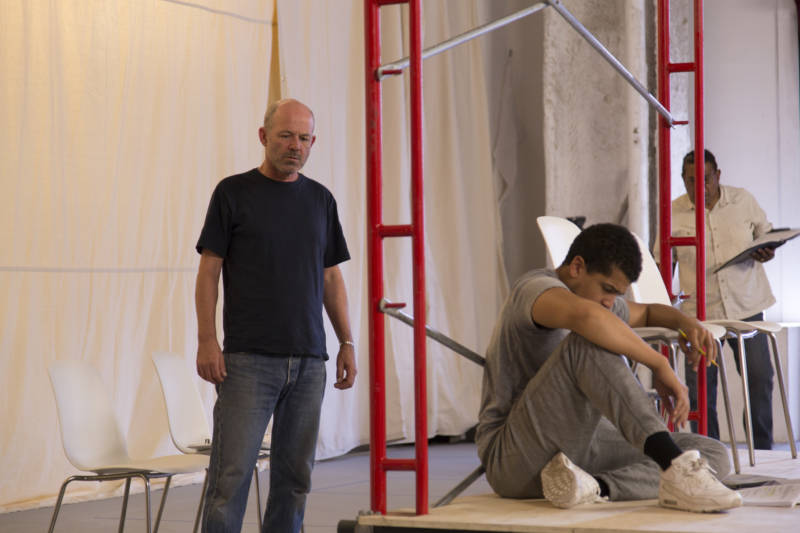
"caption": "Clive Worsley and Chris Herbie Holland rehearse a scene from 'The Box.'",
"description": null,
"title": "The Box_Featured Image",
"credit": "Carla Hernández Ramírez",
"status": "inherit",
"isLoading": false,
"fetchFailed": false
},
"news_11014266": {
"type": "attachments",
"id": "news_11014266",
"meta": {
"index": "attachments_1716263798",
"site": "news",
"id": "11014266",
"found": true
},
"parent": 11011301,
"imgSizes": {
"twentyfourteen-full-width": {
"file": "https://ww2.kqed.org/app/uploads/sites/10/2016/07/TheSmell-1038x576.jpg",
"width": 1038,
"mimeType": "image/jpeg",
"height": 576
},
"thumbnail": {
"file": "https://ww2.kqed.org/app/uploads/sites/10/2016/07/TheSmell-400x252.jpg",
"width": 400,
"mimeType": "image/jpeg",
"height": 252
},
"fd-sm": {
"file": "https://ww2.kqed.org/app/uploads/sites/10/2016/07/TheSmell-960x605.jpg",
"width": 960,
"mimeType": "image/jpeg",
"height": 605
},
"post-thumbnail": {
"file": "https://ww2.kqed.org/app/uploads/sites/10/2016/07/TheSmell-672x372.jpg",
"width": 672,
"mimeType": "image/jpeg",
"height": 372
},
"kqedFullSize": {
"file": "https://ww2.kqed.org/app/uploads/sites/10/2016/07/TheSmell.jpg",
"width": 1920,
"height": 1210
},
"large": {
"file": "https://ww2.kqed.org/app/uploads/sites/10/2016/07/TheSmell-1920x1210.jpg",
"width": 1920,
"mimeType": "image/jpeg",
"height": 1210
},
"guest-author-50": {
"file": "https://ww2.kqed.org/app/uploads/sites/10/2016/07/TheSmell-50x50.jpg",
"width": 50,
"mimeType": "image/jpeg",
"height": 50
},
"guest-author-96": {
"file": "https://ww2.kqed.org/app/uploads/sites/10/2016/07/TheSmell-96x96.jpg",
"width": 96,
"mimeType": "image/jpeg",
"height": 96
},
"medium": {
"file": "https://ww2.kqed.org/app/uploads/sites/10/2016/07/TheSmell-800x504.jpg",
"width": 800,
"mimeType": "image/jpeg",
"height": 504
},
"guest-author-64": {
"file": "https://ww2.kqed.org/app/uploads/sites/10/2016/07/TheSmell-64x64.jpg",
"width": 64,
"mimeType": "image/jpeg",
"height": 64
},
"guest-author-32": {
"file": "https://ww2.kqed.org/app/uploads/sites/10/2016/07/TheSmell-32x32.jpg",
"width": 32,
"mimeType": "image/jpeg",
"height": 32
},
"jmtc-small-thumb": {
"file": "https://ww2.kqed.org/app/uploads/sites/10/2016/07/TheSmell-280x150.jpg",
"width": 280,
"mimeType": "image/jpeg",
"height": 150
},
"fd-lrg": {
"file": "https://ww2.kqed.org/app/uploads/sites/10/2016/07/TheSmell-1920x1210.jpg",
"width": 1920,
"mimeType": "image/jpeg",
"height": 1210
},
"fd-med": {
"file": "https://ww2.kqed.org/app/uploads/sites/10/2016/07/TheSmell-1180x744.jpg",
"width": 1180,
"mimeType": "image/jpeg",
"height": 744
},
"detail": {
"file": "https://ww2.kqed.org/app/uploads/sites/10/2016/07/TheSmell-150x150.jpg",
"width": 150,
"mimeType": "image/jpeg",
"height": 150
},
"guest-author-128": {
"file": "https://ww2.kqed.org/app/uploads/sites/10/2016/07/TheSmell-128x128.jpg",
"width": 128,
"mimeType": "image/jpeg",
"height": 128
}
},
"publishDate": 1468018823,
"modified": 1468018853,
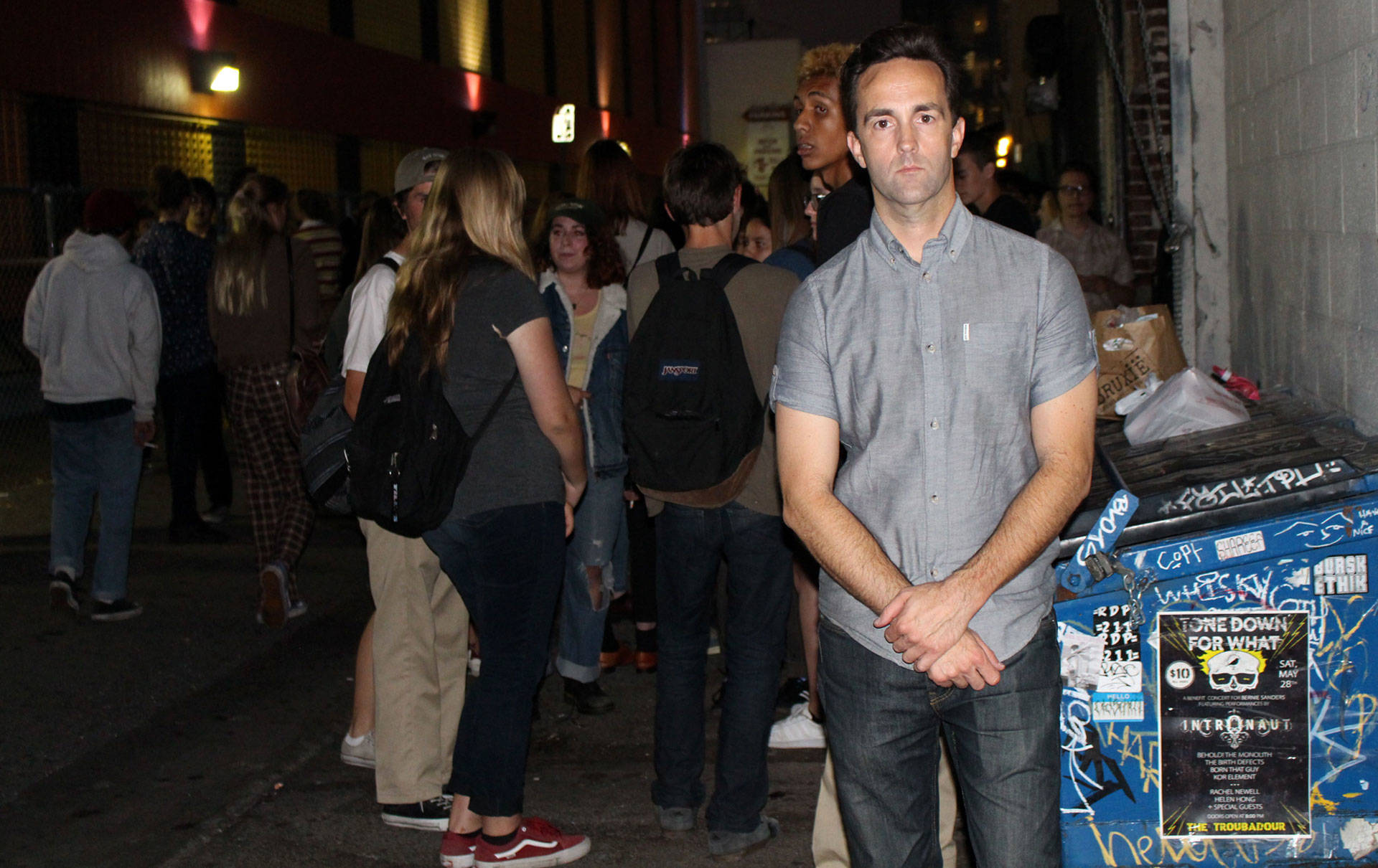
"caption": "Jim Smith, owner of The Smell.",
"description": "Jim Smith, owner of The Smell.",
"title": "TheSmell",
"credit": "Avishay Artsy/KQED",
"status": "inherit",
"isLoading": false,
"fetchFailed": false
},
"news_11014145": {
"type": "attachments",
"id": "news_11014145",
"meta": {
"index": "attachments_1716263798",
"site": "news",
"id": "11014145",
"found": true
},
"parent": 11014142,
"imgSizes": {
"twentyfourteen-full-width": {
"file": "https://ww2.kqed.org/app/uploads/sites/10/2016/07/KPCCWine-1038x576.jpg",
"width": 1038,
"mimeType": "image/jpeg",
"height": 576
},
"thumbnail": {
"file": "https://ww2.kqed.org/app/uploads/sites/10/2016/07/KPCCWine-400x266.jpg",
"width": 400,
"mimeType": "image/jpeg",
"height": 266
},
"fd-sm": {
"file": "https://ww2.kqed.org/app/uploads/sites/10/2016/07/KPCCWine-960x638.jpg",
"width": 960,
"mimeType": "image/jpeg",
"height": 638
},
"post-thumbnail": {
"file": "https://ww2.kqed.org/app/uploads/sites/10/2016/07/KPCCWine-672x372.jpg",
"width": 672,
"mimeType": "image/jpeg",
"height": 372
},
"kqedFullSize": {
"file": "https://ww2.kqed.org/app/uploads/sites/10/2016/07/KPCCWine.jpg",
"width": 1920,
"height": 1275
},
"large": {
"file": "https://ww2.kqed.org/app/uploads/sites/10/2016/07/KPCCWine-1920x1275.jpg",
"width": 1920,
"mimeType": "image/jpeg",
"height": 1275
},
"guest-author-50": {
"file": "https://ww2.kqed.org/app/uploads/sites/10/2016/07/KPCCWine-50x50.jpg",
"width": 50,
"mimeType": "image/jpeg",
"height": 50
},
"guest-author-96": {
"file": "https://ww2.kqed.org/app/uploads/sites/10/2016/07/KPCCWine-96x96.jpg",
"width": 96,
"mimeType": "image/jpeg",
"height": 96
},
"medium": {
"file": "https://ww2.kqed.org/app/uploads/sites/10/2016/07/KPCCWine-800x531.jpg",
"width": 800,
"mimeType": "image/jpeg",
"height": 531
},
"guest-author-64": {
"file": "https://ww2.kqed.org/app/uploads/sites/10/2016/07/KPCCWine-64x64.jpg",
"width": 64,
"mimeType": "image/jpeg",
"height": 64
},
"guest-author-32": {
"file": "https://ww2.kqed.org/app/uploads/sites/10/2016/07/KPCCWine-32x32.jpg",
"width": 32,
"mimeType": "image/jpeg",
"height": 32
},
"jmtc-small-thumb": {
"file": "https://ww2.kqed.org/app/uploads/sites/10/2016/07/KPCCWine-280x150.jpg",
"width": 280,
"mimeType": "image/jpeg",
"height": 150
},
"fd-lrg": {
"file": "https://ww2.kqed.org/app/uploads/sites/10/2016/07/KPCCWine-1920x1275.jpg",
"width": 1920,
"mimeType": "image/jpeg",
"height": 1275
},
"fd-med": {
"file": "https://ww2.kqed.org/app/uploads/sites/10/2016/07/KPCCWine-1180x784.jpg",
"width": 1180,
"mimeType": "image/jpeg",
"height": 784
},
"detail": {
"file": "https://ww2.kqed.org/app/uploads/sites/10/2016/07/KPCCWine-150x150.jpg",
"width": 150,
"mimeType": "image/jpeg",
"height": 150
},
"guest-author-128": {
"file": "https://ww2.kqed.org/app/uploads/sites/10/2016/07/KPCCWine-128x128.jpg",
"width": 128,
"mimeType": "image/jpeg",
"height": 128
}
},
"publishDate": 1468014119,
"modified": 1468023918,
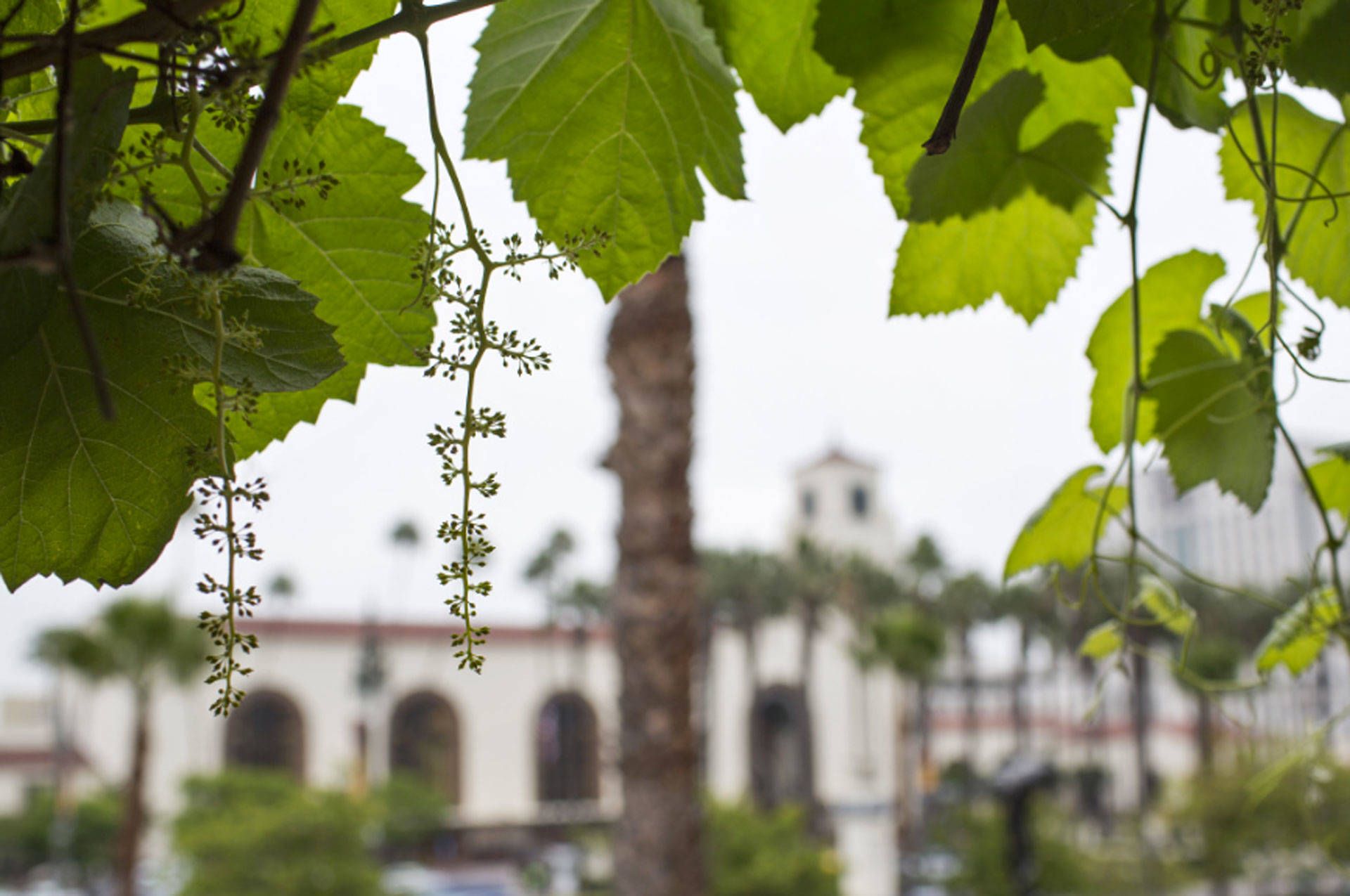
"caption": "The oldest grapevines in California are located in Los Angeles, at the Avila Adobe on Olvera Street near Union Station. City archivist Mike Holland has made wine from the grapes.",
"description": "The oldest grape vines in California, which may be more than 150 years old, are located at the Avila Adobe on Olvera Street near Union Station. City Archivist Mike Holland has made wine from the grapes.",
"title": "KPCCWine",
"credit": "Maya Sugarman/KPCC",
"status": "inherit",
"isLoading": false,
"fetchFailed": false
},
"news_11011637": {
"type": "attachments",
"id": "news_11011637",
"meta": {
"index": "attachments_1716263798",
"site": "news",
"id": "11011637",
"found": true
},
"parent": 11011628,
"imgSizes": {
"twentyfourteen-full-width": {
"file": "https://ww2.kqed.org/app/uploads/sites/10/2016/07/GettyImages-2147900-1038x576.jpg",
"width": 1038,
"mimeType": "image/jpeg",
"height": 576
},
"thumbnail": {
"file": "https://ww2.kqed.org/app/uploads/sites/10/2016/07/GettyImages-2147900-400x267.jpg",
"width": 400,
"mimeType": "image/jpeg",
"height": 267
},
"fd-sm": {
"file": "https://ww2.kqed.org/app/uploads/sites/10/2016/07/GettyImages-2147900-960x642.jpg",
"width": 960,
"mimeType": "image/jpeg",
"height": 642
},
"post-thumbnail": {
"file": "https://ww2.kqed.org/app/uploads/sites/10/2016/07/GettyImages-2147900-672x372.jpg",
"width": 672,
"mimeType": "image/jpeg",
"height": 372
},
"kqedFullSize": {
"file": "https://ww2.kqed.org/app/uploads/sites/10/2016/07/GettyImages-2147900-e1467844896182.jpg",
"width": 1920,
"height": 1284
},
"large": {
"file": "https://ww2.kqed.org/app/uploads/sites/10/2016/07/GettyImages-2147900-1920x1284.jpg",
"width": 1920,
"mimeType": "image/jpeg",
"height": 1284
},
"guest-author-50": {
"file": "https://ww2.kqed.org/app/uploads/sites/10/2016/07/GettyImages-2147900-50x50.jpg",
"width": 50,
"mimeType": "image/jpeg",
"height": 50
},
"guest-author-96": {
"file": "https://ww2.kqed.org/app/uploads/sites/10/2016/07/GettyImages-2147900-96x96.jpg",
"width": 96,
"mimeType": "image/jpeg",
"height": 96
},
"medium": {
"file": "https://ww2.kqed.org/app/uploads/sites/10/2016/07/GettyImages-2147900-800x535.jpg",
"width": 800,
"mimeType": "image/jpeg",
"height": 535
},
"guest-author-64": {
"file": "https://ww2.kqed.org/app/uploads/sites/10/2016/07/GettyImages-2147900-64x64.jpg",
"width": 64,
"mimeType": "image/jpeg",
"height": 64
},
"guest-author-32": {
"file": "https://ww2.kqed.org/app/uploads/sites/10/2016/07/GettyImages-2147900-32x32.jpg",
"width": 32,
"mimeType": "image/jpeg",
"height": 32
},
"jmtc-small-thumb": {
"file": "https://ww2.kqed.org/app/uploads/sites/10/2016/07/GettyImages-2147900-280x150.jpg",
"width": 280,
"mimeType": "image/jpeg",
"height": 150
},
"fd-lrg": {
"file": "https://ww2.kqed.org/app/uploads/sites/10/2016/07/GettyImages-2147900-1920x1284.jpg",
"width": 1920,
"mimeType": "image/jpeg",
"height": 1284
},
"fd-med": {
"file": "https://ww2.kqed.org/app/uploads/sites/10/2016/07/GettyImages-2147900-1180x789.jpg",
"width": 1180,
"mimeType": "image/jpeg",
"height": 789
},
"detail": {
"file": "https://ww2.kqed.org/app/uploads/sites/10/2016/07/GettyImages-2147900-150x150.jpg",
"width": 150,
"mimeType": "image/jpeg",
"height": 150
},
"guest-author-128": {
"file": "https://ww2.kqed.org/app/uploads/sites/10/2016/07/GettyImages-2147900-128x128.jpg",
"width": 128,
"mimeType": "image/jpeg",
"height": 128
}
},
"publishDate": 1467844836,
"modified": 1467844891,
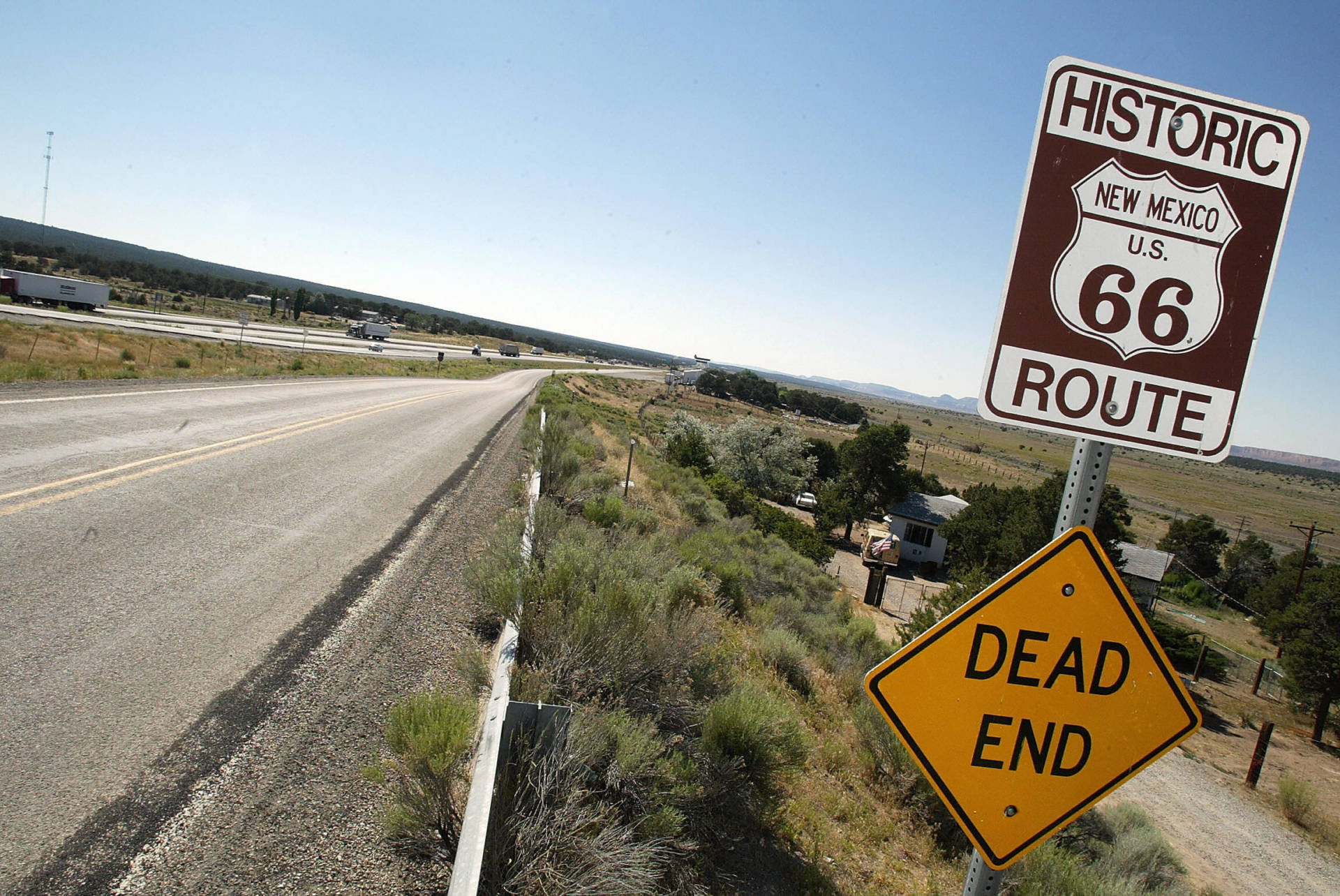
"caption": "A section of historic Route 66 parallels Interstate 40 near Prewitt, New Mexico.",
"description": null,
"title": "Historic Route 66",
"credit": "Robyn Beck/AFP-Getty Images",
"status": "inherit",
"isLoading": false,
"fetchFailed": false
},
"news_10991666": {
"type": "attachments",
"id": "news_10991666",
"meta": {
"index": "attachments_1716263798",
"site": "news",
"id": "10991666",
"found": true
},
"parent": 10991323,
"imgSizes": {
"twentyfourteen-full-width": {
"file": "https://ww2.kqed.org/app/uploads/sites/10/2016/06/the-dead-ships-press-zane-roessell-45-1038x576.jpg",
"width": 1038,
"mimeType": "image/jpeg",
"height": 576
},
"thumbnail": {
"file": "https://ww2.kqed.org/app/uploads/sites/10/2016/06/the-dead-ships-press-zane-roessell-45-400x267.jpg",
"width": 400,
"mimeType": "image/jpeg",
"height": 267
},
"fd-sm": {
"file": "https://ww2.kqed.org/app/uploads/sites/10/2016/06/the-dead-ships-press-zane-roessell-45-960x641.jpg",
"width": 960,
"mimeType": "image/jpeg",
"height": 641
},
"post-thumbnail": {
"file": "https://ww2.kqed.org/app/uploads/sites/10/2016/06/the-dead-ships-press-zane-roessell-45-672x372.jpg",
"width": 672,
"mimeType": "image/jpeg",
"height": 372
},
"kqedFullSize": {
"file": "https://ww2.kqed.org/app/uploads/sites/10/2016/06/the-dead-ships-press-zane-roessell-45.jpg",
"width": 3680,
"height": 2456
},
"large": {
"file": "https://ww2.kqed.org/app/uploads/sites/10/2016/06/the-dead-ships-press-zane-roessell-45-1920x1281.jpg",
"width": 1920,
"mimeType": "image/jpeg",
"height": 1281
},
"guest-author-50": {
"file": "https://ww2.kqed.org/app/uploads/sites/10/2016/06/the-dead-ships-press-zane-roessell-45-50x50.jpg",
"width": 50,
"mimeType": "image/jpeg",
"height": 50
},
"guest-author-96": {
"file": "https://ww2.kqed.org/app/uploads/sites/10/2016/06/the-dead-ships-press-zane-roessell-45-96x96.jpg",
"width": 96,
"mimeType": "image/jpeg",
"height": 96
},
"medium": {
"file": "https://ww2.kqed.org/app/uploads/sites/10/2016/06/the-dead-ships-press-zane-roessell-45-800x534.jpg",
"width": 800,
"mimeType": "image/jpeg",
"height": 534
},
"guest-author-64": {
"file": "https://ww2.kqed.org/app/uploads/sites/10/2016/06/the-dead-ships-press-zane-roessell-45-64x64.jpg",
"width": 64,
"mimeType": "image/jpeg",
"height": 64
},
"guest-author-32": {
"file": "https://ww2.kqed.org/app/uploads/sites/10/2016/06/the-dead-ships-press-zane-roessell-45-32x32.jpg",
"width": 32,
"mimeType": "image/jpeg",
"height": 32
},
"jmtc-small-thumb": {
"file": "https://ww2.kqed.org/app/uploads/sites/10/2016/06/the-dead-ships-press-zane-roessell-45-280x150.jpg",
"width": 280,
"mimeType": "image/jpeg",
"height": 150
},
"fd-lrg": {
"file": "https://ww2.kqed.org/app/uploads/sites/10/2016/06/the-dead-ships-press-zane-roessell-45-1920x1281.jpg",
"width": 1920,
"mimeType": "image/jpeg",
"height": 1281
},
"fd-med": {
"file": "https://ww2.kqed.org/app/uploads/sites/10/2016/06/the-dead-ships-press-zane-roessell-45-1180x788.jpg",
"width": 1180,
"mimeType": "image/jpeg",
"height": 788
},
"detail": {
"file": "https://ww2.kqed.org/app/uploads/sites/10/2016/06/the-dead-ships-press-zane-roessell-45-150x150.jpg",
"width": 150,
"mimeType": "image/jpeg",
"height": 150
},
"guest-author-128": {
"file": "https://ww2.kqed.org/app/uploads/sites/10/2016/06/the-dead-ships-press-zane-roessell-45-128x128.jpg",
"width": 128,
"mimeType": "image/jpeg",
"height": 128
}
},
"publishDate": 1466135601,
"modified": 1466135667,
"caption": "Los Angeles band the Dead Ship is releasing its debut album, \"Citycide.\"",
"description": null,
"title": "the-dead-ships-press-zane-roessell-45",
"credit": "Zane Roessell",
"status": "inherit",
"isLoading": false,
"fetchFailed": false
},
"news_11001835": {
"type": "attachments",
"id": "news_11001835",
"meta": {
"index": "attachments_1716263798",
"site": "news",
"id": "11001835",
"found": true
},
"parent": 11001193,
"imgSizes": {
"twentyfourteen-full-width": {
"file": "https://ww2.kqed.org/app/uploads/sites/10/2016/06/160626_SFPride_bhs06-1038x576.jpg",
"width": 1038,
"mimeType": "image/jpeg",
"height": 576
},
"thumbnail": {
"file": "https://ww2.kqed.org/app/uploads/sites/10/2016/06/160626_SFPride_bhs06-400x267.jpg",
"width": 400,
"mimeType": "image/jpeg",
"height": 267
},
"fd-sm": {
"file": "https://ww2.kqed.org/app/uploads/sites/10/2016/06/160626_SFPride_bhs06-960x640.jpg",
"width": 960,
"mimeType": "image/jpeg",
"height": 640
},
"post-thumbnail": {
"file": "https://ww2.kqed.org/app/uploads/sites/10/2016/06/160626_SFPride_bhs06-672x372.jpg",
"width": 672,
"mimeType": "image/jpeg",
"height": 372
},
"kqedFullSize": {
"file": "https://ww2.kqed.org/app/uploads/sites/10/2016/06/160626_SFPride_bhs06.jpg",
"width": 1920,
"height": 1280
},
"large": {
"file": "https://ww2.kqed.org/app/uploads/sites/10/2016/06/160626_SFPride_bhs06-1920x1280.jpg",
"width": 1920,
"mimeType": "image/jpeg",
"height": 1280
},
"guest-author-50": {
"file": "https://ww2.kqed.org/app/uploads/sites/10/2016/06/160626_SFPride_bhs06-50x50.jpg",
"width": 50,
"mimeType": "image/jpeg",
"height": 50
},
"guest-author-96": {
"file": "https://ww2.kqed.org/app/uploads/sites/10/2016/06/160626_SFPride_bhs06-96x96.jpg",
"width": 96,
"mimeType": "image/jpeg",
"height": 96
},
"medium": {
"file": "https://ww2.kqed.org/app/uploads/sites/10/2016/06/160626_SFPride_bhs06-800x533.jpg",
"width": 800,
"mimeType": "image/jpeg",
"height": 533
},
"guest-author-64": {
"file": "https://ww2.kqed.org/app/uploads/sites/10/2016/06/160626_SFPride_bhs06-64x64.jpg",
"width": 64,
"mimeType": "image/jpeg",
"height": 64
},
"guest-author-32": {
"file": "https://ww2.kqed.org/app/uploads/sites/10/2016/06/160626_SFPride_bhs06-32x32.jpg",
"width": 32,
"mimeType": "image/jpeg",
"height": 32
},
"jmtc-small-thumb": {
"file": "https://ww2.kqed.org/app/uploads/sites/10/2016/06/160626_SFPride_bhs06-280x150.jpg",
"width": 280,
"mimeType": "image/jpeg",
"height": 150
},
"fd-lrg": {
"file": "https://ww2.kqed.org/app/uploads/sites/10/2016/06/160626_SFPride_bhs06-1920x1280.jpg",
"width": 1920,
"mimeType": "image/jpeg",
"height": 1280
},
"fd-med": {
"file": "https://ww2.kqed.org/app/uploads/sites/10/2016/06/160626_SFPride_bhs06-1180x787.jpg",
"width": 1180,
"mimeType": "image/jpeg",
"height": 787
},
"detail": {
"file": "https://ww2.kqed.org/app/uploads/sites/10/2016/06/160626_SFPride_bhs06-150x150.jpg",
"width": 150,
"mimeType": "image/jpeg",
"height": 150
},
"guest-author-128": {
"file": "https://ww2.kqed.org/app/uploads/sites/10/2016/06/160626_SFPride_bhs06-128x128.jpg",
"width": 128,
"mimeType": "image/jpeg",
"height": 128
}
},
"publishDate": 1466987875,
"modified": 1466988003,
"caption": "Ralph Boethling skates on the sidelines of the parade.",
"description": null,
"title": "160626_SFPride_bhs06",
"credit": "Brittany Hosea-Small/KQED",
"status": "inherit",
"isLoading": false,
"fetchFailed": false
},
"news_10350438": {
"type": "attachments",
"id": "news_10350438",
"meta": {
"index": "attachments_1716263798",
"site": "news",
"id": "10350438",
"found": true
},
"parent": 10350437,
"imgSizes": {
"twentyfourteen-full-width": {
"file": "https://ww2.kqed.org/app/uploads/sites/10/2014/11/lucasmuseum-1038x576.jpg",
"width": 1038,
"mimeType": "image/jpeg",
"height": 576
},
"thumbnail": {
"file": "https://ww2.kqed.org/app/uploads/sites/10/2014/11/lucasmuseum-400x210.jpg",
"width": 400,
"mimeType": "image/jpeg",
"height": 210
},
"post-thumbnail": {
"file": "https://ww2.kqed.org/app/uploads/sites/10/2014/11/lucasmuseum-672x372.jpg",
"width": 672,
"mimeType": "image/jpeg",
"height": 372
},
"kqedFullSize": {
"file": "https://ww2.kqed.org/app/uploads/sites/10/2014/11/lucasmuseum.jpg",
"width": 1227,
"height": 646
},
"guest-author-96": {
"file": "https://ww2.kqed.org/app/uploads/sites/10/2014/11/lucasmuseum-96x96.jpg",
"width": 96,
"mimeType": "image/jpeg",
"height": 96
},
"medium": {
"file": "https://ww2.kqed.org/app/uploads/sites/10/2014/11/lucasmuseum-800x421.jpg",
"width": 800,
"mimeType": "image/jpeg",
"height": 421
},
"guest-author-64": {
"file": "https://ww2.kqed.org/app/uploads/sites/10/2014/11/lucasmuseum-64x64.jpg",
"width": 64,
"mimeType": "image/jpeg",
"height": 64
},
"detail": {
"file": "https://ww2.kqed.org/app/uploads/sites/10/2014/11/lucasmuseum-75x75.jpg",
"width": 75,
"mimeType": "image/jpeg",
"height": 75
},
"guest-author-32": {
"file": "https://ww2.kqed.org/app/uploads/sites/10/2014/11/lucasmuseum-32x32.jpg",
"width": 32,
"mimeType": "image/jpeg",
"height": 32
},
"guest-author-128": {
"file": "https://ww2.kqed.org/app/uploads/sites/10/2014/11/lucasmuseum-128x128.jpg",
"width": 128,
"mimeType": "image/jpeg",
"height": 128
}
},
"publishDate": 1416520882,
"modified": 1416520969,
"caption": "Artist's rendering of proposed George Lucas museum on Chicago's lakefront. (Lucas Museum of Narrative Art)",
"description": "Artist's rendering of proposed George Lucas museum on Chicago's lakefront. (Lucas Museum of Narrative Art)",
"title": "Lucas Museum-Chicago",
"credit": null,
"status": "inherit",
"isLoading": false,
"fetchFailed": false
},
"news_10992681": {
"type": "attachments",
"id": "news_10992681",
"meta": {
"index": "attachments_1716263798",
"site": "news",
"id": "10992681",
"found": true
},
"parent": 10991301,
"imgSizes": {
"twentyfourteen-full-width": {
"file": "https://ww2.kqed.org/app/uploads/sites/10/2016/06/Jimi-fire-crop-1038x576.jpg",
"width": 1038,
"mimeType": "image/jpeg",
"height": 576
},
"thumbnail": {
"file": "https://ww2.kqed.org/app/uploads/sites/10/2016/06/Jimi-fire-crop-400x536.jpg",
"width": 400,
"mimeType": "image/jpeg",
"height": 536
},
"fd-sm": {
"file": "https://ww2.kqed.org/app/uploads/sites/10/2016/06/Jimi-fire-crop-960x1286.jpg",
"width": 960,
"mimeType": "image/jpeg",
"height": 1286
},
"post-thumbnail": {
"file": "https://ww2.kqed.org/app/uploads/sites/10/2016/06/Jimi-fire-crop-672x372.jpg",
"width": 672,
"mimeType": "image/jpeg",
"height": 372
},
"kqedFullSize": {
"file": "https://ww2.kqed.org/app/uploads/sites/10/2016/06/Jimi-fire-crop.jpg",
"width": 1457,
"height": 1952
},
"guest-author-50": {
"file": "https://ww2.kqed.org/app/uploads/sites/10/2016/06/Jimi-fire-crop-50x50.jpg",
"width": 50,
"mimeType": "image/jpeg",
"height": 50
},
"guest-author-96": {
"file": "https://ww2.kqed.org/app/uploads/sites/10/2016/06/Jimi-fire-crop-96x96.jpg",
"width": 96,
"mimeType": "image/jpeg",
"height": 96
},
"medium": {
"file": "https://ww2.kqed.org/app/uploads/sites/10/2016/06/Jimi-fire-crop-800x1072.jpg",
"width": 800,
"mimeType": "image/jpeg",
"height": 1072
},
"guest-author-64": {
"file": "https://ww2.kqed.org/app/uploads/sites/10/2016/06/Jimi-fire-crop-64x64.jpg",
"width": 64,
"mimeType": "image/jpeg",
"height": 64
},
"guest-author-32": {
"file": "https://ww2.kqed.org/app/uploads/sites/10/2016/06/Jimi-fire-crop-32x32.jpg",
"width": 32,
"mimeType": "image/jpeg",
"height": 32
},
"jmtc-small-thumb": {
"file": "https://ww2.kqed.org/app/uploads/sites/10/2016/06/Jimi-fire-crop-280x150.jpg",
"width": 280,
"mimeType": "image/jpeg",
"height": 150
},
"fd-med": {
"file": "https://ww2.kqed.org/app/uploads/sites/10/2016/06/Jimi-fire-crop-1180x1581.jpg",
"width": 1180,
"mimeType": "image/jpeg",
"height": 1581
},
"detail": {
"file": "https://ww2.kqed.org/app/uploads/sites/10/2016/06/Jimi-fire-crop-150x150.jpg",
"width": 150,
"mimeType": "image/jpeg",
"height": 150
},
"guest-author-128": {
"file": "https://ww2.kqed.org/app/uploads/sites/10/2016/06/Jimi-fire-crop-128x128.jpg",
"width": 128,
"mimeType": "image/jpeg",
"height": 128
}
},
"publishDate": 1466202553,
"modified": 1466202585,
"caption": "Ed Caraeff's photo of Jimi Hendrix burning his guitar at the Monterey International Pop Festival on June 18, 1967. Taken with a camera borrowed from his family optometrist when Caraeff was a high school junior, the photo made the cover of Rolling Stone, twice, in the decades since the festival.",
"description": "Ed Caraeff's photo of Jimi Hendrix burning his guitar at the Monterey International Pop Festival on June 18, 1967. Taken with a camera borrowed from his family optometrist when Caraeff was a high school junior, the photo made the cover of Rolling Stone, twice, in the decades since the festival.",
"title": "Jimi-fire-crop",
"credit": "Photo courtesy of Ed Caraeff",
"status": "inherit",
"isLoading": false,
"fetchFailed": false
},
"news_10991914": {
"type": "attachments",
"id": "news_10991914",
"meta": {
"index": "attachments_1716263798",
"site": "news",
"id": "10991914",
"found": true
},
"parent": 10991868,
"imgSizes": {
"twentyfourteen-full-width": {
"file": "https://ww2.kqed.org/app/uploads/sites/10/2016/06/Odabi-CD-Art-1038x576.jpg",
"width": 1038,
"mimeType": "image/jpeg",
"height": 576
},
"thumbnail": {
"file": "https://ww2.kqed.org/app/uploads/sites/10/2016/06/Odabi-CD-Art-400x361.jpg",
"width": 400,
"mimeType": "image/jpeg",
"height": 361
},
"fd-sm": {
"file": "https://ww2.kqed.org/app/uploads/sites/10/2016/06/Odabi-CD-Art-960x866.jpg",
"width": 960,
"mimeType": "image/jpeg",
"height": 866
},
"post-thumbnail": {
"file": "https://ww2.kqed.org/app/uploads/sites/10/2016/06/Odabi-CD-Art-672x372.jpg",
"width": 672,
"mimeType": "image/jpeg",
"height": 372
},
"kqedFullSize": {
"file": "https://ww2.kqed.org/app/uploads/sites/10/2016/06/Odabi-CD-Art.jpg",
"width": 1703,
"height": 1537
},
"guest-author-50": {
"file": "https://ww2.kqed.org/app/uploads/sites/10/2016/06/Odabi-CD-Art-50x50.jpg",
"width": 50,
"mimeType": "image/jpeg",
"height": 50
},
"guest-author-96": {
"file": "https://ww2.kqed.org/app/uploads/sites/10/2016/06/Odabi-CD-Art-96x96.jpg",
"width": 96,
"mimeType": "image/jpeg",
"height": 96
},
"medium": {
"file": "https://ww2.kqed.org/app/uploads/sites/10/2016/06/Odabi-CD-Art-800x722.jpg",
"width": 800,
"mimeType": "image/jpeg",
"height": 722
},
"guest-author-64": {
"file": "https://ww2.kqed.org/app/uploads/sites/10/2016/06/Odabi-CD-Art-64x64.jpg",
"width": 64,
"mimeType": "image/jpeg",
"height": 64
},
"guest-author-32": {
"file": "https://ww2.kqed.org/app/uploads/sites/10/2016/06/Odabi-CD-Art-32x32.jpg",
"width": 32,
"mimeType": "image/jpeg",
"height": 32
},
"jmtc-small-thumb": {
"file": "https://ww2.kqed.org/app/uploads/sites/10/2016/06/Odabi-CD-Art-280x150.jpg",
"width": 280,
"mimeType": "image/jpeg",
"height": 150
},
"fd-med": {
"file": "https://ww2.kqed.org/app/uploads/sites/10/2016/06/Odabi-CD-Art-1180x1065.jpg",
"width": 1180,
"mimeType": "image/jpeg",
"height": 1065
},
"detail": {
"file": "https://ww2.kqed.org/app/uploads/sites/10/2016/06/Odabi-CD-Art-150x150.jpg",
"width": 150,
"mimeType": "image/jpeg",
"height": 150
},
"guest-author-128": {
"file": "https://ww2.kqed.org/app/uploads/sites/10/2016/06/Odabi-CD-Art-128x128.jpg",
"width": 128,
"mimeType": "image/jpeg",
"height": 128
}
},
"publishDate": 1466151393,
"modified": 1466151393,
"caption": null,
"description": null,
"title": "T Odabi CD Outside Final REVISED 2",
"credit": null,
"status": "inherit",
"isLoading": false,
"fetchFailed": false
},
"news_10988926": {
"type": "attachments",
"id": "news_10988926",
"meta": {
"index": "attachments_1716263798",
"site": "news",
"id": "10988926",
"found": true
},
"parent": 10988875,
"imgSizes": {
"twentyfourteen-full-width": {
"file": "https://ww2.kqed.org/app/uploads/sites/10/2016/06/NocketCraterLake-1038x576.jpg",
"width": 1038,
"mimeType": "image/jpeg",
"height": 576
},
"thumbnail": {
"file": "https://ww2.kqed.org/app/uploads/sites/10/2016/06/NocketCraterLake-400x226.jpg",
"width": 400,
"mimeType": "image/jpeg",
"height": 226
},
"fd-sm": {
"file": "https://ww2.kqed.org/app/uploads/sites/10/2016/06/NocketCraterLake-960x544.jpg",
"width": 960,
"mimeType": "image/jpeg",
"height": 544
},
"post-thumbnail": {
"file": "https://ww2.kqed.org/app/uploads/sites/10/2016/06/NocketCraterLake-672x372.jpg",
"width": 672,
"mimeType": "image/jpeg",
"height": 372
},
"kqedFullSize": {
"file": "https://ww2.kqed.org/app/uploads/sites/10/2016/06/NocketCraterLake.jpg",
"width": 1920,
"height": 1087
},
"large": {
"file": "https://ww2.kqed.org/app/uploads/sites/10/2016/06/NocketCraterLake-1920x1087.jpg",
"width": 1920,
"mimeType": "image/jpeg",
"height": 1087
},
"guest-author-50": {
"file": "https://ww2.kqed.org/app/uploads/sites/10/2016/06/NocketCraterLake-50x50.jpg",
"width": 50,
"mimeType": "image/jpeg",
"height": 50
},
"guest-author-96": {
"file": "https://ww2.kqed.org/app/uploads/sites/10/2016/06/NocketCraterLake-96x96.jpg",
"width": 96,
"mimeType": "image/jpeg",
"height": 96
},
"medium": {
"file": "https://ww2.kqed.org/app/uploads/sites/10/2016/06/NocketCraterLake-800x453.jpg",
"width": 800,
"mimeType": "image/jpeg",
"height": 453
},
"guest-author-64": {
"file": "https://ww2.kqed.org/app/uploads/sites/10/2016/06/NocketCraterLake-64x64.jpg",
"width": 64,
"mimeType": "image/jpeg",
"height": 64
},
"guest-author-32": {
"file": "https://ww2.kqed.org/app/uploads/sites/10/2016/06/NocketCraterLake-32x32.jpg",
"width": 32,
"mimeType": "image/jpeg",
"height": 32
},
"jmtc-small-thumb": {
"file": "https://ww2.kqed.org/app/uploads/sites/10/2016/06/NocketCraterLake-280x150.jpg",
"width": 280,
"mimeType": "image/jpeg",
"height": 150
},
"fd-lrg": {
"file": "https://ww2.kqed.org/app/uploads/sites/10/2016/06/NocketCraterLake-1920x1087.jpg",
"width": 1920,
"mimeType": "image/jpeg",
"height": 1087
},
"fd-med": {
"file": "https://ww2.kqed.org/app/uploads/sites/10/2016/06/NocketCraterLake-1180x668.jpg",
"width": 1180,
"mimeType": "image/jpeg",
"height": 668
},
"detail": {
"file": "https://ww2.kqed.org/app/uploads/sites/10/2016/06/NocketCraterLake-150x150.jpg",
"width": 150,
"mimeType": "image/jpeg",
"height": 150
},
"guest-author-128": {
"file": "https://ww2.kqed.org/app/uploads/sites/10/2016/06/NocketCraterLake-128x128.jpg",
"width": 128,
"mimeType": "image/jpeg",
"height": 128
}
},
"publishDate": 1465927204,
"modified": 1465927424,
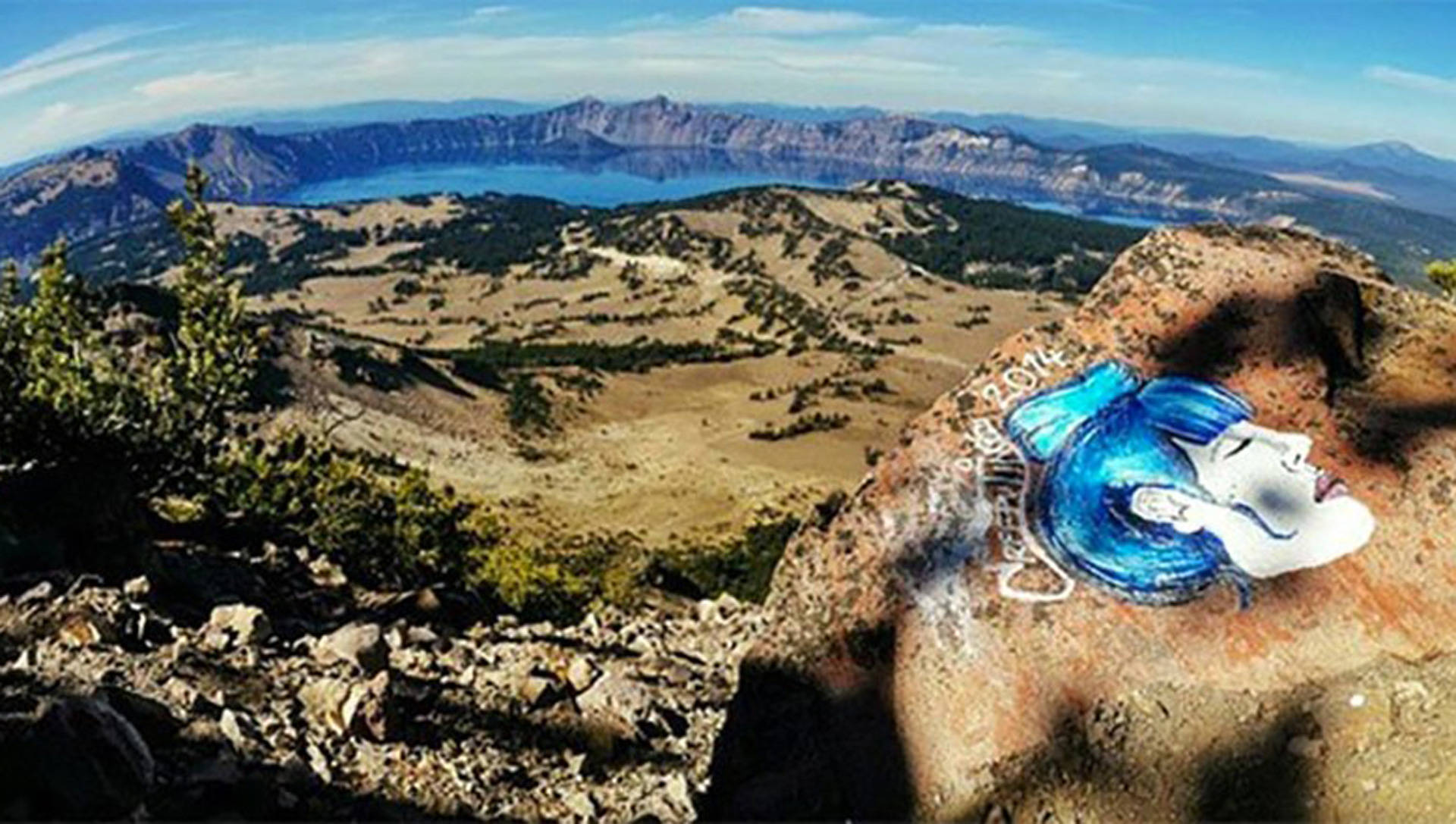
"caption": "This image captured from Casey Nocket's Instagram account shows one of her acrylic paintings near Oregon's Crater Lake.",
"description": "This image captured from Casey Nocket's Instagram account shows one of her acrylic paintings near Oregon's Crater Lake.",
"title": "NocketCraterLake",
"credit": "Courtesy of U.S. Attorney's Office for the Eastern District of California",
"status": "inherit",
"isLoading": false,
"fetchFailed": false
}
},
"audioPlayerReducer": {
"postId": "stream_live",
"isPaused": true,
"isPlaying": false,
"pfsActive": false,
"pledgeModalIsOpen": true,
"playerDrawerIsOpen": false,
"liveAudioPlayStartedAt": 0,
"liveAudioPlayContext": ""
},
"authorsReducer": {
"byline_news_11003815": {
"type": "authors",
"id": "byline_news_11003815",
"meta": {
"override": true
},
"slug": "byline_news_11003815",
"name": "Reese Erlich",
"isLoading": false
},
"byline_news_11011301": {
"type": "authors",
"id": "byline_news_11011301",
"meta": {
"override": true
},
"slug": "byline_news_11011301",
"name": "Avishay Artsy",
"isLoading": false
},
"byline_news_11014142": {
"type": "authors",
"id": "byline_news_11014142",
"meta": {
"override": true
},
"slug": "byline_news_11014142",
"name": "\u003cstrong>\u003ca href=\"http://www.scpr.org/about/people/staff/sanden-totten\">Sanden Totten\u003c/a>\u003cbr>\u003ca href=\"http://www.scpr.org/\">KPCC\u003c/a>\u003c/strong>",
"isLoading": false
},
"byline_news_11011628": {
"type": "authors",
"id": "byline_news_11011628",
"meta": {
"override": true
},
"slug": "byline_news_11011628",
"name": "\u003cstrong>\u003ca href=\"http://twitter.com/russcontreras\" target=\"_blank\">Russell Contreras\u003c/a>\u003cbr />Associated Press\u003c/strong>",
"isLoading": false
},
"byline_news_11001193": {
"type": "authors",
"id": "byline_news_11001193",
"meta": {
"override": true
},
"slug": "byline_news_11001193",
"name": "\u003cstrong>Brittany Hosea-Small\u003c/strong> and \u003cstrong>Natalie Yemenidjian \u003c/strong>",
"isLoading": false
},
"byline_news_10991301": {
"type": "authors",
"id": "byline_news_10991301",
"meta": {
"override": true
},
"slug": "byline_news_10991301",
"name": "Valerie Hamilton",
"isLoading": false
},
"agilbert": {
"type": "authors",
"id": "86",
"meta": {
"index": "authors_1716337520",
"id": "86",
"found": true
},
"name": "Andrew Gilbert",
"firstName": "Andrew",
"lastName": "Gilbert",
"slug": "agilbert",
"email": "jazzscribe@aol.com",
"display_author_email": false,
"staff_mastheads": [],
"title": "KQED Contributor",
"bio": "A Los Angeles native based in the Berkeley area since 1996, Andrew Gilbert covers jazz, international music and dance for KQED's \u003ci>California Report, \u003c/i>the\u003ci> Mercury News\u003c/i>, \u003ci>San Francisco Chronicle\u003c/i>, \u003ci>Berkeleyside.com\u003c/i>, and other publications. He is available for weddings and bar and bat mitzvahs. #jazzscribe",
"avatar": "https://secure.gravatar.com/avatar/d7bcafdbefdd39e9a68f88724ca616eb4e7a5a6bff9cdfb62de652a1e1751471?s=600&d=blank&r=g",
"twitter": null,
"bluesky": null,
"facebook": null,
"instagram": null,
"linkedin": null,
"sites": [
{
"site": "arts",
"roles": [
"Contributor",
"author"
]
},
{
"site": "news",
"roles": [
"author"
]
}
],
"headData": {
"title": "Andrew Gilbert | KQED",
"description": "KQED Contributor",
"ogImgSrc": "https://secure.gravatar.com/avatar/d7bcafdbefdd39e9a68f88724ca616eb4e7a5a6bff9cdfb62de652a1e1751471?s=600&d=blank&r=g",
"twImgSrc": "https://secure.gravatar.com/avatar/d7bcafdbefdd39e9a68f88724ca616eb4e7a5a6bff9cdfb62de652a1e1751471?s=600&d=blank&r=g"
},
"isLoading": false,
"link": "/author/agilbert"
},
"shochman": {
"type": "authors",
"id": "87",
"meta": {
"index": "authors_1716337520",
"id": "87",
"found": true
},
"name": "Steve Hochman",
"firstName": "Steve",
"lastName": "Hochman",
"slug": "shochman",
"email": "sehochman@me.com",
"display_author_email": false,
"staff_mastheads": [],
"title": "KQED Contributor",
"bio": "Steve Hochman has covered popular, and unpopular, music for more than 30 years, most of that time as a key member of the \u003ci>Los Angeles Times\u003c/i>' music team. In that capacity he wrote about the full range of music and musicians, from Hungarian folk to industrial noise, and from 1991 through 2005 wrote the \u003ci>Times\u003c/i>' widely read weekly \"Pop Eye\" column. In addition to his role with \u003ci>The California Report\u003c/i>, he's a music critic for Pasadena station KPCC's morning magazine \u003ci>Take Two\u003c/i> and a regular contributor to Grammy.com, Fender.com and other outlets. His byline has appeared through the years in an array of major publications, including \u003ci>Rolling Stone\u003c/i>, \u003ci>Billboard\u003c/i> and \u003ci>Entertainment Weekly\u003c/i> and New Orleans' \u003ci>Offbeat\u003c/i>.",
"avatar": "https://secure.gravatar.com/avatar/37fbddee9db232a05a1be3b065171301e8baa142626c45b0caa6fc61c25a8c8d?s=600&d=blank&r=g",
"twitter": null,
"bluesky": null,
"facebook": null,
"instagram": null,
"linkedin": null,
"sites": [
{
"site": "arts",
"roles": [
"Contributor",
"subscriber"
]
},
{
"site": "news",
"roles": [
"subscriber"
]
}
],
"headData": {
"title": "Steve Hochman | KQED",
"description": "KQED Contributor",
"ogImgSrc": "https://secure.gravatar.com/avatar/37fbddee9db232a05a1be3b065171301e8baa142626c45b0caa6fc61c25a8c8d?s=600&d=blank&r=g",
"twImgSrc": "https://secure.gravatar.com/avatar/37fbddee9db232a05a1be3b065171301e8baa142626c45b0caa6fc61c25a8c8d?s=600&d=blank&r=g"
},
"isLoading": false,
"link": "/author/shochman"
},
"dmarks": {
"type": "authors",
"id": "182",
"meta": {
"index": "authors_1716337520",
"id": "182",
"found": true
},
"name": "David Marks",
"firstName": "David",
"lastName": "Marks",
"slug": "dmarks",
"email": "dmarks@kqed.org",
"display_author_email": false,
"staff_mastheads": [],
"title": "KQED Editor",
"bio": "David Marks is a senior digital editor for KQED News. \u003c/a>Reach him at dmarks@kqed.org.",
"avatar": "https://secure.gravatar.com/avatar/b88bd6227ce6cb96ae33fefaf42b2a29?s=600&d=mm&r=g",
"twitter": "divadskram",
"facebook": null,
"instagram": null,
"linkedin": null,
"sites": [
{
"site": "news",
"roles": []
},
{
"site": "science",
"roles": []
},
{
"site": "perspectives",
"roles": []
},
{
"site": "liveblog",
"roles": []
}
],
"headData": {
"title": "David Marks | KQED",
"description": "KQED Editor",
"ogImgSrc": "https://secure.gravatar.com/avatar/b88bd6227ce6cb96ae33fefaf42b2a29?s=600&d=mm&r=g",
"twImgSrc": "https://secure.gravatar.com/avatar/b88bd6227ce6cb96ae33fefaf42b2a29?s=600&d=mm&r=g"
},
"isLoading": false,
"link": "/author/dmarks"
},
"danbrekke": {
"type": "authors",
"id": "222",
"meta": {
"index": "authors_1716337520",
"id": "222",
"found": true
},
"name": "Dan Brekke",
"firstName": "Dan",
"lastName": "Brekke",
"slug": "danbrekke",
"email": "dbrekke@kqed.org",
"display_author_email": true,
"staff_mastheads": [
"news",
"science"
],
"title": "KQED Editor and Reporter",
"bio": "Dan Brekke is a reporter and editor for KQED News, responsible for coverage of topics ranging from California water issues to the Bay Area's transportation challenges. In a newsroom career that began in Chicago in 1972, Dan has worked for \u003cem>The San Francisco Examiner,\u003c/em> Wired and TechTV and has been published in The New York Times, The New York Times Magazine, Business 2.0, Salon and elsewhere.\r\n\r\nSince joining KQED in 2007, Dan has reported, edited and produced both radio and online features and breaking news pieces. He has shared as both editor and reporter in four Society of Professional Journalists Norcal Excellence in Journalism awards and one Edward R. Murrow regional award. He was chosen for a spring 2017 residency at the Mesa Refuge to advance his research on California salmon.\r\n\r\nEmail Dan at: \u003ca href=\"mailto:dbrekke@kqed.org\">dbrekke@kqed.org\u003c/a>\r\n\r\n\u003cstrong>Twitter:\u003c/strong> \u003ca href=\"https://twitter.com/danbrekke\" rel=\"noopener noreferrer\">twitter.com/danbrekke\u003c/a>\r\n\u003cstrong>Facebook:\u003c/strong> \u003ca href=\"https://www.facebook.com/danbrekke\" rel=\"noopener noreferrer\">www.facebook.com/danbrekke\u003c/a>\r\n\u003cstrong>LinkedIn:\u003c/strong> \u003ca href=\"https://www.linkedin.com/in/danbrekke\" rel=\"noopener noreferrer\">www.linkedin.com/in/danbrekke\u003c/a>",
"avatar": "https://secure.gravatar.com/avatar/8f1f0d2a978fb3b23426c922c7e2af558fa36905b49c4ce76a97dc3c72d27226?s=600&d=mm&r=g",
"twitter": "danbrekke",
"bluesky": null,
"facebook": null,
"instagram": "https://www.instagram.com/dan.brekke/",
"linkedin": "https://www.linkedin.com/in/danbrekke/",
"sites": [
{
"site": "news",
"roles": [
"administrator",
"create_posts"
]
},
{
"site": "stateofhealth",
"roles": [
"editor"
]
},
{
"site": "science",
"roles": [
"editor"
]
},
{
"site": "quest",
"roles": [
"contributor"
]
},
{
"site": "food",
"roles": [
"contributor"
]
},
{
"site": "forum",
"roles": [
"contributor"
]
},
{
"site": "elections",
"roles": [
"editor"
]
},
{
"site": "liveblog",
"roles": [
"editor"
]
}
],
"headData": {
"title": "Dan Brekke | KQED",
"description": "KQED Editor and Reporter",
"ogImgSrc": "https://secure.gravatar.com/avatar/8f1f0d2a978fb3b23426c922c7e2af558fa36905b49c4ce76a97dc3c72d27226?s=600&d=mm&r=g",
"twImgSrc": "https://secure.gravatar.com/avatar/8f1f0d2a978fb3b23426c922c7e2af558fa36905b49c4ce76a97dc3c72d27226?s=600&d=mm&r=g"
},
"isLoading": false,
"link": "/author/danbrekke"
},
"sasha-khokha": {
"type": "authors",
"id": "254",
"meta": {
"index": "authors_1716337520",
"id": "254",
"found": true
},
"name": "Sasha Khokha",
"firstName": "Sasha",
"lastName": "Khokha",
"slug": "sasha-khokha",
"email": "skhokha@kqed.org",
"display_author_email": true,
"staff_mastheads": [
"news"
],
"title": "Host, The California Report Magazine",
"bio": "Sasha Khokha is the host of \u003cem>The California Report's \u003c/em> weekly magazine program, which takes listeners on sound-rich excursions to meet the people that make the Golden State unique -- through audio documentaries and long-form stories. As \u003cem>The California Report's\u003c/em> Central Valley Bureau Chief based in Fresno for nearly a dozen years, Sasha brought the lives and concerns of rural Californians to listeners around the state. Her reporting helped expose the hidden price immigrant women janitors and farmworkers may pay to keep their jobs: sexual assault at work. It inspired two new California laws to protect them from sexual harassment. She was a key member of the reporting team for the Frontline film \u003cem>Rape on the Night Shift, \u003c/em>which was nominated for two national Emmys. Sasha has also won a national Edward R. Murrow and a national PRNDI award for investigative reporting, as well as multiple prizes from the Society for Professional Journalists. Sasha is a proud alum of the UC Berkeley Graduate School of Journalism and Brown University and a member of the South Asian Journalists Association.",
"avatar": "https://secure.gravatar.com/avatar/e4b5e1541aaeea2aa356aa1fb2a68950?s=600&d=blank&r=g",
"twitter": "KQEDSashaKhokha",
"facebook": null,
"instagram": null,
"linkedin": null,
"sites": [
{
"site": "news",
"roles": [
"editor"
]
},
{
"site": "stateofhealth",
"roles": [
"author"
]
},
{
"site": "science",
"roles": [
"author"
]
},
{
"site": "quest",
"roles": [
"subscriber"
]
}
],
"headData": {
"title": "Sasha Khokha | KQED",
"description": "Host, The California Report Magazine",
"ogImgSrc": "https://secure.gravatar.com/avatar/e4b5e1541aaeea2aa356aa1fb2a68950?s=600&d=blank&r=g",
"twImgSrc": "https://secure.gravatar.com/avatar/e4b5e1541aaeea2aa356aa1fb2a68950?s=600&d=blank&r=g"
},
"isLoading": false,
"link": "/author/sasha-khokha"
}
},
"pagesReducer": {
"news_category_arts-and-culture": {
"type": "terms",
"id": "news_223",
"meta": {
"index": "terms_1716263798",
"site": "news",
"id": "223",
"score": 11.242678
},
"featImg": null,
"name": "Arts and Culture",
"description": null,
"taxonomy": "category",
"headData": {
"twImgId": null,
"twTitle": null,
"ogTitle": null,
"ogImgId": null,
"twDescription": null,
"description": null,
"title": "Arts and Culture Archives | KQED News",
"ogDescription": null
},
"ttid": 231,
"slug": "arts-and-culture",
"isLoading": false,
"title": "Arts and Culture",
"pageMeta": {
"site": "news",
"WpPageTemplate": "page-topic-editorial",
"currentPage": 112
},
"blocks": [
{
"blockName": "kqed/post-list",
"attrs": {
"layout": "cardArticle2",
"query": "posts/news?category=arts-and-culture",
"seeMore": false,
"paginated": true,
"page": 112
}
},
{
"blockName": "kqed/ad"
}
]
}
},
"pfsSessionReducer": {},
"postsReducer": {
"stream_live": {
"type": "live",
"id": "stream_live",
"audioUrl": "https://streams.kqed.org/kqedradio",
"title": "Live Stream",
"excerpt": "Live Stream information currently unavailable.",
"link": "/radio",
"featImg": "",
"label": {
"name": "KQED Live",
"link": "/"
}
},
"stream_kqedNewscast": {
"type": "posts",
"id": "stream_kqedNewscast",
"audioUrl": "https://www.kqed.org/.stream/anon/radio/RDnews/newscast.mp3?_=1",
"title": "KQED Newscast",
"featImg": "",
"label": {
"name": "88.5 FM",
"link": "/"
}
},
"news_11021065": {
"type": "posts",
"id": "news_11021065",
"meta": {
"index": "posts_1716263798",
"site": "news",
"id": "11021065",
"score": null,
"sort": [
1468739412000
]
},
"parent": 0,
"labelTerm": {
"site": "news",
"term": 72
},
"blocks": [],
"publishDate": 1468739412,
"format": "audio",
"disqusTitle": "Revealing Musical Riches: Bay Area Jazz Singers Kat Parra and Melissa Morgan",
"title": "Revealing Musical Riches: Bay Area Jazz Singers Kat Parra and Melissa Morgan",
"headTitle": "The California Report | KQED News",
"content": "\u003cp>The American Songbook is a treasure trove, but far too many jazz singers concentrate on the shiniest crowd-pleasing tunes. Two recent albums by very different Bay Area vocalists offer object lessons in the rewards of mining less frequented territory.\u003c/p>\n\u003cp>Though she paid early dues singing salsa and Latin jazz, \u003ca href=\"http://katparra.com/musica/\">Kat Parra\u003c/a> has spent the past decade forging a gorgeous and consistently surprising repertoire by setting ancient Sephardic songs to an array of Latin American rhythms. Her fifth album, “Songbook of the Americas” (JazzMa Records), is another big step in crafting a stylishly bespoke body of songs unlike any other singer on the scene.\u003c/p>\n\u003cp>Focusing on material by women composers, she ranges freely across the Americas, turning an obscure Betty Carter tune into sprightly cha cha (an arrangement by ace \u003ca href=\"http://www.aarongermain.com/\">bassist Aaron Germain\u003c/a>) and sashays through Chabuca Granda’s gracefully grooving “Maria Lando,” a collaboration with \u003ca href=\"http://murraylow.com/\">pianist Murray Low\u003c/a>, who has long played an essential role in Parra’s music.\u003c/p>\n\u003cp>Peruvian-born Bay Area \u003ca href=\"http://www.karumanta.com/david.html\">bassist David Pinto\u003c/a> contributes several gorgeous arrangements, including setting the poem “Dame La Mano” by Chile’s Nobel laureate poet Gabriela Mistral to an obscure and stately Peruvian rhythm. He also streamlines the tango “Como La Cigarra,” a song by Argentine poet and playwright María Elena Walsh where Parra is joined by the unmistakable Venezuelan-born Bay Area \u003ca href=\"http://www.mariamarquez.com/about.php\">vocalist Maria Marquez\u003c/a>. Her throaty cello tone adds emotional heft to a piece indelibly linked to the struggle against Argentina’s brutal junta that disappeared so many of its own citizens in the late 1970s.\u003c/p>\n\u003cp>Other guests bring out her lighter side. Parra sounds right at home stepping into the aspirational world of \u003ca href=\"http://www.tuckandpatti.com/\">Tuck and Patti\u003c/a> on her original song “Dare to Dream,” and South Bay jazz \u003ca href=\"http://primarycolorsmusic.com/about/nate-pruitt/\">singer Nate Pruitt\u003c/a> struts with her on an Afro-Cuban arrangement of the swooning “Music Man” ballad “Till There Was You.” Clearly, Parra is still finding gold as she scours the New World for fresh material.\u003c/p>\n\u003cp>[ad fullwidth]\u003c/p>\n\u003cp>\u003cimg class=\"alignnone size-medium wp-image-11021069\" src=\"http://ww2.kqed.org/news/wp-content/uploads/sites/10/2016/07/MelissaMorgan-DaysLikeThis-800x800.jpg\" alt=\"MelissaMorgan-DaysLikeThis\" width=\"800\" height=\"800\" srcset=\"https://ww2.kqed.org/app/uploads/sites/10/2016/07/MelissaMorgan-DaysLikeThis.jpg 800w, https://ww2.kqed.org/app/uploads/sites/10/2016/07/MelissaMorgan-DaysLikeThis-400x400.jpg 400w, https://ww2.kqed.org/app/uploads/sites/10/2016/07/MelissaMorgan-DaysLikeThis-32x32.jpg 32w, https://ww2.kqed.org/app/uploads/sites/10/2016/07/MelissaMorgan-DaysLikeThis-50x50.jpg 50w, https://ww2.kqed.org/app/uploads/sites/10/2016/07/MelissaMorgan-DaysLikeThis-64x64.jpg 64w, https://ww2.kqed.org/app/uploads/sites/10/2016/07/MelissaMorgan-DaysLikeThis-96x96.jpg 96w, https://ww2.kqed.org/app/uploads/sites/10/2016/07/MelissaMorgan-DaysLikeThis-128x128.jpg 128w, https://ww2.kqed.org/app/uploads/sites/10/2016/07/MelissaMorgan-DaysLikeThis-150x150.jpg 150w\" sizes=\"(max-width: 800px) 100vw, 800px\">\u003c/p>\n\u003cp>\u003ca href=\"http://www.melissamorganjazz.com/\">Melissa Morgan\u003c/a>’s new album, “Days Like This,\" is more of a reintroduction than a bold new step. She made a strong impression back in 2009 with her debut album “Until I Met You” (Telarc), a critically hailed session featuring a stellar cast of young musicians led by \u003ca href=\"http://geraldclayton.com/\">pianist Gerald Clayton\u003c/a>. Based in Los Angeles then, she relocated to the Bay Area a few years ago and has been connecting with some of the best players in the region, like pianist Larry Vuckovich and saxophonist Noel Jewkes.\u003c/p>\n\u003cp>For her second album she drew on her former L.A, comrades, players like \u003ca href=\"http://grahamdechter.com/\">guitarist Graham Dechter\u003c/a>, drummer Kevin Kanner and Clayton, now one of New York’s most esteemed pianists. A digital-only release, Morgan is planning to put out the project as a CD in the coming months.\u003c/p>\n\u003cp>It’s a blues-oriented session, which means Morgan is in her element. She delivers the title track, a Mose Allison classic, with such a tart world-weariness that she seems like his long-lost daughter. She sounds crisp and authoritative tearing through Wes Montgomery’s standard “West Coast Blues,” but her aching version of “You Don’t Know Me” and captivatingly sultry take on “Wild Is the Wind” make me long for a whole program of Morgan singing ballads and torch songs.\u003c/p>\n\u003cp>While \"Days Like This\" offers just a glimpse of what Morgan can do, it doesn’t take more than that to recognize a tremendously gifted singer with a very bright future.\u003c/p>\n\u003cp>Kat Parra performs at San Jose's \u003ca href=\"https://www.destinationhotels.com/hotel-de-anza/events\">Hedley Club\u003c/a> on Aug. 12, Saratoga's \u003ca href=\"http://cafepinkhouse.com/\">Cafe Pink House\u003c/a> on Aug. 20, and North Hollywood's \u003ca href=\"https://apps.vendini.com/ticket-software.html?t=tix&w=abe1f9cf62f8a0b9d529f8e560d241c1&vqitq=98c4f29d-38da-424d-855d-4eae42e958c7&vqitp=4ab93519-9593-45c5-a90e-1f977c98e2fa&vqitts=1456159698&vqitc=vendini&vqite=itlwww&vqitrt=Safetynet&vqith=5b1226e8689a36b556e64886a79a3dd3\">E Spot Lounge \u003c/a>on Sept. 4.\u003c/p>\n\u003cp>\u003c/p>\n\u003cp>Melissa Morgan performs at Brisbane's \u003ca href=\"https://www.facebook.com/events/993384834112583/\">7 Mile House\u003c/a> on July 26 and \u003ca href=\"http://soundroom.org/#\">Oakland's Sound Room\u003c/a> on Aug. 13.\u003c/p>\n\n",
"disqusIdentifier": "11021065 http://ww2.kqed.org/news/?p=11021065",
"disqusUrl": "https://ww2.kqed.org/news/2016/07/17/revealing-musical-riches-bay-area-jazz-singers-kat-parra-and-melissa-morgan/",
"stats": {
"hasVideo": false,
"hasChartOrMap": false,
"hasAudio": false,
"hasPolis": false,
"wordCount": 665,
"hasGoogleForm": false,
"hasGallery": false,
"hasHearkenModule": false,
"iframeSrcs": [],
"paragraphCount": 14
},
"modified": 1468879064,
"excerpt": "Jazz critic Andrew Gilbert reviews new releases from two very different Bay Area artists: Melissa Morgan's new album 'Days Like This'and Kat Parra's 'Songbook of the Americas.'",
"headData": {
"twImgId": "",
"twTitle": "",
"ogTitle": "",
"ogImgId": "",
"twDescription": "",
"description": "Jazz critic Andrew Gilbert reviews new releases from two very different Bay Area artists: Melissa Morgan's new album 'Days Like This'and Kat Parra's 'Songbook of the Americas.'",
"title": "Revealing Musical Riches: Bay Area Jazz Singers Kat Parra and Melissa Morgan | KQED",
"ogDescription": "",
"schema": {
"@context": "https://schema.org",
"@type": "NewsArticle",
"headline": "Revealing Musical Riches: Bay Area Jazz Singers Kat Parra and Melissa Morgan",
"datePublished": "2016-07-17T00:10:12-07:00",
"dateModified": "2016-07-18T14:57:44-07:00",
"image": "https://cdn.kqed.org/wp-content/uploads/2020/02/KQED-OG-Image@1x.png",
"isAccessibleForFree": "True",
"publisher": {
"@type": "NewsMediaOrganization",
"@id": "https://www.kqed.org/#organization",
"name": "KQED",
"logo": "https://cdn.kqed.org/wp-content/uploads/2020/02/KQED-OG-Image@1x.png",
"url": "https://www.kqed.org",
"sameAs": [
"https://www.facebook.com/KQED",
"https://twitter.com/KQED",
"https://www.instagram.com/kqed/",
"https://www.tiktok.com/@kqedofficial",
"https://www.linkedin.com/company/kqed",
"https://www.youtube.com/channel/UCeC0IOo7i1P_61zVUWbJ4nw"
]
}
}
},
"guestAuthors": [],
"slug": "revealing-musical-riches-bay-area-jazz-singers-kat-parra-and-melissa-morgan",
"status": "publish",
"audioUrl": "http://www.kqed.org/.stream/anon/radio/tcrmag/2016/07/2016-07-15e-tcrmag.mp3",
"guestFields": "0",
"path": "/news/11021065/revealing-musical-riches-bay-area-jazz-singers-kat-parra-and-melissa-morgan",
"audioTrackLength": null,
"parsedContent": [
{
"type": "contentString",
"content": "\u003cdiv class=\"post-body\">\u003cp>\u003cp>The American Songbook is a treasure trove, but far too many jazz singers concentrate on the shiniest crowd-pleasing tunes. Two recent albums by very different Bay Area vocalists offer object lessons in the rewards of mining less frequented territory.\u003c/p>\n\u003cp>Though she paid early dues singing salsa and Latin jazz, \u003ca href=\"http://katparra.com/musica/\">Kat Parra\u003c/a> has spent the past decade forging a gorgeous and consistently surprising repertoire by setting ancient Sephardic songs to an array of Latin American rhythms. Her fifth album, “Songbook of the Americas” (JazzMa Records), is another big step in crafting a stylishly bespoke body of songs unlike any other singer on the scene.\u003c/p>\n\u003cp>Focusing on material by women composers, she ranges freely across the Americas, turning an obscure Betty Carter tune into sprightly cha cha (an arrangement by ace \u003ca href=\"http://www.aarongermain.com/\">bassist Aaron Germain\u003c/a>) and sashays through Chabuca Granda’s gracefully grooving “Maria Lando,” a collaboration with \u003ca href=\"http://murraylow.com/\">pianist Murray Low\u003c/a>, who has long played an essential role in Parra’s music.\u003c/p>\n\u003cp>Peruvian-born Bay Area \u003ca href=\"http://www.karumanta.com/david.html\">bassist David Pinto\u003c/a> contributes several gorgeous arrangements, including setting the poem “Dame La Mano” by Chile’s Nobel laureate poet Gabriela Mistral to an obscure and stately Peruvian rhythm. He also streamlines the tango “Como La Cigarra,” a song by Argentine poet and playwright María Elena Walsh where Parra is joined by the unmistakable Venezuelan-born Bay Area \u003ca href=\"http://www.mariamarquez.com/about.php\">vocalist Maria Marquez\u003c/a>. Her throaty cello tone adds emotional heft to a piece indelibly linked to the struggle against Argentina’s brutal junta that disappeared so many of its own citizens in the late 1970s.\u003c/p>\n\u003cp>Other guests bring out her lighter side. Parra sounds right at home stepping into the aspirational world of \u003ca href=\"http://www.tuckandpatti.com/\">Tuck and Patti\u003c/a> on her original song “Dare to Dream,” and South Bay jazz \u003ca href=\"http://primarycolorsmusic.com/about/nate-pruitt/\">singer Nate Pruitt\u003c/a> struts with her on an Afro-Cuban arrangement of the swooning “Music Man” ballad “Till There Was You.” Clearly, Parra is still finding gold as she scours the New World for fresh material.\u003c/p>\n\u003cp>\u003c/p>\u003c/div>",
"attributes": {
"named": {},
"numeric": []
}
},
{
"type": "component",
"content": "",
"name": "ad",
"attributes": {
"named": {
"label": "fullwidth"
},
"numeric": [
"fullwidth"
]
}
},
{
"type": "contentString",
"content": "\u003cdiv class=\"post-body\">\u003cp>\u003c/p>\n\u003cp>\u003cimg class=\"alignnone size-medium wp-image-11021069\" src=\"http://ww2.kqed.org/news/wp-content/uploads/sites/10/2016/07/MelissaMorgan-DaysLikeThis-800x800.jpg\" alt=\"MelissaMorgan-DaysLikeThis\" width=\"800\" height=\"800\" srcset=\"https://ww2.kqed.org/app/uploads/sites/10/2016/07/MelissaMorgan-DaysLikeThis.jpg 800w, https://ww2.kqed.org/app/uploads/sites/10/2016/07/MelissaMorgan-DaysLikeThis-400x400.jpg 400w, https://ww2.kqed.org/app/uploads/sites/10/2016/07/MelissaMorgan-DaysLikeThis-32x32.jpg 32w, https://ww2.kqed.org/app/uploads/sites/10/2016/07/MelissaMorgan-DaysLikeThis-50x50.jpg 50w, https://ww2.kqed.org/app/uploads/sites/10/2016/07/MelissaMorgan-DaysLikeThis-64x64.jpg 64w, https://ww2.kqed.org/app/uploads/sites/10/2016/07/MelissaMorgan-DaysLikeThis-96x96.jpg 96w, https://ww2.kqed.org/app/uploads/sites/10/2016/07/MelissaMorgan-DaysLikeThis-128x128.jpg 128w, https://ww2.kqed.org/app/uploads/sites/10/2016/07/MelissaMorgan-DaysLikeThis-150x150.jpg 150w\" sizes=\"(max-width: 800px) 100vw, 800px\">\u003c/p>\n\u003cp>\u003ca href=\"http://www.melissamorganjazz.com/\">Melissa Morgan\u003c/a>’s new album, “Days Like This,\" is more of a reintroduction than a bold new step. She made a strong impression back in 2009 with her debut album “Until I Met You” (Telarc), a critically hailed session featuring a stellar cast of young musicians led by \u003ca href=\"http://geraldclayton.com/\">pianist Gerald Clayton\u003c/a>. Based in Los Angeles then, she relocated to the Bay Area a few years ago and has been connecting with some of the best players in the region, like pianist Larry Vuckovich and saxophonist Noel Jewkes.\u003c/p>\n\u003cp>For her second album she drew on her former L.A, comrades, players like \u003ca href=\"http://grahamdechter.com/\">guitarist Graham Dechter\u003c/a>, drummer Kevin Kanner and Clayton, now one of New York’s most esteemed pianists. A digital-only release, Morgan is planning to put out the project as a CD in the coming months.\u003c/p>\n\u003cp>It’s a blues-oriented session, which means Morgan is in her element. She delivers the title track, a Mose Allison classic, with such a tart world-weariness that she seems like his long-lost daughter. She sounds crisp and authoritative tearing through Wes Montgomery’s standard “West Coast Blues,” but her aching version of “You Don’t Know Me” and captivatingly sultry take on “Wild Is the Wind” make me long for a whole program of Morgan singing ballads and torch songs.\u003c/p>\n\u003cp>While \"Days Like This\" offers just a glimpse of what Morgan can do, it doesn’t take more than that to recognize a tremendously gifted singer with a very bright future.\u003c/p>\n\u003cp>Kat Parra performs at San Jose's \u003ca href=\"https://www.destinationhotels.com/hotel-de-anza/events\">Hedley Club\u003c/a> on Aug. 12, Saratoga's \u003ca href=\"http://cafepinkhouse.com/\">Cafe Pink House\u003c/a> on Aug. 20, and North Hollywood's \u003ca href=\"https://apps.vendini.com/ticket-software.html?t=tix&w=abe1f9cf62f8a0b9d529f8e560d241c1&vqitq=98c4f29d-38da-424d-855d-4eae42e958c7&vqitp=4ab93519-9593-45c5-a90e-1f977c98e2fa&vqitts=1456159698&vqitc=vendini&vqite=itlwww&vqitrt=Safetynet&vqith=5b1226e8689a36b556e64886a79a3dd3\">E Spot Lounge \u003c/a>on Sept. 4.\u003c/p>\n\u003cp>\u003c/p>\n\u003cp>Melissa Morgan performs at Brisbane's \u003ca href=\"https://www.facebook.com/events/993384834112583/\">7 Mile House\u003c/a> on July 26 and \u003ca href=\"http://soundroom.org/#\">Oakland's Sound Room\u003c/a> on Aug. 13.\u003c/p>\n\n\u003c/div>\u003c/p>",
"attributes": {
"named": {},
"numeric": []
}
}
],
"link": "/news/11021065/revealing-musical-riches-bay-area-jazz-singers-kat-parra-and-melissa-morgan",
"authors": [
"86"
],
"programs": [
"news_72"
],
"categories": [
"news_223"
],
"tags": [
"news_3771",
"news_1425",
"news_17051",
"news_17286"
],
"featImg": "news_11021068",
"label": "news_72"
},
"news_11012910": {
"type": "posts",
"id": "news_11012910",
"meta": {
"index": "posts_1716263798",
"site": "news",
"id": "11012910",
"score": null,
"sort": [
1468137955000
]
},
"parent": 0,
"labelTerm": {
"site": "news",
"term": 72
},
"blocks": [],
"publishDate": 1468137955,
"format": "standard",
"disqusTitle": "Hitting the Road With California's Poet Laureate",
"title": "Hitting the Road With California's Poet Laureate",
"headTitle": "The California Report | KQED News",
"content": "\u003cp>Dana Gioia’s latest collection, \u003ca href=\"http://www.huffingtonpost.com/pamela-feinsilber/dana-gioias-99-poems-new_b_10430364.html\">\"99 Poems,\"\u003c/a> includes poems about the California landscape, giant sequoias and the Beach Boys. Now, as California poet laureate, he’s heading on a summer tour, bringing poetry to some rural parts of the state.\u003c/p>\n\u003cp>\u003cb>California is a big state. What do you see as your mission as poet laureate?\u003c/b>\u003c/p>\n\u003cp>As poet laureate, I’m a public servant, and I represent all of California. But I think it takes some planning to get up in Calaveras County or Modoc or Humboldt or Del Norte. I’m going to try to do at least one \u003ca href=\"https://calartscouncil.wordpress.com/2016/06/03/on-the-road-with-californias-poet-laureate/\">poetry event\u003c/a> in all 58 California counties. Like most Californians, even though I was born and raised here, I’ve only seen about half the state.\u003c/p>\n\u003cp>\u003cb>What are you going to do at each stop on your tour?\u003c/b>\u003c/p>\n\u003cp>Try not to embarrass myself. Come and talk about poetry, read some poems. Feature as my part of the presentation the local high school kids who have won \u003ca href=\"http://www.poetryoutloud.org/\">Poetry Out Loud\u003c/a>, the high school poetry recitation contest. But I’m open to other ideas. The one thing I insist on is that local people be involved in the event.\u003c/p>\n\u003cp>[ad fullwidth]\u003c/p>\n\u003cp>\u003cb>What kind of a role can poetry play in civic life, especially in this era of Twitter and Snapchat?\u003c/b>\u003c/p>\n\u003cp>That means we need poetry all the more. Poetry is our most concise, expressive and memorable way of using speech to describe our existence. Poetry will never go entirely out of style, or lack a use, as long as we use words to communicate. The problem right now is that there’s so much media, so much entertainment, most of it pretty awful. So poetry is marginalized in the corners. But on the other hand, poetry is rather wonderful. If I were a novelist, I couldn’t read you my novel on the radio. But I can read you an entire poem.\u003c/p>\n\u003cp>\u003cb>Tell us about a California poem you’ve written.\u003c/b>\u003c/p>\n\u003cp>Years ago, I was living in New York, and I heard this fellow come back from a summer vacation in California. He said, “California was really ugly, it was all burned out. Not pretty, like Vermont.” And this irked me. About a week later, I was in California, walking through some hills, and I realized I’d been writing this poem subconsciously. It describes California the way someone from back East would see it, then the way a native would see it.\u003c/p>\n\u003cp>[soundcloud url=\"https://api.soundcloud.com/tracks/272821606\" params=\"color=ff5500&auto_play=false&hide_related=false&show_comments=true&show_user=true&show_reposts=false\" width=\"100%\" height=\"166\" iframe=\"true\" /]\u003c/p>\n\u003cblockquote>\u003cp>\n\u003cb>\"California Hills in August\"\u003c/b>\u003c/p>\n\u003cp>\u003cspan style=\"font-weight: 400\">I can imagine someone who found\u003c/span>\u003cbr>\n\u003cspan style=\"font-weight: 400\">these fields unbearable, who climbed\u003c/span>\u003cbr>\n\u003cspan style=\"font-weight: 400\">the hillside in the heat, cursing the dust,\u003c/span>\u003cbr>\n\u003cspan style=\"font-weight: 400\">cracking the brittle weeds underfoot,\u003c/span>\u003cbr>\n\u003cspan style=\"font-weight: 400\">wishing a few more trees for shade.\u003c/span>\u003cbr>\n\u003cspan style=\"font-weight: 400\">An Easterner especially, who would scorn\u003c/span>\u003cbr>\n\u003cspan style=\"font-weight: 400\">the meagerness of summer, the dry\u003c/span>\u003cbr>\n\u003cspan style=\"font-weight: 400\">twisted shapes of black elm,\u003c/span>\u003cbr>\n\u003cspan style=\"font-weight: 400\">scrub oak, and chaparral, a landscape\u003c/span>\u003cbr>\n\u003cspan style=\"font-weight: 400\">August has already drained of green.\u003c/span>\u003cbr>\n\u003cspan style=\"font-weight: 400\">One who would hurry over the clinging\u003c/span>\u003cbr>\n\u003cspan style=\"font-weight: 400\">thistle, foxtail, golden poppy,\u003c/span>\u003cbr>\n\u003cspan style=\"font-weight: 400\">knowing everything was just a weed,\u003c/span>\u003cbr>\n\u003cspan style=\"font-weight: 400\">unable to conceive that these trees\u003c/span>\u003cbr>\n\u003cspan style=\"font-weight: 400\">and sparse brown bushes were alive.\u003c/span>\u003cbr>\n\u003cspan style=\"font-weight: 400\">And hate the bright stillness of the noon\u003c/span>\u003cbr>\n\u003cspan style=\"font-weight: 400\">without wind, without motion,\u003c/span>\u003cbr>\n\u003cspan style=\"font-weight: 400\">the only other living thing\u003c/span>\u003cbr>\n\u003cspan style=\"font-weight: 400\">a hawk, hungry for prey, suspended\u003c/span>\u003cbr>\n\u003cspan style=\"font-weight: 400\">in the blinding, sunlit blue.\u003c/span>\u003cbr>\n\u003cspan style=\"font-weight: 400\">And yet how gentle it seems to someone\u003c/span>\u003cbr>\n\u003cspan style=\"font-weight: 400\">raised in a landscape short of rain –\u003c/span>\u003cbr>\n\u003cspan style=\"font-weight: 400\">the skyline of a hill broken by no more\u003c/span>\u003cbr>\n\u003cspan style=\"font-weight: 400\">trees than one can count, the grass,\u003c/span>\u003cbr>\n\u003cspan style=\"font-weight: 400\">the empty sky, the wish for water.\u003c/span>\u003cbr>\n\u003cspan style=\"font-weight: 400\">— Dana Gioia\u003c/span>\n\u003c/p>\u003c/blockquote>\n\u003cp>\u003cb>You’re a native Californian. You grew up in L.A. Your mom was Mexican-American, your dad was Italian. How did growing up around different cultures and languages influence you as a poet?\u003c/b>\u003c/p>\n\u003cp>\u003cspan style=\"font-weight: 400\">I was raised in this kind of sociological, linguistic babble. One side of my family spoke Sicilian. I was living in a Mexican neighborhood, which spoke Spanish. My school was in English, and when I went to church, the services were in Latin. So I learned at birth that languages are complex things, and they overlap around each other. And I think that was a kind of gift that’s guided me through life.\u003c/span>\u003c/p>\n\u003cp>\u003cb>You’ve got a pretty unconventional resume for a poet. You were the first in your family to go to college, then went to Stanford Business School. And became an executive at General Foods, where you marketed Jell-O. Then you went on to head the National Endowment for the Arts. How do you think those experiences shaped you as a poet?\u003c/b>\u003c/p>\n\u003cp>\u003cspan style=\"font-weight: 400\">I have an absolutely weird resume. I think it’s been good for me. Because most poets today spend pretty much their entire life in school. They go to school and then they teach school. Nothing wrong with that. But I do think it’s a kind of lost opportunity when all the poets in a society have the same job, the same life experience. So for me, working around non-literary people allowed me to understand what interests intelligent people outside of the intellectual world, what their speech is like, to hear their perspectives. The same way that growing up around essentially poor people has been a kind of wealth for me as a writer.\u003c/span>\u003c/p>\n\u003cp>\u003cb>Do you have a favorite California poet?\u003c/b>\u003c/p>\n\u003cp>\u003cspan style=\"font-weight: 400\">I think, without question, the greatest poet that California has produced was Robinson Jeffers. He lived in Carmel when it was still a wild, natural place. He articulated a vision of nature, of the world, that really, in some ways, helped inspire the environmental movement. He also inspired photographers like Ansel Adams and Edward Weston to photograph the California coast and help fight to preserve it.\u003c/span>\u003c/p>\n\u003cp>\u003cspan style=\"font-weight: 400\">I think right now we’re in a poetic renaissance in California. Los Angeles has more artists than any other city in the country. It’s an extremely interesting moment to be a California writer. California is really coming into its own on a kind of global stage.\u003c/span>\u003c/p>\n\u003cp>[ad floatright]\u003c/p>\n\u003cp>\u003ci>\u003cspan style=\"font-weight: 400\">This interview has been edited for brevity and clarity.\u003c/span>\u003c/i>\u003c/p>\n\n",
"disqusIdentifier": "11012910 http://ww2.kqed.org/news/?p=11012910",
"disqusUrl": "https://ww2.kqed.org/news/2016/07/10/hitting-the-road-with-californias-poet-laureate/",
"stats": {
"hasVideo": false,
"hasChartOrMap": false,
"hasAudio": false,
"hasPolis": false,
"wordCount": 1048,
"hasGoogleForm": false,
"hasGallery": false,
"hasHearkenModule": false,
"iframeSrcs": [],
"paragraphCount": 22
},
"modified": 1468029296,
"excerpt": "'Poetry is our most concise, expressive and memorable way of using speech to describe our existence.' ",
"headData": {
"twImgId": "",
"twTitle": "",
"ogTitle": "",
"ogImgId": "",
"twDescription": "",
"description": "'Poetry is our most concise, expressive and memorable way of using speech to describe our existence.' ",
"title": "Hitting the Road With California's Poet Laureate | KQED",
"ogDescription": "",
"schema": {
"@context": "https://schema.org",
"@type": "NewsArticle",
"headline": "Hitting the Road With California's Poet Laureate",
"datePublished": "2016-07-10T01:05:55-07:00",
"dateModified": "2016-07-08T18:54:56-07:00",
"image": "https://cdn.kqed.org/wp-content/uploads/2020/02/KQED-OG-Image@1x.png",
"isAccessibleForFree": "True",
"publisher": {
"@type": "NewsMediaOrganization",
"@id": "https://www.kqed.org/#organization",
"name": "KQED",
"logo": "https://cdn.kqed.org/wp-content/uploads/2020/02/KQED-OG-Image@1x.png",
"url": "https://www.kqed.org",
"sameAs": [
"https://www.facebook.com/KQED",
"https://twitter.com/KQED",
"https://www.instagram.com/kqed/",
"https://www.tiktok.com/@kqedofficial",
"https://www.linkedin.com/company/kqed",
"https://www.youtube.com/channel/UCeC0IOo7i1P_61zVUWbJ4nw"
]
}
}
},
"guestAuthors": [],
"slug": "hitting-the-road-with-californias-poet-laureate",
"status": "publish",
"audioUrl": "http://www.kqed.org/.stream/anon/radio/tcrmag/2016/07/2016-07-08c-tcrmag.mp3",
"guestFields": "0",
"path": "/news/11012910/hitting-the-road-with-californias-poet-laureate",
"audioTrackLength": null,
"parsedContent": [
{
"type": "contentString",
"content": "\u003cdiv class=\"post-body\">\u003cp>\u003cp>Dana Gioia’s latest collection, \u003ca href=\"http://www.huffingtonpost.com/pamela-feinsilber/dana-gioias-99-poems-new_b_10430364.html\">\"99 Poems,\"\u003c/a> includes poems about the California landscape, giant sequoias and the Beach Boys. Now, as California poet laureate, he’s heading on a summer tour, bringing poetry to some rural parts of the state.\u003c/p>\n\u003cp>\u003cb>California is a big state. What do you see as your mission as poet laureate?\u003c/b>\u003c/p>\n\u003cp>As poet laureate, I’m a public servant, and I represent all of California. But I think it takes some planning to get up in Calaveras County or Modoc or Humboldt or Del Norte. I’m going to try to do at least one \u003ca href=\"https://calartscouncil.wordpress.com/2016/06/03/on-the-road-with-californias-poet-laureate/\">poetry event\u003c/a> in all 58 California counties. Like most Californians, even though I was born and raised here, I’ve only seen about half the state.\u003c/p>\n\u003cp>\u003cb>What are you going to do at each stop on your tour?\u003c/b>\u003c/p>\n\u003cp>Try not to embarrass myself. Come and talk about poetry, read some poems. Feature as my part of the presentation the local high school kids who have won \u003ca href=\"http://www.poetryoutloud.org/\">Poetry Out Loud\u003c/a>, the high school poetry recitation contest. But I’m open to other ideas. The one thing I insist on is that local people be involved in the event.\u003c/p>\n\u003cp>\u003c/p>\u003c/div>",
"attributes": {
"named": {},
"numeric": []
}
},
{
"type": "component",
"content": "",
"name": "ad",
"attributes": {
"named": {
"label": "fullwidth"
},
"numeric": [
"fullwidth"
]
}
},
{
"type": "contentString",
"content": "\u003cdiv class=\"post-body\">\u003cp>\u003c/p>\n\u003cp>\u003cb>What kind of a role can poetry play in civic life, especially in this era of Twitter and Snapchat?\u003c/b>\u003c/p>\n\u003cp>That means we need poetry all the more. Poetry is our most concise, expressive and memorable way of using speech to describe our existence. Poetry will never go entirely out of style, or lack a use, as long as we use words to communicate. The problem right now is that there’s so much media, so much entertainment, most of it pretty awful. So poetry is marginalized in the corners. But on the other hand, poetry is rather wonderful. If I were a novelist, I couldn’t read you my novel on the radio. But I can read you an entire poem.\u003c/p>\n\u003cp>\u003cb>Tell us about a California poem you’ve written.\u003c/b>\u003c/p>\n\u003cp>Years ago, I was living in New York, and I heard this fellow come back from a summer vacation in California. He said, “California was really ugly, it was all burned out. Not pretty, like Vermont.” And this irked me. About a week later, I was in California, walking through some hills, and I realized I’d been writing this poem subconsciously. It describes California the way someone from back East would see it, then the way a native would see it.\u003c/p>\n\u003cp>\u003c/p>\u003cp>\u003cdiv class='utils-parseShortcode-shortcodes-__shortcodes__shortcodeWrapper'>\n \u003ciframe width='100%' height='166'\n scrolling='no' frameborder='no'\n src='https://w.soundcloud.com/player/?url=https://api.soundcloud.com/tracks/272821606&visual=true&color=ff5500&auto_play=false&hide_related=false&show_comments=true&show_user=true&show_reposts=false'\n title='https://api.soundcloud.com/tracks/272821606'>\n \u003c/iframe>\n \u003c/div>\u003c/p>\u003cp>\u003c/p>\n\u003cblockquote>\u003cp>\n\u003cb>\"California Hills in August\"\u003c/b>\u003c/p>\n\u003cp>\u003cspan style=\"font-weight: 400\">I can imagine someone who found\u003c/span>\u003cbr>\n\u003cspan style=\"font-weight: 400\">these fields unbearable, who climbed\u003c/span>\u003cbr>\n\u003cspan style=\"font-weight: 400\">the hillside in the heat, cursing the dust,\u003c/span>\u003cbr>\n\u003cspan style=\"font-weight: 400\">cracking the brittle weeds underfoot,\u003c/span>\u003cbr>\n\u003cspan style=\"font-weight: 400\">wishing a few more trees for shade.\u003c/span>\u003cbr>\n\u003cspan style=\"font-weight: 400\">An Easterner especially, who would scorn\u003c/span>\u003cbr>\n\u003cspan style=\"font-weight: 400\">the meagerness of summer, the dry\u003c/span>\u003cbr>\n\u003cspan style=\"font-weight: 400\">twisted shapes of black elm,\u003c/span>\u003cbr>\n\u003cspan style=\"font-weight: 400\">scrub oak, and chaparral, a landscape\u003c/span>\u003cbr>\n\u003cspan style=\"font-weight: 400\">August has already drained of green.\u003c/span>\u003cbr>\n\u003cspan style=\"font-weight: 400\">One who would hurry over the clinging\u003c/span>\u003cbr>\n\u003cspan style=\"font-weight: 400\">thistle, foxtail, golden poppy,\u003c/span>\u003cbr>\n\u003cspan style=\"font-weight: 400\">knowing everything was just a weed,\u003c/span>\u003cbr>\n\u003cspan style=\"font-weight: 400\">unable to conceive that these trees\u003c/span>\u003cbr>\n\u003cspan style=\"font-weight: 400\">and sparse brown bushes were alive.\u003c/span>\u003cbr>\n\u003cspan style=\"font-weight: 400\">And hate the bright stillness of the noon\u003c/span>\u003cbr>\n\u003cspan style=\"font-weight: 400\">without wind, without motion,\u003c/span>\u003cbr>\n\u003cspan style=\"font-weight: 400\">the only other living thing\u003c/span>\u003cbr>\n\u003cspan style=\"font-weight: 400\">a hawk, hungry for prey, suspended\u003c/span>\u003cbr>\n\u003cspan style=\"font-weight: 400\">in the blinding, sunlit blue.\u003c/span>\u003cbr>\n\u003cspan style=\"font-weight: 400\">And yet how gentle it seems to someone\u003c/span>\u003cbr>\n\u003cspan style=\"font-weight: 400\">raised in a landscape short of rain –\u003c/span>\u003cbr>\n\u003cspan style=\"font-weight: 400\">the skyline of a hill broken by no more\u003c/span>\u003cbr>\n\u003cspan style=\"font-weight: 400\">trees than one can count, the grass,\u003c/span>\u003cbr>\n\u003cspan style=\"font-weight: 400\">the empty sky, the wish for water.\u003c/span>\u003cbr>\n\u003cspan style=\"font-weight: 400\">— Dana Gioia\u003c/span>\n\u003c/p>\u003c/blockquote>\n\u003cp>\u003cb>You’re a native Californian. You grew up in L.A. Your mom was Mexican-American, your dad was Italian. How did growing up around different cultures and languages influence you as a poet?\u003c/b>\u003c/p>\n\u003cp>\u003cspan style=\"font-weight: 400\">I was raised in this kind of sociological, linguistic babble. One side of my family spoke Sicilian. I was living in a Mexican neighborhood, which spoke Spanish. My school was in English, and when I went to church, the services were in Latin. So I learned at birth that languages are complex things, and they overlap around each other. And I think that was a kind of gift that’s guided me through life.\u003c/span>\u003c/p>\n\u003cp>\u003cb>You’ve got a pretty unconventional resume for a poet. You were the first in your family to go to college, then went to Stanford Business School. And became an executive at General Foods, where you marketed Jell-O. Then you went on to head the National Endowment for the Arts. How do you think those experiences shaped you as a poet?\u003c/b>\u003c/p>\n\u003cp>\u003cspan style=\"font-weight: 400\">I have an absolutely weird resume. I think it’s been good for me. Because most poets today spend pretty much their entire life in school. They go to school and then they teach school. Nothing wrong with that. But I do think it’s a kind of lost opportunity when all the poets in a society have the same job, the same life experience. So for me, working around non-literary people allowed me to understand what interests intelligent people outside of the intellectual world, what their speech is like, to hear their perspectives. The same way that growing up around essentially poor people has been a kind of wealth for me as a writer.\u003c/span>\u003c/p>\n\u003cp>\u003cb>Do you have a favorite California poet?\u003c/b>\u003c/p>\n\u003cp>\u003cspan style=\"font-weight: 400\">I think, without question, the greatest poet that California has produced was Robinson Jeffers. He lived in Carmel when it was still a wild, natural place. He articulated a vision of nature, of the world, that really, in some ways, helped inspire the environmental movement. He also inspired photographers like Ansel Adams and Edward Weston to photograph the California coast and help fight to preserve it.\u003c/span>\u003c/p>\n\u003cp>\u003cspan style=\"font-weight: 400\">I think right now we’re in a poetic renaissance in California. Los Angeles has more artists than any other city in the country. It’s an extremely interesting moment to be a California writer. California is really coming into its own on a kind of global stage.\u003c/span>\u003c/p>\n\u003cp>\u003c/p>\u003c/div>",
"attributes": {
"named": {},
"numeric": []
}
},
{
"type": "component",
"content": "",
"name": "ad",
"attributes": {
"named": {
"label": "floatright"
},
"numeric": [
"floatright"
]
}
},
{
"type": "contentString",
"content": "\u003cdiv class=\"post-body\">\u003cp>\u003c/p>\n\u003cp>\u003ci>\u003cspan style=\"font-weight: 400\">This interview has been edited for brevity and clarity.\u003c/span>\u003c/i>\u003c/p>\n\n\u003c/div>\u003c/p>",
"attributes": {
"named": {},
"numeric": []
}
}
],
"link": "/news/11012910/hitting-the-road-with-californias-poet-laureate",
"authors": [
"254"
],
"programs": [
"news_72"
],
"categories": [
"news_223",
"news_8"
],
"tags": [
"news_1222",
"news_17286"
],
"featImg": "news_11014380",
"label": "news_72"
},
"news_11003815": {
"type": "posts",
"id": "news_11003815",
"meta": {
"index": "posts_1716263798",
"site": "news",
"id": "11003815",
"score": null,
"sort": [
1468137908000
]
},
"parent": 0,
"labelTerm": {
"site": "news",
"term": 72
},
"blocks": [],
"publishDate": 1468137908,
"format": "standard",
"disqusTitle": "Inside 'The Box': New Play Explores Life in Solitary",
"title": "Inside 'The Box': New Play Explores Life in Solitary",
"headTitle": "The California Report | KQED News",
"content": "\u003cp>In the play \u003ca href=\"http://www.sarahshourd.com/opening-the-box/\">\"The Box,\"\u003c/a> a prisoner offers a soliloquy on why inmates end up in solitary confinement.\u003c/p>\n\u003cp>\"We're the guys they don't know how to deal with. We comport ourselves with a little too much dignity. The guards hate that. They put us here to break us down. Guys come in acting tough, can't bear the pressure. Things get ugly, infractions pile up, which means more time in the hole.\"\u003c/p>\n\u003cp>[soundcloud url=\"https://api.soundcloud.com/tracks/272821108\" params=\"color=ff5500&auto_play=false&hide_related=false&show_comments=true&show_user=true&show_reposts=false\" width=\"100%\" height=\"166\" iframe=\"true\" /]\u003c/p>\n\u003cp>\"The Box,\" which opens in San Francisco July 8, starkly portrays the lives of inmates who have violent pasts but demand to be treated as human beings. The play is written by Sarah Shourd, one of the three hikers seized at the Iraq-Iran border and held in a Tehran prison. Shourd spent 410 days in solitary confinement. She was released from Iran in 2010, co-authored a book on her experiences and soon began work on the play.\u003c/p>\n\u003cp>Shourd spent several years researching the use of solitary in U.S. prisons, interviewing 75 prisoners, families and experts. She ultimately visited 12 prisoners in order to create the composite characters appearing in the play.\u003c/p>\n\u003cfigure id=\"attachment_11010436\" class=\"wp-caption aligncenter\" style=\"max-width: 1800px\">\u003cimg class=\"size-full wp-image-11010436\" src=\"http://ww2.kqed.org/news/wp-content/uploads/sites/10/2016/07/The-Box_cast.jpg\" alt=\"From left, bottom row: Gabby Battista, Steven Anthony Jones, Pankaj Jha, Valerie Weak, Manuel Fernandez and Sarah Shourd. Top row: Carlos Aguirre, Michael J. Asberry, Clive Worsley, and Chris Herbie Holland.\" width=\"1800\" height=\"1200\" srcset=\"https://ww2.kqed.org/app/uploads/sites/10/2016/07/The-Box_cast.jpg 1800w, https://ww2.kqed.org/app/uploads/sites/10/2016/07/The-Box_cast-400x267.jpg 400w, https://ww2.kqed.org/app/uploads/sites/10/2016/07/The-Box_cast-800x533.jpg 800w, https://ww2.kqed.org/app/uploads/sites/10/2016/07/The-Box_cast-1180x787.jpg 1180w, https://ww2.kqed.org/app/uploads/sites/10/2016/07/The-Box_cast-960x640.jpg 960w\" sizes=\"(max-width: 1800px) 100vw, 1800px\">\u003cfigcaption class=\"wp-caption-text\">From left, bottom row: Gabby Battista, Steven Anthony Jones, Pankaj Jha, Valerie Weak, Manuel Fernandez and Sarah Shourd.\u003cbr>Top row: Carlos Aguirre, Michael J. Asberry, Clive Worsley and Chris Herbie Holland. \u003ccite>(Carla Hernández Ramírez)\u003c/cite>\u003c/figcaption>\u003c/figure>\n\u003cp>Shourd says her imprisonment in Iran sank her into a deep depression. Many inmates in U.S. prisons have similar experiences\u003c/p>\n\u003cp>[ad fullwidth]\u003c/p>\n\u003cp>\"You have no privacy,\" said Shourd. \"So you're under complete surveillance. That is a very unnatural state that human beings are not wired for. You can't remember what your mother looks like, what an apple smells like.\"\u003c/p>\n\u003cp>While Shourd experienced life in solitary, she does come from a white, middle-income background. She faced a challenge to write authentically about working-class people of color. Hollywood and Broadway have two stereotypes about black inmates: the intimidating thug and the all-wise, Yoda-like character. It was tricky writing the part of a former Black Panther, she said.\u003c/p>\n\u003cp>[contextly_sidebar id=\"EIj4i7dywE18lv0fef8WbgYkRHIyYSfc\"]\u003c/p>\n\u003cp>\"There was a danger of him falling into stereotype or trope of the 'magical Negro,' \" she said. \"My blind spots, I think, were caught by others and pointed out to me.\"\u003c/p>\n\u003cp>Steven Anthony Jones, a veteran of San Francisco's American Conservatory Theater, portrays the former Black Panther. He was impressed by Shourd's playwriting debut.\u003c/p>\n\u003cp>\"I found the character to be very authentic in terms of his age and his race, the two things I would be most familiar with,\" said Jones.\u003c/p>\n\u003cfigure id=\"attachment_11010437\" class=\"wp-caption aligncenter\" style=\"max-width: 1800px\">\u003cimg class=\"size-full wp-image-11010437\" src=\"http://ww2.kqed.org/news/wp-content/uploads/sites/10/2016/07/The-Box_SA-Jones.jpg\" alt='Actor Steven Anthony Jones portrays a former Black Panther in the play \"The Box.\"' width=\"1800\" height=\"1200\" srcset=\"https://ww2.kqed.org/app/uploads/sites/10/2016/07/The-Box_SA-Jones.jpg 1800w, https://ww2.kqed.org/app/uploads/sites/10/2016/07/The-Box_SA-Jones-400x267.jpg 400w, https://ww2.kqed.org/app/uploads/sites/10/2016/07/The-Box_SA-Jones-800x533.jpg 800w, https://ww2.kqed.org/app/uploads/sites/10/2016/07/The-Box_SA-Jones-1180x787.jpg 1180w, https://ww2.kqed.org/app/uploads/sites/10/2016/07/The-Box_SA-Jones-960x640.jpg 960w\" sizes=\"(max-width: 1800px) 100vw, 1800px\">\u003cfigcaption class=\"wp-caption-text\">Actor Steven Anthony Jones portrays a former Black Panther in the play 'The Box.' \u003ccite>(Carla Hernández Ramírez)\u003c/cite>\u003c/figcaption>\u003c/figure>\n\u003cp>\"The Box\" uses soliloquies to explain conditions faced by black, white and Latino inmates. Guards and other prisoners enter the isolation pod, bringing new stories and dramatic tension.\u003c/p>\n\u003cp>Clive Worsley portrays Jake, a white supremacist who spent seven years in solitary for killing another inmate. He keeps himself isolated from the black and Latino inmates, but that changes when all the prisoners go on a statewide hunger strike as a protest against long-term solitary confinement.\u003c/p>\n\u003cp>His character \"hasn't been engaging socially,\" said Worsley.\u003c/p>\n\u003cp>After a prisoner dies in the cellblock, Worsley explained, \"that causes Jake to shift his position of isolation to one of cooperation and collaboration with these other men.\"\u003c/p>\n\u003cp>\"The Box\" doesn't romanticize the inmates or seek to justify the violent crimes that first landed them in prison.\u003c/p>\n\u003cp>\"The men in this play are not saints,\" said Shourd. \"They're flawed. They're sometimes hilarious, sometimes really disturbing and unsettling human beings.\"\u003c/p>\n\u003cfigure id=\"attachment_11010438\" class=\"wp-caption aligncenter\" style=\"max-width: 1800px\">\u003cimg class=\"wp-image-11010438 size-full\" src=\"http://ww2.kqed.org/news/wp-content/uploads/sites/10/2016/07/The-Box_trio.jpg\" alt='Actor Steven Anthony, Sarah Shourd and actor Clive Worsley at a rehearsal for \"The Box.\"' width=\"1800\" height=\"1200\" srcset=\"https://ww2.kqed.org/app/uploads/sites/10/2016/07/The-Box_trio.jpg 1800w, https://ww2.kqed.org/app/uploads/sites/10/2016/07/The-Box_trio-400x267.jpg 400w, https://ww2.kqed.org/app/uploads/sites/10/2016/07/The-Box_trio-800x533.jpg 800w, https://ww2.kqed.org/app/uploads/sites/10/2016/07/The-Box_trio-1180x787.jpg 1180w, https://ww2.kqed.org/app/uploads/sites/10/2016/07/The-Box_trio-960x640.jpg 960w\" sizes=\"(max-width: 1800px) 100vw, 1800px\">\u003cfigcaption class=\"wp-caption-text\">Actor Steven Anthony Jones, Sarah Shourd and actor Clive Worsley at a rehearsal for 'The Box.' \u003ccite>(Carla Hernández Ramírez)\u003c/cite>\u003c/figcaption>\u003c/figure>\n\u003cp>The playwright and actors hope \"The Box\" will make audiences think hard about the use of long-term solitary confinement.\u003c/p>\n\u003cp>\"It's easy to convince people that we shouldn't be putting innocent people in solitary confinement or prison,\" said Shourd. \"But what are we going to do with the reality that in order to end mass incarceration, we have to deal with a lot of really violent individuals?\"\u003c/p>\n\u003cp>\u003c/p>\n\u003cp>\"The Box\" plays at \u003ca href=\"http://zspace.org/guest-shows/the-box\" target=\"_blank\">San Francisco's Z Space\u003c/a> theater through the end of July.\u003c/p>\n\n",
"disqusIdentifier": "11003815 http://ww2.kqed.org/news/?p=11003815",
"disqusUrl": "https://ww2.kqed.org/news/2016/07/10/inside-the-box-new-play-explores-life-in-solitary/",
"stats": {
"hasVideo": false,
"hasChartOrMap": false,
"hasAudio": false,
"hasPolis": false,
"wordCount": 757,
"hasGoogleForm": false,
"hasGallery": false,
"hasHearkenModule": false,
"iframeSrcs": [],
"paragraphCount": 23
},
"modified": 1468540078,
"excerpt": "The play portrays the lives of inmates who have violent pasts but demand to be treated as human beings.",
"headData": {
"twImgId": "",
"twTitle": "",
"ogTitle": "",
"ogImgId": "",
"twDescription": "",
"description": "The play portrays the lives of inmates who have violent pasts but demand to be treated as human beings.",
"title": "Inside 'The Box': New Play Explores Life in Solitary | KQED",
"ogDescription": "",
"schema": {
"@context": "https://schema.org",
"@type": "NewsArticle",
"headline": "Inside 'The Box': New Play Explores Life in Solitary",
"datePublished": "2016-07-10T01:05:08-07:00",
"dateModified": "2016-07-14T16:47:58-07:00",
"image": "https://cdn.kqed.org/wp-content/uploads/2020/02/KQED-OG-Image@1x.png",
"isAccessibleForFree": "True",
"publisher": {
"@type": "NewsMediaOrganization",
"@id": "https://www.kqed.org/#organization",
"name": "KQED",
"logo": "https://cdn.kqed.org/wp-content/uploads/2020/02/KQED-OG-Image@1x.png",
"url": "https://www.kqed.org",
"sameAs": [
"https://www.facebook.com/KQED",
"https://twitter.com/KQED",
"https://www.instagram.com/kqed/",
"https://www.tiktok.com/@kqedofficial",
"https://www.linkedin.com/company/kqed",
"https://www.youtube.com/channel/UCeC0IOo7i1P_61zVUWbJ4nw"
]
}
}
},
"guestAuthors": [],
"slug": "inside-the-box-new-play-explores-life-in-solitary",
"status": "publish",
"nprByline": "Reese Erlich",
"path": "/news/11003815/inside-the-box-new-play-explores-life-in-solitary",
"audioTrackLength": null,
"parsedContent": [
{
"type": "contentString",
"content": "\u003cdiv class=\"post-body\">\u003cp>\u003cp>In the play \u003ca href=\"http://www.sarahshourd.com/opening-the-box/\">\"The Box,\"\u003c/a> a prisoner offers a soliloquy on why inmates end up in solitary confinement.\u003c/p>\n\u003cp>\"We're the guys they don't know how to deal with. We comport ourselves with a little too much dignity. The guards hate that. They put us here to break us down. Guys come in acting tough, can't bear the pressure. Things get ugly, infractions pile up, which means more time in the hole.\"\u003c/p>\n\u003cp>\u003c/p>\u003cp>\u003cdiv class='utils-parseShortcode-shortcodes-__shortcodes__shortcodeWrapper'>\n \u003ciframe width='100%' height='166'\n scrolling='no' frameborder='no'\n src='https://w.soundcloud.com/player/?url=https://api.soundcloud.com/tracks/272821108&visual=true&color=ff5500&auto_play=false&hide_related=false&show_comments=true&show_user=true&show_reposts=false'\n title='https://api.soundcloud.com/tracks/272821108'>\n \u003c/iframe>\n \u003c/div>\u003c/p>\u003cp>\u003c/p>\n\u003cp>\"The Box,\" which opens in San Francisco July 8, starkly portrays the lives of inmates who have violent pasts but demand to be treated as human beings. The play is written by Sarah Shourd, one of the three hikers seized at the Iraq-Iran border and held in a Tehran prison. Shourd spent 410 days in solitary confinement. She was released from Iran in 2010, co-authored a book on her experiences and soon began work on the play.\u003c/p>\n\u003cp>Shourd spent several years researching the use of solitary in U.S. prisons, interviewing 75 prisoners, families and experts. She ultimately visited 12 prisoners in order to create the composite characters appearing in the play.\u003c/p>\n\u003cfigure id=\"attachment_11010436\" class=\"wp-caption aligncenter\" style=\"max-width: 1800px\">\u003cimg class=\"size-full wp-image-11010436\" src=\"http://ww2.kqed.org/news/wp-content/uploads/sites/10/2016/07/The-Box_cast.jpg\" alt=\"From left, bottom row: Gabby Battista, Steven Anthony Jones, Pankaj Jha, Valerie Weak, Manuel Fernandez and Sarah Shourd. Top row: Carlos Aguirre, Michael J. Asberry, Clive Worsley, and Chris Herbie Holland.\" width=\"1800\" height=\"1200\" srcset=\"https://ww2.kqed.org/app/uploads/sites/10/2016/07/The-Box_cast.jpg 1800w, https://ww2.kqed.org/app/uploads/sites/10/2016/07/The-Box_cast-400x267.jpg 400w, https://ww2.kqed.org/app/uploads/sites/10/2016/07/The-Box_cast-800x533.jpg 800w, https://ww2.kqed.org/app/uploads/sites/10/2016/07/The-Box_cast-1180x787.jpg 1180w, https://ww2.kqed.org/app/uploads/sites/10/2016/07/The-Box_cast-960x640.jpg 960w\" sizes=\"(max-width: 1800px) 100vw, 1800px\">\u003cfigcaption class=\"wp-caption-text\">From left, bottom row: Gabby Battista, Steven Anthony Jones, Pankaj Jha, Valerie Weak, Manuel Fernandez and Sarah Shourd.\u003cbr>Top row: Carlos Aguirre, Michael J. Asberry, Clive Worsley and Chris Herbie Holland. \u003ccite>(Carla Hernández Ramírez)\u003c/cite>\u003c/figcaption>\u003c/figure>\n\u003cp>Shourd says her imprisonment in Iran sank her into a deep depression. Many inmates in U.S. prisons have similar experiences\u003c/p>\n\u003cp>\u003c/p>\u003c/div>",
"attributes": {
"named": {},
"numeric": []
}
},
{
"type": "component",
"content": "",
"name": "ad",
"attributes": {
"named": {
"label": "fullwidth"
},
"numeric": [
"fullwidth"
]
}
},
{
"type": "contentString",
"content": "\u003cdiv class=\"post-body\">\u003cp>\u003c/p>\n\u003cp>\"You have no privacy,\" said Shourd. \"So you're under complete surveillance. That is a very unnatural state that human beings are not wired for. You can't remember what your mother looks like, what an apple smells like.\"\u003c/p>\n\u003cp>While Shourd experienced life in solitary, she does come from a white, middle-income background. She faced a challenge to write authentically about working-class people of color. Hollywood and Broadway have two stereotypes about black inmates: the intimidating thug and the all-wise, Yoda-like character. It was tricky writing the part of a former Black Panther, she said.\u003c/p>\n\u003cp>\u003c/p>\u003cp>\u003c/p>\u003cp>\u003c/p>\n\u003cp>\"There was a danger of him falling into stereotype or trope of the 'magical Negro,' \" she said. \"My blind spots, I think, were caught by others and pointed out to me.\"\u003c/p>\n\u003cp>Steven Anthony Jones, a veteran of San Francisco's American Conservatory Theater, portrays the former Black Panther. He was impressed by Shourd's playwriting debut.\u003c/p>\n\u003cp>\"I found the character to be very authentic in terms of his age and his race, the two things I would be most familiar with,\" said Jones.\u003c/p>\n\u003cfigure id=\"attachment_11010437\" class=\"wp-caption aligncenter\" style=\"max-width: 1800px\">\u003cimg class=\"size-full wp-image-11010437\" src=\"http://ww2.kqed.org/news/wp-content/uploads/sites/10/2016/07/The-Box_SA-Jones.jpg\" alt='Actor Steven Anthony Jones portrays a former Black Panther in the play \"The Box.\"' width=\"1800\" height=\"1200\" srcset=\"https://ww2.kqed.org/app/uploads/sites/10/2016/07/The-Box_SA-Jones.jpg 1800w, https://ww2.kqed.org/app/uploads/sites/10/2016/07/The-Box_SA-Jones-400x267.jpg 400w, https://ww2.kqed.org/app/uploads/sites/10/2016/07/The-Box_SA-Jones-800x533.jpg 800w, https://ww2.kqed.org/app/uploads/sites/10/2016/07/The-Box_SA-Jones-1180x787.jpg 1180w, https://ww2.kqed.org/app/uploads/sites/10/2016/07/The-Box_SA-Jones-960x640.jpg 960w\" sizes=\"(max-width: 1800px) 100vw, 1800px\">\u003cfigcaption class=\"wp-caption-text\">Actor Steven Anthony Jones portrays a former Black Panther in the play 'The Box.' \u003ccite>(Carla Hernández Ramírez)\u003c/cite>\u003c/figcaption>\u003c/figure>\n\u003cp>\"The Box\" uses soliloquies to explain conditions faced by black, white and Latino inmates. Guards and other prisoners enter the isolation pod, bringing new stories and dramatic tension.\u003c/p>\n\u003cp>Clive Worsley portrays Jake, a white supremacist who spent seven years in solitary for killing another inmate. He keeps himself isolated from the black and Latino inmates, but that changes when all the prisoners go on a statewide hunger strike as a protest against long-term solitary confinement.\u003c/p>\n\u003cp>His character \"hasn't been engaging socially,\" said Worsley.\u003c/p>\n\u003cp>After a prisoner dies in the cellblock, Worsley explained, \"that causes Jake to shift his position of isolation to one of cooperation and collaboration with these other men.\"\u003c/p>\n\u003cp>\"The Box\" doesn't romanticize the inmates or seek to justify the violent crimes that first landed them in prison.\u003c/p>\n\u003cp>\"The men in this play are not saints,\" said Shourd. \"They're flawed. They're sometimes hilarious, sometimes really disturbing and unsettling human beings.\"\u003c/p>\n\u003cfigure id=\"attachment_11010438\" class=\"wp-caption aligncenter\" style=\"max-width: 1800px\">\u003cimg class=\"wp-image-11010438 size-full\" src=\"http://ww2.kqed.org/news/wp-content/uploads/sites/10/2016/07/The-Box_trio.jpg\" alt='Actor Steven Anthony, Sarah Shourd and actor Clive Worsley at a rehearsal for \"The Box.\"' width=\"1800\" height=\"1200\" srcset=\"https://ww2.kqed.org/app/uploads/sites/10/2016/07/The-Box_trio.jpg 1800w, https://ww2.kqed.org/app/uploads/sites/10/2016/07/The-Box_trio-400x267.jpg 400w, https://ww2.kqed.org/app/uploads/sites/10/2016/07/The-Box_trio-800x533.jpg 800w, https://ww2.kqed.org/app/uploads/sites/10/2016/07/The-Box_trio-1180x787.jpg 1180w, https://ww2.kqed.org/app/uploads/sites/10/2016/07/The-Box_trio-960x640.jpg 960w\" sizes=\"(max-width: 1800px) 100vw, 1800px\">\u003cfigcaption class=\"wp-caption-text\">Actor Steven Anthony Jones, Sarah Shourd and actor Clive Worsley at a rehearsal for 'The Box.' \u003ccite>(Carla Hernández Ramírez)\u003c/cite>\u003c/figcaption>\u003c/figure>\n\u003cp>The playwright and actors hope \"The Box\" will make audiences think hard about the use of long-term solitary confinement.\u003c/p>\n\u003cp>\"It's easy to convince people that we shouldn't be putting innocent people in solitary confinement or prison,\" said Shourd. \"But what are we going to do with the reality that in order to end mass incarceration, we have to deal with a lot of really violent individuals?\"\u003c/p>\n\u003cp>\u003c/p>\n\u003cp>\"The Box\" plays at \u003ca href=\"http://zspace.org/guest-shows/the-box\" target=\"_blank\">San Francisco's Z Space\u003c/a> theater through the end of July.\u003c/p>\n\n\u003c/div>\u003c/p>",
"attributes": {
"named": {},
"numeric": []
}
}
],
"link": "/news/11003815/inside-the-box-new-play-explores-life-in-solitary",
"authors": [
"byline_news_11003815"
],
"programs": [
"news_72"
],
"categories": [
"news_223",
"news_6188",
"news_8"
],
"tags": [
"news_19542",
"news_17286"
],
"featImg": "news_11010434",
"label": "news_72"
},
"news_11011301": {
"type": "posts",
"id": "news_11011301",
"meta": {
"index": "posts_1716263798",
"site": "news",
"id": "11011301",
"score": null,
"sort": [
1468052145000
]
},
"guestAuthors": [],
"slug": "is-l-a-losing-its-smell-future-is-uncertain-for-all-ages-punk-club",
"title": "Is L.A. Losing Its Smell? Future Is Uncertain for All-Ages Punk Club",
"publishDate": 1468052145,
"format": "image",
"headTitle": "Is L.A. Losing Its Smell? Future Is Uncertain for All-Ages Punk Club | KQED",
"labelTerm": {
"term": 72,
"site": "news"
},
"content": "\u003cp>For kids under 18 who want to see great bands play for a few bucks, the options in Los Angeles are limited to a handful of warehouse spaces, backyards or strip mall venues. Most underground all-ages music spots never last more than a few years — a combination of rising rent prices, the challenge of getting permits and licenses, and police interventions.\u003c/p>\n\u003cp>Yet downtown L.A.’s \u003ca href=\"http://www.thesmell.org/\">The Smell\u003c/a> has been open since 1998, spawning a local music scene and launching bands like No Age, HEALTH, Abe Vigoda, Mika Miko and dozens of others. The venue has developed a fierce loyalty among young purveyors of noise, punk and underground music, and its policy of not allowing drugs or alcohol makes it a safe hangout for teenagers.\u003c/p>\n\u003cp>“This is somewhere that kids can come and be together, and I think that’s really cool,” said Violet Romero, 19, singer and bass player of the local band Celebrity Crush.\u003c/p>\n\u003cp>[soundcloud url=”https://api.soundcloud.com/tracks/272821770″ params=”color=ff5500&auto_play=false&hide_related=false&show_comments=true&show_user=true&show_reposts=false” width=”100%” height=”166″ iframe=”true” /]\u003c/p>\n\u003cp>So it’s understandable that there was a huge outpouring of support from the local music community when news broke over Memorial Day weekend that The Smell’s owner, Jim Smith, found a demolition notice posted on the entrance to the club.\u003c/p>\n\u003cp>[ad fullwidth]\u003c/p>\n\u003cp>The notice from L&R Group of Companies, the parking lot developer that owns Joe’s Auto Parks and WallyPark, stated that an application to demolish The Smell’s one-story building had been filed with the Los Angeles Department of Building and Safety. Other businesses on the block, including the Downtown Independent movie theater and the New Jalisco Bar, a gay Latino dive bar, also received notices.\u003c/p>\n\u003cfigure id=\"attachment_11012480\" class=\"wp-caption alignright\" style=\"max-width: 640px\">\u003cimg loading=\"lazy\" decoding=\"async\" class=\"size-full wp-image-11012480\" src=\"http://ww2.kqed.org/news/wp-content/uploads/sites/10/2016/07/RS20111_demonotice_thesmell-qut.jpg\" alt=\"The Smell posted this photo of the demolition notice to its website.\" width=\"640\" height=\"640\" srcset=\"https://cdn.kqed.org/wp-content/uploads/sites/10/2016/07/RS20111_demonotice_thesmell-qut.jpg 640w, https://cdn.kqed.org/wp-content/uploads/sites/10/2016/07/RS20111_demonotice_thesmell-qut-400x400.jpg 400w, https://cdn.kqed.org/wp-content/uploads/sites/10/2016/07/RS20111_demonotice_thesmell-qut-32x32.jpg 32w, https://cdn.kqed.org/wp-content/uploads/sites/10/2016/07/RS20111_demonotice_thesmell-qut-50x50.jpg 50w, https://cdn.kqed.org/wp-content/uploads/sites/10/2016/07/RS20111_demonotice_thesmell-qut-64x64.jpg 64w, https://cdn.kqed.org/wp-content/uploads/sites/10/2016/07/RS20111_demonotice_thesmell-qut-96x96.jpg 96w, https://cdn.kqed.org/wp-content/uploads/sites/10/2016/07/RS20111_demonotice_thesmell-qut-128x128.jpg 128w, https://cdn.kqed.org/wp-content/uploads/sites/10/2016/07/RS20111_demonotice_thesmell-qut-150x150.jpg 150w\" sizes=\"(max-width: 640px) 100vw, 640px\">\u003cfigcaption class=\"wp-caption-text\">The Smell posted this photo of the demolition notice to its website. \u003ccite>(Avishay Artsy)\u003c/cite>\u003c/figcaption>\u003c/figure>\n\u003cp>The building was purchased last year and Smith said he started to see immediate changes. His rent changed overnight from $2,375 to $4,000 a month — an increase of 68 percent.\u003c/p>\n\u003cp>“It seems like there’s a hell of a lot of parking lots on this block,” Smith said. “And I’ve never seen them full, so I just don’t know what the reason is. And it’s like, OK, great, knock down the block, you’ve got plenty of parking, but is there anything left that’s going to draw people down here that are going to want to pay for parking? In that regard, it just doesn’t make any sense.”\u003c/p>\n\u003cp>However, the property owner insists there are no plans to turn The Smell into a parking lot — or anything else.\u003c/p>\n\u003cp>“As a fellow lover of music, I appreciate the history of The Smell and its impact on the music community,” said Kevin Litwin, chief operating officer for L&R Group of Companies, in an email interview. “As of today, there are no development plans at all for this site or these buildings.”\u003c/p>\n\u003cfigure id=\"attachment_11012529\" class=\"wp-caption aligncenter\" style=\"max-width: 1920px\">\u003cimg loading=\"lazy\" decoding=\"async\" class=\"size-full wp-image-11012529\" src=\"http://ww2.kqed.org/news/wp-content/uploads/sites/10/2016/07/RS20112_IMG_1574-qut.jpg\" alt=\"Volunteers take a break from taking donations at the door of The Smell.\" width=\"1920\" height=\"1280\" srcset=\"https://cdn.kqed.org/wp-content/uploads/sites/10/2016/07/RS20112_IMG_1574-qut.jpg 1920w, https://cdn.kqed.org/wp-content/uploads/sites/10/2016/07/RS20112_IMG_1574-qut-400x267.jpg 400w, https://cdn.kqed.org/wp-content/uploads/sites/10/2016/07/RS20112_IMG_1574-qut-800x533.jpg 800w, https://cdn.kqed.org/wp-content/uploads/sites/10/2016/07/RS20112_IMG_1574-qut-1180x787.jpg 1180w, https://cdn.kqed.org/wp-content/uploads/sites/10/2016/07/RS20112_IMG_1574-qut-960x640.jpg 960w\" sizes=\"(max-width: 1920px) 100vw, 1920px\">\u003cfigcaption class=\"wp-caption-text\">Volunteers take a break from taking donations at the door of The Smell. \u003ccite>(Avishay Artsy)\u003c/cite>\u003c/figcaption>\u003c/figure>\n\u003cp>Litwin expressed regret over how Smith learned of the demolition notice. In an email sent to Smith, he wrote:\u003c/p>\n\u003cp>“We should have reached out earlier to communicate our intent to all our tenants so that they understood the process. The notice that was posted on your door last Friday was merely a formality to keep our options open. It is required to obtain a demolition permit in the event that it may be needed in the future. We support you and your message of providing a community within Los Angeles. We look forward to continuing our relationship with you. If at some time in the future we decide to develop the properties at that site, we will provide you ample time. If we’re able to help, we will.”\u003c/p>\n\u003cp>On a recent Saturday night, the alley between a parking garage and a row of brick buildings was full of young people. The show was sold out, and attendees stood outside in circles, some smoking cigarettes and others checking their phones, while they waited for the next band to start.\u003c/p>\n\u003cfigure id=\"attachment_11012482\" class=\"wp-caption aligncenter\" style=\"max-width: 1920px\">\u003cimg loading=\"lazy\" decoding=\"async\" class=\"wp-image-11012482 size-full\" src=\"http://ww2.kqed.org/news/wp-content/uploads/sites/10/2016/07/RS20113_IMG_1539-qut.jpg\" alt=\"Outside The Smell, the all-ages music venue in downtown L. A.\" width=\"1920\" height=\"2880\" srcset=\"https://cdn.kqed.org/wp-content/uploads/sites/10/2016/07/RS20113_IMG_1539-qut.jpg 1920w, https://cdn.kqed.org/wp-content/uploads/sites/10/2016/07/RS20113_IMG_1539-qut-400x600.jpg 400w, https://cdn.kqed.org/wp-content/uploads/sites/10/2016/07/RS20113_IMG_1539-qut-800x1200.jpg 800w, https://cdn.kqed.org/wp-content/uploads/sites/10/2016/07/RS20113_IMG_1539-qut-1180x1770.jpg 1180w, https://cdn.kqed.org/wp-content/uploads/sites/10/2016/07/RS20113_IMG_1539-qut-960x1440.jpg 960w\" sizes=\"(max-width: 1920px) 100vw, 1920px\">\u003cfigcaption class=\"wp-caption-text\">Outside The Smell, the all-ages music venue in downtown L.A. \u003ccite>(Avishay Artsy)\u003c/cite>\u003c/figcaption>\u003c/figure>\n\u003cp>Those just arriving stood in line, then entered and handed over five bucks to a couple of volunteers at a table, who were blowing soap bubbles and eating candy in between affixing wristbands. Another volunteer sold candy bars, bags of chips and water bottles. The walls are spray-painted, and kids sat on busted-out couches or stood in clusters as the music poured out from the stage. As bands filled the small room with raucous, blistering noise, a mosh pit formed and the smell of dozens of sweaty bodies filled the air.\u003c/p>\n\u003cp>The Smell opened around the same time that another all-ages venue, Jabberjaw, closed. Many venues have closed in recent years, or have been threatened with closure. Just a week after The Smell received its demolition notice, another volunteer-run, all-ages venue 2 miles away called Pehrspace received a \u003ca href=\"http://www.laweekly.com/music/pehrspace-evicted-after-a-decade-of-joyful-noise-7009600\">60-day eviction notice\u003c/a>. Church on York, an all-ages space in Highland Park, was shut down in 2014 after being open for one year, because of noise complaints, a lack of permits and underage drinking.\u003c/p>\n\u003cp>Some of the fans of The Smell acknowledged that as rent prices increase in downtown L.A. and across the city, closures are to be expected. “It happened in New York with CBGB’s,” said Adam Weintraub, 17. “It’s kind of inevitable in any city that’s going through change and gentrification. But I think it takes away a huge part of the culture, and it just makes it another bland city. And it takes away a lot of the creative aspects of L.A.”\u003c/p>\n\u003cp>“I like to think that a good city needs an element of danger,” added Baron Rinzler, 18. “But they’re robbing us of all that goodness. Who wants to come to a city that’s gentrified, that’s full of high-rises? That takes the heart out of the city, really.”\u003c/p>\n\u003cfigure id=\"attachment_11012507\" class=\"wp-caption aligncenter\" style=\"max-width: 1920px\">\u003cimg loading=\"lazy\" decoding=\"async\" class=\"wp-image-11012507 size-full\" src=\"http://ww2.kqed.org/news/wp-content/uploads/sites/10/2016/07/RS20110_IMG_1534-qut.jpg\" alt=\"Gina Basile, 14, and Simon Landau, 15. “It’s very rare to find a place that treats the performers well and allows all ages,” Landau said.\" width=\"1920\" height=\"2880\" srcset=\"https://cdn.kqed.org/wp-content/uploads/sites/10/2016/07/RS20110_IMG_1534-qut.jpg 1920w, https://cdn.kqed.org/wp-content/uploads/sites/10/2016/07/RS20110_IMG_1534-qut-400x600.jpg 400w, https://cdn.kqed.org/wp-content/uploads/sites/10/2016/07/RS20110_IMG_1534-qut-800x1200.jpg 800w, https://cdn.kqed.org/wp-content/uploads/sites/10/2016/07/RS20110_IMG_1534-qut-1180x1770.jpg 1180w, https://cdn.kqed.org/wp-content/uploads/sites/10/2016/07/RS20110_IMG_1534-qut-960x1440.jpg 960w\" sizes=\"(max-width: 1920px) 100vw, 1920px\">\u003cfigcaption class=\"wp-caption-text\">Gina Basile, 14, and Simon Landau, 15. ‘It’s very rare to find a place that treats the performers well and allows all ages,’ Landau said. \u003ccite>(Avishay Artsy)\u003c/cite>\u003c/figcaption>\u003c/figure>\n\u003cp>However, the dislocation of some businesses may be inevitable as downtown changes. “This is an example of the mixed blessing of urban revitalization,” said Dan Rosenfeld, a real estate developer with the Trust for Public Land.\u003c/p>\n\u003cp>“Preserving these ventures is going to be difficult in a purely economic age. The value of the land has increased, rental prices have increased, to some degree the demographics have changed,” Rosenfeld said. “On the other hand, the demand for the cutting edge, for the next and the newest, will not abate. I suspect that cultural venues like The Smell will pop up in other neighborhoods.”\u003c/p>\n\u003cp>Musician Nick Rattigan agrees. His bands, Current Joys and Surf Curse, play regularly at The Smell.\u003c/p>\n\u003cp>“That’s just the nature of DIY venues,” Rattigan said. “It’s amazing that this one was open for as long as it was. Normally they get shut down in one or two years. There are still these kids in L.A. and they still want to play shows and need places to go.”\u003c/p>\n\u003cp>Smith said there are plans in the works to keep the club open, including an effort to have The Smell declared a cultural landmark. That may not save it from demolition, Smith acknowledged, but it could buy time. There are also plans to host benefit concerts and a music festival with some of the more successful bands that have played at The Smell over the years. Smith has also launched a GoFundMe page with a $1.4 million goal.\u003c/p>\n\u003cfigure id=\"attachment_11014268\" class=\"wp-caption aligncenter\" style=\"max-width: 800px\">\u003cimg loading=\"lazy\" decoding=\"async\" src=\"http://ww2.kqed.org/news/wp-content/uploads/sites/10/2016/07/SmellBand-800x512.jpg\" alt=\"The band Celebrity Crush performs inside The Smell.\" width=\"800\" height=\"512\" class=\"size-medium wp-image-11014268\" srcset=\"https://cdn.kqed.org/wp-content/uploads/sites/10/2016/07/SmellBand-800x512.jpg 800w, https://cdn.kqed.org/wp-content/uploads/sites/10/2016/07/SmellBand-400x256.jpg 400w, https://cdn.kqed.org/wp-content/uploads/sites/10/2016/07/SmellBand.jpg 1920w, https://cdn.kqed.org/wp-content/uploads/sites/10/2016/07/SmellBand-1180x755.jpg 1180w, https://cdn.kqed.org/wp-content/uploads/sites/10/2016/07/SmellBand-960x614.jpg 960w\" sizes=\"(max-width: 800px) 100vw, 800px\">\u003cfigcaption class=\"wp-caption-text\">The band Celebrity Crush performs inside The Smell. \u003ccite>(Avishay Artsy/KQED)\u003c/cite>\u003c/figcaption>\u003c/figure>\n\u003cp>If The Smell is forced to relocate, Smith said he hopes to find a location close to a Metro station. “Downtown is great because it’s central to transit, and we get people coming here from all over the region — the [San Fernando] Valley, South L.A., East L.A., San Gabriel Valley, Orange County — and downtown is kind of central to all of that,” Smith said.\u003c/p>\n\u003cp>Smith’s tenacity and altruism is one of the reasons The Smell has lasted this long, said David Scott Stone, a friend of Smith’s and a patron of the club since it opened. “Jim works full time, and he comes here every night to open up the space, clean the bathroom, kick kids out that are trying to sneak booze into the place,” he said, “It’s an absolute labor of love for him.”\u003c/p>\n\u003cp>[ad floatright]\u003c/p>\n\u003cp>But The Smell has been through this before. It originally opened in North Hollywood in 1998. Within a couple of years, it was priced out — and moved to its current location downtown.\u003c/p>\n\n",
"blocks": [],
"excerpt": "The venue has developed a fierce loyalty among young purveyors of noise, punk and underground music.",
"status": "publish",
"parent": 0,
"modified": 1721150905,
"stats": {
"hasAudio": false,
"hasVideo": false,
"hasChartOrMap": false,
"iframeSrcs": [],
"hasGoogleForm": false,
"hasGallery": false,
"hasHearkenModule": false,
"hasPolis": false,
"paragraphCount": 27,
"wordCount": 1575
},
"headData": {
"title": "Is L.A. Losing Its Smell? Future Is Uncertain for All-Ages Punk Club | KQED",
"description": "The venue has developed a fierce loyalty among young purveyors of noise, punk and underground music.",
"ogTitle": "",
"ogDescription": "",
"ogImgId": "",
"twTitle": "",
"twDescription": "",
"twImgId": "",
"schema": {
"@context": "https://schema.org",
"@type": "NewsArticle",
"headline": "Is L.A. Losing Its Smell? Future Is Uncertain for All-Ages Punk Club",
"datePublished": "2016-07-09T01:15:45-07:00",
"dateModified": "2024-07-16T10:28:25-07:00",
"image": "https://cdn.kqed.org/wp-content/uploads/2020/02/KQED-OG-Image@1x.png",
"isAccessibleForFree": "True",
"publisher": {
"@type": "NewsMediaOrganization",
"@id": "https://www.kqed.org/#organization",
"name": "KQED",
"logo": "https://cdn.kqed.org/wp-content/uploads/2020/02/KQED-OG-Image@1x.png",
"url": "https://www.kqed.org",
"sameAs": [
"https://www.facebook.com/KQED",
"https://twitter.com/KQED",
"https://www.instagram.com/kqed/",
"https://www.tiktok.com/@kqedofficial",
"https://www.linkedin.com/company/kqed",
"https://www.youtube.com/channel/UCeC0IOo7i1P_61zVUWbJ4nw"
]
}
}
},
"sticky": false,
"nprByline": "Avishay Artsy",
"path": "/news/11011301/is-l-a-losing-its-smell-future-is-uncertain-for-all-ages-punk-club",
"audioTrackLength": null,
"parsedContent": [
{
"type": "contentString",
"content": "\u003cdiv class=\"post-body\">\u003cp>\u003cp>For kids under 18 who want to see great bands play for a few bucks, the options in Los Angeles are limited to a handful of warehouse spaces, backyards or strip mall venues. Most underground all-ages music spots never last more than a few years — a combination of rising rent prices, the challenge of getting permits and licenses, and police interventions.\u003c/p>\n\u003cp>Yet downtown L.A.’s \u003ca href=\"http://www.thesmell.org/\">The Smell\u003c/a> has been open since 1998, spawning a local music scene and launching bands like No Age, HEALTH, Abe Vigoda, Mika Miko and dozens of others. The venue has developed a fierce loyalty among young purveyors of noise, punk and underground music, and its policy of not allowing drugs or alcohol makes it a safe hangout for teenagers.\u003c/p>\n\u003cp>“This is somewhere that kids can come and be together, and I think that’s really cool,” said Violet Romero, 19, singer and bass player of the local band Celebrity Crush.\u003c/p>\n\u003cp>\u003c/p>\u003cp>\u003cdiv class='utils-parseShortcode-shortcodes-__shortcodes__shortcodeWrapper'>\n \u003ciframe width='”100%”' height='”166″'\n scrolling='no' frameborder='no'\n src='https://w.soundcloud.com/player/?url=”https://api.soundcloud.com/tracks/272821770″&visual=true&”color=ff5500&auto_play=false&hide_related=false&show_comments=true&show_user=true&show_reposts=false”'\n title='”https://api.soundcloud.com/tracks/272821770″'>\n \u003c/iframe>\n \u003c/div>\u003c/p>\u003cp>\u003c/p>\n\u003cp>So it’s understandable that there was a huge outpouring of support from the local music community when news broke over Memorial Day weekend that The Smell’s owner, Jim Smith, found a demolition notice posted on the entrance to the club.\u003c/p>\n\u003cp>\u003c/p>\u003c/div>",
"attributes": {
"named": {},
"numeric": []
}
},
{
"type": "component",
"content": "",
"name": "ad",
"attributes": {
"named": {
"label": "fullwidth"
},
"numeric": [
"fullwidth"
]
}
},
{
"type": "contentString",
"content": "\u003cdiv class=\"post-body\">\u003cp>\u003c/p>\n\u003cp>The notice from L&R Group of Companies, the parking lot developer that owns Joe’s Auto Parks and WallyPark, stated that an application to demolish The Smell’s one-story building had been filed with the Los Angeles Department of Building and Safety. Other businesses on the block, including the Downtown Independent movie theater and the New Jalisco Bar, a gay Latino dive bar, also received notices.\u003c/p>\n\u003cfigure id=\"attachment_11012480\" class=\"wp-caption alignright\" style=\"max-width: 640px\">\u003cimg loading=\"lazy\" decoding=\"async\" class=\"size-full wp-image-11012480\" src=\"http://ww2.kqed.org/news/wp-content/uploads/sites/10/2016/07/RS20111_demonotice_thesmell-qut.jpg\" alt=\"The Smell posted this photo of the demolition notice to its website.\" width=\"640\" height=\"640\" srcset=\"https://cdn.kqed.org/wp-content/uploads/sites/10/2016/07/RS20111_demonotice_thesmell-qut.jpg 640w, https://cdn.kqed.org/wp-content/uploads/sites/10/2016/07/RS20111_demonotice_thesmell-qut-400x400.jpg 400w, https://cdn.kqed.org/wp-content/uploads/sites/10/2016/07/RS20111_demonotice_thesmell-qut-32x32.jpg 32w, https://cdn.kqed.org/wp-content/uploads/sites/10/2016/07/RS20111_demonotice_thesmell-qut-50x50.jpg 50w, https://cdn.kqed.org/wp-content/uploads/sites/10/2016/07/RS20111_demonotice_thesmell-qut-64x64.jpg 64w, https://cdn.kqed.org/wp-content/uploads/sites/10/2016/07/RS20111_demonotice_thesmell-qut-96x96.jpg 96w, https://cdn.kqed.org/wp-content/uploads/sites/10/2016/07/RS20111_demonotice_thesmell-qut-128x128.jpg 128w, https://cdn.kqed.org/wp-content/uploads/sites/10/2016/07/RS20111_demonotice_thesmell-qut-150x150.jpg 150w\" sizes=\"(max-width: 640px) 100vw, 640px\">\u003cfigcaption class=\"wp-caption-text\">The Smell posted this photo of the demolition notice to its website. \u003ccite>(Avishay Artsy)\u003c/cite>\u003c/figcaption>\u003c/figure>\n\u003cp>The building was purchased last year and Smith said he started to see immediate changes. His rent changed overnight from $2,375 to $4,000 a month — an increase of 68 percent.\u003c/p>\n\u003cp>“It seems like there’s a hell of a lot of parking lots on this block,” Smith said. “And I’ve never seen them full, so I just don’t know what the reason is. And it’s like, OK, great, knock down the block, you’ve got plenty of parking, but is there anything left that’s going to draw people down here that are going to want to pay for parking? In that regard, it just doesn’t make any sense.”\u003c/p>\n\u003cp>However, the property owner insists there are no plans to turn The Smell into a parking lot — or anything else.\u003c/p>\n\u003cp>“As a fellow lover of music, I appreciate the history of The Smell and its impact on the music community,” said Kevin Litwin, chief operating officer for L&R Group of Companies, in an email interview. “As of today, there are no development plans at all for this site or these buildings.”\u003c/p>\n\u003cfigure id=\"attachment_11012529\" class=\"wp-caption aligncenter\" style=\"max-width: 1920px\">\u003cimg loading=\"lazy\" decoding=\"async\" class=\"size-full wp-image-11012529\" src=\"http://ww2.kqed.org/news/wp-content/uploads/sites/10/2016/07/RS20112_IMG_1574-qut.jpg\" alt=\"Volunteers take a break from taking donations at the door of The Smell.\" width=\"1920\" height=\"1280\" srcset=\"https://cdn.kqed.org/wp-content/uploads/sites/10/2016/07/RS20112_IMG_1574-qut.jpg 1920w, https://cdn.kqed.org/wp-content/uploads/sites/10/2016/07/RS20112_IMG_1574-qut-400x267.jpg 400w, https://cdn.kqed.org/wp-content/uploads/sites/10/2016/07/RS20112_IMG_1574-qut-800x533.jpg 800w, https://cdn.kqed.org/wp-content/uploads/sites/10/2016/07/RS20112_IMG_1574-qut-1180x787.jpg 1180w, https://cdn.kqed.org/wp-content/uploads/sites/10/2016/07/RS20112_IMG_1574-qut-960x640.jpg 960w\" sizes=\"(max-width: 1920px) 100vw, 1920px\">\u003cfigcaption class=\"wp-caption-text\">Volunteers take a break from taking donations at the door of The Smell. \u003ccite>(Avishay Artsy)\u003c/cite>\u003c/figcaption>\u003c/figure>\n\u003cp>Litwin expressed regret over how Smith learned of the demolition notice. In an email sent to Smith, he wrote:\u003c/p>\n\u003cp>“We should have reached out earlier to communicate our intent to all our tenants so that they understood the process. The notice that was posted on your door last Friday was merely a formality to keep our options open. It is required to obtain a demolition permit in the event that it may be needed in the future. We support you and your message of providing a community within Los Angeles. We look forward to continuing our relationship with you. If at some time in the future we decide to develop the properties at that site, we will provide you ample time. If we’re able to help, we will.”\u003c/p>\n\u003cp>On a recent Saturday night, the alley between a parking garage and a row of brick buildings was full of young people. The show was sold out, and attendees stood outside in circles, some smoking cigarettes and others checking their phones, while they waited for the next band to start.\u003c/p>\n\u003cfigure id=\"attachment_11012482\" class=\"wp-caption aligncenter\" style=\"max-width: 1920px\">\u003cimg loading=\"lazy\" decoding=\"async\" class=\"wp-image-11012482 size-full\" src=\"http://ww2.kqed.org/news/wp-content/uploads/sites/10/2016/07/RS20113_IMG_1539-qut.jpg\" alt=\"Outside The Smell, the all-ages music venue in downtown L. A.\" width=\"1920\" height=\"2880\" srcset=\"https://cdn.kqed.org/wp-content/uploads/sites/10/2016/07/RS20113_IMG_1539-qut.jpg 1920w, https://cdn.kqed.org/wp-content/uploads/sites/10/2016/07/RS20113_IMG_1539-qut-400x600.jpg 400w, https://cdn.kqed.org/wp-content/uploads/sites/10/2016/07/RS20113_IMG_1539-qut-800x1200.jpg 800w, https://cdn.kqed.org/wp-content/uploads/sites/10/2016/07/RS20113_IMG_1539-qut-1180x1770.jpg 1180w, https://cdn.kqed.org/wp-content/uploads/sites/10/2016/07/RS20113_IMG_1539-qut-960x1440.jpg 960w\" sizes=\"(max-width: 1920px) 100vw, 1920px\">\u003cfigcaption class=\"wp-caption-text\">Outside The Smell, the all-ages music venue in downtown L.A. \u003ccite>(Avishay Artsy)\u003c/cite>\u003c/figcaption>\u003c/figure>\n\u003cp>Those just arriving stood in line, then entered and handed over five bucks to a couple of volunteers at a table, who were blowing soap bubbles and eating candy in between affixing wristbands. Another volunteer sold candy bars, bags of chips and water bottles. The walls are spray-painted, and kids sat on busted-out couches or stood in clusters as the music poured out from the stage. As bands filled the small room with raucous, blistering noise, a mosh pit formed and the smell of dozens of sweaty bodies filled the air.\u003c/p>\n\u003cp>The Smell opened around the same time that another all-ages venue, Jabberjaw, closed. Many venues have closed in recent years, or have been threatened with closure. Just a week after The Smell received its demolition notice, another volunteer-run, all-ages venue 2 miles away called Pehrspace received a \u003ca href=\"http://www.laweekly.com/music/pehrspace-evicted-after-a-decade-of-joyful-noise-7009600\">60-day eviction notice\u003c/a>. Church on York, an all-ages space in Highland Park, was shut down in 2014 after being open for one year, because of noise complaints, a lack of permits and underage drinking.\u003c/p>\n\u003cp>Some of the fans of The Smell acknowledged that as rent prices increase in downtown L.A. and across the city, closures are to be expected. “It happened in New York with CBGB’s,” said Adam Weintraub, 17. “It’s kind of inevitable in any city that’s going through change and gentrification. But I think it takes away a huge part of the culture, and it just makes it another bland city. And it takes away a lot of the creative aspects of L.A.”\u003c/p>\n\u003cp>“I like to think that a good city needs an element of danger,” added Baron Rinzler, 18. “But they’re robbing us of all that goodness. Who wants to come to a city that’s gentrified, that’s full of high-rises? That takes the heart out of the city, really.”\u003c/p>\n\u003cfigure id=\"attachment_11012507\" class=\"wp-caption aligncenter\" style=\"max-width: 1920px\">\u003cimg loading=\"lazy\" decoding=\"async\" class=\"wp-image-11012507 size-full\" src=\"http://ww2.kqed.org/news/wp-content/uploads/sites/10/2016/07/RS20110_IMG_1534-qut.jpg\" alt=\"Gina Basile, 14, and Simon Landau, 15. “It’s very rare to find a place that treats the performers well and allows all ages,” Landau said.\" width=\"1920\" height=\"2880\" srcset=\"https://cdn.kqed.org/wp-content/uploads/sites/10/2016/07/RS20110_IMG_1534-qut.jpg 1920w, https://cdn.kqed.org/wp-content/uploads/sites/10/2016/07/RS20110_IMG_1534-qut-400x600.jpg 400w, https://cdn.kqed.org/wp-content/uploads/sites/10/2016/07/RS20110_IMG_1534-qut-800x1200.jpg 800w, https://cdn.kqed.org/wp-content/uploads/sites/10/2016/07/RS20110_IMG_1534-qut-1180x1770.jpg 1180w, https://cdn.kqed.org/wp-content/uploads/sites/10/2016/07/RS20110_IMG_1534-qut-960x1440.jpg 960w\" sizes=\"(max-width: 1920px) 100vw, 1920px\">\u003cfigcaption class=\"wp-caption-text\">Gina Basile, 14, and Simon Landau, 15. ‘It’s very rare to find a place that treats the performers well and allows all ages,’ Landau said. \u003ccite>(Avishay Artsy)\u003c/cite>\u003c/figcaption>\u003c/figure>\n\u003cp>However, the dislocation of some businesses may be inevitable as downtown changes. “This is an example of the mixed blessing of urban revitalization,” said Dan Rosenfeld, a real estate developer with the Trust for Public Land.\u003c/p>\n\u003cp>“Preserving these ventures is going to be difficult in a purely economic age. The value of the land has increased, rental prices have increased, to some degree the demographics have changed,” Rosenfeld said. “On the other hand, the demand for the cutting edge, for the next and the newest, will not abate. I suspect that cultural venues like The Smell will pop up in other neighborhoods.”\u003c/p>\n\u003cp>Musician Nick Rattigan agrees. His bands, Current Joys and Surf Curse, play regularly at The Smell.\u003c/p>\n\u003cp>“That’s just the nature of DIY venues,” Rattigan said. “It’s amazing that this one was open for as long as it was. Normally they get shut down in one or two years. There are still these kids in L.A. and they still want to play shows and need places to go.”\u003c/p>\n\u003cp>Smith said there are plans in the works to keep the club open, including an effort to have The Smell declared a cultural landmark. That may not save it from demolition, Smith acknowledged, but it could buy time. There are also plans to host benefit concerts and a music festival with some of the more successful bands that have played at The Smell over the years. Smith has also launched a GoFundMe page with a $1.4 million goal.\u003c/p>\n\u003cfigure id=\"attachment_11014268\" class=\"wp-caption aligncenter\" style=\"max-width: 800px\">\u003cimg loading=\"lazy\" decoding=\"async\" src=\"http://ww2.kqed.org/news/wp-content/uploads/sites/10/2016/07/SmellBand-800x512.jpg\" alt=\"The band Celebrity Crush performs inside The Smell.\" width=\"800\" height=\"512\" class=\"size-medium wp-image-11014268\" srcset=\"https://cdn.kqed.org/wp-content/uploads/sites/10/2016/07/SmellBand-800x512.jpg 800w, https://cdn.kqed.org/wp-content/uploads/sites/10/2016/07/SmellBand-400x256.jpg 400w, https://cdn.kqed.org/wp-content/uploads/sites/10/2016/07/SmellBand.jpg 1920w, https://cdn.kqed.org/wp-content/uploads/sites/10/2016/07/SmellBand-1180x755.jpg 1180w, https://cdn.kqed.org/wp-content/uploads/sites/10/2016/07/SmellBand-960x614.jpg 960w\" sizes=\"(max-width: 800px) 100vw, 800px\">\u003cfigcaption class=\"wp-caption-text\">The band Celebrity Crush performs inside The Smell. \u003ccite>(Avishay Artsy/KQED)\u003c/cite>\u003c/figcaption>\u003c/figure>\n\u003cp>If The Smell is forced to relocate, Smith said he hopes to find a location close to a Metro station. “Downtown is great because it’s central to transit, and we get people coming here from all over the region — the [San Fernando] Valley, South L.A., East L.A., San Gabriel Valley, Orange County — and downtown is kind of central to all of that,” Smith said.\u003c/p>\n\u003cp>Smith’s tenacity and altruism is one of the reasons The Smell has lasted this long, said David Scott Stone, a friend of Smith’s and a patron of the club since it opened. “Jim works full time, and he comes here every night to open up the space, clean the bathroom, kick kids out that are trying to sneak booze into the place,” he said, “It’s an absolute labor of love for him.”\u003c/p>\n\u003cp>\u003c/p>\u003c/div>",
"attributes": {
"named": {},
"numeric": []
}
},
{
"type": "component",
"content": "",
"name": "ad",
"attributes": {
"named": {
"label": "floatright"
},
"numeric": [
"floatright"
]
}
},
{
"type": "contentString",
"content": "\u003cdiv class=\"post-body\">\u003cp>\u003c/p>\n\u003cp>But The Smell has been through this before. It originally opened in North Hollywood in 1998. Within a couple of years, it was priced out — and moved to its current location downtown.\u003c/p>\n\n\u003c/div>\u003c/p>",
"attributes": {
"named": {},
"numeric": []
}
}
],
"link": "/news/11011301/is-l-a-losing-its-smell-future-is-uncertain-for-all-ages-punk-club",
"authors": [
"byline_news_11011301"
],
"programs": [
"news_72"
],
"categories": [
"news_223",
"news_8"
],
"tags": [
"news_4",
"news_17286",
"news_17041"
],
"featImg": "news_11014266",
"label": "news_72"
},
"news_11014142": {
"type": "posts",
"id": "news_11014142",
"meta": {
"index": "posts_1716263798",
"site": "news",
"id": "11014142",
"score": null,
"sort": [
1468051522000
]
},
"parent": 0,
"labelTerm": {},
"blocks": [],
"publishDate": 1468051522,
"format": "image",
"disqusTitle": "Making Wine From California's Oldest Vines",
"title": "Making Wine From California's Oldest Vines",
"headTitle": "The California Report | KQED News",
"content": "\u003cp>When you think of California wine, you probably think Napa, Sonoma or maybe Paso Robles, but the state’s first major wine hub was in Los Angeles back in the 1800s.\u003c/p>\n\u003cp>A lot has changed since then, but one vine from that era is still producing grapes, and local winemakers are eager to work with that fruit.\u003c/p>\n\u003cp>Not surprisingly, the vine is on Olvera Street -- the backbone of L.A.'s oldest neighborhood. And it's right out in the open, but most shoppers and tourists are too busy checking out the swirl of stalls selling brightly colored blankets, guitars, masks and T-shirts to notice.\u003c/p>\n\u003cp>\"That’s actually not an uncommon experience,\" said Michael Holland. \"They're not necessarily looking up.\"\u003c/p>\n\u003cp>[soundcloud url=\"https://api.soundcloud.com/tracks/272822714\" params=\"color=ff5500&auto_play=false&hide_related=false&show_comments=true&show_user=true&show_reposts=false\" width=\"100%\" height=\"166\" iframe=\"true\" /]\u003c/p>\n\u003cp>The vine is part of a massive arbor shading a section of the famed walkway.\u003c/p>\n\u003cp>[ad fullwidth]\u003c/p>\n\u003cp>By day, Holland is L.A.’s official archivist, cataloguing the city's historic records, old photos, even sheet music praising the wonders of Los Angeles.\u003c/p>\n\u003cp>By night, he’s an amateur winemaker. So when he saw grapes growing on this historic site, he knew he had to harvest them.\u003c/p>\n\u003cp>\"Just from the heritage perspective ... this is a highly unique opportunity, and I'd be a fool not to take advantage of it,\" Holland said.\u003c/p>\n\u003cp>The Olvera Street vine stretches from the market to the Avila Adobe, the city’s oldest standing residence. Holland said the vine was probably planted around the same time that house was built, in 1818.\u003c/p>\n\u003cfigure id=\"attachment_11014150\" class=\"wp-caption aligncenter\" style=\"max-width: 800px\">\u003cimg class=\"size-medium wp-image-11014150\" src=\"http://ww2.kqed.org/news/wp-content/uploads/sites/10/2016/07/OlveraStVine-800x531.jpg\" alt=\"Winemakers Michael Holland and Wes Hagen working with the Olvera Street vine.\" width=\"800\" height=\"531\" srcset=\"https://ww2.kqed.org/app/uploads/sites/10/2016/07/OlveraStVine-800x531.jpg 800w, https://ww2.kqed.org/app/uploads/sites/10/2016/07/OlveraStVine-400x266.jpg 400w, https://ww2.kqed.org/app/uploads/sites/10/2016/07/OlveraStVine.jpg 1920w, https://ww2.kqed.org/app/uploads/sites/10/2016/07/OlveraStVine-1180x784.jpg 1180w, https://ww2.kqed.org/app/uploads/sites/10/2016/07/OlveraStVine-960x638.jpg 960w\" sizes=\"(max-width: 800px) 100vw, 800px\">\u003cfigcaption class=\"wp-caption-text\">Winemakers Michael Holland and Wes Hagen working with the Olvera Street vine. \u003ccite>(Sanden Totten/KPCC)\u003c/cite>\u003c/figcaption>\u003c/figure>\n\u003cp>He enlisted fellow DIY winemakers to help prune and tend to the overgrown plant. He also got advice from Wes Hagen, the consulting winemaker for J. Wilkes Wines in Santa Maria.\u003c/p>\n\u003cp>\"The vine wants to grow up, absorb sunlight, produce sugar and attract birds,\" Hagen said. \"We want to get to the fruit \u003cem>before\u003c/em> the birds, and get the sugar that would have attracted them and turn it into delicious, delicious alcohol.\"\u003c/p>\n\u003cp>To help the vine produce those grapes, Hagen and Holland have been climbing onto a roof above the back patio of the Avila Adobe, where they cut off dead branches and help healthy ones take hold.\u003c/p>\n\u003cp>Hagen said the heart of the vine hasn't been getting enough sun to produce the compounds that make for sweeter grapes. Instead, they can have too much of something called pyrazine.\u003c/p>\n\u003cp>\"Fruit that’s grown in shade tastes like green bell peppers ... it's the exact same compound,\" he noted.\u003c/p>\n\u003cp>Last year, Michael Holland harvested as many of these grapes as he could to make some wine. He also took some leave clippings and sent them to UC Davis to have their DNA analyzed.\u003c/p>\n\u003cp>It turns out this scraggly old vine is a direct genetic match to one known as \"Vina Madre.\" It's a plant first grown at the San Gabriel Mission, founded in 1771.\u003c/p>\n\u003cfigure id=\"attachment_11014199\" class=\"wp-caption aligncenter\" style=\"max-width: 800px\">\u003cimg class=\"size-medium wp-image-11014199\" src=\"http://ww2.kqed.org/news/wp-content/uploads/sites/10/2016/07/GrapesGrow-800x600.jpg\" alt=\"Grapes growing from the vine at Avila Adobe.\" width=\"800\" height=\"600\" srcset=\"https://ww2.kqed.org/app/uploads/sites/10/2016/07/GrapesGrow-800x600.jpg 800w, https://ww2.kqed.org/app/uploads/sites/10/2016/07/GrapesGrow-400x300.jpg 400w, https://ww2.kqed.org/app/uploads/sites/10/2016/07/GrapesGrow.jpg 1920w, https://ww2.kqed.org/app/uploads/sites/10/2016/07/GrapesGrow-1180x885.jpg 1180w, https://ww2.kqed.org/app/uploads/sites/10/2016/07/GrapesGrow-960x720.jpg 960w\" sizes=\"(max-width: 800px) 100vw, 800px\">\u003cfigcaption class=\"wp-caption-text\">Grapes growing from the vine at Avila Adobe. \u003ccite>(Sanden Totten/KPCC)\u003c/cite>\u003c/figcaption>\u003c/figure>\n\u003cp>Jerry Dangl, manager of the plant identification lab at UC Davis, says it’s a very important and interesting vine.\u003c/p>\n\u003cp>\"Scientifically, it’s a first-generation hybrid between \u003cem>Vitis vinefera\u003c/em>, the European wine grape, and \u003cem>Vitis girdiana\u003c/em>, the wild desert grape in Southern California,\" he explained.\u003c/p>\n\u003cp>That means this plant is a cross between the grapes brought over by early European settlers and hearty local plants. Dangl says that unique blend likely helped it survive all the pests and disease that eventually wiped out most of L.A.’s wine industry in the late 1800s.\u003c/p>\n\u003cp>The Olvera Street plant was probably a clipping from that Vina Madre vine at the mission, which means it could be older than the state of California itself.\u003c/p>\n\u003cp>However, Vina Madre is not a vine associated with winemaking. In fact, the Olvera Street plant was most likely put there for shade -- a function it still provides today.\u003c/p>\n\u003cp>Dangl knows of one other location where this grape grows, and it is also used in an arborlike setting, not a vineyard. If there \u003cem>were\u003c/em> evidence it was used for making alcohol, that could be an important moment in the history of California wines.\u003c/p>\n\u003cp>\"I would be very interested in finding Vina Madre in what looks like a production situation,\" Dangl said.\u003c/p>\n\u003cp>That hasn’t stopped city archivist Holland from trying to make wine with these grapes.\u003c/p>\n\u003cp>He used a recipe borrowed from a friend at Gypsy Canyon Winery. It was reputedly written in 1891, making it somewhat contemporary with the vine itself. The result is a fortified dessert wine called an angelica.\u003c/p>\n\u003cp>\"This is what the padres would have made,\" Holland said. \"This is what they would have served at Mass.\"\u003c/p>\n\u003cp>Holland opened a bottle and served some to Rachel Macalisang, lead sommelier at a Beverly Hills foodie haven, The Bazaar by José Andrés.\u003c/p>\n\u003cp>\"It’s a very pretty color. It’s lighter than I thought it would be,\" Macalisang said.\u003c/p>\n\u003cfigure id=\"attachment_11014204\" class=\"wp-caption aligncenter\" style=\"max-width: 800px\">\u003cimg class=\"size-medium wp-image-11014204\" src=\"http://ww2.kqed.org/news/wp-content/uploads/sites/10/2016/07/WineGlass-800x579.jpg\" alt=\"Rachel Macalisang, lead sommelier at the Beverly Hills foodie-haven The Bazaar by José Andrés, tries a wine made from the Olvera Street grapes.\" width=\"800\" height=\"579\" srcset=\"https://ww2.kqed.org/app/uploads/sites/10/2016/07/WineGlass-800x579.jpg 800w, https://ww2.kqed.org/app/uploads/sites/10/2016/07/WineGlass-400x289.jpg 400w, https://ww2.kqed.org/app/uploads/sites/10/2016/07/WineGlass.jpg 1920w, https://ww2.kqed.org/app/uploads/sites/10/2016/07/WineGlass-1180x854.jpg 1180w, https://ww2.kqed.org/app/uploads/sites/10/2016/07/WineGlass-960x695.jpg 960w\" sizes=\"(max-width: 800px) 100vw, 800px\">\u003cfigcaption class=\"wp-caption-text\">Rachel Macalisang, lead sommelier at the Beverly Hills foodie-haven The Bazaar by José Andrés, tries a wine made from the Olvera Street grapes. \u003ccite>(Sanden Totten/KPCC)\u003c/cite>\u003c/figcaption>\u003c/figure>\n\u003cp>She is one of the first people to try the new wine. Macalisang said older vines often produce more complex flavors than younger plants and that can enhance a wine.\u003c/p>\n\u003cp>Is that the case with Holland's angelica? Macalisang takes a sip -- and smiles. She says it's full of fruity flavors like candied apple, cherry, fig and raspberry jam, but it's not cloyingly sweet like some dessert wines.\u003c/p>\n\u003cp>\"It finishes a little drier than I thought it would,\" she adds between sips.\u003c/p>\n\u003cp>Macalisang thinks if people back in the 1800s did use these grapes for wine, it could have been a decent one.\u003c/p>\n\u003cp>\u003c/p>\n\u003cp>We may never know if that happened, but at least now, these grapes are something worth toasting to.\u003c/p>\n\n",
"disqusIdentifier": "11014142 http://ww2.kqed.org/news/?p=11014142",
"disqusUrl": "https://ww2.kqed.org/news/2016/07/09/making-wine-from-a-piece-of-l-a-s-early-history/",
"stats": {
"hasVideo": false,
"hasChartOrMap": false,
"hasAudio": false,
"hasPolis": false,
"wordCount": 1028,
"hasGoogleForm": false,
"hasGallery": false,
"hasHearkenModule": false,
"iframeSrcs": [],
"paragraphCount": 36
},
"modified": 1468026598,
"excerpt": "When you think of California wine, you probably think of Napa or Sonoma. But the state’s first major wine hub was in L.A. back in the 1800s.",
"headData": {
"twImgId": "",
"twTitle": "",
"ogTitle": "",
"ogImgId": "",
"twDescription": "",
"description": "When you think of California wine, you probably think of Napa or Sonoma. But the state’s first major wine hub was in L.A. back in the 1800s.",
"title": "Making Wine From California's Oldest Vines | KQED",
"ogDescription": "",
"schema": {
"@context": "https://schema.org",
"@type": "NewsArticle",
"headline": "Making Wine From California's Oldest Vines",
"datePublished": "2016-07-09T01:05:22-07:00",
"dateModified": "2016-07-08T18:09:58-07:00",
"image": "https://cdn.kqed.org/wp-content/uploads/2020/02/KQED-OG-Image@1x.png",
"isAccessibleForFree": "True",
"publisher": {
"@type": "NewsMediaOrganization",
"@id": "https://www.kqed.org/#organization",
"name": "KQED",
"logo": "https://cdn.kqed.org/wp-content/uploads/2020/02/KQED-OG-Image@1x.png",
"url": "https://www.kqed.org",
"sameAs": [
"https://www.facebook.com/KQED",
"https://twitter.com/KQED",
"https://www.instagram.com/kqed/",
"https://www.tiktok.com/@kqedofficial",
"https://www.linkedin.com/company/kqed",
"https://www.youtube.com/channel/UCeC0IOo7i1P_61zVUWbJ4nw"
]
}
}
},
"guestAuthors": [],
"slug": "making-wine-from-a-piece-of-l-a-s-early-history",
"status": "publish",
"sourceUrl": "http://www.scpr.org/",
"nprByline": "\u003cstrong>\u003ca href=\"http://www.scpr.org/about/people/staff/sanden-totten\">Sanden Totten\u003c/a>\u003cbr>\u003ca href=\"http://www.scpr.org/\">KPCC\u003c/a>\u003c/strong>",
"source": "KPCC",
"path": "/news/11014142/making-wine-from-a-piece-of-l-a-s-early-history",
"audioTrackLength": null,
"parsedContent": [
{
"type": "contentString",
"content": "\u003cdiv class=\"post-body\">\u003cp>\u003cp>When you think of California wine, you probably think Napa, Sonoma or maybe Paso Robles, but the state’s first major wine hub was in Los Angeles back in the 1800s.\u003c/p>\n\u003cp>A lot has changed since then, but one vine from that era is still producing grapes, and local winemakers are eager to work with that fruit.\u003c/p>\n\u003cp>Not surprisingly, the vine is on Olvera Street -- the backbone of L.A.'s oldest neighborhood. And it's right out in the open, but most shoppers and tourists are too busy checking out the swirl of stalls selling brightly colored blankets, guitars, masks and T-shirts to notice.\u003c/p>\n\u003cp>\"That’s actually not an uncommon experience,\" said Michael Holland. \"They're not necessarily looking up.\"\u003c/p>\n\u003cp>\u003c/p>\u003cp>\u003cdiv class='utils-parseShortcode-shortcodes-__shortcodes__shortcodeWrapper'>\n \u003ciframe width='100%' height='166'\n scrolling='no' frameborder='no'\n src='https://w.soundcloud.com/player/?url=https://api.soundcloud.com/tracks/272822714&visual=true&color=ff5500&auto_play=false&hide_related=false&show_comments=true&show_user=true&show_reposts=false'\n title='https://api.soundcloud.com/tracks/272822714'>\n \u003c/iframe>\n \u003c/div>\u003c/p>\u003cp>\u003c/p>\n\u003cp>The vine is part of a massive arbor shading a section of the famed walkway.\u003c/p>\n\u003cp>\u003c/p>\u003c/div>",
"attributes": {
"named": {},
"numeric": []
}
},
{
"type": "component",
"content": "",
"name": "ad",
"attributes": {
"named": {
"label": "fullwidth"
},
"numeric": [
"fullwidth"
]
}
},
{
"type": "contentString",
"content": "\u003cdiv class=\"post-body\">\u003cp>\u003c/p>\n\u003cp>By day, Holland is L.A.’s official archivist, cataloguing the city's historic records, old photos, even sheet music praising the wonders of Los Angeles.\u003c/p>\n\u003cp>By night, he’s an amateur winemaker. So when he saw grapes growing on this historic site, he knew he had to harvest them.\u003c/p>\n\u003cp>\"Just from the heritage perspective ... this is a highly unique opportunity, and I'd be a fool not to take advantage of it,\" Holland said.\u003c/p>\n\u003cp>The Olvera Street vine stretches from the market to the Avila Adobe, the city’s oldest standing residence. Holland said the vine was probably planted around the same time that house was built, in 1818.\u003c/p>\n\u003cfigure id=\"attachment_11014150\" class=\"wp-caption aligncenter\" style=\"max-width: 800px\">\u003cimg class=\"size-medium wp-image-11014150\" src=\"http://ww2.kqed.org/news/wp-content/uploads/sites/10/2016/07/OlveraStVine-800x531.jpg\" alt=\"Winemakers Michael Holland and Wes Hagen working with the Olvera Street vine.\" width=\"800\" height=\"531\" srcset=\"https://ww2.kqed.org/app/uploads/sites/10/2016/07/OlveraStVine-800x531.jpg 800w, https://ww2.kqed.org/app/uploads/sites/10/2016/07/OlveraStVine-400x266.jpg 400w, https://ww2.kqed.org/app/uploads/sites/10/2016/07/OlveraStVine.jpg 1920w, https://ww2.kqed.org/app/uploads/sites/10/2016/07/OlveraStVine-1180x784.jpg 1180w, https://ww2.kqed.org/app/uploads/sites/10/2016/07/OlveraStVine-960x638.jpg 960w\" sizes=\"(max-width: 800px) 100vw, 800px\">\u003cfigcaption class=\"wp-caption-text\">Winemakers Michael Holland and Wes Hagen working with the Olvera Street vine. \u003ccite>(Sanden Totten/KPCC)\u003c/cite>\u003c/figcaption>\u003c/figure>\n\u003cp>He enlisted fellow DIY winemakers to help prune and tend to the overgrown plant. He also got advice from Wes Hagen, the consulting winemaker for J. Wilkes Wines in Santa Maria.\u003c/p>\n\u003cp>\"The vine wants to grow up, absorb sunlight, produce sugar and attract birds,\" Hagen said. \"We want to get to the fruit \u003cem>before\u003c/em> the birds, and get the sugar that would have attracted them and turn it into delicious, delicious alcohol.\"\u003c/p>\n\u003cp>To help the vine produce those grapes, Hagen and Holland have been climbing onto a roof above the back patio of the Avila Adobe, where they cut off dead branches and help healthy ones take hold.\u003c/p>\n\u003cp>Hagen said the heart of the vine hasn't been getting enough sun to produce the compounds that make for sweeter grapes. Instead, they can have too much of something called pyrazine.\u003c/p>\n\u003cp>\"Fruit that’s grown in shade tastes like green bell peppers ... it's the exact same compound,\" he noted.\u003c/p>\n\u003cp>Last year, Michael Holland harvested as many of these grapes as he could to make some wine. He also took some leave clippings and sent them to UC Davis to have their DNA analyzed.\u003c/p>\n\u003cp>It turns out this scraggly old vine is a direct genetic match to one known as \"Vina Madre.\" It's a plant first grown at the San Gabriel Mission, founded in 1771.\u003c/p>\n\u003cfigure id=\"attachment_11014199\" class=\"wp-caption aligncenter\" style=\"max-width: 800px\">\u003cimg class=\"size-medium wp-image-11014199\" src=\"http://ww2.kqed.org/news/wp-content/uploads/sites/10/2016/07/GrapesGrow-800x600.jpg\" alt=\"Grapes growing from the vine at Avila Adobe.\" width=\"800\" height=\"600\" srcset=\"https://ww2.kqed.org/app/uploads/sites/10/2016/07/GrapesGrow-800x600.jpg 800w, https://ww2.kqed.org/app/uploads/sites/10/2016/07/GrapesGrow-400x300.jpg 400w, https://ww2.kqed.org/app/uploads/sites/10/2016/07/GrapesGrow.jpg 1920w, https://ww2.kqed.org/app/uploads/sites/10/2016/07/GrapesGrow-1180x885.jpg 1180w, https://ww2.kqed.org/app/uploads/sites/10/2016/07/GrapesGrow-960x720.jpg 960w\" sizes=\"(max-width: 800px) 100vw, 800px\">\u003cfigcaption class=\"wp-caption-text\">Grapes growing from the vine at Avila Adobe. \u003ccite>(Sanden Totten/KPCC)\u003c/cite>\u003c/figcaption>\u003c/figure>\n\u003cp>Jerry Dangl, manager of the plant identification lab at UC Davis, says it’s a very important and interesting vine.\u003c/p>\n\u003cp>\"Scientifically, it’s a first-generation hybrid between \u003cem>Vitis vinefera\u003c/em>, the European wine grape, and \u003cem>Vitis girdiana\u003c/em>, the wild desert grape in Southern California,\" he explained.\u003c/p>\n\u003cp>That means this plant is a cross between the grapes brought over by early European settlers and hearty local plants. Dangl says that unique blend likely helped it survive all the pests and disease that eventually wiped out most of L.A.’s wine industry in the late 1800s.\u003c/p>\n\u003cp>The Olvera Street plant was probably a clipping from that Vina Madre vine at the mission, which means it could be older than the state of California itself.\u003c/p>\n\u003cp>However, Vina Madre is not a vine associated with winemaking. In fact, the Olvera Street plant was most likely put there for shade -- a function it still provides today.\u003c/p>\n\u003cp>Dangl knows of one other location where this grape grows, and it is also used in an arborlike setting, not a vineyard. If there \u003cem>were\u003c/em> evidence it was used for making alcohol, that could be an important moment in the history of California wines.\u003c/p>\n\u003cp>\"I would be very interested in finding Vina Madre in what looks like a production situation,\" Dangl said.\u003c/p>\n\u003cp>That hasn’t stopped city archivist Holland from trying to make wine with these grapes.\u003c/p>\n\u003cp>He used a recipe borrowed from a friend at Gypsy Canyon Winery. It was reputedly written in 1891, making it somewhat contemporary with the vine itself. The result is a fortified dessert wine called an angelica.\u003c/p>\n\u003cp>\"This is what the padres would have made,\" Holland said. \"This is what they would have served at Mass.\"\u003c/p>\n\u003cp>Holland opened a bottle and served some to Rachel Macalisang, lead sommelier at a Beverly Hills foodie haven, The Bazaar by José Andrés.\u003c/p>\n\u003cp>\"It’s a very pretty color. It’s lighter than I thought it would be,\" Macalisang said.\u003c/p>\n\u003cfigure id=\"attachment_11014204\" class=\"wp-caption aligncenter\" style=\"max-width: 800px\">\u003cimg class=\"size-medium wp-image-11014204\" src=\"http://ww2.kqed.org/news/wp-content/uploads/sites/10/2016/07/WineGlass-800x579.jpg\" alt=\"Rachel Macalisang, lead sommelier at the Beverly Hills foodie-haven The Bazaar by José Andrés, tries a wine made from the Olvera Street grapes.\" width=\"800\" height=\"579\" srcset=\"https://ww2.kqed.org/app/uploads/sites/10/2016/07/WineGlass-800x579.jpg 800w, https://ww2.kqed.org/app/uploads/sites/10/2016/07/WineGlass-400x289.jpg 400w, https://ww2.kqed.org/app/uploads/sites/10/2016/07/WineGlass.jpg 1920w, https://ww2.kqed.org/app/uploads/sites/10/2016/07/WineGlass-1180x854.jpg 1180w, https://ww2.kqed.org/app/uploads/sites/10/2016/07/WineGlass-960x695.jpg 960w\" sizes=\"(max-width: 800px) 100vw, 800px\">\u003cfigcaption class=\"wp-caption-text\">Rachel Macalisang, lead sommelier at the Beverly Hills foodie-haven The Bazaar by José Andrés, tries a wine made from the Olvera Street grapes. \u003ccite>(Sanden Totten/KPCC)\u003c/cite>\u003c/figcaption>\u003c/figure>\n\u003cp>She is one of the first people to try the new wine. Macalisang said older vines often produce more complex flavors than younger plants and that can enhance a wine.\u003c/p>\n\u003cp>Is that the case with Holland's angelica? Macalisang takes a sip -- and smiles. She says it's full of fruity flavors like candied apple, cherry, fig and raspberry jam, but it's not cloyingly sweet like some dessert wines.\u003c/p>\n\u003cp>\"It finishes a little drier than I thought it would,\" she adds between sips.\u003c/p>\n\u003cp>Macalisang thinks if people back in the 1800s did use these grapes for wine, it could have been a decent one.\u003c/p>\n\u003cp>\u003c/p>\n\u003cp>We may never know if that happened, but at least now, these grapes are something worth toasting to.\u003c/p>\n\n\u003c/div>\u003c/p>",
"attributes": {
"named": {},
"numeric": []
}
}
],
"link": "/news/11014142/making-wine-from-a-piece-of-l-a-s-early-history",
"authors": [
"byline_news_11014142"
],
"programs": [
"news_72"
],
"categories": [
"news_223",
"news_19906",
"news_356"
],
"tags": [
"news_333",
"news_160",
"news_4",
"news_17286",
"news_1275"
],
"affiliates": [
"news_7055"
],
"featImg": "news_11014145",
"label": "source_news_11014142"
},
"news_11011628": {
"type": "posts",
"id": "news_11011628",
"meta": {
"index": "posts_1716263798",
"site": "news",
"id": "11011628",
"score": null,
"sort": [
1467900002000
]
},
"guestAuthors": [],
"slug": "preserving-the-legacy-of-a-route-66-strewn-with-jim-crow-pitfalls",
"title": "Preserving the Legacy of a Route 66 That Was Strewn With Jim Crow Pitfalls",
"publishDate": 1467900002,
"format": "standard",
"headTitle": "Preserving the Legacy of a Route 66 That Was Strewn With Jim Crow Pitfalls | KQED",
"labelTerm": {
"term": 72,
"site": "news"
},
"content": "\u003cp>ALBUQUERQUE, N.M. — It was called the “Mother Road,” a vital highway bridging Chicago and Los Angeles through the Southwest amid diners and neon-lit motels. For many, Route 66 represented freedom and unlimited possibilities in the 20th century United States.\u003c/p>\n\u003cfigure id=\"attachment_11011634\" class=\"wp-caption alignright\" style=\"max-width: 400px\">\u003ca href=\"http://ww2.kqed.org/news/wp-content/uploads/sites/10/2016/07/nypl.digitalcollections.9c454830-83b9-0132-d56a-58d385a7b928.001.g-e1467844459293.jpg\">\u003cimg loading=\"lazy\" decoding=\"async\" class=\"wp-image-11011634 size-thumbnail\" src=\"http://ww2.kqed.org/news/wp-content/uploads/sites/10/2016/07/nypl.digitalcollections.9c454830-83b9-0132-d56a-58d385a7b928.001.g-400x556.jpg\" alt=\"The 1956 edition of "The Negro Travelers' Green Book ."\" width=\"400\" height=\"556\">\u003c/a>\u003cfigcaption class=\"wp-caption-text\">The 1956 edition of ‘The Negro Travelers’ Green Book’ \u003ccite>(New York Public Library)\u003c/cite>\u003c/figcaption>\u003c/figure>\n\u003cp>Black travelers for decades, however, needed a guide known as “The Green Book” to help find the few motels and restaurants that would serve them along this quintessential American highway.\u003c/p>\n\u003cp>Now a writer is hoping to bring attention to the businesses along Route 66 that once provided safe havens for black travelers who braved the road for simple family vacations.\u003c/p>\n\u003cp>Candacy Taylor, leader of the \u003ca href=\"http://taylormadeculture.com/the-green-book/\" target=\"_blank\" rel=\"noopener\">Green Book Project\u003c/a>, said the world of rural barber shops, hospitable gas stations and multicultural desert motels is at risk of being lost forever unless something is done to map its legacy.\u003c/p>\n\u003cp>“I think this is a way to re-examine our relationship with the past and really look long and hard at where we are now,” said Taylor, author of “\u003ca href=\"https://www.amazon.com/Moon-Route-Road-Trip-Handbooks/dp/1631210718\" target=\"_blank\" rel=\"noopener\">Moon Route 66 Road Trip\u003c/a>.” She recently received two grants to locate and map the Green Book spots.\u003c/p>\n\u003cp>[ad fullwidth]\u003c/p>\n\u003cp>The Booker T. Washington Hotel in St Louis, the Off-Beat Restaurant in Oklahoma City, Oklahoma, and Clifton’s Cafeteria in Los Angeles are among the forgotten Green Book sites.\u003c/p>\n\u003cp>Many remaining buildings in places like Albuquerque sit abandoned in now poverty-stricken neighborhoods. Others have been demolished or transformed into other purposes.\u003c/p>\n\u003cp>Decommissioned as a U.S. highway in 1985, Route 66 still holds lore as a road where Americans ventured West. The 2,500-mile highway passed through eight states, connecting tourists, mainly white, with friendly diners in welcoming small towns. \u003ca href=\"https://youtu.be/dCYApJtsyd0\" target=\"_blank\" rel=\"noopener\">Nat King Cole famously sang\u003c/a> “(Get Your Kicks on) Route 66” in a 1946 hit.\u003c/p>\n\u003cp>“The irony is that Nat King Cole wasn’t welcome in most motels on the Mother Road,” Taylor said.\u003c/p>\n\u003cp>African-Americans taking vacations along Route 66 had to plan detailed itineraries to avoid potential violence in “sundown towns” — places that worked to exclude blacks with intimidation and segregation laws. Black travelers often brought along portable toilets, since many restrooms along the highway excluded them.\u003c/p>\n\u003cp>“That’s a whole other experience of traveling Route 66 that doesn’t really get talked about in popular culture. Instead, it’s conveyed as the open road to freedom and adventure,” said Katrina Parks, a documentary filmmaker who worked on the “Women on the Mother Road” project. “While that’s certainly true, there’s also this other side that it could also be a threatening place, depending on your race.”\u003c/p>\n\u003cp>Taylor said she never would have heard about the other part of Route 66 had she not stumbled upon a Green Book during her research for another book about the highway. The Green Book, published from 1936 to 1966 by Harlem postal worker Victor H. Green, offered black travelers tips on places to visit and eat while on the road.\u003c/p>\n\u003cp>“Carry your Green Book with you,” the book warns readers on its cover. “You may need it.”\u003c/p>\n\u003cp>A 1949 edition promised to “give the Negro traveler information that will keep him from running into difficulties, embarrassments and to make his trips more enjoyable.”\u003c/p>\n\u003cp>Jewel Hall, 84, traveled down Route 66 and other U.S. highways with her late husband, Fred, during the 1950s. The Rio Rancho woman and her husband rarely went on road trips without the Green Book.\u003c/p>\n\u003cp>“Restaurants? Our restaurant was our car when we didn’t have that book,” Hall said. “Sometimes you didn’t dare stop. You didn’t know what to expect.”\u003c/p>\n\u003cp>But when black travelers found a friendly place, thanks to the book, they would come in contact with other black travelers and felt as if they were among family, Hall said. Businesses were usually black-owned or operated by sympathetic whites, she said.\u003c/p>\n\u003cp>Despite the image of the American West being more welcoming for African-Americans, the Green Book was still needed past Oklahoma.\u003c/p>\n\u003cp>One place that did admit blacks was Albuquerque’s De Anza Motor Lodge, a business owned by Zuni trader and Indian art collector Charles G. Wallace. The motel, decorated with American Indian murals and coupled with a cafe, was a popular spot for writers and artists along post-World War II Route 66. Black motel guests could catch a nearby show with American Indian and Mexican-American doo-wop singers.\u003c/p>\n\u003cp>Today, the De Anza is boarded up and has been the target of a redevelopment project by the city of Albuquerque that seeks to save the building.\u003c/p>\n\u003cp>Taylor said other cities and towns should recognize former Green Book spots as culturally significant sites. By acknowledging the businesses, towns can better understand their role in civil rights.\u003c/p>\n\u003cp>\u003c/p>\n\u003cp>“The places (black travelers) were navigating were really hostile. You have to remember that,” Taylor said. “So, the idea of vacationing for blacks was already a statement of purpose … almost resilience.”\u003c/p>\n\n",
"blocks": [],
"excerpt": "Writer aims to preserve a side of the storied highway that African-American travelers knew only too well.",
"status": "publish",
"parent": 0,
"modified": 1729712966,
"stats": {
"hasAudio": false,
"hasVideo": false,
"hasChartOrMap": false,
"iframeSrcs": [],
"hasGoogleForm": false,
"hasGallery": false,
"hasHearkenModule": false,
"hasPolis": false,
"paragraphCount": 24,
"wordCount": 882
},
"headData": {
"title": "Preserving the Legacy of a Route 66 That Was Strewn With Jim Crow Pitfalls | KQED",
"description": "Writer aims to preserve a side of the storied highway that African-American travelers knew only too well.",
"ogTitle": "",
"ogDescription": "",
"ogImgId": "",
"twTitle": "",
"twDescription": "",
"twImgId": "",
"schema": {
"@context": "https://schema.org",
"@type": "NewsArticle",
"headline": "Preserving the Legacy of a Route 66 That Was Strewn With Jim Crow Pitfalls",
"datePublished": "2016-07-07T07:00:02-07:00",
"dateModified": "2024-10-23T12:49:26-07:00",
"image": "https://cdn.kqed.org/wp-content/uploads/2020/02/KQED-OG-Image@1x.png",
"isAccessibleForFree": "True",
"publisher": {
"@type": "NewsMediaOrganization",
"@id": "https://www.kqed.org/#organization",
"name": "KQED",
"logo": "https://cdn.kqed.org/wp-content/uploads/2020/02/KQED-OG-Image@1x.png",
"url": "https://www.kqed.org",
"sameAs": [
"https://www.facebook.com/KQED",
"https://twitter.com/KQED",
"https://www.instagram.com/kqed/",
"https://www.tiktok.com/@kqedofficial",
"https://www.linkedin.com/company/kqed",
"https://www.youtube.com/channel/UCeC0IOo7i1P_61zVUWbJ4nw"
]
}
}
},
"sticky": false,
"customPermalink": "2016/07/07/route-66-the-green-book-black-travelers/",
"nprByline": "\u003cstrong>\u003ca href=\"http://twitter.com/russcontreras\" target=\"_blank\">Russell Contreras\u003c/a>\u003cbr />Associated Press\u003c/strong>",
"path": "/news/11011628/preserving-the-legacy-of-a-route-66-strewn-with-jim-crow-pitfalls",
"audioTrackLength": null,
"parsedContent": [
{
"type": "contentString",
"content": "\u003cdiv class=\"post-body\">\u003cp>\u003cp>ALBUQUERQUE, N.M. — It was called the “Mother Road,” a vital highway bridging Chicago and Los Angeles through the Southwest amid diners and neon-lit motels. For many, Route 66 represented freedom and unlimited possibilities in the 20th century United States.\u003c/p>\n\u003cfigure id=\"attachment_11011634\" class=\"wp-caption alignright\" style=\"max-width: 400px\">\u003ca href=\"http://ww2.kqed.org/news/wp-content/uploads/sites/10/2016/07/nypl.digitalcollections.9c454830-83b9-0132-d56a-58d385a7b928.001.g-e1467844459293.jpg\">\u003cimg loading=\"lazy\" decoding=\"async\" class=\"wp-image-11011634 size-thumbnail\" src=\"http://ww2.kqed.org/news/wp-content/uploads/sites/10/2016/07/nypl.digitalcollections.9c454830-83b9-0132-d56a-58d385a7b928.001.g-400x556.jpg\" alt=\"The 1956 edition of "The Negro Travelers' Green Book ."\" width=\"400\" height=\"556\">\u003c/a>\u003cfigcaption class=\"wp-caption-text\">The 1956 edition of ‘The Negro Travelers’ Green Book’ \u003ccite>(New York Public Library)\u003c/cite>\u003c/figcaption>\u003c/figure>\n\u003cp>Black travelers for decades, however, needed a guide known as “The Green Book” to help find the few motels and restaurants that would serve them along this quintessential American highway.\u003c/p>\n\u003cp>Now a writer is hoping to bring attention to the businesses along Route 66 that once provided safe havens for black travelers who braved the road for simple family vacations.\u003c/p>\n\u003cp>Candacy Taylor, leader of the \u003ca href=\"http://taylormadeculture.com/the-green-book/\" target=\"_blank\" rel=\"noopener\">Green Book Project\u003c/a>, said the world of rural barber shops, hospitable gas stations and multicultural desert motels is at risk of being lost forever unless something is done to map its legacy.\u003c/p>\n\u003cp>“I think this is a way to re-examine our relationship with the past and really look long and hard at where we are now,” said Taylor, author of “\u003ca href=\"https://www.amazon.com/Moon-Route-Road-Trip-Handbooks/dp/1631210718\" target=\"_blank\" rel=\"noopener\">Moon Route 66 Road Trip\u003c/a>.” She recently received two grants to locate and map the Green Book spots.\u003c/p>\n\u003cp>\u003c/p>\u003c/div>",
"attributes": {
"named": {},
"numeric": []
}
},
{
"type": "component",
"content": "",
"name": "ad",
"attributes": {
"named": {
"label": "fullwidth"
},
"numeric": [
"fullwidth"
]
}
},
{
"type": "contentString",
"content": "\u003cdiv class=\"post-body\">\u003cp>\u003c/p>\n\u003cp>The Booker T. Washington Hotel in St Louis, the Off-Beat Restaurant in Oklahoma City, Oklahoma, and Clifton’s Cafeteria in Los Angeles are among the forgotten Green Book sites.\u003c/p>\n\u003cp>Many remaining buildings in places like Albuquerque sit abandoned in now poverty-stricken neighborhoods. Others have been demolished or transformed into other purposes.\u003c/p>\n\u003cp>Decommissioned as a U.S. highway in 1985, Route 66 still holds lore as a road where Americans ventured West. The 2,500-mile highway passed through eight states, connecting tourists, mainly white, with friendly diners in welcoming small towns. \u003ca href=\"https://youtu.be/dCYApJtsyd0\" target=\"_blank\" rel=\"noopener\">Nat King Cole famously sang\u003c/a> “(Get Your Kicks on) Route 66” in a 1946 hit.\u003c/p>\n\u003cp>“The irony is that Nat King Cole wasn’t welcome in most motels on the Mother Road,” Taylor said.\u003c/p>\n\u003cp>African-Americans taking vacations along Route 66 had to plan detailed itineraries to avoid potential violence in “sundown towns” — places that worked to exclude blacks with intimidation and segregation laws. Black travelers often brought along portable toilets, since many restrooms along the highway excluded them.\u003c/p>\n\u003cp>“That’s a whole other experience of traveling Route 66 that doesn’t really get talked about in popular culture. Instead, it’s conveyed as the open road to freedom and adventure,” said Katrina Parks, a documentary filmmaker who worked on the “Women on the Mother Road” project. “While that’s certainly true, there’s also this other side that it could also be a threatening place, depending on your race.”\u003c/p>\n\u003cp>Taylor said she never would have heard about the other part of Route 66 had she not stumbled upon a Green Book during her research for another book about the highway. The Green Book, published from 1936 to 1966 by Harlem postal worker Victor H. Green, offered black travelers tips on places to visit and eat while on the road.\u003c/p>\n\u003cp>“Carry your Green Book with you,” the book warns readers on its cover. “You may need it.”\u003c/p>\n\u003cp>A 1949 edition promised to “give the Negro traveler information that will keep him from running into difficulties, embarrassments and to make his trips more enjoyable.”\u003c/p>\n\u003cp>Jewel Hall, 84, traveled down Route 66 and other U.S. highways with her late husband, Fred, during the 1950s. The Rio Rancho woman and her husband rarely went on road trips without the Green Book.\u003c/p>\n\u003cp>“Restaurants? Our restaurant was our car when we didn’t have that book,” Hall said. “Sometimes you didn’t dare stop. You didn’t know what to expect.”\u003c/p>\n\u003cp>But when black travelers found a friendly place, thanks to the book, they would come in contact with other black travelers and felt as if they were among family, Hall said. Businesses were usually black-owned or operated by sympathetic whites, she said.\u003c/p>\n\u003cp>Despite the image of the American West being more welcoming for African-Americans, the Green Book was still needed past Oklahoma.\u003c/p>\n\u003cp>One place that did admit blacks was Albuquerque’s De Anza Motor Lodge, a business owned by Zuni trader and Indian art collector Charles G. Wallace. The motel, decorated with American Indian murals and coupled with a cafe, was a popular spot for writers and artists along post-World War II Route 66. Black motel guests could catch a nearby show with American Indian and Mexican-American doo-wop singers.\u003c/p>\n\u003cp>Today, the De Anza is boarded up and has been the target of a redevelopment project by the city of Albuquerque that seeks to save the building.\u003c/p>\n\u003cp>Taylor said other cities and towns should recognize former Green Book spots as culturally significant sites. By acknowledging the businesses, towns can better understand their role in civil rights.\u003c/p>\n\u003cp>\u003c/p>\n\u003cp>“The places (black travelers) were navigating were really hostile. You have to remember that,” Taylor said. “So, the idea of vacationing for blacks was already a statement of purpose … almost resilience.”\u003c/p>\n\n\u003c/div>\u003c/p>",
"attributes": {
"named": {},
"numeric": []
}
}
],
"link": "/news/11011628/preserving-the-legacy-of-a-route-66-strewn-with-jim-crow-pitfalls",
"authors": [
"byline_news_11011628"
],
"programs": [
"news_6944",
"news_72"
],
"categories": [
"news_223",
"news_33520",
"news_1397"
],
"tags": [
"news_19542",
"news_20219",
"news_17286",
"news_1855"
],
"featImg": "news_11011637",
"label": "news_72"
},
"news_10991323": {
"type": "posts",
"id": "news_10991323",
"meta": {
"index": "posts_1716263798",
"site": "news",
"id": "10991323",
"score": null,
"sort": [
1467302431000
]
},
"parent": 0,
"labelTerm": {
"site": "news",
"term": 72
},
"blocks": [],
"publishDate": 1467302431,
"format": "standard",
"disqusTitle": "New Music From DJ Shadow and the Dead Ships",
"title": "New Music From DJ Shadow and the Dead Ships",
"headTitle": "The California Report | KQED News",
"content": "\u003cp>Some acts reinvent their musical forms, some reinvigorate theirs. We’ve got one of each here, plus a bonus track from a young artist ready to make her mark.\u003c/p>\n\u003cp>[soundcloud url=\"https://api.soundcloud.com/tracks/271446104\" params=\"color=ff5500&auto_play=false&hide_related=false&show_comments=true&show_user=true&show_reposts=false\" width=\"100%\" height=\"166\" iframe=\"true\" /]\u003c/p>\n\u003cp>\u003cb>DJ Shadow, “The Mountain Will Fall”\u003c/b>\u003c/p>\n\u003cp>When it was released 20 years ago, \u003ca href=\"http://djshadow.com/home/\">DJ Shadow\u003c/a>’s “Endtroducing” was a game-changer, not just credited as the first album entirely constructed of samples (recognized as such by the Guinness folks), but a thrilling listen, deftly and laboriously built \u003ci>musique concrete\u003c/i> that took us through arcs and waves of moods and sounds, sometimes dark and moody, sometimes joyous and sometimes jolting.\u003c/p>\n\u003cp>With “The Mountain Will Fall,” only his fourth proper album since that debut, Shadow (a.k.a. Josh Davis), seems content just to play the game, not change it. That’s okay. He’s still got some moves. Moves that might make you move. Take “Nobody Speak,” on which he teams with New York hip-hop superduo Run the Jewels (El-P and Killer Mike). It’s not the quick-cut found-sound collage of yore, but it’s an impressive assembly nonetheless, with the edgy, siege-mentality raps on top of a kind of surf-soul-funk-brass melange. “The Sideshow,” featuring Ernie Fresh, also delivers solid hip-hop punch.\u003c/p>\n\u003cp>[ad fullwidth]\u003c/p>\n\u003cp>Elsewhere are found-sound experiments (“Three Ralphs” mixing some cut-up film dialogue and, well, shadowy sci-fi/horror sounds), elasticized beat play and sonic chop-shop reassemblies intersect hip-hop, EDM and sound manipulation. Some is coherent and engaging, some not so much, perhaps pointedly. “Ashes to Oceans,” for example, alternates between shapeless blips and a melancholy elegy with a somber trumpet line, fading away to the sound of waves lapping a shore behind a tinkling piano.\u003c/p>\n\u003cp>If there’s a dominant mood, it’s captured in the title, and the title song, a sense of a world closing in, of unsure footing, of precariousness. Yet there’s a majesty to it all, the perilous process of not climbing a mountain, but building one, knowing that inevitably it will crumble.\u003c/p>\n\u003cp>https://www.youtube.com/watch?v=lbuqo6NfVB8\u003c/p>\n\u003cp>\u003cb>The Dead Ships, “Citycide”\u003c/b>\u003c/p>\n\u003cp>So many young band coming out of L.A. these days seem so self-consciously, shoegazingly hip and/or so falsely humble that you wonder if they really even want to have any impact on anyone. So somehow it’s refreshing now and then to hear a band that seems to want to reach people, to write some anthems. Even better when they have not just the moxie, but the skills to do it.\u003c/p>\n\u003cp>Meet \u003ca href=\"http://www.thedeadships.com\">the Dead Ships\u003c/a>.\u003c/p>\n\u003cp>Rock energy, sing-along chorus hooks, a desire to both engage and entertain. Think the Foo Fighters with more bite. That’s a compliment. Listen to “Spun Yarns.” You hear that, right?\u003c/p>\n\u003cp>The yarns spun here are, as the album title implies, of and from the city, home to singer-guitarist Devlin McClusky and drummer Chris Spindelilus, founders and core of the band. And, as the title also implies, it’s a relationship of mixed feelings, like being stuck in a 101 traffic jam while enjoying an undeniably beautiful day. Perversely, perhaps, the cover picture is a shot of that very thoroughfare with traffic flowing freely. Sure, the album title, and arguably much of the mood, reference a statistical preponderance of people committing suicide from the Golden Gate Bridge do so facing the city of San Francisco. Sure, McClusky is a transplant from another complex metropolis, Chicago. But this is an L.A. album.\u003c/p>\n\u003cp>We roam from “Los Feliz” in the shadows of Griffith Park to the twisty turns of the “Canyon” (Laurel? Coldwater? Topanga?), the band prowling and howling like a pack of coyotes dodging the encroaching gentry. The tensions of those transitions thread through the sounds, the restless, messy uncertainty of vying to stake a claim to a city in which it’s increasingly hard to stake a claim.\u003c/p>\n\u003cp>Produced with crisp intensity by Brendan Canning (of Canada’s Broken Social Scene), “Citycide” justifies the buzz the band’s got from strong support of radio giant KROQ and a Coachella slot this year. It’s not a statement on the level of X’s “Los Angeles” debut a few rock generations ago, or even Guns ’N Roses’ “Appetite for Destruction” a little later. But it’s a statement. That’s noteworthy in itself.\u003c/p>\n\u003cp>https://www.youtube.com/watch?v=LP_MIw8Lvrk\u003c/p>\n\u003cp>\u003cb>Bonus track: Jay Som, “I Think You’re Alright”\u003c/b>\u003c/p>\n\u003cp>“I’ll wipe your blood off the concrete, take you to the party, we’ll drink until our brains black-out….” Well, \u003ci>someone’s\u003c/i> not alright. Young Bay Area singer Jay Som (real name: Melina Duterte) previews her upcoming debut album with a single that neatly captures how rose-colored glasses make it hard to see red flags. Her calm demeanor is perfect, though the music gradually shows some cracks in the mirror, and fuzzy, ‘70s-ish guitar solo at the end morphs into a, what’s the term? Hot mess? Perfect. Som/Duterte has thus far only released music on Bandcamp, including some un- or semi-finished songs from over the last few years. Even that is strong and worth exploring, and it's gotten her enough attention that she's now on tour with hot artists Mitski and Japanese Breakfast, having put together a band to expand her music on stage. Eager to hear whatever is next from her.\u003c/p>\n\u003cp>\u003c/p>\n\u003cp>https://soundcloud.com/fatpossum/jay-som-i-think-youre-alright\u003c/p>\n\n",
"disqusIdentifier": "10991323 http://ww2.kqed.org/news/?p=10991323",
"disqusUrl": "https://ww2.kqed.org/news/2016/06/30/new-music-from-dj-shadow-and-the-dead-ships/",
"stats": {
"hasVideo": true,
"hasChartOrMap": false,
"hasAudio": true,
"hasPolis": false,
"wordCount": 1007,
"hasGoogleForm": false,
"hasGallery": false,
"hasHearkenModule": false,
"iframeSrcs": [],
"paragraphCount": 18
},
"modified": 1467415141,
"excerpt": "Some acts reinvent their musical forms, some reinvigorate theirs. We’ve got one of each here.",
"headData": {
"twImgId": "",
"twTitle": "",
"ogTitle": "",
"ogImgId": "",
"twDescription": "",
"description": "Some acts reinvent their musical forms, some reinvigorate theirs. We’ve got one of each here.",
"title": "New Music From DJ Shadow and the Dead Ships | KQED",
"ogDescription": "",
"schema": {
"@context": "https://schema.org",
"@type": "NewsArticle",
"headline": "New Music From DJ Shadow and the Dead Ships",
"datePublished": "2016-06-30T09:00:31-07:00",
"dateModified": "2016-07-01T16:19:01-07:00",
"image": "https://cdn.kqed.org/wp-content/uploads/2020/02/KQED-OG-Image@1x.png",
"isAccessibleForFree": "True",
"publisher": {
"@type": "NewsMediaOrganization",
"@id": "https://www.kqed.org/#organization",
"name": "KQED",
"logo": "https://cdn.kqed.org/wp-content/uploads/2020/02/KQED-OG-Image@1x.png",
"url": "https://www.kqed.org",
"sameAs": [
"https://www.facebook.com/KQED",
"https://twitter.com/KQED",
"https://www.instagram.com/kqed/",
"https://www.tiktok.com/@kqedofficial",
"https://www.linkedin.com/company/kqed",
"https://www.youtube.com/channel/UCeC0IOo7i1P_61zVUWbJ4nw"
]
}
}
},
"guestAuthors": [],
"slug": "new-music-from-dj-shadow-and-the-dead-ships",
"status": "publish",
"path": "/news/10991323/new-music-from-dj-shadow-and-the-dead-ships",
"audioTrackLength": null,
"parsedContent": [
{
"type": "contentString",
"content": "\u003cdiv class=\"post-body\">\u003cp>\u003cp>Some acts reinvent their musical forms, some reinvigorate theirs. We’ve got one of each here, plus a bonus track from a young artist ready to make her mark.\u003c/p>\n\u003cp>\u003c/p>\u003cp>\u003cdiv class='utils-parseShortcode-shortcodes-__shortcodes__shortcodeWrapper'>\n \u003ciframe width='100%' height='166'\n scrolling='no' frameborder='no'\n src='https://w.soundcloud.com/player/?url=https://api.soundcloud.com/tracks/271446104&visual=true&color=ff5500&auto_play=false&hide_related=false&show_comments=true&show_user=true&show_reposts=false'\n title='https://api.soundcloud.com/tracks/271446104'>\n \u003c/iframe>\n \u003c/div>\u003c/p>\u003cp>\u003c/p>\n\u003cp>\u003cb>DJ Shadow, “The Mountain Will Fall”\u003c/b>\u003c/p>\n\u003cp>When it was released 20 years ago, \u003ca href=\"http://djshadow.com/home/\">DJ Shadow\u003c/a>’s “Endtroducing” was a game-changer, not just credited as the first album entirely constructed of samples (recognized as such by the Guinness folks), but a thrilling listen, deftly and laboriously built \u003ci>musique concrete\u003c/i> that took us through arcs and waves of moods and sounds, sometimes dark and moody, sometimes joyous and sometimes jolting.\u003c/p>\n\u003cp>With “The Mountain Will Fall,” only his fourth proper album since that debut, Shadow (a.k.a. Josh Davis), seems content just to play the game, not change it. That’s okay. He’s still got some moves. Moves that might make you move. Take “Nobody Speak,” on which he teams with New York hip-hop superduo Run the Jewels (El-P and Killer Mike). It’s not the quick-cut found-sound collage of yore, but it’s an impressive assembly nonetheless, with the edgy, siege-mentality raps on top of a kind of surf-soul-funk-brass melange. “The Sideshow,” featuring Ernie Fresh, also delivers solid hip-hop punch.\u003c/p>\n\u003cp>\u003c/p>\u003c/div>",
"attributes": {
"named": {},
"numeric": []
}
},
{
"type": "component",
"content": "",
"name": "ad",
"attributes": {
"named": {
"label": "fullwidth"
},
"numeric": [
"fullwidth"
]
}
},
{
"type": "contentString",
"content": "\u003cdiv class=\"post-body\">\u003cp>\u003c/p>\n\u003cp>Elsewhere are found-sound experiments (“Three Ralphs” mixing some cut-up film dialogue and, well, shadowy sci-fi/horror sounds), elasticized beat play and sonic chop-shop reassemblies intersect hip-hop, EDM and sound manipulation. Some is coherent and engaging, some not so much, perhaps pointedly. “Ashes to Oceans,” for example, alternates between shapeless blips and a melancholy elegy with a somber trumpet line, fading away to the sound of waves lapping a shore behind a tinkling piano.\u003c/p>\n\u003cp>If there’s a dominant mood, it’s captured in the title, and the title song, a sense of a world closing in, of unsure footing, of precariousness. Yet there’s a majesty to it all, the perilous process of not climbing a mountain, but building one, knowing that inevitably it will crumble.\u003c/p>\u003c/p>\u003cp>\u003cspan class='utils-parseShortcode-shortcodes-__youtubeShortcode__embedYoutube'>\n \u003cspan class='utils-parseShortcode-shortcodes-__youtubeShortcode__embedYoutubeInside'>\n \u003ciframe\n loading='lazy'\n class='utils-parseShortcode-shortcodes-__youtubeShortcode__youtubePlayer'\n type='text/html'\n src='//www.youtube.com/embed/lbuqo6NfVB8'\n title='//www.youtube.com/embed/lbuqo6NfVB8'\n allowfullscreen='true'\n style='border:0;'>\u003c/iframe>\n \u003c/span>\n \u003c/span>\u003c/p>\u003cp>\u003cp>\u003cb>The Dead Ships, “Citycide”\u003c/b>\u003c/p>\n\u003cp>So many young band coming out of L.A. these days seem so self-consciously, shoegazingly hip and/or so falsely humble that you wonder if they really even want to have any impact on anyone. So somehow it’s refreshing now and then to hear a band that seems to want to reach people, to write some anthems. Even better when they have not just the moxie, but the skills to do it.\u003c/p>\n\u003cp>Meet \u003ca href=\"http://www.thedeadships.com\">the Dead Ships\u003c/a>.\u003c/p>\n\u003cp>Rock energy, sing-along chorus hooks, a desire to both engage and entertain. Think the Foo Fighters with more bite. That’s a compliment. Listen to “Spun Yarns.” You hear that, right?\u003c/p>\n\u003cp>The yarns spun here are, as the album title implies, of and from the city, home to singer-guitarist Devlin McClusky and drummer Chris Spindelilus, founders and core of the band. And, as the title also implies, it’s a relationship of mixed feelings, like being stuck in a 101 traffic jam while enjoying an undeniably beautiful day. Perversely, perhaps, the cover picture is a shot of that very thoroughfare with traffic flowing freely. Sure, the album title, and arguably much of the mood, reference a statistical preponderance of people committing suicide from the Golden Gate Bridge do so facing the city of San Francisco. Sure, McClusky is a transplant from another complex metropolis, Chicago. But this is an L.A. album.\u003c/p>\n\u003cp>We roam from “Los Feliz” in the shadows of Griffith Park to the twisty turns of the “Canyon” (Laurel? Coldwater? Topanga?), the band prowling and howling like a pack of coyotes dodging the encroaching gentry. The tensions of those transitions thread through the sounds, the restless, messy uncertainty of vying to stake a claim to a city in which it’s increasingly hard to stake a claim.\u003c/p>\n\u003cp>Produced with crisp intensity by Brendan Canning (of Canada’s Broken Social Scene), “Citycide” justifies the buzz the band’s got from strong support of radio giant KROQ and a Coachella slot this year. It’s not a statement on the level of X’s “Los Angeles” debut a few rock generations ago, or even Guns ’N Roses’ “Appetite for Destruction” a little later. But it’s a statement. That’s noteworthy in itself.\u003c/p>\u003c/p>\u003cp>\u003cspan class='utils-parseShortcode-shortcodes-__youtubeShortcode__embedYoutube'>\n \u003cspan class='utils-parseShortcode-shortcodes-__youtubeShortcode__embedYoutubeInside'>\n \u003ciframe\n loading='lazy'\n class='utils-parseShortcode-shortcodes-__youtubeShortcode__youtubePlayer'\n type='text/html'\n src='//www.youtube.com/embed/LP_MIw8Lvrk'\n title='//www.youtube.com/embed/LP_MIw8Lvrk'\n allowfullscreen='true'\n style='border:0;'>\u003c/iframe>\n \u003c/span>\n \u003c/span>\u003c/p>\u003cp>\u003cp>\u003cb>Bonus track: Jay Som, “I Think You’re Alright”\u003c/b>\u003c/p>\n\u003cp>“I’ll wipe your blood off the concrete, take you to the party, we’ll drink until our brains black-out….” Well, \u003ci>someone’s\u003c/i> not alright. Young Bay Area singer Jay Som (real name: Melina Duterte) previews her upcoming debut album with a single that neatly captures how rose-colored glasses make it hard to see red flags. Her calm demeanor is perfect, though the music gradually shows some cracks in the mirror, and fuzzy, ‘70s-ish guitar solo at the end morphs into a, what’s the term? Hot mess? Perfect. Som/Duterte has thus far only released music on Bandcamp, including some un- or semi-finished songs from over the last few years. Even that is strong and worth exploring, and it's gotten her enough attention that she's now on tour with hot artists Mitski and Japanese Breakfast, having put together a band to expand her music on stage. Eager to hear whatever is next from her.\u003c/p>\n\u003cp>\u003c/p>\n\u003cp>https://soundcloud.com/fatpossum/jay-som-i-think-youre-alright\u003c/p>\n\n\u003c/div>\u003c/p>",
"attributes": {
"named": {},
"numeric": []
}
}
],
"link": "/news/10991323/new-music-from-dj-shadow-and-the-dead-ships",
"authors": [
"87"
],
"programs": [
"news_72"
],
"categories": [
"news_223"
],
"featImg": "news_10991666",
"label": "news_72"
},
"news_11001193": {
"type": "posts",
"id": "news_11001193",
"meta": {
"index": "posts_1716263798",
"site": "news",
"id": "11001193",
"score": null,
"sort": [
1466994300000
]
},
"parent": 0,
"labelTerm": {
"site": "news",
"term": 6944
},
"blocks": [],
"publishDate": 1466994300,
"format": "image",
"disqusTitle": "Snapshots From S.F. Pride: A Celebration in Defiance of Hate",
"title": "Snapshots From S.F. Pride: A Celebration in Defiance of Hate",
"headTitle": "News Fix | KQED News",
"content": "\u003cp>\u003cspan style=\"font-weight: 400\">This year’s 46th annual San Francisco Pride Celebration was charged with an energy that was at once hopeful and conflicted.\u003c/span>\u003c/p>\n\u003cp>\u003cspan style=\"font-weight: 400\">Sunday’s event is just two weeks after 49 people were gunned down at Pulse, a gay nightclub in Orlando, Florida. Though the pain is fresh, tens of thousands of LGBTQ folks from the Bay Area and around the world came out to the nation’s largest pride parade and celebration. \u003c/span>\u003c/p>\n\u003cfigure id=\"attachment_11001833\" class=\"wp-caption aligncenter\" style=\"max-width: 800px\">\u003cimg class=\"size-medium wp-image-11001833\" src=\"http://ww2.kqed.org/news/wp-content/uploads/sites/10/2016/06/160626_SFPride_bhs13-800x552.jpg\" alt=\"Three friends console each other in front of a memorial for the victims of the Pulse Nightclub shooting in Orlando, Florida on the corner of 18th and Castro Streets.\" width=\"800\" height=\"552\" srcset=\"https://ww2.kqed.org/app/uploads/sites/10/2016/06/160626_SFPride_bhs13-800x552.jpg 800w, https://ww2.kqed.org/app/uploads/sites/10/2016/06/160626_SFPride_bhs13-400x276.jpg 400w, https://ww2.kqed.org/app/uploads/sites/10/2016/06/160626_SFPride_bhs13.jpg 1920w, https://ww2.kqed.org/app/uploads/sites/10/2016/06/160626_SFPride_bhs13-1180x814.jpg 1180w, https://ww2.kqed.org/app/uploads/sites/10/2016/06/160626_SFPride_bhs13-960x663.jpg 960w\" sizes=\"(max-width: 800px) 100vw, 800px\">\u003cfigcaption class=\"wp-caption-text\">Three friends console each other in front of a memorial for the victims of the Pulse Nightclub shooting in Orlando, Florida on the corner of 18th and Castro Streets. \u003ccite>(Brittany Hosea-Small/KQED)\u003c/cite>\u003c/figcaption>\u003c/figure>\n\u003cp>Sierra Valencia consoles her roommate Ryan Kleiner at a memorial for the victims of the Pulse Nightclub shooting in Orlando, Florida on the corner of 18th and Castro Streets. It's their first San Francisco Pride but their friend Tyler Adamson (right) has been to a different Pride celebration every weekend this month.\u003c/p>\n\u003cfigure id=\"attachment_11001834\" class=\"wp-caption aligncenter\" style=\"max-width: 800px\">\u003cimg class=\"size-medium wp-image-11001834\" src=\"http://ww2.kqed.org/news/wp-content/uploads/sites/10/2016/06/160626_SFPride_bhs10-800x1142.jpg\" alt=\"Father and daughter watch this years's San Francisco Pride Parade. \" width=\"800\" height=\"1142\" srcset=\"https://ww2.kqed.org/app/uploads/sites/10/2016/06/160626_SFPride_bhs10-800x1142.jpg 800w, https://ww2.kqed.org/app/uploads/sites/10/2016/06/160626_SFPride_bhs10-400x571.jpg 400w, https://ww2.kqed.org/app/uploads/sites/10/2016/06/160626_SFPride_bhs10.jpg 1920w, https://ww2.kqed.org/app/uploads/sites/10/2016/06/160626_SFPride_bhs10-1180x1685.jpg 1180w, https://ww2.kqed.org/app/uploads/sites/10/2016/06/160626_SFPride_bhs10-960x1371.jpg 960w\" sizes=\"(max-width: 800px) 100vw, 800px\">\u003cfigcaption class=\"wp-caption-text\">Father and daughter watch this years's San Francisco Pride Parade. \u003ccite>(Brittany Hosea-Small/KQED)\u003c/cite>\u003c/figcaption>\u003c/figure>\n\u003cp>Patrik Lundh carries his 3-year-old daughter, Anika Nayak-Lundh on his shoulders. Lundh says that the Orlando shooting only made me want to celebrate Pride more, to feel the unity against the hatred with so many horrible things happening in the world right now. Pride for Lundh means \"tolerance, love, openness and hope.\"\u003c/p>\n\u003cfigure id=\"attachment_11001835\" class=\"wp-caption aligncenter\" style=\"max-width: 800px\">\u003cimg class=\"size-medium wp-image-11001835\" src=\"http://ww2.kqed.org/news/wp-content/uploads/sites/10/2016/06/160626_SFPride_bhs06-800x533.jpg\" alt=\"Ralph Boethling skates on the sidelines of the parade.\" width=\"800\" height=\"533\" srcset=\"https://ww2.kqed.org/app/uploads/sites/10/2016/06/160626_SFPride_bhs06-800x533.jpg 800w, https://ww2.kqed.org/app/uploads/sites/10/2016/06/160626_SFPride_bhs06-400x267.jpg 400w, https://ww2.kqed.org/app/uploads/sites/10/2016/06/160626_SFPride_bhs06.jpg 1920w, https://ww2.kqed.org/app/uploads/sites/10/2016/06/160626_SFPride_bhs06-1180x787.jpg 1180w, https://ww2.kqed.org/app/uploads/sites/10/2016/06/160626_SFPride_bhs06-960x640.jpg 960w\" sizes=\"(max-width: 800px) 100vw, 800px\">\u003cfigcaption class=\"wp-caption-text\">Ralph Boethling skates on the sidelines of the parade. \u003ccite>(Brittany Hosea-Small/KQED)\u003c/cite>\u003c/figcaption>\u003c/figure>\n\u003cp>Ralph Boethling, with the Church of 8 Wheels, skated around the parade. \"People just want to love each other,\" says Boethling. \"What could possibly be wrong with that?\" Boethling has been coming to Pride for almost 10 years.\u003c/p>\n\u003cfigure id=\"attachment_11001838\" class=\"wp-caption aligncenter\" style=\"max-width: 800px\">\u003cimg class=\"size-medium wp-image-11001838\" src=\"http://ww2.kqed.org/news/wp-content/uploads/sites/10/2016/06/160626_SFPride_bhs08-800x533.jpg\" alt=\"Crowds bottleneck at the top of the stairway at Civic Center BART. \" width=\"800\" height=\"533\" srcset=\"https://ww2.kqed.org/app/uploads/sites/10/2016/06/160626_SFPride_bhs08-800x533.jpg 800w, https://ww2.kqed.org/app/uploads/sites/10/2016/06/160626_SFPride_bhs08-400x267.jpg 400w, https://ww2.kqed.org/app/uploads/sites/10/2016/06/160626_SFPride_bhs08.jpg 1920w, https://ww2.kqed.org/app/uploads/sites/10/2016/06/160626_SFPride_bhs08-1180x787.jpg 1180w, https://ww2.kqed.org/app/uploads/sites/10/2016/06/160626_SFPride_bhs08-960x640.jpg 960w\" sizes=\"(max-width: 800px) 100vw, 800px\">\u003cfigcaption class=\"wp-caption-text\">Crowds bottleneck at the top of the stairway at Civic Center BART. \u003ccite>(Brittany Hosea-Small/KQED)\u003c/cite>\u003c/figcaption>\u003c/figure>\n\u003cp>The parade started at the Embarcadero and followed along Market Street for almost two miles before ending at the Civic Center Plaza where parade-goers were met with metal detectors and police screening.\u003c/p>\n\u003cp>[ad fullwidth]\u003c/p>\n\u003cp>Some groups were notably not in attendance. When SF Pride organizers announced last week that a \u003ca href=\"http://ww2.kqed.org/news/2016/06/22/what-you-need-to-know-for-pride-this-weekend-expect-increased-security\">greater police presence\u003c/a> would include screening by officers, organizational grand marshal Black Lives Matter withdrew from the event.\u003c/p>\n\u003cfigure id=\"attachment_11001843\" class=\"wp-caption alignleft\" style=\"max-width: 800px\">\u003cimg class=\"wp-image-11001843 size-medium\" src=\"http://ww2.kqed.org/news/wp-content/uploads/sites/10/2016/06/160626_SFPride_bhs20-800x1289.jpg\" alt=\"Tens of thousands of people were in attendance during the San Francisco Pride Celebration and Parade.\" width=\"800\" height=\"1289\" srcset=\"https://ww2.kqed.org/app/uploads/sites/10/2016/06/160626_SFPride_bhs20-800x1289.jpg 800w, https://ww2.kqed.org/app/uploads/sites/10/2016/06/160626_SFPride_bhs20-400x645.jpg 400w, https://ww2.kqed.org/app/uploads/sites/10/2016/06/160626_SFPride_bhs20.jpg 1920w, https://ww2.kqed.org/app/uploads/sites/10/2016/06/160626_SFPride_bhs20-1180x1902.jpg 1180w, https://ww2.kqed.org/app/uploads/sites/10/2016/06/160626_SFPride_bhs20-960x1547.jpg 960w\" sizes=\"(max-width: 800px) 100vw, 800px\">\u003cfigcaption class=\"wp-caption-text\">Tens of thousands of people were in attendance during the San Francisco Pride Celebration and Parade. \u003ccite>( Brittany Hosea-Small/KQED)\u003c/cite>\u003c/figcaption>\u003c/figure>\n\u003cp>“The increased police presence at Civic Center, as well as the ban on shopping carts and items typically belonging to marginally housed and homeless people will only make Pride less safe and accessible to our communities,” said Stephany Ashley \u003ca href=\"http://blacklivesmatter.com/in-response-to-increased-policing-of-civic-center-grand-marshals-awardees-withdraw-from-participation-in-pride-parade/\">in a press release\u003c/a> from the Black Lives Matter Network. Ashley is the executive director of San Francisco’s St. James Infirmary, a free clinic for sex workers and their families. “These policies do not reflect the theme of racial and economic justice which we sought to march under proudly.”\u003c/p>\n\u003cp>St. James Infirmary was slated to receive the Heritage of Pride Award.\u003c/p>\n\u003cp class=\"p1\">“I understand why they did it,\" says Michael Albert, 63, San Francisco resident who has been coming to SF Pride since the late 1980s. \"I’m not sure it’s necessary; it’s more than we needed. But I’m not going to second guess the people that are running this. “\u003c/p>\n\u003cfigure id=\"attachment_11001836\" class=\"wp-caption aligncenter\" style=\"max-width: 800px\">\u003cimg class=\"wp-image-11001836 size-medium\" src=\"http://ww2.kqed.org/news/wp-content/uploads/sites/10/2016/06/160626_SFPride_bhs07-800x559.jpg\" alt=\"Two friends hang from a light post in order to get a better view of the parade.\" width=\"800\" height=\"559\" srcset=\"https://ww2.kqed.org/app/uploads/sites/10/2016/06/160626_SFPride_bhs07-800x559.jpg 800w, https://ww2.kqed.org/app/uploads/sites/10/2016/06/160626_SFPride_bhs07-400x280.jpg 400w, https://ww2.kqed.org/app/uploads/sites/10/2016/06/160626_SFPride_bhs07.jpg 1920w, https://ww2.kqed.org/app/uploads/sites/10/2016/06/160626_SFPride_bhs07-1180x825.jpg 1180w, https://ww2.kqed.org/app/uploads/sites/10/2016/06/160626_SFPride_bhs07-960x671.jpg 960w\" sizes=\"(max-width: 800px) 100vw, 800px\">\u003cfigcaption class=\"wp-caption-text\">Two friends hang from a light post in order to get a better view of the parade. \u003ccite>(Brittany Hosea-Small/KQED)\u003c/cite>\u003c/figcaption>\u003c/figure>\n\u003cp>\"This pole has become a tradition,\" says Matilda Holtz (on the right). \"We're too short to see through the crowd.\"\u003c/p>\n\u003cdiv class=\"mceTemp\">\u003c/div>\n\u003cfigure id=\"attachment_11001839\" class=\"wp-caption aligncenter\" style=\"max-width: 800px\">\u003cimg class=\"size-medium wp-image-11001839\" src=\"http://ww2.kqed.org/news/wp-content/uploads/sites/10/2016/06/160626_SFPride_bhs12-800x549.jpg\" alt=\"Two people from Sonoma County Pride march in San Francisco's Pride Parade.\" width=\"800\" height=\"549\" srcset=\"https://ww2.kqed.org/app/uploads/sites/10/2016/06/160626_SFPride_bhs12-800x549.jpg 800w, https://ww2.kqed.org/app/uploads/sites/10/2016/06/160626_SFPride_bhs12-400x274.jpg 400w, https://ww2.kqed.org/app/uploads/sites/10/2016/06/160626_SFPride_bhs12.jpg 1920w, https://ww2.kqed.org/app/uploads/sites/10/2016/06/160626_SFPride_bhs12-1180x809.jpg 1180w, https://ww2.kqed.org/app/uploads/sites/10/2016/06/160626_SFPride_bhs12-960x659.jpg 960w\" sizes=\"(max-width: 800px) 100vw, 800px\">\u003cfigcaption class=\"wp-caption-text\">Two people from Sonoma County Pride march in San Francisco's Pride Parade. \u003ccite>(Brittany Hosea-Small/KQED)\u003c/cite>\u003c/figcaption>\u003c/figure>\n\u003cfigure id=\"attachment_11001840\" class=\"wp-caption aligncenter\" style=\"max-width: 800px\">\u003cimg class=\"size-medium wp-image-11001840\" src=\"http://ww2.kqed.org/news/wp-content/uploads/sites/10/2016/06/160626_SFPride_bhs14-800x570.jpg\" alt=\"Two Castro district residents take a moment of silence in front of a memorial for the victims of the Pulse Nightclub shooting in Orlando, Florida on the corner of 18th and Castro Streets.\" width=\"800\" height=\"570\" srcset=\"https://ww2.kqed.org/app/uploads/sites/10/2016/06/160626_SFPride_bhs14-800x570.jpg 800w, https://ww2.kqed.org/app/uploads/sites/10/2016/06/160626_SFPride_bhs14-400x285.jpg 400w, https://ww2.kqed.org/app/uploads/sites/10/2016/06/160626_SFPride_bhs14.jpg 1920w, https://ww2.kqed.org/app/uploads/sites/10/2016/06/160626_SFPride_bhs14-1180x841.jpg 1180w, https://ww2.kqed.org/app/uploads/sites/10/2016/06/160626_SFPride_bhs14-960x684.jpg 960w\" sizes=\"(max-width: 800px) 100vw, 800px\">\u003cfigcaption class=\"wp-caption-text\">Two Castro district residents take a moment of silence in front of a memorial for the victims of the Pulse Nightclub shooting in Orlando, Florida on the corner of 18th and Castro Streets. \u003ccite>( Brittany Hosea-Small/KQED)\u003c/cite>\u003c/figcaption>\u003c/figure>\n\u003cp>Ivy Schlegel is a Castro resident and chose not to attend this year's Pride parade. She says that the parade is too much of a corporate march and went to the Dyke March on Saturday instead.\u003c/p>\n\u003cfigure id=\"attachment_11001841\" class=\"wp-caption aligncenter\" style=\"max-width: 800px\">\u003cimg class=\"size-medium wp-image-11001841\" src=\"http://ww2.kqed.org/news/wp-content/uploads/sites/10/2016/06/160626_SFPride_bhs05-800x536.jpg\" alt=\"Parade-goers from Salesforce were one of many corporations marching in this year's parade.\" width=\"800\" height=\"536\" srcset=\"https://ww2.kqed.org/app/uploads/sites/10/2016/06/160626_SFPride_bhs05-800x536.jpg 800w, https://ww2.kqed.org/app/uploads/sites/10/2016/06/160626_SFPride_bhs05-400x268.jpg 400w, https://ww2.kqed.org/app/uploads/sites/10/2016/06/160626_SFPride_bhs05.jpg 1920w, https://ww2.kqed.org/app/uploads/sites/10/2016/06/160626_SFPride_bhs05-1180x790.jpg 1180w, https://ww2.kqed.org/app/uploads/sites/10/2016/06/160626_SFPride_bhs05-960x643.jpg 960w\" sizes=\"(max-width: 800px) 100vw, 800px\">\u003cfigcaption class=\"wp-caption-text\">Parade-goers from Salesforce were one of many corporations marching in this year's parade. \u003ccite>( Brittany Hosea-Small/KQED)\u003c/cite>\u003c/figcaption>\u003c/figure>\n\u003cp>Salesforce was one of many corporations marching in uniform.\u003c/p>\n\u003cfigure id=\"attachment_11001842\" class=\"wp-caption aligncenter\" style=\"max-width: 800px\">\u003cimg class=\"size-medium wp-image-11001842\" src=\"http://ww2.kqed.org/news/wp-content/uploads/sites/10/2016/06/160626_SFPride_bhs18-800x512.jpg\" alt=\"A man holding a sign supporting Pride on behalf of the SF Sheriff's Department marches down Market Street.\" width=\"800\" height=\"512\" srcset=\"https://ww2.kqed.org/app/uploads/sites/10/2016/06/160626_SFPride_bhs18-800x512.jpg 800w, https://ww2.kqed.org/app/uploads/sites/10/2016/06/160626_SFPride_bhs18-400x256.jpg 400w, https://ww2.kqed.org/app/uploads/sites/10/2016/06/160626_SFPride_bhs18.jpg 1920w, https://ww2.kqed.org/app/uploads/sites/10/2016/06/160626_SFPride_bhs18-1180x755.jpg 1180w, https://ww2.kqed.org/app/uploads/sites/10/2016/06/160626_SFPride_bhs18-960x615.jpg 960w\" sizes=\"(max-width: 800px) 100vw, 800px\">\u003cfigcaption class=\"wp-caption-text\">A man holding a sign supporting Pride on behalf of the SF Sheriff's Department marches down Market Street. \u003ccite>( Brittany Hosea-Small/KQED)\u003c/cite>\u003c/figcaption>\u003c/figure>\n\u003cfigure id=\"attachment_11001837\" class=\"wp-caption aligncenter\" style=\"max-width: 800px\">\u003cimg class=\"size-medium wp-image-11001837\" src=\"http://ww2.kqed.org/news/wp-content/uploads/sites/10/2016/06/160626_SFPride_bhs11-800x533.jpg\" alt=\"Two friends travel from Melbourne, Australia to participate in San Francisco's Pride Parade.\" width=\"800\" height=\"533\" srcset=\"https://ww2.kqed.org/app/uploads/sites/10/2016/06/160626_SFPride_bhs11-800x533.jpg 800w, https://ww2.kqed.org/app/uploads/sites/10/2016/06/160626_SFPride_bhs11-400x267.jpg 400w, https://ww2.kqed.org/app/uploads/sites/10/2016/06/160626_SFPride_bhs11.jpg 1920w, https://ww2.kqed.org/app/uploads/sites/10/2016/06/160626_SFPride_bhs11-1180x787.jpg 1180w, https://ww2.kqed.org/app/uploads/sites/10/2016/06/160626_SFPride_bhs11-960x640.jpg 960w\" sizes=\"(max-width: 800px) 100vw, 800px\">\u003cfigcaption class=\"wp-caption-text\">Two friends travel from Melbourne, Australia to participate in San Francisco's Pride Parade. \u003ccite>(Brittany Hosea-Small/KQED)\u003c/cite>\u003c/figcaption>\u003c/figure>\n\u003cp>San Francisco Pride is one of the world's most notable Pride celebrations. Matthew Wade (center) and Chrisi Camp came all the way from Australia to support San Francisco's LGBTQ community by volunteering at queer film festival Frameline.\u003c/p>\n\u003cp>\"In Melbourne we have Pride celebrations but nothing compared to SF,\" says Wade.\u003c/p>\n\u003cdiv class=\"mceTemp\">\u003c/div>\n\u003cdiv class=\"mceTemp\">\u003c/div>\n\u003cp>\u003c/p>\n\u003cp> \u003c/p>\n\n",
"disqusIdentifier": "11001193 http://ww2.kqed.org/news/?p=11001193",
"disqusUrl": "https://ww2.kqed.org/news/2016/06/26/snapshots-from-sf-pride-a-celebration-in-defiance-of-hate/",
"stats": {
"hasVideo": false,
"hasChartOrMap": false,
"hasAudio": false,
"hasPolis": false,
"wordCount": 810,
"hasGoogleForm": false,
"hasGallery": false,
"hasHearkenModule": false,
"iframeSrcs": [],
"paragraphCount": 16
},
"modified": 1467146043,
"excerpt": "This year’s 46th annual San Francisco Pride Celebration was charged with an energy that was at once hopeful and conflicted.\r\n\r\n",
"headData": {
"twImgId": "",
"twTitle": "",
"ogTitle": "",
"ogImgId": "",
"twDescription": "",
"description": "This year’s 46th annual San Francisco Pride Celebration was charged with an energy that was at once hopeful and conflicted.\r\n\r\n",
"title": "Snapshots From S.F. Pride: A Celebration in Defiance of Hate | KQED",
"ogDescription": "",
"schema": {
"@context": "https://schema.org",
"@type": "NewsArticle",
"headline": "Snapshots From S.F. Pride: A Celebration in Defiance of Hate",
"datePublished": "2016-06-26T19:25:00-07:00",
"dateModified": "2016-06-28T13:34:03-07:00",
"image": "https://cdn.kqed.org/wp-content/uploads/2020/02/KQED-OG-Image@1x.png",
"isAccessibleForFree": "True",
"publisher": {
"@type": "NewsMediaOrganization",
"@id": "https://www.kqed.org/#organization",
"name": "KQED",
"logo": "https://cdn.kqed.org/wp-content/uploads/2020/02/KQED-OG-Image@1x.png",
"url": "https://www.kqed.org",
"sameAs": [
"https://www.facebook.com/KQED",
"https://twitter.com/KQED",
"https://www.instagram.com/kqed/",
"https://www.tiktok.com/@kqedofficial",
"https://www.linkedin.com/company/kqed",
"https://www.youtube.com/channel/UCeC0IOo7i1P_61zVUWbJ4nw"
]
}
}
},
"guestAuthors": [],
"slug": "snapshots-from-sf-pride-a-celebration-in-defiance-of-hate",
"status": "publish",
"nprByline": "\u003cstrong>Brittany Hosea-Small\u003c/strong> and \u003cstrong>Natalie Yemenidjian \u003c/strong>",
"path": "/news/11001193/snapshots-from-sf-pride-a-celebration-in-defiance-of-hate",
"audioTrackLength": null,
"parsedContent": [
{
"type": "contentString",
"content": "\u003cdiv class=\"post-body\">\u003cp>\u003cp>\u003cspan style=\"font-weight: 400\">This year’s 46th annual San Francisco Pride Celebration was charged with an energy that was at once hopeful and conflicted.\u003c/span>\u003c/p>\n\u003cp>\u003cspan style=\"font-weight: 400\">Sunday’s event is just two weeks after 49 people were gunned down at Pulse, a gay nightclub in Orlando, Florida. Though the pain is fresh, tens of thousands of LGBTQ folks from the Bay Area and around the world came out to the nation’s largest pride parade and celebration. \u003c/span>\u003c/p>\n\u003cfigure id=\"attachment_11001833\" class=\"wp-caption aligncenter\" style=\"max-width: 800px\">\u003cimg class=\"size-medium wp-image-11001833\" src=\"http://ww2.kqed.org/news/wp-content/uploads/sites/10/2016/06/160626_SFPride_bhs13-800x552.jpg\" alt=\"Three friends console each other in front of a memorial for the victims of the Pulse Nightclub shooting in Orlando, Florida on the corner of 18th and Castro Streets.\" width=\"800\" height=\"552\" srcset=\"https://ww2.kqed.org/app/uploads/sites/10/2016/06/160626_SFPride_bhs13-800x552.jpg 800w, https://ww2.kqed.org/app/uploads/sites/10/2016/06/160626_SFPride_bhs13-400x276.jpg 400w, https://ww2.kqed.org/app/uploads/sites/10/2016/06/160626_SFPride_bhs13.jpg 1920w, https://ww2.kqed.org/app/uploads/sites/10/2016/06/160626_SFPride_bhs13-1180x814.jpg 1180w, https://ww2.kqed.org/app/uploads/sites/10/2016/06/160626_SFPride_bhs13-960x663.jpg 960w\" sizes=\"(max-width: 800px) 100vw, 800px\">\u003cfigcaption class=\"wp-caption-text\">Three friends console each other in front of a memorial for the victims of the Pulse Nightclub shooting in Orlando, Florida on the corner of 18th and Castro Streets. \u003ccite>(Brittany Hosea-Small/KQED)\u003c/cite>\u003c/figcaption>\u003c/figure>\n\u003cp>Sierra Valencia consoles her roommate Ryan Kleiner at a memorial for the victims of the Pulse Nightclub shooting in Orlando, Florida on the corner of 18th and Castro Streets. It's their first San Francisco Pride but their friend Tyler Adamson (right) has been to a different Pride celebration every weekend this month.\u003c/p>\n\u003cfigure id=\"attachment_11001834\" class=\"wp-caption aligncenter\" style=\"max-width: 800px\">\u003cimg class=\"size-medium wp-image-11001834\" src=\"http://ww2.kqed.org/news/wp-content/uploads/sites/10/2016/06/160626_SFPride_bhs10-800x1142.jpg\" alt=\"Father and daughter watch this years's San Francisco Pride Parade. \" width=\"800\" height=\"1142\" srcset=\"https://ww2.kqed.org/app/uploads/sites/10/2016/06/160626_SFPride_bhs10-800x1142.jpg 800w, https://ww2.kqed.org/app/uploads/sites/10/2016/06/160626_SFPride_bhs10-400x571.jpg 400w, https://ww2.kqed.org/app/uploads/sites/10/2016/06/160626_SFPride_bhs10.jpg 1920w, https://ww2.kqed.org/app/uploads/sites/10/2016/06/160626_SFPride_bhs10-1180x1685.jpg 1180w, https://ww2.kqed.org/app/uploads/sites/10/2016/06/160626_SFPride_bhs10-960x1371.jpg 960w\" sizes=\"(max-width: 800px) 100vw, 800px\">\u003cfigcaption class=\"wp-caption-text\">Father and daughter watch this years's San Francisco Pride Parade. \u003ccite>(Brittany Hosea-Small/KQED)\u003c/cite>\u003c/figcaption>\u003c/figure>\n\u003cp>Patrik Lundh carries his 3-year-old daughter, Anika Nayak-Lundh on his shoulders. Lundh says that the Orlando shooting only made me want to celebrate Pride more, to feel the unity against the hatred with so many horrible things happening in the world right now. Pride for Lundh means \"tolerance, love, openness and hope.\"\u003c/p>\n\u003cfigure id=\"attachment_11001835\" class=\"wp-caption aligncenter\" style=\"max-width: 800px\">\u003cimg class=\"size-medium wp-image-11001835\" src=\"http://ww2.kqed.org/news/wp-content/uploads/sites/10/2016/06/160626_SFPride_bhs06-800x533.jpg\" alt=\"Ralph Boethling skates on the sidelines of the parade.\" width=\"800\" height=\"533\" srcset=\"https://ww2.kqed.org/app/uploads/sites/10/2016/06/160626_SFPride_bhs06-800x533.jpg 800w, https://ww2.kqed.org/app/uploads/sites/10/2016/06/160626_SFPride_bhs06-400x267.jpg 400w, https://ww2.kqed.org/app/uploads/sites/10/2016/06/160626_SFPride_bhs06.jpg 1920w, https://ww2.kqed.org/app/uploads/sites/10/2016/06/160626_SFPride_bhs06-1180x787.jpg 1180w, https://ww2.kqed.org/app/uploads/sites/10/2016/06/160626_SFPride_bhs06-960x640.jpg 960w\" sizes=\"(max-width: 800px) 100vw, 800px\">\u003cfigcaption class=\"wp-caption-text\">Ralph Boethling skates on the sidelines of the parade. \u003ccite>(Brittany Hosea-Small/KQED)\u003c/cite>\u003c/figcaption>\u003c/figure>\n\u003cp>Ralph Boethling, with the Church of 8 Wheels, skated around the parade. \"People just want to love each other,\" says Boethling. \"What could possibly be wrong with that?\" Boethling has been coming to Pride for almost 10 years.\u003c/p>\n\u003cfigure id=\"attachment_11001838\" class=\"wp-caption aligncenter\" style=\"max-width: 800px\">\u003cimg class=\"size-medium wp-image-11001838\" src=\"http://ww2.kqed.org/news/wp-content/uploads/sites/10/2016/06/160626_SFPride_bhs08-800x533.jpg\" alt=\"Crowds bottleneck at the top of the stairway at Civic Center BART. \" width=\"800\" height=\"533\" srcset=\"https://ww2.kqed.org/app/uploads/sites/10/2016/06/160626_SFPride_bhs08-800x533.jpg 800w, https://ww2.kqed.org/app/uploads/sites/10/2016/06/160626_SFPride_bhs08-400x267.jpg 400w, https://ww2.kqed.org/app/uploads/sites/10/2016/06/160626_SFPride_bhs08.jpg 1920w, https://ww2.kqed.org/app/uploads/sites/10/2016/06/160626_SFPride_bhs08-1180x787.jpg 1180w, https://ww2.kqed.org/app/uploads/sites/10/2016/06/160626_SFPride_bhs08-960x640.jpg 960w\" sizes=\"(max-width: 800px) 100vw, 800px\">\u003cfigcaption class=\"wp-caption-text\">Crowds bottleneck at the top of the stairway at Civic Center BART. \u003ccite>(Brittany Hosea-Small/KQED)\u003c/cite>\u003c/figcaption>\u003c/figure>\n\u003cp>The parade started at the Embarcadero and followed along Market Street for almost two miles before ending at the Civic Center Plaza where parade-goers were met with metal detectors and police screening.\u003c/p>\n\u003cp>\u003c/p>\u003c/div>",
"attributes": {
"named": {},
"numeric": []
}
},
{
"type": "component",
"content": "",
"name": "ad",
"attributes": {
"named": {
"label": "fullwidth"
},
"numeric": [
"fullwidth"
]
}
},
{
"type": "contentString",
"content": "\u003cdiv class=\"post-body\">\u003cp>\u003c/p>\n\u003cp>Some groups were notably not in attendance. When SF Pride organizers announced last week that a \u003ca href=\"http://ww2.kqed.org/news/2016/06/22/what-you-need-to-know-for-pride-this-weekend-expect-increased-security\">greater police presence\u003c/a> would include screening by officers, organizational grand marshal Black Lives Matter withdrew from the event.\u003c/p>\n\u003cfigure id=\"attachment_11001843\" class=\"wp-caption alignleft\" style=\"max-width: 800px\">\u003cimg class=\"wp-image-11001843 size-medium\" src=\"http://ww2.kqed.org/news/wp-content/uploads/sites/10/2016/06/160626_SFPride_bhs20-800x1289.jpg\" alt=\"Tens of thousands of people were in attendance during the San Francisco Pride Celebration and Parade.\" width=\"800\" height=\"1289\" srcset=\"https://ww2.kqed.org/app/uploads/sites/10/2016/06/160626_SFPride_bhs20-800x1289.jpg 800w, https://ww2.kqed.org/app/uploads/sites/10/2016/06/160626_SFPride_bhs20-400x645.jpg 400w, https://ww2.kqed.org/app/uploads/sites/10/2016/06/160626_SFPride_bhs20.jpg 1920w, https://ww2.kqed.org/app/uploads/sites/10/2016/06/160626_SFPride_bhs20-1180x1902.jpg 1180w, https://ww2.kqed.org/app/uploads/sites/10/2016/06/160626_SFPride_bhs20-960x1547.jpg 960w\" sizes=\"(max-width: 800px) 100vw, 800px\">\u003cfigcaption class=\"wp-caption-text\">Tens of thousands of people were in attendance during the San Francisco Pride Celebration and Parade. \u003ccite>( Brittany Hosea-Small/KQED)\u003c/cite>\u003c/figcaption>\u003c/figure>\n\u003cp>“The increased police presence at Civic Center, as well as the ban on shopping carts and items typically belonging to marginally housed and homeless people will only make Pride less safe and accessible to our communities,” said Stephany Ashley \u003ca href=\"http://blacklivesmatter.com/in-response-to-increased-policing-of-civic-center-grand-marshals-awardees-withdraw-from-participation-in-pride-parade/\">in a press release\u003c/a> from the Black Lives Matter Network. Ashley is the executive director of San Francisco’s St. James Infirmary, a free clinic for sex workers and their families. “These policies do not reflect the theme of racial and economic justice which we sought to march under proudly.”\u003c/p>\n\u003cp>St. James Infirmary was slated to receive the Heritage of Pride Award.\u003c/p>\n\u003cp class=\"p1\">“I understand why they did it,\" says Michael Albert, 63, San Francisco resident who has been coming to SF Pride since the late 1980s. \"I’m not sure it’s necessary; it’s more than we needed. But I’m not going to second guess the people that are running this. “\u003c/p>\n\u003cfigure id=\"attachment_11001836\" class=\"wp-caption aligncenter\" style=\"max-width: 800px\">\u003cimg class=\"wp-image-11001836 size-medium\" src=\"http://ww2.kqed.org/news/wp-content/uploads/sites/10/2016/06/160626_SFPride_bhs07-800x559.jpg\" alt=\"Two friends hang from a light post in order to get a better view of the parade.\" width=\"800\" height=\"559\" srcset=\"https://ww2.kqed.org/app/uploads/sites/10/2016/06/160626_SFPride_bhs07-800x559.jpg 800w, https://ww2.kqed.org/app/uploads/sites/10/2016/06/160626_SFPride_bhs07-400x280.jpg 400w, https://ww2.kqed.org/app/uploads/sites/10/2016/06/160626_SFPride_bhs07.jpg 1920w, https://ww2.kqed.org/app/uploads/sites/10/2016/06/160626_SFPride_bhs07-1180x825.jpg 1180w, https://ww2.kqed.org/app/uploads/sites/10/2016/06/160626_SFPride_bhs07-960x671.jpg 960w\" sizes=\"(max-width: 800px) 100vw, 800px\">\u003cfigcaption class=\"wp-caption-text\">Two friends hang from a light post in order to get a better view of the parade. \u003ccite>(Brittany Hosea-Small/KQED)\u003c/cite>\u003c/figcaption>\u003c/figure>\n\u003cp>\"This pole has become a tradition,\" says Matilda Holtz (on the right). \"We're too short to see through the crowd.\"\u003c/p>\n\u003cdiv class=\"mceTemp\">\u003c/div>\n\u003cfigure id=\"attachment_11001839\" class=\"wp-caption aligncenter\" style=\"max-width: 800px\">\u003cimg class=\"size-medium wp-image-11001839\" src=\"http://ww2.kqed.org/news/wp-content/uploads/sites/10/2016/06/160626_SFPride_bhs12-800x549.jpg\" alt=\"Two people from Sonoma County Pride march in San Francisco's Pride Parade.\" width=\"800\" height=\"549\" srcset=\"https://ww2.kqed.org/app/uploads/sites/10/2016/06/160626_SFPride_bhs12-800x549.jpg 800w, https://ww2.kqed.org/app/uploads/sites/10/2016/06/160626_SFPride_bhs12-400x274.jpg 400w, https://ww2.kqed.org/app/uploads/sites/10/2016/06/160626_SFPride_bhs12.jpg 1920w, https://ww2.kqed.org/app/uploads/sites/10/2016/06/160626_SFPride_bhs12-1180x809.jpg 1180w, https://ww2.kqed.org/app/uploads/sites/10/2016/06/160626_SFPride_bhs12-960x659.jpg 960w\" sizes=\"(max-width: 800px) 100vw, 800px\">\u003cfigcaption class=\"wp-caption-text\">Two people from Sonoma County Pride march in San Francisco's Pride Parade. \u003ccite>(Brittany Hosea-Small/KQED)\u003c/cite>\u003c/figcaption>\u003c/figure>\n\u003cfigure id=\"attachment_11001840\" class=\"wp-caption aligncenter\" style=\"max-width: 800px\">\u003cimg class=\"size-medium wp-image-11001840\" src=\"http://ww2.kqed.org/news/wp-content/uploads/sites/10/2016/06/160626_SFPride_bhs14-800x570.jpg\" alt=\"Two Castro district residents take a moment of silence in front of a memorial for the victims of the Pulse Nightclub shooting in Orlando, Florida on the corner of 18th and Castro Streets.\" width=\"800\" height=\"570\" srcset=\"https://ww2.kqed.org/app/uploads/sites/10/2016/06/160626_SFPride_bhs14-800x570.jpg 800w, https://ww2.kqed.org/app/uploads/sites/10/2016/06/160626_SFPride_bhs14-400x285.jpg 400w, https://ww2.kqed.org/app/uploads/sites/10/2016/06/160626_SFPride_bhs14.jpg 1920w, https://ww2.kqed.org/app/uploads/sites/10/2016/06/160626_SFPride_bhs14-1180x841.jpg 1180w, https://ww2.kqed.org/app/uploads/sites/10/2016/06/160626_SFPride_bhs14-960x684.jpg 960w\" sizes=\"(max-width: 800px) 100vw, 800px\">\u003cfigcaption class=\"wp-caption-text\">Two Castro district residents take a moment of silence in front of a memorial for the victims of the Pulse Nightclub shooting in Orlando, Florida on the corner of 18th and Castro Streets. \u003ccite>( Brittany Hosea-Small/KQED)\u003c/cite>\u003c/figcaption>\u003c/figure>\n\u003cp>Ivy Schlegel is a Castro resident and chose not to attend this year's Pride parade. She says that the parade is too much of a corporate march and went to the Dyke March on Saturday instead.\u003c/p>\n\u003cfigure id=\"attachment_11001841\" class=\"wp-caption aligncenter\" style=\"max-width: 800px\">\u003cimg class=\"size-medium wp-image-11001841\" src=\"http://ww2.kqed.org/news/wp-content/uploads/sites/10/2016/06/160626_SFPride_bhs05-800x536.jpg\" alt=\"Parade-goers from Salesforce were one of many corporations marching in this year's parade.\" width=\"800\" height=\"536\" srcset=\"https://ww2.kqed.org/app/uploads/sites/10/2016/06/160626_SFPride_bhs05-800x536.jpg 800w, https://ww2.kqed.org/app/uploads/sites/10/2016/06/160626_SFPride_bhs05-400x268.jpg 400w, https://ww2.kqed.org/app/uploads/sites/10/2016/06/160626_SFPride_bhs05.jpg 1920w, https://ww2.kqed.org/app/uploads/sites/10/2016/06/160626_SFPride_bhs05-1180x790.jpg 1180w, https://ww2.kqed.org/app/uploads/sites/10/2016/06/160626_SFPride_bhs05-960x643.jpg 960w\" sizes=\"(max-width: 800px) 100vw, 800px\">\u003cfigcaption class=\"wp-caption-text\">Parade-goers from Salesforce were one of many corporations marching in this year's parade. \u003ccite>( Brittany Hosea-Small/KQED)\u003c/cite>\u003c/figcaption>\u003c/figure>\n\u003cp>Salesforce was one of many corporations marching in uniform.\u003c/p>\n\u003cfigure id=\"attachment_11001842\" class=\"wp-caption aligncenter\" style=\"max-width: 800px\">\u003cimg class=\"size-medium wp-image-11001842\" src=\"http://ww2.kqed.org/news/wp-content/uploads/sites/10/2016/06/160626_SFPride_bhs18-800x512.jpg\" alt=\"A man holding a sign supporting Pride on behalf of the SF Sheriff's Department marches down Market Street.\" width=\"800\" height=\"512\" srcset=\"https://ww2.kqed.org/app/uploads/sites/10/2016/06/160626_SFPride_bhs18-800x512.jpg 800w, https://ww2.kqed.org/app/uploads/sites/10/2016/06/160626_SFPride_bhs18-400x256.jpg 400w, https://ww2.kqed.org/app/uploads/sites/10/2016/06/160626_SFPride_bhs18.jpg 1920w, https://ww2.kqed.org/app/uploads/sites/10/2016/06/160626_SFPride_bhs18-1180x755.jpg 1180w, https://ww2.kqed.org/app/uploads/sites/10/2016/06/160626_SFPride_bhs18-960x615.jpg 960w\" sizes=\"(max-width: 800px) 100vw, 800px\">\u003cfigcaption class=\"wp-caption-text\">A man holding a sign supporting Pride on behalf of the SF Sheriff's Department marches down Market Street. \u003ccite>( Brittany Hosea-Small/KQED)\u003c/cite>\u003c/figcaption>\u003c/figure>\n\u003cfigure id=\"attachment_11001837\" class=\"wp-caption aligncenter\" style=\"max-width: 800px\">\u003cimg class=\"size-medium wp-image-11001837\" src=\"http://ww2.kqed.org/news/wp-content/uploads/sites/10/2016/06/160626_SFPride_bhs11-800x533.jpg\" alt=\"Two friends travel from Melbourne, Australia to participate in San Francisco's Pride Parade.\" width=\"800\" height=\"533\" srcset=\"https://ww2.kqed.org/app/uploads/sites/10/2016/06/160626_SFPride_bhs11-800x533.jpg 800w, https://ww2.kqed.org/app/uploads/sites/10/2016/06/160626_SFPride_bhs11-400x267.jpg 400w, https://ww2.kqed.org/app/uploads/sites/10/2016/06/160626_SFPride_bhs11.jpg 1920w, https://ww2.kqed.org/app/uploads/sites/10/2016/06/160626_SFPride_bhs11-1180x787.jpg 1180w, https://ww2.kqed.org/app/uploads/sites/10/2016/06/160626_SFPride_bhs11-960x640.jpg 960w\" sizes=\"(max-width: 800px) 100vw, 800px\">\u003cfigcaption class=\"wp-caption-text\">Two friends travel from Melbourne, Australia to participate in San Francisco's Pride Parade. \u003ccite>(Brittany Hosea-Small/KQED)\u003c/cite>\u003c/figcaption>\u003c/figure>\n\u003cp>San Francisco Pride is one of the world's most notable Pride celebrations. Matthew Wade (center) and Chrisi Camp came all the way from Australia to support San Francisco's LGBTQ community by volunteering at queer film festival Frameline.\u003c/p>\n\u003cp>\"In Melbourne we have Pride celebrations but nothing compared to SF,\" says Wade.\u003c/p>\n\u003cdiv class=\"mceTemp\">\u003c/div>\n\u003cdiv class=\"mceTemp\">\u003c/div>\n\u003cp>\u003c/p>\n\u003cp> \u003c/p>\n\n\u003c/div>\u003c/p>",
"attributes": {
"named": {},
"numeric": []
}
}
],
"link": "/news/11001193/snapshots-from-sf-pride-a-celebration-in-defiance-of-hate",
"authors": [
"byline_news_11001193"
],
"programs": [
"news_6944"
],
"categories": [
"news_223",
"news_8"
],
"tags": [
"news_19542",
"news_1579",
"news_18743"
],
"featImg": "news_11001835",
"label": "news_6944"
},
"news_10999906": {
"type": "posts",
"id": "news_10999906",
"meta": {
"index": "posts_1716263798",
"site": "news",
"id": "10999906",
"score": null,
"sort": [
1466791044000
]
},
"parent": 0,
"labelTerm": {
"site": "news",
"term": 6944
},
"blocks": [],
"publishDate": 1466791044,
"format": "standard",
"disqusTitle": "Lucas Gives Up on Plan to Build Museum in Chicago",
"title": "Lucas Gives Up on Plan to Build Museum in Chicago",
"headTitle": "News Fix | KQED News",
"content": "\u003cp>Filmmaker George Lucas' \u003ca href=\"http://www.sfgate.com/art/article/George-Lucas-proposes-Presidio-museum-4331417.php\" target=\"_blank\">dream of a landmark museum\u003c/a> to house his collection of American popular art and media won't happen in Chicago after all.\u003c/p>\n\u003cp>Instead, \u003ca href=\"http://lucasmuseum.org/\" target=\"_blank\">the museum\u003c/a> will be located in California. Where exactly remains an unknown, although Mayor Ed Lee's office said efforts are continuing to persuade Lucas to build in San Francisco.\u003c/p>\n\u003cp>The Chicago Tribune \u003ca href=\"http://www.chicagotribune.com/news/local/breaking/ct-lucas-museum-california-20160624-story.html\" target=\"_blank\">quotes Lucas\u003c/a> as saying he's moving on after encountering determined opposition from those who challenged the city's plan to turn over a site on the Lake Michigan waterfront:\u003c/p>\n\u003cblockquote>\u003cp>\"No one benefits from continuing their seemingly unending litigation to protect a parking lot,\" filmmaker George Lucas said in a statement. \"The actions initiated by Friends of Parks and their recent attempts to extract concessions from the city have effectively overridden approvals received from numerous democratically elected bodies of government.\"\u003c/p>\u003c/blockquote>\n\u003cp>Mayor Rahm Emanuel also issued a statement announcing Lucas was moving on.\u003c/p>\n\u003cp>\"Unfortunately, time has run out and the moment we've consistently warned about has arrived,\" Emanuel said. \"Chicago's loss will be another city's gain. ... We tried to find common ground to resolve the lawsuit — the sole barrier preventing the start of the museum's construction. But despite our best efforts to negotiate a common solution that would keep this tremendous cultural and economic asset in Chicago, Friends of the Parks chose to instead negotiate with themselves while Lucas negotiated with cities on the West Coast.\"\u003c/p>\n\u003cp>[ad fullwidth]\u003c/p>\n\u003cp>That new location could be -- \u003cem>could be\u003c/em> -- San Francisco. Mayor Lee and other city officials have been trying to entice Lucas by offering sites ranging from a parcel on the Embarcadero south of the Bay Bridge and, more recently, \u003ca href=\"http://www.sfchronicle.com/bayarea/article/Lucas-Museum-could-boost-Treasure-Island-transit-7513391.php\" target=\"_blank\">a location on Treasure Island\u003c/a>.\u003c/p>\n\u003cp>Lucas had coveted a site near Crissy Field in the Presidio, but his organization's painstakingly developed plan to build there was \u003ca href=\"http://ww2.kqed.org/news/2014/02/03/presidio-group-rejects-lucas-museum-proposal/\" target=\"_blank\">rejected by the private trust\u003c/a> that controls the property.\u003c/p>\n\u003cp>\u003c/p>\n\u003cp>Friday, mayoral spokeswoman Deirdre Hussey said Lee \"has always believed that San Francisco is the best place for the Lucas Museum of Narrative Art.\" She added that the mayor and members of the Board of Supervisors \"are working closely with the Lucas team to have a home for his world-class collection on Treasure Island.\"\u003c/p>\n\n",
"disqusIdentifier": "10999906 http://ww2.kqed.org/news/?p=10999906",
"disqusUrl": "https://ww2.kqed.org/news/2016/06/24/lucas-gives-up-on-plan-to-build-museum-in-chicago/",
"stats": {
"hasVideo": false,
"hasChartOrMap": false,
"hasAudio": false,
"hasPolis": false,
"wordCount": 372,
"hasGoogleForm": false,
"hasGallery": false,
"hasHearkenModule": false,
"iframeSrcs": [],
"paragraphCount": 11
},
"modified": 1466805616,
"excerpt": "Filmmaker blames opposition from lakefront preservation group that had stalled plan to build in Windy City",
"headData": {
"twImgId": "",
"twTitle": "",
"ogTitle": "",
"ogImgId": "",
"twDescription": "",
"description": "Filmmaker blames opposition from lakefront preservation group that had stalled plan to build in Windy City",
"title": "Lucas Gives Up on Plan to Build Museum in Chicago | KQED",
"ogDescription": "",
"schema": {
"@context": "https://schema.org",
"@type": "NewsArticle",
"headline": "Lucas Gives Up on Plan to Build Museum in Chicago",
"datePublished": "2016-06-24T10:57:24-07:00",
"dateModified": "2016-06-24T15:00:16-07:00",
"image": "https://cdn.kqed.org/wp-content/uploads/2020/02/KQED-OG-Image@1x.png",
"isAccessibleForFree": "True",
"publisher": {
"@type": "NewsMediaOrganization",
"@id": "https://www.kqed.org/#organization",
"name": "KQED",
"logo": "https://cdn.kqed.org/wp-content/uploads/2020/02/KQED-OG-Image@1x.png",
"url": "https://www.kqed.org",
"sameAs": [
"https://www.facebook.com/KQED",
"https://twitter.com/KQED",
"https://www.instagram.com/kqed/",
"https://www.tiktok.com/@kqedofficial",
"https://www.linkedin.com/company/kqed",
"https://www.youtube.com/channel/UCeC0IOo7i1P_61zVUWbJ4nw"
]
}
}
},
"guestAuthors": [],
"slug": "lucas-gives-up-on-plan-to-build-museum-in-chicago",
"status": "publish",
"path": "/news/10999906/lucas-gives-up-on-plan-to-build-museum-in-chicago",
"audioTrackLength": null,
"parsedContent": [
{
"type": "contentString",
"content": "\u003cdiv class=\"post-body\">\u003cp>\u003cp>Filmmaker George Lucas' \u003ca href=\"http://www.sfgate.com/art/article/George-Lucas-proposes-Presidio-museum-4331417.php\" target=\"_blank\">dream of a landmark museum\u003c/a> to house his collection of American popular art and media won't happen in Chicago after all.\u003c/p>\n\u003cp>Instead, \u003ca href=\"http://lucasmuseum.org/\" target=\"_blank\">the museum\u003c/a> will be located in California. Where exactly remains an unknown, although Mayor Ed Lee's office said efforts are continuing to persuade Lucas to build in San Francisco.\u003c/p>\n\u003cp>The Chicago Tribune \u003ca href=\"http://www.chicagotribune.com/news/local/breaking/ct-lucas-museum-california-20160624-story.html\" target=\"_blank\">quotes Lucas\u003c/a> as saying he's moving on after encountering determined opposition from those who challenged the city's plan to turn over a site on the Lake Michigan waterfront:\u003c/p>\n\u003cblockquote>\u003cp>\"No one benefits from continuing their seemingly unending litigation to protect a parking lot,\" filmmaker George Lucas said in a statement. \"The actions initiated by Friends of Parks and their recent attempts to extract concessions from the city have effectively overridden approvals received from numerous democratically elected bodies of government.\"\u003c/p>\u003c/blockquote>\n\u003cp>Mayor Rahm Emanuel also issued a statement announcing Lucas was moving on.\u003c/p>\n\u003cp>\"Unfortunately, time has run out and the moment we've consistently warned about has arrived,\" Emanuel said. \"Chicago's loss will be another city's gain. ... We tried to find common ground to resolve the lawsuit — the sole barrier preventing the start of the museum's construction. But despite our best efforts to negotiate a common solution that would keep this tremendous cultural and economic asset in Chicago, Friends of the Parks chose to instead negotiate with themselves while Lucas negotiated with cities on the West Coast.\"\u003c/p>\n\u003cp>\u003c/p>\u003c/div>",
"attributes": {
"named": {},
"numeric": []
}
},
{
"type": "component",
"content": "",
"name": "ad",
"attributes": {
"named": {
"label": "fullwidth"
},
"numeric": [
"fullwidth"
]
}
},
{
"type": "contentString",
"content": "\u003cdiv class=\"post-body\">\u003cp>\u003c/p>\n\u003cp>That new location could be -- \u003cem>could be\u003c/em> -- San Francisco. Mayor Lee and other city officials have been trying to entice Lucas by offering sites ranging from a parcel on the Embarcadero south of the Bay Bridge and, more recently, \u003ca href=\"http://www.sfchronicle.com/bayarea/article/Lucas-Museum-could-boost-Treasure-Island-transit-7513391.php\" target=\"_blank\">a location on Treasure Island\u003c/a>.\u003c/p>\n\u003cp>Lucas had coveted a site near Crissy Field in the Presidio, but his organization's painstakingly developed plan to build there was \u003ca href=\"http://ww2.kqed.org/news/2014/02/03/presidio-group-rejects-lucas-museum-proposal/\" target=\"_blank\">rejected by the private trust\u003c/a> that controls the property.\u003c/p>\n\u003cp>\u003c/p>\n\u003cp>Friday, mayoral spokeswoman Deirdre Hussey said Lee \"has always believed that San Francisco is the best place for the Lucas Museum of Narrative Art.\" She added that the mayor and members of the Board of Supervisors \"are working closely with the Lucas team to have a home for his world-class collection on Treasure Island.\"\u003c/p>\n\n\u003c/div>\u003c/p>",
"attributes": {
"named": {},
"numeric": []
}
}
],
"link": "/news/10999906/lucas-gives-up-on-plan-to-build-museum-in-chicago",
"authors": [
"222"
],
"programs": [
"news_6944"
],
"categories": [
"news_223"
],
"tags": [
"news_3407"
],
"featImg": "news_10350438",
"label": "news_6944"
},
"news_10991301": {
"type": "posts",
"id": "news_10991301",
"meta": {
"index": "posts_1716263798",
"site": "news",
"id": "10991301",
"score": null,
"sort": [
1466348455000
]
},
"parent": 0,
"labelTerm": {
"site": "news",
"term": 72
},
"blocks": [],
"publishDate": 1466348455,
"format": "aside",
"disqusTitle": "L.A. Teen Brings Home Souvenir of a Lifetime From the Summer of Love",
"title": "L.A. Teen Brings Home Souvenir of a Lifetime From the Summer of Love",
"headTitle": "The California Report | KQED News",
"content": "\u003cp>Today, rock festivals are just part of the summer landscape. But in 1967, they were totally new.\u003c/p>\n\u003cp>Forty-nine years ago this weekend, the Monterey International Pop Festival introduced audiences to rock 'n' roll, camping, all-day shows and a little-known guitarist named Jimi Hendrix.\u003c/p>\n\u003cfigure id=\"attachment_10992681\" class=\"wp-caption alignright\" style=\"max-width: 1457px\">\u003cimg src=\"http://ww2.kqed.org/news/wp-content/uploads/sites/10/2016/06/Jimi-fire-crop.jpg\" alt=\"Ed Caraeff's photo of Jimi Hendrix burning his guitar at the Monterey International Pop Festival on June 18, 1967. Taken with a camera borrowed from his family optometrist when Caraeff was a high school junior, the photo made the cover of Rolling Stone, twice, in the decades since the festival.\" width=\"1457\" height=\"1952\" class=\"size-full wp-image-10992681\" srcset=\"https://ww2.kqed.org/app/uploads/sites/10/2016/06/Jimi-fire-crop.jpg 1457w, https://ww2.kqed.org/app/uploads/sites/10/2016/06/Jimi-fire-crop-400x536.jpg 400w, https://ww2.kqed.org/app/uploads/sites/10/2016/06/Jimi-fire-crop-800x1072.jpg 800w, https://ww2.kqed.org/app/uploads/sites/10/2016/06/Jimi-fire-crop-1180x1581.jpg 1180w, https://ww2.kqed.org/app/uploads/sites/10/2016/06/Jimi-fire-crop-960x1286.jpg 960w\" sizes=\"(max-width: 1457px) 100vw, 1457px\">\u003cfigcaption class=\"wp-caption-text\">Ed Caraeff's photo of Jimi Hendrix burning his guitar at the Monterey International Pop Festival on June 18, 1967. Taken with a camera borrowed from his family optometrist when Caraeff was a high school junior, the photo made the cover of Rolling Stone, twice, in the decades since the festival. \u003ccite>(Photo courtesy of Ed Caraeff)\u003c/cite>\u003c/figcaption>\u003c/figure>\n\u003cp>When a bunch of friends decided to take a road trip to the Monterey Pop Festival, Eddie Caraeff wasn’t thinking music. He was thinking pictures.\u003c/p>\n\u003cp>“I wasn’t a music lover that was there to enjoy the music and take a few snapshots,\" Caraeff said. \"I was there to photograph it -- and I did.\"\u003c/p>\n\u003cp>Caraeff was a junior at Westchester High School in Los Angeles. He loved music, but he was crazy about photography. These were the '60s, when the California rock scene was going wild and the radio was going psychedelic. One school night while listening in bed to a local KBLA-AM radio show, \"Dave Diamond and the Diamond Mine,\" Caraeff heard that a band he liked, the Seeds, was coming into LAX the next day.\u003c/p>\n\u003cp>[ad fullwidth]\u003c/p>\n\u003cp>“LAX was five minutes from Westchester High School,” he recalled. So he drove over on his school lunch hour, hoping to get some pictures.\u003c/p>\n\u003cp>[soundcloud url=\"https://api.soundcloud.com/tracks/269687949\" params=\"color=ff5500&auto_play=false&hide_related=false&show_comments=true&show_user=true&show_reposts=false\" width=\"100%\" height=\"166\" iframe=\"true\" /]\u003c/p>\n\u003cp>That lunch break turned out to be his big break -- when an executive from the band's record company noticed him taking photos and asked to see them. The next day, he cut out from school and brought her a cardboard box of prints he'd made up in the school darkroom. She liked them and invited him to shoot the Seeds at the Hullabaloo Club in Hollywood that weekend. There, 16-year-old Caraeff came face to face with rock 'n' roll.\u003c/p>\n\u003cp>“It was a crazy scene,” Caraeff said. “There were girls on the stage, there were no guards ... the emergency exit door was chained shut. I should have photographed that!”\u003c/p>\n\u003cfigure id=\"attachment_10992682\" class=\"wp-caption alignleft\" style=\"max-width: 692px\">\u003cimg src=\"http://ww2.kqed.org/news/wp-content/uploads/sites/10/2016/06/zappa.jpg\" alt=\"Caraeff's portrait of the Los Angeles rock iconoclast Frank Zappa.\" width=\"692\" height=\"1024\" class=\"size-full wp-image-10992682\" srcset=\"https://ww2.kqed.org/app/uploads/sites/10/2016/06/zappa.jpg 692w, https://ww2.kqed.org/app/uploads/sites/10/2016/06/zappa-400x592.jpg 400w\" sizes=\"(max-width: 692px) 100vw, 692px\">\u003cfigcaption class=\"wp-caption-text\">Caraeff's portrait of the Los Angeles rock iconoclast Frank Zappa. \u003ccite>(Photo courtesy of Ed Caraeff)\u003c/cite>\u003c/figcaption>\u003c/figure>\n\u003cp>The band's manager, an English DJ who went by the nickname Lord Tim, saw him taking pictures.\u003c/p>\n\u003cp>“He grabbed me by my jacket and he said, those better f*ing come out!” Caraeff recalled, laughing. “And you know, they did. And I bought my first Nikon camera with that money.”\u003c/p>\n\u003cp>So he did it again. And again. And at the end of his junior year, when he heard about the Monterey Pop Festival, it sounded like another good place to get some shots and make some cash. He had no idea -- no one did -- what Monterey would turn out to be.\u003c/p>\n\u003cp>Held June 16-18, 1967, Monterey was one of the first rock festivals in the United States -- just a week after the very first, --the Magic Mountain Music Festival held on Mt. Tamalpais in Marin County. Organized by the Los Angeles band the Mamas and the Papas, the Monterey International Pop Festival was modeled on Monterey's popular Jazz Festivals. But that weekend, it broke the mold.\u003c/p>\n\u003cp>“The Monterey Pop Festival was a watershed event in the entire history of rock music,” said Joel Selvin, a former San Francisco Chronicle rock critic who wrote a book about the festival, \"Monterey Pop.\"\u003c/p>\n\u003cp>“This was the end of top 40 acts and the beginning of underground rock in one weekend,” he said.\u003c/p>\n\u003cfigure id=\"attachment_10992687\" class=\"wp-caption alignright\" style=\"max-width: 400px\">\u003cimg src=\"http://ww2.kqed.org/news/wp-content/uploads/sites/10/2016/06/diamond-400x394.jpg\" alt=\"The cover of Neil Diamond's 1972 "Hot August Night" live double album is one of more than 200 album covers from the '60s, '70s and '80s credited to Caraeff.\" width=\"400\" height=\"394\" class=\"size-thumbnail wp-image-10992687\" srcset=\"https://ww2.kqed.org/app/uploads/sites/10/2016/06/diamond-400x394.jpg 400w, https://ww2.kqed.org/app/uploads/sites/10/2016/06/diamond-32x32.jpg 32w, https://ww2.kqed.org/app/uploads/sites/10/2016/06/diamond-50x50.jpg 50w, https://ww2.kqed.org/app/uploads/sites/10/2016/06/diamond-64x64.jpg 64w, https://ww2.kqed.org/app/uploads/sites/10/2016/06/diamond-96x96.jpg 96w, https://ww2.kqed.org/app/uploads/sites/10/2016/06/diamond.jpg 704w\" sizes=\"(max-width: 400px) 100vw, 400px\">\u003cfigcaption class=\"wp-caption-text\">The cover of Neil Diamond's 1972 \"Hot August Night\" live double album is one of more than 200 album covers from the '60s, '70s and '80s credited to Caraeff.\u003c/figcaption>\u003c/figure>\n\u003cp>The three-day, five-show bill featured acts including San Francisco's Jefferson Airplane, the Grateful Dead, and Big Brother and the Holding Company featuring Janis Joplin, and Los Angeles' The Byrds and Buffalo Springfield, as well as The Who.\u003c/p>\n\u003cp>The Monterey County Fairgrounds sold only 8,500 tickets, Selvin said, but another 20,000 kids showed up “to sort of hang out in the park nearby.” And so the modern rock festival was born.\u003c/p>\n\u003cp>Caraeff was there, with a photo press pass he scored through the KBLA underground rock newspaper and a Voigtlander camera he borrowed from his family optometrist. He staked out a chair in the photo pit at the edge of the stage, and watched rock history unfold before his eyes.\u003c/p>\n\u003cp>“Janis Joplin, I mean right there from my chair-eye view,\" he recalled. \"Otis Redding, that just blew me away. Simon and Garfunkel, that was so great to see that right up close like that, the two of them.\"\u003c/p>\n\u003cp>There were a few bands there almost no one had heard of. But a German photographer gave him a tip.\u003c/p>\n\u003cp>“I remember this vividly,” Caraeff said. “He said, 'save some film for this Jimi Hendrix cat.'”\u003c/p>\n\u003cp>Monterey was The Jimi Hendrix Experience's U.S. debut, and Hendrix was trying to make an impression. On stage, he was all over the place in a feather boa, ruffled orange shirt and tight red pants, doing backward somersaults and humping the amps. At the end of his set, he capped a cover of \"Wild Thing\" by lighting his guitar on fire -- right in front of Caraeff.\u003c/p>\n\u003cp>Hendrix was kneeling over the guitar, coaxing flames from the strings like a snake charmer.\u003c/p>\n\u003cfigure id=\"attachment_10992693\" class=\"wp-caption alignleft\" style=\"max-width: 937px\">\u003cimg src=\"http://ww2.kqed.org/news/wp-content/uploads/sites/10/2016/06/The-Seeds-1.jpg\" alt=\"Psychedelic garage rockers The Seeds onstage at the Hullabaloo Club in Hollywood in 1966. The photo was 16-year-old Caraeff's first rock photography sale.\" width=\"937\" height=\"768\" class=\"size-full wp-image-10992693\" srcset=\"https://ww2.kqed.org/app/uploads/sites/10/2016/06/The-Seeds-1.jpg 937w, https://ww2.kqed.org/app/uploads/sites/10/2016/06/The-Seeds-1-400x328.jpg 400w, https://ww2.kqed.org/app/uploads/sites/10/2016/06/The-Seeds-1-800x656.jpg 800w\" sizes=\"(max-width: 937px) 100vw, 937px\">\u003cfigcaption class=\"wp-caption-text\">Psychedelic garage rockers The Seeds onstage at the Hullabaloo Club in Hollywood in 1966. The photo was 16-year-old Caraeff's first rock photography sale. \u003ccite>(Photo courtesy of Ed Caraeff)\u003c/cite>\u003c/figcaption>\u003c/figure>\n\u003cp>“The thing's burning right in front of my face,” Caraeff recalled. He held the camera in front of him to shield his face from the heat and pulled the lever to advance the film. It stuck -- he was at the end of the roll. He had one more shot.\u003c/p>\n\u003cp>He took it, and with it, took his own piece of rock 'n' roll history.\u003c/p>\n\u003cp>Caraeff's final shot that night has lasted a lifetime. Rolling Stone chose it for the cover of its Monterey Pop 20\u003csup>th\u003c/sup> anniversary issue in 1987, and it made the cover again for a special edition in 2012. It traveled around the world with the photo exhibit \"Who Shot Rock 'n' Roll\" from 2009-2013. Caraeff said it is his most famous photo -- and that's saying something.\u003c/p>\n\u003cp>Nearly 50 years after that night in Monterey, Caraeff is flipping through his archive, showing me photos from a long career that started on his high school lunch break and took him around the world as a professional rock photographer and record album art director.\u003c/p>\n\u003cp>He photographed and designed more than 200 record album covers in the '60s, '70s and '80s. His archive holds 300,000 photos of artists including Bob Dylan, Carly Simon, Tom Waits, Frank Zappa, Jim Morrison, Elton John and '70s rockers Three Dog Night, with whom he toured as official photographer. He has so many photos of Hendrix he's planning a whole book of them, due out next year. The story of Monterey was one of his first, but far from his last.\u003c/p>\n\u003cp>Now, he's started on a new adventure. After a long career as a photographer and an even longer one in the restaurant business, last year Caraeff got what he calls a “health wake-up call” and decided to make a change. He sold his house in Santa Monica and all his stuff, and he hit the road for what he calls his “bucket list trip,” living and traveling full time in his Volkswagen camper, \"Moonbeam.\"\u003c/p>\n\u003cp>It's tight quarters, but with all the comforts of home. Moonbeam is tricked out with a rug from Nepal, solar lights and a kitchen rack with 21 different spice jars. Caraeff even has a satellite phone. There are no rock 'n' roll photos on the walls. “Photos of my grandkids,” he offered with a smile.\u003c/p>\n\u003cp>But the musicians he photographed are always with him, in the music he plays on the road. “It's like the soundtrack to my life.”\u003c/p>\n\u003cp>[ad floatright]\u003c/p>\n\u003cp>And when he turns on the radio, it’s 1967 all over again: The Hombres' \"Let it All Hang Out\" comes over the speakers, and Caraeff starts singing along. He's heading up the coast on another summer road trip. He said he plans to drive right past Monterey -- and keep on going.\u003c/p>\n\n",
"disqusIdentifier": "10991301 http://ww2.kqed.org/news/?p=10991301",
"disqusUrl": "https://ww2.kqed.org/news/2016/06/19/l-a-teen-brings-home-souvenir-of-a-lifetime-from-the-summer-of-love/",
"stats": {
"hasVideo": false,
"hasChartOrMap": false,
"hasAudio": false,
"hasPolis": false,
"wordCount": 1490,
"hasGoogleForm": false,
"hasGallery": false,
"hasHearkenModule": false,
"iframeSrcs": [],
"paragraphCount": 34
},
"modified": 1466466102,
"excerpt": "Forty-nine years ago, Monterey Pop introduced audiences to a little-known guitarist named Jimi Hendrix.",
"headData": {
"twImgId": "",
"twTitle": "",
"ogTitle": "",
"ogImgId": "",
"twDescription": "",
"description": "Forty-nine years ago, Monterey Pop introduced audiences to a little-known guitarist named Jimi Hendrix.",
"title": "L.A. Teen Brings Home Souvenir of a Lifetime From the Summer of Love | KQED",
"ogDescription": "",
"schema": {
"@context": "https://schema.org",
"@type": "NewsArticle",
"headline": "L.A. Teen Brings Home Souvenir of a Lifetime From the Summer of Love",
"datePublished": "2016-06-19T08:00:55-07:00",
"dateModified": "2016-06-20T16:41:42-07:00",
"image": "https://cdn.kqed.org/wp-content/uploads/2020/02/KQED-OG-Image@1x.png",
"isAccessibleForFree": "True",
"publisher": {
"@type": "NewsMediaOrganization",
"@id": "https://www.kqed.org/#organization",
"name": "KQED",
"logo": "https://cdn.kqed.org/wp-content/uploads/2020/02/KQED-OG-Image@1x.png",
"url": "https://www.kqed.org",
"sameAs": [
"https://www.facebook.com/KQED",
"https://twitter.com/KQED",
"https://www.instagram.com/kqed/",
"https://www.tiktok.com/@kqedofficial",
"https://www.linkedin.com/company/kqed",
"https://www.youtube.com/channel/UCeC0IOo7i1P_61zVUWbJ4nw"
]
}
}
},
"guestAuthors": [],
"slug": "l-a-teen-brings-home-souvenir-of-a-lifetime-from-the-summer-of-love",
"status": "publish",
"nprByline": "Valerie Hamilton",
"path": "/news/10991301/l-a-teen-brings-home-souvenir-of-a-lifetime-from-the-summer-of-love",
"audioTrackLength": null,
"parsedContent": [
{
"type": "contentString",
"content": "\u003cdiv class=\"post-body\">\u003cp>\u003cp>Today, rock festivals are just part of the summer landscape. But in 1967, they were totally new.\u003c/p>\n\u003cp>Forty-nine years ago this weekend, the Monterey International Pop Festival introduced audiences to rock 'n' roll, camping, all-day shows and a little-known guitarist named Jimi Hendrix.\u003c/p>\n\u003cfigure id=\"attachment_10992681\" class=\"wp-caption alignright\" style=\"max-width: 1457px\">\u003cimg src=\"http://ww2.kqed.org/news/wp-content/uploads/sites/10/2016/06/Jimi-fire-crop.jpg\" alt=\"Ed Caraeff's photo of Jimi Hendrix burning his guitar at the Monterey International Pop Festival on June 18, 1967. Taken with a camera borrowed from his family optometrist when Caraeff was a high school junior, the photo made the cover of Rolling Stone, twice, in the decades since the festival.\" width=\"1457\" height=\"1952\" class=\"size-full wp-image-10992681\" srcset=\"https://ww2.kqed.org/app/uploads/sites/10/2016/06/Jimi-fire-crop.jpg 1457w, https://ww2.kqed.org/app/uploads/sites/10/2016/06/Jimi-fire-crop-400x536.jpg 400w, https://ww2.kqed.org/app/uploads/sites/10/2016/06/Jimi-fire-crop-800x1072.jpg 800w, https://ww2.kqed.org/app/uploads/sites/10/2016/06/Jimi-fire-crop-1180x1581.jpg 1180w, https://ww2.kqed.org/app/uploads/sites/10/2016/06/Jimi-fire-crop-960x1286.jpg 960w\" sizes=\"(max-width: 1457px) 100vw, 1457px\">\u003cfigcaption class=\"wp-caption-text\">Ed Caraeff's photo of Jimi Hendrix burning his guitar at the Monterey International Pop Festival on June 18, 1967. Taken with a camera borrowed from his family optometrist when Caraeff was a high school junior, the photo made the cover of Rolling Stone, twice, in the decades since the festival. \u003ccite>(Photo courtesy of Ed Caraeff)\u003c/cite>\u003c/figcaption>\u003c/figure>\n\u003cp>When a bunch of friends decided to take a road trip to the Monterey Pop Festival, Eddie Caraeff wasn’t thinking music. He was thinking pictures.\u003c/p>\n\u003cp>“I wasn’t a music lover that was there to enjoy the music and take a few snapshots,\" Caraeff said. \"I was there to photograph it -- and I did.\"\u003c/p>\n\u003cp>Caraeff was a junior at Westchester High School in Los Angeles. He loved music, but he was crazy about photography. These were the '60s, when the California rock scene was going wild and the radio was going psychedelic. One school night while listening in bed to a local KBLA-AM radio show, \"Dave Diamond and the Diamond Mine,\" Caraeff heard that a band he liked, the Seeds, was coming into LAX the next day.\u003c/p>\n\u003cp>\u003c/p>\u003c/div>",
"attributes": {
"named": {},
"numeric": []
}
},
{
"type": "component",
"content": "",
"name": "ad",
"attributes": {
"named": {
"label": "fullwidth"
},
"numeric": [
"fullwidth"
]
}
},
{
"type": "contentString",
"content": "\u003cdiv class=\"post-body\">\u003cp>\u003c/p>\n\u003cp>“LAX was five minutes from Westchester High School,” he recalled. So he drove over on his school lunch hour, hoping to get some pictures.\u003c/p>\n\u003cp>\u003c/p>\u003cp>\u003cdiv class='utils-parseShortcode-shortcodes-__shortcodes__shortcodeWrapper'>\n \u003ciframe width='100%' height='166'\n scrolling='no' frameborder='no'\n src='https://w.soundcloud.com/player/?url=https://api.soundcloud.com/tracks/269687949&visual=true&color=ff5500&auto_play=false&hide_related=false&show_comments=true&show_user=true&show_reposts=false'\n title='https://api.soundcloud.com/tracks/269687949'>\n \u003c/iframe>\n \u003c/div>\u003c/p>\u003cp>\u003c/p>\n\u003cp>That lunch break turned out to be his big break -- when an executive from the band's record company noticed him taking photos and asked to see them. The next day, he cut out from school and brought her a cardboard box of prints he'd made up in the school darkroom. She liked them and invited him to shoot the Seeds at the Hullabaloo Club in Hollywood that weekend. There, 16-year-old Caraeff came face to face with rock 'n' roll.\u003c/p>\n\u003cp>“It was a crazy scene,” Caraeff said. “There were girls on the stage, there were no guards ... the emergency exit door was chained shut. I should have photographed that!”\u003c/p>\n\u003cfigure id=\"attachment_10992682\" class=\"wp-caption alignleft\" style=\"max-width: 692px\">\u003cimg src=\"http://ww2.kqed.org/news/wp-content/uploads/sites/10/2016/06/zappa.jpg\" alt=\"Caraeff's portrait of the Los Angeles rock iconoclast Frank Zappa.\" width=\"692\" height=\"1024\" class=\"size-full wp-image-10992682\" srcset=\"https://ww2.kqed.org/app/uploads/sites/10/2016/06/zappa.jpg 692w, https://ww2.kqed.org/app/uploads/sites/10/2016/06/zappa-400x592.jpg 400w\" sizes=\"(max-width: 692px) 100vw, 692px\">\u003cfigcaption class=\"wp-caption-text\">Caraeff's portrait of the Los Angeles rock iconoclast Frank Zappa. \u003ccite>(Photo courtesy of Ed Caraeff)\u003c/cite>\u003c/figcaption>\u003c/figure>\n\u003cp>The band's manager, an English DJ who went by the nickname Lord Tim, saw him taking pictures.\u003c/p>\n\u003cp>“He grabbed me by my jacket and he said, those better f*ing come out!” Caraeff recalled, laughing. “And you know, they did. And I bought my first Nikon camera with that money.”\u003c/p>\n\u003cp>So he did it again. And again. And at the end of his junior year, when he heard about the Monterey Pop Festival, it sounded like another good place to get some shots and make some cash. He had no idea -- no one did -- what Monterey would turn out to be.\u003c/p>\n\u003cp>Held June 16-18, 1967, Monterey was one of the first rock festivals in the United States -- just a week after the very first, --the Magic Mountain Music Festival held on Mt. Tamalpais in Marin County. Organized by the Los Angeles band the Mamas and the Papas, the Monterey International Pop Festival was modeled on Monterey's popular Jazz Festivals. But that weekend, it broke the mold.\u003c/p>\n\u003cp>“The Monterey Pop Festival was a watershed event in the entire history of rock music,” said Joel Selvin, a former San Francisco Chronicle rock critic who wrote a book about the festival, \"Monterey Pop.\"\u003c/p>\n\u003cp>“This was the end of top 40 acts and the beginning of underground rock in one weekend,” he said.\u003c/p>\n\u003cfigure id=\"attachment_10992687\" class=\"wp-caption alignright\" style=\"max-width: 400px\">\u003cimg src=\"http://ww2.kqed.org/news/wp-content/uploads/sites/10/2016/06/diamond-400x394.jpg\" alt=\"The cover of Neil Diamond's 1972 "Hot August Night" live double album is one of more than 200 album covers from the '60s, '70s and '80s credited to Caraeff.\" width=\"400\" height=\"394\" class=\"size-thumbnail wp-image-10992687\" srcset=\"https://ww2.kqed.org/app/uploads/sites/10/2016/06/diamond-400x394.jpg 400w, https://ww2.kqed.org/app/uploads/sites/10/2016/06/diamond-32x32.jpg 32w, https://ww2.kqed.org/app/uploads/sites/10/2016/06/diamond-50x50.jpg 50w, https://ww2.kqed.org/app/uploads/sites/10/2016/06/diamond-64x64.jpg 64w, https://ww2.kqed.org/app/uploads/sites/10/2016/06/diamond-96x96.jpg 96w, https://ww2.kqed.org/app/uploads/sites/10/2016/06/diamond.jpg 704w\" sizes=\"(max-width: 400px) 100vw, 400px\">\u003cfigcaption class=\"wp-caption-text\">The cover of Neil Diamond's 1972 \"Hot August Night\" live double album is one of more than 200 album covers from the '60s, '70s and '80s credited to Caraeff.\u003c/figcaption>\u003c/figure>\n\u003cp>The three-day, five-show bill featured acts including San Francisco's Jefferson Airplane, the Grateful Dead, and Big Brother and the Holding Company featuring Janis Joplin, and Los Angeles' The Byrds and Buffalo Springfield, as well as The Who.\u003c/p>\n\u003cp>The Monterey County Fairgrounds sold only 8,500 tickets, Selvin said, but another 20,000 kids showed up “to sort of hang out in the park nearby.” And so the modern rock festival was born.\u003c/p>\n\u003cp>Caraeff was there, with a photo press pass he scored through the KBLA underground rock newspaper and a Voigtlander camera he borrowed from his family optometrist. He staked out a chair in the photo pit at the edge of the stage, and watched rock history unfold before his eyes.\u003c/p>\n\u003cp>“Janis Joplin, I mean right there from my chair-eye view,\" he recalled. \"Otis Redding, that just blew me away. Simon and Garfunkel, that was so great to see that right up close like that, the two of them.\"\u003c/p>\n\u003cp>There were a few bands there almost no one had heard of. But a German photographer gave him a tip.\u003c/p>\n\u003cp>“I remember this vividly,” Caraeff said. “He said, 'save some film for this Jimi Hendrix cat.'”\u003c/p>\n\u003cp>Monterey was The Jimi Hendrix Experience's U.S. debut, and Hendrix was trying to make an impression. On stage, he was all over the place in a feather boa, ruffled orange shirt and tight red pants, doing backward somersaults and humping the amps. At the end of his set, he capped a cover of \"Wild Thing\" by lighting his guitar on fire -- right in front of Caraeff.\u003c/p>\n\u003cp>Hendrix was kneeling over the guitar, coaxing flames from the strings like a snake charmer.\u003c/p>\n\u003cfigure id=\"attachment_10992693\" class=\"wp-caption alignleft\" style=\"max-width: 937px\">\u003cimg src=\"http://ww2.kqed.org/news/wp-content/uploads/sites/10/2016/06/The-Seeds-1.jpg\" alt=\"Psychedelic garage rockers The Seeds onstage at the Hullabaloo Club in Hollywood in 1966. The photo was 16-year-old Caraeff's first rock photography sale.\" width=\"937\" height=\"768\" class=\"size-full wp-image-10992693\" srcset=\"https://ww2.kqed.org/app/uploads/sites/10/2016/06/The-Seeds-1.jpg 937w, https://ww2.kqed.org/app/uploads/sites/10/2016/06/The-Seeds-1-400x328.jpg 400w, https://ww2.kqed.org/app/uploads/sites/10/2016/06/The-Seeds-1-800x656.jpg 800w\" sizes=\"(max-width: 937px) 100vw, 937px\">\u003cfigcaption class=\"wp-caption-text\">Psychedelic garage rockers The Seeds onstage at the Hullabaloo Club in Hollywood in 1966. The photo was 16-year-old Caraeff's first rock photography sale. \u003ccite>(Photo courtesy of Ed Caraeff)\u003c/cite>\u003c/figcaption>\u003c/figure>\n\u003cp>“The thing's burning right in front of my face,” Caraeff recalled. He held the camera in front of him to shield his face from the heat and pulled the lever to advance the film. It stuck -- he was at the end of the roll. He had one more shot.\u003c/p>\n\u003cp>He took it, and with it, took his own piece of rock 'n' roll history.\u003c/p>\n\u003cp>Caraeff's final shot that night has lasted a lifetime. Rolling Stone chose it for the cover of its Monterey Pop 20\u003csup>th\u003c/sup> anniversary issue in 1987, and it made the cover again for a special edition in 2012. It traveled around the world with the photo exhibit \"Who Shot Rock 'n' Roll\" from 2009-2013. Caraeff said it is his most famous photo -- and that's saying something.\u003c/p>\n\u003cp>Nearly 50 years after that night in Monterey, Caraeff is flipping through his archive, showing me photos from a long career that started on his high school lunch break and took him around the world as a professional rock photographer and record album art director.\u003c/p>\n\u003cp>He photographed and designed more than 200 record album covers in the '60s, '70s and '80s. His archive holds 300,000 photos of artists including Bob Dylan, Carly Simon, Tom Waits, Frank Zappa, Jim Morrison, Elton John and '70s rockers Three Dog Night, with whom he toured as official photographer. He has so many photos of Hendrix he's planning a whole book of them, due out next year. The story of Monterey was one of his first, but far from his last.\u003c/p>\n\u003cp>Now, he's started on a new adventure. After a long career as a photographer and an even longer one in the restaurant business, last year Caraeff got what he calls a “health wake-up call” and decided to make a change. He sold his house in Santa Monica and all his stuff, and he hit the road for what he calls his “bucket list trip,” living and traveling full time in his Volkswagen camper, \"Moonbeam.\"\u003c/p>\n\u003cp>It's tight quarters, but with all the comforts of home. Moonbeam is tricked out with a rug from Nepal, solar lights and a kitchen rack with 21 different spice jars. Caraeff even has a satellite phone. There are no rock 'n' roll photos on the walls. “Photos of my grandkids,” he offered with a smile.\u003c/p>\n\u003cp>But the musicians he photographed are always with him, in the music he plays on the road. “It's like the soundtrack to my life.”\u003c/p>\n\u003cp>\u003c/p>\u003c/div>",
"attributes": {
"named": {},
"numeric": []
}
},
{
"type": "component",
"content": "",
"name": "ad",
"attributes": {
"named": {
"label": "floatright"
},
"numeric": [
"floatright"
]
}
},
{
"type": "contentString",
"content": "\u003cdiv class=\"post-body\">\u003cp>\u003c/p>\n\u003cp>And when he turns on the radio, it’s 1967 all over again: The Hombres' \"Let it All Hang Out\" comes over the speakers, and Caraeff starts singing along. He's heading up the coast on another summer road trip. He said he plans to drive right past Monterey -- and keep on going.\u003c/p>\n\n\u003c/div>\u003c/p>",
"attributes": {
"named": {},
"numeric": []
}
}
],
"link": "/news/10991301/l-a-teen-brings-home-souvenir-of-a-lifetime-from-the-summer-of-love",
"authors": [
"byline_news_10991301"
],
"programs": [
"news_72"
],
"categories": [
"news_223",
"news_8"
],
"tags": [
"news_2672",
"news_17286"
],
"featImg": "news_10992681",
"label": "news_72"
},
"news_10991868": {
"type": "posts",
"id": "news_10991868",
"meta": {
"index": "posts_1716263798",
"site": "news",
"id": "10991868",
"score": null,
"sort": [
1466203331000
]
},
"parent": 0,
"labelTerm": {
"site": "news",
"term": 72
},
"blocks": [],
"publishDate": 1466203331,
"format": "standard",
"disqusTitle": "New Directions: Anthony Wilson's 'Frogtown' and Terrie Odabi's 'My Blue Soul'",
"title": "New Directions: Anthony Wilson's 'Frogtown' and Terrie Odabi's 'My Blue Soul'",
"headTitle": "The California Report | KQED News",
"content": "\u003cp>\u003ca href=\"http://www.anthonywilsonmusic.com/\">Anthony Wilson\u003c/a> is hardly the first jazz musician to reinvent his sound, but his evolution from internationally esteemed guitar maestro to singer/songwriter on his new album “Frogtown” (Goat Hill Recordings) is likely to catch many of his fans by surprise.\u003c/p>\n\u003cp>The son of the late, legendary Los Angeles arranger, composer and \u003ca href=\"http://www.latimes.com/local/obituaries/la-me-gerald-wilson-20140909-story.html\">bandleader Gerald Wilson\u003c/a>, he first made his mark as a composer with a series of \u003ca href=\"https://www.youtube.com/watch?v=F7SrFXI3ZKU\">brilliant nonet sessions\u003c/a> in the late 1990s. He’s covered a lot of ground since then, putting his own stamp on the Hammond B-3 organ format, collaborating with the great Brazilian \u003ca href=\"http://www.chicopinheiro.com/\">guitarist/composer Chico Pinheiro\u003c/a>, and delivering elegantly sculpted solos for recordings by the likes of Paul McCartney, Willie Nelson, Barbra Streisand and Aaron Neville.\u003c/p>\n\u003cp>[soundcloud url=\"https://api.soundcloud.com/tracks/269688211\" params=\"color=ff5500&auto_play=false&hide_related=false&show_comments=true&show_user=true&show_reposts=false\" width=\"100%\" height=\"166\" iframe=\"true\" /]\u003c/p>\n\u003cp>He’s spent the past 15 years touring and recording with Diana Krall, and somewhere along the line started to feel that he needed to write his own songs. On “Frogtown” his songwriting is distinguished by the same kind of craftsmanship that marked his jazz composing, with a spacious but meticulous sound that sometimes brings to mind Neil Young or James Taylor. He recruited a stellar cast of players, including drummers Mike Chamberlain and Jim Keltner, violinist Petra Haden, pianist/keyboardist Patrick Warren and \u003ca href=\"https://en.wikipedia.org/wiki/Mike_Elizondo\">bassist Mike Elizondo\u003c/a> (who also produced the album).\u003cimg class=\"alignnone size-medium wp-image-10991917\" src=\"http://ww2.kqed.org/news/wp-content/uploads/sites/10/2016/06/anthony_wilson_albumart_lg.jpg\" alt=\"Frogtown - LP Cover - Revised\" width=\"1\" height=\"1\" srcset=\"https://ww2.kqed.org/app/uploads/sites/10/2016/06/anthony_wilson_albumart_lg.jpg 3684w, https://ww2.kqed.org/app/uploads/sites/10/2016/06/anthony_wilson_albumart_lg-400x404.jpg 400w, https://ww2.kqed.org/app/uploads/sites/10/2016/06/anthony_wilson_albumart_lg-800x807.jpg 800w, https://ww2.kqed.org/app/uploads/sites/10/2016/06/anthony_wilson_albumart_lg-1920x1937.jpg 1920w, https://ww2.kqed.org/app/uploads/sites/10/2016/06/anthony_wilson_albumart_lg-1180x1191.jpg 1180w, https://ww2.kqed.org/app/uploads/sites/10/2016/06/anthony_wilson_albumart_lg-960x969.jpg 960w, https://ww2.kqed.org/app/uploads/sites/10/2016/06/anthony_wilson_albumart_lg-672x372.jpg 672w, https://ww2.kqed.org/app/uploads/sites/10/2016/06/anthony_wilson_albumart_lg-1038x576.jpg 1038w, https://ww2.kqed.org/app/uploads/sites/10/2016/06/anthony_wilson_albumart_lg-32x32.jpg 32w, https://ww2.kqed.org/app/uploads/sites/10/2016/06/anthony_wilson_albumart_lg-50x50.jpg 50w, https://ww2.kqed.org/app/uploads/sites/10/2016/06/anthony_wilson_albumart_lg-64x64.jpg 64w, https://ww2.kqed.org/app/uploads/sites/10/2016/06/anthony_wilson_albumart_lg-96x96.jpg 96w, https://ww2.kqed.org/app/uploads/sites/10/2016/06/anthony_wilson_albumart_lg-128x128.jpg 128w, https://ww2.kqed.org/app/uploads/sites/10/2016/06/anthony_wilson_albumart_lg-150x150.jpg 150w, https://ww2.kqed.org/app/uploads/sites/10/2016/06/anthony_wilson_albumart_lg-280x150.jpg 280w\" sizes=\"(max-width: 1px) 100vw, 1px\">\u003c/p>\n\u003cp>The album alternates between pieces featuring Wilson’s vocals and instrumental tracks, which often seem to expand or comment on the previous or following lyric. The plaintive opening anthem “She Won’t Look Back\" gives way to the optimistically jaunty title track like a candle lit in the dusk. The earnestly yearning ballad “Your Footprints,” which features saxophone legend Charles Lloyd, flows into Wilson's playful arrangement of the traditional Italian song “Occhi di Bambola,” the album’s only cover.\u003c/p>\n\u003cp>[ad fullwidth]\u003c/p>\n\u003cp>\u003cimg class=\"alignnone size-medium wp-image-10991917\" src=\"http://ww2.kqed.org/news/wp-content/uploads/sites/10/2016/06/anthony_wilson_albumart_lg.jpg\" alt=\"Frogtown - LP Cover - Revised\" width=\"1\" height=\"1\" srcset=\"https://ww2.kqed.org/app/uploads/sites/10/2016/06/anthony_wilson_albumart_lg.jpg 3684w, https://ww2.kqed.org/app/uploads/sites/10/2016/06/anthony_wilson_albumart_lg-400x404.jpg 400w, https://ww2.kqed.org/app/uploads/sites/10/2016/06/anthony_wilson_albumart_lg-800x807.jpg 800w, https://ww2.kqed.org/app/uploads/sites/10/2016/06/anthony_wilson_albumart_lg-1920x1937.jpg 1920w, https://ww2.kqed.org/app/uploads/sites/10/2016/06/anthony_wilson_albumart_lg-1180x1191.jpg 1180w, https://ww2.kqed.org/app/uploads/sites/10/2016/06/anthony_wilson_albumart_lg-960x969.jpg 960w, https://ww2.kqed.org/app/uploads/sites/10/2016/06/anthony_wilson_albumart_lg-672x372.jpg 672w, https://ww2.kqed.org/app/uploads/sites/10/2016/06/anthony_wilson_albumart_lg-1038x576.jpg 1038w, https://ww2.kqed.org/app/uploads/sites/10/2016/06/anthony_wilson_albumart_lg-32x32.jpg 32w, https://ww2.kqed.org/app/uploads/sites/10/2016/06/anthony_wilson_albumart_lg-50x50.jpg 50w, https://ww2.kqed.org/app/uploads/sites/10/2016/06/anthony_wilson_albumart_lg-64x64.jpg 64w, https://ww2.kqed.org/app/uploads/sites/10/2016/06/anthony_wilson_albumart_lg-96x96.jpg 96w, https://ww2.kqed.org/app/uploads/sites/10/2016/06/anthony_wilson_albumart_lg-128x128.jpg 128w, https://ww2.kqed.org/app/uploads/sites/10/2016/06/anthony_wilson_albumart_lg-150x150.jpg 150w, https://ww2.kqed.org/app/uploads/sites/10/2016/06/anthony_wilson_albumart_lg-280x150.jpg 280w\" sizes=\"(max-width: 1px) 100vw, 1px\">\u003c/p>\n\u003cfigure id=\"attachment_10991915\" class=\"wp-caption alignnone\" style=\"max-width: 800px\">\u003cimg class=\"size-medium wp-image-10991915\" src=\"http://ww2.kqed.org/news/wp-content/uploads/sites/10/2016/06/A.Wilson_cIan_Gittler-800x533.jpg\" alt=\"Anthony Wilson. Photo by Ian Gittler.\" width=\"800\" height=\"533\" srcset=\"https://ww2.kqed.org/app/uploads/sites/10/2016/06/A.Wilson_cIan_Gittler-800x533.jpg 800w, https://ww2.kqed.org/app/uploads/sites/10/2016/06/A.Wilson_cIan_Gittler-400x267.jpg 400w, https://ww2.kqed.org/app/uploads/sites/10/2016/06/A.Wilson_cIan_Gittler-1920x1280.jpg 1920w, https://ww2.kqed.org/app/uploads/sites/10/2016/06/A.Wilson_cIan_Gittler-1180x787.jpg 1180w, https://ww2.kqed.org/app/uploads/sites/10/2016/06/A.Wilson_cIan_Gittler-960x640.jpg 960w\" sizes=\"(max-width: 800px) 100vw, 800px\">\u003cfigcaption class=\"wp-caption-text\">Anthony Wilson. Photo by Ian Gittler.\u003c/figcaption>\u003c/figure>\n\u003cp>At first, it seemed strange that he didn’t draw on the extraordinary vocal talents of \u003ca href=\"https://www.youtube.com/watch?v=VNFoNBz9Dbs\">Petra Haden\u003c/a>. Everyone else seems to these days (check out her recent work with guitarist Bill Frisell, singer/songwriter Jesse Harris, and \u003ca href=\"https://www.youtube.com/watch?v=dFQykbH3mYE\">David Byrne\u003c/a>). But the deeper I ventured into “Frogtown,” the more his voice grew on me. Wilson explores a lot of interesting emotional territory, with a decidedly Steely Danian vein of resigned desperation (or is it desperate resignation?) that comes through most clearly on the deceptively lulling “Arcadia,” which sketches a suburban idyll slowly curdling with the concluding couplet “Now they’ve come for me/I’ll go quietly.”\u003c/p>\n\u003cp>If “Frogtown” represents a left turn for Wilson, Oakland vocalist \u003ca href=\"https://www.facebook.com/Terrie-Odabi-Vocalist-296953356991097/\">Terrie Odabi\u003c/a>’s debut album “My Blue Soul” is the culmination of a decade-long quest. Over the years she’s sung jazz and standards with the great Bay Area saxophonist Jules Broussard and performed world music with the pioneering \u003ca href=\"http://www.ciis.edu/faculty-and-staff-directory/carolyn-brandy\">percussionist Carolyn Brandy\u003c/a>. Her abundant soul and improvisational prowess has made her a crucial contributor to trombonist Steve Turré’s annual Rahsaan Roland Kirk celebration at San Jose’s \u003ca href=\"http://www.cafestritch.com/\">Café Stritch\u003c/a> (which returns on Aug. 3-7).\u003c/p>\n\u003cp>But after years of feeling not quite at home in jazz and R&B settings she decided to try out the Bay Area blues scene, and now she’s selling out just about every show. More than a powerhouse vocalist with a velvet sledgehammer delivery, she’s a savvy songwriter who draws on an unusually deep well of experience. She covers a few classics on \"My Blue Soul,\" like Big Mama Thornton’s “Ball and Chain,” and the spiritual “Wade in the Water,” but I think some of the best tunes are hers, like the sleek and grooving declaration of independence “Live My Life” featuring \u003ca href=\"https://www.facebook.com/doakanthony\">guitarist Khalil Doak-Anthony\u003c/a>, organist Lorenzo Hawkins, and drummer Derrick Martin.\u003c/p>\n\u003cp>\u003c/p>\n\u003cp>I particularly love the opening track “Gentrification Blues.” I spoke with Odabi last month for a \u003ca href=\"http://ww2.kqed.org/arts/2016/05/20/after-suhrs-resignation-bay-area-musicians-keep-pushing-for-change/\">KQED Arts story\u003c/a> about musicians and political activism, and she said that until now she’d kept her politics out of her music. But as an Oakland native she felt she couldn’t ignore the changes going on. This song could be an anthem for the movement to preserve Oakland’s African-American culture. But then “My Blue Soul” is almost a manifesto that makes an incontrovertible case for the enduring power of traditional black forms. Odabi may be a relative newcomer to the scene. Her songs tap into the music's deepest wellsprings, and this album should cement her status as Bay Area blues royalty\u003c/p>\n\n",
"disqusIdentifier": "10991868 http://ww2.kqed.org/news/?p=10991868",
"disqusUrl": "https://ww2.kqed.org/news/2016/06/17/new-directions-anthony-wilsons-frogtown-and-terrie-odabis-my-blue-soul/",
"stats": {
"hasVideo": false,
"hasChartOrMap": false,
"hasAudio": false,
"hasPolis": false,
"wordCount": 823,
"hasGoogleForm": false,
"hasGallery": false,
"hasHearkenModule": false,
"iframeSrcs": [],
"paragraphCount": 12
},
"modified": 1466218037,
"excerpt": null,
"headData": {
"twImgId": "",
"twTitle": "",
"ogTitle": "",
"ogImgId": "",
"twDescription": "",
"description": "Anthony Wilson is hardly the first jazz musician to reinvent his sound, but his evolution from internationally esteemed guitar maestro to singer/songwriter on his new album “Frogtown” (Goat Hill Recordings) is likely to catch many of his fans by surprise. The son of the late, legendary Los Angeles arranger, composer and bandleader Gerald Wilson, he",
"title": "New Directions: Anthony Wilson's 'Frogtown' and Terrie Odabi's 'My Blue Soul' | KQED",
"ogDescription": "",
"schema": {
"@context": "https://schema.org",
"@type": "NewsArticle",
"headline": "New Directions: Anthony Wilson's 'Frogtown' and Terrie Odabi's 'My Blue Soul'",
"datePublished": "2016-06-17T15:42:11-07:00",
"dateModified": "2016-06-17T19:47:17-07:00",
"image": "https://cdn.kqed.org/wp-content/uploads/2020/02/KQED-OG-Image@1x.png",
"isAccessibleForFree": "True",
"publisher": {
"@type": "NewsMediaOrganization",
"@id": "https://www.kqed.org/#organization",
"name": "KQED",
"logo": "https://cdn.kqed.org/wp-content/uploads/2020/02/KQED-OG-Image@1x.png",
"url": "https://www.kqed.org",
"sameAs": [
"https://www.facebook.com/KQED",
"https://twitter.com/KQED",
"https://www.instagram.com/kqed/",
"https://www.tiktok.com/@kqedofficial",
"https://www.linkedin.com/company/kqed",
"https://www.youtube.com/channel/UCeC0IOo7i1P_61zVUWbJ4nw"
]
}
}
},
"guestAuthors": [],
"slug": "new-directions-anthony-wilsons-frogtown-and-terrie-odabis-my-blue-soul",
"status": "publish",
"path": "/news/10991868/new-directions-anthony-wilsons-frogtown-and-terrie-odabis-my-blue-soul",
"audioTrackLength": null,
"parsedContent": [
{
"type": "contentString",
"content": "\u003cdiv class=\"post-body\">\u003cp>\u003cp>\u003ca href=\"http://www.anthonywilsonmusic.com/\">Anthony Wilson\u003c/a> is hardly the first jazz musician to reinvent his sound, but his evolution from internationally esteemed guitar maestro to singer/songwriter on his new album “Frogtown” (Goat Hill Recordings) is likely to catch many of his fans by surprise.\u003c/p>\n\u003cp>The son of the late, legendary Los Angeles arranger, composer and \u003ca href=\"http://www.latimes.com/local/obituaries/la-me-gerald-wilson-20140909-story.html\">bandleader Gerald Wilson\u003c/a>, he first made his mark as a composer with a series of \u003ca href=\"https://www.youtube.com/watch?v=F7SrFXI3ZKU\">brilliant nonet sessions\u003c/a> in the late 1990s. He’s covered a lot of ground since then, putting his own stamp on the Hammond B-3 organ format, collaborating with the great Brazilian \u003ca href=\"http://www.chicopinheiro.com/\">guitarist/composer Chico Pinheiro\u003c/a>, and delivering elegantly sculpted solos for recordings by the likes of Paul McCartney, Willie Nelson, Barbra Streisand and Aaron Neville.\u003c/p>\n\u003cp>\u003c/p>\u003cp>\u003cdiv class='utils-parseShortcode-shortcodes-__shortcodes__shortcodeWrapper'>\n \u003ciframe width='100%' height='166'\n scrolling='no' frameborder='no'\n src='https://w.soundcloud.com/player/?url=https://api.soundcloud.com/tracks/269688211&visual=true&color=ff5500&auto_play=false&hide_related=false&show_comments=true&show_user=true&show_reposts=false'\n title='https://api.soundcloud.com/tracks/269688211'>\n \u003c/iframe>\n \u003c/div>\u003c/p>\u003cp>\u003c/p>\n\u003cp>He’s spent the past 15 years touring and recording with Diana Krall, and somewhere along the line started to feel that he needed to write his own songs. On “Frogtown” his songwriting is distinguished by the same kind of craftsmanship that marked his jazz composing, with a spacious but meticulous sound that sometimes brings to mind Neil Young or James Taylor. He recruited a stellar cast of players, including drummers Mike Chamberlain and Jim Keltner, violinist Petra Haden, pianist/keyboardist Patrick Warren and \u003ca href=\"https://en.wikipedia.org/wiki/Mike_Elizondo\">bassist Mike Elizondo\u003c/a> (who also produced the album).\u003cimg class=\"alignnone size-medium wp-image-10991917\" src=\"http://ww2.kqed.org/news/wp-content/uploads/sites/10/2016/06/anthony_wilson_albumart_lg.jpg\" alt=\"Frogtown - LP Cover - Revised\" width=\"1\" height=\"1\" srcset=\"https://ww2.kqed.org/app/uploads/sites/10/2016/06/anthony_wilson_albumart_lg.jpg 3684w, https://ww2.kqed.org/app/uploads/sites/10/2016/06/anthony_wilson_albumart_lg-400x404.jpg 400w, https://ww2.kqed.org/app/uploads/sites/10/2016/06/anthony_wilson_albumart_lg-800x807.jpg 800w, https://ww2.kqed.org/app/uploads/sites/10/2016/06/anthony_wilson_albumart_lg-1920x1937.jpg 1920w, https://ww2.kqed.org/app/uploads/sites/10/2016/06/anthony_wilson_albumart_lg-1180x1191.jpg 1180w, https://ww2.kqed.org/app/uploads/sites/10/2016/06/anthony_wilson_albumart_lg-960x969.jpg 960w, https://ww2.kqed.org/app/uploads/sites/10/2016/06/anthony_wilson_albumart_lg-672x372.jpg 672w, https://ww2.kqed.org/app/uploads/sites/10/2016/06/anthony_wilson_albumart_lg-1038x576.jpg 1038w, https://ww2.kqed.org/app/uploads/sites/10/2016/06/anthony_wilson_albumart_lg-32x32.jpg 32w, https://ww2.kqed.org/app/uploads/sites/10/2016/06/anthony_wilson_albumart_lg-50x50.jpg 50w, https://ww2.kqed.org/app/uploads/sites/10/2016/06/anthony_wilson_albumart_lg-64x64.jpg 64w, https://ww2.kqed.org/app/uploads/sites/10/2016/06/anthony_wilson_albumart_lg-96x96.jpg 96w, https://ww2.kqed.org/app/uploads/sites/10/2016/06/anthony_wilson_albumart_lg-128x128.jpg 128w, https://ww2.kqed.org/app/uploads/sites/10/2016/06/anthony_wilson_albumart_lg-150x150.jpg 150w, https://ww2.kqed.org/app/uploads/sites/10/2016/06/anthony_wilson_albumart_lg-280x150.jpg 280w\" sizes=\"(max-width: 1px) 100vw, 1px\">\u003c/p>\n\u003cp>The album alternates between pieces featuring Wilson’s vocals and instrumental tracks, which often seem to expand or comment on the previous or following lyric. The plaintive opening anthem “She Won’t Look Back\" gives way to the optimistically jaunty title track like a candle lit in the dusk. The earnestly yearning ballad “Your Footprints,” which features saxophone legend Charles Lloyd, flows into Wilson's playful arrangement of the traditional Italian song “Occhi di Bambola,” the album’s only cover.\u003c/p>\n\u003cp>\u003c/p>\u003c/div>",
"attributes": {
"named": {},
"numeric": []
}
},
{
"type": "component",
"content": "",
"name": "ad",
"attributes": {
"named": {
"label": "fullwidth"
},
"numeric": [
"fullwidth"
]
}
},
{
"type": "contentString",
"content": "\u003cdiv class=\"post-body\">\u003cp>\u003c/p>\n\u003cp>\u003cimg class=\"alignnone size-medium wp-image-10991917\" src=\"http://ww2.kqed.org/news/wp-content/uploads/sites/10/2016/06/anthony_wilson_albumart_lg.jpg\" alt=\"Frogtown - LP Cover - Revised\" width=\"1\" height=\"1\" srcset=\"https://ww2.kqed.org/app/uploads/sites/10/2016/06/anthony_wilson_albumart_lg.jpg 3684w, https://ww2.kqed.org/app/uploads/sites/10/2016/06/anthony_wilson_albumart_lg-400x404.jpg 400w, https://ww2.kqed.org/app/uploads/sites/10/2016/06/anthony_wilson_albumart_lg-800x807.jpg 800w, https://ww2.kqed.org/app/uploads/sites/10/2016/06/anthony_wilson_albumart_lg-1920x1937.jpg 1920w, https://ww2.kqed.org/app/uploads/sites/10/2016/06/anthony_wilson_albumart_lg-1180x1191.jpg 1180w, https://ww2.kqed.org/app/uploads/sites/10/2016/06/anthony_wilson_albumart_lg-960x969.jpg 960w, https://ww2.kqed.org/app/uploads/sites/10/2016/06/anthony_wilson_albumart_lg-672x372.jpg 672w, https://ww2.kqed.org/app/uploads/sites/10/2016/06/anthony_wilson_albumart_lg-1038x576.jpg 1038w, https://ww2.kqed.org/app/uploads/sites/10/2016/06/anthony_wilson_albumart_lg-32x32.jpg 32w, https://ww2.kqed.org/app/uploads/sites/10/2016/06/anthony_wilson_albumart_lg-50x50.jpg 50w, https://ww2.kqed.org/app/uploads/sites/10/2016/06/anthony_wilson_albumart_lg-64x64.jpg 64w, https://ww2.kqed.org/app/uploads/sites/10/2016/06/anthony_wilson_albumart_lg-96x96.jpg 96w, https://ww2.kqed.org/app/uploads/sites/10/2016/06/anthony_wilson_albumart_lg-128x128.jpg 128w, https://ww2.kqed.org/app/uploads/sites/10/2016/06/anthony_wilson_albumart_lg-150x150.jpg 150w, https://ww2.kqed.org/app/uploads/sites/10/2016/06/anthony_wilson_albumart_lg-280x150.jpg 280w\" sizes=\"(max-width: 1px) 100vw, 1px\">\u003c/p>\n\u003cfigure id=\"attachment_10991915\" class=\"wp-caption alignnone\" style=\"max-width: 800px\">\u003cimg class=\"size-medium wp-image-10991915\" src=\"http://ww2.kqed.org/news/wp-content/uploads/sites/10/2016/06/A.Wilson_cIan_Gittler-800x533.jpg\" alt=\"Anthony Wilson. Photo by Ian Gittler.\" width=\"800\" height=\"533\" srcset=\"https://ww2.kqed.org/app/uploads/sites/10/2016/06/A.Wilson_cIan_Gittler-800x533.jpg 800w, https://ww2.kqed.org/app/uploads/sites/10/2016/06/A.Wilson_cIan_Gittler-400x267.jpg 400w, https://ww2.kqed.org/app/uploads/sites/10/2016/06/A.Wilson_cIan_Gittler-1920x1280.jpg 1920w, https://ww2.kqed.org/app/uploads/sites/10/2016/06/A.Wilson_cIan_Gittler-1180x787.jpg 1180w, https://ww2.kqed.org/app/uploads/sites/10/2016/06/A.Wilson_cIan_Gittler-960x640.jpg 960w\" sizes=\"(max-width: 800px) 100vw, 800px\">\u003cfigcaption class=\"wp-caption-text\">Anthony Wilson. Photo by Ian Gittler.\u003c/figcaption>\u003c/figure>\n\u003cp>At first, it seemed strange that he didn’t draw on the extraordinary vocal talents of \u003ca href=\"https://www.youtube.com/watch?v=VNFoNBz9Dbs\">Petra Haden\u003c/a>. Everyone else seems to these days (check out her recent work with guitarist Bill Frisell, singer/songwriter Jesse Harris, and \u003ca href=\"https://www.youtube.com/watch?v=dFQykbH3mYE\">David Byrne\u003c/a>). But the deeper I ventured into “Frogtown,” the more his voice grew on me. Wilson explores a lot of interesting emotional territory, with a decidedly Steely Danian vein of resigned desperation (or is it desperate resignation?) that comes through most clearly on the deceptively lulling “Arcadia,” which sketches a suburban idyll slowly curdling with the concluding couplet “Now they’ve come for me/I’ll go quietly.”\u003c/p>\n\u003cp>If “Frogtown” represents a left turn for Wilson, Oakland vocalist \u003ca href=\"https://www.facebook.com/Terrie-Odabi-Vocalist-296953356991097/\">Terrie Odabi\u003c/a>’s debut album “My Blue Soul” is the culmination of a decade-long quest. Over the years she’s sung jazz and standards with the great Bay Area saxophonist Jules Broussard and performed world music with the pioneering \u003ca href=\"http://www.ciis.edu/faculty-and-staff-directory/carolyn-brandy\">percussionist Carolyn Brandy\u003c/a>. Her abundant soul and improvisational prowess has made her a crucial contributor to trombonist Steve Turré’s annual Rahsaan Roland Kirk celebration at San Jose’s \u003ca href=\"http://www.cafestritch.com/\">Café Stritch\u003c/a> (which returns on Aug. 3-7).\u003c/p>\n\u003cp>But after years of feeling not quite at home in jazz and R&B settings she decided to try out the Bay Area blues scene, and now she’s selling out just about every show. More than a powerhouse vocalist with a velvet sledgehammer delivery, she’s a savvy songwriter who draws on an unusually deep well of experience. She covers a few classics on \"My Blue Soul,\" like Big Mama Thornton’s “Ball and Chain,” and the spiritual “Wade in the Water,” but I think some of the best tunes are hers, like the sleek and grooving declaration of independence “Live My Life” featuring \u003ca href=\"https://www.facebook.com/doakanthony\">guitarist Khalil Doak-Anthony\u003c/a>, organist Lorenzo Hawkins, and drummer Derrick Martin.\u003c/p>\n\u003cp>\u003c/p>\n\u003cp>I particularly love the opening track “Gentrification Blues.” I spoke with Odabi last month for a \u003ca href=\"http://ww2.kqed.org/arts/2016/05/20/after-suhrs-resignation-bay-area-musicians-keep-pushing-for-change/\">KQED Arts story\u003c/a> about musicians and political activism, and she said that until now she’d kept her politics out of her music. But as an Oakland native she felt she couldn’t ignore the changes going on. This song could be an anthem for the movement to preserve Oakland’s African-American culture. But then “My Blue Soul” is almost a manifesto that makes an incontrovertible case for the enduring power of traditional black forms. Odabi may be a relative newcomer to the scene. Her songs tap into the music's deepest wellsprings, and this album should cement her status as Bay Area blues royalty\u003c/p>\n\n\u003c/div>\u003c/p>",
"attributes": {
"named": {},
"numeric": []
}
}
],
"link": "/news/10991868/new-directions-anthony-wilsons-frogtown-and-terrie-odabis-my-blue-soul",
"authors": [
"86"
],
"programs": [
"news_72"
],
"categories": [
"news_223"
],
"tags": [
"news_3771",
"news_17286"
],
"featImg": "news_10991914",
"label": "news_72"
},
"news_10988875": {
"type": "posts",
"id": "news_10988875",
"meta": {
"index": "posts_1716263798",
"site": "news",
"id": "10988875",
"score": null,
"sort": [
1465931062000
]
},
"parent": 0,
"labelTerm": {
"site": "news",
"term": 72
},
"blocks": [],
"publishDate": 1465931062,
"format": "standard",
"disqusTitle": "Woman Pleads Guilty to Defacing Rocks at 7 National Parks",
"title": "Woman Pleads Guilty to Defacing Rocks at 7 National Parks",
"headTitle": "The California Report | KQED News",
"content": "\u003cp>A San Diego woman who painted and drew on natural rock formations at national parks across the West and posted her work on social media pleaded guilty Monday to defacing government property.\u003c/p>\n\u003cp>Casey Nocket, 23, pleaded guilty in federal court in Fresno to seven misdemeanors for her 2014 painting spree at seven national parks, including Yosemite in California and Zion in Utah.\u003c/p>\n\u003cp>She also admitted to defacing rocks at Crater Lake National Park in Oregon and Rocky Mountain National Park in Colorado.\u003c/p>\n\u003cfigure id=\"attachment_10988931\" class=\"wp-caption alignright\" style=\"max-width: 800px\">\u003cimg class=\"size-medium wp-image-10988931\" src=\"http://ww2.kqed.org/news/wp-content/uploads/sites/10/2016/06/NocketDefaces-800x890.jpg\" alt=\"A screenshot from one of Casey Nocket's social media accounts shows her defacing a rock face in Utah's Canyonlands National Park.\" width=\"800\" height=\"890\" srcset=\"https://ww2.kqed.org/app/uploads/sites/10/2016/06/NocketDefaces-800x890.jpg 800w, https://ww2.kqed.org/app/uploads/sites/10/2016/06/NocketDefaces-400x445.jpg 400w, https://ww2.kqed.org/app/uploads/sites/10/2016/06/NocketDefaces.jpg 1920w, https://ww2.kqed.org/app/uploads/sites/10/2016/06/NocketDefaces-1180x1312.jpg 1180w, https://ww2.kqed.org/app/uploads/sites/10/2016/06/NocketDefaces-960x1068.jpg 960w\" sizes=\"(max-width: 800px) 100vw, 800px\">\u003cfigcaption class=\"wp-caption-text\">A screenshot from one of Casey Nocket's social media accounts shows her defacing a rock face in Utah's Canyonlands National Park. \u003ccite>(Screenshot via Modern Hiker)\u003c/cite>\u003c/figcaption>\u003c/figure>\n\u003cp>Nocket was sentenced to two years' probation and 200 hours of community service. Judge Sheila K. Oberto also banned Nocket from lands administered by the National Park Service, the U.S. Forest Service, the Bureau of Land Management and the Army Corps of Engineers during the period of probation.\u003c/p>\n\u003cp>\"The defendant's defacement of multiple rock formations showed a lack of respect for the law and our shared national treasures,\" acting U.S. Attorney Phillip Talbert said in a statement.\u003c/p>\n\u003cp>[ad fullwidth]\u003c/p>\n\u003cp>Nocket posted photos of her various defacements under the Instagram handle \"creepytings,\" which she also used to sign much of her work.\u003c/p>\n\u003cp>News of Nocket’s vandalism in September and October of 2014 quickly appeared on two hiking blogs, \u003ca href=\"http://www.modernhiker.com/2014/10/21/instagram-artist-defaces-national-parks/\" target=\"_blank\">Modern Hiker\u003c/a> and \u003ca href=\"http://calipidder.com/wp/2014/10/tracking-serial-vandal-national-parks/\" target=\"_blank\">Calipidder\u003c/a>, after Nocket’s Instagram feed was posted on \u003ca href=\"http://www.reddit.com/r/Yosemite/comments/2jvbst/graffiti_artist_with_no_regard_for_her_actions/\" target=\"_blank\">Reddit\u003c/a>.\u003c/p>\n\u003cp>That led to broad outrage on social media and \u003ca href=\"http://ww2.kqed.org/arts/2014/10/23/berkeley-resident-petitions-authorities-to-punish-park-vandal/\" target=\"_blank\">at least one petition\u003c/a> on Whitehouse.gov requesting that authorities pursue charges and the maximum punishment allowed.\u003c/p>\n\u003cp>The vandalism caused serious cleanup problems. The sandblasting and chemical stripping used to remove paint can cause even more damage to irreplaceable natural features.\u003c/p>\n\u003cfigure id=\"attachment_10988995\" class=\"wp-caption aligncenter\" style=\"max-width: 800px\">\u003cimg src=\"http://ww2.kqed.org/news/wp-content/uploads/sites/10/2016/06/creepytingsface-800x524.jpg\" alt=\"One of Casey Nocket's paintings in Yosemite National Park.\" width=\"800\" height=\"524\" class=\"size-medium wp-image-10988995\" srcset=\"https://ww2.kqed.org/app/uploads/sites/10/2016/06/creepytingsface-800x524.jpg 800w, https://ww2.kqed.org/app/uploads/sites/10/2016/06/creepytingsface-400x262.jpg 400w, https://ww2.kqed.org/app/uploads/sites/10/2016/06/creepytingsface.jpg 1920w, https://ww2.kqed.org/app/uploads/sites/10/2016/06/creepytingsface-1180x773.jpg 1180w, https://ww2.kqed.org/app/uploads/sites/10/2016/06/creepytingsface-960x629.jpg 960w\" sizes=\"(max-width: 800px) 100vw, 800px\">\u003cfigcaption class=\"wp-caption-text\">One of Casey Nocket's paintings in Yosemite National Park. \u003ccite>(Screenshot via Modern Hiker)\u003c/cite>\u003c/figcaption>\u003c/figure>\n\u003cp>At two national parks, Crater Lake and Death Valley in California, cleanup has yet to be completed nearly two years later. A later hearing will determine how much restitution Nocket must pay to help with the cleanup.\u003c/p>\n\u003cp>A press release from the U.S. Attorney's Office for the Eastern District of California outlined Nocket's damage at the seven parks:\u003c/p>\n\u003cblockquote>\u003cp>\n· Sept. 23, 2014, Death Valley National Park in the Eastern District of California at the summit of Telescope Peak.\u003cbr>\n· Sept. 12, 2014, Rocky Mountain National Park in the District of Colorado\u003cbr>\n· Sept. 13, 2014, Colorado National Monument in the District of Colorado on the Monument Canyon Trail.\u003cbr>\n· Sept. 15, 2014, Canyonlands National Park in the District of Utah on the Neck Spring Trail.\u003cbr>\n· Sept. 17, 2014, Zion National Park in the District of Utah.\u003cbr>\n· Oct. 2, 2014, Yosemite National Park in the Eastern District of California at the beginning of the John Muir Trail.\u003cbr>\n· Oct. 7, 2014, Crater Lake National Park in the District of Oregon.\n\u003c/p>\u003c/blockquote>\n\u003cp>\u003c/p>\n\u003cp>\u003cem>This post includes reporting from The Associated Press.\u003c/em>\u003c/p>\n\n",
"disqusIdentifier": "10988875 http://ww2.kqed.org/news/?p=10988875",
"disqusUrl": "https://ww2.kqed.org/news/2016/06/14/woman-pleads-guilty-to-defacing-rocks-at-7-national-parks/",
"stats": {
"hasVideo": false,
"hasChartOrMap": false,
"hasAudio": false,
"hasPolis": false,
"wordCount": 494,
"hasGoogleForm": false,
"hasGallery": false,
"hasHearkenModule": false,
"iframeSrcs": [],
"paragraphCount": 15
},
"modified": 1465950438,
"excerpt": "A federal judge sentenced Casey Nocket to two years' probation and 200 hours of community service for a 2014 painting spree she documented on social media.",
"headData": {
"twImgId": "",
"twTitle": "",
"ogTitle": "",
"ogImgId": "",
"twDescription": "",
"description": "A federal judge sentenced Casey Nocket to two years' probation and 200 hours of community service for a 2014 painting spree she documented on social media.",
"title": "Woman Pleads Guilty to Defacing Rocks at 7 National Parks | KQED",
"ogDescription": "",
"schema": {
"@context": "https://schema.org",
"@type": "NewsArticle",
"headline": "Woman Pleads Guilty to Defacing Rocks at 7 National Parks",
"datePublished": "2016-06-14T12:04:22-07:00",
"dateModified": "2016-06-14T17:27:18-07:00",
"image": "https://cdn.kqed.org/wp-content/uploads/2020/02/KQED-OG-Image@1x.png",
"isAccessibleForFree": "True",
"publisher": {
"@type": "NewsMediaOrganization",
"@id": "https://www.kqed.org/#organization",
"name": "KQED",
"logo": "https://cdn.kqed.org/wp-content/uploads/2020/02/KQED-OG-Image@1x.png",
"url": "https://www.kqed.org",
"sameAs": [
"https://www.facebook.com/KQED",
"https://twitter.com/KQED",
"https://www.instagram.com/kqed/",
"https://www.tiktok.com/@kqedofficial",
"https://www.linkedin.com/company/kqed",
"https://www.youtube.com/channel/UCeC0IOo7i1P_61zVUWbJ4nw"
]
}
}
},
"guestAuthors": [],
"slug": "woman-pleads-guilty-to-defacing-rocks-at-7-national-parks",
"status": "publish",
"path": "/news/10988875/woman-pleads-guilty-to-defacing-rocks-at-7-national-parks",
"audioTrackLength": null,
"parsedContent": [
{
"type": "contentString",
"content": "\u003cdiv class=\"post-body\">\u003cp>\u003cp>A San Diego woman who painted and drew on natural rock formations at national parks across the West and posted her work on social media pleaded guilty Monday to defacing government property.\u003c/p>\n\u003cp>Casey Nocket, 23, pleaded guilty in federal court in Fresno to seven misdemeanors for her 2014 painting spree at seven national parks, including Yosemite in California and Zion in Utah.\u003c/p>\n\u003cp>She also admitted to defacing rocks at Crater Lake National Park in Oregon and Rocky Mountain National Park in Colorado.\u003c/p>\n\u003cfigure id=\"attachment_10988931\" class=\"wp-caption alignright\" style=\"max-width: 800px\">\u003cimg class=\"size-medium wp-image-10988931\" src=\"http://ww2.kqed.org/news/wp-content/uploads/sites/10/2016/06/NocketDefaces-800x890.jpg\" alt=\"A screenshot from one of Casey Nocket's social media accounts shows her defacing a rock face in Utah's Canyonlands National Park.\" width=\"800\" height=\"890\" srcset=\"https://ww2.kqed.org/app/uploads/sites/10/2016/06/NocketDefaces-800x890.jpg 800w, https://ww2.kqed.org/app/uploads/sites/10/2016/06/NocketDefaces-400x445.jpg 400w, https://ww2.kqed.org/app/uploads/sites/10/2016/06/NocketDefaces.jpg 1920w, https://ww2.kqed.org/app/uploads/sites/10/2016/06/NocketDefaces-1180x1312.jpg 1180w, https://ww2.kqed.org/app/uploads/sites/10/2016/06/NocketDefaces-960x1068.jpg 960w\" sizes=\"(max-width: 800px) 100vw, 800px\">\u003cfigcaption class=\"wp-caption-text\">A screenshot from one of Casey Nocket's social media accounts shows her defacing a rock face in Utah's Canyonlands National Park. \u003ccite>(Screenshot via Modern Hiker)\u003c/cite>\u003c/figcaption>\u003c/figure>\n\u003cp>Nocket was sentenced to two years' probation and 200 hours of community service. Judge Sheila K. Oberto also banned Nocket from lands administered by the National Park Service, the U.S. Forest Service, the Bureau of Land Management and the Army Corps of Engineers during the period of probation.\u003c/p>\n\u003cp>\"The defendant's defacement of multiple rock formations showed a lack of respect for the law and our shared national treasures,\" acting U.S. Attorney Phillip Talbert said in a statement.\u003c/p>\n\u003cp>\u003c/p>\u003c/div>",
"attributes": {
"named": {},
"numeric": []
}
},
{
"type": "component",
"content": "",
"name": "ad",
"attributes": {
"named": {
"label": "fullwidth"
},
"numeric": [
"fullwidth"
]
}
},
{
"type": "contentString",
"content": "\u003cdiv class=\"post-body\">\u003cp>\u003c/p>\n\u003cp>Nocket posted photos of her various defacements under the Instagram handle \"creepytings,\" which she also used to sign much of her work.\u003c/p>\n\u003cp>News of Nocket’s vandalism in September and October of 2014 quickly appeared on two hiking blogs, \u003ca href=\"http://www.modernhiker.com/2014/10/21/instagram-artist-defaces-national-parks/\" target=\"_blank\">Modern Hiker\u003c/a> and \u003ca href=\"http://calipidder.com/wp/2014/10/tracking-serial-vandal-national-parks/\" target=\"_blank\">Calipidder\u003c/a>, after Nocket’s Instagram feed was posted on \u003ca href=\"http://www.reddit.com/r/Yosemite/comments/2jvbst/graffiti_artist_with_no_regard_for_her_actions/\" target=\"_blank\">Reddit\u003c/a>.\u003c/p>\n\u003cp>That led to broad outrage on social media and \u003ca href=\"http://ww2.kqed.org/arts/2014/10/23/berkeley-resident-petitions-authorities-to-punish-park-vandal/\" target=\"_blank\">at least one petition\u003c/a> on Whitehouse.gov requesting that authorities pursue charges and the maximum punishment allowed.\u003c/p>\n\u003cp>The vandalism caused serious cleanup problems. The sandblasting and chemical stripping used to remove paint can cause even more damage to irreplaceable natural features.\u003c/p>\n\u003cfigure id=\"attachment_10988995\" class=\"wp-caption aligncenter\" style=\"max-width: 800px\">\u003cimg src=\"http://ww2.kqed.org/news/wp-content/uploads/sites/10/2016/06/creepytingsface-800x524.jpg\" alt=\"One of Casey Nocket's paintings in Yosemite National Park.\" width=\"800\" height=\"524\" class=\"size-medium wp-image-10988995\" srcset=\"https://ww2.kqed.org/app/uploads/sites/10/2016/06/creepytingsface-800x524.jpg 800w, https://ww2.kqed.org/app/uploads/sites/10/2016/06/creepytingsface-400x262.jpg 400w, https://ww2.kqed.org/app/uploads/sites/10/2016/06/creepytingsface.jpg 1920w, https://ww2.kqed.org/app/uploads/sites/10/2016/06/creepytingsface-1180x773.jpg 1180w, https://ww2.kqed.org/app/uploads/sites/10/2016/06/creepytingsface-960x629.jpg 960w\" sizes=\"(max-width: 800px) 100vw, 800px\">\u003cfigcaption class=\"wp-caption-text\">One of Casey Nocket's paintings in Yosemite National Park. \u003ccite>(Screenshot via Modern Hiker)\u003c/cite>\u003c/figcaption>\u003c/figure>\n\u003cp>At two national parks, Crater Lake and Death Valley in California, cleanup has yet to be completed nearly two years later. A later hearing will determine how much restitution Nocket must pay to help with the cleanup.\u003c/p>\n\u003cp>A press release from the U.S. Attorney's Office for the Eastern District of California outlined Nocket's damage at the seven parks:\u003c/p>\n\u003cblockquote>\u003cp>\n· Sept. 23, 2014, Death Valley National Park in the Eastern District of California at the summit of Telescope Peak.\u003cbr>\n· Sept. 12, 2014, Rocky Mountain National Park in the District of Colorado\u003cbr>\n· Sept. 13, 2014, Colorado National Monument in the District of Colorado on the Monument Canyon Trail.\u003cbr>\n· Sept. 15, 2014, Canyonlands National Park in the District of Utah on the Neck Spring Trail.\u003cbr>\n· Sept. 17, 2014, Zion National Park in the District of Utah.\u003cbr>\n· Oct. 2, 2014, Yosemite National Park in the Eastern District of California at the beginning of the John Muir Trail.\u003cbr>\n· Oct. 7, 2014, Crater Lake National Park in the District of Oregon.\n\u003c/p>\u003c/blockquote>\n\u003cp>\u003c/p>\n\u003cp>\u003cem>This post includes reporting from The Associated Press.\u003c/em>\u003c/p>\n\n\u003c/div>\u003c/p>",
"attributes": {
"named": {},
"numeric": []
}
}
],
"link": "/news/10988875/woman-pleads-guilty-to-defacing-rocks-at-7-national-parks",
"authors": [
"182"
],
"programs": [
"news_72"
],
"categories": [
"news_223",
"news_19906",
"news_8",
"news_356"
],
"tags": [
"news_19542",
"news_2715",
"news_17286",
"news_6091"
],
"featImg": "news_10988926",
"label": "news_72"
}
},
"podcastsReducer": {
"isFetching": false,
"fetchFailed": false,
"hasFetched": false,
"podcasts": {}
},
"radioProgramsReducer": {
"isFetching": false,
"fetchFailed": false,
"hasFetched": false,
"radioPrograms": {}
},
"radioSearchSegmentsReducer": {},
"programsReducer": {
"all-things-considered": {
"id": "all-things-considered",
"title": "All Things Considered",
"info": "Every weekday, \u003cem>All Things Considered\u003c/em> hosts Robert Siegel, Audie Cornish, Ari Shapiro, and Kelly McEvers present the program's trademark mix of news, interviews, commentaries, reviews, and offbeat features. Michel Martin hosts on the weekends.",
"airtime": "MON-FRI 1pm-2pm, 4:30pm-6:30pm\u003cbr />SAT-SUN 5pm-6pm",
"imageSrc": "https://cdn.kqed.org/wp-content/uploads/2024/04/All-Things-Considered-Podcast-Tile-360x360-1.jpg",
"officialWebsiteLink": "https://www.npr.org/programs/all-things-considered/",
"meta": {
"site": "news",
"source": "npr"
},
"link": "/radio/program/all-things-considered"
},
"american-suburb-podcast": {
"id": "american-suburb-podcast",
"title": "American Suburb: The Podcast",
"tagline": "The flip side of gentrification, told through one town",
"info": "Gentrification is changing cities across America, forcing people from neighborhoods they have long called home. Call them the displaced. Now those priced out of the Bay Area are looking for a better life in an unlikely place. American Suburb follows this migration to one California town along the Delta, 45 miles from San Francisco. But is this once sleepy suburb ready for them?",
"imageSrc": "https://cdn.kqed.org/wp-content/uploads/2024/04/American-Suburb-Podcast-Tile-703x703-1.jpg",
"officialWebsiteLink": "/news/series/american-suburb-podcast",
"meta": {
"site": "news",
"source": "kqed",
"order": 19
},
"link": "/news/series/american-suburb-podcast/",
"subscribe": {
"npr": "https://rpb3r.app.goo.gl/RBrW",
"apple": "https://itunes.apple.com/WebObjects/MZStore.woa/wa/viewPodcast?mt=2&id=1287748328",
"tuneIn": "https://tunein.com/radio/American-Suburb-p1086805/",
"rss": "https://ww2.kqed.org/news/series/american-suburb-podcast/feed/podcast",
"google": "https://podcasts.google.com/feed/aHR0cHM6Ly9mZWVkcy5tZWdhcGhvbmUuZm0vS1FJTkMzMDExODgxNjA5"
}
},
"baycurious": {
"id": "baycurious",
"title": "Bay Curious",
"tagline": "Exploring the Bay Area, one question at a time",
"info": "KQED’s new podcast, Bay Curious, gets to the bottom of the mysteries — both profound and peculiar — that give the Bay Area its unique identity. And we’ll do it with your help! You ask the questions. You decide what Bay Curious investigates. And you join us on the journey to find the answers.",
"imageSrc": "https://cdn.kqed.org/wp-content/uploads/2024/04/Bay-Curious-Podcast-Tile-703x703-1.jpg",
"imageAlt": "KQED Bay Curious",
"officialWebsiteLink": "/news/series/baycurious",
"meta": {
"site": "news",
"source": "kqed",
"order": 3
},
"link": "/podcasts/baycurious",
"subscribe": {
"apple": "https://podcasts.apple.com/us/podcast/bay-curious/id1172473406",
"npr": "https://www.npr.org/podcasts/500557090/bay-curious",
"rss": "https://ww2.kqed.org/news/category/bay-curious-podcast/feed/podcast",
"amazon": "https://music.amazon.com/podcasts/9a90d476-aa04-455d-9a4c-0871ed6216d4/bay-curious",
"stitcher": "https://www.stitcher.com/podcast/kqed/bay-curious",
"spotify": "https://open.spotify.com/show/6O76IdmhixfijmhTZLIJ8k"
}
},
"bbc-world-service": {
"id": "bbc-world-service",
"title": "BBC World Service",
"info": "The day's top stories from BBC News compiled twice daily in the week, once at weekends.",
"airtime": "MON-FRI 9pm-10pm, TUE-FRI 1am-2am",
"imageSrc": "https://cdn.kqed.org/wp-content/uploads/2024/04/BBC-World-Service-Podcast-Tile-360x360-1.jpg",
"officialWebsiteLink": "https://www.bbc.co.uk/sounds/play/live:bbc_world_service",
"meta": {
"site": "news",
"source": "BBC World Service"
},
"link": "/radio/program/bbc-world-service",
"subscribe": {
"apple": "https://itunes.apple.com/us/podcast/global-news-podcast/id135067274?mt=2",
"tuneIn": "https://tunein.com/radio/BBC-World-Service-p455581/",
"rss": "https://podcasts.files.bbci.co.uk/p02nq0gn.rss"
}
},
"californiareport": {
"id": "californiareport",
"title": "The California Report",
"tagline": "California, day by day",
"info": "KQED’s statewide radio news program providing daily coverage of issues, trends and public policy decisions.",
"imageSrc": "https://cdn.kqed.org/wp-content/uploads/2024/04/The-California-Report-Podcast-Tile-703x703-1.jpg",
"imageAlt": "KQED The California Report",
"officialWebsiteLink": "/californiareport",
"meta": {
"site": "news",
"source": "kqed",
"order": 8
},
"link": "/californiareport",
"subscribe": {
"apple": "https://podcasts.apple.com/us/podcast/kqeds-the-california-report/id79681292",
"amazon": "https://music.amazon.com/podcasts/26099305-72af-4542-9dde-ac1807fe36d5/kqed-s-the-california-report",
"npr": "https://www.npr.org/podcasts/432285393/the-california-report",
"stitcher": "https://www.stitcher.com/podcast/kqedfm-kqeds-the-california-report-podcast-8838",
"rss": "https://ww2.kqed.org/news/tag/tcram/feed/podcast"
}
},
"californiareportmagazine": {
"id": "californiareportmagazine",
"title": "The California Report Magazine",
"tagline": "Your state, your stories",
"info": "Every week, The California Report Magazine takes you on a road trip for the ears: to visit the places and meet the people who make California unique. The in-depth storytelling podcast from the California Report.",
"airtime": "FRI 4:30pm-5pm, 6:30pm-7pm, 11pm-11:30pm",
"imageSrc": "https://cdn.kqed.org/wp-content/uploads/2024/04/The-California-Report-Magazine-Podcast-Tile-703x703-1.jpg",
"imageAlt": "KQED The California Report Magazine",
"officialWebsiteLink": "/californiareportmagazine",
"meta": {
"site": "news",
"source": "kqed",
"order": 10
},
"link": "/californiareportmagazine",
"subscribe": {
"apple": "https://podcasts.apple.com/us/podcast/the-california-report-magazine/id1314750545",
"google": "https://podcasts.google.com/feed/aHR0cHM6Ly9mZWVkcy5tZWdhcGhvbmUuZm0vS1FJTkM3NjkwNjk1OTAz",
"npr": "https://www.npr.org/podcasts/564733126/the-california-report-magazine",
"stitcher": "https://www.stitcher.com/podcast/kqed/the-california-report-magazine",
"rss": "https://ww2.kqed.org/news/tag/tcrmag/feed/podcast"
}
},
"city-arts": {
"id": "city-arts",
"title": "City Arts & Lectures",
"info": "A one-hour radio program to hear celebrated writers, artists and thinkers address contemporary ideas and values, often discussing the creative process. Please note: tapes or transcripts are not available",
"imageSrc": "https://ww2.kqed.org/radio/wp-content/uploads/sites/50/2018/05/cityartsandlecture-300x300.jpg",
"officialWebsiteLink": "https://www.cityarts.net/",
"airtime": "SUN 1pm-2pm, TUE 10pm, WED 1am",
"meta": {
"site": "news",
"source": "City Arts & Lectures"
},
"link": "https://www.cityarts.net",
"subscribe": {
"tuneIn": "https://tunein.com/radio/City-Arts-and-Lectures-p692/",
"rss": "https://www.cityarts.net/feed/"
}
},
"closealltabs": {
"id": "closealltabs",
"title": "Close All Tabs",
"tagline": "Your irreverent guide to the trends redefining our world",
"info": "Close All Tabs breaks down how digital culture shapes our world through thoughtful insights and irreverent humor.",
"imageSrc": "https://cdn.kqed.org/wp-content/uploads/2025/02/CAT_2_Tile-scaled.jpg",
"imageAlt": "KQED Close All Tabs",
"officialWebsiteLink": "/podcasts/closealltabs",
"meta": {
"site": "news",
"source": "kqed",
"order": 1
},
"link": "/podcasts/closealltabs",
"subscribe": {
"apple": "https://podcasts.apple.com/us/podcast/close-all-tabs/id214663465",
"rss": "https://feeds.megaphone.fm/KQINC6993880386",
"amazon": "https://music.amazon.com/podcasts/92d9d4ac-67a3-4eed-b10a-fb45d45b1ef2/close-all-tabs",
"spotify": "https://open.spotify.com/show/6LAJFHnGK1pYXYzv6SIol6?si=deb0cae19813417c"
}
},
"code-switch-life-kit": {
"id": "code-switch-life-kit",
"title": "Code Switch / Life Kit",
"info": "\u003cem>Code Switch\u003c/em>, which listeners will hear in the first part of the hour, has fearless and much-needed conversations about race. Hosted by journalists of color, the show tackles the subject of race head-on, exploring how it impacts every part of society — from politics and pop culture to history, sports and more.\u003cbr />\u003cbr />\u003cem>Life Kit\u003c/em>, which will be in the second part of the hour, guides you through spaces and feelings no one prepares you for — from finances to mental health, from workplace microaggressions to imposter syndrome, from relationships to parenting. The show features experts with real world experience and shares their knowledge. Because everyone needs a little help being human.\u003cbr />\u003cbr />\u003ca href=\"https://www.npr.org/podcasts/510312/codeswitch\">\u003cem>Code Switch\u003c/em> offical site and podcast\u003c/a>\u003cbr />\u003ca href=\"https://www.npr.org/lifekit\">\u003cem>Life Kit\u003c/em> offical site and podcast\u003c/a>\u003cbr />",
"airtime": "SUN 9pm-10pm",
"imageSrc": "https://cdn.kqed.org/wp-content/uploads/2024/04/Code-Switch-Life-Kit-Podcast-Tile-360x360-1.jpg",
"meta": {
"site": "radio",
"source": "npr"
},
"link": "/radio/program/code-switch-life-kit",
"subscribe": {
"apple": "https://podcasts.apple.com/podcast/1112190608?mt=2&at=11l79Y&ct=nprdirectory",
"google": "https://podcasts.google.com/feed/aHR0cHM6Ly93d3cubnByLm9yZy9yc3MvcG9kY2FzdC5waHA_aWQ9NTEwMzEy",
"spotify": "https://open.spotify.com/show/3bExJ9JQpkwNhoHvaIIuyV",
"rss": "https://feeds.npr.org/510312/podcast.xml"
}
},
"commonwealth-club": {
"id": "commonwealth-club",
"title": "Commonwealth Club of California Podcast",
"info": "The Commonwealth Club of California is the nation's oldest and largest public affairs forum. As a non-partisan forum, The Club brings to the public airwaves diverse viewpoints on important topics. The Club's weekly radio broadcast - the oldest in the U.S., dating back to 1924 - is carried across the nation on public radio stations and is now podcasting. Our website archive features audio of our recent programs, as well as selected speeches from our long and distinguished history. This podcast feed is usually updated twice a week and is always un-edited.",
"airtime": "THU 10pm, FRI 1am",
"imageSrc": "https://cdn.kqed.org/wp-content/uploads/2024/04/Commonwealth-Club-Podcast-Tile-360x360-1.jpg",
"officialWebsiteLink": "https://www.commonwealthclub.org/podcasts",
"meta": {
"site": "news",
"source": "Commonwealth Club of California"
},
"link": "/radio/program/commonwealth-club",
"subscribe": {
"apple": "https://itunes.apple.com/us/podcast/commonwealth-club-of-california-podcast/id976334034?mt=2",
"google": "https://podcasts.google.com/feed/aHR0cDovL3d3dy5jb21tb253ZWFsdGhjbHViLm9yZy9hdWRpby9wb2RjYXN0L3dlZWtseS54bWw",
"tuneIn": "https://tunein.com/radio/Commonwealth-Club-of-California-p1060/"
}
},
"forum": {
"id": "forum",
"title": "Forum",
"tagline": "The conversation starts here",
"info": "KQED’s live call-in program discussing local, state, national and international issues, as well as in-depth interviews.",
"airtime": "MON-FRI 9am-11am, 10pm-11pm",
"imageSrc": "https://cdn.kqed.org/wp-content/uploads/2024/04/Forum-Podcast-Tile-703x703-1.jpg",
"imageAlt": "KQED Forum with Mina Kim and Alexis Madrigal",
"officialWebsiteLink": "/forum",
"meta": {
"site": "news",
"source": "kqed",
"order": 9
},
"link": "/forum",
"subscribe": {
"apple": "https://podcasts.apple.com/us/podcast/kqeds-forum/id73329719",
"google": "https://podcasts.google.com/feed/aHR0cHM6Ly9mZWVkcy5tZWdhcGhvbmUuZm0vS1FJTkM5NTU3MzgxNjMz",
"npr": "https://www.npr.org/podcasts/432307980/forum",
"stitcher": "https://www.stitcher.com/podcast/kqedfm-kqeds-forum-podcast",
"rss": "https://feeds.megaphone.fm/KQINC9557381633"
}
},
"freakonomics-radio": {
"id": "freakonomics-radio",
"title": "Freakonomics Radio",
"info": "Freakonomics Radio is a one-hour award-winning podcast and public-radio project hosted by Stephen Dubner, with co-author Steve Levitt as a regular guest. It is produced in partnership with WNYC.",
"imageSrc": "https://ww2.kqed.org/news/wp-content/uploads/sites/10/2018/05/freakonomicsRadio.png",
"officialWebsiteLink": "http://freakonomics.com/",
"airtime": "SUN 1am-2am, SAT 3pm-4pm",
"meta": {
"site": "radio",
"source": "WNYC"
},
"link": "/radio/program/freakonomics-radio",
"subscribe": {
"npr": "https://rpb3r.app.goo.gl/4s8b",
"apple": "https://itunes.apple.com/us/podcast/freakonomics-radio/id354668519",
"tuneIn": "https://tunein.com/podcasts/WNYC-Podcasts/Freakonomics-Radio-p272293/",
"rss": "https://feeds.feedburner.com/freakonomicsradio"
}
},
"fresh-air": {
"id": "fresh-air",
"title": "Fresh Air",
"info": "Hosted by Terry Gross, \u003cem>Fresh Air from WHYY\u003c/em> is the Peabody Award-winning weekday magazine of contemporary arts and issues. One of public radio's most popular programs, Fresh Air features intimate conversations with today's biggest luminaries.",
"airtime": "MON-FRI 7pm-8pm",
"imageSrc": "https://cdn.kqed.org/wp-content/uploads/2024/04/Fresh-Air-Podcast-Tile-360x360-1.jpg",
"officialWebsiteLink": "https://www.npr.org/programs/fresh-air/",
"meta": {
"site": "radio",
"source": "npr"
},
"link": "/radio/program/fresh-air",
"subscribe": {
"npr": "https://rpb3r.app.goo.gl/4s8b",
"apple": "https://itunes.apple.com/WebObjects/MZStore.woa/wa/viewPodcast?s=143441&mt=2&id=214089682&at=11l79Y&ct=nprdirectory",
"tuneIn": "https://tunein.com/radio/Fresh-Air-p17/",
"rss": "https://feeds.npr.org/381444908/podcast.xml"
}
},
"here-and-now": {
"id": "here-and-now",
"title": "Here & Now",
"info": "A live production of NPR and WBUR Boston, in collaboration with stations across the country, Here & Now reflects the fluid world of news as it's happening in the middle of the day, with timely, in-depth news, interviews and conversation. Hosted by Robin Young, Jeremy Hobson and Tonya Mosley.",
"airtime": "MON-THU 11am-12pm",
"imageSrc": "https://cdn.kqed.org/wp-content/uploads/2024/04/Here-And-Now-Podcast-Tile-360x360-1.jpg",
"officialWebsiteLink": "http://www.wbur.org/hereandnow",
"meta": {
"site": "news",
"source": "npr"
},
"link": "/radio/program/here-and-now",
"subsdcribe": {
"apple": "https://itunes.apple.com/WebObjects/MZStore.woa/wa/viewPodcast?mt=2&id=426698661",
"tuneIn": "https://tunein.com/radio/Here--Now-p211/",
"rss": "https://feeds.npr.org/510051/podcast.xml"
}
},
"hidden-brain": {
"id": "hidden-brain",
"title": "Hidden Brain",
"info": "Shankar Vedantam uses science and storytelling to reveal the unconscious patterns that drive human behavior, shape our choices and direct our relationships.",
"imageSrc": "https://ww2.kqed.org/radio/wp-content/uploads/sites/50/2018/05/hiddenbrain.jpg",
"officialWebsiteLink": "https://www.npr.org/series/423302056/hidden-brain",
"airtime": "SUN 7pm-8pm",
"meta": {
"site": "news",
"source": "NPR"
},
"link": "/radio/program/hidden-brain",
"subscribe": {
"apple": "https://itunes.apple.com/us/podcast/hidden-brain/id1028908750?mt=2",
"tuneIn": "https://tunein.com/podcasts/Science-Podcasts/Hidden-Brain-p787503/",
"rss": "https://feeds.npr.org/510308/podcast.xml"
}
},
"how-i-built-this": {
"id": "how-i-built-this",
"title": "How I Built This with Guy Raz",
"info": "Guy Raz dives into the stories behind some of the world's best known companies. How I Built This weaves a narrative journey about innovators, entrepreneurs and idealists—and the movements they built.",
"imageSrc": "https://ww2.kqed.org/news/wp-content/uploads/sites/10/2018/05/howIBuiltThis.png",
"officialWebsiteLink": "https://www.npr.org/podcasts/510313/how-i-built-this",
"airtime": "SUN 7:30pm-8pm",
"meta": {
"site": "news",
"source": "npr"
},
"link": "/radio/program/how-i-built-this",
"subscribe": {
"npr": "https://rpb3r.app.goo.gl/3zxy",
"apple": "https://itunes.apple.com/us/podcast/how-i-built-this-with-guy-raz/id1150510297?mt=2",
"tuneIn": "https://tunein.com/podcasts/Arts--Culture-Podcasts/How-I-Built-This-p910896/",
"rss": "https://feeds.npr.org/510313/podcast.xml"
}
},
"hyphenacion": {
"id": "hyphenacion",
"title": "Hyphenación",
"tagline": "Where conversation and cultura meet",
"info": "What kind of no sabo word is Hyphenación? For us, it’s about living within a hyphenation. Like being a third-gen Mexican-American from the Texas border now living that Bay Area Chicano life. Like Xorje! Each week we bring together a couple of hyphenated Latinos to talk all about personal life choices: family, careers, relationships, belonging … everything is on the table. ",
"imageSrc": "https://cdn.kqed.org/wp-content/uploads/2025/03/Hyphenacion_FinalAssets_PodcastTile.png",
"imageAlt": "KQED Hyphenación",
"officialWebsiteLink": "/podcasts/hyphenacion",
"meta": {
"site": "news",
"source": "kqed",
"order": 15
},
"link": "/podcasts/hyphenacion",
"subscribe": {
"apple": "https://podcasts.apple.com/us/podcast/hyphenaci%C3%B3n/id1191591838",
"spotify": "https://open.spotify.com/show/2p3Fifq96nw9BPcmFdIq0o?si=39209f7b25774f38",
"youtube": "https://www.youtube.com/c/kqedarts",
"amazon": "https://music.amazon.com/podcasts/6c3dd23c-93fb-4aab-97ba-1725fa6315f1/hyphenaci%C3%B3n",
"rss": "https://feeds.megaphone.fm/KQINC2275451163"
}
},
"jerrybrown": {
"id": "jerrybrown",
"title": "The Political Mind of Jerry Brown",
"tagline": "Lessons from a lifetime in politics",
"info": "The Political Mind of Jerry Brown brings listeners the wisdom of the former Governor, Mayor, and presidential candidate. Scott Shafer interviewed Brown for more than 40 hours, covering the former governor's life and half-century in the political game – and Brown has some lessons he'd like to share. ",
"imageSrc": "https://cdn.kqed.org/wp-content/uploads/2024/04/The-Political-Mind-of-Jerry-Brown-Podcast-Tile-703x703-1.jpg",
"imageAlt": "KQED The Political Mind of Jerry Brown",
"officialWebsiteLink": "/podcasts/jerrybrown",
"meta": {
"site": "news",
"source": "kqed",
"order": 18
},
"link": "/podcasts/jerrybrown",
"subscribe": {
"npr": "https://www.npr.org/podcasts/790253322/the-political-mind-of-jerry-brown",
"apple": "https://itunes.apple.com/us/podcast/id1492194549",
"rss": "https://ww2.kqed.org/news/series/jerrybrown/feed/podcast/",
"tuneIn": "http://tun.in/pjGcK",
"stitcher": "https://www.stitcher.com/podcast/kqed/the-political-mind-of-jerry-brown",
"spotify": "https://open.spotify.com/show/54C1dmuyFyKMFttY6X2j6r?si=K8SgRCoISNK6ZbjpXrX5-w",
"amazon": "https://music.amazon.com/podcasts/44420f75-3b0e-4301-ab3b-16da6b09e543/the-political-mind-of-jerry-brown"
}
},
"latino-usa": {
"id": "latino-usa",
"title": "Latino USA",
"airtime": "MON 1am-2am, SUN 6pm-7pm",
"info": "Latino USA, the radio journal of news and culture, is the only national, English-language radio program produced from a Latino perspective.",
"imageSrc": "https://ww2.kqed.org/radio/wp-content/uploads/sites/50/2018/04/latinoUsa.jpg",
"officialWebsiteLink": "http://latinousa.org/",
"meta": {
"site": "news",
"source": "npr"
},
"link": "/radio/program/latino-usa",
"subscribe": {
"npr": "https://rpb3r.app.goo.gl/xtTd",
"apple": "https://itunes.apple.com/WebObjects/MZStore.woa/wa/viewPodcast?s=143441&mt=2&id=79681317&at=11l79Y&ct=nprdirectory",
"tuneIn": "https://tunein.com/radio/Latino-USA-p621/",
"rss": "https://feeds.npr.org/510016/podcast.xml"
}
},
"marketplace": {
"id": "marketplace",
"title": "Marketplace",
"info": "Our flagship program, helmed by Kai Ryssdal, examines what the day in money delivered, through stories, conversations, newsworthy numbers and more. Updated Monday through Friday at about 3:30 p.m. PT.",
"airtime": "MON-FRI 4pm-4:30pm, MON-WED 6:30pm-7pm",
"imageSrc": "https://cdn.kqed.org/wp-content/uploads/2024/04/Marketplace-Podcast-Tile-360x360-1.jpg",
"officialWebsiteLink": "https://www.marketplace.org/",
"meta": {
"site": "news",
"source": "American Public Media"
},
"link": "/radio/program/marketplace",
"subscribe": {
"apple": "https://itunes.apple.com/WebObjects/MZStore.woa/wa/viewPodcast?s=143441&mt=2&id=201853034&at=11l79Y&ct=nprdirectory",
"tuneIn": "https://tunein.com/radio/APM-Marketplace-p88/",
"rss": "https://feeds.publicradio.org/public_feeds/marketplace-pm/rss/rss"
}
},
"masters-of-scale": {
"id": "masters-of-scale",
"title": "Masters of Scale",
"info": "Masters of Scale is an original podcast in which LinkedIn co-founder and Greylock Partner Reid Hoffman sets out to describe and prove theories that explain how great entrepreneurs take their companies from zero to a gazillion in ingenious fashion.",
"airtime": "Every other Wednesday June 12 through October 16 at 8pm (repeats Thursdays at 2am)",
"imageSrc": "https://cdn.kqed.org/wp-content/uploads/2024/04/Masters-of-Scale-Podcast-Tile-360x360-1.jpg",
"officialWebsiteLink": "https://mastersofscale.com/",
"meta": {
"site": "radio",
"source": "WaitWhat"
},
"link": "/radio/program/masters-of-scale",
"subscribe": {
"apple": "http://mastersofscale.app.link/",
"rss": "https://rss.art19.com/masters-of-scale"
}
},
"mindshift": {
"id": "mindshift",
"title": "MindShift",
"tagline": "A podcast about the future of learning and how we raise our kids",
"info": "The MindShift podcast explores the innovations in education that are shaping how kids learn. Hosts Ki Sung and Katrina Schwartz introduce listeners to educators, researchers, parents and students who are developing effective ways to improve how kids learn. We cover topics like how fed-up administrators are developing surprising tactics to deal with classroom disruptions; how listening to podcasts are helping kids develop reading skills; the consequences of overparenting; and why interdisciplinary learning can engage students on all ends of the traditional achievement spectrum. This podcast is part of the MindShift education site, a division of KQED News. KQED is an NPR/PBS member station based in San Francisco. You can also visit the MindShift website for episodes and supplemental blog posts or tweet us \u003ca href=\"https://twitter.com/MindShiftKQED\">@MindShiftKQED\u003c/a> or visit us at \u003ca href=\"/mindshift\">MindShift.KQED.org\u003c/a>",
"imageSrc": "https://cdn.kqed.org/wp-content/uploads/2024/04/Mindshift-Podcast-Tile-703x703-1.jpg",
"imageAlt": "KQED MindShift: How We Will Learn",
"officialWebsiteLink": "/mindshift/",
"meta": {
"site": "news",
"source": "kqed",
"order": 12
},
"link": "/podcasts/mindshift",
"subscribe": {
"apple": "https://podcasts.apple.com/us/podcast/mindshift-podcast/id1078765985",
"google": "https://podcasts.google.com/feed/aHR0cHM6Ly9mZWVkcy5tZWdhcGhvbmUuZm0vS1FJTkM1NzY0NjAwNDI5",
"npr": "https://www.npr.org/podcasts/464615685/mind-shift-podcast",
"stitcher": "https://www.stitcher.com/podcast/kqed/stories-teachers-share",
"spotify": "https://open.spotify.com/show/0MxSpNYZKNprFLCl7eEtyx"
}
},
"morning-edition": {
"id": "morning-edition",
"title": "Morning Edition",
"info": "\u003cem>Morning Edition\u003c/em> takes listeners around the country and the world with multi-faceted stories and commentaries every weekday. Hosts Steve Inskeep, David Greene and Rachel Martin bring you the latest breaking news and features to prepare you for the day.",
"airtime": "MON-FRI 3am-9am",
"imageSrc": "https://cdn.kqed.org/wp-content/uploads/2024/04/Morning-Edition-Podcast-Tile-360x360-1.jpg",
"officialWebsiteLink": "https://www.npr.org/programs/morning-edition/",
"meta": {
"site": "news",
"source": "npr"
},
"link": "/radio/program/morning-edition"
},
"onourwatch": {
"id": "onourwatch",
"title": "On Our Watch",
"tagline": "Deeply-reported investigative journalism",
"info": "For decades, the process for how police police themselves has been inconsistent – if not opaque. In some states, like California, these proceedings were completely hidden. After a new police transparency law unsealed scores of internal affairs files, our reporters set out to examine these cases and the shadow world of police discipline. On Our Watch brings listeners into the rooms where officers are questioned and witnesses are interrogated to find out who this system is really protecting. Is it the officers, or the public they've sworn to serve?",
"imageSrc": "https://cdn.kqed.org/wp-content/uploads/2024/04/On-Our-Watch-Podcast-Tile-703x703-1.jpg",
"imageAlt": "On Our Watch from NPR and KQED",
"officialWebsiteLink": "/podcasts/onourwatch",
"meta": {
"site": "news",
"source": "kqed",
"order": 11
},
"link": "/podcasts/onourwatch",
"subscribe": {
"apple": "https://podcasts.apple.com/podcast/id1567098962",
"google": "https://podcasts.google.com/feed/aHR0cHM6Ly9mZWVkcy5ucHIub3JnLzUxMDM2MC9wb2RjYXN0LnhtbD9zYz1nb29nbGVwb2RjYXN0cw",
"npr": "https://rpb3r.app.goo.gl/onourwatch",
"spotify": "https://open.spotify.com/show/0OLWoyizopu6tY1XiuX70x",
"tuneIn": "https://tunein.com/radio/On-Our-Watch-p1436229/",
"stitcher": "https://www.stitcher.com/show/on-our-watch",
"rss": "https://feeds.npr.org/510360/podcast.xml"
}
},
"on-the-media": {
"id": "on-the-media",
"title": "On The Media",
"info": "Our weekly podcast explores how the media 'sausage' is made, casts an incisive eye on fluctuations in the marketplace of ideas, and examines threats to the freedom of information and expression in America and abroad. For one hour a week, the show tries to lift the veil from the process of \"making media,\" especially news media, because it's through that lens that we see the world and the world sees us",
"airtime": "SUN 2pm-3pm, MON 12am-1am",
"imageSrc": "https://ww2.kqed.org/radio/wp-content/uploads/sites/50/2018/04/onTheMedia.png",
"officialWebsiteLink": "https://www.wnycstudios.org/shows/otm",
"meta": {
"site": "news",
"source": "wnyc"
},
"link": "/radio/program/on-the-media",
"subscribe": {
"apple": "https://itunes.apple.com/us/podcast/on-the-media/id73330715?mt=2",
"tuneIn": "https://tunein.com/radio/On-the-Media-p69/",
"rss": "http://feeds.wnyc.org/onthemedia"
}
},
"pbs-newshour": {
"id": "pbs-newshour",
"title": "PBS NewsHour",
"info": "Analysis, background reports and updates from the PBS NewsHour putting today's news in context.",
"airtime": "MON-FRI 3pm-4pm",
"imageSrc": "https://cdn.kqed.org/wp-content/uploads/2024/04/PBS-News-Hour-Podcast-Tile-360x360-1.jpg",
"officialWebsiteLink": "https://www.pbs.org/newshour/",
"meta": {
"site": "news",
"source": "pbs"
},
"link": "/radio/program/pbs-newshour",
"subscribe": {
"apple": "https://itunes.apple.com/us/podcast/pbs-newshour-full-show/id394432287?mt=2",
"tuneIn": "https://tunein.com/radio/PBS-NewsHour---Full-Show-p425698/",
"rss": "https://www.pbs.org/newshour/feeds/rss/podcasts/show"
}
},
"perspectives": {
"id": "perspectives",
"title": "Perspectives",
"tagline": "KQED's series of daily listener commentaries since 1991",
"info": "KQED's series of daily listener commentaries since 1991.",
"imageSrc": "https://cdn.kqed.org/wp-content/uploads/2025/01/Perspectives_Tile_Final.jpg",
"imageAlt": "KQED Perspectives",
"officialWebsiteLink": "/perspectives/",
"meta": {
"site": "radio",
"source": "kqed",
"order": 14
},
"link": "/perspectives",
"subscribe": {
"apple": "https://podcasts.apple.com/us/podcast/id73801135",
"npr": "https://www.npr.org/podcasts/432309616/perspectives",
"rss": "https://ww2.kqed.org/perspectives/category/perspectives/feed/",
"google": "https://podcasts.google.com/feed/aHR0cHM6Ly93dzIua3FlZC5vcmcvcGVyc3BlY3RpdmVzL2NhdGVnb3J5L3BlcnNwZWN0aXZlcy9mZWVkLw"
}
},
"planet-money": {
"id": "planet-money",
"title": "Planet Money",
"info": "The economy explained. Imagine you could call up a friend and say, Meet me at the bar and tell me what's going on with the economy. Now imagine that's actually a fun evening.",
"airtime": "SUN 3pm-4pm",
"imageSrc": "https://ww2.kqed.org/radio/wp-content/uploads/sites/50/2018/04/planetmoney.jpg",
"officialWebsiteLink": "https://www.npr.org/sections/money/",
"meta": {
"site": "news",
"source": "npr"
},
"link": "/radio/program/planet-money",
"subscribe": {
"npr": "https://rpb3r.app.goo.gl/M4f5",
"apple": "https://itunes.apple.com/us/podcast/planet-money/id290783428?mt=2",
"tuneIn": "https://tunein.com/podcasts/Business--Economics-Podcasts/Planet-Money-p164680/",
"rss": "https://feeds.npr.org/510289/podcast.xml"
}
},
"politicalbreakdown": {
"id": "politicalbreakdown",
"title": "Political Breakdown",
"tagline": "Politics from a personal perspective",
"info": "Political Breakdown is a new series that explores the political intersection of California and the nation. Each week hosts Scott Shafer and Marisa Lagos are joined with a new special guest to unpack politics -- with personality — and offer an insider’s glimpse at how politics happens.",
"airtime": "THU 6:30pm-7pm",
"imageSrc": "https://cdn.kqed.org/wp-content/uploads/2024/04/Political-Breakdown-2024-Podcast-Tile-703x703-1.jpg",
"imageAlt": "KQED Political Breakdown",
"officialWebsiteLink": "/podcasts/politicalbreakdown",
"meta": {
"site": "radio",
"source": "kqed",
"order": 5
},
"link": "/podcasts/politicalbreakdown",
"subscribe": {
"apple": "https://podcasts.apple.com/us/podcast/political-breakdown/id1327641087",
"amazon": "https://music.amazon.com/podcasts/e0c2d153-ad36-4c8d-901d-f1da6a724824/political-breakdown",
"npr": "https://www.npr.org/podcasts/572155894/political-breakdown",
"stitcher": "https://www.stitcher.com/podcast/kqed/political-breakdown",
"spotify": "https://open.spotify.com/show/07RVyIjIdk2WDuVehvBMoN",
"rss": "https://ww2.kqed.org/news/tag/political-breakdown/feed/podcast"
}
},
"possible": {
"id": "possible",
"title": "Possible",
"info": "Possible is hosted by entrepreneur Reid Hoffman and writer Aria Finger. Together in Possible, Hoffman and Finger lead enlightening discussions about building a brighter collective future. The show features interviews with visionary guests like Trevor Noah, Sam Altman and Janette Sadik-Khan. Possible paints an optimistic portrait of the world we can create through science, policy, business, art and our shared humanity. It asks: What if everything goes right for once? How can we get there? Each episode also includes a short fiction story generated by advanced AI GPT-4, serving as a thought-provoking springboard to speculate how humanity could leverage technology for good.",
"airtime": "SUN 2pm",
"imageSrc": "https://cdn.kqed.org/wp-content/uploads/2024/04/Possible-Podcast-Tile-360x360-1.jpg",
"officialWebsiteLink": "https://www.possible.fm/",
"meta": {
"site": "news",
"source": "Possible"
},
"link": "/radio/program/possible",
"subscribe": {
"apple": "https://podcasts.apple.com/us/podcast/possible/id1677184070",
"spotify": "https://open.spotify.com/show/730YpdUSNlMyPQwNnyjp4k"
}
},
"pri-the-world": {
"id": "pri-the-world",
"title": "PRI's The World: Latest Edition",
"info": "Each weekday, host Marco Werman and his team of producers bring you the world's most interesting stories in an hour of radio that reminds us just how small our planet really is.",
"airtime": "MON-FRI 2pm-3pm",
"imageSrc": "https://cdn.kqed.org/wp-content/uploads/2024/04/The-World-Podcast-Tile-360x360-1.jpg",
"officialWebsiteLink": "https://www.pri.org/programs/the-world",
"meta": {
"site": "news",
"source": "PRI"
},
"link": "/radio/program/pri-the-world",
"subscribe": {
"apple": "https://itunes.apple.com/us/podcast/pris-the-world-latest-edition/id278196007?mt=2",
"tuneIn": "https://tunein.com/podcasts/News--Politics-Podcasts/PRIs-The-World-p24/",
"rss": "http://feeds.feedburner.com/pri/theworld"
}
},
"radiolab": {
"id": "radiolab",
"title": "Radiolab",
"info": "A two-time Peabody Award-winner, Radiolab is an investigation told through sounds and stories, and centered around one big idea. In the Radiolab world, information sounds like music and science and culture collide. Hosted by Jad Abumrad and Robert Krulwich, the show is designed for listeners who demand skepticism, but appreciate wonder. WNYC Studios is the producer of other leading podcasts including Freakonomics Radio, Death, Sex & Money, On the Media and many more.",
"airtime": "SUN 12am-1am, SAT 2pm-3pm",
"imageSrc": "https://ww2.kqed.org/radio/wp-content/uploads/sites/50/2018/04/radiolab1400.png",
"officialWebsiteLink": "https://www.wnycstudios.org/shows/radiolab/",
"meta": {
"site": "science",
"source": "WNYC"
},
"link": "/radio/program/radiolab",
"subscribe": {
"apple": "https://itunes.apple.com/us/podcast/radiolab/id152249110?mt=2",
"tuneIn": "https://tunein.com/radio/RadioLab-p68032/",
"rss": "https://feeds.wnyc.org/radiolab"
}
},
"reveal": {
"id": "reveal",
"title": "Reveal",
"info": "Created by The Center for Investigative Reporting and PRX, Reveal is public radios first one-hour weekly radio show and podcast dedicated to investigative reporting. Credible, fact based and without a partisan agenda, Reveal combines the power and artistry of driveway moment storytelling with data-rich reporting on critically important issues. The result is stories that inform and inspire, arming our listeners with information to right injustices, hold the powerful accountable and improve lives.Reveal is hosted by Al Letson and showcases the award-winning work of CIR and newsrooms large and small across the nation. In a radio and podcast market crowded with choices, Reveal focuses on important and often surprising stories that illuminate the world for our listeners.",
"airtime": "SAT 4pm-5pm",
"imageSrc": "https://ww2.kqed.org/radio/wp-content/uploads/sites/50/2018/04/reveal300px.png",
"officialWebsiteLink": "https://www.revealnews.org/episodes/",
"meta": {
"site": "news",
"source": "npr"
},
"link": "/radio/program/reveal",
"subscribe": {
"apple": "https://itunes.apple.com/us/podcast/reveal/id886009669",
"tuneIn": "https://tunein.com/radio/Reveal-p679597/",
"rss": "http://feeds.revealradio.org/revealpodcast"
}
},
"rightnowish": {
"id": "rightnowish",
"title": "Rightnowish",
"tagline": "Art is where you find it",
"info": "Rightnowish digs into life in the Bay Area right now… ish. Journalist Pendarvis Harshaw takes us to galleries painted on the sides of liquor stores in West Oakland. We'll dance in warehouses in the Bayview, make smoothies with kids in South Berkeley, and listen to classical music in a 1984 Cutlass Supreme in Richmond. Every week, Pen talks to movers and shakers about how the Bay Area shapes what they create, and how they shape the place we call home.",
"imageSrc": "https://cdn.kqed.org/wp-content/uploads/2024/04/Rightnowish-Podcast-Tile-500x500-1.jpg",
"imageAlt": "KQED Rightnowish with Pendarvis Harshaw",
"officialWebsiteLink": "/podcasts/rightnowish",
"meta": {
"site": "arts",
"source": "kqed",
"order": 16
},
"link": "/podcasts/rightnowish",
"subscribe": {
"npr": "https://www.npr.org/podcasts/721590300/rightnowish",
"rss": "https://ww2.kqed.org/arts/programs/rightnowish/feed/podcast",
"apple": "https://podcasts.apple.com/us/podcast/rightnowish/id1482187648",
"stitcher": "https://www.stitcher.com/podcast/kqed/rightnowish",
"google": "https://podcasts.google.com/feed/aHR0cHM6Ly9mZWVkcy5tZWdhcGhvbmUuZm0vS1FJTkMxMjU5MTY3NDc4",
"spotify": "https://open.spotify.com/show/7kEJuafTzTVan7B78ttz1I"
}
},
"science-friday": {
"id": "science-friday",
"title": "Science Friday",
"info": "Science Friday is a weekly science talk show, broadcast live over public radio stations nationwide. Each week, the show focuses on science topics that are in the news and tries to bring an educated, balanced discussion to bear on the scientific issues at hand. Panels of expert guests join host Ira Flatow, a veteran science journalist, to discuss science and to take questions from listeners during the call-in portion of the program.",
"airtime": "FRI 11am-1pm",
"imageSrc": "https://cdn.kqed.org/wp-content/uploads/2024/04/Science-Friday-Podcast-Tile-360x360-1.jpg",
"officialWebsiteLink": "https://www.wnycstudios.org/shows/science-friday",
"meta": {
"site": "news",
"source": "npr"
},
"link": "/radio/program/science-friday",
"subscribe": {
"apple": "https://itunes.apple.com/WebObjects/MZStore.woa/wa/viewPodcast?s=143441&mt=2&id=73329284&at=11l79Y&ct=nprdirectory",
"tuneIn": "https://tunein.com/radio/Science-Friday-p394/",
"rss": "http://feeds.wnyc.org/science-friday"
}
},
"snap-judgment": {
"id": "snap-judgment",
"title": "Snap Judgment",
"tagline": "Real stories with killer beats",
"info": "The Snap Judgment radio show and podcast mixes real stories with killer beats to produce cinematic, dramatic radio. Snap's musical brand of storytelling dares listeners to see the world through the eyes of another. This is storytelling... with a BEAT!! Snap first aired on public radio stations nationwide in July 2010. Today, Snap Judgment airs on over 450 public radio stations and is brought to the airwaves by KQED & PRX.",
"airtime": "SAT 1pm-2pm, 9pm-10pm",
"imageSrc": "https://cdn.kqed.org/wp-content/uploads/2024/05/Snap-Judgment-Podcast-Tile-703x703-1.jpg",
"imageAlt": "KQED Snap Judgment",
"officialWebsiteLink": "https://snapjudgment.org",
"meta": {
"site": "arts",
"source": "kqed",
"order": 4
},
"link": "https://snapjudgment.org",
"subscribe": {
"apple": "https://podcasts.apple.com/us/podcast/snap-judgment/id283657561",
"npr": "https://www.npr.org/podcasts/449018144/snap-judgment",
"stitcher": "https://www.pandora.com/podcast/snap-judgment/PC:241?source=stitcher-sunset",
"spotify": "https://open.spotify.com/show/3Cct7ZWmxHNAtLgBTqjC5v",
"rss": "https://snap.feed.snapjudgment.org/"
}
},
"soldout": {
"id": "soldout",
"title": "SOLD OUT: Rethinking Housing in America",
"tagline": "A new future for housing",
"info": "Sold Out: Rethinking Housing in America",
"imageSrc": "https://cdn.kqed.org/wp-content/uploads/2024/04/Sold-Out-Podcast-Tile-703x703-1.jpg",
"imageAlt": "KQED Sold Out: Rethinking Housing in America",
"officialWebsiteLink": "/podcasts/soldout",
"meta": {
"site": "news",
"source": "kqed",
"order": 13
},
"link": "/podcasts/soldout",
"subscribe": {
"npr": "https://www.npr.org/podcasts/911586047/s-o-l-d-o-u-t-a-new-future-for-housing",
"apple": "https://podcasts.apple.com/us/podcast/introducing-sold-out-rethinking-housing-in-america/id1531354937",
"rss": "https://feeds.megaphone.fm/soldout",
"spotify": "https://open.spotify.com/show/38dTBSk2ISFoPiyYNoKn1X",
"stitcher": "https://www.stitcher.com/podcast/kqed/sold-out-rethinking-housing-in-america",
"tunein": "https://tunein.com/radio/SOLD-OUT-Rethinking-Housing-in-America-p1365871/"
}
},
"spooked": {
"id": "spooked",
"title": "Spooked",
"tagline": "True-life supernatural stories",
"info": "",
"imageSrc": "https://cdn.kqed.org/wp-content/uploads/2024/10/Spooked-Podcast-Tile-703x703-1.jpg",
"imageAlt": "KQED Spooked",
"officialWebsiteLink": "https://spookedpodcast.org/",
"meta": {
"site": "news",
"source": "kqed",
"order": 7
},
"link": "https://spookedpodcast.org/",
"subscribe": {
"apple": "https://podcasts.apple.com/us/podcast/spooked/id1279361017",
"npr": "https://www.npr.org/podcasts/549547848/snap-judgment-presents-spooked",
"spotify": "https://open.spotify.com/show/76571Rfl3m7PLJQZKQIGCT",
"rss": "https://feeds.simplecast.com/TBotaapn"
}
},
"tech-nation": {
"id": "tech-nation",
"title": "Tech Nation Radio Podcast",
"info": "Tech Nation is a weekly public radio program, hosted by Dr. Moira Gunn. Founded in 1993, it has grown from a simple interview show to a multi-faceted production, featuring conversations with noted technology and science leaders, and a weekly science and technology-related commentary.",
"airtime": "FRI 10pm",
"imageSrc": "https://cdn.kqed.org/wp-content/uploads/2024/04/Tech-Nation-Radio-Podcast-Tile-360x360-1.jpg",
"officialWebsiteLink": "http://technation.podomatic.com/",
"meta": {
"site": "science",
"source": "Tech Nation Media"
},
"link": "/radio/program/tech-nation",
"subscribe": {
"rss": "https://technation.podomatic.com/rss2.xml"
}
},
"ted-radio-hour": {
"id": "ted-radio-hour",
"title": "TED Radio Hour",
"info": "The TED Radio Hour is a journey through fascinating ideas, astonishing inventions, fresh approaches to old problems, and new ways to think and create.",
"airtime": "SUN 3pm-4pm, SAT 10pm-11pm",
"imageSrc": "https://ww2.kqed.org/radio/wp-content/uploads/sites/50/2018/04/tedRadioHour.jpg",
"officialWebsiteLink": "https://www.npr.org/programs/ted-radio-hour/?showDate=2018-06-22",
"meta": {
"site": "news",
"source": "npr"
},
"link": "/radio/program/ted-radio-hour",
"subscribe": {
"npr": "https://rpb3r.app.goo.gl/8vsS",
"apple": "https://itunes.apple.com/WebObjects/MZStore.woa/wa/viewPodcast?s=143441&mt=2&id=523121474&at=11l79Y&ct=nprdirectory",
"tuneIn": "https://tunein.com/radio/TED-Radio-Hour-p418021/",
"rss": "https://feeds.npr.org/510298/podcast.xml"
}
},
"thebay": {
"id": "thebay",
"title": "The Bay",
"tagline": "Local news to keep you rooted",
"info": "Host Devin Katayama walks you through the biggest story of the day with reporters and newsmakers.",
"imageSrc": "https://cdn.kqed.org/wp-content/uploads/2024/04/The-Bay-Podcast-Tile-703x703-1.jpg",
"imageAlt": "KQED The Bay",
"officialWebsiteLink": "/podcasts/thebay",
"meta": {
"site": "radio",
"source": "kqed",
"order": 2
},
"link": "/podcasts/thebay",
"subscribe": {
"apple": "https://podcasts.apple.com/us/podcast/the-bay/id1350043452",
"amazon": "https://music.amazon.com/podcasts/d800ea4c-7a2c-42f2-b861-edaf78a5db0b/the-bay",
"npr": "https://www.npr.org/podcasts/586725995/the-bay",
"stitcher": "https://www.stitcher.com/podcast/kqed/the-bay",
"spotify": "https://open.spotify.com/show/4BIKBKIujizLHlIlBNaAqQ",
"rss": "https://feeds.megaphone.fm/KQINC8259786327"
}
},
"thelatest": {
"id": "thelatest",
"title": "The Latest",
"tagline": "Trusted local news in real time",
"info": "",
"imageSrc": "https://cdn.kqed.org/wp-content/uploads/2025/05/The-Latest-2025-Podcast-Tile-703x703-1.jpg",
"imageAlt": "KQED The Latest",
"officialWebsiteLink": "/thelatest",
"meta": {
"site": "news",
"source": "kqed",
"order": 6
},
"link": "/thelatest",
"subscribe": {
"apple": "https://podcasts.apple.com/us/podcast/the-latest-from-kqed/id1197721799",
"npr": "https://www.npr.org/podcasts/1257949365/the-latest-from-k-q-e-d",
"spotify": "https://open.spotify.com/show/5KIIXMgM9GTi5AepwOYvIZ?si=bd3053fec7244dba",
"rss": "https://feeds.megaphone.fm/KQINC9137121918"
}
},
"theleap": {
"id": "theleap",
"title": "The Leap",
"tagline": "What if you closed your eyes, and jumped?",
"info": "Stories about people making dramatic, risky changes, told by award-winning public radio reporter Judy Campbell.",
"imageSrc": "https://cdn.kqed.org/wp-content/uploads/2024/04/The-Leap-Podcast-Tile-703x703-1.jpg",
"imageAlt": "KQED The Leap",
"officialWebsiteLink": "/podcasts/theleap",
"meta": {
"site": "news",
"source": "kqed",
"order": 17
},
"link": "/podcasts/theleap",
"subscribe": {
"apple": "https://podcasts.apple.com/us/podcast/the-leap/id1046668171",
"npr": "https://www.npr.org/podcasts/447248267/the-leap",
"stitcher": "https://www.stitcher.com/podcast/kqed/the-leap",
"spotify": "https://open.spotify.com/show/3sSlVHHzU0ytLwuGs1SD1U",
"rss": "https://ww2.kqed.org/news/programs/the-leap/feed/podcast"
}
},
"the-moth-radio-hour": {
"id": "the-moth-radio-hour",
"title": "The Moth Radio Hour",
"info": "Since its launch in 1997, The Moth has presented thousands of true stories, told live and without notes, to standing-room-only crowds worldwide. Moth storytellers stand alone, under a spotlight, with only a microphone and a roomful of strangers. The storyteller and the audience embark on a high-wire act of shared experience which is both terrifying and exhilarating. Since 2008, The Moth podcast has featured many of our favorite stories told live on Moth stages around the country. For information on all of our programs and live events, visit themoth.org.",
"airtime": "SAT 8pm-9pm and SUN 11am-12pm",
"imageSrc": "https://ww2.kqed.org/radio/wp-content/uploads/sites/50/2018/04/theMoth.jpg",
"officialWebsiteLink": "https://themoth.org/",
"meta": {
"site": "arts",
"source": "prx"
},
"link": "/radio/program/the-moth-radio-hour",
"subscribe": {
"apple": "https://itunes.apple.com/us/podcast/the-moth-podcast/id275699983?mt=2",
"tuneIn": "https://tunein.com/radio/The-Moth-p273888/",
"rss": "http://feeds.themoth.org/themothpodcast"
}
},
"the-new-yorker-radio-hour": {
"id": "the-new-yorker-radio-hour",
"title": "The New Yorker Radio Hour",
"info": "The New Yorker Radio Hour is a weekly program presented by the magazine's editor, David Remnick, and produced by WNYC Studios and The New Yorker. Each episode features a diverse mix of interviews, profiles, storytelling, and an occasional burst of humor inspired by the magazine, and shaped by its writers, artists, and editors. This isn't a radio version of a magazine, but something all its own, reflecting the rich possibilities of audio storytelling and conversation. Theme music for the show was composed and performed by Merrill Garbus of tUnE-YArDs.",
"airtime": "SAT 10am-11am",
"imageSrc": "https://cdn.kqed.org/wp-content/uploads/2024/04/The-New-Yorker-Podcast-Tile-360x360-1.jpg",
"officialWebsiteLink": "https://www.wnycstudios.org/shows/tnyradiohour",
"meta": {
"site": "arts",
"source": "WNYC"
},
"link": "/radio/program/the-new-yorker-radio-hour",
"subscribe": {
"apple": "https://itunes.apple.com/us/podcast/id1050430296",
"tuneIn": "https://tunein.com/podcasts/WNYC-Podcasts/New-Yorker-Radio-Hour-p803804/",
"rss": "https://feeds.feedburner.com/newyorkerradiohour"
}
},
"the-sam-sanders-show": {
"id": "the-sam-sanders-show",
"title": "The Sam Sanders Show",
"info": "One of public radio's most dynamic voices, Sam Sanders helped launch The NPR Politics Podcast and hosted NPR's hit show It's Been A Minute. Now, the award-winning host returns with something brand new, The Sam Sanders Show. Every week, Sam Sanders and friends dig into the culture that shapes our lives: what's driving the biggest trends, how artists really think, and even the memes you can't stop scrolling past. Sam is beloved for his way of unpacking the world and bringing you up close to fresh currents and engaging conversations. The Sam Sanders Show is smart, funny and always a good time.",
"airtime": "FRI 12-1pm AND SAT 11am-12pm",
"imageSrc": "https://cdn.kqed.org/wp-content/uploads/2025/11/The-Sam-Sanders-Show-Podcast-Tile-400x400-1.jpg",
"officialWebsiteLink": "https://www.kcrw.com/shows/the-sam-sanders-show/latest",
"meta": {
"site": "arts",
"source": "KCRW"
},
"link": "https://www.kcrw.com/shows/the-sam-sanders-show/latest",
"subscribe": {
"rss": "https://feed.cdnstream1.com/zjb/feed/download/ac/28/59/ac28594c-e1d0-4231-8728-61865cdc80e8.xml"
}
},
"the-splendid-table": {
"id": "the-splendid-table",
"title": "The Splendid Table",
"info": "\u003cem>The Splendid Table\u003c/em> hosts our nation's conversations about cooking, sustainability and food culture.",
"imageSrc": "https://cdn.kqed.org/wp-content/uploads/2024/04/The-Splendid-Table-Podcast-Tile-360x360-1.jpg",
"officialWebsiteLink": "https://www.splendidtable.org/",
"airtime": "SUN 10-11 pm",
"meta": {
"site": "radio",
"source": "npr"
},
"link": "/radio/program/the-splendid-table"
},
"this-american-life": {
"id": "this-american-life",
"title": "This American Life",
"info": "This American Life is a weekly public radio show, heard by 2.2 million people on more than 500 stations. Another 2.5 million people download the weekly podcast. It is hosted by Ira Glass, produced in collaboration with Chicago Public Media, delivered to stations by PRX The Public Radio Exchange, and has won all of the major broadcasting awards.",
"airtime": "SAT 12pm-1pm, 7pm-8pm",
"imageSrc": "https://ww2.kqed.org/radio/wp-content/uploads/sites/50/2018/04/thisAmericanLife.png",
"officialWebsiteLink": "https://www.thisamericanlife.org/",
"meta": {
"site": "news",
"source": "wbez"
},
"link": "/radio/program/this-american-life",
"subscribe": {
"apple": "https://itunes.apple.com/WebObjects/MZStore.woa/wa/viewPodcast?s=143441&mt=2&id=201671138&at=11l79Y&ct=nprdirectory",
"rss": "https://www.thisamericanlife.org/podcast/rss.xml"
}
},
"tinydeskradio": {
"id": "tinydeskradio",
"title": "Tiny Desk Radio",
"info": "We're bringing the best of Tiny Desk to the airwaves, only on public radio.",
"airtime": "SUN 8pm and SAT 9pm",
"imageSrc": "https://cdn.kqed.org/wp-content/uploads/2025/04/300x300-For-Member-Station-Logo-Tiny-Desk-Radio-@2x.png",
"officialWebsiteLink": "https://www.npr.org/series/g-s1-52030/tiny-desk-radio",
"meta": {
"site": "news",
"source": "npr"
},
"link": "/radio/program/tinydeskradio",
"subscribe": {
"rss": "https://feeds.npr.org/g-s1-52030/rss.xml"
}
},
"wait-wait-dont-tell-me": {
"id": "wait-wait-dont-tell-me",
"title": "Wait Wait... Don't Tell Me!",
"info": "Peter Sagal and Bill Kurtis host the weekly NPR News quiz show alongside some of the best and brightest news and entertainment personalities.",
"airtime": "SUN 10am-11am, SAT 11am-12pm, SAT 6pm-7pm",
"imageSrc": "https://cdn.kqed.org/wp-content/uploads/2024/04/Wait-Wait-Podcast-Tile-300x300-1.jpg",
"officialWebsiteLink": "https://www.npr.org/programs/wait-wait-dont-tell-me/",
"meta": {
"site": "news",
"source": "npr"
},
"link": "/radio/program/wait-wait-dont-tell-me",
"subscribe": {
"npr": "https://rpb3r.app.goo.gl/Xogv",
"apple": "https://itunes.apple.com/WebObjects/MZStore.woa/wa/viewPodcast?s=143441&mt=2&id=121493804&at=11l79Y&ct=nprdirectory",
"tuneIn": "https://tunein.com/radio/Wait-Wait-Dont-Tell-Me-p46/",
"rss": "https://feeds.npr.org/344098539/podcast.xml"
}
},
"weekend-edition-saturday": {
"id": "weekend-edition-saturday",
"title": "Weekend Edition Saturday",
"info": "Weekend Edition Saturday wraps up the week's news and offers a mix of analysis and features on a wide range of topics, including arts, sports, entertainment, and human interest stories. The two-hour program is hosted by NPR's Peabody Award-winning Scott Simon.",
"airtime": "SAT 5am-10am",
"imageSrc": "https://cdn.kqed.org/wp-content/uploads/2024/04/Weekend-Edition-Podcast-Tile-360x360-1.jpg",
"officialWebsiteLink": "https://www.npr.org/programs/weekend-edition-saturday/",
"meta": {
"site": "news",
"source": "npr"
},
"link": "/radio/program/weekend-edition-saturday"
},
"weekend-edition-sunday": {
"id": "weekend-edition-sunday",
"title": "Weekend Edition Sunday",
"info": "Weekend Edition Sunday features interviews with newsmakers, artists, scientists, politicians, musicians, writers, theologians and historians. The program has covered news events from Nelson Mandela's 1990 release from a South African prison to the capture of Saddam Hussein.",
"airtime": "SUN 5am-10am",
"imageSrc": "https://cdn.kqed.org/wp-content/uploads/2024/04/Weekend-Edition-Podcast-Tile-360x360-1.jpg",
"officialWebsiteLink": "https://www.npr.org/programs/weekend-edition-sunday/",
"meta": {
"site": "news",
"source": "npr"
},
"link": "/radio/program/weekend-edition-sunday"
}
},
"racesReducer": {},
"racesGenElectionReducer": {},
"racesGenElection2026Reducer": {},
"racesGenElection2026PresidentialReducer": {},
"radioSchedulesReducer": {},
"listsReducer": {
"posts/news?category=arts-and-culture": {
"isFetching": false,
"latestQuery": {
"from": 1332,
"size": 12
},
"vitalsOnly": false,
"totalRequested": 12,
"isLoading": false,
"isLoadingMore": true,
"total": {
"value": 2196,
"relation": "eq"
},
"items": [
"news_11021065",
"news_11012910",
"news_11003815",
"news_11011301",
"news_11014142",
"news_11011628",
"news_10991323",
"news_11001193",
"news_10999906",
"news_10991301",
"news_10991868",
"news_10988875"
],
"complete": true
}
},
"recallGuideReducer": {
"intros": {},
"policy": {},
"candidates": {}
},
"savedArticleReducer": {
"articles": [],
"status": {}
},
"newslettersReducer": {
"isFetching": false,
"fetchFailed": false,
"hasFetched": false,
"newsletters": {},
"isSubscribing": false,
"isUnsubscribing": false,
"subscribedNewsletters": {}
},
"termsReducer": {
"about": {
"name": "About",
"type": "terms",
"id": "about",
"slug": "about",
"link": "/about",
"taxonomy": "site"
},
"arts": {
"name": "Arts & Culture",
"grouping": [
"arts",
"pop",
"trulyca"
],
"description": "KQED Arts provides daily in-depth coverage of the Bay Area's music, art, film, performing arts, literature and arts news, as well as cultural commentary and criticism.",
"type": "terms",
"id": "arts",
"slug": "arts",
"link": "/arts",
"taxonomy": "site"
},
"artschool": {
"name": "Art School",
"parent": "arts",
"type": "terms",
"id": "artschool",
"slug": "artschool",
"link": "/artschool",
"taxonomy": "site"
},
"bayareabites": {
"name": "KQED food",
"grouping": [
"food",
"bayareabites",
"checkplease"
],
"parent": "food",
"type": "terms",
"id": "bayareabites",
"slug": "bayareabites",
"link": "/food",
"taxonomy": "site"
},
"bayareahiphop": {
"name": "Bay Area Hiphop",
"type": "terms",
"id": "bayareahiphop",
"slug": "bayareahiphop",
"link": "/bayareahiphop",
"taxonomy": "site"
},
"campaign21": {
"name": "Campaign 21",
"type": "terms",
"id": "campaign21",
"slug": "campaign21",
"link": "/campaign21",
"taxonomy": "site"
},
"careers": {
"name": "Careers",
"type": "terms",
"id": "careers",
"slug": "careers",
"link": "/careers",
"taxonomy": "site"
},
"checkplease": {
"name": "KQED food",
"grouping": [
"food",
"bayareabites",
"checkplease"
],
"parent": "food",
"type": "terms",
"id": "checkplease",
"slug": "checkplease",
"link": "/food",
"taxonomy": "site"
},
"education": {
"name": "Education",
"grouping": [
"education"
],
"type": "terms",
"id": "education",
"slug": "education",
"link": "/education",
"taxonomy": "site"
},
"elections": {
"name": "Elections",
"type": "terms",
"id": "elections",
"slug": "elections",
"link": "/elections",
"taxonomy": "site"
},
"events": {
"name": "Events",
"type": "terms",
"id": "events",
"slug": "events",
"link": "/events",
"taxonomy": "site"
},
"event": {
"name": "Event",
"alias": "events",
"type": "terms",
"id": "event",
"slug": "event",
"link": "/event",
"taxonomy": "site"
},
"filmschoolshorts": {
"name": "Film School Shorts",
"type": "terms",
"id": "filmschoolshorts",
"slug": "filmschoolshorts",
"link": "/filmschoolshorts",
"taxonomy": "site"
},
"food": {
"name": "KQED food",
"grouping": [
"food",
"bayareabites",
"checkplease"
],
"type": "terms",
"id": "food",
"slug": "food",
"link": "/food",
"taxonomy": "site"
},
"forum": {
"name": "Forum",
"relatedContentQuery": "posts/forum?",
"parent": "news",
"type": "terms",
"id": "forum",
"slug": "forum",
"link": "/forum",
"taxonomy": "site"
},
"futureofyou": {
"name": "Future of You",
"grouping": [
"science",
"futureofyou"
],
"parent": "science",
"type": "terms",
"id": "futureofyou",
"slug": "futureofyou",
"link": "/futureofyou",
"taxonomy": "site"
},
"jpepinheart": {
"name": "KQED food",
"relatedContentQuery": "posts/food,bayareabites,checkplease",
"parent": "food",
"type": "terms",
"id": "jpepinheart",
"slug": "jpepinheart",
"link": "/food",
"taxonomy": "site"
},
"liveblog": {
"name": "Live Blog",
"type": "terms",
"id": "liveblog",
"slug": "liveblog",
"link": "/liveblog",
"taxonomy": "site"
},
"livetv": {
"name": "Live TV",
"parent": "tv",
"type": "terms",
"id": "livetv",
"slug": "livetv",
"link": "/livetv",
"taxonomy": "site"
},
"lowdown": {
"name": "The Lowdown",
"relatedContentQuery": "posts/lowdown?",
"parent": "news",
"type": "terms",
"id": "lowdown",
"slug": "lowdown",
"link": "/lowdown",
"taxonomy": "site"
},
"mindshift": {
"name": "Mindshift",
"parent": "news",
"description": "MindShift explores the future of education by highlighting the innovative – and sometimes counterintuitive – ways educators and parents are helping all children succeed.",
"type": "terms",
"id": "mindshift",
"slug": "mindshift",
"link": "/mindshift",
"taxonomy": "site"
},
"news": {
"name": "News",
"grouping": [
"news",
"forum"
],
"type": "terms",
"id": "news",
"slug": "news",
"link": "/news",
"taxonomy": "site"
},
"newsletters": {
"name": "newsletters",
"type": "terms",
"id": "newsletters",
"slug": "newsletters",
"link": "/newsletters",
"taxonomy": "site"
},
"perspectives": {
"name": "Perspectives",
"parent": "radio",
"type": "terms",
"id": "perspectives",
"slug": "perspectives",
"link": "/perspectives",
"taxonomy": "site"
},
"podcasts": {
"name": "Podcasts",
"type": "terms",
"id": "podcasts",
"slug": "podcasts",
"link": "/podcasts",
"taxonomy": "site"
},
"pop": {
"name": "Pop",
"parent": "arts",
"type": "terms",
"id": "pop",
"slug": "pop",
"link": "/pop",
"taxonomy": "site"
},
"pressroom": {
"name": "Pressroom",
"type": "terms",
"id": "pressroom",
"slug": "pressroom",
"link": "/pressroom",
"taxonomy": "site"
},
"quest": {
"name": "Quest",
"parent": "science",
"type": "terms",
"id": "quest",
"slug": "quest",
"link": "/quest",
"taxonomy": "site"
},
"radio": {
"name": "Radio",
"grouping": [
"forum",
"perspectives"
],
"description": "Listen to KQED Public Radio – home of Forum and The California Report – on 88.5 FM in San Francisco, 89.3 FM in Sacramento, 88.3 FM in Santa Rosa and 88.1 FM in Martinez.",
"type": "terms",
"id": "radio",
"slug": "radio",
"link": "/radio",
"taxonomy": "site"
},
"root": {
"name": "KQED",
"image": "https://ww2.kqed.org/app/uploads/2020/02/KQED-OG-Image@1x.png",
"imageWidth": 1200,
"imageHeight": 630,
"headData": {
"title": "KQED | News, Radio, Podcasts, TV | Public Media for Northern California",
"description": "KQED provides public radio, television, and independent reporting on issues that matter to the Bay Area. We’re the NPR and PBS member station for Northern California."
},
"type": "terms",
"id": "root",
"slug": "root",
"link": "/root",
"taxonomy": "site"
},
"science": {
"name": "Science",
"grouping": [
"science",
"futureofyou"
],
"description": "KQED Science brings you award-winning science and environment coverage from the Bay Area and beyond.",
"type": "terms",
"id": "science",
"slug": "science",
"link": "/science",
"taxonomy": "site"
},
"stateofhealth": {
"name": "State of Health",
"parent": "science",
"type": "terms",
"id": "stateofhealth",
"slug": "stateofhealth",
"link": "/stateofhealth",
"taxonomy": "site"
},
"support": {
"name": "Support",
"type": "terms",
"id": "support",
"slug": "support",
"link": "/support",
"taxonomy": "site"
},
"thedolist": {
"name": "The Do List",
"parent": "arts",
"type": "terms",
"id": "thedolist",
"slug": "thedolist",
"link": "/thedolist",
"taxonomy": "site"
},
"trulyca": {
"name": "Truly CA",
"grouping": [
"arts",
"pop",
"trulyca"
],
"parent": "arts",
"type": "terms",
"id": "trulyca",
"slug": "trulyca",
"link": "/trulyca",
"taxonomy": "site"
},
"tv": {
"name": "TV",
"type": "terms",
"id": "tv",
"slug": "tv",
"link": "/tv",
"taxonomy": "site"
},
"voterguide": {
"name": "Voter Guide",
"parent": "elections",
"alias": "elections",
"type": "terms",
"id": "voterguide",
"slug": "voterguide",
"link": "/voterguide",
"taxonomy": "site"
},
"guiaelectoral": {
"name": "Guia Electoral",
"parent": "elections",
"alias": "elections",
"type": "terms",
"id": "guiaelectoral",
"slug": "guiaelectoral",
"link": "/guiaelectoral",
"taxonomy": "site"
},
"news_category_arts-and-culture": {
"isLoading": true
},
"news_223": {
"type": "terms",
"id": "news_223",
"meta": {
"index": "terms_1716263798",
"site": "news",
"id": "223",
"found": true
},
"relationships": {},
"featImg": null,
"name": "Arts and Culture",
"description": null,
"taxonomy": "category",
"headData": {
"twImgId": null,
"twTitle": null,
"ogTitle": null,
"ogImgId": null,
"twDescription": null,
"description": null,
"title": "Arts and Culture Archives | KQED News",
"ogDescription": null
},
"ttid": 231,
"slug": "arts-and-culture",
"isLoading": false,
"link": "/news/category/arts-and-culture"
},
"source_news_11014142": {
"type": "terms",
"id": "source_news_11014142",
"meta": {
"override": true
},
"name": "KPCC",
"link": "http://www.scpr.org/",
"isLoading": false
},
"news_72": {
"type": "terms",
"id": "news_72",
"meta": {
"index": "terms_1716263798",
"site": "news",
"id": "72",
"found": true
},
"relationships": {},
"featImg": "https://ww2.kqed.org/app/uploads/sites/10/2014/10/TCR-2-Logo-Web-Banners-03.png",
"name": "The California Report",
"description": null,
"taxonomy": "program",
"headData": {
"twImgId": null,
"twTitle": null,
"ogTitle": null,
"ogImgId": null,
"twDescription": null,
"description": null,
"title": "The California Report Archives | KQED News",
"ogDescription": null
},
"ttid": 6969,
"slug": "the-california-report",
"isLoading": false,
"link": "/news/program/the-california-report"
},
"news_3771": {
"type": "terms",
"id": "news_3771",
"meta": {
"index": "terms_1716263798",
"site": "news",
"id": "3771",
"found": true
},
"relationships": {},
"featImg": null,
"name": "jazz",
"description": null,
"taxonomy": "tag",
"headData": {
"twImgId": null,
"twTitle": null,
"ogTitle": null,
"ogImgId": null,
"twDescription": null,
"description": null,
"title": "jazz Archives | KQED News",
"ogDescription": null
},
"ttid": 3789,
"slug": "jazz",
"isLoading": false,
"link": "/news/tag/jazz"
},
"news_1425": {
"type": "terms",
"id": "news_1425",
"meta": {
"index": "terms_1716263798",
"site": "news",
"id": "1425",
"found": true
},
"relationships": {},
"featImg": null,
"name": "music",
"description": null,
"taxonomy": "tag",
"headData": {
"twImgId": null,
"twTitle": null,
"ogTitle": null,
"ogImgId": null,
"twDescription": null,
"description": null,
"title": "music Archives | KQED News",
"ogDescription": null
},
"ttid": 1437,
"slug": "music",
"isLoading": false,
"link": "/news/tag/music"
},
"news_17051": {
"type": "terms",
"id": "news_17051",
"meta": {
"index": "terms_1716263798",
"site": "news",
"id": "17051",
"found": true
},
"relationships": {},
"featImg": null,
"name": "Music Review",
"description": null,
"taxonomy": "tag",
"headData": {
"twImgId": null,
"twTitle": null,
"ogTitle": null,
"ogImgId": null,
"twDescription": null,
"description": null,
"title": "Music Review Archives | KQED News",
"ogDescription": null
},
"ttid": 17079,
"slug": "music-review",
"isLoading": false,
"link": "/news/tag/music-review"
},
"news_17286": {
"type": "terms",
"id": "news_17286",
"meta": {
"index": "terms_1716263798",
"site": "news",
"id": "17286",
"found": true
},
"relationships": {},
"featImg": null,
"name": "tcr",
"description": null,
"taxonomy": "tag",
"headData": {
"twImgId": null,
"twTitle": null,
"ogTitle": null,
"ogImgId": null,
"twDescription": null,
"description": null,
"title": "tcr Archives | KQED News",
"ogDescription": null
},
"ttid": 17318,
"slug": "tcr",
"isLoading": false,
"link": "/news/tag/tcr"
},
"news_8": {
"type": "terms",
"id": "news_8",
"meta": {
"index": "terms_1716263798",
"site": "news",
"id": "8",
"found": true
},
"relationships": {},
"featImg": null,
"name": "News",
"description": null,
"taxonomy": "category",
"headData": {
"twImgId": null,
"twTitle": null,
"ogTitle": null,
"ogImgId": null,
"twDescription": null,
"description": null,
"title": "News Archives | KQED News",
"ogDescription": null
},
"ttid": 8,
"slug": "news",
"isLoading": false,
"link": "/news/category/news"
},
"news_1222": {
"type": "terms",
"id": "news_1222",
"meta": {
"index": "terms_1716263798",
"site": "news",
"id": "1222",
"found": true
},
"relationships": {},
"featImg": null,
"name": "poetry",
"description": null,
"taxonomy": "tag",
"headData": {
"twImgId": null,
"twTitle": null,
"ogTitle": null,
"ogImgId": null,
"twDescription": null,
"description": null,
"title": "poetry Archives | KQED News",
"ogDescription": null
},
"ttid": 1234,
"slug": "poetry",
"isLoading": false,
"link": "/news/tag/poetry"
},
"news_6188": {
"type": "terms",
"id": "news_6188",
"meta": {
"index": "terms_1716263798",
"site": "news",
"id": "6188",
"found": true
},
"relationships": {},
"featImg": null,
"name": "Law and Justice",
"description": null,
"taxonomy": "category",
"headData": {
"twImgId": null,
"twTitle": null,
"ogTitle": null,
"ogImgId": null,
"twDescription": null,
"description": null,
"title": "Law and Justice Archives | KQED News",
"ogDescription": null
},
"ttid": 6212,
"slug": "law-and-justice",
"isLoading": false,
"link": "/news/category/law-and-justice"
},
"news_19542": {
"type": "terms",
"id": "news_19542",
"meta": {
"index": "terms_1716263798",
"site": "news",
"id": "19542",
"found": true
},
"relationships": {},
"featImg": null,
"name": "featured",
"description": null,
"taxonomy": "tag",
"headData": {
"twImgId": null,
"twTitle": null,
"ogTitle": null,
"ogImgId": null,
"twDescription": null,
"description": null,
"title": "featured Archives | KQED News",
"ogDescription": null
},
"ttid": 19559,
"slug": "featured",
"isLoading": false,
"link": "/news/tag/featured"
},
"news_4": {
"type": "terms",
"id": "news_4",
"meta": {
"index": "terms_1716263798",
"site": "news",
"id": "4",
"found": true
},
"relationships": {},
"featImg": null,
"name": "los angeles",
"description": null,
"taxonomy": "tag",
"headData": {
"twImgId": null,
"twTitle": null,
"ogTitle": null,
"ogImgId": null,
"twDescription": null,
"description": null,
"title": "los angeles Archives | KQED News",
"ogDescription": null
},
"ttid": 4,
"slug": "los-angeles",
"isLoading": false,
"link": "/news/tag/los-angeles"
},
"news_17041": {
"type": "terms",
"id": "news_17041",
"meta": {
"index": "terms_1716263798",
"site": "news",
"id": "17041",
"found": true
},
"relationships": {},
"featImg": null,
"name": "the-california-report-featured",
"description": null,
"taxonomy": "tag",
"headData": {
"twImgId": null,
"twTitle": null,
"ogTitle": null,
"ogImgId": null,
"twDescription": null,
"description": null,
"title": "the-california-report-featured Archives | KQED News",
"ogDescription": null
},
"ttid": 17067,
"slug": "the-california-report-featured",
"isLoading": false,
"link": "/news/tag/the-california-report-featured"
},
"news_19906": {
"type": "terms",
"id": "news_19906",
"meta": {
"index": "terms_1716263798",
"site": "news",
"id": "19906",
"found": true
},
"relationships": {},
"featImg": null,
"name": "Environment",
"description": null,
"taxonomy": "category",
"headData": {
"twImgId": null,
"twTitle": null,
"ogTitle": null,
"ogImgId": null,
"twDescription": null,
"description": null,
"title": "Environment Archives | KQED News",
"ogDescription": null
},
"ttid": 19923,
"slug": "environment",
"isLoading": false,
"link": "/news/category/environment"
},
"news_356": {
"type": "terms",
"id": "news_356",
"meta": {
"index": "terms_1716263798",
"site": "news",
"id": "356",
"found": true
},
"relationships": {},
"featImg": null,
"name": "Science",
"description": null,
"taxonomy": "category",
"headData": {
"twImgId": null,
"twTitle": null,
"ogTitle": null,
"ogImgId": null,
"twDescription": null,
"description": null,
"title": "Science Archives | KQED News",
"ogDescription": null
},
"ttid": 364,
"slug": "science",
"isLoading": false,
"link": "/news/category/science"
},
"news_333": {
"type": "terms",
"id": "news_333",
"meta": {
"index": "terms_1716263798",
"site": "news",
"id": "333",
"found": true
},
"relationships": {},
"featImg": null,
"name": "Food",
"description": null,
"taxonomy": "tag",
"headData": {
"twImgId": null,
"twTitle": null,
"ogTitle": null,
"ogImgId": null,
"twDescription": null,
"description": null,
"title": "Food Archives | KQED News",
"ogDescription": null
},
"ttid": 341,
"slug": "food",
"isLoading": false,
"link": "/news/tag/food"
},
"news_160": {
"type": "terms",
"id": "news_160",
"meta": {
"index": "terms_1716263798",
"site": "news",
"id": "160",
"found": true
},
"relationships": {},
"featImg": null,
"name": "history",
"description": null,
"taxonomy": "tag",
"headData": {
"twImgId": null,
"twTitle": null,
"ogTitle": null,
"ogImgId": null,
"twDescription": null,
"description": null,
"title": "history Archives | KQED News",
"ogDescription": null
},
"ttid": 167,
"slug": "history",
"isLoading": false,
"link": "/news/tag/history"
},
"news_1275": {
"type": "terms",
"id": "news_1275",
"meta": {
"index": "terms_1716263798",
"site": "news",
"id": "1275",
"found": true
},
"relationships": {},
"featImg": null,
"name": "wine",
"description": null,
"taxonomy": "tag",
"headData": {
"twImgId": null,
"twTitle": null,
"ogTitle": null,
"ogImgId": null,
"twDescription": null,
"description": null,
"title": "wine Archives | KQED News",
"ogDescription": null
},
"ttid": 1287,
"slug": "wine",
"isLoading": false,
"link": "/news/tag/wine"
},
"news_7055": {
"type": "terms",
"id": "news_7055",
"meta": {
"index": "terms_1716263798",
"site": "news",
"id": "7055",
"found": true
},
"relationships": {},
"featImg": null,
"name": "KPCC",
"description": null,
"taxonomy": "affiliate",
"headData": {
"twImgId": null,
"twTitle": null,
"ogTitle": null,
"ogImgId": null,
"twDescription": null,
"description": null,
"title": "KPCC Archives | KQED Arts",
"ogDescription": null
},
"ttid": 7082,
"slug": "kpcc",
"isLoading": false,
"link": "/news/affiliate/kpcc"
},
"news_6944": {
"type": "terms",
"id": "news_6944",
"meta": {
"index": "terms_1716263798",
"site": "news",
"id": "6944",
"found": true
},
"relationships": {},
"featImg": "https://ww2.kqed.org/app/uploads/sites/10/2014/10/News-Fix-Logo-Web-Banners-04.png",
"name": "News Fix",
"description": null,
"taxonomy": "program",
"headData": {
"twImgId": null,
"twTitle": null,
"ogTitle": null,
"ogImgId": null,
"twDescription": null,
"description": "The News Fix is a daily news podcast from KQED that breaks down the latest headlines and provides in-depth analysis of the stories that matter to the Bay Area.",
"title": "News Fix - Daily Dose of Bay Area News | KQED",
"ogDescription": null
},
"ttid": 6968,
"slug": "news-fix",
"isLoading": false,
"link": "/news/program/news-fix"
},
"news_33520": {
"type": "terms",
"id": "news_33520",
"meta": {
"index": "terms_1716263798",
"site": "news",
"id": "33520",
"found": true
},
"relationships": {},
"featImg": null,
"name": "Podcast",
"description": null,
"taxonomy": "category",
"headData": {
"twImgId": null,
"twTitle": null,
"ogTitle": null,
"ogImgId": null,
"twDescription": null,
"description": null,
"title": "Podcast Archives | KQED News",
"ogDescription": null
},
"ttid": 33537,
"slug": "podcast",
"isLoading": false,
"link": "/news/category/podcast"
},
"news_1397": {
"type": "terms",
"id": "news_1397",
"meta": {
"index": "terms_1716263798",
"site": "news",
"id": "1397",
"found": true
},
"relationships": {},
"featImg": null,
"name": "Transportation",
"description": null,
"taxonomy": "category",
"headData": {
"twImgId": null,
"twTitle": null,
"ogTitle": null,
"ogImgId": null,
"twDescription": null,
"description": null,
"title": "Transportation Archives | KQED News",
"ogDescription": null
},
"ttid": 1409,
"slug": "transportation",
"isLoading": false,
"link": "/news/category/transportation"
},
"news_20219": {
"type": "terms",
"id": "news_20219",
"meta": {
"index": "terms_1716263798",
"site": "news",
"id": "20219",
"found": true
},
"relationships": {},
"featImg": null,
"name": "race",
"description": null,
"taxonomy": "tag",
"headData": {
"twImgId": null,
"twTitle": null,
"ogTitle": null,
"ogImgId": null,
"twDescription": null,
"description": null,
"title": "race Archives | KQED News",
"ogDescription": null
},
"ttid": 20236,
"slug": "race",
"isLoading": false,
"link": "/news/tag/race"
},
"news_1855": {
"type": "terms",
"id": "news_1855",
"meta": {
"index": "terms_1716263798",
"site": "news",
"id": "1855",
"found": true
},
"relationships": {},
"featImg": null,
"name": "travel",
"description": null,
"taxonomy": "tag",
"headData": {
"twImgId": null,
"twTitle": null,
"ogTitle": null,
"ogImgId": null,
"twDescription": null,
"description": null,
"title": "travel Archives | KQED News",
"ogDescription": null
},
"ttid": 1870,
"slug": "travel",
"isLoading": false,
"link": "/news/tag/travel"
},
"news_1579": {
"type": "terms",
"id": "news_1579",
"meta": {
"index": "terms_1716263798",
"site": "news",
"id": "1579",
"found": true
},
"relationships": {},
"featImg": null,
"name": "San Francisco Pride",
"description": null,
"taxonomy": "tag",
"headData": {
"twImgId": null,
"twTitle": null,
"ogTitle": null,
"ogImgId": null,
"twDescription": null,
"description": null,
"title": "San Francisco Pride Archives | KQED News",
"ogDescription": null
},
"ttid": 1591,
"slug": "san-francisco-pride",
"isLoading": false,
"link": "/news/tag/san-francisco-pride"
},
"news_18743": {
"type": "terms",
"id": "news_18743",
"meta": {
"index": "terms_1716263798",
"site": "news",
"id": "18743",
"found": true
},
"relationships": {},
"featImg": null,
"name": "Stories Shared on Instagram",
"description": null,
"taxonomy": "tag",
"headData": {
"twImgId": null,
"twTitle": null,
"ogTitle": null,
"ogImgId": null,
"twDescription": null,
"description": null,
"title": "Stories Shared on Instagram Archives | KQED News",
"ogDescription": null
},
"ttid": 18760,
"slug": "insta",
"isLoading": false,
"link": "/news/tag/insta"
},
"news_3407": {
"type": "terms",
"id": "news_3407",
"meta": {
"index": "terms_1716263798",
"site": "news",
"id": "3407",
"found": true
},
"relationships": {},
"featImg": null,
"name": "George Lucas",
"description": null,
"taxonomy": "tag",
"headData": {
"twImgId": null,
"twTitle": null,
"ogTitle": null,
"ogImgId": null,
"twDescription": null,
"description": null,
"title": "George Lucas Archives | KQED News",
"ogDescription": null
},
"ttid": 3425,
"slug": "george-lucas",
"isLoading": false,
"link": "/news/tag/george-lucas"
},
"news_2672": {
"type": "terms",
"id": "news_2672",
"meta": {
"index": "terms_1716263798",
"site": "news",
"id": "2672",
"found": true
},
"relationships": {},
"featImg": null,
"name": "Photography",
"description": "Witness the Bay Area through captivating images and compelling narratives. Explore the latest visually-driven storytelling by KQED and immerse yourself in the heart of our community.",
"taxonomy": "tag",
"headData": {
"twImgId": null,
"twTitle": null,
"ogTitle": null,
"ogImgId": null,
"twDescription": null,
"description": "Witness the Bay Area through captivating images and compelling narratives. Explore the latest visually-driven storytelling by KQED and immerse yourself in the heart of our community.",
"title": "Photography Archives | KQED News",
"ogDescription": null
},
"ttid": 2689,
"slug": "photography",
"isLoading": false,
"link": "/news/tag/photography"
},
"news_2715": {
"type": "terms",
"id": "news_2715",
"meta": {
"index": "terms_1716263798",
"site": "news",
"id": "2715",
"found": true
},
"relationships": {},
"featImg": null,
"name": "national parks",
"description": null,
"taxonomy": "tag",
"headData": {
"twImgId": null,
"twTitle": null,
"ogTitle": null,
"ogImgId": null,
"twDescription": null,
"description": null,
"title": "national parks Archives | KQED News",
"ogDescription": null
},
"ttid": 2733,
"slug": "national-parks",
"isLoading": false,
"link": "/news/tag/national-parks"
},
"news_6091": {
"type": "terms",
"id": "news_6091",
"meta": {
"index": "terms_1716263798",
"site": "news",
"id": "6091",
"found": true
},
"relationships": {},
"featImg": null,
"name": "vandalism",
"description": null,
"taxonomy": "tag",
"headData": {
"twImgId": null,
"twTitle": null,
"ogTitle": null,
"ogImgId": null,
"twDescription": null,
"description": null,
"title": "vandalism Archives | KQED News",
"ogDescription": null
},
"ttid": 6115,
"slug": "vandalism",
"isLoading": false,
"link": "/news/tag/vandalism"
}
},
"userPermissionsReducer": {
"wpLoggedIn": false
},
"eventsReducer": {},
"fssReducer": {},
"tvDailyScheduleReducer": {},
"tvWeeklyScheduleReducer": {},
"tvPrimetimeScheduleReducer": {},
"tvMonthlyScheduleReducer": {},
"userAccountReducer": {
"user": {
"email": null,
"emailStatus": "EMAIL_UNVALIDATED",
"loggedStatus": "LOGGED_OUT",
"loggingChecked": false,
"articles": [],
"firstName": null,
"lastName": null,
"phoneNumber": null,
"fetchingMembership": false,
"membershipError": false,
"memberships": [
{
"id": null,
"startDate": null,
"firstName": null,
"lastName": null,
"familyNumber": null,
"memberNumber": null,
"memberSince": null,
"expirationDate": null,
"pfsEligible": false,
"isSustaining": false,
"membershipLevel": "Prospect",
"membershipStatus": "Non Member",
"lastGiftDate": null,
"renewalDate": null,
"lastDonationAmount": null
}
]
},
"authModal": {
"isOpen": false,
"view": "LANDING_VIEW"
},
"error": null
},
"youthMediaReducer": {},
"checkPleaseReducer": {
"filterData": {
"region": {
"key": "Restaurant Region",
"filters": [
"Any Region"
]
},
"cuisine": {
"key": "Restaurant Cuisine",
"filters": [
"Any Cuisine"
]
}
},
"restaurantDataById": {},
"restaurantIdsSorted": [],
"error": null
},
"userAgentReducer": {
"userAgent": "Mozilla/5.0 AppleWebKit/537.36 (KHTML, like Gecko; compatible; ClaudeBot/1.0; +claudebot@anthropic.com)",
"isBot": true
},
"requestOutcomesReducer": {
"notFound": []
}
}