window.__IS_SSR__=true
window.__INITIAL_STATE__={
"attachmentsReducer": {
"audio_0": {
"type": "attachments",
"id": "audio_0",
"imgSizes": {
"kqedFullSize": {
"file": "https://ww2.kqed.org/news/wp-content/themes/KQED-unified/img/audio_bgs/background0.jpg"
}
}
},
"audio_1": {
"type": "attachments",
"id": "audio_1",
"imgSizes": {
"kqedFullSize": {
"file": "https://ww2.kqed.org/news/wp-content/themes/KQED-unified/img/audio_bgs/background1.jpg"
}
}
},
"audio_2": {
"type": "attachments",
"id": "audio_2",
"imgSizes": {
"kqedFullSize": {
"file": "https://ww2.kqed.org/news/wp-content/themes/KQED-unified/img/audio_bgs/background2.jpg"
}
}
},
"audio_3": {
"type": "attachments",
"id": "audio_3",
"imgSizes": {
"kqedFullSize": {
"file": "https://ww2.kqed.org/news/wp-content/themes/KQED-unified/img/audio_bgs/background3.jpg"
}
}
},
"audio_4": {
"type": "attachments",
"id": "audio_4",
"imgSizes": {
"kqedFullSize": {
"file": "https://ww2.kqed.org/news/wp-content/themes/KQED-unified/img/audio_bgs/background4.jpg"
}
}
},
"placeholder": {
"type": "attachments",
"id": "placeholder",
"imgSizes": {
"thumbnail": {
"file": "https://cdn.kqed.org/wp-content/uploads/2024/12/KQED-Default-Image-816638274-2000x1333-1-160x107.jpg",
"width": 160,
"height": 107,
"mimeType": "image/jpeg"
},
"medium": {
"file": "https://cdn.kqed.org/wp-content/uploads/2024/12/KQED-Default-Image-816638274-2000x1333-1-800x533.jpg",
"width": 800,
"height": 533,
"mimeType": "image/jpeg"
},
"medium_large": {
"file": "https://cdn.kqed.org/wp-content/uploads/2024/12/KQED-Default-Image-816638274-2000x1333-1-768x512.jpg",
"width": 768,
"height": 512,
"mimeType": "image/jpeg"
},
"large": {
"file": "https://cdn.kqed.org/wp-content/uploads/2024/12/KQED-Default-Image-816638274-2000x1333-1-1020x680.jpg",
"width": 1020,
"height": 680,
"mimeType": "image/jpeg"
},
"1536x1536": {
"file": "https://cdn.kqed.org/wp-content/uploads/2024/12/KQED-Default-Image-816638274-2000x1333-1-1536x1024.jpg",
"width": 1536,
"height": 1024,
"mimeType": "image/jpeg"
},
"fd-lrg": {
"file": "https://cdn.kqed.org/wp-content/uploads/2024/12/KQED-Default-Image-816638274-2000x1333-1-1536x1024.jpg",
"width": 1536,
"height": 1024,
"mimeType": "image/jpeg"
},
"fd-med": {
"file": "https://cdn.kqed.org/wp-content/uploads/2024/12/KQED-Default-Image-816638274-2000x1333-1-1020x680.jpg",
"width": 1020,
"height": 680,
"mimeType": "image/jpeg"
},
"fd-sm": {
"file": "https://cdn.kqed.org/wp-content/uploads/2024/12/KQED-Default-Image-816638274-2000x1333-1-800x533.jpg",
"width": 800,
"height": 533,
"mimeType": "image/jpeg"
},
"post-thumbnail": {
"file": "https://cdn.kqed.org/wp-content/uploads/2024/12/KQED-Default-Image-816638274-2000x1333-1-672x372.jpg",
"width": 672,
"height": 372,
"mimeType": "image/jpeg"
},
"twentyfourteen-full-width": {
"file": "https://cdn.kqed.org/wp-content/uploads/2024/12/KQED-Default-Image-816638274-2000x1333-1-1038x576.jpg",
"width": 1038,
"height": 576,
"mimeType": "image/jpeg"
},
"xxsmall": {
"file": "https://cdn.kqed.org/wp-content/uploads/2024/12/KQED-Default-Image-816638274-2000x1333-1-160x107.jpg",
"width": 160,
"height": 107,
"mimeType": "image/jpeg"
},
"xsmall": {
"file": "https://cdn.kqed.org/wp-content/uploads/2024/12/KQED-Default-Image-816638274-2000x1333-1-672x372.jpg",
"width": 672,
"height": 372,
"mimeType": "image/jpeg"
},
"small": {
"file": "https://cdn.kqed.org/wp-content/uploads/2024/12/KQED-Default-Image-816638274-2000x1333-1-672x372.jpg",
"width": 672,
"height": 372,
"mimeType": "image/jpeg"
},
"xlarge": {
"file": "https://cdn.kqed.org/wp-content/uploads/2024/12/KQED-Default-Image-816638274-2000x1333-1-1020x680.jpg",
"width": 1020,
"height": 680,
"mimeType": "image/jpeg"
},
"full-width": {
"file": "https://cdn.kqed.org/wp-content/uploads/2024/12/KQED-Default-Image-816638274-2000x1333-1-1920x1280.jpg",
"width": 1920,
"height": 1280,
"mimeType": "image/jpeg"
},
"guest-author-32": {
"file": "https://cdn.kqed.org/wp-content/uploads/2025/01/KQED-Default-Image-816638274-1333x1333-1-160x160.jpg",
"width": 32,
"height": 32,
"mimeType": "image/jpeg"
},
"guest-author-50": {
"file": "https://cdn.kqed.org/wp-content/uploads/2025/01/KQED-Default-Image-816638274-1333x1333-1-160x160.jpg",
"width": 50,
"height": 50,
"mimeType": "image/jpeg"
},
"guest-author-64": {
"file": "https://cdn.kqed.org/wp-content/uploads/2025/01/KQED-Default-Image-816638274-1333x1333-1-160x160.jpg",
"width": 64,
"height": 64,
"mimeType": "image/jpeg"
},
"guest-author-96": {
"file": "https://cdn.kqed.org/wp-content/uploads/2025/01/KQED-Default-Image-816638274-1333x1333-1-160x160.jpg",
"width": 96,
"height": 96,
"mimeType": "image/jpeg"
},
"guest-author-128": {
"file": "https://cdn.kqed.org/wp-content/uploads/2025/01/KQED-Default-Image-816638274-1333x1333-1-160x160.jpg",
"width": 128,
"height": 128,
"mimeType": "image/jpeg"
},
"detail": {
"file": "https://cdn.kqed.org/wp-content/uploads/2025/01/KQED-Default-Image-816638274-1333x1333-1-160x160.jpg",
"width": 160,
"height": 160,
"mimeType": "image/jpeg"
},
"kqedFullSize": {
"file": "https://cdn.kqed.org/wp-content/uploads/2024/12/KQED-Default-Image-816638274-2000x1333-1.jpg",
"width": 2000,
"height": 1333
}
}
},
"news_11951006": {
"type": "attachments",
"id": "news_11951006",
"meta": {
"index": "attachments_1716263798",
"site": "news",
"id": "11951006",
"found": true
},
"parent": 11951001,
"imgSizes": {
"twentyfourteen-full-width": {
"file": "https://ww2.kqed.org/app/uploads/sites/10/2023/05/052323_Hex_Chromium_Chemicals_LJ_CM_2109-copy-1038x576.jpg",
"width": 1038,
"mimeType": "image/jpeg",
"height": 576
},
"thumbnail": {
"file": "https://ww2.kqed.org/app/uploads/sites/10/2023/05/052323_Hex_Chromium_Chemicals_LJ_CM_2109-copy-160x107.jpg",
"width": 160,
"mimeType": "image/jpeg",
"height": 107
},
"post-thumbnail": {
"file": "https://ww2.kqed.org/app/uploads/sites/10/2023/05/052323_Hex_Chromium_Chemicals_LJ_CM_2109-copy-672x372.jpg",
"width": 672,
"mimeType": "image/jpeg",
"height": 372
},
"kqedFullSize": {
"file": "https://ww2.kqed.org/app/uploads/sites/10/2023/05/052323_Hex_Chromium_Chemicals_LJ_CM_2109-copy.jpg",
"width": 2000,
"height": 1333
},
"large": {
"file": "https://ww2.kqed.org/app/uploads/sites/10/2023/05/052323_Hex_Chromium_Chemicals_LJ_CM_2109-copy-1020x680.jpg",
"width": 1020,
"mimeType": "image/jpeg",
"height": 680
},
"1536x1536": {
"file": "https://ww2.kqed.org/app/uploads/sites/10/2023/05/052323_Hex_Chromium_Chemicals_LJ_CM_2109-copy-1536x1024.jpg",
"width": 1536,
"mimeType": "image/jpeg",
"height": 1024
},
"full-width": {
"file": "https://ww2.kqed.org/app/uploads/sites/10/2023/05/052323_Hex_Chromium_Chemicals_LJ_CM_2109-copy-1920x1280.jpg",
"width": 1920,
"mimeType": "image/jpeg",
"height": 1280
},
"medium": {
"file": "https://ww2.kqed.org/app/uploads/sites/10/2023/05/052323_Hex_Chromium_Chemicals_LJ_CM_2109-copy-800x533.jpg",
"width": 800,
"mimeType": "image/jpeg",
"height": 533
}
},
"publishDate": 1685146342,
"modified": 1685146413,
"caption": "Anaplex, a metal-plating company, was shut down by air-quality officials in 2017 and 2018 because of hexavalent chromium emissions. Small amounts of hexavalent chromium, which comes from nearby metal-plating plants, were found in the air inside Lincoln classrooms in 2017 tests.",
"description": null,
"title": "052323_Hex_Chromium_Chemicals_LJ_CM_2109 copy",
"credit": "Lauren Justice/CalMatters",
"status": "inherit",
"altTag": "A view of a factory.",
"isLoading": false,
"fetchFailed": false
},
"news_11950000": {
"type": "attachments",
"id": "news_11950000",
"meta": {
"index": "attachments_1716263798",
"site": "news",
"id": "11950000",
"found": true
},
"parent": 11949943,
"imgSizes": {
"twentyfourteen-full-width": {
"file": "https://ww2.kqed.org/app/uploads/sites/10/2023/05/051023-Inmate-Students-LV_02-1-1038x576.jpg",
"width": 1038,
"mimeType": "image/jpeg",
"height": 576
},
"thumbnail": {
"file": "https://ww2.kqed.org/app/uploads/sites/10/2023/05/051023-Inmate-Students-LV_02-1-160x107.jpg",
"width": 160,
"mimeType": "image/jpeg",
"height": 107
},
"post-thumbnail": {
"file": "https://ww2.kqed.org/app/uploads/sites/10/2023/05/051023-Inmate-Students-LV_02-1-672x372.jpg",
"width": 672,
"mimeType": "image/jpeg",
"height": 372
},
"kqedFullSize": {
"file": "https://ww2.kqed.org/app/uploads/sites/10/2023/05/051023-Inmate-Students-LV_02-1.jpg",
"width": 2000,
"height": 1333
},
"large": {
"file": "https://ww2.kqed.org/app/uploads/sites/10/2023/05/051023-Inmate-Students-LV_02-1-1020x680.jpg",
"width": 1020,
"mimeType": "image/jpeg",
"height": 680
},
"1536x1536": {
"file": "https://ww2.kqed.org/app/uploads/sites/10/2023/05/051023-Inmate-Students-LV_02-1-1536x1024.jpg",
"width": 1536,
"mimeType": "image/jpeg",
"height": 1024
},
"full-width": {
"file": "https://ww2.kqed.org/app/uploads/sites/10/2023/05/051023-Inmate-Students-LV_02-1-1920x1280.jpg",
"width": 1920,
"mimeType": "image/jpeg",
"height": 1280
},
"medium": {
"file": "https://ww2.kqed.org/app/uploads/sites/10/2023/05/051023-Inmate-Students-LV_02-1-800x533.jpg",
"width": 800,
"mimeType": "image/jpeg",
"height": 533
}
},
"publishDate": 1684439074,
"modified": 1684443397,
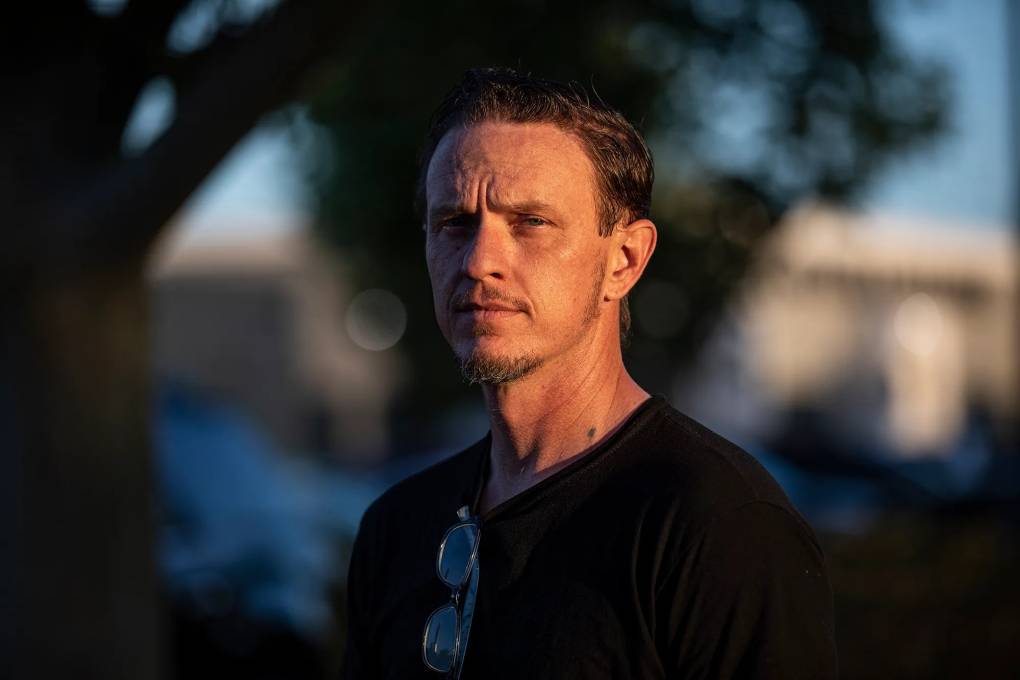
"caption": "David Zemp stands on the sidewalk near a street in Lancaster on May 10, 2023. Zemp is getting ready to graduate from college courses he took while incarcerated.",
"description": null,
"title": "051023-Inmate-Students-LV_02 (1)",
"credit": "CalMatters/CatchLight Local",
"status": "inherit",
"altTag": "a white man with brown hair looks serious with a blurry background behind him",
"isLoading": false,
"fetchFailed": false
},
"news_11949704": {
"type": "attachments",
"id": "news_11949704",
"meta": {
"index": "attachments_1716263798",
"site": "news",
"id": "11949704",
"found": true
},
"parent": 0,
"imgSizes": {
"twentyfourteen-full-width": {
"file": "https://ww2.kqed.org/app/uploads/sites/10/2023/05/CalMattersNicolasAllen1-1038x576.jpg",
"width": 1038,
"mimeType": "image/jpeg",
"height": 576
},
"thumbnail": {
"file": "https://ww2.kqed.org/app/uploads/sites/10/2023/05/CalMattersNicolasAllen1-160x107.jpg",
"width": 160,
"mimeType": "image/jpeg",
"height": 107
},
"post-thumbnail": {
"file": "https://ww2.kqed.org/app/uploads/sites/10/2023/05/CalMattersNicolasAllen1-672x372.jpg",
"width": 672,
"mimeType": "image/jpeg",
"height": 372
},
"kqedFullSize": {
"file": "https://ww2.kqed.org/app/uploads/sites/10/2023/05/CalMattersNicolasAllen1.jpg",
"width": 2000,
"height": 1333
},
"large": {
"file": "https://ww2.kqed.org/app/uploads/sites/10/2023/05/CalMattersNicolasAllen1-1020x680.jpg",
"width": 1020,
"mimeType": "image/jpeg",
"height": 680
},
"1536x1536": {
"file": "https://ww2.kqed.org/app/uploads/sites/10/2023/05/CalMattersNicolasAllen1-1536x1024.jpg",
"width": 1536,
"mimeType": "image/jpeg",
"height": 1024
},
"full-width": {
"file": "https://ww2.kqed.org/app/uploads/sites/10/2023/05/CalMattersNicolasAllen1-1920x1280.jpg",
"width": 1920,
"mimeType": "image/jpeg",
"height": 1280
},
"medium": {
"file": "https://ww2.kqed.org/app/uploads/sites/10/2023/05/CalMattersNicolasAllen1-800x533.jpg",
"width": 800,
"mimeType": "image/jpeg",
"height": 533
}
},
"publishDate": 1684266572,
"modified": 1684266841,
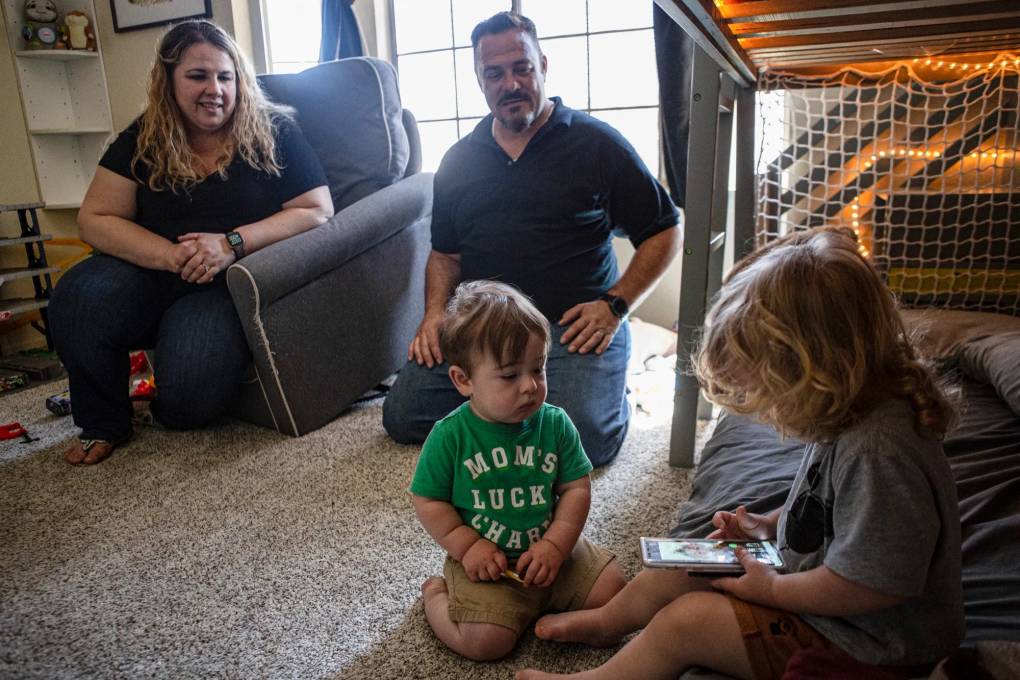
"caption": "Sharon and Nicolas Allen watch their two sons play in their home in Fresno on April 10, 2023.",
"description": null,
"title": "CalMattersNicolasAllen1",
"credit": "Larry Valenzuela, CalMatters/CatchLight Local",
"status": "inherit",
"altTag": "A mother sits in a cushioned, chair inside a child's nursery in her home. She watches her two toddlers play on the tan carpet. Her husband is on his knees watching their children. One child's green T-shirt reads, \"Mom's Lucky Charm\" in white letters.",
"isLoading": false,
"fetchFailed": false
},
"news_11941660": {
"type": "attachments",
"id": "news_11941660",
"meta": {
"index": "attachments_1716263798",
"site": "news",
"id": "11941660",
"found": true
},
"parent": 11941631,
"imgSizes": {
"twentyfourteen-full-width": {
"file": "https://ww2.kqed.org/app/uploads/sites/10/2023/02/GettyImages-1437097582-1024x576.jpg",
"width": 1024,
"mimeType": "image/jpeg",
"height": 576
},
"thumbnail": {
"file": "https://ww2.kqed.org/app/uploads/sites/10/2023/02/GettyImages-1437097582-160x97.jpg",
"width": 160,
"mimeType": "image/jpeg",
"height": 97
},
"post-thumbnail": {
"file": "https://ww2.kqed.org/app/uploads/sites/10/2023/02/GettyImages-1437097582-672x372.jpg",
"width": 672,
"mimeType": "image/jpeg",
"height": 372
},
"kqedFullSize": {
"file": "https://ww2.kqed.org/app/uploads/sites/10/2023/02/GettyImages-1437097582.jpg",
"width": 1024,
"height": 621
},
"large": {
"file": "https://ww2.kqed.org/app/uploads/sites/10/2023/02/GettyImages-1437097582-1020x619.jpg",
"width": 1020,
"mimeType": "image/jpeg",
"height": 619
},
"medium": {
"file": "https://ww2.kqed.org/app/uploads/sites/10/2023/02/GettyImages-1437097582-800x485.jpg",
"width": 800,
"mimeType": "image/jpeg",
"height": 485
}
},
"publishDate": 1677191060,
"modified": 1684187667,
"caption": "In an aerial view, cars drive the San Francisco skyline along Interstate 80 on Oct. 27, 2022, in San Francisco.",
"description": null,
"title": "Vacant Office Space In San Francisco Reaches All Time High",
"credit": "Justin Sullivan/Getty Images",
"status": "inherit",
"altTag": "An aerial view of a city skyline and vehicles on a bridge.",
"isLoading": false,
"fetchFailed": false
},
"news_11949068": {
"type": "attachments",
"id": "news_11949068",
"meta": {
"index": "attachments_1716263798",
"site": "news",
"id": "11949068",
"found": true
},
"parent": 11949065,
"imgSizes": {
"twentyfourteen-full-width": {
"file": "https://ww2.kqed.org/app/uploads/sites/10/2023/05/042723-VisitAbility-CalMatters-SKN-IMG_4001-16-CM-1038x576.jpg",
"width": 1038,
"mimeType": "image/jpeg",
"height": 576
},
"thumbnail": {
"file": "https://ww2.kqed.org/app/uploads/sites/10/2023/05/042723-VisitAbility-CalMatters-SKN-IMG_4001-16-CM-160x107.jpg",
"width": 160,
"mimeType": "image/jpeg",
"height": 107
},
"post-thumbnail": {
"file": "https://ww2.kqed.org/app/uploads/sites/10/2023/05/042723-VisitAbility-CalMatters-SKN-IMG_4001-16-CM-672x372.jpg",
"width": 672,
"mimeType": "image/jpeg",
"height": 372
},
"kqedFullSize": {
"file": "https://ww2.kqed.org/app/uploads/sites/10/2023/05/042723-VisitAbility-CalMatters-SKN-IMG_4001-16-CM.jpg",
"width": 2000,
"height": 1333
},
"large": {
"file": "https://ww2.kqed.org/app/uploads/sites/10/2023/05/042723-VisitAbility-CalMatters-SKN-IMG_4001-16-CM-1020x680.jpg",
"width": 1020,
"mimeType": "image/jpeg",
"height": 680
},
"1536x1536": {
"file": "https://ww2.kqed.org/app/uploads/sites/10/2023/05/042723-VisitAbility-CalMatters-SKN-IMG_4001-16-CM-1536x1024.jpg",
"width": 1536,
"mimeType": "image/jpeg",
"height": 1024
},
"full-width": {
"file": "https://ww2.kqed.org/app/uploads/sites/10/2023/05/042723-VisitAbility-CalMatters-SKN-IMG_4001-16-CM-1920x1280.jpg",
"width": 1920,
"mimeType": "image/jpeg",
"height": 1280
},
"medium": {
"file": "https://ww2.kqed.org/app/uploads/sites/10/2023/05/042723-VisitAbility-CalMatters-SKN-IMG_4001-16-CM-800x533.jpg",
"width": 800,
"mimeType": "image/jpeg",
"height": 533
}
},
"publishDate": 1683758455,
"modified": 1683762263,
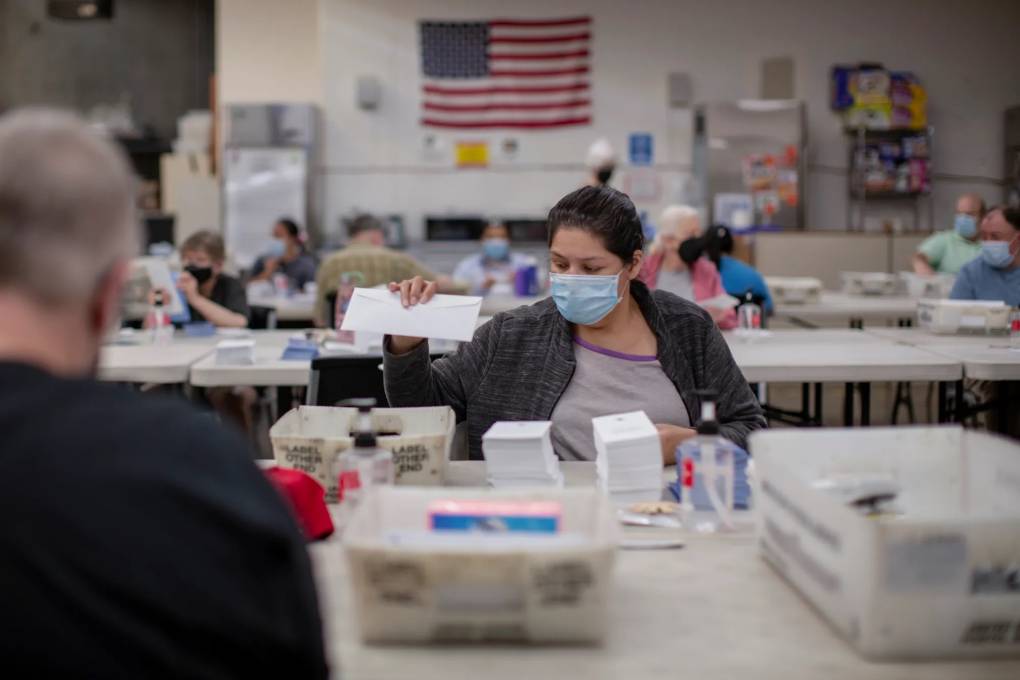
"caption": "VistAbility worker Karla Marquez packs envelopes with BART Clipper card information while working at VistAbility in Concord. VistAbility employs and trains people with developmental disabilities.",
"description": null,
"title": "042723-VisitAbility-CalMatters-SKN-IMG_4001-16-CM",
"credit": "Shelby Knowles/CalMatters",
"status": "inherit",
"altTag": "woman with dark hair, wearing a mask, sits at a folding table in front of a stack of envelopes, with rows of people at similar tables in background",
"isLoading": false,
"fetchFailed": false
},
"news_11948820": {
"type": "attachments",
"id": "news_11948820",
"meta": {
"index": "attachments_1716263798",
"site": "news",
"id": "11948820",
"found": true
},
"parent": 11948784,
"imgSizes": {
"twentyfourteen-full-width": {
"file": "https://ww2.kqed.org/app/uploads/sites/10/2023/05/RS63321_014_KQED_CAReparationsTaskForceSac_03032023-qut-1038x576.jpg",
"width": 1038,
"mimeType": "image/jpeg",
"height": 576
},
"thumbnail": {
"file": "https://ww2.kqed.org/app/uploads/sites/10/2023/05/RS63321_014_KQED_CAReparationsTaskForceSac_03032023-qut-160x107.jpg",
"width": 160,
"mimeType": "image/jpeg",
"height": 107
},
"post-thumbnail": {
"file": "https://ww2.kqed.org/app/uploads/sites/10/2023/05/RS63321_014_KQED_CAReparationsTaskForceSac_03032023-qut-672x372.jpg",
"width": 672,
"mimeType": "image/jpeg",
"height": 372
},
"kqedFullSize": {
"file": "https://ww2.kqed.org/app/uploads/sites/10/2023/05/RS63321_014_KQED_CAReparationsTaskForceSac_03032023-qut.jpg",
"width": 1920,
"height": 1280
},
"large": {
"file": "https://ww2.kqed.org/app/uploads/sites/10/2023/05/RS63321_014_KQED_CAReparationsTaskForceSac_03032023-qut-1020x680.jpg",
"width": 1020,
"mimeType": "image/jpeg",
"height": 680
},
"1536x1536": {
"file": "https://ww2.kqed.org/app/uploads/sites/10/2023/05/RS63321_014_KQED_CAReparationsTaskForceSac_03032023-qut-1536x1024.jpg",
"width": 1536,
"mimeType": "image/jpeg",
"height": 1024
},
"medium": {
"file": "https://ww2.kqed.org/app/uploads/sites/10/2023/05/RS63321_014_KQED_CAReparationsTaskForceSac_03032023-qut-800x533.jpg",
"width": 800,
"mimeType": "image/jpeg",
"height": 533
}
},
"publishDate": 1683576535,
"modified": 1683576687,
"caption": "People line up to speak during public comment during a California Reparations Task Force meeting in Sacramento on March 3, 2023.",
"description": null,
"title": "RS63321_014_KQED_CAReparationsTaskForceSac_03032023-qut",
"credit": "Beth LaBerge/KQED",
"status": "inherit",
"altTag": "A group of Black men and women with white and black reparations sign behind them stand facing a man behind a table with a microphone and laptop.",
"isLoading": false,
"fetchFailed": false
},
"news_11948627": {
"type": "attachments",
"id": "news_11948627",
"meta": {
"index": "attachments_1716263798",
"site": "news",
"id": "11948627",
"found": true
},
"parent": 11948611,
"imgSizes": {
"twentyfourteen-full-width": {
"file": "https://ww2.kqed.org/app/uploads/sites/10/2023/05/010423-MaderCommnityHospital-LV_05-CM-copy-1038x576.jpg",
"width": 1038,
"mimeType": "image/jpeg",
"height": 576
},
"thumbnail": {
"file": "https://ww2.kqed.org/app/uploads/sites/10/2023/05/010423-MaderCommnityHospital-LV_05-CM-copy-160x107.jpg",
"width": 160,
"mimeType": "image/jpeg",
"height": 107
},
"post-thumbnail": {
"file": "https://ww2.kqed.org/app/uploads/sites/10/2023/05/010423-MaderCommnityHospital-LV_05-CM-copy-672x372.jpg",
"width": 672,
"mimeType": "image/jpeg",
"height": 372
},
"kqedFullSize": {
"file": "https://ww2.kqed.org/app/uploads/sites/10/2023/05/010423-MaderCommnityHospital-LV_05-CM-copy.jpg",
"width": 2000,
"height": 1333
},
"large": {
"file": "https://ww2.kqed.org/app/uploads/sites/10/2023/05/010423-MaderCommnityHospital-LV_05-CM-copy-1020x680.jpg",
"width": 1020,
"mimeType": "image/jpeg",
"height": 680
},
"1536x1536": {
"file": "https://ww2.kqed.org/app/uploads/sites/10/2023/05/010423-MaderCommnityHospital-LV_05-CM-copy-1536x1024.jpg",
"width": 1536,
"mimeType": "image/jpeg",
"height": 1024
},
"full-width": {
"file": "https://ww2.kqed.org/app/uploads/sites/10/2023/05/010423-MaderCommnityHospital-LV_05-CM-copy-1920x1280.jpg",
"width": 1920,
"mimeType": "image/jpeg",
"height": 1280
},
"medium": {
"file": "https://ww2.kqed.org/app/uploads/sites/10/2023/05/010423-MaderCommnityHospital-LV_05-CM-copy-800x533.jpg",
"width": 800,
"mimeType": "image/jpeg",
"height": 533
}
},
"publishDate": 1683243221,
"modified": 1683313749,
"caption": "The outline of the Madera Community Hospital sign and crest on the main building of the hospital on Jan. 2, 2023. The sign was removed after the hospital announced its closure due to bankruptcy pushing the county into a state of emergency.",
"description": null,
"title": "010423-MaderCommnityHospital-LV_05-CM copy",
"credit": "Larry Valenzuela/CalMatters/CatchLight Local",
"status": "inherit",
"altTag": "A view of a defunct hospital with outlines of the old sign and name on the brown walls.",
"isLoading": false,
"fetchFailed": false
},
"news_11948560": {
"type": "attachments",
"id": "news_11948560",
"meta": {
"index": "attachments_1716263798",
"site": "news",
"id": "11948560",
"found": true
},
"parent": 11948505,
"imgSizes": {
"twentyfourteen-full-width": {
"file": "https://ww2.kqed.org/app/uploads/sites/10/2023/05/Screenshot-2023-05-04-at-10.22.01-AM-1038x576.png",
"width": 1038,
"mimeType": "image/png",
"height": 576
},
"thumbnail": {
"file": "https://ww2.kqed.org/app/uploads/sites/10/2023/05/Screenshot-2023-05-04-at-10.22.01-AM-160x106.png",
"width": 160,
"mimeType": "image/png",
"height": 106
},
"post-thumbnail": {
"file": "https://ww2.kqed.org/app/uploads/sites/10/2023/05/Screenshot-2023-05-04-at-10.22.01-AM-672x372.png",
"width": 672,
"mimeType": "image/png",
"height": 372
},
"kqedFullSize": {
"file": "https://ww2.kqed.org/app/uploads/sites/10/2023/05/Screenshot-2023-05-04-at-10.22.01-AM.png",
"width": 2216,
"height": 1470
},
"2048x2048": {
"file": "https://ww2.kqed.org/app/uploads/sites/10/2023/05/Screenshot-2023-05-04-at-10.22.01-AM-2048x1359.png",
"width": 2048,
"mimeType": "image/png",
"height": 1359
},
"large": {
"file": "https://ww2.kqed.org/app/uploads/sites/10/2023/05/Screenshot-2023-05-04-at-10.22.01-AM-1020x677.png",
"width": 1020,
"mimeType": "image/png",
"height": 677
},
"1536x1536": {
"file": "https://ww2.kqed.org/app/uploads/sites/10/2023/05/Screenshot-2023-05-04-at-10.22.01-AM-1536x1019.png",
"width": 1536,
"mimeType": "image/png",
"height": 1019
},
"full-width": {
"file": "https://ww2.kqed.org/app/uploads/sites/10/2023/05/Screenshot-2023-05-04-at-10.22.01-AM-1920x1274.png",
"width": 1920,
"mimeType": "image/png",
"height": 1274
},
"medium": {
"file": "https://ww2.kqed.org/app/uploads/sites/10/2023/05/Screenshot-2023-05-04-at-10.22.01-AM-800x531.png",
"width": 800,
"mimeType": "image/png",
"height": 531
}
},
"publishDate": 1683227771,
"modified": 1683244118,
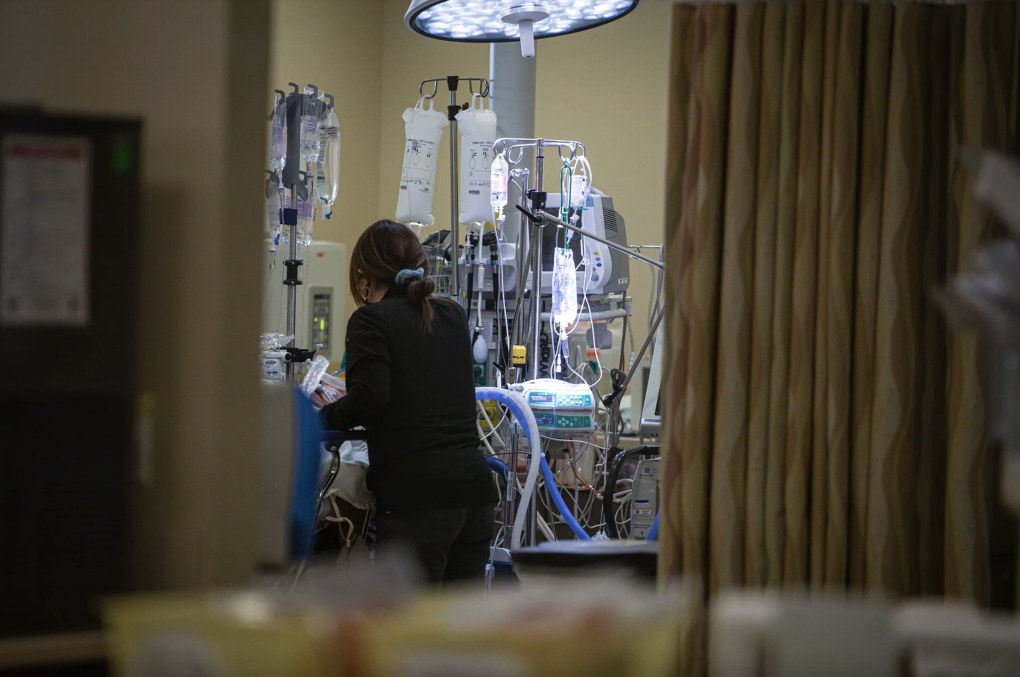
"caption": "A nurse checks on a patient in the Emergency Room unit of Hazel Hawkins Memorial Hospital in Hollister on March 30, 2023.",
"description": null,
"title": "Screenshot 2023-05-04 at 10.22.01 AM",
"credit": "Larry Valenzuela/CalMatters/CatchLight Local",
"status": "inherit",
"altTag": "A woman wearing dark clothing with her back turned leans over someone in a hospital bed surrounded by medical equipment.",
"isLoading": false,
"fetchFailed": false
},
"news_11948035": {
"type": "attachments",
"id": "news_11948035",
"meta": {
"index": "attachments_1716263798",
"site": "news",
"id": "11948035",
"found": true
},
"parent": 11948032,
"imgSizes": {
"twentyfourteen-full-width": {
"file": "https://ww2.kqed.org/app/uploads/sites/10/2023/04/041423-Long-COVID-Mindy-Lym-CN-CM-09-1038x576.jpeg",
"width": 1038,
"mimeType": "image/jpeg",
"height": 576
},
"thumbnail": {
"file": "https://ww2.kqed.org/app/uploads/sites/10/2023/04/041423-Long-COVID-Mindy-Lym-CN-CM-09-160x107.jpeg",
"width": 160,
"mimeType": "image/jpeg",
"height": 107
},
"post-thumbnail": {
"file": "https://ww2.kqed.org/app/uploads/sites/10/2023/04/041423-Long-COVID-Mindy-Lym-CN-CM-09-672x372.jpeg",
"width": 672,
"mimeType": "image/jpeg",
"height": 372
},
"kqedFullSize": {
"file": "https://ww2.kqed.org/app/uploads/sites/10/2023/04/041423-Long-COVID-Mindy-Lym-CN-CM-09.jpeg",
"width": 2000,
"height": 1333
},
"large": {
"file": "https://ww2.kqed.org/app/uploads/sites/10/2023/04/041423-Long-COVID-Mindy-Lym-CN-CM-09-1020x680.jpeg",
"width": 1020,
"mimeType": "image/jpeg",
"height": 680
},
"1536x1536": {
"file": "https://ww2.kqed.org/app/uploads/sites/10/2023/04/041423-Long-COVID-Mindy-Lym-CN-CM-09-1536x1024.jpeg",
"width": 1536,
"mimeType": "image/jpeg",
"height": 1024
},
"full-width": {
"file": "https://ww2.kqed.org/app/uploads/sites/10/2023/04/041423-Long-COVID-Mindy-Lym-CN-CM-09-1920x1280.jpeg",
"width": 1920,
"mimeType": "image/jpeg",
"height": 1280
},
"medium": {
"file": "https://ww2.kqed.org/app/uploads/sites/10/2023/04/041423-Long-COVID-Mindy-Lym-CN-CM-09-800x533.jpeg",
"width": 800,
"mimeType": "image/jpeg",
"height": 533
}
},
"publishDate": 1682708490,
"modified": 1682722915,
"caption": "Mindy Lym has been living with long COVID since the summer of 2022. After months of bed rest, she's now living in Camas, Washington, where her symptoms are improving but still pose a day-to-day challenge.",
"description": null,
"title": "041423-Long-COVID-Mindy-Lym-CN-CM-09",
"credit": "Celeste Noche/CalMatters",
"status": "inherit",
"altTag": "A woman, in shadow, with her back to the camera, sits on a rolling walker and stares out the window.",
"isLoading": false,
"fetchFailed": false
},
"news_11947671": {
"type": "attachments",
"id": "news_11947671",
"meta": {
"index": "attachments_1716263798",
"site": "news",
"id": "11947671",
"found": true
},
"parent": 11947640,
"imgSizes": {
"twentyfourteen-full-width": {
"file": "https://ww2.kqed.org/app/uploads/sites/10/2023/04/Screenshot-2023-04-25-at-2.23.13-PM-1038x576.png",
"width": 1038,
"mimeType": "image/png",
"height": 576
},
"thumbnail": {
"file": "https://ww2.kqed.org/app/uploads/sites/10/2023/04/Screenshot-2023-04-25-at-2.23.13-PM-160x101.png",
"width": 160,
"mimeType": "image/png",
"height": 101
},
"post-thumbnail": {
"file": "https://ww2.kqed.org/app/uploads/sites/10/2023/04/Screenshot-2023-04-25-at-2.23.13-PM-672x372.png",
"width": 672,
"mimeType": "image/png",
"height": 372
},
"kqedFullSize": {
"file": "https://ww2.kqed.org/app/uploads/sites/10/2023/04/Screenshot-2023-04-25-at-2.23.13-PM.png",
"width": 2374,
"height": 1504
},
"2048x2048": {
"file": "https://ww2.kqed.org/app/uploads/sites/10/2023/04/Screenshot-2023-04-25-at-2.23.13-PM-2048x1297.png",
"width": 2048,
"mimeType": "image/png",
"height": 1297
},
"large": {
"file": "https://ww2.kqed.org/app/uploads/sites/10/2023/04/Screenshot-2023-04-25-at-2.23.13-PM-1020x646.png",
"width": 1020,
"mimeType": "image/png",
"height": 646
},
"1536x1536": {
"file": "https://ww2.kqed.org/app/uploads/sites/10/2023/04/Screenshot-2023-04-25-at-2.23.13-PM-1536x973.png",
"width": 1536,
"mimeType": "image/png",
"height": 973
},
"full-width": {
"file": "https://ww2.kqed.org/app/uploads/sites/10/2023/04/Screenshot-2023-04-25-at-2.23.13-PM-1920x1216.png",
"width": 1920,
"mimeType": "image/png",
"height": 1216
},
"medium": {
"file": "https://ww2.kqed.org/app/uploads/sites/10/2023/04/Screenshot-2023-04-25-at-2.23.13-PM-800x507.png",
"width": 800,
"mimeType": "image/png",
"height": 507
}
},
"publishDate": 1682461449,
"modified": 1682538724,
"caption": "A medical staffer working on a computer in the corridor of Hazel Hawkins Memorial Hospital in Hollister on March 30, 2023.",
"description": null,
"title": "Screenshot 2023-04-25 at 2.23.13 PM",
"credit": "Larry Valenzuela/CalMatters/CatchLight Local",
"status": "inherit",
"altTag": "A woman wearing a surgical masks stands in front of a computer screen and medical equipment in a hallway.",
"isLoading": false,
"fetchFailed": false
},
"news_11947528": {
"type": "attachments",
"id": "news_11947528",
"meta": {
"index": "attachments_1716263798",
"site": "news",
"id": "11947528",
"found": true
},
"parent": 11947487,
"imgSizes": {
"twentyfourteen-full-width": {
"file": "https://ww2.kqed.org/app/uploads/sites/10/2023/04/GettyImages-1392763407-1038x576.jpg",
"width": 1038,
"mimeType": "image/jpeg",
"height": 576
},
"thumbnail": {
"file": "https://ww2.kqed.org/app/uploads/sites/10/2023/04/GettyImages-1392763407-160x104.jpg",
"width": 160,
"mimeType": "image/jpeg",
"height": 104
},
"post-thumbnail": {
"file": "https://ww2.kqed.org/app/uploads/sites/10/2023/04/GettyImages-1392763407-672x372.jpg",
"width": 672,
"mimeType": "image/jpeg",
"height": 372
},
"kqedFullSize": {
"file": "https://ww2.kqed.org/app/uploads/sites/10/2023/04/GettyImages-1392763407.jpg",
"width": 2151,
"height": 1394
},
"2048x2048": {
"file": "https://ww2.kqed.org/app/uploads/sites/10/2023/04/GettyImages-1392763407-2048x1327.jpg",
"width": 2048,
"mimeType": "image/jpeg",
"height": 1327
},
"large": {
"file": "https://ww2.kqed.org/app/uploads/sites/10/2023/04/GettyImages-1392763407-1020x661.jpg",
"width": 1020,
"mimeType": "image/jpeg",
"height": 661
},
"1536x1536": {
"file": "https://ww2.kqed.org/app/uploads/sites/10/2023/04/GettyImages-1392763407-1536x995.jpg",
"width": 1536,
"mimeType": "image/jpeg",
"height": 995
},
"full-width": {
"file": "https://ww2.kqed.org/app/uploads/sites/10/2023/04/GettyImages-1392763407-1920x1244.jpg",
"width": 1920,
"mimeType": "image/jpeg",
"height": 1244
},
"medium": {
"file": "https://ww2.kqed.org/app/uploads/sites/10/2023/04/GettyImages-1392763407-800x518.jpg",
"width": 800,
"mimeType": "image/jpeg",
"height": 518
}
},
"publishDate": 1682372598,
"modified": 1682372691,
"caption": null,
"description": null,
"title": "Businesswoman working in office",
"credit": "Prapass Pulsub/Getty Images",
"status": "inherit",
"altTag": "A woman seen from neck down working at a desk in front of a computer, holding a phone in one hand and using a calculator with the other",
"isLoading": false,
"fetchFailed": false
},
"news_11947262": {
"type": "attachments",
"id": "news_11947262",
"meta": {
"index": "attachments_1716263798",
"site": "news",
"id": "11947262",
"found": true
},
"title": "Screenshot 2023-04-20 at 3.49.36 PM",
"publishDate": 1682033277,
"status": "inherit",
"parent": 11947248,
"modified": 1733346793,
"caption": "Orchards flooded in Madera County in January 2023 after storms. ",
"credit": "Larry Valenzuela, CalMatters/CatchLight Local",
"altTag": "Rows of bare trees next to a puddle.",
"description": null,
"imgSizes": {
"medium": {
"file": "https://cdn.kqed.org/wp-content/uploads/sites/10/2023/04/Screenshot-2023-04-20-at-3.49.36-PM-800x516.png",
"width": 800,
"height": 516,
"mimeType": "image/png"
},
"large": {
"file": "https://cdn.kqed.org/wp-content/uploads/sites/10/2023/04/Screenshot-2023-04-20-at-3.49.36-PM-1020x658.png",
"width": 1020,
"height": 658,
"mimeType": "image/png"
},
"thumbnail": {
"file": "https://cdn.kqed.org/wp-content/uploads/sites/10/2023/04/Screenshot-2023-04-20-at-3.49.36-PM-160x103.png",
"width": 160,
"height": 103,
"mimeType": "image/png"
},
"1536x1536": {
"file": "https://cdn.kqed.org/wp-content/uploads/sites/10/2023/04/Screenshot-2023-04-20-at-3.49.36-PM-1536x991.png",
"width": 1536,
"height": 991,
"mimeType": "image/png"
},
"2048x2048": {
"file": "https://cdn.kqed.org/wp-content/uploads/sites/10/2023/04/Screenshot-2023-04-20-at-3.49.36-PM-2048x1321.png",
"width": 2048,
"height": 1321,
"mimeType": "image/png"
},
"post-thumbnail": {
"file": "https://cdn.kqed.org/wp-content/uploads/sites/10/2023/04/Screenshot-2023-04-20-at-3.49.36-PM-672x372.png",
"width": 672,
"height": 372,
"mimeType": "image/png"
},
"twentyfourteen-full-width": {
"file": "https://cdn.kqed.org/wp-content/uploads/sites/10/2023/04/Screenshot-2023-04-20-at-3.49.36-PM-1038x576.png",
"width": 1038,
"height": 576,
"mimeType": "image/png"
},
"full-width": {
"file": "https://cdn.kqed.org/wp-content/uploads/sites/10/2023/04/Screenshot-2023-04-20-at-3.49.36-PM-1920x1238.png",
"width": 1920,
"height": 1238,
"mimeType": "image/png"
},
"kqedFullSize": {
"file": "https://cdn.kqed.org/wp-content/uploads/sites/10/2023/04/Screenshot-2023-04-20-at-3.49.36-PM.png",
"width": 2388,
"height": 1540
}
},
"isLoading": false,
"fetchFailed": false
}
},
"audioPlayerReducer": {
"postId": "stream_live",
"isPaused": true,
"isPlaying": false,
"pfsActive": false,
"pledgeModalIsOpen": true,
"playerDrawerIsOpen": false,
"liveAudioPlayStartedAt": 0,
"liveAudioPlayContext": ""
},
"authorsReducer": {
"byline_news_11951001": {
"type": "authors",
"id": "byline_news_11951001",
"meta": {
"override": true
},
"slug": "byline_news_11951001",
"name": "\u003ca href=\"https://calmatters.org/author/alejandro-lazo/\">Alejandro Lazo\u003c/a>",
"isLoading": false
},
"byline_news_11949943": {
"type": "authors",
"id": "byline_news_11949943",
"meta": {
"override": true
},
"slug": "byline_news_11949943",
"name": "\u003ca href=\"https://calmatters.org/author/adam-echelman/\">Adam Echelman\u003c/a>",
"isLoading": false
},
"byline_news_11949679": {
"type": "authors",
"id": "byline_news_11949679",
"meta": {
"override": true
},
"slug": "byline_news_11949679",
"name": "\u003ca href=\"https://calmatters.org/author/laurenhepler/\">Lauren Hepler\u003c/a>",
"isLoading": false
},
"byline_news_11949506": {
"type": "authors",
"id": "byline_news_11949506",
"meta": {
"override": true
},
"slug": "byline_news_11949506",
"name": "\u003ca href=\"https://calmatters.org/author/ben-christopher/\">Ben Christopher\u003c/a>",
"isLoading": false
},
"byline_news_11949065": {
"type": "authors",
"id": "byline_news_11949065",
"meta": {
"override": true
},
"slug": "byline_news_11949065",
"name": "\u003ca href=\"https://calmatters.org/author/jeanne-kuang/\">Jeanne Kuang\u003c/a>",
"isLoading": false
},
"byline_news_11948784": {
"type": "authors",
"id": "byline_news_11948784",
"meta": {
"override": true
},
"slug": "byline_news_11948784",
"name": "\u003ca href=\"https://calmatters.org/author/wendy-fry/\">Wendy Fry\u003c/a>",
"isLoading": false
},
"byline_news_11948611": {
"type": "authors",
"id": "byline_news_11948611",
"meta": {
"override": true
},
"slug": "byline_news_11948611",
"name": "\u003ca href=\"https://calmatters.org/author/anaibarra/\">Ana B. Ibarra\u003c/a>",
"isLoading": false
},
"byline_news_11948505": {
"type": "authors",
"id": "byline_news_11948505",
"meta": {
"override": true
},
"slug": "byline_news_11948505",
"name": "\u003ca href=\"https://calmatters.org/author/kristen-hwang/\">Kristen Hwang\u003c/a>",
"isLoading": false
},
"byline_news_11948032": {
"type": "authors",
"id": "byline_news_11948032",
"meta": {
"override": true
},
"slug": "byline_news_11948032",
"name": "\u003ca href=\"https://calmatters.org/author/kristen-hwang/\">Kristen Hwang\u003c/a>",
"isLoading": false
},
"byline_news_11947640": {
"type": "authors",
"id": "byline_news_11947640",
"meta": {
"override": true
},
"slug": "byline_news_11947640",
"name": "\u003ca href=\"https://calmatters.org/author/anaibarra/\">Ana B. Ibarra\u003c/a>",
"isLoading": false
},
"byline_news_11947487": {
"type": "authors",
"id": "byline_news_11947487",
"meta": {
"override": true
},
"slug": "byline_news_11947487",
"name": "\u003ca href=\"https://calmatters.org/author/grace-gedye/\">Grace Gedye\u003c/a>",
"isLoading": false
},
"byline_news_11947248": {
"type": "authors",
"id": "byline_news_11947248",
"meta": {
"override": true
},
"slug": "byline_news_11947248",
"name": "\u003ca href=\"https://calmatters.org/author/alastair-bland/\">Alastair Bland\u003c/a>",
"isLoading": false
}
},
"pagesReducer": {
"news_affiliate_calmatters": {
"type": "terms",
"id": "news_18481",
"meta": {
"index": "terms_1716263798",
"site": "news",
"id": "18481",
"score": 15.355904
},
"featImg": null,
"name": "CALmatters",
"description": null,
"taxonomy": "affiliate",
"headData": {
"twImgId": null,
"twTitle": null,
"ogTitle": null,
"ogImgId": null,
"twDescription": null,
"description": null,
"title": "CALmatters Archives | KQED Arts",
"ogDescription": null
},
"ttid": 18515,
"slug": "calmatters",
"isLoading": false,
"title": "CALmatters",
"pageMeta": {
"site": "news",
"WpPageTemplate": "page-topic-editorial",
"currentPage": 48
},
"blocks": [
{
"blockName": "kqed/post-list",
"attrs": {
"layout": "cardArticle2",
"query": "posts/news?affiliate=calmatters",
"seeMore": false,
"paginated": true,
"page": 48
}
},
{
"blockName": "kqed/ad"
}
]
}
},
"pfsSessionReducer": {},
"postsReducer": {
"stream_live": {
"type": "live",
"id": "stream_live",
"audioUrl": "https://streams.kqed.org/kqedradio",
"title": "Live Stream",
"excerpt": "Live Stream information currently unavailable.",
"link": "/radio",
"featImg": "",
"label": {
"name": "KQED Live",
"link": "/"
}
},
"stream_kqedNewscast": {
"type": "posts",
"id": "stream_kqedNewscast",
"audioUrl": "https://www.kqed.org/.stream/anon/radio/RDnews/newscast.mp3?_=1",
"title": "KQED Newscast",
"featImg": "",
"label": {
"name": "88.5 FM",
"link": "/"
}
},
"news_11951001": {
"type": "posts",
"id": "news_11951001",
"meta": {
"index": "posts_1716263798",
"site": "news",
"id": "11951001",
"score": null,
"sort": [
1685211461000
]
},
"guestAuthors": [],
"slug": "california-becomes-the-first-state-to-phase-out-toxic-hexavalent-chromium",
"title": "California Becomes the First State to Phase Out Toxic Hexavalent Chromium",
"publishDate": 1685211461,
"format": "standard",
"headTitle": "California Becomes the First State to Phase Out Toxic Hexavalent Chromium | KQED",
"labelTerm": {
"term": 18481,
"site": "news"
},
"content": "\u003cp>There’s a toxic history to the shiny decorative finishes so ubiquitous on the wheels and bumpers of classic cars.\u003c/p>\n\u003cp>Chrome plating is important to a variety of consumer products from vintage automobiles to aerospace components to plumbing fixtures.\u003c/p>\n\u003cp>But hexavalent chromium — a highly hazardous substance emitted by chrome-plating businesses — is 500 times more carcinogenic than diesel exhaust, putting it in the crosshairs of regulators for decades.\u003c/p>\n\u003cp>The California Air Resources Board on Friday approved a landmark ban on use of the substance by the chrome plating industry. The ban requires companies, who opposed the action, to use alternative materials.\u003c/p>\n\u003cp>The ban came after more than two hours of debate and public comment. Board members, while signaling their empathy for the potentially impacted vintage car platers, said public health was paramount.[pullquote align=\"right\" size=\"medium\" citation=\"Jane Williams, executive director, California Communities Against Toxics\"]‘The problem is what they’re doing there: They’re boiling vats of toxic metal-water solution.’[/pullquote]Air board member Hector De La Torre compared the ban to a 1976 rule phasing out lead in gasoline.\u003c/p>\n\u003cp>“There is no mass produced leaded gasoline, not just in California, in the United States, so that changed as a result of an action that was taken here,” De La Torre said. “So there is precedent for taking a leap like that — for the health and safety of the public.”\u003c/p>\n\u003cp>The new rule will make California the first state to ban the substance more commonly known as chromium 6. Decorative plating businesses will have until 2027 to discontinue their use. Larger chrome plating plants, which use the toxin for industrial durability purposes, will have until 2039.\u003c/p>\n\u003cp>The ban comes after years of activists’ efforts to limit use of the chemical, which the state identified as a toxic air pollutant in 1986. Jane Williams, executive director of California Communities Against Toxics, said the ruling is significant because Los Angeles County has a large concentration of chrome platers.\u003c/p>\n\u003cp>The air board said 113 chrome plating facilities operate with hexavalent chromium in California, and over 70% of them are in overburdened and disadvantaged communities, many near homes and schools, though industry representatives said in public comments that the board’s numbers were inaccurate.\u003c/p>\n\u003cp>[ad fullwidth]\u003c/p>\n\u003cp>“They can be tiny, they can be small, or they can be nestled inside larger industrial facilities, and so it’s not something that strikes you, like a generator or a refinery,” said Williams. “But the problem is what they’re doing there: They’re boiling vats of toxic metal-water solution.”\u003c/p>\n\u003cp>Industrial components are plated by being submerged in baths containing chromium 6 though decorative and functional plating deploy different processes. Emissions occur in the form of bubbles that rise to the top of the tanks and can be released in mists, drops and spills that can settle on floors, equipment and other surfaces. Once dry, dust can be released by open doors and vents.\u003c/p>\n\u003cp>Bryan Leiker, executive director of the Metal Finishing Association of California, said the air board’s rule amounts to an unfair ban on an industry that has proven it can use the toxic substance safely.\u003c/p>\n\u003cfigure id=\"attachment_11951007\" class=\"wp-caption alignnone\" style=\"max-width: 1568px\">\u003cimg loading=\"lazy\" decoding=\"async\" class=\"size-full wp-image-11951007\" src=\"https://ww2.kqed.org/app/uploads/sites/10/2023/05/052623-Chrome-Bumper-IS-CM-01-copy.jpg\" alt=\"A vintage car's chrome plated bumper.\" width=\"1568\" height=\"1045\" srcset=\"https://cdn.kqed.org/wp-content/uploads/sites/10/2023/05/052623-Chrome-Bumper-IS-CM-01-copy.jpg 1568w, https://cdn.kqed.org/wp-content/uploads/sites/10/2023/05/052623-Chrome-Bumper-IS-CM-01-copy-800x533.jpg 800w, https://cdn.kqed.org/wp-content/uploads/sites/10/2023/05/052623-Chrome-Bumper-IS-CM-01-copy-1020x680.jpg 1020w, https://cdn.kqed.org/wp-content/uploads/sites/10/2023/05/052623-Chrome-Bumper-IS-CM-01-copy-160x107.jpg 160w, https://cdn.kqed.org/wp-content/uploads/sites/10/2023/05/052623-Chrome-Bumper-IS-CM-01-copy-1536x1024.jpg 1536w\" sizes=\"(max-width: 1568px) 100vw, 1568px\">\u003cfigcaption class=\"wp-caption-text\">Chrome plating on a vehicle. \u003ccite>(iStock)\u003c/cite>\u003c/figcaption>\u003c/figure>\n\u003cp>He pointed to state data indicating that the state’s larger chrome platers produce less than 1% of emissions, with the majority coming from burning fossil fuels, cement production and other industries.\u003c/p>\n\u003cp>“The issue we have here is that our industry of course is in agreement with fair regulation, but what we have here is a ban,” Leiker said. “This is just a universal ban across the whole industry.”\u003c/p>\n\u003cp>Less-toxic trivalent chromium is available as an alternative, and the air board hopes decorative chrome platers will widely adopt it following the ban. The problem, decorative chrome-platers say, is that trivalent chromium lacks the ornamental shine of chromium 6 — that glow ubiquitous among the lustrous lowriders synonymous with the likes of Art Leboe or the gleaming hot rods featured in \u003cem>American Graffiti\u003c/em>.\u003c/p>\n\u003cp>Trivalent chromium is not “period correct,” wrote Art Holman, a managing partner of Sherm’s Plating in Sacramento, in recent public commentary to the air board. Holman wrote that he fears customers will ship their products to other states to be plated, “adding more chrome emissions due to transportation.”\u003c/p>\n\u003cp>Meanwhile trivalent chromium does not meet U.S. Department of Defense requirements. Leiker said that the air board is hoping the military will adopt new materials. But the uncertainty is a big risk for an industry that often relies on long lead times and multiyear contracts.\u003c/p>\n\u003cp>“It is going to put our industry out of business, with a loss of jobs and a large exodus of manufacturing,” he said. “Our industry could be a ghost town in the state, long gone; there is a lot at stake here.”\u003c/p>\n\u003cp>The Legislature has set aside $10 million to assist the industry make the change but some board members said the money was likely not enough.[pullquote align=\"right\" size=\"medium\" citation=\"Bryan Leiker, executive director, Metal Finishing Association of California\"]‘Our industry could be a ghost town in the state, long gone; there is a lot at stake here.’[/pullquote]The air board in 1988 adopted its first emissions standards for chromium 6 use in the plating industry, requiring facilities to equip their tanks with fume suppressants, filters or other pollution control devices. Over the intervening decades, those rules have been revised to further restrict and regulate hexavalent chromium.\u003c/p>\n\u003cp>The toxin has some presence in popular culture. The court battle over the presence of the chemical in drinking water in the San Bernardino County town of Hinkley was dramatized in the movie \u003cem>Erin Brockovich\u003c/em>.\u003c/p>\n\u003cp>But environmental advocates and residents of Los Angeles’ lower-income, industrial neighborhoods and cities have long raised concerns. Residents of the southeast industrial city of Bell Gardens sued a chrome plating company, Chrome Crankshaft, in 1999, accusing it of producing emissions that had resulted in diseases including cancer, according to \u003cem>\u003ca href=\"https://www.latimes.com/archives/la-xpm-1999-jan-20-me-65377-story.html\">The Los Angeles Times\u003c/a>\u003c/em>.\u003c/p>\n\u003cp>More recently, air monitoring in the southeast industrial city of Paramount was expanded after chromium 6 was discovered in much higher levels than other parts of Los Angeles County in 2016. The Paramount Unified School District detected chromium 6 in air samples inside two classrooms there. The South Coast Air Quality Management District said that air quality has improved significantly since then.\u003c/p>\n\u003cp>Christopher Callard, a spokesman for Paramount, said the city had not detected significant samples of chromium 6, including at the schools, since it took over monitoring of the substance in 2021.\u003c/p>\n\u003cp>[ad floatright]\u003c/p>\n",
"blocks": [],
"excerpt": "The state Air Resources Board voted Friday to ban the substance known as chromium 6, giving platers several years to switch to an alternative the platers say won't produce the same chrome shine.",
"status": "publish",
"parent": 0,
"modified": 1721112616,
"stats": {
"hasAudio": false,
"hasVideo": false,
"hasChartOrMap": false,
"iframeSrcs": [],
"hasGoogleForm": false,
"hasGallery": false,
"hasHearkenModule": false,
"hasPolis": false,
"paragraphCount": 25,
"wordCount": 1135
},
"headData": {
"title": "California Becomes the First State to Phase Out Toxic Hexavalent Chromium | KQED",
"description": "The state Air Resources Board voted Friday to ban the substance known as chromium 6, giving platers several years to switch to an alternative the platers say won't produce the same chrome shine.",
"ogTitle": "",
"ogDescription": "",
"ogImgId": "",
"twTitle": "",
"twDescription": "",
"twImgId": "",
"schema": {
"@context": "https://schema.org",
"@type": "NewsArticle",
"headline": "California Becomes the First State to Phase Out Toxic Hexavalent Chromium",
"datePublished": "2023-05-27T11:17:41-07:00",
"dateModified": "2024-07-15T23:50:16-07:00",
"image": "https://cdn.kqed.org/wp-content/uploads/2020/02/KQED-OG-Image@1x.png",
"isAccessibleForFree": "True",
"publisher": {
"@type": "NewsMediaOrganization",
"@id": "https://www.kqed.org/#organization",
"name": "KQED",
"logo": "https://cdn.kqed.org/wp-content/uploads/2020/02/KQED-OG-Image@1x.png",
"url": "https://www.kqed.org",
"sameAs": [
"https://www.facebook.com/KQED",
"https://twitter.com/KQED",
"https://www.instagram.com/kqed/",
"https://www.tiktok.com/@kqedofficial",
"https://www.linkedin.com/company/kqed",
"https://www.youtube.com/channel/UCeC0IOo7i1P_61zVUWbJ4nw"
]
}
}
},
"sticky": false,
"nprByline": "\u003ca href=\"https://calmatters.org/author/alejandro-lazo/\">Alejandro Lazo\u003c/a>",
"excludeFromSiteSearch": "Include",
"showOnAuthorArchivePages": "No",
"articleAge": "0",
"path": "/news/11951001/california-becomes-the-first-state-to-phase-out-toxic-hexavalent-chromium",
"audioTrackLength": null,
"parsedContent": [
{
"type": "contentString",
"content": "\u003cdiv class=\"post-body\">\u003cp>\u003cp>There’s a toxic history to the shiny decorative finishes so ubiquitous on the wheels and bumpers of classic cars.\u003c/p>\n\u003cp>Chrome plating is important to a variety of consumer products from vintage automobiles to aerospace components to plumbing fixtures.\u003c/p>\n\u003cp>But hexavalent chromium — a highly hazardous substance emitted by chrome-plating businesses — is 500 times more carcinogenic than diesel exhaust, putting it in the crosshairs of regulators for decades.\u003c/p>\n\u003cp>The California Air Resources Board on Friday approved a landmark ban on use of the substance by the chrome plating industry. The ban requires companies, who opposed the action, to use alternative materials.\u003c/p>\n\u003cp>The ban came after more than two hours of debate and public comment. Board members, while signaling their empathy for the potentially impacted vintage car platers, said public health was paramount.\u003c/p>\u003c/div>",
"attributes": {
"named": {},
"numeric": []
}
},
{
"type": "component",
"content": "‘The problem is what they’re doing there: They’re boiling vats of toxic metal-water solution.’",
"name": "pullquote",
"attributes": {
"named": {
"align": "right",
"size": "medium",
"citation": "Jane Williams, executive director, California Communities Against Toxics",
"label": ""
},
"numeric": []
}
},
{
"type": "contentString",
"content": "\u003cdiv class=\"post-body\">\u003cp>Air board member Hector De La Torre compared the ban to a 1976 rule phasing out lead in gasoline.\u003c/p>\n\u003cp>“There is no mass produced leaded gasoline, not just in California, in the United States, so that changed as a result of an action that was taken here,” De La Torre said. “So there is precedent for taking a leap like that — for the health and safety of the public.”\u003c/p>\n\u003cp>The new rule will make California the first state to ban the substance more commonly known as chromium 6. Decorative plating businesses will have until 2027 to discontinue their use. Larger chrome plating plants, which use the toxin for industrial durability purposes, will have until 2039.\u003c/p>\n\u003cp>The ban comes after years of activists’ efforts to limit use of the chemical, which the state identified as a toxic air pollutant in 1986. Jane Williams, executive director of California Communities Against Toxics, said the ruling is significant because Los Angeles County has a large concentration of chrome platers.\u003c/p>\n\u003cp>The air board said 113 chrome plating facilities operate with hexavalent chromium in California, and over 70% of them are in overburdened and disadvantaged communities, many near homes and schools, though industry representatives said in public comments that the board’s numbers were inaccurate.\u003c/p>\n\u003cp>\u003c/p>\u003c/div>",
"attributes": {
"named": {},
"numeric": []
}
},
{
"type": "component",
"content": "",
"name": "ad",
"attributes": {
"named": {
"label": "fullwidth"
},
"numeric": [
"fullwidth"
]
}
},
{
"type": "contentString",
"content": "\u003cdiv class=\"post-body\">\u003cp>\u003c/p>\n\u003cp>“They can be tiny, they can be small, or they can be nestled inside larger industrial facilities, and so it’s not something that strikes you, like a generator or a refinery,” said Williams. “But the problem is what they’re doing there: They’re boiling vats of toxic metal-water solution.”\u003c/p>\n\u003cp>Industrial components are plated by being submerged in baths containing chromium 6 though decorative and functional plating deploy different processes. Emissions occur in the form of bubbles that rise to the top of the tanks and can be released in mists, drops and spills that can settle on floors, equipment and other surfaces. Once dry, dust can be released by open doors and vents.\u003c/p>\n\u003cp>Bryan Leiker, executive director of the Metal Finishing Association of California, said the air board’s rule amounts to an unfair ban on an industry that has proven it can use the toxic substance safely.\u003c/p>\n\u003cfigure id=\"attachment_11951007\" class=\"wp-caption alignnone\" style=\"max-width: 1568px\">\u003cimg loading=\"lazy\" decoding=\"async\" class=\"size-full wp-image-11951007\" src=\"https://ww2.kqed.org/app/uploads/sites/10/2023/05/052623-Chrome-Bumper-IS-CM-01-copy.jpg\" alt=\"A vintage car's chrome plated bumper.\" width=\"1568\" height=\"1045\" srcset=\"https://cdn.kqed.org/wp-content/uploads/sites/10/2023/05/052623-Chrome-Bumper-IS-CM-01-copy.jpg 1568w, https://cdn.kqed.org/wp-content/uploads/sites/10/2023/05/052623-Chrome-Bumper-IS-CM-01-copy-800x533.jpg 800w, https://cdn.kqed.org/wp-content/uploads/sites/10/2023/05/052623-Chrome-Bumper-IS-CM-01-copy-1020x680.jpg 1020w, https://cdn.kqed.org/wp-content/uploads/sites/10/2023/05/052623-Chrome-Bumper-IS-CM-01-copy-160x107.jpg 160w, https://cdn.kqed.org/wp-content/uploads/sites/10/2023/05/052623-Chrome-Bumper-IS-CM-01-copy-1536x1024.jpg 1536w\" sizes=\"(max-width: 1568px) 100vw, 1568px\">\u003cfigcaption class=\"wp-caption-text\">Chrome plating on a vehicle. \u003ccite>(iStock)\u003c/cite>\u003c/figcaption>\u003c/figure>\n\u003cp>He pointed to state data indicating that the state’s larger chrome platers produce less than 1% of emissions, with the majority coming from burning fossil fuels, cement production and other industries.\u003c/p>\n\u003cp>“The issue we have here is that our industry of course is in agreement with fair regulation, but what we have here is a ban,” Leiker said. “This is just a universal ban across the whole industry.”\u003c/p>\n\u003cp>Less-toxic trivalent chromium is available as an alternative, and the air board hopes decorative chrome platers will widely adopt it following the ban. The problem, decorative chrome-platers say, is that trivalent chromium lacks the ornamental shine of chromium 6 — that glow ubiquitous among the lustrous lowriders synonymous with the likes of Art Leboe or the gleaming hot rods featured in \u003cem>American Graffiti\u003c/em>.\u003c/p>\n\u003cp>Trivalent chromium is not “period correct,” wrote Art Holman, a managing partner of Sherm’s Plating in Sacramento, in recent public commentary to the air board. Holman wrote that he fears customers will ship their products to other states to be plated, “adding more chrome emissions due to transportation.”\u003c/p>\n\u003cp>Meanwhile trivalent chromium does not meet U.S. Department of Defense requirements. Leiker said that the air board is hoping the military will adopt new materials. But the uncertainty is a big risk for an industry that often relies on long lead times and multiyear contracts.\u003c/p>\n\u003cp>“It is going to put our industry out of business, with a loss of jobs and a large exodus of manufacturing,” he said. “Our industry could be a ghost town in the state, long gone; there is a lot at stake here.”\u003c/p>\n\u003cp>The Legislature has set aside $10 million to assist the industry make the change but some board members said the money was likely not enough.\u003c/p>\u003c/div>",
"attributes": {
"named": {},
"numeric": []
}
},
{
"type": "component",
"content": "‘Our industry could be a ghost town in the state, long gone; there is a lot at stake here.’",
"name": "pullquote",
"attributes": {
"named": {
"align": "right",
"size": "medium",
"citation": "Bryan Leiker, executive director, Metal Finishing Association of California",
"label": ""
},
"numeric": []
}
},
{
"type": "contentString",
"content": "\u003cdiv class=\"post-body\">\u003cp>The air board in 1988 adopted its first emissions standards for chromium 6 use in the plating industry, requiring facilities to equip their tanks with fume suppressants, filters or other pollution control devices. Over the intervening decades, those rules have been revised to further restrict and regulate hexavalent chromium.\u003c/p>\n\u003cp>The toxin has some presence in popular culture. The court battle over the presence of the chemical in drinking water in the San Bernardino County town of Hinkley was dramatized in the movie \u003cem>Erin Brockovich\u003c/em>.\u003c/p>\n\u003cp>But environmental advocates and residents of Los Angeles’ lower-income, industrial neighborhoods and cities have long raised concerns. Residents of the southeast industrial city of Bell Gardens sued a chrome plating company, Chrome Crankshaft, in 1999, accusing it of producing emissions that had resulted in diseases including cancer, according to \u003cem>\u003ca href=\"https://www.latimes.com/archives/la-xpm-1999-jan-20-me-65377-story.html\">The Los Angeles Times\u003c/a>\u003c/em>.\u003c/p>\n\u003cp>More recently, air monitoring in the southeast industrial city of Paramount was expanded after chromium 6 was discovered in much higher levels than other parts of Los Angeles County in 2016. The Paramount Unified School District detected chromium 6 in air samples inside two classrooms there. The South Coast Air Quality Management District said that air quality has improved significantly since then.\u003c/p>\n\u003cp>Christopher Callard, a spokesman for Paramount, said the city had not detected significant samples of chromium 6, including at the schools, since it took over monitoring of the substance in 2021.\u003c/p>\n\u003cp>\u003c/p>\u003c/div>",
"attributes": {
"named": {},
"numeric": []
}
},
{
"type": "component",
"content": "",
"name": "ad",
"attributes": {
"named": {
"label": "floatright"
},
"numeric": [
"floatright"
]
}
},
{
"type": "contentString",
"content": "\u003cdiv class=\"post-body\">\u003cp>\u003c/p>\n\u003c/div>\u003c/p>",
"attributes": {
"named": {},
"numeric": []
}
}
],
"link": "/news/11951001/california-becomes-the-first-state-to-phase-out-toxic-hexavalent-chromium",
"authors": [
"byline_news_11951001"
],
"categories": [
"news_31795",
"news_19906",
"news_457",
"news_8"
],
"tags": [
"news_246",
"news_17617",
"news_20023"
],
"affiliates": [
"news_18481"
],
"featImg": "news_11951006",
"label": "news_18481"
},
"news_11949943": {
"type": "posts",
"id": "news_11949943",
"meta": {
"index": "posts_1716263798",
"site": "news",
"id": "11949943",
"score": null,
"sort": [
1684444747000
]
},
"parent": 0,
"labelTerm": {},
"blocks": [],
"publishDate": 1684444747,
"format": "standard",
"title": "When California Downsizes Prisons, Incarcerated People Are Shuffled Out of Community College Classes",
"headTitle": "When California Downsizes Prisons, Incarcerated People Are Shuffled Out of Community College Classes | KQED",
"content": "\u003cp>As California closes three more prisons and downsizes six others, some people incarcerated there aren’t ready to go. They are worried about the future of their educations.\u003c/p>\n\u003cp>For more than 1,500 incarcerated people who attend college in these facilities, closures mean they could be transferred to a new prison where the courses may not line up or where they’re unable to continue their classes, leaving some students a few credits short of a degree. Education can offer tangible, real-world benefits to incarcerated people: They can earn degrees and gain merit credits that chip off time from a sentence. Research shows that \u003ca href=\"https://www.justice.gov/opa/pr/justice-and-education-departments-announce-new-research-showing-prison-education-reduces\">prison education also reduces recidivism\u003c/a>.\u003c/p>\n\u003cp>\u003ca href=\"https://calmatters.org/prisons/2023/02/how-many-prisons-does-california-need/\">California’s shrinking prison population\u003c/a> — the state had \u003ca href=\"https://www.ppic.org/publication/realignment-incarceration-and-crime-trends-in-california/#:~:text=In%20September%202011%2C%20the%20month,355%20inmates%20per%20100%2C000%20residents\">160,000 people incarcerated in 2011\u003c/a>, down to just \u003ca href=\"https://www.cdcr.ca.gov/research/wp-content/uploads/sites/174/2023/05/Tpop1d230510.pdf\">96,000 as of May 10, 2023 (PDF)\u003c/a> — has also created an unexpected problem for the state’s community college system, which has developed special programs to help those in prisons earn degrees. Palo Verde Community College in Blythe, for example, draws almost half of its students from the nearby prison.\u003c/p>\n\u003cp>As the prisons close down, at least three community colleges stand to lose more than 10% of their student enrollment and millions of dollars in state funding, collectively.\u003c/p>\n\u003cfigure id=\"attachment_11950004\" class=\"wp-caption aligncenter\" style=\"max-width: 1568px\">\u003ca href=\"https://ww2.kqed.org/news/2023/05/18/when-california-downsizes-prisons-incarcerated-people-are-shuffled-out-of-community-college-classes/051023-inmate-students-lv_07/\" rel=\"attachment wp-att-11950004\">\u003cimg decoding=\"async\" loading=\"lazy\" class=\"size-full wp-image-11950004\" src=\"https://ww2.kqed.org/app/uploads/sites/10/2023/05/051023-Inmate-Students-LV_07.jpg\" alt=\"the exterior of a prison fence, with a sign that says California City Correctional Facility\" width=\"1568\" height=\"1045\" srcset=\"https://ww2.kqed.org/app/uploads/sites/10/2023/05/051023-Inmate-Students-LV_07.jpg 1568w, https://ww2.kqed.org/app/uploads/sites/10/2023/05/051023-Inmate-Students-LV_07-800x533.jpg 800w, https://ww2.kqed.org/app/uploads/sites/10/2023/05/051023-Inmate-Students-LV_07-1020x680.jpg 1020w, https://ww2.kqed.org/app/uploads/sites/10/2023/05/051023-Inmate-Students-LV_07-160x107.jpg 160w, https://ww2.kqed.org/app/uploads/sites/10/2023/05/051023-Inmate-Students-LV_07-1536x1024.jpg 1536w\" sizes=\"(max-width: 1568px) 100vw, 1568px\">\u003c/a>\u003cfigcaption class=\"wp-caption-text\">The California City Correctional Facility just outside California City is one of the prisons set to close soon. \u003ccite>(Larry Valenzuela/CalMatters/CatchLight Local)\u003c/cite>\u003c/figcaption>\u003c/figure>\n\u003cp>Gov. Gavin Newsom has been interested in closing prisons since at least 2019. Since then, the state has closed one in Tracy and nearly finished closing another Susanville.\u003c/p>\n\u003cp>Last December, the California Department of Corrections and Rehabilitation said it would close a prison in Blythe and end the contract with a private prison company in California City. The corrections department also said it would close parts of six other prisons throughout the state.\u003c/p>\n\u003cp>In a statement to CalMatters, the corrections department said that it is committed to preventing “academic disruption” for students at the closing prisons and pointed to the work of the \u003ca href=\"https://risingscholarsnetwork.org/#:~:text=We%20are%20a%20network%20of,experienced%20the%20criminal%20justice%20system.\">Rising Scholars Network\u003c/a> at the California Community College Chancellor’s Office, which oversees various higher education programs across all of the state’s 34 adult prisons.\u003c/p>\n\u003cp>But local community college administrators say communication from the corrections department is limited and that they have few resources to help incarcerated people who fall through the cracks.\u003c/p>\n\u003cp>[ad fullwidth]\u003c/p>\n\u003ch2>Learning in the D yard\u003c/h2>\n\u003cp>Formerly incarcerated David Zemp, a self-described nerd, gets wistful when he talks about prison education.\u003c/p>\n\u003cp>He spent seven years locked up in the D yard at the California Correctional Institution in Tehachapi. By the time he was released in 2022, he said the prison unit looked more like a college campus than a prison.\u003c/p>\n\u003cp>Those incarcerated in the prison made their own salsa at the nearby garden and covered the white walls with murals: a dinosaur fossil, an astronaut and, at the entrance, the March of Progress in which a monkey evolves into man with a cap and gown.\u003c/p>\n\u003cp>“It was falling apart, but the people who were investing in it were in love with it,” he said. He earned five degrees while incarcerated, which ultimately knocked off roughly three years of his 12-year prison sentence.\u003c/p>\n\u003cfigure id=\"attachment_11950001\" class=\"wp-caption aligncenter\" style=\"max-width: 1568px\">\u003ca href=\"https://ww2.kqed.org/news/2023/05/18/when-california-downsizes-prisons-incarcerated-people-are-shuffled-out-of-community-college-classes/051023-inmate-students-lv_18/\" rel=\"attachment wp-att-11950001\">\u003cimg decoding=\"async\" loading=\"lazy\" class=\"size-full wp-image-11950001\" src=\"https://ww2.kqed.org/app/uploads/sites/10/2023/05/051023-Inmate-Students-LV_18.jpg\" alt=\"the side view of a middle-aged woman with her hair pulled back, filing a stack of white books on a shelf\" width=\"1568\" height=\"1045\" srcset=\"https://ww2.kqed.org/app/uploads/sites/10/2023/05/051023-Inmate-Students-LV_18.jpg 1568w, https://ww2.kqed.org/app/uploads/sites/10/2023/05/051023-Inmate-Students-LV_18-800x533.jpg 800w, https://ww2.kqed.org/app/uploads/sites/10/2023/05/051023-Inmate-Students-LV_18-1020x680.jpg 1020w, https://ww2.kqed.org/app/uploads/sites/10/2023/05/051023-Inmate-Students-LV_18-160x107.jpg 160w, https://ww2.kqed.org/app/uploads/sites/10/2023/05/051023-Inmate-Students-LV_18-1536x1024.jpg 1536w\" sizes=\"(max-width: 1568px) 100vw, 1568px\">\u003c/a>\u003cfigcaption class=\"wp-caption-text\">Anna Carlson, program director for the incarcerated education program, looks over books meant for incarcerated students at the Cerro Coso office in Tehachapi on May 10, 2023. \u003ccite>(Larry Valenzuela/CalMatters/CatchLight Local)\u003c/cite>\u003c/figcaption>\u003c/figure>\n\u003cp>Before the start of the COVID-19 pandemic, Cerro Coso Community College taught over 35 in-person classes inside the D yard of the Tehachapi prison.\u003c/p>\n\u003cp>In addition to its murals that covered the walls and gardens outside, the college was also working with the prison to build portable classrooms on site.\u003c/p>\n\u003cp>In December 2022, that all came to a halt. The college learned that the corrections department planned to close the D yard in Tehachapi this summer, as well as the California City Correctional Center, another prison where Cerro Coso also teaches, by next year.\u003c/p>\n\u003ch2>Dropping out in California prisons\u003c/h2>\n\u003cp>Professors and administrators were in a bind. Almost 20% of Cerro Coso’s students were incarcerated at one of the two prisons. At the time, Anna Carlson, program director for the college’s incarcerated education program, had little information about the timeline for the closures, except a promise from the California Department of Corrections and Rehabilitation that students would be able to stay throughout the spring semester.\u003c/p>\n\u003cfigure id=\"attachment_11950003\" class=\"wp-caption aligncenter\" style=\"max-width: 1568px\">\u003ca href=\"https://ww2.kqed.org/news/2023/05/18/when-california-downsizes-prisons-incarcerated-people-are-shuffled-out-of-community-college-classes/051023-inmate-students-lv_09/\" rel=\"attachment wp-att-11950003\">\u003cimg decoding=\"async\" loading=\"lazy\" class=\"size-full wp-image-11950003\" src=\"https://ww2.kqed.org/app/uploads/sites/10/2023/05/051023-Inmate-Students-LV_09.jpg\" alt=\"in a dimly lit empty room, stools sit on top of desks, with an empty bookshelf and art tools in the background\" width=\"1568\" height=\"1045\" srcset=\"https://ww2.kqed.org/app/uploads/sites/10/2023/05/051023-Inmate-Students-LV_09.jpg 1568w, https://ww2.kqed.org/app/uploads/sites/10/2023/05/051023-Inmate-Students-LV_09-800x533.jpg 800w, https://ww2.kqed.org/app/uploads/sites/10/2023/05/051023-Inmate-Students-LV_09-1020x680.jpg 1020w, https://ww2.kqed.org/app/uploads/sites/10/2023/05/051023-Inmate-Students-LV_09-160x107.jpg 160w, https://ww2.kqed.org/app/uploads/sites/10/2023/05/051023-Inmate-Students-LV_09-1536x1024.jpg 1536w\" sizes=\"(max-width: 1568px) 100vw, 1568px\">\u003c/a>\u003cfigcaption class=\"wp-caption-text\">An empty art classroom at Cerro Coso College in Ridgecrest. \u003ccite>(Larry Valenzuela/CalMatters/CatchLight Local)\u003c/cite>\u003c/figcaption>\u003c/figure>\n\u003cp>“That just didn’t happen,” Carlson said. “Some were able to stay, and some were not.” Her office at Cerro Coso, a trailer that abuts the local school, is at the epicenter of the prison closures, fielding calls and sorting files from students and professors who are frantic or frustrated.\u003c/p>\n\u003cp>Throughout the spring, professors arrived at the prisons only to find that some of their students were gone.\u003c/p>\n\u003cp>Peter Fulks, a professor at Cerro Coso, spoke to over 100 people who are imprisoned and who told him continuing their education was consistently a top concern. Some men broke into tears because they were so worried about what might happen next, Fulks said.\u003c/p>\n\u003cp>Over 400 of Cerro Coso’s incarcerated students left prison before they could finish their semester. Of those students, 126 have been paroled; the rest are scattered across at least 27 different state prisons, according to data from Carlson’s department at Cerro Coso Community College.\u003c/p>\n\u003cp>Others dropped out of school even before they were transferred, said Fulks, resulting in an enrollment dip before the spring semester, right as news got out about the prison closures.\u003c/p>\n\u003ch2>Bureaucratic coordination\u003c/h2>\n\u003cp>The corrections department said in a statement that it is committed to preventing prison transfers during the semester, but that it does happen. The corrections department also said that the special credits awarded for classes — the ones which can give people who are incarcerated years off of their sentence — will transfer to the new prison, too.\u003c/p>\n\u003cp>Some students who leave in the middle of a semester strike special agreements with their teachers to finish the rest of the class via mail, but not every professor is willing or able to do that. Unlucky students must withdraw or take an incomplete.[aside postID=news_11934758,news_11821589,news_11934072 label='More on California Prisons']In general, educational options for students vary depending on which prison they are sent to, according to the statement. Some prisons only offer classes via email, known as “correspondence-based” courses; others have partnerships akin to Cerro Coso’s model and focus on in-person instruction.\u003c/p>\n\u003cp>The statement said it is up to the community colleges, with the state’s help “if needed,” to ensure the students’ credits transfer.\u003c/p>\n\u003cp>While the corrections department later clarified that it tracks where it moves each person, administrators at two community colleges told CalMatters that they don’t have access to that information and said there’s no coordinated system among community colleges to communicate which students have transferred where.\u003c/p>\n\u003cp>Moreover, colleges need the written consent of the student before they can communicate with one another due to privacy laws.\u003c/p>\n\u003ch2>Correspondence classes push on\u003c/h2>\n\u003cp>Cerro Coso Community College is more vulnerable to the effects of prison closures because its classes are primarily in-person.\u003c/p>\n\u003cp>Statewide, most college classes in prison are by mail, where students communicate through letters with a community college professor they have never met.\u003c/p>\n\u003cp>That’s the case at both Palo Verde College on the Colorado River and Lassen College near Northern Nevada, which also face looming prison closures.\u003c/p>\n\u003cp>Palo Verde College expects to lose about 10% of its student body — around 520 people — when nearby Chuckawalla Valley State Prison closes in 2025, but President Don Wallace said the college can easily make up the lost enrollment by gaining correspondence-based students from other colleges around the state.\u003c/p>\n\u003cp>All told, nearly half of Palo Verde’s current students are incarcerated, a number that has more than doubled since 2016. The vast majority of those students are correspondence-based.\u003c/p>\n\u003cp>While the college will find other students, Wallace said the transfers will have a “horrific impact” on the current ones, who he worries may never finish their education. “It’s a stop-out point,” he said. “Even among people that are not incarcerated, when they have to change from one college to another or they move from a community college to a four-year university, those are points where people quit.”\u003c/p>\n\u003cfigure id=\"attachment_11950002\" class=\"wp-caption aligncenter\" style=\"max-width: 1568px\">\u003ca href=\"https://ww2.kqed.org/news/2023/05/18/when-california-downsizes-prisons-incarcerated-people-are-shuffled-out-of-community-college-classes/051023-inmate-students-lv_17/\" rel=\"attachment wp-att-11950002\">\u003cimg decoding=\"async\" loading=\"lazy\" class=\"size-full wp-image-11950002\" src=\"https://ww2.kqed.org/app/uploads/sites/10/2023/05/051023-Inmate-Students-LV_17.jpg\" alt=\"two plastic bins overflowing with manila envelopes\" width=\"1568\" height=\"1045\" srcset=\"https://ww2.kqed.org/app/uploads/sites/10/2023/05/051023-Inmate-Students-LV_17.jpg 1568w, https://ww2.kqed.org/app/uploads/sites/10/2023/05/051023-Inmate-Students-LV_17-800x533.jpg 800w, https://ww2.kqed.org/app/uploads/sites/10/2023/05/051023-Inmate-Students-LV_17-1020x680.jpg 1020w, https://ww2.kqed.org/app/uploads/sites/10/2023/05/051023-Inmate-Students-LV_17-160x107.jpg 160w, https://ww2.kqed.org/app/uploads/sites/10/2023/05/051023-Inmate-Students-LV_17-1536x1024.jpg 1536w\" sizes=\"(max-width: 1568px) 100vw, 1568px\">\u003c/a>\u003cfigcaption class=\"wp-caption-text\">Correspondence letters from incarcerated students in the Cerro Coso office in Tehachapi. \u003ccite>(Larry Valenzuela/CalMatters/CatchLight Local)\u003c/cite>\u003c/figcaption>\u003c/figure>\n\u003cp>Lassen College, whose nearby prison began closing last year, has been able to continue educating about three-quarters of its 200 students at their new prisons via correspondence, said Colleen Baker, interim dean of instruction. She did not respond to questions about the fate of the 50 of students who did not continue their education via correspondence.\u003c/p>\n\u003cp>To Fulks at Cerro Coso, who recently defended a dissertation about prison education, the difference between in-person instruction and correspondence-based classes is stark. “Correspondence success rates are extremely low, about 68%, compared to face-to-face, which was about 81.6%,” he said, adding that the performance for correspondence classes may actually be even lower since some of the remote classes he studied had professors stop by occasionally.\u003c/p>\n\u003cp>But for colleges, who receive state money based in part on the number of students they enroll, correspondence classes bring in a lot more revenue. “Each one of their students counts the same as a face to face. You don’t have to pay for location, materials for students, they limit how much support they provide to students and that money goes in,” he said.\u003c/p>\n\u003ch2>Millions lost as degrees delay\u003c/h2>\n\u003cp>Once the prison fully closes, Cerro Coso will lose just over 900 students, more than 10% of its total enrollment. The college’s vice president of finance, Chad Houck, said the college did not know how much funding would be lost. Palo Verde and Lassen College will each lose an estimated $1.7 million this academic year, according to an estimate by CalMatters using the state’s funding formula. While Lassen College was able to continue educating most of the prison’s students, it lost nearly 1,800 incarcerated students who were studying at the fire training center adjacent to the prison.[pullquote size=\"medium\" align=\"right\" citation=\"Don Wallace, president, Palo Verde College\"]‘Even among people that are not incarcerated, when they have to change from one college to another or they move from a community college to a four-year university, those are points where people quit.’[/pullquote]But unlike Lassen and Palo Verde colleges, Cerro Coso Community College will not offer any additional correspondence-based classes as a result of the prison closures, said Houck. He said the “quality is not the same” and that neither students nor faculty prefer it. Instead, the college will focus on recruiting more students from the local prison units that will remain.\u003c/p>\n\u003cp>As for the incarcerated Cerro Coso students who are leaving, they will need to connect with a new college at the prison where they go next.\u003c/p>\n\u003cp>Carlson has few options to help them and typically must wait for the students to contact her office and request a transcript. As of May 11, roughly 60 students from the D yard in Tehachapi and the California City prison have reached out to her team to request a transcript, and most people reached out before their transfer, at the moment they knew their destination.\u003c/p>\n\u003cp>Carlson and her colleagues predict those numbers will go up as more people settle into their next prison, but they also know some may never finish their degrees.\u003c/p>\n\u003cp>\u003cem>Adam Echelman covers California’s community colleges in partnership with Open Campus, a nonprofit newsroom focused on higher education.\u003c/em>\u003c/p>\n\u003cp>[ad floatright]\u003c/p>\n",
"stats": {
"hasVideo": false,
"hasChartOrMap": false,
"hasAudio": false,
"hasPolis": false,
"wordCount": 2025,
"hasGoogleForm": false,
"hasGallery": false,
"hasHearkenModule": false,
"iframeSrcs": [],
"paragraphCount": 42
},
"modified": 1684444758,
"excerpt": "Gov. Gavin Newsom is closing and downsizing prisons across the state — in the process, transferring incarcerated people out of their community college classes. College administrators say they have few resources to help.",
"headData": {
"twImgId": "",
"twTitle": "",
"ogTitle": "",
"ogImgId": "",
"twDescription": "",
"description": "Gov. Gavin Newsom is closing and downsizing prisons across the state — in the process, transferring incarcerated people out of their community college classes. College administrators say they have few resources to help.",
"title": "When California Downsizes Prisons, Incarcerated People Are Shuffled Out of Community College Classes | KQED",
"ogDescription": "",
"schema": {
"@context": "https://schema.org",
"@type": "NewsArticle",
"headline": "When California Downsizes Prisons, Incarcerated People Are Shuffled Out of Community College Classes",
"datePublished": "2023-05-18T14:19:07-07:00",
"dateModified": "2023-05-18T14:19:18-07:00",
"image": "https://cdn.kqed.org/wp-content/uploads/2020/02/KQED-OG-Image@1x.png",
"isAccessibleForFree": "True",
"publisher": {
"@type": "NewsMediaOrganization",
"@id": "https://www.kqed.org/#organization",
"name": "KQED",
"logo": "https://cdn.kqed.org/wp-content/uploads/2020/02/KQED-OG-Image@1x.png",
"url": "https://www.kqed.org",
"sameAs": [
"https://www.facebook.com/KQED",
"https://twitter.com/KQED",
"https://www.instagram.com/kqed/",
"https://www.tiktok.com/@kqedofficial",
"https://www.linkedin.com/company/kqed",
"https://www.youtube.com/channel/UCeC0IOo7i1P_61zVUWbJ4nw"
]
}
}
},
"guestAuthors": [],
"slug": "when-california-downsizes-prisons-incarcerated-people-are-shuffled-out-of-community-college-classes",
"status": "publish",
"sourceUrl": "https://calmatters.org/education/higher-education/2023/05/california-prisons-community-college/?mc_cid=4496f235fb&mc_eid=03aeecdf22",
"nprByline": "\u003ca href=\"https://calmatters.org/author/adam-echelman/\">Adam Echelman\u003c/a>",
"excludeFromSiteSearch": "Include",
"source": "CalMatters",
"showOnAuthorArchivePages": "No",
"articleAge": "0",
"path": "/news/11949943/when-california-downsizes-prisons-incarcerated-people-are-shuffled-out-of-community-college-classes",
"audioTrackLength": null,
"parsedContent": [
{
"type": "contentString",
"content": "\u003cdiv class=\"post-body\">\u003cp>\u003cp>As California closes three more prisons and downsizes six others, some people incarcerated there aren’t ready to go. They are worried about the future of their educations.\u003c/p>\n\u003cp>For more than 1,500 incarcerated people who attend college in these facilities, closures mean they could be transferred to a new prison where the courses may not line up or where they’re unable to continue their classes, leaving some students a few credits short of a degree. Education can offer tangible, real-world benefits to incarcerated people: They can earn degrees and gain merit credits that chip off time from a sentence. Research shows that \u003ca href=\"https://www.justice.gov/opa/pr/justice-and-education-departments-announce-new-research-showing-prison-education-reduces\">prison education also reduces recidivism\u003c/a>.\u003c/p>\n\u003cp>\u003ca href=\"https://calmatters.org/prisons/2023/02/how-many-prisons-does-california-need/\">California’s shrinking prison population\u003c/a> — the state had \u003ca href=\"https://www.ppic.org/publication/realignment-incarceration-and-crime-trends-in-california/#:~:text=In%20September%202011%2C%20the%20month,355%20inmates%20per%20100%2C000%20residents\">160,000 people incarcerated in 2011\u003c/a>, down to just \u003ca href=\"https://www.cdcr.ca.gov/research/wp-content/uploads/sites/174/2023/05/Tpop1d230510.pdf\">96,000 as of May 10, 2023 (PDF)\u003c/a> — has also created an unexpected problem for the state’s community college system, which has developed special programs to help those in prisons earn degrees. Palo Verde Community College in Blythe, for example, draws almost half of its students from the nearby prison.\u003c/p>\n\u003cp>As the prisons close down, at least three community colleges stand to lose more than 10% of their student enrollment and millions of dollars in state funding, collectively.\u003c/p>\n\u003cfigure id=\"attachment_11950004\" class=\"wp-caption aligncenter\" style=\"max-width: 1568px\">\u003ca href=\"https://ww2.kqed.org/news/2023/05/18/when-california-downsizes-prisons-incarcerated-people-are-shuffled-out-of-community-college-classes/051023-inmate-students-lv_07/\" rel=\"attachment wp-att-11950004\">\u003cimg decoding=\"async\" loading=\"lazy\" class=\"size-full wp-image-11950004\" src=\"https://ww2.kqed.org/app/uploads/sites/10/2023/05/051023-Inmate-Students-LV_07.jpg\" alt=\"the exterior of a prison fence, with a sign that says California City Correctional Facility\" width=\"1568\" height=\"1045\" srcset=\"https://ww2.kqed.org/app/uploads/sites/10/2023/05/051023-Inmate-Students-LV_07.jpg 1568w, https://ww2.kqed.org/app/uploads/sites/10/2023/05/051023-Inmate-Students-LV_07-800x533.jpg 800w, https://ww2.kqed.org/app/uploads/sites/10/2023/05/051023-Inmate-Students-LV_07-1020x680.jpg 1020w, https://ww2.kqed.org/app/uploads/sites/10/2023/05/051023-Inmate-Students-LV_07-160x107.jpg 160w, https://ww2.kqed.org/app/uploads/sites/10/2023/05/051023-Inmate-Students-LV_07-1536x1024.jpg 1536w\" sizes=\"(max-width: 1568px) 100vw, 1568px\">\u003c/a>\u003cfigcaption class=\"wp-caption-text\">The California City Correctional Facility just outside California City is one of the prisons set to close soon. \u003ccite>(Larry Valenzuela/CalMatters/CatchLight Local)\u003c/cite>\u003c/figcaption>\u003c/figure>\n\u003cp>Gov. Gavin Newsom has been interested in closing prisons since at least 2019. Since then, the state has closed one in Tracy and nearly finished closing another Susanville.\u003c/p>\n\u003cp>Last December, the California Department of Corrections and Rehabilitation said it would close a prison in Blythe and end the contract with a private prison company in California City. The corrections department also said it would close parts of six other prisons throughout the state.\u003c/p>\n\u003cp>In a statement to CalMatters, the corrections department said that it is committed to preventing “academic disruption” for students at the closing prisons and pointed to the work of the \u003ca href=\"https://risingscholarsnetwork.org/#:~:text=We%20are%20a%20network%20of,experienced%20the%20criminal%20justice%20system.\">Rising Scholars Network\u003c/a> at the California Community College Chancellor’s Office, which oversees various higher education programs across all of the state’s 34 adult prisons.\u003c/p>\n\u003cp>But local community college administrators say communication from the corrections department is limited and that they have few resources to help incarcerated people who fall through the cracks.\u003c/p>\n\u003cp>\u003c/p>\u003c/div>",
"attributes": {
"named": {},
"numeric": []
}
},
{
"type": "component",
"content": "",
"name": "ad",
"attributes": {
"named": {
"label": "fullwidth"
},
"numeric": [
"fullwidth"
]
}
},
{
"type": "contentString",
"content": "\u003cdiv class=\"post-body\">\u003cp>\u003c/p>\n\u003ch2>Learning in the D yard\u003c/h2>\n\u003cp>Formerly incarcerated David Zemp, a self-described nerd, gets wistful when he talks about prison education.\u003c/p>\n\u003cp>He spent seven years locked up in the D yard at the California Correctional Institution in Tehachapi. By the time he was released in 2022, he said the prison unit looked more like a college campus than a prison.\u003c/p>\n\u003cp>Those incarcerated in the prison made their own salsa at the nearby garden and covered the white walls with murals: a dinosaur fossil, an astronaut and, at the entrance, the March of Progress in which a monkey evolves into man with a cap and gown.\u003c/p>\n\u003cp>“It was falling apart, but the people who were investing in it were in love with it,” he said. He earned five degrees while incarcerated, which ultimately knocked off roughly three years of his 12-year prison sentence.\u003c/p>\n\u003cfigure id=\"attachment_11950001\" class=\"wp-caption aligncenter\" style=\"max-width: 1568px\">\u003ca href=\"https://ww2.kqed.org/news/2023/05/18/when-california-downsizes-prisons-incarcerated-people-are-shuffled-out-of-community-college-classes/051023-inmate-students-lv_18/\" rel=\"attachment wp-att-11950001\">\u003cimg decoding=\"async\" loading=\"lazy\" class=\"size-full wp-image-11950001\" src=\"https://ww2.kqed.org/app/uploads/sites/10/2023/05/051023-Inmate-Students-LV_18.jpg\" alt=\"the side view of a middle-aged woman with her hair pulled back, filing a stack of white books on a shelf\" width=\"1568\" height=\"1045\" srcset=\"https://ww2.kqed.org/app/uploads/sites/10/2023/05/051023-Inmate-Students-LV_18.jpg 1568w, https://ww2.kqed.org/app/uploads/sites/10/2023/05/051023-Inmate-Students-LV_18-800x533.jpg 800w, https://ww2.kqed.org/app/uploads/sites/10/2023/05/051023-Inmate-Students-LV_18-1020x680.jpg 1020w, https://ww2.kqed.org/app/uploads/sites/10/2023/05/051023-Inmate-Students-LV_18-160x107.jpg 160w, https://ww2.kqed.org/app/uploads/sites/10/2023/05/051023-Inmate-Students-LV_18-1536x1024.jpg 1536w\" sizes=\"(max-width: 1568px) 100vw, 1568px\">\u003c/a>\u003cfigcaption class=\"wp-caption-text\">Anna Carlson, program director for the incarcerated education program, looks over books meant for incarcerated students at the Cerro Coso office in Tehachapi on May 10, 2023. \u003ccite>(Larry Valenzuela/CalMatters/CatchLight Local)\u003c/cite>\u003c/figcaption>\u003c/figure>\n\u003cp>Before the start of the COVID-19 pandemic, Cerro Coso Community College taught over 35 in-person classes inside the D yard of the Tehachapi prison.\u003c/p>\n\u003cp>In addition to its murals that covered the walls and gardens outside, the college was also working with the prison to build portable classrooms on site.\u003c/p>\n\u003cp>In December 2022, that all came to a halt. The college learned that the corrections department planned to close the D yard in Tehachapi this summer, as well as the California City Correctional Center, another prison where Cerro Coso also teaches, by next year.\u003c/p>\n\u003ch2>Dropping out in California prisons\u003c/h2>\n\u003cp>Professors and administrators were in a bind. Almost 20% of Cerro Coso’s students were incarcerated at one of the two prisons. At the time, Anna Carlson, program director for the college’s incarcerated education program, had little information about the timeline for the closures, except a promise from the California Department of Corrections and Rehabilitation that students would be able to stay throughout the spring semester.\u003c/p>\n\u003cfigure id=\"attachment_11950003\" class=\"wp-caption aligncenter\" style=\"max-width: 1568px\">\u003ca href=\"https://ww2.kqed.org/news/2023/05/18/when-california-downsizes-prisons-incarcerated-people-are-shuffled-out-of-community-college-classes/051023-inmate-students-lv_09/\" rel=\"attachment wp-att-11950003\">\u003cimg decoding=\"async\" loading=\"lazy\" class=\"size-full wp-image-11950003\" src=\"https://ww2.kqed.org/app/uploads/sites/10/2023/05/051023-Inmate-Students-LV_09.jpg\" alt=\"in a dimly lit empty room, stools sit on top of desks, with an empty bookshelf and art tools in the background\" width=\"1568\" height=\"1045\" srcset=\"https://ww2.kqed.org/app/uploads/sites/10/2023/05/051023-Inmate-Students-LV_09.jpg 1568w, https://ww2.kqed.org/app/uploads/sites/10/2023/05/051023-Inmate-Students-LV_09-800x533.jpg 800w, https://ww2.kqed.org/app/uploads/sites/10/2023/05/051023-Inmate-Students-LV_09-1020x680.jpg 1020w, https://ww2.kqed.org/app/uploads/sites/10/2023/05/051023-Inmate-Students-LV_09-160x107.jpg 160w, https://ww2.kqed.org/app/uploads/sites/10/2023/05/051023-Inmate-Students-LV_09-1536x1024.jpg 1536w\" sizes=\"(max-width: 1568px) 100vw, 1568px\">\u003c/a>\u003cfigcaption class=\"wp-caption-text\">An empty art classroom at Cerro Coso College in Ridgecrest. \u003ccite>(Larry Valenzuela/CalMatters/CatchLight Local)\u003c/cite>\u003c/figcaption>\u003c/figure>\n\u003cp>“That just didn’t happen,” Carlson said. “Some were able to stay, and some were not.” Her office at Cerro Coso, a trailer that abuts the local school, is at the epicenter of the prison closures, fielding calls and sorting files from students and professors who are frantic or frustrated.\u003c/p>\n\u003cp>Throughout the spring, professors arrived at the prisons only to find that some of their students were gone.\u003c/p>\n\u003cp>Peter Fulks, a professor at Cerro Coso, spoke to over 100 people who are imprisoned and who told him continuing their education was consistently a top concern. Some men broke into tears because they were so worried about what might happen next, Fulks said.\u003c/p>\n\u003cp>Over 400 of Cerro Coso’s incarcerated students left prison before they could finish their semester. Of those students, 126 have been paroled; the rest are scattered across at least 27 different state prisons, according to data from Carlson’s department at Cerro Coso Community College.\u003c/p>\n\u003cp>Others dropped out of school even before they were transferred, said Fulks, resulting in an enrollment dip before the spring semester, right as news got out about the prison closures.\u003c/p>\n\u003ch2>Bureaucratic coordination\u003c/h2>\n\u003cp>The corrections department said in a statement that it is committed to preventing prison transfers during the semester, but that it does happen. The corrections department also said that the special credits awarded for classes — the ones which can give people who are incarcerated years off of their sentence — will transfer to the new prison, too.\u003c/p>\n\u003cp>Some students who leave in the middle of a semester strike special agreements with their teachers to finish the rest of the class via mail, but not every professor is willing or able to do that. Unlucky students must withdraw or take an incomplete.\u003c/p>\u003c/div>",
"attributes": {
"named": {},
"numeric": []
}
},
{
"type": "component",
"content": "",
"name": "aside",
"attributes": {
"named": {
"postid": "news_11934758,news_11821589,news_11934072",
"label": "More on California Prisons "
},
"numeric": []
}
},
{
"type": "contentString",
"content": "\u003cdiv class=\"post-body\">\u003cp>In general, educational options for students vary depending on which prison they are sent to, according to the statement. Some prisons only offer classes via email, known as “correspondence-based” courses; others have partnerships akin to Cerro Coso’s model and focus on in-person instruction.\u003c/p>\n\u003cp>The statement said it is up to the community colleges, with the state’s help “if needed,” to ensure the students’ credits transfer.\u003c/p>\n\u003cp>While the corrections department later clarified that it tracks where it moves each person, administrators at two community colleges told CalMatters that they don’t have access to that information and said there’s no coordinated system among community colleges to communicate which students have transferred where.\u003c/p>\n\u003cp>Moreover, colleges need the written consent of the student before they can communicate with one another due to privacy laws.\u003c/p>\n\u003ch2>Correspondence classes push on\u003c/h2>\n\u003cp>Cerro Coso Community College is more vulnerable to the effects of prison closures because its classes are primarily in-person.\u003c/p>\n\u003cp>Statewide, most college classes in prison are by mail, where students communicate through letters with a community college professor they have never met.\u003c/p>\n\u003cp>That’s the case at both Palo Verde College on the Colorado River and Lassen College near Northern Nevada, which also face looming prison closures.\u003c/p>\n\u003cp>Palo Verde College expects to lose about 10% of its student body — around 520 people — when nearby Chuckawalla Valley State Prison closes in 2025, but President Don Wallace said the college can easily make up the lost enrollment by gaining correspondence-based students from other colleges around the state.\u003c/p>\n\u003cp>All told, nearly half of Palo Verde’s current students are incarcerated, a number that has more than doubled since 2016. The vast majority of those students are correspondence-based.\u003c/p>\n\u003cp>While the college will find other students, Wallace said the transfers will have a “horrific impact” on the current ones, who he worries may never finish their education. “It’s a stop-out point,” he said. “Even among people that are not incarcerated, when they have to change from one college to another or they move from a community college to a four-year university, those are points where people quit.”\u003c/p>\n\u003cfigure id=\"attachment_11950002\" class=\"wp-caption aligncenter\" style=\"max-width: 1568px\">\u003ca href=\"https://ww2.kqed.org/news/2023/05/18/when-california-downsizes-prisons-incarcerated-people-are-shuffled-out-of-community-college-classes/051023-inmate-students-lv_17/\" rel=\"attachment wp-att-11950002\">\u003cimg decoding=\"async\" loading=\"lazy\" class=\"size-full wp-image-11950002\" src=\"https://ww2.kqed.org/app/uploads/sites/10/2023/05/051023-Inmate-Students-LV_17.jpg\" alt=\"two plastic bins overflowing with manila envelopes\" width=\"1568\" height=\"1045\" srcset=\"https://ww2.kqed.org/app/uploads/sites/10/2023/05/051023-Inmate-Students-LV_17.jpg 1568w, https://ww2.kqed.org/app/uploads/sites/10/2023/05/051023-Inmate-Students-LV_17-800x533.jpg 800w, https://ww2.kqed.org/app/uploads/sites/10/2023/05/051023-Inmate-Students-LV_17-1020x680.jpg 1020w, https://ww2.kqed.org/app/uploads/sites/10/2023/05/051023-Inmate-Students-LV_17-160x107.jpg 160w, https://ww2.kqed.org/app/uploads/sites/10/2023/05/051023-Inmate-Students-LV_17-1536x1024.jpg 1536w\" sizes=\"(max-width: 1568px) 100vw, 1568px\">\u003c/a>\u003cfigcaption class=\"wp-caption-text\">Correspondence letters from incarcerated students in the Cerro Coso office in Tehachapi. \u003ccite>(Larry Valenzuela/CalMatters/CatchLight Local)\u003c/cite>\u003c/figcaption>\u003c/figure>\n\u003cp>Lassen College, whose nearby prison began closing last year, has been able to continue educating about three-quarters of its 200 students at their new prisons via correspondence, said Colleen Baker, interim dean of instruction. She did not respond to questions about the fate of the 50 of students who did not continue their education via correspondence.\u003c/p>\n\u003cp>To Fulks at Cerro Coso, who recently defended a dissertation about prison education, the difference between in-person instruction and correspondence-based classes is stark. “Correspondence success rates are extremely low, about 68%, compared to face-to-face, which was about 81.6%,” he said, adding that the performance for correspondence classes may actually be even lower since some of the remote classes he studied had professors stop by occasionally.\u003c/p>\n\u003cp>But for colleges, who receive state money based in part on the number of students they enroll, correspondence classes bring in a lot more revenue. “Each one of their students counts the same as a face to face. You don’t have to pay for location, materials for students, they limit how much support they provide to students and that money goes in,” he said.\u003c/p>\n\u003ch2>Millions lost as degrees delay\u003c/h2>\n\u003cp>Once the prison fully closes, Cerro Coso will lose just over 900 students, more than 10% of its total enrollment. The college’s vice president of finance, Chad Houck, said the college did not know how much funding would be lost. Palo Verde and Lassen College will each lose an estimated $1.7 million this academic year, according to an estimate by CalMatters using the state’s funding formula. While Lassen College was able to continue educating most of the prison’s students, it lost nearly 1,800 incarcerated students who were studying at the fire training center adjacent to the prison.\u003c/p>\u003c/div>",
"attributes": {
"named": {},
"numeric": []
}
},
{
"type": "component",
"content": "‘Even among people that are not incarcerated, when they have to change from one college to another or they move from a community college to a four-year university, those are points where people quit.’",
"name": "pullquote",
"attributes": {
"named": {
"size": "medium",
"align": "right",
"citation": "Don Wallace, president, Palo Verde College",
"label": ""
},
"numeric": []
}
},
{
"type": "contentString",
"content": "\u003cdiv class=\"post-body\">\u003cp>But unlike Lassen and Palo Verde colleges, Cerro Coso Community College will not offer any additional correspondence-based classes as a result of the prison closures, said Houck. He said the “quality is not the same” and that neither students nor faculty prefer it. Instead, the college will focus on recruiting more students from the local prison units that will remain.\u003c/p>\n\u003cp>As for the incarcerated Cerro Coso students who are leaving, they will need to connect with a new college at the prison where they go next.\u003c/p>\n\u003cp>Carlson has few options to help them and typically must wait for the students to contact her office and request a transcript. As of May 11, roughly 60 students from the D yard in Tehachapi and the California City prison have reached out to her team to request a transcript, and most people reached out before their transfer, at the moment they knew their destination.\u003c/p>\n\u003cp>Carlson and her colleagues predict those numbers will go up as more people settle into their next prison, but they also know some may never finish their degrees.\u003c/p>\n\u003cp>\u003cem>Adam Echelman covers California’s community colleges in partnership with Open Campus, a nonprofit newsroom focused on higher education.\u003c/em>\u003c/p>\n\u003cp>\u003c/p>\u003c/div>",
"attributes": {
"named": {},
"numeric": []
}
},
{
"type": "component",
"content": "",
"name": "ad",
"attributes": {
"named": {
"label": "floatright"
},
"numeric": [
"floatright"
]
}
},
{
"type": "contentString",
"content": "\u003cdiv class=\"post-body\">\u003cp>\u003c/p>\n\u003c/div>\u003c/p>",
"attributes": {
"named": {},
"numeric": []
}
}
],
"link": "/news/11949943/when-california-downsizes-prisons-incarcerated-people-are-shuffled-out-of-community-college-classes",
"authors": [
"byline_news_11949943"
],
"categories": [
"news_8"
],
"tags": [
"news_26658",
"news_3149",
"news_25365",
"news_16",
"news_28654"
],
"affiliates": [
"news_18481"
],
"featImg": "news_11950000",
"label": "source_news_11949943"
},
"news_11949679": {
"type": "posts",
"id": "news_11949679",
"meta": {
"index": "posts_1716263798",
"site": "news",
"id": "11949679",
"score": null,
"sort": [
1684271105000
]
},
"guestAuthors": [],
"slug": "thousands-of-californians-are-still-waiting-for-covid-unemployment-funds",
"title": "Thousands of Californians Are Still Waiting for COVID Unemployment Funds",
"publishDate": 1684271105,
"format": "standard",
"headTitle": "Thousands of Californians Are Still Waiting for COVID Unemployment Funds | KQED",
"labelTerm": {
"term": 18481,
"site": "news"
},
"content": "\u003cp>It’s been 22 months and three unemployment appeals since Nicolas Allen’s last job in Fresno.\u003c/p>\n\u003cp>In the time it has taken the 44-year-old graphic designer to win a fraction of the benefits that he applied for, his wife has weathered a high-risk pregnancy, his youngest son was born and his family has been pushed to the financial brink.\u003c/p>\n\u003cp>Now, Allen is one of thousands of Californians who\u003cstrong> \u003c/strong>say they lost jobs due to the pandemic, but are still fighting lengthy legal battles over unemployment money that state and federal relief programs were designed to provide. It’s a ripple effect of earlier \u003ca href=\"https://calmatters.org/explainers/california-edd-unemployment-crisis-explained/\">benefit backlogs\u003c/a> that ensnared some \u003ca href=\"https://lao.ca.gov/Publications/Report/4615\">5 million people\u003c/a> at the state Employment Development Department (EDD), which \u003ca href=\"https://www.auditor.ca.gov/reports/2020-128and628.1/introduction.html\">officials have said\u003c/a> was unprepared and overwhelmed by mass job losses.\u003c/p>\n\u003cp>Those caught up in payment disputes say they have struggled with debt, housing and necessities like food or health care. Meanwhile, no one is publicly tracking how much appeals cases and lawsuits might end up costing workers or taxpayers in a state that still owes the federal government \u003ca href=\"https://oui.doleta.gov/unemploy/docs/trustFundSolvReport2023.pdf\">nearly $19 billion (PDF)\u003c/a> in unemployment debt.\u003c/p>\n\u003cp>[ad fullwidth]\u003c/p>\n\u003cp>“It’s easier to not think the money’s there,” Allen said. “Because if I worry about it too much, it’s too painful.”\u003c/p>\n\u003cp>The EDD has paid out \u003ca href=\"https://edd.ca.gov/en/newsroom/facts-and-stats/dashboard/\">$188 billion\u003c/a> in unemployment benefits since the first pandemic shutdowns. State and federal officials waived many ordinary application requirements as millions of claims flooded in, and the agency \u003ca href=\"https://abc7news.com/california-edd-unemployment-fraud-ca-scam-insurance/10011810/#:~:text=CA%20EDD%20admits%20that%20as,to%20scammers%2C%20California%20EDD%20admits.\">has acknowledged\u003c/a> that up to $31 billion was paid to scammers in the rush to distribute money quickly.\u003c/p>\n\u003cp>Along the way, state watchdogs say \u003ca href=\"https://lao.ca.gov/Publications/Report/4615\">up to 1 million workers\u003c/a> were wrongly denied benefits — many mistakenly flagged for committing fraud themselves.\u003c/p>\n\u003cp>“Accusing people of fraud is a big deal,” said George Warner, director of the Wage Protection Program at San Francisco’s Legal Aid at Work. “And the EDD does it very casually, very frequently.”\u003c/p>\n\u003cp>The biggest logjam of contested unemployment cases lies in a \u003ca href=\"https://edd.ca.gov/en/unemployment/appeals/\">state appeals process\u003c/a>, where more than 1 million workers have asked for a review of EDD’s decisions in their cases since March 2020. About 880,000 of those cases have already \u003ca href=\"https://cuiab.ca.gov/wp-content/uploads/sites/13/documents/cuiabUiAppealsFlowchart.pdf\">been transferred (PDF)\u003c/a> and heard by a lesser-known state labor agency, the California Unemployment Insurance Appeals Board, where the average case is still languishing for 139 days before a hearing with a judge, federal \u003ca href=\"https://oui.doleta.gov/unemploy/ui_insurance_appeal.asp\">data shows\u003c/a>.\u003c/p>\n\u003cp>Dozens of workers who have exhausted this state process have elevated their claims even further, to \u003ca href=\"https://cuiab.ca.gov/wp-content/uploads/sites/13/2023/03/Historical-CourtCases-0223b.pdf\">appellate or superior courts (PDF)\u003c/a>. Finally, advocacy groups and hundreds more workers \u003ca href=\"https://calmatters.org/economy/2021/01/bank-of-america-sued-over-edd-unemployment-debit-card-fraud/\">have joined\u003c/a> proposed class-action lawsuits against the EDD or its \u003ca href=\"https://calmatters.org/california-divide/2021/02/how-edd-and-bank-of-america-make-millions-on-california-unemployment/\">debit card contractor\u003c/a>, Bank of America.\u003c/p>\n\u003cp>Both the EDD and the Appeals Board refused requests for interviews to discuss workers’ concerns and state efforts to respond. The agencies also referred some inquiries to one another or offered conflicting answers, raising questions about how delays and associated costs are being tracked.\u003c/p>\n\u003cp>[pullquote size=\"medium\" align=\"right\" citation=\"Carole M., officer manager, Southern California\"]‘I had no money, and I kept saying: ‘How long is this going to take?”[/pullquote]\u003c/p>\n\u003cp>Gregory Crettol, assistant director of the California Unemployment Insurance Appeals Board, told CalMatters in a statement that the Appeals Board has hired and trained 105 judges and 100 new support staffers since the onset of the pandemic. The board is also rolling out a new online system for workers to track their cases, and officials said at an April meeting that judges are now closing almost twice as many cases per month as pre-pandemic.\u003c/p>\n\u003cp>Still, “Given the historic backlog of appeals,” Crettol said in a statement, the Appeals Board “anticipates it will likely take several more years to completely resolve before workload returns to normal levels.”\u003c/p>\n\u003cp>Unemployment cases are complex and vary widely, but workers awaiting disputed funds have faced similarly dire challenges. A 33-year-old video editor in Burbank had to create a GoFundMe to restart her life during a gender transition. A security guard In L.A. County worried whether fellow workers still seeking unemployment would end up in the homeless camps he once patrolled. A 62-year-old temp worker in Sacramento spent months terrified she’d lose her car, and a legal office manager in Southern California filed for food stamps and Medi-Cal to survive an appeal with no end in sight.\u003c/p>\n\u003cp>“I really feel like I’m a hostage,” said the office manager, who asked to be identified only as Carole M. and has been awaiting an appeal hearing since November. “I had no money, and I kept saying: ‘How long is this going to take?’”\u003c/p>\n\u003ch2>\u003cstrong>Fraud fury\u003c/strong>\u003c/h2>\n\u003cp>Like many of California’s COVID-era unemployment challenges, slow and unwieldy payment disputes aren’t new. But the pandemic did two things: unleash an unprecedented flood of \u003ca href=\"https://edd.ca.gov/en/newsroom/facts-and-stats/dashboard/#TotalUnemploymentClaims\">29 million\u003c/a> jobless claims, and \u003ca href=\"https://calmatters.org/economy/2020/12/who-will-pay-for-all-of-californias-unemployment-fraud/\">supercharge anxiety\u003c/a> about a new generation of online fraud.\u003c/p>\n\u003cp>Rival politicians have seized on jobless claims filed in the name of \u003ca href=\"https://www.latimes.com/california/story/2020-11-24/california-has-sent-jobless-benefits-to-death-row-inmates\">death row inmates\u003c/a> and \u003ca href=\"https://www.nytimes.com/2020/10/18/us/nuke-bizzle-fraud-youtube.html#:~:text=the%20main%20story-,Rapper%20Arrested%20After%20Bragging%20About%20Unemployment%20Fraud%20in%20Video,coronavirus%20pandemic%2C%20the%20authorities%20said.\">YouTube rappers\u003c/a> bragging about EDD-fueled spending sprees. \u003ca href=\"https://www.irs.gov/identity-theft-fraud-scams/identity-theft-and-unemployment-benefits\">Investigators attribute\u003c/a> the bulk of pandemic unemployment fraud to organized identity theft. Unemployment attorneys, meanwhile, say they’re seeing regular workers who thought they were eligible for benefits disqualified — and sometimes charged with lying — in cases that can sometimes be explained by confusion about state forms, clerical errors, language barriers or disagreements between workers and employers.\u003c/p>\n\u003cp>“It’s so wrong,” said Assaf Lichtash, founding attorney of Los Angeles-based Pershing Square Law Firm. “The way I see it, the EDD is punishing regular civilians that are just filing for benefits who make honest mistakes — they’re punishing them for their failure to safeguard the money from fraudsters.”\u003c/p>\n\u003cp>State reports have also highlighted a disconnect between the EDD’s ham-fisted approach to large-scale fraud and what some say seems like a hair-trigger impulse to flag individual workers. Organized scammers evaded the agency’s automated application systems early in the pandemic, one \u003ca href=\"https://www.govops.ca.gov/wp-content/uploads/sites/11/2020/09/Assessment.pdf\">September 2020 report (PDF)\u003c/a> by a governor-appointed EDD Strike Team found, while the vast majority of individual workers scrutinized in manual reviews appeared to be innocent.\u003c/p>\n\u003cp>“Processes intended to block fraud are slowing service delivery without catching fraud,” the Strike Team wrote, since just 0.02% of the 1.3 million cases flagged that summer appeared to be real fraud. “The cost of finding that small number of imposters is extremely high.”\u003c/p>\n\u003cp>[aside label='More Stories on Health' tag='health']\u003c/p>\n\u003cp>A separate \u003ca href=\"https://lao.ca.gov/Publications/Report/4615\">report last August\u003c/a> by the Legislative Analyst’s Office found that, during the pandemic, state appeals judges overturned EDD unemployment denials up to 80% of the time. That report highlighted another sample of 1.1 million unemployment claims stopped due to fraud concerns by an EDD consultant early in the pandemic, where at least 600,000 cases were later “confirmed as legitimate” and workers saw payments needlessly delayed.\u003c/p>\n\u003cp>Even before COVID upended the job market, the Analyst’s Office estimated that improper unemployment denials cost workers $500 million to $1 billion a year in unpaid benefits. The agency also noted “concerning steps” at EDD in recent years that “suggest that ensuring eligible workers get benefits is not among its top priorities.”\u003c/p>\n\u003cp>The EDD refused to discuss its approach to appeals during the pandemic. Over the past three years, the agency has \u003ca href=\"https://calmatters.org/economy/2021/04/california-unemployment-crisis-contracts/\">invested heavily\u003c/a> in new anti-fraud technology and \u003ca href=\"https://edd.ca.gov/siteassets/files/about_edd/pdf/news-22-06.pdf\">sought federal waivers (PDF)\u003c/a> for some workers who may have received extra federal pandemic unemployment funds “through no fault of their own.”\u003c/p>\n\u003cp>For workers who still want to fight an unemployment case, \u003ca href=\"https://cuiab.ca.gov/wp-content/uploads/sites/13/documents/cuiabUiAppealsFlowchart.pdf\">the first step (PDF)\u003c/a> is to notify the EDD in writing. The EDD then transfers the case to a local office of the Appeals Board, which schedules a hearing with an administrative judge. If a worker or business still feels that their case is unresolved, they can file another appeal with the state-level office of the Appeals Board, or eventually escalate the case to a superior or appellate court.\u003c/p>\n\u003cp>As of March, the average first-level appeals case with a judge was taking 139 days — a lag not as extreme as some other states, U.S. Department of Labor \u003ca href=\"https://oui.doleta.gov/unemploy/ui_insurance_appeal.asp\">data shows\u003c/a>, but still roughly triple the federal government’s 30- and 45-day targets for state unemployment appeals.\u003c/p>\n\u003cp>\u003c!-- iframe plugin v.4.3 wordpress.org/plugins/iframe/ -->\u003cbr>\n\u003ciframe loading=\"lazy\" src=\"https://flo.uri.sh/visualisation/13621589/embed?auto=1\" width=\"800\" height=\"600\" scrolling=\"yes\" class=\"iframe-class\" frameborder=\"0\">\u003c/iframe>\u003c/p>\n\u003cp>This kind of surge is predictable after a recession; the Appeals Board heard about 1.6 million cases in the years around the Great Recession, Crettol said. But workers like Allen, the Fresno graphic designer, have seen first-hand how pandemic cases can be complicated by heightened focus on fraud and differing interpretations of emergency health orders.\u003c/p>\n\u003cp>In Allen’s case, he told state officials that he quit his job in July 2021, when the Delta variant of the coronavirus was raging and his wife was instructed not to be vaccinated against COVID-19 while navigating a high-risk pregnancy. Since health precautions like masking were not strictly enforced at his in-person job as a sign installer, Allen wrote in a state appeals filing, he quit “to eliminate the risk of bringing COVID-19 home.”\u003c/p>\n\u003cp>One unemployment payment arrived, but then the money stopped.\u003c/p>\n\u003cfigure id=\"attachment_11949703\" class=\"wp-caption aligncenter\" style=\"max-width: 1200px\">\u003cimg loading=\"lazy\" decoding=\"async\" class=\"size-full wp-image-11949703\" src=\"https://ww2.kqed.org/app/uploads/sites/10/2023/05/CalMattersNicolasAllen.jpg\" alt=\"A man wearing a black shirt, gold chain and a black Bluetooth device in his ear poses inside his home next to a white door. On the white door is a homemade sign that reads, "William's and Joseph's Room" with two photos of the two boys.\" width=\"1200\" height=\"800\" srcset=\"https://cdn.kqed.org/wp-content/uploads/sites/10/2023/05/CalMattersNicolasAllen.jpg 1200w, https://cdn.kqed.org/wp-content/uploads/sites/10/2023/05/CalMattersNicolasAllen-800x533.jpg 800w, https://cdn.kqed.org/wp-content/uploads/sites/10/2023/05/CalMattersNicolasAllen-1020x680.jpg 1020w, https://cdn.kqed.org/wp-content/uploads/sites/10/2023/05/CalMattersNicolasAllen-160x107.jpg 160w\" sizes=\"(max-width: 1200px) 100vw, 1200px\">\u003cfigcaption class=\"wp-caption-text\">Nicolas Allen in his home in Fresno on April 10, 2023. \u003ccite>(Larry Valenzuela, CalMatters/CatchLight Local)\u003c/cite>\u003c/figcaption>\u003c/figure>\n\u003cp>“I was told that it had been reported that it was a fraudulent claim,” Allen said. “Because my former employer was claiming that I quit without cause.”\u003c/p>\n\u003cp>So began an odyssey that involved months of arguing about pandemic protocols, clerical confusion over a brief freelance gig and paperwork ping-ponging between the EDD and the Appeals Board. After the second appeal, a state judge awarded Allen about six weeks out of the six months of benefits he applied for — securing around $3,000 of the $10,000 he sought, not counting potential federal unemployment supplements available during the pandemic — but denied the rest after questioning how actively he was seeking work while caring for two children under age 2.\u003c/p>\n\u003cp>Across the state, some 170,000 other appeals cases are still pending, according to the most recent \u003ca href=\"https://oui.doleta.gov/unemploy/ui_insurance_appeal.asp\">data reported\u003c/a> by the U.S. Department of Labor. Crettol said the Appeals Board is encouraged that new appeals have started to decline in recent months, and cited a lower state count of 154,000 backlogged cases through the end of March — a discrepancy that he said stems from differences in how state and federal numbers are reported due to funding sources and EDD processing times.\u003c/p>\n\u003cp>\u003c!-- iframe plugin v.4.3 wordpress.org/plugins/iframe/ -->\u003cbr>\n\u003ciframe loading=\"lazy\" src=\"https://flo.uri.sh/visualisation/13621625/embed?auto=1\" width=\"800\" height=\"600\" scrolling=\"yes\" class=\"iframe-class\" frameborder=\"0\">\u003c/iframe>\u003c/p>\n\u003cp>Attorneys like Lichtash add that for those stuck waiting, one challenge is a lack of information about if and when a case has been transferred to the Appeals Board from the EDD, the latter of which he called a “black hole.”\u003c/p>\n\u003cp>The EDD said in a statement to CalMatters that it sends cases to the Appeals Board in an average of three days. The Appeals Board offered a conflicting number: that it receives about two-thirds of appeals within a week after an appeal is filed, which Crettol said could differ due to how the two agencies track processing times. Neither agency regularly tracks the “monetary value” of appeals cases, or how much the state is being awarded or ordered to pay, spokespeople said.\u003c/p>\n\u003cp>For workers like Allen caught in the fray, the price of being caught up in the confusion has been high.\u003c/p>\n\u003cp>His family slashed expenses like cable TV and was able to refinance their house, which they credit with avoiding falling behind on the mortgage. But Allen said they were still forced to borrow money from family and take on credit card debt, putting everyday luxuries like a dinner at a restaurant with their kids out of reach.\u003c/p>\n\u003cp>“It’s horrible. I mean, we’re living off my paycheck,” said Allen’s wife, Sharon, who works in human resources. “We’ve almost divorced a few times because of it.”\u003c/p>\n\u003ch2>A path for reform?\u003c/h2>\n\u003cp>In many ways, unemployment advocates like Jenna Gerry say the pandemic has shone “a spotlight” on chronic problems with the state’s job safety net, from worker confusion over benefit denials to delays at EDD to inconsistent anti-fraud efforts.\u003c/p>\n\u003cp>The question she and others are asking now is whether state officials will act to change the system that has once again gone haywire, or whether workers caught up in pandemic disputes will be left to bear the brunt of the confusion.\u003c/p>\n\u003cp>“It was a perfect storm,” said Gerry, a senior staff attorney with the National Employment Law Project. “Instead of being like, ‘Wow, that was really bad. How do we make reforms now?’ … all people want to lift up is fraud, and not actually look at the systemic issues.”\u003c/p>\n\u003cp>The biggest underlying issue, Gerry said, is that millions of California workers — such as gig workers, undocumented workers and others in tenuous hourly positions — aren’t eligible for normal unemployment benefits. That was why the federal government started \u003ca href=\"https://calmatters.org/explainers/california-edd-unemployment-crisis-explained/\">emergency jobless programs\u003c/a> like Pandemic Unemployment Assistance. But subsequent high rates of fraud in the emergency program have complicated conversations at the federal and state levels about whether to make elements of the program permanent to \u003ca href=\"https://calmatters.org/california-divide/2022/04/california-undocumented-immigrants/\">cover more workers\u003c/a>.\u003c/p>\n\u003cp>[pullquote size=\"medium\" align=\"right\" citation=\"Jenna Gerry, staff attorney, National Employment Law Project\"]‘All people want to lift up is fraud, and not actually look at the systemic issues.’[/pullquote]\u003c/p>\n\u003cp>One potential change that advocates are watching closely in California is a plan to finally upgrade the state’s unemployment technology. The Appeals Board says it is rolling out a new system now, and the EDD is \u003ca href=\"https://calmatters.org/economy/2022/12/unemployment-benefits-california-edd/\">preparing to launch\u003c/a> an effort called EDDNext. The challenge will be ensuring that such projects are more effective than other \u003ca href=\"https://calmatters.org/economy/2021/04/california-unemployment-crisis-contracts/\">costly upgrades\u003c/a> after the Great Recession, which audits said \u003ca href=\"https://calmatters.org/economy/2021/04/california-unemployment-crisis-contracts/\">buckled at the EDD during the pandemic\u003c/a>.\u003c/p>\n\u003cp>Among the more targeted reforms that state agencies \u003ca href=\"https://lao.ca.gov/Publications/Report/4615\">have recommended\u003c/a>, but which legislators have yet to act on: removing the EDD from the appeals process, expanding the role of the Appeals Board or adding a new surcharge for businesses that frivolously appeal unemployment insurance (UI) claims.\u003c/p>\n\u003cp>“To correct state practices that have the effect of limiting UI payments,” the Legislative Analyst’s Office wrote last summer, “the state should give the appeals board the authority and responsibility to set UI policy and practices.”\u003c/p>\n\u003cp>As these debates drag on, some unemployment advocates and workers are taking matters into their own hands.\u003c/p>\n\u003cp>In one Alameda County \u003ca href=\"https://edd.ca.gov/siteassets/files/about_edd/notice-of-class-action-settlement.pdf\">lawsuit against the EDD (PDF)\u003c/a>, the Sacramento-based Center for Workers’ Rights negotiated a February settlement to head off more payment disputes. The EDD \u003ca href=\"https://www.sfchronicle.com/california/article/edd-won-t-require-refunds-unemployment-17789516.php\">agreed to cancel\u003c/a> around 5,000 notices of overpayment sent to workers already past a year-long statute of limitations, and to refrain from sending other similar notices past the allowed timeframe.\u003c/p>\n\u003cp>The agreement applies only to workers not flagged for potential fraud, leaving attorneys to worry that others still caught up in disputes or unsure how to contest their cases will slip through the cracks. Workers marked for making false statements to EDD face severe penalties — they could be forced to repay the money at high interest, have their wages garnished or be disqualified from collecting benefits if they lose a future job.\u003c/p>\n\u003cp>“The burden is generally put on the claimant to appeal,” said Daniela Urban, executive director of the Center for Workers’ Rights. “But these notices never should have been issued.”\u003c/p>\n\u003cfigure id=\"attachment_11949702\" class=\"wp-caption aligncenter\" style=\"max-width: 1200px\">\u003cimg loading=\"lazy\" decoding=\"async\" class=\"size-full wp-image-11949702\" src=\"https://ww2.kqed.org/app/uploads/sites/10/2023/05/CalMattersMadelineMaye.jpg\" alt=\"A woman with reddish, shoulder-length hair, cateye glasses and a yellow and black floral blouse poses with a serious face in front of her apartment complex.\" width=\"1200\" height=\"800\" srcset=\"https://cdn.kqed.org/wp-content/uploads/sites/10/2023/05/CalMattersMadelineMaye.jpg 1200w, https://cdn.kqed.org/wp-content/uploads/sites/10/2023/05/CalMattersMadelineMaye-800x533.jpg 800w, https://cdn.kqed.org/wp-content/uploads/sites/10/2023/05/CalMattersMadelineMaye-1020x680.jpg 1020w, https://cdn.kqed.org/wp-content/uploads/sites/10/2023/05/CalMattersMadelineMaye-160x107.jpg 160w\" sizes=\"(max-width: 1200px) 100vw, 1200px\">\u003cfigcaption class=\"wp-caption-text\">Madeline Maye, a video editor based in Burbank on Feb. 12, 2023. Maye lost $5000 to the Bank of America EDD debit card fraud of 2020. She had been laid off from her job just months earlier and was struggling to find freelance video editing work in the pandemic. The situation was compounded for Maye by the fact that she had just come out as transgender, was navigating hormone therapy, and trying to pay for essentials like rent and feminine-presenting clothes and products. \u003ccite>(Alisha Jucevic/CalMatters)\u003c/cite>\u003c/figcaption>\u003c/figure>\n\u003cp>Farther south, in Burbank, Madeline Maye is still seeking some form of closure two years into another proposed class action lawsuit.\u003c/p>\n\u003cp>The timing couldn’t have been worse in mid-2020, when, in the midst of hormone therapy and a gender transition, the video editor became \u003ca href=\"https://calmatters.org/economy/2020/11/how-bank-of-america-helped-fuel-californias-unemployment-meltdown/\">one of thousands of California workers\u003c/a> who noticed money draining from their unemployment debit cards in alleged fraudulent charges. The next year, she joined a class action claim against the state’s debit card contractor, Bank of America, which is now awaiting a hearing date before a federal judge in San Diego.\u003c/p>\n\u003cp>Bank of America has filed to dismiss the suit and declined to comment on ongoing litigation. It was separately \u003ca href=\"https://www.consumerfinance.gov/about-us/newsroom/federal-regulators-fine-bank-of-america-225-million-over-botched-disbursement-of-state-unemployment-benefits-at-height-of-pandemic/\">fined $225 million\u003c/a> last year by federal regulators for what they deemed “botched disbursement of state unemployment benefits.”\u003c/p>\n\u003cp>In Maye’s case, it took about six months to get her unemployment money back from the bank, forcing her to start a GoFundMe account to pay rent and buy essentials like new clothes to restart her life. Her lawsuit is one of several that will test what justice might look like after the state’s job safety net failed.\u003c/p>\n\u003cp>“I got my money back, but it was one of the worst times in my life,” Maye said. “It felt like I was alone — that no one gave a shit about me.”\u003c/p>\n\u003cp>[ad floatright]\u003c/p>\n",
"blocks": [],
"excerpt": "Californians who lost their jobs due to the pandemic, are still fighting lengthy legal battles over unemployment money that state and federal relief programs were designed to provide.",
"status": "publish",
"parent": 0,
"modified": 1721146392,
"stats": {
"hasAudio": false,
"hasVideo": false,
"hasChartOrMap": true,
"iframeSrcs": [
"https://flo.uri.sh/visualisation/13621589/embed",
"https://flo.uri.sh/visualisation/13621625/embed"
],
"hasGoogleForm": false,
"hasGallery": false,
"hasHearkenModule": false,
"hasPolis": false,
"paragraphCount": 59,
"wordCount": 3048
},
"headData": {
"title": "Thousands of Californians Are Still Waiting for COVID Unemployment Funds | KQED",
"description": "Californians who lost their jobs due to the pandemic, are still fighting lengthy legal battles over unemployment money that state and federal relief programs were designed to provide.",
"ogTitle": "",
"ogDescription": "",
"ogImgId": "",
"twTitle": "",
"twDescription": "",
"twImgId": "",
"schema": {
"@context": "https://schema.org",
"@type": "NewsArticle",
"headline": "Thousands of Californians Are Still Waiting for COVID Unemployment Funds",
"datePublished": "2023-05-16T14:05:05-07:00",
"dateModified": "2024-07-16T09:13:12-07:00",
"image": "https://cdn.kqed.org/wp-content/uploads/2020/02/KQED-OG-Image@1x.png",
"isAccessibleForFree": "True",
"publisher": {
"@type": "NewsMediaOrganization",
"@id": "https://www.kqed.org/#organization",
"name": "KQED",
"logo": "https://cdn.kqed.org/wp-content/uploads/2020/02/KQED-OG-Image@1x.png",
"url": "https://www.kqed.org",
"sameAs": [
"https://www.facebook.com/KQED",
"https://twitter.com/KQED",
"https://www.instagram.com/kqed/",
"https://www.tiktok.com/@kqedofficial",
"https://www.linkedin.com/company/kqed",
"https://www.youtube.com/channel/UCeC0IOo7i1P_61zVUWbJ4nw"
]
}
}
},
"sticky": false,
"nprByline": "\u003ca href=\"https://calmatters.org/author/laurenhepler/\">Lauren Hepler\u003c/a>",
"excludeFromSiteSearch": "Include",
"showOnAuthorArchivePages": "No",
"articleAge": "0",
"path": "/news/11949679/thousands-of-californians-are-still-waiting-for-covid-unemployment-funds",
"audioTrackLength": null,
"parsedContent": [
{
"type": "contentString",
"content": "\u003cdiv class=\"post-body\">\u003cp>\u003cp>It’s been 22 months and three unemployment appeals since Nicolas Allen’s last job in Fresno.\u003c/p>\n\u003cp>In the time it has taken the 44-year-old graphic designer to win a fraction of the benefits that he applied for, his wife has weathered a high-risk pregnancy, his youngest son was born and his family has been pushed to the financial brink.\u003c/p>\n\u003cp>Now, Allen is one of thousands of Californians who\u003cstrong> \u003c/strong>say they lost jobs due to the pandemic, but are still fighting lengthy legal battles over unemployment money that state and federal relief programs were designed to provide. It’s a ripple effect of earlier \u003ca href=\"https://calmatters.org/explainers/california-edd-unemployment-crisis-explained/\">benefit backlogs\u003c/a> that ensnared some \u003ca href=\"https://lao.ca.gov/Publications/Report/4615\">5 million people\u003c/a> at the state Employment Development Department (EDD), which \u003ca href=\"https://www.auditor.ca.gov/reports/2020-128and628.1/introduction.html\">officials have said\u003c/a> was unprepared and overwhelmed by mass job losses.\u003c/p>\n\u003cp>Those caught up in payment disputes say they have struggled with debt, housing and necessities like food or health care. Meanwhile, no one is publicly tracking how much appeals cases and lawsuits might end up costing workers or taxpayers in a state that still owes the federal government \u003ca href=\"https://oui.doleta.gov/unemploy/docs/trustFundSolvReport2023.pdf\">nearly $19 billion (PDF)\u003c/a> in unemployment debt.\u003c/p>\n\u003cp>\u003c/p>\u003c/div>",
"attributes": {
"named": {},
"numeric": []
}
},
{
"type": "component",
"content": "",
"name": "ad",
"attributes": {
"named": {
"label": "fullwidth"
},
"numeric": [
"fullwidth"
]
}
},
{
"type": "contentString",
"content": "\u003cdiv class=\"post-body\">\u003cp>\u003c/p>\n\u003cp>“It’s easier to not think the money’s there,” Allen said. “Because if I worry about it too much, it’s too painful.”\u003c/p>\n\u003cp>The EDD has paid out \u003ca href=\"https://edd.ca.gov/en/newsroom/facts-and-stats/dashboard/\">$188 billion\u003c/a> in unemployment benefits since the first pandemic shutdowns. State and federal officials waived many ordinary application requirements as millions of claims flooded in, and the agency \u003ca href=\"https://abc7news.com/california-edd-unemployment-fraud-ca-scam-insurance/10011810/#:~:text=CA%20EDD%20admits%20that%20as,to%20scammers%2C%20California%20EDD%20admits.\">has acknowledged\u003c/a> that up to $31 billion was paid to scammers in the rush to distribute money quickly.\u003c/p>\n\u003cp>Along the way, state watchdogs say \u003ca href=\"https://lao.ca.gov/Publications/Report/4615\">up to 1 million workers\u003c/a> were wrongly denied benefits — many mistakenly flagged for committing fraud themselves.\u003c/p>\n\u003cp>“Accusing people of fraud is a big deal,” said George Warner, director of the Wage Protection Program at San Francisco’s Legal Aid at Work. “And the EDD does it very casually, very frequently.”\u003c/p>\n\u003cp>The biggest logjam of contested unemployment cases lies in a \u003ca href=\"https://edd.ca.gov/en/unemployment/appeals/\">state appeals process\u003c/a>, where more than 1 million workers have asked for a review of EDD’s decisions in their cases since March 2020. About 880,000 of those cases have already \u003ca href=\"https://cuiab.ca.gov/wp-content/uploads/sites/13/documents/cuiabUiAppealsFlowchart.pdf\">been transferred (PDF)\u003c/a> and heard by a lesser-known state labor agency, the California Unemployment Insurance Appeals Board, where the average case is still languishing for 139 days before a hearing with a judge, federal \u003ca href=\"https://oui.doleta.gov/unemploy/ui_insurance_appeal.asp\">data shows\u003c/a>.\u003c/p>\n\u003cp>Dozens of workers who have exhausted this state process have elevated their claims even further, to \u003ca href=\"https://cuiab.ca.gov/wp-content/uploads/sites/13/2023/03/Historical-CourtCases-0223b.pdf\">appellate or superior courts (PDF)\u003c/a>. Finally, advocacy groups and hundreds more workers \u003ca href=\"https://calmatters.org/economy/2021/01/bank-of-america-sued-over-edd-unemployment-debit-card-fraud/\">have joined\u003c/a> proposed class-action lawsuits against the EDD or its \u003ca href=\"https://calmatters.org/california-divide/2021/02/how-edd-and-bank-of-america-make-millions-on-california-unemployment/\">debit card contractor\u003c/a>, Bank of America.\u003c/p>\n\u003cp>Both the EDD and the Appeals Board refused requests for interviews to discuss workers’ concerns and state efforts to respond. The agencies also referred some inquiries to one another or offered conflicting answers, raising questions about how delays and associated costs are being tracked.\u003c/p>\n\u003cp>\u003c/p>\u003c/div>",
"attributes": {
"named": {},
"numeric": []
}
},
{
"type": "component",
"content": "‘I had no money, and I kept saying: ‘How long is this going to take?”",
"name": "pullquote",
"attributes": {
"named": {
"size": "medium",
"align": "right",
"citation": "Carole M., officer manager, Southern California",
"label": ""
},
"numeric": []
}
},
{
"type": "contentString",
"content": "\u003cdiv class=\"post-body\">\u003cp>\u003c/p>\n\u003cp>Gregory Crettol, assistant director of the California Unemployment Insurance Appeals Board, told CalMatters in a statement that the Appeals Board has hired and trained 105 judges and 100 new support staffers since the onset of the pandemic. The board is also rolling out a new online system for workers to track their cases, and officials said at an April meeting that judges are now closing almost twice as many cases per month as pre-pandemic.\u003c/p>\n\u003cp>Still, “Given the historic backlog of appeals,” Crettol said in a statement, the Appeals Board “anticipates it will likely take several more years to completely resolve before workload returns to normal levels.”\u003c/p>\n\u003cp>Unemployment cases are complex and vary widely, but workers awaiting disputed funds have faced similarly dire challenges. A 33-year-old video editor in Burbank had to create a GoFundMe to restart her life during a gender transition. A security guard In L.A. County worried whether fellow workers still seeking unemployment would end up in the homeless camps he once patrolled. A 62-year-old temp worker in Sacramento spent months terrified she’d lose her car, and a legal office manager in Southern California filed for food stamps and Medi-Cal to survive an appeal with no end in sight.\u003c/p>\n\u003cp>“I really feel like I’m a hostage,” said the office manager, who asked to be identified only as Carole M. and has been awaiting an appeal hearing since November. “I had no money, and I kept saying: ‘How long is this going to take?’”\u003c/p>\n\u003ch2>\u003cstrong>Fraud fury\u003c/strong>\u003c/h2>\n\u003cp>Like many of California’s COVID-era unemployment challenges, slow and unwieldy payment disputes aren’t new. But the pandemic did two things: unleash an unprecedented flood of \u003ca href=\"https://edd.ca.gov/en/newsroom/facts-and-stats/dashboard/#TotalUnemploymentClaims\">29 million\u003c/a> jobless claims, and \u003ca href=\"https://calmatters.org/economy/2020/12/who-will-pay-for-all-of-californias-unemployment-fraud/\">supercharge anxiety\u003c/a> about a new generation of online fraud.\u003c/p>\n\u003cp>Rival politicians have seized on jobless claims filed in the name of \u003ca href=\"https://www.latimes.com/california/story/2020-11-24/california-has-sent-jobless-benefits-to-death-row-inmates\">death row inmates\u003c/a> and \u003ca href=\"https://www.nytimes.com/2020/10/18/us/nuke-bizzle-fraud-youtube.html#:~:text=the%20main%20story-,Rapper%20Arrested%20After%20Bragging%20About%20Unemployment%20Fraud%20in%20Video,coronavirus%20pandemic%2C%20the%20authorities%20said.\">YouTube rappers\u003c/a> bragging about EDD-fueled spending sprees. \u003ca href=\"https://www.irs.gov/identity-theft-fraud-scams/identity-theft-and-unemployment-benefits\">Investigators attribute\u003c/a> the bulk of pandemic unemployment fraud to organized identity theft. Unemployment attorneys, meanwhile, say they’re seeing regular workers who thought they were eligible for benefits disqualified — and sometimes charged with lying — in cases that can sometimes be explained by confusion about state forms, clerical errors, language barriers or disagreements between workers and employers.\u003c/p>\n\u003cp>“It’s so wrong,” said Assaf Lichtash, founding attorney of Los Angeles-based Pershing Square Law Firm. “The way I see it, the EDD is punishing regular civilians that are just filing for benefits who make honest mistakes — they’re punishing them for their failure to safeguard the money from fraudsters.”\u003c/p>\n\u003cp>State reports have also highlighted a disconnect between the EDD’s ham-fisted approach to large-scale fraud and what some say seems like a hair-trigger impulse to flag individual workers. Organized scammers evaded the agency’s automated application systems early in the pandemic, one \u003ca href=\"https://www.govops.ca.gov/wp-content/uploads/sites/11/2020/09/Assessment.pdf\">September 2020 report (PDF)\u003c/a> by a governor-appointed EDD Strike Team found, while the vast majority of individual workers scrutinized in manual reviews appeared to be innocent.\u003c/p>\n\u003cp>“Processes intended to block fraud are slowing service delivery without catching fraud,” the Strike Team wrote, since just 0.02% of the 1.3 million cases flagged that summer appeared to be real fraud. “The cost of finding that small number of imposters is extremely high.”\u003c/p>\n\u003cp>\u003c/p>\u003c/div>",
"attributes": {
"named": {},
"numeric": []
}
},
{
"type": "component",
"content": "",
"name": "aside",
"attributes": {
"named": {
"label": "More Stories on Health ",
"tag": "health"
},
"numeric": []
}
},
{
"type": "contentString",
"content": "\u003cdiv class=\"post-body\">\u003cp>\u003c/p>\n\u003cp>A separate \u003ca href=\"https://lao.ca.gov/Publications/Report/4615\">report last August\u003c/a> by the Legislative Analyst’s Office found that, during the pandemic, state appeals judges overturned EDD unemployment denials up to 80% of the time. That report highlighted another sample of 1.1 million unemployment claims stopped due to fraud concerns by an EDD consultant early in the pandemic, where at least 600,000 cases were later “confirmed as legitimate” and workers saw payments needlessly delayed.\u003c/p>\n\u003cp>Even before COVID upended the job market, the Analyst’s Office estimated that improper unemployment denials cost workers $500 million to $1 billion a year in unpaid benefits. The agency also noted “concerning steps” at EDD in recent years that “suggest that ensuring eligible workers get benefits is not among its top priorities.”\u003c/p>\n\u003cp>The EDD refused to discuss its approach to appeals during the pandemic. Over the past three years, the agency has \u003ca href=\"https://calmatters.org/economy/2021/04/california-unemployment-crisis-contracts/\">invested heavily\u003c/a> in new anti-fraud technology and \u003ca href=\"https://edd.ca.gov/siteassets/files/about_edd/pdf/news-22-06.pdf\">sought federal waivers (PDF)\u003c/a> for some workers who may have received extra federal pandemic unemployment funds “through no fault of their own.”\u003c/p>\n\u003cp>For workers who still want to fight an unemployment case, \u003ca href=\"https://cuiab.ca.gov/wp-content/uploads/sites/13/documents/cuiabUiAppealsFlowchart.pdf\">the first step (PDF)\u003c/a> is to notify the EDD in writing. The EDD then transfers the case to a local office of the Appeals Board, which schedules a hearing with an administrative judge. If a worker or business still feels that their case is unresolved, they can file another appeal with the state-level office of the Appeals Board, or eventually escalate the case to a superior or appellate court.\u003c/p>\n\u003cp>As of March, the average first-level appeals case with a judge was taking 139 days — a lag not as extreme as some other states, U.S. Department of Labor \u003ca href=\"https://oui.doleta.gov/unemploy/ui_insurance_appeal.asp\">data shows\u003c/a>, but still roughly triple the federal government’s 30- and 45-day targets for state unemployment appeals.\u003c/p>\n\u003cp>\u003c!-- iframe plugin v.4.3 wordpress.org/plugins/iframe/ -->\u003cbr>\n\u003ciframe loading=\"lazy\" src=\"https://flo.uri.sh/visualisation/13621589/embed?auto=1\" width=\"800\" height=\"600\" scrolling=\"yes\" class=\"iframe-class\" frameborder=\"0\">\u003c/iframe>\u003c/p>\n\u003cp>This kind of surge is predictable after a recession; the Appeals Board heard about 1.6 million cases in the years around the Great Recession, Crettol said. But workers like Allen, the Fresno graphic designer, have seen first-hand how pandemic cases can be complicated by heightened focus on fraud and differing interpretations of emergency health orders.\u003c/p>\n\u003cp>In Allen’s case, he told state officials that he quit his job in July 2021, when the Delta variant of the coronavirus was raging and his wife was instructed not to be vaccinated against COVID-19 while navigating a high-risk pregnancy. Since health precautions like masking were not strictly enforced at his in-person job as a sign installer, Allen wrote in a state appeals filing, he quit “to eliminate the risk of bringing COVID-19 home.”\u003c/p>\n\u003cp>One unemployment payment arrived, but then the money stopped.\u003c/p>\n\u003cfigure id=\"attachment_11949703\" class=\"wp-caption aligncenter\" style=\"max-width: 1200px\">\u003cimg loading=\"lazy\" decoding=\"async\" class=\"size-full wp-image-11949703\" src=\"https://ww2.kqed.org/app/uploads/sites/10/2023/05/CalMattersNicolasAllen.jpg\" alt=\"A man wearing a black shirt, gold chain and a black Bluetooth device in his ear poses inside his home next to a white door. On the white door is a homemade sign that reads, "William's and Joseph's Room" with two photos of the two boys.\" width=\"1200\" height=\"800\" srcset=\"https://cdn.kqed.org/wp-content/uploads/sites/10/2023/05/CalMattersNicolasAllen.jpg 1200w, https://cdn.kqed.org/wp-content/uploads/sites/10/2023/05/CalMattersNicolasAllen-800x533.jpg 800w, https://cdn.kqed.org/wp-content/uploads/sites/10/2023/05/CalMattersNicolasAllen-1020x680.jpg 1020w, https://cdn.kqed.org/wp-content/uploads/sites/10/2023/05/CalMattersNicolasAllen-160x107.jpg 160w\" sizes=\"(max-width: 1200px) 100vw, 1200px\">\u003cfigcaption class=\"wp-caption-text\">Nicolas Allen in his home in Fresno on April 10, 2023. \u003ccite>(Larry Valenzuela, CalMatters/CatchLight Local)\u003c/cite>\u003c/figcaption>\u003c/figure>\n\u003cp>“I was told that it had been reported that it was a fraudulent claim,” Allen said. “Because my former employer was claiming that I quit without cause.”\u003c/p>\n\u003cp>So began an odyssey that involved months of arguing about pandemic protocols, clerical confusion over a brief freelance gig and paperwork ping-ponging between the EDD and the Appeals Board. After the second appeal, a state judge awarded Allen about six weeks out of the six months of benefits he applied for — securing around $3,000 of the $10,000 he sought, not counting potential federal unemployment supplements available during the pandemic — but denied the rest after questioning how actively he was seeking work while caring for two children under age 2.\u003c/p>\n\u003cp>Across the state, some 170,000 other appeals cases are still pending, according to the most recent \u003ca href=\"https://oui.doleta.gov/unemploy/ui_insurance_appeal.asp\">data reported\u003c/a> by the U.S. Department of Labor. Crettol said the Appeals Board is encouraged that new appeals have started to decline in recent months, and cited a lower state count of 154,000 backlogged cases through the end of March — a discrepancy that he said stems from differences in how state and federal numbers are reported due to funding sources and EDD processing times.\u003c/p>\n\u003cp>\u003c!-- iframe plugin v.4.3 wordpress.org/plugins/iframe/ -->\u003cbr>\n\u003ciframe loading=\"lazy\" src=\"https://flo.uri.sh/visualisation/13621625/embed?auto=1\" width=\"800\" height=\"600\" scrolling=\"yes\" class=\"iframe-class\" frameborder=\"0\">\u003c/iframe>\u003c/p>\n\u003cp>Attorneys like Lichtash add that for those stuck waiting, one challenge is a lack of information about if and when a case has been transferred to the Appeals Board from the EDD, the latter of which he called a “black hole.”\u003c/p>\n\u003cp>The EDD said in a statement to CalMatters that it sends cases to the Appeals Board in an average of three days. The Appeals Board offered a conflicting number: that it receives about two-thirds of appeals within a week after an appeal is filed, which Crettol said could differ due to how the two agencies track processing times. Neither agency regularly tracks the “monetary value” of appeals cases, or how much the state is being awarded or ordered to pay, spokespeople said.\u003c/p>\n\u003cp>For workers like Allen caught in the fray, the price of being caught up in the confusion has been high.\u003c/p>\n\u003cp>His family slashed expenses like cable TV and was able to refinance their house, which they credit with avoiding falling behind on the mortgage. But Allen said they were still forced to borrow money from family and take on credit card debt, putting everyday luxuries like a dinner at a restaurant with their kids out of reach.\u003c/p>\n\u003cp>“It’s horrible. I mean, we’re living off my paycheck,” said Allen’s wife, Sharon, who works in human resources. “We’ve almost divorced a few times because of it.”\u003c/p>\n\u003ch2>A path for reform?\u003c/h2>\n\u003cp>In many ways, unemployment advocates like Jenna Gerry say the pandemic has shone “a spotlight” on chronic problems with the state’s job safety net, from worker confusion over benefit denials to delays at EDD to inconsistent anti-fraud efforts.\u003c/p>\n\u003cp>The question she and others are asking now is whether state officials will act to change the system that has once again gone haywire, or whether workers caught up in pandemic disputes will be left to bear the brunt of the confusion.\u003c/p>\n\u003cp>“It was a perfect storm,” said Gerry, a senior staff attorney with the National Employment Law Project. “Instead of being like, ‘Wow, that was really bad. How do we make reforms now?’ … all people want to lift up is fraud, and not actually look at the systemic issues.”\u003c/p>\n\u003cp>The biggest underlying issue, Gerry said, is that millions of California workers — such as gig workers, undocumented workers and others in tenuous hourly positions — aren’t eligible for normal unemployment benefits. That was why the federal government started \u003ca href=\"https://calmatters.org/explainers/california-edd-unemployment-crisis-explained/\">emergency jobless programs\u003c/a> like Pandemic Unemployment Assistance. But subsequent high rates of fraud in the emergency program have complicated conversations at the federal and state levels about whether to make elements of the program permanent to \u003ca href=\"https://calmatters.org/california-divide/2022/04/california-undocumented-immigrants/\">cover more workers\u003c/a>.\u003c/p>\n\u003cp>\u003c/p>\u003c/div>",
"attributes": {
"named": {},
"numeric": []
}
},
{
"type": "component",
"content": "‘All people want to lift up is fraud, and not actually look at the systemic issues.’",
"name": "pullquote",
"attributes": {
"named": {
"size": "medium",
"align": "right",
"citation": "Jenna Gerry, staff attorney, National Employment Law Project",
"label": ""
},
"numeric": []
}
},
{
"type": "contentString",
"content": "\u003cdiv class=\"post-body\">\u003cp>\u003c/p>\n\u003cp>One potential change that advocates are watching closely in California is a plan to finally upgrade the state’s unemployment technology. The Appeals Board says it is rolling out a new system now, and the EDD is \u003ca href=\"https://calmatters.org/economy/2022/12/unemployment-benefits-california-edd/\">preparing to launch\u003c/a> an effort called EDDNext. The challenge will be ensuring that such projects are more effective than other \u003ca href=\"https://calmatters.org/economy/2021/04/california-unemployment-crisis-contracts/\">costly upgrades\u003c/a> after the Great Recession, which audits said \u003ca href=\"https://calmatters.org/economy/2021/04/california-unemployment-crisis-contracts/\">buckled at the EDD during the pandemic\u003c/a>.\u003c/p>\n\u003cp>Among the more targeted reforms that state agencies \u003ca href=\"https://lao.ca.gov/Publications/Report/4615\">have recommended\u003c/a>, but which legislators have yet to act on: removing the EDD from the appeals process, expanding the role of the Appeals Board or adding a new surcharge for businesses that frivolously appeal unemployment insurance (UI) claims.\u003c/p>\n\u003cp>“To correct state practices that have the effect of limiting UI payments,” the Legislative Analyst’s Office wrote last summer, “the state should give the appeals board the authority and responsibility to set UI policy and practices.”\u003c/p>\n\u003cp>As these debates drag on, some unemployment advocates and workers are taking matters into their own hands.\u003c/p>\n\u003cp>In one Alameda County \u003ca href=\"https://edd.ca.gov/siteassets/files/about_edd/notice-of-class-action-settlement.pdf\">lawsuit against the EDD (PDF)\u003c/a>, the Sacramento-based Center for Workers’ Rights negotiated a February settlement to head off more payment disputes. The EDD \u003ca href=\"https://www.sfchronicle.com/california/article/edd-won-t-require-refunds-unemployment-17789516.php\">agreed to cancel\u003c/a> around 5,000 notices of overpayment sent to workers already past a year-long statute of limitations, and to refrain from sending other similar notices past the allowed timeframe.\u003c/p>\n\u003cp>The agreement applies only to workers not flagged for potential fraud, leaving attorneys to worry that others still caught up in disputes or unsure how to contest their cases will slip through the cracks. Workers marked for making false statements to EDD face severe penalties — they could be forced to repay the money at high interest, have their wages garnished or be disqualified from collecting benefits if they lose a future job.\u003c/p>\n\u003cp>“The burden is generally put on the claimant to appeal,” said Daniela Urban, executive director of the Center for Workers’ Rights. “But these notices never should have been issued.”\u003c/p>\n\u003cfigure id=\"attachment_11949702\" class=\"wp-caption aligncenter\" style=\"max-width: 1200px\">\u003cimg loading=\"lazy\" decoding=\"async\" class=\"size-full wp-image-11949702\" src=\"https://ww2.kqed.org/app/uploads/sites/10/2023/05/CalMattersMadelineMaye.jpg\" alt=\"A woman with reddish, shoulder-length hair, cateye glasses and a yellow and black floral blouse poses with a serious face in front of her apartment complex.\" width=\"1200\" height=\"800\" srcset=\"https://cdn.kqed.org/wp-content/uploads/sites/10/2023/05/CalMattersMadelineMaye.jpg 1200w, https://cdn.kqed.org/wp-content/uploads/sites/10/2023/05/CalMattersMadelineMaye-800x533.jpg 800w, https://cdn.kqed.org/wp-content/uploads/sites/10/2023/05/CalMattersMadelineMaye-1020x680.jpg 1020w, https://cdn.kqed.org/wp-content/uploads/sites/10/2023/05/CalMattersMadelineMaye-160x107.jpg 160w\" sizes=\"(max-width: 1200px) 100vw, 1200px\">\u003cfigcaption class=\"wp-caption-text\">Madeline Maye, a video editor based in Burbank on Feb. 12, 2023. Maye lost $5000 to the Bank of America EDD debit card fraud of 2020. She had been laid off from her job just months earlier and was struggling to find freelance video editing work in the pandemic. The situation was compounded for Maye by the fact that she had just come out as transgender, was navigating hormone therapy, and trying to pay for essentials like rent and feminine-presenting clothes and products. \u003ccite>(Alisha Jucevic/CalMatters)\u003c/cite>\u003c/figcaption>\u003c/figure>\n\u003cp>Farther south, in Burbank, Madeline Maye is still seeking some form of closure two years into another proposed class action lawsuit.\u003c/p>\n\u003cp>The timing couldn’t have been worse in mid-2020, when, in the midst of hormone therapy and a gender transition, the video editor became \u003ca href=\"https://calmatters.org/economy/2020/11/how-bank-of-america-helped-fuel-californias-unemployment-meltdown/\">one of thousands of California workers\u003c/a> who noticed money draining from their unemployment debit cards in alleged fraudulent charges. The next year, she joined a class action claim against the state’s debit card contractor, Bank of America, which is now awaiting a hearing date before a federal judge in San Diego.\u003c/p>\n\u003cp>Bank of America has filed to dismiss the suit and declined to comment on ongoing litigation. It was separately \u003ca href=\"https://www.consumerfinance.gov/about-us/newsroom/federal-regulators-fine-bank-of-america-225-million-over-botched-disbursement-of-state-unemployment-benefits-at-height-of-pandemic/\">fined $225 million\u003c/a> last year by federal regulators for what they deemed “botched disbursement of state unemployment benefits.”\u003c/p>\n\u003cp>In Maye’s case, it took about six months to get her unemployment money back from the bank, forcing her to start a GoFundMe account to pay rent and buy essentials like new clothes to restart her life. Her lawsuit is one of several that will test what justice might look like after the state’s job safety net failed.\u003c/p>\n\u003cp>“I got my money back, but it was one of the worst times in my life,” Maye said. “It felt like I was alone — that no one gave a shit about me.”\u003c/p>\n\u003cp>\u003c/p>\u003c/div>",
"attributes": {
"named": {},
"numeric": []
}
},
{
"type": "component",
"content": "",
"name": "ad",
"attributes": {
"named": {
"label": "floatright"
},
"numeric": [
"floatright"
]
}
},
{
"type": "contentString",
"content": "\u003cdiv class=\"post-body\">\u003cp>\u003c/p>\n\u003c/div>\u003c/p>",
"attributes": {
"named": {},
"numeric": []
}
}
],
"link": "/news/11949679/thousands-of-californians-are-still-waiting-for-covid-unemployment-funds",
"authors": [
"byline_news_11949679"
],
"categories": [
"news_457",
"news_8"
],
"tags": [
"news_18538",
"news_27989",
"news_27504",
"news_28340",
"news_37",
"news_19904",
"news_631",
"news_30130"
],
"affiliates": [
"news_18481"
],
"featImg": "news_11949704",
"label": "news_18481"
},
"news_11949506": {
"type": "posts",
"id": "news_11949506",
"meta": {
"index": "posts_1716263798",
"site": "news",
"id": "11949506",
"score": null,
"sort": [
1684187858000
]
},
"guestAuthors": [],
"slug": "california-is-losing-population-and-building-new-houses-so-why-arent-home-prices-coming-down",
"title": "California Is Losing Population and Building New Houses, So Why Aren't Home Prices Coming Down?",
"publishDate": 1684187858,
"format": "standard",
"headTitle": "California Is Losing Population and Building New Houses, So Why Aren’t Home Prices Coming Down? | KQED",
"labelTerm": {
"term": 18481,
"site": "news"
},
"content": "\u003cp>This month, Californians who are worried about the cost of housing were offered the rarest of gifts: a glimmer of hope.\u003c/p>\n\u003cp>New numbers released by the Newsom administration show that \u003ca href=\"https://dof.ca.gov/wp-content/uploads/sites/352/Forecasting/Demographics/Documents/E-1_2023PressRelease.pdf\">California added homes to its housing stock at a faster clip than at any time since the Great Recession\u003c/a> — 123,350 additional units, or an increase of 0.85%.[pullquote size=\"medium\" align=\"right\" citation=\"Dowell Myers, demographer, University of Southern California\"]‘When house prices go up, people leave.’[/pullquote]Over that same period, \u003ca href=\"https://calmatters.org/politics/2021/05/california-population-shrink-exodus/\">the state’s population declined, marking the third year in a row that it’s fallen\u003c/a> from one new year to the next.Put those two numbers together and a surprising statistic emerges: There are now more homes per person — 3,770 units for every 10,000 Californians — than there have been since at least 1991.\u003c/p>\n\u003cp>For a state that has long suffered from too many people trying to cram themselves into too few homes, that’s an encouraging number at first glance.\u003c/p>\n\u003cp>It’s also the kind of news that might lead a person to wonder: Does this California exodus mean the state’s perennial housing shortage is finally coming to an end?\u003c/p>\n\u003cp>The long answer is “it’s complicated.”\u003c/p>\n\u003cp>[ad fullwidth]\u003c/p>\n\u003cp>Though many analysts have tried, no consensus exists on just how many more homes the state would need to build (or how many more people would need to leave) before we can call an end to the crisis and start to see rents and home prices fall within reach of working and middle class Californians.\u003c/p>\n\u003cp>But the short answer is “almost definitely, no.”\u003c/p>\n\u003cp>Much of the \u003ca href=\"https://www.ppic.org/blog/whos-leaving-california-and-whos-moving-in/\">outflow of residents is itself driven by the high cost of living\u003c/a>. In March, the median price of an existing \u003ca href=\"https://www.car.org/en/marketdata/data/housingdata\">single-family California home was $791,490\u003c/a>, more than twice the \u003ca href=\"https://www.nar.realtor/newsroom/existing-home-sales-slid-2-4-in-march\">national median of $375,700\u003c/a>.\u003c/p>\n\u003cp>“When house prices go up, people leave,” said Dowell Myers, a demographer at the University of Southern California.\u003c/p>\n\u003cp>Gov. Gavin Newsom said as much in \u003ca href=\"https://blueprint.ucla.edu/feature/gavin-newson-californias-governor-on-the-state-of-the-state/\">a recent interview with UCLA’s Blueprint\u003c/a>, naming the cost of living as the “principal driver” and its chronic shortage of homes “our original sin.”\u003c/p>\n\u003cp>And while experts don’t agree on exactly how much additional housing the state might need to attain an ill-defined “affordability,” they do agree on this much: It’s a whole lot more.\u003c/p>\n\u003ch2>Just how big is California’s housing shortage?\u003c/h2>\n\u003cp>In 2000, a report issued by California’s Department of Housing and Community Development estimated that \u003ca href=\"https://escholarship.org/content/qt1391n947/qt1391n947.pdf?t=lnqfw6\">the state would need to build 220,000 additional units each year for two decades (PDF)\u003c/a> to meet the needs of what was then still a growing population.\u003c/p>\n\u003cp>Needless to say, that didn’t happen. Even last year, a relative high-water mark for home construction, the total was roughly 100,000 units below that goal.\u003c/p>\n\u003cp>\u003c!-- iframe plugin v.4.3 wordpress.org/plugins/iframe/ -->\u003cbr>\n\u003ciframe loading=\"lazy\" src=\"https://flo.uri.sh/visualisation/13726368/embed?auto=1\" width=\"800\" height=\"600\" scrolling=\"yes\" class=\"iframe-class\" frameborder=\"0\">\u003c/iframe>\u003c/p>\n\u003cp>The department published another \u003ca href=\"https://www.hcd.ca.gov/policy-research/plans-reports/docs/sha_final_combined.pdf\">estimate in 2018 urging 180,000 units per year through 2025 (PDF)\u003c/a>. And last year, in putting together housing goals for regions across the state, the \u003ca href=\"https://storymaps.arcgis.com/stories/94729ab1648d43b1811c1698a748c136\">department’s total prescription added up to 2.5 million new homes over the next eight years (or 315,000 per year)\u003c/a>.\u003c/p>\n\u003cp>The administration acknowledged the state’s sluggish population growth in its latest proposed budget for next year, which gauged the need at \u003ca href=\"https://ebudget.ca.gov/2023-24/pdf/Revised/BudgetSummary/EconomicOutlook.pdf\">148,000 new units per year (PDF)\u003c/a>.\u003c/p>\n\u003cp>One of the reasons these estimates vary is because there’s no single definition of a “housing shortage.”\u003c/p>\n\u003cp>In 2015, for example, the Legislative Analyst’s Office, an agency that serves as a think tank for state legislators, framed the issue with the following question: How many units would the state have had to build between 1980 and 2010 to keep the median value of an owner-occupied home increasing at the same rate as the rest of the nation, rather than skyrocketing so much higher, as it has for the last half century?\u003c/p>\n\u003cp>That definition of the state’s shortage led the office to estimate \u003ca href=\"https://lao.ca.gov/reports/2015/finance/housing-costs/housing-costs.aspx\">210,000 each year\u003c/a>. Alas, the state has only hit that annual mark five times since 1980 — and not once since 1990.\u003c/p>\n\u003cp>[aside postID=\"news_11937777,news_11944063,news_11945744\" label=\"What are teachers really paid?\"]A year later, the global consulting firm McKinsey and Company, put out its own figure — \u003ca href=\"https://www.mckinsey.com/~/media/mckinsey/industries/public%20and%20social%20sector/our%20insights/closing%20californias%20housing%20gap/closing-californias-housing-gap-full-report.pdf\">3.5 million homes by 2025 (PDF)\u003c/a>. Newsom took that eye-popping figure as a rallying cry during his first gubernatorial run, when the then-candidate vowed that California would reach that total by the end of his second term. He’s since \u003ca href=\"https://calmatters.org/housing/2022/10/newsom-california-housing-crisis/\">scaled the pledge back to 2.5 million\u003c/a>, a goal the state is still unlikely to reach.\u003c/p>\n\u003cp>McKinsey based its estimate on its own version of the state’s housing problem: the number of new units required to bring California’s houses-to-people ratio in line with that of the rest of the country.\u003c/p>\n\u003cp>The common thread behind all these estimates is they are all very, very big. And whichever shortfall estimate you choose, the state has never hit the mark.\u003c/p>\n\u003ch2>A moving target\u003c/h2>\n\u003cp>But the numbers have been moving in a more encouraging direction in recent years.\u003c/p>\n\u003cp>The totals since 2020: roughly 430,000 new homes and some 821,000 fewer Californians competing to reside within them. That necessarily narrows the gap, however we define it, said Hans Johnson, a researcher at the Public Policy Institute of California (PPIC).\u003c/p>\n\u003cp>If the shortage is relatively modest, he said, and “if we continue like this for another decade, with very slow population growth or essentially no population growth, and with fairly robust housing construction, then it should start to eat into that lack of housing.”\u003c/p>\n\u003cp>But if the state needs to hit McKinsey-esque levels of new production, counted in the millions of units, “we’re still a long, long way off,” he added.\u003c/p>\n\u003cp>That’s in part because the size of the hole is so large. But it’s also because the shortfall is “a moving target,” explained Len Kiefer, deputy chief economist at the Federal Home Loan Mortgage Corporation. The building industry booms and busts. Young Californians grow old enough to live out on their own while older ones begin to die off. And people’s housing wants and needs change, too.\u003c/p>\n\u003ch2>How COVID worsened the housing crisis\u003c/h2>\n\u003cp>A particularly dramatic driver of such change: the pandemic.\u003c/p>\n\u003cp>Eager to keep COVID at bay and seeking more space to work from home, Californians dumped their roommates when they could and sought out places to live on their own, resulting in a great “\u003ca href=\"https://www.ppic.org/blog/shrinking-household-size-strains-californias-housing-market/\">spreading out\u003c/a>,” as analysts at the PPIC put it. The trend toward fewer people living in each home is nationwide and long term. Over the last 40 years, \u003ca href=\"https://www.census.gov/data/tables/time-series/demo/families/households.html\">the number of people living alone doubled across the country\u003c/a>. But the pandemic put the trend on overdrive.\u003c/p>\n\u003cp>That worsened the state’s housing shortage. Even if the total number of Californians continues its gradual downward drift, more homes are needed to house the roughly 38 million sticking around.\u003c/p>\n\u003cp>Starting in June 2020, the median price of an existing single-family home shot up from $626,170 to a peak of $900,170 in May 2022, according to data compiled by the California Association of Realtors. That’s an increase of 44% in less than two years.\u003c/p>\n\u003cp>Since then high interest rates have brought California’s housing inflation back down to earth slightly. But the median price in March was still 29% above where it was three years earlier.\u003c/p>\n\u003cp>\u003c!-- iframe plugin v.4.3 wordpress.org/plugins/iframe/ -->\u003cbr>\n\u003ciframe loading=\"lazy\" src=\"https://flo.uri.sh/visualisation/13740272/embed?auto=1\" width=\"800\" height=\"600\" scrolling=\"yes\" class=\"iframe-class\" frameborder=\"0\">\u003c/iframe>\u003c/p>\n\u003cp>Whether Californians will begin clustering together again as COVID concerns ease is an open question. But there’s no sign that’s happening yet. By the beginning of 2023, with the worst of the pandemic presumably behind us, the number of Californians per household hit a record low of 2.77.\u003c/p>\n\u003cp>A shrinking population, driven largely by outward migration, provides an escape value for some of that extra pressure, said Meyer, the USC demographer. But based on \u003ca href=\"https://bpb-us-e1.wpmucdn.com/sites.usc.edu/dist/6/210/files/2022/06/CCRE-Who-Gets-to-Call-California-Home_fin.pdf\">analysis he and his colleagues conducted for the California Association of Realtors (PDF)\u003c/a>, it’s easy to imagine demand for homes staying strong, given how large the millennial generation is and how many are now reaching a baby-having, roommate-jettisoning age.\u003c/p>\n\u003cp>Plus, if the California exodus is a cure to the state’s housing shortage, it’s also a symptom, said Dowell.\u003c/p>\n\u003cp>“The ones who are older are leaving because they’re (homeowners) cashing in their gains,” he said of the \u003ca href=\"https://www.ppic.org/blog/whos-leaving-california-and-whos-moving-in/\">nearly 8 million people who exited the state last decade\u003c/a>. “The young people who are leaving, we now think, are leaving because they can’t buy a house here.”\u003c/p>\n\u003cp>And even if those departures do ultimately alleviate the state’s scarcity of homes, it’s not the solution to the problem that anyone should want, adds Johnson from PPIC.\u003c/p>\n\u003cp>[ad floatright]\u003c/p>\n\u003cp>“I don’t think any of us who have been advocating for building more housing in California — to help alleviate the shortage of housing we’ve had and to improve affordability in the state — thought that the best path was just to have the state start to depopulate.”\u003c/p>\n\n",
"blocks": [],
"excerpt": "When will the law of supply and demand cool California’s housing market? The state is losing population as it builds homes at its fastest clip in more than a decade.",
"status": "publish",
"parent": 0,
"modified": 1725922375,
"stats": {
"hasAudio": false,
"hasVideo": false,
"hasChartOrMap": true,
"iframeSrcs": [
"https://flo.uri.sh/visualisation/13726368/embed",
"https://flo.uri.sh/visualisation/13740272/embed"
],
"hasGoogleForm": false,
"hasGallery": false,
"hasHearkenModule": false,
"hasPolis": false,
"paragraphCount": 41,
"wordCount": 1584
},
"headData": {
"title": "California Is Losing Population and Building New Houses, So Why Aren't Home Prices Coming Down? | KQED",
"description": "When will the law of supply and demand cool California’s housing market? The state is losing population as it builds homes at its fastest clip in more than a decade.",
"ogTitle": "",
"ogDescription": "",
"ogImgId": "",
"twTitle": "",
"twDescription": "",
"twImgId": "",
"schema": {
"@context": "https://schema.org",
"@type": "NewsArticle",
"headline": "California Is Losing Population and Building New Houses, So Why Aren't Home Prices Coming Down?",
"datePublished": "2023-05-15T14:57:38-07:00",
"dateModified": "2024-09-09T15:52:55-07:00",
"image": "https://cdn.kqed.org/wp-content/uploads/2020/02/KQED-OG-Image@1x.png",
"isAccessibleForFree": "True",
"publisher": {
"@type": "NewsMediaOrganization",
"@id": "https://www.kqed.org/#organization",
"name": "KQED",
"logo": "https://cdn.kqed.org/wp-content/uploads/2020/02/KQED-OG-Image@1x.png",
"url": "https://www.kqed.org",
"sameAs": [
"https://www.facebook.com/KQED",
"https://twitter.com/KQED",
"https://www.instagram.com/kqed/",
"https://www.tiktok.com/@kqedofficial",
"https://www.linkedin.com/company/kqed",
"https://www.youtube.com/channel/UCeC0IOo7i1P_61zVUWbJ4nw"
]
}
}
},
"sticky": false,
"nprByline": "\u003ca href=\"https://calmatters.org/author/ben-christopher/\">Ben Christopher\u003c/a>",
"templateType": "standard",
"featuredImageType": "standard",
"excludeFromSiteSearch": "Include",
"showOnAuthorArchivePages": "No",
"articleAge": "0",
"path": "/news/11949506/california-is-losing-population-and-building-new-houses-so-why-arent-home-prices-coming-down",
"audioTrackLength": null,
"parsedContent": [
{
"type": "contentString",
"content": "\u003cdiv class=\"post-body\">\u003cp>\u003cp>This month, Californians who are worried about the cost of housing were offered the rarest of gifts: a glimmer of hope.\u003c/p>\n\u003cp>New numbers released by the Newsom administration show that \u003ca href=\"https://dof.ca.gov/wp-content/uploads/sites/352/Forecasting/Demographics/Documents/E-1_2023PressRelease.pdf\">California added homes to its housing stock at a faster clip than at any time since the Great Recession\u003c/a> — 123,350 additional units, or an increase of 0.85%.\u003c/p>\u003c/div>",
"attributes": {
"named": {},
"numeric": []
}
},
{
"type": "component",
"content": "‘When house prices go up, people leave.’",
"name": "pullquote",
"attributes": {
"named": {
"size": "medium",
"align": "right",
"citation": "Dowell Myers, demographer, University of Southern California",
"label": ""
},
"numeric": []
}
},
{
"type": "contentString",
"content": "\u003cdiv class=\"post-body\">\u003cp>Over that same period, \u003ca href=\"https://calmatters.org/politics/2021/05/california-population-shrink-exodus/\">the state’s population declined, marking the third year in a row that it’s fallen\u003c/a> from one new year to the next.Put those two numbers together and a surprising statistic emerges: There are now more homes per person — 3,770 units for every 10,000 Californians — than there have been since at least 1991.\u003c/p>\n\u003cp>For a state that has long suffered from too many people trying to cram themselves into too few homes, that’s an encouraging number at first glance.\u003c/p>\n\u003cp>It’s also the kind of news that might lead a person to wonder: Does this California exodus mean the state’s perennial housing shortage is finally coming to an end?\u003c/p>\n\u003cp>The long answer is “it’s complicated.”\u003c/p>\n\u003cp>\u003c/p>\u003c/div>",
"attributes": {
"named": {},
"numeric": []
}
},
{
"type": "component",
"content": "",
"name": "ad",
"attributes": {
"named": {
"label": "fullwidth"
},
"numeric": [
"fullwidth"
]
}
},
{
"type": "contentString",
"content": "\u003cdiv class=\"post-body\">\u003cp>\u003c/p>\n\u003cp>Though many analysts have tried, no consensus exists on just how many more homes the state would need to build (or how many more people would need to leave) before we can call an end to the crisis and start to see rents and home prices fall within reach of working and middle class Californians.\u003c/p>\n\u003cp>But the short answer is “almost definitely, no.”\u003c/p>\n\u003cp>Much of the \u003ca href=\"https://www.ppic.org/blog/whos-leaving-california-and-whos-moving-in/\">outflow of residents is itself driven by the high cost of living\u003c/a>. In March, the median price of an existing \u003ca href=\"https://www.car.org/en/marketdata/data/housingdata\">single-family California home was $791,490\u003c/a>, more than twice the \u003ca href=\"https://www.nar.realtor/newsroom/existing-home-sales-slid-2-4-in-march\">national median of $375,700\u003c/a>.\u003c/p>\n\u003cp>“When house prices go up, people leave,” said Dowell Myers, a demographer at the University of Southern California.\u003c/p>\n\u003cp>Gov. Gavin Newsom said as much in \u003ca href=\"https://blueprint.ucla.edu/feature/gavin-newson-californias-governor-on-the-state-of-the-state/\">a recent interview with UCLA’s Blueprint\u003c/a>, naming the cost of living as the “principal driver” and its chronic shortage of homes “our original sin.”\u003c/p>\n\u003cp>And while experts don’t agree on exactly how much additional housing the state might need to attain an ill-defined “affordability,” they do agree on this much: It’s a whole lot more.\u003c/p>\n\u003ch2>Just how big is California’s housing shortage?\u003c/h2>\n\u003cp>In 2000, a report issued by California’s Department of Housing and Community Development estimated that \u003ca href=\"https://escholarship.org/content/qt1391n947/qt1391n947.pdf?t=lnqfw6\">the state would need to build 220,000 additional units each year for two decades (PDF)\u003c/a> to meet the needs of what was then still a growing population.\u003c/p>\n\u003cp>Needless to say, that didn’t happen. Even last year, a relative high-water mark for home construction, the total was roughly 100,000 units below that goal.\u003c/p>\n\u003cp>\u003c!-- iframe plugin v.4.3 wordpress.org/plugins/iframe/ -->\u003cbr>\n\u003ciframe loading=\"lazy\" src=\"https://flo.uri.sh/visualisation/13726368/embed?auto=1\" width=\"800\" height=\"600\" scrolling=\"yes\" class=\"iframe-class\" frameborder=\"0\">\u003c/iframe>\u003c/p>\n\u003cp>The department published another \u003ca href=\"https://www.hcd.ca.gov/policy-research/plans-reports/docs/sha_final_combined.pdf\">estimate in 2018 urging 180,000 units per year through 2025 (PDF)\u003c/a>. And last year, in putting together housing goals for regions across the state, the \u003ca href=\"https://storymaps.arcgis.com/stories/94729ab1648d43b1811c1698a748c136\">department’s total prescription added up to 2.5 million new homes over the next eight years (or 315,000 per year)\u003c/a>.\u003c/p>\n\u003cp>The administration acknowledged the state’s sluggish population growth in its latest proposed budget for next year, which gauged the need at \u003ca href=\"https://ebudget.ca.gov/2023-24/pdf/Revised/BudgetSummary/EconomicOutlook.pdf\">148,000 new units per year (PDF)\u003c/a>.\u003c/p>\n\u003cp>One of the reasons these estimates vary is because there’s no single definition of a “housing shortage.”\u003c/p>\n\u003cp>In 2015, for example, the Legislative Analyst’s Office, an agency that serves as a think tank for state legislators, framed the issue with the following question: How many units would the state have had to build between 1980 and 2010 to keep the median value of an owner-occupied home increasing at the same rate as the rest of the nation, rather than skyrocketing so much higher, as it has for the last half century?\u003c/p>\n\u003cp>That definition of the state’s shortage led the office to estimate \u003ca href=\"https://lao.ca.gov/reports/2015/finance/housing-costs/housing-costs.aspx\">210,000 each year\u003c/a>. Alas, the state has only hit that annual mark five times since 1980 — and not once since 1990.\u003c/p>\n\u003cp>\u003c/p>\u003c/div>",
"attributes": {
"named": {},
"numeric": []
}
},
{
"type": "component",
"content": "",
"name": "aside",
"attributes": {
"named": {
"postid": "news_11937777,news_11944063,news_11945744",
"label": "What are teachers really paid? "
},
"numeric": []
}
},
{
"type": "contentString",
"content": "\u003cdiv class=\"post-body\">\u003cp>A year later, the global consulting firm McKinsey and Company, put out its own figure — \u003ca href=\"https://www.mckinsey.com/~/media/mckinsey/industries/public%20and%20social%20sector/our%20insights/closing%20californias%20housing%20gap/closing-californias-housing-gap-full-report.pdf\">3.5 million homes by 2025 (PDF)\u003c/a>. Newsom took that eye-popping figure as a rallying cry during his first gubernatorial run, when the then-candidate vowed that California would reach that total by the end of his second term. He’s since \u003ca href=\"https://calmatters.org/housing/2022/10/newsom-california-housing-crisis/\">scaled the pledge back to 2.5 million\u003c/a>, a goal the state is still unlikely to reach.\u003c/p>\n\u003cp>McKinsey based its estimate on its own version of the state’s housing problem: the number of new units required to bring California’s houses-to-people ratio in line with that of the rest of the country.\u003c/p>\n\u003cp>The common thread behind all these estimates is they are all very, very big. And whichever shortfall estimate you choose, the state has never hit the mark.\u003c/p>\n\u003ch2>A moving target\u003c/h2>\n\u003cp>But the numbers have been moving in a more encouraging direction in recent years.\u003c/p>\n\u003cp>The totals since 2020: roughly 430,000 new homes and some 821,000 fewer Californians competing to reside within them. That necessarily narrows the gap, however we define it, said Hans Johnson, a researcher at the Public Policy Institute of California (PPIC).\u003c/p>\n\u003cp>If the shortage is relatively modest, he said, and “if we continue like this for another decade, with very slow population growth or essentially no population growth, and with fairly robust housing construction, then it should start to eat into that lack of housing.”\u003c/p>\n\u003cp>But if the state needs to hit McKinsey-esque levels of new production, counted in the millions of units, “we’re still a long, long way off,” he added.\u003c/p>\n\u003cp>That’s in part because the size of the hole is so large. But it’s also because the shortfall is “a moving target,” explained Len Kiefer, deputy chief economist at the Federal Home Loan Mortgage Corporation. The building industry booms and busts. Young Californians grow old enough to live out on their own while older ones begin to die off. And people’s housing wants and needs change, too.\u003c/p>\n\u003ch2>How COVID worsened the housing crisis\u003c/h2>\n\u003cp>A particularly dramatic driver of such change: the pandemic.\u003c/p>\n\u003cp>Eager to keep COVID at bay and seeking more space to work from home, Californians dumped their roommates when they could and sought out places to live on their own, resulting in a great “\u003ca href=\"https://www.ppic.org/blog/shrinking-household-size-strains-californias-housing-market/\">spreading out\u003c/a>,” as analysts at the PPIC put it. The trend toward fewer people living in each home is nationwide and long term. Over the last 40 years, \u003ca href=\"https://www.census.gov/data/tables/time-series/demo/families/households.html\">the number of people living alone doubled across the country\u003c/a>. But the pandemic put the trend on overdrive.\u003c/p>\n\u003cp>That worsened the state’s housing shortage. Even if the total number of Californians continues its gradual downward drift, more homes are needed to house the roughly 38 million sticking around.\u003c/p>\n\u003cp>Starting in June 2020, the median price of an existing single-family home shot up from $626,170 to a peak of $900,170 in May 2022, according to data compiled by the California Association of Realtors. That’s an increase of 44% in less than two years.\u003c/p>\n\u003cp>Since then high interest rates have brought California’s housing inflation back down to earth slightly. But the median price in March was still 29% above where it was three years earlier.\u003c/p>\n\u003cp>\u003c!-- iframe plugin v.4.3 wordpress.org/plugins/iframe/ -->\u003cbr>\n\u003ciframe loading=\"lazy\" src=\"https://flo.uri.sh/visualisation/13740272/embed?auto=1\" width=\"800\" height=\"600\" scrolling=\"yes\" class=\"iframe-class\" frameborder=\"0\">\u003c/iframe>\u003c/p>\n\u003cp>Whether Californians will begin clustering together again as COVID concerns ease is an open question. But there’s no sign that’s happening yet. By the beginning of 2023, with the worst of the pandemic presumably behind us, the number of Californians per household hit a record low of 2.77.\u003c/p>\n\u003cp>A shrinking population, driven largely by outward migration, provides an escape value for some of that extra pressure, said Meyer, the USC demographer. But based on \u003ca href=\"https://bpb-us-e1.wpmucdn.com/sites.usc.edu/dist/6/210/files/2022/06/CCRE-Who-Gets-to-Call-California-Home_fin.pdf\">analysis he and his colleagues conducted for the California Association of Realtors (PDF)\u003c/a>, it’s easy to imagine demand for homes staying strong, given how large the millennial generation is and how many are now reaching a baby-having, roommate-jettisoning age.\u003c/p>\n\u003cp>Plus, if the California exodus is a cure to the state’s housing shortage, it’s also a symptom, said Dowell.\u003c/p>\n\u003cp>“The ones who are older are leaving because they’re (homeowners) cashing in their gains,” he said of the \u003ca href=\"https://www.ppic.org/blog/whos-leaving-california-and-whos-moving-in/\">nearly 8 million people who exited the state last decade\u003c/a>. “The young people who are leaving, we now think, are leaving because they can’t buy a house here.”\u003c/p>\n\u003cp>And even if those departures do ultimately alleviate the state’s scarcity of homes, it’s not the solution to the problem that anyone should want, adds Johnson from PPIC.\u003c/p>\n\u003cp>\u003c/p>\u003c/div>",
"attributes": {
"named": {},
"numeric": []
}
},
{
"type": "component",
"content": "",
"name": "ad",
"attributes": {
"named": {
"label": "floatright"
},
"numeric": [
"floatright"
]
}
},
{
"type": "contentString",
"content": "\u003cdiv class=\"post-body\">\u003cp>\u003c/p>\n\u003cp>“I don’t think any of us who have been advocating for building more housing in California — to help alleviate the shortage of housing we’ve had and to improve affordability in the state — thought that the best path was just to have the state start to depopulate.”\u003c/p>\n\n\u003c/div>\u003c/p>",
"attributes": {
"named": {},
"numeric": []
}
}
],
"link": "/news/11949506/california-is-losing-population-and-building-new-houses-so-why-arent-home-prices-coming-down",
"authors": [
"byline_news_11949506"
],
"categories": [
"news_6266",
"news_8"
],
"tags": [
"news_20472",
"news_1775",
"news_22362"
],
"affiliates": [
"news_18481"
],
"featImg": "news_11941660",
"label": "news_18481"
},
"news_11949065": {
"type": "posts",
"id": "news_11949065",
"meta": {
"index": "posts_1716263798",
"site": "news",
"id": "11949065",
"score": null,
"sort": [
1683762438000
]
},
"parent": 0,
"labelTerm": {},
"blocks": [],
"publishDate": 1683762438,
"format": "standard",
"title": "Californians With Developmental Disabilities Must Soon Be Paid Minimum Wage. Can the State Find Enough Good Jobs?",
"headTitle": "Californians With Developmental Disabilities Must Soon Be Paid Minimum Wage. Can the State Find Enough Good Jobs? | KQED",
"content": "\u003cp>At a warehouse tucked into a suburban Bay Area office park, along white folding tables lined up like an assembly line, about 50 people on a March morning snapped together plastic pieces of bicycle safety mirrors or stuffed envelopes with a nonprofit’s donor letters.\u003c/p>\n\u003cp>The tasks were simple, but it’s work.\u003c/p>\n\u003cp>The laborers are all adults who have intellectual or developmental disabilities, performing jobs under contract for local businesses and nonprofits. \u003ca href=\"http://www.vistability.us/aboutus/\">VistAbility\u003c/a>, the nonprofit employment services provider that runs the shop, pays them each $3 to $14 an hour, depending on their speed.\u003c/p>\n\u003cp>The arrangement is legal — for now.\u003c/p>\n\u003cp>Thanks to \u003ca href=\"https://www.sacbee.com/news/politics-government/capitol-alert/article254509782.html\">a 2021 law change\u003c/a>, California will soon ban paying subminimum wages to people with disabilities, a decades-old practice originating from the Great Depression.\u003c/p>\n\u003cp>[ad fullwidth]\u003c/p>\n\u003cp>By 2025 “sheltered” disability programs like the one at VistAbility — which together employ about 5,000 Californians statewide — must begin paying the state’s $15.50-an-hour minimum wage or shut down.\u003c/p>\n\u003cp>The transition toward better pay has exposed a bitter debate within the state’s disability services community: Can everyone with a disability get a job in the broader labor market — and should that be the goal? And for a group of people largely receiving public assistance, what’s the role of a job in their lives?\u003c/p>\n\u003cp>John Bolle, VistAbility’s executive director, said when his workshop is required to pay minimum wage, some of the faster workers may be able to keep working. But he doubts local businesses and nonprofits will pay more expensive contracts to accommodate higher wages, and he predicted that the people with the most significant disabilities likely will lose their jobs.\u003c/p>\n\u003cp>“The state is essentially ignoring those people,” he said.\u003c/p>\n\u003ch2>Better jobs ‘within my reach’\u003c/h2>\n\u003cp>At VistAbility some workers said they liked the company of co-workers, the steady tasks and guaranteed weekday hours. They said it would be harder to find an “outside job.” John Shillick, 61, said he used to clean motel rooms with the help of a job coach, but he found it difficult to keep pace.\u003c/p>\n\u003cp>“I would like to get a better job with a decent salary,” Shillick said. “I don’t know exactly what, but something within my reach.”\u003c/p>\n\u003cp>Opponents of subminimum wage programs like VistAbility’s say they segregate people who have disabilities, keeping them from obtaining better paying work and greater independence — which they could achieve with the right services to assist them.\u003c/p>\n\u003cfigure id=\"attachment_11949069\" class=\"wp-caption aligncenter\" style=\"max-width: 1568px\">\u003ca href=\"https://ww2.kqed.org/news/2023/05/10/californians-with-developmental-disabilities-must-now-be-paid-minimum-wage-can-the-state-find-enough-good-jobs/042723-visitability-calmatters-skn-img_3743-02-cm/\" rel=\"attachment wp-att-11949069\">\u003cimg decoding=\"async\" loading=\"lazy\" class=\"size-full wp-image-11949069\" src=\"https://ww2.kqed.org/app/uploads/sites/10/2023/05/042723-VisitAbility-CalMatters-SKN-IMG_3743-02-CM.jpg\" alt=\"people sit space out at a long folding table in a warehouse, with stacks of envelopes and bins in front of them\" width=\"1568\" height=\"1045\" srcset=\"https://ww2.kqed.org/app/uploads/sites/10/2023/05/042723-VisitAbility-CalMatters-SKN-IMG_3743-02-CM.jpg 1568w, https://ww2.kqed.org/app/uploads/sites/10/2023/05/042723-VisitAbility-CalMatters-SKN-IMG_3743-02-CM-800x533.jpg 800w, https://ww2.kqed.org/app/uploads/sites/10/2023/05/042723-VisitAbility-CalMatters-SKN-IMG_3743-02-CM-1020x680.jpg 1020w, https://ww2.kqed.org/app/uploads/sites/10/2023/05/042723-VisitAbility-CalMatters-SKN-IMG_3743-02-CM-160x107.jpg 160w, https://ww2.kqed.org/app/uploads/sites/10/2023/05/042723-VisitAbility-CalMatters-SKN-IMG_3743-02-CM-1536x1024.jpg 1536w\" sizes=\"(max-width: 1568px) 100vw, 1568px\">\u003c/a>\u003cfigcaption class=\"wp-caption-text\">VistAbility workers pack envelopes with BART Clipper card information and assemble mirrors for bicycle helmets. \u003ccite>(Shelby Knowles/CalMatters)\u003c/cite>\u003c/figcaption>\u003c/figure>\n\u003cp>On the other side, program operators and some workers’ families defend the current arrangements, saying these workers would not otherwise have job opportunities. \u003ca href=\"https://www.dds.ca.gov/rc/dashboard/employment/\">About 20% of people who have developmental disabilities in California are employed\u003c/a>, the state’s Department of Developmental Services says.\u003c/p>\n\u003cp>Chris Bowers’ 42-year-old son, Cory, was one. He worked for nearly 20 years for less than minimum wage at an Orange County retail store, where an employment services provider placed him. Recently that provider shut down its subminimum wage programs, ending his job.\u003c/p>\n\u003cp>Now Bowers can’t imagine his son, who has Down syndrome, finding a job like that one, which provided transportation and a job coach.\u003c/p>\n\u003cp>“There’s no avenue for our kids to go to a job site, other than somebody’s going to have to pay them $16 an hour,” Bowers said. “He can’t do the job of somebody that’s earning $16 an hour. It’s just not going to happen.”\u003c/p>\n\u003ch2>State resources for workers with disabilities\u003c/h2>\n\u003cp>The new law requires that all subminimum wage workshops phase out. Whether their participants end up in better jobs, or with little to occupy their days, in large part depends on how California’s disability services system responds.\u003c/p>\n\u003cp>The Department of Developmental Services, which pays for these services, says it is ramping up funding so providers of job placement services can get those currently working for less than minimum wage into “competitive integrated employment” — that is, working for at least minimum wage alongside coworkers who don’t have disabilities.\u003c/p>\n\u003cp>But if the past is prologue, the Legislative Analyst’s Office notes such resources are under-utilized.\u003c/p>\n\u003cp>[pullquote size=\"medium\" align=\"right\" citation=\"Brian Winfield, director of programs, California Department of Developmental Services\"]‘We have to set a new direction for our entire system, where employment is the expectation for everyone.’[/pullquote]\u003c/p>\n\u003cp>The office analyzed state-funded competitive integrated employment programs for workers with disabilities — including paid internships — and found that service providers used only 60% of the funds allocated in the 2021-2022 fiscal year. And that was \u003ca href=\"https://abgt.assembly.ca.gov/sites/abgt.assembly.ca.gov/files/Feb%2022%202023%20-%20Asm%20Sub.%201%20Agenda%20-%20DDS%2C%20SCDD%2C%20and%20DOR%202.22.pdf\">the most spent in each of the last five years (PDF)\u003c/a>.\u003c/p>\n\u003cp>The developmental services department gave out $10 million in grants from last year’s budget to boost employment services and is developing another program this year to pay for placing workers with disabilities into competitive employment.\u003c/p>\n\u003cp>“We have to set a new direction for our entire system, where employment is the expectation for everyone,” said Brian Winfield, its director of programs.\u003c/p>\n\u003cp>But many worry that when workshops go away, there won’t be enough job placement services to go around. The disability services system is underfunded and understaffed, said Barry Jardini, director of the California Disability Services Association.\u003c/p>\n\u003cp>“A lot of the challenge is around whether or not we have the policies in place in California today to make it possible on a broad scale to provide the intensive (worker) supports and job discovery, job exploration,” Jardini said. “Right now all of this policy change is being overlaid on a very stressed system.”\u003c/p>\n\u003ch2>The first workshops\u003c/h2>\n\u003cp>There also is a lack of data. The state tracks the kinds of employment services these workers get, but not the kinds of jobs, so it’s unclear where people exiting workshops are landing.\u003c/p>\n\u003cp>Paying people with disabilities less than the minimum wage is legal because of a New Deal-era section of federal labor law called “14c,” designed to help wounded World War I veterans get limited access to jobs.\u003c/p>\n\u003cp>Employers registered with the federal government to hire these workers at a fraction of the pay of other workers. The employers assessed their productivity every six months, comparing them to non-disabled workers making market wages.\u003c/p>\n\u003cp>Now the vast majority of 14c employers in California are vocational rehabilitation providers — job training services for people who have intellectual or developmental disabilities, including autism, Down syndrome and cerebral palsy.\u003c/p>\n\u003cp>Californians with disabilities have a constitutional right to services that allow them to live as independently as possible. If they seek employment help, state regional disabilities centers can refer them to 14c programs or to other employment options.\u003c/p>\n\u003cp>Employers in 14c programs can pay workers less than not only the California minimum wage, but also the federal $7.25-an-hour minimum wage, in two types of settings: At congregate, factory-like worksites sometimes called “sheltered workshops,” or in small work groups that are assisted by a job coach. In the groups, three or four workers split a single minimum-wage position, typically mopping floors or stocking shelves at a local business.\u003c/p>\n\u003cp>Subminimum wage positions are most suitable for those with the most significant disabilities, program operators said.\u003c/p>\n\u003ch2>A national shift\u003c/h2>\n\u003cp>As part of the national shift toward integrating people with disabilities into communities, the U.S. Commission on Civil Rights in 2020 \u003ca href=\"https://www.usccr.gov/files/2020/2020-09-17-Subminimum-Wages-Report.pdf\">called for subminimum wage programs to end (PDF)\u003c/a>, saying the programs trap people in “exploitative and discriminatory” situations.\u003c/p>\n\u003cp>Michael Pugliese, who has autism, worked in a video rental store after high school but lost that job when the industry crashed.\u003c/p>\n\u003cp>When he was 21, a state regional center referred him to a sheltered workshop in the Sacramento area for employment training. At the workshop Pugliese assembled electronics alongside other workers with disabilities, cordoned off from other workers.\u003c/p>\n\u003cp>The job paid him about $225 a month, included little useful training for other work and made him feel like “a cog in a machine,” said Pugliese, now 37.\u003c/p>\n\u003cp>“I didn’t know at that point in time that was nickels and dimes,” he said of his pay, compared to co-workers’.[pullquote size=\"medium\" align=\"right\" citation=\"Carole Watilo, director, Progressive Employment Concepts\"]‘When you start from the premise that there are going to be people that you can’t find a job for, then that is going to be a self-fulfilling prophecy.’[/pullquote]A dozen states besides California have passed laws banning below-minimum-wage programs. Also a federal rule in effect this year requires disability services to be more integrated with the community.\u003c/p>\n\u003cp>These kinds of jobs have already declined in California. In 2009, as many as 16,000 people with disabilities worked in the workshops or the small groups that split a minimum wage. By 2021, employment in those programs had fallen to about 6,000, state officials said.\u003c/p>\n\u003cp>Now that the phaseout deadline approaches, it’s up to the state and a network of disability service providers to help transition workshop employees into other jobs, if they want them.\u003c/p>\n\u003ch2>Fitting each worker’s need\u003c/h2>\n\u003cp>The gold standard, according to the independent State Council on Developmental Disabilities, would be a job placement and coaching service that’s highly tailored to fit each worker’s needs and abilities.\u003c/p>\n\u003cp>Carole Watilo directs the Sacramento-area Progressive Employment Concepts, which provides job coaching and placement.\u003c/p>\n\u003cp>She said a client who uses a wheelchair and communicates using a tablet device handles code enforcement for a small police department in Sacramento County, including spotting such violations as people parking illegally in disabled spaces. A support worker drives him.\u003c/p>\n\u003cp>Progressive initially placed him there as a volunteer, she said, then it received grants to cover his work. She hopes to find him ongoing paid employment.\u003c/p>\n\u003cp>“When you start from the premise that there are going to be people that you can’t find a job for, then that is going to be a self-fulfilling prophecy,” Watilo said.\u003c/p>\n\u003cp>Pugliese also sought job services at Progressive after leaving the workshop. When he told them of his affinity for pets, a job coach found him a state-funded internship grooming dogs. They tried him at several pet groomers until they found a good fit.\u003c/p>\n\u003cp>He’s on a health leave now but normally earns $16 an hour.\u003c/p>\n\u003cp>“I’ve had more general impact on the actual shop than ever before,” he said. “My actual work effort was reflected in the shop’s progress. I mattered as a person and as an employee.”\u003c/p>\n\u003cfigure id=\"attachment_11949071\" class=\"wp-caption aligncenter\" style=\"max-width: 1568px\">\u003ca href=\"https://ww2.kqed.org/news/2023/05/10/californians-with-developmental-disabilities-must-now-be-paid-minimum-wage-can-the-state-find-enough-good-jobs/042723-visitability-calmatters-skn-img_3760-04-cm/\" rel=\"attachment wp-att-11949071\">\u003cimg decoding=\"async\" loading=\"lazy\" class=\"size-full wp-image-11949071\" src=\"https://ww2.kqed.org/app/uploads/sites/10/2023/05/042723-VisitAbility-CalMatters-SKN-IMG_3760-04-CM.jpg\" alt=\"we look over the shoulder of an older woman with white hair as she works through a stack of plastic envelopes in front of her\" width=\"1568\" height=\"1045\" srcset=\"https://ww2.kqed.org/app/uploads/sites/10/2023/05/042723-VisitAbility-CalMatters-SKN-IMG_3760-04-CM.jpg 1568w, https://ww2.kqed.org/app/uploads/sites/10/2023/05/042723-VisitAbility-CalMatters-SKN-IMG_3760-04-CM-800x533.jpg 800w, https://ww2.kqed.org/app/uploads/sites/10/2023/05/042723-VisitAbility-CalMatters-SKN-IMG_3760-04-CM-1020x680.jpg 1020w, https://ww2.kqed.org/app/uploads/sites/10/2023/05/042723-VisitAbility-CalMatters-SKN-IMG_3760-04-CM-160x107.jpg 160w, https://ww2.kqed.org/app/uploads/sites/10/2023/05/042723-VisitAbility-CalMatters-SKN-IMG_3760-04-CM-1536x1024.jpg 1536w\" sizes=\"(max-width: 1568px) 100vw, 1568px\">\u003c/a>\u003cfigcaption class=\"wp-caption-text\">VistAbility worker Jennifer Painter assembles mirrors for bicycle helmets into plastic packaging. \u003ccite>(Shelby Knowles/CalMatters)\u003c/cite>\u003c/figcaption>\u003c/figure>\n\u003ch2>What’s realistic?\u003c/h2>\n\u003cp>Chris Bowers, Cory’s father, said he doubts his son will work the same jobs as everybody else. That’s just the reality of the job market, he said.\u003c/p>\n\u003cp>In high school Cory Bowers went to classes with a group of other students with disabilities. After they graduated, Goodwill of Orange County placed him, with two or three others, at a clothing company’s warehouse and later at a local retailer. They hung clothes on racks, splitting one minimum-wage job.\u003c/p>\n\u003cp>Corey took home $2.50 an hour, his father said. He loved his job and came home feeling accomplished and eager to spend his paycheck, taking his parents out to dinner, Chris Bowers said.\u003c/p>\n\u003cp>Goodwill of Orange County closed its subminimum wage program during the pandemic and never reopened it.\u003c/p>\n\u003cp>Before the pandemic, the nonprofit had placed as many as 700 workers in its stores or in local businesses, paying them less than minimum wage. Rick Adams, its vice president of mission services, said the “vast majority” of businesses were not interested in taking the workers back at higher wages.\u003c/p>\n\u003cp>Now about 100 people with disabilities work for Goodwill stores and 50 have jobs in the community, he said.\u003c/p>\n\u003cp>Instead of working, Cory now participates in a day services program that drives him and others to visit the library, coffee shops and stores. Chris Bowers described it as “glorified babysitting” and says his son is “different mentally.”\u003c/p>\n\u003cp>To Chris Bowers it was never about the money; his son lives with him and receives Social Security benefits.\u003c/p>\n\u003cp>[ad floatright]\u003c/p>\n\u003cp>“As parents, especially in my circle, we sure didn’t care what our kids made,” he said. “We just wanted our kids to be out in a job site, learning.”\u003c/p>\n\n",
"stats": {
"hasVideo": false,
"hasChartOrMap": false,
"hasAudio": false,
"hasPolis": false,
"wordCount": 2163,
"hasGoogleForm": false,
"hasGallery": false,
"hasHearkenModule": false,
"iframeSrcs": [],
"paragraphCount": 58
},
"modified": 1683844377,
"excerpt": "A federal law allows vocational programs to hire workers with intellectual or developmental disabilities, including Down syndrome and cerebral palsy, for far less than minimum wage. What happens if those jobs have to pay more?",
"headData": {
"twImgId": "",
"twTitle": "",
"ogTitle": "",
"ogImgId": "",
"twDescription": "",
"description": "A federal law allows vocational programs to hire workers with intellectual or developmental disabilities, including Down syndrome and cerebral palsy, for far less than minimum wage. What happens if those jobs have to pay more?",
"title": "Californians With Developmental Disabilities Must Soon Be Paid Minimum Wage. Can the State Find Enough Good Jobs? | KQED",
"ogDescription": "",
"schema": {
"@context": "https://schema.org",
"@type": "NewsArticle",
"headline": "Californians With Developmental Disabilities Must Soon Be Paid Minimum Wage. Can the State Find Enough Good Jobs?",
"datePublished": "2023-05-10T16:47:18-07:00",
"dateModified": "2023-05-11T15:32:57-07:00",
"image": "https://cdn.kqed.org/wp-content/uploads/2020/02/KQED-OG-Image@1x.png",
"isAccessibleForFree": "True",
"publisher": {
"@type": "NewsMediaOrganization",
"@id": "https://www.kqed.org/#organization",
"name": "KQED",
"logo": "https://cdn.kqed.org/wp-content/uploads/2020/02/KQED-OG-Image@1x.png",
"url": "https://www.kqed.org",
"sameAs": [
"https://www.facebook.com/KQED",
"https://twitter.com/KQED",
"https://www.instagram.com/kqed/",
"https://www.tiktok.com/@kqedofficial",
"https://www.linkedin.com/company/kqed",
"https://www.youtube.com/channel/UCeC0IOo7i1P_61zVUWbJ4nw"
]
}
}
},
"guestAuthors": [],
"slug": "californians-with-developmental-disabilities-must-now-be-paid-minimum-wage-can-the-state-find-enough-good-jobs",
"status": "publish",
"sourceUrl": "https://calmatters.org/",
"nprByline": "\u003ca href=\"https://calmatters.org/author/jeanne-kuang/\">Jeanne Kuang\u003c/a>",
"excludeFromSiteSearch": "Include",
"source": "CalMatters",
"showOnAuthorArchivePages": "No",
"articleAge": "0",
"path": "/news/11949065/californians-with-developmental-disabilities-must-now-be-paid-minimum-wage-can-the-state-find-enough-good-jobs",
"audioTrackLength": null,
"parsedContent": [
{
"type": "contentString",
"content": "\u003cdiv class=\"post-body\">\u003cp>\u003cp>At a warehouse tucked into a suburban Bay Area office park, along white folding tables lined up like an assembly line, about 50 people on a March morning snapped together plastic pieces of bicycle safety mirrors or stuffed envelopes with a nonprofit’s donor letters.\u003c/p>\n\u003cp>The tasks were simple, but it’s work.\u003c/p>\n\u003cp>The laborers are all adults who have intellectual or developmental disabilities, performing jobs under contract for local businesses and nonprofits. \u003ca href=\"http://www.vistability.us/aboutus/\">VistAbility\u003c/a>, the nonprofit employment services provider that runs the shop, pays them each $3 to $14 an hour, depending on their speed.\u003c/p>\n\u003cp>The arrangement is legal — for now.\u003c/p>\n\u003cp>Thanks to \u003ca href=\"https://www.sacbee.com/news/politics-government/capitol-alert/article254509782.html\">a 2021 law change\u003c/a>, California will soon ban paying subminimum wages to people with disabilities, a decades-old practice originating from the Great Depression.\u003c/p>\n\u003cp>\u003c/p>\u003c/div>",
"attributes": {
"named": {},
"numeric": []
}
},
{
"type": "component",
"content": "",
"name": "ad",
"attributes": {
"named": {
"label": "fullwidth"
},
"numeric": [
"fullwidth"
]
}
},
{
"type": "contentString",
"content": "\u003cdiv class=\"post-body\">\u003cp>\u003c/p>\n\u003cp>By 2025 “sheltered” disability programs like the one at VistAbility — which together employ about 5,000 Californians statewide — must begin paying the state’s $15.50-an-hour minimum wage or shut down.\u003c/p>\n\u003cp>The transition toward better pay has exposed a bitter debate within the state’s disability services community: Can everyone with a disability get a job in the broader labor market — and should that be the goal? And for a group of people largely receiving public assistance, what’s the role of a job in their lives?\u003c/p>\n\u003cp>John Bolle, VistAbility’s executive director, said when his workshop is required to pay minimum wage, some of the faster workers may be able to keep working. But he doubts local businesses and nonprofits will pay more expensive contracts to accommodate higher wages, and he predicted that the people with the most significant disabilities likely will lose their jobs.\u003c/p>\n\u003cp>“The state is essentially ignoring those people,” he said.\u003c/p>\n\u003ch2>Better jobs ‘within my reach’\u003c/h2>\n\u003cp>At VistAbility some workers said they liked the company of co-workers, the steady tasks and guaranteed weekday hours. They said it would be harder to find an “outside job.” John Shillick, 61, said he used to clean motel rooms with the help of a job coach, but he found it difficult to keep pace.\u003c/p>\n\u003cp>“I would like to get a better job with a decent salary,” Shillick said. “I don’t know exactly what, but something within my reach.”\u003c/p>\n\u003cp>Opponents of subminimum wage programs like VistAbility’s say they segregate people who have disabilities, keeping them from obtaining better paying work and greater independence — which they could achieve with the right services to assist them.\u003c/p>\n\u003cfigure id=\"attachment_11949069\" class=\"wp-caption aligncenter\" style=\"max-width: 1568px\">\u003ca href=\"https://ww2.kqed.org/news/2023/05/10/californians-with-developmental-disabilities-must-now-be-paid-minimum-wage-can-the-state-find-enough-good-jobs/042723-visitability-calmatters-skn-img_3743-02-cm/\" rel=\"attachment wp-att-11949069\">\u003cimg decoding=\"async\" loading=\"lazy\" class=\"size-full wp-image-11949069\" src=\"https://ww2.kqed.org/app/uploads/sites/10/2023/05/042723-VisitAbility-CalMatters-SKN-IMG_3743-02-CM.jpg\" alt=\"people sit space out at a long folding table in a warehouse, with stacks of envelopes and bins in front of them\" width=\"1568\" height=\"1045\" srcset=\"https://ww2.kqed.org/app/uploads/sites/10/2023/05/042723-VisitAbility-CalMatters-SKN-IMG_3743-02-CM.jpg 1568w, https://ww2.kqed.org/app/uploads/sites/10/2023/05/042723-VisitAbility-CalMatters-SKN-IMG_3743-02-CM-800x533.jpg 800w, https://ww2.kqed.org/app/uploads/sites/10/2023/05/042723-VisitAbility-CalMatters-SKN-IMG_3743-02-CM-1020x680.jpg 1020w, https://ww2.kqed.org/app/uploads/sites/10/2023/05/042723-VisitAbility-CalMatters-SKN-IMG_3743-02-CM-160x107.jpg 160w, https://ww2.kqed.org/app/uploads/sites/10/2023/05/042723-VisitAbility-CalMatters-SKN-IMG_3743-02-CM-1536x1024.jpg 1536w\" sizes=\"(max-width: 1568px) 100vw, 1568px\">\u003c/a>\u003cfigcaption class=\"wp-caption-text\">VistAbility workers pack envelopes with BART Clipper card information and assemble mirrors for bicycle helmets. \u003ccite>(Shelby Knowles/CalMatters)\u003c/cite>\u003c/figcaption>\u003c/figure>\n\u003cp>On the other side, program operators and some workers’ families defend the current arrangements, saying these workers would not otherwise have job opportunities. \u003ca href=\"https://www.dds.ca.gov/rc/dashboard/employment/\">About 20% of people who have developmental disabilities in California are employed\u003c/a>, the state’s Department of Developmental Services says.\u003c/p>\n\u003cp>Chris Bowers’ 42-year-old son, Cory, was one. He worked for nearly 20 years for less than minimum wage at an Orange County retail store, where an employment services provider placed him. Recently that provider shut down its subminimum wage programs, ending his job.\u003c/p>\n\u003cp>Now Bowers can’t imagine his son, who has Down syndrome, finding a job like that one, which provided transportation and a job coach.\u003c/p>\n\u003cp>“There’s no avenue for our kids to go to a job site, other than somebody’s going to have to pay them $16 an hour,” Bowers said. “He can’t do the job of somebody that’s earning $16 an hour. It’s just not going to happen.”\u003c/p>\n\u003ch2>State resources for workers with disabilities\u003c/h2>\n\u003cp>The new law requires that all subminimum wage workshops phase out. Whether their participants end up in better jobs, or with little to occupy their days, in large part depends on how California’s disability services system responds.\u003c/p>\n\u003cp>The Department of Developmental Services, which pays for these services, says it is ramping up funding so providers of job placement services can get those currently working for less than minimum wage into “competitive integrated employment” — that is, working for at least minimum wage alongside coworkers who don’t have disabilities.\u003c/p>\n\u003cp>But if the past is prologue, the Legislative Analyst’s Office notes such resources are under-utilized.\u003c/p>\n\u003cp>\u003c/p>\u003c/div>",
"attributes": {
"named": {},
"numeric": []
}
},
{
"type": "component",
"content": "‘We have to set a new direction for our entire system, where employment is the expectation for everyone.’",
"name": "pullquote",
"attributes": {
"named": {
"size": "medium",
"align": "right",
"citation": "Brian Winfield, director of programs, California Department of Developmental Services",
"label": ""
},
"numeric": []
}
},
{
"type": "contentString",
"content": "\u003cdiv class=\"post-body\">\u003cp>\u003c/p>\n\u003cp>The office analyzed state-funded competitive integrated employment programs for workers with disabilities — including paid internships — and found that service providers used only 60% of the funds allocated in the 2021-2022 fiscal year. And that was \u003ca href=\"https://abgt.assembly.ca.gov/sites/abgt.assembly.ca.gov/files/Feb%2022%202023%20-%20Asm%20Sub.%201%20Agenda%20-%20DDS%2C%20SCDD%2C%20and%20DOR%202.22.pdf\">the most spent in each of the last five years (PDF)\u003c/a>.\u003c/p>\n\u003cp>The developmental services department gave out $10 million in grants from last year’s budget to boost employment services and is developing another program this year to pay for placing workers with disabilities into competitive employment.\u003c/p>\n\u003cp>“We have to set a new direction for our entire system, where employment is the expectation for everyone,” said Brian Winfield, its director of programs.\u003c/p>\n\u003cp>But many worry that when workshops go away, there won’t be enough job placement services to go around. The disability services system is underfunded and understaffed, said Barry Jardini, director of the California Disability Services Association.\u003c/p>\n\u003cp>“A lot of the challenge is around whether or not we have the policies in place in California today to make it possible on a broad scale to provide the intensive (worker) supports and job discovery, job exploration,” Jardini said. “Right now all of this policy change is being overlaid on a very stressed system.”\u003c/p>\n\u003ch2>The first workshops\u003c/h2>\n\u003cp>There also is a lack of data. The state tracks the kinds of employment services these workers get, but not the kinds of jobs, so it’s unclear where people exiting workshops are landing.\u003c/p>\n\u003cp>Paying people with disabilities less than the minimum wage is legal because of a New Deal-era section of federal labor law called “14c,” designed to help wounded World War I veterans get limited access to jobs.\u003c/p>\n\u003cp>Employers registered with the federal government to hire these workers at a fraction of the pay of other workers. The employers assessed their productivity every six months, comparing them to non-disabled workers making market wages.\u003c/p>\n\u003cp>Now the vast majority of 14c employers in California are vocational rehabilitation providers — job training services for people who have intellectual or developmental disabilities, including autism, Down syndrome and cerebral palsy.\u003c/p>\n\u003cp>Californians with disabilities have a constitutional right to services that allow them to live as independently as possible. If they seek employment help, state regional disabilities centers can refer them to 14c programs or to other employment options.\u003c/p>\n\u003cp>Employers in 14c programs can pay workers less than not only the California minimum wage, but also the federal $7.25-an-hour minimum wage, in two types of settings: At congregate, factory-like worksites sometimes called “sheltered workshops,” or in small work groups that are assisted by a job coach. In the groups, three or four workers split a single minimum-wage position, typically mopping floors or stocking shelves at a local business.\u003c/p>\n\u003cp>Subminimum wage positions are most suitable for those with the most significant disabilities, program operators said.\u003c/p>\n\u003ch2>A national shift\u003c/h2>\n\u003cp>As part of the national shift toward integrating people with disabilities into communities, the U.S. Commission on Civil Rights in 2020 \u003ca href=\"https://www.usccr.gov/files/2020/2020-09-17-Subminimum-Wages-Report.pdf\">called for subminimum wage programs to end (PDF)\u003c/a>, saying the programs trap people in “exploitative and discriminatory” situations.\u003c/p>\n\u003cp>Michael Pugliese, who has autism, worked in a video rental store after high school but lost that job when the industry crashed.\u003c/p>\n\u003cp>When he was 21, a state regional center referred him to a sheltered workshop in the Sacramento area for employment training. At the workshop Pugliese assembled electronics alongside other workers with disabilities, cordoned off from other workers.\u003c/p>\n\u003cp>The job paid him about $225 a month, included little useful training for other work and made him feel like “a cog in a machine,” said Pugliese, now 37.\u003c/p>\n\u003cp>“I didn’t know at that point in time that was nickels and dimes,” he said of his pay, compared to co-workers’.\u003c/p>\u003c/div>",
"attributes": {
"named": {},
"numeric": []
}
},
{
"type": "component",
"content": "‘When you start from the premise that there are going to be people that you can’t find a job for, then that is going to be a self-fulfilling prophecy.’",
"name": "pullquote",
"attributes": {
"named": {
"size": "medium",
"align": "right",
"citation": "Carole Watilo, director, Progressive Employment Concepts",
"label": ""
},
"numeric": []
}
},
{
"type": "contentString",
"content": "\u003cdiv class=\"post-body\">\u003cp>A dozen states besides California have passed laws banning below-minimum-wage programs. Also a federal rule in effect this year requires disability services to be more integrated with the community.\u003c/p>\n\u003cp>These kinds of jobs have already declined in California. In 2009, as many as 16,000 people with disabilities worked in the workshops or the small groups that split a minimum wage. By 2021, employment in those programs had fallen to about 6,000, state officials said.\u003c/p>\n\u003cp>Now that the phaseout deadline approaches, it’s up to the state and a network of disability service providers to help transition workshop employees into other jobs, if they want them.\u003c/p>\n\u003ch2>Fitting each worker’s need\u003c/h2>\n\u003cp>The gold standard, according to the independent State Council on Developmental Disabilities, would be a job placement and coaching service that’s highly tailored to fit each worker’s needs and abilities.\u003c/p>\n\u003cp>Carole Watilo directs the Sacramento-area Progressive Employment Concepts, which provides job coaching and placement.\u003c/p>\n\u003cp>She said a client who uses a wheelchair and communicates using a tablet device handles code enforcement for a small police department in Sacramento County, including spotting such violations as people parking illegally in disabled spaces. A support worker drives him.\u003c/p>\n\u003cp>Progressive initially placed him there as a volunteer, she said, then it received grants to cover his work. She hopes to find him ongoing paid employment.\u003c/p>\n\u003cp>“When you start from the premise that there are going to be people that you can’t find a job for, then that is going to be a self-fulfilling prophecy,” Watilo said.\u003c/p>\n\u003cp>Pugliese also sought job services at Progressive after leaving the workshop. When he told them of his affinity for pets, a job coach found him a state-funded internship grooming dogs. They tried him at several pet groomers until they found a good fit.\u003c/p>\n\u003cp>He’s on a health leave now but normally earns $16 an hour.\u003c/p>\n\u003cp>“I’ve had more general impact on the actual shop than ever before,” he said. “My actual work effort was reflected in the shop’s progress. I mattered as a person and as an employee.”\u003c/p>\n\u003cfigure id=\"attachment_11949071\" class=\"wp-caption aligncenter\" style=\"max-width: 1568px\">\u003ca href=\"https://ww2.kqed.org/news/2023/05/10/californians-with-developmental-disabilities-must-now-be-paid-minimum-wage-can-the-state-find-enough-good-jobs/042723-visitability-calmatters-skn-img_3760-04-cm/\" rel=\"attachment wp-att-11949071\">\u003cimg decoding=\"async\" loading=\"lazy\" class=\"size-full wp-image-11949071\" src=\"https://ww2.kqed.org/app/uploads/sites/10/2023/05/042723-VisitAbility-CalMatters-SKN-IMG_3760-04-CM.jpg\" alt=\"we look over the shoulder of an older woman with white hair as she works through a stack of plastic envelopes in front of her\" width=\"1568\" height=\"1045\" srcset=\"https://ww2.kqed.org/app/uploads/sites/10/2023/05/042723-VisitAbility-CalMatters-SKN-IMG_3760-04-CM.jpg 1568w, https://ww2.kqed.org/app/uploads/sites/10/2023/05/042723-VisitAbility-CalMatters-SKN-IMG_3760-04-CM-800x533.jpg 800w, https://ww2.kqed.org/app/uploads/sites/10/2023/05/042723-VisitAbility-CalMatters-SKN-IMG_3760-04-CM-1020x680.jpg 1020w, https://ww2.kqed.org/app/uploads/sites/10/2023/05/042723-VisitAbility-CalMatters-SKN-IMG_3760-04-CM-160x107.jpg 160w, https://ww2.kqed.org/app/uploads/sites/10/2023/05/042723-VisitAbility-CalMatters-SKN-IMG_3760-04-CM-1536x1024.jpg 1536w\" sizes=\"(max-width: 1568px) 100vw, 1568px\">\u003c/a>\u003cfigcaption class=\"wp-caption-text\">VistAbility worker Jennifer Painter assembles mirrors for bicycle helmets into plastic packaging. \u003ccite>(Shelby Knowles/CalMatters)\u003c/cite>\u003c/figcaption>\u003c/figure>\n\u003ch2>What’s realistic?\u003c/h2>\n\u003cp>Chris Bowers, Cory’s father, said he doubts his son will work the same jobs as everybody else. That’s just the reality of the job market, he said.\u003c/p>\n\u003cp>In high school Cory Bowers went to classes with a group of other students with disabilities. After they graduated, Goodwill of Orange County placed him, with two or three others, at a clothing company’s warehouse and later at a local retailer. They hung clothes on racks, splitting one minimum-wage job.\u003c/p>\n\u003cp>Corey took home $2.50 an hour, his father said. He loved his job and came home feeling accomplished and eager to spend his paycheck, taking his parents out to dinner, Chris Bowers said.\u003c/p>\n\u003cp>Goodwill of Orange County closed its subminimum wage program during the pandemic and never reopened it.\u003c/p>\n\u003cp>Before the pandemic, the nonprofit had placed as many as 700 workers in its stores or in local businesses, paying them less than minimum wage. Rick Adams, its vice president of mission services, said the “vast majority” of businesses were not interested in taking the workers back at higher wages.\u003c/p>\n\u003cp>Now about 100 people with disabilities work for Goodwill stores and 50 have jobs in the community, he said.\u003c/p>\n\u003cp>Instead of working, Cory now participates in a day services program that drives him and others to visit the library, coffee shops and stores. Chris Bowers described it as “glorified babysitting” and says his son is “different mentally.”\u003c/p>\n\u003cp>To Chris Bowers it was never about the money; his son lives with him and receives Social Security benefits.\u003c/p>\n\u003cp>\u003c/p>\u003c/div>",
"attributes": {
"named": {},
"numeric": []
}
},
{
"type": "component",
"content": "",
"name": "ad",
"attributes": {
"named": {
"label": "floatright"
},
"numeric": [
"floatright"
]
}
},
{
"type": "contentString",
"content": "\u003cdiv class=\"post-body\">\u003cp>\u003c/p>\n\u003cp>“As parents, especially in my circle, we sure didn’t care what our kids made,” he said. “We just wanted our kids to be out in a job site, learning.”\u003c/p>\n\n\u003c/div>\u003c/p>",
"attributes": {
"named": {},
"numeric": []
}
}
],
"link": "/news/11949065/californians-with-developmental-disabilities-must-now-be-paid-minimum-wage-can-the-state-find-enough-good-jobs",
"authors": [
"byline_news_11949065"
],
"categories": [
"news_457",
"news_8"
],
"tags": [
"news_29228",
"news_25262",
"news_19904",
"news_2141"
],
"affiliates": [
"news_18481"
],
"featImg": "news_11949068",
"label": "source_news_11949065"
},
"news_11948784": {
"type": "posts",
"id": "news_11948784",
"meta": {
"index": "posts_1716263798",
"site": "news",
"id": "11948784",
"score": null,
"sort": [
1683583494000
]
},
"guestAuthors": [],
"slug": "reparations-task-force-recommends-potential-millions-for-eligible-black-californians",
"title": "Reparations Task Force Recommends Potential Millions for Eligible Black Californians",
"publishDate": 1683583494,
"format": "standard",
"headTitle": "Reparations Task Force Recommends Potential Millions for Eligible Black Californians | KQED",
"labelTerm": {
"term": 18481,
"site": "news"
},
"content": "\u003cp>The California Reparations Task Force approved economic models for calculating reparations, which could amount to hundreds of millions of dollars owed to eligible Black residents, to address past racial inequities.\u003c/p>\n\u003cp>The models tell the state what is owed. The Legislature would have to adopt the recommendations and decide how much to pay, task force members said.\u003c/p>\n\u003cp>[pullquote size=\"medium\" align=\"right\" citation=\"US Rep. Barbara Lee (D-Oakland)\"]‘Reparations are not a luxury, but a human right long overdue for millions of Americans.’[/pullquote]The state-appointed task force also unanimously voted to recommend California formally apologize “for the perpetration of gross human rights violations and crimes against humanity and African slaves and their descendants.”\u003c/p>\n\u003cp>After 15 public hearings, two years of deliberations and input from more than 100 expert witnesses and the public, the task force on Saturday voted to finalize its proposals in an Oakland meeting. The nine-member panel has a deadline to submit it all to the Legislature by July 1.\u003c/p>\n\u003cp>The historic effort could become a model for a national program of reparations, some observers have said. U.S. Rep. Barbara Lee, a Democrat from Oakland, said at the beginning of the task force meeting that the United States must repair the damage done to Black Americans.\u003c/p>\n\u003cp>[ad fullwidth]\u003c/p>\n\u003cp>“Reparations are not a luxury, but a human right long overdue for millions of Americans,” she said. “We are demanding that the government pay their tax.”\u003c/p>\n\u003cp>A bill by former state Assembly member Shirley Weber created the reparations task force in 2020, in the wake of the police murder of George Floyd. The panel has since examined the history of slavery and racism in the state and developed detailed plans for how California can begin to undo certain types of racial harm, such as housing discrimination, mass incarceration, the devaluation of Black-owned businesses, the unjust taking of property and unequal access to health care.\u003c/p>\n\u003cp>The recommendations include policy changes and financial payouts. The task force’s final report and documents, numbering thousands of pages, don’t contain an overall price tag for reparations. They do include \u003ca href=\"https://oag.ca.gov/system/files/media/ab3121-agenda10-ch17-draft-05062023.pdf\">ways the state could calculate how much money eligible African Americans in California have lost (PDF)\u003c/a> since the state’s founding in 1850. The loss calculations vary depending on the type of racial harm and how long a person has lived in California.\u003c/p>\n\u003cp>\u003c!-- iframe plugin v.4.3 wordpress.org/plugins/iframe/ -->\u003cbr>\n\u003ciframe loading=\"lazy\" src=\"https://calmatters-reparations-calculator.netlify.app/calc-embed?copy=y\" width=\"800\" height=\"800\" scrolling=\"yes\" class=\"iframe-class\" frameborder=\"0\">\u003c/iframe>\u003c/p>\n\u003cp>For instance, the loss estimates are $2,300 per person per year of residence for the over-policing of Black communities, and $77,000 total per person, regardless of length of residence, for Black-owned business losses and devaluations over the years.\u003c/p>\n\u003cp>The task force voted in March 2022 that African American descendants of enslaved Americans were eligible, but other Black residents, such as more recent immigrants, are not. Nearly 80% of California’s 2.6 million Black residents would be eligible, said William Darity, an economist who consulted with the task force.\u003c/p>\n\u003cp>Task force members said older people should have priority for payment.\u003c/p>\n\u003cp>CalMatters created an \u003ca href=\"https://calmatters-reparations-calculator.netlify.app/\">interactive tool\u003c/a> for calculating how much a person is owed, using formulas from the \u003ca href=\"https://oag.ca.gov/system/files/media/ab3121-agenda10-ch17-draft-05062023.pdf\">task force’s final reports\u003c/a> and how long a person lived in California during the periods of racial harm.\u003c/p>\n\u003cp>For instance, a 19-year-old who moved to California in 2018 would be owed at least $149,799 based on the calculations, but a 71-year-old who has lived in California all their life could be owed about $1.2 million. On the other hand, an eligible 28-year-old Californian who moved out of state in 2012 and just moved back could be due around $348,507, according to the calculator.\u003c/p>\n\u003ch2>Hundreds of millions of dollars\u003c/h2>\n\u003cp>If all of the eligible African American residents lived in the state only two years, it could mean hundreds of millions of dollars in potential reparations.\u003c/p>\n\u003cp>Eligible Black residents should not expect cash payments anytime soon, though.\u003c/p>\n\u003cp>[aside postID=\"news_11948385,news_11945690,news_11944986\" label=\"Related Posts\"]The state Legislature and Gov. Gavin Newsom will decide on reparations. It’s unclear what they will do with the task force recommendations. The task force was not told to identify funding sources.\u003c/p>\n\u003cp>Assemblymember Reggie Jones-Sawyer, a task force member and Democrat from Los Angeles, stressed that the process will take time.\u003c/p>\n\u003cp>“Giving the impression that funds will become readily available — or that cash payments are recommended by the task force to rectify marginalization caused by generations of reckless policies and laws — is not focusing on the real work of the task force or the report itself,” he said in an interview Sunday. “There is a process by which the Legislature will look at and discuss all recommendations, and that will take some time.”\u003c/p>\n\u003cp>Task force members voted to recommend the Legislature consider “down payments” of varying amounts to eligible African American residents, saying direct cash payments are part of other reparations programs around the world.\u003c/p>\n\u003cp>“The initial down payment is the beginning of a process of addressing historical injustices; not the end of it,” the task force report states.\u003c/p>\n\u003cp>The task force also is recommending \u003ca href=\"https://calmatters.org/california-divide/2023/01/california-reparations/\">a variety of policy changes\u003c/a> to counteract discrimination. For example, the task force has recommended the state end the practice of forced labor in prisons and \u003ca href=\"https://oag.ca.gov/system/files/media/ab3121-agenda11-ch23-policies-addressing-separate-and-unequal-education-05062023.pdf\">adopt a K–12 Black studies curriculum (PDF)\u003c/a>.\u003c/p>\n\u003ch2>Freedmen’s bureau\u003c/h2>\n\u003cp>[aside label=\"Reparations in California\" link1=\"https://www.kqed.org/reparations,Explore why California launched the first-in-the-nation task force to study reparations for Black people\" hero=\"https://ww2.kqed.org/app/uploads/2022/02/RiCLandingPageGraphic-1020x574.png\"]The group finalized plans to establish a \u003ca href=\"https://calmatters.org/california-divide/2023/03/california-reparations-2/\">centralized state agency\u003c/a> similar to the national Freedmen’s Bureau, a federal agency created in 1865 to assist previously enslaved Black people. The state agency would provide oversight and implement the task force’s proposals.\u003c/p>\n\u003cp>“The agency will be doing the work that we weren’t able to finish in two years,” said Kamilah Moore, chair of the task force.\u003c/p>\n\u003cp>Saturday’s meeting was one of the more rowdy hearings of the task force. It included a brief shouting match between a regular meeting attendee and Amos Brown, the task force’s vice chair. Also, the California Highway Patrol escorted a disruptive group out of Lisser Hall at Mills College, where the meeting was held.\u003c/p>\n\u003cp>During this nearly final task force meeting, debate continued over who is eligible for reparations. Some task force members also voiced concerns that the Legislature might not honor the task force’s vote to consider lineage for eligibility.\u003c/p>\n\u003cp>By a 5–4 vote last year, the task force narrowly defined an eligible person as an “individual being an African American descendant of a chattel enslaved person or the descendant of a free Black person living in the US prior to the end of the 19th century.”\u003c/p>\n\u003cp>That vote was \u003ca href=\"https://calmatters.org/california-divide/2022/04/californias-reparations-task-force/\">contentious and emotional\u003c/a>.\u003c/p>\n\u003ch2>Reparations vote\u003c/h2>\n\u003cp>The task force voted 6–3 Saturday to approve the recommendations for financial compensation. The three members who voted against it did so after changes they wanted failed.\u003c/p>\n\u003cp>Moore on Saturday made several attempts to further codify the lineage-based definition in the task force’s final reports by adding a new chapter. That failed to garner majority support from the rest of the task force.\u003c/p>\n\u003cp>When Moore requested a section of the final report be moved from one part to another, members of the Department of Justice staff who put the report together balked, saying the panel would have to rescind its prior vote and convene an additional meeting to redo the report’s structure.\u003c/p>\n\u003cp>Monica Montgomery Steppe, a task force member and San Diego City Council member, disagreed with them. But a majority of the task force went on to approve the final documents as presented with slight tweaks.\u003c/p>\n\u003cp>Speaking on Sunday in Twitter Spaces, Moore said that meeting “procedure can be weaponized.” She declined to say more publicly about issues from the meeting. “Stay tuned for the ‘tell-all’ book, though,” she said.\u003c/p>\n\u003cp>[ad floatright]\u003c/p>\n\u003cp>The task force tentatively set its final meeting for June 29 in Sacramento. Members said they plan to hand the documents to members of Legislature.\u003c/p>\n\n",
"blocks": [],
"excerpt": "The California Reparations Task Force approved economic models for lawmakers to calculate the costs of historical racism in California. Try using the interactive tool to see what is owed.",
"status": "publish",
"parent": 0,
"modified": 1725920312,
"stats": {
"hasAudio": false,
"hasVideo": false,
"hasChartOrMap": true,
"iframeSrcs": [
"https://calmatters-reparations-calculator.netlify.app/calc-embed"
],
"hasGoogleForm": false,
"hasGallery": false,
"hasHearkenModule": false,
"hasPolis": false,
"paragraphCount": 36,
"wordCount": 1397
},
"headData": {
"title": "Reparations Task Force Recommends Potential Millions for Eligible Black Californians | KQED",
"description": "The California Reparations Task Force approved economic models for lawmakers to calculate the costs of historical racism in California. Try using the interactive tool to see what is owed.",
"ogTitle": "",
"ogDescription": "",
"ogImgId": "",
"twTitle": "",
"twDescription": "",
"twImgId": "",
"schema": {
"@context": "https://schema.org",
"@type": "NewsArticle",
"headline": "Reparations Task Force Recommends Potential Millions for Eligible Black Californians",
"datePublished": "2023-05-08T15:04:54-07:00",
"dateModified": "2024-09-09T15:18:32-07:00",
"image": "https://cdn.kqed.org/wp-content/uploads/2020/02/KQED-OG-Image@1x.png",
"isAccessibleForFree": "True",
"publisher": {
"@type": "NewsMediaOrganization",
"@id": "https://www.kqed.org/#organization",
"name": "KQED",
"logo": "https://cdn.kqed.org/wp-content/uploads/2020/02/KQED-OG-Image@1x.png",
"url": "https://www.kqed.org",
"sameAs": [
"https://www.facebook.com/KQED",
"https://twitter.com/KQED",
"https://www.instagram.com/kqed/",
"https://www.tiktok.com/@kqedofficial",
"https://www.linkedin.com/company/kqed",
"https://www.youtube.com/channel/UCeC0IOo7i1P_61zVUWbJ4nw"
]
}
}
},
"sticky": false,
"nprByline": "\u003ca href=\"https://calmatters.org/author/wendy-fry/\">Wendy Fry\u003c/a>",
"excludeFromSiteSearch": "Include",
"showOnAuthorArchivePages": "No",
"articleAge": "0",
"path": "/news/11948784/reparations-task-force-recommends-potential-millions-for-eligible-black-californians",
"audioTrackLength": null,
"parsedContent": [
{
"type": "contentString",
"content": "\u003cdiv class=\"post-body\">\u003cp>\u003cp>The California Reparations Task Force approved economic models for calculating reparations, which could amount to hundreds of millions of dollars owed to eligible Black residents, to address past racial inequities.\u003c/p>\n\u003cp>The models tell the state what is owed. The Legislature would have to adopt the recommendations and decide how much to pay, task force members said.\u003c/p>\n\u003cp>\u003c/p>\u003c/div>",
"attributes": {
"named": {},
"numeric": []
}
},
{
"type": "component",
"content": "‘Reparations are not a luxury, but a human right long overdue for millions of Americans.’",
"name": "pullquote",
"attributes": {
"named": {
"size": "medium",
"align": "right",
"citation": "US Rep. Barbara Lee (D-Oakland)",
"label": ""
},
"numeric": []
}
},
{
"type": "contentString",
"content": "\u003cdiv class=\"post-body\">\u003cp>The state-appointed task force also unanimously voted to recommend California formally apologize “for the perpetration of gross human rights violations and crimes against humanity and African slaves and their descendants.”\u003c/p>\n\u003cp>After 15 public hearings, two years of deliberations and input from more than 100 expert witnesses and the public, the task force on Saturday voted to finalize its proposals in an Oakland meeting. The nine-member panel has a deadline to submit it all to the Legislature by July 1.\u003c/p>\n\u003cp>The historic effort could become a model for a national program of reparations, some observers have said. U.S. Rep. Barbara Lee, a Democrat from Oakland, said at the beginning of the task force meeting that the United States must repair the damage done to Black Americans.\u003c/p>\n\u003cp>\u003c/p>\u003c/div>",
"attributes": {
"named": {},
"numeric": []
}
},
{
"type": "component",
"content": "",
"name": "ad",
"attributes": {
"named": {
"label": "fullwidth"
},
"numeric": [
"fullwidth"
]
}
},
{
"type": "contentString",
"content": "\u003cdiv class=\"post-body\">\u003cp>\u003c/p>\n\u003cp>“Reparations are not a luxury, but a human right long overdue for millions of Americans,” she said. “We are demanding that the government pay their tax.”\u003c/p>\n\u003cp>A bill by former state Assembly member Shirley Weber created the reparations task force in 2020, in the wake of the police murder of George Floyd. The panel has since examined the history of slavery and racism in the state and developed detailed plans for how California can begin to undo certain types of racial harm, such as housing discrimination, mass incarceration, the devaluation of Black-owned businesses, the unjust taking of property and unequal access to health care.\u003c/p>\n\u003cp>The recommendations include policy changes and financial payouts. The task force’s final report and documents, numbering thousands of pages, don’t contain an overall price tag for reparations. They do include \u003ca href=\"https://oag.ca.gov/system/files/media/ab3121-agenda10-ch17-draft-05062023.pdf\">ways the state could calculate how much money eligible African Americans in California have lost (PDF)\u003c/a> since the state’s founding in 1850. The loss calculations vary depending on the type of racial harm and how long a person has lived in California.\u003c/p>\n\u003cp>\u003c!-- iframe plugin v.4.3 wordpress.org/plugins/iframe/ -->\u003cbr>\n\u003ciframe loading=\"lazy\" src=\"https://calmatters-reparations-calculator.netlify.app/calc-embed?copy=y\" width=\"800\" height=\"800\" scrolling=\"yes\" class=\"iframe-class\" frameborder=\"0\">\u003c/iframe>\u003c/p>\n\u003cp>For instance, the loss estimates are $2,300 per person per year of residence for the over-policing of Black communities, and $77,000 total per person, regardless of length of residence, for Black-owned business losses and devaluations over the years.\u003c/p>\n\u003cp>The task force voted in March 2022 that African American descendants of enslaved Americans were eligible, but other Black residents, such as more recent immigrants, are not. Nearly 80% of California’s 2.6 million Black residents would be eligible, said William Darity, an economist who consulted with the task force.\u003c/p>\n\u003cp>Task force members said older people should have priority for payment.\u003c/p>\n\u003cp>CalMatters created an \u003ca href=\"https://calmatters-reparations-calculator.netlify.app/\">interactive tool\u003c/a> for calculating how much a person is owed, using formulas from the \u003ca href=\"https://oag.ca.gov/system/files/media/ab3121-agenda10-ch17-draft-05062023.pdf\">task force’s final reports\u003c/a> and how long a person lived in California during the periods of racial harm.\u003c/p>\n\u003cp>For instance, a 19-year-old who moved to California in 2018 would be owed at least $149,799 based on the calculations, but a 71-year-old who has lived in California all their life could be owed about $1.2 million. On the other hand, an eligible 28-year-old Californian who moved out of state in 2012 and just moved back could be due around $348,507, according to the calculator.\u003c/p>\n\u003ch2>Hundreds of millions of dollars\u003c/h2>\n\u003cp>If all of the eligible African American residents lived in the state only two years, it could mean hundreds of millions of dollars in potential reparations.\u003c/p>\n\u003cp>Eligible Black residents should not expect cash payments anytime soon, though.\u003c/p>\n\u003cp>\u003c/p>\u003c/div>",
"attributes": {
"named": {},
"numeric": []
}
},
{
"type": "component",
"content": "",
"name": "aside",
"attributes": {
"named": {
"postid": "news_11948385,news_11945690,news_11944986",
"label": "Related Posts "
},
"numeric": []
}
},
{
"type": "contentString",
"content": "\u003cdiv class=\"post-body\">\u003cp>The state Legislature and Gov. Gavin Newsom will decide on reparations. It’s unclear what they will do with the task force recommendations. The task force was not told to identify funding sources.\u003c/p>\n\u003cp>Assemblymember Reggie Jones-Sawyer, a task force member and Democrat from Los Angeles, stressed that the process will take time.\u003c/p>\n\u003cp>“Giving the impression that funds will become readily available — or that cash payments are recommended by the task force to rectify marginalization caused by generations of reckless policies and laws — is not focusing on the real work of the task force or the report itself,” he said in an interview Sunday. “There is a process by which the Legislature will look at and discuss all recommendations, and that will take some time.”\u003c/p>\n\u003cp>Task force members voted to recommend the Legislature consider “down payments” of varying amounts to eligible African American residents, saying direct cash payments are part of other reparations programs around the world.\u003c/p>\n\u003cp>“The initial down payment is the beginning of a process of addressing historical injustices; not the end of it,” the task force report states.\u003c/p>\n\u003cp>The task force also is recommending \u003ca href=\"https://calmatters.org/california-divide/2023/01/california-reparations/\">a variety of policy changes\u003c/a> to counteract discrimination. For example, the task force has recommended the state end the practice of forced labor in prisons and \u003ca href=\"https://oag.ca.gov/system/files/media/ab3121-agenda11-ch23-policies-addressing-separate-and-unequal-education-05062023.pdf\">adopt a K–12 Black studies curriculum (PDF)\u003c/a>.\u003c/p>\n\u003ch2>Freedmen’s bureau\u003c/h2>\n\u003cp>\u003c/p>\u003c/div>",
"attributes": {
"named": {},
"numeric": []
}
},
{
"type": "component",
"content": "",
"name": "aside",
"attributes": {
"named": {
"label": "Reparations in California ",
"link1": "https://www.kqed.org/reparations,Explore why California launched the first-in-the-nation task force to study reparations for Black people",
"hero": "https://ww2.kqed.org/app/uploads/2022/02/RiCLandingPageGraphic-1020x574.png"
},
"numeric": []
}
},
{
"type": "contentString",
"content": "\u003cdiv class=\"post-body\">\u003cp>The group finalized plans to establish a \u003ca href=\"https://calmatters.org/california-divide/2023/03/california-reparations-2/\">centralized state agency\u003c/a> similar to the national Freedmen’s Bureau, a federal agency created in 1865 to assist previously enslaved Black people. The state agency would provide oversight and implement the task force’s proposals.\u003c/p>\n\u003cp>“The agency will be doing the work that we weren’t able to finish in two years,” said Kamilah Moore, chair of the task force.\u003c/p>\n\u003cp>Saturday’s meeting was one of the more rowdy hearings of the task force. It included a brief shouting match between a regular meeting attendee and Amos Brown, the task force’s vice chair. Also, the California Highway Patrol escorted a disruptive group out of Lisser Hall at Mills College, where the meeting was held.\u003c/p>\n\u003cp>During this nearly final task force meeting, debate continued over who is eligible for reparations. Some task force members also voiced concerns that the Legislature might not honor the task force’s vote to consider lineage for eligibility.\u003c/p>\n\u003cp>By a 5–4 vote last year, the task force narrowly defined an eligible person as an “individual being an African American descendant of a chattel enslaved person or the descendant of a free Black person living in the US prior to the end of the 19th century.”\u003c/p>\n\u003cp>That vote was \u003ca href=\"https://calmatters.org/california-divide/2022/04/californias-reparations-task-force/\">contentious and emotional\u003c/a>.\u003c/p>\n\u003ch2>Reparations vote\u003c/h2>\n\u003cp>The task force voted 6–3 Saturday to approve the recommendations for financial compensation. The three members who voted against it did so after changes they wanted failed.\u003c/p>\n\u003cp>Moore on Saturday made several attempts to further codify the lineage-based definition in the task force’s final reports by adding a new chapter. That failed to garner majority support from the rest of the task force.\u003c/p>\n\u003cp>When Moore requested a section of the final report be moved from one part to another, members of the Department of Justice staff who put the report together balked, saying the panel would have to rescind its prior vote and convene an additional meeting to redo the report’s structure.\u003c/p>\n\u003cp>Monica Montgomery Steppe, a task force member and San Diego City Council member, disagreed with them. But a majority of the task force went on to approve the final documents as presented with slight tweaks.\u003c/p>\n\u003cp>Speaking on Sunday in Twitter Spaces, Moore said that meeting “procedure can be weaponized.” She declined to say more publicly about issues from the meeting. “Stay tuned for the ‘tell-all’ book, though,” she said.\u003c/p>\n\u003cp>\u003c/p>\u003c/div>",
"attributes": {
"named": {},
"numeric": []
}
},
{
"type": "component",
"content": "",
"name": "ad",
"attributes": {
"named": {
"label": "floatright"
},
"numeric": [
"floatright"
]
}
},
{
"type": "contentString",
"content": "\u003cdiv class=\"post-body\">\u003cp>\u003c/p>\n\u003cp>The task force tentatively set its final meeting for June 29 in Sacramento. Members said they plan to hand the documents to members of Legislature.\u003c/p>\n\n\u003c/div>\u003c/p>",
"attributes": {
"named": {},
"numeric": []
}
}
],
"link": "/news/11948784/reparations-task-force-recommends-potential-millions-for-eligible-black-californians",
"authors": [
"byline_news_11948784"
],
"series": [
"news_34369"
],
"categories": [
"news_8"
],
"tags": [
"news_30656",
"news_32487",
"news_18538",
"news_30345",
"news_30652",
"news_2923"
],
"affiliates": [
"news_18481"
],
"featImg": "news_11948820",
"label": "news_18481"
},
"news_11948611": {
"type": "posts",
"id": "news_11948611",
"meta": {
"index": "posts_1716263798",
"site": "news",
"id": "11948611",
"score": null,
"sort": [
1683313257000
]
},
"guestAuthors": [],
"slug": "california-lawmakers-fast-track-a-loan-program-to-prevent-hospital-closures",
"title": "California Legislators Fast-Track a Loan Program to Prevent Hospital Closures",
"publishDate": 1683313257,
"format": "standard",
"headTitle": "California Legislators Fast-Track a Loan Program to Prevent Hospital Closures | KQED",
"labelTerm": {
"term": 18481,
"site": "news"
},
"content": "\u003cp>California \u003ca href=\"https://calmatters.org/health/2023/04/hospital-closures-california/\">hospitals in financial trouble\u003c/a> will soon be able to apply for interest-free state loans, although key questions about the selection process aren’t yet resolved.\u003c/p>\n\u003cp>The Legislature on Thursday approved \u003ca href=\"https://leginfo.legislature.ca.gov/faces/billNavClient.xhtml?bill_id=202320240AB112\">a bill that will allocate a one-time sum of $150 million from the general fund to aid hospitals\u003c/a> that are facing severe financial distress and are at risk of closure, or that have closed but have a plan to reopen. The loans would have to be paid back within six years, although loans may be forgiven for hospitals that meet certain requirements. Gov. Gavin Newsom needs to sign the bill to enact the program.\u003c/p>\n\u003cp>Legislators and hospital administrators have acknowledged a loan program is only a stopgap for a number of hospitals that for months have warned of their precarious fiscal situations. Legislators fast-tracked action following \u003ca href=\"https://calmatters.org/health/2023/01/hospital-closure/\">the closure of Madera Community Hospital\u003c/a> at the start of this year, which left this San Joaquin Valley county of 160,000 people without a local emergency room.\u003c/p>\n\u003cp>Since then, another hospital, Beverly Hospital in the city of Montebello, has filed for bankruptcy.[aside label=\"Related Stories\" postID=\"science_1981588,news_11947640,news_11937928\"]“This bill, this money, will keep them (Beverly Hospital) open long enough to be able to perhaps sell, regroup, whatever, but they will keep their doors open,” Sen. Bob Archuleta, a Cerritos Democrat whose district includes Montebello, said on the Senate floor.\u003c/p>\n\u003cp>Loans under the new program would be available to nonprofit and public hospitals. Those that would most likely need and could benefit from the loans are independent and rural hospitals, some of which were struggling even prior to the pandemic, and that have had a difficult time managing cash flow after they stopped receiving federal COVID relief funds. Hospitals that apply will have to demonstrate need and viability to the California Department of Health Care Access and Information, which will oversee the program in conjunction with the state’s health department and the \u003ca href=\"https://www.treasurer.ca.gov/chffa/introduction.asp\">California Health Facilities Financing Authority\u003c/a>, a financing program within the State Treasurer’s Office.\u003c/p>\n\u003cp>It’s not clear exactly how many hospitals could qualify and how much each would get, according to officials from the state Department of Finance who testified in a budget committee hearing earlier this week. That will be determined by the agencies in charge, who will have to create eligibility criteria for these loans.\u003c/p>\n\u003cp>In hearings leading to Thursday’s vote, lawmakers asked why the state wasn’t conducting its own analysis of hospitals’ current situation so that the Legislature knows exactly which hospitals are in immediate need of relief.\u003c/p>\n\u003cp>“We don’t know how many hospitals, we don’t know which hospitals. We don’t know which areas those hospitals are (in), we don’t know anything. And now we’re asked to approve $150 million to be doled out without access to plans, without access to the finances that would give us the evidence to feel comfortable with this,” said Sen. Maria Elena Durazo, a Los Angeles Democrat, during a Senate budget committee hearing on Tuesday.[pullquote align=\"right\" size=\"medium\" citation=\"State Sen. Bob Archuleta (D-Cerritos)\"]‘This bill, this money, will keep them (Beverly Hospital) open long enough to be able to perhaps sell, regroup, whatever, but they will keep their doors open.’[/pullquote]Much of the information available to legislators has come from the California Hospital Association, whose job is to lobby on behalf of hospitals. According to a report commissioned by the association, \u003ca href=\"https://www.kaufmanhall.com/sites/default/files/2023-04/CHA-Financial-Impact-Report.pdf\">1 in 5 hospitals is at risk of closure (PDF)\u003c/a>, and half of California’s hospitals are losing money. The report did not list which hospitals are in immediate danger. The association has also not identified facilities, noting that when a hospital announces its financial troubles it can prematurely begin to lose workers and patients.\u003c/p>\n\u003cp>But aside from the now defunct Madera Community Hospital, at least seven other hospitals have publicly spoken about their financial troubles, either through op-ed pieces, news reports, notices on their website or communication to their staff. These include: \u003ca href=\"https://www.kvpr.org/local-news/2023-01-06/kaweah-medical-center-limping-toward-recovery-as-pandemic-costs-strain-the-hospital\">Kaweah Health Medical Center\u003c/a> in Visalia, \u003ca href=\"https://inewsource.org/2023/05/02/imperial-county-el-centro-hospital-money-problems-new-leader/\">El Centro Regional Medical Center\u003c/a> in Imperial County, \u003ca href=\"https://www.latimes.com/california/story/2023-04-20/beverly-hospital-in-montebello-files-for-bankruptcy-in-effort-to-avoid-closure\">Beverly Hospital\u003c/a> in Montebello, \u003ca href=\"https://www.beckershospitalreview.com/finance/20-of-california-hospitals-at-risk-of-closure-4-leaders-react.html\">MLK Jr. Community Hospital\u003c/a> in Los Angeles, \u003ca href=\"https://calmatters.org/health/2023/04/hospital-closures-california/\">Hazel Hawkins Memorial Hospital\u003c/a> in Hollister, \u003ca href=\"https://www.recorderonline.com/news/sierra-view-other-hospitals-face-financial-trouble/article_e9788152-da2d-11ed-bb7e-73821570dc31.html\">Sierra View Medical Center\u003c/a> in Porterville and \u003ca href=\"https://lostcoastoutpost.com/2023/feb/14/mad-river-hospital-suspends-home-health-services/\">Mad River Community Hospital\u003c/a> in Humboldt County.\u003c/p>\n\u003cp>[ad fullwidth]\u003c/p>\n\u003cp>During this week’s hearings, legislators also questioned how the state came up with the $150 million figure, given that the state does not yet know how many hospitals need a loan or would qualify.\u003c/p>\n\u003cp>“One hundred fifty million is something that we believe we can absorb at this time,” said Erika Li, with the state’s Department of Finance, during Tuesday’s budget hearing. “Trying to address an issue during fiscal constraints is always difficult because you’re always balancing lots of priorities.”\u003c/p>\n\u003cp>With eyes on the upcoming fiscal year, the California Hospital Association has asked the state for $1.5 billion in one-time relief, a tough request in a deficit year. But Senate Democrats are in support, \u003ca href=\"https://sbud.senate.ca.gov/sites/sbud.senate.ca.gov/files/Protect%20Our%20Progress%20Senate%20Budget%20Plan.pdf\">proposing that hospitals get $400 million annually for four years (PDF)\u003c/a> that would come with requirements and conditions, according to their budget proposal that is to be finalized this summer.\u003c/p>\n\u003cp>A spokesperson for the California Hospital Association said the loan program is welcome news and promising for hospitals on the financial brink, but more state support is necessary. Specifically, the association has been advocating to increase reimbursements for services provided to patients covered by Medi-Cal, the health insurance program for people with lower income, which covers about 15 million people in the state.[pullquote align=\"right\" size=\"medium\" citation=\"Jan Emerson-Shea, spokesperson, California Hospital Association\"]‘Beyond this short-term relief, a sustainable and systemic solution will be needed to protect care for Medi-Cal patients throughout the state for years to come.’[/pullquote]“Beyond this short-term relief, a sustainable and systemic solution will be needed to protect care for Medi-Cal patients throughout the state for years to come,” said Jan Emerson-Shea, a spokesperson for the California Hospital Association. “As California continues to reel from the long-lasting and negative impacts COVID-19 has wrought on the state’s health care system, the work must continue if we are to preserve critical hospital services in all communities.”\u003c/p>\n\u003cp>Seeking longer-term relief, Sen. Anna Caballero, a Merced Democrat whose district includes Madera, is also pushing separate legislation that calls for the state to renew a tax on managed care organizations that expired last year. That money would be used to increase Medi-Cal payments to hospitals and other providers, helping hospitals that disproportionately serve patients with lower income.\u003c/p>\n\u003cp>“Ensuring that our hospitals remain open and able to serve patients has been priority number one for me this year. The hospital closure in Madera and other looming closures would be catastrophic in both rural and urban communities,” Caballero said in a statement following Thursday’s vote. “To ensure proper oversight of public funds, I will continue to seek more transparency and frankly more accountability on hospital operations to ensure California preserves health care access for all.”\u003c/p>\n\u003cp>[ad floatright]\u003c/p>\n",
"blocks": [],
"excerpt": "Several hospitals have warned that they are struggling financially after the strains of the pandemic. A new loan program, if approved, could offer short-term relief, but legislators acknowledge the loans are a stopgap.",
"status": "publish",
"parent": 0,
"modified": 1738186371,
"stats": {
"hasAudio": false,
"hasVideo": false,
"hasChartOrMap": false,
"iframeSrcs": [],
"hasGoogleForm": false,
"hasGallery": false,
"hasHearkenModule": false,
"hasPolis": false,
"paragraphCount": 17,
"wordCount": 1249
},
"headData": {
"title": "California Legislators Fast-Track a Loan Program to Prevent Hospital Closures | KQED",
"description": "Several hospitals have warned that they are struggling financially after the strains of the pandemic. A new loan program, if approved, could offer short-term relief, but legislators acknowledge the loans are a stopgap.",
"ogTitle": "",
"ogDescription": "",
"ogImgId": "",
"twTitle": "",
"twDescription": "",
"twImgId": "",
"schema": {
"@context": "https://schema.org",
"@type": "NewsArticle",
"headline": "California Legislators Fast-Track a Loan Program to Prevent Hospital Closures",
"datePublished": "2023-05-05T12:00:57-07:00",
"dateModified": "2025-01-29T13:32:51-08:00",
"image": "https://cdn.kqed.org/wp-content/uploads/2020/02/KQED-OG-Image@1x.png",
"isAccessibleForFree": "True",
"publisher": {
"@type": "NewsMediaOrganization",
"@id": "https://www.kqed.org/#organization",
"name": "KQED",
"logo": "https://cdn.kqed.org/wp-content/uploads/2020/02/KQED-OG-Image@1x.png",
"url": "https://www.kqed.org",
"sameAs": [
"https://www.facebook.com/KQED",
"https://twitter.com/KQED",
"https://www.instagram.com/kqed/",
"https://www.tiktok.com/@kqedofficial",
"https://www.linkedin.com/company/kqed",
"https://www.youtube.com/channel/UCeC0IOo7i1P_61zVUWbJ4nw"
]
}
}
},
"sticky": false,
"nprByline": "\u003ca href=\"https://calmatters.org/author/anaibarra/\">Ana B. Ibarra\u003c/a>",
"excludeFromSiteSearch": "Include",
"showOnAuthorArchivePages": "No",
"articleAge": "0",
"path": "/news/11948611/california-lawmakers-fast-track-a-loan-program-to-prevent-hospital-closures",
"audioTrackLength": null,
"parsedContent": [
{
"type": "contentString",
"content": "\u003cdiv class=\"post-body\">\u003cp>\u003cp>California \u003ca href=\"https://calmatters.org/health/2023/04/hospital-closures-california/\">hospitals in financial trouble\u003c/a> will soon be able to apply for interest-free state loans, although key questions about the selection process aren’t yet resolved.\u003c/p>\n\u003cp>The Legislature on Thursday approved \u003ca href=\"https://leginfo.legislature.ca.gov/faces/billNavClient.xhtml?bill_id=202320240AB112\">a bill that will allocate a one-time sum of $150 million from the general fund to aid hospitals\u003c/a> that are facing severe financial distress and are at risk of closure, or that have closed but have a plan to reopen. The loans would have to be paid back within six years, although loans may be forgiven for hospitals that meet certain requirements. Gov. Gavin Newsom needs to sign the bill to enact the program.\u003c/p>\n\u003cp>Legislators and hospital administrators have acknowledged a loan program is only a stopgap for a number of hospitals that for months have warned of their precarious fiscal situations. Legislators fast-tracked action following \u003ca href=\"https://calmatters.org/health/2023/01/hospital-closure/\">the closure of Madera Community Hospital\u003c/a> at the start of this year, which left this San Joaquin Valley county of 160,000 people without a local emergency room.\u003c/p>\n\u003cp>Since then, another hospital, Beverly Hospital in the city of Montebello, has filed for bankruptcy.\u003c/p>\u003c/div>",
"attributes": {
"named": {},
"numeric": []
}
},
{
"type": "component",
"content": "",
"name": "aside",
"attributes": {
"named": {
"label": "Related Stories ",
"postid": "science_1981588,news_11947640,news_11937928"
},
"numeric": []
}
},
{
"type": "contentString",
"content": "\u003cdiv class=\"post-body\">\u003cp>“This bill, this money, will keep them (Beverly Hospital) open long enough to be able to perhaps sell, regroup, whatever, but they will keep their doors open,” Sen. Bob Archuleta, a Cerritos Democrat whose district includes Montebello, said on the Senate floor.\u003c/p>\n\u003cp>Loans under the new program would be available to nonprofit and public hospitals. Those that would most likely need and could benefit from the loans are independent and rural hospitals, some of which were struggling even prior to the pandemic, and that have had a difficult time managing cash flow after they stopped receiving federal COVID relief funds. Hospitals that apply will have to demonstrate need and viability to the California Department of Health Care Access and Information, which will oversee the program in conjunction with the state’s health department and the \u003ca href=\"https://www.treasurer.ca.gov/chffa/introduction.asp\">California Health Facilities Financing Authority\u003c/a>, a financing program within the State Treasurer’s Office.\u003c/p>\n\u003cp>It’s not clear exactly how many hospitals could qualify and how much each would get, according to officials from the state Department of Finance who testified in a budget committee hearing earlier this week. That will be determined by the agencies in charge, who will have to create eligibility criteria for these loans.\u003c/p>\n\u003cp>In hearings leading to Thursday’s vote, lawmakers asked why the state wasn’t conducting its own analysis of hospitals’ current situation so that the Legislature knows exactly which hospitals are in immediate need of relief.\u003c/p>\n\u003cp>“We don’t know how many hospitals, we don’t know which hospitals. We don’t know which areas those hospitals are (in), we don’t know anything. And now we’re asked to approve $150 million to be doled out without access to plans, without access to the finances that would give us the evidence to feel comfortable with this,” said Sen. Maria Elena Durazo, a Los Angeles Democrat, during a Senate budget committee hearing on Tuesday.\u003c/p>\u003c/div>",
"attributes": {
"named": {},
"numeric": []
}
},
{
"type": "component",
"content": "‘This bill, this money, will keep them (Beverly Hospital) open long enough to be able to perhaps sell, regroup, whatever, but they will keep their doors open.’",
"name": "pullquote",
"attributes": {
"named": {
"align": "right",
"size": "medium",
"citation": "State Sen. Bob Archuleta (D-Cerritos)",
"label": ""
},
"numeric": []
}
},
{
"type": "contentString",
"content": "\u003cdiv class=\"post-body\">\u003cp>Much of the information available to legislators has come from the California Hospital Association, whose job is to lobby on behalf of hospitals. According to a report commissioned by the association, \u003ca href=\"https://www.kaufmanhall.com/sites/default/files/2023-04/CHA-Financial-Impact-Report.pdf\">1 in 5 hospitals is at risk of closure (PDF)\u003c/a>, and half of California’s hospitals are losing money. The report did not list which hospitals are in immediate danger. The association has also not identified facilities, noting that when a hospital announces its financial troubles it can prematurely begin to lose workers and patients.\u003c/p>\n\u003cp>But aside from the now defunct Madera Community Hospital, at least seven other hospitals have publicly spoken about their financial troubles, either through op-ed pieces, news reports, notices on their website or communication to their staff. These include: \u003ca href=\"https://www.kvpr.org/local-news/2023-01-06/kaweah-medical-center-limping-toward-recovery-as-pandemic-costs-strain-the-hospital\">Kaweah Health Medical Center\u003c/a> in Visalia, \u003ca href=\"https://inewsource.org/2023/05/02/imperial-county-el-centro-hospital-money-problems-new-leader/\">El Centro Regional Medical Center\u003c/a> in Imperial County, \u003ca href=\"https://www.latimes.com/california/story/2023-04-20/beverly-hospital-in-montebello-files-for-bankruptcy-in-effort-to-avoid-closure\">Beverly Hospital\u003c/a> in Montebello, \u003ca href=\"https://www.beckershospitalreview.com/finance/20-of-california-hospitals-at-risk-of-closure-4-leaders-react.html\">MLK Jr. Community Hospital\u003c/a> in Los Angeles, \u003ca href=\"https://calmatters.org/health/2023/04/hospital-closures-california/\">Hazel Hawkins Memorial Hospital\u003c/a> in Hollister, \u003ca href=\"https://www.recorderonline.com/news/sierra-view-other-hospitals-face-financial-trouble/article_e9788152-da2d-11ed-bb7e-73821570dc31.html\">Sierra View Medical Center\u003c/a> in Porterville and \u003ca href=\"https://lostcoastoutpost.com/2023/feb/14/mad-river-hospital-suspends-home-health-services/\">Mad River Community Hospital\u003c/a> in Humboldt County.\u003c/p>\n\u003cp>\u003c/p>\u003c/div>",
"attributes": {
"named": {},
"numeric": []
}
},
{
"type": "component",
"content": "",
"name": "ad",
"attributes": {
"named": {
"label": "fullwidth"
},
"numeric": [
"fullwidth"
]
}
},
{
"type": "contentString",
"content": "\u003cdiv class=\"post-body\">\u003cp>\u003c/p>\n\u003cp>During this week’s hearings, legislators also questioned how the state came up with the $150 million figure, given that the state does not yet know how many hospitals need a loan or would qualify.\u003c/p>\n\u003cp>“One hundred fifty million is something that we believe we can absorb at this time,” said Erika Li, with the state’s Department of Finance, during Tuesday’s budget hearing. “Trying to address an issue during fiscal constraints is always difficult because you’re always balancing lots of priorities.”\u003c/p>\n\u003cp>With eyes on the upcoming fiscal year, the California Hospital Association has asked the state for $1.5 billion in one-time relief, a tough request in a deficit year. But Senate Democrats are in support, \u003ca href=\"https://sbud.senate.ca.gov/sites/sbud.senate.ca.gov/files/Protect%20Our%20Progress%20Senate%20Budget%20Plan.pdf\">proposing that hospitals get $400 million annually for four years (PDF)\u003c/a> that would come with requirements and conditions, according to their budget proposal that is to be finalized this summer.\u003c/p>\n\u003cp>A spokesperson for the California Hospital Association said the loan program is welcome news and promising for hospitals on the financial brink, but more state support is necessary. Specifically, the association has been advocating to increase reimbursements for services provided to patients covered by Medi-Cal, the health insurance program for people with lower income, which covers about 15 million people in the state.\u003c/p>\u003c/div>",
"attributes": {
"named": {},
"numeric": []
}
},
{
"type": "component",
"content": "‘Beyond this short-term relief, a sustainable and systemic solution will be needed to protect care for Medi-Cal patients throughout the state for years to come.’",
"name": "pullquote",
"attributes": {
"named": {
"align": "right",
"size": "medium",
"citation": "Jan Emerson-Shea, spokesperson, California Hospital Association",
"label": ""
},
"numeric": []
}
},
{
"type": "contentString",
"content": "\u003cdiv class=\"post-body\">\u003cp>“Beyond this short-term relief, a sustainable and systemic solution will be needed to protect care for Medi-Cal patients throughout the state for years to come,” said Jan Emerson-Shea, a spokesperson for the California Hospital Association. “As California continues to reel from the long-lasting and negative impacts COVID-19 has wrought on the state’s health care system, the work must continue if we are to preserve critical hospital services in all communities.”\u003c/p>\n\u003cp>Seeking longer-term relief, Sen. Anna Caballero, a Merced Democrat whose district includes Madera, is also pushing separate legislation that calls for the state to renew a tax on managed care organizations that expired last year. That money would be used to increase Medi-Cal payments to hospitals and other providers, helping hospitals that disproportionately serve patients with lower income.\u003c/p>\n\u003cp>“Ensuring that our hospitals remain open and able to serve patients has been priority number one for me this year. The hospital closure in Madera and other looming closures would be catastrophic in both rural and urban communities,” Caballero said in a statement following Thursday’s vote. “To ensure proper oversight of public funds, I will continue to seek more transparency and frankly more accountability on hospital operations to ensure California preserves health care access for all.”\u003c/p>\n\u003cp>\u003c/p>\u003c/div>",
"attributes": {
"named": {},
"numeric": []
}
},
{
"type": "component",
"content": "",
"name": "ad",
"attributes": {
"named": {
"label": "floatright"
},
"numeric": [
"floatright"
]
}
},
{
"type": "contentString",
"content": "\u003cdiv class=\"post-body\">\u003cp>\u003c/p>\n\u003c/div>\u003c/p>",
"attributes": {
"named": {},
"numeric": []
}
}
],
"link": "/news/11948611/california-lawmakers-fast-track-a-loan-program-to-prevent-hospital-closures",
"authors": [
"byline_news_11948611"
],
"categories": [
"news_31795",
"news_457",
"news_8",
"news_13"
],
"tags": [
"news_18538",
"news_18543",
"news_18659",
"news_17968"
],
"affiliates": [
"news_18481"
],
"featImg": "news_11948627",
"label": "news_18481"
},
"news_11948505": {
"type": "posts",
"id": "news_11948505",
"meta": {
"index": "posts_1716263798",
"site": "news",
"id": "11948505",
"score": null,
"sort": [
1683291642000
]
},
"guestAuthors": [],
"slug": "newsom-breaks-deal-to-lower-price-of-covered-california-lawmakers-move-to-hold-him-to-it",
"title": "Lawmakers, Newsom Squabble Over Promise to Lower Costs of Covered California",
"publishDate": 1683291642,
"format": "standard",
"headTitle": "Lawmakers, Newsom Squabble Over Promise to Lower Costs of Covered California | KQED",
"labelTerm": {
"term": 18481,
"site": "news"
},
"content": "\u003cp>The adage “get it in writing” applies to politics as much as anything else, and it would seem the California Legislature could learn a lesson or two.\u003c/p>\n\u003cp>Legislators and advocates have been pushing Gov. Gavin Newsom since last year to make good on a \u003ca href=\"https://calmatters.org/health/2023/02/health-care-costs/\">longtime promise\u003c/a> to funnel money from a controversial tax penalty into the Covered California marketplace, making health insurance cheaper for nearly 1 million enrollees. The problem — or at least the argument Newsom has always made — is that state statute doesn’t require the penalty money to be used on health care. It goes directly into the general fund — where it has stayed for most of the past four years.[pullquote size=\"medium\" align=\"right\" citation=\"Assemblymember Joaquin Arambula\"]‘I’m trying to make sure that those dollars stay in this area to address affordability, and I’m not hearing from the administration that same commitment.’[/pullquote]\u003c/p>\n\u003cp>But legislators say that’s not what they intended when they voted on the measure in 2019. Senate leadership signaled its intent last week to ensure in writing that the money will “further lower the costs of health coverage for lower- and middle-income Californians” moving forward. The \u003ca href=\"https://sbud.senate.ca.gov/sites/sbud.senate.ca.gov/files/Protect%20Our%20Progress%20Senate%20Budget%20Plan.pdf\">Senate budget proposal rejects Newsom’s plan (PDF)\u003c/a> to temporarily move $333.4 million in penalty money from an affordability reserve to the general fund, calling it a “rip-off” of Covered California funds.\u003c/p>\n\u003cp>“Our plan protects important advancements that California has made that has moved us towards a more equitable and sustainable economy,” Senate Budget Chair \u003ca href=\"https://calmatters.org/legislator-tracker/nancy-skinner-1954/\">Nancy Skinner\u003c/a> said during a press briefing last week.\u003c/p>\n\u003cp>In 2019, Newsom proposed and the Legislature passed a polarizing tax penalty on Californians without health insurance, known as the individual mandate, with verbal assurances that it would be used to lower health care costs for those who have insurance through Covered California, the state version of the Affordable Care Act marketplace. Though \u003ca href=\"https://californiahealthline.org/news/article/health-insurance-mandate-penalties/\">more than $1 billion has been collected in the past four years\u003c/a>, the money has only been used once to lower costs for enrollees, about $355 million in 2020.\u003c/p>\n\u003cp>[ad fullwidth]\u003c/p>\n\u003cp>The \u003ca href=\"https://sbud.senate.ca.gov/sites/sbud.senate.ca.gov/files/Protect%20Our%20Progress%20Senate%20Budget%20Plan.pdf\">Senate Democrats’ budget proposal (PDF)\u003c/a>, which relies on corporate tax hikes that \u003ca href=\"https://calmatters.org/newsletters/whatmatters/2023/04/california-taxes-budget/\">Newsom swiftly rejected\u003c/a> to avoid a variety of cuts, \u003ca href=\"https://calmatters.org/commentary/2023/05/democrats-at-odds-budget-deficit/\">sets the stage for an intense period of negotiation\u003c/a> between the Legislature and governor as they hash out a state spending plan in the face of diminishing tax revenue. The Senate’s counter proposal would mandate using the money to eliminate deductibles and copays for roughly 900,000 Covered California enrollees next year. It’s one of several health care funding battles heating up amid a bleak budget year, including a fight to infuse emergency cash into \u003ca href=\"https://calmatters.org/health/2023/04/hospital-closures-california/\">hospitals on the brink of closure\u003c/a>.\u003c/p>\n\u003cp>Newsom is expected to disclose later this month an even more dismal financial picture for the state than the \u003ca href=\"https://calmatters.org/california-budget/2023/01/california-budget-newsom-deficit/\">$22.5 billion deficit he projected in his January budget proposal\u003c/a>.\u003c/p>\n\u003cp>In a statement, Brandon Richards, spokesperson for Newsom, said the governor will “continue to work with the California Legislature to develop the final budget package” in the coming months.\u003c/p>\n\u003cp>This is just one step in a long budget negotiation that will stretch to June. If the Senate’s counterproposal makes it into the state’s final budget come summer, leadership intends to end the diversion of penalty money permanently. Notably, Democratic leaders from the Assembly have not endorsed the Senate’s spending plan nor put forth their own proposal, but John Casey, communications director for Assembly Speaker Anthony Rendon, said both houses are interested in the issue.\u003c/p>\n\u003cp>“We’ll see what the May revision includes and the two houses will advance their priorities as best they can in negotiations afterward,” Casey said.\u003c/p>\n\u003ch2>‘A bitter pill’\u003c/h2>\n\u003cp>In recent committee hearings, Assembly and Senate legislators have lambasted this particular proposal in Newsom’s budget.\u003c/p>\n\u003cp>“I’m trying to make sure that those dollars stay in this area to address affordability, and I’m not hearing from the administration that same commitment,” said Assemblymember \u003ca href=\"https://calmatters.org/legislator-tracker/joaquin-arambula-1977/\">Joaquin Arambula\u003c/a>, a Fresno Democrat and chairperson of the Assembly budget subcommittee on health.[aside postID=\"news_11944543,news_11944091\" label=\"Related Posts\"]Sen. \u003ca href=\"https://calmatters.org/legislator-tracker/caroline-menjivar-1989/\">Caroline Menjivar\u003c/a>, a newly elected Democrat from Van Nuys and chairperson of the Senate budget subcommittee on health, criticized the governor’s plan for saving money “on the backs of our low-income communities.”\u003c/p>\n\u003cp>On his first day in office, Newsom proposed reinstating a tax on people without health insurance to fund increased subsidies for people who have Covered California insurance. A previous \u003ca href=\"https://www.cnbc.com/2018/01/30/trump-touts-repeal-of-obamacare-individual-mandate.html\">federal version of the tax had been repealed by the Trump administration\u003c/a> the year prior, which contributed to a \u003ca href=\"https://hbex.coveredca.com/financial-reports/PDFs/2019/fy-2019-20-annual-report-final.pdf\">24% drop in enrollment in Covered California plans (PDF)\u003c/a>.\u003c/p>\n\u003cp>New taxes always trigger a \u003ca href=\"https://www.capradio.org/articles/2019/02/21/californias-individual-mandate-a-fix-for-a-broken-system-or-a-penalty-on-the-poor/\">legislative skirmish\u003c/a>, but this one gave even Democratic lawmakers and powerful advocacy groups pause: Theoretically, the tax would encourage more people to get health insurance, lowering the overall cost for everyone in the marketplace, but the penalty would come out of the pockets of the state’s poorest residents — those who forego insurance because it’s too expensive.\u003c/p>\n\u003cp>The Legislature ultimately approved the tax in 2019 with the understanding that the projected $1.4 billion in revenue over three years would be used to lower insurance costs.\u003c/p>\n\u003cp>The majority of that money, however, has stayed in the state’s general fund. Newsom has previously argued that the federal government’s more generous COVID-19 subsidies, which extend through 2025, render additional state spending unnecessary, especially at a time when California faces a growing deficit.\u003c/p>\n\u003cp>But legislators in both the Senate and the Assembly say that’s not what they voted for.\u003c/p>\n\u003cp>“The individual mandate was not intended to create funds for other government programs outside of health care from my perspective,” Assemblymember \u003ca href=\"https://calmatters.org/legislator-tracker/jim-wood-1960/\">Jim Wood\u003c/a> said during a recent budget subcommittee meeting. “I don’t think I would have supported it if that was the way I thought it would end up.”\u003c/p>\n\u003cp>Wood, a Democrat from Santa Rosa who leads the Assembly Health Committee, called the diversion to the general fund “a bitter pill to swallow.”\u003c/p>\n\u003cp>During the hearing, Department of Finance analyst Matt Aguilera argued using the money to alleviate the deficit would not impact current services under Covered California.\u003c/p>\n\u003cp>“Everybody is concerned about affordability. There’s agreement on that. Just due to the economic situation this may not be a good time to start up new programs,” Aguilera said.\u003c/p>\n\u003cp>But advocates argue using the revenue from the individual mandate penalty wouldn’t be new spending. It would be fulfilling an existing commitment.\u003c/p>\n\u003ch2>Costs keep rising\u003c/h2>\n\u003cp>Last year, in tandem with \u003ca href=\"https://leginfo.legislature.ca.gov/faces/billTextClient.xhtml?bill_id=202120220SB944\">a measure to ensure the penalty money no longer got diverted\u003c/a>, the Covered California board approved a plan to eliminate deductibles for the state’s \u003ca href=\"https://www.healthforcalifornia.com/covered-california/plans?gclid=CjwKCAjwxr2iBhBJEiwAdXECw-W0XW5KoSAgoaM1h7Q2V7Khe0nQuGMOs73i3BBK8Mnu7fhFl6vjzRoC-wIQAvD_BwE\">mid-tier coverage option\u003c/a>, which is widely considered the most cost-effective insurance option. When \u003ca href=\"https://www.gov.ca.gov/wp-content/uploads/2022/09/SB-944-veto-message.pdf?emrc=af81f2\">Newsom vetoed the policy bill (PDF)\u003c/a>, citing a “downturn in revenues,” the plan was abandoned.\u003c/p>\n\u003cp>“Last year this was a priority for everybody: the health plans, business groups, both the Assembly and Senate prioritized it in their budgets, health advocates, Covered California itself. Everybody lined up to support this,” said Rachel Linn Gish, communications director for Health Access California, a consumer advocacy lobbying group. “The only person we didn’t have was the governor.”\u003c/p>\n\u003cp>Instead, \u003ca href=\"https://www.coveredca.com/pdfs/2022-Health-Benefits-table.pdf\">deductibles jumped from $3,700 for an individual and $7,400 for a family with a mid-tier plan (PDF)\u003c/a> to \u003ca href=\"https://www.coveredca.com/pdfs/Health-Benefits-table.pdf\">$4,750 and $9,500, respectively (PDF)\u003c/a>. Health Access is sponsoring \u003ca href=\"https://leginfo.legislature.ca.gov/faces/billTextClient.xhtml?bill_id=202320240AB1208\">another measure\u003c/a> this year to ensure money appropriated for Covered California affordability measures is used for that purpose.\u003c/p>\n\u003cp>\u003c!-- iframe plugin v.4.3 wordpress.org/plugins/iframe/ -->\u003cbr>\n\u003ciframe loading=\"lazy\" src=\"https://flo.uri.sh/visualisation/12755159/embed?auto=1\" width=\"800\" height=\"550\" scrolling=\"yes\" class=\"iframe-class\" frameborder=\"0\">\u003c/iframe>\u003c/p>\n\u003cp>“One of the most direct and impactful ways we can make sure consumers get health care access right now is by lowering the cost of care,” Linn Gish said. “The 2025 (federal subsidy) sunset was the governor’s main sticking point … but to us, it’s 2023. Why can’t we help people now?”\u003c/p>\n\u003cp>Senate Democrats also rejected delays and cuts to investments in the state’s health care workforce, including a $49.8 million cut to training programs for public health workers. Michelle Gibbons, executive director of the County Health Executives Association of California, said the money was sorely needed after decades of public health budget cuts left the state scrambling to respond to the COVID-19 pandemic.\u003c/p>\n\u003cp>“We can’t even begin to grow the pipeline of microbiologists, lab directors, epidemiologists — very skilled positions — without these programs and investments,” Gibbons said.\u003c/p>\n\u003cp>[ad floatright]\u003c/p>\n\u003cp>It’s unclear, however, how feasible the Senate Democrats’ proposal is with the state facing an economic downturn. Most of the cuts avoided are funded through a $6 billion proposed corporate tax hike and $5 billion suspension of a major tax credit, which \u003ca href=\"https://calmatters.org/newsletters/whatmatters/2023/04/california-taxes-budget/\">Newsom rejected within hours of the proposal’s release\u003c/a>.\u003c/p>\n\n",
"blocks": [],
"excerpt": "In 2019, Gov. Gavin Newsom proposed and the Legislature approved a tax penalty on Californians without health insurance. That money was supposed to be used to lower costs for those insured through Covered California, but that has only happened once.",
"status": "publish",
"parent": 0,
"modified": 1722644194,
"stats": {
"hasAudio": false,
"hasVideo": false,
"hasChartOrMap": true,
"iframeSrcs": [
"https://flo.uri.sh/visualisation/12755159/embed"
],
"hasGoogleForm": false,
"hasGallery": false,
"hasHearkenModule": false,
"hasPolis": false,
"paragraphCount": 32,
"wordCount": 1536
},
"headData": {
"title": "Lawmakers, Newsom Squabble Over Promise to Lower Costs of Covered California | KQED",
"description": "In 2019, Gov. Gavin Newsom proposed and the Legislature approved a tax penalty on Californians without health insurance. That money was supposed to be used to lower costs for those insured through Covered California, but that has only happened once.",
"ogTitle": "",
"ogDescription": "",
"ogImgId": "",
"twTitle": "",
"twDescription": "",
"twImgId": "",
"schema": {
"@context": "https://schema.org",
"@type": "NewsArticle",
"headline": "Lawmakers, Newsom Squabble Over Promise to Lower Costs of Covered California",
"datePublished": "2023-05-05T06:00:42-07:00",
"dateModified": "2024-08-02T17:16:34-07:00",
"image": "https://cdn.kqed.org/wp-content/uploads/2020/02/KQED-OG-Image@1x.png",
"isAccessibleForFree": "True",
"publisher": {
"@type": "NewsMediaOrganization",
"@id": "https://www.kqed.org/#organization",
"name": "KQED",
"logo": "https://cdn.kqed.org/wp-content/uploads/2020/02/KQED-OG-Image@1x.png",
"url": "https://www.kqed.org",
"sameAs": [
"https://www.facebook.com/KQED",
"https://twitter.com/KQED",
"https://www.instagram.com/kqed/",
"https://www.tiktok.com/@kqedofficial",
"https://www.linkedin.com/company/kqed",
"https://www.youtube.com/channel/UCeC0IOo7i1P_61zVUWbJ4nw"
]
}
}
},
"sticky": false,
"nprByline": "\u003ca href=\"https://calmatters.org/author/kristen-hwang/\">Kristen Hwang\u003c/a>",
"excludeFromSiteSearch": "Include",
"showOnAuthorArchivePages": "No",
"articleAge": "0",
"path": "/news/11948505/newsom-breaks-deal-to-lower-price-of-covered-california-lawmakers-move-to-hold-him-to-it",
"audioTrackLength": null,
"parsedContent": [
{
"type": "contentString",
"content": "\u003cdiv class=\"post-body\">\u003cp>\u003cp>The adage “get it in writing” applies to politics as much as anything else, and it would seem the California Legislature could learn a lesson or two.\u003c/p>\n\u003cp>Legislators and advocates have been pushing Gov. Gavin Newsom since last year to make good on a \u003ca href=\"https://calmatters.org/health/2023/02/health-care-costs/\">longtime promise\u003c/a> to funnel money from a controversial tax penalty into the Covered California marketplace, making health insurance cheaper for nearly 1 million enrollees. The problem — or at least the argument Newsom has always made — is that state statute doesn’t require the penalty money to be used on health care. It goes directly into the general fund — where it has stayed for most of the past four years.\u003c/p>\u003c/div>",
"attributes": {
"named": {},
"numeric": []
}
},
{
"type": "component",
"content": "‘I’m trying to make sure that those dollars stay in this area to address affordability, and I’m not hearing from the administration that same commitment.’",
"name": "pullquote",
"attributes": {
"named": {
"size": "medium",
"align": "right",
"citation": "Assemblymember Joaquin Arambula",
"label": ""
},
"numeric": []
}
},
{
"type": "contentString",
"content": "\u003cdiv class=\"post-body\">\u003cp>\u003c/p>\n\u003cp>But legislators say that’s not what they intended when they voted on the measure in 2019. Senate leadership signaled its intent last week to ensure in writing that the money will “further lower the costs of health coverage for lower- and middle-income Californians” moving forward. The \u003ca href=\"https://sbud.senate.ca.gov/sites/sbud.senate.ca.gov/files/Protect%20Our%20Progress%20Senate%20Budget%20Plan.pdf\">Senate budget proposal rejects Newsom’s plan (PDF)\u003c/a> to temporarily move $333.4 million in penalty money from an affordability reserve to the general fund, calling it a “rip-off” of Covered California funds.\u003c/p>\n\u003cp>“Our plan protects important advancements that California has made that has moved us towards a more equitable and sustainable economy,” Senate Budget Chair \u003ca href=\"https://calmatters.org/legislator-tracker/nancy-skinner-1954/\">Nancy Skinner\u003c/a> said during a press briefing last week.\u003c/p>\n\u003cp>In 2019, Newsom proposed and the Legislature passed a polarizing tax penalty on Californians without health insurance, known as the individual mandate, with verbal assurances that it would be used to lower health care costs for those who have insurance through Covered California, the state version of the Affordable Care Act marketplace. Though \u003ca href=\"https://californiahealthline.org/news/article/health-insurance-mandate-penalties/\">more than $1 billion has been collected in the past four years\u003c/a>, the money has only been used once to lower costs for enrollees, about $355 million in 2020.\u003c/p>\n\u003cp>\u003c/p>\u003c/div>",
"attributes": {
"named": {},
"numeric": []
}
},
{
"type": "component",
"content": "",
"name": "ad",
"attributes": {
"named": {
"label": "fullwidth"
},
"numeric": [
"fullwidth"
]
}
},
{
"type": "contentString",
"content": "\u003cdiv class=\"post-body\">\u003cp>\u003c/p>\n\u003cp>The \u003ca href=\"https://sbud.senate.ca.gov/sites/sbud.senate.ca.gov/files/Protect%20Our%20Progress%20Senate%20Budget%20Plan.pdf\">Senate Democrats’ budget proposal (PDF)\u003c/a>, which relies on corporate tax hikes that \u003ca href=\"https://calmatters.org/newsletters/whatmatters/2023/04/california-taxes-budget/\">Newsom swiftly rejected\u003c/a> to avoid a variety of cuts, \u003ca href=\"https://calmatters.org/commentary/2023/05/democrats-at-odds-budget-deficit/\">sets the stage for an intense period of negotiation\u003c/a> between the Legislature and governor as they hash out a state spending plan in the face of diminishing tax revenue. The Senate’s counter proposal would mandate using the money to eliminate deductibles and copays for roughly 900,000 Covered California enrollees next year. It’s one of several health care funding battles heating up amid a bleak budget year, including a fight to infuse emergency cash into \u003ca href=\"https://calmatters.org/health/2023/04/hospital-closures-california/\">hospitals on the brink of closure\u003c/a>.\u003c/p>\n\u003cp>Newsom is expected to disclose later this month an even more dismal financial picture for the state than the \u003ca href=\"https://calmatters.org/california-budget/2023/01/california-budget-newsom-deficit/\">$22.5 billion deficit he projected in his January budget proposal\u003c/a>.\u003c/p>\n\u003cp>In a statement, Brandon Richards, spokesperson for Newsom, said the governor will “continue to work with the California Legislature to develop the final budget package” in the coming months.\u003c/p>\n\u003cp>This is just one step in a long budget negotiation that will stretch to June. If the Senate’s counterproposal makes it into the state’s final budget come summer, leadership intends to end the diversion of penalty money permanently. Notably, Democratic leaders from the Assembly have not endorsed the Senate’s spending plan nor put forth their own proposal, but John Casey, communications director for Assembly Speaker Anthony Rendon, said both houses are interested in the issue.\u003c/p>\n\u003cp>“We’ll see what the May revision includes and the two houses will advance their priorities as best they can in negotiations afterward,” Casey said.\u003c/p>\n\u003ch2>‘A bitter pill’\u003c/h2>\n\u003cp>In recent committee hearings, Assembly and Senate legislators have lambasted this particular proposal in Newsom’s budget.\u003c/p>\n\u003cp>“I’m trying to make sure that those dollars stay in this area to address affordability, and I’m not hearing from the administration that same commitment,” said Assemblymember \u003ca href=\"https://calmatters.org/legislator-tracker/joaquin-arambula-1977/\">Joaquin Arambula\u003c/a>, a Fresno Democrat and chairperson of the Assembly budget subcommittee on health.\u003c/p>\u003c/div>",
"attributes": {
"named": {},
"numeric": []
}
},
{
"type": "component",
"content": "",
"name": "aside",
"attributes": {
"named": {
"postid": "news_11944543,news_11944091",
"label": "Related Posts "
},
"numeric": []
}
},
{
"type": "contentString",
"content": "\u003cdiv class=\"post-body\">\u003cp>Sen. \u003ca href=\"https://calmatters.org/legislator-tracker/caroline-menjivar-1989/\">Caroline Menjivar\u003c/a>, a newly elected Democrat from Van Nuys and chairperson of the Senate budget subcommittee on health, criticized the governor’s plan for saving money “on the backs of our low-income communities.”\u003c/p>\n\u003cp>On his first day in office, Newsom proposed reinstating a tax on people without health insurance to fund increased subsidies for people who have Covered California insurance. A previous \u003ca href=\"https://www.cnbc.com/2018/01/30/trump-touts-repeal-of-obamacare-individual-mandate.html\">federal version of the tax had been repealed by the Trump administration\u003c/a> the year prior, which contributed to a \u003ca href=\"https://hbex.coveredca.com/financial-reports/PDFs/2019/fy-2019-20-annual-report-final.pdf\">24% drop in enrollment in Covered California plans (PDF)\u003c/a>.\u003c/p>\n\u003cp>New taxes always trigger a \u003ca href=\"https://www.capradio.org/articles/2019/02/21/californias-individual-mandate-a-fix-for-a-broken-system-or-a-penalty-on-the-poor/\">legislative skirmish\u003c/a>, but this one gave even Democratic lawmakers and powerful advocacy groups pause: Theoretically, the tax would encourage more people to get health insurance, lowering the overall cost for everyone in the marketplace, but the penalty would come out of the pockets of the state’s poorest residents — those who forego insurance because it’s too expensive.\u003c/p>\n\u003cp>The Legislature ultimately approved the tax in 2019 with the understanding that the projected $1.4 billion in revenue over three years would be used to lower insurance costs.\u003c/p>\n\u003cp>The majority of that money, however, has stayed in the state’s general fund. Newsom has previously argued that the federal government’s more generous COVID-19 subsidies, which extend through 2025, render additional state spending unnecessary, especially at a time when California faces a growing deficit.\u003c/p>\n\u003cp>But legislators in both the Senate and the Assembly say that’s not what they voted for.\u003c/p>\n\u003cp>“The individual mandate was not intended to create funds for other government programs outside of health care from my perspective,” Assemblymember \u003ca href=\"https://calmatters.org/legislator-tracker/jim-wood-1960/\">Jim Wood\u003c/a> said during a recent budget subcommittee meeting. “I don’t think I would have supported it if that was the way I thought it would end up.”\u003c/p>\n\u003cp>Wood, a Democrat from Santa Rosa who leads the Assembly Health Committee, called the diversion to the general fund “a bitter pill to swallow.”\u003c/p>\n\u003cp>During the hearing, Department of Finance analyst Matt Aguilera argued using the money to alleviate the deficit would not impact current services under Covered California.\u003c/p>\n\u003cp>“Everybody is concerned about affordability. There’s agreement on that. Just due to the economic situation this may not be a good time to start up new programs,” Aguilera said.\u003c/p>\n\u003cp>But advocates argue using the revenue from the individual mandate penalty wouldn’t be new spending. It would be fulfilling an existing commitment.\u003c/p>\n\u003ch2>Costs keep rising\u003c/h2>\n\u003cp>Last year, in tandem with \u003ca href=\"https://leginfo.legislature.ca.gov/faces/billTextClient.xhtml?bill_id=202120220SB944\">a measure to ensure the penalty money no longer got diverted\u003c/a>, the Covered California board approved a plan to eliminate deductibles for the state’s \u003ca href=\"https://www.healthforcalifornia.com/covered-california/plans?gclid=CjwKCAjwxr2iBhBJEiwAdXECw-W0XW5KoSAgoaM1h7Q2V7Khe0nQuGMOs73i3BBK8Mnu7fhFl6vjzRoC-wIQAvD_BwE\">mid-tier coverage option\u003c/a>, which is widely considered the most cost-effective insurance option. When \u003ca href=\"https://www.gov.ca.gov/wp-content/uploads/2022/09/SB-944-veto-message.pdf?emrc=af81f2\">Newsom vetoed the policy bill (PDF)\u003c/a>, citing a “downturn in revenues,” the plan was abandoned.\u003c/p>\n\u003cp>“Last year this was a priority for everybody: the health plans, business groups, both the Assembly and Senate prioritized it in their budgets, health advocates, Covered California itself. Everybody lined up to support this,” said Rachel Linn Gish, communications director for Health Access California, a consumer advocacy lobbying group. “The only person we didn’t have was the governor.”\u003c/p>\n\u003cp>Instead, \u003ca href=\"https://www.coveredca.com/pdfs/2022-Health-Benefits-table.pdf\">deductibles jumped from $3,700 for an individual and $7,400 for a family with a mid-tier plan (PDF)\u003c/a> to \u003ca href=\"https://www.coveredca.com/pdfs/Health-Benefits-table.pdf\">$4,750 and $9,500, respectively (PDF)\u003c/a>. Health Access is sponsoring \u003ca href=\"https://leginfo.legislature.ca.gov/faces/billTextClient.xhtml?bill_id=202320240AB1208\">another measure\u003c/a> this year to ensure money appropriated for Covered California affordability measures is used for that purpose.\u003c/p>\n\u003cp>\u003c!-- iframe plugin v.4.3 wordpress.org/plugins/iframe/ -->\u003cbr>\n\u003ciframe loading=\"lazy\" src=\"https://flo.uri.sh/visualisation/12755159/embed?auto=1\" width=\"800\" height=\"550\" scrolling=\"yes\" class=\"iframe-class\" frameborder=\"0\">\u003c/iframe>\u003c/p>\n\u003cp>“One of the most direct and impactful ways we can make sure consumers get health care access right now is by lowering the cost of care,” Linn Gish said. “The 2025 (federal subsidy) sunset was the governor’s main sticking point … but to us, it’s 2023. Why can’t we help people now?”\u003c/p>\n\u003cp>Senate Democrats also rejected delays and cuts to investments in the state’s health care workforce, including a $49.8 million cut to training programs for public health workers. Michelle Gibbons, executive director of the County Health Executives Association of California, said the money was sorely needed after decades of public health budget cuts left the state scrambling to respond to the COVID-19 pandemic.\u003c/p>\n\u003cp>“We can’t even begin to grow the pipeline of microbiologists, lab directors, epidemiologists — very skilled positions — without these programs and investments,” Gibbons said.\u003c/p>\n\u003cp>\u003c/p>\u003c/div>",
"attributes": {
"named": {},
"numeric": []
}
},
{
"type": "component",
"content": "",
"name": "ad",
"attributes": {
"named": {
"label": "floatright"
},
"numeric": [
"floatright"
]
}
},
{
"type": "contentString",
"content": "\u003cdiv class=\"post-body\">\u003cp>\u003c/p>\n\u003cp>It’s unclear, however, how feasible the Senate Democrats’ proposal is with the state facing an economic downturn. Most of the cuts avoided are funded through a $6 billion proposed corporate tax hike and $5 billion suspension of a major tax credit, which \u003ca href=\"https://calmatters.org/newsletters/whatmatters/2023/04/california-taxes-budget/\">Newsom rejected within hours of the proposal’s release\u003c/a>.\u003c/p>\n\n\u003c/div>\u003c/p>",
"attributes": {
"named": {},
"numeric": []
}
}
],
"link": "/news/11948505/newsom-breaks-deal-to-lower-price-of-covered-california-lawmakers-move-to-hold-him-to-it",
"authors": [
"byline_news_11948505"
],
"categories": [
"news_8"
],
"tags": [
"news_5164",
"news_16",
"news_1054"
],
"affiliates": [
"news_18481"
],
"featImg": "news_11948560",
"label": "news_18481"
},
"news_11948032": {
"type": "posts",
"id": "news_11948032",
"meta": {
"index": "posts_1716263798",
"site": "news",
"id": "11948032",
"score": null,
"sort": [
1682773202000
]
},
"guestAuthors": [],
"slug": "long-covid-in-california-a-pandemic-of-loneliness-and-social-isolation-and-rejection",
"title": "Long COVID in California: 'A Pandemic of Loneliness and Social Isolation and Rejection'",
"publishDate": 1682773202,
"format": "standard",
"headTitle": "Long COVID in California: ‘A Pandemic of Loneliness and Social Isolation and Rejection’ | KQED",
"labelTerm": {
"term": 18481,
"site": "news"
},
"content": "\u003cp>A bout with COVID-19 two years ago left Mindy Lym with such severe sensitivities to light and sound that she and her partner left their San Francisco home and moved to rural Washington, where there were fewer triggers. In the past two months, she has paid more than $7,500 out-of-pocket for medical care. Although she can afford it, she knows few people can do the same.\u003c/p>\n\u003cp>Stephen Mintz gets just $60 per week from state disability insurance, which he began receiving after the chronic fatigue from COVID-19 prevented him from holding a steady job. He spent all of his savings and borrowed money from family. Without more relief payments from the state, he doesn’t know how he’ll pay his bills.[pullquote align=\"right\" size=\"medium\" citation=\"Lisa McCorkell, co-founder, Patient-Led Research Collective\"]‘One of the big issues with long COVID … is that the people who are the most motivated to do something about it have the least amount of energy and ability to cause a scene.’[/pullquote]COVID-19 sent Janine Loftis to the hospital in 2020. She relies on a caretaker after lingering symptoms like brain fog, pain and fatigue have kept her from cooking or cleaning. But when Loftis’ caretaker took a monthlong leave of absence, shortages ravaging the health care workforce made it impossible to find a replacement.\u003c/p>\n\u003cp>These are three out of countless stories of \u003ca href=\"https://calmatters.org/health/coronavirus/2022/03/long-covid-inequities-california/\">Californians afflicted by long COVID\u003c/a>. Recent CDC surveys suggest \u003ca href=\"https://www.cdc.gov/nchs/covid19/pulse/long-covid.htm\">5.5% of California adults — roughly 1.5 million people — currently experience the ill-defined, mysterious and often debilitating collection of symptoms that make up long COVID\u003c/a>. More than 80% of them have some limits on their activity.\u003c/p>\n\u003cp>While most of society rushes eagerly back to pre-pandemic life, these patients, known as “long haulers,” have been largely overlooked, particularly by policymakers and the medical establishment.\u003c/p>\n\u003cp>“It’s a pandemic of loneliness and social isolation and rejection,” said Ibrahim Rashid, a long hauler and founder of \u003ca href=\"https://www.thestronghaulers.com/\">Strong Haulers\u003c/a>, a start-up app designed to make chronic symptom management easier.\u003c/p>\n\u003cp>[ad fullwidth]\u003c/p>\n\u003cp>California long haulers can face years-long wait times to get into specialized clinics. Oftentimes they have to fight for disability payments or to be taken seriously by doctors. And state lawmakers, despite holding hearings on the issue last year, have not introduced any proposals this session to assist them.\u003c/p>\n\u003cp>A \u003ca href=\"https://www.meaction.net/wp-content/uploads/2022/04/Budget-Request_Long-COVID-ASM-Quirk.pdf\">budget proposal to increase long COVID clinic capacity at University of California health centers failed (PDF)\u003c/a> last year, and it’s unlikely anything new will make it off the ground now, given the state’s likely budget deficit.\u003c/p>\n\u003cp>Former state Sen. Dr. Richard Pan, the Sacramento Democrat who co-chaired a special hearing on long COVID last year, told CalMatters in February, ahead of the deadline to introduce new bills, that he hoped “people are paying attention to this” because long COVID will put new stressors on the state’s health care, mental health and disability systems.\u003c/p>\n\u003cp>The state Senate Special Committee on Pandemic Emergency Response was not reinstated this year. A spokesperson for Sen. Josh Newman, a Democrat from Fullerton who chaired the committee last session, said there hasn’t been any conversation about long COVID this year.\u003c/p>\n\u003ch2>Patients at the forefront\u003c/h2>\n\u003cp>Instead, the policy legwork has fallen on two people: Lisa McCorkell, co-founder of the Patient-Led Research Collective who has had long COVID since March 2020, and Art Mirin, whose daughter has a \u003ca href=\"https://www.mdpi.com/1648-9144/57/5/418/htm?s=09\">similar post-viral condition\u003c/a> called \u003ca href=\"https://www.cdc.gov/me-cfs/about/index.html\">myalgic encephalomyelitis/chronic fatigue syndrome\u003c/a>. Together, McCorkell and Mirin have drafted budget proposals, solicited letters of support from disability advocacy groups, and met with legislators and staffers. They’re doing the work that political power players pay lobbyists millions of dollars to organize — so far to no avail.\u003c/p>\n\u003cp>“One of the big issues with long COVID … is that the people who are the most motivated to do something about it have the least amount of energy and ability to cause a scene,” McCorkell said.\u003c/p>\n\u003cp>Despite struggling with \u003ca href=\"https://my.clevelandclinic.org/health/diseases/16560-postural-orthostatic-tachycardia-syndrome-pots\">postural orthostatic tachycardia syndrome\u003c/a>, a blood circulation disorder that can cause fatigue and brain fog, as well as other disabling symptoms, McCorkell has \u003ca href=\"https://docs.house.gov/meetings/IF/IF14/20210428/112514/HHRG-117-IF14-Wstate-McCorkellL-20210428.pdf\">testified before Congress on long COVID\u003c/a>, \u003ca href=\"https://patientresearchcovid19.com/publication/\">conducted research\u003c/a> and pushed for California to do more for the population.[aside label=\"related coverage\" tag=\"long-covid\"]She and Mirin wrote last year’s budget proposal for the state to fund research, training and treatment centers at UC medical campuses and other academic centers. Mirin said it has been challenging to find a champion for this issue.\u003c/p>\n\u003cp>“People will say they support one thing or another, but when it comes down to an official public request, other things have a way of coming into play,” Mirin said.\u003c/p>\n\u003cp>Although five UC medical campuses have long COVID clinics, demand far exceeds capacity, said Dr. Anne Foster, chief clinical strategy officer for UC Health Systems.\u003c/p>\n\u003cp>“There are just a lot of patients out there,” she said, noting that UC Health supports McCorkell and Mirin’s proposal, but new state funding isn’t available for it.\u003c/p>\n\u003cp>Officials with the California Department of Public Health plan to create a new COVID-19 Control Branch to monitor variants and outbreaks and support long COVID research, said State Epidemiologist Dr. Erica Pan. The department is using some money from last year as well as seed money from \u003ca href=\"https://calmatters.org/health/coronavirus/2022/02/california-covid-plans/\">the state’s $1.8 billion long-term COVID-19 preparedness plan\u003c/a> to open the branch. However, \u003ca href=\"https://calmatters.org/california-budget/2023/01/california-budget-newsom-deficit/\">proposed budget cuts\u003c/a> make ongoing funding uncertain.\u003c/p>\n\u003cp>“We are looking at that and trying to advocate for ongoing resources,” Pan said.\u003c/p>\n\u003cp>Without additional money from the state, Foster said UC Health has pivoted to developing a \u003ca href=\"https://health.universityofcalifornia.edu/long-covid-education\">free continuing education training program for doctors on best practices to treat long COVID patients\u003c/a>.\u003c/p>\n\u003cp>McCorkell and Mirin say the training modules aren’t perfect, but they’re an important resource for primary care doctors, especially considering most people in the state live too far from a specialized clinic to get help.\u003c/p>\n\u003ch2>Many doctors haven’t heard of long COVID\u003c/h2>\n\u003cp>Stephen Mintz of Fresno is one such patient.\u003c/p>\n\u003cp>Mintz avoided COVID-19 for more than two years, but in August he went to a bar to celebrate his 59th birthday, and tested positive for the virus shortly thereafter. By September, Mintz found he didn’t have the physical or mental stamina to do much of anything. After two-and-a-half hours of activity, his limbs would get heavy and his thoughts would muddle.\u003c/p>\n\u003cp>“You could almost set a clock to it,” Mintz said. “Suddenly it would be very difficult to put one foot in front of the other.”\u003c/p>\n\u003cfigure id=\"attachment_11948034\" class=\"wp-caption alignnone\" style=\"max-width: 1568px\">\u003ca href=\"https://ww2.kqed.org/app/uploads/sites/10/2023/04/040323-Long-Covid-LV_CM-01.jpeg\">\u003cimg loading=\"lazy\" decoding=\"async\" class=\"size-full wp-image-11948034\" src=\"https://ww2.kqed.org/app/uploads/sites/10/2023/04/040323-Long-Covid-LV_CM-01.jpeg\" alt=\"A middle-aged white man with glasses sits on a couch in a dark, shade-drawn room.\" width=\"1568\" height=\"1045\" srcset=\"https://cdn.kqed.org/wp-content/uploads/sites/10/2023/04/040323-Long-Covid-LV_CM-01.jpeg 1568w, https://cdn.kqed.org/wp-content/uploads/sites/10/2023/04/040323-Long-Covid-LV_CM-01-800x533.jpeg 800w, https://cdn.kqed.org/wp-content/uploads/sites/10/2023/04/040323-Long-Covid-LV_CM-01-1020x680.jpeg 1020w, https://cdn.kqed.org/wp-content/uploads/sites/10/2023/04/040323-Long-Covid-LV_CM-01-160x107.jpeg 160w, https://cdn.kqed.org/wp-content/uploads/sites/10/2023/04/040323-Long-Covid-LV_CM-01-1536x1024.jpeg 1536w\" sizes=\"auto, (max-width: 1568px) 100vw, 1568px\">\u003c/a>\u003cfigcaption class=\"wp-caption-text\">Stephen Mintz sits at the side of his bed in his apartment in Fresno on March 3, 2023. Mintz was diagnosed with COVID-19 in September and has had chronic fatigue since then. \u003ccite>(Larry Valenzuela, CalMatters/CatchLight Local)\u003c/cite>\u003c/figcaption>\u003c/figure>\n\u003cp>In January, Mintz was stacking chairs at a local bar where he works as a security guard. Within 10 minutes he got dizzy and couldn’t lift his arms anymore. It’s a common condition associated with long COVID called \u003ca href=\"https://www.jospt.org/doi/10.2519/jospt.2021.0106\">post-exertional malaise\u003c/a> — pushing through the fatigue can worsen symptoms.\u003c/p>\n\u003cp>“I actually cried then. I’ve been depressed over this and frustrated,” Mintz said. “I couldn’t believe I’m so weak.”\u003c/p>\n\u003cp>Mintz went to his primary care doctor in Fresno for help. He said he thought he had long COVID and was met with skepticism.\u003c/p>\n\u003cp>“His first reaction was that he hadn’t really heard of it,” Mintz said.\u003c/p>\n\u003cp>On his disability paperwork, Mintz said the doctor wrote “general malaise and short-term amnesia” because he didn’t know how to diagnose Mintz and told him to call UCSF, nearly 200 miles away, for advice.\u003c/p>\n\u003cp>“The doctor there said, ‘Um, well, if you lived here you could be part of a research study,’” Mintz said.\u003c/p>\n\u003cp>It’s a common experience among people with long COVID-19. Though the pandemic has thrust \u003ca href=\"https://time.com/6240058/post-viral-illnesses-common-long-covid/\">post-viral illnesses\u003c/a> into the spotlight, most doctors still don’t have the experience to treat the collection of \u003ca href=\"https://www.nature.com/articles/s41579-022-00846-2\">more than 200 symptoms\u003c/a> that make up long COVID.\u003c/p>\n\u003cp>Each new variant of COVID-19 also changes \u003ca href=\"https://www.sciencedirect.com/science/article/pii/S1871402121001193\">which symptoms are most common\u003c/a>, making it doubly difficult for the average primary care doctor to diagnose, said Dr. Nisha Viswanathan, a primary care physician at UCLA Health’s long COVID clinic. The “vague nature” of many symptoms like fatigue and insomnia also lead to misdiagnosis and frustration among patients.\u003c/p>\n\u003cp>“It’s really challenging,” Viswanathan said. “If you’re not seeing a certain volume of long COVID patients, it can be difficult to recognize when a patient may be having it versus not.”\u003c/p>\n\u003ch2>‘I knew it had gotten into my brain’\u003c/h2>\n\u003cp>COVID-19 first hit Mindy Lym, a 37-year-old from San Francisco, like a mild flu, causing fever and congestion. But on Day 5 of her illness, she looked at a text from her girlfriend who was isolating in a separate room and couldn’t make sense of the words. It looked like gibberish.\u003c/p>\n\u003cp>“That really scared the shit out of me,” Lym said. “I knew it had gotten into my brain.”\u003c/p>\n\u003cp>She has spent every day since then chasing after an elusive recovery. Like McCorkell, Lym developed \u003ca href=\"https://my.clevelandclinic.org/health/diseases/16560-postural-orthostatic-tachycardia-syndrome-pots\">postural orthostatic tachycardia syndrome\u003c/a> and wears compression garments like stockings and a corset to improve blood circulation. She also has \u003ca href=\"https://www.aaaai.org/conditions-treatments/related-conditions/mcas\">mast cell activation syndrome\u003c/a>, which causes an immune response similar to a severe allergic reaction as well as chronic inflammation.\u003c/p>\n\u003cp>For three months, Lym, who formerly worked as a music teacher and theater performer in San Francisco, could barely walk and needed a full-time caretaker to dress and bathe. Even soft noises and dim lights caused her to feel “unbearable pain.” When construction outside her house led to weeks of jackhammering, Lym developed PTSD.\u003c/p>\n\u003cp>“We moved because of my long COVID,” Lym said. “Being in a city with city noises … was completely untenable.”\u003c/p>\n\u003cfigure id=\"attachment_11948036\" class=\"wp-caption alignnone\" style=\"max-width: 1568px\">\u003ca href=\"https://ww2.kqed.org/app/uploads/sites/10/2023/04/041423-Long-COVID-Mindy-Lym-CN-CM-18.jpeg\">\u003cimg loading=\"lazy\" decoding=\"async\" class=\"wp-image-11948036 size-full\" src=\"https://ww2.kqed.org/app/uploads/sites/10/2023/04/041423-Long-COVID-Mindy-Lym-CN-CM-18.jpeg\" alt=\"A woman with long dark hair and glasses sits on a couch, looking out the window. \" width=\"1568\" height=\"1045\" srcset=\"https://cdn.kqed.org/wp-content/uploads/sites/10/2023/04/041423-Long-COVID-Mindy-Lym-CN-CM-18.jpeg 1568w, https://cdn.kqed.org/wp-content/uploads/sites/10/2023/04/041423-Long-COVID-Mindy-Lym-CN-CM-18-800x533.jpeg 800w, https://cdn.kqed.org/wp-content/uploads/sites/10/2023/04/041423-Long-COVID-Mindy-Lym-CN-CM-18-1020x680.jpeg 1020w, https://cdn.kqed.org/wp-content/uploads/sites/10/2023/04/041423-Long-COVID-Mindy-Lym-CN-CM-18-160x107.jpeg 160w, https://cdn.kqed.org/wp-content/uploads/sites/10/2023/04/041423-Long-COVID-Mindy-Lym-CN-CM-18-1536x1024.jpeg 1536w\" sizes=\"auto, (max-width: 1568px) 100vw, 1568px\">\u003c/a>\u003cfigcaption class=\"wp-caption-text\">Mindy Lym has been living with long COVID since the summer of 2022. \u003ccite>(Celeste Noche/CalMatters)\u003c/cite>\u003c/figcaption>\u003c/figure>\n\u003cp>In September 2022, before moving out of state to rural Washington, Lym called the Post-Acute COVID-19 Syndrome clinic at Stanford Health Care. The clinic scheduled an appointment for her for October 2023.\u003c/p>\n\u003cp>“The demand has been extremely high,” said Dr. Linda Geng, co-director of Stanford’s long COVID clinic. The clinic sees about 12 to 15 new patients each week and has an eight-month average wait time.\u003c/p>\n\u003cp>Yet even as patients like Mintz and Lym struggle to get into a specialized clinic, UCLA physician Viswanathan said she has heard from multiple colleagues at other facilities that are considering closing their long COVID care clinics or reducing hours. Health systems are strapped for cash and facing a dire workforce shortage, said Dr. Anil Keswani, chief medical officer at Scripps Health in San Diego.\u003c/p>\n\u003cp>“We have increased supply costs. We have increased pharmacy costs. We have increased labor costs,” Keswani said. “How do health care systems invest in programs like long COVID clinics, like hiring more clinicians? Health care organizations have been battered over the last few years, but I don’t see any government relief.”\u003c/p>\n\u003cfigure id=\"attachment_11948037\" class=\"wp-caption alignnone\" style=\"max-width: 1568px\">\u003ca href=\"https://ww2.kqed.org/app/uploads/sites/10/2023/04/041423-Long-COVID-Mindy-Lym-CN-CM-25.jpeg\">\u003cimg loading=\"lazy\" decoding=\"async\" class=\"size-full wp-image-11948037\" src=\"https://ww2.kqed.org/app/uploads/sites/10/2023/04/041423-Long-COVID-Mindy-Lym-CN-CM-25.jpeg\" alt=\"Lots of medications in bottles on a table.\" width=\"1568\" height=\"1045\" srcset=\"https://cdn.kqed.org/wp-content/uploads/sites/10/2023/04/041423-Long-COVID-Mindy-Lym-CN-CM-25.jpeg 1568w, https://cdn.kqed.org/wp-content/uploads/sites/10/2023/04/041423-Long-COVID-Mindy-Lym-CN-CM-25-800x533.jpeg 800w, https://cdn.kqed.org/wp-content/uploads/sites/10/2023/04/041423-Long-COVID-Mindy-Lym-CN-CM-25-1020x680.jpeg 1020w, https://cdn.kqed.org/wp-content/uploads/sites/10/2023/04/041423-Long-COVID-Mindy-Lym-CN-CM-25-160x107.jpeg 160w, https://cdn.kqed.org/wp-content/uploads/sites/10/2023/04/041423-Long-COVID-Mindy-Lym-CN-CM-25-1536x1024.jpeg 1536w\" sizes=\"auto, (max-width: 1568px) 100vw, 1568px\">\u003c/a>\u003cfigcaption class=\"wp-caption-text\">Some of the many medications and supplements Mindy Lym takes for her long COVID symptoms. \u003ccite>(Celeste Noche/CalMatters)\u003c/cite>\u003c/figcaption>\u003c/figure>\n\u003ch2>Janine’s story\u003c/h2>\n\u003cp>A patient navigator could help someone like Janine Loftis, who has fought for nearly 2 1/2 years to be seen by a long COVID specialist.\u003c/p>\n\u003cp>The Elk Grove resident turned 73 in January, but physically, she feels much older. In November 2020, after laying in “the house for two weeks not knowing what to do,” Loftis called an ambulance. It was the middle of the night, she had COVID, and her oxygen level dropped. Family and caretakers couldn’t check on her for fear of infection. By the time Loftis was admitted to the hospital, she had viral and bacterial pneumonia and blood clots forming deep in her veins.\u003c/p>\n\u003cp>Loftis was already disabled from previous spinal injuries, but the persistent aftereffects of COVID-19 have floored her.\u003c/p>\n\u003cp>“It’s embarrassing how little I can do on my own,” Loftis said. “My body gives out on me. Things are just lost to my mind.”\u003c/p>\n\u003cfigure id=\"attachment_11948038\" class=\"wp-caption alignnone\" style=\"max-width: 1568px\">\u003ca href=\"https://ww2.kqed.org/app/uploads/sites/10/2023/04/042623-Long-Covid-Portraits-Janine-Loftis-RL-CM-01.jpeg\">\u003cimg loading=\"lazy\" decoding=\"async\" class=\"wp-image-11948038 size-full\" src=\"https://ww2.kqed.org/app/uploads/sites/10/2023/04/042623-Long-Covid-Portraits-Janine-Loftis-RL-CM-01.jpeg\" alt=\"An older white woman with neat, white, shoulder-length hair wearing a purple floral long-sleeved blouse poses outside her house.\" width=\"1568\" height=\"1045\" srcset=\"https://cdn.kqed.org/wp-content/uploads/sites/10/2023/04/042623-Long-Covid-Portraits-Janine-Loftis-RL-CM-01.jpeg 1568w, https://cdn.kqed.org/wp-content/uploads/sites/10/2023/04/042623-Long-Covid-Portraits-Janine-Loftis-RL-CM-01-800x533.jpeg 800w, https://cdn.kqed.org/wp-content/uploads/sites/10/2023/04/042623-Long-Covid-Portraits-Janine-Loftis-RL-CM-01-1020x680.jpeg 1020w, https://cdn.kqed.org/wp-content/uploads/sites/10/2023/04/042623-Long-Covid-Portraits-Janine-Loftis-RL-CM-01-160x107.jpeg 160w, https://cdn.kqed.org/wp-content/uploads/sites/10/2023/04/042623-Long-Covid-Portraits-Janine-Loftis-RL-CM-01-1536x1024.jpeg 1536w\" sizes=\"auto, (max-width: 1568px) 100vw, 1568px\">\u003c/a>\u003cfigcaption class=\"wp-caption-text\">Janine Loftis, 73, at her home in Elk Grove on April 26, 2023. Loftis has long COVID, including lingering symptoms from the original infection such as brain fog and chronic fatigue. \u003ccite>(Rahul Lal/CalMatters)\u003c/cite>\u003c/figcaption>\u003c/figure>\n\u003cp>The chronic fatigue and brain fog prevent her from going to in-person church services, and she recently gave her dog of nine years to an adoption agency after caring for her got too hard. When Loftis’ home caregiver took a leave of absence for four weeks, she couldn’t find a replacement, due to \u003ca href=\"https://laist.com/news/health/millions-of-californians-need-home-care-industry-in-crisis-ucla-labor-center-report\">long-standing workforce shortages that intensified during the pandemic\u003c/a>. Without anyone to help her, Loftis “struggled really horribly” to manage daily tasks, she said.\u003c/p>\n\u003cp>Juggling doctors’ appointments and navigating the byzantine health insurance system is an added obstacle for Loftis.\u003c/p>\n\u003cp>“My head is spinning just trying to talk about it again,” she said. “I don’t know how lay people, especially disabled ones with a lot of distractions like pain or like me, with brain fog … understand it.”[pullquote align=\"right\" size=\"medium\" citation=\"Mindy Lym\"]‘I feel like I have my personality back. My fatigue is no longer limiting how I express myself … which is amazing.’[/pullquote]Two months ago, Loftis finally convinced her primary care doctor to refer her to the UC Davis long COVID clinic, but she said her paperwork is now “lost in a pile of things that need authorization.”\u003c/p>\n\u003cp>“It takes everything just to keep up with anything,” Loftis said. “When things get ignored or I don’t know the process, I just have to wait for it to play out. I’m the middle man. I can’t do anything.”\u003c/p>\n\u003cp>No one from UC Davis Health’s long COVID clinic responded to a request for an interview. When asked about clinic capacity, the media relations division said that its post-COVID clinic has the ability to treat “an infinite number of patients.”\u003c/p>\n\u003ch2>Hope … with some caveats\u003c/h2>\n\u003cp>There is a decent chance of at least a partial recovery from long COVID within a year. Anecdotally, long COVID specialists interviewed by CalMatters said even if patients don’t make a full recovery, most see significant improvement over time.\u003c/p>\n\u003cp>“You look a year or 18 months out and the majority of people have had improvement if not complete resolution,” said Dr. Caitlin McAuley, a primary care physician at the USC Keck COVID Recovery Clinic.\u003c/p>\n\u003cp>A large study out of Israel found that \u003ca href=\"https://www.bmj.com/content/380/bmj-2022-072529\">among patients with mild COVID-19 infections, most symptoms resolved within one year\u003c/a>.\u003c/p>\n\u003cp>Other studies, however, paint \u003ca href=\"https://www.nature.com/articles/s41467-022-33415-5\">a less rosy picture\u003c/a>, with \u003ca href=\"https://www.thelancet.com/journals/lanres/article/PIIS2213-2600(22)00127-8/fulltext\">few patients reporting full recovery\u003c/a>. One study on French patients found \u003ca href=\"https://www.nature.com/articles/s41467-022-29513-z\">85% still reported long COVID symptoms\u003c/a> a year after onset.\u003c/p>\n\u003cp>On the plus side, Mintz, who has had long COVID for eight months, has slowly regained his energy over time. He can go five or six hours without crashing, compared to two hours in January.\u003c/p>\n\u003cp>And Lym, who has had long COVID for nine months, has also seen a marked improvement. In February, she enrolled in a private long COVID research and treatment clinic. Together with her doctor, Lym discovered certain foods exacerbated her most severe symptoms. Now, she has an 18-page list of foods she can’t eat and takes a medley of antihistamines, blood thinners and supplements daily. Though Lym is still disabled, her sensory issues are 95% better and her energy has steadily improved, she said.\u003c/p>\n\u003cp>“I feel like I have my personality back. My fatigue is no longer limiting how I express myself … which is amazing,” Lym said.\u003c/p>\n\u003cp>But Lym’s clinic isn’t covered by insurance, and costs $1,000 per month, plus the cost of any tests the doctor orders.\u003c/p>\n\u003cp>[ad floatright]\u003c/p>\n\u003cp>“It’s not accessible,” Lym said. “I know there are so many people going through what I’m going through but don’t have the resources.”\u003c/p>\n\n",
"blocks": [],
"excerpt": "There are currently no legislative proposals in California to help residents suffering from the debilitating effects of long COVID, despite long wait times for care and often unaffordable treatment options.",
"status": "publish",
"parent": 0,
"modified": 1738186376,
"stats": {
"hasAudio": false,
"hasVideo": false,
"hasChartOrMap": false,
"iframeSrcs": [],
"hasGoogleForm": false,
"hasGallery": false,
"hasHearkenModule": false,
"hasPolis": false,
"paragraphCount": 60,
"wordCount": 2850
},
"headData": {
"title": "Long COVID in California: 'A Pandemic of Loneliness and Social Isolation and Rejection' | KQED",
"description": "There are currently no legislative proposals in California to help residents suffering from the debilitating effects of long COVID, despite long wait times for care and often unaffordable treatment options.",
"ogTitle": "",
"ogDescription": "",
"ogImgId": "",
"twTitle": "",
"twDescription": "",
"twImgId": "",
"schema": {
"@context": "https://schema.org",
"@type": "NewsArticle",
"headline": "Long COVID in California: 'A Pandemic of Loneliness and Social Isolation and Rejection'",
"datePublished": "2023-04-29T06:00:02-07:00",
"dateModified": "2025-01-29T13:32:56-08:00",
"image": "https://cdn.kqed.org/wp-content/uploads/2020/02/KQED-OG-Image@1x.png",
"isAccessibleForFree": "True",
"publisher": {
"@type": "NewsMediaOrganization",
"@id": "https://www.kqed.org/#organization",
"name": "KQED",
"logo": "https://cdn.kqed.org/wp-content/uploads/2020/02/KQED-OG-Image@1x.png",
"url": "https://www.kqed.org",
"sameAs": [
"https://www.facebook.com/KQED",
"https://twitter.com/KQED",
"https://www.instagram.com/kqed/",
"https://www.tiktok.com/@kqedofficial",
"https://www.linkedin.com/company/kqed",
"https://www.youtube.com/channel/UCeC0IOo7i1P_61zVUWbJ4nw"
]
}
}
},
"sticky": false,
"nprByline": "\u003ca href=\"https://calmatters.org/author/kristen-hwang/\">Kristen Hwang\u003c/a>",
"excludeFromSiteSearch": "Include",
"showOnAuthorArchivePages": "No",
"articleAge": "0",
"path": "/news/11948032/long-covid-in-california-a-pandemic-of-loneliness-and-social-isolation-and-rejection",
"audioTrackLength": null,
"parsedContent": [
{
"type": "contentString",
"content": "\u003cdiv class=\"post-body\">\u003cp>\u003cp>A bout with COVID-19 two years ago left Mindy Lym with such severe sensitivities to light and sound that she and her partner left their San Francisco home and moved to rural Washington, where there were fewer triggers. In the past two months, she has paid more than $7,500 out-of-pocket for medical care. Although she can afford it, she knows few people can do the same.\u003c/p>\n\u003cp>Stephen Mintz gets just $60 per week from state disability insurance, which he began receiving after the chronic fatigue from COVID-19 prevented him from holding a steady job. He spent all of his savings and borrowed money from family. Without more relief payments from the state, he doesn’t know how he’ll pay his bills.\u003c/p>\u003c/div>",
"attributes": {
"named": {},
"numeric": []
}
},
{
"type": "component",
"content": "‘One of the big issues with long COVID … is that the people who are the most motivated to do something about it have the least amount of energy and ability to cause a scene.’",
"name": "pullquote",
"attributes": {
"named": {
"align": "right",
"size": "medium",
"citation": "Lisa McCorkell, co-founder, Patient-Led Research Collective",
"label": ""
},
"numeric": []
}
},
{
"type": "contentString",
"content": "\u003cdiv class=\"post-body\">\u003cp>COVID-19 sent Janine Loftis to the hospital in 2020. She relies on a caretaker after lingering symptoms like brain fog, pain and fatigue have kept her from cooking or cleaning. But when Loftis’ caretaker took a monthlong leave of absence, shortages ravaging the health care workforce made it impossible to find a replacement.\u003c/p>\n\u003cp>These are three out of countless stories of \u003ca href=\"https://calmatters.org/health/coronavirus/2022/03/long-covid-inequities-california/\">Californians afflicted by long COVID\u003c/a>. Recent CDC surveys suggest \u003ca href=\"https://www.cdc.gov/nchs/covid19/pulse/long-covid.htm\">5.5% of California adults — roughly 1.5 million people — currently experience the ill-defined, mysterious and often debilitating collection of symptoms that make up long COVID\u003c/a>. More than 80% of them have some limits on their activity.\u003c/p>\n\u003cp>While most of society rushes eagerly back to pre-pandemic life, these patients, known as “long haulers,” have been largely overlooked, particularly by policymakers and the medical establishment.\u003c/p>\n\u003cp>“It’s a pandemic of loneliness and social isolation and rejection,” said Ibrahim Rashid, a long hauler and founder of \u003ca href=\"https://www.thestronghaulers.com/\">Strong Haulers\u003c/a>, a start-up app designed to make chronic symptom management easier.\u003c/p>\n\u003cp>\u003c/p>\u003c/div>",
"attributes": {
"named": {},
"numeric": []
}
},
{
"type": "component",
"content": "",
"name": "ad",
"attributes": {
"named": {
"label": "fullwidth"
},
"numeric": [
"fullwidth"
]
}
},
{
"type": "contentString",
"content": "\u003cdiv class=\"post-body\">\u003cp>\u003c/p>\n\u003cp>California long haulers can face years-long wait times to get into specialized clinics. Oftentimes they have to fight for disability payments or to be taken seriously by doctors. And state lawmakers, despite holding hearings on the issue last year, have not introduced any proposals this session to assist them.\u003c/p>\n\u003cp>A \u003ca href=\"https://www.meaction.net/wp-content/uploads/2022/04/Budget-Request_Long-COVID-ASM-Quirk.pdf\">budget proposal to increase long COVID clinic capacity at University of California health centers failed (PDF)\u003c/a> last year, and it’s unlikely anything new will make it off the ground now, given the state’s likely budget deficit.\u003c/p>\n\u003cp>Former state Sen. Dr. Richard Pan, the Sacramento Democrat who co-chaired a special hearing on long COVID last year, told CalMatters in February, ahead of the deadline to introduce new bills, that he hoped “people are paying attention to this” because long COVID will put new stressors on the state’s health care, mental health and disability systems.\u003c/p>\n\u003cp>The state Senate Special Committee on Pandemic Emergency Response was not reinstated this year. A spokesperson for Sen. Josh Newman, a Democrat from Fullerton who chaired the committee last session, said there hasn’t been any conversation about long COVID this year.\u003c/p>\n\u003ch2>Patients at the forefront\u003c/h2>\n\u003cp>Instead, the policy legwork has fallen on two people: Lisa McCorkell, co-founder of the Patient-Led Research Collective who has had long COVID since March 2020, and Art Mirin, whose daughter has a \u003ca href=\"https://www.mdpi.com/1648-9144/57/5/418/htm?s=09\">similar post-viral condition\u003c/a> called \u003ca href=\"https://www.cdc.gov/me-cfs/about/index.html\">myalgic encephalomyelitis/chronic fatigue syndrome\u003c/a>. Together, McCorkell and Mirin have drafted budget proposals, solicited letters of support from disability advocacy groups, and met with legislators and staffers. They’re doing the work that political power players pay lobbyists millions of dollars to organize — so far to no avail.\u003c/p>\n\u003cp>“One of the big issues with long COVID … is that the people who are the most motivated to do something about it have the least amount of energy and ability to cause a scene,” McCorkell said.\u003c/p>\n\u003cp>Despite struggling with \u003ca href=\"https://my.clevelandclinic.org/health/diseases/16560-postural-orthostatic-tachycardia-syndrome-pots\">postural orthostatic tachycardia syndrome\u003c/a>, a blood circulation disorder that can cause fatigue and brain fog, as well as other disabling symptoms, McCorkell has \u003ca href=\"https://docs.house.gov/meetings/IF/IF14/20210428/112514/HHRG-117-IF14-Wstate-McCorkellL-20210428.pdf\">testified before Congress on long COVID\u003c/a>, \u003ca href=\"https://patientresearchcovid19.com/publication/\">conducted research\u003c/a> and pushed for California to do more for the population.\u003c/p>\u003c/div>",
"attributes": {
"named": {},
"numeric": []
}
},
{
"type": "component",
"content": "",
"name": "aside",
"attributes": {
"named": {
"label": "related coverage ",
"tag": "long-covid"
},
"numeric": []
}
},
{
"type": "contentString",
"content": "\u003cdiv class=\"post-body\">\u003cp>She and Mirin wrote last year’s budget proposal for the state to fund research, training and treatment centers at UC medical campuses and other academic centers. Mirin said it has been challenging to find a champion for this issue.\u003c/p>\n\u003cp>“People will say they support one thing or another, but when it comes down to an official public request, other things have a way of coming into play,” Mirin said.\u003c/p>\n\u003cp>Although five UC medical campuses have long COVID clinics, demand far exceeds capacity, said Dr. Anne Foster, chief clinical strategy officer for UC Health Systems.\u003c/p>\n\u003cp>“There are just a lot of patients out there,” she said, noting that UC Health supports McCorkell and Mirin’s proposal, but new state funding isn’t available for it.\u003c/p>\n\u003cp>Officials with the California Department of Public Health plan to create a new COVID-19 Control Branch to monitor variants and outbreaks and support long COVID research, said State Epidemiologist Dr. Erica Pan. The department is using some money from last year as well as seed money from \u003ca href=\"https://calmatters.org/health/coronavirus/2022/02/california-covid-plans/\">the state’s $1.8 billion long-term COVID-19 preparedness plan\u003c/a> to open the branch. However, \u003ca href=\"https://calmatters.org/california-budget/2023/01/california-budget-newsom-deficit/\">proposed budget cuts\u003c/a> make ongoing funding uncertain.\u003c/p>\n\u003cp>“We are looking at that and trying to advocate for ongoing resources,” Pan said.\u003c/p>\n\u003cp>Without additional money from the state, Foster said UC Health has pivoted to developing a \u003ca href=\"https://health.universityofcalifornia.edu/long-covid-education\">free continuing education training program for doctors on best practices to treat long COVID patients\u003c/a>.\u003c/p>\n\u003cp>McCorkell and Mirin say the training modules aren’t perfect, but they’re an important resource for primary care doctors, especially considering most people in the state live too far from a specialized clinic to get help.\u003c/p>\n\u003ch2>Many doctors haven’t heard of long COVID\u003c/h2>\n\u003cp>Stephen Mintz of Fresno is one such patient.\u003c/p>\n\u003cp>Mintz avoided COVID-19 for more than two years, but in August he went to a bar to celebrate his 59th birthday, and tested positive for the virus shortly thereafter. By September, Mintz found he didn’t have the physical or mental stamina to do much of anything. After two-and-a-half hours of activity, his limbs would get heavy and his thoughts would muddle.\u003c/p>\n\u003cp>“You could almost set a clock to it,” Mintz said. “Suddenly it would be very difficult to put one foot in front of the other.”\u003c/p>\n\u003cfigure id=\"attachment_11948034\" class=\"wp-caption alignnone\" style=\"max-width: 1568px\">\u003ca href=\"https://ww2.kqed.org/app/uploads/sites/10/2023/04/040323-Long-Covid-LV_CM-01.jpeg\">\u003cimg loading=\"lazy\" decoding=\"async\" class=\"size-full wp-image-11948034\" src=\"https://ww2.kqed.org/app/uploads/sites/10/2023/04/040323-Long-Covid-LV_CM-01.jpeg\" alt=\"A middle-aged white man with glasses sits on a couch in a dark, shade-drawn room.\" width=\"1568\" height=\"1045\" srcset=\"https://cdn.kqed.org/wp-content/uploads/sites/10/2023/04/040323-Long-Covid-LV_CM-01.jpeg 1568w, https://cdn.kqed.org/wp-content/uploads/sites/10/2023/04/040323-Long-Covid-LV_CM-01-800x533.jpeg 800w, https://cdn.kqed.org/wp-content/uploads/sites/10/2023/04/040323-Long-Covid-LV_CM-01-1020x680.jpeg 1020w, https://cdn.kqed.org/wp-content/uploads/sites/10/2023/04/040323-Long-Covid-LV_CM-01-160x107.jpeg 160w, https://cdn.kqed.org/wp-content/uploads/sites/10/2023/04/040323-Long-Covid-LV_CM-01-1536x1024.jpeg 1536w\" sizes=\"auto, (max-width: 1568px) 100vw, 1568px\">\u003c/a>\u003cfigcaption class=\"wp-caption-text\">Stephen Mintz sits at the side of his bed in his apartment in Fresno on March 3, 2023. Mintz was diagnosed with COVID-19 in September and has had chronic fatigue since then. \u003ccite>(Larry Valenzuela, CalMatters/CatchLight Local)\u003c/cite>\u003c/figcaption>\u003c/figure>\n\u003cp>In January, Mintz was stacking chairs at a local bar where he works as a security guard. Within 10 minutes he got dizzy and couldn’t lift his arms anymore. It’s a common condition associated with long COVID called \u003ca href=\"https://www.jospt.org/doi/10.2519/jospt.2021.0106\">post-exertional malaise\u003c/a> — pushing through the fatigue can worsen symptoms.\u003c/p>\n\u003cp>“I actually cried then. I’ve been depressed over this and frustrated,” Mintz said. “I couldn’t believe I’m so weak.”\u003c/p>\n\u003cp>Mintz went to his primary care doctor in Fresno for help. He said he thought he had long COVID and was met with skepticism.\u003c/p>\n\u003cp>“His first reaction was that he hadn’t really heard of it,” Mintz said.\u003c/p>\n\u003cp>On his disability paperwork, Mintz said the doctor wrote “general malaise and short-term amnesia” because he didn’t know how to diagnose Mintz and told him to call UCSF, nearly 200 miles away, for advice.\u003c/p>\n\u003cp>“The doctor there said, ‘Um, well, if you lived here you could be part of a research study,’” Mintz said.\u003c/p>\n\u003cp>It’s a common experience among people with long COVID-19. Though the pandemic has thrust \u003ca href=\"https://time.com/6240058/post-viral-illnesses-common-long-covid/\">post-viral illnesses\u003c/a> into the spotlight, most doctors still don’t have the experience to treat the collection of \u003ca href=\"https://www.nature.com/articles/s41579-022-00846-2\">more than 200 symptoms\u003c/a> that make up long COVID.\u003c/p>\n\u003cp>Each new variant of COVID-19 also changes \u003ca href=\"https://www.sciencedirect.com/science/article/pii/S1871402121001193\">which symptoms are most common\u003c/a>, making it doubly difficult for the average primary care doctor to diagnose, said Dr. Nisha Viswanathan, a primary care physician at UCLA Health’s long COVID clinic. The “vague nature” of many symptoms like fatigue and insomnia also lead to misdiagnosis and frustration among patients.\u003c/p>\n\u003cp>“It’s really challenging,” Viswanathan said. “If you’re not seeing a certain volume of long COVID patients, it can be difficult to recognize when a patient may be having it versus not.”\u003c/p>\n\u003ch2>‘I knew it had gotten into my brain’\u003c/h2>\n\u003cp>COVID-19 first hit Mindy Lym, a 37-year-old from San Francisco, like a mild flu, causing fever and congestion. But on Day 5 of her illness, she looked at a text from her girlfriend who was isolating in a separate room and couldn’t make sense of the words. It looked like gibberish.\u003c/p>\n\u003cp>“That really scared the shit out of me,” Lym said. “I knew it had gotten into my brain.”\u003c/p>\n\u003cp>She has spent every day since then chasing after an elusive recovery. Like McCorkell, Lym developed \u003ca href=\"https://my.clevelandclinic.org/health/diseases/16560-postural-orthostatic-tachycardia-syndrome-pots\">postural orthostatic tachycardia syndrome\u003c/a> and wears compression garments like stockings and a corset to improve blood circulation. She also has \u003ca href=\"https://www.aaaai.org/conditions-treatments/related-conditions/mcas\">mast cell activation syndrome\u003c/a>, which causes an immune response similar to a severe allergic reaction as well as chronic inflammation.\u003c/p>\n\u003cp>For three months, Lym, who formerly worked as a music teacher and theater performer in San Francisco, could barely walk and needed a full-time caretaker to dress and bathe. Even soft noises and dim lights caused her to feel “unbearable pain.” When construction outside her house led to weeks of jackhammering, Lym developed PTSD.\u003c/p>\n\u003cp>“We moved because of my long COVID,” Lym said. “Being in a city with city noises … was completely untenable.”\u003c/p>\n\u003cfigure id=\"attachment_11948036\" class=\"wp-caption alignnone\" style=\"max-width: 1568px\">\u003ca href=\"https://ww2.kqed.org/app/uploads/sites/10/2023/04/041423-Long-COVID-Mindy-Lym-CN-CM-18.jpeg\">\u003cimg loading=\"lazy\" decoding=\"async\" class=\"wp-image-11948036 size-full\" src=\"https://ww2.kqed.org/app/uploads/sites/10/2023/04/041423-Long-COVID-Mindy-Lym-CN-CM-18.jpeg\" alt=\"A woman with long dark hair and glasses sits on a couch, looking out the window. \" width=\"1568\" height=\"1045\" srcset=\"https://cdn.kqed.org/wp-content/uploads/sites/10/2023/04/041423-Long-COVID-Mindy-Lym-CN-CM-18.jpeg 1568w, https://cdn.kqed.org/wp-content/uploads/sites/10/2023/04/041423-Long-COVID-Mindy-Lym-CN-CM-18-800x533.jpeg 800w, https://cdn.kqed.org/wp-content/uploads/sites/10/2023/04/041423-Long-COVID-Mindy-Lym-CN-CM-18-1020x680.jpeg 1020w, https://cdn.kqed.org/wp-content/uploads/sites/10/2023/04/041423-Long-COVID-Mindy-Lym-CN-CM-18-160x107.jpeg 160w, https://cdn.kqed.org/wp-content/uploads/sites/10/2023/04/041423-Long-COVID-Mindy-Lym-CN-CM-18-1536x1024.jpeg 1536w\" sizes=\"auto, (max-width: 1568px) 100vw, 1568px\">\u003c/a>\u003cfigcaption class=\"wp-caption-text\">Mindy Lym has been living with long COVID since the summer of 2022. \u003ccite>(Celeste Noche/CalMatters)\u003c/cite>\u003c/figcaption>\u003c/figure>\n\u003cp>In September 2022, before moving out of state to rural Washington, Lym called the Post-Acute COVID-19 Syndrome clinic at Stanford Health Care. The clinic scheduled an appointment for her for October 2023.\u003c/p>\n\u003cp>“The demand has been extremely high,” said Dr. Linda Geng, co-director of Stanford’s long COVID clinic. The clinic sees about 12 to 15 new patients each week and has an eight-month average wait time.\u003c/p>\n\u003cp>Yet even as patients like Mintz and Lym struggle to get into a specialized clinic, UCLA physician Viswanathan said she has heard from multiple colleagues at other facilities that are considering closing their long COVID care clinics or reducing hours. Health systems are strapped for cash and facing a dire workforce shortage, said Dr. Anil Keswani, chief medical officer at Scripps Health in San Diego.\u003c/p>\n\u003cp>“We have increased supply costs. We have increased pharmacy costs. We have increased labor costs,” Keswani said. “How do health care systems invest in programs like long COVID clinics, like hiring more clinicians? Health care organizations have been battered over the last few years, but I don’t see any government relief.”\u003c/p>\n\u003cfigure id=\"attachment_11948037\" class=\"wp-caption alignnone\" style=\"max-width: 1568px\">\u003ca href=\"https://ww2.kqed.org/app/uploads/sites/10/2023/04/041423-Long-COVID-Mindy-Lym-CN-CM-25.jpeg\">\u003cimg loading=\"lazy\" decoding=\"async\" class=\"size-full wp-image-11948037\" src=\"https://ww2.kqed.org/app/uploads/sites/10/2023/04/041423-Long-COVID-Mindy-Lym-CN-CM-25.jpeg\" alt=\"Lots of medications in bottles on a table.\" width=\"1568\" height=\"1045\" srcset=\"https://cdn.kqed.org/wp-content/uploads/sites/10/2023/04/041423-Long-COVID-Mindy-Lym-CN-CM-25.jpeg 1568w, https://cdn.kqed.org/wp-content/uploads/sites/10/2023/04/041423-Long-COVID-Mindy-Lym-CN-CM-25-800x533.jpeg 800w, https://cdn.kqed.org/wp-content/uploads/sites/10/2023/04/041423-Long-COVID-Mindy-Lym-CN-CM-25-1020x680.jpeg 1020w, https://cdn.kqed.org/wp-content/uploads/sites/10/2023/04/041423-Long-COVID-Mindy-Lym-CN-CM-25-160x107.jpeg 160w, https://cdn.kqed.org/wp-content/uploads/sites/10/2023/04/041423-Long-COVID-Mindy-Lym-CN-CM-25-1536x1024.jpeg 1536w\" sizes=\"auto, (max-width: 1568px) 100vw, 1568px\">\u003c/a>\u003cfigcaption class=\"wp-caption-text\">Some of the many medications and supplements Mindy Lym takes for her long COVID symptoms. \u003ccite>(Celeste Noche/CalMatters)\u003c/cite>\u003c/figcaption>\u003c/figure>\n\u003ch2>Janine’s story\u003c/h2>\n\u003cp>A patient navigator could help someone like Janine Loftis, who has fought for nearly 2 1/2 years to be seen by a long COVID specialist.\u003c/p>\n\u003cp>The Elk Grove resident turned 73 in January, but physically, she feels much older. In November 2020, after laying in “the house for two weeks not knowing what to do,” Loftis called an ambulance. It was the middle of the night, she had COVID, and her oxygen level dropped. Family and caretakers couldn’t check on her for fear of infection. By the time Loftis was admitted to the hospital, she had viral and bacterial pneumonia and blood clots forming deep in her veins.\u003c/p>\n\u003cp>Loftis was already disabled from previous spinal injuries, but the persistent aftereffects of COVID-19 have floored her.\u003c/p>\n\u003cp>“It’s embarrassing how little I can do on my own,” Loftis said. “My body gives out on me. Things are just lost to my mind.”\u003c/p>\n\u003cfigure id=\"attachment_11948038\" class=\"wp-caption alignnone\" style=\"max-width: 1568px\">\u003ca href=\"https://ww2.kqed.org/app/uploads/sites/10/2023/04/042623-Long-Covid-Portraits-Janine-Loftis-RL-CM-01.jpeg\">\u003cimg loading=\"lazy\" decoding=\"async\" class=\"wp-image-11948038 size-full\" src=\"https://ww2.kqed.org/app/uploads/sites/10/2023/04/042623-Long-Covid-Portraits-Janine-Loftis-RL-CM-01.jpeg\" alt=\"An older white woman with neat, white, shoulder-length hair wearing a purple floral long-sleeved blouse poses outside her house.\" width=\"1568\" height=\"1045\" srcset=\"https://cdn.kqed.org/wp-content/uploads/sites/10/2023/04/042623-Long-Covid-Portraits-Janine-Loftis-RL-CM-01.jpeg 1568w, https://cdn.kqed.org/wp-content/uploads/sites/10/2023/04/042623-Long-Covid-Portraits-Janine-Loftis-RL-CM-01-800x533.jpeg 800w, https://cdn.kqed.org/wp-content/uploads/sites/10/2023/04/042623-Long-Covid-Portraits-Janine-Loftis-RL-CM-01-1020x680.jpeg 1020w, https://cdn.kqed.org/wp-content/uploads/sites/10/2023/04/042623-Long-Covid-Portraits-Janine-Loftis-RL-CM-01-160x107.jpeg 160w, https://cdn.kqed.org/wp-content/uploads/sites/10/2023/04/042623-Long-Covid-Portraits-Janine-Loftis-RL-CM-01-1536x1024.jpeg 1536w\" sizes=\"auto, (max-width: 1568px) 100vw, 1568px\">\u003c/a>\u003cfigcaption class=\"wp-caption-text\">Janine Loftis, 73, at her home in Elk Grove on April 26, 2023. Loftis has long COVID, including lingering symptoms from the original infection such as brain fog and chronic fatigue. \u003ccite>(Rahul Lal/CalMatters)\u003c/cite>\u003c/figcaption>\u003c/figure>\n\u003cp>The chronic fatigue and brain fog prevent her from going to in-person church services, and she recently gave her dog of nine years to an adoption agency after caring for her got too hard. When Loftis’ home caregiver took a leave of absence for four weeks, she couldn’t find a replacement, due to \u003ca href=\"https://laist.com/news/health/millions-of-californians-need-home-care-industry-in-crisis-ucla-labor-center-report\">long-standing workforce shortages that intensified during the pandemic\u003c/a>. Without anyone to help her, Loftis “struggled really horribly” to manage daily tasks, she said.\u003c/p>\n\u003cp>Juggling doctors’ appointments and navigating the byzantine health insurance system is an added obstacle for Loftis.\u003c/p>\n\u003cp>“My head is spinning just trying to talk about it again,” she said. “I don’t know how lay people, especially disabled ones with a lot of distractions like pain or like me, with brain fog … understand it.”\u003c/p>\u003c/div>",
"attributes": {
"named": {},
"numeric": []
}
},
{
"type": "component",
"content": "‘I feel like I have my personality back. My fatigue is no longer limiting how I express myself … which is amazing.’",
"name": "pullquote",
"attributes": {
"named": {
"align": "right",
"size": "medium",
"citation": "Mindy Lym",
"label": ""
},
"numeric": []
}
},
{
"type": "contentString",
"content": "\u003cdiv class=\"post-body\">\u003cp>Two months ago, Loftis finally convinced her primary care doctor to refer her to the UC Davis long COVID clinic, but she said her paperwork is now “lost in a pile of things that need authorization.”\u003c/p>\n\u003cp>“It takes everything just to keep up with anything,” Loftis said. “When things get ignored or I don’t know the process, I just have to wait for it to play out. I’m the middle man. I can’t do anything.”\u003c/p>\n\u003cp>No one from UC Davis Health’s long COVID clinic responded to a request for an interview. When asked about clinic capacity, the media relations division said that its post-COVID clinic has the ability to treat “an infinite number of patients.”\u003c/p>\n\u003ch2>Hope … with some caveats\u003c/h2>\n\u003cp>There is a decent chance of at least a partial recovery from long COVID within a year. Anecdotally, long COVID specialists interviewed by CalMatters said even if patients don’t make a full recovery, most see significant improvement over time.\u003c/p>\n\u003cp>“You look a year or 18 months out and the majority of people have had improvement if not complete resolution,” said Dr. Caitlin McAuley, a primary care physician at the USC Keck COVID Recovery Clinic.\u003c/p>\n\u003cp>A large study out of Israel found that \u003ca href=\"https://www.bmj.com/content/380/bmj-2022-072529\">among patients with mild COVID-19 infections, most symptoms resolved within one year\u003c/a>.\u003c/p>\n\u003cp>Other studies, however, paint \u003ca href=\"https://www.nature.com/articles/s41467-022-33415-5\">a less rosy picture\u003c/a>, with \u003ca href=\"https://www.thelancet.com/journals/lanres/article/PIIS2213-2600(22)00127-8/fulltext\">few patients reporting full recovery\u003c/a>. One study on French patients found \u003ca href=\"https://www.nature.com/articles/s41467-022-29513-z\">85% still reported long COVID symptoms\u003c/a> a year after onset.\u003c/p>\n\u003cp>On the plus side, Mintz, who has had long COVID for eight months, has slowly regained his energy over time. He can go five or six hours without crashing, compared to two hours in January.\u003c/p>\n\u003cp>And Lym, who has had long COVID for nine months, has also seen a marked improvement. In February, she enrolled in a private long COVID research and treatment clinic. Together with her doctor, Lym discovered certain foods exacerbated her most severe symptoms. Now, she has an 18-page list of foods she can’t eat and takes a medley of antihistamines, blood thinners and supplements daily. Though Lym is still disabled, her sensory issues are 95% better and her energy has steadily improved, she said.\u003c/p>\n\u003cp>“I feel like I have my personality back. My fatigue is no longer limiting how I express myself … which is amazing,” Lym said.\u003c/p>\n\u003cp>But Lym’s clinic isn’t covered by insurance, and costs $1,000 per month, plus the cost of any tests the doctor orders.\u003c/p>\n\u003cp>\u003c/p>\u003c/div>",
"attributes": {
"named": {},
"numeric": []
}
},
{
"type": "component",
"content": "",
"name": "ad",
"attributes": {
"named": {
"label": "floatright"
},
"numeric": [
"floatright"
]
}
},
{
"type": "contentString",
"content": "\u003cdiv class=\"post-body\">\u003cp>\u003c/p>\n\u003cp>“It’s not accessible,” Lym said. “I know there are so many people going through what I’m going through but don’t have the resources.”\u003c/p>\n\n\u003c/div>\u003c/p>",
"attributes": {
"named": {},
"numeric": []
}
}
],
"link": "/news/11948032/long-covid-in-california-a-pandemic-of-loneliness-and-social-isolation-and-rejection",
"authors": [
"byline_news_11948032"
],
"categories": [
"news_457",
"news_8"
],
"tags": [
"news_27989",
"news_27504",
"news_18543",
"news_30415"
],
"affiliates": [
"news_18481"
],
"featImg": "news_11948035",
"label": "news_18481"
},
"news_11947640": {
"type": "posts",
"id": "news_11947640",
"meta": {
"index": "posts_1716263798",
"site": "news",
"id": "11947640",
"score": null,
"sort": [
1682539238000
]
},
"guestAuthors": [],
"slug": "california-health-workers-want-higher-wages-industry-leaders-are-pushing-back",
"title": "California Health Workers Want Higher Wages. Industry Leaders Are Pushing Back",
"publishDate": 1682539238,
"format": "standard",
"headTitle": "California Health Workers Want Higher Wages. Industry Leaders Are Pushing Back | KQED",
"labelTerm": {
"term": 18481,
"site": "news"
},
"content": "\u003cp>Supporters of a proposal to raise the minimum wage for California health workers point to Inglewood, where last fall voters approved a wage hike that primarily applied to staff at dialysis clinics and the city’s only hospital. But the implementation of that local measure has been bumpy, signaling potential problems for the larger effort.\u003c/p>\n\u003cp>\u003ca href=\"https://calmatters.org/health/2022/10/health-care-workers/\">Inglewood’s ordinance\u003c/a> went into effect Jan. 1, raising the minimum wage for those workers to $25 an hour. Then in March, Centinela Hospital Medical Center, a 362-bed acute care facility owned by Prime Healthcare, \u003ca href=\"https://calmatters.org/wp-content/uploads/2022/06/CA_SUP_LAX_23STCV08047_d126900179e341_Complaint.pdf\">laid off 48 workers and reduced hours for others (PDF)\u003c/a>, according to a complaint filed earlier this month by Service Employees International Union-United Healthcare Workers West. The local union led Inglewood’s measure, and its parent organization, SEIU California, is sponsoring the statewide bill.\u003c/p>\n\u003cp>[pullquote size=\"medium\" align=\"right\" citation=\"Renee Saldaña, spokesperson, SEIU-UHW\"]‘It’s not asking for the moon. This is just the baseline of a fair wage for the people who provide vital treatment.’[/pullquote]The union alleges hospital administrators made the cuts in retaliation for the newly implemented wage increase, even though \u003ca href=\"https://calmatters.org/wp-content/uploads/2022/06/Inglewood-Ordinance-23-10.pdf\">the city ordinance prohibits health facilities from funding the pay increase by laying off workers or reducing their benefits (PDF)\u003c/a>.\u003c/p>\n\u003cp>Centinela officials maintain that the hospital is complying with Inglewood’s minimum wage ordinance. They say they laid off workers after a thorough assessment that determined the hospital was overstaffed in certain units. Centinela offered nearly half of the affected staff other positions within the hospital and many accepted, according to a hospital spokesperson.\u003c/p>\n\u003cp>“The recent reduction in force was entirely unrelated to the ordinance and affected 2% of the staff,” Susan Lowe, Centinela’s spokesperson, said in an email. “It was related to strategic changes in operational needs and improvement measures, and staff have been added in areas that positively impact patient care and address community needs.”\u003c/p>\n\u003cp>[ad fullwidth]\u003c/p>\n\u003cp>While the lawsuit is pending, the union is advocating for a broader pay hike for California health workers via \u003ca href=\"https://leginfo.legislature.ca.gov/faces/billNavClient.xhtml?bill_id=202320240SB525\">Senate Bill 525\u003c/a>, by Los Angeles Democratic Sen. Maria Elena Durazo, a longtime labor leader. Durazo’s bill calls for a minimum hourly wage of $25 that would be adjusted annually for inflation. California’s minimum wage is currently $15.50, although it’s higher in some cities and counties.\u003c/p>\n\u003cp>If the proposal becomes law, the new minimum wage would go into effect in January 2024 and benefit an estimated 469,000 health workers. It would include people who make slightly more than $25, \u003ca href=\"https://laborcenter.berkeley.edu/wp-content/uploads/2023/04/Proposed-health-care-minimum-wage-increase-FINAL.pdf\">who would likely get a corresponding pay increase (PDF)\u003c/a>, according to an analysis by UC Berkeley’s Labor Center.\u003c/p>\n\u003cp>Qualifying workers would receive an average increase of $5.74 per hour, which would increase operating costs at health facilities by about 3%, the report said. Some lower-paid workers in health facilities include nursing assistants, patient aides, medical technicians and janitorial workers.\u003c/p>\n\u003cp>The proposal faces a great deal of opposition from industry heavy hitters, including hospital executives, clinic leaders and the doctors lobby, which argue this isn’t something all providers can afford or easily implement, especially when they’re dealing with other stressors in their budgets. The California Chamber of Commerce lists \u003ca href=\"https://advocacy.calchamber.com/policy/bill-tracking/2023-job-killers/\">the bill as a “job killer.”\u003c/a>\u003c/p>\n\u003cp>[aside postID=\"news_11947102,news_11936507,forum_2010101892748\" label=\"Related Posts\"]But union leaders say the time is now, especially as the industry grapples with workforce shortages that are burning out current staff.\u003c/p>\n\u003cp>“Twenty-five dollars an hour breaks down to roughly $50,000 a year,” said Renee Saldaña, spokesperson for SEIU-UHW. “It’s not asking for the moon. This is just the baseline of a fair wage for the people who provide vital treatment.”\u003c/p>\n\u003ch2>Who would benefit\u003c/h2>\n\u003cp>Eneryk Santana last month joined the tens of thousands of people who commute daily across the San Diego-Tijuana border for work or school. He’s a medical assistant at San Ysidro Health Center in Chula Vista and the high cost of living on the U.S. side, he said, forced him to look for housing in Mexico.\u003c/p>\n\u003cp>To avoid rush-hour traffic at the border crossing, he tries to leave his place by 4 a.m. While the border cities are less than 20 miles apart, the process of crossing the border can take up to a few hours on busy days. The commute has been an adjustment, but, he said, his monthly rent in Tijuana is about $1,000 less than what he was paying in Chula Vista — a significant difference for someone making $22 an hour.\u003c/p>\n\u003cp>For Santana, a boost in pay would allow him to consider moving back to the U.S., he said. Ideally it could also mean more people being attracted to this type of work. “Being short-staffed, when someone calls off, we don’t have much staff who can cover,” Santana said. “And it’s hard not only for workers, but also for the patients, who sometimes have long wait times.”\u003c/p>\n\u003cp>Workers in clinics and hospitals account for about half of all workers who would see a boost in pay under Durazo’s bill, according to the analysis from the UC Berkeley Labor Center. Because of their current low earnings, workers in home health services and nursing homes would see the biggest difference — approximately a 40% increase.\u003c/p>\n\u003cp>Three-fourths of the workforce who would receive a raise under the bill are women, and almost half are Latino, according to the report.\u003c/p>\n\u003ch2>The fight against industry\u003c/h2>\n\u003cp>Hospitals are leading the opposition to the wage hike, arguing that some facilities are in precarious financial situations. A handful of \u003ca href=\"https://calmatters.org/health/2023/04/hospital-closures-california/\">hospitals in the state have reduced or plan to reduce services\u003c/a>. Last week, \u003ca href=\"https://www.latimes.com/california/story/2023-04-20/beverly-hospital-in-montebello-files-for-bankruptcy-in-effort-to-avoid-closure\">a Montebello hospital filed for bankruptcy\u003c/a>, and \u003ca href=\"https://calmatters.org/health/2023/01/hospital-closure/\">a hospital in the San Joaquin Valley closed its doors\u003c/a> at the beginning of this year.\u003c/p>\n\u003cp>Having to boost minimum wage pay, hospital leaders say, would only add to that strain. A wage hike at this time “takes a very serious problem and makes it impossible,” Carmela Coyle, president of the California Hospital Association, recently said in a call with reporters.\u003c/p>\n\u003cp>Punctuating its point, the hospital association released a report earlier this month that found that \u003ca href=\"https://www.kaufmanhall.com/sites/default/files/2023-04/CHA-Financial-Impact-Report.pdf?utm_source=CalMatters+Newsletters&utm_campaign=248c284920-WHATMATTERS&utm_medium=email&utm_term=0_faa7be558d-248c284920-150460103&mc_cid=248c284920&mc_eid=099a508f5c\">1 in 5 hospitals are in an “unsustainable financial position” and at risk of closing (PDF)\u003c/a>. Hospitals are considered at risk if their incomes aren’t covering costs, meaning they are losing money and have increasing debt, said the report, which sampled 114 hospitals.\u003c/p>\n\u003cp>Union leaders have pushed back on hospitals’ arguments, noting that most hospitals are part of large health systems that can weather rough patches.\u003c/p>\n\u003cp>Health economists have described the current landscape of California hospitals as a mixed bag, with independent and rural hospitals especially experiencing severe financial pressures.\u003c/p>\n\u003cp>During the peak of the pandemic, hospitals had increased expenses, but also received \u003ca href=\"https://www.kff.org/coronavirus-covid-19/issue-brief/funding-for-health-care-providers-during-the-pandemic-an-update/\">financial aid from the federal government\u003c/a>. That funding phased out in 2022. The state has not yet audited totals for this last fiscal year, but in 2021 California hospitals \u003ca href=\"https://data.chhs.ca.gov/dataset/hospital-annual-financial-data-selected-data-pivot-tables/resource/29bacfe7-a98d-4183-9282-a5803a3d4c6e\">posted total earnings of $11.9 billion\u003c/a>, up from the \u003ca href=\"https://data.chhs.ca.gov/dataset/hospital-annual-financial-data-selected-data-pivot-tables/resource/84d0a088-3689-40b4-ab82-6b04e8c0b213\">$8.5 billion hospitals recorded in 2019\u003c/a>, according to financial data from the Department of Health Care Access and Information.\u003c/p>\n\u003cp>A coalition of counties has also \u003ca href=\"https://calmatters.org/wp-content/uploads/2022/06/Counties-SB-525-Durazo-Sen-Labor-Oppose.pdf\">voiced its opposition to the bill (PDF)\u003c/a>, noting it would apply to workers at county public health and mental health departments, as well as clinics and hospitals operated by counties.\u003c/p>\n\u003cp>Implementing such a bill would cost the counties hundreds of millions of dollars annually, said Kalyn Dean, legislative advocate with the California State Association of Counties. To absorb that cost, she said, counties could be forced to reduce services and cut jobs in other government departments.\u003c/p>\n\u003cp>Meanwhile, clinic leaders say that while they support the idea of boosting pay for their workers, they are subject to strict reimbursement rules that do not allow them to take on the additional expense. \u003ca href=\"https://www.chcf.org/wp-content/uploads/2022/05/MediCalExplainedHealthCentersPaid.pdf\">The vast majority of community health centers’ patients are covered by Medi-Cal (PDF)\u003c/a>, the health insurance program for people with lower incomes. Medi-Cal pays these centers a fixed amount per patient visit. Modifying that amount to afford a wage increase would require both state and federal approval, said Dennis Cuevas-Romero, vice president of government affairs at the California Primary Care Association, which represents health centers.\u003c/p>\n\u003cp>“Unlike other businesses, we can’t just say, ‘OK, the state requires us to increase the minimum wage, let’s just increase the cost of our services.’ We are prohibited from doing so,” he said.\u003c/p>\n\u003cp>Some provider groups are likely to seek an exemption from this bill, but community health centers say they would like to find a way to make this work because a “nightmare” scenario would be for their clinic employees to leave for better-paying jobs at a nearby hospital.\u003c/p>\n\u003cp>[ad floatright]\u003c/p>\n\u003cp>“Our health centers want to get there,” Cuevas-Romero said. “I think the questions are: Where’s the money coming from? And how do we implement it?”\u003c/p>\n\n",
"blocks": [],
"excerpt": "As hospitals and other health care facilities struggle with staffing shortages, health workers could get a wage increase under a legislative proposal. But some smaller facilities already struggling financially say they can’t afford it.",
"status": "publish",
"parent": 0,
"modified": 1726004977,
"stats": {
"hasAudio": false,
"hasVideo": false,
"hasChartOrMap": false,
"iframeSrcs": [],
"hasGoogleForm": false,
"hasGallery": false,
"hasHearkenModule": false,
"hasPolis": false,
"paragraphCount": 30,
"wordCount": 1546
},
"headData": {
"title": "California Health Workers Want Higher Wages. Industry Leaders Are Pushing Back | KQED",
"description": "As hospitals and other health care facilities struggle with staffing shortages, health workers could get a wage increase under a legislative proposal. But some smaller facilities already struggling financially say they can’t afford it.",
"ogTitle": "",
"ogDescription": "",
"ogImgId": "",
"twTitle": "",
"twDescription": "",
"twImgId": "",
"schema": {
"@context": "https://schema.org",
"@type": "NewsArticle",
"headline": "California Health Workers Want Higher Wages. Industry Leaders Are Pushing Back",
"datePublished": "2023-04-26T13:00:38-07:00",
"dateModified": "2024-09-10T14:49:37-07:00",
"image": "https://cdn.kqed.org/wp-content/uploads/2020/02/KQED-OG-Image@1x.png",
"isAccessibleForFree": "True",
"publisher": {
"@type": "NewsMediaOrganization",
"@id": "https://www.kqed.org/#organization",
"name": "KQED",
"logo": "https://cdn.kqed.org/wp-content/uploads/2020/02/KQED-OG-Image@1x.png",
"url": "https://www.kqed.org",
"sameAs": [
"https://www.facebook.com/KQED",
"https://twitter.com/KQED",
"https://www.instagram.com/kqed/",
"https://www.tiktok.com/@kqedofficial",
"https://www.linkedin.com/company/kqed",
"https://www.youtube.com/channel/UCeC0IOo7i1P_61zVUWbJ4nw"
]
}
}
},
"sticky": false,
"nprByline": "\u003ca href=\"https://calmatters.org/author/anaibarra/\">Ana B. Ibarra\u003c/a>",
"excludeFromSiteSearch": "Include",
"showOnAuthorArchivePages": "No",
"articleAge": "0",
"path": "/news/11947640/california-health-workers-want-higher-wages-industry-leaders-are-pushing-back",
"audioTrackLength": null,
"parsedContent": [
{
"type": "contentString",
"content": "\u003cdiv class=\"post-body\">\u003cp>\u003cp>Supporters of a proposal to raise the minimum wage for California health workers point to Inglewood, where last fall voters approved a wage hike that primarily applied to staff at dialysis clinics and the city’s only hospital. But the implementation of that local measure has been bumpy, signaling potential problems for the larger effort.\u003c/p>\n\u003cp>\u003ca href=\"https://calmatters.org/health/2022/10/health-care-workers/\">Inglewood’s ordinance\u003c/a> went into effect Jan. 1, raising the minimum wage for those workers to $25 an hour. Then in March, Centinela Hospital Medical Center, a 362-bed acute care facility owned by Prime Healthcare, \u003ca href=\"https://calmatters.org/wp-content/uploads/2022/06/CA_SUP_LAX_23STCV08047_d126900179e341_Complaint.pdf\">laid off 48 workers and reduced hours for others (PDF)\u003c/a>, according to a complaint filed earlier this month by Service Employees International Union-United Healthcare Workers West. The local union led Inglewood’s measure, and its parent organization, SEIU California, is sponsoring the statewide bill.\u003c/p>\n\u003cp>\u003c/p>\u003c/div>",
"attributes": {
"named": {},
"numeric": []
}
},
{
"type": "component",
"content": "‘It’s not asking for the moon. This is just the baseline of a fair wage for the people who provide vital treatment.’",
"name": "pullquote",
"attributes": {
"named": {
"size": "medium",
"align": "right",
"citation": "Renee Saldaña, spokesperson, SEIU-UHW",
"label": ""
},
"numeric": []
}
},
{
"type": "contentString",
"content": "\u003cdiv class=\"post-body\">\u003cp>The union alleges hospital administrators made the cuts in retaliation for the newly implemented wage increase, even though \u003ca href=\"https://calmatters.org/wp-content/uploads/2022/06/Inglewood-Ordinance-23-10.pdf\">the city ordinance prohibits health facilities from funding the pay increase by laying off workers or reducing their benefits (PDF)\u003c/a>.\u003c/p>\n\u003cp>Centinela officials maintain that the hospital is complying with Inglewood’s minimum wage ordinance. They say they laid off workers after a thorough assessment that determined the hospital was overstaffed in certain units. Centinela offered nearly half of the affected staff other positions within the hospital and many accepted, according to a hospital spokesperson.\u003c/p>\n\u003cp>“The recent reduction in force was entirely unrelated to the ordinance and affected 2% of the staff,” Susan Lowe, Centinela’s spokesperson, said in an email. “It was related to strategic changes in operational needs and improvement measures, and staff have been added in areas that positively impact patient care and address community needs.”\u003c/p>\n\u003cp>\u003c/p>\u003c/div>",
"attributes": {
"named": {},
"numeric": []
}
},
{
"type": "component",
"content": "",
"name": "ad",
"attributes": {
"named": {
"label": "fullwidth"
},
"numeric": [
"fullwidth"
]
}
},
{
"type": "contentString",
"content": "\u003cdiv class=\"post-body\">\u003cp>\u003c/p>\n\u003cp>While the lawsuit is pending, the union is advocating for a broader pay hike for California health workers via \u003ca href=\"https://leginfo.legislature.ca.gov/faces/billNavClient.xhtml?bill_id=202320240SB525\">Senate Bill 525\u003c/a>, by Los Angeles Democratic Sen. Maria Elena Durazo, a longtime labor leader. Durazo’s bill calls for a minimum hourly wage of $25 that would be adjusted annually for inflation. California’s minimum wage is currently $15.50, although it’s higher in some cities and counties.\u003c/p>\n\u003cp>If the proposal becomes law, the new minimum wage would go into effect in January 2024 and benefit an estimated 469,000 health workers. It would include people who make slightly more than $25, \u003ca href=\"https://laborcenter.berkeley.edu/wp-content/uploads/2023/04/Proposed-health-care-minimum-wage-increase-FINAL.pdf\">who would likely get a corresponding pay increase (PDF)\u003c/a>, according to an analysis by UC Berkeley’s Labor Center.\u003c/p>\n\u003cp>Qualifying workers would receive an average increase of $5.74 per hour, which would increase operating costs at health facilities by about 3%, the report said. Some lower-paid workers in health facilities include nursing assistants, patient aides, medical technicians and janitorial workers.\u003c/p>\n\u003cp>The proposal faces a great deal of opposition from industry heavy hitters, including hospital executives, clinic leaders and the doctors lobby, which argue this isn’t something all providers can afford or easily implement, especially when they’re dealing with other stressors in their budgets. The California Chamber of Commerce lists \u003ca href=\"https://advocacy.calchamber.com/policy/bill-tracking/2023-job-killers/\">the bill as a “job killer.”\u003c/a>\u003c/p>\n\u003cp>\u003c/p>\u003c/div>",
"attributes": {
"named": {},
"numeric": []
}
},
{
"type": "component",
"content": "",
"name": "aside",
"attributes": {
"named": {
"postid": "news_11947102,news_11936507,forum_2010101892748",
"label": "Related Posts "
},
"numeric": []
}
},
{
"type": "contentString",
"content": "\u003cdiv class=\"post-body\">\u003cp>But union leaders say the time is now, especially as the industry grapples with workforce shortages that are burning out current staff.\u003c/p>\n\u003cp>“Twenty-five dollars an hour breaks down to roughly $50,000 a year,” said Renee Saldaña, spokesperson for SEIU-UHW. “It’s not asking for the moon. This is just the baseline of a fair wage for the people who provide vital treatment.”\u003c/p>\n\u003ch2>Who would benefit\u003c/h2>\n\u003cp>Eneryk Santana last month joined the tens of thousands of people who commute daily across the San Diego-Tijuana border for work or school. He’s a medical assistant at San Ysidro Health Center in Chula Vista and the high cost of living on the U.S. side, he said, forced him to look for housing in Mexico.\u003c/p>\n\u003cp>To avoid rush-hour traffic at the border crossing, he tries to leave his place by 4 a.m. While the border cities are less than 20 miles apart, the process of crossing the border can take up to a few hours on busy days. The commute has been an adjustment, but, he said, his monthly rent in Tijuana is about $1,000 less than what he was paying in Chula Vista — a significant difference for someone making $22 an hour.\u003c/p>\n\u003cp>For Santana, a boost in pay would allow him to consider moving back to the U.S., he said. Ideally it could also mean more people being attracted to this type of work. “Being short-staffed, when someone calls off, we don’t have much staff who can cover,” Santana said. “And it’s hard not only for workers, but also for the patients, who sometimes have long wait times.”\u003c/p>\n\u003cp>Workers in clinics and hospitals account for about half of all workers who would see a boost in pay under Durazo’s bill, according to the analysis from the UC Berkeley Labor Center. Because of their current low earnings, workers in home health services and nursing homes would see the biggest difference — approximately a 40% increase.\u003c/p>\n\u003cp>Three-fourths of the workforce who would receive a raise under the bill are women, and almost half are Latino, according to the report.\u003c/p>\n\u003ch2>The fight against industry\u003c/h2>\n\u003cp>Hospitals are leading the opposition to the wage hike, arguing that some facilities are in precarious financial situations. A handful of \u003ca href=\"https://calmatters.org/health/2023/04/hospital-closures-california/\">hospitals in the state have reduced or plan to reduce services\u003c/a>. Last week, \u003ca href=\"https://www.latimes.com/california/story/2023-04-20/beverly-hospital-in-montebello-files-for-bankruptcy-in-effort-to-avoid-closure\">a Montebello hospital filed for bankruptcy\u003c/a>, and \u003ca href=\"https://calmatters.org/health/2023/01/hospital-closure/\">a hospital in the San Joaquin Valley closed its doors\u003c/a> at the beginning of this year.\u003c/p>\n\u003cp>Having to boost minimum wage pay, hospital leaders say, would only add to that strain. A wage hike at this time “takes a very serious problem and makes it impossible,” Carmela Coyle, president of the California Hospital Association, recently said in a call with reporters.\u003c/p>\n\u003cp>Punctuating its point, the hospital association released a report earlier this month that found that \u003ca href=\"https://www.kaufmanhall.com/sites/default/files/2023-04/CHA-Financial-Impact-Report.pdf?utm_source=CalMatters+Newsletters&utm_campaign=248c284920-WHATMATTERS&utm_medium=email&utm_term=0_faa7be558d-248c284920-150460103&mc_cid=248c284920&mc_eid=099a508f5c\">1 in 5 hospitals are in an “unsustainable financial position” and at risk of closing (PDF)\u003c/a>. Hospitals are considered at risk if their incomes aren’t covering costs, meaning they are losing money and have increasing debt, said the report, which sampled 114 hospitals.\u003c/p>\n\u003cp>Union leaders have pushed back on hospitals’ arguments, noting that most hospitals are part of large health systems that can weather rough patches.\u003c/p>\n\u003cp>Health economists have described the current landscape of California hospitals as a mixed bag, with independent and rural hospitals especially experiencing severe financial pressures.\u003c/p>\n\u003cp>During the peak of the pandemic, hospitals had increased expenses, but also received \u003ca href=\"https://www.kff.org/coronavirus-covid-19/issue-brief/funding-for-health-care-providers-during-the-pandemic-an-update/\">financial aid from the federal government\u003c/a>. That funding phased out in 2022. The state has not yet audited totals for this last fiscal year, but in 2021 California hospitals \u003ca href=\"https://data.chhs.ca.gov/dataset/hospital-annual-financial-data-selected-data-pivot-tables/resource/29bacfe7-a98d-4183-9282-a5803a3d4c6e\">posted total earnings of $11.9 billion\u003c/a>, up from the \u003ca href=\"https://data.chhs.ca.gov/dataset/hospital-annual-financial-data-selected-data-pivot-tables/resource/84d0a088-3689-40b4-ab82-6b04e8c0b213\">$8.5 billion hospitals recorded in 2019\u003c/a>, according to financial data from the Department of Health Care Access and Information.\u003c/p>\n\u003cp>A coalition of counties has also \u003ca href=\"https://calmatters.org/wp-content/uploads/2022/06/Counties-SB-525-Durazo-Sen-Labor-Oppose.pdf\">voiced its opposition to the bill (PDF)\u003c/a>, noting it would apply to workers at county public health and mental health departments, as well as clinics and hospitals operated by counties.\u003c/p>\n\u003cp>Implementing such a bill would cost the counties hundreds of millions of dollars annually, said Kalyn Dean, legislative advocate with the California State Association of Counties. To absorb that cost, she said, counties could be forced to reduce services and cut jobs in other government departments.\u003c/p>\n\u003cp>Meanwhile, clinic leaders say that while they support the idea of boosting pay for their workers, they are subject to strict reimbursement rules that do not allow them to take on the additional expense. \u003ca href=\"https://www.chcf.org/wp-content/uploads/2022/05/MediCalExplainedHealthCentersPaid.pdf\">The vast majority of community health centers’ patients are covered by Medi-Cal (PDF)\u003c/a>, the health insurance program for people with lower incomes. Medi-Cal pays these centers a fixed amount per patient visit. Modifying that amount to afford a wage increase would require both state and federal approval, said Dennis Cuevas-Romero, vice president of government affairs at the California Primary Care Association, which represents health centers.\u003c/p>\n\u003cp>“Unlike other businesses, we can’t just say, ‘OK, the state requires us to increase the minimum wage, let’s just increase the cost of our services.’ We are prohibited from doing so,” he said.\u003c/p>\n\u003cp>Some provider groups are likely to seek an exemption from this bill, but community health centers say they would like to find a way to make this work because a “nightmare” scenario would be for their clinic employees to leave for better-paying jobs at a nearby hospital.\u003c/p>\n\u003cp>\u003c/p>\u003c/div>",
"attributes": {
"named": {},
"numeric": []
}
},
{
"type": "component",
"content": "",
"name": "ad",
"attributes": {
"named": {
"label": "floatright"
},
"numeric": [
"floatright"
]
}
},
{
"type": "contentString",
"content": "\u003cdiv class=\"post-body\">\u003cp>\u003c/p>\n\u003cp>“Our health centers want to get there,” Cuevas-Romero said. “I think the questions are: Where’s the money coming from? And how do we implement it?”\u003c/p>\n\n\u003c/div>\u003c/p>",
"attributes": {
"named": {},
"numeric": []
}
}
],
"link": "/news/11947640/california-health-workers-want-higher-wages-industry-leaders-are-pushing-back",
"authors": [
"byline_news_11947640"
],
"categories": [
"news_457",
"news_8"
],
"tags": [
"news_23922",
"news_18543",
"news_18659",
"news_2141"
],
"affiliates": [
"news_18481"
],
"featImg": "news_11947671",
"label": "news_18481"
},
"news_11947487": {
"type": "posts",
"id": "news_11947487",
"meta": {
"index": "posts_1716263798",
"site": "news",
"id": "11947487",
"score": null,
"sort": [
1682378875000
]
},
"parent": 0,
"labelTerm": {
"site": "news",
"term": 18481
},
"blocks": [],
"publishDate": 1682378875,
"format": "standard",
"title": "State and Federal Lawmakers Take Aim at 'Outrageous' Hidden Fees Pinned to Many Purchases",
"headTitle": "State and Federal Lawmakers Take Aim at ‘Outrageous’ Hidden Fees Pinned to Many Purchases | KQED",
"content": "\u003cp>If you want to visit the Great Wolf Lodge in Manteca, there’s the price you’ll see when you first search for a room — and then there are add-ons and fees you’ll discover as you click through the booking process.\u003c/p>\n\u003cp>When Leslie Harvey took her kids to the hotel and water park last November, she paid a “resort fee” of $39.99 per day on top of the rate for the room. That fee \u003cem>doesn’t\u003c/em> cover water park passes, which \u003cem>are\u003c/em> included in the cost of the room, according to the Great Wolf Lodge’s website; it covers “amenities” including life jackets, towels, Wi-Fi and the coffee makers and mini fridges in rooms.\u003c/p>\n\u003cp>The fee “provides for amenities and services that enhance the guest experience, and are very much in line with guests’ expectations when visiting a family resort destination,” wrote Jason Lasecki, vice president of corporate communications for Great Wolf Resorts. “Great Wolf Lodge fully discloses room rates and any fees to our guests throughout the booking process … and in the final estimate before customers complete their reservations,” and it requires third parties to inform customers about mandatory fees. When CalMatters went through the booking process for the Great Wolf Lodge in Manteca, the resort fee only became apparent after selecting dates, choosing a room, making a decision about late checkout and clicking through options to add activities and dining credits.\u003c/p>\n\u003cp>The fee didn’t take Harvey, who lives in the Bay Area, by surprise. She’s savvier than most — she’s been writing about travel on her blog, Trips with Tykes, for more than a decade. But, she said, she hears often from friends and readers who start planning their vacation, searching online, talking with their family about it and “then they actually go through the booking screen, and they’re like, ‘Oh, gosh, this is going to be 20% more than we were budgeting.’”\u003c/p>\n\u003cp>Resort fees are increasing, Harvey said, and she’s now seeing fees at hotels that don’t have many amenities, including city hotels that are adding “urban destination fees.”\u003c/p>\n\u003cp>It’s not just hotels. Fees and surcharges pop up at the end of all sorts of purchases. When a federal government agency said \u003ca href=\"https://www.ftc.gov/news-events/news/press-releases/2022/10/federal-trade-commission-explores-rule-cracking-down-junk-fees\">it was considering a rule to crack down on “junk fees,”\u003c/a> Californians wrote in complaining about everything from \u003ca href=\"https://www.regulations.gov/comment/FTC-2022-0069-2287\">fees at Pizza Hut\u003c/a> to a $5,000 “\u003ca href=\"https://www.regulations.gov/comment/FTC-2022-0069-5905\">paint protection\u003c/a>” charge tacked on to a car purchase.\u003c/p>\n\u003cp>[ad fullwidth]\u003c/p>\n\u003cp>Figuring out the full price of a rental car or hotel can feel like a journey with unexpected twists and turns. A group of California state lawmakers have proposed a raft of bills that would require companies in several industries — including live events and apartment rentals — to be more transparent about total prices. Research mostly shows that people spend more when fees are tacked on to the end of a purchase compared with when all-inclusive prices are listed up front.\u003c/p>\n\u003cp>When Brian Teeter bought tickets for the April 15 NBA playoff game between the Sacramento Kings and the Golden State Warriors on Ticketmaster, each $749 ticket came with a $172 service fee. The tickets were expensive in part because it was the first time since 2006 that the Kings had made it to the playoffs. Teeter, a Sacramento resident and Kings fan, said he’s bought sports tickets before on other platforms, but he didn’t remember the fees being “that outrageous,” he said. “They don’t do enough to justify that fee,” he said. “I think it’s a rip-off.” He wishes the total price were clear on the front end, he said. Once you get far enough into the booking process to see the fees, most people, he said, are already committed to going.\u003c/p>\n\u003ch2 id=\"h-last-minute-fees-lead-to-splurging\" class=\"wp-block-heading\">Last-minute fees lead to splurging\u003c/h2>\n\u003cp>When economist Stephen Tadelis worked for eBay in the early 2010s, executives were talking about switching ticket sales on StubHub, a ticketing platform owned by the company, from a strategy known as “drip pricing,” where taxes and fees are revealed later, to displaying an all-inclusive price, Tadelis said in an interview with CalMatters. Executives hoped that the switch, which was made in 2014, would make customers more loyal and help StubHub gain market share, Tadelis said. That’s not what happened. “Turns out that customers were not flocking to StubHub” because it had all-inclusive pricing, said Tadelis, currently a professor at UC Berkeley.\u003c/p>\n\u003cp>Before executives switched back in 2015, Tadelis and some colleagues got permission to run an experiment, revealing fees at checkout for half of StubHub customers while maintaining all-in pricing for the rest. They found \u003ca href=\"http://faculty.haas.berkeley.edu/stadelis/AIP.pdf?_ga=2.60743341.1636641370.1681761696-150280853.1672943159\">customers who only saw the fees at final purchase wound up spending 21% more (PDF)\u003c/a>, and were 14% more likely to make a purchase than customers who saw the total price up front.[pullquote align=\"right\" size=\"medium\" citation=\"Leslie Harvey, travel writer, Trips with Tykes\"]‘[T]hen they actually go through the booking screen, and they’re like, ‘Oh, gosh, this is going to be 20% more than we were budgeting.”[/pullquote]Other studies have found similar results. For a 2009 study, economists at UC Berkeley and the Federal Reserve Board added, in one supermarket, price tags to deodorants, hair accessories and cosmetics that included the price after the 7.4% sales tax was applied. They found that \u003ca href=\"https://are.berkeley.edu/SGDC/Chetty_Looney_Kroft_AER_2010.pdf\">sales of those items fell by about 8% (PDF)\u003c/a> compared to two control groups of products. In a 2006 study, researchers at Hong Kong University and UC Berkeley auctioned off CDs and Xbox games. They found that \u003ca href=\"https://deliverypdf.ssrn.com/delivery.php?ID=888113013007025114118120000097021094000059000085054054113013036029022032001099116080126084067086080021021099088076011030031117084117085019105011017098100083004079117027084105002067&EXT=pdf&INDEX=TRUE\">when a product was offered at an opening bid of $0.01 with a shipping cost of $3.99, it attracted more bidders and brought in more revenue compared to when they set the opening bid at $4 and the shipping fee at $0\u003c/a>.\u003c/p>\n\u003cp>But not every study has the same finding. For example, in 2019, researchers at \u003ca href=\"https://papers.ssrn.com/sol3/papers.cfm?abstract_id=3338830\">German universities manipulated how a 3 euro surcharge for 3D movies was presented online to customers\u003c/a> of a large German multiplex cinema. For some customers, the fee was incorporated into the ticket price; others saw a note about a fee, but didn’t see the amount until later. They found that customers with the note were more likely to put a ticket in their online cart, but they also dropped out more often once the total price was revealed.\u003c/p>\n\u003cp>In general, though, the finding that people spend less when they’re presented with an all-inclusive price is “very consistent,” Tadelis wrote in an email.\u003c/p>\n\u003cp>The fees can pad out businesses’ bottom line. When Marriott was sued over its alleged “deceptive pricing tactics,” unsealed court documents showed that \u003ca href=\"https://www.wsj.com/articles/marriott-made-220-million-in-resort-fees-without-proper-disclosure-d-c-official-says-11634684290\">the hotel company had brought in more than $220 million from resort fees\u003c/a> between 2012 and 2019.\u003c/p>\n\u003ch2 id=\"h-lawmakers-in-dc-ca-fight-fees\" class=\"wp-block-heading\">Lawmakers in DC and California fight fees\u003c/h2>\n\u003cp>After years of proliferating fees, we may have entered the backlash. President Joe Biden has called on \u003ca href=\"https://www.whitehouse.gov/briefing-room/blog/2022/10/26/the-presidents-initiative-on-junk-fees-and-related-pricing-practices/\">federal agencies\u003c/a> and \u003ca href=\"https://www.nbcnews.com/politics/white-house/white-house-urges-states-join-government-wide-crackdown-junk-fees-rcna73928\">states\u003c/a> to focus on the issue and discussed it in his State of the Union address. The Federal Trade Commission is exploring regulations that would \u003ca href=\"https://www.ftc.gov/news-events/news/press-releases/2022/10/federal-trade-commission-explores-rule-cracking-down-junk-fees\">crack down on “junk” fees\u003c/a>, and Congress is considering bills on the subject.\u003c/p>\n\u003cp>Efforts by California lawmakers include:\u003c/p>\n\u003cul>\n\u003cli>\u003ca href=\"https://leginfo.legislature.ca.gov/faces/billNavClient.xhtml?bill_id=202320240AB8\">Two\u003c/a> \u003ca href=\"https://leginfo.legislature.ca.gov/faces/billAnalysisClient.xhtml?bill_id=202320240SB785\">bills\u003c/a> aimed at the ticketing industry that, among other provisions, would require ticket sellers to disclose the total cost before the event is selected for purchase.\u003c/li>\n\u003cli>\u003ca href=\"https://leginfo.legislature.ca.gov/faces/billNavClient.xhtml?bill_id=202320240AB537\">Two\u003c/a> \u003ca href=\"https://leginfo.legislature.ca.gov/faces/billNavClient.xhtml?bill_id=202320240SB683\">bills\u003c/a> aimed at greater transparency in advertised rates for hotels, short-term rentals and more.\u003c/li>\n\u003cli>\u003ca href=\"https://leginfo.legislature.ca.gov/faces/billNavClient.xhtml?bill_id=202320240AB1222\">A bill\u003c/a> that would require rental car companies to only advertise rates that include mandatory taxes and fees.\u003c/li>\n\u003cli>\u003ca href=\"https://leginfo.legislature.ca.gov/faces/billNavClient.xhtml?bill_id=202320240SB611\">A bill\u003c/a> that would require landlords that advertise or provide quotes to include any mandatory fees.\u003c/li>\n\u003cli>And an \u003ca href=\"https://leginfo.legislature.ca.gov/faces/billTextClient.xhtml?bill_id=202320240SB478\">overarching bill\u003c/a> that would make it unlawful to advertise or display a price for a good or service that doesn’t include mandatory fees, besides taxes.\u003c/li>\n\u003c/ul>\n\u003cp>“Whether it’s ticketing of concerts, sporting events, whether it’s renting a car, whether it’s booking a room or staying at an Airbnb …the people who lose are consumers,” said Robert Herrell, executive director of Consumer Federation of California, which coordinated a handful of the bills. “And disproportionately the people who pay the brunt of this are low- and moderate-income consumers, and consumers and communities of color.”\u003c/p>\n\u003cp>It’s still early in the legislative process — some of the bills haven’t yet gotten a first hearing — but groups are already lining up in opposition and support.\u003c/p>\n\u003cp>Consumer groups and Ticketmaster come down on different sides of the two bills aimed at the ticketing industry. Live Nation Entertainment, which owns Ticketmaster, opposes \u003ca href=\"https://leginfo.legislature.ca.gov/faces/billNavClient.xhtml?bill_id=202320240AB8\">one bill\u003c/a> not because of the price transparency provision, but because it would “regrettably steer more tickets to secondary markets where resellers and brokers get fans’ money instead of the artists and venues putting on the show,” wrote Jonathan Lamy, the company’s senior vice president of public affairs and policy, in a letter opposing the bill. Artist groups, including SAG-AFTRA and Music Artists Coalition, also oppose the bill.\u003c/p>\n\u003cp>The Consumer Federation of California, CalPIRG and other consumer groups support that bill. The federation opposes \u003ca href=\"https://leginfo.legislature.ca.gov/faces/billTextClient.xhtml?bill_id=202320240SB785\">another proposal\u003c/a>, which is supported by Live Nation Entertainment and the same music industry groups. The consumer group says it doesn’t give consumers ownership over their tickets, giving them limited options if they need to resell their tickets and defines “ticket sellers” in a way that “fails to get at the heart of the issue, which is the control exercised over consumers by those marketplace participants such as the monopolistic Ticketmaster/Live Nation that control the industry.” StubHub and Vivid Seats, two ticket resale companies, also oppose the bill in its current form.[pullquote align=\"right\" size=\"medium\" citation=\"Lauren Wolfe, counsel, Travelers United\"]‘They’re not going to move to all-in pricing until these bills start passing.’[/pullquote]The California Chamber of Commerce, which lobbies on behalf of businesses, opposes a couple of the bills, including the two requiring greater price transparency for hotels and short-term rentals. Robert Moutrie, an advocate for the group, said the chamber didn’t take issue with requiring companies to be up front about mandatory fees that businesses add. But, he said, including government-imposed taxes in the initial price could put California at a disadvantage when travelers are weighing a trip to California versus Washington or Nevada. He’s working with the bill authors, he said, and has shared proposed amendments with them.\u003c/p>\n\u003cp>Alyssa Stinson, regional government affairs manager for Expedia Group, which owns VRBO, a vacation rental site, wrote that Expedia will “work collaboratively” with lawmakers on the bills.\u003c/p>\n\u003cp>Airbnb did not comment on the short-term rental bills, but a spokesperson shared that in December the company began rolling out the \u003ca href=\"https://news.airbnb.com/airbnb-is-introducing-total-price-display-and-updating-guest-checkout/\">option to display a total price\u003c/a> in countries without existing requirements. Hosts set room rates and cleaning fees, and Airbnb sets the service fee, which is “under 14.2% of the booking subtotal” for “most stays,” according to the company’s\u003ca href=\"https://news.airbnb.com/fee-transparency-on-airbnb/\"> website\u003c/a>.\u003c/p>\n\u003cp>One of the reasons that Airbnb might have started offering all-inclusive pricing is because Airbnb doesn’t really have major competitors, said Lauren Wolfe, counsel at Travelers United, a consumer protection nonprofit. Hilton, Hyatt and other hotel chains that compete against each other won’t decide on their own to add fees into their room prices, making them look comparatively expensive.\u003c/p>\n\u003cp>“They’re not going to move to all-in pricing,” she said, “until these bills start passing.”\u003c/p>\n\u003cp>[ad floatright]\u003c/p>\n",
"stats": {
"hasVideo": false,
"hasChartOrMap": false,
"hasAudio": false,
"hasPolis": false,
"wordCount": 2042,
"hasGoogleForm": false,
"hasGallery": false,
"hasHearkenModule": false,
"iframeSrcs": [],
"paragraphCount": 25
},
"modified": 1682391941,
"excerpt": "A bevy of new legislation — targeting industries from hotels and car rental companies to ticketing services and home rentals — would require greater transparency on total costs.",
"headData": {
"twImgId": "",
"twTitle": "",
"ogTitle": "",
"ogImgId": "",
"twDescription": "",
"description": "A bevy of new legislation — targeting industries from hotels and car rental companies to ticketing services and home rentals — would require greater transparency on total costs.",
"title": "State and Federal Lawmakers Take Aim at 'Outrageous' Hidden Fees Pinned to Many Purchases | KQED",
"ogDescription": "",
"schema": {
"@context": "https://schema.org",
"@type": "NewsArticle",
"headline": "State and Federal Lawmakers Take Aim at 'Outrageous' Hidden Fees Pinned to Many Purchases",
"datePublished": "2023-04-24T16:27:55-07:00",
"dateModified": "2023-04-24T20:05:41-07:00",
"image": "https://cdn.kqed.org/wp-content/uploads/2020/02/KQED-OG-Image@1x.png",
"isAccessibleForFree": "True",
"publisher": {
"@type": "NewsMediaOrganization",
"@id": "https://www.kqed.org/#organization",
"name": "KQED",
"logo": "https://cdn.kqed.org/wp-content/uploads/2020/02/KQED-OG-Image@1x.png",
"url": "https://www.kqed.org",
"sameAs": [
"https://www.facebook.com/KQED",
"https://twitter.com/KQED",
"https://www.instagram.com/kqed/",
"https://www.tiktok.com/@kqedofficial",
"https://www.linkedin.com/company/kqed",
"https://www.youtube.com/channel/UCeC0IOo7i1P_61zVUWbJ4nw"
]
}
}
},
"guestAuthors": [],
"slug": "state-and-federal-lawmakers-take-aim-at-outrageous-hidden-fees-pinned-to-many-goods-and-services",
"status": "publish",
"nprByline": "\u003ca href=\"https://calmatters.org/author/grace-gedye/\">Grace Gedye\u003c/a>",
"excludeFromSiteSearch": "Include",
"showOnAuthorArchivePages": "No",
"articleAge": "0",
"path": "/news/11947487/state-and-federal-lawmakers-take-aim-at-outrageous-hidden-fees-pinned-to-many-goods-and-services",
"audioTrackLength": null,
"parsedContent": [
{
"type": "contentString",
"content": "\u003cdiv class=\"post-body\">\u003cp>\u003cp>If you want to visit the Great Wolf Lodge in Manteca, there’s the price you’ll see when you first search for a room — and then there are add-ons and fees you’ll discover as you click through the booking process.\u003c/p>\n\u003cp>When Leslie Harvey took her kids to the hotel and water park last November, she paid a “resort fee” of $39.99 per day on top of the rate for the room. That fee \u003cem>doesn’t\u003c/em> cover water park passes, which \u003cem>are\u003c/em> included in the cost of the room, according to the Great Wolf Lodge’s website; it covers “amenities” including life jackets, towels, Wi-Fi and the coffee makers and mini fridges in rooms.\u003c/p>\n\u003cp>The fee “provides for amenities and services that enhance the guest experience, and are very much in line with guests’ expectations when visiting a family resort destination,” wrote Jason Lasecki, vice president of corporate communications for Great Wolf Resorts. “Great Wolf Lodge fully discloses room rates and any fees to our guests throughout the booking process … and in the final estimate before customers complete their reservations,” and it requires third parties to inform customers about mandatory fees. When CalMatters went through the booking process for the Great Wolf Lodge in Manteca, the resort fee only became apparent after selecting dates, choosing a room, making a decision about late checkout and clicking through options to add activities and dining credits.\u003c/p>\n\u003cp>The fee didn’t take Harvey, who lives in the Bay Area, by surprise. She’s savvier than most — she’s been writing about travel on her blog, Trips with Tykes, for more than a decade. But, she said, she hears often from friends and readers who start planning their vacation, searching online, talking with their family about it and “then they actually go through the booking screen, and they’re like, ‘Oh, gosh, this is going to be 20% more than we were budgeting.’”\u003c/p>\n\u003cp>Resort fees are increasing, Harvey said, and she’s now seeing fees at hotels that don’t have many amenities, including city hotels that are adding “urban destination fees.”\u003c/p>\n\u003cp>It’s not just hotels. Fees and surcharges pop up at the end of all sorts of purchases. When a federal government agency said \u003ca href=\"https://www.ftc.gov/news-events/news/press-releases/2022/10/federal-trade-commission-explores-rule-cracking-down-junk-fees\">it was considering a rule to crack down on “junk fees,”\u003c/a> Californians wrote in complaining about everything from \u003ca href=\"https://www.regulations.gov/comment/FTC-2022-0069-2287\">fees at Pizza Hut\u003c/a> to a $5,000 “\u003ca href=\"https://www.regulations.gov/comment/FTC-2022-0069-5905\">paint protection\u003c/a>” charge tacked on to a car purchase.\u003c/p>\n\u003cp>\u003c/p>\u003c/div>",
"attributes": {
"named": {},
"numeric": []
}
},
{
"type": "component",
"content": "",
"name": "ad",
"attributes": {
"named": {
"label": "fullwidth"
},
"numeric": [
"fullwidth"
]
}
},
{
"type": "contentString",
"content": "\u003cdiv class=\"post-body\">\u003cp>\u003c/p>\n\u003cp>Figuring out the full price of a rental car or hotel can feel like a journey with unexpected twists and turns. A group of California state lawmakers have proposed a raft of bills that would require companies in several industries — including live events and apartment rentals — to be more transparent about total prices. Research mostly shows that people spend more when fees are tacked on to the end of a purchase compared with when all-inclusive prices are listed up front.\u003c/p>\n\u003cp>When Brian Teeter bought tickets for the April 15 NBA playoff game between the Sacramento Kings and the Golden State Warriors on Ticketmaster, each $749 ticket came with a $172 service fee. The tickets were expensive in part because it was the first time since 2006 that the Kings had made it to the playoffs. Teeter, a Sacramento resident and Kings fan, said he’s bought sports tickets before on other platforms, but he didn’t remember the fees being “that outrageous,” he said. “They don’t do enough to justify that fee,” he said. “I think it’s a rip-off.” He wishes the total price were clear on the front end, he said. Once you get far enough into the booking process to see the fees, most people, he said, are already committed to going.\u003c/p>\n\u003ch2 id=\"h-last-minute-fees-lead-to-splurging\" class=\"wp-block-heading\">Last-minute fees lead to splurging\u003c/h2>\n\u003cp>When economist Stephen Tadelis worked for eBay in the early 2010s, executives were talking about switching ticket sales on StubHub, a ticketing platform owned by the company, from a strategy known as “drip pricing,” where taxes and fees are revealed later, to displaying an all-inclusive price, Tadelis said in an interview with CalMatters. Executives hoped that the switch, which was made in 2014, would make customers more loyal and help StubHub gain market share, Tadelis said. That’s not what happened. “Turns out that customers were not flocking to StubHub” because it had all-inclusive pricing, said Tadelis, currently a professor at UC Berkeley.\u003c/p>\n\u003cp>Before executives switched back in 2015, Tadelis and some colleagues got permission to run an experiment, revealing fees at checkout for half of StubHub customers while maintaining all-in pricing for the rest. They found \u003ca href=\"http://faculty.haas.berkeley.edu/stadelis/AIP.pdf?_ga=2.60743341.1636641370.1681761696-150280853.1672943159\">customers who only saw the fees at final purchase wound up spending 21% more (PDF)\u003c/a>, and were 14% more likely to make a purchase than customers who saw the total price up front.\u003c/p>\u003c/div>",
"attributes": {
"named": {},
"numeric": []
}
},
{
"type": "component",
"content": "‘[T]hen they actually go through the booking screen, and they’re like, ‘Oh, gosh, this is going to be 20% more than we were budgeting.”",
"name": "pullquote",
"attributes": {
"named": {
"align": "right",
"size": "medium",
"citation": "Leslie Harvey, travel writer, Trips with Tykes",
"label": ""
},
"numeric": []
}
},
{
"type": "contentString",
"content": "\u003cdiv class=\"post-body\">\u003cp>Other studies have found similar results. For a 2009 study, economists at UC Berkeley and the Federal Reserve Board added, in one supermarket, price tags to deodorants, hair accessories and cosmetics that included the price after the 7.4% sales tax was applied. They found that \u003ca href=\"https://are.berkeley.edu/SGDC/Chetty_Looney_Kroft_AER_2010.pdf\">sales of those items fell by about 8% (PDF)\u003c/a> compared to two control groups of products. In a 2006 study, researchers at Hong Kong University and UC Berkeley auctioned off CDs and Xbox games. They found that \u003ca href=\"https://deliverypdf.ssrn.com/delivery.php?ID=888113013007025114118120000097021094000059000085054054113013036029022032001099116080126084067086080021021099088076011030031117084117085019105011017098100083004079117027084105002067&EXT=pdf&INDEX=TRUE\">when a product was offered at an opening bid of $0.01 with a shipping cost of $3.99, it attracted more bidders and brought in more revenue compared to when they set the opening bid at $4 and the shipping fee at $0\u003c/a>.\u003c/p>\n\u003cp>But not every study has the same finding. For example, in 2019, researchers at \u003ca href=\"https://papers.ssrn.com/sol3/papers.cfm?abstract_id=3338830\">German universities manipulated how a 3 euro surcharge for 3D movies was presented online to customers\u003c/a> of a large German multiplex cinema. For some customers, the fee was incorporated into the ticket price; others saw a note about a fee, but didn’t see the amount until later. They found that customers with the note were more likely to put a ticket in their online cart, but they also dropped out more often once the total price was revealed.\u003c/p>\n\u003cp>In general, though, the finding that people spend less when they’re presented with an all-inclusive price is “very consistent,” Tadelis wrote in an email.\u003c/p>\n\u003cp>The fees can pad out businesses’ bottom line. When Marriott was sued over its alleged “deceptive pricing tactics,” unsealed court documents showed that \u003ca href=\"https://www.wsj.com/articles/marriott-made-220-million-in-resort-fees-without-proper-disclosure-d-c-official-says-11634684290\">the hotel company had brought in more than $220 million from resort fees\u003c/a> between 2012 and 2019.\u003c/p>\n\u003ch2 id=\"h-lawmakers-in-dc-ca-fight-fees\" class=\"wp-block-heading\">Lawmakers in DC and California fight fees\u003c/h2>\n\u003cp>After years of proliferating fees, we may have entered the backlash. President Joe Biden has called on \u003ca href=\"https://www.whitehouse.gov/briefing-room/blog/2022/10/26/the-presidents-initiative-on-junk-fees-and-related-pricing-practices/\">federal agencies\u003c/a> and \u003ca href=\"https://www.nbcnews.com/politics/white-house/white-house-urges-states-join-government-wide-crackdown-junk-fees-rcna73928\">states\u003c/a> to focus on the issue and discussed it in his State of the Union address. The Federal Trade Commission is exploring regulations that would \u003ca href=\"https://www.ftc.gov/news-events/news/press-releases/2022/10/federal-trade-commission-explores-rule-cracking-down-junk-fees\">crack down on “junk” fees\u003c/a>, and Congress is considering bills on the subject.\u003c/p>\n\u003cp>Efforts by California lawmakers include:\u003c/p>\n\u003cul>\n\u003cli>\u003ca href=\"https://leginfo.legislature.ca.gov/faces/billNavClient.xhtml?bill_id=202320240AB8\">Two\u003c/a> \u003ca href=\"https://leginfo.legislature.ca.gov/faces/billAnalysisClient.xhtml?bill_id=202320240SB785\">bills\u003c/a> aimed at the ticketing industry that, among other provisions, would require ticket sellers to disclose the total cost before the event is selected for purchase.\u003c/li>\n\u003cli>\u003ca href=\"https://leginfo.legislature.ca.gov/faces/billNavClient.xhtml?bill_id=202320240AB537\">Two\u003c/a> \u003ca href=\"https://leginfo.legislature.ca.gov/faces/billNavClient.xhtml?bill_id=202320240SB683\">bills\u003c/a> aimed at greater transparency in advertised rates for hotels, short-term rentals and more.\u003c/li>\n\u003cli>\u003ca href=\"https://leginfo.legislature.ca.gov/faces/billNavClient.xhtml?bill_id=202320240AB1222\">A bill\u003c/a> that would require rental car companies to only advertise rates that include mandatory taxes and fees.\u003c/li>\n\u003cli>\u003ca href=\"https://leginfo.legislature.ca.gov/faces/billNavClient.xhtml?bill_id=202320240SB611\">A bill\u003c/a> that would require landlords that advertise or provide quotes to include any mandatory fees.\u003c/li>\n\u003cli>And an \u003ca href=\"https://leginfo.legislature.ca.gov/faces/billTextClient.xhtml?bill_id=202320240SB478\">overarching bill\u003c/a> that would make it unlawful to advertise or display a price for a good or service that doesn’t include mandatory fees, besides taxes.\u003c/li>\n\u003c/ul>\n\u003cp>“Whether it’s ticketing of concerts, sporting events, whether it’s renting a car, whether it’s booking a room or staying at an Airbnb …the people who lose are consumers,” said Robert Herrell, executive director of Consumer Federation of California, which coordinated a handful of the bills. “And disproportionately the people who pay the brunt of this are low- and moderate-income consumers, and consumers and communities of color.”\u003c/p>\n\u003cp>It’s still early in the legislative process — some of the bills haven’t yet gotten a first hearing — but groups are already lining up in opposition and support.\u003c/p>\n\u003cp>Consumer groups and Ticketmaster come down on different sides of the two bills aimed at the ticketing industry. Live Nation Entertainment, which owns Ticketmaster, opposes \u003ca href=\"https://leginfo.legislature.ca.gov/faces/billNavClient.xhtml?bill_id=202320240AB8\">one bill\u003c/a> not because of the price transparency provision, but because it would “regrettably steer more tickets to secondary markets where resellers and brokers get fans’ money instead of the artists and venues putting on the show,” wrote Jonathan Lamy, the company’s senior vice president of public affairs and policy, in a letter opposing the bill. Artist groups, including SAG-AFTRA and Music Artists Coalition, also oppose the bill.\u003c/p>\n\u003cp>The Consumer Federation of California, CalPIRG and other consumer groups support that bill. The federation opposes \u003ca href=\"https://leginfo.legislature.ca.gov/faces/billTextClient.xhtml?bill_id=202320240SB785\">another proposal\u003c/a>, which is supported by Live Nation Entertainment and the same music industry groups. The consumer group says it doesn’t give consumers ownership over their tickets, giving them limited options if they need to resell their tickets and defines “ticket sellers” in a way that “fails to get at the heart of the issue, which is the control exercised over consumers by those marketplace participants such as the monopolistic Ticketmaster/Live Nation that control the industry.” StubHub and Vivid Seats, two ticket resale companies, also oppose the bill in its current form.\u003c/p>\u003c/div>",
"attributes": {
"named": {},
"numeric": []
}
},
{
"type": "component",
"content": "‘They’re not going to move to all-in pricing until these bills start passing.’",
"name": "pullquote",
"attributes": {
"named": {
"align": "right",
"size": "medium",
"citation": "Lauren Wolfe, counsel, Travelers United",
"label": ""
},
"numeric": []
}
},
{
"type": "contentString",
"content": "\u003cdiv class=\"post-body\">\u003cp>The California Chamber of Commerce, which lobbies on behalf of businesses, opposes a couple of the bills, including the two requiring greater price transparency for hotels and short-term rentals. Robert Moutrie, an advocate for the group, said the chamber didn’t take issue with requiring companies to be up front about mandatory fees that businesses add. But, he said, including government-imposed taxes in the initial price could put California at a disadvantage when travelers are weighing a trip to California versus Washington or Nevada. He’s working with the bill authors, he said, and has shared proposed amendments with them.\u003c/p>\n\u003cp>Alyssa Stinson, regional government affairs manager for Expedia Group, which owns VRBO, a vacation rental site, wrote that Expedia will “work collaboratively” with lawmakers on the bills.\u003c/p>\n\u003cp>Airbnb did not comment on the short-term rental bills, but a spokesperson shared that in December the company began rolling out the \u003ca href=\"https://news.airbnb.com/airbnb-is-introducing-total-price-display-and-updating-guest-checkout/\">option to display a total price\u003c/a> in countries without existing requirements. Hosts set room rates and cleaning fees, and Airbnb sets the service fee, which is “under 14.2% of the booking subtotal” for “most stays,” according to the company’s\u003ca href=\"https://news.airbnb.com/fee-transparency-on-airbnb/\"> website\u003c/a>.\u003c/p>\n\u003cp>One of the reasons that Airbnb might have started offering all-inclusive pricing is because Airbnb doesn’t really have major competitors, said Lauren Wolfe, counsel at Travelers United, a consumer protection nonprofit. Hilton, Hyatt and other hotel chains that compete against each other won’t decide on their own to add fees into their room prices, making them look comparatively expensive.\u003c/p>\n\u003cp>“They’re not going to move to all-in pricing,” she said, “until these bills start passing.”\u003c/p>\n\u003cp>\u003c/p>\u003c/div>",
"attributes": {
"named": {},
"numeric": []
}
},
{
"type": "component",
"content": "",
"name": "ad",
"attributes": {
"named": {
"label": "floatright"
},
"numeric": [
"floatright"
]
}
},
{
"type": "contentString",
"content": "\u003cdiv class=\"post-body\">\u003cp>\u003c/p>\n\u003c/div>\u003c/p>",
"attributes": {
"named": {},
"numeric": []
}
}
],
"link": "/news/11947487/state-and-federal-lawmakers-take-aim-at-outrageous-hidden-fees-pinned-to-many-goods-and-services",
"authors": [
"byline_news_11947487"
],
"categories": [
"news_31795",
"news_8"
],
"tags": [
"news_32667"
],
"affiliates": [
"news_18481"
],
"featImg": "news_11947528",
"label": "news_18481"
},
"news_11947248": {
"type": "posts",
"id": "news_11947248",
"meta": {
"index": "posts_1716263798",
"site": "news",
"id": "11947248",
"score": null,
"sort": [
1682036888000
]
},
"parent": 0,
"labelTerm": {
"site": "news",
"term": 18481
},
"blocks": [],
"publishDate": 1682036888,
"format": "standard",
"title": "After the Deluge: Floods May Taint More Drinking Water in California",
"headTitle": "After the Deluge: Floods May Taint More Drinking Water in California | KQED",
"content": "\u003cp>When Kelli and Tim Hutten made an offer on a house in the quiet Monterey County town of Moss Landing last summer, they looked forward to mild weather, coastal views, trails along nearby wetlands and being a bit closer to family. Unfortunately, the Huttens also knew that something wasn’t right with the neighborhood’s groundwater.\u003c/p>\n\u003cp>“We knew there were water contamination issues,” Kelli Hutten said. “During escrow we did as much research as we could, but there’s a lot to learn.”\u003c/p>\n\u003cp>By the time they moved in with their newborn baby, the details were clear: Their private well water contained five times the \u003ca href=\"https://www.epa.gov/ground-water-and-drinking-water/national-primary-drinking-water-regulations\">federal government’s limit for nitrate\u003c/a>, which usually leaches from farms. The Huttens immediately signed up for \u003ca href=\"https://www.waterboards.ca.gov/water_issues/programs/grants_loans/caa/\">delivery of drinking water, paid for by a state program\u003c/a>, and installed a filtration system. Nitrate in water can cause a dangerous circulatory condition in infants called blue baby syndrome, and it has been linked to cancer, too.[pullquote size=\"medium\" align=\"right\" citation=\"Patrick Pulupa, executive officer, Central Valley Regional Water Quality Control Board\"]‘We don’t know whether a lot of recharge on these lands will make (nitrate contamination) worse or push it out.’[/pullquote]\u003c/p>\n\u003cp>The Huttens’ community in the Salinas Valley, one of the nation’s most productive farm areas, is just one of many towns in California plagued by nitrate contamination of drinking water. For decades, high levels have \u003ca href=\"https://www.waterboards.ca.gov/water_issues/programs/nitrate_project/\">contaminated groundwater basins throughout the state\u003c/a> — especially in disadvantaged farm communities in the San Joaquin and Salinas valleys — as well as much of the world.\u003c/p>\n\u003cp>Now \u003ca href=\"https://calmatters.org/california-divide/2023/04/california-flooding-farms/\">this year’s heavy rains\u003c/a> may worsen this widespread contamination as fertilizer from crops and orchards and manure from ranches and dairy farms are flushed into underground water supplies.\u003c/p>\n\u003cp>[ad fullwidth]\u003c/p>\n\u003cp>In agricultural regions, decades’ worth of fertilizers applied to orchards and row crops, and tons of cow manure stored in ponds, releases nitrogen into the ground. As much as 40% of nitrogen in fertilizer may eventually enter groundwater supplies.\u003c/p>\n\u003cp>Thousands of households have wells contaminated with nitrate. For public water systems, about \u003ca href=\"https://ucanr.edu/sites/groundwaternitrate/files/138956.pdf\">1 in every 10 water samples collected from 20,000 wells in the Tulare Lake Basin and the Salinas Valley exceeded the drinking water standard for nitrate (PDF)\u003c/a>, according to a 2012 UC Davis report to state officials. But the full scope of the problem is unknown, partly because \u003ca href=\"https://californiawaterblog.com/2017/09/17/groundwater-nitrate-sources-and-contamination-in-the-central-valley/\">Central Valley residents have an estimated 150,0000 private drinking water wells\u003c/a>, which are not routinely monitored for pollutants.\u003c/p>\n\u003cp>More than 250,000 people served by public water systems or private wells in the Tulare basin and Salinas Valley “are currently at risk for nitrate contamination of their drinking water,” the report says.\u003c/p>\n\u003cp>Nationally \u003ca href=\"https://www.tandfonline.com/doi/full/10.1080/19475683.2017.1346707\">40% of shallow wells\u003c/a> underlying farmland may exceed the \u003ca href=\"https://www.epa.gov/region8-waterops/nitrate-rule-maximum-contaminant-level-mcl-public-notification-template\">federal standard for nitrate\u003c/a> in drinking water.\u003c/p>\n\u003cp>\u003c!-- iframe plugin v.4.3 wordpress.org/plugins/iframe/ -->\u003cbr>\n\u003ciframe loading=\"lazy\" src=\"https://calmatters-map-wells-nitrate.netlify.app/?initialWidth=780&childId=pymcontain&parentTitle=Floods%20may%20taint%20more%20water%20in%20California%20farm%20towns%20-%20CalMatters&parentUrl=https%3A%2F%2Fcalmatters.org%2Fenvironment%2F2023%2F04%2Fcalifornia-floods-contaminate-water-nitrate%2F\" width=\"800\" height=\"800\" scrolling=\"yes\" class=\"iframe-class\" frameborder=\"0\">\u003c/iframe>\u003c/p>\n\u003cp>While a popular mantra among water-quality managers declares that “dilution is the solution to pollution,” it doesn’t always work that way.\u003c/p>\n\u003cp>Helen Dahlke, UC Davis professor of integrated hydrologic sciences, said stormwater percolating into the ground will flush soil nitrates into groundwater basins, causing levels to jump.\u003c/p>\n\u003cp>Whether the concentrations drop again soon “depends on how much clean water comes along on the back end,” she said. Flooding will probably provide enough water to dilute nitrate-tainted runoff, while groundwater basins recharged by rainfall alone are likely to remain elevated, she said.[aside postID=\"news_11946922,news_11945113\" label=\"Related Posts\"]Michael Claiborne, attorney with the Leadership Counsel for Justice and Accountability, which works with marginalized communities lacking clean water, is concerned that \u003ca href=\"https://calmatters.org/california-divide/2023/04/california-flooding-farms/\">farms now or recently flooded\u003c/a> have been swamped by filthy water that is now percolating into groundwater basins. These farms include Central Valley parcels intentionally flooded after Gov. Gavin Newsom issued an \u003ca href=\"https://www.gov.ca.gov/wp-content/uploads/2023/03/3.10.23-Ground-Water-Recharge.pdf?emrc=640bb2ea77e8d\">executive order (PDF)\u003c/a> on March 10 to encourage using stormwater to recharge \u003ca href=\"https://calmatters.org/environment/water/2023/02/california-depleted-groundwater-storms/\">depleted groundwater\u003c/a>.\u003c/p>\n\u003cp>“There are a lot of dairies that are completely flooded, and that includes the lagoons where they store their manure,” he said.\u003c/p>\n\u003cp>Other groups, including the Community Water Center and Clean Water Action, have also raised concerns that the recent flooding of lands saturated with fertilizers and pesticide residues will contaminate groundwater.\u003c/p>\n\u003cp>Patrick Pulupa, executive officer with the Central Valley Regional Water Quality Control Board, said it’s unknown how flooding will affect basins underlying large dairy farms.\u003c/p>\n\u003cp>“We don’t know whether a lot of recharge on these lands will make (nitrate contamination) worse or push it out,” he said.\u003c/p>\n\u003cp>In some places, floodwaters have had clear and immediate impacts on groundwater.\u003c/p>\n\u003cp>In February, a levee protecting the small Tulare County town of Seville breached. Water swamped many properties and overtopped several drinking water wells.\u003c/p>\n\u003cp>Homeowner Linda Guttierez, who also serves on the town’s water service district, poured bleach into her well to kill any pathogens that might have entered the system.\u003c/p>\n\u003cp>Seville often doesn’t have enough water. Last summer and again in the early winter, farmers nearly depleted the community’s wells, she said. To get by, drinking water, paid for by the state, is delivered to residents. The community of about 600 people has also received a $1 million grant to drill a new, deeper well.\u003c/p>\n\u003cp>Meanwhile, \u003ca href=\"https://calmatters.org/environment/2023/03/california-storm-reservoirs-flooding/\">the heavy snow in the Sierra Nevada\u003c/a>, visible from her yard, will soon melt, and more flooding is expected.\u003c/p>\n\u003cp>“Be careful what you ask for, because you just might get it, and you might get it all at once,” Guttierez said.\u003c/p>\n\u003ch2>Water deliveries are a short-term fix\u003c/h2>\n\u003cp>Thomas Harter, UC Davis professor who co-authored the nitrate report for state officials, said the contamination will haunt at least another generation of Californians. That’s because the lag time between the application of fertilizer and its entry into groundwater basins can be many years, and decades more may pass before the nitrate reaches a well.\u003c/p>\n\u003cp>“Even if we were able to change how we manage agricultural fertilizer today, it would still take years or decades before wells actually see an improvement,” he said.\u003c/p>\n\u003cp>In southwest Sonoma County, a few miles west of Petaluma, the local groundwater is unsafe to drink — and the source of the issue is plainly visible. Beef and dairy cows range freely over the watersheds and creek bottoms that drain toward Bodega Bay.\u003c/p>\n\u003cp>Their manure festers in muddy watering holes, and for locals in and around the small town of Valley Ford, this means living on bottled water.\u003c/p>\n\u003cp>\u003ca href=\"https://sdwis.waterboards.ca.gov/PDWW/JSP/WSamplingResultsByStoret.jsp?SystemNumber=4900568&tinwsys_is_number=4899&FacilityID=002&WSFNumber=9950&SamplingPointID=002&SystemName=VALLEY+FORD+WATER+ASSOCIATION&SamplingPointName=WELL+02&Analyte=&ChemicalName=&begin_date=&end_date=&mDWW=\">Sampling\u003c/a> of Valley Ford’s three main wells last June found nitrate at twice the federal drinking water standard of 10 milligrams per liter, and a few months earlier it was nearly triple, at 28. More recent sampling found it at almost 12, still enough to prompt a notice from the state warning residents that pregnant women and infants should not consume the water. Locals declined to discuss the issue with a CalMatters reporter.\u003c/p>\n\u003cp>State programs to bring safe drinking water to communities affected by nitrate are now serving at least 1,048 households in the San Joaquin Valley and about another 300 in the Central Coast region. These initiatives include the \u003ca href=\"https://www.waterboards.ca.gov/centralvalley/water_issues/salinity/\">Central Valley Salinity Alternatives for Long-term Sustainability program\u003c/a>, and the State Water Resources Control Board’s \u003ca href=\"https://www.waterboards.ca.gov/water_issues/programs/grants_loans/caa/\">Cleanup and Abatement Account\u003c/a>.\u003c/p>\n\u003cp>Kelsey Hinton, communications director for the Community Water Center, said bottled water deliveries must be provided for affected communities but said they should not be considered a long-term fix.\u003c/p>\n\u003cp>“It’s a short-term, Band-Aid solution,” she said.\u003c/p>\n\u003cp>Her organization advocates for projects that connect small communities to major surface water supplies or provide them with improved wells that tap into clean water — a resource that is guaranteed by state law.\u003c/p>\n\u003cp>“We decided as a state in 2012 that everybody deserves access to clean, affordable water,” Hinton said, referring to the \u003ca href=\"https://www.waterboards.ca.gov/water_issues/programs/hr2w/\">Human Right to Water law\u003c/a>.\u003c/p>\n\u003cp>The most well-documented health impact associated with nitrate consumption is blue baby syndrome, or methemoglobinemia, a condition in which ingested nitrates can displace blood oxygen and cause suffocation. The federal standard for nitrate in drinking water, 10 milligrams per liter, is aimed at preventing blue baby syndrome.\u003c/p>\n\u003cp>But even at concentrations below the blue baby threshold, \u003ca href=\"https://onlinelibrary.wiley.com/doi/10.1002/ijc.29365\">nitrate may cause ovarian cancer\u003c/a>, according to 2015 research from the National Institutes of Health. Another study produced \u003ca href=\"https://ehp.niehs.nih.gov/doi/full/10.1289/EHP8205\">a similar conclusion for pregnant women and preterm births\u003c/a>. Nitrate also has been linked to bladder cancer, thyroid cancer and non-Hodgkin’s lymphoma.\u003c/p>\n\u003ch2>Awash in nitrogen from farms\u003c/h2>\n\u003cp>If California’s historic winter successfully dilutes nitrate in some groundwater basins, these gains are likely to be lost to continued fertilizer use, future drought and groundwater overdraft, which can concentrate impurities in the water.\u003c/p>\n\u003cp>\u003ca href=\"https://acsess.onlinelibrary.wiley.com/doi/full/10.2134/jeq2013.10.0411\">Nitrate is “the most ubiquitous pollutant of groundwater resources,”\u003c/a> UC Davis researchers reported in 2014, and it “is becoming more acute and is affecting larger areas and more people.”\u003c/p>\n\u003cp>Nitrate loading in groundwater “presents \u003ca href=\"https://www.waterboards.ca.gov/centralcoast/board_info/agendas/2017/march/item6/item6_ag_order_redline.pdf\">a significant threat to human health as pollution gets substantially worse each year (PDF)\u003c/a>,” the Central Coast Water Quality Control Board warned in 2017.\u003c/p>\n\u003cp>\u003ca href=\"https://ucanr.edu/sites/groundwaternitrate/files/268749.pdf\">Synthetic fertilizers used for fruit trees and row crops are the biggest source of groundwater nitrate contamination (PDF)\u003c/a>, contributing nearly 60% of the problem in California, according to a 2017 report commissioned by the California Department of Food and Agriculture. Dairy production is responsible for about 20%.\u003c/p>\n\u003cp>Harter of UC Davis calculated that \u003ca href=\"https://californiawaterblog.com/2017/09/17/groundwater-nitrate-sources-and-contamination-in-the-central-valley/\">nearly 1 million tons of nitrogen are applied to farmland in the Central Valley alone every year\u003c/a>. Roughly half is removed via harvest of crops, while some escapes into the atmosphere. That leaves an estimated 360,000 tons to percolate into the ground.\u003c/p>\n\u003cp>In the Salinas Valley alone, \u003ca href=\"https://www.waterboards.ca.gov/centralcoast/board_info/agendas/2017/march/item6/item6_ag_order_redline.pdf\">tens of millions of pounds of nitrate enter groundwater basins every year from farms (PDF)\u003c/a>, according to a 2017 state estimate.\u003c/p>\n\u003cp>Fruit trees and row crops are the biggest source of groundwater nitrate contamination in California.\u003c/p>\n\u003cp>Harter said farmers must “reduce the application of nitrogen” but that many err toward overfertilizing when calculating the nitrogen needs of their plants.\u003c/p>\n\u003cp>That may be changing. Parry Klassen, a peach and watermelon farmer near Reedley and executive director of a nitrate management organization called the \u003ca href=\"https://valleywaterc.org/about/\">Valley Water Collaborative\u003c/a>, said farmers are paying closer attention to the nitrate needs of their plants and how much they apply.\u003c/p>\n\u003cp>Klassen said the days of gross fertilizer overloading are over, due in part to skyrocketing fertilizer costs — an economic outturn of the war in Ukraine. “The fine-tuning is what we’re working on now,” he said.\u003c/p>\n\u003cp>A state program now 20 years old seeks to improve nitrate management on farms and reduce loading into soil and groundwater. Updated in 2012 to specifically address groundwater, the \u003ca href=\"https://www.waterboards.ca.gov/centralvalley/water_issues/irrigated_lands/background_history/\">Irrigated Lands Regulatory Program\u003c/a> requires all Central Valley farmers to report nitrogen application and crop harvest.\u003c/p>\n\u003cp>The idea is to create an accurate nitrogen accounting system that tells state officials exactly how much nitrogen is threatening drinking water supplies, said Sue McConnell, who manages the program for the Central Valley Regional Water Quality Control Board.\u003c/p>\n\u003cp>About 25,000 farmers are now enrolled and submitting reports of the data, though clear trends in fertilizer use are not detectable.\u003c/p>\n\u003cp>For farmers, applying exactly what a plant needs is a difficult task, according to several sources. Klassen said changes in the weather or other conditions can reduce a plant’s vigor and productivity during the growing season, causing it to uptake less nitrogen and leaving unused nitrogen in the soil.\u003c/p>\n\u003cp>Even under-fertilizing doesn’t necessarily work. It can stress plants, causing them to shut down and stop absorbing nitrogen.\u003c/p>\n\u003cp>“And then you’re still overfertilizing,” said Harter of UC Davis.\u003c/p>\n\u003cp>Harter said California’s farmers have overall been improving — though not perfecting — their fertilizer efficiency in the past several decades.\u003c/p>\n\u003cp>But, he added that the explosion of California’s dairy industry late last century has offset those advances. “It’s created a huge manure surplus that the dairy industry is trying to deal with,” Harter said.\u003c/p>\n\u003cfigure id=\"attachment_11947263\" class=\"wp-caption aligncenter\" style=\"max-width: 800px\">\u003ca href=\"https://ww2.kqed.org/app/uploads/sites/10/2023/04/Screenshot-2023-04-20-at-4.21.42-PM.png\">\u003cimg decoding=\"async\" loading=\"lazy\" class=\"size-medium wp-image-11947263\" src=\"https://ww2.kqed.org/app/uploads/sites/10/2023/04/Screenshot-2023-04-20-at-4.21.42-PM-800x531.png\" alt=\"Cows on a dairy farm seen behind a gate.\" width=\"800\" height=\"531\" srcset=\"https://ww2.kqed.org/app/uploads/sites/10/2023/04/Screenshot-2023-04-20-at-4.21.42-PM-800x531.png 800w, https://ww2.kqed.org/app/uploads/sites/10/2023/04/Screenshot-2023-04-20-at-4.21.42-PM-1020x676.png 1020w, https://ww2.kqed.org/app/uploads/sites/10/2023/04/Screenshot-2023-04-20-at-4.21.42-PM-160x106.png 160w, https://ww2.kqed.org/app/uploads/sites/10/2023/04/Screenshot-2023-04-20-at-4.21.42-PM-1536x1019.png 1536w, https://ww2.kqed.org/app/uploads/sites/10/2023/04/Screenshot-2023-04-20-at-4.21.42-PM.png 1550w\" sizes=\"(max-width: 800px) 100vw, 800px\">\u003c/a>\u003cfigcaption class=\"wp-caption-text\">A dairy farm operation near Glenn on April 25, 2022. Dairies are responsible for about 20% of nitrate contamination of drinking water, according to one report. \u003ccite>(Miguel Gutierrez Jr./CalMatters)\u003c/cite>\u003c/figcaption>\u003c/figure>\n\u003ch2>Searching for solutions\u003c/h2>\n\u003cp>Geoff Vanden Heuvel, director of regulatory and economic affairs at the Milk Producers Council, said the dairy industry is committed to finding solutions for people affected by nitrate in their water, and for reducing nitrate loading in the first place.\u003c/p>\n\u003cp>“The dairy industry is going to be a contributor to finding long-term solutions for people who don’t have adequate or clean water to drink — that’s a genuine commitment,” he said.\u003c/p>\n\u003cp>California’s nitrate problem poses daunting challenges in how to sustainably grow food while protecting drinking water resources and ecosystems. Indeed, the dilemma is more complex than other issues surrounding agricultural pollution.\u003c/p>\n\u003cp>“This is not as straightforward as going pesticide-free,” said Jennifer Clary, the California director of Clean Water Action. “You need fertilizer to grow crops.”[pullquote size=\"medium\" align=\"right\" citation=\"Geoff Vanden Heuvel, director of regulatory and economic affairs, Milk Producers Council\"]‘The dairy industry is going to be a contributor to finding long-term solutions for people who don’t have adequate or clean water to drink — that’s a genuine commitment.’[/pullquote]One way to reduce fertilizer leaching is using what scientists refer to as “fertigation,” by which small and measured doses of fertilizer are applied via drip irrigation lines. Studies suggest this could help draw down groundwater nitrate levels over several decades.\u003c/p>\n\u003cp>\u003ca href=\"https://suscon.org/\">Sustainable Conservation\u003c/a>, a nonprofit, is studying the potential for turning manure into a liquid fertilizer in fertigation systems. Applied widely, this method could save 250 billion gallons of water and cut the the nitrogen loading to groundwater from fertilizer by 250 million pounds annually, said Ryan Flaherty, the company’s director of circular economies.\u003c/p>\n\u003cp>Groundwater recharge has shown promise for reducing nitrate contamination, particularly when focused on problem sites. But it takes almost biblical amounts of water. In a study conducted last year, Dahlke, Harter and their research teams spent four weeks dousing part of an almond orchard with 30 feet of water. That would be impossible to apply broadly, but it could be effective if used only where nitrate concentrations are very high.\u003c/p>\n\u003cp>Nor is flushing it into rivers or the ocean a fix. Nitrogen loading strips aquatic ecosystems of oxygen, creating \u003ca href=\"https://oceantoday.noaa.gov/deadzonegulf-2021/welcome.html\">nearly lifeless ocean dead zones like a giant one in the Gulf of Mexico\u003c/a>. Scientists say the Earth’s nitrogen overloading has crossed a key \u003ca href=\"https://scripps.ucsd.edu/news/earth-has-crossed-several-planetary-boundaries-thresholds-human-induced-environmental-changes\">planetary boundary\u003c/a>, categorizing the crisis in the same ranks as climate change, mass extinction and deforestation.[pullquote size=\"medium\" align=\"left\" citation=\"Jennifer Clary, California director, Clean Water Action\"]‘We don’t know whether a lot of recharge on these lands will make (nitrate contamination) worse or push it out.’[/pullquote]“They’ve been overfertilizing for 80 years, and we’ve spent 10 years trying to figure out how to control it.”\u003c/p>\n\u003cp>Some water quality advocates see relatively simple solutions to nitrate contamination. Claiborne, for one, thinks California needs fewer cows.\u003c/p>\n\u003cp>“I think we’re going to have to see herd size reductions,” Claiborne said.\u003c/p>\n\u003cp>He said in a sustainable agriculture system, all or most of the manure generated by livestock would be applied as fertilizer to the crops used to feed them — a closed loop regime without excess or runoff.\u003c/p>\n\u003cp>Vanden Heuvel said that’s achievable, and something that dairy producers are rallying for. He said the industry produces a surplus of raw manure, which “you certainly don’t want to put on anything going into the human food chain … We’re trying to get this nitrogen repackaged so that it can be applied to more crops.”\u003c/p>\n\u003cp>Vanden Heuvel said the state’s dairy industry hasn’t grown in at least 12 years and that many dairy owners are already considering relocating to the Midwest, where feed is more available and water more abundant.\u003c/p>\n\u003cp>Clary said it’s just a matter of time before farmers pull back on applications of nitrogen to crops.\u003c/p>\n\u003cp>[ad floatright]\u003c/p>\n\u003cp>“They’ve been overfertilizing for 80 years, and we’ve spent 10 years trying to figure out how to control it,” Clary said. “It’s totally doable. If California can figure out how to be the biggest agricultural power in the world, we ought to be able to figure out how to do it without hurting people.”\u003c/p>\n\n",
"stats": {
"hasVideo": false,
"hasChartOrMap": true,
"hasAudio": false,
"hasPolis": false,
"wordCount": 2823,
"hasGoogleForm": false,
"hasGallery": false,
"hasHearkenModule": false,
"iframeSrcs": [
"https://calmatters-map-wells-nitrate.netlify.app/"
],
"paragraphCount": 69
},
"modified": 1682036888,
"excerpt": "Nitrate contamination of well water has been a decades-long problem in the San Joaquin and Salinas valleys — and now stormwater has flushed more fertilizer and manure into aquifers.",
"headData": {
"twImgId": "",
"twTitle": "",
"ogTitle": "",
"ogImgId": "",
"twDescription": "",
"description": "Nitrate contamination of well water has been a decades-long problem in the San Joaquin and Salinas valleys — and now stormwater has flushed more fertilizer and manure into aquifers.",
"title": "After the Deluge: Floods May Taint More Drinking Water in California | KQED",
"ogDescription": "",
"schema": {
"@context": "https://schema.org",
"@type": "NewsArticle",
"headline": "After the Deluge: Floods May Taint More Drinking Water in California",
"datePublished": "2023-04-20T17:28:08-07:00",
"dateModified": "2023-04-20T17:28:08-07:00",
"image": "https://cdn.kqed.org/wp-content/uploads/2020/02/KQED-OG-Image@1x.png",
"isAccessibleForFree": "True",
"publisher": {
"@type": "NewsMediaOrganization",
"@id": "https://www.kqed.org/#organization",
"name": "KQED",
"logo": "https://cdn.kqed.org/wp-content/uploads/2020/02/KQED-OG-Image@1x.png",
"url": "https://www.kqed.org",
"sameAs": [
"https://www.facebook.com/KQED",
"https://twitter.com/KQED",
"https://www.instagram.com/kqed/",
"https://www.tiktok.com/@kqedofficial",
"https://www.linkedin.com/company/kqed",
"https://www.youtube.com/channel/UCeC0IOo7i1P_61zVUWbJ4nw"
]
}
}
},
"guestAuthors": [],
"slug": "after-the-deluge-floods-may-taint-more-drinking-water-in-california",
"status": "publish",
"nprByline": "\u003ca href=\"https://calmatters.org/author/alastair-bland/\">Alastair Bland\u003c/a>",
"excludeFromSiteSearch": "Include",
"showOnAuthorArchivePages": "No",
"articleAge": "0",
"path": "/news/11947248/after-the-deluge-floods-may-taint-more-drinking-water-in-california",
"audioTrackLength": null,
"parsedContent": [
{
"type": "contentString",
"content": "\u003cdiv class=\"post-body\">\u003cp>\u003cp>When Kelli and Tim Hutten made an offer on a house in the quiet Monterey County town of Moss Landing last summer, they looked forward to mild weather, coastal views, trails along nearby wetlands and being a bit closer to family. Unfortunately, the Huttens also knew that something wasn’t right with the neighborhood’s groundwater.\u003c/p>\n\u003cp>“We knew there were water contamination issues,” Kelli Hutten said. “During escrow we did as much research as we could, but there’s a lot to learn.”\u003c/p>\n\u003cp>By the time they moved in with their newborn baby, the details were clear: Their private well water contained five times the \u003ca href=\"https://www.epa.gov/ground-water-and-drinking-water/national-primary-drinking-water-regulations\">federal government’s limit for nitrate\u003c/a>, which usually leaches from farms. The Huttens immediately signed up for \u003ca href=\"https://www.waterboards.ca.gov/water_issues/programs/grants_loans/caa/\">delivery of drinking water, paid for by a state program\u003c/a>, and installed a filtration system. Nitrate in water can cause a dangerous circulatory condition in infants called blue baby syndrome, and it has been linked to cancer, too.\u003c/p>\u003c/div>",
"attributes": {
"named": {},
"numeric": []
}
},
{
"type": "component",
"content": "‘We don’t know whether a lot of recharge on these lands will make (nitrate contamination) worse or push it out.’",
"name": "pullquote",
"attributes": {
"named": {
"size": "medium",
"align": "right",
"citation": "Patrick Pulupa, executive officer, Central Valley Regional Water Quality Control Board",
"label": ""
},
"numeric": []
}
},
{
"type": "contentString",
"content": "\u003cdiv class=\"post-body\">\u003cp>\u003c/p>\n\u003cp>The Huttens’ community in the Salinas Valley, one of the nation’s most productive farm areas, is just one of many towns in California plagued by nitrate contamination of drinking water. For decades, high levels have \u003ca href=\"https://www.waterboards.ca.gov/water_issues/programs/nitrate_project/\">contaminated groundwater basins throughout the state\u003c/a> — especially in disadvantaged farm communities in the San Joaquin and Salinas valleys — as well as much of the world.\u003c/p>\n\u003cp>Now \u003ca href=\"https://calmatters.org/california-divide/2023/04/california-flooding-farms/\">this year’s heavy rains\u003c/a> may worsen this widespread contamination as fertilizer from crops and orchards and manure from ranches and dairy farms are flushed into underground water supplies.\u003c/p>\n\u003cp>\u003c/p>\u003c/div>",
"attributes": {
"named": {},
"numeric": []
}
},
{
"type": "component",
"content": "",
"name": "ad",
"attributes": {
"named": {
"label": "fullwidth"
},
"numeric": [
"fullwidth"
]
}
},
{
"type": "contentString",
"content": "\u003cdiv class=\"post-body\">\u003cp>\u003c/p>\n\u003cp>In agricultural regions, decades’ worth of fertilizers applied to orchards and row crops, and tons of cow manure stored in ponds, releases nitrogen into the ground. As much as 40% of nitrogen in fertilizer may eventually enter groundwater supplies.\u003c/p>\n\u003cp>Thousands of households have wells contaminated with nitrate. For public water systems, about \u003ca href=\"https://ucanr.edu/sites/groundwaternitrate/files/138956.pdf\">1 in every 10 water samples collected from 20,000 wells in the Tulare Lake Basin and the Salinas Valley exceeded the drinking water standard for nitrate (PDF)\u003c/a>, according to a 2012 UC Davis report to state officials. But the full scope of the problem is unknown, partly because \u003ca href=\"https://californiawaterblog.com/2017/09/17/groundwater-nitrate-sources-and-contamination-in-the-central-valley/\">Central Valley residents have an estimated 150,0000 private drinking water wells\u003c/a>, which are not routinely monitored for pollutants.\u003c/p>\n\u003cp>More than 250,000 people served by public water systems or private wells in the Tulare basin and Salinas Valley “are currently at risk for nitrate contamination of their drinking water,” the report says.\u003c/p>\n\u003cp>Nationally \u003ca href=\"https://www.tandfonline.com/doi/full/10.1080/19475683.2017.1346707\">40% of shallow wells\u003c/a> underlying farmland may exceed the \u003ca href=\"https://www.epa.gov/region8-waterops/nitrate-rule-maximum-contaminant-level-mcl-public-notification-template\">federal standard for nitrate\u003c/a> in drinking water.\u003c/p>\n\u003cp>\u003c!-- iframe plugin v.4.3 wordpress.org/plugins/iframe/ -->\u003cbr>\n\u003ciframe loading=\"lazy\" src=\"https://calmatters-map-wells-nitrate.netlify.app/?initialWidth=780&childId=pymcontain&parentTitle=Floods%20may%20taint%20more%20water%20in%20California%20farm%20towns%20-%20CalMatters&parentUrl=https%3A%2F%2Fcalmatters.org%2Fenvironment%2F2023%2F04%2Fcalifornia-floods-contaminate-water-nitrate%2F\" width=\"800\" height=\"800\" scrolling=\"yes\" class=\"iframe-class\" frameborder=\"0\">\u003c/iframe>\u003c/p>\n\u003cp>While a popular mantra among water-quality managers declares that “dilution is the solution to pollution,” it doesn’t always work that way.\u003c/p>\n\u003cp>Helen Dahlke, UC Davis professor of integrated hydrologic sciences, said stormwater percolating into the ground will flush soil nitrates into groundwater basins, causing levels to jump.\u003c/p>\n\u003cp>Whether the concentrations drop again soon “depends on how much clean water comes along on the back end,” she said. Flooding will probably provide enough water to dilute nitrate-tainted runoff, while groundwater basins recharged by rainfall alone are likely to remain elevated, she said.\u003c/p>\u003c/div>",
"attributes": {
"named": {},
"numeric": []
}
},
{
"type": "component",
"content": "",
"name": "aside",
"attributes": {
"named": {
"postid": "news_11946922,news_11945113",
"label": "Related Posts "
},
"numeric": []
}
},
{
"type": "contentString",
"content": "\u003cdiv class=\"post-body\">\u003cp>Michael Claiborne, attorney with the Leadership Counsel for Justice and Accountability, which works with marginalized communities lacking clean water, is concerned that \u003ca href=\"https://calmatters.org/california-divide/2023/04/california-flooding-farms/\">farms now or recently flooded\u003c/a> have been swamped by filthy water that is now percolating into groundwater basins. These farms include Central Valley parcels intentionally flooded after Gov. Gavin Newsom issued an \u003ca href=\"https://www.gov.ca.gov/wp-content/uploads/2023/03/3.10.23-Ground-Water-Recharge.pdf?emrc=640bb2ea77e8d\">executive order (PDF)\u003c/a> on March 10 to encourage using stormwater to recharge \u003ca href=\"https://calmatters.org/environment/water/2023/02/california-depleted-groundwater-storms/\">depleted groundwater\u003c/a>.\u003c/p>\n\u003cp>“There are a lot of dairies that are completely flooded, and that includes the lagoons where they store their manure,” he said.\u003c/p>\n\u003cp>Other groups, including the Community Water Center and Clean Water Action, have also raised concerns that the recent flooding of lands saturated with fertilizers and pesticide residues will contaminate groundwater.\u003c/p>\n\u003cp>Patrick Pulupa, executive officer with the Central Valley Regional Water Quality Control Board, said it’s unknown how flooding will affect basins underlying large dairy farms.\u003c/p>\n\u003cp>“We don’t know whether a lot of recharge on these lands will make (nitrate contamination) worse or push it out,” he said.\u003c/p>\n\u003cp>In some places, floodwaters have had clear and immediate impacts on groundwater.\u003c/p>\n\u003cp>In February, a levee protecting the small Tulare County town of Seville breached. Water swamped many properties and overtopped several drinking water wells.\u003c/p>\n\u003cp>Homeowner Linda Guttierez, who also serves on the town’s water service district, poured bleach into her well to kill any pathogens that might have entered the system.\u003c/p>\n\u003cp>Seville often doesn’t have enough water. Last summer and again in the early winter, farmers nearly depleted the community’s wells, she said. To get by, drinking water, paid for by the state, is delivered to residents. The community of about 600 people has also received a $1 million grant to drill a new, deeper well.\u003c/p>\n\u003cp>Meanwhile, \u003ca href=\"https://calmatters.org/environment/2023/03/california-storm-reservoirs-flooding/\">the heavy snow in the Sierra Nevada\u003c/a>, visible from her yard, will soon melt, and more flooding is expected.\u003c/p>\n\u003cp>“Be careful what you ask for, because you just might get it, and you might get it all at once,” Guttierez said.\u003c/p>\n\u003ch2>Water deliveries are a short-term fix\u003c/h2>\n\u003cp>Thomas Harter, UC Davis professor who co-authored the nitrate report for state officials, said the contamination will haunt at least another generation of Californians. That’s because the lag time between the application of fertilizer and its entry into groundwater basins can be many years, and decades more may pass before the nitrate reaches a well.\u003c/p>\n\u003cp>“Even if we were able to change how we manage agricultural fertilizer today, it would still take years or decades before wells actually see an improvement,” he said.\u003c/p>\n\u003cp>In southwest Sonoma County, a few miles west of Petaluma, the local groundwater is unsafe to drink — and the source of the issue is plainly visible. Beef and dairy cows range freely over the watersheds and creek bottoms that drain toward Bodega Bay.\u003c/p>\n\u003cp>Their manure festers in muddy watering holes, and for locals in and around the small town of Valley Ford, this means living on bottled water.\u003c/p>\n\u003cp>\u003ca href=\"https://sdwis.waterboards.ca.gov/PDWW/JSP/WSamplingResultsByStoret.jsp?SystemNumber=4900568&tinwsys_is_number=4899&FacilityID=002&WSFNumber=9950&SamplingPointID=002&SystemName=VALLEY+FORD+WATER+ASSOCIATION&SamplingPointName=WELL+02&Analyte=&ChemicalName=&begin_date=&end_date=&mDWW=\">Sampling\u003c/a> of Valley Ford’s three main wells last June found nitrate at twice the federal drinking water standard of 10 milligrams per liter, and a few months earlier it was nearly triple, at 28. More recent sampling found it at almost 12, still enough to prompt a notice from the state warning residents that pregnant women and infants should not consume the water. Locals declined to discuss the issue with a CalMatters reporter.\u003c/p>\n\u003cp>State programs to bring safe drinking water to communities affected by nitrate are now serving at least 1,048 households in the San Joaquin Valley and about another 300 in the Central Coast region. These initiatives include the \u003ca href=\"https://www.waterboards.ca.gov/centralvalley/water_issues/salinity/\">Central Valley Salinity Alternatives for Long-term Sustainability program\u003c/a>, and the State Water Resources Control Board’s \u003ca href=\"https://www.waterboards.ca.gov/water_issues/programs/grants_loans/caa/\">Cleanup and Abatement Account\u003c/a>.\u003c/p>\n\u003cp>Kelsey Hinton, communications director for the Community Water Center, said bottled water deliveries must be provided for affected communities but said they should not be considered a long-term fix.\u003c/p>\n\u003cp>“It’s a short-term, Band-Aid solution,” she said.\u003c/p>\n\u003cp>Her organization advocates for projects that connect small communities to major surface water supplies or provide them with improved wells that tap into clean water — a resource that is guaranteed by state law.\u003c/p>\n\u003cp>“We decided as a state in 2012 that everybody deserves access to clean, affordable water,” Hinton said, referring to the \u003ca href=\"https://www.waterboards.ca.gov/water_issues/programs/hr2w/\">Human Right to Water law\u003c/a>.\u003c/p>\n\u003cp>The most well-documented health impact associated with nitrate consumption is blue baby syndrome, or methemoglobinemia, a condition in which ingested nitrates can displace blood oxygen and cause suffocation. The federal standard for nitrate in drinking water, 10 milligrams per liter, is aimed at preventing blue baby syndrome.\u003c/p>\n\u003cp>But even at concentrations below the blue baby threshold, \u003ca href=\"https://onlinelibrary.wiley.com/doi/10.1002/ijc.29365\">nitrate may cause ovarian cancer\u003c/a>, according to 2015 research from the National Institutes of Health. Another study produced \u003ca href=\"https://ehp.niehs.nih.gov/doi/full/10.1289/EHP8205\">a similar conclusion for pregnant women and preterm births\u003c/a>. Nitrate also has been linked to bladder cancer, thyroid cancer and non-Hodgkin’s lymphoma.\u003c/p>\n\u003ch2>Awash in nitrogen from farms\u003c/h2>\n\u003cp>If California’s historic winter successfully dilutes nitrate in some groundwater basins, these gains are likely to be lost to continued fertilizer use, future drought and groundwater overdraft, which can concentrate impurities in the water.\u003c/p>\n\u003cp>\u003ca href=\"https://acsess.onlinelibrary.wiley.com/doi/full/10.2134/jeq2013.10.0411\">Nitrate is “the most ubiquitous pollutant of groundwater resources,”\u003c/a> UC Davis researchers reported in 2014, and it “is becoming more acute and is affecting larger areas and more people.”\u003c/p>\n\u003cp>Nitrate loading in groundwater “presents \u003ca href=\"https://www.waterboards.ca.gov/centralcoast/board_info/agendas/2017/march/item6/item6_ag_order_redline.pdf\">a significant threat to human health as pollution gets substantially worse each year (PDF)\u003c/a>,” the Central Coast Water Quality Control Board warned in 2017.\u003c/p>\n\u003cp>\u003ca href=\"https://ucanr.edu/sites/groundwaternitrate/files/268749.pdf\">Synthetic fertilizers used for fruit trees and row crops are the biggest source of groundwater nitrate contamination (PDF)\u003c/a>, contributing nearly 60% of the problem in California, according to a 2017 report commissioned by the California Department of Food and Agriculture. Dairy production is responsible for about 20%.\u003c/p>\n\u003cp>Harter of UC Davis calculated that \u003ca href=\"https://californiawaterblog.com/2017/09/17/groundwater-nitrate-sources-and-contamination-in-the-central-valley/\">nearly 1 million tons of nitrogen are applied to farmland in the Central Valley alone every year\u003c/a>. Roughly half is removed via harvest of crops, while some escapes into the atmosphere. That leaves an estimated 360,000 tons to percolate into the ground.\u003c/p>\n\u003cp>In the Salinas Valley alone, \u003ca href=\"https://www.waterboards.ca.gov/centralcoast/board_info/agendas/2017/march/item6/item6_ag_order_redline.pdf\">tens of millions of pounds of nitrate enter groundwater basins every year from farms (PDF)\u003c/a>, according to a 2017 state estimate.\u003c/p>\n\u003cp>Fruit trees and row crops are the biggest source of groundwater nitrate contamination in California.\u003c/p>\n\u003cp>Harter said farmers must “reduce the application of nitrogen” but that many err toward overfertilizing when calculating the nitrogen needs of their plants.\u003c/p>\n\u003cp>That may be changing. Parry Klassen, a peach and watermelon farmer near Reedley and executive director of a nitrate management organization called the \u003ca href=\"https://valleywaterc.org/about/\">Valley Water Collaborative\u003c/a>, said farmers are paying closer attention to the nitrate needs of their plants and how much they apply.\u003c/p>\n\u003cp>Klassen said the days of gross fertilizer overloading are over, due in part to skyrocketing fertilizer costs — an economic outturn of the war in Ukraine. “The fine-tuning is what we’re working on now,” he said.\u003c/p>\n\u003cp>A state program now 20 years old seeks to improve nitrate management on farms and reduce loading into soil and groundwater. Updated in 2012 to specifically address groundwater, the \u003ca href=\"https://www.waterboards.ca.gov/centralvalley/water_issues/irrigated_lands/background_history/\">Irrigated Lands Regulatory Program\u003c/a> requires all Central Valley farmers to report nitrogen application and crop harvest.\u003c/p>\n\u003cp>The idea is to create an accurate nitrogen accounting system that tells state officials exactly how much nitrogen is threatening drinking water supplies, said Sue McConnell, who manages the program for the Central Valley Regional Water Quality Control Board.\u003c/p>\n\u003cp>About 25,000 farmers are now enrolled and submitting reports of the data, though clear trends in fertilizer use are not detectable.\u003c/p>\n\u003cp>For farmers, applying exactly what a plant needs is a difficult task, according to several sources. Klassen said changes in the weather or other conditions can reduce a plant’s vigor and productivity during the growing season, causing it to uptake less nitrogen and leaving unused nitrogen in the soil.\u003c/p>\n\u003cp>Even under-fertilizing doesn’t necessarily work. It can stress plants, causing them to shut down and stop absorbing nitrogen.\u003c/p>\n\u003cp>“And then you’re still overfertilizing,” said Harter of UC Davis.\u003c/p>\n\u003cp>Harter said California’s farmers have overall been improving — though not perfecting — their fertilizer efficiency in the past several decades.\u003c/p>\n\u003cp>But, he added that the explosion of California’s dairy industry late last century has offset those advances. “It’s created a huge manure surplus that the dairy industry is trying to deal with,” Harter said.\u003c/p>\n\u003cfigure id=\"attachment_11947263\" class=\"wp-caption aligncenter\" style=\"max-width: 800px\">\u003ca href=\"https://ww2.kqed.org/app/uploads/sites/10/2023/04/Screenshot-2023-04-20-at-4.21.42-PM.png\">\u003cimg decoding=\"async\" loading=\"lazy\" class=\"size-medium wp-image-11947263\" src=\"https://ww2.kqed.org/app/uploads/sites/10/2023/04/Screenshot-2023-04-20-at-4.21.42-PM-800x531.png\" alt=\"Cows on a dairy farm seen behind a gate.\" width=\"800\" height=\"531\" srcset=\"https://ww2.kqed.org/app/uploads/sites/10/2023/04/Screenshot-2023-04-20-at-4.21.42-PM-800x531.png 800w, https://ww2.kqed.org/app/uploads/sites/10/2023/04/Screenshot-2023-04-20-at-4.21.42-PM-1020x676.png 1020w, https://ww2.kqed.org/app/uploads/sites/10/2023/04/Screenshot-2023-04-20-at-4.21.42-PM-160x106.png 160w, https://ww2.kqed.org/app/uploads/sites/10/2023/04/Screenshot-2023-04-20-at-4.21.42-PM-1536x1019.png 1536w, https://ww2.kqed.org/app/uploads/sites/10/2023/04/Screenshot-2023-04-20-at-4.21.42-PM.png 1550w\" sizes=\"(max-width: 800px) 100vw, 800px\">\u003c/a>\u003cfigcaption class=\"wp-caption-text\">A dairy farm operation near Glenn on April 25, 2022. Dairies are responsible for about 20% of nitrate contamination of drinking water, according to one report. \u003ccite>(Miguel Gutierrez Jr./CalMatters)\u003c/cite>\u003c/figcaption>\u003c/figure>\n\u003ch2>Searching for solutions\u003c/h2>\n\u003cp>Geoff Vanden Heuvel, director of regulatory and economic affairs at the Milk Producers Council, said the dairy industry is committed to finding solutions for people affected by nitrate in their water, and for reducing nitrate loading in the first place.\u003c/p>\n\u003cp>“The dairy industry is going to be a contributor to finding long-term solutions for people who don’t have adequate or clean water to drink — that’s a genuine commitment,” he said.\u003c/p>\n\u003cp>California’s nitrate problem poses daunting challenges in how to sustainably grow food while protecting drinking water resources and ecosystems. Indeed, the dilemma is more complex than other issues surrounding agricultural pollution.\u003c/p>\n\u003cp>“This is not as straightforward as going pesticide-free,” said Jennifer Clary, the California director of Clean Water Action. “You need fertilizer to grow crops.”\u003c/p>\u003c/div>",
"attributes": {
"named": {},
"numeric": []
}
},
{
"type": "component",
"content": "‘The dairy industry is going to be a contributor to finding long-term solutions for people who don’t have adequate or clean water to drink — that’s a genuine commitment.’",
"name": "pullquote",
"attributes": {
"named": {
"size": "medium",
"align": "right",
"citation": "Geoff Vanden Heuvel, director of regulatory and economic affairs, Milk Producers Council",
"label": ""
},
"numeric": []
}
},
{
"type": "contentString",
"content": "\u003cdiv class=\"post-body\">\u003cp>One way to reduce fertilizer leaching is using what scientists refer to as “fertigation,” by which small and measured doses of fertilizer are applied via drip irrigation lines. Studies suggest this could help draw down groundwater nitrate levels over several decades.\u003c/p>\n\u003cp>\u003ca href=\"https://suscon.org/\">Sustainable Conservation\u003c/a>, a nonprofit, is studying the potential for turning manure into a liquid fertilizer in fertigation systems. Applied widely, this method could save 250 billion gallons of water and cut the the nitrogen loading to groundwater from fertilizer by 250 million pounds annually, said Ryan Flaherty, the company’s director of circular economies.\u003c/p>\n\u003cp>Groundwater recharge has shown promise for reducing nitrate contamination, particularly when focused on problem sites. But it takes almost biblical amounts of water. In a study conducted last year, Dahlke, Harter and their research teams spent four weeks dousing part of an almond orchard with 30 feet of water. That would be impossible to apply broadly, but it could be effective if used only where nitrate concentrations are very high.\u003c/p>\n\u003cp>Nor is flushing it into rivers or the ocean a fix. Nitrogen loading strips aquatic ecosystems of oxygen, creating \u003ca href=\"https://oceantoday.noaa.gov/deadzonegulf-2021/welcome.html\">nearly lifeless ocean dead zones like a giant one in the Gulf of Mexico\u003c/a>. Scientists say the Earth’s nitrogen overloading has crossed a key \u003ca href=\"https://scripps.ucsd.edu/news/earth-has-crossed-several-planetary-boundaries-thresholds-human-induced-environmental-changes\">planetary boundary\u003c/a>, categorizing the crisis in the same ranks as climate change, mass extinction and deforestation.\u003c/p>\u003c/div>",
"attributes": {
"named": {},
"numeric": []
}
},
{
"type": "component",
"content": "‘We don’t know whether a lot of recharge on these lands will make (nitrate contamination) worse or push it out.’",
"name": "pullquote",
"attributes": {
"named": {
"size": "medium",
"align": "left",
"citation": "Jennifer Clary, California director, Clean Water Action",
"label": ""
},
"numeric": []
}
},
{
"type": "contentString",
"content": "\u003cdiv class=\"post-body\">\u003cp>“They’ve been overfertilizing for 80 years, and we’ve spent 10 years trying to figure out how to control it.”\u003c/p>\n\u003cp>Some water quality advocates see relatively simple solutions to nitrate contamination. Claiborne, for one, thinks California needs fewer cows.\u003c/p>\n\u003cp>“I think we’re going to have to see herd size reductions,” Claiborne said.\u003c/p>\n\u003cp>He said in a sustainable agriculture system, all or most of the manure generated by livestock would be applied as fertilizer to the crops used to feed them — a closed loop regime without excess or runoff.\u003c/p>\n\u003cp>Vanden Heuvel said that’s achievable, and something that dairy producers are rallying for. He said the industry produces a surplus of raw manure, which “you certainly don’t want to put on anything going into the human food chain … We’re trying to get this nitrogen repackaged so that it can be applied to more crops.”\u003c/p>\n\u003cp>Vanden Heuvel said the state’s dairy industry hasn’t grown in at least 12 years and that many dairy owners are already considering relocating to the Midwest, where feed is more available and water more abundant.\u003c/p>\n\u003cp>Clary said it’s just a matter of time before farmers pull back on applications of nitrogen to crops.\u003c/p>\n\u003cp>\u003c/p>\u003c/div>",
"attributes": {
"named": {},
"numeric": []
}
},
{
"type": "component",
"content": "",
"name": "ad",
"attributes": {
"named": {
"label": "floatright"
},
"numeric": [
"floatright"
]
}
},
{
"type": "contentString",
"content": "\u003cdiv class=\"post-body\">\u003cp>\u003c/p>\n\u003cp>“They’ve been overfertilizing for 80 years, and we’ve spent 10 years trying to figure out how to control it,” Clary said. “It’s totally doable. If California can figure out how to be the biggest agricultural power in the world, we ought to be able to figure out how to do it without hurting people.”\u003c/p>\n\n\u003c/div>\u003c/p>",
"attributes": {
"named": {},
"numeric": []
}
}
],
"link": "/news/11947248/after-the-deluge-floods-may-taint-more-drinking-water-in-california",
"authors": [
"byline_news_11947248"
],
"categories": [
"news_8"
],
"tags": [
"news_19232",
"news_5892",
"news_32655",
"news_32656"
],
"affiliates": [
"news_18481"
],
"featImg": "news_11947262",
"label": "news_18481"
}
},
"podcastsReducer": {
"isFetching": false,
"fetchFailed": false,
"hasFetched": false,
"podcasts": {}
},
"radioProgramsReducer": {
"isFetching": false,
"fetchFailed": false,
"hasFetched": false,
"radioPrograms": {}
},
"radioSearchSegmentsReducer": {},
"programsReducer": {
"all-things-considered": {
"id": "all-things-considered",
"title": "All Things Considered",
"info": "Every weekday, \u003cem>All Things Considered\u003c/em> hosts Robert Siegel, Audie Cornish, Ari Shapiro, and Kelly McEvers present the program's trademark mix of news, interviews, commentaries, reviews, and offbeat features. Michel Martin hosts on the weekends.",
"airtime": "MON-FRI 1pm-2pm, 4:30pm-6:30pm\u003cbr />SAT-SUN 5pm-6pm",
"imageSrc": "https://cdn.kqed.org/wp-content/uploads/2024/04/All-Things-Considered-Podcast-Tile-360x360-1.jpg",
"officialWebsiteLink": "https://www.npr.org/programs/all-things-considered/",
"meta": {
"site": "news",
"source": "npr"
},
"link": "/radio/program/all-things-considered"
},
"american-suburb-podcast": {
"id": "american-suburb-podcast",
"title": "American Suburb: The Podcast",
"tagline": "The flip side of gentrification, told through one town",
"info": "Gentrification is changing cities across America, forcing people from neighborhoods they have long called home. Call them the displaced. Now those priced out of the Bay Area are looking for a better life in an unlikely place. American Suburb follows this migration to one California town along the Delta, 45 miles from San Francisco. But is this once sleepy suburb ready for them?",
"imageSrc": "https://cdn.kqed.org/wp-content/uploads/2024/04/American-Suburb-Podcast-Tile-703x703-1.jpg",
"officialWebsiteLink": "/news/series/american-suburb-podcast",
"meta": {
"site": "news",
"source": "kqed",
"order": 19
},
"link": "/news/series/american-suburb-podcast/",
"subscribe": {
"npr": "https://rpb3r.app.goo.gl/RBrW",
"apple": "https://itunes.apple.com/WebObjects/MZStore.woa/wa/viewPodcast?mt=2&id=1287748328",
"tuneIn": "https://tunein.com/radio/American-Suburb-p1086805/",
"rss": "https://ww2.kqed.org/news/series/american-suburb-podcast/feed/podcast",
"google": "https://podcasts.google.com/feed/aHR0cHM6Ly9mZWVkcy5tZWdhcGhvbmUuZm0vS1FJTkMzMDExODgxNjA5"
}
},
"baycurious": {
"id": "baycurious",
"title": "Bay Curious",
"tagline": "Exploring the Bay Area, one question at a time",
"info": "KQED’s new podcast, Bay Curious, gets to the bottom of the mysteries — both profound and peculiar — that give the Bay Area its unique identity. And we’ll do it with your help! You ask the questions. You decide what Bay Curious investigates. And you join us on the journey to find the answers.",
"imageSrc": "https://cdn.kqed.org/wp-content/uploads/2024/04/Bay-Curious-Podcast-Tile-703x703-1.jpg",
"imageAlt": "KQED Bay Curious",
"officialWebsiteLink": "/news/series/baycurious",
"meta": {
"site": "news",
"source": "kqed",
"order": 3
},
"link": "/podcasts/baycurious",
"subscribe": {
"apple": "https://podcasts.apple.com/us/podcast/bay-curious/id1172473406",
"npr": "https://www.npr.org/podcasts/500557090/bay-curious",
"rss": "https://ww2.kqed.org/news/category/bay-curious-podcast/feed/podcast",
"amazon": "https://music.amazon.com/podcasts/9a90d476-aa04-455d-9a4c-0871ed6216d4/bay-curious",
"stitcher": "https://www.stitcher.com/podcast/kqed/bay-curious",
"spotify": "https://open.spotify.com/show/6O76IdmhixfijmhTZLIJ8k"
}
},
"bbc-world-service": {
"id": "bbc-world-service",
"title": "BBC World Service",
"info": "The day's top stories from BBC News compiled twice daily in the week, once at weekends.",
"airtime": "MON-FRI 9pm-10pm, TUE-FRI 1am-2am",
"imageSrc": "https://cdn.kqed.org/wp-content/uploads/2024/04/BBC-World-Service-Podcast-Tile-360x360-1.jpg",
"officialWebsiteLink": "https://www.bbc.co.uk/sounds/play/live:bbc_world_service",
"meta": {
"site": "news",
"source": "BBC World Service"
},
"link": "/radio/program/bbc-world-service",
"subscribe": {
"apple": "https://itunes.apple.com/us/podcast/global-news-podcast/id135067274?mt=2",
"tuneIn": "https://tunein.com/radio/BBC-World-Service-p455581/",
"rss": "https://podcasts.files.bbci.co.uk/p02nq0gn.rss"
}
},
"californiareport": {
"id": "californiareport",
"title": "The California Report",
"tagline": "California, day by day",
"info": "KQED’s statewide radio news program providing daily coverage of issues, trends and public policy decisions.",
"imageSrc": "https://cdn.kqed.org/wp-content/uploads/2024/04/The-California-Report-Podcast-Tile-703x703-1.jpg",
"imageAlt": "KQED The California Report",
"officialWebsiteLink": "/californiareport",
"meta": {
"site": "news",
"source": "kqed",
"order": 8
},
"link": "/californiareport",
"subscribe": {
"apple": "https://podcasts.apple.com/us/podcast/kqeds-the-california-report/id79681292",
"amazon": "https://music.amazon.com/podcasts/26099305-72af-4542-9dde-ac1807fe36d5/kqed-s-the-california-report",
"npr": "https://www.npr.org/podcasts/432285393/the-california-report",
"stitcher": "https://www.stitcher.com/podcast/kqedfm-kqeds-the-california-report-podcast-8838",
"rss": "https://ww2.kqed.org/news/tag/tcram/feed/podcast"
}
},
"californiareportmagazine": {
"id": "californiareportmagazine",
"title": "The California Report Magazine",
"tagline": "Your state, your stories",
"info": "Every week, The California Report Magazine takes you on a road trip for the ears: to visit the places and meet the people who make California unique. The in-depth storytelling podcast from the California Report.",
"airtime": "FRI 4:30pm-5pm, 6:30pm-7pm, 11pm-11:30pm",
"imageSrc": "https://cdn.kqed.org/wp-content/uploads/2024/04/The-California-Report-Magazine-Podcast-Tile-703x703-1.jpg",
"imageAlt": "KQED The California Report Magazine",
"officialWebsiteLink": "/californiareportmagazine",
"meta": {
"site": "news",
"source": "kqed",
"order": 10
},
"link": "/californiareportmagazine",
"subscribe": {
"apple": "https://podcasts.apple.com/us/podcast/the-california-report-magazine/id1314750545",
"google": "https://podcasts.google.com/feed/aHR0cHM6Ly9mZWVkcy5tZWdhcGhvbmUuZm0vS1FJTkM3NjkwNjk1OTAz",
"npr": "https://www.npr.org/podcasts/564733126/the-california-report-magazine",
"stitcher": "https://www.stitcher.com/podcast/kqed/the-california-report-magazine",
"rss": "https://ww2.kqed.org/news/tag/tcrmag/feed/podcast"
}
},
"city-arts": {
"id": "city-arts",
"title": "City Arts & Lectures",
"info": "A one-hour radio program to hear celebrated writers, artists and thinkers address contemporary ideas and values, often discussing the creative process. Please note: tapes or transcripts are not available",
"imageSrc": "https://ww2.kqed.org/radio/wp-content/uploads/sites/50/2018/05/cityartsandlecture-300x300.jpg",
"officialWebsiteLink": "https://www.cityarts.net/",
"airtime": "SUN 1pm-2pm, TUE 10pm, WED 1am",
"meta": {
"site": "news",
"source": "City Arts & Lectures"
},
"link": "https://www.cityarts.net",
"subscribe": {
"tuneIn": "https://tunein.com/radio/City-Arts-and-Lectures-p692/",
"rss": "https://www.cityarts.net/feed/"
}
},
"closealltabs": {
"id": "closealltabs",
"title": "Close All Tabs",
"tagline": "Your irreverent guide to the trends redefining our world",
"info": "Close All Tabs breaks down how digital culture shapes our world through thoughtful insights and irreverent humor.",
"imageSrc": "https://cdn.kqed.org/wp-content/uploads/2025/02/CAT_2_Tile-scaled.jpg",
"imageAlt": "KQED Close All Tabs",
"officialWebsiteLink": "/podcasts/closealltabs",
"meta": {
"site": "news",
"source": "kqed",
"order": 1
},
"link": "/podcasts/closealltabs",
"subscribe": {
"apple": "https://podcasts.apple.com/us/podcast/close-all-tabs/id214663465",
"rss": "https://feeds.megaphone.fm/KQINC6993880386",
"amazon": "https://music.amazon.com/podcasts/92d9d4ac-67a3-4eed-b10a-fb45d45b1ef2/close-all-tabs",
"spotify": "https://open.spotify.com/show/6LAJFHnGK1pYXYzv6SIol6?si=deb0cae19813417c"
}
},
"code-switch-life-kit": {
"id": "code-switch-life-kit",
"title": "Code Switch / Life Kit",
"info": "\u003cem>Code Switch\u003c/em>, which listeners will hear in the first part of the hour, has fearless and much-needed conversations about race. Hosted by journalists of color, the show tackles the subject of race head-on, exploring how it impacts every part of society — from politics and pop culture to history, sports and more.\u003cbr />\u003cbr />\u003cem>Life Kit\u003c/em>, which will be in the second part of the hour, guides you through spaces and feelings no one prepares you for — from finances to mental health, from workplace microaggressions to imposter syndrome, from relationships to parenting. The show features experts with real world experience and shares their knowledge. Because everyone needs a little help being human.\u003cbr />\u003cbr />\u003ca href=\"https://www.npr.org/podcasts/510312/codeswitch\">\u003cem>Code Switch\u003c/em> offical site and podcast\u003c/a>\u003cbr />\u003ca href=\"https://www.npr.org/lifekit\">\u003cem>Life Kit\u003c/em> offical site and podcast\u003c/a>\u003cbr />",
"airtime": "SUN 9pm-10pm",
"imageSrc": "https://cdn.kqed.org/wp-content/uploads/2024/04/Code-Switch-Life-Kit-Podcast-Tile-360x360-1.jpg",
"meta": {
"site": "radio",
"source": "npr"
},
"link": "/radio/program/code-switch-life-kit",
"subscribe": {
"apple": "https://podcasts.apple.com/podcast/1112190608?mt=2&at=11l79Y&ct=nprdirectory",
"google": "https://podcasts.google.com/feed/aHR0cHM6Ly93d3cubnByLm9yZy9yc3MvcG9kY2FzdC5waHA_aWQ9NTEwMzEy",
"spotify": "https://open.spotify.com/show/3bExJ9JQpkwNhoHvaIIuyV",
"rss": "https://feeds.npr.org/510312/podcast.xml"
}
},
"commonwealth-club": {
"id": "commonwealth-club",
"title": "Commonwealth Club of California Podcast",
"info": "The Commonwealth Club of California is the nation's oldest and largest public affairs forum. As a non-partisan forum, The Club brings to the public airwaves diverse viewpoints on important topics. The Club's weekly radio broadcast - the oldest in the U.S., dating back to 1924 - is carried across the nation on public radio stations and is now podcasting. Our website archive features audio of our recent programs, as well as selected speeches from our long and distinguished history. This podcast feed is usually updated twice a week and is always un-edited.",
"airtime": "THU 10pm, FRI 1am",
"imageSrc": "https://cdn.kqed.org/wp-content/uploads/2024/04/Commonwealth-Club-Podcast-Tile-360x360-1.jpg",
"officialWebsiteLink": "https://www.commonwealthclub.org/podcasts",
"meta": {
"site": "news",
"source": "Commonwealth Club of California"
},
"link": "/radio/program/commonwealth-club",
"subscribe": {
"apple": "https://itunes.apple.com/us/podcast/commonwealth-club-of-california-podcast/id976334034?mt=2",
"google": "https://podcasts.google.com/feed/aHR0cDovL3d3dy5jb21tb253ZWFsdGhjbHViLm9yZy9hdWRpby9wb2RjYXN0L3dlZWtseS54bWw",
"tuneIn": "https://tunein.com/radio/Commonwealth-Club-of-California-p1060/"
}
},
"forum": {
"id": "forum",
"title": "Forum",
"tagline": "The conversation starts here",
"info": "KQED’s live call-in program discussing local, state, national and international issues, as well as in-depth interviews.",
"airtime": "MON-FRI 9am-11am, 10pm-11pm",
"imageSrc": "https://cdn.kqed.org/wp-content/uploads/2024/04/Forum-Podcast-Tile-703x703-1.jpg",
"imageAlt": "KQED Forum with Mina Kim and Alexis Madrigal",
"officialWebsiteLink": "/forum",
"meta": {
"site": "news",
"source": "kqed",
"order": 9
},
"link": "/forum",
"subscribe": {
"apple": "https://podcasts.apple.com/us/podcast/kqeds-forum/id73329719",
"google": "https://podcasts.google.com/feed/aHR0cHM6Ly9mZWVkcy5tZWdhcGhvbmUuZm0vS1FJTkM5NTU3MzgxNjMz",
"npr": "https://www.npr.org/podcasts/432307980/forum",
"stitcher": "https://www.stitcher.com/podcast/kqedfm-kqeds-forum-podcast",
"rss": "https://feeds.megaphone.fm/KQINC9557381633"
}
},
"freakonomics-radio": {
"id": "freakonomics-radio",
"title": "Freakonomics Radio",
"info": "Freakonomics Radio is a one-hour award-winning podcast and public-radio project hosted by Stephen Dubner, with co-author Steve Levitt as a regular guest. It is produced in partnership with WNYC.",
"imageSrc": "https://ww2.kqed.org/news/wp-content/uploads/sites/10/2018/05/freakonomicsRadio.png",
"officialWebsiteLink": "http://freakonomics.com/",
"airtime": "SUN 1am-2am, SAT 3pm-4pm",
"meta": {
"site": "radio",
"source": "WNYC"
},
"link": "/radio/program/freakonomics-radio",
"subscribe": {
"npr": "https://rpb3r.app.goo.gl/4s8b",
"apple": "https://itunes.apple.com/us/podcast/freakonomics-radio/id354668519",
"tuneIn": "https://tunein.com/podcasts/WNYC-Podcasts/Freakonomics-Radio-p272293/",
"rss": "https://feeds.feedburner.com/freakonomicsradio"
}
},
"fresh-air": {
"id": "fresh-air",
"title": "Fresh Air",
"info": "Hosted by Terry Gross, \u003cem>Fresh Air from WHYY\u003c/em> is the Peabody Award-winning weekday magazine of contemporary arts and issues. One of public radio's most popular programs, Fresh Air features intimate conversations with today's biggest luminaries.",
"airtime": "MON-FRI 7pm-8pm",
"imageSrc": "https://cdn.kqed.org/wp-content/uploads/2024/04/Fresh-Air-Podcast-Tile-360x360-1.jpg",
"officialWebsiteLink": "https://www.npr.org/programs/fresh-air/",
"meta": {
"site": "radio",
"source": "npr"
},
"link": "/radio/program/fresh-air",
"subscribe": {
"npr": "https://rpb3r.app.goo.gl/4s8b",
"apple": "https://itunes.apple.com/WebObjects/MZStore.woa/wa/viewPodcast?s=143441&mt=2&id=214089682&at=11l79Y&ct=nprdirectory",
"tuneIn": "https://tunein.com/radio/Fresh-Air-p17/",
"rss": "https://feeds.npr.org/381444908/podcast.xml"
}
},
"here-and-now": {
"id": "here-and-now",
"title": "Here & Now",
"info": "A live production of NPR and WBUR Boston, in collaboration with stations across the country, Here & Now reflects the fluid world of news as it's happening in the middle of the day, with timely, in-depth news, interviews and conversation. Hosted by Robin Young, Jeremy Hobson and Tonya Mosley.",
"airtime": "MON-THU 11am-12pm",
"imageSrc": "https://cdn.kqed.org/wp-content/uploads/2024/04/Here-And-Now-Podcast-Tile-360x360-1.jpg",
"officialWebsiteLink": "http://www.wbur.org/hereandnow",
"meta": {
"site": "news",
"source": "npr"
},
"link": "/radio/program/here-and-now",
"subsdcribe": {
"apple": "https://itunes.apple.com/WebObjects/MZStore.woa/wa/viewPodcast?mt=2&id=426698661",
"tuneIn": "https://tunein.com/radio/Here--Now-p211/",
"rss": "https://feeds.npr.org/510051/podcast.xml"
}
},
"hidden-brain": {
"id": "hidden-brain",
"title": "Hidden Brain",
"info": "Shankar Vedantam uses science and storytelling to reveal the unconscious patterns that drive human behavior, shape our choices and direct our relationships.",
"imageSrc": "https://ww2.kqed.org/radio/wp-content/uploads/sites/50/2018/05/hiddenbrain.jpg",
"officialWebsiteLink": "https://www.npr.org/series/423302056/hidden-brain",
"airtime": "SUN 7pm-8pm",
"meta": {
"site": "news",
"source": "NPR"
},
"link": "/radio/program/hidden-brain",
"subscribe": {
"apple": "https://itunes.apple.com/us/podcast/hidden-brain/id1028908750?mt=2",
"tuneIn": "https://tunein.com/podcasts/Science-Podcasts/Hidden-Brain-p787503/",
"rss": "https://feeds.npr.org/510308/podcast.xml"
}
},
"how-i-built-this": {
"id": "how-i-built-this",
"title": "How I Built This with Guy Raz",
"info": "Guy Raz dives into the stories behind some of the world's best known companies. How I Built This weaves a narrative journey about innovators, entrepreneurs and idealists—and the movements they built.",
"imageSrc": "https://ww2.kqed.org/news/wp-content/uploads/sites/10/2018/05/howIBuiltThis.png",
"officialWebsiteLink": "https://www.npr.org/podcasts/510313/how-i-built-this",
"airtime": "SUN 7:30pm-8pm",
"meta": {
"site": "news",
"source": "npr"
},
"link": "/radio/program/how-i-built-this",
"subscribe": {
"npr": "https://rpb3r.app.goo.gl/3zxy",
"apple": "https://itunes.apple.com/us/podcast/how-i-built-this-with-guy-raz/id1150510297?mt=2",
"tuneIn": "https://tunein.com/podcasts/Arts--Culture-Podcasts/How-I-Built-This-p910896/",
"rss": "https://feeds.npr.org/510313/podcast.xml"
}
},
"hyphenacion": {
"id": "hyphenacion",
"title": "Hyphenación",
"tagline": "Where conversation and cultura meet",
"info": "What kind of no sabo word is Hyphenación? For us, it’s about living within a hyphenation. Like being a third-gen Mexican-American from the Texas border now living that Bay Area Chicano life. Like Xorje! Each week we bring together a couple of hyphenated Latinos to talk all about personal life choices: family, careers, relationships, belonging … everything is on the table. ",
"imageSrc": "https://cdn.kqed.org/wp-content/uploads/2025/03/Hyphenacion_FinalAssets_PodcastTile.png",
"imageAlt": "KQED Hyphenación",
"officialWebsiteLink": "/podcasts/hyphenacion",
"meta": {
"site": "news",
"source": "kqed",
"order": 15
},
"link": "/podcasts/hyphenacion",
"subscribe": {
"apple": "https://podcasts.apple.com/us/podcast/hyphenaci%C3%B3n/id1191591838",
"spotify": "https://open.spotify.com/show/2p3Fifq96nw9BPcmFdIq0o?si=39209f7b25774f38",
"youtube": "https://www.youtube.com/c/kqedarts",
"amazon": "https://music.amazon.com/podcasts/6c3dd23c-93fb-4aab-97ba-1725fa6315f1/hyphenaci%C3%B3n",
"rss": "https://feeds.megaphone.fm/KQINC2275451163"
}
},
"jerrybrown": {
"id": "jerrybrown",
"title": "The Political Mind of Jerry Brown",
"tagline": "Lessons from a lifetime in politics",
"info": "The Political Mind of Jerry Brown brings listeners the wisdom of the former Governor, Mayor, and presidential candidate. Scott Shafer interviewed Brown for more than 40 hours, covering the former governor's life and half-century in the political game – and Brown has some lessons he'd like to share. ",
"imageSrc": "https://cdn.kqed.org/wp-content/uploads/2024/04/The-Political-Mind-of-Jerry-Brown-Podcast-Tile-703x703-1.jpg",
"imageAlt": "KQED The Political Mind of Jerry Brown",
"officialWebsiteLink": "/podcasts/jerrybrown",
"meta": {
"site": "news",
"source": "kqed",
"order": 18
},
"link": "/podcasts/jerrybrown",
"subscribe": {
"npr": "https://www.npr.org/podcasts/790253322/the-political-mind-of-jerry-brown",
"apple": "https://itunes.apple.com/us/podcast/id1492194549",
"rss": "https://ww2.kqed.org/news/series/jerrybrown/feed/podcast/",
"tuneIn": "http://tun.in/pjGcK",
"stitcher": "https://www.stitcher.com/podcast/kqed/the-political-mind-of-jerry-brown",
"spotify": "https://open.spotify.com/show/54C1dmuyFyKMFttY6X2j6r?si=K8SgRCoISNK6ZbjpXrX5-w",
"amazon": "https://music.amazon.com/podcasts/44420f75-3b0e-4301-ab3b-16da6b09e543/the-political-mind-of-jerry-brown"
}
},
"latino-usa": {
"id": "latino-usa",
"title": "Latino USA",
"airtime": "MON 1am-2am, SUN 6pm-7pm",
"info": "Latino USA, the radio journal of news and culture, is the only national, English-language radio program produced from a Latino perspective.",
"imageSrc": "https://ww2.kqed.org/radio/wp-content/uploads/sites/50/2018/04/latinoUsa.jpg",
"officialWebsiteLink": "http://latinousa.org/",
"meta": {
"site": "news",
"source": "npr"
},
"link": "/radio/program/latino-usa",
"subscribe": {
"npr": "https://rpb3r.app.goo.gl/xtTd",
"apple": "https://itunes.apple.com/WebObjects/MZStore.woa/wa/viewPodcast?s=143441&mt=2&id=79681317&at=11l79Y&ct=nprdirectory",
"tuneIn": "https://tunein.com/radio/Latino-USA-p621/",
"rss": "https://feeds.npr.org/510016/podcast.xml"
}
},
"marketplace": {
"id": "marketplace",
"title": "Marketplace",
"info": "Our flagship program, helmed by Kai Ryssdal, examines what the day in money delivered, through stories, conversations, newsworthy numbers and more. Updated Monday through Friday at about 3:30 p.m. PT.",
"airtime": "MON-FRI 4pm-4:30pm, MON-WED 6:30pm-7pm",
"imageSrc": "https://cdn.kqed.org/wp-content/uploads/2024/04/Marketplace-Podcast-Tile-360x360-1.jpg",
"officialWebsiteLink": "https://www.marketplace.org/",
"meta": {
"site": "news",
"source": "American Public Media"
},
"link": "/radio/program/marketplace",
"subscribe": {
"apple": "https://itunes.apple.com/WebObjects/MZStore.woa/wa/viewPodcast?s=143441&mt=2&id=201853034&at=11l79Y&ct=nprdirectory",
"tuneIn": "https://tunein.com/radio/APM-Marketplace-p88/",
"rss": "https://feeds.publicradio.org/public_feeds/marketplace-pm/rss/rss"
}
},
"masters-of-scale": {
"id": "masters-of-scale",
"title": "Masters of Scale",
"info": "Masters of Scale is an original podcast in which LinkedIn co-founder and Greylock Partner Reid Hoffman sets out to describe and prove theories that explain how great entrepreneurs take their companies from zero to a gazillion in ingenious fashion.",
"airtime": "Every other Wednesday June 12 through October 16 at 8pm (repeats Thursdays at 2am)",
"imageSrc": "https://cdn.kqed.org/wp-content/uploads/2024/04/Masters-of-Scale-Podcast-Tile-360x360-1.jpg",
"officialWebsiteLink": "https://mastersofscale.com/",
"meta": {
"site": "radio",
"source": "WaitWhat"
},
"link": "/radio/program/masters-of-scale",
"subscribe": {
"apple": "http://mastersofscale.app.link/",
"rss": "https://rss.art19.com/masters-of-scale"
}
},
"mindshift": {
"id": "mindshift",
"title": "MindShift",
"tagline": "A podcast about the future of learning and how we raise our kids",
"info": "The MindShift podcast explores the innovations in education that are shaping how kids learn. Hosts Ki Sung and Katrina Schwartz introduce listeners to educators, researchers, parents and students who are developing effective ways to improve how kids learn. We cover topics like how fed-up administrators are developing surprising tactics to deal with classroom disruptions; how listening to podcasts are helping kids develop reading skills; the consequences of overparenting; and why interdisciplinary learning can engage students on all ends of the traditional achievement spectrum. This podcast is part of the MindShift education site, a division of KQED News. KQED is an NPR/PBS member station based in San Francisco. You can also visit the MindShift website for episodes and supplemental blog posts or tweet us \u003ca href=\"https://twitter.com/MindShiftKQED\">@MindShiftKQED\u003c/a> or visit us at \u003ca href=\"/mindshift\">MindShift.KQED.org\u003c/a>",
"imageSrc": "https://cdn.kqed.org/wp-content/uploads/2024/04/Mindshift-Podcast-Tile-703x703-1.jpg",
"imageAlt": "KQED MindShift: How We Will Learn",
"officialWebsiteLink": "/mindshift/",
"meta": {
"site": "news",
"source": "kqed",
"order": 12
},
"link": "/podcasts/mindshift",
"subscribe": {
"apple": "https://podcasts.apple.com/us/podcast/mindshift-podcast/id1078765985",
"google": "https://podcasts.google.com/feed/aHR0cHM6Ly9mZWVkcy5tZWdhcGhvbmUuZm0vS1FJTkM1NzY0NjAwNDI5",
"npr": "https://www.npr.org/podcasts/464615685/mind-shift-podcast",
"stitcher": "https://www.stitcher.com/podcast/kqed/stories-teachers-share",
"spotify": "https://open.spotify.com/show/0MxSpNYZKNprFLCl7eEtyx"
}
},
"morning-edition": {
"id": "morning-edition",
"title": "Morning Edition",
"info": "\u003cem>Morning Edition\u003c/em> takes listeners around the country and the world with multi-faceted stories and commentaries every weekday. Hosts Steve Inskeep, David Greene and Rachel Martin bring you the latest breaking news and features to prepare you for the day.",
"airtime": "MON-FRI 3am-9am",
"imageSrc": "https://cdn.kqed.org/wp-content/uploads/2024/04/Morning-Edition-Podcast-Tile-360x360-1.jpg",
"officialWebsiteLink": "https://www.npr.org/programs/morning-edition/",
"meta": {
"site": "news",
"source": "npr"
},
"link": "/radio/program/morning-edition"
},
"onourwatch": {
"id": "onourwatch",
"title": "On Our Watch",
"tagline": "Deeply-reported investigative journalism",
"info": "For decades, the process for how police police themselves has been inconsistent – if not opaque. In some states, like California, these proceedings were completely hidden. After a new police transparency law unsealed scores of internal affairs files, our reporters set out to examine these cases and the shadow world of police discipline. On Our Watch brings listeners into the rooms where officers are questioned and witnesses are interrogated to find out who this system is really protecting. Is it the officers, or the public they've sworn to serve?",
"imageSrc": "https://cdn.kqed.org/wp-content/uploads/2024/04/On-Our-Watch-Podcast-Tile-703x703-1.jpg",
"imageAlt": "On Our Watch from NPR and KQED",
"officialWebsiteLink": "/podcasts/onourwatch",
"meta": {
"site": "news",
"source": "kqed",
"order": 11
},
"link": "/podcasts/onourwatch",
"subscribe": {
"apple": "https://podcasts.apple.com/podcast/id1567098962",
"google": "https://podcasts.google.com/feed/aHR0cHM6Ly9mZWVkcy5ucHIub3JnLzUxMDM2MC9wb2RjYXN0LnhtbD9zYz1nb29nbGVwb2RjYXN0cw",
"npr": "https://rpb3r.app.goo.gl/onourwatch",
"spotify": "https://open.spotify.com/show/0OLWoyizopu6tY1XiuX70x",
"tuneIn": "https://tunein.com/radio/On-Our-Watch-p1436229/",
"stitcher": "https://www.stitcher.com/show/on-our-watch",
"rss": "https://feeds.npr.org/510360/podcast.xml"
}
},
"on-the-media": {
"id": "on-the-media",
"title": "On The Media",
"info": "Our weekly podcast explores how the media 'sausage' is made, casts an incisive eye on fluctuations in the marketplace of ideas, and examines threats to the freedom of information and expression in America and abroad. For one hour a week, the show tries to lift the veil from the process of \"making media,\" especially news media, because it's through that lens that we see the world and the world sees us",
"airtime": "SUN 2pm-3pm, MON 12am-1am",
"imageSrc": "https://ww2.kqed.org/radio/wp-content/uploads/sites/50/2018/04/onTheMedia.png",
"officialWebsiteLink": "https://www.wnycstudios.org/shows/otm",
"meta": {
"site": "news",
"source": "wnyc"
},
"link": "/radio/program/on-the-media",
"subscribe": {
"apple": "https://itunes.apple.com/us/podcast/on-the-media/id73330715?mt=2",
"tuneIn": "https://tunein.com/radio/On-the-Media-p69/",
"rss": "http://feeds.wnyc.org/onthemedia"
}
},
"pbs-newshour": {
"id": "pbs-newshour",
"title": "PBS NewsHour",
"info": "Analysis, background reports and updates from the PBS NewsHour putting today's news in context.",
"airtime": "MON-FRI 3pm-4pm",
"imageSrc": "https://cdn.kqed.org/wp-content/uploads/2024/04/PBS-News-Hour-Podcast-Tile-360x360-1.jpg",
"officialWebsiteLink": "https://www.pbs.org/newshour/",
"meta": {
"site": "news",
"source": "pbs"
},
"link": "/radio/program/pbs-newshour",
"subscribe": {
"apple": "https://itunes.apple.com/us/podcast/pbs-newshour-full-show/id394432287?mt=2",
"tuneIn": "https://tunein.com/radio/PBS-NewsHour---Full-Show-p425698/",
"rss": "https://www.pbs.org/newshour/feeds/rss/podcasts/show"
}
},
"perspectives": {
"id": "perspectives",
"title": "Perspectives",
"tagline": "KQED's series of daily listener commentaries since 1991",
"info": "KQED's series of daily listener commentaries since 1991.",
"imageSrc": "https://cdn.kqed.org/wp-content/uploads/2025/01/Perspectives_Tile_Final.jpg",
"imageAlt": "KQED Perspectives",
"officialWebsiteLink": "/perspectives/",
"meta": {
"site": "radio",
"source": "kqed",
"order": 14
},
"link": "/perspectives",
"subscribe": {
"apple": "https://podcasts.apple.com/us/podcast/id73801135",
"npr": "https://www.npr.org/podcasts/432309616/perspectives",
"rss": "https://ww2.kqed.org/perspectives/category/perspectives/feed/",
"google": "https://podcasts.google.com/feed/aHR0cHM6Ly93dzIua3FlZC5vcmcvcGVyc3BlY3RpdmVzL2NhdGVnb3J5L3BlcnNwZWN0aXZlcy9mZWVkLw"
}
},
"planet-money": {
"id": "planet-money",
"title": "Planet Money",
"info": "The economy explained. Imagine you could call up a friend and say, Meet me at the bar and tell me what's going on with the economy. Now imagine that's actually a fun evening.",
"airtime": "SUN 3pm-4pm",
"imageSrc": "https://ww2.kqed.org/radio/wp-content/uploads/sites/50/2018/04/planetmoney.jpg",
"officialWebsiteLink": "https://www.npr.org/sections/money/",
"meta": {
"site": "news",
"source": "npr"
},
"link": "/radio/program/planet-money",
"subscribe": {
"npr": "https://rpb3r.app.goo.gl/M4f5",
"apple": "https://itunes.apple.com/us/podcast/planet-money/id290783428?mt=2",
"tuneIn": "https://tunein.com/podcasts/Business--Economics-Podcasts/Planet-Money-p164680/",
"rss": "https://feeds.npr.org/510289/podcast.xml"
}
},
"politicalbreakdown": {
"id": "politicalbreakdown",
"title": "Political Breakdown",
"tagline": "Politics from a personal perspective",
"info": "Political Breakdown is a new series that explores the political intersection of California and the nation. Each week hosts Scott Shafer and Marisa Lagos are joined with a new special guest to unpack politics -- with personality — and offer an insider’s glimpse at how politics happens.",
"airtime": "THU 6:30pm-7pm",
"imageSrc": "https://cdn.kqed.org/wp-content/uploads/2024/04/Political-Breakdown-2024-Podcast-Tile-703x703-1.jpg",
"imageAlt": "KQED Political Breakdown",
"officialWebsiteLink": "/podcasts/politicalbreakdown",
"meta": {
"site": "radio",
"source": "kqed",
"order": 5
},
"link": "/podcasts/politicalbreakdown",
"subscribe": {
"apple": "https://podcasts.apple.com/us/podcast/political-breakdown/id1327641087",
"amazon": "https://music.amazon.com/podcasts/e0c2d153-ad36-4c8d-901d-f1da6a724824/political-breakdown",
"npr": "https://www.npr.org/podcasts/572155894/political-breakdown",
"stitcher": "https://www.stitcher.com/podcast/kqed/political-breakdown",
"spotify": "https://open.spotify.com/show/07RVyIjIdk2WDuVehvBMoN",
"rss": "https://ww2.kqed.org/news/tag/political-breakdown/feed/podcast"
}
},
"possible": {
"id": "possible",
"title": "Possible",
"info": "Possible is hosted by entrepreneur Reid Hoffman and writer Aria Finger. Together in Possible, Hoffman and Finger lead enlightening discussions about building a brighter collective future. The show features interviews with visionary guests like Trevor Noah, Sam Altman and Janette Sadik-Khan. Possible paints an optimistic portrait of the world we can create through science, policy, business, art and our shared humanity. It asks: What if everything goes right for once? How can we get there? Each episode also includes a short fiction story generated by advanced AI GPT-4, serving as a thought-provoking springboard to speculate how humanity could leverage technology for good.",
"airtime": "SUN 2pm",
"imageSrc": "https://cdn.kqed.org/wp-content/uploads/2024/04/Possible-Podcast-Tile-360x360-1.jpg",
"officialWebsiteLink": "https://www.possible.fm/",
"meta": {
"site": "news",
"source": "Possible"
},
"link": "/radio/program/possible",
"subscribe": {
"apple": "https://podcasts.apple.com/us/podcast/possible/id1677184070",
"spotify": "https://open.spotify.com/show/730YpdUSNlMyPQwNnyjp4k"
}
},
"pri-the-world": {
"id": "pri-the-world",
"title": "PRI's The World: Latest Edition",
"info": "Each weekday, host Marco Werman and his team of producers bring you the world's most interesting stories in an hour of radio that reminds us just how small our planet really is.",
"airtime": "MON-FRI 2pm-3pm",
"imageSrc": "https://cdn.kqed.org/wp-content/uploads/2024/04/The-World-Podcast-Tile-360x360-1.jpg",
"officialWebsiteLink": "https://www.pri.org/programs/the-world",
"meta": {
"site": "news",
"source": "PRI"
},
"link": "/radio/program/pri-the-world",
"subscribe": {
"apple": "https://itunes.apple.com/us/podcast/pris-the-world-latest-edition/id278196007?mt=2",
"tuneIn": "https://tunein.com/podcasts/News--Politics-Podcasts/PRIs-The-World-p24/",
"rss": "http://feeds.feedburner.com/pri/theworld"
}
},
"radiolab": {
"id": "radiolab",
"title": "Radiolab",
"info": "A two-time Peabody Award-winner, Radiolab is an investigation told through sounds and stories, and centered around one big idea. In the Radiolab world, information sounds like music and science and culture collide. Hosted by Jad Abumrad and Robert Krulwich, the show is designed for listeners who demand skepticism, but appreciate wonder. WNYC Studios is the producer of other leading podcasts including Freakonomics Radio, Death, Sex & Money, On the Media and many more.",
"airtime": "SUN 12am-1am, SAT 2pm-3pm",
"imageSrc": "https://ww2.kqed.org/radio/wp-content/uploads/sites/50/2018/04/radiolab1400.png",
"officialWebsiteLink": "https://www.wnycstudios.org/shows/radiolab/",
"meta": {
"site": "science",
"source": "WNYC"
},
"link": "/radio/program/radiolab",
"subscribe": {
"apple": "https://itunes.apple.com/us/podcast/radiolab/id152249110?mt=2",
"tuneIn": "https://tunein.com/radio/RadioLab-p68032/",
"rss": "https://feeds.wnyc.org/radiolab"
}
},
"reveal": {
"id": "reveal",
"title": "Reveal",
"info": "Created by The Center for Investigative Reporting and PRX, Reveal is public radios first one-hour weekly radio show and podcast dedicated to investigative reporting. Credible, fact based and without a partisan agenda, Reveal combines the power and artistry of driveway moment storytelling with data-rich reporting on critically important issues. The result is stories that inform and inspire, arming our listeners with information to right injustices, hold the powerful accountable and improve lives.Reveal is hosted by Al Letson and showcases the award-winning work of CIR and newsrooms large and small across the nation. In a radio and podcast market crowded with choices, Reveal focuses on important and often surprising stories that illuminate the world for our listeners.",
"airtime": "SAT 4pm-5pm",
"imageSrc": "https://ww2.kqed.org/radio/wp-content/uploads/sites/50/2018/04/reveal300px.png",
"officialWebsiteLink": "https://www.revealnews.org/episodes/",
"meta": {
"site": "news",
"source": "npr"
},
"link": "/radio/program/reveal",
"subscribe": {
"apple": "https://itunes.apple.com/us/podcast/reveal/id886009669",
"tuneIn": "https://tunein.com/radio/Reveal-p679597/",
"rss": "http://feeds.revealradio.org/revealpodcast"
}
},
"rightnowish": {
"id": "rightnowish",
"title": "Rightnowish",
"tagline": "Art is where you find it",
"info": "Rightnowish digs into life in the Bay Area right now… ish. Journalist Pendarvis Harshaw takes us to galleries painted on the sides of liquor stores in West Oakland. We'll dance in warehouses in the Bayview, make smoothies with kids in South Berkeley, and listen to classical music in a 1984 Cutlass Supreme in Richmond. Every week, Pen talks to movers and shakers about how the Bay Area shapes what they create, and how they shape the place we call home.",
"imageSrc": "https://cdn.kqed.org/wp-content/uploads/2024/04/Rightnowish-Podcast-Tile-500x500-1.jpg",
"imageAlt": "KQED Rightnowish with Pendarvis Harshaw",
"officialWebsiteLink": "/podcasts/rightnowish",
"meta": {
"site": "arts",
"source": "kqed",
"order": 16
},
"link": "/podcasts/rightnowish",
"subscribe": {
"npr": "https://www.npr.org/podcasts/721590300/rightnowish",
"rss": "https://ww2.kqed.org/arts/programs/rightnowish/feed/podcast",
"apple": "https://podcasts.apple.com/us/podcast/rightnowish/id1482187648",
"stitcher": "https://www.stitcher.com/podcast/kqed/rightnowish",
"google": "https://podcasts.google.com/feed/aHR0cHM6Ly9mZWVkcy5tZWdhcGhvbmUuZm0vS1FJTkMxMjU5MTY3NDc4",
"spotify": "https://open.spotify.com/show/7kEJuafTzTVan7B78ttz1I"
}
},
"science-friday": {
"id": "science-friday",
"title": "Science Friday",
"info": "Science Friday is a weekly science talk show, broadcast live over public radio stations nationwide. Each week, the show focuses on science topics that are in the news and tries to bring an educated, balanced discussion to bear on the scientific issues at hand. Panels of expert guests join host Ira Flatow, a veteran science journalist, to discuss science and to take questions from listeners during the call-in portion of the program.",
"airtime": "FRI 11am-1pm",
"imageSrc": "https://cdn.kqed.org/wp-content/uploads/2024/04/Science-Friday-Podcast-Tile-360x360-1.jpg",
"officialWebsiteLink": "https://www.wnycstudios.org/shows/science-friday",
"meta": {
"site": "news",
"source": "npr"
},
"link": "/radio/program/science-friday",
"subscribe": {
"apple": "https://itunes.apple.com/WebObjects/MZStore.woa/wa/viewPodcast?s=143441&mt=2&id=73329284&at=11l79Y&ct=nprdirectory",
"tuneIn": "https://tunein.com/radio/Science-Friday-p394/",
"rss": "http://feeds.wnyc.org/science-friday"
}
},
"snap-judgment": {
"id": "snap-judgment",
"title": "Snap Judgment",
"tagline": "Real stories with killer beats",
"info": "The Snap Judgment radio show and podcast mixes real stories with killer beats to produce cinematic, dramatic radio. Snap's musical brand of storytelling dares listeners to see the world through the eyes of another. This is storytelling... with a BEAT!! Snap first aired on public radio stations nationwide in July 2010. Today, Snap Judgment airs on over 450 public radio stations and is brought to the airwaves by KQED & PRX.",
"airtime": "SAT 1pm-2pm, 9pm-10pm",
"imageSrc": "https://cdn.kqed.org/wp-content/uploads/2024/05/Snap-Judgment-Podcast-Tile-703x703-1.jpg",
"imageAlt": "KQED Snap Judgment",
"officialWebsiteLink": "https://snapjudgment.org",
"meta": {
"site": "arts",
"source": "kqed",
"order": 4
},
"link": "https://snapjudgment.org",
"subscribe": {
"apple": "https://podcasts.apple.com/us/podcast/snap-judgment/id283657561",
"npr": "https://www.npr.org/podcasts/449018144/snap-judgment",
"stitcher": "https://www.pandora.com/podcast/snap-judgment/PC:241?source=stitcher-sunset",
"spotify": "https://open.spotify.com/show/3Cct7ZWmxHNAtLgBTqjC5v",
"rss": "https://snap.feed.snapjudgment.org/"
}
},
"soldout": {
"id": "soldout",
"title": "SOLD OUT: Rethinking Housing in America",
"tagline": "A new future for housing",
"info": "Sold Out: Rethinking Housing in America",
"imageSrc": "https://cdn.kqed.org/wp-content/uploads/2024/04/Sold-Out-Podcast-Tile-703x703-1.jpg",
"imageAlt": "KQED Sold Out: Rethinking Housing in America",
"officialWebsiteLink": "/podcasts/soldout",
"meta": {
"site": "news",
"source": "kqed",
"order": 13
},
"link": "/podcasts/soldout",
"subscribe": {
"npr": "https://www.npr.org/podcasts/911586047/s-o-l-d-o-u-t-a-new-future-for-housing",
"apple": "https://podcasts.apple.com/us/podcast/introducing-sold-out-rethinking-housing-in-america/id1531354937",
"rss": "https://feeds.megaphone.fm/soldout",
"spotify": "https://open.spotify.com/show/38dTBSk2ISFoPiyYNoKn1X",
"stitcher": "https://www.stitcher.com/podcast/kqed/sold-out-rethinking-housing-in-america",
"tunein": "https://tunein.com/radio/SOLD-OUT-Rethinking-Housing-in-America-p1365871/"
}
},
"spooked": {
"id": "spooked",
"title": "Spooked",
"tagline": "True-life supernatural stories",
"info": "",
"imageSrc": "https://cdn.kqed.org/wp-content/uploads/2024/10/Spooked-Podcast-Tile-703x703-1.jpg",
"imageAlt": "KQED Spooked",
"officialWebsiteLink": "https://spookedpodcast.org/",
"meta": {
"site": "news",
"source": "kqed",
"order": 7
},
"link": "https://spookedpodcast.org/",
"subscribe": {
"apple": "https://podcasts.apple.com/us/podcast/spooked/id1279361017",
"npr": "https://www.npr.org/podcasts/549547848/snap-judgment-presents-spooked",
"spotify": "https://open.spotify.com/show/76571Rfl3m7PLJQZKQIGCT",
"rss": "https://feeds.simplecast.com/TBotaapn"
}
},
"tech-nation": {
"id": "tech-nation",
"title": "Tech Nation Radio Podcast",
"info": "Tech Nation is a weekly public radio program, hosted by Dr. Moira Gunn. Founded in 1993, it has grown from a simple interview show to a multi-faceted production, featuring conversations with noted technology and science leaders, and a weekly science and technology-related commentary.",
"airtime": "FRI 10pm",
"imageSrc": "https://cdn.kqed.org/wp-content/uploads/2024/04/Tech-Nation-Radio-Podcast-Tile-360x360-1.jpg",
"officialWebsiteLink": "http://technation.podomatic.com/",
"meta": {
"site": "science",
"source": "Tech Nation Media"
},
"link": "/radio/program/tech-nation",
"subscribe": {
"rss": "https://technation.podomatic.com/rss2.xml"
}
},
"ted-radio-hour": {
"id": "ted-radio-hour",
"title": "TED Radio Hour",
"info": "The TED Radio Hour is a journey through fascinating ideas, astonishing inventions, fresh approaches to old problems, and new ways to think and create.",
"airtime": "SUN 3pm-4pm, SAT 10pm-11pm",
"imageSrc": "https://ww2.kqed.org/radio/wp-content/uploads/sites/50/2018/04/tedRadioHour.jpg",
"officialWebsiteLink": "https://www.npr.org/programs/ted-radio-hour/?showDate=2018-06-22",
"meta": {
"site": "news",
"source": "npr"
},
"link": "/radio/program/ted-radio-hour",
"subscribe": {
"npr": "https://rpb3r.app.goo.gl/8vsS",
"apple": "https://itunes.apple.com/WebObjects/MZStore.woa/wa/viewPodcast?s=143441&mt=2&id=523121474&at=11l79Y&ct=nprdirectory",
"tuneIn": "https://tunein.com/radio/TED-Radio-Hour-p418021/",
"rss": "https://feeds.npr.org/510298/podcast.xml"
}
},
"thebay": {
"id": "thebay",
"title": "The Bay",
"tagline": "Local news to keep you rooted",
"info": "Host Devin Katayama walks you through the biggest story of the day with reporters and newsmakers.",
"imageSrc": "https://cdn.kqed.org/wp-content/uploads/2024/04/The-Bay-Podcast-Tile-703x703-1.jpg",
"imageAlt": "KQED The Bay",
"officialWebsiteLink": "/podcasts/thebay",
"meta": {
"site": "radio",
"source": "kqed",
"order": 2
},
"link": "/podcasts/thebay",
"subscribe": {
"apple": "https://podcasts.apple.com/us/podcast/the-bay/id1350043452",
"amazon": "https://music.amazon.com/podcasts/d800ea4c-7a2c-42f2-b861-edaf78a5db0b/the-bay",
"npr": "https://www.npr.org/podcasts/586725995/the-bay",
"stitcher": "https://www.stitcher.com/podcast/kqed/the-bay",
"spotify": "https://open.spotify.com/show/4BIKBKIujizLHlIlBNaAqQ",
"rss": "https://feeds.megaphone.fm/KQINC8259786327"
}
},
"thelatest": {
"id": "thelatest",
"title": "The Latest",
"tagline": "Trusted local news in real time",
"info": "",
"imageSrc": "https://cdn.kqed.org/wp-content/uploads/2025/05/The-Latest-2025-Podcast-Tile-703x703-1.jpg",
"imageAlt": "KQED The Latest",
"officialWebsiteLink": "/thelatest",
"meta": {
"site": "news",
"source": "kqed",
"order": 6
},
"link": "/thelatest",
"subscribe": {
"apple": "https://podcasts.apple.com/us/podcast/the-latest-from-kqed/id1197721799",
"npr": "https://www.npr.org/podcasts/1257949365/the-latest-from-k-q-e-d",
"spotify": "https://open.spotify.com/show/5KIIXMgM9GTi5AepwOYvIZ?si=bd3053fec7244dba",
"rss": "https://feeds.megaphone.fm/KQINC9137121918"
}
},
"theleap": {
"id": "theleap",
"title": "The Leap",
"tagline": "What if you closed your eyes, and jumped?",
"info": "Stories about people making dramatic, risky changes, told by award-winning public radio reporter Judy Campbell.",
"imageSrc": "https://cdn.kqed.org/wp-content/uploads/2024/04/The-Leap-Podcast-Tile-703x703-1.jpg",
"imageAlt": "KQED The Leap",
"officialWebsiteLink": "/podcasts/theleap",
"meta": {
"site": "news",
"source": "kqed",
"order": 17
},
"link": "/podcasts/theleap",
"subscribe": {
"apple": "https://podcasts.apple.com/us/podcast/the-leap/id1046668171",
"npr": "https://www.npr.org/podcasts/447248267/the-leap",
"stitcher": "https://www.stitcher.com/podcast/kqed/the-leap",
"spotify": "https://open.spotify.com/show/3sSlVHHzU0ytLwuGs1SD1U",
"rss": "https://ww2.kqed.org/news/programs/the-leap/feed/podcast"
}
},
"the-moth-radio-hour": {
"id": "the-moth-radio-hour",
"title": "The Moth Radio Hour",
"info": "Since its launch in 1997, The Moth has presented thousands of true stories, told live and without notes, to standing-room-only crowds worldwide. Moth storytellers stand alone, under a spotlight, with only a microphone and a roomful of strangers. The storyteller and the audience embark on a high-wire act of shared experience which is both terrifying and exhilarating. Since 2008, The Moth podcast has featured many of our favorite stories told live on Moth stages around the country. For information on all of our programs and live events, visit themoth.org.",
"airtime": "SAT 8pm-9pm and SUN 11am-12pm",
"imageSrc": "https://ww2.kqed.org/radio/wp-content/uploads/sites/50/2018/04/theMoth.jpg",
"officialWebsiteLink": "https://themoth.org/",
"meta": {
"site": "arts",
"source": "prx"
},
"link": "/radio/program/the-moth-radio-hour",
"subscribe": {
"apple": "https://itunes.apple.com/us/podcast/the-moth-podcast/id275699983?mt=2",
"tuneIn": "https://tunein.com/radio/The-Moth-p273888/",
"rss": "http://feeds.themoth.org/themothpodcast"
}
},
"the-new-yorker-radio-hour": {
"id": "the-new-yorker-radio-hour",
"title": "The New Yorker Radio Hour",
"info": "The New Yorker Radio Hour is a weekly program presented by the magazine's editor, David Remnick, and produced by WNYC Studios and The New Yorker. Each episode features a diverse mix of interviews, profiles, storytelling, and an occasional burst of humor inspired by the magazine, and shaped by its writers, artists, and editors. This isn't a radio version of a magazine, but something all its own, reflecting the rich possibilities of audio storytelling and conversation. Theme music for the show was composed and performed by Merrill Garbus of tUnE-YArDs.",
"airtime": "SAT 10am-11am",
"imageSrc": "https://cdn.kqed.org/wp-content/uploads/2024/04/The-New-Yorker-Podcast-Tile-360x360-1.jpg",
"officialWebsiteLink": "https://www.wnycstudios.org/shows/tnyradiohour",
"meta": {
"site": "arts",
"source": "WNYC"
},
"link": "/radio/program/the-new-yorker-radio-hour",
"subscribe": {
"apple": "https://itunes.apple.com/us/podcast/id1050430296",
"tuneIn": "https://tunein.com/podcasts/WNYC-Podcasts/New-Yorker-Radio-Hour-p803804/",
"rss": "https://feeds.feedburner.com/newyorkerradiohour"
}
},
"the-sam-sanders-show": {
"id": "the-sam-sanders-show",
"title": "The Sam Sanders Show",
"info": "One of public radio's most dynamic voices, Sam Sanders helped launch The NPR Politics Podcast and hosted NPR's hit show It's Been A Minute. Now, the award-winning host returns with something brand new, The Sam Sanders Show. Every week, Sam Sanders and friends dig into the culture that shapes our lives: what's driving the biggest trends, how artists really think, and even the memes you can't stop scrolling past. Sam is beloved for his way of unpacking the world and bringing you up close to fresh currents and engaging conversations. The Sam Sanders Show is smart, funny and always a good time.",
"airtime": "FRI 12-1pm AND SAT 11am-12pm",
"imageSrc": "https://cdn.kqed.org/wp-content/uploads/2025/11/The-Sam-Sanders-Show-Podcast-Tile-400x400-1.jpg",
"officialWebsiteLink": "https://www.kcrw.com/shows/the-sam-sanders-show/latest",
"meta": {
"site": "arts",
"source": "KCRW"
},
"link": "https://www.kcrw.com/shows/the-sam-sanders-show/latest",
"subscribe": {
"rss": "https://feed.cdnstream1.com/zjb/feed/download/ac/28/59/ac28594c-e1d0-4231-8728-61865cdc80e8.xml"
}
},
"the-splendid-table": {
"id": "the-splendid-table",
"title": "The Splendid Table",
"info": "\u003cem>The Splendid Table\u003c/em> hosts our nation's conversations about cooking, sustainability and food culture.",
"imageSrc": "https://cdn.kqed.org/wp-content/uploads/2024/04/The-Splendid-Table-Podcast-Tile-360x360-1.jpg",
"officialWebsiteLink": "https://www.splendidtable.org/",
"airtime": "SUN 10-11 pm",
"meta": {
"site": "radio",
"source": "npr"
},
"link": "/radio/program/the-splendid-table"
},
"this-american-life": {
"id": "this-american-life",
"title": "This American Life",
"info": "This American Life is a weekly public radio show, heard by 2.2 million people on more than 500 stations. Another 2.5 million people download the weekly podcast. It is hosted by Ira Glass, produced in collaboration with Chicago Public Media, delivered to stations by PRX The Public Radio Exchange, and has won all of the major broadcasting awards.",
"airtime": "SAT 12pm-1pm, 7pm-8pm",
"imageSrc": "https://ww2.kqed.org/radio/wp-content/uploads/sites/50/2018/04/thisAmericanLife.png",
"officialWebsiteLink": "https://www.thisamericanlife.org/",
"meta": {
"site": "news",
"source": "wbez"
},
"link": "/radio/program/this-american-life",
"subscribe": {
"apple": "https://itunes.apple.com/WebObjects/MZStore.woa/wa/viewPodcast?s=143441&mt=2&id=201671138&at=11l79Y&ct=nprdirectory",
"rss": "https://www.thisamericanlife.org/podcast/rss.xml"
}
},
"tinydeskradio": {
"id": "tinydeskradio",
"title": "Tiny Desk Radio",
"info": "We're bringing the best of Tiny Desk to the airwaves, only on public radio.",
"airtime": "SUN 8pm and SAT 9pm",
"imageSrc": "https://cdn.kqed.org/wp-content/uploads/2025/04/300x300-For-Member-Station-Logo-Tiny-Desk-Radio-@2x.png",
"officialWebsiteLink": "https://www.npr.org/series/g-s1-52030/tiny-desk-radio",
"meta": {
"site": "news",
"source": "npr"
},
"link": "/radio/program/tinydeskradio",
"subscribe": {
"rss": "https://feeds.npr.org/g-s1-52030/rss.xml"
}
},
"wait-wait-dont-tell-me": {
"id": "wait-wait-dont-tell-me",
"title": "Wait Wait... Don't Tell Me!",
"info": "Peter Sagal and Bill Kurtis host the weekly NPR News quiz show alongside some of the best and brightest news and entertainment personalities.",
"airtime": "SUN 10am-11am, SAT 11am-12pm, SAT 6pm-7pm",
"imageSrc": "https://cdn.kqed.org/wp-content/uploads/2024/04/Wait-Wait-Podcast-Tile-300x300-1.jpg",
"officialWebsiteLink": "https://www.npr.org/programs/wait-wait-dont-tell-me/",
"meta": {
"site": "news",
"source": "npr"
},
"link": "/radio/program/wait-wait-dont-tell-me",
"subscribe": {
"npr": "https://rpb3r.app.goo.gl/Xogv",
"apple": "https://itunes.apple.com/WebObjects/MZStore.woa/wa/viewPodcast?s=143441&mt=2&id=121493804&at=11l79Y&ct=nprdirectory",
"tuneIn": "https://tunein.com/radio/Wait-Wait-Dont-Tell-Me-p46/",
"rss": "https://feeds.npr.org/344098539/podcast.xml"
}
},
"weekend-edition-saturday": {
"id": "weekend-edition-saturday",
"title": "Weekend Edition Saturday",
"info": "Weekend Edition Saturday wraps up the week's news and offers a mix of analysis and features on a wide range of topics, including arts, sports, entertainment, and human interest stories. The two-hour program is hosted by NPR's Peabody Award-winning Scott Simon.",
"airtime": "SAT 5am-10am",
"imageSrc": "https://cdn.kqed.org/wp-content/uploads/2024/04/Weekend-Edition-Podcast-Tile-360x360-1.jpg",
"officialWebsiteLink": "https://www.npr.org/programs/weekend-edition-saturday/",
"meta": {
"site": "news",
"source": "npr"
},
"link": "/radio/program/weekend-edition-saturday"
},
"weekend-edition-sunday": {
"id": "weekend-edition-sunday",
"title": "Weekend Edition Sunday",
"info": "Weekend Edition Sunday features interviews with newsmakers, artists, scientists, politicians, musicians, writers, theologians and historians. The program has covered news events from Nelson Mandela's 1990 release from a South African prison to the capture of Saddam Hussein.",
"airtime": "SUN 5am-10am",
"imageSrc": "https://cdn.kqed.org/wp-content/uploads/2024/04/Weekend-Edition-Podcast-Tile-360x360-1.jpg",
"officialWebsiteLink": "https://www.npr.org/programs/weekend-edition-sunday/",
"meta": {
"site": "news",
"source": "npr"
},
"link": "/radio/program/weekend-edition-sunday"
}
},
"racesReducer": {},
"racesGenElectionReducer": {},
"racesGenElection2026Reducer": {},
"racesGenElection2026PresidentialReducer": {},
"radioSchedulesReducer": {},
"listsReducer": {
"posts/news?affiliate=calmatters": {
"isFetching": false,
"latestQuery": {
"from": 564,
"size": 12
},
"vitalsOnly": false,
"totalRequested": 12,
"isLoading": false,
"isLoadingMore": true,
"total": {
"value": 1005,
"relation": "eq"
},
"items": [
"news_11951001",
"news_11949943",
"news_11949679",
"news_11949506",
"news_11949065",
"news_11948784",
"news_11948611",
"news_11948505",
"news_11948032",
"news_11947640",
"news_11947487",
"news_11947248"
],
"complete": true
}
},
"recallGuideReducer": {
"intros": {},
"policy": {},
"candidates": {}
},
"savedArticleReducer": {
"articles": [],
"status": {}
},
"newslettersReducer": {
"isFetching": false,
"fetchFailed": false,
"hasFetched": false,
"newsletters": {},
"isSubscribing": false,
"isUnsubscribing": false,
"subscribedNewsletters": {}
},
"termsReducer": {
"about": {
"name": "About",
"type": "terms",
"id": "about",
"slug": "about",
"link": "/about",
"taxonomy": "site"
},
"arts": {
"name": "Arts & Culture",
"grouping": [
"arts",
"pop",
"trulyca"
],
"description": "KQED Arts provides daily in-depth coverage of the Bay Area's music, art, film, performing arts, literature and arts news, as well as cultural commentary and criticism.",
"type": "terms",
"id": "arts",
"slug": "arts",
"link": "/arts",
"taxonomy": "site"
},
"artschool": {
"name": "Art School",
"parent": "arts",
"type": "terms",
"id": "artschool",
"slug": "artschool",
"link": "/artschool",
"taxonomy": "site"
},
"bayareabites": {
"name": "KQED food",
"grouping": [
"food",
"bayareabites",
"checkplease"
],
"parent": "food",
"type": "terms",
"id": "bayareabites",
"slug": "bayareabites",
"link": "/food",
"taxonomy": "site"
},
"bayareahiphop": {
"name": "Bay Area Hiphop",
"type": "terms",
"id": "bayareahiphop",
"slug": "bayareahiphop",
"link": "/bayareahiphop",
"taxonomy": "site"
},
"campaign21": {
"name": "Campaign 21",
"type": "terms",
"id": "campaign21",
"slug": "campaign21",
"link": "/campaign21",
"taxonomy": "site"
},
"careers": {
"name": "Careers",
"type": "terms",
"id": "careers",
"slug": "careers",
"link": "/careers",
"taxonomy": "site"
},
"checkplease": {
"name": "KQED food",
"grouping": [
"food",
"bayareabites",
"checkplease"
],
"parent": "food",
"type": "terms",
"id": "checkplease",
"slug": "checkplease",
"link": "/food",
"taxonomy": "site"
},
"education": {
"name": "Education",
"grouping": [
"education"
],
"type": "terms",
"id": "education",
"slug": "education",
"link": "/education",
"taxonomy": "site"
},
"elections": {
"name": "Elections",
"type": "terms",
"id": "elections",
"slug": "elections",
"link": "/elections",
"taxonomy": "site"
},
"events": {
"name": "Events",
"type": "terms",
"id": "events",
"slug": "events",
"link": "/events",
"taxonomy": "site"
},
"event": {
"name": "Event",
"alias": "events",
"type": "terms",
"id": "event",
"slug": "event",
"link": "/event",
"taxonomy": "site"
},
"filmschoolshorts": {
"name": "Film School Shorts",
"type": "terms",
"id": "filmschoolshorts",
"slug": "filmschoolshorts",
"link": "/filmschoolshorts",
"taxonomy": "site"
},
"food": {
"name": "KQED food",
"grouping": [
"food",
"bayareabites",
"checkplease"
],
"type": "terms",
"id": "food",
"slug": "food",
"link": "/food",
"taxonomy": "site"
},
"forum": {
"name": "Forum",
"relatedContentQuery": "posts/forum?",
"parent": "news",
"type": "terms",
"id": "forum",
"slug": "forum",
"link": "/forum",
"taxonomy": "site"
},
"futureofyou": {
"name": "Future of You",
"grouping": [
"science",
"futureofyou"
],
"parent": "science",
"type": "terms",
"id": "futureofyou",
"slug": "futureofyou",
"link": "/futureofyou",
"taxonomy": "site"
},
"jpepinheart": {
"name": "KQED food",
"relatedContentQuery": "posts/food,bayareabites,checkplease",
"parent": "food",
"type": "terms",
"id": "jpepinheart",
"slug": "jpepinheart",
"link": "/food",
"taxonomy": "site"
},
"liveblog": {
"name": "Live Blog",
"type": "terms",
"id": "liveblog",
"slug": "liveblog",
"link": "/liveblog",
"taxonomy": "site"
},
"livetv": {
"name": "Live TV",
"parent": "tv",
"type": "terms",
"id": "livetv",
"slug": "livetv",
"link": "/livetv",
"taxonomy": "site"
},
"lowdown": {
"name": "The Lowdown",
"relatedContentQuery": "posts/lowdown?",
"parent": "news",
"type": "terms",
"id": "lowdown",
"slug": "lowdown",
"link": "/lowdown",
"taxonomy": "site"
},
"mindshift": {
"name": "Mindshift",
"parent": "news",
"description": "MindShift explores the future of education by highlighting the innovative – and sometimes counterintuitive – ways educators and parents are helping all children succeed.",
"type": "terms",
"id": "mindshift",
"slug": "mindshift",
"link": "/mindshift",
"taxonomy": "site"
},
"news": {
"name": "News",
"grouping": [
"news",
"forum"
],
"type": "terms",
"id": "news",
"slug": "news",
"link": "/news",
"taxonomy": "site"
},
"newsletters": {
"name": "newsletters",
"type": "terms",
"id": "newsletters",
"slug": "newsletters",
"link": "/newsletters",
"taxonomy": "site"
},
"perspectives": {
"name": "Perspectives",
"parent": "radio",
"type": "terms",
"id": "perspectives",
"slug": "perspectives",
"link": "/perspectives",
"taxonomy": "site"
},
"podcasts": {
"name": "Podcasts",
"type": "terms",
"id": "podcasts",
"slug": "podcasts",
"link": "/podcasts",
"taxonomy": "site"
},
"pop": {
"name": "Pop",
"parent": "arts",
"type": "terms",
"id": "pop",
"slug": "pop",
"link": "/pop",
"taxonomy": "site"
},
"pressroom": {
"name": "Pressroom",
"type": "terms",
"id": "pressroom",
"slug": "pressroom",
"link": "/pressroom",
"taxonomy": "site"
},
"quest": {
"name": "Quest",
"parent": "science",
"type": "terms",
"id": "quest",
"slug": "quest",
"link": "/quest",
"taxonomy": "site"
},
"radio": {
"name": "Radio",
"grouping": [
"forum",
"perspectives"
],
"description": "Listen to KQED Public Radio – home of Forum and The California Report – on 88.5 FM in San Francisco, 89.3 FM in Sacramento, 88.3 FM in Santa Rosa and 88.1 FM in Martinez.",
"type": "terms",
"id": "radio",
"slug": "radio",
"link": "/radio",
"taxonomy": "site"
},
"root": {
"name": "KQED",
"image": "https://ww2.kqed.org/app/uploads/2020/02/KQED-OG-Image@1x.png",
"imageWidth": 1200,
"imageHeight": 630,
"headData": {
"title": "KQED | News, Radio, Podcasts, TV | Public Media for Northern California",
"description": "KQED provides public radio, television, and independent reporting on issues that matter to the Bay Area. We’re the NPR and PBS member station for Northern California."
},
"type": "terms",
"id": "root",
"slug": "root",
"link": "/root",
"taxonomy": "site"
},
"science": {
"name": "Science",
"grouping": [
"science",
"futureofyou"
],
"description": "KQED Science brings you award-winning science and environment coverage from the Bay Area and beyond.",
"type": "terms",
"id": "science",
"slug": "science",
"link": "/science",
"taxonomy": "site"
},
"stateofhealth": {
"name": "State of Health",
"parent": "science",
"type": "terms",
"id": "stateofhealth",
"slug": "stateofhealth",
"link": "/stateofhealth",
"taxonomy": "site"
},
"support": {
"name": "Support",
"type": "terms",
"id": "support",
"slug": "support",
"link": "/support",
"taxonomy": "site"
},
"thedolist": {
"name": "The Do List",
"parent": "arts",
"type": "terms",
"id": "thedolist",
"slug": "thedolist",
"link": "/thedolist",
"taxonomy": "site"
},
"trulyca": {
"name": "Truly CA",
"grouping": [
"arts",
"pop",
"trulyca"
],
"parent": "arts",
"type": "terms",
"id": "trulyca",
"slug": "trulyca",
"link": "/trulyca",
"taxonomy": "site"
},
"tv": {
"name": "TV",
"type": "terms",
"id": "tv",
"slug": "tv",
"link": "/tv",
"taxonomy": "site"
},
"voterguide": {
"name": "Voter Guide",
"parent": "elections",
"alias": "elections",
"type": "terms",
"id": "voterguide",
"slug": "voterguide",
"link": "/voterguide",
"taxonomy": "site"
},
"guiaelectoral": {
"name": "Guia Electoral",
"parent": "elections",
"alias": "elections",
"type": "terms",
"id": "guiaelectoral",
"slug": "guiaelectoral",
"link": "/guiaelectoral",
"taxonomy": "site"
},
"news_affiliate_calmatters": {
"isLoading": true
},
"news_18481": {
"type": "terms",
"id": "news_18481",
"meta": {
"index": "terms_1716263798",
"site": "news",
"id": "18481",
"found": true
},
"relationships": {},
"featImg": null,
"name": "CALmatters",
"description": null,
"taxonomy": "affiliate",
"headData": {
"twImgId": null,
"twTitle": null,
"ogTitle": null,
"ogImgId": null,
"twDescription": null,
"description": null,
"title": "CALmatters Archives | KQED Arts",
"ogDescription": null
},
"ttid": 18515,
"slug": "calmatters",
"isLoading": false,
"link": "/news/affiliate/calmatters"
},
"source_news_11949943": {
"type": "terms",
"id": "source_news_11949943",
"meta": {
"override": true
},
"name": "CalMatters",
"link": "https://calmatters.org/education/higher-education/2023/05/california-prisons-community-college/?mc_cid=4496f235fb&mc_eid=03aeecdf22",
"isLoading": false
},
"source_news_11949065": {
"type": "terms",
"id": "source_news_11949065",
"meta": {
"override": true
},
"name": "CalMatters",
"link": "https://calmatters.org/",
"isLoading": false
},
"news_31795": {
"type": "terms",
"id": "news_31795",
"meta": {
"index": "terms_1716263798",
"site": "news",
"id": "31795",
"found": true
},
"relationships": {},
"featImg": null,
"name": "California",
"description": null,
"taxonomy": "category",
"headData": {
"twImgId": null,
"twTitle": null,
"ogTitle": null,
"ogImgId": null,
"twDescription": null,
"description": null,
"title": "California Archives | KQED News",
"ogDescription": null
},
"ttid": 31812,
"slug": "california",
"isLoading": false,
"link": "/news/category/california"
},
"news_19906": {
"type": "terms",
"id": "news_19906",
"meta": {
"index": "terms_1716263798",
"site": "news",
"id": "19906",
"found": true
},
"relationships": {},
"featImg": null,
"name": "Environment",
"description": null,
"taxonomy": "category",
"headData": {
"twImgId": null,
"twTitle": null,
"ogTitle": null,
"ogImgId": null,
"twDescription": null,
"description": null,
"title": "Environment Archives | KQED News",
"ogDescription": null
},
"ttid": 19923,
"slug": "environment",
"isLoading": false,
"link": "/news/category/environment"
},
"news_457": {
"type": "terms",
"id": "news_457",
"meta": {
"index": "terms_1716263798",
"site": "news",
"id": "457",
"found": true
},
"relationships": {},
"featImg": null,
"name": "Health",
"description": null,
"taxonomy": "category",
"headData": {
"twImgId": null,
"twTitle": null,
"ogTitle": null,
"ogImgId": null,
"twDescription": null,
"description": null,
"title": "Health Archives | KQED News",
"ogDescription": null
},
"ttid": 16998,
"slug": "health",
"isLoading": false,
"link": "/news/category/health"
},
"news_8": {
"type": "terms",
"id": "news_8",
"meta": {
"index": "terms_1716263798",
"site": "news",
"id": "8",
"found": true
},
"relationships": {},
"featImg": null,
"name": "News",
"description": null,
"taxonomy": "category",
"headData": {
"twImgId": null,
"twTitle": null,
"ogTitle": null,
"ogImgId": null,
"twDescription": null,
"description": null,
"title": "News Archives | KQED News",
"ogDescription": null
},
"ttid": 8,
"slug": "news",
"isLoading": false,
"link": "/news/category/news"
},
"news_246": {
"type": "terms",
"id": "news_246",
"meta": {
"index": "terms_1716263798",
"site": "news",
"id": "246",
"found": true
},
"relationships": {},
"featImg": null,
"name": "California Air Resources Board",
"description": null,
"taxonomy": "tag",
"headData": {
"twImgId": null,
"twTitle": null,
"ogTitle": null,
"ogImgId": null,
"twDescription": null,
"description": null,
"title": "California Air Resources Board Archives | KQED News",
"ogDescription": null
},
"ttid": 254,
"slug": "california-air-resources-board",
"isLoading": false,
"link": "/news/tag/california-air-resources-board"
},
"news_17617": {
"type": "terms",
"id": "news_17617",
"meta": {
"index": "terms_1716263798",
"site": "news",
"id": "17617",
"found": true
},
"relationships": {},
"featImg": null,
"name": "cancer",
"description": null,
"taxonomy": "tag",
"headData": {
"twImgId": null,
"twTitle": null,
"ogTitle": null,
"ogImgId": null,
"twDescription": null,
"description": null,
"title": "cancer Archives | KQED News",
"ogDescription": null
},
"ttid": 17651,
"slug": "cancer",
"isLoading": false,
"link": "/news/tag/cancer"
},
"news_20023": {
"type": "terms",
"id": "news_20023",
"meta": {
"index": "terms_1716263798",
"site": "news",
"id": "20023",
"found": true
},
"relationships": {},
"featImg": null,
"name": "environment",
"description": null,
"taxonomy": "tag",
"headData": {
"twImgId": null,
"twTitle": null,
"ogTitle": null,
"ogImgId": null,
"twDescription": null,
"description": null,
"title": "environment Archives | KQED News",
"ogDescription": null
},
"ttid": 20040,
"slug": "environment",
"isLoading": false,
"link": "/news/tag/environment"
},
"news_26658": {
"type": "terms",
"id": "news_26658",
"meta": {
"index": "terms_1716263798",
"site": "news",
"id": "26658",
"found": true
},
"relationships": {},
"featImg": null,
"name": "California Department of Correction and Rehabilitation",
"description": null,
"taxonomy": "tag",
"headData": {
"twImgId": null,
"twTitle": null,
"ogTitle": null,
"ogImgId": null,
"twDescription": null,
"description": null,
"title": "California Department of Correction and Rehabilitation Archives | KQED News",
"ogDescription": null
},
"ttid": 26675,
"slug": "california-department-of-correction-and-rehabilitation",
"isLoading": false,
"link": "/news/tag/california-department-of-correction-and-rehabilitation"
},
"news_3149": {
"type": "terms",
"id": "news_3149",
"meta": {
"index": "terms_1716263798",
"site": "news",
"id": "3149",
"found": true
},
"relationships": {},
"featImg": null,
"name": "California State Prison",
"description": null,
"taxonomy": "tag",
"headData": {
"twImgId": null,
"twTitle": null,
"ogTitle": null,
"ogImgId": null,
"twDescription": null,
"description": null,
"title": "California State Prison Archives | KQED News",
"ogDescription": null
},
"ttid": 3167,
"slug": "california-state-prison",
"isLoading": false,
"link": "/news/tag/california-state-prison"
},
"news_25365": {
"type": "terms",
"id": "news_25365",
"meta": {
"index": "terms_1716263798",
"site": "news",
"id": "25365",
"found": true
},
"relationships": {},
"featImg": null,
"name": "community colleges",
"description": null,
"taxonomy": "tag",
"headData": {
"twImgId": null,
"twTitle": null,
"ogTitle": null,
"ogImgId": null,
"twDescription": null,
"description": null,
"title": "community colleges Archives | KQED News",
"ogDescription": null
},
"ttid": 25382,
"slug": "community-colleges",
"isLoading": false,
"link": "/news/tag/community-colleges"
},
"news_16": {
"type": "terms",
"id": "news_16",
"meta": {
"index": "terms_1716263798",
"site": "news",
"id": "16",
"found": true
},
"relationships": {},
"featImg": null,
"name": "Gavin Newsom",
"description": null,
"taxonomy": "tag",
"headData": {
"twImgId": null,
"twTitle": null,
"ogTitle": null,
"ogImgId": null,
"twDescription": null,
"description": null,
"title": "Gavin Newsom Archives | KQED News",
"ogDescription": null
},
"ttid": 16,
"slug": "gavin-newsom",
"isLoading": false,
"link": "/news/tag/gavin-newsom"
},
"news_28654": {
"type": "terms",
"id": "news_28654",
"meta": {
"index": "terms_1716263798",
"site": "news",
"id": "28654",
"found": true
},
"relationships": {},
"featImg": null,
"name": "incarcerated",
"description": null,
"taxonomy": "tag",
"headData": {
"twImgId": null,
"twTitle": null,
"ogTitle": null,
"ogImgId": null,
"twDescription": null,
"description": null,
"title": "incarcerated Archives | KQED News",
"ogDescription": null
},
"ttid": 28671,
"slug": "incarcerated",
"isLoading": false,
"link": "/news/tag/incarcerated"
},
"news_18538": {
"type": "terms",
"id": "news_18538",
"meta": {
"index": "terms_1716263798",
"site": "news",
"id": "18538",
"found": true
},
"relationships": {},
"featImg": null,
"name": "California",
"description": null,
"taxonomy": "tag",
"headData": {
"twImgId": null,
"twTitle": null,
"ogTitle": null,
"ogImgId": null,
"twDescription": null,
"description": null,
"title": "California Archives | KQED News",
"ogDescription": null
},
"ttid": 31,
"slug": "california",
"isLoading": false,
"link": "/news/tag/california"
},
"news_27989": {
"type": "terms",
"id": "news_27989",
"meta": {
"index": "terms_1716263798",
"site": "news",
"id": "27989",
"found": true
},
"relationships": {},
"featImg": null,
"name": "covid",
"description": null,
"taxonomy": "tag",
"headData": {
"twImgId": null,
"twTitle": null,
"ogTitle": null,
"ogImgId": null,
"twDescription": null,
"description": null,
"title": "covid Archives | KQED News",
"ogDescription": null
},
"ttid": 28006,
"slug": "covid",
"isLoading": false,
"link": "/news/tag/covid"
},
"news_27504": {
"type": "terms",
"id": "news_27504",
"meta": {
"index": "terms_1716263798",
"site": "news",
"id": "27504",
"found": true
},
"relationships": {},
"featImg": null,
"name": "covid-19",
"description": null,
"taxonomy": "tag",
"headData": {
"twImgId": null,
"twTitle": null,
"ogTitle": null,
"ogImgId": null,
"twDescription": null,
"description": null,
"title": "covid-19 Archives | KQED News",
"ogDescription": null
},
"ttid": 27521,
"slug": "covid-19",
"isLoading": false,
"link": "/news/tag/covid-19"
},
"news_28340": {
"type": "terms",
"id": "news_28340",
"meta": {
"index": "terms_1716263798",
"site": "news",
"id": "28340",
"found": true
},
"relationships": {},
"featImg": null,
"name": "Employment Development Department",
"description": null,
"taxonomy": "tag",
"headData": {
"twImgId": null,
"twTitle": null,
"ogTitle": null,
"ogImgId": null,
"twDescription": null,
"description": null,
"title": "Employment Development Department Archives | KQED News",
"ogDescription": null
},
"ttid": 28357,
"slug": "employment-development-department",
"isLoading": false,
"link": "/news/tag/employment-development-department"
},
"news_37": {
"type": "terms",
"id": "news_37",
"meta": {
"index": "terms_1716263798",
"site": "news",
"id": "37",
"found": true
},
"relationships": {},
"featImg": null,
"name": "Fresno",
"description": null,
"taxonomy": "tag",
"headData": {
"twImgId": null,
"twTitle": null,
"ogTitle": null,
"ogImgId": null,
"twDescription": null,
"description": null,
"title": "Fresno Archives | KQED News",
"ogDescription": null
},
"ttid": 37,
"slug": "fresno",
"isLoading": false,
"link": "/news/tag/fresno"
},
"news_19904": {
"type": "terms",
"id": "news_19904",
"meta": {
"index": "terms_1716263798",
"site": "news",
"id": "19904",
"found": true
},
"relationships": {},
"name": "Labor",
"slug": "labor",
"taxonomy": "tag",
"description": null,
"featImg": null,
"headData": {
"title": "Labor | KQED News",
"description": null,
"ogTitle": null,
"ogDescription": null,
"ogImgId": null,
"twTitle": null,
"twDescription": null,
"twImgId": null
},
"ttid": 19921,
"isLoading": false,
"link": "/news/tag/labor"
},
"news_631": {
"type": "terms",
"id": "news_631",
"meta": {
"index": "terms_1716263798",
"site": "news",
"id": "631",
"found": true
},
"relationships": {},
"featImg": null,
"name": "unemployment",
"description": null,
"taxonomy": "tag",
"headData": {
"twImgId": null,
"twTitle": null,
"ogTitle": null,
"ogImgId": null,
"twDescription": null,
"description": null,
"title": "unemployment Archives | KQED News",
"ogDescription": null
},
"ttid": 640,
"slug": "unemployment",
"isLoading": false,
"link": "/news/tag/unemployment"
},
"news_30130": {
"type": "terms",
"id": "news_30130",
"meta": {
"index": "terms_1716263798",
"site": "news",
"id": "30130",
"found": true
},
"relationships": {},
"featImg": null,
"name": "unemployment benefits",
"description": null,
"taxonomy": "tag",
"headData": {
"twImgId": null,
"twTitle": null,
"ogTitle": null,
"ogImgId": null,
"twDescription": null,
"description": null,
"title": "unemployment benefits Archives | KQED News",
"ogDescription": null
},
"ttid": 30147,
"slug": "unemployment-benefits",
"isLoading": false,
"link": "/news/tag/unemployment-benefits"
},
"news_6266": {
"type": "terms",
"id": "news_6266",
"meta": {
"index": "terms_1716263798",
"site": "news",
"id": "6266",
"found": true
},
"relationships": {},
"featImg": null,
"name": "Housing",
"description": null,
"taxonomy": "category",
"headData": {
"twImgId": null,
"twTitle": null,
"ogTitle": null,
"ogImgId": null,
"twDescription": null,
"description": null,
"title": "Housing Archives | KQED News",
"ogDescription": null
},
"ttid": 6290,
"slug": "housing",
"isLoading": false,
"link": "/news/category/housing"
},
"news_20472": {
"type": "terms",
"id": "news_20472",
"meta": {
"index": "terms_1716263798",
"site": "news",
"id": "20472",
"found": true
},
"relationships": {},
"featImg": null,
"name": "california housing",
"description": null,
"taxonomy": "tag",
"headData": {
"twImgId": null,
"twTitle": null,
"ogTitle": null,
"ogImgId": null,
"twDescription": null,
"description": null,
"title": "california housing Archives | KQED News",
"ogDescription": null
},
"ttid": 20489,
"slug": "california-housing",
"isLoading": false,
"link": "/news/tag/california-housing"
},
"news_1775": {
"type": "terms",
"id": "news_1775",
"meta": {
"index": "terms_1716263798",
"site": "news",
"id": "1775",
"found": true
},
"relationships": {},
"featImg": null,
"name": "housing",
"description": null,
"taxonomy": "tag",
"headData": {
"twImgId": null,
"twTitle": null,
"ogTitle": null,
"ogImgId": null,
"twDescription": null,
"description": null,
"title": "housing Archives | KQED News",
"ogDescription": null
},
"ttid": 1790,
"slug": "housing",
"isLoading": false,
"link": "/news/tag/housing"
},
"news_22362": {
"type": "terms",
"id": "news_22362",
"meta": {
"index": "terms_1716263798",
"site": "news",
"id": "22362",
"found": true
},
"relationships": {},
"featImg": null,
"name": "Public Policy Institute of California",
"description": null,
"taxonomy": "tag",
"headData": {
"twImgId": null,
"twTitle": null,
"ogTitle": null,
"ogImgId": null,
"twDescription": null,
"description": null,
"title": "Public Policy Institute of California Archives | KQED News",
"ogDescription": null
},
"ttid": 22379,
"slug": "public-policy-institute-of-california",
"isLoading": false,
"link": "/news/tag/public-policy-institute-of-california"
},
"news_29228": {
"type": "terms",
"id": "news_29228",
"meta": {
"index": "terms_1716263798",
"site": "news",
"id": "29228",
"found": true
},
"relationships": {},
"featImg": null,
"name": "disability community",
"description": null,
"taxonomy": "tag",
"headData": {
"twImgId": null,
"twTitle": null,
"ogTitle": null,
"ogImgId": null,
"twDescription": null,
"description": null,
"title": "disability community Archives | KQED News",
"ogDescription": null
},
"ttid": 29245,
"slug": "disability-community",
"isLoading": false,
"link": "/news/tag/disability-community"
},
"news_25262": {
"type": "terms",
"id": "news_25262",
"meta": {
"index": "terms_1716263798",
"site": "news",
"id": "25262",
"found": true
},
"relationships": {},
"featImg": null,
"name": "disability rights",
"description": null,
"taxonomy": "tag",
"headData": {
"twImgId": null,
"twTitle": null,
"ogTitle": null,
"ogImgId": null,
"twDescription": null,
"description": null,
"title": "disability rights Archives | KQED News",
"ogDescription": null
},
"ttid": 25279,
"slug": "disability-rights",
"isLoading": false,
"link": "/news/tag/disability-rights"
},
"news_2141": {
"type": "terms",
"id": "news_2141",
"meta": {
"index": "terms_1716263798",
"site": "news",
"id": "2141",
"found": true
},
"relationships": {},
"featImg": null,
"name": "minimum wage",
"description": null,
"taxonomy": "tag",
"headData": {
"twImgId": null,
"twTitle": null,
"ogTitle": null,
"ogImgId": null,
"twDescription": null,
"description": null,
"title": "minimum wage Archives | KQED News",
"ogDescription": null
},
"ttid": 2156,
"slug": "minimum-wage",
"isLoading": false,
"link": "/news/tag/minimum-wage"
},
"news_34369": {
"type": "terms",
"id": "news_34369",
"meta": {
"index": "terms_1716263798",
"site": "news",
"id": "34369",
"found": true
},
"relationships": {},
"name": "Reparations",
"slug": "reparations",
"taxonomy": "series",
"description": null,
"featImg": null,
"headData": {
"title": "Reparations Archives | KQED News",
"description": null,
"ogTitle": null,
"ogDescription": null,
"ogImgId": null,
"twTitle": null,
"twDescription": null,
"twImgId": null
},
"ttid": 34386,
"isLoading": false,
"link": "/news/series/reparations"
},
"news_30656": {
"type": "terms",
"id": "news_30656",
"meta": {
"index": "terms_1716263798",
"site": "news",
"id": "30656",
"found": true
},
"relationships": {},
"featImg": null,
"name": "African American reparations",
"description": null,
"taxonomy": "tag",
"headData": {
"twImgId": null,
"twTitle": null,
"ogTitle": null,
"ogImgId": null,
"twDescription": null,
"description": null,
"title": "African American reparations Archives | KQED News",
"ogDescription": null
},
"ttid": 30673,
"slug": "african-american-reparations",
"isLoading": false,
"link": "/news/tag/african-american-reparations"
},
"news_32487": {
"type": "terms",
"id": "news_32487",
"meta": {
"index": "terms_1716263798",
"site": "news",
"id": "32487",
"found": true
},
"relationships": {},
"featImg": null,
"name": "Black reparations",
"description": null,
"taxonomy": "tag",
"headData": {
"twImgId": null,
"twTitle": null,
"ogTitle": null,
"ogImgId": null,
"twDescription": null,
"description": null,
"title": "Black reparations Archives | KQED News",
"ogDescription": null
},
"ttid": 32504,
"slug": "black-reparations",
"isLoading": false,
"link": "/news/tag/black-reparations"
},
"news_30345": {
"type": "terms",
"id": "news_30345",
"meta": {
"index": "terms_1716263798",
"site": "news",
"id": "30345",
"found": true
},
"relationships": {},
"featImg": null,
"name": "California reparations task force",
"description": null,
"taxonomy": "tag",
"headData": {
"twImgId": null,
"twTitle": null,
"ogTitle": null,
"ogImgId": null,
"twDescription": null,
"description": null,
"title": "California reparations task force Archives | KQED News",
"ogDescription": null
},
"ttid": 30362,
"slug": "california-reparations-task-force",
"isLoading": false,
"link": "/news/tag/california-reparations-task-force"
},
"news_30652": {
"type": "terms",
"id": "news_30652",
"meta": {
"index": "terms_1716263798",
"site": "news",
"id": "30652",
"found": true
},
"relationships": {},
"featImg": null,
"name": "california-reparations",
"description": null,
"taxonomy": "tag",
"headData": {
"twImgId": null,
"twTitle": null,
"ogTitle": null,
"ogImgId": null,
"twDescription": null,
"description": null,
"title": "california-reparations Archives | KQED News",
"ogDescription": null
},
"ttid": 30669,
"slug": "california-reparations",
"isLoading": false,
"link": "/news/tag/california-reparations"
},
"news_2923": {
"type": "terms",
"id": "news_2923",
"meta": {
"index": "terms_1716263798",
"site": "news",
"id": "2923",
"found": true
},
"relationships": {},
"featImg": null,
"name": "reparations",
"description": null,
"taxonomy": "tag",
"headData": {
"twImgId": null,
"twTitle": null,
"ogTitle": null,
"ogImgId": null,
"twDescription": null,
"description": null,
"title": "reparations Archives | KQED News",
"ogDescription": null
},
"ttid": 2941,
"slug": "reparations",
"isLoading": false,
"link": "/news/tag/reparations"
},
"news_13": {
"type": "terms",
"id": "news_13",
"meta": {
"index": "terms_1716263798",
"site": "news",
"id": "13",
"found": true
},
"relationships": {},
"name": "Politics",
"slug": "politics",
"taxonomy": "category",
"description": null,
"featImg": null,
"headData": {
"title": "Politics | KQED News",
"description": null,
"ogTitle": null,
"ogDescription": null,
"ogImgId": null,
"twTitle": null,
"twDescription": null,
"twImgId": null
},
"ttid": 13,
"isLoading": false,
"link": "/news/category/politics"
},
"news_18543": {
"type": "terms",
"id": "news_18543",
"meta": {
"index": "terms_1716263798",
"site": "news",
"id": "18543",
"found": true
},
"relationships": {},
"featImg": null,
"name": "Health",
"description": null,
"taxonomy": "tag",
"headData": {
"twImgId": null,
"twTitle": null,
"ogTitle": null,
"ogImgId": null,
"twDescription": null,
"description": null,
"title": "Health Archives | KQED News",
"ogDescription": null
},
"ttid": 466,
"slug": "health",
"isLoading": false,
"link": "/news/tag/health"
},
"news_18659": {
"type": "terms",
"id": "news_18659",
"meta": {
"index": "terms_1716263798",
"site": "news",
"id": "18659",
"found": true
},
"relationships": {},
"featImg": null,
"name": "hospitals",
"description": null,
"taxonomy": "tag",
"headData": {
"twImgId": null,
"twTitle": null,
"ogTitle": null,
"ogImgId": null,
"twDescription": null,
"description": null,
"title": "hospitals Archives | KQED News",
"ogDescription": null
},
"ttid": 18676,
"slug": "hospitals",
"isLoading": false,
"link": "/news/tag/hospitals"
},
"news_17968": {
"type": "terms",
"id": "news_17968",
"meta": {
"index": "terms_1716263798",
"site": "news",
"id": "17968",
"found": true
},
"relationships": {},
"name": "Politics",
"slug": "politics",
"taxonomy": "tag",
"description": null,
"featImg": null,
"headData": {
"title": "Politics | KQED News",
"description": null,
"ogTitle": null,
"ogDescription": null,
"ogImgId": null,
"twTitle": null,
"twDescription": null,
"twImgId": null
},
"ttid": 18002,
"isLoading": false,
"link": "/news/tag/politics"
},
"news_5164": {
"type": "terms",
"id": "news_5164",
"meta": {
"index": "terms_1716263798",
"site": "news",
"id": "5164",
"found": true
},
"relationships": {},
"featImg": null,
"name": "Covered California",
"description": null,
"taxonomy": "tag",
"headData": {
"twImgId": null,
"twTitle": null,
"ogTitle": null,
"ogImgId": null,
"twDescription": null,
"description": null,
"title": "Covered California Archives | KQED News",
"ogDescription": null
},
"ttid": 5185,
"slug": "covered-california",
"isLoading": false,
"link": "/news/tag/covered-california"
},
"news_1054": {
"type": "terms",
"id": "news_1054",
"meta": {
"index": "terms_1716263798",
"site": "news",
"id": "1054",
"found": true
},
"relationships": {},
"featImg": null,
"name": "health insurance",
"description": null,
"taxonomy": "tag",
"headData": {
"twImgId": null,
"twTitle": null,
"ogTitle": null,
"ogImgId": null,
"twDescription": null,
"description": null,
"title": "health insurance Archives | KQED News",
"ogDescription": null
},
"ttid": 1065,
"slug": "health-insurance",
"isLoading": false,
"link": "/news/tag/health-insurance"
},
"news_30415": {
"type": "terms",
"id": "news_30415",
"meta": {
"index": "terms_1716263798",
"site": "news",
"id": "30415",
"found": true
},
"relationships": {},
"featImg": null,
"name": "long covid",
"description": null,
"taxonomy": "tag",
"headData": {
"twImgId": null,
"twTitle": null,
"ogTitle": null,
"ogImgId": null,
"twDescription": null,
"description": null,
"title": "long covid Archives | KQED News",
"ogDescription": null
},
"ttid": 30432,
"slug": "long-covid",
"isLoading": false,
"link": "/news/tag/long-covid"
},
"news_23922": {
"type": "terms",
"id": "news_23922",
"meta": {
"index": "terms_1716263798",
"site": "news",
"id": "23922",
"found": true
},
"relationships": {},
"featImg": null,
"name": "California Chamber of Commerce",
"description": null,
"taxonomy": "tag",
"headData": {
"twImgId": null,
"twTitle": null,
"ogTitle": null,
"ogImgId": null,
"twDescription": null,
"description": null,
"title": "California Chamber of Commerce Archives | KQED News",
"ogDescription": null
},
"ttid": 23939,
"slug": "california-chamber-of-commerce",
"isLoading": false,
"link": "/news/tag/california-chamber-of-commerce"
},
"news_19232": {
"type": "terms",
"id": "news_19232",
"meta": {
"index": "terms_1716263798",
"site": "news",
"id": "19232",
"found": true
},
"relationships": {},
"featImg": null,
"name": "drinking water",
"description": null,
"taxonomy": "tag",
"headData": {
"twImgId": null,
"twTitle": null,
"ogTitle": null,
"ogImgId": null,
"twDescription": null,
"description": null,
"title": "drinking water Archives | KQED News",
"ogDescription": null
},
"ttid": 19249,
"slug": "drinking-water",
"isLoading": false,
"link": "/news/tag/drinking-water"
},
"news_5892": {
"type": "terms",
"id": "news_5892",
"meta": {
"index": "terms_1716263798",
"site": "news",
"id": "5892",
"found": true
},
"relationships": {},
"featImg": null,
"name": "groundwater",
"description": null,
"taxonomy": "tag",
"headData": {
"twImgId": null,
"twTitle": null,
"ogTitle": null,
"ogImgId": null,
"twDescription": null,
"description": null,
"title": "groundwater Archives | KQED News",
"ogDescription": null
},
"ttid": 5916,
"slug": "groundwater",
"isLoading": false,
"link": "/news/tag/groundwater"
}
},
"userPermissionsReducer": {
"wpLoggedIn": false
},
"eventsReducer": {},
"fssReducer": {},
"tvDailyScheduleReducer": {},
"tvWeeklyScheduleReducer": {},
"tvPrimetimeScheduleReducer": {},
"tvMonthlyScheduleReducer": {},
"userAccountReducer": {
"user": {
"email": null,
"emailStatus": "EMAIL_UNVALIDATED",
"loggedStatus": "LOGGED_OUT",
"loggingChecked": false,
"articles": [],
"firstName": null,
"lastName": null,
"phoneNumber": null,
"fetchingMembership": false,
"membershipError": false,
"memberships": [
{
"id": null,
"startDate": null,
"firstName": null,
"lastName": null,
"familyNumber": null,
"memberNumber": null,
"memberSince": null,
"expirationDate": null,
"pfsEligible": false,
"isSustaining": false,
"membershipLevel": "Prospect",
"membershipStatus": "Non Member",
"lastGiftDate": null,
"renewalDate": null,
"lastDonationAmount": null
}
]
},
"authModal": {
"isOpen": false,
"view": "LANDING_VIEW"
},
"error": null
},
"youthMediaReducer": {},
"checkPleaseReducer": {
"filterData": {
"region": {
"key": "Restaurant Region",
"filters": [
"Any Region"
]
},
"cuisine": {
"key": "Restaurant Cuisine",
"filters": [
"Any Cuisine"
]
}
},
"restaurantDataById": {},
"restaurantIdsSorted": [],
"error": null
},
"userAgentReducer": {
"userAgent": "Mozilla/5.0 AppleWebKit/537.36 (KHTML, like Gecko; compatible; ClaudeBot/1.0; +claudebot@anthropic.com)",
"isBot": true
},
"requestOutcomesReducer": {
"notFound": []
}
}