window.__IS_SSR__=true
window.__INITIAL_STATE__={
"attachmentsReducer": {
"audio_0": {
"type": "attachments",
"id": "audio_0",
"imgSizes": {
"kqedFullSize": {
"file": "https://ww2.kqed.org/news/wp-content/themes/KQED-unified/img/audio_bgs/background0.jpg"
}
}
},
"audio_1": {
"type": "attachments",
"id": "audio_1",
"imgSizes": {
"kqedFullSize": {
"file": "https://ww2.kqed.org/news/wp-content/themes/KQED-unified/img/audio_bgs/background1.jpg"
}
}
},
"audio_2": {
"type": "attachments",
"id": "audio_2",
"imgSizes": {
"kqedFullSize": {
"file": "https://ww2.kqed.org/news/wp-content/themes/KQED-unified/img/audio_bgs/background2.jpg"
}
}
},
"audio_3": {
"type": "attachments",
"id": "audio_3",
"imgSizes": {
"kqedFullSize": {
"file": "https://ww2.kqed.org/news/wp-content/themes/KQED-unified/img/audio_bgs/background3.jpg"
}
}
},
"audio_4": {
"type": "attachments",
"id": "audio_4",
"imgSizes": {
"kqedFullSize": {
"file": "https://ww2.kqed.org/news/wp-content/themes/KQED-unified/img/audio_bgs/background4.jpg"
}
}
},
"placeholder": {
"type": "attachments",
"id": "placeholder",
"imgSizes": {
"thumbnail": {
"file": "https://cdn.kqed.org/wp-content/uploads/2024/12/KQED-Default-Image-816638274-2000x1333-1-160x107.jpg",
"width": 160,
"height": 107,
"mimeType": "image/jpeg"
},
"medium": {
"file": "https://cdn.kqed.org/wp-content/uploads/2024/12/KQED-Default-Image-816638274-2000x1333-1-800x533.jpg",
"width": 800,
"height": 533,
"mimeType": "image/jpeg"
},
"medium_large": {
"file": "https://cdn.kqed.org/wp-content/uploads/2024/12/KQED-Default-Image-816638274-2000x1333-1-768x512.jpg",
"width": 768,
"height": 512,
"mimeType": "image/jpeg"
},
"large": {
"file": "https://cdn.kqed.org/wp-content/uploads/2024/12/KQED-Default-Image-816638274-2000x1333-1-1020x680.jpg",
"width": 1020,
"height": 680,
"mimeType": "image/jpeg"
},
"1536x1536": {
"file": "https://cdn.kqed.org/wp-content/uploads/2024/12/KQED-Default-Image-816638274-2000x1333-1-1536x1024.jpg",
"width": 1536,
"height": 1024,
"mimeType": "image/jpeg"
},
"fd-lrg": {
"file": "https://cdn.kqed.org/wp-content/uploads/2024/12/KQED-Default-Image-816638274-2000x1333-1-1536x1024.jpg",
"width": 1536,
"height": 1024,
"mimeType": "image/jpeg"
},
"fd-med": {
"file": "https://cdn.kqed.org/wp-content/uploads/2024/12/KQED-Default-Image-816638274-2000x1333-1-1020x680.jpg",
"width": 1020,
"height": 680,
"mimeType": "image/jpeg"
},
"fd-sm": {
"file": "https://cdn.kqed.org/wp-content/uploads/2024/12/KQED-Default-Image-816638274-2000x1333-1-800x533.jpg",
"width": 800,
"height": 533,
"mimeType": "image/jpeg"
},
"post-thumbnail": {
"file": "https://cdn.kqed.org/wp-content/uploads/2024/12/KQED-Default-Image-816638274-2000x1333-1-672x372.jpg",
"width": 672,
"height": 372,
"mimeType": "image/jpeg"
},
"twentyfourteen-full-width": {
"file": "https://cdn.kqed.org/wp-content/uploads/2024/12/KQED-Default-Image-816638274-2000x1333-1-1038x576.jpg",
"width": 1038,
"height": 576,
"mimeType": "image/jpeg"
},
"xxsmall": {
"file": "https://cdn.kqed.org/wp-content/uploads/2024/12/KQED-Default-Image-816638274-2000x1333-1-160x107.jpg",
"width": 160,
"height": 107,
"mimeType": "image/jpeg"
},
"xsmall": {
"file": "https://cdn.kqed.org/wp-content/uploads/2024/12/KQED-Default-Image-816638274-2000x1333-1-672x372.jpg",
"width": 672,
"height": 372,
"mimeType": "image/jpeg"
},
"small": {
"file": "https://cdn.kqed.org/wp-content/uploads/2024/12/KQED-Default-Image-816638274-2000x1333-1-672x372.jpg",
"width": 672,
"height": 372,
"mimeType": "image/jpeg"
},
"xlarge": {
"file": "https://cdn.kqed.org/wp-content/uploads/2024/12/KQED-Default-Image-816638274-2000x1333-1-1020x680.jpg",
"width": 1020,
"height": 680,
"mimeType": "image/jpeg"
},
"full-width": {
"file": "https://cdn.kqed.org/wp-content/uploads/2024/12/KQED-Default-Image-816638274-2000x1333-1-1920x1280.jpg",
"width": 1920,
"height": 1280,
"mimeType": "image/jpeg"
},
"guest-author-32": {
"file": "https://cdn.kqed.org/wp-content/uploads/2025/01/KQED-Default-Image-816638274-1333x1333-1-160x160.jpg",
"width": 32,
"height": 32,
"mimeType": "image/jpeg"
},
"guest-author-50": {
"file": "https://cdn.kqed.org/wp-content/uploads/2025/01/KQED-Default-Image-816638274-1333x1333-1-160x160.jpg",
"width": 50,
"height": 50,
"mimeType": "image/jpeg"
},
"guest-author-64": {
"file": "https://cdn.kqed.org/wp-content/uploads/2025/01/KQED-Default-Image-816638274-1333x1333-1-160x160.jpg",
"width": 64,
"height": 64,
"mimeType": "image/jpeg"
},
"guest-author-96": {
"file": "https://cdn.kqed.org/wp-content/uploads/2025/01/KQED-Default-Image-816638274-1333x1333-1-160x160.jpg",
"width": 96,
"height": 96,
"mimeType": "image/jpeg"
},
"guest-author-128": {
"file": "https://cdn.kqed.org/wp-content/uploads/2025/01/KQED-Default-Image-816638274-1333x1333-1-160x160.jpg",
"width": 128,
"height": 128,
"mimeType": "image/jpeg"
},
"detail": {
"file": "https://cdn.kqed.org/wp-content/uploads/2025/01/KQED-Default-Image-816638274-1333x1333-1-160x160.jpg",
"width": 160,
"height": 160,
"mimeType": "image/jpeg"
},
"kqedFullSize": {
"file": "https://cdn.kqed.org/wp-content/uploads/2024/12/KQED-Default-Image-816638274-2000x1333-1.jpg",
"width": 2000,
"height": 1333
}
}
},
"news_12094383": {
"type": "attachments",
"id": "news_12094383",
"meta": {
"index": "attachments_1716263798",
"site": "news",
"id": "12094383",
"found": true
},
"title": "080426_drinks-by-mail_FG_22_CM",
"publishDate": 1786135412,
"status": "inherit",
"parent": 12094379,
"modified": 1786135434,
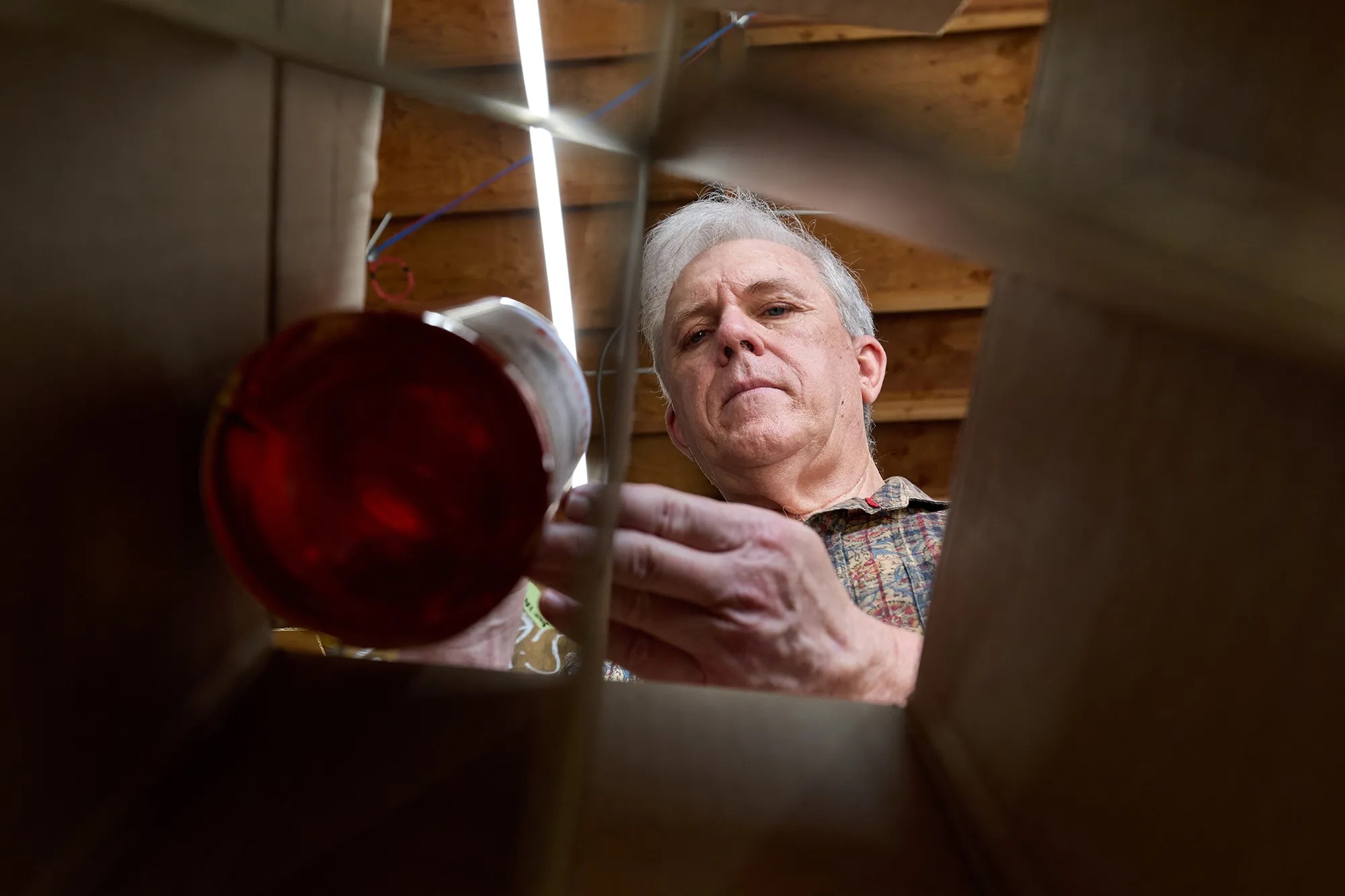
"caption": "Cris Steller, owner of Dry Diggins Distillery, poses with a box used to ship Engine 49 Bourbon in the company's distilling and bottling warehouse in El Dorado Hills on Aug. 4, 2026. California craft liquor deliveries could end Jan. 1. ",
"credit": "Fred Greaves for CalMatters",
"altTag": null,
"description": null,
"imgSizes": {
"thumbnail": {
"file": "https://cdn.kqed.org/wp-content/uploads/sites/10/2026/08/080426_drinks-by-mail_FG_22_CM-160x107.jpeg",
"width": 160,
"height": 107,
"mimeType": "image/jpeg"
},
"1536x1536": {
"file": "https://cdn.kqed.org/wp-content/uploads/sites/10/2026/08/080426_drinks-by-mail_FG_22_CM-1536x1024.jpeg",
"width": 1536,
"height": 1024,
"mimeType": "image/jpeg"
},
"post-thumbnail": {
"file": "https://cdn.kqed.org/wp-content/uploads/sites/10/2026/08/080426_drinks-by-mail_FG_22_CM-672x372.jpeg",
"width": 672,
"height": 372,
"mimeType": "image/jpeg"
},
"twentyfourteen-full-width": {
"file": "https://cdn.kqed.org/wp-content/uploads/sites/10/2026/08/080426_drinks-by-mail_FG_22_CM-1038x576.jpeg",
"width": 1038,
"height": 576,
"mimeType": "image/jpeg"
},
"npr-cds-wide": {
"file": "https://cdn.kqed.org/wp-content/uploads/sites/10/2026/08/080426_drinks-by-mail_FG_22_CM-1200x675.jpeg",
"width": 1200,
"height": 675,
"mimeType": "image/jpeg"
},
"npr-cds-square": {
"file": "https://cdn.kqed.org/wp-content/uploads/sites/10/2026/08/080426_drinks-by-mail_FG_22_CM-600x600.jpeg",
"width": 600,
"height": 600,
"mimeType": "image/jpeg"
},
"kqedFullSize": {
"file": "https://cdn.kqed.org/wp-content/uploads/sites/10/2026/08/080426_drinks-by-mail_FG_22_CM.jpeg",
"width": 2000,
"height": 1333
}
},
"isLoading": false,
"fetchFailed": false
},
"news_12094085": {
"type": "attachments",
"id": "news_12094085",
"meta": {
"index": "attachments_1716263798",
"site": "news",
"id": "12094085",
"found": true
},
"title": "073126-Therapy-and-AI-MG-CM",
"publishDate": 1786038609,
"status": "inherit",
"parent": 12094081,
"modified": 1786038671,
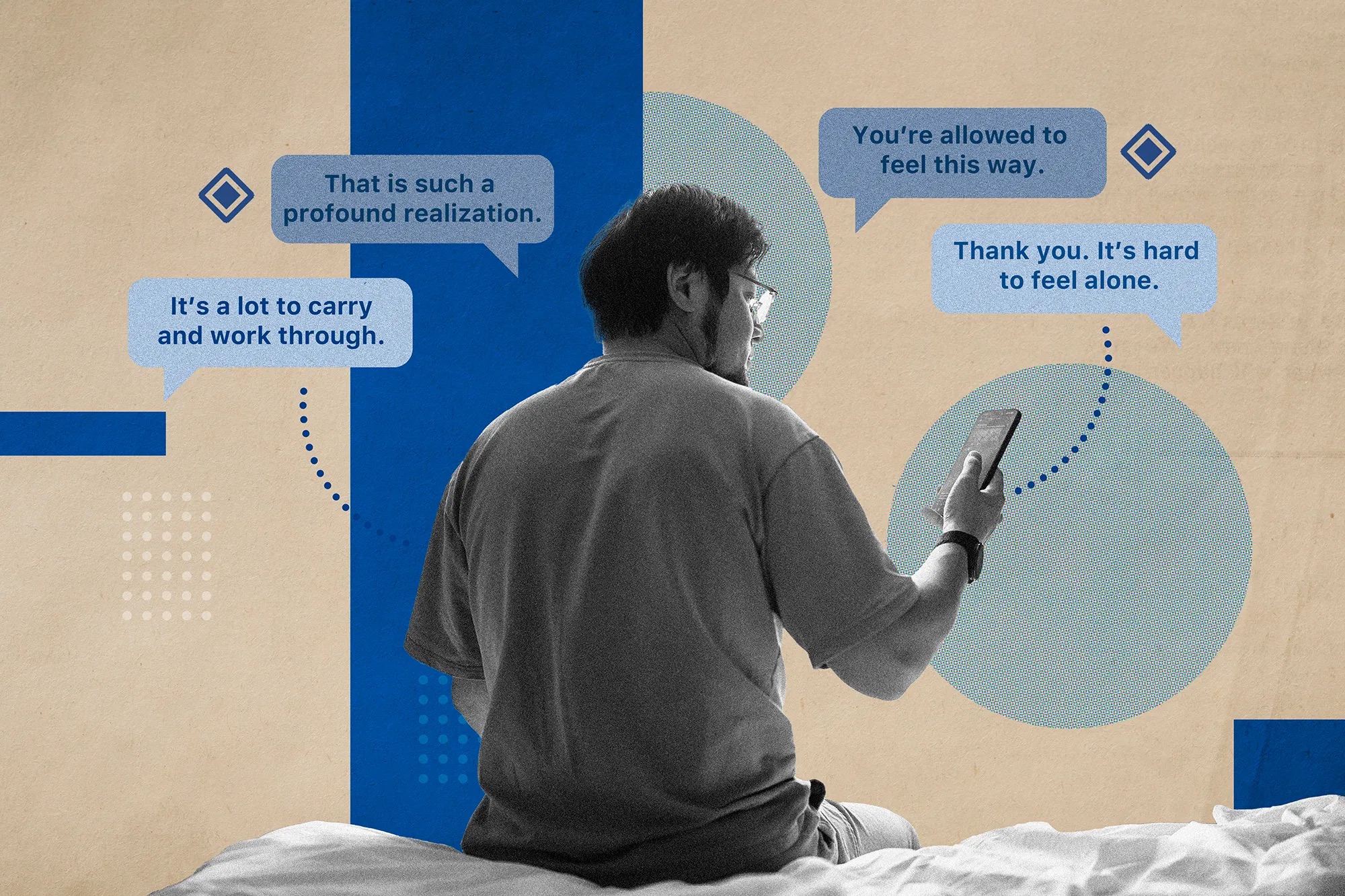
"caption": "Illustration by Miguel Gutierrez Jr., CalMatters; iStock\n",
"credit": "Miguel Gutierrez Jr./CalMatters",
"altTag": null,
"description": null,
"imgSizes": {
"thumbnail": {
"file": "https://cdn.kqed.org/wp-content/uploads/sites/10/2026/08/073126-Therapy-and-AI-MG-CM-160x107.jpeg",
"width": 160,
"height": 107,
"mimeType": "image/jpeg"
},
"1536x1536": {
"file": "https://cdn.kqed.org/wp-content/uploads/sites/10/2026/08/073126-Therapy-and-AI-MG-CM-1536x1024.jpeg",
"width": 1536,
"height": 1024,
"mimeType": "image/jpeg"
},
"post-thumbnail": {
"file": "https://cdn.kqed.org/wp-content/uploads/sites/10/2026/08/073126-Therapy-and-AI-MG-CM-672x372.jpeg",
"width": 672,
"height": 372,
"mimeType": "image/jpeg"
},
"twentyfourteen-full-width": {
"file": "https://cdn.kqed.org/wp-content/uploads/sites/10/2026/08/073126-Therapy-and-AI-MG-CM-1038x576.jpeg",
"width": 1038,
"height": 576,
"mimeType": "image/jpeg"
},
"npr-cds-wide": {
"file": "https://cdn.kqed.org/wp-content/uploads/sites/10/2026/08/073126-Therapy-and-AI-MG-CM-1200x675.jpeg",
"width": 1200,
"height": 675,
"mimeType": "image/jpeg"
},
"npr-cds-square": {
"file": "https://cdn.kqed.org/wp-content/uploads/sites/10/2026/08/073126-Therapy-and-AI-MG-CM-600x600.jpeg",
"width": 600,
"height": 600,
"mimeType": "image/jpeg"
},
"kqedFullSize": {
"file": "https://cdn.kqed.org/wp-content/uploads/sites/10/2026/08/073126-Therapy-and-AI-MG-CM.jpeg",
"width": 2000,
"height": 1333
}
},
"isLoading": false,
"fetchFailed": false
},
"news_12093856": {
"type": "attachments",
"id": "news_12093856",
"meta": {
"index": "attachments_1716263798",
"site": "news",
"id": "12093856",
"found": true
},
"title": "080825-Mute-Swan-MG-CM-11",
"publishDate": 1785880316,
"status": "inherit",
"parent": 12093855,
"modified": 1785880342,
"caption": "A mute swan at the Grizzly Island Wildlife Area on Aug. 8, 2025. ",
"credit": "Miguel Gutierrez Jr./CalMatters",
"altTag": null,
"description": null,
"imgSizes": {
"thumbnail": {
"file": "https://cdn.kqed.org/wp-content/uploads/sites/10/2026/08/080825-Mute-Swan-MG-CM-11-160x107.jpeg",
"width": 160,
"height": 107,
"mimeType": "image/jpeg"
},
"1536x1536": {
"file": "https://cdn.kqed.org/wp-content/uploads/sites/10/2026/08/080825-Mute-Swan-MG-CM-11-1536x1024.jpeg",
"width": 1536,
"height": 1024,
"mimeType": "image/jpeg"
},
"post-thumbnail": {
"file": "https://cdn.kqed.org/wp-content/uploads/sites/10/2026/08/080825-Mute-Swan-MG-CM-11-672x372.jpeg",
"width": 672,
"height": 372,
"mimeType": "image/jpeg"
},
"twentyfourteen-full-width": {
"file": "https://cdn.kqed.org/wp-content/uploads/sites/10/2026/08/080825-Mute-Swan-MG-CM-11-1038x576.jpeg",
"width": 1038,
"height": 576,
"mimeType": "image/jpeg"
},
"npr-cds-wide": {
"file": "https://cdn.kqed.org/wp-content/uploads/sites/10/2026/08/080825-Mute-Swan-MG-CM-11-1200x675.jpeg",
"width": 1200,
"height": 675,
"mimeType": "image/jpeg"
},
"npr-cds-square": {
"file": "https://cdn.kqed.org/wp-content/uploads/sites/10/2026/08/080825-Mute-Swan-MG-CM-11-600x600.jpeg",
"width": 600,
"height": 600,
"mimeType": "image/jpeg"
},
"kqedFullSize": {
"file": "https://cdn.kqed.org/wp-content/uploads/sites/10/2026/08/080825-Mute-Swan-MG-CM-11.jpeg",
"width": 2000,
"height": 1333
}
},
"isLoading": false,
"fetchFailed": false
},
"news_12078562": {
"type": "attachments",
"id": "news_12078562",
"meta": {
"index": "attachments_1716263798",
"site": "news",
"id": "12078562",
"found": true
},
"title": "260402-FLOCK SECURITY CAMERA FILE-MD-05-KQED_1",
"publishDate": 1775174184,
"status": "inherit",
"parent": 0,
"modified": 1787949646,
"caption": "A Flock camera monitors the intersection at McKee and North White roads in San José on April 2, 2026.",
"credit": "Martin do Nascimento/KQED",
"altTag": null,
"description": null,
"imgSizes": {
"thumbnail": {
"file": "https://cdn.kqed.org/wp-content/uploads/sites/10/2026/04/260402-FLOCK-SECURITY-CAMERA-FILE-MD-05-KQED_1-160x107.jpg",
"width": 160,
"height": 107,
"mimeType": "image/jpeg"
},
"1536x1536": {
"file": "https://cdn.kqed.org/wp-content/uploads/sites/10/2026/04/260402-FLOCK-SECURITY-CAMERA-FILE-MD-05-KQED_1-1536x1025.jpg",
"width": 1536,
"height": 1025,
"mimeType": "image/jpeg"
},
"post-thumbnail": {
"file": "https://cdn.kqed.org/wp-content/uploads/sites/10/2026/04/260402-FLOCK-SECURITY-CAMERA-FILE-MD-05-KQED_1-672x372.jpg",
"width": 672,
"height": 372,
"mimeType": "image/jpeg"
},
"twentyfourteen-full-width": {
"file": "https://cdn.kqed.org/wp-content/uploads/sites/10/2026/04/260402-FLOCK-SECURITY-CAMERA-FILE-MD-05-KQED_1-1038x576.jpg",
"width": 1038,
"height": 576,
"mimeType": "image/jpeg"
},
"npr-cds-wide": {
"file": "https://cdn.kqed.org/wp-content/uploads/sites/10/2026/04/260402-FLOCK-SECURITY-CAMERA-FILE-MD-05-KQED_1-1200x675.jpg",
"width": 1200,
"height": 675,
"mimeType": "image/jpeg"
},
"npr-cds-square": {
"file": "https://cdn.kqed.org/wp-content/uploads/sites/10/2026/04/260402-FLOCK-SECURITY-CAMERA-FILE-MD-05-KQED_1-600x600.jpg",
"width": 600,
"height": 600,
"mimeType": "image/jpeg"
},
"kqedFullSize": {
"file": "https://cdn.kqed.org/wp-content/uploads/sites/10/2026/04/260402-FLOCK-SECURITY-CAMERA-FILE-MD-05-KQED_1.jpg",
"width": 2000,
"height": 1334
}
},
"isLoading": false,
"fetchFailed": false
},
"news_12093651": {
"type": "attachments",
"id": "news_12093651",
"meta": {
"index": "attachments_1716263798",
"site": "news",
"id": "12093651",
"found": true
},
"title": "CMLunch1",
"publishDate": 1785778161,
"status": "inherit",
"parent": 12093646,
"modified": 1785778186,
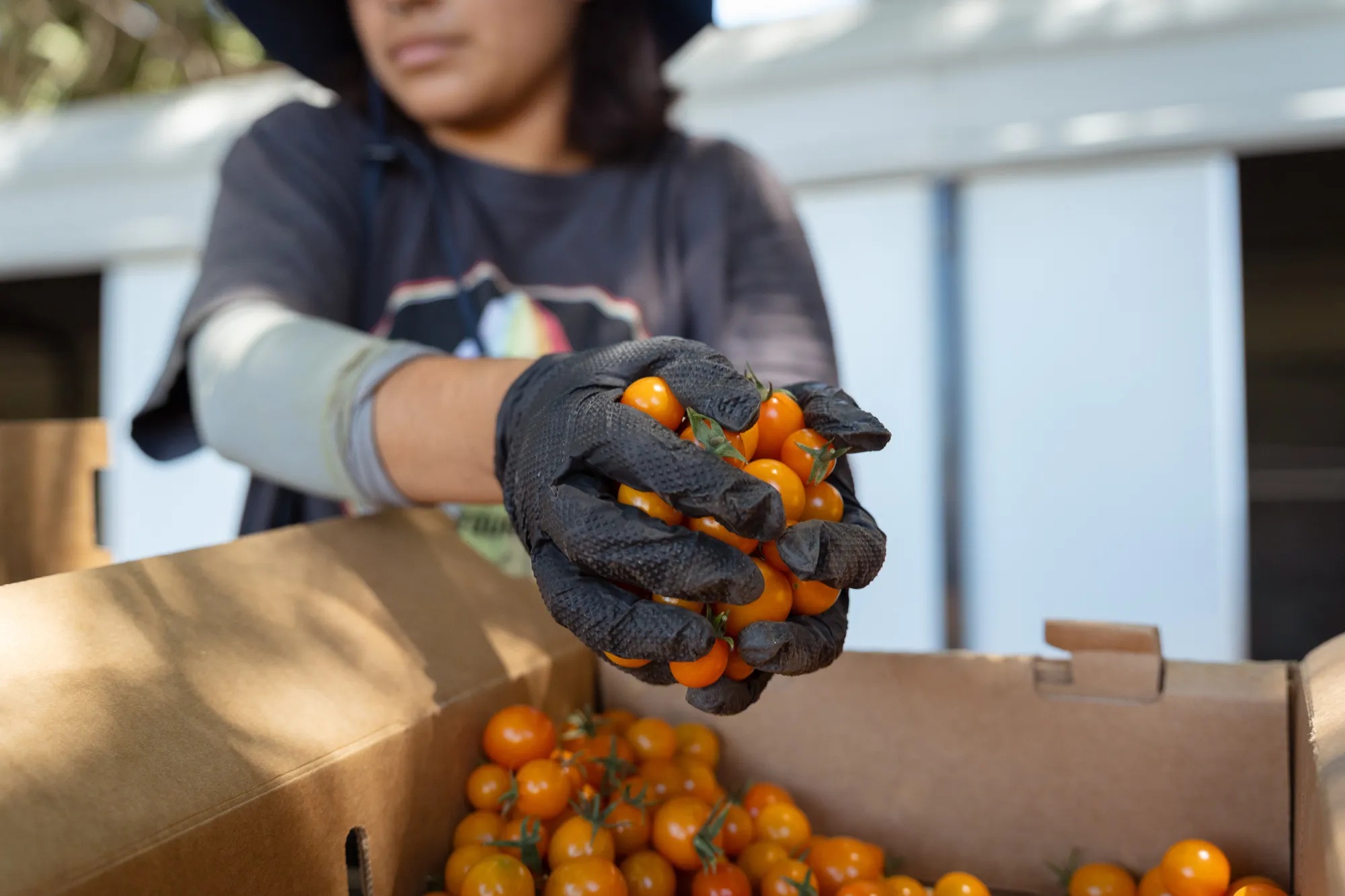
"caption": "Daniela Castillo packs freshly picked tomatoes into smaller cartons at Fiery Ginger Farm in West Sacramento on July 28, 2026. Much of the produce grown at Fiery Ginger Farm is distributed to school districts and other institutions through Spork Food Hub. ",
"credit": "Anna Hoch-Kenney/CalMatters",
"altTag": null,
"description": null,
"imgSizes": {
"thumbnail": {
"file": "https://cdn.kqed.org/wp-content/uploads/sites/10/2026/08/CMLunch1-160x107.jpg",
"width": 160,
"height": 107,
"mimeType": "image/jpeg"
},
"1536x1536": {
"file": "https://cdn.kqed.org/wp-content/uploads/sites/10/2026/08/CMLunch1-1536x1024.jpg",
"width": 1536,
"height": 1024,
"mimeType": "image/jpeg"
},
"post-thumbnail": {
"file": "https://cdn.kqed.org/wp-content/uploads/sites/10/2026/08/CMLunch1-672x372.jpg",
"width": 672,
"height": 372,
"mimeType": "image/jpeg"
},
"twentyfourteen-full-width": {
"file": "https://cdn.kqed.org/wp-content/uploads/sites/10/2026/08/CMLunch1-1038x576.jpg",
"width": 1038,
"height": 576,
"mimeType": "image/jpeg"
},
"npr-cds-wide": {
"file": "https://cdn.kqed.org/wp-content/uploads/sites/10/2026/08/CMLunch1-1200x675.jpg",
"width": 1200,
"height": 675,
"mimeType": "image/jpeg"
},
"npr-cds-square": {
"file": "https://cdn.kqed.org/wp-content/uploads/sites/10/2026/08/CMLunch1-600x600.jpg",
"width": 600,
"height": 600,
"mimeType": "image/jpeg"
},
"kqedFullSize": {
"file": "https://cdn.kqed.org/wp-content/uploads/sites/10/2026/08/CMLunch1.jpg",
"width": 2000,
"height": 1333
}
},
"isLoading": false,
"fetchFailed": false
},
"news_12093493": {
"type": "attachments",
"id": "news_12093493",
"meta": {
"index": "attachments_1716263798",
"site": "news",
"id": "12093493",
"found": true
},
"title": "020426_UCSD-Police_AH_003",
"publishDate": 1785532533,
"status": "inherit",
"parent": 12093465,
"modified": 1785532588,
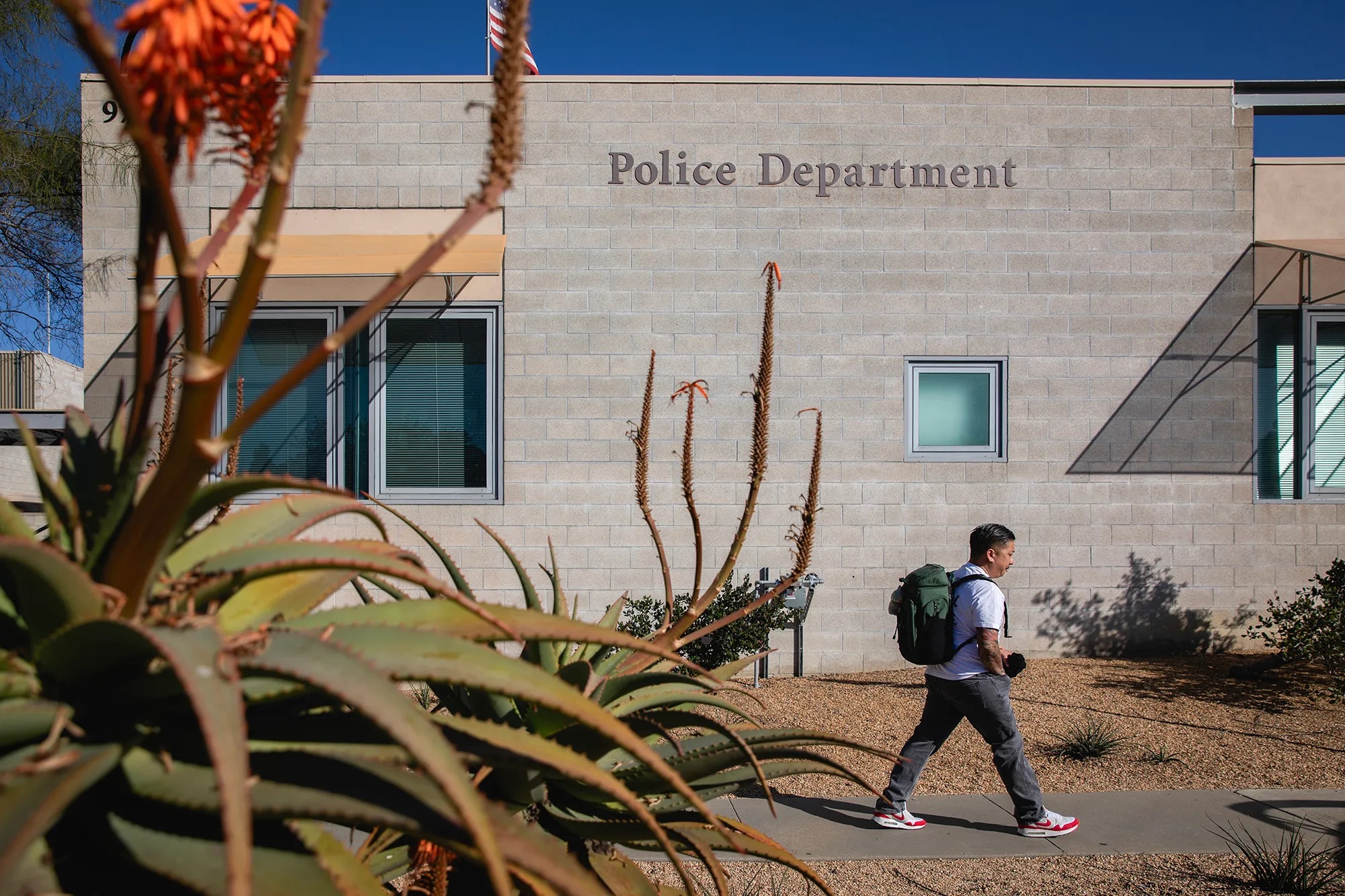
"caption": "A person walks by the UC San Diego Police Department building at UC San Diego on Feb. 4, 2026. ",
"credit": "Adriana Heldiz/CalMatters",
"altTag": null,
"description": null,
"imgSizes": {
"thumbnail": {
"file": "https://cdn.kqed.org/wp-content/uploads/sites/10/2026/07/020426_UCSD-Police_AH_003-160x107.jpeg",
"width": 160,
"height": 107,
"mimeType": "image/jpeg"
},
"1536x1536": {
"file": "https://cdn.kqed.org/wp-content/uploads/sites/10/2026/07/020426_UCSD-Police_AH_003-1536x1024.jpeg",
"width": 1536,
"height": 1024,
"mimeType": "image/jpeg"
},
"post-thumbnail": {
"file": "https://cdn.kqed.org/wp-content/uploads/sites/10/2026/07/020426_UCSD-Police_AH_003-672x372.jpeg",
"width": 672,
"height": 372,
"mimeType": "image/jpeg"
},
"twentyfourteen-full-width": {
"file": "https://cdn.kqed.org/wp-content/uploads/sites/10/2026/07/020426_UCSD-Police_AH_003-1038x576.jpeg",
"width": 1038,
"height": 576,
"mimeType": "image/jpeg"
},
"npr-cds-wide": {
"file": "https://cdn.kqed.org/wp-content/uploads/sites/10/2026/07/020426_UCSD-Police_AH_003-1200x675.jpeg",
"width": 1200,
"height": 675,
"mimeType": "image/jpeg"
},
"npr-cds-square": {
"file": "https://cdn.kqed.org/wp-content/uploads/sites/10/2026/07/020426_UCSD-Police_AH_003-600x600.jpeg",
"width": 600,
"height": 600,
"mimeType": "image/jpeg"
},
"kqedFullSize": {
"file": "https://cdn.kqed.org/wp-content/uploads/sites/10/2026/07/020426_UCSD-Police_AH_003.jpeg",
"width": 2000,
"height": 1333
}
},
"isLoading": false,
"fetchFailed": false
},
"news_12093611": {
"type": "attachments",
"id": "news_12093611",
"meta": {
"index": "attachments_1716263798",
"site": "news",
"id": "12093611",
"found": true
},
"title": "CalMatters Avila",
"publishDate": 1785623760,
"status": "inherit",
"parent": 12093606,
"modified": 1785625470,
"caption": null,
"credit": "Gabriel Hongsdusit/CalMatters",
"altTag": null,
"description": null,
"imgSizes": {
"thumbnail": {
"file": "https://cdn.kqed.org/wp-content/uploads/sites/10/2026/08/CalMatters-Avila-160x107.jpg",
"width": 160,
"height": 107,
"mimeType": "image/jpeg"
},
"1536x1536": {
"file": "https://cdn.kqed.org/wp-content/uploads/sites/10/2026/08/CalMatters-Avila-1536x1024.jpg",
"width": 1536,
"height": 1024,
"mimeType": "image/jpeg"
},
"post-thumbnail": {
"file": "https://cdn.kqed.org/wp-content/uploads/sites/10/2026/08/CalMatters-Avila-672x372.jpg",
"width": 672,
"height": 372,
"mimeType": "image/jpeg"
},
"twentyfourteen-full-width": {
"file": "https://cdn.kqed.org/wp-content/uploads/sites/10/2026/08/CalMatters-Avila-1038x576.jpg",
"width": 1038,
"height": 576,
"mimeType": "image/jpeg"
},
"npr-cds-wide": {
"file": "https://cdn.kqed.org/wp-content/uploads/sites/10/2026/08/CalMatters-Avila-1200x675.jpg",
"width": 1200,
"height": 675,
"mimeType": "image/jpeg"
},
"npr-cds-square": {
"file": "https://cdn.kqed.org/wp-content/uploads/sites/10/2026/08/CalMatters-Avila-600x600.jpg",
"width": 600,
"height": 600,
"mimeType": "image/jpeg"
},
"kqedFullSize": {
"file": "https://cdn.kqed.org/wp-content/uploads/sites/10/2026/08/CalMatters-Avila.jpg",
"width": 2000,
"height": 1333
}
},
"isLoading": false,
"fetchFailed": false
},
"news_12054070": {
"type": "attachments",
"id": "news_12054070",
"meta": {
"index": "attachments_1716263798",
"site": "news",
"id": "12054070",
"found": true
},
"title": "240109-CAWindStorm-075_qed (1)",
"publishDate": 1756405036,
"status": "inherit",
"parent": 12053867,
"modified": 1756405053,
"caption": "The remains of a house in Altadena, California, after the Eaton Fire swept through the area northeast of Los Angeles, California, on Thursday, Jan. 9, 2025.",
"credit": "Beth LaBerge/KQED",
"altTag": null,
"description": null,
"imgSizes": {
"thumbnail": {
"file": "https://cdn.kqed.org/wp-content/uploads/sites/10/2025/08/240109-CAWindStorm-075_qed-1-160x107.jpg",
"width": 160,
"height": 107,
"mimeType": "image/jpeg"
},
"1536x1536": {
"file": "https://cdn.kqed.org/wp-content/uploads/sites/10/2025/08/240109-CAWindStorm-075_qed-1-1536x1024.jpg",
"width": 1536,
"height": 1024,
"mimeType": "image/jpeg"
},
"post-thumbnail": {
"file": "https://cdn.kqed.org/wp-content/uploads/sites/10/2025/08/240109-CAWindStorm-075_qed-1-672x372.jpg",
"width": 672,
"height": 372,
"mimeType": "image/jpeg"
},
"twentyfourteen-full-width": {
"file": "https://cdn.kqed.org/wp-content/uploads/sites/10/2025/08/240109-CAWindStorm-075_qed-1-1038x576.jpg",
"width": 1038,
"height": 576,
"mimeType": "image/jpeg"
},
"kqedFullSize": {
"file": "https://cdn.kqed.org/wp-content/uploads/sites/10/2025/08/240109-CAWindStorm-075_qed-1.jpg",
"width": 2000,
"height": 1333
}
},
"isLoading": false,
"fetchFailed": false
},
"news_12046564": {
"type": "attachments",
"id": "news_12046564",
"meta": {
"index": "attachments_1716263798",
"site": "news",
"id": "12046564",
"found": true
},
"title": "The Core Civic detention facility in California City on June 28, 2025.",
"publishDate": 1751304998,
"status": "inherit",
"parent": 12071374,
"modified": 1788542280,
"caption": "The CoreCivic detention facility in California City, California, on June 28, 2025.",
"credit": "Saul Gonzalez/KQED",
"altTag": null,
"description": null,
"imgSizes": {
"thumbnail": {
"file": "https://cdn.kqed.org/wp-content/uploads/sites/10/2025/06/CORECIVICCALCITY1-KQED-160x107.jpg",
"width": 160,
"height": 107,
"mimeType": "image/jpeg"
},
"1536x1536": {
"file": "https://cdn.kqed.org/wp-content/uploads/sites/10/2025/06/CORECIVICCALCITY1-KQED-1536x1024.jpg",
"width": 1536,
"height": 1024,
"mimeType": "image/jpeg"
},
"post-thumbnail": {
"file": "https://cdn.kqed.org/wp-content/uploads/sites/10/2025/06/CORECIVICCALCITY1-KQED-672x372.jpg",
"width": 672,
"height": 372,
"mimeType": "image/jpeg"
},
"twentyfourteen-full-width": {
"file": "https://cdn.kqed.org/wp-content/uploads/sites/10/2025/06/CORECIVICCALCITY1-KQED-1038x576.jpg",
"width": 1038,
"height": 576,
"mimeType": "image/jpeg"
},
"kqedFullSize": {
"file": "https://cdn.kqed.org/wp-content/uploads/sites/10/2025/06/CORECIVICCALCITY1-KQED.jpg",
"width": 2000,
"height": 1333
}
},
"isLoading": false,
"fetchFailed": false
},
"news_12092852": {
"type": "attachments",
"id": "news_12092852",
"meta": {
"index": "attachments_1716263798",
"site": "news",
"id": "12092852",
"found": true
},
"title": "092122-ROB-BONTA-GUN-CONTROL-DEPARTMENT-MHN-08-CM",
"publishDate": 1785259679,
"status": "inherit",
"parent": 12092843,
"modified": 1785259702,
"caption": "Assemblymember Mia Bonta announces the creation of the Office of Gun Violence Prevention within the California Department of Justice at a press event in San Francisco on Sept. 21, 2022. ",
"credit": "Martin do Nascimento/CalMatters",
"altTag": null,
"description": null,
"imgSizes": {
"thumbnail": {
"file": "https://cdn.kqed.org/wp-content/uploads/sites/10/2026/07/092122-ROB-BONTA-GUN-CONTROL-DEPARTMENT-MHN-08-CM-160x107.jpeg",
"width": 160,
"height": 107,
"mimeType": "image/jpeg"
},
"1536x1536": {
"file": "https://cdn.kqed.org/wp-content/uploads/sites/10/2026/07/092122-ROB-BONTA-GUN-CONTROL-DEPARTMENT-MHN-08-CM-1536x1024.jpeg",
"width": 1536,
"height": 1024,
"mimeType": "image/jpeg"
},
"post-thumbnail": {
"file": "https://cdn.kqed.org/wp-content/uploads/sites/10/2026/07/092122-ROB-BONTA-GUN-CONTROL-DEPARTMENT-MHN-08-CM-672x372.jpeg",
"width": 672,
"height": 372,
"mimeType": "image/jpeg"
},
"twentyfourteen-full-width": {
"file": "https://cdn.kqed.org/wp-content/uploads/sites/10/2026/07/092122-ROB-BONTA-GUN-CONTROL-DEPARTMENT-MHN-08-CM-1038x576.jpeg",
"width": 1038,
"height": 576,
"mimeType": "image/jpeg"
},
"npr-cds-wide": {
"file": "https://cdn.kqed.org/wp-content/uploads/sites/10/2026/07/092122-ROB-BONTA-GUN-CONTROL-DEPARTMENT-MHN-08-CM-1200x675.jpeg",
"width": 1200,
"height": 675,
"mimeType": "image/jpeg"
},
"npr-cds-square": {
"file": "https://cdn.kqed.org/wp-content/uploads/sites/10/2026/07/092122-ROB-BONTA-GUN-CONTROL-DEPARTMENT-MHN-08-CM-600x600.jpeg",
"width": 600,
"height": 600,
"mimeType": "image/jpeg"
},
"kqedFullSize": {
"file": "https://cdn.kqed.org/wp-content/uploads/sites/10/2026/07/092122-ROB-BONTA-GUN-CONTROL-DEPARTMENT-MHN-08-CM.jpeg",
"width": 2000,
"height": 1333
}
},
"isLoading": false,
"fetchFailed": false
},
"news_11992341": {
"type": "attachments",
"id": "news_11992341",
"meta": {
"index": "attachments_1716263798",
"site": "news",
"id": "11992341",
"found": true
},
"title": "006_KQED_NEWFOLSOMPRISONSACRAMENTO_04132023-KQED",
"publishDate": 1719530043,
"status": "inherit",
"parent": 12088386,
"modified": 1782161688,
"caption": "A watch tower at California State Prison, Sacramento, on April 13, 2023.",
"credit": "Beth LaBerge/KQED",
"altTag": "A watchtower at a prison, with prison walls and barbed wire in the foreground.",
"description": null,
"imgSizes": {
"medium": {
"file": "https://cdn.kqed.org/wp-content/uploads/sites/10/2024/06/006_KQED_NEWFOLSOMPRISONSACRAMENTO_04132023-KQED-800x533.jpg",
"width": 800,
"height": 533,
"mimeType": "image/jpeg"
},
"large": {
"file": "https://cdn.kqed.org/wp-content/uploads/sites/10/2024/06/006_KQED_NEWFOLSOMPRISONSACRAMENTO_04132023-KQED-1020x680.jpg",
"width": 1020,
"height": 680,
"mimeType": "image/jpeg"
},
"thumbnail": {
"file": "https://cdn.kqed.org/wp-content/uploads/sites/10/2024/06/006_KQED_NEWFOLSOMPRISONSACRAMENTO_04132023-KQED-160x107.jpg",
"width": 160,
"height": 107,
"mimeType": "image/jpeg"
},
"1536x1536": {
"file": "https://cdn.kqed.org/wp-content/uploads/sites/10/2024/06/006_KQED_NEWFOLSOMPRISONSACRAMENTO_04132023-KQED-1536x1024.jpg",
"width": 1536,
"height": 1024,
"mimeType": "image/jpeg"
},
"post-thumbnail": {
"file": "https://cdn.kqed.org/wp-content/uploads/sites/10/2024/06/006_KQED_NEWFOLSOMPRISONSACRAMENTO_04132023-KQED-672x372.jpg",
"width": 672,
"height": 372,
"mimeType": "image/jpeg"
},
"twentyfourteen-full-width": {
"file": "https://cdn.kqed.org/wp-content/uploads/sites/10/2024/06/006_KQED_NEWFOLSOMPRISONSACRAMENTO_04132023-KQED-1038x576.jpg",
"width": 1038,
"height": 576,
"mimeType": "image/jpeg"
},
"full-width": {
"file": "https://cdn.kqed.org/wp-content/uploads/sites/10/2024/06/006_KQED_NEWFOLSOMPRISONSACRAMENTO_04132023-KQED-1920x1280.jpg",
"width": 1920,
"height": 1280,
"mimeType": "image/jpeg"
},
"kqedFullSize": {
"file": "https://cdn.kqed.org/wp-content/uploads/sites/10/2024/06/006_KQED_NEWFOLSOMPRISONSACRAMENTO_04132023-KQED.jpg",
"width": 2000,
"height": 1333
}
},
"isLoading": false,
"fetchFailed": false
},
"news_12092566": {
"type": "attachments",
"id": "news_12092566",
"meta": {
"index": "attachments_1716263798",
"site": "news",
"id": "12092566",
"found": true
},
"title": "A grizzly bear watches visitors during the grand opening of the California Trail at the Oakland Zoo in Oakland, Calif. on Thursday, July 12, 2018. The 56-acre exhibit featuring eight animal species native to California more than doubles the size of the zo",
"publishDate": 1784921689,
"status": "inherit",
"parent": 12092548,
"modified": 1784921724,
"caption": "A grizzly bear watches visitors during the grand opening of the California Trail at the Oakland Zoo in Oakland, California, on July 12, 2018. ",
"credit": "Paul Chinn/The San Francisco Chronicle via Getty Images",
"altTag": null,
"description": null,
"imgSizes": {
"thumbnail": {
"file": "https://cdn.kqed.org/wp-content/uploads/sites/10/2026/07/CAGrizzlyOaklandGetty-160x116.jpg",
"width": 160,
"height": 116,
"mimeType": "image/jpeg"
},
"1536x1536": {
"file": "https://cdn.kqed.org/wp-content/uploads/sites/10/2026/07/CAGrizzlyOaklandGetty-1536x1114.jpg",
"width": 1536,
"height": 1114,
"mimeType": "image/jpeg"
},
"post-thumbnail": {
"file": "https://cdn.kqed.org/wp-content/uploads/sites/10/2026/07/CAGrizzlyOaklandGetty-672x372.jpg",
"width": 672,
"height": 372,
"mimeType": "image/jpeg"
},
"twentyfourteen-full-width": {
"file": "https://cdn.kqed.org/wp-content/uploads/sites/10/2026/07/CAGrizzlyOaklandGetty-1038x576.jpg",
"width": 1038,
"height": 576,
"mimeType": "image/jpeg"
},
"npr-cds-wide": {
"file": "https://cdn.kqed.org/wp-content/uploads/sites/10/2026/07/CAGrizzlyOaklandGetty-1200x675.jpg",
"width": 1200,
"height": 675,
"mimeType": "image/jpeg"
},
"npr-cds-square": {
"file": "https://cdn.kqed.org/wp-content/uploads/sites/10/2026/07/CAGrizzlyOaklandGetty-600x600.jpg",
"width": 600,
"height": 600,
"mimeType": "image/jpeg"
},
"kqedFullSize": {
"file": "https://cdn.kqed.org/wp-content/uploads/sites/10/2026/07/CAGrizzlyOaklandGetty.jpg",
"width": 2000,
"height": 1451
}
},
"isLoading": false,
"fetchFailed": false
}
},
"audioPlayerReducer": {
"postId": "stream_live",
"isPaused": true,
"isPlaying": false,
"pfsActive": false,
"pledgeModalIsOpen": true,
"playerDrawerIsOpen": false,
"liveAudioPlayStartedAt": 0,
"liveAudioPlayContext": ""
},
"authorsReducer": {
"byline_news_12094379": {
"type": "authors",
"id": "byline_news_12094379",
"meta": {
"override": true
},
"slug": "byline_news_12094379",
"name": "Ryan Sabalow, CalMatters",
"isLoading": false
},
"byline_news_12094081": {
"type": "authors",
"id": "byline_news_12094081",
"meta": {
"override": true
},
"slug": "byline_news_12094081",
"name": "Ana B. Ibarra, CalMatters",
"isLoading": false
},
"byline_news_12093855": {
"type": "authors",
"id": "byline_news_12093855",
"meta": {
"override": true
},
"slug": "byline_news_12093855",
"name": "Ryan Sabalow, CalMatters",
"isLoading": false
},
"byline_news_12093784": {
"type": "authors",
"id": "byline_news_12093784",
"meta": {
"override": true
},
"slug": "byline_news_12093784",
"name": "Ryan Sabalow, CalMatters",
"isLoading": false
},
"byline_news_12093646": {
"type": "authors",
"id": "byline_news_12093646",
"meta": {
"override": true
},
"slug": "byline_news_12093646",
"name": "Carolyn Jones, CalMatters",
"isLoading": false
},
"byline_news_12093465": {
"type": "authors",
"id": "byline_news_12093465",
"meta": {
"override": true
},
"slug": "byline_news_12093465",
"name": "Phoebe Huss, CalMatters",
"isLoading": false
},
"byline_news_12093606": {
"type": "authors",
"id": "byline_news_12093606",
"meta": {
"override": true
},
"slug": "byline_news_12093606",
"name": "Byrhonda Lyons, CalMatters",
"isLoading": false
},
"byline_news_12093430": {
"type": "authors",
"id": "byline_news_12093430",
"meta": {
"override": true
},
"slug": "byline_news_12093430",
"name": "Levi Sumagaysay, CalMatters",
"isLoading": false
},
"byline_news_12092950": {
"type": "authors",
"id": "byline_news_12092950",
"meta": {
"override": true
},
"slug": "byline_news_12092950",
"name": "Nigel Duara, CalMatters",
"isLoading": false
},
"byline_news_12092843": {
"type": "authors",
"id": "byline_news_12092843",
"meta": {
"override": true
},
"slug": "byline_news_12092843",
"name": "Ryan Sabalow, CalMatters",
"isLoading": false
},
"byline_news_12092691": {
"type": "authors",
"id": "byline_news_12092691",
"meta": {
"override": true
},
"slug": "byline_news_12092691",
"name": "Cayla Mihalovich, CalMatters",
"isLoading": false
},
"byline_news_12092548": {
"type": "authors",
"id": "byline_news_12092548",
"meta": {
"override": true
},
"slug": "byline_news_12092548",
"name": "Ryan Sabalow, CalMatters",
"isLoading": false
}
},
"pagesReducer": {
"news_affiliate_calmatters": {
"type": "terms",
"id": "news_18481",
"meta": {
"index": "terms_1716263798",
"site": "news",
"id": "18481",
"score": 15.355904
},
"featImg": null,
"name": "CALmatters",
"description": null,
"taxonomy": "affiliate",
"headData": {
"twImgId": null,
"twTitle": null,
"ogTitle": null,
"ogImgId": null,
"twDescription": null,
"description": null,
"title": "CALmatters Archives | KQED Arts",
"ogDescription": null
},
"ttid": 18515,
"slug": "calmatters",
"isLoading": false,
"title": "CALmatters",
"pageMeta": {
"site": "news",
"WpPageTemplate": "page-topic-editorial",
"currentPage": 3
},
"blocks": [
{
"blockName": "kqed/post-list",
"attrs": {
"layout": "cardArticle2",
"query": "posts/news?affiliate=calmatters",
"seeMore": false,
"paginated": true,
"page": 3
}
},
{
"blockName": "kqed/ad"
}
]
}
},
"pfsSessionReducer": {},
"postsReducer": {
"stream_live": {
"type": "live",
"id": "stream_live",
"audioUrl": "https://streams.kqed.org/kqedradio",
"title": "Live Stream",
"excerpt": "Live Stream information currently unavailable.",
"link": "/radio",
"featImg": "",
"label": {
"name": "KQED Live",
"link": "/"
}
},
"stream_kqedNewscast": {
"type": "posts",
"id": "stream_kqedNewscast",
"audioUrl": "https://www.kqed.org/.stream/anon/radio/RDnews/newscast.mp3?_=1",
"title": "KQED Newscast",
"featImg": "",
"label": {
"name": "88.5 FM",
"link": "/"
}
},
"news_12094379": {
"type": "posts",
"id": "news_12094379",
"meta": {
"index": "posts_1716263798",
"site": "news",
"id": "12094379",
"score": null,
"sort": [
1786212049000
]
},
"guestAuthors": [],
"slug": "california-craft-liquor-delivery-is-about-to-go-away-thanks-to-big-money-lobbying",
"title": "California Craft Liquor Delivery Is About to Go Away, Thanks to Big Money Lobbying",
"publishDate": 1786212049,
"format": "standard",
"headTitle": "California Craft Liquor Delivery Is About to Go Away, Thanks to Big Money Lobbying | KQED",
"labelTerm": {},
"content": "\u003cp>\u003c!-- Creative Commons Attribution-NonCommercial-NoDerivatives https://creativecommons.org/licenses/by-nc-nd/4.0/ -->\u003c/p>\n\u003cp>This story was originally published by \u003ca href=\"https://calmatters.org/\">CalMatters\u003c/a>. \u003ca href=\"https://calmatters.org/subscribe-to-calmatters/\">Sign up\u003c/a> for their newsletters.\u003c/p>\n\u003cp>For six years, \u003ca href=\"https://www.kqed.org/news/tag/california\">Californians\u003c/a> have been able to shake up a craft cocktail at home using alcohol delivered to their doorstep. Now, it’s last call for the distillery deliveries, unless lawmakers intervene by the end of this month.\u003c/p>\n\u003cp>That’s unlikely, thanks to opposition from California’s wine industry, Teamsters union truck drivers and corporate alcohol wholesalers and distributors.\u003c/p>\n\u003cp>The influential, well-funded groups lobbied the Legislature behind closed doors this year to block legislation that would have made permanent pandemic-era rules that allowed craft distillers to ship spirits directly to their customers.\u003c/p>\n\u003cp>[ad fullwidth]\u003c/p>\n\u003cp>During the pandemic lockdowns, Gov. Gavin Newsom issued an executive order that allowed craft distillers to ship spirits to their customers’ homes. In the years since, lawmakers passed temporary laws allowing craft distillers — defined as those that produce up to 150,000 gallons a year — to keep shipping their spirits.\u003c/p>\n\u003cp>The latest extension expires Dec. 31.\u003c/p>\n\u003cp>“I don’t have a lot of hope that we’re going to be able to salvage this,” said Folsom Republican Assemblymember \u003ca href=\"https://calmatters.digitaldemocracy.org/legislators/josh-hoover-165420\">Josh Hoover\u003c/a>. He tried unsuccessfully this year to amend one of \u003ca href=\"https://calmatters.digitaldemocracy.org/bills/ca_202520260ab2211\">his bills\u003c/a> to let small distillers continue shipping directly to their customers.\u003c/p>\n\u003cfigure id=\"attachment_12094388\" class=\"wp-caption aligncenter\" style=\"max-width: 2000px\">\u003cimg loading=\"lazy\" decoding=\"async\" class=\"size-full wp-image-12094388\" src=\"https://cdn.kqed.org/wp-content/uploads/sites/10/2026/08/080426_drinks-by-mail_FG_11_CM.jpeg\" alt=\"\" width=\"2000\" height=\"1333\" srcset=\"https://cdn.kqed.org/wp-content/uploads/sites/10/2026/08/080426_drinks-by-mail_FG_11_CM.jpeg 2000w, https://cdn.kqed.org/wp-content/uploads/sites/10/2026/08/080426_drinks-by-mail_FG_11_CM-160x107.jpeg 160w, https://cdn.kqed.org/wp-content/uploads/sites/10/2026/08/080426_drinks-by-mail_FG_11_CM-1536x1024.jpeg 1536w\" sizes=\"auto, (max-width: 2000px) 100vw, 2000px\">\u003cfigcaption class=\"wp-caption-text\">Bottles of spirits produced by Dry Diggins Distillery in El Dorado Hills on Aug. 4, 2026. \u003ccite>(Fred Greaves for CalMatters)\u003c/cite>\u003c/figcaption>\u003c/figure>\n\u003cp>The groups blocking Hoover’s proposal have spent more than $1 million lobbying the Legislature and state government this year. They have donated at least 11 times that much to California politicians and their campaigns over the years.\u003c/p>\n\u003cp>The craft distillers, who have spent a fraction as much on state politics, say all that spending from the opposition, particularly from corporate liquor distributors, appears to have paid off.\u003c/p>\n\u003cp>“They went directly to legislators’ offices and basically torpedoed any effort we came up with,” said Cris Steller, acting executive director of the California Distillers Association and the owner of Amador and Dry Diggings Distillery in El Dorado Hills, a family-run business that makes whiskey, brandy, vodka and gin.[aside postID=forum_2010101914751 hero='https://cdn.kqed.org/wp-content/uploads/sites/43/2022/04/California-drought.jpg']The fight is about more than whether Californians can have a bottle of whiskey or gin delivered. It illustrates how decisions are made in Sacramento, where wealthy and powerful interests can shape or kill policy in \u003ca href=\"https://calmatters.org/politics/2024/09/california-secret-negotiations-public-transparency/\">secret negotiations\u003c/a> with lawmakers.\u003c/p>\n\u003cp>Politicians, in turn, benefit when proposals die quietly because they don’t have to explain their decisions to voters. Opponents insist they aren’t using the political system to crush competitors as national \u003ca href=\"https://www.wsj.com/livecoverage/stock-market-today-dow-sp-500-nasdaq-06-11-2026/card/alcohol-industry-s-pain-could-get-worse-before-it-gets-better-po9xhV3IQmLntTOd8v18?eafs_enabled=false\">alcohol sales slump\u003c/a>.\u003c/p>\n\u003cp>Instead, representatives of the major alcohol wholesalers and distributors that stock shelves at liquor retailers say they oppose the proposal because it primarily benefits out-of-state companies and weakens safeguards that include preventing alcohol deliveries to minors.\u003c/p>\n\u003cp>Teamsters lobbyist Matt Broad said the labor group’s truck drivers aren’t opposed to allowing craft distillers to ship their product.\u003c/p>\n\u003cp>They just want them to use established shipping companies that have actual employees, including those that employ Teamsters, such as UPS.\u003c/p>\n\u003cp>Those companies have standards to ensure legal delivery, Broad said. When they employ drivers rather than use contractors, the companies — not the drivers — bear legal liability.\u003c/p>\n\u003cfigure id=\"attachment_12087150\" class=\"wp-caption aligncenter\" style=\"max-width: 2000px\">\u003cimg loading=\"lazy\" decoding=\"async\" class=\"size-full wp-image-12087150\" src=\"https://cdn.kqed.org/wp-content/uploads/sites/10/2026/06/20260610_LodiWine_GC-3-KQED.jpg\" alt=\"\" width=\"2000\" height=\"1333\" srcset=\"https://cdn.kqed.org/wp-content/uploads/sites/10/2026/06/20260610_LodiWine_GC-3-KQED.jpg 2000w, https://cdn.kqed.org/wp-content/uploads/sites/10/2026/06/20260610_LodiWine_GC-3-KQED-160x107.jpg 160w, https://cdn.kqed.org/wp-content/uploads/sites/10/2026/06/20260610_LodiWine_GC-3-KQED-1536x1024.jpg 1536w\" sizes=\"auto, (max-width: 2000px) 100vw, 2000px\">\u003cfigcaption class=\"wp-caption-text\">Bruce Fry, left, and his daughter Mohrgan Fry, right, examine grape clusters at their ranch Mohr-Fry Ranches, a six-generation family farming operation since 1855, in Lodi on June 10, 2026. \u003ccite>(Gina Castro/KQED)\u003c/cite>\u003c/figcaption>\u003c/figure>\n\u003cp>Federal law preempts California from mandating hiring unionized truck drivers, Broad said.\u003c/p>\n\u003cp>“We are absolutely not opposed to the little guys being able to ship directly to consumers, and in fact, we have a track record of supporting the proposal but with meaningful guardrails that protect our members and protect the public,” he told CalMatters.\u003c/p>\n\u003cp>The California wine industry, which has been allowed to ship bottles directly to customers in California for decades, isn’t necessarily opposed either. But its representative says wine sellers are leery of giving little alcohol sellers delivery rights when big liquor companies deserve the same. Wineries of any size can ship to their customers in California.\u003c/p>\n\u003ch2>Big booze, big labor spend big\u003c/h2>\n\u003cp>The U.S. Postal Service prohibits most alcohol shipments to homes, but California allows certain types of alcohol sellers to use private shipping companies. Breweries are prohibited from shipping directly to California customers.\u003c/p>\n\u003cp>Hoover hoped his \u003ca href=\"https://calmatters.digitaldemocracy.org/bills/ca_202520260ab2211\">Assembly Bill 2211\u003c/a>, a proposal to give craft distillers the ability to offer tastings and sell spirits at locations other than their distilleries, could be amended to give craft distillers a permanent direct-to-consumer provision.\u003c/p>\n\u003cp>It has advanced through the Legislature without formal opposition or any lawmaker voting against it, according to CalMatters’ \u003ca href=\"https://calmatters.digitaldemocracy.org/\">Digital Democracy database\u003c/a>. The measure is pending before the full Senate.\u003c/p>\n\u003cfigure id=\"attachment_12094389\" class=\"wp-caption aligncenter\" style=\"max-width: 2000px\">\u003cimg loading=\"lazy\" decoding=\"async\" class=\"size-full wp-image-12094389\" src=\"https://cdn.kqed.org/wp-content/uploads/sites/10/2026/08/080426_drinks-by-mail_FG_17_CM.jpeg\" alt=\"\" width=\"2000\" height=\"1333\" srcset=\"https://cdn.kqed.org/wp-content/uploads/sites/10/2026/08/080426_drinks-by-mail_FG_17_CM.jpeg 2000w, https://cdn.kqed.org/wp-content/uploads/sites/10/2026/08/080426_drinks-by-mail_FG_17_CM-160x107.jpeg 160w, https://cdn.kqed.org/wp-content/uploads/sites/10/2026/08/080426_drinks-by-mail_FG_17_CM-1536x1024.jpeg 1536w\" sizes=\"auto, (max-width: 2000px) 100vw, 2000px\">\u003cfigcaption class=\"wp-caption-text\">Cris Steller, owner of Dry Diggins Distillery, talks about the various products that are made in his distillery. \u003ccite>( Fred Greaves for CalMatters)\u003c/cite>\u003c/figcaption>\u003c/figure>\n\u003cp>There may be no formal opposition, but reports filed with the California secretary of state show an extensive behind-the-scenes lobbying effort aimed at preventing any changes.\u003c/p>\n\u003cp>At least six groups, including some of the biggest national alcohol distributors, have reported lobbying on Hoover’s bill.\u003c/p>\n\u003cp>The reports show those groups spent more than $1 million on lobbying this year. State ethics laws only require entities to report the total amount they spent lobbying the government in a year.\u003c/p>\n\u003cp>They’re not required to report how much they spent on specific legislation, so it’s unclear how much they spent trying to influence lawmakers as they considered AB 2211 and its never-published direct-shipping amendment.\u003c/p>\n\u003cp>Those groups, along with the International Brotherhood of Teamsters and the Wine Institute, have given at least $11 million to both Democrats and Republicans in California since 2000, \u003ca href=\"https://calmatters.digitaldemocracy.org/financials#giver%5B%5D=oid--3042&giver%5B%5D=oid--10867&giver%5B%5D=oid--12807&giver%5B%5D=oid--4150&giver%5B%5D=oid--2053&giver%5B%5D=oid--3104&giver%5B%5D=oid--15176&giver%5B%5D=oid--15115\">according to Digital Democracy\u003c/a>, including at least $738,000 \u003ca href=\"https://calmatters.digitaldemocracy.org/financials#giver%5B%5D=oid--3042&giver%5B%5D=oid--10867&giver%5B%5D=oid--12807&giver%5B%5D=oid--4150&giver%5B%5D=oid--2053&giver%5B%5D=oid--3104&giver%5B%5D=oid--15115&giver%5B%5D=oid--15176&year%5B%5D=2026&year%5B%5D=2025\">since 2025\u003c/a>, the start of the current two-year legislative session.\u003c/p>\n\u003cp>By comparison, California’s craft distillers reported spending $54,000 on lobbying this year.\u003c/p>\n\u003cfigure id=\"attachment_12094390\" class=\"wp-caption aligncenter\" style=\"max-width: 2000px\">\u003cimg loading=\"lazy\" decoding=\"async\" class=\"size-full wp-image-12094390\" src=\"https://cdn.kqed.org/wp-content/uploads/sites/10/2026/08/080426_drinks-by-mail_FG_13_CM.jpeg\" alt=\"\" width=\"2000\" height=\"1333\" srcset=\"https://cdn.kqed.org/wp-content/uploads/sites/10/2026/08/080426_drinks-by-mail_FG_13_CM.jpeg 2000w, https://cdn.kqed.org/wp-content/uploads/sites/10/2026/08/080426_drinks-by-mail_FG_13_CM-160x107.jpeg 160w, https://cdn.kqed.org/wp-content/uploads/sites/10/2026/08/080426_drinks-by-mail_FG_13_CM-1536x1024.jpeg 1536w\" sizes=\"auto, (max-width: 2000px) 100vw, 2000px\">\u003cfigcaption class=\"wp-caption-text\">Bottles are filled with whiskey in the bottling area of Dry Diggins Distillery in El Dorado Hills on Aug. 4, 2026. \u003ccite>(Fred Greaves for CalMatters)\u003c/cite>\u003c/figcaption>\u003c/figure>\n\u003cp>\u003ca href=\"https://calmatters.digitaldemocracy.org/financials#giver%5B%5D=oid--21811&giver%5B%5D=oid--21812\">They reported just three donations\u003c/a> to lawmakers in the past decade, according to Digital Democracy. One was a $42 bottle of whiskey in 2022 to former Napa Democratic Sen. Bill Dodd, who now lobbies on behalf of the craft distillery industry. In 2023, Assembly Speaker \u003ca href=\"https://calmatters.digitaldemocracy.org/legislators/robert-rivas-165041\">Robert Rivas\u003c/a> received $215 in tequila. Democratic Assemblymember-turned U.S. Rep. Adam Gray received a $1,300 campaign donation in 2016.\u003c/p>\n\u003cp>Hoover said he has been trying since last year to add language to his bill that would allow craft distillers to permanently keep shipping. He succeeded last year in getting the extension that expires Dec. 31, but this year he’s been unable to overcome the opposition to expanding the tasting room measure.\u003c/p>\n\u003cp>“I’m always open to figuring this out, if there’s a way that we can make this work. … but I don’t have a lot of hope that this bill is going to preserve those provisions this year,” he said.\u003c/p>\n\u003cp>With less than a month left before the Legislature finishes for the year on Aug. 31, Democratic leaders would likely need to sign off on changes to Hoover’s tasting room measure. They’ve offered little indication they intend to intervene for craft distillers.\u003c/p>\n\u003cp>Rivas, who’s received at least \u003ca href=\"https://calmatters.digitaldemocracy.org/financials#receiver%5B%5D=pid-165041&giver%5B%5D=oid--3042&giver%5B%5D=oid--10867&giver%5B%5D=oid--12807&giver%5B%5D=oid--4150&giver%5B%5D=oid--2053&giver%5B%5D=oid--3104&giver%5B%5D=oid--15115&giver%5B%5D=oid--15176\">$108,000\u003c/a> in donations over the years from opponents of Hoover’s unpublished proposal, declined CalMatters’ request for an interview. Senate President Pro Tem \u003ca href=\"https://calmatters.digitaldemocracy.org/legislators/monique-limon-13069\">Monique Limón\u003c/a>, who’s \u003ca href=\"https://calmatters.digitaldemocracy.org/financials#receiver%5B%5D=pid-13069&giver%5B%5D=oid--3042&giver%5B%5D=oid--10867&giver%5B%5D=oid--12807&giver%5B%5D=oid--4150&giver%5B%5D=oid--2053&giver%5B%5D=oid--3104&giver%5B%5D=oid--15115&giver%5B%5D=oid--15176\">received at least $33,000\u003c/a>, responded to an interview request with an emailed statement saying she is aware of the pending deadline.\u003c/p>\n\u003cfigure id=\"attachment_12020596\" class=\"wp-caption aligncenter\" style=\"max-width: 2000px\">\u003cimg loading=\"lazy\" decoding=\"async\" class=\"size-full wp-image-12020596\" src=\"https://cdn.kqed.org/wp-content/uploads/sites/10/2025/01/NapaCountyWineCountryGetty.jpg\" alt=\"\" width=\"2000\" height=\"1333\" srcset=\"https://cdn.kqed.org/wp-content/uploads/sites/10/2025/01/NapaCountyWineCountryGetty.jpg 2000w, https://cdn.kqed.org/wp-content/uploads/sites/10/2025/01/NapaCountyWineCountryGetty-800x533.jpg 800w, https://cdn.kqed.org/wp-content/uploads/sites/10/2025/01/NapaCountyWineCountryGetty-1020x680.jpg 1020w, https://cdn.kqed.org/wp-content/uploads/sites/10/2025/01/NapaCountyWineCountryGetty-160x107.jpg 160w, https://cdn.kqed.org/wp-content/uploads/sites/10/2025/01/NapaCountyWineCountryGetty-1536x1024.jpg 1536w, https://cdn.kqed.org/wp-content/uploads/sites/10/2025/01/NapaCountyWineCountryGetty-1920x1280.jpg 1920w\" sizes=\"auto, (max-width: 2000px) 100vw, 2000px\">\u003cfigcaption class=\"wp-caption-text\">A giant welcome sign is seen in Napa Valley, California, on Oct. 21, 2023. \u003ccite>(Tayfun Coskun/Anadolu via Getty Images)\u003c/cite>\u003c/figcaption>\u003c/figure>\n\u003cp>“This bill will continue to work its way through the legislative process as intended,” it said.\u003c/p>\n\u003cp>Democratic Sen. \u003ca href=\"https://calmatters.digitaldemocracy.org/legislators/susan-rubio-165042\">Susan Rubio\u003c/a> and her sister, Democratic Assemblymember \u003ca href=\"https://calmatters.digitaldemocracy.org/legislators/blanca-rubio-100932\">Blanca Rubio\u003c/a>, oversee the committees that regulate California’s alcohol industry. When Hoover’s measure passed through their committees, the chairs could have allowed Hoover to add the direct-to-consumer amendment. They did not.\u003c/p>\n\u003cp>Susan Rubio has received at \u003ca href=\"https://calmatters.digitaldemocracy.org/financials#receiver%5B%5D=pid-165042&giver%5B%5D=oid--3042&giver%5B%5D=oid--10867&giver%5B%5D=oid--12807&giver%5B%5D=oid--4150&giver%5B%5D=oid--2053&giver%5B%5D=oid--3104&giver%5B%5D=oid--15115&giver%5B%5D=oid--15176\">least $65,000\u003c/a> in donations from the groups blocking the direct-shipping proposal, according to Digital Democracy. Blanca Rubio has received \u003ca href=\"https://calmatters.digitaldemocracy.org/financials#receiver%5B%5D=pid-100932&giver%5B%5D=oid--3042&giver%5B%5D=oid--10867&giver%5B%5D=oid--12807&giver%5B%5D=oid--4150&giver%5B%5D=oid--2053&giver%5B%5D=oid--3104&giver%5B%5D=oid--15115&giver%5B%5D=oid--15176\">at least $129,000\u003c/a>.\u003c/p>\n\u003cp>Sen. Rubio’s spokesperson, Giovanni Ruiz Reyes, responded to interview requests with emailed statements. The first said “conversations between stakeholders are ongoing” and that she “looks forward” to reviewing potential legislation.\u003c/p>\n\u003cp>Ruiz Reyes said in a second statement Thursday that she’s supported four previous extensions of the craft distiller shipping policy.\u003c/p>\n\u003cp>“There is currently no bill or amendment before the committee seeking another extension,” Ruiz Reyes said. “Accordingly, it would be inaccurate to suggest that Senator Rubio or the committee has blocked or refused to hear an extension when no such proposal is currently before the committee.”\u003c/p>\n\u003cp>Assemblymember Rubio didn’t return interview requests.\u003c/p>\n\u003ch2>Fewer Americans are drinking\u003c/h2>\n\u003cp>The liquor industry is facing a nationwide decline as more \u003ca href=\"https://news.gallup.com/poll/693362/drinking-rate-new-low-alcohol-concerns-surge.aspx\">Americans cut back on drinking\u003c/a>.\u003c/p>\n\u003cp>In that difficult business climate, corporate liquor wholesalers and distribution companies lobbied “to obliterate competition,” said Dodd, the former state senator from wine country lobbying on behalf of craft distillers.\u003c/p>\n\u003cp>“We oppose any effort to make DTC (direct to consumer) permanent,” the Wine & Spirits Wholesalers of America, the California Beer & Beverage Distributors and the California Family Beer Distributors wrote in a joint statement to CalMatters.\u003c/p>\n\u003cfigure id=\"attachment_12029167\" class=\"wp-caption aligncenter\" style=\"max-width: 1920px\">\u003cimg loading=\"lazy\" decoding=\"async\" class=\"size-full wp-image-12029167\" src=\"https://cdn.kqed.org/wp-content/uploads/sites/10/2025/02/IMG_1518-scaled-e1740760488516.jpeg\" alt=\"\" width=\"1920\" height=\"1440\">\u003cfigcaption class=\"wp-caption-text\">Wine industry leaders, particularly grape growers, say California is still at a disadvantage when it comes to competing with the world’s other wine regions, like Spain, France, Italy, Chile and Argentina. \u003ccite>(Saul Gonzalez/KQED)\u003c/cite>\u003c/figcaption>\u003c/figure>\n\u003cp>Craft distilleries’ direct shipping “was always meant to be temporary pandemic relief, and it’s expiring exactly as designed, six years later” said the groups, which represent local and national companies that move many of America’s best-known beer, wine and liquor brands.\u003c/p>\n\u003cp>They argue that after the law expires, spirits can still be delivered to customers through services such as DoorDash. DoorDash is listed as a member of the Wine & Spirit Wholesalers of America on its website.\u003c/p>\n\u003cp>The groups’ representative, Kevin Luckey, declined an interview request.\u003c/p>\n\u003cp>Steve Gross, president and CEO of the Wine Institute, said the wine industry has worked hard over the decades to have large and small wine sellers treated equally under California and national alcohol distribution laws.[aside postID=news_12087134 hero='https://cdn.kqed.org/wp-content/uploads/sites/10/2026/06/20260610_LodiWine_GC-8-KQED.jpg']He said it would undermine his industry’s efforts if small distillers get delivery rights in California when large ones don’t have them.\u003c/p>\n\u003cp>“They have the option to go in and try and fight for a bill that we and others could also support,” Gross said. “They’ve chosen not to because those larger distillers are not their members.”\u003c/p>\n\u003cp>The Wine Institute is a lobbying group that represents more than 700 large and small wine sellers, including one of the world’s largest, Modesto-based Gallo Winery. Craft distillers say they’ve tried to work with the groups blocking their bill to address their concerns, but they have gotten nowhere.\u003c/p>\n\u003cp>In the meantime, Steller, the El Dorado Hills distiller, has already started pulling back on shipping bottles to his customers because the Legislature won’t budge.\u003c/p>\n\u003cp>“I don’t want to keep putting money into a program that’s going to get yanked,” he said.\u003c/p>\n\u003cp>\u003cem>This article was \u003ca href=\"https://calmatters.org/politics/2026/08/california-craft-distillery-deliveries-lobbying/\">originally published on CalMatters\u003c/a> and was republished under the \u003ca href=\"https://creativecommons.org/licenses/by-nc-nd/4.0/\">Creative Commons Attribution-NonCommercial-NoDerivatives\u003c/a> license.\u003c/em>\u003c/p>\n\u003cp>[ad floatright]\u003c/p>\n",
"blocks": [],
"excerpt": "Distillers say powerful alcohol companies, the wine industry and Teamsters killed a possible extension of deliveries.",
"status": "publish",
"parent": 0,
"modified": 1786136353,
"stats": {
"hasAudio": false,
"hasVideo": false,
"hasChartOrMap": false,
"iframeSrcs": [],
"hasGoogleForm": false,
"hasGallery": false,
"hasHearkenModule": false,
"hasPolis": false,
"paragraphCount": 54,
"wordCount": 2027
},
"headData": {
"title": "California Craft Liquor Delivery Is About to Go Away, Thanks to Big Money Lobbying | KQED",
"description": "Distillers say powerful alcohol companies, the wine industry and Teamsters killed a possible extension of deliveries.",
"ogTitle": "",
"ogDescription": "",
"ogImgId": "",
"twTitle": "",
"twDescription": "",
"twImgId": "",
"schema": {
"@context": "https://schema.org",
"@type": "NewsArticle",
"headline": "California Craft Liquor Delivery Is About to Go Away, Thanks to Big Money Lobbying",
"datePublished": "2026-08-08T11:00:49-07:00",
"dateModified": "2026-08-07T13:59:13-07:00",
"image": "https://cdn.kqed.org/wp-content/uploads/2020/02/KQED-OG-Image@1x.png",
"isAccessibleForFree": "True",
"publisher": {
"@type": "NewsMediaOrganization",
"@id": "https://www.kqed.org/#organization",
"name": "KQED",
"logo": "https://cdn.kqed.org/wp-content/uploads/2020/02/KQED-OG-Image@1x.png",
"url": "https://www.kqed.org",
"sameAs": [
"https://www.facebook.com/KQED",
"https://twitter.com/KQED",
"https://www.instagram.com/kqed/",
"https://www.tiktok.com/@kqedofficial",
"https://www.linkedin.com/company/kqed",
"https://www.youtube.com/channel/UCeC0IOo7i1P_61zVUWbJ4nw"
]
}
}
},
"primaryCategory": {
"termId": 31795,
"slug": "california",
"name": "California"
},
"source": "CalMatters",
"sourceUrl": "https://calmatters.org/",
"sticky": false,
"nprByline": "Ryan Sabalow, CalMatters",
"templateType": "standard",
"featuredImageType": "standard",
"excludeFromSiteSearch": "Include",
"showOnAuthorArchivePages": "No",
"articleAge": "0",
"path": "/news/12094379/california-craft-liquor-delivery-is-about-to-go-away-thanks-to-big-money-lobbying",
"audioTrackLength": null,
"parsedContent": [
{
"type": "contentString",
"content": "\u003cdiv class=\"post-body\">\u003cp>\u003cp>\u003c!-- Creative Commons Attribution-NonCommercial-NoDerivatives https://creativecommons.org/licenses/by-nc-nd/4.0/ -->\u003c/p>\n\u003cp>This story was originally published by \u003ca href=\"https://calmatters.org/\">CalMatters\u003c/a>. \u003ca href=\"https://calmatters.org/subscribe-to-calmatters/\">Sign up\u003c/a> for their newsletters.\u003c/p>\n\u003cp>For six years, \u003ca href=\"https://www.kqed.org/news/tag/california\">Californians\u003c/a> have been able to shake up a craft cocktail at home using alcohol delivered to their doorstep. Now, it’s last call for the distillery deliveries, unless lawmakers intervene by the end of this month.\u003c/p>\n\u003cp>That’s unlikely, thanks to opposition from California’s wine industry, Teamsters union truck drivers and corporate alcohol wholesalers and distributors.\u003c/p>\n\u003cp>The influential, well-funded groups lobbied the Legislature behind closed doors this year to block legislation that would have made permanent pandemic-era rules that allowed craft distillers to ship spirits directly to their customers.\u003c/p>\n\u003cp>\u003c/p>\u003c/div>",
"attributes": {
"named": {},
"numeric": []
}
},
{
"type": "component",
"content": "",
"name": "ad",
"attributes": {
"named": {
"label": "fullwidth"
},
"numeric": [
"fullwidth"
]
}
},
{
"type": "contentString",
"content": "\u003cdiv class=\"post-body\">\u003cp>\u003c/p>\n\u003cp>During the pandemic lockdowns, Gov. Gavin Newsom issued an executive order that allowed craft distillers to ship spirits to their customers’ homes. In the years since, lawmakers passed temporary laws allowing craft distillers — defined as those that produce up to 150,000 gallons a year — to keep shipping their spirits.\u003c/p>\n\u003cp>The latest extension expires Dec. 31.\u003c/p>\n\u003cp>“I don’t have a lot of hope that we’re going to be able to salvage this,” said Folsom Republican Assemblymember \u003ca href=\"https://calmatters.digitaldemocracy.org/legislators/josh-hoover-165420\">Josh Hoover\u003c/a>. He tried unsuccessfully this year to amend one of \u003ca href=\"https://calmatters.digitaldemocracy.org/bills/ca_202520260ab2211\">his bills\u003c/a> to let small distillers continue shipping directly to their customers.\u003c/p>\n\u003cfigure id=\"attachment_12094388\" class=\"wp-caption aligncenter\" style=\"max-width: 2000px\">\u003cimg loading=\"lazy\" decoding=\"async\" class=\"size-full wp-image-12094388\" src=\"https://cdn.kqed.org/wp-content/uploads/sites/10/2026/08/080426_drinks-by-mail_FG_11_CM.jpeg\" alt=\"\" width=\"2000\" height=\"1333\" srcset=\"https://cdn.kqed.org/wp-content/uploads/sites/10/2026/08/080426_drinks-by-mail_FG_11_CM.jpeg 2000w, https://cdn.kqed.org/wp-content/uploads/sites/10/2026/08/080426_drinks-by-mail_FG_11_CM-160x107.jpeg 160w, https://cdn.kqed.org/wp-content/uploads/sites/10/2026/08/080426_drinks-by-mail_FG_11_CM-1536x1024.jpeg 1536w\" sizes=\"auto, (max-width: 2000px) 100vw, 2000px\">\u003cfigcaption class=\"wp-caption-text\">Bottles of spirits produced by Dry Diggins Distillery in El Dorado Hills on Aug. 4, 2026. \u003ccite>(Fred Greaves for CalMatters)\u003c/cite>\u003c/figcaption>\u003c/figure>\n\u003cp>The groups blocking Hoover’s proposal have spent more than $1 million lobbying the Legislature and state government this year. They have donated at least 11 times that much to California politicians and their campaigns over the years.\u003c/p>\n\u003cp>The craft distillers, who have spent a fraction as much on state politics, say all that spending from the opposition, particularly from corporate liquor distributors, appears to have paid off.\u003c/p>\n\u003cp>“They went directly to legislators’ offices and basically torpedoed any effort we came up with,” said Cris Steller, acting executive director of the California Distillers Association and the owner of Amador and Dry Diggings Distillery in El Dorado Hills, a family-run business that makes whiskey, brandy, vodka and gin.\u003c/p>\u003c/div>",
"attributes": {
"named": {},
"numeric": []
}
},
{
"type": "component",
"content": "",
"name": "aside",
"attributes": {
"named": {
"postid": "forum_2010101914751",
"hero": "https://cdn.kqed.org/wp-content/uploads/sites/43/2022/04/California-drought.jpg",
"label": ""
},
"numeric": []
}
},
{
"type": "contentString",
"content": "\u003cdiv class=\"post-body\">\u003cp>The fight is about more than whether Californians can have a bottle of whiskey or gin delivered. It illustrates how decisions are made in Sacramento, where wealthy and powerful interests can shape or kill policy in \u003ca href=\"https://calmatters.org/politics/2024/09/california-secret-negotiations-public-transparency/\">secret negotiations\u003c/a> with lawmakers.\u003c/p>\n\u003cp>Politicians, in turn, benefit when proposals die quietly because they don’t have to explain their decisions to voters. Opponents insist they aren’t using the political system to crush competitors as national \u003ca href=\"https://www.wsj.com/livecoverage/stock-market-today-dow-sp-500-nasdaq-06-11-2026/card/alcohol-industry-s-pain-could-get-worse-before-it-gets-better-po9xhV3IQmLntTOd8v18?eafs_enabled=false\">alcohol sales slump\u003c/a>.\u003c/p>\n\u003cp>Instead, representatives of the major alcohol wholesalers and distributors that stock shelves at liquor retailers say they oppose the proposal because it primarily benefits out-of-state companies and weakens safeguards that include preventing alcohol deliveries to minors.\u003c/p>\n\u003cp>Teamsters lobbyist Matt Broad said the labor group’s truck drivers aren’t opposed to allowing craft distillers to ship their product.\u003c/p>\n\u003cp>They just want them to use established shipping companies that have actual employees, including those that employ Teamsters, such as UPS.\u003c/p>\n\u003cp>Those companies have standards to ensure legal delivery, Broad said. When they employ drivers rather than use contractors, the companies — not the drivers — bear legal liability.\u003c/p>\n\u003cfigure id=\"attachment_12087150\" class=\"wp-caption aligncenter\" style=\"max-width: 2000px\">\u003cimg loading=\"lazy\" decoding=\"async\" class=\"size-full wp-image-12087150\" src=\"https://cdn.kqed.org/wp-content/uploads/sites/10/2026/06/20260610_LodiWine_GC-3-KQED.jpg\" alt=\"\" width=\"2000\" height=\"1333\" srcset=\"https://cdn.kqed.org/wp-content/uploads/sites/10/2026/06/20260610_LodiWine_GC-3-KQED.jpg 2000w, https://cdn.kqed.org/wp-content/uploads/sites/10/2026/06/20260610_LodiWine_GC-3-KQED-160x107.jpg 160w, https://cdn.kqed.org/wp-content/uploads/sites/10/2026/06/20260610_LodiWine_GC-3-KQED-1536x1024.jpg 1536w\" sizes=\"auto, (max-width: 2000px) 100vw, 2000px\">\u003cfigcaption class=\"wp-caption-text\">Bruce Fry, left, and his daughter Mohrgan Fry, right, examine grape clusters at their ranch Mohr-Fry Ranches, a six-generation family farming operation since 1855, in Lodi on June 10, 2026. \u003ccite>(Gina Castro/KQED)\u003c/cite>\u003c/figcaption>\u003c/figure>\n\u003cp>Federal law preempts California from mandating hiring unionized truck drivers, Broad said.\u003c/p>\n\u003cp>“We are absolutely not opposed to the little guys being able to ship directly to consumers, and in fact, we have a track record of supporting the proposal but with meaningful guardrails that protect our members and protect the public,” he told CalMatters.\u003c/p>\n\u003cp>The California wine industry, which has been allowed to ship bottles directly to customers in California for decades, isn’t necessarily opposed either. But its representative says wine sellers are leery of giving little alcohol sellers delivery rights when big liquor companies deserve the same. Wineries of any size can ship to their customers in California.\u003c/p>\n\u003ch2>Big booze, big labor spend big\u003c/h2>\n\u003cp>The U.S. Postal Service prohibits most alcohol shipments to homes, but California allows certain types of alcohol sellers to use private shipping companies. Breweries are prohibited from shipping directly to California customers.\u003c/p>\n\u003cp>Hoover hoped his \u003ca href=\"https://calmatters.digitaldemocracy.org/bills/ca_202520260ab2211\">Assembly Bill 2211\u003c/a>, a proposal to give craft distillers the ability to offer tastings and sell spirits at locations other than their distilleries, could be amended to give craft distillers a permanent direct-to-consumer provision.\u003c/p>\n\u003cp>It has advanced through the Legislature without formal opposition or any lawmaker voting against it, according to CalMatters’ \u003ca href=\"https://calmatters.digitaldemocracy.org/\">Digital Democracy database\u003c/a>. The measure is pending before the full Senate.\u003c/p>\n\u003cfigure id=\"attachment_12094389\" class=\"wp-caption aligncenter\" style=\"max-width: 2000px\">\u003cimg loading=\"lazy\" decoding=\"async\" class=\"size-full wp-image-12094389\" src=\"https://cdn.kqed.org/wp-content/uploads/sites/10/2026/08/080426_drinks-by-mail_FG_17_CM.jpeg\" alt=\"\" width=\"2000\" height=\"1333\" srcset=\"https://cdn.kqed.org/wp-content/uploads/sites/10/2026/08/080426_drinks-by-mail_FG_17_CM.jpeg 2000w, https://cdn.kqed.org/wp-content/uploads/sites/10/2026/08/080426_drinks-by-mail_FG_17_CM-160x107.jpeg 160w, https://cdn.kqed.org/wp-content/uploads/sites/10/2026/08/080426_drinks-by-mail_FG_17_CM-1536x1024.jpeg 1536w\" sizes=\"auto, (max-width: 2000px) 100vw, 2000px\">\u003cfigcaption class=\"wp-caption-text\">Cris Steller, owner of Dry Diggins Distillery, talks about the various products that are made in his distillery. \u003ccite>( Fred Greaves for CalMatters)\u003c/cite>\u003c/figcaption>\u003c/figure>\n\u003cp>There may be no formal opposition, but reports filed with the California secretary of state show an extensive behind-the-scenes lobbying effort aimed at preventing any changes.\u003c/p>\n\u003cp>At least six groups, including some of the biggest national alcohol distributors, have reported lobbying on Hoover’s bill.\u003c/p>\n\u003cp>The reports show those groups spent more than $1 million on lobbying this year. State ethics laws only require entities to report the total amount they spent lobbying the government in a year.\u003c/p>\n\u003cp>They’re not required to report how much they spent on specific legislation, so it’s unclear how much they spent trying to influence lawmakers as they considered AB 2211 and its never-published direct-shipping amendment.\u003c/p>\n\u003cp>Those groups, along with the International Brotherhood of Teamsters and the Wine Institute, have given at least $11 million to both Democrats and Republicans in California since 2000, \u003ca href=\"https://calmatters.digitaldemocracy.org/financials#giver%5B%5D=oid--3042&giver%5B%5D=oid--10867&giver%5B%5D=oid--12807&giver%5B%5D=oid--4150&giver%5B%5D=oid--2053&giver%5B%5D=oid--3104&giver%5B%5D=oid--15176&giver%5B%5D=oid--15115\">according to Digital Democracy\u003c/a>, including at least $738,000 \u003ca href=\"https://calmatters.digitaldemocracy.org/financials#giver%5B%5D=oid--3042&giver%5B%5D=oid--10867&giver%5B%5D=oid--12807&giver%5B%5D=oid--4150&giver%5B%5D=oid--2053&giver%5B%5D=oid--3104&giver%5B%5D=oid--15115&giver%5B%5D=oid--15176&year%5B%5D=2026&year%5B%5D=2025\">since 2025\u003c/a>, the start of the current two-year legislative session.\u003c/p>\n\u003cp>By comparison, California’s craft distillers reported spending $54,000 on lobbying this year.\u003c/p>\n\u003cfigure id=\"attachment_12094390\" class=\"wp-caption aligncenter\" style=\"max-width: 2000px\">\u003cimg loading=\"lazy\" decoding=\"async\" class=\"size-full wp-image-12094390\" src=\"https://cdn.kqed.org/wp-content/uploads/sites/10/2026/08/080426_drinks-by-mail_FG_13_CM.jpeg\" alt=\"\" width=\"2000\" height=\"1333\" srcset=\"https://cdn.kqed.org/wp-content/uploads/sites/10/2026/08/080426_drinks-by-mail_FG_13_CM.jpeg 2000w, https://cdn.kqed.org/wp-content/uploads/sites/10/2026/08/080426_drinks-by-mail_FG_13_CM-160x107.jpeg 160w, https://cdn.kqed.org/wp-content/uploads/sites/10/2026/08/080426_drinks-by-mail_FG_13_CM-1536x1024.jpeg 1536w\" sizes=\"auto, (max-width: 2000px) 100vw, 2000px\">\u003cfigcaption class=\"wp-caption-text\">Bottles are filled with whiskey in the bottling area of Dry Diggins Distillery in El Dorado Hills on Aug. 4, 2026. \u003ccite>(Fred Greaves for CalMatters)\u003c/cite>\u003c/figcaption>\u003c/figure>\n\u003cp>\u003ca href=\"https://calmatters.digitaldemocracy.org/financials#giver%5B%5D=oid--21811&giver%5B%5D=oid--21812\">They reported just three donations\u003c/a> to lawmakers in the past decade, according to Digital Democracy. One was a $42 bottle of whiskey in 2022 to former Napa Democratic Sen. Bill Dodd, who now lobbies on behalf of the craft distillery industry. In 2023, Assembly Speaker \u003ca href=\"https://calmatters.digitaldemocracy.org/legislators/robert-rivas-165041\">Robert Rivas\u003c/a> received $215 in tequila. Democratic Assemblymember-turned U.S. Rep. Adam Gray received a $1,300 campaign donation in 2016.\u003c/p>\n\u003cp>Hoover said he has been trying since last year to add language to his bill that would allow craft distillers to permanently keep shipping. He succeeded last year in getting the extension that expires Dec. 31, but this year he’s been unable to overcome the opposition to expanding the tasting room measure.\u003c/p>\n\u003cp>“I’m always open to figuring this out, if there’s a way that we can make this work. … but I don’t have a lot of hope that this bill is going to preserve those provisions this year,” he said.\u003c/p>\n\u003cp>With less than a month left before the Legislature finishes for the year on Aug. 31, Democratic leaders would likely need to sign off on changes to Hoover’s tasting room measure. They’ve offered little indication they intend to intervene for craft distillers.\u003c/p>\n\u003cp>Rivas, who’s received at least \u003ca href=\"https://calmatters.digitaldemocracy.org/financials#receiver%5B%5D=pid-165041&giver%5B%5D=oid--3042&giver%5B%5D=oid--10867&giver%5B%5D=oid--12807&giver%5B%5D=oid--4150&giver%5B%5D=oid--2053&giver%5B%5D=oid--3104&giver%5B%5D=oid--15115&giver%5B%5D=oid--15176\">$108,000\u003c/a> in donations over the years from opponents of Hoover’s unpublished proposal, declined CalMatters’ request for an interview. Senate President Pro Tem \u003ca href=\"https://calmatters.digitaldemocracy.org/legislators/monique-limon-13069\">Monique Limón\u003c/a>, who’s \u003ca href=\"https://calmatters.digitaldemocracy.org/financials#receiver%5B%5D=pid-13069&giver%5B%5D=oid--3042&giver%5B%5D=oid--10867&giver%5B%5D=oid--12807&giver%5B%5D=oid--4150&giver%5B%5D=oid--2053&giver%5B%5D=oid--3104&giver%5B%5D=oid--15115&giver%5B%5D=oid--15176\">received at least $33,000\u003c/a>, responded to an interview request with an emailed statement saying she is aware of the pending deadline.\u003c/p>\n\u003cfigure id=\"attachment_12020596\" class=\"wp-caption aligncenter\" style=\"max-width: 2000px\">\u003cimg loading=\"lazy\" decoding=\"async\" class=\"size-full wp-image-12020596\" src=\"https://cdn.kqed.org/wp-content/uploads/sites/10/2025/01/NapaCountyWineCountryGetty.jpg\" alt=\"\" width=\"2000\" height=\"1333\" srcset=\"https://cdn.kqed.org/wp-content/uploads/sites/10/2025/01/NapaCountyWineCountryGetty.jpg 2000w, https://cdn.kqed.org/wp-content/uploads/sites/10/2025/01/NapaCountyWineCountryGetty-800x533.jpg 800w, https://cdn.kqed.org/wp-content/uploads/sites/10/2025/01/NapaCountyWineCountryGetty-1020x680.jpg 1020w, https://cdn.kqed.org/wp-content/uploads/sites/10/2025/01/NapaCountyWineCountryGetty-160x107.jpg 160w, https://cdn.kqed.org/wp-content/uploads/sites/10/2025/01/NapaCountyWineCountryGetty-1536x1024.jpg 1536w, https://cdn.kqed.org/wp-content/uploads/sites/10/2025/01/NapaCountyWineCountryGetty-1920x1280.jpg 1920w\" sizes=\"auto, (max-width: 2000px) 100vw, 2000px\">\u003cfigcaption class=\"wp-caption-text\">A giant welcome sign is seen in Napa Valley, California, on Oct. 21, 2023. \u003ccite>(Tayfun Coskun/Anadolu via Getty Images)\u003c/cite>\u003c/figcaption>\u003c/figure>\n\u003cp>“This bill will continue to work its way through the legislative process as intended,” it said.\u003c/p>\n\u003cp>Democratic Sen. \u003ca href=\"https://calmatters.digitaldemocracy.org/legislators/susan-rubio-165042\">Susan Rubio\u003c/a> and her sister, Democratic Assemblymember \u003ca href=\"https://calmatters.digitaldemocracy.org/legislators/blanca-rubio-100932\">Blanca Rubio\u003c/a>, oversee the committees that regulate California’s alcohol industry. When Hoover’s measure passed through their committees, the chairs could have allowed Hoover to add the direct-to-consumer amendment. They did not.\u003c/p>\n\u003cp>Susan Rubio has received at \u003ca href=\"https://calmatters.digitaldemocracy.org/financials#receiver%5B%5D=pid-165042&giver%5B%5D=oid--3042&giver%5B%5D=oid--10867&giver%5B%5D=oid--12807&giver%5B%5D=oid--4150&giver%5B%5D=oid--2053&giver%5B%5D=oid--3104&giver%5B%5D=oid--15115&giver%5B%5D=oid--15176\">least $65,000\u003c/a> in donations from the groups blocking the direct-shipping proposal, according to Digital Democracy. Blanca Rubio has received \u003ca href=\"https://calmatters.digitaldemocracy.org/financials#receiver%5B%5D=pid-100932&giver%5B%5D=oid--3042&giver%5B%5D=oid--10867&giver%5B%5D=oid--12807&giver%5B%5D=oid--4150&giver%5B%5D=oid--2053&giver%5B%5D=oid--3104&giver%5B%5D=oid--15115&giver%5B%5D=oid--15176\">at least $129,000\u003c/a>.\u003c/p>\n\u003cp>Sen. Rubio’s spokesperson, Giovanni Ruiz Reyes, responded to interview requests with emailed statements. The first said “conversations between stakeholders are ongoing” and that she “looks forward” to reviewing potential legislation.\u003c/p>\n\u003cp>Ruiz Reyes said in a second statement Thursday that she’s supported four previous extensions of the craft distiller shipping policy.\u003c/p>\n\u003cp>“There is currently no bill or amendment before the committee seeking another extension,” Ruiz Reyes said. “Accordingly, it would be inaccurate to suggest that Senator Rubio or the committee has blocked or refused to hear an extension when no such proposal is currently before the committee.”\u003c/p>\n\u003cp>Assemblymember Rubio didn’t return interview requests.\u003c/p>\n\u003ch2>Fewer Americans are drinking\u003c/h2>\n\u003cp>The liquor industry is facing a nationwide decline as more \u003ca href=\"https://news.gallup.com/poll/693362/drinking-rate-new-low-alcohol-concerns-surge.aspx\">Americans cut back on drinking\u003c/a>.\u003c/p>\n\u003cp>In that difficult business climate, corporate liquor wholesalers and distribution companies lobbied “to obliterate competition,” said Dodd, the former state senator from wine country lobbying on behalf of craft distillers.\u003c/p>\n\u003cp>“We oppose any effort to make DTC (direct to consumer) permanent,” the Wine & Spirits Wholesalers of America, the California Beer & Beverage Distributors and the California Family Beer Distributors wrote in a joint statement to CalMatters.\u003c/p>\n\u003cfigure id=\"attachment_12029167\" class=\"wp-caption aligncenter\" style=\"max-width: 1920px\">\u003cimg loading=\"lazy\" decoding=\"async\" class=\"size-full wp-image-12029167\" src=\"https://cdn.kqed.org/wp-content/uploads/sites/10/2025/02/IMG_1518-scaled-e1740760488516.jpeg\" alt=\"\" width=\"1920\" height=\"1440\">\u003cfigcaption class=\"wp-caption-text\">Wine industry leaders, particularly grape growers, say California is still at a disadvantage when it comes to competing with the world’s other wine regions, like Spain, France, Italy, Chile and Argentina. \u003ccite>(Saul Gonzalez/KQED)\u003c/cite>\u003c/figcaption>\u003c/figure>\n\u003cp>Craft distilleries’ direct shipping “was always meant to be temporary pandemic relief, and it’s expiring exactly as designed, six years later” said the groups, which represent local and national companies that move many of America’s best-known beer, wine and liquor brands.\u003c/p>\n\u003cp>They argue that after the law expires, spirits can still be delivered to customers through services such as DoorDash. DoorDash is listed as a member of the Wine & Spirit Wholesalers of America on its website.\u003c/p>\n\u003cp>The groups’ representative, Kevin Luckey, declined an interview request.\u003c/p>\n\u003cp>Steve Gross, president and CEO of the Wine Institute, said the wine industry has worked hard over the decades to have large and small wine sellers treated equally under California and national alcohol distribution laws.\u003c/p>\u003c/div>",
"attributes": {
"named": {},
"numeric": []
}
},
{
"type": "component",
"content": "",
"name": "aside",
"attributes": {
"named": {
"postid": "news_12087134",
"hero": "https://cdn.kqed.org/wp-content/uploads/sites/10/2026/06/20260610_LodiWine_GC-8-KQED.jpg",
"label": ""
},
"numeric": []
}
},
{
"type": "contentString",
"content": "\u003cdiv class=\"post-body\">\u003cp>He said it would undermine his industry’s efforts if small distillers get delivery rights in California when large ones don’t have them.\u003c/p>\n\u003cp>“They have the option to go in and try and fight for a bill that we and others could also support,” Gross said. “They’ve chosen not to because those larger distillers are not their members.”\u003c/p>\n\u003cp>The Wine Institute is a lobbying group that represents more than 700 large and small wine sellers, including one of the world’s largest, Modesto-based Gallo Winery. Craft distillers say they’ve tried to work with the groups blocking their bill to address their concerns, but they have gotten nowhere.\u003c/p>\n\u003cp>In the meantime, Steller, the El Dorado Hills distiller, has already started pulling back on shipping bottles to his customers because the Legislature won’t budge.\u003c/p>\n\u003cp>“I don’t want to keep putting money into a program that’s going to get yanked,” he said.\u003c/p>\n\u003cp>\u003cem>This article was \u003ca href=\"https://calmatters.org/politics/2026/08/california-craft-distillery-deliveries-lobbying/\">originally published on CalMatters\u003c/a> and was republished under the \u003ca href=\"https://creativecommons.org/licenses/by-nc-nd/4.0/\">Creative Commons Attribution-NonCommercial-NoDerivatives\u003c/a> license.\u003c/em>\u003c/p>\n\u003cp>\u003c/p>\u003c/div>",
"attributes": {
"named": {},
"numeric": []
}
},
{
"type": "component",
"content": "",
"name": "ad",
"attributes": {
"named": {
"label": "floatright"
},
"numeric": [
"floatright"
]
}
},
{
"type": "contentString",
"content": "\u003cdiv class=\"post-body\">\u003cp>\u003c/p>\n\u003c/div>\u003c/p>",
"attributes": {
"named": {},
"numeric": []
}
}
],
"link": "/news/12094379/california-craft-liquor-delivery-is-about-to-go-away-thanks-to-big-money-lobbying",
"authors": [
"byline_news_12094379"
],
"categories": [
"news_31795",
"news_1758",
"news_8"
],
"tags": [
"news_20353",
"news_35332",
"news_36684",
"news_27626",
"news_16",
"news_831"
],
"affiliates": [
"news_18481"
],
"featImg": "news_12094383",
"label": "source_news_12094379"
},
"news_12094081": {
"type": "posts",
"id": "news_12094081",
"meta": {
"index": "posts_1716263798",
"site": "news",
"id": "12094081",
"score": null,
"sort": [
1786038933000
]
},
"guestAuthors": [],
"slug": "as-ai-therapists-dish-out-advice-california-lawmakers-try-to-set-some-limits",
"title": "As AI ‘Therapists’ Dish Out Advice, California Lawmakers Try to Set Some Limits",
"publishDate": 1786038933,
"format": "standard",
"headTitle": "As AI ‘Therapists’ Dish Out Advice, California Lawmakers Try to Set Some Limits | KQED",
"labelTerm": {},
"content": "\u003cp>\u003c!-- Creative Commons Attribution-NonCommercial-NoDerivatives https://creativecommons.org/licenses/by-nc-nd/4.0/ -->\u003c/p>\n\u003cp>\u003cem>This story was originally published by \u003ca href=\"https://calmatters.org/\">CalMatters\u003c/a>. \u003ca href=\"https://calmatters.org/subscribe-to-calmatters/\">Sign up\u003c/a> for their newsletters.\u003c/em>\u003c/p>\n\u003cp>In the matter of a few clicks and keystrokes, anyone can find themselves deep in conversation with “Psychologist,” \u003ca href=\"https://www.kqed.org/news/tag/ai\">a chatbot\u003c/a> character that describes itself as an expert in “empathy” and “active listening.”\u003c/p>\n\u003cp>It responds to messages of anxiety and sadness with reassurance. It asks questions and offers advice; it even responds with italicized nonverbal cues: “\u003cem>The psychologist’s expression softens with compassion\u003c/em>.” In smaller font, a disclaimer reads: “This is A.I. and not a real person. Treat everything it says as fiction.”\u003c/p>\n\u003cp>[ad fullwidth]\u003c/p>\n\u003cp>As more people turn to chatbots for mental health help and advice — including by some estimates \u003ca href=\"https://sph.brown.edu/news/2025-11-18/teens-ai-chatbots\">one in eight teens and young adults\u003c/a> — legislators are in a race to keep up with the quickly developing technology.\u003c/p>\n\u003cp>Among the latest efforts is a bill that would add restrictions around the use of chatbot companions and other artificial intelligence-powered tools that people use to support mental healthcare or in lieu of professional help.\u003c/p>\n\u003cp>Sen. \u003ca href=\"https://calmatters.digitaldemocracy.org/legislators/steve-padilla-165435\">Steve Padilla\u003c/a>, a San Diego Democrat and the bill’s author, said the intent is to draw a line: AI can be used for administrative purposes and to support clinicians, but it cannot practice psychotherapy.\u003c/p>\n\u003cfigure id=\"attachment_12094084\" class=\"wp-caption aligncenter\" style=\"max-width: 1980px\">\u003cimg loading=\"lazy\" decoding=\"async\" class=\"size-full wp-image-12094084\" src=\"https://cdn.kqed.org/wp-content/uploads/sites/10/2026/08/GettyImages-2267080472.jpg\" alt=\"\" width=\"1980\" height=\"1231\" srcset=\"https://cdn.kqed.org/wp-content/uploads/sites/10/2026/08/GettyImages-2267080472.jpg 1980w, https://cdn.kqed.org/wp-content/uploads/sites/10/2026/08/GettyImages-2267080472-160x99.jpg 160w, https://cdn.kqed.org/wp-content/uploads/sites/10/2026/08/GettyImages-2267080472-1536x955.jpg 1536w\" sizes=\"auto, (max-width: 1980px) 100vw, 1980px\">\u003cfigcaption class=\"wp-caption-text\">Senator Steve Padilla, commissioner on the California Coastal Commission. \u003ccite>(Nelvin C. Cepeda/The San Diego Union-Tribune via Getty Images)\u003c/cite>\u003c/figcaption>\u003c/figure>\n\u003cp>“We’re dealing with a new impactful technology that is unfolding and is deployed in our world at light speed, and so it is both extremely powerful and consequential,” Padilla said.\u003c/p>\n\u003cp>The debate has taken on new urgency amid wrongful death lawsuits — some playing out in California federal courts — that accuse AI chatbot makers of contributing to users’ suicides.\u003c/p>\n\u003cp>\u003ca href=\"https://calmatters.digitaldemocracy.org/bills/ca_202520260sb903\">Senate Bill 903\u003c/a> would ban companies from advertising chatbots as therapy. It would prohibit AI from making therapeutic decisions without the review of a licensed professional and require health providers to disclose and get a patient’s permission before using AI tools to record therapy sessions or to triage mental healthcare.\u003c/p>\n\u003ch2>Consumer protections vs. innovation\u003c/h2>\n\u003cp>The bill is backed by professional associations that represent psychologists, therapists and counselors. Also behind the bill is the National Union of Healthcare Workers, which has been leading a push against unchecked use of artificial intelligence and digital tools in mental healthcare.\u003c/p>\n\u003cp>Most recently, the union \u003ca href=\"https://calmatters.org/health/2026/07/kaiser-mental-health-ai-complaint/\">filed a complaint\u003c/a> with state regulators against Kaiser Permanente for its alleged use of an automated algorithm in mental health triaging.\u003c/p>\n\u003cp>Padilla and supporters argue that the legislation is needed to protect consumers from AI in both formal and informal spaces, but also to protect licensed professionals from being displaced by AI.\u003c/p>\n\u003cfigure id=\"attachment_11963409\" class=\"wp-caption aligncenter\" style=\"max-width: 2000px\">\u003cimg loading=\"lazy\" decoding=\"async\" class=\"size-full wp-image-11963409\" src=\"https://cdn.kqed.org/wp-content/uploads/sites/10/2023/10/231004-KAISER-STRIKE-MD-10-KQED.jpg\" alt='A large modern building with the words \"Kaiser Permanente\" across the top.' width=\"2000\" height=\"1333\" srcset=\"https://cdn.kqed.org/wp-content/uploads/sites/10/2023/10/231004-KAISER-STRIKE-MD-10-KQED.jpg 2000w, https://cdn.kqed.org/wp-content/uploads/sites/10/2023/10/231004-KAISER-STRIKE-MD-10-KQED-800x533.jpg 800w, https://cdn.kqed.org/wp-content/uploads/sites/10/2023/10/231004-KAISER-STRIKE-MD-10-KQED-1020x680.jpg 1020w, https://cdn.kqed.org/wp-content/uploads/sites/10/2023/10/231004-KAISER-STRIKE-MD-10-KQED-160x107.jpg 160w, https://cdn.kqed.org/wp-content/uploads/sites/10/2023/10/231004-KAISER-STRIKE-MD-10-KQED-1536x1024.jpg 1536w, https://cdn.kqed.org/wp-content/uploads/sites/10/2023/10/231004-KAISER-STRIKE-MD-10-KQED-1920x1280.jpg 1920w\" sizes=\"auto, (max-width: 2000px) 100vw, 2000px\">\u003cfigcaption class=\"wp-caption-text\">The Kaiser Permanente Oakland Medical Center in Oakland on Oct. 4, 2023. \u003ccite>(Martin do Nascimento/KQED)\u003c/cite>\u003c/figcaption>\u003c/figure>\n\u003cp>\u003ca href=\"https://calmatters.digitaldemocracy.org/hearings/279268#t=669&f=e564faf4d88bf6c955f241d3fb6627e1\">Le Ondra Clark Harvey\u003c/a>, chief executive officer at the California Behavioral Health Association, told lawmakers that without clear safeguards, chatbots can provide inaccurate information or mishandle crisis situations. “The difference between a licensed clinician and an automated response is not technical. It can be life altering,” Harvey said.\u003c/p>\n\u003cp>Opposition to the bill has largely focused around the restrictions of AI use in formal clinical spaces. TechNet, which represents tech-sector companies, argues the legislation could restrict beneficial uses of AI in healthcare and stifle innovation. \u003ca href=\"https://calmatters.digitaldemocracy.org/hearings/279268#t=900&f=e564faf4d88bf6c955f241d3fb6627e1\">Robert Boykin\u003c/a>, TechNet’s executive director for California, said the bill could limit the use of tools that help expand access to mental healthcare.\u003c/p>\n\u003cp>“At a time when every county in California faces a shortage of behavioral healthcare workers, SB 903 still puts a clinician bottleneck in front of the intake and screening tools that help patients reach care faster,” Boykin said in an emailed statement.\u003c/p>\n\u003cp>The bill currently awaits its next vote in the Assembly’s fiscal committee.\u003c/p>\n\u003ch2>\u003cstrong>Popular chatbot ‘therapy’\u003c/strong>\u003c/h2>\n\u003cp>Every day millions of people turn to AI chatbots through programs such as ChatGPT and Character.ai to help with research, work tasks and troubleshooting.\u003c/p>\n\u003cp>But the top use of chatbots over the last two years has been companionship and “therapy,” \u003ca href=\"https://hbr.org/2026/06/how-people-are-really-using-ai-in-2026\">research shows.\u003c/a>\u003c/p>\n\u003cp>Experts say that’s in part because of a tremendous amount of loneliness, especially among young people. It is often hard or costly to get timely mental healthcare at the same time there is a spike in mental health diagnoses.\u003c/p>\n\u003cfigure id=\"attachment_11989313\" class=\"wp-caption aligncenter\" style=\"max-width: 2000px\">\u003cimg loading=\"lazy\" decoding=\"async\" class=\"size-full wp-image-11989313\" src=\"https://cdn.kqed.org/wp-content/uploads/sites/10/2024/06/GettyImages-2155035557-scaled-e1760733694503.jpg\" alt=\"\" width=\"2000\" height=\"1334\">\u003cfigcaption class=\"wp-caption-text\">The OpenAI ChatGPT logo. \u003ccite>(Jaap Arriens/NurPhoto via Getty Images)\u003c/cite>\u003c/figcaption>\u003c/figure>\n\u003cp>People turn to chatbots “because they have unmet needs,” said Dr. Jodi Halpern, professor of bioethics and medical humanities at UC Berkeley.\u003c/p>\n\u003cp>But once people start using chatbots in this informal way, she said companies rely on a business model built around maximizing engagement “including by manipulative tactics,” such as praise and agreement.\u003c/p>\n\u003cp>General chatbots are largely free, available 24/7, and involve no hassle with insurance, making them appealing to many. But they function with no oversight from licensed professionals.[aside postID=news_12092477 hero='https://cdn.kqed.org/wp-content/uploads/sites/10/2026/07/FINAL-2.png']In addition to general chatbots, there has also been a rapid uptick in AI-powered mental health apps — often requiring paid subscriptions and advertised as “pocket therapists” or “AI coaches.”\u003c/p>\n\u003cp>Groups like the \u003ca href=\"https://www.apa.org/pubs/reports/chatbots-mental-health-2026\">American Psychological Association\u003c/a>, warn that chatbots are not a safe or effective replacement for true therapy. Trained clinicians look for cues like tone of voice, eye contact and body language and can detect more serious conditions; AI is not equipped to manage urgent symptoms, such as suicidal ideation, even though people increasingly share such thoughts with chatbots.\u003c/p>\n\u003cp>OpenAI, the maker of ChatGPT, revealed in a report last fall that about \u003ca href=\"https://abc7news.com/post/openai-data-estimates-1-million-people-talk-chatgpt-suicide-weekly/18086379/\">1.2 million users a week \u003c/a>share thoughts of suicide on the platform.\u003c/p>\n\u003cp>OpenAI said that in such cases, it recommends people speak to a professional and directs them to resources like the 988 hotline. Families who have filed \u003ca href=\"https://www.npr.org/sections/shots-health-news/2025/09/19/nx-s1-5545749/ai-chatbots-safety-openai-meta-characterai-teens-suicide\">wrongful death lawsuits\u003c/a> against OpenAI and other companies claim chatbots assisted their loved ones through their suicide plans.\u003c/p>\n\u003cp>The cases have helped raise the stakes for lawmakers around the country. Last year, Illinois became the first state to pass a law prohibiting the use of AI in therapy services. A \u003ca href=\"https://www.beckersbehavioralhealth.com/ai-2/5-states-restrict-ai-therapy-chatbots-in-2026/\">handful of other states\u003c/a> have since followed with similar restrictions.\u003c/p>\n\u003ch2>\u003cstrong>AI use in health spaces\u003c/strong>\u003c/h2>\n\u003cp>One gray area in the discussion is exactly which tools this bill applies to.\u003c/p>\n\u003cp>NUHW’s complaint against Kaiser targets its e-visit screening tool, which evaluates patients who think they may be experiencing anxiety or depression. According to the complaint, patients answer a multiple choice questionnaire and the tool “automatically and instantaneously generates care recommendations and referral pathways based on the responses provided.”\u003c/p>\n\u003cp>The union argues that because care recommendations are generated so quickly, it is unlikely that a licensed professional is reviewing patients’ answers — which it says puts patients at risk and violates state law.\u003c/p>\n\u003cfigure id=\"attachment_12093589\" class=\"wp-caption aligncenter\" style=\"max-width: 1980px\">\u003cimg loading=\"lazy\" decoding=\"async\" class=\"size-full wp-image-12093589\" src=\"https://cdn.kqed.org/wp-content/uploads/sites/10/2026/07/GettyImages-2202548335.jpg\" alt=\"\" width=\"1980\" height=\"1320\" srcset=\"https://cdn.kqed.org/wp-content/uploads/sites/10/2026/07/GettyImages-2202548335.jpg 1980w, https://cdn.kqed.org/wp-content/uploads/sites/10/2026/07/GettyImages-2202548335-160x107.jpg 160w, https://cdn.kqed.org/wp-content/uploads/sites/10/2026/07/GettyImages-2202548335-1536x1024.jpg 1536w\" sizes=\"auto, (max-width: 1980px) 100vw, 1980px\">\u003cfigcaption class=\"wp-caption-text\">Signange of AI is displayed during the MWC (Mobile World Congress), the world’s biggest mobile fair, in Barcelona on March 3, 2025. \u003ccite>(Manaure Quintero/AFP via Getty Images)\u003c/cite>\u003c/figcaption>\u003c/figure>\n\u003cp>It’s not clear whether SB 903 would apply to Kaiser’s e-visit tool.\u003c/p>\n\u003cp>“That tool is in a black box. Kaiser is not sharing with us or others about exactly how it works and exactly what it does,” said Benjamin Eichert, NUHW’s director of public policy.\u003c/p>\n\u003cp>In response to the complaint, Kaiser told CalMatters its e-visit tool “does not use AI to diagnose patients, make clinical decisions, or determine medical necessity.”[aside postID=news_12093427 hero='https://cdn.kqed.org/wp-content/uploads/sites/10/2025/03/062923_Artificial_Intelligence_AI_REUTERS_CM_02-copy-1536x1024.jpg']Eichert said many other behavioral health provider groups are already advertising using AI during triage — a practice he said would fall under SB 903’s requirements.\u003c/p>\n\u003cp>“That intake process, that triage and screening process, is where implementation (of AI) has happened fastest,” Eichert said. “That’s why those provisions were proposed because it’s an area where this technology is already being used without guardrails.”\u003c/p>\n\u003cp>For NUHW, the bill and the complaint against Kaiser represent two tracks toward the same goal: reasserting the place of practitioners in spaces increasingly taken over by algorithms. State regulators are investigating the union’s complaint.\u003c/p>\n\u003cp>\u003cem>Supported by the California Health Care Foundation (CHCF), which works to ensure that people have access to the care they need, when they need it, at a price they can afford. Visit www.chcf.org to learn more.\u003c/em>\u003c/p>\n\u003cp>\u003cem>This article was \u003ca href=\"https://calmatters.org/health/mental-health/2026/08/at-therapists-chatbot-mental-health/\">originally published on CalMatters\u003c/a> and was republished under the \u003ca href=\"https://creativecommons.org/licenses/by-nc-nd/4.0/\">Creative Commons Attribution-NonCommercial-NoDerivatives\u003c/a> license.\u003c/em>\u003c/p>\n\u003cp>[ad floatright]\u003c/p>\n",
"blocks": [],
"excerpt": "SB 903 would ban advertising chatbots as therapy and add rules for AI use in formal health spaces.",
"status": "publish",
"parent": 0,
"modified": 1786038933,
"stats": {
"hasAudio": false,
"hasVideo": false,
"hasChartOrMap": false,
"iframeSrcs": [],
"hasGoogleForm": false,
"hasGallery": false,
"hasHearkenModule": false,
"hasPolis": false,
"paragraphCount": 39,
"wordCount": 1461
},
"headData": {
"title": "As AI ‘Therapists’ Dish Out Advice, California Lawmakers Try to Set Some Limits | KQED",
"description": "SB 903 would ban advertising chatbots as therapy and add rules for AI use in formal health spaces.",
"ogTitle": "",
"ogDescription": "",
"ogImgId": "",
"twTitle": "",
"twDescription": "",
"twImgId": "",
"schema": {
"@context": "https://schema.org",
"@type": "NewsArticle",
"headline": "As AI ‘Therapists’ Dish Out Advice, California Lawmakers Try to Set Some Limits",
"datePublished": "2026-08-06T10:55:33-07:00",
"dateModified": "2026-08-06T10:55:33-07:00",
"image": "https://cdn.kqed.org/wp-content/uploads/2020/02/KQED-OG-Image@1x.png",
"isAccessibleForFree": "True",
"publisher": {
"@type": "NewsMediaOrganization",
"@id": "https://www.kqed.org/#organization",
"name": "KQED",
"logo": "https://cdn.kqed.org/wp-content/uploads/2020/02/KQED-OG-Image@1x.png",
"url": "https://www.kqed.org",
"sameAs": [
"https://www.facebook.com/KQED",
"https://twitter.com/KQED",
"https://www.instagram.com/kqed/",
"https://www.tiktok.com/@kqedofficial",
"https://www.linkedin.com/company/kqed",
"https://www.youtube.com/channel/UCeC0IOo7i1P_61zVUWbJ4nw"
]
}
}
},
"primaryCategory": {
"termId": 248,
"slug": "technology",
"name": "Technology"
},
"source": "CalMatters",
"sourceUrl": "https://calmatters.org/",
"sticky": false,
"nprByline": "Ana B. Ibarra, CalMatters",
"nprStoryId": "kqed-12094081",
"templateType": "standard",
"featuredImageType": "standard",
"excludeFromSiteSearch": "Include",
"showOnAuthorArchivePages": "No",
"articleAge": "0",
"path": "/news/12094081/as-ai-therapists-dish-out-advice-california-lawmakers-try-to-set-some-limits",
"audioTrackLength": null,
"parsedContent": [
{
"type": "contentString",
"content": "\u003cdiv class=\"post-body\">\u003cp>\u003cp>\u003c!-- Creative Commons Attribution-NonCommercial-NoDerivatives https://creativecommons.org/licenses/by-nc-nd/4.0/ -->\u003c/p>\n\u003cp>\u003cem>This story was originally published by \u003ca href=\"https://calmatters.org/\">CalMatters\u003c/a>. \u003ca href=\"https://calmatters.org/subscribe-to-calmatters/\">Sign up\u003c/a> for their newsletters.\u003c/em>\u003c/p>\n\u003cp>In the matter of a few clicks and keystrokes, anyone can find themselves deep in conversation with “Psychologist,” \u003ca href=\"https://www.kqed.org/news/tag/ai\">a chatbot\u003c/a> character that describes itself as an expert in “empathy” and “active listening.”\u003c/p>\n\u003cp>It responds to messages of anxiety and sadness with reassurance. It asks questions and offers advice; it even responds with italicized nonverbal cues: “\u003cem>The psychologist’s expression softens with compassion\u003c/em>.” In smaller font, a disclaimer reads: “This is A.I. and not a real person. Treat everything it says as fiction.”\u003c/p>\n\u003cp>\u003c/p>\u003c/div>",
"attributes": {
"named": {},
"numeric": []
}
},
{
"type": "component",
"content": "",
"name": "ad",
"attributes": {
"named": {
"label": "fullwidth"
},
"numeric": [
"fullwidth"
]
}
},
{
"type": "contentString",
"content": "\u003cdiv class=\"post-body\">\u003cp>\u003c/p>\n\u003cp>As more people turn to chatbots for mental health help and advice — including by some estimates \u003ca href=\"https://sph.brown.edu/news/2025-11-18/teens-ai-chatbots\">one in eight teens and young adults\u003c/a> — legislators are in a race to keep up with the quickly developing technology.\u003c/p>\n\u003cp>Among the latest efforts is a bill that would add restrictions around the use of chatbot companions and other artificial intelligence-powered tools that people use to support mental healthcare or in lieu of professional help.\u003c/p>\n\u003cp>Sen. \u003ca href=\"https://calmatters.digitaldemocracy.org/legislators/steve-padilla-165435\">Steve Padilla\u003c/a>, a San Diego Democrat and the bill’s author, said the intent is to draw a line: AI can be used for administrative purposes and to support clinicians, but it cannot practice psychotherapy.\u003c/p>\n\u003cfigure id=\"attachment_12094084\" class=\"wp-caption aligncenter\" style=\"max-width: 1980px\">\u003cimg loading=\"lazy\" decoding=\"async\" class=\"size-full wp-image-12094084\" src=\"https://cdn.kqed.org/wp-content/uploads/sites/10/2026/08/GettyImages-2267080472.jpg\" alt=\"\" width=\"1980\" height=\"1231\" srcset=\"https://cdn.kqed.org/wp-content/uploads/sites/10/2026/08/GettyImages-2267080472.jpg 1980w, https://cdn.kqed.org/wp-content/uploads/sites/10/2026/08/GettyImages-2267080472-160x99.jpg 160w, https://cdn.kqed.org/wp-content/uploads/sites/10/2026/08/GettyImages-2267080472-1536x955.jpg 1536w\" sizes=\"auto, (max-width: 1980px) 100vw, 1980px\">\u003cfigcaption class=\"wp-caption-text\">Senator Steve Padilla, commissioner on the California Coastal Commission. \u003ccite>(Nelvin C. Cepeda/The San Diego Union-Tribune via Getty Images)\u003c/cite>\u003c/figcaption>\u003c/figure>\n\u003cp>“We’re dealing with a new impactful technology that is unfolding and is deployed in our world at light speed, and so it is both extremely powerful and consequential,” Padilla said.\u003c/p>\n\u003cp>The debate has taken on new urgency amid wrongful death lawsuits — some playing out in California federal courts — that accuse AI chatbot makers of contributing to users’ suicides.\u003c/p>\n\u003cp>\u003ca href=\"https://calmatters.digitaldemocracy.org/bills/ca_202520260sb903\">Senate Bill 903\u003c/a> would ban companies from advertising chatbots as therapy. It would prohibit AI from making therapeutic decisions without the review of a licensed professional and require health providers to disclose and get a patient’s permission before using AI tools to record therapy sessions or to triage mental healthcare.\u003c/p>\n\u003ch2>Consumer protections vs. innovation\u003c/h2>\n\u003cp>The bill is backed by professional associations that represent psychologists, therapists and counselors. Also behind the bill is the National Union of Healthcare Workers, which has been leading a push against unchecked use of artificial intelligence and digital tools in mental healthcare.\u003c/p>\n\u003cp>Most recently, the union \u003ca href=\"https://calmatters.org/health/2026/07/kaiser-mental-health-ai-complaint/\">filed a complaint\u003c/a> with state regulators against Kaiser Permanente for its alleged use of an automated algorithm in mental health triaging.\u003c/p>\n\u003cp>Padilla and supporters argue that the legislation is needed to protect consumers from AI in both formal and informal spaces, but also to protect licensed professionals from being displaced by AI.\u003c/p>\n\u003cfigure id=\"attachment_11963409\" class=\"wp-caption aligncenter\" style=\"max-width: 2000px\">\u003cimg loading=\"lazy\" decoding=\"async\" class=\"size-full wp-image-11963409\" src=\"https://cdn.kqed.org/wp-content/uploads/sites/10/2023/10/231004-KAISER-STRIKE-MD-10-KQED.jpg\" alt='A large modern building with the words \"Kaiser Permanente\" across the top.' width=\"2000\" height=\"1333\" srcset=\"https://cdn.kqed.org/wp-content/uploads/sites/10/2023/10/231004-KAISER-STRIKE-MD-10-KQED.jpg 2000w, https://cdn.kqed.org/wp-content/uploads/sites/10/2023/10/231004-KAISER-STRIKE-MD-10-KQED-800x533.jpg 800w, https://cdn.kqed.org/wp-content/uploads/sites/10/2023/10/231004-KAISER-STRIKE-MD-10-KQED-1020x680.jpg 1020w, https://cdn.kqed.org/wp-content/uploads/sites/10/2023/10/231004-KAISER-STRIKE-MD-10-KQED-160x107.jpg 160w, https://cdn.kqed.org/wp-content/uploads/sites/10/2023/10/231004-KAISER-STRIKE-MD-10-KQED-1536x1024.jpg 1536w, https://cdn.kqed.org/wp-content/uploads/sites/10/2023/10/231004-KAISER-STRIKE-MD-10-KQED-1920x1280.jpg 1920w\" sizes=\"auto, (max-width: 2000px) 100vw, 2000px\">\u003cfigcaption class=\"wp-caption-text\">The Kaiser Permanente Oakland Medical Center in Oakland on Oct. 4, 2023. \u003ccite>(Martin do Nascimento/KQED)\u003c/cite>\u003c/figcaption>\u003c/figure>\n\u003cp>\u003ca href=\"https://calmatters.digitaldemocracy.org/hearings/279268#t=669&f=e564faf4d88bf6c955f241d3fb6627e1\">Le Ondra Clark Harvey\u003c/a>, chief executive officer at the California Behavioral Health Association, told lawmakers that without clear safeguards, chatbots can provide inaccurate information or mishandle crisis situations. “The difference between a licensed clinician and an automated response is not technical. It can be life altering,” Harvey said.\u003c/p>\n\u003cp>Opposition to the bill has largely focused around the restrictions of AI use in formal clinical spaces. TechNet, which represents tech-sector companies, argues the legislation could restrict beneficial uses of AI in healthcare and stifle innovation. \u003ca href=\"https://calmatters.digitaldemocracy.org/hearings/279268#t=900&f=e564faf4d88bf6c955f241d3fb6627e1\">Robert Boykin\u003c/a>, TechNet’s executive director for California, said the bill could limit the use of tools that help expand access to mental healthcare.\u003c/p>\n\u003cp>“At a time when every county in California faces a shortage of behavioral healthcare workers, SB 903 still puts a clinician bottleneck in front of the intake and screening tools that help patients reach care faster,” Boykin said in an emailed statement.\u003c/p>\n\u003cp>The bill currently awaits its next vote in the Assembly’s fiscal committee.\u003c/p>\n\u003ch2>\u003cstrong>Popular chatbot ‘therapy’\u003c/strong>\u003c/h2>\n\u003cp>Every day millions of people turn to AI chatbots through programs such as ChatGPT and Character.ai to help with research, work tasks and troubleshooting.\u003c/p>\n\u003cp>But the top use of chatbots over the last two years has been companionship and “therapy,” \u003ca href=\"https://hbr.org/2026/06/how-people-are-really-using-ai-in-2026\">research shows.\u003c/a>\u003c/p>\n\u003cp>Experts say that’s in part because of a tremendous amount of loneliness, especially among young people. It is often hard or costly to get timely mental healthcare at the same time there is a spike in mental health diagnoses.\u003c/p>\n\u003cfigure id=\"attachment_11989313\" class=\"wp-caption aligncenter\" style=\"max-width: 2000px\">\u003cimg loading=\"lazy\" decoding=\"async\" class=\"size-full wp-image-11989313\" src=\"https://cdn.kqed.org/wp-content/uploads/sites/10/2024/06/GettyImages-2155035557-scaled-e1760733694503.jpg\" alt=\"\" width=\"2000\" height=\"1334\">\u003cfigcaption class=\"wp-caption-text\">The OpenAI ChatGPT logo. \u003ccite>(Jaap Arriens/NurPhoto via Getty Images)\u003c/cite>\u003c/figcaption>\u003c/figure>\n\u003cp>People turn to chatbots “because they have unmet needs,” said Dr. Jodi Halpern, professor of bioethics and medical humanities at UC Berkeley.\u003c/p>\n\u003cp>But once people start using chatbots in this informal way, she said companies rely on a business model built around maximizing engagement “including by manipulative tactics,” such as praise and agreement.\u003c/p>\n\u003cp>General chatbots are largely free, available 24/7, and involve no hassle with insurance, making them appealing to many. But they function with no oversight from licensed professionals.\u003c/p>\u003c/div>",
"attributes": {
"named": {},
"numeric": []
}
},
{
"type": "component",
"content": "",
"name": "aside",
"attributes": {
"named": {
"postid": "news_12092477",
"hero": "https://cdn.kqed.org/wp-content/uploads/sites/10/2026/07/FINAL-2.png",
"label": ""
},
"numeric": []
}
},
{
"type": "contentString",
"content": "\u003cdiv class=\"post-body\">\u003cp>In addition to general chatbots, there has also been a rapid uptick in AI-powered mental health apps — often requiring paid subscriptions and advertised as “pocket therapists” or “AI coaches.”\u003c/p>\n\u003cp>Groups like the \u003ca href=\"https://www.apa.org/pubs/reports/chatbots-mental-health-2026\">American Psychological Association\u003c/a>, warn that chatbots are not a safe or effective replacement for true therapy. Trained clinicians look for cues like tone of voice, eye contact and body language and can detect more serious conditions; AI is not equipped to manage urgent symptoms, such as suicidal ideation, even though people increasingly share such thoughts with chatbots.\u003c/p>\n\u003cp>OpenAI, the maker of ChatGPT, revealed in a report last fall that about \u003ca href=\"https://abc7news.com/post/openai-data-estimates-1-million-people-talk-chatgpt-suicide-weekly/18086379/\">1.2 million users a week \u003c/a>share thoughts of suicide on the platform.\u003c/p>\n\u003cp>OpenAI said that in such cases, it recommends people speak to a professional and directs them to resources like the 988 hotline. Families who have filed \u003ca href=\"https://www.npr.org/sections/shots-health-news/2025/09/19/nx-s1-5545749/ai-chatbots-safety-openai-meta-characterai-teens-suicide\">wrongful death lawsuits\u003c/a> against OpenAI and other companies claim chatbots assisted their loved ones through their suicide plans.\u003c/p>\n\u003cp>The cases have helped raise the stakes for lawmakers around the country. Last year, Illinois became the first state to pass a law prohibiting the use of AI in therapy services. A \u003ca href=\"https://www.beckersbehavioralhealth.com/ai-2/5-states-restrict-ai-therapy-chatbots-in-2026/\">handful of other states\u003c/a> have since followed with similar restrictions.\u003c/p>\n\u003ch2>\u003cstrong>AI use in health spaces\u003c/strong>\u003c/h2>\n\u003cp>One gray area in the discussion is exactly which tools this bill applies to.\u003c/p>\n\u003cp>NUHW’s complaint against Kaiser targets its e-visit screening tool, which evaluates patients who think they may be experiencing anxiety or depression. According to the complaint, patients answer a multiple choice questionnaire and the tool “automatically and instantaneously generates care recommendations and referral pathways based on the responses provided.”\u003c/p>\n\u003cp>The union argues that because care recommendations are generated so quickly, it is unlikely that a licensed professional is reviewing patients’ answers — which it says puts patients at risk and violates state law.\u003c/p>\n\u003cfigure id=\"attachment_12093589\" class=\"wp-caption aligncenter\" style=\"max-width: 1980px\">\u003cimg loading=\"lazy\" decoding=\"async\" class=\"size-full wp-image-12093589\" src=\"https://cdn.kqed.org/wp-content/uploads/sites/10/2026/07/GettyImages-2202548335.jpg\" alt=\"\" width=\"1980\" height=\"1320\" srcset=\"https://cdn.kqed.org/wp-content/uploads/sites/10/2026/07/GettyImages-2202548335.jpg 1980w, https://cdn.kqed.org/wp-content/uploads/sites/10/2026/07/GettyImages-2202548335-160x107.jpg 160w, https://cdn.kqed.org/wp-content/uploads/sites/10/2026/07/GettyImages-2202548335-1536x1024.jpg 1536w\" sizes=\"auto, (max-width: 1980px) 100vw, 1980px\">\u003cfigcaption class=\"wp-caption-text\">Signange of AI is displayed during the MWC (Mobile World Congress), the world’s biggest mobile fair, in Barcelona on March 3, 2025. \u003ccite>(Manaure Quintero/AFP via Getty Images)\u003c/cite>\u003c/figcaption>\u003c/figure>\n\u003cp>It’s not clear whether SB 903 would apply to Kaiser’s e-visit tool.\u003c/p>\n\u003cp>“That tool is in a black box. Kaiser is not sharing with us or others about exactly how it works and exactly what it does,” said Benjamin Eichert, NUHW’s director of public policy.\u003c/p>\n\u003cp>In response to the complaint, Kaiser told CalMatters its e-visit tool “does not use AI to diagnose patients, make clinical decisions, or determine medical necessity.”\u003c/p>\u003c/div>",
"attributes": {
"named": {},
"numeric": []
}
},
{
"type": "component",
"content": "",
"name": "aside",
"attributes": {
"named": {
"postid": "news_12093427",
"hero": "https://cdn.kqed.org/wp-content/uploads/sites/10/2025/03/062923_Artificial_Intelligence_AI_REUTERS_CM_02-copy-1536x1024.jpg",
"label": ""
},
"numeric": []
}
},
{
"type": "contentString",
"content": "\u003cdiv class=\"post-body\">\u003cp>Eichert said many other behavioral health provider groups are already advertising using AI during triage — a practice he said would fall under SB 903’s requirements.\u003c/p>\n\u003cp>“That intake process, that triage and screening process, is where implementation (of AI) has happened fastest,” Eichert said. “That’s why those provisions were proposed because it’s an area where this technology is already being used without guardrails.”\u003c/p>\n\u003cp>For NUHW, the bill and the complaint against Kaiser represent two tracks toward the same goal: reasserting the place of practitioners in spaces increasingly taken over by algorithms. State regulators are investigating the union’s complaint.\u003c/p>\n\u003cp>\u003cem>Supported by the California Health Care Foundation (CHCF), which works to ensure that people have access to the care they need, when they need it, at a price they can afford. Visit www.chcf.org to learn more.\u003c/em>\u003c/p>\n\u003cp>\u003cem>This article was \u003ca href=\"https://calmatters.org/health/mental-health/2026/08/at-therapists-chatbot-mental-health/\">originally published on CalMatters\u003c/a> and was republished under the \u003ca href=\"https://creativecommons.org/licenses/by-nc-nd/4.0/\">Creative Commons Attribution-NonCommercial-NoDerivatives\u003c/a> license.\u003c/em>\u003c/p>\n\u003cp>\u003c/p>\u003c/div>",
"attributes": {
"named": {},
"numeric": []
}
},
{
"type": "component",
"content": "",
"name": "ad",
"attributes": {
"named": {
"label": "floatright"
},
"numeric": [
"floatright"
]
}
},
{
"type": "contentString",
"content": "\u003cdiv class=\"post-body\">\u003cp>\u003c/p>\n\u003c/div>\u003c/p>",
"attributes": {
"named": {},
"numeric": []
}
}
],
"link": "/news/12094081/as-ai-therapists-dish-out-advice-california-lawmakers-try-to-set-some-limits",
"authors": [
"byline_news_12094081"
],
"categories": [
"news_457",
"news_8",
"news_248"
],
"tags": [
"news_25184",
"news_36279",
"news_32668",
"news_421",
"news_2109",
"news_20782"
],
"affiliates": [
"news_18481"
],
"featImg": "news_12094085",
"label": "source_news_12094081"
},
"news_12093855": {
"type": "posts",
"id": "news_12093855",
"meta": {
"index": "posts_1716263798",
"site": "news",
"id": "12093855",
"score": null,
"sort": [
1785945656000
]
},
"guestAuthors": [],
"slug": "controversial-swan-hunt-appears-to-work-californias-mute-swan-population-drops",
"title": "Controversial Swan Hunt Appears to Work: California’s Mute Swan Population Drops",
"publishDate": 1785945656,
"format": "standard",
"headTitle": "Controversial Swan Hunt Appears to Work: California’s Mute Swan Population Drops | KQED",
"labelTerm": {},
"content": "\u003cp>\u003c!-- Creative Commons Attribution-NonCommercial-NoDerivatives https://creativecommons.org/licenses/by-nc-nd/4.0/ -->\u003c/p>\n\u003cp>\u003cem>This story was originally published by \u003ca href=\"https://calmatters.org/\">CalMatters\u003c/a>. \u003ca href=\"https://calmatters.org/subscribe-to-calmatters/\">Sign up\u003c/a> for their newsletters.\u003c/em>\u003c/p>\n\u003cp>\u003ca href=\"https://www.kqed.org/news/tag/california\">California’s\u003c/a> once exponentially growing population of invasive mute swans has fallen by half, less than a year after a new law took effect allowing hunters and landowners to kill them.\u003c/p>\n\u003cp>Over the objections of animal welfare groups, Gov. Gavin Newsom last year signed \u003ca href=\"https://calmatters.digitaldemocracy.org/bills/ca_202520260ab764\">legislation\u003c/a> allowing property owners and those with hunting licenses to shoot the nonnative, destructive swans.\u003c/p>\n\u003cp>The mute swan population had ballooned to about 15,000, most around the Suisun Marsh on the outskirts of the Bay Area.\u003c/p>\n\u003cp>[ad fullwidth]\u003c/p>\n\u003cp>The law, which took effect Jan. 1, appears to be working as intended.\u003c/p>\n\u003cp>The California Department of Fish and Wildlife last week \u003ca href=\"https://nrm.dfg.ca.gov/FileHandler.ashx?DocumentID=246953&inline\">released\u003c/a> its annual waterfowl breeding population survey, a snapshot of duck and goose numbers across the state.\u003c/p>\n\u003cp>This year, biologists estimated California has around 7,400 mute swans, a 53% decrease from the previous year.\u003c/p>\n\u003cp>It’s a remarkable decline considering how quickly California’s mute swan population skyrocketed in just a few years.\u003c/p>\n\u003cfigure id=\"attachment_11660366\" class=\"wp-caption aligncenter\" style=\"max-width: 1920px\">\u003cimg loading=\"lazy\" decoding=\"async\" class=\"size-full wp-image-11660366\" src=\"https://cdn.kqed.org/wp-content/uploads/sites/10/2018/04/SnowGeeseOnRice.jpg\" alt=\"Snow geese feed in a rice field in the Williams area of Colusa County.\" width=\"1920\" height=\"1253\" srcset=\"https://cdn.kqed.org/wp-content/uploads/sites/10/2018/04/SnowGeeseOnRice.jpg 1920w, https://cdn.kqed.org/wp-content/uploads/sites/10/2018/04/SnowGeeseOnRice-160x104.jpg 160w, https://cdn.kqed.org/wp-content/uploads/sites/10/2018/04/SnowGeeseOnRice-800x522.jpg 800w, https://cdn.kqed.org/wp-content/uploads/sites/10/2018/04/SnowGeeseOnRice-1020x666.jpg 1020w, https://cdn.kqed.org/wp-content/uploads/sites/10/2018/04/SnowGeeseOnRice-1180x770.jpg 1180w, https://cdn.kqed.org/wp-content/uploads/sites/10/2018/04/SnowGeeseOnRice-960x627.jpg 960w, https://cdn.kqed.org/wp-content/uploads/sites/10/2018/04/SnowGeeseOnRice-240x157.jpg 240w, https://cdn.kqed.org/wp-content/uploads/sites/10/2018/04/SnowGeeseOnRice-375x245.jpg 375w, https://cdn.kqed.org/wp-content/uploads/sites/10/2018/04/SnowGeeseOnRice-520x339.jpg 520w\" sizes=\"auto, (max-width: 1920px) 100vw, 1920px\">\u003cfigcaption class=\"wp-caption-text\">Snow geese feed in a rice field in the Williams area of Colusa County. \u003ccite>(Jim Morris/California Rice Commission)\u003c/cite>\u003c/figcaption>\u003c/figure>\n\u003cp>In 2022, state waterfowl biologists estimated there were just 1,500 of them.\u003c/p>\n\u003cp>“Let’s hope that things trend in our favor,” said Melanie Weaver, the department’s waterfowl coordinator.\u003c/p>\n\u003cp>The regal white birds with orange and black bills might be lovely, but they’re native to Europe and Asia.\u003c/p>\n\u003cp>In 2008, California banned anyone without a special permit from keeping mute swans as pets or from importing them into the state. Nonetheless, some were brought here and escaped or were released from captivity.[aside postID=science_1926793 hero='https://ww2.kqed.org/app/uploads/sites/35/2020/08/RS58543_GettyImages-1334977490-qut.jpg']Wetland ecologists and waterfowl biologists say they represent a profound threat to the struggling wetlands of the Sacramento-San Joaquin Delta.\u003c/p>\n\u003cp>Weighing up to 30 pounds and fiercely territorial, the swans don’t migrate. As their numbers grow, they can quickly eat through a marsh’s submerged native vegetation on which other species rely.\u003c/p>\n\u003cp>Mute swans also harass or kill native waterbirds including ducks and geese during the breeding season.\u003c/p>\n\u003cp>Even so, mute swans have devoted fans who believe there are other ways to control their numbers without killing the beautiful animals. Despite the opposition, no lawmaker voted against last year’s bill, according to the \u003ca href=\"https://calmatters.digitaldemocracy.org/\">CalMatters Digital Democracy database\u003c/a>.\u003c/p>\n\u003cp>The law remains in effect until Jan. 1, 2031.\u003c/p>\n\u003cp>\u003cem>This article was \u003ca href=\"https://calmatters.org/environment/2026/08/california-mute-swan-population-declines/\">originally published on CalMatters\u003c/a> and was republished under the \u003ca href=\"https://creativecommons.org/licenses/by-nc-nd/4.0/\">Creative Commons Attribution-NonCommercial-NoDerivatives\u003c/a> license.\u003c/em>\u003c/p>\n\u003cp>\u003c/p>\n",
"blocks": [],
"excerpt": "Gov. Gavin Newsom signed a law last year allowing Californians to kill non native mute swans. It appeared to have worked.",
"status": "publish",
"parent": 0,
"modified": 1785946106,
"stats": {
"hasAudio": false,
"hasVideo": false,
"hasChartOrMap": false,
"iframeSrcs": [],
"hasGoogleForm": false,
"hasGallery": false,
"hasHearkenModule": false,
"hasPolis": false,
"paragraphCount": 20,
"wordCount": 441
},
"headData": {
"title": "Controversial Swan Hunt Appears to Work: California’s Mute Swan Population Drops | KQED",
"description": "Gov. Gavin Newsom signed a law last year allowing Californians to kill non native mute swans. It appeared to have worked.",
"ogTitle": "",
"ogDescription": "",
"ogImgId": "",
"twTitle": "",
"twDescription": "",
"twImgId": "",
"schema": {
"@context": "https://schema.org",
"@type": "NewsArticle",
"headline": "Controversial Swan Hunt Appears to Work: California’s Mute Swan Population Drops",
"datePublished": "2026-08-05T09:00:56-07:00",
"dateModified": "2026-08-05T09:08:26-07:00",
"image": "https://cdn.kqed.org/wp-content/uploads/2020/02/KQED-OG-Image@1x.png",
"isAccessibleForFree": "True",
"publisher": {
"@type": "NewsMediaOrganization",
"@id": "https://www.kqed.org/#organization",
"name": "KQED",
"logo": "https://cdn.kqed.org/wp-content/uploads/2020/02/KQED-OG-Image@1x.png",
"url": "https://www.kqed.org",
"sameAs": [
"https://www.facebook.com/KQED",
"https://twitter.com/KQED",
"https://www.instagram.com/kqed/",
"https://www.tiktok.com/@kqedofficial",
"https://www.linkedin.com/company/kqed",
"https://www.youtube.com/channel/UCeC0IOo7i1P_61zVUWbJ4nw"
]
}
}
},
"primaryCategory": {
"termId": 19906,
"slug": "environment",
"name": "Environment"
},
"source": "CalMatters",
"sourceUrl": "https://calmatters.org/",
"sticky": false,
"nprByline": "Ryan Sabalow, CalMatters",
"nprStoryId": "kqed-12093855",
"templateType": "standard",
"featuredImageType": "standard",
"excludeFromSiteSearch": "Include",
"showOnAuthorArchivePages": "No",
"articleAge": "0",
"path": "/news/12093855/controversial-swan-hunt-appears-to-work-californias-mute-swan-population-drops",
"audioTrackLength": null,
"parsedContent": [
{
"type": "contentString",
"content": "\u003cdiv class=\"post-body\">\u003cp>\u003cp>\u003c!-- Creative Commons Attribution-NonCommercial-NoDerivatives https://creativecommons.org/licenses/by-nc-nd/4.0/ -->\u003c/p>\n\u003cp>\u003cem>This story was originally published by \u003ca href=\"https://calmatters.org/\">CalMatters\u003c/a>. \u003ca href=\"https://calmatters.org/subscribe-to-calmatters/\">Sign up\u003c/a> for their newsletters.\u003c/em>\u003c/p>\n\u003cp>\u003ca href=\"https://www.kqed.org/news/tag/california\">California’s\u003c/a> once exponentially growing population of invasive mute swans has fallen by half, less than a year after a new law took effect allowing hunters and landowners to kill them.\u003c/p>\n\u003cp>Over the objections of animal welfare groups, Gov. Gavin Newsom last year signed \u003ca href=\"https://calmatters.digitaldemocracy.org/bills/ca_202520260ab764\">legislation\u003c/a> allowing property owners and those with hunting licenses to shoot the nonnative, destructive swans.\u003c/p>\n\u003cp>The mute swan population had ballooned to about 15,000, most around the Suisun Marsh on the outskirts of the Bay Area.\u003c/p>\n\u003cp>\u003c/p>\u003c/div>",
"attributes": {
"named": {},
"numeric": []
}
},
{
"type": "component",
"content": "",
"name": "ad",
"attributes": {
"named": {
"label": "fullwidth"
},
"numeric": [
"fullwidth"
]
}
},
{
"type": "contentString",
"content": "\u003cdiv class=\"post-body\">\u003cp>\u003c/p>\n\u003cp>The law, which took effect Jan. 1, appears to be working as intended.\u003c/p>\n\u003cp>The California Department of Fish and Wildlife last week \u003ca href=\"https://nrm.dfg.ca.gov/FileHandler.ashx?DocumentID=246953&inline\">released\u003c/a> its annual waterfowl breeding population survey, a snapshot of duck and goose numbers across the state.\u003c/p>\n\u003cp>This year, biologists estimated California has around 7,400 mute swans, a 53% decrease from the previous year.\u003c/p>\n\u003cp>It’s a remarkable decline considering how quickly California’s mute swan population skyrocketed in just a few years.\u003c/p>\n\u003cfigure id=\"attachment_11660366\" class=\"wp-caption aligncenter\" style=\"max-width: 1920px\">\u003cimg loading=\"lazy\" decoding=\"async\" class=\"size-full wp-image-11660366\" src=\"https://cdn.kqed.org/wp-content/uploads/sites/10/2018/04/SnowGeeseOnRice.jpg\" alt=\"Snow geese feed in a rice field in the Williams area of Colusa County.\" width=\"1920\" height=\"1253\" srcset=\"https://cdn.kqed.org/wp-content/uploads/sites/10/2018/04/SnowGeeseOnRice.jpg 1920w, https://cdn.kqed.org/wp-content/uploads/sites/10/2018/04/SnowGeeseOnRice-160x104.jpg 160w, https://cdn.kqed.org/wp-content/uploads/sites/10/2018/04/SnowGeeseOnRice-800x522.jpg 800w, https://cdn.kqed.org/wp-content/uploads/sites/10/2018/04/SnowGeeseOnRice-1020x666.jpg 1020w, https://cdn.kqed.org/wp-content/uploads/sites/10/2018/04/SnowGeeseOnRice-1180x770.jpg 1180w, https://cdn.kqed.org/wp-content/uploads/sites/10/2018/04/SnowGeeseOnRice-960x627.jpg 960w, https://cdn.kqed.org/wp-content/uploads/sites/10/2018/04/SnowGeeseOnRice-240x157.jpg 240w, https://cdn.kqed.org/wp-content/uploads/sites/10/2018/04/SnowGeeseOnRice-375x245.jpg 375w, https://cdn.kqed.org/wp-content/uploads/sites/10/2018/04/SnowGeeseOnRice-520x339.jpg 520w\" sizes=\"auto, (max-width: 1920px) 100vw, 1920px\">\u003cfigcaption class=\"wp-caption-text\">Snow geese feed in a rice field in the Williams area of Colusa County. \u003ccite>(Jim Morris/California Rice Commission)\u003c/cite>\u003c/figcaption>\u003c/figure>\n\u003cp>In 2022, state waterfowl biologists estimated there were just 1,500 of them.\u003c/p>\n\u003cp>“Let’s hope that things trend in our favor,” said Melanie Weaver, the department’s waterfowl coordinator.\u003c/p>\n\u003cp>The regal white birds with orange and black bills might be lovely, but they’re native to Europe and Asia.\u003c/p>\n\u003cp>In 2008, California banned anyone without a special permit from keeping mute swans as pets or from importing them into the state. Nonetheless, some were brought here and escaped or were released from captivity.\u003c/p>\u003c/div>",
"attributes": {
"named": {},
"numeric": []
}
},
{
"type": "component",
"content": "",
"name": "aside",
"attributes": {
"named": {
"postid": "science_1926793",
"hero": "https://ww2.kqed.org/app/uploads/sites/35/2020/08/RS58543_GettyImages-1334977490-qut.jpg",
"label": ""
},
"numeric": []
}
},
{
"type": "contentString",
"content": "\u003cdiv class=\"post-body\">\u003cp>Wetland ecologists and waterfowl biologists say they represent a profound threat to the struggling wetlands of the Sacramento-San Joaquin Delta.\u003c/p>\n\u003cp>Weighing up to 30 pounds and fiercely territorial, the swans don’t migrate. As their numbers grow, they can quickly eat through a marsh’s submerged native vegetation on which other species rely.\u003c/p>\n\u003cp>Mute swans also harass or kill native waterbirds including ducks and geese during the breeding season.\u003c/p>\n\u003cp>Even so, mute swans have devoted fans who believe there are other ways to control their numbers without killing the beautiful animals. Despite the opposition, no lawmaker voted against last year’s bill, according to the \u003ca href=\"https://calmatters.digitaldemocracy.org/\">CalMatters Digital Democracy database\u003c/a>.\u003c/p>\n\u003cp>The law remains in effect until Jan. 1, 2031.\u003c/p>\n\u003cp>\u003cem>This article was \u003ca href=\"https://calmatters.org/environment/2026/08/california-mute-swan-population-declines/\">originally published on CalMatters\u003c/a> and was republished under the \u003ca href=\"https://creativecommons.org/licenses/by-nc-nd/4.0/\">Creative Commons Attribution-NonCommercial-NoDerivatives\u003c/a> license.\u003c/em>\u003c/p>\n\u003cp>\u003c/p>\n\u003c/div>\u003c/p>",
"attributes": {
"named": {},
"numeric": []
}
}
],
"link": "/news/12093855/controversial-swan-hunt-appears-to-work-californias-mute-swan-population-drops",
"authors": [
"byline_news_12093855"
],
"categories": [
"news_34165",
"news_19906",
"news_8",
"news_356"
],
"tags": [
"news_18132",
"news_20767",
"news_20023",
"news_16",
"news_4341",
"news_3187"
],
"affiliates": [
"news_18481"
],
"featImg": "news_12093856",
"label": "source_news_12093855"
},
"news_12093784": {
"type": "posts",
"id": "news_12093784",
"meta": {
"index": "posts_1716263798",
"site": "news",
"id": "12093784",
"score": null,
"sort": [
1785859255000
]
},
"guestAuthors": [],
"slug": "california-us-lawmakers-debate-license-plate-reader-technology",
"title": "California, US Lawmakers Debate License Plate Reader Technology",
"publishDate": 1785859255,
"format": "standard",
"headTitle": "California, US Lawmakers Debate License Plate Reader Technology | KQED",
"labelTerm": {},
"content": "\u003cp>\u003c!-- Creative Commons Attribution-NonCommercial-NoDerivatives https://creativecommons.org/licenses/by-nc-nd/4.0/ -->\u003c/p>\n\u003cp>\u003cem>This story was originally published by \u003ca href=\"https://calmatters.org/\">CalMatters\u003c/a>. \u003ca href=\"https://calmatters.org/subscribe-to-calmatters/\">Sign up\u003c/a> for their newsletters.\u003c/em>\u003c/p>\n\u003cp>In the past year alone, they’ve helped catch suspected murderers, \u003ca href=\"https://www.sjpd.org/Home/Components/News/News/2699/262\">bank robbers\u003c/a> and \u003ca href=\"https://www.cbsnews.com/sanfrancisco/news/redwood-city-police-solve-fatal-hit-and-run/\">hit-and-run drivers\u003c/a>. They’ve located dozens of stolen cars and helped send a wildland arsonist to \u003ca href=\"https://www.kqed.org/news/tag/prison\">prison\u003c/a>.\u003c/p>\n\u003cp>They’re also distrusted and despised by privacy rights activists on the left and on the right. Just last month, \u003ca href=\"https://www.ktvu.com/news/monterey-county-man-vandalizes-flock-cameras\">police accused a suspect\u003c/a> in Monterey County of yanking down three of them with his pickup.\u003c/p>\n\u003cp>They’re called automated license plate readers. Every day, untold numbers of Californians drive past the thousands of cameras that at least 230 police and sheriffs’ departments have posted along roadways or installed on their patrol cars.\u003c/p>\n\u003cp>[ad fullwidth]\u003c/p>\n\u003cp>The cameras in real time capture and read plate numbers, then \u003ca href=\"https://ncric.ca.gov/wp-content/uploads/2021/10/California-Law-Enforcement-ALPR-FAQ.pdf\">cross-referenc\u003c/a>e them with law enforcement databases of vehicles police want to locate, such as stolen cars, getaway vehicles or those that may be carrying a missing or wanted person.\u003c/p>\n\u003cp>Since 2019, California Democratic lawmakers have unsuccessfully sought to further restrict how police use the technology. They’re trying again this year \u003ca href=\"https://calmatters.digitaldemocracy.org/bills/ca_202520260sb1013\">with a bill\u003c/a> that would add limits on how long police may retain license plate data, how they access it and with whom they share it.\u003c/p>\n\u003cp>Police agencies and officers’ unions across the state oppose the latest measure, which is similar to \u003ca href=\"https://calmatters.digitaldemocracy.org/bills/ca_202520260sb274\">a bill\u003c/a> Gov. Gavin Newsom vetoed last year. “This bill is about one simple principle: Protecting the privacy and safety of Californians while ensuring law enforcement tools are used responsibly before it’s too late,” the author of this year’s legislation, Riverside Democratic Sen. \u003ca href=\"https://calmatters.digitaldemocracy.org/legislators/sabrina-cervantes-36813\">Sabrina Cervantes\u003c/a>, \u003ca href=\"https://calmatters.digitaldemocracy.org/hearings/279703#t=168&f=03e459111a80032d25ad98083c53988e\">told the Assembly privacy committee\u003c/a> last month. She did not respond to a request for an interview from CalMatters.\u003c/p>\n\u003cfigure id=\"attachment_12076122\" class=\"wp-caption aligncenter\" style=\"max-width: 2000px\">\u003cimg loading=\"lazy\" decoding=\"async\" class=\"size-full wp-image-12076122\" src=\"https://cdn.kqed.org/wp-content/uploads/sites/10/2026/03/GETTYIMAGES-2265184865-KQED.jpg\" alt=\"\" width=\"2000\" height=\"1333\" srcset=\"https://cdn.kqed.org/wp-content/uploads/sites/10/2026/03/GETTYIMAGES-2265184865-KQED.jpg 2000w, https://cdn.kqed.org/wp-content/uploads/sites/10/2026/03/GETTYIMAGES-2265184865-KQED-160x107.jpg 160w, https://cdn.kqed.org/wp-content/uploads/sites/10/2026/03/GETTYIMAGES-2265184865-KQED-1536x1024.jpg 1536w\" sizes=\"auto, (max-width: 2000px) 100vw, 2000px\">\u003cfigcaption class=\"wp-caption-text\">A Flock Safety license plate recognition camera is seen near the intersection of Marine Street and Arapahoe Avenue in Boulder on March 5, 2026. \u003ccite>(Matthew Jonas/MediaNews Group/Boulder Daily Camera via Getty Images)\u003c/cite>\u003c/figcaption>\u003c/figure>\n\u003cp>Critics of the technology cite high-profile examples of California police using license plate data inappropriately, including to stalk or harass innocent people. \u003ca href=\"https://calmatters.org/economy/technology/2025/10/newsom-vetoes-license-plate-reader-regulations/\">As CalMatters reported last year\u003c/a>, California officers have repeatedly violated an 11-year-old state law that prohibits sharing the data with federal authorities and others outside the state.\u003c/p>\n\u003cp>404 Media also \u003ca href=\"https://www.404media.co/a-texas-cop-searched-license-plate-cameras-nationwide-for-a-woman-who-got-an-abortion/\">reported last year\u003c/a> that a Texas cop searched a national license plate database to try to locate a woman who had an abortion, leading to fears that conservative states that criminalize abortion are accessing California’s plate data to hunt down patients or providers.\u003c/p>\n\u003cp>Cervantes’ bill would generally limit to 30 days the amount of time agencies could keep license plate data, unless it pertains to an active investigation or is part of a search for missing people. It also sets limits around who can access the data and adds training and search-tracking requirements.\u003c/p>\n\u003cp>Police and sheriffs’ departments would be prohibited from entering into contracts with camera companies that provide default access to plate databases that federal and out-of-state police can search.\u003c/p>\n\u003cp>That provision is in response to Flock Safety, a prominent license plate reader company that allowed federal authorities to search local license plate data \u003ca href=\"https://www.kqed.org/news/12082887/berkeley-extends-surveillance-contract-with-flock-safety-but-rejects-major-expansion\">as part of a pilot program\u003c/a>, said Tracy Rosenberg of Oakland Privacy, one of the bill’s supporters.\u003c/p>\n\u003cfigure id=\"attachment_12082871\" class=\"wp-caption aligncenter\" style=\"max-width: 2000px\">\u003cimg loading=\"lazy\" decoding=\"async\" class=\"size-full wp-image-12082871\" src=\"https://cdn.kqed.org/wp-content/uploads/sites/10/2026/05/050726BERKELEY-FLOCK-RALLY_GH_010-KQED.jpg\" alt=\"\" width=\"2000\" height=\"1333\" srcset=\"https://cdn.kqed.org/wp-content/uploads/sites/10/2026/05/050726BERKELEY-FLOCK-RALLY_GH_010-KQED.jpg 2000w, https://cdn.kqed.org/wp-content/uploads/sites/10/2026/05/050726BERKELEY-FLOCK-RALLY_GH_010-KQED-160x107.jpg 160w, https://cdn.kqed.org/wp-content/uploads/sites/10/2026/05/050726BERKELEY-FLOCK-RALLY_GH_010-KQED-1536x1024.jpg 1536w\" sizes=\"auto, (max-width: 2000px) 100vw, 2000px\">\u003cfigcaption class=\"wp-caption-text\">A protester holds a sign during a rally opposing Berkeley’s proposed contract expansion with surveillance company Flock Safety outside the Berkeley Unified School District boardroom in Berkeley on May 7, 2026. \u003ccite>(Gustavo Hernandez/KQED)\u003c/cite>\u003c/figcaption>\u003c/figure>\n\u003cp>“(Police departments) learned after the fact, like our advocates did,” Rosenberg said. “And we all said, ‘What the …’ You know, pick your four-letter word.”\u003c/p>\n\u003cp>Flock Safety did not respond to CalMatters’ request for an interview, but the company says on \u003ca href=\"https://www.flocksafety.com/blog/does-flock-share-data-with-ice\">its website\u003c/a> that it doesn’t work with immigration agencies and it stopped its federal pilot programs. Local agencies have total control over the data Flock readers collect, the company said.\u003c/p>\n\u003cp>“By default, sharing with federal agencies is disabled,” the company wrote. “ICE does not have direct access to Flock cameras, systems or data.”\u003c/p>\n\u003ch2>Why police are opposed\u003c/h2>\n\u003cp>At least 39 police agencies and officers’ unions oppose \u003ca href=\"https://calmatters.digitaldemocracy.org/bills/ca_202520260sb1013\">Senate Bill 1013\u003c/a>. Combined, they have spent at least $5.6 million on legislative campaigns since 2000, according to the \u003ca href=\"https://calmatters.digitaldemocracy.org/\">CalMatters Digital Democracy database\u003c/a>. Police say the technology has proven invaluable at helping them solve crimes.\u003c/p>\n\u003cp>Tustin Police Chief Sean Thuilliez, president of the California Police Chiefs Association, said the technology helped clear an innocent man. It also identified a suspected killer when \u003ca href=\"https://abc7.com/post/juan-marquez-arrested-killing-former-girlfriend-sandra-fernandez-tustin-fleeing-mexico-police-say/19120273/\">a woman was shot and killed\u003c/a> on a street in the Orange County city in May.\u003c/p>\n\u003cp>The woman had just testified against her ex-husband in a restraining order case, making him a prime suspect, Thuilliez said.\u003c/p>\n\u003cfigure id=\"attachment_12050362\" class=\"wp-caption aligncenter\" style=\"max-width: 2000px\">\u003cimg loading=\"lazy\" decoding=\"async\" class=\"size-full wp-image-12050362\" src=\"https://cdn.kqed.org/wp-content/uploads/sites/10/2025/07/250730-BERKELEY-POLICE-DEPARTMENT-BPD-FILE-MD-01-KQED.jpg\" alt=\"\" width=\"2000\" height=\"1333\" srcset=\"https://cdn.kqed.org/wp-content/uploads/sites/10/2025/07/250730-BERKELEY-POLICE-DEPARTMENT-BPD-FILE-MD-01-KQED.jpg 2000w, https://cdn.kqed.org/wp-content/uploads/sites/10/2025/07/250730-BERKELEY-POLICE-DEPARTMENT-BPD-FILE-MD-01-KQED-160x107.jpg 160w, https://cdn.kqed.org/wp-content/uploads/sites/10/2025/07/250730-BERKELEY-POLICE-DEPARTMENT-BPD-FILE-MD-01-KQED-1536x1024.jpg 1536w\" sizes=\"auto, (max-width: 2000px) 100vw, 2000px\">\u003cfigcaption class=\"wp-caption-text\">A Berkeley Police Department squad car in Berkeley on July 30, 2025. \u003ccite>(Martin do Nascimento/KQED)\u003c/cite>\u003c/figcaption>\u003c/figure>\n\u003cp>But Thuilliez said that thanks to the city’s 102 license plate readers, eight of which are from Flock, detectives quickly ruled out her ex-husband and were able to apprehend \u003ca href=\"https://orangecountytribune.com/2026/05/18/man-arrested-in-fatal-shooting-shooting-of-anaheim-woman/\">her former boyfriend\u003c/a> at the Mexico border. He’s now charged with first-degree murder.\u003c/p>\n\u003cp>“It’s technology mixed with good investigative work,” he said in an interview. “But within one weekend, we were able to arrest the suspect for this person’s murder.”\u003c/p>\n\u003cp>The Berkeley Police Department noted similar successes after \u003ca href=\"https://www.berkeleyside.org/2026/07/13/flock-safety-cameras-berkeley-license-plate-readers\">52 Flock cameras\u003c/a> were installed last year. In \u003ca href=\"https://berkeleyca.gov/sites/default/files/2026-03/2026-03-24%20Special%20Item%2001%202025%20Berkeley%20Police%20Department%20Annual.pdf\">a report\u003c/a> to the Berkeley City Council, the department noted license plate readers had been used in 121 cases, contributed to 58 arrests and led to the recovery of 37 stolen vehicles.\u003c/p>\n\u003cp>The department noted its rate for solving robbery cases climbed from 34% in 2024 to 49% the following year, thanks in part to the license plate data.\u003c/p>\n\u003cp>“The technology has fundamentally improved how officers patrol and how detectives investigate crimes spanning a range of serious offenses including robbery, kidnapping, carjacking, burglary, weapons violations, organized retail theft, stolen property and DUI,” the report said.\u003c/p>\n\u003ch2>Why Newsom vetoed last year’s bill\u003c/h2>\n\u003cp>Such investigative success stories may have helped persuade Newsom to veto last year’s bill, which would have required police to dump their license plate data within 60 days.\u003c/p>\n\u003cp>In his \u003ca href=\"https://www.gov.ca.gov/wp-content/uploads/2025/10/SB-274-Veto.pdf\">veto message\u003c/a>, he said the restrictions on sharing data and forcing departments to purge it could hinder officers’ ability to solve cold cases and find missing people.\u003c/p>\n\u003cp>Newsom also said there was no money in the budget to pay for the mandatory California Department of Justice audits last year’s bill would have required.\u003c/p>\n\u003cfigure id=\"attachment_12070630\" class=\"wp-caption aligncenter\" style=\"max-width: 2000px\">\u003cimg loading=\"lazy\" decoding=\"async\" class=\"size-full wp-image-12070630\" src=\"https://cdn.kqed.org/wp-content/uploads/sites/10/2026/01/260116-NewsomLuriePresser-32-BL_qed.jpg\" alt=\"\" width=\"2000\" height=\"1333\" srcset=\"https://cdn.kqed.org/wp-content/uploads/sites/10/2026/01/260116-NewsomLuriePresser-32-BL_qed.jpg 2000w, https://cdn.kqed.org/wp-content/uploads/sites/10/2026/01/260116-NewsomLuriePresser-32-BL_qed-160x107.jpg 160w, https://cdn.kqed.org/wp-content/uploads/sites/10/2026/01/260116-NewsomLuriePresser-32-BL_qed-1536x1024.jpg 1536w\" sizes=\"auto, (max-width: 2000px) 100vw, 2000px\">\u003cfigcaption class=\"wp-caption-text\">Gov. Gavin Newsom speaks during a press conference at the Friendship House Association of American Indians in San Francisco on Jan. 16, 2026. \u003ccite>(Beth LaBerge/KQED)\u003c/cite>\u003c/figcaption>\u003c/figure>\n\u003cp>To address Newsom’s concerns, this year’s proposal allows police to retain data to locate missing people and it makes a state audit program contingent on future funding.\u003c/p>\n\u003cp>Newsom’s press office declined to say whether he has a position on the latest bill, which has advanced through the Legislature with only Republicans voting against it.\u003c/p>\n\u003cp>The measure is now pending before the Assembly Appropriations Committee. Meanwhile, at least one Republican lawmaker is taking the issue to Congress.[aside postID=news_12090103 hero='https://cdn.kqed.org/wp-content/uploads/sites/10/2026/07/CAT_Flock-Out_img.png']U.S. Rep. Thomas Massie of Kentucky recently shared a meme of a “Don’t Tread on Me” snake wrapped around a camera. The riff on the yellow Gadsden flag says, “Don’t Flock me.”\u003c/p>\n\u003cp>“I’ll soon be sponsoring a bill to withhold federal money from municipalities and police departments that deploy Flock (and other style) cameras to surveil law-abiding citizens,” Massie \u003ca href=\"https://www.facebook.com/RepThomasMassie/posts/pfbid0ZRCz5XLjEKZ2QtdHT9ibRbHV5wiMVovmTmWJ6NmSeSeUqECmYgqjgDU8t3gwsrjsl\">wrote\u003c/a> on Facebook.\u003c/p>\n\u003cp>Rosenberg of Oakland Privacy said she understands the cameras’ usefulness to California police, but she thinks they’ve become ubiquitous.\u003c/p>\n\u003cp>Police, she said, also shouldn’t have a permanent pass to keep “mountains” of data for as long as they want.\u003c/p>\n\u003cp>“There is kind of a balancing act. We as human beings also need some camera-free space,” she said. “We don’t want to be on camera every minute of every single day.”\u003c/p>\n\u003cp>\u003cem>This article was \u003ca href=\"https://calmatters.org/politics/2026/08/california-flock-license-plates-bill/\">originally published on CalMatters\u003c/a> and was republished under the \u003ca href=\"https://creativecommons.org/licenses/by-nc-nd/4.0/\">Creative Commons Attribution-NonCommercial-NoDerivatives\u003c/a> license.\u003c/em>\u003c/p>\n\u003cp>[ad floatright]\u003c/p>\n",
"blocks": [],
"excerpt": "Every day, untold numbers of Californians drive past the thousands of cameras that at least 230 police and sheriffs’ departments have posted along roadways or installed on their patrol cars.",
"status": "publish",
"parent": 0,
"modified": 1785800951,
"stats": {
"hasAudio": false,
"hasVideo": false,
"hasChartOrMap": false,
"iframeSrcs": [],
"hasGoogleForm": false,
"hasGallery": false,
"hasHearkenModule": false,
"hasPolis": false,
"paragraphCount": 37,
"wordCount": 1434
},
"headData": {
"title": "California, US Lawmakers Debate License Plate Reader Technology | KQED",
"description": "Every day, untold numbers of Californians drive past the thousands of cameras that at least 230 police and sheriffs’ departments have posted along roadways or installed on their patrol cars.",
"ogTitle": "",
"ogDescription": "",
"ogImgId": "",
"twTitle": "",
"twDescription": "",
"twImgId": "",
"schema": {
"@context": "https://schema.org",
"@type": "NewsArticle",
"headline": "California, US Lawmakers Debate License Plate Reader Technology",
"datePublished": "2026-08-04T09:00:55-07:00",
"dateModified": "2026-08-03T16:49:11-07:00",
"image": "https://cdn.kqed.org/wp-content/uploads/2020/02/KQED-OG-Image@1x.png",
"isAccessibleForFree": "True",
"publisher": {
"@type": "NewsMediaOrganization",
"@id": "https://www.kqed.org/#organization",
"name": "KQED",
"logo": "https://cdn.kqed.org/wp-content/uploads/2020/02/KQED-OG-Image@1x.png",
"url": "https://www.kqed.org",
"sameAs": [
"https://www.facebook.com/KQED",
"https://twitter.com/KQED",
"https://www.instagram.com/kqed/",
"https://www.tiktok.com/@kqedofficial",
"https://www.linkedin.com/company/kqed",
"https://www.youtube.com/channel/UCeC0IOo7i1P_61zVUWbJ4nw"
]
}
}
},
"primaryCategory": {
"termId": 1397,
"slug": "transportation",
"name": "Transportation"
},
"source": "CalMatters",
"sourceUrl": "https://calmatters.org/",
"sticky": false,
"nprByline": "Ryan Sabalow, CalMatters",
"templateType": "standard",
"featuredImageType": "standard",
"excludeFromSiteSearch": "Include",
"showOnAuthorArchivePages": "No",
"articleAge": "0",
"path": "/news/12093784/california-us-lawmakers-debate-license-plate-reader-technology",
"audioTrackLength": null,
"parsedContent": [
{
"type": "contentString",
"content": "\u003cdiv class=\"post-body\">\u003cp>\u003cp>\u003c!-- Creative Commons Attribution-NonCommercial-NoDerivatives https://creativecommons.org/licenses/by-nc-nd/4.0/ -->\u003c/p>\n\u003cp>\u003cem>This story was originally published by \u003ca href=\"https://calmatters.org/\">CalMatters\u003c/a>. \u003ca href=\"https://calmatters.org/subscribe-to-calmatters/\">Sign up\u003c/a> for their newsletters.\u003c/em>\u003c/p>\n\u003cp>In the past year alone, they’ve helped catch suspected murderers, \u003ca href=\"https://www.sjpd.org/Home/Components/News/News/2699/262\">bank robbers\u003c/a> and \u003ca href=\"https://www.cbsnews.com/sanfrancisco/news/redwood-city-police-solve-fatal-hit-and-run/\">hit-and-run drivers\u003c/a>. They’ve located dozens of stolen cars and helped send a wildland arsonist to \u003ca href=\"https://www.kqed.org/news/tag/prison\">prison\u003c/a>.\u003c/p>\n\u003cp>They’re also distrusted and despised by privacy rights activists on the left and on the right. Just last month, \u003ca href=\"https://www.ktvu.com/news/monterey-county-man-vandalizes-flock-cameras\">police accused a suspect\u003c/a> in Monterey County of yanking down three of them with his pickup.\u003c/p>\n\u003cp>They’re called automated license plate readers. Every day, untold numbers of Californians drive past the thousands of cameras that at least 230 police and sheriffs’ departments have posted along roadways or installed on their patrol cars.\u003c/p>\n\u003cp>\u003c/p>\u003c/div>",
"attributes": {
"named": {},
"numeric": []
}
},
{
"type": "component",
"content": "",
"name": "ad",
"attributes": {
"named": {
"label": "fullwidth"
},
"numeric": [
"fullwidth"
]
}
},
{
"type": "contentString",
"content": "\u003cdiv class=\"post-body\">\u003cp>\u003c/p>\n\u003cp>The cameras in real time capture and read plate numbers, then \u003ca href=\"https://ncric.ca.gov/wp-content/uploads/2021/10/California-Law-Enforcement-ALPR-FAQ.pdf\">cross-referenc\u003c/a>e them with law enforcement databases of vehicles police want to locate, such as stolen cars, getaway vehicles or those that may be carrying a missing or wanted person.\u003c/p>\n\u003cp>Since 2019, California Democratic lawmakers have unsuccessfully sought to further restrict how police use the technology. They’re trying again this year \u003ca href=\"https://calmatters.digitaldemocracy.org/bills/ca_202520260sb1013\">with a bill\u003c/a> that would add limits on how long police may retain license plate data, how they access it and with whom they share it.\u003c/p>\n\u003cp>Police agencies and officers’ unions across the state oppose the latest measure, which is similar to \u003ca href=\"https://calmatters.digitaldemocracy.org/bills/ca_202520260sb274\">a bill\u003c/a> Gov. Gavin Newsom vetoed last year. “This bill is about one simple principle: Protecting the privacy and safety of Californians while ensuring law enforcement tools are used responsibly before it’s too late,” the author of this year’s legislation, Riverside Democratic Sen. \u003ca href=\"https://calmatters.digitaldemocracy.org/legislators/sabrina-cervantes-36813\">Sabrina Cervantes\u003c/a>, \u003ca href=\"https://calmatters.digitaldemocracy.org/hearings/279703#t=168&f=03e459111a80032d25ad98083c53988e\">told the Assembly privacy committee\u003c/a> last month. She did not respond to a request for an interview from CalMatters.\u003c/p>\n\u003cfigure id=\"attachment_12076122\" class=\"wp-caption aligncenter\" style=\"max-width: 2000px\">\u003cimg loading=\"lazy\" decoding=\"async\" class=\"size-full wp-image-12076122\" src=\"https://cdn.kqed.org/wp-content/uploads/sites/10/2026/03/GETTYIMAGES-2265184865-KQED.jpg\" alt=\"\" width=\"2000\" height=\"1333\" srcset=\"https://cdn.kqed.org/wp-content/uploads/sites/10/2026/03/GETTYIMAGES-2265184865-KQED.jpg 2000w, https://cdn.kqed.org/wp-content/uploads/sites/10/2026/03/GETTYIMAGES-2265184865-KQED-160x107.jpg 160w, https://cdn.kqed.org/wp-content/uploads/sites/10/2026/03/GETTYIMAGES-2265184865-KQED-1536x1024.jpg 1536w\" sizes=\"auto, (max-width: 2000px) 100vw, 2000px\">\u003cfigcaption class=\"wp-caption-text\">A Flock Safety license plate recognition camera is seen near the intersection of Marine Street and Arapahoe Avenue in Boulder on March 5, 2026. \u003ccite>(Matthew Jonas/MediaNews Group/Boulder Daily Camera via Getty Images)\u003c/cite>\u003c/figcaption>\u003c/figure>\n\u003cp>Critics of the technology cite high-profile examples of California police using license plate data inappropriately, including to stalk or harass innocent people. \u003ca href=\"https://calmatters.org/economy/technology/2025/10/newsom-vetoes-license-plate-reader-regulations/\">As CalMatters reported last year\u003c/a>, California officers have repeatedly violated an 11-year-old state law that prohibits sharing the data with federal authorities and others outside the state.\u003c/p>\n\u003cp>404 Media also \u003ca href=\"https://www.404media.co/a-texas-cop-searched-license-plate-cameras-nationwide-for-a-woman-who-got-an-abortion/\">reported last year\u003c/a> that a Texas cop searched a national license plate database to try to locate a woman who had an abortion, leading to fears that conservative states that criminalize abortion are accessing California’s plate data to hunt down patients or providers.\u003c/p>\n\u003cp>Cervantes’ bill would generally limit to 30 days the amount of time agencies could keep license plate data, unless it pertains to an active investigation or is part of a search for missing people. It also sets limits around who can access the data and adds training and search-tracking requirements.\u003c/p>\n\u003cp>Police and sheriffs’ departments would be prohibited from entering into contracts with camera companies that provide default access to plate databases that federal and out-of-state police can search.\u003c/p>\n\u003cp>That provision is in response to Flock Safety, a prominent license plate reader company that allowed federal authorities to search local license plate data \u003ca href=\"https://www.kqed.org/news/12082887/berkeley-extends-surveillance-contract-with-flock-safety-but-rejects-major-expansion\">as part of a pilot program\u003c/a>, said Tracy Rosenberg of Oakland Privacy, one of the bill’s supporters.\u003c/p>\n\u003cfigure id=\"attachment_12082871\" class=\"wp-caption aligncenter\" style=\"max-width: 2000px\">\u003cimg loading=\"lazy\" decoding=\"async\" class=\"size-full wp-image-12082871\" src=\"https://cdn.kqed.org/wp-content/uploads/sites/10/2026/05/050726BERKELEY-FLOCK-RALLY_GH_010-KQED.jpg\" alt=\"\" width=\"2000\" height=\"1333\" srcset=\"https://cdn.kqed.org/wp-content/uploads/sites/10/2026/05/050726BERKELEY-FLOCK-RALLY_GH_010-KQED.jpg 2000w, https://cdn.kqed.org/wp-content/uploads/sites/10/2026/05/050726BERKELEY-FLOCK-RALLY_GH_010-KQED-160x107.jpg 160w, https://cdn.kqed.org/wp-content/uploads/sites/10/2026/05/050726BERKELEY-FLOCK-RALLY_GH_010-KQED-1536x1024.jpg 1536w\" sizes=\"auto, (max-width: 2000px) 100vw, 2000px\">\u003cfigcaption class=\"wp-caption-text\">A protester holds a sign during a rally opposing Berkeley’s proposed contract expansion with surveillance company Flock Safety outside the Berkeley Unified School District boardroom in Berkeley on May 7, 2026. \u003ccite>(Gustavo Hernandez/KQED)\u003c/cite>\u003c/figcaption>\u003c/figure>\n\u003cp>“(Police departments) learned after the fact, like our advocates did,” Rosenberg said. “And we all said, ‘What the …’ You know, pick your four-letter word.”\u003c/p>\n\u003cp>Flock Safety did not respond to CalMatters’ request for an interview, but the company says on \u003ca href=\"https://www.flocksafety.com/blog/does-flock-share-data-with-ice\">its website\u003c/a> that it doesn’t work with immigration agencies and it stopped its federal pilot programs. Local agencies have total control over the data Flock readers collect, the company said.\u003c/p>\n\u003cp>“By default, sharing with federal agencies is disabled,” the company wrote. “ICE does not have direct access to Flock cameras, systems or data.”\u003c/p>\n\u003ch2>Why police are opposed\u003c/h2>\n\u003cp>At least 39 police agencies and officers’ unions oppose \u003ca href=\"https://calmatters.digitaldemocracy.org/bills/ca_202520260sb1013\">Senate Bill 1013\u003c/a>. Combined, they have spent at least $5.6 million on legislative campaigns since 2000, according to the \u003ca href=\"https://calmatters.digitaldemocracy.org/\">CalMatters Digital Democracy database\u003c/a>. Police say the technology has proven invaluable at helping them solve crimes.\u003c/p>\n\u003cp>Tustin Police Chief Sean Thuilliez, president of the California Police Chiefs Association, said the technology helped clear an innocent man. It also identified a suspected killer when \u003ca href=\"https://abc7.com/post/juan-marquez-arrested-killing-former-girlfriend-sandra-fernandez-tustin-fleeing-mexico-police-say/19120273/\">a woman was shot and killed\u003c/a> on a street in the Orange County city in May.\u003c/p>\n\u003cp>The woman had just testified against her ex-husband in a restraining order case, making him a prime suspect, Thuilliez said.\u003c/p>\n\u003cfigure id=\"attachment_12050362\" class=\"wp-caption aligncenter\" style=\"max-width: 2000px\">\u003cimg loading=\"lazy\" decoding=\"async\" class=\"size-full wp-image-12050362\" src=\"https://cdn.kqed.org/wp-content/uploads/sites/10/2025/07/250730-BERKELEY-POLICE-DEPARTMENT-BPD-FILE-MD-01-KQED.jpg\" alt=\"\" width=\"2000\" height=\"1333\" srcset=\"https://cdn.kqed.org/wp-content/uploads/sites/10/2025/07/250730-BERKELEY-POLICE-DEPARTMENT-BPD-FILE-MD-01-KQED.jpg 2000w, https://cdn.kqed.org/wp-content/uploads/sites/10/2025/07/250730-BERKELEY-POLICE-DEPARTMENT-BPD-FILE-MD-01-KQED-160x107.jpg 160w, https://cdn.kqed.org/wp-content/uploads/sites/10/2025/07/250730-BERKELEY-POLICE-DEPARTMENT-BPD-FILE-MD-01-KQED-1536x1024.jpg 1536w\" sizes=\"auto, (max-width: 2000px) 100vw, 2000px\">\u003cfigcaption class=\"wp-caption-text\">A Berkeley Police Department squad car in Berkeley on July 30, 2025. \u003ccite>(Martin do Nascimento/KQED)\u003c/cite>\u003c/figcaption>\u003c/figure>\n\u003cp>But Thuilliez said that thanks to the city’s 102 license plate readers, eight of which are from Flock, detectives quickly ruled out her ex-husband and were able to apprehend \u003ca href=\"https://orangecountytribune.com/2026/05/18/man-arrested-in-fatal-shooting-shooting-of-anaheim-woman/\">her former boyfriend\u003c/a> at the Mexico border. He’s now charged with first-degree murder.\u003c/p>\n\u003cp>“It’s technology mixed with good investigative work,” he said in an interview. “But within one weekend, we were able to arrest the suspect for this person’s murder.”\u003c/p>\n\u003cp>The Berkeley Police Department noted similar successes after \u003ca href=\"https://www.berkeleyside.org/2026/07/13/flock-safety-cameras-berkeley-license-plate-readers\">52 Flock cameras\u003c/a> were installed last year. In \u003ca href=\"https://berkeleyca.gov/sites/default/files/2026-03/2026-03-24%20Special%20Item%2001%202025%20Berkeley%20Police%20Department%20Annual.pdf\">a report\u003c/a> to the Berkeley City Council, the department noted license plate readers had been used in 121 cases, contributed to 58 arrests and led to the recovery of 37 stolen vehicles.\u003c/p>\n\u003cp>The department noted its rate for solving robbery cases climbed from 34% in 2024 to 49% the following year, thanks in part to the license plate data.\u003c/p>\n\u003cp>“The technology has fundamentally improved how officers patrol and how detectives investigate crimes spanning a range of serious offenses including robbery, kidnapping, carjacking, burglary, weapons violations, organized retail theft, stolen property and DUI,” the report said.\u003c/p>\n\u003ch2>Why Newsom vetoed last year’s bill\u003c/h2>\n\u003cp>Such investigative success stories may have helped persuade Newsom to veto last year’s bill, which would have required police to dump their license plate data within 60 days.\u003c/p>\n\u003cp>In his \u003ca href=\"https://www.gov.ca.gov/wp-content/uploads/2025/10/SB-274-Veto.pdf\">veto message\u003c/a>, he said the restrictions on sharing data and forcing departments to purge it could hinder officers’ ability to solve cold cases and find missing people.\u003c/p>\n\u003cp>Newsom also said there was no money in the budget to pay for the mandatory California Department of Justice audits last year’s bill would have required.\u003c/p>\n\u003cfigure id=\"attachment_12070630\" class=\"wp-caption aligncenter\" style=\"max-width: 2000px\">\u003cimg loading=\"lazy\" decoding=\"async\" class=\"size-full wp-image-12070630\" src=\"https://cdn.kqed.org/wp-content/uploads/sites/10/2026/01/260116-NewsomLuriePresser-32-BL_qed.jpg\" alt=\"\" width=\"2000\" height=\"1333\" srcset=\"https://cdn.kqed.org/wp-content/uploads/sites/10/2026/01/260116-NewsomLuriePresser-32-BL_qed.jpg 2000w, https://cdn.kqed.org/wp-content/uploads/sites/10/2026/01/260116-NewsomLuriePresser-32-BL_qed-160x107.jpg 160w, https://cdn.kqed.org/wp-content/uploads/sites/10/2026/01/260116-NewsomLuriePresser-32-BL_qed-1536x1024.jpg 1536w\" sizes=\"auto, (max-width: 2000px) 100vw, 2000px\">\u003cfigcaption class=\"wp-caption-text\">Gov. Gavin Newsom speaks during a press conference at the Friendship House Association of American Indians in San Francisco on Jan. 16, 2026. \u003ccite>(Beth LaBerge/KQED)\u003c/cite>\u003c/figcaption>\u003c/figure>\n\u003cp>To address Newsom’s concerns, this year’s proposal allows police to retain data to locate missing people and it makes a state audit program contingent on future funding.\u003c/p>\n\u003cp>Newsom’s press office declined to say whether he has a position on the latest bill, which has advanced through the Legislature with only Republicans voting against it.\u003c/p>\n\u003cp>The measure is now pending before the Assembly Appropriations Committee. Meanwhile, at least one Republican lawmaker is taking the issue to Congress.\u003c/p>\u003c/div>",
"attributes": {
"named": {},
"numeric": []
}
},
{
"type": "component",
"content": "",
"name": "aside",
"attributes": {
"named": {
"postid": "news_12090103",
"hero": "https://cdn.kqed.org/wp-content/uploads/sites/10/2026/07/CAT_Flock-Out_img.png",
"label": ""
},
"numeric": []
}
},
{
"type": "contentString",
"content": "\u003cdiv class=\"post-body\">\u003cp>U.S. Rep. Thomas Massie of Kentucky recently shared a meme of a “Don’t Tread on Me” snake wrapped around a camera. The riff on the yellow Gadsden flag says, “Don’t Flock me.”\u003c/p>\n\u003cp>“I’ll soon be sponsoring a bill to withhold federal money from municipalities and police departments that deploy Flock (and other style) cameras to surveil law-abiding citizens,” Massie \u003ca href=\"https://www.facebook.com/RepThomasMassie/posts/pfbid0ZRCz5XLjEKZ2QtdHT9ibRbHV5wiMVovmTmWJ6NmSeSeUqECmYgqjgDU8t3gwsrjsl\">wrote\u003c/a> on Facebook.\u003c/p>\n\u003cp>Rosenberg of Oakland Privacy said she understands the cameras’ usefulness to California police, but she thinks they’ve become ubiquitous.\u003c/p>\n\u003cp>Police, she said, also shouldn’t have a permanent pass to keep “mountains” of data for as long as they want.\u003c/p>\n\u003cp>“There is kind of a balancing act. We as human beings also need some camera-free space,” she said. “We don’t want to be on camera every minute of every single day.”\u003c/p>\n\u003cp>\u003cem>This article was \u003ca href=\"https://calmatters.org/politics/2026/08/california-flock-license-plates-bill/\">originally published on CalMatters\u003c/a> and was republished under the \u003ca href=\"https://creativecommons.org/licenses/by-nc-nd/4.0/\">Creative Commons Attribution-NonCommercial-NoDerivatives\u003c/a> license.\u003c/em>\u003c/p>\n\u003cp>\u003c/p>\u003c/div>",
"attributes": {
"named": {},
"numeric": []
}
},
{
"type": "component",
"content": "",
"name": "ad",
"attributes": {
"named": {
"label": "floatright"
},
"numeric": [
"floatright"
]
}
},
{
"type": "contentString",
"content": "\u003cdiv class=\"post-body\">\u003cp>\u003c/p>\n\u003c/div>\u003c/p>",
"attributes": {
"named": {},
"numeric": []
}
}
],
"link": "/news/12093784/california-us-lawmakers-debate-license-plate-reader-technology",
"authors": [
"byline_news_12093784"
],
"categories": [
"news_8",
"news_248",
"news_1397"
],
"tags": [
"news_2385",
"news_2704",
"news_36204",
"news_36201",
"news_16"
],
"affiliates": [
"news_18481"
],
"featImg": "news_12078562",
"label": "source_news_12093784"
},
"news_12093646": {
"type": "posts",
"id": "news_12093646",
"meta": {
"index": "posts_1716263798",
"site": "news",
"id": "12093646",
"score": null,
"sort": [
1785783600000
]
},
"guestAuthors": [],
"slug": "kids-are-actually-eating-the-food-state-expands-lunch-program-that-pairs-schools-with-farms",
"title": "‘Kids Are Actually Eating the Food’: State Expands Lunch Program That Pairs Schools With Farms",
"publishDate": 1785783600,
"format": "standard",
"headTitle": "‘Kids Are Actually Eating the Food’: State Expands Lunch Program That Pairs Schools With Farms | KQED",
"labelTerm": {},
"content": "\u003cp>\u003cem>This story was originally published by \u003ca href=\"https://calmatters.org/\">CalMatters\u003c/a>. \u003ca href=\"https://calmatters.org/subscribe-to-calmatters/\">Sign up\u003c/a> for their newsletters.\u003c/em>\u003c/p>\n\n\n\n\u003cp>In school lunchrooms around Lake Tahoe, students line up for a red, hairy fruit called a rambutan. On pozole day, they shout, “We want more!” And when the salad bar runs dry, they ask the staff to refill it – over and over.\u003c/p>\n\n\n\n\u003cp>This brings joy to the cafeteria crew, but Gage Gautheier recently bestowed the highest possible praise from a middle-schooler: “I have literally never heard anyone complain about the food.”\u003c/p>\n\n\n\n\u003cp>Tahoe-Truckee Unified is among 500 California school districts that get their food through the state’s Farm to School program, which pairs local farmers, ranchers and other food producers with school districts to provide fresh meals to students. The program has been \u003ca href=\"https://calmatters.org/education/k-12-education/2023/08/school-lunches/\">so successful\u003c/a> since it started in 2021 that this month the state \u003ca href=\"https://calmatters.digitaldemocracy.org/bills/ca_202520260sb172\">expanded it\u003c/a> and made it a permanent part of the Department of Food and Agriculture.\u003c/p>\n\n\n\n\u003cp>“I’m so relieved the state decided to step it up and make this program permanent,” said Christina Lawson, director of nutrition services at Western Placer Unified in Lincoln, a Sacramento suburb. “That’s been my abiding fear – that our funding would dry up after all this work we’ve done.”\u003c/p>\n\n\n\n\u003cp>[ad fullwidth]\u003c/p>\n\u003cp>The Farm to School program is part of a broader state effort to improve school meals, which for decades consisted mostly of soggy hot dogs and frozen pizzas. Through the program, schools get grant money to obtain fresh, local food; send students on field trips to farms; and send cafeteria workers to culinary academies so they can learn to cook things like braised short ribs and roasted root vegetables.\u003c/p>\n\n\n\n\u003cfigure class=\"wp-block-gallery has-nested-images columns-default is-cropped wp-block-gallery-1 is-layout-flex wp-block-gallery-is-layout-flex\">\n\u003cfigure class=\"wp-block-image size-large\">\u003cimg loading=\"lazy\" decoding=\"async\" width=\"2000\" height=\"1333\" data-id=\"12093654\" src=\"https://cdn.kqed.org/wp-content/uploads/sites/10/2026/08/CMLunch2.jpg\" alt=\"\" class=\"wp-image-12093654\" srcset=\"https://cdn.kqed.org/wp-content/uploads/sites/10/2026/08/CMLunch2.jpg 2000w, https://cdn.kqed.org/wp-content/uploads/sites/10/2026/08/CMLunch2-160x107.jpg 160w, https://cdn.kqed.org/wp-content/uploads/sites/10/2026/08/CMLunch2-1536x1024.jpg 1536w\" sizes=\"auto, (max-width: 2000px) 100vw, 2000px\">\u003cfigcaption class=\"wp-element-caption\">First: The Spork Food Hub warehouse, surrounded by an orchard, in Davis on July 28, 2026. (Anna Hoch-Kenney/CalMatters)\u003c/figcaption>\u003c/figure>\n\n\n\n\u003cfigure class=\"wp-block-image size-large\">\u003cimg loading=\"lazy\" decoding=\"async\" width=\"2000\" height=\"1333\" data-id=\"12093655\" src=\"https://cdn.kqed.org/wp-content/uploads/sites/10/2026/08/CMLunch3.jpg\" alt=\"\" class=\"wp-image-12093655\" srcset=\"https://cdn.kqed.org/wp-content/uploads/sites/10/2026/08/CMLunch3.jpg 2000w, https://cdn.kqed.org/wp-content/uploads/sites/10/2026/08/CMLunch3-160x107.jpg 160w, https://cdn.kqed.org/wp-content/uploads/sites/10/2026/08/CMLunch3-1536x1024.jpg 1536w\" sizes=\"auto, (max-width: 2000px) 100vw, 2000px\">\u003cfigcaption class=\"wp-element-caption\">Last: Jacob Weiss, the general manager of Spork Food Hub in Davis, messages directly with a local farmer about ripening crops on July 28, 2026. (Anna Hoch-Kenney/CalMatters)\u003c/figcaption>\u003c/figure>\n\u003c/figure>\n\n\n\u003cdiv class=\"wp-block-image\">\n\u003cfigure class=\"aligncenter size-full\">\u003cimg loading=\"lazy\" decoding=\"async\" width=\"2000\" height=\"1333\" src=\"https://cdn.kqed.org/wp-content/uploads/sites/10/2026/08/CMLunch4.jpg\" alt=\"\" class=\"wp-image-12093656\" srcset=\"https://cdn.kqed.org/wp-content/uploads/sites/10/2026/08/CMLunch4.jpg 2000w, https://cdn.kqed.org/wp-content/uploads/sites/10/2026/08/CMLunch4-160x107.jpg 160w, https://cdn.kqed.org/wp-content/uploads/sites/10/2026/08/CMLunch4-1536x1024.jpg 1536w\" sizes=\"auto, (max-width: 2000px) 100vw, 2000px\">\u003cfigcaption class=\"wp-element-caption\">Warehouse Supervisor Lucas Morace removes a pallet of strawberries from a walk-in refrigerator to prepare for delivery at the Spork Food Hub warehouse in Davis on July 28, 2026. (Anna Hoch-Kenney/CalMatters)\u003c/figcaption>\u003c/figure>\n\u003c/div>\n\n\n\u003cp>Another grant program helps schools upgrade their kitchens. And during the pandemic, the state started offering universal school meals to all students. In all, the state has invested well over $1 billion in healthy school meals since 2021.\u003c/p>\n\n\n\n\u003cp>“Our goal is not only to ensure every California child has access to nutritious, locally grown, regenerative organic meals that fuel their full potential, but to continue setting the national standard for what school food can and should be,” said First Partner Jennifer Siebel Newsom, a longtime champion of the state’s overhaul of school meals. “When we invest in healthy, thriving kids, everyone benefits.”\u003c/p>\n\n\n\n\u003cp>One of the most helpful parts of the Farm to School Program, according to school nutrition directors, is that it pays for food hubs to act as intermediaries between schools and farms. The food hubs place orders with farmers, deliver produce to schools and handle much of the logistical paperwork – tasks that can be overwhelming for harried cafeteria workers.\u003c/p>\n\n\n\n\u003cp>Spork is a food hub based in Davis that works with more than 100 small farms and 40 school districts from Crescent City to Los Angeles Unified. Crews deliver up to 120 tons – or 720 truckloads – of produce a week to school kitchens.\u003c/p>\n\n\n\n\u003cp>Deliveries include items like vine-ripened cherry tomatoes, purple daikon radishes, Hakurei turnips, and something called a painted serpent cucumber – a snake-like, striped vegetable with a thin skin and a sweet, mild flavor.\u003c/p>\n\n\n\n\u003cp>“What we’re trying to do is change kids’ eating habits at a young age by showing them how great fruits and vegetables can be,” said Jacob Weiss, general manager of Spork. “People think kids don’t like vegetables, but we found that if you give them fresh, delicious vegetables, they love it.”\u003c/p>\n\n\n\n\u003ch2 class=\"wp-block-heading\">A boost to local farms \u003c/h2>\n\n\n\n\u003cp>Another goal of Farm to School is to give a boost to small farmers, who often struggle with fluctuating markets and customers’ fickle tastes. A farmer might plant a field of a specialty item like heirloom tomatoes, for example, but only sell half of them. Contracting with schools can provide a stable, predictable market, allowing farmers to plan crops more efficiently. Overall, the program works with nearly 600 small farmers in California.\u003c/p>\n\n\n\n\u003cp>Patrick Bollinger co-owns Foothill Roots Farm in Meadow Vista in Placer County. On 20 rolling acres in the Sierra foothills, he and his crew grow 50 different crops, much of it for the Tahoe Food Hub, which distributes to Tahoe-Truckee Unified and other sources.\u003c/p>\n\n\n\n\u003cp>“If we get an order for watermelon radishes, I know we’ll be able to sell them before we even get the seeds in the ground,” Bollinger said. “And when we sell to the food hub, we don’t have to do the deliveries or marketing. … It’s been incredibly advantageous for us.”\u003c/p>\n\n\n\n\u003cfigure class=\"wp-block-gallery has-nested-images columns-default is-cropped wp-block-gallery-2 is-layout-flex wp-block-gallery-is-layout-flex\">\n\u003cfigure class=\"wp-block-image size-large\">\u003cimg loading=\"lazy\" decoding=\"async\" width=\"2000\" height=\"1333\" data-id=\"12093658\" src=\"https://cdn.kqed.org/wp-content/uploads/sites/10/2026/08/CMLunch5.jpg\" alt=\"\" class=\"wp-image-12093658\" srcset=\"https://cdn.kqed.org/wp-content/uploads/sites/10/2026/08/CMLunch5.jpg 2000w, https://cdn.kqed.org/wp-content/uploads/sites/10/2026/08/CMLunch5-160x107.jpg 160w, https://cdn.kqed.org/wp-content/uploads/sites/10/2026/08/CMLunch5-1536x1024.jpg 1536w\" sizes=\"auto, (max-width: 2000px) 100vw, 2000px\">\u003cfigcaption class=\"wp-element-caption\">First: Daniela Castillo, manager at Fiery Ginger Farm in West Sacramento, picks sungold tomatoes on July 28, 2026. Fiery Ginger Farm is one of over 100 small local farms that partner with Spork Food Hub. (Anna Hoch-Kenney/CalMatters)\u003c/figcaption>\u003c/figure>\n\n\n\n\u003cfigure class=\"wp-block-image size-large\">\u003cimg loading=\"lazy\" decoding=\"async\" width=\"2000\" height=\"1333\" data-id=\"12093659\" src=\"https://cdn.kqed.org/wp-content/uploads/sites/10/2026/08/CMLunch6.jpg\" alt=\"\" class=\"wp-image-12093659\" srcset=\"https://cdn.kqed.org/wp-content/uploads/sites/10/2026/08/CMLunch6.jpg 2000w, https://cdn.kqed.org/wp-content/uploads/sites/10/2026/08/CMLunch6-160x107.jpg 160w, https://cdn.kqed.org/wp-content/uploads/sites/10/2026/08/CMLunch6-1536x1024.jpg 1536w\" sizes=\"auto, (max-width: 2000px) 100vw, 2000px\">\u003cfigcaption class=\"wp-element-caption\">Last: A cart of ripe tomatoes stays cool in a walk-in refrigerator at the Spork Food Hub warehouse in Davis on July 28, 2026. (Anna Hoch-Kenney/CalMatters)\u003c/figcaption>\u003c/figure>\n\u003c/figure>\n\n\n\n\u003cp>The state \u003ca href=\"https://www.cdfa.ca.gov/pdfs/2026_CDFA_F2S_Impact.pdf\">estimates\u003c/a> that every dollar spent through Farm to School results in $2.10 in local economic growth. Bollinger said he’s saved enough money to retain more employees year-round and lease an additional 8 acres since he started working with the Farm to School program. It’s also allowed him to plan more strategically, growing more salad greens, carrots and winter squash while still saving room for things like beets, herbs and chard.\u003c/p>\n\n\n\n\u003cp>At Tahoe-Truckee Unified, Kat Soltanmorad has never been happier in her 25 years as a school nutrition worker. \u003c/p>\n\n\n\n\u003cp>“We now have access to the richness of California agriculture,” said Soltanmorad, director of the district’s food services department. “It’s good for the economy, it’s good for the environment, it’s good for student wellness.”\u003c/p>\n\n\n\n\u003cp>She and her crew come up with menu items like barbecue ribs with whole grain garlic bread, organic mashed potatoes and kale caesar salad; mango lassis; and potstickers with oven-baked pancit and cilantro lime brown rice.\u003c/p>\n\n\n\n\n\n\u003cp>They taste-test new menu items with students and offer a wide variety of options at the salad bar so everyone can find something they like.\u003c/p>\n\n\n\n\u003cp>“I have become a radish expert,” Soltanmorad said, noting that the district offers radish varieties such as baby French breakfast and Easter egg from small farms near her district. “We dress them up with Tajin and lime juice or cilantro, and the students love it.”\u003c/p>\n\n\n\n\u003cp>Gauthier, who just finished eighth grade, transferred to Tahoe-Truckee two years ago from Reno, where he said the school food was unimpressive.\u003c/p>\n\n\n\n\u003cp>“In Reno they’d give us little sandwiches in plastic bags. Not cooked or anything, just a cold sandwich,” he said. “Here, they actually make an effort. They try.”\u003c/p>\n\n\n\n\u003cp>Back in Lincoln, Lawson choked up when describing the changes to her district’s lunch program thanks to Farm to School. The 8,200-student district now offers things like homemade muffins made from locally milled flour, low-sugar Greek yogurt from Sierra Nevada Creamery, local homemade tortillas and pupusas, and fresh produce ranging from kumquats to canary melons to finger limes.\u003c/p>\n\n\n\n\u003cp>The staff, too, has benefitted. Because there’s more work for them, they’re getting more hours and bigger paychecks, plus greater job satisfaction, she said.\u003c/p>\n\n\n\n\u003cp>“It’s the best thing that’s ever happened to school food service,” Lawson said. “The staff is happier, the farmers are benefiting. And the kids are actually eating the food.”\u003c/p>\n\n\n\n\u003cp>\u003cem>This article was \u003ca href=\"https://calmatters.org/education/k-12-education/2026/08/school-lunch-california/\">originally published on CalMatters\u003c/a> and was republished under the \u003ca href=\"https://creativecommons.org/licenses/by-nc-nd/4.0/\">Creative Commons Attribution-NonCommercial-NoDerivatives\u003c/a> license.\u003c/em>\u003c/p>\n\n\n\n\u003cp>[ad floatright]\u003c/p>\n\u003cp>\u003c/p>\n\n",
"blocks": [
{
"blockName": "core/paragraph",
"attrs": [],
"innerHTML": "\n\u003cp>\u003cem>This story was originally published by \u003ca href=\"https://calmatters.org/\">CalMatters\u003c/a>. \u003ca href=\"https://calmatters.org/subscribe-to-calmatters/\">Sign up\u003c/a> for their newsletters.\u003c/em>\u003c/p>\n",
"innerContent": [
"\n\u003cp>\u003cem>This story was originally published by \u003ca href=\"https://calmatters.org/\">CalMatters\u003c/a>. \u003ca href=\"https://calmatters.org/subscribe-to-calmatters/\">Sign up\u003c/a> for their newsletters.\u003c/em>\u003c/p>\n"
],
"innerBlocks": []
},
{
"blockName": "core/paragraph",
"attrs": [],
"innerHTML": "\n\u003cp>In school lunchrooms around Lake Tahoe, students line up for a red, hairy fruit called a rambutan. On pozole day, they shout, “We want more!” And when the salad bar runs dry, they ask the staff to refill it – over and over.\u003c/p>\n",
"innerContent": [
"\n\u003cp>In school lunchrooms around Lake Tahoe, students line up for a red, hairy fruit called a rambutan. On pozole day, they shout, “We want more!” And when the salad bar runs dry, they ask the staff to refill it – over and over.\u003c/p>\n"
],
"innerBlocks": []
},
{
"blockName": "core/paragraph",
"attrs": [],
"innerHTML": "\n\u003cp>This brings joy to the cafeteria crew, but Gage Gautheier recently bestowed the highest possible praise from a middle-schooler: “I have literally never heard anyone complain about the food.”\u003c/p>\n",
"innerContent": [
"\n\u003cp>This brings joy to the cafeteria crew, but Gage Gautheier recently bestowed the highest possible praise from a middle-schooler: “I have literally never heard anyone complain about the food.”\u003c/p>\n"
],
"innerBlocks": []
},
{
"blockName": "core/paragraph",
"attrs": [],
"innerHTML": "\n\u003cp>Tahoe-Truckee Unified is among 500 California school districts that get their food through the state’s Farm to School program, which pairs local farmers, ranchers and other food producers with school districts to provide fresh meals to students. The program has been \u003ca href=\"https://calmatters.org/education/k-12-education/2023/08/school-lunches/\">so successful\u003c/a> since it started in 2021 that this month the state \u003ca href=\"https://calmatters.digitaldemocracy.org/bills/ca_202520260sb172\">expanded it\u003c/a> and made it a permanent part of the Department of Food and Agriculture.\u003c/p>\n",
"innerContent": [
"\n\u003cp>Tahoe-Truckee Unified is among 500 California school districts that get their food through the state’s Farm to School program, which pairs local farmers, ranchers and other food producers with school districts to provide fresh meals to students. The program has been \u003ca href=\"https://calmatters.org/education/k-12-education/2023/08/school-lunches/\">so successful\u003c/a> since it started in 2021 that this month the state \u003ca href=\"https://calmatters.digitaldemocracy.org/bills/ca_202520260sb172\">expanded it\u003c/a> and made it a permanent part of the Department of Food and Agriculture.\u003c/p>\n"
],
"innerBlocks": []
},
{
"blockName": "core/paragraph",
"attrs": [],
"innerHTML": "\n\u003cp>“I’m so relieved the state decided to step it up and make this program permanent,” said Christina Lawson, director of nutrition services at Western Placer Unified in Lincoln, a Sacramento suburb. “That’s been my abiding fear – that our funding would dry up after all this work we’ve done.”\u003c/p>\n",
"innerContent": [
"\n\u003cp>“I’m so relieved the state decided to step it up and make this program permanent,” said Christina Lawson, director of nutrition services at Western Placer Unified in Lincoln, a Sacramento suburb. “That’s been my abiding fear – that our funding would dry up after all this work we’ve done.”\u003c/p>\n"
],
"innerBlocks": []
},
{
"blockName": "kqed/ad",
"attrs": {
"format": "fullwidth"
},
"innerBlocks": [],
"innerHTML": "",
"innerContent": []
},
{
"blockName": "core/paragraph",
"attrs": [],
"innerHTML": "\n\u003cp>The Farm to School program is part of a broader state effort to improve school meals, which for decades consisted mostly of soggy hot dogs and frozen pizzas. Through the program, schools get grant money to obtain fresh, local food; send students on field trips to farms; and send cafeteria workers to culinary academies so they can learn to cook things like braised short ribs and roasted root vegetables.\u003c/p>\n",
"innerContent": [
"\n\u003cp>The Farm to School program is part of a broader state effort to improve school meals, which for decades consisted mostly of soggy hot dogs and frozen pizzas. Through the program, schools get grant money to obtain fresh, local food; send students on field trips to farms; and send cafeteria workers to culinary academies so they can learn to cook things like braised short ribs and roasted root vegetables.\u003c/p>\n"
],
"innerBlocks": []
},
{
"blockName": "core/gallery",
"attrs": {
"linkTo": "none"
},
"innerHTML": "\n\u003cfigure class=\"wp-block-gallery has-nested-images columns-default is-cropped\">\n\n\u003c/figure>\n",
"innerContent": [
"\n\u003cfigure class=\"wp-block-gallery has-nested-images columns-default is-cropped\">",
null,
"\n\n",
null,
"\u003c/figure>\n"
],
"innerBlocks": [
{
"blockName": "core/image",
"attrs": {
"id": 12093654,
"sizeSlug": "large",
"linkDestination": "none"
},
"innerBlocks": [],
"innerHTML": "\n\u003cfigure class=\"wp-block-image size-large\">\u003cimg src=\"https://cdn.kqed.org/wp-content/uploads/sites/10/2026/08/CMLunch2.jpg\" alt=\"\" class=\"wp-image-12093654\"/>\u003cfigcaption class=\"wp-element-caption\">First: The Spork Food Hub warehouse, surrounded by an orchard, in Davis on July 28, 2026. \u003c/figcaption>\u003c/figure>\n",
"innerContent": [
"\n\u003cfigure class=\"wp-block-image size-large\">\u003cimg src=\"https://cdn.kqed.org/wp-content/uploads/sites/10/2026/08/CMLunch2.jpg\" alt=\"\" class=\"wp-image-12093654\"/>\u003cfigcaption class=\"wp-element-caption\">First: The Spork Food Hub warehouse, surrounded by an orchard, in Davis on July 28, 2026. \u003c/figcaption>\u003c/figure>\n"
]
},
{
"blockName": "core/image",
"attrs": {
"id": 12093655,
"sizeSlug": "large",
"linkDestination": "none"
},
"innerBlocks": [],
"innerHTML": "\n\u003cfigure class=\"wp-block-image size-large\">\u003cimg src=\"https://cdn.kqed.org/wp-content/uploads/sites/10/2026/08/CMLunch3.jpg\" alt=\"\" class=\"wp-image-12093655\"/>\u003cfigcaption class=\"wp-element-caption\">Last: Jacob Weiss, the general manager of Spork Food Hub in Davis, messages directly with a local farmer about ripening crops on July 28, 2026. \u003c/figcaption>\u003c/figure>\n",
"innerContent": [
"\n\u003cfigure class=\"wp-block-image size-large\">\u003cimg src=\"https://cdn.kqed.org/wp-content/uploads/sites/10/2026/08/CMLunch3.jpg\" alt=\"\" class=\"wp-image-12093655\"/>\u003cfigcaption class=\"wp-element-caption\">Last: Jacob Weiss, the general manager of Spork Food Hub in Davis, messages directly with a local farmer about ripening crops on July 28, 2026. \u003c/figcaption>\u003c/figure>\n"
]
}
]
},
{
"blockName": "core/image",
"attrs": {
"id": 12093656,
"sizeSlug": "full",
"linkDestination": "none",
"align": "center",
"imageCredit": "Anna Hoch-Kenney/CalMatters",
"srcset": "https://cdn.kqed.org/wp-content/uploads/sites/10/2026/08/CMLunch4.jpg 2000w, https://cdn.kqed.org/wp-content/uploads/sites/10/2026/08/CMLunch4-160x107.jpg 160w, https://cdn.kqed.org/wp-content/uploads/sites/10/2026/08/CMLunch4-1536x1024.jpg 1536w",
"sizes": "(min-width: 992px) min(100vw, 1536px), (min-width: 768px) min(100vw, 1280px), min(100vw, 1020px)"
},
"innerHTML": "\n\u003cfigure class=\"wp-block-image aligncenter size-full\">\u003cimg src=\"https://cdn.kqed.org/wp-content/uploads/sites/10/2026/08/CMLunch4.jpg\" alt=\"\" class=\"wp-image-12093656\" srcset=\"https://cdn.kqed.org/wp-content/uploads/sites/10/2026/08/CMLunch4.jpg 2000w, https://cdn.kqed.org/wp-content/uploads/sites/10/2026/08/CMLunch4-160x107.jpg 160w, https://cdn.kqed.org/wp-content/uploads/sites/10/2026/08/CMLunch4-1536x1024.jpg 1536w\" sizes=\"(min-width: 992px) min(100vw, 1536px), (min-width: 768px) min(100vw, 1280px), min(100vw, 1020px)\"/>\u003cfigcaption class=\"wp-element-caption\">Warehouse Supervisor Lucas Morace removes a pallet of strawberries from a walk-in refrigerator to prepare for delivery at the Spork Food Hub warehouse in Davis on July 28, 2026.\u003c/figcaption>\u003c/figure>\n",
"innerContent": [
"\n\u003cfigure class=\"wp-block-image aligncenter size-full\">\u003cimg src=\"https://cdn.kqed.org/wp-content/uploads/sites/10/2026/08/CMLunch4.jpg\" alt=\"\" class=\"wp-image-12093656\"/>\u003cfigcaption class=\"wp-element-caption\">Warehouse Supervisor Lucas Morace removes a pallet of strawberries from a walk-in refrigerator to prepare for delivery at the Spork Food Hub warehouse in Davis on July 28, 2026.\u003c/figcaption>\u003c/figure>\n"
],
"innerBlocks": []
},
{
"blockName": "core/paragraph",
"attrs": [],
"innerHTML": "\n\u003cp>Another grant program helps schools upgrade their kitchens. And during the pandemic, the state started offering universal school meals to all students. In all, the state has invested well over $1 billion in healthy school meals since 2021.\u003c/p>\n",
"innerContent": [
"\n\u003cp>Another grant program helps schools upgrade their kitchens. And during the pandemic, the state started offering universal school meals to all students. In all, the state has invested well over $1 billion in healthy school meals since 2021.\u003c/p>\n"
],
"innerBlocks": []
},
{
"blockName": "core/paragraph",
"attrs": [],
"innerHTML": "\n\u003cp>“Our goal is not only to ensure every California child has access to nutritious, locally grown, regenerative organic meals that fuel their full potential, but to continue setting the national standard for what school food can and should be,” said First Partner Jennifer Siebel Newsom, a longtime champion of the state’s overhaul of school meals. “When we invest in healthy, thriving kids, everyone benefits.”\u003c/p>\n",
"innerContent": [
"\n\u003cp>“Our goal is not only to ensure every California child has access to nutritious, locally grown, regenerative organic meals that fuel their full potential, but to continue setting the national standard for what school food can and should be,” said First Partner Jennifer Siebel Newsom, a longtime champion of the state’s overhaul of school meals. “When we invest in healthy, thriving kids, everyone benefits.”\u003c/p>\n"
],
"innerBlocks": []
},
{
"blockName": "core/paragraph",
"attrs": [],
"innerHTML": "\n\u003cp>One of the most helpful parts of the Farm to School Program, according to school nutrition directors, is that it pays for food hubs to act as intermediaries between schools and farms. The food hubs place orders with farmers, deliver produce to schools and handle much of the logistical paperwork – tasks that can be overwhelming for harried cafeteria workers.\u003c/p>\n",
"innerContent": [
"\n\u003cp>One of the most helpful parts of the Farm to School Program, according to school nutrition directors, is that it pays for food hubs to act as intermediaries between schools and farms. The food hubs place orders with farmers, deliver produce to schools and handle much of the logistical paperwork – tasks that can be overwhelming for harried cafeteria workers.\u003c/p>\n"
],
"innerBlocks": []
},
{
"blockName": "core/paragraph",
"attrs": [],
"innerHTML": "\n\u003cp>Spork is a food hub based in Davis that works with more than 100 small farms and 40 school districts from Crescent City to Los Angeles Unified. Crews deliver up to 120 tons – or 720 truckloads – of produce a week to school kitchens.\u003c/p>\n",
"innerContent": [
"\n\u003cp>Spork is a food hub based in Davis that works with more than 100 small farms and 40 school districts from Crescent City to Los Angeles Unified. Crews deliver up to 120 tons – or 720 truckloads – of produce a week to school kitchens.\u003c/p>\n"
],
"innerBlocks": []
},
{
"blockName": "core/paragraph",
"attrs": [],
"innerHTML": "\n\u003cp>Deliveries include items like vine-ripened cherry tomatoes, purple daikon radishes, Hakurei turnips, and something called a painted serpent cucumber – a snake-like, striped vegetable with a thin skin and a sweet, mild flavor.\u003c/p>\n",
"innerContent": [
"\n\u003cp>Deliveries include items like vine-ripened cherry tomatoes, purple daikon radishes, Hakurei turnips, and something called a painted serpent cucumber – a snake-like, striped vegetable with a thin skin and a sweet, mild flavor.\u003c/p>\n"
],
"innerBlocks": []
},
{
"blockName": "core/paragraph",
"attrs": [],
"innerHTML": "\n\u003cp>“What we’re trying to do is change kids’ eating habits at a young age by showing them how great fruits and vegetables can be,” said Jacob Weiss, general manager of Spork. “People think kids don’t like vegetables, but we found that if you give them fresh, delicious vegetables, they love it.”\u003c/p>\n",
"innerContent": [
"\n\u003cp>“What we’re trying to do is change kids’ eating habits at a young age by showing them how great fruits and vegetables can be,” said Jacob Weiss, general manager of Spork. “People think kids don’t like vegetables, but we found that if you give them fresh, delicious vegetables, they love it.”\u003c/p>\n"
],
"innerBlocks": []
},
{
"blockName": "core/heading",
"attrs": {
"text": "A boost to local farms",
"level": 2
},
"innerHTML": "\n\u003ch2 class=\"wp-block-heading\">A boost to local farms \u003c/h2>\n",
"innerContent": [
"\n\u003ch2 class=\"wp-block-heading\">A boost to local farms \u003c/h2>\n"
],
"innerBlocks": []
},
{
"blockName": "core/paragraph",
"attrs": [],
"innerHTML": "\n\u003cp>Another goal of Farm to School is to give a boost to small farmers, who often struggle with fluctuating markets and customers’ fickle tastes. A farmer might plant a field of a specialty item like heirloom tomatoes, for example, but only sell half of them. Contracting with schools can provide a stable, predictable market, allowing farmers to plan crops more efficiently. Overall, the program works with nearly 600 small farmers in California.\u003c/p>\n",
"innerContent": [
"\n\u003cp>Another goal of Farm to School is to give a boost to small farmers, who often struggle with fluctuating markets and customers’ fickle tastes. A farmer might plant a field of a specialty item like heirloom tomatoes, for example, but only sell half of them. Contracting with schools can provide a stable, predictable market, allowing farmers to plan crops more efficiently. Overall, the program works with nearly 600 small farmers in California.\u003c/p>\n"
],
"innerBlocks": []
},
{
"blockName": "core/paragraph",
"attrs": [],
"innerHTML": "\n\u003cp>Patrick Bollinger co-owns Foothill Roots Farm in Meadow Vista in Placer County. On 20 rolling acres in the Sierra foothills, he and his crew grow 50 different crops, much of it for the Tahoe Food Hub, which distributes to Tahoe-Truckee Unified and other sources.\u003c/p>\n",
"innerContent": [
"\n\u003cp>Patrick Bollinger co-owns Foothill Roots Farm in Meadow Vista in Placer County. On 20 rolling acres in the Sierra foothills, he and his crew grow 50 different crops, much of it for the Tahoe Food Hub, which distributes to Tahoe-Truckee Unified and other sources.\u003c/p>\n"
],
"innerBlocks": []
},
{
"blockName": "core/paragraph",
"attrs": [],
"innerHTML": "\n\u003cp>“If we get an order for watermelon radishes, I know we’ll be able to sell them before we even get the seeds in the ground,” Bollinger said. “And when we sell to the food hub, we don’t have to do the deliveries or marketing. … It’s been incredibly advantageous for us.”\u003c/p>\n",
"innerContent": [
"\n\u003cp>“If we get an order for watermelon radishes, I know we’ll be able to sell them before we even get the seeds in the ground,” Bollinger said. “And when we sell to the food hub, we don’t have to do the deliveries or marketing. … It’s been incredibly advantageous for us.”\u003c/p>\n"
],
"innerBlocks": []
},
{
"blockName": "core/gallery",
"attrs": {
"linkTo": "none"
},
"innerHTML": "\n\u003cfigure class=\"wp-block-gallery has-nested-images columns-default is-cropped\">\n\n\u003c/figure>\n",
"innerContent": [
"\n\u003cfigure class=\"wp-block-gallery has-nested-images columns-default is-cropped\">",
null,
"\n\n",
null,
"\u003c/figure>\n"
],
"innerBlocks": [
{
"blockName": "core/image",
"attrs": {
"id": 12093658,
"sizeSlug": "large",
"linkDestination": "none"
},
"innerBlocks": [],
"innerHTML": "\n\u003cfigure class=\"wp-block-image size-large\">\u003cimg src=\"https://cdn.kqed.org/wp-content/uploads/sites/10/2026/08/CMLunch5.jpg\" alt=\"\" class=\"wp-image-12093658\"/>\u003cfigcaption class=\"wp-element-caption\">First: Daniela Castillo, manager at Fiery Ginger Farm in West Sacramento, picks sungold tomatoes on July 28, 2026. Fiery Ginger Farm is one of over 100 small local farms that partner with Spork Food Hub. \u003c/figcaption>\u003c/figure>\n",
"innerContent": [
"\n\u003cfigure class=\"wp-block-image size-large\">\u003cimg src=\"https://cdn.kqed.org/wp-content/uploads/sites/10/2026/08/CMLunch5.jpg\" alt=\"\" class=\"wp-image-12093658\"/>\u003cfigcaption class=\"wp-element-caption\">First: Daniela Castillo, manager at Fiery Ginger Farm in West Sacramento, picks sungold tomatoes on July 28, 2026. Fiery Ginger Farm is one of over 100 small local farms that partner with Spork Food Hub. \u003c/figcaption>\u003c/figure>\n"
]
},
{
"blockName": "core/image",
"attrs": {
"id": 12093659,
"sizeSlug": "large",
"linkDestination": "none"
},
"innerBlocks": [],
"innerHTML": "\n\u003cfigure class=\"wp-block-image size-large\">\u003cimg src=\"https://cdn.kqed.org/wp-content/uploads/sites/10/2026/08/CMLunch6.jpg\" alt=\"\" class=\"wp-image-12093659\"/>\u003cfigcaption class=\"wp-element-caption\">Last: A cart of ripe tomatoes stays cool in a walk-in refrigerator at the Spork Food Hub warehouse in Davis on July 28, 2026.\u003c/figcaption>\u003c/figure>\n",
"innerContent": [
"\n\u003cfigure class=\"wp-block-image size-large\">\u003cimg src=\"https://cdn.kqed.org/wp-content/uploads/sites/10/2026/08/CMLunch6.jpg\" alt=\"\" class=\"wp-image-12093659\"/>\u003cfigcaption class=\"wp-element-caption\">Last: A cart of ripe tomatoes stays cool in a walk-in refrigerator at the Spork Food Hub warehouse in Davis on July 28, 2026.\u003c/figcaption>\u003c/figure>\n"
]
}
]
},
{
"blockName": "core/paragraph",
"attrs": [],
"innerHTML": "\n\u003cp>The state \u003ca href=\"https://www.cdfa.ca.gov/pdfs/2026_CDFA_F2S_Impact.pdf\">estimates\u003c/a> that every dollar spent through Farm to School results in $2.10 in local economic growth. Bollinger said he’s saved enough money to retain more employees year-round and lease an additional 8 acres since he started working with the Farm to School program. It’s also allowed him to plan more strategically, growing more salad greens, carrots and winter squash while still saving room for things like beets, herbs and chard.\u003c/p>\n",
"innerContent": [
"\n\u003cp>The state \u003ca href=\"https://www.cdfa.ca.gov/pdfs/2026_CDFA_F2S_Impact.pdf\">estimates\u003c/a> that every dollar spent through Farm to School results in $2.10 in local economic growth. Bollinger said he’s saved enough money to retain more employees year-round and lease an additional 8 acres since he started working with the Farm to School program. It’s also allowed him to plan more strategically, growing more salad greens, carrots and winter squash while still saving room for things like beets, herbs and chard.\u003c/p>\n"
],
"innerBlocks": []
},
{
"blockName": "core/paragraph",
"attrs": [],
"innerHTML": "\n\u003cp>At Tahoe-Truckee Unified, Kat Soltanmorad has never been happier in her 25 years as a school nutrition worker. \u003c/p>\n",
"innerContent": [
"\n\u003cp>At Tahoe-Truckee Unified, Kat Soltanmorad has never been happier in her 25 years as a school nutrition worker. \u003c/p>\n"
],
"innerBlocks": []
},
{
"blockName": "core/paragraph",
"attrs": [],
"innerHTML": "\n\u003cp>“We now have access to the richness of California agriculture,” said Soltanmorad, director of the district’s food services department. “It’s good for the economy, it’s good for the environment, it’s good for student wellness.”\u003c/p>\n",
"innerContent": [
"\n\u003cp>“We now have access to the richness of California agriculture,” said Soltanmorad, director of the district’s food services department. “It’s good for the economy, it’s good for the environment, it’s good for student wellness.”\u003c/p>\n"
],
"innerBlocks": []
},
{
"blockName": "core/paragraph",
"attrs": [],
"innerHTML": "\n\u003cp>She and her crew come up with menu items like barbecue ribs with whole grain garlic bread, organic mashed potatoes and kale caesar salad; mango lassis; and potstickers with oven-baked pancit and cilantro lime brown rice.\u003c/p>\n",
"innerContent": [
"\n\u003cp>She and her crew come up with menu items like barbecue ribs with whole grain garlic bread, organic mashed potatoes and kale caesar salad; mango lassis; and potstickers with oven-baked pancit and cilantro lime brown rice.\u003c/p>\n"
],
"innerBlocks": []
},
{
"blockName": "kqed-v2/related-articles",
"attrs": {
"postIds": [
"news_12093249"
],
"label": "Related Articles",
"maxPosts": 1,
"showImages": false,
"heroImage": "https://cdn.kqed.org/wp-content/uploads/sites/10/2026/07/IMG_1585.jpg"
},
"innerHTML": "",
"innerContent": [],
"innerBlocks": []
},
{
"blockName": "core/paragraph",
"attrs": [],
"innerHTML": "\n\u003cp>They taste-test new menu items with students and offer a wide variety of options at the salad bar so everyone can find something they like.\u003c/p>\n",
"innerContent": [
"\n\u003cp>They taste-test new menu items with students and offer a wide variety of options at the salad bar so everyone can find something they like.\u003c/p>\n"
],
"innerBlocks": []
},
{
"blockName": "core/paragraph",
"attrs": [],
"innerHTML": "\n\u003cp>“I have become a radish expert,” Soltanmorad said, noting that the district offers radish varieties such as baby French breakfast and Easter egg from small farms near her district. “We dress them up with Tajin and lime juice or cilantro, and the students love it.”\u003c/p>\n",
"innerContent": [
"\n\u003cp>“I have become a radish expert,” Soltanmorad said, noting that the district offers radish varieties such as baby French breakfast and Easter egg from small farms near her district. “We dress them up with Tajin and lime juice or cilantro, and the students love it.”\u003c/p>\n"
],
"innerBlocks": []
},
{
"blockName": "core/paragraph",
"attrs": [],
"innerHTML": "\n\u003cp>Gauthier, who just finished eighth grade, transferred to Tahoe-Truckee two years ago from Reno, where he said the school food was unimpressive.\u003c/p>\n",
"innerContent": [
"\n\u003cp>Gauthier, who just finished eighth grade, transferred to Tahoe-Truckee two years ago from Reno, where he said the school food was unimpressive.\u003c/p>\n"
],
"innerBlocks": []
},
{
"blockName": "core/paragraph",
"attrs": [],
"innerHTML": "\n\u003cp>“In Reno they’d give us little sandwiches in plastic bags. Not cooked or anything, just a cold sandwich,” he said. “Here, they actually make an effort. They try.”\u003c/p>\n",
"innerContent": [
"\n\u003cp>“In Reno they’d give us little sandwiches in plastic bags. Not cooked or anything, just a cold sandwich,” he said. “Here, they actually make an effort. They try.”\u003c/p>\n"
],
"innerBlocks": []
},
{
"blockName": "core/paragraph",
"attrs": [],
"innerHTML": "\n\u003cp>Back in Lincoln, Lawson choked up when describing the changes to her district’s lunch program thanks to Farm to School. The 8,200-student district now offers things like homemade muffins made from locally milled flour, low-sugar Greek yogurt from Sierra Nevada Creamery, local homemade tortillas and pupusas, and fresh produce ranging from kumquats to canary melons to finger limes.\u003c/p>\n",
"innerContent": [
"\n\u003cp>Back in Lincoln, Lawson choked up when describing the changes to her district’s lunch program thanks to Farm to School. The 8,200-student district now offers things like homemade muffins made from locally milled flour, low-sugar Greek yogurt from Sierra Nevada Creamery, local homemade tortillas and pupusas, and fresh produce ranging from kumquats to canary melons to finger limes.\u003c/p>\n"
],
"innerBlocks": []
},
{
"blockName": "core/paragraph",
"attrs": [],
"innerHTML": "\n\u003cp>The staff, too, has benefitted. Because there’s more work for them, they’re getting more hours and bigger paychecks, plus greater job satisfaction, she said.\u003c/p>\n",
"innerContent": [
"\n\u003cp>The staff, too, has benefitted. Because there’s more work for them, they’re getting more hours and bigger paychecks, plus greater job satisfaction, she said.\u003c/p>\n"
],
"innerBlocks": []
},
{
"blockName": "core/paragraph",
"attrs": [],
"innerHTML": "\n\u003cp>“It’s the best thing that’s ever happened to school food service,” Lawson said. “The staff is happier, the farmers are benefiting. And the kids are actually eating the food.”\u003c/p>\n",
"innerContent": [
"\n\u003cp>“It’s the best thing that’s ever happened to school food service,” Lawson said. “The staff is happier, the farmers are benefiting. And the kids are actually eating the food.”\u003c/p>\n"
],
"innerBlocks": []
},
{
"blockName": "core/paragraph",
"attrs": [],
"innerHTML": "\n\u003cp>\u003cem>This article was \u003ca href=\"https://calmatters.org/education/k-12-education/2026/08/school-lunch-california/\">originally published on CalMatters\u003c/a> and was republished under the \u003ca href=\"https://creativecommons.org/licenses/by-nc-nd/4.0/\">Creative Commons Attribution-NonCommercial-NoDerivatives\u003c/a> license.\u003c/em>\u003c/p>\n",
"innerContent": [
"\n\u003cp>\u003cem>This article was \u003ca href=\"https://calmatters.org/education/k-12-education/2026/08/school-lunch-california/\">originally published on CalMatters\u003c/a> and was republished under the \u003ca href=\"https://creativecommons.org/licenses/by-nc-nd/4.0/\">Creative Commons Attribution-NonCommercial-NoDerivatives\u003c/a> license.\u003c/em>\u003c/p>\n"
],
"innerBlocks": []
},
{
"blockName": "kqed/ad",
"attrs": {
"format": "floatright"
},
"innerBlocks": [],
"innerHTML": "",
"innerContent": []
},
{
"blockName": "core/paragraph",
"attrs": [],
"innerHTML": "\n\u003cp>\u003c/p>\n",
"innerContent": [
"\n\u003cp>\u003c/p>\n"
],
"innerBlocks": []
}
],
"excerpt": "Through the Farm to School program, schools get grant money to obtain fresh, local food, send students on field trips to farms and send cafeteria workers to culinary academies.",
"status": "publish",
"parent": 0,
"modified": 1785782757,
"stats": {
"hasAudio": false,
"hasVideo": false,
"hasChartOrMap": false,
"iframeSrcs": [],
"hasGoogleForm": false,
"hasGallery": false,
"hasHearkenModule": false,
"hasPolis": false,
"paragraphCount": 30,
"wordCount": 1400
},
"headData": {
"title": "‘Kids Are Actually Eating the Food’: State Expands Lunch Program That Pairs Schools With Farms | KQED",
"description": "Through the Farm to School program, schools get grant money to obtain fresh, local food, send students on field trips to farms and send cafeteria workers to culinary academies.",
"ogTitle": "",
"ogDescription": "",
"ogImgId": "",
"twTitle": "",
"twDescription": "",
"twImgId": "",
"schema": {
"@context": "https://schema.org",
"@type": "NewsArticle",
"headline": "‘Kids Are Actually Eating the Food’: State Expands Lunch Program That Pairs Schools With Farms",
"datePublished": "2026-08-03T12:00:00-07:00",
"dateModified": "2026-08-03T11:45:57-07:00",
"image": "https://cdn.kqed.org/wp-content/uploads/2020/02/KQED-OG-Image@1x.png",
"isAccessibleForFree": "True",
"publisher": {
"@type": "NewsMediaOrganization",
"@id": "https://www.kqed.org/#organization",
"name": "KQED",
"logo": "https://cdn.kqed.org/wp-content/uploads/2020/02/KQED-OG-Image@1x.png",
"url": "https://www.kqed.org",
"sameAs": [
"https://www.facebook.com/KQED",
"https://twitter.com/KQED",
"https://www.instagram.com/kqed/",
"https://www.tiktok.com/@kqedofficial",
"https://www.linkedin.com/company/kqed",
"https://www.youtube.com/channel/UCeC0IOo7i1P_61zVUWbJ4nw"
]
}
}
},
"primaryCategory": {
"termId": 18540,
"slug": "education",
"name": "Education"
},
"source": "CalMatters",
"sourceUrl": "https://calmatters.org/",
"sticky": false,
"nprByline": "Carolyn Jones, CalMatters",
"templateType": "standard",
"featuredImageType": "standard",
"excludeFromSiteSearch": "Include",
"showOnAuthorArchivePages": "No",
"articleAge": "0",
"path": "/news/12093646/kids-are-actually-eating-the-food-state-expands-lunch-program-that-pairs-schools-with-farms",
"audioTrackLength": null,
"parsedContent": [
{
"type": "contentString",
"content": "\u003cdiv class=\"post-body\">\u003cp>\u003cp>\u003cem>This story was originally published by \u003ca href=\"https://calmatters.org/\">CalMatters\u003c/a>. \u003ca href=\"https://calmatters.org/subscribe-to-calmatters/\">Sign up\u003c/a> for their newsletters.\u003c/em>\u003c/p>\n\n\n\n\u003cp>In school lunchrooms around Lake Tahoe, students line up for a red, hairy fruit called a rambutan. On pozole day, they shout, “We want more!” And when the salad bar runs dry, they ask the staff to refill it – over and over.\u003c/p>\n\n\n\n\u003cp>This brings joy to the cafeteria crew, but Gage Gautheier recently bestowed the highest possible praise from a middle-schooler: “I have literally never heard anyone complain about the food.”\u003c/p>\n\n\n\n\u003cp>Tahoe-Truckee Unified is among 500 California school districts that get their food through the state’s Farm to School program, which pairs local farmers, ranchers and other food producers with school districts to provide fresh meals to students. The program has been \u003ca href=\"https://calmatters.org/education/k-12-education/2023/08/school-lunches/\">so successful\u003c/a> since it started in 2021 that this month the state \u003ca href=\"https://calmatters.digitaldemocracy.org/bills/ca_202520260sb172\">expanded it\u003c/a> and made it a permanent part of the Department of Food and Agriculture.\u003c/p>\n\n\n\n\u003cp>“I’m so relieved the state decided to step it up and make this program permanent,” said Christina Lawson, director of nutrition services at Western Placer Unified in Lincoln, a Sacramento suburb. “That’s been my abiding fear – that our funding would dry up after all this work we’ve done.”\u003c/p>\n\n\n\n\u003cp>\u003c/p>\u003c/div>",
"attributes": {
"named": {},
"numeric": []
}
},
{
"type": "component",
"content": "",
"name": "ad",
"attributes": {
"named": {
"label": "fullwidth"
},
"numeric": [
"fullwidth"
]
}
},
{
"type": "contentString",
"content": "\u003cdiv class=\"post-body\">\u003cp>\u003c/p>\n\u003cp>The Farm to School program is part of a broader state effort to improve school meals, which for decades consisted mostly of soggy hot dogs and frozen pizzas. Through the program, schools get grant money to obtain fresh, local food; send students on field trips to farms; and send cafeteria workers to culinary academies so they can learn to cook things like braised short ribs and roasted root vegetables.\u003c/p>\n\n\n\n\u003cfigure class=\"wp-block-gallery has-nested-images columns-default is-cropped wp-block-gallery-1 is-layout-flex wp-block-gallery-is-layout-flex\">\n\u003cfigure class=\"wp-block-image size-large\">\u003cimg loading=\"lazy\" decoding=\"async\" width=\"2000\" height=\"1333\" data-id=\"12093654\" src=\"https://cdn.kqed.org/wp-content/uploads/sites/10/2026/08/CMLunch2.jpg\" alt=\"\" class=\"wp-image-12093654\" srcset=\"https://cdn.kqed.org/wp-content/uploads/sites/10/2026/08/CMLunch2.jpg 2000w, https://cdn.kqed.org/wp-content/uploads/sites/10/2026/08/CMLunch2-160x107.jpg 160w, https://cdn.kqed.org/wp-content/uploads/sites/10/2026/08/CMLunch2-1536x1024.jpg 1536w\" sizes=\"auto, (max-width: 2000px) 100vw, 2000px\">\u003cfigcaption class=\"wp-element-caption\">First: The Spork Food Hub warehouse, surrounded by an orchard, in Davis on July 28, 2026. (Anna Hoch-Kenney/CalMatters)\u003c/figcaption>\u003c/figure>\n\n\n\n\u003cfigure class=\"wp-block-image size-large\">\u003cimg loading=\"lazy\" decoding=\"async\" width=\"2000\" height=\"1333\" data-id=\"12093655\" src=\"https://cdn.kqed.org/wp-content/uploads/sites/10/2026/08/CMLunch3.jpg\" alt=\"\" class=\"wp-image-12093655\" srcset=\"https://cdn.kqed.org/wp-content/uploads/sites/10/2026/08/CMLunch3.jpg 2000w, https://cdn.kqed.org/wp-content/uploads/sites/10/2026/08/CMLunch3-160x107.jpg 160w, https://cdn.kqed.org/wp-content/uploads/sites/10/2026/08/CMLunch3-1536x1024.jpg 1536w\" sizes=\"auto, (max-width: 2000px) 100vw, 2000px\">\u003cfigcaption class=\"wp-element-caption\">Last: Jacob Weiss, the general manager of Spork Food Hub in Davis, messages directly with a local farmer about ripening crops on July 28, 2026. (Anna Hoch-Kenney/CalMatters)\u003c/figcaption>\u003c/figure>\n\u003c/figure>\n\n\n\u003cdiv class=\"wp-block-image\">\n\u003cfigure class=\"aligncenter size-full\">\u003cimg loading=\"lazy\" decoding=\"async\" width=\"2000\" height=\"1333\" src=\"https://cdn.kqed.org/wp-content/uploads/sites/10/2026/08/CMLunch4.jpg\" alt=\"\" class=\"wp-image-12093656\" srcset=\"https://cdn.kqed.org/wp-content/uploads/sites/10/2026/08/CMLunch4.jpg 2000w, https://cdn.kqed.org/wp-content/uploads/sites/10/2026/08/CMLunch4-160x107.jpg 160w, https://cdn.kqed.org/wp-content/uploads/sites/10/2026/08/CMLunch4-1536x1024.jpg 1536w\" sizes=\"auto, (max-width: 2000px) 100vw, 2000px\">\u003cfigcaption class=\"wp-element-caption\">Warehouse Supervisor Lucas Morace removes a pallet of strawberries from a walk-in refrigerator to prepare for delivery at the Spork Food Hub warehouse in Davis on July 28, 2026. (Anna Hoch-Kenney/CalMatters)\u003c/figcaption>\u003c/figure>\n\u003c/div>\n\n\n\u003cp>Another grant program helps schools upgrade their kitchens. And during the pandemic, the state started offering universal school meals to all students. In all, the state has invested well over $1 billion in healthy school meals since 2021.\u003c/p>\n\n\n\n\u003cp>“Our goal is not only to ensure every California child has access to nutritious, locally grown, regenerative organic meals that fuel their full potential, but to continue setting the national standard for what school food can and should be,” said First Partner Jennifer Siebel Newsom, a longtime champion of the state’s overhaul of school meals. “When we invest in healthy, thriving kids, everyone benefits.”\u003c/p>\n\n\n\n\u003cp>One of the most helpful parts of the Farm to School Program, according to school nutrition directors, is that it pays for food hubs to act as intermediaries between schools and farms. The food hubs place orders with farmers, deliver produce to schools and handle much of the logistical paperwork – tasks that can be overwhelming for harried cafeteria workers.\u003c/p>\n\n\n\n\u003cp>Spork is a food hub based in Davis that works with more than 100 small farms and 40 school districts from Crescent City to Los Angeles Unified. Crews deliver up to 120 tons – or 720 truckloads – of produce a week to school kitchens.\u003c/p>\n\n\n\n\u003cp>Deliveries include items like vine-ripened cherry tomatoes, purple daikon radishes, Hakurei turnips, and something called a painted serpent cucumber – a snake-like, striped vegetable with a thin skin and a sweet, mild flavor.\u003c/p>\n\n\n\n\u003cp>“What we’re trying to do is change kids’ eating habits at a young age by showing them how great fruits and vegetables can be,” said Jacob Weiss, general manager of Spork. “People think kids don’t like vegetables, but we found that if you give them fresh, delicious vegetables, they love it.”\u003c/p>\n\n\n\n\u003ch2 class=\"wp-block-heading\">A boost to local farms \u003c/h2>\n\n\n\n\u003cp>Another goal of Farm to School is to give a boost to small farmers, who often struggle with fluctuating markets and customers’ fickle tastes. A farmer might plant a field of a specialty item like heirloom tomatoes, for example, but only sell half of them. Contracting with schools can provide a stable, predictable market, allowing farmers to plan crops more efficiently. Overall, the program works with nearly 600 small farmers in California.\u003c/p>\n\n\n\n\u003cp>Patrick Bollinger co-owns Foothill Roots Farm in Meadow Vista in Placer County. On 20 rolling acres in the Sierra foothills, he and his crew grow 50 different crops, much of it for the Tahoe Food Hub, which distributes to Tahoe-Truckee Unified and other sources.\u003c/p>\n\n\n\n\u003cp>“If we get an order for watermelon radishes, I know we’ll be able to sell them before we even get the seeds in the ground,” Bollinger said. “And when we sell to the food hub, we don’t have to do the deliveries or marketing. … It’s been incredibly advantageous for us.”\u003c/p>\n\n\n\n\u003cfigure class=\"wp-block-gallery has-nested-images columns-default is-cropped wp-block-gallery-2 is-layout-flex wp-block-gallery-is-layout-flex\">\n\u003cfigure class=\"wp-block-image size-large\">\u003cimg loading=\"lazy\" decoding=\"async\" width=\"2000\" height=\"1333\" data-id=\"12093658\" src=\"https://cdn.kqed.org/wp-content/uploads/sites/10/2026/08/CMLunch5.jpg\" alt=\"\" class=\"wp-image-12093658\" srcset=\"https://cdn.kqed.org/wp-content/uploads/sites/10/2026/08/CMLunch5.jpg 2000w, https://cdn.kqed.org/wp-content/uploads/sites/10/2026/08/CMLunch5-160x107.jpg 160w, https://cdn.kqed.org/wp-content/uploads/sites/10/2026/08/CMLunch5-1536x1024.jpg 1536w\" sizes=\"auto, (max-width: 2000px) 100vw, 2000px\">\u003cfigcaption class=\"wp-element-caption\">First: Daniela Castillo, manager at Fiery Ginger Farm in West Sacramento, picks sungold tomatoes on July 28, 2026. Fiery Ginger Farm is one of over 100 small local farms that partner with Spork Food Hub. (Anna Hoch-Kenney/CalMatters)\u003c/figcaption>\u003c/figure>\n\n\n\n\u003cfigure class=\"wp-block-image size-large\">\u003cimg loading=\"lazy\" decoding=\"async\" width=\"2000\" height=\"1333\" data-id=\"12093659\" src=\"https://cdn.kqed.org/wp-content/uploads/sites/10/2026/08/CMLunch6.jpg\" alt=\"\" class=\"wp-image-12093659\" srcset=\"https://cdn.kqed.org/wp-content/uploads/sites/10/2026/08/CMLunch6.jpg 2000w, https://cdn.kqed.org/wp-content/uploads/sites/10/2026/08/CMLunch6-160x107.jpg 160w, https://cdn.kqed.org/wp-content/uploads/sites/10/2026/08/CMLunch6-1536x1024.jpg 1536w\" sizes=\"auto, (max-width: 2000px) 100vw, 2000px\">\u003cfigcaption class=\"wp-element-caption\">Last: A cart of ripe tomatoes stays cool in a walk-in refrigerator at the Spork Food Hub warehouse in Davis on July 28, 2026. (Anna Hoch-Kenney/CalMatters)\u003c/figcaption>\u003c/figure>\n\u003c/figure>\n\n\n\n\u003cp>The state \u003ca href=\"https://www.cdfa.ca.gov/pdfs/2026_CDFA_F2S_Impact.pdf\">estimates\u003c/a> that every dollar spent through Farm to School results in $2.10 in local economic growth. Bollinger said he’s saved enough money to retain more employees year-round and lease an additional 8 acres since he started working with the Farm to School program. It’s also allowed him to plan more strategically, growing more salad greens, carrots and winter squash while still saving room for things like beets, herbs and chard.\u003c/p>\n\n\n\n\u003cp>At Tahoe-Truckee Unified, Kat Soltanmorad has never been happier in her 25 years as a school nutrition worker. \u003c/p>\n\n\n\n\u003cp>“We now have access to the richness of California agriculture,” said Soltanmorad, director of the district’s food services department. “It’s good for the economy, it’s good for the environment, it’s good for student wellness.”\u003c/p>\n\n\n\n\u003cp>She and her crew come up with menu items like barbecue ribs with whole grain garlic bread, organic mashed potatoes and kale caesar salad; mango lassis; and potstickers with oven-baked pancit and cilantro lime brown rice.\u003c/p>\n\n\n\n\n\n\u003cp>They taste-test new menu items with students and offer a wide variety of options at the salad bar so everyone can find something they like.\u003c/p>\n\n\n\n\u003cp>“I have become a radish expert,” Soltanmorad said, noting that the district offers radish varieties such as baby French breakfast and Easter egg from small farms near her district. “We dress them up with Tajin and lime juice or cilantro, and the students love it.”\u003c/p>\n\n\n\n\u003cp>Gauthier, who just finished eighth grade, transferred to Tahoe-Truckee two years ago from Reno, where he said the school food was unimpressive.\u003c/p>\n\n\n\n\u003cp>“In Reno they’d give us little sandwiches in plastic bags. Not cooked or anything, just a cold sandwich,” he said. “Here, they actually make an effort. They try.”\u003c/p>\n\n\n\n\u003cp>Back in Lincoln, Lawson choked up when describing the changes to her district’s lunch program thanks to Farm to School. The 8,200-student district now offers things like homemade muffins made from locally milled flour, low-sugar Greek yogurt from Sierra Nevada Creamery, local homemade tortillas and pupusas, and fresh produce ranging from kumquats to canary melons to finger limes.\u003c/p>\n\n\n\n\u003cp>The staff, too, has benefitted. Because there’s more work for them, they’re getting more hours and bigger paychecks, plus greater job satisfaction, she said.\u003c/p>\n\n\n\n\u003cp>“It’s the best thing that’s ever happened to school food service,” Lawson said. “The staff is happier, the farmers are benefiting. And the kids are actually eating the food.”\u003c/p>\n\n\n\n\u003cp>\u003cem>This article was \u003ca href=\"https://calmatters.org/education/k-12-education/2026/08/school-lunch-california/\">originally published on CalMatters\u003c/a> and was republished under the \u003ca href=\"https://creativecommons.org/licenses/by-nc-nd/4.0/\">Creative Commons Attribution-NonCommercial-NoDerivatives\u003c/a> license.\u003c/em>\u003c/p>\n\n\n\n\u003cp>\u003c/p>\u003c/div>",
"attributes": {
"named": {},
"numeric": []
}
},
{
"type": "component",
"content": "",
"name": "ad",
"attributes": {
"named": {
"label": "floatright"
},
"numeric": [
"floatright"
]
}
},
{
"type": "contentString",
"content": "\u003cdiv class=\"post-body\">\u003cp>\u003c/p>\n\u003cp>\u003c/p>\n\n\u003c/div>\u003c/p>",
"attributes": {
"named": {},
"numeric": []
}
}
],
"link": "/news/12093646/kids-are-actually-eating-the-food-state-expands-lunch-program-that-pairs-schools-with-farms",
"authors": [
"byline_news_12093646"
],
"categories": [
"news_31795",
"news_18540",
"news_457",
"news_8"
],
"tags": [
"news_4092",
"news_18538",
"news_33552",
"news_20013",
"news_26800",
"news_34683",
"news_35572",
"news_18543",
"news_20516",
"news_3365"
],
"affiliates": [
"news_18481"
],
"featImg": "news_12093651",
"label": "source_news_12093646"
},
"news_12093465": {
"type": "posts",
"id": "news_12093465",
"meta": {
"index": "posts_1716263798",
"site": "news",
"id": "12093465",
"score": null,
"sort": [
1785697240000
]
},
"guestAuthors": [],
"slug": "a-california-university-is-cutting-ties-with-us-border-patrol-after-student-outcry",
"title": "A California University Is Cutting Ties With US Border Patrol After Student Outcry",
"publishDate": 1785697240,
"format": "standard",
"headTitle": "A California University Is Cutting Ties With US Border Patrol After Student Outcry | KQED",
"labelTerm": {},
"content": "\u003cp>\u003c!-- Creative Commons Attribution-NonCommercial-NoDerivatives https://creativecommons.org/licenses/by-nc-nd/4.0/ -->\u003c/p>\n\u003cp>\u003cem>This story was originally published by \u003ca href=\"https://calmatters.org/\">CalMatters\u003c/a>. \u003ca href=\"https://calmatters.org/subscribe-to-calmatters/\">Sign up\u003c/a> for their newsletters.\u003c/em>\u003c/p>\n\u003cp>A \u003ca href=\"https://www.kqed.org/news/tag/california\">California\u003c/a> public university cut ties with a federal program that paid for campus police to aid Border Patrol, within weeks of CalMatters revealing the decade-long partnership.\u003c/p>\n\u003cp>Operation Stonegarden, a grant managed by the Department of Homeland Security, allocates an average of $11 million each year for California law enforcement agencies to work with U.S. Customs and Border Protection and its subagency Border Patrol on border security missions.\u003c/p>\n\u003cp>[ad fullwidth]\u003c/p>\n\u003cp>Dozens of police forces throughout the state receive the grant, including campus police at UC San Diego, a recipient since around 2012.\u003c/p>\n\u003cp>On Feb. 10, a \u003ca href=\"https://calmatters.org/education/2026/02/uc-san-diego-homeland-security-border-patrol/\">CalMatters article\u003c/a> explained how UC San Diego police used the grant to patrol sections of the coastline near campus, which quickly set off an uproar among students who felt it placed undocumented and international students at risk.\u003c/p>\n\u003cp>By Feb. 26, after students emailed complaints and threatened to hold a public rally, student Aryan Dixit said the campus police chief, Lamine Secka, agreed to leave the grant program in a one-on-one meeting.\u003c/p>\n\u003cfigure id=\"attachment_12011934\" class=\"wp-caption aligncenter\" style=\"max-width: 2000px\">\u003cimg loading=\"lazy\" decoding=\"async\" class=\"size-full wp-image-12011934\" src=\"https://cdn.kqed.org/wp-content/uploads/sites/10/2024/10/241031-BORDER-CROSSINGS-ZM-02-KQED.jpg\" alt=\"\" width=\"2000\" height=\"1333\" srcset=\"https://cdn.kqed.org/wp-content/uploads/sites/10/2024/10/241031-BORDER-CROSSINGS-ZM-02-KQED.jpg 2000w, https://cdn.kqed.org/wp-content/uploads/sites/10/2024/10/241031-BORDER-CROSSINGS-ZM-02-KQED-800x533.jpg 800w, https://cdn.kqed.org/wp-content/uploads/sites/10/2024/10/241031-BORDER-CROSSINGS-ZM-02-KQED-1020x680.jpg 1020w, https://cdn.kqed.org/wp-content/uploads/sites/10/2024/10/241031-BORDER-CROSSINGS-ZM-02-KQED-160x107.jpg 160w, https://cdn.kqed.org/wp-content/uploads/sites/10/2024/10/241031-BORDER-CROSSINGS-ZM-02-KQED-1536x1024.jpg 1536w, https://cdn.kqed.org/wp-content/uploads/sites/10/2024/10/241031-BORDER-CROSSINGS-ZM-02-KQED-1920x1280.jpg 1920w\" sizes=\"auto, (max-width: 2000px) 100vw, 2000px\">\u003cfigcaption class=\"wp-caption-text\">The heavily fortified U.S.-Mexico border fence ends in the Pacific Ocean between the Playas de Tijuana neighborhood and Border Field State Park in San Diego, Sept. 16, 2024. \u003ccite>(Zoë Meyers for KQED)\u003c/cite>\u003c/figcaption>\u003c/figure>\n\u003cp>Melinda Battenberg, a spokesperson at UC San Diego, declined to confirm whether campus police left the grant program.\u003c/p>\n\u003cp>However, internal \u003ca href=\"https://drive.google.com/file/d/1ZBMvcgRwHqnD-1ywkx0Ta4hOUxDvAYfS/view?usp=sharing\">emails\u003c/a> sent in March from a university vice chancellor, Niraj Dangoria, to Patrick Velasquez, a retired university employee and Chicano education advocacy leader, that were reviewed by CalMatters additionally confirmed that the college intended to cease using the grant and has no plans to reapply in the future.\u003c/p>\n\u003cp>In May, Lt. Michael Gonzales of the San Diego County Sheriff’s Office, which manages Stonegarden-funded operations in the San Diego area, told CalMatters the university will not be involved in future grant operations.\u003c/p>\n\u003ch2>Concern quickly spread\u003c/h2>\n\u003cp>Daniel Negrete, a fourth-year business economics student at UC San Diego, said he found it “crazy” his campus maintained a working relationship with Border Patrol.\u003c/p>\n\u003cp>Once the news broke, there was a lot of on-campus concern, he added. Students at a Feb. 18 anti-ICE walkout criticized the university’s relationship with Homeland Security, according to UC San Diego’s student newspaper, \u003ca href=\"https://ucsdguardian.org/2026/02/23/ucsd-students-walk-out-against-ice/#:~:text=Speakers%20at%20the%20walkout%20also%20criticized%20the%20University%E2%80%99s%20collaboration%20with%20immigration%20enforcement.%C2%A0\">The Guardian.\u003c/a>\u003c/p>\n\u003cp>“I was… shocked that the university was letting this happen,” Negrete said. “There’s no way that at least someone in higher administration wasn’t aware of this.”\u003c/p>\n\u003cfigure id=\"attachment_12074482\" class=\"wp-caption aligncenter\" style=\"max-width: 2000px\">\u003cimg loading=\"lazy\" decoding=\"async\" class=\"size-full wp-image-12074482\" src=\"https://cdn.kqed.org/wp-content/uploads/sites/10/2026/02/GettyImages-2262729717-scaled-e1773182284895.jpg\" alt=\"\" width=\"2000\" height=\"1413\">\u003cfigcaption class=\"wp-caption-text\">President Donald Trump speaks during a press briefing at the White House on Feb. 20, 2026, in Washington, D.C. \u003ccite>(Chen Mengtong/China News Service/VCG via Getty Images)\u003c/cite>\u003c/figcaption>\u003c/figure>\n\u003cp>According to a \u003ca href=\"https://www.fema.gov/sites/default/files/documents/fema_gpd_homeland-security-grant-program-nofo_fy2025.pdf#page=22\">2025 grant document\u003c/a>, Operation Stonegarden enhances collaboration between federal and local law enforcement to secure borders. The program also promotes information sharing, including through regular \u003ca href=\"https://oceanside.legistar.com/View.ashx?M=F&ID=14852095&GUID=4B35AB5F-D1E2-401E-87DD-97E1895C8257#page=5\">meetings\u003c/a> and mandatory reports.\u003c/p>\n\u003cp>Since its 2006 founding, the grant has raised concerns about privacy and adherence to California’s \u003ca href=\"https://leginfo.legislature.ca.gov/faces/billNavClient.xhtml?bill_id=201720180SB54\">sanctuary law.\u003c/a> The Electronic Frontier Foundation, a privacy advocacy group, asked President Donald Trump to end Stonegarden in a 2025 \u003ca href=\"https://www.eff.org/files/2025/01/30/2025_transition_memo.pdf#page=12\">memo,\u003c/a> adding that surveillance technology companies \u003ca href=\"https://www.pelco.com/blog/operation-stonegarden#how-can-you-use-operation-stonegarden-funds\">encourage police to join the program\u003c/a> to get them to buy their products.\u003c/p>\n\u003cp>Patrick Dobbins, a UC San Diego police sergeant and the university’s designated Stonegarden coordinator, told CalMatters in November 2025 that the university used the grant to pay for officers to work overtime on border patrols. He added that the grant was used to promote health and safety.[aside postID=news_12093093 hero='https://cdn.kqed.org/wp-content/uploads/sites/10/2026/07/260729-SJICERALLY-JG-7_qed.jpg']Every year since \u003ca href=\"https://web.archive.org/web/20200501091247/https://www.fema.gov/media-library-data/1583442273016-07cbcf9445f9fda3cdc5bf8439ec72c9/FY_2020_HSGP_NOFO_FINAL_508ML4.pdf\">2020,\u003c/a> Homeland Security requested grant recipients to prioritize \u003ca href=\"https://www.ice.gov/identify-and-arrest/287g\">training officers\u003c/a> as immigration agents, though that is illegal in California under the sanctuary law. In \u003ca href=\"https://www.fema.gov/grants/preparedness/homeland-security/fy-25-nofo#:~:text=F.%20OPSG,SHSP%20and%20UASI.\">2025\u003c/a> and \u003ca href=\"https://www.fema.gov/sites/default/files/documents/fema_gpd_hsgp-nofo-fy2026.pdf#page=24\">2026,\u003c/a> became the grant’s overall emphasis.\u003c/p>\n\u003cp>Dangoria wrote in a March email to Velasquez that the university’s Stonegarden funds are used “for operations focused on drug and human trafficking and not immigration enforcement.”\u003c/p>\n\u003cp>However, Negrete said he was bothered by a 2025 Office of Inspector General audit that found \u003ca href=\"https://www.oig.dhs.gov/sites/default/files/assets/2025-06/OIG-25-26-Jun25.pdf#page=8\">only 15%\u003c/a> of Stonegarden funds are used for drug enforcement and that, according to Homeland Security, drug interdiction is “incidental” to Stonegarden operations.\u003c/p>\n\u003cp>“The position that this is an innocent program and simply taking drugs off the streets is not true,” Negrete said.\u003c/p>\n\u003cp>In Riverside County, most traffic stops carried out for Stonegarden in \u003ca href=\"https://calmatters.org/wp-content/uploads/2026/02/DARs_OPSG_San_Diego_11.1.23-3.14.24.pdf\">2023\u003c/a> and \u003ca href=\"https://calmatters.org/wp-content/uploads/2026/02/RSO_DARS_2024-03-14_to_2024-10-15-1.pdf\">2024\u003c/a> by county sheriff’s officers resulted in “intel development” even when, as in most cases, no drugs were seized and no crime was committed. The sheriff’s department disclosed activity reports to CalMatters through public record requests, though other police agencies refused to provide the reports, stating that they are \u003ca href=\"https://calmatters.org/education/2026/02/uc-san-diego-homeland-security-border-patrol/#:~:text=Multiple%20police%20departments%20told%20CalMatters%20that%2C%20though%20they%20still%20have%20access%20to%20see%20the%20reports%2C%20they%20cannot%20provide%20them%20through%20public%20record%20requests%2C%20as%20the%20reports%20become%20federal%20property%20once%20entered%20into%20the%20Homeland%20Security%20Information%20Network.\">federal property.\u003c/a>\u003c/p>\n\u003cp>Battenberg said UC San Diego police can view but not access reports once they are submitted to Homeland Security, and did not answer whether UC San Diego could disclose its reports through record requests.\u003c/p>\n\u003ch2>Campus advocacy response\u003c/h2>\n\u003cp>On Feb. 17, Dixit contacted Secka, the campus police chief, by email, requesting to schedule a meeting regarding “critical student concerns” about campus police utilizing Homeland Security grants.\u003c/p>\n\u003cp>At the time, Dixit, an economics and cognitive science student, served in student government as the 2025-26 associate vice president of Diversity, Equity and Inclusion, and was the president of the \u003ca href=\"https://sclusd.org/\">Students’ Civil Liberties Union,\u003c/a> a nonprofit organization encouraging youth advocacy. Dixit copied Assistant Chief Frank Johnson and the police department’s general administrative contact on the email.\u003c/p>\n\u003cp>Dixit received no response, he told CalMatters.\u003c/p>\n\u003cfigure id=\"attachment_12093513\" class=\"wp-caption aligncenter\" style=\"max-width: 2560px\">\u003cimg loading=\"lazy\" decoding=\"async\" class=\"size-full wp-image-12093513\" src=\"https://cdn.kqed.org/wp-content/uploads/sites/10/2026/07/020426_UCSD-Police_AH_CM_06-scaled-1.jpeg\" alt=\"\" width=\"2560\" height=\"1707\" srcset=\"https://cdn.kqed.org/wp-content/uploads/sites/10/2026/07/020426_UCSD-Police_AH_CM_06-scaled-1.jpeg 2560w, https://cdn.kqed.org/wp-content/uploads/sites/10/2026/07/020426_UCSD-Police_AH_CM_06-scaled-1-2000x1334.jpeg 2000w, https://cdn.kqed.org/wp-content/uploads/sites/10/2026/07/020426_UCSD-Police_AH_CM_06-scaled-1-160x107.jpeg 160w, https://cdn.kqed.org/wp-content/uploads/sites/10/2026/07/020426_UCSD-Police_AH_CM_06-scaled-1-1536x1024.jpeg 1536w, https://cdn.kqed.org/wp-content/uploads/sites/10/2026/07/020426_UCSD-Police_AH_CM_06-scaled-1-2048x1366.jpeg 2048w\" sizes=\"auto, (max-width: 2560px) 100vw, 2560px\">\u003cfigcaption class=\"wp-caption-text\">The UC San Diego Police Department building at UC San Diego on Feb. 4, 2026. \u003ccite>(Adriana Heldiz/CalMatters)\u003c/cite>\u003c/figcaption>\u003c/figure>\n\u003cp>On Feb. 24, the Students’ Civil Liberties Union teamed up with the \u003ca href=\"https://elliscollective.org/\">Ellis Collective,\u003c/a> a research group directed by Negrete, and announced a \u003ca href=\"https://www.instagram.com/p/DVK2UXTlHNU/\">rally\u003c/a> scheduled for Feb. 26 to protest campus police getting money from the Department of Homeland Security.\u003c/p>\n\u003cp>After the announcement, Dixit said, Secka agreed to meet with him for a one-on-one discussion a day before the protest. The two debated various issues to find places of compromise, and Secka told Dixit that the UC San Diego Police Department would halt participation in Stonegarden and not re-apply for it the next year, Dixit said.\u003c/p>\n\u003cp>Secka did not respond to repeated interview requests from CalMatters.\u003c/p>\n\u003cp>On \u003ca href=\"https://ucsdguardian.org/2026/03/02/students-rally-against-ucsdpds-participation-in-dhs-program/\">Feb. 26,\u003c/a> about 100 students attended the demonstration, and speakers condemned the university’s long-standing practice of working with federal immigration authorities.\u003c/p>\n\u003cp>San Diego State University police received \u003ca href=\"http://cams.ocgov.com/Web_Publisher_Sam/Agenda09_30_2014_files/images/O00214-001398A.PDF\">2013 Stonegarden funding\u003c/a> while Secka was the \u003ca href=\"http://cams.ocgov.com/Web_Publisher_Sam/Agenda09_30_2014_files/images/O00214-001398A.PDF#page=13\">interim police chief there.\u003c/a> That university is not listed in any available funding documents more recent than that. Amanda Stills, a public information officer for San Diego State’s police department, said the funds supported drug interdiction efforts.\u003c/p>\n\u003ch2>Statewide funding increases\u003c/h2>\n\u003cp>Other agencies continue to collaborate with Homeland Security, which increased California’s Stonegarden allotment from\u003ca href=\"https://www.fema.gov/sites/default/files/documents/fema_gpd_homeland-security-grant-program-nofo_fy2025.pdf#page=57\"> $12.1 million\u003c/a> in 2025 to $13.4 million for 2026, per a recent \u003ca href=\"https://www.fema.gov/sites/default/files/documents/fema_gpd_hsgp-nofo-fy2026_0.pdf#page=75\">grant document.\u003c/a>\u003c/p>\n\u003cp>As of 2025, sheriff’s departments from 11 counties receive funding, including Riverside, Los Angeles, San Diego, Orange, San Luis Obispo, Santa Barbara, Ventura, Monterey, San Mateo, San Bernardino and Imperial.\u003c/p>\n\u003cp>Dozens of smaller police agencies have joined in as well, alongside \u003ca href=\"https://oceanside.legistar.com/View.ashx?M=F&ID=14852095&GUID=4B35AB5F-D1E2-401E-87DD-97E1895C8257\">state agencies\u003c/a> like the Department of Fish and Wildlife and Department of Parks and Recreation.\u003c/p>\n\u003cfigure id=\"attachment_12080718\" class=\"wp-caption aligncenter\" style=\"max-width: 1536px\">\u003cimg loading=\"lazy\" decoding=\"async\" class=\"size-full wp-image-12080718\" src=\"https://cdn.kqed.org/wp-content/uploads/sites/10/2026/04/032026-Chad-Bianco-GETTY-CM.jpeg\" alt=\"\" width=\"1536\" height=\"1024\" srcset=\"https://cdn.kqed.org/wp-content/uploads/sites/10/2026/04/032026-Chad-Bianco-GETTY-CM.jpeg 1536w, https://cdn.kqed.org/wp-content/uploads/sites/10/2026/04/032026-Chad-Bianco-GETTY-CM-160x107.jpeg 160w\" sizes=\"auto, (max-width: 1536px) 100vw, 1536px\">\u003cfigcaption class=\"wp-caption-text\">Riverside County Sheriff Chad Bianco speaks during a news conference on March 20, 2026. \u003ccite>(Anjali Sharif-Paul/The Sun via Getty Images)\u003c/cite>\u003c/figcaption>\u003c/figure>\n\u003cp>In Fiscal Year 2024, the Los Angeles Interagency Metropolitan Police Apprehension Crime Task Force — known as L.A. IMPACT — \u003ca href=\"https://costamesa.legistar.com/View.ashx?M=F&ID=14826607&GUID=E6601C50-2002-4E62-9EC1-D1612E35D48B\">joined Stonegarden.\u003c/a>\u003c/p>\n\u003cp>The task force investigates major crimes, especially involving narcotics, and possesses some of the state’s most extensive surveillance resources, according to the \u003ca href=\"https://oag.ca.gov/bi/laimpact\">Attorney General’s office.\u003c/a> It’s comprised of about 75 sworn officers from 48 local and state police agencies, a full list of which has not been made public previously.\u003cnoscript>\u003cimg decoding=\"async\" src=\"https://datawrapper.dwcdn.net/VvuqN/full.png\" alt=\"What agencies contribute to L.A. IMPACT? (Table)\">\u003c/noscript>\u003c/p>\n\u003cp>Michael Burke, L.A. IMPACT’s executive director, told CalMatters that the task force’s Stonegarden activities are limited to drug trafficking investigations in Los Angeles.\u003c/p>\n\u003ch2>Community weighed in\u003c/h2>\n\u003cp>UC San Diego police had not released any public statements about the grant by March.\u003c/p>\n\u003cp>So on March 2, a local coalition of educators called the \u003ca href=\"https://sdclchighered.org/\">San Diego Chicano/Latino Concilio on Higher Education,\u003c/a> which advocates for Latino student success, pressed UC San Diego Chancellor Pradeep Khosla directly in an email.\u003c/p>\n\u003cp>Velasquez, the coalition’s co-chair, argued that Stonegarden distracts police from campus safety and promotes surveillance by authorizing purchases of \u003ca href=\"http://cams.ocgov.com/Web_Publisher_SAM/Agenda11_17_2020_files/images/O00220-000903A.PDF#page=49\">search cameras\u003c/a> and \u003ca href=\"https://media.rivcocob.org/proceeds/2023/p2023_07_18_files/03.25001.pdf#page=37\">data-collecting devices.\u003c/a> He also noted that Dobbins told CalMatters campus officers do not enforce immigration law, but use the patrols to search for migrants that cross the border on panga boats.\u003c/p>\n\u003cfigure id=\"attachment_12093526\" class=\"wp-caption aligncenter\" style=\"max-width: 1980px\">\u003cimg loading=\"lazy\" decoding=\"async\" class=\"size-full wp-image-12093526\" src=\"https://cdn.kqed.org/wp-content/uploads/sites/10/2026/07/GettyImages-661610888.jpg\" alt=\"\" width=\"1980\" height=\"1320\" srcset=\"https://cdn.kqed.org/wp-content/uploads/sites/10/2026/07/GettyImages-661610888.jpg 1980w, https://cdn.kqed.org/wp-content/uploads/sites/10/2026/07/GettyImages-661610888-160x107.jpg 160w, https://cdn.kqed.org/wp-content/uploads/sites/10/2026/07/GettyImages-661610888-1536x1024.jpg 1536w\" sizes=\"auto, (max-width: 1980px) 100vw, 1980px\">\u003cfigcaption class=\"wp-caption-text\">University Of California, San Diego, Geisel Library, in La Jolla, California. \u003ccite>(Education Images/Citizens of the Planet/Universal Images Group via Getty Images)\u003c/cite>\u003c/figcaption>\u003c/figure>\n\u003cp>Also unsettling, Velasquez told the chancellor, is that civilians cannot obtain information about Stonegarden from local police.\u003c/p>\n\u003cp>Finally, Velasquez argued, since a 2025 \u003ca href=\"https://drive.google.com/file/d/1c3MTTKkTeI_vXtHLPiQPUZ4FkJLyY47O/view?usp=sharing\">grant document\u003c/a> from Imperial County encourages police to apprehend all “criminal aliens” suspected of violating immigration law, Latino students might be targeted on the basis of their appearance or language spoken. The coalition demanded the university leave the program, Velasquez wrote.\u003c/p>\n\u003cp>Dangoria, the vice chancellor, confirmed in a March 4 emailed response to Velasquez, reviewed by CalMatters, that university police would not reapply for the grant, also stating that campus police have followed a decade-old \u003ca href=\"https://www.universityofcalifornia.edu/sites/default/files/Statement-of-Principles-in-Support-of-Undocumented-Members-of-UC.pdf\">UC policy\u003c/a> barring campus police from working with ICE or detaining people based on suspected undocumented immigration status.[aside postID=news_12092703 hero='https://cdn.kqed.org/wp-content/uploads/sites/10/2026/07/072826-PALESTINEACTIVISTMEMORIAL-15-MC-KQED_1.jpg']In the 2025 interview, Dobbins told CalMatters that UC San Diego had participated in Operation Stonegarden every year since about 2012. Dangoria stated in her email that university police have not participated in Stonegarden activities since 2024, which the university’s Communications team affirmed. \u003ca href=\"https://oceanside.legistar.com/View.ashx?M=F&ID=14852095&GUID=4B35AB5F-D1E2-401E-87DD-97E1895C8257#page=2\">The 2024 funding agreement\u003c/a> states operations would last from April 2025 to February 2027.\u003c/p>\n\u003cp>Dangoria wrote in another message to Velasquez on March 11 that the police department might apply for other Homeland Security grants not related to immigration enforcement, “as DHS oversees many federal agencies, including the Federal Emergency Management Agency.” Stonegarden is \u003ca href=\"https://www.fema.gov/grants/preparedness/homeland-security\">run by FEMA.\u003c/a>\u003c/p>\n\u003cp>“I want to reiterate that UC San Diego is deeply committed to cultivating and maintaining a campus environment that is safe and welcoming for all members of our community, regardless of immigration status,” Dangoria wrote.\u003c/p>\n\u003cp>\u003cem>Phoebe Huss is a contributor with the College Journalism Network, a collaboration between CalMatters and student journalists from across California. CalMatters higher education coverage is supported by a grant from the College Futures Foundation.\u003c/em>\u003c/p>\n\u003cp>This article was \u003ca href=\"https://calmatters.org/education/2026/07/uc-san-diego-homeland-security-border-patrol-students-protest/\">originally published on CalMatters\u003c/a> and was republished under the \u003ca href=\"https://creativecommons.org/licenses/by-nc-nd/4.0/\">Creative Commons Attribution-NonCommercial-NoDerivatives\u003c/a> license.\u003c/p>\n\u003cp>[ad floatright]\u003c/p>\n",
"blocks": [],
"excerpt": "Following a CalMatters investigation, students and faculty at UC San Diego protested against campus police for collaborating with Border Patrol through a federal grant program. ",
"status": "publish",
"parent": 0,
"modified": 1785536556,
"stats": {
"hasAudio": false,
"hasVideo": false,
"hasChartOrMap": false,
"iframeSrcs": [],
"hasGoogleForm": false,
"hasGallery": false,
"hasHearkenModule": false,
"hasPolis": false,
"paragraphCount": 47,
"wordCount": 1848
},
"headData": {
"title": "A California University Is Cutting Ties With US Border Patrol After Student Outcry | KQED",
"description": "Following a CalMatters investigation, students and faculty at UC San Diego protested against campus police for collaborating with Border Patrol through a federal grant program. ",
"ogTitle": "",
"ogDescription": "",
"ogImgId": "",
"twTitle": "",
"twDescription": "",
"twImgId": "",
"schema": {
"@context": "https://schema.org",
"@type": "NewsArticle",
"headline": "A California University Is Cutting Ties With US Border Patrol After Student Outcry",
"datePublished": "2026-08-02T12:00:40-07:00",
"dateModified": "2026-07-31T15:22:36-07:00",
"image": "https://cdn.kqed.org/wp-content/uploads/2020/02/KQED-OG-Image@1x.png",
"isAccessibleForFree": "True",
"publisher": {
"@type": "NewsMediaOrganization",
"@id": "https://www.kqed.org/#organization",
"name": "KQED",
"logo": "https://cdn.kqed.org/wp-content/uploads/2020/02/KQED-OG-Image@1x.png",
"url": "https://www.kqed.org",
"sameAs": [
"https://www.facebook.com/KQED",
"https://twitter.com/KQED",
"https://www.instagram.com/kqed/",
"https://www.tiktok.com/@kqedofficial",
"https://www.linkedin.com/company/kqed",
"https://www.youtube.com/channel/UCeC0IOo7i1P_61zVUWbJ4nw"
]
}
}
},
"primaryCategory": {
"termId": 1169,
"slug": "immigration",
"name": "Immigration"
},
"source": "CalMatters",
"sourceUrl": "https://calmatters.org/",
"sticky": false,
"nprByline": "Phoebe Huss, CalMatters",
"templateType": "standard",
"featuredImageType": "standard",
"excludeFromSiteSearch": "Include",
"showOnAuthorArchivePages": "No",
"articleAge": "0",
"path": "/news/12093465/a-california-university-is-cutting-ties-with-us-border-patrol-after-student-outcry",
"audioTrackLength": null,
"parsedContent": [
{
"type": "contentString",
"content": "\u003cdiv class=\"post-body\">\u003cp>\u003cp>\u003c!-- Creative Commons Attribution-NonCommercial-NoDerivatives https://creativecommons.org/licenses/by-nc-nd/4.0/ -->\u003c/p>\n\u003cp>\u003cem>This story was originally published by \u003ca href=\"https://calmatters.org/\">CalMatters\u003c/a>. \u003ca href=\"https://calmatters.org/subscribe-to-calmatters/\">Sign up\u003c/a> for their newsletters.\u003c/em>\u003c/p>\n\u003cp>A \u003ca href=\"https://www.kqed.org/news/tag/california\">California\u003c/a> public university cut ties with a federal program that paid for campus police to aid Border Patrol, within weeks of CalMatters revealing the decade-long partnership.\u003c/p>\n\u003cp>Operation Stonegarden, a grant managed by the Department of Homeland Security, allocates an average of $11 million each year for California law enforcement agencies to work with U.S. Customs and Border Protection and its subagency Border Patrol on border security missions.\u003c/p>\n\u003cp>\u003c/p>\u003c/div>",
"attributes": {
"named": {},
"numeric": []
}
},
{
"type": "component",
"content": "",
"name": "ad",
"attributes": {
"named": {
"label": "fullwidth"
},
"numeric": [
"fullwidth"
]
}
},
{
"type": "contentString",
"content": "\u003cdiv class=\"post-body\">\u003cp>\u003c/p>\n\u003cp>Dozens of police forces throughout the state receive the grant, including campus police at UC San Diego, a recipient since around 2012.\u003c/p>\n\u003cp>On Feb. 10, a \u003ca href=\"https://calmatters.org/education/2026/02/uc-san-diego-homeland-security-border-patrol/\">CalMatters article\u003c/a> explained how UC San Diego police used the grant to patrol sections of the coastline near campus, which quickly set off an uproar among students who felt it placed undocumented and international students at risk.\u003c/p>\n\u003cp>By Feb. 26, after students emailed complaints and threatened to hold a public rally, student Aryan Dixit said the campus police chief, Lamine Secka, agreed to leave the grant program in a one-on-one meeting.\u003c/p>\n\u003cfigure id=\"attachment_12011934\" class=\"wp-caption aligncenter\" style=\"max-width: 2000px\">\u003cimg loading=\"lazy\" decoding=\"async\" class=\"size-full wp-image-12011934\" src=\"https://cdn.kqed.org/wp-content/uploads/sites/10/2024/10/241031-BORDER-CROSSINGS-ZM-02-KQED.jpg\" alt=\"\" width=\"2000\" height=\"1333\" srcset=\"https://cdn.kqed.org/wp-content/uploads/sites/10/2024/10/241031-BORDER-CROSSINGS-ZM-02-KQED.jpg 2000w, https://cdn.kqed.org/wp-content/uploads/sites/10/2024/10/241031-BORDER-CROSSINGS-ZM-02-KQED-800x533.jpg 800w, https://cdn.kqed.org/wp-content/uploads/sites/10/2024/10/241031-BORDER-CROSSINGS-ZM-02-KQED-1020x680.jpg 1020w, https://cdn.kqed.org/wp-content/uploads/sites/10/2024/10/241031-BORDER-CROSSINGS-ZM-02-KQED-160x107.jpg 160w, https://cdn.kqed.org/wp-content/uploads/sites/10/2024/10/241031-BORDER-CROSSINGS-ZM-02-KQED-1536x1024.jpg 1536w, https://cdn.kqed.org/wp-content/uploads/sites/10/2024/10/241031-BORDER-CROSSINGS-ZM-02-KQED-1920x1280.jpg 1920w\" sizes=\"auto, (max-width: 2000px) 100vw, 2000px\">\u003cfigcaption class=\"wp-caption-text\">The heavily fortified U.S.-Mexico border fence ends in the Pacific Ocean between the Playas de Tijuana neighborhood and Border Field State Park in San Diego, Sept. 16, 2024. \u003ccite>(Zoë Meyers for KQED)\u003c/cite>\u003c/figcaption>\u003c/figure>\n\u003cp>Melinda Battenberg, a spokesperson at UC San Diego, declined to confirm whether campus police left the grant program.\u003c/p>\n\u003cp>However, internal \u003ca href=\"https://drive.google.com/file/d/1ZBMvcgRwHqnD-1ywkx0Ta4hOUxDvAYfS/view?usp=sharing\">emails\u003c/a> sent in March from a university vice chancellor, Niraj Dangoria, to Patrick Velasquez, a retired university employee and Chicano education advocacy leader, that were reviewed by CalMatters additionally confirmed that the college intended to cease using the grant and has no plans to reapply in the future.\u003c/p>\n\u003cp>In May, Lt. Michael Gonzales of the San Diego County Sheriff’s Office, which manages Stonegarden-funded operations in the San Diego area, told CalMatters the university will not be involved in future grant operations.\u003c/p>\n\u003ch2>Concern quickly spread\u003c/h2>\n\u003cp>Daniel Negrete, a fourth-year business economics student at UC San Diego, said he found it “crazy” his campus maintained a working relationship with Border Patrol.\u003c/p>\n\u003cp>Once the news broke, there was a lot of on-campus concern, he added. Students at a Feb. 18 anti-ICE walkout criticized the university’s relationship with Homeland Security, according to UC San Diego’s student newspaper, \u003ca href=\"https://ucsdguardian.org/2026/02/23/ucsd-students-walk-out-against-ice/#:~:text=Speakers%20at%20the%20walkout%20also%20criticized%20the%20University%E2%80%99s%20collaboration%20with%20immigration%20enforcement.%C2%A0\">The Guardian.\u003c/a>\u003c/p>\n\u003cp>“I was… shocked that the university was letting this happen,” Negrete said. “There’s no way that at least someone in higher administration wasn’t aware of this.”\u003c/p>\n\u003cfigure id=\"attachment_12074482\" class=\"wp-caption aligncenter\" style=\"max-width: 2000px\">\u003cimg loading=\"lazy\" decoding=\"async\" class=\"size-full wp-image-12074482\" src=\"https://cdn.kqed.org/wp-content/uploads/sites/10/2026/02/GettyImages-2262729717-scaled-e1773182284895.jpg\" alt=\"\" width=\"2000\" height=\"1413\">\u003cfigcaption class=\"wp-caption-text\">President Donald Trump speaks during a press briefing at the White House on Feb. 20, 2026, in Washington, D.C. \u003ccite>(Chen Mengtong/China News Service/VCG via Getty Images)\u003c/cite>\u003c/figcaption>\u003c/figure>\n\u003cp>According to a \u003ca href=\"https://www.fema.gov/sites/default/files/documents/fema_gpd_homeland-security-grant-program-nofo_fy2025.pdf#page=22\">2025 grant document\u003c/a>, Operation Stonegarden enhances collaboration between federal and local law enforcement to secure borders. The program also promotes information sharing, including through regular \u003ca href=\"https://oceanside.legistar.com/View.ashx?M=F&ID=14852095&GUID=4B35AB5F-D1E2-401E-87DD-97E1895C8257#page=5\">meetings\u003c/a> and mandatory reports.\u003c/p>\n\u003cp>Since its 2006 founding, the grant has raised concerns about privacy and adherence to California’s \u003ca href=\"https://leginfo.legislature.ca.gov/faces/billNavClient.xhtml?bill_id=201720180SB54\">sanctuary law.\u003c/a> The Electronic Frontier Foundation, a privacy advocacy group, asked President Donald Trump to end Stonegarden in a 2025 \u003ca href=\"https://www.eff.org/files/2025/01/30/2025_transition_memo.pdf#page=12\">memo,\u003c/a> adding that surveillance technology companies \u003ca href=\"https://www.pelco.com/blog/operation-stonegarden#how-can-you-use-operation-stonegarden-funds\">encourage police to join the program\u003c/a> to get them to buy their products.\u003c/p>\n\u003cp>Patrick Dobbins, a UC San Diego police sergeant and the university’s designated Stonegarden coordinator, told CalMatters in November 2025 that the university used the grant to pay for officers to work overtime on border patrols. He added that the grant was used to promote health and safety.\u003c/p>\u003c/div>",
"attributes": {
"named": {},
"numeric": []
}
},
{
"type": "component",
"content": "",
"name": "aside",
"attributes": {
"named": {
"postid": "news_12093093",
"hero": "https://cdn.kqed.org/wp-content/uploads/sites/10/2026/07/260729-SJICERALLY-JG-7_qed.jpg",
"label": ""
},
"numeric": []
}
},
{
"type": "contentString",
"content": "\u003cdiv class=\"post-body\">\u003cp>Every year since \u003ca href=\"https://web.archive.org/web/20200501091247/https://www.fema.gov/media-library-data/1583442273016-07cbcf9445f9fda3cdc5bf8439ec72c9/FY_2020_HSGP_NOFO_FINAL_508ML4.pdf\">2020,\u003c/a> Homeland Security requested grant recipients to prioritize \u003ca href=\"https://www.ice.gov/identify-and-arrest/287g\">training officers\u003c/a> as immigration agents, though that is illegal in California under the sanctuary law. In \u003ca href=\"https://www.fema.gov/grants/preparedness/homeland-security/fy-25-nofo#:~:text=F.%20OPSG,SHSP%20and%20UASI.\">2025\u003c/a> and \u003ca href=\"https://www.fema.gov/sites/default/files/documents/fema_gpd_hsgp-nofo-fy2026.pdf#page=24\">2026,\u003c/a> became the grant’s overall emphasis.\u003c/p>\n\u003cp>Dangoria wrote in a March email to Velasquez that the university’s Stonegarden funds are used “for operations focused on drug and human trafficking and not immigration enforcement.”\u003c/p>\n\u003cp>However, Negrete said he was bothered by a 2025 Office of Inspector General audit that found \u003ca href=\"https://www.oig.dhs.gov/sites/default/files/assets/2025-06/OIG-25-26-Jun25.pdf#page=8\">only 15%\u003c/a> of Stonegarden funds are used for drug enforcement and that, according to Homeland Security, drug interdiction is “incidental” to Stonegarden operations.\u003c/p>\n\u003cp>“The position that this is an innocent program and simply taking drugs off the streets is not true,” Negrete said.\u003c/p>\n\u003cp>In Riverside County, most traffic stops carried out for Stonegarden in \u003ca href=\"https://calmatters.org/wp-content/uploads/2026/02/DARs_OPSG_San_Diego_11.1.23-3.14.24.pdf\">2023\u003c/a> and \u003ca href=\"https://calmatters.org/wp-content/uploads/2026/02/RSO_DARS_2024-03-14_to_2024-10-15-1.pdf\">2024\u003c/a> by county sheriff’s officers resulted in “intel development” even when, as in most cases, no drugs were seized and no crime was committed. The sheriff’s department disclosed activity reports to CalMatters through public record requests, though other police agencies refused to provide the reports, stating that they are \u003ca href=\"https://calmatters.org/education/2026/02/uc-san-diego-homeland-security-border-patrol/#:~:text=Multiple%20police%20departments%20told%20CalMatters%20that%2C%20though%20they%20still%20have%20access%20to%20see%20the%20reports%2C%20they%20cannot%20provide%20them%20through%20public%20record%20requests%2C%20as%20the%20reports%20become%20federal%20property%20once%20entered%20into%20the%20Homeland%20Security%20Information%20Network.\">federal property.\u003c/a>\u003c/p>\n\u003cp>Battenberg said UC San Diego police can view but not access reports once they are submitted to Homeland Security, and did not answer whether UC San Diego could disclose its reports through record requests.\u003c/p>\n\u003ch2>Campus advocacy response\u003c/h2>\n\u003cp>On Feb. 17, Dixit contacted Secka, the campus police chief, by email, requesting to schedule a meeting regarding “critical student concerns” about campus police utilizing Homeland Security grants.\u003c/p>\n\u003cp>At the time, Dixit, an economics and cognitive science student, served in student government as the 2025-26 associate vice president of Diversity, Equity and Inclusion, and was the president of the \u003ca href=\"https://sclusd.org/\">Students’ Civil Liberties Union,\u003c/a> a nonprofit organization encouraging youth advocacy. Dixit copied Assistant Chief Frank Johnson and the police department’s general administrative contact on the email.\u003c/p>\n\u003cp>Dixit received no response, he told CalMatters.\u003c/p>\n\u003cfigure id=\"attachment_12093513\" class=\"wp-caption aligncenter\" style=\"max-width: 2560px\">\u003cimg loading=\"lazy\" decoding=\"async\" class=\"size-full wp-image-12093513\" src=\"https://cdn.kqed.org/wp-content/uploads/sites/10/2026/07/020426_UCSD-Police_AH_CM_06-scaled-1.jpeg\" alt=\"\" width=\"2560\" height=\"1707\" srcset=\"https://cdn.kqed.org/wp-content/uploads/sites/10/2026/07/020426_UCSD-Police_AH_CM_06-scaled-1.jpeg 2560w, https://cdn.kqed.org/wp-content/uploads/sites/10/2026/07/020426_UCSD-Police_AH_CM_06-scaled-1-2000x1334.jpeg 2000w, https://cdn.kqed.org/wp-content/uploads/sites/10/2026/07/020426_UCSD-Police_AH_CM_06-scaled-1-160x107.jpeg 160w, https://cdn.kqed.org/wp-content/uploads/sites/10/2026/07/020426_UCSD-Police_AH_CM_06-scaled-1-1536x1024.jpeg 1536w, https://cdn.kqed.org/wp-content/uploads/sites/10/2026/07/020426_UCSD-Police_AH_CM_06-scaled-1-2048x1366.jpeg 2048w\" sizes=\"auto, (max-width: 2560px) 100vw, 2560px\">\u003cfigcaption class=\"wp-caption-text\">The UC San Diego Police Department building at UC San Diego on Feb. 4, 2026. \u003ccite>(Adriana Heldiz/CalMatters)\u003c/cite>\u003c/figcaption>\u003c/figure>\n\u003cp>On Feb. 24, the Students’ Civil Liberties Union teamed up with the \u003ca href=\"https://elliscollective.org/\">Ellis Collective,\u003c/a> a research group directed by Negrete, and announced a \u003ca href=\"https://www.instagram.com/p/DVK2UXTlHNU/\">rally\u003c/a> scheduled for Feb. 26 to protest campus police getting money from the Department of Homeland Security.\u003c/p>\n\u003cp>After the announcement, Dixit said, Secka agreed to meet with him for a one-on-one discussion a day before the protest. The two debated various issues to find places of compromise, and Secka told Dixit that the UC San Diego Police Department would halt participation in Stonegarden and not re-apply for it the next year, Dixit said.\u003c/p>\n\u003cp>Secka did not respond to repeated interview requests from CalMatters.\u003c/p>\n\u003cp>On \u003ca href=\"https://ucsdguardian.org/2026/03/02/students-rally-against-ucsdpds-participation-in-dhs-program/\">Feb. 26,\u003c/a> about 100 students attended the demonstration, and speakers condemned the university’s long-standing practice of working with federal immigration authorities.\u003c/p>\n\u003cp>San Diego State University police received \u003ca href=\"http://cams.ocgov.com/Web_Publisher_Sam/Agenda09_30_2014_files/images/O00214-001398A.PDF\">2013 Stonegarden funding\u003c/a> while Secka was the \u003ca href=\"http://cams.ocgov.com/Web_Publisher_Sam/Agenda09_30_2014_files/images/O00214-001398A.PDF#page=13\">interim police chief there.\u003c/a> That university is not listed in any available funding documents more recent than that. Amanda Stills, a public information officer for San Diego State’s police department, said the funds supported drug interdiction efforts.\u003c/p>\n\u003ch2>Statewide funding increases\u003c/h2>\n\u003cp>Other agencies continue to collaborate with Homeland Security, which increased California’s Stonegarden allotment from\u003ca href=\"https://www.fema.gov/sites/default/files/documents/fema_gpd_homeland-security-grant-program-nofo_fy2025.pdf#page=57\"> $12.1 million\u003c/a> in 2025 to $13.4 million for 2026, per a recent \u003ca href=\"https://www.fema.gov/sites/default/files/documents/fema_gpd_hsgp-nofo-fy2026_0.pdf#page=75\">grant document.\u003c/a>\u003c/p>\n\u003cp>As of 2025, sheriff’s departments from 11 counties receive funding, including Riverside, Los Angeles, San Diego, Orange, San Luis Obispo, Santa Barbara, Ventura, Monterey, San Mateo, San Bernardino and Imperial.\u003c/p>\n\u003cp>Dozens of smaller police agencies have joined in as well, alongside \u003ca href=\"https://oceanside.legistar.com/View.ashx?M=F&ID=14852095&GUID=4B35AB5F-D1E2-401E-87DD-97E1895C8257\">state agencies\u003c/a> like the Department of Fish and Wildlife and Department of Parks and Recreation.\u003c/p>\n\u003cfigure id=\"attachment_12080718\" class=\"wp-caption aligncenter\" style=\"max-width: 1536px\">\u003cimg loading=\"lazy\" decoding=\"async\" class=\"size-full wp-image-12080718\" src=\"https://cdn.kqed.org/wp-content/uploads/sites/10/2026/04/032026-Chad-Bianco-GETTY-CM.jpeg\" alt=\"\" width=\"1536\" height=\"1024\" srcset=\"https://cdn.kqed.org/wp-content/uploads/sites/10/2026/04/032026-Chad-Bianco-GETTY-CM.jpeg 1536w, https://cdn.kqed.org/wp-content/uploads/sites/10/2026/04/032026-Chad-Bianco-GETTY-CM-160x107.jpeg 160w\" sizes=\"auto, (max-width: 1536px) 100vw, 1536px\">\u003cfigcaption class=\"wp-caption-text\">Riverside County Sheriff Chad Bianco speaks during a news conference on March 20, 2026. \u003ccite>(Anjali Sharif-Paul/The Sun via Getty Images)\u003c/cite>\u003c/figcaption>\u003c/figure>\n\u003cp>In Fiscal Year 2024, the Los Angeles Interagency Metropolitan Police Apprehension Crime Task Force — known as L.A. IMPACT — \u003ca href=\"https://costamesa.legistar.com/View.ashx?M=F&ID=14826607&GUID=E6601C50-2002-4E62-9EC1-D1612E35D48B\">joined Stonegarden.\u003c/a>\u003c/p>\n\u003cp>The task force investigates major crimes, especially involving narcotics, and possesses some of the state’s most extensive surveillance resources, according to the \u003ca href=\"https://oag.ca.gov/bi/laimpact\">Attorney General’s office.\u003c/a> It’s comprised of about 75 sworn officers from 48 local and state police agencies, a full list of which has not been made public previously.\u003cnoscript>\u003cimg decoding=\"async\" src=\"https://datawrapper.dwcdn.net/VvuqN/full.png\" alt=\"What agencies contribute to L.A. IMPACT? (Table)\">\u003c/noscript>\u003c/p>\n\u003cp>Michael Burke, L.A. IMPACT’s executive director, told CalMatters that the task force’s Stonegarden activities are limited to drug trafficking investigations in Los Angeles.\u003c/p>\n\u003ch2>Community weighed in\u003c/h2>\n\u003cp>UC San Diego police had not released any public statements about the grant by March.\u003c/p>\n\u003cp>So on March 2, a local coalition of educators called the \u003ca href=\"https://sdclchighered.org/\">San Diego Chicano/Latino Concilio on Higher Education,\u003c/a> which advocates for Latino student success, pressed UC San Diego Chancellor Pradeep Khosla directly in an email.\u003c/p>\n\u003cp>Velasquez, the coalition’s co-chair, argued that Stonegarden distracts police from campus safety and promotes surveillance by authorizing purchases of \u003ca href=\"http://cams.ocgov.com/Web_Publisher_SAM/Agenda11_17_2020_files/images/O00220-000903A.PDF#page=49\">search cameras\u003c/a> and \u003ca href=\"https://media.rivcocob.org/proceeds/2023/p2023_07_18_files/03.25001.pdf#page=37\">data-collecting devices.\u003c/a> He also noted that Dobbins told CalMatters campus officers do not enforce immigration law, but use the patrols to search for migrants that cross the border on panga boats.\u003c/p>\n\u003cfigure id=\"attachment_12093526\" class=\"wp-caption aligncenter\" style=\"max-width: 1980px\">\u003cimg loading=\"lazy\" decoding=\"async\" class=\"size-full wp-image-12093526\" src=\"https://cdn.kqed.org/wp-content/uploads/sites/10/2026/07/GettyImages-661610888.jpg\" alt=\"\" width=\"1980\" height=\"1320\" srcset=\"https://cdn.kqed.org/wp-content/uploads/sites/10/2026/07/GettyImages-661610888.jpg 1980w, https://cdn.kqed.org/wp-content/uploads/sites/10/2026/07/GettyImages-661610888-160x107.jpg 160w, https://cdn.kqed.org/wp-content/uploads/sites/10/2026/07/GettyImages-661610888-1536x1024.jpg 1536w\" sizes=\"auto, (max-width: 1980px) 100vw, 1980px\">\u003cfigcaption class=\"wp-caption-text\">University Of California, San Diego, Geisel Library, in La Jolla, California. \u003ccite>(Education Images/Citizens of the Planet/Universal Images Group via Getty Images)\u003c/cite>\u003c/figcaption>\u003c/figure>\n\u003cp>Also unsettling, Velasquez told the chancellor, is that civilians cannot obtain information about Stonegarden from local police.\u003c/p>\n\u003cp>Finally, Velasquez argued, since a 2025 \u003ca href=\"https://drive.google.com/file/d/1c3MTTKkTeI_vXtHLPiQPUZ4FkJLyY47O/view?usp=sharing\">grant document\u003c/a> from Imperial County encourages police to apprehend all “criminal aliens” suspected of violating immigration law, Latino students might be targeted on the basis of their appearance or language spoken. The coalition demanded the university leave the program, Velasquez wrote.\u003c/p>\n\u003cp>Dangoria, the vice chancellor, confirmed in a March 4 emailed response to Velasquez, reviewed by CalMatters, that university police would not reapply for the grant, also stating that campus police have followed a decade-old \u003ca href=\"https://www.universityofcalifornia.edu/sites/default/files/Statement-of-Principles-in-Support-of-Undocumented-Members-of-UC.pdf\">UC policy\u003c/a> barring campus police from working with ICE or detaining people based on suspected undocumented immigration status.\u003c/p>\u003c/div>",
"attributes": {
"named": {},
"numeric": []
}
},
{
"type": "component",
"content": "",
"name": "aside",
"attributes": {
"named": {
"postid": "news_12092703",
"hero": "https://cdn.kqed.org/wp-content/uploads/sites/10/2026/07/072826-PALESTINEACTIVISTMEMORIAL-15-MC-KQED_1.jpg",
"label": ""
},
"numeric": []
}
},
{
"type": "contentString",
"content": "\u003cdiv class=\"post-body\">\u003cp>In the 2025 interview, Dobbins told CalMatters that UC San Diego had participated in Operation Stonegarden every year since about 2012. Dangoria stated in her email that university police have not participated in Stonegarden activities since 2024, which the university’s Communications team affirmed. \u003ca href=\"https://oceanside.legistar.com/View.ashx?M=F&ID=14852095&GUID=4B35AB5F-D1E2-401E-87DD-97E1895C8257#page=2\">The 2024 funding agreement\u003c/a> states operations would last from April 2025 to February 2027.\u003c/p>\n\u003cp>Dangoria wrote in another message to Velasquez on March 11 that the police department might apply for other Homeland Security grants not related to immigration enforcement, “as DHS oversees many federal agencies, including the Federal Emergency Management Agency.” Stonegarden is \u003ca href=\"https://www.fema.gov/grants/preparedness/homeland-security\">run by FEMA.\u003c/a>\u003c/p>\n\u003cp>“I want to reiterate that UC San Diego is deeply committed to cultivating and maintaining a campus environment that is safe and welcoming for all members of our community, regardless of immigration status,” Dangoria wrote.\u003c/p>\n\u003cp>\u003cem>Phoebe Huss is a contributor with the College Journalism Network, a collaboration between CalMatters and student journalists from across California. CalMatters higher education coverage is supported by a grant from the College Futures Foundation.\u003c/em>\u003c/p>\n\u003cp>This article was \u003ca href=\"https://calmatters.org/education/2026/07/uc-san-diego-homeland-security-border-patrol-students-protest/\">originally published on CalMatters\u003c/a> and was republished under the \u003ca href=\"https://creativecommons.org/licenses/by-nc-nd/4.0/\">Creative Commons Attribution-NonCommercial-NoDerivatives\u003c/a> license.\u003c/p>\n\u003cp>\u003c/p>\u003c/div>",
"attributes": {
"named": {},
"numeric": []
}
},
{
"type": "component",
"content": "",
"name": "ad",
"attributes": {
"named": {
"label": "floatright"
},
"numeric": [
"floatright"
]
}
},
{
"type": "contentString",
"content": "\u003cdiv class=\"post-body\">\u003cp>\u003c/p>\n\u003c/div>\u003c/p>",
"attributes": {
"named": {},
"numeric": []
}
}
],
"link": "/news/12093465/a-california-university-is-cutting-ties-with-us-border-patrol-after-student-outcry",
"authors": [
"byline_news_12093465"
],
"categories": [
"news_18540",
"news_1169",
"news_8"
],
"tags": [
"news_24239",
"news_27626",
"news_4486",
"news_23744",
"news_244",
"news_206"
],
"affiliates": [
"news_18481"
],
"featImg": "news_12093493",
"label": "source_news_12093465"
},
"news_12093606": {
"type": "posts",
"id": "news_12093606",
"meta": {
"index": "posts_1716263798",
"site": "news",
"id": "12093606",
"score": null,
"sort": [
1785625860000
]
},
"guestAuthors": [],
"slug": "california-lawmaker-told-court-her-mom-had-dementia-in-family-property-battle-not-so-said-doctors",
"title": "California Lawmaker Told Court Her Mom Had Dementia in Family Property Battle. Not so, Said Doctors",
"publishDate": 1785625860,
"format": "standard",
"headTitle": "California Lawmaker Told Court Her Mom Had Dementia in Family Property Battle. Not so, Said Doctors | KQED",
"labelTerm": {},
"content": "\u003cp>\u003c!-- Creative Commons Attribution-NonCommercial-NoDerivatives https://creativecommons.org/licenses/by-nc-nd/4.0/ -->\u003c/p>\n\u003cp>\u003cem>This story was originally published by \u003ca href=\"https://calmatters.org/\">CalMatters\u003c/a>. \u003ca href=\"https://calmatters.org/subscribe-to-calmatters/\">Sign up\u003c/a> for their newsletters.\u003c/em>\u003c/p>\n\u003cp>AnaMaria Ávila Bugarin had racked up tens of thousands of dollars in bills for psychological evaluations, legal costs and fiduciary fees to prove what seemed obvious to most of the people around her: She didn’t have \u003ca href=\"https://www.kqed.org/science/tag/dementia\">dementia\u003c/a>.\u003c/p>\n\u003cp>But one of her daughters claimed she couldn’t take care of herself. Ávila Bugarin wanted to show she didn’t need a court-appointed conservator.\u003c/p>\n\u003cp>So the 76-year-old showed up impeccably dressed for her final exam with a neuropsychologist in September 2018, according to court records. Tearful and distraught, she explained how a quarrel over real estate had destroyed her family and landed her in a fight for the most basic human right, records show. First, she claimed, her daughter had hit her as their property dispute boiled over. Then, her daughter petitioned to get her declared incompetent.\u003c/p>\n\u003cp>[ad fullwidth]\u003c/p>\n\u003cp>Such ugly family battles can be common in \u003ca href=\"http://kqed.org/news/tag/california\">California\u003c/a>. What makes Ávila Bugarin’s story unique is that the person who tried to strip her of her autonomy is now \u003ca href=\"https://avilafarias.asmdc.org/\">Assemblymember Anamarie Ávila Farías\u003c/a>, who sits on her chamber’s \u003ca href=\"https://altc.assembly.ca.gov/members\">eldercare committee\u003c/a> — the legislative body that’s supposed to protect seniors.\u003c/p>\n\u003cfigure id=\"attachment_12093612\" class=\"wp-caption aligncenter\" style=\"max-width: 2000px\">\u003cimg loading=\"lazy\" decoding=\"async\" class=\"size-full wp-image-12093612\" src=\"https://cdn.kqed.org/wp-content/uploads/sites/10/2026/08/052826-Assembly-Session-MG-CM-12.jpg\" alt=\"\" width=\"2000\" height=\"1333\" srcset=\"https://cdn.kqed.org/wp-content/uploads/sites/10/2026/08/052826-Assembly-Session-MG-CM-12.jpg 2000w, https://cdn.kqed.org/wp-content/uploads/sites/10/2026/08/052826-Assembly-Session-MG-CM-12-160x107.jpg 160w, https://cdn.kqed.org/wp-content/uploads/sites/10/2026/08/052826-Assembly-Session-MG-CM-12-1536x1024.jpg 1536w\" sizes=\"auto, (max-width: 2000px) 100vw, 2000px\">\u003cfigcaption class=\"wp-caption-text\">Assemblymember Anamarie Ávila Farías on the floor during a session at the state Capitol in Sacramento on May 28, 2026. \u003ccite>(Miguel Gutierrez Jr./CalMatters)\u003c/cite>\u003c/figcaption>\u003c/figure>\n\u003cp>CalMatters reviewed the case as part of \u003ca href=\"https://calmatters.org/series/california-probate-court/\">our ongoing investigation\u003c/a> into California’s conservatorship system, which is designed to protect the vulnerable by taking control of their lives and finances. Previous stories have shown that weak oversight by the state’s Professional Fiduciaries Bureau and the courts has allowed the system to be used against the people it’s supposed to protect.\u003c/p>\n\u003cp>Records on file at the Contra Costa County Superior Court show that before Ávila Farías rose to become an assemblymember, she faced a \u003ca href=\"https://www.documentcloud.org/documents/28520577-court-grants-the-temporary-restraining-order/\">temporary restraining order\u003c/a> for elder abuse after \u003ca href=\"https://www.documentcloud.org/documents/28232967-avila-bugarin-files-an-elder-abuse-restraining-order-against-avila-farias/#document/p3/a2824445\">allegedly hitting her mother\u003c/a> and \u003ca href=\"https://www.documentcloud.org/documents/28522406-avila-farias-dismisses-her-conservatorship-petition-in-august-2019/\" data-type=\"link\">ended her conservatorship attempt\u003c/a> only after her mother \u003ca href=\"https://www.documentcloud.org/documents/28232951-the-judge-approves-the-settlement-agreement/#document/p5/a2824937\">agreed to sign over real estate\u003c/a> in a settlement agreement.\u003c/p>\n\u003cp>The records also reveal that Ávila Farías and her husband have filed for \u003ca href=\"https://www.documentcloud.org/documents/28232945-avila-farias-files-for-bankruptcy/\">bankruptcy\u003c/a> \u003ca href=\"https://www.documentcloud.org/documents/28513594-isidro-farias-files-for-bankrupcy-in-2014/\">three\u003c/a> \u003ca href=\"https://www.documentcloud.org/documents/28522337-the-fariases-file-bankruptcy-for-buena-vista-llc-in-2011/\">times\u003c/a> on behalf of themselves and their company since 2011, and the assemblymember provided a vastly different explanation of the property in question to the courts than she did to the Fair Political Practices Commission.\u003c/p>\n\u003cp>Melissa Brown, an \u003ca href=\"https://www.pacific.edu/campus-directory/melissa-brown\">elder-law professor emeritus\u003c/a> at the University of the Pacific’s McGeorge School of Law, said Ávila Farías’ attempt to place her mother in conservatorship looks like “a weaponization of the process.”[aside postID=news_11963961 hero='https://ww2.kqed.org/app/uploads/sites/10/2023/10/092623-Newsom-Gun-Bill-Signing-MG-CM-03.jpg']Ávila Farías would not comment on details of the case, citing a confidentiality agreement that was part of the case’s settlement. But she said she plans to introduce legislation on the issue because of her experience in the case, “hopefully next year.” She didn’t provide specifics about the focus of the legislation.\u003c/p>\n\u003cp>Her spokesperson, Roger Salazar, said in a written statement that there “has never been a judicial finding that Anamarie Farías engaged in any wrongdoing.”\u003c/p>\n\u003cp>“California conservatorship proceedings commonly involve complex family dynamics,” he said.\u003c/p>\n\u003cp>He pointed out that she has since been named a conservator for another family member, which “reflects the court’s independent determination that she satisfied the legal standards required to serve in a fiduciary capacity.”\u003c/p>\n\u003cp>Her other family members also declined to comment for this story, citing the confidentiality agreement, or didn’t respond to requests for comment.\u003c/p>\n\u003cp>Nick Miller, a spokesperson for Assembly Speaker Robert Rivas, said the speaker was not aware of the temporary restraining order or the conservatorship petition when he appointed Ávila Farías to the committee.\u003c/p>\n\u003cfigure id=\"attachment_11979470\" class=\"wp-caption aligncenter\" style=\"max-width: 2000px\">\u003cimg loading=\"lazy\" decoding=\"async\" class=\"size-full wp-image-11979470\" src=\"https://cdn.kqed.org/wp-content/uploads/sites/10/2024/03/240314-SPEAKER-RIVAS-PB-MD-10-KQED.jpg\" alt=\"\" width=\"2000\" height=\"1333\" srcset=\"https://cdn.kqed.org/wp-content/uploads/sites/10/2024/03/240314-SPEAKER-RIVAS-PB-MD-10-KQED.jpg 2000w, https://cdn.kqed.org/wp-content/uploads/sites/10/2024/03/240314-SPEAKER-RIVAS-PB-MD-10-KQED-800x533.jpg 800w, https://cdn.kqed.org/wp-content/uploads/sites/10/2024/03/240314-SPEAKER-RIVAS-PB-MD-10-KQED-1020x680.jpg 1020w, https://cdn.kqed.org/wp-content/uploads/sites/10/2024/03/240314-SPEAKER-RIVAS-PB-MD-10-KQED-160x107.jpg 160w, https://cdn.kqed.org/wp-content/uploads/sites/10/2024/03/240314-SPEAKER-RIVAS-PB-MD-10-KQED-1536x1024.jpg 1536w, https://cdn.kqed.org/wp-content/uploads/sites/10/2024/03/240314-SPEAKER-RIVAS-PB-MD-10-KQED-1920x1280.jpg 1920w\" sizes=\"auto, (max-width: 2000px) 100vw, 2000px\">\u003cfigcaption class=\"wp-caption-text\">Speaker of the California State Assembly Robert Rivas on the State Capitol grounds in Sacramento on March 14, 2024. \u003ccite>(Martin do Nascimento/KQED)\u003c/cite>\u003c/figcaption>\u003c/figure>\n\u003cp>Ávila Farías grew up in Martinez, where she served on the city council and the Contra Costa County Board of Education. She was on the board of directors for the California Housing Finance Agency from \u003ca href=\"https://archive.gov.ca.gov/archive/gov39/2015/04/08/news18916/index.html\">2015\u003c/a> to \u003ca href=\"https://www.gov.ca.gov/2021/02/04/governor-newsom-announces-appointments-2-4-21/\">2024\u003c/a>, during the court battles. Two years ago, voters sent her to the state Assembly with the \u003ca href=\"https://antiochherald.com/2024/05/avila-farias-announces-endorsement-by-gov-newsom-in-assembly-race/?fbclid=IwY2xjawS791RleHRuA2FlbQIxMABicmlkETF4ZGdCMnFSM1YwOFpURFVUc3J0YwZhcHBfaWQQMjIyMDM5MTc4ODIwMDg5MgABHkMukZ9lcYHeouL4bicNC-zTcAQqoGeFX9HGyirf7lZVcx8FKFauskvsiRGZ_aem_Ox8lDsZdoyZTcP1Aw_1OoQ\">endorsement of Gov. Gavin Newsom\u003c/a>.\u003c/p>\n\u003cp>In 2024, the Fair Political Practices Commission received complaints that Ávila Farías had not disclosed \u003ca href=\"https://www.fppc.ca.gov/siteassets/documents/enforcement_div/enf_letters/2025/august/anamarie-avila-farias-nacl-202400760.pdf\">all of her economic interests\u003c/a> for several years. The commission closed an investigation in 2025 after she \u003ca href=\"https://www.documentcloud.org/documents/28522262-avila-farias-amends-years-of-annual-statements/\">amended her forms\u003c/a>, disclosed reportable economic interests and completed the commission’s educational course.\u003c/p>\n\u003cp>Recently, she \u003ca href=\"https://www.foxla.com/news/california-ice-agent-employment-ban-ab1627\">introduced a bill\u003c/a> that would ban some U.S. Immigration and Customs Enforcement employees from becoming police officers and teachers in California. A \u003ca href=\"https://leginfo.legislature.ca.gov/faces/billTextClient.xhtml?bill_id=202520260AB1627\">watered-down version\u003c/a> of the bill passed the Assembly and is now in the Senate.\u003c/p>\n\u003cfigure id=\"attachment_12093000\" class=\"wp-caption aligncenter\" style=\"max-width: 1200px\">\u003cimg loading=\"lazy\" decoding=\"async\" class=\"size-full wp-image-12093000\" src=\"https://cdn.kqed.org/wp-content/uploads/sites/10/2026/07/CalMatters-Olmos.jpg\" alt=\"\" width=\"1200\" height=\"800\" srcset=\"https://cdn.kqed.org/wp-content/uploads/sites/10/2026/07/CalMatters-Olmos.jpg 1200w, https://cdn.kqed.org/wp-content/uploads/sites/10/2026/07/CalMatters-Olmos-160x107.jpg 160w\" sizes=\"auto, (max-width: 1200px) 100vw, 1200px\">\u003cfigcaption class=\"wp-caption-text\">Federal immigration agents arrest a man in Bell as residents clash with U.S. Border Patrol agents after a traffic collision involving one of the agency’s vehicles during immigration raids across the Los Angeles area on June 20, 2025. \u003ccite>(Carlin Stiehl/Los Angeles Times via Getty Images)\u003c/cite>\u003c/figcaption>\u003c/figure>\n\u003cp>Ávila Farías sits on the Assembly’s Aging and Long-Term Care Committee and is running for a second term in the Legislature.\u003c/p>\n\u003cp>Before her ascent in state politics, Ávila Farías and her husband tried their hand in real estate, leaving behind a trail of bankruptcies and questionable property transfers, court and property records show.\u003c/p>\n\u003cp>Their family strife centered on three properties: the family home that Ávila Farías purchased with her mother and sister, which they rented to a tenant; Ávila Farías’ permanent home; and another rental property.\u003c/p>\n\u003cp>In August 2008, Ávila Farías and her husband \u003ca href=\"https://www.documentcloud.org/documents/28513617-avila-farias-transfers-the-family-home-in-2008/\">gifted\u003c/a> the \u003ca href=\"https://www.documentcloud.org/documents/28513619-the-fariases-transfer-their-rental-property-in-2008/\">three\u003c/a> \u003ca href=\"https://www.documentcloud.org/documents/28513618-the-fariases-transfer-their-permanent-residence-in-2008/\">properties\u003c/a> to the lawmaker’s mother, Ávila Bugarin, property records show. In court filings, Ávila Bugarin maintained she had no idea she’d been given ownership of two of the properties. Ávila Farías told the court that her mother \u003ca href=\"https://www.documentcloud.org/documents/28513665-avila-farias-responds-to-her-siblings-objections-to-the-conservatorship/#document/p10/a2824837\">was aware\u003c/a> of the transfers.\u003c/p>\n\u003cp>About three months after the transfers, the couple signed a \u003ca href=\"https://www.documentcloud.org/documents/28513626-us-ban-canb-4-11bk70373-d1930112e1251-motion-motion-to-excuse-compliance-with-11-u-s-c-s/#document/p61/a2824438\">$2.3 million business loan agreement\u003c/a>. They \u003ca href=\"https://www.documentcloud.org/documents/28513626-us-ban-canb-4-11bk70373-d1930112e1251-motion-motion-to-excuse-compliance-with-11-u-s-c-s/#document/p3/a2824440\">defaulted\u003c/a> on the loan about 18 months later, according to court filings, and the couple’s real estate company \u003ca href=\"https://www.documentcloud.org/documents/28522337-the-fariases-file-bankruptcy-for-buena-vista-llc-in-2011/\">filed for bankruptcy\u003c/a> in September 2011, eventually \u003ca href=\"https://www.documentcloud.org/documents/28513636-the-judge-allows-the-creditor-to-take-possession-of-the-properties/\">turning over ownership\u003c/a> of an unrelated property to the \u003ca href=\"https://www.documentcloud.org/documents/28513640-the-trustee-asks-the-judge-to-dismiss-buena-vistas-bankruptcy/\">lending company\u003c/a>.\u003c/p>\n\u003cp>The bankruptcy \u003ca href=\"https://www.documentcloud.org/documents/28513646-buena-vistas-bankruptcy-was-dismissed-in-april-2012/\">case was dismissed\u003c/a> in April 2012.\u003c/p>\n\u003cp>Years later, Ávila Bugarin said that she discovered her daughter “was behind on her mortgage” on the family home, according to the court investigator’s report. It was then, Ávila Bugarin said, that she started researching the properties, and she learned that her daughter had placed the two other homes in her name.\u003c/p>\n\u003cp>Ávila Bugarin told the court investigator she also learned that her daughter had taken out loans against the family home. Ávila Bugarin, who spoke limited English, told the court investigator that she signed the bank documents for the loans, thinking she was refinancing the home, not borrowing against it.\u003c/p>\n\u003cp>She refused to deed the two properties back to Ávila Farías, saying she’d have to get the family home back first.\u003c/p>\n\u003cp>The police eventually got involved.\u003c/p>\n\u003cp>In February 2018, according to court records filed by Ávila Bugarin, Ávila Farías \u003ca href=\"https://www.documentcloud.org/documents/28232967-avila-bugarin-files-an-elder-abuse-restraining-order-against-avila-farias/#document/p3/a2824445\">stormed into her apartment\u003c/a>, yanked the telephone from her mother’s hand and hit her wrist.\u003c/p>\n\u003cp>The mother filed for a temporary restraining order, asking for protection for herself and her daughter who lived with her, Judith Ávila, which a \u003ca href=\"https://www.documentcloud.org/documents/28520577-court-grants-the-temporary-restraining-order/\">judge granted\u003c/a>. Judith Ávila corroborated her mother’s account in court filings.\u003c/p>\n\u003cp>Ávila Farías denied the allegations, saying her mother \u003ca href=\"https://www.documentcloud.org/documents/28513654-avila-farias-responds-to-the-temporary-elder-abuse-restraining-order/#document/p9/a2824955\">slapped her instead\u003c/a>.[aside postID=news_12069417 hero='https://cdn.kqed.org/wp-content/uploads/sites/10/2025/10/251007_Urban-Alchemy-Rally_-2_qed-1.jpg']Salazar pointed to a \u003ca href=\"https://www.documentcloud.org/documents/28520015-rosemarie-griffins-response-to-the-restraining-order/#document/p2/a2824971\">statement from another sister\u003c/a>, RoseMarie Griffin, who was on the other end of the phone call when the altercation occurred. Griffin told the court her sister had no history of verbal or physical abuse. “I have never experienced or witnessed any behavior” that would merit a restraining order, she said.\u003c/p>\n\u003cp>The temporary restraining order was in place \u003ca href=\"https://www.documentcloud.org/documents/28513564-the-temporary-elder-abuse-restraining-order-was-in-place-for-a-year/#document/p1/a2824448\">for about\u003c/a> \u003ca href=\"https://www.documentcloud.org/documents/28513564-the-temporary-elder-abuse-restraining-order-was-in-place-for-a-year/#document/p2/a2824447\">a year\u003c/a>, according to court records.\u003c/p>\n\u003cp>After mediation over the restraining order failed, the mother \u003ca href=\"https://www.documentcloud.org/documents/28513665-avila-farias-responds-to-her-siblings-objections-to-the-conservatorship/#document/p12/a2824449\">filed to evict\u003c/a> Ávila Farías from the home that was now in her name. Ávila Farías filed a request in probate court to place \u003ca href=\"https://www.documentcloud.org/documents/28522392-avila-farias-files-petitions-to-have-her-mom-conserved/\">her mother\u003c/a> and \u003ca href=\"https://www.documentcloud.org/documents/28522391-avila-farias-files-petitions-to-have-her-judith-avila-conserved/\">her sister\u003c/a> in a conservatorship, telling the court that her mother had “an inability to carry out actions in her own rational self-interest, and is subject to delusional and severely disorganized thinking.”\u003c/p>\n\u003cp>She argued that her brother was unduly influencing their mother and that her mother needed a neutral conservator in light of disagreements between her and her siblings.\u003c/p>\n\u003cp>Ávila Farías told the court that her mother was forgetful and cited years-old incidents of her mother being scammed out of about $500 and allowing “some squatters (homeless felons)” to use her water hose as examples of why her mother needed someone else to handle her affairs.\u003c/p>\n\u003cp>The judge immediately \u003ca href=\"https://www.documentcloud.org/documents/28513670-the-judge-appoints-a-temporary-conservator-for-avila-bugarin/\">placed Ávila Bugarin\u003c/a> and \u003ca href=\"https://www.documentcloud.org/documents/28513669-the-judge-appoints-a-temporary-conservator-for-judith-avila/\">Judith Ávila\u003c/a> under a temporary conservatorship. He said Ávila Bugarin appeared to have been unduly influenced and ordered that she be evaluated. The conservatorship, albeit temporary, blocked Ávila Bugarin from making any financial or personal decisions for herself.\u003c/p>\n\u003cp>In subsequent proceedings to determine whether the conservatorship should be permanent, Ávila Bugarin’s \u003ca href=\"https://www.documentcloud.org/documents/28513676-avila-fariass-siblings-objection-to-the-conservatorship/\">other children told the court\u003c/a> that they didn’t think their mother had dementia. Two medical doctors came to the same conclusion. And after the final exam, so did the neuropsychologist.\u003c/p>\n\u003cp>“Ms. Avila does not present with any form of significant cognitive deficits which would limit her ability to make medical, legal, financial or life care planning decisions for herself,” Dr. Eric Freitag told the court.\u003c/p>\n\u003cp>Even the court-appointed professional fiduciary — whom Ávila Farías had recommended — told the court investigator that she “hadn’t noticed any of the issues (Ávila Farías) set forth in the petition.” The fiduciary said Ávila Bugarin was “clear headed and able to take care of herself,” court records show.[aside postID=news_11944448 hero='https://ww2.kqed.org/app/uploads/sites/10/2023/03/RS6278_104188708-sfi.jpg']A group of experts drew similar conclusions about Judith Ávila, saying she did not need a conservatorship.\u003c/p>\n\u003cp>Ávila Farías’ attorney, Gary Winuk, said it was appropriate to use conservatorship to figure out Ávila Bugarin’s mental capacity. “The whole purpose of the conservatorship process is to get appropriate testing to find out what someone’s capacity is,” he said.\u003c/p>\n\u003cp>But even after experts determined that her mother and sister had the capacity to make their own decisions, the Contra Costa County politician didn’t drop the conservatorship cases.\u003c/p>\n\u003cp>About a year after her petition, Ávila Farías won a significant victory: Her \u003ca href=\"https://www.documentcloud.org/documents/28232951-the-judge-approves-the-settlement-agreement/#document/p2/a2824452\">mother agreed\u003c/a> to transfer ownership of the two contested properties, \u003ca href=\"https://www.documentcloud.org/documents/28232956-referees-report-to-the-court/#document/p3/a2824480\">valued\u003c/a> at \u003ca href=\"https://www.documentcloud.org/documents/28232956-referees-report-to-the-court/#document/p6/a2824481\">about\u003c/a> $1.8 million. And they both agreed to sell the family home they owned together.\u003c/p>\n\u003cp>Her mother also agreed to drop her petition for a restraining order. Ávila Farías, who had been arguing that her mother wasn’t competent to make her own financial decisions, said she would stop trying to get the government to take away her mother and sister’s ability to control their own lives.\u003c/p>\n\u003cp>Five months after the settlement, Ávila Farías \u003ca href=\"https://www.documentcloud.org/documents/28232962-judge-appoints-receiver-to-sell-the-family-home/#document/p2/a2825129\" data-type=\"link\">hadn’t listed\u003c/a> the home for sale. The judge \u003ca href=\"https://www.documentcloud.org/documents/28232962-judge-appoints-receiver-to-sell-the-family-home/\">appointed a receiver\u003c/a>, over \u003ca href=\"https://www.documentcloud.org/documents/28515633-avila-farias-objects-to-appointing-a-receiver/\">Ávila Farías’ objection\u003c/a>, to sell the home. Three months later, Ávila Farías \u003ca href=\"https://www.documentcloud.org/documents/28232945-avila-farias-files-for-bankruptcy/\">filed for bankruptcy\u003c/a>. The home was eventually \u003ca href=\"https://www.documentcloud.org/documents/28515634-avila-farias-files-updated-list-of-debts-and-payments-in-jan-2021/#document/p1/a2824475\">sold\u003c/a> in November 2020; mother and daughter \u003ca href=\"https://www.documentcloud.org/documents/28515650-the-judge-approves-avila-fariass-payment-plan/\">used the profits\u003c/a> to cover \u003ca href=\"https://www.documentcloud.org/documents/28515634-avila-farias-files-updated-list-of-debts-and-payments-in-jan-2021/#document/p10/a2824476\">more than $186,000\u003c/a> in legal fees and other bills related to the conservatorship. Under the agreement, Ávila Farías also gave her mother \u003ca href=\"https://www.documentcloud.org/documents/28515634-avila-farias-files-updated-list-of-debts-and-payments-in-jan-2021/#document/p10/a2824476\">$116,000 from the sale\u003c/a>.\u003c/p>\n\u003cp>While the case has long since been \u003ca href=\"https://www.documentcloud.org/documents/28522434-the-conservatorship-case-was-resolved-in-2021/\" data-type=\"link\">resolved\u003c/a>, the records from the conservatorship petition raise larger questions.\u003c/p>\n\u003cp>Ávila Farías had claimed that her mother hadn’t been contributing to the costs of the properties.\u003c/p>\n\u003cp>“For the past 20 years, Ávila Farías not only has been financially responsible for all asset liability but has also managed day-to-day operations and expenses with no financial contributions from Mom,” \u003ca href=\"https://www.documentcloud.org/documents/28513665-avila-farias-responds-to-her-siblings-objections-to-the-conservatorship/#document/p9/a2824989\">she wrote in a court filing\u003c/a>.\u003c/p>\n\u003cp>Yet, three and a half years earlier, Ávila Farías told the Fair Political Practices Commission a completely different story.\u003c/p>\n\u003cfigure id=\"attachment_12052267\" class=\"wp-caption aligncenter\" style=\"max-width: 2000px\">\u003cimg loading=\"lazy\" decoding=\"async\" class=\"size-full wp-image-12052267\" src=\"https://cdn.kqed.org/wp-content/uploads/sites/10/2025/08/MartinezGetty.jpg\" alt=\"\" width=\"2000\" height=\"1600\" srcset=\"https://cdn.kqed.org/wp-content/uploads/sites/10/2025/08/MartinezGetty.jpg 2000w, https://cdn.kqed.org/wp-content/uploads/sites/10/2025/08/MartinezGetty-160x128.jpg 160w, https://cdn.kqed.org/wp-content/uploads/sites/10/2025/08/MartinezGetty-1536x1229.jpg 1536w\" sizes=\"auto, (max-width: 2000px) 100vw, 2000px\">\u003cfigcaption class=\"wp-caption-text\">The city of Martinez, California on Jan. 11, 2025. \u003ccite>(Michael R. Lopez/Getty Images)\u003c/cite>\u003c/figcaption>\u003c/figure>\n\u003cp>Under pressure from a resident to recuse herself from a city council vote on a resolution that could have impacted her property value, she asked the commission to weigh in. “My mother provided the down payment and has made the loan payments ever since,” \u003ca href=\"https://www.documentcloud.org/documents/28515697-avila-farias-writes-a-letter-to-the-fair-policial-practices-commission/#document/p1/a2824478\">she wrote\u003c/a>. “My mother is the sole owner of the property.”\u003c/p>\n\u003cp>The commission said that there was \u003ca href=\"https://www.fppc.ca.gov/siteassets/documents/legal_div/advice_letters/2010-2019/2014/14-212.pdf\">no conflict of interest\u003c/a>. Ávila Farías voted in support of the measure.\u003c/p>\n\u003cp>At a city council hearing, the politician berated the resident for asking \u003ca href=\"https://martinez.granicus.com/player/clip/1112?meta_id=83350\">her to recuse herself\u003c/a>.\u003c/p>\n\u003cp>“I conduct myself in a high moral standard, and I have my own code of conduct, that I don’t need you or any of my council members to govern,” she said.\u003c/p>\n\u003cp>[ad floatright]\u003c/p>\n\u003cp>\u003cem>This article was \u003ca href=\"https://calmatters.org/investigation/2026/07/farias-assembly-conservatorship-2/\">originally published on CalMatters\u003c/a> and was republished under the \u003ca href=\"https://creativecommons.org/licenses/by-nc-nd/4.0/\">Creative Commons Attribution-NonCommercial-NoDerivatives\u003c/a> license.\u003c/em>\u003c/p>\n\n",
"blocks": [],
"excerpt": "Records show Anamarie Ávila Farías, a state lawmaker representing parts of Contra Costa County, tried to have her mother placed under conservatorship. She dropped it once she gained control of disputed properties.",
"status": "publish",
"parent": 0,
"modified": 1785625860,
"stats": {
"hasAudio": false,
"hasVideo": false,
"hasChartOrMap": false,
"iframeSrcs": [],
"hasGoogleForm": false,
"hasGallery": false,
"hasHearkenModule": false,
"hasPolis": false,
"paragraphCount": 55,
"wordCount": 2390
},
"headData": {
"title": "California Lawmaker Told Court Her Mom Had Dementia in Family Property Battle. Not so, Said Doctors | KQED",
"description": "Records show Anamarie Ávila Farías, a state lawmaker representing parts of Contra Costa County, tried to have her mother placed under conservatorship. She dropped it once she gained control of disputed properties.",
"ogTitle": "",
"ogDescription": "",
"ogImgId": "",
"twTitle": "",
"twDescription": "",
"twImgId": "",
"schema": {
"@context": "https://schema.org",
"@type": "NewsArticle",
"headline": "California Lawmaker Told Court Her Mom Had Dementia in Family Property Battle. Not so, Said Doctors",
"datePublished": "2026-08-01T16:11:00-07:00",
"dateModified": "2026-08-01T16:11:00-07:00",
"image": "https://cdn.kqed.org/wp-content/uploads/2020/02/KQED-OG-Image@1x.png",
"isAccessibleForFree": "True",
"publisher": {
"@type": "NewsMediaOrganization",
"@id": "https://www.kqed.org/#organization",
"name": "KQED",
"logo": "https://cdn.kqed.org/wp-content/uploads/2020/02/KQED-OG-Image@1x.png",
"url": "https://www.kqed.org",
"sameAs": [
"https://www.facebook.com/KQED",
"https://twitter.com/KQED",
"https://www.instagram.com/kqed/",
"https://www.tiktok.com/@kqedofficial",
"https://www.linkedin.com/company/kqed",
"https://www.youtube.com/channel/UCeC0IOo7i1P_61zVUWbJ4nw"
]
}
}
},
"primaryCategory": {
"termId": 8,
"slug": "news",
"name": "News"
},
"source": "CalMatters",
"sourceUrl": "https://calmatters.org/",
"sticky": false,
"nprByline": "Byrhonda Lyons, CalMatters",
"nprStoryId": "kqed-12093606",
"templateType": "standard",
"featuredImageType": "standard",
"excludeFromSiteSearch": "Include",
"showOnAuthorArchivePages": "No",
"articleAge": "0",
"path": "/news/12093606/california-lawmaker-told-court-her-mom-had-dementia-in-family-property-battle-not-so-said-doctors",
"audioTrackLength": null,
"parsedContent": [
{
"type": "contentString",
"content": "\u003cdiv class=\"post-body\">\u003cp>\u003cp>\u003c!-- Creative Commons Attribution-NonCommercial-NoDerivatives https://creativecommons.org/licenses/by-nc-nd/4.0/ -->\u003c/p>\n\u003cp>\u003cem>This story was originally published by \u003ca href=\"https://calmatters.org/\">CalMatters\u003c/a>. \u003ca href=\"https://calmatters.org/subscribe-to-calmatters/\">Sign up\u003c/a> for their newsletters.\u003c/em>\u003c/p>\n\u003cp>AnaMaria Ávila Bugarin had racked up tens of thousands of dollars in bills for psychological evaluations, legal costs and fiduciary fees to prove what seemed obvious to most of the people around her: She didn’t have \u003ca href=\"https://www.kqed.org/science/tag/dementia\">dementia\u003c/a>.\u003c/p>\n\u003cp>But one of her daughters claimed she couldn’t take care of herself. Ávila Bugarin wanted to show she didn’t need a court-appointed conservator.\u003c/p>\n\u003cp>So the 76-year-old showed up impeccably dressed for her final exam with a neuropsychologist in September 2018, according to court records. Tearful and distraught, she explained how a quarrel over real estate had destroyed her family and landed her in a fight for the most basic human right, records show. First, she claimed, her daughter had hit her as their property dispute boiled over. Then, her daughter petitioned to get her declared incompetent.\u003c/p>\n\u003cp>\u003c/p>\u003c/div>",
"attributes": {
"named": {},
"numeric": []
}
},
{
"type": "component",
"content": "",
"name": "ad",
"attributes": {
"named": {
"label": "fullwidth"
},
"numeric": [
"fullwidth"
]
}
},
{
"type": "contentString",
"content": "\u003cdiv class=\"post-body\">\u003cp>\u003c/p>\n\u003cp>Such ugly family battles can be common in \u003ca href=\"http://kqed.org/news/tag/california\">California\u003c/a>. What makes Ávila Bugarin’s story unique is that the person who tried to strip her of her autonomy is now \u003ca href=\"https://avilafarias.asmdc.org/\">Assemblymember Anamarie Ávila Farías\u003c/a>, who sits on her chamber’s \u003ca href=\"https://altc.assembly.ca.gov/members\">eldercare committee\u003c/a> — the legislative body that’s supposed to protect seniors.\u003c/p>\n\u003cfigure id=\"attachment_12093612\" class=\"wp-caption aligncenter\" style=\"max-width: 2000px\">\u003cimg loading=\"lazy\" decoding=\"async\" class=\"size-full wp-image-12093612\" src=\"https://cdn.kqed.org/wp-content/uploads/sites/10/2026/08/052826-Assembly-Session-MG-CM-12.jpg\" alt=\"\" width=\"2000\" height=\"1333\" srcset=\"https://cdn.kqed.org/wp-content/uploads/sites/10/2026/08/052826-Assembly-Session-MG-CM-12.jpg 2000w, https://cdn.kqed.org/wp-content/uploads/sites/10/2026/08/052826-Assembly-Session-MG-CM-12-160x107.jpg 160w, https://cdn.kqed.org/wp-content/uploads/sites/10/2026/08/052826-Assembly-Session-MG-CM-12-1536x1024.jpg 1536w\" sizes=\"auto, (max-width: 2000px) 100vw, 2000px\">\u003cfigcaption class=\"wp-caption-text\">Assemblymember Anamarie Ávila Farías on the floor during a session at the state Capitol in Sacramento on May 28, 2026. \u003ccite>(Miguel Gutierrez Jr./CalMatters)\u003c/cite>\u003c/figcaption>\u003c/figure>\n\u003cp>CalMatters reviewed the case as part of \u003ca href=\"https://calmatters.org/series/california-probate-court/\">our ongoing investigation\u003c/a> into California’s conservatorship system, which is designed to protect the vulnerable by taking control of their lives and finances. Previous stories have shown that weak oversight by the state’s Professional Fiduciaries Bureau and the courts has allowed the system to be used against the people it’s supposed to protect.\u003c/p>\n\u003cp>Records on file at the Contra Costa County Superior Court show that before Ávila Farías rose to become an assemblymember, she faced a \u003ca href=\"https://www.documentcloud.org/documents/28520577-court-grants-the-temporary-restraining-order/\">temporary restraining order\u003c/a> for elder abuse after \u003ca href=\"https://www.documentcloud.org/documents/28232967-avila-bugarin-files-an-elder-abuse-restraining-order-against-avila-farias/#document/p3/a2824445\">allegedly hitting her mother\u003c/a> and \u003ca href=\"https://www.documentcloud.org/documents/28522406-avila-farias-dismisses-her-conservatorship-petition-in-august-2019/\" data-type=\"link\">ended her conservatorship attempt\u003c/a> only after her mother \u003ca href=\"https://www.documentcloud.org/documents/28232951-the-judge-approves-the-settlement-agreement/#document/p5/a2824937\">agreed to sign over real estate\u003c/a> in a settlement agreement.\u003c/p>\n\u003cp>The records also reveal that Ávila Farías and her husband have filed for \u003ca href=\"https://www.documentcloud.org/documents/28232945-avila-farias-files-for-bankruptcy/\">bankruptcy\u003c/a> \u003ca href=\"https://www.documentcloud.org/documents/28513594-isidro-farias-files-for-bankrupcy-in-2014/\">three\u003c/a> \u003ca href=\"https://www.documentcloud.org/documents/28522337-the-fariases-file-bankruptcy-for-buena-vista-llc-in-2011/\">times\u003c/a> on behalf of themselves and their company since 2011, and the assemblymember provided a vastly different explanation of the property in question to the courts than she did to the Fair Political Practices Commission.\u003c/p>\n\u003cp>Melissa Brown, an \u003ca href=\"https://www.pacific.edu/campus-directory/melissa-brown\">elder-law professor emeritus\u003c/a> at the University of the Pacific’s McGeorge School of Law, said Ávila Farías’ attempt to place her mother in conservatorship looks like “a weaponization of the process.”\u003c/p>\u003c/div>",
"attributes": {
"named": {},
"numeric": []
}
},
{
"type": "component",
"content": "",
"name": "aside",
"attributes": {
"named": {
"postid": "news_11963961",
"hero": "https://ww2.kqed.org/app/uploads/sites/10/2023/10/092623-Newsom-Gun-Bill-Signing-MG-CM-03.jpg",
"label": ""
},
"numeric": []
}
},
{
"type": "contentString",
"content": "\u003cdiv class=\"post-body\">\u003cp>Ávila Farías would not comment on details of the case, citing a confidentiality agreement that was part of the case’s settlement. But she said she plans to introduce legislation on the issue because of her experience in the case, “hopefully next year.” She didn’t provide specifics about the focus of the legislation.\u003c/p>\n\u003cp>Her spokesperson, Roger Salazar, said in a written statement that there “has never been a judicial finding that Anamarie Farías engaged in any wrongdoing.”\u003c/p>\n\u003cp>“California conservatorship proceedings commonly involve complex family dynamics,” he said.\u003c/p>\n\u003cp>He pointed out that she has since been named a conservator for another family member, which “reflects the court’s independent determination that she satisfied the legal standards required to serve in a fiduciary capacity.”\u003c/p>\n\u003cp>Her other family members also declined to comment for this story, citing the confidentiality agreement, or didn’t respond to requests for comment.\u003c/p>\n\u003cp>Nick Miller, a spokesperson for Assembly Speaker Robert Rivas, said the speaker was not aware of the temporary restraining order or the conservatorship petition when he appointed Ávila Farías to the committee.\u003c/p>\n\u003cfigure id=\"attachment_11979470\" class=\"wp-caption aligncenter\" style=\"max-width: 2000px\">\u003cimg loading=\"lazy\" decoding=\"async\" class=\"size-full wp-image-11979470\" src=\"https://cdn.kqed.org/wp-content/uploads/sites/10/2024/03/240314-SPEAKER-RIVAS-PB-MD-10-KQED.jpg\" alt=\"\" width=\"2000\" height=\"1333\" srcset=\"https://cdn.kqed.org/wp-content/uploads/sites/10/2024/03/240314-SPEAKER-RIVAS-PB-MD-10-KQED.jpg 2000w, https://cdn.kqed.org/wp-content/uploads/sites/10/2024/03/240314-SPEAKER-RIVAS-PB-MD-10-KQED-800x533.jpg 800w, https://cdn.kqed.org/wp-content/uploads/sites/10/2024/03/240314-SPEAKER-RIVAS-PB-MD-10-KQED-1020x680.jpg 1020w, https://cdn.kqed.org/wp-content/uploads/sites/10/2024/03/240314-SPEAKER-RIVAS-PB-MD-10-KQED-160x107.jpg 160w, https://cdn.kqed.org/wp-content/uploads/sites/10/2024/03/240314-SPEAKER-RIVAS-PB-MD-10-KQED-1536x1024.jpg 1536w, https://cdn.kqed.org/wp-content/uploads/sites/10/2024/03/240314-SPEAKER-RIVAS-PB-MD-10-KQED-1920x1280.jpg 1920w\" sizes=\"auto, (max-width: 2000px) 100vw, 2000px\">\u003cfigcaption class=\"wp-caption-text\">Speaker of the California State Assembly Robert Rivas on the State Capitol grounds in Sacramento on March 14, 2024. \u003ccite>(Martin do Nascimento/KQED)\u003c/cite>\u003c/figcaption>\u003c/figure>\n\u003cp>Ávila Farías grew up in Martinez, where she served on the city council and the Contra Costa County Board of Education. She was on the board of directors for the California Housing Finance Agency from \u003ca href=\"https://archive.gov.ca.gov/archive/gov39/2015/04/08/news18916/index.html\">2015\u003c/a> to \u003ca href=\"https://www.gov.ca.gov/2021/02/04/governor-newsom-announces-appointments-2-4-21/\">2024\u003c/a>, during the court battles. Two years ago, voters sent her to the state Assembly with the \u003ca href=\"https://antiochherald.com/2024/05/avila-farias-announces-endorsement-by-gov-newsom-in-assembly-race/?fbclid=IwY2xjawS791RleHRuA2FlbQIxMABicmlkETF4ZGdCMnFSM1YwOFpURFVUc3J0YwZhcHBfaWQQMjIyMDM5MTc4ODIwMDg5MgABHkMukZ9lcYHeouL4bicNC-zTcAQqoGeFX9HGyirf7lZVcx8FKFauskvsiRGZ_aem_Ox8lDsZdoyZTcP1Aw_1OoQ\">endorsement of Gov. Gavin Newsom\u003c/a>.\u003c/p>\n\u003cp>In 2024, the Fair Political Practices Commission received complaints that Ávila Farías had not disclosed \u003ca href=\"https://www.fppc.ca.gov/siteassets/documents/enforcement_div/enf_letters/2025/august/anamarie-avila-farias-nacl-202400760.pdf\">all of her economic interests\u003c/a> for several years. The commission closed an investigation in 2025 after she \u003ca href=\"https://www.documentcloud.org/documents/28522262-avila-farias-amends-years-of-annual-statements/\">amended her forms\u003c/a>, disclosed reportable economic interests and completed the commission’s educational course.\u003c/p>\n\u003cp>Recently, she \u003ca href=\"https://www.foxla.com/news/california-ice-agent-employment-ban-ab1627\">introduced a bill\u003c/a> that would ban some U.S. Immigration and Customs Enforcement employees from becoming police officers and teachers in California. A \u003ca href=\"https://leginfo.legislature.ca.gov/faces/billTextClient.xhtml?bill_id=202520260AB1627\">watered-down version\u003c/a> of the bill passed the Assembly and is now in the Senate.\u003c/p>\n\u003cfigure id=\"attachment_12093000\" class=\"wp-caption aligncenter\" style=\"max-width: 1200px\">\u003cimg loading=\"lazy\" decoding=\"async\" class=\"size-full wp-image-12093000\" src=\"https://cdn.kqed.org/wp-content/uploads/sites/10/2026/07/CalMatters-Olmos.jpg\" alt=\"\" width=\"1200\" height=\"800\" srcset=\"https://cdn.kqed.org/wp-content/uploads/sites/10/2026/07/CalMatters-Olmos.jpg 1200w, https://cdn.kqed.org/wp-content/uploads/sites/10/2026/07/CalMatters-Olmos-160x107.jpg 160w\" sizes=\"auto, (max-width: 1200px) 100vw, 1200px\">\u003cfigcaption class=\"wp-caption-text\">Federal immigration agents arrest a man in Bell as residents clash with U.S. Border Patrol agents after a traffic collision involving one of the agency’s vehicles during immigration raids across the Los Angeles area on June 20, 2025. \u003ccite>(Carlin Stiehl/Los Angeles Times via Getty Images)\u003c/cite>\u003c/figcaption>\u003c/figure>\n\u003cp>Ávila Farías sits on the Assembly’s Aging and Long-Term Care Committee and is running for a second term in the Legislature.\u003c/p>\n\u003cp>Before her ascent in state politics, Ávila Farías and her husband tried their hand in real estate, leaving behind a trail of bankruptcies and questionable property transfers, court and property records show.\u003c/p>\n\u003cp>Their family strife centered on three properties: the family home that Ávila Farías purchased with her mother and sister, which they rented to a tenant; Ávila Farías’ permanent home; and another rental property.\u003c/p>\n\u003cp>In August 2008, Ávila Farías and her husband \u003ca href=\"https://www.documentcloud.org/documents/28513617-avila-farias-transfers-the-family-home-in-2008/\">gifted\u003c/a> the \u003ca href=\"https://www.documentcloud.org/documents/28513619-the-fariases-transfer-their-rental-property-in-2008/\">three\u003c/a> \u003ca href=\"https://www.documentcloud.org/documents/28513618-the-fariases-transfer-their-permanent-residence-in-2008/\">properties\u003c/a> to the lawmaker’s mother, Ávila Bugarin, property records show. In court filings, Ávila Bugarin maintained she had no idea she’d been given ownership of two of the properties. Ávila Farías told the court that her mother \u003ca href=\"https://www.documentcloud.org/documents/28513665-avila-farias-responds-to-her-siblings-objections-to-the-conservatorship/#document/p10/a2824837\">was aware\u003c/a> of the transfers.\u003c/p>\n\u003cp>About three months after the transfers, the couple signed a \u003ca href=\"https://www.documentcloud.org/documents/28513626-us-ban-canb-4-11bk70373-d1930112e1251-motion-motion-to-excuse-compliance-with-11-u-s-c-s/#document/p61/a2824438\">$2.3 million business loan agreement\u003c/a>. They \u003ca href=\"https://www.documentcloud.org/documents/28513626-us-ban-canb-4-11bk70373-d1930112e1251-motion-motion-to-excuse-compliance-with-11-u-s-c-s/#document/p3/a2824440\">defaulted\u003c/a> on the loan about 18 months later, according to court filings, and the couple’s real estate company \u003ca href=\"https://www.documentcloud.org/documents/28522337-the-fariases-file-bankruptcy-for-buena-vista-llc-in-2011/\">filed for bankruptcy\u003c/a> in September 2011, eventually \u003ca href=\"https://www.documentcloud.org/documents/28513636-the-judge-allows-the-creditor-to-take-possession-of-the-properties/\">turning over ownership\u003c/a> of an unrelated property to the \u003ca href=\"https://www.documentcloud.org/documents/28513640-the-trustee-asks-the-judge-to-dismiss-buena-vistas-bankruptcy/\">lending company\u003c/a>.\u003c/p>\n\u003cp>The bankruptcy \u003ca href=\"https://www.documentcloud.org/documents/28513646-buena-vistas-bankruptcy-was-dismissed-in-april-2012/\">case was dismissed\u003c/a> in April 2012.\u003c/p>\n\u003cp>Years later, Ávila Bugarin said that she discovered her daughter “was behind on her mortgage” on the family home, according to the court investigator’s report. It was then, Ávila Bugarin said, that she started researching the properties, and she learned that her daughter had placed the two other homes in her name.\u003c/p>\n\u003cp>Ávila Bugarin told the court investigator she also learned that her daughter had taken out loans against the family home. Ávila Bugarin, who spoke limited English, told the court investigator that she signed the bank documents for the loans, thinking she was refinancing the home, not borrowing against it.\u003c/p>\n\u003cp>She refused to deed the two properties back to Ávila Farías, saying she’d have to get the family home back first.\u003c/p>\n\u003cp>The police eventually got involved.\u003c/p>\n\u003cp>In February 2018, according to court records filed by Ávila Bugarin, Ávila Farías \u003ca href=\"https://www.documentcloud.org/documents/28232967-avila-bugarin-files-an-elder-abuse-restraining-order-against-avila-farias/#document/p3/a2824445\">stormed into her apartment\u003c/a>, yanked the telephone from her mother’s hand and hit her wrist.\u003c/p>\n\u003cp>The mother filed for a temporary restraining order, asking for protection for herself and her daughter who lived with her, Judith Ávila, which a \u003ca href=\"https://www.documentcloud.org/documents/28520577-court-grants-the-temporary-restraining-order/\">judge granted\u003c/a>. Judith Ávila corroborated her mother’s account in court filings.\u003c/p>\n\u003cp>Ávila Farías denied the allegations, saying her mother \u003ca href=\"https://www.documentcloud.org/documents/28513654-avila-farias-responds-to-the-temporary-elder-abuse-restraining-order/#document/p9/a2824955\">slapped her instead\u003c/a>.\u003c/p>\u003c/div>",
"attributes": {
"named": {},
"numeric": []
}
},
{
"type": "component",
"content": "",
"name": "aside",
"attributes": {
"named": {
"postid": "news_12069417",
"hero": "https://cdn.kqed.org/wp-content/uploads/sites/10/2025/10/251007_Urban-Alchemy-Rally_-2_qed-1.jpg",
"label": ""
},
"numeric": []
}
},
{
"type": "contentString",
"content": "\u003cdiv class=\"post-body\">\u003cp>Salazar pointed to a \u003ca href=\"https://www.documentcloud.org/documents/28520015-rosemarie-griffins-response-to-the-restraining-order/#document/p2/a2824971\">statement from another sister\u003c/a>, RoseMarie Griffin, who was on the other end of the phone call when the altercation occurred. Griffin told the court her sister had no history of verbal or physical abuse. “I have never experienced or witnessed any behavior” that would merit a restraining order, she said.\u003c/p>\n\u003cp>The temporary restraining order was in place \u003ca href=\"https://www.documentcloud.org/documents/28513564-the-temporary-elder-abuse-restraining-order-was-in-place-for-a-year/#document/p1/a2824448\">for about\u003c/a> \u003ca href=\"https://www.documentcloud.org/documents/28513564-the-temporary-elder-abuse-restraining-order-was-in-place-for-a-year/#document/p2/a2824447\">a year\u003c/a>, according to court records.\u003c/p>\n\u003cp>After mediation over the restraining order failed, the mother \u003ca href=\"https://www.documentcloud.org/documents/28513665-avila-farias-responds-to-her-siblings-objections-to-the-conservatorship/#document/p12/a2824449\">filed to evict\u003c/a> Ávila Farías from the home that was now in her name. Ávila Farías filed a request in probate court to place \u003ca href=\"https://www.documentcloud.org/documents/28522392-avila-farias-files-petitions-to-have-her-mom-conserved/\">her mother\u003c/a> and \u003ca href=\"https://www.documentcloud.org/documents/28522391-avila-farias-files-petitions-to-have-her-judith-avila-conserved/\">her sister\u003c/a> in a conservatorship, telling the court that her mother had “an inability to carry out actions in her own rational self-interest, and is subject to delusional and severely disorganized thinking.”\u003c/p>\n\u003cp>She argued that her brother was unduly influencing their mother and that her mother needed a neutral conservator in light of disagreements between her and her siblings.\u003c/p>\n\u003cp>Ávila Farías told the court that her mother was forgetful and cited years-old incidents of her mother being scammed out of about $500 and allowing “some squatters (homeless felons)” to use her water hose as examples of why her mother needed someone else to handle her affairs.\u003c/p>\n\u003cp>The judge immediately \u003ca href=\"https://www.documentcloud.org/documents/28513670-the-judge-appoints-a-temporary-conservator-for-avila-bugarin/\">placed Ávila Bugarin\u003c/a> and \u003ca href=\"https://www.documentcloud.org/documents/28513669-the-judge-appoints-a-temporary-conservator-for-judith-avila/\">Judith Ávila\u003c/a> under a temporary conservatorship. He said Ávila Bugarin appeared to have been unduly influenced and ordered that she be evaluated. The conservatorship, albeit temporary, blocked Ávila Bugarin from making any financial or personal decisions for herself.\u003c/p>\n\u003cp>In subsequent proceedings to determine whether the conservatorship should be permanent, Ávila Bugarin’s \u003ca href=\"https://www.documentcloud.org/documents/28513676-avila-fariass-siblings-objection-to-the-conservatorship/\">other children told the court\u003c/a> that they didn’t think their mother had dementia. Two medical doctors came to the same conclusion. And after the final exam, so did the neuropsychologist.\u003c/p>\n\u003cp>“Ms. Avila does not present with any form of significant cognitive deficits which would limit her ability to make medical, legal, financial or life care planning decisions for herself,” Dr. Eric Freitag told the court.\u003c/p>\n\u003cp>Even the court-appointed professional fiduciary — whom Ávila Farías had recommended — told the court investigator that she “hadn’t noticed any of the issues (Ávila Farías) set forth in the petition.” The fiduciary said Ávila Bugarin was “clear headed and able to take care of herself,” court records show.\u003c/p>\u003c/div>",
"attributes": {
"named": {},
"numeric": []
}
},
{
"type": "component",
"content": "",
"name": "aside",
"attributes": {
"named": {
"postid": "news_11944448",
"hero": "https://ww2.kqed.org/app/uploads/sites/10/2023/03/RS6278_104188708-sfi.jpg",
"label": ""
},
"numeric": []
}
},
{
"type": "contentString",
"content": "\u003cdiv class=\"post-body\">\u003cp>A group of experts drew similar conclusions about Judith Ávila, saying she did not need a conservatorship.\u003c/p>\n\u003cp>Ávila Farías’ attorney, Gary Winuk, said it was appropriate to use conservatorship to figure out Ávila Bugarin’s mental capacity. “The whole purpose of the conservatorship process is to get appropriate testing to find out what someone’s capacity is,” he said.\u003c/p>\n\u003cp>But even after experts determined that her mother and sister had the capacity to make their own decisions, the Contra Costa County politician didn’t drop the conservatorship cases.\u003c/p>\n\u003cp>About a year after her petition, Ávila Farías won a significant victory: Her \u003ca href=\"https://www.documentcloud.org/documents/28232951-the-judge-approves-the-settlement-agreement/#document/p2/a2824452\">mother agreed\u003c/a> to transfer ownership of the two contested properties, \u003ca href=\"https://www.documentcloud.org/documents/28232956-referees-report-to-the-court/#document/p3/a2824480\">valued\u003c/a> at \u003ca href=\"https://www.documentcloud.org/documents/28232956-referees-report-to-the-court/#document/p6/a2824481\">about\u003c/a> $1.8 million. And they both agreed to sell the family home they owned together.\u003c/p>\n\u003cp>Her mother also agreed to drop her petition for a restraining order. Ávila Farías, who had been arguing that her mother wasn’t competent to make her own financial decisions, said she would stop trying to get the government to take away her mother and sister’s ability to control their own lives.\u003c/p>\n\u003cp>Five months after the settlement, Ávila Farías \u003ca href=\"https://www.documentcloud.org/documents/28232962-judge-appoints-receiver-to-sell-the-family-home/#document/p2/a2825129\" data-type=\"link\">hadn’t listed\u003c/a> the home for sale. The judge \u003ca href=\"https://www.documentcloud.org/documents/28232962-judge-appoints-receiver-to-sell-the-family-home/\">appointed a receiver\u003c/a>, over \u003ca href=\"https://www.documentcloud.org/documents/28515633-avila-farias-objects-to-appointing-a-receiver/\">Ávila Farías’ objection\u003c/a>, to sell the home. Three months later, Ávila Farías \u003ca href=\"https://www.documentcloud.org/documents/28232945-avila-farias-files-for-bankruptcy/\">filed for bankruptcy\u003c/a>. The home was eventually \u003ca href=\"https://www.documentcloud.org/documents/28515634-avila-farias-files-updated-list-of-debts-and-payments-in-jan-2021/#document/p1/a2824475\">sold\u003c/a> in November 2020; mother and daughter \u003ca href=\"https://www.documentcloud.org/documents/28515650-the-judge-approves-avila-fariass-payment-plan/\">used the profits\u003c/a> to cover \u003ca href=\"https://www.documentcloud.org/documents/28515634-avila-farias-files-updated-list-of-debts-and-payments-in-jan-2021/#document/p10/a2824476\">more than $186,000\u003c/a> in legal fees and other bills related to the conservatorship. Under the agreement, Ávila Farías also gave her mother \u003ca href=\"https://www.documentcloud.org/documents/28515634-avila-farias-files-updated-list-of-debts-and-payments-in-jan-2021/#document/p10/a2824476\">$116,000 from the sale\u003c/a>.\u003c/p>\n\u003cp>While the case has long since been \u003ca href=\"https://www.documentcloud.org/documents/28522434-the-conservatorship-case-was-resolved-in-2021/\" data-type=\"link\">resolved\u003c/a>, the records from the conservatorship petition raise larger questions.\u003c/p>\n\u003cp>Ávila Farías had claimed that her mother hadn’t been contributing to the costs of the properties.\u003c/p>\n\u003cp>“For the past 20 years, Ávila Farías not only has been financially responsible for all asset liability but has also managed day-to-day operations and expenses with no financial contributions from Mom,” \u003ca href=\"https://www.documentcloud.org/documents/28513665-avila-farias-responds-to-her-siblings-objections-to-the-conservatorship/#document/p9/a2824989\">she wrote in a court filing\u003c/a>.\u003c/p>\n\u003cp>Yet, three and a half years earlier, Ávila Farías told the Fair Political Practices Commission a completely different story.\u003c/p>\n\u003cfigure id=\"attachment_12052267\" class=\"wp-caption aligncenter\" style=\"max-width: 2000px\">\u003cimg loading=\"lazy\" decoding=\"async\" class=\"size-full wp-image-12052267\" src=\"https://cdn.kqed.org/wp-content/uploads/sites/10/2025/08/MartinezGetty.jpg\" alt=\"\" width=\"2000\" height=\"1600\" srcset=\"https://cdn.kqed.org/wp-content/uploads/sites/10/2025/08/MartinezGetty.jpg 2000w, https://cdn.kqed.org/wp-content/uploads/sites/10/2025/08/MartinezGetty-160x128.jpg 160w, https://cdn.kqed.org/wp-content/uploads/sites/10/2025/08/MartinezGetty-1536x1229.jpg 1536w\" sizes=\"auto, (max-width: 2000px) 100vw, 2000px\">\u003cfigcaption class=\"wp-caption-text\">The city of Martinez, California on Jan. 11, 2025. \u003ccite>(Michael R. Lopez/Getty Images)\u003c/cite>\u003c/figcaption>\u003c/figure>\n\u003cp>Under pressure from a resident to recuse herself from a city council vote on a resolution that could have impacted her property value, she asked the commission to weigh in. “My mother provided the down payment and has made the loan payments ever since,” \u003ca href=\"https://www.documentcloud.org/documents/28515697-avila-farias-writes-a-letter-to-the-fair-policial-practices-commission/#document/p1/a2824478\">she wrote\u003c/a>. “My mother is the sole owner of the property.”\u003c/p>\n\u003cp>The commission said that there was \u003ca href=\"https://www.fppc.ca.gov/siteassets/documents/legal_div/advice_letters/2010-2019/2014/14-212.pdf\">no conflict of interest\u003c/a>. Ávila Farías voted in support of the measure.\u003c/p>\n\u003cp>At a city council hearing, the politician berated the resident for asking \u003ca href=\"https://martinez.granicus.com/player/clip/1112?meta_id=83350\">her to recuse herself\u003c/a>.\u003c/p>\n\u003cp>“I conduct myself in a high moral standard, and I have my own code of conduct, that I don’t need you or any of my council members to govern,” she said.\u003c/p>\n\u003cp>\u003c/p>\u003c/div>",
"attributes": {
"named": {},
"numeric": []
}
},
{
"type": "component",
"content": "",
"name": "ad",
"attributes": {
"named": {
"label": "floatright"
},
"numeric": [
"floatright"
]
}
},
{
"type": "contentString",
"content": "\u003cdiv class=\"post-body\">\u003cp>\u003c/p>\n\u003cp>\u003cem>This article was \u003ca href=\"https://calmatters.org/investigation/2026/07/farias-assembly-conservatorship-2/\">originally published on CalMatters\u003c/a> and was republished under the \u003ca href=\"https://creativecommons.org/licenses/by-nc-nd/4.0/\">Creative Commons Attribution-NonCommercial-NoDerivatives\u003c/a> license.\u003c/em>\u003c/p>\n\n\u003c/div>\u003c/p>",
"attributes": {
"named": {},
"numeric": []
}
}
],
"link": "/news/12093606/california-lawmaker-told-court-her-mom-had-dementia-in-family-property-battle-not-so-said-doctors",
"authors": [
"byline_news_12093606"
],
"categories": [
"news_31795",
"news_8",
"news_13"
],
"tags": [
"news_1467",
"news_21406"
],
"affiliates": [
"news_18481"
],
"featImg": "news_12093611",
"label": "source_news_12093606"
},
"news_12093430": {
"type": "posts",
"id": "news_12093430",
"meta": {
"index": "posts_1716263798",
"site": "news",
"id": "12093430",
"score": null,
"sort": [
1785607247000
]
},
"guestAuthors": [],
"slug": "la-fire-survivors-say-newsom-is-trying-to-help-utilities-reduce-their-wildfire-costs-again",
"title": "LA Fire Survivors Say Newsom Is Trying to Help Utilities Reduce Their Wildfire Costs, Again",
"publishDate": 1785607247,
"format": "standard",
"headTitle": "LA Fire Survivors Say Newsom Is Trying to Help Utilities Reduce Their Wildfire Costs, Again | KQED",
"labelTerm": {},
"content": "\u003cp>\u003c!-- Creative Commons Attribution-NonCommercial-NoDerivatives https://creativecommons.org/licenses/by-nc-nd/4.0/ -->\u003c/p>\n\u003cp>\u003cem>This story was originally published by \u003ca href=\"https://calmatters.org/\">CalMatters\u003c/a>. \u003ca href=\"https://calmatters.org/subscribe-to-calmatters/\">Sign up\u003c/a> for their newsletters.\u003c/em>\u003c/p>\n\u003cp>If you live in \u003ca href=\"https://www.kqed.org/news/tag/california\">California\u003c/a>, chances are you’ve seen the ads that say “Home insurance rates skyrocket” and “The FAIR Plan is broken.”\u003c/p>\n\u003cp>They urge you to contact your state representative to ask them to “fix our wildfire problem to make California more affordable.”\u003c/p>\n\u003cp>Those ads are connected to what Los Angeles fire survivors, consumer advocacy groups and the insurance industry say is a secretive, last-minute attempt by Gov. Gavin Newsom to help utilities reduce how much they pay for wildfires they cause.\u003c/p>\n\u003cp>[ad fullwidth]\u003c/p>\n\u003cp>With the legislative session set to resume next week and run through the end of the month, the governor’s staff has been talking with state lawmakers about addressing challenges around wildfire recovery and rising catastrophic risk in California, a spokesperson for his office confirmed.\u003c/p>\n\u003cp>Lawmakers have not released the text of the proposals. Newsom spokesperson Anthony Martinez would not say whether the legislation will do the following, as alleged by fire survivors and a consumer advocacy group:\u003c/p>\n\u003cul>\n\u003cli>Limit compensation for fire victims’ pain and suffering.\u003c/li>\n\u003cli>Eliminate insurance companies’ right to recover wildfire costs from utilities or other corporations.\u003c/li>\n\u003cli>Cap attorneys’ fees, making it harder for fire survivors to get representation.\u003c/li>\n\u003c/ul>\n\u003cp>Every Fire Survivor’s Network, a group started by survivors of last year’s Eaton Fire, and Consumer Watchdog, a consumer advocacy group that focuses on insurance and other issues, say the bills would shift recovery costs from utility companies to insurance policyholders.\u003c/p>\n\u003cfigure id=\"attachment_12076327\" class=\"wp-caption aligncenter\" style=\"max-width: 2560px\">\u003cimg loading=\"lazy\" decoding=\"async\" class=\"size-full wp-image-12076327\" src=\"https://cdn.kqed.org/wp-content/uploads/sites/10/2026/03/blackhomesmatter_-1-scaled.jpg\" alt=\"\" width=\"2560\" height=\"1920\" srcset=\"https://cdn.kqed.org/wp-content/uploads/sites/10/2026/03/blackhomesmatter_-1-scaled.jpg 2560w, https://cdn.kqed.org/wp-content/uploads/sites/10/2026/03/blackhomesmatter_-1-2000x1500.jpg 2000w, https://cdn.kqed.org/wp-content/uploads/sites/10/2026/03/blackhomesmatter_-1-160x120.jpg 160w, https://cdn.kqed.org/wp-content/uploads/sites/10/2026/03/blackhomesmatter_-1-1536x1152.jpg 1536w, https://cdn.kqed.org/wp-content/uploads/sites/10/2026/03/blackhomesmatter_-1-2048x1536.jpg 2048w\" sizes=\"auto, (max-width: 2560px) 100vw, 2560px\">\u003cfigcaption class=\"wp-caption-text\">The Eaton Fire disproportionately ravaged Altadena’s historic Black neighborhoods, including the home that once stood on this lot at the corner of Glenrose Avenue and West Terrace Street. \u003ccite>(Photo Courtesy:William Jenkins/AfroLA)\u003c/cite>\u003c/figcaption>\u003c/figure>\n\u003cp>Insurance industry representatives agree. The strange bedfellows are calling out the late political maneuvering known as “gut-and-amend,” which lawmakers use to create bills by gutting other pending bills and replacing their language for a different purpose and are meant to be fast-tracked.\u003c/p>\n\u003cp>The groups are speaking out against the purported bill package, which appears to align with the goals of Wildfire Victims First, a campaign funded by utilities that, despite its name, has no wildfire survivors groups among its supporters.\u003c/p>\n\u003cp>“Californians deserve a government that works in the open, not behind closed doors,” said Joy Chen, leader of the Every Fire Survivor’s Network, in a press conference last week. She urged the governor to “choose democracy over corporate special interests.”\u003c/p>\n\u003cp>In an open \u003ca href=\"https://docs.google.com/document/d/1KPrBXx7Rh6rX_I8fmuJE_FZipdKQGp0ARkYyapDFP4E/edit?tab=t.cpm7mapxvld9#heading=h.btckwp8x4d9d\">letter\u003c/a> to the governor, Chen laid out how she said Newsom has, over the years, already helped utilities shift responsibility for wildfires they cause.[aside postID=news_12093383 hero='https://cdn.kqed.org/wp-content/uploads/sites/10/2026/07/260731-WOODSIDE-FIRE-01-KQED.jpg']The state’s three major utilities, San Diego Gas & Electric, Southern California Edison and Pacific Gas & Electric, have tremendous influence in California.\u003c/p>\n\u003cp>They have what seems to be an unlimited number of names, entities and affiliates; donate to campaigns by Democrats and Republicans; and together employ hundreds of lobbyists who advocate for hundreds of bills every session. In the 2025-26 session, their donations to sitting legislators totaled more than $1.2 million, according to \u003ca href=\"https://calmatters.digitaldemocracy.org/financials#giver%5B%5D=oid--10505&giver%5B%5D=oid--8938&giver%5B%5D=oid--4887&transaction_type%5B%5D=Candidate+Donations&transaction_type%5B%5D=Gift&transaction_type%5B%5D=Independent+Expenditures&transaction_type%5B%5D=Party+Committees&transaction_type%5B%5D=Sponsored+Travel&year%5B%5D=2025&year%5B%5D=2026&page=31\">CalMatters’ Digital Democracy Database\u003c/a>.\u003c/p>\n\u003cp>Martinez said the discussions between the governor’s office and California lawmakers are informed by a \u003ca href=\"https://www.cawildfirefund.com/sb-254-natural-catastrophe-resilience-study\">report\u003c/a> released in April by the California Earthquake Authority, which under \u003ca href=\"https://calmatters.digitaldemocracy.org/bills/ca_202520260sb254\">Senate Bill 254\u003c/a> was tasked with studying how the state should “responsibly and equitably allocate the burdens from natural catastrophes.”\u003c/p>\n\u003cp>That bill — rewritten so late last year that it required the Legislature \u003ca href=\"https://calmatters.org/politics/2025/09/california-cap-and-trade-extension/\">to extend its session\u003c/a> — also allows utilities to shift additional wildfire costs to consumers if their costs exceed a wildfire fund created in 2019 through legislation also backed by the governor.\u003c/p>\n\u003cp>The three major utilities paid half of the $21 billion fund. Californians paid the other half through monthly surcharges on their electric bills. Eaton Fire survivors have \u003ca href=\"https://www.latimes.com/environment/story/2025-08-01/this-fire-could-have-been-prevented-how-utilities-fought-removal-of-old-powerlines\">sued\u003c/a> Edison over what they say is negligence that led to the fire; the cost of claims from the fire are expected to \u003ca href=\"https://www.latimes.com/environment/story/2025-07-23/eaton-fire-could-wipe-out-21-billion-state-wildfire-fund-new-documents-say\">exceed what’s in the fund\u003c/a>.\u003c/p>\n\u003cfigure id=\"attachment_12082708\" class=\"wp-caption aligncenter\" style=\"max-width: 1980px\">\u003cimg loading=\"lazy\" decoding=\"async\" class=\"size-full wp-image-12082708\" src=\"https://cdn.kqed.org/wp-content/uploads/sites/10/2026/05/GettyImages-2172244931.jpg\" alt=\"\" width=\"1980\" height=\"1367\" srcset=\"https://cdn.kqed.org/wp-content/uploads/sites/10/2026/05/GettyImages-2172244931.jpg 1980w, https://cdn.kqed.org/wp-content/uploads/sites/10/2026/05/GettyImages-2172244931-160x110.jpg 160w, https://cdn.kqed.org/wp-content/uploads/sites/10/2026/05/GettyImages-2172244931-1536x1060.jpg 1536w\" sizes=\"auto, (max-width: 1980px) 100vw, 1980px\">\u003cfigcaption class=\"wp-caption-text\">Governor Gavin Newsom speaks during a press conference of housing & homelessness with new legislation and funding and bills signing, along with other local, state and federal leaders are gathered in San Francisco, California, United States on Sept. 19, 2024. \u003ccite>(Tayfun Coskun/Anadolu via Getty Images)\u003c/cite>\u003c/figcaption>\u003c/figure>\n\u003cp>Among the April report’s many recommendations is to put more money in the wildfire fund by increasing the surcharge on utility customers by $8.50 a month, bringing the total to $11 a month.\u003c/p>\n\u003cp>Nathan Click, a spokesperson for Wildfire Victims First, said the campaign is calling on lawmakers to “urgently implement” many of the conclusions in the SB 254 report, which he said “highlighted how payouts to financial middlemen — like trial attorneys, hedge funds and insurance companies — are often paid out before wildfire victims receive a single dollar for rebuilding.”\u003c/p>\n\u003cp>Click did not answer CalMatters’ question about why there are no fire survivors groups on the list of more than 200 organizations that support the effort. Most are local chambers of commerce or business groups.\u003c/p>\n\u003cp>CalMatters contacted nearly a dozen of the organizations. Ten did not respond or would not make their executives available for an interview.\u003c/p>\n\u003cp>But the chief executive of one of them, Jennifer Gray Thompson, said she changed her mind about participating once she realized the coalition did not include fire victims groups. Her organization, After the Fire, which helps support leaders in communities around the country that have experienced mega fires, was briefly on the list but was removed promptly at her request, she said.\u003c/p>\n\u003cp>“I’m from Sonoma,” Thompson told CalMatters. “I’m a national advocate for fire victims. I’m definitely not on their side,” she added. Former state Sen. Bill Dodd, a Democrat whom she said did a lot of good for fire survivors when he was in office, was among those who contacted her to solicit her group’s support for the effort, according to emails she shared with CalMatters.\u003c/p>\n\u003cfigure id=\"attachment_12087362\" class=\"wp-caption aligncenter\" style=\"max-width: 2000px\">\u003cimg loading=\"lazy\" decoding=\"async\" class=\"size-full wp-image-12087362\" src=\"https://cdn.kqed.org/wp-content/uploads/sites/10/2026/06/260611-PGEBREAKUPPRICING-04-BL-KQED.jpg\" alt=\"\" width=\"2000\" height=\"1333\" srcset=\"https://cdn.kqed.org/wp-content/uploads/sites/10/2026/06/260611-PGEBREAKUPPRICING-04-BL-KQED.jpg 2000w, https://cdn.kqed.org/wp-content/uploads/sites/10/2026/06/260611-PGEBREAKUPPRICING-04-BL-KQED-160x107.jpg 160w, https://cdn.kqed.org/wp-content/uploads/sites/10/2026/06/260611-PGEBREAKUPPRICING-04-BL-KQED-1536x1024.jpg 1536w\" sizes=\"auto, (max-width: 2000px) 100vw, 2000px\">\u003cfigcaption class=\"wp-caption-text\">A PG&E substation on Mission and 8th Streets in San Francisco on June 11, 2026. \u003ccite>(Beth LaBerge/KQED)\u003c/cite>\u003c/figcaption>\u003c/figure>\n\u003cp>Dodd did not return a phone call and text message from CalMatters.\u003c/p>\n\u003cp>The Bay Area Council, another supporter, counts PG&E among its member businesses. Spokesperson Rufus Jeffris said the council “generally supports sensible policies and investments that reduce wildfire risk and increase community wildfire resilience and balance the diverse needs of business, consumers and residents.”\u003c/p>\n\u003cp>A Consumer Watchdog analysis of utilities’ required financial disclosures shows that 66% of the non-governmental organizations on the list have received utility-industry contributions, grants, sponsorships and more worth about $7.3 million from 2023 to 2025.\u003c/p>\n\u003cp>Click called Consumer Watchdog a “shadow lobby firm for trial attorneys” and said “it should come as no surprise that they are trying to protect a system that prioritizes trial attorneys over wildfire victims.”\u003c/p>\n\u003cp>Spokespeople for PG&E, Edison and SDG&E referred CalMatters to the Wildfire Victims First campaign regarding the campaign and the legislative proposal.\u003c/p>\n\u003ch2>What state lawmakers are saying or not saying\u003c/h2>\n\u003cp>Sen. \u003ca href=\"https://calmatters.digitaldemocracy.org/legislators/benjamin-allen-70\">Ben Allen\u003c/a>, a Democrat from the Los Angeles area whose constituents include survivors of the Palisades Fire, attended the Friday press conference.\u003c/p>\n\u003cp>\u003cstrong>“\u003c/strong>Any solutions that we have have to (hold) the responsible parties accountable,\u003cstrong>”\u003c/strong> Allen said in a room full of fire survivors.\u003c/p>\n\u003cp>Who’s responsible for the costs of wildfire recovery is important to both Allen’s current job and possibly his future one: He is chair of the Senate energy and utilities committee, and is \u003ca href=\"https://calmatters.org/economy/2026/06/california-insurance-commissioner-top-two/\">running for\u003c/a> \u003ca href=\"https://calmatters.org/california-voter-guide-2026/insurance-commissioner/\">insurance commissioner\u003c/a>.\u003c/p>\n\u003cfigure id=\"attachment_12079349\" class=\"wp-caption aligncenter\" style=\"max-width: 1999px\">\u003cimg loading=\"lazy\" decoding=\"async\" class=\"size-full wp-image-12079349\" src=\"https://cdn.kqed.org/wp-content/uploads/sites/10/2026/04/260409-InsuranceCandidateForum-12-BL_qed.jpg\" alt=\"\" width=\"1999\" height=\"1333\" srcset=\"https://cdn.kqed.org/wp-content/uploads/sites/10/2026/04/260409-InsuranceCandidateForum-12-BL_qed.jpg 1999w, https://cdn.kqed.org/wp-content/uploads/sites/10/2026/04/260409-InsuranceCandidateForum-12-BL_qed-160x107.jpg 160w, https://cdn.kqed.org/wp-content/uploads/sites/10/2026/04/260409-InsuranceCandidateForum-12-BL_qed-1536x1024.jpg 1536w\" sizes=\"auto, (max-width: 1999px) 100vw, 1999px\">\u003cfigcaption class=\"wp-caption-text\">Ben Allen, a California state senator, speaks during a forum for candidates for California insurance commissioner at the San Francisco Bay Area Planning and Urban Research Association (SPUR) in San Francisco on April 9, 2026. The event brought together candidates to discuss the state’s insurance market, including affordability and coverage challenges facing homeowners. \u003ccite>(Beth LaBerge/KQED)\u003c/cite>\u003c/figcaption>\u003c/figure>\n\u003cp>Allen’s spokesperson, Ben Cheever, said the senator was not available for an interview about the specifics of the legislative package.\u003c/p>\n\u003cp>But he sent the following statement from Allen: “I will carefully review any proposal put forth to ensure we hold responsible parties accountable while meaningfully reducing risk to improve affordability. We should not simply shift around the costs consumers pay without addressing this more holistically.”\u003c/p>\n\u003cp>Fellow Democrat Sen. Sasha Renee Perez, who represents Eaton Fire survivors, said in an interview with CalMatters that if a legislative package contains the proposals fire survivors suspect they do, she would have a “tremendous issue” with them being presented at the last minute. She also said she has talked with other members of the Legislature who “are very upset with what’s taking place.”\u003c/p>\n\u003cp>Perez said she would oppose any proposal that limits non-economic damages for fire survivors: “I represent Altadena. I have a friend who lost his sister in the fire. How do you put a price tag on losing your sibling?”\u003c/p>\n\u003cp>The senator also said she was “so frustrated and shocked” that SB 254, which started off as a bill intended to reduce profits for investor-owned utilities, ended up helping utilities instead during the last three days of last year’s session.\u003c/p>\n\u003cfigure id=\"attachment_12093339\" class=\"wp-caption aligncenter\" style=\"max-width: 2000px\">\u003cimg loading=\"lazy\" decoding=\"async\" class=\"size-full wp-image-12093339\" src=\"https://cdn.kqed.org/wp-content/uploads/sites/10/2026/07/260729-POWER-HOUSE-MD-06-KQED.jpg\" alt=\"\" width=\"2000\" height=\"1334\" srcset=\"https://cdn.kqed.org/wp-content/uploads/sites/10/2026/07/260729-POWER-HOUSE-MD-06-KQED.jpg 2000w, https://cdn.kqed.org/wp-content/uploads/sites/10/2026/07/260729-POWER-HOUSE-MD-06-KQED-160x107.jpg 160w, https://cdn.kqed.org/wp-content/uploads/sites/10/2026/07/260729-POWER-HOUSE-MD-06-KQED-1536x1025.jpg 1536w\" sizes=\"auto, (max-width: 2000px) 100vw, 2000px\">\u003cfigcaption class=\"wp-caption-text\">A wall of demonstration EV Chargers and smart electrical panels made by Tesla, GM and Span are on display at PG&E’s PowerHouse in San Ramon on July 30, 2026. \u003ccite>(Martin do Nascimento/KQED)\u003c/cite>\u003c/figcaption>\u003c/figure>\n\u003cp>“That’s not the way government should work,” she said.\u003c/p>\n\u003cp>CalMatters also contacted several other lawmakers or their offices, especially ones who lead related committees.\u003c/p>\n\u003cp>The following Democratic lawmakers’ offices did not respond: Assembly Speaker \u003ca href=\"https://calmatters.digitaldemocracy.org/legislators/robert-rivas-165041\">Robert Rivas\u003c/a>; Assemblymember \u003ca href=\"https://calmatters.digitaldemocracy.org/legislators/lisa-calderon-165426\">Lisa Calderon\u003c/a>, who leads the insurance committee; and Assemblymember \u003ca href=\"https://calmatters.digitaldemocracy.org/legislators/cottie-petrie-norris-165040\">Cottie Petrie-Norris\u003c/a>, who leads the utilities and energy committee.\u003c/p>\n\u003cp>Spokespeople for Senate President Pro Tem \u003ca href=\"https://calmatters.digitaldemocracy.org/legislators/monique-limon-13069\">Monique Limon\u003c/a> and Sen. \u003ca href=\"https://calmatters.digitaldemocracy.org/legislators/josh-becker-165449\">Josh Becker\u003c/a> responded with emailed statements similar to that sent by Newsom spokesperson Martinez: “The current system is unsustainable and not working for fire survivors, utility customers, or insurance policyholders.”\u003c/p>\n\u003ch2>The insurance industry’s concerns\u003c/h2>\n\u003cp>Insurance industry representatives say if insurance companies can’t recover wildfire costs from utilities, also known as subrogation, they will inevitably raise premiums.\u003c/p>\n\u003cp>“We don’t think it’s fair to make insurance policyholders pay more to bail out utility shareholders,\u003cstrong>”\u003c/strong> said Denni Ritter, a vice president at the American Property Casualty Insurance Association.\u003c/p>\n\u003cp>Ritter also pushed back against the assertion by the utilities’ campaign that insurance companies usually recover their costs from utilities before paying out claims to their policyholders: “It’s not like AAA goes, ‘OK, we’ll pay you once we’ve recovered from the utilities’.”\u003c/p>\n\u003cfigure id=\"attachment_12068294\" class=\"wp-caption aligncenter\" style=\"max-width: 2000px\">\u003cimg loading=\"lazy\" decoding=\"async\" class=\"size-full wp-image-12068294\" src=\"https://cdn.kqed.org/wp-content/uploads/sites/10/2025/12/251222-PGEUpdates-18-BL_qed.jpg\" alt=\"\" width=\"2000\" height=\"1333\" srcset=\"https://cdn.kqed.org/wp-content/uploads/sites/10/2025/12/251222-PGEUpdates-18-BL_qed.jpg 2000w, https://cdn.kqed.org/wp-content/uploads/sites/10/2025/12/251222-PGEUpdates-18-BL_qed-160x107.jpg 160w, https://cdn.kqed.org/wp-content/uploads/sites/10/2025/12/251222-PGEUpdates-18-BL_qed-1536x1024.jpg 1536w\" sizes=\"auto, (max-width: 2000px) 100vw, 2000px\">\u003cfigcaption class=\"wp-caption-text\">PG&E employees work to repair a substation on Mission and 8th Streets in San Francisco on Dec. 22, 2025, after a fire at the site over the weekend contributed to a major citywide power outage. \u003ccite>(Beth LaBerge/KQED)\u003c/cite>\u003c/figcaption>\u003c/figure>\n\u003cp>Rex Frazier is president of the Personal Insurance Federation of California, which represents the largest insurers operating in the state. He said this campaign is the latest attempt by utilities to chip away at their industry’s possible liability for wildfires. Sometimes, the insurance industry has had conversations with utilities, he said. That’s not happening this time, he said.\u003c/p>\n\u003cp>Now he, like other Californians, is seeing the ads from the Wildfire Victims First campaign, whose website says it’s funded by PG&E, SDG&E and SCE shareholders and three other organizations.\u003c/p>\n\u003cp>“We’re trying to understand why they’re talking about the insurance market,” Frazier said. “We can’t get a clear answer about what they have in mind.”\u003c/p>\n\u003cp>\u003cem>Jeanne Kuang contributed reporting.\u003c/em>\u003c/p>\n\u003cp>\u003cem>This article was \u003ca href=\"https://calmatters.org/economy/2026/07/wildfire-liability-battle/\">originally published on CalMatters\u003c/a> and was republished under the \u003ca href=\"https://creativecommons.org/licenses/by-nc-nd/4.0/\">Creative Commons Attribution-NonCommercial-NoDerivatives\u003c/a> license.\u003c/em>\u003c/p>\n\u003cp>[ad floatright]\u003c/p>\n",
"blocks": [],
"excerpt": "Survivors, insurance industry slam purported last-minute bills to shift wildfire costs away from utilities.",
"status": "publish",
"parent": 0,
"modified": 1785529975,
"stats": {
"hasAudio": false,
"hasVideo": false,
"hasChartOrMap": false,
"iframeSrcs": [],
"hasGoogleForm": false,
"hasGallery": false,
"hasHearkenModule": false,
"hasPolis": false,
"paragraphCount": 49,
"wordCount": 2071
},
"headData": {
"title": "LA Fire Survivors Say Newsom Is Trying to Help Utilities Reduce Their Wildfire Costs, Again | KQED",
"description": "Survivors, insurance industry slam purported last-minute bills to shift wildfire costs away from utilities.",
"ogTitle": "",
"ogDescription": "",
"ogImgId": "",
"twTitle": "",
"twDescription": "",
"twImgId": "",
"schema": {
"@context": "https://schema.org",
"@type": "NewsArticle",
"headline": "LA Fire Survivors Say Newsom Is Trying to Help Utilities Reduce Their Wildfire Costs, Again",
"datePublished": "2026-08-01T11:00:47-07:00",
"dateModified": "2026-07-31T13:32:55-07:00",
"image": "https://cdn.kqed.org/wp-content/uploads/2020/02/KQED-OG-Image@1x.png",
"isAccessibleForFree": "True",
"publisher": {
"@type": "NewsMediaOrganization",
"@id": "https://www.kqed.org/#organization",
"name": "KQED",
"logo": "https://cdn.kqed.org/wp-content/uploads/2020/02/KQED-OG-Image@1x.png",
"url": "https://www.kqed.org",
"sameAs": [
"https://www.facebook.com/KQED",
"https://twitter.com/KQED",
"https://www.instagram.com/kqed/",
"https://www.tiktok.com/@kqedofficial",
"https://www.linkedin.com/company/kqed",
"https://www.youtube.com/channel/UCeC0IOo7i1P_61zVUWbJ4nw"
]
}
}
},
"primaryCategory": {
"termId": 8,
"slug": "news",
"name": "News"
},
"source": "CalMatters",
"sourceUrl": "https://calmatters.org/",
"sticky": false,
"nprByline": "Levi Sumagaysay, CalMatters",
"templateType": "standard",
"featuredImageType": "standard",
"excludeFromSiteSearch": "Include",
"showOnAuthorArchivePages": "No",
"articleAge": "0",
"path": "/news/12093430/la-fire-survivors-say-newsom-is-trying-to-help-utilities-reduce-their-wildfire-costs-again",
"audioTrackLength": null,
"parsedContent": [
{
"type": "contentString",
"content": "\u003cdiv class=\"post-body\">\u003cp>\u003cp>\u003c!-- Creative Commons Attribution-NonCommercial-NoDerivatives https://creativecommons.org/licenses/by-nc-nd/4.0/ -->\u003c/p>\n\u003cp>\u003cem>This story was originally published by \u003ca href=\"https://calmatters.org/\">CalMatters\u003c/a>. \u003ca href=\"https://calmatters.org/subscribe-to-calmatters/\">Sign up\u003c/a> for their newsletters.\u003c/em>\u003c/p>\n\u003cp>If you live in \u003ca href=\"https://www.kqed.org/news/tag/california\">California\u003c/a>, chances are you’ve seen the ads that say “Home insurance rates skyrocket” and “The FAIR Plan is broken.”\u003c/p>\n\u003cp>They urge you to contact your state representative to ask them to “fix our wildfire problem to make California more affordable.”\u003c/p>\n\u003cp>Those ads are connected to what Los Angeles fire survivors, consumer advocacy groups and the insurance industry say is a secretive, last-minute attempt by Gov. Gavin Newsom to help utilities reduce how much they pay for wildfires they cause.\u003c/p>\n\u003cp>\u003c/p>\u003c/div>",
"attributes": {
"named": {},
"numeric": []
}
},
{
"type": "component",
"content": "",
"name": "ad",
"attributes": {
"named": {
"label": "fullwidth"
},
"numeric": [
"fullwidth"
]
}
},
{
"type": "contentString",
"content": "\u003cdiv class=\"post-body\">\u003cp>\u003c/p>\n\u003cp>With the legislative session set to resume next week and run through the end of the month, the governor’s staff has been talking with state lawmakers about addressing challenges around wildfire recovery and rising catastrophic risk in California, a spokesperson for his office confirmed.\u003c/p>\n\u003cp>Lawmakers have not released the text of the proposals. Newsom spokesperson Anthony Martinez would not say whether the legislation will do the following, as alleged by fire survivors and a consumer advocacy group:\u003c/p>\n\u003cul>\n\u003cli>Limit compensation for fire victims’ pain and suffering.\u003c/li>\n\u003cli>Eliminate insurance companies’ right to recover wildfire costs from utilities or other corporations.\u003c/li>\n\u003cli>Cap attorneys’ fees, making it harder for fire survivors to get representation.\u003c/li>\n\u003c/ul>\n\u003cp>Every Fire Survivor’s Network, a group started by survivors of last year’s Eaton Fire, and Consumer Watchdog, a consumer advocacy group that focuses on insurance and other issues, say the bills would shift recovery costs from utility companies to insurance policyholders.\u003c/p>\n\u003cfigure id=\"attachment_12076327\" class=\"wp-caption aligncenter\" style=\"max-width: 2560px\">\u003cimg loading=\"lazy\" decoding=\"async\" class=\"size-full wp-image-12076327\" src=\"https://cdn.kqed.org/wp-content/uploads/sites/10/2026/03/blackhomesmatter_-1-scaled.jpg\" alt=\"\" width=\"2560\" height=\"1920\" srcset=\"https://cdn.kqed.org/wp-content/uploads/sites/10/2026/03/blackhomesmatter_-1-scaled.jpg 2560w, https://cdn.kqed.org/wp-content/uploads/sites/10/2026/03/blackhomesmatter_-1-2000x1500.jpg 2000w, https://cdn.kqed.org/wp-content/uploads/sites/10/2026/03/blackhomesmatter_-1-160x120.jpg 160w, https://cdn.kqed.org/wp-content/uploads/sites/10/2026/03/blackhomesmatter_-1-1536x1152.jpg 1536w, https://cdn.kqed.org/wp-content/uploads/sites/10/2026/03/blackhomesmatter_-1-2048x1536.jpg 2048w\" sizes=\"auto, (max-width: 2560px) 100vw, 2560px\">\u003cfigcaption class=\"wp-caption-text\">The Eaton Fire disproportionately ravaged Altadena’s historic Black neighborhoods, including the home that once stood on this lot at the corner of Glenrose Avenue and West Terrace Street. \u003ccite>(Photo Courtesy:William Jenkins/AfroLA)\u003c/cite>\u003c/figcaption>\u003c/figure>\n\u003cp>Insurance industry representatives agree. The strange bedfellows are calling out the late political maneuvering known as “gut-and-amend,” which lawmakers use to create bills by gutting other pending bills and replacing their language for a different purpose and are meant to be fast-tracked.\u003c/p>\n\u003cp>The groups are speaking out against the purported bill package, which appears to align with the goals of Wildfire Victims First, a campaign funded by utilities that, despite its name, has no wildfire survivors groups among its supporters.\u003c/p>\n\u003cp>“Californians deserve a government that works in the open, not behind closed doors,” said Joy Chen, leader of the Every Fire Survivor’s Network, in a press conference last week. She urged the governor to “choose democracy over corporate special interests.”\u003c/p>\n\u003cp>In an open \u003ca href=\"https://docs.google.com/document/d/1KPrBXx7Rh6rX_I8fmuJE_FZipdKQGp0ARkYyapDFP4E/edit?tab=t.cpm7mapxvld9#heading=h.btckwp8x4d9d\">letter\u003c/a> to the governor, Chen laid out how she said Newsom has, over the years, already helped utilities shift responsibility for wildfires they cause.\u003c/p>\u003c/div>",
"attributes": {
"named": {},
"numeric": []
}
},
{
"type": "component",
"content": "",
"name": "aside",
"attributes": {
"named": {
"postid": "news_12093383",
"hero": "https://cdn.kqed.org/wp-content/uploads/sites/10/2026/07/260731-WOODSIDE-FIRE-01-KQED.jpg",
"label": ""
},
"numeric": []
}
},
{
"type": "contentString",
"content": "\u003cdiv class=\"post-body\">\u003cp>The state’s three major utilities, San Diego Gas & Electric, Southern California Edison and Pacific Gas & Electric, have tremendous influence in California.\u003c/p>\n\u003cp>They have what seems to be an unlimited number of names, entities and affiliates; donate to campaigns by Democrats and Republicans; and together employ hundreds of lobbyists who advocate for hundreds of bills every session. In the 2025-26 session, their donations to sitting legislators totaled more than $1.2 million, according to \u003ca href=\"https://calmatters.digitaldemocracy.org/financials#giver%5B%5D=oid--10505&giver%5B%5D=oid--8938&giver%5B%5D=oid--4887&transaction_type%5B%5D=Candidate+Donations&transaction_type%5B%5D=Gift&transaction_type%5B%5D=Independent+Expenditures&transaction_type%5B%5D=Party+Committees&transaction_type%5B%5D=Sponsored+Travel&year%5B%5D=2025&year%5B%5D=2026&page=31\">CalMatters’ Digital Democracy Database\u003c/a>.\u003c/p>\n\u003cp>Martinez said the discussions between the governor’s office and California lawmakers are informed by a \u003ca href=\"https://www.cawildfirefund.com/sb-254-natural-catastrophe-resilience-study\">report\u003c/a> released in April by the California Earthquake Authority, which under \u003ca href=\"https://calmatters.digitaldemocracy.org/bills/ca_202520260sb254\">Senate Bill 254\u003c/a> was tasked with studying how the state should “responsibly and equitably allocate the burdens from natural catastrophes.”\u003c/p>\n\u003cp>That bill — rewritten so late last year that it required the Legislature \u003ca href=\"https://calmatters.org/politics/2025/09/california-cap-and-trade-extension/\">to extend its session\u003c/a> — also allows utilities to shift additional wildfire costs to consumers if their costs exceed a wildfire fund created in 2019 through legislation also backed by the governor.\u003c/p>\n\u003cp>The three major utilities paid half of the $21 billion fund. Californians paid the other half through monthly surcharges on their electric bills. Eaton Fire survivors have \u003ca href=\"https://www.latimes.com/environment/story/2025-08-01/this-fire-could-have-been-prevented-how-utilities-fought-removal-of-old-powerlines\">sued\u003c/a> Edison over what they say is negligence that led to the fire; the cost of claims from the fire are expected to \u003ca href=\"https://www.latimes.com/environment/story/2025-07-23/eaton-fire-could-wipe-out-21-billion-state-wildfire-fund-new-documents-say\">exceed what’s in the fund\u003c/a>.\u003c/p>\n\u003cfigure id=\"attachment_12082708\" class=\"wp-caption aligncenter\" style=\"max-width: 1980px\">\u003cimg loading=\"lazy\" decoding=\"async\" class=\"size-full wp-image-12082708\" src=\"https://cdn.kqed.org/wp-content/uploads/sites/10/2026/05/GettyImages-2172244931.jpg\" alt=\"\" width=\"1980\" height=\"1367\" srcset=\"https://cdn.kqed.org/wp-content/uploads/sites/10/2026/05/GettyImages-2172244931.jpg 1980w, https://cdn.kqed.org/wp-content/uploads/sites/10/2026/05/GettyImages-2172244931-160x110.jpg 160w, https://cdn.kqed.org/wp-content/uploads/sites/10/2026/05/GettyImages-2172244931-1536x1060.jpg 1536w\" sizes=\"auto, (max-width: 1980px) 100vw, 1980px\">\u003cfigcaption class=\"wp-caption-text\">Governor Gavin Newsom speaks during a press conference of housing & homelessness with new legislation and funding and bills signing, along with other local, state and federal leaders are gathered in San Francisco, California, United States on Sept. 19, 2024. \u003ccite>(Tayfun Coskun/Anadolu via Getty Images)\u003c/cite>\u003c/figcaption>\u003c/figure>\n\u003cp>Among the April report’s many recommendations is to put more money in the wildfire fund by increasing the surcharge on utility customers by $8.50 a month, bringing the total to $11 a month.\u003c/p>\n\u003cp>Nathan Click, a spokesperson for Wildfire Victims First, said the campaign is calling on lawmakers to “urgently implement” many of the conclusions in the SB 254 report, which he said “highlighted how payouts to financial middlemen — like trial attorneys, hedge funds and insurance companies — are often paid out before wildfire victims receive a single dollar for rebuilding.”\u003c/p>\n\u003cp>Click did not answer CalMatters’ question about why there are no fire survivors groups on the list of more than 200 organizations that support the effort. Most are local chambers of commerce or business groups.\u003c/p>\n\u003cp>CalMatters contacted nearly a dozen of the organizations. Ten did not respond or would not make their executives available for an interview.\u003c/p>\n\u003cp>But the chief executive of one of them, Jennifer Gray Thompson, said she changed her mind about participating once she realized the coalition did not include fire victims groups. Her organization, After the Fire, which helps support leaders in communities around the country that have experienced mega fires, was briefly on the list but was removed promptly at her request, she said.\u003c/p>\n\u003cp>“I’m from Sonoma,” Thompson told CalMatters. “I’m a national advocate for fire victims. I’m definitely not on their side,” she added. Former state Sen. Bill Dodd, a Democrat whom she said did a lot of good for fire survivors when he was in office, was among those who contacted her to solicit her group’s support for the effort, according to emails she shared with CalMatters.\u003c/p>\n\u003cfigure id=\"attachment_12087362\" class=\"wp-caption aligncenter\" style=\"max-width: 2000px\">\u003cimg loading=\"lazy\" decoding=\"async\" class=\"size-full wp-image-12087362\" src=\"https://cdn.kqed.org/wp-content/uploads/sites/10/2026/06/260611-PGEBREAKUPPRICING-04-BL-KQED.jpg\" alt=\"\" width=\"2000\" height=\"1333\" srcset=\"https://cdn.kqed.org/wp-content/uploads/sites/10/2026/06/260611-PGEBREAKUPPRICING-04-BL-KQED.jpg 2000w, https://cdn.kqed.org/wp-content/uploads/sites/10/2026/06/260611-PGEBREAKUPPRICING-04-BL-KQED-160x107.jpg 160w, https://cdn.kqed.org/wp-content/uploads/sites/10/2026/06/260611-PGEBREAKUPPRICING-04-BL-KQED-1536x1024.jpg 1536w\" sizes=\"auto, (max-width: 2000px) 100vw, 2000px\">\u003cfigcaption class=\"wp-caption-text\">A PG&E substation on Mission and 8th Streets in San Francisco on June 11, 2026. \u003ccite>(Beth LaBerge/KQED)\u003c/cite>\u003c/figcaption>\u003c/figure>\n\u003cp>Dodd did not return a phone call and text message from CalMatters.\u003c/p>\n\u003cp>The Bay Area Council, another supporter, counts PG&E among its member businesses. Spokesperson Rufus Jeffris said the council “generally supports sensible policies and investments that reduce wildfire risk and increase community wildfire resilience and balance the diverse needs of business, consumers and residents.”\u003c/p>\n\u003cp>A Consumer Watchdog analysis of utilities’ required financial disclosures shows that 66% of the non-governmental organizations on the list have received utility-industry contributions, grants, sponsorships and more worth about $7.3 million from 2023 to 2025.\u003c/p>\n\u003cp>Click called Consumer Watchdog a “shadow lobby firm for trial attorneys” and said “it should come as no surprise that they are trying to protect a system that prioritizes trial attorneys over wildfire victims.”\u003c/p>\n\u003cp>Spokespeople for PG&E, Edison and SDG&E referred CalMatters to the Wildfire Victims First campaign regarding the campaign and the legislative proposal.\u003c/p>\n\u003ch2>What state lawmakers are saying or not saying\u003c/h2>\n\u003cp>Sen. \u003ca href=\"https://calmatters.digitaldemocracy.org/legislators/benjamin-allen-70\">Ben Allen\u003c/a>, a Democrat from the Los Angeles area whose constituents include survivors of the Palisades Fire, attended the Friday press conference.\u003c/p>\n\u003cp>\u003cstrong>“\u003c/strong>Any solutions that we have have to (hold) the responsible parties accountable,\u003cstrong>”\u003c/strong> Allen said in a room full of fire survivors.\u003c/p>\n\u003cp>Who’s responsible for the costs of wildfire recovery is important to both Allen’s current job and possibly his future one: He is chair of the Senate energy and utilities committee, and is \u003ca href=\"https://calmatters.org/economy/2026/06/california-insurance-commissioner-top-two/\">running for\u003c/a> \u003ca href=\"https://calmatters.org/california-voter-guide-2026/insurance-commissioner/\">insurance commissioner\u003c/a>.\u003c/p>\n\u003cfigure id=\"attachment_12079349\" class=\"wp-caption aligncenter\" style=\"max-width: 1999px\">\u003cimg loading=\"lazy\" decoding=\"async\" class=\"size-full wp-image-12079349\" src=\"https://cdn.kqed.org/wp-content/uploads/sites/10/2026/04/260409-InsuranceCandidateForum-12-BL_qed.jpg\" alt=\"\" width=\"1999\" height=\"1333\" srcset=\"https://cdn.kqed.org/wp-content/uploads/sites/10/2026/04/260409-InsuranceCandidateForum-12-BL_qed.jpg 1999w, https://cdn.kqed.org/wp-content/uploads/sites/10/2026/04/260409-InsuranceCandidateForum-12-BL_qed-160x107.jpg 160w, https://cdn.kqed.org/wp-content/uploads/sites/10/2026/04/260409-InsuranceCandidateForum-12-BL_qed-1536x1024.jpg 1536w\" sizes=\"auto, (max-width: 1999px) 100vw, 1999px\">\u003cfigcaption class=\"wp-caption-text\">Ben Allen, a California state senator, speaks during a forum for candidates for California insurance commissioner at the San Francisco Bay Area Planning and Urban Research Association (SPUR) in San Francisco on April 9, 2026. The event brought together candidates to discuss the state’s insurance market, including affordability and coverage challenges facing homeowners. \u003ccite>(Beth LaBerge/KQED)\u003c/cite>\u003c/figcaption>\u003c/figure>\n\u003cp>Allen’s spokesperson, Ben Cheever, said the senator was not available for an interview about the specifics of the legislative package.\u003c/p>\n\u003cp>But he sent the following statement from Allen: “I will carefully review any proposal put forth to ensure we hold responsible parties accountable while meaningfully reducing risk to improve affordability. We should not simply shift around the costs consumers pay without addressing this more holistically.”\u003c/p>\n\u003cp>Fellow Democrat Sen. Sasha Renee Perez, who represents Eaton Fire survivors, said in an interview with CalMatters that if a legislative package contains the proposals fire survivors suspect they do, she would have a “tremendous issue” with them being presented at the last minute. She also said she has talked with other members of the Legislature who “are very upset with what’s taking place.”\u003c/p>\n\u003cp>Perez said she would oppose any proposal that limits non-economic damages for fire survivors: “I represent Altadena. I have a friend who lost his sister in the fire. How do you put a price tag on losing your sibling?”\u003c/p>\n\u003cp>The senator also said she was “so frustrated and shocked” that SB 254, which started off as a bill intended to reduce profits for investor-owned utilities, ended up helping utilities instead during the last three days of last year’s session.\u003c/p>\n\u003cfigure id=\"attachment_12093339\" class=\"wp-caption aligncenter\" style=\"max-width: 2000px\">\u003cimg loading=\"lazy\" decoding=\"async\" class=\"size-full wp-image-12093339\" src=\"https://cdn.kqed.org/wp-content/uploads/sites/10/2026/07/260729-POWER-HOUSE-MD-06-KQED.jpg\" alt=\"\" width=\"2000\" height=\"1334\" srcset=\"https://cdn.kqed.org/wp-content/uploads/sites/10/2026/07/260729-POWER-HOUSE-MD-06-KQED.jpg 2000w, https://cdn.kqed.org/wp-content/uploads/sites/10/2026/07/260729-POWER-HOUSE-MD-06-KQED-160x107.jpg 160w, https://cdn.kqed.org/wp-content/uploads/sites/10/2026/07/260729-POWER-HOUSE-MD-06-KQED-1536x1025.jpg 1536w\" sizes=\"auto, (max-width: 2000px) 100vw, 2000px\">\u003cfigcaption class=\"wp-caption-text\">A wall of demonstration EV Chargers and smart electrical panels made by Tesla, GM and Span are on display at PG&E’s PowerHouse in San Ramon on July 30, 2026. \u003ccite>(Martin do Nascimento/KQED)\u003c/cite>\u003c/figcaption>\u003c/figure>\n\u003cp>“That’s not the way government should work,” she said.\u003c/p>\n\u003cp>CalMatters also contacted several other lawmakers or their offices, especially ones who lead related committees.\u003c/p>\n\u003cp>The following Democratic lawmakers’ offices did not respond: Assembly Speaker \u003ca href=\"https://calmatters.digitaldemocracy.org/legislators/robert-rivas-165041\">Robert Rivas\u003c/a>; Assemblymember \u003ca href=\"https://calmatters.digitaldemocracy.org/legislators/lisa-calderon-165426\">Lisa Calderon\u003c/a>, who leads the insurance committee; and Assemblymember \u003ca href=\"https://calmatters.digitaldemocracy.org/legislators/cottie-petrie-norris-165040\">Cottie Petrie-Norris\u003c/a>, who leads the utilities and energy committee.\u003c/p>\n\u003cp>Spokespeople for Senate President Pro Tem \u003ca href=\"https://calmatters.digitaldemocracy.org/legislators/monique-limon-13069\">Monique Limon\u003c/a> and Sen. \u003ca href=\"https://calmatters.digitaldemocracy.org/legislators/josh-becker-165449\">Josh Becker\u003c/a> responded with emailed statements similar to that sent by Newsom spokesperson Martinez: “The current system is unsustainable and not working for fire survivors, utility customers, or insurance policyholders.”\u003c/p>\n\u003ch2>The insurance industry’s concerns\u003c/h2>\n\u003cp>Insurance industry representatives say if insurance companies can’t recover wildfire costs from utilities, also known as subrogation, they will inevitably raise premiums.\u003c/p>\n\u003cp>“We don’t think it’s fair to make insurance policyholders pay more to bail out utility shareholders,\u003cstrong>”\u003c/strong> said Denni Ritter, a vice president at the American Property Casualty Insurance Association.\u003c/p>\n\u003cp>Ritter also pushed back against the assertion by the utilities’ campaign that insurance companies usually recover their costs from utilities before paying out claims to their policyholders: “It’s not like AAA goes, ‘OK, we’ll pay you once we’ve recovered from the utilities’.”\u003c/p>\n\u003cfigure id=\"attachment_12068294\" class=\"wp-caption aligncenter\" style=\"max-width: 2000px\">\u003cimg loading=\"lazy\" decoding=\"async\" class=\"size-full wp-image-12068294\" src=\"https://cdn.kqed.org/wp-content/uploads/sites/10/2025/12/251222-PGEUpdates-18-BL_qed.jpg\" alt=\"\" width=\"2000\" height=\"1333\" srcset=\"https://cdn.kqed.org/wp-content/uploads/sites/10/2025/12/251222-PGEUpdates-18-BL_qed.jpg 2000w, https://cdn.kqed.org/wp-content/uploads/sites/10/2025/12/251222-PGEUpdates-18-BL_qed-160x107.jpg 160w, https://cdn.kqed.org/wp-content/uploads/sites/10/2025/12/251222-PGEUpdates-18-BL_qed-1536x1024.jpg 1536w\" sizes=\"auto, (max-width: 2000px) 100vw, 2000px\">\u003cfigcaption class=\"wp-caption-text\">PG&E employees work to repair a substation on Mission and 8th Streets in San Francisco on Dec. 22, 2025, after a fire at the site over the weekend contributed to a major citywide power outage. \u003ccite>(Beth LaBerge/KQED)\u003c/cite>\u003c/figcaption>\u003c/figure>\n\u003cp>Rex Frazier is president of the Personal Insurance Federation of California, which represents the largest insurers operating in the state. He said this campaign is the latest attempt by utilities to chip away at their industry’s possible liability for wildfires. Sometimes, the insurance industry has had conversations with utilities, he said. That’s not happening this time, he said.\u003c/p>\n\u003cp>Now he, like other Californians, is seeing the ads from the Wildfire Victims First campaign, whose website says it’s funded by PG&E, SDG&E and SCE shareholders and three other organizations.\u003c/p>\n\u003cp>“We’re trying to understand why they’re talking about the insurance market,” Frazier said. “We can’t get a clear answer about what they have in mind.”\u003c/p>\n\u003cp>\u003cem>Jeanne Kuang contributed reporting.\u003c/em>\u003c/p>\n\u003cp>\u003cem>This article was \u003ca href=\"https://calmatters.org/economy/2026/07/wildfire-liability-battle/\">originally published on CalMatters\u003c/a> and was republished under the \u003ca href=\"https://creativecommons.org/licenses/by-nc-nd/4.0/\">Creative Commons Attribution-NonCommercial-NoDerivatives\u003c/a> license.\u003c/em>\u003c/p>\n\u003cp>\u003c/p>\u003c/div>",
"attributes": {
"named": {},
"numeric": []
}
},
{
"type": "component",
"content": "",
"name": "ad",
"attributes": {
"named": {
"label": "floatright"
},
"numeric": [
"floatright"
]
}
},
{
"type": "contentString",
"content": "\u003cdiv class=\"post-body\">\u003cp>\u003c/p>\n\u003c/div>\u003c/p>",
"attributes": {
"named": {},
"numeric": []
}
}
],
"link": "/news/12093430/la-fire-survivors-say-newsom-is-trying-to-help-utilities-reduce-their-wildfire-costs-again",
"authors": [
"byline_news_12093430"
],
"categories": [
"news_31795",
"news_34165",
"news_8"
],
"tags": [
"news_35617",
"news_18538",
"news_34878",
"news_16",
"news_24336",
"news_35916",
"news_4",
"news_140"
],
"affiliates": [
"news_18481"
],
"featImg": "news_12054070",
"label": "source_news_12093430"
},
"news_12092950": {
"type": "posts",
"id": "news_12092950",
"meta": {
"index": "posts_1716263798",
"site": "news",
"id": "12092950",
"score": null,
"sort": [
1785322844000
]
},
"guestAuthors": [],
"slug": "a-judge-sent-a-doctor-to-evaluate-californias-largest-ice-detention-center-what-he-found",
"title": "A Judge Sent a Doctor to Evaluate California’s Largest ICE Detention Center. What He Found",
"publishDate": 1785322844,
"format": "standard",
"headTitle": "A Judge Sent a Doctor to Evaluate California’s Largest ICE Detention Center. What He Found | KQED",
"labelTerm": {},
"content": "\u003cp>\u003c!-- Creative Commons Attribution-NonCommercial-NoDerivatives https://creativecommons.org/licenses/by-nc-nd/4.0/ -->\u003c/p>\n\u003cp>\u003cem>This story was originally published by \u003ca href=\"https://calmatters.org/\">CalMatters\u003c/a>. \u003ca href=\"https://calmatters.org/subscribe-to-calmatters/\">Sign up\u003c/a> for their newsletters.\u003c/em>\u003c/p>\n\u003cp>\u003ca href=\"https://www.kqed.org/news/tag/ice\">U.S. Immigration and Customs Enforcement\u003c/a> is failing to provide adequate healthcare at a new detention center in California City, according to a report from an independent monitor at the facility, where detainees complained of missing medications and months-long delays to cancer treatment.\u003c/p>\n\u003cp>The findings appear in a report by Dr. Muthusamy Anandkumar, a court- appointed monitor of the California City Immigration Processing Center, which is about 75 miles east of Bakersfield and run by the private prison company CoreCivic. The federal government\u003ca href=\"https://calmatters.org/justice/2026/07/ice-detention-center-sales-why/\"> purchased the facility\u003c/a> earlier this month but CoreCivic continues to operate it.\u003c/p>\n\u003cp>[ad fullwidth]\u003c/p>\n\u003cp>A judge \u003ca href=\"https://www.fresnobee.com/news/local/article315241424.html\">appointed the monitor\u003c/a> in March as part of an \u003ca href=\"https://calmatters.org/justice/2025/11/ice-california-city-detainee-lawsuit/\">ongoing lawsuit \u003c/a>filed by seven detainees who allege the conditions in the California City facility are a violation of their due process rights.\u003c/p>\n\u003cp>“The facility lacks a reliable system to consistently provide adequate health care, placing individuals at serious risk of both immediate and long-term harm,” Anandkumar wrote. “This pattern indicates broader problems in the facility’s healthcare delivery system rather than occasional lapses in care.”\u003c/p>\n\u003cp>The fault, Anandkumar wrote, was not with the individual healthcare workers, but rather an issue of staffing, management and oversight. At times, staff was pulled out of training to cover a shift because of staffing shortages.\u003c/p>\n\u003cfigure id=\"attachment_12089978\" class=\"wp-caption aligncenter\" style=\"max-width: 2000px\">\u003cimg loading=\"lazy\" decoding=\"async\" class=\"size-full wp-image-12089978\" src=\"https://cdn.kqed.org/wp-content/uploads/sites/10/2026/07/092225-CalCity-Detention-MV-CM-13.jpeg\" alt=\"\" width=\"2000\" height=\"1333\" srcset=\"https://cdn.kqed.org/wp-content/uploads/sites/10/2026/07/092225-CalCity-Detention-MV-CM-13.jpeg 2000w, https://cdn.kqed.org/wp-content/uploads/sites/10/2026/07/092225-CalCity-Detention-MV-CM-13-160x107.jpeg 160w, https://cdn.kqed.org/wp-content/uploads/sites/10/2026/07/092225-CalCity-Detention-MV-CM-13-1536x1024.jpeg 1536w\" sizes=\"auto, (max-width: 2000px) 100vw, 2000px\">\u003cfigcaption class=\"wp-caption-text\">The CoreCivic California City Immigration Processing Center in California City on Sep. 22, 2025. \u003ccite>(Miguel Vasconcellos for CalMatters)\u003c/cite>\u003c/figcaption>\u003c/figure>\n\u003cp>“As a result, staff who had not been fully trained were themselves training new staff,” Anandkumar wrote. “Given the number of patients and the seriousness of their medical and mental health needs, these substantial gaps contribute to an unsafe environment.”\u003c/p>\n\u003cp>Anandkumar found 13 areas of deficiency in CoreCivic’s healthcare program in California City. Among them were inadequate emergency care, dental care and chronic disease management. The monitor also found that the facility did not provide timely access to prescribed medications.\u003c/p>\n\u003cp>ICE opened the immigration detention center at the site of a closed state prison and began admitting detainees in August.[aside postID=news_12092697 hero='https://cdn.kqed.org/wp-content/uploads/sites/10/2025/11/251210-SFOEating-24-BL_qed.jpg']In September, a state disability rights group conducted a\u003ca href=\"https://www.kqed.org/news/12062774/conditions-at-massive-new-california-immigration-facility-are-alarming-report-finds\"> two-day inspection\u003c/a> of the facility and found that its operators failed to distribute medication for life-threatening conditions and did not schedule timely surgeries for people that needed them.\u003c/p>\n\u003cp>The findings of that two-day inspection by Disability Rights California mirror many of the conclusions found 10 months later by Anandkumar, including delays in response to acute sick call requests and a failure to distribute prescription medication for conditions requiring consistent management like diabetes, high blood pressure and seizures.\u003c/p>\n\u003cp>A CoreCivic spokesperson said the facility provides daily access to physical and mental care services, and said emergency medical services are available 24 hours a day, every day.\u003c/p>\n\u003cp>“When specialty or advanced care is required beyond the services available onsite, facility healthcare staff coordinate with community physicians, hospitals, and specialty providers to facilitate access to medically necessary treatment,” said CoreCivic spokesperson Ryan Gustin. “While we work diligently to arrange and support those appointments, the scheduling, availability, and capacity of outside providers are not controlled by the facility.”\u003c/p>\n\u003cp>Gustin said compliance with detention standards in immigration detention facilities is monitored by an ICE compliance officer.\u003c/p>\n\u003cfigure id=\"attachment_12070623\" class=\"wp-caption aligncenter\" style=\"max-width: 2000px\">\u003cimg loading=\"lazy\" decoding=\"async\" class=\"size-full wp-image-12070623\" src=\"https://cdn.kqed.org/wp-content/uploads/sites/10/2026/01/AP26020826398216-KQED.jpg\" alt=\"\" width=\"2000\" height=\"1333\" srcset=\"https://cdn.kqed.org/wp-content/uploads/sites/10/2026/01/AP26020826398216-KQED.jpg 2000w, https://cdn.kqed.org/wp-content/uploads/sites/10/2026/01/AP26020826398216-KQED-160x107.jpg 160w, https://cdn.kqed.org/wp-content/uploads/sites/10/2026/01/AP26020826398216-KQED-1536x1024.jpg 1536w\" sizes=\"auto, (max-width: 2000px) 100vw, 2000px\">\u003cfigcaption class=\"wp-caption-text\">A guard walks to the entrance of an immigration detention center during a visit by California Democrats Sen. Adam Schiff and Sen. Alex Padilla, on Jan. 20, 2026, in California City, California. \u003ccite>(Marcio Jose Sanchez/AP Photo)\u003c/cite>\u003c/figcaption>\u003c/figure>\n\u003cp>The lawsuit filed in U.S. federal court in the Northern District of California by people held in California City claims detainees do not have appropriate clothing for the chilly desert nights, nor appropriate medical attention for life-threatening conditions. The lawsuit alleges detainees with mobility issues don’t have access to wheelchairs, and in some cases are unable to bathe or dress themselves.\u003c/p>\n\u003cp>Sokhean Keo, a California City detainee and a plaintiff in the lawsuit against ICE said in a statement distributed by the ACLU that he never received the medication he was prescribed for an infection.\u003c/p>\n\u003cp>“If there is no change to this system,” Keo said, “sick people are going to die.”\u003c/p>\n\u003cp>\u003cem>This article was \u003ca href=\"https://calmatters.org/justice/2026/07/ice-detention-center-healthcare-report/\">originally published on CalMatters\u003c/a> and was republished under the \u003ca href=\"https://creativecommons.org/licenses/by-nc-nd/4.0/\">Creative Commons Attribution-NonCommercial-NoDerivatives\u003c/a> license.\u003c/em>\u003c/p>\n\u003cp>\u003c/p>\n",
"blocks": [],
"excerpt": "Immigration and Customs Enforcement quickly opened a new detention center in a former California state prison last year. Detainees now are suing over their access to healthcare.",
"status": "publish",
"parent": 0,
"modified": 1785280579,
"stats": {
"hasAudio": false,
"hasVideo": false,
"hasChartOrMap": false,
"iframeSrcs": [],
"hasGoogleForm": false,
"hasGallery": false,
"hasHearkenModule": false,
"hasPolis": false,
"paragraphCount": 20,
"wordCount": 744
},
"headData": {
"title": "A Judge Sent a Doctor to Evaluate California’s Largest ICE Detention Center. What He Found | KQED",
"description": "Immigration and Customs Enforcement quickly opened a new detention center in a former California state prison last year. Detainees now are suing over their access to healthcare.",
"ogTitle": "",
"ogDescription": "",
"ogImgId": "",
"twTitle": "",
"twDescription": "",
"twImgId": "",
"schema": {
"@context": "https://schema.org",
"@type": "NewsArticle",
"headline": "A Judge Sent a Doctor to Evaluate California’s Largest ICE Detention Center. What He Found",
"datePublished": "2026-07-29T04:00:44-07:00",
"dateModified": "2026-07-28T16:16:19-07:00",
"image": "https://cdn.kqed.org/wp-content/uploads/2020/02/KQED-OG-Image@1x.png",
"isAccessibleForFree": "True",
"publisher": {
"@type": "NewsMediaOrganization",
"@id": "https://www.kqed.org/#organization",
"name": "KQED",
"logo": "https://cdn.kqed.org/wp-content/uploads/2020/02/KQED-OG-Image@1x.png",
"url": "https://www.kqed.org",
"sameAs": [
"https://www.facebook.com/KQED",
"https://twitter.com/KQED",
"https://www.instagram.com/kqed/",
"https://www.tiktok.com/@kqedofficial",
"https://www.linkedin.com/company/kqed",
"https://www.youtube.com/channel/UCeC0IOo7i1P_61zVUWbJ4nw"
]
}
}
},
"primaryCategory": {
"termId": 1169,
"slug": "immigration",
"name": "Immigration"
},
"source": "CalMatters",
"sourceUrl": "https://calmatters.org/",
"sticky": false,
"nprByline": "Nigel Duara, CalMatters",
"templateType": "standard",
"featuredImageType": "standard",
"excludeFromSiteSearch": "Include",
"showOnAuthorArchivePages": "No",
"articleAge": "0",
"path": "/news/12092950/a-judge-sent-a-doctor-to-evaluate-californias-largest-ice-detention-center-what-he-found",
"audioTrackLength": null,
"parsedContent": [
{
"type": "contentString",
"content": "\u003cdiv class=\"post-body\">\u003cp>\u003cp>\u003c!-- Creative Commons Attribution-NonCommercial-NoDerivatives https://creativecommons.org/licenses/by-nc-nd/4.0/ -->\u003c/p>\n\u003cp>\u003cem>This story was originally published by \u003ca href=\"https://calmatters.org/\">CalMatters\u003c/a>. \u003ca href=\"https://calmatters.org/subscribe-to-calmatters/\">Sign up\u003c/a> for their newsletters.\u003c/em>\u003c/p>\n\u003cp>\u003ca href=\"https://www.kqed.org/news/tag/ice\">U.S. Immigration and Customs Enforcement\u003c/a> is failing to provide adequate healthcare at a new detention center in California City, according to a report from an independent monitor at the facility, where detainees complained of missing medications and months-long delays to cancer treatment.\u003c/p>\n\u003cp>The findings appear in a report by Dr. Muthusamy Anandkumar, a court- appointed monitor of the California City Immigration Processing Center, which is about 75 miles east of Bakersfield and run by the private prison company CoreCivic. The federal government\u003ca href=\"https://calmatters.org/justice/2026/07/ice-detention-center-sales-why/\"> purchased the facility\u003c/a> earlier this month but CoreCivic continues to operate it.\u003c/p>\n\u003cp>\u003c/p>\u003c/div>",
"attributes": {
"named": {},
"numeric": []
}
},
{
"type": "component",
"content": "",
"name": "ad",
"attributes": {
"named": {
"label": "fullwidth"
},
"numeric": [
"fullwidth"
]
}
},
{
"type": "contentString",
"content": "\u003cdiv class=\"post-body\">\u003cp>\u003c/p>\n\u003cp>A judge \u003ca href=\"https://www.fresnobee.com/news/local/article315241424.html\">appointed the monitor\u003c/a> in March as part of an \u003ca href=\"https://calmatters.org/justice/2025/11/ice-california-city-detainee-lawsuit/\">ongoing lawsuit \u003c/a>filed by seven detainees who allege the conditions in the California City facility are a violation of their due process rights.\u003c/p>\n\u003cp>“The facility lacks a reliable system to consistently provide adequate health care, placing individuals at serious risk of both immediate and long-term harm,” Anandkumar wrote. “This pattern indicates broader problems in the facility’s healthcare delivery system rather than occasional lapses in care.”\u003c/p>\n\u003cp>The fault, Anandkumar wrote, was not with the individual healthcare workers, but rather an issue of staffing, management and oversight. At times, staff was pulled out of training to cover a shift because of staffing shortages.\u003c/p>\n\u003cfigure id=\"attachment_12089978\" class=\"wp-caption aligncenter\" style=\"max-width: 2000px\">\u003cimg loading=\"lazy\" decoding=\"async\" class=\"size-full wp-image-12089978\" src=\"https://cdn.kqed.org/wp-content/uploads/sites/10/2026/07/092225-CalCity-Detention-MV-CM-13.jpeg\" alt=\"\" width=\"2000\" height=\"1333\" srcset=\"https://cdn.kqed.org/wp-content/uploads/sites/10/2026/07/092225-CalCity-Detention-MV-CM-13.jpeg 2000w, https://cdn.kqed.org/wp-content/uploads/sites/10/2026/07/092225-CalCity-Detention-MV-CM-13-160x107.jpeg 160w, https://cdn.kqed.org/wp-content/uploads/sites/10/2026/07/092225-CalCity-Detention-MV-CM-13-1536x1024.jpeg 1536w\" sizes=\"auto, (max-width: 2000px) 100vw, 2000px\">\u003cfigcaption class=\"wp-caption-text\">The CoreCivic California City Immigration Processing Center in California City on Sep. 22, 2025. \u003ccite>(Miguel Vasconcellos for CalMatters)\u003c/cite>\u003c/figcaption>\u003c/figure>\n\u003cp>“As a result, staff who had not been fully trained were themselves training new staff,” Anandkumar wrote. “Given the number of patients and the seriousness of their medical and mental health needs, these substantial gaps contribute to an unsafe environment.”\u003c/p>\n\u003cp>Anandkumar found 13 areas of deficiency in CoreCivic’s healthcare program in California City. Among them were inadequate emergency care, dental care and chronic disease management. The monitor also found that the facility did not provide timely access to prescribed medications.\u003c/p>\n\u003cp>ICE opened the immigration detention center at the site of a closed state prison and began admitting detainees in August.\u003c/p>\u003c/div>",
"attributes": {
"named": {},
"numeric": []
}
},
{
"type": "component",
"content": "",
"name": "aside",
"attributes": {
"named": {
"postid": "news_12092697",
"hero": "https://cdn.kqed.org/wp-content/uploads/sites/10/2025/11/251210-SFOEating-24-BL_qed.jpg",
"label": ""
},
"numeric": []
}
},
{
"type": "contentString",
"content": "\u003cdiv class=\"post-body\">\u003cp>In September, a state disability rights group conducted a\u003ca href=\"https://www.kqed.org/news/12062774/conditions-at-massive-new-california-immigration-facility-are-alarming-report-finds\"> two-day inspection\u003c/a> of the facility and found that its operators failed to distribute medication for life-threatening conditions and did not schedule timely surgeries for people that needed them.\u003c/p>\n\u003cp>The findings of that two-day inspection by Disability Rights California mirror many of the conclusions found 10 months later by Anandkumar, including delays in response to acute sick call requests and a failure to distribute prescription medication for conditions requiring consistent management like diabetes, high blood pressure and seizures.\u003c/p>\n\u003cp>A CoreCivic spokesperson said the facility provides daily access to physical and mental care services, and said emergency medical services are available 24 hours a day, every day.\u003c/p>\n\u003cp>“When specialty or advanced care is required beyond the services available onsite, facility healthcare staff coordinate with community physicians, hospitals, and specialty providers to facilitate access to medically necessary treatment,” said CoreCivic spokesperson Ryan Gustin. “While we work diligently to arrange and support those appointments, the scheduling, availability, and capacity of outside providers are not controlled by the facility.”\u003c/p>\n\u003cp>Gustin said compliance with detention standards in immigration detention facilities is monitored by an ICE compliance officer.\u003c/p>\n\u003cfigure id=\"attachment_12070623\" class=\"wp-caption aligncenter\" style=\"max-width: 2000px\">\u003cimg loading=\"lazy\" decoding=\"async\" class=\"size-full wp-image-12070623\" src=\"https://cdn.kqed.org/wp-content/uploads/sites/10/2026/01/AP26020826398216-KQED.jpg\" alt=\"\" width=\"2000\" height=\"1333\" srcset=\"https://cdn.kqed.org/wp-content/uploads/sites/10/2026/01/AP26020826398216-KQED.jpg 2000w, https://cdn.kqed.org/wp-content/uploads/sites/10/2026/01/AP26020826398216-KQED-160x107.jpg 160w, https://cdn.kqed.org/wp-content/uploads/sites/10/2026/01/AP26020826398216-KQED-1536x1024.jpg 1536w\" sizes=\"auto, (max-width: 2000px) 100vw, 2000px\">\u003cfigcaption class=\"wp-caption-text\">A guard walks to the entrance of an immigration detention center during a visit by California Democrats Sen. Adam Schiff and Sen. Alex Padilla, on Jan. 20, 2026, in California City, California. \u003ccite>(Marcio Jose Sanchez/AP Photo)\u003c/cite>\u003c/figcaption>\u003c/figure>\n\u003cp>The lawsuit filed in U.S. federal court in the Northern District of California by people held in California City claims detainees do not have appropriate clothing for the chilly desert nights, nor appropriate medical attention for life-threatening conditions. The lawsuit alleges detainees with mobility issues don’t have access to wheelchairs, and in some cases are unable to bathe or dress themselves.\u003c/p>\n\u003cp>Sokhean Keo, a California City detainee and a plaintiff in the lawsuit against ICE said in a statement distributed by the ACLU that he never received the medication he was prescribed for an infection.\u003c/p>\n\u003cp>“If there is no change to this system,” Keo said, “sick people are going to die.”\u003c/p>\n\u003cp>\u003cem>This article was \u003ca href=\"https://calmatters.org/justice/2026/07/ice-detention-center-healthcare-report/\">originally published on CalMatters\u003c/a> and was republished under the \u003ca href=\"https://creativecommons.org/licenses/by-nc-nd/4.0/\">Creative Commons Attribution-NonCommercial-NoDerivatives\u003c/a> license.\u003c/em>\u003c/p>\n\u003cp>\u003c/p>\n\u003c/div>\u003c/p>",
"attributes": {
"named": {},
"numeric": []
}
}
],
"link": "/news/12092950/a-judge-sent-a-doctor-to-evaluate-californias-largest-ice-detention-center-what-he-found",
"authors": [
"byline_news_12092950"
],
"categories": [
"news_31795",
"news_457",
"news_1169",
"news_8"
],
"tags": [
"news_350",
"news_35598",
"news_27626",
"news_20606",
"news_20857",
"news_244"
],
"affiliates": [
"news_18481"
],
"featImg": "news_12046564",
"label": "source_news_12092950"
},
"news_12092843": {
"type": "posts",
"id": "news_12092843",
"meta": {
"index": "posts_1716263798",
"site": "news",
"id": "12092843",
"score": null,
"sort": [
1785265239000
]
},
"guestAuthors": [],
"slug": "california-bill-would-let-abuse-victims-use-trauma-as-legal-defense-for-violent-crimes",
"title": "California Bill Would Let Abuse Victims Use Trauma as Legal Defense for Violent Crimes",
"publishDate": 1785265239,
"format": "standard",
"headTitle": "California Bill Would Let Abuse Victims Use Trauma as Legal Defense for Violent Crimes | KQED",
"labelTerm": {},
"content": "\u003cp>\u003c!-- Creative Commons Attribution-NonCommercial-NoDerivatives https://creativecommons.org/licenses/by-nc-nd/4.0/ -->\u003c/p>\n\u003cp>\u003cem>This story was originally published by \u003ca href=\"https://calmatters.org/\">CalMatters\u003c/a>. \u003ca href=\"https://calmatters.org/subscribe-to-calmatters/\">Sign up\u003c/a> for their newsletters.\u003c/em>\u003c/p>\n\u003cp>Susan Bustamante isn’t giving up.\u003c/p>\n\u003cp>The \u003ca href=\"https://www.kqed.org/news/tag/formerly-incarcerated\">formerly incarcerated\u003c/a> 71-year-old woman has repeatedly made the long trip from Orange County to Sacramento to urge lawmakers to pass legislation she believes would help her fellow domestic abuse victims facing criminal charges.\u003c/p>\n\u003cp>Each time, lawmakers seemed supportive — and then killed her bill in secret.\u003c/p>\n\u003cp>She hopes the fourth year in a row will be different.\u003c/p>\n\u003cp>[ad fullwidth]\u003c/p>\n\u003cp>Bustamante is again pushing \u003ca href=\"https://calmatters.digitaldemocracy.org/bills/ca_202520260ab910\">for a measure\u003c/a>, which police and prosecutors oppose, that would allow survivors of human trafficking and intimate partner or sexual violence to cite their abuse as a legal defense when facing charges for violent crimes, with the exception of most murder cases.\u003c/p>\n\u003cp>Those already convicted could also petition a judge to vacate their convictions. If the judge approves, their arrests and convictions would be treated as though they never happened. Their case files would be sealed and destroyed. Any fines and unpaid restitution to victims would be waived.\u003c/p>\n\u003cp>“I’m willing to fight for those who are not in the position that I am right now to be able to open my mouth and … fight for this,” she told CalMatters in an interview on Friday.\u003c/p>\n\u003cfigure id=\"attachment_11612882\" class=\"wp-caption aligncenter\" style=\"max-width: 1920px\">\u003cimg loading=\"lazy\" decoding=\"async\" class=\"size-full wp-image-11612882\" src=\"https://cdn.kqed.org/wp-content/uploads/sites/10/2017/08/RS26272_iStock-508624160-qut-1.jpg\" alt=\"A gavel, pen and a piece of paper on a desk.\" width=\"1920\" height=\"1223\" srcset=\"https://cdn.kqed.org/wp-content/uploads/sites/10/2017/08/RS26272_iStock-508624160-qut-1.jpg 1920w, https://cdn.kqed.org/wp-content/uploads/sites/10/2017/08/RS26272_iStock-508624160-qut-1-160x102.jpg 160w, https://cdn.kqed.org/wp-content/uploads/sites/10/2017/08/RS26272_iStock-508624160-qut-1-800x510.jpg 800w, https://cdn.kqed.org/wp-content/uploads/sites/10/2017/08/RS26272_iStock-508624160-qut-1-1020x650.jpg 1020w, https://cdn.kqed.org/wp-content/uploads/sites/10/2017/08/RS26272_iStock-508624160-qut-1-1180x752.jpg 1180w, https://cdn.kqed.org/wp-content/uploads/sites/10/2017/08/RS26272_iStock-508624160-qut-1-960x612.jpg 960w, https://cdn.kqed.org/wp-content/uploads/sites/10/2017/08/RS26272_iStock-508624160-qut-1-240x153.jpg 240w, https://cdn.kqed.org/wp-content/uploads/sites/10/2017/08/RS26272_iStock-508624160-qut-1-375x239.jpg 375w, https://cdn.kqed.org/wp-content/uploads/sites/10/2017/08/RS26272_iStock-508624160-qut-1-520x331.jpg 520w\" sizes=\"auto, (max-width: 1920px) 100vw, 1920px\">\u003cfigcaption class=\"wp-caption-text\">Gavel and judgement on desk. \u003ccite>(iStock/Getty Images)\u003c/cite>\u003c/figcaption>\u003c/figure>\n\u003cp>In 1987, Bustamante was sentenced to life in prison without the possibility of parole.\u003c/p>\n\u003cp>Prosecutors alleged she hired her brother to kill her husband, Steven Bustamante, and helped dispose of his body for a $100,000 life insurance payout she split with her sibling.\u003c/p>\n\u003cp>Bustamante said she wasn’t allowed to tell jurors in her two-day trial about how her husband beat her and repeatedly threatened to kill her. She said she only asked her brother for help.\u003c/p>\n\u003cp>“The idea that he would kill Steven never occurred to me,” she \u003ca href=\"https://calmatters.digitaldemocracy.org/hearings/279741#t=1247&f=94052f474607e36bd84b74ff97bca3fb\">told lawmakers\u003c/a> last month.[aside postID=news_12092384 hero='https://cdn.kqed.org/wp-content/uploads/sites/10/2025/05/008_KQED_630Sansome_02052020_1470_qed.jpg']“Later, he called me to say that Steven was dead. He threatened to call the police and say I planned it. He blackmailed me for Steven’s insurance. I was afraid of having my daughters taken from me, so I gave in.”\u003c/p>\n\u003cp>Former California Gov. Jerry Brown commuted Bustamante’s sentence in 2017 after learning her story and reviewing her spotless prison record. Bustamante was freed the next year after three decades behind bars.\u003c/p>\n\u003cp>Bustamante said she would not qualify to have her case vacated under the measure.\u003c/p>\n\u003cp>California law already allows defendants to cite abuse they experienced and call in expert witnesses who can explain how their suffering affected their behavior. Judges also can factor in a defendant’s history with human trafficking and domestic violence during sentencing. This bill takes it further by allowing them to cite their abuse as a legal defense when charged with a violent crime.\u003c/p>\n\u003cp>California law also allows those charged with or convicted of nonviolent offenses to petition courts for similar legal relief.\u003c/p>\n\u003ch2>Appropriations committees kill bills\u003c/h2>\n\u003cp>In the years since her release, Bustamante got involved with nonprofits that help people such as her navigate their past abuse and incarceration as they seek to reintegrate into life outside of prison.\u003c/p>\n\u003cp>Bustamante first testified before the Legislature about the need for the bill in 2023.\u003c/p>\n\u003cp>Since then, each year at least one of the Legislature’s two public safety committees approved similar legislation before an appropriations committee killed it.\u003c/p>\n\u003cp>Twice a year, the Legislature’s two appropriations committees meet to quickly and with no debate kill hundreds of bills.\u003c/p>\n\u003cfigure id=\"attachment_12076630\" class=\"wp-caption aligncenter\" style=\"max-width: 1980px\">\u003cimg loading=\"lazy\" decoding=\"async\" class=\"size-full wp-image-12076630\" src=\"https://cdn.kqed.org/wp-content/uploads/sites/10/2026/03/GettyImages-2231342596.jpg\" alt=\"\" width=\"1980\" height=\"1320\" srcset=\"https://cdn.kqed.org/wp-content/uploads/sites/10/2026/03/GettyImages-2231342596.jpg 1980w, https://cdn.kqed.org/wp-content/uploads/sites/10/2026/03/GettyImages-2231342596-160x107.jpg 160w, https://cdn.kqed.org/wp-content/uploads/sites/10/2026/03/GettyImages-2231342596-1536x1024.jpg 1536w\" sizes=\"auto, (max-width: 1980px) 100vw, 1980px\">\u003cfigcaption class=\"wp-caption-text\">Democratic Assemblymember Mia Bonta speaks during a meeting of the California State Assembly at the California State Capitol on Aug. 21, 2025, in Sacramento, California. \u003ccite>(Justin Sullivan via Getty Images)\u003c/cite>\u003c/figcaption>\u003c/figure>\n\u003cp>As \u003ca href=\"https://calmatters.org/politics/2024/09/california-secret-negotiations-public-transparency/\">CalMatters has reported\u003c/a>, powerful special interest groups, the governor’s office and state agencies secretly lobby the committees to kill bills. Legislative leaders also use the committees to kill politically touchy measures that lawmakers prefer not to go on record voting against in public hearings.\u003c/p>\n\u003cp>The Senate Appropriations Committee is expected to hear Oakland Democratic Assemblymember \u003ca href=\"https://calmatters.digitaldemocracy.org/legislators/mia-bonta-165422\">Mia Bonta\u003c/a>’s abuse bill next month.\u003c/p>\n\u003cp>Riverside Democratic Sen. \u003ca href=\"https://calmatters.digitaldemocracy.org/legislators/sabrina-cervantes-36813\">Sabrina Cervantes\u003c/a>, the new chairperson of the Senate Appropriations Committee, declined to comment through a spokesperson.\u003c/p>\n\u003ch2>Why DAs and police oppose\u003c/h2>\n\u003cp>Law enforcement officials fear Bonta’s \u003ca href=\"https://calmatters.digitaldemocracy.org/bills/ca_202520260ab910\">Assembly Bill 910\u003c/a> would allow violent criminals, including rapists, kidnappers and child molesters, to burden California’s backlogged judiciary system with a rash of petitions to vacate their convictions.\u003c/p>\n\u003cp>They say it’s an especially troubling example of how progressive Democrats keep trying to water down penalties for dangerous criminals, with little thought to their victims.\u003c/p>\n\u003cp>“To basically allow them to walk away from a violent crime in terms of accountability is just absurd policy,” said Greg Totten, a former Ventura County district attorney who heads the state’s DA association.\u003c/p>\n\u003cfigure id=\"attachment_12090740\" class=\"wp-caption aligncenter\" style=\"max-width: 2000px\">\u003cimg loading=\"lazy\" decoding=\"async\" class=\"size-full wp-image-12090740\" src=\"https://cdn.kqed.org/wp-content/uploads/sites/10/2026/07/260630-CCWFTOUR-34-BL-KQED.jpg\" alt=\"\" width=\"2000\" height=\"1333\" srcset=\"https://cdn.kqed.org/wp-content/uploads/sites/10/2026/07/260630-CCWFTOUR-34-BL-KQED.jpg 2000w, https://cdn.kqed.org/wp-content/uploads/sites/10/2026/07/260630-CCWFTOUR-34-BL-KQED-160x107.jpg 160w, https://cdn.kqed.org/wp-content/uploads/sites/10/2026/07/260630-CCWFTOUR-34-BL-KQED-1536x1024.jpg 1536w\" sizes=\"auto, (max-width: 2000px) 100vw, 2000px\">\u003cfigcaption class=\"wp-caption-text\">Incarcerated women walk through a Receiving and Release (R&R) yard at the Central California Women’s Facility in Chowchilla, California, on June 30, 2026. The prison is the largest women’s correctional facility in California, and the R&R yard is used to process incarcerated people entering and leaving the facility. \u003ccite>(Beth LaBerge/KQED)\u003c/cite>\u003c/figcaption>\u003c/figure>\n\u003cp>Totten noted that defendants already have the right to argue they were abused or trafficked during sentencing hearings.\u003c/p>\n\u003cp>Bonta didn’t return an interview request, but she told the Senate Public Safety Committee last month that “AB 910 is a second chance bill, a dignity bill.”\u003c/p>\n\u003cp>“Survivors should not spend their lives paying for abuse they endured,” \u003ca href=\"https://calmatters.digitaldemocracy.org/hearings/279741#t=189&f=d2050ee5bcaed3b6b12f71276b4ee4cb\">she said\u003c/a>. At least 17 organizations, including ACLU California Action and the San Francisco Public Defender’s Office, support the bill, according to the CalMatters \u003ca href=\"https://calmatters.digitaldemocracy.org/\">Digital Democracy database\u003c/a>.\u003c/p>\n\u003cp>Supporters argue hardly anyone convicted of violent crimes actually would qualify under the proposed new law.\u003c/p>\n\u003cp>For the few who do, advocates say it would be much cheaper to allow abuse victims to reintegrate into society without their felony convictions being used against them as they look for jobs, housing and other support.\u003c/p>\n\u003cp>“If even one person is granted relief under this bill, it will pay for itself,” said Leigh LaChapelle, director of policy and advocacy at the Coalition to Abolish Slavery and Trafficking.\u003c/p>\n\u003cp>\u003cem>This article was \u003ca href=\"https://calmatters.org/justice/2026/07/california-abuse-survivors-violent-convictions/\">originally published on CalMatters\u003c/a> and was republished under the \u003ca href=\"https://creativecommons.org/licenses/by-nc-nd/4.0/\">Creative Commons Attribution-NonCommercial-NoDerivatives\u003c/a> license.\u003c/em>\u003c/p>\n\u003cp>[ad floatright]\u003c/p>\n",
"blocks": [],
"excerpt": "For the fourth year in a row, California lawmakers are weighing whether to give violent criminals the legal right to cite abuse in their legal defense.",
"status": "publish",
"parent": 0,
"modified": 1785266071,
"stats": {
"hasAudio": false,
"hasVideo": false,
"hasChartOrMap": false,
"iframeSrcs": [],
"hasGoogleForm": false,
"hasGallery": false,
"hasHearkenModule": false,
"hasPolis": false,
"paragraphCount": 36,
"wordCount": 1088
},
"headData": {
"title": "California Bill Would Let Abuse Victims Use Trauma as Legal Defense for Violent Crimes | KQED",
"description": "For the fourth year in a row, California lawmakers are weighing whether to give violent criminals the legal right to cite abuse in their legal defense.",
"ogTitle": "",
"ogDescription": "",
"ogImgId": "",
"twTitle": "",
"twDescription": "",
"twImgId": "",
"schema": {
"@context": "https://schema.org",
"@type": "NewsArticle",
"headline": "California Bill Would Let Abuse Victims Use Trauma as Legal Defense for Violent Crimes",
"datePublished": "2026-07-28T12:00:39-07:00",
"dateModified": "2026-07-28T12:14:31-07:00",
"image": "https://cdn.kqed.org/wp-content/uploads/2020/02/KQED-OG-Image@1x.png",
"isAccessibleForFree": "True",
"publisher": {
"@type": "NewsMediaOrganization",
"@id": "https://www.kqed.org/#organization",
"name": "KQED",
"logo": "https://cdn.kqed.org/wp-content/uploads/2020/02/KQED-OG-Image@1x.png",
"url": "https://www.kqed.org",
"sameAs": [
"https://www.facebook.com/KQED",
"https://twitter.com/KQED",
"https://www.instagram.com/kqed/",
"https://www.tiktok.com/@kqedofficial",
"https://www.linkedin.com/company/kqed",
"https://www.youtube.com/channel/UCeC0IOo7i1P_61zVUWbJ4nw"
]
}
}
},
"primaryCategory": {
"termId": 34167,
"slug": "criminal-justice",
"name": "Criminal Justice"
},
"source": "CalMatters",
"sourceUrl": "https://calmatters.org/",
"sticky": false,
"nprByline": "Ryan Sabalow, CalMatters",
"nprStoryId": "kqed-12092843",
"templateType": "standard",
"featuredImageType": "standard",
"excludeFromSiteSearch": "Include",
"showOnAuthorArchivePages": "No",
"articleAge": "0",
"path": "/news/12092843/california-bill-would-let-abuse-victims-use-trauma-as-legal-defense-for-violent-crimes",
"audioTrackLength": null,
"parsedContent": [
{
"type": "contentString",
"content": "\u003cdiv class=\"post-body\">\u003cp>\u003cp>\u003c!-- Creative Commons Attribution-NonCommercial-NoDerivatives https://creativecommons.org/licenses/by-nc-nd/4.0/ -->\u003c/p>\n\u003cp>\u003cem>This story was originally published by \u003ca href=\"https://calmatters.org/\">CalMatters\u003c/a>. \u003ca href=\"https://calmatters.org/subscribe-to-calmatters/\">Sign up\u003c/a> for their newsletters.\u003c/em>\u003c/p>\n\u003cp>Susan Bustamante isn’t giving up.\u003c/p>\n\u003cp>The \u003ca href=\"https://www.kqed.org/news/tag/formerly-incarcerated\">formerly incarcerated\u003c/a> 71-year-old woman has repeatedly made the long trip from Orange County to Sacramento to urge lawmakers to pass legislation she believes would help her fellow domestic abuse victims facing criminal charges.\u003c/p>\n\u003cp>Each time, lawmakers seemed supportive — and then killed her bill in secret.\u003c/p>\n\u003cp>She hopes the fourth year in a row will be different.\u003c/p>\n\u003cp>\u003c/p>\u003c/div>",
"attributes": {
"named": {},
"numeric": []
}
},
{
"type": "component",
"content": "",
"name": "ad",
"attributes": {
"named": {
"label": "fullwidth"
},
"numeric": [
"fullwidth"
]
}
},
{
"type": "contentString",
"content": "\u003cdiv class=\"post-body\">\u003cp>\u003c/p>\n\u003cp>Bustamante is again pushing \u003ca href=\"https://calmatters.digitaldemocracy.org/bills/ca_202520260ab910\">for a measure\u003c/a>, which police and prosecutors oppose, that would allow survivors of human trafficking and intimate partner or sexual violence to cite their abuse as a legal defense when facing charges for violent crimes, with the exception of most murder cases.\u003c/p>\n\u003cp>Those already convicted could also petition a judge to vacate their convictions. If the judge approves, their arrests and convictions would be treated as though they never happened. Their case files would be sealed and destroyed. Any fines and unpaid restitution to victims would be waived.\u003c/p>\n\u003cp>“I’m willing to fight for those who are not in the position that I am right now to be able to open my mouth and … fight for this,” she told CalMatters in an interview on Friday.\u003c/p>\n\u003cfigure id=\"attachment_11612882\" class=\"wp-caption aligncenter\" style=\"max-width: 1920px\">\u003cimg loading=\"lazy\" decoding=\"async\" class=\"size-full wp-image-11612882\" src=\"https://cdn.kqed.org/wp-content/uploads/sites/10/2017/08/RS26272_iStock-508624160-qut-1.jpg\" alt=\"A gavel, pen and a piece of paper on a desk.\" width=\"1920\" height=\"1223\" srcset=\"https://cdn.kqed.org/wp-content/uploads/sites/10/2017/08/RS26272_iStock-508624160-qut-1.jpg 1920w, https://cdn.kqed.org/wp-content/uploads/sites/10/2017/08/RS26272_iStock-508624160-qut-1-160x102.jpg 160w, https://cdn.kqed.org/wp-content/uploads/sites/10/2017/08/RS26272_iStock-508624160-qut-1-800x510.jpg 800w, https://cdn.kqed.org/wp-content/uploads/sites/10/2017/08/RS26272_iStock-508624160-qut-1-1020x650.jpg 1020w, https://cdn.kqed.org/wp-content/uploads/sites/10/2017/08/RS26272_iStock-508624160-qut-1-1180x752.jpg 1180w, https://cdn.kqed.org/wp-content/uploads/sites/10/2017/08/RS26272_iStock-508624160-qut-1-960x612.jpg 960w, https://cdn.kqed.org/wp-content/uploads/sites/10/2017/08/RS26272_iStock-508624160-qut-1-240x153.jpg 240w, https://cdn.kqed.org/wp-content/uploads/sites/10/2017/08/RS26272_iStock-508624160-qut-1-375x239.jpg 375w, https://cdn.kqed.org/wp-content/uploads/sites/10/2017/08/RS26272_iStock-508624160-qut-1-520x331.jpg 520w\" sizes=\"auto, (max-width: 1920px) 100vw, 1920px\">\u003cfigcaption class=\"wp-caption-text\">Gavel and judgement on desk. \u003ccite>(iStock/Getty Images)\u003c/cite>\u003c/figcaption>\u003c/figure>\n\u003cp>In 1987, Bustamante was sentenced to life in prison without the possibility of parole.\u003c/p>\n\u003cp>Prosecutors alleged she hired her brother to kill her husband, Steven Bustamante, and helped dispose of his body for a $100,000 life insurance payout she split with her sibling.\u003c/p>\n\u003cp>Bustamante said she wasn’t allowed to tell jurors in her two-day trial about how her husband beat her and repeatedly threatened to kill her. She said she only asked her brother for help.\u003c/p>\n\u003cp>“The idea that he would kill Steven never occurred to me,” she \u003ca href=\"https://calmatters.digitaldemocracy.org/hearings/279741#t=1247&f=94052f474607e36bd84b74ff97bca3fb\">told lawmakers\u003c/a> last month.\u003c/p>\u003c/div>",
"attributes": {
"named": {},
"numeric": []
}
},
{
"type": "component",
"content": "",
"name": "aside",
"attributes": {
"named": {
"postid": "news_12092384",
"hero": "https://cdn.kqed.org/wp-content/uploads/sites/10/2025/05/008_KQED_630Sansome_02052020_1470_qed.jpg",
"label": ""
},
"numeric": []
}
},
{
"type": "contentString",
"content": "\u003cdiv class=\"post-body\">\u003cp>“Later, he called me to say that Steven was dead. He threatened to call the police and say I planned it. He blackmailed me for Steven’s insurance. I was afraid of having my daughters taken from me, so I gave in.”\u003c/p>\n\u003cp>Former California Gov. Jerry Brown commuted Bustamante’s sentence in 2017 after learning her story and reviewing her spotless prison record. Bustamante was freed the next year after three decades behind bars.\u003c/p>\n\u003cp>Bustamante said she would not qualify to have her case vacated under the measure.\u003c/p>\n\u003cp>California law already allows defendants to cite abuse they experienced and call in expert witnesses who can explain how their suffering affected their behavior. Judges also can factor in a defendant’s history with human trafficking and domestic violence during sentencing. This bill takes it further by allowing them to cite their abuse as a legal defense when charged with a violent crime.\u003c/p>\n\u003cp>California law also allows those charged with or convicted of nonviolent offenses to petition courts for similar legal relief.\u003c/p>\n\u003ch2>Appropriations committees kill bills\u003c/h2>\n\u003cp>In the years since her release, Bustamante got involved with nonprofits that help people such as her navigate their past abuse and incarceration as they seek to reintegrate into life outside of prison.\u003c/p>\n\u003cp>Bustamante first testified before the Legislature about the need for the bill in 2023.\u003c/p>\n\u003cp>Since then, each year at least one of the Legislature’s two public safety committees approved similar legislation before an appropriations committee killed it.\u003c/p>\n\u003cp>Twice a year, the Legislature’s two appropriations committees meet to quickly and with no debate kill hundreds of bills.\u003c/p>\n\u003cfigure id=\"attachment_12076630\" class=\"wp-caption aligncenter\" style=\"max-width: 1980px\">\u003cimg loading=\"lazy\" decoding=\"async\" class=\"size-full wp-image-12076630\" src=\"https://cdn.kqed.org/wp-content/uploads/sites/10/2026/03/GettyImages-2231342596.jpg\" alt=\"\" width=\"1980\" height=\"1320\" srcset=\"https://cdn.kqed.org/wp-content/uploads/sites/10/2026/03/GettyImages-2231342596.jpg 1980w, https://cdn.kqed.org/wp-content/uploads/sites/10/2026/03/GettyImages-2231342596-160x107.jpg 160w, https://cdn.kqed.org/wp-content/uploads/sites/10/2026/03/GettyImages-2231342596-1536x1024.jpg 1536w\" sizes=\"auto, (max-width: 1980px) 100vw, 1980px\">\u003cfigcaption class=\"wp-caption-text\">Democratic Assemblymember Mia Bonta speaks during a meeting of the California State Assembly at the California State Capitol on Aug. 21, 2025, in Sacramento, California. \u003ccite>(Justin Sullivan via Getty Images)\u003c/cite>\u003c/figcaption>\u003c/figure>\n\u003cp>As \u003ca href=\"https://calmatters.org/politics/2024/09/california-secret-negotiations-public-transparency/\">CalMatters has reported\u003c/a>, powerful special interest groups, the governor’s office and state agencies secretly lobby the committees to kill bills. Legislative leaders also use the committees to kill politically touchy measures that lawmakers prefer not to go on record voting against in public hearings.\u003c/p>\n\u003cp>The Senate Appropriations Committee is expected to hear Oakland Democratic Assemblymember \u003ca href=\"https://calmatters.digitaldemocracy.org/legislators/mia-bonta-165422\">Mia Bonta\u003c/a>’s abuse bill next month.\u003c/p>\n\u003cp>Riverside Democratic Sen. \u003ca href=\"https://calmatters.digitaldemocracy.org/legislators/sabrina-cervantes-36813\">Sabrina Cervantes\u003c/a>, the new chairperson of the Senate Appropriations Committee, declined to comment through a spokesperson.\u003c/p>\n\u003ch2>Why DAs and police oppose\u003c/h2>\n\u003cp>Law enforcement officials fear Bonta’s \u003ca href=\"https://calmatters.digitaldemocracy.org/bills/ca_202520260ab910\">Assembly Bill 910\u003c/a> would allow violent criminals, including rapists, kidnappers and child molesters, to burden California’s backlogged judiciary system with a rash of petitions to vacate their convictions.\u003c/p>\n\u003cp>They say it’s an especially troubling example of how progressive Democrats keep trying to water down penalties for dangerous criminals, with little thought to their victims.\u003c/p>\n\u003cp>“To basically allow them to walk away from a violent crime in terms of accountability is just absurd policy,” said Greg Totten, a former Ventura County district attorney who heads the state’s DA association.\u003c/p>\n\u003cfigure id=\"attachment_12090740\" class=\"wp-caption aligncenter\" style=\"max-width: 2000px\">\u003cimg loading=\"lazy\" decoding=\"async\" class=\"size-full wp-image-12090740\" src=\"https://cdn.kqed.org/wp-content/uploads/sites/10/2026/07/260630-CCWFTOUR-34-BL-KQED.jpg\" alt=\"\" width=\"2000\" height=\"1333\" srcset=\"https://cdn.kqed.org/wp-content/uploads/sites/10/2026/07/260630-CCWFTOUR-34-BL-KQED.jpg 2000w, https://cdn.kqed.org/wp-content/uploads/sites/10/2026/07/260630-CCWFTOUR-34-BL-KQED-160x107.jpg 160w, https://cdn.kqed.org/wp-content/uploads/sites/10/2026/07/260630-CCWFTOUR-34-BL-KQED-1536x1024.jpg 1536w\" sizes=\"auto, (max-width: 2000px) 100vw, 2000px\">\u003cfigcaption class=\"wp-caption-text\">Incarcerated women walk through a Receiving and Release (R&R) yard at the Central California Women’s Facility in Chowchilla, California, on June 30, 2026. The prison is the largest women’s correctional facility in California, and the R&R yard is used to process incarcerated people entering and leaving the facility. \u003ccite>(Beth LaBerge/KQED)\u003c/cite>\u003c/figcaption>\u003c/figure>\n\u003cp>Totten noted that defendants already have the right to argue they were abused or trafficked during sentencing hearings.\u003c/p>\n\u003cp>Bonta didn’t return an interview request, but she told the Senate Public Safety Committee last month that “AB 910 is a second chance bill, a dignity bill.”\u003c/p>\n\u003cp>“Survivors should not spend their lives paying for abuse they endured,” \u003ca href=\"https://calmatters.digitaldemocracy.org/hearings/279741#t=189&f=d2050ee5bcaed3b6b12f71276b4ee4cb\">she said\u003c/a>. At least 17 organizations, including ACLU California Action and the San Francisco Public Defender’s Office, support the bill, according to the CalMatters \u003ca href=\"https://calmatters.digitaldemocracy.org/\">Digital Democracy database\u003c/a>.\u003c/p>\n\u003cp>Supporters argue hardly anyone convicted of violent crimes actually would qualify under the proposed new law.\u003c/p>\n\u003cp>For the few who do, advocates say it would be much cheaper to allow abuse victims to reintegrate into society without their felony convictions being used against them as they look for jobs, housing and other support.\u003c/p>\n\u003cp>“If even one person is granted relief under this bill, it will pay for itself,” said Leigh LaChapelle, director of policy and advocacy at the Coalition to Abolish Slavery and Trafficking.\u003c/p>\n\u003cp>\u003cem>This article was \u003ca href=\"https://calmatters.org/justice/2026/07/california-abuse-survivors-violent-convictions/\">originally published on CalMatters\u003c/a> and was republished under the \u003ca href=\"https://creativecommons.org/licenses/by-nc-nd/4.0/\">Creative Commons Attribution-NonCommercial-NoDerivatives\u003c/a> license.\u003c/em>\u003c/p>\n\u003cp>\u003c/p>\u003c/div>",
"attributes": {
"named": {},
"numeric": []
}
},
{
"type": "component",
"content": "",
"name": "ad",
"attributes": {
"named": {
"label": "floatright"
},
"numeric": [
"floatright"
]
}
},
{
"type": "contentString",
"content": "\u003cdiv class=\"post-body\">\u003cp>\u003c/p>\n\u003c/div>\u003c/p>",
"attributes": {
"named": {},
"numeric": []
}
}
],
"link": "/news/12092843/california-bill-would-let-abuse-victims-use-trauma-as-legal-defense-for-violent-crimes",
"authors": [
"byline_news_12092843"
],
"categories": [
"news_34167",
"news_8",
"news_13"
],
"tags": [
"news_3144",
"news_616",
"news_32212",
"news_685",
"news_29347"
],
"affiliates": [
"news_18481"
],
"featImg": "news_12092852",
"label": "source_news_12092843"
},
"news_12092691": {
"type": "posts",
"id": "news_12092691",
"meta": {
"index": "posts_1716263798",
"site": "news",
"id": "12092691",
"score": null,
"sort": [
1785175738000
]
},
"guestAuthors": [],
"slug": "why-california-prisons-are-using-their-own-employees-as-human-fire-alarms",
"title": "Why California Prisons Are Using Their Own Employees as Human Fire Alarms",
"publishDate": 1785175738,
"format": "standard",
"headTitle": "Why California Prisons Are Using Their Own Employees as Human Fire Alarms | KQED",
"labelTerm": {},
"content": "\u003cp>\u003c!-- Creative Commons Attribution-NonCommercial-NoDerivatives https://creativecommons.org/licenses/by-nc-nd/4.0/ -->\u003c/p>\n\u003cp>\u003cem>This story was originally published by \u003ca href=\"https://calmatters.org/\">CalMatters\u003c/a>. \u003ca href=\"https://calmatters.org/subscribe-to-calmatters/\">Sign up\u003c/a> for their newsletters.\u003c/em>\u003c/p>\n\u003cp>\u003ca href=\"https://www.kqed.org/news/tag/prisons\">California prisons\u003c/a> are increasingly relying on an unusual fire alarm system: humans.\u003c/p>\n\u003cp>Between 2020 and 2025, the California Department of Corrections and Rehabilitation has spent nearly $50 million on “fire watch” staffing costs. In recent years, prison employees have spent roughly 270,000 hours monitoring for smoke or fire.\u003c/p>\n\u003cp>They patrol prisons and visually inspect different areas during their shifts, according to job postings reviewed by CalMatters.\u003c/p>\n\u003cp>[ad fullwidth]\u003c/p>\n\u003cp>That’s because the majority of California’s 31 prisons have deficient fire alarm systems and it would cost $1.5 billion to replace them all, according to the department’s \u003ca href=\"https://www.cdcr.ca.gov/fpcm/wp-content/uploads/sites/184/2026/01/2025_MPAR-ADA_Final.pdf\">annual report\u003c/a> submitted in January.\u003c/p>\n\u003cp>In the face of outdated, malfunctioning and inoperable fire alarm systems, the Office of the State Fire Marshal ordered the department to run fire watch coverage until it repairs or replaces its fire alarm systems.\u003c/p>\n\u003cp>“This process has come at a significant expense to the department in staff costs for fire watch coverage,” corrections officials wrote in a \u003ca href=\"https://bcp.dof.ca.gov/2627/FY2627_ORG5225_BCP8797.pdf\">recent $15.2 million budget request\u003c/a> to support next year’s coverage.\u003c/p>\n\u003cfigure id=\"attachment_12090740\" class=\"wp-caption aligncenter\" style=\"max-width: 2000px\">\u003cimg loading=\"lazy\" decoding=\"async\" class=\"size-full wp-image-12090740\" src=\"https://cdn.kqed.org/wp-content/uploads/sites/10/2026/07/260630-CCWFTOUR-34-BL-KQED.jpg\" alt=\"\" width=\"2000\" height=\"1333\" srcset=\"https://cdn.kqed.org/wp-content/uploads/sites/10/2026/07/260630-CCWFTOUR-34-BL-KQED.jpg 2000w, https://cdn.kqed.org/wp-content/uploads/sites/10/2026/07/260630-CCWFTOUR-34-BL-KQED-160x107.jpg 160w, https://cdn.kqed.org/wp-content/uploads/sites/10/2026/07/260630-CCWFTOUR-34-BL-KQED-1536x1024.jpg 1536w\" sizes=\"auto, (max-width: 2000px) 100vw, 2000px\">\u003cfigcaption class=\"wp-caption-text\">Incarcerated women walk through a Receiving and Release (R&R) yard at the Central California Women’s Facility in Chowchilla, California, on June 30, 2026. The prison is the largest women’s correctional facility in California, and the R&R yard is used to process incarcerated people entering and leaving the facility. \u003ccite>(Beth LaBerge/KQED)\u003c/cite>\u003c/figcaption>\u003c/figure>\n\u003cp>It’s a drop in the bucket for the department’s $14.6 billion budget, but costs continue to balloon.\u003c/p>\n\u003cp>The department in June said it was on track to spend roughly $40 million for last year’s fire watch coverage, according to the Legislative Analyst’s Office. That’s roughly $25 million over its budgeted authority, the office said.\u003c/p>\n\u003cp>Replacing a single prison’s fire alarm system costs between $3 million and $87 million, according to estimates in the system’s facilities master plan.\u003c/p>\n\u003cp>Caitlin O’Neil, who monitors the corrections budget as a principal fiscal and policy analyst at the Legislative Analyst’s Office, said the department has historically used correctional officers for fire coverage because the assignment requires keys and access to move about the prison freely. Their fire watch hours are typically coded to overtime.[aside postID=news_12088448 hero='https://cdn.kqed.org/wp-content/uploads/sites/10/2026/06/bailey-photo-2-scaled-e1782232782432.jpeg']The base pay for an experienced correctional officer is $9,647 a month, \u003ca href=\"https://www.calhr.ca.gov/about-calhr/divisions-programs/financial-management-division/compensation-surveys/2024-correctional-officer-total-compensation-survey/\">according to a 2024 salary survey\u003c/a>.\u003c/p>\n\u003cp>But O’Neil said the department is exploring whether it can achieve fire watch coverage with a lower cost job classification — recognizing that correctional officers have more capabilities than just looking for fires.\u003c/p>\n\u003cp>According to O’Neil, the department is piloting a fire watch program at Solano State Prison. There, fire watch positions are classified as an “office assistant” and report to a correctional sergeant.\u003c/p>\n\u003cp>The pay for that position tops out at $4,357 a month, according to a job ad.\u003c/p>\n\u003cp>Royal Ramey, a formerly incarcerated firefighter who co-founded the nonprofit organization Forestry and Fire Recruitment Program, said fire safety inside correctional institutions is non-negotiable.\u003c/p>\n\u003cp>“People who are incarcerated, as well as the staff inside these facilities deserve reliable systems and strong emergency protections that keep everyone safe,” he said. “In situations involving fire emergency response, there can be no gaps in protection. But the priority must also remain protecting lives while continuing to advance permanent and reliable infrastructure solutions.”\u003c/p>\n\u003cp>But Matt Cate, who was California’s corrections secretary under former Govs. Arnold Schwarzenegger and Jerry Brown, said he was skeptical about the spending because people are paid to stand around and look for a problem that doesn’t exist.\u003c/p>\n\u003cfigure id=\"attachment_12045131\" class=\"wp-caption aligncenter\" style=\"max-width: 2000px\">\u003cimg loading=\"lazy\" decoding=\"async\" class=\"size-full wp-image-12045131\" src=\"https://cdn.kqed.org/wp-content/uploads/sites/10/2025/06/110822-KernValleyPrison-LV_CM_04-copy.jpg\" alt=\"\" width=\"2000\" height=\"1333\" srcset=\"https://cdn.kqed.org/wp-content/uploads/sites/10/2025/06/110822-KernValleyPrison-LV_CM_04-copy.jpg 2000w, https://cdn.kqed.org/wp-content/uploads/sites/10/2025/06/110822-KernValleyPrison-LV_CM_04-copy-160x107.jpg 160w, https://cdn.kqed.org/wp-content/uploads/sites/10/2025/06/110822-KernValleyPrison-LV_CM_04-copy-1536x1024.jpg 1536w\" sizes=\"auto, (max-width: 2000px) 100vw, 2000px\">\u003cfigcaption class=\"wp-caption-text\">Guard towers outside of Kern Valley State Prison on Nov. 15, 2022. \u003ccite>(Larry Valenzuela/CalMatters/CatchLight Local)\u003c/cite>\u003c/figcaption>\u003c/figure>\n\u003cp>“Large-scale fires in prisons are extremely rare because prisons are made of concrete and steel,” he said. “There’s a fire department attached to each prison and there are people throughout the prison who are there all the time. It’s staffed 24-7.”\u003c/p>\n\u003cp>According to Cate, the state has “very strict” regulations to manage fire risk in prisons.\u003c/p>\n\u003cp>He said that puts the department in a position of either upgrading its fire alarm systems for hundreds of millions of dollars or requesting incremental cash each year to meet those regulations.\u003c/p>\n\u003cp>“It’s a little like deciding, do we buy the house or do we rent?” he said. “It’s ultimately the governor’s office and the Legislature who have to decide how much to invest versus how much to plug the problem through adding additional staff.”\u003c/p>\n\u003cp>Kristen Cowan, who studies the impacts of \u003ca href=\"https://agupubs.onlinelibrary.wiley.com/doi/full/10.1029/2025GH001569\">extreme weather disasters in prisons and jails\u003c/a> as an assistant professor at the University of Buffalo, said she did not know it was legal for prisons to have inoperable fire alarm systems.\u003c/p>\n\u003cp>“This is baseline disaster preparedness,” she said. “It’s certainly concerning to know that that (technology) is missing. It makes you wonder what else is missing in the facilities.”\u003c/p>\n\u003cfigure id=\"attachment_12039575\" class=\"wp-caption aligncenter\" style=\"max-width: 2000px\">\u003cimg loading=\"lazy\" decoding=\"async\" class=\"size-full wp-image-12039575\" src=\"https://cdn.kqed.org/wp-content/uploads/sites/10/2025/05/050525-Corcoran-State-Prison-GR-Getty-01-CM-copy.jpg\" alt=\"\" width=\"2000\" height=\"1333\" srcset=\"https://cdn.kqed.org/wp-content/uploads/sites/10/2025/05/050525-Corcoran-State-Prison-GR-Getty-01-CM-copy.jpg 2000w, https://cdn.kqed.org/wp-content/uploads/sites/10/2025/05/050525-Corcoran-State-Prison-GR-Getty-01-CM-copy-800x533.jpg 800w, https://cdn.kqed.org/wp-content/uploads/sites/10/2025/05/050525-Corcoran-State-Prison-GR-Getty-01-CM-copy-1020x680.jpg 1020w, https://cdn.kqed.org/wp-content/uploads/sites/10/2025/05/050525-Corcoran-State-Prison-GR-Getty-01-CM-copy-160x107.jpg 160w, https://cdn.kqed.org/wp-content/uploads/sites/10/2025/05/050525-Corcoran-State-Prison-GR-Getty-01-CM-copy-1536x1024.jpg 1536w, https://cdn.kqed.org/wp-content/uploads/sites/10/2025/05/050525-Corcoran-State-Prison-GR-Getty-01-CM-copy-1920x1280.jpg 1920w\" sizes=\"auto, (max-width: 2000px) 100vw, 2000px\">\u003cfigcaption class=\"wp-caption-text\">Two California state prisons had to create evacuation plans in 2023 when flooding approached them. They did not ultimately evacuate, but the near-disaster raised concerns about emergency planning. Here, rising water from the intermittent Tulare Lake approached one of the prisons on April 13, 2023. \u003ccite>(George Rose/Getty Images)\u003c/cite>\u003c/figcaption>\u003c/figure>\n\u003cp>Cowan said the department’s reliance on fire watch positions in lieu of up-to-date technology could create big delays in fire detection, risking more injuries, deaths, and detrimental health impacts from smoke exposure.\u003c/p>\n\u003cp>“We wouldn’t let anyone else live in a place that doesn’t have a smoke detector,” she said.\u003c/p>\n\u003cp>\u003cem>Cayla Mihalovich is a California Local News fellow.\u003c/em>\u003c/p>\n\u003cp>\u003cem>This article was \u003ca href=\"https://calmatters.org/justice/2026/07/prisons-fire-watch/\">originally published on CalMatters\u003c/a> and was republished under the \u003ca href=\"https://creativecommons.org/licenses/by-nc-nd/4.0/\">Creative Commons Attribution-NonCommercial-NoDerivatives\u003c/a> license.\u003c/em>\u003c/p>\n\u003cp>\u003c/p>\n",
"blocks": [],
"excerpt": "California spends tens of millions dollars every year paying prison employees to look for smoke and fire. Replacing fire alarms costs much more.",
"status": "publish",
"parent": 0,
"modified": 1785175694,
"stats": {
"hasAudio": false,
"hasVideo": false,
"hasChartOrMap": false,
"iframeSrcs": [],
"hasGoogleForm": false,
"hasGallery": false,
"hasHearkenModule": false,
"hasPolis": false,
"paragraphCount": 30,
"wordCount": 1034
},
"headData": {
"title": "Why California Prisons Are Using Their Own Employees as Human Fire Alarms | KQED",
"description": "California spends tens of millions dollars every year paying prison employees to look for smoke and fire. Replacing fire alarms costs much more.",
"ogTitle": "",
"ogDescription": "",
"ogImgId": "",
"twTitle": "",
"twDescription": "",
"twImgId": "",
"schema": {
"@context": "https://schema.org",
"@type": "NewsArticle",
"headline": "Why California Prisons Are Using Their Own Employees as Human Fire Alarms",
"datePublished": "2026-07-27T11:08:58-07:00",
"dateModified": "2026-07-27T11:08:14-07:00",
"image": "https://cdn.kqed.org/wp-content/uploads/2020/02/KQED-OG-Image@1x.png",
"isAccessibleForFree": "True",
"publisher": {
"@type": "NewsMediaOrganization",
"@id": "https://www.kqed.org/#organization",
"name": "KQED",
"logo": "https://cdn.kqed.org/wp-content/uploads/2020/02/KQED-OG-Image@1x.png",
"url": "https://www.kqed.org",
"sameAs": [
"https://www.facebook.com/KQED",
"https://twitter.com/KQED",
"https://www.instagram.com/kqed/",
"https://www.tiktok.com/@kqedofficial",
"https://www.linkedin.com/company/kqed",
"https://www.youtube.com/channel/UCeC0IOo7i1P_61zVUWbJ4nw"
]
}
}
},
"primaryCategory": {
"termId": 31795,
"slug": "california",
"name": "California"
},
"source": "CalMatters",
"sourceUrl": "https://calmatters.org/",
"sticky": false,
"nprByline": "Cayla Mihalovich, CalMatters",
"nprStoryId": "kqed-12092691",
"templateType": "standard",
"featuredImageType": "standard",
"excludeFromSiteSearch": "Include",
"showOnAuthorArchivePages": "No",
"articleAge": "0",
"path": "/news/12092691/why-california-prisons-are-using-their-own-employees-as-human-fire-alarms",
"audioTrackLength": null,
"parsedContent": [
{
"type": "contentString",
"content": "\u003cdiv class=\"post-body\">\u003cp>\u003cp>\u003c!-- Creative Commons Attribution-NonCommercial-NoDerivatives https://creativecommons.org/licenses/by-nc-nd/4.0/ -->\u003c/p>\n\u003cp>\u003cem>This story was originally published by \u003ca href=\"https://calmatters.org/\">CalMatters\u003c/a>. \u003ca href=\"https://calmatters.org/subscribe-to-calmatters/\">Sign up\u003c/a> for their newsletters.\u003c/em>\u003c/p>\n\u003cp>\u003ca href=\"https://www.kqed.org/news/tag/prisons\">California prisons\u003c/a> are increasingly relying on an unusual fire alarm system: humans.\u003c/p>\n\u003cp>Between 2020 and 2025, the California Department of Corrections and Rehabilitation has spent nearly $50 million on “fire watch” staffing costs. In recent years, prison employees have spent roughly 270,000 hours monitoring for smoke or fire.\u003c/p>\n\u003cp>They patrol prisons and visually inspect different areas during their shifts, according to job postings reviewed by CalMatters.\u003c/p>\n\u003cp>\u003c/p>\u003c/div>",
"attributes": {
"named": {},
"numeric": []
}
},
{
"type": "component",
"content": "",
"name": "ad",
"attributes": {
"named": {
"label": "fullwidth"
},
"numeric": [
"fullwidth"
]
}
},
{
"type": "contentString",
"content": "\u003cdiv class=\"post-body\">\u003cp>\u003c/p>\n\u003cp>That’s because the majority of California’s 31 prisons have deficient fire alarm systems and it would cost $1.5 billion to replace them all, according to the department’s \u003ca href=\"https://www.cdcr.ca.gov/fpcm/wp-content/uploads/sites/184/2026/01/2025_MPAR-ADA_Final.pdf\">annual report\u003c/a> submitted in January.\u003c/p>\n\u003cp>In the face of outdated, malfunctioning and inoperable fire alarm systems, the Office of the State Fire Marshal ordered the department to run fire watch coverage until it repairs or replaces its fire alarm systems.\u003c/p>\n\u003cp>“This process has come at a significant expense to the department in staff costs for fire watch coverage,” corrections officials wrote in a \u003ca href=\"https://bcp.dof.ca.gov/2627/FY2627_ORG5225_BCP8797.pdf\">recent $15.2 million budget request\u003c/a> to support next year’s coverage.\u003c/p>\n\u003cfigure id=\"attachment_12090740\" class=\"wp-caption aligncenter\" style=\"max-width: 2000px\">\u003cimg loading=\"lazy\" decoding=\"async\" class=\"size-full wp-image-12090740\" src=\"https://cdn.kqed.org/wp-content/uploads/sites/10/2026/07/260630-CCWFTOUR-34-BL-KQED.jpg\" alt=\"\" width=\"2000\" height=\"1333\" srcset=\"https://cdn.kqed.org/wp-content/uploads/sites/10/2026/07/260630-CCWFTOUR-34-BL-KQED.jpg 2000w, https://cdn.kqed.org/wp-content/uploads/sites/10/2026/07/260630-CCWFTOUR-34-BL-KQED-160x107.jpg 160w, https://cdn.kqed.org/wp-content/uploads/sites/10/2026/07/260630-CCWFTOUR-34-BL-KQED-1536x1024.jpg 1536w\" sizes=\"auto, (max-width: 2000px) 100vw, 2000px\">\u003cfigcaption class=\"wp-caption-text\">Incarcerated women walk through a Receiving and Release (R&R) yard at the Central California Women’s Facility in Chowchilla, California, on June 30, 2026. The prison is the largest women’s correctional facility in California, and the R&R yard is used to process incarcerated people entering and leaving the facility. \u003ccite>(Beth LaBerge/KQED)\u003c/cite>\u003c/figcaption>\u003c/figure>\n\u003cp>It’s a drop in the bucket for the department’s $14.6 billion budget, but costs continue to balloon.\u003c/p>\n\u003cp>The department in June said it was on track to spend roughly $40 million for last year’s fire watch coverage, according to the Legislative Analyst’s Office. That’s roughly $25 million over its budgeted authority, the office said.\u003c/p>\n\u003cp>Replacing a single prison’s fire alarm system costs between $3 million and $87 million, according to estimates in the system’s facilities master plan.\u003c/p>\n\u003cp>Caitlin O’Neil, who monitors the corrections budget as a principal fiscal and policy analyst at the Legislative Analyst’s Office, said the department has historically used correctional officers for fire coverage because the assignment requires keys and access to move about the prison freely. Their fire watch hours are typically coded to overtime.\u003c/p>\u003c/div>",
"attributes": {
"named": {},
"numeric": []
}
},
{
"type": "component",
"content": "",
"name": "aside",
"attributes": {
"named": {
"postid": "news_12088448",
"hero": "https://cdn.kqed.org/wp-content/uploads/sites/10/2026/06/bailey-photo-2-scaled-e1782232782432.jpeg",
"label": ""
},
"numeric": []
}
},
{
"type": "contentString",
"content": "\u003cdiv class=\"post-body\">\u003cp>The base pay for an experienced correctional officer is $9,647 a month, \u003ca href=\"https://www.calhr.ca.gov/about-calhr/divisions-programs/financial-management-division/compensation-surveys/2024-correctional-officer-total-compensation-survey/\">according to a 2024 salary survey\u003c/a>.\u003c/p>\n\u003cp>But O’Neil said the department is exploring whether it can achieve fire watch coverage with a lower cost job classification — recognizing that correctional officers have more capabilities than just looking for fires.\u003c/p>\n\u003cp>According to O’Neil, the department is piloting a fire watch program at Solano State Prison. There, fire watch positions are classified as an “office assistant” and report to a correctional sergeant.\u003c/p>\n\u003cp>The pay for that position tops out at $4,357 a month, according to a job ad.\u003c/p>\n\u003cp>Royal Ramey, a formerly incarcerated firefighter who co-founded the nonprofit organization Forestry and Fire Recruitment Program, said fire safety inside correctional institutions is non-negotiable.\u003c/p>\n\u003cp>“People who are incarcerated, as well as the staff inside these facilities deserve reliable systems and strong emergency protections that keep everyone safe,” he said. “In situations involving fire emergency response, there can be no gaps in protection. But the priority must also remain protecting lives while continuing to advance permanent and reliable infrastructure solutions.”\u003c/p>\n\u003cp>But Matt Cate, who was California’s corrections secretary under former Govs. Arnold Schwarzenegger and Jerry Brown, said he was skeptical about the spending because people are paid to stand around and look for a problem that doesn’t exist.\u003c/p>\n\u003cfigure id=\"attachment_12045131\" class=\"wp-caption aligncenter\" style=\"max-width: 2000px\">\u003cimg loading=\"lazy\" decoding=\"async\" class=\"size-full wp-image-12045131\" src=\"https://cdn.kqed.org/wp-content/uploads/sites/10/2025/06/110822-KernValleyPrison-LV_CM_04-copy.jpg\" alt=\"\" width=\"2000\" height=\"1333\" srcset=\"https://cdn.kqed.org/wp-content/uploads/sites/10/2025/06/110822-KernValleyPrison-LV_CM_04-copy.jpg 2000w, https://cdn.kqed.org/wp-content/uploads/sites/10/2025/06/110822-KernValleyPrison-LV_CM_04-copy-160x107.jpg 160w, https://cdn.kqed.org/wp-content/uploads/sites/10/2025/06/110822-KernValleyPrison-LV_CM_04-copy-1536x1024.jpg 1536w\" sizes=\"auto, (max-width: 2000px) 100vw, 2000px\">\u003cfigcaption class=\"wp-caption-text\">Guard towers outside of Kern Valley State Prison on Nov. 15, 2022. \u003ccite>(Larry Valenzuela/CalMatters/CatchLight Local)\u003c/cite>\u003c/figcaption>\u003c/figure>\n\u003cp>“Large-scale fires in prisons are extremely rare because prisons are made of concrete and steel,” he said. “There’s a fire department attached to each prison and there are people throughout the prison who are there all the time. It’s staffed 24-7.”\u003c/p>\n\u003cp>According to Cate, the state has “very strict” regulations to manage fire risk in prisons.\u003c/p>\n\u003cp>He said that puts the department in a position of either upgrading its fire alarm systems for hundreds of millions of dollars or requesting incremental cash each year to meet those regulations.\u003c/p>\n\u003cp>“It’s a little like deciding, do we buy the house or do we rent?” he said. “It’s ultimately the governor’s office and the Legislature who have to decide how much to invest versus how much to plug the problem through adding additional staff.”\u003c/p>\n\u003cp>Kristen Cowan, who studies the impacts of \u003ca href=\"https://agupubs.onlinelibrary.wiley.com/doi/full/10.1029/2025GH001569\">extreme weather disasters in prisons and jails\u003c/a> as an assistant professor at the University of Buffalo, said she did not know it was legal for prisons to have inoperable fire alarm systems.\u003c/p>\n\u003cp>“This is baseline disaster preparedness,” she said. “It’s certainly concerning to know that that (technology) is missing. It makes you wonder what else is missing in the facilities.”\u003c/p>\n\u003cfigure id=\"attachment_12039575\" class=\"wp-caption aligncenter\" style=\"max-width: 2000px\">\u003cimg loading=\"lazy\" decoding=\"async\" class=\"size-full wp-image-12039575\" src=\"https://cdn.kqed.org/wp-content/uploads/sites/10/2025/05/050525-Corcoran-State-Prison-GR-Getty-01-CM-copy.jpg\" alt=\"\" width=\"2000\" height=\"1333\" srcset=\"https://cdn.kqed.org/wp-content/uploads/sites/10/2025/05/050525-Corcoran-State-Prison-GR-Getty-01-CM-copy.jpg 2000w, https://cdn.kqed.org/wp-content/uploads/sites/10/2025/05/050525-Corcoran-State-Prison-GR-Getty-01-CM-copy-800x533.jpg 800w, https://cdn.kqed.org/wp-content/uploads/sites/10/2025/05/050525-Corcoran-State-Prison-GR-Getty-01-CM-copy-1020x680.jpg 1020w, https://cdn.kqed.org/wp-content/uploads/sites/10/2025/05/050525-Corcoran-State-Prison-GR-Getty-01-CM-copy-160x107.jpg 160w, https://cdn.kqed.org/wp-content/uploads/sites/10/2025/05/050525-Corcoran-State-Prison-GR-Getty-01-CM-copy-1536x1024.jpg 1536w, https://cdn.kqed.org/wp-content/uploads/sites/10/2025/05/050525-Corcoran-State-Prison-GR-Getty-01-CM-copy-1920x1280.jpg 1920w\" sizes=\"auto, (max-width: 2000px) 100vw, 2000px\">\u003cfigcaption class=\"wp-caption-text\">Two California state prisons had to create evacuation plans in 2023 when flooding approached them. They did not ultimately evacuate, but the near-disaster raised concerns about emergency planning. Here, rising water from the intermittent Tulare Lake approached one of the prisons on April 13, 2023. \u003ccite>(George Rose/Getty Images)\u003c/cite>\u003c/figcaption>\u003c/figure>\n\u003cp>Cowan said the department’s reliance on fire watch positions in lieu of up-to-date technology could create big delays in fire detection, risking more injuries, deaths, and detrimental health impacts from smoke exposure.\u003c/p>\n\u003cp>“We wouldn’t let anyone else live in a place that doesn’t have a smoke detector,” she said.\u003c/p>\n\u003cp>\u003cem>Cayla Mihalovich is a California Local News fellow.\u003c/em>\u003c/p>\n\u003cp>\u003cem>This article was \u003ca href=\"https://calmatters.org/justice/2026/07/prisons-fire-watch/\">originally published on CalMatters\u003c/a> and was republished under the \u003ca href=\"https://creativecommons.org/licenses/by-nc-nd/4.0/\">Creative Commons Attribution-NonCommercial-NoDerivatives\u003c/a> license.\u003c/em>\u003c/p>\n\u003cp>\u003c/p>\n\u003c/div>\u003c/p>",
"attributes": {
"named": {},
"numeric": []
}
}
],
"link": "/news/12092691/why-california-prisons-are-using-their-own-employees-as-human-fire-alarms",
"authors": [
"byline_news_12092691"
],
"categories": [
"news_31795",
"news_6188",
"news_8"
],
"tags": [
"news_616",
"news_4462",
"news_2936",
"news_23938"
],
"affiliates": [
"news_18481"
],
"featImg": "news_11992341",
"label": "source_news_12092691"
},
"news_12092548": {
"type": "posts",
"id": "news_12092548",
"meta": {
"index": "posts_1716263798",
"site": "news",
"id": "12092548",
"score": null,
"sort": [
1785160800000
]
},
"guestAuthors": [],
"slug": "theyre-on-our-flag-but-do-long-gone-grizzly-bears-belong-in-modern-california",
"title": "They’re on Our Flag, but Do Long-Gone Grizzly Bears Belong in Modern California?",
"publishDate": 1785160800,
"format": "standard",
"headTitle": "They’re on Our Flag, but Do Long-Gone Grizzly Bears Belong in Modern California? | KQED",
"labelTerm": {},
"content": "\u003cp>\u003cem>This story was originally published by \u003ca href=\"https://calmatters.org/\">CalMatters\u003c/a>. \u003ca href=\"https://calmatters.org/subscribe-to-calmatters/\">Sign up\u003c/a> for their newsletters.\u003c/em>\u003c/p>\n\n\n\n\u003cp>The grizzly bear on California’s flag went extinct a century ago in the Golden State. Now, a group of tribes and environmentalists is urging the Legislature to study whether it’s possible to bring them back.\u003c/p>\n\n\n\n\u003cp>Grizzlies once lived across most of California. As many as 10,000 may have roamed before the Gold Rush. They were so prevalent that when California settlers tried to form their own nation, they called it the Bear Flag Republic. \u003c/p>\n\n\n\n\u003cp>Settlers systematically exterminated the animals, and they were gone by the 1920s, leaving the smaller black bear as the only surviving bear species.\u003c/p>\n\n\n\n\u003cp>A century and 34.5 million more people later, Inglewood Democratic Sen. \u003ca href=\"https://calmatters.digitaldemocracy.org/legislators/laura-richardson-187466\">Laura Richardson\u003c/a>’s \u003ca href=\"https://calmatters.digitaldemocracy.org/bills/ca_202520260sb1305\">Senate Bill 1305\u003c/a> would task the California Department of Fish and Wildlife with creating a “roadmap that evaluates whether, and under what conditions, reintroduction of the grizzly bear is feasible and advisable.” \u003c/p>\n\n\n\n\u003cp>[ad fullwidth]\u003c/p>\n\u003cp>The measure provides no funding to carry out the study, which could be provided by a future Legislature or an outside group. And even if it were funded and its recommendations acted on, it would be several years and require help from a potentially adversarial federal government before a grizzly bear’s claws ever cut tracks in California.\u003c/p>\n\n\n\n\u003cfigure class=\"wp-block-image size-full\">\u003cimg loading=\"lazy\" decoding=\"async\" width=\"2000\" height=\"1339\" src=\"https://cdn.kqed.org/wp-content/uploads/sites/10/2026/03/260317-MONARCH-THE-BEAR-04-KQED.jpg\" alt=\"\" class=\"wp-image-12076801\" srcset=\"https://cdn.kqed.org/wp-content/uploads/sites/10/2026/03/260317-MONARCH-THE-BEAR-04-KQED.jpg 2000w, https://cdn.kqed.org/wp-content/uploads/sites/10/2026/03/260317-MONARCH-THE-BEAR-04-KQED-160x107.jpg 160w, https://cdn.kqed.org/wp-content/uploads/sites/10/2026/03/260317-MONARCH-THE-BEAR-04-KQED-1536x1028.jpg 1536w\" sizes=\"auto, (max-width: 2000px) 100vw, 2000px\">\u003cfigcaption class=\"wp-element-caption\">It is often said that the bear on the modern California state flag is based on “Monarch,” one of the last grizzly bears to live in the state. But researchers now believe it was based on the drawing of another bear, Samson. (Joseph Sohm/Getty Images)\u003c/figcaption>\u003c/figure>\n\n\n\n\u003cp>The proposal’s hypothetical nature has done little to ease tensions over the prospect of some day returning the continent’s second-largest land predator to the nation’s most populous state. \u003c/p>\n\n\n\n\u003cp>On one side are organizations representing rural communities, hunting organizations and ranchers.\u003c/p>\n\n\n\n\u003cp>They argue it’s preposterous to consider reintroducing aggressive 800-pound bears to California’s degraded, drought- and fire-prone landscapes. Rural areas, they say, are already overwhelmed with conflicts with \u003ca href=\"https://www.cbsnews.com/sacramento/news/mountain-lion-attacks-2-people-in-california-foothills-killing-1/\">mountain lions\u003c/a> and growing \u003ca href=\"https://wildlife.ca.gov/Conservation/Mammals/Black-Bear\">black bear\u003c/a> and \u003ca href=\"https://www.sacbee.com/news/local/article316446094.html\">wolf populations\u003c/a>.\u003c/p>\n\n\n\n\u003cp>“I just don’t think that our California today is ready for a grizzly bear,” Republican Assemblymember \u003ca href=\"https://calmatters.digitaldemocracy.org/legislators/heather-hadwick-187417\">Heather Hadwick\u003c/a> \u003ca href=\"https://calmatters.digitaldemocracy.org/hearings/279747#t=1192&f=ea737d404cb65c8e1f0d48a47f0e4922\">told the Assembly wildlife committee\u003c/a> last month. \u003c/p>\n\n\n\n\u003cp>Hadwick’s sprawling rural district in northeastern California has faced years of tensions over predators, especially wolves, killing livestock and frightening small towns.\u003c/p>\n\n\n\n\u003ch2 class=\"wp-block-heading\">Environmentalists, tribes support \u003c/h2>\n\n\n\n\u003cp>At least 40 groups, including tribes, environmentalists and animal welfare organizations, support the bill, according to the \u003ca href=\"https://calmatters.digitaldemocracy.org/\">CalMatters Digital Democracy database\u003c/a>.\u003cbr>\u003cbr>They say bringing back the state’s biggest apex land predator would improve the ecosystem and right an ecological wrong from California’s past.\u003c/p>\n\n\n\n\u003cp>“I can see the ways in which my homeland has suffered from the loss of iconic species such as the grizzly, and that this loss lingers in our heart and in the attenuation of a millennia-old relationship,” Tiana Williams-Claussen, director of the Yurok Tribe’s wildlife department, \u003ca href=\"https://calmatters.digitaldemocracy.org/hearings/279747#t=27&f=ea737d404cb65c8e1f0d48a47f0e4922\">told lawmakers last month\u003c/a>. The Yurok and Tejon tribes are the bill’s cosponsors.\u003c/p>\n\n\n\n\u003cfigure class=\"wp-block-image size-full\">\u003cimg loading=\"lazy\" decoding=\"async\" width=\"2000\" height=\"1333\" src=\"https://cdn.kqed.org/wp-content/uploads/sites/10/2026/07/Yurok-Tribe-Getty.jpg\" alt=\"\" class=\"wp-image-12092588\" srcset=\"https://cdn.kqed.org/wp-content/uploads/sites/10/2026/07/Yurok-Tribe-Getty.jpg 2000w, https://cdn.kqed.org/wp-content/uploads/sites/10/2026/07/Yurok-Tribe-Getty-160x107.jpg 160w, https://cdn.kqed.org/wp-content/uploads/sites/10/2026/07/Yurok-Tribe-Getty-1536x1024.jpg 1536w\" sizes=\"auto, (max-width: 2000px) 100vw, 2000px\">\u003cfigcaption class=\"wp-element-caption\">Brook Thompson of the Yurok Tribe overlooks the removal site of the Iron Gate Dam, allowing the Klamath River to run in its original path in that area for the first time in nearly a century, near Hornbrook, California, on Aug. 14, 2024. (Gina Ferazzi/Los Angeles Times via Getty Images)\u003c/figcaption>\u003c/figure>\n\n\n\n\u003cp>\u003ca href=\"https://www.calgrizzly.org/feasibility-study\">A 2025 study\u003c/a> from a coalition of tribes, environmentalists and university researchers found that the Yurok lands on the north coast as well as the nearby Klamath Mountains and Trinity Alps could be suitable grizzly habitat. \u003c/p>\n\n\n\n\u003cp>The study also singled out the southern Sierra Nevada, including Yosemite, Kings Canyon and Sequoia national parks, as well as the Transverse Mountains that span from San Bernardino County to Santa Barbara County.\u003cbr>\u003cbr>It estimated the habitats could sustain between 424 and 1,713 grizzlies, though it recommends bringing in a population of 25 grizzlies to start. Grizzlies can be found in Alaska, Wyoming, Montana, Idaho and Washington.\u003c/p>\n\n\n\n\u003cp>Supporters of the proposal say grizzlies would help California’s ecosystem. The giant omnivorous bears till soil as they root up meals, helping restore conifer forests, prairies and oak savannas, easing fire danger.\u003c/p>\n\n\n\n\u003cp>Grizzlies also serve as a check on overpopulation of prey. Grizzlies could reduce California’s human conflicts with black bears since grizzlies compete for food with their smaller cousins. Grizzlies also kill and eat black bears.\u003c/p>\n\n\n\n\u003cp>“The loss of grizzlies might have been one of those contributing factors to that (black bear population) overgrowth,” Williams-Claussen said in an interview.\u003c/p>\n\n\n\n\u003ch2 class=\"wp-block-heading\">Grizzlies and the urban-rural divide\u003c/h2>\n\n\n\n\u003cp>Supporters’ arguments have appealed to the Democrats who control the Legislature. \u003c/p>\n\n\n\n\u003cp>Only Republicans have voted against the bill, which is pending before the Assembly Appropriations Committee when the Legislature returns Aug. 3.\u003c/p>\n\n\n\n\u003cp>Richardson didn’t return an interview request for this story. The measure’s Democratic coauthors are lawmakers from Southern California representing predominantly urban districts.\u003c/p>\n\n\n\n\u003cfigure class=\"wp-block-image\">\u003cimg decoding=\"async\" src=\"https://calmatters.org/wp-content/uploads/2026/07/072126-Stern-and-Richardson-Split-01-CM-1024x682.jpg\" alt=\"A side-by-side split image showing a person on the left in a blue suit and a red tie holding a cell phone in their hand. The person on the right is wearing a black blazer over a blouse with a black-and-white pattern while speaking on the California Assembly floor into a microphone.\">\u003cfigcaption class=\"wp-element-caption\">From left, state Sen. Henry Stern and state Sen. Laura Richardson. Photos by Fred Greaves for CalMatters\u003c/figcaption>\u003c/figure>\n\n\n\n\u003cp>This spring, one of the coauthors, Sen. \u003ca href=\"https://calmatters.digitaldemocracy.org/legislators/henry-stern-36368\">Henry Stern\u003c/a>, \u003ca href=\"https://calmatters.digitaldemocracy.org/hearings/279103#t=1532&f=20798ddeaaa55218d15cdbf945d9f503\">told the Senate Natural Resources and Water Committee\u003c/a> that a mountain lion recently attacked one of his neighbors, so he understands rural concerns about predators.\u003c/p>\n\n\n\n\u003cp>Even so, learning to coexist with them is just part of living in a beautiful state filled with wildlife, Stern said.\u003cbr>\u003cbr>“We want to live in a California where — that risk — there’s some beauty in it,” said Stern, who represents the Sherman Oaks area of Los Angeles. “To have that element in our lives, as opposed to just sterilizing our landscapes and our nature so that nothing else could ever be a risk … I think it makes us more human to have wildness in our lives.”\u003c/p>\n\n\n\n\n\n\u003cp>Elizabeth Washoe, a Native American from Modoc County, hears that kind of talk from urban residents and rolls her eyes.\u003c/p>\n\n\n\n\u003cp>“There’s nothing I would love more than to see grizzly bears on the beach at Santa Barbara chasing rich people,” she said.\u003c/p>\n\n\n\n\u003cp>But she said that would be cruel — to the bears.\u003c/p>\n\n\n\n\u003cp>Like many in California, Washoe’s people still pay homage to grizzlies through ceremonial bear dances, but she said it’s not “ethically right to bring them back.”\u003c/p>\n\n\n\n\u003cp>She hopes lawmakers consider what life would be like for the grizzlies they’d have captured and brought to California, where they would face a landscape radically different and eight times more populated than when the bears last lived here.\u003c/p>\n\n\n\n\u003cp>“The bears don’t have any say in it,” Washoe said. “Where they’re at, they’re living a pretty good life, and we’d take them and put them here in a landscape that is so dramatically changed from what it was the last time that the bears were truly living a good life here … I understand the idea of it, but to me it feels egotistical.”\u003c/p>\n\n\n\n\u003ch2 class=\"wp-block-heading\">State wildlife officials wary\u003c/h2>\n\n\n\n\u003cp>The California agency that would be responsible for studying grizzly bear reintroduction does not appear eager to take it on. \u003c/p>\n\n\n\n\u003cp>The Department of Fish and Wildlife, which hasn’t taken an official position on the legislation, does not comment on pending bills, spokesperson Peter Tira told CalMatters this week. Gov. Gavin Newsom’s press office also declined to comment.\u003c/p>\n\n\n\n\u003cp>But there’s no indication the department’s position on grizzlies has changed since a former spokesperson told a reporter in 2023 that wildlife officials can barely keep up with existing predator conflicts.\u003c/p>\n\n\n\n\u003cfigure class=\"wp-block-image size-full\">\u003cimg loading=\"lazy\" decoding=\"async\" width=\"2000\" height=\"1333\" src=\"https://cdn.kqed.org/wp-content/uploads/sites/10/2026/05/GavinNewsomAP.jpg\" alt=\"\" class=\"wp-image-12084670\" srcset=\"https://cdn.kqed.org/wp-content/uploads/sites/10/2026/05/GavinNewsomAP.jpg 2000w, https://cdn.kqed.org/wp-content/uploads/sites/10/2026/05/GavinNewsomAP-160x107.jpg 160w, https://cdn.kqed.org/wp-content/uploads/sites/10/2026/05/GavinNewsomAP-1536x1024.jpg 1536w\" sizes=\"auto, (max-width: 2000px) 100vw, 2000px\">\u003cfigcaption class=\"wp-element-caption\">California Gov. Gavin Newsom speaks about his state budget proposal on Thursday, May 14, 2026, in Sacramento, California. (Jeff Chiu/AP)\u003c/figcaption>\u003c/figure>\n\n\n\n\u003cp>“Bringing another predator into the state that we would have to manage and come up with some program to figure out what happens when the grizzly attacks a human or kills livestock does not seem feasible for us,” then-spokesperson Jordan Traverso told \u003ca href=\"https://www.altaonline.com/dispatches/a43127739/grizzly-bear-return-california-peter-alagona/\">the Alta Journal\u003c/a>. \u003c/p>\n\n\n\n\u003cp>The department is chronically underfunded and understaffed. A legislative analysis for this year’s bill notes that Fish and Wildlife has enough cash and staff to complete just 38% of its existing duties. The department “would be unable to absorb the demand this roadmap would have on staff time and resources” according to the analysis.\u003c/p>\n\n\n\n\u003cp>David Bess, who recently retired as its top law enforcement officer overseeing California’s game wardens, said the department is “drowning in work,” much of it trying to manage conflicts with predators already on the landscape.\u003c/p>\n\n\n\n\u003cp>“I just don’t see where the department even has the capacity to do it,” Bess said.\u003c/p>\n\n\n\n\u003ch2 class=\"wp-block-heading\">Trump’s grizzly proposal\u003c/h2>\n\n\n\n\u003cp>Now, President Donald Trump’s administration has added a new wrinkle to the debate. \u003c/p>\n\n\n\n\u003cp>Earlier this month, the administration issued a \u003ca href=\"https://www.npr.org/2026/07/15/nx-s1-5893400/trump-administrations-proposal-to-shift-management-of-grizzly-bears-causes-confusion\">proposed rule change\u003c/a> that seeks to return management of grizzlies to states, despite the bears being protected under the U.S. Endangered Species Act. \u003c/p>\n\n\n\n\u003cp>Environmentalists fear Trump’s proposal would allow conservative states to begin killing grizzlies to appease ranchers and big game hunters. \u003c/p>\n\n\n\n\u003cfigure class=\"wp-block-image size-full\">\u003cimg loading=\"lazy\" decoding=\"async\" width=\"1600\" height=\"1111\" src=\"https://cdn.kqed.org/wp-content/uploads/sites/10/2024/12/npr.brightspotcdn-1-copy-5.jpg\" alt=\"\" class=\"wp-image-12019868\" srcset=\"https://cdn.kqed.org/wp-content/uploads/sites/10/2024/12/npr.brightspotcdn-1-copy-5.jpg 1600w, https://cdn.kqed.org/wp-content/uploads/sites/10/2024/12/npr.brightspotcdn-1-copy-5-800x556.jpg 800w, https://cdn.kqed.org/wp-content/uploads/sites/10/2024/12/npr.brightspotcdn-1-copy-5-1020x708.jpg 1020w, https://cdn.kqed.org/wp-content/uploads/sites/10/2024/12/npr.brightspotcdn-1-copy-5-160x111.jpg 160w, https://cdn.kqed.org/wp-content/uploads/sites/10/2024/12/npr.brightspotcdn-1-copy-5-1536x1067.jpg 1536w\" sizes=\"auto, (max-width: 1600px) 100vw, 1600px\">\u003cfigcaption class=\"wp-element-caption\">A grizzly bear mother and her cub in Yellowstone National Park in Wyoming. (Karen Bleier/Getty Images)\u003c/figcaption>\u003c/figure>\n\n\n\n\u003cp>The proposed federal rule wouldn’t impact California’s grizzly proposal, since the U.S. Fish and Wildlife Service would be in charge of any reintroduction program, said Andrea Zaccardi, carnivore conservation legal director at the Center for Biological Diversity, which supports Richardson’s legislation. \u003c/p>\n\n\n\n\u003cp>But having the bears in environmentally friendly states such as California could prove helpful if other states begin aggressively killing them off, she said.\u003c/p>\n\n\n\n\u003cp>“Hopefully, they would be managed more responsibly there,” said Zaccardi, whose organization has \u003ca href=\"https://www.biologicaldiversity.org/species/mammals/grizzly_bear/bring_back_the_bears.html\">unsuccessfully petitioned the feds\u003c/a> to return grizzly bears to California. \u003c/p>\n\n\n\n\u003cp>[ad floatright]\u003c/p>\n\u003cp>\u003cem>This article was \u003ca href=\"https://calmatters.org/politics/2026/07/california-grizzly-bear-reintroduction-bill/\">originally published on CalMatters\u003c/a> and was republished under the \u003ca href=\"https://creativecommons.org/licenses/by-nc-nd/4.0/\">Creative Commons Attribution-NonCommercial-NoDerivatives\u003c/a> license.\u003c/em>\u003c/p>\n\n",
"blocks": [
{
"blockName": "core/paragraph",
"attrs": [],
"innerHTML": "\n\u003cp>\u003cem>This story was originally published by \u003ca href=\"https://calmatters.org/\">CalMatters\u003c/a>. \u003ca href=\"https://calmatters.org/subscribe-to-calmatters/\">Sign up\u003c/a> for their newsletters.\u003c/em>\u003c/p>\n",
"innerContent": [
"\n\u003cp>\u003cem>This story was originally published by \u003ca href=\"https://calmatters.org/\">CalMatters\u003c/a>. \u003ca href=\"https://calmatters.org/subscribe-to-calmatters/\">Sign up\u003c/a> for their newsletters.\u003c/em>\u003c/p>\n"
],
"innerBlocks": []
},
{
"blockName": "core/paragraph",
"attrs": [],
"innerHTML": "\n\u003cp>The grizzly bear on California’s flag went extinct a century ago in the Golden State. Now, a group of tribes and environmentalists is urging the Legislature to study whether it’s possible to bring them back.\u003c/p>\n",
"innerContent": [
"\n\u003cp>The grizzly bear on California’s flag went extinct a century ago in the Golden State. Now, a group of tribes and environmentalists is urging the Legislature to study whether it’s possible to bring them back.\u003c/p>\n"
],
"innerBlocks": []
},
{
"blockName": "core/paragraph",
"attrs": [],
"innerHTML": "\n\u003cp>Grizzlies once lived across most of California. As many as 10,000 may have roamed before the Gold Rush. They were so prevalent that when California settlers tried to form their own nation, they called it the Bear Flag Republic. \u003c/p>\n",
"innerContent": [
"\n\u003cp>Grizzlies once lived across most of California. As many as 10,000 may have roamed before the Gold Rush. They were so prevalent that when California settlers tried to form their own nation, they called it the Bear Flag Republic. \u003c/p>\n"
],
"innerBlocks": []
},
{
"blockName": "core/paragraph",
"attrs": [],
"innerHTML": "\n\u003cp>Settlers systematically exterminated the animals, and they were gone by the 1920s, leaving the smaller black bear as the only surviving bear species.\u003c/p>\n",
"innerContent": [
"\n\u003cp>Settlers systematically exterminated the animals, and they were gone by the 1920s, leaving the smaller black bear as the only surviving bear species.\u003c/p>\n"
],
"innerBlocks": []
},
{
"blockName": "core/paragraph",
"attrs": [],
"innerHTML": "\n\u003cp>A century and 34.5 million more people later, Inglewood Democratic Sen. \u003ca href=\"https://calmatters.digitaldemocracy.org/legislators/laura-richardson-187466\">Laura Richardson\u003c/a>’s \u003ca href=\"https://calmatters.digitaldemocracy.org/bills/ca_202520260sb1305\">Senate Bill 1305\u003c/a> would task the California Department of Fish and Wildlife with creating a “roadmap that evaluates whether, and under what conditions, reintroduction of the grizzly bear is feasible and advisable.” \u003c/p>\n",
"innerContent": [
"\n\u003cp>A century and 34.5 million more people later, Inglewood Democratic Sen. \u003ca href=\"https://calmatters.digitaldemocracy.org/legislators/laura-richardson-187466\">Laura Richardson\u003c/a>’s \u003ca href=\"https://calmatters.digitaldemocracy.org/bills/ca_202520260sb1305\">Senate Bill 1305\u003c/a> would task the California Department of Fish and Wildlife with creating a “roadmap that evaluates whether, and under what conditions, reintroduction of the grizzly bear is feasible and advisable.” \u003c/p>\n"
],
"innerBlocks": []
},
{
"blockName": "kqed/ad",
"attrs": {
"format": "fullwidth"
},
"innerBlocks": [],
"innerHTML": "",
"innerContent": []
},
{
"blockName": "core/paragraph",
"attrs": [],
"innerHTML": "\n\u003cp>The measure provides no funding to carry out the study, which could be provided by a future Legislature or an outside group. And even if it were funded and its recommendations acted on, it would be several years and require help from a potentially adversarial federal government before a grizzly bear’s claws ever cut tracks in California.\u003c/p>\n",
"innerContent": [
"\n\u003cp>The measure provides no funding to carry out the study, which could be provided by a future Legislature or an outside group. And even if it were funded and its recommendations acted on, it would be several years and require help from a potentially adversarial federal government before a grizzly bear’s claws ever cut tracks in California.\u003c/p>\n"
],
"innerBlocks": []
},
{
"blockName": "core/image",
"attrs": {
"id": 12076801,
"sizeSlug": "full",
"linkDestination": "none",
"imageCredit": "Joseph Sohm/Getty Images",
"srcset": "https://cdn.kqed.org/wp-content/uploads/sites/10/2026/03/260317-MONARCH-THE-BEAR-04-KQED.jpg 2000w, https://cdn.kqed.org/wp-content/uploads/sites/10/2026/03/260317-MONARCH-THE-BEAR-04-KQED-160x107.jpg 160w, https://cdn.kqed.org/wp-content/uploads/sites/10/2026/03/260317-MONARCH-THE-BEAR-04-KQED-1536x1028.jpg 1536w",
"sizes": "(min-width: 992px) min(100vw, 1536px), (min-width: 768px) min(100vw, 1280px), min(100vw, 1020px)"
},
"innerHTML": "\n\u003cfigure class=\"wp-block-image size-full\">\u003cimg src=\"https://cdn.kqed.org/wp-content/uploads/sites/10/2026/03/260317-MONARCH-THE-BEAR-04-KQED.jpg\" alt=\"\" class=\"wp-image-12076801\" srcset=\"https://cdn.kqed.org/wp-content/uploads/sites/10/2026/03/260317-MONARCH-THE-BEAR-04-KQED.jpg 2000w, https://cdn.kqed.org/wp-content/uploads/sites/10/2026/03/260317-MONARCH-THE-BEAR-04-KQED-160x107.jpg 160w, https://cdn.kqed.org/wp-content/uploads/sites/10/2026/03/260317-MONARCH-THE-BEAR-04-KQED-1536x1028.jpg 1536w\" sizes=\"(min-width: 992px) min(100vw, 1536px), (min-width: 768px) min(100vw, 1280px), min(100vw, 1020px)\"/>\u003cfigcaption class=\"wp-element-caption\">It is often said that the bear on the modern California state flag is based on “Monarch,” one of the last grizzly bears to live in the state. But researchers now believe it was based on the drawing of another bear, Samson.\u003c/figcaption>\u003c/figure>\n",
"innerContent": [
"\n\u003cfigure class=\"wp-block-image size-full\">\u003cimg src=\"https://cdn.kqed.org/wp-content/uploads/sites/10/2026/03/260317-MONARCH-THE-BEAR-04-KQED.jpg\" alt=\"\" class=\"wp-image-12076801\"/>\u003cfigcaption class=\"wp-element-caption\">It is often said that the bear on the modern California state flag is based on “Monarch,” one of the last grizzly bears to live in the state. But researchers now believe it was based on the drawing of another bear, Samson.\u003c/figcaption>\u003c/figure>\n"
],
"innerBlocks": []
},
{
"blockName": "core/paragraph",
"attrs": [],
"innerHTML": "\n\u003cp>The proposal’s hypothetical nature has done little to ease tensions over the prospect of some day returning the continent’s second-largest land predator to the nation’s most populous state. \u003c/p>\n",
"innerContent": [
"\n\u003cp>The proposal’s hypothetical nature has done little to ease tensions over the prospect of some day returning the continent’s second-largest land predator to the nation’s most populous state. \u003c/p>\n"
],
"innerBlocks": []
},
{
"blockName": "core/paragraph",
"attrs": [],
"innerHTML": "\n\u003cp>On one side are organizations representing rural communities, hunting organizations and ranchers.\u003c/p>\n",
"innerContent": [
"\n\u003cp>On one side are organizations representing rural communities, hunting organizations and ranchers.\u003c/p>\n"
],
"innerBlocks": []
},
{
"blockName": "core/paragraph",
"attrs": [],
"innerHTML": "\n\u003cp>They argue it’s preposterous to consider reintroducing aggressive 800-pound bears to California’s degraded, drought- and fire-prone landscapes. Rural areas, they say, are already overwhelmed with conflicts with \u003ca href=\"https://www.cbsnews.com/sacramento/news/mountain-lion-attacks-2-people-in-california-foothills-killing-1/\">mountain lions\u003c/a> and growing \u003ca href=\"https://wildlife.ca.gov/Conservation/Mammals/Black-Bear\">black bear\u003c/a> and \u003ca href=\"https://www.sacbee.com/news/local/article316446094.html\">wolf populations\u003c/a>.\u003c/p>\n",
"innerContent": [
"\n\u003cp>They argue it’s preposterous to consider reintroducing aggressive 800-pound bears to California’s degraded, drought- and fire-prone landscapes. Rural areas, they say, are already overwhelmed with conflicts with \u003ca href=\"https://www.cbsnews.com/sacramento/news/mountain-lion-attacks-2-people-in-california-foothills-killing-1/\">mountain lions\u003c/a> and growing \u003ca href=\"https://wildlife.ca.gov/Conservation/Mammals/Black-Bear\">black bear\u003c/a> and \u003ca href=\"https://www.sacbee.com/news/local/article316446094.html\">wolf populations\u003c/a>.\u003c/p>\n"
],
"innerBlocks": []
},
{
"blockName": "core/paragraph",
"attrs": [],
"innerHTML": "\n\u003cp>“I just don’t think that our California today is ready for a grizzly bear,” Republican Assemblymember \u003ca href=\"https://calmatters.digitaldemocracy.org/legislators/heather-hadwick-187417\">Heather Hadwick\u003c/a> \u003ca href=\"https://calmatters.digitaldemocracy.org/hearings/279747#t=1192&f=ea737d404cb65c8e1f0d48a47f0e4922\">told the Assembly wildlife committee\u003c/a> last month. \u003c/p>\n",
"innerContent": [
"\n\u003cp>“I just don’t think that our California today is ready for a grizzly bear,” Republican Assemblymember \u003ca href=\"https://calmatters.digitaldemocracy.org/legislators/heather-hadwick-187417\">Heather Hadwick\u003c/a> \u003ca href=\"https://calmatters.digitaldemocracy.org/hearings/279747#t=1192&f=ea737d404cb65c8e1f0d48a47f0e4922\">told the Assembly wildlife committee\u003c/a> last month. \u003c/p>\n"
],
"innerBlocks": []
},
{
"blockName": "core/paragraph",
"attrs": [],
"innerHTML": "\n\u003cp>Hadwick’s sprawling rural district in northeastern California has faced years of tensions over predators, especially wolves, killing livestock and frightening small towns.\u003c/p>\n",
"innerContent": [
"\n\u003cp>Hadwick’s sprawling rural district in northeastern California has faced years of tensions over predators, especially wolves, killing livestock and frightening small towns.\u003c/p>\n"
],
"innerBlocks": []
},
{
"blockName": "core/heading",
"attrs": {
"text": "Environmentalists, tribes support ",
"level": 2
},
"innerHTML": "\n\u003ch2 class=\"wp-block-heading\">Environmentalists, tribes support \u003c/h2>\n",
"innerContent": [
"\n\u003ch2 class=\"wp-block-heading\">Environmentalists, tribes support \u003c/h2>\n"
],
"innerBlocks": []
},
{
"blockName": "core/paragraph",
"attrs": [],
"innerHTML": "\n\u003cp>At least 40 groups, including tribes, environmentalists and animal welfare organizations, support the bill, according to the \u003ca href=\"https://calmatters.digitaldemocracy.org/\">CalMatters Digital Democracy database\u003c/a>.\u003cbr>\u003cbr>They say bringing back the state’s biggest apex land predator would improve the ecosystem and right an ecological wrong from California’s past.\u003c/p>\n",
"innerContent": [
"\n\u003cp>At least 40 groups, including tribes, environmentalists and animal welfare organizations, support the bill, according to the \u003ca href=\"https://calmatters.digitaldemocracy.org/\">CalMatters Digital Democracy database\u003c/a>.\u003cbr>\u003cbr>They say bringing back the state’s biggest apex land predator would improve the ecosystem and right an ecological wrong from California’s past.\u003c/p>\n"
],
"innerBlocks": []
},
{
"blockName": "core/paragraph",
"attrs": [],
"innerHTML": "\n\u003cp>“I can see the ways in which my homeland has suffered from the loss of iconic species such as the grizzly, and that this loss lingers in our heart and in the attenuation of a millennia-old relationship,” Tiana Williams-Claussen, director of the Yurok Tribe’s wildlife department, \u003ca href=\"https://calmatters.digitaldemocracy.org/hearings/279747#t=27&f=ea737d404cb65c8e1f0d48a47f0e4922\">told lawmakers last month\u003c/a>. The Yurok and Tejon tribes are the bill’s cosponsors.\u003c/p>\n",
"innerContent": [
"\n\u003cp>“I can see the ways in which my homeland has suffered from the loss of iconic species such as the grizzly, and that this loss lingers in our heart and in the attenuation of a millennia-old relationship,” Tiana Williams-Claussen, director of the Yurok Tribe’s wildlife department, \u003ca href=\"https://calmatters.digitaldemocracy.org/hearings/279747#t=27&f=ea737d404cb65c8e1f0d48a47f0e4922\">told lawmakers last month\u003c/a>. The Yurok and Tejon tribes are the bill’s cosponsors.\u003c/p>\n"
],
"innerBlocks": []
},
{
"blockName": "core/image",
"attrs": {
"id": 12092588,
"sizeSlug": "full",
"linkDestination": "none",
"imageCredit": "Gina Ferazzi/Los Angeles Times via Getty Images",
"srcset": "https://cdn.kqed.org/wp-content/uploads/sites/10/2026/07/Yurok-Tribe-Getty.jpg 2000w, https://cdn.kqed.org/wp-content/uploads/sites/10/2026/07/Yurok-Tribe-Getty-160x107.jpg 160w, https://cdn.kqed.org/wp-content/uploads/sites/10/2026/07/Yurok-Tribe-Getty-1536x1024.jpg 1536w",
"sizes": "(min-width: 992px) min(100vw, 1536px), (min-width: 768px) min(100vw, 1280px), min(100vw, 1020px)"
},
"innerHTML": "\n\u003cfigure class=\"wp-block-image size-full\">\u003cimg src=\"https://cdn.kqed.org/wp-content/uploads/sites/10/2026/07/Yurok-Tribe-Getty.jpg\" alt=\"\" class=\"wp-image-12092588\" srcset=\"https://cdn.kqed.org/wp-content/uploads/sites/10/2026/07/Yurok-Tribe-Getty.jpg 2000w, https://cdn.kqed.org/wp-content/uploads/sites/10/2026/07/Yurok-Tribe-Getty-160x107.jpg 160w, https://cdn.kqed.org/wp-content/uploads/sites/10/2026/07/Yurok-Tribe-Getty-1536x1024.jpg 1536w\" sizes=\"(min-width: 992px) min(100vw, 1536px), (min-width: 768px) min(100vw, 1280px), min(100vw, 1020px)\"/>\u003cfigcaption class=\"wp-element-caption\">Brook Thompson of the Yurok Tribe overlooks the removal site of the Iron Gate Dam, allowing the Klamath River to run in its original path in that area for the first time in nearly a century, near Hornbrook, California, on Aug. 14, 2024.\u003c/figcaption>\u003c/figure>\n",
"innerContent": [
"\n\u003cfigure class=\"wp-block-image size-full\">\u003cimg src=\"https://cdn.kqed.org/wp-content/uploads/sites/10/2026/07/Yurok-Tribe-Getty.jpg\" alt=\"\" class=\"wp-image-12092588\"/>\u003cfigcaption class=\"wp-element-caption\">Brook Thompson of the Yurok Tribe overlooks the removal site of the Iron Gate Dam, allowing the Klamath River to run in its original path in that area for the first time in nearly a century, near Hornbrook, California, on Aug. 14, 2024.\u003c/figcaption>\u003c/figure>\n"
],
"innerBlocks": []
},
{
"blockName": "core/paragraph",
"attrs": [],
"innerHTML": "\n\u003cp>\u003ca href=\"https://www.calgrizzly.org/feasibility-study\">A 2025 study\u003c/a> from a coalition of tribes, environmentalists and university researchers found that the Yurok lands on the north coast as well as the nearby Klamath Mountains and Trinity Alps could be suitable grizzly habitat. \u003c/p>\n",
"innerContent": [
"\n\u003cp>\u003ca href=\"https://www.calgrizzly.org/feasibility-study\">A 2025 study\u003c/a> from a coalition of tribes, environmentalists and university researchers found that the Yurok lands on the north coast as well as the nearby Klamath Mountains and Trinity Alps could be suitable grizzly habitat. \u003c/p>\n"
],
"innerBlocks": []
},
{
"blockName": "core/paragraph",
"attrs": [],
"innerHTML": "\n\u003cp>The study also singled out the southern Sierra Nevada, including Yosemite, Kings Canyon and Sequoia national parks, as well as the Transverse Mountains that span from San Bernardino County to Santa Barbara County.\u003cbr>\u003cbr>It estimated the habitats could sustain between 424 and 1,713 grizzlies, though it recommends bringing in a population of 25 grizzlies to start. Grizzlies can be found in Alaska, Wyoming, Montana, Idaho and Washington.\u003c/p>\n",
"innerContent": [
"\n\u003cp>The study also singled out the southern Sierra Nevada, including Yosemite, Kings Canyon and Sequoia national parks, as well as the Transverse Mountains that span from San Bernardino County to Santa Barbara County.\u003cbr>\u003cbr>It estimated the habitats could sustain between 424 and 1,713 grizzlies, though it recommends bringing in a population of 25 grizzlies to start. Grizzlies can be found in Alaska, Wyoming, Montana, Idaho and Washington.\u003c/p>\n"
],
"innerBlocks": []
},
{
"blockName": "core/paragraph",
"attrs": [],
"innerHTML": "\n\u003cp>Supporters of the proposal say grizzlies would help California’s ecosystem. The giant omnivorous bears till soil as they root up meals, helping restore conifer forests, prairies and oak savannas, easing fire danger.\u003c/p>\n",
"innerContent": [
"\n\u003cp>Supporters of the proposal say grizzlies would help California’s ecosystem. The giant omnivorous bears till soil as they root up meals, helping restore conifer forests, prairies and oak savannas, easing fire danger.\u003c/p>\n"
],
"innerBlocks": []
},
{
"blockName": "core/paragraph",
"attrs": [],
"innerHTML": "\n\u003cp>Grizzlies also serve as a check on overpopulation of prey. Grizzlies could reduce California’s human conflicts with black bears since grizzlies compete for food with their smaller cousins. Grizzlies also kill and eat black bears.\u003c/p>\n",
"innerContent": [
"\n\u003cp>Grizzlies also serve as a check on overpopulation of prey. Grizzlies could reduce California’s human conflicts with black bears since grizzlies compete for food with their smaller cousins. Grizzlies also kill and eat black bears.\u003c/p>\n"
],
"innerBlocks": []
},
{
"blockName": "core/paragraph",
"attrs": [],
"innerHTML": "\n\u003cp>“The loss of grizzlies might have been one of those contributing factors to that (black bear population) overgrowth,” Williams-Claussen said in an interview.\u003c/p>\n",
"innerContent": [
"\n\u003cp>“The loss of grizzlies might have been one of those contributing factors to that (black bear population) overgrowth,” Williams-Claussen said in an interview.\u003c/p>\n"
],
"innerBlocks": []
},
{
"blockName": "core/heading",
"attrs": {
"text": "Grizzlies and the urban-rural divide",
"level": 2
},
"innerHTML": "\n\u003ch2 class=\"wp-block-heading\">Grizzlies and the urban-rural divide\u003c/h2>\n",
"innerContent": [
"\n\u003ch2 class=\"wp-block-heading\">Grizzlies and the urban-rural divide\u003c/h2>\n"
],
"innerBlocks": []
},
{
"blockName": "core/paragraph",
"attrs": [],
"innerHTML": "\n\u003cp>Supporters’ arguments have appealed to the Democrats who control the Legislature. \u003c/p>\n",
"innerContent": [
"\n\u003cp>Supporters’ arguments have appealed to the Democrats who control the Legislature. \u003c/p>\n"
],
"innerBlocks": []
},
{
"blockName": "core/paragraph",
"attrs": [],
"innerHTML": "\n\u003cp>Only Republicans have voted against the bill, which is pending before the Assembly Appropriations Committee when the Legislature returns Aug. 3.\u003c/p>\n",
"innerContent": [
"\n\u003cp>Only Republicans have voted against the bill, which is pending before the Assembly Appropriations Committee when the Legislature returns Aug. 3.\u003c/p>\n"
],
"innerBlocks": []
},
{
"blockName": "core/paragraph",
"attrs": [],
"innerHTML": "\n\u003cp>Richardson didn’t return an interview request for this story. The measure’s Democratic coauthors are lawmakers from Southern California representing predominantly urban districts.\u003c/p>\n",
"innerContent": [
"\n\u003cp>Richardson didn’t return an interview request for this story. The measure’s Democratic coauthors are lawmakers from Southern California representing predominantly urban districts.\u003c/p>\n"
],
"innerBlocks": []
},
{
"blockName": "core/image",
"attrs": [],
"innerHTML": "\n\u003cfigure class=\"wp-block-image\">\u003cimg src=\"https://calmatters.org/wp-content/uploads/2026/07/072126-Stern-and-Richardson-Split-01-CM-1024x682.jpg\" alt=\"A side-by-side split image showing a person on the left in a blue suit and a red tie holding a cell phone in their hand. The person on the right is wearing a black blazer over a blouse with a black-and-white pattern while speaking on the California Assembly floor into a microphone.\"/>\u003cfigcaption class=\"wp-element-caption\">From left, state Sen. Henry Stern and state Sen. Laura Richardson. Photos by Fred Greaves for CalMatters\u003c/figcaption>\u003c/figure>\n",
"innerContent": [
"\n\u003cfigure class=\"wp-block-image\">\u003cimg src=\"https://calmatters.org/wp-content/uploads/2026/07/072126-Stern-and-Richardson-Split-01-CM-1024x682.jpg\" alt=\"A side-by-side split image showing a person on the left in a blue suit and a red tie holding a cell phone in their hand. The person on the right is wearing a black blazer over a blouse with a black-and-white pattern while speaking on the California Assembly floor into a microphone.\"/>\u003cfigcaption class=\"wp-element-caption\">From left, state Sen. Henry Stern and state Sen. Laura Richardson. Photos by Fred Greaves for CalMatters\u003c/figcaption>\u003c/figure>\n"
],
"innerBlocks": []
},
{
"blockName": "core/paragraph",
"attrs": [],
"innerHTML": "\n\u003cp>This spring, one of the coauthors, Sen. \u003ca href=\"https://calmatters.digitaldemocracy.org/legislators/henry-stern-36368\">Henry Stern\u003c/a>, \u003ca href=\"https://calmatters.digitaldemocracy.org/hearings/279103#t=1532&f=20798ddeaaa55218d15cdbf945d9f503\">told the Senate Natural Resources and Water Committee\u003c/a> that a mountain lion recently attacked one of his neighbors, so he understands rural concerns about predators.\u003c/p>\n",
"innerContent": [
"\n\u003cp>This spring, one of the coauthors, Sen. \u003ca href=\"https://calmatters.digitaldemocracy.org/legislators/henry-stern-36368\">Henry Stern\u003c/a>, \u003ca href=\"https://calmatters.digitaldemocracy.org/hearings/279103#t=1532&f=20798ddeaaa55218d15cdbf945d9f503\">told the Senate Natural Resources and Water Committee\u003c/a> that a mountain lion recently attacked one of his neighbors, so he understands rural concerns about predators.\u003c/p>\n"
],
"innerBlocks": []
},
{
"blockName": "core/paragraph",
"attrs": [],
"innerHTML": "\n\u003cp>Even so, learning to coexist with them is just part of living in a beautiful state filled with wildlife, Stern said.\u003cbr>\u003cbr>“We want to live in a California where — that risk — there’s some beauty in it,” said Stern, who represents the Sherman Oaks area of Los Angeles. “To have that element in our lives, as opposed to just sterilizing our landscapes and our nature so that nothing else could ever be a risk … I think it makes us more human to have wildness in our lives.”\u003c/p>\n",
"innerContent": [
"\n\u003cp>Even so, learning to coexist with them is just part of living in a beautiful state filled with wildlife, Stern said.\u003cbr>\u003cbr>“We want to live in a California where — that risk — there’s some beauty in it,” said Stern, who represents the Sherman Oaks area of Los Angeles. “To have that element in our lives, as opposed to just sterilizing our landscapes and our nature so that nothing else could ever be a risk … I think it makes us more human to have wildness in our lives.”\u003c/p>\n"
],
"innerBlocks": []
},
{
"blockName": "kqed-v2/related-articles",
"attrs": {
"postIds": [
"news_12076973"
],
"label": "Related Articles",
"maxPosts": 1,
"showImages": false,
"heroImage": "https://cdn.kqed.org/wp-content/uploads/sites/10/2026/03/260317-MONARCH-THE-BEAR-07-KQED.jpg"
},
"innerHTML": "",
"innerContent": [],
"innerBlocks": []
},
{
"blockName": "core/paragraph",
"attrs": [],
"innerHTML": "\n\u003cp>Elizabeth Washoe, a Native American from Modoc County, hears that kind of talk from urban residents and rolls her eyes.\u003c/p>\n",
"innerContent": [
"\n\u003cp>Elizabeth Washoe, a Native American from Modoc County, hears that kind of talk from urban residents and rolls her eyes.\u003c/p>\n"
],
"innerBlocks": []
},
{
"blockName": "core/paragraph",
"attrs": [],
"innerHTML": "\n\u003cp>“There’s nothing I would love more than to see grizzly bears on the beach at Santa Barbara chasing rich people,” she said.\u003c/p>\n",
"innerContent": [
"\n\u003cp>“There’s nothing I would love more than to see grizzly bears on the beach at Santa Barbara chasing rich people,” she said.\u003c/p>\n"
],
"innerBlocks": []
},
{
"blockName": "core/paragraph",
"attrs": [],
"innerHTML": "\n\u003cp>But she said that would be cruel — to the bears.\u003c/p>\n",
"innerContent": [
"\n\u003cp>But she said that would be cruel — to the bears.\u003c/p>\n"
],
"innerBlocks": []
},
{
"blockName": "core/paragraph",
"attrs": [],
"innerHTML": "\n\u003cp>Like many in California, Washoe’s people still pay homage to grizzlies through ceremonial bear dances, but she said it’s not “ethically right to bring them back.”\u003c/p>\n",
"innerContent": [
"\n\u003cp>Like many in California, Washoe’s people still pay homage to grizzlies through ceremonial bear dances, but she said it’s not “ethically right to bring them back.”\u003c/p>\n"
],
"innerBlocks": []
},
{
"blockName": "core/paragraph",
"attrs": [],
"innerHTML": "\n\u003cp>She hopes lawmakers consider what life would be like for the grizzlies they’d have captured and brought to California, where they would face a landscape radically different and eight times more populated than when the bears last lived here.\u003c/p>\n",
"innerContent": [
"\n\u003cp>She hopes lawmakers consider what life would be like for the grizzlies they’d have captured and brought to California, where they would face a landscape radically different and eight times more populated than when the bears last lived here.\u003c/p>\n"
],
"innerBlocks": []
},
{
"blockName": "core/paragraph",
"attrs": [],
"innerHTML": "\n\u003cp>“The bears don’t have any say in it,” Washoe said. “Where they’re at, they’re living a pretty good life, and we’d take them and put them here in a landscape that is so dramatically changed from what it was the last time that the bears were truly living a good life here … I understand the idea of it, but to me it feels egotistical.”\u003c/p>\n",
"innerContent": [
"\n\u003cp>“The bears don’t have any say in it,” Washoe said. “Where they’re at, they’re living a pretty good life, and we’d take them and put them here in a landscape that is so dramatically changed from what it was the last time that the bears were truly living a good life here … I understand the idea of it, but to me it feels egotistical.”\u003c/p>\n"
],
"innerBlocks": []
},
{
"blockName": "core/heading",
"attrs": {
"text": "State wildlife officials wary",
"level": 2
},
"innerHTML": "\n\u003ch2 class=\"wp-block-heading\">State wildlife officials wary\u003c/h2>\n",
"innerContent": [
"\n\u003ch2 class=\"wp-block-heading\">State wildlife officials wary\u003c/h2>\n"
],
"innerBlocks": []
},
{
"blockName": "core/paragraph",
"attrs": [],
"innerHTML": "\n\u003cp>The California agency that would be responsible for studying grizzly bear reintroduction does not appear eager to take it on. \u003c/p>\n",
"innerContent": [
"\n\u003cp>The California agency that would be responsible for studying grizzly bear reintroduction does not appear eager to take it on. \u003c/p>\n"
],
"innerBlocks": []
},
{
"blockName": "core/paragraph",
"attrs": [],
"innerHTML": "\n\u003cp>The Department of Fish and Wildlife, which hasn’t taken an official position on the legislation, does not comment on pending bills, spokesperson Peter Tira told CalMatters this week. Gov. Gavin Newsom’s press office also declined to comment.\u003c/p>\n",
"innerContent": [
"\n\u003cp>The Department of Fish and Wildlife, which hasn’t taken an official position on the legislation, does not comment on pending bills, spokesperson Peter Tira told CalMatters this week. Gov. Gavin Newsom’s press office also declined to comment.\u003c/p>\n"
],
"innerBlocks": []
},
{
"blockName": "core/paragraph",
"attrs": [],
"innerHTML": "\n\u003cp>But there’s no indication the department’s position on grizzlies has changed since a former spokesperson told a reporter in 2023 that wildlife officials can barely keep up with existing predator conflicts.\u003c/p>\n",
"innerContent": [
"\n\u003cp>But there’s no indication the department’s position on grizzlies has changed since a former spokesperson told a reporter in 2023 that wildlife officials can barely keep up with existing predator conflicts.\u003c/p>\n"
],
"innerBlocks": []
},
{
"blockName": "core/image",
"attrs": {
"id": 12084670,
"sizeSlug": "full",
"linkDestination": "none",
"imageCredit": "Jeff Chiu/AP ",
"srcset": "https://cdn.kqed.org/wp-content/uploads/sites/10/2026/05/GavinNewsomAP.jpg 2000w, https://cdn.kqed.org/wp-content/uploads/sites/10/2026/05/GavinNewsomAP-160x107.jpg 160w, https://cdn.kqed.org/wp-content/uploads/sites/10/2026/05/GavinNewsomAP-1536x1024.jpg 1536w",
"sizes": "(min-width: 992px) min(100vw, 1536px), (min-width: 768px) min(100vw, 1280px), min(100vw, 1020px)"
},
"innerHTML": "\n\u003cfigure class=\"wp-block-image size-full\">\u003cimg src=\"https://cdn.kqed.org/wp-content/uploads/sites/10/2026/05/GavinNewsomAP.jpg\" alt=\"\" class=\"wp-image-12084670\" srcset=\"https://cdn.kqed.org/wp-content/uploads/sites/10/2026/05/GavinNewsomAP.jpg 2000w, https://cdn.kqed.org/wp-content/uploads/sites/10/2026/05/GavinNewsomAP-160x107.jpg 160w, https://cdn.kqed.org/wp-content/uploads/sites/10/2026/05/GavinNewsomAP-1536x1024.jpg 1536w\" sizes=\"(min-width: 992px) min(100vw, 1536px), (min-width: 768px) min(100vw, 1280px), min(100vw, 1020px)\"/>\u003cfigcaption class=\"wp-element-caption\">California Gov. Gavin Newsom speaks about his state budget proposal on Thursday, May 14, 2026, in Sacramento, California. \u003c/figcaption>\u003c/figure>\n",
"innerContent": [
"\n\u003cfigure class=\"wp-block-image size-full\">\u003cimg src=\"https://cdn.kqed.org/wp-content/uploads/sites/10/2026/05/GavinNewsomAP.jpg\" alt=\"\" class=\"wp-image-12084670\"/>\u003cfigcaption class=\"wp-element-caption\">California Gov. Gavin Newsom speaks about his state budget proposal on Thursday, May 14, 2026, in Sacramento, California. \u003c/figcaption>\u003c/figure>\n"
],
"innerBlocks": []
},
{
"blockName": "core/paragraph",
"attrs": [],
"innerHTML": "\n\u003cp>“Bringing another predator into the state that we would have to manage and come up with some program to figure out what happens when the grizzly attacks a human or kills livestock does not seem feasible for us,” then-spokesperson Jordan Traverso told \u003ca href=\"https://www.altaonline.com/dispatches/a43127739/grizzly-bear-return-california-peter-alagona/\">the Alta Journal\u003c/a>. \u003c/p>\n",
"innerContent": [
"\n\u003cp>“Bringing another predator into the state that we would have to manage and come up with some program to figure out what happens when the grizzly attacks a human or kills livestock does not seem feasible for us,” then-spokesperson Jordan Traverso told \u003ca href=\"https://www.altaonline.com/dispatches/a43127739/grizzly-bear-return-california-peter-alagona/\">the Alta Journal\u003c/a>. \u003c/p>\n"
],
"innerBlocks": []
},
{
"blockName": "core/paragraph",
"attrs": [],
"innerHTML": "\n\u003cp>The department is chronically underfunded and understaffed. A legislative analysis for this year’s bill notes that Fish and Wildlife has enough cash and staff to complete just 38% of its existing duties. The department “would be unable to absorb the demand this roadmap would have on staff time and resources” according to the analysis.\u003c/p>\n",
"innerContent": [
"\n\u003cp>The department is chronically underfunded and understaffed. A legislative analysis for this year’s bill notes that Fish and Wildlife has enough cash and staff to complete just 38% of its existing duties. The department “would be unable to absorb the demand this roadmap would have on staff time and resources” according to the analysis.\u003c/p>\n"
],
"innerBlocks": []
},
{
"blockName": "core/paragraph",
"attrs": [],
"innerHTML": "\n\u003cp>David Bess, who recently retired as its top law enforcement officer overseeing California’s game wardens, said the department is “drowning in work,” much of it trying to manage conflicts with predators already on the landscape.\u003c/p>\n",
"innerContent": [
"\n\u003cp>David Bess, who recently retired as its top law enforcement officer overseeing California’s game wardens, said the department is “drowning in work,” much of it trying to manage conflicts with predators already on the landscape.\u003c/p>\n"
],
"innerBlocks": []
},
{
"blockName": "core/paragraph",
"attrs": [],
"innerHTML": "\n\u003cp>“I just don’t see where the department even has the capacity to do it,” Bess said.\u003c/p>\n",
"innerContent": [
"\n\u003cp>“I just don’t see where the department even has the capacity to do it,” Bess said.\u003c/p>\n"
],
"innerBlocks": []
},
{
"blockName": "core/heading",
"attrs": {
"text": "Trump’s grizzly proposal",
"level": 2
},
"innerHTML": "\n\u003ch2 class=\"wp-block-heading\">Trump’s grizzly proposal\u003c/h2>\n",
"innerContent": [
"\n\u003ch2 class=\"wp-block-heading\">Trump’s grizzly proposal\u003c/h2>\n"
],
"innerBlocks": []
},
{
"blockName": "core/paragraph",
"attrs": [],
"innerHTML": "\n\u003cp>Now, President Donald Trump’s administration has added a new wrinkle to the debate. \u003c/p>\n",
"innerContent": [
"\n\u003cp>Now, President Donald Trump’s administration has added a new wrinkle to the debate. \u003c/p>\n"
],
"innerBlocks": []
},
{
"blockName": "core/paragraph",
"attrs": [],
"innerHTML": "\n\u003cp>Earlier this month, the administration issued a \u003ca href=\"https://www.npr.org/2026/07/15/nx-s1-5893400/trump-administrations-proposal-to-shift-management-of-grizzly-bears-causes-confusion\">proposed rule change\u003c/a> that seeks to return management of grizzlies to states, despite the bears being protected under the U.S. Endangered Species Act. \u003c/p>\n",
"innerContent": [
"\n\u003cp>Earlier this month, the administration issued a \u003ca href=\"https://www.npr.org/2026/07/15/nx-s1-5893400/trump-administrations-proposal-to-shift-management-of-grizzly-bears-causes-confusion\">proposed rule change\u003c/a> that seeks to return management of grizzlies to states, despite the bears being protected under the U.S. Endangered Species Act. \u003c/p>\n"
],
"innerBlocks": []
},
{
"blockName": "core/paragraph",
"attrs": [],
"innerHTML": "\n\u003cp>Environmentalists fear Trump’s proposal would allow conservative states to begin killing grizzlies to appease ranchers and big game hunters. \u003c/p>\n",
"innerContent": [
"\n\u003cp>Environmentalists fear Trump’s proposal would allow conservative states to begin killing grizzlies to appease ranchers and big game hunters. \u003c/p>\n"
],
"innerBlocks": []
},
{
"blockName": "core/image",
"attrs": {
"id": 12019868,
"sizeSlug": "full",
"linkDestination": "none",
"imageCredit": "Karen Bleier/Getty Images",
"srcset": "https://cdn.kqed.org/wp-content/uploads/sites/10/2024/12/npr.brightspotcdn-1-copy-5.jpg 1600w, https://cdn.kqed.org/wp-content/uploads/sites/10/2024/12/npr.brightspotcdn-1-copy-5-800x556.jpg 800w, https://cdn.kqed.org/wp-content/uploads/sites/10/2024/12/npr.brightspotcdn-1-copy-5-1020x708.jpg 1020w, https://cdn.kqed.org/wp-content/uploads/sites/10/2024/12/npr.brightspotcdn-1-copy-5-160x111.jpg 160w, https://cdn.kqed.org/wp-content/uploads/sites/10/2024/12/npr.brightspotcdn-1-copy-5-1536x1067.jpg 1536w",
"sizes": "(min-width: 992px) min(100vw, 1536px), (min-width: 768px) min(100vw, 1280px), min(100vw, 1020px)"
},
"innerHTML": "\n\u003cfigure class=\"wp-block-image size-full\">\u003cimg src=\"https://cdn.kqed.org/wp-content/uploads/sites/10/2024/12/npr.brightspotcdn-1-copy-5.jpg\" alt=\"\" class=\"wp-image-12019868\" srcset=\"https://cdn.kqed.org/wp-content/uploads/sites/10/2024/12/npr.brightspotcdn-1-copy-5.jpg 1600w, https://cdn.kqed.org/wp-content/uploads/sites/10/2024/12/npr.brightspotcdn-1-copy-5-800x556.jpg 800w, https://cdn.kqed.org/wp-content/uploads/sites/10/2024/12/npr.brightspotcdn-1-copy-5-1020x708.jpg 1020w, https://cdn.kqed.org/wp-content/uploads/sites/10/2024/12/npr.brightspotcdn-1-copy-5-160x111.jpg 160w, https://cdn.kqed.org/wp-content/uploads/sites/10/2024/12/npr.brightspotcdn-1-copy-5-1536x1067.jpg 1536w\" sizes=\"(min-width: 992px) min(100vw, 1536px), (min-width: 768px) min(100vw, 1280px), min(100vw, 1020px)\"/>\u003cfigcaption class=\"wp-element-caption\">A grizzly bear mother and her cub in Yellowstone National Park in Wyoming.\u003c/figcaption>\u003c/figure>\n",
"innerContent": [
"\n\u003cfigure class=\"wp-block-image size-full\">\u003cimg src=\"https://cdn.kqed.org/wp-content/uploads/sites/10/2024/12/npr.brightspotcdn-1-copy-5.jpg\" alt=\"\" class=\"wp-image-12019868\"/>\u003cfigcaption class=\"wp-element-caption\">A grizzly bear mother and her cub in Yellowstone National Park in Wyoming.\u003c/figcaption>\u003c/figure>\n"
],
"innerBlocks": []
},
{
"blockName": "core/paragraph",
"attrs": [],
"innerHTML": "\n\u003cp>The proposed federal rule wouldn’t impact California’s grizzly proposal, since the U.S. Fish and Wildlife Service would be in charge of any reintroduction program, said Andrea Zaccardi, carnivore conservation legal director at the Center for Biological Diversity, which supports Richardson’s legislation. \u003c/p>\n",
"innerContent": [
"\n\u003cp>The proposed federal rule wouldn’t impact California’s grizzly proposal, since the U.S. Fish and Wildlife Service would be in charge of any reintroduction program, said Andrea Zaccardi, carnivore conservation legal director at the Center for Biological Diversity, which supports Richardson’s legislation. \u003c/p>\n"
],
"innerBlocks": []
},
{
"blockName": "core/paragraph",
"attrs": [],
"innerHTML": "\n\u003cp>But having the bears in environmentally friendly states such as California could prove helpful if other states begin aggressively killing them off, she said.\u003c/p>\n",
"innerContent": [
"\n\u003cp>But having the bears in environmentally friendly states such as California could prove helpful if other states begin aggressively killing them off, she said.\u003c/p>\n"
],
"innerBlocks": []
},
{
"blockName": "core/paragraph",
"attrs": [],
"innerHTML": "\n\u003cp>“Hopefully, they would be managed more responsibly there,” said Zaccardi, whose organization has \u003ca href=\"https://www.biologicaldiversity.org/species/mammals/grizzly_bear/bring_back_the_bears.html\">unsuccessfully petitioned the feds\u003c/a> to return grizzly bears to California. \u003c/p>\n",
"innerContent": [
"\n\u003cp>“Hopefully, they would be managed more responsibly there,” said Zaccardi, whose organization has \u003ca href=\"https://www.biologicaldiversity.org/species/mammals/grizzly_bear/bring_back_the_bears.html\">unsuccessfully petitioned the feds\u003c/a> to return grizzly bears to California. \u003c/p>\n"
],
"innerBlocks": []
},
{
"blockName": "kqed/ad",
"attrs": {
"format": "floatright"
},
"innerBlocks": [],
"innerHTML": "",
"innerContent": []
},
{
"blockName": "core/paragraph",
"attrs": [],
"innerHTML": "\n\u003cp>\u003cem>This article was \u003ca href=\"https://calmatters.org/politics/2026/07/california-grizzly-bear-reintroduction-bill/\">originally published on CalMatters\u003c/a> and was republished under the \u003ca href=\"https://creativecommons.org/licenses/by-nc-nd/4.0/\">Creative Commons Attribution-NonCommercial-NoDerivatives\u003c/a> license.\u003c/em>\u003c/p>\n",
"innerContent": [
"\n\u003cp>\u003cem>This article was \u003ca href=\"https://calmatters.org/politics/2026/07/california-grizzly-bear-reintroduction-bill/\">originally published on CalMatters\u003c/a> and was republished under the \u003ca href=\"https://creativecommons.org/licenses/by-nc-nd/4.0/\">Creative Commons Attribution-NonCommercial-NoDerivatives\u003c/a> license.\u003c/em>\u003c/p>\n"
],
"innerBlocks": []
}
],
"excerpt": "Democrats are advancing a bill over objections from rural residents, ranchers and Republicans that would study whether California should bring back grizzly bears.",
"status": "publish",
"parent": 0,
"modified": 1784925064,
"stats": {
"hasAudio": false,
"hasVideo": false,
"hasChartOrMap": false,
"iframeSrcs": [],
"hasGoogleForm": false,
"hasGallery": false,
"hasHearkenModule": false,
"hasPolis": false,
"paragraphCount": 45,
"wordCount": 1709
},
"headData": {
"title": "They’re on Our Flag, but Do Long-Gone Grizzly Bears Belong in Modern California? | KQED",
"description": "Democrats are advancing a bill over objections from rural residents, ranchers and Republicans that would study whether California should bring back grizzly bears.",
"ogTitle": "",
"ogDescription": "",
"ogImgId": "",
"twTitle": "",
"twDescription": "",
"twImgId": "",
"schema": {
"@context": "https://schema.org",
"@type": "NewsArticle",
"headline": "They’re on Our Flag, but Do Long-Gone Grizzly Bears Belong in Modern California?",
"datePublished": "2026-07-27T07:00:00-07:00",
"dateModified": "2026-07-24T13:31:04-07:00",
"image": "https://cdn.kqed.org/wp-content/uploads/2020/02/KQED-OG-Image@1x.png",
"isAccessibleForFree": "True",
"publisher": {
"@type": "NewsMediaOrganization",
"@id": "https://www.kqed.org/#organization",
"name": "KQED",
"logo": "https://cdn.kqed.org/wp-content/uploads/2020/02/KQED-OG-Image@1x.png",
"url": "https://www.kqed.org",
"sameAs": [
"https://www.facebook.com/KQED",
"https://twitter.com/KQED",
"https://www.instagram.com/kqed/",
"https://www.tiktok.com/@kqedofficial",
"https://www.linkedin.com/company/kqed",
"https://www.youtube.com/channel/UCeC0IOo7i1P_61zVUWbJ4nw"
]
}
}
},
"primaryCategory": {
"termId": 31795,
"slug": "california",
"name": "California"
},
"source": "CalMatters",
"sourceUrl": "https://calmatters.org/",
"sticky": false,
"nprByline": "Ryan Sabalow, CalMatters",
"templateType": "standard",
"featuredImageType": "standard",
"excludeFromSiteSearch": "Include",
"showOnAuthorArchivePages": "No",
"articleAge": "0",
"path": "/news/12092548/theyre-on-our-flag-but-do-long-gone-grizzly-bears-belong-in-modern-california",
"audioTrackLength": null,
"parsedContent": [
{
"type": "contentString",
"content": "\u003cdiv class=\"post-body\">\u003cp>\u003cp>\u003cem>This story was originally published by \u003ca href=\"https://calmatters.org/\">CalMatters\u003c/a>. \u003ca href=\"https://calmatters.org/subscribe-to-calmatters/\">Sign up\u003c/a> for their newsletters.\u003c/em>\u003c/p>\n\n\n\n\u003cp>The grizzly bear on California’s flag went extinct a century ago in the Golden State. Now, a group of tribes and environmentalists is urging the Legislature to study whether it’s possible to bring them back.\u003c/p>\n\n\n\n\u003cp>Grizzlies once lived across most of California. As many as 10,000 may have roamed before the Gold Rush. They were so prevalent that when California settlers tried to form their own nation, they called it the Bear Flag Republic. \u003c/p>\n\n\n\n\u003cp>Settlers systematically exterminated the animals, and they were gone by the 1920s, leaving the smaller black bear as the only surviving bear species.\u003c/p>\n\n\n\n\u003cp>A century and 34.5 million more people later, Inglewood Democratic Sen. \u003ca href=\"https://calmatters.digitaldemocracy.org/legislators/laura-richardson-187466\">Laura Richardson\u003c/a>’s \u003ca href=\"https://calmatters.digitaldemocracy.org/bills/ca_202520260sb1305\">Senate Bill 1305\u003c/a> would task the California Department of Fish and Wildlife with creating a “roadmap that evaluates whether, and under what conditions, reintroduction of the grizzly bear is feasible and advisable.” \u003c/p>\n\n\n\n\u003cp>\u003c/p>\u003c/div>",
"attributes": {
"named": {},
"numeric": []
}
},
{
"type": "component",
"content": "",
"name": "ad",
"attributes": {
"named": {
"label": "fullwidth"
},
"numeric": [
"fullwidth"
]
}
},
{
"type": "contentString",
"content": "\u003cdiv class=\"post-body\">\u003cp>\u003c/p>\n\u003cp>The measure provides no funding to carry out the study, which could be provided by a future Legislature or an outside group. And even if it were funded and its recommendations acted on, it would be several years and require help from a potentially adversarial federal government before a grizzly bear’s claws ever cut tracks in California.\u003c/p>\n\n\n\n\u003cfigure class=\"wp-block-image size-full\">\u003cimg loading=\"lazy\" decoding=\"async\" width=\"2000\" height=\"1339\" src=\"https://cdn.kqed.org/wp-content/uploads/sites/10/2026/03/260317-MONARCH-THE-BEAR-04-KQED.jpg\" alt=\"\" class=\"wp-image-12076801\" srcset=\"https://cdn.kqed.org/wp-content/uploads/sites/10/2026/03/260317-MONARCH-THE-BEAR-04-KQED.jpg 2000w, https://cdn.kqed.org/wp-content/uploads/sites/10/2026/03/260317-MONARCH-THE-BEAR-04-KQED-160x107.jpg 160w, https://cdn.kqed.org/wp-content/uploads/sites/10/2026/03/260317-MONARCH-THE-BEAR-04-KQED-1536x1028.jpg 1536w\" sizes=\"auto, (max-width: 2000px) 100vw, 2000px\">\u003cfigcaption class=\"wp-element-caption\">It is often said that the bear on the modern California state flag is based on “Monarch,” one of the last grizzly bears to live in the state. But researchers now believe it was based on the drawing of another bear, Samson. (Joseph Sohm/Getty Images)\u003c/figcaption>\u003c/figure>\n\n\n\n\u003cp>The proposal’s hypothetical nature has done little to ease tensions over the prospect of some day returning the continent’s second-largest land predator to the nation’s most populous state. \u003c/p>\n\n\n\n\u003cp>On one side are organizations representing rural communities, hunting organizations and ranchers.\u003c/p>\n\n\n\n\u003cp>They argue it’s preposterous to consider reintroducing aggressive 800-pound bears to California’s degraded, drought- and fire-prone landscapes. Rural areas, they say, are already overwhelmed with conflicts with \u003ca href=\"https://www.cbsnews.com/sacramento/news/mountain-lion-attacks-2-people-in-california-foothills-killing-1/\">mountain lions\u003c/a> and growing \u003ca href=\"https://wildlife.ca.gov/Conservation/Mammals/Black-Bear\">black bear\u003c/a> and \u003ca href=\"https://www.sacbee.com/news/local/article316446094.html\">wolf populations\u003c/a>.\u003c/p>\n\n\n\n\u003cp>“I just don’t think that our California today is ready for a grizzly bear,” Republican Assemblymember \u003ca href=\"https://calmatters.digitaldemocracy.org/legislators/heather-hadwick-187417\">Heather Hadwick\u003c/a> \u003ca href=\"https://calmatters.digitaldemocracy.org/hearings/279747#t=1192&f=ea737d404cb65c8e1f0d48a47f0e4922\">told the Assembly wildlife committee\u003c/a> last month. \u003c/p>\n\n\n\n\u003cp>Hadwick’s sprawling rural district in northeastern California has faced years of tensions over predators, especially wolves, killing livestock and frightening small towns.\u003c/p>\n\n\n\n\u003ch2 class=\"wp-block-heading\">Environmentalists, tribes support \u003c/h2>\n\n\n\n\u003cp>At least 40 groups, including tribes, environmentalists and animal welfare organizations, support the bill, according to the \u003ca href=\"https://calmatters.digitaldemocracy.org/\">CalMatters Digital Democracy database\u003c/a>.\u003cbr>\u003cbr>They say bringing back the state’s biggest apex land predator would improve the ecosystem and right an ecological wrong from California’s past.\u003c/p>\n\n\n\n\u003cp>“I can see the ways in which my homeland has suffered from the loss of iconic species such as the grizzly, and that this loss lingers in our heart and in the attenuation of a millennia-old relationship,” Tiana Williams-Claussen, director of the Yurok Tribe’s wildlife department, \u003ca href=\"https://calmatters.digitaldemocracy.org/hearings/279747#t=27&f=ea737d404cb65c8e1f0d48a47f0e4922\">told lawmakers last month\u003c/a>. The Yurok and Tejon tribes are the bill’s cosponsors.\u003c/p>\n\n\n\n\u003cfigure class=\"wp-block-image size-full\">\u003cimg loading=\"lazy\" decoding=\"async\" width=\"2000\" height=\"1333\" src=\"https://cdn.kqed.org/wp-content/uploads/sites/10/2026/07/Yurok-Tribe-Getty.jpg\" alt=\"\" class=\"wp-image-12092588\" srcset=\"https://cdn.kqed.org/wp-content/uploads/sites/10/2026/07/Yurok-Tribe-Getty.jpg 2000w, https://cdn.kqed.org/wp-content/uploads/sites/10/2026/07/Yurok-Tribe-Getty-160x107.jpg 160w, https://cdn.kqed.org/wp-content/uploads/sites/10/2026/07/Yurok-Tribe-Getty-1536x1024.jpg 1536w\" sizes=\"auto, (max-width: 2000px) 100vw, 2000px\">\u003cfigcaption class=\"wp-element-caption\">Brook Thompson of the Yurok Tribe overlooks the removal site of the Iron Gate Dam, allowing the Klamath River to run in its original path in that area for the first time in nearly a century, near Hornbrook, California, on Aug. 14, 2024. (Gina Ferazzi/Los Angeles Times via Getty Images)\u003c/figcaption>\u003c/figure>\n\n\n\n\u003cp>\u003ca href=\"https://www.calgrizzly.org/feasibility-study\">A 2025 study\u003c/a> from a coalition of tribes, environmentalists and university researchers found that the Yurok lands on the north coast as well as the nearby Klamath Mountains and Trinity Alps could be suitable grizzly habitat. \u003c/p>\n\n\n\n\u003cp>The study also singled out the southern Sierra Nevada, including Yosemite, Kings Canyon and Sequoia national parks, as well as the Transverse Mountains that span from San Bernardino County to Santa Barbara County.\u003cbr>\u003cbr>It estimated the habitats could sustain between 424 and 1,713 grizzlies, though it recommends bringing in a population of 25 grizzlies to start. Grizzlies can be found in Alaska, Wyoming, Montana, Idaho and Washington.\u003c/p>\n\n\n\n\u003cp>Supporters of the proposal say grizzlies would help California’s ecosystem. The giant omnivorous bears till soil as they root up meals, helping restore conifer forests, prairies and oak savannas, easing fire danger.\u003c/p>\n\n\n\n\u003cp>Grizzlies also serve as a check on overpopulation of prey. Grizzlies could reduce California’s human conflicts with black bears since grizzlies compete for food with their smaller cousins. Grizzlies also kill and eat black bears.\u003c/p>\n\n\n\n\u003cp>“The loss of grizzlies might have been one of those contributing factors to that (black bear population) overgrowth,” Williams-Claussen said in an interview.\u003c/p>\n\n\n\n\u003ch2 class=\"wp-block-heading\">Grizzlies and the urban-rural divide\u003c/h2>\n\n\n\n\u003cp>Supporters’ arguments have appealed to the Democrats who control the Legislature. \u003c/p>\n\n\n\n\u003cp>Only Republicans have voted against the bill, which is pending before the Assembly Appropriations Committee when the Legislature returns Aug. 3.\u003c/p>\n\n\n\n\u003cp>Richardson didn’t return an interview request for this story. The measure’s Democratic coauthors are lawmakers from Southern California representing predominantly urban districts.\u003c/p>\n\n\n\n\u003cfigure class=\"wp-block-image\">\u003cimg decoding=\"async\" src=\"https://calmatters.org/wp-content/uploads/2026/07/072126-Stern-and-Richardson-Split-01-CM-1024x682.jpg\" alt=\"A side-by-side split image showing a person on the left in a blue suit and a red tie holding a cell phone in their hand. The person on the right is wearing a black blazer over a blouse with a black-and-white pattern while speaking on the California Assembly floor into a microphone.\">\u003cfigcaption class=\"wp-element-caption\">From left, state Sen. Henry Stern and state Sen. Laura Richardson. Photos by Fred Greaves for CalMatters\u003c/figcaption>\u003c/figure>\n\n\n\n\u003cp>This spring, one of the coauthors, Sen. \u003ca href=\"https://calmatters.digitaldemocracy.org/legislators/henry-stern-36368\">Henry Stern\u003c/a>, \u003ca href=\"https://calmatters.digitaldemocracy.org/hearings/279103#t=1532&f=20798ddeaaa55218d15cdbf945d9f503\">told the Senate Natural Resources and Water Committee\u003c/a> that a mountain lion recently attacked one of his neighbors, so he understands rural concerns about predators.\u003c/p>\n\n\n\n\u003cp>Even so, learning to coexist with them is just part of living in a beautiful state filled with wildlife, Stern said.\u003cbr>\u003cbr>“We want to live in a California where — that risk — there’s some beauty in it,” said Stern, who represents the Sherman Oaks area of Los Angeles. “To have that element in our lives, as opposed to just sterilizing our landscapes and our nature so that nothing else could ever be a risk … I think it makes us more human to have wildness in our lives.”\u003c/p>\n\n\n\n\n\n\u003cp>Elizabeth Washoe, a Native American from Modoc County, hears that kind of talk from urban residents and rolls her eyes.\u003c/p>\n\n\n\n\u003cp>“There’s nothing I would love more than to see grizzly bears on the beach at Santa Barbara chasing rich people,” she said.\u003c/p>\n\n\n\n\u003cp>But she said that would be cruel — to the bears.\u003c/p>\n\n\n\n\u003cp>Like many in California, Washoe’s people still pay homage to grizzlies through ceremonial bear dances, but she said it’s not “ethically right to bring them back.”\u003c/p>\n\n\n\n\u003cp>She hopes lawmakers consider what life would be like for the grizzlies they’d have captured and brought to California, where they would face a landscape radically different and eight times more populated than when the bears last lived here.\u003c/p>\n\n\n\n\u003cp>“The bears don’t have any say in it,” Washoe said. “Where they’re at, they’re living a pretty good life, and we’d take them and put them here in a landscape that is so dramatically changed from what it was the last time that the bears were truly living a good life here … I understand the idea of it, but to me it feels egotistical.”\u003c/p>\n\n\n\n\u003ch2 class=\"wp-block-heading\">State wildlife officials wary\u003c/h2>\n\n\n\n\u003cp>The California agency that would be responsible for studying grizzly bear reintroduction does not appear eager to take it on. \u003c/p>\n\n\n\n\u003cp>The Department of Fish and Wildlife, which hasn’t taken an official position on the legislation, does not comment on pending bills, spokesperson Peter Tira told CalMatters this week. Gov. Gavin Newsom’s press office also declined to comment.\u003c/p>\n\n\n\n\u003cp>But there’s no indication the department’s position on grizzlies has changed since a former spokesperson told a reporter in 2023 that wildlife officials can barely keep up with existing predator conflicts.\u003c/p>\n\n\n\n\u003cfigure class=\"wp-block-image size-full\">\u003cimg loading=\"lazy\" decoding=\"async\" width=\"2000\" height=\"1333\" src=\"https://cdn.kqed.org/wp-content/uploads/sites/10/2026/05/GavinNewsomAP.jpg\" alt=\"\" class=\"wp-image-12084670\" srcset=\"https://cdn.kqed.org/wp-content/uploads/sites/10/2026/05/GavinNewsomAP.jpg 2000w, https://cdn.kqed.org/wp-content/uploads/sites/10/2026/05/GavinNewsomAP-160x107.jpg 160w, https://cdn.kqed.org/wp-content/uploads/sites/10/2026/05/GavinNewsomAP-1536x1024.jpg 1536w\" sizes=\"auto, (max-width: 2000px) 100vw, 2000px\">\u003cfigcaption class=\"wp-element-caption\">California Gov. Gavin Newsom speaks about his state budget proposal on Thursday, May 14, 2026, in Sacramento, California. (Jeff Chiu/AP)\u003c/figcaption>\u003c/figure>\n\n\n\n\u003cp>“Bringing another predator into the state that we would have to manage and come up with some program to figure out what happens when the grizzly attacks a human or kills livestock does not seem feasible for us,” then-spokesperson Jordan Traverso told \u003ca href=\"https://www.altaonline.com/dispatches/a43127739/grizzly-bear-return-california-peter-alagona/\">the Alta Journal\u003c/a>. \u003c/p>\n\n\n\n\u003cp>The department is chronically underfunded and understaffed. A legislative analysis for this year’s bill notes that Fish and Wildlife has enough cash and staff to complete just 38% of its existing duties. The department “would be unable to absorb the demand this roadmap would have on staff time and resources” according to the analysis.\u003c/p>\n\n\n\n\u003cp>David Bess, who recently retired as its top law enforcement officer overseeing California’s game wardens, said the department is “drowning in work,” much of it trying to manage conflicts with predators already on the landscape.\u003c/p>\n\n\n\n\u003cp>“I just don’t see where the department even has the capacity to do it,” Bess said.\u003c/p>\n\n\n\n\u003ch2 class=\"wp-block-heading\">Trump’s grizzly proposal\u003c/h2>\n\n\n\n\u003cp>Now, President Donald Trump’s administration has added a new wrinkle to the debate. \u003c/p>\n\n\n\n\u003cp>Earlier this month, the administration issued a \u003ca href=\"https://www.npr.org/2026/07/15/nx-s1-5893400/trump-administrations-proposal-to-shift-management-of-grizzly-bears-causes-confusion\">proposed rule change\u003c/a> that seeks to return management of grizzlies to states, despite the bears being protected under the U.S. Endangered Species Act. \u003c/p>\n\n\n\n\u003cp>Environmentalists fear Trump’s proposal would allow conservative states to begin killing grizzlies to appease ranchers and big game hunters. \u003c/p>\n\n\n\n\u003cfigure class=\"wp-block-image size-full\">\u003cimg loading=\"lazy\" decoding=\"async\" width=\"1600\" height=\"1111\" src=\"https://cdn.kqed.org/wp-content/uploads/sites/10/2024/12/npr.brightspotcdn-1-copy-5.jpg\" alt=\"\" class=\"wp-image-12019868\" srcset=\"https://cdn.kqed.org/wp-content/uploads/sites/10/2024/12/npr.brightspotcdn-1-copy-5.jpg 1600w, https://cdn.kqed.org/wp-content/uploads/sites/10/2024/12/npr.brightspotcdn-1-copy-5-800x556.jpg 800w, https://cdn.kqed.org/wp-content/uploads/sites/10/2024/12/npr.brightspotcdn-1-copy-5-1020x708.jpg 1020w, https://cdn.kqed.org/wp-content/uploads/sites/10/2024/12/npr.brightspotcdn-1-copy-5-160x111.jpg 160w, https://cdn.kqed.org/wp-content/uploads/sites/10/2024/12/npr.brightspotcdn-1-copy-5-1536x1067.jpg 1536w\" sizes=\"auto, (max-width: 1600px) 100vw, 1600px\">\u003cfigcaption class=\"wp-element-caption\">A grizzly bear mother and her cub in Yellowstone National Park in Wyoming. (Karen Bleier/Getty Images)\u003c/figcaption>\u003c/figure>\n\n\n\n\u003cp>The proposed federal rule wouldn’t impact California’s grizzly proposal, since the U.S. Fish and Wildlife Service would be in charge of any reintroduction program, said Andrea Zaccardi, carnivore conservation legal director at the Center for Biological Diversity, which supports Richardson’s legislation. \u003c/p>\n\n\n\n\u003cp>But having the bears in environmentally friendly states such as California could prove helpful if other states begin aggressively killing them off, she said.\u003c/p>\n\n\n\n\u003cp>“Hopefully, they would be managed more responsibly there,” said Zaccardi, whose organization has \u003ca href=\"https://www.biologicaldiversity.org/species/mammals/grizzly_bear/bring_back_the_bears.html\">unsuccessfully petitioned the feds\u003c/a> to return grizzly bears to California. \u003c/p>\n\n\n\n\u003cp>\u003c/p>\u003c/div>",
"attributes": {
"named": {},
"numeric": []
}
},
{
"type": "component",
"content": "",
"name": "ad",
"attributes": {
"named": {
"label": "floatright"
},
"numeric": [
"floatright"
]
}
},
{
"type": "contentString",
"content": "\u003cdiv class=\"post-body\">\u003cp>\u003c/p>\n\u003cp>\u003cem>This article was \u003ca href=\"https://calmatters.org/politics/2026/07/california-grizzly-bear-reintroduction-bill/\">originally published on CalMatters\u003c/a> and was republished under the \u003ca href=\"https://creativecommons.org/licenses/by-nc-nd/4.0/\">Creative Commons Attribution-NonCommercial-NoDerivatives\u003c/a> license.\u003c/em>\u003c/p>\n\n\u003c/div>\u003c/p>",
"attributes": {
"named": {},
"numeric": []
}
}
],
"link": "/news/12092548/theyre-on-our-flag-but-do-long-gone-grizzly-bears-belong-in-modern-california",
"authors": [
"byline_news_12092548"
],
"categories": [
"news_31795",
"news_8",
"news_13"
],
"tags": [
"news_19757",
"news_18538",
"news_20156",
"news_20251",
"news_27626",
"news_17968"
],
"affiliates": [
"news_18481"
],
"featImg": "news_12092566",
"label": "source_news_12092548"
}
},
"podcastsReducer": {
"isFetching": false,
"fetchFailed": false,
"hasFetched": false,
"podcasts": {}
},
"radioProgramsReducer": {
"isFetching": false,
"fetchFailed": false,
"hasFetched": false,
"radioPrograms": {}
},
"radioSearchSegmentsReducer": {},
"programsReducer": {
"all-things-considered": {
"id": "all-things-considered",
"title": "All Things Considered",
"info": "Every weekday, \u003cem>All Things Considered\u003c/em> hosts Robert Siegel, Audie Cornish, Ari Shapiro, and Kelly McEvers present the program's trademark mix of news, interviews, commentaries, reviews, and offbeat features. Michel Martin hosts on the weekends.",
"airtime": "MON-FRI 1pm-2pm, 4:30pm-6:30pm\u003cbr />SAT-SUN 5pm-6pm",
"imageSrc": "https://cdn.kqed.org/wp-content/uploads/2024/04/All-Things-Considered-Podcast-Tile-360x360-1.jpg",
"officialWebsiteLink": "https://www.npr.org/programs/all-things-considered/",
"meta": {
"site": "news",
"source": "npr"
},
"link": "/radio/program/all-things-considered"
},
"american-suburb-podcast": {
"id": "american-suburb-podcast",
"title": "American Suburb: The Podcast",
"tagline": "The flip side of gentrification, told through one town",
"info": "Gentrification is changing cities across America, forcing people from neighborhoods they have long called home. Call them the displaced. Now those priced out of the Bay Area are looking for a better life in an unlikely place. American Suburb follows this migration to one California town along the Delta, 45 miles from San Francisco. But is this once sleepy suburb ready for them?",
"imageSrc": "https://cdn.kqed.org/wp-content/uploads/2024/04/American-Suburb-Podcast-Tile-703x703-1.jpg",
"officialWebsiteLink": "/news/series/american-suburb-podcast",
"meta": {
"site": "news",
"source": "kqed",
"order": 19
},
"link": "/news/series/american-suburb-podcast/",
"subscribe": {
"npr": "https://rpb3r.app.goo.gl/RBrW",
"apple": "https://itunes.apple.com/WebObjects/MZStore.woa/wa/viewPodcast?mt=2&id=1287748328",
"tuneIn": "https://tunein.com/radio/American-Suburb-p1086805/",
"rss": "https://ww2.kqed.org/news/series/american-suburb-podcast/feed/podcast",
"google": "https://podcasts.google.com/feed/aHR0cHM6Ly9mZWVkcy5tZWdhcGhvbmUuZm0vS1FJTkMzMDExODgxNjA5"
}
},
"baycurious": {
"id": "baycurious",
"title": "Bay Curious",
"tagline": "Exploring the Bay Area, one question at a time",
"info": "KQED’s new podcast, Bay Curious, gets to the bottom of the mysteries — both profound and peculiar — that give the Bay Area its unique identity. And we’ll do it with your help! You ask the questions. You decide what Bay Curious investigates. And you join us on the journey to find the answers.",
"imageSrc": "https://cdn.kqed.org/wp-content/uploads/2024/04/Bay-Curious-Podcast-Tile-703x703-1.jpg",
"imageAlt": "KQED Bay Curious",
"officialWebsiteLink": "/news/series/baycurious",
"meta": {
"site": "news",
"source": "kqed",
"order": 3
},
"link": "/podcasts/baycurious",
"subscribe": {
"apple": "https://podcasts.apple.com/us/podcast/bay-curious/id1172473406",
"npr": "https://www.npr.org/podcasts/500557090/bay-curious",
"rss": "https://ww2.kqed.org/news/category/bay-curious-podcast/feed/podcast",
"amazon": "https://music.amazon.com/podcasts/9a90d476-aa04-455d-9a4c-0871ed6216d4/bay-curious",
"stitcher": "https://www.stitcher.com/podcast/kqed/bay-curious",
"spotify": "https://open.spotify.com/show/6O76IdmhixfijmhTZLIJ8k"
}
},
"bbc-world-service": {
"id": "bbc-world-service",
"title": "BBC World Service",
"info": "The day's top stories from BBC News compiled twice daily in the week, once at weekends.",
"airtime": "MON-FRI 9pm-10pm, TUE-FRI 1am-2am",
"imageSrc": "https://cdn.kqed.org/wp-content/uploads/2024/04/BBC-World-Service-Podcast-Tile-360x360-1.jpg",
"officialWebsiteLink": "https://www.bbc.co.uk/sounds/play/live:bbc_world_service",
"meta": {
"site": "news",
"source": "BBC World Service"
},
"link": "/radio/program/bbc-world-service",
"subscribe": {
"apple": "https://itunes.apple.com/us/podcast/global-news-podcast/id135067274?mt=2",
"tuneIn": "https://tunein.com/radio/BBC-World-Service-p455581/",
"rss": "https://podcasts.files.bbci.co.uk/p02nq0gn.rss"
}
},
"californiareport": {
"id": "californiareport",
"title": "The California Report",
"tagline": "California, day by day",
"info": "KQED’s statewide radio news program providing daily coverage of issues, trends and public policy decisions.",
"imageSrc": "https://cdn.kqed.org/wp-content/uploads/2024/04/The-California-Report-Podcast-Tile-703x703-1.jpg",
"imageAlt": "KQED The California Report",
"officialWebsiteLink": "/californiareport",
"meta": {
"site": "news",
"source": "kqed",
"order": 8
},
"link": "/californiareport",
"subscribe": {
"apple": "https://podcasts.apple.com/us/podcast/kqeds-the-california-report/id79681292",
"amazon": "https://music.amazon.com/podcasts/26099305-72af-4542-9dde-ac1807fe36d5/kqed-s-the-california-report",
"npr": "https://www.npr.org/podcasts/432285393/the-california-report",
"stitcher": "https://www.stitcher.com/podcast/kqedfm-kqeds-the-california-report-podcast-8838",
"rss": "https://ww2.kqed.org/news/tag/tcram/feed/podcast"
}
},
"californiareportmagazine": {
"id": "californiareportmagazine",
"title": "The California Report Magazine",
"tagline": "Your state, your stories",
"info": "Every week, The California Report Magazine takes you on a road trip for the ears: to visit the places and meet the people who make California unique. The in-depth storytelling podcast from the California Report.",
"airtime": "FRI 4:30pm-5pm, 6:30pm-7pm, 11pm-11:30pm",
"imageSrc": "https://cdn.kqed.org/wp-content/uploads/2024/04/The-California-Report-Magazine-Podcast-Tile-703x703-1.jpg",
"imageAlt": "KQED The California Report Magazine",
"officialWebsiteLink": "/californiareportmagazine",
"meta": {
"site": "news",
"source": "kqed",
"order": 10
},
"link": "/californiareportmagazine",
"subscribe": {
"apple": "https://podcasts.apple.com/us/podcast/the-california-report-magazine/id1314750545",
"google": "https://podcasts.google.com/feed/aHR0cHM6Ly9mZWVkcy5tZWdhcGhvbmUuZm0vS1FJTkM3NjkwNjk1OTAz",
"npr": "https://www.npr.org/podcasts/564733126/the-california-report-magazine",
"stitcher": "https://www.stitcher.com/podcast/kqed/the-california-report-magazine",
"rss": "https://ww2.kqed.org/news/tag/tcrmag/feed/podcast"
}
},
"city-arts": {
"id": "city-arts",
"title": "City Arts & Lectures",
"info": "A one-hour radio program to hear celebrated writers, artists and thinkers address contemporary ideas and values, often discussing the creative process. Please note: tapes or transcripts are not available",
"imageSrc": "https://ww2.kqed.org/radio/wp-content/uploads/sites/50/2018/05/cityartsandlecture-300x300.jpg",
"officialWebsiteLink": "https://www.cityarts.net/",
"airtime": "SUN 1pm-2pm, TUE 10pm, WED 1am",
"meta": {
"site": "news",
"source": "City Arts & Lectures"
},
"link": "https://www.cityarts.net",
"subscribe": {
"tuneIn": "https://tunein.com/radio/City-Arts-and-Lectures-p692/",
"rss": "https://www.cityarts.net/feed/"
}
},
"closealltabs": {
"id": "closealltabs",
"title": "Close All Tabs",
"tagline": "Your irreverent guide to the trends redefining our world",
"info": "Close All Tabs breaks down how digital culture shapes our world through thoughtful insights and irreverent humor.",
"imageSrc": "https://cdn.kqed.org/wp-content/uploads/2025/02/CAT_2_Tile-scaled.jpg",
"imageAlt": "KQED Close All Tabs",
"officialWebsiteLink": "/podcasts/closealltabs",
"meta": {
"site": "news",
"source": "kqed",
"order": 1
},
"link": "/podcasts/closealltabs",
"subscribe": {
"apple": "https://podcasts.apple.com/us/podcast/close-all-tabs/id214663465",
"rss": "https://feeds.megaphone.fm/KQINC6993880386",
"amazon": "https://music.amazon.com/podcasts/92d9d4ac-67a3-4eed-b10a-fb45d45b1ef2/close-all-tabs",
"spotify": "https://open.spotify.com/show/6LAJFHnGK1pYXYzv6SIol6?si=deb0cae19813417c"
}
},
"code-switch-life-kit": {
"id": "code-switch-life-kit",
"title": "Code Switch / Life Kit",
"info": "\u003cem>Code Switch\u003c/em>, which listeners will hear in the first part of the hour, has fearless and much-needed conversations about race. Hosted by journalists of color, the show tackles the subject of race head-on, exploring how it impacts every part of society — from politics and pop culture to history, sports and more.\u003cbr />\u003cbr />\u003cem>Life Kit\u003c/em>, which will be in the second part of the hour, guides you through spaces and feelings no one prepares you for — from finances to mental health, from workplace microaggressions to imposter syndrome, from relationships to parenting. The show features experts with real world experience and shares their knowledge. Because everyone needs a little help being human.\u003cbr />\u003cbr />\u003ca href=\"https://www.npr.org/podcasts/510312/codeswitch\">\u003cem>Code Switch\u003c/em> offical site and podcast\u003c/a>\u003cbr />\u003ca href=\"https://www.npr.org/lifekit\">\u003cem>Life Kit\u003c/em> offical site and podcast\u003c/a>\u003cbr />",
"airtime": "SUN 9pm-10pm",
"imageSrc": "https://cdn.kqed.org/wp-content/uploads/2024/04/Code-Switch-Life-Kit-Podcast-Tile-360x360-1.jpg",
"meta": {
"site": "radio",
"source": "npr"
},
"link": "/radio/program/code-switch-life-kit",
"subscribe": {
"apple": "https://podcasts.apple.com/podcast/1112190608?mt=2&at=11l79Y&ct=nprdirectory",
"google": "https://podcasts.google.com/feed/aHR0cHM6Ly93d3cubnByLm9yZy9yc3MvcG9kY2FzdC5waHA_aWQ9NTEwMzEy",
"spotify": "https://open.spotify.com/show/3bExJ9JQpkwNhoHvaIIuyV",
"rss": "https://feeds.npr.org/510312/podcast.xml"
}
},
"commonwealth-club": {
"id": "commonwealth-club",
"title": "Commonwealth Club of California Podcast",
"info": "The Commonwealth Club of California is the nation's oldest and largest public affairs forum. As a non-partisan forum, The Club brings to the public airwaves diverse viewpoints on important topics. The Club's weekly radio broadcast - the oldest in the U.S., dating back to 1924 - is carried across the nation on public radio stations and is now podcasting. Our website archive features audio of our recent programs, as well as selected speeches from our long and distinguished history. This podcast feed is usually updated twice a week and is always un-edited.",
"airtime": "THU 10pm, FRI 1am",
"imageSrc": "https://cdn.kqed.org/wp-content/uploads/2024/04/Commonwealth-Club-Podcast-Tile-360x360-1.jpg",
"officialWebsiteLink": "https://www.commonwealthclub.org/podcasts",
"meta": {
"site": "news",
"source": "Commonwealth Club of California"
},
"link": "/radio/program/commonwealth-club",
"subscribe": {
"apple": "https://itunes.apple.com/us/podcast/commonwealth-club-of-california-podcast/id976334034?mt=2",
"google": "https://podcasts.google.com/feed/aHR0cDovL3d3dy5jb21tb253ZWFsdGhjbHViLm9yZy9hdWRpby9wb2RjYXN0L3dlZWtseS54bWw",
"tuneIn": "https://tunein.com/radio/Commonwealth-Club-of-California-p1060/"
}
},
"forum": {
"id": "forum",
"title": "Forum",
"tagline": "The conversation starts here",
"info": "KQED’s live call-in program discussing local, state, national and international issues, as well as in-depth interviews.",
"airtime": "MON-FRI 9am-11am, 10pm-11pm",
"imageSrc": "https://cdn.kqed.org/wp-content/uploads/2024/04/Forum-Podcast-Tile-703x703-1.jpg",
"imageAlt": "KQED Forum with Mina Kim and Alexis Madrigal",
"officialWebsiteLink": "/forum",
"meta": {
"site": "news",
"source": "kqed",
"order": 9
},
"link": "/forum",
"subscribe": {
"apple": "https://podcasts.apple.com/us/podcast/kqeds-forum/id73329719",
"google": "https://podcasts.google.com/feed/aHR0cHM6Ly9mZWVkcy5tZWdhcGhvbmUuZm0vS1FJTkM5NTU3MzgxNjMz",
"npr": "https://www.npr.org/podcasts/432307980/forum",
"stitcher": "https://www.stitcher.com/podcast/kqedfm-kqeds-forum-podcast",
"rss": "https://feeds.megaphone.fm/KQINC9557381633"
}
},
"freakonomics-radio": {
"id": "freakonomics-radio",
"title": "Freakonomics Radio",
"info": "Freakonomics Radio is a one-hour award-winning podcast and public-radio project hosted by Stephen Dubner, with co-author Steve Levitt as a regular guest. It is produced in partnership with WNYC.",
"imageSrc": "https://ww2.kqed.org/news/wp-content/uploads/sites/10/2018/05/freakonomicsRadio.png",
"officialWebsiteLink": "http://freakonomics.com/",
"airtime": "SUN 1am-2am, SAT 3pm-4pm",
"meta": {
"site": "radio",
"source": "WNYC"
},
"link": "/radio/program/freakonomics-radio",
"subscribe": {
"npr": "https://rpb3r.app.goo.gl/4s8b",
"apple": "https://itunes.apple.com/us/podcast/freakonomics-radio/id354668519",
"tuneIn": "https://tunein.com/podcasts/WNYC-Podcasts/Freakonomics-Radio-p272293/",
"rss": "https://feeds.feedburner.com/freakonomicsradio"
}
},
"fresh-air": {
"id": "fresh-air",
"title": "Fresh Air",
"info": "Hosted by Terry Gross, \u003cem>Fresh Air from WHYY\u003c/em> is the Peabody Award-winning weekday magazine of contemporary arts and issues. One of public radio's most popular programs, Fresh Air features intimate conversations with today's biggest luminaries.",
"airtime": "MON-FRI 7pm-8pm",
"imageSrc": "https://cdn.kqed.org/wp-content/uploads/2024/04/Fresh-Air-Podcast-Tile-360x360-1.jpg",
"officialWebsiteLink": "https://www.npr.org/programs/fresh-air/",
"meta": {
"site": "radio",
"source": "npr"
},
"link": "/radio/program/fresh-air",
"subscribe": {
"npr": "https://rpb3r.app.goo.gl/4s8b",
"apple": "https://itunes.apple.com/WebObjects/MZStore.woa/wa/viewPodcast?s=143441&mt=2&id=214089682&at=11l79Y&ct=nprdirectory",
"tuneIn": "https://tunein.com/radio/Fresh-Air-p17/",
"rss": "https://feeds.npr.org/381444908/podcast.xml"
}
},
"here-and-now": {
"id": "here-and-now",
"title": "Here & Now",
"info": "A live production of NPR and WBUR Boston, in collaboration with stations across the country, Here & Now reflects the fluid world of news as it's happening in the middle of the day, with timely, in-depth news, interviews and conversation. Hosted by Robin Young, Jeremy Hobson and Tonya Mosley.",
"airtime": "MON-THU 11am-12pm",
"imageSrc": "https://cdn.kqed.org/wp-content/uploads/2024/04/Here-And-Now-Podcast-Tile-360x360-1.jpg",
"officialWebsiteLink": "http://www.wbur.org/hereandnow",
"meta": {
"site": "news",
"source": "npr"
},
"link": "/radio/program/here-and-now",
"subsdcribe": {
"apple": "https://itunes.apple.com/WebObjects/MZStore.woa/wa/viewPodcast?mt=2&id=426698661",
"tuneIn": "https://tunein.com/radio/Here--Now-p211/",
"rss": "https://feeds.npr.org/510051/podcast.xml"
}
},
"hidden-brain": {
"id": "hidden-brain",
"title": "Hidden Brain",
"info": "Shankar Vedantam uses science and storytelling to reveal the unconscious patterns that drive human behavior, shape our choices and direct our relationships.",
"imageSrc": "https://ww2.kqed.org/radio/wp-content/uploads/sites/50/2018/05/hiddenbrain.jpg",
"officialWebsiteLink": "https://www.npr.org/series/423302056/hidden-brain",
"airtime": "SUN 7pm-8pm",
"meta": {
"site": "news",
"source": "NPR"
},
"link": "/radio/program/hidden-brain",
"subscribe": {
"apple": "https://itunes.apple.com/us/podcast/hidden-brain/id1028908750?mt=2",
"tuneIn": "https://tunein.com/podcasts/Science-Podcasts/Hidden-Brain-p787503/",
"rss": "https://feeds.npr.org/510308/podcast.xml"
}
},
"how-i-built-this": {
"id": "how-i-built-this",
"title": "How I Built This with Guy Raz",
"info": "Guy Raz dives into the stories behind some of the world's best known companies. How I Built This weaves a narrative journey about innovators, entrepreneurs and idealists—and the movements they built.",
"imageSrc": "https://ww2.kqed.org/news/wp-content/uploads/sites/10/2018/05/howIBuiltThis.png",
"officialWebsiteLink": "https://www.npr.org/podcasts/510313/how-i-built-this",
"airtime": "SUN 7:30pm-8pm",
"meta": {
"site": "news",
"source": "npr"
},
"link": "/radio/program/how-i-built-this",
"subscribe": {
"npr": "https://rpb3r.app.goo.gl/3zxy",
"apple": "https://itunes.apple.com/us/podcast/how-i-built-this-with-guy-raz/id1150510297?mt=2",
"tuneIn": "https://tunein.com/podcasts/Arts--Culture-Podcasts/How-I-Built-This-p910896/",
"rss": "https://feeds.npr.org/510313/podcast.xml"
}
},
"hyphenacion": {
"id": "hyphenacion",
"title": "Hyphenación",
"tagline": "Where conversation and cultura meet",
"info": "What kind of no sabo word is Hyphenación? For us, it’s about living within a hyphenation. Like being a third-gen Mexican-American from the Texas border now living that Bay Area Chicano life. Like Xorje! Each week we bring together a couple of hyphenated Latinos to talk all about personal life choices: family, careers, relationships, belonging … everything is on the table. ",
"imageSrc": "https://cdn.kqed.org/wp-content/uploads/2025/03/Hyphenacion_FinalAssets_PodcastTile.png",
"imageAlt": "KQED Hyphenación",
"officialWebsiteLink": "/podcasts/hyphenacion",
"meta": {
"site": "news",
"source": "kqed",
"order": 15
},
"link": "/podcasts/hyphenacion",
"subscribe": {
"apple": "https://podcasts.apple.com/us/podcast/hyphenaci%C3%B3n/id1191591838",
"spotify": "https://open.spotify.com/show/2p3Fifq96nw9BPcmFdIq0o?si=39209f7b25774f38",
"youtube": "https://www.youtube.com/c/kqedarts",
"amazon": "https://music.amazon.com/podcasts/6c3dd23c-93fb-4aab-97ba-1725fa6315f1/hyphenaci%C3%B3n",
"rss": "https://feeds.megaphone.fm/KQINC2275451163"
}
},
"jerrybrown": {
"id": "jerrybrown",
"title": "The Political Mind of Jerry Brown",
"tagline": "Lessons from a lifetime in politics",
"info": "The Political Mind of Jerry Brown brings listeners the wisdom of the former Governor, Mayor, and presidential candidate. Scott Shafer interviewed Brown for more than 40 hours, covering the former governor's life and half-century in the political game – and Brown has some lessons he'd like to share. ",
"imageSrc": "https://cdn.kqed.org/wp-content/uploads/2024/04/The-Political-Mind-of-Jerry-Brown-Podcast-Tile-703x703-1.jpg",
"imageAlt": "KQED The Political Mind of Jerry Brown",
"officialWebsiteLink": "/podcasts/jerrybrown",
"meta": {
"site": "news",
"source": "kqed",
"order": 18
},
"link": "/podcasts/jerrybrown",
"subscribe": {
"npr": "https://www.npr.org/podcasts/790253322/the-political-mind-of-jerry-brown",
"apple": "https://itunes.apple.com/us/podcast/id1492194549",
"rss": "https://ww2.kqed.org/news/series/jerrybrown/feed/podcast/",
"tuneIn": "http://tun.in/pjGcK",
"stitcher": "https://www.stitcher.com/podcast/kqed/the-political-mind-of-jerry-brown",
"spotify": "https://open.spotify.com/show/54C1dmuyFyKMFttY6X2j6r?si=K8SgRCoISNK6ZbjpXrX5-w",
"amazon": "https://music.amazon.com/podcasts/44420f75-3b0e-4301-ab3b-16da6b09e543/the-political-mind-of-jerry-brown"
}
},
"latino-usa": {
"id": "latino-usa",
"title": "Latino USA",
"airtime": "MON 1am-2am, SUN 6pm-7pm",
"info": "Latino USA, the radio journal of news and culture, is the only national, English-language radio program produced from a Latino perspective.",
"imageSrc": "https://ww2.kqed.org/radio/wp-content/uploads/sites/50/2018/04/latinoUsa.jpg",
"officialWebsiteLink": "http://latinousa.org/",
"meta": {
"site": "news",
"source": "npr"
},
"link": "/radio/program/latino-usa",
"subscribe": {
"npr": "https://rpb3r.app.goo.gl/xtTd",
"apple": "https://itunes.apple.com/WebObjects/MZStore.woa/wa/viewPodcast?s=143441&mt=2&id=79681317&at=11l79Y&ct=nprdirectory",
"tuneIn": "https://tunein.com/radio/Latino-USA-p621/",
"rss": "https://feeds.npr.org/510016/podcast.xml"
}
},
"marketplace": {
"id": "marketplace",
"title": "Marketplace",
"info": "Our flagship program, helmed by Kai Ryssdal, examines what the day in money delivered, through stories, conversations, newsworthy numbers and more. Updated Monday through Friday at about 3:30 p.m. PT.",
"airtime": "MON-FRI 4pm-4:30pm, MON-WED 6:30pm-7pm",
"imageSrc": "https://cdn.kqed.org/wp-content/uploads/2024/04/Marketplace-Podcast-Tile-360x360-1.jpg",
"officialWebsiteLink": "https://www.marketplace.org/",
"meta": {
"site": "news",
"source": "American Public Media"
},
"link": "/radio/program/marketplace",
"subscribe": {
"apple": "https://itunes.apple.com/WebObjects/MZStore.woa/wa/viewPodcast?s=143441&mt=2&id=201853034&at=11l79Y&ct=nprdirectory",
"tuneIn": "https://tunein.com/radio/APM-Marketplace-p88/",
"rss": "https://feeds.publicradio.org/public_feeds/marketplace-pm/rss/rss"
}
},
"masters-of-scale": {
"id": "masters-of-scale",
"title": "Masters of Scale",
"info": "Masters of Scale is an original podcast in which LinkedIn co-founder and Greylock Partner Reid Hoffman sets out to describe and prove theories that explain how great entrepreneurs take their companies from zero to a gazillion in ingenious fashion.",
"airtime": "Every other Wednesday June 12 through October 16 at 8pm (repeats Thursdays at 2am)",
"imageSrc": "https://cdn.kqed.org/wp-content/uploads/2024/04/Masters-of-Scale-Podcast-Tile-360x360-1.jpg",
"officialWebsiteLink": "https://mastersofscale.com/",
"meta": {
"site": "radio",
"source": "WaitWhat"
},
"link": "/radio/program/masters-of-scale",
"subscribe": {
"apple": "http://mastersofscale.app.link/",
"rss": "https://rss.art19.com/masters-of-scale"
}
},
"mindshift": {
"id": "mindshift",
"title": "MindShift",
"tagline": "A podcast about the future of learning and how we raise our kids",
"info": "The MindShift podcast explores the innovations in education that are shaping how kids learn. Hosts Ki Sung and Katrina Schwartz introduce listeners to educators, researchers, parents and students who are developing effective ways to improve how kids learn. We cover topics like how fed-up administrators are developing surprising tactics to deal with classroom disruptions; how listening to podcasts are helping kids develop reading skills; the consequences of overparenting; and why interdisciplinary learning can engage students on all ends of the traditional achievement spectrum. This podcast is part of the MindShift education site, a division of KQED News. KQED is an NPR/PBS member station based in San Francisco. You can also visit the MindShift website for episodes and supplemental blog posts or tweet us \u003ca href=\"https://twitter.com/MindShiftKQED\">@MindShiftKQED\u003c/a> or visit us at \u003ca href=\"/mindshift\">MindShift.KQED.org\u003c/a>",
"imageSrc": "https://cdn.kqed.org/wp-content/uploads/2024/04/Mindshift-Podcast-Tile-703x703-1.jpg",
"imageAlt": "KQED MindShift: How We Will Learn",
"officialWebsiteLink": "/mindshift/",
"meta": {
"site": "news",
"source": "kqed",
"order": 12
},
"link": "/podcasts/mindshift",
"subscribe": {
"apple": "https://podcasts.apple.com/us/podcast/mindshift-podcast/id1078765985",
"google": "https://podcasts.google.com/feed/aHR0cHM6Ly9mZWVkcy5tZWdhcGhvbmUuZm0vS1FJTkM1NzY0NjAwNDI5",
"npr": "https://www.npr.org/podcasts/464615685/mind-shift-podcast",
"stitcher": "https://www.stitcher.com/podcast/kqed/stories-teachers-share",
"spotify": "https://open.spotify.com/show/0MxSpNYZKNprFLCl7eEtyx"
}
},
"morning-edition": {
"id": "morning-edition",
"title": "Morning Edition",
"info": "\u003cem>Morning Edition\u003c/em> takes listeners around the country and the world with multi-faceted stories and commentaries every weekday. Hosts Steve Inskeep, David Greene and Rachel Martin bring you the latest breaking news and features to prepare you for the day.",
"airtime": "MON-FRI 3am-9am",
"imageSrc": "https://cdn.kqed.org/wp-content/uploads/2024/04/Morning-Edition-Podcast-Tile-360x360-1.jpg",
"officialWebsiteLink": "https://www.npr.org/programs/morning-edition/",
"meta": {
"site": "news",
"source": "npr"
},
"link": "/radio/program/morning-edition"
},
"onourwatch": {
"id": "onourwatch",
"title": "On Our Watch",
"tagline": "Deeply-reported investigative journalism",
"info": "For decades, the process for how police police themselves has been inconsistent – if not opaque. In some states, like California, these proceedings were completely hidden. After a new police transparency law unsealed scores of internal affairs files, our reporters set out to examine these cases and the shadow world of police discipline. On Our Watch brings listeners into the rooms where officers are questioned and witnesses are interrogated to find out who this system is really protecting. Is it the officers, or the public they've sworn to serve?",
"imageSrc": "https://cdn.kqed.org/wp-content/uploads/2024/04/On-Our-Watch-Podcast-Tile-703x703-1.jpg",
"imageAlt": "On Our Watch from NPR and KQED",
"officialWebsiteLink": "/podcasts/onourwatch",
"meta": {
"site": "news",
"source": "kqed",
"order": 11
},
"link": "/podcasts/onourwatch",
"subscribe": {
"apple": "https://podcasts.apple.com/podcast/id1567098962",
"google": "https://podcasts.google.com/feed/aHR0cHM6Ly9mZWVkcy5ucHIub3JnLzUxMDM2MC9wb2RjYXN0LnhtbD9zYz1nb29nbGVwb2RjYXN0cw",
"npr": "https://rpb3r.app.goo.gl/onourwatch",
"spotify": "https://open.spotify.com/show/0OLWoyizopu6tY1XiuX70x",
"tuneIn": "https://tunein.com/radio/On-Our-Watch-p1436229/",
"stitcher": "https://www.stitcher.com/show/on-our-watch",
"rss": "https://feeds.npr.org/510360/podcast.xml"
}
},
"on-the-media": {
"id": "on-the-media",
"title": "On The Media",
"info": "Our weekly podcast explores how the media 'sausage' is made, casts an incisive eye on fluctuations in the marketplace of ideas, and examines threats to the freedom of information and expression in America and abroad. For one hour a week, the show tries to lift the veil from the process of \"making media,\" especially news media, because it's through that lens that we see the world and the world sees us",
"airtime": "SUN 2pm-3pm, MON 12am-1am",
"imageSrc": "https://ww2.kqed.org/radio/wp-content/uploads/sites/50/2018/04/onTheMedia.png",
"officialWebsiteLink": "https://www.wnycstudios.org/shows/otm",
"meta": {
"site": "news",
"source": "wnyc"
},
"link": "/radio/program/on-the-media",
"subscribe": {
"apple": "https://itunes.apple.com/us/podcast/on-the-media/id73330715?mt=2",
"tuneIn": "https://tunein.com/radio/On-the-Media-p69/",
"rss": "http://feeds.wnyc.org/onthemedia"
}
},
"pbs-newshour": {
"id": "pbs-newshour",
"title": "PBS NewsHour",
"info": "Analysis, background reports and updates from the PBS NewsHour putting today's news in context.",
"airtime": "MON-FRI 3pm-4pm",
"imageSrc": "https://cdn.kqed.org/wp-content/uploads/2024/04/PBS-News-Hour-Podcast-Tile-360x360-1.jpg",
"officialWebsiteLink": "https://www.pbs.org/newshour/",
"meta": {
"site": "news",
"source": "pbs"
},
"link": "/radio/program/pbs-newshour",
"subscribe": {
"apple": "https://itunes.apple.com/us/podcast/pbs-newshour-full-show/id394432287?mt=2",
"tuneIn": "https://tunein.com/radio/PBS-NewsHour---Full-Show-p425698/",
"rss": "https://www.pbs.org/newshour/feeds/rss/podcasts/show"
}
},
"perspectives": {
"id": "perspectives",
"title": "Perspectives",
"tagline": "KQED's series of daily listener commentaries since 1991",
"info": "KQED's series of daily listener commentaries since 1991.",
"imageSrc": "https://cdn.kqed.org/wp-content/uploads/2025/01/Perspectives_Tile_Final.jpg",
"imageAlt": "KQED Perspectives",
"officialWebsiteLink": "/perspectives/",
"meta": {
"site": "radio",
"source": "kqed",
"order": 14
},
"link": "/perspectives",
"subscribe": {
"apple": "https://podcasts.apple.com/us/podcast/id73801135",
"npr": "https://www.npr.org/podcasts/432309616/perspectives",
"rss": "https://ww2.kqed.org/perspectives/category/perspectives/feed/",
"google": "https://podcasts.google.com/feed/aHR0cHM6Ly93dzIua3FlZC5vcmcvcGVyc3BlY3RpdmVzL2NhdGVnb3J5L3BlcnNwZWN0aXZlcy9mZWVkLw"
}
},
"planet-money": {
"id": "planet-money",
"title": "Planet Money",
"info": "The economy explained. Imagine you could call up a friend and say, Meet me at the bar and tell me what's going on with the economy. Now imagine that's actually a fun evening.",
"airtime": "SUN 3pm-4pm",
"imageSrc": "https://ww2.kqed.org/radio/wp-content/uploads/sites/50/2018/04/planetmoney.jpg",
"officialWebsiteLink": "https://www.npr.org/sections/money/",
"meta": {
"site": "news",
"source": "npr"
},
"link": "/radio/program/planet-money",
"subscribe": {
"npr": "https://rpb3r.app.goo.gl/M4f5",
"apple": "https://itunes.apple.com/us/podcast/planet-money/id290783428?mt=2",
"tuneIn": "https://tunein.com/podcasts/Business--Economics-Podcasts/Planet-Money-p164680/",
"rss": "https://feeds.npr.org/510289/podcast.xml"
}
},
"politicalbreakdown": {
"id": "politicalbreakdown",
"title": "Political Breakdown",
"tagline": "Politics from a personal perspective",
"info": "Political Breakdown is a new series that explores the political intersection of California and the nation. Each week hosts Scott Shafer and Marisa Lagos are joined with a new special guest to unpack politics -- with personality — and offer an insider’s glimpse at how politics happens.",
"airtime": "THU 6:30pm-7pm",
"imageSrc": "https://cdn.kqed.org/wp-content/uploads/2024/04/Political-Breakdown-2024-Podcast-Tile-703x703-1.jpg",
"imageAlt": "KQED Political Breakdown",
"officialWebsiteLink": "/podcasts/politicalbreakdown",
"meta": {
"site": "radio",
"source": "kqed",
"order": 5
},
"link": "/podcasts/politicalbreakdown",
"subscribe": {
"apple": "https://podcasts.apple.com/us/podcast/political-breakdown/id1327641087",
"amazon": "https://music.amazon.com/podcasts/e0c2d153-ad36-4c8d-901d-f1da6a724824/political-breakdown",
"npr": "https://www.npr.org/podcasts/572155894/political-breakdown",
"stitcher": "https://www.stitcher.com/podcast/kqed/political-breakdown",
"spotify": "https://open.spotify.com/show/07RVyIjIdk2WDuVehvBMoN",
"rss": "https://ww2.kqed.org/news/tag/political-breakdown/feed/podcast"
}
},
"possible": {
"id": "possible",
"title": "Possible",
"info": "Possible is hosted by entrepreneur Reid Hoffman and writer Aria Finger. Together in Possible, Hoffman and Finger lead enlightening discussions about building a brighter collective future. The show features interviews with visionary guests like Trevor Noah, Sam Altman and Janette Sadik-Khan. Possible paints an optimistic portrait of the world we can create through science, policy, business, art and our shared humanity. It asks: What if everything goes right for once? How can we get there? Each episode also includes a short fiction story generated by advanced AI GPT-4, serving as a thought-provoking springboard to speculate how humanity could leverage technology for good.",
"airtime": "SUN 2pm",
"imageSrc": "https://cdn.kqed.org/wp-content/uploads/2024/04/Possible-Podcast-Tile-360x360-1.jpg",
"officialWebsiteLink": "https://www.possible.fm/",
"meta": {
"site": "news",
"source": "Possible"
},
"link": "/radio/program/possible",
"subscribe": {
"apple": "https://podcasts.apple.com/us/podcast/possible/id1677184070",
"spotify": "https://open.spotify.com/show/730YpdUSNlMyPQwNnyjp4k"
}
},
"pri-the-world": {
"id": "pri-the-world",
"title": "PRI's The World: Latest Edition",
"info": "Each weekday, host Marco Werman and his team of producers bring you the world's most interesting stories in an hour of radio that reminds us just how small our planet really is.",
"airtime": "MON-FRI 2pm-3pm",
"imageSrc": "https://cdn.kqed.org/wp-content/uploads/2024/04/The-World-Podcast-Tile-360x360-1.jpg",
"officialWebsiteLink": "https://www.pri.org/programs/the-world",
"meta": {
"site": "news",
"source": "PRI"
},
"link": "/radio/program/pri-the-world",
"subscribe": {
"apple": "https://itunes.apple.com/us/podcast/pris-the-world-latest-edition/id278196007?mt=2",
"tuneIn": "https://tunein.com/podcasts/News--Politics-Podcasts/PRIs-The-World-p24/",
"rss": "http://feeds.feedburner.com/pri/theworld"
}
},
"radiolab": {
"id": "radiolab",
"title": "Radiolab",
"info": "A two-time Peabody Award-winner, Radiolab is an investigation told through sounds and stories, and centered around one big idea. In the Radiolab world, information sounds like music and science and culture collide. Hosted by Jad Abumrad and Robert Krulwich, the show is designed for listeners who demand skepticism, but appreciate wonder. WNYC Studios is the producer of other leading podcasts including Freakonomics Radio, Death, Sex & Money, On the Media and many more.",
"airtime": "SUN 12am-1am, SAT 2pm-3pm",
"imageSrc": "https://ww2.kqed.org/radio/wp-content/uploads/sites/50/2018/04/radiolab1400.png",
"officialWebsiteLink": "https://www.wnycstudios.org/shows/radiolab/",
"meta": {
"site": "science",
"source": "WNYC"
},
"link": "/radio/program/radiolab",
"subscribe": {
"apple": "https://itunes.apple.com/us/podcast/radiolab/id152249110?mt=2",
"tuneIn": "https://tunein.com/radio/RadioLab-p68032/",
"rss": "https://feeds.wnyc.org/radiolab"
}
},
"reveal": {
"id": "reveal",
"title": "Reveal",
"info": "Created by The Center for Investigative Reporting and PRX, Reveal is public radios first one-hour weekly radio show and podcast dedicated to investigative reporting. Credible, fact based and without a partisan agenda, Reveal combines the power and artistry of driveway moment storytelling with data-rich reporting on critically important issues. The result is stories that inform and inspire, arming our listeners with information to right injustices, hold the powerful accountable and improve lives.Reveal is hosted by Al Letson and showcases the award-winning work of CIR and newsrooms large and small across the nation. In a radio and podcast market crowded with choices, Reveal focuses on important and often surprising stories that illuminate the world for our listeners.",
"airtime": "SAT 4pm-5pm",
"imageSrc": "https://ww2.kqed.org/radio/wp-content/uploads/sites/50/2018/04/reveal300px.png",
"officialWebsiteLink": "https://www.revealnews.org/episodes/",
"meta": {
"site": "news",
"source": "npr"
},
"link": "/radio/program/reveal",
"subscribe": {
"apple": "https://itunes.apple.com/us/podcast/reveal/id886009669",
"tuneIn": "https://tunein.com/radio/Reveal-p679597/",
"rss": "http://feeds.revealradio.org/revealpodcast"
}
},
"rightnowish": {
"id": "rightnowish",
"title": "Rightnowish",
"tagline": "Art is where you find it",
"info": "Rightnowish digs into life in the Bay Area right now… ish. Journalist Pendarvis Harshaw takes us to galleries painted on the sides of liquor stores in West Oakland. We'll dance in warehouses in the Bayview, make smoothies with kids in South Berkeley, and listen to classical music in a 1984 Cutlass Supreme in Richmond. Every week, Pen talks to movers and shakers about how the Bay Area shapes what they create, and how they shape the place we call home.",
"imageSrc": "https://cdn.kqed.org/wp-content/uploads/2024/04/Rightnowish-Podcast-Tile-500x500-1.jpg",
"imageAlt": "KQED Rightnowish with Pendarvis Harshaw",
"officialWebsiteLink": "/podcasts/rightnowish",
"meta": {
"site": "arts",
"source": "kqed",
"order": 16
},
"link": "/podcasts/rightnowish",
"subscribe": {
"npr": "https://www.npr.org/podcasts/721590300/rightnowish",
"rss": "https://ww2.kqed.org/arts/programs/rightnowish/feed/podcast",
"apple": "https://podcasts.apple.com/us/podcast/rightnowish/id1482187648",
"stitcher": "https://www.stitcher.com/podcast/kqed/rightnowish",
"google": "https://podcasts.google.com/feed/aHR0cHM6Ly9mZWVkcy5tZWdhcGhvbmUuZm0vS1FJTkMxMjU5MTY3NDc4",
"spotify": "https://open.spotify.com/show/7kEJuafTzTVan7B78ttz1I"
}
},
"science-friday": {
"id": "science-friday",
"title": "Science Friday",
"info": "Science Friday is a weekly science talk show, broadcast live over public radio stations nationwide. Each week, the show focuses on science topics that are in the news and tries to bring an educated, balanced discussion to bear on the scientific issues at hand. Panels of expert guests join host Ira Flatow, a veteran science journalist, to discuss science and to take questions from listeners during the call-in portion of the program.",
"airtime": "FRI 11am-1pm",
"imageSrc": "https://cdn.kqed.org/wp-content/uploads/2024/04/Science-Friday-Podcast-Tile-360x360-1.jpg",
"officialWebsiteLink": "https://www.wnycstudios.org/shows/science-friday",
"meta": {
"site": "news",
"source": "npr"
},
"link": "/radio/program/science-friday",
"subscribe": {
"apple": "https://itunes.apple.com/WebObjects/MZStore.woa/wa/viewPodcast?s=143441&mt=2&id=73329284&at=11l79Y&ct=nprdirectory",
"tuneIn": "https://tunein.com/radio/Science-Friday-p394/",
"rss": "http://feeds.wnyc.org/science-friday"
}
},
"snap-judgment": {
"id": "snap-judgment",
"title": "Snap Judgment",
"tagline": "Real stories with killer beats",
"info": "The Snap Judgment radio show and podcast mixes real stories with killer beats to produce cinematic, dramatic radio. Snap's musical brand of storytelling dares listeners to see the world through the eyes of another. This is storytelling... with a BEAT!! Snap first aired on public radio stations nationwide in July 2010. Today, Snap Judgment airs on over 450 public radio stations and is brought to the airwaves by KQED & PRX.",
"airtime": "SAT 1pm-2pm, 9pm-10pm",
"imageSrc": "https://cdn.kqed.org/wp-content/uploads/2024/05/Snap-Judgment-Podcast-Tile-703x703-1.jpg",
"imageAlt": "KQED Snap Judgment",
"officialWebsiteLink": "https://snapjudgment.org",
"meta": {
"site": "arts",
"source": "kqed",
"order": 4
},
"link": "https://snapjudgment.org",
"subscribe": {
"apple": "https://podcasts.apple.com/us/podcast/snap-judgment/id283657561",
"npr": "https://www.npr.org/podcasts/449018144/snap-judgment",
"stitcher": "https://www.pandora.com/podcast/snap-judgment/PC:241?source=stitcher-sunset",
"spotify": "https://open.spotify.com/show/3Cct7ZWmxHNAtLgBTqjC5v",
"rss": "https://snap.feed.snapjudgment.org/"
}
},
"soldout": {
"id": "soldout",
"title": "SOLD OUT: Rethinking Housing in America",
"tagline": "A new future for housing",
"info": "Sold Out: Rethinking Housing in America",
"imageSrc": "https://cdn.kqed.org/wp-content/uploads/2024/04/Sold-Out-Podcast-Tile-703x703-1.jpg",
"imageAlt": "KQED Sold Out: Rethinking Housing in America",
"officialWebsiteLink": "/podcasts/soldout",
"meta": {
"site": "news",
"source": "kqed",
"order": 13
},
"link": "/podcasts/soldout",
"subscribe": {
"npr": "https://www.npr.org/podcasts/911586047/s-o-l-d-o-u-t-a-new-future-for-housing",
"apple": "https://podcasts.apple.com/us/podcast/introducing-sold-out-rethinking-housing-in-america/id1531354937",
"rss": "https://feeds.megaphone.fm/soldout",
"spotify": "https://open.spotify.com/show/38dTBSk2ISFoPiyYNoKn1X",
"stitcher": "https://www.stitcher.com/podcast/kqed/sold-out-rethinking-housing-in-america",
"tunein": "https://tunein.com/radio/SOLD-OUT-Rethinking-Housing-in-America-p1365871/"
}
},
"spooked": {
"id": "spooked",
"title": "Spooked",
"tagline": "True-life supernatural stories",
"info": "",
"imageSrc": "https://cdn.kqed.org/wp-content/uploads/2024/10/Spooked-Podcast-Tile-703x703-1.jpg",
"imageAlt": "KQED Spooked",
"officialWebsiteLink": "https://spookedpodcast.org/",
"meta": {
"site": "news",
"source": "kqed",
"order": 7
},
"link": "https://spookedpodcast.org/",
"subscribe": {
"apple": "https://podcasts.apple.com/us/podcast/spooked/id1279361017",
"npr": "https://www.npr.org/podcasts/549547848/snap-judgment-presents-spooked",
"spotify": "https://open.spotify.com/show/76571Rfl3m7PLJQZKQIGCT",
"rss": "https://feeds.simplecast.com/TBotaapn"
}
},
"tech-nation": {
"id": "tech-nation",
"title": "Tech Nation Radio Podcast",
"info": "Tech Nation is a weekly public radio program, hosted by Dr. Moira Gunn. Founded in 1993, it has grown from a simple interview show to a multi-faceted production, featuring conversations with noted technology and science leaders, and a weekly science and technology-related commentary.",
"airtime": "FRI 10pm",
"imageSrc": "https://cdn.kqed.org/wp-content/uploads/2024/04/Tech-Nation-Radio-Podcast-Tile-360x360-1.jpg",
"officialWebsiteLink": "http://technation.podomatic.com/",
"meta": {
"site": "science",
"source": "Tech Nation Media"
},
"link": "/radio/program/tech-nation",
"subscribe": {
"rss": "https://technation.podomatic.com/rss2.xml"
}
},
"ted-radio-hour": {
"id": "ted-radio-hour",
"title": "TED Radio Hour",
"info": "The TED Radio Hour is a journey through fascinating ideas, astonishing inventions, fresh approaches to old problems, and new ways to think and create.",
"airtime": "SUN 3pm-4pm, SAT 10pm-11pm",
"imageSrc": "https://ww2.kqed.org/radio/wp-content/uploads/sites/50/2018/04/tedRadioHour.jpg",
"officialWebsiteLink": "https://www.npr.org/programs/ted-radio-hour/?showDate=2018-06-22",
"meta": {
"site": "news",
"source": "npr"
},
"link": "/radio/program/ted-radio-hour",
"subscribe": {
"npr": "https://rpb3r.app.goo.gl/8vsS",
"apple": "https://itunes.apple.com/WebObjects/MZStore.woa/wa/viewPodcast?s=143441&mt=2&id=523121474&at=11l79Y&ct=nprdirectory",
"tuneIn": "https://tunein.com/radio/TED-Radio-Hour-p418021/",
"rss": "https://feeds.npr.org/510298/podcast.xml"
}
},
"thebay": {
"id": "thebay",
"title": "The Bay",
"tagline": "Local news to keep you rooted",
"info": "Host Devin Katayama walks you through the biggest story of the day with reporters and newsmakers.",
"imageSrc": "https://cdn.kqed.org/wp-content/uploads/2024/04/The-Bay-Podcast-Tile-703x703-1.jpg",
"imageAlt": "KQED The Bay",
"officialWebsiteLink": "/podcasts/thebay",
"meta": {
"site": "radio",
"source": "kqed",
"order": 2
},
"link": "/podcasts/thebay",
"subscribe": {
"apple": "https://podcasts.apple.com/us/podcast/the-bay/id1350043452",
"amazon": "https://music.amazon.com/podcasts/d800ea4c-7a2c-42f2-b861-edaf78a5db0b/the-bay",
"npr": "https://www.npr.org/podcasts/586725995/the-bay",
"stitcher": "https://www.stitcher.com/podcast/kqed/the-bay",
"spotify": "https://open.spotify.com/show/4BIKBKIujizLHlIlBNaAqQ",
"rss": "https://feeds.megaphone.fm/KQINC8259786327"
}
},
"thelatest": {
"id": "thelatest",
"title": "The Latest",
"tagline": "Trusted local news in real time",
"info": "",
"imageSrc": "https://cdn.kqed.org/wp-content/uploads/2025/05/The-Latest-2025-Podcast-Tile-703x703-1.jpg",
"imageAlt": "KQED The Latest",
"officialWebsiteLink": "/thelatest",
"meta": {
"site": "news",
"source": "kqed",
"order": 6
},
"link": "/thelatest",
"subscribe": {
"apple": "https://podcasts.apple.com/us/podcast/the-latest-from-kqed/id1197721799",
"npr": "https://www.npr.org/podcasts/1257949365/the-latest-from-k-q-e-d",
"spotify": "https://open.spotify.com/show/5KIIXMgM9GTi5AepwOYvIZ?si=bd3053fec7244dba",
"rss": "https://feeds.megaphone.fm/KQINC9137121918"
}
},
"theleap": {
"id": "theleap",
"title": "The Leap",
"tagline": "What if you closed your eyes, and jumped?",
"info": "Stories about people making dramatic, risky changes, told by award-winning public radio reporter Judy Campbell.",
"imageSrc": "https://cdn.kqed.org/wp-content/uploads/2024/04/The-Leap-Podcast-Tile-703x703-1.jpg",
"imageAlt": "KQED The Leap",
"officialWebsiteLink": "/podcasts/theleap",
"meta": {
"site": "news",
"source": "kqed",
"order": 17
},
"link": "/podcasts/theleap",
"subscribe": {
"apple": "https://podcasts.apple.com/us/podcast/the-leap/id1046668171",
"npr": "https://www.npr.org/podcasts/447248267/the-leap",
"stitcher": "https://www.stitcher.com/podcast/kqed/the-leap",
"spotify": "https://open.spotify.com/show/3sSlVHHzU0ytLwuGs1SD1U",
"rss": "https://ww2.kqed.org/news/programs/the-leap/feed/podcast"
}
},
"the-moth-radio-hour": {
"id": "the-moth-radio-hour",
"title": "The Moth Radio Hour",
"info": "Since its launch in 1997, The Moth has presented thousands of true stories, told live and without notes, to standing-room-only crowds worldwide. Moth storytellers stand alone, under a spotlight, with only a microphone and a roomful of strangers. The storyteller and the audience embark on a high-wire act of shared experience which is both terrifying and exhilarating. Since 2008, The Moth podcast has featured many of our favorite stories told live on Moth stages around the country. For information on all of our programs and live events, visit themoth.org.",
"airtime": "SAT 8pm-9pm and SUN 11am-12pm",
"imageSrc": "https://ww2.kqed.org/radio/wp-content/uploads/sites/50/2018/04/theMoth.jpg",
"officialWebsiteLink": "https://themoth.org/",
"meta": {
"site": "arts",
"source": "prx"
},
"link": "/radio/program/the-moth-radio-hour",
"subscribe": {
"apple": "https://itunes.apple.com/us/podcast/the-moth-podcast/id275699983?mt=2",
"tuneIn": "https://tunein.com/radio/The-Moth-p273888/",
"rss": "http://feeds.themoth.org/themothpodcast"
}
},
"the-new-yorker-radio-hour": {
"id": "the-new-yorker-radio-hour",
"title": "The New Yorker Radio Hour",
"info": "The New Yorker Radio Hour is a weekly program presented by the magazine's editor, David Remnick, and produced by WNYC Studios and The New Yorker. Each episode features a diverse mix of interviews, profiles, storytelling, and an occasional burst of humor inspired by the magazine, and shaped by its writers, artists, and editors. This isn't a radio version of a magazine, but something all its own, reflecting the rich possibilities of audio storytelling and conversation. Theme music for the show was composed and performed by Merrill Garbus of tUnE-YArDs.",
"airtime": "SAT 10am-11am",
"imageSrc": "https://cdn.kqed.org/wp-content/uploads/2024/04/The-New-Yorker-Podcast-Tile-360x360-1.jpg",
"officialWebsiteLink": "https://www.wnycstudios.org/shows/tnyradiohour",
"meta": {
"site": "arts",
"source": "WNYC"
},
"link": "/radio/program/the-new-yorker-radio-hour",
"subscribe": {
"apple": "https://itunes.apple.com/us/podcast/id1050430296",
"tuneIn": "https://tunein.com/podcasts/WNYC-Podcasts/New-Yorker-Radio-Hour-p803804/",
"rss": "https://feeds.feedburner.com/newyorkerradiohour"
}
},
"the-sam-sanders-show": {
"id": "the-sam-sanders-show",
"title": "The Sam Sanders Show",
"info": "One of public radio's most dynamic voices, Sam Sanders helped launch The NPR Politics Podcast and hosted NPR's hit show It's Been A Minute. Now, the award-winning host returns with something brand new, The Sam Sanders Show. Every week, Sam Sanders and friends dig into the culture that shapes our lives: what's driving the biggest trends, how artists really think, and even the memes you can't stop scrolling past. Sam is beloved for his way of unpacking the world and bringing you up close to fresh currents and engaging conversations. The Sam Sanders Show is smart, funny and always a good time.",
"airtime": "FRI 12-1pm AND SAT 11am-12pm",
"imageSrc": "https://cdn.kqed.org/wp-content/uploads/2025/11/The-Sam-Sanders-Show-Podcast-Tile-400x400-1.jpg",
"officialWebsiteLink": "https://www.kcrw.com/shows/the-sam-sanders-show/latest",
"meta": {
"site": "arts",
"source": "KCRW"
},
"link": "https://www.kcrw.com/shows/the-sam-sanders-show/latest",
"subscribe": {
"rss": "https://feed.cdnstream1.com/zjb/feed/download/ac/28/59/ac28594c-e1d0-4231-8728-61865cdc80e8.xml"
}
},
"the-splendid-table": {
"id": "the-splendid-table",
"title": "The Splendid Table",
"info": "\u003cem>The Splendid Table\u003c/em> hosts our nation's conversations about cooking, sustainability and food culture.",
"imageSrc": "https://cdn.kqed.org/wp-content/uploads/2024/04/The-Splendid-Table-Podcast-Tile-360x360-1.jpg",
"officialWebsiteLink": "https://www.splendidtable.org/",
"airtime": "SUN 10-11 pm",
"meta": {
"site": "radio",
"source": "npr"
},
"link": "/radio/program/the-splendid-table"
},
"this-american-life": {
"id": "this-american-life",
"title": "This American Life",
"info": "This American Life is a weekly public radio show, heard by 2.2 million people on more than 500 stations. Another 2.5 million people download the weekly podcast. It is hosted by Ira Glass, produced in collaboration with Chicago Public Media, delivered to stations by PRX The Public Radio Exchange, and has won all of the major broadcasting awards.",
"airtime": "SAT 12pm-1pm, 7pm-8pm",
"imageSrc": "https://ww2.kqed.org/radio/wp-content/uploads/sites/50/2018/04/thisAmericanLife.png",
"officialWebsiteLink": "https://www.thisamericanlife.org/",
"meta": {
"site": "news",
"source": "wbez"
},
"link": "/radio/program/this-american-life",
"subscribe": {
"apple": "https://itunes.apple.com/WebObjects/MZStore.woa/wa/viewPodcast?s=143441&mt=2&id=201671138&at=11l79Y&ct=nprdirectory",
"rss": "https://www.thisamericanlife.org/podcast/rss.xml"
}
},
"tinydeskradio": {
"id": "tinydeskradio",
"title": "Tiny Desk Radio",
"info": "We're bringing the best of Tiny Desk to the airwaves, only on public radio.",
"airtime": "SUN 8pm and SAT 9pm",
"imageSrc": "https://cdn.kqed.org/wp-content/uploads/2025/04/300x300-For-Member-Station-Logo-Tiny-Desk-Radio-@2x.png",
"officialWebsiteLink": "https://www.npr.org/series/g-s1-52030/tiny-desk-radio",
"meta": {
"site": "news",
"source": "npr"
},
"link": "/radio/program/tinydeskradio",
"subscribe": {
"rss": "https://feeds.npr.org/g-s1-52030/rss.xml"
}
},
"wait-wait-dont-tell-me": {
"id": "wait-wait-dont-tell-me",
"title": "Wait Wait... Don't Tell Me!",
"info": "Peter Sagal and Bill Kurtis host the weekly NPR News quiz show alongside some of the best and brightest news and entertainment personalities.",
"airtime": "SUN 10am-11am, SAT 11am-12pm, SAT 6pm-7pm",
"imageSrc": "https://cdn.kqed.org/wp-content/uploads/2024/04/Wait-Wait-Podcast-Tile-300x300-1.jpg",
"officialWebsiteLink": "https://www.npr.org/programs/wait-wait-dont-tell-me/",
"meta": {
"site": "news",
"source": "npr"
},
"link": "/radio/program/wait-wait-dont-tell-me",
"subscribe": {
"npr": "https://rpb3r.app.goo.gl/Xogv",
"apple": "https://itunes.apple.com/WebObjects/MZStore.woa/wa/viewPodcast?s=143441&mt=2&id=121493804&at=11l79Y&ct=nprdirectory",
"tuneIn": "https://tunein.com/radio/Wait-Wait-Dont-Tell-Me-p46/",
"rss": "https://feeds.npr.org/344098539/podcast.xml"
}
},
"weekend-edition-saturday": {
"id": "weekend-edition-saturday",
"title": "Weekend Edition Saturday",
"info": "Weekend Edition Saturday wraps up the week's news and offers a mix of analysis and features on a wide range of topics, including arts, sports, entertainment, and human interest stories. The two-hour program is hosted by NPR's Peabody Award-winning Scott Simon.",
"airtime": "SAT 5am-10am",
"imageSrc": "https://cdn.kqed.org/wp-content/uploads/2024/04/Weekend-Edition-Podcast-Tile-360x360-1.jpg",
"officialWebsiteLink": "https://www.npr.org/programs/weekend-edition-saturday/",
"meta": {
"site": "news",
"source": "npr"
},
"link": "/radio/program/weekend-edition-saturday"
},
"weekend-edition-sunday": {
"id": "weekend-edition-sunday",
"title": "Weekend Edition Sunday",
"info": "Weekend Edition Sunday features interviews with newsmakers, artists, scientists, politicians, musicians, writers, theologians and historians. The program has covered news events from Nelson Mandela's 1990 release from a South African prison to the capture of Saddam Hussein.",
"airtime": "SUN 5am-10am",
"imageSrc": "https://cdn.kqed.org/wp-content/uploads/2024/04/Weekend-Edition-Podcast-Tile-360x360-1.jpg",
"officialWebsiteLink": "https://www.npr.org/programs/weekend-edition-sunday/",
"meta": {
"site": "news",
"source": "npr"
},
"link": "/radio/program/weekend-edition-sunday"
}
},
"racesReducer": {},
"racesGenElectionReducer": {},
"racesGenElection2026Reducer": {},
"racesGenElection2026PresidentialReducer": {},
"radioSchedulesReducer": {},
"listsReducer": {
"posts/news?affiliate=calmatters": {
"isFetching": false,
"latestQuery": {
"from": 24,
"size": 12
},
"vitalsOnly": false,
"totalRequested": 12,
"isLoading": false,
"isLoadingMore": true,
"total": {
"value": 1004,
"relation": "eq"
},
"items": [
"news_12094379",
"news_12094081",
"news_12093855",
"news_12093784",
"news_12093646",
"news_12093465",
"news_12093606",
"news_12093430",
"news_12092950",
"news_12092843",
"news_12092691",
"news_12092548"
],
"complete": true
}
},
"recallGuideReducer": {
"intros": {},
"policy": {},
"candidates": {}
},
"savedArticleReducer": {
"articles": [],
"status": {}
},
"newslettersReducer": {
"isFetching": false,
"fetchFailed": false,
"hasFetched": false,
"newsletters": {},
"isSubscribing": false,
"isUnsubscribing": false,
"subscribedNewsletters": {}
},
"termsReducer": {
"about": {
"name": "About",
"type": "terms",
"id": "about",
"slug": "about",
"link": "/about",
"taxonomy": "site"
},
"arts": {
"name": "Arts & Culture",
"grouping": [
"arts",
"pop",
"trulyca"
],
"description": "KQED Arts provides daily in-depth coverage of the Bay Area's music, art, film, performing arts, literature and arts news, as well as cultural commentary and criticism.",
"type": "terms",
"id": "arts",
"slug": "arts",
"link": "/arts",
"taxonomy": "site"
},
"artschool": {
"name": "Art School",
"parent": "arts",
"type": "terms",
"id": "artschool",
"slug": "artschool",
"link": "/artschool",
"taxonomy": "site"
},
"bayareabites": {
"name": "KQED food",
"grouping": [
"food",
"bayareabites",
"checkplease"
],
"parent": "food",
"type": "terms",
"id": "bayareabites",
"slug": "bayareabites",
"link": "/food",
"taxonomy": "site"
},
"bayareahiphop": {
"name": "Bay Area Hiphop",
"type": "terms",
"id": "bayareahiphop",
"slug": "bayareahiphop",
"link": "/bayareahiphop",
"taxonomy": "site"
},
"campaign21": {
"name": "Campaign 21",
"type": "terms",
"id": "campaign21",
"slug": "campaign21",
"link": "/campaign21",
"taxonomy": "site"
},
"careers": {
"name": "Careers",
"type": "terms",
"id": "careers",
"slug": "careers",
"link": "/careers",
"taxonomy": "site"
},
"checkplease": {
"name": "KQED food",
"grouping": [
"food",
"bayareabites",
"checkplease"
],
"parent": "food",
"type": "terms",
"id": "checkplease",
"slug": "checkplease",
"link": "/food",
"taxonomy": "site"
},
"education": {
"name": "Education",
"grouping": [
"education"
],
"type": "terms",
"id": "education",
"slug": "education",
"link": "/education",
"taxonomy": "site"
},
"elections": {
"name": "Elections",
"type": "terms",
"id": "elections",
"slug": "elections",
"link": "/elections",
"taxonomy": "site"
},
"events": {
"name": "Events",
"type": "terms",
"id": "events",
"slug": "events",
"link": "/events",
"taxonomy": "site"
},
"event": {
"name": "Event",
"alias": "events",
"type": "terms",
"id": "event",
"slug": "event",
"link": "/event",
"taxonomy": "site"
},
"filmschoolshorts": {
"name": "Film School Shorts",
"type": "terms",
"id": "filmschoolshorts",
"slug": "filmschoolshorts",
"link": "/filmschoolshorts",
"taxonomy": "site"
},
"food": {
"name": "KQED food",
"grouping": [
"food",
"bayareabites",
"checkplease"
],
"type": "terms",
"id": "food",
"slug": "food",
"link": "/food",
"taxonomy": "site"
},
"forum": {
"name": "Forum",
"relatedContentQuery": "posts/forum?",
"parent": "news",
"type": "terms",
"id": "forum",
"slug": "forum",
"link": "/forum",
"taxonomy": "site"
},
"futureofyou": {
"name": "Future of You",
"grouping": [
"science",
"futureofyou"
],
"parent": "science",
"type": "terms",
"id": "futureofyou",
"slug": "futureofyou",
"link": "/futureofyou",
"taxonomy": "site"
},
"jpepinheart": {
"name": "KQED food",
"relatedContentQuery": "posts/food,bayareabites,checkplease",
"parent": "food",
"type": "terms",
"id": "jpepinheart",
"slug": "jpepinheart",
"link": "/food",
"taxonomy": "site"
},
"liveblog": {
"name": "Live Blog",
"type": "terms",
"id": "liveblog",
"slug": "liveblog",
"link": "/liveblog",
"taxonomy": "site"
},
"livetv": {
"name": "Live TV",
"parent": "tv",
"type": "terms",
"id": "livetv",
"slug": "livetv",
"link": "/livetv",
"taxonomy": "site"
},
"lowdown": {
"name": "The Lowdown",
"relatedContentQuery": "posts/lowdown?",
"parent": "news",
"type": "terms",
"id": "lowdown",
"slug": "lowdown",
"link": "/lowdown",
"taxonomy": "site"
},
"mindshift": {
"name": "Mindshift",
"parent": "news",
"description": "MindShift explores the future of education by highlighting the innovative – and sometimes counterintuitive – ways educators and parents are helping all children succeed.",
"type": "terms",
"id": "mindshift",
"slug": "mindshift",
"link": "/mindshift",
"taxonomy": "site"
},
"news": {
"name": "News",
"grouping": [
"news",
"forum"
],
"type": "terms",
"id": "news",
"slug": "news",
"link": "/news",
"taxonomy": "site"
},
"newsletters": {
"name": "newsletters",
"type": "terms",
"id": "newsletters",
"slug": "newsletters",
"link": "/newsletters",
"taxonomy": "site"
},
"perspectives": {
"name": "Perspectives",
"parent": "radio",
"type": "terms",
"id": "perspectives",
"slug": "perspectives",
"link": "/perspectives",
"taxonomy": "site"
},
"podcasts": {
"name": "Podcasts",
"type": "terms",
"id": "podcasts",
"slug": "podcasts",
"link": "/podcasts",
"taxonomy": "site"
},
"pop": {
"name": "Pop",
"parent": "arts",
"type": "terms",
"id": "pop",
"slug": "pop",
"link": "/pop",
"taxonomy": "site"
},
"pressroom": {
"name": "Pressroom",
"type": "terms",
"id": "pressroom",
"slug": "pressroom",
"link": "/pressroom",
"taxonomy": "site"
},
"quest": {
"name": "Quest",
"parent": "science",
"type": "terms",
"id": "quest",
"slug": "quest",
"link": "/quest",
"taxonomy": "site"
},
"radio": {
"name": "Radio",
"grouping": [
"forum",
"perspectives"
],
"description": "Listen to KQED Public Radio – home of Forum and The California Report – on 88.5 FM in San Francisco, 89.3 FM in Sacramento, 88.3 FM in Santa Rosa and 88.1 FM in Martinez.",
"type": "terms",
"id": "radio",
"slug": "radio",
"link": "/radio",
"taxonomy": "site"
},
"root": {
"name": "KQED",
"image": "https://ww2.kqed.org/app/uploads/2020/02/KQED-OG-Image@1x.png",
"imageWidth": 1200,
"imageHeight": 630,
"headData": {
"title": "KQED | News, Radio, Podcasts, TV | Public Media for Northern California",
"description": "KQED provides public radio, television, and independent reporting on issues that matter to the Bay Area. We’re the NPR and PBS member station for Northern California."
},
"type": "terms",
"id": "root",
"slug": "root",
"link": "/root",
"taxonomy": "site"
},
"science": {
"name": "Science",
"grouping": [
"science",
"futureofyou"
],
"description": "KQED Science brings you award-winning science and environment coverage from the Bay Area and beyond.",
"type": "terms",
"id": "science",
"slug": "science",
"link": "/science",
"taxonomy": "site"
},
"stateofhealth": {
"name": "State of Health",
"parent": "science",
"type": "terms",
"id": "stateofhealth",
"slug": "stateofhealth",
"link": "/stateofhealth",
"taxonomy": "site"
},
"support": {
"name": "Support",
"type": "terms",
"id": "support",
"slug": "support",
"link": "/support",
"taxonomy": "site"
},
"thedolist": {
"name": "The Do List",
"parent": "arts",
"type": "terms",
"id": "thedolist",
"slug": "thedolist",
"link": "/thedolist",
"taxonomy": "site"
},
"trulyca": {
"name": "Truly CA",
"grouping": [
"arts",
"pop",
"trulyca"
],
"parent": "arts",
"type": "terms",
"id": "trulyca",
"slug": "trulyca",
"link": "/trulyca",
"taxonomy": "site"
},
"tv": {
"name": "TV",
"type": "terms",
"id": "tv",
"slug": "tv",
"link": "/tv",
"taxonomy": "site"
},
"voterguide": {
"name": "Voter Guide",
"parent": "elections",
"alias": "elections",
"type": "terms",
"id": "voterguide",
"slug": "voterguide",
"link": "/voterguide",
"taxonomy": "site"
},
"guiaelectoral": {
"name": "Guia Electoral",
"parent": "elections",
"alias": "elections",
"type": "terms",
"id": "guiaelectoral",
"slug": "guiaelectoral",
"link": "/guiaelectoral",
"taxonomy": "site"
},
"news_affiliate_calmatters": {
"isLoading": true
},
"news_18481": {
"type": "terms",
"id": "news_18481",
"meta": {
"index": "terms_1716263798",
"site": "news",
"id": "18481",
"found": true
},
"relationships": {},
"featImg": null,
"name": "CALmatters",
"description": null,
"taxonomy": "affiliate",
"headData": {
"twImgId": null,
"twTitle": null,
"ogTitle": null,
"ogImgId": null,
"twDescription": null,
"description": null,
"title": "CALmatters Archives | KQED Arts",
"ogDescription": null
},
"ttid": 18515,
"slug": "calmatters",
"isLoading": false,
"link": "/news/affiliate/calmatters"
},
"source_news_12094379": {
"type": "terms",
"id": "source_news_12094379",
"meta": {
"override": true
},
"name": "CalMatters",
"link": "https://calmatters.org/",
"isLoading": false
},
"source_news_12094081": {
"type": "terms",
"id": "source_news_12094081",
"meta": {
"override": true
},
"name": "CalMatters",
"link": "https://calmatters.org/",
"isLoading": false
},
"source_news_12093855": {
"type": "terms",
"id": "source_news_12093855",
"meta": {
"override": true
},
"name": "CalMatters",
"link": "https://calmatters.org/",
"isLoading": false
},
"source_news_12093784": {
"type": "terms",
"id": "source_news_12093784",
"meta": {
"override": true
},
"name": "CalMatters",
"link": "https://calmatters.org/",
"isLoading": false
},
"source_news_12093646": {
"type": "terms",
"id": "source_news_12093646",
"meta": {
"override": true
},
"name": "CalMatters",
"link": "https://calmatters.org/",
"isLoading": false
},
"source_news_12093465": {
"type": "terms",
"id": "source_news_12093465",
"meta": {
"override": true
},
"name": "CalMatters",
"link": "https://calmatters.org/",
"isLoading": false
},
"source_news_12093606": {
"type": "terms",
"id": "source_news_12093606",
"meta": {
"override": true
},
"name": "CalMatters",
"link": "https://calmatters.org/",
"isLoading": false
},
"source_news_12093430": {
"type": "terms",
"id": "source_news_12093430",
"meta": {
"override": true
},
"name": "CalMatters",
"link": "https://calmatters.org/",
"isLoading": false
},
"source_news_12092950": {
"type": "terms",
"id": "source_news_12092950",
"meta": {
"override": true
},
"name": "CalMatters",
"link": "https://calmatters.org/",
"isLoading": false
},
"source_news_12092843": {
"type": "terms",
"id": "source_news_12092843",
"meta": {
"override": true
},
"name": "CalMatters",
"link": "https://calmatters.org/",
"isLoading": false
},
"source_news_12092691": {
"type": "terms",
"id": "source_news_12092691",
"meta": {
"override": true
},
"name": "CalMatters",
"link": "https://calmatters.org/",
"isLoading": false
},
"source_news_12092548": {
"type": "terms",
"id": "source_news_12092548",
"meta": {
"override": true
},
"name": "CalMatters",
"link": "https://calmatters.org/",
"isLoading": false
},
"news_31795": {
"type": "terms",
"id": "news_31795",
"meta": {
"index": "terms_1716263798",
"site": "news",
"id": "31795",
"found": true
},
"relationships": {},
"featImg": null,
"name": "California",
"description": null,
"taxonomy": "category",
"headData": {
"twImgId": null,
"twTitle": null,
"ogTitle": null,
"ogImgId": null,
"twDescription": null,
"description": null,
"title": "California Archives | KQED News",
"ogDescription": null
},
"ttid": 31812,
"slug": "california",
"isLoading": false,
"link": "/news/category/california"
},
"news_1758": {
"type": "terms",
"id": "news_1758",
"meta": {
"index": "terms_1716263798",
"site": "news",
"id": "1758",
"found": true
},
"relationships": {},
"featImg": null,
"name": "Economy",
"description": null,
"taxonomy": "category",
"headData": {
"twImgId": null,
"twTitle": null,
"ogTitle": null,
"ogImgId": null,
"twDescription": null,
"description": "Full coverage of the economy",
"title": "Economy Archives | KQED News",
"ogDescription": null
},
"ttid": 2648,
"slug": "economy",
"isLoading": false,
"link": "/news/category/economy"
},
"news_8": {
"type": "terms",
"id": "news_8",
"meta": {
"index": "terms_1716263798",
"site": "news",
"id": "8",
"found": true
},
"relationships": {},
"featImg": null,
"name": "News",
"description": null,
"taxonomy": "category",
"headData": {
"twImgId": null,
"twTitle": null,
"ogTitle": null,
"ogImgId": null,
"twDescription": null,
"description": null,
"title": "News Archives | KQED News",
"ogDescription": null
},
"ttid": 8,
"slug": "news",
"isLoading": false,
"link": "/news/category/news"
},
"news_20353": {
"type": "terms",
"id": "news_20353",
"meta": {
"index": "terms_1716263798",
"site": "news",
"id": "20353",
"found": true
},
"relationships": {},
"name": "alcohol",
"slug": "alcohol",
"taxonomy": "tag",
"description": null,
"featImg": null,
"headData": {
"title": "alcohol | KQED News",
"description": null,
"ogTitle": null,
"ogDescription": null,
"ogImgId": null,
"twTitle": null,
"twDescription": null,
"twImgId": null,
"metaRobotsNoIndex": "noindex"
},
"ttid": 20370,
"isLoading": false,
"link": "/news/tag/alcohol"
},
"news_35332": {
"type": "terms",
"id": "news_35332",
"meta": {
"index": "terms_1716263798",
"site": "news",
"id": "35332",
"found": true
},
"relationships": {},
"name": "California wine industry",
"slug": "california-wine-industry",
"taxonomy": "tag",
"description": null,
"featImg": null,
"headData": {
"title": "California wine industry | KQED News",
"description": null,
"ogTitle": null,
"ogDescription": null,
"ogImgId": null,
"twTitle": null,
"twDescription": null,
"twImgId": null
},
"ttid": 35349,
"isLoading": false,
"link": "/news/tag/california-wine-industry"
},
"news_36684": {
"type": "terms",
"id": "news_36684",
"meta": {
"index": "terms_1716263798",
"site": "news",
"id": "36684",
"found": true
},
"relationships": {},
"name": "craft brewers",
"slug": "craft-brewers",
"taxonomy": "tag",
"description": null,
"featImg": null,
"headData": {
"title": "craft brewers | KQED News",
"description": null,
"ogTitle": null,
"ogDescription": null,
"ogImgId": null,
"twTitle": null,
"twDescription": null,
"twImgId": null
},
"ttid": 36701,
"isLoading": false,
"link": "/news/tag/craft-brewers"
},
"news_27626": {
"type": "terms",
"id": "news_27626",
"meta": {
"index": "terms_1716263798",
"site": "news",
"id": "27626",
"found": true
},
"relationships": {},
"featImg": null,
"name": "featured-news",
"description": null,
"taxonomy": "tag",
"headData": {
"twImgId": null,
"twTitle": null,
"ogTitle": null,
"ogImgId": null,
"twDescription": null,
"description": null,
"title": "featured-news Archives | KQED News",
"ogDescription": null
},
"ttid": 27643,
"slug": "featured-news",
"isLoading": false,
"link": "/news/tag/featured-news"
},
"news_16": {
"type": "terms",
"id": "news_16",
"meta": {
"index": "terms_1716263798",
"site": "news",
"id": "16",
"found": true
},
"relationships": {},
"featImg": null,
"name": "Gavin Newsom",
"description": null,
"taxonomy": "tag",
"headData": {
"twImgId": null,
"twTitle": null,
"ogTitle": null,
"ogImgId": null,
"twDescription": null,
"description": null,
"title": "Gavin Newsom Archives | KQED News",
"ogDescription": null
},
"ttid": 16,
"slug": "gavin-newsom",
"isLoading": false,
"link": "/news/tag/gavin-newsom"
},
"news_831": {
"type": "terms",
"id": "news_831",
"meta": {
"index": "terms_1716263798",
"site": "news",
"id": "831",
"found": true
},
"relationships": {},
"featImg": null,
"name": "usps",
"description": null,
"taxonomy": "tag",
"headData": {
"twImgId": null,
"twTitle": null,
"ogTitle": null,
"ogImgId": null,
"twDescription": null,
"description": null,
"title": "usps Archives | KQED News",
"ogDescription": null
},
"ttid": 841,
"slug": "usps",
"isLoading": false,
"link": "/news/tag/usps"
},
"news_33738": {
"type": "terms",
"id": "news_33738",
"meta": {
"index": "terms_1716263798",
"site": "news",
"id": "33738",
"found": true
},
"relationships": {},
"featImg": null,
"name": "California",
"description": null,
"taxonomy": "interest",
"headData": {
"twImgId": null,
"twTitle": null,
"ogTitle": null,
"ogImgId": null,
"twDescription": null,
"description": null,
"title": "California Archives | KQED News",
"ogDescription": null
},
"ttid": 33755,
"slug": "california",
"isLoading": false,
"link": "/news/interest/california"
},
"news_33734": {
"type": "terms",
"id": "news_33734",
"meta": {
"index": "terms_1716263798",
"site": "news",
"id": "33734",
"found": true
},
"relationships": {},
"featImg": null,
"name": "Local Politics",
"description": null,
"taxonomy": "interest",
"headData": {
"twImgId": null,
"twTitle": null,
"ogTitle": null,
"ogImgId": null,
"twDescription": null,
"description": null,
"title": "Local Politics Archives | KQED News",
"ogDescription": null
},
"ttid": 33751,
"slug": "local-politics",
"isLoading": false,
"link": "/news/interest/local-politics"
},
"news_33733": {
"type": "terms",
"id": "news_33733",
"meta": {
"index": "terms_1716263798",
"site": "news",
"id": "33733",
"found": true
},
"relationships": {},
"featImg": null,
"name": "News",
"description": null,
"taxonomy": "interest",
"headData": {
"twImgId": null,
"twTitle": null,
"ogTitle": null,
"ogImgId": null,
"twDescription": null,
"description": null,
"title": "News Archives | KQED News",
"ogDescription": null
},
"ttid": 33750,
"slug": "news",
"isLoading": false,
"link": "/news/interest/news"
},
"news_457": {
"type": "terms",
"id": "news_457",
"meta": {
"index": "terms_1716263798",
"site": "news",
"id": "457",
"found": true
},
"relationships": {},
"featImg": null,
"name": "Health",
"description": null,
"taxonomy": "category",
"headData": {
"twImgId": null,
"twTitle": null,
"ogTitle": null,
"ogImgId": null,
"twDescription": null,
"description": null,
"title": "Health Archives | KQED News",
"ogDescription": null
},
"ttid": 16998,
"slug": "health",
"isLoading": false,
"link": "/news/category/health"
},
"news_248": {
"type": "terms",
"id": "news_248",
"meta": {
"index": "terms_1716263798",
"site": "news",
"id": "248",
"found": true
},
"relationships": {},
"featImg": null,
"name": "Technology",
"description": null,
"taxonomy": "category",
"headData": {
"twImgId": null,
"twTitle": null,
"ogTitle": null,
"ogImgId": null,
"twDescription": null,
"description": null,
"title": "Technology Archives | KQED News",
"ogDescription": null
},
"ttid": 256,
"slug": "technology",
"isLoading": false,
"link": "/news/category/technology"
},
"news_25184": {
"type": "terms",
"id": "news_25184",
"meta": {
"index": "terms_1716263798",
"site": "news",
"id": "25184",
"found": true
},
"relationships": {},
"featImg": null,
"name": "AI",
"description": null,
"taxonomy": "tag",
"headData": {
"twImgId": null,
"twTitle": null,
"ogTitle": null,
"ogImgId": null,
"twDescription": null,
"description": null,
"title": "AI Archives | KQED News",
"ogDescription": null
},
"ttid": 25201,
"slug": "ai",
"isLoading": false,
"link": "/news/tag/ai"
},
"news_36279": {
"type": "terms",
"id": "news_36279",
"meta": {
"index": "terms_1716263798",
"site": "news",
"id": "36279",
"found": true
},
"relationships": {},
"name": "chatbot",
"slug": "chatbot",
"taxonomy": "tag",
"description": null,
"featImg": null,
"headData": {
"title": "chatbot | KQED News",
"description": null,
"ogTitle": null,
"ogDescription": null,
"ogImgId": null,
"twTitle": null,
"twDescription": null,
"twImgId": null
},
"ttid": 36296,
"isLoading": false,
"link": "/news/tag/chatbot"
},
"news_32668": {
"type": "terms",
"id": "news_32668",
"meta": {
"index": "terms_1716263798",
"site": "news",
"id": "32668",
"found": true
},
"relationships": {},
"featImg": null,
"name": "ChatGPT",
"description": null,
"taxonomy": "tag",
"headData": {
"twImgId": null,
"twTitle": null,
"ogTitle": null,
"ogImgId": null,
"twDescription": null,
"description": null,
"title": "ChatGPT Archives | KQED News",
"ogDescription": null
},
"ttid": 32685,
"slug": "chatgpt",
"isLoading": false,
"link": "/news/tag/chatgpt"
},
"news_421": {
"type": "terms",
"id": "news_421",
"meta": {
"index": "terms_1716263798",
"site": "news",
"id": "421",
"found": true
},
"relationships": {},
"featImg": null,
"name": "Kaiser Permanente",
"description": null,
"taxonomy": "tag",
"headData": {
"twImgId": null,
"twTitle": null,
"ogTitle": null,
"ogImgId": null,
"twDescription": null,
"description": null,
"title": "Kaiser Permanente Archives | KQED News",
"ogDescription": null
},
"ttid": 430,
"slug": "kaiser-permanente",
"isLoading": false,
"link": "/news/tag/kaiser-permanente"
},
"news_2109": {
"type": "terms",
"id": "news_2109",
"meta": {
"index": "terms_1716263798",
"site": "news",
"id": "2109",
"found": true
},
"relationships": {},
"featImg": null,
"name": "mental health",
"description": null,
"taxonomy": "tag",
"headData": {
"twImgId": null,
"twTitle": null,
"ogTitle": null,
"ogImgId": null,
"twDescription": null,
"description": null,
"title": "mental health Archives | KQED News",
"ogDescription": null
},
"ttid": 2124,
"slug": "mental-health",
"isLoading": false,
"link": "/news/tag/mental-health"
},
"news_20782": {
"type": "terms",
"id": "news_20782",
"meta": {
"index": "terms_1716263798",
"site": "news",
"id": "20782",
"found": true
},
"relationships": {},
"featImg": null,
"name": "therapy",
"description": null,
"taxonomy": "tag",
"headData": {
"twImgId": null,
"twTitle": null,
"ogTitle": null,
"ogImgId": null,
"twDescription": null,
"description": null,
"title": "therapy Archives | KQED News",
"ogDescription": null
},
"ttid": 20799,
"slug": "therapy",
"isLoading": false,
"link": "/news/tag/therapy"
},
"news_33747": {
"type": "terms",
"id": "news_33747",
"meta": {
"index": "terms_1716263798",
"site": "news",
"id": "33747",
"found": true
},
"relationships": {},
"featImg": null,
"name": "Health",
"description": null,
"taxonomy": "interest",
"headData": {
"twImgId": null,
"twTitle": null,
"ogTitle": null,
"ogImgId": null,
"twDescription": null,
"description": null,
"title": "Health Archives | KQED News",
"ogDescription": null
},
"ttid": 33764,
"slug": "health",
"isLoading": false,
"link": "/news/interest/health"
},
"news_33732": {
"type": "terms",
"id": "news_33732",
"meta": {
"index": "terms_1716263798",
"site": "news",
"id": "33732",
"found": true
},
"relationships": {},
"featImg": null,
"name": "Technology",
"description": null,
"taxonomy": "interest",
"headData": {
"twImgId": null,
"twTitle": null,
"ogTitle": null,
"ogImgId": null,
"twDescription": null,
"description": null,
"title": "Technology Archives | KQED News",
"ogDescription": null
},
"ttid": 33749,
"slug": "technology",
"isLoading": false,
"link": "/news/interest/technology"
},
"news_34165": {
"type": "terms",
"id": "news_34165",
"meta": {
"index": "terms_1716263798",
"site": "news",
"id": "34165",
"found": true
},
"relationships": {},
"name": "Climate",
"slug": "climate",
"taxonomy": "category",
"description": null,
"featImg": null,
"headData": {
"title": "Climate Archives | KQED News",
"description": null,
"ogTitle": null,
"ogDescription": null,
"ogImgId": null,
"twTitle": null,
"twDescription": null,
"twImgId": null
},
"ttid": 34182,
"isLoading": false,
"link": "/news/category/climate"
},
"news_19906": {
"type": "terms",
"id": "news_19906",
"meta": {
"index": "terms_1716263798",
"site": "news",
"id": "19906",
"found": true
},
"relationships": {},
"featImg": null,
"name": "Environment",
"description": null,
"taxonomy": "category",
"headData": {
"twImgId": null,
"twTitle": null,
"ogTitle": null,
"ogImgId": null,
"twDescription": null,
"description": null,
"title": "Environment Archives | KQED News",
"ogDescription": null
},
"ttid": 19923,
"slug": "environment",
"isLoading": false,
"link": "/news/category/environment"
},
"news_356": {
"type": "terms",
"id": "news_356",
"meta": {
"index": "terms_1716263798",
"site": "news",
"id": "356",
"found": true
},
"relationships": {},
"featImg": null,
"name": "Science",
"description": null,
"taxonomy": "category",
"headData": {
"twImgId": null,
"twTitle": null,
"ogTitle": null,
"ogImgId": null,
"twDescription": null,
"description": null,
"title": "Science Archives | KQED News",
"ogDescription": null
},
"ttid": 364,
"slug": "science",
"isLoading": false,
"link": "/news/category/science"
},
"news_18132": {
"type": "terms",
"id": "news_18132",
"meta": {
"index": "terms_1716263798",
"site": "news",
"id": "18132",
"found": true
},
"relationships": {},
"featImg": null,
"name": "animals",
"description": null,
"taxonomy": "tag",
"headData": {
"twImgId": null,
"twTitle": null,
"ogTitle": null,
"ogImgId": null,
"twDescription": null,
"description": null,
"title": "animals Archives | KQED News",
"ogDescription": null
},
"ttid": 18166,
"slug": "animals",
"isLoading": false,
"link": "/news/tag/animals"
},
"news_20767": {
"type": "terms",
"id": "news_20767",
"meta": {
"index": "terms_1716263798",
"site": "news",
"id": "20767",
"found": true
},
"relationships": {},
"featImg": null,
"name": "california department of fish and wildlife",
"description": null,
"taxonomy": "tag",
"headData": {
"twImgId": null,
"twTitle": null,
"ogTitle": null,
"ogImgId": null,
"twDescription": null,
"description": null,
"title": "california department of fish and wildlife Archives | KQED News",
"ogDescription": null
},
"ttid": 20784,
"slug": "california-department-of-fish-and-wildlife",
"isLoading": false,
"link": "/news/tag/california-department-of-fish-and-wildlife"
},
"news_20023": {
"type": "terms",
"id": "news_20023",
"meta": {
"index": "terms_1716263798",
"site": "news",
"id": "20023",
"found": true
},
"relationships": {},
"featImg": null,
"name": "environment",
"description": null,
"taxonomy": "tag",
"headData": {
"twImgId": null,
"twTitle": null,
"ogTitle": null,
"ogImgId": null,
"twDescription": null,
"description": null,
"title": "environment Archives | KQED News",
"ogDescription": null
},
"ttid": 20040,
"slug": "environment",
"isLoading": false,
"link": "/news/tag/environment"
},
"news_4341": {
"type": "terms",
"id": "news_4341",
"meta": {
"index": "terms_1716263798",
"site": "news",
"id": "4341",
"found": true
},
"relationships": {},
"featImg": null,
"name": "population",
"description": null,
"taxonomy": "tag",
"headData": {
"twImgId": null,
"twTitle": null,
"ogTitle": null,
"ogImgId": null,
"twDescription": null,
"description": null,
"title": "population Archives | KQED News",
"ogDescription": null
},
"ttid": 4360,
"slug": "population",
"isLoading": false,
"link": "/news/tag/population"
},
"news_3187": {
"type": "terms",
"id": "news_3187",
"meta": {
"index": "terms_1716263798",
"site": "news",
"id": "3187",
"found": true
},
"relationships": {},
"featImg": null,
"name": "science",
"description": null,
"taxonomy": "tag",
"headData": {
"twImgId": null,
"twTitle": null,
"ogTitle": null,
"ogImgId": null,
"twDescription": null,
"description": null,
"title": "science Archives | KQED News",
"ogDescription": null
},
"ttid": 3205,
"slug": "science-2",
"isLoading": false,
"link": "/news/tag/science-2"
},
"news_33750": {
"type": "terms",
"id": "news_33750",
"meta": {
"index": "terms_1716263798",
"site": "news",
"id": "33750",
"found": true
},
"relationships": {},
"featImg": null,
"name": "Climate",
"description": null,
"taxonomy": "interest",
"headData": {
"twImgId": null,
"twTitle": null,
"ogTitle": null,
"ogImgId": null,
"twDescription": null,
"description": null,
"title": "Climate Archives | KQED News",
"ogDescription": null
},
"ttid": 33767,
"slug": "climate",
"isLoading": false,
"link": "/news/interest/climate"
},
"news_1397": {
"type": "terms",
"id": "news_1397",
"meta": {
"index": "terms_1716263798",
"site": "news",
"id": "1397",
"found": true
},
"relationships": {},
"featImg": null,
"name": "Transportation",
"description": null,
"taxonomy": "category",
"headData": {
"twImgId": null,
"twTitle": null,
"ogTitle": null,
"ogImgId": null,
"twDescription": null,
"description": null,
"title": "Transportation Archives | KQED News",
"ogDescription": null
},
"ttid": 1409,
"slug": "transportation",
"isLoading": false,
"link": "/news/category/transportation"
},
"news_2385": {
"type": "terms",
"id": "news_2385",
"meta": {
"index": "terms_1716263798",
"site": "news",
"id": "2385",
"found": true
},
"relationships": {},
"featImg": null,
"name": "Berkeley Police",
"description": null,
"taxonomy": "tag",
"headData": {
"twImgId": null,
"twTitle": null,
"ogTitle": null,
"ogImgId": null,
"twDescription": null,
"description": null,
"title": "Berkeley Police Archives | KQED News",
"ogDescription": null
},
"ttid": 2400,
"slug": "berkeley-police",
"isLoading": false,
"link": "/news/tag/berkeley-police"
},
"news_2704": {
"type": "terms",
"id": "news_2704",
"meta": {
"index": "terms_1716263798",
"site": "news",
"id": "2704",
"found": true
},
"relationships": {},
"featImg": null,
"name": "California Legislature",
"description": null,
"taxonomy": "tag",
"headData": {
"twImgId": null,
"twTitle": null,
"ogTitle": null,
"ogImgId": null,
"twDescription": null,
"description": null,
"title": "California Legislature Archives | KQED News",
"ogDescription": null
},
"ttid": 2722,
"slug": "california-legislature",
"isLoading": false,
"link": "/news/tag/california-legislature"
},
"news_36204": {
"type": "terms",
"id": "news_36204",
"meta": {
"index": "terms_1716263798",
"site": "news",
"id": "36204",
"found": true
},
"relationships": {},
"name": "cameras",
"slug": "cameras",
"taxonomy": "tag",
"description": null,
"featImg": null,
"headData": {
"title": "cameras | KQED News",
"description": null,
"ogTitle": null,
"ogDescription": null,
"ogImgId": null,
"twTitle": null,
"twDescription": null,
"twImgId": null
},
"ttid": 36221,
"isLoading": false,
"link": "/news/tag/cameras"
},
"news_36201": {
"type": "terms",
"id": "news_36201",
"meta": {
"index": "terms_1716263798",
"site": "news",
"id": "36201",
"found": true
},
"relationships": {},
"name": "Flock Safety",
"slug": "flock-safety",
"taxonomy": "tag",
"description": null,
"featImg": null,
"headData": {
"title": "Flock Safety | KQED News",
"description": null,
"ogTitle": null,
"ogDescription": null,
"ogImgId": null,
"twTitle": null,
"twDescription": null,
"twImgId": null
},
"ttid": 36218,
"isLoading": false,
"link": "/news/tag/flock-safety"
},
"news_18540": {
"type": "terms",
"id": "news_18540",
"meta": {
"index": "terms_1716263798",
"site": "news",
"id": "18540",
"found": true
},
"relationships": {},
"featImg": null,
"name": "Education",
"description": null,
"taxonomy": "category",
"headData": {
"twImgId": null,
"twTitle": null,
"ogTitle": null,
"ogImgId": null,
"twDescription": null,
"description": null,
"title": "Education Archives | KQED News",
"ogDescription": null
},
"ttid": 2595,
"slug": "education",
"isLoading": false,
"link": "/news/category/education"
},
"news_4092": {
"type": "terms",
"id": "news_4092",
"meta": {
"index": "terms_1716263798",
"site": "news",
"id": "4092",
"found": true
},
"relationships": {},
"featImg": null,
"name": "agriculture",
"description": null,
"taxonomy": "tag",
"headData": {
"twImgId": null,
"twTitle": null,
"ogTitle": null,
"ogImgId": null,
"twDescription": null,
"description": null,
"title": "agriculture Archives | KQED News",
"ogDescription": null
},
"ttid": 4111,
"slug": "agriculture-2",
"isLoading": false,
"link": "/news/tag/agriculture-2"
},
"news_18538": {
"type": "terms",
"id": "news_18538",
"meta": {
"index": "terms_1716263798",
"site": "news",
"id": "18538",
"found": true
},
"relationships": {},
"featImg": null,
"name": "California",
"description": null,
"taxonomy": "tag",
"headData": {
"twImgId": null,
"twTitle": null,
"ogTitle": null,
"ogImgId": null,
"twDescription": null,
"description": null,
"title": "California Archives | KQED News",
"ogDescription": null
},
"ttid": 31,
"slug": "california",
"isLoading": false,
"link": "/news/tag/california"
},
"news_33552": {
"type": "terms",
"id": "news_33552",
"meta": {
"index": "terms_1716263798",
"site": "news",
"id": "33552",
"found": true
},
"relationships": {},
"featImg": null,
"name": "california school funding",
"description": null,
"taxonomy": "tag",
"headData": {
"twImgId": null,
"twTitle": null,
"ogTitle": null,
"ogImgId": null,
"twDescription": null,
"description": null,
"title": "california school funding Archives | KQED News",
"ogDescription": null
},
"ttid": 33569,
"slug": "california-school-funding",
"isLoading": false,
"link": "/news/tag/california-school-funding"
},
"news_20013": {
"type": "terms",
"id": "news_20013",
"meta": {
"index": "terms_1716263798",
"site": "news",
"id": "20013",
"found": true
},
"relationships": {},
"featImg": null,
"name": "education",
"description": null,
"taxonomy": "tag",
"headData": {
"twImgId": null,
"twTitle": null,
"ogTitle": null,
"ogImgId": null,
"twDescription": null,
"description": null,
"title": "education Archives | KQED News",
"ogDescription": null
},
"ttid": 20030,
"slug": "education",
"isLoading": false,
"link": "/news/tag/education"
},
"news_26800": {
"type": "terms",
"id": "news_26800",
"meta": {
"index": "terms_1716263798",
"site": "news",
"id": "26800",
"found": true
},
"relationships": {},
"featImg": null,
"name": "farm workers",
"description": null,
"taxonomy": "tag",
"headData": {
"twImgId": null,
"twTitle": null,
"ogTitle": null,
"ogImgId": null,
"twDescription": null,
"description": null,
"title": "farm workers Archives | KQED News",
"ogDescription": null
},
"ttid": 26817,
"slug": "farm-workers",
"isLoading": false,
"link": "/news/tag/farm-workers"
},
"news_34683": {
"type": "terms",
"id": "news_34683",
"meta": {
"index": "terms_1716263798",
"site": "news",
"id": "34683",
"found": true
},
"relationships": {},
"name": "farming",
"slug": "farming",
"taxonomy": "tag",
"description": null,
"featImg": null,
"headData": {
"title": "farming | KQED News",
"description": null,
"ogTitle": null,
"ogDescription": null,
"ogImgId": null,
"twTitle": null,
"twDescription": null,
"twImgId": null
},
"ttid": 34700,
"isLoading": false,
"link": "/news/tag/farming"
},
"news_35572": {
"type": "terms",
"id": "news_35572",
"meta": {
"index": "terms_1716263798",
"site": "news",
"id": "35572",
"found": true
},
"relationships": {},
"name": "grants",
"slug": "grants",
"taxonomy": "tag",
"description": null,
"featImg": null,
"headData": {
"title": "grants | KQED News",
"description": null,
"ogTitle": null,
"ogDescription": null,
"ogImgId": null,
"twTitle": null,
"twDescription": null,
"twImgId": null
},
"ttid": 35589,
"isLoading": false,
"link": "/news/tag/grants"
},
"news_18543": {
"type": "terms",
"id": "news_18543",
"meta": {
"index": "terms_1716263798",
"site": "news",
"id": "18543",
"found": true
},
"relationships": {},
"featImg": null,
"name": "Health",
"description": null,
"taxonomy": "tag",
"headData": {
"twImgId": null,
"twTitle": null,
"ogTitle": null,
"ogImgId": null,
"twDescription": null,
"description": null,
"title": "Health Archives | KQED News",
"ogDescription": null
},
"ttid": 466,
"slug": "health",
"isLoading": false,
"link": "/news/tag/health"
},
"news_20516": {
"type": "terms",
"id": "news_20516",
"meta": {
"index": "terms_1716263798",
"site": "news",
"id": "20516",
"found": true
},
"relationships": {},
"featImg": null,
"name": "public schools",
"description": null,
"taxonomy": "tag",
"headData": {
"twImgId": null,
"twTitle": null,
"ogTitle": null,
"ogImgId": null,
"twDescription": null,
"description": null,
"title": "public schools Archives | KQED News",
"ogDescription": null
},
"ttid": 20533,
"slug": "public-schools",
"isLoading": false,
"link": "/news/tag/public-schools"
},
"news_3365": {
"type": "terms",
"id": "news_3365",
"meta": {
"index": "terms_1716263798",
"site": "news",
"id": "3365",
"found": true
},
"relationships": {},
"featImg": null,
"name": "school lunch",
"description": null,
"taxonomy": "tag",
"headData": {
"twImgId": null,
"twTitle": null,
"ogTitle": null,
"ogImgId": null,
"twDescription": null,
"description": null,
"title": "school lunch Archives | KQED News",
"ogDescription": null
},
"ttid": 3383,
"slug": "school-lunch",
"isLoading": false,
"link": "/news/tag/school-lunch"
},
"news_33746": {
"type": "terms",
"id": "news_33746",
"meta": {
"index": "terms_1716263798",
"site": "news",
"id": "33746",
"found": true
},
"relationships": {},
"featImg": null,
"name": "Education",
"description": null,
"taxonomy": "interest",
"headData": {
"twImgId": null,
"twTitle": null,
"ogTitle": null,
"ogImgId": null,
"twDescription": null,
"description": null,
"title": "Education Archives | KQED News",
"ogDescription": null
},
"ttid": 33763,
"slug": "education",
"isLoading": false,
"link": "/news/interest/education"
},
"news_1169": {
"type": "terms",
"id": "news_1169",
"meta": {
"index": "terms_1716263798",
"site": "news",
"id": "1169",
"found": true
},
"relationships": {},
"featImg": null,
"name": "Immigration",
"description": null,
"taxonomy": "category",
"headData": {
"twImgId": null,
"twTitle": null,
"ogTitle": null,
"ogImgId": null,
"twDescription": null,
"description": null,
"title": "Immigration Archives | KQED News",
"ogDescription": null
},
"ttid": 1180,
"slug": "immigration",
"isLoading": false,
"link": "/news/category/immigration"
},
"news_24239": {
"type": "terms",
"id": "news_24239",
"meta": {
"index": "terms_1716263798",
"site": "news",
"id": "24239",
"found": true
},
"relationships": {},
"featImg": null,
"name": "DHS",
"description": null,
"taxonomy": "tag",
"headData": {
"twImgId": null,
"twTitle": null,
"ogTitle": null,
"ogImgId": null,
"twDescription": null,
"description": null,
"title": "DHS Archives | KQED News",
"ogDescription": null
},
"ttid": 24256,
"slug": "dhs",
"isLoading": false,
"link": "/news/tag/dhs"
},
"news_4486": {
"type": "terms",
"id": "news_4486",
"meta": {
"index": "terms_1716263798",
"site": "news",
"id": "4486",
"found": true
},
"relationships": {},
"featImg": null,
"name": "San Diego",
"description": null,
"taxonomy": "tag",
"headData": {
"twImgId": null,
"twTitle": null,
"ogTitle": null,
"ogImgId": null,
"twDescription": null,
"description": null,
"title": "San Diego Archives | KQED News",
"ogDescription": null
},
"ttid": 4505,
"slug": "san-diego",
"isLoading": false,
"link": "/news/tag/san-diego"
},
"news_23744": {
"type": "terms",
"id": "news_23744",
"meta": {
"index": "terms_1716263798",
"site": "news",
"id": "23744",
"found": true
},
"relationships": {},
"featImg": null,
"name": "U.S. Customs and Border Enforcement",
"description": null,
"taxonomy": "tag",
"headData": {
"twImgId": null,
"twTitle": null,
"ogTitle": null,
"ogImgId": null,
"twDescription": null,
"description": null,
"title": "U.S. Customs and Border Enforcement Archives | KQED News",
"ogDescription": null
},
"ttid": 23761,
"slug": "u-s-customs-and-border-enforcement",
"isLoading": false,
"link": "/news/tag/u-s-customs-and-border-enforcement"
},
"news_244": {
"type": "terms",
"id": "news_244",
"meta": {
"index": "terms_1716263798",
"site": "news",
"id": "244",
"found": true
},
"relationships": {},
"featImg": null,
"name": "undocumented immigrants",
"description": null,
"taxonomy": "tag",
"headData": {
"twImgId": null,
"twTitle": null,
"ogTitle": null,
"ogImgId": null,
"twDescription": null,
"description": null,
"title": "undocumented immigrants Archives | KQED News",
"ogDescription": null
},
"ttid": 252,
"slug": "undocumented-immigrants",
"isLoading": false,
"link": "/news/tag/undocumented-immigrants"
},
"news_206": {
"type": "terms",
"id": "news_206",
"meta": {
"index": "terms_1716263798",
"site": "news",
"id": "206",
"found": true
},
"relationships": {},
"featImg": null,
"name": "University of California",
"description": null,
"taxonomy": "tag",
"headData": {
"twImgId": null,
"twTitle": null,
"ogTitle": null,
"ogImgId": null,
"twDescription": null,
"description": null,
"title": "University of California Archives | KQED News",
"ogDescription": null
},
"ttid": 214,
"slug": "university-of-california",
"isLoading": false,
"link": "/news/tag/university-of-california"
},
"news_13": {
"type": "terms",
"id": "news_13",
"meta": {
"index": "terms_1716263798",
"site": "news",
"id": "13",
"found": true
},
"relationships": {},
"name": "Politics",
"slug": "politics",
"taxonomy": "category",
"description": null,
"featImg": null,
"headData": {
"title": "Politics | KQED News",
"description": null,
"ogTitle": null,
"ogDescription": null,
"ogImgId": null,
"twTitle": null,
"twDescription": null,
"twImgId": null
},
"ttid": 13,
"isLoading": false,
"link": "/news/category/politics"
},
"news_1467": {
"type": "terms",
"id": "news_1467",
"meta": {
"index": "terms_1716263798",
"site": "news",
"id": "1467",
"found": true
},
"relationships": {},
"featImg": null,
"name": "Contra Costa County",
"description": null,
"taxonomy": "tag",
"headData": {
"twImgId": null,
"twTitle": null,
"ogTitle": null,
"ogImgId": null,
"twDescription": null,
"description": null,
"title": "Contra Costa County Archives | KQED News",
"ogDescription": null
},
"ttid": 1479,
"slug": "contra-costa-county",
"isLoading": false,
"link": "/news/tag/contra-costa-county"
},
"news_21406": {
"type": "terms",
"id": "news_21406",
"meta": {
"index": "terms_1716263798",
"site": "news",
"id": "21406",
"found": true
},
"relationships": {},
"featImg": null,
"name": "dementia",
"description": null,
"taxonomy": "tag",
"headData": {
"twImgId": null,
"twTitle": null,
"ogTitle": null,
"ogImgId": null,
"twDescription": null,
"description": null,
"title": "dementia Archives | KQED News",
"ogDescription": null
},
"ttid": 21423,
"slug": "dementia",
"isLoading": false,
"link": "/news/tag/dementia"
},
"news_35617": {
"type": "terms",
"id": "news_35617",
"meta": {
"index": "terms_1716263798",
"site": "news",
"id": "35617",
"found": true
},
"relationships": {},
"name": "Altadena",
"slug": "altadena",
"taxonomy": "tag",
"description": null,
"featImg": null,
"headData": {
"title": "Altadena | KQED News",
"description": null,
"ogTitle": null,
"ogDescription": null,
"ogImgId": null,
"twTitle": null,
"twDescription": null,
"twImgId": null
},
"ttid": 35634,
"isLoading": false,
"link": "/news/tag/altadena"
},
"news_34878": {
"type": "terms",
"id": "news_34878",
"meta": {
"index": "terms_1716263798",
"site": "news",
"id": "34878",
"found": true
},
"relationships": {},
"name": "Eaton Fire",
"slug": "eaton-fire",
"taxonomy": "tag",
"description": null,
"featImg": null,
"headData": {
"title": "Eaton Fire | KQED News",
"description": null,
"ogTitle": null,
"ogDescription": null,
"ogImgId": null,
"twTitle": null,
"twDescription": null,
"twImgId": null
},
"ttid": 34895,
"isLoading": false,
"link": "/news/tag/eaton-fire"
},
"news_24336": {
"type": "terms",
"id": "news_24336",
"meta": {
"index": "terms_1716263798",
"site": "news",
"id": "24336",
"found": true
},
"relationships": {},
"featImg": null,
"name": "Insurance Commissioner",
"description": null,
"taxonomy": "tag",
"headData": {
"twImgId": null,
"twTitle": null,
"ogTitle": null,
"ogImgId": null,
"twDescription": null,
"description": null,
"title": "Insurance Commissioner Archives | KQED News",
"ogDescription": null
},
"ttid": 24353,
"slug": "insurance-commissioner",
"isLoading": false,
"link": "/news/tag/insurance-commissioner"
},
"news_35916": {
"type": "terms",
"id": "news_35916",
"meta": {
"index": "terms_1716263798",
"site": "news",
"id": "35916",
"found": true
},
"relationships": {},
"name": "LA wildfires",
"slug": "la-wildfires",
"taxonomy": "tag",
"description": null,
"featImg": null,
"headData": {
"title": "LA wildfires | KQED News",
"description": null,
"ogTitle": null,
"ogDescription": null,
"ogImgId": null,
"twTitle": null,
"twDescription": null,
"twImgId": null
},
"ttid": 35933,
"isLoading": false,
"link": "/news/tag/la-wildfires"
},
"news_4": {
"type": "terms",
"id": "news_4",
"meta": {
"index": "terms_1716263798",
"site": "news",
"id": "4",
"found": true
},
"relationships": {},
"featImg": null,
"name": "los angeles",
"description": null,
"taxonomy": "tag",
"headData": {
"twImgId": null,
"twTitle": null,
"ogTitle": null,
"ogImgId": null,
"twDescription": null,
"description": null,
"title": "los angeles Archives | KQED News",
"ogDescription": null
},
"ttid": 4,
"slug": "los-angeles",
"isLoading": false,
"link": "/news/tag/los-angeles"
},
"news_140": {
"type": "terms",
"id": "news_140",
"meta": {
"index": "terms_1716263798",
"site": "news",
"id": "140",
"found": true
},
"relationships": {},
"featImg": null,
"name": "PG&E",
"description": null,
"taxonomy": "tag",
"headData": {
"twImgId": null,
"twTitle": null,
"ogTitle": null,
"ogImgId": null,
"twDescription": null,
"description": null,
"title": "PG&E Archives | KQED News",
"ogDescription": null
},
"ttid": 144,
"slug": "pge",
"isLoading": false,
"link": "/news/tag/pge"
},
"news_350": {
"type": "terms",
"id": "news_350",
"meta": {
"index": "terms_1716263798",
"site": "news",
"id": "350",
"found": true
},
"relationships": {},
"featImg": null,
"name": "ACLU",
"description": null,
"taxonomy": "tag",
"headData": {
"twImgId": null,
"twTitle": null,
"ogTitle": null,
"ogImgId": null,
"twDescription": null,
"description": null,
"title": "ACLU Archives | KQED News",
"ogDescription": null
},
"ttid": 358,
"slug": "aclu",
"isLoading": false,
"link": "/news/tag/aclu"
},
"news_35598": {
"type": "terms",
"id": "news_35598",
"meta": {
"index": "terms_1716263798",
"site": "news",
"id": "35598",
"found": true
},
"relationships": {},
"name": "CoreCivic",
"slug": "corecivic",
"taxonomy": "tag",
"description": null,
"featImg": null,
"headData": {
"title": "CoreCivic | KQED News",
"description": null,
"ogTitle": null,
"ogDescription": null,
"ogImgId": null,
"twTitle": null,
"twDescription": null,
"twImgId": null
},
"ttid": 35615,
"isLoading": false,
"link": "/news/tag/corecivic"
},
"news_20606": {
"type": "terms",
"id": "news_20606",
"meta": {
"index": "terms_1716263798",
"site": "news",
"id": "20606",
"found": true
},
"relationships": {},
"featImg": null,
"name": "immigrant detainees",
"description": null,
"taxonomy": "tag",
"headData": {
"twImgId": null,
"twTitle": null,
"ogTitle": null,
"ogImgId": null,
"twDescription": null,
"description": null,
"title": "immigrant detainees Archives | KQED News",
"ogDescription": null
},
"ttid": 20623,
"slug": "immigrant-detainees",
"isLoading": false,
"link": "/news/tag/immigrant-detainees"
},
"news_20857": {
"type": "terms",
"id": "news_20857",
"meta": {
"index": "terms_1716263798",
"site": "news",
"id": "20857",
"found": true
},
"relationships": {},
"featImg": null,
"name": "Immigration Customs and Enforcement",
"description": null,
"taxonomy": "tag",
"headData": {
"twImgId": null,
"twTitle": null,
"ogTitle": null,
"ogImgId": null,
"twDescription": null,
"description": null,
"title": "Immigration Customs and Enforcement Archives | KQED News",
"ogDescription": null
},
"ttid": 20874,
"slug": "immigration-customs-and-enforcement",
"isLoading": false,
"link": "/news/tag/immigration-customs-and-enforcement"
},
"news_34167": {
"type": "terms",
"id": "news_34167",
"meta": {
"index": "terms_1716263798",
"site": "news",
"id": "34167",
"found": true
},
"relationships": {},
"name": "Criminal Justice",
"slug": "criminal-justice",
"taxonomy": "category",
"description": null,
"featImg": null,
"headData": {
"title": "Criminal Justice Archives | KQED News",
"description": null,
"ogTitle": null,
"ogDescription": null,
"ogImgId": null,
"twTitle": null,
"twDescription": null,
"twImgId": null
},
"ttid": 34184,
"isLoading": false,
"link": "/news/category/criminal-justice"
},
"news_3144": {
"type": "terms",
"id": "news_3144",
"meta": {
"index": "terms_1716263798",
"site": "news",
"id": "3144",
"found": true
},
"relationships": {},
"name": "abuse",
"slug": "abuse",
"taxonomy": "tag",
"description": null,
"featImg": null,
"headData": {
"title": "abuse | KQED News",
"description": null,
"ogTitle": null,
"ogDescription": null,
"ogImgId": null,
"twTitle": null,
"twDescription": null,
"twImgId": null,
"metaRobotsNoIndex": "noindex"
},
"ttid": 3162,
"isLoading": false,
"link": "/news/tag/abuse"
},
"news_616": {
"type": "terms",
"id": "news_616",
"meta": {
"index": "terms_1716263798",
"site": "news",
"id": "616",
"found": true
},
"relationships": {},
"featImg": null,
"name": "California prisons",
"description": null,
"taxonomy": "tag",
"headData": {
"twImgId": null,
"twTitle": null,
"ogTitle": null,
"ogImgId": null,
"twDescription": null,
"description": null,
"title": "California prisons Archives | KQED News",
"ogDescription": null
},
"ttid": 625,
"slug": "california-prisons",
"isLoading": false,
"link": "/news/tag/california-prisons"
},
"news_32212": {
"type": "terms",
"id": "news_32212",
"meta": {
"index": "terms_1716263798",
"site": "news",
"id": "32212",
"found": true
},
"relationships": {},
"featImg": null,
"name": "formerly incarcerated",
"description": null,
"taxonomy": "tag",
"headData": {
"twImgId": null,
"twTitle": null,
"ogTitle": null,
"ogImgId": null,
"twDescription": null,
"description": null,
"title": "formerly incarcerated Archives | KQED News",
"ogDescription": null
},
"ttid": 32229,
"slug": "formerly-incarcerated",
"isLoading": false,
"link": "/news/tag/formerly-incarcerated"
},
"news_685": {
"type": "terms",
"id": "news_685",
"meta": {
"index": "terms_1716263798",
"site": "news",
"id": "685",
"found": true
},
"relationships": {},
"featImg": null,
"name": "human trafficking",
"description": null,
"taxonomy": "tag",
"headData": {
"twImgId": null,
"twTitle": null,
"ogTitle": null,
"ogImgId": null,
"twDescription": null,
"description": null,
"title": "human trafficking Archives | KQED News",
"ogDescription": null
},
"ttid": 694,
"slug": "human-trafficking",
"isLoading": false,
"link": "/news/tag/human-trafficking"
},
"news_29347": {
"type": "terms",
"id": "news_29347",
"meta": {
"index": "terms_1716263798",
"site": "news",
"id": "29347",
"found": true
},
"relationships": {},
"featImg": null,
"name": "Mia Bonta",
"description": null,
"taxonomy": "tag",
"headData": {
"twImgId": null,
"twTitle": null,
"ogTitle": null,
"ogImgId": null,
"twDescription": null,
"description": null,
"title": "Mia Bonta Archives | KQED News",
"ogDescription": null
},
"ttid": 29364,
"slug": "mia-bonta",
"isLoading": false,
"link": "/news/tag/mia-bonta"
},
"news_33745": {
"type": "terms",
"id": "news_33745",
"meta": {
"index": "terms_1716263798",
"site": "news",
"id": "33745",
"found": true
},
"relationships": {},
"featImg": null,
"name": "Criminal Justice",
"description": null,
"taxonomy": "interest",
"headData": {
"twImgId": null,
"twTitle": null,
"ogTitle": null,
"ogImgId": null,
"twDescription": null,
"description": null,
"title": "Criminal Justice Archives | KQED News",
"ogDescription": null
},
"ttid": 33762,
"slug": "criminal-justice",
"isLoading": false,
"link": "/news/interest/criminal-justice"
},
"news_6188": {
"type": "terms",
"id": "news_6188",
"meta": {
"index": "terms_1716263798",
"site": "news",
"id": "6188",
"found": true
},
"relationships": {},
"featImg": null,
"name": "Law and Justice",
"description": null,
"taxonomy": "category",
"headData": {
"twImgId": null,
"twTitle": null,
"ogTitle": null,
"ogImgId": null,
"twDescription": null,
"description": null,
"title": "Law and Justice Archives | KQED News",
"ogDescription": null
},
"ttid": 6212,
"slug": "law-and-justice",
"isLoading": false,
"link": "/news/category/law-and-justice"
},
"news_4462": {
"type": "terms",
"id": "news_4462",
"meta": {
"index": "terms_1716263798",
"site": "news",
"id": "4462",
"found": true
},
"relationships": {},
"featImg": null,
"name": "fires",
"description": null,
"taxonomy": "tag",
"headData": {
"twImgId": null,
"twTitle": null,
"ogTitle": null,
"ogImgId": null,
"twDescription": null,
"description": null,
"title": "fires Archives | KQED News",
"ogDescription": null
},
"ttid": 4481,
"slug": "fires",
"isLoading": false,
"link": "/news/tag/fires"
},
"news_2936": {
"type": "terms",
"id": "news_2936",
"meta": {
"index": "terms_1716263798",
"site": "news",
"id": "2936",
"found": true
},
"relationships": {},
"featImg": null,
"name": "smoke",
"description": null,
"taxonomy": "tag",
"headData": {
"twImgId": null,
"twTitle": null,
"ogTitle": null,
"ogImgId": null,
"twDescription": null,
"description": null,
"title": "smoke Archives | KQED News",
"ogDescription": null
},
"ttid": 2954,
"slug": "smoke",
"isLoading": false,
"link": "/news/tag/smoke"
},
"news_23938": {
"type": "terms",
"id": "news_23938",
"meta": {
"index": "terms_1716263798",
"site": "news",
"id": "23938",
"found": true
},
"relationships": {},
"featImg": null,
"name": "Solano County",
"description": null,
"taxonomy": "tag",
"headData": {
"twImgId": null,
"twTitle": null,
"ogTitle": null,
"ogImgId": null,
"twDescription": null,
"description": null,
"title": "Solano County Archives | KQED News",
"ogDescription": null
},
"ttid": 23955,
"slug": "solano-county",
"isLoading": false,
"link": "/news/tag/solano-county"
},
"news_19757": {
"type": "terms",
"id": "news_19757",
"meta": {
"index": "terms_1716263798",
"site": "news",
"id": "19757",
"found": true
},
"relationships": {},
"featImg": null,
"name": "bears",
"description": null,
"taxonomy": "tag",
"headData": {
"twImgId": null,
"twTitle": null,
"ogTitle": null,
"ogImgId": null,
"twDescription": null,
"description": null,
"title": "bears Archives | KQED News",
"ogDescription": null
},
"ttid": 19774,
"slug": "bears",
"isLoading": false,
"link": "/news/tag/bears"
},
"news_20156": {
"type": "terms",
"id": "news_20156",
"meta": {
"index": "terms_1716263798",
"site": "news",
"id": "20156",
"found": true
},
"relationships": {},
"featImg": null,
"name": "California Democratic Party",
"description": null,
"taxonomy": "tag",
"headData": {
"twImgId": null,
"twTitle": null,
"ogTitle": null,
"ogImgId": null,
"twDescription": null,
"description": null,
"title": "California Democratic Party Archives | KQED News",
"ogDescription": null
},
"ttid": 20173,
"slug": "california-democratic-party",
"isLoading": false,
"link": "/news/tag/california-democratic-party"
},
"news_20251": {
"type": "terms",
"id": "news_20251",
"meta": {
"index": "terms_1716263798",
"site": "news",
"id": "20251",
"found": true
},
"relationships": {},
"featImg": null,
"name": "California Democrats",
"description": null,
"taxonomy": "tag",
"headData": {
"twImgId": null,
"twTitle": null,
"ogTitle": null,
"ogImgId": null,
"twDescription": null,
"description": null,
"title": "California Democrats Archives | KQED News",
"ogDescription": null
},
"ttid": 20268,
"slug": "california-democrats",
"isLoading": false,
"link": "/news/tag/california-democrats"
},
"news_17968": {
"type": "terms",
"id": "news_17968",
"meta": {
"index": "terms_1716263798",
"site": "news",
"id": "17968",
"found": true
},
"relationships": {},
"name": "Politics",
"slug": "politics",
"taxonomy": "tag",
"description": null,
"featImg": null,
"headData": {
"title": "Politics | KQED News",
"description": null,
"ogTitle": null,
"ogDescription": null,
"ogImgId": null,
"twTitle": null,
"twDescription": null,
"twImgId": null
},
"ttid": 18002,
"isLoading": false,
"link": "/news/tag/politics"
}
},
"userPermissionsReducer": {
"wpLoggedIn": false
},
"eventsReducer": {},
"fssReducer": {},
"tvDailyScheduleReducer": {},
"tvWeeklyScheduleReducer": {},
"tvPrimetimeScheduleReducer": {},
"tvMonthlyScheduleReducer": {},
"userAccountReducer": {
"user": {
"email": null,
"emailStatus": "EMAIL_UNVALIDATED",
"loggedStatus": "LOGGED_OUT",
"loggingChecked": false,
"articles": [],
"firstName": null,
"lastName": null,
"phoneNumber": null,
"fetchingMembership": false,
"membershipError": false,
"memberships": [
{
"id": null,
"startDate": null,
"firstName": null,
"lastName": null,
"familyNumber": null,
"memberNumber": null,
"memberSince": null,
"expirationDate": null,
"pfsEligible": false,
"isSustaining": false,
"membershipLevel": "Prospect",
"membershipStatus": "Non Member",
"lastGiftDate": null,
"renewalDate": null,
"lastDonationAmount": null
}
]
},
"authModal": {
"isOpen": false,
"view": "LANDING_VIEW"
},
"error": null
},
"youthMediaReducer": {},
"checkPleaseReducer": {
"filterData": {
"region": {
"key": "Restaurant Region",
"filters": [
"Any Region"
]
},
"cuisine": {
"key": "Restaurant Cuisine",
"filters": [
"Any Cuisine"
]
}
},
"restaurantDataById": {},
"restaurantIdsSorted": [],
"error": null
},
"userAgentReducer": {
"userAgent": "Mozilla/5.0 AppleWebKit/537.36 (KHTML, like Gecko; compatible; ClaudeBot/1.0; +claudebot@anthropic.com)",
"isBot": true
},
"requestOutcomesReducer": {
"notFound": []
}
}