Berkeleyside is Berkeley, California’s independently owned local news site. We report on the extraordinary diversity of people, issues, events, food and environment in our city on the Bay.
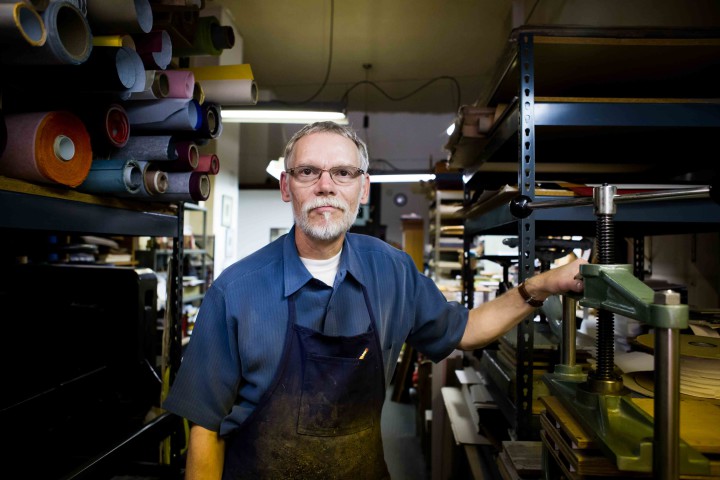
An Afternoon at Pettingell Book Bindery in Berkeley
Berkeley Balcony Survivor Making ‘Great Progress’
Berkeley's 'First Couple' Issues a Tough Water-Saving Challenge
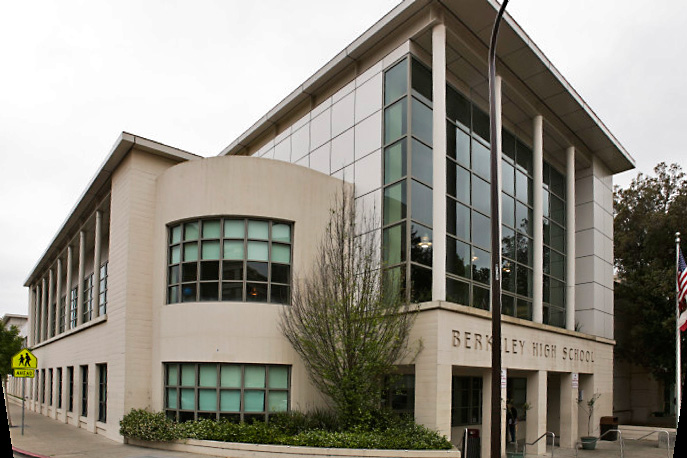
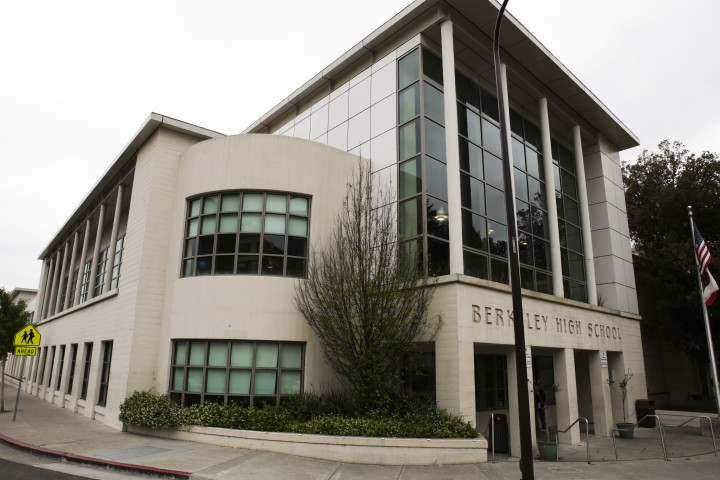
Berkeley High School Recalls Yearbook Due to Offensive Comment
Berkeley Poised to Adopt Tougher School Enrollment Policy
CHP Arrests Man Wanted in Wrong-Way Chase, Berkeley Crash
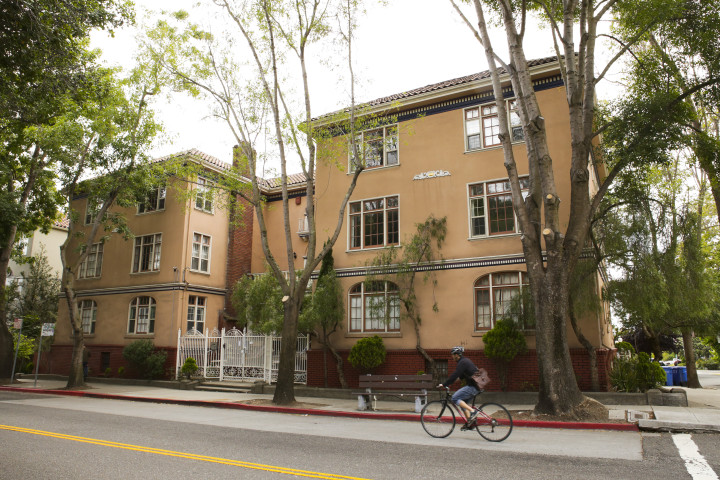
Short-Term Rentals Are Squeezing Out Berkeley Renters
Berkeley's Latest Help-the-Homeless Effort: Cash Boxes on the Street
Berkeley Tuolumne Camp Plans Show Several Changes
Berkeley Almost Ready for Input on Tuolumne Camp
Berkeley's Ecology Center Gets Grant to Expand Access to Produce
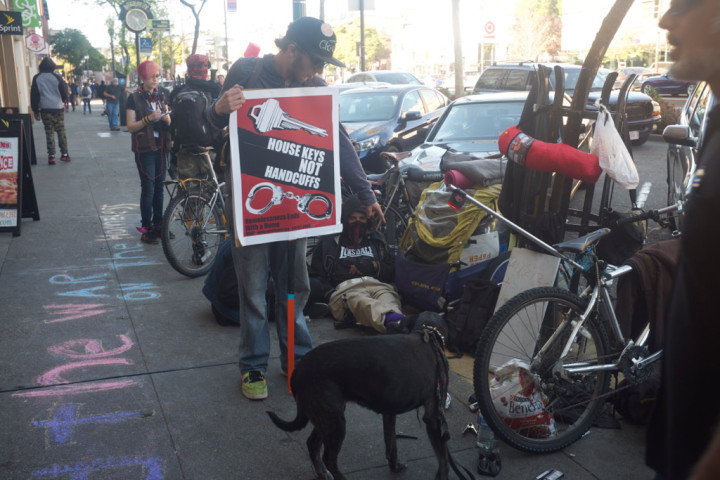
Homeless in Berkeley Accuse 'Downtown Ambassadors' of Harassment
window.__IS_SSR__=true
window.__INITIAL_STATE__={
"attachmentsReducer": {
"audio_0": {
"type": "attachments",
"id": "audio_0",
"imgSizes": {
"kqedFullSize": {
"file": "https://ww2.kqed.org/news/wp-content/themes/KQED-unified/img/audio_bgs/background0.jpg"
}
}
},
"audio_1": {
"type": "attachments",
"id": "audio_1",
"imgSizes": {
"kqedFullSize": {
"file": "https://ww2.kqed.org/news/wp-content/themes/KQED-unified/img/audio_bgs/background1.jpg"
}
}
},
"audio_2": {
"type": "attachments",
"id": "audio_2",
"imgSizes": {
"kqedFullSize": {
"file": "https://ww2.kqed.org/news/wp-content/themes/KQED-unified/img/audio_bgs/background2.jpg"
}
}
},
"audio_3": {
"type": "attachments",
"id": "audio_3",
"imgSizes": {
"kqedFullSize": {
"file": "https://ww2.kqed.org/news/wp-content/themes/KQED-unified/img/audio_bgs/background3.jpg"
}
}
},
"audio_4": {
"type": "attachments",
"id": "audio_4",
"imgSizes": {
"kqedFullSize": {
"file": "https://ww2.kqed.org/news/wp-content/themes/KQED-unified/img/audio_bgs/background4.jpg"
}
}
},
"placeholder": {
"type": "attachments",
"id": "placeholder",
"imgSizes": {
"thumbnail": {
"file": "https://cdn.kqed.org/wp-content/uploads/2024/12/KQED-Default-Image-816638274-2000x1333-1-160x107.jpg",
"width": 160,
"height": 107,
"mimeType": "image/jpeg"
},
"medium": {
"file": "https://cdn.kqed.org/wp-content/uploads/2024/12/KQED-Default-Image-816638274-2000x1333-1-800x533.jpg",
"width": 800,
"height": 533,
"mimeType": "image/jpeg"
},
"medium_large": {
"file": "https://cdn.kqed.org/wp-content/uploads/2024/12/KQED-Default-Image-816638274-2000x1333-1-768x512.jpg",
"width": 768,
"height": 512,
"mimeType": "image/jpeg"
},
"large": {
"file": "https://cdn.kqed.org/wp-content/uploads/2024/12/KQED-Default-Image-816638274-2000x1333-1-1020x680.jpg",
"width": 1020,
"height": 680,
"mimeType": "image/jpeg"
},
"1536x1536": {
"file": "https://cdn.kqed.org/wp-content/uploads/2024/12/KQED-Default-Image-816638274-2000x1333-1-1536x1024.jpg",
"width": 1536,
"height": 1024,
"mimeType": "image/jpeg"
},
"fd-lrg": {
"file": "https://cdn.kqed.org/wp-content/uploads/2024/12/KQED-Default-Image-816638274-2000x1333-1-1536x1024.jpg",
"width": 1536,
"height": 1024,
"mimeType": "image/jpeg"
},
"fd-med": {
"file": "https://cdn.kqed.org/wp-content/uploads/2024/12/KQED-Default-Image-816638274-2000x1333-1-1020x680.jpg",
"width": 1020,
"height": 680,
"mimeType": "image/jpeg"
},
"fd-sm": {
"file": "https://cdn.kqed.org/wp-content/uploads/2024/12/KQED-Default-Image-816638274-2000x1333-1-800x533.jpg",
"width": 800,
"height": 533,
"mimeType": "image/jpeg"
},
"post-thumbnail": {
"file": "https://cdn.kqed.org/wp-content/uploads/2024/12/KQED-Default-Image-816638274-2000x1333-1-672x372.jpg",
"width": 672,
"height": 372,
"mimeType": "image/jpeg"
},
"twentyfourteen-full-width": {
"file": "https://cdn.kqed.org/wp-content/uploads/2024/12/KQED-Default-Image-816638274-2000x1333-1-1038x576.jpg",
"width": 1038,
"height": 576,
"mimeType": "image/jpeg"
},
"xxsmall": {
"file": "https://cdn.kqed.org/wp-content/uploads/2024/12/KQED-Default-Image-816638274-2000x1333-1-160x107.jpg",
"width": 160,
"height": 107,
"mimeType": "image/jpeg"
},
"xsmall": {
"file": "https://cdn.kqed.org/wp-content/uploads/2024/12/KQED-Default-Image-816638274-2000x1333-1-672x372.jpg",
"width": 672,
"height": 372,
"mimeType": "image/jpeg"
},
"small": {
"file": "https://cdn.kqed.org/wp-content/uploads/2024/12/KQED-Default-Image-816638274-2000x1333-1-672x372.jpg",
"width": 672,
"height": 372,
"mimeType": "image/jpeg"
},
"xlarge": {
"file": "https://cdn.kqed.org/wp-content/uploads/2024/12/KQED-Default-Image-816638274-2000x1333-1-1020x680.jpg",
"width": 1020,
"height": 680,
"mimeType": "image/jpeg"
},
"full-width": {
"file": "https://cdn.kqed.org/wp-content/uploads/2024/12/KQED-Default-Image-816638274-2000x1333-1-1920x1280.jpg",
"width": 1920,
"height": 1280,
"mimeType": "image/jpeg"
},
"guest-author-32": {
"file": "https://cdn.kqed.org/wp-content/uploads/2025/01/KQED-Default-Image-816638274-1333x1333-1-160x160.jpg",
"width": 32,
"height": 32,
"mimeType": "image/jpeg"
},
"guest-author-50": {
"file": "https://cdn.kqed.org/wp-content/uploads/2025/01/KQED-Default-Image-816638274-1333x1333-1-160x160.jpg",
"width": 50,
"height": 50,
"mimeType": "image/jpeg"
},
"guest-author-64": {
"file": "https://cdn.kqed.org/wp-content/uploads/2025/01/KQED-Default-Image-816638274-1333x1333-1-160x160.jpg",
"width": 64,
"height": 64,
"mimeType": "image/jpeg"
},
"guest-author-96": {
"file": "https://cdn.kqed.org/wp-content/uploads/2025/01/KQED-Default-Image-816638274-1333x1333-1-160x160.jpg",
"width": 96,
"height": 96,
"mimeType": "image/jpeg"
},
"guest-author-128": {
"file": "https://cdn.kqed.org/wp-content/uploads/2025/01/KQED-Default-Image-816638274-1333x1333-1-160x160.jpg",
"width": 128,
"height": 128,
"mimeType": "image/jpeg"
},
"detail": {
"file": "https://cdn.kqed.org/wp-content/uploads/2025/01/KQED-Default-Image-816638274-1333x1333-1-160x160.jpg",
"width": 160,
"height": 160,
"mimeType": "image/jpeg"
},
"kqedFullSize": {
"file": "https://cdn.kqed.org/wp-content/uploads/2024/12/KQED-Default-Image-816638274-2000x1333-1.jpg",
"width": 2000,
"height": 1333
}
}
},
"news_10593032": {
"type": "attachments",
"id": "news_10593032",
"meta": {
"index": "attachments_1716263798",
"site": "news",
"id": "10593032",
"found": true
},
"parent": 10593028,
"imgSizes": {
"jmtc-small-thumb": {
"file": "https://ww2.kqed.org/app/uploads/sites/10/2015/07/IMG_3037-720x480-280x150.jpg",
"width": 280,
"mimeType": "image/jpeg",
"height": 150
},
"thumbnail": {
"file": "https://ww2.kqed.org/app/uploads/sites/10/2015/07/IMG_3037-720x480-400x267.jpg",
"width": 400,
"mimeType": "image/jpeg",
"height": 267
},
"post-thumbnail": {
"file": "https://ww2.kqed.org/app/uploads/sites/10/2015/07/IMG_3037-720x480-672x372.jpg",
"width": 672,
"mimeType": "image/jpeg",
"height": 372
},
"kqedFullSize": {
"file": "https://ww2.kqed.org/app/uploads/sites/10/2015/07/IMG_3037-720x480.jpg",
"width": 720,
"height": 480
},
"guest-author-96": {
"file": "https://ww2.kqed.org/app/uploads/sites/10/2015/07/IMG_3037-720x480-96x96.jpg",
"width": 96,
"mimeType": "image/jpeg",
"height": 96
},
"guest-author-64": {
"file": "https://ww2.kqed.org/app/uploads/sites/10/2015/07/IMG_3037-720x480-64x64.jpg",
"width": 64,
"mimeType": "image/jpeg",
"height": 64
},
"detail": {
"file": "https://ww2.kqed.org/app/uploads/sites/10/2015/07/IMG_3037-720x480-75x75.jpg",
"width": 75,
"mimeType": "image/jpeg",
"height": 75
},
"guest-author-32": {
"file": "https://ww2.kqed.org/app/uploads/sites/10/2015/07/IMG_3037-720x480-32x32.jpg",
"width": 32,
"mimeType": "image/jpeg",
"height": 32
},
"guest-author-128": {
"file": "https://ww2.kqed.org/app/uploads/sites/10/2015/07/IMG_3037-720x480-128x128.jpg",
"width": 128,
"mimeType": "image/jpeg",
"height": 128
}
},
"publishDate": 1436371043,
"modified": 1436383657,
"caption": "Klaus-Ullrich Rötzscher pressing freshly glued Florentine books at Pettingell Book Bindery in downtown Berkeley. ",
"description": null,
"title": "IMG_3037-720x480",
"credit": "Melati Citrawireja/Berkeleyside",
"status": "inherit",
"isLoading": false,
"fetchFailed": false
},
"news_10565258": {
"type": "attachments",
"id": "news_10565258",
"meta": {
"index": "attachments_1716263798",
"site": "news",
"id": "10565258",
"found": true
},
"parent": 10565257,
"imgSizes": {
"twentyfourteen-full-width": {
"file": "https://ww2.kqed.org/app/uploads/sites/10/2015/06/balcony-1024x576.jpg",
"width": 1024,
"mimeType": "image/jpeg",
"height": 576
},
"jmtc-small-thumb": {
"file": "https://ww2.kqed.org/app/uploads/sites/10/2015/06/balcony-280x150.jpg",
"width": 280,
"mimeType": "image/jpeg",
"height": 150
},
"thumbnail": {
"file": "https://ww2.kqed.org/app/uploads/sites/10/2015/06/balcony-400x300.jpg",
"width": 400,
"mimeType": "image/jpeg",
"height": 300
},
"fd-sm": {
"file": "https://ww2.kqed.org/app/uploads/sites/10/2015/06/balcony-960x720.jpg",
"width": 960,
"mimeType": "image/jpeg",
"height": 720
},
"post-thumbnail": {
"file": "https://ww2.kqed.org/app/uploads/sites/10/2015/06/balcony-672x372.jpg",
"width": 672,
"mimeType": "image/jpeg",
"height": 372
},
"kqedFullSize": {
"file": "https://ww2.kqed.org/app/uploads/sites/10/2015/06/balcony.jpg",
"width": 1024,
"height": 768
},
"guest-author-96": {
"file": "https://ww2.kqed.org/app/uploads/sites/10/2015/06/balcony-96x96.jpg",
"width": 96,
"mimeType": "image/jpeg",
"height": 96
},
"medium": {
"file": "https://ww2.kqed.org/app/uploads/sites/10/2015/06/balcony-800x600.jpg",
"width": 800,
"mimeType": "image/jpeg",
"height": 600
},
"guest-author-64": {
"file": "https://ww2.kqed.org/app/uploads/sites/10/2015/06/balcony-64x64.jpg",
"width": 64,
"mimeType": "image/jpeg",
"height": 64
},
"detail": {
"file": "https://ww2.kqed.org/app/uploads/sites/10/2015/06/balcony-75x75.jpg",
"width": 75,
"mimeType": "image/jpeg",
"height": 75
},
"guest-author-32": {
"file": "https://ww2.kqed.org/app/uploads/sites/10/2015/06/balcony-32x32.jpg",
"width": 32,
"mimeType": "image/jpeg",
"height": 32
},
"guest-author-128": {
"file": "https://ww2.kqed.org/app/uploads/sites/10/2015/06/balcony-128x128.jpg",
"width": 128,
"mimeType": "image/jpeg",
"height": 128
}
},
"publishDate": 1434462141,
"modified": 1435940601,
"caption": "The fourth-floor balcony that collapsed at a downtown Berkeley apartment building.",
"description": null,
"title": "Berkeley-Balcony",
"credit": "KRON4 via Twitter",
"status": "inherit",
"isLoading": false,
"fetchFailed": false
},
"news_10344940": {
"type": "attachments",
"id": "news_10344940",
"meta": {
"index": "attachments_1716263798",
"site": "news",
"id": "10344940",
"found": true
},
"parent": 10344938,
"imgSizes": {
"twentyfourteen-full-width": {
"file": "https://ww2.kqed.org/app/uploads/sites/10/2014/10/spigot-1038x576.jpg",
"width": 1038,
"mimeType": "image/jpeg",
"height": 576
},
"thumbnail": {
"file": "https://ww2.kqed.org/app/uploads/sites/10/2014/10/spigot-400x266.jpg",
"width": 400,
"mimeType": "image/jpeg",
"height": 266
},
"post-thumbnail": {
"file": "https://ww2.kqed.org/app/uploads/sites/10/2014/10/spigot-672x372.jpg",
"width": 672,
"mimeType": "image/jpeg",
"height": 372
},
"kqedFullSize": {
"file": "https://ww2.kqed.org/app/uploads/sites/10/2014/10/spigot-e1414789543327.jpg",
"width": 1440,
"height": 959
},
"large": {
"file": "https://ww2.kqed.org/app/uploads/sites/10/2014/10/spigot-1440x959.jpg",
"width": 1440,
"mimeType": "image/jpeg",
"height": 959
},
"guest-author-96": {
"file": "https://ww2.kqed.org/app/uploads/sites/10/2014/10/spigot-96x96.jpg",
"width": 96,
"mimeType": "image/jpeg",
"height": 96
},
"medium": {
"file": "https://ww2.kqed.org/app/uploads/sites/10/2014/10/spigot-800x532.jpg",
"width": 800,
"mimeType": "image/jpeg",
"height": 532
},
"guest-author-64": {
"file": "https://ww2.kqed.org/app/uploads/sites/10/2014/10/spigot-64x64.jpg",
"width": 64,
"mimeType": "image/jpeg",
"height": 64
},
"detail": {
"file": "https://ww2.kqed.org/app/uploads/sites/10/2014/10/spigot-75x75.jpg",
"width": 75,
"mimeType": "image/jpeg",
"height": 75
},
"guest-author-32": {
"file": "https://ww2.kqed.org/app/uploads/sites/10/2014/10/spigot-32x32.jpg",
"width": 32,
"mimeType": "image/jpeg",
"height": 32
},
"guest-author-128": {
"file": "https://ww2.kqed.org/app/uploads/sites/10/2014/10/spigot-128x128.jpg",
"width": 128,
"mimeType": "image/jpeg",
"height": 128
}
},
"publishDate": 1414090916,
"modified": 1433269800,
"caption": "A drought-besieged garden spigot. ",
"description": "(iStock/Getty Images)",
"title": "Drought-Spigot",
"credit": "iStock/Getty Images",
"status": "inherit",
"isLoading": false,
"fetchFailed": false
},
"news_10550659": {
"type": "attachments",
"id": "news_10550659",
"meta": {
"index": "attachments_1716263798",
"site": "news",
"id": "10550659",
"found": true
},
"parent": 10550658,
"imgSizes": {
"thumbnail": {
"file": "https://ww2.kqed.org/app/uploads/sites/10/2015/06/BHS-Mishalov-400x267.jpg",
"width": 400,
"mimeType": "image/jpeg",
"height": 267
},
"post-thumbnail": {
"file": "https://ww2.kqed.org/app/uploads/sites/10/2015/06/BHS-Mishalov-672x372.jpg",
"width": 672,
"mimeType": "image/jpeg",
"height": 372
},
"kqedFullSize": {
"file": "https://ww2.kqed.org/app/uploads/sites/10/2015/06/BHS-Mishalov.jpg",
"width": 687,
"height": 458
},
"guest-author-96": {
"file": "https://ww2.kqed.org/app/uploads/sites/10/2015/06/BHS-Mishalov-96x96.jpg",
"width": 96,
"mimeType": "image/jpeg",
"height": 96
},
"guest-author-64": {
"file": "https://ww2.kqed.org/app/uploads/sites/10/2015/06/BHS-Mishalov-64x64.jpg",
"width": 64,
"mimeType": "image/jpeg",
"height": 64
},
"detail": {
"file": "https://ww2.kqed.org/app/uploads/sites/10/2015/06/BHS-Mishalov-75x75.jpg",
"width": 75,
"mimeType": "image/jpeg",
"height": 75
},
"guest-author-32": {
"file": "https://ww2.kqed.org/app/uploads/sites/10/2015/06/BHS-Mishalov-32x32.jpg",
"width": 32,
"mimeType": "image/jpeg",
"height": 32
},
"guest-author-128": {
"file": "https://ww2.kqed.org/app/uploads/sites/10/2015/06/BHS-Mishalov-128x128.jpg",
"width": 128,
"mimeType": "image/jpeg",
"height": 128
}
},
"publishDate": 1433434375,
"modified": 1433434572,
"caption": "Berkeley High School. ",
"description": null,
"title": "Berkeley High School",
"credit": "Berkeleyside/Melati Citrawireja",
"status": "inherit",
"isLoading": false,
"fetchFailed": false
},
"news_10543905": {
"type": "attachments",
"id": "news_10543905",
"meta": {
"index": "attachments_1716263798",
"site": "news",
"id": "10543905",
"found": true
},
"parent": 10543897,
"imgSizes": {
"thumbnail": {
"file": "https://ww2.kqed.org/app/uploads/sites/10/2015/05/BerkeleyStockphotos5-18_7-720x480-400x267.jpg",
"width": 400,
"mimeType": "image/jpeg",
"height": 267
},
"post-thumbnail": {
"file": "https://ww2.kqed.org/app/uploads/sites/10/2015/05/BerkeleyStockphotos5-18_7-720x480-672x372.jpg",
"width": 672,
"mimeType": "image/jpeg",
"height": 372
},
"kqedFullSize": {
"file": "https://ww2.kqed.org/app/uploads/sites/10/2015/05/BerkeleyStockphotos5-18_7-720x480.jpg",
"width": 720,
"height": 480
},
"guest-author-96": {
"file": "https://ww2.kqed.org/app/uploads/sites/10/2015/05/BerkeleyStockphotos5-18_7-720x480-96x96.jpg",
"width": 96,
"mimeType": "image/jpeg",
"height": 96
},
"guest-author-64": {
"file": "https://ww2.kqed.org/app/uploads/sites/10/2015/05/BerkeleyStockphotos5-18_7-720x480-64x64.jpg",
"width": 64,
"mimeType": "image/jpeg",
"height": 64
},
"detail": {
"file": "https://ww2.kqed.org/app/uploads/sites/10/2015/05/BerkeleyStockphotos5-18_7-720x480-75x75.jpg",
"width": 75,
"mimeType": "image/jpeg",
"height": 75
},
"guest-author-32": {
"file": "https://ww2.kqed.org/app/uploads/sites/10/2015/05/BerkeleyStockphotos5-18_7-720x480-32x32.jpg",
"width": 32,
"mimeType": "image/jpeg",
"height": 32
},
"guest-author-128": {
"file": "https://ww2.kqed.org/app/uploads/sites/10/2015/05/BerkeleyStockphotos5-18_7-720x480-128x128.jpg",
"width": 128,
"mimeType": "image/jpeg",
"height": 128
}
},
"publishDate": 1432939662,
"modified": 1432939689,
"caption": "BUSD rejected 11% of applicants from private middle schools to Berkeley High School for 2015-2016 after stricter enforcement requirements were implemented. Now the board is considering an even tougher policy. ",
"description": null,
"title": "BerkeleyStockphotos5-18_7-720x480",
"credit": "Melati Citrawireja",
"status": "inherit",
"isLoading": false,
"fetchFailed": false
},
"news_10541318": {
"type": "attachments",
"id": "news_10541318",
"meta": {
"index": "attachments_1716263798",
"site": "news",
"id": "10541318",
"found": true
},
"parent": 10541316,
"imgSizes": {
"twentyfourteen-full-width": {
"file": "https://ww2.kqed.org/app/uploads/sites/10/2015/05/17807101192_c0240e696f_o-1038x576.jpg",
"width": 1038,
"mimeType": "image/jpeg",
"height": 576
},
"thumbnail": {
"file": "https://ww2.kqed.org/app/uploads/sites/10/2015/05/17807101192_c0240e696f_o-400x215.jpg",
"width": 400,
"mimeType": "image/jpeg",
"height": 215
},
"fd-sm": {
"file": "https://ww2.kqed.org/app/uploads/sites/10/2015/05/17807101192_c0240e696f_o-960x515.jpg",
"width": 960,
"mimeType": "image/jpeg",
"height": 515
},
"post-thumbnail": {
"file": "https://ww2.kqed.org/app/uploads/sites/10/2015/05/17807101192_c0240e696f_o-672x372.jpg",
"width": 672,
"mimeType": "image/jpeg",
"height": 372
},
"kqedFullSize": {
"file": "https://ww2.kqed.org/app/uploads/sites/10/2015/05/17807101192_c0240e696f_o-e1432757482731.jpg",
"width": 1920,
"height": 1030
},
"large": {
"file": "https://ww2.kqed.org/app/uploads/sites/10/2015/05/17807101192_c0240e696f_o-1440x772.jpg",
"width": 1440,
"mimeType": "image/jpeg",
"height": 772
},
"guest-author-96": {
"file": "https://ww2.kqed.org/app/uploads/sites/10/2015/05/17807101192_c0240e696f_o-96x96.jpg",
"width": 96,
"mimeType": "image/jpeg",
"height": 96
},
"medium": {
"file": "https://ww2.kqed.org/app/uploads/sites/10/2015/05/17807101192_c0240e696f_o-800x429.jpg",
"width": 800,
"mimeType": "image/jpeg",
"height": 429
},
"guest-author-64": {
"file": "https://ww2.kqed.org/app/uploads/sites/10/2015/05/17807101192_c0240e696f_o-64x64.jpg",
"width": 64,
"mimeType": "image/jpeg",
"height": 64
},
"guest-author-32": {
"file": "https://ww2.kqed.org/app/uploads/sites/10/2015/05/17807101192_c0240e696f_o-32x32.jpg",
"width": 32,
"mimeType": "image/jpeg",
"height": 32
},
"fd-med": {
"file": "https://ww2.kqed.org/app/uploads/sites/10/2015/05/17807101192_c0240e696f_o-1180x633.jpg",
"width": 1180,
"mimeType": "image/jpeg",
"height": 633
},
"detail": {
"file": "https://ww2.kqed.org/app/uploads/sites/10/2015/05/17807101192_c0240e696f_o-75x75.jpg",
"width": 75,
"mimeType": "image/jpeg",
"height": 75
},
"guest-author-128": {
"file": "https://ww2.kqed.org/app/uploads/sites/10/2015/05/17807101192_c0240e696f_o-128x128.jpg",
"width": 128,
"mimeType": "image/jpeg",
"height": 128
}
},
"publishDate": 1432757370,
"modified": 1432757501,
"caption": "Jerome Wingert allegedly drove the stolen Honda Accord, left, that crashed into an SUV on Hearst Avenue in Berkeley after a 30-mile police chase that began in Concord.",
"description": null,
"title": "Berkeley Crash",
"credit": "Dan Brekke/KQED",
"status": "inherit",
"isLoading": false,
"fetchFailed": false
},
"news_10540272": {
"type": "attachments",
"id": "news_10540272",
"meta": {
"index": "attachments_1716263798",
"site": "news",
"id": "10540272",
"found": true
},
"parent": 10540270,
"imgSizes": {
"thumbnail": {
"file": "https://ww2.kqed.org/app/uploads/sites/10/2015/05/College-Avenue-Apartment-complex-400x267.jpg",
"width": 400,
"mimeType": "image/jpeg",
"height": 267
},
"post-thumbnail": {
"file": "https://ww2.kqed.org/app/uploads/sites/10/2015/05/College-Avenue-Apartment-complex-672x372.jpg",
"width": 672,
"mimeType": "image/jpeg",
"height": 372
},
"kqedFullSize": {
"file": "https://ww2.kqed.org/app/uploads/sites/10/2015/05/College-Avenue-Apartment-complex.jpg",
"width": 720,
"height": 480
},
"guest-author-96": {
"file": "https://ww2.kqed.org/app/uploads/sites/10/2015/05/College-Avenue-Apartment-complex-96x96.jpg",
"width": 96,
"mimeType": "image/jpeg",
"height": 96
},
"guest-author-64": {
"file": "https://ww2.kqed.org/app/uploads/sites/10/2015/05/College-Avenue-Apartment-complex-64x64.jpg",
"width": 64,
"mimeType": "image/jpeg",
"height": 64
},
"detail": {
"file": "https://ww2.kqed.org/app/uploads/sites/10/2015/05/College-Avenue-Apartment-complex-75x75.jpg",
"width": 75,
"mimeType": "image/jpeg",
"height": 75
},
"guest-author-32": {
"file": "https://ww2.kqed.org/app/uploads/sites/10/2015/05/College-Avenue-Apartment-complex-32x32.jpg",
"width": 32,
"mimeType": "image/jpeg",
"height": 32
},
"guest-author-128": {
"file": "https://ww2.kqed.org/app/uploads/sites/10/2015/05/College-Avenue-Apartment-complex-128x128.jpg",
"width": 128,
"mimeType": "image/jpeg",
"height": 128
}
},
"publishDate": 1432685699,
"modified": 1533250125,
"caption": "A rent-controlled apartment complex at 3100 College Ave. in Berkeley. ",
"description": null,
"title": "College Avenue Apartment complex",
"credit": "Melati Citrawireja/KQED",
"status": "inherit",
"isLoading": false,
"fetchFailed": false
},
"news_10521883": {
"type": "attachments",
"id": "news_10521883",
"meta": {
"index": "attachments_1716263798",
"site": "news",
"id": "10521883",
"found": true
},
"parent": 10521882,
"imgSizes": {
"twentyfourteen-full-width": {
"file": "https://ww2.kqed.org/app/uploads/sites/10/2015/05/berkeleycashboxes-1038x576.jpg",
"width": 1038,
"mimeType": "image/jpeg",
"height": 576
},
"thumbnail": {
"file": "https://ww2.kqed.org/app/uploads/sites/10/2015/05/berkeleycashboxes-400x266.jpg",
"width": 400,
"mimeType": "image/jpeg",
"height": 266
},
"fd-sm": {
"file": "https://ww2.kqed.org/app/uploads/sites/10/2015/05/berkeleycashboxes-960x640.jpg",
"width": 960,
"mimeType": "image/jpeg",
"height": 640
},
"post-thumbnail": {
"file": "https://ww2.kqed.org/app/uploads/sites/10/2015/05/berkeleycashboxes-672x372.jpg",
"width": 672,
"mimeType": "image/jpeg",
"height": 372
},
"kqedFullSize": {
"file": "https://ww2.kqed.org/app/uploads/sites/10/2015/05/berkeleycashboxes-e1431367373521.jpg",
"width": 1920,
"height": 1279
},
"large": {
"file": "https://ww2.kqed.org/app/uploads/sites/10/2015/05/berkeleycashboxes-1440x959.jpg",
"width": 1440,
"mimeType": "image/jpeg",
"height": 959
},
"guest-author-96": {
"file": "https://ww2.kqed.org/app/uploads/sites/10/2015/05/berkeleycashboxes-96x96.jpg",
"width": 96,
"mimeType": "image/jpeg",
"height": 96
},
"medium": {
"file": "https://ww2.kqed.org/app/uploads/sites/10/2015/05/berkeleycashboxes-800x533.jpg",
"width": 800,
"mimeType": "image/jpeg",
"height": 533
},
"guest-author-64": {
"file": "https://ww2.kqed.org/app/uploads/sites/10/2015/05/berkeleycashboxes-64x64.jpg",
"width": 64,
"mimeType": "image/jpeg",
"height": 64
},
"guest-author-32": {
"file": "https://ww2.kqed.org/app/uploads/sites/10/2015/05/berkeleycashboxes-32x32.jpg",
"width": 32,
"mimeType": "image/jpeg",
"height": 32
},
"fd-med": {
"file": "https://ww2.kqed.org/app/uploads/sites/10/2015/05/berkeleycashboxes-1180x786.jpg",
"width": 1180,
"mimeType": "image/jpeg",
"height": 786
},
"detail": {
"file": "https://ww2.kqed.org/app/uploads/sites/10/2015/05/berkeleycashboxes-75x75.jpg",
"width": 75,
"mimeType": "image/jpeg",
"height": 75
},
"guest-author-128": {
"file": "https://ww2.kqed.org/app/uploads/sites/10/2015/05/berkeleycashboxes-128x128.jpg",
"width": 128,
"mimeType": "image/jpeg",
"height": 128
}
},
"publishDate": 1431367334,
"modified": 1431381391,
"caption": "Left to right: Downtown Berkeley Association CEO John Caner, Vice Mayor Linda Maio, Berkeley Food & Housing Project Executive Director Terrie Light, and City Councilman Jesse Arreguín pose before making the first donations to a Positive Change box. ",
"description": null,
"title": "Berkeley-Homeless Donations",
"credit": "\u003ca href=\"http://www.berkeleyside.com\">Seung Y. Lee\u003c/a>/Berkeleyside",
"status": "inherit",
"isLoading": false,
"fetchFailed": false
},
"news_10488998": {
"type": "attachments",
"id": "news_10488998",
"meta": {
"index": "attachments_1716263798",
"site": "news",
"id": "10488998",
"found": true
},
"parent": 10488994,
"imgSizes": {
"twentyfourteen-full-width": {
"file": "https://ww2.kqed.org/app/uploads/sites/10/2015/04/tuolomne-1038x576.png",
"width": 1038,
"mimeType": "image/png",
"height": 576
},
"thumbnail": {
"file": "https://ww2.kqed.org/app/uploads/sites/10/2015/04/tuolomne-400x235.png",
"width": 400,
"mimeType": "image/png",
"height": 235
},
"fd-sm": {
"file": "https://ww2.kqed.org/app/uploads/sites/10/2015/04/tuolomne-320x188.png",
"width": 320,
"mimeType": "image/png",
"height": 188
},
"post-thumbnail": {
"file": "https://ww2.kqed.org/app/uploads/sites/10/2015/04/tuolomne-672x372.png",
"width": 672,
"mimeType": "image/png",
"height": 372
},
"kqedFullSize": {
"file": "https://ww2.kqed.org/app/uploads/sites/10/2015/04/tuolomne.png",
"width": 1248,
"height": 733
},
"guest-author-96": {
"file": "https://ww2.kqed.org/app/uploads/sites/10/2015/04/tuolomne-96x96.png",
"width": 96,
"mimeType": "image/png",
"height": 96
},
"medium": {
"file": "https://ww2.kqed.org/app/uploads/sites/10/2015/04/tuolomne-800x470.png",
"width": 800,
"mimeType": "image/png",
"height": 470
},
"guest-author-64": {
"file": "https://ww2.kqed.org/app/uploads/sites/10/2015/04/tuolomne-64x64.png",
"width": 64,
"mimeType": "image/png",
"height": 64
},
"guest-author-32": {
"file": "https://ww2.kqed.org/app/uploads/sites/10/2015/04/tuolomne-32x32.png",
"width": 32,
"mimeType": "image/png",
"height": 32
},
"fd-lrg": {
"file": "https://ww2.kqed.org/app/uploads/sites/10/2015/04/tuolomne-1180x693.png",
"width": 1180,
"mimeType": "image/png",
"height": 693
},
"fd-med": {
"file": "https://ww2.kqed.org/app/uploads/sites/10/2015/04/tuolomne-768x451.png",
"width": 768,
"mimeType": "image/png",
"height": 451
},
"detail": {
"file": "https://ww2.kqed.org/app/uploads/sites/10/2015/04/tuolomne-75x75.png",
"width": 75,
"mimeType": "image/png",
"height": 75
},
"guest-author-128": {
"file": "https://ww2.kqed.org/app/uploads/sites/10/2015/04/tuolomne-128x128.png",
"width": 128,
"mimeType": "image/png",
"height": 128
}
},
"publishDate": 1428960636,
"modified": 1428960678,
"caption": "Camp, as proposed. The city will be seeking feedback during a series of community meetings over the next few months. Note: Sun City will be off-limits under the current understanding with the forest service. New parking areas (in green crosshatch) appear next to areas A (staff and maintenance areas) and B (camper tent cabins). (View a larger version that includes the a key.) Image: City of Berkeley",
"description": null,
"title": "tuolomne",
"credit": null,
"status": "inherit",
"isLoading": false,
"fetchFailed": false
},
"news_10481561": {
"type": "attachments",
"id": "news_10481561",
"meta": {
"index": "attachments_1716263798",
"site": "news",
"id": "10481561",
"found": true
},
"parent": 10481554,
"imgSizes": {
"twentyfourteen-full-width": {
"file": "https://ww2.kqed.org/app/uploads/sites/10/2015/04/Tuolomne-1038x576.jpg",
"width": 1038,
"mimeType": "image/jpeg",
"height": 576
},
"thumbnail": {
"file": "https://ww2.kqed.org/app/uploads/sites/10/2015/04/Tuolomne-400x267.jpg",
"width": 400,
"mimeType": "image/jpeg",
"height": 267
},
"fd-sm": {
"file": "https://ww2.kqed.org/app/uploads/sites/10/2015/04/Tuolomne-320x213.jpg",
"width": 320,
"mimeType": "image/jpeg",
"height": 213
},
"post-thumbnail": {
"file": "https://ww2.kqed.org/app/uploads/sites/10/2015/04/Tuolomne-672x372.jpg",
"width": 672,
"mimeType": "image/jpeg",
"height": 372
},
"kqedFullSize": {
"file": "https://ww2.kqed.org/app/uploads/sites/10/2015/04/Tuolomne-e1428435091944.jpg",
"width": 1920,
"height": 1280
},
"large": {
"file": "https://ww2.kqed.org/app/uploads/sites/10/2015/04/Tuolomne-1440x960.jpg",
"width": 1440,
"mimeType": "image/jpeg",
"height": 960
},
"guest-author-96": {
"file": "https://ww2.kqed.org/app/uploads/sites/10/2015/04/Tuolomne-96x96.jpg",
"width": 96,
"mimeType": "image/jpeg",
"height": 96
},
"medium": {
"file": "https://ww2.kqed.org/app/uploads/sites/10/2015/04/Tuolomne-800x533.jpg",
"width": 800,
"mimeType": "image/jpeg",
"height": 533
},
"guest-author-64": {
"file": "https://ww2.kqed.org/app/uploads/sites/10/2015/04/Tuolomne-64x64.jpg",
"width": 64,
"mimeType": "image/jpeg",
"height": 64
},
"guest-author-32": {
"file": "https://ww2.kqed.org/app/uploads/sites/10/2015/04/Tuolomne-32x32.jpg",
"width": 32,
"mimeType": "image/jpeg",
"height": 32
},
"fd-lrg": {
"file": "https://ww2.kqed.org/app/uploads/sites/10/2015/04/Tuolomne-1180x787.jpg",
"width": 1180,
"mimeType": "image/jpeg",
"height": 787
},
"fd-med": {
"file": "https://ww2.kqed.org/app/uploads/sites/10/2015/04/Tuolomne-768x512.jpg",
"width": 768,
"mimeType": "image/jpeg",
"height": 512
},
"detail": {
"file": "https://ww2.kqed.org/app/uploads/sites/10/2015/04/Tuolomne-75x75.jpg",
"width": 75,
"mimeType": "image/jpeg",
"height": 75
},
"guest-author-128": {
"file": "https://ww2.kqed.org/app/uploads/sites/10/2015/04/Tuolomne-128x128.jpg",
"width": 128,
"mimeType": "image/jpeg",
"height": 128
}
},
"publishDate": 1428435080,
"modified": 1428435169,
"caption": "Damage from the Rim Fire at Berkeley Tuolumne Family Camp, August 2013.",
"description": "Damage from the Rim Fire at Berkeley Tuolumne Family Camp, August 2013.",
"title": "Tuolomne",
"credit": "Grace Rubenstein/KQED",
"status": "inherit",
"isLoading": false,
"fetchFailed": false
},
"news_10475238": {
"type": "attachments",
"id": "news_10475238",
"meta": {
"index": "attachments_1716263798",
"site": "news",
"id": "10475238",
"found": true
},
"parent": 10475237,
"imgSizes": {
"thumbnail": {
"file": "https://ww2.kqed.org/app/uploads/sites/10/2015/04/farmersmarket1-400x299.jpg",
"width": 400,
"mimeType": "image/jpeg",
"height": 299
},
"fd-sm": {
"file": "https://ww2.kqed.org/app/uploads/sites/10/2015/04/farmersmarket1-320x239.jpg",
"width": 320,
"mimeType": "image/jpeg",
"height": 239
},
"post-thumbnail": {
"file": "https://ww2.kqed.org/app/uploads/sites/10/2015/04/farmersmarket1-672x372.jpg",
"width": 672,
"mimeType": "image/jpeg",
"height": 372
},
"kqedFullSize": {
"file": "https://ww2.kqed.org/app/uploads/sites/10/2015/04/farmersmarket1.jpg",
"width": 720,
"height": 538
},
"guest-author-96": {
"file": "https://ww2.kqed.org/app/uploads/sites/10/2015/04/farmersmarket1-96x96.jpg",
"width": 96,
"mimeType": "image/jpeg",
"height": 96
},
"guest-author-64": {
"file": "https://ww2.kqed.org/app/uploads/sites/10/2015/04/farmersmarket1-64x64.jpg",
"width": 64,
"mimeType": "image/jpeg",
"height": 64
},
"detail": {
"file": "https://ww2.kqed.org/app/uploads/sites/10/2015/04/farmersmarket1-75x75.jpg",
"width": 75,
"mimeType": "image/jpeg",
"height": 75
},
"guest-author-32": {
"file": "https://ww2.kqed.org/app/uploads/sites/10/2015/04/farmersmarket1-32x32.jpg",
"width": 32,
"mimeType": "image/jpeg",
"height": 32
},
"guest-author-128": {
"file": "https://ww2.kqed.org/app/uploads/sites/10/2015/04/farmersmarket1-128x128.jpg",
"width": 128,
"mimeType": "image/jpeg",
"height": 128
}
},
"publishDate": 1428003787,
"modified": 1428003865,
"caption": "A $3.7 million federal grant to the Ecology Center will allow it to expand its MarketMatch programs.",
"description": "A $3.7 million federal grant to the Ecology Center will allow it to expand its MarketMatch programs.",
"title": "farmersmarket1",
"credit": "Nancy Rubin/Berkeleyside",
"status": "inherit",
"isLoading": false,
"fetchFailed": false
},
"news_10471161": {
"type": "attachments",
"id": "news_10471161",
"meta": {
"index": "attachments_1716263798",
"site": "news",
"id": "10471161",
"found": true
},
"parent": 10471112,
"imgSizes": {
"thumbnail": {
"file": "https://ww2.kqed.org/app/uploads/sites/10/2015/03/16328096354_6d9612c27c_b-720x480-400x267.jpg",
"width": 400,
"mimeType": "image/jpeg",
"height": 267
},
"fd-sm": {
"file": "https://ww2.kqed.org/app/uploads/sites/10/2015/03/16328096354_6d9612c27c_b-720x480-320x213.jpg",
"width": 320,
"mimeType": "image/jpeg",
"height": 213
},
"post-thumbnail": {
"file": "https://ww2.kqed.org/app/uploads/sites/10/2015/03/16328096354_6d9612c27c_b-720x480-672x372.jpg",
"width": 672,
"mimeType": "image/jpeg",
"height": 372
},
"kqedFullSize": {
"file": "https://ww2.kqed.org/app/uploads/sites/10/2015/03/16328096354_6d9612c27c_b-720x480.jpg",
"width": 720,
"height": 480
},
"guest-author-96": {
"file": "https://ww2.kqed.org/app/uploads/sites/10/2015/03/16328096354_6d9612c27c_b-720x480-96x96.jpg",
"width": 96,
"mimeType": "image/jpeg",
"height": 96
},
"guest-author-64": {
"file": "https://ww2.kqed.org/app/uploads/sites/10/2015/03/16328096354_6d9612c27c_b-720x480-64x64.jpg",
"width": 64,
"mimeType": "image/jpeg",
"height": 64
},
"detail": {
"file": "https://ww2.kqed.org/app/uploads/sites/10/2015/03/16328096354_6d9612c27c_b-720x480-75x75.jpg",
"width": 75,
"mimeType": "image/jpeg",
"height": 75
},
"guest-author-32": {
"file": "https://ww2.kqed.org/app/uploads/sites/10/2015/03/16328096354_6d9612c27c_b-720x480-32x32.jpg",
"width": 32,
"mimeType": "image/jpeg",
"height": 32
},
"guest-author-128": {
"file": "https://ww2.kqed.org/app/uploads/sites/10/2015/03/16328096354_6d9612c27c_b-720x480-128x128.jpg",
"width": 128,
"mimeType": "image/jpeg",
"height": 128
}
},
"publishDate": 1427736204,
"modified": 1427737776,
"caption": "Activists angered by a video that caught a Downtown Ambassador assaulting a homeless man hold a rally March 27 to protest the violence and proposed new laws regulating homeless behavior. ",
"description": "Activists angered by a video that caught a Downtown Ambassador assaulting a homeless man hold a rally March 27 to protest the violence and proposed new laws regulating homeless behavior. ",
"title": "16328096354_6d9612c27c_b-720x480",
"credit": "Ted Friedman/Berkeleyside",
"status": "inherit",
"isLoading": false,
"fetchFailed": false
}
},
"audioPlayerReducer": {
"postId": "stream_live",
"isPaused": true,
"isPlaying": false,
"pfsActive": false,
"pledgeModalIsOpen": true,
"playerDrawerIsOpen": false,
"liveAudioPlayStartedAt": 0,
"liveAudioPlayContext": ""
},
"authorsReducer": {
"byline_news_10593028": {
"type": "authors",
"id": "byline_news_10593028",
"meta": {
"override": true
},
"slug": "byline_news_10593028",
"name": "Melati Citrawireja\u003cbr>\u003ca href=\"http://www.berkeleyside.com/\">Berkeleyside\u003c/a>",
"isLoading": false
},
"byline_news_10586744": {
"type": "authors",
"id": "byline_news_10586744",
"meta": {
"override": true
},
"slug": "byline_news_10586744",
"name": "Frances Dinkelspiel\u003cbr>\u003ca href=\"http://www.berkeleyside.com/\">Berkeleyside\u003c/a>",
"isLoading": false
},
"byline_news_10582840": {
"type": "authors",
"id": "byline_news_10582840",
"meta": {
"override": true
},
"slug": "byline_news_10582840",
"name": "\u003cstrong>\u003ca href=\"http://www.berkeleyside.com/author/emily-dugdale/\" target=\"_blank\">Emily Dugdale\u003c/a>\u003cbr />Berkeleyside\u003c/strong>",
"isLoading": false
},
"byline_news_10550658": {
"type": "authors",
"id": "byline_news_10550658",
"meta": {
"override": true
},
"slug": "byline_news_10550658",
"name": "\u003cstrong>\u003ca href=\"http://www.berkeleyside.com/author/eden/\" target=\"_blank\">Eden Teller\u003c/a>\u003cbr />Berkeleyside\u003c/strong>",
"isLoading": false
},
"byline_news_10543897": {
"type": "authors",
"id": "byline_news_10543897",
"meta": {
"override": true
},
"slug": "byline_news_10543897",
"name": " Seung Y. Lee\u003cbr> \u003ca href=\"http://www.berkeleyside.com/\">Berkeleyside\u003c/a>",
"isLoading": false
},
"byline_news_10541316": {
"type": "authors",
"id": "byline_news_10541316",
"meta": {
"override": true
},
"slug": "byline_news_10541316",
"name": "\u003cstrong>\u003ca href=\"http://www.berkeleyside.com/author/emilie/\" target=\"_blank\">Emilie Raguso\u003c/a>\u003cbr />Berkeleyside\u003c/strong>",
"isLoading": false
},
"byline_news_10540270": {
"type": "authors",
"id": "byline_news_10540270",
"meta": {
"override": true
},
"slug": "byline_news_10540270",
"name": "\u003cstrong>Frances Dinkelspiel\u003cbr />Berkeleyside\u003c/strong>",
"isLoading": false
},
"byline_news_10521882": {
"type": "authors",
"id": "byline_news_10521882",
"meta": {
"override": true
},
"slug": "byline_news_10521882",
"name": "\u003cstrong>\u003ca href=\"http://www.berkeleyside.com/author/seung-y-lee/\" target=\"_blank\">Seung Y. Lee\u003c/a>\u003cbr />Berkeleyside\u003c/strong>",
"isLoading": false
},
"byline_news_10488994": {
"type": "authors",
"id": "byline_news_10488994",
"meta": {
"override": true
},
"slug": "byline_news_10488994",
"name": "Emilie Raguso\u003cbr />Berkeleyside",
"isLoading": false
},
"byline_news_10481554": {
"type": "authors",
"id": "byline_news_10481554",
"meta": {
"override": true
},
"slug": "byline_news_10481554",
"name": "Emilie Raguso\u003cbr />Berkeleyside",
"isLoading": false
},
"byline_news_10475237": {
"type": "authors",
"id": "byline_news_10475237",
"meta": {
"override": true
},
"slug": "byline_news_10475237",
"name": "\u003cstrong>\u003ca href=\"http://www.berkeleyside.com/author/frances/\">Frances Dinkelspiel\u003c/a>\u003cbr />Berkeleyside\u003c/strong>",
"isLoading": false
},
"byline_news_10471112": {
"type": "authors",
"id": "byline_news_10471112",
"meta": {
"override": true
},
"slug": "byline_news_10471112",
"name": "\u003cstrong>Frances Dinkelspiel\u003cbr />Berkeleyside\u003c/strong>",
"isLoading": false
}
},
"pagesReducer": {
"news_affiliate_berkeleyside-2": {
"type": "terms",
"id": "news_5078",
"meta": {
"index": "terms_1716263798",
"site": "news",
"id": "5078",
"score": 16.655228
},
"featImg": null,
"name": "Berkeleyside",
"description": "Berkeleyside is Berkeley, California’s independently owned local news site. We report on the extraordinary diversity of people, issues, events, food and environment in our city on the Bay.",
"taxonomy": "affiliate",
"headData": {
"twImgId": null,
"twTitle": null,
"ogTitle": null,
"ogImgId": null,
"twDescription": null,
"description": "Berkeleyside is Berkeley, California’s independently owned local news site. We report on the extraordinary diversity of people, issues, events, food and environment in our city on the Bay.",
"title": "Berkeleyside Archives | KQED Arts",
"ogDescription": null
},
"ttid": 5099,
"slug": "berkeleyside-2",
"isLoading": false,
"title": "Berkeleyside",
"pageMeta": {
"site": "news",
"WpPageTemplate": "page-topic-editorial",
"currentPage": 5
},
"blocks": [
{
"blockName": "kqed/company-paragraph",
"content": "Berkeleyside is Berkeley, California’s independently owned local news site. We report on the extraordinary diversity of people, issues, events, food and environment in our city on the Bay."
},
{
"blockName": "kqed/post-list",
"attrs": {
"layout": "cardArticle2",
"query": "posts/news?affiliate=berkeleyside-2",
"seeMore": false,
"paginated": true,
"page": 5
}
},
{
"blockName": "kqed/ad"
}
]
}
},
"pfsSessionReducer": {},
"postsReducer": {
"stream_live": {
"type": "live",
"id": "stream_live",
"audioUrl": "https://streams.kqed.org/kqedradio",
"title": "Live Stream",
"excerpt": "Live Stream information currently unavailable.",
"link": "/radio",
"featImg": "",
"label": {
"name": "KQED Live",
"link": "/"
}
},
"stream_kqedNewscast": {
"type": "posts",
"id": "stream_kqedNewscast",
"audioUrl": "https://www.kqed.org/.stream/anon/radio/RDnews/newscast.mp3?_=1",
"title": "KQED Newscast",
"featImg": "",
"label": {
"name": "88.5 FM",
"link": "/"
}
},
"news_10593028": {
"type": "posts",
"id": "news_10593028",
"meta": {
"index": "posts_1716263798",
"site": "news",
"id": "10593028",
"score": null,
"sort": [
1436371929000
]
},
"parent": 0,
"labelTerm": {
"site": "news",
"term": 6944
},
"blocks": [],
"publishDate": 1436371929,
"format": "standard",
"disqusTitle": "An Afternoon at Pettingell Book Bindery in Berkeley",
"title": "An Afternoon at Pettingell Book Bindery in Berkeley",
"headTitle": "News Fix | KQED News",
"content": "\u003cp>\u003cem>In the first of a three-part series on expert craftspeople in Berkeley, Melati Citrawireja, a summer 2015 photo intern for Berkeleyside, visits a Berkeley bookbindery run for the past 21 years by Klaus-Ullrich Rötzscher.\u003c/em>\u003c/p>\n\u003cp>As I push open the glass door to \u003ca href=\"http://pettingellbookbindery.com/\">Pettingell Book Bindery\u003c/a> on Bancroft Avenue, I am greeted with a pleasant quietness, a rare occurrence in the busy hub of downtown Berkeley. The owner and master bookbinder, Klaus-Ullrich Rötzscher, greets me warmly and invites me into his workspace.\u003c/p>\n\u003cp>Rötzscher is a middle-aged tall and slender fellow, wearing a glue-coated apron and wire-rimmed spectacles. The long, narrow room is dimly lit, with quirky artwork and tchotchkes lining the walls. Ribbons, rolls of colorful paper and old tools fill every nook.\u003c/p>\n\u003cp>“I designed this place myself, and I am skinny,’ he jokes in his thick German accent as we squeeze through the walkway. “Actually, the bindery was set up this way when I bought it and I just filled it with more crap.” A Javanese wooden puppet dangling from a shelf seems to wink as I pass.\u003c/p>\n\u003cp>Rötzscher quickly tunes his Pandora to a French jazz station and gets to work pulling out a stack of greatly worn books and a few tools. Today’s job entails stripping off the tired spines of a first edition “Winnie the Pooh” book and a Wizard of Oz series from the 1940s, bringing them back to life with new foundations, polyvinyl acetate glue and patient care.\u003c/p>\n\u003cp>[ad fullwidth]\u003c/p>\n\u003cp>“This practice is actually very stressful and physical,” Rötzscher admits. “People don’t realize it, but books are heavy. When you work with them for this long, you really feel it. I am tired in the evenings … It’s easier if you really love it. I’m lucky to be in a position where I like what I do.”\u003c/p>\n\u003cp>Shreds of yellowed paper fall to the floor as Rötzscher works. He stops briefly every few minutes to scoop the confetti into a trash bin or to gather a thought as he recounts his career as a bookbinder, a time that has defined over 40 years of his life.\u003c/p>\n\u003cp>Rötzscher began bookbinding in Leipzig, Germany, with an apprenticeship at Schürer Bookbindery in 1972. Asked what spurred him to pursue the vocation, he says simply, “I always liked books, and I always liked working with my hands.” After this two-year training, he followed a trail of opportunities, moving first to Frankfurt and then to Munich, Bavaria. After eight years of work and study, he graduated in 1980 with two master's degrees. Later that year he moved to San Francisco, eventually opening his own bindery in 1987.\u003c/p>\n\u003cp>“San Francisco was good business, but stressful. The type of work was very precise and high-end. I thought, I can’t do this anymore.”\u003c/p>\n\u003cp>After almost a decade, he decided to escape the bustle of the city and move with his wife at the time and their two kids across the bay, buying Pettingell in Berkeley in 1994. “Now it’s meditative and quiet, and I can be as stressed as I want.”\u003c/p>\n\u003cp>When asked what he might have become if he hadn’t pursued the craft of bookbinding, he ponders for a long moment. “I don’t know. I can’t imagine. Maybe a detective. Maybe it’s a romantic notion because I like mystery novels.” After another beat, he continues, “I think it’s good if you don’t know what you would have done. I have no regrets. It’s been a good life.”\u003c/p>\n\u003cp>The phone rings and he lets the machine take it. “My proudest moment is that I could send my kids through college without going into debt. It was not easy, but I made it.”\u003c/p>\n\u003cp>During my two-hour visit to the book bindery, one customer swings by with a stack of prayer books that need rebinding.\u003c/p>\n\u003cp>“Business is harder these days,” admits Rötzscher. “For example, years ago, around graduation time, I was busy with dissertation theses. These days that is gone. But other things opened up, like self-publishing and memoirs. You know, it’s just changing. We have to adapt.”\u003c/p>\n\u003cp>Rötzscher currently spends his days working on these self-published books, along with family heirlooms, dictionaries, novels and manuscripts.\u003c/p>\n\u003cp>Additionally, as a way to fill in spare hours and to nurture his creativity, Rötzscher has recently released a line of hand-made journals, called \u003ca href=\"http://italianstationeryblog.com/pettingell-bookbindery-florentine-collections/#more-2044\">the Florentine Collection\u003c/a> (inspired by his love for the ancient Italian city). Bound in different covers, including sheepskin, suede and patterned paper, and stamped with various golden emblems, they reflect his simple yet elegant aesthetic.\u003c/p>\n\u003cp>“These days we are so disengaged. When you buy something, you don’t know who made it. You know it’s made in China or Germany, but the human connection is gone. When you look at something like this” — Rötzscher gestures to a stack of freshly-glued Florentine books patiently serving their time in the book press — “you can say it’s made by a craftsman. You can really say it’s handmade.”\u003c/p>\n\u003cp>And Rötzscher believes there is life yet in the bookbinding craft.\u003c/p>\n\u003cp>“I definitely think there’s a future in bookbinding. I wouldn’t say it’s a lost art, it just depends on what you want to do,” says Rötzscher.\u003c/p>\n\u003cp>He goes on to explain how the Bay Area has actually seen an increase in bookbinding in recent years, a change from the two or three that existed when he first came to America. To his knowledge, there are now six commercial bookbinderies, and many more independent binders who operate under the radar from their homes as a part-time job or a hobby. This produces some competition for him but, because most bookbinders specialize in a particular aspect of the craft, he doesn’t mind.\u003c/p>\n\u003cp>“I specialize in old books,” he says, “because no one wants to do it. It’s not sexy, and there’s no money in it.” He pulls out a large family Bible that he has recently fixed, gently unwrapping it from a cocoon of gauze. The cover is made of textured maroon leather, and it’s obvious that it carries extensive history. He points out places where the leather had worn away so much that he’d had to replace it, recreating the signature patterns and creases.\u003c/p>\n\u003cp>Toward the end of my afternoon at Pettingell, Rötzscher turns to me and imparts a piece of wisdom: “When you start something you have no idea where you’ll end up. That’s the beauty of life.”\u003c/p>\n\u003cp>\u003cem>\u003ca href=\"http://pettingellbookbindery.com/\">Pettingell Book Bindery\u003c/a> is at 2181 Bancroft Way, Berkeley, 94704. Tel: 510-845-3653. Connect with the business on\u003ca href=\"https://www.facebook.com/Number1Bindery\"> Facebook\u003c/a> and on \u003ca href=\"https://www.pinterest.com/Pettingellbook/pins/\">Pinterest\u003c/a>.\u003c/em>\u003c/p>\n\u003cp>\u003cem>Melati Citrawireja, a development studies undergraduate at UC Berkeley, is currently pursuing a career in visual journalism. She was a summer 2015 photo intern at Berkeleyside. More of her work can be found online at \u003ca href=\"http://www.melatiphotography.com/\">Melati Photography\u003c/a>.\u003c/em>\u003c/p>\n\u003cp>[ad floatright]\u003c/p>\n\u003cp>\u003cstrong>Do you rely on Berkeleyside for your local news? You can support independent local journalism by\u003ca href=\"http://www.berkeleyside.com/support-berkeleyside/\">becoming a Berkeleyside Member\u003c/a>. \u003c/strong>\u003c/p>\n\n",
"disqusIdentifier": "10593028 http://ww2.kqed.org/news/?p=10593028",
"disqusUrl": "https://ww2.kqed.org/news/2015/07/08/an-afternoon-at-pettingell-book-bindery-in-berkeley/",
"stats": {
"hasVideo": false,
"hasChartOrMap": false,
"hasAudio": false,
"hasPolis": false,
"wordCount": 1297,
"hasGoogleForm": false,
"hasGallery": false,
"hasHearkenModule": false,
"iframeSrcs": [],
"paragraphCount": 27
},
"modified": 1510171451,
"excerpt": "Craftsman says his work is very stressful and physical but that he likes working with his hands.",
"headData": {
"twImgId": "",
"twTitle": "",
"ogTitle": "",
"ogImgId": "",
"twDescription": "",
"description": "Craftsman says his work is very stressful and physical but that he likes working with his hands.",
"title": "An Afternoon at Pettingell Book Bindery in Berkeley | KQED",
"ogDescription": "",
"schema": {
"@context": "https://schema.org",
"@type": "NewsArticle",
"headline": "An Afternoon at Pettingell Book Bindery in Berkeley",
"datePublished": "2015-07-08T09:12:09-07:00",
"dateModified": "2017-11-08T12:04:11-08:00",
"image": "https://cdn.kqed.org/wp-content/uploads/2020/02/KQED-OG-Image@1x.png",
"isAccessibleForFree": "True",
"publisher": {
"@type": "NewsMediaOrganization",
"@id": "https://www.kqed.org/#organization",
"name": "KQED",
"logo": "https://cdn.kqed.org/wp-content/uploads/2020/02/KQED-OG-Image@1x.png",
"url": "https://www.kqed.org",
"sameAs": [
"https://www.facebook.com/KQED",
"https://twitter.com/KQED",
"https://www.instagram.com/kqed/",
"https://www.tiktok.com/@kqedofficial",
"https://www.linkedin.com/company/kqed",
"https://www.youtube.com/channel/UCeC0IOo7i1P_61zVUWbJ4nw"
]
}
}
},
"guestAuthors": [],
"slug": "an-afternoon-at-pettingell-book-bindery-in-berkeley",
"status": "publish",
"nprByline": "Melati Citrawireja\u003cbr>\u003ca href=\"http://www.berkeleyside.com/\">Berkeleyside\u003c/a>",
"path": "/news/10593028/an-afternoon-at-pettingell-book-bindery-in-berkeley",
"audioTrackLength": null,
"parsedContent": [
{
"type": "contentString",
"content": "\u003cdiv class=\"post-body\">\u003cp>\u003cp>\u003cem>In the first of a three-part series on expert craftspeople in Berkeley, Melati Citrawireja, a summer 2015 photo intern for Berkeleyside, visits a Berkeley bookbindery run for the past 21 years by Klaus-Ullrich Rötzscher.\u003c/em>\u003c/p>\n\u003cp>As I push open the glass door to \u003ca href=\"http://pettingellbookbindery.com/\">Pettingell Book Bindery\u003c/a> on Bancroft Avenue, I am greeted with a pleasant quietness, a rare occurrence in the busy hub of downtown Berkeley. The owner and master bookbinder, Klaus-Ullrich Rötzscher, greets me warmly and invites me into his workspace.\u003c/p>\n\u003cp>Rötzscher is a middle-aged tall and slender fellow, wearing a glue-coated apron and wire-rimmed spectacles. The long, narrow room is dimly lit, with quirky artwork and tchotchkes lining the walls. Ribbons, rolls of colorful paper and old tools fill every nook.\u003c/p>\n\u003cp>“I designed this place myself, and I am skinny,’ he jokes in his thick German accent as we squeeze through the walkway. “Actually, the bindery was set up this way when I bought it and I just filled it with more crap.” A Javanese wooden puppet dangling from a shelf seems to wink as I pass.\u003c/p>\n\u003cp>Rötzscher quickly tunes his Pandora to a French jazz station and gets to work pulling out a stack of greatly worn books and a few tools. Today’s job entails stripping off the tired spines of a first edition “Winnie the Pooh” book and a Wizard of Oz series from the 1940s, bringing them back to life with new foundations, polyvinyl acetate glue and patient care.\u003c/p>\n\u003cp>\u003c/p>\u003c/div>",
"attributes": {
"named": {},
"numeric": []
}
},
{
"type": "component",
"content": "",
"name": "ad",
"attributes": {
"named": {
"label": "fullwidth"
},
"numeric": [
"fullwidth"
]
}
},
{
"type": "contentString",
"content": "\u003cdiv class=\"post-body\">\u003cp>\u003c/p>\n\u003cp>“This practice is actually very stressful and physical,” Rötzscher admits. “People don’t realize it, but books are heavy. When you work with them for this long, you really feel it. I am tired in the evenings … It’s easier if you really love it. I’m lucky to be in a position where I like what I do.”\u003c/p>\n\u003cp>Shreds of yellowed paper fall to the floor as Rötzscher works. He stops briefly every few minutes to scoop the confetti into a trash bin or to gather a thought as he recounts his career as a bookbinder, a time that has defined over 40 years of his life.\u003c/p>\n\u003cp>Rötzscher began bookbinding in Leipzig, Germany, with an apprenticeship at Schürer Bookbindery in 1972. Asked what spurred him to pursue the vocation, he says simply, “I always liked books, and I always liked working with my hands.” After this two-year training, he followed a trail of opportunities, moving first to Frankfurt and then to Munich, Bavaria. After eight years of work and study, he graduated in 1980 with two master's degrees. Later that year he moved to San Francisco, eventually opening his own bindery in 1987.\u003c/p>\n\u003cp>“San Francisco was good business, but stressful. The type of work was very precise and high-end. I thought, I can’t do this anymore.”\u003c/p>\n\u003cp>After almost a decade, he decided to escape the bustle of the city and move with his wife at the time and their two kids across the bay, buying Pettingell in Berkeley in 1994. “Now it’s meditative and quiet, and I can be as stressed as I want.”\u003c/p>\n\u003cp>When asked what he might have become if he hadn’t pursued the craft of bookbinding, he ponders for a long moment. “I don’t know. I can’t imagine. Maybe a detective. Maybe it’s a romantic notion because I like mystery novels.” After another beat, he continues, “I think it’s good if you don’t know what you would have done. I have no regrets. It’s been a good life.”\u003c/p>\n\u003cp>The phone rings and he lets the machine take it. “My proudest moment is that I could send my kids through college without going into debt. It was not easy, but I made it.”\u003c/p>\n\u003cp>During my two-hour visit to the book bindery, one customer swings by with a stack of prayer books that need rebinding.\u003c/p>\n\u003cp>“Business is harder these days,” admits Rötzscher. “For example, years ago, around graduation time, I was busy with dissertation theses. These days that is gone. But other things opened up, like self-publishing and memoirs. You know, it’s just changing. We have to adapt.”\u003c/p>\n\u003cp>Rötzscher currently spends his days working on these self-published books, along with family heirlooms, dictionaries, novels and manuscripts.\u003c/p>\n\u003cp>Additionally, as a way to fill in spare hours and to nurture his creativity, Rötzscher has recently released a line of hand-made journals, called \u003ca href=\"http://italianstationeryblog.com/pettingell-bookbindery-florentine-collections/#more-2044\">the Florentine Collection\u003c/a> (inspired by his love for the ancient Italian city). Bound in different covers, including sheepskin, suede and patterned paper, and stamped with various golden emblems, they reflect his simple yet elegant aesthetic.\u003c/p>\n\u003cp>“These days we are so disengaged. When you buy something, you don’t know who made it. You know it’s made in China or Germany, but the human connection is gone. When you look at something like this” — Rötzscher gestures to a stack of freshly-glued Florentine books patiently serving their time in the book press — “you can say it’s made by a craftsman. You can really say it’s handmade.”\u003c/p>\n\u003cp>And Rötzscher believes there is life yet in the bookbinding craft.\u003c/p>\n\u003cp>“I definitely think there’s a future in bookbinding. I wouldn’t say it’s a lost art, it just depends on what you want to do,” says Rötzscher.\u003c/p>\n\u003cp>He goes on to explain how the Bay Area has actually seen an increase in bookbinding in recent years, a change from the two or three that existed when he first came to America. To his knowledge, there are now six commercial bookbinderies, and many more independent binders who operate under the radar from their homes as a part-time job or a hobby. This produces some competition for him but, because most bookbinders specialize in a particular aspect of the craft, he doesn’t mind.\u003c/p>\n\u003cp>“I specialize in old books,” he says, “because no one wants to do it. It’s not sexy, and there’s no money in it.” He pulls out a large family Bible that he has recently fixed, gently unwrapping it from a cocoon of gauze. The cover is made of textured maroon leather, and it’s obvious that it carries extensive history. He points out places where the leather had worn away so much that he’d had to replace it, recreating the signature patterns and creases.\u003c/p>\n\u003cp>Toward the end of my afternoon at Pettingell, Rötzscher turns to me and imparts a piece of wisdom: “When you start something you have no idea where you’ll end up. That’s the beauty of life.”\u003c/p>\n\u003cp>\u003cem>\u003ca href=\"http://pettingellbookbindery.com/\">Pettingell Book Bindery\u003c/a> is at 2181 Bancroft Way, Berkeley, 94704. Tel: 510-845-3653. Connect with the business on\u003ca href=\"https://www.facebook.com/Number1Bindery\"> Facebook\u003c/a> and on \u003ca href=\"https://www.pinterest.com/Pettingellbook/pins/\">Pinterest\u003c/a>.\u003c/em>\u003c/p>\n\u003cp>\u003cem>Melati Citrawireja, a development studies undergraduate at UC Berkeley, is currently pursuing a career in visual journalism. She was a summer 2015 photo intern at Berkeleyside. More of her work can be found online at \u003ca href=\"http://www.melatiphotography.com/\">Melati Photography\u003c/a>.\u003c/em>\u003c/p>\n\u003cp>\u003c/p>\u003c/div>",
"attributes": {
"named": {},
"numeric": []
}
},
{
"type": "component",
"content": "",
"name": "ad",
"attributes": {
"named": {
"label": "floatright"
},
"numeric": [
"floatright"
]
}
},
{
"type": "contentString",
"content": "\u003cdiv class=\"post-body\">\u003cp>\u003c/p>\n\u003cp>\u003cstrong>Do you rely on Berkeleyside for your local news? You can support independent local journalism by\u003ca href=\"http://www.berkeleyside.com/support-berkeleyside/\">becoming a Berkeleyside Member\u003c/a>. \u003c/strong>\u003c/p>\n\n\u003c/div>\u003c/p>",
"attributes": {
"named": {},
"numeric": []
}
}
],
"link": "/news/10593028/an-afternoon-at-pettingell-book-bindery-in-berkeley",
"authors": [
"byline_news_10593028"
],
"programs": [
"news_6944"
],
"categories": [
"news_223",
"news_8"
],
"affiliates": [
"news_5078"
],
"featImg": "news_10593032",
"label": "news_6944"
},
"news_10586744": {
"type": "posts",
"id": "news_10586744",
"meta": {
"index": "posts_1716263798",
"site": "news",
"id": "10586744",
"score": null,
"sort": [
1435940062000
]
},
"parent": 0,
"labelTerm": {
"site": "news",
"term": 6944
},
"blocks": [],
"publishDate": 1435940062,
"format": "aside",
"disqusTitle": "Berkeley Balcony Survivor Making ‘Great Progress’",
"title": "Berkeley Balcony Survivor Making ‘Great Progress’",
"headTitle": "News Fix | KQED News",
"content": "\u003cp>The family of a 21-year-old Irish woman who was seriously injured in the collapse of a fifth-floor balcony at the Library Gardens apartment building in Berkeley has posted photos of her progress on a \u003ca href=\"https://www.facebook.com/clodaghcogleyfund\" target=\"_blank\">Facebook page\u003c/a>.\u003c/p>\n\u003cfigure id=\"attachment_10586750\" class=\"wp-caption alignleft\" style=\"max-width: 375px\">\u003ca href=\"http://ww2.kqed.org/news/wp-content/uploads/sites/10/2015/07/Cogley1.jpg\">\u003cimg class=\"wp-image-10586750 size-full\" src=\"http://ww2.kqed.org/news/wp-content/uploads/sites/10/2015/07/Cogley1.jpg\" alt=\"Clodagh Cogley’s family posted this photo of her, noting she had a new hairstyle.\" width=\"375\" height=\"500\">\u003c/a>\u003cfigcaption class=\"wp-caption-text\">Clodagh Cogley’s family posted this photo of her, noting she had a new hairstyle.\u003c/figcaption>\u003c/figure>\n\u003cp>Clodagh Cogley was one of 13 people who fell nearly 50 feet to the ground after the balcony failed on June 16. Six of her friends were killed, and she and six others were seriously injured.\u003c/p>\n\u003cp>Cogley suffered two collapsed lungs, a broken shoulder and broken knee, five broken ribs and a broken spinal cord, according to her Facebook page. She is making “great progress,” according to a post on the page.\u003c/p>\n\u003cp>Cogley said on Facebook last week that chances were “bleak” that she can use her legs again. Yet the Trinity College, Dublin student showed an amazing determination to look on the bright side of the accident.\u003c/p>\n\u003cp>“Life is short and I intend to honor those who died by living the happiest and most fulfilling life possible,” Cogley wrote, as \u003ca href=\"http://www.berkeleyside.com/2015/06/26/irish-consul-general-philip-grant-as-balcony-collapse-victims-begin-journey-of-recovery-j-1-visa-student-community-a-source-of-great-pride/\" target=\"_blank\">Berkeleyside reported\u003c/a> last week in an update about the conditions of all the survivors.\u003c/p>\n\u003cp>[ad fullwidth]\u003c/p>\n\u003cp>Cogley has moved to a rehabilitation facility in Santa Clara -- one, she excitedly reported on Facebook, with dog therapy.\u003c/p>\n\u003cp>Her family has launched a fundraising campaign to adapt their Dublin home to accommodate a wheelchair. So far, in just four days, people have donated 15,000 euros, or nearly $17,000. The goal is 25,000 euros, or nearly $28,000.\u003c/p>\n\u003cp>“Clodagh was seriously injured in the recent balcony collapse in Berkeley and her life will never be the same again. But like everything Clodagh has ever done she’s facing into this with courage and determination,” the \u003ca href=\"http://www.gofundme.com/clodaghcogley\">gofundme page\u003c/a> states.\u003c/p>\n\u003cp>It continues: “In a recent inspirational Facebook post Clodagh herself urges all of us to ‘Enjoy a good dance and the feeling of grass beneath your feet like it’s the last time because in this crazy world you never know when it might be.’”\u003c/p>\n\u003cp>“We want to give Clodagh the best start possible as she embarks on this new phase in her life. Her family house will need to be adapted significantly to meet Clodagh’s needs and accommodate a wheelchair and there’ll be numerous other expenses -- we want to help with this.\u003c/p>\n\u003cp>\u003ca href=\"http://www.berkeleyside.com/2015/06/16/six-who-died-in-berkeley-young-students-in-their-prime/\">Six young people died\u003c/a> in the early hours of June 16 when the balcony gave way: Ashley Donohoe, 22, from Rohnert Park; and Olivia Burke, Eimear Walsh, Eoghan Culligan, Niccolai Schuster and Lorcán Miller, all 21 years old and from Ireland.\u003c/p>\n\u003cp>Of the seven injured, two students, Sean Fahey and Conor Flynn, have been released from the hospital, \u003ca href=\"http://www.berkeleyside.com/2015/06/26/irish-consul-general-philip-grant-as-balcony-collapse-victims-begin-journey-of-recovery-j-1-visa-student-community-a-source-of-great-pride/\">Philip Grant, the Irish consul general\u003c/a> for the Western United States, told Berkeleyside last week. Fahey has returned to Ireland, while Flynn remains in Walnut Creek to be “monitored,” Grant said. Jack Halpin remains at John Muir Medical Center in Walnut Creek.\u003c/p>\n\u003cp>\u003c/p>\n\u003cp>None of the other injured students would be returning to Ireland for several weeks, Grant said, because of the protocols surrounding their various injuries, specifically lung injuries. After puncturing or collapsing a lung, an injured person cannot fly on an airplane until fully recovered.\u003c/p>\n\n",
"disqusIdentifier": "10586744 http://ww2.kqed.org/news/?p=10586744",
"disqusUrl": "https://ww2.kqed.org/news/2015/07/03/berkeley-balcony-survivor-making-great-progress/",
"stats": {
"hasVideo": false,
"hasChartOrMap": false,
"hasAudio": false,
"hasPolis": false,
"wordCount": 570,
"hasGoogleForm": false,
"hasGallery": false,
"hasHearkenModule": false,
"iframeSrcs": [],
"paragraphCount": 15
},
"modified": 1435940605,
"excerpt": "Clodagh Cogley was one of 13 people who fell nearly 50 feet to the ground after the balcony failed.",
"headData": {
"twImgId": "",
"twTitle": "",
"ogTitle": "",
"ogImgId": "",
"twDescription": "",
"description": "Clodagh Cogley was one of 13 people who fell nearly 50 feet to the ground after the balcony failed.",
"title": "Berkeley Balcony Survivor Making ‘Great Progress’ | KQED",
"ogDescription": "",
"schema": {
"@context": "https://schema.org",
"@type": "NewsArticle",
"headline": "Berkeley Balcony Survivor Making ‘Great Progress’",
"datePublished": "2015-07-03T09:14:22-07:00",
"dateModified": "2015-07-03T09:23:25-07:00",
"image": "https://cdn.kqed.org/wp-content/uploads/2020/02/KQED-OG-Image@1x.png",
"isAccessibleForFree": "True",
"publisher": {
"@type": "NewsMediaOrganization",
"@id": "https://www.kqed.org/#organization",
"name": "KQED",
"logo": "https://cdn.kqed.org/wp-content/uploads/2020/02/KQED-OG-Image@1x.png",
"url": "https://www.kqed.org",
"sameAs": [
"https://www.facebook.com/KQED",
"https://twitter.com/KQED",
"https://www.instagram.com/kqed/",
"https://www.tiktok.com/@kqedofficial",
"https://www.linkedin.com/company/kqed",
"https://www.youtube.com/channel/UCeC0IOo7i1P_61zVUWbJ4nw"
]
}
}
},
"guestAuthors": [],
"slug": "berkeley-balcony-survivor-making-great-progress",
"status": "publish",
"nprByline": "Frances Dinkelspiel\u003cbr>\u003ca href=\"http://www.berkeleyside.com/\">Berkeleyside\u003c/a>",
"path": "/news/10586744/berkeley-balcony-survivor-making-great-progress",
"audioTrackLength": null,
"parsedContent": [
{
"type": "contentString",
"content": "\u003cdiv class=\"post-body\">\u003cp>\u003cp>The family of a 21-year-old Irish woman who was seriously injured in the collapse of a fifth-floor balcony at the Library Gardens apartment building in Berkeley has posted photos of her progress on a \u003ca href=\"https://www.facebook.com/clodaghcogleyfund\" target=\"_blank\">Facebook page\u003c/a>.\u003c/p>\n\u003cfigure id=\"attachment_10586750\" class=\"wp-caption alignleft\" style=\"max-width: 375px\">\u003ca href=\"http://ww2.kqed.org/news/wp-content/uploads/sites/10/2015/07/Cogley1.jpg\">\u003cimg class=\"wp-image-10586750 size-full\" src=\"http://ww2.kqed.org/news/wp-content/uploads/sites/10/2015/07/Cogley1.jpg\" alt=\"Clodagh Cogley’s family posted this photo of her, noting she had a new hairstyle.\" width=\"375\" height=\"500\">\u003c/a>\u003cfigcaption class=\"wp-caption-text\">Clodagh Cogley’s family posted this photo of her, noting she had a new hairstyle.\u003c/figcaption>\u003c/figure>\n\u003cp>Clodagh Cogley was one of 13 people who fell nearly 50 feet to the ground after the balcony failed on June 16. Six of her friends were killed, and she and six others were seriously injured.\u003c/p>\n\u003cp>Cogley suffered two collapsed lungs, a broken shoulder and broken knee, five broken ribs and a broken spinal cord, according to her Facebook page. She is making “great progress,” according to a post on the page.\u003c/p>\n\u003cp>Cogley said on Facebook last week that chances were “bleak” that she can use her legs again. Yet the Trinity College, Dublin student showed an amazing determination to look on the bright side of the accident.\u003c/p>\n\u003cp>“Life is short and I intend to honor those who died by living the happiest and most fulfilling life possible,” Cogley wrote, as \u003ca href=\"http://www.berkeleyside.com/2015/06/26/irish-consul-general-philip-grant-as-balcony-collapse-victims-begin-journey-of-recovery-j-1-visa-student-community-a-source-of-great-pride/\" target=\"_blank\">Berkeleyside reported\u003c/a> last week in an update about the conditions of all the survivors.\u003c/p>\n\u003cp>\u003c/p>\u003c/div>",
"attributes": {
"named": {},
"numeric": []
}
},
{
"type": "component",
"content": "",
"name": "ad",
"attributes": {
"named": {
"label": "fullwidth"
},
"numeric": [
"fullwidth"
]
}
},
{
"type": "contentString",
"content": "\u003cdiv class=\"post-body\">\u003cp>\u003c/p>\n\u003cp>Cogley has moved to a rehabilitation facility in Santa Clara -- one, she excitedly reported on Facebook, with dog therapy.\u003c/p>\n\u003cp>Her family has launched a fundraising campaign to adapt their Dublin home to accommodate a wheelchair. So far, in just four days, people have donated 15,000 euros, or nearly $17,000. The goal is 25,000 euros, or nearly $28,000.\u003c/p>\n\u003cp>“Clodagh was seriously injured in the recent balcony collapse in Berkeley and her life will never be the same again. But like everything Clodagh has ever done she’s facing into this with courage and determination,” the \u003ca href=\"http://www.gofundme.com/clodaghcogley\">gofundme page\u003c/a> states.\u003c/p>\n\u003cp>It continues: “In a recent inspirational Facebook post Clodagh herself urges all of us to ‘Enjoy a good dance and the feeling of grass beneath your feet like it’s the last time because in this crazy world you never know when it might be.’”\u003c/p>\n\u003cp>“We want to give Clodagh the best start possible as she embarks on this new phase in her life. Her family house will need to be adapted significantly to meet Clodagh’s needs and accommodate a wheelchair and there’ll be numerous other expenses -- we want to help with this.\u003c/p>\n\u003cp>\u003ca href=\"http://www.berkeleyside.com/2015/06/16/six-who-died-in-berkeley-young-students-in-their-prime/\">Six young people died\u003c/a> in the early hours of June 16 when the balcony gave way: Ashley Donohoe, 22, from Rohnert Park; and Olivia Burke, Eimear Walsh, Eoghan Culligan, Niccolai Schuster and Lorcán Miller, all 21 years old and from Ireland.\u003c/p>\n\u003cp>Of the seven injured, two students, Sean Fahey and Conor Flynn, have been released from the hospital, \u003ca href=\"http://www.berkeleyside.com/2015/06/26/irish-consul-general-philip-grant-as-balcony-collapse-victims-begin-journey-of-recovery-j-1-visa-student-community-a-source-of-great-pride/\">Philip Grant, the Irish consul general\u003c/a> for the Western United States, told Berkeleyside last week. Fahey has returned to Ireland, while Flynn remains in Walnut Creek to be “monitored,” Grant said. Jack Halpin remains at John Muir Medical Center in Walnut Creek.\u003c/p>\n\u003cp>\u003c/p>\n\u003cp>None of the other injured students would be returning to Ireland for several weeks, Grant said, because of the protocols surrounding their various injuries, specifically lung injuries. After puncturing or collapsing a lung, an injured person cannot fly on an airplane until fully recovered.\u003c/p>\n\n\u003c/div>\u003c/p>",
"attributes": {
"named": {},
"numeric": []
}
}
],
"link": "/news/10586744/berkeley-balcony-survivor-making-great-progress",
"authors": [
"byline_news_10586744"
],
"programs": [
"news_6944"
],
"categories": [
"news_8"
],
"tags": [
"news_18261"
],
"affiliates": [
"news_5078"
],
"featImg": "news_10565258",
"label": "news_6944"
},
"news_10582840": {
"type": "posts",
"id": "news_10582840",
"meta": {
"index": "posts_1716263798",
"site": "news",
"id": "10582840",
"score": null,
"sort": [
1435678684000
]
},
"guestAuthors": [],
"slug": "berkeley-mayor-senator-issue-a-tough-water-saving-challenge",
"title": "Berkeley's 'First Couple' Issues a Tough Water-Saving Challenge",
"publishDate": 1435678684,
"format": "standard",
"headTitle": "Berkeley’s ‘First Couple’ Issues a Tough Water-Saving Challenge | KQED",
"labelTerm": {
"term": 6944,
"site": "news"
},
"content": "\u003cp>Berkeley Mayor Tom Bates has announced a citywide water conservation challenge with the chance for Berkeley residents to win “fame, appreciation, and a free lunch,” the latter with him and his wife, state Sen. Loni Hancock.\u003c/p>\n\u003cp>Bates and Hancock issued what they’re calling the Bates-Hancock Water Conservation Challenge on Monday. The contest pits Berkeleyan against Berkeleyan in a race to see who can reduce their water usage the most in a two-month billing cycle.\u003c/p>\n\u003cp>But the challenge might be a little harder than it looks. To win, you have to beat the water conservation numbers posted by Berkeley’s First Household. \u003c/p>\n\u003cp>Bates and Hancock disclosed their own \u003ca href=\"#bateswaterbill\">personal water bill\u003c/a>, which shows that in the latest billing period they have reduced their water usage by 68.1 percent over the base year we’re all being measured against, 2013. The couple’s statement from East Bay MUD shows them using 37 gallons a day for the billing period from April 10 to June 9. They used 116 gallons a day for the comparable period in 2013. \u003c/p>\n\u003cp>Speaking to Berkeleyside Monday, Bates said the conservation competition “could be a good thing” to raise people’s awareness about how their own actions can significantly affect California’s devastating drought.\u003c/p>\n\u003cp>[ad fullwidth]\u003c/p>\n\u003cp>“The idea was to keep the issue of water conservation on people’s minds,” he said. “Hopefully people can break our record!”\u003c/p>\n\u003cp>“The drought represents a growing emergency,” Hancock said in a statement published in Mayor Bates’ regular Update newsletter. “Each individual can play an important role in addressing it.”\u003c/p>\n\u003cp>The challenge deadline is July 10, with winners recognized at Council’s July 14 meeting, and is open to Berkeley residents and elected officials residing in the East Bay MUD service area.\u003c/p>\n\u003cp>\u003cstrong>How to enter:\u003c/strong> If your water bill shows you have reduced your daily water use by more than 68.1 percent during the last completed billing cycle, email mayor@cityofberkeley.info and show them a copy of your bill. (To calculate your reduction percentage, subtract the most recent gallons per day amount from the 2013 gallons per day amount, then divide the remainder by the 2013 gallons per day amount and multiply by 100.)\u003c/p>\n\u003cp>You’ll be recognized at an upcoming Berkeley City Council meeting by Mayor Bates, have a permanent recognition in the City Council records, and, if you are the largest water reducer out of all the entries, you’ll win a free lunch with Bates and Hancock.\u003cbr>\n\u003ca id=\"bateswaterbill\">\u003c/a>\u003c/p>\n\u003cfigure id=\"attachment_10582841\" class=\"wp-caption aligncenter\" style=\"max-width: 710px\">\u003ca href=\"http://ww2.kqed.org/news/wp-content/uploads/sites/10/2015/06/Bates-bill.jpg\">\u003cimg loading=\"lazy\" decoding=\"async\" src=\"http://ww2.kqed.org/news/wp-content/uploads/sites/10/2015/06/Bates-bill.jpg\" alt=\"The most recent water bill for Berkeley Mayor Tom Bates and his wife, state Sen. Loni Hancock. \" width=\"710\" height=\"696\" class=\"size-full wp-image-10582841\" srcset=\"https://cdn.kqed.org/wp-content/uploads/sites/10/2015/06/Bates-bill.jpg 710w, https://cdn.kqed.org/wp-content/uploads/sites/10/2015/06/Bates-bill-400x392.jpg 400w, https://cdn.kqed.org/wp-content/uploads/sites/10/2015/06/Bates-bill-32x32.jpg 32w, https://cdn.kqed.org/wp-content/uploads/sites/10/2015/06/Bates-bill-64x64.jpg 64w, https://cdn.kqed.org/wp-content/uploads/sites/10/2015/06/Bates-bill-75x75.jpg 75w\" sizes=\"(max-width: 710px) 100vw, 710px\">\u003c/a>\u003cfigcaption class=\"wp-caption-text\">The most recent water bill for Berkeley Mayor Tom Bates and his wife, state Sen. Loni Hancock. \u003ccite>(Berkeleyside)\u003c/cite>\u003c/figcaption>\u003c/figure>\n\u003cp>\u003c/p>\n\u003cp>\u003cb>Support independent local journalism by \u003c/b>\u003ca href=\"http://www.berkeleyside.com/support-berkeleyside/\">\u003cb>becoming a Berkeleyside member\u003c/b>\u003c/a>\u003cb>. Members enjoy lots of perks, like invitations to member-only events, and an annual party.\u003c/b>\u003c/p>\n\n",
"blocks": [],
"excerpt": "Mayor Tom Bates and wife, state Sen. Loni Hancock, cut use by 68.1 percent. So Berkeleyans, beat that.",
"status": "publish",
"parent": 0,
"modified": 1721102533,
"stats": {
"hasAudio": false,
"hasVideo": false,
"hasChartOrMap": false,
"iframeSrcs": [],
"hasGoogleForm": false,
"hasGallery": false,
"hasHearkenModule": false,
"hasPolis": false,
"paragraphCount": 13,
"wordCount": 480
},
"headData": {
"title": "Berkeley's 'First Couple' Issues a Tough Water-Saving Challenge | KQED",
"description": "Mayor Tom Bates and wife, state Sen. Loni Hancock, cut use by 68.1 percent. So Berkeleyans, beat that.",
"ogTitle": "",
"ogDescription": "",
"ogImgId": "",
"twTitle": "",
"twDescription": "",
"twImgId": "",
"schema": {
"@context": "https://schema.org",
"@type": "NewsArticle",
"headline": "Berkeley's 'First Couple' Issues a Tough Water-Saving Challenge",
"datePublished": "2015-06-30T08:38:04-07:00",
"dateModified": "2024-07-15T21:02:13-07:00",
"image": "https://cdn.kqed.org/wp-content/uploads/2020/02/KQED-OG-Image@1x.png",
"isAccessibleForFree": "True",
"publisher": {
"@type": "NewsMediaOrganization",
"@id": "https://www.kqed.org/#organization",
"name": "KQED",
"logo": "https://cdn.kqed.org/wp-content/uploads/2020/02/KQED-OG-Image@1x.png",
"url": "https://www.kqed.org",
"sameAs": [
"https://www.facebook.com/KQED",
"https://twitter.com/KQED",
"https://www.instagram.com/kqed/",
"https://www.tiktok.com/@kqedofficial",
"https://www.linkedin.com/company/kqed",
"https://www.youtube.com/channel/UCeC0IOo7i1P_61zVUWbJ4nw"
]
}
}
},
"sticky": false,
"customPermalink": "2015/06/30/berkeley-mayor-tom-bates-state-senator-loni-hancock-water-bill-contest/",
"nprByline": "\u003cstrong>\u003ca href=\"http://www.berkeleyside.com/author/emily-dugdale/\" target=\"_blank\">Emily Dugdale\u003c/a>\u003cbr />Berkeleyside\u003c/strong>",
"path": "/news/10582840/berkeley-mayor-senator-issue-a-tough-water-saving-challenge",
"audioTrackLength": null,
"parsedContent": [
{
"type": "contentString",
"content": "\u003cdiv class=\"post-body\">\u003cp>\u003cp>Berkeley Mayor Tom Bates has announced a citywide water conservation challenge with the chance for Berkeley residents to win “fame, appreciation, and a free lunch,” the latter with him and his wife, state Sen. Loni Hancock.\u003c/p>\n\u003cp>Bates and Hancock issued what they’re calling the Bates-Hancock Water Conservation Challenge on Monday. The contest pits Berkeleyan against Berkeleyan in a race to see who can reduce their water usage the most in a two-month billing cycle.\u003c/p>\n\u003cp>But the challenge might be a little harder than it looks. To win, you have to beat the water conservation numbers posted by Berkeley’s First Household. \u003c/p>\n\u003cp>Bates and Hancock disclosed their own \u003ca href=\"#bateswaterbill\">personal water bill\u003c/a>, which shows that in the latest billing period they have reduced their water usage by 68.1 percent over the base year we’re all being measured against, 2013. The couple’s statement from East Bay MUD shows them using 37 gallons a day for the billing period from April 10 to June 9. They used 116 gallons a day for the comparable period in 2013. \u003c/p>\n\u003cp>Speaking to Berkeleyside Monday, Bates said the conservation competition “could be a good thing” to raise people’s awareness about how their own actions can significantly affect California’s devastating drought.\u003c/p>\n\u003cp>\u003c/p>\u003c/div>",
"attributes": {
"named": {},
"numeric": []
}
},
{
"type": "component",
"content": "",
"name": "ad",
"attributes": {
"named": {
"label": "fullwidth"
},
"numeric": [
"fullwidth"
]
}
},
{
"type": "contentString",
"content": "\u003cdiv class=\"post-body\">\u003cp>\u003c/p>\n\u003cp>“The idea was to keep the issue of water conservation on people’s minds,” he said. “Hopefully people can break our record!”\u003c/p>\n\u003cp>“The drought represents a growing emergency,” Hancock said in a statement published in Mayor Bates’ regular Update newsletter. “Each individual can play an important role in addressing it.”\u003c/p>\n\u003cp>The challenge deadline is July 10, with winners recognized at Council’s July 14 meeting, and is open to Berkeley residents and elected officials residing in the East Bay MUD service area.\u003c/p>\n\u003cp>\u003cstrong>How to enter:\u003c/strong> If your water bill shows you have reduced your daily water use by more than 68.1 percent during the last completed billing cycle, email mayor@cityofberkeley.info and show them a copy of your bill. (To calculate your reduction percentage, subtract the most recent gallons per day amount from the 2013 gallons per day amount, then divide the remainder by the 2013 gallons per day amount and multiply by 100.)\u003c/p>\n\u003cp>You’ll be recognized at an upcoming Berkeley City Council meeting by Mayor Bates, have a permanent recognition in the City Council records, and, if you are the largest water reducer out of all the entries, you’ll win a free lunch with Bates and Hancock.\u003cbr>\n\u003ca id=\"bateswaterbill\">\u003c/a>\u003c/p>\n\u003cfigure id=\"attachment_10582841\" class=\"wp-caption aligncenter\" style=\"max-width: 710px\">\u003ca href=\"http://ww2.kqed.org/news/wp-content/uploads/sites/10/2015/06/Bates-bill.jpg\">\u003cimg loading=\"lazy\" decoding=\"async\" src=\"http://ww2.kqed.org/news/wp-content/uploads/sites/10/2015/06/Bates-bill.jpg\" alt=\"The most recent water bill for Berkeley Mayor Tom Bates and his wife, state Sen. Loni Hancock. \" width=\"710\" height=\"696\" class=\"size-full wp-image-10582841\" srcset=\"https://cdn.kqed.org/wp-content/uploads/sites/10/2015/06/Bates-bill.jpg 710w, https://cdn.kqed.org/wp-content/uploads/sites/10/2015/06/Bates-bill-400x392.jpg 400w, https://cdn.kqed.org/wp-content/uploads/sites/10/2015/06/Bates-bill-32x32.jpg 32w, https://cdn.kqed.org/wp-content/uploads/sites/10/2015/06/Bates-bill-64x64.jpg 64w, https://cdn.kqed.org/wp-content/uploads/sites/10/2015/06/Bates-bill-75x75.jpg 75w\" sizes=\"(max-width: 710px) 100vw, 710px\">\u003c/a>\u003cfigcaption class=\"wp-caption-text\">The most recent water bill for Berkeley Mayor Tom Bates and his wife, state Sen. Loni Hancock. \u003ccite>(Berkeleyside)\u003c/cite>\u003c/figcaption>\u003c/figure>\n\u003cp>\u003c/p>\n\u003cp>\u003cb>Support independent local journalism by \u003c/b>\u003ca href=\"http://www.berkeleyside.com/support-berkeleyside/\">\u003cb>becoming a Berkeleyside member\u003c/b>\u003c/a>\u003cb>. Members enjoy lots of perks, like invitations to member-only events, and an annual party.\u003c/b>\u003c/p>\n\n\u003c/div>\u003c/p>",
"attributes": {
"named": {},
"numeric": []
}
}
],
"link": "/news/10582840/berkeley-mayor-senator-issue-a-tough-water-saving-challenge",
"authors": [
"byline_news_10582840"
],
"programs": [
"news_6944"
],
"categories": [
"news_19906",
"news_8"
],
"tags": [
"news_129",
"news_17618",
"news_17968"
],
"affiliates": [
"news_5078"
],
"featImg": "news_10344940",
"label": "news_6944"
},
"news_10550658": {
"type": "posts",
"id": "news_10550658",
"meta": {
"index": "posts_1716263798",
"site": "news",
"id": "10550658",
"score": null,
"sort": [
1433436725000
]
},
"parent": 0,
"labelTerm": {
"site": "news",
"term": 6944
},
"blocks": [],
"publishDate": 1433436725,
"format": "standard",
"disqusTitle": "Berkeley High School Recalls Yearbook Due to Offensive Comment",
"title": "Berkeley High School Recalls Yearbook Due to Offensive Comment",
"headTitle": "News Fix | KQED News",
"content": "\u003cp>\u003cem>Note: This story has been updated with a \u003ca href=\"#clarification\">clarification\u003c/a> (see end of post). \u003c/em>\u003c/p>\n\u003cp>This year’s Berkeley High student yearbook was recalled Wednesday after an offensive comment about one of the campus's small schools, the \u003ca href=\"http://bhs.berkeleyschools.net/communities/academy-of-medicine-and-public-serivce/\" target=\"_blank\">Academy of Medicine and Public Service (AMPS)\u003c/a>, was discovered on one of its pages.\u003c/p>\n\u003cp>The text published in the yearbook describes AMPS, which has a high concentration of African-American and Hispanic students, as “a small learning community focus [sic] on medicine, making our future doctors, dentists, nurses, physicians, fire chiefs and trash collators [sic].”\u003c/p>\n\u003cp>In an email to Berkeley High families Wednesday night -- the school's third email of the day on the subject -- Interim Principal Kristin Glenchur wrote: “As you may know, an offensive and racist phrase was discovered on the AMPS page of the BHS yearbook. Our investigation to this point indicates that the original text of the page was maliciously replaced. ” She continued, saying it had been difficult to pinpoint who was responsible, as so many people were involved in the compilation of the yearbook. The entire yearbook staff has assumed collective responsibility for the incident. (Read her \u003ca href=\"http://www.berkeleyside.com/wp-content/uploads/2015/06/Email-from-Kristin-Glenchur-7-50pm-6.3.15.pdf\" target=\"_blank\">full email\u003c/a>.)\u003c/p>\n\u003cp>The community was first alerted to the yearbook page by an email sent out around 2 p.m. Wednesday by BHS Vice Principal Daniel Nube, who said the 2015 yearbook was being recalled. He requested that students turn in their copies to the front desk with their names written in them. He did not say why the recall was necessary or who was responsible for writing the text.\u003c/p>\n\u003cfigure id=\"attachment_10550700\" class=\"wp-caption alignleft\" style=\"max-width: 400px\">\u003ca href=\"http://ww2.kqed.org/news/wp-content/uploads/sites/10/2015/06/AMPS-e1433435232881.jpg\">\u003cimg class=\"size-thumbnail wp-image-10550700\" src=\"http://ww2.kqed.org/news/wp-content/uploads/sites/10/2015/06/AMPS-e1433374291581-400x537.jpg\" alt=\"The excerpt from the Berkeley High School 2015 yearbook that triggered a recall. \" width=\"400\" height=\"537\">\u003c/a>\u003cfigcaption class=\"wp-caption-text\">The excerpt from the Berkeley High School 2015 yearbook that triggered a recall. \u003ccite>(Twitter/@berkeleyBSU)\u003c/cite>\u003c/figcaption>\u003c/figure>\n\u003cp>“We are keeping careful track of yearbooks that are being turned back in,” Nube wrote. “After a few days they will get their same yearbook returned to them. No personal information will be looked at.”\u003c/p>\n\u003cp>[ad fullwidth]\u003c/p>\n\u003cp>About an hour after Nube’s email went out, Glenchur also sent out an email through the Berkeley High e-tree, saying that the school would be removing the offending page and would meet with the AMPS community.\u003c/p>\n\u003cp>“We’ve met with Yearbook staff and are investigating how unedited and inflammatory language about AMPS appeared in the yearbook,” Glenchur wrote. “Staff is recalling all yearbooks, replacing the text, and organizing a time to meet with the AMPS community next week.”\u003c/p>\n\u003cp>“They’ve stopped production of the rest of the books,” said Mark Coplan, spokesman for the Berkeley Unified School District. “I’m not exactly sure what the resolution will be.”\u003c/p>\n\u003cp>The yearbook is compiled by a student staff with the help of a faculty adviser, Gabriel Berent. Glenchur mentioned him in her email without explaining his position as the yearbook’s faculty adviser.\u003c/p>\n\u003cp>“I know Gabe Berent is devastated by the error that has caused pain to so many and, though nothing can undo what was done, he and his staff are working very hard on a response and a process that will keep this from happening in the future,” Glenchur wrote.\u003c/p>\n\u003cp>Berkeleyside was unable to reach Berent for comment.\u003c/p>\n\u003cp>Referring to the yearbook comment on Twitter, Kadijah Means, president of the Berkeley High Black Student Union, wrote: “There is no excuse for this honestly.”\u003c/p>\n\u003cp>Errors in the yearbook are not uncommon, but generally don’t extend beyond spelling mistakes or the occasional switching of one student’s photo with another.\u003c/p>\n\u003cp>“I have to note that, prior to Gabe’s work with the yearbook, an even more egregious and base level lack of editing existed,” Glenchur said in the email.\u003c/p>\n\u003cp>The school will be moving forward with a “restorative justice process,” Glenchur wrote, and each AMPS senior will receive a free edited yearbook. The school will also provide a free AMPS community photo. Glenchur asked that the community “reserve judgment” of those involved until the roots of the incident can be further investigated.\u003cbr>\n\u003ca id=\"clarification\">\u003c/a>\u003cbr>\nYearbook distribution will be halted “until the language is replaced,” Glenchur wrote.\u003c/p>\n\u003cp>\u003cstrong>Clarification:\u003c/strong> Responding to readers who have expressed confusion about some aspects of this story, in particular why the yearbook comment about students at AMPS might be construed as racist, we wanted to add some context: According to data published by the Western Association of Schools and Colleges, the racial/ethnic breakdown of the 233 students in Berkeley High’s AMPS this year was: 40 percent black, 35 percent Hispanic and 13 percent white.\u003c/p>\n\u003cp>\u003cem>Eden Teller, a junior at Macalester College in St. Paul, Minnesota, is a Berkeleyside summer intern. She is majoring in media and cultural studies and minoring in geology.\u003c/em>\u003c/p>\n\u003cp>\u003c/p>\n\u003cp>\u003cb>Support independent local journalism by \u003c/b>\u003ca href=\"http://www.berkeleyside.com/support-berkeleyside/\">\u003cb>becoming a Berkeleyside member\u003c/b>\u003c/a>\u003cb>. Members enjoy lots of perks, like invitations to member-only events, and an annual party.\u003c/b>\u003c/p>\n\n",
"disqusIdentifier": "10550658 http://ww2.kqed.org/news/?p=10550658",
"disqusUrl": "https://ww2.kqed.org/news/2015/06/04/berkeley-high-school-recalls-yearbook-due-to-offensive-comment/",
"stats": {
"hasVideo": false,
"hasChartOrMap": false,
"hasAudio": false,
"hasPolis": false,
"wordCount": 819,
"hasGoogleForm": false,
"hasGallery": false,
"hasHearkenModule": false,
"iframeSrcs": [],
"paragraphCount": 21
},
"modified": 1433457057,
"excerpt": "School officials act after discovery of remarks targeting students in one of campus's small schools.",
"headData": {
"twImgId": "",
"twTitle": "",
"ogTitle": "",
"ogImgId": "",
"twDescription": "",
"description": "School officials act after discovery of remarks targeting students in one of campus's small schools.",
"title": "Berkeley High School Recalls Yearbook Due to Offensive Comment | KQED",
"ogDescription": "",
"schema": {
"@context": "https://schema.org",
"@type": "NewsArticle",
"headline": "Berkeley High School Recalls Yearbook Due to Offensive Comment",
"datePublished": "2015-06-04T09:52:05-07:00",
"dateModified": "2015-06-04T15:30:57-07:00",
"image": "https://cdn.kqed.org/wp-content/uploads/2020/02/KQED-OG-Image@1x.png",
"isAccessibleForFree": "True",
"publisher": {
"@type": "NewsMediaOrganization",
"@id": "https://www.kqed.org/#organization",
"name": "KQED",
"logo": "https://cdn.kqed.org/wp-content/uploads/2020/02/KQED-OG-Image@1x.png",
"url": "https://www.kqed.org",
"sameAs": [
"https://www.facebook.com/KQED",
"https://twitter.com/KQED",
"https://www.instagram.com/kqed/",
"https://www.tiktok.com/@kqedofficial",
"https://www.linkedin.com/company/kqed",
"https://www.youtube.com/channel/UCeC0IOo7i1P_61zVUWbJ4nw"
]
}
}
},
"guestAuthors": [],
"slug": "berkeley-high-school-recalls-yearbook-due-to-offensive-comment",
"status": "publish",
"nprByline": "\u003cstrong>\u003ca href=\"http://www.berkeleyside.com/author/eden/\" target=\"_blank\">Eden Teller\u003c/a>\u003cbr />Berkeleyside\u003c/strong>",
"path": "/news/10550658/berkeley-high-school-recalls-yearbook-due-to-offensive-comment",
"audioTrackLength": null,
"parsedContent": [
{
"type": "contentString",
"content": "\u003cdiv class=\"post-body\">\u003cp>\u003cp>\u003cem>Note: This story has been updated with a \u003ca href=\"#clarification\">clarification\u003c/a> (see end of post). \u003c/em>\u003c/p>\n\u003cp>This year’s Berkeley High student yearbook was recalled Wednesday after an offensive comment about one of the campus's small schools, the \u003ca href=\"http://bhs.berkeleyschools.net/communities/academy-of-medicine-and-public-serivce/\" target=\"_blank\">Academy of Medicine and Public Service (AMPS)\u003c/a>, was discovered on one of its pages.\u003c/p>\n\u003cp>The text published in the yearbook describes AMPS, which has a high concentration of African-American and Hispanic students, as “a small learning community focus [sic] on medicine, making our future doctors, dentists, nurses, physicians, fire chiefs and trash collators [sic].”\u003c/p>\n\u003cp>In an email to Berkeley High families Wednesday night -- the school's third email of the day on the subject -- Interim Principal Kristin Glenchur wrote: “As you may know, an offensive and racist phrase was discovered on the AMPS page of the BHS yearbook. Our investigation to this point indicates that the original text of the page was maliciously replaced. ” She continued, saying it had been difficult to pinpoint who was responsible, as so many people were involved in the compilation of the yearbook. The entire yearbook staff has assumed collective responsibility for the incident. (Read her \u003ca href=\"http://www.berkeleyside.com/wp-content/uploads/2015/06/Email-from-Kristin-Glenchur-7-50pm-6.3.15.pdf\" target=\"_blank\">full email\u003c/a>.)\u003c/p>\n\u003cp>The community was first alerted to the yearbook page by an email sent out around 2 p.m. Wednesday by BHS Vice Principal Daniel Nube, who said the 2015 yearbook was being recalled. He requested that students turn in their copies to the front desk with their names written in them. He did not say why the recall was necessary or who was responsible for writing the text.\u003c/p>\n\u003cfigure id=\"attachment_10550700\" class=\"wp-caption alignleft\" style=\"max-width: 400px\">\u003ca href=\"http://ww2.kqed.org/news/wp-content/uploads/sites/10/2015/06/AMPS-e1433435232881.jpg\">\u003cimg class=\"size-thumbnail wp-image-10550700\" src=\"http://ww2.kqed.org/news/wp-content/uploads/sites/10/2015/06/AMPS-e1433374291581-400x537.jpg\" alt=\"The excerpt from the Berkeley High School 2015 yearbook that triggered a recall. \" width=\"400\" height=\"537\">\u003c/a>\u003cfigcaption class=\"wp-caption-text\">The excerpt from the Berkeley High School 2015 yearbook that triggered a recall. \u003ccite>(Twitter/@berkeleyBSU)\u003c/cite>\u003c/figcaption>\u003c/figure>\n\u003cp>“We are keeping careful track of yearbooks that are being turned back in,” Nube wrote. “After a few days they will get their same yearbook returned to them. No personal information will be looked at.”\u003c/p>\n\u003cp>\u003c/p>\u003c/div>",
"attributes": {
"named": {},
"numeric": []
}
},
{
"type": "component",
"content": "",
"name": "ad",
"attributes": {
"named": {
"label": "fullwidth"
},
"numeric": [
"fullwidth"
]
}
},
{
"type": "contentString",
"content": "\u003cdiv class=\"post-body\">\u003cp>\u003c/p>\n\u003cp>About an hour after Nube’s email went out, Glenchur also sent out an email through the Berkeley High e-tree, saying that the school would be removing the offending page and would meet with the AMPS community.\u003c/p>\n\u003cp>“We’ve met with Yearbook staff and are investigating how unedited and inflammatory language about AMPS appeared in the yearbook,” Glenchur wrote. “Staff is recalling all yearbooks, replacing the text, and organizing a time to meet with the AMPS community next week.”\u003c/p>\n\u003cp>“They’ve stopped production of the rest of the books,” said Mark Coplan, spokesman for the Berkeley Unified School District. “I’m not exactly sure what the resolution will be.”\u003c/p>\n\u003cp>The yearbook is compiled by a student staff with the help of a faculty adviser, Gabriel Berent. Glenchur mentioned him in her email without explaining his position as the yearbook’s faculty adviser.\u003c/p>\n\u003cp>“I know Gabe Berent is devastated by the error that has caused pain to so many and, though nothing can undo what was done, he and his staff are working very hard on a response and a process that will keep this from happening in the future,” Glenchur wrote.\u003c/p>\n\u003cp>Berkeleyside was unable to reach Berent for comment.\u003c/p>\n\u003cp>Referring to the yearbook comment on Twitter, Kadijah Means, president of the Berkeley High Black Student Union, wrote: “There is no excuse for this honestly.”\u003c/p>\n\u003cp>Errors in the yearbook are not uncommon, but generally don’t extend beyond spelling mistakes or the occasional switching of one student’s photo with another.\u003c/p>\n\u003cp>“I have to note that, prior to Gabe’s work with the yearbook, an even more egregious and base level lack of editing existed,” Glenchur said in the email.\u003c/p>\n\u003cp>The school will be moving forward with a “restorative justice process,” Glenchur wrote, and each AMPS senior will receive a free edited yearbook. The school will also provide a free AMPS community photo. Glenchur asked that the community “reserve judgment” of those involved until the roots of the incident can be further investigated.\u003cbr>\n\u003ca id=\"clarification\">\u003c/a>\u003cbr>\nYearbook distribution will be halted “until the language is replaced,” Glenchur wrote.\u003c/p>\n\u003cp>\u003cstrong>Clarification:\u003c/strong> Responding to readers who have expressed confusion about some aspects of this story, in particular why the yearbook comment about students at AMPS might be construed as racist, we wanted to add some context: According to data published by the Western Association of Schools and Colleges, the racial/ethnic breakdown of the 233 students in Berkeley High’s AMPS this year was: 40 percent black, 35 percent Hispanic and 13 percent white.\u003c/p>\n\u003cp>\u003cem>Eden Teller, a junior at Macalester College in St. Paul, Minnesota, is a Berkeleyside summer intern. She is majoring in media and cultural studies and minoring in geology.\u003c/em>\u003c/p>\n\u003cp>\u003c/p>\n\u003cp>\u003cb>Support independent local journalism by \u003c/b>\u003ca href=\"http://www.berkeleyside.com/support-berkeleyside/\">\u003cb>becoming a Berkeleyside member\u003c/b>\u003c/a>\u003cb>. Members enjoy lots of perks, like invitations to member-only events, and an annual party.\u003c/b>\u003c/p>\n\n\u003c/div>\u003c/p>",
"attributes": {
"named": {},
"numeric": []
}
}
],
"link": "/news/10550658/berkeley-high-school-recalls-yearbook-due-to-offensive-comment",
"authors": [
"byline_news_10550658"
],
"programs": [
"news_6944"
],
"categories": [
"news_18540",
"news_8"
],
"tags": [
"news_129",
"news_1101"
],
"affiliates": [
"news_5078"
],
"featImg": "news_10550659",
"label": "news_6944"
},
"news_10543897": {
"type": "posts",
"id": "news_10543897",
"meta": {
"index": "posts_1716263798",
"site": "news",
"id": "10543897",
"score": null,
"sort": [
1433080829000
]
},
"guestAuthors": [],
"slug": "berkeley-poised-to-adopt-tougher-school-enrollment-policy",
"title": "Berkeley Poised to Adopt Tougher School Enrollment Policy",
"publishDate": 1433080829,
"format": "standard",
"headTitle": "Berkeley Poised to Adopt Tougher School Enrollment Policy | KQED",
"labelTerm": {
"term": 6944,
"site": "news"
},
"content": "\u003cp>Berkeley school board officials are considering tougher enrollment requirements to curb illegal enrollment in the district, following the initial success of new registration requirements.\u003c/p>\n\u003cp>Stricter enforcement implemented this year led the BUSD admissions office to reject 11% of applicants from private middle schools to Berkeley High School for 2015-2016 after it was determined they did not actually reside in Berkeley, according to Francisco Martinez, the BUSD admissions manager. About 150 students applied. Thirty-seven students were flagged for follow-up and officials found that 17 of them did not reside in Berkeley, he said.\u003c/p>\n\u003cp>BUSD, for the first time, also required all currently enrolled fifth graders to prove their Berkeley residency before being accepted into sixth grade. About 8% of the 684 students did not reapply for admission, despite an aggressive campaign to inform families of new requirements, said Martinez.\u003c/p>\n\u003cp>[contextly_sidebar id=”DzXhFW5QTAm6wRjWuQSZBwrL6o6V7W9Y”]The new board policy, titled BP 5111, asks students seeking admission to BUSD to provide three sets of proof of residency and a declaration form — two more forms than are currently required. Its accompanying administrative regulations drew myriad of questions from the board at its May 20 meeting, ranging from the legality of the policy, to its impact on homeless students.\u003c/p>\n\u003cp>Currently, families enrolling their children in Berkeley schools have to prove residency by submitting \u003ca href=\"http://www.berkeleyschools.net/departments/berkeley-school-admissions/required-enrollment-documentation/\">three documents from two categories \u003c/a>— a utility bill (PG&E, water, garbage, phone, cable, internet) and a driver’s license, bank statement, or paycheck stub.\u003c/p>\n\u003cp>[ad fullwidth]\u003c/p>\n\u003cp>If the school board adopts the new policy, families in the 2016-17 school year will also have to provide a rental contract or a lease, home insurance statement, property tax statement, or property deeds.\u003c/p>\n\u003cp>In addition, parents will have to sign an affidavit declaring they live in Berkeley.\u003c/p>\n\u003cp>“We are asking parents to affirm and declare they are Berkeley residents,” said Martinez. “They need to understand there would be consequences if we determined they were not living in Berkeley We wanted them to be aware of what the consequences would be.”\u003c/p>\n\u003cp>Families will have to resubmit proof of residency three times: when they enroll their children in kindergarten, when they transition to middle school, and when they enter high school. Until this year, families only had to do that once.\u003c/p>\n\u003cp>If families move to a different home in Berkeley, the policy asks for parents to alert the district of the move within five days and verify the new address within 30 days.\u003c/p>\n\u003cp>The question of illegal enrollment of students in Berkeley schools has long plagued BUSD and other strong school districts in close proximity to under-performing districts. A \u003ca href=\"http://www.berkeleyside.com/wp-content/uploads/2014/04/Attending-to-the-Bottomline-Final.pdf\">study done ten years ago\u003c/a> by a UC Berkeley graduate student interning at BUSD estimated that from\u003ca href=\"http://www.berkeleyside.com/wp-content/uploads/2014/04/Attending-to-the-Bottomline-Final.pdf\"> 10 to 12% of the students enrolled did not live in Berkeley.\u003c/a> The study, which was never formally embraced by the school administration or school board, also concluded that the illegally enrolled students were a net financial boon for the district. The students brought in more money from the state in Average Daily Attendance funds then cost the district in BSEP funds, according to the report.\u003c/p>\n\u003cp>Berkeleyside \u003ca href=\"http://www.berkeleyside.com/2014/04/08/illegal-enrollment-is-boon-and-burden-to-berkeley-schools/\">reported in depth on the issue of illegal enrollment in 2014\u003c/a>, and the article drew 375 comments — one indication of how strongly families feel about the question. The district was checking records and doing home visits at the time, but has since stepped up its enforcement efforts, said Martinez.\u003c/p>\n\u003cp>In 2014-15, the district allotted more resources to home visits. There are now three people doing them part-time, including Martinez himself, who said he takes on the more troublesome cases.\u003c/p>\n\u003cp>BUSD did 477 home visits this school year, both in the summer and spring of 2015. As a result, 80 students were asked to leave the district as they were not living in Berkeley. Some left immediately and some will leave at the end of the school year, Martinez said.\u003c/p>\n\u003cp>The home visits also resulted in denying admission to 17 of the 150 private-school applicants for Berkeley High School, he said.\u003c/p>\n\u003cp>“We’re being a little bit more proactive,” said Martinez. “The superintendent (\u003ca href=\"http://www.berkeleyside.com/tag/donald-evans/\">Donald Evans\u003c/a>, who came on board in 2013) has been very supportive of being proactive.”\u003c/p>\n\u003cp>\u003cstrong>Berkeley School Board has questions about equity\u003c/strong>\u003c/p>\n\u003cp>During the first reading of BP 5111 on May 20, school board members asked Martinez about various special circumstances that may make families unable to verify their home address. Board Vice President Beatriz Leyva-Cutler asked, for instance, about how families who share a house with other families, or who are undocumented, can provide rental contracts.\u003c/p>\n\u003cp>Board member Karen Hemphill expressed the greatest concern in the meeting, saying she feared the new policy would target lower-income and homeless families more than others. Hemphill also mentioned concerns voiced by the Berkeley NAACP about the district’s authority to conduct home visits, and recommended random house checks for equity’s sake.\u003c/p>\n\u003cp>“I really struggled with this [policy],” Hemphill said. “While I understand why some of the verification was chosen, it does seem the burden of having to prove your residency through a home visit is disproportionately being placed on lower-income families.”\u003c/p>\n\u003cp>Martinez said after the meeting that his office paid home visits to families of all income levels.\u003c/p>\n\u003cp>“We have families who live in Kensington, we have families who live in the Oakland Hills,” said Martinez. “We also found families who live in Richmond, the poor areas of Richmond and Oakland. It’s a cross-section.”\u003c/p>\n\u003cp>In the interests of greater transparency, and to demonstrate that home visits are not targeting any specific group, Martinez proposed publishing a map on where the home visits happens in the future.\u003c/p>\n\u003cp>Hemphill also questioned the necessity of language involving custody provisions in the criteria for residency. She said the district should not need to get involved in family matters and that low-income families regularly go through divorces without proper custody provisions, as the necessary documentation costs money.\u003c/p>\n\u003cp>While picking at the trickier legal consequences of the policy — such as what would happen if a family owned a rental property in Berkeley but chose not to live in it — the board expressed enough confidence in the policy and in Martinez to send it back to the Policy Subcommittee.\u003c/p>\n\u003cp>After the board meeting, Martinez said he believed there would not be major revisions coming to the policy.\u003c/p>\n\u003cp>“Changes will be very minor,” he said. “There is nothing new in any way, but we are always trying to address concerns for families.”\u003c/p>\n\u003cp>[ad floatright]\u003c/p>\n\u003cp>\u003cb>Support independent local journalism by \u003c/b>\u003ca href=\"http://www.berkeleyside.com/support-berkeleyside/\">\u003cb>becoming a Berkeleyside member\u003c/b>\u003c/a>\u003cb>. Members enjoy lots of perks, like invitations to member-only events, and an annual party.\u003c/b>\u003c/p>\n\n",
"blocks": [],
"excerpt": "The school board wants to curb illegal enrollment in the district.",
"status": "publish",
"parent": 0,
"modified": 1721108211,
"stats": {
"hasAudio": false,
"hasVideo": false,
"hasChartOrMap": false,
"iframeSrcs": [],
"hasGoogleForm": false,
"hasGallery": false,
"hasHearkenModule": false,
"hasPolis": false,
"paragraphCount": 30,
"wordCount": 1148
},
"headData": {
"title": "Berkeley Poised to Adopt Tougher School Enrollment Policy | KQED",
"description": "The school board wants to curb illegal enrollment in the district.",
"ogTitle": "",
"ogDescription": "",
"ogImgId": "",
"twTitle": "",
"twDescription": "",
"twImgId": "",
"schema": {
"@context": "https://schema.org",
"@type": "NewsArticle",
"headline": "Berkeley Poised to Adopt Tougher School Enrollment Policy",
"datePublished": "2015-05-31T07:00:29-07:00",
"dateModified": "2024-07-15T22:36:51-07:00",
"image": "https://cdn.kqed.org/wp-content/uploads/2020/02/KQED-OG-Image@1x.png",
"isAccessibleForFree": "True",
"publisher": {
"@type": "NewsMediaOrganization",
"@id": "https://www.kqed.org/#organization",
"name": "KQED",
"logo": "https://cdn.kqed.org/wp-content/uploads/2020/02/KQED-OG-Image@1x.png",
"url": "https://www.kqed.org",
"sameAs": [
"https://www.facebook.com/KQED",
"https://twitter.com/KQED",
"https://www.instagram.com/kqed/",
"https://www.tiktok.com/@kqedofficial",
"https://www.linkedin.com/company/kqed",
"https://www.youtube.com/channel/UCeC0IOo7i1P_61zVUWbJ4nw"
]
}
}
},
"sticky": false,
"nprByline": " Seung Y. Lee\u003cbr> \u003ca href=\"http://www.berkeleyside.com/\">Berkeleyside\u003c/a>",
"path": "/news/10543897/berkeley-poised-to-adopt-tougher-school-enrollment-policy",
"audioTrackLength": null,
"parsedContent": [
{
"type": "contentString",
"content": "\u003cdiv class=\"post-body\">\u003cp>\u003cp>Berkeley school board officials are considering tougher enrollment requirements to curb illegal enrollment in the district, following the initial success of new registration requirements.\u003c/p>\n\u003cp>Stricter enforcement implemented this year led the BUSD admissions office to reject 11% of applicants from private middle schools to Berkeley High School for 2015-2016 after it was determined they did not actually reside in Berkeley, according to Francisco Martinez, the BUSD admissions manager. About 150 students applied. Thirty-seven students were flagged for follow-up and officials found that 17 of them did not reside in Berkeley, he said.\u003c/p>\n\u003cp>BUSD, for the first time, also required all currently enrolled fifth graders to prove their Berkeley residency before being accepted into sixth grade. About 8% of the 684 students did not reapply for admission, despite an aggressive campaign to inform families of new requirements, said Martinez.\u003c/p>\n\u003cp>\u003c/p>\u003cp>\u003c/p>\u003cp>The new board policy, titled BP 5111, asks students seeking admission to BUSD to provide three sets of proof of residency and a declaration form — two more forms than are currently required. Its accompanying administrative regulations drew myriad of questions from the board at its May 20 meeting, ranging from the legality of the policy, to its impact on homeless students.\u003c/p>\n\u003cp>Currently, families enrolling their children in Berkeley schools have to prove residency by submitting \u003ca href=\"http://www.berkeleyschools.net/departments/berkeley-school-admissions/required-enrollment-documentation/\">three documents from two categories \u003c/a>— a utility bill (PG&E, water, garbage, phone, cable, internet) and a driver’s license, bank statement, or paycheck stub.\u003c/p>\n\u003cp>\u003c/p>\u003c/div>",
"attributes": {
"named": {},
"numeric": []
}
},
{
"type": "component",
"content": "",
"name": "ad",
"attributes": {
"named": {
"label": "fullwidth"
},
"numeric": [
"fullwidth"
]
}
},
{
"type": "contentString",
"content": "\u003cdiv class=\"post-body\">\u003cp>\u003c/p>\n\u003cp>If the school board adopts the new policy, families in the 2016-17 school year will also have to provide a rental contract or a lease, home insurance statement, property tax statement, or property deeds.\u003c/p>\n\u003cp>In addition, parents will have to sign an affidavit declaring they live in Berkeley.\u003c/p>\n\u003cp>“We are asking parents to affirm and declare they are Berkeley residents,” said Martinez. “They need to understand there would be consequences if we determined they were not living in Berkeley We wanted them to be aware of what the consequences would be.”\u003c/p>\n\u003cp>Families will have to resubmit proof of residency three times: when they enroll their children in kindergarten, when they transition to middle school, and when they enter high school. Until this year, families only had to do that once.\u003c/p>\n\u003cp>If families move to a different home in Berkeley, the policy asks for parents to alert the district of the move within five days and verify the new address within 30 days.\u003c/p>\n\u003cp>The question of illegal enrollment of students in Berkeley schools has long plagued BUSD and other strong school districts in close proximity to under-performing districts. A \u003ca href=\"http://www.berkeleyside.com/wp-content/uploads/2014/04/Attending-to-the-Bottomline-Final.pdf\">study done ten years ago\u003c/a> by a UC Berkeley graduate student interning at BUSD estimated that from\u003ca href=\"http://www.berkeleyside.com/wp-content/uploads/2014/04/Attending-to-the-Bottomline-Final.pdf\"> 10 to 12% of the students enrolled did not live in Berkeley.\u003c/a> The study, which was never formally embraced by the school administration or school board, also concluded that the illegally enrolled students were a net financial boon for the district. The students brought in more money from the state in Average Daily Attendance funds then cost the district in BSEP funds, according to the report.\u003c/p>\n\u003cp>Berkeleyside \u003ca href=\"http://www.berkeleyside.com/2014/04/08/illegal-enrollment-is-boon-and-burden-to-berkeley-schools/\">reported in depth on the issue of illegal enrollment in 2014\u003c/a>, and the article drew 375 comments — one indication of how strongly families feel about the question. The district was checking records and doing home visits at the time, but has since stepped up its enforcement efforts, said Martinez.\u003c/p>\n\u003cp>In 2014-15, the district allotted more resources to home visits. There are now three people doing them part-time, including Martinez himself, who said he takes on the more troublesome cases.\u003c/p>\n\u003cp>BUSD did 477 home visits this school year, both in the summer and spring of 2015. As a result, 80 students were asked to leave the district as they were not living in Berkeley. Some left immediately and some will leave at the end of the school year, Martinez said.\u003c/p>\n\u003cp>The home visits also resulted in denying admission to 17 of the 150 private-school applicants for Berkeley High School, he said.\u003c/p>\n\u003cp>“We’re being a little bit more proactive,” said Martinez. “The superintendent (\u003ca href=\"http://www.berkeleyside.com/tag/donald-evans/\">Donald Evans\u003c/a>, who came on board in 2013) has been very supportive of being proactive.”\u003c/p>\n\u003cp>\u003cstrong>Berkeley School Board has questions about equity\u003c/strong>\u003c/p>\n\u003cp>During the first reading of BP 5111 on May 20, school board members asked Martinez about various special circumstances that may make families unable to verify their home address. Board Vice President Beatriz Leyva-Cutler asked, for instance, about how families who share a house with other families, or who are undocumented, can provide rental contracts.\u003c/p>\n\u003cp>Board member Karen Hemphill expressed the greatest concern in the meeting, saying she feared the new policy would target lower-income and homeless families more than others. Hemphill also mentioned concerns voiced by the Berkeley NAACP about the district’s authority to conduct home visits, and recommended random house checks for equity’s sake.\u003c/p>\n\u003cp>“I really struggled with this [policy],” Hemphill said. “While I understand why some of the verification was chosen, it does seem the burden of having to prove your residency through a home visit is disproportionately being placed on lower-income families.”\u003c/p>\n\u003cp>Martinez said after the meeting that his office paid home visits to families of all income levels.\u003c/p>\n\u003cp>“We have families who live in Kensington, we have families who live in the Oakland Hills,” said Martinez. “We also found families who live in Richmond, the poor areas of Richmond and Oakland. It’s a cross-section.”\u003c/p>\n\u003cp>In the interests of greater transparency, and to demonstrate that home visits are not targeting any specific group, Martinez proposed publishing a map on where the home visits happens in the future.\u003c/p>\n\u003cp>Hemphill also questioned the necessity of language involving custody provisions in the criteria for residency. She said the district should not need to get involved in family matters and that low-income families regularly go through divorces without proper custody provisions, as the necessary documentation costs money.\u003c/p>\n\u003cp>While picking at the trickier legal consequences of the policy — such as what would happen if a family owned a rental property in Berkeley but chose not to live in it — the board expressed enough confidence in the policy and in Martinez to send it back to the Policy Subcommittee.\u003c/p>\n\u003cp>After the board meeting, Martinez said he believed there would not be major revisions coming to the policy.\u003c/p>\n\u003cp>“Changes will be very minor,” he said. “There is nothing new in any way, but we are always trying to address concerns for families.”\u003c/p>\n\u003cp>\u003c/p>\u003c/div>",
"attributes": {
"named": {},
"numeric": []
}
},
{
"type": "component",
"content": "",
"name": "ad",
"attributes": {
"named": {
"label": "floatright"
},
"numeric": [
"floatright"
]
}
},
{
"type": "contentString",
"content": "\u003cdiv class=\"post-body\">\u003cp>\u003c/p>\n\u003cp>\u003cb>Support independent local journalism by \u003c/b>\u003ca href=\"http://www.berkeleyside.com/support-berkeleyside/\">\u003cb>becoming a Berkeleyside member\u003c/b>\u003c/a>\u003cb>. Members enjoy lots of perks, like invitations to member-only events, and an annual party.\u003c/b>\u003c/p>\n\n\u003c/div>\u003c/p>",
"attributes": {
"named": {},
"numeric": []
}
}
],
"link": "/news/10543897/berkeley-poised-to-adopt-tougher-school-enrollment-policy",
"authors": [
"byline_news_10543897"
],
"programs": [
"news_6944"
],
"categories": [
"news_18540",
"news_8"
],
"tags": [
"news_20013"
],
"affiliates": [
"news_5078"
],
"featImg": "news_10543905",
"label": "news_6944"
},
"news_10541316": {
"type": "posts",
"id": "news_10541316",
"meta": {
"index": "posts_1716263798",
"site": "news",
"id": "10541316",
"score": null,
"sort": [
1432759364000
]
},
"parent": 0,
"labelTerm": {
"site": "news",
"term": 6944
},
"blocks": [],
"publishDate": 1432759364,
"format": "standard",
"disqusTitle": "CHP Arrests Man Wanted in Wrong-Way Chase, Berkeley Crash",
"title": "CHP Arrests Man Wanted in Wrong-Way Chase, Berkeley Crash",
"headTitle": "News Fix | KQED News",
"content": "\u003cp>A Concord man, who reportedly drove the wrong way for 30 miles on East Bay freeways earlier this month and fled from authorities after crashing into another motorist in Berkeley, has been arrested.\u003c/p>\n\u003cp>The California Highway Patrol arrested Jerome Wingert, 33, at around 3:10 a.m. Wednesday at a Berkeley hotel. The arrest was made by CHP officers with assistance from Berkeley police, according to CHP spokesman Officer Clayton Nett.\u003c/p>\n\u003cp>Wingert has been involved in at least two other high-profile pursuits with Bay Area law enforcement agencies over the past seven years, according to media reports.\u003c/p>\n\u003cp>The recent chase began at 11:30 p.m. Sunday, May 17, in Concord when police there spotted Wingert in a Honda Accord that had been reported stolen, according to Officer Sean Wilkenfeld, a CHP spokesman. Wingert evaded officers, the CHP says, traveling in the wrong direction on the freeway for about 30 miles, before exiting in Berkeley. There, police say he crashed into an SUV near the corner of Hearst Avenue and California Street. The SUV's driver, Zaya Yaro, 45, of Santa Clara, suffered minor injuries in the collision.\u003c/p>\n\u003cp>Officers aided by a CHP helicopter and a Richmond police canine searched the neighborhood for several hours, but he managed to avoid capture. The California Highway Patrol says it continued to investigate the incident and ultimately identified Wingert as the driver of the stolen Honda.\u003c/p>\n\u003cp>[ad fullwidth]\u003c/p>\n\u003cp>According to police scanner recordings, Wingert called the CHP as officers followed him and told them to call off the pursuit. He told dispatchers he did not want to go back to jail.\u003c/p>\n\u003cp>\u003cstrong>Accounts of Two Earlier Chases\u003c/strong>\u003c/p>\n\u003cp>In 2008 and 2011, Wingert made headlines after high-profile chases in Lafayette and Martinez that culminated in his arrest.\u003c/p>\n\u003cp>In 2008, he allegedly crashed a stolen vehicle in Lafayette, then jumped onto the roof of a passing SUV to try to get away from officers. He managed to cling to the roof for several minutes before an officer stopped the vehicle and took Wingert into custody on suspicion of felony evading, carrying a loaded firearm and possession of stolen property, \u003ca href=\"http://www.contracostatimes.com/ci_9877997\" target=\"_blank\">according to the Contra Costa Times\u003c/a>. Authorities said, in that incident, Wingert also took to the freeway, driving against traffic to try to escape capture.\u003c/p>\n\u003cp>Three years later, Wingert was involved in \u003ca href=\"http://patch.com/california/martinez/wild-chase-ends-in-arrest-of-two-suspects\" target=\"_blank\">another chase\u003c/a> that led a Contra Costa sheriff's spokeswoman to describe him as “a menace ... wanted by several agencies for several things.”\u003c/p>\n\u003cp>That June 2011 chase involved four law enforcement agencies who had tried to arrest Wingert on suspicion of armed robbery. Wingert led officers on a “wild chase through two cities and a freeway” after they tried to stop him in Concord, according to media reports.\u003c/p>\n\u003cp>At one point in the 2011 chase, Wingert was involved in a wrong-way chase on Highway 4. Police ultimately arrested him and another man, Nicholas Haro, in Martinez after they got off the freeway. According to Martinez Patch, “Both men asked for medical assistance shortly after being stopped ... claiming that they were suffering from anxiety attacks.”\u003c/p>\n\u003cp>The men were arrested in that case on suspicion of being parolees at large, robbery, burglary, fleeing and resisting arrest, according to the Martinez News-Gazette. A reporter for that paper wrote \u003ca href=\"http://martineznews-gazette.com/index.php?option=com_content&view=article&id=7252:two-arrested-after-death-defying-police-chase&catid=187:crime&Itemid=81#.VVqCXZNVikp\" target=\"_blank\">a firsthand account\u003c/a> of nearly colliding with Wingert as he barreled toward her on the freeway while fleeing from police at an estimated 120 mph.\u003c/p>\n\u003cp>\u003c/p>\n\u003cp>\u003cb>Support independent local journalism by \u003c/b>\u003ca href=\"http://www.berkeleyside.com/support-berkeleyside/\">\u003cb>becoming a Berkeleyside member\u003c/b>\u003c/a>\u003cb>. Members enjoy lots of perks, like invitations to member-only events, and an annual party.\u003c/b>\u003c/p>\n\n",
"disqusIdentifier": "10541316 http://ww2.kqed.org/news/?p=10541316",
"disqusUrl": "https://ww2.kqed.org/news/2015/05/27/chp-arrests-man-wanted-in-wrong-way-chase-berkeley-crash/",
"stats": {
"hasVideo": false,
"hasChartOrMap": false,
"hasAudio": false,
"hasPolis": false,
"wordCount": 600,
"hasGoogleForm": false,
"hasGallery": false,
"hasHearkenModule": false,
"iframeSrcs": [],
"paragraphCount": 16
},
"modified": 1432761429,
"excerpt": "30-mile pursuit through East Bay ended in a collision and nightlong manhunt for fugitive driver. ",
"headData": {
"twImgId": "",
"twTitle": "",
"ogTitle": "",
"ogImgId": "",
"twDescription": "",
"description": "30-mile pursuit through East Bay ended in a collision and nightlong manhunt for fugitive driver. ",
"title": "CHP Arrests Man Wanted in Wrong-Way Chase, Berkeley Crash | KQED",
"ogDescription": "",
"schema": {
"@context": "https://schema.org",
"@type": "NewsArticle",
"headline": "CHP Arrests Man Wanted in Wrong-Way Chase, Berkeley Crash",
"datePublished": "2015-05-27T13:42:44-07:00",
"dateModified": "2015-05-27T14:17:09-07:00",
"image": "https://cdn.kqed.org/wp-content/uploads/2020/02/KQED-OG-Image@1x.png",
"isAccessibleForFree": "True",
"publisher": {
"@type": "NewsMediaOrganization",
"@id": "https://www.kqed.org/#organization",
"name": "KQED",
"logo": "https://cdn.kqed.org/wp-content/uploads/2020/02/KQED-OG-Image@1x.png",
"url": "https://www.kqed.org",
"sameAs": [
"https://www.facebook.com/KQED",
"https://twitter.com/KQED",
"https://www.instagram.com/kqed/",
"https://www.tiktok.com/@kqedofficial",
"https://www.linkedin.com/company/kqed",
"https://www.youtube.com/channel/UCeC0IOo7i1P_61zVUWbJ4nw"
]
}
}
},
"guestAuthors": [],
"slug": "chp-arrests-man-wanted-in-wrong-way-chase-berkeley-crash",
"status": "publish",
"nprByline": "\u003cstrong>\u003ca href=\"http://www.berkeleyside.com/author/emilie/\" target=\"_blank\">Emilie Raguso\u003c/a>\u003cbr />Berkeleyside\u003c/strong>",
"path": "/news/10541316/chp-arrests-man-wanted-in-wrong-way-chase-berkeley-crash",
"audioTrackLength": null,
"parsedContent": [
{
"type": "contentString",
"content": "\u003cdiv class=\"post-body\">\u003cp>\u003cp>A Concord man, who reportedly drove the wrong way for 30 miles on East Bay freeways earlier this month and fled from authorities after crashing into another motorist in Berkeley, has been arrested.\u003c/p>\n\u003cp>The California Highway Patrol arrested Jerome Wingert, 33, at around 3:10 a.m. Wednesday at a Berkeley hotel. The arrest was made by CHP officers with assistance from Berkeley police, according to CHP spokesman Officer Clayton Nett.\u003c/p>\n\u003cp>Wingert has been involved in at least two other high-profile pursuits with Bay Area law enforcement agencies over the past seven years, according to media reports.\u003c/p>\n\u003cp>The recent chase began at 11:30 p.m. Sunday, May 17, in Concord when police there spotted Wingert in a Honda Accord that had been reported stolen, according to Officer Sean Wilkenfeld, a CHP spokesman. Wingert evaded officers, the CHP says, traveling in the wrong direction on the freeway for about 30 miles, before exiting in Berkeley. There, police say he crashed into an SUV near the corner of Hearst Avenue and California Street. The SUV's driver, Zaya Yaro, 45, of Santa Clara, suffered minor injuries in the collision.\u003c/p>\n\u003cp>Officers aided by a CHP helicopter and a Richmond police canine searched the neighborhood for several hours, but he managed to avoid capture. The California Highway Patrol says it continued to investigate the incident and ultimately identified Wingert as the driver of the stolen Honda.\u003c/p>\n\u003cp>\u003c/p>\u003c/div>",
"attributes": {
"named": {},
"numeric": []
}
},
{
"type": "component",
"content": "",
"name": "ad",
"attributes": {
"named": {
"label": "fullwidth"
},
"numeric": [
"fullwidth"
]
}
},
{
"type": "contentString",
"content": "\u003cdiv class=\"post-body\">\u003cp>\u003c/p>\n\u003cp>According to police scanner recordings, Wingert called the CHP as officers followed him and told them to call off the pursuit. He told dispatchers he did not want to go back to jail.\u003c/p>\n\u003cp>\u003cstrong>Accounts of Two Earlier Chases\u003c/strong>\u003c/p>\n\u003cp>In 2008 and 2011, Wingert made headlines after high-profile chases in Lafayette and Martinez that culminated in his arrest.\u003c/p>\n\u003cp>In 2008, he allegedly crashed a stolen vehicle in Lafayette, then jumped onto the roof of a passing SUV to try to get away from officers. He managed to cling to the roof for several minutes before an officer stopped the vehicle and took Wingert into custody on suspicion of felony evading, carrying a loaded firearm and possession of stolen property, \u003ca href=\"http://www.contracostatimes.com/ci_9877997\" target=\"_blank\">according to the Contra Costa Times\u003c/a>. Authorities said, in that incident, Wingert also took to the freeway, driving against traffic to try to escape capture.\u003c/p>\n\u003cp>Three years later, Wingert was involved in \u003ca href=\"http://patch.com/california/martinez/wild-chase-ends-in-arrest-of-two-suspects\" target=\"_blank\">another chase\u003c/a> that led a Contra Costa sheriff's spokeswoman to describe him as “a menace ... wanted by several agencies for several things.”\u003c/p>\n\u003cp>That June 2011 chase involved four law enforcement agencies who had tried to arrest Wingert on suspicion of armed robbery. Wingert led officers on a “wild chase through two cities and a freeway” after they tried to stop him in Concord, according to media reports.\u003c/p>\n\u003cp>At one point in the 2011 chase, Wingert was involved in a wrong-way chase on Highway 4. Police ultimately arrested him and another man, Nicholas Haro, in Martinez after they got off the freeway. According to Martinez Patch, “Both men asked for medical assistance shortly after being stopped ... claiming that they were suffering from anxiety attacks.”\u003c/p>\n\u003cp>The men were arrested in that case on suspicion of being parolees at large, robbery, burglary, fleeing and resisting arrest, according to the Martinez News-Gazette. A reporter for that paper wrote \u003ca href=\"http://martineznews-gazette.com/index.php?option=com_content&view=article&id=7252:two-arrested-after-death-defying-police-chase&catid=187:crime&Itemid=81#.VVqCXZNVikp\" target=\"_blank\">a firsthand account\u003c/a> of nearly colliding with Wingert as he barreled toward her on the freeway while fleeing from police at an estimated 120 mph.\u003c/p>\n\u003cp>\u003c/p>\n\u003cp>\u003cb>Support independent local journalism by \u003c/b>\u003ca href=\"http://www.berkeleyside.com/support-berkeleyside/\">\u003cb>becoming a Berkeleyside member\u003c/b>\u003c/a>\u003cb>. Members enjoy lots of perks, like invitations to member-only events, and an annual party.\u003c/b>\u003c/p>\n\n\u003c/div>\u003c/p>",
"attributes": {
"named": {},
"numeric": []
}
}
],
"link": "/news/10541316/chp-arrests-man-wanted-in-wrong-way-chase-berkeley-crash",
"authors": [
"byline_news_10541316"
],
"programs": [
"news_6944"
],
"categories": [
"news_6188",
"news_8"
],
"tags": [
"news_129"
],
"affiliates": [
"news_5078"
],
"featImg": "news_10541318",
"label": "news_6944"
},
"news_10540270": {
"type": "posts",
"id": "news_10540270",
"meta": {
"index": "posts_1716263798",
"site": "news",
"id": "10540270",
"score": null,
"sort": [
1432733404000
]
},
"parent": 0,
"labelTerm": {
"site": "news",
"term": 6944
},
"blocks": [],
"publishDate": 1432733404,
"format": "standard",
"disqusTitle": "Short-Term Rentals Are Squeezing Out Berkeley Renters",
"title": "Short-Term Rentals Are Squeezing Out Berkeley Renters",
"headTitle": "News Fix | KQED News",
"content": "\u003cp>In late January, Daniel Moore came home to his apartment in a 12-unit complex on College Avenue to find there was a new keypad lock on the front gate.\u003c/p>\n\u003cp>Moore, who had been living at 3100 College for 12 years, didn’t have the combination to the keypad. He was locked out of his own building.\u003c/p>\n\u003cp>That was just the first of a series of mysterious changes to the apartment complex, alterations that his landlords never told him about. Suddenly, washer and dryer units were installed on every landing. New couches appeared in the hallways.\u003c/p>\n\u003cp>Then Moore started hearing loud noises from the unit above him. It appeared as if a family of five had moved in suddenly, and the kids were stomping on the new stone kitchen floor. That family moved out, but was replaced by others, people who stayed up until 3 a.m.\u003c/p>\n\u003cp>It turns out that three units in Moore’s rent-controlled building had been converted into short-term rentals through online rental company Airbnb.\u003c/p>\n\u003cp>[ad fullwidth]\u003c/p>\n\u003cp>“Airbnb has replaced our quiet environment with noise, anxiety and the nuisance of a steady flow of transients who have no investment in living here,” Moore wrote in a letter he sent to the City Council and the Berkeley Rent Stabilization Board.\u003cspan id=\"more-192743\">\u003c/span>\u003c/p>\n\u003cp>The conversion of apartments into a short-term rentals, where guests come and go, is part of a trend that is sweeping Berkeley. While renting out apartments to anyone for less than 14 days is prohibited under Berkeley law, hundreds of homeowners are renting out rooms, suites, whole houses, cottages — even a tent and a yurt — according to listings posted on Airbnb, VRBO (Vacation Rentals by Owner), Home Away and other short-term rental websites.\u003c/p>\n\u003cp>People can find a bed in an apartment of UC Berkeley students for as little as $26 a night, or a house in the hills with a pool for $700 a night. There were 1,162 different units for rent in Berkeley in April, \u003ca href=\"http://www.berkeleyside.com/wp-content/uploads/2015/05/2015-05-26-Item-21-Short-Term-Rental.pdf\">according to a city staff report.\u003c/a>\u003c/p>\n\u003cp>The sudden influx of short-term rentals, coupled with a shortage of housing, has become a huge issue in the Bay Area as the technology boom has lured thousands of well-paid people to the region. Rents have risen and evictions have increased. While the issue has been most acute in San Francisco, Berkeley is now feeling its effects.\u003c/p>\n\u003cp>Tenant activists, as well as the Rent Stabilization Board, are concerned that short-term rentals are contributing to a housing crisis. They are not overly worried about the casual hosts who rent a bed or a room in a home they live in. They are most troubled by property owners who remove units with kitchens from the market, thereby decreasing Berkeley’s housing supply. There are about \u003ca href=\"http://berkeleytenants.org/\">400 rent-controlled units now being used only as short-term rentals,\u003c/a> according to the Rent Stabilization Board.\u003c/p>\n\u003cp>“Renting units primarily as vacation rentals is contributing to the housing crisis,” the Rent Board told the City Council in a letter sent in April.\u003c/p>\n\u003cp>“Whole units that could be rented to people who live and work here should not be rented to tourists,” said Katherine Harr, speaking as a member of the \u003ca href=\"http://berkeleytenants.org/\">Berkeley Tenants Union\u003c/a>. (She is also on the Rent Board, but was not speaking in that capacity).\u003c/p>\n\u003cp>City officials have noted that those renting for less than 14 days are not paying any taxes on their properties, even though Berkeley’s bed-and-breakfast establishments must do so.\u003c/p>\n\u003cp>Property owners who rent out for short terms often stand to make a substantial amount of money, certainly more than if they rented month to month. For example, Moore and his wife, Yenli, pay $1,785 a month for their 850-square-foot space on the second floor of a building within easy walking distance of the shops in the Elmwood. The building’s owners, Jack L. and Margaret C. Phillips, are renting out three apartments in that complex on Airbnb for $125 a night, meaning they can earn as much as $3,750 a month if they rent the units every day for 30 days.\u003c/p>\n\u003cp>That’s not the only property they are renting out on a short-term basis. They are also renting other units at 2616 Parker St., 2619 Regent St., and 2435 Virginia St., as well as 3100 College Ave., \u003ca href=\"http://www.berkeleyside.com/wp-content/uploads/2015/05/Item-10_Apr-3-2015-Agenda.pdf\">according to information gathered by the Berkeley Tenants Union\u003c/a>. In total, \u003ca href=\"https://www.airbnb.com/s?host_id=7933344\">they are offering 11 spaces \u003c/a>for rent on Airbnb. They do not reside in any of the properties. Collectively, their Airbnb listings have an earning potential of $35,790 a month.\u003c/p>\n\u003cp>The Berkeley Tenants Union \u003ca href=\"http://www.berkeleyside.com/wp-content/uploads/2015/05/Item-10_Apr-3-2015-Agenda.pdf\">has identified at least eight other commercial hosts\u003c/a> in Berkeley who are renting out multiple units in Berkeley and may be removing what was once permanent rental housing from the market.\u003c/p>\n\u003cp>\u003cstrong>\u003ca href=\"http://www.berkeleyside.com/category/real-estate/\">Read more real-estate stories on Berkeleyside\u003c/a>.\u003c/strong>\u003c/p>\n\u003cp>For example, Claude Zamanian, a Realtor and contractor in San Francisco, lists 13 units in five separate rent-controlled properties. They have the potential to bring in $41,670 a month, according to the BTU.\u003c/p>\n\u003cp>And Marina Ekman and Adelina Esquerra have a single-family home at 2928 Ellsworth, not subject to rent control, that they have split into nine separate units available for rental. The owners of an\u003ca href=\"http://www.oxford-apartments.com/berkeleyapartmentrental.htm\"> Oxford fourplex near the UC Berkeley campus\u003c/a>, which has kitchens and could be used for long-term housing, is also listed for short-term housing on Home Away, according to the BTU. There is also a woman named Esperanza C. Garcia who has nine units for rent in Berkeley, according to the Berkeley Tenants Union.\u003c/p>\n\u003cp>Esquerra did not respond to an email asking her to comment on her Airbnb units. Berkeleyside tried to find contact information for the Phillipses and Zamanian and the other owners, but was unsuccessful.\u003c/p>\n\u003ch3>City enforcement is lacking\u003c/h3>\n\u003cp>Despite the prohibition against renting for less than 14 days, Berkeley officials do not appear to be cracking down on the problem, and may even be confused by what the law actually says.\u003c/p>\n\u003cp>David Pruess and his wife (who asked that her name not be used), and their young daughter, live in a duplex near the North Berkeley BART station. For two years, another couple lived upstairs from them. They became good friends, often had dinner together, worked in the garden together, and had keys to one another’s apartments. Since the duplex only had one thermostat – in the upstairs apartment – that informal arrangement was critical to the Pruess family's comfort.\u003c/p>\n\u003cp>The upstairs neighbors moved out in mid-December and the landlord converted the unit to a short-term rental in January. Since then, a succession of people has moved in and out of the unit, said Pruess. The experience has been dreadful, particularly since there is a newborn in the house and no one is getting much sleep. Some Airbnb renters had jet lag and were up at all hours making noise. Others smoked cigarettes, which is illegal in Berkeley. Some had parties. Users have thrown trash into the yard, (Pruess’ lease specifies that he has to keep the yard clean), filled recycling bins with garbage, and turned off the heat, making the family's below-grade apartment too cold for the baby.\u003c/p>\n\u003cp>The worst experience was when a family from China came to stay. The parents picked oranges from Pruess’ tree and gave them to their toddler, who proceeded to pelt the chickens in the yard. When Pruess complained in sign language (the renters did not speak English), the family just laughed in his face, he said.\u003c/p>\n\u003cp>“You think you are living in a residential zone and all of a sudden there is a hotel above you,” said Pruess. “Not only that, but a hotel without any employees. Our landlord lives in another city. He wasn’t there to mitigate whatever problems there might be, or handle things, or be aware of things.”\u003c/p>\n\u003cp>Pruess isn’t even sure where his landlord, Peter Louie, lives. He thinks it is San Francisco, but all he has is a post office box address for him. The couple writes rent checks to Radiant Services, a property management company.\u003c/p>\n\u003cp>The\u003ca href=\"https://www.airbnb.com/rooms/4917885?s=_9VJ\"> posting on Airbnb\u003c/a> lists the unit upstairs from Pruess as “The Farmhouse,” and says the host is a man named Lorenzo, although some of the guest comments mention dealing with a Peter. Pruess does not know who “Lorenzo” is, but he also \u003ca href=\"https://www.airbnb.com/rooms/2165574\">rents out a studio near Dolores Park\u003c/a> in San Francisco, according to Airbnb. \u003ca href=\"http://abc7news.com/realestate/san-francisco-report-shows-impact-of-airbnb-on-rental-market/723431/\">That unit was recently the subject of a story\u003c/a> on ABC News that said a Peter Louie evicted the tenant to convert the apartment into an Airbnb unit.\u003c/p>\n\u003cp>Berkeleyside contacted Peter Louie’s attorney, David Semel, who said he does not represent any of Louie’s Berkeley properties. Berkeleyside could not find contact information for Louie.\u003c/p>\n\u003ch3>Confusion over legality of short-term rentals\u003c/h3>\n\u003cp>Pruess contacted the Rent Board with a series of questions in January, and a staff member mistakenly told him that short-term rentals were legal so there was nothing he could do. He also attended a clinic at the East Bay Community Law Center and was told the same thing.\u003c/p>\n\u003cp>Pruess then tried pleading with his landlord, who agreed to put a rug in the upstairs unit, but declined to stop renting out the apartment on Airbnb.\u003c/p>\n\u003cp>Pruess then heard that the Rent Board had created an ad hoc committee on short-term rentals. He contacted them and its members told him what his landlord was doing was illegal.\u003c/p>\n\u003cp>Pruess went to Berkeley’s code enforcement division to explore filing a complaint against his landlord.\u003c/p>\n\u003cp>“I talked to code enforcement once. They said the issue is proving that Airbnb is being done. You have to prove people are there less than 14 days and are paying rent for it,” said Pruess.\u003c/p>\n\u003cp>Pruess said he plans to file a complaint this week with Berkeley’s code enforcement division. The last straw came last week when his landlord set up a time for his wife to talk to the Pruesses. She never called, said Pruess.\u003c/p>\n\u003cp>Matthai Chakko, a spokesman for the city of Berkeley, would not specify what information code enforcement would need to investigate a short-term rental complaint.\u003c/p>\n\u003cp>“We don’t disclose what evidence or strategies we use, as it could hinder enforcement,” said Chakko.\u003c/p>\n\u003cp>Moore also tried to reason with his landlords at 3100 College Ave., but found it difficult. They never told him the new code for the gate; he had to hunt down the building manager to get it. \u003cdel>It took them days to hand out the code for the keypad lock, forcing tenants to essentially break into their own front yard, said Moore.\u003c/del> The code was not given to the mailmen or UPS drivers, and there was no working intercom to call up to the units. There are still days when Moore doesn’t get his mail because there is a new mailman who doesn’t know the code and can’t get to the mailboxes.\u003c/p>\n\u003cp>Recently, Moore knocked on the door of the unit above him, which had been rented to a couple using Airbnb, and asked them to be quiet. He then told the renters that “running a hotel in our building violates the city’s ordinances, and that it would be a good idea if they inquired in the future whether their Airbnb hosts are operating in a rent-controlled building,” he told Berkeleyside in an email.\u003c/p>\n\u003cp>The Airbnb tenants reported the visit to the Phillipses, and Moore received a warning letter from Jack and Margaret Phillips a short time later. The landlords said that Moore’s actions violated the terms of his lease that specified that he “shall not disturb, annoy, endanger or interfere with other tenants of the building or neighbors.” The Phillipses went on to say: “This letter, which is sent by Registered E-mail, is a warning to you that: (a) your actions (described above) are a direct violation of your rental agreement; and (b) following this notice, any repeat of those – or similar – actions would be good cause for eviction.\u003c/p>\n\u003cp>The Phillipses have offered the Moores $7,000 to move out, he said.\u003c/p>\n\u003cp>“Our landlords want us out big time,” said Moore. “We are a problem for them. We complain.”\u003c/p>\n\u003ch3>Short-term rentals are impacting business at B&Bs\u003c/h3>\n\u003cp>Tenants are not the only ones affected by the bump in short-term rentals available in Berkeley. Proprietors of bed-and-breakfast establishments are also feeling the squeeze. Berkeley grandfathered in 12 B&B establishments when it prohibited short-term rentals in 2003. Only about eight are still operating.\u003c/p>\n\u003cp>Mary Harrow, who runs Mary’s Bed & Breakfast at 47 Alvarado Rd, said she has noticed a drop in the number of people inquiring about her rooms, which cost $150 a night. The decline coincided with the rise of Airbnb and other online sites, she said. Harrow said she cannot lower what she charges because she must pay city hotel taxes and provide breakfast to her customers.\u003c/p>\n\u003cp>Wendy Sprague, who runs the Brick Path B&B, said her business fluctuates but she cannot be sure if Airbnb is the cause. “I don’t have any way of knowing concretely,” she said. (Sprague \u003ca href=\"https://www.airbnb.com/rooms/45264?checkin=05%2F29%2F2015&checkout=06%2F03%2F2015&s=ArJ7\">also lists her rooms\u003c/a> on Airbnb.)\u003c/p>\n\u003cp>City officials are grappling with how to respond to the increase in short-term rentals. The City Council is scheduled to consider a proposal by Mayor Tom Bates and City Councilwoman Lori Droste on May 26 that will essentially legalize and tax some short-term rentals -- but not in rent-controlled or other buildings that could be used for long-term housing for Berkeley residents. Under the proposed law, which will be sent to the Planning and Housing commissions for review, the units in Moore’s building and the unit in the Pruesses’ building could not be converted to short-term rentals because the property owners don’t live in the units.\u003c/p>\n\u003cp>Bates’ and Droste’s \u003ca href=\"http://www.berkeleyside.com/wp-content/uploads/2015/05/2015-05-26-Item-21-Short-Term-Rental.pdf\">proposal \u003c/a>will allow people living in a home at least nine months of the year to rent out a bedroom as often as they like when they are home. If the hosts leave for vacation, they can only rent out their unit for a maximum of 90 days.\u003c/p>\n\u003cp>“If you own an apartment house and you live in Apartment 2, that’s the only one you can rent out,” Bates told Berkeleyside. “The rent-controlled places, they have vacancies and (the landlords) are renting out those vacant units as Airbnb … that would be prohibited.”\u003c/p>\n\u003cp>The proposed law would also require the property owner to inform neighbors of the plan, provide a local contact in case there are complaints, require a business license and carry $500,000 in liability insurance, among other requirements.\u003c/p>\n\u003cp>The new law would impose a transient occupancy tax on all rentals, to be collected by the host or the rental-platform company.\u003c/p>\n\u003cp>Most significantly, the proposal would add a 2-3 percent tax on top of the transient occupancy tax. Those funds would be used to hire extra code enforcement officers to make sure property owners are following city rules, said Bates. He referred to San Francisco, which passed legislation in February restricting homeowners to renting out their property for only 90 days. But only a handful of the thousands of property owners on Airbnb, Home Away and other services have registered their properties, making enforcement difficult, said Bates. He hopes Berkeley will not encounter the same problem.\u003c/p>\n\u003cp>The Rent Board \u003ca href=\"http://www.berkeleyside.com/wp-content/uploads/2015/05/final.Comments-to-Council-on-Short-Term-Rentals-1.pdf\">sent a letter to the City Council \u003c/a>supporting the proposed measure, but cautioned that Berkeley needs a strong enforcement mechanism to ensure the system works. Jesse Townley, president of the Rent Board, also asked that the Rent Board “have a voice” in crafting local regulations.\u003c/p>\n\u003cp>Sid Lakireddy, the president of the Berkeley Property Owners Association, said the Bates/Droste proposal, and the letter sent by the Rent Board, is missing one huge element: the fact that tenants in rent-controlled units often rent out their apartments on Airbnb and other sites.\u003c/p>\n\u003cp>“It that person isn’t living there, why should they be entitled to rent-controlled rent in a rent-controlled unit?” said Lakireddy. “That’s one unit staying off the market. That is one thing (the Rent Board) has completely failed to address.”\u003c/p>\n\u003cp>Check out some short-term rentals available in Berkeley:\u003c/p>\n\u003cul>\n\u003cli>\u003ca href=\"http://www.homeaway.com/vacation-rental/p478910vb\">A $700-a-night house with a pool\u003c/a>\u003c/li>\n\u003cli>\u003ca href=\"https://www.airbnb.com/rooms/6366936?s=9wMR\">A $26-a-night room in an apartment with UC Berkeley students\u003c/a>\u003c/li>\n\u003cli>\u003ca href=\"https://www.airbnb.com/rooms/4917885?s=_9VJ\">“The Farmhouse” mentioned in the story\u003c/a>\u003c/li>\n\u003cli>\u003ca href=\"https://www.airbnb.com/s/berkeley?price_max=90&property_type_id%5B%5D=34&keywords=tent&ss_id=h19sj2i3\">Tents and yurts for rent\u003c/a>\u003c/li>\n\u003c/ul>\n\u003cp>[ad floatright]\u003c/p>\n\u003cp>\u003cb>Support independent local journalism by \u003c/b>\u003ca href=\"http://www.berkeleyside.com/support-berkeleyside/\">\u003cb>becoming a Berkeleyside member\u003c/b>\u003c/a>\u003cb>. Members enjoy lots of perks, like invitations to member-only events, and an annual party.\u003c/b>\u003c/p>\n\n",
"disqusIdentifier": "10540270 http://ww2.kqed.org/news/?p=10540270",
"disqusUrl": "https://ww2.kqed.org/news/2015/05/27/short-term-rentals-are-squeezing-out-berkeley-renters/",
"stats": {
"hasVideo": false,
"hasChartOrMap": false,
"hasAudio": false,
"hasPolis": false,
"wordCount": 2916,
"hasGoogleForm": false,
"hasGallery": false,
"hasHearkenModule": false,
"iframeSrcs": [],
"paragraphCount": 57
},
"modified": 1432854608,
"excerpt": "Hundreds of homeowners are renting out rooms, suites, whole houses, cottages — even a tent and a yurt.",
"headData": {
"twImgId": "",
"twTitle": "",
"ogTitle": "",
"ogImgId": "",
"twDescription": "",
"description": "Hundreds of homeowners are renting out rooms, suites, whole houses, cottages — even a tent and a yurt.",
"title": "Short-Term Rentals Are Squeezing Out Berkeley Renters | KQED",
"ogDescription": "",
"schema": {
"@context": "https://schema.org",
"@type": "NewsArticle",
"headline": "Short-Term Rentals Are Squeezing Out Berkeley Renters",
"datePublished": "2015-05-27T06:30:04-07:00",
"dateModified": "2015-05-28T16:10:08-07:00",
"image": "https://cdn.kqed.org/wp-content/uploads/2020/02/KQED-OG-Image@1x.png",
"isAccessibleForFree": "True",
"publisher": {
"@type": "NewsMediaOrganization",
"@id": "https://www.kqed.org/#organization",
"name": "KQED",
"logo": "https://cdn.kqed.org/wp-content/uploads/2020/02/KQED-OG-Image@1x.png",
"url": "https://www.kqed.org",
"sameAs": [
"https://www.facebook.com/KQED",
"https://twitter.com/KQED",
"https://www.instagram.com/kqed/",
"https://www.tiktok.com/@kqedofficial",
"https://www.linkedin.com/company/kqed",
"https://www.youtube.com/channel/UCeC0IOo7i1P_61zVUWbJ4nw"
]
}
}
},
"guestAuthors": [],
"slug": "short-term-rentals-are-squeezing-out-berkeley-renters",
"status": "publish",
"customPermalink": "2015/05/27/short-term-rentals-are-squeezing-out-berkeley-renters/",
"nprByline": "\u003cstrong>Frances Dinkelspiel\u003cbr />Berkeleyside\u003c/strong>",
"path": "/news/10540270/short-term-rentals-are-squeezing-out-berkeley-renters",
"audioTrackLength": null,
"parsedContent": [
{
"type": "contentString",
"content": "\u003cdiv class=\"post-body\">\u003cp>\u003cp>In late January, Daniel Moore came home to his apartment in a 12-unit complex on College Avenue to find there was a new keypad lock on the front gate.\u003c/p>\n\u003cp>Moore, who had been living at 3100 College for 12 years, didn’t have the combination to the keypad. He was locked out of his own building.\u003c/p>\n\u003cp>That was just the first of a series of mysterious changes to the apartment complex, alterations that his landlords never told him about. Suddenly, washer and dryer units were installed on every landing. New couches appeared in the hallways.\u003c/p>\n\u003cp>Then Moore started hearing loud noises from the unit above him. It appeared as if a family of five had moved in suddenly, and the kids were stomping on the new stone kitchen floor. That family moved out, but was replaced by others, people who stayed up until 3 a.m.\u003c/p>\n\u003cp>It turns out that three units in Moore’s rent-controlled building had been converted into short-term rentals through online rental company Airbnb.\u003c/p>\n\u003cp>\u003c/p>\u003c/div>",
"attributes": {
"named": {},
"numeric": []
}
},
{
"type": "component",
"content": "",
"name": "ad",
"attributes": {
"named": {
"label": "fullwidth"
},
"numeric": [
"fullwidth"
]
}
},
{
"type": "contentString",
"content": "\u003cdiv class=\"post-body\">\u003cp>\u003c/p>\n\u003cp>“Airbnb has replaced our quiet environment with noise, anxiety and the nuisance of a steady flow of transients who have no investment in living here,” Moore wrote in a letter he sent to the City Council and the Berkeley Rent Stabilization Board.\u003cspan id=\"more-192743\">\u003c/span>\u003c/p>\n\u003cp>The conversion of apartments into a short-term rentals, where guests come and go, is part of a trend that is sweeping Berkeley. While renting out apartments to anyone for less than 14 days is prohibited under Berkeley law, hundreds of homeowners are renting out rooms, suites, whole houses, cottages — even a tent and a yurt — according to listings posted on Airbnb, VRBO (Vacation Rentals by Owner), Home Away and other short-term rental websites.\u003c/p>\n\u003cp>People can find a bed in an apartment of UC Berkeley students for as little as $26 a night, or a house in the hills with a pool for $700 a night. There were 1,162 different units for rent in Berkeley in April, \u003ca href=\"http://www.berkeleyside.com/wp-content/uploads/2015/05/2015-05-26-Item-21-Short-Term-Rental.pdf\">according to a city staff report.\u003c/a>\u003c/p>\n\u003cp>The sudden influx of short-term rentals, coupled with a shortage of housing, has become a huge issue in the Bay Area as the technology boom has lured thousands of well-paid people to the region. Rents have risen and evictions have increased. While the issue has been most acute in San Francisco, Berkeley is now feeling its effects.\u003c/p>\n\u003cp>Tenant activists, as well as the Rent Stabilization Board, are concerned that short-term rentals are contributing to a housing crisis. They are not overly worried about the casual hosts who rent a bed or a room in a home they live in. They are most troubled by property owners who remove units with kitchens from the market, thereby decreasing Berkeley’s housing supply. There are about \u003ca href=\"http://berkeleytenants.org/\">400 rent-controlled units now being used only as short-term rentals,\u003c/a> according to the Rent Stabilization Board.\u003c/p>\n\u003cp>“Renting units primarily as vacation rentals is contributing to the housing crisis,” the Rent Board told the City Council in a letter sent in April.\u003c/p>\n\u003cp>“Whole units that could be rented to people who live and work here should not be rented to tourists,” said Katherine Harr, speaking as a member of the \u003ca href=\"http://berkeleytenants.org/\">Berkeley Tenants Union\u003c/a>. (She is also on the Rent Board, but was not speaking in that capacity).\u003c/p>\n\u003cp>City officials have noted that those renting for less than 14 days are not paying any taxes on their properties, even though Berkeley’s bed-and-breakfast establishments must do so.\u003c/p>\n\u003cp>Property owners who rent out for short terms often stand to make a substantial amount of money, certainly more than if they rented month to month. For example, Moore and his wife, Yenli, pay $1,785 a month for their 850-square-foot space on the second floor of a building within easy walking distance of the shops in the Elmwood. The building’s owners, Jack L. and Margaret C. Phillips, are renting out three apartments in that complex on Airbnb for $125 a night, meaning they can earn as much as $3,750 a month if they rent the units every day for 30 days.\u003c/p>\n\u003cp>That’s not the only property they are renting out on a short-term basis. They are also renting other units at 2616 Parker St., 2619 Regent St., and 2435 Virginia St., as well as 3100 College Ave., \u003ca href=\"http://www.berkeleyside.com/wp-content/uploads/2015/05/Item-10_Apr-3-2015-Agenda.pdf\">according to information gathered by the Berkeley Tenants Union\u003c/a>. In total, \u003ca href=\"https://www.airbnb.com/s?host_id=7933344\">they are offering 11 spaces \u003c/a>for rent on Airbnb. They do not reside in any of the properties. Collectively, their Airbnb listings have an earning potential of $35,790 a month.\u003c/p>\n\u003cp>The Berkeley Tenants Union \u003ca href=\"http://www.berkeleyside.com/wp-content/uploads/2015/05/Item-10_Apr-3-2015-Agenda.pdf\">has identified at least eight other commercial hosts\u003c/a> in Berkeley who are renting out multiple units in Berkeley and may be removing what was once permanent rental housing from the market.\u003c/p>\n\u003cp>\u003cstrong>\u003ca href=\"http://www.berkeleyside.com/category/real-estate/\">Read more real-estate stories on Berkeleyside\u003c/a>.\u003c/strong>\u003c/p>\n\u003cp>For example, Claude Zamanian, a Realtor and contractor in San Francisco, lists 13 units in five separate rent-controlled properties. They have the potential to bring in $41,670 a month, according to the BTU.\u003c/p>\n\u003cp>And Marina Ekman and Adelina Esquerra have a single-family home at 2928 Ellsworth, not subject to rent control, that they have split into nine separate units available for rental. The owners of an\u003ca href=\"http://www.oxford-apartments.com/berkeleyapartmentrental.htm\"> Oxford fourplex near the UC Berkeley campus\u003c/a>, which has kitchens and could be used for long-term housing, is also listed for short-term housing on Home Away, according to the BTU. There is also a woman named Esperanza C. Garcia who has nine units for rent in Berkeley, according to the Berkeley Tenants Union.\u003c/p>\n\u003cp>Esquerra did not respond to an email asking her to comment on her Airbnb units. Berkeleyside tried to find contact information for the Phillipses and Zamanian and the other owners, but was unsuccessful.\u003c/p>\n\u003ch3>City enforcement is lacking\u003c/h3>\n\u003cp>Despite the prohibition against renting for less than 14 days, Berkeley officials do not appear to be cracking down on the problem, and may even be confused by what the law actually says.\u003c/p>\n\u003cp>David Pruess and his wife (who asked that her name not be used), and their young daughter, live in a duplex near the North Berkeley BART station. For two years, another couple lived upstairs from them. They became good friends, often had dinner together, worked in the garden together, and had keys to one another’s apartments. Since the duplex only had one thermostat – in the upstairs apartment – that informal arrangement was critical to the Pruess family's comfort.\u003c/p>\n\u003cp>The upstairs neighbors moved out in mid-December and the landlord converted the unit to a short-term rental in January. Since then, a succession of people has moved in and out of the unit, said Pruess. The experience has been dreadful, particularly since there is a newborn in the house and no one is getting much sleep. Some Airbnb renters had jet lag and were up at all hours making noise. Others smoked cigarettes, which is illegal in Berkeley. Some had parties. Users have thrown trash into the yard, (Pruess’ lease specifies that he has to keep the yard clean), filled recycling bins with garbage, and turned off the heat, making the family's below-grade apartment too cold for the baby.\u003c/p>\n\u003cp>The worst experience was when a family from China came to stay. The parents picked oranges from Pruess’ tree and gave them to their toddler, who proceeded to pelt the chickens in the yard. When Pruess complained in sign language (the renters did not speak English), the family just laughed in his face, he said.\u003c/p>\n\u003cp>“You think you are living in a residential zone and all of a sudden there is a hotel above you,” said Pruess. “Not only that, but a hotel without any employees. Our landlord lives in another city. He wasn’t there to mitigate whatever problems there might be, or handle things, or be aware of things.”\u003c/p>\n\u003cp>Pruess isn’t even sure where his landlord, Peter Louie, lives. He thinks it is San Francisco, but all he has is a post office box address for him. The couple writes rent checks to Radiant Services, a property management company.\u003c/p>\n\u003cp>The\u003ca href=\"https://www.airbnb.com/rooms/4917885?s=_9VJ\"> posting on Airbnb\u003c/a> lists the unit upstairs from Pruess as “The Farmhouse,” and says the host is a man named Lorenzo, although some of the guest comments mention dealing with a Peter. Pruess does not know who “Lorenzo” is, but he also \u003ca href=\"https://www.airbnb.com/rooms/2165574\">rents out a studio near Dolores Park\u003c/a> in San Francisco, according to Airbnb. \u003ca href=\"http://abc7news.com/realestate/san-francisco-report-shows-impact-of-airbnb-on-rental-market/723431/\">That unit was recently the subject of a story\u003c/a> on ABC News that said a Peter Louie evicted the tenant to convert the apartment into an Airbnb unit.\u003c/p>\n\u003cp>Berkeleyside contacted Peter Louie’s attorney, David Semel, who said he does not represent any of Louie’s Berkeley properties. Berkeleyside could not find contact information for Louie.\u003c/p>\n\u003ch3>Confusion over legality of short-term rentals\u003c/h3>\n\u003cp>Pruess contacted the Rent Board with a series of questions in January, and a staff member mistakenly told him that short-term rentals were legal so there was nothing he could do. He also attended a clinic at the East Bay Community Law Center and was told the same thing.\u003c/p>\n\u003cp>Pruess then tried pleading with his landlord, who agreed to put a rug in the upstairs unit, but declined to stop renting out the apartment on Airbnb.\u003c/p>\n\u003cp>Pruess then heard that the Rent Board had created an ad hoc committee on short-term rentals. He contacted them and its members told him what his landlord was doing was illegal.\u003c/p>\n\u003cp>Pruess went to Berkeley’s code enforcement division to explore filing a complaint against his landlord.\u003c/p>\n\u003cp>“I talked to code enforcement once. They said the issue is proving that Airbnb is being done. You have to prove people are there less than 14 days and are paying rent for it,” said Pruess.\u003c/p>\n\u003cp>Pruess said he plans to file a complaint this week with Berkeley’s code enforcement division. The last straw came last week when his landlord set up a time for his wife to talk to the Pruesses. She never called, said Pruess.\u003c/p>\n\u003cp>Matthai Chakko, a spokesman for the city of Berkeley, would not specify what information code enforcement would need to investigate a short-term rental complaint.\u003c/p>\n\u003cp>“We don’t disclose what evidence or strategies we use, as it could hinder enforcement,” said Chakko.\u003c/p>\n\u003cp>Moore also tried to reason with his landlords at 3100 College Ave., but found it difficult. They never told him the new code for the gate; he had to hunt down the building manager to get it. \u003cdel>It took them days to hand out the code for the keypad lock, forcing tenants to essentially break into their own front yard, said Moore.\u003c/del> The code was not given to the mailmen or UPS drivers, and there was no working intercom to call up to the units. There are still days when Moore doesn’t get his mail because there is a new mailman who doesn’t know the code and can’t get to the mailboxes.\u003c/p>\n\u003cp>Recently, Moore knocked on the door of the unit above him, which had been rented to a couple using Airbnb, and asked them to be quiet. He then told the renters that “running a hotel in our building violates the city’s ordinances, and that it would be a good idea if they inquired in the future whether their Airbnb hosts are operating in a rent-controlled building,” he told Berkeleyside in an email.\u003c/p>\n\u003cp>The Airbnb tenants reported the visit to the Phillipses, and Moore received a warning letter from Jack and Margaret Phillips a short time later. The landlords said that Moore’s actions violated the terms of his lease that specified that he “shall not disturb, annoy, endanger or interfere with other tenants of the building or neighbors.” The Phillipses went on to say: “This letter, which is sent by Registered E-mail, is a warning to you that: (a) your actions (described above) are a direct violation of your rental agreement; and (b) following this notice, any repeat of those – or similar – actions would be good cause for eviction.\u003c/p>\n\u003cp>The Phillipses have offered the Moores $7,000 to move out, he said.\u003c/p>\n\u003cp>“Our landlords want us out big time,” said Moore. “We are a problem for them. We complain.”\u003c/p>\n\u003ch3>Short-term rentals are impacting business at B&Bs\u003c/h3>\n\u003cp>Tenants are not the only ones affected by the bump in short-term rentals available in Berkeley. Proprietors of bed-and-breakfast establishments are also feeling the squeeze. Berkeley grandfathered in 12 B&B establishments when it prohibited short-term rentals in 2003. Only about eight are still operating.\u003c/p>\n\u003cp>Mary Harrow, who runs Mary’s Bed & Breakfast at 47 Alvarado Rd, said she has noticed a drop in the number of people inquiring about her rooms, which cost $150 a night. The decline coincided with the rise of Airbnb and other online sites, she said. Harrow said she cannot lower what she charges because she must pay city hotel taxes and provide breakfast to her customers.\u003c/p>\n\u003cp>Wendy Sprague, who runs the Brick Path B&B, said her business fluctuates but she cannot be sure if Airbnb is the cause. “I don’t have any way of knowing concretely,” she said. (Sprague \u003ca href=\"https://www.airbnb.com/rooms/45264?checkin=05%2F29%2F2015&checkout=06%2F03%2F2015&s=ArJ7\">also lists her rooms\u003c/a> on Airbnb.)\u003c/p>\n\u003cp>City officials are grappling with how to respond to the increase in short-term rentals. The City Council is scheduled to consider a proposal by Mayor Tom Bates and City Councilwoman Lori Droste on May 26 that will essentially legalize and tax some short-term rentals -- but not in rent-controlled or other buildings that could be used for long-term housing for Berkeley residents. Under the proposed law, which will be sent to the Planning and Housing commissions for review, the units in Moore’s building and the unit in the Pruesses’ building could not be converted to short-term rentals because the property owners don’t live in the units.\u003c/p>\n\u003cp>Bates’ and Droste’s \u003ca href=\"http://www.berkeleyside.com/wp-content/uploads/2015/05/2015-05-26-Item-21-Short-Term-Rental.pdf\">proposal \u003c/a>will allow people living in a home at least nine months of the year to rent out a bedroom as often as they like when they are home. If the hosts leave for vacation, they can only rent out their unit for a maximum of 90 days.\u003c/p>\n\u003cp>“If you own an apartment house and you live in Apartment 2, that’s the only one you can rent out,” Bates told Berkeleyside. “The rent-controlled places, they have vacancies and (the landlords) are renting out those vacant units as Airbnb … that would be prohibited.”\u003c/p>\n\u003cp>The proposed law would also require the property owner to inform neighbors of the plan, provide a local contact in case there are complaints, require a business license and carry $500,000 in liability insurance, among other requirements.\u003c/p>\n\u003cp>The new law would impose a transient occupancy tax on all rentals, to be collected by the host or the rental-platform company.\u003c/p>\n\u003cp>Most significantly, the proposal would add a 2-3 percent tax on top of the transient occupancy tax. Those funds would be used to hire extra code enforcement officers to make sure property owners are following city rules, said Bates. He referred to San Francisco, which passed legislation in February restricting homeowners to renting out their property for only 90 days. But only a handful of the thousands of property owners on Airbnb, Home Away and other services have registered their properties, making enforcement difficult, said Bates. He hopes Berkeley will not encounter the same problem.\u003c/p>\n\u003cp>The Rent Board \u003ca href=\"http://www.berkeleyside.com/wp-content/uploads/2015/05/final.Comments-to-Council-on-Short-Term-Rentals-1.pdf\">sent a letter to the City Council \u003c/a>supporting the proposed measure, but cautioned that Berkeley needs a strong enforcement mechanism to ensure the system works. Jesse Townley, president of the Rent Board, also asked that the Rent Board “have a voice” in crafting local regulations.\u003c/p>\n\u003cp>Sid Lakireddy, the president of the Berkeley Property Owners Association, said the Bates/Droste proposal, and the letter sent by the Rent Board, is missing one huge element: the fact that tenants in rent-controlled units often rent out their apartments on Airbnb and other sites.\u003c/p>\n\u003cp>“It that person isn’t living there, why should they be entitled to rent-controlled rent in a rent-controlled unit?” said Lakireddy. “That’s one unit staying off the market. That is one thing (the Rent Board) has completely failed to address.”\u003c/p>\n\u003cp>Check out some short-term rentals available in Berkeley:\u003c/p>\n\u003cul>\n\u003cli>\u003ca href=\"http://www.homeaway.com/vacation-rental/p478910vb\">A $700-a-night house with a pool\u003c/a>\u003c/li>\n\u003cli>\u003ca href=\"https://www.airbnb.com/rooms/6366936?s=9wMR\">A $26-a-night room in an apartment with UC Berkeley students\u003c/a>\u003c/li>\n\u003cli>\u003ca href=\"https://www.airbnb.com/rooms/4917885?s=_9VJ\">“The Farmhouse” mentioned in the story\u003c/a>\u003c/li>\n\u003cli>\u003ca href=\"https://www.airbnb.com/s/berkeley?price_max=90&property_type_id%5B%5D=34&keywords=tent&ss_id=h19sj2i3\">Tents and yurts for rent\u003c/a>\u003c/li>\n\u003c/ul>\n\u003cp>\u003c/p>\u003c/div>",
"attributes": {
"named": {},
"numeric": []
}
},
{
"type": "component",
"content": "",
"name": "ad",
"attributes": {
"named": {
"label": "floatright"
},
"numeric": [
"floatright"
]
}
},
{
"type": "contentString",
"content": "\u003cdiv class=\"post-body\">\u003cp>\u003c/p>\n\u003cp>\u003cb>Support independent local journalism by \u003c/b>\u003ca href=\"http://www.berkeleyside.com/support-berkeleyside/\">\u003cb>becoming a Berkeleyside member\u003c/b>\u003c/a>\u003cb>. Members enjoy lots of perks, like invitations to member-only events, and an annual party.\u003c/b>\u003c/p>\n\n\u003c/div>\u003c/p>",
"attributes": {
"named": {},
"numeric": []
}
}
],
"link": "/news/10540270/short-term-rentals-are-squeezing-out-berkeley-renters",
"authors": [
"byline_news_10540270"
],
"programs": [
"news_6944"
],
"categories": [
"news_6266",
"news_8"
],
"tags": [
"news_1735",
"news_129"
],
"affiliates": [
"news_5078"
],
"featImg": "news_10540272",
"label": "news_6944"
},
"news_10521882": {
"type": "posts",
"id": "news_10521882",
"meta": {
"index": "posts_1716263798",
"site": "news",
"id": "10521882",
"score": null,
"sort": [
1431368781000
]
},
"guestAuthors": [],
"slug": "berkeleys-latest-help-the-homeless-effort-cash-boxes-on-the-street",
"title": "Berkeley's Latest Help-the-Homeless Effort: Cash Boxes on the Street",
"publishDate": 1431368781,
"format": "standard",
"headTitle": "Berkeley’s Latest Help-the-Homeless Effort: Cash Boxes on the Street | KQED",
"labelTerm": {
"term": 6944,
"site": "news"
},
"content": "\u003cp>Members of the Berkeley City Council, the Downtown Berkeley Association and the Berkeley Food and Housing Project gathered by the downtown BART station last Thursday to launch a donation program for the city’s homeless population.\u003c/p>\n\u003cp>The \u003ca href=\"http://www.downtownberkeley.com/dba-programs-positive-change\" target=\"_blank\" rel=\"noopener\">Positive Change\u003c/a> program will install up to 10 tamper-proof donation boxes around downtown Berkeley in which donors can drop off money to pay for social services geared to help reduce homelessness. Collected by the Downtown Berkeley Association once a week, the donations will go into a bank account from which the \u003ca href=\"http://bfhp.org/\" target=\"_blank\" rel=\"noopener\">Berkeley Food and Housing Project\u003c/a> can allocate funds.\u003c/p>\n\u003cp>The donations will go toward transportation assistance in the form of bus or BART fares; ID card and housing application fees; supplies, such as socks, underwear and toiletries; and the Homeward Bound program, which pays for long-distance bus tickets to reunite with family members in another California city, according to a statement released by the Downtown Berkeley Association.\u003c/p>\n\u003cp>“These were all things people come to us and ask for,” said Terrie Light, executive director for the Berkeley Food and Housing Project. “When people come for help, we will track the funds from the donations very specifically. There will be a ledger to keep track of these expenses.”\u003c/p>\n\u003cp>Sponsored by Berkeley City Councilman Jesse Arreguín and Vice Mayor Linda Maio, the motion to implement Positive Change was passed with eight in favor and one abstention — by Max Anderson — at the March 17 council meeting. Arreguín has been working for three years with the Downtown Berkeley Association to implement the program.\u003c/p>\n\u003cp>[ad fullwidth]\u003c/p>\n\u003cp>Similar public donation programs have been adopted throughout the country in cities like San Diego and Louisville over the past few years. The donation program in Denver — repeatedly cited as a role model for Positive Change by Arreguín and Downtown Berkeley Association CEO John Caner — raised roughly $100,000 a year for its homeless population, using old parking meters as donation centers.\u003c/p>\n\u003cp>The move comes nearly two months after the City Council approved the gist of a proposal to address problematic behavior linked to the city’s homeless population, such as the intimidation of passers-by and public urination and defecation. Critics say the new laws will serve only to criminalize the homeless, while failing to address the root causes of the issues.\u003c/p>\n\u003cp>Although Arreguín said he did not expect Positive Change to be as immediately successful as the Denver program, he hoped donations would be in the tens of thousands of dollars a year to get the program running.\u003c/p>\n\u003cp>“We’re not anticipating a lot of money first,” he said. “Berkeley Food and Housing Project has faced a lot of cuts over the last few years, so any money toward them will go a very long way.”\u003c/p>\n\u003cp>During the council meeting when it was passed, several advocates from the homeless community expressed distrust of the program. They said they saw it as a way to discourage panhandling and make life tougher for homeless people who are desperately in need of the money.\u003c/p>\n\u003cp>“What you are doing is criminalizing homeless people further by cutting off resources,” said Robert Norris, a Santa Cruz resident and member of an advocacy group called Homeless United for Friendship and Freedom.\u003c/p>\n\u003cp>Arreguín and Light said the Positive Change program will be an addition, not a diversion, in supporting the homeless and their needs.\u003c/p>\n\u003cp>“I do not support [Positive Change] as an alternative to panhandling,” Arreguín said. “The reality is that there are some people who will feel more comfortable donating to a box, knowing that the money will directly go to services which will improve homelessness.”\u003c/p>\n\u003cp>Safety of the boxes was cited as another concern. Akin to the stations in Denver or San Diego, the city considered revamping old police telephone boxes or Postal Service boxes as donation stations. But the Downtown Berkeley Association settled on new metal boxes welded to lighting poles as a safety precaution against vandals and thieves.\u003c/p>\n\u003cp>Arreguín and the association plan to market the program actively to local businesses and downtown Berkeley residents. They said they plan to use an array of means, including distributing fliers to businesses, council members emailing their constituencies about the program, and using social media to spread the word.\u003c/p>\n\u003cp>Lance Gorée, operations manager for the association, said there is a also need to promote the program beyond Berkeley so that people who visit the city are aware of it.\u003c/p>\n\u003cp>\u003c/p>\n\u003cp>\u003cem>KQED News Associate \u003ca href=\"http://www.berkeleyside.com/\" target=\"_blank\" rel=\"noopener\">Berkeleyside\u003c/a> is an independently owned news website based in Berkeley, Calif. \u003ca href=\"http://berkeleyside.us2.list-manage.com/subscribe?u=4851428a10883a05193b1dd6c&id=aad4b5ee64\" target=\"_blank\" rel=\"noopener\">Click here\u003c/a> if you would you like to receive the latest Berkeley news in your inbox once a day for free with Berkeleyside’s Daily Briefing email.\u003c/em>\u003c/p>\n\n",
"blocks": [],
"excerpt": "New donation stations give downtown Berkeley visitors a chance to contribute to homeless services. ",
"status": "publish",
"parent": 0,
"modified": 1725926796,
"stats": {
"hasAudio": false,
"hasVideo": false,
"hasChartOrMap": false,
"iframeSrcs": [],
"hasGoogleForm": false,
"hasGallery": false,
"hasHearkenModule": false,
"hasPolis": false,
"paragraphCount": 19,
"wordCount": 813
},
"headData": {
"title": "Berkeley's Latest Help-the-Homeless Effort: Cash Boxes on the Street | KQED",
"description": "New donation stations give downtown Berkeley visitors a chance to contribute to homeless services. ",
"ogTitle": "",
"ogDescription": "",
"ogImgId": "",
"twTitle": "",
"twDescription": "",
"twImgId": "",
"schema": {
"@context": "https://schema.org",
"@type": "NewsArticle",
"headline": "Berkeley's Latest Help-the-Homeless Effort: Cash Boxes on the Street",
"datePublished": "2015-05-11T11:26:21-07:00",
"dateModified": "2024-09-09T17:06:36-07:00",
"image": "https://cdn.kqed.org/wp-content/uploads/2020/02/KQED-OG-Image@1x.png",
"isAccessibleForFree": "True",
"publisher": {
"@type": "NewsMediaOrganization",
"@id": "https://www.kqed.org/#organization",
"name": "KQED",
"logo": "https://cdn.kqed.org/wp-content/uploads/2020/02/KQED-OG-Image@1x.png",
"url": "https://www.kqed.org",
"sameAs": [
"https://www.facebook.com/KQED",
"https://twitter.com/KQED",
"https://www.instagram.com/kqed/",
"https://www.tiktok.com/@kqedofficial",
"https://www.linkedin.com/company/kqed",
"https://www.youtube.com/channel/UCeC0IOo7i1P_61zVUWbJ4nw"
]
}
}
},
"sticky": false,
"nprByline": "\u003cstrong>\u003ca href=\"http://www.berkeleyside.com/author/seung-y-lee/\" target=\"_blank\">Seung Y. Lee\u003c/a>\u003cbr />Berkeleyside\u003c/strong>",
"path": "/news/10521882/berkeleys-latest-help-the-homeless-effort-cash-boxes-on-the-street",
"audioTrackLength": null,
"parsedContent": [
{
"type": "contentString",
"content": "\u003cdiv class=\"post-body\">\u003cp>\u003cp>Members of the Berkeley City Council, the Downtown Berkeley Association and the Berkeley Food and Housing Project gathered by the downtown BART station last Thursday to launch a donation program for the city’s homeless population.\u003c/p>\n\u003cp>The \u003ca href=\"http://www.downtownberkeley.com/dba-programs-positive-change\" target=\"_blank\" rel=\"noopener\">Positive Change\u003c/a> program will install up to 10 tamper-proof donation boxes around downtown Berkeley in which donors can drop off money to pay for social services geared to help reduce homelessness. Collected by the Downtown Berkeley Association once a week, the donations will go into a bank account from which the \u003ca href=\"http://bfhp.org/\" target=\"_blank\" rel=\"noopener\">Berkeley Food and Housing Project\u003c/a> can allocate funds.\u003c/p>\n\u003cp>The donations will go toward transportation assistance in the form of bus or BART fares; ID card and housing application fees; supplies, such as socks, underwear and toiletries; and the Homeward Bound program, which pays for long-distance bus tickets to reunite with family members in another California city, according to a statement released by the Downtown Berkeley Association.\u003c/p>\n\u003cp>“These were all things people come to us and ask for,” said Terrie Light, executive director for the Berkeley Food and Housing Project. “When people come for help, we will track the funds from the donations very specifically. There will be a ledger to keep track of these expenses.”\u003c/p>\n\u003cp>Sponsored by Berkeley City Councilman Jesse Arreguín and Vice Mayor Linda Maio, the motion to implement Positive Change was passed with eight in favor and one abstention — by Max Anderson — at the March 17 council meeting. Arreguín has been working for three years with the Downtown Berkeley Association to implement the program.\u003c/p>\n\u003cp>\u003c/p>\u003c/div>",
"attributes": {
"named": {},
"numeric": []
}
},
{
"type": "component",
"content": "",
"name": "ad",
"attributes": {
"named": {
"label": "fullwidth"
},
"numeric": [
"fullwidth"
]
}
},
{
"type": "contentString",
"content": "\u003cdiv class=\"post-body\">\u003cp>\u003c/p>\n\u003cp>Similar public donation programs have been adopted throughout the country in cities like San Diego and Louisville over the past few years. The donation program in Denver — repeatedly cited as a role model for Positive Change by Arreguín and Downtown Berkeley Association CEO John Caner — raised roughly $100,000 a year for its homeless population, using old parking meters as donation centers.\u003c/p>\n\u003cp>The move comes nearly two months after the City Council approved the gist of a proposal to address problematic behavior linked to the city’s homeless population, such as the intimidation of passers-by and public urination and defecation. Critics say the new laws will serve only to criminalize the homeless, while failing to address the root causes of the issues.\u003c/p>\n\u003cp>Although Arreguín said he did not expect Positive Change to be as immediately successful as the Denver program, he hoped donations would be in the tens of thousands of dollars a year to get the program running.\u003c/p>\n\u003cp>“We’re not anticipating a lot of money first,” he said. “Berkeley Food and Housing Project has faced a lot of cuts over the last few years, so any money toward them will go a very long way.”\u003c/p>\n\u003cp>During the council meeting when it was passed, several advocates from the homeless community expressed distrust of the program. They said they saw it as a way to discourage panhandling and make life tougher for homeless people who are desperately in need of the money.\u003c/p>\n\u003cp>“What you are doing is criminalizing homeless people further by cutting off resources,” said Robert Norris, a Santa Cruz resident and member of an advocacy group called Homeless United for Friendship and Freedom.\u003c/p>\n\u003cp>Arreguín and Light said the Positive Change program will be an addition, not a diversion, in supporting the homeless and their needs.\u003c/p>\n\u003cp>“I do not support [Positive Change] as an alternative to panhandling,” Arreguín said. “The reality is that there are some people who will feel more comfortable donating to a box, knowing that the money will directly go to services which will improve homelessness.”\u003c/p>\n\u003cp>Safety of the boxes was cited as another concern. Akin to the stations in Denver or San Diego, the city considered revamping old police telephone boxes or Postal Service boxes as donation stations. But the Downtown Berkeley Association settled on new metal boxes welded to lighting poles as a safety precaution against vandals and thieves.\u003c/p>\n\u003cp>Arreguín and the association plan to market the program actively to local businesses and downtown Berkeley residents. They said they plan to use an array of means, including distributing fliers to businesses, council members emailing their constituencies about the program, and using social media to spread the word.\u003c/p>\n\u003cp>Lance Gorée, operations manager for the association, said there is a also need to promote the program beyond Berkeley so that people who visit the city are aware of it.\u003c/p>\n\u003cp>\u003c/p>\n\u003cp>\u003cem>KQED News Associate \u003ca href=\"http://www.berkeleyside.com/\" target=\"_blank\" rel=\"noopener\">Berkeleyside\u003c/a> is an independently owned news website based in Berkeley, Calif. \u003ca href=\"http://berkeleyside.us2.list-manage.com/subscribe?u=4851428a10883a05193b1dd6c&id=aad4b5ee64\" target=\"_blank\" rel=\"noopener\">Click here\u003c/a> if you would you like to receive the latest Berkeley news in your inbox once a day for free with Berkeleyside’s Daily Briefing email.\u003c/em>\u003c/p>\n\n\u003c/div>\u003c/p>",
"attributes": {
"named": {},
"numeric": []
}
}
],
"link": "/news/10521882/berkeleys-latest-help-the-homeless-effort-cash-boxes-on-the-street",
"authors": [
"byline_news_10521882"
],
"programs": [
"news_6944"
],
"categories": [
"news_6266",
"news_8"
],
"tags": [
"news_129",
"news_4020"
],
"affiliates": [
"news_5078"
],
"featImg": "news_10521883",
"label": "news_6944"
},
"news_10488994": {
"type": "posts",
"id": "news_10488994",
"meta": {
"index": "posts_1716263798",
"site": "news",
"id": "10488994",
"score": null,
"sort": [
1428961735000
]
},
"parent": 0,
"labelTerm": {
"site": "news",
"term": 6944
},
"blocks": [],
"publishDate": 1428961735,
"format": "aside",
"disqusTitle": "Berkeley Tuolumne Camp Plans Show Several Changes",
"title": "Berkeley Tuolumne Camp Plans Show Several Changes",
"headTitle": "News Fix | KQED News",
"content": "\u003cfigure id=\"attachment_10488999\" class=\"wp-caption aligncenter\" style=\"max-width: 800px\">\u003ca href=\"http://ww2.kqed.org/news/wp-content/uploads/sites/10/2015/04/tuolomne1.png\">\u003cimg class=\"size-medium wp-image-10488999\" src=\"http://ww2.kqed.org/news/wp-content/uploads/sites/10/2015/04/tuolomne1-800x470.png\" alt=\"Camp, as proposed. The city will be seeking feedback during a series of community meetings over the next few months. Note: Sun City will be off-limits under the current understanding with the forest service. New parking areas (in green crosshatch) appear next to areas A (staff and maintenance areas) and B (camper tent cabins). \" width=\"800\" height=\"470\" srcset=\"https://ww2.kqed.org/app/uploads/sites/10/2015/04/tuolomne1-800x470.png 800w, https://ww2.kqed.org/app/uploads/sites/10/2015/04/tuolomne1-400x235.png 400w, https://ww2.kqed.org/app/uploads/sites/10/2015/04/tuolomne1-1180x693.png 1180w, https://ww2.kqed.org/app/uploads/sites/10/2015/04/tuolomne1-768x451.png 768w, https://ww2.kqed.org/app/uploads/sites/10/2015/04/tuolomne1-320x188.png 320w, https://ww2.kqed.org/app/uploads/sites/10/2015/04/tuolomne1.png 1248w\" sizes=\"(max-width: 800px) 100vw, 800px\">\u003c/a>\u003cfigcaption class=\"wp-caption-text\">Camp, as proposed. The city will be seeking feedback during a series of community meetings over the next few months. Note: Sun City will be off-limits under the current understanding with the forest service. New parking areas (in green crosshatch) appear next to areas A (staff and maintenance areas) and B (camper tent cabins). \u003ccite>(City of Berkeley)\u003c/cite>\u003c/figcaption>\u003c/figure>\n\u003cp>The city of Berkeley has announced a series of public workshops over the next few months for those interested in helping to bring back Berkeley Tuolumne Camp, which was destroyed by the Rim Fire in 2013.\u003c/p>\n\u003cp>According to the city, much of the camp is set to be rebuilt “essentially in place,” though several significant changes will be necessary: overnight camping will not be allowed in the 100-year flood plain; use of the northern area of camp — called Sun City — will be prohibited, according to the forest service; and two new parking areas are set to be created off Hardin Flat Road, as parking will no longer be allowed on the road itself.\u003c/p>\n\u003cp>The city will need to create a master plan if it hopes to get approval to rebuild the popular family camp, which opened in Groveland in 1922. The city hopes to reopen camp by 2018 under the current timeline.\u003c/p>\n\u003cfigure id=\"attachment_10489001\" class=\"wp-caption aligncenter\" style=\"max-width: 720px\">\u003ca href=\"http://ww2.kqed.org/news/wp-content/uploads/sites/10/2015/04/camp-720x298.jpg\">\u003cimg class=\"size-full wp-image-10489001\" src=\"http://ww2.kqed.org/news/wp-content/uploads/sites/10/2015/04/camp-720x298.jpg\" alt=\"Camp plans as proposed, at left, and before the fire. Note: Sun City will be off-limits under the current agreement. New parking areas (in green crosshatch) appear next to areas A (staff and maintenance areas) and B (camper tent cabins). \" width=\"720\" height=\"298\" srcset=\"https://ww2.kqed.org/app/uploads/sites/10/2015/04/camp-720x298.jpg 720w, https://ww2.kqed.org/app/uploads/sites/10/2015/04/camp-720x298-400x166.jpg 400w, https://ww2.kqed.org/app/uploads/sites/10/2015/04/camp-720x298-320x132.jpg 320w\" sizes=\"(max-width: 720px) 100vw, 720px\">\u003c/a>\u003cfigcaption class=\"wp-caption-text\">Camp plans as proposed, at left, and before the fire. Note: Sun City will be off-limits under the current agreement. New parking areas (in green crosshatch) appear next to areas A (staff and maintenance areas) and B (camper tent cabins). \u003ccite>(City of Berkeley)\u003c/cite>\u003c/figcaption>\u003c/figure>\n\u003cp>According to a letter to the city from the U.S. Forest Service, several items still need to be worked out regarding the current proposed camp layout. The city will need to survey some parts of the camp — never studied before — for archaeological significance, which could impact a proposed trail leading to Teepee Village in the southwestern area of camp. The city will also need to come up with a plan for barriers around a proposed swimming area that the forest service said gets in the way of “fish passage.”\u003c/p>\n\u003cp>The forest service said new soil studies and other analyses must also be done, in the wake of the Rim Fire, and that the city may need to agree to new flood control mitigations prior to any final plans: “From a soils perspective, areas of instability and high hazard/erosion areas post Rim Fire need to be identified. These factors may affect the actual location of facilities or infrastructure within the project area.”\u003c/p>\n\u003cp>[ad fullwidth]\u003c/p>\n\u003cp>In a brochure created by the city describing the current camp situation, and what happens next, the city outlined \"several significant facility changes\":\u003c/p>\n\u003cul>\n\u003cli>Two new parking areas will be built off Hardin Flat Road.\u003c/li>\n\u003cli>Staff housing and maintenance facilities will be relocated north of Hardin Flat (Zone A).\u003c/li>\n\u003cli>Family tent cabins that need to be relocated will be developed in a new area (Zone B), uphill from the Main Camp, in an area previously occupied by some staff tent cabins.\u003c/li>\n\u003c/ul>\n\u003cp>The city and U.S. Forest Service agreed March 2 on a conceptual plan that will provide a road map to the rebuild, according to an off-agenda memo posted on the city website last Thursday. The three-month public process is set to include four public meetings, and a survey has been posted online to collect community feedback.\u003c/p>\n\u003cfigure id=\"attachment_10489004\" class=\"wp-caption aligncenter\" style=\"max-width: 720px\">\u003ca href=\"http://ww2.kqed.org/news/wp-content/uploads/sites/10/2015/04/community.jpg\">\u003cimg class=\"size-full wp-image-10489004\" src=\"http://ww2.kqed.org/news/wp-content/uploads/sites/10/2015/04/community.jpg\" alt=\"The city is planning numerous workshops in meetings in the next few months about the future of Berkeley Tuolumne Camp.\" width=\"720\" height=\"219\" srcset=\"https://ww2.kqed.org/app/uploads/sites/10/2015/04/community.jpg 720w, https://ww2.kqed.org/app/uploads/sites/10/2015/04/community-400x122.jpg 400w, https://ww2.kqed.org/app/uploads/sites/10/2015/04/community-320x97.jpg 320w\" sizes=\"(max-width: 720px) 100vw, 720px\">\u003c/a>\u003cfigcaption class=\"wp-caption-text\">The city is planning numerous workshops in meetings in the next few months about the future of Berkeley Tuolumne Camp. \u003ccite>(City of Berkeley)\u003c/cite>\u003c/figcaption>\u003c/figure>\n\u003cp>\u003cstrong>Reminder: Camp event comes to Freight & Salvage\u003c/strong>\u003c/p>\n\u003cp>In addition to community workshops scheduled for April 29 and May 9 in Berkeley, a third workshop — yet to be scheduled — will take place in Groveland. The city’s Parks & Waterfront Commission will discuss camp-related issues June 10, and there will be a series of presentations at Echo Lake Camp from June 20-28.\u003c/p>\n\u003cp>Separately, the \u003ca href=\"http://www.berkeleyside.com/tag/friends-of-berkeley-tuolumne-camp/\">Friends of Berkeley Tuolumne Camp\u003c/a> is holding a special event Tuesday, April 14, at Freight & Salvage Coffeehouse, at 2020 Addison St. From the organizers: “The Rim Fire was one of the nation’s worst disasters and one of the worst fires California has ever had. Come see an amazing and powerful presentation, and ask questions about The Rim Fire and its effects on the land we love by the U.S. Forest Service, as they work towards reforesting an area the size of Los Angeles!”\u003c/p>\n\u003cp>The event is set to include rare footage showing camp life in 1948, a slideshow of the camp from this past December, and an update from city staff about where things currently stand. Attendees also will have a chance to learn from the U.S. Forest Service and area volunteers about how to play a role in the future of the Stanislaus Forest after the Rim Fire. Learn more \u003ca href=\"http://www.fobtc.com/the-impact-of-the-rim-fire-and-the-future-of-the-stanislaus-forest/\">on the Friends website\u003c/a>, RSVP on the \u003ca href=\"https://www.facebook.com/events/407800972740774/\">Facebook event page\u003c/a> or \u003ca href=\"https://www.eventbrite.com/e/the-impact-of-the-rim-fire-and-the-future-of-our-forest-tickets-16006453734\">purchase tickets\u003c/a> (for about $11).\u003c/p>\n\u003cp>\u003cem>Connect with the Friends of Berkeley Tuolumne Camp on \u003ca href=\"http://www.fobtc.com/\">its website\u003c/a> and on \u003ca href=\"https://www.facebook.com/pages/Friends-of-Berkeley-Tuolumne-Camp/158320396277\">Facebook\u003c/a>. See the \u003ca href=\"http://www.cityofberkeley.info/Parks_Rec_Waterfront/Recreation/Tuolumne_Camp.aspx\">city website\u003c/a> devoted to Berkeley Tuolumne Camp. See this overview from the city about \u003ca href=\"http://www.berkeleyside.com/wp-content/uploads/2015/04/BTC-UPDATE_No1_4-9-15_r.pdf\">what happens next with camp\u003c/a>.\u003c/em>\u003c/p>\n\u003cp>\u003c/p>\n\u003cp>\u003cem>KQED News Associate \u003ca href=\"http://www.berkeleyside.com/\" target=\"_blank\">Berkeleyside\u003c/a> is an independently owned news website based in Berkeley, Calif. \u003ca href=\"http://berkeleyside.us2.list-manage.com/subscribe?u=4851428a10883a05193b1dd6c&id=aad4b5ee64\" target=\"_blank\">Click here\u003c/a> if you would you like to receive the latest Berkeley news in your inbox once a day for free with Berkeleyside’s Daily Briefing email.\u003c/em>\u003c/p>\n\n",
"disqusIdentifier": "10488994 http://ww2.kqed.org/news/?p=10488994",
"disqusUrl": "https://ww2.kqed.org/news/2015/04/13/berkeley-tuolumne-camp-plans-show-several-changes/",
"stats": {
"hasVideo": false,
"hasChartOrMap": false,
"hasAudio": false,
"hasPolis": false,
"wordCount": 920,
"hasGoogleForm": false,
"hasGallery": false,
"hasHearkenModule": false,
"iframeSrcs": [],
"paragraphCount": 15
},
"modified": 1428963396,
"excerpt": "Workshops announced for those who want to help bring back Berkeley Tuolumne Camp, destroyed by Rim Fire.",
"headData": {
"twImgId": "",
"twTitle": "",
"ogTitle": "",
"ogImgId": "",
"twDescription": "",
"description": "Workshops announced for those who want to help bring back Berkeley Tuolumne Camp, destroyed by Rim Fire.",
"title": "Berkeley Tuolumne Camp Plans Show Several Changes | KQED",
"ogDescription": "",
"schema": {
"@context": "https://schema.org",
"@type": "NewsArticle",
"headline": "Berkeley Tuolumne Camp Plans Show Several Changes",
"datePublished": "2015-04-13T14:48:55-07:00",
"dateModified": "2015-04-13T15:16:36-07:00",
"image": "https://cdn.kqed.org/wp-content/uploads/2020/02/KQED-OG-Image@1x.png",
"isAccessibleForFree": "True",
"publisher": {
"@type": "NewsMediaOrganization",
"@id": "https://www.kqed.org/#organization",
"name": "KQED",
"logo": "https://cdn.kqed.org/wp-content/uploads/2020/02/KQED-OG-Image@1x.png",
"url": "https://www.kqed.org",
"sameAs": [
"https://www.facebook.com/KQED",
"https://twitter.com/KQED",
"https://www.instagram.com/kqed/",
"https://www.tiktok.com/@kqedofficial",
"https://www.linkedin.com/company/kqed",
"https://www.youtube.com/channel/UCeC0IOo7i1P_61zVUWbJ4nw"
]
}
}
},
"guestAuthors": [],
"slug": "berkeley-tuolumne-camp-plans-show-several-changes",
"status": "publish",
"nprByline": "Emilie Raguso\u003cbr />Berkeleyside",
"path": "/news/10488994/berkeley-tuolumne-camp-plans-show-several-changes",
"audioTrackLength": null,
"parsedContent": [
{
"type": "contentString",
"content": "\u003cdiv class=\"post-body\">\u003cp>\u003cfigure id=\"attachment_10488999\" class=\"wp-caption aligncenter\" style=\"max-width: 800px\">\u003ca href=\"http://ww2.kqed.org/news/wp-content/uploads/sites/10/2015/04/tuolomne1.png\">\u003cimg class=\"size-medium wp-image-10488999\" src=\"http://ww2.kqed.org/news/wp-content/uploads/sites/10/2015/04/tuolomne1-800x470.png\" alt=\"Camp, as proposed. The city will be seeking feedback during a series of community meetings over the next few months. Note: Sun City will be off-limits under the current understanding with the forest service. New parking areas (in green crosshatch) appear next to areas A (staff and maintenance areas) and B (camper tent cabins). \" width=\"800\" height=\"470\" srcset=\"https://ww2.kqed.org/app/uploads/sites/10/2015/04/tuolomne1-800x470.png 800w, https://ww2.kqed.org/app/uploads/sites/10/2015/04/tuolomne1-400x235.png 400w, https://ww2.kqed.org/app/uploads/sites/10/2015/04/tuolomne1-1180x693.png 1180w, https://ww2.kqed.org/app/uploads/sites/10/2015/04/tuolomne1-768x451.png 768w, https://ww2.kqed.org/app/uploads/sites/10/2015/04/tuolomne1-320x188.png 320w, https://ww2.kqed.org/app/uploads/sites/10/2015/04/tuolomne1.png 1248w\" sizes=\"(max-width: 800px) 100vw, 800px\">\u003c/a>\u003cfigcaption class=\"wp-caption-text\">Camp, as proposed. The city will be seeking feedback during a series of community meetings over the next few months. Note: Sun City will be off-limits under the current understanding with the forest service. New parking areas (in green crosshatch) appear next to areas A (staff and maintenance areas) and B (camper tent cabins). \u003ccite>(City of Berkeley)\u003c/cite>\u003c/figcaption>\u003c/figure>\n\u003cp>The city of Berkeley has announced a series of public workshops over the next few months for those interested in helping to bring back Berkeley Tuolumne Camp, which was destroyed by the Rim Fire in 2013.\u003c/p>\n\u003cp>According to the city, much of the camp is set to be rebuilt “essentially in place,” though several significant changes will be necessary: overnight camping will not be allowed in the 100-year flood plain; use of the northern area of camp — called Sun City — will be prohibited, according to the forest service; and two new parking areas are set to be created off Hardin Flat Road, as parking will no longer be allowed on the road itself.\u003c/p>\n\u003cp>The city will need to create a master plan if it hopes to get approval to rebuild the popular family camp, which opened in Groveland in 1922. The city hopes to reopen camp by 2018 under the current timeline.\u003c/p>\n\u003cfigure id=\"attachment_10489001\" class=\"wp-caption aligncenter\" style=\"max-width: 720px\">\u003ca href=\"http://ww2.kqed.org/news/wp-content/uploads/sites/10/2015/04/camp-720x298.jpg\">\u003cimg class=\"size-full wp-image-10489001\" src=\"http://ww2.kqed.org/news/wp-content/uploads/sites/10/2015/04/camp-720x298.jpg\" alt=\"Camp plans as proposed, at left, and before the fire. Note: Sun City will be off-limits under the current agreement. New parking areas (in green crosshatch) appear next to areas A (staff and maintenance areas) and B (camper tent cabins). \" width=\"720\" height=\"298\" srcset=\"https://ww2.kqed.org/app/uploads/sites/10/2015/04/camp-720x298.jpg 720w, https://ww2.kqed.org/app/uploads/sites/10/2015/04/camp-720x298-400x166.jpg 400w, https://ww2.kqed.org/app/uploads/sites/10/2015/04/camp-720x298-320x132.jpg 320w\" sizes=\"(max-width: 720px) 100vw, 720px\">\u003c/a>\u003cfigcaption class=\"wp-caption-text\">Camp plans as proposed, at left, and before the fire. Note: Sun City will be off-limits under the current agreement. New parking areas (in green crosshatch) appear next to areas A (staff and maintenance areas) and B (camper tent cabins). \u003ccite>(City of Berkeley)\u003c/cite>\u003c/figcaption>\u003c/figure>\n\u003cp>According to a letter to the city from the U.S. Forest Service, several items still need to be worked out regarding the current proposed camp layout. The city will need to survey some parts of the camp — never studied before — for archaeological significance, which could impact a proposed trail leading to Teepee Village in the southwestern area of camp. The city will also need to come up with a plan for barriers around a proposed swimming area that the forest service said gets in the way of “fish passage.”\u003c/p>\n\u003cp>The forest service said new soil studies and other analyses must also be done, in the wake of the Rim Fire, and that the city may need to agree to new flood control mitigations prior to any final plans: “From a soils perspective, areas of instability and high hazard/erosion areas post Rim Fire need to be identified. These factors may affect the actual location of facilities or infrastructure within the project area.”\u003c/p>\n\u003cp>\u003c/p>\u003c/div>",
"attributes": {
"named": {},
"numeric": []
}
},
{
"type": "component",
"content": "",
"name": "ad",
"attributes": {
"named": {
"label": "fullwidth"
},
"numeric": [
"fullwidth"
]
}
},
{
"type": "contentString",
"content": "\u003cdiv class=\"post-body\">\u003cp>\u003c/p>\n\u003cp>In a brochure created by the city describing the current camp situation, and what happens next, the city outlined \"several significant facility changes\":\u003c/p>\n\u003cul>\n\u003cli>Two new parking areas will be built off Hardin Flat Road.\u003c/li>\n\u003cli>Staff housing and maintenance facilities will be relocated north of Hardin Flat (Zone A).\u003c/li>\n\u003cli>Family tent cabins that need to be relocated will be developed in a new area (Zone B), uphill from the Main Camp, in an area previously occupied by some staff tent cabins.\u003c/li>\n\u003c/ul>\n\u003cp>The city and U.S. Forest Service agreed March 2 on a conceptual plan that will provide a road map to the rebuild, according to an off-agenda memo posted on the city website last Thursday. The three-month public process is set to include four public meetings, and a survey has been posted online to collect community feedback.\u003c/p>\n\u003cfigure id=\"attachment_10489004\" class=\"wp-caption aligncenter\" style=\"max-width: 720px\">\u003ca href=\"http://ww2.kqed.org/news/wp-content/uploads/sites/10/2015/04/community.jpg\">\u003cimg class=\"size-full wp-image-10489004\" src=\"http://ww2.kqed.org/news/wp-content/uploads/sites/10/2015/04/community.jpg\" alt=\"The city is planning numerous workshops in meetings in the next few months about the future of Berkeley Tuolumne Camp.\" width=\"720\" height=\"219\" srcset=\"https://ww2.kqed.org/app/uploads/sites/10/2015/04/community.jpg 720w, https://ww2.kqed.org/app/uploads/sites/10/2015/04/community-400x122.jpg 400w, https://ww2.kqed.org/app/uploads/sites/10/2015/04/community-320x97.jpg 320w\" sizes=\"(max-width: 720px) 100vw, 720px\">\u003c/a>\u003cfigcaption class=\"wp-caption-text\">The city is planning numerous workshops in meetings in the next few months about the future of Berkeley Tuolumne Camp. \u003ccite>(City of Berkeley)\u003c/cite>\u003c/figcaption>\u003c/figure>\n\u003cp>\u003cstrong>Reminder: Camp event comes to Freight & Salvage\u003c/strong>\u003c/p>\n\u003cp>In addition to community workshops scheduled for April 29 and May 9 in Berkeley, a third workshop — yet to be scheduled — will take place in Groveland. The city’s Parks & Waterfront Commission will discuss camp-related issues June 10, and there will be a series of presentations at Echo Lake Camp from June 20-28.\u003c/p>\n\u003cp>Separately, the \u003ca href=\"http://www.berkeleyside.com/tag/friends-of-berkeley-tuolumne-camp/\">Friends of Berkeley Tuolumne Camp\u003c/a> is holding a special event Tuesday, April 14, at Freight & Salvage Coffeehouse, at 2020 Addison St. From the organizers: “The Rim Fire was one of the nation’s worst disasters and one of the worst fires California has ever had. Come see an amazing and powerful presentation, and ask questions about The Rim Fire and its effects on the land we love by the U.S. Forest Service, as they work towards reforesting an area the size of Los Angeles!”\u003c/p>\n\u003cp>The event is set to include rare footage showing camp life in 1948, a slideshow of the camp from this past December, and an update from city staff about where things currently stand. Attendees also will have a chance to learn from the U.S. Forest Service and area volunteers about how to play a role in the future of the Stanislaus Forest after the Rim Fire. Learn more \u003ca href=\"http://www.fobtc.com/the-impact-of-the-rim-fire-and-the-future-of-the-stanislaus-forest/\">on the Friends website\u003c/a>, RSVP on the \u003ca href=\"https://www.facebook.com/events/407800972740774/\">Facebook event page\u003c/a> or \u003ca href=\"https://www.eventbrite.com/e/the-impact-of-the-rim-fire-and-the-future-of-our-forest-tickets-16006453734\">purchase tickets\u003c/a> (for about $11).\u003c/p>\n\u003cp>\u003cem>Connect with the Friends of Berkeley Tuolumne Camp on \u003ca href=\"http://www.fobtc.com/\">its website\u003c/a> and on \u003ca href=\"https://www.facebook.com/pages/Friends-of-Berkeley-Tuolumne-Camp/158320396277\">Facebook\u003c/a>. See the \u003ca href=\"http://www.cityofberkeley.info/Parks_Rec_Waterfront/Recreation/Tuolumne_Camp.aspx\">city website\u003c/a> devoted to Berkeley Tuolumne Camp. See this overview from the city about \u003ca href=\"http://www.berkeleyside.com/wp-content/uploads/2015/04/BTC-UPDATE_No1_4-9-15_r.pdf\">what happens next with camp\u003c/a>.\u003c/em>\u003c/p>\n\u003cp>\u003c/p>\n\u003cp>\u003cem>KQED News Associate \u003ca href=\"http://www.berkeleyside.com/\" target=\"_blank\">Berkeleyside\u003c/a> is an independently owned news website based in Berkeley, Calif. \u003ca href=\"http://berkeleyside.us2.list-manage.com/subscribe?u=4851428a10883a05193b1dd6c&id=aad4b5ee64\" target=\"_blank\">Click here\u003c/a> if you would you like to receive the latest Berkeley news in your inbox once a day for free with Berkeleyside’s Daily Briefing email.\u003c/em>\u003c/p>\n\n\u003c/div>\u003c/p>",
"attributes": {
"named": {},
"numeric": []
}
}
],
"link": "/news/10488994/berkeley-tuolumne-camp-plans-show-several-changes",
"authors": [
"byline_news_10488994"
],
"programs": [
"news_6944"
],
"categories": [
"news_8"
],
"affiliates": [
"news_5078"
],
"featImg": "news_10488998",
"label": "news_6944"
},
"news_10481554": {
"type": "posts",
"id": "news_10481554",
"meta": {
"index": "posts_1716263798",
"site": "news",
"id": "10481554",
"score": null,
"sort": [
1428437485000
]
},
"parent": 0,
"labelTerm": {
"site": "news",
"term": 6944
},
"blocks": [],
"publishDate": 1428437485,
"format": "standard",
"disqusTitle": "Berkeley Almost Ready for Input on Tuolumne Camp",
"title": "Berkeley Almost Ready for Input on Tuolumne Camp",
"headTitle": "News Fix | KQED News",
"content": "\u003cp>April might be the biggest month in quite some time for those interested in the fate of the popular Berkeley Tuolumne Family Camp.\u003c/p>\n\u003cp>A public process focused on how Berkeley may one day rebuild the camp is expected to kick off in the next few weeks, according to city staff. There’s also a special event related to the camp set for April 14 at Freight & Salvage.\u003c/p>\n\u003cp>Ever since the Rim Fire devastated the camp in 2013, the city has worked to come to an agreement with the U.S. Forest Service about what could eventually be rebuilt on the property.\u003c/p>\n\u003cp>[contextly_sidebar id=\"p1mcxJSBvCt8jhN1SgG4u8YQDyZQ7rKb\"]\u003c/p>\n\u003cp>Now, the city and forest service have finally reached that agreement, Berkeley parks director Scott Ferris told the Berkeley City Council at a work session in late March. Officials have said previously that the earliest a rebuild might happen is 2018.\u003c/p>\n\u003cp>[ad fullwidth]\u003c/p>\n\u003cp>Ferris said a community process is slated to begin at the end of April and is likely to last four to five months. The city will collect feedback from camp supporters, including the board of the Friends of Berkeley Tuolumne Camp, as well as Berkeley city staff and the community of Groveland, where the camp had operated since 1922.\u003c/p>\n\u003cp>That input, in turn, will become part of the documentation needed for environmental approvals that will later be required for the rebuild.\u003c/p>\n\u003cp>On March 24, Ferris read a statement to city officials outlining the basics of the recent city-forest service compromise. Ferris described the deal as “a big step.”\u003c/p>\n\u003cp>He said he had been working with the legal department and forest service for more than a year to negotiate a set of guidelines for the camp’s master development plan. That plan will guide any rebuilding that could take place.\u003c/p>\n\u003cp>“The formal acceptance of the latest conceptual plan sets the stage for us to move forward,” Ferris told the council. “So that’s good news.”\u003c/p>\n\u003cp>He said the agreement sets out about a half-dozen guidelines for the rebuild, but he declined to discuss the specifics with the council, saying officials would receive a memo about the details in early April. That information also will be posted on the city website.\u003c/p>\n\u003cp>“Given these guidelines, what should camp look like?” Ferris said, describing what people who take part in the public process will be asked. “We’ll get that feedback. It’ll come together as part of the master development plan” used to pursue the necessary environmental approvals.\u003c/p>\n\u003cfigure id=\"attachment_10481565\" class=\"wp-caption aligncenter\" style=\"max-width: 602px\">\u003ca href=\"http://ww2.kqed.org/news/wp-content/uploads/sites/10/2015/04/Rim-Fire-Photo-US-Forest-Service-720x405.jpeg\">\u003cimg class=\"wp-image-10481565\" src=\"http://ww2.kqed.org/news/wp-content/uploads/sites/10/2015/04/Rim-Fire-Photo-US-Forest-Service-720x405.jpeg\" alt=\"Rim-Fire-Photo-US-Forest-Service-720x405\" width=\"602\" height=\"339\" srcset=\"https://ww2.kqed.org/app/uploads/sites/10/2015/04/Rim-Fire-Photo-US-Forest-Service-720x405.jpeg 720w, https://ww2.kqed.org/app/uploads/sites/10/2015/04/Rim-Fire-Photo-US-Forest-Service-720x405-400x225.jpeg 400w, https://ww2.kqed.org/app/uploads/sites/10/2015/04/Rim-Fire-Photo-US-Forest-Service-720x405-320x180.jpeg 320w\" sizes=\"(max-width: 602px) 100vw, 602px\">\u003c/a>\u003cfigcaption class=\"wp-caption-text\">The 2013 Rim Fire was the third-largest in California history. (U.S. Forest Service) \u003ccite>(Justin Sullivan/Getty Images)\u003c/cite>\u003c/figcaption>\u003c/figure>\n\u003cp>“I’m pretty confident that camp will be rebuilt,” he said, adding that the guidelines “give us enough room to contain a lot of those essential elements that really made up camp.”\u003c/p>\n\u003cp>Councilman Laurie Capitelli said it would be vital for the community to be realistic, and to respect those guidelines throughout the public process.\u003c/p>\n\u003cp>“It’s really important that our citizens understand that there are some parameters to this process so that we don’t start going way off into the weeds,” he observed, “and a two-year process turns into a four-year process.”\u003c/p>\n\u003cp>Capitelli also asked Ferris who would pay for the public process, particularly if outreach needs to be done in Groveland, which is about 2½ hours from Berkeley.\u003c/p>\n\u003cp>Ferris said costs associated with the public process would primarily comprise staff and consultant time, which are paid for out of the camps fund as well as from the insurance money.\u003c/p>\n\u003cp>“Have we settled the insurance issue?” asked Capitelli.\u003c/p>\n\u003cp>“It’s going to be a constant negotiation,” Ferris replied. “It’s going to take awhile. At some point, as we’re farther down the road, we’ll have more of an update on what the insurance is funding and what they’re not funding.”\u003c/p>\n\u003cp>Berkeley Mayor Tom Bates congratulated Ferris on the deal, and said much work remains to be done.\u003c/p>\n\u003cp>“I did visit the camp. It was devastating,” Bates said. “There’s so many issues that have to be involved to restore that camp.”\u003c/p>\n\u003cp>Ferris told the council the city is also working on making improvements at its Echo Lake Camp, some of which have been necessitated by the increased demand on the facility, given the current closure of Tuolumne Camp. The city plans to spend $50,000 in fiscal year 2015-16 to rebuild several cabins, and another $50,000 the following year on leach fields, which are part of the camp’s sewage system. He said the city has recently completed some repairs, too, of the dining hall trellis and lodge deck.\u003c/p>\n\u003cp>\u003cstrong>Camp event comes to Freight & Salvage\u003c/strong>\u003c/p>\n\u003cp>Separately, the Friends of Berkeley Tuolumne Camp is holding a special event April 14 at the Freight & Salvage Coffeehouse at 2020 Addison St.\u003c/p>\n\u003cp>From the organizers: “The Rim Fire was one of the nation’s worst disasters and one of the worst fires California has ever had. Come see an amazing and powerful presentation, and ask questions about the Rim Fire and its effects on the land we love by the U.S. Forest Service, as they work towards reforesting an area the size of Los Angeles!”\u003c/p>\n\u003cp>The event is set to include rare footage showing camp life in 1948, a slideshow of the camp from this past December and an update from city staff about where things currently stand. Attendees also will have a chance to learn from the U.S. Forest Service and area volunteers about how to play a role in the future of the Stanislaus Forest after the Rim Fire. Learn more on the\u003ca href=\"http://www.fobtc.com/the-impact-of-the-rim-fire-and-the-future-of-the-stanislaus-forest/\" target=\"_blank\"> Friends website\u003c/a>, RSVP on the\u003ca href=\"https://www.facebook.com/events/407800972740774/\" target=\"_blank\"> Facebook event page\u003c/a> or \u003ca href=\"https://www.eventbrite.com/e/the-impact-of-the-rim-fire-and-the-future-of-our-forest-tickets-16006453734\" target=\"_blank\">purchase tickets\u003c/a> (for about $11).\u003c/p>\n\u003cp>Connect with the Friends of Berkeley Tuolumne Camp on its \u003ca href=\"http://www.fobtc.com/\" target=\"_blank\">website\u003c/a> and on \u003ca href=\"https://www.facebook.com/pages/Friends-of-Berkeley-Tuolumne-Camp/158320396277\" target=\"_blank\">Facebook\u003c/a>.\u003c/p>\n\u003cp>\u003c/p>\n\u003cp>\u003cem>KQED News Associate \u003ca href=\"http://www.berkeleyside.com/\" target=\"_blank\">Berkeleyside\u003c/a> is an independently owned news website based in Berkeley, Calif. \u003ca href=\"http://berkeleyside.us2.list-manage.com/subscribe?u=4851428a10883a05193b1dd6c&id=aad4b5ee64\" target=\"_blank\">Click here\u003c/a> if you would you like to receive the latest Berkeley news in your inbox once a day for free with Berkeleyside’s Daily Briefing email.\u003c/em>\u003c/p>\n\n",
"disqusIdentifier": "10481554 http://ww2.kqed.org/news/?p=10481554",
"disqusUrl": "https://ww2.kqed.org/news/2015/04/07/berkeley-almost-ready-for-input-on-tuolumne-camp/",
"stats": {
"hasVideo": false,
"hasChartOrMap": false,
"hasAudio": false,
"hasPolis": false,
"wordCount": 1057,
"hasGoogleForm": false,
"hasGallery": false,
"hasHearkenModule": false,
"iframeSrcs": [],
"paragraphCount": 30
},
"modified": 1428441725,
"excerpt": "The city and forest service have reached agreement on rebuilding the camp, damaged in the 2013 Rim Fire.",
"headData": {
"twImgId": "",
"twTitle": "",
"ogTitle": "",
"ogImgId": "",
"twDescription": "",
"description": "The city and forest service have reached agreement on rebuilding the camp, damaged in the 2013 Rim Fire.",
"title": "Berkeley Almost Ready for Input on Tuolumne Camp | KQED",
"ogDescription": "",
"schema": {
"@context": "https://schema.org",
"@type": "NewsArticle",
"headline": "Berkeley Almost Ready for Input on Tuolumne Camp",
"datePublished": "2015-04-07T13:11:25-07:00",
"dateModified": "2015-04-07T14:22:05-07:00",
"image": "https://cdn.kqed.org/wp-content/uploads/2020/02/KQED-OG-Image@1x.png",
"isAccessibleForFree": "True",
"publisher": {
"@type": "NewsMediaOrganization",
"@id": "https://www.kqed.org/#organization",
"name": "KQED",
"logo": "https://cdn.kqed.org/wp-content/uploads/2020/02/KQED-OG-Image@1x.png",
"url": "https://www.kqed.org",
"sameAs": [
"https://www.facebook.com/KQED",
"https://twitter.com/KQED",
"https://www.instagram.com/kqed/",
"https://www.tiktok.com/@kqedofficial",
"https://www.linkedin.com/company/kqed",
"https://www.youtube.com/channel/UCeC0IOo7i1P_61zVUWbJ4nw"
]
}
}
},
"guestAuthors": [],
"slug": "berkeley-almost-ready-for-input-on-tuolumne-camp",
"status": "publish",
"nprByline": "Emilie Raguso\u003cbr />Berkeleyside",
"path": "/news/10481554/berkeley-almost-ready-for-input-on-tuolumne-camp",
"audioTrackLength": null,
"parsedContent": [
{
"type": "contentString",
"content": "\u003cdiv class=\"post-body\">\u003cp>\u003cp>April might be the biggest month in quite some time for those interested in the fate of the popular Berkeley Tuolumne Family Camp.\u003c/p>\n\u003cp>A public process focused on how Berkeley may one day rebuild the camp is expected to kick off in the next few weeks, according to city staff. There’s also a special event related to the camp set for April 14 at Freight & Salvage.\u003c/p>\n\u003cp>Ever since the Rim Fire devastated the camp in 2013, the city has worked to come to an agreement with the U.S. Forest Service about what could eventually be rebuilt on the property.\u003c/p>\n\u003cp>\u003c/p>\u003cp>\u003c/p>\u003cp>\u003c/p>\n\u003cp>Now, the city and forest service have finally reached that agreement, Berkeley parks director Scott Ferris told the Berkeley City Council at a work session in late March. Officials have said previously that the earliest a rebuild might happen is 2018.\u003c/p>\n\u003cp>\u003c/p>\u003c/div>",
"attributes": {
"named": {},
"numeric": []
}
},
{
"type": "component",
"content": "",
"name": "ad",
"attributes": {
"named": {
"label": "fullwidth"
},
"numeric": [
"fullwidth"
]
}
},
{
"type": "contentString",
"content": "\u003cdiv class=\"post-body\">\u003cp>\u003c/p>\n\u003cp>Ferris said a community process is slated to begin at the end of April and is likely to last four to five months. The city will collect feedback from camp supporters, including the board of the Friends of Berkeley Tuolumne Camp, as well as Berkeley city staff and the community of Groveland, where the camp had operated since 1922.\u003c/p>\n\u003cp>That input, in turn, will become part of the documentation needed for environmental approvals that will later be required for the rebuild.\u003c/p>\n\u003cp>On March 24, Ferris read a statement to city officials outlining the basics of the recent city-forest service compromise. Ferris described the deal as “a big step.”\u003c/p>\n\u003cp>He said he had been working with the legal department and forest service for more than a year to negotiate a set of guidelines for the camp’s master development plan. That plan will guide any rebuilding that could take place.\u003c/p>\n\u003cp>“The formal acceptance of the latest conceptual plan sets the stage for us to move forward,” Ferris told the council. “So that’s good news.”\u003c/p>\n\u003cp>He said the agreement sets out about a half-dozen guidelines for the rebuild, but he declined to discuss the specifics with the council, saying officials would receive a memo about the details in early April. That information also will be posted on the city website.\u003c/p>\n\u003cp>“Given these guidelines, what should camp look like?” Ferris said, describing what people who take part in the public process will be asked. “We’ll get that feedback. It’ll come together as part of the master development plan” used to pursue the necessary environmental approvals.\u003c/p>\n\u003cfigure id=\"attachment_10481565\" class=\"wp-caption aligncenter\" style=\"max-width: 602px\">\u003ca href=\"http://ww2.kqed.org/news/wp-content/uploads/sites/10/2015/04/Rim-Fire-Photo-US-Forest-Service-720x405.jpeg\">\u003cimg class=\"wp-image-10481565\" src=\"http://ww2.kqed.org/news/wp-content/uploads/sites/10/2015/04/Rim-Fire-Photo-US-Forest-Service-720x405.jpeg\" alt=\"Rim-Fire-Photo-US-Forest-Service-720x405\" width=\"602\" height=\"339\" srcset=\"https://ww2.kqed.org/app/uploads/sites/10/2015/04/Rim-Fire-Photo-US-Forest-Service-720x405.jpeg 720w, https://ww2.kqed.org/app/uploads/sites/10/2015/04/Rim-Fire-Photo-US-Forest-Service-720x405-400x225.jpeg 400w, https://ww2.kqed.org/app/uploads/sites/10/2015/04/Rim-Fire-Photo-US-Forest-Service-720x405-320x180.jpeg 320w\" sizes=\"(max-width: 602px) 100vw, 602px\">\u003c/a>\u003cfigcaption class=\"wp-caption-text\">The 2013 Rim Fire was the third-largest in California history. (U.S. Forest Service) \u003ccite>(Justin Sullivan/Getty Images)\u003c/cite>\u003c/figcaption>\u003c/figure>\n\u003cp>“I’m pretty confident that camp will be rebuilt,” he said, adding that the guidelines “give us enough room to contain a lot of those essential elements that really made up camp.”\u003c/p>\n\u003cp>Councilman Laurie Capitelli said it would be vital for the community to be realistic, and to respect those guidelines throughout the public process.\u003c/p>\n\u003cp>“It’s really important that our citizens understand that there are some parameters to this process so that we don’t start going way off into the weeds,” he observed, “and a two-year process turns into a four-year process.”\u003c/p>\n\u003cp>Capitelli also asked Ferris who would pay for the public process, particularly if outreach needs to be done in Groveland, which is about 2½ hours from Berkeley.\u003c/p>\n\u003cp>Ferris said costs associated with the public process would primarily comprise staff and consultant time, which are paid for out of the camps fund as well as from the insurance money.\u003c/p>\n\u003cp>“Have we settled the insurance issue?” asked Capitelli.\u003c/p>\n\u003cp>“It’s going to be a constant negotiation,” Ferris replied. “It’s going to take awhile. At some point, as we’re farther down the road, we’ll have more of an update on what the insurance is funding and what they’re not funding.”\u003c/p>\n\u003cp>Berkeley Mayor Tom Bates congratulated Ferris on the deal, and said much work remains to be done.\u003c/p>\n\u003cp>“I did visit the camp. It was devastating,” Bates said. “There’s so many issues that have to be involved to restore that camp.”\u003c/p>\n\u003cp>Ferris told the council the city is also working on making improvements at its Echo Lake Camp, some of which have been necessitated by the increased demand on the facility, given the current closure of Tuolumne Camp. The city plans to spend $50,000 in fiscal year 2015-16 to rebuild several cabins, and another $50,000 the following year on leach fields, which are part of the camp’s sewage system. He said the city has recently completed some repairs, too, of the dining hall trellis and lodge deck.\u003c/p>\n\u003cp>\u003cstrong>Camp event comes to Freight & Salvage\u003c/strong>\u003c/p>\n\u003cp>Separately, the Friends of Berkeley Tuolumne Camp is holding a special event April 14 at the Freight & Salvage Coffeehouse at 2020 Addison St.\u003c/p>\n\u003cp>From the organizers: “The Rim Fire was one of the nation’s worst disasters and one of the worst fires California has ever had. Come see an amazing and powerful presentation, and ask questions about the Rim Fire and its effects on the land we love by the U.S. Forest Service, as they work towards reforesting an area the size of Los Angeles!”\u003c/p>\n\u003cp>The event is set to include rare footage showing camp life in 1948, a slideshow of the camp from this past December and an update from city staff about where things currently stand. Attendees also will have a chance to learn from the U.S. Forest Service and area volunteers about how to play a role in the future of the Stanislaus Forest after the Rim Fire. Learn more on the\u003ca href=\"http://www.fobtc.com/the-impact-of-the-rim-fire-and-the-future-of-the-stanislaus-forest/\" target=\"_blank\"> Friends website\u003c/a>, RSVP on the\u003ca href=\"https://www.facebook.com/events/407800972740774/\" target=\"_blank\"> Facebook event page\u003c/a> or \u003ca href=\"https://www.eventbrite.com/e/the-impact-of-the-rim-fire-and-the-future-of-our-forest-tickets-16006453734\" target=\"_blank\">purchase tickets\u003c/a> (for about $11).\u003c/p>\n\u003cp>Connect with the Friends of Berkeley Tuolumne Camp on its \u003ca href=\"http://www.fobtc.com/\" target=\"_blank\">website\u003c/a> and on \u003ca href=\"https://www.facebook.com/pages/Friends-of-Berkeley-Tuolumne-Camp/158320396277\" target=\"_blank\">Facebook\u003c/a>.\u003c/p>\n\u003cp>\u003c/p>\n\u003cp>\u003cem>KQED News Associate \u003ca href=\"http://www.berkeleyside.com/\" target=\"_blank\">Berkeleyside\u003c/a> is an independently owned news website based in Berkeley, Calif. \u003ca href=\"http://berkeleyside.us2.list-manage.com/subscribe?u=4851428a10883a05193b1dd6c&id=aad4b5ee64\" target=\"_blank\">Click here\u003c/a> if you would you like to receive the latest Berkeley news in your inbox once a day for free with Berkeleyside’s Daily Briefing email.\u003c/em>\u003c/p>\n\n\u003c/div>\u003c/p>",
"attributes": {
"named": {},
"numeric": []
}
}
],
"link": "/news/10481554/berkeley-almost-ready-for-input-on-tuolumne-camp",
"authors": [
"byline_news_10481554"
],
"programs": [
"news_6944"
],
"categories": [
"news_19906",
"news_8"
],
"affiliates": [
"news_5078"
],
"featImg": "news_10481561",
"label": "news_6944"
},
"news_10475237": {
"type": "posts",
"id": "news_10475237",
"meta": {
"index": "posts_1716263798",
"site": "news",
"id": "10475237",
"score": null,
"sort": [
1428005703000
]
},
"parent": 0,
"labelTerm": {
"site": "news",
"term": 6944
},
"blocks": [],
"publishDate": 1428005703,
"format": "aside",
"disqusTitle": "Berkeley's Ecology Center Gets Grant to Expand Access to Produce",
"title": "Berkeley's Ecology Center Gets Grant to Expand Access to Produce",
"headTitle": "News Fix | KQED News",
"content": "\u003cp>The federal government awarded one of its first Food Insecurity Nutrition Incentive grants to the \u003ca href=\"http://www.berkeleyside.com/tag/ecology-center/\">Ecology Center\u003c/a> on Wednesday, which will allow the Berkeley group to greatly expand its program to get fresh fruits and vegetables to people who use food stamps.\u003c/p>\n\u003cp>The Ecology Center got a $3.7 million, two-year grant, \u003ca href=\"http://www.usda.gov/wps/portal/usda/usdahome?contentid=2015/04/0084.xml\">one of more than $31.5 million in grants\u003c/a> handed out nationally to assist people in the Supplemental Nutrition Assistance Program (SNAP). Mandela Marketplace in Oakland was the other local recipient. It received $422,500.\u003c/p>\n\u003cp>“Our goal is to increase the health of Californians by increasing access to fresh fruits and vegetables and to provide additional, sustainable economic development for these pioneering farmers who are at our farmers markets,” said Martin Bourque, executive director of the 45-year-old Ecology Center.\u003cspan id=\"more-187853\">\u003c/span>\u003c/p>\n\u003cp>The Ecology Center will use the funds to expand its \u003ca href=\"http://marketmatch.org/\">MarketMatch \u003c/a>program, which allows SNAP recipients to use their coupons at participating farmers markets. For every $10 a SNAP recipient spends at a market, he or she gets an additional matching $10, said Bourque.\u003c/p>\n\u003cp>“It provides them an incentive for making healthy food purchases,” he said. “It helps overcome the price barrier for the shopper and it also drives those federal food dollars right to California farmers.”\u003c/p>\n\u003cp>[ad fullwidth]\u003c/p>\n\u003cp>MarketMatch was started in 2009 by the group Roots of Change. The Ecology Center took over management of the program in 2013 and expanded it from 130 farmers markets and 11 partner organizations to 30 partners at 234 outlets, including mobile markets, farm stands, Community Supported Agriculture outlets and certified farmers markets from across the state.\u003c/p>\n\u003cp>The Ecology Center estimates that with the grant, MarketMatch will “connect nearly 240,000 food-insecure shoppers with 2,200 of the state’s small farms, stimulating $9.8 million in fruit and vegetable sales.”\u003c/p>\n\u003cp>“This award is great news for our state,” California Department of Food and Agriculture Secretary Karen Ross said in a press release. “Making sure all Californians can access California-grown fresh, healthy fruits and vegetables is a top priority for our state, especially during this prolonged drought,” she said.\u003c/p>\n\u003cp>Recent reports show that 75 percent of all deaths in the state are linked to chronic disease, which in itself is linked to poor diet. California’s low-income residents suffer disproportionately from diet-related diseases from not eating enough fruits and vegetables even thought they get $7.5 billion in SNAP benefits each year, according to a report to the Strategic Growth Council by the Health in All Policies (HiAP) Task Force.\u003c/p>\n\u003cp>“Children from food insecure families are 90 percent more likely to be in fair or poor health, and meals containing more fruits and vegetables cost 41 percent more than meals consisting of lower nutritional quality,” said Latino Coalition for a Healthy California Executive Director Xavier Morales in the press release. “Market Match helps families with lower incomes access fruits and vegetables that may have previously been perceived to be too expensive,” he said.\u003c/p>\n\u003cp>\u003c/p>\n\u003cp>\u003cem>KQED News Associate \u003ca href=\"http://www.berkeleyside.com/\" target=\"_blank\">Berkeleyside\u003c/a> is an independently owned news website based in Berkeley, California. \u003ca href=\"http://berkeleyside.us2.list-manage.com/subscribe?u=4851428a10883a05193b1dd6c&id=aad4b5ee64\" target=\"_blank\">Click here\u003c/a> if you would you like to receive the latest Berkeley news in your inbox once a day for free with Berkeleyside’s Daily Briefing email.\u003c/em>\u003c/p>\n\n",
"disqusIdentifier": "10475237 http://ww2.kqed.org/news/?p=10475237",
"disqusUrl": "https://ww2.kqed.org/news/2015/04/02/berkeleys-ecology-center-gets-grant-to-expand-access-to-produce/",
"stats": {
"hasVideo": false,
"hasChartOrMap": false,
"hasAudio": false,
"hasPolis": false,
"wordCount": 565,
"hasGoogleForm": false,
"hasGallery": false,
"hasHearkenModule": false,
"iframeSrcs": [],
"paragraphCount": 13
},
"modified": 1428019468,
"excerpt": "$3.7 million will help MarketMatch program provide more fruits and vegetables to food stamp recipients.",
"headData": {
"twImgId": "",
"twTitle": "",
"ogTitle": "",
"ogImgId": "",
"twDescription": "",
"description": "$3.7 million will help MarketMatch program provide more fruits and vegetables to food stamp recipients.",
"title": "Berkeley's Ecology Center Gets Grant to Expand Access to Produce | KQED",
"ogDescription": "",
"schema": {
"@context": "https://schema.org",
"@type": "NewsArticle",
"headline": "Berkeley's Ecology Center Gets Grant to Expand Access to Produce",
"datePublished": "2015-04-02T13:15:03-07:00",
"dateModified": "2015-04-02T17:04:28-07:00",
"image": "https://cdn.kqed.org/wp-content/uploads/2020/02/KQED-OG-Image@1x.png",
"isAccessibleForFree": "True",
"publisher": {
"@type": "NewsMediaOrganization",
"@id": "https://www.kqed.org/#organization",
"name": "KQED",
"logo": "https://cdn.kqed.org/wp-content/uploads/2020/02/KQED-OG-Image@1x.png",
"url": "https://www.kqed.org",
"sameAs": [
"https://www.facebook.com/KQED",
"https://twitter.com/KQED",
"https://www.instagram.com/kqed/",
"https://www.tiktok.com/@kqedofficial",
"https://www.linkedin.com/company/kqed",
"https://www.youtube.com/channel/UCeC0IOo7i1P_61zVUWbJ4nw"
]
}
}
},
"guestAuthors": [],
"slug": "berkeleys-ecology-center-gets-grant-to-expand-access-to-produce",
"status": "publish",
"nprByline": "\u003cstrong>\u003ca href=\"http://www.berkeleyside.com/author/frances/\">Frances Dinkelspiel\u003c/a>\u003cbr />Berkeleyside\u003c/strong>",
"path": "/news/10475237/berkeleys-ecology-center-gets-grant-to-expand-access-to-produce",
"audioTrackLength": null,
"parsedContent": [
{
"type": "contentString",
"content": "\u003cdiv class=\"post-body\">\u003cp>\u003cp>The federal government awarded one of its first Food Insecurity Nutrition Incentive grants to the \u003ca href=\"http://www.berkeleyside.com/tag/ecology-center/\">Ecology Center\u003c/a> on Wednesday, which will allow the Berkeley group to greatly expand its program to get fresh fruits and vegetables to people who use food stamps.\u003c/p>\n\u003cp>The Ecology Center got a $3.7 million, two-year grant, \u003ca href=\"http://www.usda.gov/wps/portal/usda/usdahome?contentid=2015/04/0084.xml\">one of more than $31.5 million in grants\u003c/a> handed out nationally to assist people in the Supplemental Nutrition Assistance Program (SNAP). Mandela Marketplace in Oakland was the other local recipient. It received $422,500.\u003c/p>\n\u003cp>“Our goal is to increase the health of Californians by increasing access to fresh fruits and vegetables and to provide additional, sustainable economic development for these pioneering farmers who are at our farmers markets,” said Martin Bourque, executive director of the 45-year-old Ecology Center.\u003cspan id=\"more-187853\">\u003c/span>\u003c/p>\n\u003cp>The Ecology Center will use the funds to expand its \u003ca href=\"http://marketmatch.org/\">MarketMatch \u003c/a>program, which allows SNAP recipients to use their coupons at participating farmers markets. For every $10 a SNAP recipient spends at a market, he or she gets an additional matching $10, said Bourque.\u003c/p>\n\u003cp>“It provides them an incentive for making healthy food purchases,” he said. “It helps overcome the price barrier for the shopper and it also drives those federal food dollars right to California farmers.”\u003c/p>\n\u003cp>\u003c/p>\u003c/div>",
"attributes": {
"named": {},
"numeric": []
}
},
{
"type": "component",
"content": "",
"name": "ad",
"attributes": {
"named": {
"label": "fullwidth"
},
"numeric": [
"fullwidth"
]
}
},
{
"type": "contentString",
"content": "\u003cdiv class=\"post-body\">\u003cp>\u003c/p>\n\u003cp>MarketMatch was started in 2009 by the group Roots of Change. The Ecology Center took over management of the program in 2013 and expanded it from 130 farmers markets and 11 partner organizations to 30 partners at 234 outlets, including mobile markets, farm stands, Community Supported Agriculture outlets and certified farmers markets from across the state.\u003c/p>\n\u003cp>The Ecology Center estimates that with the grant, MarketMatch will “connect nearly 240,000 food-insecure shoppers with 2,200 of the state’s small farms, stimulating $9.8 million in fruit and vegetable sales.”\u003c/p>\n\u003cp>“This award is great news for our state,” California Department of Food and Agriculture Secretary Karen Ross said in a press release. “Making sure all Californians can access California-grown fresh, healthy fruits and vegetables is a top priority for our state, especially during this prolonged drought,” she said.\u003c/p>\n\u003cp>Recent reports show that 75 percent of all deaths in the state are linked to chronic disease, which in itself is linked to poor diet. California’s low-income residents suffer disproportionately from diet-related diseases from not eating enough fruits and vegetables even thought they get $7.5 billion in SNAP benefits each year, according to a report to the Strategic Growth Council by the Health in All Policies (HiAP) Task Force.\u003c/p>\n\u003cp>“Children from food insecure families are 90 percent more likely to be in fair or poor health, and meals containing more fruits and vegetables cost 41 percent more than meals consisting of lower nutritional quality,” said Latino Coalition for a Healthy California Executive Director Xavier Morales in the press release. “Market Match helps families with lower incomes access fruits and vegetables that may have previously been perceived to be too expensive,” he said.\u003c/p>\n\u003cp>\u003c/p>\n\u003cp>\u003cem>KQED News Associate \u003ca href=\"http://www.berkeleyside.com/\" target=\"_blank\">Berkeleyside\u003c/a> is an independently owned news website based in Berkeley, California. \u003ca href=\"http://berkeleyside.us2.list-manage.com/subscribe?u=4851428a10883a05193b1dd6c&id=aad4b5ee64\" target=\"_blank\">Click here\u003c/a> if you would you like to receive the latest Berkeley news in your inbox once a day for free with Berkeleyside’s Daily Briefing email.\u003c/em>\u003c/p>\n\n\u003c/div>\u003c/p>",
"attributes": {
"named": {},
"numeric": []
}
}
],
"link": "/news/10475237/berkeleys-ecology-center-gets-grant-to-expand-access-to-produce",
"authors": [
"byline_news_10475237"
],
"programs": [
"news_6944"
],
"categories": [
"news_457"
],
"affiliates": [
"news_5078"
],
"featImg": "news_10475238",
"label": "news_6944"
},
"news_10471112": {
"type": "posts",
"id": "news_10471112",
"meta": {
"index": "posts_1716263798",
"site": "news",
"id": "10471112",
"score": null,
"sort": [
1427740213000
]
},
"guestAuthors": [],
"slug": "homeless-in-berkeley-accuse-downtown-ambassadors-of-harassment",
"title": "Homeless in Berkeley Accuse 'Downtown Ambassadors' of Harassment",
"publishDate": 1427740213,
"format": "standard",
"headTitle": "Homeless in Berkeley Accuse ‘Downtown Ambassadors’ of Harassment | KQED",
"labelTerm": {
"term": 6944,
"site": "news"
},
"content": "\u003cp>A day after a \u003ca href=\"http://www.berkeleyside.com/2015/03/26/video-downtown-berkeley-worker-assaults-homeless-man/\">video that showed a Downtown Ambassador assaulting a homeless man \u003c/a>went viral, a group of activists held an action to denounce what they consider an ongoing pattern of harassment against those living on the streets.\u003c/p>\n\u003cp>The group of about 20 protesters held a press conference March 27 near the offices of the Downtown Berkeley Association, the group that hires the private security detail that roves the downtown, cleans the streets and helps keep sidewalks clear by interacting with the people who live outside. \u003ca href=\"http://www.berkeleyside.com/tag/john-caner/\">John Caner, the CEO of the DBA\u003c/a>, announced Thursday that John D. Bailey, the ambassador filmed hitting a homeless man, James Wilbur Cocklereese, in an alley behind CVS Pharmacy on Shattuck Ave had been fired. He also expressed shock and remorse over the incident.\u003c/p>\n\u003cp>But some homeless people have said that pattern of behavior is typical.\u003c/p>\n\u003cp>“John Caner of the DBA says that this is contrary to his organization’s goals,” Ninja Kitty, a homeless man who has lived in Berkeley for over a decade, said in a press release. “But part of ambassadors’ job is to intimidate homeless people off of Shattuck Avenue. People are only intimidated if the violence is sometimes real. This brutality is a part of what the DBA does. This isn’t the first time that ambassadors have assaulted homeless people — it’s just the first time it’s been caught so well on camera.”\u003c/p>\n\u003cp>The assault happened around 7 p.m. on March 19 in an alleyway behind the downtown Berkeley CVS, at Shattuck Avenue and Bancroft Way. Two Downtown Ambassadors, Bailey and his partner, Carmen Francios, approached two homeless men, Cocklereese, 30, and Nathan Swor, 23. Cocklereese became upset and shouted invectives at Bailey, who then \u003ca href=\"http://www.berkeleyside.com/2015/03/26/video-downtown-berkeley-worker-assaults-homeless-man/\">punched him at least 10 times,\u003c/a> forcing him to the ground. Swor pulled out a weapon — a 6-foot-long pole with a 4-inch blade attached at the end — and started swinging it to prevent the attack. Bailey was cut in the arm.\u003c/p>\n\u003cp>[ad fullwidth]\u003c/p>\n\u003cp>Police arrested Cocklereese and Swor, and they entered no contest pleas on March 23 to misdemeanor battery. Authorities said they would be sentenced to two years of probation, but that was before the video became public. The district attorney’s office has said they will take a look at the new evidence. Francios has been suspended pending a DBA investigation into why she did not intervene in the fight, said Caner.\u003c/p>\n\u003cp>Berkeley resident Bryan Hamilton \u003ca href=\"https://www.youtube.com/watch?v=_sQ8nNr03cU\">posted the video on You Tube\u003c/a>. It went viral as newspapers and television stations around the country reported on the assault. The video has now been viewed more than 49,000 times.\u003c/p>\n\u003cp>The altercation came just a few days after the Berkeley City Council asked the city manager \u003ca href=\"http://www.berkeleyside.com/2015/03/18/berkeley-council-approves-proposal-to-curb-impacts-of-homelessness/\">to look at new rules\u003c/a> that would make it harder for the many people who camp out on Shattuck Avenue to occupy the sidewalk and sleep there. The proposal includes everything from preventing panhandling within 10 feet of parking pay stations to asking for recommendations to curb public urination and defecation. Other items limit the placement of “personal objects” in public space; prohibit lying down on or near planters; restrict the hours people can put out bedding to 10 p.m. to 7 a.m.; and prevent cooking on sidewalks. The new rules were first proposed by the DBA.\u003c/p>\n\u003cp>Those proposed rules, combined with the video, led activists to hold a protest to highlight their contention that Berkeley seeks to penalize the homeless rather than help them.\u003c/p>\n\u003cp>“This isn’t a coincidence,” Osha Neumann, an attorney with the East Bay Community Law Center and a longtime homeless advocate, said in a press release. “When the DBA pushes for criminalization, police and ambassadors feel pressured to use force to push homeless citizens out of public spaces. We don’t want to see just the one guy who got caught fired: We want the DBA to end its campaign of criminalization and brutality against homeless people. If they want to address homelessness, then they need to be good-faith members of the community, and participate in public processes like the Homeless Taskforce.”\u003c/p>\n\u003cp>Berkeley spends close to $3 million a year on homeless services, but has only one full-time outreach coordinator, and has its youth shelter open only a few months a year, among other issues. Affordable housing is also difficult to find, and many activists have called on the City Council to force developers to build more inclusionary housing. There are currently close to 2,000 apartments in the pipeline or recently built around the downtown. Berkeley law requires developers to make 10 percent of those units below market rate or to pay an in-lieu fee. But few of those below-market-rate apartments have been built yet.\u003c/p>\n\u003cp>Caner said the DBA will ramp up its training of ambassadors to make sure this type of assault doesn’t happen again.\u003c/p>\n\u003cp>\u003c/p>\n\u003cp>“The DBA was shocked by this totally unacceptable egregious behavior, that runs completely contrary to the extensive training, protocols, and mission of hospitality and outreach of our Ambassadors, Block-by-Block (our contractor / service partner), and the Downtown Berkeley Association,” Caner said in an email.\u003c/p>\n\n",
"blocks": [],
"excerpt": "Street people outraged by assault caught on video and what they say is pattern of intimidating behavior.",
"status": "publish",
"parent": 0,
"modified": 1725926799,
"stats": {
"hasAudio": false,
"hasVideo": false,
"hasChartOrMap": false,
"iframeSrcs": [],
"hasGoogleForm": false,
"hasGallery": false,
"hasHearkenModule": false,
"hasPolis": false,
"paragraphCount": 15,
"wordCount": 898
},
"headData": {
"title": "Homeless in Berkeley Accuse 'Downtown Ambassadors' of Harassment | KQED",
"description": "Street people outraged by assault caught on video and what they say is pattern of intimidating behavior.",
"ogTitle": "",
"ogDescription": "",
"ogImgId": "",
"twTitle": "",
"twDescription": "",
"twImgId": "",
"schema": {
"@context": "https://schema.org",
"@type": "NewsArticle",
"headline": "Homeless in Berkeley Accuse 'Downtown Ambassadors' of Harassment",
"datePublished": "2015-03-30T11:30:13-07:00",
"dateModified": "2024-09-09T17:06:39-07:00",
"image": "https://cdn.kqed.org/wp-content/uploads/2020/02/KQED-OG-Image@1x.png",
"isAccessibleForFree": "True",
"publisher": {
"@type": "NewsMediaOrganization",
"@id": "https://www.kqed.org/#organization",
"name": "KQED",
"logo": "https://cdn.kqed.org/wp-content/uploads/2020/02/KQED-OG-Image@1x.png",
"url": "https://www.kqed.org",
"sameAs": [
"https://www.facebook.com/KQED",
"https://twitter.com/KQED",
"https://www.instagram.com/kqed/",
"https://www.tiktok.com/@kqedofficial",
"https://www.linkedin.com/company/kqed",
"https://www.youtube.com/channel/UCeC0IOo7i1P_61zVUWbJ4nw"
]
}
}
},
"sticky": false,
"customPermalink": "2015/03/30/homeless-in-berkeley-accuse-downtown-ambassadors-of-harassment/",
"nprByline": "\u003cstrong>Frances Dinkelspiel\u003cbr />Berkeleyside\u003c/strong>",
"path": "/news/10471112/homeless-in-berkeley-accuse-downtown-ambassadors-of-harassment",
"audioTrackLength": null,
"parsedContent": [
{
"type": "contentString",
"content": "\u003cdiv class=\"post-body\">\u003cp>\u003cp>A day after a \u003ca href=\"http://www.berkeleyside.com/2015/03/26/video-downtown-berkeley-worker-assaults-homeless-man/\">video that showed a Downtown Ambassador assaulting a homeless man \u003c/a>went viral, a group of activists held an action to denounce what they consider an ongoing pattern of harassment against those living on the streets.\u003c/p>\n\u003cp>The group of about 20 protesters held a press conference March 27 near the offices of the Downtown Berkeley Association, the group that hires the private security detail that roves the downtown, cleans the streets and helps keep sidewalks clear by interacting with the people who live outside. \u003ca href=\"http://www.berkeleyside.com/tag/john-caner/\">John Caner, the CEO of the DBA\u003c/a>, announced Thursday that John D. Bailey, the ambassador filmed hitting a homeless man, James Wilbur Cocklereese, in an alley behind CVS Pharmacy on Shattuck Ave had been fired. He also expressed shock and remorse over the incident.\u003c/p>\n\u003cp>But some homeless people have said that pattern of behavior is typical.\u003c/p>\n\u003cp>“John Caner of the DBA says that this is contrary to his organization’s goals,” Ninja Kitty, a homeless man who has lived in Berkeley for over a decade, said in a press release. “But part of ambassadors’ job is to intimidate homeless people off of Shattuck Avenue. People are only intimidated if the violence is sometimes real. This brutality is a part of what the DBA does. This isn’t the first time that ambassadors have assaulted homeless people — it’s just the first time it’s been caught so well on camera.”\u003c/p>\n\u003cp>The assault happened around 7 p.m. on March 19 in an alleyway behind the downtown Berkeley CVS, at Shattuck Avenue and Bancroft Way. Two Downtown Ambassadors, Bailey and his partner, Carmen Francios, approached two homeless men, Cocklereese, 30, and Nathan Swor, 23. Cocklereese became upset and shouted invectives at Bailey, who then \u003ca href=\"http://www.berkeleyside.com/2015/03/26/video-downtown-berkeley-worker-assaults-homeless-man/\">punched him at least 10 times,\u003c/a> forcing him to the ground. Swor pulled out a weapon — a 6-foot-long pole with a 4-inch blade attached at the end — and started swinging it to prevent the attack. Bailey was cut in the arm.\u003c/p>\n\u003cp>\u003c/p>\u003c/div>",
"attributes": {
"named": {},
"numeric": []
}
},
{
"type": "component",
"content": "",
"name": "ad",
"attributes": {
"named": {
"label": "fullwidth"
},
"numeric": [
"fullwidth"
]
}
},
{
"type": "contentString",
"content": "\u003cdiv class=\"post-body\">\u003cp>\u003c/p>\n\u003cp>Police arrested Cocklereese and Swor, and they entered no contest pleas on March 23 to misdemeanor battery. Authorities said they would be sentenced to two years of probation, but that was before the video became public. The district attorney’s office has said they will take a look at the new evidence. Francios has been suspended pending a DBA investigation into why she did not intervene in the fight, said Caner.\u003c/p>\n\u003cp>Berkeley resident Bryan Hamilton \u003ca href=\"https://www.youtube.com/watch?v=_sQ8nNr03cU\">posted the video on You Tube\u003c/a>. It went viral as newspapers and television stations around the country reported on the assault. The video has now been viewed more than 49,000 times.\u003c/p>\n\u003cp>The altercation came just a few days after the Berkeley City Council asked the city manager \u003ca href=\"http://www.berkeleyside.com/2015/03/18/berkeley-council-approves-proposal-to-curb-impacts-of-homelessness/\">to look at new rules\u003c/a> that would make it harder for the many people who camp out on Shattuck Avenue to occupy the sidewalk and sleep there. The proposal includes everything from preventing panhandling within 10 feet of parking pay stations to asking for recommendations to curb public urination and defecation. Other items limit the placement of “personal objects” in public space; prohibit lying down on or near planters; restrict the hours people can put out bedding to 10 p.m. to 7 a.m.; and prevent cooking on sidewalks. The new rules were first proposed by the DBA.\u003c/p>\n\u003cp>Those proposed rules, combined with the video, led activists to hold a protest to highlight their contention that Berkeley seeks to penalize the homeless rather than help them.\u003c/p>\n\u003cp>“This isn’t a coincidence,” Osha Neumann, an attorney with the East Bay Community Law Center and a longtime homeless advocate, said in a press release. “When the DBA pushes for criminalization, police and ambassadors feel pressured to use force to push homeless citizens out of public spaces. We don’t want to see just the one guy who got caught fired: We want the DBA to end its campaign of criminalization and brutality against homeless people. If they want to address homelessness, then they need to be good-faith members of the community, and participate in public processes like the Homeless Taskforce.”\u003c/p>\n\u003cp>Berkeley spends close to $3 million a year on homeless services, but has only one full-time outreach coordinator, and has its youth shelter open only a few months a year, among other issues. Affordable housing is also difficult to find, and many activists have called on the City Council to force developers to build more inclusionary housing. There are currently close to 2,000 apartments in the pipeline or recently built around the downtown. Berkeley law requires developers to make 10 percent of those units below market rate or to pay an in-lieu fee. But few of those below-market-rate apartments have been built yet.\u003c/p>\n\u003cp>Caner said the DBA will ramp up its training of ambassadors to make sure this type of assault doesn’t happen again.\u003c/p>\n\u003cp>\u003c/p>\n\u003cp>“The DBA was shocked by this totally unacceptable egregious behavior, that runs completely contrary to the extensive training, protocols, and mission of hospitality and outreach of our Ambassadors, Block-by-Block (our contractor / service partner), and the Downtown Berkeley Association,” Caner said in an email.\u003c/p>\n\n\u003c/div>\u003c/p>",
"attributes": {
"named": {},
"numeric": []
}
}
],
"link": "/news/10471112/homeless-in-berkeley-accuse-downtown-ambassadors-of-harassment",
"authors": [
"byline_news_10471112"
],
"programs": [
"news_6944"
],
"categories": [
"news_6266",
"news_8"
],
"tags": [
"news_129",
"news_4020"
],
"affiliates": [
"news_5078"
],
"featImg": "news_10471161",
"label": "news_6944"
}
},
"podcastsReducer": {
"isFetching": false,
"fetchFailed": false,
"hasFetched": false,
"podcasts": {}
},
"radioProgramsReducer": {
"isFetching": false,
"fetchFailed": false,
"hasFetched": false,
"radioPrograms": {}
},
"radioSearchSegmentsReducer": {},
"programsReducer": {
"all-things-considered": {
"id": "all-things-considered",
"title": "All Things Considered",
"info": "Every weekday, \u003cem>All Things Considered\u003c/em> hosts Robert Siegel, Audie Cornish, Ari Shapiro, and Kelly McEvers present the program's trademark mix of news, interviews, commentaries, reviews, and offbeat features. Michel Martin hosts on the weekends.",
"airtime": "MON-FRI 1pm-2pm, 4:30pm-6:30pm\u003cbr />SAT-SUN 5pm-6pm",
"imageSrc": "https://cdn.kqed.org/wp-content/uploads/2024/04/All-Things-Considered-Podcast-Tile-360x360-1.jpg",
"officialWebsiteLink": "https://www.npr.org/programs/all-things-considered/",
"meta": {
"site": "news",
"source": "npr"
},
"link": "/radio/program/all-things-considered"
},
"american-suburb-podcast": {
"id": "american-suburb-podcast",
"title": "American Suburb: The Podcast",
"tagline": "The flip side of gentrification, told through one town",
"info": "Gentrification is changing cities across America, forcing people from neighborhoods they have long called home. Call them the displaced. Now those priced out of the Bay Area are looking for a better life in an unlikely place. American Suburb follows this migration to one California town along the Delta, 45 miles from San Francisco. But is this once sleepy suburb ready for them?",
"imageSrc": "https://cdn.kqed.org/wp-content/uploads/2024/04/American-Suburb-Podcast-Tile-703x703-1.jpg",
"officialWebsiteLink": "/news/series/american-suburb-podcast",
"meta": {
"site": "news",
"source": "kqed",
"order": 19
},
"link": "/news/series/american-suburb-podcast/",
"subscribe": {
"npr": "https://rpb3r.app.goo.gl/RBrW",
"apple": "https://itunes.apple.com/WebObjects/MZStore.woa/wa/viewPodcast?mt=2&id=1287748328",
"tuneIn": "https://tunein.com/radio/American-Suburb-p1086805/",
"rss": "https://ww2.kqed.org/news/series/american-suburb-podcast/feed/podcast",
"google": "https://podcasts.google.com/feed/aHR0cHM6Ly9mZWVkcy5tZWdhcGhvbmUuZm0vS1FJTkMzMDExODgxNjA5"
}
},
"baycurious": {
"id": "baycurious",
"title": "Bay Curious",
"tagline": "Exploring the Bay Area, one question at a time",
"info": "KQED’s new podcast, Bay Curious, gets to the bottom of the mysteries — both profound and peculiar — that give the Bay Area its unique identity. And we’ll do it with your help! You ask the questions. You decide what Bay Curious investigates. And you join us on the journey to find the answers.",
"imageSrc": "https://cdn.kqed.org/wp-content/uploads/2024/04/Bay-Curious-Podcast-Tile-703x703-1.jpg",
"imageAlt": "KQED Bay Curious",
"officialWebsiteLink": "/news/series/baycurious",
"meta": {
"site": "news",
"source": "kqed",
"order": 3
},
"link": "/podcasts/baycurious",
"subscribe": {
"apple": "https://podcasts.apple.com/us/podcast/bay-curious/id1172473406",
"npr": "https://www.npr.org/podcasts/500557090/bay-curious",
"rss": "https://ww2.kqed.org/news/category/bay-curious-podcast/feed/podcast",
"amazon": "https://music.amazon.com/podcasts/9a90d476-aa04-455d-9a4c-0871ed6216d4/bay-curious",
"stitcher": "https://www.stitcher.com/podcast/kqed/bay-curious",
"spotify": "https://open.spotify.com/show/6O76IdmhixfijmhTZLIJ8k"
}
},
"bbc-world-service": {
"id": "bbc-world-service",
"title": "BBC World Service",
"info": "The day's top stories from BBC News compiled twice daily in the week, once at weekends.",
"airtime": "MON-FRI 9pm-10pm, TUE-FRI 1am-2am",
"imageSrc": "https://cdn.kqed.org/wp-content/uploads/2024/04/BBC-World-Service-Podcast-Tile-360x360-1.jpg",
"officialWebsiteLink": "https://www.bbc.co.uk/sounds/play/live:bbc_world_service",
"meta": {
"site": "news",
"source": "BBC World Service"
},
"link": "/radio/program/bbc-world-service",
"subscribe": {
"apple": "https://itunes.apple.com/us/podcast/global-news-podcast/id135067274?mt=2",
"tuneIn": "https://tunein.com/radio/BBC-World-Service-p455581/",
"rss": "https://podcasts.files.bbci.co.uk/p02nq0gn.rss"
}
},
"californiareport": {
"id": "californiareport",
"title": "The California Report",
"tagline": "California, day by day",
"info": "KQED’s statewide radio news program providing daily coverage of issues, trends and public policy decisions.",
"imageSrc": "https://cdn.kqed.org/wp-content/uploads/2024/04/The-California-Report-Podcast-Tile-703x703-1.jpg",
"imageAlt": "KQED The California Report",
"officialWebsiteLink": "/californiareport",
"meta": {
"site": "news",
"source": "kqed",
"order": 8
},
"link": "/californiareport",
"subscribe": {
"apple": "https://podcasts.apple.com/us/podcast/kqeds-the-california-report/id79681292",
"amazon": "https://music.amazon.com/podcasts/26099305-72af-4542-9dde-ac1807fe36d5/kqed-s-the-california-report",
"npr": "https://www.npr.org/podcasts/432285393/the-california-report",
"stitcher": "https://www.stitcher.com/podcast/kqedfm-kqeds-the-california-report-podcast-8838",
"rss": "https://ww2.kqed.org/news/tag/tcram/feed/podcast"
}
},
"californiareportmagazine": {
"id": "californiareportmagazine",
"title": "The California Report Magazine",
"tagline": "Your state, your stories",
"info": "Every week, The California Report Magazine takes you on a road trip for the ears: to visit the places and meet the people who make California unique. The in-depth storytelling podcast from the California Report.",
"airtime": "FRI 4:30pm-5pm, 6:30pm-7pm, 11pm-11:30pm",
"imageSrc": "https://cdn.kqed.org/wp-content/uploads/2024/04/The-California-Report-Magazine-Podcast-Tile-703x703-1.jpg",
"imageAlt": "KQED The California Report Magazine",
"officialWebsiteLink": "/californiareportmagazine",
"meta": {
"site": "news",
"source": "kqed",
"order": 10
},
"link": "/californiareportmagazine",
"subscribe": {
"apple": "https://podcasts.apple.com/us/podcast/the-california-report-magazine/id1314750545",
"google": "https://podcasts.google.com/feed/aHR0cHM6Ly9mZWVkcy5tZWdhcGhvbmUuZm0vS1FJTkM3NjkwNjk1OTAz",
"npr": "https://www.npr.org/podcasts/564733126/the-california-report-magazine",
"stitcher": "https://www.stitcher.com/podcast/kqed/the-california-report-magazine",
"rss": "https://ww2.kqed.org/news/tag/tcrmag/feed/podcast"
}
},
"city-arts": {
"id": "city-arts",
"title": "City Arts & Lectures",
"info": "A one-hour radio program to hear celebrated writers, artists and thinkers address contemporary ideas and values, often discussing the creative process. Please note: tapes or transcripts are not available",
"imageSrc": "https://ww2.kqed.org/radio/wp-content/uploads/sites/50/2018/05/cityartsandlecture-300x300.jpg",
"officialWebsiteLink": "https://www.cityarts.net/",
"airtime": "SUN 1pm-2pm, TUE 10pm, WED 1am",
"meta": {
"site": "news",
"source": "City Arts & Lectures"
},
"link": "https://www.cityarts.net",
"subscribe": {
"tuneIn": "https://tunein.com/radio/City-Arts-and-Lectures-p692/",
"rss": "https://www.cityarts.net/feed/"
}
},
"closealltabs": {
"id": "closealltabs",
"title": "Close All Tabs",
"tagline": "Your irreverent guide to the trends redefining our world",
"info": "Close All Tabs breaks down how digital culture shapes our world through thoughtful insights and irreverent humor.",
"imageSrc": "https://cdn.kqed.org/wp-content/uploads/2025/02/CAT_2_Tile-scaled.jpg",
"imageAlt": "KQED Close All Tabs",
"officialWebsiteLink": "/podcasts/closealltabs",
"meta": {
"site": "news",
"source": "kqed",
"order": 1
},
"link": "/podcasts/closealltabs",
"subscribe": {
"apple": "https://podcasts.apple.com/us/podcast/close-all-tabs/id214663465",
"rss": "https://feeds.megaphone.fm/KQINC6993880386",
"amazon": "https://music.amazon.com/podcasts/92d9d4ac-67a3-4eed-b10a-fb45d45b1ef2/close-all-tabs",
"spotify": "https://open.spotify.com/show/6LAJFHnGK1pYXYzv6SIol6?si=deb0cae19813417c"
}
},
"code-switch-life-kit": {
"id": "code-switch-life-kit",
"title": "Code Switch / Life Kit",
"info": "\u003cem>Code Switch\u003c/em>, which listeners will hear in the first part of the hour, has fearless and much-needed conversations about race. Hosted by journalists of color, the show tackles the subject of race head-on, exploring how it impacts every part of society — from politics and pop culture to history, sports and more.\u003cbr />\u003cbr />\u003cem>Life Kit\u003c/em>, which will be in the second part of the hour, guides you through spaces and feelings no one prepares you for — from finances to mental health, from workplace microaggressions to imposter syndrome, from relationships to parenting. The show features experts with real world experience and shares their knowledge. Because everyone needs a little help being human.\u003cbr />\u003cbr />\u003ca href=\"https://www.npr.org/podcasts/510312/codeswitch\">\u003cem>Code Switch\u003c/em> offical site and podcast\u003c/a>\u003cbr />\u003ca href=\"https://www.npr.org/lifekit\">\u003cem>Life Kit\u003c/em> offical site and podcast\u003c/a>\u003cbr />",
"airtime": "SUN 9pm-10pm",
"imageSrc": "https://cdn.kqed.org/wp-content/uploads/2024/04/Code-Switch-Life-Kit-Podcast-Tile-360x360-1.jpg",
"meta": {
"site": "radio",
"source": "npr"
},
"link": "/radio/program/code-switch-life-kit",
"subscribe": {
"apple": "https://podcasts.apple.com/podcast/1112190608?mt=2&at=11l79Y&ct=nprdirectory",
"google": "https://podcasts.google.com/feed/aHR0cHM6Ly93d3cubnByLm9yZy9yc3MvcG9kY2FzdC5waHA_aWQ9NTEwMzEy",
"spotify": "https://open.spotify.com/show/3bExJ9JQpkwNhoHvaIIuyV",
"rss": "https://feeds.npr.org/510312/podcast.xml"
}
},
"commonwealth-club": {
"id": "commonwealth-club",
"title": "Commonwealth Club of California Podcast",
"info": "The Commonwealth Club of California is the nation's oldest and largest public affairs forum. As a non-partisan forum, The Club brings to the public airwaves diverse viewpoints on important topics. The Club's weekly radio broadcast - the oldest in the U.S., dating back to 1924 - is carried across the nation on public radio stations and is now podcasting. Our website archive features audio of our recent programs, as well as selected speeches from our long and distinguished history. This podcast feed is usually updated twice a week and is always un-edited.",
"airtime": "THU 10pm, FRI 1am",
"imageSrc": "https://cdn.kqed.org/wp-content/uploads/2024/04/Commonwealth-Club-Podcast-Tile-360x360-1.jpg",
"officialWebsiteLink": "https://www.commonwealthclub.org/podcasts",
"meta": {
"site": "news",
"source": "Commonwealth Club of California"
},
"link": "/radio/program/commonwealth-club",
"subscribe": {
"apple": "https://itunes.apple.com/us/podcast/commonwealth-club-of-california-podcast/id976334034?mt=2",
"google": "https://podcasts.google.com/feed/aHR0cDovL3d3dy5jb21tb253ZWFsdGhjbHViLm9yZy9hdWRpby9wb2RjYXN0L3dlZWtseS54bWw",
"tuneIn": "https://tunein.com/radio/Commonwealth-Club-of-California-p1060/"
}
},
"forum": {
"id": "forum",
"title": "Forum",
"tagline": "The conversation starts here",
"info": "KQED’s live call-in program discussing local, state, national and international issues, as well as in-depth interviews.",
"airtime": "MON-FRI 9am-11am, 10pm-11pm",
"imageSrc": "https://cdn.kqed.org/wp-content/uploads/2024/04/Forum-Podcast-Tile-703x703-1.jpg",
"imageAlt": "KQED Forum with Mina Kim and Alexis Madrigal",
"officialWebsiteLink": "/forum",
"meta": {
"site": "news",
"source": "kqed",
"order": 9
},
"link": "/forum",
"subscribe": {
"apple": "https://podcasts.apple.com/us/podcast/kqeds-forum/id73329719",
"google": "https://podcasts.google.com/feed/aHR0cHM6Ly9mZWVkcy5tZWdhcGhvbmUuZm0vS1FJTkM5NTU3MzgxNjMz",
"npr": "https://www.npr.org/podcasts/432307980/forum",
"stitcher": "https://www.stitcher.com/podcast/kqedfm-kqeds-forum-podcast",
"rss": "https://feeds.megaphone.fm/KQINC9557381633"
}
},
"freakonomics-radio": {
"id": "freakonomics-radio",
"title": "Freakonomics Radio",
"info": "Freakonomics Radio is a one-hour award-winning podcast and public-radio project hosted by Stephen Dubner, with co-author Steve Levitt as a regular guest. It is produced in partnership with WNYC.",
"imageSrc": "https://ww2.kqed.org/news/wp-content/uploads/sites/10/2018/05/freakonomicsRadio.png",
"officialWebsiteLink": "http://freakonomics.com/",
"airtime": "SUN 1am-2am, SAT 3pm-4pm",
"meta": {
"site": "radio",
"source": "WNYC"
},
"link": "/radio/program/freakonomics-radio",
"subscribe": {
"npr": "https://rpb3r.app.goo.gl/4s8b",
"apple": "https://itunes.apple.com/us/podcast/freakonomics-radio/id354668519",
"tuneIn": "https://tunein.com/podcasts/WNYC-Podcasts/Freakonomics-Radio-p272293/",
"rss": "https://feeds.feedburner.com/freakonomicsradio"
}
},
"fresh-air": {
"id": "fresh-air",
"title": "Fresh Air",
"info": "Hosted by Terry Gross, \u003cem>Fresh Air from WHYY\u003c/em> is the Peabody Award-winning weekday magazine of contemporary arts and issues. One of public radio's most popular programs, Fresh Air features intimate conversations with today's biggest luminaries.",
"airtime": "MON-FRI 7pm-8pm",
"imageSrc": "https://cdn.kqed.org/wp-content/uploads/2024/04/Fresh-Air-Podcast-Tile-360x360-1.jpg",
"officialWebsiteLink": "https://www.npr.org/programs/fresh-air/",
"meta": {
"site": "radio",
"source": "npr"
},
"link": "/radio/program/fresh-air",
"subscribe": {
"npr": "https://rpb3r.app.goo.gl/4s8b",
"apple": "https://itunes.apple.com/WebObjects/MZStore.woa/wa/viewPodcast?s=143441&mt=2&id=214089682&at=11l79Y&ct=nprdirectory",
"tuneIn": "https://tunein.com/radio/Fresh-Air-p17/",
"rss": "https://feeds.npr.org/381444908/podcast.xml"
}
},
"here-and-now": {
"id": "here-and-now",
"title": "Here & Now",
"info": "A live production of NPR and WBUR Boston, in collaboration with stations across the country, Here & Now reflects the fluid world of news as it's happening in the middle of the day, with timely, in-depth news, interviews and conversation. Hosted by Robin Young, Jeremy Hobson and Tonya Mosley.",
"airtime": "MON-THU 11am-12pm",
"imageSrc": "https://cdn.kqed.org/wp-content/uploads/2024/04/Here-And-Now-Podcast-Tile-360x360-1.jpg",
"officialWebsiteLink": "http://www.wbur.org/hereandnow",
"meta": {
"site": "news",
"source": "npr"
},
"link": "/radio/program/here-and-now",
"subsdcribe": {
"apple": "https://itunes.apple.com/WebObjects/MZStore.woa/wa/viewPodcast?mt=2&id=426698661",
"tuneIn": "https://tunein.com/radio/Here--Now-p211/",
"rss": "https://feeds.npr.org/510051/podcast.xml"
}
},
"hidden-brain": {
"id": "hidden-brain",
"title": "Hidden Brain",
"info": "Shankar Vedantam uses science and storytelling to reveal the unconscious patterns that drive human behavior, shape our choices and direct our relationships.",
"imageSrc": "https://ww2.kqed.org/radio/wp-content/uploads/sites/50/2018/05/hiddenbrain.jpg",
"officialWebsiteLink": "https://www.npr.org/series/423302056/hidden-brain",
"airtime": "SUN 7pm-8pm",
"meta": {
"site": "news",
"source": "NPR"
},
"link": "/radio/program/hidden-brain",
"subscribe": {
"apple": "https://itunes.apple.com/us/podcast/hidden-brain/id1028908750?mt=2",
"tuneIn": "https://tunein.com/podcasts/Science-Podcasts/Hidden-Brain-p787503/",
"rss": "https://feeds.npr.org/510308/podcast.xml"
}
},
"how-i-built-this": {
"id": "how-i-built-this",
"title": "How I Built This with Guy Raz",
"info": "Guy Raz dives into the stories behind some of the world's best known companies. How I Built This weaves a narrative journey about innovators, entrepreneurs and idealists—and the movements they built.",
"imageSrc": "https://ww2.kqed.org/news/wp-content/uploads/sites/10/2018/05/howIBuiltThis.png",
"officialWebsiteLink": "https://www.npr.org/podcasts/510313/how-i-built-this",
"airtime": "SUN 7:30pm-8pm",
"meta": {
"site": "news",
"source": "npr"
},
"link": "/radio/program/how-i-built-this",
"subscribe": {
"npr": "https://rpb3r.app.goo.gl/3zxy",
"apple": "https://itunes.apple.com/us/podcast/how-i-built-this-with-guy-raz/id1150510297?mt=2",
"tuneIn": "https://tunein.com/podcasts/Arts--Culture-Podcasts/How-I-Built-This-p910896/",
"rss": "https://feeds.npr.org/510313/podcast.xml"
}
},
"hyphenacion": {
"id": "hyphenacion",
"title": "Hyphenación",
"tagline": "Where conversation and cultura meet",
"info": "What kind of no sabo word is Hyphenación? For us, it’s about living within a hyphenation. Like being a third-gen Mexican-American from the Texas border now living that Bay Area Chicano life. Like Xorje! Each week we bring together a couple of hyphenated Latinos to talk all about personal life choices: family, careers, relationships, belonging … everything is on the table. ",
"imageSrc": "https://cdn.kqed.org/wp-content/uploads/2025/03/Hyphenacion_FinalAssets_PodcastTile.png",
"imageAlt": "KQED Hyphenación",
"officialWebsiteLink": "/podcasts/hyphenacion",
"meta": {
"site": "news",
"source": "kqed",
"order": 15
},
"link": "/podcasts/hyphenacion",
"subscribe": {
"apple": "https://podcasts.apple.com/us/podcast/hyphenaci%C3%B3n/id1191591838",
"spotify": "https://open.spotify.com/show/2p3Fifq96nw9BPcmFdIq0o?si=39209f7b25774f38",
"youtube": "https://www.youtube.com/c/kqedarts",
"amazon": "https://music.amazon.com/podcasts/6c3dd23c-93fb-4aab-97ba-1725fa6315f1/hyphenaci%C3%B3n",
"rss": "https://feeds.megaphone.fm/KQINC2275451163"
}
},
"jerrybrown": {
"id": "jerrybrown",
"title": "The Political Mind of Jerry Brown",
"tagline": "Lessons from a lifetime in politics",
"info": "The Political Mind of Jerry Brown brings listeners the wisdom of the former Governor, Mayor, and presidential candidate. Scott Shafer interviewed Brown for more than 40 hours, covering the former governor's life and half-century in the political game – and Brown has some lessons he'd like to share. ",
"imageSrc": "https://cdn.kqed.org/wp-content/uploads/2024/04/The-Political-Mind-of-Jerry-Brown-Podcast-Tile-703x703-1.jpg",
"imageAlt": "KQED The Political Mind of Jerry Brown",
"officialWebsiteLink": "/podcasts/jerrybrown",
"meta": {
"site": "news",
"source": "kqed",
"order": 18
},
"link": "/podcasts/jerrybrown",
"subscribe": {
"npr": "https://www.npr.org/podcasts/790253322/the-political-mind-of-jerry-brown",
"apple": "https://itunes.apple.com/us/podcast/id1492194549",
"rss": "https://ww2.kqed.org/news/series/jerrybrown/feed/podcast/",
"tuneIn": "http://tun.in/pjGcK",
"stitcher": "https://www.stitcher.com/podcast/kqed/the-political-mind-of-jerry-brown",
"spotify": "https://open.spotify.com/show/54C1dmuyFyKMFttY6X2j6r?si=K8SgRCoISNK6ZbjpXrX5-w",
"amazon": "https://music.amazon.com/podcasts/44420f75-3b0e-4301-ab3b-16da6b09e543/the-political-mind-of-jerry-brown"
}
},
"latino-usa": {
"id": "latino-usa",
"title": "Latino USA",
"airtime": "MON 1am-2am, SUN 6pm-7pm",
"info": "Latino USA, the radio journal of news and culture, is the only national, English-language radio program produced from a Latino perspective.",
"imageSrc": "https://ww2.kqed.org/radio/wp-content/uploads/sites/50/2018/04/latinoUsa.jpg",
"officialWebsiteLink": "http://latinousa.org/",
"meta": {
"site": "news",
"source": "npr"
},
"link": "/radio/program/latino-usa",
"subscribe": {
"npr": "https://rpb3r.app.goo.gl/xtTd",
"apple": "https://itunes.apple.com/WebObjects/MZStore.woa/wa/viewPodcast?s=143441&mt=2&id=79681317&at=11l79Y&ct=nprdirectory",
"tuneIn": "https://tunein.com/radio/Latino-USA-p621/",
"rss": "https://feeds.npr.org/510016/podcast.xml"
}
},
"marketplace": {
"id": "marketplace",
"title": "Marketplace",
"info": "Our flagship program, helmed by Kai Ryssdal, examines what the day in money delivered, through stories, conversations, newsworthy numbers and more. Updated Monday through Friday at about 3:30 p.m. PT.",
"airtime": "MON-FRI 4pm-4:30pm, MON-WED 6:30pm-7pm",
"imageSrc": "https://cdn.kqed.org/wp-content/uploads/2024/04/Marketplace-Podcast-Tile-360x360-1.jpg",
"officialWebsiteLink": "https://www.marketplace.org/",
"meta": {
"site": "news",
"source": "American Public Media"
},
"link": "/radio/program/marketplace",
"subscribe": {
"apple": "https://itunes.apple.com/WebObjects/MZStore.woa/wa/viewPodcast?s=143441&mt=2&id=201853034&at=11l79Y&ct=nprdirectory",
"tuneIn": "https://tunein.com/radio/APM-Marketplace-p88/",
"rss": "https://feeds.publicradio.org/public_feeds/marketplace-pm/rss/rss"
}
},
"masters-of-scale": {
"id": "masters-of-scale",
"title": "Masters of Scale",
"info": "Masters of Scale is an original podcast in which LinkedIn co-founder and Greylock Partner Reid Hoffman sets out to describe and prove theories that explain how great entrepreneurs take their companies from zero to a gazillion in ingenious fashion.",
"airtime": "Every other Wednesday June 12 through October 16 at 8pm (repeats Thursdays at 2am)",
"imageSrc": "https://cdn.kqed.org/wp-content/uploads/2024/04/Masters-of-Scale-Podcast-Tile-360x360-1.jpg",
"officialWebsiteLink": "https://mastersofscale.com/",
"meta": {
"site": "radio",
"source": "WaitWhat"
},
"link": "/radio/program/masters-of-scale",
"subscribe": {
"apple": "http://mastersofscale.app.link/",
"rss": "https://rss.art19.com/masters-of-scale"
}
},
"mindshift": {
"id": "mindshift",
"title": "MindShift",
"tagline": "A podcast about the future of learning and how we raise our kids",
"info": "The MindShift podcast explores the innovations in education that are shaping how kids learn. Hosts Ki Sung and Katrina Schwartz introduce listeners to educators, researchers, parents and students who are developing effective ways to improve how kids learn. We cover topics like how fed-up administrators are developing surprising tactics to deal with classroom disruptions; how listening to podcasts are helping kids develop reading skills; the consequences of overparenting; and why interdisciplinary learning can engage students on all ends of the traditional achievement spectrum. This podcast is part of the MindShift education site, a division of KQED News. KQED is an NPR/PBS member station based in San Francisco. You can also visit the MindShift website for episodes and supplemental blog posts or tweet us \u003ca href=\"https://twitter.com/MindShiftKQED\">@MindShiftKQED\u003c/a> or visit us at \u003ca href=\"/mindshift\">MindShift.KQED.org\u003c/a>",
"imageSrc": "https://cdn.kqed.org/wp-content/uploads/2024/04/Mindshift-Podcast-Tile-703x703-1.jpg",
"imageAlt": "KQED MindShift: How We Will Learn",
"officialWebsiteLink": "/mindshift/",
"meta": {
"site": "news",
"source": "kqed",
"order": 12
},
"link": "/podcasts/mindshift",
"subscribe": {
"apple": "https://podcasts.apple.com/us/podcast/mindshift-podcast/id1078765985",
"google": "https://podcasts.google.com/feed/aHR0cHM6Ly9mZWVkcy5tZWdhcGhvbmUuZm0vS1FJTkM1NzY0NjAwNDI5",
"npr": "https://www.npr.org/podcasts/464615685/mind-shift-podcast",
"stitcher": "https://www.stitcher.com/podcast/kqed/stories-teachers-share",
"spotify": "https://open.spotify.com/show/0MxSpNYZKNprFLCl7eEtyx"
}
},
"morning-edition": {
"id": "morning-edition",
"title": "Morning Edition",
"info": "\u003cem>Morning Edition\u003c/em> takes listeners around the country and the world with multi-faceted stories and commentaries every weekday. Hosts Steve Inskeep, David Greene and Rachel Martin bring you the latest breaking news and features to prepare you for the day.",
"airtime": "MON-FRI 3am-9am",
"imageSrc": "https://cdn.kqed.org/wp-content/uploads/2024/04/Morning-Edition-Podcast-Tile-360x360-1.jpg",
"officialWebsiteLink": "https://www.npr.org/programs/morning-edition/",
"meta": {
"site": "news",
"source": "npr"
},
"link": "/radio/program/morning-edition"
},
"onourwatch": {
"id": "onourwatch",
"title": "On Our Watch",
"tagline": "Deeply-reported investigative journalism",
"info": "For decades, the process for how police police themselves has been inconsistent – if not opaque. In some states, like California, these proceedings were completely hidden. After a new police transparency law unsealed scores of internal affairs files, our reporters set out to examine these cases and the shadow world of police discipline. On Our Watch brings listeners into the rooms where officers are questioned and witnesses are interrogated to find out who this system is really protecting. Is it the officers, or the public they've sworn to serve?",
"imageSrc": "https://cdn.kqed.org/wp-content/uploads/2024/04/On-Our-Watch-Podcast-Tile-703x703-1.jpg",
"imageAlt": "On Our Watch from NPR and KQED",
"officialWebsiteLink": "/podcasts/onourwatch",
"meta": {
"site": "news",
"source": "kqed",
"order": 11
},
"link": "/podcasts/onourwatch",
"subscribe": {
"apple": "https://podcasts.apple.com/podcast/id1567098962",
"google": "https://podcasts.google.com/feed/aHR0cHM6Ly9mZWVkcy5ucHIub3JnLzUxMDM2MC9wb2RjYXN0LnhtbD9zYz1nb29nbGVwb2RjYXN0cw",
"npr": "https://rpb3r.app.goo.gl/onourwatch",
"spotify": "https://open.spotify.com/show/0OLWoyizopu6tY1XiuX70x",
"tuneIn": "https://tunein.com/radio/On-Our-Watch-p1436229/",
"stitcher": "https://www.stitcher.com/show/on-our-watch",
"rss": "https://feeds.npr.org/510360/podcast.xml"
}
},
"on-the-media": {
"id": "on-the-media",
"title": "On The Media",
"info": "Our weekly podcast explores how the media 'sausage' is made, casts an incisive eye on fluctuations in the marketplace of ideas, and examines threats to the freedom of information and expression in America and abroad. For one hour a week, the show tries to lift the veil from the process of \"making media,\" especially news media, because it's through that lens that we see the world and the world sees us",
"airtime": "SUN 2pm-3pm, MON 12am-1am",
"imageSrc": "https://ww2.kqed.org/radio/wp-content/uploads/sites/50/2018/04/onTheMedia.png",
"officialWebsiteLink": "https://www.wnycstudios.org/shows/otm",
"meta": {
"site": "news",
"source": "wnyc"
},
"link": "/radio/program/on-the-media",
"subscribe": {
"apple": "https://itunes.apple.com/us/podcast/on-the-media/id73330715?mt=2",
"tuneIn": "https://tunein.com/radio/On-the-Media-p69/",
"rss": "http://feeds.wnyc.org/onthemedia"
}
},
"pbs-newshour": {
"id": "pbs-newshour",
"title": "PBS NewsHour",
"info": "Analysis, background reports and updates from the PBS NewsHour putting today's news in context.",
"airtime": "MON-FRI 3pm-4pm",
"imageSrc": "https://cdn.kqed.org/wp-content/uploads/2024/04/PBS-News-Hour-Podcast-Tile-360x360-1.jpg",
"officialWebsiteLink": "https://www.pbs.org/newshour/",
"meta": {
"site": "news",
"source": "pbs"
},
"link": "/radio/program/pbs-newshour",
"subscribe": {
"apple": "https://itunes.apple.com/us/podcast/pbs-newshour-full-show/id394432287?mt=2",
"tuneIn": "https://tunein.com/radio/PBS-NewsHour---Full-Show-p425698/",
"rss": "https://www.pbs.org/newshour/feeds/rss/podcasts/show"
}
},
"perspectives": {
"id": "perspectives",
"title": "Perspectives",
"tagline": "KQED's series of daily listener commentaries since 1991",
"info": "KQED's series of daily listener commentaries since 1991.",
"imageSrc": "https://cdn.kqed.org/wp-content/uploads/2025/01/Perspectives_Tile_Final.jpg",
"imageAlt": "KQED Perspectives",
"officialWebsiteLink": "/perspectives/",
"meta": {
"site": "radio",
"source": "kqed",
"order": 14
},
"link": "/perspectives",
"subscribe": {
"apple": "https://podcasts.apple.com/us/podcast/id73801135",
"npr": "https://www.npr.org/podcasts/432309616/perspectives",
"rss": "https://ww2.kqed.org/perspectives/category/perspectives/feed/",
"google": "https://podcasts.google.com/feed/aHR0cHM6Ly93dzIua3FlZC5vcmcvcGVyc3BlY3RpdmVzL2NhdGVnb3J5L3BlcnNwZWN0aXZlcy9mZWVkLw"
}
},
"planet-money": {
"id": "planet-money",
"title": "Planet Money",
"info": "The economy explained. Imagine you could call up a friend and say, Meet me at the bar and tell me what's going on with the economy. Now imagine that's actually a fun evening.",
"airtime": "SUN 3pm-4pm",
"imageSrc": "https://ww2.kqed.org/radio/wp-content/uploads/sites/50/2018/04/planetmoney.jpg",
"officialWebsiteLink": "https://www.npr.org/sections/money/",
"meta": {
"site": "news",
"source": "npr"
},
"link": "/radio/program/planet-money",
"subscribe": {
"npr": "https://rpb3r.app.goo.gl/M4f5",
"apple": "https://itunes.apple.com/us/podcast/planet-money/id290783428?mt=2",
"tuneIn": "https://tunein.com/podcasts/Business--Economics-Podcasts/Planet-Money-p164680/",
"rss": "https://feeds.npr.org/510289/podcast.xml"
}
},
"politicalbreakdown": {
"id": "politicalbreakdown",
"title": "Political Breakdown",
"tagline": "Politics from a personal perspective",
"info": "Political Breakdown is a new series that explores the political intersection of California and the nation. Each week hosts Scott Shafer and Marisa Lagos are joined with a new special guest to unpack politics -- with personality — and offer an insider’s glimpse at how politics happens.",
"airtime": "THU 6:30pm-7pm",
"imageSrc": "https://cdn.kqed.org/wp-content/uploads/2024/04/Political-Breakdown-2024-Podcast-Tile-703x703-1.jpg",
"imageAlt": "KQED Political Breakdown",
"officialWebsiteLink": "/podcasts/politicalbreakdown",
"meta": {
"site": "radio",
"source": "kqed",
"order": 5
},
"link": "/podcasts/politicalbreakdown",
"subscribe": {
"apple": "https://podcasts.apple.com/us/podcast/political-breakdown/id1327641087",
"amazon": "https://music.amazon.com/podcasts/e0c2d153-ad36-4c8d-901d-f1da6a724824/political-breakdown",
"npr": "https://www.npr.org/podcasts/572155894/political-breakdown",
"stitcher": "https://www.stitcher.com/podcast/kqed/political-breakdown",
"spotify": "https://open.spotify.com/show/07RVyIjIdk2WDuVehvBMoN",
"rss": "https://ww2.kqed.org/news/tag/political-breakdown/feed/podcast"
}
},
"possible": {
"id": "possible",
"title": "Possible",
"info": "Possible is hosted by entrepreneur Reid Hoffman and writer Aria Finger. Together in Possible, Hoffman and Finger lead enlightening discussions about building a brighter collective future. The show features interviews with visionary guests like Trevor Noah, Sam Altman and Janette Sadik-Khan. Possible paints an optimistic portrait of the world we can create through science, policy, business, art and our shared humanity. It asks: What if everything goes right for once? How can we get there? Each episode also includes a short fiction story generated by advanced AI GPT-4, serving as a thought-provoking springboard to speculate how humanity could leverage technology for good.",
"airtime": "SUN 2pm",
"imageSrc": "https://cdn.kqed.org/wp-content/uploads/2024/04/Possible-Podcast-Tile-360x360-1.jpg",
"officialWebsiteLink": "https://www.possible.fm/",
"meta": {
"site": "news",
"source": "Possible"
},
"link": "/radio/program/possible",
"subscribe": {
"apple": "https://podcasts.apple.com/us/podcast/possible/id1677184070",
"spotify": "https://open.spotify.com/show/730YpdUSNlMyPQwNnyjp4k"
}
},
"pri-the-world": {
"id": "pri-the-world",
"title": "PRI's The World: Latest Edition",
"info": "Each weekday, host Marco Werman and his team of producers bring you the world's most interesting stories in an hour of radio that reminds us just how small our planet really is.",
"airtime": "MON-FRI 2pm-3pm",
"imageSrc": "https://cdn.kqed.org/wp-content/uploads/2024/04/The-World-Podcast-Tile-360x360-1.jpg",
"officialWebsiteLink": "https://www.pri.org/programs/the-world",
"meta": {
"site": "news",
"source": "PRI"
},
"link": "/radio/program/pri-the-world",
"subscribe": {
"apple": "https://itunes.apple.com/us/podcast/pris-the-world-latest-edition/id278196007?mt=2",
"tuneIn": "https://tunein.com/podcasts/News--Politics-Podcasts/PRIs-The-World-p24/",
"rss": "http://feeds.feedburner.com/pri/theworld"
}
},
"radiolab": {
"id": "radiolab",
"title": "Radiolab",
"info": "A two-time Peabody Award-winner, Radiolab is an investigation told through sounds and stories, and centered around one big idea. In the Radiolab world, information sounds like music and science and culture collide. Hosted by Jad Abumrad and Robert Krulwich, the show is designed for listeners who demand skepticism, but appreciate wonder. WNYC Studios is the producer of other leading podcasts including Freakonomics Radio, Death, Sex & Money, On the Media and many more.",
"airtime": "SUN 12am-1am, SAT 2pm-3pm",
"imageSrc": "https://ww2.kqed.org/radio/wp-content/uploads/sites/50/2018/04/radiolab1400.png",
"officialWebsiteLink": "https://www.wnycstudios.org/shows/radiolab/",
"meta": {
"site": "science",
"source": "WNYC"
},
"link": "/radio/program/radiolab",
"subscribe": {
"apple": "https://itunes.apple.com/us/podcast/radiolab/id152249110?mt=2",
"tuneIn": "https://tunein.com/radio/RadioLab-p68032/",
"rss": "https://feeds.wnyc.org/radiolab"
}
},
"reveal": {
"id": "reveal",
"title": "Reveal",
"info": "Created by The Center for Investigative Reporting and PRX, Reveal is public radios first one-hour weekly radio show and podcast dedicated to investigative reporting. Credible, fact based and without a partisan agenda, Reveal combines the power and artistry of driveway moment storytelling with data-rich reporting on critically important issues. The result is stories that inform and inspire, arming our listeners with information to right injustices, hold the powerful accountable and improve lives.Reveal is hosted by Al Letson and showcases the award-winning work of CIR and newsrooms large and small across the nation. In a radio and podcast market crowded with choices, Reveal focuses on important and often surprising stories that illuminate the world for our listeners.",
"airtime": "SAT 4pm-5pm",
"imageSrc": "https://ww2.kqed.org/radio/wp-content/uploads/sites/50/2018/04/reveal300px.png",
"officialWebsiteLink": "https://www.revealnews.org/episodes/",
"meta": {
"site": "news",
"source": "npr"
},
"link": "/radio/program/reveal",
"subscribe": {
"apple": "https://itunes.apple.com/us/podcast/reveal/id886009669",
"tuneIn": "https://tunein.com/radio/Reveal-p679597/",
"rss": "http://feeds.revealradio.org/revealpodcast"
}
},
"rightnowish": {
"id": "rightnowish",
"title": "Rightnowish",
"tagline": "Art is where you find it",
"info": "Rightnowish digs into life in the Bay Area right now… ish. Journalist Pendarvis Harshaw takes us to galleries painted on the sides of liquor stores in West Oakland. We'll dance in warehouses in the Bayview, make smoothies with kids in South Berkeley, and listen to classical music in a 1984 Cutlass Supreme in Richmond. Every week, Pen talks to movers and shakers about how the Bay Area shapes what they create, and how they shape the place we call home.",
"imageSrc": "https://cdn.kqed.org/wp-content/uploads/2024/04/Rightnowish-Podcast-Tile-500x500-1.jpg",
"imageAlt": "KQED Rightnowish with Pendarvis Harshaw",
"officialWebsiteLink": "/podcasts/rightnowish",
"meta": {
"site": "arts",
"source": "kqed",
"order": 16
},
"link": "/podcasts/rightnowish",
"subscribe": {
"npr": "https://www.npr.org/podcasts/721590300/rightnowish",
"rss": "https://ww2.kqed.org/arts/programs/rightnowish/feed/podcast",
"apple": "https://podcasts.apple.com/us/podcast/rightnowish/id1482187648",
"stitcher": "https://www.stitcher.com/podcast/kqed/rightnowish",
"google": "https://podcasts.google.com/feed/aHR0cHM6Ly9mZWVkcy5tZWdhcGhvbmUuZm0vS1FJTkMxMjU5MTY3NDc4",
"spotify": "https://open.spotify.com/show/7kEJuafTzTVan7B78ttz1I"
}
},
"science-friday": {
"id": "science-friday",
"title": "Science Friday",
"info": "Science Friday is a weekly science talk show, broadcast live over public radio stations nationwide. Each week, the show focuses on science topics that are in the news and tries to bring an educated, balanced discussion to bear on the scientific issues at hand. Panels of expert guests join host Ira Flatow, a veteran science journalist, to discuss science and to take questions from listeners during the call-in portion of the program.",
"airtime": "FRI 11am-1pm",
"imageSrc": "https://cdn.kqed.org/wp-content/uploads/2024/04/Science-Friday-Podcast-Tile-360x360-1.jpg",
"officialWebsiteLink": "https://www.wnycstudios.org/shows/science-friday",
"meta": {
"site": "news",
"source": "npr"
},
"link": "/radio/program/science-friday",
"subscribe": {
"apple": "https://itunes.apple.com/WebObjects/MZStore.woa/wa/viewPodcast?s=143441&mt=2&id=73329284&at=11l79Y&ct=nprdirectory",
"tuneIn": "https://tunein.com/radio/Science-Friday-p394/",
"rss": "http://feeds.wnyc.org/science-friday"
}
},
"snap-judgment": {
"id": "snap-judgment",
"title": "Snap Judgment",
"tagline": "Real stories with killer beats",
"info": "The Snap Judgment radio show and podcast mixes real stories with killer beats to produce cinematic, dramatic radio. Snap's musical brand of storytelling dares listeners to see the world through the eyes of another. This is storytelling... with a BEAT!! Snap first aired on public radio stations nationwide in July 2010. Today, Snap Judgment airs on over 450 public radio stations and is brought to the airwaves by KQED & PRX.",
"airtime": "SAT 1pm-2pm, 9pm-10pm",
"imageSrc": "https://cdn.kqed.org/wp-content/uploads/2024/05/Snap-Judgment-Podcast-Tile-703x703-1.jpg",
"imageAlt": "KQED Snap Judgment",
"officialWebsiteLink": "https://snapjudgment.org",
"meta": {
"site": "arts",
"source": "kqed",
"order": 4
},
"link": "https://snapjudgment.org",
"subscribe": {
"apple": "https://podcasts.apple.com/us/podcast/snap-judgment/id283657561",
"npr": "https://www.npr.org/podcasts/449018144/snap-judgment",
"stitcher": "https://www.pandora.com/podcast/snap-judgment/PC:241?source=stitcher-sunset",
"spotify": "https://open.spotify.com/show/3Cct7ZWmxHNAtLgBTqjC5v",
"rss": "https://snap.feed.snapjudgment.org/"
}
},
"soldout": {
"id": "soldout",
"title": "SOLD OUT: Rethinking Housing in America",
"tagline": "A new future for housing",
"info": "Sold Out: Rethinking Housing in America",
"imageSrc": "https://cdn.kqed.org/wp-content/uploads/2024/04/Sold-Out-Podcast-Tile-703x703-1.jpg",
"imageAlt": "KQED Sold Out: Rethinking Housing in America",
"officialWebsiteLink": "/podcasts/soldout",
"meta": {
"site": "news",
"source": "kqed",
"order": 13
},
"link": "/podcasts/soldout",
"subscribe": {
"npr": "https://www.npr.org/podcasts/911586047/s-o-l-d-o-u-t-a-new-future-for-housing",
"apple": "https://podcasts.apple.com/us/podcast/introducing-sold-out-rethinking-housing-in-america/id1531354937",
"rss": "https://feeds.megaphone.fm/soldout",
"spotify": "https://open.spotify.com/show/38dTBSk2ISFoPiyYNoKn1X",
"stitcher": "https://www.stitcher.com/podcast/kqed/sold-out-rethinking-housing-in-america",
"tunein": "https://tunein.com/radio/SOLD-OUT-Rethinking-Housing-in-America-p1365871/"
}
},
"spooked": {
"id": "spooked",
"title": "Spooked",
"tagline": "True-life supernatural stories",
"info": "",
"imageSrc": "https://cdn.kqed.org/wp-content/uploads/2024/10/Spooked-Podcast-Tile-703x703-1.jpg",
"imageAlt": "KQED Spooked",
"officialWebsiteLink": "https://spookedpodcast.org/",
"meta": {
"site": "news",
"source": "kqed",
"order": 7
},
"link": "https://spookedpodcast.org/",
"subscribe": {
"apple": "https://podcasts.apple.com/us/podcast/spooked/id1279361017",
"npr": "https://www.npr.org/podcasts/549547848/snap-judgment-presents-spooked",
"spotify": "https://open.spotify.com/show/76571Rfl3m7PLJQZKQIGCT",
"rss": "https://feeds.simplecast.com/TBotaapn"
}
},
"tech-nation": {
"id": "tech-nation",
"title": "Tech Nation Radio Podcast",
"info": "Tech Nation is a weekly public radio program, hosted by Dr. Moira Gunn. Founded in 1993, it has grown from a simple interview show to a multi-faceted production, featuring conversations with noted technology and science leaders, and a weekly science and technology-related commentary.",
"airtime": "FRI 10pm",
"imageSrc": "https://cdn.kqed.org/wp-content/uploads/2024/04/Tech-Nation-Radio-Podcast-Tile-360x360-1.jpg",
"officialWebsiteLink": "http://technation.podomatic.com/",
"meta": {
"site": "science",
"source": "Tech Nation Media"
},
"link": "/radio/program/tech-nation",
"subscribe": {
"rss": "https://technation.podomatic.com/rss2.xml"
}
},
"ted-radio-hour": {
"id": "ted-radio-hour",
"title": "TED Radio Hour",
"info": "The TED Radio Hour is a journey through fascinating ideas, astonishing inventions, fresh approaches to old problems, and new ways to think and create.",
"airtime": "SUN 3pm-4pm, SAT 10pm-11pm",
"imageSrc": "https://ww2.kqed.org/radio/wp-content/uploads/sites/50/2018/04/tedRadioHour.jpg",
"officialWebsiteLink": "https://www.npr.org/programs/ted-radio-hour/?showDate=2018-06-22",
"meta": {
"site": "news",
"source": "npr"
},
"link": "/radio/program/ted-radio-hour",
"subscribe": {
"npr": "https://rpb3r.app.goo.gl/8vsS",
"apple": "https://itunes.apple.com/WebObjects/MZStore.woa/wa/viewPodcast?s=143441&mt=2&id=523121474&at=11l79Y&ct=nprdirectory",
"tuneIn": "https://tunein.com/radio/TED-Radio-Hour-p418021/",
"rss": "https://feeds.npr.org/510298/podcast.xml"
}
},
"thebay": {
"id": "thebay",
"title": "The Bay",
"tagline": "Local news to keep you rooted",
"info": "Host Devin Katayama walks you through the biggest story of the day with reporters and newsmakers.",
"imageSrc": "https://cdn.kqed.org/wp-content/uploads/2024/04/The-Bay-Podcast-Tile-703x703-1.jpg",
"imageAlt": "KQED The Bay",
"officialWebsiteLink": "/podcasts/thebay",
"meta": {
"site": "radio",
"source": "kqed",
"order": 2
},
"link": "/podcasts/thebay",
"subscribe": {
"apple": "https://podcasts.apple.com/us/podcast/the-bay/id1350043452",
"amazon": "https://music.amazon.com/podcasts/d800ea4c-7a2c-42f2-b861-edaf78a5db0b/the-bay",
"npr": "https://www.npr.org/podcasts/586725995/the-bay",
"stitcher": "https://www.stitcher.com/podcast/kqed/the-bay",
"spotify": "https://open.spotify.com/show/4BIKBKIujizLHlIlBNaAqQ",
"rss": "https://feeds.megaphone.fm/KQINC8259786327"
}
},
"thelatest": {
"id": "thelatest",
"title": "The Latest",
"tagline": "Trusted local news in real time",
"info": "",
"imageSrc": "https://cdn.kqed.org/wp-content/uploads/2025/05/The-Latest-2025-Podcast-Tile-703x703-1.jpg",
"imageAlt": "KQED The Latest",
"officialWebsiteLink": "/thelatest",
"meta": {
"site": "news",
"source": "kqed",
"order": 6
},
"link": "/thelatest",
"subscribe": {
"apple": "https://podcasts.apple.com/us/podcast/the-latest-from-kqed/id1197721799",
"npr": "https://www.npr.org/podcasts/1257949365/the-latest-from-k-q-e-d",
"spotify": "https://open.spotify.com/show/5KIIXMgM9GTi5AepwOYvIZ?si=bd3053fec7244dba",
"rss": "https://feeds.megaphone.fm/KQINC9137121918"
}
},
"theleap": {
"id": "theleap",
"title": "The Leap",
"tagline": "What if you closed your eyes, and jumped?",
"info": "Stories about people making dramatic, risky changes, told by award-winning public radio reporter Judy Campbell.",
"imageSrc": "https://cdn.kqed.org/wp-content/uploads/2024/04/The-Leap-Podcast-Tile-703x703-1.jpg",
"imageAlt": "KQED The Leap",
"officialWebsiteLink": "/podcasts/theleap",
"meta": {
"site": "news",
"source": "kqed",
"order": 17
},
"link": "/podcasts/theleap",
"subscribe": {
"apple": "https://podcasts.apple.com/us/podcast/the-leap/id1046668171",
"npr": "https://www.npr.org/podcasts/447248267/the-leap",
"stitcher": "https://www.stitcher.com/podcast/kqed/the-leap",
"spotify": "https://open.spotify.com/show/3sSlVHHzU0ytLwuGs1SD1U",
"rss": "https://ww2.kqed.org/news/programs/the-leap/feed/podcast"
}
},
"the-moth-radio-hour": {
"id": "the-moth-radio-hour",
"title": "The Moth Radio Hour",
"info": "Since its launch in 1997, The Moth has presented thousands of true stories, told live and without notes, to standing-room-only crowds worldwide. Moth storytellers stand alone, under a spotlight, with only a microphone and a roomful of strangers. The storyteller and the audience embark on a high-wire act of shared experience which is both terrifying and exhilarating. Since 2008, The Moth podcast has featured many of our favorite stories told live on Moth stages around the country. For information on all of our programs and live events, visit themoth.org.",
"airtime": "SAT 8pm-9pm and SUN 11am-12pm",
"imageSrc": "https://ww2.kqed.org/radio/wp-content/uploads/sites/50/2018/04/theMoth.jpg",
"officialWebsiteLink": "https://themoth.org/",
"meta": {
"site": "arts",
"source": "prx"
},
"link": "/radio/program/the-moth-radio-hour",
"subscribe": {
"apple": "https://itunes.apple.com/us/podcast/the-moth-podcast/id275699983?mt=2",
"tuneIn": "https://tunein.com/radio/The-Moth-p273888/",
"rss": "http://feeds.themoth.org/themothpodcast"
}
},
"the-new-yorker-radio-hour": {
"id": "the-new-yorker-radio-hour",
"title": "The New Yorker Radio Hour",
"info": "The New Yorker Radio Hour is a weekly program presented by the magazine's editor, David Remnick, and produced by WNYC Studios and The New Yorker. Each episode features a diverse mix of interviews, profiles, storytelling, and an occasional burst of humor inspired by the magazine, and shaped by its writers, artists, and editors. This isn't a radio version of a magazine, but something all its own, reflecting the rich possibilities of audio storytelling and conversation. Theme music for the show was composed and performed by Merrill Garbus of tUnE-YArDs.",
"airtime": "SAT 10am-11am",
"imageSrc": "https://cdn.kqed.org/wp-content/uploads/2024/04/The-New-Yorker-Podcast-Tile-360x360-1.jpg",
"officialWebsiteLink": "https://www.wnycstudios.org/shows/tnyradiohour",
"meta": {
"site": "arts",
"source": "WNYC"
},
"link": "/radio/program/the-new-yorker-radio-hour",
"subscribe": {
"apple": "https://itunes.apple.com/us/podcast/id1050430296",
"tuneIn": "https://tunein.com/podcasts/WNYC-Podcasts/New-Yorker-Radio-Hour-p803804/",
"rss": "https://feeds.feedburner.com/newyorkerradiohour"
}
},
"the-sam-sanders-show": {
"id": "the-sam-sanders-show",
"title": "The Sam Sanders Show",
"info": "One of public radio's most dynamic voices, Sam Sanders helped launch The NPR Politics Podcast and hosted NPR's hit show It's Been A Minute. Now, the award-winning host returns with something brand new, The Sam Sanders Show. Every week, Sam Sanders and friends dig into the culture that shapes our lives: what's driving the biggest trends, how artists really think, and even the memes you can't stop scrolling past. Sam is beloved for his way of unpacking the world and bringing you up close to fresh currents and engaging conversations. The Sam Sanders Show is smart, funny and always a good time.",
"airtime": "FRI 12-1pm AND SAT 11am-12pm",
"imageSrc": "https://cdn.kqed.org/wp-content/uploads/2025/11/The-Sam-Sanders-Show-Podcast-Tile-400x400-1.jpg",
"officialWebsiteLink": "https://www.kcrw.com/shows/the-sam-sanders-show/latest",
"meta": {
"site": "arts",
"source": "KCRW"
},
"link": "https://www.kcrw.com/shows/the-sam-sanders-show/latest",
"subscribe": {
"rss": "https://feed.cdnstream1.com/zjb/feed/download/ac/28/59/ac28594c-e1d0-4231-8728-61865cdc80e8.xml"
}
},
"the-splendid-table": {
"id": "the-splendid-table",
"title": "The Splendid Table",
"info": "\u003cem>The Splendid Table\u003c/em> hosts our nation's conversations about cooking, sustainability and food culture.",
"imageSrc": "https://cdn.kqed.org/wp-content/uploads/2024/04/The-Splendid-Table-Podcast-Tile-360x360-1.jpg",
"officialWebsiteLink": "https://www.splendidtable.org/",
"airtime": "SUN 10-11 pm",
"meta": {
"site": "radio",
"source": "npr"
},
"link": "/radio/program/the-splendid-table"
},
"this-american-life": {
"id": "this-american-life",
"title": "This American Life",
"info": "This American Life is a weekly public radio show, heard by 2.2 million people on more than 500 stations. Another 2.5 million people download the weekly podcast. It is hosted by Ira Glass, produced in collaboration with Chicago Public Media, delivered to stations by PRX The Public Radio Exchange, and has won all of the major broadcasting awards.",
"airtime": "SAT 12pm-1pm, 7pm-8pm",
"imageSrc": "https://ww2.kqed.org/radio/wp-content/uploads/sites/50/2018/04/thisAmericanLife.png",
"officialWebsiteLink": "https://www.thisamericanlife.org/",
"meta": {
"site": "news",
"source": "wbez"
},
"link": "/radio/program/this-american-life",
"subscribe": {
"apple": "https://itunes.apple.com/WebObjects/MZStore.woa/wa/viewPodcast?s=143441&mt=2&id=201671138&at=11l79Y&ct=nprdirectory",
"rss": "https://www.thisamericanlife.org/podcast/rss.xml"
}
},
"tinydeskradio": {
"id": "tinydeskradio",
"title": "Tiny Desk Radio",
"info": "We're bringing the best of Tiny Desk to the airwaves, only on public radio.",
"airtime": "SUN 8pm and SAT 9pm",
"imageSrc": "https://cdn.kqed.org/wp-content/uploads/2025/04/300x300-For-Member-Station-Logo-Tiny-Desk-Radio-@2x.png",
"officialWebsiteLink": "https://www.npr.org/series/g-s1-52030/tiny-desk-radio",
"meta": {
"site": "news",
"source": "npr"
},
"link": "/radio/program/tinydeskradio",
"subscribe": {
"rss": "https://feeds.npr.org/g-s1-52030/rss.xml"
}
},
"wait-wait-dont-tell-me": {
"id": "wait-wait-dont-tell-me",
"title": "Wait Wait... Don't Tell Me!",
"info": "Peter Sagal and Bill Kurtis host the weekly NPR News quiz show alongside some of the best and brightest news and entertainment personalities.",
"airtime": "SUN 10am-11am, SAT 11am-12pm, SAT 6pm-7pm",
"imageSrc": "https://cdn.kqed.org/wp-content/uploads/2024/04/Wait-Wait-Podcast-Tile-300x300-1.jpg",
"officialWebsiteLink": "https://www.npr.org/programs/wait-wait-dont-tell-me/",
"meta": {
"site": "news",
"source": "npr"
},
"link": "/radio/program/wait-wait-dont-tell-me",
"subscribe": {
"npr": "https://rpb3r.app.goo.gl/Xogv",
"apple": "https://itunes.apple.com/WebObjects/MZStore.woa/wa/viewPodcast?s=143441&mt=2&id=121493804&at=11l79Y&ct=nprdirectory",
"tuneIn": "https://tunein.com/radio/Wait-Wait-Dont-Tell-Me-p46/",
"rss": "https://feeds.npr.org/344098539/podcast.xml"
}
},
"weekend-edition-saturday": {
"id": "weekend-edition-saturday",
"title": "Weekend Edition Saturday",
"info": "Weekend Edition Saturday wraps up the week's news and offers a mix of analysis and features on a wide range of topics, including arts, sports, entertainment, and human interest stories. The two-hour program is hosted by NPR's Peabody Award-winning Scott Simon.",
"airtime": "SAT 5am-10am",
"imageSrc": "https://cdn.kqed.org/wp-content/uploads/2024/04/Weekend-Edition-Podcast-Tile-360x360-1.jpg",
"officialWebsiteLink": "https://www.npr.org/programs/weekend-edition-saturday/",
"meta": {
"site": "news",
"source": "npr"
},
"link": "/radio/program/weekend-edition-saturday"
},
"weekend-edition-sunday": {
"id": "weekend-edition-sunday",
"title": "Weekend Edition Sunday",
"info": "Weekend Edition Sunday features interviews with newsmakers, artists, scientists, politicians, musicians, writers, theologians and historians. The program has covered news events from Nelson Mandela's 1990 release from a South African prison to the capture of Saddam Hussein.",
"airtime": "SUN 5am-10am",
"imageSrc": "https://cdn.kqed.org/wp-content/uploads/2024/04/Weekend-Edition-Podcast-Tile-360x360-1.jpg",
"officialWebsiteLink": "https://www.npr.org/programs/weekend-edition-sunday/",
"meta": {
"site": "news",
"source": "npr"
},
"link": "/radio/program/weekend-edition-sunday"
}
},
"racesReducer": {},
"racesGenElectionReducer": {},
"racesGenElection2026Reducer": {},
"racesGenElection2026PresidentialReducer": {},
"radioSchedulesReducer": {},
"listsReducer": {
"posts/news?affiliate=berkeleyside-2": {
"isFetching": false,
"latestQuery": {
"from": 48,
"size": 12
},
"vitalsOnly": false,
"totalRequested": 12,
"isLoading": false,
"isLoadingMore": true,
"total": {
"value": 155,
"relation": "eq"
},
"items": [
"news_10593028",
"news_10586744",
"news_10582840",
"news_10550658",
"news_10543897",
"news_10541316",
"news_10540270",
"news_10521882",
"news_10488994",
"news_10481554",
"news_10475237",
"news_10471112"
],
"complete": true
}
},
"recallGuideReducer": {
"intros": {},
"policy": {},
"candidates": {}
},
"savedArticleReducer": {
"articles": [],
"status": {}
},
"newslettersReducer": {
"isFetching": false,
"fetchFailed": false,
"hasFetched": false,
"newsletters": {},
"isSubscribing": false,
"isUnsubscribing": false,
"subscribedNewsletters": {}
},
"termsReducer": {
"about": {
"name": "About",
"type": "terms",
"id": "about",
"slug": "about",
"link": "/about",
"taxonomy": "site"
},
"arts": {
"name": "Arts & Culture",
"grouping": [
"arts",
"pop",
"trulyca"
],
"description": "KQED Arts provides daily in-depth coverage of the Bay Area's music, art, film, performing arts, literature and arts news, as well as cultural commentary and criticism.",
"type": "terms",
"id": "arts",
"slug": "arts",
"link": "/arts",
"taxonomy": "site"
},
"artschool": {
"name": "Art School",
"parent": "arts",
"type": "terms",
"id": "artschool",
"slug": "artschool",
"link": "/artschool",
"taxonomy": "site"
},
"bayareabites": {
"name": "KQED food",
"grouping": [
"food",
"bayareabites",
"checkplease"
],
"parent": "food",
"type": "terms",
"id": "bayareabites",
"slug": "bayareabites",
"link": "/food",
"taxonomy": "site"
},
"bayareahiphop": {
"name": "Bay Area Hiphop",
"type": "terms",
"id": "bayareahiphop",
"slug": "bayareahiphop",
"link": "/bayareahiphop",
"taxonomy": "site"
},
"campaign21": {
"name": "Campaign 21",
"type": "terms",
"id": "campaign21",
"slug": "campaign21",
"link": "/campaign21",
"taxonomy": "site"
},
"careers": {
"name": "Careers",
"type": "terms",
"id": "careers",
"slug": "careers",
"link": "/careers",
"taxonomy": "site"
},
"checkplease": {
"name": "KQED food",
"grouping": [
"food",
"bayareabites",
"checkplease"
],
"parent": "food",
"type": "terms",
"id": "checkplease",
"slug": "checkplease",
"link": "/food",
"taxonomy": "site"
},
"education": {
"name": "Education",
"grouping": [
"education"
],
"type": "terms",
"id": "education",
"slug": "education",
"link": "/education",
"taxonomy": "site"
},
"elections": {
"name": "Elections",
"type": "terms",
"id": "elections",
"slug": "elections",
"link": "/elections",
"taxonomy": "site"
},
"events": {
"name": "Events",
"type": "terms",
"id": "events",
"slug": "events",
"link": "/events",
"taxonomy": "site"
},
"event": {
"name": "Event",
"alias": "events",
"type": "terms",
"id": "event",
"slug": "event",
"link": "/event",
"taxonomy": "site"
},
"filmschoolshorts": {
"name": "Film School Shorts",
"type": "terms",
"id": "filmschoolshorts",
"slug": "filmschoolshorts",
"link": "/filmschoolshorts",
"taxonomy": "site"
},
"food": {
"name": "KQED food",
"grouping": [
"food",
"bayareabites",
"checkplease"
],
"type": "terms",
"id": "food",
"slug": "food",
"link": "/food",
"taxonomy": "site"
},
"forum": {
"name": "Forum",
"relatedContentQuery": "posts/forum?",
"parent": "news",
"type": "terms",
"id": "forum",
"slug": "forum",
"link": "/forum",
"taxonomy": "site"
},
"futureofyou": {
"name": "Future of You",
"grouping": [
"science",
"futureofyou"
],
"parent": "science",
"type": "terms",
"id": "futureofyou",
"slug": "futureofyou",
"link": "/futureofyou",
"taxonomy": "site"
},
"jpepinheart": {
"name": "KQED food",
"relatedContentQuery": "posts/food,bayareabites,checkplease",
"parent": "food",
"type": "terms",
"id": "jpepinheart",
"slug": "jpepinheart",
"link": "/food",
"taxonomy": "site"
},
"liveblog": {
"name": "Live Blog",
"type": "terms",
"id": "liveblog",
"slug": "liveblog",
"link": "/liveblog",
"taxonomy": "site"
},
"livetv": {
"name": "Live TV",
"parent": "tv",
"type": "terms",
"id": "livetv",
"slug": "livetv",
"link": "/livetv",
"taxonomy": "site"
},
"lowdown": {
"name": "The Lowdown",
"relatedContentQuery": "posts/lowdown?",
"parent": "news",
"type": "terms",
"id": "lowdown",
"slug": "lowdown",
"link": "/lowdown",
"taxonomy": "site"
},
"mindshift": {
"name": "Mindshift",
"parent": "news",
"description": "MindShift explores the future of education by highlighting the innovative – and sometimes counterintuitive – ways educators and parents are helping all children succeed.",
"type": "terms",
"id": "mindshift",
"slug": "mindshift",
"link": "/mindshift",
"taxonomy": "site"
},
"news": {
"name": "News",
"grouping": [
"news",
"forum"
],
"type": "terms",
"id": "news",
"slug": "news",
"link": "/news",
"taxonomy": "site"
},
"newsletters": {
"name": "newsletters",
"type": "terms",
"id": "newsletters",
"slug": "newsletters",
"link": "/newsletters",
"taxonomy": "site"
},
"perspectives": {
"name": "Perspectives",
"parent": "radio",
"type": "terms",
"id": "perspectives",
"slug": "perspectives",
"link": "/perspectives",
"taxonomy": "site"
},
"podcasts": {
"name": "Podcasts",
"type": "terms",
"id": "podcasts",
"slug": "podcasts",
"link": "/podcasts",
"taxonomy": "site"
},
"pop": {
"name": "Pop",
"parent": "arts",
"type": "terms",
"id": "pop",
"slug": "pop",
"link": "/pop",
"taxonomy": "site"
},
"pressroom": {
"name": "Pressroom",
"type": "terms",
"id": "pressroom",
"slug": "pressroom",
"link": "/pressroom",
"taxonomy": "site"
},
"quest": {
"name": "Quest",
"parent": "science",
"type": "terms",
"id": "quest",
"slug": "quest",
"link": "/quest",
"taxonomy": "site"
},
"radio": {
"name": "Radio",
"grouping": [
"forum",
"perspectives"
],
"description": "Listen to KQED Public Radio – home of Forum and The California Report – on 88.5 FM in San Francisco, 89.3 FM in Sacramento, 88.3 FM in Santa Rosa and 88.1 FM in Martinez.",
"type": "terms",
"id": "radio",
"slug": "radio",
"link": "/radio",
"taxonomy": "site"
},
"root": {
"name": "KQED",
"image": "https://ww2.kqed.org/app/uploads/2020/02/KQED-OG-Image@1x.png",
"imageWidth": 1200,
"imageHeight": 630,
"headData": {
"title": "KQED | News, Radio, Podcasts, TV | Public Media for Northern California",
"description": "KQED provides public radio, television, and independent reporting on issues that matter to the Bay Area. We’re the NPR and PBS member station for Northern California."
},
"type": "terms",
"id": "root",
"slug": "root",
"link": "/root",
"taxonomy": "site"
},
"science": {
"name": "Science",
"grouping": [
"science",
"futureofyou"
],
"description": "KQED Science brings you award-winning science and environment coverage from the Bay Area and beyond.",
"type": "terms",
"id": "science",
"slug": "science",
"link": "/science",
"taxonomy": "site"
},
"stateofhealth": {
"name": "State of Health",
"parent": "science",
"type": "terms",
"id": "stateofhealth",
"slug": "stateofhealth",
"link": "/stateofhealth",
"taxonomy": "site"
},
"support": {
"name": "Support",
"type": "terms",
"id": "support",
"slug": "support",
"link": "/support",
"taxonomy": "site"
},
"thedolist": {
"name": "The Do List",
"parent": "arts",
"type": "terms",
"id": "thedolist",
"slug": "thedolist",
"link": "/thedolist",
"taxonomy": "site"
},
"trulyca": {
"name": "Truly CA",
"grouping": [
"arts",
"pop",
"trulyca"
],
"parent": "arts",
"type": "terms",
"id": "trulyca",
"slug": "trulyca",
"link": "/trulyca",
"taxonomy": "site"
},
"tv": {
"name": "TV",
"type": "terms",
"id": "tv",
"slug": "tv",
"link": "/tv",
"taxonomy": "site"
},
"voterguide": {
"name": "Voter Guide",
"parent": "elections",
"alias": "elections",
"type": "terms",
"id": "voterguide",
"slug": "voterguide",
"link": "/voterguide",
"taxonomy": "site"
},
"guiaelectoral": {
"name": "Guia Electoral",
"parent": "elections",
"alias": "elections",
"type": "terms",
"id": "guiaelectoral",
"slug": "guiaelectoral",
"link": "/guiaelectoral",
"taxonomy": "site"
},
"news_affiliate_berkeleyside-2": {
"isLoading": true
},
"news_5078": {
"type": "terms",
"id": "news_5078",
"meta": {
"index": "terms_1716263798",
"site": "news",
"id": "5078",
"found": true
},
"relationships": {},
"featImg": null,
"name": "Berkeleyside",
"description": "Berkeleyside is Berkeley, California’s independently owned local news site. We report on the extraordinary diversity of people, issues, events, food and environment in our city on the Bay.",
"taxonomy": "affiliate",
"headData": {
"twImgId": null,
"twTitle": null,
"ogTitle": null,
"ogImgId": null,
"twDescription": null,
"description": "Berkeleyside is Berkeley, California’s independently owned local news site. We report on the extraordinary diversity of people, issues, events, food and environment in our city on the Bay.",
"title": "Berkeleyside Archives | KQED Arts",
"ogDescription": null
},
"ttid": 5099,
"slug": "berkeleyside-2",
"isLoading": false,
"link": "/news/affiliate/berkeleyside-2"
},
"news_6944": {
"type": "terms",
"id": "news_6944",
"meta": {
"index": "terms_1716263798",
"site": "news",
"id": "6944",
"found": true
},
"relationships": {},
"featImg": "https://ww2.kqed.org/app/uploads/sites/10/2014/10/News-Fix-Logo-Web-Banners-04.png",
"name": "News Fix",
"description": null,
"taxonomy": "program",
"headData": {
"twImgId": null,
"twTitle": null,
"ogTitle": null,
"ogImgId": null,
"twDescription": null,
"description": "The News Fix is a daily news podcast from KQED that breaks down the latest headlines and provides in-depth analysis of the stories that matter to the Bay Area.",
"title": "News Fix - Daily Dose of Bay Area News | KQED",
"ogDescription": null
},
"ttid": 6968,
"slug": "news-fix",
"isLoading": false,
"link": "/news/program/news-fix"
},
"news_223": {
"type": "terms",
"id": "news_223",
"meta": {
"index": "terms_1716263798",
"site": "news",
"id": "223",
"found": true
},
"relationships": {},
"featImg": null,
"name": "Arts and Culture",
"description": null,
"taxonomy": "category",
"headData": {
"twImgId": null,
"twTitle": null,
"ogTitle": null,
"ogImgId": null,
"twDescription": null,
"description": null,
"title": "Arts and Culture Archives | KQED News",
"ogDescription": null
},
"ttid": 231,
"slug": "arts-and-culture",
"isLoading": false,
"link": "/news/category/arts-and-culture"
},
"news_8": {
"type": "terms",
"id": "news_8",
"meta": {
"index": "terms_1716263798",
"site": "news",
"id": "8",
"found": true
},
"relationships": {},
"featImg": null,
"name": "News",
"description": null,
"taxonomy": "category",
"headData": {
"twImgId": null,
"twTitle": null,
"ogTitle": null,
"ogImgId": null,
"twDescription": null,
"description": null,
"title": "News Archives | KQED News",
"ogDescription": null
},
"ttid": 8,
"slug": "news",
"isLoading": false,
"link": "/news/category/news"
},
"news_18261": {
"type": "terms",
"id": "news_18261",
"meta": {
"index": "terms_1716263798",
"site": "news",
"id": "18261",
"found": true
},
"relationships": {},
"featImg": null,
"name": "balcony collapse",
"description": null,
"taxonomy": "tag",
"headData": {
"twImgId": null,
"twTitle": null,
"ogTitle": null,
"ogImgId": null,
"twDescription": null,
"description": null,
"title": "balcony collapse Archives | KQED News",
"ogDescription": null
},
"ttid": 18295,
"slug": "balcony-collapse",
"isLoading": false,
"link": "/news/tag/balcony-collapse"
},
"news_19906": {
"type": "terms",
"id": "news_19906",
"meta": {
"index": "terms_1716263798",
"site": "news",
"id": "19906",
"found": true
},
"relationships": {},
"featImg": null,
"name": "Environment",
"description": null,
"taxonomy": "category",
"headData": {
"twImgId": null,
"twTitle": null,
"ogTitle": null,
"ogImgId": null,
"twDescription": null,
"description": null,
"title": "Environment Archives | KQED News",
"ogDescription": null
},
"ttid": 19923,
"slug": "environment",
"isLoading": false,
"link": "/news/category/environment"
},
"news_129": {
"type": "terms",
"id": "news_129",
"meta": {
"index": "terms_1716263798",
"site": "news",
"id": "129",
"found": true
},
"relationships": {},
"featImg": null,
"name": "Berkeley",
"description": null,
"taxonomy": "tag",
"headData": {
"twImgId": null,
"twTitle": null,
"ogTitle": null,
"ogImgId": null,
"twDescription": null,
"description": null,
"title": "Berkeley Archives | KQED News",
"ogDescription": null
},
"ttid": 133,
"slug": "berkeley",
"isLoading": false,
"link": "/news/tag/berkeley"
},
"news_17618": {
"type": "terms",
"id": "news_17618",
"meta": {
"index": "terms_1716263798",
"site": "news",
"id": "17618",
"found": true
},
"relationships": {},
"featImg": null,
"name": "Drought Watch 2015",
"description": null,
"taxonomy": "tag",
"headData": {
"twImgId": null,
"twTitle": null,
"ogTitle": null,
"ogImgId": null,
"twDescription": null,
"description": null,
"title": "Drought Watch 2015 Archives | KQED News",
"ogDescription": null
},
"ttid": 17652,
"slug": "drought-watch-2015",
"isLoading": false,
"link": "/news/tag/drought-watch-2015"
},
"news_17968": {
"type": "terms",
"id": "news_17968",
"meta": {
"index": "terms_1716263798",
"site": "news",
"id": "17968",
"found": true
},
"relationships": {},
"name": "Politics",
"slug": "politics",
"taxonomy": "tag",
"description": null,
"featImg": null,
"headData": {
"title": "Politics | KQED News",
"description": null,
"ogTitle": null,
"ogDescription": null,
"ogImgId": null,
"twTitle": null,
"twDescription": null,
"twImgId": null
},
"ttid": 18002,
"isLoading": false,
"link": "/news/tag/politics"
},
"news_18540": {
"type": "terms",
"id": "news_18540",
"meta": {
"index": "terms_1716263798",
"site": "news",
"id": "18540",
"found": true
},
"relationships": {},
"featImg": null,
"name": "Education",
"description": null,
"taxonomy": "category",
"headData": {
"twImgId": null,
"twTitle": null,
"ogTitle": null,
"ogImgId": null,
"twDescription": null,
"description": null,
"title": "Education Archives | KQED News",
"ogDescription": null
},
"ttid": 2595,
"slug": "education",
"isLoading": false,
"link": "/news/category/education"
},
"news_1101": {
"type": "terms",
"id": "news_1101",
"meta": {
"index": "terms_1716263798",
"site": "news",
"id": "1101",
"found": true
},
"relationships": {},
"featImg": null,
"name": "Berkeley High School",
"description": null,
"taxonomy": "tag",
"headData": {
"twImgId": null,
"twTitle": null,
"ogTitle": null,
"ogImgId": null,
"twDescription": null,
"description": null,
"title": "Berkeley High School Archives | KQED News",
"ogDescription": null
},
"ttid": 1112,
"slug": "berkeley-high-school",
"isLoading": false,
"link": "/news/tag/berkeley-high-school"
},
"news_20013": {
"type": "terms",
"id": "news_20013",
"meta": {
"index": "terms_1716263798",
"site": "news",
"id": "20013",
"found": true
},
"relationships": {},
"featImg": null,
"name": "education",
"description": null,
"taxonomy": "tag",
"headData": {
"twImgId": null,
"twTitle": null,
"ogTitle": null,
"ogImgId": null,
"twDescription": null,
"description": null,
"title": "education Archives | KQED News",
"ogDescription": null
},
"ttid": 20030,
"slug": "education",
"isLoading": false,
"link": "/news/tag/education"
},
"news_6188": {
"type": "terms",
"id": "news_6188",
"meta": {
"index": "terms_1716263798",
"site": "news",
"id": "6188",
"found": true
},
"relationships": {},
"featImg": null,
"name": "Law and Justice",
"description": null,
"taxonomy": "category",
"headData": {
"twImgId": null,
"twTitle": null,
"ogTitle": null,
"ogImgId": null,
"twDescription": null,
"description": null,
"title": "Law and Justice Archives | KQED News",
"ogDescription": null
},
"ttid": 6212,
"slug": "law-and-justice",
"isLoading": false,
"link": "/news/category/law-and-justice"
},
"news_6266": {
"type": "terms",
"id": "news_6266",
"meta": {
"index": "terms_1716263798",
"site": "news",
"id": "6266",
"found": true
},
"relationships": {},
"featImg": null,
"name": "Housing",
"description": null,
"taxonomy": "category",
"headData": {
"twImgId": null,
"twTitle": null,
"ogTitle": null,
"ogImgId": null,
"twDescription": null,
"description": null,
"title": "Housing Archives | KQED News",
"ogDescription": null
},
"ttid": 6290,
"slug": "housing",
"isLoading": false,
"link": "/news/category/housing"
},
"news_1735": {
"type": "terms",
"id": "news_1735",
"meta": {
"index": "terms_1716263798",
"site": "news",
"id": "1735",
"found": true
},
"relationships": {},
"featImg": null,
"name": "Airbnb",
"description": null,
"taxonomy": "tag",
"headData": {
"twImgId": null,
"twTitle": null,
"ogTitle": null,
"ogImgId": null,
"twDescription": null,
"description": null,
"title": "Airbnb Archives | KQED News",
"ogDescription": null
},
"ttid": 1747,
"slug": "airbnb",
"isLoading": false,
"link": "/news/tag/airbnb"
},
"news_4020": {
"type": "terms",
"id": "news_4020",
"meta": {
"index": "terms_1716263798",
"site": "news",
"id": "4020",
"found": true
},
"relationships": {},
"name": "Homelessness",
"slug": "homelessness",
"taxonomy": "tag",
"description": null,
"featImg": null,
"headData": {
"title": "Homelessness | KQED News",
"description": null,
"ogTitle": null,
"ogDescription": null,
"ogImgId": null,
"twTitle": null,
"twDescription": null,
"twImgId": null,
"metaRobotsNoIndex": "index"
},
"ttid": 4039,
"isLoading": false,
"link": "/news/tag/homelessness"
},
"news_457": {
"type": "terms",
"id": "news_457",
"meta": {
"index": "terms_1716263798",
"site": "news",
"id": "457",
"found": true
},
"relationships": {},
"featImg": null,
"name": "Health",
"description": null,
"taxonomy": "category",
"headData": {
"twImgId": null,
"twTitle": null,
"ogTitle": null,
"ogImgId": null,
"twDescription": null,
"description": null,
"title": "Health Archives | KQED News",
"ogDescription": null
},
"ttid": 16998,
"slug": "health",
"isLoading": false,
"link": "/news/category/health"
}
},
"userPermissionsReducer": {
"wpLoggedIn": false
},
"eventsReducer": {},
"fssReducer": {},
"tvDailyScheduleReducer": {},
"tvWeeklyScheduleReducer": {},
"tvPrimetimeScheduleReducer": {},
"tvMonthlyScheduleReducer": {},
"userAccountReducer": {
"user": {
"email": null,
"emailStatus": "EMAIL_UNVALIDATED",
"loggedStatus": "LOGGED_OUT",
"loggingChecked": false,
"articles": [],
"firstName": null,
"lastName": null,
"phoneNumber": null,
"fetchingMembership": false,
"membershipError": false,
"memberships": [
{
"id": null,
"startDate": null,
"firstName": null,
"lastName": null,
"familyNumber": null,
"memberNumber": null,
"memberSince": null,
"expirationDate": null,
"pfsEligible": false,
"isSustaining": false,
"membershipLevel": "Prospect",
"membershipStatus": "Non Member",
"lastGiftDate": null,
"renewalDate": null,
"lastDonationAmount": null
}
]
},
"authModal": {
"isOpen": false,
"view": "LANDING_VIEW"
},
"error": null
},
"youthMediaReducer": {},
"checkPleaseReducer": {
"filterData": {
"region": {
"key": "Restaurant Region",
"filters": [
"Any Region"
]
},
"cuisine": {
"key": "Restaurant Cuisine",
"filters": [
"Any Cuisine"
]
}
},
"restaurantDataById": {},
"restaurantIdsSorted": [],
"error": null
},
"userAgentReducer": {
"userAgent": "Mozilla/5.0 AppleWebKit/537.36 (KHTML, like Gecko; compatible; ClaudeBot/1.0; +claudebot@anthropic.com)",
"isBot": true
},
"requestOutcomesReducer": {
"notFound": []
}
}