California Created the Nation’s First Statewide Plan for Black Reparations. Where Does That Effort Stand Now?
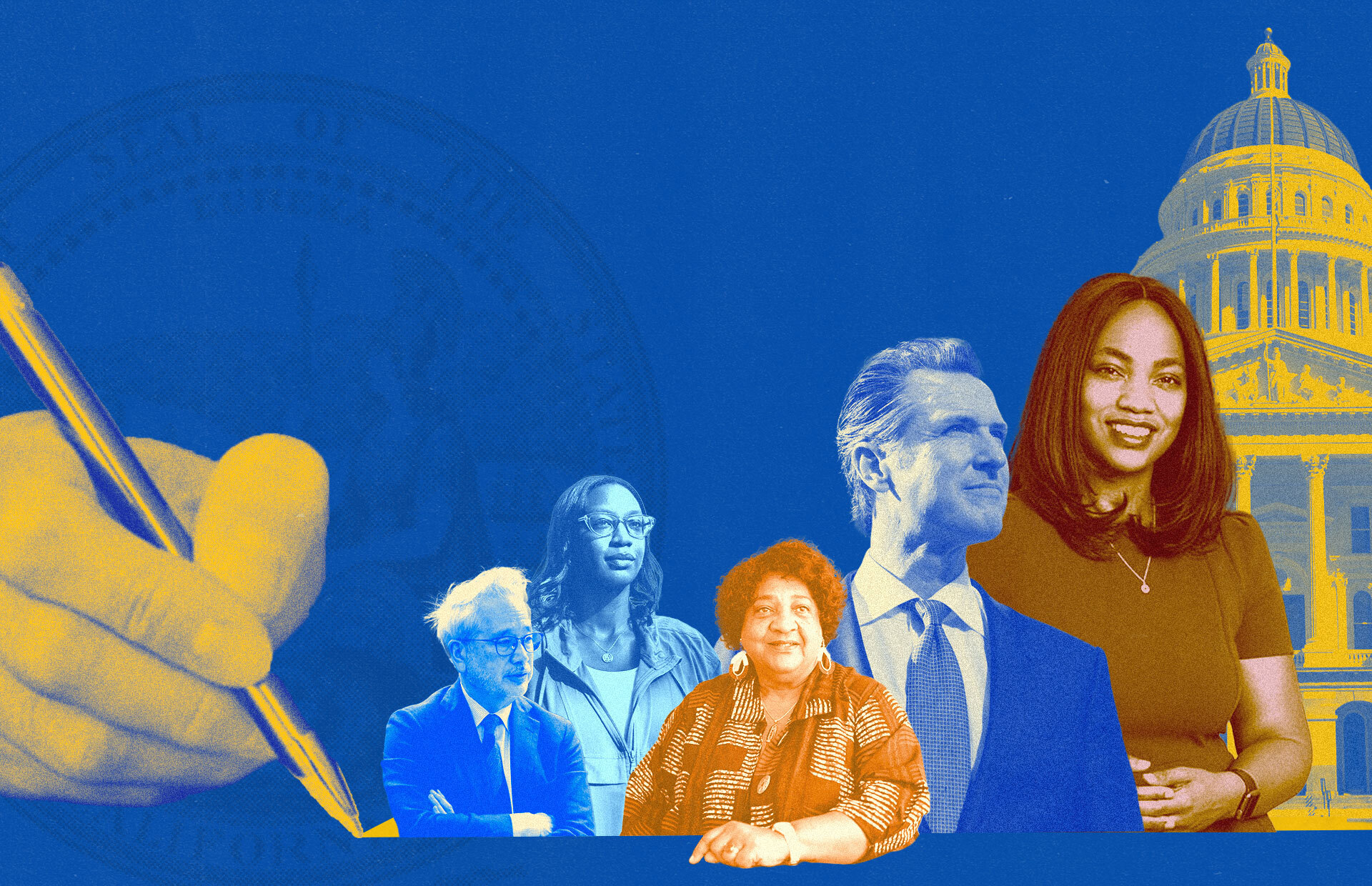
Three years ago, California became the first state in the nation to publish a comprehensive reparations plan for Black residents. The final report of the California Task Force to Study and Develop Reparation Proposals for African Americans includes more than 100 policy recommendations designed to end discrimination against Black Californians and support those harmed by racist state policies.
But, while California’s plan has become a model for states like New York, Maryland and Illinois, now also pursuing their own reparations plans, it’s still far from becoming reality.
With a new administration set to take office in January, we’re taking stock of California’s progress on reparations over the last year and what is ahead.
In 2026, the Newsom administration tightened its focus on educating residents about the California history unearthed by the task force.
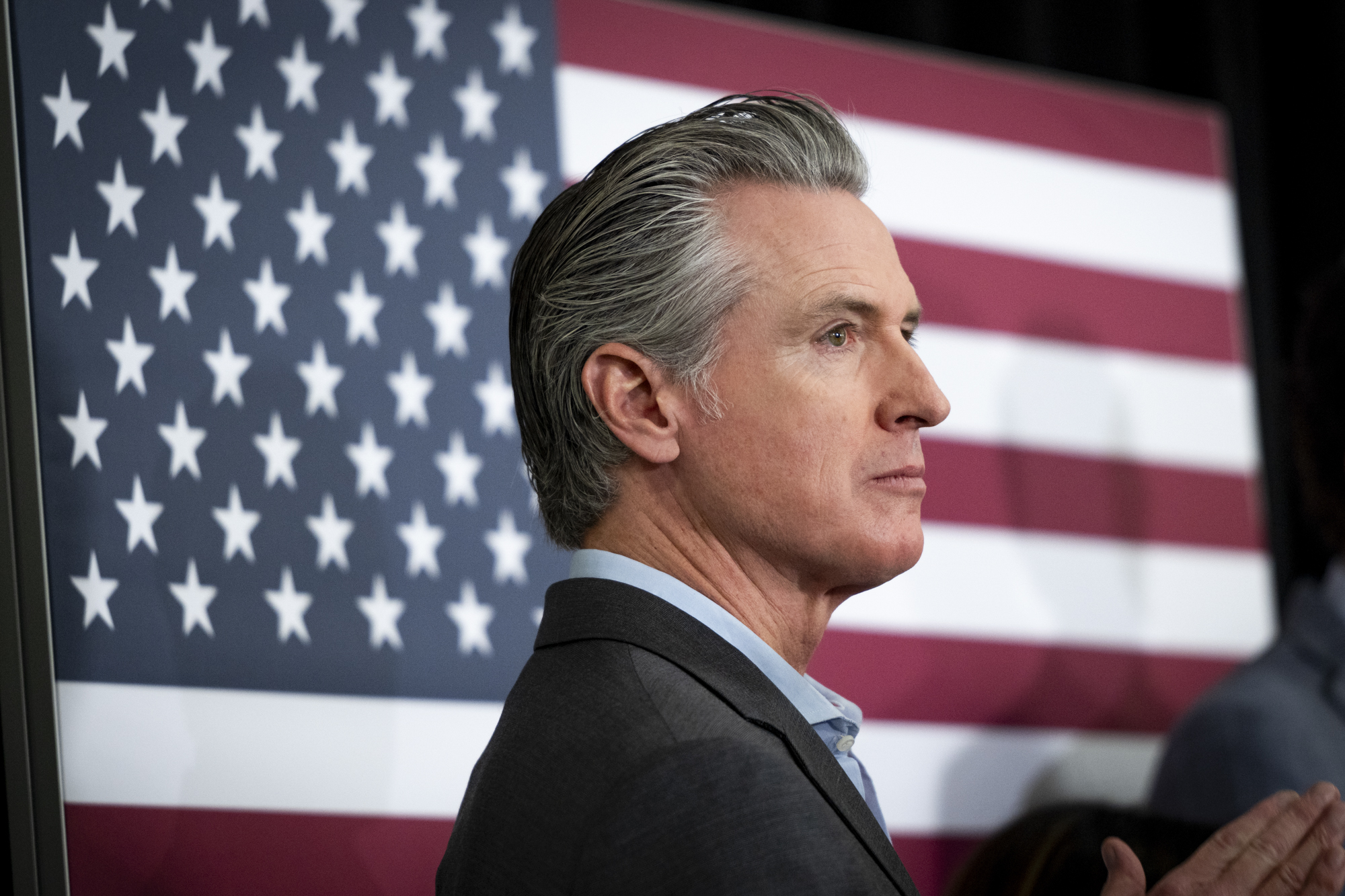
The Reparations Task Force’s final report includes a rigorous accounting of anti-Black racism throughout the state’s history. The report highlights how, among other things, early state laws funded public schools according to the number of only white students in each county, ensuring that schools serving students of color were chronically underfunded. It also documents the state’s complicity in federal redlining practices, and the use of local racially restrictive covenants that segregated Black Californians in neighborhoods that were later targeted for disinvestment, environmental degradation and displacement. In 1940, 80% of homes in Los Angeles contained restrictive covenants barring Black families.
All this helps explain why, in 2019, Black homeownership rates were lower than all other racial groups in the state, and in 2023, Black Californians were twice as likely to live below the poverty line as their white counterparts.
When the task force released its report in 2023, polling suggested reparationists in California faced an uphill battle convincing the public that reparations for Black residents were necessary. A poll that year found that while most California voters agreed that the legacy of slavery impacts Black Californians’ lives, support for direct cash payments was milder. Roughly 40% of Californians hadn’t heard of the state’s reparations task force.
A poll the next year from Liberation Ventures, a philanthropic organization that funds reparations and racial justice work nationwide, found more Californians were open to the idea of comprehensive reparations for Black residents that included scholarships, healing and other services along with direct payments. And, there was a particular interest in understanding the root of the issue better: 60% of respondents wanted more education on slavery and its legacies.
(Liberation Ventures provides grant funding KQED to support reporting on reparations and racial justice. KQED is editorially independent.)
In 2024, Gov. Gavin Newsom set aside $12 million to fund reparations work.
Former state Sen. Steven Bradford told NPR the funding was “a beginning,” but nowhere near the upward of a few hundred billion dollars fulfilling the task force’s full recommendations — including direct cash payments to eligible Black residents — would require.
This year, the $12 million was spent on research and public education.
Half went to the Tides Foundation, a national nonprofit that provides grants and fiscal sponsorship to groups working toward social justice. According to Darryl Hannah, a spokesperson for Tides, the foundation is in the initial phase of putting together what it’s calling the “California Reparations Education Initiative.” In an email, Hannah said the goal is to give Californians “access to clear, factual and accessible information that deepens public understanding of reparations and its historical context in California and the United States.” Hannah said he expects the program to be operational by early next year.
The other half went to the California State University system for academic research into reparations over the next four years. The funding is granted through SB 437, a 2025 bill that revived a previously contested idea, that the state needed a years-long study of eligibility to move forward with reparations legislation. The bill tasks the CSU with developing a system for verifying whether someone is descended from an enslaved person, and therefore potentially eligible for future reparations programs. Some critics view the effort as a tactic to delay more strident reparations legislation, like direct cash payments.
According to Amy Bentley-Smith, a spokesperson for the CSU Chancellor’s Office, the money will be used to fund research projects at three CSU campuses: Cal State Long Beach, Sacramento State and San Diego State. That work is still in its initial phase; the CSU has until 2029 to complete its research. The public will get updates along the way: The funding legislation requires the CSU to provide yearly reports to the state legislature on how the money is being used.
Separately, researchers at the University of California, Berkeley School of Education are in the midst of creating a California Black Studies Curriculum. The project is turning the history detailed in the task force’s final report into a high school Black Studies curriculum. It’s funded by the California Department of Justice and a nonprofit member-based organization called Education Leaders of Color, based in Los Angeles. The curriculum is designed to fulfill California’s high school ethnic studies requirement. The project is currently recruiting teachers to pilot its teaching material — the full curriculum is expected to become public by the end of this school year.
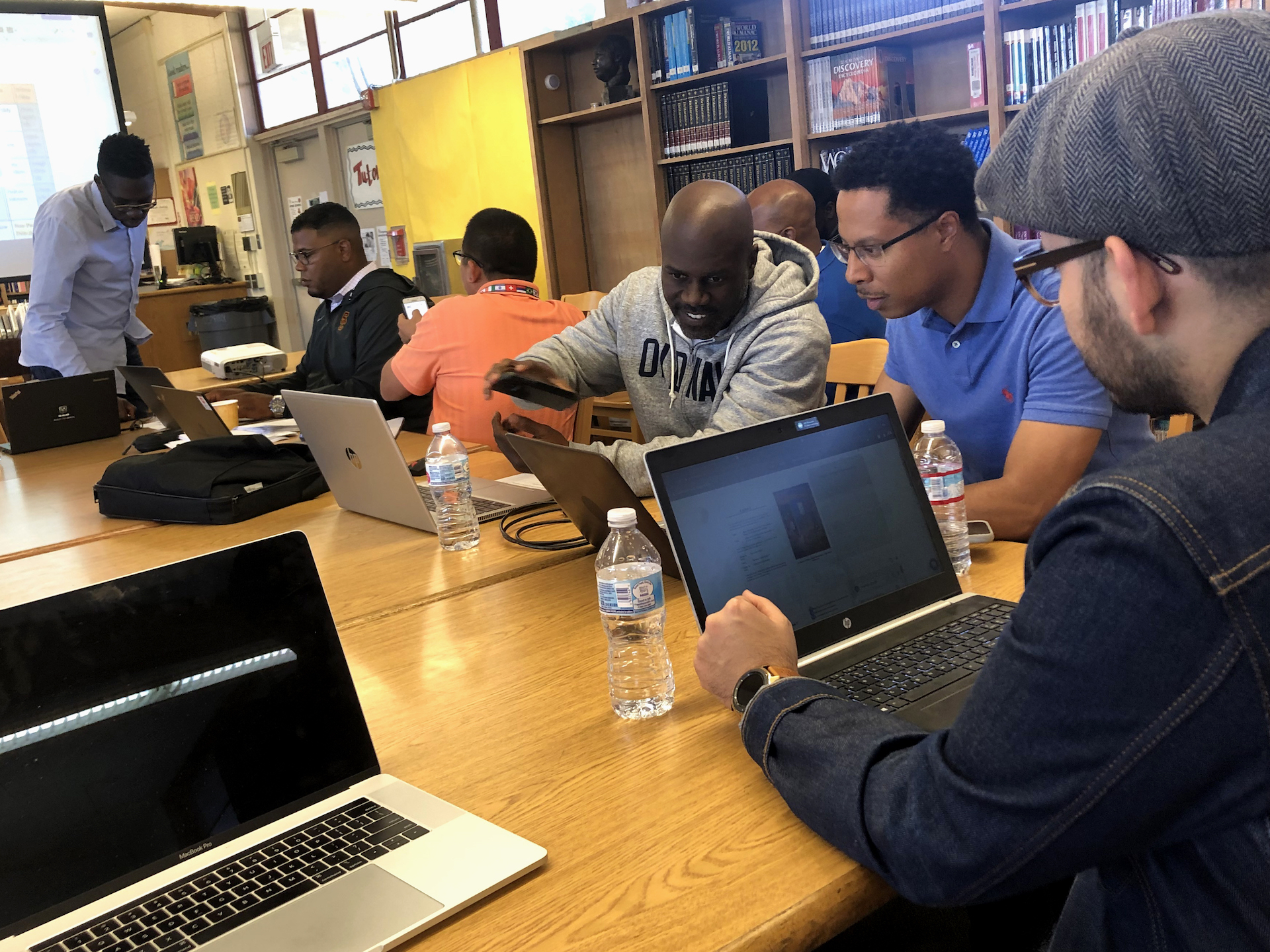
Project co-director Travis Bristol, a UC Berkeley professor of teacher education and education policy, said state support for the project has been essential.
“We hope whomever is part of the next administration will be the same,” he told KQED.
This year, lawmakers in Sacramento continued their multi-year effort to turn the task force’s recommendations into law, though on a smaller scale and had less fanfare than in previous years. The California’s Legislative Black Caucus has taken the lead on this issue.
This legislative session, the CLBC introduced and passed three bills its members say fall under the umbrella of reparations. One was vetoed and two became law.
AB 2186 would have exempted reparations payments from income tax. It passed both houses of the Legislature but was ultimately vetoed by Newsom. In his veto message, Newsom cited concerns about the bills’ impact on state finances.
AB 1661 provides one-time cash payments to Central Los Angeles families whose health has been negatively impacted by living near oil wells. The payouts are limited to 1,000 families within the boundaries of the Baldwin Hills Conservancy. The program won’t be up and running for a while — its funding is tied to state penalties on oil well owners who do not close low-producing wells after the start of 2031.

The Truth in Disclosure Act, AB 2599, requires large corporations that contract with the state to publicly disclose whether they or their predecessor companies profited from slavery. It was opposed by several insurance industry associations.
“Corporations have never had to account for their role,” James Woodson, CEO of the California Black Power Network, a supporter of the bill, said in a statement. “Now they will.”
The bill also requires the state to create a public database where these disclosures will be made public.
“We haven’t had an honest enough conversation about the private extraction of wealth that is compounded through generations,” said Assemblymember Isaac Bryan (D-Los Angeles), vice-chair of the CLBC and author of the Truth in Disclosure Act. “Part of the reason we haven’t had that conversation is because people don’t know who the major companies today are that profited from chattel slavery in previous iterations or which of those companies are still contracting business with the state of California.”
Similar slavery-connection disclosure bills exist in other jurisdictions — including in Oakland — but this is the first statewide disclosure bill in the country.

Kamilah Moore, former chairperson of the reparations task force, celebrated the two laws, but emphasized that neither advances the task force’s recommendations for state-wide financial benefits for Californians who can trace their ancestry to people enslaved in the U.S. — including housing assistance, business grants and free college tuition in addition to cash payments.
“Both reflect the kind of truth-telling and repair the task force called for,” Moore said. “But they sit alongside the report, not at its center.”
These bills add to the list of reparations-related laws pursued by the CLBC over the last three years, to mixed results.
In 2024, the first full legislative session following the release of the state’s reparations plan, CLBC lawmakers championed a 14-bill “Reparations Legislative Package.” Six eventually became law, including an official apology from the governor for the state’s role in advancing slavery.
“The State of California accepts responsibility for the role we played in promoting, facilitating, and permitting the institution of slavery, as well as its enduring legacy of persistent racial disparities,” Gov. Gavin Newsom said in a statement at the time.
That same year, Newsom vetoed SB 1050, a bill that would have created a state process for reviewing claims of racially discriminatory uses of eminent domain laws.
Between 1949-1973, Black Americans nationwide were five times more likely to be displaced by eminent domain laws than white people, according to the task force’s report. California was no exception. In 2021, Manhattan Beach returned beachfront property to the Bruce family, apologizing for its use of eminent domain laws to oust the Black bathing club operators in the 1920s. The move inspired efforts to win compensation in Palm Springs, Russell City, Chavez Ravine and San Francisco’s Fillmore neighborhood. In his veto statement, Newsom wrote that the state did not have the bureaucratic infrastructure needed for the claims program.

The following year, the first under the second Trump administration, the CLBC introduced nine bills, in what it called its “Road to Repair” package. Four were signed into law, including the bill funding reparations research in the CSU system, and SB 518. That bill created the Bureau for Descendants of American Slavery within the California Civil Rights Department — modeled after the short-lived federal Freedman’s Bureau. The bureau is tasked with overseeing the state’s Black reparations efforts moving forward and was a central recommendation of the task force. According to a spokesperson for the California Civil Rights Department, nine bureau positions are currently budgeted for, including a deputy director who will be appointed by the governor, but have not yet been hired. The search for a deputy director position is underway.
This year’s three bills might make it seem like the momentum the CLBC brought to turning the California Reparations Task Force recommendations into law is waning. Bryan said that’s not the case. Instead he said that hostility toward reparations from the federal government is changing how the CLBC pursues its goals.
“I think the CLBC will always be focused on repair and reparation,” Bryan said. “The strategy, the tactics and the visibility of it will ebb and flow based on the conditions and understanding the hostile environment that these kinds of conversations often take place in.”
His stance reflects a growing hesitancy around reparations policy work under the second Trump administration. This may change after this month’s “blue wave,” but some academic and nonprofit leaders said they’ve seen a decrease in private funders’ willingness to put money toward reparations work as the federal government aggressively pursues the dismantling of diversity, equity and inclusion programs.
“The current federal climate increases the perceived risks of this work,” said Erika Weissinger, co-founder of the Black Reparations Project, a collaboration between UC Berkeley and Mills College at Northwestern University. “When efforts to address racial inequality face political attacks, many institutions and funders become more cautious about what they support, how they describe it and how visible they want to be.”

Still, according to research by Liberation Ventures, the number of reparations efforts nationwide, particularly at the local level, is steadily ticking up: In 2020, there were only four city or country reparations commissions in the U.S. In 2025, there were 28.
This divide — between a volatile adversarial federal government and a growing reparations movement — helps explain some of how California’s government has handled reparations up to the present.
“Under Newsom, California helped establish that reparations are a legitimate responsibility of state government. The task force’s work challenged the idea that California’s history places it outside the national story of slavery and anti-Black discrimination,” Weissinger told KQED.
“But there is a big difference between acknowledging responsibility and taking action to repair,” she continued. “Newsom’s administration has supported research, recognition, and some institutional groundwork, while also limiting proposals that would move more directly toward tangible benefits. I would give him credit for helping open the door, while recognizing how much of the work of repair remains for the next administration.”

The next California government could make significant moves on reparations. Democrats will have the largest majority in the state legislature in over a hundred years. The Legislative Black Caucus will have new, more progressive, members. And the state will have its first elected Latino governor, Xavier Becerra.
But it’s unclear what Becerra will do with the evidence and recommendations for reparations he inherits. In a debate hosted by the Urban League of the Greater San Francisco Bay Area last January, Becerra approached the idea with hesitation, reiterating the same questions about funding and legislative priorities that the Newsom administration and the Legislative Black Caucus are years into trying to answer.
Then in October, Becerra struck a more negative tone on a Los Angeles radio talk show. When asked about what he would do to improve the lives of Black Californians, he told listeners he wasn’t going to promise “40 acres and a mule,” referencing General Sherman’s Civil War-era promise of reparations to formerly enslaved Americans. Doing so, he said, would be unrealistic. Then he launched into a discussion of cash bail reform.
Chris Lodgson, an organizer with the Coalition for a Just and Equitable California, was listening. His organization helped push for the creation of the California reparations task force. Over the last year, he’s been hosting workshops across the state helping Black Californians trace and document their ancestry. Asked about his reaction to Becerra comments, he let out a long breath. The new governor, he said, will have some catching up to do.