California Almonds, Grapes, Vegetables Grown With Ancient Water That Is Not Coming Back
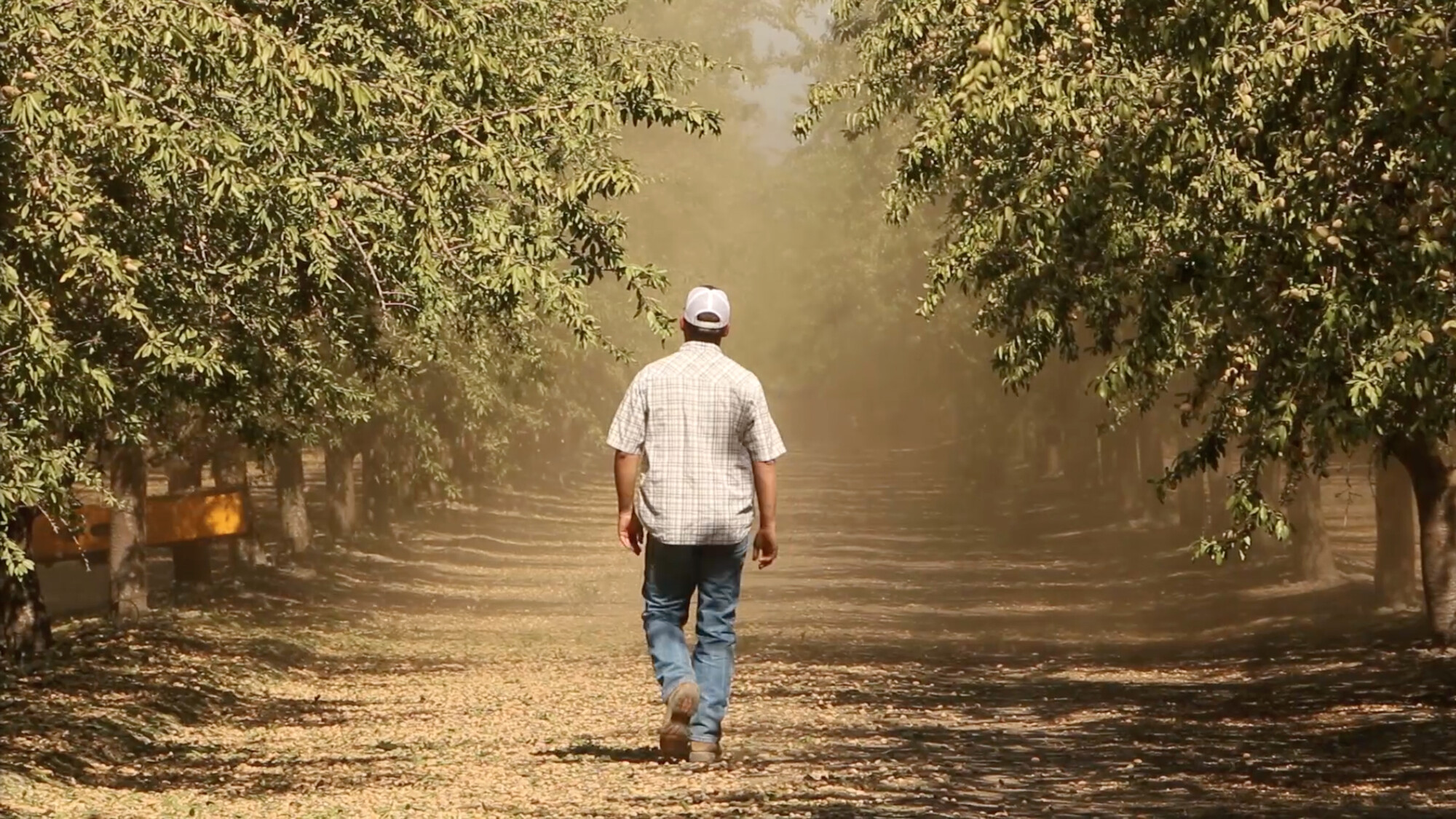
New research published Thursday provides an alarming portrait of how California is exhausting its underground water reserves. In what researchers said was the first crop-by-crop and county-by-county estimate of groundwater withdrawals, scientists found half of the groundwater depletion between 2008 and 2020 went to three crops: almonds, grapes and walnuts.
In fact over a quarter of all nonrenewable groundwater pumping went to just almonds. The vast majority of groundwater used for specialty crops like fruits, nuts, seeds and veggies, 70%, is water that won’t get refilled.
In a sustainable scenario, groundwater could be viewed as a bank account — there to draw upon in lean times and receive deposits in times of plenty — the study published in Water Resources Research portrays funds that are being overspent on almonds, walnuts, pistachios, lettuce, broccoli, peppers, pomegranates and other crops.
“We are just spending and spending,” said Jackie Hanley, a PhD student at University of Illinois at Urbana-Champaign and lead author of the paper. “While that’s good in the short term to bridge a gap [in water shortage], especially as we adapt to climate change, eventually our habits are going to have to change.”
Either we can make changes on our own timeline, she said, or the aquifer will run out of water and make the decision to change for us.

Hanley and her co-author, professor Megan Konar, hope the extremely specific nature of their findings can be used by policymakers to find solutions for precise locations. California produces approximately 50% of the nation’s fruits, vegetables, and tree nuts, and about 75% of all the fruits and nuts grown in the country.
California’s Central Valley, particularly Tulare, Fresno, Kings and Kern counties, are a national hotspot for unsustainable groundwater use. Nearly all of the groundwater pumping in the southern Central Valley is estimated to be unsustainable.
The authors did not, however, recommend consumers change their eating habits from healthy, fresh food to blander, less-water intensive crops. Instead, Hanley said, solutions are best coming from policy makers instead of individual consumer choices.
“This can be a hot-button issue and it can be easy to point fingers,” she said. “But what this study really points to is that nothing exists in a vacuum. […] I would encourage the public to take this information in with a big breath and in context.”
Where and how crops are grown is a result of economic, environmental, social and legal factors, Hanley said. Solutions should be thoughtful, rather than simple and blunt. To do the study the researchers cross referenced satellite-based maps, data from the U.S. Department of Agriculture and from the U.S. Geological Survey.
California’s over-reliance on groundwater is an understood problem, one that got a lot of media attention during the last decade’s drought. Central Valley growers have been pushed to drill deeper and deeper wells. Land has sunk by as much as 11 feet in farming towns due to groundwater pumping, leading to the permanent loss of storage capacity. For the past 50 years, much more water was sucked out of the system than filtered back in, according to data from the USGS.
In the short term groundwater is incredibly useful, like having access to a credit card for unexpected costs. It allows growers to keep crops such as nut trees alive and allows agricultural jobs to remain in place. In the long term, though, just like an irresponsibly used credit card, the water will eventually run out or become unreachable.
“We are already seeing some producers changing what they plant where and when,” Hanely said. “We might see California cease to be this specialty [crops] hub eventually.”
The intense drought of 2012 to 2016 and the increasing reliance of growers on groundwater that coincided with that time caught the attention of policy makers. In 2014 Gov. Jerry Brown signed the Sustainable Groundwater Management Act into law.
It aims to ensure all groundwater withdrawals are sustainable in the future, however the regulations are not intended to be fully enforced until 2040.

“But it’s at least forced different water management agencies to assess exactly how much water they have available and to really think hard about whether or not their current practices are sustainable,” said Paul Ullrich, professor of climate modeling at UC Davis, who was not involved in the research.
Ullrich said he thought the study was a great summary of groundwater use and appreciated its approach.
“It’s really helpful in order to have this crop-by-crop and region-by-region breakdown so we can understand where the biggest threats are to agriculture through the Central Valley and where there needs to be more proactive approaches to ensure that we still have water available there,” Ullrich said.
Something that stood out for him was the paper’s finding that, after groundwater reliance ramped up around 2014, the pumping stayed high even in post drought years when more surface water was available.
“It’s too convenient, that’s the problem,” Ullrich said.
He noted that wet winters, like the one California may be facing now, can lead to some groundwater recharge, but it’s not guaranteed. How much rain percolates into the soil depends on where it falls and how it arrives. Short, intense bursts of precipitation run off quickly and do little to recharge groundwater. Slow, steady streams of rain, and abundant, slow-melting snowpack, does much more to let water trickle down into the ground.