San Francisco's Waterfront Redesign Puts an Anti-Fascist Monument in Jeopardy
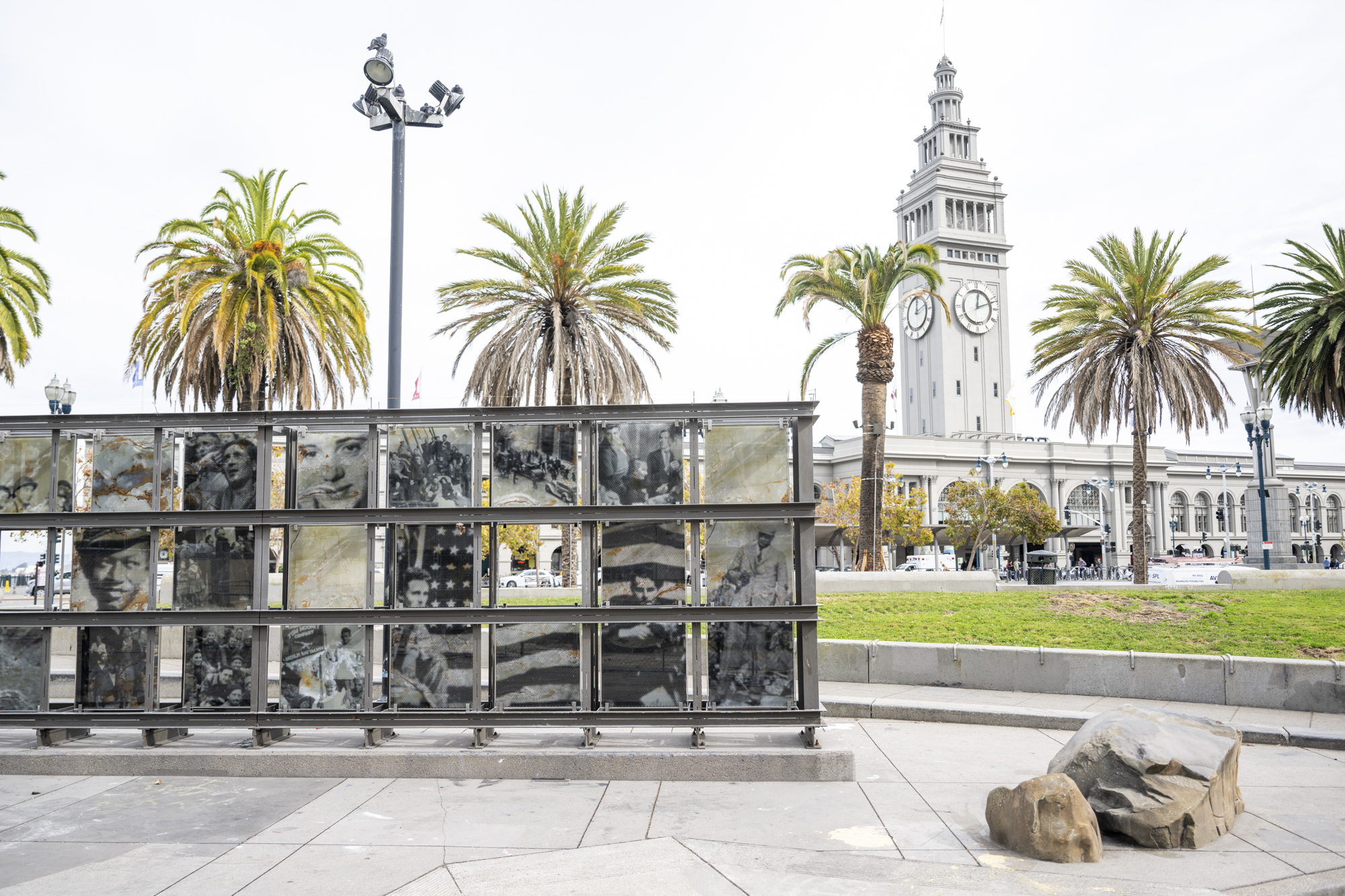
A San Francisco monument that honors the Bay Area volunteers who, nearly a century ago, traveled to Spain to fight fascists, could be moved as part of the redevelopment of the Embarcadero Plaza and Sue Bierman Park.
The city is reimagining the 5-acre waterfront park facing the Ferry Building, to include expansive gardens, a dog play area, outdoor dining and performance and recreation spaces. But the plans propose removing an anti-fascist artwork that has been on site since 2008 to make way for the changes — and not everyone is happy about it.
Megan Bierman, daughter of former Supervisor Sue Bierman for whom the park is named, spoke at a San Francisco Arts Commission meeting on Monday evening, where members agreed to plaza plans on the condition of meeting again to discuss the fate of the eight-feet high, 40-foot long steel-and-onyx installation.
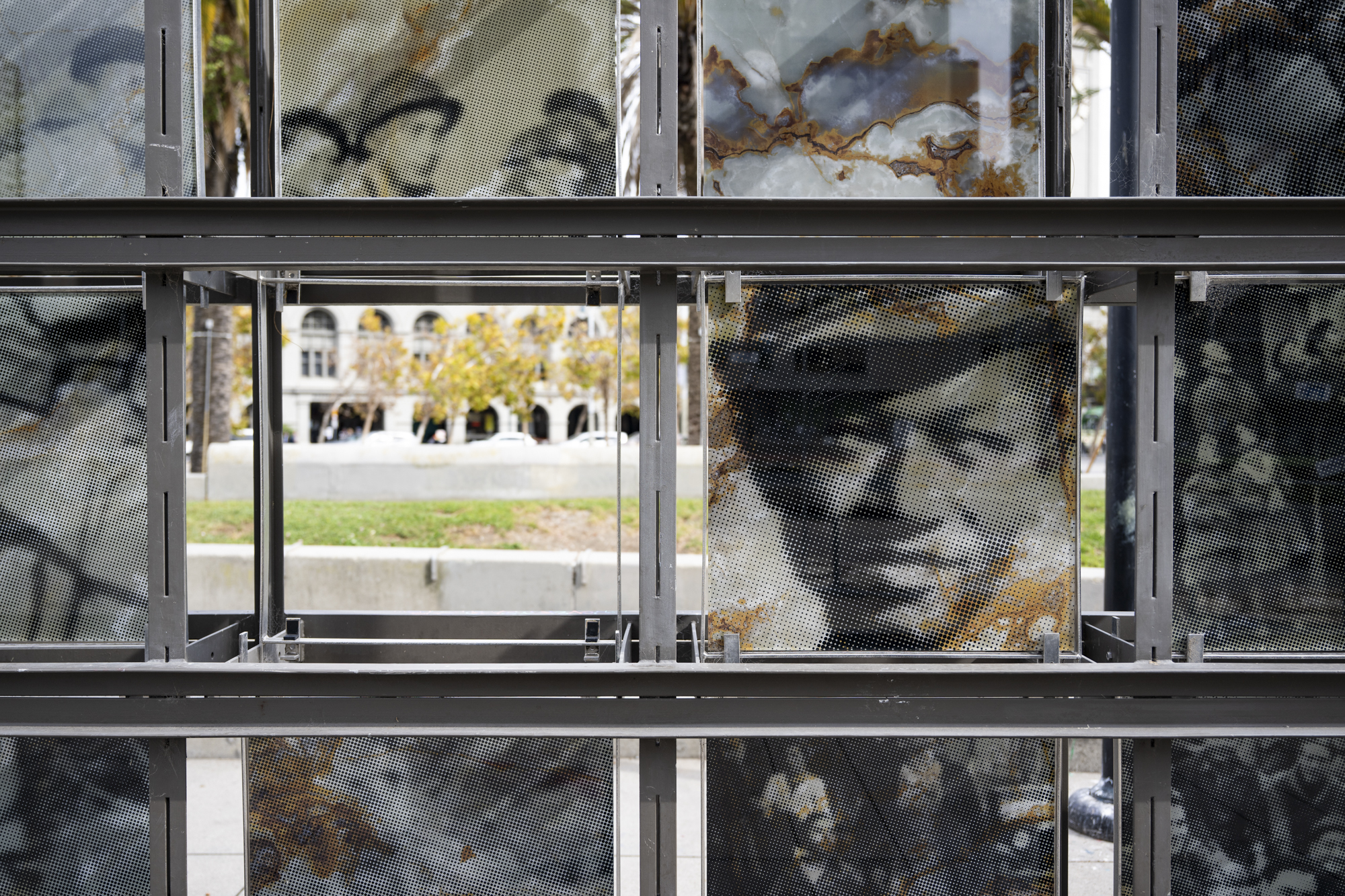
“That monument is the most important monument in San Francisco,” Bierman said. “It is a monument to people with so much heart, and soul, and courage that they went and fought fascism in the Spanish Civil War.”
Another meeting attendee, Mark Norton, said he was “ashamed” and “astonished” that the city would approve plans without thought of the fate of this monument.
“We have a wannabe fascist in the White House,” Norton said. “And you’re talking about kicking out a monument to anti-fascist fighters out of our city.”
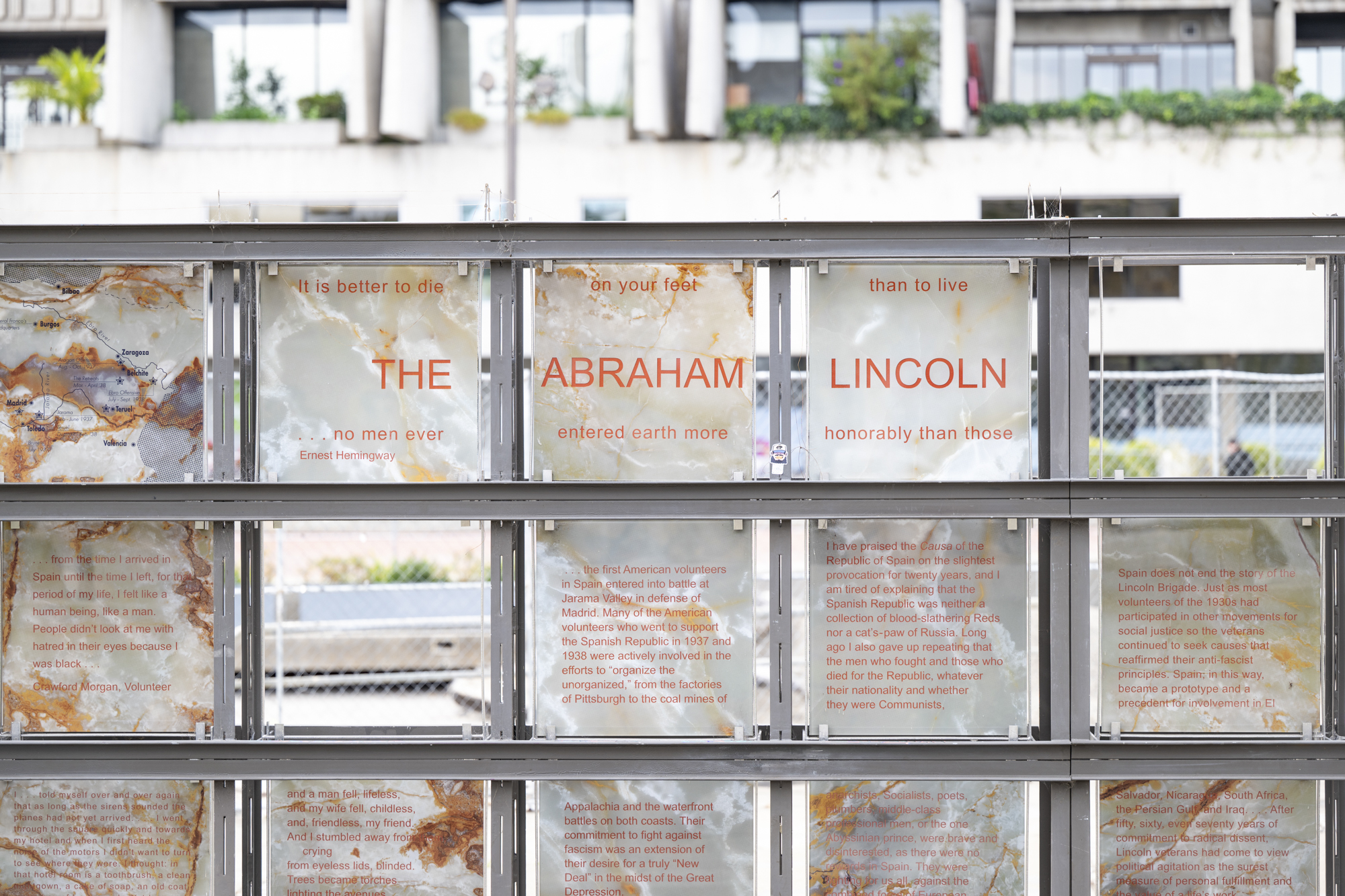
Supporters say the placement of the work is no coincidence. The piece honors the several hundred Bay Area residents who volunteered for the Abraham Lincoln Brigade — 2,800 Americans who joined the fight against fascism during the Spanish Civil War in the 1930s.
The waterfront was chosen because of its pivotal role in U.S. labor history and politics. It was the site of the historic 1934 West Coast waterfront strike, which stopped work in the city for days and which led to the unionization of all ports on the West Coast.
A number of strikers volunteered in Spain and when they returned to the city after the war, they became actively involved in dockwork and antiwar movements, including shutting down the shipment of goods to apartheid South Africa, according to The Abraham Lincoln Brigade Archives.
The Bay Area volunteers joined Spain’s Republicans, a collection of farmworkers, laborers, communists who comprised the resistance to Ferdinand Franco’s Nationalist rebels.
Franco’s rebels would ultimately succeed, ruling Spain until the 1970s. Around 800 members of the Brigade were killed.
ALBA originally sponsored and partially funded the monument, which was designed by Oakland artist Walter Hood and San Francisco artist and educator Ann Chamberlain. The sculpture was rehabilitated in 2020.
The redesign of the plaza, which sits both on city Recreation and Park land as well as Port-owned land, is still in an early phase, with architects and designers from firm HOK and a Rec and Park planner presenting initial plans on Tuesday. Construction is anticipated to begin in December 2026, with completion targeted for the end of 2027.
The SFAC did not respond to a request for comment.
Some speakers, including artists, residents of nearby apartments and real estate developer BXP spoke in favor of the project, praising the planning team’s outreach and support for the renovation.
But others, including descendants of Brigade fighters, expressed strong concerns for the future of the monument, and emphasized its historic value.
“I am the son of people who fought in the Spanish Civil War,” John Gruntfest said. “If it hadn’t been for the failures of democracies to support Spain, Hitler would have never risen.”
Bierman also suggested that if the monument in its current state cannot be accommodated in the redesign of the plaza, then the city should consider adapting the monument.