California Lawmakers and Drivers Pressure Regulators to Reign In Autonomous Vehicles

Labor leaders and officials across the state said they’ll continue to pressure the California Public Utilities Commission to put meaningful guardrails on autonomous vehicles, namely in the form of giving local governments more say when robotaxis are deployed in their cities.
Chanting slogans like “Our streets! Our safety! Our say,” Uber and Lyft drivers and public sector employees rallied outside the CPUC’s meeting on Thursday in San Francisco, as driverless Waymo cars made their way around them on Van Ness Avenue.
The state regulator is in the process of adopting new rules for autonomous vehicles — including when companies can be exempt from those rules and when the approval process should be streamlined.
One such exemption granted to Amazon’s Zoox allows the company to operate “purpose-built” autonomous vehicles on the road that don’t have traditional vehicle equipment for human drivers, like steering wheels or pedals.
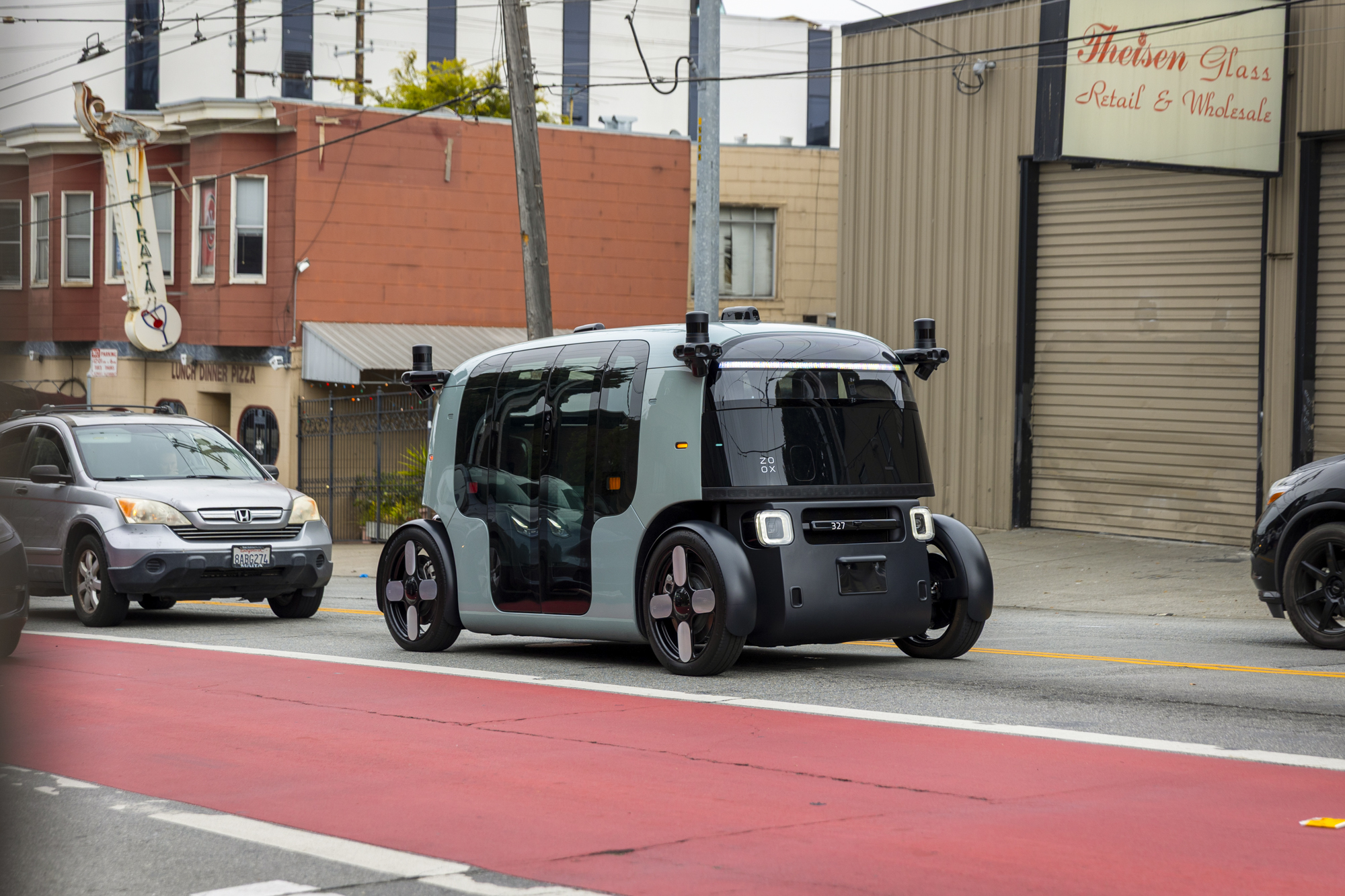
Agencies like the San Francisco Municipal Transportation Agency or the San Francisco County Transportation Authority and unions representing drivers generally support that reinstating suspended AV permits be under the commission’s authority. Zoox, however, wants staff to have the authority to reinstate those suspended permits, even when the reason for suspension was “an unreasonable risk to the AV carriers’ passengers,” according to the proposed rules.
After previously allowing AV operators to expand unfettered, cities and labor leaders are intensifying scrutiny of the companies after vehicle meltdowns during major events — like San Francisco’s July 4th traffic fiasco — and emergencies.
Workers rallying at the CPUC on Thursday cited these robotaxi freezes during power outages as a need for tighter regulations, instead of allowing companies to regulate themselves.
They also criticized a proposal to allow AV companies to expand service onto highways, at airports and even new cities without input from local leaders and emergency personnel who are directly impacted by AVs, including when they malfunction.
And, of course, the threat of putting many drivers and others in the transportation industry out of jobs, workers said.
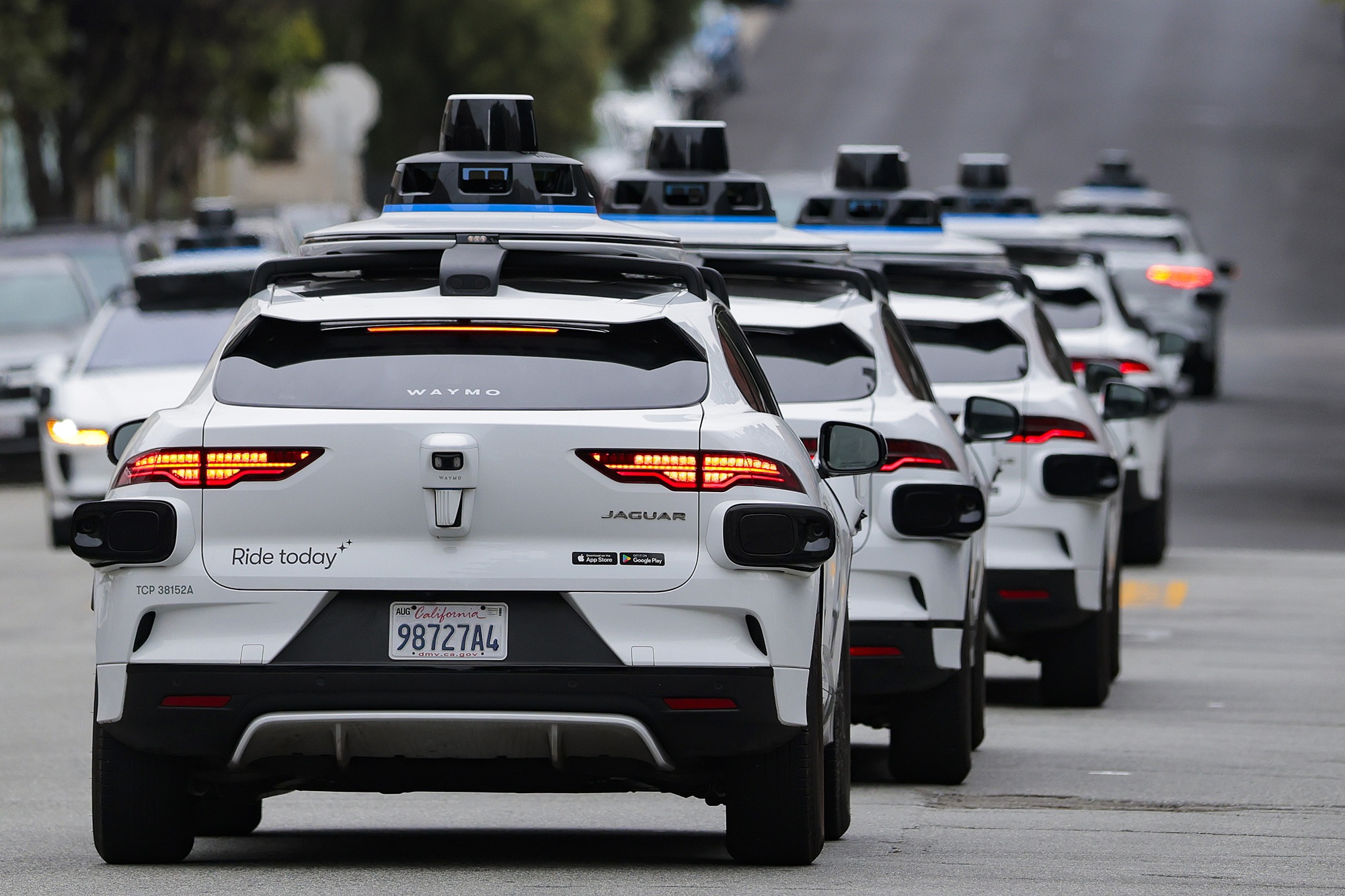
Joseph Augusto, a San Francisco-based ride-hail driver, said he’s had enough negative interactions with driverless cars that he doesn’t want any more of what he calls “surprise expansions.”
“We think that it’s important that the local municipalities and local officials, first responders, are aware of what’s happening in their city,” Augusto said. “We want everyone to have a say that should have a say and make sure everything runs a little smoother than they have been.”
Vikkas Shanker has been driving for Lyft and Uber for the last 11 years in and around Fresno. In that time, he’s been able to understand the city and its streets “better than any robot” could, he said.
“I worry about a future where AVs are allowed to expand into my community in Fresno without input from the people who know our roads,” he said, adding that he wants the CPUC to mandate that AV companies give cities and counties advance notice before autonomous vehicles are allowed to deploy.
Waymo also came under fire last year after one of the company’s autonomous vehicles hit and killed a beloved bodega cat in the Mission. In the wake of that incident, Supervisor Jackie Fielder called for legislation to let voters decide if they want AVs in their cities, but she told workers on Thursday that her colleagues “watered down the legislation, perhaps to appease their campaign benefactors.”
“I don’t know any other regulating body in the United States that allows for corporations to dictate their own regulations,” Fielder said at Thursday’s rally. “At a time when every level of government is already beholden to corporate spending in elections, we need regulators like the CPUC to maintain independence and rein in corporations like Waymo and Zoox.”
Supervisor Bilal Mahmood, who has also been critical of AVs in the city, rallied for more control at the local level.

“San Francisco’s streets belong to the people of San Francisco and not the corporations who operate on them,” he said. “When decisions are made about our streets, the people who live and work here deserve a seat at the table. That includes our workers, our drivers, our transit operators, our emergency responders, and every San Franciscan who depends on safe, accessible streets.”
Raj Singh, president of the Amalgamated Transit Union Local 265 and a bus operator with Santa Clara Valley Transportation Authority, said bus drivers make split-second decisions every day to keep people safe, whether that be passengers, pedestrians or other drivers.
“Public safety cannot be an experiment conducted on our streets without accountability,” Singh said. “Let me be clear: we are not against technology. We welcome progress, but progress without accountability is not progress we should blindly accept.”
During the meeting, nearly three dozen people spoke against the CPUC’s proposal, claiming it doesn’t give local leaders enough authority over autonomous vehicles.
San Diego City Councilmember Sean Elo-Rivera told the CPUC that airports should have their own review process. The CPUC’s current proposal would no longer require AV companies to get a separate approval notice before starting airport service, provided they have airport permission.

“This decision asks the public to trust autonomous vehicle companies to decide for themselves what the public needs to know and what is material to public safety. Airports deserve their own review,” he said. “Deployment at these sites should require an airport-specific safety review, reporting, and public disclosure of airport authorization. It should not hinge solely on an email notice sent to staff.”
San Francisco Deputy City Attorney Andrew Angeles wrote to the CPUC in September that AV companies should have airport-specific plans that address the “unique passenger safety and security risks” and airports should be able to weigh in before AVs are allowed on their roadways.
“With proper oversight by the Commission, California could become a model for the nation. We look forward to further development of sensible regulations that balance the drive for implementing new transportation technologies with the challenge of smart transportation planning and public safety.”
The board ultimately decided to postpone their vote until their next voting meeting on Nov. 19.
“That means we made them think about it,” Cindy Reyes, research staff at SEIU 1021, told the crowd outside of the meeting. “We made them pause on a decision that was going to be very problematic.”