‘Keep This Culture Alive’: San Francisco Honors Community Heroes on Día de los Muertos
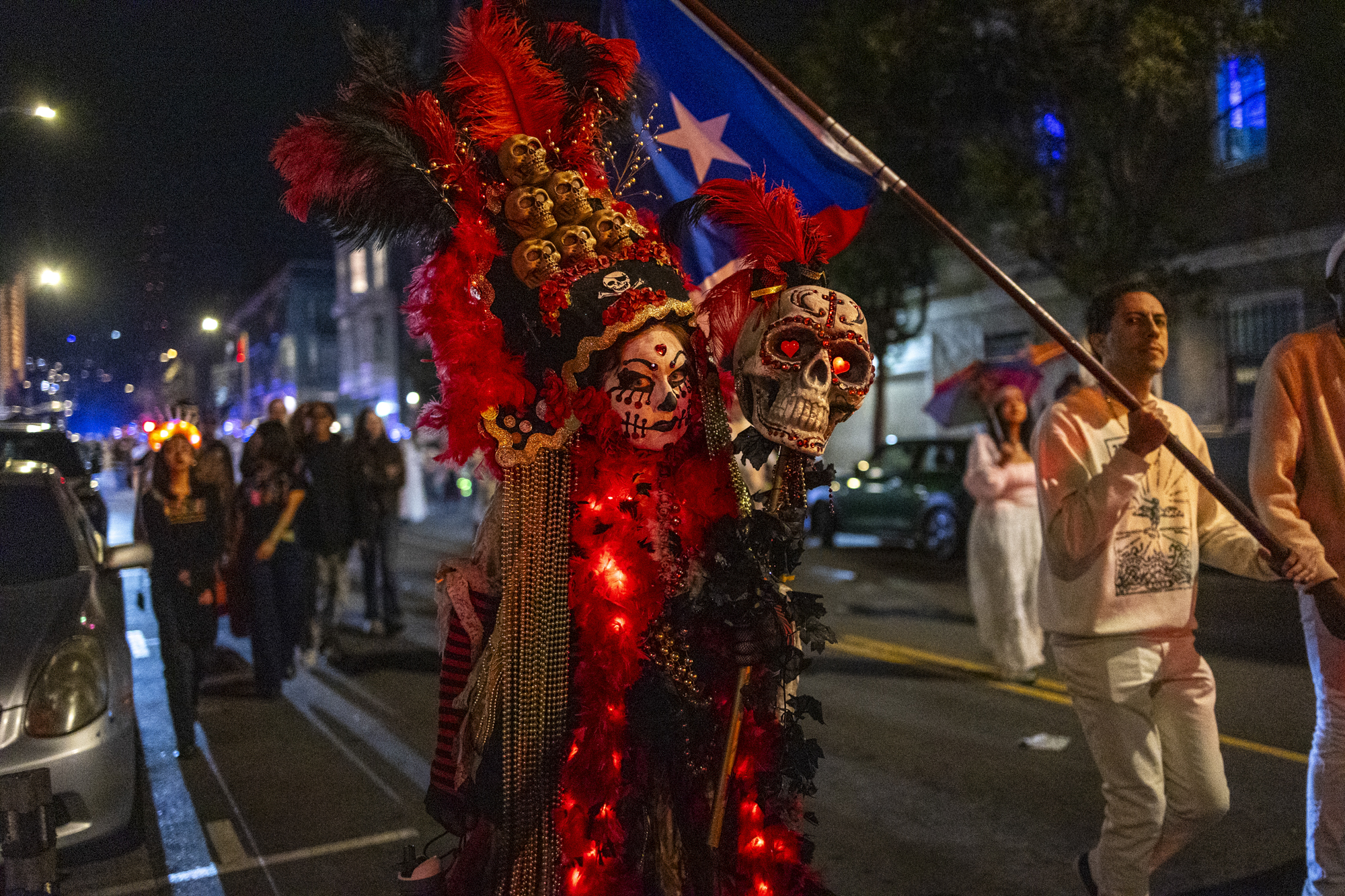
The sun slipped behind Twin Peaks on Monday, casting one final glow through the thick San Francisco fog.
“That’s when the portal opens between the two worlds,” said Danielle Revives, who helped organize this year’s Festival of Altars in the city’s Mission District.
Dozens of elaborately-decorated ofrendas filled up Potrero del Sol Park on Tuesday evening for Dia de los Muertos — when the living pause their daily routine to welcome the spirits of those who have died.
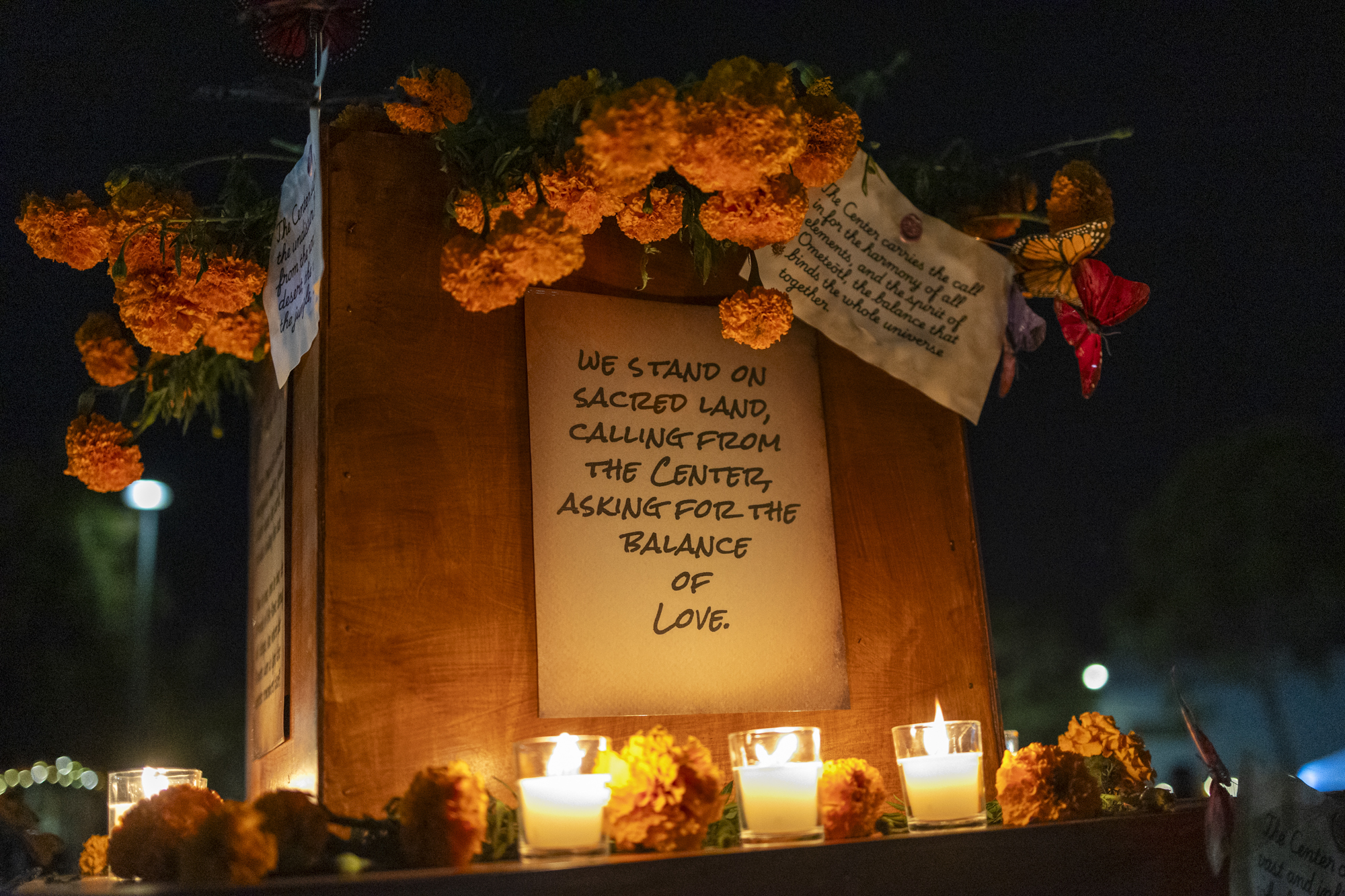
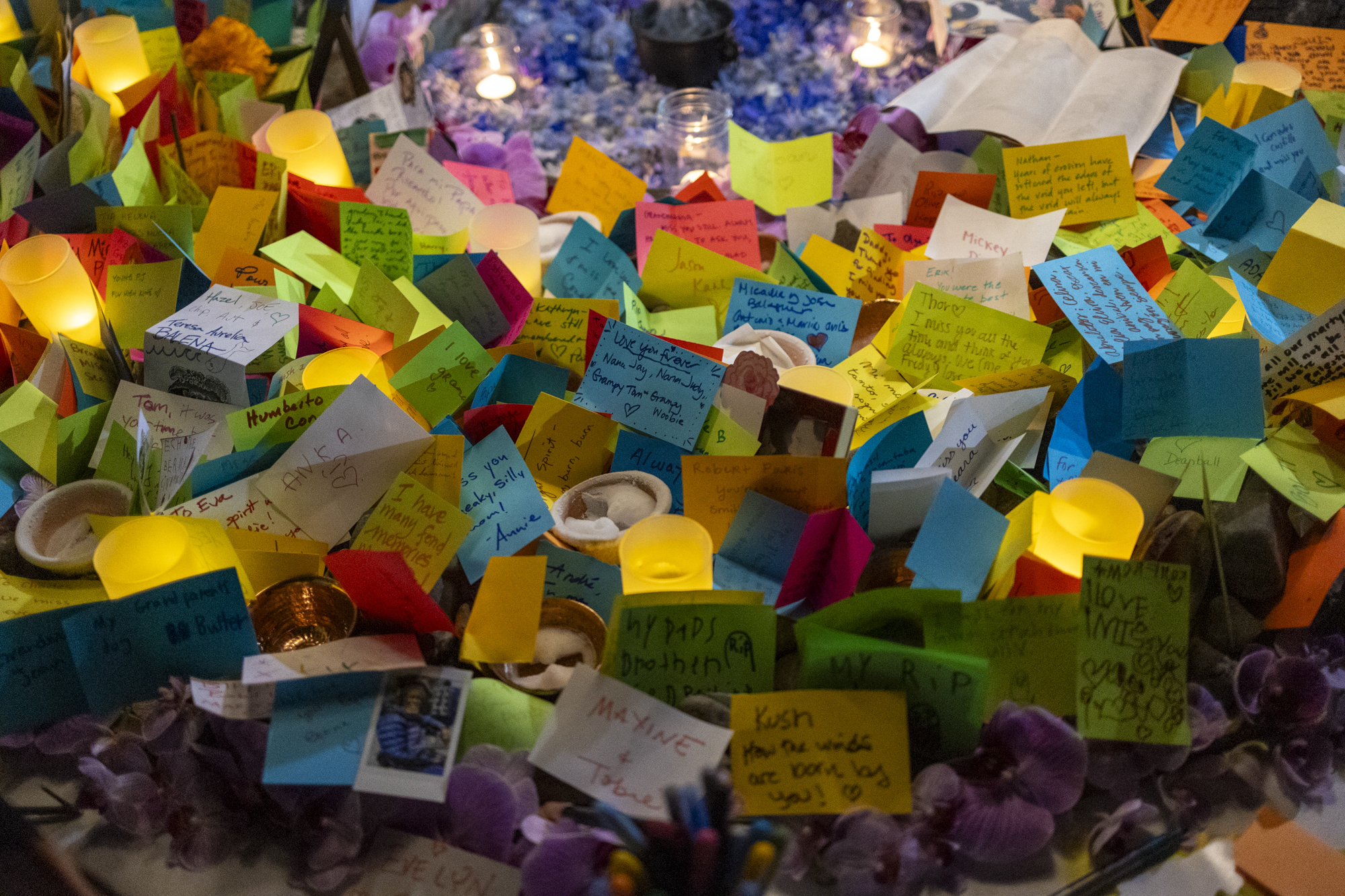
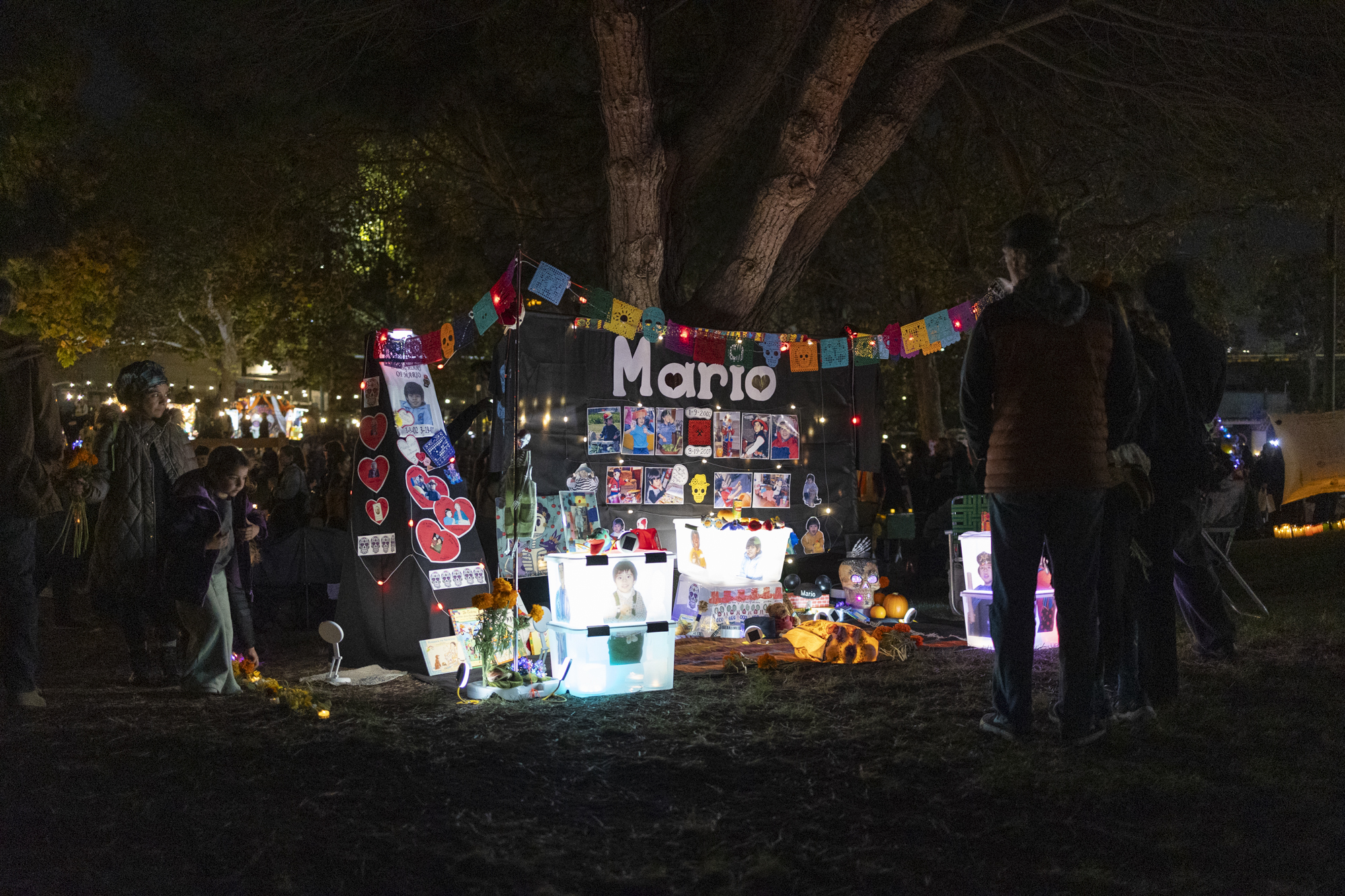
“When you build the altar, your beloved come, those that you’ve missed and you want to reconnect with come,” Revives said. “And your community comes too — your neighbors, your friends, the people you run into the street everyday.”
For more than 40 years, families from all over the Bay Area have gathered on Dia de los Muertos in the Mission — historically the heart of San Francisco’s Latino community. As night settled, the park filled with the glow of hundreds of candles. Only a few blocks away, thousands gathered on 24th Street to witness another revered neighborhood tradition, the Day of the Dead Ritual Procession.
The smoky, citrus smell of copal filled the air. Dozens of Aztec dancers moved down the street to the rhythm of the huehuetl drum. Behind them, volunteers carried a banner that read “Colectivo del Rescate Cultural” — the Culture Rescue Collective — the group that has led the event for decades with the motto, “Nuestros muertos no se venden” — “Our dead are not for sale.”
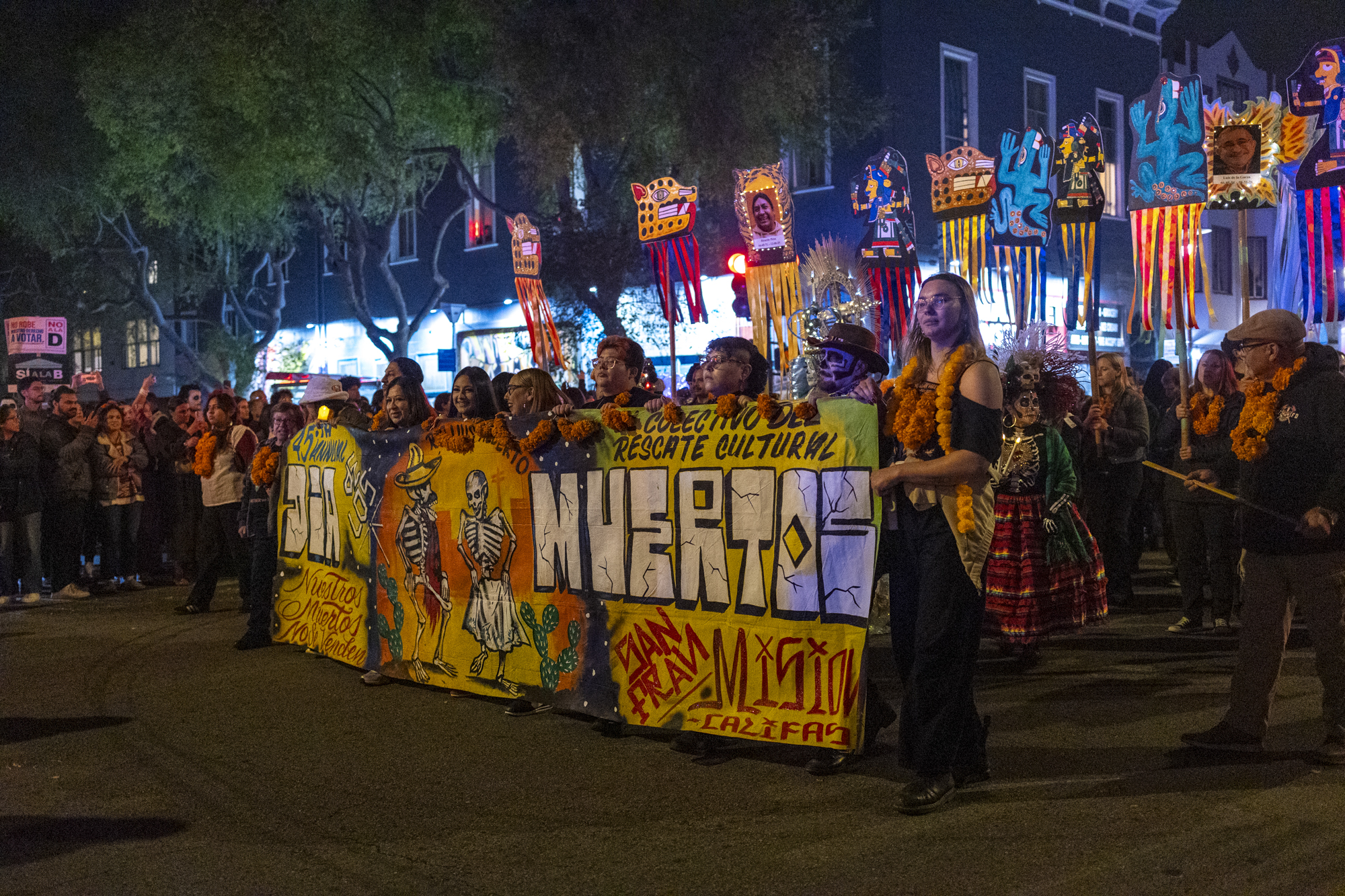
But this year, the procession marched without two individuals who helped keep the tradition alive across decades: drummer and dance teacher Ricardo “El Tigre” Peña, who died last December; and writer and artist Luis de la Garza, who passed away in August after helping organize the event for several years. Their pictures were held up alongside that of founding member of the Collective Juan Pablo Gutiérrez Sánchez, who died in 2021, and social worker Alberto Rangel, who was fatally stabbed at Zuckerberg San Francisco General Hospital in 2025.
“Ricardo is present. Luis is present. All the people who are gone are present when we go down 24th Street,” said Louie Gutiérrez, who leads the group Danza Azteca Coyolxauhqui. The first time that Gutiérrez danced in the procession was in 1995, a year after losing his father. To continue this tradition — more than 30 years later — Gutiérrez said, is one way he honors what his family and friends built before passing on.
“You left something behind, and it’s because of you that we’re doing this,” he added.
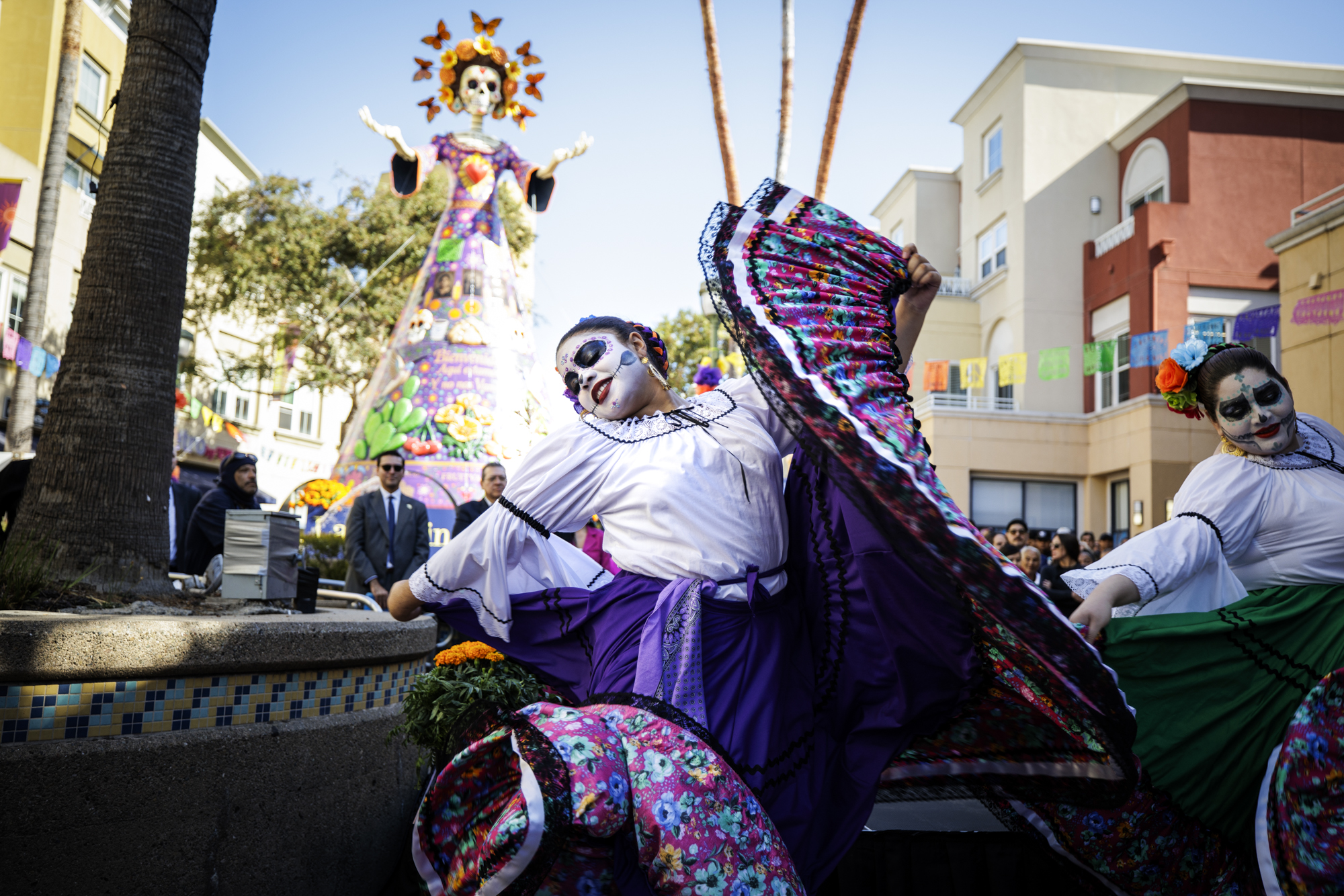
As the procession moved towards Mission Street, a crowd of thousands followed them. The narrow sidewalks of 24th Street filled up with food vendors, make-up artists painting catrinas on the faces of little ones and their parents and musicians setting up on different corners to keep the celebration going through the night.
And, among the sea of the living, ofrendas were set up next to trees, on door steps and nooks. Next to photos of grandparents, uncles, aunties and cousins, two faces popped in different altars throughout the neighborhood: civil rights legend Dolores Huerta, along with San Francisco-based musician and anthropologist José “Dr. Loco” Cuéllar.
“When I was little, everything looked so much bigger,” said Sofía Suárez, a San Francisco resident who helped set up an ofrenda at Potrero del Sol for her mother, Irma, along with other deceased family members and friends who formed the traditional Andean music group Comunidad Anqari.
Her parents would bring her as a kid to the celebrations. She now brings her own children.
“I want to keep this culture alive,” she said. “This is such a beautiful thing to honor our people that have passed.”