At these Pre-Election Parties, It’s BYOB: Bring Your Own Ballot
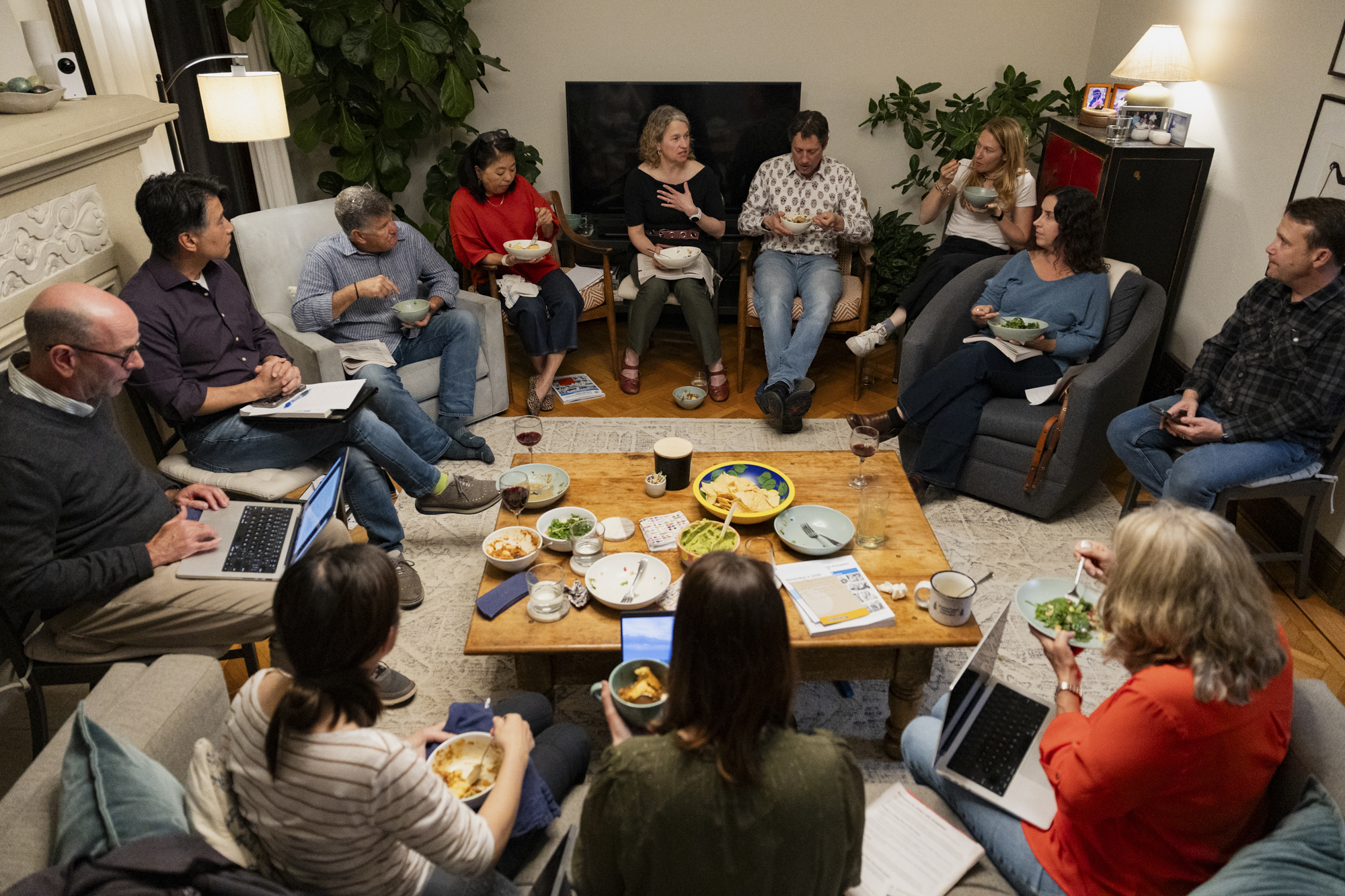
To steel herself for the monumental task of voting in California, Lauren Schwartz broke out bowls of chili and voter guides, and invited her friends to her San Francisco home for her annual pre-election party.
It’s BYOB. Bring-your-own-ballot.
”We have an insane number of propositions, and it’s too much for one person to go through,” Schwartz said.
Voters in the Golden State this election are considering 14 statewide ballot measures — tied with Colorado for the second-most out of any state in the country, according to Ballotpedia.
Schwartz isn’t the only one who feels overwhelmed by the ballot: According to a September poll by the Public Policy Institute of California, nearly 80% of likely California voters surveyed thought the ballot had too many propositions.
For over 20 years, Schwartz, a 61-year-old mother of two who lives in the city’s Monterey Heights neighborhood, has hosted ballot parties to help her and her friends dissect their ballots. The party is so popular that Schwartz has to keep a strict guest list. Only so many people can fit into her living room, she said.
“Everybody that hears about it wishes they could come. People have FOMO about this party,” Schwartz said.
On a Sunday evening in mid-October, around 11 people —mostly other parents she met at her kids’ former middle school — tucked into Schwartz’s living room, seated in a circle on every available chair and couch in the house. Over a potluck dinner of chili, cornbread and salad, they dove into their election materials.
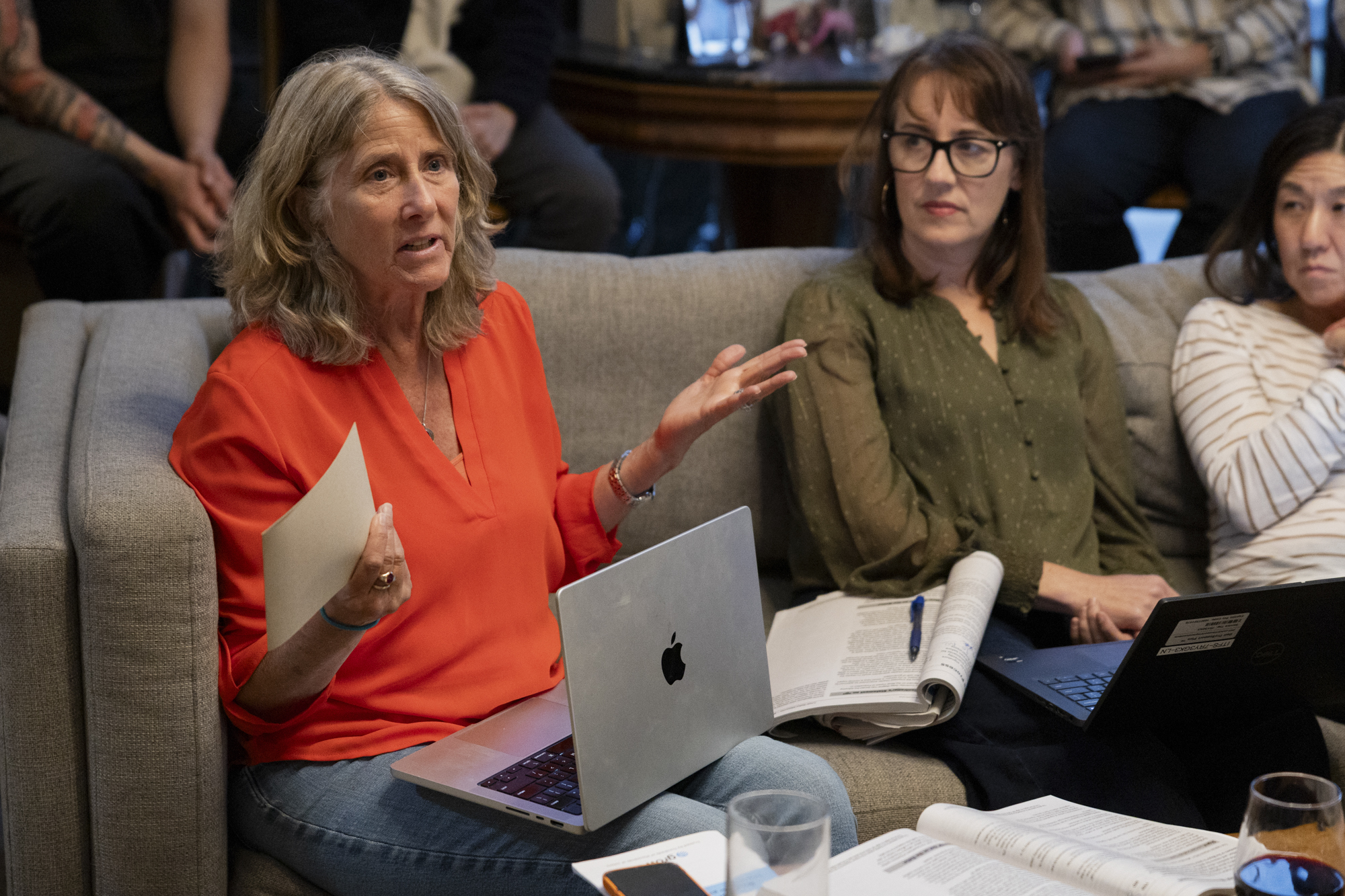
One attendee, glass of wine in hand, asked, “ Why is San Francisco being charged more than the other counties?” referring to this election’s Regional Transit Measure, a regional sales tax to support local transit agencies.
“Because there are more rich people here?” another guest said.
“Because we have more public transit here?” someone else said.
Schwartz said her parties can last hours. Each guest volunteered to explain the pros and cons of a certain measure — which Schwartz assigned them to research ahead of the party. Guests had a variety of perspectives, both for, against and somewhere in between on San Francisco’s Proposition G — whether to reopen San Francisco’s Great Highway to cars.
Cara Pellegrini said she has been coming to Schwartz’s parties for over five years, and that they have become part of her voting process. This is the second ballot party she’s attended this election.
“ This is one step in many in how we think about some of these issues. The more different perspectives I hear, I think it’s really useful,” Pellegrini said.
While Schwartz has thrown ballot parties on her own, this year she sought help from the San Francisco-based company Sway, a nonpartisan online voting group platform. It helped distribute her group’s recommendations to a wider audience.
“ I’ve had several friends say, ‘I wanna come,’ and I’m like, ‘No, no, no. We don’t have the room. You can sign up for Sway,’” Schwartz said.
“A Major Hit”
Sway is a public benefit corporation, a for-profit company registered in Delaware, that works to benefit both its shareholders and a stated public good. The website allows its users to create and join “voting groups” based on shared values.
“Particularly in places like California, where there’s so much ballot complexity, getting together in a group and talking through each one of these propositions and the implications is really important,” said Claire Shorall, CEO and co-founder of Sway.
The platform aims to increase the political influence of its users, so that any one voting group can amass the same power as special interest groups or lobbyists.
One voting group, called “Allies Against AIPAC,” has over 10,000 registered voters, and it focuses on recommending a nationwide slate of candidates who don’t accept money from the American Israel Public Affairs Committee. Another group called “Pull mRNA Shots Off the Market” has 44 members and supports candidates who want to discontinue access to mRNA vaccines.
If a voting group is able to reach 25 users, an organizer can apply for a $500 credit card from Sway to go toward buying food, supplies or a venue to host a ballot party. (Schwartz’s group, simply called “SF Proposition Party,” has 26 members but did not apply for the offer.)
The company formed in February 2025 — this is its first general election — and is funded by venture capital firms Neo, Long Journey Ventures and “a few angel investors,” according to a company FAQ page. The company does not currently make a profit, Shorall said.
She said the ballot parties have been a “major hit:” Out of the nearly 7,000 voting groups on Sway, over 2,700 have applied to host one — although just over 250 nationwide hit the participant threshold necessary to receive the $500 credit card. The most Sway-sponsored ballot parties this election were in Texas, with 48; California was second with 36, according to the company.
On the Fence
California voters feeling unprepared or uninformed about ballot issues is a problem that can contribute to low voter turnout and disparities in voting among different demographic groups, said Josh Clark, a senior social scientist at UC Berkeley’s Othering & Belonging Institute. He’s a qualitative researcher who studies why different demographic or socioeconomic groups vote more or less than others and which types of interventions are effective in improving turnout.
“ People often who are on the fence about voting or who vote only inconsistently express a lack of confidence in their own knowledge or their own preparedness to vote,” Clark said, adding that voter focus groups in California often express feeling unprepared when it comes to the state’s ballot initiatives.
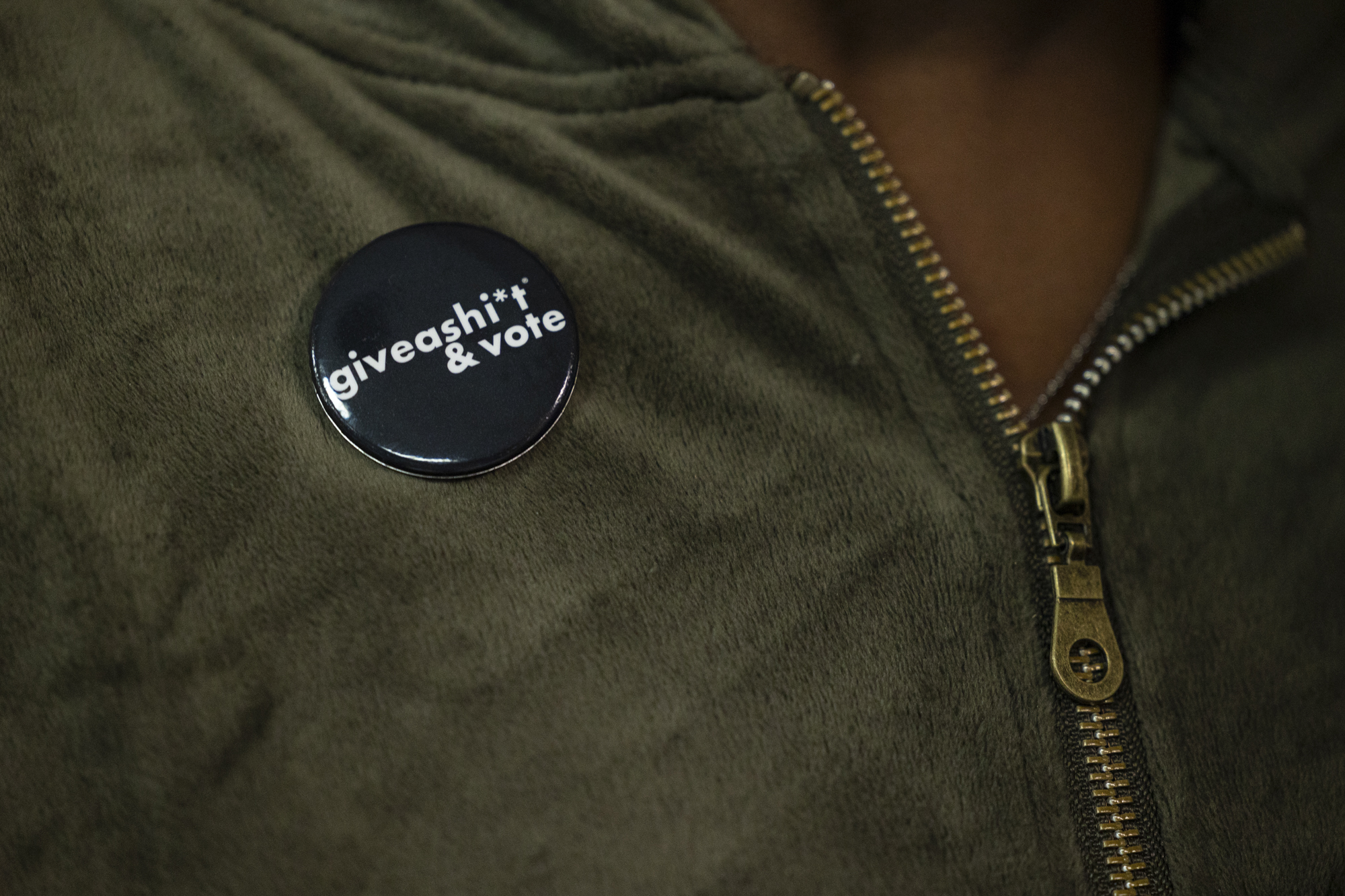
Those disparities are worse in midterm elections, Clark said. Just shy of 42% of eligible voters in California actually voted in the 2022 midterm general election, as opposed to nearly 60% in the 2024 presidential general election, according to the California Secretary of State.
Clark said he’s been aware of ballot parties since 2016, when there were 17 statewide ballot propositions on California’s November ballot. These gatherings can help combat a reluctance to vote, he said.
“ If you’re someone who is connected to a network or community of people where voting is the norm, then you can find voter guides, you can join ballot parties, and those are great,” he said.
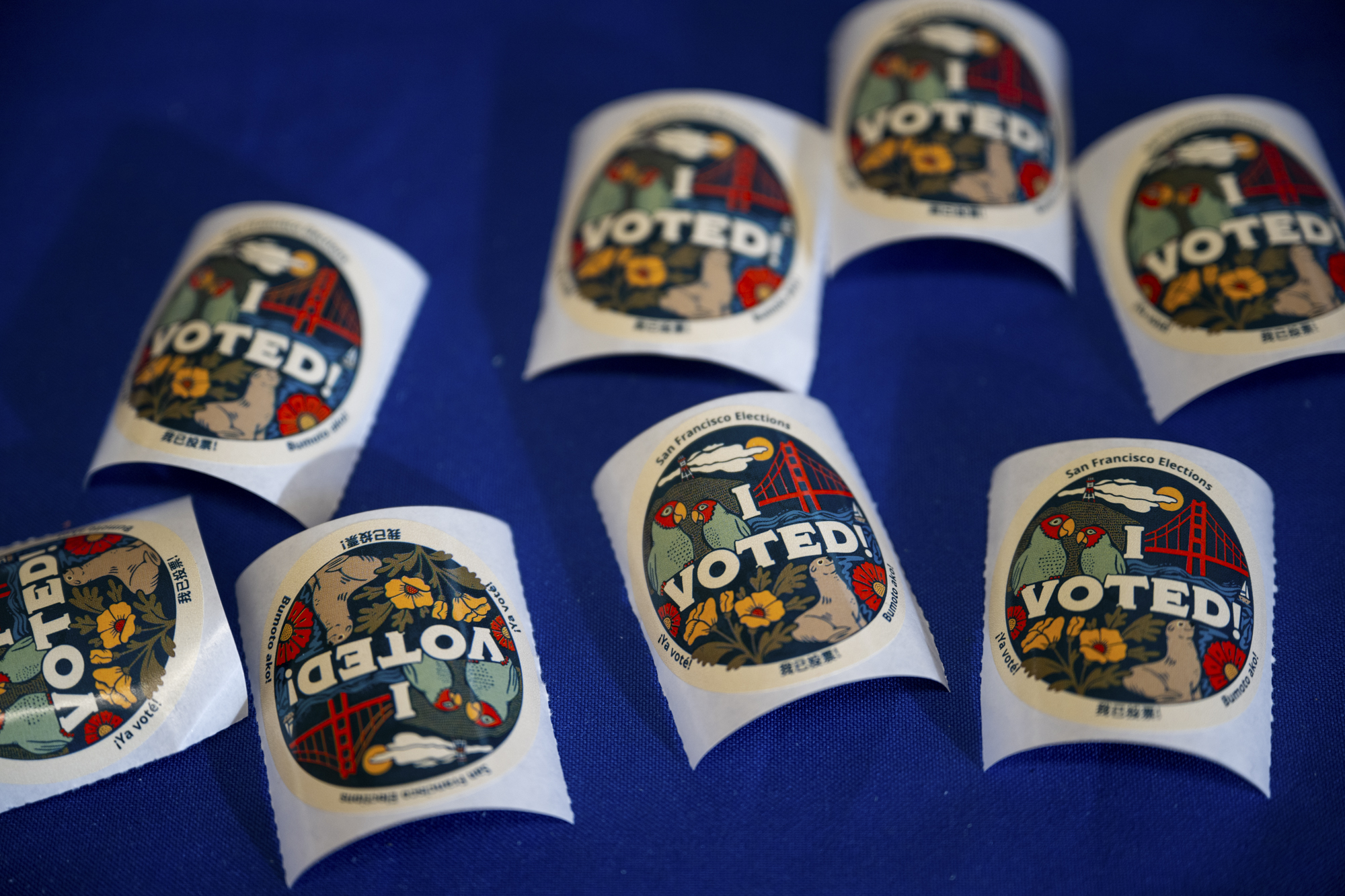
But the question on Clark’s mind that Sway and similar civically minded tech organizations should ask is: “How do you reach people who aren’t looking to be reached?”
“ My concern would be that this attracts someone who is already interested in learning about political issues and voting, and therefore, you aren’t going to reach a lot of people who are counting themselves out or feeling put off by the tenor of politics in the country,” he said. “Especially if those spaces are based on preexisting social networks.”
Shorall said she’s received multiple emails from ballot party organizers who said someone voted for the first time as a result of one of the events.
“ It is incumbent on us to create opportunities where people get to hear from folks that they already trust, and as much as possible, we tried to lower the barrier to entry,” she said.
Unpacking the Election At Church
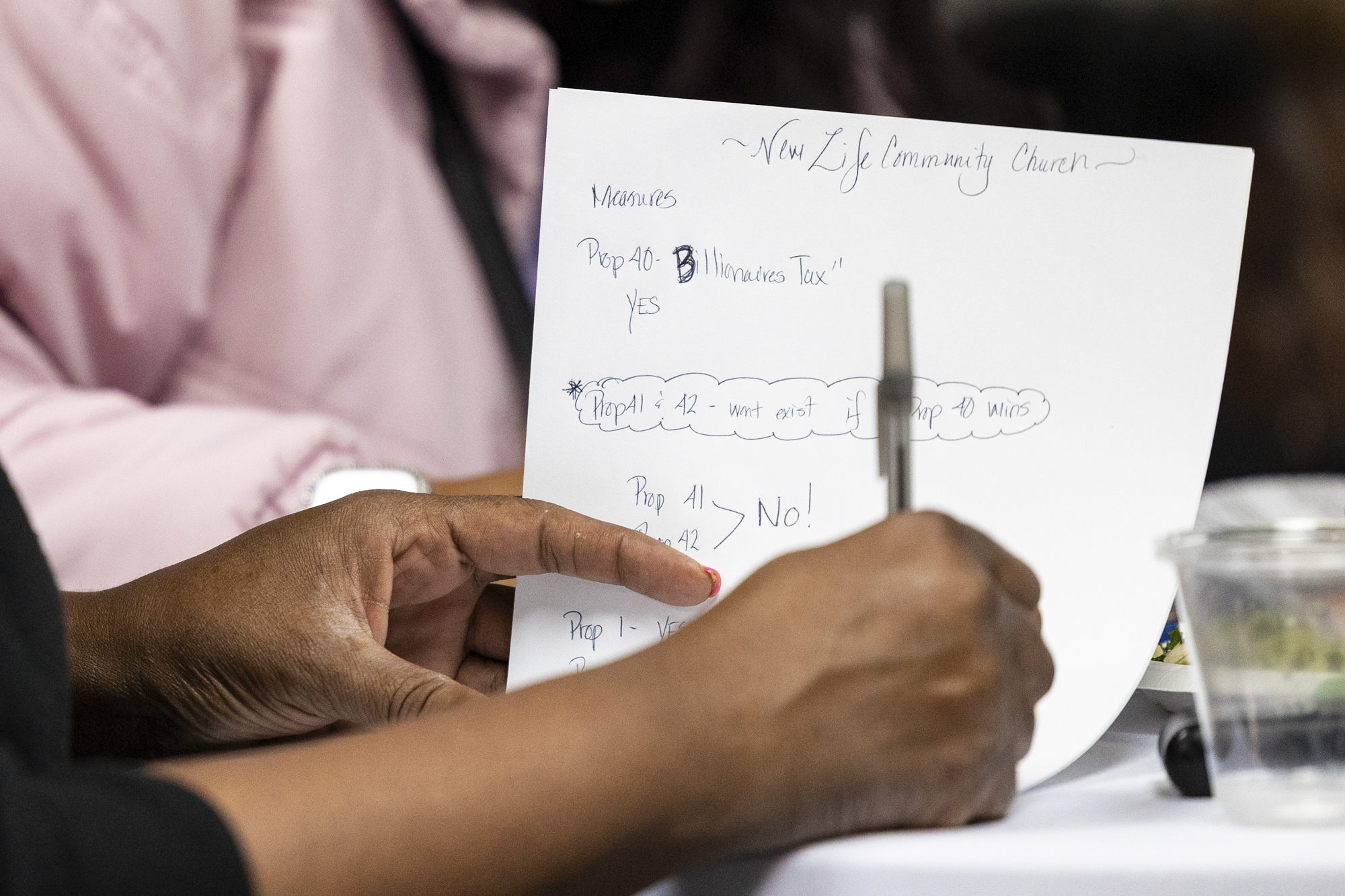
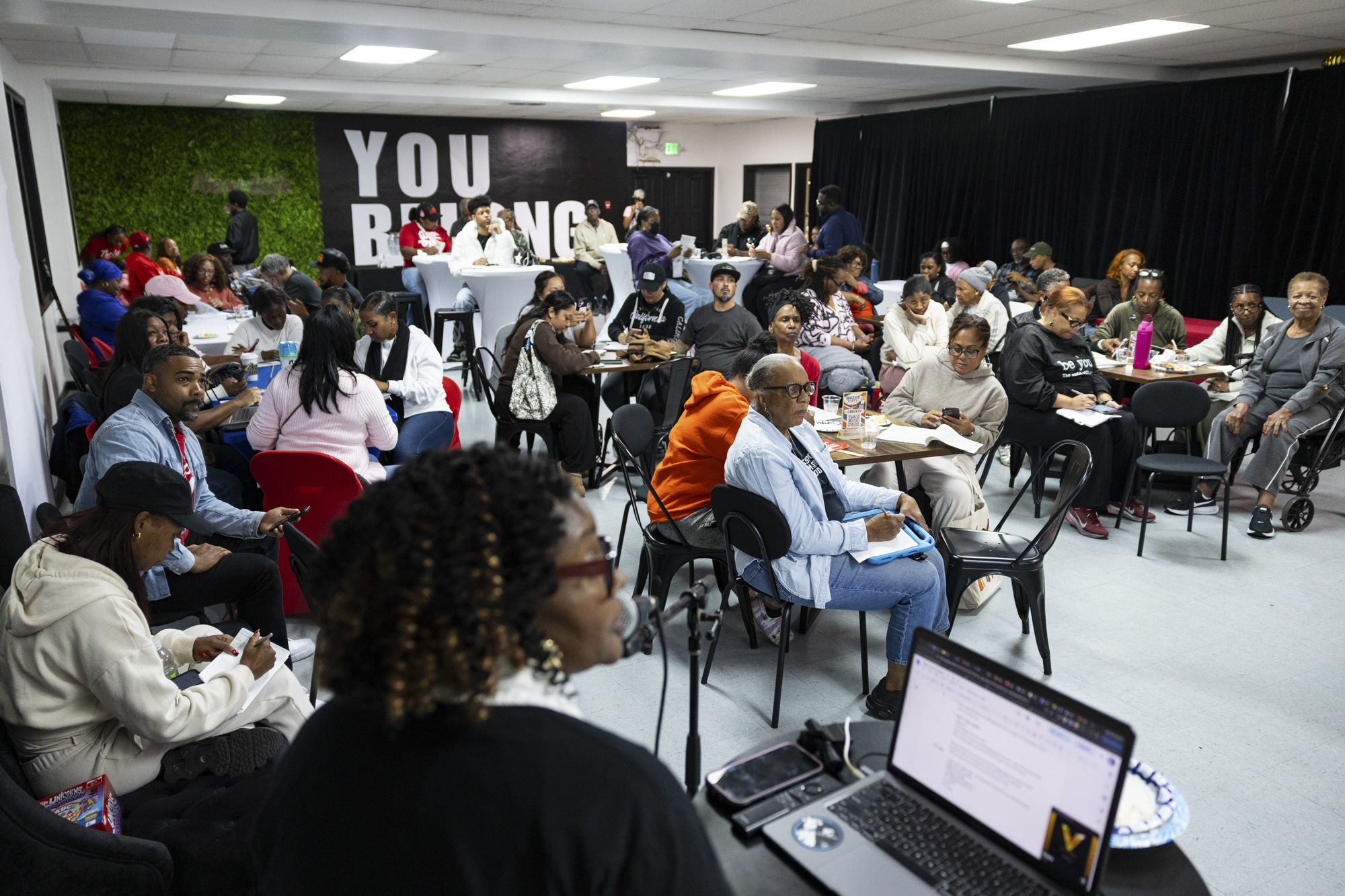
Tiffany Cowan of Alameda was scrolling on Instagram when she saw a post about someone who used Sway to host a ballot party. She said it was an “amazing idea,” and brought it to the pastor of her church, New Life Community Church in Oakland, who agreed.
”Voting is a very high priority within our community,” Cowan said, adding that the church is made up predominantly of people of color. “ We wanted to create a space where people can be informed.”
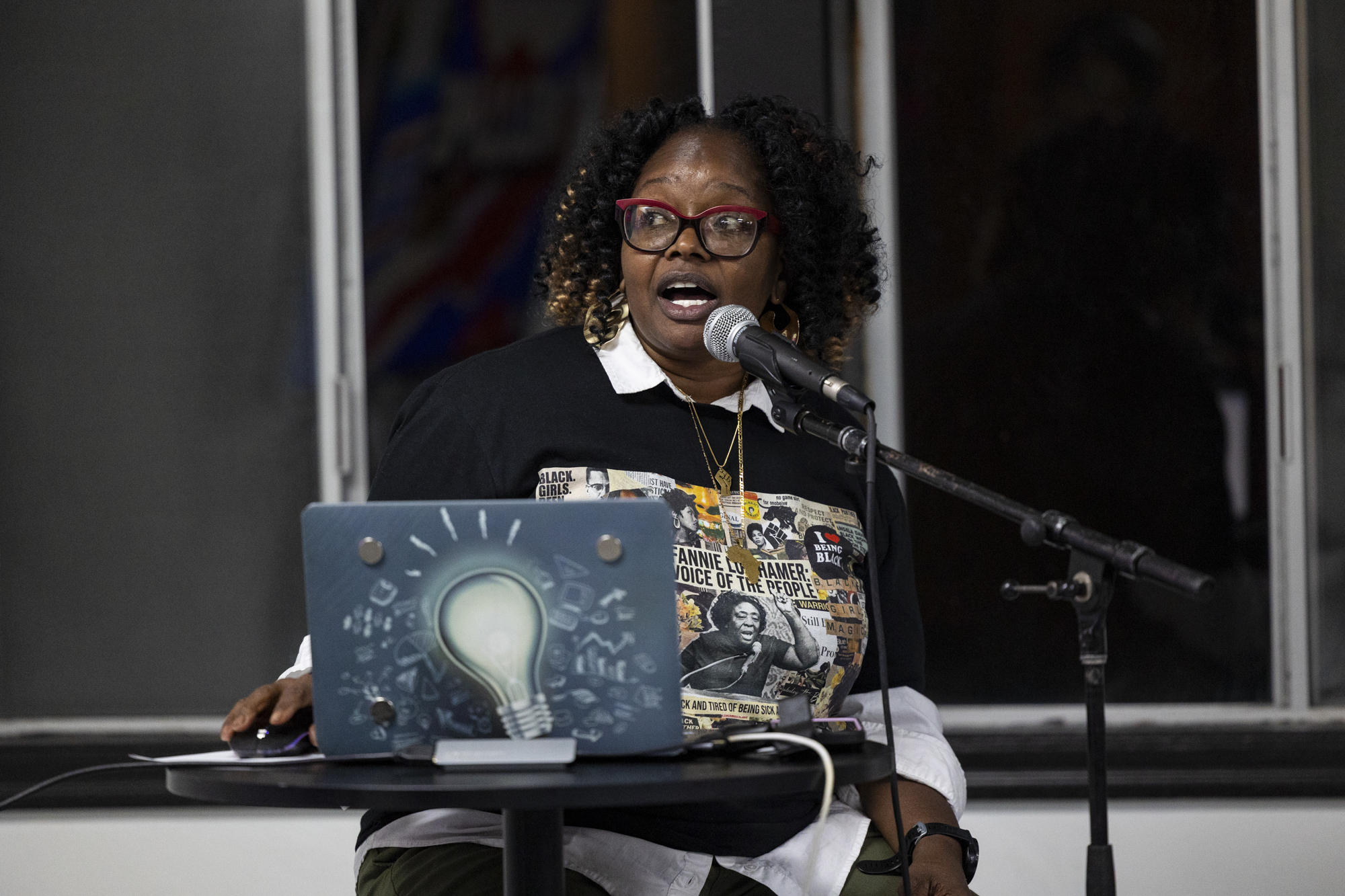
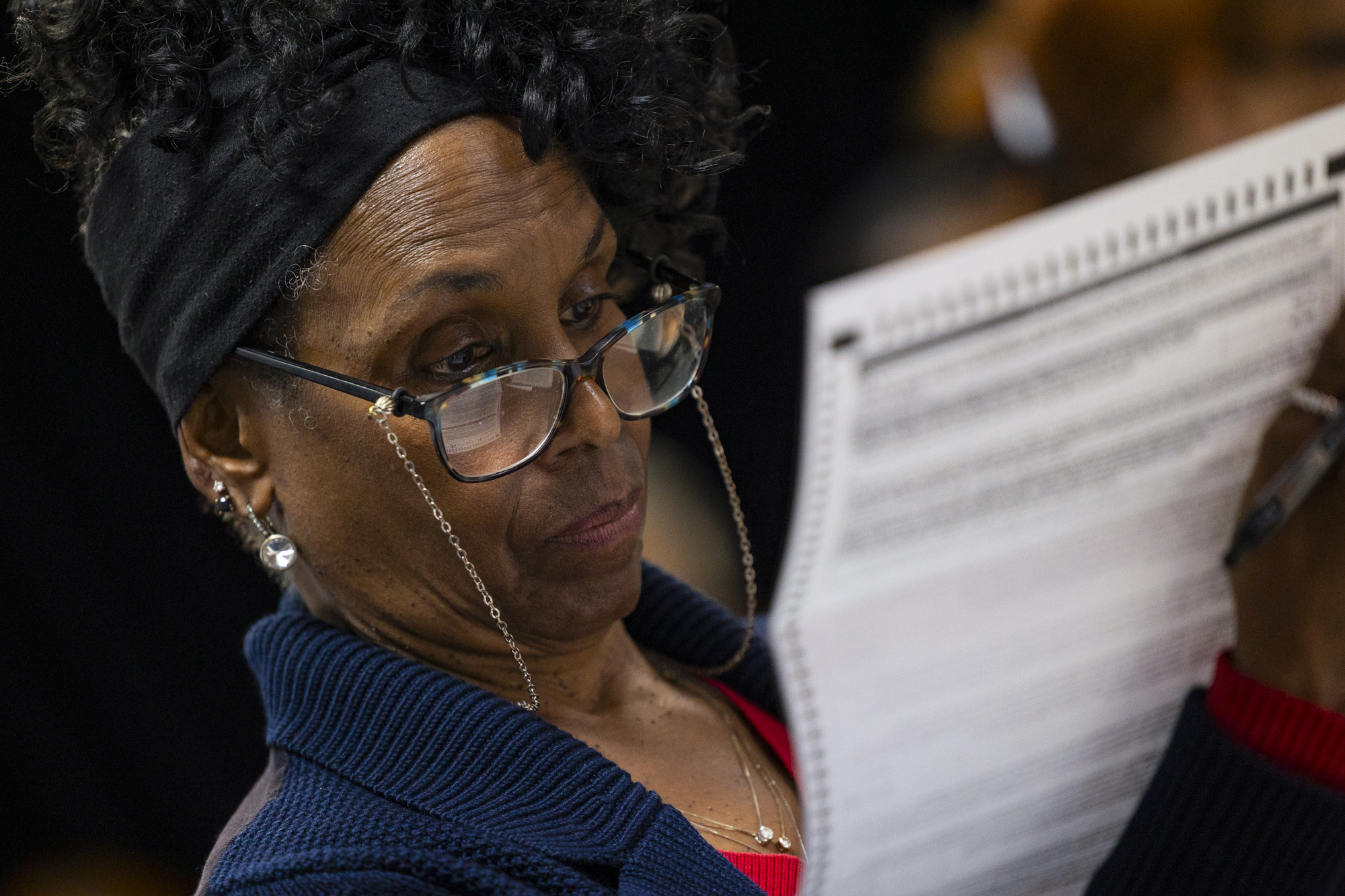
One week before the election, over 60 people — a mix of church members, neighbors and families — attended the church’s first-ever ballot party.
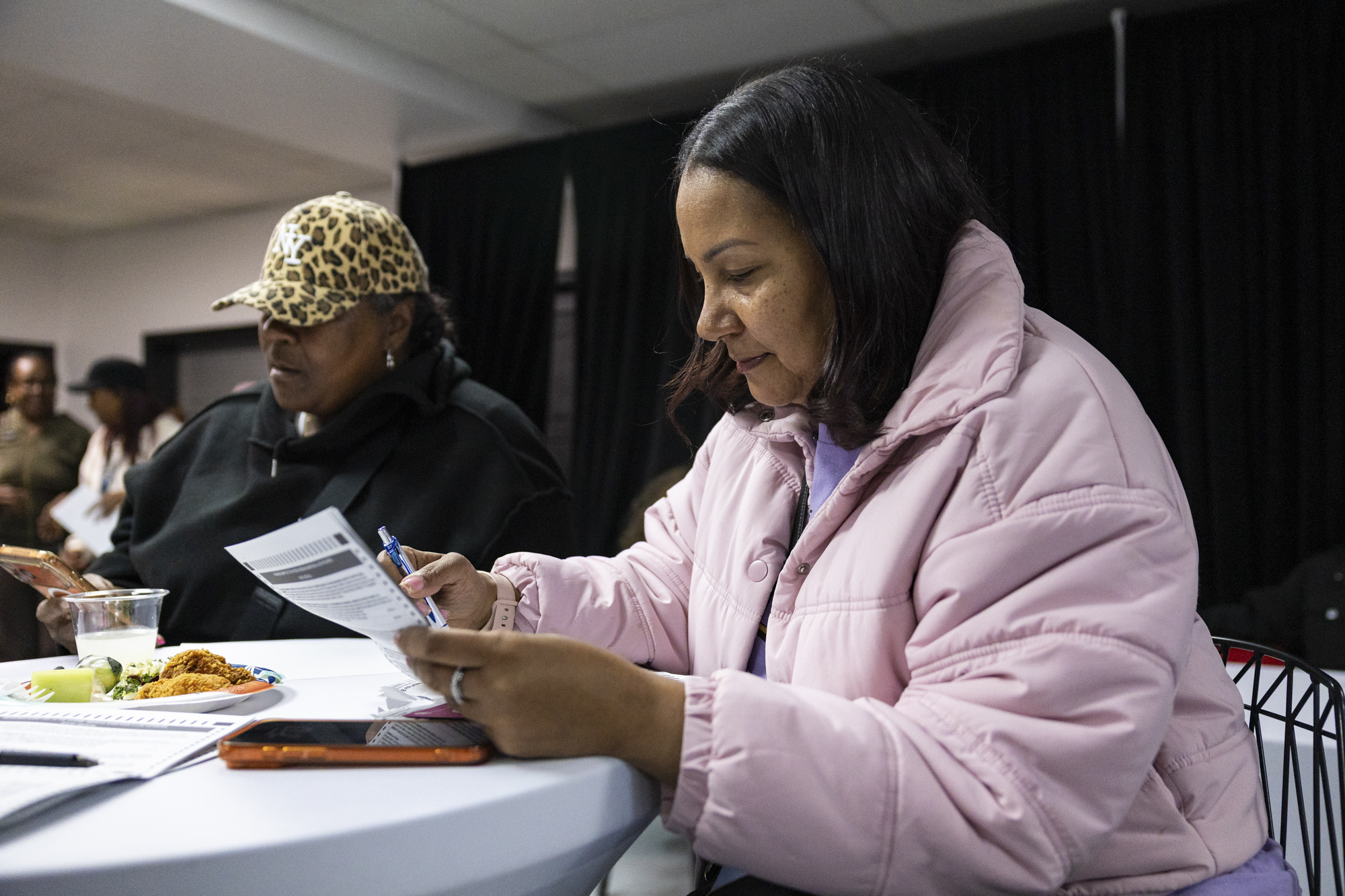
Michelle Mabry said she came because it was close to her house and was looking for support with her ballot.
“ It’s a very long ballot, and so I kind of need some direction,” she said.
In particular, Mabry wanted more information about controversial measures like Proposition 40, the proposed one-time wealth tax targeted at the state’s billionaires. After the party, she said the discussions answered some of her questions, but she said she still had some “homework” to do before she felt ready to vote.
Brian Harrison, a lifelong Oakland resident, said the state’s numerous propositions also motivated him to attend.
“ That is my biggest concern because they’re confusing. You’re hearing two different sides, and I don’t think I’m hearing a straight answer each time,” he said. “Hopefully, I get the answers I need to make the right decision.”