As Costs Crush Families, This Bay Area County Could Be Latest to Subsidize Childcare
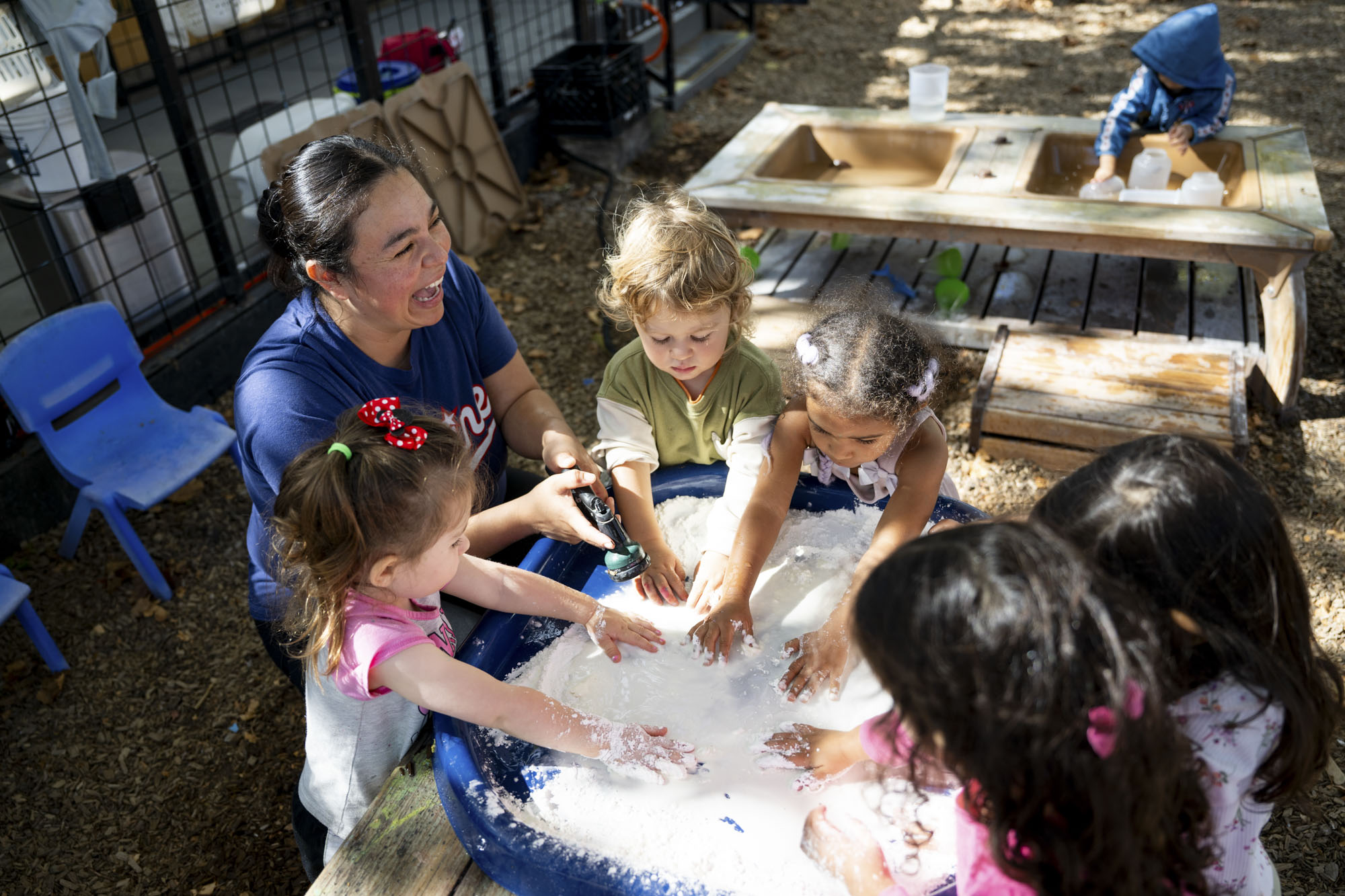
A regional movement to help families afford childcare and support its littlest learners is reaching Marin County, home to some of the highest childcare prices in the nation.
If voters approve Measure P, a parcel tax that would raise about $12.5 million per year over 15 years, Marin would become the fourth Bay Area county in eight years to come up with a dedicated funding stream for childcare.
Since 2018, San Francisco, Alameda and Sonoma counties have raised several hundred million dollars through special taxes to subsidize childcare spots for families, add more childcare facilities and increase wages for early childhood educators to help them stay in the field.
San Francisco, for example, uses revenue from a tax on commercial buildings to cover up to $36,000 per year in childcare for low-income families. Meanwhile, Alameda County uses funds from a sales tax to boost early childhood educators’ wages to at least $25 per hour. A statewide survey shows their pay often starts below the $20 state minimum wage for fast-food workers.
More recently, revenue from a parcel tax approved by voters in 2024 in a small San Mateo County school district is starting to flow to families and childcare providers in East Palo Alto and a section of Menlo Park.
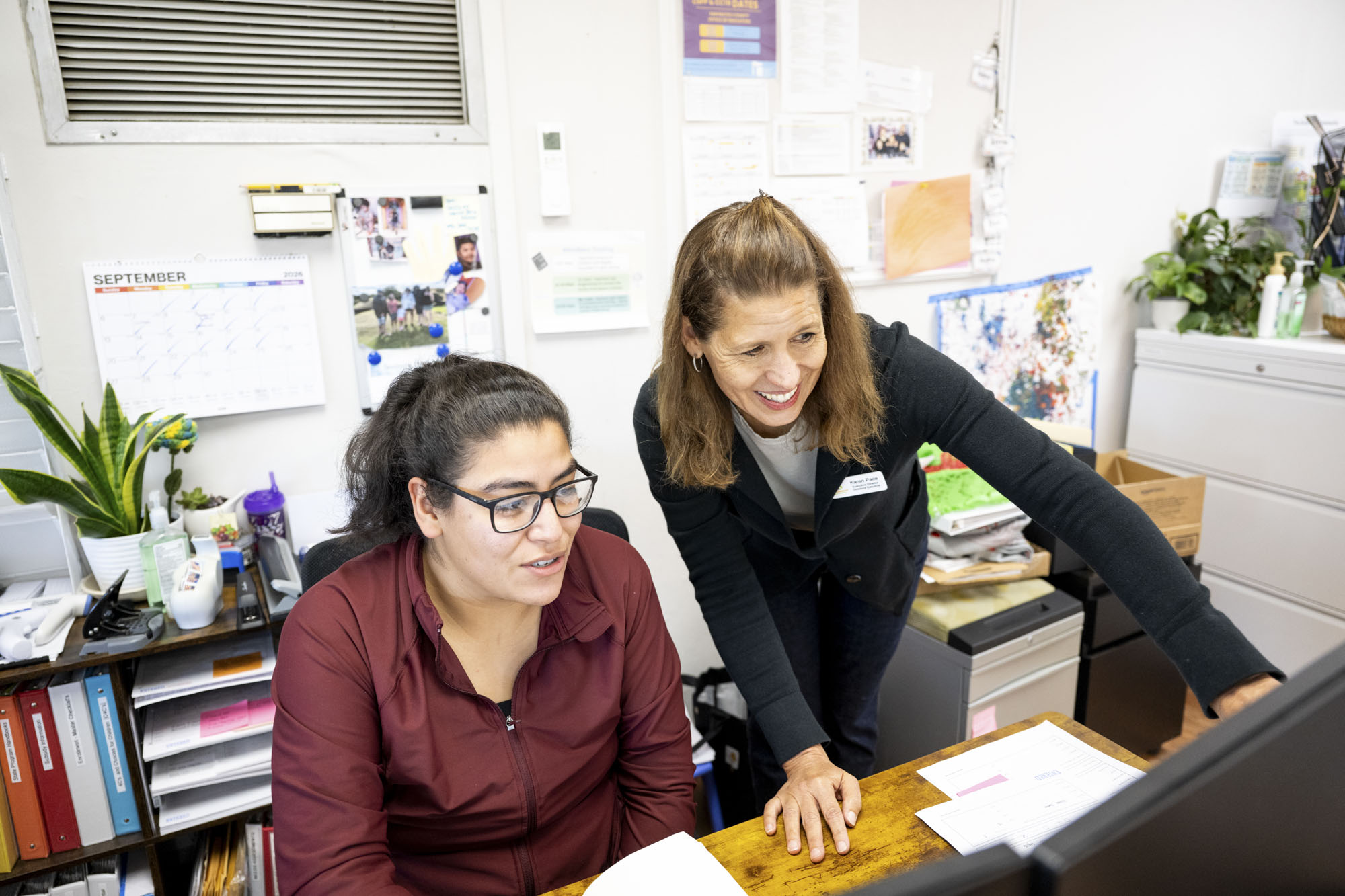
Advocates say a local fund is needed to fix a broken market where parents struggle to afford the full cost of childcare, yet providers barely break even. To do so, they need to keep costs down by minimizing what they spend on labor. But low wages have also led to high turnover at childcare programs, according to research by the Center for the Study of Child Care Employment at UC Berkeley.
“It’s a math problem,” said Karen Pace, executive director of Ravenswood Early Learning, a nonprofit administering the parcel tax revenue for the Ravenswood City School District.
“We need to charge tuition that matches what families can pay and still have a nice life, and we need to pay early childhood educators enough to live in the community and support their families and have a nice life,” she said. “There has to be other financial support.”
Statewide, demand for childcare far exceeds supply. Nearly 2 million children across California are eligible for state-subsidized childcare programs, but there isn’t enough funding to meet demand, according to an analysis by the California Budget and Policy Center.
That was the scenario in Marin County a decade ago when hundreds of low-income families couldn’t get a spot. A coalition of parents and advocates put forward a sales tax measure to augment the state’s funding and subsidize childcare for residents. But the measure didn’t pass.
Since then, the cost of licensed childcare in the county went up by nearly 40%, averaging $2,315 per month in 2024, according to a report by the Marin County Child Care Commission.
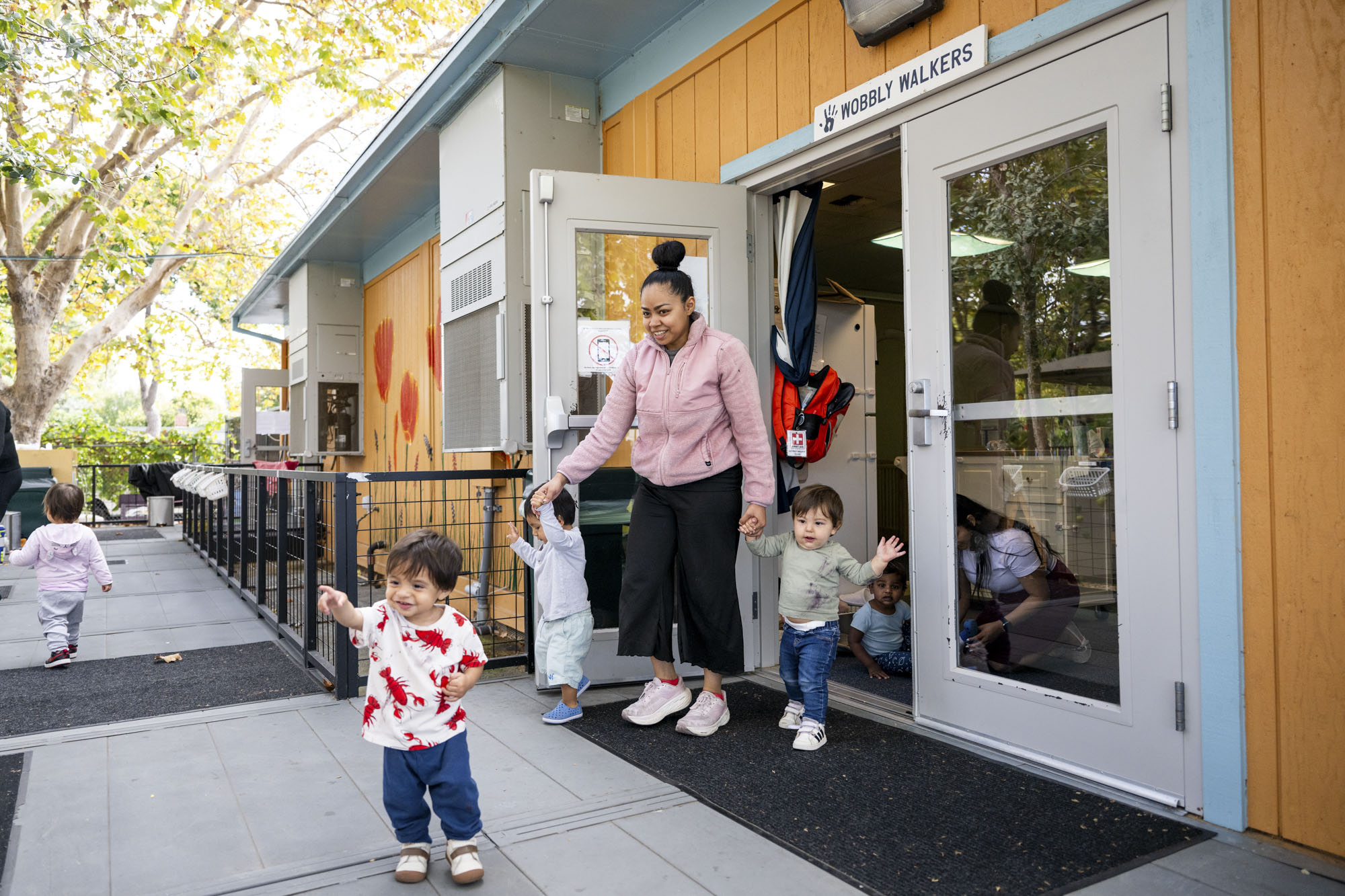
Meanwhile, the high cost of living in Marin has made it tough to attract and retain childcare staff, leading to reduced capacity and long waiting lists for families, the report said. Fewer than half of children in working families had access to a licensed childcare space in Marin County, and early childhood educators who can’t afford to live there often commute from other counties.
When the North Bay Children’s Center opened a new facility in Novato a year ago, the center had state and federal funding to fill a classroom and more than 80 children on a waitlist for subsidized care. But it couldn’t enroll them because it couldn’t find qualified teachers, according to Susan Gilmore, the center’s CEO.
“It took us about eight months before we had the teaching team we needed to open that classroom,” she said.
The shortage of childcare has rippling consequences for businesses like grocery stores and senior living facilities, said Paula Reynolds, director of strategic projects for the Mill Valley Chamber of Commerce.
“They’re so dependent on an enormous workforce showing up for work on a consistent basis,” she said. “It’s the reliability of childcare that has an impact on businesses and their ability to plan and get through their day.”
But opponents of Measure P say employers, not taxpayers, should contribute to the childcare fund. The Coalition of Sensible Taxpayers has urged voters to reject the measure, warning it is among a “tsunami” of proposed taxes, bonds and fees coming before Marin County voters at a time when they’re already pinched by inflation.
“Affordability is at a breaking point,” the coalition said on its website.
Lucy Dilworth, a member of the coalition’s board, declined a request for an interview.
But proponents of the measure say it might be too risky to wait for another election. Proposition 43, a statewide measure on this November’s ballot, would require future citizen-led ballot initiatives to secure a supermajority, or two-thirds support, to pass.
In 2016, voters in Marin County fell just 3 percentage points shy of meeting that supermajority threshold when it first tried to pass a childcare funding measure. But since then, a series of court decisions made it easier to pass similar citizen-led tax initiatives. But if voters approve Prop 43 this November, that may not be the case in the future.
Joanne Webster, president of the North Bay Leadership Council, a public advocacy group backing the measure, said she sympathizes with people who are skeptical of new taxes.
“I agree that we should scrutinize every tax,” Webster said. “But we should also consider the cost of doing nothing.”
She said, “Ten years ago, when we tried this and needed two-thirds [of the vote to pass], it was a slim margin, and that’s a shame because we could’ve collected some $50 million since then, and we wouldn’t be in this situation we’re in now.”
The Coalition of Sensible Taxpayers also said the measure lacks a clear plan for how the money will be spent, but supporters argue that flexibility is part of the design.
If approved, an advisory council appointed by county supervisors will assess the biggest needs and recommend a spending plan.
“It’s structured that way so we can be nimble and react to what’s happening in our local community with childcare, and be able to pivot if we need to lean heavily one year into [investing in the] workforce or lean more heavily into building more facilities another year,” Gilmore said.
In Ravenswood, the school district proposed the parcel tax to fund childcare after conducting surveys and finding that childcare was a high priority for residents within its boundaries.
Voters passed the measure in 2024, and revenue from the tax began to reach the working-class community over the summer. Pace said home-based childcare providers are starting to get funding to cover tuition for families who qualify for subsidized care.
Pace said her staff visits childcare programs to verify the money is directly benefiting residents.
“We are being hyper vigilant and intentional about the tax fund only serving families and providers in this community,” she said.
Some of the funding also goes toward recruiting people who live in the district to become early childhood educators.
That has helped stabilize staffing at All Five, a preschool in Menlo Park, and it’s given parents like Gloria Pirir a chance to go from volunteering in the classroom to working in one.
Pirir said she was inspired to become an early educator after seeing her daughter’s teachers help young kids manage their emotions and resolve conflicts. She said the teachers helped her sign up for classes, and she connected to a county program that provided tuition assistance and coaching to help her earn an associate teacher permit.
“Everything became possible because the teachers encouraged me. They said, ‘I know you’re a single mom, but you can do it, Gloria,’” she said. “The teachers believed in me.”