City, Activists Honor Black Panther Party’s 60th Anniversary

Oakland city leaders and activists are celebrating the 60th anniversary of the Black Panther Party with a commemoratively renamed street downtown and a host of events.
The party started in Oakland in 1966 as a group that patrolled the streets for police brutality. It soon expanded to offer community support programs such as free groceries, free breakfast (which pressured the government to establish a similar program), health clinics and educational programming. It was an important part of the civil rights movement and had a lasting impact on rights for Black Americans.
The City of Oakland on Saturday commemorated Broadway between 14th and 17th streets as Black Panther Boulevard, adding to its sites named after prominent party leaders. The Oakland City Council this month voted unanimously to approve the name change.
“It’s monumental because we’re not doing this on the periphery of Oakland,” said Xavier Buck, executive director of the Dr. Huey P. Newton Foundation, about the street renaming. “We’re doing it in the center, because we are making a statement that Oakland and the Black Panther Party are synonymous.”

The Dr. Huey P. Newton Foundation and the It’s About Time BPP have been hosting a lineup of events this week to honor the anniversary, including a gala and workshops.
Billy X Jennings, now the group’s historian, remembers when he joined in 1968.
“It was a glorious time for the city of Oakland and for America. It was a time of growth and development,” Jennings said. “The Black culture was rising to the top.”
The group operated under a ten-point platform that called for freedom and individual demands like employment and housing for Black and other communities.
Rori Abernethy, the daughter of former Black Panther members, was at an event at Bobby Hutton Park in West Oakland on Sunday, a site where Panthers held rallies decades ago. She said growing up with the organization was like having “a giant family.”
“When we left the party, I missed the adults that cared for me,” said Abernethy, now in her 50s. “Then when I got to see them at the reunions, I was so happy.”
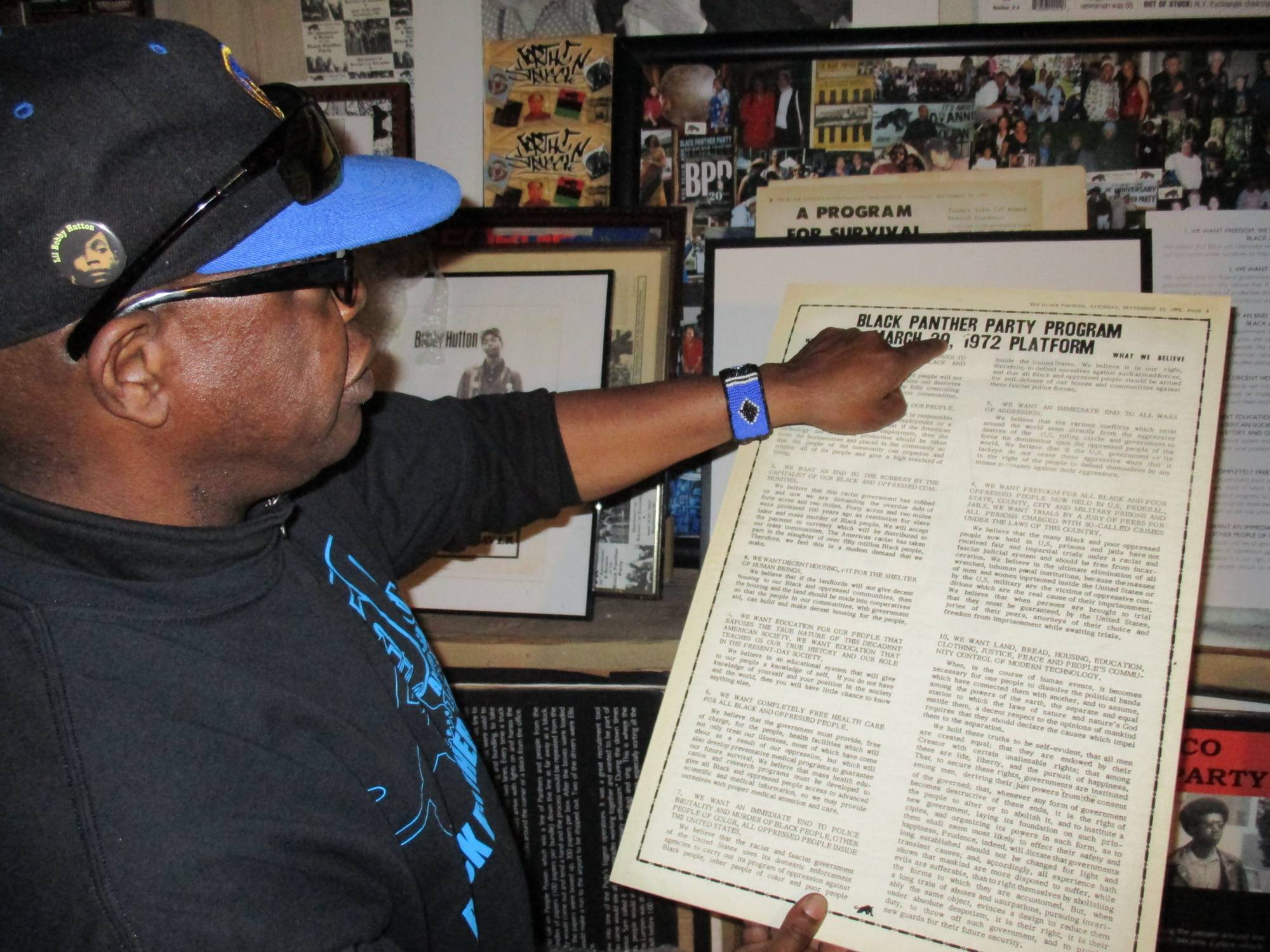
Even though the party officially disbanded in 1982, activists, former Panthers and their families still take it upon themselves to continue to support the Black community.
Buck told KQED that in part means putting power into the community’s hands so they can guide Oakland’s future.
“We got a lot of people with money coming in here trying to tell us what they want to do with it,” Buck said. Pointing to the dozens of social programs the group developed,“This is giving the people that blueprint. Not so we can be the Panthers of ‘66, but so we could be the revolution.”
Young people are inspired to continue the panther’s legacy, Buck said, because of the conditions they are living in.
The Trump administration and a shooting by federal immigration agents in New York — adding to the number of ICE-related shootings and incidents that have drawn criticism — are among those conditions, he said, stressing the importance of transferring the group’s knowledge to youth.

Elmer Dixon, co-founder of Seattle’s chapter of the Black Panther Party and chair of the Seattle Black Panther Party Legacy Group, attended the renaming of the downtown Oakland blocks.
Dixon said one of the biggest challenges facing the principles the group sought out and stood for is misinformation from social media and the government. He took aim at President Trump in particular.
“He lies every day when he gets in front of the camera, and a lot of people fall for that,” Dixon said. “It’s about making sure that you get correct information and making sure you’re diligent and making sure to follow up on sources of information that you’re getting.”
Jennings said federal cuts to health care and instances of homelessness, for example, show the group’s legacy is still relevant.
“Work is not done,” Jennings said.
The Huey P Newton Foundation is already doing some work for the community, Buck said. Headquartered in Oakland, it operates the Black Panther Party Museum, which aims to preserve “the true legacy and ideals of the Black Panther Party.”
Abernethy said that people who are organizing in Oakland should look to replicate how the Black Panthers operated by being “fearless” and “meticulous.”
KQED’s Christopher Alam and Spencer Whitney contributed to this report.