San Francisco Judge Denies Bail to Engineer Accused of Bugging OpenAI HQ
The OpenAI engineer who was accused last week of planting a secret recording device at the company’s San Francisco offices was ordered detained without bail pending trial on Monday. Magistrate Judge Alex G. Tse said there is a “significant” risk he would flee, according to CNBC.
Tse’s order came at a San Francisco court hearing where he questioned an offer by the Saudi Consulate in Los Angeles to back the full bond for Abdulrahman Alfozan, a Saudi national.
Tse reportedly said he found that offer “problematic,” and asked what confidence he should have that the Saudi government would protect the interests of the U.S. government.
In a court filing on Sunday, prosecutors argued that Alfozan was “mere days away from leaving the United States for Saudi Arabia when he was arrested.” Prosecutors also cited his Bay Area earnings, at least two Saudi bank accounts, and “what appears to be considerable support from a foreign government” with no U.S. extradition treaty.
Ahead of the hearing on Monday, Alfozan’s lawyer, William Pernik, wrote to KQED that his client posed “no flight risk whatsoever” and cited Alfozan’s “long-standing ties to the community.” At the hearing, according to the New York Times, Pernik said his client was “weeks away from achieving every immigrant’s dream” of U.S. citizenship.
“If he really was an agent of a foreign government, why wouldn’t he just abscond right away?” Pernik said, according to the Times.
Prosecutors said in their filing on Sunday that Alfozan had been in frequent contact with a member of the Saudi royal family who tried to recruit him to a new Saudi artificial intelligence initiative. In one message, prosecutors said, the Saudi royal family member wrote to Alfozan that “Saudi needs you more” than the U.S.
Alfozan’s response, according to prosecutors: “100.”
But Alfozan said he would not leave OpenAI until his stock vested. His new-hire equity grant was worth $2.2 million, according to the filing.
In a footnote, prosecutors pointed to a 2019 case in the same court, in which a Twitter employee accused of spying for Saudi Arabia left the U.S. the day after the company confronted him — a departure the U.S. government said was coordinated with the Saudi consul general in Los Angeles. He has never returned to face charges.
The government’s filing cited the fact that Alfozan’s wife and their 3-month-old baby flew to Doha, Qatar, the day after his arrest on a business-class ticket booked and paid for by a Saudi military official. His wife now lives in Saudi Arabia, per the filing.
Alfozan has been in jail since his arrest on a charge of using or endeavoring to use an electronic, mechanical, or other device to intercept oral communications. He faces a maximum possible sentence of five years in prison if convicted. OpenAI fired him after his arrest but has said it has no indication Alfozan improperly accessed or took model weights, source code or customer data.
Tse’s decision to deny Alfozan bail was “no surprise” to Rory Little, a professor at UC Law San Francisco, “given the one-way trip tickets and he’s not a citizen.” Little also told KQED he would be surprised if Alfozan’s lawyers seek an immediate appeal.
Alfozan came to the U.S. in 2009, earned degrees at the Massachusetts Institute of Technology and UC Berkeley, became a permanent resident in 2020 and joined OpenAI in July 2025, according to prosecutors.
In an Arabic podcast interview last month, according to the Times, Alfozan said he and other Saudi tech professionals in Silicon Valley had formed a group that advised Saudi organizations.
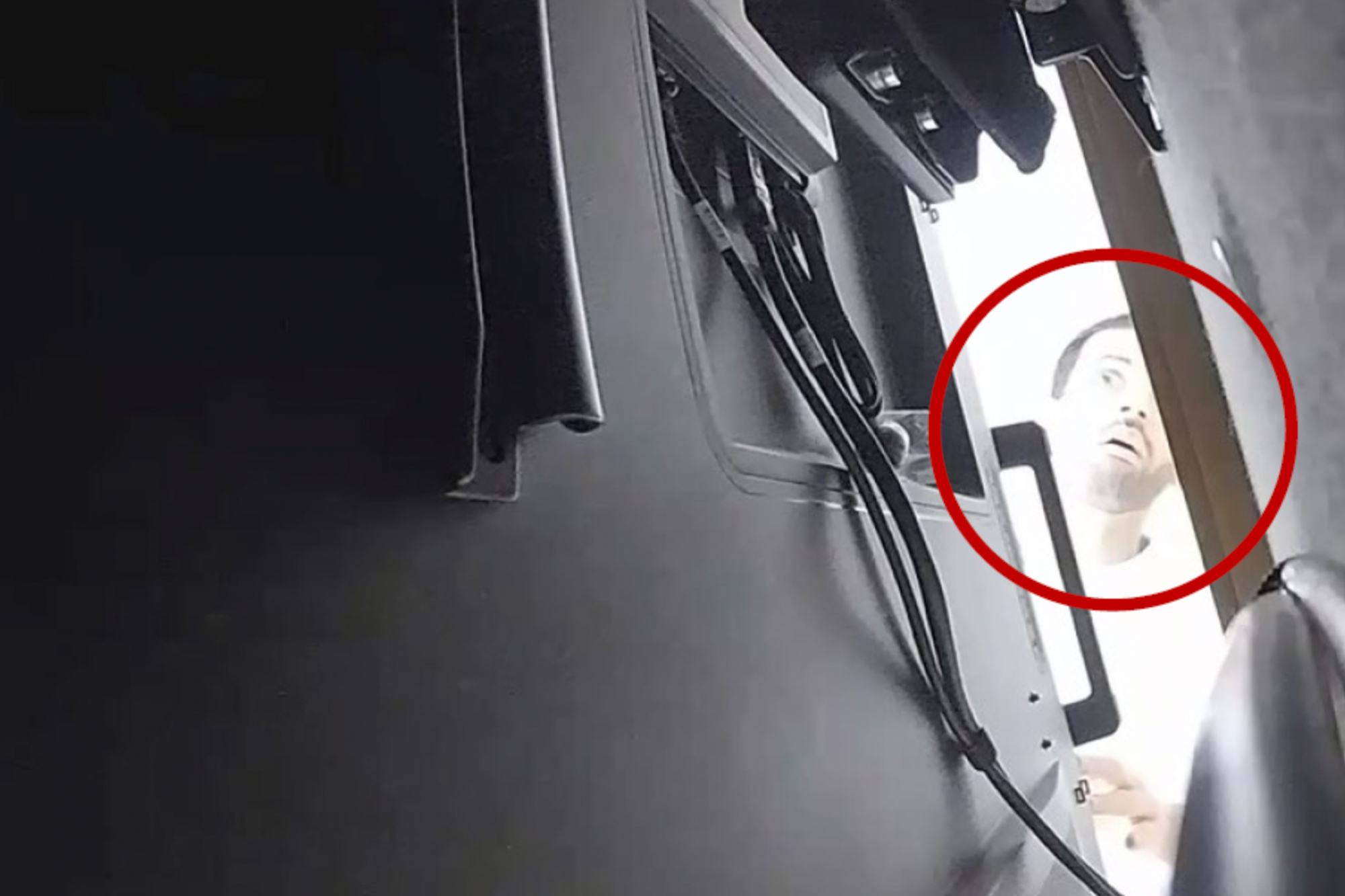
In a filing in the U.S. District Court for the Northern District of California unsealed last week, prosecutors detailed how OpenAI’s security team had found a thumb-sized recording device on Sept. 30, wrapped in toilet paper and plugged into the back of a television in an executive conference room. Only executives and their assistants could reserve the room, which was used for leadership meetings and briefings with government officials, the criminal complaint said.
OpenAI employees then placed a camera in the conference room, prosecutors said, and it recorded Alfozan checking behind the TV on Oct. 5. That day, security staff found a second device in a bag that Alfozan had left in a printer room, the complaint said.
Last month, a ChatGPT account linked to Alfozan’s wife was used to ask how to build a continuous audio recorder, add Wi-Fi connectivity, encrypt its memory card and hide its activity. Alfozan asked an AI tool to list meeting rooms in OpenAI’s offices and asked about locations for “leadership and exec,” prosecutors said.
The case is a reminder of how much information chatbot companies like OpenAI retain.
“Your chatbot conversations in general are less private than you might assume,” Riana Pfefferkorn at Stanford’s Institute for Human-Centered AI wrote KQED, adding that in a case where the company is also the alleged victim, it may be likelier to volunteer information rather than demand legal process for any information disclosure.
“Nearly every company logs your IP address when you create an account and/or log in,” said Jen King, a privacy and data policy fellow at the Stanford Institute for Human-Centered Artificial Intelligence, who has researched AI companies’ privacy policies. “If you are not deleting your chats, and not using a temporary chat window, the chats associated with your account in most cases are kept indefinitely,” she added in an email to KQED.
Prosecutors wrote that whether Alfozan wanted to record meetings “to enrich himself by enhancing his own business prospects, or to provide aid [to] a foreign government, or both, his conduct is criminal.”
OpenAI, the U.S. Attorney’s Office and the Saudi Consulate General did not respond to requests for comment.
Alfozan is next due in court Nov. 6 for a status conference on the preliminary hearing — the same day Alfozan was scheduled for his U.S. citizenship interview, according to his lawyers.