Could a Public Wildfire Insurance Plan Work in California?
Here are the morning’s top stories on Wednesday, October 14, 2026
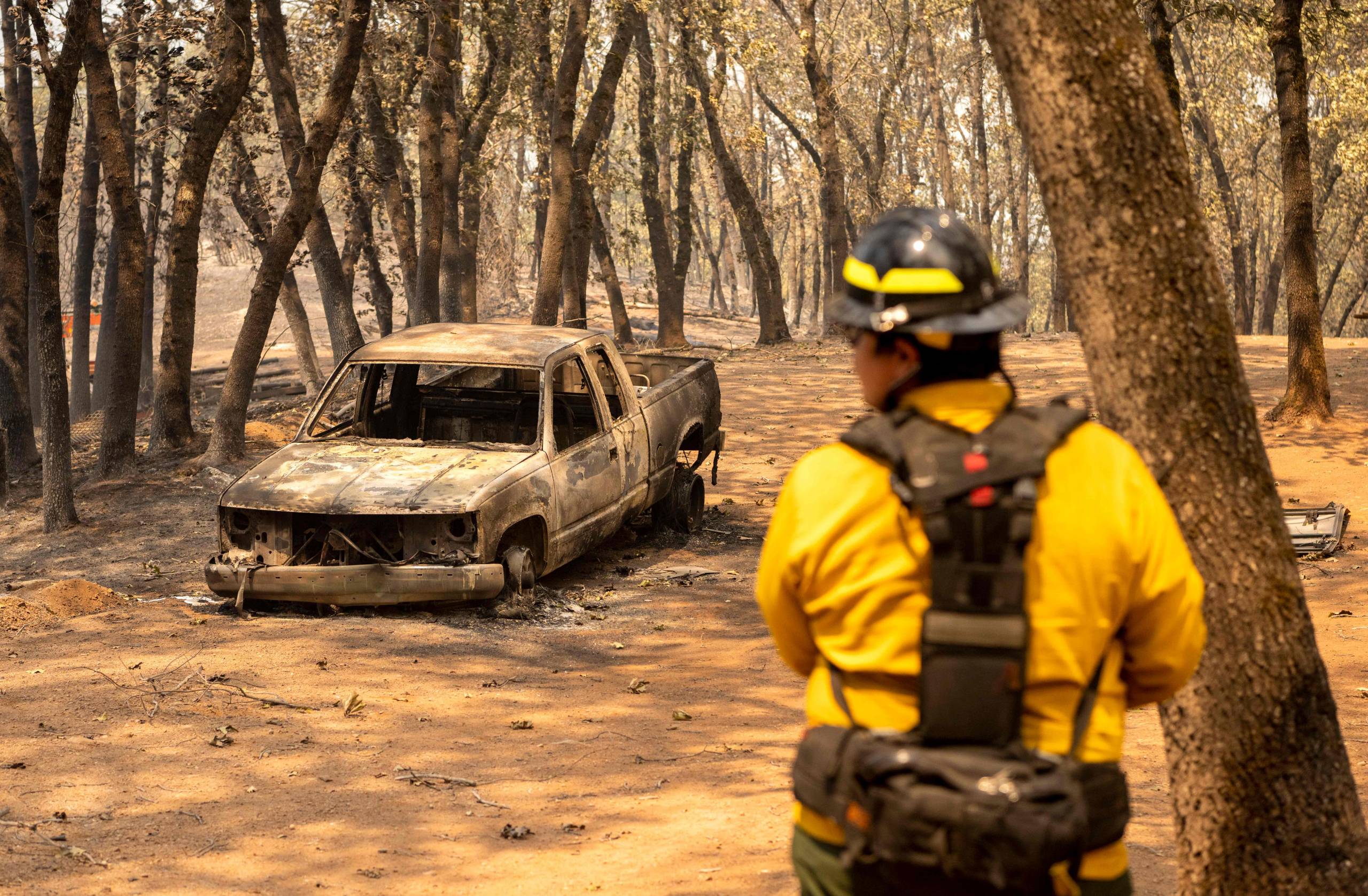
- California voters will soon decide who should be the next insurance commissioner. Two Democrats are in the race, former San Francisco supervisor, Jane Kim, and state Senator Ben Allen. Kim is offering the boldest out-of-the-box policy idea, a publicly run nonprofit guaranteed disaster insurance for all program.
- California lawmakers say a surge in immigration raids in the Golden State could suppress the vote come November.
- An ICE officer was charged this week with felony assault in Fresno, after he attacked two residents.
Former San Francisco Supervisor Jane Kim’s proposal to create a public, natural disaster insurance program for all is the boldest out-of-the-box idea in the race to become California’s next insurance commissioner.
The consumer advocate and attorney proposed a “guaranteed disaster for all insurance program that is publicly run and nonprofit.” “The state would collect some of the premiums that you’re already paying to this industry,” she said. “We would invest those dollars in the market, and then we would use excess capital to actually invest in driving down risk, meaning we would invest in fireproofing and floodproofing communities.”
Kim has pointed to New Zealand and France’s arrangements as potential models. In these countries, the government and private companies share risk in the insurance market. She said she wants to see California’s insurance dollars at work to control the state’s insurance costs.
Could a similar program work here? How would it? KQED spoke with half a dozen experts to take a look at these questions, and many met the idea with skepticism, and also some hints of curiosity.
Public-private insurance partnerships exist in some form in dozens of countries, including England for flood risk and Spain for some risk reduction and emergency response. The U.S. also has a national flood insurance program. And states like Texas and Florida have schemes to socialize some of the costs of home insurance, owing to their frequent hurricanes and flooding.
Each country or state’s arrangement is unique. In New Zealand, a set amount of a homeowner’s property insurance, about 600 New Zealand dollars ($336), goes to the government program that covers seismic risk: earthquakes, volcanic eruptions and landslides. If a policyholder suffers a loss, they can receive up to 300,000 NZ$ (roughly $170,000). All claim values above that are paid by the insurance company they have coverage with. It only covers seismic hazards. In France, a surcharge of 20% is added to property insurance policies. Private insurance companies handle claims, but they are reinsured by a public reinsurance company backed by the French state. Spain also operates a public reinsurance and direct insurance program, also funded by mandatory surcharges.
While some California insurance experts believe bold ideas are needed to decrease wildfire risk, most are skeptical of Kim’s idea. Their concerns overlap: public insurance programs spread out costs but don’t necessarily reduce them; they are often overly generous and fiscally irresponsible because they are set up by politicians who want to be reelected. Some experts argue that California’s climate-fueled disasters are so expensive and frequent that it would be foolish for the state to take on so much risk, and that California’s market is in the early phases of a recovery and that shocking it with major changes could delay or reverse the progress.
California lawmakers and immigrant rights advocates are warning that increased immigration enforcement across the state could discourage voters from participating in the November election.
Secretary of State Shirley Weber condemned the raids during a video conference with reporters Tuesday. Weber said the fear of being targeted by federal immigration agents could keep people away from the polls. “People feel that ICE is waiting for individuals who look a little different,” Weber said. “We see every day someone being attacked, someone being stopped.”
The Department of Homeland Security has launched enforcement campaigns in several parts of California, including San Diego, the Inland Empire and the Central Valley. The Central Valley is home to a closely watched congressional race that could help Democrats flip a Republican-held district.
Last week, Assembly Speaker Robert Rivas and other Democratic legislative leaders accused the Trump administration of using immigration enforcement to intimidate communities ahead of the election. “Weeks before an election, Trump is unleashing indiscriminate ICE raids across the country,” Rivas said in a statement. “This isn’t about public safety. It’s about fear, and it won’t work.”
Rivas said California Democrats would continue fighting to protect residents’ right to vote without interference. The Department of Homeland Security said in a statement that ICE enforcement operations are not intended to intimidate voters and that U.S. citizens should not be afraid to vote. The department said federal agents would be at polling places only in response to a specific threat, not to intimidate voters
Off-Duty ICE officer charged with assault in Fresno
An ICE officer was charged this week with felony assault in Fresno after he attacked two residents.
The Fresno County District Attorney also charged the officer, 32-year-old David Gonzalez of Texas, with elderly abuse, battery and vandalism.
A homeowner and his daughter found Gonzalez sleeping on their front lawn last Friday while he was off duty, and asked him to leave. Then he allegedly threw one of them against a parked car and pushed the other to the ground.
That’s when the father shot Gonzalez. He remains in the hospital. If convicted of all charges, he faces a maximum sentence of four years and eight months.