Oakland’s ‘Street Vet’ Provides Care to Unhoused Residents’ Four-Legged Friends
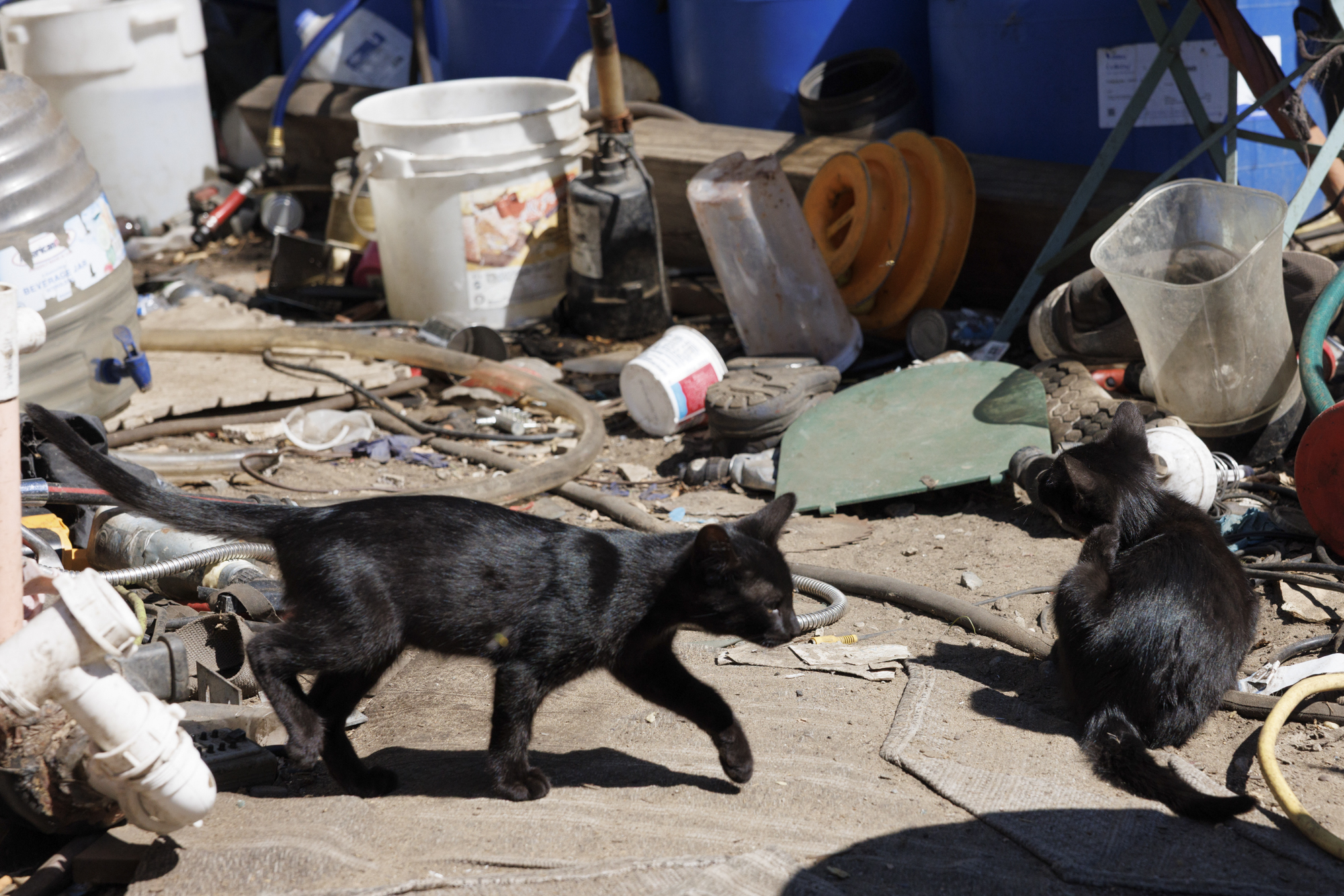
When it started, Bradford and Ophelia only had a few cats. But others soon appeared.
The couple, who have lived together at a West Oakland homeless encampment for the last three years, bottle-fed the strays who wandered in and administered medicine to them when they were sick.
It wasn’t long before Bradford and Ophelia, who asked KQED to only use their first names out of concern for their safety, developed a reputation for being knowledgeable pet owners. People started bringing them more cats: the shop owner who couldn’t keep his kitten, or the pregnant cat they were given after a friend passed away.
Today, they’re caring for a verifiable colony: 14 cats and kittens — and counting.
“Everybody just got spayed and neutered,” Bradford said with a smile. “So we’re feeling very responsible about that.”
Taking care of a pet — let alone two dozen — can be a challenge for unhoused people. The cost of a typical trip to the vet can easily reach hundreds or thousands of dollars. And figuring out how to transport a sick pet to a low-cost community clinic can be difficult.
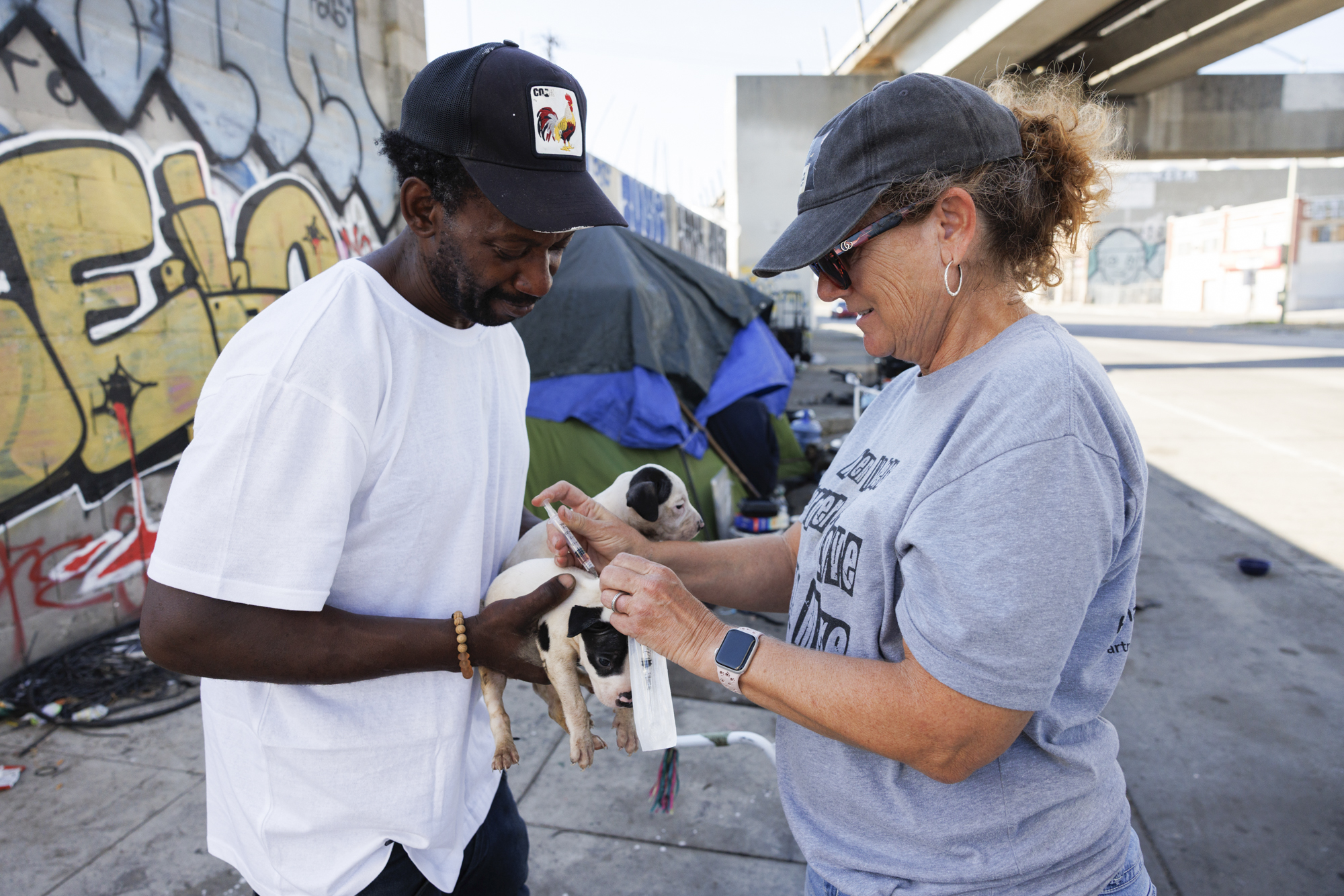
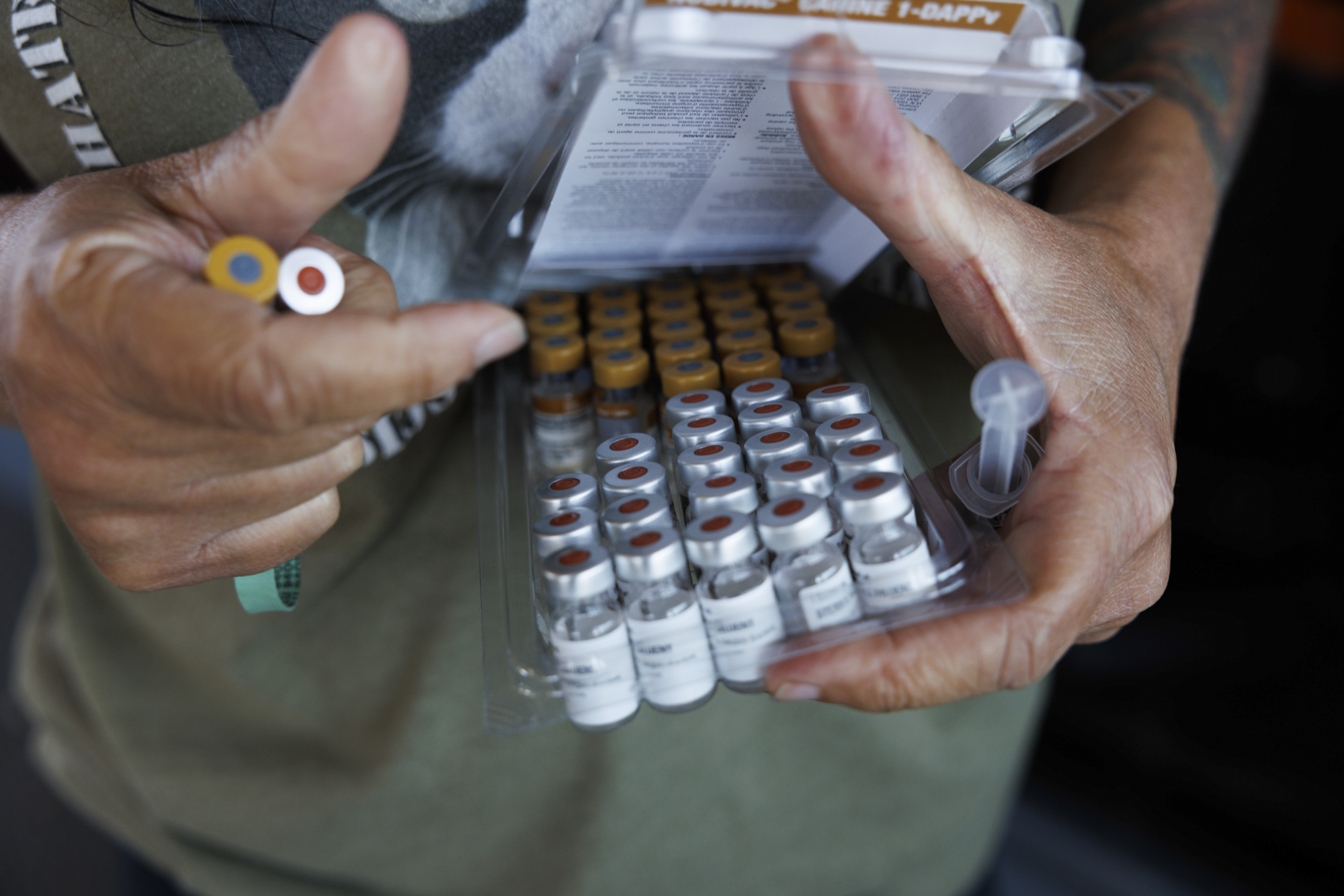
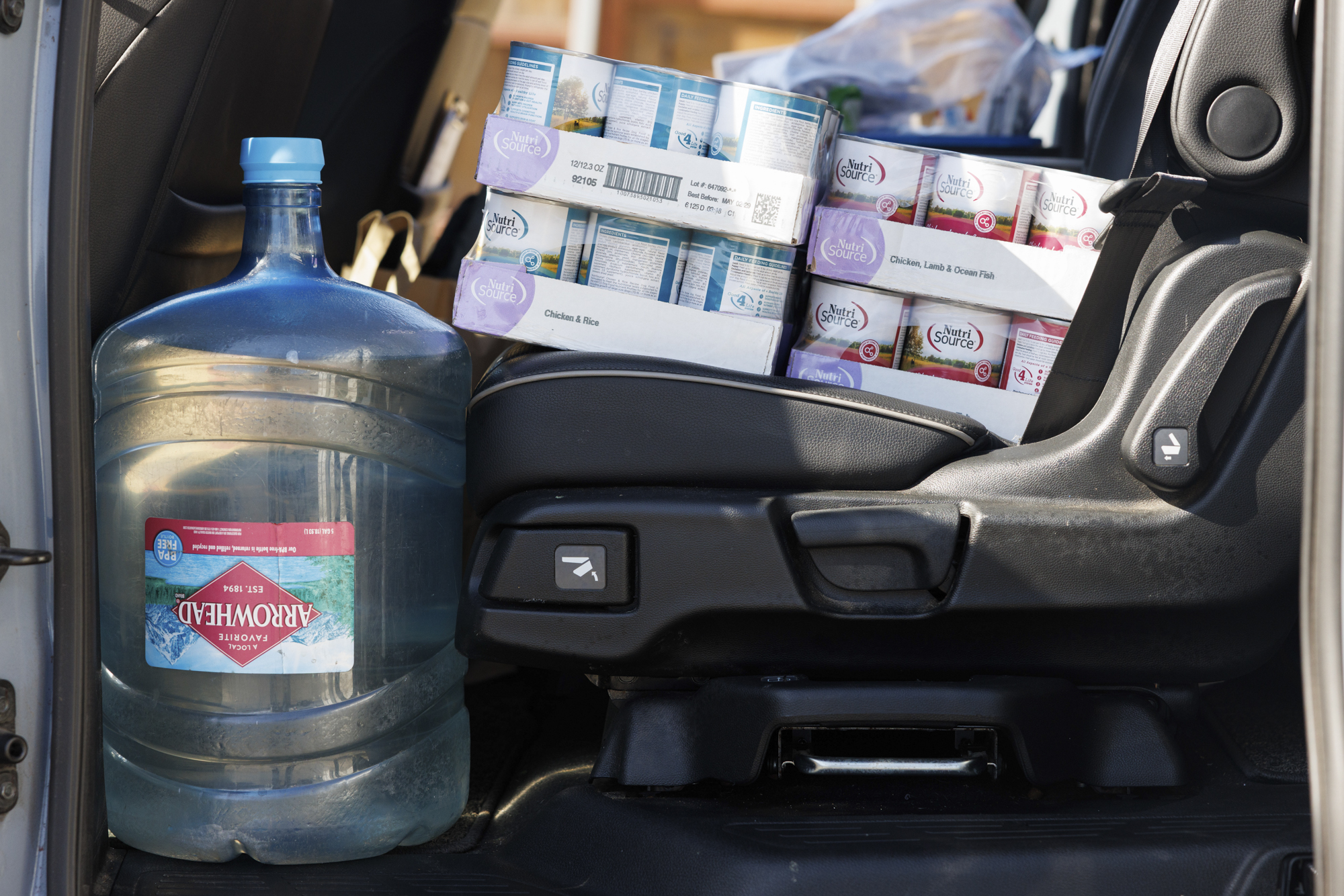
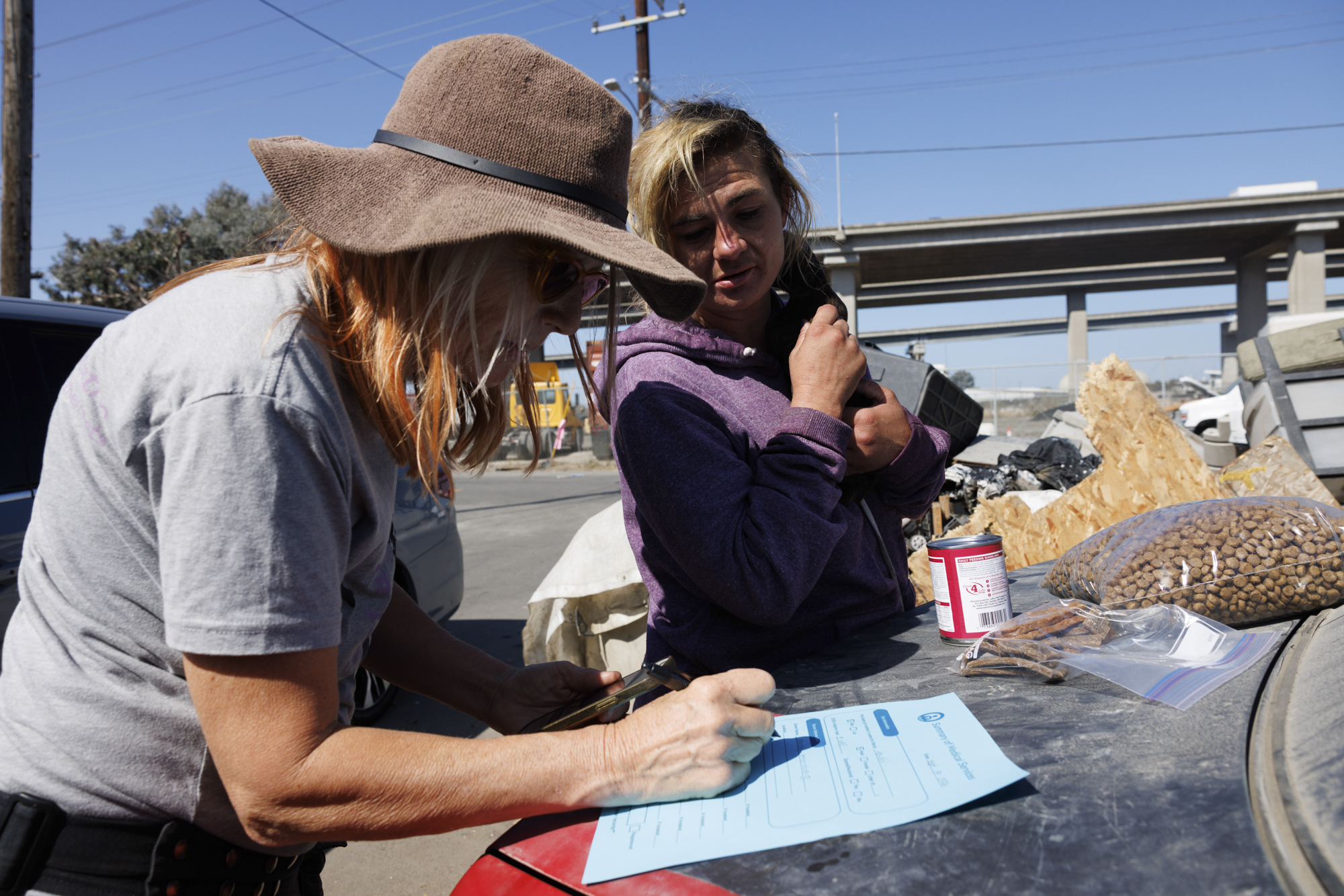
One Oakland group, the Human and Pet Initiative, or HAPI, is working to solve this problem. For the last three years, on a weekly basis, the small nonprofit has brought shots, microchips, flea medication, kibble and other resources to about 15 encampments in Oakland.
Meg McAdam, HAPI’s group’s founder and president, made it possible for Bradford and Ophelia to fix their cats. HAPI paid for the operations after McAdam and her team of about five volunteers built a trusting relationship with the couple, who agreed to let her take their cats to the vet to get spayed and neutered.
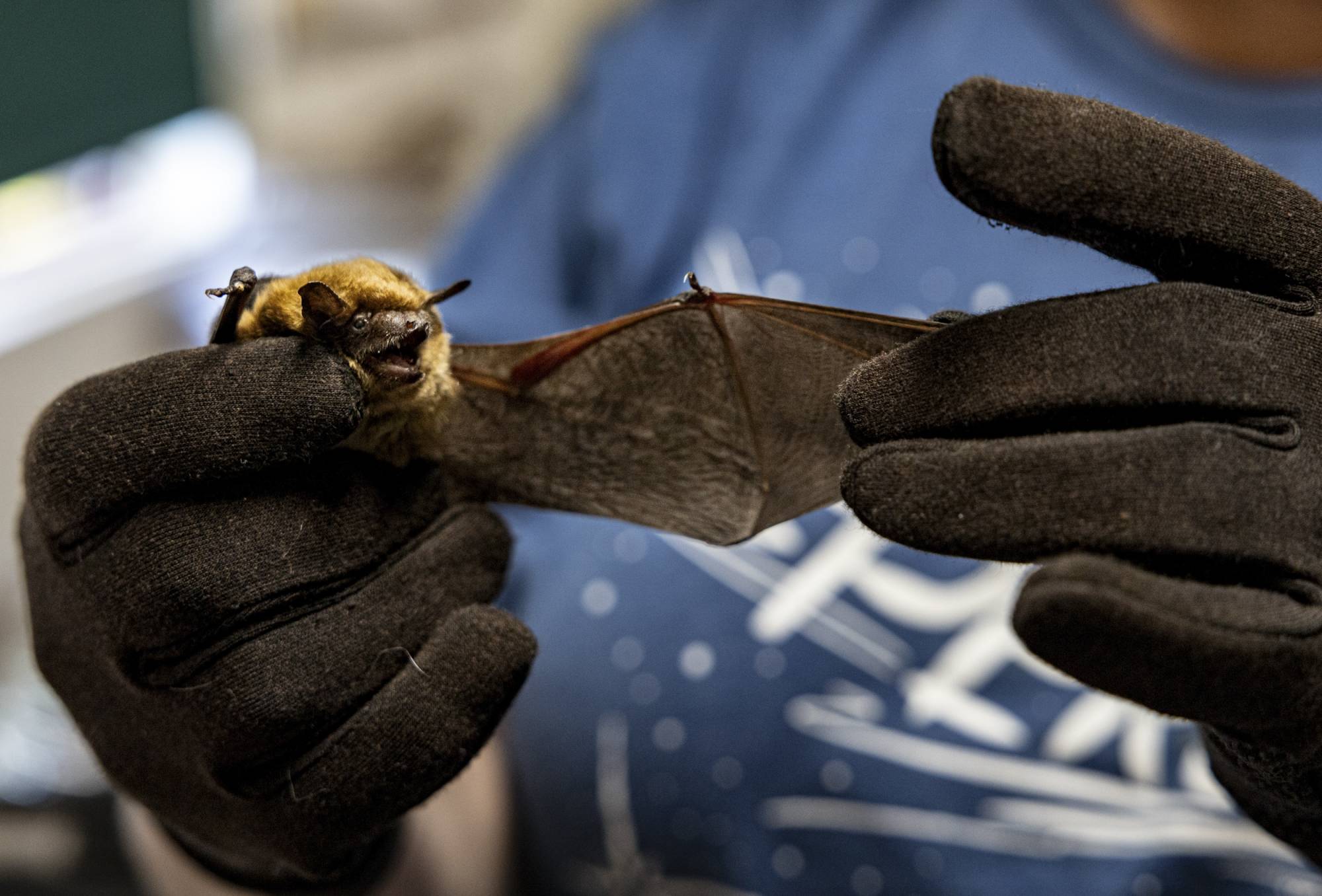
McAdam knows that some people have strong feelings about the wellbeing of the animals they see on the street, or question whether unhoused people deserve to have pets in the first place. But she said that’s beside the point.
“I don’t even have to debate that, ’cause it doesn’t matter, ’cause they do. So as long as they do, I want to help them take care of them,” McAdam said.
McAdam said that this work has a butterfly effect: providing care to these animals allows HAPI to support their human companions too. “When they’re making a choice of whether to feed their dog or themselves, if I can feed their dog so they can feed themselves, it’s a win, right?”
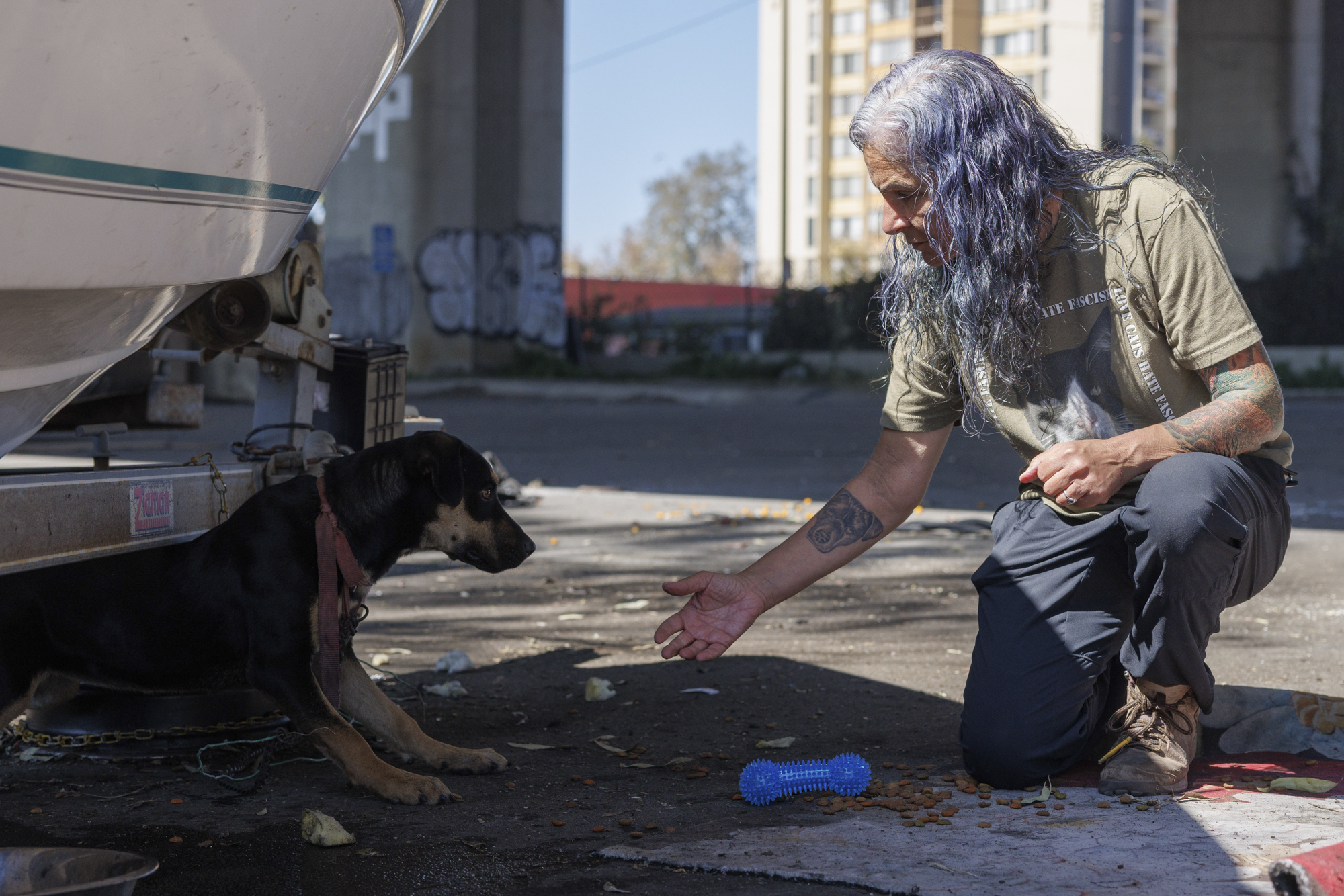
McAdam wears her heart on her sleeve. Her arms are covered in animal tattoos: A dog on her right arm, and a vibrant blue sleeve of sea creatures on her left.
It’s a fitting look for the job she does seven days a week: Providing no-cost, mobile medical support to people living on the streets. McAdam has learned that there are many reasons why an unhoused person may choose to have a pet. One of the reasons is safety.
“The bigger, the better,” said Star, who lives near the Lake Merritt Estuary with her three guard dogs, Prince, Joker, and Chloe, who weigh over 100 pounds each. “‘Cause they can cuddle you, they can love you, they can protect you.”
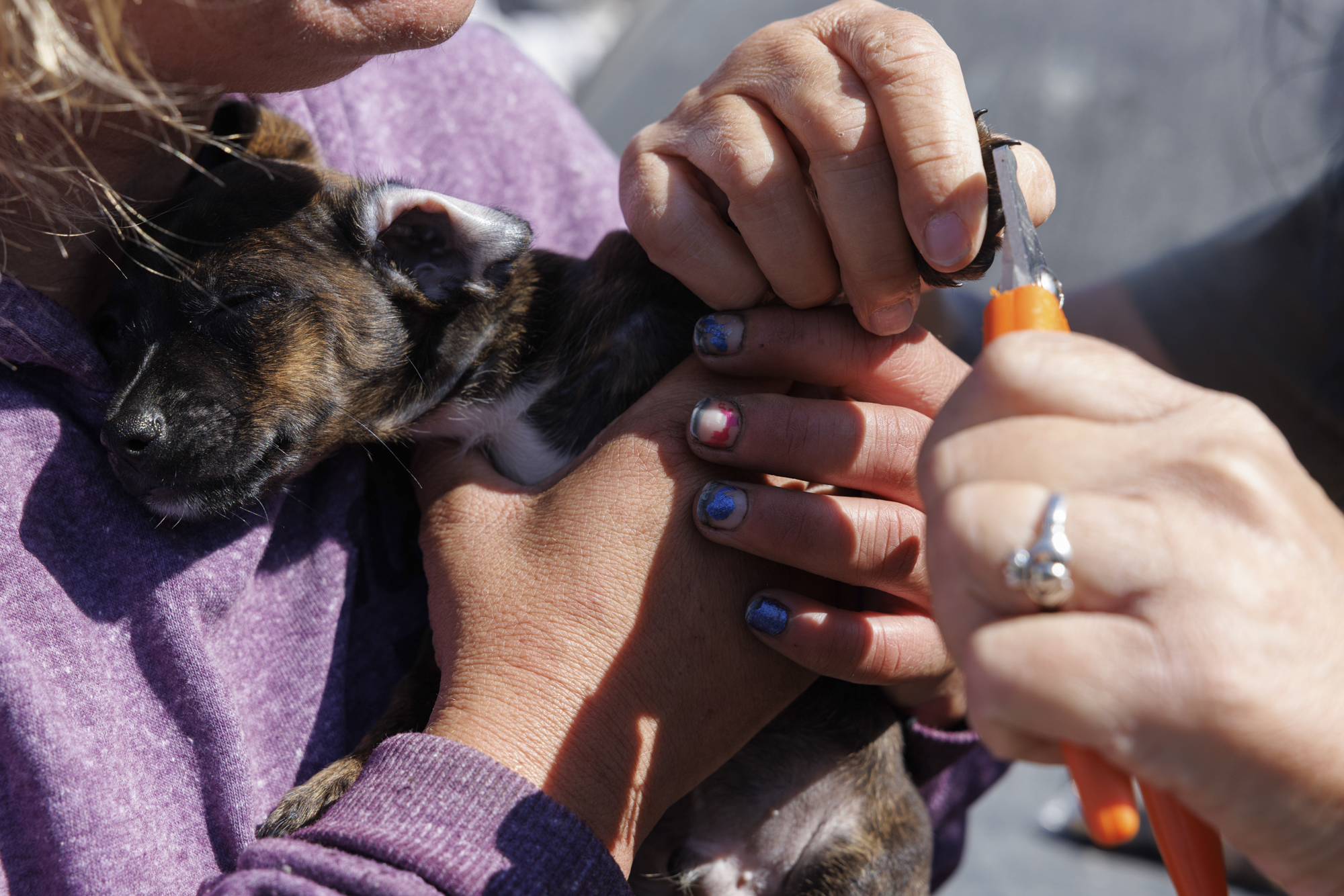
One of the dogs, Prince, acts as her service animal, Star said. She has epilepsy, and he alerts her when she’s going to have a seizure, providing stability when she loses her balance. Her dogs also protect her from external threats, like theft, or sexual harassment and assault — the dangers of being a woman living outside.
“ The only way to survive out here is if I have my dogs,” she said.
Pets can also provide a sense of companionship, or a second chance at developing bonds that feel like family.
“I’ve not had responsibility to anyone … or anything in a while,” said Jaquelyn, who lives at an encampment under the West Oakland BART tracks with her puppy, Loco. “I feel like my son will be jealous if I pay more attention to the dog than him, but I don’t get to see my son often.”
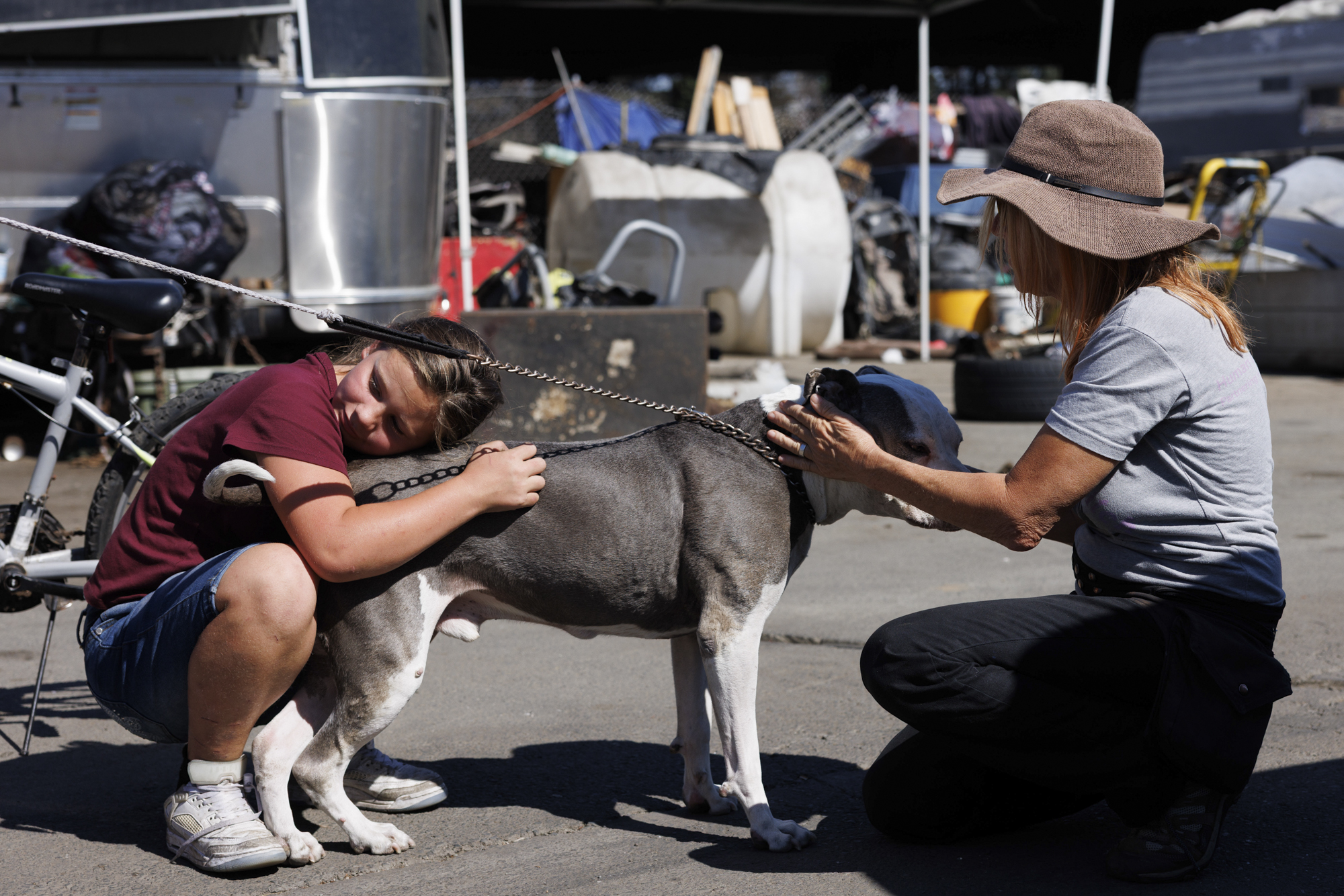
Losing touch with family is a common source of trauma for unhoused people, and pets can help fill the gap.
“I don’t want to mess up this time,” Jaquelyn said.
Part of this responsibility is regular veterinary care. Most of the people McAdam works with are eager to receive support from her. But it’s not always so simple.
Jaquelyn and Loco live in the same encampment as Loco’s grandma, a German Shepherd named Diamond. Diamond belongs to a man named Alfonso, who has always been wary of McAdam and her team.
“Alfonso is the only person who ever said to us, ‘Get away from my dogs,’” McAdam told her volunteers during a weekly outreach meeting. As a result, she tries to give him space to avoid making him feel encroached upon.
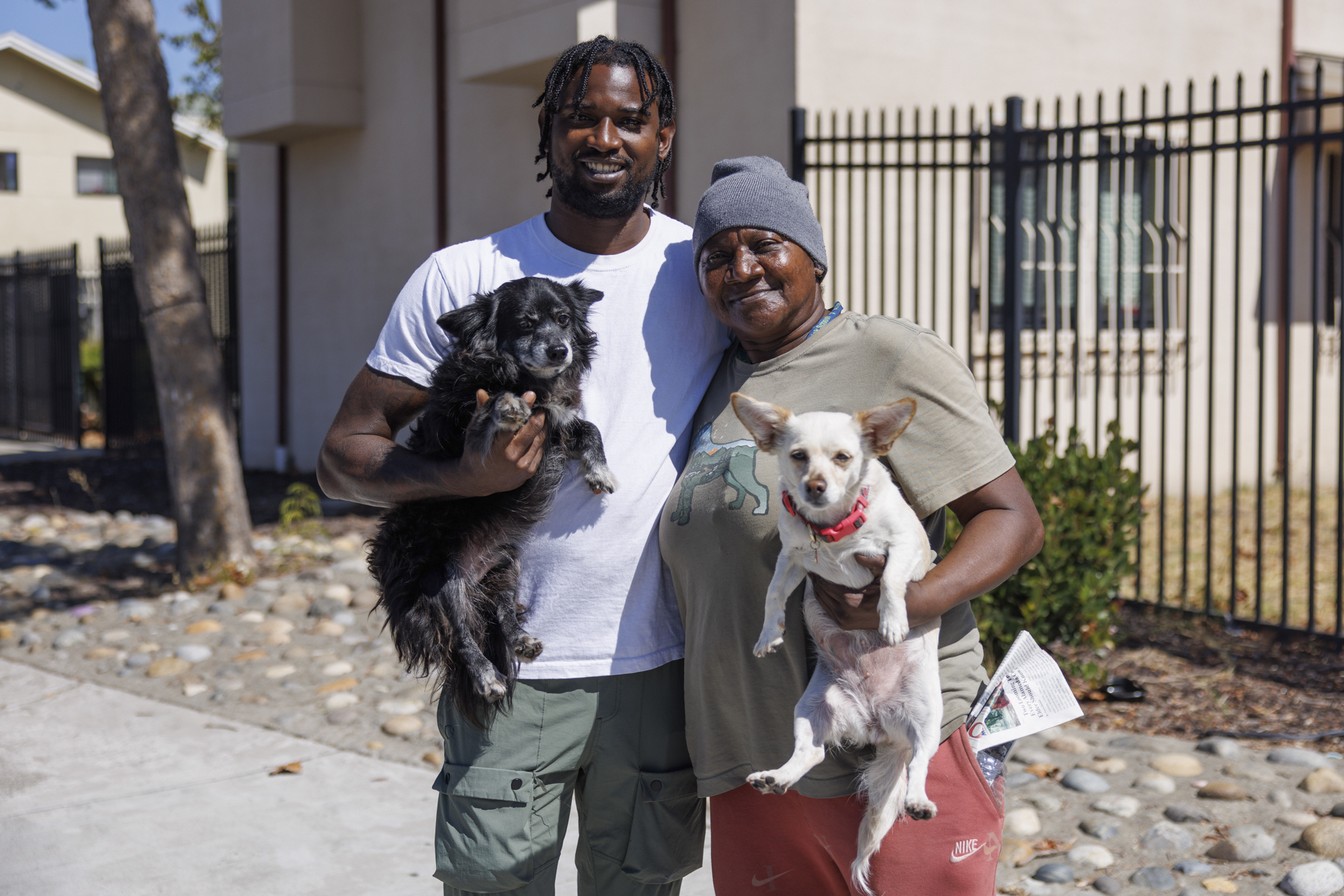
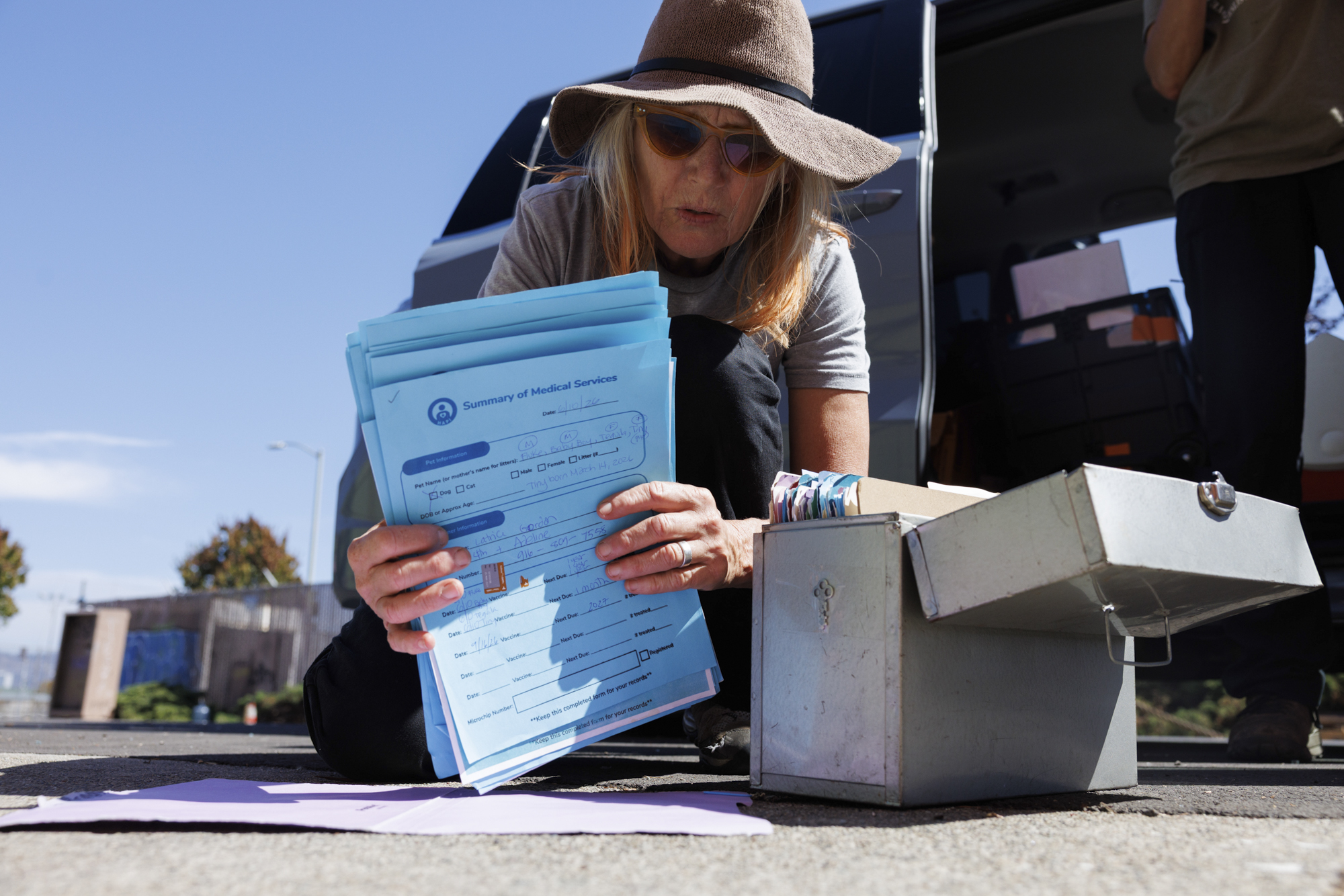

But one outreach day in May, McAdam noticed that Diamond looked quite ill. Alfonso returned home as a volunteer vet tech named Jocelyn Saenz-Sanchez performed an exam on the German Shepherd, who was breathing heavily in a resting place in the shade.
But instead of getting mad at them and asking him to leave as he had done in the past, Alfonso was happy to see McAdam. The two made a plan for her to come back and take Diamond to the vet.
“This was a huge breakthrough,” she said later. “I’m hoping that this is the beginning of a new relationship with him.”
Building this level of trust can take a long time. In this case, it took three years of offering food and other support and being turned down or ignored. But time is finite, and the needs of a sick pet can be urgent.
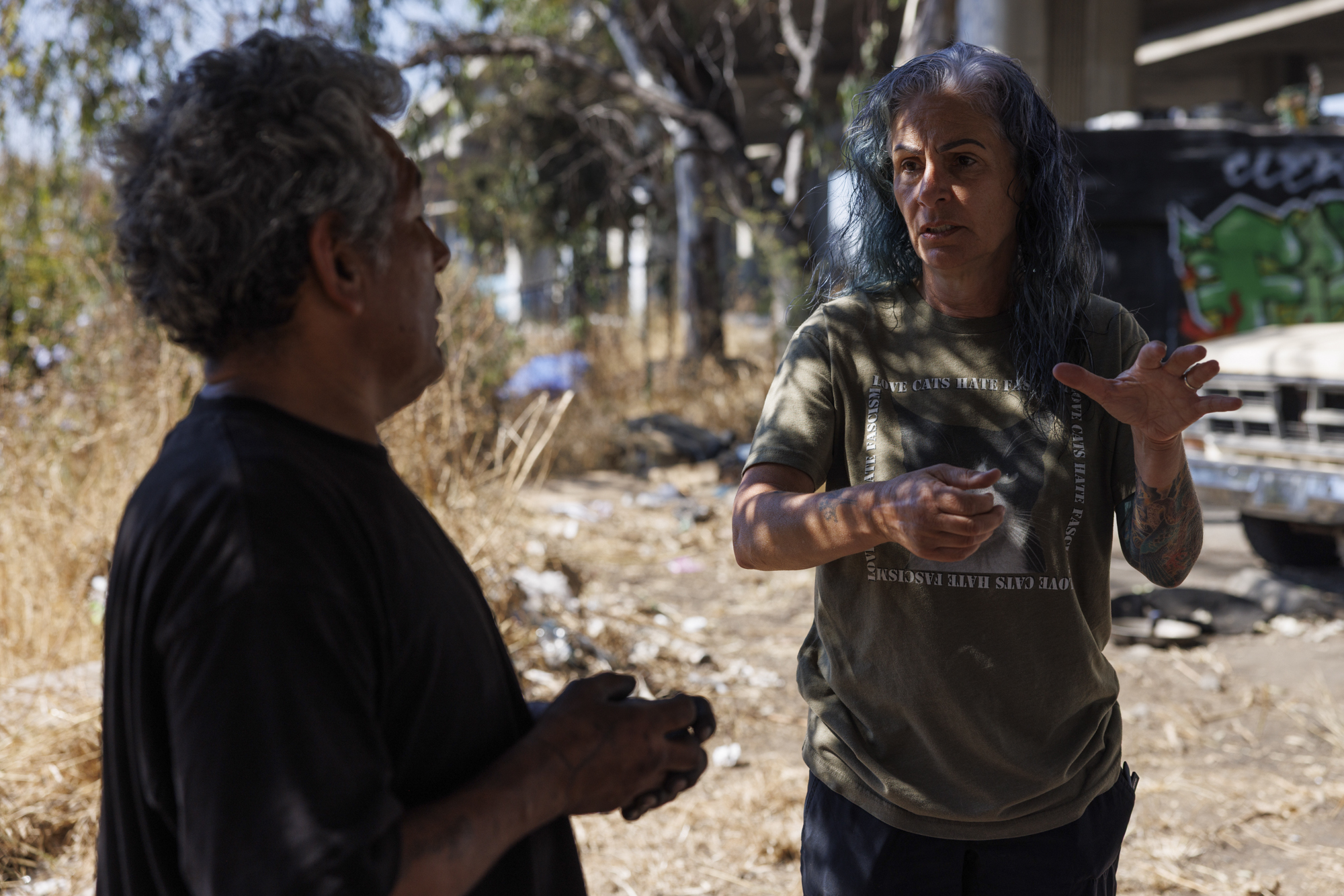
Diamond’s health drastically declined in the days after McAdam’s team examined her, and she died before she could get in to see a vet.
McAdam knows that without relationship building, she can’t reach the animals that need help. And ultimately, she also knows these animals are extensions of their owners. The city of Oakland recognizes this, too.
“These nonprofit groups, they are a force multiplier for our work,” said Joe DeVries, director of Oakland Animal Services. He said the resources HAPI provides are critical.
“But I think what’s even more important is the relationships that they provide.”
DeVries said many people associate Animal Control Officers, formerly part of the police department until 2015, with law enforcement. It’s now a standalone agency under the city administrator’s office, but it does have a mandate to enforce local pet laws, like leash laws, and animal cruelty and neglect.
So far this year, they have seized pets from their owners about 300 times. But the majority of the animals in their custody are domesticated pets that are surrendered, DeVries said. Most of the time, this happens when somebody can’t afford both animal care and housing.
He witnessed others making this heartbreaking choice when he worked as Oakland’s homelessness administrator back in 2018.
“What I saw when we were out at encampments, and people weren’t accepting offers of shelter, their criticism of congregate shelter was very valid,” he said.
Now, some city-run shelter programs do allow pets, making it easier for unhoused people to take the first step toward getting indoors.
But before they get to a shelter or housing, groups like HAPI take care of pets on the street. There are a handful of groups around the state like HAPI, from Paw Fund in Berkeley to the PAWS Mobile Clinic in Sacramento and Project Street Vet in Los Angeles.
On an outreach day in May, McAdam and her crew distributed 270 pounds of dog kibble, 45 pounds of cat kibble, and vaccinated 15 dogs and two kittens. Some of these animals were already on her list, but others were new.
“That common ground of loving someone’s pets,” she said, “really breaks down barriers.”