How 3 Daughters Have Coped After ICE Detained Their Mother in San Francisco

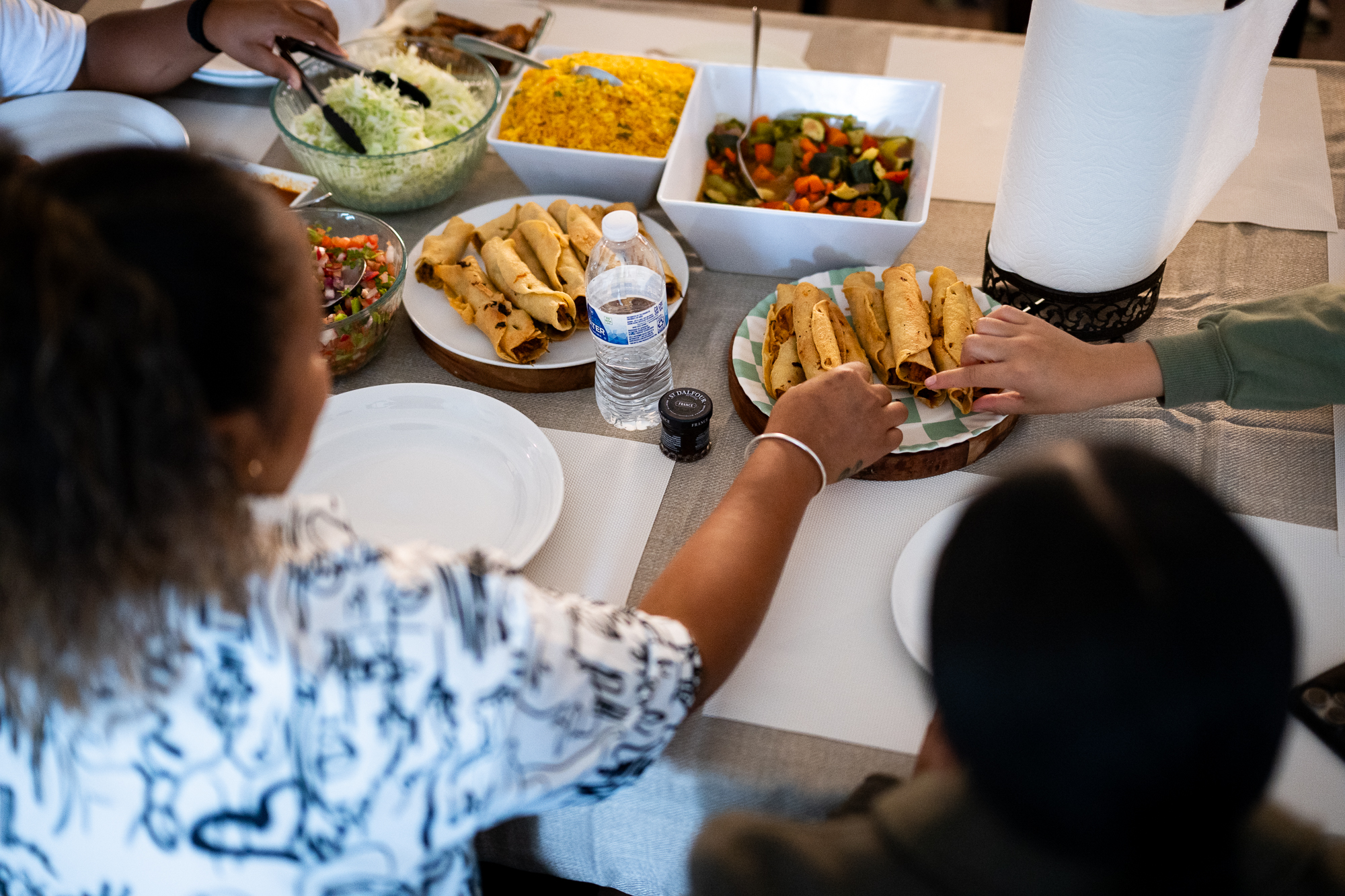
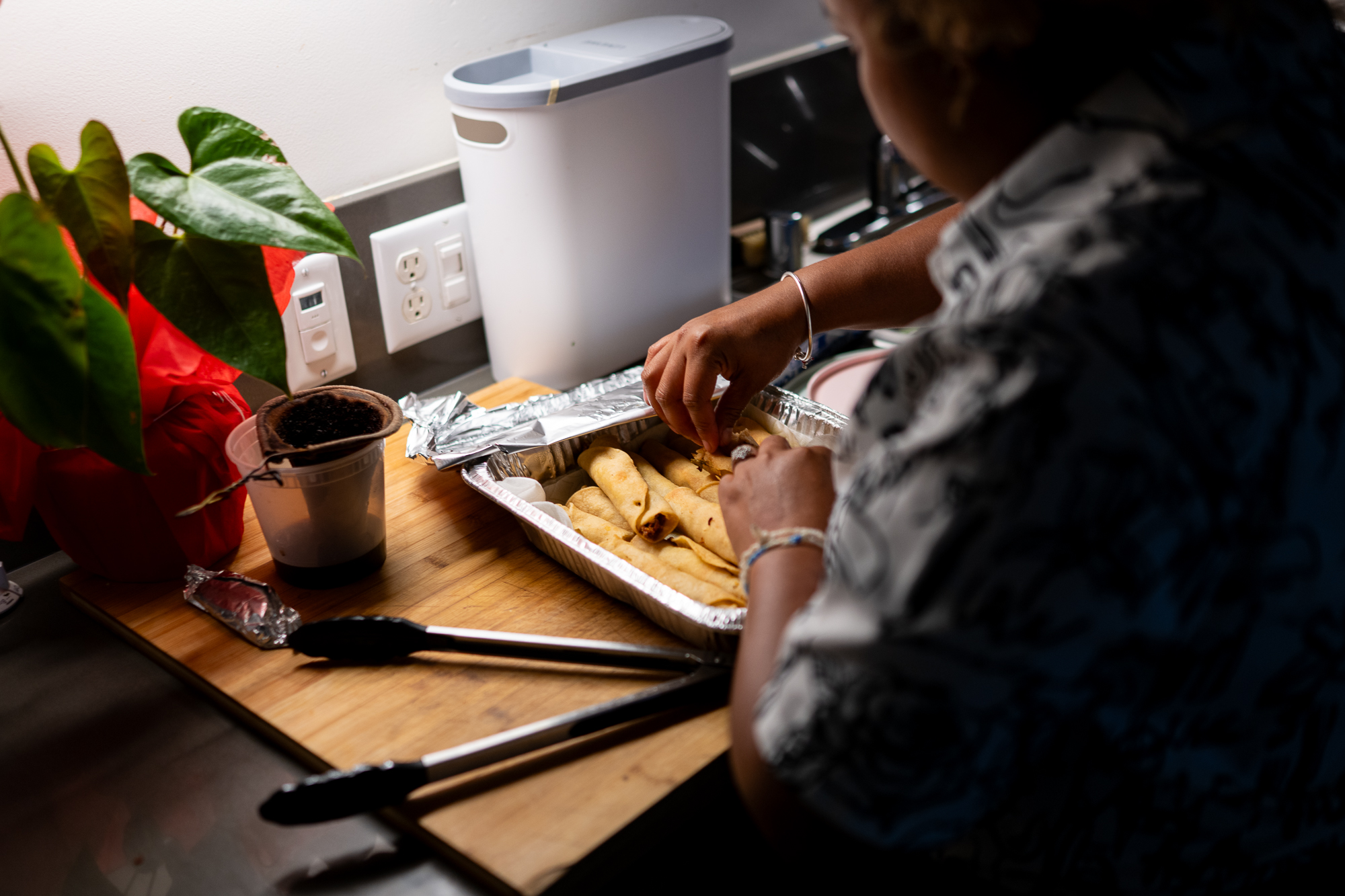
A steaming tray of hot taquitos arrived at the center of the table, as the family passed sides of rice and vegetables around while three small dogs yapped in the background. It was a typical night for Rosa, a single mother of three who lives in San Francisco’s Sunnydale neighborhood. But even the ordinary feels surreal right now.
This spring, Rosa, who is originally from Honduras, was released from an immigration detention facility in Tacoma, Washington, and allowed to return to her children and modest apartment just north of the Cow Palace. She was locked up for nearly 11 months, leaving behind three daughters who were forced to look after themselves for almost a year. Rosa’s release ranks her among the lucky few not deported, but the experience and its aftermath have left the close-knit family reeling.
KQED is not using Rosa’s last name because she fears it could hurt her pending visa application and because she is a domestic violence victim.
Family separation has become a hallmark of the Trump administration’s approach to immigration enforcement, including in Northern California, where arrests by U.S. Immigration and Customs Enforcement (ICE) have surged. Experts in youth well-being say it’s had devastating impacts on children in the Bay Area and beyond.
Approximately 400,000 immigrants were booked into ICE detention between Jan. 20, 2025, and April 9, 2026, and researchers estimate that approximately 205,000 children experienced the detention of a parent during that period, according to a Brookings Institution analysis. The study found that most children whose parents have been detained are U.S. citizens.
“Many of the adults caught in recent immigration enforcement are parents,” said Kristina Lovato, an assistant professor in the School of Social Welfare at UC Berkeley who also directs the Center on Immigration and Child Welfare. “Forced family separation is traumatic. Not only is it sudden and involuntary, but it’s often accompanied by uncertainty, whether a parent will return.”
Immigration enforcement under Trump has increasingly involved arrests away from the border. On June 2, 2025, ICE agents in unmarked vehicles arrested Rosa outside her apartment building.
“I just started screaming, ‘let me call my daughter,’” Rosa said.
“She didn’t know what happened for three hours. She saw me go outside, but never come back,” Rosa said.
Jenn, a bubbly college student pursuing a career in fashion, had just arrived home from a trip to Cabo San Lucas with friends for her birthday the day before her life turned upside down. She was sleeping in after the trip when suddenly her doorbell started ringing over and over.

“We don’t really get a lot of visitors here, but the doorbell just kept ringing, and I finally got up,” said her daughter, Jenn, who is now 21. It was one of the community workers who provides resident support services at their affordable housing complex. “One of my family members called him to come tell me that my mom was detained.”
That day, Jenn immediately stepped into the role of parent, looking after her two younger siblings, now ages 11 and 15, in their mother’s absence. While taking community college classes, she navigated legal and immigration systems for her mother and paid the family’s bills working long hours in customer service, foregoing sleep and her own social life.
“It was summer, my friends wanted to vacation and do so much, but I had to take so much time off to just be home with my sisters,” she said. “When the holidays came around, that’s when it really made me feel like this is not right, and especially for their birthdays and everything.”
She had help from a cousin who was like a brother, and whom Rosa had legal guardianship of when he was a child. But every day was still marked by uncertainty and unanswerable questions from her siblings about what would happen to their mother or themselves.
On the days she was most exhausted, Jenn said it felt easier to go hungry than try to put a meal together, whereas her mother had always made sure they had good food on the table. “Nobody wanted to cook. Nobody wanted to spend money going out to eat, either,” Jenn said.
While her mom was detained, Jenn’s younger sibling, then 14, experienced a mental-health crisis and was diagnosed with Autism spectrum disorder.
The clinical psychologist who saw the teen wrote a letter in support of Rosa’s release, saying the family separation was causing the child’s condition to worsen.
“Continuity of caregiving with her mother is not a preference but a clinical necessity, as disruptions in caregiving or reliance on individuals without autism-specific understanding are likely to exacerbate anxiety, dysregulation and functional decline,” the doctor wrote in September 2025, nearly seven months before Rosa was finally released.
ICE arrests more than quadrupled in the first year of the second Trump administration, according to UC Berkeley’s Deportation Data Project. During that time, experts tracking immigration enforcement actions say more people without any criminal background were detained, and releases from ICE facilities became increasingly rare.
“The release rate, which was never that high, has gone way down,” said David Hausman, assistant professor at UC Berkeley School of Law. Releases within 60 days of arrest went from around 35% under the Biden administration to about 7% in 2025, according to the Deportation Data Project, which Hausman co-directs.
Immigration officials arrested Rosa under the pretense that she was a “fugitive” because she had returned to the country following a past removal in 2010.
As a 15-year-old, Rosa escaped physical and sexual violence in Honduras. She came to the U.S. seeking safety, but was ultimately revictimized by an older man who groomed her and fathered two of her children. During their relationship, he forced her to assist him in illegal activity like shoplifting and drug sales. She was later convicted of both crimes, which led to her first deportation 16 years ago.
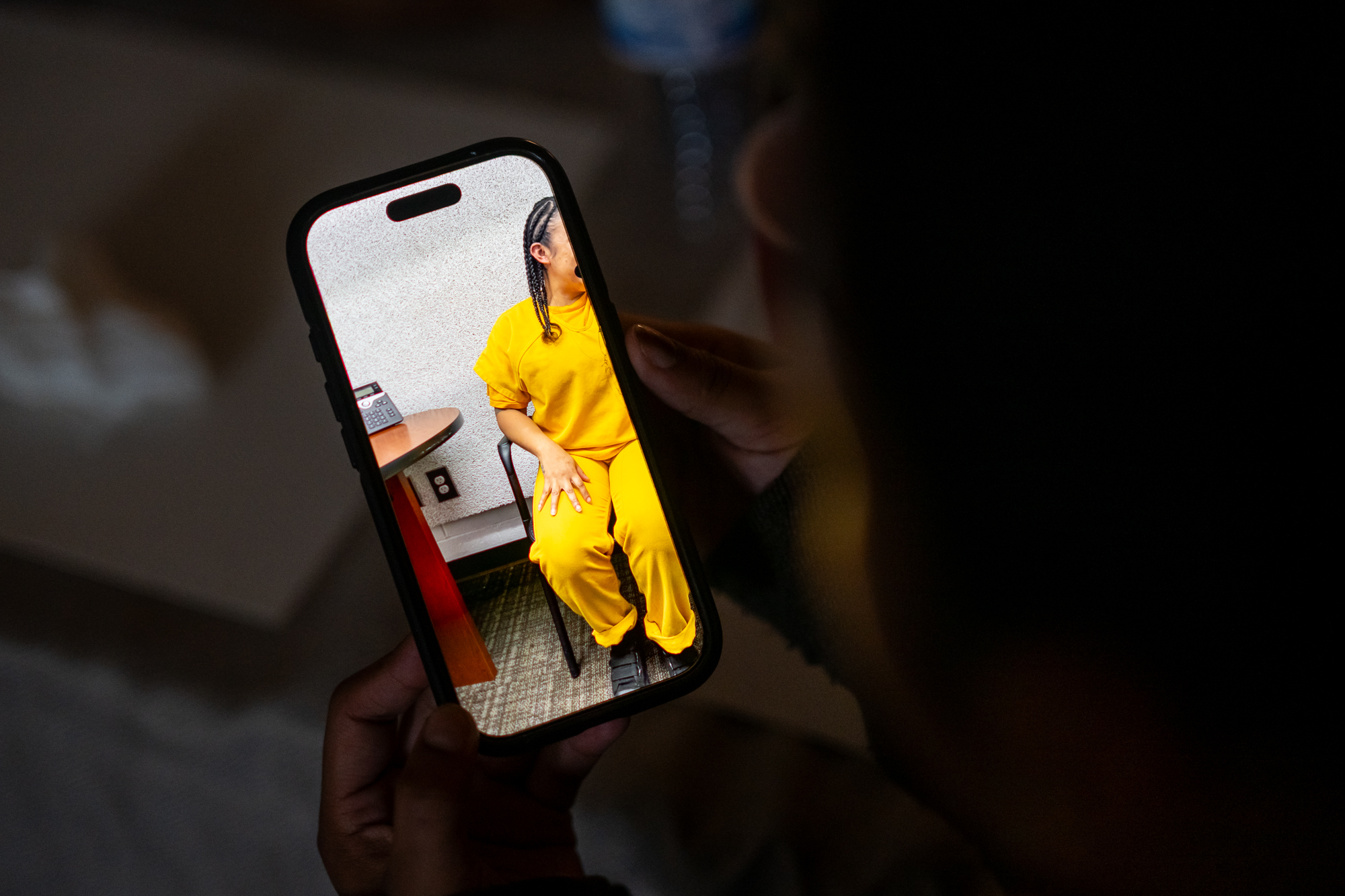
Her ex brought her back to the U.S. after only about two weeks. She was later deported a second time in October of the same year, and he brought her back within a month.
Rosa escaped the relationship in 2014, and parented her three children in San Francisco for the next decade solo. She assisted local police in investigating crimes tied to her former criminal charges, and her cooperation, along with her recognized status as a trafficking victim, allowed her to vacate the convictions from her record. She has since been seeking a T visa, for victims of human trafficking, and U visa, for victims of other abuse crimes.
But the work to clear her record did not deter the immigration agents who arrested her last year.
“There was lots of back and forth, and the government argued she was a danger because of these arrests 15 years ago related to the trafficking,” said Hayley Upshaw, an attorney with San Francisco’s public defender’s office who worked on Rosa’s case.
While she was detained in Washington, tragedy struck Rosa’s family again. Her 28-year-old nephew, who had been helping her daughters in their mom’s absence, died suddenly in April.
Immediately afterward, the public defender’s office worked with Northwest Immigrant Rights Project, a Seattle-based organization that provides direct legal aid, to file a temporary restraining order and a habeas petition that legally challenged Rosa’s detention. Nearly a month after her nephew’s death, Rosa was released.
“I’m here now. But he is not here,” Rosa said, fighting back tears. “They let me come home because he passed away, you know. But they didn’t let me come home because I deserved to come home.”
Attorneys and advocates working with Rosa say that her release was a rare reprieve from the Trump administration’s immigration enforcement and detention policies, but the trauma her family has endured persists across all cases.
“Tearing families apart deeply harms our communities. As in Rosa’s case, it can mean that a mother can’t pick up her children from school, children are put at risk of losing their homes, and their loved ones worry themselves sick,” said Jennifer Friedman, managing attorney of the San Francisco Public Defender’s Immigration Defense Unit. “Whether a person was born in the U.S. or has had contact with the criminal legal system, it does not justify violating their civil and human rights.”
The Department of Homeland Security, which oversees ICE, said in an emailed statement that it “does not separate families.”
“Parents are asked if they want to be removed with their children or ICE will place the children with a safe person the parent designates. This is consistent with past administrations’ immigration enforcement,” a representative for DHS said. “Under President Trump and Secretary Mullin, if you break the law, you will face the consequences. Criminal illegal aliens are not welcome in the U.S.”
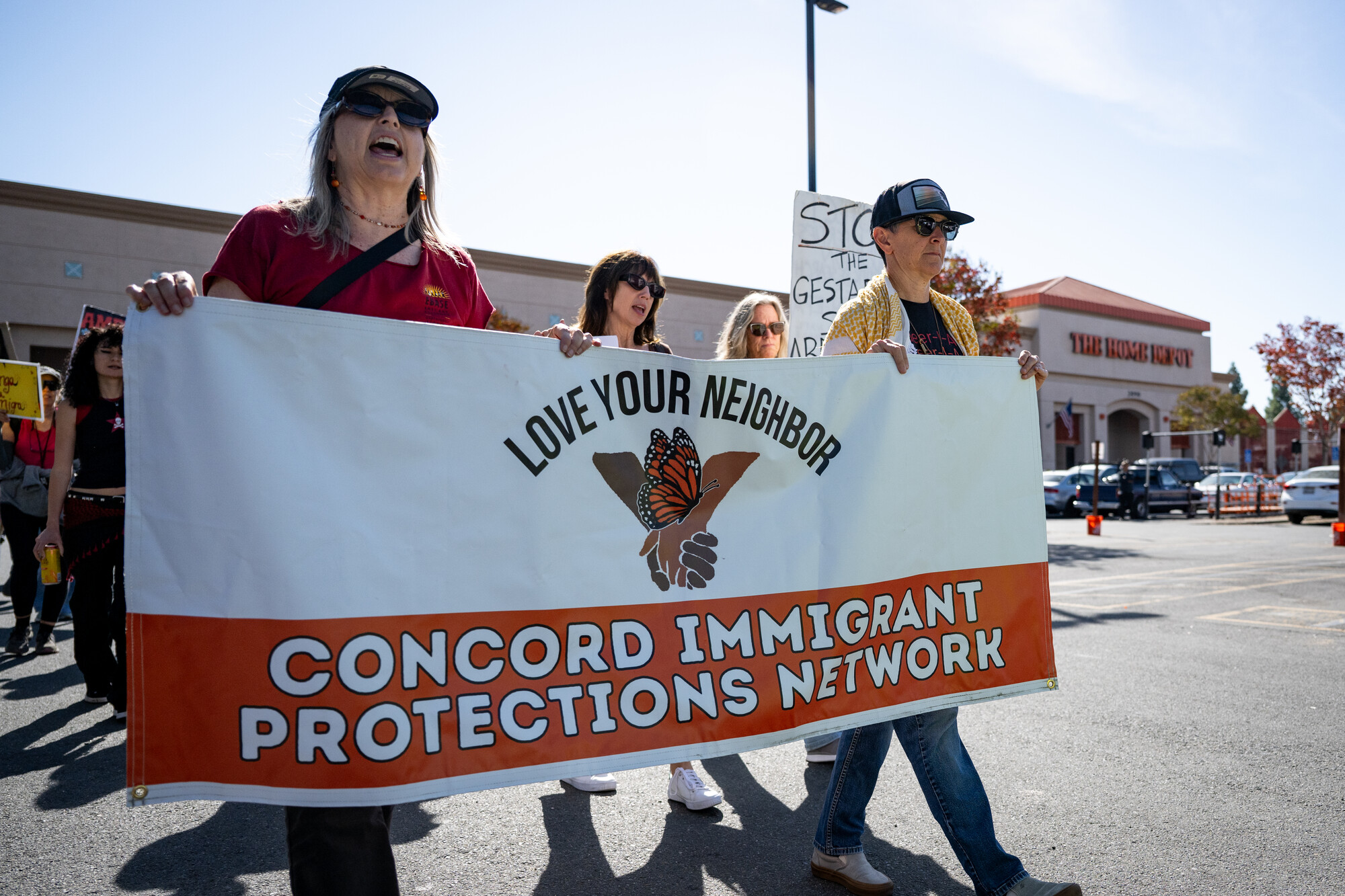
Much is unknown about the long-term outcomes for children whose parents have been detained, said Lovato, from the Center on Immigration and Child Welfare. ICE is not involved in follow-up care for detainees’ children, according to the Brookings report, and parents will often avoid engaging with child protective services because they fear more targeting by law enforcement.
Rosa and her children are relieved she is back home, but they are all still adjusting.
“It’s been really hard,” Jenn said. “To this day, sometimes my sisters are like, ‘Oh, can I go do this, can I go do that?’ I’m like, ‘I’m not your mom anymore, like, you can go ask mom.’”
Rosa can’t be re-detained unless new charges, or evidence in her past cases, are brought forward. But she is still awaiting the outcome of her T or U visa applications, as well as an appeal for asylum. If she is granted any of those, she will have lawful status. But if they are denied, she could lose asylum and be removed from the country.
Rosa is slowly getting back to a more normal life. She’s taking English classes, shuttling the kids to school and work, and enjoying her hobbies, like dancing and cooking.
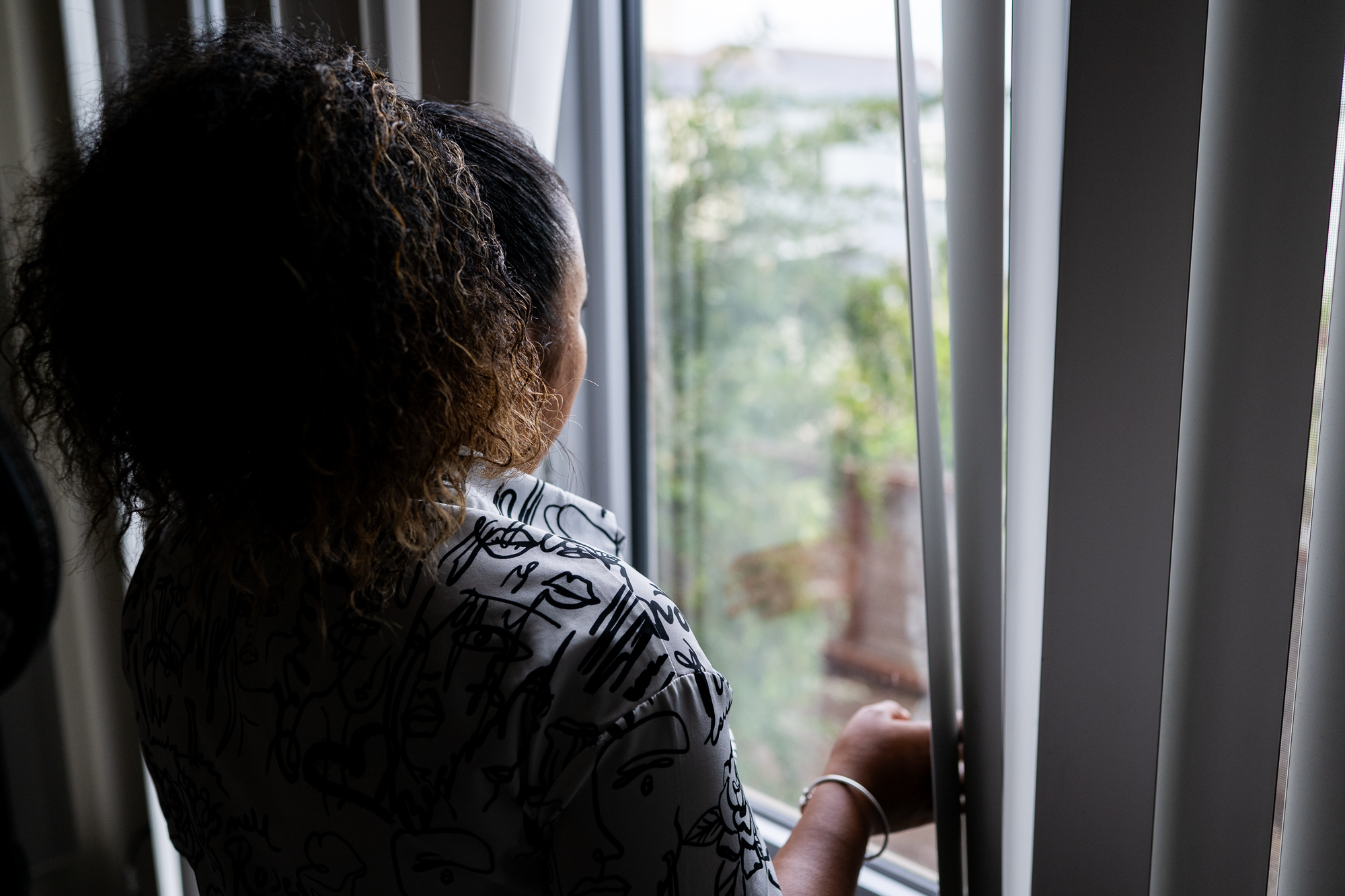
But the threat of deportation, no longer abstract for the family, still looms over Rosa and her children. Now, she avoids some activities out of fear of exposing herself too much, like posting on social media or advertising where she’ll be when she goes out to sell food during the day for income.
“After this happened, I worry more than before,” she said. “But I will always fight for my family and for me.”