AI, Artists, and the Future of Creative Work from Life, Automated | Close All Tabs Presents
View the full episode transcript.
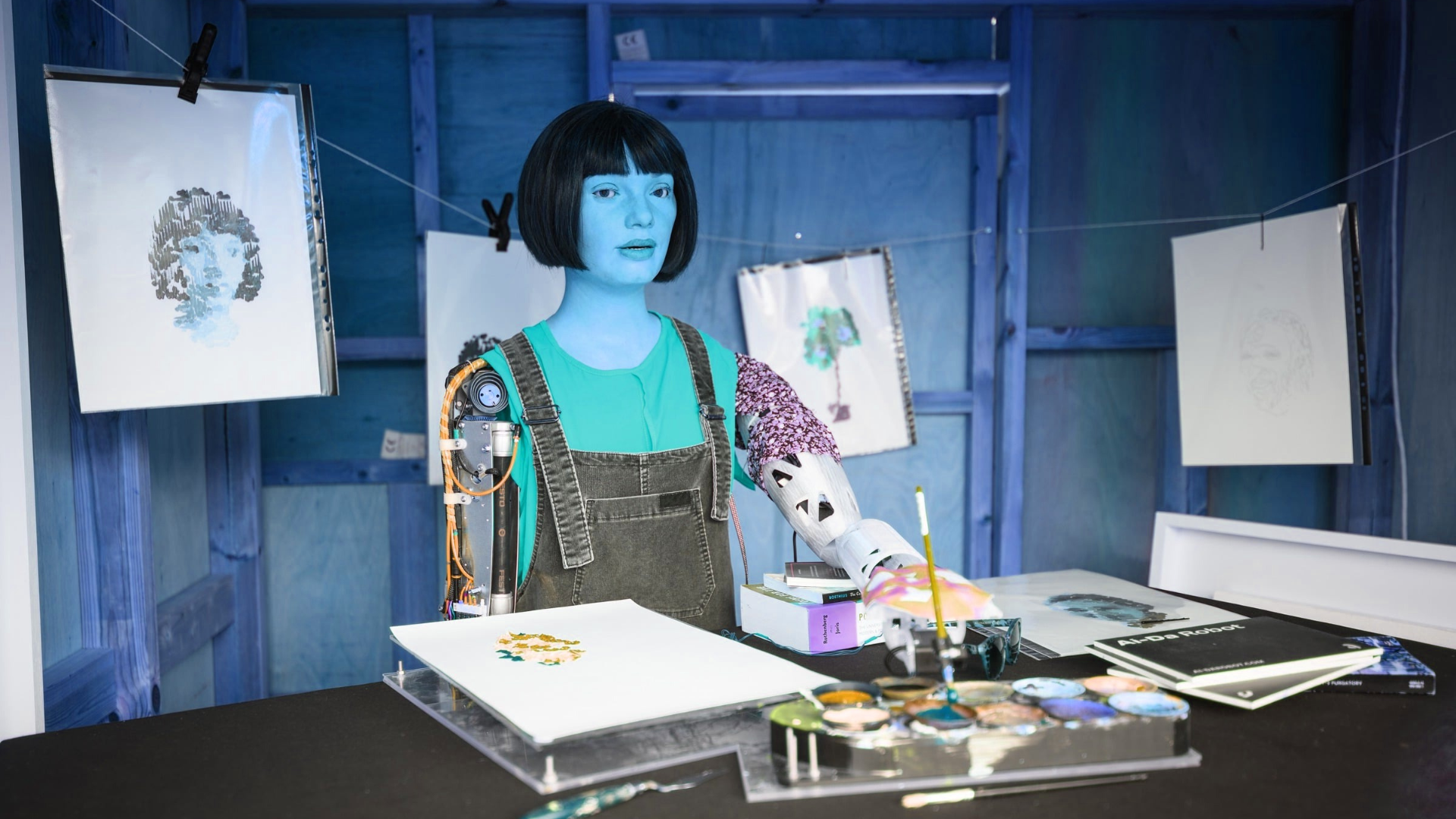
While the Close All Tabs team churns out our next few episodes, we bring you this must-listen from Life, Automated. Generative AI is able to conjure new images, stories, and songs at lightning speed. So what does this mean for humans artists, storytellers and musicians?
Life, Automated Host Jess Love explores what happens when AI enters creative markets. We learn that, at least today, key bottlenecks prevent AI from replicating some aspects of creativity. But there’s no guarantee those bottlenecks will exist tomorrow, raising vital questions about what we value in human labor.
Life, Automated is a series about how to live, work and make decisions in a world increasingly shaped by machines. It is a production of the Ryan Institute on Complexity at Northwestern’s Kellogg School of Management and it is distributed by KQED.
Host and Senior Director: Jess Love
Producer: Steven Jackson
Senior Producer: Jesse Dukes
Music: Steven Jackson
Associate Producer: Stacia Sliger
Recording: George Christensen, Will Feeney
Promotional help from Ananya Mallapragada and Charlotte Simmons.
Guests:
- Ben Jones, economist, co-director of the Ryan Institute on Complexity
- Sam Goldberg, assistant professor of marketing, Stanford
- Yevgenia Nayberg, artist, illustrator, children’s book author
Further Reading/Listening:
- Generative AI & Creative Goods: Market Expansion, Crowd-out, and Copyright — Samuel Goldberg, Stanford Graduate School of Business
- ‘Life, Automated’ explores how AI is reshaping our world — Roger Anderson, Northwestern Kellogg
- Life, Automated Podcast — KQED
Want to give us feedback on the show? Shoot us an email at [email protected]
Follow us on Instagram and TikTok
Episode Transcript
This is a computer-generated transcript. While our team has reviewed it, there may be errors.
Morgan Sung: Hello! Do you like these deep dives? Do you want more? Then please rate and review Close All Tabs on Spotify, Apple Podcasts, or wherever you listen to the show! And tell your friends! Post about it! On Instagram, Bluesky, X, Discord, Reddit, the comments of whatever random recipe blog you start arguments in. Basically, it would be a huge help to get the word out. Ok, let’s get to the show.
Hey Tabbies, The Close All Tabs team is busy churning out our next few episodes. And they’re bangers, I promise. In the meantime, we had to drop you a peek into this new podcast, Life Automated. It’s distributed by KQED, where this show is made, and it also covers big ideas about how technology is shaping our world.
Their most recent episode about AI and creative work is a must-listen. Now that Generative AI can crank out images, stories, and even songs, what does that mean for humans like us, who do that for a living?
The economists and artists in this episode of Life, Automated help us understand the aspects of creativity that can’teasily be replicated by AI. At least for now.
So, while the creative workers at Close All Tabs are talking and typing in real life to bring you more stories about the digital world. Here’s that Life Automated episode: “AI, Artists, and the Future of Creative Work.”
Jess Love [Voiceover]: This is Life, Automated, the show where we explore all the ways technology is changing how we live, work, and make decisions.
Think about the tractor… The washing machine, The calculator.
For a long time, the promise of machines that automate labor was that they would take over the repetitive, dangerous or tedious work; and leave people free to do the things humans are supposed to be best at. You know, to imagine. Communicate. Invent. Make art or music. But it seems like AI might be coming for creative work as well.
One sector on notice is the entertainment industry. The Writers guild recently bargained for contract language limiting the use of AI writing in screenplays. The Animation Guild recently projected losses of about 20% of animation and visual effects jobs. And SAG-AFTRA, a big actors and writers union, has been in ongoing negotiations to try to prevent human actors from being replaced by AI:
[Audio of Fran Drescher]
I don’t subscribe to putting people out of work. I think what’s happening in the entertainment industry is a microcosm of what happening throughout the United States of America whereby workers are being replaced by artificial intelligence, and what is that about actually
Jess Love [Voiceover]: But it’s not just Hollywood. Writers, illustrators, journalists, composers, architects — even scientists who design experiments, they’re all on alert, wondering whether and how AI will impact the work they love to do. It’s a question I’ve been wrestling with myself, as a science writer and self described “creative worker”
So today, we’ll be tackling that question, and instead of hearing from just one guest, we have a few: including an economist who studied what happened when generative AI entered one particular creative market.
Sam Goldberg: All of this generative AI production is entering, it’s filling up those markets, and the non-generative AI artists end up having to exit the market because they’re no longer profitable.
Jess Love [Voiceover]: As well as a working artist
Yevgenia Nayberg: I think we will adapt. I’m not sure how yet. I can’t predict the future, but I know it’s your personal voice that will set you apart always.
Jess Love [Voiceover]: But first, if you listened to our kickoff episode — back in July, you’ll remember Economist Ben Jones. Ben is my colleague at the Ryan Institute on Complexity where he studies innovation. And, I’m going to start with a short flashback to that conversation, because something he said is really helpful for thinking about the future of creative work.
See, Ben has been thinking about automation and its impact on jobs for a long time. He says that instead of obsessing over all the things AI can suddenly do really well, we should spend more time focusing on what it can’t do, at least not yet. Ben calls these things – bottlenecks. I’m Jess Love, this is Life, Automated.
Jess Love: Okay, so can you talk to us about what a bottleneck is and why it’s so important?
Ben Jones: Well, of course it’s a metaphor from a bottle and what do we know about bottles? We know that the speed at which water or wine will flow from the bottle, depends on the width of the neck. Doesn’t really depend on how big the bottle is otherwise, how much wine there is in it, or how big the base is. It really just depends on the neck and in many processes in the economy and in the economy overall, it looks like there are certain things that have to happen that act as bottlenecks.
Much of the economy has that flavor where it’s not how good you are at a lot of things. What’s really sort of determining the rate of the economy is the things we’re quite slow at, the things we’re not very good at.
Jess Love [Voiceover]: In other words, even if some parts of a system get really, really fast and easy, it’s the slowest parts of the system, the parts most difficult to automate, that will determine just how much the system overall changes. As an example from his own job, Ben points to statistical regressions, which computers do incredibly well much better than humans.
Ben Jones: . If I were to run a regression by hand, with a large number of observations, it would take me literally my entire life. And I would make mistakes. You know, my computer can do a regression with a million data points in a-minute.
Jess Love: Yeah.
Ben Jones: And so we have these technologies that basically are infinitely better than us to do these tasks that are really important to what we do. And then you can ask, okay, well, has our understanding of economics or astronomy or physics multiplied by a similar factor? And you’d say ‘no’, because although we can do certain things really, really, really incredibly well, other things are holding us back.
Jess Love [Voiceover]: For scientific researchers, these ‘other things’ might be collecting the right data, or building the instruments to collect the right data, or even waiting for the perfect set of circumstances to emerge that would let us interpret that data. Like the collapse of an economy, or the collision of two stars in a particular spot in the sky. Until scientists can push past these bottlenecks, all the statistical regressions in the world will only teach them so much.
I find Ben’s framework a useful way to think about AI’s impact on any kind of work, creative or otherwise. Most people’s jobs involve a bunch of different tasks. AI might get really good at some of them, but tasks it still struggles with – the bottlenecks, really determine the overall pace of change, as well as where humans can still contribute. And get paid to do so.
Jess Love [Voiceover]: So, the big takeaway for creative workers: Find the stuff AI can’t do. But what do these bottlenecks look like in creative markets in particular? And would they actually allow writers, artists, and other creative workers to still do that work? Well, it turns out that there’s somebody who has been studying this very thing. Specifically, how AI has impacted stock image websites. Those sell ready-made photos and illustrations that appear in ads, presentations, websites, and articles. Say you’re making an ad for productivity software. Maybe you purchase a stock image of people shaking hands in a conference room, or a woman smiling at her computer screen, or a well-dressed man gazing thoughtfully into the distance, perhaps wondering.
Sam Goldberg: Stock images, why do we care about these things, right? It’s not a particularly large market. It’s definitely sort of a niche commoditized good. Why is this somewhere where we wanna study AI?
Jess Love [Voiceover]: This is Sam Goldberg. He teaches marketing at Stanford, where he also studies how technology changes markets and consumer behavior. And he says the stock-image market offers an unusually crisp view of what happens when AI-generated work begins competing directly with work made by people.
Sam Goldberg: So back, you know, a few years ago, they were one of the first markets where we saw really capable AI come to artists, and be able to be used to produce really high-quality images.
Jess Love [Voiceover]: For years, human artists made stock images and uploaded them to online marketplaces. Then those marketplaces began accepting AI-generated work. Suddenly, images made by people were sitting beside images that could be generated by machines, almost instantly, at enormous scale. And because the platform Sam studied required artists to clearly label which images were AI-generated, he could watch the transition in really fine detail.
Sam Goldberg: And so what that means in practice is that after the platform allows generative AI to enter the market, I can see both how non-generative AI artists respond, as well as how generative AI enters the market and what types of images it produces.
Jess Love [Voiceover]: So here’s how it used to work. Customers would comb through these websites, going through image after image, until they find one that is “close enough”.
Sam Goldberg: I guess the right way to think about it is each individual might have a very specific taste for something, and so when they were trying to find a stock image, they would make some sort of compromise, right? So they would say, “Oh, I’m looking for an image of a tennis ball, and I want an image of a tennis ball in motion,” right? They could go to the stock image website, they’d look up that keyword, and they’d find, you know, maybe pre-generative AI, a couple hundred different versions of that image, right? Maybe none of them are perfect, but one of them’s good enough, and they took it.
Jess Love: Right. So maybe your article is about playing tennis in the rain, and so you would love to have a tennis ball that’s kind of covered in water.
Sam Goldberg: Penetrating water droplets.
Jess Love: Right. And then that is the kind of thing that just doesn’t exist, so maybe you just get a tennis ball in isolation, and that’s good enough.
Sam Goldberg: Exactly. And so in the pre-generative AI world, you know, you were making some compromises with respect to that, oftentimes at least.
Jess Love [Voiceover]: But along comes generative AI, with free or cheap image generators where you can literally tell it: I want a wet tennis ball, resting on a bench, with water beading on it. And it will give you a pretty good version of that exact image. So what happens when a stock image market starts accepting these hyper-specific AI-generated images?
Sam Goldberg: What actually happens in this market is, generative AI enters, the market expands greatly, so there’s a lot more images on the platform. That should probably be pretty intuitive. But not only do more images enter the market, more customers do as well. More images are being purchased and they like the generative AI images because it turns out they’re actually pretty high quality.
Jess Love: So I can see how this is good for me as a consumer. I finally have the perfect raindrop-covered tennis ball for my editorial feature. And I can see how this is good for the platform itself, at least in the short term. What happens to the artists? And I guess I would ask both the artists using generative AI and those who are not.
Sam Goldberg: Yeah, it’s a good question, and I think you are correct in your intuition here that it does seem like it’s probably pretty good for consumers. It does seem like it’s probably pretty good for the platform, at least in the short run. The artist side I think is a little bit more complicated right? Let me walk you through what happens after generative AI enters the platform, and then we can talk about the implications for artists.
Jess Love: Yeah.
Sam Goldberg: Okay. So what happens is production goes way up. All right? By over 100% more production, so enormous increases in production here. Second, more artists participate in the market. So we see a lot of new artists enter the stock image market. Of course, that overflow of new artists hides a different fact, which is non-generative AI artists exit. Okay? So they stop producing. So we see a reduction in non-generative AI production, as well as a reduction in the number of non-generative AI artists who are participating on the platform.
What we call that in the paper is sort of a little bit of a crowding out effect. So what’s happening is all of this generative AI production is entering, it’s filling up demand, it’s filling up those markets, and the non-generative AI artists end up having to exit the market because they’re no longer profitable.
Jess Love [Voiceover]: So, pretty bad news for a lot of artists who choose to keep making images the old way. But, Sam also found a bottleneck.
Sam Goldberg: What the stock image market sells is not quite images. What the stock image market sells is indemnification, which is to say if the buyer of the image uses it and gets in trouble, so someone says, “Hey, you can’t use that image. That’s copyrighted,” and tries to sue the buyer, the platform says, “You can’t sue the buyer. We’re responsible.”
Jess Love: Oh, fascinating.
Sam Goldberg: Okay, and so that’s really important here because if you were to produce that image yourself using a generative model, you could be subject to some sorts of liability for using, for example, copyrighted work in the training of those models.
Jess Love [Voiceover]: Got that? AI-generated images are a bit of a legal gray area right now. For one, most of the biggest AI models were trained on data that included copyrighted works. And it’s also unclear which new AI-generated works can get copyright protection.
Anyway, given this uncertainty, you might choose to purchase an AI-generated image from this market rather than just whip up one yourself because you want the legal protection that this affords you.
And, it turns out that getting this legal protection works a little differently for images that have a human in them. When artists submit images with humans in them, they also need to fill out paperwork showing that they have permission to use those people’s likenesses. This paperwork is not something the AI can easily produce. And so voila! We have less crowding-out for images containing people than for images of, say, tennis balls. And there it is! Our bottleneck!
Unfortunately, it’s pretty uninspiring: paperwork. Still, in Sam’s study, it was something the machines couldn’t easily replace, and that did allow human creators to survive in that particular corner of the “stock image” market.
Stepping back, Sam’s findings are stark. AI gave customers a ton more image choices. It helped the market grow. And, it pushed a lot of human artists out.
Jess Love: So one read of your study is that AI-generated art is great for everybody but many of the artists. And I just wanna ask, is a world without artists really great for consumers? Is that really what consumers want?
Sam Goldberg: Yeah. So I definitely do not take a strong opinion about if generative AI art is good or bad, right? I think the data suggests that consumers like the generative AI art. They purchase it, and they are willing to purchase it. And so to the extent that they are willing to purchase it, that seems an improvement basically. Now, in the long run, does that mean that we want a world with no human creativity? I don’t think so, and I don’t have, you know, good data to speak to that.
I mean, certainly anecdotally, we hear people saying they don’t like AI content. Intuitively, I think you might expect more of that backlash in creative goods markets that are a little bit more emotional or sincere. So for example, you see a lot more of this when people listen to AI-generated music. Or like YouTube even, like creative shorts. Stock images are, are a product being used for a purpose, in a way that, I think is a little different.
Jess Love [Voiceover]: So the pressure on human artists that Sam saw in the stock image market… we don’t really know how much they’ll translate to other creative markets.
Particularly those where people could be looking for something harder to just generate on demand: a unique interpretation, emotional resonance, a point of view, maybe even a relationship with the person making the work.
So to learn more, I spoke with an artist who has spent much of her career making these other kinds of images.
Yevgenia Nayberg: There are people who are absolutely happy with elevator music and people that go to concerts. And, I think for the elevator music art lovers type, I’m sure AI could be satisfactory.
Jess Love [Voiceover]: That’s coming up.
This is Life, Automated, I’m Jess Love. And I’m talking to the artist Yevgenia Nayberg.
Jess Love: Can you talk about the different lanes of art that you make?
Yevgenia Nayberg: Well, I started as a fine artist, so to speak. I’m a painter and so I paint large scale pieces. But also I crossed over pretty early into theater design, set and costume design, and illustration. And about 10 years ago, I also started writing my own books, picture books mostly. And so right now I’m focusing on being an author and picture book illustrator, and a graphic novel illustrator and writer.
Jess Love: Yeah, so I really should have asked that question differently. I should have said, “What kinds of art do you not make?” And then maybe we would’ve gotten through that answer more quickly.
Jess Love [Voiceover]: Yevgenia is also someone I’ve worked with. Years ago, when I was working as a magazine editor, I hired her to illustrate some articles. Her work is way more distinctive and conceptually ambitious than anything you’d find on a stock-image website. But it is still commercial art: made for a client, on a deadline, to serve a particular purpose. So I wanted to know whether she saw her own corner of the creative economy as vulnerable to the same forces Sam observed.
Jess Love: What do you think about generative AI making art?
Yevgenia Nayberg: Well, I’m not afraid of AI. I know there is a lot of worry amongst artists about it, and I just think it’s probably eventually going to be another tool. I don’t necessarily think that right now AI has the capabilities real, non-artificial artists have. So not afraid at this point.
Jess Love: What about the idea that whether or not this work is as good as what a human could do, it might nonetheless be good enough to somehow compete with human art or human work, either because of discoverability, so with a, flood of lower quality AI images out in the world, it becomes harder to actually find the good ones done by humans or because some of the people who might want to hire artists are pretty comfortable, just generating something for themselves for free?
Yevgenia Nayberg: Well, I’m sure there are going to be people like that. There are people who are absolutely happy with elevator music and people that go to concerts. And, I think for the elevator music art lovers type, I’m sure AI could be satisfactory. But I don’t know if you remember in the ’90s when all of this, you know, flood of stock art happened, everyone was using this image of a little light bulb above a person’s head when they wanted to describe an idea.
If you have an idea, all you draw that bulb, and I think that’s the kind of thinking that I see from AI at this point. So it does create some metaphors, but those metaphors are very trite. If my students do this kind of work, I stop them and I tell them, “Look how many people have already done this hypothetical light bulb.”
So I think because AI sort of collects all these similar ideas and then generates as a result, it’s a very banal result, and I’m not interested in that, and I don’t think my clients, the kind of clients that I work with, are interested in those very typical, ordinary ideas. So I can do better than that at this point, for now.
Jess Love [Voiceover]: Yevgenia sees a real difference between the illustration work she does, for specific clients, and the broad, commercial stock image market.
Yevgenia Nayberg: I think what illustration, conceptual illustration does is that it creates a second track to the story. So instead of illustrating something literally, it adds to the story. It can take the story and it can create this interesting creative tension between the illustration and the story, heightening the story in a certain way. So I think with stocks, you often lack that. It’s very hard to prompt an image bank to generate something like this. Even if you search for an image that will fit the story. Fitting the story is one thing. Elevating the story is a completely different thing.
Jess Love [Voicover]: Well yeah, an image that elevates a story does seem a lot better than one that merely “fits” a story. But Yevgenia’s not exactly an unbiased third-party here. So now I was curious what Sam Goldberg would make of this claim—that AI art can spray down the market with lots of images that might fit a particular need really, really well, leading to plenty of satisfied customers. But those images are nonetheless probably not going to be novel enough to elevate a story.
“Is this a bottleneck?” I asked Sam.
Jess Love: So you are not expecting this question.
Sam Goldberg: Okay.
Jess Love: I actually ran some of your results past an illustrator friend of mine.
Sam Goldberg: Okay.
Jess Love: And what she said was basically, “Look, you can use generative AI to come up with thousands of images of light bulbs, light bulbs in this environment, in this you know, room, in front of this person. But what you can’t do is get AI to go that one step beyond and think through, well, what is another way of getting across creativity or innovation? So it will give you a billion light bulbs, but it’s not necessarily really going to give you variety at the concept level. And I’m curious what you would make of that.
Sam Goldberg: Yeah. So I’m hesitant to disagree with the artist here, but-
Jess Love: Never disagree with an artist.
Sam Goldberg: Never disagree with the artist. Yeah, so I actually don’t think that’s incongruent with what we see happen in these markets. So one analysis we do in the paper…
Jess Love [Voiceover]: Sam’s team actually found a way to represent the images mathematically. This let them analyze the novelty of this flood of new AI-generated images.
Sam Goldberg: And so we actually – I sort of agree with her, right? Which is to say, one thing we don’t see is – we don’t see a huge increase in novelty in the market. But essentially, what we see happen is we don’t see a lot of sort of images enter the market that look very different than the images that already exist there.
Jess Love: Interesting.
Sam Goldberg: What we do see is that anywhere there’s a gap in the market, so where there’s two images on either side, but there’s not an image in between, generative AI is very good at filling those gaps.
Jess Love [Voiceover]: So…at least for now, AI can generate lots and lots of variations on a theme. But what Yevgenia’s describing is the ability to think beyond that theme. And Sam says, “yeah, AI doesn’t seem to be as good at that.”
Sam Goldberg: I think it’s totally reasonable to say that your illustrator friend may be correct that that is something that these models struggle with.
Yevgenia Nayberg: I’m surprised. I was ready to fight the economist!
Jess Love: Oh no! I actually don’t think you guys would fight that much, but we won’t put you in a cage match together.
Jess Love [Voiceover]: This idea of bringing true novelty to an assignment: that new metaphor, that “second track.” This may be an important source of value that human artists bring to a project. So…what does that look like?
Jess Love: Let’s do something fun. Obviously we have worked together in the past. I have hired you to do beautiful custom illustrations for articles, on Kellogg Insight, where I was the editor-in-chief for many years. And so it’s not even hypothetical to say I would often come to you with a story on innovation, entrepreneurship, you know, how to brainstorm. And so let’s say I bring you this article, it’s about “Better Ways of Brainstorming”, and I’m like, “And also, I think I got a pretty good idea for you. It’s a group of people brainstorming, and above them, they’re, like, collectively building a big light bulb. And it’s like a hot air balloon light bulb, and it’s just, wow, you can just see this is going places. “What do you think?”
Yevgenia Nayberg: Well, Jess, I think actually an air balloon light bulb is already a beautiful idea. If I’m not mistaken, I think I did an illustration like this for you years ago. So, maybe we should try doing something different this time. We don’t wanna repeat ourselves.
Jess Love [Voiceover]: Yes, Yevgenia was right about this. I tracked down the illustration from the Kellogg Insight archives. It appeared alongside a 2015 article on corporate innovation. And it featured someone riding through the sky in a lightbulb-shaped hot-air-balloon. Which is almost certainly why the idea formed instantly in my own mind.
Yevgenia Nayberg: But what it did not have is the group of people underneath it, because this, I think, is something that would spoil this illustration. Because you really shouldn’t try to stuff all your ideas into a single illustration.
But we can go in a completely direction as well. You mentioned brainstorming, so I think maybe using those words and turning them into something visual could work, like creating an actual brainstorm where, you know, that your brain is being blown away by the wind. And, that can actually push a story into kind of a funny territory instead of keeping it very serious, because normally when we say a brainstorm, we associate it with really serious, earnest scientists developing something.
But maybe I want to make a little joke and say, you know, “Hey, you can also brainstorm. You don’t have to be so serious about that.” So it also can change the mood of your article, the mood of your story a little bit.
And maybe we don’t, maybe you want to be super serious, and then you would reject this idea. But maybe you would say, “Hey, I really like it because we’ve done so many super serious articles. Let’s lighten up.”
Jess Love: Love it. That’s great.
Jess Love [Voiceover]: Okay! So Yevgenia doesn’t just take an assignment and execute it. She thinks it through: The light bulb is cliche, but the hot air balloon idea is interesting. The hot air balloon is interesting, but the people underneath are weighing the idea down. Oh yeah, and because we have a history together, Yevgenia can tell me that we’ve done something really similar 11 years ago.
Then she offers something completely different, playing off the idea of a storm. But really what she’s doing is asking a question about intent. What mood should the illustration create? Serious? Funny? Can the image change the way the reader experiences the story?
Yevgenia is much more than a picture-making machine. She has a very finely honed, very unique way of seeing and depicting the world. As much as any technical skills, that’s what I hired her to bring to the table. And that, to me, at least – sounds like another bottleneck.
So, for established artists like Yegvenia, this should be somewhat reassuring. But there’s still a problem. Nobody begins a career with fully formed artistic taste. That can take years to develop. And often, people develop it while doing smaller, more routine work. Like, maybe, selling their art on a stock image website. And if AI-generated art takes off, even in the most routine, commercial, transactional spaces, it could eventually shape the art we encounter elsewhere too.
Yevgenia Nayberg: There is a dangerous territory when real humans, real artists will start to imitate AI if there is enough demand for AI art.
Jess Love [Voiceover]: Yevgenia teaches young artists, and she’s been seeing this play out with her students.
Yevgenia Nayberg: A lot of them are concerned with style and they all talk about style, and I couldn’t really understand what they meant because I thought– I kind of thought of style as voice, not so much as like a stylistic direction. Turns out they’re trying to pick a style and match it from what they see, let’s say, on Instagram. So there is a lot of sameness there already, and this is something that they’re trying to imitate in hopes of finding jobs maybe.
Jess Love [Voiceover]: She thinks AI could be like Instagram on steroids, sending the same images into every artist’s collective consciousness. Yevgenia says she is all for her students getting hired to make art. But this trend of homogenization and imitation – is troubling.
Yevgenia Nayberg: My primary job is to educate an artist, I want them to work obviously, and I would like to help them as much as possible. But again, I’d like to focus on developing their creativity and their uniqueness more than anything else. I always tell my students, you know, “make something worth stealing.”
Jess Love [Voiceover]: For an individual artist, having a unique voice ‘worth stealing’ can be the difference between mediocrity and greatness.
And economist Ben Jones says that everyone benefits from having more, unique, creative perspectives in the mix.
Ben Jones: What we actually want is people reaching for very different types of things based on their different experiences, right? And so what’s interesting, one of the reasons that we think that, you know, a kind of a society with wide-ranging pockets of expertise, interests, cultural backgrounds, et cetera, can be extremely creative, is because people are coming at questions with different sort of perspectives and ideas. They’re even coming at different questions, ’cause the kind of questions that occur to one person might not occur to another, and that’s true in science and invention, it’s true in entrepreneurship. We don’t want everyone trying the same business model. We want people trying wildly different business models, and we’ll see which one the market takes.
Jess Love [Voiceover]: There’s real value in difference. In start-ups, in science, and in art. And if everyone begins from the same machine-generated suggestions, we could end up with more of everything—but very little that’s new, special, or unique.
So, this is the paradox: AI can generate a staggering number of possibilities, filling countless gaps in the marketplace. And yet, so much of what it produces feels… the same.
While AI-generated images and videos and books are running rampant in some artistic markets–plenty of people are just fine with elevator music, thank you very much–real novelty, real creativity, seems to be the purview of humans. Leaving human creative workers with an important role to play.
Whew. That’s a relief.
So… is that the end? Should we play the ending music, roll the credits?
Well, not so fast.
This is where we stand on Labor Day 2026 sure, but if we know anything about AI tools, it’s that they can change fast. So what happens next? Where’s this all headed? Well, based on my conversations with scholars and artists, I can see three possible futures.
In the first timeline, things continue along the lines they are now. The machines do get better at generating art. Maybe AI-generated images get even more photorealistic, or maybe AI-generated writing sheds its telltale ticks – you know, those cringy buzzwords that scream, “I’m AI-generated!”
But the improvements are really around the margins. And so genuine creativity remains a bottleneck protecting human creatives.
But there’s a second timeline, and in this timeline, AI learns to be very creative.
Ben sees this possible future as pretty likely. Because new ideas rarely emerge out of the blue. They are often composed of existing ingredients, just combined in new ways.
Ben Jones: In many, many fields, people have separately discovered that creativity often looks like a new combination of things that already existed. So, for example, Thomas Edison did not call the light bulb, at first, the light bulb. He called it the electric candle because he was taking the candle, which was an old technology, and electricity, which was a new technology, and combining them.
And if you look at many, many ideas, it’s very natural to decompose them into distinct components—to unleash a big insight in science, or to produce a new product or process that we can all use. So that idea is very common, you see it in the arts and music and invention and science.
Jess Love [Voiceover]: By this definition, AI should actually have a creative advantage. A single person can only encounter and understand so many possible ingredients in a lifetime. We have to specialize. AI has a much more vast palette to draw from.
Ben Jones: What’s been interesting about AI, of course, is that AI reads everything. So anyone who’s been interacting with AI sort of sees like, “Wow, I can talk to this AI about just about anything, and right around the edges of my understanding about things I kind of understand, about things I know nothing about, and it seems to know a lot about a lot of stuff.” So in some sense, at that core level of being able to access ingredients that you can combine with seemingly some sophisticated understanding of those ingredients, AI is pretty impressive. And so in that sense, I think it has in some sense, beyond human creative potential.
Jess Love [Voiceover]: Given the vast range of ingredients AI can draw from, you might expect it to already produce endlessly surprising combinations. And Ben says theoretically, it one day could. If it were trained completely differently from how most chatbots are trained today.
Ben Jones: When you talk like a general purpose, chatbot or whatever, say ChatGPT, it’s sort of trained to produce the right answer, predicting the next token in some probabilistic way that it thinks is most likely to be right. And by predicting the thing that’s sort of most likely to be right all the time, that sounds like you’re homogenizing. It’s not going for the strange answer, right? It’s trying typically to please you by giving you what you want, and what most people want is not some wildly creative answer. They want the right answer. But that’s of course very much about how they were trained. I mean, those chatbots are optimized to do exactly that.
But there could be other algorithms that we could use to train AI. It’s like, let’s say we’re training an AI, and we’re having people rate whether it was really interesting scientifically. Not whether it was right, but whether it was novel. Or novel and right. So I think that there is a world in which AI, and it may come quickly, or not, where AI can be quite creative.
Jess Love [Voiceover]: In this world, this second possible future, where the AI companies spend millions, billions, to train up AI that’s really, really creative. In this future, the creativity bottleneck protecting human artists disappears.
Some kinds of creative work, live performances, personal memoir, handmade furniture, are probably still safe. But this timeline does leave many other artists really vulnerable, particularly those who distribute their work on digital marketplaces.
But even here, there is a bottleneck that could come into play.
Not a technical bottleneck—something the machine is incapable of doing—or even a legal one, like copyright protection or human likeness permission.
A normative bottleneck: a limit people try to impose collectively, by deciding what kinds of creative work they are willing to accept and reward, often for ethical or even almost spiritual reasons.
We’re already seeing this now. Many of my artist friends have adopted a kind of “hold the line” mentality against generative AI, in part because they sense that using AI is a betrayal to the artistic community.
Yevgenia Nayberg: Well, there is an ethical component, because AI is being trained on real artists. It’s basically being trained on us. And, of course, none of us enjoys that. None of us gave permission to have our art used by AI.
Jess Love [Voiceover]: To the extent that science writing can be considered art – I feel this. It’s pretty likely that a decade of my own science writing was scraped from the web and used to train AI models. Nobody asked me for permission, and I certainly didn’t give it.
Yevgenia Nayberg: I would rather have this be at the discretion of every artist—if they want their work to be released into the AI world. I would not want AI to be trained on my work, honestly. Because all of us have our own little tricks and secrets, and I would like to keep them to myself.
Jess Love [Voiceover]: Some artists believe that the best way to fight back against a technology they didn’t ask for is to reject it altogether, in all forms.
Other creatives draw the line differently. Maybe AI can be used for research, but not execution. Or maybe it can be used for execution, but only in a specific way, as part of a rigorous, intentional process.
Wherever this line is drawn – and I expect this to be vehemently contested over the next several years, the normative bottleneck is about process. Not just what is made, but how something is made.
Earlier this year, the fantasy novelist Brandon Sanderson made this argument explicit in a keynote address called “We Are the Art.”
[Audio of Brandon Sanderson]
The machines can spit out manuscript after manuscript after manuscript. They can pile them to the pillars of heaven itself, but all we have to do is say no. If we do, they lose. Why do we make art? Well, remember, art is not just the story. It is not just the painting or the sculpture or whatever else you love to create. It’s also the process of creation and what that process did to you. We are the art. Thank you.
Jess Love [Voiceover]: Whether this kind of resistance, this normative bottleneck can hold will depend on getting others on board. Getting others to agree that part of the value of human art is that it was created by another human being. Someone who felt something, or saw the world in a certain way, and labored to share it with us.
But there’s a third possible future here, one that doesn’t solely rely on social norms around creativity. In this possible future, whether AI becomes more creative or not, people using AI become capable of doing new things that neither humans nor AI could have done alone. Maybe AI becomes yet another tool for human artists.
You’ve seen this before: the camera. Photoshop. The electric synthesizer. All these were controversial in their time, often for devaluing certain hard-won skills, like painting in a painstaking, hyper-realistic style, or learning to play the french horn. But today most artists would probably agree that the new tools created new possibilities.
Or maybe AI really is different. Maybe it becomes a kind of thought partner. The machine proposes new ingredients we might never have produced on our own. Not unlike a colleague emailing us an article we might find interesting. Here’s Ben again.
Ben Jones: Maybe when you’re writing, it’s, it’s a collaborator, right? I mean, maybe it’s not a replacement, it’s like another voice on your team. And suddenly you’re getting a higher quality product. And it could be that you’re making a screenplay, you’re writing an article, you’re writing a song, and suddenly it’s better for your collaboration with the AI, but they’re not actually taking full control.
Jess Love [Voiceover]: In this scenario, we humans use our own creative judgment to run with whichever combination of ingredients seems like it has the most potential. Here, you could even think of “creative judgment” as its own bottleneck.
Ben Jones: You need true expertise around the set of ingredients to understand which combinations are likely or not to be useful. You don’t just randomly put ingredients together in the kitchen. It’s not gonna taste very good. There’s some milk here, and there’s some orange juice, and how about this banana? And look, it’s all spice in the spice rack, you know? And then, oh, and is that chicken? You know, that’s not gonna go very well, right? And pretty much everyone sort of knows that. There’s many, many, many, many possible combinations. But we kind of know instinctually not to try many of them because we know they’re probably not gonna be good.
Jess Love [Voiceover]: Even Yevgenia, who I should stress continues to do all of her art by hand, can see the value in this kind of collaboration–if done right, if used as more of a jumping off point than the ultimate destination.
Yevgenia Nayberg: You can give AI prompts and say, “Okay, give me all these variations of the light bulb in the field and in the pool.”
And once it does it, you can say, “No, this is a really stupid idea. Why don’t you try something else?” And you can see what it tries, and you can maybe find something there? So I can see using AI as this little, average-minded, ordinary partner—and then that can spark something in you, in your imagination. It can generate more ideas from us, in a way, because we are competing intellectually with something.
Jess Love [Voiceover]: So those are our three scenarios. AI kind of stalls out creatively or AI actually can do everything humans can do, but cheaper and better. And then we have to decide whether we want to preserve a role for human creativity. Or, AI and humans collaborate to do entirely new things.
Ben Jones: Let’s all level-set for a second by noting that lots of people want to be artists, and it’s really, really hard. Already. It’s very hard to make a living as an actor, a musician, an artist, even without computers. Right? And there’s something deeply human about wanting to create and be an artist. And I would say, to be an economist for a second, the demand for their services is lower than the supply of people who would like to do it. So there are many long-suffering artists out there. Does AI make long-suffering artists even more suffering?
Jess Love: Even long-suffering-er.
Ben Jones: Long-suffering-er. That’s a word. And I think it could. And it could be because it replaces their output. It’s a cheaper way to produce something people want. On the other hand, maybe AI makes artists more able to do things at lower cost themselves. Maybe it’s a tool, it’s an augmentation, not a replacement. So I think it’s an open question which way it goes. It probably does quite a bit of both. And we’ll have to see.
Jess Love [Voiceover]: A bit of both. Maybe this is the most likely possible future of all. Maybe we get all these timelines happening at once, in different parts of the creative economy. AI replacing artists, AI assisting artists, and AI just getting out of the way, to let artists do their very human thing.
I’m Jess Love. Life, Automated is a project of the Ryan Institute on Complexity, at the Kellogg School of Management, at Northwestern University. We’re distributed by KQED.
Today’s show was produced by Steven Jackson and Jesse Dukes. Music by Steven Jackson and Neutral Propulsion Laboratory. Recording help from Will Feeney, George Christensen, Laura Pavin and Big Lake Recording Company. Administrative support, recording, and wise counsel from Stacia Sliger, who we’re going to miss very much.
Morgan Sung: That was Life, Automated, a new KQED podcast about how life is being shaped by machines. Thanks to their team for sharing this story with us.
Check back in next week for a new story from Close All Tabs about the fuzzy borders between real and digital life. We’ll see you next week.