A North Richmond Farm Expands Food Access as CalFresh Cuts Deepen Hunger in East Bay
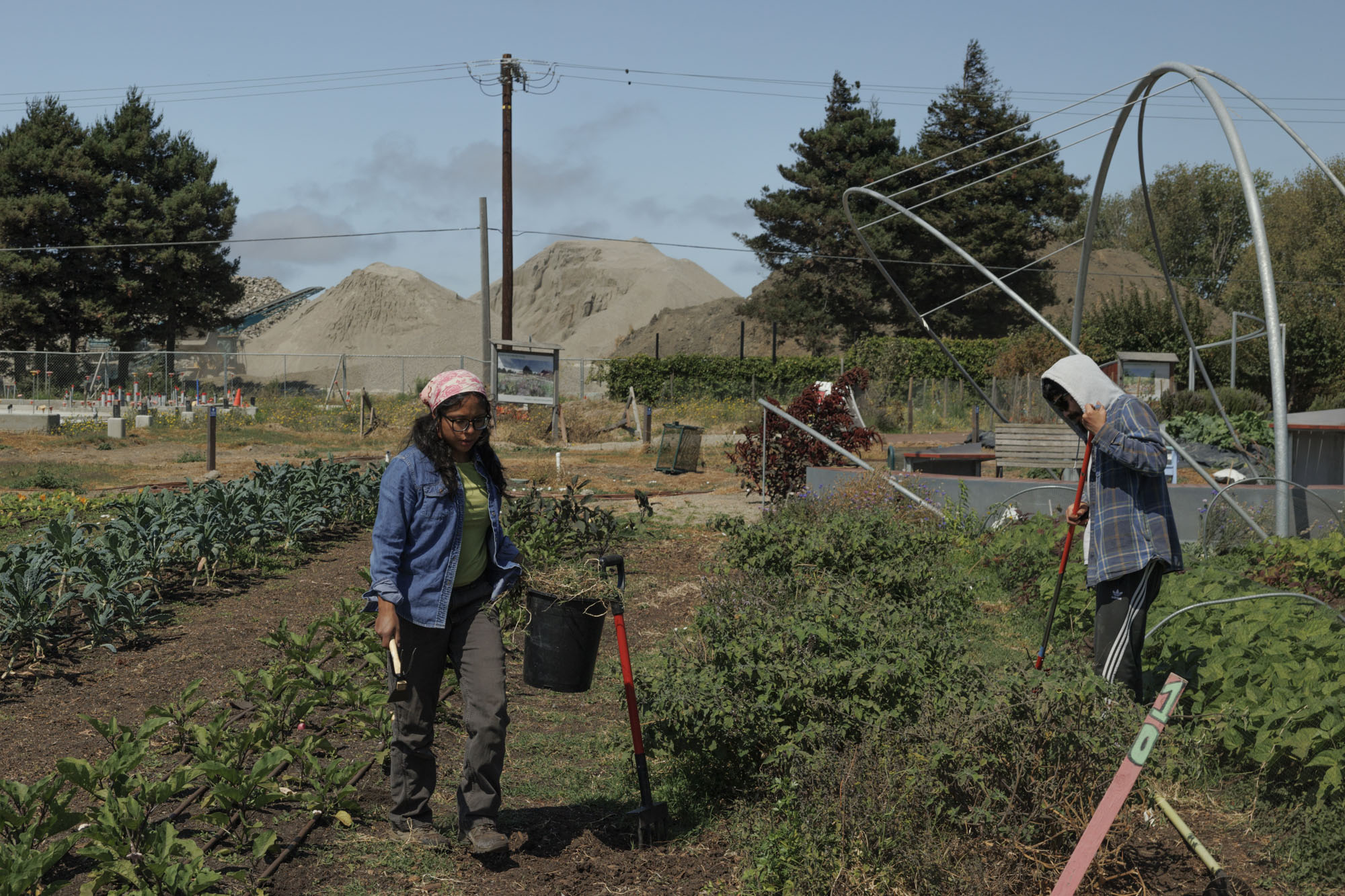
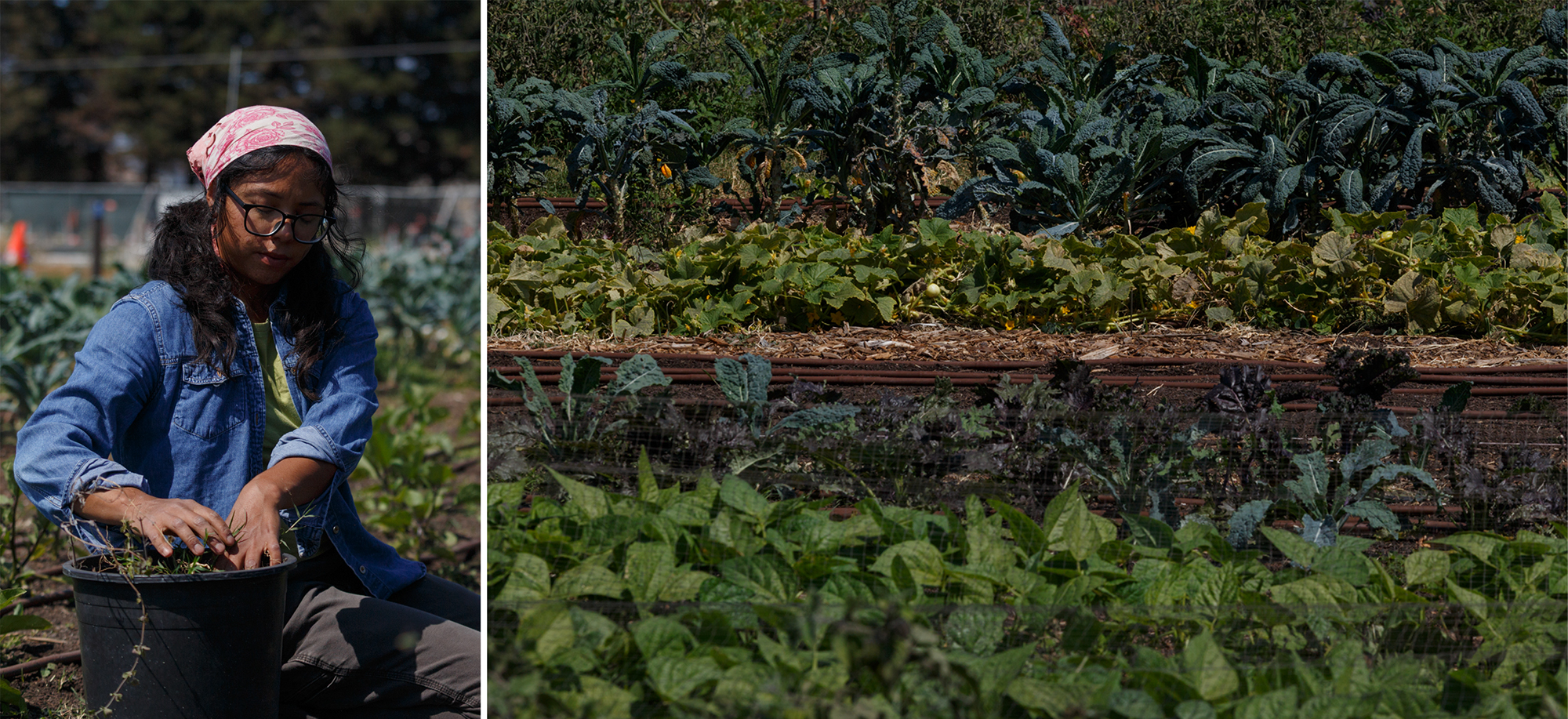
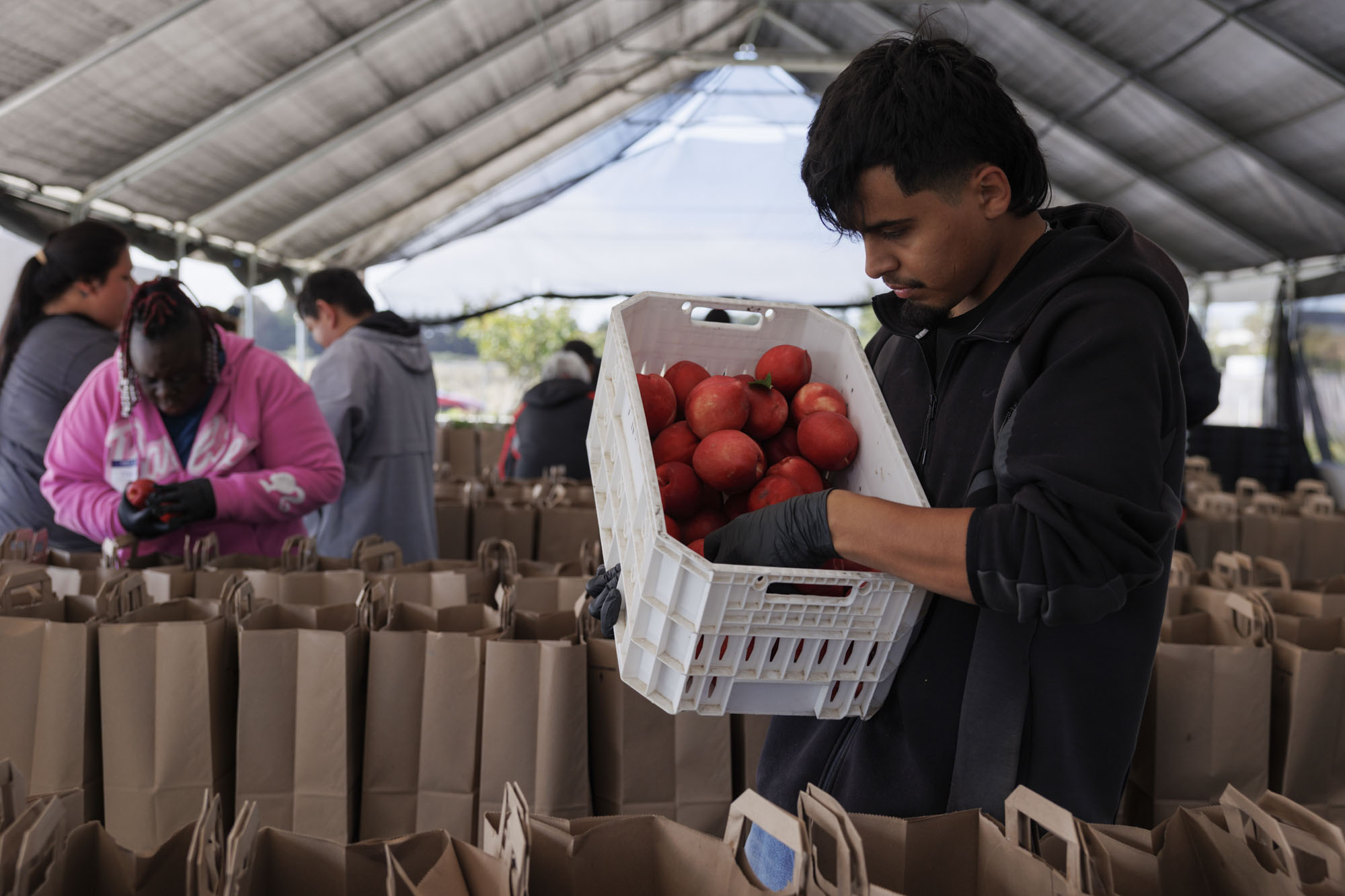
On a sunny Tuesday in August, a group of volunteers rinsed the soil off of freshly harvested greens on an urban farm in North Richmond, beside beehives and greenhouses.
By the week’s end, the vegetables will be packed and delivered to doorsteps across Richmond and San Pablo, or will stock the tables of free farm stands in five neighborhoods.
What began as an East Bay nonprofit and community garden in 2005 has grown into a food access program serving hundreds. For some, the North Richmond farm is one of the few places they can reliably get fresh produce.
A neighborhood with no grocery store
North Richmond has no full-service grocery store and limited infrastructure, said Chinue Fields, who directs food access programs for Urban Tilth, the Richmond nonprofit that runs the farm.
Getting to a grocery store means a car or a bus, Fields said, and the neighborhood doesn’t have many sidewalks. Corner stores and liquor stores dot residential streets. The farm is within sight of a landfill and Chevron refinery.
“The access is gone. The infrastructure is gone,” Fields said.
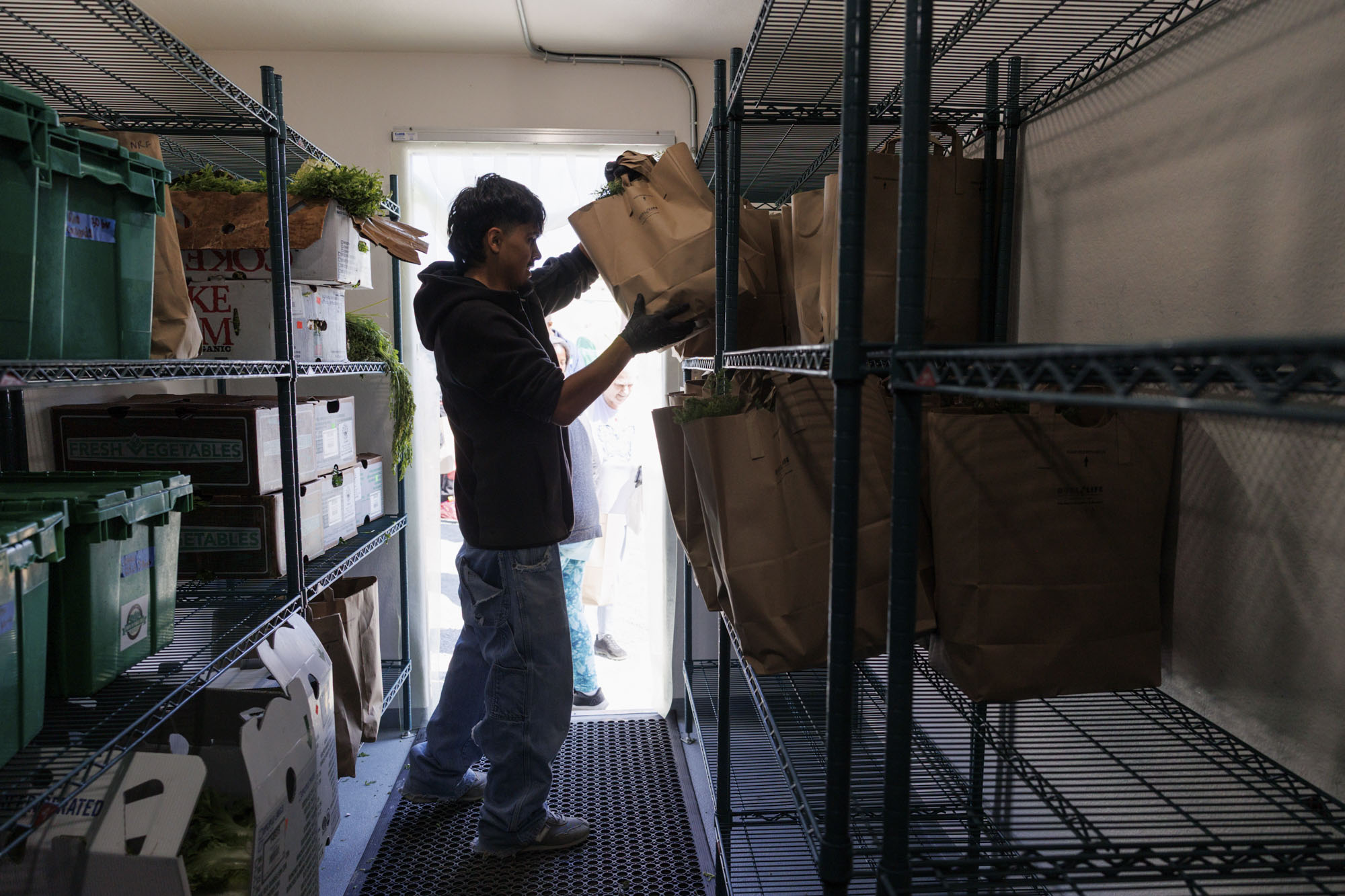
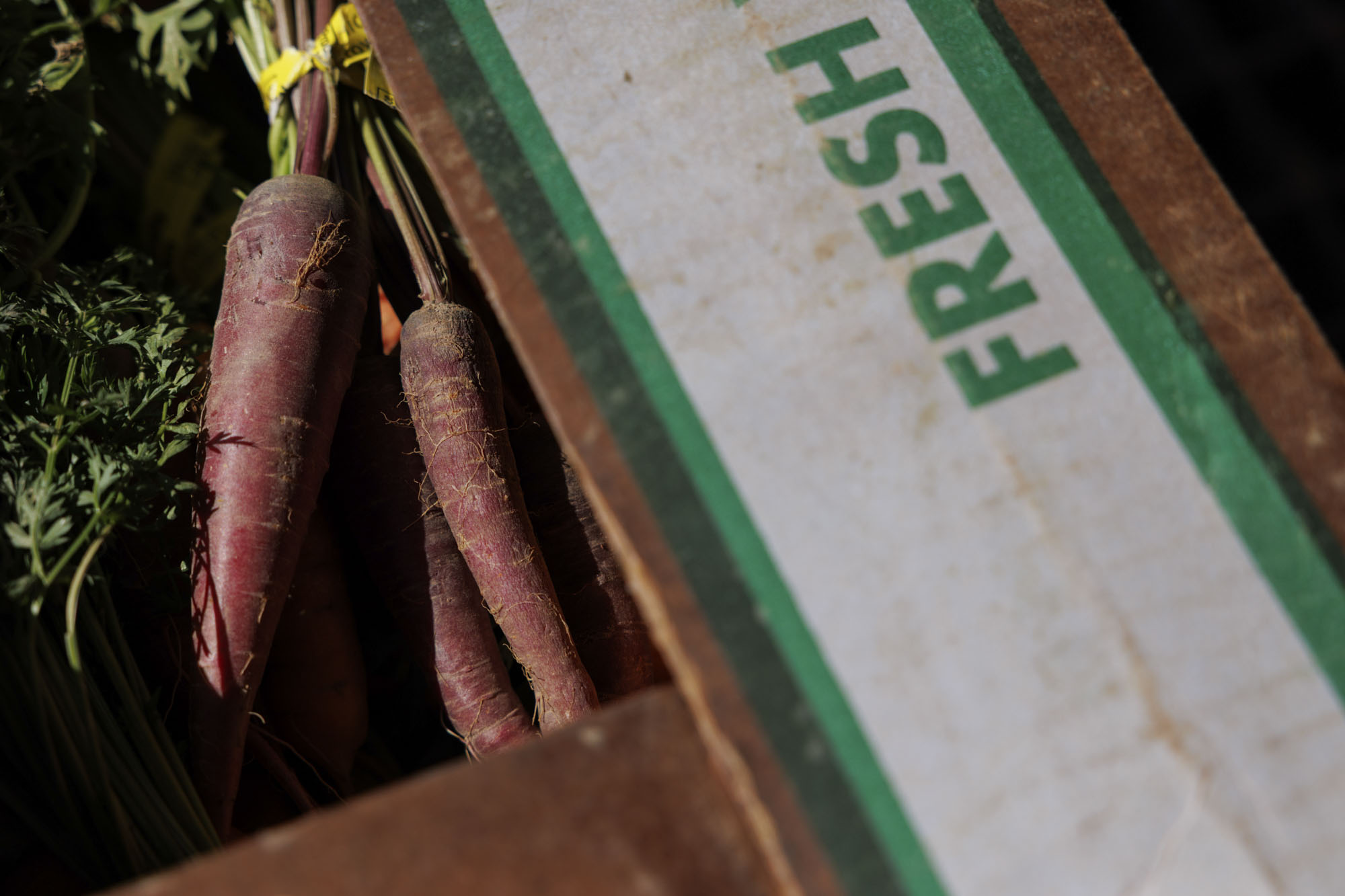
The weekly produce share, a community-supported agriculture subscription, reaches more than 400 households across West Contra Costa County. Half of recipients pay nothing. Since need is greater than what the 10-acre farm can grow, the organization buys from about a dozen small farms, prioritizing growers within 200 miles. The free farm stands open four days a week at five sites until the produce runs out.
Urban Tilth said turnout at its free farm stands rose roughly 150% in the first quarter of this year, during the coldest and thinnest stretch of the growing calendar, when demand normally sags. Fields said that timing indicated food needs in the area were rising.
The goal at each stand is a bag per household, enough for one meal. During those busy weeks, Fields said, when supply is stretched thin, the bags include three to four items. Now, with new federal rules pushing Californians off food assistance, staff say more residents are turning to the farm for sustenance.
HR 1, the tax and spending law President Donald Trump signed in 2025, put more than 650,000 Californians at risk of losing CalFresh — the state’s version of the federal Supplemental Nutrition Assistance Program. The changes took effect on paper in June, but they land household by household as annual recertification deadlines come due. The changes also rolled back exemptions that protected veterans, former foster youth and people experiencing homelessness.
County and food bank officials expect the effects to become visible around October and continue into next year. The farm bill, the sprawling federal law that sets both agriculture policy and the rules for SNAP, expires Sept. 30.
‘It’s survival mode out here’
Last year, 1 in 4 California adults experienced food insecurity. As many as 104,900 Contra Costa County residents rely on CalFresh as of June, according to state data. In District 1, which includes Richmond, a county presentation counted 28,035 individuals and 17,399 households — over a quarter of the county’s caseload — as having received CalFresh in September 2025.
Urban Tilth’s free weekly delivery has a long waitlist.
“Cost of life has gone up. It’s survival mode out here,” said Adam Boisvert, Urban Tilth’s deputy director and director of education programs. “Sometimes we don’t have enough food to give to everybody, and that’s heartbreaking.”
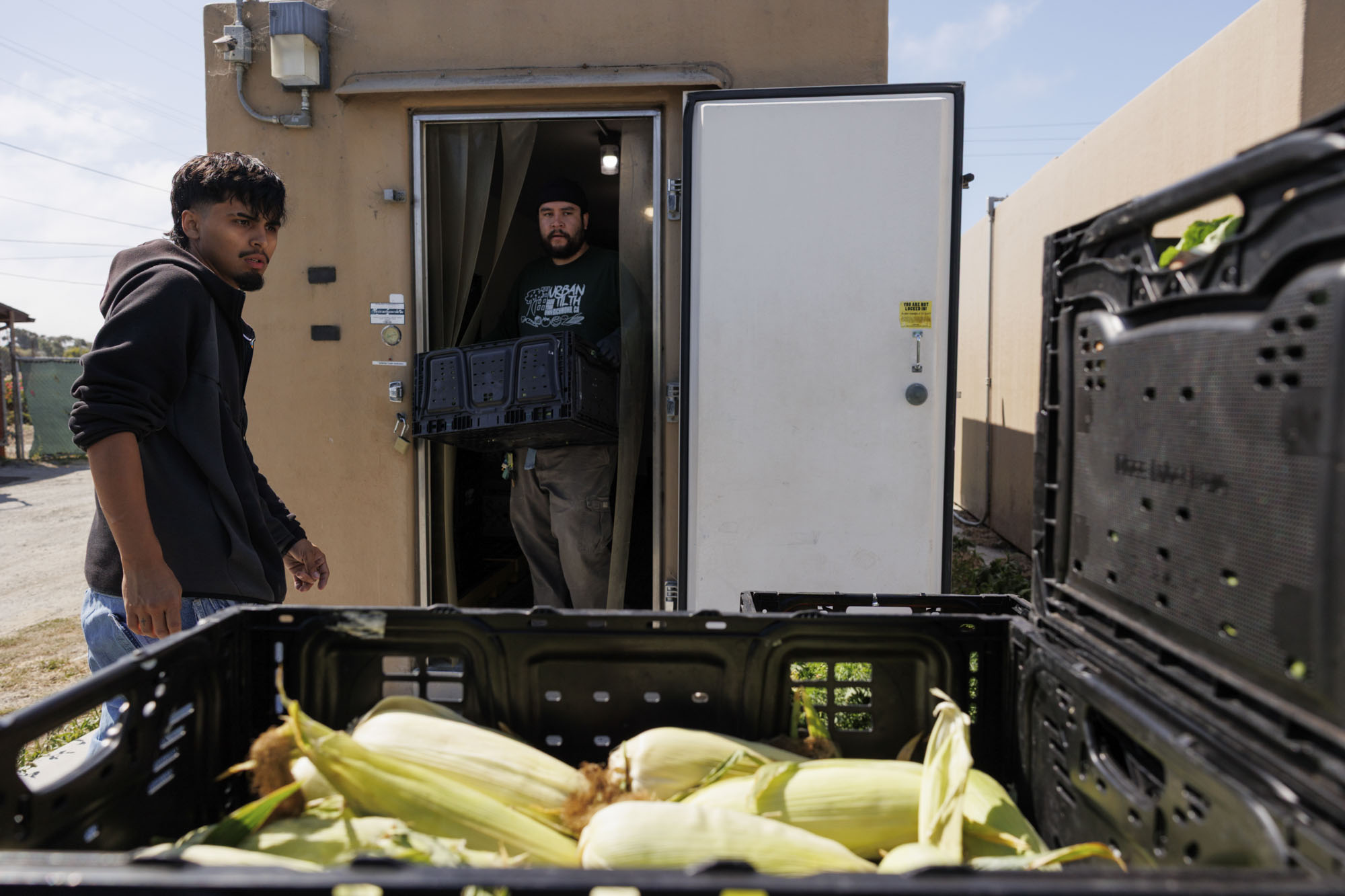
The strain has also started moving up the supply chain. Fields said churches that normally draw their distributions from the regional food bank began calling Urban Tilth directly after the food bank came up short.
“That was really eye-opening and a little bit scary, to be honest,” she said. “We consider the cut to SNAP as an emergency.”
Costs are climbing on Urban Tilth’s side, too. Fuel surcharges have appeared on top of delivery fees from partner farms, and produce prices have risen. Urban Tilth raised its standard weekly share from $35 to $50 this year. A subsidized share runs $15 for the same bag and the same delivery, Fields said, and a third tier is free for residents who are unemployed, undocumented, unhoused, elderly or disabled.
“Folks who really, really need that type of service and wouldn’t otherwise have access to that type or produce,” Fields said.
The model Urban Tilth uses — buying from small local growers at full price to feed people who can’t pay — is the same one the federal Local Food Purchase Assistance Program ran until the Trump administration ended it. California Governor Gavin Newsom signed a budget in June that includes $15 million to keep the state’s version alive for one more year.
Food as medicine, and as a job
Through its VeggieRx program, Urban Tilth delivers free produce to two groups of residents. For patients on Medi-Cal at LifeLong Medical Care, a doctor can decide the produce is part of their care, generally for people managing a chronic illness or recently out of the hospital, and the farm fills it through the same weekly share. A second, state-funded version covers anyone living in Richmond’s Iron Triangle, Santa Fe or Coronado neighborhoods. It runs through July 2027 and is already full, with a waitlist.
Fields said people rarely mention a diagnosis when they first come by the stand. There’s shame and stigma around nutrition-related disease, she said, especially in Black and other communities with people of color.
But the stands set up in the same spots week after week, year after year, and eventually people volunteer the information themselves: an A1C reading that dropped, a mother who came off her blood-pressure medication.
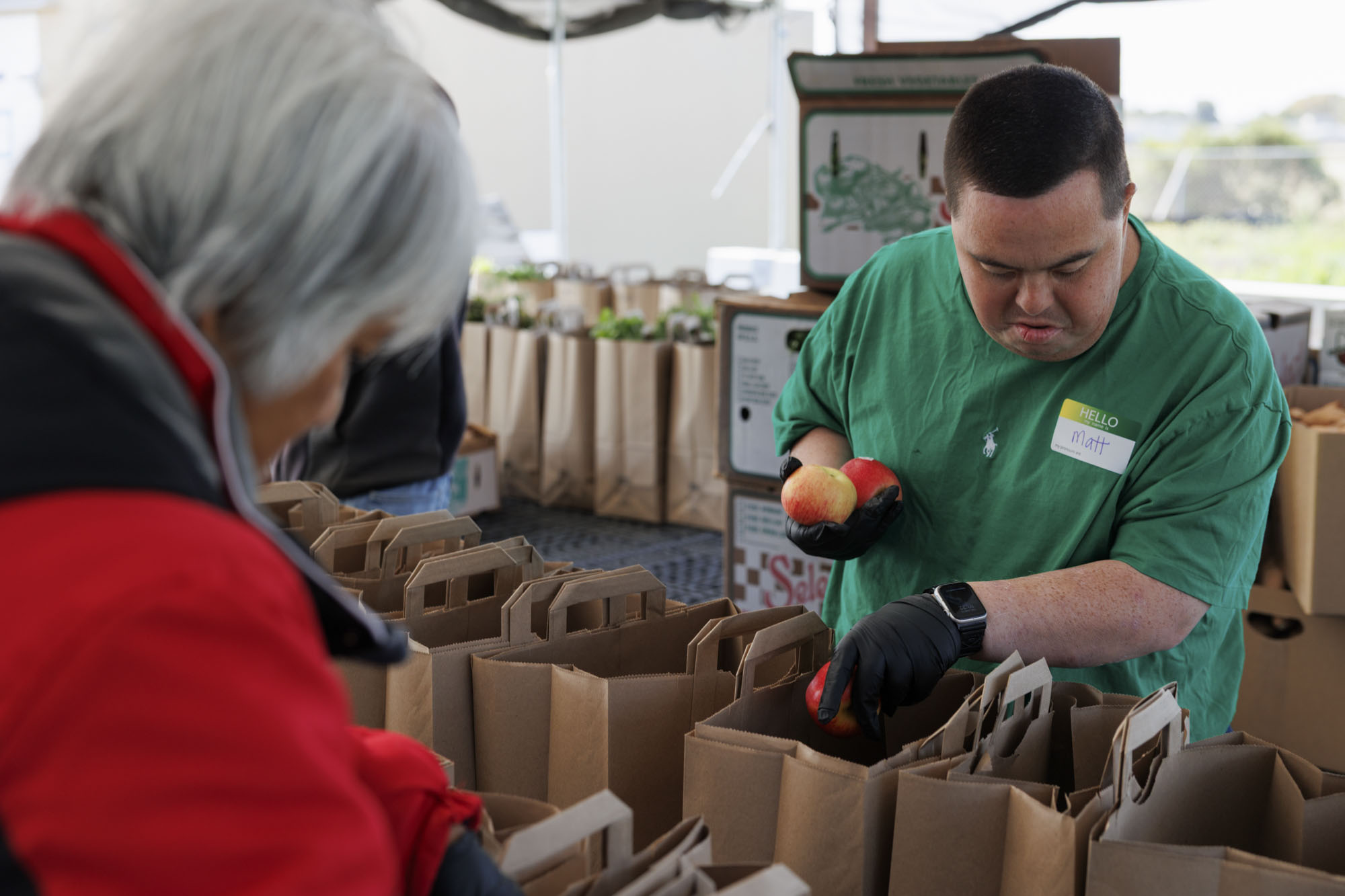
“We offer a high level of dignity with our food distribution,” Fields said. “We are there to really engage with people and get to know them on a personal level. We don’t want it to be a transactional relationship.”
Staff record what city someone lives in, and more than 90% come from Richmond, North Richmond and San Pablo. They don’t ask about income, need or disability.
The volunteers are usually borrowed. Local businesses, nonprofits and school groups schedule time to help pack, Boisvert said.
The staff, roughly 85% local, have largely come through the same pipeline: garden lessons at Verde Elementary, the urban agriculture course Boisvert teaches at Richmond High, a summer apprenticeship, a job.
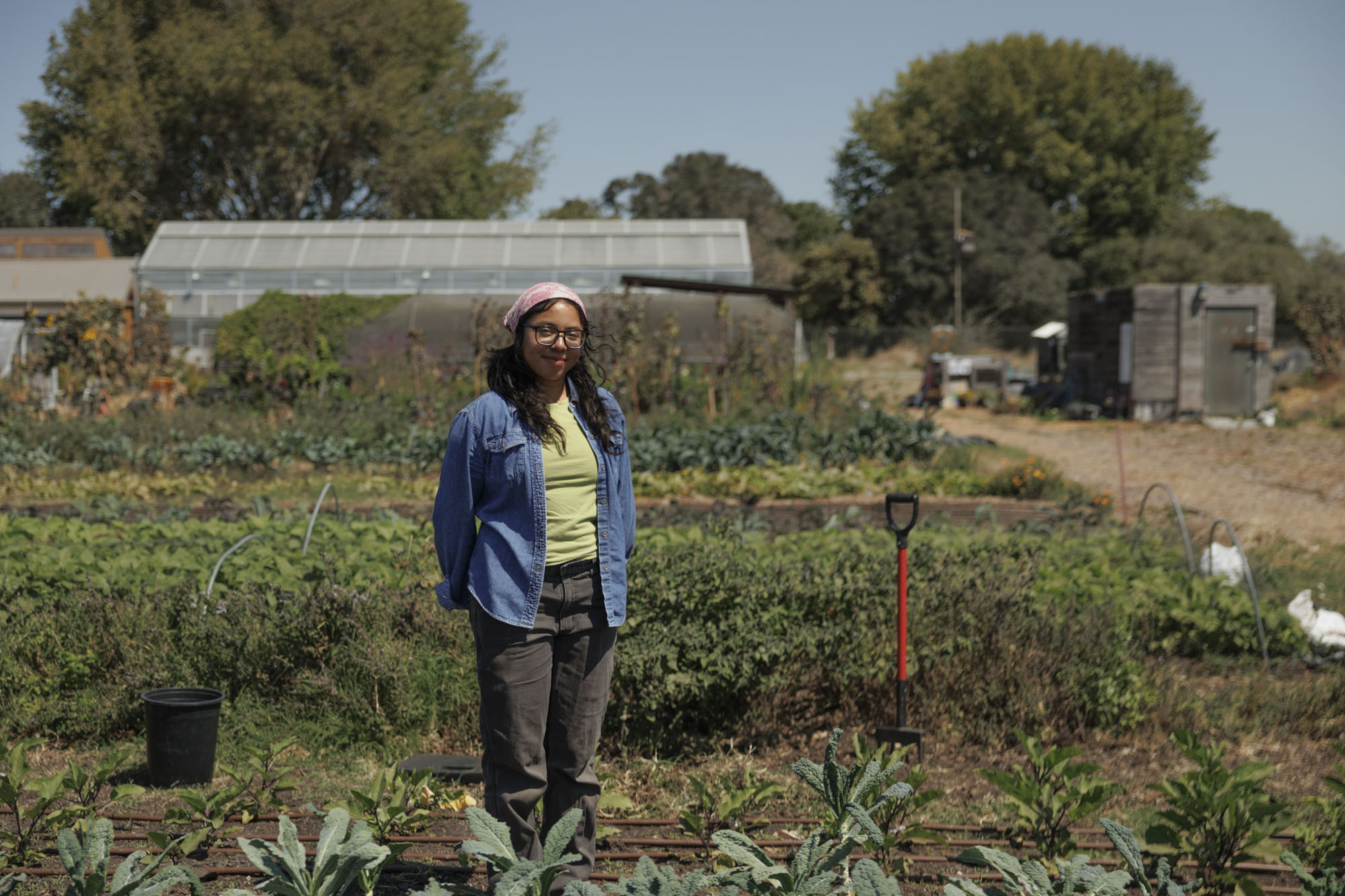
Cathy Sandoval came up through Urban Tilth’s Rudy Lozito Fellowship Program four years ago, driving CSA deliveries, and now works in the greenhouses. She said the neighborhood changed how she understood the work. Growing food in a place with little access to organic produce, she said, is “basically political because you are going against what people here in the community are lacking, not having organic food and produce.”
“Anytime that I come here to the farm on a bad day, it always ends on a good day, always,” she said.
On bad days, she amends a bed, breaking up the rocky soil and aerating it — challenging, physical labor.
“You’re giving it life through anger and emotion, sadness, happiness, whatever it is,” she said.
Sandoval’s grandfather and father farmed in Mexico, and growing food, in a way, helps her connect to her heritage and family.
“We tend to forget about our history and our culture,” she said.
Uniting neighbors over shared land
More than 20 Japanese American families grew flowers across Richmond and El Cerrito for decades, according to the Richmond Museum of History & Culture. In 1942, Executive Order 9066 authorized the forced removal of Japanese Americans. Most of the local flower families were sent to the Topaz War Relocation Center in Utah, where they were incarcerated for four years.
When the Nabeta family returned, and their business began to bounce back, their land was seized by the state in 1947 to build Interstate 80.
They then rebuilt in North Richmond — a Black neighborhood that was brimming with blues clubs and quickly becoming a nightlife hot spot in the Bay Area.
Redlining and restrictive covenants had made it one of the few places in the area where Black families could live, according to Urban Tilth’s history of the neighborhood, and people who came from the South to work in the shipyards built homes there with their wages.
The area was also contending with violent crime, and becoming a backdrop to some of the era’s radical politics: In 1967, one of the first pushes of the rising Black Panther Party involved investigating the killing of a North Richmond man by Contra Costa County sheriff’s deputies.
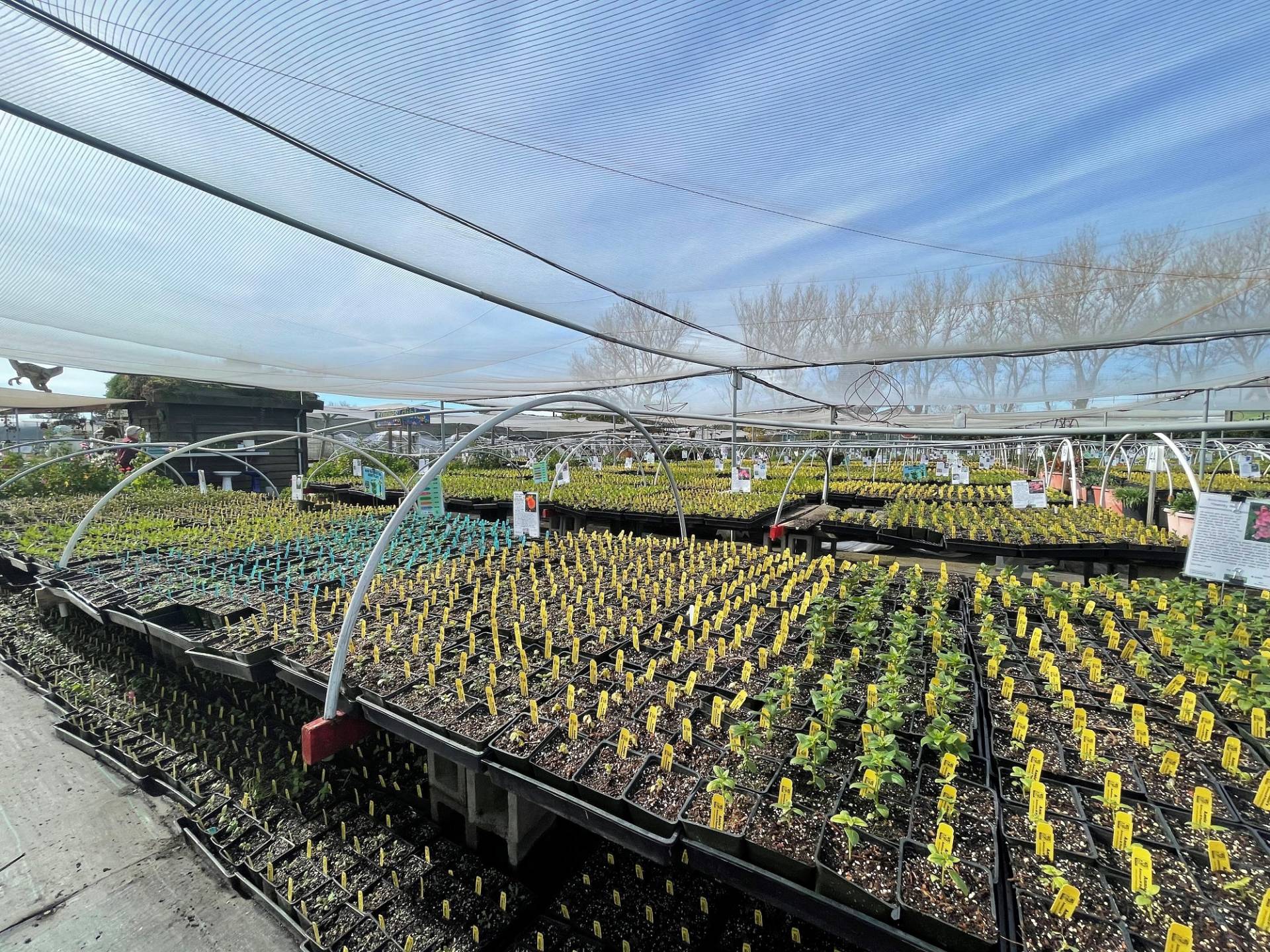
Eventually most of the nurseries closed. In 2022, the Nabeta family decided to sell their land to a developer. Urban Tilth, whose farm sat against the property line, learned the plan was a five-story warehouse, said Chito Floriano, the farm programs director.
“It [would have been] shaded out by about five to six hours of sunlight,” Floriano said. What followed was what the farm called the “No Shade Campaign”: letters to the developer, letters to the family, a street mural on Brookside Drive.
About three months in, Floriano said, members of the Nabeta family walked over. They would rather sell to Urban Tilth if the price could be met, they said.
Executive Director Doria Robinson raised more than $4.5 million to purchase it. The farm grew from 3 acres to 10.
Floriano said Urban Tilth is part of a long lineage of people who have worked the land — the Ohlone, the Black cowboys who once kept horses here and the Japanese American nursery families.
“We aren’t the original light bearers of this movement,” he said. “Urban Tilth is gonna be a moment in history now.”
‘By whatever means necessary’
In late 2024, Contra Costa County won a federal grant that would have paid for a new resilience center on the farm. The farm planned a solar-powered building where neighbors could wait out a heat wave, a refinery accident or a stretch of dangerous wildfire smoke, stocked with cots, first-aid supplies and portable showers, with a battery system able to run the air-filtration and refrigeration systems for up to three days off the grid.
Floriano estimated construction would cost $6 million. It was one of nine projects across North Richmond covered by a $19 million grant to Contra Costa County from the U.S. Environmental Protection Agency.
Weeks after the county secured the contract, the federal government pulled the plug. In February 2025, the nonprofit lost contact with the EPA’s grant administrator and later learned the staffer had been fired. The county did not receive formal notice that the EPA had terminated the grant until May of that year.
“We took it off the books as soon as we got wind that it wasn’t coming through,” Boisvert said.
Five new buildings now stand on the farm, paid for without federal money: a greenhouse, a native plant nursery, a watershed learning center, a toolshed and what Urban Tilth says is the first permitted public composting toilet in an urban area of Contra Costa County.
Urban Tilth says it has raised more than $9.3 million of the roughly $14.3 million this phase will cost. It needs $5 million more to finish.
Among the remaining line items is $250,000 for a history walk, a path running the length of the farm that tells the story of the neighborhood: the Ohlone, the blues clubs, the Black Panthers and the Japanese American nursery families, including the Nabetas.
Floriano said Urban Tilth receives almost no federal funds now, and is instead carried by state contracts, city creek restoration work, foundations and individual donors.
Urban Tilth recently finished two outdoor classrooms, one in the crop rows and one in the orchard, and Boisvert said the spaces get more use as more kids cycle through. His two urban agriculture classes at Richmond High started back up with 80 students, and the farm still runs after-school sessions, senior gardening and a volunteer day every fourth Saturday.
“By whatever means necessary, we’re going to see this thing through,” Boisvert said. “Piece by piece, one day at a time, one grant at a time, getting buildings finished, getting projects done.”