This piece was featured first on Aug 20 for One Good Thing, a weekly newsletter brought to you by Alexis Madrigal about his take on Bay Area art, culture & nature. Subscribe today.
I’m writing to you today to tell you about a new project I’ve got. It’s called Dream Machines, and it is a different kind of podcast series about AI. I co-host it with Robin Sloan, my good friend and the novelist who wrote the best-selling Mr. Penumbra’s 24-hour Bookstore.
It’s a podcast series about AI produced here in San Francisco, crucible of the industry. We look at how the city is seeping into these globe-altering technologies AND also how AI is seeping into our area. We also probe the feelings and novel experiences that AI is generating, whether delight, dread, or something we don’t quite have a name for.
For this first packet of episodes, we talked with a novelist, an economist, a startup founder, and a musician who works at Pandora about their perspectives on what AI actually is in their worlds.
It’s a super exciting project. We have a couple amazing producers—Anayansi Diaz-Cortez and Derek Lartaud—and our executive producer is Jen Chien.
If you’re surprised that I’m making an AI podcast series, I have some things to confess.
While the world is absolutely besotted with AI right now, my own interest in this field goes back more than 30 years. I was the kind of little nerd who liked to read my family’s Scientific American. In 1996, I remember reading about neural networks in goldfish. Shortly thereafter, I read Richard Powers’ novel Galatea 2.2, which dramatized the emergence of an artificial intelligence powered by a neural network. It was my favorite novel for years. I was also taken by Hans Moravec’s extrapolations from that time about computing power scaling up from goldfish to human levels.
Back then, artificial neural networks were very primitive. The idea had been around since the 1950s, and was quite obvious: what if computers worked more like brains, aka biological neural networks? So, engineers took old, simple models of neurons and tried to encode information into them, get them to perform computations, etc. It was tantalizing to imagine that we might be able to grow and train software rather than program it. In the 90s, neural networks worked for a few things, but as one proponent put it, “many of the applications and studies were either trivial or misguided.”
Well, a good 15-20 years went by. The whole commercial internet grew up, semi-inadvertently creating massive amounts of training data. That data started getting fed to these neural networks and lo and behold, they began to work. In fact, they began to have capabilities that no one, including the people creating them, expected. Robin Sloan was actually the person who brought me back to this interest with his wide-ranging reading about (and tinkering with) the models of the mid-2010s.
There are many people writing about the problems of AI, and it’s not hard to steelman a case against these companies. But the larger project of artificial intelligence, which began decades ago, still fascinates me. There is still so much to learn about how massive amounts of data flowing through artificial neurons using fairly simple algorithms can somehow let you translate a book from Uzbek to Tagalog.
How are all these patterns and capabilities stored in neural networks? Most people think we know how human memories are stored in the brain, but we don’t! Scientists have hypothesized the physical embodiment of memory—the engram—for decades, but all our various theories about what they are and how they work have problems. Surely the way that LLMs stash away and generate information might hold some interesting lessons for our own wetware.
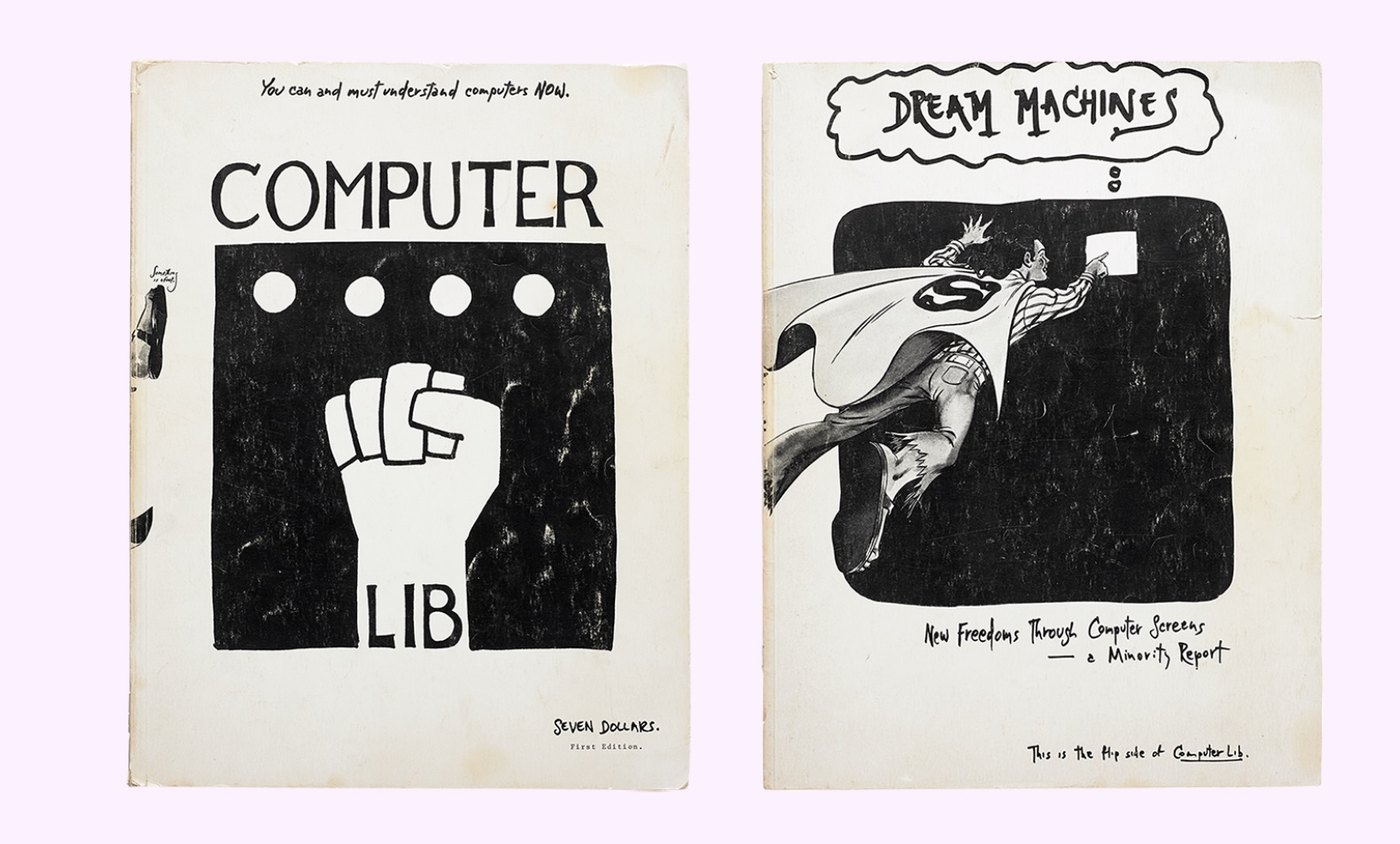
Last thing: you may wonder where the name of the series, Dream Machines, came from. The title is an homage to Sausalito’s Ted Nelson, who created an amazing (and influential!) zine back in the mid-1970s. On one side, it featured a man flying into a screen with the tagline “new freedoms through computer screens.” That was the “Dream Machines” side.
But on the other side of the zine, there was a fist and the title, “Computer Lib.” It bore this exhortation, which Robin and I firmly believe is equally true today: “You can and must understand computers NOW.” For these technologies are the ultimate field of projection for both doomers and technoutopians. And we think the only way to get a better handle on the future is to get closer to both the technologies themselves and the people who are at the coal face of their impacts on society.

Alexis Madrigal, Co-Host, Forum

My Tipline
- The Oakland Review of Books launches, sort of, but actually, with a party!
- OH my god, “Bolinas Community Publishing in the Seventies” at the Bolinas Museum
- Great looking gallery talk in San Jose about their exhibit, Motherboards
- I’ll be reading in the third edition of the Sundial Reading Series, which benefits the West Oakland Environmental Impacts Project

My Picks
 FORUM
FORUM
ICE Airport Arrests Attract Legal Outcry
This is one of the most powerful shows we’ve ever done on immigration.
 ARTS
ARTS
Finding Your People
Love this new KQED Arts & Culture series on discovering your community IRL
 NEWS
NEWS
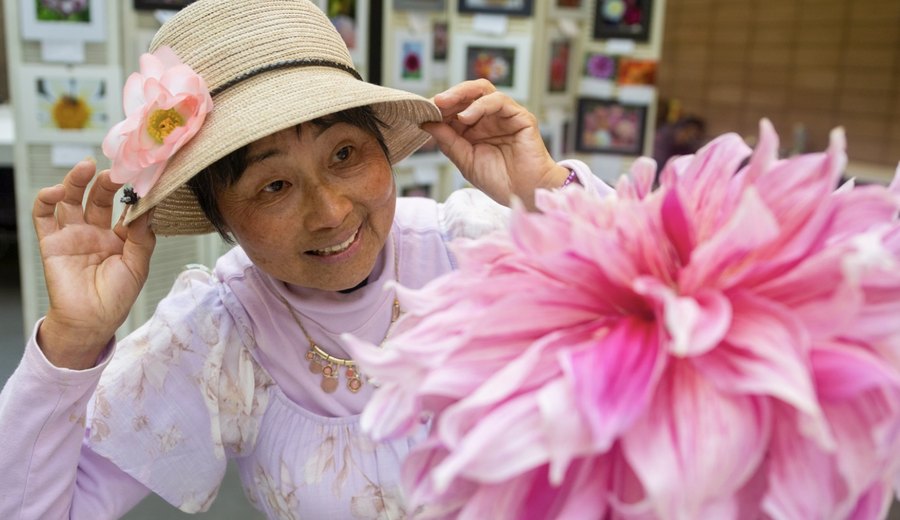
San Francisco’s Dahlia Show Celebrates a Century of Floral Diversity
I’m a sucker for a flower show.