Detained at Green Card Interview: How a Bay Area Family Is Healing From Sudden Separation
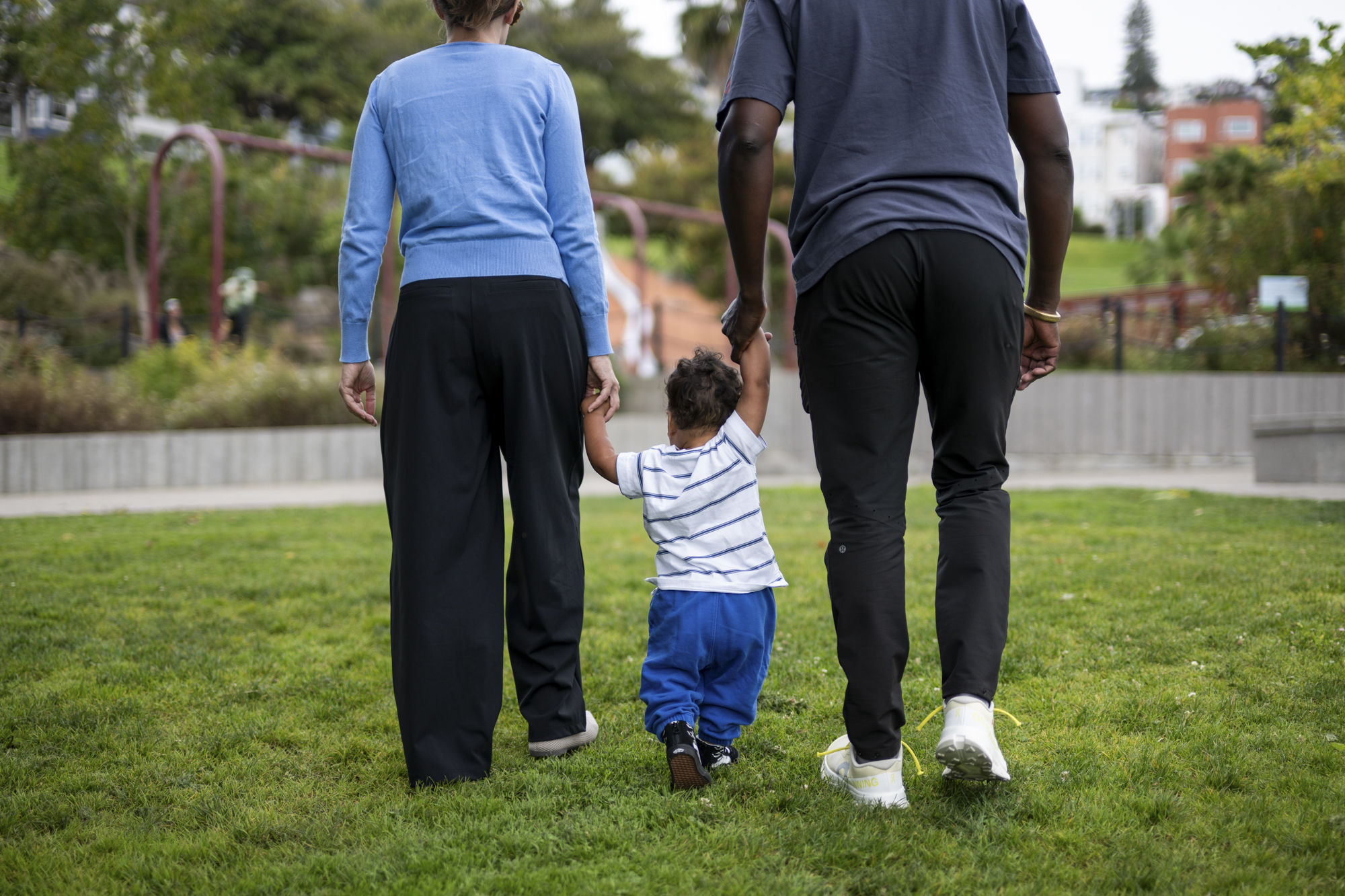
For the first year of his life, a baby boy went with his mom on 7-hour-long drives from their home in Oakland to the Mojave Desert to see his dad, Peter, at an immigration detention center.
A glass partition separated the baby and the dad, who used to hold him til he fell asleep. They made the best of the situation by playing peek-a-boo and giving each other high-fives, with hands touching the glass. But during one particular visit, the baby grew agitated and began banging on it.
Peter told the baby’s mom, Alexandra, they probably should cut the visit short “because it’s making the baby more upset to be here than to not be here.
“We ended up leaving a little bit early,” Alexandra said. “And in the car ride home, the baby looked really, really angry. And not just frustrated because kids look frustrated, he looked angry.”
Peter was the main caregiver to his son when he was taken into custody in November 2025, and the sudden separation took a toll not only on him and his wife, but also on their developing baby.
Since Trump’s deportation campaign began last year, more than 100,000 children who are American citizens have had a parent detained, according to an analysis by the Brookings Institution.
The trauma of family separation could lead to profound consequences on kids’ brains and bodies, even for those too young to understand.
“It has implications biologically, it has implications developmentally, it has implications for learning,” said Rahil Briggs, a clinical professor of pediatrics, psychiatry and behavioral science at the Albert Einstein College of Medicine in New York and national director of HealthySteps, a program with the early childhood advocacy group Zero To Three.
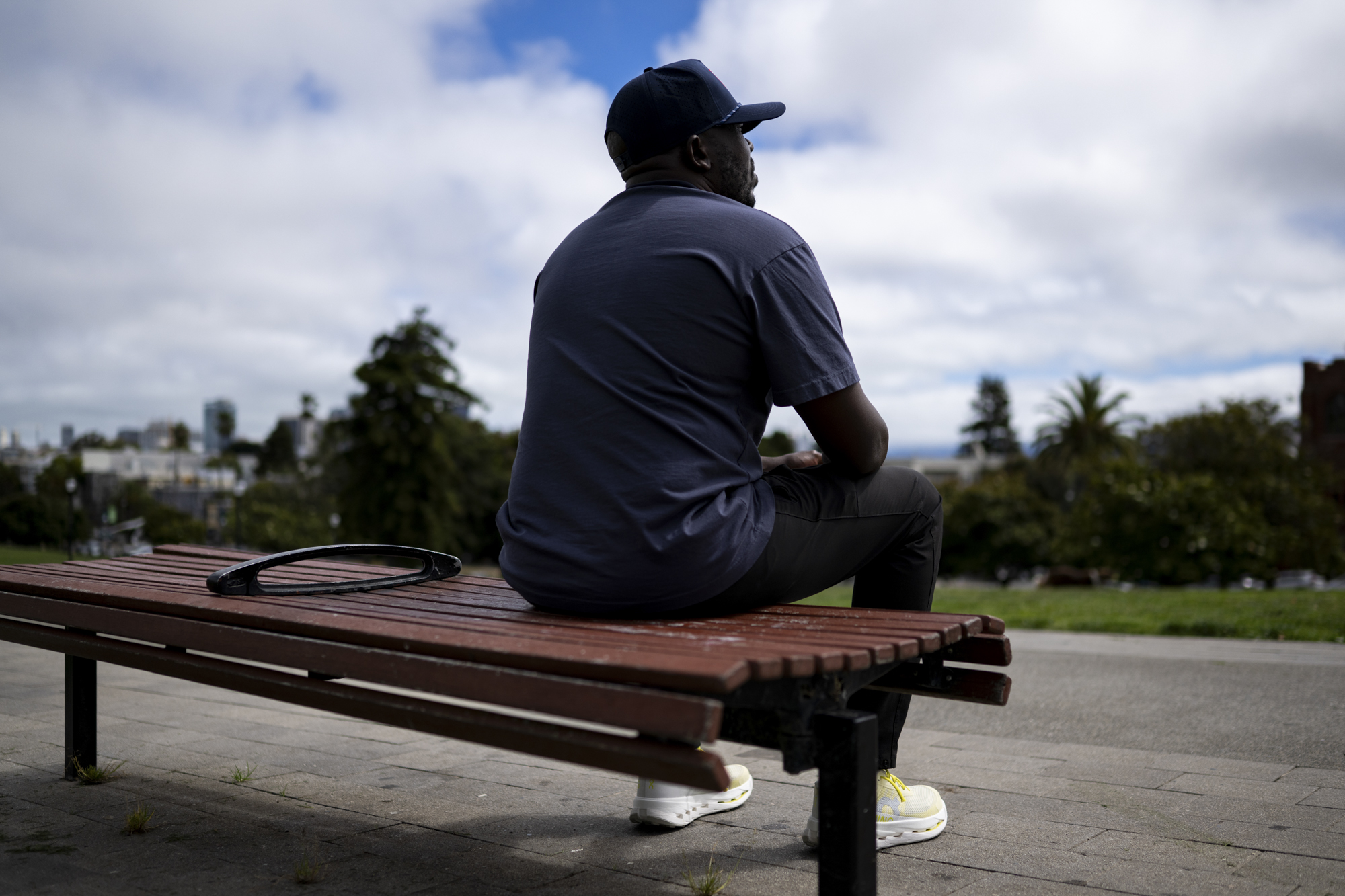
For Peter, not being able to touch or hold his son was one of the most difficult parts of a five-month nightmare in detention.
Peter is his adopted American name. We’re not using his full name because he fears telling his story may harm his immigration case.
He came to California from Kenya on a student visa almost 25 years ago. In the early 2000s, his country was in political and economic turmoil, and there were few opportunities to pursue higher education.
“Chances are you are not going to get anywhere there,” he said. “So let’s just take a chance and try to go somewhere else.”
He went to a community college in Orange County. Then in 2018, he moved to the Bay Area to get a bachelor’s degree at San Francisco State University. As he pursued his education, he supported himself by working in cafes and bars and as a soccer and rugby referee. Then in 2024 he met his wife, Alexandra, an elementary school teacher.
They had their first date at the Ferry Building, on the San Francisco waterfront. Not long after that, Alexandra needed to undergo surgery.
“He came and stayed with me for I think a week or two and took care of me,” she said. “He’s just a really good person, a really thoughtful person. So we hit it off pretty quickly.”
They got married a year later and had their son in the spring of 2025.
Peter became a full-time dad when Alexandra went back to work. She’s legally blind and cannot drive, and he said it made sense for him to stay home to take care of their baby.
“When you have a kid, in their first few years they have to go to a lot of checkups,” he said. “So it’s easier that way, and also she really, really loves teaching. I kind of felt guilty telling her, ‘Oh no, you stay.’ I was like, ‘No, I’ll stay with him.’”
After tying the knot, Alexandra petitioned to sponsor Peter’s green card because his student visa had expired.
In November 2025, the family went to a federal building in San Francisco for the green card interview. The appointment came several months after Pres. Donald Trump’s administration directed ICE to make 3,000 arrests per day to meet his pledge of mass deportations. Peter was worried about getting swept up in the crackdown.
About a week before the appointment, he said his baby might have felt his anxiety too.
“I picked him up in the morning, and he held my hand, and he wouldn’t let go,” he said. “He looked at me, and he held me for a long time.”
Green card interviews are usually the final step in the process for foreign spouses of American citizens to obtain permanent residency. Couples submit evidence that they have a legitimate marriage, and a U.S. Citizenship and Immigration Services officer verifies it at the in-person meeting.
Alexandra said the officer approved her petition to sponsor Peter and was going to issue him a green card. But in the middle of the interview, the baby needed a diaper change. Alexandra said the officer urged her to take her son to the bathroom.
She said she hesitated and said she’d rather wait to finish the interview and go with Peter to change the diaper.
She said the officer told her: “We’re almost done here. We’ll be waiting for you when the baby comes out.”
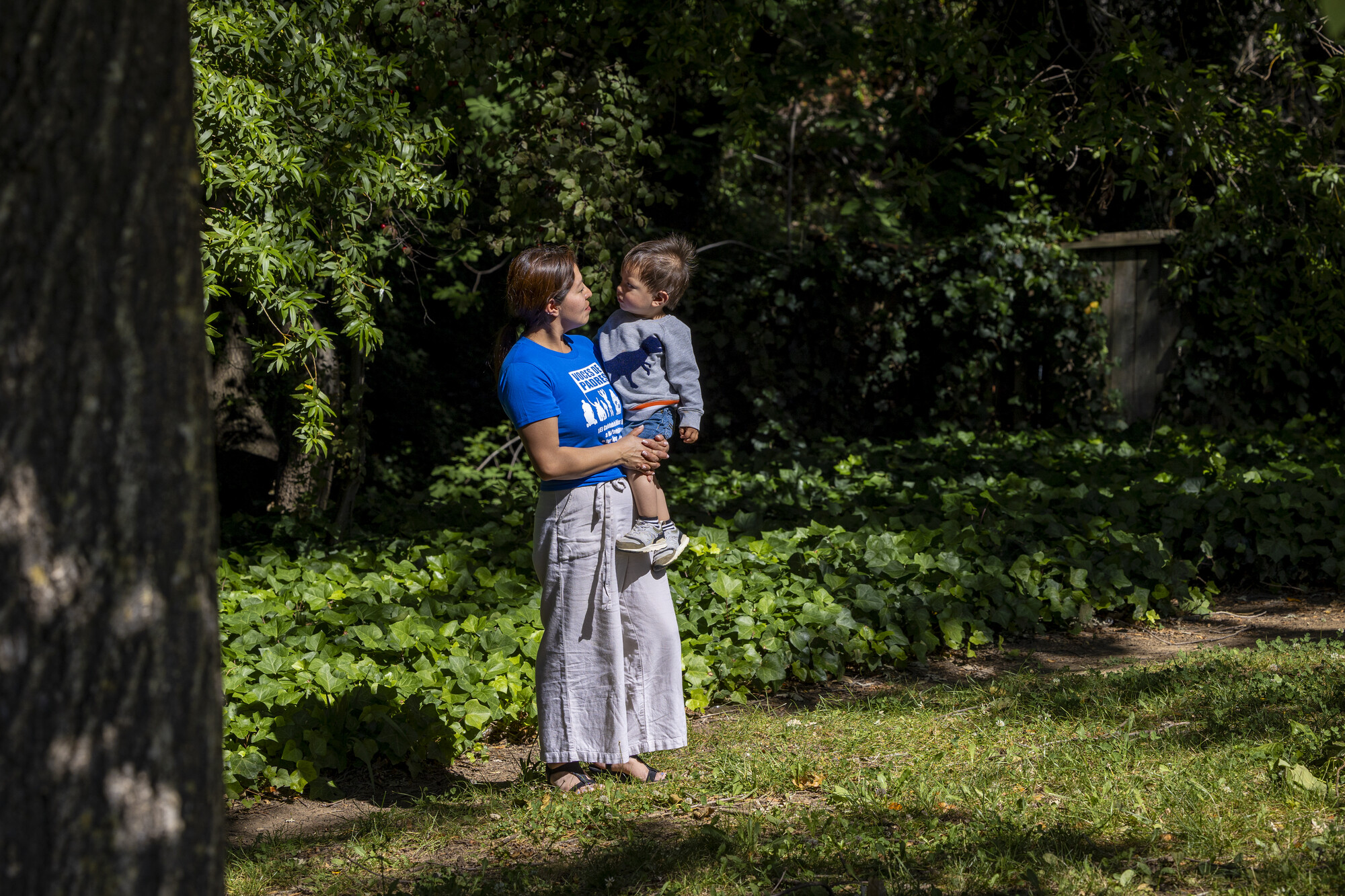
But as soon as Alexandra left for the bathroom, ICE agents swooped in with a warrant, alleging that he overstayed his student visa, handcuffed him and took him into custody.
When Alexandra came back and learned that Peter was detained, she tried to stay calm as she held her baby.
“I asked the ICE agent, ‘Well, how am I going to get home? How am I going to take care of my baby? You know, I don’t see well; how am I going to do that?” she said. “And they’re like, ’That’s not our problem.’”
Peter was taken to a local holding cell for a night. The next day, he was driven seven hours away to a detention facility in California City, in the middle of the desert.
Once he got to the detention center, Peter said he was placed in a two-person cell within a unit of 80 people. The facility used to be a state prison, but federal immigration officials arranged to reopen it last August to hold up to 2,500 detainees and have it run by the private for-profit company CoreCivic.
Peter said it felt like prison.
“They’re putting you in a unit, they’re locking the doors, they’re counting people all the time,” he said. “You cannot be out. You cannot do certain things by certain times.”
In the Bay Area, Alexandra and Peter’s friends, family and community sprang into action. A relative helped find legal aid and a friend helped Alexandra with childcare while she continued teaching.
Abby Sullivan Engen, an immigration attorney at Centro Legal de la Raza in Oakland, said Peter’s arrest and detention were unlawful because he was following the proper procedures to adjust his status to permanent resident. She accused ICE and the USCIS of “colluding” to lure the couple to the interview and arrest Peter.
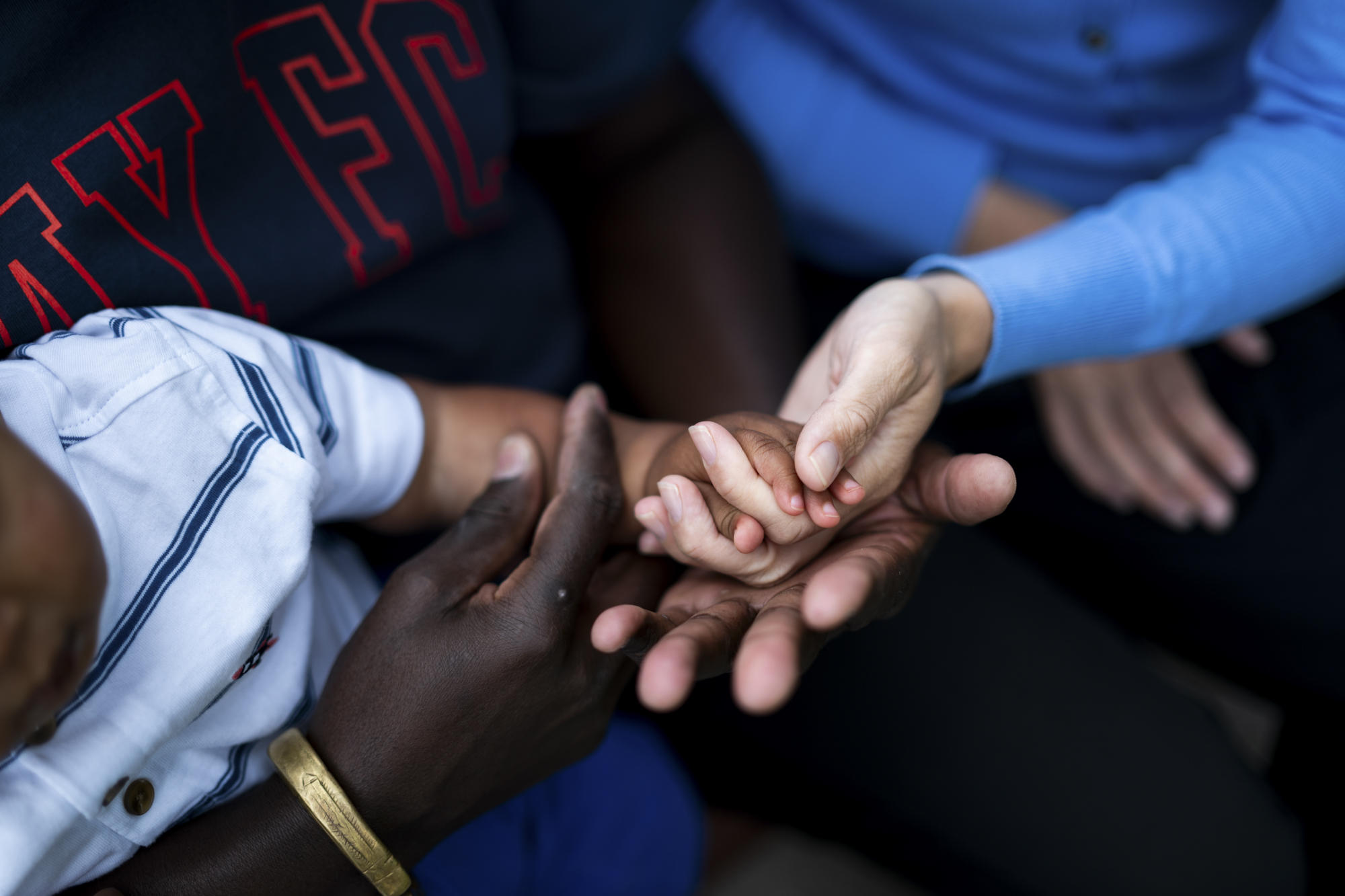
“They’re engaging in different tactics to satisfy that totally arbitrary metric [of 3,000 arrests per day],” she said. “Arresting people at interviews was kind of an easy way for them to fulfill this number and just get people in ICE custody.”
Andrew Nietor, an immigration attorney in San Diego, said between November and January, dozens of similar arrests occurred in his region during green card interviews.
He said while it’s not uncommon for foreign-born spouses of American citizens to have their visas lapse while their “adjustment of status” continues, they don’t usually get detained in the process.
“Traditionally ICE detention was based on risk of flight, or danger to the community,” Nietor said. “So when you’re detaining people who are showing up for appointments and have already passed background checks, it doesn’t make sense.”
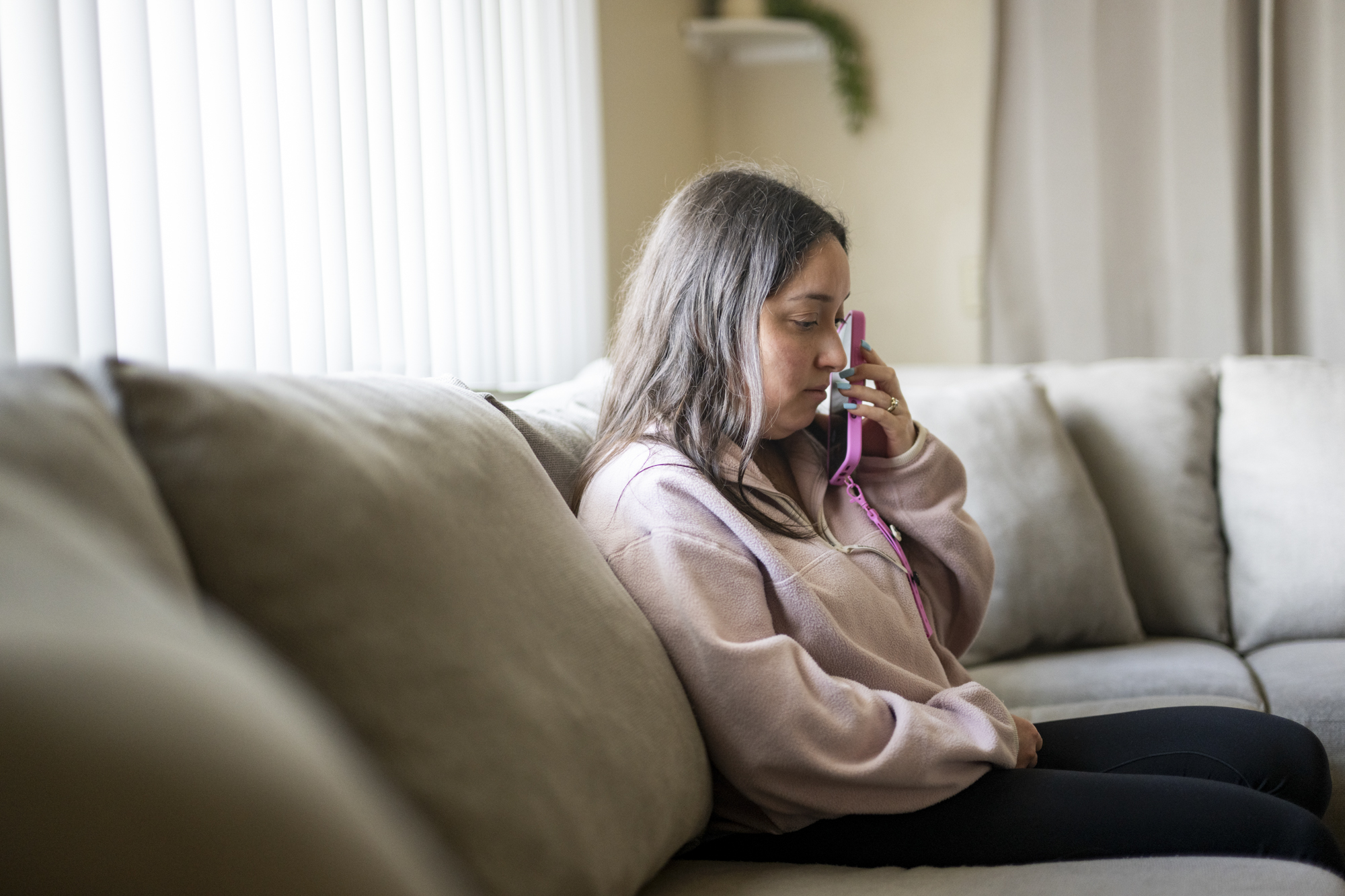
As Peter’s lawyer worked to get him out of detention, he and Alexandra made daily video calls to maintain a sense of normalcy for their infant. After a while, Alexandra said the baby learned to recognize the automated announcement from the detention center when the phone rings.
“It’s kind of depressing and also heartwarming at the same time, but we would hear, ‘This is a call from Peter, a detainee at California,’ and anytime [he] heard that, he would just start smiling and laughing,” she said. “So he knew whenever that recording came on that his dad was going to be on the phone.”

Volunteers drove Alexandra and the baby to the detention center, but he often got fussy seeing his dad behind a glass partition.
“He was trying to touch my face through the glass, and that was frustrating,” Peter said. “We asked the detention [center] why they don’t allow a family to have personal visits. And they say we’re not ready and we don’t do it.”
Steven Owen, a spokesman for CoreCivic, said visitation policies are determined by ICE, “who have operational and security considerations that inform those decisions.” A Department of Homeland Security spokesperson said the California City detention center has a family visitation room, but no physical contact is allowed. They declined to explain the reason behind the policy.
Research shows that when young kids experience adversity and they don’t have anyone to help them cope, their body’s stress response system goes into overdrive. This type of stress is called toxic stress, and Briggs said it can rewire the brain and disrupt the healthy development of their bodies, increasing the risk for heart disease, diabetes, and depression later on.
“The early childhood brain, because it’s so plastic and it’s in this developing stage deciding which neural pathways to lay down, it’s especially sensitive to stress — more sensitive than your brain or my brain, and therefore more able to react positively to safety, to nurturing, to connection, but also likely to be worse off when the stress gets really toxic,” she said.
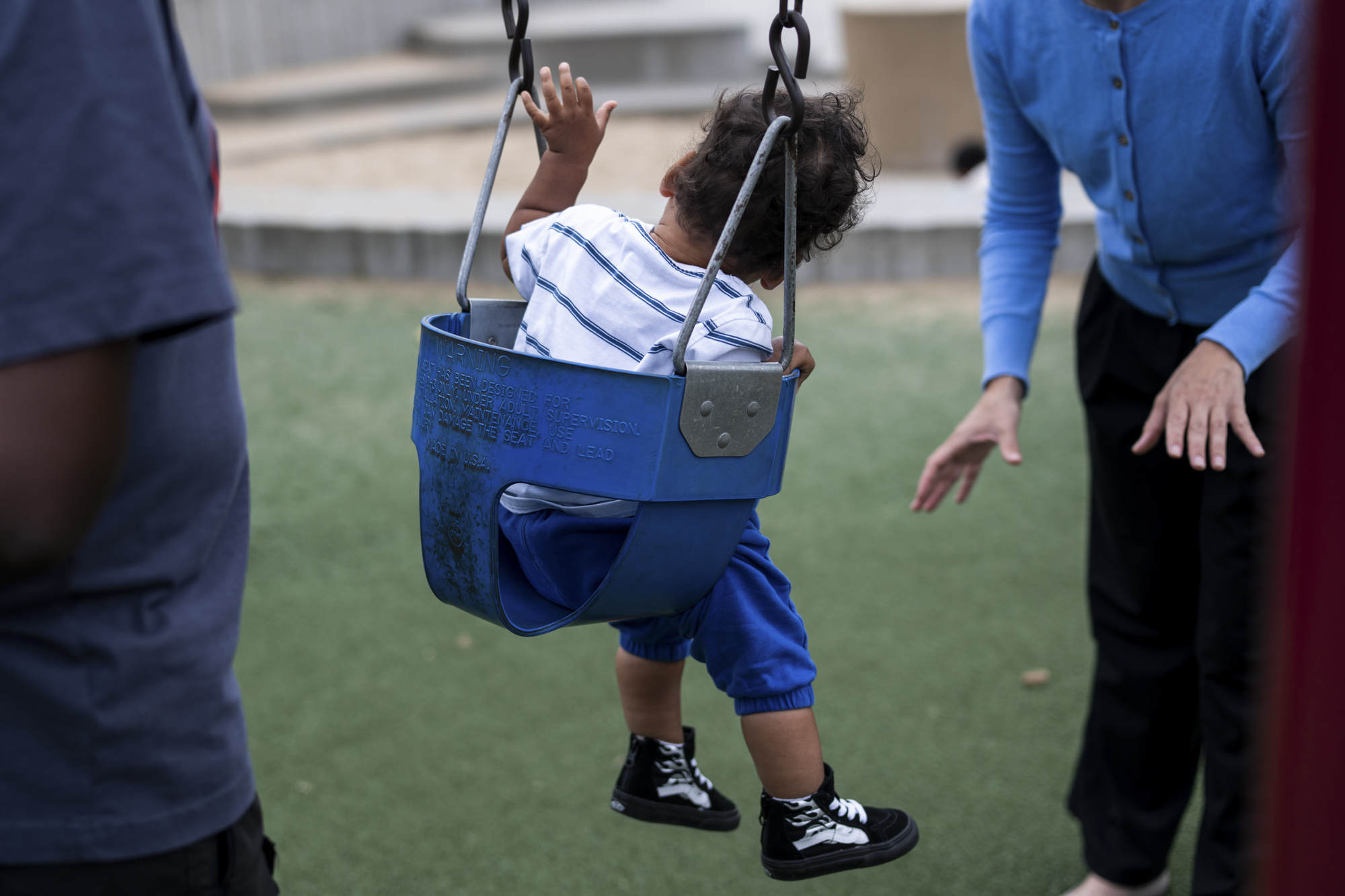
While Peter was in detention, the baby had difficulty falling asleep and became clingy, Alexandra said. If anyone sat in his dad’s favorite chair, he would throw a fit.
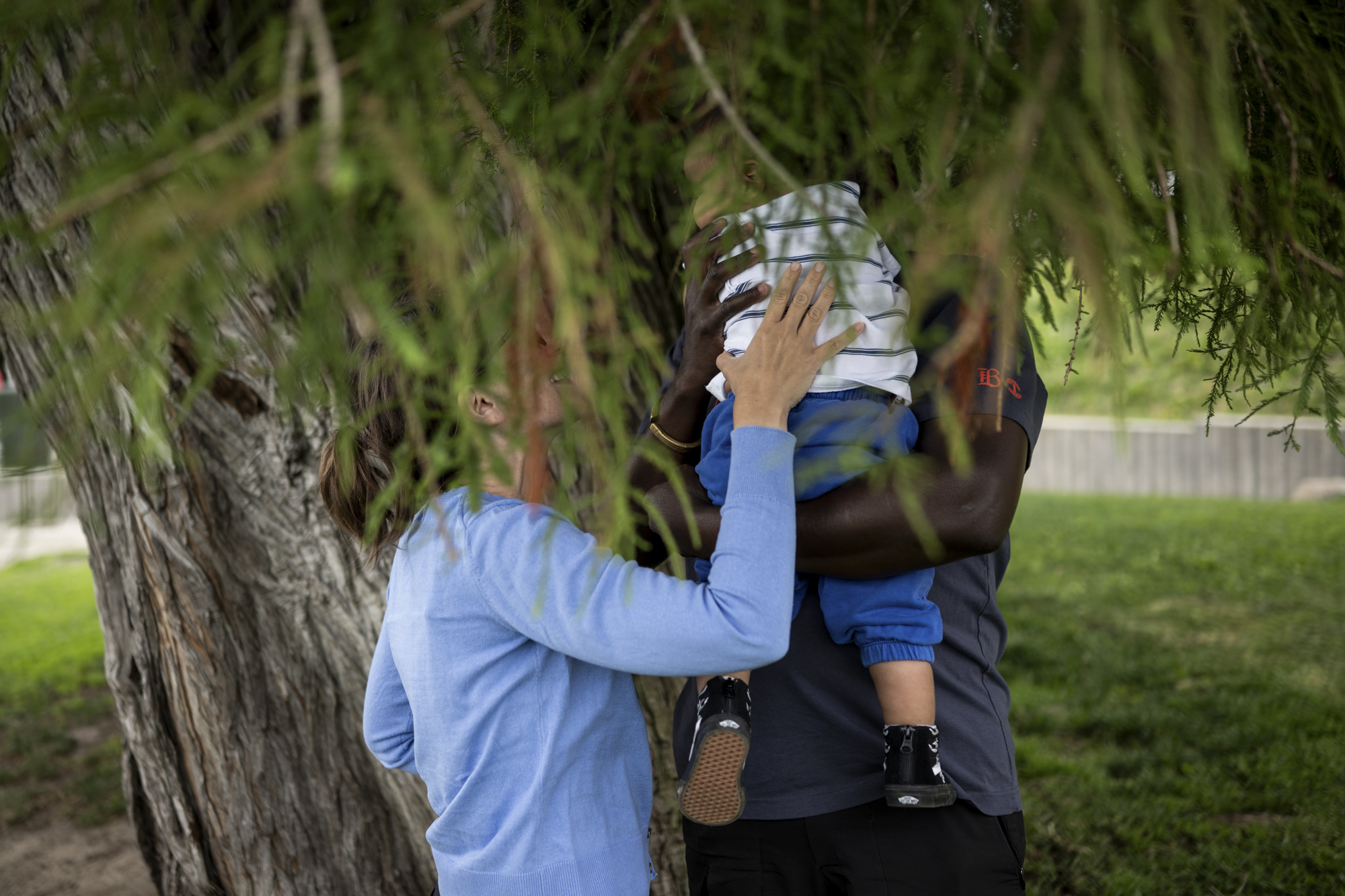
“He would not have anybody sitting in his dad’s chair. So clearly, he knew that dad was gone,” she said.
She said she has a hard time forgetting the look on her baby’s face the day they cut their visit to Peter short.
“I was just heartbroken because you want to give your kids everything, but I couldn’t give him the ability to touch or be held by his own dad.”
Peter lingered in detention for months waiting for a hearing. But the federal courts were flooded with lawsuits challenging detentions, and his case bounced from one court to another around the state, from Santa Ana to Sacramento.
Finally, in early April, five months after he was detained, a federal judge ruled his arrest was unlawful and ordered ICE to release him. A couple of days later, he got his green card. He was granted permanent resident status on a conditional basis — something given to couples married for less than two years. In a couple of years, he’ll be eligible to apply for naturalized citizenship.
“It happened after not only him and his family suffered for that amount of time, but [at] the government expense, the amount of resources that go to arresting somebody, placing them in immigration proceedings, having a judge and other staff in the immigration court review their case, having whatever it costs to detain somebody per day,” Engen, the attorney, said. “And for what? For no other reason than to be cruel.”
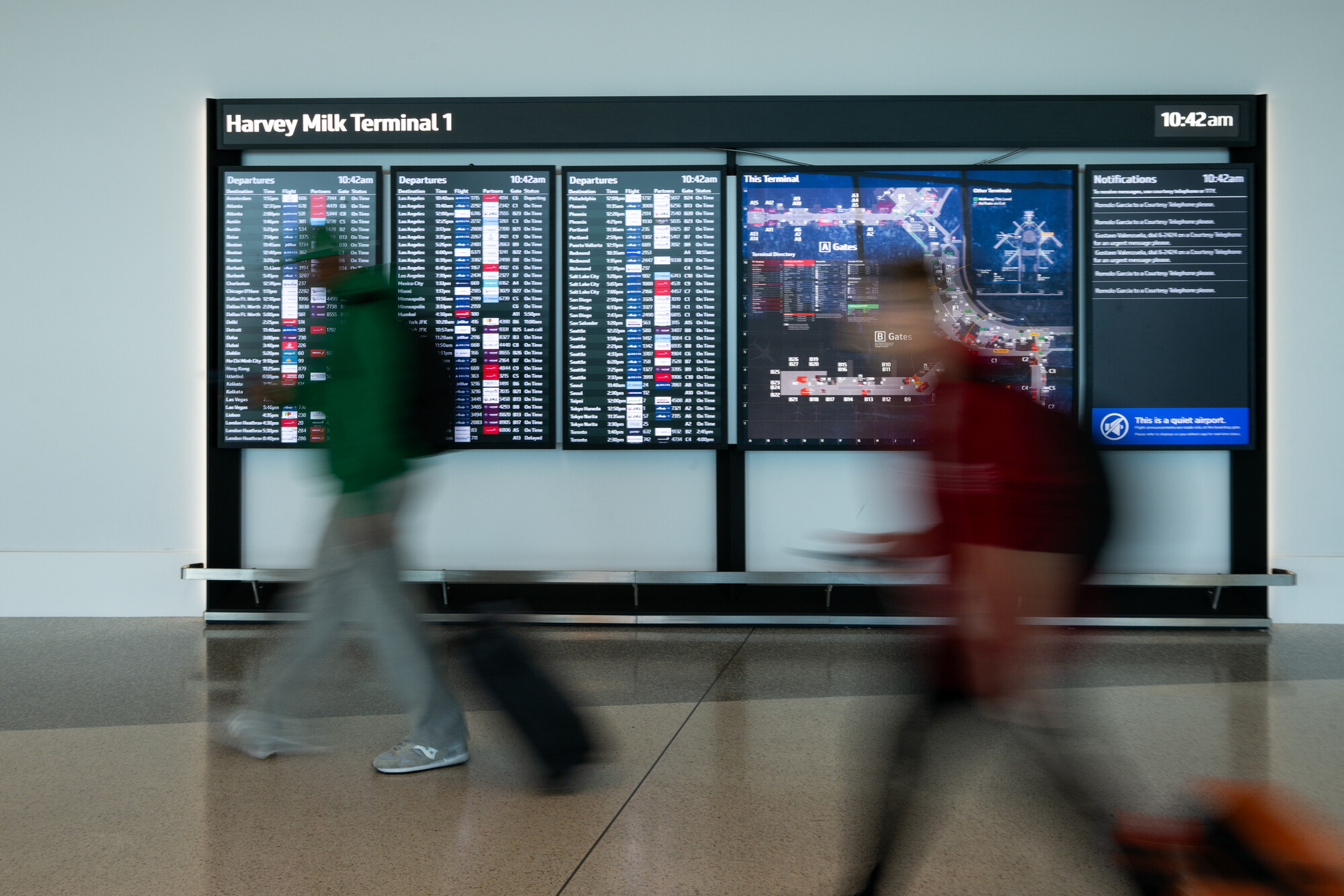
After Peter was released and taken to a processing center in Bakersfield, a friend picked him up. On the road back to the Bay Area, they stopped to savor something he had been missing while in detention: a good cup of coffee and a hamburger.
“I was just excited to be out. And just to walk on your own,” he said. “Just not have somebody screaming at the top of their lungs at anything and everything. One of the problems we had with the detention officers there were some who were just yelling at people for nothing.”
When he got home, there was no dramatic reunion, no welcoming party. It was his baby’s bedtime, and he needed to jump back into his schedule.
“That also helped me a lot because you don’t have time to sit and wallow in your pity,” he said. “You just get back into the swing of things.”
While in detention, Peter missed his son’s first Christmas, and the couple missed their wedding anniversary. They also missed a marathon they had trained for, so in May, after Peter was released, they ran the Bay to Breakers race, pushing their baby in a stroller across San Francisco.
He also got to celebrate his son’s first birthday and see him take his first steps.
Peter said he’s thankful to the community who showed up for him, Alexandra and their baby, and helped him get through his ordeal. The family’s GoFundMe fundraiser doubled its goal, with more than 650 contributors. And he also made friends while in detention.
“I’m mad that it happened to me, but at the same time I made friends, and I saw the goodness of people, and you see how people with nothing or with very limited resources can be kind to each other,” he said.
Alexandra said she’s staying in touch with parents she met while visiting Peter, and still sends hand-me-down baby clothes to some of them.
“Some of the detainees that are in there with my husband never even met their children,” she said. “We had a lot of luck in the process, despite how hard it was.”
During his detention, Peter and Alexandra also wrote letters to each other. He always enclosed a drawing of birds that his baby liked to admire whenever they strolled around Oakland’s Lake Merritt together.
Alexandra said she hopes when their son grows up, he’ll read the letters and know that his parents did the best they could to help him get through a traumatic experience.
“And hopefully, who’s to say where this country will be in five, 10, 15, 20 years, but hopefully, he’ll just say: ‘Wow, I can’t believe they did that. I’m so glad they don’t do that anymore,” she said. “Or he’ll be fighting it.”
Editor’s Note: This story has been updated to include Prof. Rahil Briggs’ affiliation with the organization Zero To Three and its HealthySteps program.