US Judge Says Paramount and Warner Bros. Must Temporarily Pause Merger

A federal judge in Oakland has temporarily halted a major merger between Paramount and Warner Brothers, as she considers a lawsuit from California that alleges the deal violates antitrust laws.
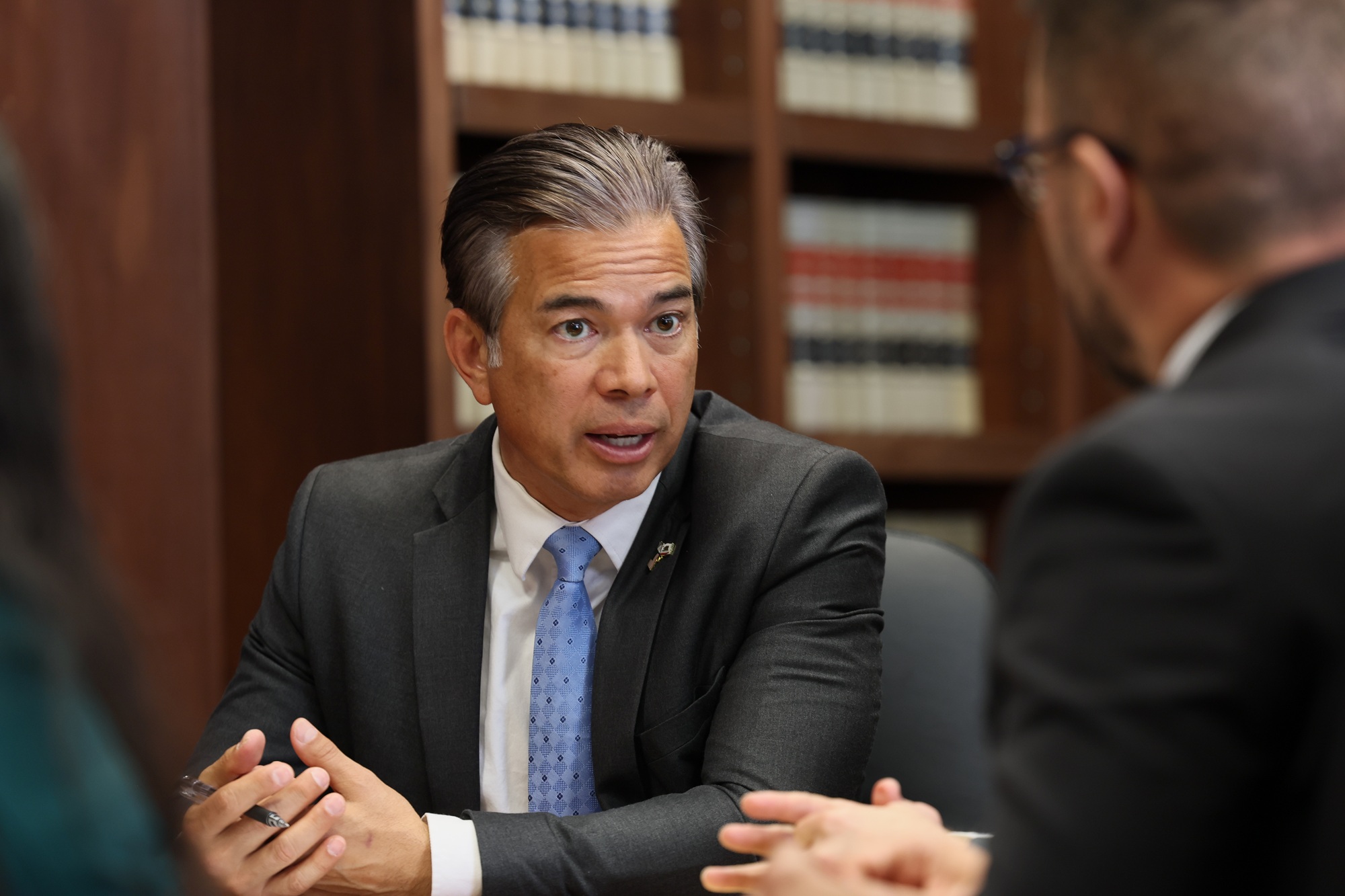
U.S. Judge Araceli Martínez-Olguín granted a temporary restraining order requested by California Attorney General Rob Bonta and nearly a dozen other states’ attorneys general to pause Paramount Skydance’s $111 billion acquisition of Warner Bros. Discovery.
“This is a critical first win in our case to ensure this megamerger never sees the light of day,” Bonta said in a statement. “With our lawsuit, we’re fighting for a free and fair market and a thriving film and television industry that serves creatives and audiences alike. We have a full tank of gas, the law on our side, and look forward to continuing to make our case.”
The court order will remain in place while a judge decides whether or not to grant a preliminary injunction, which would delay the transaction throughout litigation.
If successful, the deal would be the largest merger in Hollywood history — consolidating major film studios, television networks and streaming services. The attorneys general argue that the move violates Section 7 of the Clayton Act, which makes mergers that may substantially lessen competition or create a monopoly illegal.
While the Department of Justice has concluded an investigation into the deal and determined that it does not create a threat to competition, critics have been skeptical of President Donald Trump’s proximity to the Ellison family, which controls Paramount.
Oracle co-founder Larry Ellison, who is the father of Paramount CEO David Ellison and the deal’s primary financial backer, is a close ally of Trump. In the acquisition, Paramount would gain control over CNN, which Trump has repeatedly criticized as “fake news” when it’s been critical of his administration.
The top litigators in Arizona, Colorado, Connecticut, Massachusetts, Minnesota, Nevada, New Jersey, New Mexico, New York, Oregon and Washington are also party to the suit. While it’s not uncommon for states to challenge mergers, it is rare to do so when federal antitrust agencies do not challenge the transaction, according to UC Davis law professor Menesh Patel.
“What at least is happening in this administration [is] there are certain deals that might be expected to be challenged based on the sort of initial competitive landscape,” Patel said. “This may be an instance where the executive has sort of interjected their views into what the DOJ might be doing, but whether or not that’s the case, the federal agencies have not acted, the states have.”
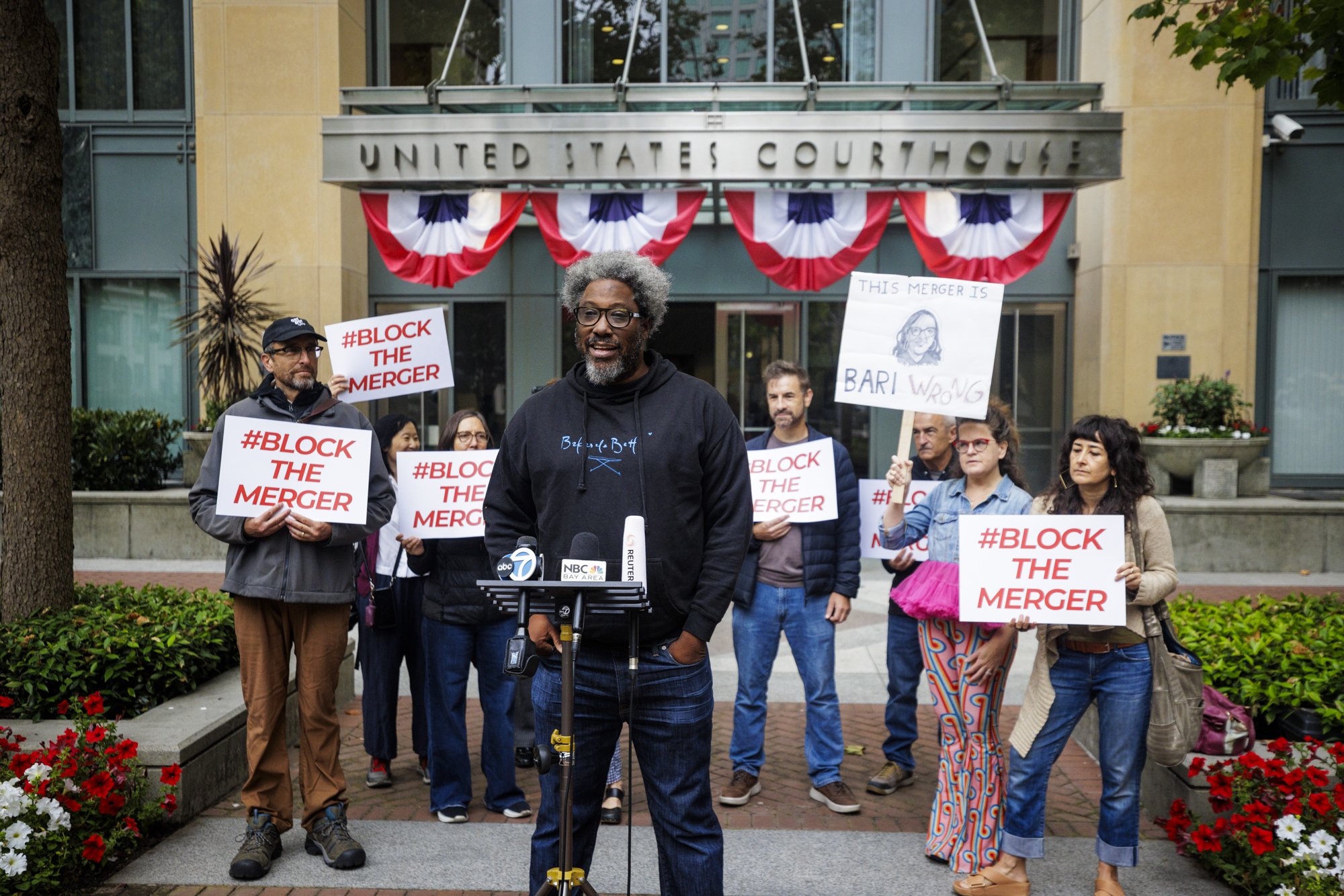
The states alleged that the merger would reduce competition in multiple markets, including wide-release film distribution, anticipated top-grossing film distribution and licensing basic cable television channels.
“History tells the tale of what happens when a few people have great power over markets that are central to Americans’ lives: fewer opportunities for more people, worse products and services for all people,” Bonta said.
Paramount has distributed major classic movies, like Titanic and the Top Gun franchise, while Warner Brothers distributed Barbie and franchises like Harry Potter and Batman. They also have a massive rights deal with major sporting markets like March Madness.
The states argue that the merger would increase the companies’ combined market share to 27%, and increase its Herfindahl-Hirschman Index, a metric used to measure market concentration and competition, by nearly 360 points.
Mergers that create a firm with a combined market share of 30% are “presumed likely to violate antitrust law,” and mergers that increase HHI by more than 200 points are “presumed to be likely to enhance market power.”
Martínez-Olguín wrote in her decision that “the plaintiff states thus make a strong showing that the Transaction will substantially lessen competition.”
Patel said that while the ruling issued Monday does stop forward progress on the deal for two weeks, whether or not the judge decides to issue a preliminary injunction, which assesses both their argument and Paramount’s rebuttal, will give a better indication of the likely outcome of the suit.
“That’s the one that’s going to decide what happens to the deal,” Patel said.