How 2 Exiled Russian Journalists Took Refuge in the Bay Area
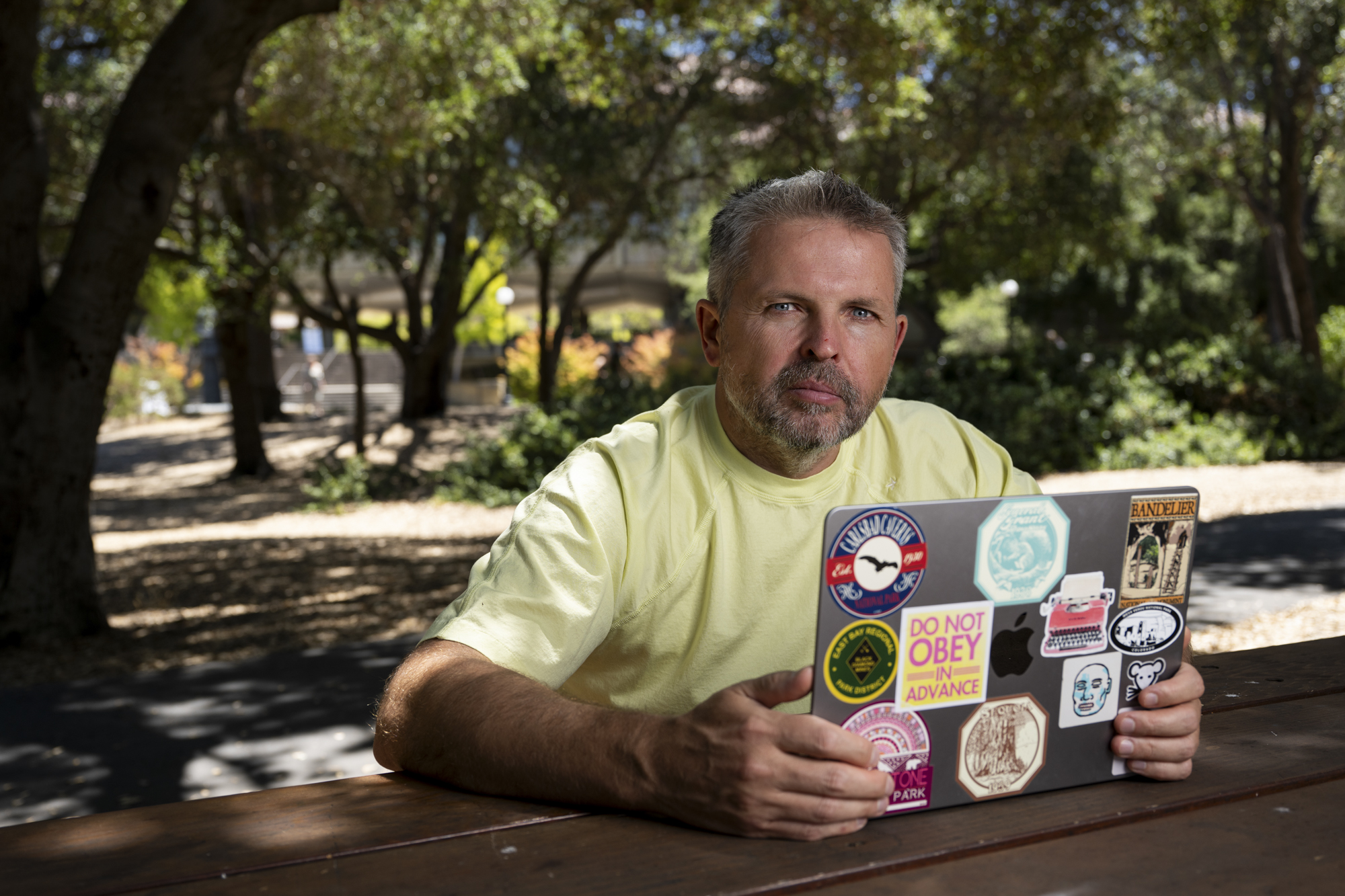
Roman Badanin was at home in the Bay Area seven months ago when he heard a knock on his door. To the independent Russian journalist’s surprise, two FBI agents had come to see him in the middle of the day.
He was not in any trouble locally, the agents said. They had come to inform him that he was likely a person of interest for a foreign intelligence service.
Badanin could imagine what country they were talking about, the agents said.
Although an FBI visit was a “new experience” for Badanin, the Russian state’s intrusion into his life was not.
Since 2018, he has served as editor-in-chief and founder of Proekt, an independent media outlet known for publishing bold investigations into Russian President Vladimir Putin and the Russian state. Those stories, he said, have often led the Kremlin and powerful elites to intimidate and weaponize the law against staff members.
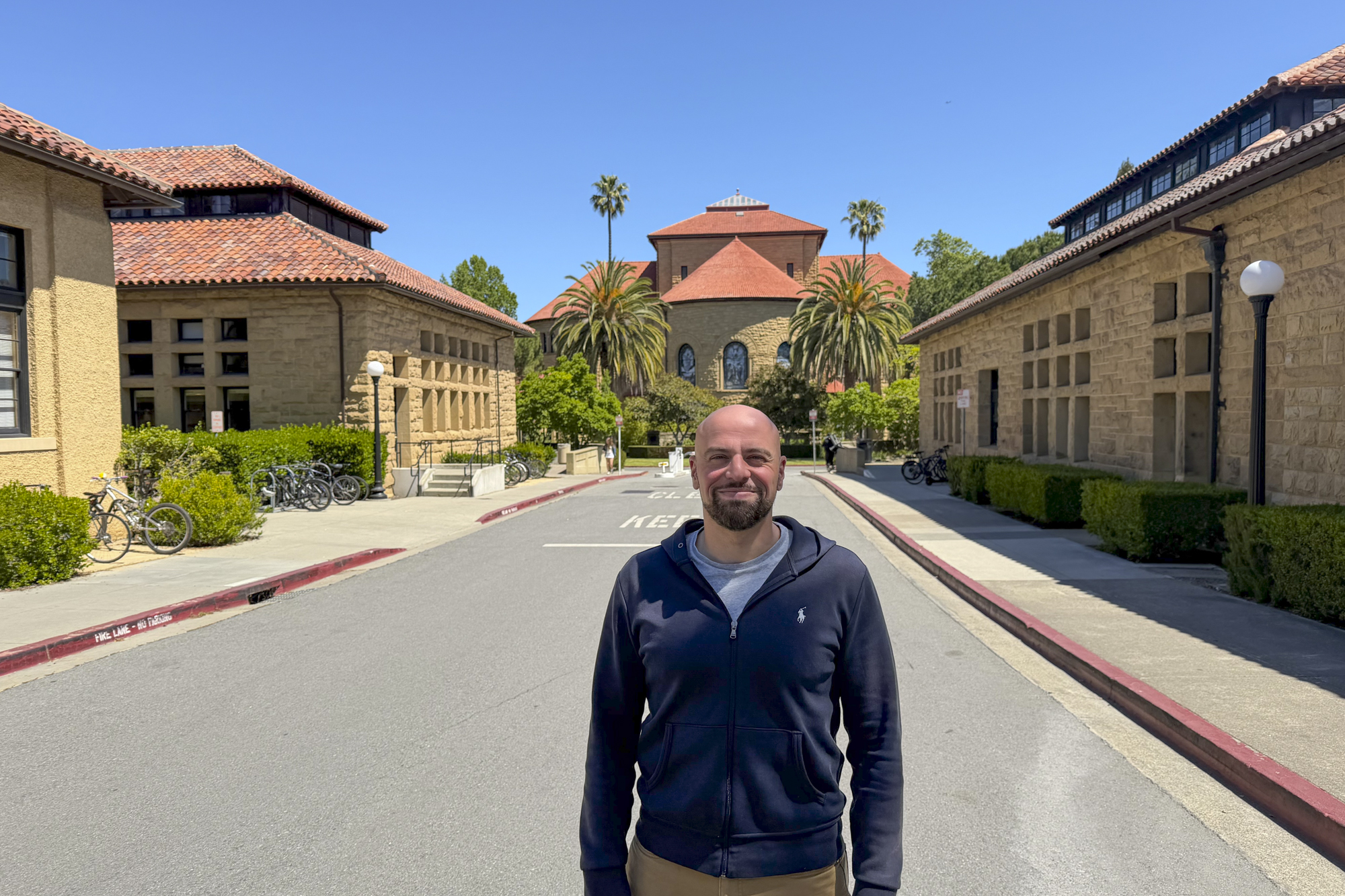
In 2021, Russian authorities raided Badanin and his colleagues’ apartments in Moscow. Only a few weeks later, the state designated Proekt’s journalists “foreign agents” under a law that Putin has used to punish dissent. To save themselves from imprisonment or worse, many made the difficult decision to leave their country.
Almost five years later, Badanin and his deputy editor, Mikhail Rubin, were able to recount the raids from the relative safety of Northern California. The John S. Knight (JSK) journalism fellowship at Stanford University created an opportunity for them to move here with their young families and continue investigative reporting.
But the FBI visit came as a reminder of the Russian state’s watchful eye — even on the other side of the world — and the dangers of returning home.
Today, Proekt’s full-time staff of 17 people is scattered across the world.
Their situation is typical for independent journalists from Russia, which consistently ranks near the bottom of global press freedom rankings. According to Reporters Without Borders, nearly 50 journalists are currently jailed inside the country, while almost 70 exiles have been prosecuted in absentia. Dozens of reporters have been murdered or killed in suspicious falls from windows or balconies over the past few decades.
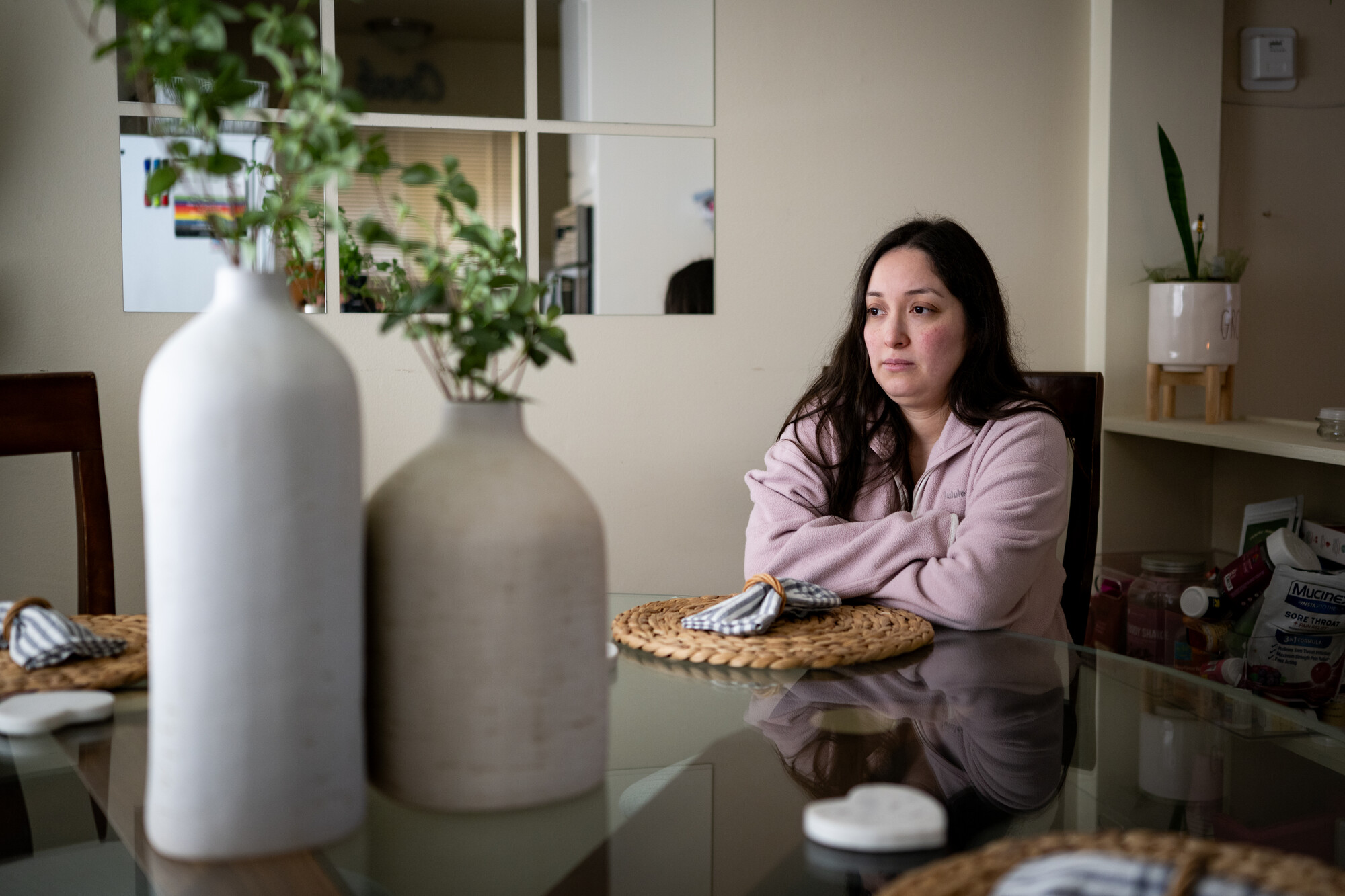
Badanin, 49, and Rubin, 38, described their predicament with a mix of humor and malaise, acknowledging the high price they’ve paid for their work.
“Most [exiled journalists] are depressed, totally unhappy,” Rubin said. “It’s stupid to be covering your country from Europe, from the States, from wherever. It’s definitely way better than being in prison, but this is it.”
The Kremlin blocks their website inside Russia, as well as internet platforms such as Telegram, WhatsApp, Facebook and YouTube, which Proekt has relied on to engage audiences. With little access to on-the-ground reporting, gathering information about Russia has never been more difficult.
“Whatever work used to take us one week, now takes a month,” Rubin said.
Yet producing independent journalism for Russian audiences still motivates Badanin and Rubin.
Alongside a daily news sub-outlet named Agentstvo or “Agency” — a play on the “foreign agent” designation — Proekt’s investigative work has continued. The team increasingly relies on leaks and data while taking precautions to protect sources.
In November 2025, they published a sweeping investigation of nepotism and extreme wealth among Russia’s elite, tracking over 1,000 government officials.
“I still love this job,” Badanin said. “If I can enter Russia safely and not be arrested, I would do a lot of good things as a journalist being inside.”
But trying to raise his children there is another story. “I’m not ready to bet all I have on this trip,” he said.
A winding path to journalism
Badanin never expected to become a journalist as a young man. He saw it as an unserious path compared to the rigor of history, his chosen field at Moscow State University, where he studied medieval Spain.
But when he entered Russia’s turbulent economy during the 1990s, his only way of making a living was working at the news website Gazeta.ru.
“I realized I [could] talk to real people about their real problems in real time,” he said. “I fell in love with journalism.”
For his part, Rubin took an early interest in politics, despite his father’s wishes for him to become a scientist. When his father brought up physics on long walks together, Rubin remembers feeling “terribly bored.”
“I’m stupid in these things,” he said. “Understood nothing. But the moment he started talking to me about politics, about history — I think I was 7 or 8 — I was so interested in what he was telling me.”
Later, as an undergraduate at the Higher School of Economics in Moscow, Rubin chose to study journalism, which he jokingly calls “the worst decision in my life.” Beginning in the aughts, he reported extensively on the Kremlin for Russian outlets like Izvestia and RBC.
In a shift from the relative openness that followed the Soviet collapse, the early 2000s brought signs of weakening press freedom in Russia.
Badanin lost his job at Gazeta.ru in 2011 when the Kremlin expressed disappointment in the outlet’s coverage of parliamentary elections. Putin returned to the presidency the following year, intensifying Russia’s authoritarian turn.
As domestic political freedoms steadily vanished and Russia’s foreign policy became increasingly aggressive, Badanin moved from outlet to outlet.
As editor-in-chief of RBC, Russia’s largest media holding, Badanin faced the Kremlin’s wrath for covering the annexation of Crimea. He and his colleagues were fired after publishing an investigation into the massive wealth of Putin’s daughter.
Badanin’s final role before he first came to Stanford was as editor-in-chief of TV Rain, a young, independent television channel. But he sensed the outlet would soon be punished, shuttered or bought out by the Kremlin.
“I perfectly understood that my time in Russia, basically, is limited,” he said.
He knew his RBC colleague Elizaveta Osetinskaya had once been a JSK Fellow at Stanford. The program seemed like an ideal opportunity to learn about tech and media, while finding a new path if his worst fears were realized.
When he arrived on campus in 2017, he remembers being struck by Silicon Valley’s diversity and dynamism. At the same time, he began to recognize the struggle for press freedom as a global one, including the decline of local journalism in the United States.
“We have a saying in Russian, ‘to wear pink sunglasses,’ which means to see everything better than it is,” he said. “That was my feeling when I came to the U.S. … One day, I realized that not everything is as cool as I imagined it before.”
As the yearlong fellowship came to an end, he learned he was the subject of a criminal investigation in Russia over alleged defamation, which carries a punishment of prison time. A man close to Putin had filed the charges in what Badanin believed was retaliation for an investigation he published.
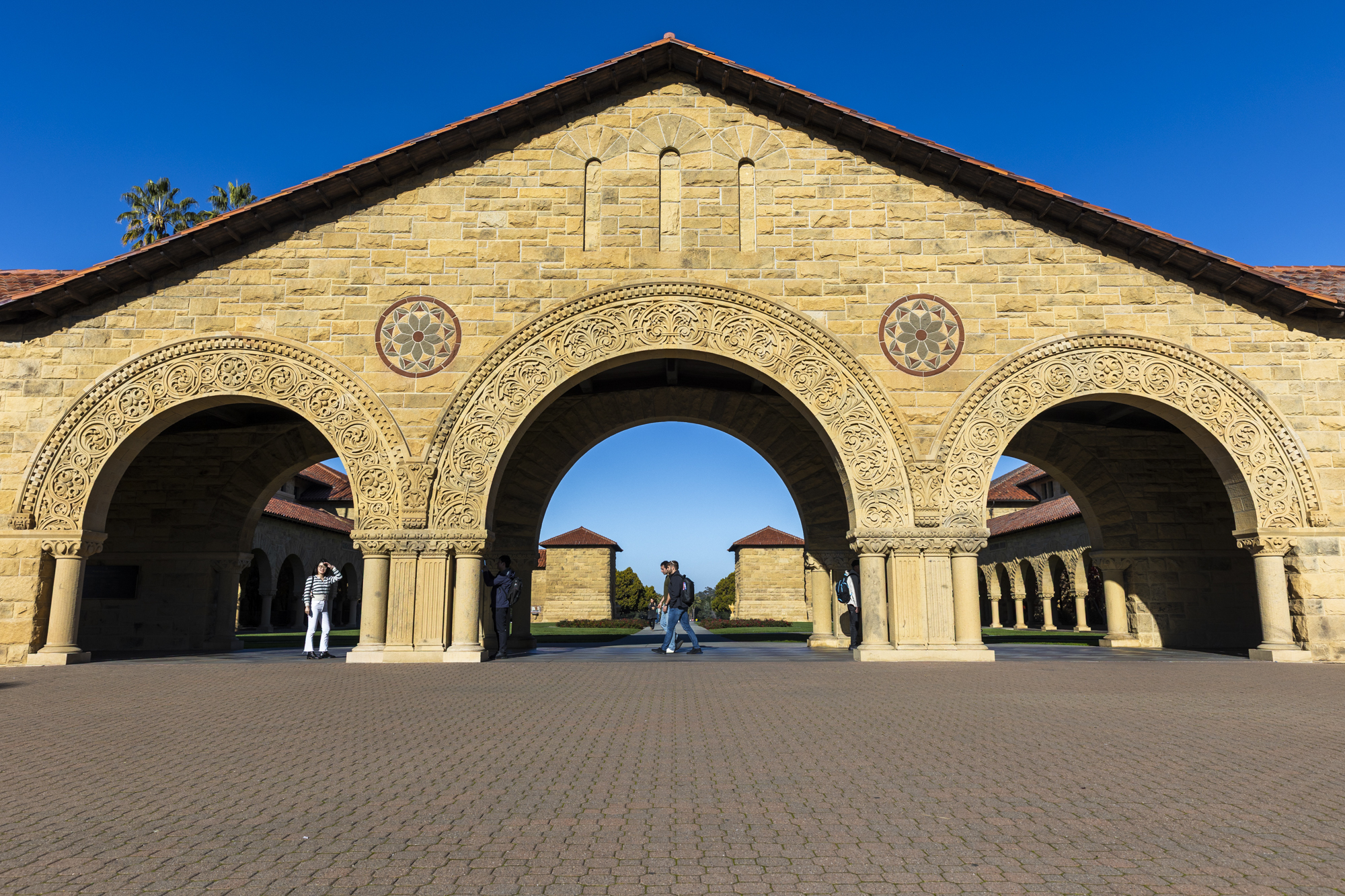
The fellowship permitted Badanin to extend his stay at Stanford, given the risks he faced at home. He spent that time working remotely with colleagues in Russia.
Still, he was eager to return to Moscow. When the defamation charges expired, he did just that, founding Proekt in 2018.
The next few years were some of the most productive for Badanin and Rubin, who first met while both worked at Gazeta.ru in the early 2010s. They dedicated themselves to writing taboo stories that few other outlets would touch, covering corruption, killings and crimes by state-related actors.
But as the full-scale invasion of Ukraine in early 2022 drew near, Russia’s crackdown on journalists and internet freedom escalated.
The decision to flee
The summer of 2021 brought an end to Proekt’s work inside the country.
Badanin was asleep when the raid on his Moscow apartment began at 6 a.m. on June 29. About 10 men — Russian law enforcement and Federal Security Service (FSB) agents — arrived with orders.
“It was clear that they wanted to intimidate us, to threaten us, to give us a feeling that we need to, at best, flee Russia, or to stop doing what we were doing,” Badanin said.
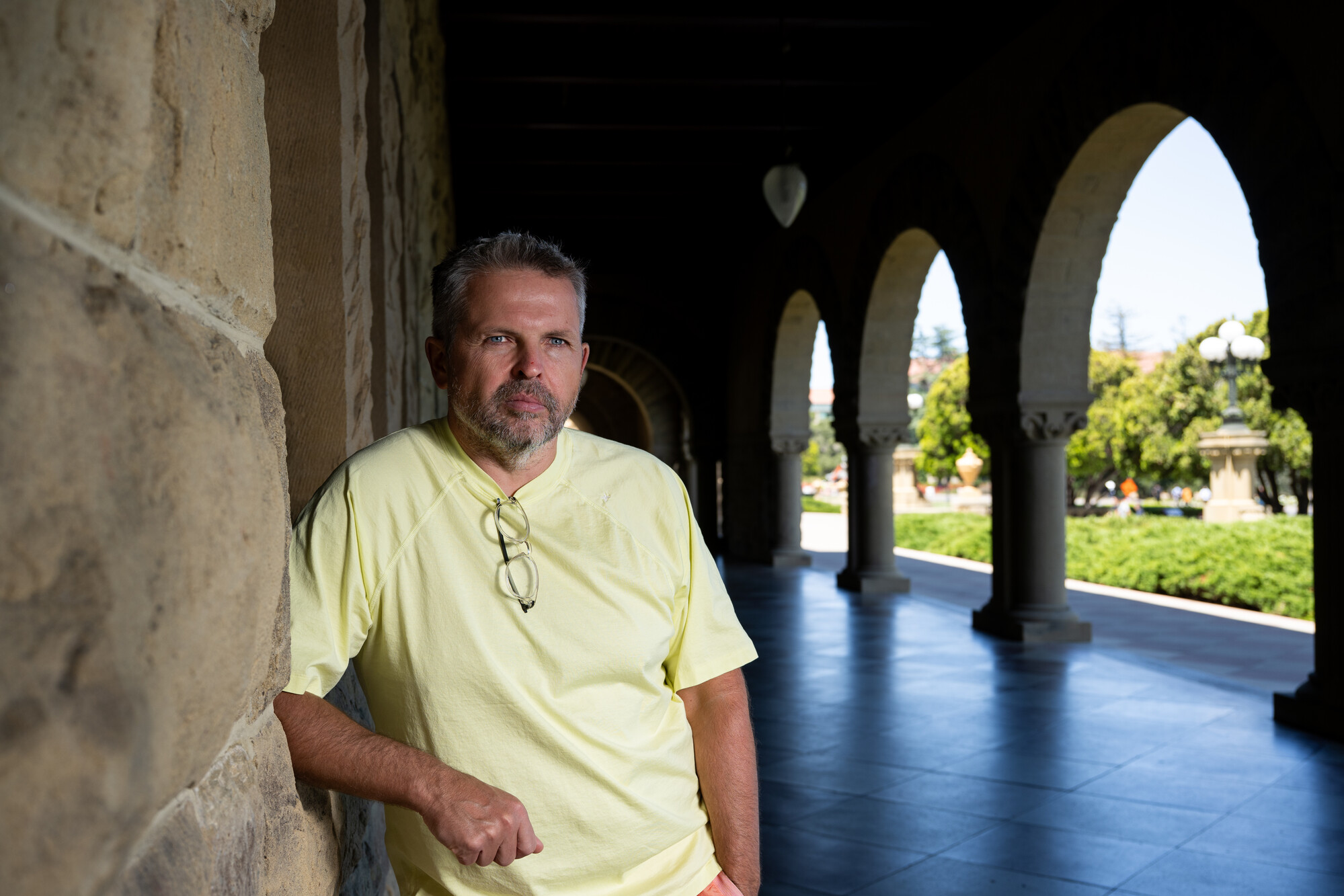
As the men burst into the home Badanin shared with his wife, their 5-month-old daughter began to cry.
It was not uncommon for Russian security services to conduct these kinds of searches in the early morning — the tradition had been inherited from Stalinism. Showing up early ensured that agents would find their targets asleep and likely disorient them.
Badanin was shocked and furious.
“What are you doing in my house at this early time?” he said, confronting the men. Only later did he realize his luck not to be killed, poisoned or imprisoned for life. “At that exact moment, my fate was decided,” he said.
The men began to confiscate electronics and CDs from the apartment. One agent, speaking to his superior over the phone, received approval to seize an expired Bank of America credit card.
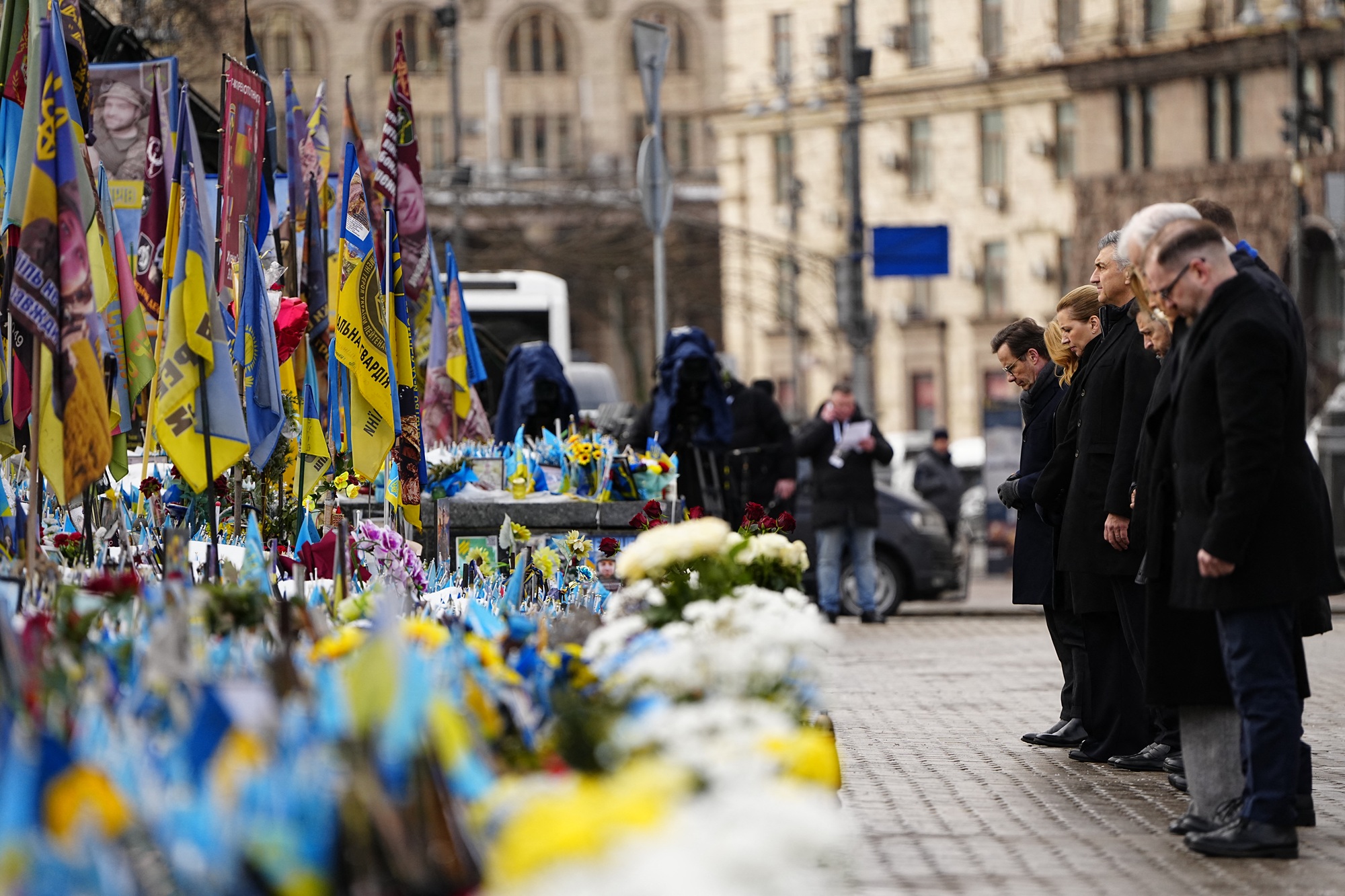
They went on to interrogate Badanin, focusing in part on his ties to the United States.
That same morning, in another part of Moscow, Rubin received a text from Maria Zholobova, another member of Proekt. Police were pounding on her door, she said.
He hurried in a taxi to Zholobova’s home. From messages with a lawyer and his colleagues, the orchestrated nature of the raids was becoming clear. Badanin was not responding. “I should have understood that I would be next,” Rubin said.
A car filled with police was waiting for Rubin when he arrived at Zholobova’s building. Several burst out of the vehicle, shouting, “Stop, buster, don’t move.” None wore uniforms.
“They looked like criminals,” Rubin said.
For the rest of the day, Rubin endured mind-numbing interrogations, searches and bureaucratic absurdities, going hours without hearing a concrete charge against him. Authorities took his laptop.
Their final move before leaving was to place Rubin’s passport down on the table in front of him. “It was a very clear signal,” he said.
Ten days after the interrogations, Badanin flew with his family to Morocco for a pre-planned vacation. Rubin took charge of Proekt’s staff in Moscow.
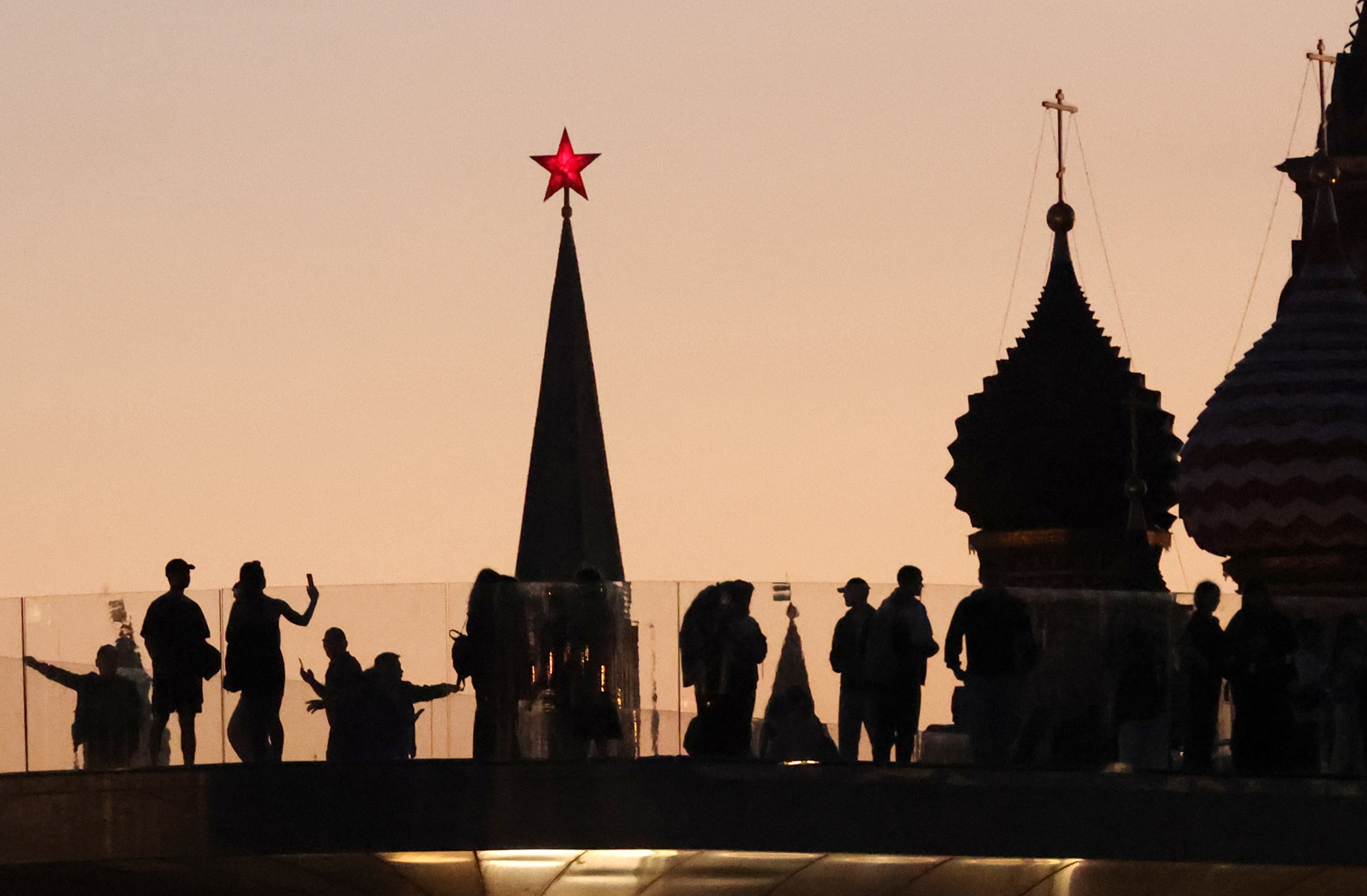
One evening, news broke that the Russian Federation had classified Proekt as an “undesirable organization” and Badanin and Rubin as “foreign agents.” Rubin’s colleagues urged him to leave the country. One journalist associated with the Kremlin who Rubin knew personally warned him he could be arrested.
“I think that was a provocation, but who knows,” Rubin said. The next morning, he boarded a flight to the United States with a small bag and a ticket purchased by his brother, who lived in America.
Badanin did not learn of the designations until he reached a small village in the Saharan desert and regained WiFi access. Returning to Russia now posed the immediate risk of imprisonment. While his wife and sons returned to Moscow to pick up his baby daughter, he flew to New York City using an American visa, bringing only a backpack. He and Rubin reunited there, making plans to continue Proekt’s work.
Then came a lucky offer: JSK invited Badanin to return to Stanford as a senior fellow.
It was not a difficult offer to accept. “I needed a place just to settle,” he said. Five years later, he has held several roles at Stanford and remains in Northern California with his family.
Rubin’s path to the Bay Area was less direct.
He lived with a friend in Los Angeles before moving to Tbilisi, Georgia, for a year, where Rubin met his wife, who was on vacation from Russia.
Rubin returned to the U.S. with her by his side, beginning a fellowship in Washington, D.C. After Rubin applied for and won the JSK fellowship in 2024, the couple made a cross-country road trip. Nine months later, their son was born at Lucile Packard Children’s Hospital at Stanford.
Adjusting to life in the Bay Area
The Bay Area brought a different pace of life for Badanin and Rubin. Although raising children and the complexity of their work left little free time, both men came to enjoy California’s natural beauty and national parks.
“I’m in love with sequoias and redwoods,” Rubin said. “I love when things are big.”
The state’s forgiving climate is another perk compared with frigid Moscow. “I always hated running before I came here, but with this climate, you don’t have an excuse,” Rubin said.
Just as Badanin discovered in 2017, a two-year JSK fellowship gave Rubin time to improve his education, a lifelong goal. His classes ranged from history to politics, theatrical improv and public speaking at the business school.
When Badanin and Rubin came to the Bay Area, they joined a wider community of politically like-minded Russian emigrants who have settled here in recent years. Many connect over Telegram channels to share immigration advice and organize social events.
“The Bay Area is not the first destination, because it’s quite far and not easy to get access to the U.S.A.,” said Emil Kamalov, a postdoctoral fellow and political scientist at Stanford researching political emigration out of Russia.
Based on his survey data, however, around 40% of those who have left Russia since 2022 are connected to the IT sector, with the Bay Area as a “very obvious destination for this.” Tighter internet restrictions and Western sanctions following the full-scale invasion have driven a “brain drain” of Russian tech companies and workers out of the country.
Other emigrants were drawn by academic opportunities at Stanford and the University of California, including Kamalov himself. “That’s a brain drain,” he said.
Stanford’s Russian-speaking community is composed of “amazing people,” Rubin said. “Language does matter.”
Badanin, however, draws a distinction between himself and Russians who moved to the Bay Area for high-paying jobs in tech. “It’s very difficult to find a common ground with many of them, because the vast majority of them came here voluntarily,” he said. “I came here involuntarily…I had to do that. I’m not a software engineer.”
Proekt’s work to engage ordinary Russians remains their focus, despite an uncertain future. While Badanin now holds a green card, Rubin’s fellowship with JSK ended this summer. For now, he and his wife have embarked on a move to the East Coast.
In April, Russia labeled Stanford University with the same “undesirable” designation as Proekt. Perhaps Badanin and Rubin really had found a new home.
George Porteous is editor-in-chief of The Stanford Daily.