window.__IS_SSR__=true
window.__INITIAL_STATE__={
"attachmentsReducer": {
"audio_0": {
"type": "attachments",
"id": "audio_0",
"imgSizes": {
"kqedFullSize": {
"file": "https://ww2.kqed.org/news/wp-content/themes/KQED-unified/img/audio_bgs/background0.jpg"
}
}
},
"audio_1": {
"type": "attachments",
"id": "audio_1",
"imgSizes": {
"kqedFullSize": {
"file": "https://ww2.kqed.org/news/wp-content/themes/KQED-unified/img/audio_bgs/background1.jpg"
}
}
},
"audio_2": {
"type": "attachments",
"id": "audio_2",
"imgSizes": {
"kqedFullSize": {
"file": "https://ww2.kqed.org/news/wp-content/themes/KQED-unified/img/audio_bgs/background2.jpg"
}
}
},
"audio_3": {
"type": "attachments",
"id": "audio_3",
"imgSizes": {
"kqedFullSize": {
"file": "https://ww2.kqed.org/news/wp-content/themes/KQED-unified/img/audio_bgs/background3.jpg"
}
}
},
"audio_4": {
"type": "attachments",
"id": "audio_4",
"imgSizes": {
"kqedFullSize": {
"file": "https://ww2.kqed.org/news/wp-content/themes/KQED-unified/img/audio_bgs/background4.jpg"
}
}
},
"placeholder": {
"type": "attachments",
"id": "placeholder",
"imgSizes": {
"thumbnail": {
"file": "https://cdn.kqed.org/wp-content/uploads/2024/12/KQED-Default-Image-816638274-2000x1333-1-160x107.jpg",
"width": 160,
"height": 107,
"mimeType": "image/jpeg"
},
"medium": {
"file": "https://cdn.kqed.org/wp-content/uploads/2024/12/KQED-Default-Image-816638274-2000x1333-1-800x533.jpg",
"width": 800,
"height": 533,
"mimeType": "image/jpeg"
},
"medium_large": {
"file": "https://cdn.kqed.org/wp-content/uploads/2024/12/KQED-Default-Image-816638274-2000x1333-1-768x512.jpg",
"width": 768,
"height": 512,
"mimeType": "image/jpeg"
},
"large": {
"file": "https://cdn.kqed.org/wp-content/uploads/2024/12/KQED-Default-Image-816638274-2000x1333-1-1020x680.jpg",
"width": 1020,
"height": 680,
"mimeType": "image/jpeg"
},
"1536x1536": {
"file": "https://cdn.kqed.org/wp-content/uploads/2024/12/KQED-Default-Image-816638274-2000x1333-1-1536x1024.jpg",
"width": 1536,
"height": 1024,
"mimeType": "image/jpeg"
},
"fd-lrg": {
"file": "https://cdn.kqed.org/wp-content/uploads/2024/12/KQED-Default-Image-816638274-2000x1333-1-1536x1024.jpg",
"width": 1536,
"height": 1024,
"mimeType": "image/jpeg"
},
"fd-med": {
"file": "https://cdn.kqed.org/wp-content/uploads/2024/12/KQED-Default-Image-816638274-2000x1333-1-1020x680.jpg",
"width": 1020,
"height": 680,
"mimeType": "image/jpeg"
},
"fd-sm": {
"file": "https://cdn.kqed.org/wp-content/uploads/2024/12/KQED-Default-Image-816638274-2000x1333-1-800x533.jpg",
"width": 800,
"height": 533,
"mimeType": "image/jpeg"
},
"post-thumbnail": {
"file": "https://cdn.kqed.org/wp-content/uploads/2024/12/KQED-Default-Image-816638274-2000x1333-1-672x372.jpg",
"width": 672,
"height": 372,
"mimeType": "image/jpeg"
},
"twentyfourteen-full-width": {
"file": "https://cdn.kqed.org/wp-content/uploads/2024/12/KQED-Default-Image-816638274-2000x1333-1-1038x576.jpg",
"width": 1038,
"height": 576,
"mimeType": "image/jpeg"
},
"xxsmall": {
"file": "https://cdn.kqed.org/wp-content/uploads/2024/12/KQED-Default-Image-816638274-2000x1333-1-160x107.jpg",
"width": 160,
"height": 107,
"mimeType": "image/jpeg"
},
"xsmall": {
"file": "https://cdn.kqed.org/wp-content/uploads/2024/12/KQED-Default-Image-816638274-2000x1333-1-672x372.jpg",
"width": 672,
"height": 372,
"mimeType": "image/jpeg"
},
"small": {
"file": "https://cdn.kqed.org/wp-content/uploads/2024/12/KQED-Default-Image-816638274-2000x1333-1-672x372.jpg",
"width": 672,
"height": 372,
"mimeType": "image/jpeg"
},
"xlarge": {
"file": "https://cdn.kqed.org/wp-content/uploads/2024/12/KQED-Default-Image-816638274-2000x1333-1-1020x680.jpg",
"width": 1020,
"height": 680,
"mimeType": "image/jpeg"
},
"full-width": {
"file": "https://cdn.kqed.org/wp-content/uploads/2024/12/KQED-Default-Image-816638274-2000x1333-1-1920x1280.jpg",
"width": 1920,
"height": 1280,
"mimeType": "image/jpeg"
},
"guest-author-32": {
"file": "https://cdn.kqed.org/wp-content/uploads/2025/01/KQED-Default-Image-816638274-1333x1333-1-160x160.jpg",
"width": 32,
"height": 32,
"mimeType": "image/jpeg"
},
"guest-author-50": {
"file": "https://cdn.kqed.org/wp-content/uploads/2025/01/KQED-Default-Image-816638274-1333x1333-1-160x160.jpg",
"width": 50,
"height": 50,
"mimeType": "image/jpeg"
},
"guest-author-64": {
"file": "https://cdn.kqed.org/wp-content/uploads/2025/01/KQED-Default-Image-816638274-1333x1333-1-160x160.jpg",
"width": 64,
"height": 64,
"mimeType": "image/jpeg"
},
"guest-author-96": {
"file": "https://cdn.kqed.org/wp-content/uploads/2025/01/KQED-Default-Image-816638274-1333x1333-1-160x160.jpg",
"width": 96,
"height": 96,
"mimeType": "image/jpeg"
},
"guest-author-128": {
"file": "https://cdn.kqed.org/wp-content/uploads/2025/01/KQED-Default-Image-816638274-1333x1333-1-160x160.jpg",
"width": 128,
"height": 128,
"mimeType": "image/jpeg"
},
"detail": {
"file": "https://cdn.kqed.org/wp-content/uploads/2025/01/KQED-Default-Image-816638274-1333x1333-1-160x160.jpg",
"width": 160,
"height": 160,
"mimeType": "image/jpeg"
},
"kqedFullSize": {
"file": "https://cdn.kqed.org/wp-content/uploads/2024/12/KQED-Default-Image-816638274-2000x1333-1.jpg",
"width": 2000,
"height": 1333
}
}
},
"mindshift_55335": {
"type": "attachments",
"id": "mindshift_55335",
"meta": {
"index": "attachments_1716263798",
"site": "mindshift",
"id": "55335",
"found": true
},
"parent": 55333,
"imgSizes": {
"twentyfourteen-full-width": {
"file": "https://ww2.kqed.org/app/uploads/sites/23/2020/02/20200125_132333-1038x576.jpg",
"width": 1038,
"mimeType": "image/jpeg",
"height": 576
},
"thumbnail": {
"file": "https://ww2.kqed.org/app/uploads/sites/23/2020/02/20200125_132333-160x90.jpg",
"width": 160,
"mimeType": "image/jpeg",
"height": 90
},
"post-thumbnail": {
"file": "https://ww2.kqed.org/app/uploads/sites/23/2020/02/20200125_132333-672x372.jpg",
"width": 672,
"mimeType": "image/jpeg",
"height": 372
},
"kqedFullSize": {
"file": "https://ww2.kqed.org/app/uploads/sites/23/2020/02/20200125_132333-e1582014199924.jpg",
"width": 1920,
"height": 1080
},
"large": {
"file": "https://ww2.kqed.org/app/uploads/sites/23/2020/02/20200125_132333-1020x574.jpg",
"width": 1020,
"mimeType": "image/jpeg",
"height": 574
},
"full-width": {
"file": "https://ww2.kqed.org/app/uploads/sites/23/2020/02/20200125_132333-1920x1080.jpg",
"width": 1920,
"mimeType": "image/jpeg",
"height": 1080
},
"medium": {
"file": "https://ww2.kqed.org/app/uploads/sites/23/2020/02/20200125_132333-800x450.jpg",
"width": 800,
"mimeType": "image/jpeg",
"height": 450
},
"medium_large": {
"file": "https://ww2.kqed.org/app/uploads/sites/23/2020/02/20200125_132333-768x432.jpg",
"width": 768,
"mimeType": "image/jpeg",
"height": 432
}
},
"publishDate": 1582014172,
"modified": 1582014219,
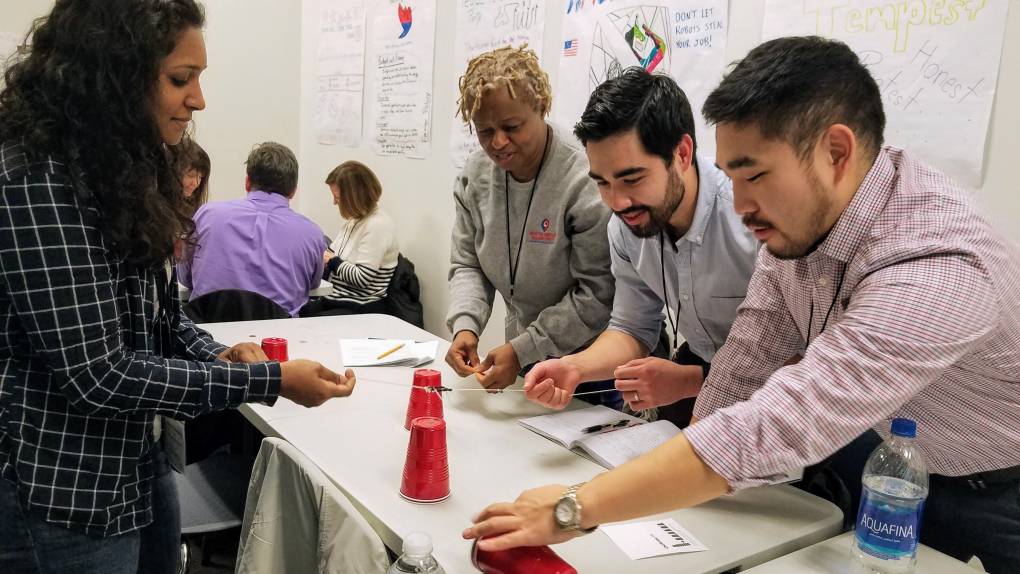
"caption": "Science teachers use strings and a rubber band to stack cups in an exercise focused on communication and teamwork at EduCon 2020.",
"description": null,
"title": "20200125_132333",
"credit": "Kara Newhouse",
"status": "inherit",
"isLoading": false,
"fetchFailed": false
},
"mindshift_54759": {
"type": "attachments",
"id": "mindshift_54759",
"meta": {
"index": "attachments_1716263798",
"site": "mindshift",
"id": "54759",
"found": true
},
"parent": 54750,
"imgSizes": {
"twentyfourteen-full-width": {
"file": "https://ww2.kqed.org/app/uploads/sites/23/2019/11/adult-learning-culture-1038x576.jpg",
"width": 1038,
"mimeType": "image/jpeg",
"height": 576
},
"thumbnail": {
"file": "https://ww2.kqed.org/app/uploads/sites/23/2019/11/adult-learning-culture-160x160.jpg",
"width": 160,
"mimeType": "image/jpeg",
"height": 160
},
"post-thumbnail": {
"file": "https://ww2.kqed.org/app/uploads/sites/23/2019/11/adult-learning-culture-672x372.jpg",
"width": 672,
"mimeType": "image/jpeg",
"height": 372
},
"kqedFullSize": {
"file": "https://ww2.kqed.org/app/uploads/sites/23/2019/11/adult-learning-culture.jpg",
"width": 1732,
"height": 1732
},
"large": {
"file": "https://ww2.kqed.org/app/uploads/sites/23/2019/11/adult-learning-culture-1020x1020.jpg",
"width": 1020,
"mimeType": "image/jpeg",
"height": 1020
},
"complete_open_graph": {
"file": "https://ww2.kqed.org/app/uploads/sites/23/2019/11/adult-learning-culture-1200x1200.jpg",
"width": 1200,
"mimeType": "image/jpeg",
"height": 1200
},
"medium": {
"file": "https://ww2.kqed.org/app/uploads/sites/23/2019/11/adult-learning-culture-800x800.jpg",
"width": 800,
"mimeType": "image/jpeg",
"height": 800
},
"medium_large": {
"file": "https://ww2.kqed.org/app/uploads/sites/23/2019/11/adult-learning-culture-768x768.jpg",
"width": 768,
"mimeType": "image/jpeg",
"height": 768
}
},
"publishDate": 1572989632,
"modified": 1572989666,
"caption": null,
"description": null,
"title": "Young People Collective Learning, Exam Preparation",
"credit": "iStock/Tera Vector",
"status": "inherit",
"isLoading": false,
"fetchFailed": false
},
"mindshift_54500": {
"type": "attachments",
"id": "mindshift_54500",
"meta": {
"index": "attachments_1716263798",
"site": "mindshift",
"id": "54500",
"found": true
},
"parent": 54497,
"imgSizes": {
"twentyfourteen-full-width": {
"file": "https://ww2.kqed.org/app/uploads/sites/23/2019/09/empathy-needed-1038x576.jpg",
"width": 1038,
"mimeType": "image/jpeg",
"height": 576
},
"thumbnail": {
"file": "https://ww2.kqed.org/app/uploads/sites/23/2019/09/empathy-needed-160x90.jpg",
"width": 160,
"mimeType": "image/jpeg",
"height": 90
},
"post-thumbnail": {
"file": "https://ww2.kqed.org/app/uploads/sites/23/2019/09/empathy-needed-672x372.jpg",
"width": 672,
"mimeType": "image/jpeg",
"height": 372
},
"kqedFullSize": {
"file": "https://ww2.kqed.org/app/uploads/sites/23/2019/09/empathy-needed.jpg",
"width": 1920,
"height": 1080
},
"large": {
"file": "https://ww2.kqed.org/app/uploads/sites/23/2019/09/empathy-needed-1020x574.jpg",
"width": 1020,
"mimeType": "image/jpeg",
"height": 574
},
"complete_open_graph": {
"file": "https://ww2.kqed.org/app/uploads/sites/23/2019/09/empathy-needed-1200x675.jpg",
"width": 1200,
"mimeType": "image/jpeg",
"height": 675
},
"full-width": {
"file": "https://ww2.kqed.org/app/uploads/sites/23/2019/09/empathy-needed-1920x1080.jpg",
"width": 1920,
"mimeType": "image/jpeg",
"height": 1080
},
"medium": {
"file": "https://ww2.kqed.org/app/uploads/sites/23/2019/09/empathy-needed-800x450.jpg",
"width": 800,
"mimeType": "image/jpeg",
"height": 450
},
"medium_large": {
"file": "https://ww2.kqed.org/app/uploads/sites/23/2019/09/empathy-needed-768x432.jpg",
"width": 768,
"mimeType": "image/jpeg",
"height": 432
}
},
"publishDate": 1569369170,
"modified": 1569369222,
"caption": null,
"description": null,
"title": "empathy-needed",
"credit": "Lordn/iStock",
"status": "inherit",
"isLoading": false,
"fetchFailed": false
},
"mindshift_54584": {
"type": "attachments",
"id": "mindshift_54584",
"meta": {
"index": "attachments_1716263798",
"site": "mindshift",
"id": "54584",
"found": true
},
"parent": 54389,
"imgSizes": {
"thumbnail": {
"file": "https://ww2.kqed.org/app/uploads/sites/23/2019/10/Vakharia1-160x107.jpg",
"width": 160,
"mimeType": "image/jpeg",
"height": 107
},
"post-thumbnail": {
"file": "https://ww2.kqed.org/app/uploads/sites/23/2019/10/Vakharia1-672x372.jpg",
"width": 672,
"mimeType": "image/jpeg",
"height": 372
},
"kqedFullSize": {
"file": "https://ww2.kqed.org/app/uploads/sites/23/2019/10/Vakharia1.jpg",
"width": 800,
"height": 533
},
"medium": {
"file": "https://ww2.kqed.org/app/uploads/sites/23/2019/10/Vakharia1-800x533.jpg",
"width": 800,
"mimeType": "image/jpeg",
"height": 533
},
"medium_large": {
"file": "https://ww2.kqed.org/app/uploads/sites/23/2019/10/Vakharia1-768x512.jpg",
"width": 768,
"mimeType": "image/jpeg",
"height": 512
}
},
"publishDate": 1570083781,
"modified": 1570084143,
"caption": "Courtesy of Vanessa Vakharia.",
"description": null,
"title": "Vakharia1",
"credit": null,
"status": "inherit",
"isLoading": false,
"fetchFailed": false
},
"mindshift_54495": {
"type": "attachments",
"id": "mindshift_54495",
"meta": {
"index": "attachments_1716263798",
"site": "mindshift",
"id": "54495",
"found": true
},
"parent": 54486,
"imgSizes": {
"twentyfourteen-full-width": {
"file": "https://ww2.kqed.org/app/uploads/sites/23/2019/09/iStock-641755684-1038x576.jpg",
"width": 1038,
"mimeType": "image/jpeg",
"height": 576
},
"thumbnail": {
"file": "https://ww2.kqed.org/app/uploads/sites/23/2019/09/iStock-641755684-160x107.jpg",
"width": 160,
"mimeType": "image/jpeg",
"height": 107
},
"post-thumbnail": {
"file": "https://ww2.kqed.org/app/uploads/sites/23/2019/09/iStock-641755684-672x372.jpg",
"width": 672,
"mimeType": "image/jpeg",
"height": 372
},
"kqedFullSize": {
"file": "https://ww2.kqed.org/app/uploads/sites/23/2019/09/iStock-641755684-e1569305198853.jpg",
"width": 1920,
"height": 1280
},
"large": {
"file": "https://ww2.kqed.org/app/uploads/sites/23/2019/09/iStock-641755684-1020x680.jpg",
"width": 1020,
"mimeType": "image/jpeg",
"height": 680
},
"complete_open_graph": {
"file": "https://ww2.kqed.org/app/uploads/sites/23/2019/09/iStock-641755684-1200x800.jpg",
"width": 1200,
"mimeType": "image/jpeg",
"height": 800
},
"full-width": {
"file": "https://ww2.kqed.org/app/uploads/sites/23/2019/09/iStock-641755684-1920x1280.jpg",
"width": 1920,
"mimeType": "image/jpeg",
"height": 1280
},
"medium": {
"file": "https://ww2.kqed.org/app/uploads/sites/23/2019/09/iStock-641755684-800x533.jpg",
"width": 800,
"mimeType": "image/jpeg",
"height": 533
},
"medium_large": {
"file": "https://ww2.kqed.org/app/uploads/sites/23/2019/09/iStock-641755684-768x512.jpg",
"width": 768,
"mimeType": "image/jpeg",
"height": 512
}
},
"publishDate": 1569305171,
"modified": 1569305192,
"caption": null,
"description": null,
"title": "Working Together In Lesson",
"credit": "DGLimages/iStock",
"status": "inherit",
"isLoading": false,
"fetchFailed": false
},
"mindshift_53416": {
"type": "attachments",
"id": "mindshift_53416",
"meta": {
"index": "attachments_1716263798",
"site": "mindshift",
"id": "53416",
"found": true
},
"parent": 53412,
"imgSizes": {
"twentyfourteen-full-width": {
"file": "https://ww2.kqed.org/app/uploads/sites/23/2019/04/formative-assessment-from-exam-review-1038x576.jpg",
"width": 1038,
"mimeType": "image/jpeg",
"height": 576
},
"thumbnail": {
"file": "https://ww2.kqed.org/app/uploads/sites/23/2019/04/formative-assessment-from-exam-review-160x90.jpg",
"width": 160,
"mimeType": "image/jpeg",
"height": 90
},
"post-thumbnail": {
"file": "https://ww2.kqed.org/app/uploads/sites/23/2019/04/formative-assessment-from-exam-review-672x372.jpg",
"width": 672,
"mimeType": "image/jpeg",
"height": 372
},
"kqedFullSize": {
"file": "https://ww2.kqed.org/app/uploads/sites/23/2019/04/formative-assessment-from-exam-review-e1560751819477.jpg",
"width": 1920,
"height": 1080
},
"large": {
"file": "https://ww2.kqed.org/app/uploads/sites/23/2019/04/formative-assessment-from-exam-review-1020x574.jpg",
"width": 1020,
"mimeType": "image/jpeg",
"height": 574
},
"complete_open_graph": {
"file": "https://ww2.kqed.org/app/uploads/sites/23/2019/04/formative-assessment-from-exam-review-1200x675.jpg",
"width": 1200,
"mimeType": "image/jpeg",
"height": 675
},
"guest-author-50": {
"file": "https://ww2.kqed.org/app/uploads/sites/23/2019/04/formative-assessment-from-exam-review-50x50.jpg",
"width": 50,
"mimeType": "image/jpeg",
"height": 50
},
"guest-author-96": {
"file": "https://ww2.kqed.org/app/uploads/sites/23/2019/04/formative-assessment-from-exam-review-96x96.jpg",
"width": 96,
"mimeType": "image/jpeg",
"height": 96
},
"medium": {
"file": "https://ww2.kqed.org/app/uploads/sites/23/2019/04/formative-assessment-from-exam-review-800x450.jpg",
"width": 800,
"mimeType": "image/jpeg",
"height": 450
},
"guest-author-64": {
"file": "https://ww2.kqed.org/app/uploads/sites/23/2019/04/formative-assessment-from-exam-review-64x64.jpg",
"width": 64,
"mimeType": "image/jpeg",
"height": 64
},
"guest-author-32": {
"file": "https://ww2.kqed.org/app/uploads/sites/23/2019/04/formative-assessment-from-exam-review-32x32.jpg",
"width": 32,
"mimeType": "image/jpeg",
"height": 32
},
"full-width": {
"file": "https://ww2.kqed.org/app/uploads/sites/23/2019/04/formative-assessment-from-exam-review-1920x1080.jpg",
"width": 1920,
"mimeType": "image/jpeg",
"height": 1080
},
"medium_large": {
"file": "https://ww2.kqed.org/app/uploads/sites/23/2019/04/formative-assessment-from-exam-review-768x432.jpg",
"width": 768,
"mimeType": "image/jpeg",
"height": 432
},
"guest-author-128": {
"file": "https://ww2.kqed.org/app/uploads/sites/23/2019/04/formative-assessment-from-exam-review-128x128.jpg",
"width": 128,
"mimeType": "image/jpeg",
"height": 128
}
},
"publishDate": 1554848375,
"modified": 1554848447,
"caption": "Students learn a lot from dissecting an exam they've already taken and then trying again.",
"description": null,
"title": "formative-assessment-from-exam-review",
"credit": "spukkato/iStock",
"status": "inherit",
"isLoading": false,
"fetchFailed": false
},
"mindshift_53408": {
"type": "attachments",
"id": "mindshift_53408",
"meta": {
"index": "attachments_1716263798",
"site": "mindshift",
"id": "53408",
"found": true
},
"parent": 53404,
"imgSizes": {
"twentyfourteen-full-width": {
"file": "https://ww2.kqed.org/app/uploads/sites/23/2019/04/Math-for-Love-Number-Line-1038x576.png",
"width": 1038,
"mimeType": "image/png",
"height": 576
},
"thumbnail": {
"file": "https://ww2.kqed.org/app/uploads/sites/23/2019/04/Math-for-Love-Number-Line-160x92.png",
"width": 160,
"mimeType": "image/png",
"height": 92
},
"post-thumbnail": {
"file": "https://ww2.kqed.org/app/uploads/sites/23/2019/04/Math-for-Love-Number-Line-672x372.png",
"width": 672,
"mimeType": "image/png",
"height": 372
},
"kqedFullSize": {
"file": "https://ww2.kqed.org/app/uploads/sites/23/2019/04/Math-for-Love-Number-Line.png",
"width": 1183,
"height": 677
},
"large": {
"file": "https://ww2.kqed.org/app/uploads/sites/23/2019/04/Math-for-Love-Number-Line-1020x584.png",
"width": 1020,
"mimeType": "image/png",
"height": 584
},
"guest-author-50": {
"file": "https://ww2.kqed.org/app/uploads/sites/23/2019/04/Math-for-Love-Number-Line-50x50.png",
"width": 50,
"mimeType": "image/png",
"height": 50
},
"guest-author-96": {
"file": "https://ww2.kqed.org/app/uploads/sites/23/2019/04/Math-for-Love-Number-Line-96x96.png",
"width": 96,
"mimeType": "image/png",
"height": 96
},
"medium": {
"file": "https://ww2.kqed.org/app/uploads/sites/23/2019/04/Math-for-Love-Number-Line-800x458.png",
"width": 800,
"mimeType": "image/png",
"height": 458
},
"guest-author-64": {
"file": "https://ww2.kqed.org/app/uploads/sites/23/2019/04/Math-for-Love-Number-Line-64x64.png",
"width": 64,
"mimeType": "image/png",
"height": 64
},
"guest-author-32": {
"file": "https://ww2.kqed.org/app/uploads/sites/23/2019/04/Math-for-Love-Number-Line-32x32.png",
"width": 32,
"mimeType": "image/png",
"height": 32
},
"medium_large": {
"file": "https://ww2.kqed.org/app/uploads/sites/23/2019/04/Math-for-Love-Number-Line-768x440.png",
"width": 768,
"mimeType": "image/png",
"height": 440
},
"guest-author-128": {
"file": "https://ww2.kqed.org/app/uploads/sites/23/2019/04/Math-for-Love-Number-Line-128x128.png",
"width": 128,
"mimeType": "image/png",
"height": 128
}
},
"publishDate": 1554622386,
"modified": 1554622415,
"caption": null,
"description": null,
"title": "Math for Love Number Line",
"credit": "Courtesy Dan Finkel",
"status": "inherit",
"isLoading": false,
"fetchFailed": false
},
"mindshift_53260": {
"type": "attachments",
"id": "mindshift_53260",
"meta": {
"index": "attachments_1716263798",
"site": "mindshift",
"id": "53260",
"found": true
},
"parent": 53256,
"imgSizes": {
"twentyfourteen-full-width": {
"file": "https://ww2.kqed.org/app/uploads/sites/23/2019/03/iStock-875575022-1038x576.jpg",
"width": 1038,
"mimeType": "image/jpeg",
"height": 576
},
"thumbnail": {
"file": "https://ww2.kqed.org/app/uploads/sites/23/2019/03/iStock-875575022-160x107.jpg",
"width": 160,
"mimeType": "image/jpeg",
"height": 107
},
"post-thumbnail": {
"file": "https://ww2.kqed.org/app/uploads/sites/23/2019/03/iStock-875575022-672x372.jpg",
"width": 672,
"mimeType": "image/jpeg",
"height": 372
},
"kqedFullSize": {
"file": "https://ww2.kqed.org/app/uploads/sites/23/2019/03/iStock-875575022-e1552457916622.jpg",
"width": 1920,
"height": 1281
},
"large": {
"file": "https://ww2.kqed.org/app/uploads/sites/23/2019/03/iStock-875575022-1020x681.jpg",
"width": 1020,
"mimeType": "image/jpeg",
"height": 681
},
"complete_open_graph": {
"file": "https://ww2.kqed.org/app/uploads/sites/23/2019/03/iStock-875575022-1200x801.jpg",
"width": 1200,
"mimeType": "image/jpeg",
"height": 801
},
"guest-author-50": {
"file": "https://ww2.kqed.org/app/uploads/sites/23/2019/03/iStock-875575022-50x50.jpg",
"width": 50,
"mimeType": "image/jpeg",
"height": 50
},
"guest-author-96": {
"file": "https://ww2.kqed.org/app/uploads/sites/23/2019/03/iStock-875575022-96x96.jpg",
"width": 96,
"mimeType": "image/jpeg",
"height": 96
},
"medium": {
"file": "https://ww2.kqed.org/app/uploads/sites/23/2019/03/iStock-875575022-800x534.jpg",
"width": 800,
"mimeType": "image/jpeg",
"height": 534
},
"guest-author-64": {
"file": "https://ww2.kqed.org/app/uploads/sites/23/2019/03/iStock-875575022-64x64.jpg",
"width": 64,
"mimeType": "image/jpeg",
"height": 64
},
"guest-author-32": {
"file": "https://ww2.kqed.org/app/uploads/sites/23/2019/03/iStock-875575022-32x32.jpg",
"width": 32,
"mimeType": "image/jpeg",
"height": 32
},
"full-width": {
"file": "https://ww2.kqed.org/app/uploads/sites/23/2019/03/iStock-875575022-1920x1281.jpg",
"width": 1920,
"mimeType": "image/jpeg",
"height": 1281
},
"medium_large": {
"file": "https://ww2.kqed.org/app/uploads/sites/23/2019/03/iStock-875575022-768x512.jpg",
"width": 768,
"mimeType": "image/jpeg",
"height": 512
},
"guest-author-128": {
"file": "https://ww2.kqed.org/app/uploads/sites/23/2019/03/iStock-875575022-128x128.jpg",
"width": 128,
"mimeType": "image/jpeg",
"height": 128
}
},
"publishDate": 1552457855,
"modified": 1552457910,
"caption": null,
"description": null,
"title": "Student motivation can be a challenge",
"credit": "iStock/MachineHeadz",
"status": "inherit",
"isLoading": false,
"fetchFailed": false
},
"mindshift_52997": {
"type": "attachments",
"id": "mindshift_52997",
"meta": {
"index": "attachments_1716263798",
"site": "mindshift",
"id": "52997",
"found": true
},
"parent": 52994,
"imgSizes": {
"twentyfourteen-full-width": {
"file": "https://ww2.kqed.org/app/uploads/sites/23/2019/02/iStock-941758360-1038x576.jpg",
"width": 1038,
"mimeType": "image/jpeg",
"height": 576
},
"thumbnail": {
"file": "https://ww2.kqed.org/app/uploads/sites/23/2019/02/iStock-941758360-160x106.jpg",
"width": 160,
"mimeType": "image/jpeg",
"height": 106
},
"post-thumbnail": {
"file": "https://ww2.kqed.org/app/uploads/sites/23/2019/02/iStock-941758360-672x372.jpg",
"width": 672,
"mimeType": "image/jpeg",
"height": 372
},
"kqedFullSize": {
"file": "https://ww2.kqed.org/app/uploads/sites/23/2019/02/iStock-941758360-e1549658835521.jpg",
"width": 1920,
"height": 1278
},
"large": {
"file": "https://ww2.kqed.org/app/uploads/sites/23/2019/02/iStock-941758360-1020x679.jpg",
"width": 1020,
"mimeType": "image/jpeg",
"height": 679
},
"complete_open_graph": {
"file": "https://ww2.kqed.org/app/uploads/sites/23/2019/02/iStock-941758360-1200x799.jpg",
"width": 1200,
"mimeType": "image/jpeg",
"height": 799
},
"guest-author-50": {
"file": "https://ww2.kqed.org/app/uploads/sites/23/2019/02/iStock-941758360-50x50.jpg",
"width": 50,
"mimeType": "image/jpeg",
"height": 50
},
"guest-author-96": {
"file": "https://ww2.kqed.org/app/uploads/sites/23/2019/02/iStock-941758360-96x96.jpg",
"width": 96,
"mimeType": "image/jpeg",
"height": 96
},
"medium": {
"file": "https://ww2.kqed.org/app/uploads/sites/23/2019/02/iStock-941758360-800x532.jpg",
"width": 800,
"mimeType": "image/jpeg",
"height": 532
},
"guest-author-64": {
"file": "https://ww2.kqed.org/app/uploads/sites/23/2019/02/iStock-941758360-64x64.jpg",
"width": 64,
"mimeType": "image/jpeg",
"height": 64
},
"guest-author-32": {
"file": "https://ww2.kqed.org/app/uploads/sites/23/2019/02/iStock-941758360-32x32.jpg",
"width": 32,
"mimeType": "image/jpeg",
"height": 32
},
"full-width": {
"file": "https://ww2.kqed.org/app/uploads/sites/23/2019/02/iStock-941758360-1920x1278.jpg",
"width": 1920,
"mimeType": "image/jpeg",
"height": 1278
},
"detail": {
"file": "https://ww2.kqed.org/app/uploads/sites/23/2019/02/iStock-941758360-150x150.jpg",
"width": 150,
"mimeType": "image/jpeg",
"height": 150
},
"medium_large": {
"file": "https://ww2.kqed.org/app/uploads/sites/23/2019/02/iStock-941758360-768x511.jpg",
"width": 768,
"mimeType": "image/jpeg",
"height": 511
},
"guest-author-128": {
"file": "https://ww2.kqed.org/app/uploads/sites/23/2019/02/iStock-941758360-128x128.jpg",
"width": 128,
"mimeType": "image/jpeg",
"height": 128
}
},
"publishDate": 1549658821,
"modified": 1549658850,
"caption": null,
"description": null,
"title": "iStock-941758360",
"credit": "iStock/AndreaObzerova",
"status": "inherit",
"isLoading": false,
"fetchFailed": false
},
"mindshift_52875": {
"type": "attachments",
"id": "mindshift_52875",
"meta": {
"index": "attachments_1716263798",
"site": "mindshift",
"id": "52875",
"found": true
},
"parent": 52854,
"imgSizes": {
"small": {
"file": "https://ww2.kqed.org/app/uploads/sites/23/2019/01/iStock-944310720-520x347.jpg",
"width": 520,
"mimeType": "image/jpeg",
"height": 347
},
"twentyfourteen-full-width": {
"file": "https://ww2.kqed.org/app/uploads/sites/23/2019/01/iStock-944310720-1038x576.jpg",
"width": 1038,
"mimeType": "image/jpeg",
"height": 576
},
"thumbnail": {
"file": "https://ww2.kqed.org/app/uploads/sites/23/2019/01/iStock-944310720-160x107.jpg",
"width": 160,
"mimeType": "image/jpeg",
"height": 107
},
"fd-sm": {
"file": "https://ww2.kqed.org/app/uploads/sites/23/2019/01/iStock-944310720-960x640.jpg",
"width": 960,
"mimeType": "image/jpeg",
"height": 640
},
"post-thumbnail": {
"file": "https://ww2.kqed.org/app/uploads/sites/23/2019/01/iStock-944310720-672x372.jpg",
"width": 672,
"mimeType": "image/jpeg",
"height": 372
},
"xsmall": {
"file": "https://ww2.kqed.org/app/uploads/sites/23/2019/01/iStock-944310720-375x250.jpg",
"width": 375,
"mimeType": "image/jpeg",
"height": 250
},
"kqedFullSize": {
"file": "https://ww2.kqed.org/app/uploads/sites/23/2019/01/iStock-944310720-e1547451549665.jpg",
"width": 1920,
"height": 1281
},
"large": {
"file": "https://ww2.kqed.org/app/uploads/sites/23/2019/01/iStock-944310720-1020x680.jpg",
"width": 1020,
"mimeType": "image/jpeg",
"height": 680
},
"xlarge": {
"file": "https://ww2.kqed.org/app/uploads/sites/23/2019/01/iStock-944310720-1180x787.jpg",
"width": 1180,
"mimeType": "image/jpeg",
"height": 787
},
"complete_open_graph": {
"file": "https://ww2.kqed.org/app/uploads/sites/23/2019/01/iStock-944310720-1200x800.jpg",
"width": 1200,
"mimeType": "image/jpeg",
"height": 800
},
"guest-author-50": {
"file": "https://ww2.kqed.org/app/uploads/sites/23/2019/01/iStock-944310720-50x50.jpg",
"width": 50,
"mimeType": "image/jpeg",
"height": 50
},
"guest-author-96": {
"file": "https://ww2.kqed.org/app/uploads/sites/23/2019/01/iStock-944310720-96x96.jpg",
"width": 96,
"mimeType": "image/jpeg",
"height": 96
},
"medium": {
"file": "https://ww2.kqed.org/app/uploads/sites/23/2019/01/iStock-944310720-800x534.jpg",
"width": 800,
"mimeType": "image/jpeg",
"height": 534
},
"guest-author-64": {
"file": "https://ww2.kqed.org/app/uploads/sites/23/2019/01/iStock-944310720-64x64.jpg",
"width": 64,
"mimeType": "image/jpeg",
"height": 64
},
"guest-author-32": {
"file": "https://ww2.kqed.org/app/uploads/sites/23/2019/01/iStock-944310720-32x32.jpg",
"width": 32,
"mimeType": "image/jpeg",
"height": 32
},
"fd-lrg": {
"file": "https://ww2.kqed.org/app/uploads/sites/23/2019/01/iStock-944310720-1920x1281.jpg",
"width": 1920,
"mimeType": "image/jpeg",
"height": 1281
},
"fd-med": {
"file": "https://ww2.kqed.org/app/uploads/sites/23/2019/01/iStock-944310720-1180x787.jpg",
"width": 1180,
"mimeType": "image/jpeg",
"height": 787
},
"full-width": {
"file": "https://ww2.kqed.org/app/uploads/sites/23/2019/01/iStock-944310720-1920x1281.jpg",
"width": 1920,
"mimeType": "image/jpeg",
"height": 1281
},
"detail": {
"file": "https://ww2.kqed.org/app/uploads/sites/23/2019/01/iStock-944310720-150x150.jpg",
"width": 150,
"mimeType": "image/jpeg",
"height": 150
},
"medium_large": {
"file": "https://ww2.kqed.org/app/uploads/sites/23/2019/01/iStock-944310720-768x512.jpg",
"width": 768,
"mimeType": "image/jpeg",
"height": 512
},
"guest-author-128": {
"file": "https://ww2.kqed.org/app/uploads/sites/23/2019/01/iStock-944310720-128x128.jpg",
"width": 128,
"mimeType": "image/jpeg",
"height": 128
},
"xxsmall": {
"file": "https://ww2.kqed.org/app/uploads/sites/23/2019/01/iStock-944310720-240x160.jpg",
"width": 240,
"mimeType": "image/jpeg",
"height": 160
}
},
"publishDate": 1547451523,
"modified": 1547451541,
"caption": null,
"description": null,
"title": "iStock-944310720",
"credit": "iStock/skyNext",
"status": "inherit",
"isLoading": false,
"fetchFailed": false
},
"mindshift_52464": {
"type": "attachments",
"id": "mindshift_52464",
"meta": {
"index": "attachments_1716263798",
"site": "mindshift",
"id": "52464",
"found": true
},
"parent": 52456,
"imgSizes": {
"small": {
"file": "https://ww2.kqed.org/app/uploads/sites/23/2018/11/working-on-mistakes-520x253.png",
"width": 520,
"mimeType": "image/png",
"height": 253
},
"thumbnail": {
"file": "https://ww2.kqed.org/app/uploads/sites/23/2018/11/working-on-mistakes-160x78.png",
"width": 160,
"mimeType": "image/png",
"height": 78
},
"post-thumbnail": {
"file": "https://ww2.kqed.org/app/uploads/sites/23/2018/11/working-on-mistakes-672x372.png",
"width": 672,
"mimeType": "image/png",
"height": 372
},
"xsmall": {
"file": "https://ww2.kqed.org/app/uploads/sites/23/2018/11/working-on-mistakes-375x183.png",
"width": 375,
"mimeType": "image/png",
"height": 183
},
"kqedFullSize": {
"file": "https://ww2.kqed.org/app/uploads/sites/23/2018/11/working-on-mistakes.png",
"width": 828,
"height": 403
},
"guest-author-50": {
"file": "https://ww2.kqed.org/app/uploads/sites/23/2018/11/working-on-mistakes-50x50.png",
"width": 50,
"mimeType": "image/png",
"height": 50
},
"guest-author-96": {
"file": "https://ww2.kqed.org/app/uploads/sites/23/2018/11/working-on-mistakes-96x96.png",
"width": 96,
"mimeType": "image/png",
"height": 96
},
"medium": {
"file": "https://ww2.kqed.org/app/uploads/sites/23/2018/11/working-on-mistakes-800x389.png",
"width": 800,
"mimeType": "image/png",
"height": 389
},
"guest-author-64": {
"file": "https://ww2.kqed.org/app/uploads/sites/23/2018/11/working-on-mistakes-64x64.png",
"width": 64,
"mimeType": "image/png",
"height": 64
},
"guest-author-32": {
"file": "https://ww2.kqed.org/app/uploads/sites/23/2018/11/working-on-mistakes-32x32.png",
"width": 32,
"mimeType": "image/png",
"height": 32
},
"detail": {
"file": "https://ww2.kqed.org/app/uploads/sites/23/2018/11/working-on-mistakes-150x150.png",
"width": 150,
"mimeType": "image/png",
"height": 150
},
"medium_large": {
"file": "https://ww2.kqed.org/app/uploads/sites/23/2018/11/working-on-mistakes-768x374.png",
"width": 768,
"mimeType": "image/png",
"height": 374
},
"guest-author-128": {
"file": "https://ww2.kqed.org/app/uploads/sites/23/2018/11/working-on-mistakes-128x128.png",
"width": 128,
"mimeType": "image/png",
"height": 128
},
"xxsmall": {
"file": "https://ww2.kqed.org/app/uploads/sites/23/2018/11/working-on-mistakes-240x117.png",
"width": 240,
"mimeType": "image/png",
"height": 117
}
},
"publishDate": 1541639345,
"modified": 1542327192,
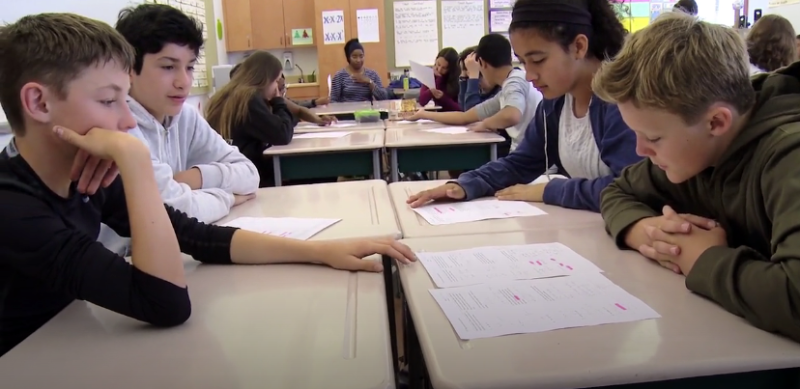
"caption": "Students in Leah Alcala's class work together to figure out what they did wrong on their math tests.",
"description": "Students in Alcala's class work together to figure out what they did wrong on their math tests.",
"title": "working on mistakes",
"credit": "\u003ca href=\"https://www.teachingchannel.org/video/math-test-grading-tips\">Teaching Channel\u003c/a>",
"status": "inherit",
"isLoading": false,
"fetchFailed": false
},
"mindshift_51625": {
"type": "attachments",
"id": "mindshift_51625",
"meta": {
"index": "attachments_1716263798",
"site": "mindshift",
"id": "51625",
"found": true
},
"parent": 51622,
"imgSizes": {
"small": {
"file": "https://ww2.kqed.org/app/uploads/sites/23/2018/07/Sarah-Gonser-EarlyRead4-520x390.jpg",
"width": 520,
"mimeType": "image/jpeg",
"height": 390
},
"twentyfourteen-full-width": {
"file": "https://ww2.kqed.org/app/uploads/sites/23/2018/07/Sarah-Gonser-EarlyRead4-1038x576.jpg",
"width": 1038,
"mimeType": "image/jpeg",
"height": 576
},
"thumbnail": {
"file": "https://ww2.kqed.org/app/uploads/sites/23/2018/07/Sarah-Gonser-EarlyRead4-160x120.jpg",
"width": 160,
"mimeType": "image/jpeg",
"height": 120
},
"fd-sm": {
"file": "https://ww2.kqed.org/app/uploads/sites/23/2018/07/Sarah-Gonser-EarlyRead4-960x720.jpg",
"width": 960,
"mimeType": "image/jpeg",
"height": 720
},
"post-thumbnail": {
"file": "https://ww2.kqed.org/app/uploads/sites/23/2018/07/Sarah-Gonser-EarlyRead4-672x372.jpg",
"width": 672,
"mimeType": "image/jpeg",
"height": 372
},
"xsmall": {
"file": "https://ww2.kqed.org/app/uploads/sites/23/2018/07/Sarah-Gonser-EarlyRead4-375x281.jpg",
"width": 375,
"mimeType": "image/jpeg",
"height": 281
},
"kqedFullSize": {
"file": "https://ww2.kqed.org/app/uploads/sites/23/2018/07/Sarah-Gonser-EarlyRead4-e1531200949737.jpg",
"width": 1920,
"height": 1440
},
"large": {
"file": "https://ww2.kqed.org/app/uploads/sites/23/2018/07/Sarah-Gonser-EarlyRead4-1020x765.jpg",
"width": 1020,
"mimeType": "image/jpeg",
"height": 765
},
"xlarge": {
"file": "https://ww2.kqed.org/app/uploads/sites/23/2018/07/Sarah-Gonser-EarlyRead4-1180x885.jpg",
"width": 1180,
"mimeType": "image/jpeg",
"height": 885
},
"complete_open_graph": {
"file": "https://ww2.kqed.org/app/uploads/sites/23/2018/07/Sarah-Gonser-EarlyRead4-1200x900.jpg",
"width": 1200,
"mimeType": "image/jpeg",
"height": 900
},
"guest-author-50": {
"file": "https://ww2.kqed.org/app/uploads/sites/23/2018/07/Sarah-Gonser-EarlyRead4-50x50.jpg",
"width": 50,
"mimeType": "image/jpeg",
"height": 50
},
"guest-author-96": {
"file": "https://ww2.kqed.org/app/uploads/sites/23/2018/07/Sarah-Gonser-EarlyRead4-96x96.jpg",
"width": 96,
"mimeType": "image/jpeg",
"height": 96
},
"medium": {
"file": "https://ww2.kqed.org/app/uploads/sites/23/2018/07/Sarah-Gonser-EarlyRead4-800x600.jpg",
"width": 800,
"mimeType": "image/jpeg",
"height": 600
},
"guest-author-64": {
"file": "https://ww2.kqed.org/app/uploads/sites/23/2018/07/Sarah-Gonser-EarlyRead4-64x64.jpg",
"width": 64,
"mimeType": "image/jpeg",
"height": 64
},
"guest-author-32": {
"file": "https://ww2.kqed.org/app/uploads/sites/23/2018/07/Sarah-Gonser-EarlyRead4-32x32.jpg",
"width": 32,
"mimeType": "image/jpeg",
"height": 32
},
"fd-lrg": {
"file": "https://ww2.kqed.org/app/uploads/sites/23/2018/07/Sarah-Gonser-EarlyRead4-1920x1440.jpg",
"width": 1920,
"mimeType": "image/jpeg",
"height": 1440
},
"fd-med": {
"file": "https://ww2.kqed.org/app/uploads/sites/23/2018/07/Sarah-Gonser-EarlyRead4-1180x885.jpg",
"width": 1180,
"mimeType": "image/jpeg",
"height": 885
},
"full-width": {
"file": "https://ww2.kqed.org/app/uploads/sites/23/2018/07/Sarah-Gonser-EarlyRead4-1920x1440.jpg",
"width": 1920,
"mimeType": "image/jpeg",
"height": 1440
},
"detail": {
"file": "https://ww2.kqed.org/app/uploads/sites/23/2018/07/Sarah-Gonser-EarlyRead4-150x150.jpg",
"width": 150,
"mimeType": "image/jpeg",
"height": 150
},
"medium_large": {
"file": "https://ww2.kqed.org/app/uploads/sites/23/2018/07/Sarah-Gonser-EarlyRead4-768x576.jpg",
"width": 768,
"mimeType": "image/jpeg",
"height": 576
},
"guest-author-128": {
"file": "https://ww2.kqed.org/app/uploads/sites/23/2018/07/Sarah-Gonser-EarlyRead4-128x128.jpg",
"width": 128,
"mimeType": "image/jpeg",
"height": 128
},
"xxsmall": {
"file": "https://ww2.kqed.org/app/uploads/sites/23/2018/07/Sarah-Gonser-EarlyRead4-240x180.jpg",
"width": 240,
"mimeType": "image/jpeg",
"height": 180
}
},
"publishDate": 1531200804,
"modified": 1531200961,
"caption": "A kindergartener re-creates a flashcard word using Unifix cubes — a hands-on way to reinforce reading skills. ",
"description": null,
"title": "Sarah Gonser - EarlyRead4",
"credit": "Sarah Gonser for The Hechinger Report",
"status": "inherit",
"isLoading": false,
"fetchFailed": false
}
},
"audioPlayerReducer": {
"postId": "stream_live",
"isPaused": true,
"isPlaying": false,
"pfsActive": false,
"pledgeModalIsOpen": true,
"playerDrawerIsOpen": false,
"liveAudioPlayStartedAt": 0,
"liveAudioPlayContext": ""
},
"authorsReducer": {
"byline_mindshift_53256": {
"type": "authors",
"id": "byline_mindshift_53256",
"meta": {
"override": true
},
"slug": "byline_mindshift_53256",
"name": "\u003ca href=\"https://www.gse.harvard.edu/\">Grace Tatter, Usable Knowledge\u003c/a>",
"isLoading": false
},
"byline_mindshift_51622": {
"type": "authors",
"id": "byline_mindshift_51622",
"meta": {
"override": true
},
"slug": "byline_mindshift_51622",
"name": "\u003ca href=\"http://hechingerreport.org/\">Sarah Gonser, The Hechinger Report\u003c/a>",
"isLoading": false
},
"katrinaschwartz": {
"type": "authors",
"id": "234",
"meta": {
"index": "authors_1716337520",
"id": "234",
"found": true
},
"name": "Katrina Schwartz",
"firstName": "Katrina",
"lastName": "Schwartz",
"slug": "katrinaschwartz",
"email": "kschwartz@kqed.org",
"display_author_email": false,
"staff_mastheads": [
"news"
],
"title": "Producer",
"bio": "Katrina Schwartz is a journalist based in San Francisco. She's worked at KPCC public radio in LA and has reported on air and online for KQED since 2010. She covered how teaching and learning is changing for MindShift between 2012 and 2020. She is the co-host of the MindShift podcast and now produces KQED's Bay Curious podcast.",
"avatar": "https://secure.gravatar.com/avatar/edb4ee79070447a018538c9aae6eeecf28786515b8a0c30e43b6b7dce5aa44c8?s=600&d=blank&r=g",
"twitter": "kschwart",
"bluesky": null,
"facebook": null,
"instagram": null,
"linkedin": null,
"sites": [
{
"site": "",
"roles": [
"editor"
]
},
{
"site": "news",
"roles": [
"editor"
]
},
{
"site": "mindshift",
"roles": [
"administrator"
]
},
{
"site": "stateofhealth",
"roles": [
"author"
]
},
{
"site": "science",
"roles": [
"editor"
]
}
],
"headData": {
"title": "Katrina Schwartz | KQED",
"description": "Producer",
"ogImgSrc": "https://secure.gravatar.com/avatar/edb4ee79070447a018538c9aae6eeecf28786515b8a0c30e43b6b7dce5aa44c8?s=600&d=blank&r=g",
"twImgSrc": "https://secure.gravatar.com/avatar/edb4ee79070447a018538c9aae6eeecf28786515b8a0c30e43b6b7dce5aa44c8?s=600&d=blank&r=g"
},
"isLoading": false,
"link": "/author/katrinaschwartz"
},
"ksung": {
"type": "authors",
"id": "4596",
"meta": {
"index": "authors_1716337520",
"id": "4596",
"found": true
},
"name": "Ki Sung",
"firstName": "Ki",
"lastName": "Sung",
"slug": "ksung",
"email": "ksung@kqed.org",
"display_author_email": false,
"staff_mastheads": [
"news"
],
"title": "KQED Contributor",
"bio": "Ki Sung is Managing Editor of Digital News at KQED. She is former Senior Editor of MindShift and worked at NPR before joining KQED in 2014.",
"avatar": "https://secure.gravatar.com/avatar/64271e01dc95486c133be56937739045b7c00c990525bf9add12d3dd4f0433c9?s=600&d=blank&r=g",
"twitter": null,
"bluesky": null,
"facebook": null,
"instagram": null,
"linkedin": null,
"sites": [
{
"site": "arts",
"roles": [
"administrator"
]
},
{
"site": "news",
"roles": [
"administrator"
]
},
{
"site": "mindshift",
"roles": [
"administrator"
]
},
{
"site": "science",
"roles": [
"administrator"
]
},
{
"site": "forum",
"roles": [
"administrator"
]
},
{
"site": "perspectives",
"roles": [
"administrator"
]
},
{
"site": "elections",
"roles": [
"administrator"
]
}
],
"headData": {
"title": "Ki Sung | KQED",
"description": "KQED Contributor",
"ogImgSrc": "https://secure.gravatar.com/avatar/64271e01dc95486c133be56937739045b7c00c990525bf9add12d3dd4f0433c9?s=600&d=blank&r=g",
"twImgSrc": "https://secure.gravatar.com/avatar/64271e01dc95486c133be56937739045b7c00c990525bf9add12d3dd4f0433c9?s=600&d=blank&r=g"
},
"isLoading": false,
"link": "/author/ksung"
},
"dfkris": {
"type": "authors",
"id": "11087",
"meta": {
"index": "authors_1716337520",
"id": "11087",
"found": true
},
"name": "Deborah Farmer Kris",
"firstName": "Deborah Farmer",
"lastName": "Kris",
"slug": "dfkris",
"email": "dfkris@gmail.com",
"display_author_email": false,
"staff_mastheads": [],
"title": null,
"bio": "\u003cem>\u003ca href=\"https://twitter.com/@dfkris\">Deborah Farmer Kris\u003c/a> has taught elementary, middle and high school and served as a charter school administrator. She spent a decade as an associate at Boston University’s \u003c/em>\u003cem>\u003ca href=\"http://www.bu.edu/ccsr/about-us/\">Center for Character and Social Responsibility\u003c/a>, \u003c/em>\u003cem>researching, writing, and consulting with schools. She is the mother of two young children. You can follower her on Twitter \u003ca href=\"https://twitter.com/@dfkris\">@dfkris\u003c/a>.\u003c/em>",
"avatar": "https://secure.gravatar.com/avatar/48efe6f17031ed31222b74af9605fe5a?s=600&d=blank&r=g",
"twitter": "dfkris",
"facebook": null,
"instagram": null,
"linkedin": null,
"sites": [
{
"site": "mindshift",
"roles": [
"author"
]
}
],
"headData": {
"title": "Deborah Farmer Kris | KQED",
"description": null,
"ogImgSrc": "https://secure.gravatar.com/avatar/48efe6f17031ed31222b74af9605fe5a?s=600&d=blank&r=g",
"twImgSrc": "https://secure.gravatar.com/avatar/48efe6f17031ed31222b74af9605fe5a?s=600&d=blank&r=g"
},
"isLoading": false,
"link": "/author/dfkris"
},
"kdnewhouse": {
"type": "authors",
"id": "11487",
"meta": {
"index": "authors_1716337520",
"id": "11487",
"found": true
},
"name": "Kara Newhouse",
"firstName": "Kara",
"lastName": "Newhouse",
"slug": "kdnewhouse",
"email": "knewhouse@kqed.org",
"display_author_email": false,
"staff_mastheads": [],
"title": "MindShift Editor",
"bio": null,
"avatar": "https://secure.gravatar.com/avatar/3dceed6fb271527113abfa9a8e9df34e?s=600&d=blank&r=g",
"twitter": null,
"facebook": null,
"instagram": null,
"linkedin": null,
"sites": [
{
"site": "",
"roles": [
"editor"
]
},
{
"site": "mindshift",
"roles": []
}
],
"headData": {
"title": "Kara Newhouse | KQED",
"description": "MindShift Editor",
"ogImgSrc": "https://secure.gravatar.com/avatar/3dceed6fb271527113abfa9a8e9df34e?s=600&d=blank&r=g",
"twImgSrc": "https://secure.gravatar.com/avatar/3dceed6fb271527113abfa9a8e9df34e?s=600&d=blank&r=g"
},
"isLoading": false,
"link": "/author/kdnewhouse"
}
},
"pagesReducer": {
"mindshift_tag_growth-mindset": {
"type": "terms",
"id": "mindshift_20512",
"meta": {
"index": "terms_1716263798",
"site": "mindshift",
"id": "20512",
"score": 10.404487
},
"featImg": null,
"name": "growth mindset",
"description": null,
"taxonomy": "tag",
"headData": {
"twImgId": null,
"twTitle": null,
"ogTitle": null,
"ogImgId": null,
"twDescription": null,
"description": null,
"title": "growth mindset Archives - KQED Mindshift",
"ogDescription": null
},
"ttid": 19789,
"slug": "growth-mindset",
"isLoading": false,
"title": "growth mindset",
"pageMeta": {
"site": "mindshift",
"WpPageTemplate": "page-topic-editorial",
"currentPage": 2
},
"blocks": [
{
"blockName": "kqed/post-list",
"attrs": {
"layout": "cardArticle2",
"query": "posts/mindshift?tag=growth-mindset",
"seeMore": false,
"paginated": true,
"page": 2
}
},
{
"blockName": "kqed/ad"
}
]
}
},
"pfsSessionReducer": {},
"postsReducer": {
"stream_live": {
"type": "live",
"id": "stream_live",
"audioUrl": "https://streams.kqed.org/kqedradio",
"title": "Live Stream",
"excerpt": "Live Stream information currently unavailable.",
"link": "/radio",
"featImg": "",
"label": {
"name": "KQED Live",
"link": "/"
}
},
"stream_kqedNewscast": {
"type": "posts",
"id": "stream_kqedNewscast",
"audioUrl": "https://www.kqed.org/.stream/anon/radio/RDnews/newscast.mp3?_=1",
"title": "KQED Newscast",
"featImg": "",
"label": {
"name": "88.5 FM",
"link": "/"
}
},
"mindshift_55333": {
"type": "posts",
"id": "mindshift_55333",
"meta": {
"index": "posts_1716263798",
"site": "mindshift",
"id": "55333",
"score": null,
"sort": [
1582017101000
]
},
"parent": 0,
"labelTerm": {
"site": "mindshift"
},
"blocks": [],
"publishDate": 1582017101,
"format": "standard",
"disqusTitle": "Three Steps for Strengthening Communication and Resilience in Science Class",
"title": "Three Steps for Strengthening Communication and Resilience in Science Class",
"headTitle": "MindShift | KQED News",
"content": "\u003cp>\u003cspan style=\"font-weight: 400\">Debbie Barkley held her string tightly and directed the teachers around her to tug theirs downward as they maneuvered a rubber band around the sides of a red Solo cup. “This is so frustrating,” Barkley said when one of the cups fell over, not for the first time. “My fifth graders would be yelling at each other at this point.” A few minutes later, when the group succeeded in stacking several cups in a prescribed arrangement, teacher Ami Patel-Hopkins, exclaimed, “Oh, I love my group!”\u003c/span>\u003c/p>\n\u003cp>\u003cspan style=\"font-weight: 400\">That range of emotions is what \u003c/span>\u003ca href=\"https://www.tsaientificmethod.com/\">\u003cspan style=\"font-weight: 400\">Kathleen Tsai\u003c/span>\u003c/a>\u003cspan style=\"font-weight: 400\">, a chemistry teacher who facilitated the exercise, expected. “It’s frustrating but then you have a sense of fulfillment,” she said during a group reflection at \u003c/span>\u003ca href=\"http://2020.educon.org/\">\u003cspan style=\"font-weight: 400\">EduCon 2020\u003c/span>\u003c/a>\u003cspan style=\"font-weight: 400\">, a school innovation conference. “The amount of frustration I feel when I do this is the same as my students feel when they’re doing algebra. I’m sweating when I’m stacking cups; they’re sweating when they’re doing homework.”\u003c/span>\u003c/p>\n\u003cp>\u003cspan style=\"font-weight: 400\">Empathizing with students’ emotional experiences was a central component of the workshop that Tsai led on \u003c/span>\u003ca href=\"https://www.kqed.org/mindshift/tag/resilience\">\u003cspan style=\"font-weight: 400\">cultivating resilience\u003c/span>\u003c/a>\u003cspan style=\"font-weight: 400\"> in \u003c/span>\u003ca href=\"https://www.kqed.org/mindshift/tag/science\">\u003cspan style=\"font-weight: 400\">science class\u003c/span>\u003c/a>\u003cspan style=\"font-weight: 400\">. Educators have increasingly focused on the role of \u003c/span>\u003ca href=\"https://www.kqed.org/mindshift/48984/what-do-we-mean-when-we-say-social-and-emotional-skills\">\u003cspan style=\"font-weight: 400\">social and emotional learning\u003c/span>\u003c/a>\u003cspan style=\"font-weight: 400\"> in \u003c/span>\u003ca href=\"https://www.kqed.org/mindshift/49870/setting-school-culture-with-social-and-emotional-learning-routines\">\u003cspan style=\"font-weight: 400\">school culture\u003c/span>\u003c/a>\u003cspan style=\"font-weight: 400\"> and \u003c/span>\u003ca href=\"https://www.kqed.org/mindshift/54878/how-strengthening-relationships-with-boys-can-help-them-learn\">\u003cspan style=\"font-weight: 400\">student success\u003c/span>\u003c/a>\u003cspan style=\"font-weight: 400\">, but participants at Tsai’s session said the opportunities to teach such skills arise more naturally in humanities courses. At the same time, they agreed that collaboration and the ability to \u003c/span>\u003ca href=\"https://www.kqed.org/mindshift/44870/how-teens-benefit-from-reading-about-the-struggles-of-scientists\">\u003cspan style=\"font-weight: 400\">persist through failure\u003c/span>\u003c/a>\u003cspan style=\"font-weight: 400\"> are critical in science. Through Tsai’s exercises and reflections on their classroom experiences, the group discussed how to strengthen communication and build resilience among their students. \u003c/span>\u003c/p>\n\u003ch1>\u003cb>Start Early\u003c/b>\u003c/h1>\n\u003cp>\u003cspan style=\"font-weight: 400\">Devoting time early in the year to cooperative games allows students to practice healthy communication and conflict resolution before academic content is in the mix. Tsai, who teaches at \u003c/span>\u003ca href=\"https://slabeeber.org/\">\u003cspan style=\"font-weight: 400\">Science Leadership Academy Beeber\u003c/span>\u003c/a>\u003cspan style=\"font-weight: 400\"> — a \u003c/span>\u003ca href=\"https://www.kqed.org/mindshift/tag/project-based-learning\">\u003cspan style=\"font-weight: 400\">project-based learning\u003c/span>\u003c/a>\u003cspan style=\"font-weight: 400\"> school — does the cups activity with her students in the first week of class. By trying it themselves, the EduCon participants experienced some of the emotions that students might during group work. In the discussion, one teacher said she found having clear roles helpful as problems arose. (Before the activity began, group members elected to be communications manager, resource manager, task manager or group manager. Tsai provided explicit descriptions for each role.)\u003c/span>\u003c/p>\n\u003cp>\u003cspan style=\"font-weight: 400\">Tsai pointed out that when one of the groups asked for tips, she told them to figure it out, rather than giving them the answers. Whether with cups or lab work, students often hate that response, Tsai said, and several teachers shouted “yes!” in agreement. Overcoming such hurdles in a low-stakes cooperative game creates a foundation of resilience that can be strengthened as students face similar challenges when science content and grades are involved.\u003c/span>\u003c/p>\n\u003cp>[ad fullwidth]\u003c/p>\n\u003cp>\u003cspan style=\"font-weight: 400\">The group discussion, too, was a model for classrooms. As one teacher noted, talking about what behaviors were productive and unproductive in the cups game helped him reflect on how he reacted to the exercise and his teammates. Tsai suggested some “actionable norms” that can come from student discussions about cooperative games: work persistently, take risks and communicate productively.\u003c/span>\u003c/p>\n\u003ch1>\u003cb>Build Emotional Vocabulary\u003c/b>\u003c/h1>\n\u003cp>\u003cspan style=\"font-weight: 400\">Tsai said her first year of teaching was \u003c/span>\u003ca href=\"https://www.kqed.org/mindshift/53640/12-ways-teachers-can-build-resilience-so-they-can-make-systemic-change\">\u003cspan style=\"font-weight: 400\">emotionally challenging\u003c/span>\u003c/a>\u003cspan style=\"font-weight: 400\">. She eventually realized this was unsurprising, since she was surrounded by \u003c/span>\u003ca href=\"https://www.kqed.org/mindshift/49829/how-schools-can-help-students-manage-and-mitigate-anxiety\">\u003cspan style=\"font-weight: 400\">emotional teenagers\u003c/span>\u003c/a>\u003cspan style=\"font-weight: 400\"> every day. “Students say things like ‘I can’t do this,’ ‘I give up,’ ‘I hate this/I hate you,’” Tsai said. “What they really mean is ‘I’m frustrated.’”\u003c/span>\u003c/p>\n\u003cp>\u003cspan style=\"font-weight: 400\">During the EduCon session, teachers did a \u003c/span>\u003ca href=\"http://www.theteachertoolkit.com/index.php/tool/gallery-walk\">\u003cspan style=\"font-weight: 400\">gallery walk\u003c/span>\u003c/a>\u003cspan style=\"font-weight: 400\"> focused on statements about vulnerability, shame and courage. When teachers can get in touch with those three emotions themselves, she said, they are \u003c/span>\u003ca href=\"https://www.kqed.org/mindshift/54853/why-its-imperative-we-all-learn-to-be-emotion-scientists\">\u003cspan style=\"font-weight: 400\">better equipped to help students navigate them\u003c/span>\u003c/a>\u003cspan style=\"font-weight: 400\">. Tsai has begun talking directly about those feelings with her students. \u003c/span>\u003c/p>\n\u003cfigure id=\"attachment_55338\" class=\"wp-caption alignnone\" style=\"max-width: 1920px\">\u003cimg class=\"size-full wp-image-55338\" src=\"https://ww2.kqed.org/app/uploads/sites/23/2020/02/20200125_135518-e1582014784823.jpg\" alt=\"\" width=\"1920\" height=\"1080\">\u003cfigcaption class=\"wp-caption-text\">\u003cspan style=\"font-weight: 400\">In an EduCon 2020 session on social emotional learning in science, teachers did a gallery walk examining statements about vulnerability, shame and courage. \u003c/span>They reflected on a quote by Brené Brown: \"We don't have to do all of it alone. We were never meant to.\" \u003ccite>(Kara Newhouse)\u003c/cite>\u003c/figcaption>\u003c/figure>\n\u003cp>\u003cspan style=\"font-weight: 400\">The gallery walk quotes came from researcher \u003c/span>\u003ca href=\"https://brenebrown.com/\">\u003cspan style=\"font-weight: 400\">Brené Brown\u003c/span>\u003c/a>\u003cspan style=\"font-weight: 400\">, whose books and talks have helped Tsai develop emotional vocabulary for herself and her students. Different resources might resonate for other teachers. “Think about what the students struggle with,” Tsai said. “How do you help yourself with that?” That’s a good starting point.\u003c/span>\u003cspan style=\"font-weight: 400\"> \u003c/span>\u003c/p>\n\u003ch1>\u003cb>Practice/Repeat\u003c/b>\u003c/h1>\n\u003cp>\u003cspan style=\"font-weight: 400\">As with other types of learning, social emotional learning is not a one-and-done process. Tsai creates opportunities to practice social and emotional skills throughout the curriculum. On her blog, she recently shared an activity for \u003c/span>\u003ca href=\"https://www.tsaientificmethod.com/blog/teaching-active-listening-for-richer-conversations\">\u003cspan style=\"font-weight: 400\">teaching active listening skills\u003c/span>\u003c/a>\u003cspan style=\"font-weight: 400\">. After Tsai modeled active listening and provided sentence starters, her students tried it out with topics they chose. Eventually, they progressed to a topic relevant to their studies — gene therapy and bioethics. Tsai wrote that she used to hate class discussions “because the students never actually listened to each other,” but at the end of these conversations her students reported feeling engaged and challenged.\u003c/span>\u003c/p>\n\u003cp>\u003cspan style=\"font-weight: 400\">Ami Patel-Hopkins, who teaches at Science Leadership Academy Middle School, shared that she uses neuroscience to connect social and emotional skills to science content. By teaching about parts of the brain associated with emotional responses, she increases students’ awareness of what might be \u003c/span>\u003ca href=\"https://www.kqed.org/mindshift/51237/why-teens-should-understand-their-own-brains-and-why-their-teachers-should-too\">\u003cspan style=\"font-weight: 400\">happening in their own brains\u003c/span>\u003c/a>\u003cspan style=\"font-weight: 400\"> and bodies in stressful moments. She said she peppers her classes with relevant reminders, such as “Use your prefrontal cortex!” when a task requires thoughtful decision-making.\u003c/span>\u003c/p>\n\u003cfigure id=\"attachment_55339\" class=\"wp-caption alignnone\" style=\"max-width: 1920px\">\u003cimg class=\"size-full wp-image-55339\" src=\"https://ww2.kqed.org/app/uploads/sites/23/2020/02/20200125_142236-e1582015093318.jpg\" alt=\"\" width=\"1920\" height=\"1263\">\u003cfigcaption class=\"wp-caption-text\">Teacher Kathleen Tsai discusses the role of vulnerability, shame and courage in student experiences of science class. \u003ccite>(Kara Newhouse)\u003c/cite>\u003c/figcaption>\u003c/figure>\n\u003cp>\u003c/p>\n\u003cp>\u003cspan style=\"font-weight: 400\">Other teachers at Tsai’s session agreed that building social and emotional skills in science class will require repetition and practice in different contexts throughout the year. They ended the workshop by offering six-word summaries of their takeaways, including:\u003c/span>\u003c/p>\n\u003cul>\n\u003cli style=\"font-weight: 400\">\u003cspan style=\"font-weight: 400\">“You should model for your students.”\u003c/span>\u003c/li>\n\u003cli style=\"font-weight: 400\">\u003cspan style=\"font-weight: 400\">“It’s a mitzvah to be corrected.”\u003c/span>\u003c/li>\n\u003cli style=\"font-weight: 400\">\u003cspan style=\"font-weight: 400\">“Emotions underpin all academic work, period.”\u003c/span>\u003c/li>\n\u003c/ul>\n\n",
"disqusIdentifier": "55333 https://ww2.kqed.org/mindshift/?p=55333",
"disqusUrl": "https://ww2.kqed.org/mindshift/2020/02/18/three-steps-for-strengthening-communication-and-resilience-in-science-class/",
"stats": {
"hasVideo": false,
"hasChartOrMap": false,
"hasAudio": false,
"hasPolis": false,
"wordCount": 1042,
"hasGoogleForm": false,
"hasGallery": false,
"hasHearkenModule": false,
"iframeSrcs": [],
"paragraphCount": 14
},
"modified": 1582017101,
"excerpt": "By experiencing some of the more frustrating aspects of group work, teachers can better identify what students need in order to feel ready to work with others. ",
"headData": {
"twImgId": "",
"twTitle": "",
"ogTitle": "",
"ogImgId": "",
"twDescription": "",
"description": "By experiencing some of the more frustrating aspects of group work, teachers can better identify what students need in order to feel ready to work with others. ",
"title": "Three Steps for Strengthening Communication and Resilience in Science Class | KQED",
"ogDescription": "",
"schema": {
"@context": "https://schema.org",
"@type": "Article",
"headline": "Three Steps for Strengthening Communication and Resilience in Science Class",
"datePublished": "2020-02-18T01:11:41-08:00",
"dateModified": "2020-02-18T01:11:41-08:00",
"image": "https://cdn.kqed.org/wp-content/uploads/2020/02/KQED-OG-Image@1x.png"
}
},
"guestAuthors": [],
"slug": "three-steps-for-strengthening-communication-and-resilience-in-science-class",
"status": "publish",
"path": "/mindshift/55333/three-steps-for-strengthening-communication-and-resilience-in-science-class",
"audioTrackLength": null,
"parsedContent": [
{
"type": "contentString",
"content": "\u003cdiv class=\"post-body\">\u003cp>\u003cp>\u003cspan style=\"font-weight: 400\">Debbie Barkley held her string tightly and directed the teachers around her to tug theirs downward as they maneuvered a rubber band around the sides of a red Solo cup. “This is so frustrating,” Barkley said when one of the cups fell over, not for the first time. “My fifth graders would be yelling at each other at this point.” A few minutes later, when the group succeeded in stacking several cups in a prescribed arrangement, teacher Ami Patel-Hopkins, exclaimed, “Oh, I love my group!”\u003c/span>\u003c/p>\n\u003cp>\u003cspan style=\"font-weight: 400\">That range of emotions is what \u003c/span>\u003ca href=\"https://www.tsaientificmethod.com/\">\u003cspan style=\"font-weight: 400\">Kathleen Tsai\u003c/span>\u003c/a>\u003cspan style=\"font-weight: 400\">, a chemistry teacher who facilitated the exercise, expected. “It’s frustrating but then you have a sense of fulfillment,” she said during a group reflection at \u003c/span>\u003ca href=\"http://2020.educon.org/\">\u003cspan style=\"font-weight: 400\">EduCon 2020\u003c/span>\u003c/a>\u003cspan style=\"font-weight: 400\">, a school innovation conference. “The amount of frustration I feel when I do this is the same as my students feel when they’re doing algebra. I’m sweating when I’m stacking cups; they’re sweating when they’re doing homework.”\u003c/span>\u003c/p>\n\u003cp>\u003cspan style=\"font-weight: 400\">Empathizing with students’ emotional experiences was a central component of the workshop that Tsai led on \u003c/span>\u003ca href=\"https://www.kqed.org/mindshift/tag/resilience\">\u003cspan style=\"font-weight: 400\">cultivating resilience\u003c/span>\u003c/a>\u003cspan style=\"font-weight: 400\"> in \u003c/span>\u003ca href=\"https://www.kqed.org/mindshift/tag/science\">\u003cspan style=\"font-weight: 400\">science class\u003c/span>\u003c/a>\u003cspan style=\"font-weight: 400\">. Educators have increasingly focused on the role of \u003c/span>\u003ca href=\"https://www.kqed.org/mindshift/48984/what-do-we-mean-when-we-say-social-and-emotional-skills\">\u003cspan style=\"font-weight: 400\">social and emotional learning\u003c/span>\u003c/a>\u003cspan style=\"font-weight: 400\"> in \u003c/span>\u003ca href=\"https://www.kqed.org/mindshift/49870/setting-school-culture-with-social-and-emotional-learning-routines\">\u003cspan style=\"font-weight: 400\">school culture\u003c/span>\u003c/a>\u003cspan style=\"font-weight: 400\"> and \u003c/span>\u003ca href=\"https://www.kqed.org/mindshift/54878/how-strengthening-relationships-with-boys-can-help-them-learn\">\u003cspan style=\"font-weight: 400\">student success\u003c/span>\u003c/a>\u003cspan style=\"font-weight: 400\">, but participants at Tsai’s session said the opportunities to teach such skills arise more naturally in humanities courses. At the same time, they agreed that collaboration and the ability to \u003c/span>\u003ca href=\"https://www.kqed.org/mindshift/44870/how-teens-benefit-from-reading-about-the-struggles-of-scientists\">\u003cspan style=\"font-weight: 400\">persist through failure\u003c/span>\u003c/a>\u003cspan style=\"font-weight: 400\"> are critical in science. Through Tsai’s exercises and reflections on their classroom experiences, the group discussed how to strengthen communication and build resilience among their students. \u003c/span>\u003c/p>\n\u003ch1>\u003cb>Start Early\u003c/b>\u003c/h1>\n\u003cp>\u003cspan style=\"font-weight: 400\">Devoting time early in the year to cooperative games allows students to practice healthy communication and conflict resolution before academic content is in the mix. Tsai, who teaches at \u003c/span>\u003ca href=\"https://slabeeber.org/\">\u003cspan style=\"font-weight: 400\">Science Leadership Academy Beeber\u003c/span>\u003c/a>\u003cspan style=\"font-weight: 400\"> — a \u003c/span>\u003ca href=\"https://www.kqed.org/mindshift/tag/project-based-learning\">\u003cspan style=\"font-weight: 400\">project-based learning\u003c/span>\u003c/a>\u003cspan style=\"font-weight: 400\"> school — does the cups activity with her students in the first week of class. By trying it themselves, the EduCon participants experienced some of the emotions that students might during group work. In the discussion, one teacher said she found having clear roles helpful as problems arose. (Before the activity began, group members elected to be communications manager, resource manager, task manager or group manager. Tsai provided explicit descriptions for each role.)\u003c/span>\u003c/p>\n\u003cp>\u003cspan style=\"font-weight: 400\">Tsai pointed out that when one of the groups asked for tips, she told them to figure it out, rather than giving them the answers. Whether with cups or lab work, students often hate that response, Tsai said, and several teachers shouted “yes!” in agreement. Overcoming such hurdles in a low-stakes cooperative game creates a foundation of resilience that can be strengthened as students face similar challenges when science content and grades are involved.\u003c/span>\u003c/p>\n\u003cp>\u003c/p>\u003c/div>",
"attributes": {
"named": {},
"numeric": []
}
},
{
"type": "component",
"content": "",
"name": "ad",
"attributes": {
"named": {
"label": "fullwidth"
},
"numeric": [
"fullwidth"
]
}
},
{
"type": "contentString",
"content": "\u003cdiv class=\"post-body\">\u003cp>\u003c/p>\n\u003cp>\u003cspan style=\"font-weight: 400\">The group discussion, too, was a model for classrooms. As one teacher noted, talking about what behaviors were productive and unproductive in the cups game helped him reflect on how he reacted to the exercise and his teammates. Tsai suggested some “actionable norms” that can come from student discussions about cooperative games: work persistently, take risks and communicate productively.\u003c/span>\u003c/p>\n\u003ch1>\u003cb>Build Emotional Vocabulary\u003c/b>\u003c/h1>\n\u003cp>\u003cspan style=\"font-weight: 400\">Tsai said her first year of teaching was \u003c/span>\u003ca href=\"https://www.kqed.org/mindshift/53640/12-ways-teachers-can-build-resilience-so-they-can-make-systemic-change\">\u003cspan style=\"font-weight: 400\">emotionally challenging\u003c/span>\u003c/a>\u003cspan style=\"font-weight: 400\">. She eventually realized this was unsurprising, since she was surrounded by \u003c/span>\u003ca href=\"https://www.kqed.org/mindshift/49829/how-schools-can-help-students-manage-and-mitigate-anxiety\">\u003cspan style=\"font-weight: 400\">emotional teenagers\u003c/span>\u003c/a>\u003cspan style=\"font-weight: 400\"> every day. “Students say things like ‘I can’t do this,’ ‘I give up,’ ‘I hate this/I hate you,’” Tsai said. “What they really mean is ‘I’m frustrated.’”\u003c/span>\u003c/p>\n\u003cp>\u003cspan style=\"font-weight: 400\">During the EduCon session, teachers did a \u003c/span>\u003ca href=\"http://www.theteachertoolkit.com/index.php/tool/gallery-walk\">\u003cspan style=\"font-weight: 400\">gallery walk\u003c/span>\u003c/a>\u003cspan style=\"font-weight: 400\"> focused on statements about vulnerability, shame and courage. When teachers can get in touch with those three emotions themselves, she said, they are \u003c/span>\u003ca href=\"https://www.kqed.org/mindshift/54853/why-its-imperative-we-all-learn-to-be-emotion-scientists\">\u003cspan style=\"font-weight: 400\">better equipped to help students navigate them\u003c/span>\u003c/a>\u003cspan style=\"font-weight: 400\">. Tsai has begun talking directly about those feelings with her students. \u003c/span>\u003c/p>\n\u003cfigure id=\"attachment_55338\" class=\"wp-caption alignnone\" style=\"max-width: 1920px\">\u003cimg class=\"size-full wp-image-55338\" src=\"https://ww2.kqed.org/app/uploads/sites/23/2020/02/20200125_135518-e1582014784823.jpg\" alt=\"\" width=\"1920\" height=\"1080\">\u003cfigcaption class=\"wp-caption-text\">\u003cspan style=\"font-weight: 400\">In an EduCon 2020 session on social emotional learning in science, teachers did a gallery walk examining statements about vulnerability, shame and courage. \u003c/span>They reflected on a quote by Brené Brown: \"We don't have to do all of it alone. We were never meant to.\" \u003ccite>(Kara Newhouse)\u003c/cite>\u003c/figcaption>\u003c/figure>\n\u003cp>\u003cspan style=\"font-weight: 400\">The gallery walk quotes came from researcher \u003c/span>\u003ca href=\"https://brenebrown.com/\">\u003cspan style=\"font-weight: 400\">Brené Brown\u003c/span>\u003c/a>\u003cspan style=\"font-weight: 400\">, whose books and talks have helped Tsai develop emotional vocabulary for herself and her students. Different resources might resonate for other teachers. “Think about what the students struggle with,” Tsai said. “How do you help yourself with that?” That’s a good starting point.\u003c/span>\u003cspan style=\"font-weight: 400\"> \u003c/span>\u003c/p>\n\u003ch1>\u003cb>Practice/Repeat\u003c/b>\u003c/h1>\n\u003cp>\u003cspan style=\"font-weight: 400\">As with other types of learning, social emotional learning is not a one-and-done process. Tsai creates opportunities to practice social and emotional skills throughout the curriculum. On her blog, she recently shared an activity for \u003c/span>\u003ca href=\"https://www.tsaientificmethod.com/blog/teaching-active-listening-for-richer-conversations\">\u003cspan style=\"font-weight: 400\">teaching active listening skills\u003c/span>\u003c/a>\u003cspan style=\"font-weight: 400\">. After Tsai modeled active listening and provided sentence starters, her students tried it out with topics they chose. Eventually, they progressed to a topic relevant to their studies — gene therapy and bioethics. Tsai wrote that she used to hate class discussions “because the students never actually listened to each other,” but at the end of these conversations her students reported feeling engaged and challenged.\u003c/span>\u003c/p>\n\u003cp>\u003cspan style=\"font-weight: 400\">Ami Patel-Hopkins, who teaches at Science Leadership Academy Middle School, shared that she uses neuroscience to connect social and emotional skills to science content. By teaching about parts of the brain associated with emotional responses, she increases students’ awareness of what might be \u003c/span>\u003ca href=\"https://www.kqed.org/mindshift/51237/why-teens-should-understand-their-own-brains-and-why-their-teachers-should-too\">\u003cspan style=\"font-weight: 400\">happening in their own brains\u003c/span>\u003c/a>\u003cspan style=\"font-weight: 400\"> and bodies in stressful moments. She said she peppers her classes with relevant reminders, such as “Use your prefrontal cortex!” when a task requires thoughtful decision-making.\u003c/span>\u003c/p>\n\u003cfigure id=\"attachment_55339\" class=\"wp-caption alignnone\" style=\"max-width: 1920px\">\u003cimg class=\"size-full wp-image-55339\" src=\"https://ww2.kqed.org/app/uploads/sites/23/2020/02/20200125_142236-e1582015093318.jpg\" alt=\"\" width=\"1920\" height=\"1263\">\u003cfigcaption class=\"wp-caption-text\">Teacher Kathleen Tsai discusses the role of vulnerability, shame and courage in student experiences of science class. \u003ccite>(Kara Newhouse)\u003c/cite>\u003c/figcaption>\u003c/figure>\n\u003cp>\u003c/p>\n\u003cp>\u003cspan style=\"font-weight: 400\">Other teachers at Tsai’s session agreed that building social and emotional skills in science class will require repetition and practice in different contexts throughout the year. They ended the workshop by offering six-word summaries of their takeaways, including:\u003c/span>\u003c/p>\n\u003cul>\n\u003cli style=\"font-weight: 400\">\u003cspan style=\"font-weight: 400\">“You should model for your students.”\u003c/span>\u003c/li>\n\u003cli style=\"font-weight: 400\">\u003cspan style=\"font-weight: 400\">“It’s a mitzvah to be corrected.”\u003c/span>\u003c/li>\n\u003cli style=\"font-weight: 400\">\u003cspan style=\"font-weight: 400\">“Emotions underpin all academic work, period.”\u003c/span>\u003c/li>\n\u003c/ul>\n\n\u003c/div>\u003c/p>",
"attributes": {
"named": {},
"numeric": []
}
}
],
"link": "/mindshift/55333/three-steps-for-strengthening-communication-and-resilience-in-science-class",
"authors": [
"11487"
],
"categories": [
"mindshift_194"
],
"tags": [
"mindshift_997",
"mindshift_870",
"mindshift_20784",
"mindshift_1040",
"mindshift_20512",
"mindshift_256",
"mindshift_21038",
"mindshift_956",
"mindshift_943",
"mindshift_391"
],
"featImg": "mindshift_55335",
"label": "mindshift"
},
"mindshift_54750": {
"type": "posts",
"id": "mindshift_54750",
"meta": {
"index": "posts_1716263798",
"site": "mindshift",
"id": "54750",
"score": null,
"sort": [
1580110176000
]
},
"parent": 0,
"labelTerm": {
"site": "mindshift"
},
"blocks": [],
"publishDate": 1580110176,
"format": "standard",
"disqusTitle": "Why Focusing On Adult Learning Builds A School Culture Where Students Thrive",
"title": "Why Focusing On Adult Learning Builds A School Culture Where Students Thrive",
"headTitle": "MindShift | KQED News",
"content": "\u003cp>When policymakers and school leaders talk about improving schools, much of the focus is on test scores, teaching strategies, curriculum and other services consumed directly by students. Often less attention is paid to the culture of adult learning in a school building, but maybe it’s time that changed. Harvard researchers have been studying the impact of what they call a “growth culture” on the effectiveness and productivity of companies. Now, they’re expanding that work into schools.\u003c/p>\n\u003cp>“Schools if they’re doing a good job, they’re really designed to be places where kids can learn and grow in powerful ways,” said \u003ca href=\"https://www.gse.harvard.edu/faculty/deborah-helsing\" target=\"_blank\" rel=\"noopener noreferrer\">Deb Helsing\u003c/a>, co-author of \"\u003ca href=\"https://ssir.org/articles/entry/becoming_a_deliberately_developmental_organization\" target=\"_blank\" rel=\"noopener noreferrer\">An Everyone Culture: Becoming a Deliberately Developmental Organization\u003c/a>\" and a Harvard Graduate School of Education lecturer. “We just haven’t ever thought that the adult learning and development happening in schools is a necessary and integral part of creating powerful environments for kids.”\u003c/p>\n\u003cp>Helsing and her colleagues, Robert Kegan and Lisa Lahey, found that \u003ca href=\"https://hbr.org/2016/10/the-key-to-adaptable-companies-is-relentlessly-developing-people\" target=\"_blank\" rel=\"noopener noreferrer\">when adults continue to learn at their jobs they are better at creating that experience for other people\u003c/a>. She says if schools are going to be places where students consistently push against the edge of what they don’t know, testing new theories, and trying things out while learning from mistakes, those same qualities must be present for their teachers. It’s difficult for a teacher to facilitate that type of learning environment if they haven’t experienced it themselves.\u003c/p>\n\u003cp>“If you are experiencing learning that in some way connects to or challenges fundamental assumptions you are making about yourself and the world, that’s when it’s going to be the most powerful,” Helsing said.\u003c/p>\n\u003cp>To get to that place, adults need to be part of a community of colleagues who support their growth. They need to feel safe to be vulnerable, to admit failings or mistakes and to trust that their colleagues are giving feedback in order to help them improve. But it also requires that adults are consistently pushing against the edge of what they don’t know.\u003c/p>\n\u003cp>[ad fullwidth]\u003c/p>\n\u003cp>“How do you create the kind of challenge so people don’t get comfortable, but are constantly identifying new growth edges that challenge basic assumptions they have?” Helsing asked.\u003c/p>\n\u003cp>Working right at that edge, where fundamental beliefs and mindsets surface and can be examined, is how adults move forward in their learning, said Helsing. This theory of change recognizes that those beliefs may have served the person well for most of their career, but have now become a hindrance to growth. Having time and space to look at those values within the context of their work can help people see that and move forward.\u003c/p>\n\u003cp>And for a growth culture to truly take hold and become self-perpetuating, the system needs to have structures that support this work as part of the day-to-day functioning of the school or district. Pushing at growth edges has to become a regular part of how the work gets done for it to become cultural change.\u003c/p>\n\u003cp>These three areas, what Helsing calls “home, edge and groove,” are crucial to a growth culture in any workplace, including schools. But schools are not businesses and don’t operate in the same way as for-profit companies. To test whether this model could help a district change its adult learning culture, Pivot Learning has been working with \u003ca href=\"https://www.mpusd.net/\" target=\"_blank\" rel=\"noopener noreferrer\">Monterey Peninsula Unified School District\u003c/a> to gather data on the current culture and improve upon it.\u003c/p>\n\u003cp>“The key thing is how do we make sure this connects with the mission critical work the schools are already doing? This can’t be extra,” said Robert Curtis, vice president of education programs at Pivot Learning.\u003c/p>\n\u003cp>Curtis understands that teachers and schools already have too many demands on their time. For a growth culture to take hold and actually change how adult learning in the district happens, it can’t be extra work. Instead, Curtis and others encouraged the four schools and one district department who volunteered to participate in the study to consider this a way to move forward on the issues that are already central to them.\u003c/p>\n\u003cp>“We’re trying to build the internal capacity for them to learn together and create a safe space for leaders to try things out,” Curtis said.\u003c/p>\n\u003cp>Pivot Learning chose Monterey for \u003ca href=\"https://www.pivotlearning.org/wp-content/uploads/2019/09/pivot-growth-culture-whitepaper.pdf\" target=\"_blank\" rel=\"noopener noreferrer\">this study\u003c/a> because it’s superintendent \u003ca href=\"https://www.mpusd.net/apps/pages/index.jsp?uREC_ID=1006811&type=d&pREC_ID=1318042\" target=\"_blank\" rel=\"noopener noreferrer\">PK Diffenbaugh\u003c/a> went through the Harvard leadership training and already believes in the power of growth culture. He was looking for ways to better \u003ca href=\"https://drive.google.com/file/d/1FqjDgISU8rBn1RlJIiSVFsCosuXSC9Xv/view\" target=\"_blank\" rel=\"noopener noreferrer\">support his staff to continue their learning journey\u003c/a>, convinced by research that shows higher teacher satisfaction, retention and success when a school has a strong adult learning culture.\u003c/p>\n\u003cp>\u003cstrong>Monte Vista Elementary School\u003c/strong>\u003c/p>\n\u003cp>One of the first things Pivot Learning did was conduct a survey of district staff about how they perceive the adult learning culture in the district. The survey asked questions about how safe people felt trying new things or being vulnerable with co-workers; whether there were internal processes to surface feedback to leaders; are there clear processes for improving the work everyone does?\u003c/p>\n\u003cp>Of the 1,100 staff in the district 770 completed the survey, which showed Monterey was like many other places – it had room to improve. Then district leadership and Pivot looked for teams interested in working on improving their cultures, eventually recruiting four schools and the human resource department to participate in the study.\u003c/p>\n\u003cp>\u003ca href=\"https://montevista.mpusd.net/\" target=\"_blank\" rel=\"noopener noreferrer\">Monte Vista Elementary\u003c/a> was a clear outlier in the district from survey responses. It was clear that principal Joe Ashby had already been working to create a strong school culture, which was reflected in the survey responses from his staff. His school was also improving more rapidly than schools with lower culture scores.\u003c/p>\n\u003cp>“Put your teachers through experiences that create special places,” Ashby said. “When you come together as a staff, anchor them in a purpose, build connections and create a space for vulnerability.”\u003c/p>\n\u003cp>When Ashby became principal five years ago he had done his own survey of his staff. He found they were thirsty for professional development that would connect directly to what they were doing in the classroom. Ashby came in with a strong vision of using student data, instructional rounds and teacher-leaders to improve student achievement. He then worked with teacher leaders to align professional development to those goals. He conducted one-on-ones with staff and helped grade level teams set goals.\u003c/p>\n\u003cp>“Anything that I was putting out wasn’t just coming from me,” Ashby said. “It was coming from their fellow teachers.”\u003c/p>\n\u003cp>Ashby’s leadership style naturally aligned with many of the principles of a growth culture, one reason why his school’s staff responses were more positive than other parts of the district. But he wanted to get even better, so he volunteered to participate in the Pivot Learning trainings around growth culture with key members of his leadership team.\u003c/p>\n\u003cp>\u003cstrong>Strategies to Build a Growth Culture\u003c/strong>\u003c/p>\n\u003cp>Once a month, the participating schools and human resources department would convene to learn together and try out \u003ca href=\"https://drive.google.com/drive/folders/1Cd1-1ThUbNDebzL88e5EJtte4VwA7xLo\" target=\"_blank\" rel=\"noopener noreferrer\">strategies\u003c/a> for building culture. They shared with one another how activities went with their school site staff and got ideas from one another.\u003c/p>\n\u003cp>“We tried to anchor this in what we want for students,” Curtis said. Pivot Learning shared tools and strategies to create space for staff vulnerability and feedback and helped leaders to articulate how individual goals connect to larger shared goals.\u003c/p>\n\u003cp>They used the Youth Truth survey to bring student feedback into their conversations about improvement. That survey revealed that a majority of students didn’t feel known by their teachers or felt that teachers held low expectations for them. That data got school leaders thinking about how to help their staff build relationships with students.\u003c/p>\n\u003cp>One practice that Curtis encouraged at every professional development session was a check-in – a chance for each person to say what’s on their mind and what they need to let go of in their personal lives in order to focus on the work at hand. It’s a protocol that acknowledges that every professional has a personal life too. Principals decided to bring that protocol back to their schools to try with teachers during staff meetings. If it was successful there, they hoped teachers would then do something similar with students.\u003c/p>\n\u003cp>In another activity that school leaders tested in the Pivot Learning professional development, each person had to \u003ca href=\"https://docs.google.com/presentation/d/1hH_hEL-_1EPbgvSV4D0MdPU9wJHuNkTUQ-P2slr7hKA/edit#slide=id.p1\" target=\"_blank\" rel=\"noopener noreferrer\">create a user manual\u003c/a> for working with them. Curtis encouraged the principals to reflect on how they like to communicate, what their values are, how others can help or support them and what people commonly misunderstand about them. Practicing the activity together empowered principals and the head of human resources to bring the activity back to their employees.\u003c/p>\n\u003cp>Along the way, leaders were confronting their own mindsets and how they might get in the way of the work. For example, leaders often thought they were clearly communicating one message to their staff, only to find out through survey responses that staff disagreed.\u003c/p>\n\u003cp>“There were a lot of assumptions, that they thought they were vulnerable, but then they took the survey and were surprised that most of the staff didn’t think they were open to feedback,” Curtis said.\u003c/p>\n\u003cp>That was often hard for principals like Ashby to hear, but forced them to reevaluate how they were communicating their own professional goals to staff. It wasn’t clear enough that they truly desired feedback in order to reach those goals. They had to rethink how to open up lines of communication and actively work to make staff feel more comfortable giving them honest feedback.\u003c/p>\n\u003cp>Realizations like this are central to the growth culture theory of change. It’s only when working right up against the edge of the unknown that that these types of mindsets surface. And only when they are clearly getting in the way of a leader or teacher’s goals, will they be addressed.\u003c/p>\n\u003cp>“If you’re pouring in resources and time and you’re not addressing underlying beliefs and culture then I don’t think many of these things are going to be successful,” Curtis said of school improvement efforts.\u003c/p>\n\u003cp>After \u003ca href=\"https://docs.google.com/presentation/d/1sEW113-CIGzrlfWdF6_qJo3JSgNnLn71z53pmyTVJ_E/edit#slide=id.g63a3ce1e1e_2_185\" target=\"_blank\" rel=\"noopener noreferrer\">spending a year with the leadership teams\u003c/a> working on strategies to develop a growth culture and encouraging those leaders to use those strategies with staff, Pivot Learning gave Monterey Unified staff another survey to see if they had improved. All the participating sites showed some improvement on the post-survey and the district overall saw a slight improvement.\u003c/p>\n\u003cp>“The principals are still getting together and continuing to work on this,” Curtis said. “There’s a huge value in the network and having allies across the district that you can connect with.”\u003c/p>\n\u003cp>One of the biggest unexpected wins for principals may lie with the transformation in the human resources department. As a central office department, the human resources staff didn’t normally get to participate in professional development of this type. But members of that department experienced some of the most tremendous improvement in creating a growth culture of any of the pilot sites. Perhaps more importantly, they were in the same room with principals and teachers as they made themselves vulnerable. They heard the reports from leaders each week about what strategies worked well and which ones didn’t. All that collaborative work gave the human resources professionals a much better idea of who to look for when the district hires.\u003c/p>\n\u003cp>“Learning is really the engine here and it’s hard,” said Deb Hesling, the Harvard professor whose work, along with colleagues, inspired this approach to professional development. “You’re getting out to the edge of what you know, and you’re testing new ideas out, and making mistakes and learning from those mistakes.”\u003c/p>\n\u003cp>[ad floatright]\u003c/p>\n\u003cp>A big takeaway from this pilot study is that leaders must lead the work in a transparent way. And they have to challenge their own assumptions about how their staff perceive them. For many teachers, a principal who encourages risk taking, failure and learning may feel very different and a bit scary. Leaders can’t assume that all teachers will take them at their word when they say they invite feedback. And when they get negative feedback, they have to model graciously accepting it and making visible steps towards using it.\u003c/p>\n\n",
"disqusIdentifier": "54750 https://ww2.kqed.org/mindshift/?p=54750",
"disqusUrl": "https://ww2.kqed.org/mindshift/2020/01/26/why-focusing-on-adult-learning-builds-a-school-culture-where-students-thrive/",
"stats": {
"hasVideo": false,
"hasChartOrMap": false,
"hasAudio": false,
"hasPolis": false,
"wordCount": 2129,
"hasGoogleForm": false,
"hasGallery": false,
"hasHearkenModule": false,
"iframeSrcs": [],
"paragraphCount": 39
},
"modified": 1580110176,
"excerpt": "Teachers and administrators in Monterey, California experimented with strategies to build school cultures where the adults are always learning and transferring that excitement and willingness to take risks to students.",
"headData": {
"twImgId": "",
"twTitle": "",
"ogTitle": "",
"ogImgId": "",
"twDescription": "",
"description": "Teachers and administrators in Monterey, California experimented with strategies to build school cultures where the adults are always learning and transferring that excitement and willingness to take risks to students.",
"title": "Why Focusing On Adult Learning Builds A School Culture Where Students Thrive | KQED",
"ogDescription": "",
"schema": {
"@context": "https://schema.org",
"@type": "Article",
"headline": "Why Focusing On Adult Learning Builds A School Culture Where Students Thrive",
"datePublished": "2020-01-26T23:29:36-08:00",
"dateModified": "2020-01-26T23:29:36-08:00",
"image": "https://cdn.kqed.org/wp-content/uploads/2020/02/KQED-OG-Image@1x.png"
}
},
"guestAuthors": [],
"slug": "why-focusing-on-adult-learning-builds-a-school-culture-where-students-thrive",
"status": "publish",
"path": "/mindshift/54750/why-focusing-on-adult-learning-builds-a-school-culture-where-students-thrive",
"audioTrackLength": null,
"parsedContent": [
{
"type": "contentString",
"content": "\u003cdiv class=\"post-body\">\u003cp>\u003cp>When policymakers and school leaders talk about improving schools, much of the focus is on test scores, teaching strategies, curriculum and other services consumed directly by students. Often less attention is paid to the culture of adult learning in a school building, but maybe it’s time that changed. Harvard researchers have been studying the impact of what they call a “growth culture” on the effectiveness and productivity of companies. Now, they’re expanding that work into schools.\u003c/p>\n\u003cp>“Schools if they’re doing a good job, they’re really designed to be places where kids can learn and grow in powerful ways,” said \u003ca href=\"https://www.gse.harvard.edu/faculty/deborah-helsing\" target=\"_blank\" rel=\"noopener noreferrer\">Deb Helsing\u003c/a>, co-author of \"\u003ca href=\"https://ssir.org/articles/entry/becoming_a_deliberately_developmental_organization\" target=\"_blank\" rel=\"noopener noreferrer\">An Everyone Culture: Becoming a Deliberately Developmental Organization\u003c/a>\" and a Harvard Graduate School of Education lecturer. “We just haven’t ever thought that the adult learning and development happening in schools is a necessary and integral part of creating powerful environments for kids.”\u003c/p>\n\u003cp>Helsing and her colleagues, Robert Kegan and Lisa Lahey, found that \u003ca href=\"https://hbr.org/2016/10/the-key-to-adaptable-companies-is-relentlessly-developing-people\" target=\"_blank\" rel=\"noopener noreferrer\">when adults continue to learn at their jobs they are better at creating that experience for other people\u003c/a>. She says if schools are going to be places where students consistently push against the edge of what they don’t know, testing new theories, and trying things out while learning from mistakes, those same qualities must be present for their teachers. It’s difficult for a teacher to facilitate that type of learning environment if they haven’t experienced it themselves.\u003c/p>\n\u003cp>“If you are experiencing learning that in some way connects to or challenges fundamental assumptions you are making about yourself and the world, that’s when it’s going to be the most powerful,” Helsing said.\u003c/p>\n\u003cp>To get to that place, adults need to be part of a community of colleagues who support their growth. They need to feel safe to be vulnerable, to admit failings or mistakes and to trust that their colleagues are giving feedback in order to help them improve. But it also requires that adults are consistently pushing against the edge of what they don’t know.\u003c/p>\n\u003cp>\u003c/p>\u003c/div>",
"attributes": {
"named": {},
"numeric": []
}
},
{
"type": "component",
"content": "",
"name": "ad",
"attributes": {
"named": {
"label": "fullwidth"
},
"numeric": [
"fullwidth"
]
}
},
{
"type": "contentString",
"content": "\u003cdiv class=\"post-body\">\u003cp>\u003c/p>\n\u003cp>“How do you create the kind of challenge so people don’t get comfortable, but are constantly identifying new growth edges that challenge basic assumptions they have?” Helsing asked.\u003c/p>\n\u003cp>Working right at that edge, where fundamental beliefs and mindsets surface and can be examined, is how adults move forward in their learning, said Helsing. This theory of change recognizes that those beliefs may have served the person well for most of their career, but have now become a hindrance to growth. Having time and space to look at those values within the context of their work can help people see that and move forward.\u003c/p>\n\u003cp>And for a growth culture to truly take hold and become self-perpetuating, the system needs to have structures that support this work as part of the day-to-day functioning of the school or district. Pushing at growth edges has to become a regular part of how the work gets done for it to become cultural change.\u003c/p>\n\u003cp>These three areas, what Helsing calls “home, edge and groove,” are crucial to a growth culture in any workplace, including schools. But schools are not businesses and don’t operate in the same way as for-profit companies. To test whether this model could help a district change its adult learning culture, Pivot Learning has been working with \u003ca href=\"https://www.mpusd.net/\" target=\"_blank\" rel=\"noopener noreferrer\">Monterey Peninsula Unified School District\u003c/a> to gather data on the current culture and improve upon it.\u003c/p>\n\u003cp>“The key thing is how do we make sure this connects with the mission critical work the schools are already doing? This can’t be extra,” said Robert Curtis, vice president of education programs at Pivot Learning.\u003c/p>\n\u003cp>Curtis understands that teachers and schools already have too many demands on their time. For a growth culture to take hold and actually change how adult learning in the district happens, it can’t be extra work. Instead, Curtis and others encouraged the four schools and one district department who volunteered to participate in the study to consider this a way to move forward on the issues that are already central to them.\u003c/p>\n\u003cp>“We’re trying to build the internal capacity for them to learn together and create a safe space for leaders to try things out,” Curtis said.\u003c/p>\n\u003cp>Pivot Learning chose Monterey for \u003ca href=\"https://www.pivotlearning.org/wp-content/uploads/2019/09/pivot-growth-culture-whitepaper.pdf\" target=\"_blank\" rel=\"noopener noreferrer\">this study\u003c/a> because it’s superintendent \u003ca href=\"https://www.mpusd.net/apps/pages/index.jsp?uREC_ID=1006811&type=d&pREC_ID=1318042\" target=\"_blank\" rel=\"noopener noreferrer\">PK Diffenbaugh\u003c/a> went through the Harvard leadership training and already believes in the power of growth culture. He was looking for ways to better \u003ca href=\"https://drive.google.com/file/d/1FqjDgISU8rBn1RlJIiSVFsCosuXSC9Xv/view\" target=\"_blank\" rel=\"noopener noreferrer\">support his staff to continue their learning journey\u003c/a>, convinced by research that shows higher teacher satisfaction, retention and success when a school has a strong adult learning culture.\u003c/p>\n\u003cp>\u003cstrong>Monte Vista Elementary School\u003c/strong>\u003c/p>\n\u003cp>One of the first things Pivot Learning did was conduct a survey of district staff about how they perceive the adult learning culture in the district. The survey asked questions about how safe people felt trying new things or being vulnerable with co-workers; whether there were internal processes to surface feedback to leaders; are there clear processes for improving the work everyone does?\u003c/p>\n\u003cp>Of the 1,100 staff in the district 770 completed the survey, which showed Monterey was like many other places – it had room to improve. Then district leadership and Pivot looked for teams interested in working on improving their cultures, eventually recruiting four schools and the human resource department to participate in the study.\u003c/p>\n\u003cp>\u003ca href=\"https://montevista.mpusd.net/\" target=\"_blank\" rel=\"noopener noreferrer\">Monte Vista Elementary\u003c/a> was a clear outlier in the district from survey responses. It was clear that principal Joe Ashby had already been working to create a strong school culture, which was reflected in the survey responses from his staff. His school was also improving more rapidly than schools with lower culture scores.\u003c/p>\n\u003cp>“Put your teachers through experiences that create special places,” Ashby said. “When you come together as a staff, anchor them in a purpose, build connections and create a space for vulnerability.”\u003c/p>\n\u003cp>When Ashby became principal five years ago he had done his own survey of his staff. He found they were thirsty for professional development that would connect directly to what they were doing in the classroom. Ashby came in with a strong vision of using student data, instructional rounds and teacher-leaders to improve student achievement. He then worked with teacher leaders to align professional development to those goals. He conducted one-on-ones with staff and helped grade level teams set goals.\u003c/p>\n\u003cp>“Anything that I was putting out wasn’t just coming from me,” Ashby said. “It was coming from their fellow teachers.”\u003c/p>\n\u003cp>Ashby’s leadership style naturally aligned with many of the principles of a growth culture, one reason why his school’s staff responses were more positive than other parts of the district. But he wanted to get even better, so he volunteered to participate in the Pivot Learning trainings around growth culture with key members of his leadership team.\u003c/p>\n\u003cp>\u003cstrong>Strategies to Build a Growth Culture\u003c/strong>\u003c/p>\n\u003cp>Once a month, the participating schools and human resources department would convene to learn together and try out \u003ca href=\"https://drive.google.com/drive/folders/1Cd1-1ThUbNDebzL88e5EJtte4VwA7xLo\" target=\"_blank\" rel=\"noopener noreferrer\">strategies\u003c/a> for building culture. They shared with one another how activities went with their school site staff and got ideas from one another.\u003c/p>\n\u003cp>“We tried to anchor this in what we want for students,” Curtis said. Pivot Learning shared tools and strategies to create space for staff vulnerability and feedback and helped leaders to articulate how individual goals connect to larger shared goals.\u003c/p>\n\u003cp>They used the Youth Truth survey to bring student feedback into their conversations about improvement. That survey revealed that a majority of students didn’t feel known by their teachers or felt that teachers held low expectations for them. That data got school leaders thinking about how to help their staff build relationships with students.\u003c/p>\n\u003cp>One practice that Curtis encouraged at every professional development session was a check-in – a chance for each person to say what’s on their mind and what they need to let go of in their personal lives in order to focus on the work at hand. It’s a protocol that acknowledges that every professional has a personal life too. Principals decided to bring that protocol back to their schools to try with teachers during staff meetings. If it was successful there, they hoped teachers would then do something similar with students.\u003c/p>\n\u003cp>In another activity that school leaders tested in the Pivot Learning professional development, each person had to \u003ca href=\"https://docs.google.com/presentation/d/1hH_hEL-_1EPbgvSV4D0MdPU9wJHuNkTUQ-P2slr7hKA/edit#slide=id.p1\" target=\"_blank\" rel=\"noopener noreferrer\">create a user manual\u003c/a> for working with them. Curtis encouraged the principals to reflect on how they like to communicate, what their values are, how others can help or support them and what people commonly misunderstand about them. Practicing the activity together empowered principals and the head of human resources to bring the activity back to their employees.\u003c/p>\n\u003cp>Along the way, leaders were confronting their own mindsets and how they might get in the way of the work. For example, leaders often thought they were clearly communicating one message to their staff, only to find out through survey responses that staff disagreed.\u003c/p>\n\u003cp>“There were a lot of assumptions, that they thought they were vulnerable, but then they took the survey and were surprised that most of the staff didn’t think they were open to feedback,” Curtis said.\u003c/p>\n\u003cp>That was often hard for principals like Ashby to hear, but forced them to reevaluate how they were communicating their own professional goals to staff. It wasn’t clear enough that they truly desired feedback in order to reach those goals. They had to rethink how to open up lines of communication and actively work to make staff feel more comfortable giving them honest feedback.\u003c/p>\n\u003cp>Realizations like this are central to the growth culture theory of change. It’s only when working right up against the edge of the unknown that that these types of mindsets surface. And only when they are clearly getting in the way of a leader or teacher’s goals, will they be addressed.\u003c/p>\n\u003cp>“If you’re pouring in resources and time and you’re not addressing underlying beliefs and culture then I don’t think many of these things are going to be successful,” Curtis said of school improvement efforts.\u003c/p>\n\u003cp>After \u003ca href=\"https://docs.google.com/presentation/d/1sEW113-CIGzrlfWdF6_qJo3JSgNnLn71z53pmyTVJ_E/edit#slide=id.g63a3ce1e1e_2_185\" target=\"_blank\" rel=\"noopener noreferrer\">spending a year with the leadership teams\u003c/a> working on strategies to develop a growth culture and encouraging those leaders to use those strategies with staff, Pivot Learning gave Monterey Unified staff another survey to see if they had improved. All the participating sites showed some improvement on the post-survey and the district overall saw a slight improvement.\u003c/p>\n\u003cp>“The principals are still getting together and continuing to work on this,” Curtis said. “There’s a huge value in the network and having allies across the district that you can connect with.”\u003c/p>\n\u003cp>One of the biggest unexpected wins for principals may lie with the transformation in the human resources department. As a central office department, the human resources staff didn’t normally get to participate in professional development of this type. But members of that department experienced some of the most tremendous improvement in creating a growth culture of any of the pilot sites. Perhaps more importantly, they were in the same room with principals and teachers as they made themselves vulnerable. They heard the reports from leaders each week about what strategies worked well and which ones didn’t. All that collaborative work gave the human resources professionals a much better idea of who to look for when the district hires.\u003c/p>\n\u003cp>“Learning is really the engine here and it’s hard,” said Deb Hesling, the Harvard professor whose work, along with colleagues, inspired this approach to professional development. “You’re getting out to the edge of what you know, and you’re testing new ideas out, and making mistakes and learning from those mistakes.”\u003c/p>\n\u003cp>\u003c/p>\u003c/div>",
"attributes": {
"named": {},
"numeric": []
}
},
{
"type": "component",
"content": "",
"name": "ad",
"attributes": {
"named": {
"label": "floatright"
},
"numeric": [
"floatright"
]
}
},
{
"type": "contentString",
"content": "\u003cdiv class=\"post-body\">\u003cp>\u003c/p>\n\u003cp>A big takeaway from this pilot study is that leaders must lead the work in a transparent way. And they have to challenge their own assumptions about how their staff perceive them. For many teachers, a principal who encourages risk taking, failure and learning may feel very different and a bit scary. Leaders can’t assume that all teachers will take them at their word when they say they invite feedback. And when they get negative feedback, they have to model graciously accepting it and making visible steps towards using it.\u003c/p>\n\n\u003c/div>\u003c/p>",
"attributes": {
"named": {},
"numeric": []
}
}
],
"link": "/mindshift/54750/why-focusing-on-adult-learning-builds-a-school-culture-where-students-thrive",
"authors": [
"234"
],
"categories": [
"mindshift_192",
"mindshift_193"
],
"tags": [
"mindshift_37",
"mindshift_21178",
"mindshift_20784",
"mindshift_1040",
"mindshift_20512",
"mindshift_1041",
"mindshift_96",
"mindshift_21049",
"mindshift_486"
],
"featImg": "mindshift_54759",
"label": "mindshift"
},
"mindshift_54497": {
"type": "posts",
"id": "mindshift_54497",
"meta": {
"index": "posts_1716263798",
"site": "mindshift",
"id": "54497",
"score": null,
"sort": [
1570773656000
]
},
"parent": 0,
"labelTerm": {
"site": "mindshift"
},
"blocks": [],
"publishDate": 1570773656,
"format": "standard",
"disqusTitle": "Why Intentionally Building Empathy Is More Important Now Than Ever",
"title": "Why Intentionally Building Empathy Is More Important Now Than Ever",
"headTitle": "MindShift | KQED News",
"content": "\u003cp>Many people believe that life is a zero-sum game and that the most ruthless people get the furthest. But Jamil Zaki, a Stanford psychologist and author of \u003cem>\u003ca href=\"https://www.penguinrandomhouse.com/books/550616/the-war-for-kindness-by-jamil-zaki/9780451499240/\" target=\"_blank\" rel=\"noopener\">The War for Kindness: Building Empathy in a Fractured World\u003c/a>\u003c/em>, says there's a lot of evidence to the contrary.\u003c/p>\n\u003cp>“It turns out that nice guys finish first in lots of different ways,” Zaki said on \u003ca href=\"https://www.kqed.org/forum/2010101872598/empathy-as-a-radical-act\" target=\"_blank\" rel=\"noopener\">KQED’s Forum program\u003c/a>. And, when people are nice, they not only help others, but they help themselves as well. \u003ca href=\"https://www.kqed.org/mindshift/36448/why-its-imperative-to-teach-empathy-to-boys\" target=\"_blank\" rel=\"noopener\">Empathetic people are generally happier\u003c/a>, healthier and more effective at work. And, acting from a place of empathy, he argues, could be just what the world needs at this moment, when division has become the norm.\u003c/p>\n\u003cp>He points to the case of a former Canadian white supremacist, \u003ca href=\"https://www.theforgivenessproject.com/tony-mcaleer\" target=\"_blank\" rel=\"noopener\">Tony McAleer\u003c/a>, who turned to a mentor when he was trying to leave that lifestyle. He confessed his participation in groups like White Aryan Resistance (WAR) and his role as a recruiter for them. He didn’t realize that his mentor, \u003ca href=\"https://fullmontyleadership.com/\" target=\"_blank\" rel=\"noopener\">Dov Baron\u003c/a>, was Jewish. When McAleer learned this fact, he immediately felt shame and disconnection, but rather than judging him, Baron had compassion for his struggle. Zaki writes about this act of empathy in his book:\u003c/p>\n\u003cblockquote>\u003cp>\"‘Here was this man who loved me and wanted to heal me, and here was I, a person who had once advocated for the annihilation of his people.’ Tony felt he didn’t deserve a shred of compassion from Dov, but Dov extended it nonetheless. This cracked Tony open. He’d created a surface of hatred to cover his shame and loneliness. Once someone accepted him warts and all, he no longer needed it.”\u003c/p>\u003c/blockquote>\n\u003cp>Dov Baron's empathetic response to McAleer’s hate helped set him on a different path. When Baron showed compassion, it made a bigger impact than shunning McAleer. It opened up an opportunity for dialogue and growth. McAleer now runs an organization called \u003ca href=\"https://www.lifeafterhate.org/about-us-page\" target=\"_blank\" rel=\"noopener\">Life After Hate\u003c/a> to help other people leave hate groups.\u003c/p>\n\u003cp>\"I truly feel that the cultural forces that are pushing us apart are so vast and so prevalent that acting with empathy, and trying to connect despite them, is a radical act,\" Zaki said. “It takes pushing back against something in order to reclaim that common humanity.”\u003c/p>\n\u003cp>[ad fullwidth]\u003c/p>\n\u003cp>He points \u003ca href=\"https://faculty.chicagobooth.edu/eob/edobrien_empathyPSPR.pdf\" target=\"_blank\" rel=\"noopener\">to evidence\u003c/a> that empathy has been declining over the past 30 years. Psychologists measure empathy through self-reported surveys. Participants rate themselves on a scale of one to five on various questions like: “I often have tender, concerned feelings for people less fortunate than me” or “I try to think about everyone’s side of a disagreement before I make a decision.” The scores are averaged to get a total empathy score.\u003c/p>\n\u003cp>In 1979, the average American’s total empathy score was a four out of five, a “solid B.” In 2009, thirty years later, the average American scored a three out of five. In practical terms, Zaki says Americans in 2009 are 75-percent less empathetic than their counterparts thirty years ago. Studies like these stoke his concern about empathy erosion.\u003c/p>\n\u003cp>[pullquote size='medium' align='right' citation='Jamil Zaki, Stanford psychologist and author of \u003cem>The War For Kindness\u003c/em>']'I truly feel that the cultural forces that are pushing us apart are so vast and so prevalent that acting with empathy, and trying to connect despite them, is a radical act. It takes pushing back against something in order to reclaim that common humanity.'[/pullquote]\u003c/p>\n\u003cp>“I don’t argue that what we want is maximal empathy at all times,” Zaki said. “If you felt everyone’s pain at all times, you wouldn’t make it down one block in San Francisco without falling down in a heap.”\u003c/p>\n\u003cp>And, he recognizes that there are many professions that experience empathy fatigue, which is why he thinks empathy is a skill and a tool that needs to be cultivated and used at the right times. Part of functioning in this world is to know when to fall back and when to employ empathy.\u003c/p>\n\u003cp>Those in helping professions like teaching, social work, or medicine \u003ca href=\"https://tspace.library.utoronto.ca/bitstream/1807/80997/1/Regehr%20strategies%20for%20reducing%20secondary%20or%20vicarious%20trauma.pdf\" target=\"_blank\" rel=\"noopener\">can buffer themselves from burnout\u003c/a> and “compassion fatigue” with self-care strategies, including meditation and \u003ca href=\"https://www.ncbi.nlm.nih.gov/pubmed/19293416\" target=\"_blank\" rel=\"noopener\">social support\u003c/a>. A \u003ca href=\"https://www.ncbi.nlm.nih.gov/pubmed/15548253\" target=\"_blank\" rel=\"noopener\">study\u003c/a> of nurses in acute mental health settings found staff support groups helped buffer the nurses, but only if they were structured to minimize negative communication and focused on talking about challenges in constructive ways.\u003cbr>\n\u003cstrong>\u003cbr>\nConcerns About Simplistic Definitions of Empathy\u003c/strong>\u003c/p>\n\u003cp>English Professor Cris Beam also studies empathy and wrote a book called, \u003cem>\u003ca href=\"http://www.crisbeam.com/i-feel-you\" target=\"_blank\" rel=\"noopener\">I Feel You: The Surprising Power of Extreme Empathy\u003c/a>\u003c/em>. She notes that there are many definitions of empathy. Some of the earliest, and simplest ones, characterize empathy as the ability to “stand in another’s shoes.” \u003ca href=\"https://brenebrown.com/about/\" target=\"_blank\" rel=\"noopener\">Brené Brown\u003c/a>, who has recently popularized empathy, defines it as \"\u003ca href=\"https://www.kqed.org/mindshift/47502/empathy-is-tough-to-teach-but-is-one-of-the-most-important-life-lessons\" target=\"_blank\" rel=\"noopener\">feeling with people\u003c/a>,\" and notes that it's a \"vulnerable choice\" because it requires a person to tap into something personal that identifies with the struggle of another.\u003c/p>\n\u003cp>While researching South Africa, Beam came across another definition of empathy she finds powerful: Empathy is a disruption of power. She described the case of \u003ca href=\"https://www.theguardian.com/stage/2014/jun/09/eugene-de-kock-apartheid-a-human-being-died-that-night\" target=\"_blank\" rel=\"noopener\">Eugene de Kock\u003c/a>, an apartheid-era assassin responsible for the deaths of dozens of black activists. South African authorities \u003ca href=\"https://www.theguardian.com/world/2015/jan/30/south-africa-eugene-de-kock-released-prime-evil\" target=\"_blank\" rel=\"noopener\">released de Kock\u003c/a> from prison after he had served 20 years, in part because some families of his victims supported the move. They felt de Kock held too much power as the embodiment of evil, and that it kept other South Africans from reflecting on their own role in apartheid.\u003c/p>\n\u003cp>“We can think about empathy as a way to not only look at the other, but to look at ourselves,” Beam said.\u003c/p>\n\u003cp>Beam contends that empathy is a moral position, not a discrete set of skills, as it is sometimes taught. She says empathy can be strengthened, but before that a person must be grounded in an empathetic understanding that often comes from literature, art and theater. Yale professor \u003ca href=\"https://www.newyorker.com/magazine/2013/05/20/the-baby-in-the-well\" target=\"_blank\" rel=\"noopener\">Paul Bloom is also critical of the emphasis on empathy\u003c/a>, arguing that it's easier to empathetic towards individuals, leading society to make important policy decisions based on emotion instead of facts.\u003c/p>\n\u003cp>“I worry about [empathy] being taught as a skill because it should be something of a core identity and a way of moving through the world,” said Beam.\u003c/p>\n\u003cp>Some of her concern comes from the way that empathy has been co-opted by the business world. Terms like “empathetic design” and “empathetic marketing” repel her. She sees these as attempts to isolate the consumer, and provide them with exactly what they want, when they want it, as antithetical to a core part of deeper empathy – connection.\u003c/p>\n\u003cp>\u003cstrong>Could Empathy Change Systems? \u003c/strong>\u003c/p>\n\u003cp>Jamil Zaki agrees with Beam that deep empathy is about connection. But his research shows that empathy can be developed, like a muscle. And, he thinks that could affect the world positively not only at the individual level, but in things like police training.\u003c/p>\n\u003cp>In his book, Zaki describes how Washington State’s police trainer, Sue Rahr, used the \u003ca href=\"https://www.washingtonpost.com/sf/investigative/2015/12/10/new-style-of-police-training-aims-to-produce-guardians-not-warriors/?utm_term=.78d88f52ab07\" target=\"_blank\" rel=\"noopener\">power of social norms to reduce use-of-force \u003c/a>among police there. She recognized that many police saw themselves as “warriors,” a social norm that could push new recruits who signed up to police with altruistic motives into believing they need to show dominance at all times. Rahr pushed back against that norm, training police to work with the community instead of against them. Psychologists recently chose 300 police officers working in high-need areas of Seattle and ran them through Rahr’s program. They found those officers \u003ca href=\"https://www.ncjrs.gov/pdffiles1/nij/grants/249881.pdf\" target=\"_blank\" rel=\"noopener\">used force 30 percent less often\u003c/a> than their peers. And, \u003ca href=\"https://www.seattleu.edu/media/college-of-arts-and-sciences/departments/criminaljustice/crimeandjusticeresearchcenter/documents/Helfgott-and-Hickman-2019_Longitudinal-Continuation-The-Effect-of-Guardian-Focused-Training-for-LE.pdf\" target=\"_blank\" rel=\"noopener\">other studies\u003c/a> have shown police who went through the training have more knowledge about how to deal with someone in a behavioral crisis and more emotional intelligence.\u003c/p>\n\u003cp>Still, Zaki is quick to point out the empathy can’t solve everything. Many of the most pernicious problems are structural, not individual, and no amount of individual empathy can solve them. The policing story is a good example of that – while Rahr’s training takes steps in the right direction it doesn’t solve all the problems with policing, including racial bias. Citizens appreciated attempts to change policing, but were still upset that police officers who did use force were rarely prosecuted.\u003c/p>\n\u003cp>\u003cstrong>Stress Makes It Hard To Be Empathetic\u003c/strong>\u003c/p>\n\u003cp>Stress inhibits people’s ability to be empathetic. Zaki points out irony here. Many psychologists say human connection is one of the best ways to move past pain or trauma, the very things that keep people from opening up to empathy.\u003c/p>\n\u003cp>“Often times when we experience stress, we feel that we’re in a rush in order to survive for ourselves, we become untuned to the needs of others,” Zaki said.\u003c/p>\n\u003cp>A \u003ca href=\"https://www.psychologytoday.com/us/blog/creativity-the-art-and-science/201909/how-get-students-persist\" target=\"_blank\" rel=\"noopener\">famous study\u003c/a> conducted in the ‘70s by Princeton researchers John Darley and Daniel Batson asked seminary students to write a sermon about the parable of the good Samaritan. They were then told to go across campus to deliver the sermon. Unbeknownst to the study participants, an actor lurked along the route they would take, and acted as though he required help. Half the participants had been told to take their time getting to the location for the sermon and the other half had been told they were in a rush.\u003c/p>\n\u003cp>Sixty to 70-percent of the seminary students in the “non-rush” condition stopped to help. Only 10-percent of those in the “rush” condition did so.\u003c/p>\n\u003cp>“Sometimes one of the most important things is to cue ourselves in for one moment and recognize that there’s a full person on the other side of this interaction,” Zaki said.\u003c/p>\n\u003cp>He sees enormous potential in the internet to connect people, but is also aware that often communication through the internet has the effect of dehumanizing the person on the other side of the exchange. When we interact online, we can’t see the usual cues that indicate to us how the other person is reacting to what we’re saying. That makes it easier to be cruel and to not listen.\u003c/p>\n\u003cp>But it’s not all bad news. Empathy is contagious and establishing compassion and kindness as social norms can help spread it. Zaki and his graduate student, Erika Weisz, conducted a study with close to 1,000 seventh graders in the San Francisco Bay Area in which students wrote about why they think empathy is important and useful. Then students read one another’s responses, learning that their peers valued caring as much as they did. The data from this study is preliminary, but students told Weisz and her team that after learning about their peers’ empathy they were also more motivated to be empathetic.\u003c/p>\n\u003cp>Jason Okonofua has been experimenting with similar prosocial interventions with teachers. In a \u003ca href=\"https://mindsetscholarsnetwork.org/research_library/brief-intervention-encourage-empathic-discipline-cuts-suspension-rates-half-among-adolescents/\" target=\"_blank\" rel=\"noopener\">small study at five middle schools\u003c/a>, he taught teachers about “empathetic discipline.” They reflected on discipline strategies that would not only punish students, but help them grow. They heard stories of students who’d experienced empathetic discipline and how it helped them. And teachers wrote about strategies they could use in their classrooms. After the training, the empathetic attitudes teachers expressed in their writing seemed to show up in the classroom. Students reported feeling more respected, especially if they had previously been suspended.\u003c/p>\n\u003cp>While none of these examples are definitive, they hint at the possibility that systems can change as the people within them change their attitudes. Humans conform to social norms – the good ones and the bad ones – and shaping those norms can be a powerful force for promoting empathy.\u003c/p>\n\u003cp>[ad floatright]\u003c/p>\n\u003cp>https://www.youtube.com/watch?v=-DspKSYxYDM\u003c/p>\n\n",
"disqusIdentifier": "54497 https://ww2.kqed.org/mindshift/?p=54497",
"disqusUrl": "https://ww2.kqed.org/mindshift/2019/10/10/why-intentionally-building-empathy-is-more-important-now-than-ever/",
"stats": {
"hasVideo": true,
"hasChartOrMap": false,
"hasAudio": false,
"hasPolis": false,
"wordCount": 2013,
"hasGoogleForm": false,
"hasGallery": false,
"hasHearkenModule": false,
"iframeSrcs": [],
"paragraphCount": 34
},
"modified": 1570773656,
"excerpt": "Empathy is eroding, says Stanford psychologist Jamil Zaki. The average American in 2009 was 30 percent less empathetic than their counterpart thirty years before. But there are ways to strengthen our empathy despite deep divisions in the world today.",
"headData": {
"twImgId": "",
"twTitle": "",
"ogTitle": "",
"ogImgId": "",
"twDescription": "",
"description": "Empathy is eroding, says Stanford psychologist Jamil Zaki. The average American in 2009 was 30 percent less empathetic than their counterpart thirty years before. But there are ways to strengthen our empathy despite deep divisions in the world today.",
"title": "Why Intentionally Building Empathy Is More Important Now Than Ever | KQED",
"ogDescription": "",
"schema": {
"@context": "https://schema.org",
"@type": "Article",
"headline": "Why Intentionally Building Empathy Is More Important Now Than Ever",
"datePublished": "2019-10-10T23:00:56-07:00",
"dateModified": "2019-10-10T23:00:56-07:00",
"image": "https://cdn.kqed.org/wp-content/uploads/2020/02/KQED-OG-Image@1x.png"
}
},
"guestAuthors": [],
"slug": "why-intentionally-building-empathy-is-more-important-now-than-ever",
"status": "publish",
"path": "/mindshift/54497/why-intentionally-building-empathy-is-more-important-now-than-ever",
"audioTrackLength": null,
"parsedContent": [
{
"type": "contentString",
"content": "\u003cdiv class=\"post-body\">\u003cp>\u003cp>Many people believe that life is a zero-sum game and that the most ruthless people get the furthest. But Jamil Zaki, a Stanford psychologist and author of \u003cem>\u003ca href=\"https://www.penguinrandomhouse.com/books/550616/the-war-for-kindness-by-jamil-zaki/9780451499240/\" target=\"_blank\" rel=\"noopener\">The War for Kindness: Building Empathy in a Fractured World\u003c/a>\u003c/em>, says there's a lot of evidence to the contrary.\u003c/p>\n\u003cp>“It turns out that nice guys finish first in lots of different ways,” Zaki said on \u003ca href=\"https://www.kqed.org/forum/2010101872598/empathy-as-a-radical-act\" target=\"_blank\" rel=\"noopener\">KQED’s Forum program\u003c/a>. And, when people are nice, they not only help others, but they help themselves as well. \u003ca href=\"https://www.kqed.org/mindshift/36448/why-its-imperative-to-teach-empathy-to-boys\" target=\"_blank\" rel=\"noopener\">Empathetic people are generally happier\u003c/a>, healthier and more effective at work. And, acting from a place of empathy, he argues, could be just what the world needs at this moment, when division has become the norm.\u003c/p>\n\u003cp>He points to the case of a former Canadian white supremacist, \u003ca href=\"https://www.theforgivenessproject.com/tony-mcaleer\" target=\"_blank\" rel=\"noopener\">Tony McAleer\u003c/a>, who turned to a mentor when he was trying to leave that lifestyle. He confessed his participation in groups like White Aryan Resistance (WAR) and his role as a recruiter for them. He didn’t realize that his mentor, \u003ca href=\"https://fullmontyleadership.com/\" target=\"_blank\" rel=\"noopener\">Dov Baron\u003c/a>, was Jewish. When McAleer learned this fact, he immediately felt shame and disconnection, but rather than judging him, Baron had compassion for his struggle. Zaki writes about this act of empathy in his book:\u003c/p>\n\u003cblockquote>\u003cp>\"‘Here was this man who loved me and wanted to heal me, and here was I, a person who had once advocated for the annihilation of his people.’ Tony felt he didn’t deserve a shred of compassion from Dov, but Dov extended it nonetheless. This cracked Tony open. He’d created a surface of hatred to cover his shame and loneliness. Once someone accepted him warts and all, he no longer needed it.”\u003c/p>\u003c/blockquote>\n\u003cp>Dov Baron's empathetic response to McAleer’s hate helped set him on a different path. When Baron showed compassion, it made a bigger impact than shunning McAleer. It opened up an opportunity for dialogue and growth. McAleer now runs an organization called \u003ca href=\"https://www.lifeafterhate.org/about-us-page\" target=\"_blank\" rel=\"noopener\">Life After Hate\u003c/a> to help other people leave hate groups.\u003c/p>\n\u003cp>\"I truly feel that the cultural forces that are pushing us apart are so vast and so prevalent that acting with empathy, and trying to connect despite them, is a radical act,\" Zaki said. “It takes pushing back against something in order to reclaim that common humanity.”\u003c/p>\n\u003cp>\u003c/p>\u003c/div>",
"attributes": {
"named": {},
"numeric": []
}
},
{
"type": "component",
"content": "",
"name": "ad",
"attributes": {
"named": {
"label": "fullwidth"
},
"numeric": [
"fullwidth"
]
}
},
{
"type": "contentString",
"content": "\u003cdiv class=\"post-body\">\u003cp>\u003c/p>\n\u003cp>He points \u003ca href=\"https://faculty.chicagobooth.edu/eob/edobrien_empathyPSPR.pdf\" target=\"_blank\" rel=\"noopener\">to evidence\u003c/a> that empathy has been declining over the past 30 years. Psychologists measure empathy through self-reported surveys. Participants rate themselves on a scale of one to five on various questions like: “I often have tender, concerned feelings for people less fortunate than me” or “I try to think about everyone’s side of a disagreement before I make a decision.” The scores are averaged to get a total empathy score.\u003c/p>\n\u003cp>In 1979, the average American’s total empathy score was a four out of five, a “solid B.” In 2009, thirty years later, the average American scored a three out of five. In practical terms, Zaki says Americans in 2009 are 75-percent less empathetic than their counterparts thirty years ago. Studies like these stoke his concern about empathy erosion.\u003c/p>\n\u003cp>\u003c/p>\u003c/div>",
"attributes": {
"named": {},
"numeric": []
}
},
{
"type": "component",
"content": "'I truly feel that the cultural forces that are pushing us apart are so vast and so prevalent that acting with empathy, and trying to connect despite them, is a radical act. It takes pushing back against something in order to reclaim that common humanity.'",
"name": "pullquote",
"attributes": {
"named": {
"size": "medium",
"align": "right",
"citation": "Jamil Zaki, Stanford psychologist and author of \u003cem>The War For Kindness\u003c/em>",
"label": ""
},
"numeric": []
}
},
{
"type": "contentString",
"content": "\u003cdiv class=\"post-body\">\u003cp>\u003c/p>\n\u003cp>“I don’t argue that what we want is maximal empathy at all times,” Zaki said. “If you felt everyone’s pain at all times, you wouldn’t make it down one block in San Francisco without falling down in a heap.”\u003c/p>\n\u003cp>And, he recognizes that there are many professions that experience empathy fatigue, which is why he thinks empathy is a skill and a tool that needs to be cultivated and used at the right times. Part of functioning in this world is to know when to fall back and when to employ empathy.\u003c/p>\n\u003cp>Those in helping professions like teaching, social work, or medicine \u003ca href=\"https://tspace.library.utoronto.ca/bitstream/1807/80997/1/Regehr%20strategies%20for%20reducing%20secondary%20or%20vicarious%20trauma.pdf\" target=\"_blank\" rel=\"noopener\">can buffer themselves from burnout\u003c/a> and “compassion fatigue” with self-care strategies, including meditation and \u003ca href=\"https://www.ncbi.nlm.nih.gov/pubmed/19293416\" target=\"_blank\" rel=\"noopener\">social support\u003c/a>. A \u003ca href=\"https://www.ncbi.nlm.nih.gov/pubmed/15548253\" target=\"_blank\" rel=\"noopener\">study\u003c/a> of nurses in acute mental health settings found staff support groups helped buffer the nurses, but only if they were structured to minimize negative communication and focused on talking about challenges in constructive ways.\u003cbr>\n\u003cstrong>\u003cbr>\nConcerns About Simplistic Definitions of Empathy\u003c/strong>\u003c/p>\n\u003cp>English Professor Cris Beam also studies empathy and wrote a book called, \u003cem>\u003ca href=\"http://www.crisbeam.com/i-feel-you\" target=\"_blank\" rel=\"noopener\">I Feel You: The Surprising Power of Extreme Empathy\u003c/a>\u003c/em>. She notes that there are many definitions of empathy. Some of the earliest, and simplest ones, characterize empathy as the ability to “stand in another’s shoes.” \u003ca href=\"https://brenebrown.com/about/\" target=\"_blank\" rel=\"noopener\">Brené Brown\u003c/a>, who has recently popularized empathy, defines it as \"\u003ca href=\"https://www.kqed.org/mindshift/47502/empathy-is-tough-to-teach-but-is-one-of-the-most-important-life-lessons\" target=\"_blank\" rel=\"noopener\">feeling with people\u003c/a>,\" and notes that it's a \"vulnerable choice\" because it requires a person to tap into something personal that identifies with the struggle of another.\u003c/p>\n\u003cp>While researching South Africa, Beam came across another definition of empathy she finds powerful: Empathy is a disruption of power. She described the case of \u003ca href=\"https://www.theguardian.com/stage/2014/jun/09/eugene-de-kock-apartheid-a-human-being-died-that-night\" target=\"_blank\" rel=\"noopener\">Eugene de Kock\u003c/a>, an apartheid-era assassin responsible for the deaths of dozens of black activists. South African authorities \u003ca href=\"https://www.theguardian.com/world/2015/jan/30/south-africa-eugene-de-kock-released-prime-evil\" target=\"_blank\" rel=\"noopener\">released de Kock\u003c/a> from prison after he had served 20 years, in part because some families of his victims supported the move. They felt de Kock held too much power as the embodiment of evil, and that it kept other South Africans from reflecting on their own role in apartheid.\u003c/p>\n\u003cp>“We can think about empathy as a way to not only look at the other, but to look at ourselves,” Beam said.\u003c/p>\n\u003cp>Beam contends that empathy is a moral position, not a discrete set of skills, as it is sometimes taught. She says empathy can be strengthened, but before that a person must be grounded in an empathetic understanding that often comes from literature, art and theater. Yale professor \u003ca href=\"https://www.newyorker.com/magazine/2013/05/20/the-baby-in-the-well\" target=\"_blank\" rel=\"noopener\">Paul Bloom is also critical of the emphasis on empathy\u003c/a>, arguing that it's easier to empathetic towards individuals, leading society to make important policy decisions based on emotion instead of facts.\u003c/p>\n\u003cp>“I worry about [empathy] being taught as a skill because it should be something of a core identity and a way of moving through the world,” said Beam.\u003c/p>\n\u003cp>Some of her concern comes from the way that empathy has been co-opted by the business world. Terms like “empathetic design” and “empathetic marketing” repel her. She sees these as attempts to isolate the consumer, and provide them with exactly what they want, when they want it, as antithetical to a core part of deeper empathy – connection.\u003c/p>\n\u003cp>\u003cstrong>Could Empathy Change Systems? \u003c/strong>\u003c/p>\n\u003cp>Jamil Zaki agrees with Beam that deep empathy is about connection. But his research shows that empathy can be developed, like a muscle. And, he thinks that could affect the world positively not only at the individual level, but in things like police training.\u003c/p>\n\u003cp>In his book, Zaki describes how Washington State’s police trainer, Sue Rahr, used the \u003ca href=\"https://www.washingtonpost.com/sf/investigative/2015/12/10/new-style-of-police-training-aims-to-produce-guardians-not-warriors/?utm_term=.78d88f52ab07\" target=\"_blank\" rel=\"noopener\">power of social norms to reduce use-of-force \u003c/a>among police there. She recognized that many police saw themselves as “warriors,” a social norm that could push new recruits who signed up to police with altruistic motives into believing they need to show dominance at all times. Rahr pushed back against that norm, training police to work with the community instead of against them. Psychologists recently chose 300 police officers working in high-need areas of Seattle and ran them through Rahr’s program. They found those officers \u003ca href=\"https://www.ncjrs.gov/pdffiles1/nij/grants/249881.pdf\" target=\"_blank\" rel=\"noopener\">used force 30 percent less often\u003c/a> than their peers. And, \u003ca href=\"https://www.seattleu.edu/media/college-of-arts-and-sciences/departments/criminaljustice/crimeandjusticeresearchcenter/documents/Helfgott-and-Hickman-2019_Longitudinal-Continuation-The-Effect-of-Guardian-Focused-Training-for-LE.pdf\" target=\"_blank\" rel=\"noopener\">other studies\u003c/a> have shown police who went through the training have more knowledge about how to deal with someone in a behavioral crisis and more emotional intelligence.\u003c/p>\n\u003cp>Still, Zaki is quick to point out the empathy can’t solve everything. Many of the most pernicious problems are structural, not individual, and no amount of individual empathy can solve them. The policing story is a good example of that – while Rahr’s training takes steps in the right direction it doesn’t solve all the problems with policing, including racial bias. Citizens appreciated attempts to change policing, but were still upset that police officers who did use force were rarely prosecuted.\u003c/p>\n\u003cp>\u003cstrong>Stress Makes It Hard To Be Empathetic\u003c/strong>\u003c/p>\n\u003cp>Stress inhibits people’s ability to be empathetic. Zaki points out irony here. Many psychologists say human connection is one of the best ways to move past pain or trauma, the very things that keep people from opening up to empathy.\u003c/p>\n\u003cp>“Often times when we experience stress, we feel that we’re in a rush in order to survive for ourselves, we become untuned to the needs of others,” Zaki said.\u003c/p>\n\u003cp>A \u003ca href=\"https://www.psychologytoday.com/us/blog/creativity-the-art-and-science/201909/how-get-students-persist\" target=\"_blank\" rel=\"noopener\">famous study\u003c/a> conducted in the ‘70s by Princeton researchers John Darley and Daniel Batson asked seminary students to write a sermon about the parable of the good Samaritan. They were then told to go across campus to deliver the sermon. Unbeknownst to the study participants, an actor lurked along the route they would take, and acted as though he required help. Half the participants had been told to take their time getting to the location for the sermon and the other half had been told they were in a rush.\u003c/p>\n\u003cp>Sixty to 70-percent of the seminary students in the “non-rush” condition stopped to help. Only 10-percent of those in the “rush” condition did so.\u003c/p>\n\u003cp>“Sometimes one of the most important things is to cue ourselves in for one moment and recognize that there’s a full person on the other side of this interaction,” Zaki said.\u003c/p>\n\u003cp>He sees enormous potential in the internet to connect people, but is also aware that often communication through the internet has the effect of dehumanizing the person on the other side of the exchange. When we interact online, we can’t see the usual cues that indicate to us how the other person is reacting to what we’re saying. That makes it easier to be cruel and to not listen.\u003c/p>\n\u003cp>But it’s not all bad news. Empathy is contagious and establishing compassion and kindness as social norms can help spread it. Zaki and his graduate student, Erika Weisz, conducted a study with close to 1,000 seventh graders in the San Francisco Bay Area in which students wrote about why they think empathy is important and useful. Then students read one another’s responses, learning that their peers valued caring as much as they did. The data from this study is preliminary, but students told Weisz and her team that after learning about their peers’ empathy they were also more motivated to be empathetic.\u003c/p>\n\u003cp>Jason Okonofua has been experimenting with similar prosocial interventions with teachers. In a \u003ca href=\"https://mindsetscholarsnetwork.org/research_library/brief-intervention-encourage-empathic-discipline-cuts-suspension-rates-half-among-adolescents/\" target=\"_blank\" rel=\"noopener\">small study at five middle schools\u003c/a>, he taught teachers about “empathetic discipline.” They reflected on discipline strategies that would not only punish students, but help them grow. They heard stories of students who’d experienced empathetic discipline and how it helped them. And teachers wrote about strategies they could use in their classrooms. After the training, the empathetic attitudes teachers expressed in their writing seemed to show up in the classroom. Students reported feeling more respected, especially if they had previously been suspended.\u003c/p>\n\u003cp>While none of these examples are definitive, they hint at the possibility that systems can change as the people within them change their attitudes. Humans conform to social norms – the good ones and the bad ones – and shaping those norms can be a powerful force for promoting empathy.\u003c/p>\n\u003cp>\u003c/p>\u003c/div>",
"attributes": {
"named": {},
"numeric": []
}
},
{
"type": "component",
"content": "",
"name": "ad",
"attributes": {
"named": {
"label": "floatright"
},
"numeric": [
"floatright"
]
}
},
{
"type": "contentString",
"content": "\u003cdiv class=\"post-body\">\u003cp>\u003c/p>\u003c/p>\u003cp>\u003cspan class='utils-parseShortcode-shortcodes-__youtubeShortcode__embedYoutube'>\n \u003cspan class='utils-parseShortcode-shortcodes-__youtubeShortcode__embedYoutubeInside'>\n \u003ciframe\n loading='lazy'\n class='utils-parseShortcode-shortcodes-__youtubeShortcode__youtubePlayer'\n type='text/html'\n src='//www.youtube.com/embed/-DspKSYxYDM'\n title='//www.youtube.com/embed/-DspKSYxYDM'\n allowfullscreen='true'\n style='border:0;'>\u003c/iframe>\n \u003c/span>\n \u003c/span>\u003c/p>\u003cp>\n\u003c/div>\u003c/p>",
"attributes": {
"named": {},
"numeric": []
}
}
],
"link": "/mindshift/54497/why-intentionally-building-empathy-is-more-important-now-than-ever",
"authors": [
"234"
],
"categories": [
"mindshift_192"
],
"tags": [
"mindshift_21093",
"mindshift_20699",
"mindshift_20784",
"mindshift_1040",
"mindshift_20512",
"mindshift_943",
"mindshift_21159"
],
"featImg": "mindshift_54500",
"label": "mindshift"
},
"mindshift_54389": {
"type": "posts",
"id": "mindshift_54389",
"meta": {
"index": "posts_1716263798",
"site": "mindshift",
"id": "54389",
"score": null,
"sort": [
1570087359000
]
},
"parent": 0,
"labelTerm": {
"site": "mindshift"
},
"blocks": [],
"publishDate": 1570087359,
"format": "standard",
"disqusTitle": "3 Ways to Shape Math Into a Positive Experience",
"title": "3 Ways to Shape Math Into a Positive Experience",
"headTitle": "MindShift | KQED News",
"content": "\u003cp>\u003cspan style=\"font-weight: 400\">As a teenager, Vanessa Vakharia never expected math to factor into her future.\u003c/span>\u003c/p>\n\u003cp>\u003cspan style=\"font-weight: 400\">“I wanted to be a rock star and marry Keanu Reeves. Still do,”\u003c/span>\u003cspan style=\"font-weight: 400\"> Vakharia says in a phone interview as \u003c/span>\u003ca href=\"https://www.goodnightsunrise.com/\">\u003cspan style=\"font-weight: 400\">her band\u003c/span>\u003c/a>\u003cspan style=\"font-weight: 400\"> drives across Canada for a multi-week tour.\u003c/span>\u003c/p>\n\u003cp>\u003cspan style=\"font-weight: 400\">Aside from her Keanu fantasies, there were other signs that a career in numbers wasn’t in the cards — like the two times she failed 11th-grade math.\u003c/span>\u003c/p>\n\u003cp>\u003cspan style=\"font-weight: 400\">Because she was into art and music, Vakharia considered herself a “creative type.” When she enrolled in an alternative high school, she told her teacher that she was \u003c/span>\u003ca href=\"https://www.kqed.org/mindshift/42825/not-a-math-person-how-to-remove-obstacles-to-learning-math\">\u003cspan style=\"font-weight: 400\">not a math person\u003c/span>\u003c/a>\u003cspan style=\"font-weight: 400\">.\u003c/span>\u003c/p>\n\u003cp>\u003cspan style=\"font-weight: 400\">The educator rebuffed the notion. “She was like, ‘That’s not a thing,’ ” Vakharia recalls. \u003c/span>\u003c/p>\n\u003cp>[ad fullwidth]\u003c/p>\n\u003cp>\u003cspan style=\"font-weight: 400\">That’s when Vakharia’s math story began to shift. Fast forward two decades, and she is a certified math teacher who runs \u003c/span>\u003ca href=\"https://www.themathguru.ca/\">\u003cspan style=\"font-weight: 400\">a Toronto tutoring business\u003c/span>\u003c/a>\u003cspan style=\"font-weight: 400\"> with 40 employees. (She hasn’t given up hope on Keanu, though, pointing out that he’s still unmarried.) She is also the author of the book \"\u003c/span>\u003ca href=\"https://www.amazon.ca/Math-Hacks-Stress-Better-Marks/dp/1443163163\">\u003cspan id=\"productTitle\" class=\"a-size-large\">Math Hacks: Cool Tips + Less Stress = Better Marks.\" \u003c/span>\u003c/a>\u003cspan style=\"font-weight: 400\">After transforming her own math narrative, Vakharia now strives to abolish the widespread view that math is “this innate super power that people are born with.”\u003c/span>\u003c/p>\n\u003cfigure id=\"attachment_54582\" class=\"wp-caption alignnone\" style=\"max-width: 2000px\">\u003cimg class=\"wp-image-54582 size-full\" src=\"https://ww2.kqed.org/mindshift/wp-content/uploads/sites/23/2019/10/Vakharia2.jpg\" alt=\"\" width=\"2000\" height=\"1858\" srcset=\"https://ww2.kqed.org/app/uploads/sites/23/2019/10/Vakharia2.jpg 2000w, https://ww2.kqed.org/app/uploads/sites/23/2019/10/Vakharia2-160x149.jpg 160w, https://ww2.kqed.org/app/uploads/sites/23/2019/10/Vakharia2-800x743.jpg 800w, https://ww2.kqed.org/app/uploads/sites/23/2019/10/Vakharia2-768x713.jpg 768w, https://ww2.kqed.org/app/uploads/sites/23/2019/10/Vakharia2-1020x948.jpg 1020w, https://ww2.kqed.org/app/uploads/sites/23/2019/10/Vakharia2-1200x1115.jpg 1200w\" sizes=\"(max-width: 2000px) 100vw, 2000px\">\u003cfigcaption class=\"wp-caption-text\">Courtesy of Vanessa Vakharia.\u003c/figcaption>\u003c/figure>\n\u003cp>\u003cspan style=\"font-weight: 400\">Research supports her stance. As with other subjects, having a \u003c/span>\u003ca href=\"https://www.kqed.org/mindshift/41700/growth-mindset-how-to-normalize-mistake-making-and-struggle-in-class\">\u003cspan style=\"font-weight: 400\">growth mindset\u003c/span>\u003c/a>\u003cspan style=\"font-weight: 400\"> in math matters — and not just for kids. A range of parent and teacher beliefs and attitudes toward math have been linked with children’s beliefs and performance in the subject, especially among girls. In \u003c/span>\u003ca href=\"https://psycnet.apa.org/search/display?id=ad67cf96-e312-e79b-f972-5057555c5505&recordId=1&tab=PA&page=1&display=25&sort=PublicationYearMSSort%20desc,AuthorSort%20asc&sr=1\">\u003cspan style=\"font-weight: 400\">a recent study\u003c/span>\u003c/a>\u003cspan style=\"font-weight: 400\"> of Chilean kindergartners and their families, for example, mothers’ math self-concepts positively predicted girls’ math self-concepts, while fathers’ math self-concepts negatively predicted girls’ math self-concepts. (The latter effect was reduced in cases where fathers engaged in home math activities with their daughters.)\u003c/span>\u003c/p>\n\u003cp>\u003cspan style=\"font-weight: 400\">In the same study, parents’ math self-concepts did not predict kindergarten boys’ math self-concepts. Adults’ gender stereotypes and \u003c/span>\u003ca href=\"https://www.kqed.org/mindshift/32223/why-kids-take-on-adults-math-anxiety\">\u003cspan style=\"font-weight: 400\">math anxiety\u003c/span>\u003c/a>\u003cspan style=\"font-weight: 400\">, too, have been found to influence children’s math attitudes and performance. Jo Boaler, a Stanford University education professor and author of \"\u003c/span>\u003ca href=\"https://www.youcubed.org/resources/mathematical-mindsets/\">\u003cspan style=\"font-weight: 400\">Mathematical Mindsets\u003c/span>\u003c/a>\u003cspan style=\"font-weight: 400\">,\" says that when she talks to parents she tells them that “the most important thing whenever they approach maths is to be very positive about it with their kids.”\u003c/span>\u003c/p>\n\u003cp>\u003cspan style=\"font-weight: 400\">But many adults have to overcome their own negative histories with the subject first. At the end of a recent summer program that Boaler taught, 98 out of 100 undergraduates wrote about their past math traumas and how differently they felt about the subject after discovering that \u003c/span>\u003ca href=\"https://www.youcubed.org/resources/brain-science/\">\u003cspan style=\"font-weight: 400\">anyone can learn math\u003c/span>\u003c/a>\u003cspan style=\"font-weight: 400\">.\u003c/span>\u003c/p>\n\u003cp>\u003cspan style=\"font-weight: 400\">So how can adults who have long-held negative beliefs about math begin to \u003c/span>\u003ca href=\"https://www.kqed.org/mindshift/52749/how-to-make-sure-your-math-anxiety-doesnt-make-your-kids-hate-math\">\u003cspan style=\"font-weight: 400\">think and talk differently\u003c/span>\u003c/a>\u003cspan style=\"font-weight: 400\">? Based on her own myth-busting talks with parents and teachers, Vakharia recommends three steps.\u003c/span>\u003c/p>\n\u003cp>\u003cb>1. Unpack the cultural narrative\u003c/b>\u003c/p>\n\u003cp>\u003cspan style=\"font-weight: 400\">Shifting your math narrative requires recognition of the societal math narratives in which it is enmeshed. “As a society we have an obsession with categorizing...boy/girl, left-brained/right-brained,” says Vakharia. Those binaries get repeated in \u003c/span>\u003ca href=\"https://www.kqed.org/mindshift/46772/how-one-school-changed-its-math-culture-starting-with-teachers\">\u003cspan style=\"font-weight: 400\">schools\u003c/span>\u003c/a>\u003cspan style=\"font-weight: 400\">, families, workplaces, media and pop culture.\u003c/span>\u003c/p>\n\u003cp>\u003cspan style=\"font-weight: 400\">Vakharia likes to ask people if they have ever seen a cheerleader on TV or in a movie who is good at math. The answer, of course, is “no.” Not only does popular culture show math as being for certain types of people, it often portrays those people as geniuses and prodigies, like Matt Damon’s character in \u003c/span>\u003ci>\u003cspan style=\"font-weight: 400\">Good Will Hunting\u003c/span>\u003c/i>\u003cspan style=\"font-weight: 400\">. That’s harmful, Vakharia says, because it discourages a more productive, \u003c/span>\u003ca href=\"https://www.kqed.org/mindshift/53524/how-revising-math-exams-turns-students-into-learners-not-processors\">\u003cspan style=\"font-weight: 400\">growth-focused approach toward math\u003c/span>\u003c/a>\u003cspan style=\"font-weight: 400\">.\u003c/span>\u003c/p>\n\u003cp>\u003cspan style=\"font-weight: 400\">“We also have this narrative that if it takes work to do something, you’re not good at something,” she says. “You weren’t born knowing calculus. You work at it, and some people have to \u003c/span>\u003ca href=\"https://www.youcubed.org/resource/visual-mathematics/\">\u003cspan style=\"font-weight: 400\">work at it in different ways\u003c/span>\u003c/a>\u003cspan style=\"font-weight: 400\">.”\u003c/span>\u003c/p>\n\u003cfigure id=\"attachment_54583\" class=\"wp-caption alignnone\" style=\"max-width: 1920px\">\u003cimg class=\"wp-image-54583 size-full\" src=\"https://ww2.kqed.org/mindshift/wp-content/uploads/sites/23/2019/10/Vakharia_TheMathGuru.jpg\" alt=\"\" width=\"1920\" height=\"1080\" srcset=\"https://ww2.kqed.org/app/uploads/sites/23/2019/10/Vakharia_TheMathGuru.jpg 1920w, https://ww2.kqed.org/app/uploads/sites/23/2019/10/Vakharia_TheMathGuru-160x90.jpg 160w, https://ww2.kqed.org/app/uploads/sites/23/2019/10/Vakharia_TheMathGuru-800x450.jpg 800w, https://ww2.kqed.org/app/uploads/sites/23/2019/10/Vakharia_TheMathGuru-768x432.jpg 768w, https://ww2.kqed.org/app/uploads/sites/23/2019/10/Vakharia_TheMathGuru-1020x574.jpg 1020w, https://ww2.kqed.org/app/uploads/sites/23/2019/10/Vakharia_TheMathGuru-1200x675.jpg 1200w\" sizes=\"(max-width: 1920px) 100vw, 1920px\">\u003cfigcaption class=\"wp-caption-text\">Courtesy of Vanessa Vakharia.\u003c/figcaption>\u003c/figure>\n\u003cp>\u003cb>2. Drill down into your experience\u003c/b>\u003c/p>\n\u003cp>\u003cspan style=\"font-weight: 400\">Once you debunk the social messages surrounding math, it’s time to make it personal. If you say you’re not a math person, break that down. Why do you think that?\u003c/span>\u003c/p>\n\u003cp>\u003cspan style=\"font-weight: 400\">Most of the time, when Vakharia asks that question, she hears common themes: The person never did their homework, they had a demeaning teacher, their parents said it wasn’t in their genes, and so on. When Vakharia asks follow-up questions about how the person tried to improve, such as seeking extra resources or teacher support, the response is usually that they tried one type of remediation but gave up when it didn’t work.\u003c/span>\u003c/p>\n\u003cp>\u003cspan style=\"font-weight: 400\">“When you really peel it back, there’s nothing in any of these stories that someone was truly incapable of doing math,” Vakharia says.\u003c/span>\u003c/p>\n\u003cp>\u003cspan style=\"font-weight: 400\">At this point, analogies can help. Think about something you have learned as an adult. Maybe it’s watercolors or CrossFit. Before taking up that practice, did you consider yourself an artist or an athlete? Probably not, and maybe you still don’t, but you know that painting and weightlifting are skills that can be learned.\u003c/span>\u003c/p>\n\u003cp>\u003cspan style=\"font-weight: 400\">It’s the same with math.\u003c/span>\u003c/p>\n\u003cp>\u003cb>3. Try again\u003c/b>\u003c/p>\n\u003cp>\u003cspan style=\"font-weight: 400\">Once a person has re-examined their math history, Vakharia likes to ask whether they’re open to learning math now. If they say “yes,” she asks them to pick a topic they want to learn and recommends a tutor or other resources.\u003c/span>\u003c/p>\n\u003cp>\u003cspan style=\"font-weight: 400\">The key is to make it manageable. You don’t need to commit to learning an entire math course. If geometry confounded you, give the Pythagorean Theorem another shot. If your math problems began in elementary school, try something more fundamental, such as times tables or fractions.\u003c/span>\u003c/p>\n\u003cp>\u003cspan style=\"font-weight: 400\">\u003ca href=\"https://www.goodreads.com/book/show/42286436-math-hacks\">\u003cimg class=\"alignright wp-image-54585\" src=\"https://ww2.kqed.org/mindshift/wp-content/uploads/sites/23/2019/10/Math-Hacks.jpg\" alt=\"\" width=\"250\" height=\"299\" srcset=\"https://ww2.kqed.org/app/uploads/sites/23/2019/10/Math-Hacks.jpg 318w, https://ww2.kqed.org/app/uploads/sites/23/2019/10/Math-Hacks-160x191.jpg 160w\" sizes=\"(max-width: 250px) 100vw, 250px\">\u003c/a>In a June 2019 episode of the \"\u003c/span>\u003ca href=\"https://unladylike.co/episodes/052/math\">\u003cspan style=\"font-weight: 400\">Unladylike\" podcast\u003c/span>\u003c/a>\u003cspan style=\"font-weight: 400\">, co-host Caroline Ervin talked about her childhood math traumas with Vakharia and her lasting perception that she was incapable of doing math. At the end of the conversation, Vakharia asked Ervin to commit to learning one aspect of math that troubled her. Ervin assigned herself the task of revisiting SohCahToa, a mnemonic device used to understand how sine, cosine and tangent work in trigonometry.\u003c/span>\u003c/p>\n\u003cp>\u003cspan style=\"font-weight: 400\">Ervin followed through on her homework. In an interview with MindShift, she said that she set up a Skype session with one of the tutors from Vakharia’s tutoring center, The Math Guru. Though she felt some familiar math anxiety creep in at the start, ultimately, Ervin said, she “had a blast” and conquered SohCahToa.\u003c/span>\u003c/p>\n\u003cp>[ad floatright]\u003c/p>\n\u003cp>\u003cspan style=\"font-weight: 400\">“Approaching math as a set of skills that simply require learning and practice helps me chill out about it,” she said. “Math isn't mystical; it's practical, and it's something I now feel I can easily revisit if there's some sort of practical puzzle to solve.”\u003c/span>\u003c/p>\n\n",
"disqusIdentifier": "54389 https://ww2.kqed.org/mindshift/?p=54389",
"disqusUrl": "https://ww2.kqed.org/mindshift/2019/10/03/3-ways-to-shape-math-into-a-positive-experience/",
"stats": {
"hasVideo": false,
"hasChartOrMap": false,
"hasAudio": false,
"hasPolis": false,
"wordCount": 1177,
"hasGoogleForm": false,
"hasGallery": false,
"hasHearkenModule": false,
"iframeSrcs": [],
"paragraphCount": 28
},
"modified": 1589422682,
"excerpt": "It's not uncommon for kids and adults to have a negative experience learning math. Learning about how the brain works and unpacking some stereotypes can help learners reframe the narrative they tell themselves about math. ",
"headData": {
"twImgId": "",
"twTitle": "",
"ogTitle": "",
"ogImgId": "",
"twDescription": "",
"description": "It's not uncommon for kids and adults to have a negative experience learning math. Learning about how the brain works and unpacking some stereotypes can help learners reframe the narrative they tell themselves about math. ",
"title": "3 Ways to Shape Math Into a Positive Experience | KQED",
"ogDescription": "",
"schema": {
"@context": "https://schema.org",
"@type": "Article",
"headline": "3 Ways to Shape Math Into a Positive Experience",
"datePublished": "2019-10-03T00:22:39-07:00",
"dateModified": "2020-05-13T19:18:02-07:00",
"image": "https://cdn.kqed.org/wp-content/uploads/2020/02/KQED-OG-Image@1x.png"
}
},
"guestAuthors": [],
"slug": "3-ways-to-shape-math-into-a-positive-experience",
"status": "publish",
"path": "/mindshift/54389/3-ways-to-shape-math-into-a-positive-experience",
"audioTrackLength": null,
"parsedContent": [
{
"type": "contentString",
"content": "\u003cdiv class=\"post-body\">\u003cp>\u003cp>\u003cspan style=\"font-weight: 400\">As a teenager, Vanessa Vakharia never expected math to factor into her future.\u003c/span>\u003c/p>\n\u003cp>\u003cspan style=\"font-weight: 400\">“I wanted to be a rock star and marry Keanu Reeves. Still do,”\u003c/span>\u003cspan style=\"font-weight: 400\"> Vakharia says in a phone interview as \u003c/span>\u003ca href=\"https://www.goodnightsunrise.com/\">\u003cspan style=\"font-weight: 400\">her band\u003c/span>\u003c/a>\u003cspan style=\"font-weight: 400\"> drives across Canada for a multi-week tour.\u003c/span>\u003c/p>\n\u003cp>\u003cspan style=\"font-weight: 400\">Aside from her Keanu fantasies, there were other signs that a career in numbers wasn’t in the cards — like the two times she failed 11th-grade math.\u003c/span>\u003c/p>\n\u003cp>\u003cspan style=\"font-weight: 400\">Because she was into art and music, Vakharia considered herself a “creative type.” When she enrolled in an alternative high school, she told her teacher that she was \u003c/span>\u003ca href=\"https://www.kqed.org/mindshift/42825/not-a-math-person-how-to-remove-obstacles-to-learning-math\">\u003cspan style=\"font-weight: 400\">not a math person\u003c/span>\u003c/a>\u003cspan style=\"font-weight: 400\">.\u003c/span>\u003c/p>\n\u003cp>\u003cspan style=\"font-weight: 400\">The educator rebuffed the notion. “She was like, ‘That’s not a thing,’ ” Vakharia recalls. \u003c/span>\u003c/p>\n\u003cp>\u003c/p>\u003c/div>",
"attributes": {
"named": {},
"numeric": []
}
},
{
"type": "component",
"content": "",
"name": "ad",
"attributes": {
"named": {
"label": "fullwidth"
},
"numeric": [
"fullwidth"
]
}
},
{
"type": "contentString",
"content": "\u003cdiv class=\"post-body\">\u003cp>\u003c/p>\n\u003cp>\u003cspan style=\"font-weight: 400\">That’s when Vakharia’s math story began to shift. Fast forward two decades, and she is a certified math teacher who runs \u003c/span>\u003ca href=\"https://www.themathguru.ca/\">\u003cspan style=\"font-weight: 400\">a Toronto tutoring business\u003c/span>\u003c/a>\u003cspan style=\"font-weight: 400\"> with 40 employees. (She hasn’t given up hope on Keanu, though, pointing out that he’s still unmarried.) She is also the author of the book \"\u003c/span>\u003ca href=\"https://www.amazon.ca/Math-Hacks-Stress-Better-Marks/dp/1443163163\">\u003cspan id=\"productTitle\" class=\"a-size-large\">Math Hacks: Cool Tips + Less Stress = Better Marks.\" \u003c/span>\u003c/a>\u003cspan style=\"font-weight: 400\">After transforming her own math narrative, Vakharia now strives to abolish the widespread view that math is “this innate super power that people are born with.”\u003c/span>\u003c/p>\n\u003cfigure id=\"attachment_54582\" class=\"wp-caption alignnone\" style=\"max-width: 2000px\">\u003cimg class=\"wp-image-54582 size-full\" src=\"https://ww2.kqed.org/mindshift/wp-content/uploads/sites/23/2019/10/Vakharia2.jpg\" alt=\"\" width=\"2000\" height=\"1858\" srcset=\"https://ww2.kqed.org/app/uploads/sites/23/2019/10/Vakharia2.jpg 2000w, https://ww2.kqed.org/app/uploads/sites/23/2019/10/Vakharia2-160x149.jpg 160w, https://ww2.kqed.org/app/uploads/sites/23/2019/10/Vakharia2-800x743.jpg 800w, https://ww2.kqed.org/app/uploads/sites/23/2019/10/Vakharia2-768x713.jpg 768w, https://ww2.kqed.org/app/uploads/sites/23/2019/10/Vakharia2-1020x948.jpg 1020w, https://ww2.kqed.org/app/uploads/sites/23/2019/10/Vakharia2-1200x1115.jpg 1200w\" sizes=\"(max-width: 2000px) 100vw, 2000px\">\u003cfigcaption class=\"wp-caption-text\">Courtesy of Vanessa Vakharia.\u003c/figcaption>\u003c/figure>\n\u003cp>\u003cspan style=\"font-weight: 400\">Research supports her stance. As with other subjects, having a \u003c/span>\u003ca href=\"https://www.kqed.org/mindshift/41700/growth-mindset-how-to-normalize-mistake-making-and-struggle-in-class\">\u003cspan style=\"font-weight: 400\">growth mindset\u003c/span>\u003c/a>\u003cspan style=\"font-weight: 400\"> in math matters — and not just for kids. A range of parent and teacher beliefs and attitudes toward math have been linked with children’s beliefs and performance in the subject, especially among girls. In \u003c/span>\u003ca href=\"https://psycnet.apa.org/search/display?id=ad67cf96-e312-e79b-f972-5057555c5505&recordId=1&tab=PA&page=1&display=25&sort=PublicationYearMSSort%20desc,AuthorSort%20asc&sr=1\">\u003cspan style=\"font-weight: 400\">a recent study\u003c/span>\u003c/a>\u003cspan style=\"font-weight: 400\"> of Chilean kindergartners and their families, for example, mothers’ math self-concepts positively predicted girls’ math self-concepts, while fathers’ math self-concepts negatively predicted girls’ math self-concepts. (The latter effect was reduced in cases where fathers engaged in home math activities with their daughters.)\u003c/span>\u003c/p>\n\u003cp>\u003cspan style=\"font-weight: 400\">In the same study, parents’ math self-concepts did not predict kindergarten boys’ math self-concepts. Adults’ gender stereotypes and \u003c/span>\u003ca href=\"https://www.kqed.org/mindshift/32223/why-kids-take-on-adults-math-anxiety\">\u003cspan style=\"font-weight: 400\">math anxiety\u003c/span>\u003c/a>\u003cspan style=\"font-weight: 400\">, too, have been found to influence children’s math attitudes and performance. Jo Boaler, a Stanford University education professor and author of \"\u003c/span>\u003ca href=\"https://www.youcubed.org/resources/mathematical-mindsets/\">\u003cspan style=\"font-weight: 400\">Mathematical Mindsets\u003c/span>\u003c/a>\u003cspan style=\"font-weight: 400\">,\" says that when she talks to parents she tells them that “the most important thing whenever they approach maths is to be very positive about it with their kids.”\u003c/span>\u003c/p>\n\u003cp>\u003cspan style=\"font-weight: 400\">But many adults have to overcome their own negative histories with the subject first. At the end of a recent summer program that Boaler taught, 98 out of 100 undergraduates wrote about their past math traumas and how differently they felt about the subject after discovering that \u003c/span>\u003ca href=\"https://www.youcubed.org/resources/brain-science/\">\u003cspan style=\"font-weight: 400\">anyone can learn math\u003c/span>\u003c/a>\u003cspan style=\"font-weight: 400\">.\u003c/span>\u003c/p>\n\u003cp>\u003cspan style=\"font-weight: 400\">So how can adults who have long-held negative beliefs about math begin to \u003c/span>\u003ca href=\"https://www.kqed.org/mindshift/52749/how-to-make-sure-your-math-anxiety-doesnt-make-your-kids-hate-math\">\u003cspan style=\"font-weight: 400\">think and talk differently\u003c/span>\u003c/a>\u003cspan style=\"font-weight: 400\">? Based on her own myth-busting talks with parents and teachers, Vakharia recommends three steps.\u003c/span>\u003c/p>\n\u003cp>\u003cb>1. Unpack the cultural narrative\u003c/b>\u003c/p>\n\u003cp>\u003cspan style=\"font-weight: 400\">Shifting your math narrative requires recognition of the societal math narratives in which it is enmeshed. “As a society we have an obsession with categorizing...boy/girl, left-brained/right-brained,” says Vakharia. Those binaries get repeated in \u003c/span>\u003ca href=\"https://www.kqed.org/mindshift/46772/how-one-school-changed-its-math-culture-starting-with-teachers\">\u003cspan style=\"font-weight: 400\">schools\u003c/span>\u003c/a>\u003cspan style=\"font-weight: 400\">, families, workplaces, media and pop culture.\u003c/span>\u003c/p>\n\u003cp>\u003cspan style=\"font-weight: 400\">Vakharia likes to ask people if they have ever seen a cheerleader on TV or in a movie who is good at math. The answer, of course, is “no.” Not only does popular culture show math as being for certain types of people, it often portrays those people as geniuses and prodigies, like Matt Damon’s character in \u003c/span>\u003ci>\u003cspan style=\"font-weight: 400\">Good Will Hunting\u003c/span>\u003c/i>\u003cspan style=\"font-weight: 400\">. That’s harmful, Vakharia says, because it discourages a more productive, \u003c/span>\u003ca href=\"https://www.kqed.org/mindshift/53524/how-revising-math-exams-turns-students-into-learners-not-processors\">\u003cspan style=\"font-weight: 400\">growth-focused approach toward math\u003c/span>\u003c/a>\u003cspan style=\"font-weight: 400\">.\u003c/span>\u003c/p>\n\u003cp>\u003cspan style=\"font-weight: 400\">“We also have this narrative that if it takes work to do something, you’re not good at something,” she says. “You weren’t born knowing calculus. You work at it, and some people have to \u003c/span>\u003ca href=\"https://www.youcubed.org/resource/visual-mathematics/\">\u003cspan style=\"font-weight: 400\">work at it in different ways\u003c/span>\u003c/a>\u003cspan style=\"font-weight: 400\">.”\u003c/span>\u003c/p>\n\u003cfigure id=\"attachment_54583\" class=\"wp-caption alignnone\" style=\"max-width: 1920px\">\u003cimg class=\"wp-image-54583 size-full\" src=\"https://ww2.kqed.org/mindshift/wp-content/uploads/sites/23/2019/10/Vakharia_TheMathGuru.jpg\" alt=\"\" width=\"1920\" height=\"1080\" srcset=\"https://ww2.kqed.org/app/uploads/sites/23/2019/10/Vakharia_TheMathGuru.jpg 1920w, https://ww2.kqed.org/app/uploads/sites/23/2019/10/Vakharia_TheMathGuru-160x90.jpg 160w, https://ww2.kqed.org/app/uploads/sites/23/2019/10/Vakharia_TheMathGuru-800x450.jpg 800w, https://ww2.kqed.org/app/uploads/sites/23/2019/10/Vakharia_TheMathGuru-768x432.jpg 768w, https://ww2.kqed.org/app/uploads/sites/23/2019/10/Vakharia_TheMathGuru-1020x574.jpg 1020w, https://ww2.kqed.org/app/uploads/sites/23/2019/10/Vakharia_TheMathGuru-1200x675.jpg 1200w\" sizes=\"(max-width: 1920px) 100vw, 1920px\">\u003cfigcaption class=\"wp-caption-text\">Courtesy of Vanessa Vakharia.\u003c/figcaption>\u003c/figure>\n\u003cp>\u003cb>2. Drill down into your experience\u003c/b>\u003c/p>\n\u003cp>\u003cspan style=\"font-weight: 400\">Once you debunk the social messages surrounding math, it’s time to make it personal. If you say you’re not a math person, break that down. Why do you think that?\u003c/span>\u003c/p>\n\u003cp>\u003cspan style=\"font-weight: 400\">Most of the time, when Vakharia asks that question, she hears common themes: The person never did their homework, they had a demeaning teacher, their parents said it wasn’t in their genes, and so on. When Vakharia asks follow-up questions about how the person tried to improve, such as seeking extra resources or teacher support, the response is usually that they tried one type of remediation but gave up when it didn’t work.\u003c/span>\u003c/p>\n\u003cp>\u003cspan style=\"font-weight: 400\">“When you really peel it back, there’s nothing in any of these stories that someone was truly incapable of doing math,” Vakharia says.\u003c/span>\u003c/p>\n\u003cp>\u003cspan style=\"font-weight: 400\">At this point, analogies can help. Think about something you have learned as an adult. Maybe it’s watercolors or CrossFit. Before taking up that practice, did you consider yourself an artist or an athlete? Probably not, and maybe you still don’t, but you know that painting and weightlifting are skills that can be learned.\u003c/span>\u003c/p>\n\u003cp>\u003cspan style=\"font-weight: 400\">It’s the same with math.\u003c/span>\u003c/p>\n\u003cp>\u003cb>3. Try again\u003c/b>\u003c/p>\n\u003cp>\u003cspan style=\"font-weight: 400\">Once a person has re-examined their math history, Vakharia likes to ask whether they’re open to learning math now. If they say “yes,” she asks them to pick a topic they want to learn and recommends a tutor or other resources.\u003c/span>\u003c/p>\n\u003cp>\u003cspan style=\"font-weight: 400\">The key is to make it manageable. You don’t need to commit to learning an entire math course. If geometry confounded you, give the Pythagorean Theorem another shot. If your math problems began in elementary school, try something more fundamental, such as times tables or fractions.\u003c/span>\u003c/p>\n\u003cp>\u003cspan style=\"font-weight: 400\">\u003ca href=\"https://www.goodreads.com/book/show/42286436-math-hacks\">\u003cimg class=\"alignright wp-image-54585\" src=\"https://ww2.kqed.org/mindshift/wp-content/uploads/sites/23/2019/10/Math-Hacks.jpg\" alt=\"\" width=\"250\" height=\"299\" srcset=\"https://ww2.kqed.org/app/uploads/sites/23/2019/10/Math-Hacks.jpg 318w, https://ww2.kqed.org/app/uploads/sites/23/2019/10/Math-Hacks-160x191.jpg 160w\" sizes=\"(max-width: 250px) 100vw, 250px\">\u003c/a>In a June 2019 episode of the \"\u003c/span>\u003ca href=\"https://unladylike.co/episodes/052/math\">\u003cspan style=\"font-weight: 400\">Unladylike\" podcast\u003c/span>\u003c/a>\u003cspan style=\"font-weight: 400\">, co-host Caroline Ervin talked about her childhood math traumas with Vakharia and her lasting perception that she was incapable of doing math. At the end of the conversation, Vakharia asked Ervin to commit to learning one aspect of math that troubled her. Ervin assigned herself the task of revisiting SohCahToa, a mnemonic device used to understand how sine, cosine and tangent work in trigonometry.\u003c/span>\u003c/p>\n\u003cp>\u003cspan style=\"font-weight: 400\">Ervin followed through on her homework. In an interview with MindShift, she said that she set up a Skype session with one of the tutors from Vakharia’s tutoring center, The Math Guru. Though she felt some familiar math anxiety creep in at the start, ultimately, Ervin said, she “had a blast” and conquered SohCahToa.\u003c/span>\u003c/p>\n\u003cp>\u003c/p>\u003c/div>",
"attributes": {
"named": {},
"numeric": []
}
},
{
"type": "component",
"content": "",
"name": "ad",
"attributes": {
"named": {
"label": "floatright"
},
"numeric": [
"floatright"
]
}
},
{
"type": "contentString",
"content": "\u003cdiv class=\"post-body\">\u003cp>\u003c/p>\n\u003cp>\u003cspan style=\"font-weight: 400\">“Approaching math as a set of skills that simply require learning and practice helps me chill out about it,” she said. “Math isn't mystical; it's practical, and it's something I now feel I can easily revisit if there's some sort of practical puzzle to solve.”\u003c/span>\u003c/p>\n\n\u003c/div>\u003c/p>",
"attributes": {
"named": {},
"numeric": []
}
}
],
"link": "/mindshift/54389/3-ways-to-shape-math-into-a-positive-experience",
"authors": [
"11487"
],
"categories": [
"mindshift_192"
],
"tags": [
"mindshift_20784",
"mindshift_1040",
"mindshift_20825",
"mindshift_20512",
"mindshift_20943",
"mindshift_392",
"mindshift_20893",
"mindshift_391"
],
"featImg": "mindshift_54584",
"label": "mindshift"
},
"mindshift_54486": {
"type": "posts",
"id": "mindshift_54486",
"meta": {
"index": "posts_1716263798",
"site": "mindshift",
"id": "54486",
"score": null,
"sort": [
1569305261000
]
},
"parent": 0,
"labelTerm": {
"site": "mindshift"
},
"blocks": [],
"publishDate": 1569305261,
"format": "standard",
"disqusTitle": "How Collaboration Unlocks Learning and Lessens Student Isolation",
"title": "How Collaboration Unlocks Learning and Lessens Student Isolation",
"headTitle": "MindShift | KQED News",
"content": "\u003cp class=\"p1\">\u003cem>Excerpted from \u003ca href=\"https://www.youcubed.org/limitless-mind/\">LIMITLESS MIND\u003c/a> by Jo Boaler, copyright 2019. Reprinted with permission by HarperOne, an imprint of HarperCollins Publishers.\u003c/em>\u003c/p>\n\u003cp>\u003cstrong>By Jo Boaler\u003c/strong>\u003c/p>\n\u003cp class=\"p2\">Why Is Collaboration Important?\u003c/p>\n\u003cp class=\"p2\">Over my lifetime I have encountered a small number of fascinating situations, some through research and some through personal experience, in which collaboration and connection produced surprising outcomes. Some of these have related to learning, some to the pursuit of equity, and some to the advancement of ideas, even in the face of severe opposition. These different cases all shed light on something that neuroscience is also showing—when we connect with other people’s ideas there are multiple benefits for our brains and for our lives.\u003c/p>\n\u003cp class=\"p2\">Uri Treisman, a mathematician at the University of Texas at Austin, used to teach at the University of California, Berkeley. While Uri was at Berkeley, he noticed that 60 percent of African American students who took calculus were failing the class. This caused many to drop out of college altogether. Uri began looking at more university data and saw that no Chinese American students were failing calculus, so he asked the question: What is the difference between these two cultural groups that seems to be causing this discrepancy?\u003c/p>\n\u003cp>[ad fullwidth]\u003c/p>\n\u003cp class=\"p2\">Uri at first asked the other mathematics faculty what they thought the reason was. They came up with a range of reasons: perhaps African American students came into the university with lower math scores or an insufficient mathematical background; perhaps they were from less wealthy homes. None of these suggested reasons were correct. What Uri found, through studying the students at work, was that there was one difference—the African American students worked on math problems by themselves, whereas the Chinese American students worked collaboratively. The Chinese American students worked on their assigned math problems in their dormitories and in the dining halls, thinking about them together. By contrast the African American students worked alone in their dormitory rooms and when they struggled on problems, they decided they were just not “math people” and gave up.\u003c/p>\n\u003cp class=\"p2\">\u003ca href=\"https://www.youcubed.org/limitless-mind/\">\u003cimg class=\"alignright size-full wp-image-54489\" src=\"https://ww2.kqed.org/mindshift/wp-content/uploads/sites/23/2019/09/BOALER_LimitlessMind_HC-e1569303153159.jpg\" alt=\"\" width=\"250\" height=\"375\">\u003c/a>Uri and his team set up workshops for the more vulnerable students, including students of color. They created what Uri describes as a “challenging yet emotionally supportive academic environment.” In the workshops students worked on math problems together, considering together what it would take to achieve at the highest levels on different problems. The academic improvement that resulted from the workshops was significant. Within two years, the failure rate of African American students had dropped to zero, and the African American and Latino students who attended the workshops were outperforming their white and Asian classmates. This was an impressive result, and Uri has continued this approach at Austin. His approach has now been used in over two hundred different institutions of higher education. In writing about the experience, Uri says:\u003c/p>\n\u003cp class=\"p2\">\u003cem>We were able to convince the students in our orientation that success in college would require them to work with their peers, to create for themselves a community based on shared intellectual interests and common professional aims. How‐ ever, it took some work to teach them how to work together. After that it was really rather elementary pedagogy.\u003c/em>\u003c/p>\n\u003cp class=\"p2\">The fact that it took work to teach students how to collaborate with each other after they had spent thirteen years in school speaks to the problems in our school system, where the common pattern is that teachers lecture and students work through problems alone. The team leading the work‐ shops was right to point out that success in college requires working with others and making good connections. Many people know this, but they still see no role for collaboration in learning. When Uri and his team encouraged students to work together, their mathematical learning paths changed and they found success. This success story was about learning calculus in college, but we could substitute any other subject and expect similar results.\u003c/p>\n\u003cp class=\"p2\">Part of the reason students give up on learning is because they find it difficult and think they are alone in their struggle. An important change takes place when students work together and discover that everybody finds some or all of the work difficult. This is a critical moment for students, and one that helps them know that for everyone learning is a process and that obstacles are common.\u003c/p>\n\u003cp class=\"p2\">Another reason that students’ learning pathways change is because they receive an opportunity to connect ideas. Connecting with another person’s idea both requires and develops a higher level of understanding. When students work together (learning math, science, languages, English— anything), they get opportunities to make connections be‐ tween ideas, which is inherently valuable for them.\u003c/p>\n\u003cp class=\"p2\">A similarly noteworthy finding came from the results of a large‐scale testing program. In 2012, PISA assessments (international tests given to fifteen‐year‐olds worldwide, as mentioned earlier) showed that boys achieved at higher levels than girls in mathematics in thirty‐eight countries.\u003c/p>\n\u003cp class=\"p2\">This result was disappointing and surprising. In the US and in most other countries, the achievement of girls and boys in school is equal. This reminded me again of the ways that tests distort what students actually know and can do.\u003c/p>\n\u003cfigure id=\"attachment_54492\" class=\"wp-caption alignright\" style=\"max-width: 250px\">\u003cimg class=\"wp-image-54492\" src=\"https://ww2.kqed.org/mindshift/wp-content/uploads/sites/23/2019/09/Jo-Boaler-author-photo-Photo-Credit-Robert-Houser-Photography-2.jpg\" alt=\"\" width=\"250\" height=\"319\" srcset=\"https://ww2.kqed.org/app/uploads/sites/23/2019/09/Jo-Boaler-author-photo-Photo-Credit-Robert-Houser-Photography-2.jpg 1440w, https://ww2.kqed.org/app/uploads/sites/23/2019/09/Jo-Boaler-author-photo-Photo-Credit-Robert-Houser-Photography-2-160x204.jpg 160w, https://ww2.kqed.org/app/uploads/sites/23/2019/09/Jo-Boaler-author-photo-Photo-Credit-Robert-Houser-Photography-2-800x1020.jpg 800w, https://ww2.kqed.org/app/uploads/sites/23/2019/09/Jo-Boaler-author-photo-Photo-Credit-Robert-Houser-Photography-2-768x979.jpg 768w, https://ww2.kqed.org/app/uploads/sites/23/2019/09/Jo-Boaler-author-photo-Photo-Credit-Robert-Houser-Photography-2-1020x1301.jpg 1020w, https://ww2.kqed.org/app/uploads/sites/23/2019/09/Jo-Boaler-author-photo-Photo-Credit-Robert-Houser-Photography-2-941x1200.jpg 941w\" sizes=\"(max-width: 250px) 100vw, 250px\">\u003cfigcaption class=\"wp-caption-text\">Jo Boaler \u003ccite>(Robert Houser Photography)\u003c/cite>\u003c/figcaption>\u003c/figure>\n\u003cp class=\"p2\">This was underscored when the PISA team issued a report showing that when anxiety was factored into the analysis, the gap in achievement between girls and boys was fully explained by the lower confidence of girls.\u003cspan class=\"s1\"> \u003c/span>What appeared to be a gender difference in mathematics achievement was in reality a difference in mathematics confidence levels. Girls became more anxious when they took the individual math tests, a phenomenon that is well established,\u003cspan class=\"s1\"> \u003c/span>and one that should make any educator pause before basing decisions on test performance.\u003c/p>\n\u003cp class=\"p2\">The impact of the different testing conditions as well as the potential of collaboration for reducing inequalities were also shown by another assessment the PISA team conducted. In addition to the usual individual mathematics test, they did an assessment of collaborative problem solving. In this assessment students did not collaborate with other students but with a computer agent. They had to take on the ideas of the agent and connect with and build upon them to collaboratively solve complex problems.\u003cspan class=\"s1\"> \u003c/span>This, to me, gauges something much more valuable than what a student produces on an individual math test. Instead of reproducing knowledge individually, students are asked to consider another’s ideas and work with them to solve a complex problem. This is also more consistent with the world of work students are being prepared for.\u003c/p>\n\u003cp class=\"p2\">In the test of collaborative problem solving, administered in fifty‐one countries, girls outperformed boys in every country. This notable result was accompanied by two others—there were no significant differences in outcomes between advantaged and disadvantaged students, a rare and important finding. And in some countries diversity boosted performance. The team found that in some countries “non‐ immigrant” students achieved at higher levels when they were in schools with larger numbers of “immigrant” students, a fantastic result, suggesting that diverse communities of learners help students become better collaborators.\u003c/p>\n\u003cp class=\"p2\">The results of the PISA assessment of collaborative problem solving shine a light on the pursuit of equity, revealing also the discriminatory nature of individual testing, something that anyone who gets anxious about high‐stakes testing fully understands. What does it mean that for girls collaboration, even with a computer agent, increases their confidence levels and causes them to achieve at higher levels? Similarly, what does it mean that African American students go from failing calculus to outperforming other, previously more successful, students when they collaborate? This research reveals the potential of collaboration, not only for girls or students of color, but for all learners and thinkers. When you connect with someone else’s ideas, you enhance your brain, your understanding, and your perspective.\u003c/p>\n\u003cp class=\"p2\">Neuroscientists also know the importance of collaboration. Research shows that when people collaborate, the medial orbitofrontal cortex and the frontoparietal network are activated, the latter of which aids in the development of executive functions. Neuroscientists refer to these different brain areas as the “social brain.” When we collaborate, our brains are charged with the complex task of making sense of another’s thinking and learning to interact. Social cognition is the topic of much current neuroscientific investigation.\u003c/p>\n\u003cp class=\"p2\">Collaboration is vital for learning, for college success, for brain development, and for creating equitable outcomes. Beyond all of this, it is beneficial to establish interpersonal connections, especially in times of conflict and need.\u003c/p>\n\u003cp class=\"p2\">Victor and Mildred Goertzel studied seven hundred people who had made huge contributions to society, choosing those who had been the subject of at least two biographies, people such as Marie Curie and Henry Ford. They found, in‐ credibly, that less than 15 percent of the famous men and women had been raised in supportive families; 75 percent had grown up in families with severe problems such as “poverty, abuse, absent parents, alcoholism, serious illness,” and other major issues. Their study was conducted in the 1960s. Clinical psychologist Meg Jay, in her interesting Wall Street Journal article on resilience, reports that similar results would be found today and cites Oprah Winfrey, Howard Schultz, and LeBron James as examples of people who grew up in extreme hardship.\u003c/p>\n\u003cp class=\"p2\">Jay has studied resilience over many years and points out that people who survive hardship often do better, but not through “bouncing back,” as some think, because the recovery process takes time and is more of a battle than a bounce. She also points out those who ultimately benefit from hardship, becoming stronger and resilient, do so when they maintain self‐belief, when they “own the fighter within,” and when they connect with other people. The thing that people who overcome hardship and do not become defeated by it have in common is that in times of need they all reached out to someone—a friend, a family member, or a colleague—and those connections helped them survive and develop strength.\u003c/p>\n\u003cp>[ad floatright]\u003c/p>\n\u003cp class=\"p1\">\u003cem>Jo Boaler is the Nomellini-Olivier Professor of Education at Stanford, cofounder of \u003ca href=\"https://www.youcubed.org/\">youcubed.org\u003c/a> and author of \u003ca href=\"https://www.youcubed.org/limitless-mind/\">Limitless Mind: Learn, Lead & Live without Barriers\u003c/a> by HarperOne, an imprint of HarperCollins Publishers.\u003c/em>\u003c/p>\n\n",
"disqusIdentifier": "54486 https://ww2.kqed.org/mindshift/?p=54486",
"disqusUrl": "https://ww2.kqed.org/mindshift/2019/09/23/how-collaboration-unlocks-learning-and-lessens-student-isolation/",
"stats": {
"hasVideo": false,
"hasChartOrMap": false,
"hasAudio": false,
"hasPolis": false,
"wordCount": 1733,
"hasGoogleForm": false,
"hasGallery": false,
"hasHearkenModule": false,
"iframeSrcs": [],
"paragraphCount": 3
},
"modified": 1569305261,
"excerpt": "Working together helps students know that obstacles are a shared experience and that they're not alone in their struggles. Collaboration also helps deepen connections to learning. ",
"headData": {
"twImgId": "",
"twTitle": "",
"ogTitle": "",
"ogImgId": "",
"twDescription": "",
"description": "Working together helps students know that obstacles are a shared experience and that they're not alone in their struggles. Collaboration also helps deepen connections to learning. ",
"title": "How Collaboration Unlocks Learning and Lessens Student Isolation | KQED",
"ogDescription": "",
"schema": {
"@context": "https://schema.org",
"@type": "Article",
"headline": "How Collaboration Unlocks Learning and Lessens Student Isolation",
"datePublished": "2019-09-23T23:07:41-07:00",
"dateModified": "2019-09-23T23:07:41-07:00",
"image": "https://cdn.kqed.org/wp-content/uploads/2020/02/KQED-OG-Image@1x.png"
}
},
"guestAuthors": [],
"slug": "how-collaboration-unlocks-learning-and-lessens-student-isolation",
"status": "publish",
"path": "/mindshift/54486/how-collaboration-unlocks-learning-and-lessens-student-isolation",
"audioTrackLength": null,
"parsedContent": [
{
"type": "contentString",
"content": "\u003cdiv class=\"post-body\">\u003cp>\u003cp class=\"p1\">\u003cem>Excerpted from \u003ca href=\"https://www.youcubed.org/limitless-mind/\">LIMITLESS MIND\u003c/a> by Jo Boaler, copyright 2019. Reprinted with permission by HarperOne, an imprint of HarperCollins Publishers.\u003c/em>\u003c/p>\n\u003cp>\u003cstrong>By Jo Boaler\u003c/strong>\u003c/p>\n\u003cp class=\"p2\">Why Is Collaboration Important?\u003c/p>\n\u003cp class=\"p2\">Over my lifetime I have encountered a small number of fascinating situations, some through research and some through personal experience, in which collaboration and connection produced surprising outcomes. Some of these have related to learning, some to the pursuit of equity, and some to the advancement of ideas, even in the face of severe opposition. These different cases all shed light on something that neuroscience is also showing—when we connect with other people’s ideas there are multiple benefits for our brains and for our lives.\u003c/p>\n\u003cp class=\"p2\">Uri Treisman, a mathematician at the University of Texas at Austin, used to teach at the University of California, Berkeley. While Uri was at Berkeley, he noticed that 60 percent of African American students who took calculus were failing the class. This caused many to drop out of college altogether. Uri began looking at more university data and saw that no Chinese American students were failing calculus, so he asked the question: What is the difference between these two cultural groups that seems to be causing this discrepancy?\u003c/p>\n\u003cp>\u003c/p>\u003c/div>",
"attributes": {
"named": {},
"numeric": []
}
},
{
"type": "component",
"content": "",
"name": "ad",
"attributes": {
"named": {
"label": "fullwidth"
},
"numeric": [
"fullwidth"
]
}
},
{
"type": "contentString",
"content": "\u003cdiv class=\"post-body\">\u003cp>\u003c/p>\n\u003cp class=\"p2\">Uri at first asked the other mathematics faculty what they thought the reason was. They came up with a range of reasons: perhaps African American students came into the university with lower math scores or an insufficient mathematical background; perhaps they were from less wealthy homes. None of these suggested reasons were correct. What Uri found, through studying the students at work, was that there was one difference—the African American students worked on math problems by themselves, whereas the Chinese American students worked collaboratively. The Chinese American students worked on their assigned math problems in their dormitories and in the dining halls, thinking about them together. By contrast the African American students worked alone in their dormitory rooms and when they struggled on problems, they decided they were just not “math people” and gave up.\u003c/p>\n\u003cp class=\"p2\">\u003ca href=\"https://www.youcubed.org/limitless-mind/\">\u003cimg class=\"alignright size-full wp-image-54489\" src=\"https://ww2.kqed.org/mindshift/wp-content/uploads/sites/23/2019/09/BOALER_LimitlessMind_HC-e1569303153159.jpg\" alt=\"\" width=\"250\" height=\"375\">\u003c/a>Uri and his team set up workshops for the more vulnerable students, including students of color. They created what Uri describes as a “challenging yet emotionally supportive academic environment.” In the workshops students worked on math problems together, considering together what it would take to achieve at the highest levels on different problems. The academic improvement that resulted from the workshops was significant. Within two years, the failure rate of African American students had dropped to zero, and the African American and Latino students who attended the workshops were outperforming their white and Asian classmates. This was an impressive result, and Uri has continued this approach at Austin. His approach has now been used in over two hundred different institutions of higher education. In writing about the experience, Uri says:\u003c/p>\n\u003cp class=\"p2\">\u003cem>We were able to convince the students in our orientation that success in college would require them to work with their peers, to create for themselves a community based on shared intellectual interests and common professional aims. How‐ ever, it took some work to teach them how to work together. After that it was really rather elementary pedagogy.\u003c/em>\u003c/p>\n\u003cp class=\"p2\">The fact that it took work to teach students how to collaborate with each other after they had spent thirteen years in school speaks to the problems in our school system, where the common pattern is that teachers lecture and students work through problems alone. The team leading the work‐ shops was right to point out that success in college requires working with others and making good connections. Many people know this, but they still see no role for collaboration in learning. When Uri and his team encouraged students to work together, their mathematical learning paths changed and they found success. This success story was about learning calculus in college, but we could substitute any other subject and expect similar results.\u003c/p>\n\u003cp class=\"p2\">Part of the reason students give up on learning is because they find it difficult and think they are alone in their struggle. An important change takes place when students work together and discover that everybody finds some or all of the work difficult. This is a critical moment for students, and one that helps them know that for everyone learning is a process and that obstacles are common.\u003c/p>\n\u003cp class=\"p2\">Another reason that students’ learning pathways change is because they receive an opportunity to connect ideas. Connecting with another person’s idea both requires and develops a higher level of understanding. When students work together (learning math, science, languages, English— anything), they get opportunities to make connections be‐ tween ideas, which is inherently valuable for them.\u003c/p>\n\u003cp class=\"p2\">A similarly noteworthy finding came from the results of a large‐scale testing program. In 2012, PISA assessments (international tests given to fifteen‐year‐olds worldwide, as mentioned earlier) showed that boys achieved at higher levels than girls in mathematics in thirty‐eight countries.\u003c/p>\n\u003cp class=\"p2\">This result was disappointing and surprising. In the US and in most other countries, the achievement of girls and boys in school is equal. This reminded me again of the ways that tests distort what students actually know and can do.\u003c/p>\n\u003cfigure id=\"attachment_54492\" class=\"wp-caption alignright\" style=\"max-width: 250px\">\u003cimg class=\"wp-image-54492\" src=\"https://ww2.kqed.org/mindshift/wp-content/uploads/sites/23/2019/09/Jo-Boaler-author-photo-Photo-Credit-Robert-Houser-Photography-2.jpg\" alt=\"\" width=\"250\" height=\"319\" srcset=\"https://ww2.kqed.org/app/uploads/sites/23/2019/09/Jo-Boaler-author-photo-Photo-Credit-Robert-Houser-Photography-2.jpg 1440w, https://ww2.kqed.org/app/uploads/sites/23/2019/09/Jo-Boaler-author-photo-Photo-Credit-Robert-Houser-Photography-2-160x204.jpg 160w, https://ww2.kqed.org/app/uploads/sites/23/2019/09/Jo-Boaler-author-photo-Photo-Credit-Robert-Houser-Photography-2-800x1020.jpg 800w, https://ww2.kqed.org/app/uploads/sites/23/2019/09/Jo-Boaler-author-photo-Photo-Credit-Robert-Houser-Photography-2-768x979.jpg 768w, https://ww2.kqed.org/app/uploads/sites/23/2019/09/Jo-Boaler-author-photo-Photo-Credit-Robert-Houser-Photography-2-1020x1301.jpg 1020w, https://ww2.kqed.org/app/uploads/sites/23/2019/09/Jo-Boaler-author-photo-Photo-Credit-Robert-Houser-Photography-2-941x1200.jpg 941w\" sizes=\"(max-width: 250px) 100vw, 250px\">\u003cfigcaption class=\"wp-caption-text\">Jo Boaler \u003ccite>(Robert Houser Photography)\u003c/cite>\u003c/figcaption>\u003c/figure>\n\u003cp class=\"p2\">This was underscored when the PISA team issued a report showing that when anxiety was factored into the analysis, the gap in achievement between girls and boys was fully explained by the lower confidence of girls.\u003cspan class=\"s1\"> \u003c/span>What appeared to be a gender difference in mathematics achievement was in reality a difference in mathematics confidence levels. Girls became more anxious when they took the individual math tests, a phenomenon that is well established,\u003cspan class=\"s1\"> \u003c/span>and one that should make any educator pause before basing decisions on test performance.\u003c/p>\n\u003cp class=\"p2\">The impact of the different testing conditions as well as the potential of collaboration for reducing inequalities were also shown by another assessment the PISA team conducted. In addition to the usual individual mathematics test, they did an assessment of collaborative problem solving. In this assessment students did not collaborate with other students but with a computer agent. They had to take on the ideas of the agent and connect with and build upon them to collaboratively solve complex problems.\u003cspan class=\"s1\"> \u003c/span>This, to me, gauges something much more valuable than what a student produces on an individual math test. Instead of reproducing knowledge individually, students are asked to consider another’s ideas and work with them to solve a complex problem. This is also more consistent with the world of work students are being prepared for.\u003c/p>\n\u003cp class=\"p2\">In the test of collaborative problem solving, administered in fifty‐one countries, girls outperformed boys in every country. This notable result was accompanied by two others—there were no significant differences in outcomes between advantaged and disadvantaged students, a rare and important finding. And in some countries diversity boosted performance. The team found that in some countries “non‐ immigrant” students achieved at higher levels when they were in schools with larger numbers of “immigrant” students, a fantastic result, suggesting that diverse communities of learners help students become better collaborators.\u003c/p>\n\u003cp class=\"p2\">The results of the PISA assessment of collaborative problem solving shine a light on the pursuit of equity, revealing also the discriminatory nature of individual testing, something that anyone who gets anxious about high‐stakes testing fully understands. What does it mean that for girls collaboration, even with a computer agent, increases their confidence levels and causes them to achieve at higher levels? Similarly, what does it mean that African American students go from failing calculus to outperforming other, previously more successful, students when they collaborate? This research reveals the potential of collaboration, not only for girls or students of color, but for all learners and thinkers. When you connect with someone else’s ideas, you enhance your brain, your understanding, and your perspective.\u003c/p>\n\u003cp class=\"p2\">Neuroscientists also know the importance of collaboration. Research shows that when people collaborate, the medial orbitofrontal cortex and the frontoparietal network are activated, the latter of which aids in the development of executive functions. Neuroscientists refer to these different brain areas as the “social brain.” When we collaborate, our brains are charged with the complex task of making sense of another’s thinking and learning to interact. Social cognition is the topic of much current neuroscientific investigation.\u003c/p>\n\u003cp class=\"p2\">Collaboration is vital for learning, for college success, for brain development, and for creating equitable outcomes. Beyond all of this, it is beneficial to establish interpersonal connections, especially in times of conflict and need.\u003c/p>\n\u003cp class=\"p2\">Victor and Mildred Goertzel studied seven hundred people who had made huge contributions to society, choosing those who had been the subject of at least two biographies, people such as Marie Curie and Henry Ford. They found, in‐ credibly, that less than 15 percent of the famous men and women had been raised in supportive families; 75 percent had grown up in families with severe problems such as “poverty, abuse, absent parents, alcoholism, serious illness,” and other major issues. Their study was conducted in the 1960s. Clinical psychologist Meg Jay, in her interesting Wall Street Journal article on resilience, reports that similar results would be found today and cites Oprah Winfrey, Howard Schultz, and LeBron James as examples of people who grew up in extreme hardship.\u003c/p>\n\u003cp class=\"p2\">Jay has studied resilience over many years and points out that people who survive hardship often do better, but not through “bouncing back,” as some think, because the recovery process takes time and is more of a battle than a bounce. She also points out those who ultimately benefit from hardship, becoming stronger and resilient, do so when they maintain self‐belief, when they “own the fighter within,” and when they connect with other people. The thing that people who overcome hardship and do not become defeated by it have in common is that in times of need they all reached out to someone—a friend, a family member, or a colleague—and those connections helped them survive and develop strength.\u003c/p>\n\u003cp>\u003c/p>\u003c/div>",
"attributes": {
"named": {},
"numeric": []
}
},
{
"type": "component",
"content": "",
"name": "ad",
"attributes": {
"named": {
"label": "floatright"
},
"numeric": [
"floatright"
]
}
},
{
"type": "contentString",
"content": "\u003cdiv class=\"post-body\">\u003cp>\u003c/p>\n\u003cp class=\"p1\">\u003cem>Jo Boaler is the Nomellini-Olivier Professor of Education at Stanford, cofounder of \u003ca href=\"https://www.youcubed.org/\">youcubed.org\u003c/a> and author of \u003ca href=\"https://www.youcubed.org/limitless-mind/\">Limitless Mind: Learn, Lead & Live without Barriers\u003c/a> by HarperOne, an imprint of HarperCollins Publishers.\u003c/em>\u003c/p>\n\n\u003c/div>\u003c/p>",
"attributes": {
"named": {},
"numeric": []
}
}
],
"link": "/mindshift/54486/how-collaboration-unlocks-learning-and-lessens-student-isolation",
"authors": [
"4354"
],
"categories": [
"mindshift_193"
],
"tags": [
"mindshift_20589",
"mindshift_1028",
"mindshift_121",
"mindshift_939",
"mindshift_20784",
"mindshift_1040",
"mindshift_20512",
"mindshift_20943",
"mindshift_392",
"mindshift_20893",
"mindshift_46",
"mindshift_205"
],
"featImg": "mindshift_54495",
"label": "mindshift"
},
"mindshift_53412": {
"type": "posts",
"id": "mindshift_53412",
"meta": {
"index": "posts_1716263798",
"site": "mindshift",
"id": "53412",
"score": null,
"sort": [
1560751947000
]
},
"parent": 0,
"labelTerm": {
"site": "mindshift"
},
"blocks": [],
"publishDate": 1560751947,
"format": "standard",
"disqusTitle": "How Building in Time for Exam Review Supports Advances in Student Learning",
"title": "How Building in Time for Exam Review Supports Advances in Student Learning",
"headTitle": "MindShift | KQED News",
"content": "\u003cp>\u003cstrong>By Kendal Rolley\u003c/strong>\u003c/p>\n\u003cp>A teary-eyed student approached me after class asking me to help her understand the grade she had received on a piece of writing. We discussed what she could do next time to achieve a higher grade, and I was pleased that in just 30 minutes her confidence increased and she felt more able to tackle the next writing assignment. But who has 30 minutes for every student? I started wondering how I could embed that type of coaching into the fabric of my class, so every student could make great improvements in their writing.\u003c/p>\n\u003cp>Too often, exams or essays are seen as the end goal of teaching. After a busy period of learning, students sit down, fill in their papers and hand them in. We mark them, grade them and hand them back. But many of us don’t realize that assessment itself provides opportunities for learning and growth.\u003c/p>\n\u003cp>\"Reflective practice\" is a buzzy phrase in education that is, in reality, a concept quite complicated to implement. I’ve found that making space in my busy classroom schedule to do post-exam reviews more than pays off. The simple fact is, students want to do well on tests. With the right approach, this basic fact can form a foundation for a process that not only leads to \u003ca href=\"https://www.kqed.org/mindshift/52456/a-grading-strategy-that-puts-the-focus-on-learning-from-mistakes\" target=\"_blank\" rel=\"noopener\">subject‐specific improvement\u003c/a>, but teaches students valuable transferable skills in critical thinking and \u003ca href=\"https://www.kqed.org/mindshift/38619/what-meaningful-reflection-on-student-work-can-do-for-learning\" target=\"_blank\" rel=\"noopener\">meaningful self‐reflection\u003c/a>.\u003c/p>\n\u003cp>None of these suggestions on how to facilitate reflective practice will work unless you dedicate a lesson or two to revisiting exam responses in a meaningful and reflective way. I have used this feedback strategy with writing tasks and exams in my Grade 7 English Language Arts classes, and found it works well for both. Whole‐class review sessions that use a group discussion‐based approach allow students to first express opinions in a more comfortable setting, seek consensus among their group and feel confident presenting findings to the whole class. This is only possible if the teacher has constructed a positive learning environment in their classroom.\u003c/p>\n\u003cp>[ad fullwidth]\u003c/p>\n\u003cp>\u003cstrong>Discuss the task.\u003c/strong> Ask students how easy or hard they perceived the assessment to be. Was it a fair test of what has been taught? Why / Why not? Ask students to recall particularly challenging elements of the exam. Why were these so difficult? What could have been done to better help prepare for them? You should plan ahead here: Have some sections in mind that you’d like students to improve on, so if students aren’t readily supplying answers, you can guide them toward areas you have identified.\u003c/p>\n\u003cp>\u003cstrong>Ease students into the rewriting process.\u003c/strong> Deconstruct specific questions/sections with low learner outcomes, and provide scaffolded versions of these tasks. For example, you could provide an exemplar response, but remove the beginning, middle or end and let students work in groups to create a response to a small, and therefore more manageable section. This sort of task can be repeated endlessly. It builds student confidence and allows them to understand task structure in a clearer way.\u003c/p>\n\u003cp>\u003cstrong>Establish a \u003ca href=\"https://www.kqed.org/mindshift/43197/beyond-working-hard-what-growth-mindset-teaches-us-about-our-brains\" target=\"_blank\" rel=\"noopener\">growth mindset\u003c/a>.\u003c/strong> Teachers are familiar with the array of student reactions to exam results. Some students may have long resigned themselves to achieving low exam scores, and many of us, as compassionate beings, will ache to comfort students we know have done their best, but haven’t secured a grade that reflects their passion and enthusiasm for our subject. There’s a better way to help them than a metaphorical pat on the back. Providing a safe and supportive environment for them to reflect and communicate to us why they struggled provides valuable insight into how we might improve our teaching. Reminding ourselves, and our students, to have a \u003ca href=\"https://www.kqed.org/mindshift/42094/never-too-late-creating-a-climate-for-adults-to-learn-new-skills\" target=\"_blank\" rel=\"noopener\">growth mindset makes reflective practice more worthwhile\u003c/a>.\u003c/p>\n\u003cp>\u003cstrong>Insist on positive language from students throughout the review session.\u003c/strong> That may seem unrealistic. However, it is important because as students review an exam piece by piece, they will realize they didn’t hit the mark on certain questions. For example, insist students use phrases like \"I should have\" or \"next time I will\" rather than \"I didn’t.\" Language shapes mindset, and insisting that students see these sessions as a positive and constructive process will lead to a more rewarding process and stave off defeatist attitudes.\u003c/p>\n\u003cp>\u003cstrong>Wait to provide scores / exam papers until the proper context has been given. \u003c/strong>Providing blank exam copies will allow students to follow along and reflect on how they answered the first time. As you scaffold the questions further, they’ll compare this to how they could have answered. And, students are more likely to remain concentrated on the task if they don’t receive their graded exams until the end of the review session.\u003c/p>\n\u003cp>\u003cstrong>Provide examples, but adapt them.\u003c/strong> While it can be helpful to show students examples of stellar work, sometimes sample responses can intimidate students who are obviously working at a lower level. Some may feel that the “full credit” response is too far out of their reach and despair. One way to approach this dilemma with these students is to scale down the language (vocabulary, sentence length, etc.) used in the sample until it still meets standards, but in a way that students perceive to be a step or two, rather than a staircase, higher than what they have produced.\u003c/p>\n\u003cp>This leads into encouraging students to set Specific Measurable, Achievable, Realistic and Time-specific (S.M.A.R.T.) goals before they see their exam grade, with an emphasis on \u003ca href=\"https://www.kqed.org/mindshift/41110/how-writing-down-specific-goals-can-empower-struggling-students\" target=\"_blank\" rel=\"noopener\">setting goals that are realistic\u003c/a>. An example of a S.M.A.R.T. goal would be “I want to spend at least 30 minutes writing and reviewing the next paragraph I write for homework.”\u003c/p>\n\u003cp>It’s part of our job as teachers to help students see their academic growth as a process, one full of small steps forward and perhaps even a few backward. If students have realistic expectations for their own growth, they’re more likely to persist. But setting realistic, achievable goals doesn’t always come naturally to young people. If students view their progress as being not enough, it can unravel the whole self‐reflection process the next time they receive exam scores.\u003c/p>\n\u003cp>\u003cstrong>Make it lighthearted.\u003c/strong> In order to establish a healthy attitude in students toward failure and success, failure needs to be normalized, to an extent. It needs also to be put in the proper context of using this failure as an example of subsequent growth. A teacher may choose, if good rapport has been developed with the class, to share a personal experience that students can relate to, and show that they, even as an authority figure, have learned from failure. This is often more effective if the personal story is humorous, especially if the cohort in question has a tendency (due to intrinsic or extrinsic factors) to lean towards a doom and gloom reaction to low exam / task scores.\u003c/p>\n\u003cp>\u003cstrong>At the end of the session comes the most important question, and the most important task.\u003c/strong> Knowing what you know now, do you think you could try this again and achieve a better result? If you’ve held a successful review session, the answer will almost universally be \"Yes.\" For students who get upset about exam scores, the question “Is there any point in getting upset if you know that you could do it again and achieve more highly?” acts as a final reminder to maintain a positive attitude and growth mindset. At this point, students can be given their returned and graded assessment, have a chance to discuss any points they don’t understand, and then begin their rewrite.\u003c/p>\n\u003cp>\u003cstrong>Why after, and not before? \u003c/strong>Ideally, a teacher can host a review session using some of these same principles before students take the exam. However, to many students, sitting exams is a mystifying and daunting experience. I used to provide rubrics before and during writing tasks so that students could self-assess, but soon realized many learners found the rubrics confusing and too abstract. Taking the pressure off by facilitating these sessions afterward can be a more constructive experience. It builds a class community oriented toward growth, and gives students concrete experiences of improvement that they can build upon.\u003c/p>\n\u003cp>I sat down with some of my Grade 7 Language Arts students to ask their honest opinions of the exam feedback sessions and whether they found them helpful. I focused on the question: What if we’d done something similar before the exam?\u003c/p>\n\u003cp>“I think it’s good to do it afterwards,” said one boy, “it makes me concentrate on what you say, because I’m trying to work out what score I got on the exam!” Another student said she also liked doing it this way. “I think it’s good to try to write it ourselves first, and get experience -- it can feel too complicated when we are given all the information at the start.”\u003c/p>\n\u003cp>One of my students, who scored around 30 percent on her short essay describing character motives in \u003cem>The Lion, The Witch and The Wardrobe\u003c/em>, rewrote the essay, scoring closer to 70 percent almost immediately following the session. I teach at an international school in Vietnam; English is a second or third language for most of my students. Language is often a barrier to higher achievement, but I quickly discovered in this case the largest barrier was that she did not understand the expectations of the task.\u003c/p>\n\u003cp>While I don’t grade rewritten tasks, I do use them as formative assessment. They not only give me a better sense of what my students have learned, but I’ve noticed they feel more confident after seeing the results of the rewrite. While not all students saw such dramatic gains, typical results were still much higher on average. My students’ growth has convinced me to continue using this strategy.\u003c/p>\n\u003cp>[ad floatright]\u003c/p>\n\u003cp>\u003cem>Kendal Rolley is the English coordinator of a bilingual K-12 school in Hanoi, Vietnam. He conducts research on language policy and motivation in language learning, and supports TEFL professionals in the development of their classroom practice.\u003c/em>\u003c/p>\n\n",
"disqusIdentifier": "53412 https://ww2.kqed.org/mindshift/?p=53412",
"disqusUrl": "https://ww2.kqed.org/mindshift/2019/06/16/how-building-in-time-for-exam-review-supports-advances-in-student-learning/",
"stats": {
"hasVideo": false,
"hasChartOrMap": false,
"hasAudio": false,
"hasPolis": false,
"wordCount": 1726,
"hasGoogleForm": false,
"hasGallery": false,
"hasHearkenModule": false,
"iframeSrcs": [],
"paragraphCount": 23
},
"modified": 1560751947,
"excerpt": "Essays, tests and final projects are often the culmination of learning. But English teacher Kendal Rolley says they can be valuable teaching tools, too.",
"headData": {
"twImgId": "",
"twTitle": "",
"ogTitle": "",
"ogImgId": "",
"twDescription": "",
"description": "Essays, tests and final projects are often the culmination of learning. But English teacher Kendal Rolley says they can be valuable teaching tools, too.",
"title": "How Building in Time for Exam Review Supports Advances in Student Learning | KQED",
"ogDescription": "",
"schema": {
"@context": "https://schema.org",
"@type": "Article",
"headline": "How Building in Time for Exam Review Supports Advances in Student Learning",
"datePublished": "2019-06-16T23:12:27-07:00",
"dateModified": "2019-06-16T23:12:27-07:00",
"image": "https://cdn.kqed.org/wp-content/uploads/2020/02/KQED-OG-Image@1x.png"
}
},
"guestAuthors": [],
"slug": "how-building-in-time-for-exam-review-supports-advances-in-student-learning",
"status": "publish",
"path": "/mindshift/53412/how-building-in-time-for-exam-review-supports-advances-in-student-learning",
"audioTrackLength": null,
"parsedContent": [
{
"type": "contentString",
"content": "\u003cdiv class=\"post-body\">\u003cp>\u003cp>\u003cstrong>By Kendal Rolley\u003c/strong>\u003c/p>\n\u003cp>A teary-eyed student approached me after class asking me to help her understand the grade she had received on a piece of writing. We discussed what she could do next time to achieve a higher grade, and I was pleased that in just 30 minutes her confidence increased and she felt more able to tackle the next writing assignment. But who has 30 minutes for every student? I started wondering how I could embed that type of coaching into the fabric of my class, so every student could make great improvements in their writing.\u003c/p>\n\u003cp>Too often, exams or essays are seen as the end goal of teaching. After a busy period of learning, students sit down, fill in their papers and hand them in. We mark them, grade them and hand them back. But many of us don’t realize that assessment itself provides opportunities for learning and growth.\u003c/p>\n\u003cp>\"Reflective practice\" is a buzzy phrase in education that is, in reality, a concept quite complicated to implement. I’ve found that making space in my busy classroom schedule to do post-exam reviews more than pays off. The simple fact is, students want to do well on tests. With the right approach, this basic fact can form a foundation for a process that not only leads to \u003ca href=\"https://www.kqed.org/mindshift/52456/a-grading-strategy-that-puts-the-focus-on-learning-from-mistakes\" target=\"_blank\" rel=\"noopener\">subject‐specific improvement\u003c/a>, but teaches students valuable transferable skills in critical thinking and \u003ca href=\"https://www.kqed.org/mindshift/38619/what-meaningful-reflection-on-student-work-can-do-for-learning\" target=\"_blank\" rel=\"noopener\">meaningful self‐reflection\u003c/a>.\u003c/p>\n\u003cp>None of these suggestions on how to facilitate reflective practice will work unless you dedicate a lesson or two to revisiting exam responses in a meaningful and reflective way. I have used this feedback strategy with writing tasks and exams in my Grade 7 English Language Arts classes, and found it works well for both. Whole‐class review sessions that use a group discussion‐based approach allow students to first express opinions in a more comfortable setting, seek consensus among their group and feel confident presenting findings to the whole class. This is only possible if the teacher has constructed a positive learning environment in their classroom.\u003c/p>\n\u003cp>\u003c/p>\u003c/div>",
"attributes": {
"named": {},
"numeric": []
}
},
{
"type": "component",
"content": "",
"name": "ad",
"attributes": {
"named": {
"label": "fullwidth"
},
"numeric": [
"fullwidth"
]
}
},
{
"type": "contentString",
"content": "\u003cdiv class=\"post-body\">\u003cp>\u003c/p>\n\u003cp>\u003cstrong>Discuss the task.\u003c/strong> Ask students how easy or hard they perceived the assessment to be. Was it a fair test of what has been taught? Why / Why not? Ask students to recall particularly challenging elements of the exam. Why were these so difficult? What could have been done to better help prepare for them? You should plan ahead here: Have some sections in mind that you’d like students to improve on, so if students aren’t readily supplying answers, you can guide them toward areas you have identified.\u003c/p>\n\u003cp>\u003cstrong>Ease students into the rewriting process.\u003c/strong> Deconstruct specific questions/sections with low learner outcomes, and provide scaffolded versions of these tasks. For example, you could provide an exemplar response, but remove the beginning, middle or end and let students work in groups to create a response to a small, and therefore more manageable section. This sort of task can be repeated endlessly. It builds student confidence and allows them to understand task structure in a clearer way.\u003c/p>\n\u003cp>\u003cstrong>Establish a \u003ca href=\"https://www.kqed.org/mindshift/43197/beyond-working-hard-what-growth-mindset-teaches-us-about-our-brains\" target=\"_blank\" rel=\"noopener\">growth mindset\u003c/a>.\u003c/strong> Teachers are familiar with the array of student reactions to exam results. Some students may have long resigned themselves to achieving low exam scores, and many of us, as compassionate beings, will ache to comfort students we know have done their best, but haven’t secured a grade that reflects their passion and enthusiasm for our subject. There’s a better way to help them than a metaphorical pat on the back. Providing a safe and supportive environment for them to reflect and communicate to us why they struggled provides valuable insight into how we might improve our teaching. Reminding ourselves, and our students, to have a \u003ca href=\"https://www.kqed.org/mindshift/42094/never-too-late-creating-a-climate-for-adults-to-learn-new-skills\" target=\"_blank\" rel=\"noopener\">growth mindset makes reflective practice more worthwhile\u003c/a>.\u003c/p>\n\u003cp>\u003cstrong>Insist on positive language from students throughout the review session.\u003c/strong> That may seem unrealistic. However, it is important because as students review an exam piece by piece, they will realize they didn’t hit the mark on certain questions. For example, insist students use phrases like \"I should have\" or \"next time I will\" rather than \"I didn’t.\" Language shapes mindset, and insisting that students see these sessions as a positive and constructive process will lead to a more rewarding process and stave off defeatist attitudes.\u003c/p>\n\u003cp>\u003cstrong>Wait to provide scores / exam papers until the proper context has been given. \u003c/strong>Providing blank exam copies will allow students to follow along and reflect on how they answered the first time. As you scaffold the questions further, they’ll compare this to how they could have answered. And, students are more likely to remain concentrated on the task if they don’t receive their graded exams until the end of the review session.\u003c/p>\n\u003cp>\u003cstrong>Provide examples, but adapt them.\u003c/strong> While it can be helpful to show students examples of stellar work, sometimes sample responses can intimidate students who are obviously working at a lower level. Some may feel that the “full credit” response is too far out of their reach and despair. One way to approach this dilemma with these students is to scale down the language (vocabulary, sentence length, etc.) used in the sample until it still meets standards, but in a way that students perceive to be a step or two, rather than a staircase, higher than what they have produced.\u003c/p>\n\u003cp>This leads into encouraging students to set Specific Measurable, Achievable, Realistic and Time-specific (S.M.A.R.T.) goals before they see their exam grade, with an emphasis on \u003ca href=\"https://www.kqed.org/mindshift/41110/how-writing-down-specific-goals-can-empower-struggling-students\" target=\"_blank\" rel=\"noopener\">setting goals that are realistic\u003c/a>. An example of a S.M.A.R.T. goal would be “I want to spend at least 30 minutes writing and reviewing the next paragraph I write for homework.”\u003c/p>\n\u003cp>It’s part of our job as teachers to help students see their academic growth as a process, one full of small steps forward and perhaps even a few backward. If students have realistic expectations for their own growth, they’re more likely to persist. But setting realistic, achievable goals doesn’t always come naturally to young people. If students view their progress as being not enough, it can unravel the whole self‐reflection process the next time they receive exam scores.\u003c/p>\n\u003cp>\u003cstrong>Make it lighthearted.\u003c/strong> In order to establish a healthy attitude in students toward failure and success, failure needs to be normalized, to an extent. It needs also to be put in the proper context of using this failure as an example of subsequent growth. A teacher may choose, if good rapport has been developed with the class, to share a personal experience that students can relate to, and show that they, even as an authority figure, have learned from failure. This is often more effective if the personal story is humorous, especially if the cohort in question has a tendency (due to intrinsic or extrinsic factors) to lean towards a doom and gloom reaction to low exam / task scores.\u003c/p>\n\u003cp>\u003cstrong>At the end of the session comes the most important question, and the most important task.\u003c/strong> Knowing what you know now, do you think you could try this again and achieve a better result? If you’ve held a successful review session, the answer will almost universally be \"Yes.\" For students who get upset about exam scores, the question “Is there any point in getting upset if you know that you could do it again and achieve more highly?” acts as a final reminder to maintain a positive attitude and growth mindset. At this point, students can be given their returned and graded assessment, have a chance to discuss any points they don’t understand, and then begin their rewrite.\u003c/p>\n\u003cp>\u003cstrong>Why after, and not before? \u003c/strong>Ideally, a teacher can host a review session using some of these same principles before students take the exam. However, to many students, sitting exams is a mystifying and daunting experience. I used to provide rubrics before and during writing tasks so that students could self-assess, but soon realized many learners found the rubrics confusing and too abstract. Taking the pressure off by facilitating these sessions afterward can be a more constructive experience. It builds a class community oriented toward growth, and gives students concrete experiences of improvement that they can build upon.\u003c/p>\n\u003cp>I sat down with some of my Grade 7 Language Arts students to ask their honest opinions of the exam feedback sessions and whether they found them helpful. I focused on the question: What if we’d done something similar before the exam?\u003c/p>\n\u003cp>“I think it’s good to do it afterwards,” said one boy, “it makes me concentrate on what you say, because I’m trying to work out what score I got on the exam!” Another student said she also liked doing it this way. “I think it’s good to try to write it ourselves first, and get experience -- it can feel too complicated when we are given all the information at the start.”\u003c/p>\n\u003cp>One of my students, who scored around 30 percent on her short essay describing character motives in \u003cem>The Lion, The Witch and The Wardrobe\u003c/em>, rewrote the essay, scoring closer to 70 percent almost immediately following the session. I teach at an international school in Vietnam; English is a second or third language for most of my students. Language is often a barrier to higher achievement, but I quickly discovered in this case the largest barrier was that she did not understand the expectations of the task.\u003c/p>\n\u003cp>While I don’t grade rewritten tasks, I do use them as formative assessment. They not only give me a better sense of what my students have learned, but I’ve noticed they feel more confident after seeing the results of the rewrite. While not all students saw such dramatic gains, typical results were still much higher on average. My students’ growth has convinced me to continue using this strategy.\u003c/p>\n\u003cp>\u003c/p>\u003c/div>",
"attributes": {
"named": {},
"numeric": []
}
},
{
"type": "component",
"content": "",
"name": "ad",
"attributes": {
"named": {
"label": "floatright"
},
"numeric": [
"floatright"
]
}
},
{
"type": "contentString",
"content": "\u003cdiv class=\"post-body\">\u003cp>\u003c/p>\n\u003cp>\u003cem>Kendal Rolley is the English coordinator of a bilingual K-12 school in Hanoi, Vietnam. He conducts research on language policy and motivation in language learning, and supports TEFL professionals in the development of their classroom practice.\u003c/em>\u003c/p>\n\n\u003c/div>\u003c/p>",
"attributes": {
"named": {},
"numeric": []
}
}
],
"link": "/mindshift/53412/how-building-in-time-for-exam-review-supports-advances-in-student-learning",
"authors": [
"4354"
],
"categories": [
"mindshift_193"
],
"tags": [
"mindshift_20784",
"mindshift_21074",
"mindshift_20978",
"mindshift_1040",
"mindshift_21107",
"mindshift_20512",
"mindshift_851"
],
"featImg": "mindshift_53416",
"label": "mindshift"
},
"mindshift_53404": {
"type": "posts",
"id": "mindshift_53404",
"meta": {
"index": "posts_1716263798",
"site": "mindshift",
"id": "53404",
"score": null,
"sort": [
1556775029000
]
},
"parent": 0,
"labelTerm": {
"site": "mindshift"
},
"blocks": [],
"publishDate": 1556775029,
"format": "standard",
"disqusTitle": "Why Normalizing Struggle Can Create a Better Math Experience for Kids",
"title": "Why Normalizing Struggle Can Create a Better Math Experience for Kids",
"headTitle": "MindShift | KQED News",
"content": "\u003cp>\u003cspan style=\"font-weight: 400\">Math educator \u003ca href=\"https://twitter.com/mathforlove?lang=en\" target=\"_blank\" rel=\"noopener\">Dan Finkel\u003c/a> grew up doing math with ease and completed calculus as a freshman in high school. But it wasn't until he went to math summer camp and learned how to think like a mathematician that he truly fell in love with math. It helps to have a positive relationship with math because when people are uncomfortable with it they are susceptible to manipulation. (Think of predatory lending interest rates, convenient statistics to support a thin argument, graphs that misrepresent the truth.) \u003c/span>\u003c/p>\n\u003cp>\u003cspan style=\"font-weight: 400\">“When we’re not comfortable with math, we don't question the authority of numbers,” said Finkel in his \u003ca href=\"https://www.ted.com/talks/dan_finkel_5_ways_to_approach_math_better?language=en\" target=\"_blank\" rel=\"noopener\">TEDx Talk\u003c/a>, “Five ways to share math with kids.” \u003c/span>\u003c/p>\n\u003cp>\u003cspan style=\"font-weight: 400\">He is also a founder of \u003ca href=\"https://mathforlove.com/\" target=\"_blank\" rel=\"noopener\">Math for Love\u003c/a> which provides professional development, curriculum and math games. He says math can be alienating for kids, but if they had more opportunities for mathematical thinking, they could have a deeper, more connected understanding of their world. \u003c/span>\u003c/p>\n\u003cp>\u003cspan style=\"font-weight: 400\">A more typical math class is about finding the answers, but Finkel says to consider starting with a question and opening up a line of inquiry. For example, he might show a display of numbered circles and ask students, \"What's going on with the colors?\"\u003c/span>\u003c/p>\n\u003cp>\u003cimg class=\"alignnone size-full wp-image-53407\" src=\"https://ww2.kqed.org/mindshift/wp-content/uploads/sites/23/2019/04/Math-for-Love.png\" alt=\"\" width=\"1185\" height=\"665\" srcset=\"https://ww2.kqed.org/app/uploads/sites/23/2019/04/Math-for-Love.png 1185w, https://ww2.kqed.org/app/uploads/sites/23/2019/04/Math-for-Love-160x90.png 160w, https://ww2.kqed.org/app/uploads/sites/23/2019/04/Math-for-Love-800x449.png 800w, https://ww2.kqed.org/app/uploads/sites/23/2019/04/Math-for-Love-768x431.png 768w, https://ww2.kqed.org/app/uploads/sites/23/2019/04/Math-for-Love-1020x572.png 1020w\" sizes=\"(max-width: 1185px) 100vw, 1185px\">\u003c/p>\n\u003cp>[ad fullwidth]\u003c/p>\n\u003cp>\u003cspan style=\"font-weight: 400\">He says it’s important to give people time to work through their thinking and to struggle. Not only do people \u003ca href=\"https://www.kqed.org/mindshift/43197/beyond-working-hard-what-growth-mindset-teaches-us-about-our-brains\">learn through struggle\u003c/a>, but puzzling through a tricky math problem resets expectations about how much time a math problem takes.\u003cbr>\n\u003c/span>\u003c/p>\n\u003cp>\u003cspan style=\"font-weight: 400\">“It’s not uncommon for students to graduate from high school believing that every math problem can be solved in 30 seconds or less. And if they don’t know the answer, they're just not a math person. This is a failure of education,\" Finkel said.\u003c/span>\u003c/p>\n\u003cp>https://www.youtube.com/watch?v=ytVneQUA5-c\u003c/p>\n\u003cp>\u003cspan style=\"font-weight: 400\">He also said parents or educators can support a child when she is struggling through a problem by framing it as an adventure to be worked through together.\u003cbr>\n\u003c/span>\u003c/p>\n\u003cp>\u003c/p>\n\u003cp>\u003cspan style=\"font-weight: 400\">\"Teach them that not knowing is not failure. It’s the first step to understanding.\" \u003c/span>\u003c/p>\n\n",
"disqusIdentifier": "53404 https://ww2.kqed.org/mindshift/?p=53404",
"disqusUrl": "https://ww2.kqed.org/mindshift/2019/05/01/why-normalizing-struggle-can-create-a-better-math-experience-for-kids/",
"stats": {
"hasVideo": true,
"hasChartOrMap": false,
"hasAudio": false,
"hasPolis": false,
"wordCount": 357,
"hasGoogleForm": false,
"hasGallery": false,
"hasHearkenModule": false,
"iframeSrcs": [],
"paragraphCount": 11
},
"modified": 1556775029,
"excerpt": "Educators and parents can encourage kids to have better attitudes towards math by giving them space and time to wrestle with the math. ",
"headData": {
"twImgId": "",
"twTitle": "",
"ogTitle": "",
"ogImgId": "",
"twDescription": "",
"description": "Educators and parents can encourage kids to have better attitudes towards math by giving them space and time to wrestle with the math. ",
"title": "Why Normalizing Struggle Can Create a Better Math Experience for Kids | KQED",
"ogDescription": "",
"schema": {
"@context": "https://schema.org",
"@type": "Article",
"headline": "Why Normalizing Struggle Can Create a Better Math Experience for Kids",
"datePublished": "2019-05-01T22:30:29-07:00",
"dateModified": "2019-05-01T22:30:29-07:00",
"image": "https://cdn.kqed.org/wp-content/uploads/2020/02/KQED-OG-Image@1x.png"
}
},
"guestAuthors": [],
"slug": "why-normalizing-struggle-can-create-a-better-math-experience-for-kids",
"status": "publish",
"path": "/mindshift/53404/why-normalizing-struggle-can-create-a-better-math-experience-for-kids",
"audioTrackLength": null,
"parsedContent": [
{
"type": "contentString",
"content": "\u003cdiv class=\"post-body\">\u003cp>\u003cp>\u003cspan style=\"font-weight: 400\">Math educator \u003ca href=\"https://twitter.com/mathforlove?lang=en\" target=\"_blank\" rel=\"noopener\">Dan Finkel\u003c/a> grew up doing math with ease and completed calculus as a freshman in high school. But it wasn't until he went to math summer camp and learned how to think like a mathematician that he truly fell in love with math. It helps to have a positive relationship with math because when people are uncomfortable with it they are susceptible to manipulation. (Think of predatory lending interest rates, convenient statistics to support a thin argument, graphs that misrepresent the truth.) \u003c/span>\u003c/p>\n\u003cp>\u003cspan style=\"font-weight: 400\">“When we’re not comfortable with math, we don't question the authority of numbers,” said Finkel in his \u003ca href=\"https://www.ted.com/talks/dan_finkel_5_ways_to_approach_math_better?language=en\" target=\"_blank\" rel=\"noopener\">TEDx Talk\u003c/a>, “Five ways to share math with kids.” \u003c/span>\u003c/p>\n\u003cp>\u003cspan style=\"font-weight: 400\">He is also a founder of \u003ca href=\"https://mathforlove.com/\" target=\"_blank\" rel=\"noopener\">Math for Love\u003c/a> which provides professional development, curriculum and math games. He says math can be alienating for kids, but if they had more opportunities for mathematical thinking, they could have a deeper, more connected understanding of their world. \u003c/span>\u003c/p>\n\u003cp>\u003cspan style=\"font-weight: 400\">A more typical math class is about finding the answers, but Finkel says to consider starting with a question and opening up a line of inquiry. For example, he might show a display of numbered circles and ask students, \"What's going on with the colors?\"\u003c/span>\u003c/p>\n\u003cp>\u003cimg class=\"alignnone size-full wp-image-53407\" src=\"https://ww2.kqed.org/mindshift/wp-content/uploads/sites/23/2019/04/Math-for-Love.png\" alt=\"\" width=\"1185\" height=\"665\" srcset=\"https://ww2.kqed.org/app/uploads/sites/23/2019/04/Math-for-Love.png 1185w, https://ww2.kqed.org/app/uploads/sites/23/2019/04/Math-for-Love-160x90.png 160w, https://ww2.kqed.org/app/uploads/sites/23/2019/04/Math-for-Love-800x449.png 800w, https://ww2.kqed.org/app/uploads/sites/23/2019/04/Math-for-Love-768x431.png 768w, https://ww2.kqed.org/app/uploads/sites/23/2019/04/Math-for-Love-1020x572.png 1020w\" sizes=\"(max-width: 1185px) 100vw, 1185px\">\u003c/p>\n\u003cp>\u003c/p>\u003c/div>",
"attributes": {
"named": {},
"numeric": []
}
},
{
"type": "component",
"content": "",
"name": "ad",
"attributes": {
"named": {
"label": "fullwidth"
},
"numeric": [
"fullwidth"
]
}
},
{
"type": "contentString",
"content": "\u003cdiv class=\"post-body\">\u003cp>\u003c/p>\n\u003cp>\u003cspan style=\"font-weight: 400\">He says it’s important to give people time to work through their thinking and to struggle. Not only do people \u003ca href=\"https://www.kqed.org/mindshift/43197/beyond-working-hard-what-growth-mindset-teaches-us-about-our-brains\">learn through struggle\u003c/a>, but puzzling through a tricky math problem resets expectations about how much time a math problem takes.\u003cbr>\n\u003c/span>\u003c/p>\n\u003cp>\u003cspan style=\"font-weight: 400\">“It’s not uncommon for students to graduate from high school believing that every math problem can be solved in 30 seconds or less. And if they don’t know the answer, they're just not a math person. This is a failure of education,\" Finkel said.\u003c/span>\u003c/p>\u003c/p>\u003cp>\u003cspan class='utils-parseShortcode-shortcodes-__youtubeShortcode__embedYoutube'>\n \u003cspan class='utils-parseShortcode-shortcodes-__youtubeShortcode__embedYoutubeInside'>\n \u003ciframe\n loading='lazy'\n class='utils-parseShortcode-shortcodes-__youtubeShortcode__youtubePlayer'\n type='text/html'\n src='//www.youtube.com/embed/ytVneQUA5-c'\n title='//www.youtube.com/embed/ytVneQUA5-c'\n allowfullscreen='true'\n style='border:0;'>\u003c/iframe>\n \u003c/span>\n \u003c/span>\u003c/p>\u003cp>\u003cp>\u003cspan style=\"font-weight: 400\">He also said parents or educators can support a child when she is struggling through a problem by framing it as an adventure to be worked through together.\u003cbr>\n\u003c/span>\u003c/p>\n\u003cp>\u003c/p>\n\u003cp>\u003cspan style=\"font-weight: 400\">\"Teach them that not knowing is not failure. It’s the first step to understanding.\" \u003c/span>\u003c/p>\n\n\u003c/div>\u003c/p>",
"attributes": {
"named": {},
"numeric": []
}
}
],
"link": "/mindshift/53404/why-normalizing-struggle-can-create-a-better-math-experience-for-kids",
"authors": [
"4596"
],
"categories": [
"mindshift_192"
],
"tags": [
"mindshift_20784",
"mindshift_1040",
"mindshift_20512",
"mindshift_392",
"mindshift_20893",
"mindshift_21258",
"mindshift_780"
],
"featImg": "mindshift_53408",
"label": "mindshift"
},
"mindshift_53256": {
"type": "posts",
"id": "mindshift_53256",
"meta": {
"index": "posts_1716263798",
"site": "mindshift",
"id": "53256",
"score": null,
"sort": [
1552458551000
]
},
"parent": 0,
"labelTerm": {
"site": "mindshift"
},
"blocks": [],
"publishDate": 1552458551,
"format": "standard",
"disqusTitle": "How to Develop a Greater Sense of Motivation in Students",
"title": "How to Develop a Greater Sense of Motivation in Students",
"headTitle": "MindShift | KQED News",
"content": "\u003cdiv class=\"field-item even\">\n\u003cdiv class=\"entity entity-paragraphs-item paragraphs-item-body-content standard\">\n\u003cdiv class=\"content\">\n\u003cdiv class=\"field field-name-field-body field-type-text-long field-label-hidden\">\n\u003cdiv class=\"field-items\">\n\u003cdiv class=\"field-item even\">\n\u003cp>Teachers can know their content backwards and forwards. They might have put hours into their lesson plans. But if their students aren't motivated, learning won't happen.\u003c/p>\n\u003cp>Often, childhood experiences may make motivation harder for students, according to \u003ca href=\"https://46y5eh11fhgw3ve3ytpwxt9r-wpengine.netdna-ssl.com/wp-content/uploads/2018/12/wp14_reward_motivation_121118_FINAL.pdf\" rel=\"nofollow\">a new working \u003c/a>paper from the \u003ca href=\"https://developingchild.harvard.edu/science/national-scientific-council-on-the-developing-child/\" rel=\"nofollow\">National Scientific Council on the Developing Child\u003c/a>, a multidisciplinary research collaborative housed at Harvard University. The paper takes a look at the machinery of motivation: what’s going on in children’s brains when they’re motivated, and what’s holding them back?\u003c/p>\n\u003cp>The researchers identify two types of motivation: \u003ci>approach motivation\u003c/i>, which steers us toward a reward, and \u003ci>avoidance motivation\u003c/i>, which prompts us to avoid damage. Ideally, they balance each other out. \u003cem>Approach\u003c/em> is foundational to most forms of learning, while \u003cem>avoidance\u003c/em> can inhibit higher-level learning by forcing us to fixate on our immediate response to a task, rather than a long-term goal. Ultimately, to survive, we need both, but when they’re out of balance, it can lead to impulse-control problems, anxiety, or depression, among other mental health struggles.\u003c/p>\n\u003cp>Our motivation systems are partially laid out by genetics, but they’re also shaped by experiences. High levels of stress and \u003ca href=\"https://www.gse.harvard.edu/news/uk/16/03/understanding-neglect\">a dearth of positive relationships \u003c/a>with adults can affect how children’s brains respond to different tasks. Caring adults can help students develop the motivation systems that will serve them well, long into adulthood.\u003c/p>\n\u003cp>\u003cstrong>How to Build Healthy Motivation\u003c/strong>\u003c/p>\n\u003cp>\u003cb>Elicit curiosity and encourage exploration. \u003c/b>Beyond their basic needs, children are intrinsically motivated by exploration, play, mastery, and success — all of which lay the groundwork for meaningful learning. Adults can reinforce these motivations through \u003ca href=\"https://www.gse.harvard.edu/news/uk/17/11/how-caregivers-can-boost-young-brains\">positive feedback\u003c/a> of kids' natural tendencies, rather than tampering these tendencies by dismissing opportunities to explore, or being overly fearful that children will get hurt — fears that can rub off. Caring adults whom children can trust can help them figure out what to actually be afraid of and avoid. Children from more volatile or abusive environments, perhaps lacking that caring adult influence, might become more highly attuned to avoidance and lose interest in healthy exploration.\u003c/p>\n\u003c/div>\n\u003cdiv>\u003c/div>\n\u003c/div>\n\u003c/div>\n\u003c/div>\n\u003c/div>\n\u003c/div>\n\u003cdiv class=\"field-item even\">\n\u003cdiv class=\"entity entity-paragraphs-item paragraphs-item-body-content standard\">\n\u003cdiv class=\"content\">\n\u003cdiv class=\"field field-name-field-body field-type-text-long field-label-hidden\">\n\u003cdiv class=\"field-items\">\n\u003cdiv class=\"field-item even\">\n\u003cp>\u003cb>Don’t rely on incentives. \u003c/b>But extrinsic feedback by itself is insufficient to drive motivation — the goal is to help kids develop their own inner fire to learn. Children have been shown to stop engaging in activities of their own accord once they’ve been given a tangible reward for it. “Systems focused solely on external rewards and punishments are unlikely to achieve sustained, productive motivation,” the report’s authors warn; “those that balance intrinsically motivating activities — such as creative problem-solving and playful learning — with positive feedback are more likely to support healthy motivation over the long run.”\u003c/p>\n\u003cp>\u003cb>Remind children that success is possible. \u003c/b>We’re unlikely to be motivated to do anything if we think it’s impossible. A growth mindset — the belief that we can change and improve through practice, and that our talents and skills aren’t fixed — enables children to get motivated. \u003cb> \u003c/b>\u003c/p>\n\u003cp>\u003cb>Prioritize social interaction. \u003c/b>From babies to adolescents, social interaction is a key to motivation, releasing natural opioids — dopamine and serotonin — that activate the brain’s reward system. One study showed that babies learned language more quickly through face-to-face interactions with a caregiver than by watching that caregiver on video. In our digital world, apps and screens can be supplements for learning, but in-person interactions remain essential.\u003c/p>\n\u003cp>\u003cb>Remember that we all have different intrinsic motivators. \u003c/b>A child intrinsically motivated to play sports might respond well to constructive criticism from a coach, eager for the internal sense of satisfaction from doing well. But another student might respond more to encouragement and get discouraged by criticism. Be mindful that these different motivation systems may be due to children's genes and their life experiences, and that they might require different approaches to motivate.\u003c/p>\n\u003c/div>\n\u003c/div>\n\u003c/div>\n\u003c/div>\n\u003c/div>\n\u003c/div>\n\u003cdiv class=\"field-item odd\">\n\u003cdiv class=\"paragraph__quote__stage entity entity-paragraphs-item paragraphs-item-quote\">\n\u003cdiv class=\"paragraph__quote__boundary\">\n\u003cdiv class=\"paragraph__quote__body\">\n\u003cdiv class=\"field field-name-field-body field-type-text-long field-label-hidden\">\n\u003cdiv class=\"field-items\">\n\u003cdiv class=\"field-item even\">\u003cem>\u003ca href=\"https://twitter.com/GraceTatter\">Grace Tatter\u003c/a> is a staff writer for \u003ca href=\"https://www.gse.harvard.edu/uk\">Usable Knowledge\u003c/a>, which translates education research and well-tested practices so they're accessible to practitioners, policymakers, and parents. \u003ca href=\"https://www.gse.harvard.edu/uk\">Usable Knowledge \u003c/a>is based at the Harvard Graduate School of Education. \u003c/em>\u003c/div>\n\u003c/div>\n\u003c/div>\n\u003c/div>\n\u003c/div>\n\u003c/div>\n\u003c/div>\n\u003cp>[ad fullwidth]\u003c/p>\u003cp>\u003c/p>\n",
"disqusIdentifier": "53256 https://ww2.kqed.org/mindshift/?p=53256",
"disqusUrl": "https://ww2.kqed.org/mindshift/2019/03/12/how-to-develop-a-greater-sense-of-motivation-in-students/",
"stats": {
"hasVideo": false,
"hasChartOrMap": false,
"hasAudio": false,
"hasPolis": false,
"wordCount": 736,
"hasGoogleForm": false,
"hasGallery": false,
"hasHearkenModule": false,
"iframeSrcs": [],
"paragraphCount": 12
},
"modified": 1552458551,
"excerpt": "Learn new insights into how motivation works, why it can lag, and what we can do to help students develop it. Researchers look at approach motivation and avoidance motivation and how they both work in a person's life. ",
"headData": {
"twImgId": "",
"twTitle": "",
"ogTitle": "",
"ogImgId": "",
"twDescription": "",
"description": "Learn new insights into how motivation works, why it can lag, and what we can do to help students develop it. Researchers look at approach motivation and avoidance motivation and how they both work in a person's life. ",
"title": "How to Develop a Greater Sense of Motivation in Students | KQED",
"ogDescription": "",
"schema": {
"@context": "https://schema.org",
"@type": "Article",
"headline": "How to Develop a Greater Sense of Motivation in Students",
"datePublished": "2019-03-12T23:29:11-07:00",
"dateModified": "2019-03-12T23:29:11-07:00",
"image": "https://cdn.kqed.org/wp-content/uploads/2020/02/KQED-OG-Image@1x.png"
}
},
"guestAuthors": [],
"slug": "how-to-develop-a-greater-sense-of-motivation-in-students",
"status": "publish",
"nprByline": "\u003ca href=\"https://www.gse.harvard.edu/\">Grace Tatter, Usable Knowledge\u003c/a>",
"path": "/mindshift/53256/how-to-develop-a-greater-sense-of-motivation-in-students",
"audioTrackLength": null,
"parsedContent": [
{
"type": "contentString",
"content": "\u003cdiv class=\"post-body\">\u003cp>\u003cdiv class=\"field-item even\">\n\u003cdiv class=\"entity entity-paragraphs-item paragraphs-item-body-content standard\">\n\u003cdiv class=\"content\">\n\u003cdiv class=\"field field-name-field-body field-type-text-long field-label-hidden\">\n\u003cdiv class=\"field-items\">\n\u003cdiv class=\"field-item even\">\n\u003cp>Teachers can know their content backwards and forwards. They might have put hours into their lesson plans. But if their students aren't motivated, learning won't happen.\u003c/p>\n\u003cp>Often, childhood experiences may make motivation harder for students, according to \u003ca href=\"https://46y5eh11fhgw3ve3ytpwxt9r-wpengine.netdna-ssl.com/wp-content/uploads/2018/12/wp14_reward_motivation_121118_FINAL.pdf\" rel=\"nofollow\">a new working \u003c/a>paper from the \u003ca href=\"https://developingchild.harvard.edu/science/national-scientific-council-on-the-developing-child/\" rel=\"nofollow\">National Scientific Council on the Developing Child\u003c/a>, a multidisciplinary research collaborative housed at Harvard University. The paper takes a look at the machinery of motivation: what’s going on in children’s brains when they’re motivated, and what’s holding them back?\u003c/p>\n\u003cp>The researchers identify two types of motivation: \u003ci>approach motivation\u003c/i>, which steers us toward a reward, and \u003ci>avoidance motivation\u003c/i>, which prompts us to avoid damage. Ideally, they balance each other out. \u003cem>Approach\u003c/em> is foundational to most forms of learning, while \u003cem>avoidance\u003c/em> can inhibit higher-level learning by forcing us to fixate on our immediate response to a task, rather than a long-term goal. Ultimately, to survive, we need both, but when they’re out of balance, it can lead to impulse-control problems, anxiety, or depression, among other mental health struggles.\u003c/p>\n\u003cp>Our motivation systems are partially laid out by genetics, but they’re also shaped by experiences. High levels of stress and \u003ca href=\"https://www.gse.harvard.edu/news/uk/16/03/understanding-neglect\">a dearth of positive relationships \u003c/a>with adults can affect how children’s brains respond to different tasks. Caring adults can help students develop the motivation systems that will serve them well, long into adulthood.\u003c/p>\n\u003cp>\u003cstrong>How to Build Healthy Motivation\u003c/strong>\u003c/p>\n\u003cp>\u003cb>Elicit curiosity and encourage exploration. \u003c/b>Beyond their basic needs, children are intrinsically motivated by exploration, play, mastery, and success — all of which lay the groundwork for meaningful learning. Adults can reinforce these motivations through \u003ca href=\"https://www.gse.harvard.edu/news/uk/17/11/how-caregivers-can-boost-young-brains\">positive feedback\u003c/a> of kids' natural tendencies, rather than tampering these tendencies by dismissing opportunities to explore, or being overly fearful that children will get hurt — fears that can rub off. Caring adults whom children can trust can help them figure out what to actually be afraid of and avoid. Children from more volatile or abusive environments, perhaps lacking that caring adult influence, might become more highly attuned to avoidance and lose interest in healthy exploration.\u003c/p>\n\u003c/div>\n\u003cdiv>\u003c/div>\n\u003c/div>\n\u003c/div>\n\u003c/div>\n\u003c/div>\n\u003c/div>\n\u003cdiv class=\"field-item even\">\n\u003cdiv class=\"entity entity-paragraphs-item paragraphs-item-body-content standard\">\n\u003cdiv class=\"content\">\n\u003cdiv class=\"field field-name-field-body field-type-text-long field-label-hidden\">\n\u003cdiv class=\"field-items\">\n\u003cdiv class=\"field-item even\">\n\u003cp>\u003cb>Don’t rely on incentives. \u003c/b>But extrinsic feedback by itself is insufficient to drive motivation — the goal is to help kids develop their own inner fire to learn. Children have been shown to stop engaging in activities of their own accord once they’ve been given a tangible reward for it. “Systems focused solely on external rewards and punishments are unlikely to achieve sustained, productive motivation,” the report’s authors warn; “those that balance intrinsically motivating activities — such as creative problem-solving and playful learning — with positive feedback are more likely to support healthy motivation over the long run.”\u003c/p>\n\u003cp>\u003cb>Remind children that success is possible. \u003c/b>We’re unlikely to be motivated to do anything if we think it’s impossible. A growth mindset — the belief that we can change and improve through practice, and that our talents and skills aren’t fixed — enables children to get motivated. \u003cb> \u003c/b>\u003c/p>\n\u003cp>\u003cb>Prioritize social interaction. \u003c/b>From babies to adolescents, social interaction is a key to motivation, releasing natural opioids — dopamine and serotonin — that activate the brain’s reward system. One study showed that babies learned language more quickly through face-to-face interactions with a caregiver than by watching that caregiver on video. In our digital world, apps and screens can be supplements for learning, but in-person interactions remain essential.\u003c/p>\n\u003cp>\u003cb>Remember that we all have different intrinsic motivators. \u003c/b>A child intrinsically motivated to play sports might respond well to constructive criticism from a coach, eager for the internal sense of satisfaction from doing well. But another student might respond more to encouragement and get discouraged by criticism. Be mindful that these different motivation systems may be due to children's genes and their life experiences, and that they might require different approaches to motivate.\u003c/p>\n\u003c/div>\n\u003c/div>\n\u003c/div>\n\u003c/div>\n\u003c/div>\n\u003c/div>\n\u003cdiv class=\"field-item odd\">\n\u003cdiv class=\"paragraph__quote__stage entity entity-paragraphs-item paragraphs-item-quote\">\n\u003cdiv class=\"paragraph__quote__boundary\">\n\u003cdiv class=\"paragraph__quote__body\">\n\u003cdiv class=\"field field-name-field-body field-type-text-long field-label-hidden\">\n\u003cdiv class=\"field-items\">\n\u003cdiv class=\"field-item even\">\u003cem>\u003ca href=\"https://twitter.com/GraceTatter\">Grace Tatter\u003c/a> is a staff writer for \u003ca href=\"https://www.gse.harvard.edu/uk\">Usable Knowledge\u003c/a>, which translates education research and well-tested practices so they're accessible to practitioners, policymakers, and parents. \u003ca href=\"https://www.gse.harvard.edu/uk\">Usable Knowledge \u003c/a>is based at the Harvard Graduate School of Education. \u003c/em>\u003c/div>\n\u003c/div>\n\u003c/div>\n\u003c/div>\n\u003c/div>\n\u003c/div>\n\u003c/div>\n\u003cp>\u003c/p>\u003c/div>",
"attributes": {
"named": {},
"numeric": []
}
},
{
"type": "component",
"content": "",
"name": "ad",
"attributes": {
"named": {
"label": "fullwidth"
},
"numeric": [
"fullwidth"
]
}
},
{
"type": "contentString",
"content": "\u003cdiv class=\"post-body\">\u003cp>\u003c/p>\u003cp>\u003c/p>\n\u003c/div>\u003c/p>",
"attributes": {
"named": {},
"numeric": []
}
}
],
"link": "/mindshift/53256/how-to-develop-a-greater-sense-of-motivation-in-students",
"authors": [
"byline_mindshift_53256"
],
"categories": [
"mindshift_193"
],
"tags": [
"mindshift_1020",
"mindshift_21118",
"mindshift_20784",
"mindshift_21074",
"mindshift_1040",
"mindshift_20512",
"mindshift_20772",
"mindshift_20557"
],
"featImg": "mindshift_53260",
"label": "mindshift"
},
"mindshift_52994": {
"type": "posts",
"id": "mindshift_52994",
"meta": {
"index": "posts_1716263798",
"site": "mindshift",
"id": "52994",
"score": null,
"sort": [
1549958658000
]
},
"parent": 0,
"labelTerm": {
"site": "mindshift"
},
"blocks": [],
"publishDate": 1549958658,
"format": "standard",
"disqusTitle": "How to Help Teenage Girls Reframe Anxiety and Strengthen Resilience",
"title": "How to Help Teenage Girls Reframe Anxiety and Strengthen Resilience",
"headTitle": "MindShift | KQED News",
"content": "\u003cp>\u003cspan style=\"font-weight: 400\">In the last decade, rates of anxiety-related disorders in teenagers have \u003c/span>\u003ca href=\"https://www.johnshopkinshealthreview.com/issues/fall-winter-2017/articles/the-rise-of-teen-depression\">\u003cspan style=\"font-weight: 400\">steadily\u003c/span>\u003c/a>\u003cspan style=\"font-weight: 400\"> risen, particularly in \u003c/span>\u003ca href=\"http://pediatrics.aappublications.org/content/138/6/e20161878\">\u003cspan style=\"font-weight: 400\">girls\u003c/span>\u003c/a>\u003cspan style=\"font-weight: 400\">. Researchers and psychologists posit \u003c/span>\u003ca href=\"https://www.johnshopkinshealthreview.com/issues/fall-winter-2017/articles/the-rise-of-teen-depression\">\u003cspan style=\"font-weight: 400\">several\u003c/span>\u003c/a> \u003ca href=\"https://www.psychologytoday.com/us/blog/our-changing-culture/201708/why-so-many-teens-today-have-become-depressed\">\u003cspan style=\"font-weight: 400\">hypotheses\u003c/span>\u003c/a>\u003cspan style=\"font-weight: 400\"> about why these rates are on the rise -- from digital hyperconnectivity to heightened external pressures to simply a greater awareness, and therefore diagnosis, of mental health concerns. \u003c/span>\u003c/p>\n\u003cp>\u003cspan style=\"font-weight: 400\">Whatever the causes, Dr. Lisa Damour has hopeful news for parents and teens: first, some degree of stress and anxiety is not only normal but essential for human growth. And if those levels become untenable, there are tested strategies for reining anxiety back in. \u003c/span>\u003c/p>\n\u003cp>\u003cb>Reframing Anxiety\u003c/b>\u003c/p>\n\u003cp>\u003cspan style=\"font-weight: 400\">Damour, a psychologist and author of the new book \u003c/span>\u003ca href=\"http://www.randomhousebooks.com/books/561788/\">\u003cspan style=\"font-weight: 400\">\"Under Pressure: Confronting the Epidemic of Stress and Anxiety in Girls,\" \u003c/span>\u003c/a>\u003cspan style=\"font-weight: 400\">has spent decades working with adolescent girls and their families. In recent years, she has noticed a change in how society views stress. “Somehow a misunderstanding has grown up about stress and anxiety where our culture now sees both as pathological,” said Damour. “The upshot of that is that we have adults and young people who are stressed about being stressed and anxious about being anxious.” \u003c/span>\u003c/p>\n\u003cp>\u003cspan style=\"font-weight: 400\">Anxiety is a normal and healthy function, according to Damour, and much of the anxiety that teenagers express is a sign that they are aware of their surroundings, mindful of their growing responsibilities, and frightened of things that are, in fact, scary. Adults can \u003c/span>\u003cspan style=\"font-weight: 400\">make a difference simply by “reassuring them that, a great deal of time, stress is just operating as a friend and ally to them.”\u003c/span>\u003c/p>\n\u003cp>[ad fullwidth]\u003c/p>\n\u003cp>\u003cspan style=\"font-weight: 400\">Change and stress go hand in hand -- even if a change is positive. Teenagers' lives are filled with change: Their bodies and brains are transforming, they usually switch schools at least once between grades 5 and 12, their academic workload is increasing, and social relationships are constantly evolving. The anxiety that comes with stretching to face these and other challenges is part of how humans develop strength, said Damour. \u003c/span>\u003c/p>\n\u003cp>\u003cspan style=\"font-weight: 400\">When she talks with teenage girls, she uses the metaphor of exercise: To develop physical strength, you have to slowly push your levels of physical endurance, building up strength through resistance training. Similarly, said Damour, “you should see [a challenge] as an extraordinary weight training program for your mind. You are going to walk out of it tougher and stronger than you have ever been.” \u003c/span>\u003c/p>\n\u003cp>\u003cb>Stress, Emotion and the Teenage Brain\u003c/b>\u003c/p>\n\u003cp>\u003cspan style=\"font-weight: 400\">Sometimes anxiety and stress reach levels that impede a girl’s ability to navigate life effectively. That said, Damour cautions that an emotional outburst -- in and of itself -- is not a reliable indicator of mental health. “If you are raising a normally developing teenage daughter, she will have meltdowns. And there’s nothing you can do to prevent that,” said Damour.\u003c/span>\u003c/p>\n\u003cp>\u003cspan style=\"font-weight: 400\">Of course, when it’s your daughter who is sobbing on the bathroom floor, it’s hard to keep this in perspective. “When it’s your kid, it’s terrifying,” Damour said. “A lot of parents are frightened and paralyzed in that moment. They wonder: Is this a sign that something is really wrong or that my kid is really out of control?” \u003c/span>\u003c/p>\n\u003cp>\u003cspan style=\"font-weight: 400\">This is where a little neuroscience might be helpful, said Damour. “The adolescent brain is very gawky and vulnerable to emotion.” That gawkiness stems from the extraordinary brain development that happens in adolescence. “The brain is upgrading, but in the same order as it initially developed,” said Damour, from the more primitive regions that house emotions to the more sophisticated regions that regulate perspective and problem-solving.\u003c/span>\u003c/p>\n\u003cp>[mindshift-podcast]\u003c/p>\n\u003cp>\u003cspan style=\"font-weight: 400\">The result? “When she’s calm, a teenage girl can outreason any adult. When she’s upset, her primitive regions can hijack the whole system and take it down.” \u003c/span>\u003c/p>\n\u003cp>\u003cspan style=\"font-weight: 400\">When your daughter is emotionally overwhelmed, give her a little time. Damour said it’s easy to see a meltdown as a fire that’s about to turn into a conflagration. But a storm is a more accurate metaphor. “You can’t stop a storm,” she said. “You have to wait it out. But these storms do pass. The brain will reset itself. Don’t try to stop the storm or fix it in the moment.” \u003c/span>\u003c/p>\n\u003cp>\u003cspan style=\"font-weight: 400\">Instead, sit with her, go on a walk together, watch a funny show, or offer her a cup of tea, advised Damour. After weathering a few storms successfully, “parents and teenagers get to discover that -- all by itself -- the storm will pass. At that point, either the problem completely evaporates and she moves on, or the girl can now look at the problem with clear eyes, assess it with her prefrontal lobe back online, and figure out what she wants to do.” \u003c/span>\u003c/p>\n\u003cp>\u003cb>Responding Instead of Reacting\u003c/b>\u003c/p>\n\u003cp>\u003cspan style=\"font-weight: 400\">Teenage girls are particularly sensitive to the cues they receive from parents and teachers – from words to facial expressions. How adults respond to teens’ emotional reactions matters a lot, said Damour. When adults become anxious in response to a teen’s anxiety, it exacerbates the situation. \u003c/span>\u003c/p>\n\u003cp>\u003cspan style=\"font-weight: 400\">Helping girls weather stress storms can be “excruciating for parents,” and Damour said she understands the almost primal desire to alleviate the pain, solve the problem for them or remove the stressor -- such as letting them stay home from school if they are anxious about a test. But avoidance feeds anxiety. Girls often feel stressed because they overestimate the difficulty of a situation and \u003c/span>\u003ci>\u003cspan style=\"font-weight: 400\">underestimate\u003c/span>\u003c/i>\u003cspan style=\"font-weight: 400\"> their ability to deal with it, said Damour. When they avoid a situation, they miss the opportunity to correct that perception and recognize their own strength. \u003c/span>\u003c/p>\n\u003cp>\u003cspan style=\"font-weight: 400\">Damour has found two words helpful in helping keep teens in the driver’s seat: “stinks” and “handle.”\u003c/span>\u003c/p>\n\u003cp>\u003cspan style=\"font-weight: 400\">“ ‘That really stinks’ is a very simple phrase that cuts right through it. It says, ‘I hear you and I’m just going to sit here for a moment and acknowledge that what you are up against isn’t that great,’ ” said Damour, “Empathy goes very, very far in helping them contain what is upsetting them.” \u003c/span>\u003c/p>\n\u003cp>\u003cspan style=\"font-weight: 400\">Often, there is no simple solution to a stressor, so “the next step may simply be acceptance – acceptance of the situation and of their strength to persist through it. It’s the ability to say to yourself, ‘This stinks, but this is something I can handle.’ ” \u003c/span>\u003c/p>\n\u003cp>\u003cspan style=\"font-weight: 400\">Damour said the word “handle” is empowering. Girls learn that “by enduring this, I’ll be able to endure more down the line. I’ll build up my capacity to handle unpleasant situations.” \u003c/span>\u003c/p>\n\u003cp>\u003cb>Build in Recovery Time\u003c/b>\u003c/p>\n\u003cp>\u003cspan style=\"font-weight: 400\">In strength training, “you can’t just lift weights day after day after day,” said Damour. “In order to get the full benefits from the workout, your muscles need a chance to recover and repair.” The same holds true for the brain. \u003c/span>\u003c/p>\n\u003cp>\u003cspan style=\"font-weight: 400\">If teens accept that some level of stress is inevitable, they can spend less time worrying about stress and more time focusing on how they can build in recovery time.\u003c/span>\u003c/p>\n\u003cp>“The good news is your mind recovers a lot faster than your muscles do. But you need to restore yourself so you can go right back in for another workout. Your job is to figure out how you like to recover. What’s the system that really works for you?” For some teens, playing sports gives them the reboot they need to focus on academics. Another student might benefit from a watching a 22-minute episode of a sitcom\u003ci>, \u003c/i>playing with a dog, going on a walk or listening to a favorite music playlist.\u003c/p>\n\u003cp>\u003cspan style=\"font-weight: 400\">Having conversations with stressed-out teens about this type of downtime redirects the attention away from the stress and toward the recovery. Students can’t always control the stressors in their life, said Damour, but they can have a say over how they choose to restore themselves.\u003c/span>\u003c/p>\n\u003cp>\u003cb>The Restorative Power of Sleep\u003c/b>\u003c/p>\n\u003cp>\u003cspan style=\"font-weight: 400\">Sleep deprivation is one of the simplest explanations for the rise in anxiety-related concerns, Damour said. “Sleep is the glue that holds human beings together.” \u003c/span>\u003c/p>\n\u003cp>\u003cspan style=\"font-weight: 400\">The \u003c/span>\u003ca href=\"https://www.washingtonpost.com/lifestyle/2018/11/29/our-brains-benefit-sleep-heres-why-how-parents-can-help-teens-get-plenty-it/?utm_term=.730e8bbb00f6\">\u003cspan style=\"font-weight: 400\">research\u003c/span>\u003c/a>\u003cspan style=\"font-weight: 400\"> is unambiguous: When we are sleep-deprived, we are less emotionally resilient. According to Damour, the first question many clinicians ask teens who come in for anxiety is, “How much sleep are you getting?” \u003c/span>\u003c/p>\n\u003cp>\u003cspan style=\"font-weight: 400\">If they are consistently getting less than seven or eight hours, that’s the first line of intervention. “Teenagers need nine hours a night, middle-schoolers need 10, and elementary students need 11. Caffeine doesn’t make up for that.” \u003c/span>\u003c/p>\n\u003cp>\u003cspan style=\"font-weight: 400\">When it comes to sleep, she says, small changes can make a big difference, including completing as much homework as they can during the schoolday, making judicious choices about how much time they spend on any given assignment, and monitoring social media use in the evening. \u003c/span>\u003c/p>\n\u003cp>\u003cspan style=\"font-weight: 400\">“Technology is very hard on sleep,” said Damour. “I’m not anti-social media, but it makes a tremendous difference for teens to not have a phone and computer in the bedroom at night. Teenagers have texts waking them up.”\u003c/span>\u003c/p>\n\u003cp>\u003cspan style=\"font-weight: 400\">Because of the melatonin-suppressing effects of blue light emitted from smartphone screens and other devices, Damour encourages teens to turn off social media notifications well before going to sleep. But it’s not just the blue light. “Girls will often see something on social media that will keep them up at night -- and if you ask them, they’ll usually admit this.” \u003c/span>\u003c/p>\n\u003cp>\u003cb>Growing Up Brave\u003c/b>\u003c/p>\n\u003cp>\u003cspan style=\"font-weight: 400\">According to Damour, the most powerful force for good in a teenager’s life is a “caring, working relationship with at least one loving adult.” Within that context, adults can offer teenagers empathy, grounded perspective and a vote of confidence as they work through challenges -- helping them aim for courage, not avoidance.\u003c/span>\u003c/p>\n\u003cp>[ad floatright]\u003c/p>\n\u003cp>\u003cspan style=\"font-weight: 400\">“Brave is a positive word -- it’s something we aspire to be,” said Damour. “Built into the word is the understanding that the person is scared and yet they are doing something anyway. Scared is here to stay. Anxiety is part of life. It’s not our job to vanquish these feelings. It’s our job to develop the resources we need to march forward anyway.” \u003c/span>\u003c/p>\n\n",
"disqusIdentifier": "52994 https://ww2.kqed.org/mindshift/?p=52994",
"disqusUrl": "https://ww2.kqed.org/mindshift/2019/02/12/how-to-help-teenage-girls-reframe-anxiety-and-strengthen-resilience/",
"stats": {
"hasVideo": false,
"hasChartOrMap": false,
"hasAudio": false,
"hasPolis": false,
"wordCount": 1781,
"hasGoogleForm": false,
"hasGallery": false,
"hasHearkenModule": false,
"iframeSrcs": [],
"paragraphCount": 39
},
"modified": 1579650662,
"excerpt": "Sometimes anxiety and stress reach levels that impede a girl’s ability to navigate life effectively. Dr. Lisa Damour has tips for parents and teens to help manage these situations. ",
"headData": {
"twImgId": "",
"twTitle": "",
"ogTitle": "",
"ogImgId": "",
"twDescription": "",
"description": "Sometimes anxiety and stress reach levels that impede a girl’s ability to navigate life effectively. Dr. Lisa Damour has tips for parents and teens to help manage these situations. ",
"title": "How to Help Teenage Girls Reframe Anxiety and Strengthen Resilience | KQED",
"ogDescription": "",
"schema": {
"@context": "https://schema.org",
"@type": "Article",
"headline": "How to Help Teenage Girls Reframe Anxiety and Strengthen Resilience",
"datePublished": "2019-02-12T00:04:18-08:00",
"dateModified": "2020-01-21T15:51:02-08:00",
"image": "https://cdn.kqed.org/wp-content/uploads/2020/02/KQED-OG-Image@1x.png"
}
},
"guestAuthors": [],
"slug": "how-to-help-teenage-girls-reframe-anxiety-and-strengthen-resilience",
"status": "publish",
"path": "/mindshift/52994/how-to-help-teenage-girls-reframe-anxiety-and-strengthen-resilience",
"audioTrackLength": null,
"parsedContent": [
{
"type": "contentString",
"content": "\u003cdiv class=\"post-body\">\u003cp>\u003cp>\u003cspan style=\"font-weight: 400\">In the last decade, rates of anxiety-related disorders in teenagers have \u003c/span>\u003ca href=\"https://www.johnshopkinshealthreview.com/issues/fall-winter-2017/articles/the-rise-of-teen-depression\">\u003cspan style=\"font-weight: 400\">steadily\u003c/span>\u003c/a>\u003cspan style=\"font-weight: 400\"> risen, particularly in \u003c/span>\u003ca href=\"http://pediatrics.aappublications.org/content/138/6/e20161878\">\u003cspan style=\"font-weight: 400\">girls\u003c/span>\u003c/a>\u003cspan style=\"font-weight: 400\">. Researchers and psychologists posit \u003c/span>\u003ca href=\"https://www.johnshopkinshealthreview.com/issues/fall-winter-2017/articles/the-rise-of-teen-depression\">\u003cspan style=\"font-weight: 400\">several\u003c/span>\u003c/a> \u003ca href=\"https://www.psychologytoday.com/us/blog/our-changing-culture/201708/why-so-many-teens-today-have-become-depressed\">\u003cspan style=\"font-weight: 400\">hypotheses\u003c/span>\u003c/a>\u003cspan style=\"font-weight: 400\"> about why these rates are on the rise -- from digital hyperconnectivity to heightened external pressures to simply a greater awareness, and therefore diagnosis, of mental health concerns. \u003c/span>\u003c/p>\n\u003cp>\u003cspan style=\"font-weight: 400\">Whatever the causes, Dr. Lisa Damour has hopeful news for parents and teens: first, some degree of stress and anxiety is not only normal but essential for human growth. And if those levels become untenable, there are tested strategies for reining anxiety back in. \u003c/span>\u003c/p>\n\u003cp>\u003cb>Reframing Anxiety\u003c/b>\u003c/p>\n\u003cp>\u003cspan style=\"font-weight: 400\">Damour, a psychologist and author of the new book \u003c/span>\u003ca href=\"http://www.randomhousebooks.com/books/561788/\">\u003cspan style=\"font-weight: 400\">\"Under Pressure: Confronting the Epidemic of Stress and Anxiety in Girls,\" \u003c/span>\u003c/a>\u003cspan style=\"font-weight: 400\">has spent decades working with adolescent girls and their families. In recent years, she has noticed a change in how society views stress. “Somehow a misunderstanding has grown up about stress and anxiety where our culture now sees both as pathological,” said Damour. “The upshot of that is that we have adults and young people who are stressed about being stressed and anxious about being anxious.” \u003c/span>\u003c/p>\n\u003cp>\u003cspan style=\"font-weight: 400\">Anxiety is a normal and healthy function, according to Damour, and much of the anxiety that teenagers express is a sign that they are aware of their surroundings, mindful of their growing responsibilities, and frightened of things that are, in fact, scary. Adults can \u003c/span>\u003cspan style=\"font-weight: 400\">make a difference simply by “reassuring them that, a great deal of time, stress is just operating as a friend and ally to them.”\u003c/span>\u003c/p>\n\u003cp>\u003c/p>\u003c/div>",
"attributes": {
"named": {},
"numeric": []
}
},
{
"type": "component",
"content": "",
"name": "ad",
"attributes": {
"named": {
"label": "fullwidth"
},
"numeric": [
"fullwidth"
]
}
},
{
"type": "contentString",
"content": "\u003cdiv class=\"post-body\">\u003cp>\u003c/p>\n\u003cp>\u003cspan style=\"font-weight: 400\">Change and stress go hand in hand -- even if a change is positive. Teenagers' lives are filled with change: Their bodies and brains are transforming, they usually switch schools at least once between grades 5 and 12, their academic workload is increasing, and social relationships are constantly evolving. The anxiety that comes with stretching to face these and other challenges is part of how humans develop strength, said Damour. \u003c/span>\u003c/p>\n\u003cp>\u003cspan style=\"font-weight: 400\">When she talks with teenage girls, she uses the metaphor of exercise: To develop physical strength, you have to slowly push your levels of physical endurance, building up strength through resistance training. Similarly, said Damour, “you should see [a challenge] as an extraordinary weight training program for your mind. You are going to walk out of it tougher and stronger than you have ever been.” \u003c/span>\u003c/p>\n\u003cp>\u003cb>Stress, Emotion and the Teenage Brain\u003c/b>\u003c/p>\n\u003cp>\u003cspan style=\"font-weight: 400\">Sometimes anxiety and stress reach levels that impede a girl’s ability to navigate life effectively. That said, Damour cautions that an emotional outburst -- in and of itself -- is not a reliable indicator of mental health. “If you are raising a normally developing teenage daughter, she will have meltdowns. And there’s nothing you can do to prevent that,” said Damour.\u003c/span>\u003c/p>\n\u003cp>\u003cspan style=\"font-weight: 400\">Of course, when it’s your daughter who is sobbing on the bathroom floor, it’s hard to keep this in perspective. “When it’s your kid, it’s terrifying,” Damour said. “A lot of parents are frightened and paralyzed in that moment. They wonder: Is this a sign that something is really wrong or that my kid is really out of control?” \u003c/span>\u003c/p>\n\u003cp>\u003cspan style=\"font-weight: 400\">This is where a little neuroscience might be helpful, said Damour. “The adolescent brain is very gawky and vulnerable to emotion.” That gawkiness stems from the extraordinary brain development that happens in adolescence. “The brain is upgrading, but in the same order as it initially developed,” said Damour, from the more primitive regions that house emotions to the more sophisticated regions that regulate perspective and problem-solving.\u003c/span>\u003c/p>\n\u003cp>\u003c/p>\u003cp>\u003caside class=\"alignleft utils-parseShortcode-shortcodes-__mindshiftPodcastShortcode__mindshift\">\u003cimg src=https://cdn.kqed.org/wp-content/uploads/2023/02/mindshiftLogo.png alt=\"Bay Curious Podcast\" loading=\"lazy\" />\n \u003ca href=\"/mindshift/category/mindshiftpodcast\">MindShift\u003c/a> has a podcast! Listen on Apple Podcasts, Google Podcasts, NPR One or your favorite podcast app.\n Subscribe on \u003ca href=\"https://podcasts.apple.com/us/podcast/stories-teachers-share-mindshift/id1078765985\" target=\"_blank\" rel=\"noopener noreferrer\">Apple Podcasts\u003c/a>,\n \u003ca href=\"https://play.google.com/music/listen?u=0#/ps/I4hhfs3azg3avjzbuowzeal5sze\" target=\"_blank\" rel=\"noopener noreferrer\">Google Podcasts\u003c/a>,\n \u003ca href=\"https://one.npr.org/?sharedMediaId=669511148:669511150\" target=\"_blank\" rel=\"noopener noreferrer\">NPR One\u003c/a>,\n \u003ca href=\"https://www.stitcher.com/podcast/kqed/stories-teachers-share\" target=\"_blank\" rel=\"noopener noreferrer\">Stitcher\u003c/a>,\n \u003ca href=\"https://open.spotify.com/show/0MxSpNYZKNprFLCl7eEtyx\" target=\"_blank\" rel=\"noopener noreferrer\">Spotify\u003c/a> or your favorite podcast platform.\u003c/aside>\u003c/p>\u003cp>\u003c/p>\n\u003cp>\u003cspan style=\"font-weight: 400\">The result? “When she’s calm, a teenage girl can outreason any adult. When she’s upset, her primitive regions can hijack the whole system and take it down.” \u003c/span>\u003c/p>\n\u003cp>\u003cspan style=\"font-weight: 400\">When your daughter is emotionally overwhelmed, give her a little time. Damour said it’s easy to see a meltdown as a fire that’s about to turn into a conflagration. But a storm is a more accurate metaphor. “You can’t stop a storm,” she said. “You have to wait it out. But these storms do pass. The brain will reset itself. Don’t try to stop the storm or fix it in the moment.” \u003c/span>\u003c/p>\n\u003cp>\u003cspan style=\"font-weight: 400\">Instead, sit with her, go on a walk together, watch a funny show, or offer her a cup of tea, advised Damour. After weathering a few storms successfully, “parents and teenagers get to discover that -- all by itself -- the storm will pass. At that point, either the problem completely evaporates and she moves on, or the girl can now look at the problem with clear eyes, assess it with her prefrontal lobe back online, and figure out what she wants to do.” \u003c/span>\u003c/p>\n\u003cp>\u003cb>Responding Instead of Reacting\u003c/b>\u003c/p>\n\u003cp>\u003cspan style=\"font-weight: 400\">Teenage girls are particularly sensitive to the cues they receive from parents and teachers – from words to facial expressions. How adults respond to teens’ emotional reactions matters a lot, said Damour. When adults become anxious in response to a teen’s anxiety, it exacerbates the situation. \u003c/span>\u003c/p>\n\u003cp>\u003cspan style=\"font-weight: 400\">Helping girls weather stress storms can be “excruciating for parents,” and Damour said she understands the almost primal desire to alleviate the pain, solve the problem for them or remove the stressor -- such as letting them stay home from school if they are anxious about a test. But avoidance feeds anxiety. Girls often feel stressed because they overestimate the difficulty of a situation and \u003c/span>\u003ci>\u003cspan style=\"font-weight: 400\">underestimate\u003c/span>\u003c/i>\u003cspan style=\"font-weight: 400\"> their ability to deal with it, said Damour. When they avoid a situation, they miss the opportunity to correct that perception and recognize their own strength. \u003c/span>\u003c/p>\n\u003cp>\u003cspan style=\"font-weight: 400\">Damour has found two words helpful in helping keep teens in the driver’s seat: “stinks” and “handle.”\u003c/span>\u003c/p>\n\u003cp>\u003cspan style=\"font-weight: 400\">“ ‘That really stinks’ is a very simple phrase that cuts right through it. It says, ‘I hear you and I’m just going to sit here for a moment and acknowledge that what you are up against isn’t that great,’ ” said Damour, “Empathy goes very, very far in helping them contain what is upsetting them.” \u003c/span>\u003c/p>\n\u003cp>\u003cspan style=\"font-weight: 400\">Often, there is no simple solution to a stressor, so “the next step may simply be acceptance – acceptance of the situation and of their strength to persist through it. It’s the ability to say to yourself, ‘This stinks, but this is something I can handle.’ ” \u003c/span>\u003c/p>\n\u003cp>\u003cspan style=\"font-weight: 400\">Damour said the word “handle” is empowering. Girls learn that “by enduring this, I’ll be able to endure more down the line. I’ll build up my capacity to handle unpleasant situations.” \u003c/span>\u003c/p>\n\u003cp>\u003cb>Build in Recovery Time\u003c/b>\u003c/p>\n\u003cp>\u003cspan style=\"font-weight: 400\">In strength training, “you can’t just lift weights day after day after day,” said Damour. “In order to get the full benefits from the workout, your muscles need a chance to recover and repair.” The same holds true for the brain. \u003c/span>\u003c/p>\n\u003cp>\u003cspan style=\"font-weight: 400\">If teens accept that some level of stress is inevitable, they can spend less time worrying about stress and more time focusing on how they can build in recovery time.\u003c/span>\u003c/p>\n\u003cp>“The good news is your mind recovers a lot faster than your muscles do. But you need to restore yourself so you can go right back in for another workout. Your job is to figure out how you like to recover. What’s the system that really works for you?” For some teens, playing sports gives them the reboot they need to focus on academics. Another student might benefit from a watching a 22-minute episode of a sitcom\u003ci>, \u003c/i>playing with a dog, going on a walk or listening to a favorite music playlist.\u003c/p>\n\u003cp>\u003cspan style=\"font-weight: 400\">Having conversations with stressed-out teens about this type of downtime redirects the attention away from the stress and toward the recovery. Students can’t always control the stressors in their life, said Damour, but they can have a say over how they choose to restore themselves.\u003c/span>\u003c/p>\n\u003cp>\u003cb>The Restorative Power of Sleep\u003c/b>\u003c/p>\n\u003cp>\u003cspan style=\"font-weight: 400\">Sleep deprivation is one of the simplest explanations for the rise in anxiety-related concerns, Damour said. “Sleep is the glue that holds human beings together.” \u003c/span>\u003c/p>\n\u003cp>\u003cspan style=\"font-weight: 400\">The \u003c/span>\u003ca href=\"https://www.washingtonpost.com/lifestyle/2018/11/29/our-brains-benefit-sleep-heres-why-how-parents-can-help-teens-get-plenty-it/?utm_term=.730e8bbb00f6\">\u003cspan style=\"font-weight: 400\">research\u003c/span>\u003c/a>\u003cspan style=\"font-weight: 400\"> is unambiguous: When we are sleep-deprived, we are less emotionally resilient. According to Damour, the first question many clinicians ask teens who come in for anxiety is, “How much sleep are you getting?” \u003c/span>\u003c/p>\n\u003cp>\u003cspan style=\"font-weight: 400\">If they are consistently getting less than seven or eight hours, that’s the first line of intervention. “Teenagers need nine hours a night, middle-schoolers need 10, and elementary students need 11. Caffeine doesn’t make up for that.” \u003c/span>\u003c/p>\n\u003cp>\u003cspan style=\"font-weight: 400\">When it comes to sleep, she says, small changes can make a big difference, including completing as much homework as they can during the schoolday, making judicious choices about how much time they spend on any given assignment, and monitoring social media use in the evening. \u003c/span>\u003c/p>\n\u003cp>\u003cspan style=\"font-weight: 400\">“Technology is very hard on sleep,” said Damour. “I’m not anti-social media, but it makes a tremendous difference for teens to not have a phone and computer in the bedroom at night. Teenagers have texts waking them up.”\u003c/span>\u003c/p>\n\u003cp>\u003cspan style=\"font-weight: 400\">Because of the melatonin-suppressing effects of blue light emitted from smartphone screens and other devices, Damour encourages teens to turn off social media notifications well before going to sleep. But it’s not just the blue light. “Girls will often see something on social media that will keep them up at night -- and if you ask them, they’ll usually admit this.” \u003c/span>\u003c/p>\n\u003cp>\u003cb>Growing Up Brave\u003c/b>\u003c/p>\n\u003cp>\u003cspan style=\"font-weight: 400\">According to Damour, the most powerful force for good in a teenager’s life is a “caring, working relationship with at least one loving adult.” Within that context, adults can offer teenagers empathy, grounded perspective and a vote of confidence as they work through challenges -- helping them aim for courage, not avoidance.\u003c/span>\u003c/p>\n\u003cp>\u003c/p>\u003c/div>",
"attributes": {
"named": {},
"numeric": []
}
},
{
"type": "component",
"content": "",
"name": "ad",
"attributes": {
"named": {
"label": "floatright"
},
"numeric": [
"floatright"
]
}
},
{
"type": "contentString",
"content": "\u003cdiv class=\"post-body\">\u003cp>\u003c/p>\n\u003cp>\u003cspan style=\"font-weight: 400\">“Brave is a positive word -- it’s something we aspire to be,” said Damour. “Built into the word is the understanding that the person is scared and yet they are doing something anyway. Scared is here to stay. Anxiety is part of life. It’s not our job to vanquish these feelings. It’s our job to develop the resources we need to march forward anyway.” \u003c/span>\u003c/p>\n\n\u003c/div>\u003c/p>",
"attributes": {
"named": {},
"numeric": []
}
}
],
"link": "/mindshift/52994/how-to-help-teenage-girls-reframe-anxiety-and-strengthen-resilience",
"authors": [
"11087"
],
"categories": [
"mindshift_192",
"mindshift_20874"
],
"tags": [
"mindshift_20589",
"mindshift_20784",
"mindshift_1040",
"mindshift_20512",
"mindshift_20865",
"mindshift_21038",
"mindshift_990",
"mindshift_21159",
"mindshift_1038"
],
"featImg": "mindshift_52997",
"label": "mindshift"
},
"mindshift_52854": {
"type": "posts",
"id": "mindshift_52854",
"meta": {
"index": "posts_1716263798",
"site": "mindshift",
"id": "52854",
"score": null,
"sort": [
1547454263000
]
},
"parent": 0,
"labelTerm": {
"site": "mindshift"
},
"blocks": [],
"publishDate": 1547454263,
"format": "standard",
"disqusTitle": "How Self-Compassion Supports Academic Motivation and Emotional Wellness",
"title": "How Self-Compassion Supports Academic Motivation and Emotional Wellness",
"headTitle": "MindShift | KQED News",
"content": "\u003cp>\u003cspan style=\"font-weight: 400\">Many of today’s parents and teachers came of age in the 1980s and 1990s — a time when the self-esteem movement was in its zenith. Self-esteem was supposed to be a panacea for a variety of social challenges, from substance abuse to violent crime. The \u003c/span>\u003ca href=\"https://journals.sagepub.com/doi/10.1111/1529-1006.01431\">\u003cspan style=\"font-weight: 400\">research\u003c/span>\u003c/a>\u003cspan style=\"font-weight: 400\">, \u003c/span>\u003ca href=\"https://www.apa.org/monitor/dec02/selfesteem.aspx\">\u003cspan style=\"font-weight: 400\">however\u003c/span>\u003c/a>\u003cspan style=\"font-weight: 400\">, did not support such broad claims. \u003c/span>\u003c/p>\n\u003cp>\u003cspan style=\"font-weight: 400\">If teachers and parents want children to develop resilience and strength, a better approach is to teach them self-compassion, said Dr. Kristin Neff, a psychology professor at the University of Texas and author of \u003c/span>\u003cem>\u003ca href=\"https://www.amazon.com/Self-Compassion-Proven-Power-Being-Yourself/dp/0061733520\">\u003cspan style=\"font-weight: 400\">Self-Compassion: The Proven Power of Being Kind to Yourself\u003c/span>\u003c/a>\u003c/em>\u003cspan style=\"font-weight: 400\">\u003cem>.\u003c/em> “Self-esteem is a judgment about how valuable I am: very valuable, not so good, not valuable at all.” \u003c/span>\u003c/p>\n\u003cp>\u003cspan style=\"font-weight: 400\">In contrast, “self-compassion isn’t about self-evaluation at all,” said Neff. “It’s about being kind to oneself. Self-compassion is a healthy source of self-worth because it’s not contingent and it's unconditional. It’s much more stable over time because it is not dependent on external markers of success such as grades.” \u003c/span>\u003c/p>\n\u003cp>\u003cb>How Self-Compassion Supports Academic Motivation\u003c/b>\u003c/p>\n\u003cp>\u003cspan style=\"font-weight: 400\">Most of us have a habitual way of talking to ourselves when we make a mistake or struggle with something. For many people, said Neff, self-criticism is the “number one way we motivate ourselves.” It’s the voice in our head that reminds us of all the consequences that will befall us if we fail that quiz or eat that tub of ice cream. But self-criticism brings with it “lots of unintended consequences such as anxiety and fear of failure,” said Neff. Students may become more susceptible to \u003c/span>\u003ca href=\"https://onlinelibrary.wiley.com/doi/abs/10.1002/pits.21792\">\u003cspan style=\"font-weight: 400\">perfectionism\u003c/span>\u003c/a>\u003cspan style=\"font-weight: 400\"> and procrastination “because the fear of not measuring up looms large.”\u003c/span>\u003c/p>\n\u003cp>[ad fullwidth]\u003c/p>\n\u003cp>\u003cspan style=\"font-weight: 400\">When a student develops self-compassion, the \u003c/span>\u003ca href=\"https://www.tandfonline.com/doi/abs/10.1080/13576500444000317\">\u003cspan style=\"font-weight: 400\">seat of motivation shifts\u003c/span>\u003c/a>\u003cspan style=\"font-weight: 400\">. Since internal value doesn’t depend on external achievement, it frees students up to experiment, take risks and try new paths. “Self-compassion leads to learning goals instead of performance goals — such as trying again after messing up,” said Neff. “It’s a better academic motivator than self-criticism. It’s a motivation of care instead of a motivation of fear.” \u003c/span>\u003c/p>\n\u003cp>\u003cspan style=\"font-weight: 400\">Neff said that there is an empirical link between self-compassion and growth mindset (the belief that intelligence is malleable and responsive to effort). Research shows that students who adopt a \u003c/span>\u003ca href=\"http://mindsetscholarsnetwork.org/wp-content/uploads/2015/09/What-We-Know-About-Growth-Mindset.pdf\">\u003cspan style=\"font-weight: 400\">growth mindset\u003c/span>\u003c/a>\u003cspan style=\"font-weight: 400\"> thrive on challenges, show \u003c/span>\u003ca href=\"https://www.sciencedirect.com/science/article/pii/S1878929316302183\">\u003cspan style=\"font-weight: 400\">resilience\u003c/span>\u003c/a>\u003cspan style=\"font-weight: 400\"> in the face of obstacles and view failure as part of the learning process. Both self-compassion and growth mindset are robust responses to the inevitable ups and downs of life. “When we are self-compassionate, we remind ourselves ‘I am a human and the human condition is imperfect for all of us,’ ” said Neff.\u003c/span>\u003c/p>\n\u003cp>\u003cb>How Adults Can Teach Children Self-Compassion\u003c/b>\u003c/p>\n\u003cp>\u003cspan style=\"font-weight: 400\">The good news is that parents and educators “can teach students to be self-compassionate,” said Neff. “It is a learnable skill. Our culture discourages it — you have to go against the grain a little bit — but it’s a common-sense idea.” Self-compassion isn’t self-pity (poor me!) and it isn’t arrogance (I’m the best). Instead, it’s about treating yourself and your shortcomings with kindness, reminding yourself that you are human and -- like all humans -- you are a work in progress. Neff says, “Most of us have learned how to be supportive of others. We have to give ourselves permission to treat ourselves the same way.”\u003c/span>\u003c/p>\n\u003cp>\u003cb>Trade Criticism for Supportive Feedback\u003c/b>\u003c/p>\n\u003cp>\u003cspan style=\"font-weight: 400\">Parents can model self-compassion in the language they use with their children. For example, said Neff, if your child comes home with a less-than-stellar grade, help them view it as data — as an indicator of things what they need to work on — instead of as a judgment of their intelligence. Instead of harsh criticism, give them feedback that is “designed to help, support, encourage.”\u003c/span>\u003c/p>\n\u003cp>https://www.youtube.com/watch?v=-kfUE41-JFw\u003c/p>\n\u003cp>\u003cb>Model Compassionate Self-Talk\u003c/b>\u003c/p>\n\u003cp>\u003cspan style=\"font-weight: 400\">Adults can also model how they process challenges. “When you fail or make a mistake, talk it through out loud with your kids. Use language that communicates, ‘It’s OK to make mistakes. Now what can I learn from this?’ ” Compassionate self-talk reminds us of our common humanity, the inevitability of mistakes, and our ability to bounce back and keep going. It shifts the self-talk from “I am a failure — I am so ashamed of myself” to “Everyone messes up sometimes — let’s see what I can learn from this situation so I can try again.” In this way, self-compassion helps us move on to problem-solving faster, said Neff. Instead of getting stuck in a loop of negative thoughts and feelings, we can take a deep breath and move on to what to do next.\u003c/span>\u003c/p>\n\u003cp>\u003cb>Be a Good Friend to Yourself\u003c/b>\u003c/p>\n\u003cp>\u003cspan style=\"font-weight: 400\">To make self-compassion a concrete idea for children, ask them to compare how they treat themselves to how they treat a friend. When we treat ourselves with the same kindness and care that we offer a good friend, we are practicing self-compassion. “By age 7, children have learned about the concept of friendship. A lot of their developmental energy is spent on learning how to be a good friend,” said Neff. So when students are feeling frustrated or upset, ask them, “What would you say to a friend in this situation?” This simple question can help students reflect on the situation and reframe their response. \u003c/span>\u003c/p>\n\u003cp>\u003cb>Calm the Nervous System\u003c/b>\u003c/p>\n\u003cp>\u003cspan style=\"font-weight: 400\">When something goes wrong, students’ bodies may experience a spike of adrenaline. The heart starts to race, breathing gets more shallow — and this can make it harder to feel calm. Neff said that in these moments, we can teach kids to practice self-compassion by taking deep breaths while putting their hand on their heart. Gentle, caring touch releases oxytocin, a hormone that makes us feel safe and connected. Neff said, “Touch is one of the most powerful symbols of care. So if you are feeling upset, put your hand on your heart. Hold your own hand. Hug yourself. Even if your brain at the moment is full of the storyline of how bad you are, you can put your hand on your heart and calm your physiology down.”\u003c/span>\u003c/p>\n\u003cp>https://www.youtube.com/watch?v=11U0h0DPu7k\u003c/p>\n\u003cp>\u003cb>Self-Compassion and Trauma\u003c/b>\u003c/p>\n\u003cp>\u003cspan style=\"font-weight: 400\">Teaching self-compassion to children who have a history of trauma is particularly important — and particularly challenging. \u003c/span>\u003cspan style=\"font-weight: 400\">Dr. Patricia Jennings, associate professor at the University of Virginia and author of the new book,\u003cem> \u003c/em>\u003c/span>\u003cem>\u003ca href=\"https://www.amazon.com/Trauma-Sensitive-Classroom-Building-Resilience-Compassionate/dp/0393711862/\">\u003cspan style=\"font-weight: 400\">The Trauma-Sensitive Classroom\u003c/span>\u003c/a>\u003c/em>\u003cspan style=\"font-weight: 400\">\u003cem>,\u003c/em> said that these children “\u003c/span>\u003cspan style=\"font-weight: 400\">often feel very bad about themselves, and their ability to feel compassion for themselves may be impaired. They don’t even know how to accept compassion from other people yet.” In these situations, caring teachers can literally rewire some of the neural pathways associated with attachment. \u003c/span>\u003c/p>\n\u003cp>\u003cspan style=\"font-weight: 400\">Jennings said one of the most transformational messages these children can learn from teachers is, “I know there are people in the world who care about me.” This isn’t always easy: Children who have experienced trauma may exhibit challenging behaviors in the classroom. But with time and consistency, these children can begin to internalize the message, “I really care about you. I care about how you are doing. And I care about how hard you are trying,” said Jennings. Helping children feel and accept compassion from someone else is a “good first step to helping them develop self-compassion.” \u003c/span>\u003c/p>\n\u003cp>[ad floatright]\u003c/p>\n\u003cp>\u003cspan style=\"font-weight: 400\">For parents and teachers who are not used to offering \u003c/span>\u003ci>\u003cspan style=\"font-weight: 400\">themselves\u003c/span>\u003c/i>\u003cspan style=\"font-weight: 400\"> kindness, teaching and modeling self-compassion for children is a gift we can give ourselves. “Self-compassion is a way of reparenting yourself,” said Neff. “If you grew up with really critical parents, it’s a chance to treat yourself like an unconditionally loving, supportive parent.” \u003c/span>\u003c/p>\n\n",
"disqusIdentifier": "52854 https://ww2.kqed.org/mindshift/?p=52854",
"disqusUrl": "https://ww2.kqed.org/mindshift/2019/01/14/how-self-compassion-supports-academic-motivation-and-emotional-wellness/",
"stats": {
"hasVideo": true,
"hasChartOrMap": false,
"hasAudio": false,
"hasPolis": false,
"wordCount": 1398,
"hasGoogleForm": false,
"hasGallery": false,
"hasHearkenModule": false,
"iframeSrcs": [],
"paragraphCount": 23
},
"modified": 1547454263,
"excerpt": "Being kind to oneself by practicing self-compassion can help people develop a healthy source of self-worth, feel less alone and calm some of the negative voices in one's head. ",
"headData": {
"twImgId": "",
"twTitle": "",
"ogTitle": "",
"ogImgId": "",
"twDescription": "",
"description": "Being kind to oneself by practicing self-compassion can help people develop a healthy source of self-worth, feel less alone and calm some of the negative voices in one's head. ",
"title": "How Self-Compassion Supports Academic Motivation and Emotional Wellness | KQED",
"ogDescription": "",
"schema": {
"@context": "https://schema.org",
"@type": "Article",
"headline": "How Self-Compassion Supports Academic Motivation and Emotional Wellness",
"datePublished": "2019-01-14T00:24:23-08:00",
"dateModified": "2019-01-14T00:24:23-08:00",
"image": "https://cdn.kqed.org/wp-content/uploads/2020/02/KQED-OG-Image@1x.png"
}
},
"guestAuthors": [],
"slug": "how-self-compassion-supports-academic-motivation-and-emotional-wellness",
"status": "publish",
"path": "/mindshift/52854/how-self-compassion-supports-academic-motivation-and-emotional-wellness",
"audioTrackLength": null,
"parsedContent": [
{
"type": "contentString",
"content": "\u003cdiv class=\"post-body\">\u003cp>\u003cp>\u003cspan style=\"font-weight: 400\">Many of today’s parents and teachers came of age in the 1980s and 1990s — a time when the self-esteem movement was in its zenith. Self-esteem was supposed to be a panacea for a variety of social challenges, from substance abuse to violent crime. The \u003c/span>\u003ca href=\"https://journals.sagepub.com/doi/10.1111/1529-1006.01431\">\u003cspan style=\"font-weight: 400\">research\u003c/span>\u003c/a>\u003cspan style=\"font-weight: 400\">, \u003c/span>\u003ca href=\"https://www.apa.org/monitor/dec02/selfesteem.aspx\">\u003cspan style=\"font-weight: 400\">however\u003c/span>\u003c/a>\u003cspan style=\"font-weight: 400\">, did not support such broad claims. \u003c/span>\u003c/p>\n\u003cp>\u003cspan style=\"font-weight: 400\">If teachers and parents want children to develop resilience and strength, a better approach is to teach them self-compassion, said Dr. Kristin Neff, a psychology professor at the University of Texas and author of \u003c/span>\u003cem>\u003ca href=\"https://www.amazon.com/Self-Compassion-Proven-Power-Being-Yourself/dp/0061733520\">\u003cspan style=\"font-weight: 400\">Self-Compassion: The Proven Power of Being Kind to Yourself\u003c/span>\u003c/a>\u003c/em>\u003cspan style=\"font-weight: 400\">\u003cem>.\u003c/em> “Self-esteem is a judgment about how valuable I am: very valuable, not so good, not valuable at all.” \u003c/span>\u003c/p>\n\u003cp>\u003cspan style=\"font-weight: 400\">In contrast, “self-compassion isn’t about self-evaluation at all,” said Neff. “It’s about being kind to oneself. Self-compassion is a healthy source of self-worth because it’s not contingent and it's unconditional. It’s much more stable over time because it is not dependent on external markers of success such as grades.” \u003c/span>\u003c/p>\n\u003cp>\u003cb>How Self-Compassion Supports Academic Motivation\u003c/b>\u003c/p>\n\u003cp>\u003cspan style=\"font-weight: 400\">Most of us have a habitual way of talking to ourselves when we make a mistake or struggle with something. For many people, said Neff, self-criticism is the “number one way we motivate ourselves.” It’s the voice in our head that reminds us of all the consequences that will befall us if we fail that quiz or eat that tub of ice cream. But self-criticism brings with it “lots of unintended consequences such as anxiety and fear of failure,” said Neff. Students may become more susceptible to \u003c/span>\u003ca href=\"https://onlinelibrary.wiley.com/doi/abs/10.1002/pits.21792\">\u003cspan style=\"font-weight: 400\">perfectionism\u003c/span>\u003c/a>\u003cspan style=\"font-weight: 400\"> and procrastination “because the fear of not measuring up looms large.”\u003c/span>\u003c/p>\n\u003cp>\u003c/p>\u003c/div>",
"attributes": {
"named": {},
"numeric": []
}
},
{
"type": "component",
"content": "",
"name": "ad",
"attributes": {
"named": {
"label": "fullwidth"
},
"numeric": [
"fullwidth"
]
}
},
{
"type": "contentString",
"content": "\u003cdiv class=\"post-body\">\u003cp>\u003c/p>\n\u003cp>\u003cspan style=\"font-weight: 400\">When a student develops self-compassion, the \u003c/span>\u003ca href=\"https://www.tandfonline.com/doi/abs/10.1080/13576500444000317\">\u003cspan style=\"font-weight: 400\">seat of motivation shifts\u003c/span>\u003c/a>\u003cspan style=\"font-weight: 400\">. Since internal value doesn’t depend on external achievement, it frees students up to experiment, take risks and try new paths. “Self-compassion leads to learning goals instead of performance goals — such as trying again after messing up,” said Neff. “It’s a better academic motivator than self-criticism. It’s a motivation of care instead of a motivation of fear.” \u003c/span>\u003c/p>\n\u003cp>\u003cspan style=\"font-weight: 400\">Neff said that there is an empirical link between self-compassion and growth mindset (the belief that intelligence is malleable and responsive to effort). Research shows that students who adopt a \u003c/span>\u003ca href=\"http://mindsetscholarsnetwork.org/wp-content/uploads/2015/09/What-We-Know-About-Growth-Mindset.pdf\">\u003cspan style=\"font-weight: 400\">growth mindset\u003c/span>\u003c/a>\u003cspan style=\"font-weight: 400\"> thrive on challenges, show \u003c/span>\u003ca href=\"https://www.sciencedirect.com/science/article/pii/S1878929316302183\">\u003cspan style=\"font-weight: 400\">resilience\u003c/span>\u003c/a>\u003cspan style=\"font-weight: 400\"> in the face of obstacles and view failure as part of the learning process. Both self-compassion and growth mindset are robust responses to the inevitable ups and downs of life. “When we are self-compassionate, we remind ourselves ‘I am a human and the human condition is imperfect for all of us,’ ” said Neff.\u003c/span>\u003c/p>\n\u003cp>\u003cb>How Adults Can Teach Children Self-Compassion\u003c/b>\u003c/p>\n\u003cp>\u003cspan style=\"font-weight: 400\">The good news is that parents and educators “can teach students to be self-compassionate,” said Neff. “It is a learnable skill. Our culture discourages it — you have to go against the grain a little bit — but it’s a common-sense idea.” Self-compassion isn’t self-pity (poor me!) and it isn’t arrogance (I’m the best). Instead, it’s about treating yourself and your shortcomings with kindness, reminding yourself that you are human and -- like all humans -- you are a work in progress. Neff says, “Most of us have learned how to be supportive of others. We have to give ourselves permission to treat ourselves the same way.”\u003c/span>\u003c/p>\n\u003cp>\u003cb>Trade Criticism for Supportive Feedback\u003c/b>\u003c/p>\n\u003cp>\u003cspan style=\"font-weight: 400\">Parents can model self-compassion in the language they use with their children. For example, said Neff, if your child comes home with a less-than-stellar grade, help them view it as data — as an indicator of things what they need to work on — instead of as a judgment of their intelligence. Instead of harsh criticism, give them feedback that is “designed to help, support, encourage.”\u003c/span>\u003c/p>\u003c/p>\u003cp>\u003cspan class='utils-parseShortcode-shortcodes-__youtubeShortcode__embedYoutube'>\n \u003cspan class='utils-parseShortcode-shortcodes-__youtubeShortcode__embedYoutubeInside'>\n \u003ciframe\n loading='lazy'\n class='utils-parseShortcode-shortcodes-__youtubeShortcode__youtubePlayer'\n type='text/html'\n src='//www.youtube.com/embed/-kfUE41-JFw'\n title='//www.youtube.com/embed/-kfUE41-JFw'\n allowfullscreen='true'\n style='border:0;'>\u003c/iframe>\n \u003c/span>\n \u003c/span>\u003c/p>\u003cp>\u003cp>\u003cb>Model Compassionate Self-Talk\u003c/b>\u003c/p>\n\u003cp>\u003cspan style=\"font-weight: 400\">Adults can also model how they process challenges. “When you fail or make a mistake, talk it through out loud with your kids. Use language that communicates, ‘It’s OK to make mistakes. Now what can I learn from this?’ ” Compassionate self-talk reminds us of our common humanity, the inevitability of mistakes, and our ability to bounce back and keep going. It shifts the self-talk from “I am a failure — I am so ashamed of myself” to “Everyone messes up sometimes — let’s see what I can learn from this situation so I can try again.” In this way, self-compassion helps us move on to problem-solving faster, said Neff. Instead of getting stuck in a loop of negative thoughts and feelings, we can take a deep breath and move on to what to do next.\u003c/span>\u003c/p>\n\u003cp>\u003cb>Be a Good Friend to Yourself\u003c/b>\u003c/p>\n\u003cp>\u003cspan style=\"font-weight: 400\">To make self-compassion a concrete idea for children, ask them to compare how they treat themselves to how they treat a friend. When we treat ourselves with the same kindness and care that we offer a good friend, we are practicing self-compassion. “By age 7, children have learned about the concept of friendship. A lot of their developmental energy is spent on learning how to be a good friend,” said Neff. So when students are feeling frustrated or upset, ask them, “What would you say to a friend in this situation?” This simple question can help students reflect on the situation and reframe their response. \u003c/span>\u003c/p>\n\u003cp>\u003cb>Calm the Nervous System\u003c/b>\u003c/p>\n\u003cp>\u003cspan style=\"font-weight: 400\">When something goes wrong, students’ bodies may experience a spike of adrenaline. The heart starts to race, breathing gets more shallow — and this can make it harder to feel calm. Neff said that in these moments, we can teach kids to practice self-compassion by taking deep breaths while putting their hand on their heart. Gentle, caring touch releases oxytocin, a hormone that makes us feel safe and connected. Neff said, “Touch is one of the most powerful symbols of care. So if you are feeling upset, put your hand on your heart. Hold your own hand. Hug yourself. Even if your brain at the moment is full of the storyline of how bad you are, you can put your hand on your heart and calm your physiology down.”\u003c/span>\u003c/p>\u003c/p>\u003cp>\u003cspan class='utils-parseShortcode-shortcodes-__youtubeShortcode__embedYoutube'>\n \u003cspan class='utils-parseShortcode-shortcodes-__youtubeShortcode__embedYoutubeInside'>\n \u003ciframe\n loading='lazy'\n class='utils-parseShortcode-shortcodes-__youtubeShortcode__youtubePlayer'\n type='text/html'\n src='//www.youtube.com/embed/11U0h0DPu7k'\n title='//www.youtube.com/embed/11U0h0DPu7k'\n allowfullscreen='true'\n style='border:0;'>\u003c/iframe>\n \u003c/span>\n \u003c/span>\u003c/p>\u003cp>\u003cp>\u003cb>Self-Compassion and Trauma\u003c/b>\u003c/p>\n\u003cp>\u003cspan style=\"font-weight: 400\">Teaching self-compassion to children who have a history of trauma is particularly important — and particularly challenging. \u003c/span>\u003cspan style=\"font-weight: 400\">Dr. Patricia Jennings, associate professor at the University of Virginia and author of the new book,\u003cem> \u003c/em>\u003c/span>\u003cem>\u003ca href=\"https://www.amazon.com/Trauma-Sensitive-Classroom-Building-Resilience-Compassionate/dp/0393711862/\">\u003cspan style=\"font-weight: 400\">The Trauma-Sensitive Classroom\u003c/span>\u003c/a>\u003c/em>\u003cspan style=\"font-weight: 400\">\u003cem>,\u003c/em> said that these children “\u003c/span>\u003cspan style=\"font-weight: 400\">often feel very bad about themselves, and their ability to feel compassion for themselves may be impaired. They don’t even know how to accept compassion from other people yet.” In these situations, caring teachers can literally rewire some of the neural pathways associated with attachment. \u003c/span>\u003c/p>\n\u003cp>\u003cspan style=\"font-weight: 400\">Jennings said one of the most transformational messages these children can learn from teachers is, “I know there are people in the world who care about me.” This isn’t always easy: Children who have experienced trauma may exhibit challenging behaviors in the classroom. But with time and consistency, these children can begin to internalize the message, “I really care about you. I care about how you are doing. And I care about how hard you are trying,” said Jennings. Helping children feel and accept compassion from someone else is a “good first step to helping them develop self-compassion.” \u003c/span>\u003c/p>\n\u003cp>\u003c/p>\u003c/div>",
"attributes": {
"named": {},
"numeric": []
}
},
{
"type": "component",
"content": "",
"name": "ad",
"attributes": {
"named": {
"label": "floatright"
},
"numeric": [
"floatright"
]
}
},
{
"type": "contentString",
"content": "\u003cdiv class=\"post-body\">\u003cp>\u003c/p>\n\u003cp>\u003cspan style=\"font-weight: 400\">For parents and teachers who are not used to offering \u003c/span>\u003ci>\u003cspan style=\"font-weight: 400\">themselves\u003c/span>\u003c/i>\u003cspan style=\"font-weight: 400\"> kindness, teaching and modeling self-compassion for children is a gift we can give ourselves. “Self-compassion is a way of reparenting yourself,” said Neff. “If you grew up with really critical parents, it’s a chance to treat yourself like an unconditionally loving, supportive parent.” \u003c/span>\u003c/p>\n\n\u003c/div>\u003c/p>",
"attributes": {
"named": {},
"numeric": []
}
}
],
"link": "/mindshift/52854/how-self-compassion-supports-academic-motivation-and-emotional-wellness",
"authors": [
"11087"
],
"categories": [
"mindshift_192"
],
"tags": [
"mindshift_21240",
"mindshift_20784",
"mindshift_1040",
"mindshift_20512",
"mindshift_20865",
"mindshift_20796",
"mindshift_21244"
],
"featImg": "mindshift_52875",
"label": "mindshift"
},
"mindshift_52456": {
"type": "posts",
"id": "mindshift_52456",
"meta": {
"index": "posts_1716263798",
"site": "mindshift",
"id": "52456",
"score": null,
"sort": [
1542352209000
]
},
"parent": 0,
"labelTerm": {
"site": "mindshift"
},
"blocks": [],
"publishDate": 1542352209,
"format": "standard",
"disqusTitle": "A Grading Strategy That Puts the Focus on Learning From Mistakes",
"title": "A Grading Strategy That Puts the Focus on Learning From Mistakes",
"headTitle": "MindShift | KQED News",
"content": "\u003cp>Teachers know that students learn a tremendous amount from \u003ca href=\"https://www.kqed.org/mindshift/42874/why-understanding-these-four-types-of-mistakes-can-help-us-learn\" target=\"_blank\" rel=\"noopener noreferrer\">scrutinizing their mistakes\u003c/a>, but getting them to take the time to stop and reflect is a challenge. Some teachers have \u003ca href=\"https://www.kqed.org/mindshift/48493/when-schools-forgo-grades-an-experiment-in-internal-motivation\" target=\"_blank\" rel=\"noopener noreferrer\">stopped giving grades altogether \u003c/a>to try to refocus class on learning instead of on grades. For others, that's too extreme. Leah Alcala, a seventh- and eighth-grade math teacher at King Middle School in Berkeley, California, developed a grading strategy that falls somewhere in the middle.\u003c/p>\n\u003cp>\"What I was finding when I was handing back tests the old way, where I put a grade on it, was kids would look at their grade, decide whether they were good at math or not, and put the test away and never look at it again,\" Alcala says in a \u003ca href=\"https://www.teachingchannel.org/video/math-test-grading-tips\" target=\"_blank\" rel=\"noopener noreferrer\">Teaching Channel video\u003c/a> featuring her strategy.\u003c/p>\n\u003cp>Now when she returns tests, Alcala highlights mistakes and hands the tests back to students without a grade. She doesn't tell them what they did wrong; they have to figure that out.\u003c/p>\n\u003cp>\"By not putting a grade on the test, I feel like what I'm allowing them to do is wrestle with the math they produced for me first and think of the grade second,\" Alcala said.\u003c/p>\n\u003cp>At first she got a lot of questions about how much things were worth and what grade they'd received. She had to continually remind them that in seventh grade it's more important that they learn the math than that they get a certain grade.\u003c/p>\n\u003cp>[ad fullwidth]\u003c/p>\n\u003cp>\"I see that now when I give tests back, they're continuing to learn,\" Alcala said.\u003c/p>\n\u003cp>The students get their grade a day later on PowerSchool, and they're given opportunities to retake the test after they've digested their mistakes.\u003c/p>\n\u003cp>Alcala also projects \"favorite mistakes\" on the board that they talk about as a class. And students get time to look at their own mistakes and figure out where they went wrong. The other advantage of highlighting is that she can call attention to things that she won't necessarily take points off for, but that she wants students to notice. For example, she might highlight that they didn't put the correct units in a word problem. They got the math correct, so Alcala is not worried they won't be able to move forward, but she wants to remind them that units are important.\u003c/p>\n\u003cdiv style=\"width: 640px;\" class=\"wp-video\">\u003cvideo class=\"wp-video-shortcode\" id=\"video-52456-5\" width=\"640\" height=\"360\" preload=\"metadata\" controls=\"controls\">\u003csource type=\"video/mp4\" src=\"https://content.jwplatform.com/videos/Xed18Wq0-Zgd7o4Xp.mp4?_=5\">\u003c/source>\u003ca href=\"https://content.jwplatform.com/videos/Xed18Wq0-Zgd7o4Xp.mp4\">https://content.jwplatform.com/videos/Xed18Wq0-Zgd7o4Xp.mp4\u003c/a>\u003c/video>\u003c/div>\n\u003cp>She grades in two go-rounds. First she reads the test from top to bottom, looking for the moment when the mistake gets made in each problem. Sometimes she sees what she calls \"flow through mistakes,\" where the student made a mistake early on, thus got the wrong answer, but all the operations after that were done correctly. Other times a mistake was made early on, but more mistakes were made after that. Those two students would receive different grades on that problem, even though they technically both got it wrong.\u003c/p>\n\u003cp>After the first pass of the test, Alcala looks at the test as a whole for themes in the kinds of mistakes the child is making. Is she making the same mistake over and over? Or are there lots of different types of mistakes?\u003c/p>\n\u003cp>\"It doesn't take longer to grade tests this way,\" Alcala said. \"I think that was a big fear. It is a similar amount of time and it's far more enjoyable.\"\u003c/p>\n\u003cp>\u003c/p>\n\u003cp>She's hoping her students will \u003ca href=\"https://www.kqed.org/mindshift/48770/how-making-mistakes-primes-kids-to-learn-better\" target=\"_blank\" rel=\"noopener noreferrer\">learn how powerful it can be to study their mistakes\u003c/a> when the stakes are lower, in middle school, and continue the practice throughout their learning when they leave her classroom.\u003c/p>\n\n",
"disqusIdentifier": "52456 https://ww2.kqed.org/mindshift/?p=52456",
"disqusUrl": "https://ww2.kqed.org/mindshift/2018/11/15/a-grading-strategy-that-puts-the-focus-on-learning-from-mistakes/",
"stats": {
"hasVideo": false,
"hasChartOrMap": false,
"hasAudio": false,
"hasPolis": false,
"wordCount": 608,
"hasGoogleForm": false,
"hasGallery": false,
"hasHearkenModule": false,
"iframeSrcs": [],
"paragraphCount": 14
},
"modified": 1607117607,
"excerpt": "A math grading strategy that focuses on learning from mistakes before a grade ever comes into play.",
"headData": {
"twImgId": "",
"twTitle": "",
"ogTitle": "",
"ogImgId": "",
"twDescription": "",
"description": "A math grading strategy that focuses on learning from mistakes before a grade ever comes into play.",
"title": "A Grading Strategy That Puts the Focus on Learning From Mistakes - MindShift",
"ogDescription": "",
"schema": {
"@context": "https://schema.org",
"@type": "Article",
"headline": "A Grading Strategy That Puts the Focus on Learning From Mistakes",
"datePublished": "2018-11-15T23:10:09-08:00",
"dateModified": "2020-12-04T13:33:27-08:00",
"image": "https://cdn.kqed.org/wp-content/uploads/2020/02/KQED-OG-Image@1x.png"
}
},
"guestAuthors": [],
"slug": "a-grading-strategy-that-puts-the-focus-on-learning-from-mistakes",
"status": "publish",
"path": "/mindshift/52456/a-grading-strategy-that-puts-the-focus-on-learning-from-mistakes",
"audioTrackLength": null,
"parsedContent": [
{
"type": "contentString",
"content": "\u003cdiv class=\"post-body\">\u003cp>\u003cp>Teachers know that students learn a tremendous amount from \u003ca href=\"https://www.kqed.org/mindshift/42874/why-understanding-these-four-types-of-mistakes-can-help-us-learn\" target=\"_blank\" rel=\"noopener noreferrer\">scrutinizing their mistakes\u003c/a>, but getting them to take the time to stop and reflect is a challenge. Some teachers have \u003ca href=\"https://www.kqed.org/mindshift/48493/when-schools-forgo-grades-an-experiment-in-internal-motivation\" target=\"_blank\" rel=\"noopener noreferrer\">stopped giving grades altogether \u003c/a>to try to refocus class on learning instead of on grades. For others, that's too extreme. Leah Alcala, a seventh- and eighth-grade math teacher at King Middle School in Berkeley, California, developed a grading strategy that falls somewhere in the middle.\u003c/p>\n\u003cp>\"What I was finding when I was handing back tests the old way, where I put a grade on it, was kids would look at their grade, decide whether they were good at math or not, and put the test away and never look at it again,\" Alcala says in a \u003ca href=\"https://www.teachingchannel.org/video/math-test-grading-tips\" target=\"_blank\" rel=\"noopener noreferrer\">Teaching Channel video\u003c/a> featuring her strategy.\u003c/p>\n\u003cp>Now when she returns tests, Alcala highlights mistakes and hands the tests back to students without a grade. She doesn't tell them what they did wrong; they have to figure that out.\u003c/p>\n\u003cp>\"By not putting a grade on the test, I feel like what I'm allowing them to do is wrestle with the math they produced for me first and think of the grade second,\" Alcala said.\u003c/p>\n\u003cp>At first she got a lot of questions about how much things were worth and what grade they'd received. She had to continually remind them that in seventh grade it's more important that they learn the math than that they get a certain grade.\u003c/p>\n\u003cp>\u003c/p>\u003c/div>",
"attributes": {
"named": {},
"numeric": []
}
},
{
"type": "component",
"content": "",
"name": "ad",
"attributes": {
"named": {
"label": "fullwidth"
},
"numeric": [
"fullwidth"
]
}
},
{
"type": "contentString",
"content": "\u003cdiv class=\"post-body\">\u003cp>\u003c/p>\n\u003cp>\"I see that now when I give tests back, they're continuing to learn,\" Alcala said.\u003c/p>\n\u003cp>The students get their grade a day later on PowerSchool, and they're given opportunities to retake the test after they've digested their mistakes.\u003c/p>\n\u003cp>Alcala also projects \"favorite mistakes\" on the board that they talk about as a class. And students get time to look at their own mistakes and figure out where they went wrong. The other advantage of highlighting is that she can call attention to things that she won't necessarily take points off for, but that she wants students to notice. For example, she might highlight that they didn't put the correct units in a word problem. They got the math correct, so Alcala is not worried they won't be able to move forward, but she wants to remind them that units are important.\u003c/p>\n\u003cdiv style=\"width: 640px;\" class=\"wp-video\">\u003cvideo class=\"wp-video-shortcode\" id=\"video-52456-5\" width=\"640\" height=\"360\" preload=\"metadata\" controls=\"controls\">\u003csource type=\"video/mp4\" src=\"https://content.jwplatform.com/videos/Xed18Wq0-Zgd7o4Xp.mp4?_=5\">\u003c/source>\u003ca href=\"https://content.jwplatform.com/videos/Xed18Wq0-Zgd7o4Xp.mp4\">https://content.jwplatform.com/videos/Xed18Wq0-Zgd7o4Xp.mp4\u003c/a>\u003c/video>\u003c/div>\n\u003cp>She grades in two go-rounds. First she reads the test from top to bottom, looking for the moment when the mistake gets made in each problem. Sometimes she sees what she calls \"flow through mistakes,\" where the student made a mistake early on, thus got the wrong answer, but all the operations after that were done correctly. Other times a mistake was made early on, but more mistakes were made after that. Those two students would receive different grades on that problem, even though they technically both got it wrong.\u003c/p>\n\u003cp>After the first pass of the test, Alcala looks at the test as a whole for themes in the kinds of mistakes the child is making. Is she making the same mistake over and over? Or are there lots of different types of mistakes?\u003c/p>\n\u003cp>\"It doesn't take longer to grade tests this way,\" Alcala said. \"I think that was a big fear. It is a similar amount of time and it's far more enjoyable.\"\u003c/p>\n\u003cp>\u003c/p>\n\u003cp>She's hoping her students will \u003ca href=\"https://www.kqed.org/mindshift/48770/how-making-mistakes-primes-kids-to-learn-better\" target=\"_blank\" rel=\"noopener noreferrer\">learn how powerful it can be to study their mistakes\u003c/a> when the stakes are lower, in middle school, and continue the practice throughout their learning when they leave her classroom.\u003c/p>\n\n\u003c/div>\u003c/p>",
"attributes": {
"named": {},
"numeric": []
}
}
],
"link": "/mindshift/52456/a-grading-strategy-that-puts-the-focus-on-learning-from-mistakes",
"authors": [
"234"
],
"categories": [
"mindshift_193"
],
"tags": [
"mindshift_20784",
"mindshift_1040",
"mindshift_21107",
"mindshift_20512",
"mindshift_392",
"mindshift_145",
"mindshift_20987"
],
"featImg": "mindshift_52464",
"label": "mindshift"
},
"mindshift_51622": {
"type": "posts",
"id": "mindshift_51622",
"meta": {
"index": "posts_1716263798",
"site": "mindshift",
"id": "51622",
"score": null,
"sort": [
1531203752000
]
},
"parent": 0,
"labelTerm": {
"site": "mindshift"
},
"blocks": [],
"publishDate": 1531203752,
"format": "standard",
"disqusTitle": "How to Prepare Students in the Early Years to Read at Grade Level",
"title": "How to Prepare Students in the Early Years to Read at Grade Level",
"headTitle": "MindShift | KQED News",
"content": "\u003cp>\u003cem>This story \u003c/em>\u003cem>was produced by \u003c/em>\u003ca href=\"http://hechingerreport.org/\">The Hechinger Report\u003c/a>\u003cem>, a nonprofit, independent news organization focused on inequality and innovation in education. Sign up for the \u003c/em>\u003ca href=\"http://hechingerreport.us2.list-manage1.com/subscribe?u=66c306eebb323868c3ce353c1&id=d3ee4c3e04\">Hechinger newsletter\u003c/a>\u003cem>.\u003c/em>\u003c/p>\n\u003cp>BRONX, N.Y. — The end of third grade is a turning point for young readers; it’s where skilled readers take off, finally able to competently read a variety of texts, and struggling readers teeter off track, often unable to ever catch up. This crucial juncture, and its far-reaching implications for those who don’t meet the mark, is why some educators are focusing their literacy efforts on the school years that come before third grade — hoping through innovation to offset what could be a terrible and lasting deficit in children’s reading skills.\u003c/p>\n\u003cp>Last year, in tests of the nation's public school fourth graders, just \u003ca href=\"https://www.nationsreportcard.gov/reading_2017/#/nation/achievement?grade=4\">23 percent\u003c/a> of Hispanic children and 20 percent of African-American children scored ‘proficient’ in reading. Among low-income students in general, just 22 percent of fourth-graders were proficient readers. The repercussions of not learning to read are magnified for poor children: \u003ca href=\"http://www.aecf.org/m/resourcedoc/aecf-EarlyWarningConfirmedExecSummary-2013.pdf\">Research\u003c/a> shows that low-income children who cannot read at grade level by third grade are six times more likely to become high school dropouts.\u003c/p>\n\u003cfigure id=\"attachment_51626\" class=\"wp-caption alignnone\" style=\"max-width: 1920px\">\u003cimg class=\"size-full wp-image-51626\" src=\"https://ww2.kqed.org/mindshift/wp-content/uploads/sites/23/2018/07/Sarah-Gonser-EarlyRead3-e1531201513717.jpg\" alt=\"\" width=\"1920\" height=\"1920\">\u003cfigcaption class=\"wp-caption-text\">Kindergarten teacher Rosy Taveras, pictured left, receives feedback from reading coach, Xiania Foster. \u003ccite>(Sarah Gonser for The Hechinger Report)\u003c/cite>\u003c/figcaption>\u003c/figure>\n\u003cp>“In this country, we have the ability to get 90 to 95 percent of kids reading successfully — if only we’d implement scientifically based methods,” said Kate Walsh, president of the National Council on Teacher Quality, a think tank that advocates tougher teacher evaluation. “Yet we routinely only prepare between 60 and 70 percent of kids to be successful readers.” Teacher-prep programs, she added, bear a large part of the responsibility here: Many teachers-in-training receive just one course in how to teach reading — a teaching task which experts agree is extremely complex — before heading into the classroom. “It’s a source of deep frustration for a lot of people, including myself, that we fail to adequately prepare teachers to teach reading,” Walsh said. “It’s simply malpractice.”\u003c/p>\n\u003cp>Children do not come wired to learn how to read: It is an acquired skill. A teacher must be able to synthesize a deep well of research, master a variety of instructional methods and then be able to deploy this knowledge daily to meet each child at his or her own reading ability level.\u003c/p>\n\u003cp>[ad fullwidth]\u003c/p>\n\u003cp>At P.S. 218 in the Bronx, a high-poverty public bilingual school where nearly 90 percent of the students are Hispanic and \u003ca href=\"http://schools.nyc.gov/OA/SchoolReports/2016-17/School_Quality_Snapshot_2017_EMS_X218.pdf\">32 percent\u003c/a> are English language learners, early-grade teachers have spent the last three years learning how to do a better job of teaching students to read — and they are seeing results.\u003c/p>\n\u003cp>On a recent spring day, 16 kindergarteners, some sitting on small chairs, others cross-legged on foam mats on the floor, trained their eyes on a large yellow easel pad. Miss T., known outside the classroom as Rosy Taveras, tapped a hand pointer below each word on the pad as, together, they read aloud:\u003c/p>\n\u003cp>“My New Pet\u003cbr>\nI wanted a new pet.\u003cbr>\nA pet that could fly.\u003cbr>\nSo I got out a net\u003cbr>\nand chased a butterfly.”\u003c/p>\n\u003cp>Taveras showed flashcards with the words “OUT” and “SO” spelled in large block letters.\u003c/p>\n\u003cp>“Gimme an O, gimme a U, gimme a T! What’s that spell?” she asked, cheerleader-style.\u003c/p>\n\u003cp>“OUT!” yelled her students.\u003c/p>\n\u003cp>“Take a look at these cards,” Taveras said. “Now turn to your neighbor and ask: ‘How did you know it was ‘HOW’ or ‘SO’?’”\u003c/p>\n\u003cp>The students mumbled to each other for several seconds.\u003c/p>\n\u003cp>“Now I need a friend to find ‘SO’ and ‘OUT’ in the poem,” Taveras said. Small hands shot up. “Ephraim, you’re up.”\u003c/p>\n\u003cfigure id=\"attachment_51627\" class=\"wp-caption alignnone\" style=\"max-width: 1920px\">\u003cimg class=\"size-full wp-image-51627\" src=\"https://ww2.kqed.org/mindshift/wp-content/uploads/sites/23/2018/07/Sarah-Gonser-EarlyRead2-e1531200889118.jpg\" alt=\"\" width=\"1920\" height=\"1440\">\u003cfigcaption class=\"wp-caption-text\">Children do not come wired to learn how to read; it is an acquired skill. \u003ccite>(Sarah Gonser for The Hechinger Report )\u003c/cite>\u003c/figcaption>\u003c/figure>\n\u003cp>This is shared reading, a finely-tuned teaching practice that offers Taveras the opportunity to model fluent and expressive reading while her students join in. If the practice is done well, kids will feel like successful readers, and be eager to learn more. Although Taveras is the teacher in charge, she is closely monitored by reading coach Xiania Foster, who provides feedback after each chunk of the daily reading lesson.\u003c/p>\n\u003cp>Taveras has been a teacher for four years, all of them at P.S. 218. “When I went to college [to study teaching], they tell you: ‘Here, this is the lesson plan for reading, for math, etc.,’ but once you get to the classroom, you realize there’s no way this is going to cover everything,” she said. “You can’t just go black and white. You have to differentiate for each student, and always keep in your mind: what movement can I do for the students who don’t know the language, what visuals can I bring so they have a better understanding of the lesson? These are not things they teach you in college.”\u003c/p>\n\u003cp>Foster, Taveras’ instructional coach, has been coming to P.S. 218 for three years, part of a partnership between the school and \u003ca href=\"http://www.teachingmatters.org/services/erm\">Early Reading Matters\u003c/a> (ERM), a teacher-training program. ERM focuses on showing public school teachers who work in New York City’s high-poverty schools how to skillfully get students in the early grades to read at grade level. The program is currently working in 32 schools in the Bronx, Brooklyn, Queens and Manhattan, with plans to expand to 62 schools by 2021. So far, results are promising. Averaged across 15 schools during the 2016-17 school year, the nonprofit reports an approximately 11 percent boost in the number of students reading at grade level — from 33 percent reading at grade level in the fall, to 44 percent by the beginning of summer. The figures do not include students who missed more than 28 days of class each year.\u003c/p>\n\u003cfigure id=\"attachment_51628\" class=\"wp-caption alignnone\" style=\"max-width: 1920px\">\u003cimg class=\"size-full wp-image-51628\" src=\"https://ww2.kqed.org/mindshift/wp-content/uploads/sites/23/2018/07/Sarah-Gonser-EarlyRead1-e1531200857976.jpg\" alt=\"\" width=\"1920\" height=\"1440\">\u003cfigcaption class=\"wp-caption-text\">Rosy Taveras, a kindergarten teacher at P.S. 218 in the Bronx, models fluent and expressive reading. \u003ccite>(Sarah Gonser for The Hechinger Report )\u003c/cite>\u003c/figcaption>\u003c/figure>\n\u003cp>The program is research-based, said Lynette Guastaferro, chief executive officer of ERM’s parent company, Teaching Matters. If teachers hope to create eager readers, especially among kids who struggle to learn the skill, their chances of success will be far greater if key principals of \u003ca href=\"https://www.readinga-z.com/literacy-frameworks/balanced-literacy/\">balanced literacy\u003c/a> become second nature, an essential part of their teaching practice. These techniques include how to create strong, guided reading instruction, how to select and appropriately use high-quality texts and how to assess each child’s reading level to better target guided and independent reading.\u003c/p>\n\u003cp>When Sergio Cáceres became principal of P.S. 218 four years ago, he decided to focus on the school’s youngest students. “If you want to have an impact in the later grades, you need to start with K to 2,” he said. “That’s the foundation of learning.”\u003c/p>\n\u003cp>After an initial assessment, he determined that early reading instruction was one of the school’s glaring weaknesses. “We have very good teachers but they did not know how to teach reading,” Cáceres said.\u003cspan style=\"text-decoration: line-through\"> \u003c/span>\u003c/p>\n\u003cp>In 2014, Cáceres’ first year at the school, just \u003ca href=\"https://data.nysed.gov/assessment38.php?subject=ELA&year=2014&instid=800000046392\">19 percent\u003c/a> of the students tested as proficient on the statewide English Language Arts (ELA) test, compared to 31 percent statewide. “Early literacy is difficult to teach well, especially when it comes to teaching students who are struggling readers, and unfortunately, it’s a skill teachers don’t come prepared with,” said the principal. “Especially so for kindergarten through second grade.”\u003c/p>\n\u003cp>Without high-quality and targeted support, research shows, many teachers decide to quit. The rate at which teachers leave the profession — generally about \u003ca href=\"https://learningpolicyinstitute.org/product/coming-crisis-teaching\">8 percent\u003c/a> nationwide — is \u003ca href=\"https://learningpolicyinstitute.org/product/teacher-turnover-report\">50 percent\u003c/a> higher at high-poverty schools and 70 percent higher in schools serving primarily students of color. At P.S. 218, almost 40 percent of teachers have less than three years’ teaching experience.\u003c/p>\n\u003cfigure id=\"attachment_51624\" class=\"wp-caption alignnone\" style=\"max-width: 1920px\">\u003cimg class=\"size-full wp-image-51624\" src=\"https://ww2.kqed.org/mindshift/wp-content/uploads/sites/23/2018/07/Sarah-Gonser-EarlyRead5-e1531200968592.jpg\" alt=\"\" width=\"1920\" height=\"1440\">\u003cfigcaption class=\"wp-caption-text\">After an initial assessment four years ago, P.S. 218 principal Sergio Cáceres, pictured in the school’s new leveled-books collection, determined that early reading instruction was one of the school’s glaring weaknesses. \u003ccite>(Sarah Gonser for The Hechinger Report)\u003c/cite>\u003c/figcaption>\u003c/figure>\n\u003cp>When the district superintendent asked P.S. 218 to consider implementing the ERM teaching model, Cáceres didn’t hesitate, even though it would clearly mean extra hours and effort for Cáceres and his already overworked teachers. He appreciated ERM’s research-based approach to teaching reading and he was also swayed by the financials: Normally, hiring a reading coach would cost approximately $1,250 per day, but ERM training and three years of in-school coaching won’t cost the school a penny; it is all funded by grants. In addition to the ERM training, the school received a Universal Literacy Coach, part of New York City’s \u003ca href=\"http://schools.nyc.gov/Offices/mediarelations/NewsandSpeeches/2016-2017/InvestmentClassroomLibraries.htm\">Universal Literacy Initiative\u003c/a>, a citywide effort to get 100 percent of all second-graders reading at grade level by 2026. “So we worked to align Early Reading Matters with the U.Lit coach and, wow, what a powerful combination,” said Cáceres. “It was very rigorous.”\u003c/p>\n\u003cp>Back in Taveras’ classroom, Foster, the reading coach, checked in with the teacher. “Your timing: It’s getting much better,” Foster said quietly. Taveras nodded, her eyes scanning the room. Her students were split into small groups, each working at prepared stations where they reinforced their reading skills by playing with objects like play dough to shape out letters, multicolored Unifix cubes to form short words, and a word-based memory game on the rug. “We talked about shortening your lesson to 15 minutes and you nailed it,” said Foster.\u003c/p>\n\u003cp>Taveras headed to her desk where five children were waiting to do small group work. “Pull out your flashcards with the words ‘IS’ and ‘MY’,” she instructed the group. Foster pulled up a chair to observe. The extra attention helps children deepen their grasp of specific letters and sounds.\u003c/p>\n\u003cp>As one of ERM’s 10 coaches, Foster works in five schools, each at a different stage in its three-year relationship with the program. After an intensive multi-day training session for teachers and principals at ERM’s headquarters, schools receive 30 days of coaching over the first two years. That number decreases to 15 days in the third year. (P.S. 218 purchased another 15 days this year to provide reading instruction training for new hires and to continue strengthening the skills of existing teachers.)\u003c/p>\n\u003cp>Foster works individually with teachers to develop targeted teaching strategies, help create reading lessons, and train teachers and administrators to assess and monitor growth, of both students and teachers. She often starts with a school’s lead teachers — frequently modeling teaching skills and techniques in the classroom — who then share lessons learned with other teachers in the grade. “Probably the hardest part of my job is changing mindset, because the kids can do a lot, but sometimes teachers and administrators aren’t aware of how much kids — even struggling students — can accomplish.” said Foster, “So part of my work is encouraging teachers to say, okay, I’m going to read this text, even though it’s hard, and the kids can grapple with it.”\u003c/p>\n\u003cp>Because reading proficiency has such a huge impact on later learning, the challenging task of teaching young children to read must be “job one for elementary teachers,” according to a 2016 \u003ca href=\"https://www.nctq.org/dmsView/UE_2016_Reading_Findings\">report\u003c/a> by the National Council on Teacher Quality. Yet just \u003ca href=\"https://www.nctq.org/dmsView/UE_2016_Reading_Findings\">39 percent\u003c/a> of the nation’s 820 teacher-prep programs cover the \u003ca href=\"https://www.nichd.nih.gov/research/supported/nrp\">essential components\u003c/a> of effective early reading instruction. “Poor teacher prep for reading has been going on a long time,” said Cáceres, the principal at P.S. 218. “Yet I haven’t met a teacher who can’t master it. But the schools that perform well, they all have high-level coaches. After that, success depends on two things: the quality of the coaching and how open a teacher is to receiving professional input.”\u003c/p>\n\u003cp>\u003cem>This story about \u003c/em>\u003ca href=\"http://hechingerreport.org/how-to-help-struggling-young-readers/\">\u003cem>early reading instruction\u003c/em>\u003c/a>\u003cem> is part of a series about innovative practices in the core subjects in the early grades. Read about \u003c/em>\u003ca href=\"http://hechingerreport.org/how-to-boost-math-skills-in-the-early-grades/\">\u003cem>math\u003c/em>\u003c/a>\u003cem>, \u003c/em>\u003ca href=\"http://hechingerreport.org/will-new-standards-improve-elementary-science-education/\">\u003cem>science\u003c/em>\u003c/a>\u003cem> and \u003c/em>\u003ca href=\"http://hechingerreport.org/how-social-studies-can-help-young-kids-make-sense-of-the-world/\">\u003cem>social studies\u003c/em>\u003c/a>\u003cem>. It was produced by \u003c/em>\u003ca href=\"http://hechingerreport.org/\">The Hechinger Report\u003c/a>\u003cem>, a nonprofit, independent news organization focused on inequality and innovation in education. Sign up for the \u003c/em>\u003ca href=\"http://hechingerreport.us2.list-manage1.com/subscribe?u=66c306eebb323868c3ce353c1&id=d3ee4c3e04\">Hechinger newsletter\u003c/a>\u003cem>.\u003c/em>\u003c/p>\n\u003cp> \u003c/p>\n\u003cp>[ad floatright]\u003c/p>\n\u003cp> \u003c/p>\n\n",
"disqusIdentifier": "51622 https://ww2.kqed.org/mindshift/?p=51622",
"disqusUrl": "https://ww2.kqed.org/mindshift/2018/07/09/how-struggling-readers-benefit-when-teachers-have-quality-coaching/",
"stats": {
"hasVideo": false,
"hasChartOrMap": false,
"hasAudio": false,
"hasPolis": false,
"wordCount": 2200,
"hasGoogleForm": false,
"hasGallery": false,
"hasHearkenModule": false,
"iframeSrcs": [],
"paragraphCount": 31
},
"modified": 1531204341,
"excerpt": "Children who can’t read well by third grade are more likely to become drop-outs. Research-based coaching could make a critical difference.",
"headData": {
"twImgId": "",
"twTitle": "",
"ogTitle": "",
"ogImgId": "",
"twDescription": "",
"description": "Children who can’t read well by third grade are more likely to become drop-outs. Research-based coaching could make a critical difference.",
"title": "How to Prepare Students in the Early Years to Read at Grade Level | KQED",
"ogDescription": "",
"schema": {
"@context": "https://schema.org",
"@type": "Article",
"headline": "How to Prepare Students in the Early Years to Read at Grade Level",
"datePublished": "2018-07-09T23:22:32-07:00",
"dateModified": "2018-07-09T23:32:21-07:00",
"image": "https://cdn.kqed.org/wp-content/uploads/2020/02/KQED-OG-Image@1x.png"
}
},
"guestAuthors": [],
"slug": "how-struggling-readers-benefit-when-teachers-have-quality-coaching",
"status": "publish",
"nprByline": "\u003ca href=\"http://hechingerreport.org/\">Sarah Gonser, The Hechinger Report\u003c/a>",
"path": "/mindshift/51622/how-struggling-readers-benefit-when-teachers-have-quality-coaching",
"audioTrackLength": null,
"parsedContent": [
{
"type": "contentString",
"content": "\u003cdiv class=\"post-body\">\u003cp>\u003cp>\u003cem>This story \u003c/em>\u003cem>was produced by \u003c/em>\u003ca href=\"http://hechingerreport.org/\">The Hechinger Report\u003c/a>\u003cem>, a nonprofit, independent news organization focused on inequality and innovation in education. Sign up for the \u003c/em>\u003ca href=\"http://hechingerreport.us2.list-manage1.com/subscribe?u=66c306eebb323868c3ce353c1&id=d3ee4c3e04\">Hechinger newsletter\u003c/a>\u003cem>.\u003c/em>\u003c/p>\n\u003cp>BRONX, N.Y. — The end of third grade is a turning point for young readers; it’s where skilled readers take off, finally able to competently read a variety of texts, and struggling readers teeter off track, often unable to ever catch up. This crucial juncture, and its far-reaching implications for those who don’t meet the mark, is why some educators are focusing their literacy efforts on the school years that come before third grade — hoping through innovation to offset what could be a terrible and lasting deficit in children’s reading skills.\u003c/p>\n\u003cp>Last year, in tests of the nation's public school fourth graders, just \u003ca href=\"https://www.nationsreportcard.gov/reading_2017/#/nation/achievement?grade=4\">23 percent\u003c/a> of Hispanic children and 20 percent of African-American children scored ‘proficient’ in reading. Among low-income students in general, just 22 percent of fourth-graders were proficient readers. The repercussions of not learning to read are magnified for poor children: \u003ca href=\"http://www.aecf.org/m/resourcedoc/aecf-EarlyWarningConfirmedExecSummary-2013.pdf\">Research\u003c/a> shows that low-income children who cannot read at grade level by third grade are six times more likely to become high school dropouts.\u003c/p>\n\u003cfigure id=\"attachment_51626\" class=\"wp-caption alignnone\" style=\"max-width: 1920px\">\u003cimg class=\"size-full wp-image-51626\" src=\"https://ww2.kqed.org/mindshift/wp-content/uploads/sites/23/2018/07/Sarah-Gonser-EarlyRead3-e1531201513717.jpg\" alt=\"\" width=\"1920\" height=\"1920\">\u003cfigcaption class=\"wp-caption-text\">Kindergarten teacher Rosy Taveras, pictured left, receives feedback from reading coach, Xiania Foster. \u003ccite>(Sarah Gonser for The Hechinger Report)\u003c/cite>\u003c/figcaption>\u003c/figure>\n\u003cp>“In this country, we have the ability to get 90 to 95 percent of kids reading successfully — if only we’d implement scientifically based methods,” said Kate Walsh, president of the National Council on Teacher Quality, a think tank that advocates tougher teacher evaluation. “Yet we routinely only prepare between 60 and 70 percent of kids to be successful readers.” Teacher-prep programs, she added, bear a large part of the responsibility here: Many teachers-in-training receive just one course in how to teach reading — a teaching task which experts agree is extremely complex — before heading into the classroom. “It’s a source of deep frustration for a lot of people, including myself, that we fail to adequately prepare teachers to teach reading,” Walsh said. “It’s simply malpractice.”\u003c/p>\n\u003cp>Children do not come wired to learn how to read: It is an acquired skill. A teacher must be able to synthesize a deep well of research, master a variety of instructional methods and then be able to deploy this knowledge daily to meet each child at his or her own reading ability level.\u003c/p>\n\u003cp>\u003c/p>\u003c/div>",
"attributes": {
"named": {},
"numeric": []
}
},
{
"type": "component",
"content": "",
"name": "ad",
"attributes": {
"named": {
"label": "fullwidth"
},
"numeric": [
"fullwidth"
]
}
},
{
"type": "contentString",
"content": "\u003cdiv class=\"post-body\">\u003cp>\u003c/p>\n\u003cp>At P.S. 218 in the Bronx, a high-poverty public bilingual school where nearly 90 percent of the students are Hispanic and \u003ca href=\"http://schools.nyc.gov/OA/SchoolReports/2016-17/School_Quality_Snapshot_2017_EMS_X218.pdf\">32 percent\u003c/a> are English language learners, early-grade teachers have spent the last three years learning how to do a better job of teaching students to read — and they are seeing results.\u003c/p>\n\u003cp>On a recent spring day, 16 kindergarteners, some sitting on small chairs, others cross-legged on foam mats on the floor, trained their eyes on a large yellow easel pad. Miss T., known outside the classroom as Rosy Taveras, tapped a hand pointer below each word on the pad as, together, they read aloud:\u003c/p>\n\u003cp>“My New Pet\u003cbr>\nI wanted a new pet.\u003cbr>\nA pet that could fly.\u003cbr>\nSo I got out a net\u003cbr>\nand chased a butterfly.”\u003c/p>\n\u003cp>Taveras showed flashcards with the words “OUT” and “SO” spelled in large block letters.\u003c/p>\n\u003cp>“Gimme an O, gimme a U, gimme a T! What’s that spell?” she asked, cheerleader-style.\u003c/p>\n\u003cp>“OUT!” yelled her students.\u003c/p>\n\u003cp>“Take a look at these cards,” Taveras said. “Now turn to your neighbor and ask: ‘How did you know it was ‘HOW’ or ‘SO’?’”\u003c/p>\n\u003cp>The students mumbled to each other for several seconds.\u003c/p>\n\u003cp>“Now I need a friend to find ‘SO’ and ‘OUT’ in the poem,” Taveras said. Small hands shot up. “Ephraim, you’re up.”\u003c/p>\n\u003cfigure id=\"attachment_51627\" class=\"wp-caption alignnone\" style=\"max-width: 1920px\">\u003cimg class=\"size-full wp-image-51627\" src=\"https://ww2.kqed.org/mindshift/wp-content/uploads/sites/23/2018/07/Sarah-Gonser-EarlyRead2-e1531200889118.jpg\" alt=\"\" width=\"1920\" height=\"1440\">\u003cfigcaption class=\"wp-caption-text\">Children do not come wired to learn how to read; it is an acquired skill. \u003ccite>(Sarah Gonser for The Hechinger Report )\u003c/cite>\u003c/figcaption>\u003c/figure>\n\u003cp>This is shared reading, a finely-tuned teaching practice that offers Taveras the opportunity to model fluent and expressive reading while her students join in. If the practice is done well, kids will feel like successful readers, and be eager to learn more. Although Taveras is the teacher in charge, she is closely monitored by reading coach Xiania Foster, who provides feedback after each chunk of the daily reading lesson.\u003c/p>\n\u003cp>Taveras has been a teacher for four years, all of them at P.S. 218. “When I went to college [to study teaching], they tell you: ‘Here, this is the lesson plan for reading, for math, etc.,’ but once you get to the classroom, you realize there’s no way this is going to cover everything,” she said. “You can’t just go black and white. You have to differentiate for each student, and always keep in your mind: what movement can I do for the students who don’t know the language, what visuals can I bring so they have a better understanding of the lesson? These are not things they teach you in college.”\u003c/p>\n\u003cp>Foster, Taveras’ instructional coach, has been coming to P.S. 218 for three years, part of a partnership between the school and \u003ca href=\"http://www.teachingmatters.org/services/erm\">Early Reading Matters\u003c/a> (ERM), a teacher-training program. ERM focuses on showing public school teachers who work in New York City’s high-poverty schools how to skillfully get students in the early grades to read at grade level. The program is currently working in 32 schools in the Bronx, Brooklyn, Queens and Manhattan, with plans to expand to 62 schools by 2021. So far, results are promising. Averaged across 15 schools during the 2016-17 school year, the nonprofit reports an approximately 11 percent boost in the number of students reading at grade level — from 33 percent reading at grade level in the fall, to 44 percent by the beginning of summer. The figures do not include students who missed more than 28 days of class each year.\u003c/p>\n\u003cfigure id=\"attachment_51628\" class=\"wp-caption alignnone\" style=\"max-width: 1920px\">\u003cimg class=\"size-full wp-image-51628\" src=\"https://ww2.kqed.org/mindshift/wp-content/uploads/sites/23/2018/07/Sarah-Gonser-EarlyRead1-e1531200857976.jpg\" alt=\"\" width=\"1920\" height=\"1440\">\u003cfigcaption class=\"wp-caption-text\">Rosy Taveras, a kindergarten teacher at P.S. 218 in the Bronx, models fluent and expressive reading. \u003ccite>(Sarah Gonser for The Hechinger Report )\u003c/cite>\u003c/figcaption>\u003c/figure>\n\u003cp>The program is research-based, said Lynette Guastaferro, chief executive officer of ERM’s parent company, Teaching Matters. If teachers hope to create eager readers, especially among kids who struggle to learn the skill, their chances of success will be far greater if key principals of \u003ca href=\"https://www.readinga-z.com/literacy-frameworks/balanced-literacy/\">balanced literacy\u003c/a> become second nature, an essential part of their teaching practice. These techniques include how to create strong, guided reading instruction, how to select and appropriately use high-quality texts and how to assess each child’s reading level to better target guided and independent reading.\u003c/p>\n\u003cp>When Sergio Cáceres became principal of P.S. 218 four years ago, he decided to focus on the school’s youngest students. “If you want to have an impact in the later grades, you need to start with K to 2,” he said. “That’s the foundation of learning.”\u003c/p>\n\u003cp>After an initial assessment, he determined that early reading instruction was one of the school’s glaring weaknesses. “We have very good teachers but they did not know how to teach reading,” Cáceres said.\u003cspan style=\"text-decoration: line-through\"> \u003c/span>\u003c/p>\n\u003cp>In 2014, Cáceres’ first year at the school, just \u003ca href=\"https://data.nysed.gov/assessment38.php?subject=ELA&year=2014&instid=800000046392\">19 percent\u003c/a> of the students tested as proficient on the statewide English Language Arts (ELA) test, compared to 31 percent statewide. “Early literacy is difficult to teach well, especially when it comes to teaching students who are struggling readers, and unfortunately, it’s a skill teachers don’t come prepared with,” said the principal. “Especially so for kindergarten through second grade.”\u003c/p>\n\u003cp>Without high-quality and targeted support, research shows, many teachers decide to quit. The rate at which teachers leave the profession — generally about \u003ca href=\"https://learningpolicyinstitute.org/product/coming-crisis-teaching\">8 percent\u003c/a> nationwide — is \u003ca href=\"https://learningpolicyinstitute.org/product/teacher-turnover-report\">50 percent\u003c/a> higher at high-poverty schools and 70 percent higher in schools serving primarily students of color. At P.S. 218, almost 40 percent of teachers have less than three years’ teaching experience.\u003c/p>\n\u003cfigure id=\"attachment_51624\" class=\"wp-caption alignnone\" style=\"max-width: 1920px\">\u003cimg class=\"size-full wp-image-51624\" src=\"https://ww2.kqed.org/mindshift/wp-content/uploads/sites/23/2018/07/Sarah-Gonser-EarlyRead5-e1531200968592.jpg\" alt=\"\" width=\"1920\" height=\"1440\">\u003cfigcaption class=\"wp-caption-text\">After an initial assessment four years ago, P.S. 218 principal Sergio Cáceres, pictured in the school’s new leveled-books collection, determined that early reading instruction was one of the school’s glaring weaknesses. \u003ccite>(Sarah Gonser for The Hechinger Report)\u003c/cite>\u003c/figcaption>\u003c/figure>\n\u003cp>When the district superintendent asked P.S. 218 to consider implementing the ERM teaching model, Cáceres didn’t hesitate, even though it would clearly mean extra hours and effort for Cáceres and his already overworked teachers. He appreciated ERM’s research-based approach to teaching reading and he was also swayed by the financials: Normally, hiring a reading coach would cost approximately $1,250 per day, but ERM training and three years of in-school coaching won’t cost the school a penny; it is all funded by grants. In addition to the ERM training, the school received a Universal Literacy Coach, part of New York City’s \u003ca href=\"http://schools.nyc.gov/Offices/mediarelations/NewsandSpeeches/2016-2017/InvestmentClassroomLibraries.htm\">Universal Literacy Initiative\u003c/a>, a citywide effort to get 100 percent of all second-graders reading at grade level by 2026. “So we worked to align Early Reading Matters with the U.Lit coach and, wow, what a powerful combination,” said Cáceres. “It was very rigorous.”\u003c/p>\n\u003cp>Back in Taveras’ classroom, Foster, the reading coach, checked in with the teacher. “Your timing: It’s getting much better,” Foster said quietly. Taveras nodded, her eyes scanning the room. Her students were split into small groups, each working at prepared stations where they reinforced their reading skills by playing with objects like play dough to shape out letters, multicolored Unifix cubes to form short words, and a word-based memory game on the rug. “We talked about shortening your lesson to 15 minutes and you nailed it,” said Foster.\u003c/p>\n\u003cp>Taveras headed to her desk where five children were waiting to do small group work. “Pull out your flashcards with the words ‘IS’ and ‘MY’,” she instructed the group. Foster pulled up a chair to observe. The extra attention helps children deepen their grasp of specific letters and sounds.\u003c/p>\n\u003cp>As one of ERM’s 10 coaches, Foster works in five schools, each at a different stage in its three-year relationship with the program. After an intensive multi-day training session for teachers and principals at ERM’s headquarters, schools receive 30 days of coaching over the first two years. That number decreases to 15 days in the third year. (P.S. 218 purchased another 15 days this year to provide reading instruction training for new hires and to continue strengthening the skills of existing teachers.)\u003c/p>\n\u003cp>Foster works individually with teachers to develop targeted teaching strategies, help create reading lessons, and train teachers and administrators to assess and monitor growth, of both students and teachers. She often starts with a school’s lead teachers — frequently modeling teaching skills and techniques in the classroom — who then share lessons learned with other teachers in the grade. “Probably the hardest part of my job is changing mindset, because the kids can do a lot, but sometimes teachers and administrators aren’t aware of how much kids — even struggling students — can accomplish.” said Foster, “So part of my work is encouraging teachers to say, okay, I’m going to read this text, even though it’s hard, and the kids can grapple with it.”\u003c/p>\n\u003cp>Because reading proficiency has such a huge impact on later learning, the challenging task of teaching young children to read must be “job one for elementary teachers,” according to a 2016 \u003ca href=\"https://www.nctq.org/dmsView/UE_2016_Reading_Findings\">report\u003c/a> by the National Council on Teacher Quality. Yet just \u003ca href=\"https://www.nctq.org/dmsView/UE_2016_Reading_Findings\">39 percent\u003c/a> of the nation’s 820 teacher-prep programs cover the \u003ca href=\"https://www.nichd.nih.gov/research/supported/nrp\">essential components\u003c/a> of effective early reading instruction. “Poor teacher prep for reading has been going on a long time,” said Cáceres, the principal at P.S. 218. “Yet I haven’t met a teacher who can’t master it. But the schools that perform well, they all have high-level coaches. After that, success depends on two things: the quality of the coaching and how open a teacher is to receiving professional input.”\u003c/p>\n\u003cp>\u003cem>This story about \u003c/em>\u003ca href=\"http://hechingerreport.org/how-to-help-struggling-young-readers/\">\u003cem>early reading instruction\u003c/em>\u003c/a>\u003cem> is part of a series about innovative practices in the core subjects in the early grades. Read about \u003c/em>\u003ca href=\"http://hechingerreport.org/how-to-boost-math-skills-in-the-early-grades/\">\u003cem>math\u003c/em>\u003c/a>\u003cem>, \u003c/em>\u003ca href=\"http://hechingerreport.org/will-new-standards-improve-elementary-science-education/\">\u003cem>science\u003c/em>\u003c/a>\u003cem> and \u003c/em>\u003ca href=\"http://hechingerreport.org/how-social-studies-can-help-young-kids-make-sense-of-the-world/\">\u003cem>social studies\u003c/em>\u003c/a>\u003cem>. It was produced by \u003c/em>\u003ca href=\"http://hechingerreport.org/\">The Hechinger Report\u003c/a>\u003cem>, a nonprofit, independent news organization focused on inequality and innovation in education. Sign up for the \u003c/em>\u003ca href=\"http://hechingerreport.us2.list-manage1.com/subscribe?u=66c306eebb323868c3ce353c1&id=d3ee4c3e04\">Hechinger newsletter\u003c/a>\u003cem>.\u003c/em>\u003c/p>\n\u003cp> \u003c/p>\n\u003cp>\u003c/p>\u003c/div>",
"attributes": {
"named": {},
"numeric": []
}
},
{
"type": "component",
"content": "",
"name": "ad",
"attributes": {
"named": {
"label": "floatright"
},
"numeric": [
"floatright"
]
}
},
{
"type": "contentString",
"content": "\u003cdiv class=\"post-body\">\u003cp>\u003c/p>\n\u003cp> \u003c/p>\n\n\u003c/div>\u003c/p>",
"attributes": {
"named": {},
"numeric": []
}
}
],
"link": "/mindshift/51622/how-struggling-readers-benefit-when-teachers-have-quality-coaching",
"authors": [
"byline_mindshift_51622"
],
"categories": [
"mindshift_192"
],
"tags": [
"mindshift_20784",
"mindshift_1040",
"mindshift_20512",
"mindshift_96",
"mindshift_550",
"mindshift_21128"
],
"featImg": "mindshift_51625",
"label": "mindshift"
}
},
"podcastsReducer": {
"isFetching": false,
"fetchFailed": false,
"hasFetched": false,
"podcasts": {}
},
"radioProgramsReducer": {
"isFetching": false,
"fetchFailed": false,
"hasFetched": false,
"radioPrograms": {}
},
"radioSearchSegmentsReducer": {},
"programsReducer": {
"all-things-considered": {
"id": "all-things-considered",
"title": "All Things Considered",
"info": "Every weekday, \u003cem>All Things Considered\u003c/em> hosts Robert Siegel, Audie Cornish, Ari Shapiro, and Kelly McEvers present the program's trademark mix of news, interviews, commentaries, reviews, and offbeat features. Michel Martin hosts on the weekends.",
"airtime": "MON-FRI 1pm-2pm, 4:30pm-6:30pm\u003cbr />SAT-SUN 5pm-6pm",
"imageSrc": "https://cdn.kqed.org/wp-content/uploads/2024/04/All-Things-Considered-Podcast-Tile-360x360-1.jpg",
"officialWebsiteLink": "https://www.npr.org/programs/all-things-considered/",
"meta": {
"site": "news",
"source": "npr"
},
"link": "/radio/program/all-things-considered"
},
"american-suburb-podcast": {
"id": "american-suburb-podcast",
"title": "American Suburb: The Podcast",
"tagline": "The flip side of gentrification, told through one town",
"info": "Gentrification is changing cities across America, forcing people from neighborhoods they have long called home. Call them the displaced. Now those priced out of the Bay Area are looking for a better life in an unlikely place. American Suburb follows this migration to one California town along the Delta, 45 miles from San Francisco. But is this once sleepy suburb ready for them?",
"imageSrc": "https://cdn.kqed.org/wp-content/uploads/2024/04/American-Suburb-Podcast-Tile-703x703-1.jpg",
"officialWebsiteLink": "/news/series/american-suburb-podcast",
"meta": {
"site": "news",
"source": "kqed",
"order": 19
},
"link": "/news/series/american-suburb-podcast/",
"subscribe": {
"npr": "https://rpb3r.app.goo.gl/RBrW",
"apple": "https://itunes.apple.com/WebObjects/MZStore.woa/wa/viewPodcast?mt=2&id=1287748328",
"tuneIn": "https://tunein.com/radio/American-Suburb-p1086805/",
"rss": "https://ww2.kqed.org/news/series/american-suburb-podcast/feed/podcast",
"google": "https://podcasts.google.com/feed/aHR0cHM6Ly9mZWVkcy5tZWdhcGhvbmUuZm0vS1FJTkMzMDExODgxNjA5"
}
},
"baycurious": {
"id": "baycurious",
"title": "Bay Curious",
"tagline": "Exploring the Bay Area, one question at a time",
"info": "KQED’s new podcast, Bay Curious, gets to the bottom of the mysteries — both profound and peculiar — that give the Bay Area its unique identity. And we’ll do it with your help! You ask the questions. You decide what Bay Curious investigates. And you join us on the journey to find the answers.",
"imageSrc": "https://cdn.kqed.org/wp-content/uploads/2024/04/Bay-Curious-Podcast-Tile-703x703-1.jpg",
"imageAlt": "KQED Bay Curious",
"officialWebsiteLink": "/news/series/baycurious",
"meta": {
"site": "news",
"source": "kqed",
"order": 3
},
"link": "/podcasts/baycurious",
"subscribe": {
"apple": "https://podcasts.apple.com/us/podcast/bay-curious/id1172473406",
"npr": "https://www.npr.org/podcasts/500557090/bay-curious",
"rss": "https://ww2.kqed.org/news/category/bay-curious-podcast/feed/podcast",
"amazon": "https://music.amazon.com/podcasts/9a90d476-aa04-455d-9a4c-0871ed6216d4/bay-curious",
"stitcher": "https://www.stitcher.com/podcast/kqed/bay-curious",
"spotify": "https://open.spotify.com/show/6O76IdmhixfijmhTZLIJ8k"
}
},
"bbc-world-service": {
"id": "bbc-world-service",
"title": "BBC World Service",
"info": "The day's top stories from BBC News compiled twice daily in the week, once at weekends.",
"airtime": "MON-FRI 9pm-10pm, TUE-FRI 1am-2am",
"imageSrc": "https://cdn.kqed.org/wp-content/uploads/2024/04/BBC-World-Service-Podcast-Tile-360x360-1.jpg",
"officialWebsiteLink": "https://www.bbc.co.uk/sounds/play/live:bbc_world_service",
"meta": {
"site": "news",
"source": "BBC World Service"
},
"link": "/radio/program/bbc-world-service",
"subscribe": {
"apple": "https://itunes.apple.com/us/podcast/global-news-podcast/id135067274?mt=2",
"tuneIn": "https://tunein.com/radio/BBC-World-Service-p455581/",
"rss": "https://podcasts.files.bbci.co.uk/p02nq0gn.rss"
}
},
"californiareport": {
"id": "californiareport",
"title": "The California Report",
"tagline": "California, day by day",
"info": "KQED’s statewide radio news program providing daily coverage of issues, trends and public policy decisions.",
"imageSrc": "https://cdn.kqed.org/wp-content/uploads/2024/04/The-California-Report-Podcast-Tile-703x703-1.jpg",
"imageAlt": "KQED The California Report",
"officialWebsiteLink": "/californiareport",
"meta": {
"site": "news",
"source": "kqed",
"order": 8
},
"link": "/californiareport",
"subscribe": {
"apple": "https://podcasts.apple.com/us/podcast/kqeds-the-california-report/id79681292",
"amazon": "https://music.amazon.com/podcasts/26099305-72af-4542-9dde-ac1807fe36d5/kqed-s-the-california-report",
"npr": "https://www.npr.org/podcasts/432285393/the-california-report",
"stitcher": "https://www.stitcher.com/podcast/kqedfm-kqeds-the-california-report-podcast-8838",
"rss": "https://ww2.kqed.org/news/tag/tcram/feed/podcast"
}
},
"californiareportmagazine": {
"id": "californiareportmagazine",
"title": "The California Report Magazine",
"tagline": "Your state, your stories",
"info": "Every week, The California Report Magazine takes you on a road trip for the ears: to visit the places and meet the people who make California unique. The in-depth storytelling podcast from the California Report.",
"airtime": "FRI 4:30pm-5pm, 6:30pm-7pm, 11pm-11:30pm",
"imageSrc": "https://cdn.kqed.org/wp-content/uploads/2024/04/The-California-Report-Magazine-Podcast-Tile-703x703-1.jpg",
"imageAlt": "KQED The California Report Magazine",
"officialWebsiteLink": "/californiareportmagazine",
"meta": {
"site": "news",
"source": "kqed",
"order": 10
},
"link": "/californiareportmagazine",
"subscribe": {
"apple": "https://podcasts.apple.com/us/podcast/the-california-report-magazine/id1314750545",
"google": "https://podcasts.google.com/feed/aHR0cHM6Ly9mZWVkcy5tZWdhcGhvbmUuZm0vS1FJTkM3NjkwNjk1OTAz",
"npr": "https://www.npr.org/podcasts/564733126/the-california-report-magazine",
"stitcher": "https://www.stitcher.com/podcast/kqed/the-california-report-magazine",
"rss": "https://ww2.kqed.org/news/tag/tcrmag/feed/podcast"
}
},
"city-arts": {
"id": "city-arts",
"title": "City Arts & Lectures",
"info": "A one-hour radio program to hear celebrated writers, artists and thinkers address contemporary ideas and values, often discussing the creative process. Please note: tapes or transcripts are not available",
"imageSrc": "https://ww2.kqed.org/radio/wp-content/uploads/sites/50/2018/05/cityartsandlecture-300x300.jpg",
"officialWebsiteLink": "https://www.cityarts.net/",
"airtime": "SUN 1pm-2pm, TUE 10pm, WED 1am",
"meta": {
"site": "news",
"source": "City Arts & Lectures"
},
"link": "https://www.cityarts.net",
"subscribe": {
"tuneIn": "https://tunein.com/radio/City-Arts-and-Lectures-p692/",
"rss": "https://www.cityarts.net/feed/"
}
},
"closealltabs": {
"id": "closealltabs",
"title": "Close All Tabs",
"tagline": "Your irreverent guide to the trends redefining our world",
"info": "Close All Tabs breaks down how digital culture shapes our world through thoughtful insights and irreverent humor.",
"imageSrc": "https://cdn.kqed.org/wp-content/uploads/2025/02/CAT_2_Tile-scaled.jpg",
"imageAlt": "KQED Close All Tabs",
"officialWebsiteLink": "/podcasts/closealltabs",
"meta": {
"site": "news",
"source": "kqed",
"order": 1
},
"link": "/podcasts/closealltabs",
"subscribe": {
"apple": "https://podcasts.apple.com/us/podcast/close-all-tabs/id214663465",
"rss": "https://feeds.megaphone.fm/KQINC6993880386",
"amazon": "https://music.amazon.com/podcasts/92d9d4ac-67a3-4eed-b10a-fb45d45b1ef2/close-all-tabs",
"spotify": "https://open.spotify.com/show/6LAJFHnGK1pYXYzv6SIol6?si=deb0cae19813417c"
}
},
"code-switch-life-kit": {
"id": "code-switch-life-kit",
"title": "Code Switch / Life Kit",
"info": "\u003cem>Code Switch\u003c/em>, which listeners will hear in the first part of the hour, has fearless and much-needed conversations about race. Hosted by journalists of color, the show tackles the subject of race head-on, exploring how it impacts every part of society — from politics and pop culture to history, sports and more.\u003cbr />\u003cbr />\u003cem>Life Kit\u003c/em>, which will be in the second part of the hour, guides you through spaces and feelings no one prepares you for — from finances to mental health, from workplace microaggressions to imposter syndrome, from relationships to parenting. The show features experts with real world experience and shares their knowledge. Because everyone needs a little help being human.\u003cbr />\u003cbr />\u003ca href=\"https://www.npr.org/podcasts/510312/codeswitch\">\u003cem>Code Switch\u003c/em> offical site and podcast\u003c/a>\u003cbr />\u003ca href=\"https://www.npr.org/lifekit\">\u003cem>Life Kit\u003c/em> offical site and podcast\u003c/a>\u003cbr />",
"airtime": "SUN 9pm-10pm",
"imageSrc": "https://cdn.kqed.org/wp-content/uploads/2024/04/Code-Switch-Life-Kit-Podcast-Tile-360x360-1.jpg",
"meta": {
"site": "radio",
"source": "npr"
},
"link": "/radio/program/code-switch-life-kit",
"subscribe": {
"apple": "https://podcasts.apple.com/podcast/1112190608?mt=2&at=11l79Y&ct=nprdirectory",
"google": "https://podcasts.google.com/feed/aHR0cHM6Ly93d3cubnByLm9yZy9yc3MvcG9kY2FzdC5waHA_aWQ9NTEwMzEy",
"spotify": "https://open.spotify.com/show/3bExJ9JQpkwNhoHvaIIuyV",
"rss": "https://feeds.npr.org/510312/podcast.xml"
}
},
"commonwealth-club": {
"id": "commonwealth-club",
"title": "Commonwealth Club of California Podcast",
"info": "The Commonwealth Club of California is the nation's oldest and largest public affairs forum. As a non-partisan forum, The Club brings to the public airwaves diverse viewpoints on important topics. The Club's weekly radio broadcast - the oldest in the U.S., dating back to 1924 - is carried across the nation on public radio stations and is now podcasting. Our website archive features audio of our recent programs, as well as selected speeches from our long and distinguished history. This podcast feed is usually updated twice a week and is always un-edited.",
"airtime": "THU 10pm, FRI 1am",
"imageSrc": "https://cdn.kqed.org/wp-content/uploads/2024/04/Commonwealth-Club-Podcast-Tile-360x360-1.jpg",
"officialWebsiteLink": "https://www.commonwealthclub.org/podcasts",
"meta": {
"site": "news",
"source": "Commonwealth Club of California"
},
"link": "/radio/program/commonwealth-club",
"subscribe": {
"apple": "https://itunes.apple.com/us/podcast/commonwealth-club-of-california-podcast/id976334034?mt=2",
"google": "https://podcasts.google.com/feed/aHR0cDovL3d3dy5jb21tb253ZWFsdGhjbHViLm9yZy9hdWRpby9wb2RjYXN0L3dlZWtseS54bWw",
"tuneIn": "https://tunein.com/radio/Commonwealth-Club-of-California-p1060/"
}
},
"forum": {
"id": "forum",
"title": "Forum",
"tagline": "The conversation starts here",
"info": "KQED’s live call-in program discussing local, state, national and international issues, as well as in-depth interviews.",
"airtime": "MON-FRI 9am-11am, 10pm-11pm",
"imageSrc": "https://cdn.kqed.org/wp-content/uploads/2024/04/Forum-Podcast-Tile-703x703-1.jpg",
"imageAlt": "KQED Forum with Mina Kim and Alexis Madrigal",
"officialWebsiteLink": "/forum",
"meta": {
"site": "news",
"source": "kqed",
"order": 9
},
"link": "/forum",
"subscribe": {
"apple": "https://podcasts.apple.com/us/podcast/kqeds-forum/id73329719",
"google": "https://podcasts.google.com/feed/aHR0cHM6Ly9mZWVkcy5tZWdhcGhvbmUuZm0vS1FJTkM5NTU3MzgxNjMz",
"npr": "https://www.npr.org/podcasts/432307980/forum",
"stitcher": "https://www.stitcher.com/podcast/kqedfm-kqeds-forum-podcast",
"rss": "https://feeds.megaphone.fm/KQINC9557381633"
}
},
"freakonomics-radio": {
"id": "freakonomics-radio",
"title": "Freakonomics Radio",
"info": "Freakonomics Radio is a one-hour award-winning podcast and public-radio project hosted by Stephen Dubner, with co-author Steve Levitt as a regular guest. It is produced in partnership with WNYC.",
"imageSrc": "https://ww2.kqed.org/news/wp-content/uploads/sites/10/2018/05/freakonomicsRadio.png",
"officialWebsiteLink": "http://freakonomics.com/",
"airtime": "SUN 1am-2am, SAT 3pm-4pm",
"meta": {
"site": "radio",
"source": "WNYC"
},
"link": "/radio/program/freakonomics-radio",
"subscribe": {
"npr": "https://rpb3r.app.goo.gl/4s8b",
"apple": "https://itunes.apple.com/us/podcast/freakonomics-radio/id354668519",
"tuneIn": "https://tunein.com/podcasts/WNYC-Podcasts/Freakonomics-Radio-p272293/",
"rss": "https://feeds.feedburner.com/freakonomicsradio"
}
},
"fresh-air": {
"id": "fresh-air",
"title": "Fresh Air",
"info": "Hosted by Terry Gross, \u003cem>Fresh Air from WHYY\u003c/em> is the Peabody Award-winning weekday magazine of contemporary arts and issues. One of public radio's most popular programs, Fresh Air features intimate conversations with today's biggest luminaries.",
"airtime": "MON-FRI 7pm-8pm",
"imageSrc": "https://cdn.kqed.org/wp-content/uploads/2024/04/Fresh-Air-Podcast-Tile-360x360-1.jpg",
"officialWebsiteLink": "https://www.npr.org/programs/fresh-air/",
"meta": {
"site": "radio",
"source": "npr"
},
"link": "/radio/program/fresh-air",
"subscribe": {
"npr": "https://rpb3r.app.goo.gl/4s8b",
"apple": "https://itunes.apple.com/WebObjects/MZStore.woa/wa/viewPodcast?s=143441&mt=2&id=214089682&at=11l79Y&ct=nprdirectory",
"tuneIn": "https://tunein.com/radio/Fresh-Air-p17/",
"rss": "https://feeds.npr.org/381444908/podcast.xml"
}
},
"here-and-now": {
"id": "here-and-now",
"title": "Here & Now",
"info": "A live production of NPR and WBUR Boston, in collaboration with stations across the country, Here & Now reflects the fluid world of news as it's happening in the middle of the day, with timely, in-depth news, interviews and conversation. Hosted by Robin Young, Jeremy Hobson and Tonya Mosley.",
"airtime": "MON-THU 11am-12pm",
"imageSrc": "https://cdn.kqed.org/wp-content/uploads/2024/04/Here-And-Now-Podcast-Tile-360x360-1.jpg",
"officialWebsiteLink": "http://www.wbur.org/hereandnow",
"meta": {
"site": "news",
"source": "npr"
},
"link": "/radio/program/here-and-now",
"subsdcribe": {
"apple": "https://itunes.apple.com/WebObjects/MZStore.woa/wa/viewPodcast?mt=2&id=426698661",
"tuneIn": "https://tunein.com/radio/Here--Now-p211/",
"rss": "https://feeds.npr.org/510051/podcast.xml"
}
},
"hidden-brain": {
"id": "hidden-brain",
"title": "Hidden Brain",
"info": "Shankar Vedantam uses science and storytelling to reveal the unconscious patterns that drive human behavior, shape our choices and direct our relationships.",
"imageSrc": "https://ww2.kqed.org/radio/wp-content/uploads/sites/50/2018/05/hiddenbrain.jpg",
"officialWebsiteLink": "https://www.npr.org/series/423302056/hidden-brain",
"airtime": "SUN 7pm-8pm",
"meta": {
"site": "news",
"source": "NPR"
},
"link": "/radio/program/hidden-brain",
"subscribe": {
"apple": "https://itunes.apple.com/us/podcast/hidden-brain/id1028908750?mt=2",
"tuneIn": "https://tunein.com/podcasts/Science-Podcasts/Hidden-Brain-p787503/",
"rss": "https://feeds.npr.org/510308/podcast.xml"
}
},
"how-i-built-this": {
"id": "how-i-built-this",
"title": "How I Built This with Guy Raz",
"info": "Guy Raz dives into the stories behind some of the world's best known companies. How I Built This weaves a narrative journey about innovators, entrepreneurs and idealists—and the movements they built.",
"imageSrc": "https://ww2.kqed.org/news/wp-content/uploads/sites/10/2018/05/howIBuiltThis.png",
"officialWebsiteLink": "https://www.npr.org/podcasts/510313/how-i-built-this",
"airtime": "SUN 7:30pm-8pm",
"meta": {
"site": "news",
"source": "npr"
},
"link": "/radio/program/how-i-built-this",
"subscribe": {
"npr": "https://rpb3r.app.goo.gl/3zxy",
"apple": "https://itunes.apple.com/us/podcast/how-i-built-this-with-guy-raz/id1150510297?mt=2",
"tuneIn": "https://tunein.com/podcasts/Arts--Culture-Podcasts/How-I-Built-This-p910896/",
"rss": "https://feeds.npr.org/510313/podcast.xml"
}
},
"hyphenacion": {
"id": "hyphenacion",
"title": "Hyphenación",
"tagline": "Where conversation and cultura meet",
"info": "What kind of no sabo word is Hyphenación? For us, it’s about living within a hyphenation. Like being a third-gen Mexican-American from the Texas border now living that Bay Area Chicano life. Like Xorje! Each week we bring together a couple of hyphenated Latinos to talk all about personal life choices: family, careers, relationships, belonging … everything is on the table. ",
"imageSrc": "https://cdn.kqed.org/wp-content/uploads/2025/03/Hyphenacion_FinalAssets_PodcastTile.png",
"imageAlt": "KQED Hyphenación",
"officialWebsiteLink": "/podcasts/hyphenacion",
"meta": {
"site": "news",
"source": "kqed",
"order": 15
},
"link": "/podcasts/hyphenacion",
"subscribe": {
"apple": "https://podcasts.apple.com/us/podcast/hyphenaci%C3%B3n/id1191591838",
"spotify": "https://open.spotify.com/show/2p3Fifq96nw9BPcmFdIq0o?si=39209f7b25774f38",
"youtube": "https://www.youtube.com/c/kqedarts",
"amazon": "https://music.amazon.com/podcasts/6c3dd23c-93fb-4aab-97ba-1725fa6315f1/hyphenaci%C3%B3n",
"rss": "https://feeds.megaphone.fm/KQINC2275451163"
}
},
"jerrybrown": {
"id": "jerrybrown",
"title": "The Political Mind of Jerry Brown",
"tagline": "Lessons from a lifetime in politics",
"info": "The Political Mind of Jerry Brown brings listeners the wisdom of the former Governor, Mayor, and presidential candidate. Scott Shafer interviewed Brown for more than 40 hours, covering the former governor's life and half-century in the political game – and Brown has some lessons he'd like to share. ",
"imageSrc": "https://cdn.kqed.org/wp-content/uploads/2024/04/The-Political-Mind-of-Jerry-Brown-Podcast-Tile-703x703-1.jpg",
"imageAlt": "KQED The Political Mind of Jerry Brown",
"officialWebsiteLink": "/podcasts/jerrybrown",
"meta": {
"site": "news",
"source": "kqed",
"order": 18
},
"link": "/podcasts/jerrybrown",
"subscribe": {
"npr": "https://www.npr.org/podcasts/790253322/the-political-mind-of-jerry-brown",
"apple": "https://itunes.apple.com/us/podcast/id1492194549",
"rss": "https://ww2.kqed.org/news/series/jerrybrown/feed/podcast/",
"tuneIn": "http://tun.in/pjGcK",
"stitcher": "https://www.stitcher.com/podcast/kqed/the-political-mind-of-jerry-brown",
"spotify": "https://open.spotify.com/show/54C1dmuyFyKMFttY6X2j6r?si=K8SgRCoISNK6ZbjpXrX5-w",
"amazon": "https://music.amazon.com/podcasts/44420f75-3b0e-4301-ab3b-16da6b09e543/the-political-mind-of-jerry-brown"
}
},
"latino-usa": {
"id": "latino-usa",
"title": "Latino USA",
"airtime": "MON 1am-2am, SUN 6pm-7pm",
"info": "Latino USA, the radio journal of news and culture, is the only national, English-language radio program produced from a Latino perspective.",
"imageSrc": "https://ww2.kqed.org/radio/wp-content/uploads/sites/50/2018/04/latinoUsa.jpg",
"officialWebsiteLink": "http://latinousa.org/",
"meta": {
"site": "news",
"source": "npr"
},
"link": "/radio/program/latino-usa",
"subscribe": {
"npr": "https://rpb3r.app.goo.gl/xtTd",
"apple": "https://itunes.apple.com/WebObjects/MZStore.woa/wa/viewPodcast?s=143441&mt=2&id=79681317&at=11l79Y&ct=nprdirectory",
"tuneIn": "https://tunein.com/radio/Latino-USA-p621/",
"rss": "https://feeds.npr.org/510016/podcast.xml"
}
},
"marketplace": {
"id": "marketplace",
"title": "Marketplace",
"info": "Our flagship program, helmed by Kai Ryssdal, examines what the day in money delivered, through stories, conversations, newsworthy numbers and more. Updated Monday through Friday at about 3:30 p.m. PT.",
"airtime": "MON-FRI 4pm-4:30pm, MON-WED 6:30pm-7pm",
"imageSrc": "https://cdn.kqed.org/wp-content/uploads/2024/04/Marketplace-Podcast-Tile-360x360-1.jpg",
"officialWebsiteLink": "https://www.marketplace.org/",
"meta": {
"site": "news",
"source": "American Public Media"
},
"link": "/radio/program/marketplace",
"subscribe": {
"apple": "https://itunes.apple.com/WebObjects/MZStore.woa/wa/viewPodcast?s=143441&mt=2&id=201853034&at=11l79Y&ct=nprdirectory",
"tuneIn": "https://tunein.com/radio/APM-Marketplace-p88/",
"rss": "https://feeds.publicradio.org/public_feeds/marketplace-pm/rss/rss"
}
},
"masters-of-scale": {
"id": "masters-of-scale",
"title": "Masters of Scale",
"info": "Masters of Scale is an original podcast in which LinkedIn co-founder and Greylock Partner Reid Hoffman sets out to describe and prove theories that explain how great entrepreneurs take their companies from zero to a gazillion in ingenious fashion.",
"airtime": "Every other Wednesday June 12 through October 16 at 8pm (repeats Thursdays at 2am)",
"imageSrc": "https://cdn.kqed.org/wp-content/uploads/2024/04/Masters-of-Scale-Podcast-Tile-360x360-1.jpg",
"officialWebsiteLink": "https://mastersofscale.com/",
"meta": {
"site": "radio",
"source": "WaitWhat"
},
"link": "/radio/program/masters-of-scale",
"subscribe": {
"apple": "http://mastersofscale.app.link/",
"rss": "https://rss.art19.com/masters-of-scale"
}
},
"mindshift": {
"id": "mindshift",
"title": "MindShift",
"tagline": "A podcast about the future of learning and how we raise our kids",
"info": "The MindShift podcast explores the innovations in education that are shaping how kids learn. Hosts Ki Sung and Katrina Schwartz introduce listeners to educators, researchers, parents and students who are developing effective ways to improve how kids learn. We cover topics like how fed-up administrators are developing surprising tactics to deal with classroom disruptions; how listening to podcasts are helping kids develop reading skills; the consequences of overparenting; and why interdisciplinary learning can engage students on all ends of the traditional achievement spectrum. This podcast is part of the MindShift education site, a division of KQED News. KQED is an NPR/PBS member station based in San Francisco. You can also visit the MindShift website for episodes and supplemental blog posts or tweet us \u003ca href=\"https://twitter.com/MindShiftKQED\">@MindShiftKQED\u003c/a> or visit us at \u003ca href=\"/mindshift\">MindShift.KQED.org\u003c/a>",
"imageSrc": "https://cdn.kqed.org/wp-content/uploads/2024/04/Mindshift-Podcast-Tile-703x703-1.jpg",
"imageAlt": "KQED MindShift: How We Will Learn",
"officialWebsiteLink": "/mindshift/",
"meta": {
"site": "news",
"source": "kqed",
"order": 12
},
"link": "/podcasts/mindshift",
"subscribe": {
"apple": "https://podcasts.apple.com/us/podcast/mindshift-podcast/id1078765985",
"google": "https://podcasts.google.com/feed/aHR0cHM6Ly9mZWVkcy5tZWdhcGhvbmUuZm0vS1FJTkM1NzY0NjAwNDI5",
"npr": "https://www.npr.org/podcasts/464615685/mind-shift-podcast",
"stitcher": "https://www.stitcher.com/podcast/kqed/stories-teachers-share",
"spotify": "https://open.spotify.com/show/0MxSpNYZKNprFLCl7eEtyx"
}
},
"morning-edition": {
"id": "morning-edition",
"title": "Morning Edition",
"info": "\u003cem>Morning Edition\u003c/em> takes listeners around the country and the world with multi-faceted stories and commentaries every weekday. Hosts Steve Inskeep, David Greene and Rachel Martin bring you the latest breaking news and features to prepare you for the day.",
"airtime": "MON-FRI 3am-9am",
"imageSrc": "https://cdn.kqed.org/wp-content/uploads/2024/04/Morning-Edition-Podcast-Tile-360x360-1.jpg",
"officialWebsiteLink": "https://www.npr.org/programs/morning-edition/",
"meta": {
"site": "news",
"source": "npr"
},
"link": "/radio/program/morning-edition"
},
"onourwatch": {
"id": "onourwatch",
"title": "On Our Watch",
"tagline": "Deeply-reported investigative journalism",
"info": "For decades, the process for how police police themselves has been inconsistent – if not opaque. In some states, like California, these proceedings were completely hidden. After a new police transparency law unsealed scores of internal affairs files, our reporters set out to examine these cases and the shadow world of police discipline. On Our Watch brings listeners into the rooms where officers are questioned and witnesses are interrogated to find out who this system is really protecting. Is it the officers, or the public they've sworn to serve?",
"imageSrc": "https://cdn.kqed.org/wp-content/uploads/2024/04/On-Our-Watch-Podcast-Tile-703x703-1.jpg",
"imageAlt": "On Our Watch from NPR and KQED",
"officialWebsiteLink": "/podcasts/onourwatch",
"meta": {
"site": "news",
"source": "kqed",
"order": 11
},
"link": "/podcasts/onourwatch",
"subscribe": {
"apple": "https://podcasts.apple.com/podcast/id1567098962",
"google": "https://podcasts.google.com/feed/aHR0cHM6Ly9mZWVkcy5ucHIub3JnLzUxMDM2MC9wb2RjYXN0LnhtbD9zYz1nb29nbGVwb2RjYXN0cw",
"npr": "https://rpb3r.app.goo.gl/onourwatch",
"spotify": "https://open.spotify.com/show/0OLWoyizopu6tY1XiuX70x",
"tuneIn": "https://tunein.com/radio/On-Our-Watch-p1436229/",
"stitcher": "https://www.stitcher.com/show/on-our-watch",
"rss": "https://feeds.npr.org/510360/podcast.xml"
}
},
"on-the-media": {
"id": "on-the-media",
"title": "On The Media",
"info": "Our weekly podcast explores how the media 'sausage' is made, casts an incisive eye on fluctuations in the marketplace of ideas, and examines threats to the freedom of information and expression in America and abroad. For one hour a week, the show tries to lift the veil from the process of \"making media,\" especially news media, because it's through that lens that we see the world and the world sees us",
"airtime": "SUN 2pm-3pm, MON 12am-1am",
"imageSrc": "https://ww2.kqed.org/radio/wp-content/uploads/sites/50/2018/04/onTheMedia.png",
"officialWebsiteLink": "https://www.wnycstudios.org/shows/otm",
"meta": {
"site": "news",
"source": "wnyc"
},
"link": "/radio/program/on-the-media",
"subscribe": {
"apple": "https://itunes.apple.com/us/podcast/on-the-media/id73330715?mt=2",
"tuneIn": "https://tunein.com/radio/On-the-Media-p69/",
"rss": "http://feeds.wnyc.org/onthemedia"
}
},
"pbs-newshour": {
"id": "pbs-newshour",
"title": "PBS NewsHour",
"info": "Analysis, background reports and updates from the PBS NewsHour putting today's news in context.",
"airtime": "MON-FRI 3pm-4pm",
"imageSrc": "https://cdn.kqed.org/wp-content/uploads/2024/04/PBS-News-Hour-Podcast-Tile-360x360-1.jpg",
"officialWebsiteLink": "https://www.pbs.org/newshour/",
"meta": {
"site": "news",
"source": "pbs"
},
"link": "/radio/program/pbs-newshour",
"subscribe": {
"apple": "https://itunes.apple.com/us/podcast/pbs-newshour-full-show/id394432287?mt=2",
"tuneIn": "https://tunein.com/radio/PBS-NewsHour---Full-Show-p425698/",
"rss": "https://www.pbs.org/newshour/feeds/rss/podcasts/show"
}
},
"perspectives": {
"id": "perspectives",
"title": "Perspectives",
"tagline": "KQED's series of daily listener commentaries since 1991",
"info": "KQED's series of daily listener commentaries since 1991.",
"imageSrc": "https://cdn.kqed.org/wp-content/uploads/2025/01/Perspectives_Tile_Final.jpg",
"imageAlt": "KQED Perspectives",
"officialWebsiteLink": "/perspectives/",
"meta": {
"site": "radio",
"source": "kqed",
"order": 14
},
"link": "/perspectives",
"subscribe": {
"apple": "https://podcasts.apple.com/us/podcast/id73801135",
"npr": "https://www.npr.org/podcasts/432309616/perspectives",
"rss": "https://ww2.kqed.org/perspectives/category/perspectives/feed/",
"google": "https://podcasts.google.com/feed/aHR0cHM6Ly93dzIua3FlZC5vcmcvcGVyc3BlY3RpdmVzL2NhdGVnb3J5L3BlcnNwZWN0aXZlcy9mZWVkLw"
}
},
"planet-money": {
"id": "planet-money",
"title": "Planet Money",
"info": "The economy explained. Imagine you could call up a friend and say, Meet me at the bar and tell me what's going on with the economy. Now imagine that's actually a fun evening.",
"airtime": "SUN 3pm-4pm",
"imageSrc": "https://ww2.kqed.org/radio/wp-content/uploads/sites/50/2018/04/planetmoney.jpg",
"officialWebsiteLink": "https://www.npr.org/sections/money/",
"meta": {
"site": "news",
"source": "npr"
},
"link": "/radio/program/planet-money",
"subscribe": {
"npr": "https://rpb3r.app.goo.gl/M4f5",
"apple": "https://itunes.apple.com/us/podcast/planet-money/id290783428?mt=2",
"tuneIn": "https://tunein.com/podcasts/Business--Economics-Podcasts/Planet-Money-p164680/",
"rss": "https://feeds.npr.org/510289/podcast.xml"
}
},
"politicalbreakdown": {
"id": "politicalbreakdown",
"title": "Political Breakdown",
"tagline": "Politics from a personal perspective",
"info": "Political Breakdown is a new series that explores the political intersection of California and the nation. Each week hosts Scott Shafer and Marisa Lagos are joined with a new special guest to unpack politics -- with personality — and offer an insider’s glimpse at how politics happens.",
"airtime": "THU 6:30pm-7pm",
"imageSrc": "https://cdn.kqed.org/wp-content/uploads/2024/04/Political-Breakdown-2024-Podcast-Tile-703x703-1.jpg",
"imageAlt": "KQED Political Breakdown",
"officialWebsiteLink": "/podcasts/politicalbreakdown",
"meta": {
"site": "radio",
"source": "kqed",
"order": 5
},
"link": "/podcasts/politicalbreakdown",
"subscribe": {
"apple": "https://podcasts.apple.com/us/podcast/political-breakdown/id1327641087",
"amazon": "https://music.amazon.com/podcasts/e0c2d153-ad36-4c8d-901d-f1da6a724824/political-breakdown",
"npr": "https://www.npr.org/podcasts/572155894/political-breakdown",
"stitcher": "https://www.stitcher.com/podcast/kqed/political-breakdown",
"spotify": "https://open.spotify.com/show/07RVyIjIdk2WDuVehvBMoN",
"rss": "https://ww2.kqed.org/news/tag/political-breakdown/feed/podcast"
}
},
"possible": {
"id": "possible",
"title": "Possible",
"info": "Possible is hosted by entrepreneur Reid Hoffman and writer Aria Finger. Together in Possible, Hoffman and Finger lead enlightening discussions about building a brighter collective future. The show features interviews with visionary guests like Trevor Noah, Sam Altman and Janette Sadik-Khan. Possible paints an optimistic portrait of the world we can create through science, policy, business, art and our shared humanity. It asks: What if everything goes right for once? How can we get there? Each episode also includes a short fiction story generated by advanced AI GPT-4, serving as a thought-provoking springboard to speculate how humanity could leverage technology for good.",
"airtime": "SUN 2pm",
"imageSrc": "https://cdn.kqed.org/wp-content/uploads/2024/04/Possible-Podcast-Tile-360x360-1.jpg",
"officialWebsiteLink": "https://www.possible.fm/",
"meta": {
"site": "news",
"source": "Possible"
},
"link": "/radio/program/possible",
"subscribe": {
"apple": "https://podcasts.apple.com/us/podcast/possible/id1677184070",
"spotify": "https://open.spotify.com/show/730YpdUSNlMyPQwNnyjp4k"
}
},
"pri-the-world": {
"id": "pri-the-world",
"title": "PRI's The World: Latest Edition",
"info": "Each weekday, host Marco Werman and his team of producers bring you the world's most interesting stories in an hour of radio that reminds us just how small our planet really is.",
"airtime": "MON-FRI 2pm-3pm",
"imageSrc": "https://cdn.kqed.org/wp-content/uploads/2024/04/The-World-Podcast-Tile-360x360-1.jpg",
"officialWebsiteLink": "https://www.pri.org/programs/the-world",
"meta": {
"site": "news",
"source": "PRI"
},
"link": "/radio/program/pri-the-world",
"subscribe": {
"apple": "https://itunes.apple.com/us/podcast/pris-the-world-latest-edition/id278196007?mt=2",
"tuneIn": "https://tunein.com/podcasts/News--Politics-Podcasts/PRIs-The-World-p24/",
"rss": "http://feeds.feedburner.com/pri/theworld"
}
},
"radiolab": {
"id": "radiolab",
"title": "Radiolab",
"info": "A two-time Peabody Award-winner, Radiolab is an investigation told through sounds and stories, and centered around one big idea. In the Radiolab world, information sounds like music and science and culture collide. Hosted by Jad Abumrad and Robert Krulwich, the show is designed for listeners who demand skepticism, but appreciate wonder. WNYC Studios is the producer of other leading podcasts including Freakonomics Radio, Death, Sex & Money, On the Media and many more.",
"airtime": "SUN 12am-1am, SAT 2pm-3pm",
"imageSrc": "https://ww2.kqed.org/radio/wp-content/uploads/sites/50/2018/04/radiolab1400.png",
"officialWebsiteLink": "https://www.wnycstudios.org/shows/radiolab/",
"meta": {
"site": "science",
"source": "WNYC"
},
"link": "/radio/program/radiolab",
"subscribe": {
"apple": "https://itunes.apple.com/us/podcast/radiolab/id152249110?mt=2",
"tuneIn": "https://tunein.com/radio/RadioLab-p68032/",
"rss": "https://feeds.wnyc.org/radiolab"
}
},
"reveal": {
"id": "reveal",
"title": "Reveal",
"info": "Created by The Center for Investigative Reporting and PRX, Reveal is public radios first one-hour weekly radio show and podcast dedicated to investigative reporting. Credible, fact based and without a partisan agenda, Reveal combines the power and artistry of driveway moment storytelling with data-rich reporting on critically important issues. The result is stories that inform and inspire, arming our listeners with information to right injustices, hold the powerful accountable and improve lives.Reveal is hosted by Al Letson and showcases the award-winning work of CIR and newsrooms large and small across the nation. In a radio and podcast market crowded with choices, Reveal focuses on important and often surprising stories that illuminate the world for our listeners.",
"airtime": "SAT 4pm-5pm",
"imageSrc": "https://ww2.kqed.org/radio/wp-content/uploads/sites/50/2018/04/reveal300px.png",
"officialWebsiteLink": "https://www.revealnews.org/episodes/",
"meta": {
"site": "news",
"source": "npr"
},
"link": "/radio/program/reveal",
"subscribe": {
"apple": "https://itunes.apple.com/us/podcast/reveal/id886009669",
"tuneIn": "https://tunein.com/radio/Reveal-p679597/",
"rss": "http://feeds.revealradio.org/revealpodcast"
}
},
"rightnowish": {
"id": "rightnowish",
"title": "Rightnowish",
"tagline": "Art is where you find it",
"info": "Rightnowish digs into life in the Bay Area right now… ish. Journalist Pendarvis Harshaw takes us to galleries painted on the sides of liquor stores in West Oakland. We'll dance in warehouses in the Bayview, make smoothies with kids in South Berkeley, and listen to classical music in a 1984 Cutlass Supreme in Richmond. Every week, Pen talks to movers and shakers about how the Bay Area shapes what they create, and how they shape the place we call home.",
"imageSrc": "https://cdn.kqed.org/wp-content/uploads/2024/04/Rightnowish-Podcast-Tile-500x500-1.jpg",
"imageAlt": "KQED Rightnowish with Pendarvis Harshaw",
"officialWebsiteLink": "/podcasts/rightnowish",
"meta": {
"site": "arts",
"source": "kqed",
"order": 16
},
"link": "/podcasts/rightnowish",
"subscribe": {
"npr": "https://www.npr.org/podcasts/721590300/rightnowish",
"rss": "https://ww2.kqed.org/arts/programs/rightnowish/feed/podcast",
"apple": "https://podcasts.apple.com/us/podcast/rightnowish/id1482187648",
"stitcher": "https://www.stitcher.com/podcast/kqed/rightnowish",
"google": "https://podcasts.google.com/feed/aHR0cHM6Ly9mZWVkcy5tZWdhcGhvbmUuZm0vS1FJTkMxMjU5MTY3NDc4",
"spotify": "https://open.spotify.com/show/7kEJuafTzTVan7B78ttz1I"
}
},
"science-friday": {
"id": "science-friday",
"title": "Science Friday",
"info": "Science Friday is a weekly science talk show, broadcast live over public radio stations nationwide. Each week, the show focuses on science topics that are in the news and tries to bring an educated, balanced discussion to bear on the scientific issues at hand. Panels of expert guests join host Ira Flatow, a veteran science journalist, to discuss science and to take questions from listeners during the call-in portion of the program.",
"airtime": "FRI 11am-1pm",
"imageSrc": "https://cdn.kqed.org/wp-content/uploads/2024/04/Science-Friday-Podcast-Tile-360x360-1.jpg",
"officialWebsiteLink": "https://www.wnycstudios.org/shows/science-friday",
"meta": {
"site": "news",
"source": "npr"
},
"link": "/radio/program/science-friday",
"subscribe": {
"apple": "https://itunes.apple.com/WebObjects/MZStore.woa/wa/viewPodcast?s=143441&mt=2&id=73329284&at=11l79Y&ct=nprdirectory",
"tuneIn": "https://tunein.com/radio/Science-Friday-p394/",
"rss": "http://feeds.wnyc.org/science-friday"
}
},
"snap-judgment": {
"id": "snap-judgment",
"title": "Snap Judgment",
"tagline": "Real stories with killer beats",
"info": "The Snap Judgment radio show and podcast mixes real stories with killer beats to produce cinematic, dramatic radio. Snap's musical brand of storytelling dares listeners to see the world through the eyes of another. This is storytelling... with a BEAT!! Snap first aired on public radio stations nationwide in July 2010. Today, Snap Judgment airs on over 450 public radio stations and is brought to the airwaves by KQED & PRX.",
"airtime": "SAT 1pm-2pm, 9pm-10pm",
"imageSrc": "https://cdn.kqed.org/wp-content/uploads/2024/05/Snap-Judgment-Podcast-Tile-703x703-1.jpg",
"imageAlt": "KQED Snap Judgment",
"officialWebsiteLink": "https://snapjudgment.org",
"meta": {
"site": "arts",
"source": "kqed",
"order": 4
},
"link": "https://snapjudgment.org",
"subscribe": {
"apple": "https://podcasts.apple.com/us/podcast/snap-judgment/id283657561",
"npr": "https://www.npr.org/podcasts/449018144/snap-judgment",
"stitcher": "https://www.pandora.com/podcast/snap-judgment/PC:241?source=stitcher-sunset",
"spotify": "https://open.spotify.com/show/3Cct7ZWmxHNAtLgBTqjC5v",
"rss": "https://snap.feed.snapjudgment.org/"
}
},
"soldout": {
"id": "soldout",
"title": "SOLD OUT: Rethinking Housing in America",
"tagline": "A new future for housing",
"info": "Sold Out: Rethinking Housing in America",
"imageSrc": "https://cdn.kqed.org/wp-content/uploads/2024/04/Sold-Out-Podcast-Tile-703x703-1.jpg",
"imageAlt": "KQED Sold Out: Rethinking Housing in America",
"officialWebsiteLink": "/podcasts/soldout",
"meta": {
"site": "news",
"source": "kqed",
"order": 13
},
"link": "/podcasts/soldout",
"subscribe": {
"npr": "https://www.npr.org/podcasts/911586047/s-o-l-d-o-u-t-a-new-future-for-housing",
"apple": "https://podcasts.apple.com/us/podcast/introducing-sold-out-rethinking-housing-in-america/id1531354937",
"rss": "https://feeds.megaphone.fm/soldout",
"spotify": "https://open.spotify.com/show/38dTBSk2ISFoPiyYNoKn1X",
"stitcher": "https://www.stitcher.com/podcast/kqed/sold-out-rethinking-housing-in-america",
"tunein": "https://tunein.com/radio/SOLD-OUT-Rethinking-Housing-in-America-p1365871/"
}
},
"spooked": {
"id": "spooked",
"title": "Spooked",
"tagline": "True-life supernatural stories",
"info": "",
"imageSrc": "https://cdn.kqed.org/wp-content/uploads/2024/10/Spooked-Podcast-Tile-703x703-1.jpg",
"imageAlt": "KQED Spooked",
"officialWebsiteLink": "https://spookedpodcast.org/",
"meta": {
"site": "news",
"source": "kqed",
"order": 7
},
"link": "https://spookedpodcast.org/",
"subscribe": {
"apple": "https://podcasts.apple.com/us/podcast/spooked/id1279361017",
"npr": "https://www.npr.org/podcasts/549547848/snap-judgment-presents-spooked",
"spotify": "https://open.spotify.com/show/76571Rfl3m7PLJQZKQIGCT",
"rss": "https://feeds.simplecast.com/TBotaapn"
}
},
"tech-nation": {
"id": "tech-nation",
"title": "Tech Nation Radio Podcast",
"info": "Tech Nation is a weekly public radio program, hosted by Dr. Moira Gunn. Founded in 1993, it has grown from a simple interview show to a multi-faceted production, featuring conversations with noted technology and science leaders, and a weekly science and technology-related commentary.",
"airtime": "FRI 10pm",
"imageSrc": "https://cdn.kqed.org/wp-content/uploads/2024/04/Tech-Nation-Radio-Podcast-Tile-360x360-1.jpg",
"officialWebsiteLink": "http://technation.podomatic.com/",
"meta": {
"site": "science",
"source": "Tech Nation Media"
},
"link": "/radio/program/tech-nation",
"subscribe": {
"rss": "https://technation.podomatic.com/rss2.xml"
}
},
"ted-radio-hour": {
"id": "ted-radio-hour",
"title": "TED Radio Hour",
"info": "The TED Radio Hour is a journey through fascinating ideas, astonishing inventions, fresh approaches to old problems, and new ways to think and create.",
"airtime": "SUN 3pm-4pm, SAT 10pm-11pm",
"imageSrc": "https://ww2.kqed.org/radio/wp-content/uploads/sites/50/2018/04/tedRadioHour.jpg",
"officialWebsiteLink": "https://www.npr.org/programs/ted-radio-hour/?showDate=2018-06-22",
"meta": {
"site": "news",
"source": "npr"
},
"link": "/radio/program/ted-radio-hour",
"subscribe": {
"npr": "https://rpb3r.app.goo.gl/8vsS",
"apple": "https://itunes.apple.com/WebObjects/MZStore.woa/wa/viewPodcast?s=143441&mt=2&id=523121474&at=11l79Y&ct=nprdirectory",
"tuneIn": "https://tunein.com/radio/TED-Radio-Hour-p418021/",
"rss": "https://feeds.npr.org/510298/podcast.xml"
}
},
"thebay": {
"id": "thebay",
"title": "The Bay",
"tagline": "Local news to keep you rooted",
"info": "Host Devin Katayama walks you through the biggest story of the day with reporters and newsmakers.",
"imageSrc": "https://cdn.kqed.org/wp-content/uploads/2024/04/The-Bay-Podcast-Tile-703x703-1.jpg",
"imageAlt": "KQED The Bay",
"officialWebsiteLink": "/podcasts/thebay",
"meta": {
"site": "radio",
"source": "kqed",
"order": 2
},
"link": "/podcasts/thebay",
"subscribe": {
"apple": "https://podcasts.apple.com/us/podcast/the-bay/id1350043452",
"amazon": "https://music.amazon.com/podcasts/d800ea4c-7a2c-42f2-b861-edaf78a5db0b/the-bay",
"npr": "https://www.npr.org/podcasts/586725995/the-bay",
"stitcher": "https://www.stitcher.com/podcast/kqed/the-bay",
"spotify": "https://open.spotify.com/show/4BIKBKIujizLHlIlBNaAqQ",
"rss": "https://feeds.megaphone.fm/KQINC8259786327"
}
},
"thelatest": {
"id": "thelatest",
"title": "The Latest",
"tagline": "Trusted local news in real time",
"info": "",
"imageSrc": "https://cdn.kqed.org/wp-content/uploads/2025/05/The-Latest-2025-Podcast-Tile-703x703-1.jpg",
"imageAlt": "KQED The Latest",
"officialWebsiteLink": "/thelatest",
"meta": {
"site": "news",
"source": "kqed",
"order": 6
},
"link": "/thelatest",
"subscribe": {
"apple": "https://podcasts.apple.com/us/podcast/the-latest-from-kqed/id1197721799",
"npr": "https://www.npr.org/podcasts/1257949365/the-latest-from-k-q-e-d",
"spotify": "https://open.spotify.com/show/5KIIXMgM9GTi5AepwOYvIZ?si=bd3053fec7244dba",
"rss": "https://feeds.megaphone.fm/KQINC9137121918"
}
},
"theleap": {
"id": "theleap",
"title": "The Leap",
"tagline": "What if you closed your eyes, and jumped?",
"info": "Stories about people making dramatic, risky changes, told by award-winning public radio reporter Judy Campbell.",
"imageSrc": "https://cdn.kqed.org/wp-content/uploads/2024/04/The-Leap-Podcast-Tile-703x703-1.jpg",
"imageAlt": "KQED The Leap",
"officialWebsiteLink": "/podcasts/theleap",
"meta": {
"site": "news",
"source": "kqed",
"order": 17
},
"link": "/podcasts/theleap",
"subscribe": {
"apple": "https://podcasts.apple.com/us/podcast/the-leap/id1046668171",
"npr": "https://www.npr.org/podcasts/447248267/the-leap",
"stitcher": "https://www.stitcher.com/podcast/kqed/the-leap",
"spotify": "https://open.spotify.com/show/3sSlVHHzU0ytLwuGs1SD1U",
"rss": "https://ww2.kqed.org/news/programs/the-leap/feed/podcast"
}
},
"the-moth-radio-hour": {
"id": "the-moth-radio-hour",
"title": "The Moth Radio Hour",
"info": "Since its launch in 1997, The Moth has presented thousands of true stories, told live and without notes, to standing-room-only crowds worldwide. Moth storytellers stand alone, under a spotlight, with only a microphone and a roomful of strangers. The storyteller and the audience embark on a high-wire act of shared experience which is both terrifying and exhilarating. Since 2008, The Moth podcast has featured many of our favorite stories told live on Moth stages around the country. For information on all of our programs and live events, visit themoth.org.",
"airtime": "SAT 8pm-9pm and SUN 11am-12pm",
"imageSrc": "https://ww2.kqed.org/radio/wp-content/uploads/sites/50/2018/04/theMoth.jpg",
"officialWebsiteLink": "https://themoth.org/",
"meta": {
"site": "arts",
"source": "prx"
},
"link": "/radio/program/the-moth-radio-hour",
"subscribe": {
"apple": "https://itunes.apple.com/us/podcast/the-moth-podcast/id275699983?mt=2",
"tuneIn": "https://tunein.com/radio/The-Moth-p273888/",
"rss": "http://feeds.themoth.org/themothpodcast"
}
},
"the-new-yorker-radio-hour": {
"id": "the-new-yorker-radio-hour",
"title": "The New Yorker Radio Hour",
"info": "The New Yorker Radio Hour is a weekly program presented by the magazine's editor, David Remnick, and produced by WNYC Studios and The New Yorker. Each episode features a diverse mix of interviews, profiles, storytelling, and an occasional burst of humor inspired by the magazine, and shaped by its writers, artists, and editors. This isn't a radio version of a magazine, but something all its own, reflecting the rich possibilities of audio storytelling and conversation. Theme music for the show was composed and performed by Merrill Garbus of tUnE-YArDs.",
"airtime": "SAT 10am-11am",
"imageSrc": "https://cdn.kqed.org/wp-content/uploads/2024/04/The-New-Yorker-Podcast-Tile-360x360-1.jpg",
"officialWebsiteLink": "https://www.wnycstudios.org/shows/tnyradiohour",
"meta": {
"site": "arts",
"source": "WNYC"
},
"link": "/radio/program/the-new-yorker-radio-hour",
"subscribe": {
"apple": "https://itunes.apple.com/us/podcast/id1050430296",
"tuneIn": "https://tunein.com/podcasts/WNYC-Podcasts/New-Yorker-Radio-Hour-p803804/",
"rss": "https://feeds.feedburner.com/newyorkerradiohour"
}
},
"the-sam-sanders-show": {
"id": "the-sam-sanders-show",
"title": "The Sam Sanders Show",
"info": "One of public radio's most dynamic voices, Sam Sanders helped launch The NPR Politics Podcast and hosted NPR's hit show It's Been A Minute. Now, the award-winning host returns with something brand new, The Sam Sanders Show. Every week, Sam Sanders and friends dig into the culture that shapes our lives: what's driving the biggest trends, how artists really think, and even the memes you can't stop scrolling past. Sam is beloved for his way of unpacking the world and bringing you up close to fresh currents and engaging conversations. The Sam Sanders Show is smart, funny and always a good time.",
"airtime": "FRI 12-1pm AND SAT 11am-12pm",
"imageSrc": "https://cdn.kqed.org/wp-content/uploads/2025/11/The-Sam-Sanders-Show-Podcast-Tile-400x400-1.jpg",
"officialWebsiteLink": "https://www.kcrw.com/shows/the-sam-sanders-show/latest",
"meta": {
"site": "arts",
"source": "KCRW"
},
"link": "https://www.kcrw.com/shows/the-sam-sanders-show/latest",
"subscribe": {
"rss": "https://feed.cdnstream1.com/zjb/feed/download/ac/28/59/ac28594c-e1d0-4231-8728-61865cdc80e8.xml"
}
},
"the-splendid-table": {
"id": "the-splendid-table",
"title": "The Splendid Table",
"info": "\u003cem>The Splendid Table\u003c/em> hosts our nation's conversations about cooking, sustainability and food culture.",
"imageSrc": "https://cdn.kqed.org/wp-content/uploads/2024/04/The-Splendid-Table-Podcast-Tile-360x360-1.jpg",
"officialWebsiteLink": "https://www.splendidtable.org/",
"airtime": "SUN 10-11 pm",
"meta": {
"site": "radio",
"source": "npr"
},
"link": "/radio/program/the-splendid-table"
},
"this-american-life": {
"id": "this-american-life",
"title": "This American Life",
"info": "This American Life is a weekly public radio show, heard by 2.2 million people on more than 500 stations. Another 2.5 million people download the weekly podcast. It is hosted by Ira Glass, produced in collaboration with Chicago Public Media, delivered to stations by PRX The Public Radio Exchange, and has won all of the major broadcasting awards.",
"airtime": "SAT 12pm-1pm, 7pm-8pm",
"imageSrc": "https://ww2.kqed.org/radio/wp-content/uploads/sites/50/2018/04/thisAmericanLife.png",
"officialWebsiteLink": "https://www.thisamericanlife.org/",
"meta": {
"site": "news",
"source": "wbez"
},
"link": "/radio/program/this-american-life",
"subscribe": {
"apple": "https://itunes.apple.com/WebObjects/MZStore.woa/wa/viewPodcast?s=143441&mt=2&id=201671138&at=11l79Y&ct=nprdirectory",
"rss": "https://www.thisamericanlife.org/podcast/rss.xml"
}
},
"tinydeskradio": {
"id": "tinydeskradio",
"title": "Tiny Desk Radio",
"info": "We're bringing the best of Tiny Desk to the airwaves, only on public radio.",
"airtime": "SUN 8pm and SAT 9pm",
"imageSrc": "https://cdn.kqed.org/wp-content/uploads/2025/04/300x300-For-Member-Station-Logo-Tiny-Desk-Radio-@2x.png",
"officialWebsiteLink": "https://www.npr.org/series/g-s1-52030/tiny-desk-radio",
"meta": {
"site": "news",
"source": "npr"
},
"link": "/radio/program/tinydeskradio",
"subscribe": {
"rss": "https://feeds.npr.org/g-s1-52030/rss.xml"
}
},
"wait-wait-dont-tell-me": {
"id": "wait-wait-dont-tell-me",
"title": "Wait Wait... Don't Tell Me!",
"info": "Peter Sagal and Bill Kurtis host the weekly NPR News quiz show alongside some of the best and brightest news and entertainment personalities.",
"airtime": "SUN 10am-11am, SAT 11am-12pm, SAT 6pm-7pm",
"imageSrc": "https://cdn.kqed.org/wp-content/uploads/2024/04/Wait-Wait-Podcast-Tile-300x300-1.jpg",
"officialWebsiteLink": "https://www.npr.org/programs/wait-wait-dont-tell-me/",
"meta": {
"site": "news",
"source": "npr"
},
"link": "/radio/program/wait-wait-dont-tell-me",
"subscribe": {
"npr": "https://rpb3r.app.goo.gl/Xogv",
"apple": "https://itunes.apple.com/WebObjects/MZStore.woa/wa/viewPodcast?s=143441&mt=2&id=121493804&at=11l79Y&ct=nprdirectory",
"tuneIn": "https://tunein.com/radio/Wait-Wait-Dont-Tell-Me-p46/",
"rss": "https://feeds.npr.org/344098539/podcast.xml"
}
},
"weekend-edition-saturday": {
"id": "weekend-edition-saturday",
"title": "Weekend Edition Saturday",
"info": "Weekend Edition Saturday wraps up the week's news and offers a mix of analysis and features on a wide range of topics, including arts, sports, entertainment, and human interest stories. The two-hour program is hosted by NPR's Peabody Award-winning Scott Simon.",
"airtime": "SAT 5am-10am",
"imageSrc": "https://cdn.kqed.org/wp-content/uploads/2024/04/Weekend-Edition-Podcast-Tile-360x360-1.jpg",
"officialWebsiteLink": "https://www.npr.org/programs/weekend-edition-saturday/",
"meta": {
"site": "news",
"source": "npr"
},
"link": "/radio/program/weekend-edition-saturday"
},
"weekend-edition-sunday": {
"id": "weekend-edition-sunday",
"title": "Weekend Edition Sunday",
"info": "Weekend Edition Sunday features interviews with newsmakers, artists, scientists, politicians, musicians, writers, theologians and historians. The program has covered news events from Nelson Mandela's 1990 release from a South African prison to the capture of Saddam Hussein.",
"airtime": "SUN 5am-10am",
"imageSrc": "https://cdn.kqed.org/wp-content/uploads/2024/04/Weekend-Edition-Podcast-Tile-360x360-1.jpg",
"officialWebsiteLink": "https://www.npr.org/programs/weekend-edition-sunday/",
"meta": {
"site": "news",
"source": "npr"
},
"link": "/radio/program/weekend-edition-sunday"
}
},
"racesReducer": {},
"racesGenElectionReducer": {},
"racesGenElection2026Reducer": {},
"racesGenElection2026PresidentialReducer": {},
"radioSchedulesReducer": {},
"listsReducer": {
"posts/mindshift?tag=growth-mindset": {
"isFetching": false,
"latestQuery": {
"from": 12,
"size": 12
},
"vitalsOnly": false,
"totalRequested": 12,
"isLoading": false,
"isLoadingMore": true,
"total": {
"value": 85,
"relation": "eq"
},
"items": [
"mindshift_55333",
"mindshift_54750",
"mindshift_54497",
"mindshift_54389",
"mindshift_54486",
"mindshift_53412",
"mindshift_53404",
"mindshift_53256",
"mindshift_52994",
"mindshift_52854",
"mindshift_52456",
"mindshift_51622"
],
"complete": true
}
},
"recallGuideReducer": {
"intros": {},
"policy": {},
"candidates": {}
},
"savedArticleReducer": {
"articles": [],
"status": {}
},
"newslettersReducer": {
"isFetching": false,
"fetchFailed": false,
"hasFetched": false,
"newsletters": {},
"isSubscribing": false,
"isUnsubscribing": false,
"subscribedNewsletters": {}
},
"termsReducer": {
"about": {
"name": "About",
"type": "terms",
"id": "about",
"slug": "about",
"link": "/about",
"taxonomy": "site"
},
"arts": {
"name": "Arts & Culture",
"grouping": [
"arts",
"pop",
"trulyca"
],
"description": "KQED Arts provides daily in-depth coverage of the Bay Area's music, art, film, performing arts, literature and arts news, as well as cultural commentary and criticism.",
"type": "terms",
"id": "arts",
"slug": "arts",
"link": "/arts",
"taxonomy": "site"
},
"artschool": {
"name": "Art School",
"parent": "arts",
"type": "terms",
"id": "artschool",
"slug": "artschool",
"link": "/artschool",
"taxonomy": "site"
},
"bayareabites": {
"name": "KQED food",
"grouping": [
"food",
"bayareabites",
"checkplease"
],
"parent": "food",
"type": "terms",
"id": "bayareabites",
"slug": "bayareabites",
"link": "/food",
"taxonomy": "site"
},
"bayareahiphop": {
"name": "Bay Area Hiphop",
"type": "terms",
"id": "bayareahiphop",
"slug": "bayareahiphop",
"link": "/bayareahiphop",
"taxonomy": "site"
},
"campaign21": {
"name": "Campaign 21",
"type": "terms",
"id": "campaign21",
"slug": "campaign21",
"link": "/campaign21",
"taxonomy": "site"
},
"careers": {
"name": "Careers",
"type": "terms",
"id": "careers",
"slug": "careers",
"link": "/careers",
"taxonomy": "site"
},
"checkplease": {
"name": "KQED food",
"grouping": [
"food",
"bayareabites",
"checkplease"
],
"parent": "food",
"type": "terms",
"id": "checkplease",
"slug": "checkplease",
"link": "/food",
"taxonomy": "site"
},
"education": {
"name": "Education",
"grouping": [
"education"
],
"type": "terms",
"id": "education",
"slug": "education",
"link": "/education",
"taxonomy": "site"
},
"elections": {
"name": "Elections",
"type": "terms",
"id": "elections",
"slug": "elections",
"link": "/elections",
"taxonomy": "site"
},
"events": {
"name": "Events",
"type": "terms",
"id": "events",
"slug": "events",
"link": "/events",
"taxonomy": "site"
},
"event": {
"name": "Event",
"alias": "events",
"type": "terms",
"id": "event",
"slug": "event",
"link": "/event",
"taxonomy": "site"
},
"filmschoolshorts": {
"name": "Film School Shorts",
"type": "terms",
"id": "filmschoolshorts",
"slug": "filmschoolshorts",
"link": "/filmschoolshorts",
"taxonomy": "site"
},
"food": {
"name": "KQED food",
"grouping": [
"food",
"bayareabites",
"checkplease"
],
"type": "terms",
"id": "food",
"slug": "food",
"link": "/food",
"taxonomy": "site"
},
"forum": {
"name": "Forum",
"relatedContentQuery": "posts/forum?",
"parent": "news",
"type": "terms",
"id": "forum",
"slug": "forum",
"link": "/forum",
"taxonomy": "site"
},
"futureofyou": {
"name": "Future of You",
"grouping": [
"science",
"futureofyou"
],
"parent": "science",
"type": "terms",
"id": "futureofyou",
"slug": "futureofyou",
"link": "/futureofyou",
"taxonomy": "site"
},
"jpepinheart": {
"name": "KQED food",
"relatedContentQuery": "posts/food,bayareabites,checkplease",
"parent": "food",
"type": "terms",
"id": "jpepinheart",
"slug": "jpepinheart",
"link": "/food",
"taxonomy": "site"
},
"liveblog": {
"name": "Live Blog",
"type": "terms",
"id": "liveblog",
"slug": "liveblog",
"link": "/liveblog",
"taxonomy": "site"
},
"livetv": {
"name": "Live TV",
"parent": "tv",
"type": "terms",
"id": "livetv",
"slug": "livetv",
"link": "/livetv",
"taxonomy": "site"
},
"lowdown": {
"name": "The Lowdown",
"relatedContentQuery": "posts/lowdown?",
"parent": "news",
"type": "terms",
"id": "lowdown",
"slug": "lowdown",
"link": "/lowdown",
"taxonomy": "site"
},
"mindshift": {
"name": "Mindshift",
"parent": "news",
"description": "MindShift explores the future of education by highlighting the innovative – and sometimes counterintuitive – ways educators and parents are helping all children succeed.",
"type": "terms",
"id": "mindshift",
"slug": "mindshift",
"link": "/mindshift",
"taxonomy": "site"
},
"news": {
"name": "News",
"grouping": [
"news",
"forum"
],
"type": "terms",
"id": "news",
"slug": "news",
"link": "/news",
"taxonomy": "site"
},
"newsletters": {
"name": "newsletters",
"type": "terms",
"id": "newsletters",
"slug": "newsletters",
"link": "/newsletters",
"taxonomy": "site"
},
"perspectives": {
"name": "Perspectives",
"parent": "radio",
"type": "terms",
"id": "perspectives",
"slug": "perspectives",
"link": "/perspectives",
"taxonomy": "site"
},
"podcasts": {
"name": "Podcasts",
"type": "terms",
"id": "podcasts",
"slug": "podcasts",
"link": "/podcasts",
"taxonomy": "site"
},
"pop": {
"name": "Pop",
"parent": "arts",
"type": "terms",
"id": "pop",
"slug": "pop",
"link": "/pop",
"taxonomy": "site"
},
"pressroom": {
"name": "Pressroom",
"type": "terms",
"id": "pressroom",
"slug": "pressroom",
"link": "/pressroom",
"taxonomy": "site"
},
"quest": {
"name": "Quest",
"parent": "science",
"type": "terms",
"id": "quest",
"slug": "quest",
"link": "/quest",
"taxonomy": "site"
},
"radio": {
"name": "Radio",
"grouping": [
"forum",
"perspectives"
],
"description": "Listen to KQED Public Radio – home of Forum and The California Report – on 88.5 FM in San Francisco, 89.3 FM in Sacramento, 88.3 FM in Santa Rosa and 88.1 FM in Martinez.",
"type": "terms",
"id": "radio",
"slug": "radio",
"link": "/radio",
"taxonomy": "site"
},
"root": {
"name": "KQED",
"image": "https://ww2.kqed.org/app/uploads/2020/02/KQED-OG-Image@1x.png",
"imageWidth": 1200,
"imageHeight": 630,
"headData": {
"title": "KQED | News, Radio, Podcasts, TV | Public Media for Northern California",
"description": "KQED provides public radio, television, and independent reporting on issues that matter to the Bay Area. We’re the NPR and PBS member station for Northern California."
},
"type": "terms",
"id": "root",
"slug": "root",
"link": "/root",
"taxonomy": "site"
},
"science": {
"name": "Science",
"grouping": [
"science",
"futureofyou"
],
"description": "KQED Science brings you award-winning science and environment coverage from the Bay Area and beyond.",
"type": "terms",
"id": "science",
"slug": "science",
"link": "/science",
"taxonomy": "site"
},
"stateofhealth": {
"name": "State of Health",
"parent": "science",
"type": "terms",
"id": "stateofhealth",
"slug": "stateofhealth",
"link": "/stateofhealth",
"taxonomy": "site"
},
"support": {
"name": "Support",
"type": "terms",
"id": "support",
"slug": "support",
"link": "/support",
"taxonomy": "site"
},
"thedolist": {
"name": "The Do List",
"parent": "arts",
"type": "terms",
"id": "thedolist",
"slug": "thedolist",
"link": "/thedolist",
"taxonomy": "site"
},
"trulyca": {
"name": "Truly CA",
"grouping": [
"arts",
"pop",
"trulyca"
],
"parent": "arts",
"type": "terms",
"id": "trulyca",
"slug": "trulyca",
"link": "/trulyca",
"taxonomy": "site"
},
"tv": {
"name": "TV",
"type": "terms",
"id": "tv",
"slug": "tv",
"link": "/tv",
"taxonomy": "site"
},
"voterguide": {
"name": "Voter Guide",
"parent": "elections",
"alias": "elections",
"type": "terms",
"id": "voterguide",
"slug": "voterguide",
"link": "/voterguide",
"taxonomy": "site"
},
"guiaelectoral": {
"name": "Guia Electoral",
"parent": "elections",
"alias": "elections",
"type": "terms",
"id": "guiaelectoral",
"slug": "guiaelectoral",
"link": "/guiaelectoral",
"taxonomy": "site"
},
"mindshift_tag_growth-mindset": {
"isLoading": true
},
"mindshift_20512": {
"type": "terms",
"id": "mindshift_20512",
"meta": {
"index": "terms_1716263798",
"site": "mindshift",
"id": "20512",
"found": true
},
"relationships": {},
"featImg": null,
"name": "growth mindset",
"description": null,
"taxonomy": "tag",
"headData": {
"twImgId": null,
"twTitle": null,
"ogTitle": null,
"ogImgId": null,
"twDescription": null,
"description": null,
"title": "growth mindset Archives - KQED Mindshift",
"ogDescription": null
},
"ttid": 19789,
"slug": "growth-mindset",
"isLoading": false,
"link": "/mindshift/tag/growth-mindset"
},
"mindshift_194": {
"type": "terms",
"id": "mindshift_194",
"meta": {
"index": "terms_1716263798",
"site": "mindshift",
"id": "194",
"found": true
},
"relationships": {},
"featImg": null,
"name": "Culture",
"description": "How trends in technology – social networks, Internet privacy, cyberbullying – influence education.",
"taxonomy": "category",
"headData": {
"twImgId": null,
"twTitle": null,
"ogTitle": null,
"ogImgId": null,
"twDescription": null,
"description": "How trends in technology – social networks, Internet privacy, cyberbullying – influence education.",
"title": "Culture Archives | KQED Mindshift",
"ogDescription": null
},
"ttid": 194,
"slug": "culture",
"isLoading": false,
"link": "/mindshift/category/culture"
},
"mindshift_997": {
"type": "terms",
"id": "mindshift_997",
"meta": {
"index": "terms_1716263798",
"site": "mindshift",
"id": "997",
"found": true
},
"relationships": {},
"featImg": null,
"name": "Educon",
"description": null,
"taxonomy": "tag",
"headData": {
"twImgId": null,
"twTitle": null,
"ogTitle": null,
"ogImgId": null,
"twDescription": null,
"description": null,
"title": "Educon Archives | KQED Mindshift",
"ogDescription": null
},
"ttid": 1002,
"slug": "educon",
"isLoading": false,
"link": "/mindshift/tag/educon"
},
"mindshift_870": {
"type": "terms",
"id": "mindshift_870",
"meta": {
"index": "terms_1716263798",
"site": "mindshift",
"id": "870",
"found": true
},
"relationships": {},
"featImg": null,
"name": "Failure",
"description": null,
"taxonomy": "tag",
"headData": {
"twImgId": null,
"twTitle": null,
"ogTitle": null,
"ogImgId": null,
"twDescription": null,
"description": null,
"title": "Failure Archives | KQED Mindshift",
"ogDescription": null
},
"ttid": 873,
"slug": "failure",
"isLoading": false,
"link": "/mindshift/tag/failure"
},
"mindshift_20784": {
"type": "terms",
"id": "mindshift_20784",
"meta": {
"index": "terms_1716263798",
"site": "mindshift",
"id": "20784",
"found": true
},
"relationships": {},
"featImg": null,
"name": "featured",
"description": null,
"taxonomy": "tag",
"headData": {
"twImgId": null,
"twTitle": null,
"ogTitle": null,
"ogImgId": null,
"twDescription": null,
"description": null,
"title": "featured Archives | KQED Mindshift",
"ogDescription": null
},
"ttid": 20061,
"slug": "featured",
"isLoading": false,
"link": "/mindshift/tag/featured"
},
"mindshift_1040": {
"type": "terms",
"id": "mindshift_1040",
"meta": {
"index": "terms_1716263798",
"site": "mindshift",
"id": "1040",
"found": true
},
"relationships": {},
"featImg": null,
"name": "full-image",
"description": null,
"taxonomy": "tag",
"headData": {
"twImgId": null,
"twTitle": null,
"ogTitle": null,
"ogImgId": null,
"twDescription": null,
"description": null,
"title": "full-image Archives | KQED Mindshift",
"ogDescription": null
},
"ttid": 1045,
"slug": "full-image",
"isLoading": false,
"link": "/mindshift/tag/full-image"
},
"mindshift_256": {
"type": "terms",
"id": "mindshift_256",
"meta": {
"index": "terms_1716263798",
"site": "mindshift",
"id": "256",
"found": true
},
"relationships": {},
"featImg": null,
"name": "Project Based Learning",
"description": "Educators use Project Based Learning to allow students to make projects as they learn certain subjects.",
"taxonomy": "tag",
"headData": {
"twImgId": null,
"twTitle": null,
"ogTitle": null,
"ogImgId": null,
"twDescription": null,
"description": "Educators use Project Based Learning to allow students to make projects as they learn certain subjects.",
"title": "Project Based Learning Archives - KQED Mindshift",
"ogDescription": null
},
"ttid": 256,
"slug": "project-based-learning",
"isLoading": false,
"link": "/mindshift/tag/project-based-learning"
},
"mindshift_21038": {
"type": "terms",
"id": "mindshift_21038",
"meta": {
"index": "terms_1716263798",
"site": "mindshift",
"id": "21038",
"found": true
},
"relationships": {},
"featImg": null,
"name": "resilience",
"description": null,
"taxonomy": "tag",
"headData": {
"twImgId": null,
"twTitle": null,
"ogTitle": null,
"ogImgId": null,
"twDescription": null,
"description": null,
"title": "resilience Archives | KQED Mindshift",
"ogDescription": null
},
"ttid": 20310,
"slug": "resilience",
"isLoading": false,
"link": "/mindshift/tag/resilience"
},
"mindshift_956": {
"type": "terms",
"id": "mindshift_956",
"meta": {
"index": "terms_1716263798",
"site": "mindshift",
"id": "956",
"found": true
},
"relationships": {},
"featImg": null,
"name": "Science Leadership Academy",
"description": null,
"taxonomy": "tag",
"headData": {
"twImgId": null,
"twTitle": null,
"ogTitle": null,
"ogImgId": null,
"twDescription": null,
"description": null,
"title": "Science Leadership Academy Archives | KQED Mindshift",
"ogDescription": null
},
"ttid": 961,
"slug": "science-leadership-academy",
"isLoading": false,
"link": "/mindshift/tag/science-leadership-academy"
},
"mindshift_943": {
"type": "terms",
"id": "mindshift_943",
"meta": {
"index": "terms_1716263798",
"site": "mindshift",
"id": "943",
"found": true
},
"relationships": {},
"featImg": null,
"name": "social emotional learning",
"description": null,
"taxonomy": "tag",
"headData": {
"twImgId": null,
"twTitle": null,
"ogTitle": null,
"ogImgId": null,
"twDescription": null,
"description": null,
"title": "social emotional learning Archives - KQED Mindshift",
"ogDescription": null
},
"ttid": 948,
"slug": "social-emotional-learning",
"isLoading": false,
"link": "/mindshift/tag/social-emotional-learning"
},
"mindshift_391": {
"type": "terms",
"id": "mindshift_391",
"meta": {
"index": "terms_1716263798",
"site": "mindshift",
"id": "391",
"found": true
},
"relationships": {},
"featImg": null,
"name": "STEM education",
"description": null,
"taxonomy": "tag",
"headData": {
"twImgId": null,
"twTitle": null,
"ogTitle": null,
"ogImgId": null,
"twDescription": null,
"description": null,
"title": "STEM education Archives | KQED Mindshift",
"ogDescription": null
},
"ttid": 392,
"slug": "stem-education",
"isLoading": false,
"link": "/mindshift/tag/stem-education"
},
"mindshift_192": {
"type": "terms",
"id": "mindshift_192",
"meta": {
"index": "terms_1716263798",
"site": "mindshift",
"id": "192",
"found": true
},
"relationships": {},
"featImg": null,
"name": "Big Ideas",
"description": "The latest findings from experts in the field related to the future of learning.",
"taxonomy": "category",
"headData": {
"twImgId": null,
"twTitle": null,
"ogTitle": null,
"ogImgId": null,
"twDescription": null,
"description": "The latest findings from experts in the field related to the future of learning.",
"title": "Big Ideas Archives | KQED Mindshift",
"ogDescription": null
},
"ttid": 192,
"slug": "big-ideas",
"isLoading": false,
"link": "/mindshift/category/big-ideas"
},
"mindshift_193": {
"type": "terms",
"id": "mindshift_193",
"meta": {
"index": "terms_1716263798",
"site": "mindshift",
"id": "193",
"found": true
},
"relationships": {},
"featImg": null,
"name": "Teaching Strategies",
"description": "Innovative ideas - projects, processes, curricula, and more - that are transforming how we teach and learn.",
"taxonomy": "category",
"headData": {
"twImgId": null,
"twTitle": null,
"ogTitle": null,
"ogImgId": null,
"twDescription": null,
"description": "Innovative ideas - projects, processes, curricula, and more - that are transforming how we teach and learn.",
"title": "Teaching Strategies Archives | KQED Mindshift",
"ogDescription": null
},
"ttid": 193,
"slug": "teaching-strategies",
"isLoading": false,
"link": "/mindshift/category/teaching-strategies"
},
"mindshift_37": {
"type": "terms",
"id": "mindshift_37",
"meta": {
"index": "terms_1716263798",
"site": "mindshift",
"id": "37",
"found": true
},
"relationships": {},
"featImg": null,
"name": "Adult education",
"description": null,
"taxonomy": "tag",
"headData": {
"twImgId": null,
"twTitle": null,
"ogTitle": null,
"ogImgId": null,
"twDescription": null,
"description": null,
"title": "Adult education Archives | KQED Mindshift",
"ogDescription": null
},
"ttid": 37,
"slug": "adult-education",
"isLoading": false,
"link": "/mindshift/tag/adult-education"
},
"mindshift_21178": {
"type": "terms",
"id": "mindshift_21178",
"meta": {
"index": "terms_1716263798",
"site": "mindshift",
"id": "21178",
"found": true
},
"relationships": {},
"featImg": null,
"name": "change",
"description": null,
"taxonomy": "tag",
"headData": {
"twImgId": null,
"twTitle": null,
"ogTitle": null,
"ogImgId": null,
"twDescription": null,
"description": null,
"title": "change Archives | KQED Mindshift",
"ogDescription": null
},
"ttid": 20450,
"slug": "change",
"isLoading": false,
"link": "/mindshift/tag/change"
},
"mindshift_1041": {
"type": "terms",
"id": "mindshift_1041",
"meta": {
"index": "terms_1716263798",
"site": "mindshift",
"id": "1041",
"found": true
},
"relationships": {},
"featImg": null,
"name": "leadership",
"description": null,
"taxonomy": "tag",
"headData": {
"twImgId": null,
"twTitle": null,
"ogTitle": null,
"ogImgId": null,
"twDescription": null,
"description": null,
"title": "leadership Archives | KQED Mindshift",
"ogDescription": null
},
"ttid": 1046,
"slug": "leadership",
"isLoading": false,
"link": "/mindshift/tag/leadership"
},
"mindshift_96": {
"type": "terms",
"id": "mindshift_96",
"meta": {
"index": "terms_1716263798",
"site": "mindshift",
"id": "96",
"found": true
},
"relationships": {},
"featImg": null,
"name": "professional development",
"description": null,
"taxonomy": "tag",
"headData": {
"twImgId": null,
"twTitle": null,
"ogTitle": null,
"ogImgId": null,
"twDescription": null,
"description": null,
"title": "professional development Archives | KQED Mindshift",
"ogDescription": null
},
"ttid": 96,
"slug": "professional-development",
"isLoading": false,
"link": "/mindshift/tag/professional-development"
},
"mindshift_21049": {
"type": "terms",
"id": "mindshift_21049",
"meta": {
"index": "terms_1716263798",
"site": "mindshift",
"id": "21049",
"found": true
},
"relationships": {},
"featImg": null,
"name": "school climate",
"description": null,
"taxonomy": "tag",
"headData": {
"twImgId": null,
"twTitle": null,
"ogTitle": null,
"ogImgId": null,
"twDescription": null,
"description": null,
"title": "school climate Archives | KQED Mindshift",
"ogDescription": null
},
"ttid": 20321,
"slug": "school-climate",
"isLoading": false,
"link": "/mindshift/tag/school-climate"
},
"mindshift_486": {
"type": "terms",
"id": "mindshift_486",
"meta": {
"index": "terms_1716263798",
"site": "mindshift",
"id": "486",
"found": true
},
"relationships": {},
"featImg": null,
"name": "school culture",
"description": null,
"taxonomy": "tag",
"headData": {
"twImgId": null,
"twTitle": null,
"ogTitle": null,
"ogImgId": null,
"twDescription": null,
"description": null,
"title": "school culture Archives | KQED Mindshift",
"ogDescription": null
},
"ttid": 489,
"slug": "school-culture",
"isLoading": false,
"link": "/mindshift/tag/school-culture"
},
"mindshift_21093": {
"type": "terms",
"id": "mindshift_21093",
"meta": {
"index": "terms_1716263798",
"site": "mindshift",
"id": "21093",
"found": true
},
"relationships": {},
"featImg": null,
"name": "adolescence",
"description": null,
"taxonomy": "tag",
"headData": {
"twImgId": null,
"twTitle": null,
"ogTitle": null,
"ogImgId": null,
"twDescription": null,
"description": null,
"title": "adolescence Archives | KQED Mindshift",
"ogDescription": null
},
"ttid": 20365,
"slug": "adolescence",
"isLoading": false,
"link": "/mindshift/tag/adolescence"
},
"mindshift_20699": {
"type": "terms",
"id": "mindshift_20699",
"meta": {
"index": "terms_1716263798",
"site": "mindshift",
"id": "20699",
"found": true
},
"relationships": {},
"featImg": null,
"name": "empathy",
"description": null,
"taxonomy": "tag",
"headData": {
"twImgId": null,
"twTitle": null,
"ogTitle": null,
"ogImgId": null,
"twDescription": null,
"description": null,
"title": "empathy Archives | KQED Mindshift",
"ogDescription": null
},
"ttid": 19976,
"slug": "empathy",
"isLoading": false,
"link": "/mindshift/tag/empathy"
},
"mindshift_21159": {
"type": "terms",
"id": "mindshift_21159",
"meta": {
"index": "terms_1716263798",
"site": "mindshift",
"id": "21159",
"found": true
},
"relationships": {},
"featImg": null,
"name": "teenage brain",
"description": null,
"taxonomy": "tag",
"headData": {
"twImgId": null,
"twTitle": null,
"ogTitle": null,
"ogImgId": null,
"twDescription": null,
"description": null,
"title": "teenage brain Archives | KQED Mindshift",
"ogDescription": null
},
"ttid": 20431,
"slug": "teenage-brain",
"isLoading": false,
"link": "/mindshift/tag/teenage-brain"
},
"mindshift_20825": {
"type": "terms",
"id": "mindshift_20825",
"meta": {
"index": "terms_1716263798",
"site": "mindshift",
"id": "20825",
"found": true
},
"relationships": {},
"featImg": null,
"name": "girls",
"description": null,
"taxonomy": "tag",
"headData": {
"twImgId": null,
"twTitle": null,
"ogTitle": null,
"ogImgId": null,
"twDescription": null,
"description": null,
"title": "girls Archives | KQED Mindshift",
"ogDescription": null
},
"ttid": 20102,
"slug": "girls",
"isLoading": false,
"link": "/mindshift/tag/girls"
},
"mindshift_20943": {
"type": "terms",
"id": "mindshift_20943",
"meta": {
"index": "terms_1716263798",
"site": "mindshift",
"id": "20943",
"found": true
},
"relationships": {},
"featImg": null,
"name": "Jo Boaler",
"description": null,
"taxonomy": "tag",
"headData": {
"twImgId": null,
"twTitle": null,
"ogTitle": null,
"ogImgId": null,
"twDescription": null,
"description": null,
"title": "Jo Boaler Archives | KQED Mindshift",
"ogDescription": null
},
"ttid": 20215,
"slug": "jo-boaler",
"isLoading": false,
"link": "/mindshift/tag/jo-boaler"
},
"mindshift_392": {
"type": "terms",
"id": "mindshift_392",
"meta": {
"index": "terms_1716263798",
"site": "mindshift",
"id": "392",
"found": true
},
"relationships": {},
"featImg": null,
"name": "math",
"description": null,
"taxonomy": "tag",
"headData": {
"twImgId": null,
"twTitle": null,
"ogTitle": null,
"ogImgId": null,
"twDescription": null,
"description": null,
"title": "math Archives - KQED Mindshift",
"ogDescription": null
},
"ttid": 393,
"slug": "math",
"isLoading": false,
"link": "/mindshift/tag/math"
},
"mindshift_20893": {
"type": "terms",
"id": "mindshift_20893",
"meta": {
"index": "terms_1716263798",
"site": "mindshift",
"id": "20893",
"found": true
},
"relationships": {},
"featImg": null,
"name": "math anxiety",
"description": null,
"taxonomy": "tag",
"headData": {
"twImgId": null,
"twTitle": null,
"ogTitle": null,
"ogImgId": null,
"twDescription": null,
"description": null,
"title": "math anxiety Archives | KQED Mindshift",
"ogDescription": null
},
"ttid": 20171,
"slug": "math-anxiety",
"isLoading": false,
"link": "/mindshift/tag/math-anxiety"
},
"mindshift_20589": {
"type": "terms",
"id": "mindshift_20589",
"meta": {
"index": "terms_1716263798",
"site": "mindshift",
"id": "20589",
"found": true
},
"relationships": {},
"featImg": null,
"name": "anxiety",
"description": null,
"taxonomy": "tag",
"headData": {
"twImgId": null,
"twTitle": null,
"ogTitle": null,
"ogImgId": null,
"twDescription": null,
"description": null,
"title": "anxiety Archives | KQED Mindshift",
"ogDescription": null
},
"ttid": 19866,
"slug": "anxiety",
"isLoading": false,
"link": "/mindshift/tag/anxiety"
},
"mindshift_1028": {
"type": "terms",
"id": "mindshift_1028",
"meta": {
"index": "terms_1716263798",
"site": "mindshift",
"id": "1028",
"found": true
},
"relationships": {},
"featImg": null,
"name": "collaboration",
"description": null,
"taxonomy": "tag",
"headData": {
"twImgId": null,
"twTitle": null,
"ogTitle": null,
"ogImgId": null,
"twDescription": null,
"description": null,
"title": "collaboration Archives | KQED Mindshift",
"ogDescription": null
},
"ttid": 1033,
"slug": "collaboration",
"isLoading": false,
"link": "/mindshift/tag/collaboration"
},
"mindshift_121": {
"type": "terms",
"id": "mindshift_121",
"meta": {
"index": "terms_1716263798",
"site": "mindshift",
"id": "121",
"found": true
},
"relationships": {},
"featImg": null,
"name": "collaborative learning",
"description": null,
"taxonomy": "tag",
"headData": {
"twImgId": null,
"twTitle": null,
"ogTitle": null,
"ogImgId": null,
"twDescription": null,
"description": null,
"title": "collaborative learning Archives | KQED Mindshift",
"ogDescription": null
},
"ttid": 121,
"slug": "collaborative-learning",
"isLoading": false,
"link": "/mindshift/tag/collaborative-learning"
},
"mindshift_939": {
"type": "terms",
"id": "mindshift_939",
"meta": {
"index": "terms_1716263798",
"site": "mindshift",
"id": "939",
"found": true
},
"relationships": {},
"featImg": null,
"name": "deeper learning",
"description": null,
"taxonomy": "tag",
"headData": {
"twImgId": null,
"twTitle": null,
"ogTitle": null,
"ogImgId": null,
"twDescription": null,
"description": null,
"title": "deeper learning Archives | KQED Mindshift",
"ogDescription": null
},
"ttid": 944,
"slug": "deeper-learning",
"isLoading": false,
"link": "/mindshift/tag/deeper-learning"
},
"mindshift_46": {
"type": "terms",
"id": "mindshift_46",
"meta": {
"index": "terms_1716263798",
"site": "mindshift",
"id": "46",
"found": true
},
"relationships": {},
"featImg": null,
"name": "Neuroscience",
"description": null,
"taxonomy": "tag",
"headData": {
"twImgId": null,
"twTitle": null,
"ogTitle": null,
"ogImgId": null,
"twDescription": null,
"description": null,
"title": "Neuroscience Archives | KQED Mindshift",
"ogDescription": null
},
"ttid": 46,
"slug": "neuroscience",
"isLoading": false,
"link": "/mindshift/tag/neuroscience"
},
"mindshift_205": {
"type": "terms",
"id": "mindshift_205",
"meta": {
"index": "terms_1716263798",
"site": "mindshift",
"id": "205",
"found": true
},
"relationships": {},
"featImg": null,
"name": "PISA",
"description": null,
"taxonomy": "tag",
"headData": {
"twImgId": null,
"twTitle": null,
"ogTitle": null,
"ogImgId": null,
"twDescription": null,
"description": null,
"title": "PISA Archives | KQED Mindshift",
"ogDescription": null
},
"ttid": 205,
"slug": "pisa",
"isLoading": false,
"link": "/mindshift/tag/pisa"
},
"mindshift_21074": {
"type": "terms",
"id": "mindshift_21074",
"meta": {
"index": "terms_1716263798",
"site": "mindshift",
"id": "21074",
"found": true
},
"relationships": {},
"featImg": null,
"name": "feedback",
"description": null,
"taxonomy": "tag",
"headData": {
"twImgId": null,
"twTitle": null,
"ogTitle": null,
"ogImgId": null,
"twDescription": null,
"description": null,
"title": "feedback Archives | KQED Mindshift",
"ogDescription": null
},
"ttid": 20346,
"slug": "feedback",
"isLoading": false,
"link": "/mindshift/tag/feedback"
},
"mindshift_20978": {
"type": "terms",
"id": "mindshift_20978",
"meta": {
"index": "terms_1716263798",
"site": "mindshift",
"id": "20978",
"found": true
},
"relationships": {},
"featImg": null,
"name": "formative assessment",
"description": null,
"taxonomy": "tag",
"headData": {
"twImgId": null,
"twTitle": null,
"ogTitle": null,
"ogImgId": null,
"twDescription": null,
"description": null,
"title": "formative assessment Archives | KQED Mindshift",
"ogDescription": null
},
"ttid": 20250,
"slug": "formative-assessment",
"isLoading": false,
"link": "/mindshift/tag/formative-assessment"
},
"mindshift_21107": {
"type": "terms",
"id": "mindshift_21107",
"meta": {
"index": "terms_1716263798",
"site": "mindshift",
"id": "21107",
"found": true
},
"relationships": {},
"featImg": null,
"name": "grading",
"description": null,
"taxonomy": "tag",
"headData": {
"twImgId": null,
"twTitle": null,
"ogTitle": null,
"ogImgId": null,
"twDescription": null,
"description": null,
"title": "grading Archives | KQED Mindshift",
"ogDescription": null
},
"ttid": 20379,
"slug": "grading",
"isLoading": false,
"link": "/mindshift/tag/grading"
},
"mindshift_851": {
"type": "terms",
"id": "mindshift_851",
"meta": {
"index": "terms_1716263798",
"site": "mindshift",
"id": "851",
"found": true
},
"relationships": {},
"featImg": null,
"name": "writing",
"description": null,
"taxonomy": "tag",
"headData": {
"twImgId": null,
"twTitle": null,
"ogTitle": null,
"ogImgId": null,
"twDescription": null,
"description": null,
"title": "writing Archives | KQED Mindshift",
"ogDescription": null
},
"ttid": 854,
"slug": "writing",
"isLoading": false,
"link": "/mindshift/tag/writing"
},
"mindshift_21258": {
"type": "terms",
"id": "mindshift_21258",
"meta": {
"index": "terms_1716263798",
"site": "mindshift",
"id": "21258",
"found": true
},
"relationships": {},
"featImg": null,
"name": "Math For Love",
"description": null,
"taxonomy": "tag",
"headData": {
"twImgId": null,
"twTitle": null,
"ogTitle": null,
"ogImgId": null,
"twDescription": null,
"description": null,
"title": "Math For Love Archives | KQED Mindshift",
"ogDescription": null
},
"ttid": 20530,
"slug": "math-for-love",
"isLoading": false,
"link": "/mindshift/tag/math-for-love"
},
"mindshift_780": {
"type": "terms",
"id": "mindshift_780",
"meta": {
"index": "terms_1716263798",
"site": "mindshift",
"id": "780",
"found": true
},
"relationships": {},
"featImg": null,
"name": "TED",
"description": null,
"taxonomy": "tag",
"headData": {
"twImgId": null,
"twTitle": null,
"ogTitle": null,
"ogImgId": null,
"twDescription": null,
"description": null,
"title": "TED Archives | KQED Mindshift",
"ogDescription": null
},
"ttid": 783,
"slug": "ted",
"isLoading": false,
"link": "/mindshift/tag/ted"
},
"mindshift_1020": {
"type": "terms",
"id": "mindshift_1020",
"meta": {
"index": "terms_1716263798",
"site": "mindshift",
"id": "1020",
"found": true
},
"relationships": {},
"featImg": null,
"name": "Curiosity",
"description": null,
"taxonomy": "tag",
"headData": {
"twImgId": null,
"twTitle": null,
"ogTitle": null,
"ogImgId": null,
"twDescription": null,
"description": null,
"title": "Curiosity Archives | KQED Mindshift",
"ogDescription": null
},
"ttid": 1025,
"slug": "curiosity",
"isLoading": false,
"link": "/mindshift/tag/curiosity"
},
"mindshift_21118": {
"type": "terms",
"id": "mindshift_21118",
"meta": {
"index": "terms_1716263798",
"site": "mindshift",
"id": "21118",
"found": true
},
"relationships": {},
"featImg": null,
"name": "extrinsic motivation",
"description": null,
"taxonomy": "tag",
"headData": {
"twImgId": null,
"twTitle": null,
"ogTitle": null,
"ogImgId": null,
"twDescription": null,
"description": null,
"title": "extrinsic motivation Archives | KQED Mindshift",
"ogDescription": null
},
"ttid": 20390,
"slug": "extrinsic-motivation",
"isLoading": false,
"link": "/mindshift/tag/extrinsic-motivation"
},
"mindshift_20772": {
"type": "terms",
"id": "mindshift_20772",
"meta": {
"index": "terms_1716263798",
"site": "mindshift",
"id": "20772",
"found": true
},
"relationships": {},
"featImg": null,
"name": "intrinsic motivation",
"description": null,
"taxonomy": "tag",
"headData": {
"twImgId": null,
"twTitle": null,
"ogTitle": null,
"ogImgId": null,
"twDescription": null,
"description": null,
"title": "intrinsic motivation Archives | KQED Mindshift",
"ogDescription": null
},
"ttid": 20049,
"slug": "intrinsic-motivation",
"isLoading": false,
"link": "/mindshift/tag/intrinsic-motivation"
},
"mindshift_20557": {
"type": "terms",
"id": "mindshift_20557",
"meta": {
"index": "terms_1716263798",
"site": "mindshift",
"id": "20557",
"found": true
},
"relationships": {},
"featImg": null,
"name": "student motivation",
"description": null,
"taxonomy": "tag",
"headData": {
"twImgId": null,
"twTitle": null,
"ogTitle": null,
"ogImgId": null,
"twDescription": null,
"description": null,
"title": "student motivation Archives | KQED Mindshift",
"ogDescription": null
},
"ttid": 19834,
"slug": "student-motivation",
"isLoading": false,
"link": "/mindshift/tag/student-motivation"
},
"mindshift_20874": {
"type": "terms",
"id": "mindshift_20874",
"meta": {
"index": "terms_1716263798",
"site": "mindshift",
"id": "20874",
"found": true
},
"relationships": {},
"featImg": null,
"name": "Teenage Years",
"description": null,
"taxonomy": "category",
"headData": {
"twImgId": null,
"twTitle": null,
"ogTitle": null,
"ogImgId": null,
"twDescription": null,
"description": null,
"title": "Teenage Years Archives | KQED Mindshift",
"ogDescription": null
},
"ttid": 20152,
"slug": "teenage-years",
"isLoading": false,
"link": "/mindshift/category/teenage-years"
},
"mindshift_20865": {
"type": "terms",
"id": "mindshift_20865",
"meta": {
"index": "terms_1716263798",
"site": "mindshift",
"id": "20865",
"found": true
},
"relationships": {},
"featImg": null,
"name": "mental health",
"description": null,
"taxonomy": "tag",
"headData": {
"twImgId": null,
"twTitle": null,
"ogTitle": null,
"ogImgId": null,
"twDescription": null,
"description": null,
"title": "mental health Archives - KQED Mindshift",
"ogDescription": null
},
"ttid": 20143,
"slug": "mental-health",
"isLoading": false,
"link": "/mindshift/tag/mental-health"
},
"mindshift_990": {
"type": "terms",
"id": "mindshift_990",
"meta": {
"index": "terms_1716263798",
"site": "mindshift",
"id": "990",
"found": true
},
"relationships": {},
"featImg": null,
"name": "sleep and learning",
"description": null,
"taxonomy": "tag",
"headData": {
"twImgId": null,
"twTitle": null,
"ogTitle": null,
"ogImgId": null,
"twDescription": null,
"description": null,
"title": "sleep and learning Archives | KQED Mindshift",
"ogDescription": null
},
"ttid": 995,
"slug": "sleep-and-learning",
"isLoading": false,
"link": "/mindshift/tag/sleep-and-learning"
},
"mindshift_1038": {
"type": "terms",
"id": "mindshift_1038",
"meta": {
"index": "terms_1716263798",
"site": "mindshift",
"id": "1038",
"found": true
},
"relationships": {},
"featImg": null,
"name": "teens",
"description": null,
"taxonomy": "tag",
"headData": {
"twImgId": null,
"twTitle": null,
"ogTitle": null,
"ogImgId": null,
"twDescription": null,
"description": null,
"title": "teens Archives | KQED Mindshift",
"ogDescription": null
},
"ttid": 1043,
"slug": "teens",
"isLoading": false,
"link": "/mindshift/tag/teens"
},
"mindshift_21240": {
"type": "terms",
"id": "mindshift_21240",
"meta": {
"index": "terms_1716263798",
"site": "mindshift",
"id": "21240",
"found": true
},
"relationships": {},
"featImg": null,
"name": "compassion",
"description": null,
"taxonomy": "tag",
"headData": {
"twImgId": null,
"twTitle": null,
"ogTitle": null,
"ogImgId": null,
"twDescription": null,
"description": null,
"title": "compassion Archives | KQED Mindshift",
"ogDescription": null
},
"ttid": 20512,
"slug": "compassion",
"isLoading": false,
"link": "/mindshift/tag/compassion"
},
"mindshift_20796": {
"type": "terms",
"id": "mindshift_20796",
"meta": {
"index": "terms_1716263798",
"site": "mindshift",
"id": "20796",
"found": true
},
"relationships": {},
"featImg": null,
"name": "positive psychology",
"description": null,
"taxonomy": "tag",
"headData": {
"twImgId": null,
"twTitle": null,
"ogTitle": null,
"ogImgId": null,
"twDescription": null,
"description": null,
"title": "positive psychology Archives | KQED Mindshift",
"ogDescription": null
},
"ttid": 20073,
"slug": "positive-psychology",
"isLoading": false,
"link": "/mindshift/tag/positive-psychology"
},
"mindshift_21244": {
"type": "terms",
"id": "mindshift_21244",
"meta": {
"index": "terms_1716263798",
"site": "mindshift",
"id": "21244",
"found": true
},
"relationships": {},
"featImg": null,
"name": "self compassion",
"description": null,
"taxonomy": "tag",
"headData": {
"twImgId": null,
"twTitle": null,
"ogTitle": null,
"ogImgId": null,
"twDescription": null,
"description": null,
"title": "self compassion Archives | KQED Mindshift",
"ogDescription": null
},
"ttid": 20516,
"slug": "self-compassion",
"isLoading": false,
"link": "/mindshift/tag/self-compassion"
},
"mindshift_145": {
"type": "terms",
"id": "mindshift_145",
"meta": {
"index": "terms_1716263798",
"site": "mindshift",
"id": "145",
"found": true
},
"relationships": {},
"featImg": null,
"name": "Middle School",
"description": null,
"taxonomy": "tag",
"headData": {
"twImgId": null,
"twTitle": null,
"ogTitle": null,
"ogImgId": null,
"twDescription": null,
"description": null,
"title": "Middle School Archives | KQED Mindshift",
"ogDescription": null
},
"ttid": 145,
"slug": "middle-school",
"isLoading": false,
"link": "/mindshift/tag/middle-school"
},
"mindshift_20987": {
"type": "terms",
"id": "mindshift_20987",
"meta": {
"index": "terms_1716263798",
"site": "mindshift",
"id": "20987",
"found": true
},
"relationships": {},
"featImg": null,
"name": "productive failure",
"description": null,
"taxonomy": "tag",
"headData": {
"twImgId": null,
"twTitle": null,
"ogTitle": null,
"ogImgId": null,
"twDescription": null,
"description": null,
"title": "productive failure Archives | KQED Mindshift",
"ogDescription": null
},
"ttid": 20259,
"slug": "productive-failure",
"isLoading": false,
"link": "/mindshift/tag/productive-failure"
},
"mindshift_550": {
"type": "terms",
"id": "mindshift_550",
"meta": {
"index": "terms_1716263798",
"site": "mindshift",
"id": "550",
"found": true
},
"relationships": {},
"featImg": null,
"name": "Reading",
"description": null,
"taxonomy": "tag",
"headData": {
"twImgId": null,
"twTitle": null,
"ogTitle": null,
"ogImgId": null,
"twDescription": null,
"description": null,
"title": "Reading Archives | KQED Mindshift",
"ogDescription": null
},
"ttid": 553,
"slug": "reading",
"isLoading": false,
"link": "/mindshift/tag/reading"
},
"mindshift_21128": {
"type": "terms",
"id": "mindshift_21128",
"meta": {
"index": "terms_1716263798",
"site": "mindshift",
"id": "21128",
"found": true
},
"relationships": {},
"featImg": null,
"name": "reading comprehension",
"description": null,
"taxonomy": "tag",
"headData": {
"twImgId": null,
"twTitle": null,
"ogTitle": null,
"ogImgId": null,
"twDescription": null,
"description": null,
"title": "reading comprehension Archives | KQED Mindshift",
"ogDescription": null
},
"ttid": 20400,
"slug": "reading-comprehension",
"isLoading": false,
"link": "/mindshift/tag/reading-comprehension"
}
},
"userPermissionsReducer": {
"wpLoggedIn": false
},
"eventsReducer": {},
"fssReducer": {},
"tvDailyScheduleReducer": {},
"tvWeeklyScheduleReducer": {},
"tvPrimetimeScheduleReducer": {},
"tvMonthlyScheduleReducer": {},
"userAccountReducer": {
"user": {
"email": null,
"emailStatus": "EMAIL_UNVALIDATED",
"loggedStatus": "LOGGED_OUT",
"loggingChecked": false,
"articles": [],
"firstName": null,
"lastName": null,
"phoneNumber": null,
"fetchingMembership": false,
"membershipError": false,
"memberships": [
{
"id": null,
"startDate": null,
"firstName": null,
"lastName": null,
"familyNumber": null,
"memberNumber": null,
"memberSince": null,
"expirationDate": null,
"pfsEligible": false,
"isSustaining": false,
"membershipLevel": "Prospect",
"membershipStatus": "Non Member",
"lastGiftDate": null,
"renewalDate": null,
"lastDonationAmount": null
}
]
},
"authModal": {
"isOpen": false,
"view": "LANDING_VIEW"
},
"error": null
},
"youthMediaReducer": {},
"checkPleaseReducer": {
"filterData": {
"region": {
"key": "Restaurant Region",
"filters": [
"Any Region"
]
},
"cuisine": {
"key": "Restaurant Cuisine",
"filters": [
"Any Cuisine"
]
}
},
"restaurantDataById": {},
"restaurantIdsSorted": [],
"error": null
},
"userAgentReducer": {
"userAgent": "Mozilla/5.0 AppleWebKit/537.36 (KHTML, like Gecko; compatible; ClaudeBot/1.0; +claudebot@anthropic.com)",
"isBot": true
},
"requestOutcomesReducer": {
"notFound": []
}
}