window.__IS_SSR__=true
window.__INITIAL_STATE__={
"attachmentsReducer": {
"audio_0": {
"type": "attachments",
"id": "audio_0",
"imgSizes": {
"kqedFullSize": {
"file": "https://ww2.kqed.org/news/wp-content/themes/KQED-unified/img/audio_bgs/background0.jpg"
}
}
},
"audio_1": {
"type": "attachments",
"id": "audio_1",
"imgSizes": {
"kqedFullSize": {
"file": "https://ww2.kqed.org/news/wp-content/themes/KQED-unified/img/audio_bgs/background1.jpg"
}
}
},
"audio_2": {
"type": "attachments",
"id": "audio_2",
"imgSizes": {
"kqedFullSize": {
"file": "https://ww2.kqed.org/news/wp-content/themes/KQED-unified/img/audio_bgs/background2.jpg"
}
}
},
"audio_3": {
"type": "attachments",
"id": "audio_3",
"imgSizes": {
"kqedFullSize": {
"file": "https://ww2.kqed.org/news/wp-content/themes/KQED-unified/img/audio_bgs/background3.jpg"
}
}
},
"audio_4": {
"type": "attachments",
"id": "audio_4",
"imgSizes": {
"kqedFullSize": {
"file": "https://ww2.kqed.org/news/wp-content/themes/KQED-unified/img/audio_bgs/background4.jpg"
}
}
},
"placeholder": {
"type": "attachments",
"id": "placeholder",
"imgSizes": {
"thumbnail": {
"file": "https://cdn.kqed.org/wp-content/uploads/2024/12/KQED-Default-Image-816638274-2000x1333-1-160x107.jpg",
"width": 160,
"height": 107,
"mimeType": "image/jpeg"
},
"medium": {
"file": "https://cdn.kqed.org/wp-content/uploads/2024/12/KQED-Default-Image-816638274-2000x1333-1-800x533.jpg",
"width": 800,
"height": 533,
"mimeType": "image/jpeg"
},
"medium_large": {
"file": "https://cdn.kqed.org/wp-content/uploads/2024/12/KQED-Default-Image-816638274-2000x1333-1-768x512.jpg",
"width": 768,
"height": 512,
"mimeType": "image/jpeg"
},
"large": {
"file": "https://cdn.kqed.org/wp-content/uploads/2024/12/KQED-Default-Image-816638274-2000x1333-1-1020x680.jpg",
"width": 1020,
"height": 680,
"mimeType": "image/jpeg"
},
"1536x1536": {
"file": "https://cdn.kqed.org/wp-content/uploads/2024/12/KQED-Default-Image-816638274-2000x1333-1-1536x1024.jpg",
"width": 1536,
"height": 1024,
"mimeType": "image/jpeg"
},
"fd-lrg": {
"file": "https://cdn.kqed.org/wp-content/uploads/2024/12/KQED-Default-Image-816638274-2000x1333-1-1536x1024.jpg",
"width": 1536,
"height": 1024,
"mimeType": "image/jpeg"
},
"fd-med": {
"file": "https://cdn.kqed.org/wp-content/uploads/2024/12/KQED-Default-Image-816638274-2000x1333-1-1020x680.jpg",
"width": 1020,
"height": 680,
"mimeType": "image/jpeg"
},
"fd-sm": {
"file": "https://cdn.kqed.org/wp-content/uploads/2024/12/KQED-Default-Image-816638274-2000x1333-1-800x533.jpg",
"width": 800,
"height": 533,
"mimeType": "image/jpeg"
},
"post-thumbnail": {
"file": "https://cdn.kqed.org/wp-content/uploads/2024/12/KQED-Default-Image-816638274-2000x1333-1-672x372.jpg",
"width": 672,
"height": 372,
"mimeType": "image/jpeg"
},
"twentyfourteen-full-width": {
"file": "https://cdn.kqed.org/wp-content/uploads/2024/12/KQED-Default-Image-816638274-2000x1333-1-1038x576.jpg",
"width": 1038,
"height": 576,
"mimeType": "image/jpeg"
},
"xxsmall": {
"file": "https://cdn.kqed.org/wp-content/uploads/2024/12/KQED-Default-Image-816638274-2000x1333-1-160x107.jpg",
"width": 160,
"height": 107,
"mimeType": "image/jpeg"
},
"xsmall": {
"file": "https://cdn.kqed.org/wp-content/uploads/2024/12/KQED-Default-Image-816638274-2000x1333-1-672x372.jpg",
"width": 672,
"height": 372,
"mimeType": "image/jpeg"
},
"small": {
"file": "https://cdn.kqed.org/wp-content/uploads/2024/12/KQED-Default-Image-816638274-2000x1333-1-672x372.jpg",
"width": 672,
"height": 372,
"mimeType": "image/jpeg"
},
"xlarge": {
"file": "https://cdn.kqed.org/wp-content/uploads/2024/12/KQED-Default-Image-816638274-2000x1333-1-1020x680.jpg",
"width": 1020,
"height": 680,
"mimeType": "image/jpeg"
},
"full-width": {
"file": "https://cdn.kqed.org/wp-content/uploads/2024/12/KQED-Default-Image-816638274-2000x1333-1-1920x1280.jpg",
"width": 1920,
"height": 1280,
"mimeType": "image/jpeg"
},
"guest-author-32": {
"file": "https://cdn.kqed.org/wp-content/uploads/2025/01/KQED-Default-Image-816638274-1333x1333-1-160x160.jpg",
"width": 32,
"height": 32,
"mimeType": "image/jpeg"
},
"guest-author-50": {
"file": "https://cdn.kqed.org/wp-content/uploads/2025/01/KQED-Default-Image-816638274-1333x1333-1-160x160.jpg",
"width": 50,
"height": 50,
"mimeType": "image/jpeg"
},
"guest-author-64": {
"file": "https://cdn.kqed.org/wp-content/uploads/2025/01/KQED-Default-Image-816638274-1333x1333-1-160x160.jpg",
"width": 64,
"height": 64,
"mimeType": "image/jpeg"
},
"guest-author-96": {
"file": "https://cdn.kqed.org/wp-content/uploads/2025/01/KQED-Default-Image-816638274-1333x1333-1-160x160.jpg",
"width": 96,
"height": 96,
"mimeType": "image/jpeg"
},
"guest-author-128": {
"file": "https://cdn.kqed.org/wp-content/uploads/2025/01/KQED-Default-Image-816638274-1333x1333-1-160x160.jpg",
"width": 128,
"height": 128,
"mimeType": "image/jpeg"
},
"detail": {
"file": "https://cdn.kqed.org/wp-content/uploads/2025/01/KQED-Default-Image-816638274-1333x1333-1-160x160.jpg",
"width": 160,
"height": 160,
"mimeType": "image/jpeg"
},
"kqedFullSize": {
"file": "https://cdn.kqed.org/wp-content/uploads/2024/12/KQED-Default-Image-816638274-2000x1333-1.jpg",
"width": 2000,
"height": 1333
}
}
},
"mindshift_47486": {
"type": "attachments",
"id": "mindshift_47486",
"meta": {
"index": "attachments_1716263798",
"site": "mindshift",
"id": "47486",
"found": true
},
"parent": 47385,
"imgSizes": {
"small": {
"file": "https://ww2.kqed.org/app/uploads/sites/23/2017/01/271992932_ee770aec41_o-520x390.jpg",
"width": 520,
"mimeType": "image/jpeg",
"height": 390
},
"twentyfourteen-full-width": {
"file": "https://ww2.kqed.org/app/uploads/sites/23/2017/01/271992932_ee770aec41_o-1038x576.jpg",
"width": 1038,
"mimeType": "image/jpeg",
"height": 576
},
"thumbnail": {
"file": "https://ww2.kqed.org/app/uploads/sites/23/2017/01/271992932_ee770aec41_o-160x120.jpg",
"width": 160,
"mimeType": "image/jpeg",
"height": 120
},
"fd-sm": {
"file": "https://ww2.kqed.org/app/uploads/sites/23/2017/01/271992932_ee770aec41_o-960x720.jpg",
"width": 960,
"mimeType": "image/jpeg",
"height": 720
},
"post-thumbnail": {
"file": "https://ww2.kqed.org/app/uploads/sites/23/2017/01/271992932_ee770aec41_o-672x372.jpg",
"width": 672,
"mimeType": "image/jpeg",
"height": 372
},
"xsmall": {
"file": "https://ww2.kqed.org/app/uploads/sites/23/2017/01/271992932_ee770aec41_o-375x281.jpg",
"width": 375,
"mimeType": "image/jpeg",
"height": 281
},
"kqedFullSize": {
"file": "https://ww2.kqed.org/app/uploads/sites/23/2017/01/271992932_ee770aec41_o-e1486366358212.jpg",
"width": 1920,
"height": 1440
},
"large": {
"file": "https://ww2.kqed.org/app/uploads/sites/23/2017/01/271992932_ee770aec41_o-1020x765.jpg",
"width": 1020,
"mimeType": "image/jpeg",
"height": 765
},
"xlarge": {
"file": "https://ww2.kqed.org/app/uploads/sites/23/2017/01/271992932_ee770aec41_o-1180x885.jpg",
"width": 1180,
"mimeType": "image/jpeg",
"height": 885
},
"guest-author-50": {
"file": "https://ww2.kqed.org/app/uploads/sites/23/2017/01/271992932_ee770aec41_o-50x50.jpg",
"width": 50,
"mimeType": "image/jpeg",
"height": 50
},
"guest-author-96": {
"file": "https://ww2.kqed.org/app/uploads/sites/23/2017/01/271992932_ee770aec41_o-96x96.jpg",
"width": 96,
"mimeType": "image/jpeg",
"height": 96
},
"medium": {
"file": "https://ww2.kqed.org/app/uploads/sites/23/2017/01/271992932_ee770aec41_o-800x600.jpg",
"width": 800,
"mimeType": "image/jpeg",
"height": 600
},
"guest-author-64": {
"file": "https://ww2.kqed.org/app/uploads/sites/23/2017/01/271992932_ee770aec41_o-64x64.jpg",
"width": 64,
"mimeType": "image/jpeg",
"height": 64
},
"guest-author-32": {
"file": "https://ww2.kqed.org/app/uploads/sites/23/2017/01/271992932_ee770aec41_o-32x32.jpg",
"width": 32,
"mimeType": "image/jpeg",
"height": 32
},
"fd-lrg": {
"file": "https://ww2.kqed.org/app/uploads/sites/23/2017/01/271992932_ee770aec41_o-1920x1440.jpg",
"width": 1920,
"mimeType": "image/jpeg",
"height": 1440
},
"fd-med": {
"file": "https://ww2.kqed.org/app/uploads/sites/23/2017/01/271992932_ee770aec41_o-1180x885.jpg",
"width": 1180,
"mimeType": "image/jpeg",
"height": 885
},
"full-width": {
"file": "https://ww2.kqed.org/app/uploads/sites/23/2017/01/271992932_ee770aec41_o-1920x1440.jpg",
"width": 1920,
"mimeType": "image/jpeg",
"height": 1440
},
"detail": {
"file": "https://ww2.kqed.org/app/uploads/sites/23/2017/01/271992932_ee770aec41_o-150x150.jpg",
"width": 150,
"mimeType": "image/jpeg",
"height": 150
},
"medium_large": {
"file": "https://ww2.kqed.org/app/uploads/sites/23/2017/01/271992932_ee770aec41_o-768x576.jpg",
"width": 768,
"mimeType": "image/jpeg",
"height": 576
},
"guest-author-128": {
"file": "https://ww2.kqed.org/app/uploads/sites/23/2017/01/271992932_ee770aec41_o-128x128.jpg",
"width": 128,
"mimeType": "image/jpeg",
"height": 128
},
"xxsmall": {
"file": "https://ww2.kqed.org/app/uploads/sites/23/2017/01/271992932_ee770aec41_o-240x180.jpg",
"width": 240,
"mimeType": "image/jpeg",
"height": 180
}
},
"publishDate": 1486366339,
"modified": 1486366373,
"caption": null,
"description": null,
"title": "Math",
"credit": "\u003ca href=\"https://www.flickr.com/photos/jantik/271992932/in/photolist-q332j-68nApf-6s4Nyv-6e9a8o-6LfqNi-8ML8Wg-6fVTSd-aJAMLe-6sXjqe-6AVTrw-8LKzan-6tR1as-6zXhpP-6y9nnq-q71UTj-7not8e-ntroQy-ddDtXi-fsUhAv-ntp41t-o2yRin-nrmFbU-8YKmez-nbUM2j-dbS3K4-b9NF3H-6PvyeT-8N2xDo-6ohCwy-9Ejn4M-79n5de-nuiaTX-ntp2hi-nbUuCZ-nbUuW4-ntp3nK-6pCfLj-6pSbvJ-ntp1TH-5pY9b-6DtzKE-6h2BaE-6qfD7B-5jzUzQ-8MPazf-7FXkHA-78Sgrr-7FSoMa-7FTDa6-7FREWj\">Flickr/Jan Tik\u003c/a>",
"status": "inherit",
"isLoading": false,
"fetchFailed": false
},
"mindshift_47424": {
"type": "attachments",
"id": "mindshift_47424",
"meta": {
"index": "attachments_1716263798",
"site": "mindshift",
"id": "47424",
"found": true
},
"parent": 47420,
"imgSizes": {
"small": {
"file": "https://ww2.kqed.org/app/uploads/sites/23/2017/01/girl-2-520x347.jpg",
"width": 520,
"mimeType": "image/jpeg",
"height": 347
},
"twentyfourteen-full-width": {
"file": "https://ww2.kqed.org/app/uploads/sites/23/2017/01/girl-2-1038x576.jpg",
"width": 1038,
"mimeType": "image/jpeg",
"height": 576
},
"thumbnail": {
"file": "https://ww2.kqed.org/app/uploads/sites/23/2017/01/girl-2-160x107.jpg",
"width": 160,
"mimeType": "image/jpeg",
"height": 107
},
"fd-sm": {
"file": "https://ww2.kqed.org/app/uploads/sites/23/2017/01/girl-2-960x640.jpg",
"width": 960,
"mimeType": "image/jpeg",
"height": 640
},
"post-thumbnail": {
"file": "https://ww2.kqed.org/app/uploads/sites/23/2017/01/girl-2-672x372.jpg",
"width": 672,
"mimeType": "image/jpeg",
"height": 372
},
"xsmall": {
"file": "https://ww2.kqed.org/app/uploads/sites/23/2017/01/girl-2-375x250.jpg",
"width": 375,
"mimeType": "image/jpeg",
"height": 250
},
"kqedFullSize": {
"file": "https://ww2.kqed.org/app/uploads/sites/23/2017/01/girl-2-e1485500798133.jpg",
"width": 1920,
"height": 1280
},
"large": {
"file": "https://ww2.kqed.org/app/uploads/sites/23/2017/01/girl-2-1020x680.jpg",
"width": 1020,
"mimeType": "image/jpeg",
"height": 680
},
"xlarge": {
"file": "https://ww2.kqed.org/app/uploads/sites/23/2017/01/girl-2-1180x787.jpg",
"width": 1180,
"mimeType": "image/jpeg",
"height": 787
},
"guest-author-50": {
"file": "https://ww2.kqed.org/app/uploads/sites/23/2017/01/girl-2-50x50.jpg",
"width": 50,
"mimeType": "image/jpeg",
"height": 50
},
"guest-author-96": {
"file": "https://ww2.kqed.org/app/uploads/sites/23/2017/01/girl-2-96x96.jpg",
"width": 96,
"mimeType": "image/jpeg",
"height": 96
},
"medium": {
"file": "https://ww2.kqed.org/app/uploads/sites/23/2017/01/girl-2-800x533.jpg",
"width": 800,
"mimeType": "image/jpeg",
"height": 533
},
"guest-author-64": {
"file": "https://ww2.kqed.org/app/uploads/sites/23/2017/01/girl-2-64x64.jpg",
"width": 64,
"mimeType": "image/jpeg",
"height": 64
},
"guest-author-32": {
"file": "https://ww2.kqed.org/app/uploads/sites/23/2017/01/girl-2-32x32.jpg",
"width": 32,
"mimeType": "image/jpeg",
"height": 32
},
"fd-lrg": {
"file": "https://ww2.kqed.org/app/uploads/sites/23/2017/01/girl-2-1920x1280.jpg",
"width": 1920,
"mimeType": "image/jpeg",
"height": 1280
},
"fd-med": {
"file": "https://ww2.kqed.org/app/uploads/sites/23/2017/01/girl-2-1180x787.jpg",
"width": 1180,
"mimeType": "image/jpeg",
"height": 787
},
"full-width": {
"file": "https://ww2.kqed.org/app/uploads/sites/23/2017/01/girl-2-1920x1280.jpg",
"width": 1920,
"mimeType": "image/jpeg",
"height": 1280
},
"detail": {
"file": "https://ww2.kqed.org/app/uploads/sites/23/2017/01/girl-2-150x150.jpg",
"width": 150,
"mimeType": "image/jpeg",
"height": 150
},
"medium_large": {
"file": "https://ww2.kqed.org/app/uploads/sites/23/2017/01/girl-2-768x512.jpg",
"width": 768,
"mimeType": "image/jpeg",
"height": 512
},
"guest-author-128": {
"file": "https://ww2.kqed.org/app/uploads/sites/23/2017/01/girl-2-128x128.jpg",
"width": 128,
"mimeType": "image/jpeg",
"height": 128
},
"xxsmall": {
"file": "https://ww2.kqed.org/app/uploads/sites/23/2017/01/girl-2-240x160.jpg",
"width": 240,
"mimeType": "image/jpeg",
"height": 160
}
},
"publishDate": 1485500766,
"modified": 1485500791,
"caption": null,
"description": null,
"title": null,
"credit": "iStock/milanvirijevic ",
"status": "inherit",
"isLoading": false,
"fetchFailed": false
},
"mindshift_47313": {
"type": "attachments",
"id": "mindshift_47313",
"meta": {
"index": "attachments_1716263798",
"site": "mindshift",
"id": "47313",
"found": true
},
"parent": 47199,
"imgSizes": {
"small": {
"file": "https://ww2.kqed.org/app/uploads/sites/23/2017/01/Peer-critique-520x287.png",
"width": 520,
"mimeType": "image/png",
"height": 287
},
"thumbnail": {
"file": "https://ww2.kqed.org/app/uploads/sites/23/2017/01/Peer-critique-160x88.png",
"width": 160,
"mimeType": "image/png",
"height": 88
},
"post-thumbnail": {
"file": "https://ww2.kqed.org/app/uploads/sites/23/2017/01/Peer-critique-672x372.png",
"width": 672,
"mimeType": "image/png",
"height": 372
},
"xsmall": {
"file": "https://ww2.kqed.org/app/uploads/sites/23/2017/01/Peer-critique-375x207.png",
"width": 375,
"mimeType": "image/png",
"height": 207
},
"kqedFullSize": {
"file": "https://ww2.kqed.org/app/uploads/sites/23/2017/01/Peer-critique.png",
"width": 782,
"height": 432
},
"guest-author-50": {
"file": "https://ww2.kqed.org/app/uploads/sites/23/2017/01/Peer-critique-50x50.png",
"width": 50,
"mimeType": "image/png",
"height": 50
},
"guest-author-96": {
"file": "https://ww2.kqed.org/app/uploads/sites/23/2017/01/Peer-critique-96x96.png",
"width": 96,
"mimeType": "image/png",
"height": 96
},
"guest-author-64": {
"file": "https://ww2.kqed.org/app/uploads/sites/23/2017/01/Peer-critique-64x64.png",
"width": 64,
"mimeType": "image/png",
"height": 64
},
"guest-author-32": {
"file": "https://ww2.kqed.org/app/uploads/sites/23/2017/01/Peer-critique-32x32.png",
"width": 32,
"mimeType": "image/png",
"height": 32
},
"detail": {
"file": "https://ww2.kqed.org/app/uploads/sites/23/2017/01/Peer-critique-150x150.png",
"width": 150,
"mimeType": "image/png",
"height": 150
},
"medium_large": {
"file": "https://ww2.kqed.org/app/uploads/sites/23/2017/01/Peer-critique-768x424.png",
"width": 768,
"mimeType": "image/png",
"height": 424
},
"guest-author-128": {
"file": "https://ww2.kqed.org/app/uploads/sites/23/2017/01/Peer-critique-128x128.png",
"width": 128,
"mimeType": "image/png",
"height": 128
},
"xxsmall": {
"file": "https://ww2.kqed.org/app/uploads/sites/23/2017/01/Peer-critique-240x133.png",
"width": 240,
"mimeType": "image/png",
"height": 133
}
},
"publishDate": 1484120798,
"modified": 1484120981,
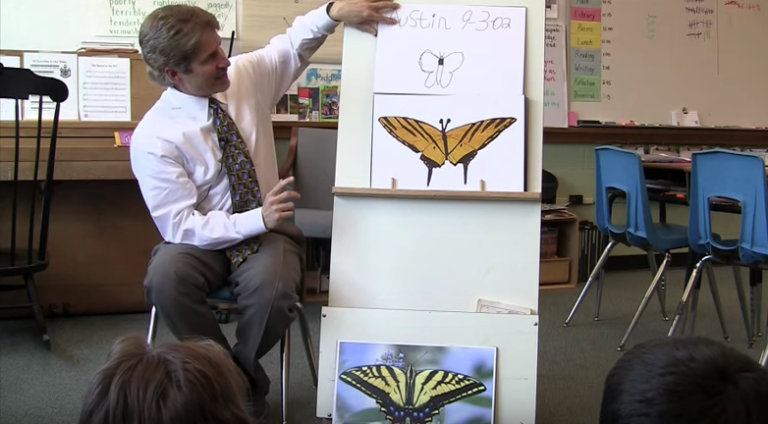
"caption": "Ron Berger shares an example of how a first grader's drawing improved with feedback from peers and multiple drafts.",
"description": null,
"title": "peer-critique",
"credit": "\u003ca href=\"http://eleducation.org/\">EL Education\u003c/a>",
"status": "inherit",
"isLoading": false,
"fetchFailed": false
},
"mindshift_47157": {
"type": "attachments",
"id": "mindshift_47157",
"meta": {
"index": "attachments_1716263798",
"site": "mindshift",
"id": "47157",
"found": true
},
"parent": 47155,
"imgSizes": {
"small": {
"file": "https://ww2.kqed.org/app/uploads/sites/23/2016/12/manipulatives-520x292.gif",
"width": 520,
"mimeType": "image/gif",
"height": 292
},
"twentyfourteen-full-width": {
"file": "https://ww2.kqed.org/app/uploads/sites/23/2016/12/manipulatives-1038x576.gif",
"width": 1038,
"mimeType": "image/gif",
"height": 576
},
"thumbnail": {
"file": "https://ww2.kqed.org/app/uploads/sites/23/2016/12/manipulatives-160x90.gif",
"width": 160,
"mimeType": "image/gif",
"height": 90
},
"fd-sm": {
"file": "https://ww2.kqed.org/app/uploads/sites/23/2016/12/manipulatives-960x540.gif",
"width": 960,
"mimeType": "image/gif",
"height": 540
},
"post-thumbnail": {
"file": "https://ww2.kqed.org/app/uploads/sites/23/2016/12/manipulatives-672x372.gif",
"width": 672,
"mimeType": "image/gif",
"height": 372
},
"xsmall": {
"file": "https://ww2.kqed.org/app/uploads/sites/23/2016/12/manipulatives-375x211.gif",
"width": 375,
"mimeType": "image/gif",
"height": 211
},
"kqedFullSize": {
"file": "https://ww2.kqed.org/app/uploads/sites/23/2016/12/manipulatives-e1482343281414.gif",
"width": 1920,
"height": 1080
},
"large": {
"file": "https://ww2.kqed.org/app/uploads/sites/23/2016/12/manipulatives-1020x574.gif",
"width": 1020,
"mimeType": "image/gif",
"height": 574
},
"xlarge": {
"file": "https://ww2.kqed.org/app/uploads/sites/23/2016/12/manipulatives-1180x664.gif",
"width": 1180,
"mimeType": "image/gif",
"height": 664
},
"guest-author-50": {
"file": "https://ww2.kqed.org/app/uploads/sites/23/2016/12/manipulatives-50x50.gif",
"width": 50,
"mimeType": "image/gif",
"height": 50
},
"guest-author-96": {
"file": "https://ww2.kqed.org/app/uploads/sites/23/2016/12/manipulatives-96x96.gif",
"width": 96,
"mimeType": "image/gif",
"height": 96
},
"medium": {
"file": "https://ww2.kqed.org/app/uploads/sites/23/2016/12/manipulatives-800x450.gif",
"width": 800,
"mimeType": "image/gif",
"height": 450
},
"guest-author-64": {
"file": "https://ww2.kqed.org/app/uploads/sites/23/2016/12/manipulatives-64x64.gif",
"width": 64,
"mimeType": "image/gif",
"height": 64
},
"guest-author-32": {
"file": "https://ww2.kqed.org/app/uploads/sites/23/2016/12/manipulatives-32x32.gif",
"width": 32,
"mimeType": "image/gif",
"height": 32
},
"fd-lrg": {
"file": "https://ww2.kqed.org/app/uploads/sites/23/2016/12/manipulatives-1920x1080.gif",
"width": 1920,
"mimeType": "image/gif",
"height": 1080
},
"fd-med": {
"file": "https://ww2.kqed.org/app/uploads/sites/23/2016/12/manipulatives-1180x664.gif",
"width": 1180,
"mimeType": "image/gif",
"height": 664
},
"full-width": {
"file": "https://ww2.kqed.org/app/uploads/sites/23/2016/12/manipulatives-1920x1080.gif",
"width": 1920,
"mimeType": "image/gif",
"height": 1080
},
"detail": {
"file": "https://ww2.kqed.org/app/uploads/sites/23/2016/12/manipulatives-150x150.gif",
"width": 150,
"mimeType": "image/gif",
"height": 150
},
"medium_large": {
"file": "https://ww2.kqed.org/app/uploads/sites/23/2016/12/manipulatives-768x432.gif",
"width": 768,
"mimeType": "image/gif",
"height": 432
},
"guest-author-128": {
"file": "https://ww2.kqed.org/app/uploads/sites/23/2016/12/manipulatives-128x128.gif",
"width": 128,
"mimeType": "image/gif",
"height": 128
},
"xxsmall": {
"file": "https://ww2.kqed.org/app/uploads/sites/23/2016/12/manipulatives-240x135.gif",
"width": 240,
"mimeType": "image/gif",
"height": 135
}
},
"publishDate": 1481850919,
"modified": 1481850950,
"caption": null,
"description": null,
"title": "manipulatives",
"credit": "iStock",
"status": "inherit",
"isLoading": false,
"fetchFailed": false
},
"mindshift_47164": {
"type": "attachments",
"id": "mindshift_47164",
"meta": {
"index": "attachments_1716263798",
"site": "mindshift",
"id": "47164",
"found": true
},
"parent": 47160,
"imgSizes": {
"small": {
"file": "https://ww2.kqed.org/app/uploads/sites/23/2016/12/brain-drawing-520x293.gif",
"width": 520,
"mimeType": "image/gif",
"height": 293
},
"twentyfourteen-full-width": {
"file": "https://ww2.kqed.org/app/uploads/sites/23/2016/12/brain-drawing-1038x576.gif",
"width": 1038,
"mimeType": "image/gif",
"height": 576
},
"thumbnail": {
"file": "https://ww2.kqed.org/app/uploads/sites/23/2016/12/brain-drawing-160x90.gif",
"width": 160,
"mimeType": "image/gif",
"height": 90
},
"fd-sm": {
"file": "https://ww2.kqed.org/app/uploads/sites/23/2016/12/brain-drawing-960x540.gif",
"width": 960,
"mimeType": "image/gif",
"height": 540
},
"post-thumbnail": {
"file": "https://ww2.kqed.org/app/uploads/sites/23/2016/12/brain-drawing-672x372.gif",
"width": 672,
"mimeType": "image/gif",
"height": 372
},
"xsmall": {
"file": "https://ww2.kqed.org/app/uploads/sites/23/2016/12/brain-drawing-375x211.gif",
"width": 375,
"mimeType": "image/gif",
"height": 211
},
"kqedFullSize": {
"file": "https://ww2.kqed.org/app/uploads/sites/23/2016/12/brain-drawing.gif",
"width": 1500,
"height": 844
},
"large": {
"file": "https://ww2.kqed.org/app/uploads/sites/23/2016/12/brain-drawing-1020x574.gif",
"width": 1020,
"mimeType": "image/gif",
"height": 574
},
"xlarge": {
"file": "https://ww2.kqed.org/app/uploads/sites/23/2016/12/brain-drawing-1180x664.gif",
"width": 1180,
"mimeType": "image/gif",
"height": 664
},
"guest-author-50": {
"file": "https://ww2.kqed.org/app/uploads/sites/23/2016/12/brain-drawing-50x50.gif",
"width": 50,
"mimeType": "image/gif",
"height": 50
},
"guest-author-96": {
"file": "https://ww2.kqed.org/app/uploads/sites/23/2016/12/brain-drawing-96x96.gif",
"width": 96,
"mimeType": "image/gif",
"height": 96
},
"medium": {
"file": "https://ww2.kqed.org/app/uploads/sites/23/2016/12/brain-drawing-800x450.gif",
"width": 800,
"mimeType": "image/gif",
"height": 450
},
"guest-author-64": {
"file": "https://ww2.kqed.org/app/uploads/sites/23/2016/12/brain-drawing-64x64.gif",
"width": 64,
"mimeType": "image/gif",
"height": 64
},
"guest-author-32": {
"file": "https://ww2.kqed.org/app/uploads/sites/23/2016/12/brain-drawing-32x32.gif",
"width": 32,
"mimeType": "image/gif",
"height": 32
},
"fd-med": {
"file": "https://ww2.kqed.org/app/uploads/sites/23/2016/12/brain-drawing-1180x664.gif",
"width": 1180,
"mimeType": "image/gif",
"height": 664
},
"detail": {
"file": "https://ww2.kqed.org/app/uploads/sites/23/2016/12/brain-drawing-150x150.gif",
"width": 150,
"mimeType": "image/gif",
"height": 150
},
"medium_large": {
"file": "https://ww2.kqed.org/app/uploads/sites/23/2016/12/brain-drawing-768x432.gif",
"width": 768,
"mimeType": "image/gif",
"height": 432
},
"guest-author-128": {
"file": "https://ww2.kqed.org/app/uploads/sites/23/2016/12/brain-drawing-128x128.gif",
"width": 128,
"mimeType": "image/gif",
"height": 128
},
"xxsmall": {
"file": "https://ww2.kqed.org/app/uploads/sites/23/2016/12/brain-drawing-240x135.gif",
"width": 240,
"mimeType": "image/gif",
"height": 135
}
},
"publishDate": 1481917790,
"modified": 1481917872,
"caption": null,
"description": null,
"title": "brain-drawing",
"credit": "Abhijit Bhaduri/\u003ca href=\"https://www.flickr.com/photos/53272102@N06/27648314436/in/photolist-J8bQCu-7Dvjs2-5z9F41-83eNFU-dvy2Lf-dzaRhj-dcVGb3-gayZDq-645D1o-6do3r1-jypVk8-wTEZDo-61eaPC-xbQUur-aDNE65-5vGNkE-5pUBZM-dPuvJT-bPewqD-bSucN-GCePiF-pRf9pH-qDbwbV-G9PtQ-9UwYp-7TpcFC-8nuU6d-Y6ff-acSW1K-bs3gLL-6zHHi9-788nce-8JhBkW-c9MAKN-4LR19b-qcDjt-8MkSZC-cVJN4-4LLPwc-3nF1wQ-2DYfmw-8AtdcS-4XECzP-FtM5-CStwax-ayHjjj-8BTLT1-ihD6Dc-jE3SCJ-784H9C\">Flickr\u003c/a>",
"status": "inherit",
"isLoading": false,
"fetchFailed": false
},
"mindshift_47076": {
"type": "attachments",
"id": "mindshift_47076",
"meta": {
"index": "attachments_1716263798",
"site": "mindshift",
"id": "47076",
"found": true
},
"parent": 46905,
"imgSizes": {
"small": {
"file": "https://ww2.kqed.org/app/uploads/sites/23/2016/12/Numbers-520x390.jpg",
"width": 520,
"mimeType": "image/jpeg",
"height": 390
},
"twentyfourteen-full-width": {
"file": "https://ww2.kqed.org/app/uploads/sites/23/2016/12/Numbers-1024x576.jpg",
"width": 1024,
"mimeType": "image/jpeg",
"height": 576
},
"thumbnail": {
"file": "https://ww2.kqed.org/app/uploads/sites/23/2016/12/Numbers-160x120.jpg",
"width": 160,
"mimeType": "image/jpeg",
"height": 120
},
"fd-sm": {
"file": "https://ww2.kqed.org/app/uploads/sites/23/2016/12/Numbers-960x720.jpg",
"width": 960,
"mimeType": "image/jpeg",
"height": 720
},
"post-thumbnail": {
"file": "https://ww2.kqed.org/app/uploads/sites/23/2016/12/Numbers-672x372.jpg",
"width": 672,
"mimeType": "image/jpeg",
"height": 372
},
"xsmall": {
"file": "https://ww2.kqed.org/app/uploads/sites/23/2016/12/Numbers-375x281.jpg",
"width": 375,
"mimeType": "image/jpeg",
"height": 281
},
"kqedFullSize": {
"file": "https://ww2.kqed.org/app/uploads/sites/23/2016/12/Numbers.jpg",
"width": 1024,
"height": 768
},
"large": {
"file": "https://ww2.kqed.org/app/uploads/sites/23/2016/12/Numbers-1020x765.jpg",
"width": 1020,
"mimeType": "image/jpeg",
"height": 765
},
"guest-author-50": {
"file": "https://ww2.kqed.org/app/uploads/sites/23/2016/12/Numbers-50x50.jpg",
"width": 50,
"mimeType": "image/jpeg",
"height": 50
},
"guest-author-96": {
"file": "https://ww2.kqed.org/app/uploads/sites/23/2016/12/Numbers-96x96.jpg",
"width": 96,
"mimeType": "image/jpeg",
"height": 96
},
"medium": {
"file": "https://ww2.kqed.org/app/uploads/sites/23/2016/12/Numbers-800x600.jpg",
"width": 800,
"mimeType": "image/jpeg",
"height": 600
},
"guest-author-64": {
"file": "https://ww2.kqed.org/app/uploads/sites/23/2016/12/Numbers-64x64.jpg",
"width": 64,
"mimeType": "image/jpeg",
"height": 64
},
"guest-author-32": {
"file": "https://ww2.kqed.org/app/uploads/sites/23/2016/12/Numbers-32x32.jpg",
"width": 32,
"mimeType": "image/jpeg",
"height": 32
},
"detail": {
"file": "https://ww2.kqed.org/app/uploads/sites/23/2016/12/Numbers-150x150.jpg",
"width": 150,
"mimeType": "image/jpeg",
"height": 150
},
"medium_large": {
"file": "https://ww2.kqed.org/app/uploads/sites/23/2016/12/Numbers-768x576.jpg",
"width": 768,
"mimeType": "image/jpeg",
"height": 576
},
"guest-author-128": {
"file": "https://ww2.kqed.org/app/uploads/sites/23/2016/12/Numbers-128x128.jpg",
"width": 128,
"mimeType": "image/jpeg",
"height": 128
},
"xxsmall": {
"file": "https://ww2.kqed.org/app/uploads/sites/23/2016/12/Numbers-240x180.jpg",
"width": 240,
"mimeType": "image/jpeg",
"height": 180
}
},
"publishDate": 1480926006,
"modified": 1480926017,
"caption": null,
"description": null,
"title": "numbers",
"credit": "\u003ca href=\"https://www.flickr.com/photos/40351463@N00/533987722/in/photolist-PbPWS-hSwkzi-3atzb-c8d8eC-nCVfyz-5MSPdv-xZsyw-nCCpit-fwc7x-gtPwzV-6PM2A6-q16yHC-2VrWM-f8UpU-kzyri-7c65a8-5QpNev-8zv5vt-9Km3h5-b1Rys-go6CsU-fHyEjj-4mRhXr-fwcah-5a2W1Y-4bwEa8-H7tNE-eXQSwa-7wtTza-4HreAA-4Kf5yJ-5gVVZy-eXuGn-cKBf-nCUMZm-orDSvz-4QKDiw-nmqyqy-nmqTKV-2eNzo-j5m5-2ConUs-4vXWph-65i5Mt-8RAkg-bx4cej-3oN5Sy-8nEKWS-4YQNVt-6GdzPW\">Flickr/paula soler-moya\u003c/a>",
"status": "inherit",
"isLoading": false,
"fetchFailed": false
},
"mindshift_46793": {
"type": "attachments",
"id": "mindshift_46793",
"meta": {
"index": "attachments_1716263798",
"site": "mindshift",
"id": "46793",
"found": true
},
"parent": 46772,
"imgSizes": {
"small": {
"file": "https://ww2.kqed.org/app/uploads/sites/23/2016/10/piktochart-520x270.png",
"width": 520,
"mimeType": "image/png",
"height": 270
},
"thumbnail": {
"file": "https://ww2.kqed.org/app/uploads/sites/23/2016/10/piktochart-160x83.png",
"width": 160,
"mimeType": "image/png",
"height": 83
},
"post-thumbnail": {
"file": "https://ww2.kqed.org/app/uploads/sites/23/2016/10/piktochart-672x372.png",
"width": 672,
"mimeType": "image/png",
"height": 372
},
"xsmall": {
"file": "https://ww2.kqed.org/app/uploads/sites/23/2016/10/piktochart-375x195.png",
"width": 375,
"mimeType": "image/png",
"height": 195
},
"kqedFullSize": {
"file": "https://ww2.kqed.org/app/uploads/sites/23/2016/10/piktochart.png",
"width": 957,
"height": 497
},
"guest-author-50": {
"file": "https://ww2.kqed.org/app/uploads/sites/23/2016/10/piktochart-50x50.png",
"width": 50,
"mimeType": "image/png",
"height": 50
},
"guest-author-96": {
"file": "https://ww2.kqed.org/app/uploads/sites/23/2016/10/piktochart-96x96.png",
"width": 96,
"mimeType": "image/png",
"height": 96
},
"medium": {
"file": "https://ww2.kqed.org/app/uploads/sites/23/2016/10/piktochart-800x415.png",
"width": 800,
"mimeType": "image/png",
"height": 415
},
"guest-author-64": {
"file": "https://ww2.kqed.org/app/uploads/sites/23/2016/10/piktochart-64x64.png",
"width": 64,
"mimeType": "image/png",
"height": 64
},
"guest-author-32": {
"file": "https://ww2.kqed.org/app/uploads/sites/23/2016/10/piktochart-32x32.png",
"width": 32,
"mimeType": "image/png",
"height": 32
},
"detail": {
"file": "https://ww2.kqed.org/app/uploads/sites/23/2016/10/piktochart-150x150.png",
"width": 150,
"mimeType": "image/png",
"height": 150
},
"medium_large": {
"file": "https://ww2.kqed.org/app/uploads/sites/23/2016/10/piktochart-768x399.png",
"width": 768,
"mimeType": "image/png",
"height": 399
},
"guest-author-128": {
"file": "https://ww2.kqed.org/app/uploads/sites/23/2016/10/piktochart-128x128.png",
"width": 128,
"mimeType": "image/png",
"height": 128
},
"xxsmall": {
"file": "https://ww2.kqed.org/app/uploads/sites/23/2016/10/piktochart-240x125.png",
"width": 240,
"mimeType": "image/png",
"height": 125
}
},
"publishDate": 1477342614,
"modified": 1477342659,
"caption": "Students at Two Rivers Public Charter School present piktocharts.",
"description": null,
"title": "piktochart",
"credit": "Two Rivers Public Charter School",
"status": "inherit",
"isLoading": false,
"fetchFailed": false
},
"mindshift_46796": {
"type": "attachments",
"id": "mindshift_46796",
"meta": {
"index": "attachments_1716263798",
"site": "mindshift",
"id": "46796",
"found": true
},
"parent": 46795,
"imgSizes": {
"small": {
"file": "https://ww2.kqed.org/app/uploads/sites/23/2016/10/NMSA-cropped-520x293.gif",
"width": 520,
"mimeType": "image/gif",
"height": 293
},
"thumbnail": {
"file": "https://ww2.kqed.org/app/uploads/sites/23/2016/10/NMSA-cropped-160x90.gif",
"width": 160,
"mimeType": "image/gif",
"height": 90
},
"post-thumbnail": {
"file": "https://ww2.kqed.org/app/uploads/sites/23/2016/10/NMSA-cropped-672x372.gif",
"width": 672,
"mimeType": "image/gif",
"height": 372
},
"xsmall": {
"file": "https://ww2.kqed.org/app/uploads/sites/23/2016/10/NMSA-cropped-375x211.gif",
"width": 375,
"mimeType": "image/gif",
"height": 211
},
"kqedFullSize": {
"file": "https://ww2.kqed.org/app/uploads/sites/23/2016/10/NMSA-cropped.gif",
"width": 757,
"height": 426
},
"guest-author-50": {
"file": "https://ww2.kqed.org/app/uploads/sites/23/2016/10/NMSA-cropped-50x50.gif",
"width": 50,
"mimeType": "image/gif",
"height": 50
},
"guest-author-96": {
"file": "https://ww2.kqed.org/app/uploads/sites/23/2016/10/NMSA-cropped-96x96.gif",
"width": 96,
"mimeType": "image/gif",
"height": 96
},
"guest-author-64": {
"file": "https://ww2.kqed.org/app/uploads/sites/23/2016/10/NMSA-cropped-64x64.gif",
"width": 64,
"mimeType": "image/gif",
"height": 64
},
"detail": {
"file": "https://ww2.kqed.org/app/uploads/sites/23/2016/10/NMSA-cropped-150x150.gif",
"width": 150,
"mimeType": "image/gif",
"height": 150
},
"guest-author-32": {
"file": "https://ww2.kqed.org/app/uploads/sites/23/2016/10/NMSA-cropped-32x32.gif",
"width": 32,
"mimeType": "image/gif",
"height": 32
},
"guest-author-128": {
"file": "https://ww2.kqed.org/app/uploads/sites/23/2016/10/NMSA-cropped-128x128.gif",
"width": 128,
"mimeType": "image/gif",
"height": 128
},
"xxsmall": {
"file": "https://ww2.kqed.org/app/uploads/sites/23/2016/10/NMSA-cropped-240x135.gif",
"width": 240,
"mimeType": "image/gif",
"height": 135
}
},
"publishDate": 1477351578,
"modified": 1477351634,
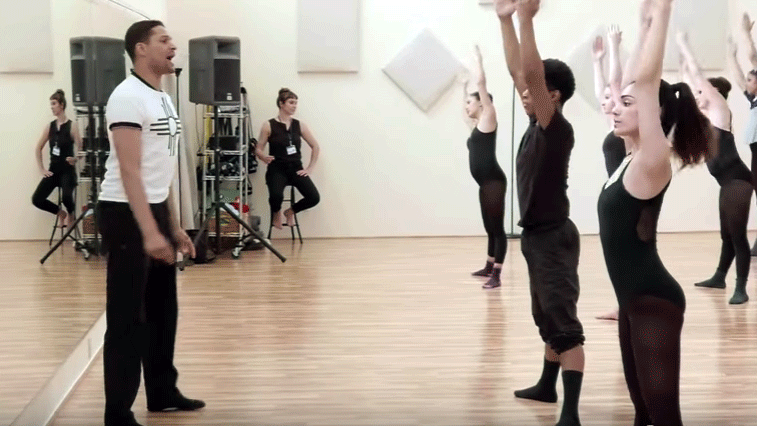
"caption": "Dance students at the New Mexico School of the Arts practice.",
"description": null,
"title": "NMSA-cropped",
"credit": "\u003ca href=\"https://www.edutopia.org/school/new-mexico-school-arts\">Edutopia\u003c/a>",
"status": "inherit",
"isLoading": false,
"fetchFailed": false
},
"mindshift_46567": {
"type": "attachments",
"id": "mindshift_46567",
"meta": {
"index": "attachments_1716263798",
"site": "mindshift",
"id": "46567",
"found": true
},
"parent": 46565,
"imgSizes": {
"twentyfourteen-full-width": {
"file": "https://ww2.kqed.org/app/uploads/sites/23/2016/10/7793353006_b4974db77e_b-1024x576.jpg",
"width": 1024,
"mimeType": "image/jpeg",
"height": 576
},
"thumbnail": {
"file": "https://ww2.kqed.org/app/uploads/sites/23/2016/10/7793353006_b4974db77e_b-400x267.jpg",
"width": 400,
"mimeType": "image/jpeg",
"height": 267
},
"fd-sm": {
"file": "https://ww2.kqed.org/app/uploads/sites/23/2016/10/7793353006_b4974db77e_b-960x640.jpg",
"width": 960,
"mimeType": "image/jpeg",
"height": 640
},
"post-thumbnail": {
"file": "https://ww2.kqed.org/app/uploads/sites/23/2016/10/7793353006_b4974db77e_b-672x372.jpg",
"width": 672,
"mimeType": "image/jpeg",
"height": 372
},
"kqedFullSize": {
"file": "https://ww2.kqed.org/app/uploads/sites/23/2016/10/7793353006_b4974db77e_b.jpg",
"width": 1024,
"height": 683
},
"guest-author-50": {
"file": "https://ww2.kqed.org/app/uploads/sites/23/2016/10/7793353006_b4974db77e_b-50x50.jpg",
"width": 50,
"mimeType": "image/jpeg",
"height": 50
},
"guest-author-96": {
"file": "https://ww2.kqed.org/app/uploads/sites/23/2016/10/7793353006_b4974db77e_b-96x96.jpg",
"width": 96,
"mimeType": "image/jpeg",
"height": 96
},
"medium": {
"file": "https://ww2.kqed.org/app/uploads/sites/23/2016/10/7793353006_b4974db77e_b-800x534.jpg",
"width": 800,
"mimeType": "image/jpeg",
"height": 534
},
"guest-author-64": {
"file": "https://ww2.kqed.org/app/uploads/sites/23/2016/10/7793353006_b4974db77e_b-64x64.jpg",
"width": 64,
"mimeType": "image/jpeg",
"height": 64
},
"guest-author-32": {
"file": "https://ww2.kqed.org/app/uploads/sites/23/2016/10/7793353006_b4974db77e_b-32x32.jpg",
"width": 32,
"mimeType": "image/jpeg",
"height": 32
},
"cat_post_thumb_sizecategory-posts-2": {
"file": "https://ww2.kqed.org/app/uploads/sites/23/2016/10/7793353006_b4974db77e_b-50x50.jpg",
"width": 50,
"mimeType": "image/jpeg",
"height": 50
},
"detail": {
"file": "https://ww2.kqed.org/app/uploads/sites/23/2016/10/7793353006_b4974db77e_b-150x150.jpg",
"width": 150,
"mimeType": "image/jpeg",
"height": 150
},
"medium_large": {
"file": "https://ww2.kqed.org/app/uploads/sites/23/2016/10/7793353006_b4974db77e_b-768x512.jpg",
"width": 768,
"mimeType": "image/jpeg",
"height": 512
},
"guest-author-128": {
"file": "https://ww2.kqed.org/app/uploads/sites/23/2016/10/7793353006_b4974db77e_b-128x128.jpg",
"width": 128,
"mimeType": "image/jpeg",
"height": 128
}
},
"publishDate": 1475516524,
"modified": 1475516605,
"caption": null,
"description": null,
"title": "7793353006_b4974db77e_b",
"credit": "trizoultro/\u003ca href=\"https://www.flickr.com/photos/theembermonths/7793353006/\">Flickr\u003c/a>",
"status": "inherit",
"isLoading": false,
"fetchFailed": false
},
"mindshift_45955": {
"type": "attachments",
"id": "mindshift_45955",
"meta": {
"index": "attachments_1716263798",
"site": "mindshift",
"id": "45955",
"found": true
},
"parent": 45952,
"imgSizes": {
"twentyfourteen-full-width": {
"file": "https://ww2.kqed.org/app/uploads/sites/23/2016/07/puzzle-brain-1038x576.png",
"width": 1038,
"mimeType": "image/png",
"height": 576
},
"thumbnail": {
"file": "https://ww2.kqed.org/app/uploads/sites/23/2016/07/puzzle-brain-400x225.png",
"width": 400,
"mimeType": "image/png",
"height": 225
},
"fd-sm": {
"file": "https://ww2.kqed.org/app/uploads/sites/23/2016/07/puzzle-brain-960x540.png",
"width": 960,
"mimeType": "image/png",
"height": 540
},
"post-thumbnail": {
"file": "https://ww2.kqed.org/app/uploads/sites/23/2016/07/puzzle-brain-672x372.png",
"width": 672,
"mimeType": "image/png",
"height": 372
},
"kqedFullSize": {
"file": "https://ww2.kqed.org/app/uploads/sites/23/2016/07/puzzle-brain.png",
"width": 1920,
"height": 1080
},
"large": {
"file": "https://ww2.kqed.org/app/uploads/sites/23/2016/07/puzzle-brain-1440x810.png",
"width": 1440,
"mimeType": "image/png",
"height": 810
},
"guest-author-50": {
"file": "https://ww2.kqed.org/app/uploads/sites/23/2016/07/puzzle-brain-50x50.png",
"width": 50,
"mimeType": "image/png",
"height": 50
},
"guest-author-96": {
"file": "https://ww2.kqed.org/app/uploads/sites/23/2016/07/puzzle-brain-96x96.png",
"width": 96,
"mimeType": "image/png",
"height": 96
},
"medium": {
"file": "https://ww2.kqed.org/app/uploads/sites/23/2016/07/puzzle-brain-800x450.png",
"width": 800,
"mimeType": "image/png",
"height": 450
},
"guest-author-64": {
"file": "https://ww2.kqed.org/app/uploads/sites/23/2016/07/puzzle-brain-64x64.png",
"width": 64,
"mimeType": "image/png",
"height": 64
},
"guest-author-32": {
"file": "https://ww2.kqed.org/app/uploads/sites/23/2016/07/puzzle-brain-32x32.png",
"width": 32,
"mimeType": "image/png",
"height": 32
},
"cat_post_thumb_sizecategory-posts-2": {
"file": "https://ww2.kqed.org/app/uploads/sites/23/2016/07/puzzle-brain-50x50.png",
"width": 50,
"mimeType": "image/png",
"height": 50
},
"fd-lrg": {
"file": "https://ww2.kqed.org/app/uploads/sites/23/2016/07/puzzle-brain-1920x1080.png",
"width": 1920,
"mimeType": "image/png",
"height": 1080
},
"fd-med": {
"file": "https://ww2.kqed.org/app/uploads/sites/23/2016/07/puzzle-brain-1180x664.png",
"width": 1180,
"mimeType": "image/png",
"height": 664
},
"detail": {
"file": "https://ww2.kqed.org/app/uploads/sites/23/2016/07/puzzle-brain-150x150.png",
"width": 150,
"mimeType": "image/png",
"height": 150
},
"medium_large": {
"file": "https://ww2.kqed.org/app/uploads/sites/23/2016/07/puzzle-brain-768x432.png",
"width": 768,
"mimeType": "image/png",
"height": 432
},
"guest-author-128": {
"file": "https://ww2.kqed.org/app/uploads/sites/23/2016/07/puzzle-brain-128x128.png",
"width": 128,
"mimeType": "image/png",
"height": 128
}
},
"publishDate": 1469488992,
"modified": 1469489012,
"caption": null,
"description": null,
"title": "puzzle-brain",
"credit": "iStock",
"status": "inherit",
"isLoading": false,
"fetchFailed": false
},
"mindshift_45746": {
"type": "attachments",
"id": "mindshift_45746",
"meta": {
"index": "attachments_1716263798",
"site": "mindshift",
"id": "45746",
"found": true
},
"parent": 45249,
"imgSizes": {
"twentyfourteen-full-width": {
"file": "https://ww2.kqed.org/app/uploads/sites/23/2016/07/5733909383_b0673a730c_o-1038x576.jpg",
"width": 1038,
"mimeType": "image/jpeg",
"height": 576
},
"thumbnail": {
"file": "https://ww2.kqed.org/app/uploads/sites/23/2016/07/5733909383_b0673a730c_o-400x268.jpg",
"width": 400,
"mimeType": "image/jpeg",
"height": 268
},
"fd-sm": {
"file": "https://ww2.kqed.org/app/uploads/sites/23/2016/07/5733909383_b0673a730c_o-960x643.jpg",
"width": 960,
"mimeType": "image/jpeg",
"height": 643
},
"post-thumbnail": {
"file": "https://ww2.kqed.org/app/uploads/sites/23/2016/07/5733909383_b0673a730c_o-672x372.jpg",
"width": 672,
"mimeType": "image/jpeg",
"height": 372
},
"kqedFullSize": {
"file": "https://ww2.kqed.org/app/uploads/sites/23/2016/07/5733909383_b0673a730c_o-e1467827791469.jpg",
"width": 1920,
"height": 1285
},
"large": {
"file": "https://ww2.kqed.org/app/uploads/sites/23/2016/07/5733909383_b0673a730c_o-1440x964.jpg",
"width": 1440,
"mimeType": "image/jpeg",
"height": 964
},
"guest-author-50": {
"file": "https://ww2.kqed.org/app/uploads/sites/23/2016/07/5733909383_b0673a730c_o-50x50.jpg",
"width": 50,
"mimeType": "image/jpeg",
"height": 50
},
"guest-author-96": {
"file": "https://ww2.kqed.org/app/uploads/sites/23/2016/07/5733909383_b0673a730c_o-96x96.jpg",
"width": 96,
"mimeType": "image/jpeg",
"height": 96
},
"medium": {
"file": "https://ww2.kqed.org/app/uploads/sites/23/2016/07/5733909383_b0673a730c_o-800x536.jpg",
"width": 800,
"mimeType": "image/jpeg",
"height": 536
},
"guest-author-64": {
"file": "https://ww2.kqed.org/app/uploads/sites/23/2016/07/5733909383_b0673a730c_o-64x64.jpg",
"width": 64,
"mimeType": "image/jpeg",
"height": 64
},
"guest-author-32": {
"file": "https://ww2.kqed.org/app/uploads/sites/23/2016/07/5733909383_b0673a730c_o-32x32.jpg",
"width": 32,
"mimeType": "image/jpeg",
"height": 32
},
"cat_post_thumb_sizecategory-posts-2": {
"file": "https://ww2.kqed.org/app/uploads/sites/23/2016/07/5733909383_b0673a730c_o-50x50.jpg",
"width": 50,
"mimeType": "image/jpeg",
"height": 50
},
"fd-lrg": {
"file": "https://ww2.kqed.org/app/uploads/sites/23/2016/07/5733909383_b0673a730c_o-1920x1285.jpg",
"width": 1920,
"mimeType": "image/jpeg",
"height": 1285
},
"fd-med": {
"file": "https://ww2.kqed.org/app/uploads/sites/23/2016/07/5733909383_b0673a730c_o-1180x790.jpg",
"width": 1180,
"mimeType": "image/jpeg",
"height": 790
},
"detail": {
"file": "https://ww2.kqed.org/app/uploads/sites/23/2016/07/5733909383_b0673a730c_o-150x150.jpg",
"width": 150,
"mimeType": "image/jpeg",
"height": 150
},
"medium_large": {
"file": "https://ww2.kqed.org/app/uploads/sites/23/2016/07/5733909383_b0673a730c_o-768x514.jpg",
"width": 768,
"mimeType": "image/jpeg",
"height": 514
},
"guest-author-128": {
"file": "https://ww2.kqed.org/app/uploads/sites/23/2016/07/5733909383_b0673a730c_o-128x128.jpg",
"width": 128,
"mimeType": "image/jpeg",
"height": 128
}
},
"publishDate": 1467827769,
"modified": 1467827911,
"caption": null,
"description": null,
"title": null,
"credit": "\u003ca href=\"https://www.flickr.com/photos/jobless_photoman/5733909383/in/photolist-9JFMuB-9Uos8S-qSWdpe-kvQAjU-46Wpm7-9a4eBQ-L82rG-ivJwN5-4R8Jec-89WzGX-mZGycB-5Ya9f9-bpRfdo-5zB5uS-6MauqS-hB59F6-NJnN4-pBzGVk-7BndqW-sn3PkJ-Dixoz-dFMPJz-2q6J4p-6FsHrn-67whD3-mTWCM-dd7dDa-4giQ3N-k9wRuW-xYLN9-qJf9Un-8LSR7A-ihj81a-5aGhqp-9cvWhz-jUxV9F-fQbuSy-4MjUdF-pfnGaT-nJvhVb-n2pAK-fQbFoM-Jjdk3n-8dW5H6-6FWXzk-S7ewH-apd4Y6-oYAZQk-5hYkru-6Cnin2\">Flickr/Stephanus Riosetiawan\u003c/a>",
"status": "inherit",
"isLoading": false,
"fetchFailed": false
},
"mindshift_45429": {
"type": "attachments",
"id": "mindshift_45429",
"meta": {
"index": "attachments_1716263798",
"site": "mindshift",
"id": "45429",
"found": true
},
"parent": 45366,
"imgSizes": {
"twentyfourteen-full-width": {
"file": "https://ww2.kqed.org/app/uploads/sites/23/2016/06/iStock_88339575_LARGE-1038x576.jpg",
"width": 1038,
"mimeType": "image/jpeg",
"height": 576
},
"thumbnail": {
"file": "https://ww2.kqed.org/app/uploads/sites/23/2016/06/iStock_88339575_LARGE-400x243.jpg",
"width": 400,
"mimeType": "image/jpeg",
"height": 243
},
"fd-sm": {
"file": "https://ww2.kqed.org/app/uploads/sites/23/2016/06/iStock_88339575_LARGE-960x582.jpg",
"width": 960,
"mimeType": "image/jpeg",
"height": 582
},
"post-thumbnail": {
"file": "https://ww2.kqed.org/app/uploads/sites/23/2016/06/iStock_88339575_LARGE-672x372.jpg",
"width": 672,
"mimeType": "image/jpeg",
"height": 372
},
"kqedFullSize": {
"file": "https://ww2.kqed.org/app/uploads/sites/23/2016/06/iStock_88339575_LARGE-e1465456294261.jpg",
"width": 1920,
"height": 1164
},
"large": {
"file": "https://ww2.kqed.org/app/uploads/sites/23/2016/06/iStock_88339575_LARGE-1440x873.jpg",
"width": 1440,
"mimeType": "image/jpeg",
"height": 873
},
"guest-author-50": {
"file": "https://ww2.kqed.org/app/uploads/sites/23/2016/06/iStock_88339575_LARGE-50x50.jpg",
"width": 50,
"mimeType": "image/jpeg",
"height": 50
},
"guest-author-96": {
"file": "https://ww2.kqed.org/app/uploads/sites/23/2016/06/iStock_88339575_LARGE-96x96.jpg",
"width": 96,
"mimeType": "image/jpeg",
"height": 96
},
"medium": {
"file": "https://ww2.kqed.org/app/uploads/sites/23/2016/06/iStock_88339575_LARGE-800x485.jpg",
"width": 800,
"mimeType": "image/jpeg",
"height": 485
},
"guest-author-64": {
"file": "https://ww2.kqed.org/app/uploads/sites/23/2016/06/iStock_88339575_LARGE-64x64.jpg",
"width": 64,
"mimeType": "image/jpeg",
"height": 64
},
"guest-author-32": {
"file": "https://ww2.kqed.org/app/uploads/sites/23/2016/06/iStock_88339575_LARGE-32x32.jpg",
"width": 32,
"mimeType": "image/jpeg",
"height": 32
},
"cat_post_thumb_sizecategory-posts-2": {
"file": "https://ww2.kqed.org/app/uploads/sites/23/2016/06/iStock_88339575_LARGE-50x50.jpg",
"width": 50,
"mimeType": "image/jpeg",
"height": 50
},
"fd-lrg": {
"file": "https://ww2.kqed.org/app/uploads/sites/23/2016/06/iStock_88339575_LARGE-1920x1164.jpg",
"width": 1920,
"mimeType": "image/jpeg",
"height": 1164
},
"fd-med": {
"file": "https://ww2.kqed.org/app/uploads/sites/23/2016/06/iStock_88339575_LARGE-1180x716.jpg",
"width": 1180,
"mimeType": "image/jpeg",
"height": 716
},
"detail": {
"file": "https://ww2.kqed.org/app/uploads/sites/23/2016/06/iStock_88339575_LARGE-150x150.jpg",
"width": 150,
"mimeType": "image/jpeg",
"height": 150
},
"medium_large": {
"file": "https://ww2.kqed.org/app/uploads/sites/23/2016/06/iStock_88339575_LARGE-768x466.jpg",
"width": 768,
"mimeType": "image/jpeg",
"height": 466
},
"guest-author-128": {
"file": "https://ww2.kqed.org/app/uploads/sites/23/2016/06/iStock_88339575_LARGE-128x128.jpg",
"width": 128,
"mimeType": "image/jpeg",
"height": 128
}
},
"publishDate": 1465456277,
"modified": 1465456329,
"caption": null,
"description": null,
"title": "Multicolored flags against the blue sky with traces from planes",
"credit": "iStock",
"status": "inherit",
"isLoading": false,
"fetchFailed": false
}
},
"audioPlayerReducer": {
"postId": "stream_live",
"isPaused": true,
"isPlaying": false,
"pfsActive": false,
"pledgeModalIsOpen": true,
"playerDrawerIsOpen": false,
"liveAudioPlayStartedAt": 0,
"liveAudioPlayContext": ""
},
"authorsReducer": {
"byline_mindshift_47420": {
"type": "authors",
"id": "byline_mindshift_47420",
"meta": {
"override": true
},
"slug": "byline_mindshift_47420",
"name": "Katherine Hobson",
"isLoading": false
},
"katrinaschwartz": {
"type": "authors",
"id": "234",
"meta": {
"index": "authors_1716337520",
"id": "234",
"found": true
},
"name": "Katrina Schwartz",
"firstName": "Katrina",
"lastName": "Schwartz",
"slug": "katrinaschwartz",
"email": "kschwartz@kqed.org",
"display_author_email": false,
"staff_mastheads": [
"news"
],
"title": "Producer",
"bio": "Katrina Schwartz is a journalist based in San Francisco. She's worked at KPCC public radio in LA and has reported on air and online for KQED since 2010. She covered how teaching and learning is changing for MindShift between 2012 and 2020. She is the co-host of the MindShift podcast and now produces KQED's Bay Curious podcast.",
"avatar": "https://secure.gravatar.com/avatar/edb4ee79070447a018538c9aae6eeecf28786515b8a0c30e43b6b7dce5aa44c8?s=600&d=blank&r=g",
"twitter": "kschwart",
"bluesky": null,
"facebook": null,
"instagram": null,
"linkedin": null,
"sites": [
{
"site": "",
"roles": [
"editor"
]
},
{
"site": "news",
"roles": [
"editor"
]
},
{
"site": "mindshift",
"roles": [
"administrator"
]
},
{
"site": "stateofhealth",
"roles": [
"author"
]
},
{
"site": "science",
"roles": [
"editor"
]
}
],
"headData": {
"title": "Katrina Schwartz | KQED",
"description": "Producer",
"ogImgSrc": "https://secure.gravatar.com/avatar/edb4ee79070447a018538c9aae6eeecf28786515b8a0c30e43b6b7dce5aa44c8?s=600&d=blank&r=g",
"twImgSrc": "https://secure.gravatar.com/avatar/edb4ee79070447a018538c9aae6eeecf28786515b8a0c30e43b6b7dce5aa44c8?s=600&d=blank&r=g"
},
"isLoading": false,
"link": "/author/katrinaschwartz"
},
"hollykorbey": {
"type": "authors",
"id": "4445",
"meta": {
"index": "authors_1716337520",
"id": "4445",
"found": true
},
"name": "Holly Korbey",
"firstName": "Holly",
"lastName": "Korbey",
"slug": "hollykorbey",
"email": "holly@hollykorbey.com",
"display_author_email": false,
"staff_mastheads": [],
"title": null,
"bio": "Holly Korbey's work on parenting and education has appeared in The New York Times, The Atlantic, Babble, Brain, Child Magazine, and others. She lives in Nashville with her family. Follow her on Twitter: @HKorbey",
"avatar": "https://secure.gravatar.com/avatar/f385f7a3b90e52ecd5e85c24fbd0a363?s=600&d=blank&r=g",
"twitter": null,
"facebook": null,
"instagram": null,
"linkedin": null,
"sites": [
{
"site": "mindshift",
"roles": [
"contributor"
]
}
],
"headData": {
"title": "Holly Korbey | KQED",
"description": null,
"ogImgSrc": "https://secure.gravatar.com/avatar/f385f7a3b90e52ecd5e85c24fbd0a363?s=600&d=blank&r=g",
"twImgSrc": "https://secure.gravatar.com/avatar/f385f7a3b90e52ecd5e85c24fbd0a363?s=600&d=blank&r=g"
},
"isLoading": false,
"link": "/author/hollykorbey"
}
},
"pagesReducer": {
"mindshift_tag_growth-mindset": {
"type": "terms",
"id": "mindshift_20512",
"meta": {
"index": "terms_1716263798",
"site": "mindshift",
"id": "20512",
"score": 10.404507
},
"featImg": null,
"name": "growth mindset",
"description": null,
"taxonomy": "tag",
"headData": {
"twImgId": null,
"twTitle": null,
"ogTitle": null,
"ogImgId": null,
"twDescription": null,
"description": null,
"title": "growth mindset Archives - KQED Mindshift",
"ogDescription": null
},
"ttid": 19789,
"slug": "growth-mindset",
"isLoading": false,
"title": "growth mindset",
"pageMeta": {
"site": "mindshift",
"WpPageTemplate": "page-topic-editorial",
"currentPage": 4
},
"blocks": [
{
"blockName": "kqed/post-list",
"attrs": {
"layout": "cardArticle2",
"query": "posts/mindshift?tag=growth-mindset",
"seeMore": false,
"paginated": true,
"page": 4
}
},
{
"blockName": "kqed/ad"
}
]
}
},
"pfsSessionReducer": {},
"postsReducer": {
"stream_live": {
"type": "live",
"id": "stream_live",
"audioUrl": "https://streams.kqed.org/kqedradio",
"title": "Live Stream",
"excerpt": "Live Stream information currently unavailable.",
"link": "/radio",
"featImg": "",
"label": {
"name": "KQED Live",
"link": "/"
}
},
"stream_kqedNewscast": {
"type": "posts",
"id": "stream_kqedNewscast",
"audioUrl": "https://www.kqed.org/.stream/anon/radio/RDnews/newscast.mp3?_=1",
"title": "KQED Newscast",
"featImg": "",
"label": {
"name": "88.5 FM",
"link": "/"
}
},
"mindshift_47385": {
"type": "posts",
"id": "mindshift_47385",
"meta": {
"index": "posts_1716263798",
"site": "mindshift",
"id": "47385",
"score": null,
"sort": [
1486368020000
]
},
"parent": 0,
"labelTerm": {
"site": "mindshift"
},
"blocks": [],
"publishDate": 1486368020,
"format": "standard",
"disqusTitle": "How Playing With Math Helps Teachers Better Empathize With Students",
"title": "How Playing With Math Helps Teachers Better Empathize With Students",
"headTitle": "MindShift | KQED News",
"content": "\u003cp>Michelle Manes has taught math in almost every setting. She taught public high school students, deaf elementary school students, and middle school girls at a single-sex school. But eventually, she couldn’t fight the feeling that as much as she loved teaching math, she also loved doing math, so she went back to get her Ph.D. in mathematics and is now a professor at the University of Hawaii.\u003c/p>\n\u003cp>Although she has settled into a life of teaching undergraduate students and working on her own research, Manes still cares deeply about K-12 education. To stay connected to teachers in that world she helped start a \u003ca href=\"http://www.mathcircles.org/content/math-teachers-circle-hawaii\">Math Teachers’ Circle\u003c/a> in Honolulu. The circle meets once a month and invites math teachers from all grade levels to get together and work on fun, challenging math alongside research mathematicians.\u003c/p>\n\u003cp>“I try to bring that creativity and joy and excitement and discovery piece into the Math Teachers’ Circle and hope it trickles into the classroom,” Manes said. Unlike other professional development opportunities, the focus of these circles is not on lesson plans or pedagogy. Most of the time is spent working on and discussing a problem that the facilitators bring, with the hope that teachers will rediscover what they love about math and how it feels to be a learner.\u003c/p>\n\u003cp>This issue is personal to Manes, who wanted to be a scientist as a kid precisely because she likes solving problems. Stories about how science had improved the world were exciting to her, even if the science they were doing in school wasn’t. That wasn’t true of her math classes. She grew up thinking math was about procedures applied correctly to get a right answer -- something she was good at -- but she didn’t associate the discipline with discovery. It was only when she got to college and took higher level mathematics that she realized how exciting it could be.\u003c/p>\n\u003cp>Manes hopes Math Teachers’ Circles can help K-12 classroom teachers experience the fun of working on a challenging problem collaboratively, of being confused but continuing to struggle through, of ultimately having that feeling of discovery.\u003c/p>\n\u003cfigure id=\"attachment_47489\" class=\"wp-caption aligncenter\" style=\"max-width: 640px\">\u003cimg src=\"https://ww2.kqed.org/mindshift/wp-content/uploads/sites/23/2017/02/crooked-river1-1020x680.jpg\" alt=\"Teachers at the Crooked River Math Teachers' Circle grapple with a problem during a week-long summer institute.\" width=\"640\" height=\"427\" class=\"size-large wp-image-47489\" srcset=\"https://ww2.kqed.org/app/uploads/sites/23/2017/02/crooked-river1-1020x680.jpg 1020w, https://ww2.kqed.org/app/uploads/sites/23/2017/02/crooked-river1-160x107.jpg 160w, https://ww2.kqed.org/app/uploads/sites/23/2017/02/crooked-river1-800x533.jpg 800w, https://ww2.kqed.org/app/uploads/sites/23/2017/02/crooked-river1-768x512.jpg 768w, https://ww2.kqed.org/app/uploads/sites/23/2017/02/crooked-river1-1180x787.jpg 1180w, https://ww2.kqed.org/app/uploads/sites/23/2017/02/crooked-river1-960x640.jpg 960w, https://ww2.kqed.org/app/uploads/sites/23/2017/02/crooked-river1-240x160.jpg 240w, https://ww2.kqed.org/app/uploads/sites/23/2017/02/crooked-river1-375x250.jpg 375w, https://ww2.kqed.org/app/uploads/sites/23/2017/02/crooked-river1-520x347.jpg 520w\" sizes=\"(max-width: 640px) 100vw, 640px\">\u003cfigcaption class=\"wp-caption-text\">Teachers at the Crooked River Math Teachers' Circle grapple with a problem during a week-long summer institute. \u003ccite>(Sara Good)\u003c/cite>\u003c/figcaption>\u003c/figure>\n\u003cp>“In the end we do want to transform their experience and their students’ experiences,” Manes said. The Honolulu circle is just one of over a hundred all over the United States. Every circle runs a little differently depending on its context, but in Honolulu, where weeknight traffic is terrible, Manes has found that Saturday mornings work best. Teachers and mathematicians get together and work on math for several hours and then spend some time discussing the experience and how it might apply to the classroom. Manes has arranged it so teachers can get professional development credit for participating.\u003c/p>\n\u003cp>[ad fullwidth]\u003c/p>\n\u003cp>“For me, it’s a lot of listening, wandering around seeing what people are doing, having a sense of the room and then knowing what I want people to get out of the session,” Manes said. While groups are often working on the task from different directions or entering at different levels of understanding, Manes will often stop work if there’s something she wants to make sure all participants notice before the time is up.\u003c/p>\n\u003cp>“One thing I’ve learned from Math Teachers’ Circles is watching mathematicians who I have tremendous respect for make errors and be corrected and be OK with that,” said Heather Danforth. She’s co-director of curriculum at Helios School, an independent school for gifted kids in the San Francisco Bay Area. She has always thought of herself as a reader and a writer, not a math person, but when she started teaching elementary school she decided to take some classes to brush up on her math skills. That’s when she found Math Teachers’ Circles.\u003c/p>\n\u003cp>“It was this opportunity to engage with math in this really engaging, exciting endeavor of trying to figure out problems and maybe not always reach a solution,” Danforth said. Participating helped her revise the narrative she held about her math abilities, which was largely based on her experience of being slow with multiplication tables in third grade.\u003c/p>\n\u003cp>“Most mathematicians don’t really care how fast you can do your multiplication tables,” Danforth said. And more importantly, identifying herself as a mathematician and experiencing what that means, helped her think of math as primarily about problem solving. “That new definition of math allows more people to be good at it,” she said.\u003c/p>\n\u003cp>Danforth now leads the math teachers at her school in math circles as part of their regular professional development and they also carve out time on Fridays for students to engage in circles as well. “A well run math circle leaves everyone feeling capable,” she said. “It’s not that everyone finishes at the same place, because you don’t. But everyone has something they can engage with in a meaningful way.”\u003c/p>\n\u003cp>Danforth thinks of math circles as an opportunity to experience what it means to be a mathematician, whereas math class is more learning about math. She compares it to learning scales versus playing music. The scales are important, but the music is what people love, and what motivates them to continue to work at the scales. She believes that if students never experience the fun, exciting side of math problem solving, free of pressures to get the right answer in a specific amount of time, then they may never choose to pursue math in the future.\u003c/p>\n\u003cp>A common theme among teachers who have participated in Math Teachers’ Circles is that by placing themselves in the position of learner they are able to empathize with their students more. Many teachers felt initially intimidated to do math with professional mathematicians, as well as other K-12 teachers who may have more advanced skills.\u003c/p>\n\u003cp>“I felt the entire range of emotions because I was with other teachers who had different background experiences,” said Sara Good, a seventh grade math teacher outside of Cleveland, Ohio. She said she fell in and out of confidence throughout her first circle, an interesting experience since so many math teachers love the subject because it’s easy for them.\u003c/p>\n\u003cfigure id=\"attachment_47491\" class=\"wp-caption aligncenter\" style=\"max-width: 640px\">\u003cimg src=\"https://ww2.kqed.org/mindshift/wp-content/uploads/sites/23/2017/02/crooked-river2-1020x680.png\" alt=\"Teachers at the Crooked River Math Teachers' Circle Summer Institute grapple with a problem.\" width=\"640\" height=\"427\" class=\"size-large wp-image-47491\" srcset=\"https://ww2.kqed.org/app/uploads/sites/23/2017/02/crooked-river2-1020x680.png 1020w, https://ww2.kqed.org/app/uploads/sites/23/2017/02/crooked-river2-160x107.png 160w, https://ww2.kqed.org/app/uploads/sites/23/2017/02/crooked-river2-800x533.png 800w, https://ww2.kqed.org/app/uploads/sites/23/2017/02/crooked-river2-768x512.png 768w, https://ww2.kqed.org/app/uploads/sites/23/2017/02/crooked-river2-1180x787.png 1180w, https://ww2.kqed.org/app/uploads/sites/23/2017/02/crooked-river2-960x640.png 960w, https://ww2.kqed.org/app/uploads/sites/23/2017/02/crooked-river2-240x160.png 240w, https://ww2.kqed.org/app/uploads/sites/23/2017/02/crooked-river2-375x250.png 375w, https://ww2.kqed.org/app/uploads/sites/23/2017/02/crooked-river2-520x347.png 520w\" sizes=\"(max-width: 640px) 100vw, 640px\">\u003cfigcaption class=\"wp-caption-text\">Teachers at the Crooked River Math Teachers' Circle Summer Institute grapple with a problem. \u003ccite>(Sara Good)\u003c/cite>\u003c/figcaption>\u003c/figure>\n\u003cp>Good used to be a district math coach before cost cutting in her district landed her back in the classroom this year. She is struggling to create the vibrant community of problem solvers that she knows would be best for student learning and finds that attending Math Teachers’ Circles rejuvenates her. Participating reminds her of effective questioning strategies and helps connect her with other math teachers who want to bring a sense of wonder and discovery back to math classrooms.\u003c/p>\n\u003cp>Good says it’s “easy to feel like you’re off in your own pedagogical corner” a lot of the time, but the math circles remind her she’s part of a community and that playing with math is fun if it’s set up right. She also knows many of her students think math is far from fun, largely because of the way it has been presented to them in school.\u003c/p>\n\u003cp>Math Teachers’ Circles have become more popular in the past five years as teachers in states that have adopted the Common Core work to understand the Mathematical Practices that undergird the math they teach.\u003c/p>\n\u003cp>“A lot of teachers weren’t familiar with thinking about math that way,” said Brianna Donaldson, Director of Special Projects at the American Institute of Mathematics (AIM). Her organization supported the first Math Teachers’ Circle in 2006 and has helped educators around the country as they start their own.\u003c/p>\n\u003cp>“Each circle is intended to be a real partnership between teachers and mathematicians,” Donaldson said. And while it may seem like research mathematicians wouldn’t want to do math with K-12 teachers, the reality is that often they learn a lot about how to teach undergraduates through these circles. Everyone participating in the circle is learning the difficult lesson to “help less.”\u003c/p>\n\u003cp>“Learning how to be less helpful can be really challenging, but a lot of times facilitators say it has a big effect on their teaching,” Donaldson said. “It really changes how they see what the learners in whatever environment can do and what they’re capable of.”\u003c/p>\n\u003cp>In her research, Manes often works on the same problem for years, methodically trying different problem solving strategies to a thorny challenge that no one in the world has solved yet. That process can sometimes shake her confidence and she likes interacting with other math-lovers around fun problems as a way to remind her of her capabilities and passion for the subject.\u003c/p>\n\u003cp>“I would not want one of these research-only jobs where you never teach,” Manes said. “When I get stuck in research and I can go into a class and lead activities and answer questions and guide people to help them understand things, I feel really reenergized. It gives me confidence to go back to my research.” Engaging in this way reminds her that getting stuck is part of the process, and coaching other people through those emotions serve the dual purpose of reminding herself to stick with it too.\u003c/p>\n\u003cp>And while it’s hard to draw a straight line between the experiences teachers get in Math Teachers’ Circles and their approaches to the classroom, Manes said that many of her participants do report that it has changed how they think about teaching. They say that they’ve realized they need to give students more think time, that they focus on discourse around the mathematics more, that they assign groups to work on open-ended problems, and that they’re more open to trying new things in the classroom.\u003c/p>\n\u003cp>The American Institute of Mathematics is excited about how popular Math Teachers’ Circles have become and hope that soon there will be a circle within driving distance of every teacher in the country. They also hope that within five years, between five and ten percent of math teachers will be participating in a circle. They’re already supporting the creation of Math Teachers’ Circle networks within states, with Montana and Ohio closest to achieving statewide coverage.\u003c/p>\n\u003cp>[ad floatright]\u003c/p>\n\u003cp>“What we found is the more teachers go to Math Teachers Circles the more they see math is about problem solving,” Donaldson said. “And this problem solving view of math is highly predictive of really productive mindsets, like growth mindset and belief in grit, that if you persist at something you’re going to make progress. And that’s an important part of doing well at something.”\u003c/p>\n\n",
"disqusIdentifier": "47385 https://ww2.kqed.org/mindshift/?p=47385",
"disqusUrl": "https://ww2.kqed.org/mindshift/2017/02/06/how-playing-with-math-helps-teachers-better-empathize-with-students/",
"stats": {
"hasVideo": false,
"hasChartOrMap": false,
"hasAudio": false,
"hasPolis": false,
"wordCount": 1869,
"hasGoogleForm": false,
"hasGallery": false,
"hasHearkenModule": false,
"iframeSrcs": [],
"paragraphCount": 27
},
"modified": 1486406102,
"excerpt": "Math Teachers' Circles give educators a chance to remember why they love math and puts them in the learners' seat again.",
"headData": {
"twImgId": "",
"twTitle": "",
"ogTitle": "",
"ogImgId": "",
"twDescription": "",
"description": "Math Teachers' Circles give educators a chance to remember why they love math and puts them in the learners' seat again.",
"title": "How Playing With Math Helps Teachers Better Empathize With Students | KQED",
"ogDescription": "",
"schema": {
"@context": "https://schema.org",
"@type": "Article",
"headline": "How Playing With Math Helps Teachers Better Empathize With Students",
"datePublished": "2017-02-06T00:00:20-08:00",
"dateModified": "2017-02-06T10:35:02-08:00",
"image": "https://cdn.kqed.org/wp-content/uploads/2020/02/KQED-OG-Image@1x.png"
}
},
"guestAuthors": [],
"slug": "how-playing-with-math-helps-teachers-better-empathize-with-students",
"status": "publish",
"path": "/mindshift/47385/how-playing-with-math-helps-teachers-better-empathize-with-students",
"audioTrackLength": null,
"parsedContent": [
{
"type": "contentString",
"content": "\u003cdiv class=\"post-body\">\u003cp>\u003cp>Michelle Manes has taught math in almost every setting. She taught public high school students, deaf elementary school students, and middle school girls at a single-sex school. But eventually, she couldn’t fight the feeling that as much as she loved teaching math, she also loved doing math, so she went back to get her Ph.D. in mathematics and is now a professor at the University of Hawaii.\u003c/p>\n\u003cp>Although she has settled into a life of teaching undergraduate students and working on her own research, Manes still cares deeply about K-12 education. To stay connected to teachers in that world she helped start a \u003ca href=\"http://www.mathcircles.org/content/math-teachers-circle-hawaii\">Math Teachers’ Circle\u003c/a> in Honolulu. The circle meets once a month and invites math teachers from all grade levels to get together and work on fun, challenging math alongside research mathematicians.\u003c/p>\n\u003cp>“I try to bring that creativity and joy and excitement and discovery piece into the Math Teachers’ Circle and hope it trickles into the classroom,” Manes said. Unlike other professional development opportunities, the focus of these circles is not on lesson plans or pedagogy. Most of the time is spent working on and discussing a problem that the facilitators bring, with the hope that teachers will rediscover what they love about math and how it feels to be a learner.\u003c/p>\n\u003cp>This issue is personal to Manes, who wanted to be a scientist as a kid precisely because she likes solving problems. Stories about how science had improved the world were exciting to her, even if the science they were doing in school wasn’t. That wasn’t true of her math classes. She grew up thinking math was about procedures applied correctly to get a right answer -- something she was good at -- but she didn’t associate the discipline with discovery. It was only when she got to college and took higher level mathematics that she realized how exciting it could be.\u003c/p>\n\u003cp>Manes hopes Math Teachers’ Circles can help K-12 classroom teachers experience the fun of working on a challenging problem collaboratively, of being confused but continuing to struggle through, of ultimately having that feeling of discovery.\u003c/p>\n\u003cfigure id=\"attachment_47489\" class=\"wp-caption aligncenter\" style=\"max-width: 640px\">\u003cimg src=\"https://ww2.kqed.org/mindshift/wp-content/uploads/sites/23/2017/02/crooked-river1-1020x680.jpg\" alt=\"Teachers at the Crooked River Math Teachers' Circle grapple with a problem during a week-long summer institute.\" width=\"640\" height=\"427\" class=\"size-large wp-image-47489\" srcset=\"https://ww2.kqed.org/app/uploads/sites/23/2017/02/crooked-river1-1020x680.jpg 1020w, https://ww2.kqed.org/app/uploads/sites/23/2017/02/crooked-river1-160x107.jpg 160w, https://ww2.kqed.org/app/uploads/sites/23/2017/02/crooked-river1-800x533.jpg 800w, https://ww2.kqed.org/app/uploads/sites/23/2017/02/crooked-river1-768x512.jpg 768w, https://ww2.kqed.org/app/uploads/sites/23/2017/02/crooked-river1-1180x787.jpg 1180w, https://ww2.kqed.org/app/uploads/sites/23/2017/02/crooked-river1-960x640.jpg 960w, https://ww2.kqed.org/app/uploads/sites/23/2017/02/crooked-river1-240x160.jpg 240w, https://ww2.kqed.org/app/uploads/sites/23/2017/02/crooked-river1-375x250.jpg 375w, https://ww2.kqed.org/app/uploads/sites/23/2017/02/crooked-river1-520x347.jpg 520w\" sizes=\"(max-width: 640px) 100vw, 640px\">\u003cfigcaption class=\"wp-caption-text\">Teachers at the Crooked River Math Teachers' Circle grapple with a problem during a week-long summer institute. \u003ccite>(Sara Good)\u003c/cite>\u003c/figcaption>\u003c/figure>\n\u003cp>“In the end we do want to transform their experience and their students’ experiences,” Manes said. The Honolulu circle is just one of over a hundred all over the United States. Every circle runs a little differently depending on its context, but in Honolulu, where weeknight traffic is terrible, Manes has found that Saturday mornings work best. Teachers and mathematicians get together and work on math for several hours and then spend some time discussing the experience and how it might apply to the classroom. Manes has arranged it so teachers can get professional development credit for participating.\u003c/p>\n\u003cp>\u003c/p>\u003c/div>",
"attributes": {
"named": {},
"numeric": []
}
},
{
"type": "component",
"content": "",
"name": "ad",
"attributes": {
"named": {
"label": "fullwidth"
},
"numeric": [
"fullwidth"
]
}
},
{
"type": "contentString",
"content": "\u003cdiv class=\"post-body\">\u003cp>\u003c/p>\n\u003cp>“For me, it’s a lot of listening, wandering around seeing what people are doing, having a sense of the room and then knowing what I want people to get out of the session,” Manes said. While groups are often working on the task from different directions or entering at different levels of understanding, Manes will often stop work if there’s something she wants to make sure all participants notice before the time is up.\u003c/p>\n\u003cp>“One thing I’ve learned from Math Teachers’ Circles is watching mathematicians who I have tremendous respect for make errors and be corrected and be OK with that,” said Heather Danforth. She’s co-director of curriculum at Helios School, an independent school for gifted kids in the San Francisco Bay Area. She has always thought of herself as a reader and a writer, not a math person, but when she started teaching elementary school she decided to take some classes to brush up on her math skills. That’s when she found Math Teachers’ Circles.\u003c/p>\n\u003cp>“It was this opportunity to engage with math in this really engaging, exciting endeavor of trying to figure out problems and maybe not always reach a solution,” Danforth said. Participating helped her revise the narrative she held about her math abilities, which was largely based on her experience of being slow with multiplication tables in third grade.\u003c/p>\n\u003cp>“Most mathematicians don’t really care how fast you can do your multiplication tables,” Danforth said. And more importantly, identifying herself as a mathematician and experiencing what that means, helped her think of math as primarily about problem solving. “That new definition of math allows more people to be good at it,” she said.\u003c/p>\n\u003cp>Danforth now leads the math teachers at her school in math circles as part of their regular professional development and they also carve out time on Fridays for students to engage in circles as well. “A well run math circle leaves everyone feeling capable,” she said. “It’s not that everyone finishes at the same place, because you don’t. But everyone has something they can engage with in a meaningful way.”\u003c/p>\n\u003cp>Danforth thinks of math circles as an opportunity to experience what it means to be a mathematician, whereas math class is more learning about math. She compares it to learning scales versus playing music. The scales are important, but the music is what people love, and what motivates them to continue to work at the scales. She believes that if students never experience the fun, exciting side of math problem solving, free of pressures to get the right answer in a specific amount of time, then they may never choose to pursue math in the future.\u003c/p>\n\u003cp>A common theme among teachers who have participated in Math Teachers’ Circles is that by placing themselves in the position of learner they are able to empathize with their students more. Many teachers felt initially intimidated to do math with professional mathematicians, as well as other K-12 teachers who may have more advanced skills.\u003c/p>\n\u003cp>“I felt the entire range of emotions because I was with other teachers who had different background experiences,” said Sara Good, a seventh grade math teacher outside of Cleveland, Ohio. She said she fell in and out of confidence throughout her first circle, an interesting experience since so many math teachers love the subject because it’s easy for them.\u003c/p>\n\u003cfigure id=\"attachment_47491\" class=\"wp-caption aligncenter\" style=\"max-width: 640px\">\u003cimg src=\"https://ww2.kqed.org/mindshift/wp-content/uploads/sites/23/2017/02/crooked-river2-1020x680.png\" alt=\"Teachers at the Crooked River Math Teachers' Circle Summer Institute grapple with a problem.\" width=\"640\" height=\"427\" class=\"size-large wp-image-47491\" srcset=\"https://ww2.kqed.org/app/uploads/sites/23/2017/02/crooked-river2-1020x680.png 1020w, https://ww2.kqed.org/app/uploads/sites/23/2017/02/crooked-river2-160x107.png 160w, https://ww2.kqed.org/app/uploads/sites/23/2017/02/crooked-river2-800x533.png 800w, https://ww2.kqed.org/app/uploads/sites/23/2017/02/crooked-river2-768x512.png 768w, https://ww2.kqed.org/app/uploads/sites/23/2017/02/crooked-river2-1180x787.png 1180w, https://ww2.kqed.org/app/uploads/sites/23/2017/02/crooked-river2-960x640.png 960w, https://ww2.kqed.org/app/uploads/sites/23/2017/02/crooked-river2-240x160.png 240w, https://ww2.kqed.org/app/uploads/sites/23/2017/02/crooked-river2-375x250.png 375w, https://ww2.kqed.org/app/uploads/sites/23/2017/02/crooked-river2-520x347.png 520w\" sizes=\"(max-width: 640px) 100vw, 640px\">\u003cfigcaption class=\"wp-caption-text\">Teachers at the Crooked River Math Teachers' Circle Summer Institute grapple with a problem. \u003ccite>(Sara Good)\u003c/cite>\u003c/figcaption>\u003c/figure>\n\u003cp>Good used to be a district math coach before cost cutting in her district landed her back in the classroom this year. She is struggling to create the vibrant community of problem solvers that she knows would be best for student learning and finds that attending Math Teachers’ Circles rejuvenates her. Participating reminds her of effective questioning strategies and helps connect her with other math teachers who want to bring a sense of wonder and discovery back to math classrooms.\u003c/p>\n\u003cp>Good says it’s “easy to feel like you’re off in your own pedagogical corner” a lot of the time, but the math circles remind her she’s part of a community and that playing with math is fun if it’s set up right. She also knows many of her students think math is far from fun, largely because of the way it has been presented to them in school.\u003c/p>\n\u003cp>Math Teachers’ Circles have become more popular in the past five years as teachers in states that have adopted the Common Core work to understand the Mathematical Practices that undergird the math they teach.\u003c/p>\n\u003cp>“A lot of teachers weren’t familiar with thinking about math that way,” said Brianna Donaldson, Director of Special Projects at the American Institute of Mathematics (AIM). Her organization supported the first Math Teachers’ Circle in 2006 and has helped educators around the country as they start their own.\u003c/p>\n\u003cp>“Each circle is intended to be a real partnership between teachers and mathematicians,” Donaldson said. And while it may seem like research mathematicians wouldn’t want to do math with K-12 teachers, the reality is that often they learn a lot about how to teach undergraduates through these circles. Everyone participating in the circle is learning the difficult lesson to “help less.”\u003c/p>\n\u003cp>“Learning how to be less helpful can be really challenging, but a lot of times facilitators say it has a big effect on their teaching,” Donaldson said. “It really changes how they see what the learners in whatever environment can do and what they’re capable of.”\u003c/p>\n\u003cp>In her research, Manes often works on the same problem for years, methodically trying different problem solving strategies to a thorny challenge that no one in the world has solved yet. That process can sometimes shake her confidence and she likes interacting with other math-lovers around fun problems as a way to remind her of her capabilities and passion for the subject.\u003c/p>\n\u003cp>“I would not want one of these research-only jobs where you never teach,” Manes said. “When I get stuck in research and I can go into a class and lead activities and answer questions and guide people to help them understand things, I feel really reenergized. It gives me confidence to go back to my research.” Engaging in this way reminds her that getting stuck is part of the process, and coaching other people through those emotions serve the dual purpose of reminding herself to stick with it too.\u003c/p>\n\u003cp>And while it’s hard to draw a straight line between the experiences teachers get in Math Teachers’ Circles and their approaches to the classroom, Manes said that many of her participants do report that it has changed how they think about teaching. They say that they’ve realized they need to give students more think time, that they focus on discourse around the mathematics more, that they assign groups to work on open-ended problems, and that they’re more open to trying new things in the classroom.\u003c/p>\n\u003cp>The American Institute of Mathematics is excited about how popular Math Teachers’ Circles have become and hope that soon there will be a circle within driving distance of every teacher in the country. They also hope that within five years, between five and ten percent of math teachers will be participating in a circle. They’re already supporting the creation of Math Teachers’ Circle networks within states, with Montana and Ohio closest to achieving statewide coverage.\u003c/p>\n\u003cp>\u003c/p>\u003c/div>",
"attributes": {
"named": {},
"numeric": []
}
},
{
"type": "component",
"content": "",
"name": "ad",
"attributes": {
"named": {
"label": "floatright"
},
"numeric": [
"floatright"
]
}
},
{
"type": "contentString",
"content": "\u003cdiv class=\"post-body\">\u003cp>\u003c/p>\n\u003cp>“What we found is the more teachers go to Math Teachers Circles the more they see math is about problem solving,” Donaldson said. “And this problem solving view of math is highly predictive of really productive mindsets, like growth mindset and belief in grit, that if you persist at something you’re going to make progress. And that’s an important part of doing well at something.”\u003c/p>\n\n\u003c/div>\u003c/p>",
"attributes": {
"named": {},
"numeric": []
}
}
],
"link": "/mindshift/47385/how-playing-with-math-helps-teachers-better-empathize-with-students",
"authors": [
"234"
],
"categories": [
"mindshift_192"
],
"tags": [
"mindshift_20784",
"mindshift_1040",
"mindshift_20512",
"mindshift_392",
"mindshift_20813",
"mindshift_96"
],
"featImg": "mindshift_47486",
"label": "mindshift"
},
"mindshift_47420": {
"type": "posts",
"id": "mindshift_47420",
"meta": {
"index": "posts_1716263798",
"site": "mindshift",
"id": "47420",
"score": null,
"sort": [
1485501508000
]
},
"parent": 0,
"labelTerm": {
"site": "mindshift"
},
"blocks": [],
"publishDate": 1485501508,
"format": "standard",
"disqusTitle": "At Age 6, Girls Are Less Likely to Identify Females As 'Really, Really Smart'",
"title": "At Age 6, Girls Are Less Likely to Identify Females As 'Really, Really Smart'",
"headTitle": "MindShift | KQED News",
"content": "\u003cp>Girls in the first few years of elementary school are less likely than boys to say that their own gender is \"really, really smart,\" and less likely to opt into a game described as being for super-smart kids, research finds.\u003c/p>\n\u003cp>The \u003ca href=\"http://science.sciencemag.org/content/355/6323/389\">study\u003c/a>, which appears Thursday in \u003cem>Science\u003c/em>, comes amid a push to figure out why women are underrepresented in science, technology, engineering and mathematics, or STEM, fields. One line of research involves stereotypes, and how they might influence academic and career choices.\u003c/p>\n\u003cp>Andrei Cimpian, a professor of psychology at New York University and an author of the study, says his lab's \u003ca href=\"http://science.sciencemag.org/content/347/6219/262.long\">previous work\u003c/a> showed that women were particularly underrepresented in both STEM and humanities fields whose members thought you needed to be brilliant — that is, to have innate talent — to succeed.\u003c/p>\n\u003cp>\"You might think these stereotypes start in college, but we know from a lot of developmental work that children are incredibly attuned to social signals,\" \u003ca href=\"http://www.cimpianlab.com/people\">Cimpian \u003c/a>says. So they decided to look at kids from ages 5 to 7, the period during which stereotypes seem to start to take hold.\u003c/p>\n\u003cp>The researchers conducted a series of experiments that included 400 children. In one, they took 96 kids and asked them a series of questions about brilliance and gender. For example, they were told a brief story about a person who was \"really, really smart\" and then asked to pick the protagonist from four photos, two of men and two of women.\u003c/p>\n\u003cp>[ad fullwidth]\u003c/p>\n\u003cp>Across the various questions, 5-year-old boys said their own gender was smart 71 percent of the time, compared to 69 percent of the time for girls. Among 6-year-olds, the numbers were 65 percent for boys and 48 percent for girls. And among 7-year-olds, it was 68 percent for boys and 54 percent for girls.\u003c/p>\n\u003cp>\"The surprising thing is that already, by age 6, girls and boys are saying different things,\" says \u003ca href=\"https://faculty.washington.edu/scheryan/research.htm\">Sapna Cheryan\u003c/a>, an associate professor of psychology at the University of Washington who wasn't involved with the research. \"Before they've heard of physics or computer science they are getting these messages.\"\u003c/p>\n\u003cp>Another experiment showed that even as older girls were less likely to associate their own gender with brilliance, they (correctly) assessed that at their age, girls were more likely to get good grades in school.\u003c/p>\n\u003cp>And another experiment asked 6- and 7-year-olds about the appeal of two similar imaginary games, one intended for \"children who are really, really smart,\" and one for \"children who try really, really hard.\" Girls were less interested than boys in the game aimed at smart kids but interest was similar in the game for hard workers.\u003c/p>\n\u003cp>The research can't explain how these messages are getting to kids or how they could be changed, says Cimpian. He is planning a long-term study of young children that would measure environmental factors, including media exposure and parental beliefs. That would give a better idea of what factors predict the emergence of stereotypes, and what levers are available to change attitudes.\u003c/p>\n\u003cp>\u003ca href=\"https://www.ncbi.nlm.nih.gov/pubmed/21142376\">Research does suggest\u003c/a> that role models might \"inoculate\" women and members of other underrepresented groups. So the movie \u003cem>Hidden Figures\u003c/em>, about female African-American mathematicians at NASA during the late 1950s and early 1960s, \u003ca href=\"http://www.npr.org/2017/01/08/508842213/hidden-figures-a-hit-with-young-women-of-color-interested-in-stem\">could inspire girls and teens of color\u003c/a> to pursue STEM fields.\u003c/p>\n\u003cp>But it's also important to step back and ask what the goal of any intervention should be, says Cheryan.\u003c/p>\n\u003cp>Girls, after all, were split about evenly in associating brilliance with their gender, she notes. The boys were more likely to make the association with their own gender. So do girls need help in thinking more like the boys, or vice versa? Cimpian says it's important not to fall into the trap of always assuming it's the girls who need to change. But he says that girls at this age are usually overwhelmingly positive about their own gender, so any deviation from that baseline may suggest the beginning of negative attitudes.\u003c/p>\n\u003cp>Another approach is to change the characterization of the academic fields themselves, namely that certain areas require inborn brilliance rather than hard work.\u003c/p>\n\u003cp>\"Stereotypes are all about who has an innate ability,\" says Cimpian. If kids were instead exposed to the idea that success comes not because of fixed ability, but \u003ca href=\"http://www.npr.org/templates/story/story.php?storyId=7406521\">because of hard work over time\u003c/a> (a so-called \"growth mindset,\" the idea developed by \u003ca href=\"http://www.npr.org/2016/06/24/483126798/should-we-stop-telling-kids-theyre-smart\">Stanford psychologist Carol Dweck\u003c/a>,) maybe those stereotypes would lose their punch.\u003c/p>\n\u003cp>Kids might also benefit from being exposed early on to fields like engineering, which aren't typically studied in high school, to demystify them, says Cheryan.\u003c/p>\n\u003cp>\u003c/p>\n\u003cp>\u003cem>Katherine Hobson is a freelance health and science writer based in Brooklyn, N.Y. She's on Twitter: \u003c/em>\u003ca href=\"https://twitter.com/katherinehobson\">\u003cem>@katherinehobson\u003c/em>\u003c/a>\u003cem>.\u003c/em>\u003c/p>\n\u003cdiv class=\"fullattribution\">Copyright 2017 NPR. To see more, visit http://www.npr.org/.\u003cimg src=\"http://www.google-analytics.com/__utm.gif?utmac=UA-5828686-4&utmdt=Young+Girls+Are+Less+Apt+To+Think+That+Women+Are+Really%2C+Really+Smart&utme=8(APIKey)9(MDAxOTAwOTE4MDEyMTkxMDAzNjczZDljZA004)\">\u003c/div>\n\n",
"disqusIdentifier": "47420 https://ww2.kqed.org/mindshift/?p=47420",
"disqusUrl": "https://ww2.kqed.org/mindshift/2017/01/26/at-age-6-girls-are-less-likely-to-identify-females-as-really-really-smart/",
"stats": {
"hasVideo": false,
"hasChartOrMap": false,
"hasAudio": false,
"hasPolis": false,
"wordCount": 805,
"hasGoogleForm": false,
"hasGallery": false,
"hasHearkenModule": false,
"iframeSrcs": [],
"paragraphCount": 19
},
"modified": 1485501508,
"excerpt": "Girls are less likely to identify their own gender as brilliant than boys are according to a new study. ",
"headData": {
"twImgId": "",
"twTitle": "",
"ogTitle": "",
"ogImgId": "",
"twDescription": "",
"description": "Girls are less likely to identify their own gender as brilliant than boys are according to a new study. ",
"title": "At Age 6, Girls Are Less Likely to Identify Females As 'Really, Really Smart' | KQED",
"ogDescription": "",
"schema": {
"@context": "https://schema.org",
"@type": "Article",
"headline": "At Age 6, Girls Are Less Likely to Identify Females As 'Really, Really Smart'",
"datePublished": "2017-01-26T23:18:28-08:00",
"dateModified": "2017-01-26T23:18:28-08:00",
"image": "https://cdn.kqed.org/wp-content/uploads/2020/02/KQED-OG-Image@1x.png"
}
},
"guestAuthors": [],
"slug": "at-age-6-girls-are-less-likely-to-identify-females-as-really-really-smart",
"status": "publish",
"nprApiLink": "http://api.npr.org/query?id=511801423&apiKey=MDAxOTAwOTE4MDEyMTkxMDAzNjczZDljZA004",
"nprByline": "Katherine Hobson",
"nprStoryDate": "Thu, 26 Jan 2017 14:14:00 -0500",
"nprLastModifiedDate": "Thu, 26 Jan 2017 14:29:11 -0500",
"nprHtmlLink": "http://www.npr.org/sections/health-shots/2017/01/26/511801423/young-girls-are-less-apt-to-think-women-are-really-really-smart?ft=nprml&f=511801423",
"nprImageAgency": "Getty Images/Blend Images",
"nprImageCredit": "Marc Romanelli",
"nprStoryId": "511801423",
"nprRetrievedStory": "1",
"nprPubDate": "Thu, 26 Jan 2017 14:29:00 -0500",
"path": "/mindshift/47420/at-age-6-girls-are-less-likely-to-identify-females-as-really-really-smart",
"audioTrackLength": null,
"parsedContent": [
{
"type": "contentString",
"content": "\u003cdiv class=\"post-body\">\u003cp>\u003cp>Girls in the first few years of elementary school are less likely than boys to say that their own gender is \"really, really smart,\" and less likely to opt into a game described as being for super-smart kids, research finds.\u003c/p>\n\u003cp>The \u003ca href=\"http://science.sciencemag.org/content/355/6323/389\">study\u003c/a>, which appears Thursday in \u003cem>Science\u003c/em>, comes amid a push to figure out why women are underrepresented in science, technology, engineering and mathematics, or STEM, fields. One line of research involves stereotypes, and how they might influence academic and career choices.\u003c/p>\n\u003cp>Andrei Cimpian, a professor of psychology at New York University and an author of the study, says his lab's \u003ca href=\"http://science.sciencemag.org/content/347/6219/262.long\">previous work\u003c/a> showed that women were particularly underrepresented in both STEM and humanities fields whose members thought you needed to be brilliant — that is, to have innate talent — to succeed.\u003c/p>\n\u003cp>\"You might think these stereotypes start in college, but we know from a lot of developmental work that children are incredibly attuned to social signals,\" \u003ca href=\"http://www.cimpianlab.com/people\">Cimpian \u003c/a>says. So they decided to look at kids from ages 5 to 7, the period during which stereotypes seem to start to take hold.\u003c/p>\n\u003cp>The researchers conducted a series of experiments that included 400 children. In one, they took 96 kids and asked them a series of questions about brilliance and gender. For example, they were told a brief story about a person who was \"really, really smart\" and then asked to pick the protagonist from four photos, two of men and two of women.\u003c/p>\n\u003cp>\u003c/p>\u003c/div>",
"attributes": {
"named": {},
"numeric": []
}
},
{
"type": "component",
"content": "",
"name": "ad",
"attributes": {
"named": {
"label": "fullwidth"
},
"numeric": [
"fullwidth"
]
}
},
{
"type": "contentString",
"content": "\u003cdiv class=\"post-body\">\u003cp>\u003c/p>\n\u003cp>Across the various questions, 5-year-old boys said their own gender was smart 71 percent of the time, compared to 69 percent of the time for girls. Among 6-year-olds, the numbers were 65 percent for boys and 48 percent for girls. And among 7-year-olds, it was 68 percent for boys and 54 percent for girls.\u003c/p>\n\u003cp>\"The surprising thing is that already, by age 6, girls and boys are saying different things,\" says \u003ca href=\"https://faculty.washington.edu/scheryan/research.htm\">Sapna Cheryan\u003c/a>, an associate professor of psychology at the University of Washington who wasn't involved with the research. \"Before they've heard of physics or computer science they are getting these messages.\"\u003c/p>\n\u003cp>Another experiment showed that even as older girls were less likely to associate their own gender with brilliance, they (correctly) assessed that at their age, girls were more likely to get good grades in school.\u003c/p>\n\u003cp>And another experiment asked 6- and 7-year-olds about the appeal of two similar imaginary games, one intended for \"children who are really, really smart,\" and one for \"children who try really, really hard.\" Girls were less interested than boys in the game aimed at smart kids but interest was similar in the game for hard workers.\u003c/p>\n\u003cp>The research can't explain how these messages are getting to kids or how they could be changed, says Cimpian. He is planning a long-term study of young children that would measure environmental factors, including media exposure and parental beliefs. That would give a better idea of what factors predict the emergence of stereotypes, and what levers are available to change attitudes.\u003c/p>\n\u003cp>\u003ca href=\"https://www.ncbi.nlm.nih.gov/pubmed/21142376\">Research does suggest\u003c/a> that role models might \"inoculate\" women and members of other underrepresented groups. So the movie \u003cem>Hidden Figures\u003c/em>, about female African-American mathematicians at NASA during the late 1950s and early 1960s, \u003ca href=\"http://www.npr.org/2017/01/08/508842213/hidden-figures-a-hit-with-young-women-of-color-interested-in-stem\">could inspire girls and teens of color\u003c/a> to pursue STEM fields.\u003c/p>\n\u003cp>But it's also important to step back and ask what the goal of any intervention should be, says Cheryan.\u003c/p>\n\u003cp>Girls, after all, were split about evenly in associating brilliance with their gender, she notes. The boys were more likely to make the association with their own gender. So do girls need help in thinking more like the boys, or vice versa? Cimpian says it's important not to fall into the trap of always assuming it's the girls who need to change. But he says that girls at this age are usually overwhelmingly positive about their own gender, so any deviation from that baseline may suggest the beginning of negative attitudes.\u003c/p>\n\u003cp>Another approach is to change the characterization of the academic fields themselves, namely that certain areas require inborn brilliance rather than hard work.\u003c/p>\n\u003cp>\"Stereotypes are all about who has an innate ability,\" says Cimpian. If kids were instead exposed to the idea that success comes not because of fixed ability, but \u003ca href=\"http://www.npr.org/templates/story/story.php?storyId=7406521\">because of hard work over time\u003c/a> (a so-called \"growth mindset,\" the idea developed by \u003ca href=\"http://www.npr.org/2016/06/24/483126798/should-we-stop-telling-kids-theyre-smart\">Stanford psychologist Carol Dweck\u003c/a>,) maybe those stereotypes would lose their punch.\u003c/p>\n\u003cp>Kids might also benefit from being exposed early on to fields like engineering, which aren't typically studied in high school, to demystify them, says Cheryan.\u003c/p>\n\u003cp>\u003c/p>\n\u003cp>\u003cem>Katherine Hobson is a freelance health and science writer based in Brooklyn, N.Y. She's on Twitter: \u003c/em>\u003ca href=\"https://twitter.com/katherinehobson\">\u003cem>@katherinehobson\u003c/em>\u003c/a>\u003cem>.\u003c/em>\u003c/p>\n\u003cdiv class=\"fullattribution\">Copyright 2017 NPR. To see more, visit http://www.npr.org/.\u003cimg src=\"http://www.google-analytics.com/__utm.gif?utmac=UA-5828686-4&utmdt=Young+Girls+Are+Less+Apt+To+Think+That+Women+Are+Really%2C+Really+Smart&utme=8(APIKey)9(MDAxOTAwOTE4MDEyMTkxMDAzNjczZDljZA004)\">\u003c/div>\n\n\u003c/div>\u003c/p>",
"attributes": {
"named": {},
"numeric": []
}
}
],
"link": "/mindshift/47420/at-age-6-girls-are-less-likely-to-identify-females-as-really-really-smart",
"authors": [
"byline_mindshift_47420"
],
"categories": [
"mindshift_192"
],
"tags": [
"mindshift_20784",
"mindshift_1040",
"mindshift_20512",
"mindshift_21053"
],
"featImg": "mindshift_47424",
"label": "mindshift"
},
"mindshift_47199": {
"type": "posts",
"id": "mindshift_47199",
"meta": {
"index": "posts_1716263798",
"site": "mindshift",
"id": "47199",
"score": null,
"sort": [
1484121050000
]
},
"parent": 0,
"labelTerm": {
"site": "mindshift"
},
"blocks": [],
"publishDate": 1484121050,
"format": "standard",
"disqusTitle": "How Students Critiquing One Another's Work Raises The Quality Bar",
"title": "How Students Critiquing One Another's Work Raises The Quality Bar",
"headTitle": "MindShift | KQED News",
"content": "\u003cp>Too often, when students produce school work, they turn it into a teacher for a grade and move on. And after the teacher spends time evaluating the student's work, many students never look at the feedback, a cycle that frustrates both parties and isn't the most effective way to learn.\u003c/p>\n\u003cp>Several schools are trying a different model -- one that takes more time but also helps students feel more ownership over the quality of their work. Called peer critique, students follow clear protocols that remind them to \"be kind, be specific, and be helpful\" in the feedback they give to peers.\u003c/p>\n\u003cp>In the \u003ca href=\"https://www.youtube.com/watch?v=a2UgtgyEDss\">Edutopia video\u003c/a> shown below about Two Rivers Charter School in Washington, D.C., students explain how through a process of revisions, they can feel proud about gradually producing high quality work. And, since students start doing the peer critique protocol in preschool, the school has built up a \u003ca href=\"https://ww2.kqed.org/mindshift/2016/11/02/how-one-school-changed-its-math-culture-starting-with-teachers/\">culture infused with a growth mindset\u003c/a>. Students are constantly experiencing that they can learn from other people's work and that work can always be better.\u003c/p>\n\u003cp>\"You're basically changing the idea of what it means to 'be done,' \" said Jessica Wodatch, executive director of Two Rivers Charter School.\u003c/p>\n\u003cp>https://www.youtube.com/watch?v=M8FKJPpvreY\u003c/p>\n\u003cp>Teachers at the school engage in the same kind of critique with their colleagues that they expect students to do in the classroom. A group of teachers \u003ca href=\"https://www.edutopia.org/practice/analyze-student-work-inform-instruction\">focuses on student work\u003c/a> as a way to determine how well students are grasping the material and where instruction could go next.\u003c/p>\n\u003cp>The culture of the staff is one that values feedback and continual improvement, and the protocols that guide meetings help ensure that the time is used usefully and that the instructional feedback is not judgmental.\u003c/p>\n\u003cp>https://www.youtube.com/watch?v=a2UgtgyEDss\u003c/p>\n\u003cp>Often times teachers and parents underestimate the capacity young children have to absorb and use constructive critique. This helpful video from \u003ca href=\"http://eleducation.org/\">EL Education\u003c/a> shows how careful questioning, ground rules and a culture focused on improvement can help students to create beautiful work, often surpassing what adults may expect.\u003c/p>\n\u003cp>[vimeo 38247060 w=640 h=360]\u003c/p>\n\u003cp>\u003ca href=\"https://vimeo.com/38247060\">Austin's Butterfly: Building Excellence in Student Work\u003c/a> from \u003ca href=\"https://vimeo.com/elschools\">EL Education\u003c/a> on \u003ca href=\"https://vimeo.com\">Vimeo\u003c/a>.\u003c/p>\n\u003cp>[ad fullwidth]\u003c/p>\n\u003cp>\u003c/p>\n",
"disqusIdentifier": "47199 http://ww2.kqed.org/mindshift/?p=47199",
"disqusUrl": "https://ww2.kqed.org/mindshift/2017/01/10/how-students-critiquing-one-anothers-work-raises-the-quality-bar/",
"stats": {
"hasVideo": true,
"hasChartOrMap": false,
"hasAudio": false,
"hasPolis": false,
"wordCount": 373,
"hasGoogleForm": false,
"hasGallery": false,
"hasHearkenModule": false,
"iframeSrcs": [],
"paragraphCount": 11
},
"modified": 1544577898,
"excerpt": "When students practice giving kind, specific and helpful feedback on each other's work, they learn the value of revision and define for themselves what quality work looks like.",
"headData": {
"twImgId": "",
"twTitle": "",
"ogTitle": "",
"ogImgId": "",
"twDescription": "",
"description": "When students practice giving kind, specific and helpful feedback on each other's work, they learn the value of revision and define for themselves what quality work looks like.",
"title": "How Students Critiquing One Another's Work Raises The Quality Bar | KQED",
"ogDescription": "",
"schema": {
"@context": "https://schema.org",
"@type": "Article",
"headline": "How Students Critiquing One Another's Work Raises The Quality Bar",
"datePublished": "2017-01-10T23:50:50-08:00",
"dateModified": "2018-12-11T17:24:58-08:00",
"image": "https://cdn.kqed.org/wp-content/uploads/2020/02/KQED-OG-Image@1x.png"
}
},
"guestAuthors": [],
"slug": "how-students-critiquing-one-anothers-work-raises-the-quality-bar",
"status": "publish",
"path": "/mindshift/47199/how-students-critiquing-one-anothers-work-raises-the-quality-bar",
"audioTrackLength": null,
"parsedContent": [
{
"type": "contentString",
"content": "\u003cdiv class=\"post-body\">\u003cp>\u003cp>Too often, when students produce school work, they turn it into a teacher for a grade and move on. And after the teacher spends time evaluating the student's work, many students never look at the feedback, a cycle that frustrates both parties and isn't the most effective way to learn.\u003c/p>\n\u003cp>Several schools are trying a different model -- one that takes more time but also helps students feel more ownership over the quality of their work. Called peer critique, students follow clear protocols that remind them to \"be kind, be specific, and be helpful\" in the feedback they give to peers.\u003c/p>\n\u003cp>In the \u003ca href=\"https://www.youtube.com/watch?v=a2UgtgyEDss\">Edutopia video\u003c/a> shown below about Two Rivers Charter School in Washington, D.C., students explain how through a process of revisions, they can feel proud about gradually producing high quality work. And, since students start doing the peer critique protocol in preschool, the school has built up a \u003ca href=\"https://ww2.kqed.org/mindshift/2016/11/02/how-one-school-changed-its-math-culture-starting-with-teachers/\">culture infused with a growth mindset\u003c/a>. Students are constantly experiencing that they can learn from other people's work and that work can always be better.\u003c/p>\n\u003cp>\"You're basically changing the idea of what it means to 'be done,' \" said Jessica Wodatch, executive director of Two Rivers Charter School.\u003c/p>\u003c/p>\u003cp>\u003cspan class='utils-parseShortcode-shortcodes-__youtubeShortcode__embedYoutube'>\n \u003cspan class='utils-parseShortcode-shortcodes-__youtubeShortcode__embedYoutubeInside'>\n \u003ciframe\n loading='lazy'\n class='utils-parseShortcode-shortcodes-__youtubeShortcode__youtubePlayer'\n type='text/html'\n src='//www.youtube.com/embed/M8FKJPpvreY'\n title='//www.youtube.com/embed/M8FKJPpvreY'\n allowfullscreen='true'\n style='border:0;'>\u003c/iframe>\n \u003c/span>\n \u003c/span>\u003c/p>\u003cp>\u003cp>Teachers at the school engage in the same kind of critique with their colleagues that they expect students to do in the classroom. A group of teachers \u003ca href=\"https://www.edutopia.org/practice/analyze-student-work-inform-instruction\">focuses on student work\u003c/a> as a way to determine how well students are grasping the material and where instruction could go next.\u003c/p>\n\u003cp>The culture of the staff is one that values feedback and continual improvement, and the protocols that guide meetings help ensure that the time is used usefully and that the instructional feedback is not judgmental.\u003c/p>\u003c/p>\u003cp>\u003cspan class='utils-parseShortcode-shortcodes-__youtubeShortcode__embedYoutube'>\n \u003cspan class='utils-parseShortcode-shortcodes-__youtubeShortcode__embedYoutubeInside'>\n \u003ciframe\n loading='lazy'\n class='utils-parseShortcode-shortcodes-__youtubeShortcode__youtubePlayer'\n type='text/html'\n src='//www.youtube.com/embed/a2UgtgyEDss'\n title='//www.youtube.com/embed/a2UgtgyEDss'\n allowfullscreen='true'\n style='border:0;'>\u003c/iframe>\n \u003c/span>\n \u003c/span>\u003c/p>\u003cp>\u003cp>Often times teachers and parents underestimate the capacity young children have to absorb and use constructive critique. This helpful video from \u003ca href=\"http://eleducation.org/\">EL Education\u003c/a> shows how careful questioning, ground rules and a culture focused on improvement can help students to create beautiful work, often surpassing what adults may expect.\u003c/p>\n\u003cp>\u003c/p>\u003c/div>",
"attributes": {
"named": {},
"numeric": []
}
},
{
"type": "component",
"content": "",
"name": "vimeo",
"attributes": {
"named": {
"w": "640",
"h": "360",
"label": "38247060"
},
"numeric": [
"38247060"
]
}
},
{
"type": "contentString",
"content": "\u003cdiv class=\"post-body\">\u003cp>\u003c/p>\n\u003cp>\u003ca href=\"https://vimeo.com/38247060\">Austin's Butterfly: Building Excellence in Student Work\u003c/a> from \u003ca href=\"https://vimeo.com/elschools\">EL Education\u003c/a> on \u003ca href=\"https://vimeo.com\">Vimeo\u003c/a>.\u003c/p>\n\u003cp>\u003c/p>\u003c/div>",
"attributes": {
"named": {},
"numeric": []
}
},
{
"type": "component",
"content": "",
"name": "ad",
"attributes": {
"named": {
"label": "fullwidth"
},
"numeric": [
"fullwidth"
]
}
},
{
"type": "contentString",
"content": "\u003cdiv class=\"post-body\">\u003cp>\u003c/p>\n\u003cp>\u003c/p>\n\u003c/div>\u003c/p>",
"attributes": {
"named": {},
"numeric": []
}
}
],
"link": "/mindshift/47199/how-students-critiquing-one-anothers-work-raises-the-quality-bar",
"authors": [
"4354"
],
"categories": [
"mindshift_193"
],
"tags": [
"mindshift_20653",
"mindshift_20784",
"mindshift_1040",
"mindshift_20512",
"mindshift_486"
],
"featImg": "mindshift_47313",
"label": "mindshift"
},
"mindshift_47155": {
"type": "posts",
"id": "mindshift_47155",
"meta": {
"index": "posts_1716263798",
"site": "mindshift",
"id": "47155",
"score": null,
"sort": [
1482131024000
]
},
"parent": 0,
"labelTerm": {
"site": "mindshift"
},
"blocks": [],
"publishDate": 1482131024,
"format": "standard",
"disqusTitle": "What Can We Learn From Countries That Effectively Teach Math?",
"title": "What Can We Learn From Countries That Effectively Teach Math?",
"headTitle": "MindShift | KQED News",
"content": "\u003cp>How math is taught in the United States and how our students perform on international math tests continue to be areas of intense debate. The most recent \u003ca href=\"http://www.oecd.org/pisa/\" target=\"_blank\">Program for International Student Assessment (PISA)\u003c/a> results for 15-year-olds show a \u003ca href=\"https://www.washingtonpost.com/local/education/on-the-world-stage-us-students-fall-behind/2016/12/05/610e1e10-b740-11e6-a677-b608fbb3aaf6_story.html?utm_term=.057fc98521c7&wpisrc=nl_sb_smartbrief\" target=\"_blank\">significant drop in math performance \u003c/a>between 2012 and 2015 among U.S. students who now rank 40th out of the 73 countries tested. While an international comparison of this sort can never tell the whole story, PISA administrators have started including questions about how students study. The answers to these survey questions about how students approach learning math could help provide some insight into which strategies work and which do not.\u003c/p>\n\u003cp>In a \u003ca href=\"https://www.scientificamerican.com/article/why-math-education-in-the-u-s-doesn-t-add-up/\" target=\"_blank\">Scientific American article\u003c/a>, Stanford education professor Jo Boaler and Pablo Zoido, the Education Lead Specialist at the Inter-American Development Bank, explain that students reported three main strategies for learning math: memorizing algorithms, relating new topics to those already learned, and routinely evaluating learning and focusing on areas not yet learned. Boaler and Zoido draw this conclusion:\u003c/p>\n\u003cblockquote>\u003cp>In every country, the memorizers turned out to be the lowest achievers, and countries with high numbers of them—the U.S. was in the top third—also had the highest proportion of teens doing poorly on the PISA math assessment. Further analysis showed that memorizers were approximately half a year behind students who used relational and self-monitoring strategies. In no country were memorizers in the highest-achieving group, and in some high-achieving economies, the differences between memorizers and other students were substantial. In France and Japan, for example, pupils who combined self-monitoring and relational strategies outscored students using memorization by more than a year's worth of schooling.\u003c/p>\n\u003cp>The U.S. actually had more memorizers than South Korea, long thought to be the paradigm of rote learning. Why? Because American schools routinely present mathematics procedurally, as sets of steps to memorize and apply. Many teachers, faced with long lists of content to cover to satisfy state and federal requirements, worry that students do not have enough time to explore math topics in depth. Others simply teach as they were taught. And few have the opportunity to stay current with what research shows about how kids learn math best: as an open, conceptual, inquiry-based subject.\u003c/p>\u003c/blockquote>\n\u003cp>Boaler and Zoido go on to recommend that math teachers focus on presenting students with visual, engaging tasks that let students \u003ca href=\"https://ww2.kqed.org/mindshift/2015/11/30/not-a-math-person-how-to-remove-obstacles-to-learning-math/\" target=\"_blank\">grapple with the problem\u003c/a>, test out various strategies, and thus gain a deeper understanding of core concepts. They point to research showing that students who solve problems by memorizing algorithms use a completely different part of the brain than those who work out the problem with various strategies. They posit that if the U.S. wants to improve the math abilities of its young people, it must heed the research and switch approaches.\u003c/p>\n\u003cp>Countries like Canada, Estonia, Germany and Hong Kong emerged as \u003ca href=\"https://www.bloomberg.com/news/articles/2016-12-06/rich-poor-achievement-gap-is-narrowing-in-american-education\" target=\"_blank\">leaders in math education from the 2015 PISA\u003c/a> results. Not only do students in these countries score well, but the gaps between rich and poor students are much smaller.\u003c/p>\n\u003cp>https://www.scientificamerican.com/article/why-math-education-in-the-u-s-doesn-t-add-up/\u003c/p>\n\u003cp>[ad fullwidth]\u003c/p>\u003cp>\u003c/p>\n",
"disqusIdentifier": "47155 http://ww2.kqed.org/mindshift/?p=47155",
"disqusUrl": "https://ww2.kqed.org/mindshift/2016/12/18/what-can-we-learn-from-countries-that-effectively-teach-math/",
"stats": {
"hasVideo": false,
"hasChartOrMap": false,
"hasAudio": false,
"hasPolis": false,
"wordCount": 535,
"hasGoogleForm": false,
"hasGallery": false,
"hasHearkenModule": false,
"iframeSrcs": [],
"paragraphCount": 8
},
"modified": 1482131024,
"excerpt": "Math instruction that asks students to primarily memorize algorithms, and doesn't provide enough time to grapple with deeper concepts, emerges as the least effective way to teach.",
"headData": {
"twImgId": "",
"twTitle": "",
"ogTitle": "",
"ogImgId": "",
"twDescription": "",
"description": "Math instruction that asks students to primarily memorize algorithms, and doesn't provide enough time to grapple with deeper concepts, emerges as the least effective way to teach.",
"title": "What Can We Learn From Countries That Effectively Teach Math? | KQED",
"ogDescription": "",
"schema": {
"@context": "https://schema.org",
"@type": "Article",
"headline": "What Can We Learn From Countries That Effectively Teach Math?",
"datePublished": "2016-12-18T23:03:44-08:00",
"dateModified": "2016-12-18T23:03:44-08:00",
"image": "https://cdn.kqed.org/wp-content/uploads/2020/02/KQED-OG-Image@1x.png"
}
},
"guestAuthors": [],
"slug": "what-can-we-learn-from-countries-that-effectively-teach-math",
"status": "publish",
"path": "/mindshift/47155/what-can-we-learn-from-countries-that-effectively-teach-math",
"audioTrackLength": null,
"parsedContent": [
{
"type": "contentString",
"content": "\u003cdiv class=\"post-body\">\u003cp>\u003cp>How math is taught in the United States and how our students perform on international math tests continue to be areas of intense debate. The most recent \u003ca href=\"http://www.oecd.org/pisa/\" target=\"_blank\">Program for International Student Assessment (PISA)\u003c/a> results for 15-year-olds show a \u003ca href=\"https://www.washingtonpost.com/local/education/on-the-world-stage-us-students-fall-behind/2016/12/05/610e1e10-b740-11e6-a677-b608fbb3aaf6_story.html?utm_term=.057fc98521c7&wpisrc=nl_sb_smartbrief\" target=\"_blank\">significant drop in math performance \u003c/a>between 2012 and 2015 among U.S. students who now rank 40th out of the 73 countries tested. While an international comparison of this sort can never tell the whole story, PISA administrators have started including questions about how students study. The answers to these survey questions about how students approach learning math could help provide some insight into which strategies work and which do not.\u003c/p>\n\u003cp>In a \u003ca href=\"https://www.scientificamerican.com/article/why-math-education-in-the-u-s-doesn-t-add-up/\" target=\"_blank\">Scientific American article\u003c/a>, Stanford education professor Jo Boaler and Pablo Zoido, the Education Lead Specialist at the Inter-American Development Bank, explain that students reported three main strategies for learning math: memorizing algorithms, relating new topics to those already learned, and routinely evaluating learning and focusing on areas not yet learned. Boaler and Zoido draw this conclusion:\u003c/p>\n\u003cblockquote>\u003cp>In every country, the memorizers turned out to be the lowest achievers, and countries with high numbers of them—the U.S. was in the top third—also had the highest proportion of teens doing poorly on the PISA math assessment. Further analysis showed that memorizers were approximately half a year behind students who used relational and self-monitoring strategies. In no country were memorizers in the highest-achieving group, and in some high-achieving economies, the differences between memorizers and other students were substantial. In France and Japan, for example, pupils who combined self-monitoring and relational strategies outscored students using memorization by more than a year's worth of schooling.\u003c/p>\n\u003cp>The U.S. actually had more memorizers than South Korea, long thought to be the paradigm of rote learning. Why? Because American schools routinely present mathematics procedurally, as sets of steps to memorize and apply. Many teachers, faced with long lists of content to cover to satisfy state and federal requirements, worry that students do not have enough time to explore math topics in depth. Others simply teach as they were taught. And few have the opportunity to stay current with what research shows about how kids learn math best: as an open, conceptual, inquiry-based subject.\u003c/p>\u003c/blockquote>\n\u003cp>Boaler and Zoido go on to recommend that math teachers focus on presenting students with visual, engaging tasks that let students \u003ca href=\"https://ww2.kqed.org/mindshift/2015/11/30/not-a-math-person-how-to-remove-obstacles-to-learning-math/\" target=\"_blank\">grapple with the problem\u003c/a>, test out various strategies, and thus gain a deeper understanding of core concepts. They point to research showing that students who solve problems by memorizing algorithms use a completely different part of the brain than those who work out the problem with various strategies. They posit that if the U.S. wants to improve the math abilities of its young people, it must heed the research and switch approaches.\u003c/p>\n\u003cp>Countries like Canada, Estonia, Germany and Hong Kong emerged as \u003ca href=\"https://www.bloomberg.com/news/articles/2016-12-06/rich-poor-achievement-gap-is-narrowing-in-american-education\" target=\"_blank\">leaders in math education from the 2015 PISA\u003c/a> results. Not only do students in these countries score well, but the gaps between rich and poor students are much smaller.\u003c/p>\n\u003cp>https://www.scientificamerican.com/article/why-math-education-in-the-u-s-doesn-t-add-up/\u003c/p>\n\u003cp>\u003c/p>\u003c/div>",
"attributes": {
"named": {},
"numeric": []
}
},
{
"type": "component",
"content": "",
"name": "ad",
"attributes": {
"named": {
"label": "fullwidth"
},
"numeric": [
"fullwidth"
]
}
},
{
"type": "contentString",
"content": "\u003cdiv class=\"post-body\">\u003cp>\u003c/p>\u003cp>\u003c/p>\n\u003c/div>\u003c/p>",
"attributes": {
"named": {},
"numeric": []
}
}
],
"link": "/mindshift/47155/what-can-we-learn-from-countries-that-effectively-teach-math",
"authors": [
"4354"
],
"categories": [
"mindshift_193"
],
"tags": [
"mindshift_20784",
"mindshift_1040",
"mindshift_20512",
"mindshift_392",
"mindshift_205"
],
"featImg": "mindshift_47157",
"label": "mindshift"
},
"mindshift_47160": {
"type": "posts",
"id": "mindshift_47160",
"meta": {
"index": "posts_1716263798",
"site": "mindshift",
"id": "47160",
"score": null,
"sort": [
1481918832000
]
},
"parent": 0,
"labelTerm": {
"site": "mindshift"
},
"blocks": [],
"publishDate": 1481918832,
"format": "standard",
"disqusTitle": "Carol Dweck Explains The 'False' Growth Mindset That Worries Her",
"title": "Carol Dweck Explains The 'False' Growth Mindset That Worries Her",
"headTitle": "MindShift | KQED News",
"content": "\u003cp>Carol Dweck has become the closest thing to an education celebrity because of her work on \u003ca href=\"https://ww2.kqed.org/mindshift/tag/growth-mindset/\" target=\"_blank\">growth mindset\u003c/a>. Her research shows that children who have a growth mindset welcome challenges as opportunities to improve, believing that their abilities can change with focused effort. Kids with fixed mindsets, on the other hand, believe they have a finite amount of talent that can't be altered and shy away from challenges that might reveal their inabilities.\u003c/p>\n\u003cp>Dweck believes educators flocked to her work because many were tired of drilling kids for high-stakes tests and recognized that student motivation and love for learning was being lost in the process. But Dweck is worried that as her research became more popular, many people \u003ca href=\"https://ww2.kqed.org/mindshift/2015/11/16/growth-mindset-clearing-up-some-common-confusions/\" target=\"_blank\">oversimplified its message\u003c/a>.\u003c/p>\n\u003cp>In an interview with \u003ca href=\"https://www.theatlantic.com/education/archive/2016/12/how-praise-became-a-consolation-prize/510845/\">\u003cspan style=\"text-decoration: underline\">The Atlantic\u003c/span>\u003c/a>, Dweck explained to reporter Christine Gross-Loh all the ways she sees growth mindset being misappropriated. She says often teachers and parents aren't willing to take the longer, more difficult path of helping students identify strategies and connect success to those strategies. Instead, her complicated psychological research has gotten boiled down to, \"praise the effort, not the outcome.\" Dweck also explained what she means by a \"false\" growth mindset:\u003c/p>\n\u003cblockquote>\u003cp>False growth mindset is saying you have growth mindset when you don't really have it or you don’t really understand [what it is]. It’s also false in the sense that nobody has a growth mindset in everything all the time. Everyone is a mixture of fixed and growth mindsets. You could have a predominant growth mindset in an area but there can still be things that trigger you into a fixed mindset trait. Something really challenging and outside your comfort zone can trigger it, or, if you encounter someone who is much better than you at something you pride yourself on, you can think “Oh, that person has ability, not me.” So I think we all, students and adults, have to look for our fixed-mindset triggers and understand when we are falling into that mindset.\u003c/p>\n\u003cp>I think a lot of what happened [with false growth mindset among educators] is that instead of taking this long and difficult journey, where you work on understanding your triggers, working with them, and over time being able to stay in a growth mindset more and more, many educators just said, “Oh yeah, I have a growth mindset” because either they know it’s the right mindset to have or they understood it in a way that made it seem easy.\u003c/p>\u003c/blockquote>\n\u003cp>The interview is full of tips for parents and educators, including the differences between young children and older ones.\u003c/p>\n\u003cp>https://www.theatlantic.com/education/archive/2016/12/how-praise-became-a-consolation-prize/510845/\u003c/p>\n\u003cp>[ad fullwidth]\u003c/p>\u003cp>\u003c/p>\n",
"disqusIdentifier": "47160 http://ww2.kqed.org/mindshift/?p=47160",
"disqusUrl": "https://ww2.kqed.org/mindshift/2016/12/16/carol-dweck-explains-the-false-growth-mindset-that-worries-her/",
"stats": {
"hasVideo": false,
"hasChartOrMap": false,
"hasAudio": false,
"hasPolis": false,
"wordCount": 466,
"hasGoogleForm": false,
"hasGallery": false,
"hasHearkenModule": false,
"iframeSrcs": [],
"paragraphCount": 8
},
"modified": 1481934591,
"excerpt": "The woman behind growth mindset wants to set the record straight on what her research is really asking parents and educators to do.",
"headData": {
"twImgId": "",
"twTitle": "",
"ogTitle": "",
"ogImgId": "",
"twDescription": "",
"description": "The woman behind growth mindset wants to set the record straight on what her research is really asking parents and educators to do.",
"title": "Carol Dweck Explains The 'False' Growth Mindset That Worries Her | KQED",
"ogDescription": "",
"schema": {
"@context": "https://schema.org",
"@type": "Article",
"headline": "Carol Dweck Explains The 'False' Growth Mindset That Worries Her",
"datePublished": "2016-12-16T12:07:12-08:00",
"dateModified": "2016-12-16T16:29:51-08:00",
"image": "https://cdn.kqed.org/wp-content/uploads/2020/02/KQED-OG-Image@1x.png"
}
},
"guestAuthors": [],
"slug": "carol-dweck-explains-the-false-growth-mindset-that-worries-her",
"status": "publish",
"path": "/mindshift/47160/carol-dweck-explains-the-false-growth-mindset-that-worries-her",
"audioTrackLength": null,
"parsedContent": [
{
"type": "contentString",
"content": "\u003cdiv class=\"post-body\">\u003cp>\u003cp>Carol Dweck has become the closest thing to an education celebrity because of her work on \u003ca href=\"https://ww2.kqed.org/mindshift/tag/growth-mindset/\" target=\"_blank\">growth mindset\u003c/a>. Her research shows that children who have a growth mindset welcome challenges as opportunities to improve, believing that their abilities can change with focused effort. Kids with fixed mindsets, on the other hand, believe they have a finite amount of talent that can't be altered and shy away from challenges that might reveal their inabilities.\u003c/p>\n\u003cp>Dweck believes educators flocked to her work because many were tired of drilling kids for high-stakes tests and recognized that student motivation and love for learning was being lost in the process. But Dweck is worried that as her research became more popular, many people \u003ca href=\"https://ww2.kqed.org/mindshift/2015/11/16/growth-mindset-clearing-up-some-common-confusions/\" target=\"_blank\">oversimplified its message\u003c/a>.\u003c/p>\n\u003cp>In an interview with \u003ca href=\"https://www.theatlantic.com/education/archive/2016/12/how-praise-became-a-consolation-prize/510845/\">\u003cspan style=\"text-decoration: underline\">The Atlantic\u003c/span>\u003c/a>, Dweck explained to reporter Christine Gross-Loh all the ways she sees growth mindset being misappropriated. She says often teachers and parents aren't willing to take the longer, more difficult path of helping students identify strategies and connect success to those strategies. Instead, her complicated psychological research has gotten boiled down to, \"praise the effort, not the outcome.\" Dweck also explained what she means by a \"false\" growth mindset:\u003c/p>\n\u003cblockquote>\u003cp>False growth mindset is saying you have growth mindset when you don't really have it or you don’t really understand [what it is]. It’s also false in the sense that nobody has a growth mindset in everything all the time. Everyone is a mixture of fixed and growth mindsets. You could have a predominant growth mindset in an area but there can still be things that trigger you into a fixed mindset trait. Something really challenging and outside your comfort zone can trigger it, or, if you encounter someone who is much better than you at something you pride yourself on, you can think “Oh, that person has ability, not me.” So I think we all, students and adults, have to look for our fixed-mindset triggers and understand when we are falling into that mindset.\u003c/p>\n\u003cp>I think a lot of what happened [with false growth mindset among educators] is that instead of taking this long and difficult journey, where you work on understanding your triggers, working with them, and over time being able to stay in a growth mindset more and more, many educators just said, “Oh yeah, I have a growth mindset” because either they know it’s the right mindset to have or they understood it in a way that made it seem easy.\u003c/p>\u003c/blockquote>\n\u003cp>The interview is full of tips for parents and educators, including the differences between young children and older ones.\u003c/p>\n\u003cp>https://www.theatlantic.com/education/archive/2016/12/how-praise-became-a-consolation-prize/510845/\u003c/p>\n\u003cp>\u003c/p>\u003c/div>",
"attributes": {
"named": {},
"numeric": []
}
},
{
"type": "component",
"content": "",
"name": "ad",
"attributes": {
"named": {
"label": "fullwidth"
},
"numeric": [
"fullwidth"
]
}
},
{
"type": "contentString",
"content": "\u003cdiv class=\"post-body\">\u003cp>\u003c/p>\u003cp>\u003c/p>\n\u003c/div>\u003c/p>",
"attributes": {
"named": {},
"numeric": []
}
}
],
"link": "/mindshift/47160/carol-dweck-explains-the-false-growth-mindset-that-worries-her",
"authors": [
"4354"
],
"categories": [
"mindshift_20827"
],
"tags": [
"mindshift_796",
"mindshift_20784",
"mindshift_1040",
"mindshift_20512",
"mindshift_20660",
"mindshift_20872"
],
"featImg": "mindshift_47164",
"label": "mindshift"
},
"mindshift_46905": {
"type": "posts",
"id": "mindshift_46905",
"meta": {
"index": "posts_1716263798",
"site": "mindshift",
"id": "46905",
"score": null,
"sort": [
1480926052000
]
},
"parent": 0,
"labelTerm": {
"site": "mindshift"
},
"blocks": [],
"publishDate": 1480926052,
"format": "standard",
"disqusTitle": "How to Integrate Growth Mindset Messages Into Every Part of Math Class",
"title": "How to Integrate Growth Mindset Messages Into Every Part of Math Class",
"headTitle": "MindShift | KQED News",
"content": "\u003cp>Catherine Good has experienced stereotype threat herself, although she didn’t know it at the time. She started her academic career in pure math, expecting to get a Ph.D. But somewhere along the way she started to feel like it just wasn’t for her, even though she was doing well in all her classes. Thinking that she’d just chosen the wrong application for her love of math, Good switched to math education, where she first encountered the idea of stereotype threat from a guest psychology speaker.\u003c/p>\n\u003cp>“As he talked about students feeling that they don’t really belong, I had an epiphany,” Good said. She realized the discomfort she’d felt studying mathematics had nothing to do with her ability or qualifications and everything to do with a vague sense that she didn’t belong in a field dominated by men. \u003ca href=\"http://users.nber.org/~sewp/events/2005.01.14/Bios+Links/Good-rec2-Steele_&_Aronson_95.pdf\" target=\"_blank\">Stereotype threat\u003c/a> is a term coined by psychologists Joshua Aronson and Claude Steele. They found that pervasive cultural stereotypes that marginalize groups, like “girls aren’t good at math,” create a threatening environment and affects academic achievement.\u003c/p>\n\u003cp>Good was so fascinated by how powerful psychological forces can be on learning, including her own, that she switched fields again to study social psychology, and she ended up working closely with Carol Dweck for several years when Dweck’s growth mindset work was in its early stages and not yet well-known among educators. Good now works at a psychology professor at \u003ca href=\"http://www.baruch.cuny.edu/wsas/academics/psychology/cgood.htm\" target=\"_blank\">Baruch College\u003c/a>.* Originally, Dweck and Good hypothesized that believing intelligence is flexible -- what we now call a growth mindset -- could \u003ca href=\"https://www.nsf.gov/awardsearch/showAward?AWD_ID=0813817\" target=\"_blank\">protect students from stereotype threat\u003c/a>, an inherently fixed idea.\u003c/p>\n\u003cp>“If students are first really encouraged and taught to believe in brain plasticity, our hypothesis was that they could be protected,” Good said. While that hypothesis was shown to be true, Dweck and Good also began to uncover forces that seemed to undermine individual mindsets.\u003c/p>\n\u003cp>“What we found was that students’ perception of what’s going on in their learning environments are often more important than their own beliefs,” Good said. In other words, if a classroom climate is one of fixed ability, it will override a student’s own beliefs about his brain plasticity. This effect was even more pronounced when stereotype threat was present. Students were less likely to feel belonging and were less likely to engage with content. That, in turn, led to lower achievement and lower grades.\u003c/p>\n\u003cp>[ad fullwidth]\u003c/p>\n\u003cp>“When you are looking at a long-term trajectory that’s when the culture really becomes much more important,” Good said -- especially in certain fields of study, like math and science, where stereotype threat exists and traditional classroom structures favor a laddered approach to learning that screens out the unworthy and is inherently sending fixed mindset messages.\u003c/p>\n\u003cp>\u003cstrong>APPLYING GROWTH MINDSET\u003cbr>\n\u003c/strong>\u003c/p>\n\u003cp>A recent \u003ca href=\"http://www.edweek.org/media/ewrc_mindsetintheclassroom_sept2016.pdf\" target=\"_blank\">Education Week Research Center survey\u003c/a> of 600 K-12 teachers nationwide found that over three-quarters of respondents felt “familiar” or “very familiar” with growth mindset as a concept, and nearly all reported feeling it had a positive potential for teaching and learning. A large portion of respondents also connected growth mindset with a range of positive outcomes and behaviors, but only 20 percent felt strongly that they themselves were good at cultivating a growth mindset in their students. Still fewer had confidence in their colleagues and administrators.\u003c/p>\n\u003cp>The gap between awareness of growth mindset as a good thing to incorporate into the classroom and the confidence to actually do so, especially in specific courses, may be why \u003ca href=\"http://www.edweek.org/ew/articles/2015/09/23/carol-dweck-revisits-the-growth-mindset.html\" target=\"_blank\">Carol Dweck and others are warning that growth mindset has been misinterpreted\u003c/a>, sometimes to ill effect.\u003c/p>\n\u003cp>“People are much more likely to fall back on negative stereotypes with a naive understanding [of growth mindset],” Good said. She described a study one of her graduate students recently completed that tested teachers' perspectives on student success. The graduate student gave one group of teachers an article to read that could be described as a “pop culture” understanding of growth mindset. The other group read a paper explaining that the most important way to increase student learning is for teachers to be reflective on their own pedagogical practices. Then that group reflected on new approaches they might try to help a struggling student.\u003c/p>\n\u003cp>Teachers who received only a broad brush understanding of growth mindset were less likely to reflect on their practice and more likely to shift blame back onto the struggling student for not having a growth mindset. Author, and critic of many traditional education practices like grades and standardized testing, \u003ca href=\"https://ww2.kqed.org/mindshift/2015/09/06/does-the-focus-on-student-mindsets-let-schools-off-the-hook/\" target=\"_blank\">Alfie Kohn, has also written\u003c/a> about this danger.\u003c/p>\n\u003cp>Often teachers take away two messages from growth mindset articles or trainings: Effort is important and mistakes should be celebrated. But when applied simplistically, both these takeaways can be damaging. For example, for a student who is trying hard, but not achieving success, being told to try harder could be demoralizing. And celebrating mistakes without taking time to reflect on new strategies to try again doesn’t lead to the same learning gains.\u003c/p>\n\u003cp>\u003ca href=\"https://ww2.kqed.org/mindshift/2015/11/16/growth-mindset-clearing-up-some-common-confusions/\" target=\"_blank\">Confusion about growth mindset\u003c/a> and traditional structure of many classrooms are particularly apparent in math class, and to some extent science as well. As a former mathematician turned social psychologist with a deep interest in helping marginalized groups succeed and feel welcome in science, technology, engineering and math fields, Good has some specific ideas about how growth mindset could be incorporated into the fabric of math class.\u003c/p>\n\u003cp>\u003cstrong>CULTURE\u003c/strong>\u003cbr>\nThe first big obstacle is embedded in American culture. Somehow it has become acceptable to brag about not being \u003ca href=\"https://ww2.kqed.org/mindshift/2015/11/30/not-a-math-person-how-to-remove-obstacles-to-learning-math/\" target=\"_blank\">“a math person.”\u003c/a> Good says that has to stop, especially when that type of \u003ca href=\"https://ww2.kqed.org/mindshift/2013/10/21/why-kids-take-on-adults-math-anxiety/\" target=\"_blank\">math anxiety\u003c/a> is coming from teachers and parents. “It’s almost like an infection model where the class fixates on that anxiety and is infected as well,” Good said.\u003c/p>\n\u003cp>\u003cstrong>PROBLEMS WITH ERRORS\u003c/strong>\u003cbr>\nOne concrete mathematical teaching strategy that inherently promotes a growth mindset is to present students with worked-out problems that have errors. Students follow the thinking in the problem, identify the mistakes and rework them. “Embedded in that worked example is a lovely opportunity to talk about growth mindset and mistakes and process,” Good said.\u003cbr>\n\u003cstrong>\u003cbr>\nTHINK LIKE A MATHEMATICIAN \u003c/strong>\u003cbr>\nSchool math has become almost entirely about demonstrating how to solve a problem, rather than actually engaging in \u003ca href=\"https://ww2.kqed.org/mindshift/2016/04/06/could-this-digital-math-tool-change-instruction-for-the-better/\" target=\"_blank\">the kind of problem-solving\u003c/a> that is at the heart of what professional mathematicians do. In other subject areas teachers encourage students to “think like historians” or to become writers. In those disciplines students create their own variations on expert texts and are encouraged to become practitioners. Not so in math. Good said the discussion around math should be about pushing through challenge, the same way real mathematicians do every day.\u003c/p>\n\u003cp>\u003cstrong>RETHINK ASSESSMENTS\u003c/strong>\u003cbr>\nOne of the biggest ways math teachers can embed a growth mindset into the structure and environment of class is to change the role of assessment. Rather than taking tests whose scores accumulate into a final grade, students should get credit for \u003ca href=\"https://ww2.kqed.org/mindshift/2014/12/15/how-deprogramming-kids-from-how-to-do-school-could-improve-learning/\" target=\"_blank\">returning to problems they didn’t get right\u003c/a>, recognizing their mistakes and reworking the problems. Growth over the course of the year should be rewarded. Students shouldn’t be penalized in their final grade for doing poorly at the beginning of the year if they worked hard to learn the material over time. Assessments send very clear mindset messages that are far more powerful than anything a teacher says about growth mindset.\u003c/p>\n\u003cp>“Yes, we have to give assessments,” Good said, “Yes, we have to give grades. But when teachers say this grade doesn’t mark you or indicate what you are capable of in the long term, it shifts the whole meaning of the assessment for students,” Good said.\u003c/p>\n\u003cp>She favors a \u003ca href=\"https://ww2.kqed.org/mindshift/2015/07/09/steps-to-help-schools-transform-to-competency-based-learning/\" target=\"_blank\">mastery approach\u003c/a> that allows students to go back, relearn concepts that they got wrong and earn points for that work, in part because it ensures students actually learn the material before moving on, but also because it is important for teaching a growth mindset. It shows the teacher has high expectations, but believes the students can succeed and will provide support as they work to understand.\u003c/p>\n\u003cp>“This is where assessment can drive learning, but only if you go back and look at what you did and learn from it,” Good said.\u003c/p>\n\u003cp>\u003cstrong>HELPFUL FEEDBACK\u003c/strong>\u003cbr>\nFeedback is one of the most effective ways to help a student grow, but teachers must be mindful that students will always receive critical feedback through the lens of their stereotype threat. Human brains are also wired to \u003ca href=\"https://ww2.kqed.org/mindshift/2016/04/14/how-to-get-past-negativity-bias-and-hardwire-positive-experiences/\" target=\"_blank\">pay more attention to negative inputs \u003c/a>than positive ones. When teachers couch feedback with assurances that they will continue to hold the student to high standards and that they know he can get there, it helps protect him from the stereotype.\u003c/p>\n\u003cp>On the flip side, teachers who have fixed mindsets themselves are more likely to give comforting feedback meant to make the student feel better. Comments like, “It’s OK, let’s look at where you do have strengths,” are meant well, but communicate a fixed mindset to the student. “Things we do for students to boost their self-esteem actually have these ironic effects of making students feel you don’t believe in them,” Good said.\u003cbr>\n\u003cstrong>\u003cbr>\nRETHINK ADVANCEMENT\u003c/strong>\u003cbr>\nGood sees the current practice of looking at math learning as a ladder with progressively more difficult rungs as a detrimental approach. It encourages teachers to \u003ca href=\"https://ww2.kqed.org/mindshift/2014/12/29/intro-college-science-classes-that-enable-instead-of-weed/\" target=\"_blank\">act as gatekeepers to higher- level classes\u003c/a>, funneling the “smart” kids into advanced courses and keeping out those who struggle. That in turn communicates low expectations and a fixed mindset about students’ abilities. Good said there should be multiple entry points, as opposed to a linear progression.\u003c/p>\n\u003cp>\u003cstrong>PREPARE EVERYONE\u003c/strong>\u003cbr>\nGrowth mindsets are often discussed in relationship to kids who struggle, but the concept is just as \u003ca href=\"https://ww2.kqed.org/mindshift/2014/03/17/can-focus-on-grit-work-in-school-cultures-that-reward-grades/\" target=\"_blank\">relevant to kids who breeze through the material\u003c/a>. Telling those kids they are smart is not setting them up for success later when they do struggle. For Good, that struggle didn’t come until graduate school, but she distinctly remembers feeling “not smart anymore” because she was struggling. Math teachers need to give high achievers opportunities to struggle and persevere early and often so the experience is not foreign to them.\u003c/p>\n\u003cp>Embedded in all of this growth mindset work is a general culture shift around how math is taught and who can excel at it. It’s no surprise that teachers are struggling to integrate growth mindset into their teaching practice because every child is different. When it comes to perceptions of intelligence, belonging and whether a teacher cares, many factors come into play. Most teachers were educated in math classrooms with fixed mindset messages, as were\u003ca href=\"https://ww2.kqed.org/mindshift/2016/05/08/talking-about-failure-what-parents-can-do-to-motivate-kids-in-school/\" target=\"_blank\"> most parents\u003c/a>, so \u003ca href=\"https://ww2.kqed.org/mindshift/2015/09/24/never-too-late-creating-a-climate-for-adults-to-learn-new-skills/\" target=\"_blank\">shifting the culture of classrooms and schools \u003c/a>is work that takes time and incremental changes. But when \u003ca href=\"https://ww2.kqed.org/mindshift/2016/11/02/how-one-school-changed-its-math-culture-starting-with-teachers/\" target=\"_blank\">teachers commit to that work\u003c/a>, the shift is possible.\u003c/p>\n\u003cp>[ad floatright]\u003c/p>\n\u003cp>* \u003cem>Catherine Good is currently on leave from Baruch College, serving as \u003ca href=\"http://www.turnaroundusa.org/team/catherine-good/\">Senior Research Scientist\u003c/a> at the organization Turnaround for Children.\u003c/em>\u003c/p>\n\n",
"disqusIdentifier": "46905 http://ww2.kqed.org/mindshift/?p=46905",
"disqusUrl": "https://ww2.kqed.org/mindshift/2016/12/05/how-to-integrate-growth-mindset-messages-into-every-part-of-math-class/",
"stats": {
"hasVideo": false,
"hasChartOrMap": false,
"hasAudio": false,
"hasPolis": false,
"wordCount": 1888,
"hasGoogleForm": false,
"hasGallery": false,
"hasHearkenModule": false,
"iframeSrcs": [],
"paragraphCount": 26
},
"modified": 1480984301,
"excerpt": "Concrete ideas for math teachers looking to incorporate growth mindset into their classrooms.",
"headData": {
"twImgId": "",
"twTitle": "",
"ogTitle": "",
"ogImgId": "",
"twDescription": "",
"description": "Concrete ideas for math teachers looking to incorporate growth mindset into their classrooms.",
"title": "How to Integrate Growth Mindset Messages Into Every Part of Math Class | KQED",
"ogDescription": "",
"schema": {
"@context": "https://schema.org",
"@type": "Article",
"headline": "How to Integrate Growth Mindset Messages Into Every Part of Math Class",
"datePublished": "2016-12-05T00:20:52-08:00",
"dateModified": "2016-12-05T16:31:41-08:00",
"image": "https://cdn.kqed.org/wp-content/uploads/2020/02/KQED-OG-Image@1x.png"
}
},
"guestAuthors": [],
"slug": "how-to-integrate-growth-mindset-messages-into-every-part-of-math-class",
"status": "publish",
"path": "/mindshift/46905/how-to-integrate-growth-mindset-messages-into-every-part-of-math-class",
"audioTrackLength": null,
"parsedContent": [
{
"type": "contentString",
"content": "\u003cdiv class=\"post-body\">\u003cp>\u003cp>Catherine Good has experienced stereotype threat herself, although she didn’t know it at the time. She started her academic career in pure math, expecting to get a Ph.D. But somewhere along the way she started to feel like it just wasn’t for her, even though she was doing well in all her classes. Thinking that she’d just chosen the wrong application for her love of math, Good switched to math education, where she first encountered the idea of stereotype threat from a guest psychology speaker.\u003c/p>\n\u003cp>“As he talked about students feeling that they don’t really belong, I had an epiphany,” Good said. She realized the discomfort she’d felt studying mathematics had nothing to do with her ability or qualifications and everything to do with a vague sense that she didn’t belong in a field dominated by men. \u003ca href=\"http://users.nber.org/~sewp/events/2005.01.14/Bios+Links/Good-rec2-Steele_&_Aronson_95.pdf\" target=\"_blank\">Stereotype threat\u003c/a> is a term coined by psychologists Joshua Aronson and Claude Steele. They found that pervasive cultural stereotypes that marginalize groups, like “girls aren’t good at math,” create a threatening environment and affects academic achievement.\u003c/p>\n\u003cp>Good was so fascinated by how powerful psychological forces can be on learning, including her own, that she switched fields again to study social psychology, and she ended up working closely with Carol Dweck for several years when Dweck’s growth mindset work was in its early stages and not yet well-known among educators. Good now works at a psychology professor at \u003ca href=\"http://www.baruch.cuny.edu/wsas/academics/psychology/cgood.htm\" target=\"_blank\">Baruch College\u003c/a>.* Originally, Dweck and Good hypothesized that believing intelligence is flexible -- what we now call a growth mindset -- could \u003ca href=\"https://www.nsf.gov/awardsearch/showAward?AWD_ID=0813817\" target=\"_blank\">protect students from stereotype threat\u003c/a>, an inherently fixed idea.\u003c/p>\n\u003cp>“If students are first really encouraged and taught to believe in brain plasticity, our hypothesis was that they could be protected,” Good said. While that hypothesis was shown to be true, Dweck and Good also began to uncover forces that seemed to undermine individual mindsets.\u003c/p>\n\u003cp>“What we found was that students’ perception of what’s going on in their learning environments are often more important than their own beliefs,” Good said. In other words, if a classroom climate is one of fixed ability, it will override a student’s own beliefs about his brain plasticity. This effect was even more pronounced when stereotype threat was present. Students were less likely to feel belonging and were less likely to engage with content. That, in turn, led to lower achievement and lower grades.\u003c/p>\n\u003cp>\u003c/p>\u003c/div>",
"attributes": {
"named": {},
"numeric": []
}
},
{
"type": "component",
"content": "",
"name": "ad",
"attributes": {
"named": {
"label": "fullwidth"
},
"numeric": [
"fullwidth"
]
}
},
{
"type": "contentString",
"content": "\u003cdiv class=\"post-body\">\u003cp>\u003c/p>\n\u003cp>“When you are looking at a long-term trajectory that’s when the culture really becomes much more important,” Good said -- especially in certain fields of study, like math and science, where stereotype threat exists and traditional classroom structures favor a laddered approach to learning that screens out the unworthy and is inherently sending fixed mindset messages.\u003c/p>\n\u003cp>\u003cstrong>APPLYING GROWTH MINDSET\u003cbr>\n\u003c/strong>\u003c/p>\n\u003cp>A recent \u003ca href=\"http://www.edweek.org/media/ewrc_mindsetintheclassroom_sept2016.pdf\" target=\"_blank\">Education Week Research Center survey\u003c/a> of 600 K-12 teachers nationwide found that over three-quarters of respondents felt “familiar” or “very familiar” with growth mindset as a concept, and nearly all reported feeling it had a positive potential for teaching and learning. A large portion of respondents also connected growth mindset with a range of positive outcomes and behaviors, but only 20 percent felt strongly that they themselves were good at cultivating a growth mindset in their students. Still fewer had confidence in their colleagues and administrators.\u003c/p>\n\u003cp>The gap between awareness of growth mindset as a good thing to incorporate into the classroom and the confidence to actually do so, especially in specific courses, may be why \u003ca href=\"http://www.edweek.org/ew/articles/2015/09/23/carol-dweck-revisits-the-growth-mindset.html\" target=\"_blank\">Carol Dweck and others are warning that growth mindset has been misinterpreted\u003c/a>, sometimes to ill effect.\u003c/p>\n\u003cp>“People are much more likely to fall back on negative stereotypes with a naive understanding [of growth mindset],” Good said. She described a study one of her graduate students recently completed that tested teachers' perspectives on student success. The graduate student gave one group of teachers an article to read that could be described as a “pop culture” understanding of growth mindset. The other group read a paper explaining that the most important way to increase student learning is for teachers to be reflective on their own pedagogical practices. Then that group reflected on new approaches they might try to help a struggling student.\u003c/p>\n\u003cp>Teachers who received only a broad brush understanding of growth mindset were less likely to reflect on their practice and more likely to shift blame back onto the struggling student for not having a growth mindset. Author, and critic of many traditional education practices like grades and standardized testing, \u003ca href=\"https://ww2.kqed.org/mindshift/2015/09/06/does-the-focus-on-student-mindsets-let-schools-off-the-hook/\" target=\"_blank\">Alfie Kohn, has also written\u003c/a> about this danger.\u003c/p>\n\u003cp>Often teachers take away two messages from growth mindset articles or trainings: Effort is important and mistakes should be celebrated. But when applied simplistically, both these takeaways can be damaging. For example, for a student who is trying hard, but not achieving success, being told to try harder could be demoralizing. And celebrating mistakes without taking time to reflect on new strategies to try again doesn’t lead to the same learning gains.\u003c/p>\n\u003cp>\u003ca href=\"https://ww2.kqed.org/mindshift/2015/11/16/growth-mindset-clearing-up-some-common-confusions/\" target=\"_blank\">Confusion about growth mindset\u003c/a> and traditional structure of many classrooms are particularly apparent in math class, and to some extent science as well. As a former mathematician turned social psychologist with a deep interest in helping marginalized groups succeed and feel welcome in science, technology, engineering and math fields, Good has some specific ideas about how growth mindset could be incorporated into the fabric of math class.\u003c/p>\n\u003cp>\u003cstrong>CULTURE\u003c/strong>\u003cbr>\nThe first big obstacle is embedded in American culture. Somehow it has become acceptable to brag about not being \u003ca href=\"https://ww2.kqed.org/mindshift/2015/11/30/not-a-math-person-how-to-remove-obstacles-to-learning-math/\" target=\"_blank\">“a math person.”\u003c/a> Good says that has to stop, especially when that type of \u003ca href=\"https://ww2.kqed.org/mindshift/2013/10/21/why-kids-take-on-adults-math-anxiety/\" target=\"_blank\">math anxiety\u003c/a> is coming from teachers and parents. “It’s almost like an infection model where the class fixates on that anxiety and is infected as well,” Good said.\u003c/p>\n\u003cp>\u003cstrong>PROBLEMS WITH ERRORS\u003c/strong>\u003cbr>\nOne concrete mathematical teaching strategy that inherently promotes a growth mindset is to present students with worked-out problems that have errors. Students follow the thinking in the problem, identify the mistakes and rework them. “Embedded in that worked example is a lovely opportunity to talk about growth mindset and mistakes and process,” Good said.\u003cbr>\n\u003cstrong>\u003cbr>\nTHINK LIKE A MATHEMATICIAN \u003c/strong>\u003cbr>\nSchool math has become almost entirely about demonstrating how to solve a problem, rather than actually engaging in \u003ca href=\"https://ww2.kqed.org/mindshift/2016/04/06/could-this-digital-math-tool-change-instruction-for-the-better/\" target=\"_blank\">the kind of problem-solving\u003c/a> that is at the heart of what professional mathematicians do. In other subject areas teachers encourage students to “think like historians” or to become writers. In those disciplines students create their own variations on expert texts and are encouraged to become practitioners. Not so in math. Good said the discussion around math should be about pushing through challenge, the same way real mathematicians do every day.\u003c/p>\n\u003cp>\u003cstrong>RETHINK ASSESSMENTS\u003c/strong>\u003cbr>\nOne of the biggest ways math teachers can embed a growth mindset into the structure and environment of class is to change the role of assessment. Rather than taking tests whose scores accumulate into a final grade, students should get credit for \u003ca href=\"https://ww2.kqed.org/mindshift/2014/12/15/how-deprogramming-kids-from-how-to-do-school-could-improve-learning/\" target=\"_blank\">returning to problems they didn’t get right\u003c/a>, recognizing their mistakes and reworking the problems. Growth over the course of the year should be rewarded. Students shouldn’t be penalized in their final grade for doing poorly at the beginning of the year if they worked hard to learn the material over time. Assessments send very clear mindset messages that are far more powerful than anything a teacher says about growth mindset.\u003c/p>\n\u003cp>“Yes, we have to give assessments,” Good said, “Yes, we have to give grades. But when teachers say this grade doesn’t mark you or indicate what you are capable of in the long term, it shifts the whole meaning of the assessment for students,” Good said.\u003c/p>\n\u003cp>She favors a \u003ca href=\"https://ww2.kqed.org/mindshift/2015/07/09/steps-to-help-schools-transform-to-competency-based-learning/\" target=\"_blank\">mastery approach\u003c/a> that allows students to go back, relearn concepts that they got wrong and earn points for that work, in part because it ensures students actually learn the material before moving on, but also because it is important for teaching a growth mindset. It shows the teacher has high expectations, but believes the students can succeed and will provide support as they work to understand.\u003c/p>\n\u003cp>“This is where assessment can drive learning, but only if you go back and look at what you did and learn from it,” Good said.\u003c/p>\n\u003cp>\u003cstrong>HELPFUL FEEDBACK\u003c/strong>\u003cbr>\nFeedback is one of the most effective ways to help a student grow, but teachers must be mindful that students will always receive critical feedback through the lens of their stereotype threat. Human brains are also wired to \u003ca href=\"https://ww2.kqed.org/mindshift/2016/04/14/how-to-get-past-negativity-bias-and-hardwire-positive-experiences/\" target=\"_blank\">pay more attention to negative inputs \u003c/a>than positive ones. When teachers couch feedback with assurances that they will continue to hold the student to high standards and that they know he can get there, it helps protect him from the stereotype.\u003c/p>\n\u003cp>On the flip side, teachers who have fixed mindsets themselves are more likely to give comforting feedback meant to make the student feel better. Comments like, “It’s OK, let’s look at where you do have strengths,” are meant well, but communicate a fixed mindset to the student. “Things we do for students to boost their self-esteem actually have these ironic effects of making students feel you don’t believe in them,” Good said.\u003cbr>\n\u003cstrong>\u003cbr>\nRETHINK ADVANCEMENT\u003c/strong>\u003cbr>\nGood sees the current practice of looking at math learning as a ladder with progressively more difficult rungs as a detrimental approach. It encourages teachers to \u003ca href=\"https://ww2.kqed.org/mindshift/2014/12/29/intro-college-science-classes-that-enable-instead-of-weed/\" target=\"_blank\">act as gatekeepers to higher- level classes\u003c/a>, funneling the “smart” kids into advanced courses and keeping out those who struggle. That in turn communicates low expectations and a fixed mindset about students’ abilities. Good said there should be multiple entry points, as opposed to a linear progression.\u003c/p>\n\u003cp>\u003cstrong>PREPARE EVERYONE\u003c/strong>\u003cbr>\nGrowth mindsets are often discussed in relationship to kids who struggle, but the concept is just as \u003ca href=\"https://ww2.kqed.org/mindshift/2014/03/17/can-focus-on-grit-work-in-school-cultures-that-reward-grades/\" target=\"_blank\">relevant to kids who breeze through the material\u003c/a>. Telling those kids they are smart is not setting them up for success later when they do struggle. For Good, that struggle didn’t come until graduate school, but she distinctly remembers feeling “not smart anymore” because she was struggling. Math teachers need to give high achievers opportunities to struggle and persevere early and often so the experience is not foreign to them.\u003c/p>\n\u003cp>Embedded in all of this growth mindset work is a general culture shift around how math is taught and who can excel at it. It’s no surprise that teachers are struggling to integrate growth mindset into their teaching practice because every child is different. When it comes to perceptions of intelligence, belonging and whether a teacher cares, many factors come into play. Most teachers were educated in math classrooms with fixed mindset messages, as were\u003ca href=\"https://ww2.kqed.org/mindshift/2016/05/08/talking-about-failure-what-parents-can-do-to-motivate-kids-in-school/\" target=\"_blank\"> most parents\u003c/a>, so \u003ca href=\"https://ww2.kqed.org/mindshift/2015/09/24/never-too-late-creating-a-climate-for-adults-to-learn-new-skills/\" target=\"_blank\">shifting the culture of classrooms and schools \u003c/a>is work that takes time and incremental changes. But when \u003ca href=\"https://ww2.kqed.org/mindshift/2016/11/02/how-one-school-changed-its-math-culture-starting-with-teachers/\" target=\"_blank\">teachers commit to that work\u003c/a>, the shift is possible.\u003c/p>\n\u003cp>\u003c/p>\u003c/div>",
"attributes": {
"named": {},
"numeric": []
}
},
{
"type": "component",
"content": "",
"name": "ad",
"attributes": {
"named": {
"label": "floatright"
},
"numeric": [
"floatright"
]
}
},
{
"type": "contentString",
"content": "\u003cdiv class=\"post-body\">\u003cp>\u003c/p>\n\u003cp>* \u003cem>Catherine Good is currently on leave from Baruch College, serving as \u003ca href=\"http://www.turnaroundusa.org/team/catherine-good/\">Senior Research Scientist\u003c/a> at the organization Turnaround for Children.\u003c/em>\u003c/p>\n\n\u003c/div>\u003c/p>",
"attributes": {
"named": {},
"numeric": []
}
}
],
"link": "/mindshift/46905/how-to-integrate-growth-mindset-messages-into-every-part-of-math-class",
"authors": [
"234"
],
"categories": [
"mindshift_194",
"mindshift_193"
],
"tags": [
"mindshift_108",
"mindshift_796",
"mindshift_20784",
"mindshift_1040",
"mindshift_20512",
"mindshift_392",
"mindshift_21053"
],
"featImg": "mindshift_47076",
"label": "mindshift"
},
"mindshift_46772": {
"type": "posts",
"id": "mindshift_46772",
"meta": {
"index": "posts_1716263798",
"site": "mindshift",
"id": "46772",
"score": null,
"sort": [
1478070013000
]
},
"parent": 0,
"labelTerm": {
"site": "mindshift"
},
"blocks": [],
"publishDate": 1478070013,
"format": "standard",
"disqusTitle": "How One School Changed Its Math Culture, Starting With Teachers",
"title": "How One School Changed Its Math Culture, Starting With Teachers",
"headTitle": "MindShift | KQED News",
"content": "\u003cp>Many educators are aware of Carol Dweck's research on \u003ca href=\"https://ww2.kqed.org/mindshift/2015/12/29/beyond-working-hard-what-growth-mindset-teaches-us-about-our-brains/\" target=\"_blank\">growth mindset\u003c/a>. The \u003ca href=\"https://ww2.kqed.org/mindshift/2014/12/23/why-talking-about-the-brain-can-empower-learners/\" target=\"_blank\">Stanford psychologist\u003c/a> has found that the way students think about and approach challenge makes a big impact on their learning. Students who believe that they were born with a certain amount of intelligence that cannot be changed -- a condition Dweck calls a fixed mindset -- are often afraid to seek out challenging tasks and are resigned to one's perceived set of abilities. Students who see intelligence as something that can grow and change with effort -- known as a growth mindset -- tend to persist at difficult tasks, trying new strategies and ultimately performing better in school. Many \u003ca href=\"https://ww2.kqed.org/mindshift/2015/10/02/how-to-weave-growth-mindset-into-school-culture/\" target=\"_blank\">schools have begun to focus\u003c/a> on building growth mindsets in students because of this research.\u003c/p>\n\u003cp>Helping students develop growth mindsets is made even trickier because \u003ca href=\"https://ww2.kqed.org/mindshift/2015/11/16/growth-mindset-clearing-up-some-common-confusions/\" target=\"_blank\">mindsets about learning can change depending on context\u003c/a>. And unfortunately \u003ca href=\"https://ww2.kqed.org/mindshift/2015/11/30/not-a-math-person-how-to-remove-obstacles-to-learning-math/\" target=\"_blank\">math class\u003c/a> is a time when many students have preconceived notions about their abilities. Many adults, including teachers, grew up receiving negative messages about their math ability and can unintentionally pass on unhelpful messages to students through casual words or actions.\u003c/p>\n\u003cp>That's why it's impressive that educators at Two Rivers Charter School in Washington, D.C. recognized a culture of math fear among the staff and worked hard to change teachers' relationships to math as part of their broader strategy to improve math achievement. The school's Director of Curriculum and Instruction, Jeff Heyck-Williams, described their efforts in an \u003ca href=\"http://blogs.edweek.org/edweek/learning_deeply/2016/10/how_we_got_teachers_to_love_math_--_and_improved_our_math_scores.html\" target=\"_blank\">Education Week article\u003c/a>:\u003c/p>\n\u003cblockquote>\u003cp>In August of 2010, we started by listening deeply to our teachers' math stories. We recognized that if we didn't start with their learning first, we would never be able to approach the kinds of mindset shifts necessary to impact the learning of students. Teachers—even the art teacher and the pre-school teacher—wrote their math stories, sharing their deepest feelings about math and the people and experiences that led them to those beliefs. Over 65% of the stories that teachers told were negative. When they were students, our teachers had been given messages like \"girls aren't good at math,\" \"it is OK if you don't get this, you won't need it once you get out of school anyway,\" and \"math is either something you get, or you don't get.\" These messages were pervasive and came from teachers with an affinity towards math as well as teachers who couldn't stand math. By acknowledging these messages, we brought them to the surface and made teachers aware of the messages that they were explicitly and too often implicitly sending to kids about math.\u003c/p>\u003c/blockquote>\n\u003cp>By starting with the mindsets of teachers, and recognizing that each person has her own mathematical history, Two Rivers was able to empower teachers to deepen their math skills. This professional development in turn helped teachers feel capable of teaching in problem-based ways that stretch student thinking.\u003c/p>\n\u003cp>\u003c!-- iframe plugin v.4.3 wordpress.org/plugins/iframe/ -->\u003cbr>\n\u003ciframe src=\"https://player.vimeo.com/video/145866873\" width=\"640\" height=\"360\" frameborder=\"0\" scrolling=\"yes\" class=\"iframe-class\">\u003c/iframe>\u003c/p>\n\u003cp>[ad fullwidth]\u003c/p>\n\u003cp>\u003ci>\u003ca href=\"https://vimeo.com/145866873\">Learning and Loving Math: A Problem-Based Approach\u003c/a> from \u003ca href=\"https://vimeo.com/tworiverspcs\">Two Rivers Public Charter School\u003c/a> on \u003ca href=\"https://vimeo.com\">Vimeo\u003c/a>.\u003c/i>\u003c/p>\n\u003cp>The Two Rivers Charter School example is a good reminder how so often the culture of particular schools and the attitudes of \u003ca href=\"https://ww2.kqed.org/mindshift/2015/09/24/never-too-late-creating-a-climate-for-adults-to-learn-new-skills/\" target=\"_blank\">the adults in the building\u003c/a> affect efforts to improve academic outcomes. It also shows that with a concerted effort, the teachers at this school flipped the script on their own math stories, learning the math they teach more deeply, while simultaneously becoming better mentors and guides to students.\u003c/p>\n\u003cp>\u003c/p>\n\u003cp>http://blogs.edweek.org/edweek/learning_deeply/2016/10/how_we_got_teachers_to_love_math_--_and_improved_our_math_scores.html\u003c/p>\n\n",
"disqusIdentifier": "46772 http://ww2.kqed.org/mindshift/?p=46772",
"disqusUrl": "https://ww2.kqed.org/mindshift/2016/11/02/how-one-school-changed-its-math-culture-starting-with-teachers/",
"stats": {
"hasVideo": true,
"hasChartOrMap": true,
"hasAudio": false,
"hasPolis": false,
"wordCount": 592,
"hasGoogleForm": false,
"hasGallery": false,
"hasHearkenModule": false,
"iframeSrcs": [
"https://player.vimeo.com/video/145866873"
],
"paragraphCount": 10
},
"modified": 1478070013,
"excerpt": "Many teachers grew up with troubling messages about their mathematical abilities that affect the subtle messages the send to students. But that can change.",
"headData": {
"twImgId": "",
"twTitle": "",
"ogTitle": "",
"ogImgId": "",
"twDescription": "",
"description": "Many teachers grew up with troubling messages about their mathematical abilities that affect the subtle messages the send to students. But that can change.",
"title": "How One School Changed Its Math Culture, Starting With Teachers | KQED",
"ogDescription": "",
"schema": {
"@context": "https://schema.org",
"@type": "Article",
"headline": "How One School Changed Its Math Culture, Starting With Teachers",
"datePublished": "2016-11-02T00:00:13-07:00",
"dateModified": "2016-11-02T00:00:13-07:00",
"image": "https://cdn.kqed.org/wp-content/uploads/2020/02/KQED-OG-Image@1x.png"
}
},
"guestAuthors": [],
"slug": "how-one-school-changed-its-math-culture-starting-with-teachers",
"status": "publish",
"path": "/mindshift/46772/how-one-school-changed-its-math-culture-starting-with-teachers",
"audioTrackLength": null,
"parsedContent": [
{
"type": "contentString",
"content": "\u003cdiv class=\"post-body\">\u003cp>\u003cp>Many educators are aware of Carol Dweck's research on \u003ca href=\"https://ww2.kqed.org/mindshift/2015/12/29/beyond-working-hard-what-growth-mindset-teaches-us-about-our-brains/\" target=\"_blank\">growth mindset\u003c/a>. The \u003ca href=\"https://ww2.kqed.org/mindshift/2014/12/23/why-talking-about-the-brain-can-empower-learners/\" target=\"_blank\">Stanford psychologist\u003c/a> has found that the way students think about and approach challenge makes a big impact on their learning. Students who believe that they were born with a certain amount of intelligence that cannot be changed -- a condition Dweck calls a fixed mindset -- are often afraid to seek out challenging tasks and are resigned to one's perceived set of abilities. Students who see intelligence as something that can grow and change with effort -- known as a growth mindset -- tend to persist at difficult tasks, trying new strategies and ultimately performing better in school. Many \u003ca href=\"https://ww2.kqed.org/mindshift/2015/10/02/how-to-weave-growth-mindset-into-school-culture/\" target=\"_blank\">schools have begun to focus\u003c/a> on building growth mindsets in students because of this research.\u003c/p>\n\u003cp>Helping students develop growth mindsets is made even trickier because \u003ca href=\"https://ww2.kqed.org/mindshift/2015/11/16/growth-mindset-clearing-up-some-common-confusions/\" target=\"_blank\">mindsets about learning can change depending on context\u003c/a>. And unfortunately \u003ca href=\"https://ww2.kqed.org/mindshift/2015/11/30/not-a-math-person-how-to-remove-obstacles-to-learning-math/\" target=\"_blank\">math class\u003c/a> is a time when many students have preconceived notions about their abilities. Many adults, including teachers, grew up receiving negative messages about their math ability and can unintentionally pass on unhelpful messages to students through casual words or actions.\u003c/p>\n\u003cp>That's why it's impressive that educators at Two Rivers Charter School in Washington, D.C. recognized a culture of math fear among the staff and worked hard to change teachers' relationships to math as part of their broader strategy to improve math achievement. The school's Director of Curriculum and Instruction, Jeff Heyck-Williams, described their efforts in an \u003ca href=\"http://blogs.edweek.org/edweek/learning_deeply/2016/10/how_we_got_teachers_to_love_math_--_and_improved_our_math_scores.html\" target=\"_blank\">Education Week article\u003c/a>:\u003c/p>\n\u003cblockquote>\u003cp>In August of 2010, we started by listening deeply to our teachers' math stories. We recognized that if we didn't start with their learning first, we would never be able to approach the kinds of mindset shifts necessary to impact the learning of students. Teachers—even the art teacher and the pre-school teacher—wrote their math stories, sharing their deepest feelings about math and the people and experiences that led them to those beliefs. Over 65% of the stories that teachers told were negative. When they were students, our teachers had been given messages like \"girls aren't good at math,\" \"it is OK if you don't get this, you won't need it once you get out of school anyway,\" and \"math is either something you get, or you don't get.\" These messages were pervasive and came from teachers with an affinity towards math as well as teachers who couldn't stand math. By acknowledging these messages, we brought them to the surface and made teachers aware of the messages that they were explicitly and too often implicitly sending to kids about math.\u003c/p>\u003c/blockquote>\n\u003cp>By starting with the mindsets of teachers, and recognizing that each person has her own mathematical history, Two Rivers was able to empower teachers to deepen their math skills. This professional development in turn helped teachers feel capable of teaching in problem-based ways that stretch student thinking.\u003c/p>\n\u003cp>\u003c!-- iframe plugin v.4.3 wordpress.org/plugins/iframe/ -->\u003cbr>\n\u003ciframe src=\"https://player.vimeo.com/video/145866873\" width=\"640\" height=\"360\" frameborder=\"0\" scrolling=\"yes\" class=\"iframe-class\">\u003c/iframe>\u003c/p>\n\u003cp>\u003c/p>\u003c/div>",
"attributes": {
"named": {},
"numeric": []
}
},
{
"type": "component",
"content": "",
"name": "ad",
"attributes": {
"named": {
"label": "fullwidth"
},
"numeric": [
"fullwidth"
]
}
},
{
"type": "contentString",
"content": "\u003cdiv class=\"post-body\">\u003cp>\u003c/p>\n\u003cp>\u003ci>\u003ca href=\"https://vimeo.com/145866873\">Learning and Loving Math: A Problem-Based Approach\u003c/a> from \u003ca href=\"https://vimeo.com/tworiverspcs\">Two Rivers Public Charter School\u003c/a> on \u003ca href=\"https://vimeo.com\">Vimeo\u003c/a>.\u003c/i>\u003c/p>\n\u003cp>The Two Rivers Charter School example is a good reminder how so often the culture of particular schools and the attitudes of \u003ca href=\"https://ww2.kqed.org/mindshift/2015/09/24/never-too-late-creating-a-climate-for-adults-to-learn-new-skills/\" target=\"_blank\">the adults in the building\u003c/a> affect efforts to improve academic outcomes. It also shows that with a concerted effort, the teachers at this school flipped the script on their own math stories, learning the math they teach more deeply, while simultaneously becoming better mentors and guides to students.\u003c/p>\n\u003cp>\u003c/p>\n\u003cp>http://blogs.edweek.org/edweek/learning_deeply/2016/10/how_we_got_teachers_to_love_math_--_and_improved_our_math_scores.html\u003c/p>\n\n\u003c/div>\u003c/p>",
"attributes": {
"named": {},
"numeric": []
}
}
],
"link": "/mindshift/46772/how-one-school-changed-its-math-culture-starting-with-teachers",
"authors": [
"4354"
],
"categories": [
"mindshift_194",
"mindshift_193"
],
"tags": [
"mindshift_20784",
"mindshift_1040",
"mindshift_20512",
"mindshift_392",
"mindshift_20893"
],
"featImg": "mindshift_46793",
"label": "mindshift"
},
"mindshift_46795": {
"type": "posts",
"id": "mindshift_46795",
"meta": {
"index": "posts_1716263798",
"site": "mindshift",
"id": "46795",
"score": null,
"sort": [
1478000147000
]
},
"parent": 0,
"labelTerm": {
"site": "mindshift"
},
"blocks": [],
"publishDate": 1478000147,
"format": "standard",
"disqusTitle": "How Arts Education Teaches Kids to Learn From Failure",
"title": "How Arts Education Teaches Kids to Learn From Failure",
"headTitle": "MindShift | KQED News",
"content": "\u003cp>Schools are beginning to recognize that arts education is not merely a nice addition to the learning experience, but rather an important vehicle for kids to learn skills that can also be applied to their other academic studies. \u003ca href=\"https://ww2.kqed.org/mindshift/2015/01/13/how-integrating-arts-into-other-subjects-makes-learning-come-alive/\" target=\"_blank\">Arts integration\u003c/a> has become increasingly popular because educators are finding that when art is meshed with content learning, students are more engaged and interested. However, some schools have used arts integration as an excuse to sideline trained arts teachers, a mistake if the program is truly going to uphold rigorous artistic standards alongside academic ones.\u003c/p>\n\u003cp>The New Mexico School for the Arts (NMSA), a state-wide charter school for students who want to pursue a particular artistic discipline, provides a good example of how rigorous arts instruction builds the character and academic fortitude of students. The students admitted to NMSA come from all over the state and arrive at varying levels of readiness. Since the school is focused on helping young people craft their artistic expression the admissions process is selective, but students are very clear about what they learn from an environment focused on critique, self-reflection and learning from failure.\u003c/p>\n\u003cp>An \u003ca href=\"https://www.edutopia.org/school/new-mexico-school-arts\" target=\"_blank\">Edutopia series on NMSA \u003c/a>highlights how students learn from their fumbles, their mistakes and come to realize that it's fine to \"make bad work,\" because that's the only way to eventually make \"good work.\" Teachers and students alike are clear that critical feedback is essential to improvement, and that while practice is important, it only harms a student to practice the same error over and over because \"practice makes permanent.\" The artistic training students receive is fundamentally one \u003ca href=\"https://www.edutopia.org/practice/embracing-failure-building-growth-mindset-through-arts\" target=\"_blank\">based on a growth mindset\u003c/a>, which they then apply to all their learning.\u003c/p>\n\u003cp>\u003c!-- iframe plugin v.4.3 wordpress.org/plugins/iframe/ -->\u003cbr>\n\u003ciframe width=\"640\" height=\"360\" src=\"https://www.youtube.com/embed/6sPYE-ihy_4\" frameborder=\"0\" scrolling=\"yes\" class=\"iframe-class\">\u003c/iframe>\u003c/p>\n\u003cp>These student artists not only learn to take and value critique from peers and teachers, but they are gradually learning how to \u003ca href=\"https://www.edutopia.org/practice/mastering-self-assessment-deepening-independent-learning-through-arts\" target=\"_blank\">evaluate their own work\u003c/a>. This skill is intentionally taught by teachers, broken down into steps that every student knows and routinely practices with each new assignment or piece of work. First the teacher shows examples of exceptional work. Then students work to expand their vocabulary to make critique more specific. In the third step students critique one another, and finally apply their assessment skills in a self-critique. In the peer reviews students learn how to give constructive feedback, but they also begin to notice patterns in the art that works and those pieces that are less successful.\u003c/p>\n\u003cp>[ad fullwidth]\u003c/p>\n\u003cp>\"The power of arts education is the student and teacher begin to recognize that every student artist is unique and cultivate that student voice. I think it's a very powerful tool for learning,\" said Cristina Gonzalez, visual arts department chair at NMSA.\u003c/p>\n\u003cp>\u003c!-- iframe plugin v.4.3 wordpress.org/plugins/iframe/ -->\u003cbr>\n\u003ciframe width=\"640\" height=\"360\" src=\"https://www.youtube.com/embed/Va66oMkWP_o\" frameborder=\"0\" scrolling=\"yes\" class=\"iframe-class\">\u003c/iframe>\u003c/p>\n\u003cp>While art is a focus for students at this unique high school, they also must take traditional academic classes to get diplomas and move on to post-secondary education, sometimes at conservatories. Educators at the school are intentional about \u003ca href=\"https://www.edutopia.org/practice/support-seminars-how-prepare-students-high-school-and-beyond\" target=\"_blank\">teaching incoming ninth graders how to be high school students\u003c/a>. The first year seminar helps them learn how to read their schedule and find their way around the building, but also gives them tips on study habits, time management and other key parts of success. In their senior year, a similarly intense focus is put on the college application process so that all students have a chance to go where they want and understand their financial choices along the way.\u003c/p>\n\u003cp>\u003c/p>\n\u003cp>\u003c!-- iframe plugin v.4.3 wordpress.org/plugins/iframe/ -->\u003cbr>\n\u003ciframe width=\"640\" height=\"360\" src=\"https://www.youtube.com/embed/t2At-v0raD8\" frameborder=\"0\" scrolling=\"yes\" class=\"iframe-class\">\u003c/iframe>\u003c/p>\n\n",
"disqusIdentifier": "46795 http://ww2.kqed.org/mindshift/?p=46795",
"disqusUrl": "https://ww2.kqed.org/mindshift/2016/11/01/how-arts-education-teaches-kids-to-learn-from-failure/",
"stats": {
"hasVideo": true,
"hasChartOrMap": true,
"hasAudio": false,
"hasPolis": false,
"wordCount": 568,
"hasGoogleForm": false,
"hasGallery": false,
"hasHearkenModule": false,
"iframeSrcs": [
"https://www.youtube.com/embed/6sPYE-ihy_4",
"https://www.youtube.com/embed/Va66oMkWP_o",
"https://www.youtube.com/embed/t2At-v0raD8"
],
"paragraphCount": 11
},
"modified": 1550255029,
"excerpt": "Schools that focus on rigorous arts instruction are discovering that the arts teach some core skills that lead to success in school and life.",
"headData": {
"twImgId": "",
"twTitle": "",
"ogTitle": "",
"ogImgId": "",
"twDescription": "",
"description": "Schools that focus on rigorous arts instruction are discovering that the arts teach some core skills that lead to success in school and life.",
"title": "How Arts Education Teaches Kids to Learn From Failure | KQED",
"ogDescription": "",
"schema": {
"@context": "https://schema.org",
"@type": "Article",
"headline": "How Arts Education Teaches Kids to Learn From Failure",
"datePublished": "2016-11-01T04:35:47-07:00",
"dateModified": "2019-02-15T10:23:49-08:00",
"image": "https://cdn.kqed.org/wp-content/uploads/2020/02/KQED-OG-Image@1x.png"
}
},
"guestAuthors": [],
"slug": "how-arts-education-teaches-kids-to-learn-from-failure",
"status": "publish",
"path": "/mindshift/46795/how-arts-education-teaches-kids-to-learn-from-failure",
"audioTrackLength": null,
"parsedContent": [
{
"type": "contentString",
"content": "\u003cdiv class=\"post-body\">\u003cp>\u003cp>Schools are beginning to recognize that arts education is not merely a nice addition to the learning experience, but rather an important vehicle for kids to learn skills that can also be applied to their other academic studies. \u003ca href=\"https://ww2.kqed.org/mindshift/2015/01/13/how-integrating-arts-into-other-subjects-makes-learning-come-alive/\" target=\"_blank\">Arts integration\u003c/a> has become increasingly popular because educators are finding that when art is meshed with content learning, students are more engaged and interested. However, some schools have used arts integration as an excuse to sideline trained arts teachers, a mistake if the program is truly going to uphold rigorous artistic standards alongside academic ones.\u003c/p>\n\u003cp>The New Mexico School for the Arts (NMSA), a state-wide charter school for students who want to pursue a particular artistic discipline, provides a good example of how rigorous arts instruction builds the character and academic fortitude of students. The students admitted to NMSA come from all over the state and arrive at varying levels of readiness. Since the school is focused on helping young people craft their artistic expression the admissions process is selective, but students are very clear about what they learn from an environment focused on critique, self-reflection and learning from failure.\u003c/p>\n\u003cp>An \u003ca href=\"https://www.edutopia.org/school/new-mexico-school-arts\" target=\"_blank\">Edutopia series on NMSA \u003c/a>highlights how students learn from their fumbles, their mistakes and come to realize that it's fine to \"make bad work,\" because that's the only way to eventually make \"good work.\" Teachers and students alike are clear that critical feedback is essential to improvement, and that while practice is important, it only harms a student to practice the same error over and over because \"practice makes permanent.\" The artistic training students receive is fundamentally one \u003ca href=\"https://www.edutopia.org/practice/embracing-failure-building-growth-mindset-through-arts\" target=\"_blank\">based on a growth mindset\u003c/a>, which they then apply to all their learning.\u003c/p>\n\u003cp>\u003c!-- iframe plugin v.4.3 wordpress.org/plugins/iframe/ -->\u003cbr>\n\u003ciframe width=\"640\" height=\"360\" src=\"https://www.youtube.com/embed/6sPYE-ihy_4\" frameborder=\"0\" scrolling=\"yes\" class=\"iframe-class\">\u003c/iframe>\u003c/p>\n\u003cp>These student artists not only learn to take and value critique from peers and teachers, but they are gradually learning how to \u003ca href=\"https://www.edutopia.org/practice/mastering-self-assessment-deepening-independent-learning-through-arts\" target=\"_blank\">evaluate their own work\u003c/a>. This skill is intentionally taught by teachers, broken down into steps that every student knows and routinely practices with each new assignment or piece of work. First the teacher shows examples of exceptional work. Then students work to expand their vocabulary to make critique more specific. In the third step students critique one another, and finally apply their assessment skills in a self-critique. In the peer reviews students learn how to give constructive feedback, but they also begin to notice patterns in the art that works and those pieces that are less successful.\u003c/p>\n\u003cp>\u003c/p>\u003c/div>",
"attributes": {
"named": {},
"numeric": []
}
},
{
"type": "component",
"content": "",
"name": "ad",
"attributes": {
"named": {
"label": "fullwidth"
},
"numeric": [
"fullwidth"
]
}
},
{
"type": "contentString",
"content": "\u003cdiv class=\"post-body\">\u003cp>\u003c/p>\n\u003cp>\"The power of arts education is the student and teacher begin to recognize that every student artist is unique and cultivate that student voice. I think it's a very powerful tool for learning,\" said Cristina Gonzalez, visual arts department chair at NMSA.\u003c/p>\n\u003cp>\u003c!-- iframe plugin v.4.3 wordpress.org/plugins/iframe/ -->\u003cbr>\n\u003ciframe width=\"640\" height=\"360\" src=\"https://www.youtube.com/embed/Va66oMkWP_o\" frameborder=\"0\" scrolling=\"yes\" class=\"iframe-class\">\u003c/iframe>\u003c/p>\n\u003cp>While art is a focus for students at this unique high school, they also must take traditional academic classes to get diplomas and move on to post-secondary education, sometimes at conservatories. Educators at the school are intentional about \u003ca href=\"https://www.edutopia.org/practice/support-seminars-how-prepare-students-high-school-and-beyond\" target=\"_blank\">teaching incoming ninth graders how to be high school students\u003c/a>. The first year seminar helps them learn how to read their schedule and find their way around the building, but also gives them tips on study habits, time management and other key parts of success. In their senior year, a similarly intense focus is put on the college application process so that all students have a chance to go where they want and understand their financial choices along the way.\u003c/p>\n\u003cp>\u003c/p>\n\u003cp>\u003c!-- iframe plugin v.4.3 wordpress.org/plugins/iframe/ -->\u003cbr>\n\u003ciframe width=\"640\" height=\"360\" src=\"https://www.youtube.com/embed/t2At-v0raD8\" frameborder=\"0\" scrolling=\"yes\" class=\"iframe-class\">\u003c/iframe>\u003c/p>\n\n\u003c/div>\u003c/p>",
"attributes": {
"named": {},
"numeric": []
}
}
],
"link": "/mindshift/46795/how-arts-education-teaches-kids-to-learn-from-failure",
"authors": [
"4354"
],
"categories": [
"mindshift_193"
],
"tags": [
"mindshift_950",
"mindshift_870",
"mindshift_20784",
"mindshift_1040",
"mindshift_20512",
"mindshift_146"
],
"featImg": "mindshift_46796",
"label": "mindshift"
},
"mindshift_46565": {
"type": "posts",
"id": "mindshift_46565",
"meta": {
"index": "posts_1716263798",
"site": "mindshift",
"id": "46565",
"score": null,
"sort": [
1475526403000
]
},
"parent": 0,
"labelTerm": {
"site": "mindshift"
},
"blocks": [],
"publishDate": 1475526403,
"format": "standard",
"disqusTitle": "Could A Growth Mindset Help Teens Cope With Stress?",
"title": "Could A Growth Mindset Help Teens Cope With Stress?",
"headTitle": "MindShift | KQED News",
"content": "\u003cp>High school is a big transition for many students. Not only are they juggling many classes and extracurricular activities, but social pressures increase as well. For many teenagers the \u003ca href=\"https://ww2.kqed.org/mindshift/2013/11/12/how-can-students-be-successful-in-a-high-stakes-world/\" target=\"_blank\">stress piles up\u003c/a>, leading to \u003ca href=\"https://ww2.kqed.org/mindshift/2015/05/22/how-schools-can-help-nurture-students-mental-health/\" target=\"_blank\">depression\u003c/a>, anxiety and \u003ca href=\"https://ww2.kqed.org/mindshift/2014/02/15/why-teens-lack-of-sleep-may-cause-depression/\" target=\"_blank\">sleep loss\u003c/a>. The pressure to do well, get into a good college, and succeed in life is a big burden for many, but psychology professor David S. Yeager is hopeful that mindset interventions could help teens become more resilient to the stress.\u003c/p>\n\u003cp>In a \u003cem>New York Times\u003c/em> \u003ca href=\"http://www.nytimes.com/2016/09/30/health/teenagers-stress-coping-skills.html\" target=\"_blank\">article\u003c/a>, Jan Hoffman describes two of Yeager's recent studies and how small shifts in the way young people think about their own abilities could make a big difference. Hoffman writes:\u003c/p>\n\u003cblockquote>\u003cp>\"His latest study, published in the journal Psychological Science, found a surprisingly effective technique. At the beginning of the school year, students participated in a reading and writing exercise intended to instill a basic, almost banal message to help them manage tension: People can change.\u003c/p>\n\u003cp>The students who completed the exercise subsequently had lower levels of stress, reported more confidence in coping and achieved slightly higher grades at year’s end, compared to a control group. These results were measured through the students’ self-reporting in online diaries and through cardiovascular and hormone measurements.\"\u003c/p>\u003c/blockquote>\n\u003cp>Subtle reminders that the world will not always feel as overwhelming as it does in the middle of a stressful period could help students weather those difficult patches.\u003c/p>\n\u003cp>http://www.nytimes.com/2016/09/30/health/teenagers-stress-coping-skills.html\u003c/p>\n\u003cp>[ad fullwidth]\u003c/p>\u003cp>\u003c/p>\n",
"disqusIdentifier": "46565 http://ww2.kqed.org/mindshift/?p=46565",
"disqusUrl": "https://ww2.kqed.org/mindshift/2016/10/03/could-a-growth-mindset-help-teens-cope-with-stress/",
"stats": {
"hasVideo": false,
"hasChartOrMap": false,
"hasAudio": false,
"hasPolis": false,
"wordCount": 254,
"hasGoogleForm": false,
"hasGallery": false,
"hasHearkenModule": false,
"iframeSrcs": [],
"paragraphCount": 7
},
"modified": 1475526403,
"excerpt": "Short writing interventions that prompt students to think about how people and situations change could help them become more resilient to the pressure and stress of school.",
"headData": {
"twImgId": "",
"twTitle": "",
"ogTitle": "",
"ogImgId": "",
"twDescription": "",
"description": "Short writing interventions that prompt students to think about how people and situations change could help them become more resilient to the pressure and stress of school.",
"title": "Could A Growth Mindset Help Teens Cope With Stress? | KQED",
"ogDescription": "",
"schema": {
"@context": "https://schema.org",
"@type": "Article",
"headline": "Could A Growth Mindset Help Teens Cope With Stress?",
"datePublished": "2016-10-03T13:26:43-07:00",
"dateModified": "2016-10-03T13:26:43-07:00",
"image": "https://cdn.kqed.org/wp-content/uploads/2020/02/KQED-OG-Image@1x.png"
}
},
"guestAuthors": [],
"slug": "could-a-growth-mindset-help-teens-cope-with-stress",
"status": "publish",
"path": "/mindshift/46565/could-a-growth-mindset-help-teens-cope-with-stress",
"audioTrackLength": null,
"parsedContent": [
{
"type": "contentString",
"content": "\u003cdiv class=\"post-body\">\u003cp>\u003cp>High school is a big transition for many students. Not only are they juggling many classes and extracurricular activities, but social pressures increase as well. For many teenagers the \u003ca href=\"https://ww2.kqed.org/mindshift/2013/11/12/how-can-students-be-successful-in-a-high-stakes-world/\" target=\"_blank\">stress piles up\u003c/a>, leading to \u003ca href=\"https://ww2.kqed.org/mindshift/2015/05/22/how-schools-can-help-nurture-students-mental-health/\" target=\"_blank\">depression\u003c/a>, anxiety and \u003ca href=\"https://ww2.kqed.org/mindshift/2014/02/15/why-teens-lack-of-sleep-may-cause-depression/\" target=\"_blank\">sleep loss\u003c/a>. The pressure to do well, get into a good college, and succeed in life is a big burden for many, but psychology professor David S. Yeager is hopeful that mindset interventions could help teens become more resilient to the stress.\u003c/p>\n\u003cp>In a \u003cem>New York Times\u003c/em> \u003ca href=\"http://www.nytimes.com/2016/09/30/health/teenagers-stress-coping-skills.html\" target=\"_blank\">article\u003c/a>, Jan Hoffman describes two of Yeager's recent studies and how small shifts in the way young people think about their own abilities could make a big difference. Hoffman writes:\u003c/p>\n\u003cblockquote>\u003cp>\"His latest study, published in the journal Psychological Science, found a surprisingly effective technique. At the beginning of the school year, students participated in a reading and writing exercise intended to instill a basic, almost banal message to help them manage tension: People can change.\u003c/p>\n\u003cp>The students who completed the exercise subsequently had lower levels of stress, reported more confidence in coping and achieved slightly higher grades at year’s end, compared to a control group. These results were measured through the students’ self-reporting in online diaries and through cardiovascular and hormone measurements.\"\u003c/p>\u003c/blockquote>\n\u003cp>Subtle reminders that the world will not always feel as overwhelming as it does in the middle of a stressful period could help students weather those difficult patches.\u003c/p>\n\u003cp>http://www.nytimes.com/2016/09/30/health/teenagers-stress-coping-skills.html\u003c/p>\n\u003cp>\u003c/p>\u003c/div>",
"attributes": {
"named": {},
"numeric": []
}
},
{
"type": "component",
"content": "",
"name": "ad",
"attributes": {
"named": {
"label": "fullwidth"
},
"numeric": [
"fullwidth"
]
}
},
{
"type": "contentString",
"content": "\u003cdiv class=\"post-body\">\u003cp>\u003c/p>\u003cp>\u003c/p>\n\u003c/div>\u003c/p>",
"attributes": {
"named": {},
"numeric": []
}
}
],
"link": "/mindshift/46565/could-a-growth-mindset-help-teens-cope-with-stress",
"authors": [
"4354"
],
"categories": [
"mindshift_192",
"mindshift_194"
],
"tags": [
"mindshift_1040",
"mindshift_20512",
"mindshift_146",
"mindshift_20865",
"mindshift_20925"
],
"featImg": "mindshift_46567",
"label": "mindshift"
},
"mindshift_45952": {
"type": "posts",
"id": "mindshift_45952",
"meta": {
"index": "posts_1716263798",
"site": "mindshift",
"id": "45952",
"score": null,
"sort": [
1469517143000
]
},
"parent": 0,
"labelTerm": {
"site": "mindshift",
"term": 20659
},
"blocks": [],
"publishDate": 1469517143,
"format": "standard",
"disqusTitle": "A Growth Mindset Could Buffer Kids From Negative Academic Effects of Poverty",
"title": "A Growth Mindset Could Buffer Kids From Negative Academic Effects of Poverty",
"headTitle": "GROWTH MINDSET | MindShift | KQED News",
"content": "\u003cp>Stanford psychologist \u003ca href=\"https://ww2.kqed.org/mindshift/2014/12/23/why-talking-about-the-brain-can-empower-learners/\" target=\"_blank\">Carol Dweck\u003c/a>, along with other education researchers interested in growth mindset, have done \u003ca href=\"http://mindsetscholarsnetwork.org/research-library/?string=growth+mindset&authors=&stages=&types=\" target=\"_blank\">numerous studies\u003c/a> showing that when students believe their intelligence can grow and change with effort, they perform better on academic tests. These findings have sparked interest and debate about how to \u003ca href=\"https://ww2.kqed.org/mindshift/2015/11/16/growth-mindset-clearing-up-some-common-confusions/\" target=\"_blank\">encourage a growth mindset in students\u003c/a> both at home and at school.\u003c/p>\n\u003cp>Now, a national study of tenth-graders in Chile \u003ca href=\"http://mindsetscholarsnetwork.org/wp-content/uploads/2016/07/Mindsets_on_a_National_Scale-Chile.pdf\" target=\"_blank\">found student mindsets are correlated to achievement\u003c/a> on language and math tests. And students from low-income families were less likely to hold a growth mindset than their more affluent peers. However, if a low-income student did have a growth mindset, it worked as a buffer against the negative effects of poverty on achievement.\u003c/p>\n\u003cp>“This is not a sample; this is everyone in school,” said Susana Claro, a doctoral candidate at Stanford's Graduate School of Education and lead author of the article “\u003ca href=\"http://www.pnas.org/content/early/2016/07/13/1608207113.abstract?sid=bc5e721e-26ee-4d03-b646-8dc8d5fbb3ca\" target=\"_blank\">Growth Mindset Tempers the Effects of Poverty on Academic Achievement\u003c/a>,” published in the Proceedings of the National Academy of Sciences. Claro, along with Stanford scholars David Paunesku and Carol Dweck, wanted to know if at a very large-scale (168,000 students) growth mindset would correlate with academic performance. They found that it did at almost every school in Chile, a correlation stronger than they expected to find.\u003c/p>\n\u003caside class=\"pullquote alignright\">'This is the first time that we can see the landscape of growth mindset in a complete population.'\u003ccite>Susana Claro, Stanford doctoral candidate\u003c/cite>\u003c/aside>\n\u003cp>When students in Chile take national exams measuring language and math, they are also obligated to fill out a lengthy survey from the Ministry of Education on a range of subjects, from bullying to healthy eating, sports and how well they liked their teachers. The survey questions change every year, and in 2012 Claro convinced the ministry to include two questions on growth mindset. Teachers and parents are also surveyed, which is why Claro and her colleagues have such detailed income information for each student.\u003c/p>\n\u003cp>“This is the first time that we can see the landscape of growth mindset in a complete population,” Claro said. “We’ve always been using samples before.” She and her colleagues wanted to know if a study this large would reveal the same correlations seen in representative samples in the U.S. or whether the large sample size would be “too noisy.” To Claro’s surprise, the findings were very clear.\u003c/p>\n\u003cp>[ad fullwidth]\u003c/p>\n\u003cp>“This is the first time that we measured that there is a growth mindset gap across socioeconomic groups,” she said. Researchers are convinced that growth mindsets are socially created, not biologically, so these findings suggest that something in the environment of children from poor families is fostering a fixed mindset.\u003c/p>\n\u003cp>“Children are capturing messages that are in their environment,” Claro said. Whether those messages are coming from \u003ca href=\"https://ww2.kqed.org/mindshift/2016/05/08/talking-about-failure-what-parents-can-do-to-motivate-kids-in-school/\" target=\"_blank\">parents\u003c/a>, teachers, the general environment or all of the above is unknown, but Claro said pinpointing where the messages are coming from and trying to change them could be an important strategy for improving academic achievement. And, the easiest place to start is school.\u003c/p>\n\u003cp>“We don’t really know if changing mindsets of students is possible at a larger scale and how to work with teachers,” Claro said. She acknowledged that even when teachers are well intentioned, they might be sending messages to students that don’t promote a growth mindset. But, “good teachers do this naturally,” she said. “They send growth mindset messages, and we are learning from them and trying to disaggregate what they do.”\u003c/p>\n\u003cp>Claro acknowledged that whether students achieve academically or not is a result of a complicated mix of factors that include poverty, \u003ca href=\"http://ww2.kqed.org/mindshift/2016/06/06/how-trauma-informed-teaching-builds-a-sense-of-safety-and-care/\" target=\"_blank\">trauma\u003c/a> and \u003ca href=\"https://ww2.kqed.org/mindshift/tag/student-motivation/\" target=\"_blank\">motivation\u003c/a>, among other factors. But she believes that these growth mindset findings indicate that, at the very least, focusing on building growth mindsets in students should be part of the conversation.\u003c/p>\n\u003cp>“The main message is that this is not the solution, but we can’t ignore this,” Claro said. She herself is from Chile and helped found a non-profit there to train teachers. She said she doesn’t remember receiving growth mindset-oriented messages during her days in school and says even now growth mindset is not a popular concept among teachers in Chile the way it has become in the U.S. Even the phrase “growth mindset” doesn’t transfer well into Spanish.\u003c/p>\n\u003cp>\u003c/p>\n\u003cp>The Chilean Ministry of Education has not included the growth mindset questions in its national survey again and hasn’t done anything with the information gathered from the 2012 data that Claro and her Stanford colleagues analyzed. Claro hopes the findings of her study will prompt the ministry to look more closely at how they can support teachers to include growth mindset in their classrooms.\u003c/p>\n\n",
"disqusIdentifier": "45952 http://ww2.kqed.org/mindshift/?p=45952",
"disqusUrl": "https://ww2.kqed.org/mindshift/2016/07/26/a-growth-mindset-could-buffer-kids-from-negative-academic-effects-of-poverty/",
"stats": {
"hasVideo": false,
"hasChartOrMap": false,
"hasAudio": false,
"hasPolis": false,
"wordCount": 820,
"hasGoogleForm": false,
"hasGallery": false,
"hasHearkenModule": false,
"iframeSrcs": [],
"paragraphCount": 13
},
"modified": 1483575790,
"excerpt": "A national study of almost every tenth-grader in Chile found that having a growth mindset strongly correlates to academic achievement. Students from low-income families were also less likely to report a growth mindset.",
"headData": {
"twImgId": "",
"twTitle": "",
"ogTitle": "",
"ogImgId": "",
"twDescription": "",
"description": "A national study of almost every tenth-grader in Chile found that having a growth mindset strongly correlates to academic achievement. Students from low-income families were also less likely to report a growth mindset.",
"title": "A Growth Mindset Could Buffer Kids From Negative Academic Effects of Poverty | KQED",
"ogDescription": "",
"schema": {
"@context": "https://schema.org",
"@type": "Article",
"headline": "A Growth Mindset Could Buffer Kids From Negative Academic Effects of Poverty",
"datePublished": "2016-07-26T00:12:23-07:00",
"dateModified": "2017-01-04T16:23:10-08:00",
"image": "https://cdn.kqed.org/wp-content/uploads/2020/02/KQED-OG-Image@1x.png"
}
},
"guestAuthors": [],
"slug": "a-growth-mindset-could-buffer-kids-from-negative-academic-effects-of-poverty",
"status": "publish",
"path": "/mindshift/45952/a-growth-mindset-could-buffer-kids-from-negative-academic-effects-of-poverty",
"audioTrackLength": null,
"parsedContent": [
{
"type": "contentString",
"content": "\u003cdiv class=\"post-body\">\u003cp>\u003cp>Stanford psychologist \u003ca href=\"https://ww2.kqed.org/mindshift/2014/12/23/why-talking-about-the-brain-can-empower-learners/\" target=\"_blank\">Carol Dweck\u003c/a>, along with other education researchers interested in growth mindset, have done \u003ca href=\"http://mindsetscholarsnetwork.org/research-library/?string=growth+mindset&authors=&stages=&types=\" target=\"_blank\">numerous studies\u003c/a> showing that when students believe their intelligence can grow and change with effort, they perform better on academic tests. These findings have sparked interest and debate about how to \u003ca href=\"https://ww2.kqed.org/mindshift/2015/11/16/growth-mindset-clearing-up-some-common-confusions/\" target=\"_blank\">encourage a growth mindset in students\u003c/a> both at home and at school.\u003c/p>\n\u003cp>Now, a national study of tenth-graders in Chile \u003ca href=\"http://mindsetscholarsnetwork.org/wp-content/uploads/2016/07/Mindsets_on_a_National_Scale-Chile.pdf\" target=\"_blank\">found student mindsets are correlated to achievement\u003c/a> on language and math tests. And students from low-income families were less likely to hold a growth mindset than their more affluent peers. However, if a low-income student did have a growth mindset, it worked as a buffer against the negative effects of poverty on achievement.\u003c/p>\n\u003cp>“This is not a sample; this is everyone in school,” said Susana Claro, a doctoral candidate at Stanford's Graduate School of Education and lead author of the article “\u003ca href=\"http://www.pnas.org/content/early/2016/07/13/1608207113.abstract?sid=bc5e721e-26ee-4d03-b646-8dc8d5fbb3ca\" target=\"_blank\">Growth Mindset Tempers the Effects of Poverty on Academic Achievement\u003c/a>,” published in the Proceedings of the National Academy of Sciences. Claro, along with Stanford scholars David Paunesku and Carol Dweck, wanted to know if at a very large-scale (168,000 students) growth mindset would correlate with academic performance. They found that it did at almost every school in Chile, a correlation stronger than they expected to find.\u003c/p>\n\u003caside class=\"pullquote alignright\">'This is the first time that we can see the landscape of growth mindset in a complete population.'\u003ccite>Susana Claro, Stanford doctoral candidate\u003c/cite>\u003c/aside>\n\u003cp>When students in Chile take national exams measuring language and math, they are also obligated to fill out a lengthy survey from the Ministry of Education on a range of subjects, from bullying to healthy eating, sports and how well they liked their teachers. The survey questions change every year, and in 2012 Claro convinced the ministry to include two questions on growth mindset. Teachers and parents are also surveyed, which is why Claro and her colleagues have such detailed income information for each student.\u003c/p>\n\u003cp>“This is the first time that we can see the landscape of growth mindset in a complete population,” Claro said. “We’ve always been using samples before.” She and her colleagues wanted to know if a study this large would reveal the same correlations seen in representative samples in the U.S. or whether the large sample size would be “too noisy.” To Claro’s surprise, the findings were very clear.\u003c/p>\n\u003cp>\u003c/p>\u003c/div>",
"attributes": {
"named": {},
"numeric": []
}
},
{
"type": "component",
"content": "",
"name": "ad",
"attributes": {
"named": {
"label": "fullwidth"
},
"numeric": [
"fullwidth"
]
}
},
{
"type": "contentString",
"content": "\u003cdiv class=\"post-body\">\u003cp>\u003c/p>\n\u003cp>“This is the first time that we measured that there is a growth mindset gap across socioeconomic groups,” she said. Researchers are convinced that growth mindsets are socially created, not biologically, so these findings suggest that something in the environment of children from poor families is fostering a fixed mindset.\u003c/p>\n\u003cp>“Children are capturing messages that are in their environment,” Claro said. Whether those messages are coming from \u003ca href=\"https://ww2.kqed.org/mindshift/2016/05/08/talking-about-failure-what-parents-can-do-to-motivate-kids-in-school/\" target=\"_blank\">parents\u003c/a>, teachers, the general environment or all of the above is unknown, but Claro said pinpointing where the messages are coming from and trying to change them could be an important strategy for improving academic achievement. And, the easiest place to start is school.\u003c/p>\n\u003cp>“We don’t really know if changing mindsets of students is possible at a larger scale and how to work with teachers,” Claro said. She acknowledged that even when teachers are well intentioned, they might be sending messages to students that don’t promote a growth mindset. But, “good teachers do this naturally,” she said. “They send growth mindset messages, and we are learning from them and trying to disaggregate what they do.”\u003c/p>\n\u003cp>Claro acknowledged that whether students achieve academically or not is a result of a complicated mix of factors that include poverty, \u003ca href=\"http://ww2.kqed.org/mindshift/2016/06/06/how-trauma-informed-teaching-builds-a-sense-of-safety-and-care/\" target=\"_blank\">trauma\u003c/a> and \u003ca href=\"https://ww2.kqed.org/mindshift/tag/student-motivation/\" target=\"_blank\">motivation\u003c/a>, among other factors. But she believes that these growth mindset findings indicate that, at the very least, focusing on building growth mindsets in students should be part of the conversation.\u003c/p>\n\u003cp>“The main message is that this is not the solution, but we can’t ignore this,” Claro said. She herself is from Chile and helped found a non-profit there to train teachers. She said she doesn’t remember receiving growth mindset-oriented messages during her days in school and says even now growth mindset is not a popular concept among teachers in Chile the way it has become in the U.S. Even the phrase “growth mindset” doesn’t transfer well into Spanish.\u003c/p>\n\u003cp>\u003c/p>\n\u003cp>The Chilean Ministry of Education has not included the growth mindset questions in its national survey again and hasn’t done anything with the information gathered from the 2012 data that Claro and her Stanford colleagues analyzed. Claro hopes the findings of her study will prompt the ministry to look more closely at how they can support teachers to include growth mindset in their classrooms.\u003c/p>\n\n\u003c/div>\u003c/p>",
"attributes": {
"named": {},
"numeric": []
}
}
],
"link": "/mindshift/45952/a-growth-mindset-could-buffer-kids-from-negative-academic-effects-of-poverty",
"authors": [
"234"
],
"series": [
"mindshift_20659"
],
"categories": [
"mindshift_192"
],
"tags": [
"mindshift_796",
"mindshift_20784",
"mindshift_1040",
"mindshift_20512"
],
"featImg": "mindshift_45955",
"label": "mindshift_20659"
},
"mindshift_45249": {
"type": "posts",
"id": "mindshift_45249",
"meta": {
"index": "posts_1716263798",
"site": "mindshift",
"id": "45249",
"score": null,
"sort": [
1468398304000
]
},
"parent": 0,
"labelTerm": {
"site": "mindshift",
"term": 20659
},
"blocks": [],
"publishDate": 1468398304,
"format": "standard",
"disqusTitle": "Belonging and Believing: Transforming Remedial Math at Community Colleges",
"title": "Belonging and Believing: Transforming Remedial Math at Community Colleges",
"headTitle": "GROWTH MINDSET | MindShift | KQED News",
"content": "\u003cp>Developmental or remedial education forms a core service of community colleges, with a staggering 68% of all community college students\u003ca href=\"http://ccrc.tc.columbia.edu/media/k2/attachments/what-we-know-about-developmental-education-outcomes.pdf\"> taking at least one remedial course\u003c/a>, most commonly English or math. The stark number of students not prepared for college work presents a two-fold dilemma for community colleges, one that is both financial and self-defeating, eating at the very purpose of community colleges’ existence.\u003c/p>\n\u003cp class=\"p1\">First, students who are enrolled in even one remedial course have a high chance of dropping out. According to a 2006 National Education Longitudinal study, the dropout rate in remedial courses is more than 70%, with only 28% of remedial students completing a degree after 8.5 years. Second, the extra money to pay for remediation is costing states billions: the Community College Research Center (CCRC) \u003ca href=\"http://ccrc.tc.columbia.edu/media/k2/attachments/what-we-know-about-developmental-education-outcomes.pdf\">estimates\u003c/a> that the national cost of providing these courses to all students is approximately $7 billion.\u003c/p>\n\u003cp class=\"p1\">But according to Tom Bailey, who heads the CCRC at Teachers College, Columbia University, it’s the students who are paying the most. “It is students who probably have to bear the most significant costs,” he writes. “They must not only pay for the classes but also must delay their progress through college. Many students are discouraged when they find out that they are not eligible for college-level courses. This may explain the high ‘no-show’ rates among those referred to remediation.”\u003c/p>\n\u003cp class=\"p1\">It is not an exaggeration, says Rachel Beattie, director of productive persistence at Carnegie Math Pathways, to say that one developmental course can derail an entire college career, and even the future beyond it. “People will keep coming back, because they’re really persistent. We see that many of our students have been enrolled in college for five or ten, even twenty years, they’re trying to get that math credit, but no luck,” she said. “We see a lot of unproductive persistence.” Part of Beattie’s job is to help mold unproductive persistence into something more fruitful, and that involves changing both the students’ mindset and how teachers teach developmental courses.\u003c/p>\n\u003cp class=\"p1\">In 2010, Beattie and team launched the \u003ca href=\"http://www.carnegiefoundation.org/in-action/carnegie-math-pathways/\">Carnegie Math Pathways\u003c/a> at the Carnegie Foundation for the Advancement of Teaching, two developmental math courses which now operate on community college campuses in 19 states and strive to help students who need to remediate in math complete their courses but also do something more: introduce students to the “soft skills” they may be missing to help get them through college. Their primary focus: convincing students that they can learn. “About 2/3 of our students come in to the Carnegie Math Pathways with the belief that, no matter what they do, they are not ‘math people,’” Beattie said. “That there is this race of math people out there, and that they’re not one of them, and no matter how hard they try, or what strategies, it doesn’t matter because they’re never going to be one of those people.”\u003c/p>\n\u003cp>[ad fullwidth]\u003c/p>\n\u003cp class=\"p1\">After interviewing researchers and teachers, Beattie and team found that if community college math professors could instill five “high-leverage” factors into students, they had a much higher chance of completing their math courses:\u003c/p>\n\u003cp class=\"p1\">* Students believe they can learn,\u003c/p>\n\u003cp class=\"p1\">* Students have social ties to peers during the course,\u003c/p>\n\u003cp class=\"p1\">* They see the course has both short- and long-term value,\u003c/p>\n\u003cp class=\"p1\">* They have the know-how, skills and habits to succeed,\u003c/p>\n\u003cp class=\"p1\">* And finally, having faculty support students’ skills and mindset.\u003c/p>\n\u003cp class=\"p1\">So Beattie teaches professors how to teach to students who truly believe they can’t learn. The two courses, a statistics course called Statway and the quantitative math course, Quantway, are developmental in the sense of what material is covered, but \u003ci>how\u003c/i> the material is covered plays a big role. “Unlike in K-12, those of us who taught and teach in higher ed, we’re not always explicitly trained in how to teach,” Beattie said. “They know a lot about mathematics, a lot of them have PhDs in mathematics, but we show them how students learn, and how to promote mindsets and learning strategies is something that a lot of times they don’t have a bag of tricks for.”\u003c/p>\n\u003cp class=\"p1\">So the first lesson for students in both courses is how the brain learns; professors also cover the research behind \u003ca href=\"http://ww2.kqed.org/mindshift/tag/growth-mindset/\">growth mindset\u003c/a>. “You’re not wired from birth knowing how to do logarithms, that’s just not how the brain works,” said Beattie, who has a PhD in developmental psychology, and did a post-doc in cognitive neuroscience. “It’s actually quite plastic and changes based on the experiences that you have. So as you increase your knowledge you create more sophisticated connections between neurons in your brain, and you’re able to make connections to information better and in different ways, and this actually helps with experience.”\u003c/p>\n\u003cp class=\"p1\">Understanding how the brain works goes hand in hand with another success strategy, which is tackling “belonging uncertainty,” in which students believe that they don’t belong in college, or in college-level math. Beattie also shares with professors how to build trust and a sense of community in classrooms—and sometimes the strategy for belonging is almost agonizingly simple, like noticing a student who is absent and contacting them to let them know they were missed.\u003c/p>\n\u003cp class=\"p1\">In the six years since they began, Statway and Quantway have tripled the success rate of students (meaning they passed the course and could move on to college work) in half the time. While 6% of students complete traditional math pathway courses, the Carnegie classes show 50-60% of students earning their math credit in one year.\u003c/p>\n\u003cp>\u003c/p>\n\u003cp class=\"p1\">What Beattie hopes to show next is that the strategies students learn in the Math Pathways carries over to the rest of college. “There is some preliminary evidence that we are seeing from our colleges that our students are being successful in future classes,” she said. “Because many students end up transferring to four-year schools—which is really exciting—it can be kind of difficult to track them down, but we are getting some preliminary evidence of sustained success,” she said.\u003c/p>\n\n",
"disqusIdentifier": "45249 http://ww2.kqed.org/mindshift/?p=45249",
"disqusUrl": "https://ww2.kqed.org/mindshift/2016/07/13/belonging-and-believing-transforming-remedial-math-at-community-colleges/",
"stats": {
"hasVideo": false,
"hasChartOrMap": false,
"hasAudio": false,
"hasPolis": false,
"wordCount": 1072,
"hasGoogleForm": false,
"hasGallery": false,
"hasHearkenModule": false,
"iframeSrcs": [],
"paragraphCount": 3
},
"modified": 1468398587,
"excerpt": "Students repeatedly struggle with remediation classes in community college. By teaching students non-academic skills, Carnegie Math Pathways is hoping to give students a foundation for success. ",
"headData": {
"twImgId": "",
"twTitle": "",
"ogTitle": "",
"ogImgId": "",
"twDescription": "",
"description": "Students repeatedly struggle with remediation classes in community college. By teaching students non-academic skills, Carnegie Math Pathways is hoping to give students a foundation for success. ",
"title": "Belonging and Believing: Transforming Remedial Math at Community Colleges | KQED",
"ogDescription": "",
"schema": {
"@context": "https://schema.org",
"@type": "Article",
"headline": "Belonging and Believing: Transforming Remedial Math at Community Colleges",
"datePublished": "2016-07-13T01:25:04-07:00",
"dateModified": "2016-07-13T01:29:47-07:00",
"image": "https://cdn.kqed.org/wp-content/uploads/2020/02/KQED-OG-Image@1x.png"
}
},
"guestAuthors": [],
"slug": "belonging-and-believing-transforming-remedial-math-at-community-colleges",
"status": "publish",
"path": "/mindshift/45249/belonging-and-believing-transforming-remedial-math-at-community-colleges",
"audioTrackLength": null,
"parsedContent": [
{
"type": "contentString",
"content": "\u003cdiv class=\"post-body\">\u003cp>\u003cp>Developmental or remedial education forms a core service of community colleges, with a staggering 68% of all community college students\u003ca href=\"http://ccrc.tc.columbia.edu/media/k2/attachments/what-we-know-about-developmental-education-outcomes.pdf\"> taking at least one remedial course\u003c/a>, most commonly English or math. The stark number of students not prepared for college work presents a two-fold dilemma for community colleges, one that is both financial and self-defeating, eating at the very purpose of community colleges’ existence.\u003c/p>\n\u003cp class=\"p1\">First, students who are enrolled in even one remedial course have a high chance of dropping out. According to a 2006 National Education Longitudinal study, the dropout rate in remedial courses is more than 70%, with only 28% of remedial students completing a degree after 8.5 years. Second, the extra money to pay for remediation is costing states billions: the Community College Research Center (CCRC) \u003ca href=\"http://ccrc.tc.columbia.edu/media/k2/attachments/what-we-know-about-developmental-education-outcomes.pdf\">estimates\u003c/a> that the national cost of providing these courses to all students is approximately $7 billion.\u003c/p>\n\u003cp class=\"p1\">But according to Tom Bailey, who heads the CCRC at Teachers College, Columbia University, it’s the students who are paying the most. “It is students who probably have to bear the most significant costs,” he writes. “They must not only pay for the classes but also must delay their progress through college. Many students are discouraged when they find out that they are not eligible for college-level courses. This may explain the high ‘no-show’ rates among those referred to remediation.”\u003c/p>\n\u003cp class=\"p1\">It is not an exaggeration, says Rachel Beattie, director of productive persistence at Carnegie Math Pathways, to say that one developmental course can derail an entire college career, and even the future beyond it. “People will keep coming back, because they’re really persistent. We see that many of our students have been enrolled in college for five or ten, even twenty years, they’re trying to get that math credit, but no luck,” she said. “We see a lot of unproductive persistence.” Part of Beattie’s job is to help mold unproductive persistence into something more fruitful, and that involves changing both the students’ mindset and how teachers teach developmental courses.\u003c/p>\n\u003cp class=\"p1\">In 2010, Beattie and team launched the \u003ca href=\"http://www.carnegiefoundation.org/in-action/carnegie-math-pathways/\">Carnegie Math Pathways\u003c/a> at the Carnegie Foundation for the Advancement of Teaching, two developmental math courses which now operate on community college campuses in 19 states and strive to help students who need to remediate in math complete their courses but also do something more: introduce students to the “soft skills” they may be missing to help get them through college. Their primary focus: convincing students that they can learn. “About 2/3 of our students come in to the Carnegie Math Pathways with the belief that, no matter what they do, they are not ‘math people,’” Beattie said. “That there is this race of math people out there, and that they’re not one of them, and no matter how hard they try, or what strategies, it doesn’t matter because they’re never going to be one of those people.”\u003c/p>\n\u003cp>\u003c/p>\u003c/div>",
"attributes": {
"named": {},
"numeric": []
}
},
{
"type": "component",
"content": "",
"name": "ad",
"attributes": {
"named": {
"label": "fullwidth"
},
"numeric": [
"fullwidth"
]
}
},
{
"type": "contentString",
"content": "\u003cdiv class=\"post-body\">\u003cp>\u003c/p>\n\u003cp class=\"p1\">After interviewing researchers and teachers, Beattie and team found that if community college math professors could instill five “high-leverage” factors into students, they had a much higher chance of completing their math courses:\u003c/p>\n\u003cp class=\"p1\">* Students believe they can learn,\u003c/p>\n\u003cp class=\"p1\">* Students have social ties to peers during the course,\u003c/p>\n\u003cp class=\"p1\">* They see the course has both short- and long-term value,\u003c/p>\n\u003cp class=\"p1\">* They have the know-how, skills and habits to succeed,\u003c/p>\n\u003cp class=\"p1\">* And finally, having faculty support students’ skills and mindset.\u003c/p>\n\u003cp class=\"p1\">So Beattie teaches professors how to teach to students who truly believe they can’t learn. The two courses, a statistics course called Statway and the quantitative math course, Quantway, are developmental in the sense of what material is covered, but \u003ci>how\u003c/i> the material is covered plays a big role. “Unlike in K-12, those of us who taught and teach in higher ed, we’re not always explicitly trained in how to teach,” Beattie said. “They know a lot about mathematics, a lot of them have PhDs in mathematics, but we show them how students learn, and how to promote mindsets and learning strategies is something that a lot of times they don’t have a bag of tricks for.”\u003c/p>\n\u003cp class=\"p1\">So the first lesson for students in both courses is how the brain learns; professors also cover the research behind \u003ca href=\"http://ww2.kqed.org/mindshift/tag/growth-mindset/\">growth mindset\u003c/a>. “You’re not wired from birth knowing how to do logarithms, that’s just not how the brain works,” said Beattie, who has a PhD in developmental psychology, and did a post-doc in cognitive neuroscience. “It’s actually quite plastic and changes based on the experiences that you have. So as you increase your knowledge you create more sophisticated connections between neurons in your brain, and you’re able to make connections to information better and in different ways, and this actually helps with experience.”\u003c/p>\n\u003cp class=\"p1\">Understanding how the brain works goes hand in hand with another success strategy, which is tackling “belonging uncertainty,” in which students believe that they don’t belong in college, or in college-level math. Beattie also shares with professors how to build trust and a sense of community in classrooms—and sometimes the strategy for belonging is almost agonizingly simple, like noticing a student who is absent and contacting them to let them know they were missed.\u003c/p>\n\u003cp class=\"p1\">In the six years since they began, Statway and Quantway have tripled the success rate of students (meaning they passed the course and could move on to college work) in half the time. While 6% of students complete traditional math pathway courses, the Carnegie classes show 50-60% of students earning their math credit in one year.\u003c/p>\n\u003cp>\u003c/p>\n\u003cp class=\"p1\">What Beattie hopes to show next is that the strategies students learn in the Math Pathways carries over to the rest of college. “There is some preliminary evidence that we are seeing from our colleges that our students are being successful in future classes,” she said. “Because many students end up transferring to four-year schools—which is really exciting—it can be kind of difficult to track them down, but we are getting some preliminary evidence of sustained success,” she said.\u003c/p>\n\n\u003c/div>\u003c/p>",
"attributes": {
"named": {},
"numeric": []
}
}
],
"link": "/mindshift/45249/belonging-and-believing-transforming-remedial-math-at-community-colleges",
"authors": [
"4445"
],
"series": [
"mindshift_20659"
],
"categories": [
"mindshift_192"
],
"tags": [
"mindshift_20966",
"mindshift_20851",
"mindshift_20784",
"mindshift_1040",
"mindshift_20512",
"mindshift_392",
"mindshift_20867",
"mindshift_21013"
],
"featImg": "mindshift_45746",
"label": "mindshift_20659"
},
"mindshift_45366": {
"type": "posts",
"id": "mindshift_45366",
"meta": {
"index": "posts_1716263798",
"site": "mindshift",
"id": "45366",
"score": null,
"sort": [
1465456658000
]
},
"parent": 0,
"labelTerm": {
"site": "mindshift"
},
"blocks": [],
"publishDate": 1465456658,
"format": "standard",
"disqusTitle": "Why Character Can’t Be Taught Like The Pythagorean Theorem",
"title": "Why Character Can’t Be Taught Like The Pythagorean Theorem",
"headTitle": "MindShift | KQED News",
"content": "\u003cp class=\"p1\">\u003cstrong>By Paul Tough\u003c/strong>\u003c/p>\n\u003cp class=\"p2\">Because noncognitive qualities like grit, curiosity, self-control, optimism, and conscientiousness are often described, with some accuracy, as skills, educators eager to develop these qualities in their students quite naturally tend to treat them like the skills that we already know how to teach: reading, calculating, analyzing, and so on. And as the value of noncognitive skills has become more widely acknowledged, demand has grown for a curriculum or a textbook or a teaching strategy to guide us in helping students develop these skills. If we can all agree on the most effective way to teach the Pythagorean theorem, can’t we also agree on the best way to teach grit? In practice, though, it hasn’t been so simple. Some schools have developed comprehensive approaches to teaching character strengths, and in classrooms across the country, teachers are talking to their students more than ever about qualities like grit and perseverance. But in my reporting for How Children Succeed, I noticed a strange paradox: Many of the educators I encountered who seemed best able to engender noncognitive abilities in their students never said a word about these skills in the classroom.\u003c/p>\n\u003cp class=\"p2\">Take Elizabeth Spiegel, the chess instructor I profiled at length in How Children Succeed. She teaches chess at Intermediate School 318, a traditional, non-magnet public school in Brooklyn that enrolls mostly low-income students of color. As I described in the book, she turned the I.S. 318 chess team into a competitive powerhouse, one that regularly beats better-funded private school teams and wins national championships. It was clear to me, watching her work, that she was teaching her students something more than chess knowledge; she was also conveying to them a sense of belonging and self-confidence and purpose. And among the skills her students were mastering were many that looked exactly like what other educators called character: the students persisted at difficult tasks, overcoming great obstacles; they handled frustration and loss and failure with aplomb and resilience; they devoted themselves to long-term goals that often seemed impossibly distant.\u003c/p>\n\u003cp class=\"p2\">And yet, in all the time I spent watching her teach, I never once heard Elizabeth Spiegel use words like grit or character or self-control. She talked to her students only about chess. She didn’t even really give them pep talks or motivational speeches. Instead, her main pedagogical technique was to intensely analyze their games with them, talking frankly and in detail about the mistakes they had made, helping them see what they could have done differently. Something in her careful and close attention to her students’ work changed not only their chess ability but also their approach to life.\u003c/p>\n\u003cp class=\"p2\">Or take Lanita Reed. She was one of the best teachers of character I met — yet not only did she not talk much about character, she wasn’t even a teacher. She was a hairdresser who owned her own salon, called Gifted Hanz, on the South Side of Chicago, and she worked part-time as a mentor for a group called Youth Advocate Programs, which had been hired by the Chicago schools department to provide intensive mentoring services to students who had been identified as being most at risk of committing or being a victim of gun violence. When I met Reed, she was working with a 17-year-old girl named Keitha Jones, whose childhood had been extremely difficult and painful and who expressed her frustration and anger by starting a fistfight, nearly every morning, with the first student at her high school who looked at her the wrong way.\u003c/p>\n\u003cp>[ad fullwidth]\u003c/p>\n\u003cp class=\"p2\">Over the course of several months, Reed spent hours talking with Keitha — at her salon, at fast-food restaurants, at bowling alleys — listening to her troubles and giving her big-sisterly advice. Reed was a fantastic mentor, empathetic and kind but no softy. While she bonded and sympathized with Keitha over the ways Keitha had been mistreated, she also made sure Keitha understood that transforming her life was going to take a lot of hard work. With Reed’s support, Keitha changed in exactly the way character-focused educators would hope: She became more persistent, more resilient, more optimistic, more self-controlled, more willing to forgo short-term gratification for a chance at long-term happiness. And it happened without any explicit talk about noncognitive skills or character strengths.\u003c/p>\n\u003cfigure id=\"attachment_45367\" class=\"wp-caption alignleft\" style=\"max-width: 250px\">\u003cimg class=\"size-full wp-image-45367\" src=\"http://ww2.kqed.org/mindshift/wp-content/uploads/sites/23/2016/06/PaulTough-c-Paul-Terefenko-The-Lavin-Agency-2-e1464977915366.jpg\" alt=\"Author Paul Tough\" width=\"250\" height=\"292\">\u003cfigcaption class=\"wp-caption-text\">Author Paul Tough \u003ccite>(Paul Terefenko/The Lavin Agency)\u003c/cite>\u003c/figcaption>\u003c/figure>\n\u003cp class=\"p2\">Though I observed this phenomenon during my reporting, it was only later, after the book was published, that I began to ask whether the teaching paradigm might be the wrong one to use when it comes to helping young people develop noncognitive strengths. Maybe you can’t teach character the way you teach math. It seems axiomatic that you can’t teach the quadratic equation without actually talking about the quadratic equation, and yet it was clear from my reporting that you could make students more self-controlled without ever talking to them about the virtue of self-control. It was also clear that certain pedagogical techniques that work well in math or history are ineffective when it comes to character strengths. No child ever learned curiosity by filling out curiosity worksheets; hearing lectures on perseverance doesn’t seem to have much impact on the extent to which young people persevere.\u003c/p>\n\u003cp class=\"p2\">This dawning understanding led me to some new questions: What if noncognitive capacities are categorically different than cognitive skills? What if they are not primarily the result of training and practice? And what if the process of developing them doesn’t actually look anything like the process of learning stuff like reading and writing and math?\u003c/p>\n\u003cp class=\"p2\">\u003cimg class=\"alignleft wp-image-45371 size-full\" src=\"http://ww2.kqed.org/mindshift/wp-content/uploads/sites/23/2016/06/9780544935280_hres-e1464978368196.jpg\" alt=\"How Children Succeed: What Works and Why\" width=\"250\" height=\"378\">Rather than consider noncognitive capacities as skills to be taught, I came to conclude, it’s more accurate and useful to look at them as products of a child’s environment. There is certainly strong evidence that this is true in early childhood; we have in recent years learned a great deal about the effects that adverse environments have on children’s early development. And there is growing evidence that even in middle and high school, children’s noncognitive capacities are primarily a reflection of the environments in which they are embedded, including, centrally, their school environment.\u003c/p>\n\u003cp class=\"p2\">This is big news for those of us who are trying to figure out how to help kids develop these abilities — and, more broadly, it’s important news for those of us seeking to shrink class-based achievement gaps and provide broader avenues of opportunity for children growing up in adversity. If we want to improve a child’s grit or resilience or self-control, it turns out that the place to begin is not with the child himself. What we need to change first, it seems, is his environment.\u003c/p>\n\u003cp>[ad floatright]\u003c/p>\n\u003cp class=\"p2\">\u003cem>Excerpted from the book \"\u003ca href=\"http://www.paultough.com/\">Helping Children Succeed: What Works and Why\u003c/a>\" by Paul Tough. He is also the author of \"\u003ca href=\"http://www.paultough.com/the-books/how-children-succeed/\">How Children Succeed: Grit, Curiosity, and the Hidden Power of Character\u003c/a>\" and \"\u003ca href=\"http://www.paultough.com/the-books/whatever-it-takes/\">Whatever It Takes: Geoffrey Canada's Quest to Change Harlem and America\u003c/a>.\"\u003c/em>\u003c/p>\n\n",
"disqusIdentifier": "45366 http://ww2.kqed.org/mindshift/?p=45366",
"disqusUrl": "https://ww2.kqed.org/mindshift/2016/06/09/why-character-cant-be-taught-like-the-pythagorean-theorem/",
"stats": {
"hasVideo": false,
"hasChartOrMap": false,
"hasAudio": false,
"hasPolis": false,
"wordCount": 1301,
"hasGoogleForm": false,
"hasGallery": false,
"hasHearkenModule": false,
"iframeSrcs": [],
"paragraphCount": 2
},
"modified": 1465456658,
"excerpt": "Can character be taught to kids? Author Paul Tough writes about how kids develop character through relationships with caring adults instead of through formal lessons. ",
"headData": {
"twImgId": "",
"twTitle": "",
"ogTitle": "",
"ogImgId": "",
"twDescription": "",
"description": "Can character be taught to kids? Author Paul Tough writes about how kids develop character through relationships with caring adults instead of through formal lessons. ",
"title": "Why Character Can’t Be Taught Like The Pythagorean Theorem | KQED",
"ogDescription": "",
"schema": {
"@context": "https://schema.org",
"@type": "Article",
"headline": "Why Character Can’t Be Taught Like The Pythagorean Theorem",
"datePublished": "2016-06-09T00:17:38-07:00",
"dateModified": "2016-06-09T00:17:38-07:00",
"image": "https://cdn.kqed.org/wp-content/uploads/2020/02/KQED-OG-Image@1x.png"
}
},
"guestAuthors": [],
"slug": "why-character-cant-be-taught-like-the-pythagorean-theorem",
"status": "publish",
"path": "/mindshift/45366/why-character-cant-be-taught-like-the-pythagorean-theorem",
"audioTrackLength": null,
"parsedContent": [
{
"type": "contentString",
"content": "\u003cdiv class=\"post-body\">\u003cp>\u003cp class=\"p1\">\u003cstrong>By Paul Tough\u003c/strong>\u003c/p>\n\u003cp class=\"p2\">Because noncognitive qualities like grit, curiosity, self-control, optimism, and conscientiousness are often described, with some accuracy, as skills, educators eager to develop these qualities in their students quite naturally tend to treat them like the skills that we already know how to teach: reading, calculating, analyzing, and so on. And as the value of noncognitive skills has become more widely acknowledged, demand has grown for a curriculum or a textbook or a teaching strategy to guide us in helping students develop these skills. If we can all agree on the most effective way to teach the Pythagorean theorem, can’t we also agree on the best way to teach grit? In practice, though, it hasn’t been so simple. Some schools have developed comprehensive approaches to teaching character strengths, and in classrooms across the country, teachers are talking to their students more than ever about qualities like grit and perseverance. But in my reporting for How Children Succeed, I noticed a strange paradox: Many of the educators I encountered who seemed best able to engender noncognitive abilities in their students never said a word about these skills in the classroom.\u003c/p>\n\u003cp class=\"p2\">Take Elizabeth Spiegel, the chess instructor I profiled at length in How Children Succeed. She teaches chess at Intermediate School 318, a traditional, non-magnet public school in Brooklyn that enrolls mostly low-income students of color. As I described in the book, she turned the I.S. 318 chess team into a competitive powerhouse, one that regularly beats better-funded private school teams and wins national championships. It was clear to me, watching her work, that she was teaching her students something more than chess knowledge; she was also conveying to them a sense of belonging and self-confidence and purpose. And among the skills her students were mastering were many that looked exactly like what other educators called character: the students persisted at difficult tasks, overcoming great obstacles; they handled frustration and loss and failure with aplomb and resilience; they devoted themselves to long-term goals that often seemed impossibly distant.\u003c/p>\n\u003cp class=\"p2\">And yet, in all the time I spent watching her teach, I never once heard Elizabeth Spiegel use words like grit or character or self-control. She talked to her students only about chess. She didn’t even really give them pep talks or motivational speeches. Instead, her main pedagogical technique was to intensely analyze their games with them, talking frankly and in detail about the mistakes they had made, helping them see what they could have done differently. Something in her careful and close attention to her students’ work changed not only their chess ability but also their approach to life.\u003c/p>\n\u003cp class=\"p2\">Or take Lanita Reed. She was one of the best teachers of character I met — yet not only did she not talk much about character, she wasn’t even a teacher. She was a hairdresser who owned her own salon, called Gifted Hanz, on the South Side of Chicago, and she worked part-time as a mentor for a group called Youth Advocate Programs, which had been hired by the Chicago schools department to provide intensive mentoring services to students who had been identified as being most at risk of committing or being a victim of gun violence. When I met Reed, she was working with a 17-year-old girl named Keitha Jones, whose childhood had been extremely difficult and painful and who expressed her frustration and anger by starting a fistfight, nearly every morning, with the first student at her high school who looked at her the wrong way.\u003c/p>\n\u003cp>\u003c/p>\u003c/div>",
"attributes": {
"named": {},
"numeric": []
}
},
{
"type": "component",
"content": "",
"name": "ad",
"attributes": {
"named": {
"label": "fullwidth"
},
"numeric": [
"fullwidth"
]
}
},
{
"type": "contentString",
"content": "\u003cdiv class=\"post-body\">\u003cp>\u003c/p>\n\u003cp class=\"p2\">Over the course of several months, Reed spent hours talking with Keitha — at her salon, at fast-food restaurants, at bowling alleys — listening to her troubles and giving her big-sisterly advice. Reed was a fantastic mentor, empathetic and kind but no softy. While she bonded and sympathized with Keitha over the ways Keitha had been mistreated, she also made sure Keitha understood that transforming her life was going to take a lot of hard work. With Reed’s support, Keitha changed in exactly the way character-focused educators would hope: She became more persistent, more resilient, more optimistic, more self-controlled, more willing to forgo short-term gratification for a chance at long-term happiness. And it happened without any explicit talk about noncognitive skills or character strengths.\u003c/p>\n\u003cfigure id=\"attachment_45367\" class=\"wp-caption alignleft\" style=\"max-width: 250px\">\u003cimg class=\"size-full wp-image-45367\" src=\"http://ww2.kqed.org/mindshift/wp-content/uploads/sites/23/2016/06/PaulTough-c-Paul-Terefenko-The-Lavin-Agency-2-e1464977915366.jpg\" alt=\"Author Paul Tough\" width=\"250\" height=\"292\">\u003cfigcaption class=\"wp-caption-text\">Author Paul Tough \u003ccite>(Paul Terefenko/The Lavin Agency)\u003c/cite>\u003c/figcaption>\u003c/figure>\n\u003cp class=\"p2\">Though I observed this phenomenon during my reporting, it was only later, after the book was published, that I began to ask whether the teaching paradigm might be the wrong one to use when it comes to helping young people develop noncognitive strengths. Maybe you can’t teach character the way you teach math. It seems axiomatic that you can’t teach the quadratic equation without actually talking about the quadratic equation, and yet it was clear from my reporting that you could make students more self-controlled without ever talking to them about the virtue of self-control. It was also clear that certain pedagogical techniques that work well in math or history are ineffective when it comes to character strengths. No child ever learned curiosity by filling out curiosity worksheets; hearing lectures on perseverance doesn’t seem to have much impact on the extent to which young people persevere.\u003c/p>\n\u003cp class=\"p2\">This dawning understanding led me to some new questions: What if noncognitive capacities are categorically different than cognitive skills? What if they are not primarily the result of training and practice? And what if the process of developing them doesn’t actually look anything like the process of learning stuff like reading and writing and math?\u003c/p>\n\u003cp class=\"p2\">\u003cimg class=\"alignleft wp-image-45371 size-full\" src=\"http://ww2.kqed.org/mindshift/wp-content/uploads/sites/23/2016/06/9780544935280_hres-e1464978368196.jpg\" alt=\"How Children Succeed: What Works and Why\" width=\"250\" height=\"378\">Rather than consider noncognitive capacities as skills to be taught, I came to conclude, it’s more accurate and useful to look at them as products of a child’s environment. There is certainly strong evidence that this is true in early childhood; we have in recent years learned a great deal about the effects that adverse environments have on children’s early development. And there is growing evidence that even in middle and high school, children’s noncognitive capacities are primarily a reflection of the environments in which they are embedded, including, centrally, their school environment.\u003c/p>\n\u003cp class=\"p2\">This is big news for those of us who are trying to figure out how to help kids develop these abilities — and, more broadly, it’s important news for those of us seeking to shrink class-based achievement gaps and provide broader avenues of opportunity for children growing up in adversity. If we want to improve a child’s grit or resilience or self-control, it turns out that the place to begin is not with the child himself. What we need to change first, it seems, is his environment.\u003c/p>\n\u003cp>\u003c/p>\u003c/div>",
"attributes": {
"named": {},
"numeric": []
}
},
{
"type": "component",
"content": "",
"name": "ad",
"attributes": {
"named": {
"label": "floatright"
},
"numeric": [
"floatright"
]
}
},
{
"type": "contentString",
"content": "\u003cdiv class=\"post-body\">\u003cp>\u003c/p>\n\u003cp class=\"p2\">\u003cem>Excerpted from the book \"\u003ca href=\"http://www.paultough.com/\">Helping Children Succeed: What Works and Why\u003c/a>\" by Paul Tough. He is also the author of \"\u003ca href=\"http://www.paultough.com/the-books/how-children-succeed/\">How Children Succeed: Grit, Curiosity, and the Hidden Power of Character\u003c/a>\" and \"\u003ca href=\"http://www.paultough.com/the-books/whatever-it-takes/\">Whatever It Takes: Geoffrey Canada's Quest to Change Harlem and America\u003c/a>.\"\u003c/em>\u003c/p>\n\n\u003c/div>\u003c/p>",
"attributes": {
"named": {},
"numeric": []
}
}
],
"link": "/mindshift/45366/why-character-cant-be-taught-like-the-pythagorean-theorem",
"authors": [
"4354"
],
"categories": [
"mindshift_20827"
],
"tags": [
"mindshift_20650",
"mindshift_20784",
"mindshift_1040",
"mindshift_945",
"mindshift_20512",
"mindshift_20867",
"mindshift_910"
],
"featImg": "mindshift_45429",
"label": "mindshift"
}
},
"podcastsReducer": {
"isFetching": false,
"fetchFailed": false,
"hasFetched": false,
"podcasts": {}
},
"radioProgramsReducer": {
"isFetching": false,
"fetchFailed": false,
"hasFetched": false,
"radioPrograms": {}
},
"radioSearchSegmentsReducer": {},
"programsReducer": {
"all-things-considered": {
"id": "all-things-considered",
"title": "All Things Considered",
"info": "Every weekday, \u003cem>All Things Considered\u003c/em> hosts Robert Siegel, Audie Cornish, Ari Shapiro, and Kelly McEvers present the program's trademark mix of news, interviews, commentaries, reviews, and offbeat features. Michel Martin hosts on the weekends.",
"airtime": "MON-FRI 1pm-2pm, 4:30pm-6:30pm\u003cbr />SAT-SUN 5pm-6pm",
"imageSrc": "https://cdn.kqed.org/wp-content/uploads/2024/04/All-Things-Considered-Podcast-Tile-360x360-1.jpg",
"officialWebsiteLink": "https://www.npr.org/programs/all-things-considered/",
"meta": {
"site": "news",
"source": "npr"
},
"link": "/radio/program/all-things-considered"
},
"american-suburb-podcast": {
"id": "american-suburb-podcast",
"title": "American Suburb: The Podcast",
"tagline": "The flip side of gentrification, told through one town",
"info": "Gentrification is changing cities across America, forcing people from neighborhoods they have long called home. Call them the displaced. Now those priced out of the Bay Area are looking for a better life in an unlikely place. American Suburb follows this migration to one California town along the Delta, 45 miles from San Francisco. But is this once sleepy suburb ready for them?",
"imageSrc": "https://cdn.kqed.org/wp-content/uploads/2024/04/American-Suburb-Podcast-Tile-703x703-1.jpg",
"officialWebsiteLink": "/news/series/american-suburb-podcast",
"meta": {
"site": "news",
"source": "kqed",
"order": 19
},
"link": "/news/series/american-suburb-podcast/",
"subscribe": {
"npr": "https://rpb3r.app.goo.gl/RBrW",
"apple": "https://itunes.apple.com/WebObjects/MZStore.woa/wa/viewPodcast?mt=2&id=1287748328",
"tuneIn": "https://tunein.com/radio/American-Suburb-p1086805/",
"rss": "https://ww2.kqed.org/news/series/american-suburb-podcast/feed/podcast",
"google": "https://podcasts.google.com/feed/aHR0cHM6Ly9mZWVkcy5tZWdhcGhvbmUuZm0vS1FJTkMzMDExODgxNjA5"
}
},
"baycurious": {
"id": "baycurious",
"title": "Bay Curious",
"tagline": "Exploring the Bay Area, one question at a time",
"info": "KQED’s new podcast, Bay Curious, gets to the bottom of the mysteries — both profound and peculiar — that give the Bay Area its unique identity. And we’ll do it with your help! You ask the questions. You decide what Bay Curious investigates. And you join us on the journey to find the answers.",
"imageSrc": "https://cdn.kqed.org/wp-content/uploads/2024/04/Bay-Curious-Podcast-Tile-703x703-1.jpg",
"imageAlt": "KQED Bay Curious",
"officialWebsiteLink": "/news/series/baycurious",
"meta": {
"site": "news",
"source": "kqed",
"order": 3
},
"link": "/podcasts/baycurious",
"subscribe": {
"apple": "https://podcasts.apple.com/us/podcast/bay-curious/id1172473406",
"npr": "https://www.npr.org/podcasts/500557090/bay-curious",
"rss": "https://ww2.kqed.org/news/category/bay-curious-podcast/feed/podcast",
"amazon": "https://music.amazon.com/podcasts/9a90d476-aa04-455d-9a4c-0871ed6216d4/bay-curious",
"stitcher": "https://www.stitcher.com/podcast/kqed/bay-curious",
"spotify": "https://open.spotify.com/show/6O76IdmhixfijmhTZLIJ8k"
}
},
"bbc-world-service": {
"id": "bbc-world-service",
"title": "BBC World Service",
"info": "The day's top stories from BBC News compiled twice daily in the week, once at weekends.",
"airtime": "MON-FRI 9pm-10pm, TUE-FRI 1am-2am",
"imageSrc": "https://cdn.kqed.org/wp-content/uploads/2024/04/BBC-World-Service-Podcast-Tile-360x360-1.jpg",
"officialWebsiteLink": "https://www.bbc.co.uk/sounds/play/live:bbc_world_service",
"meta": {
"site": "news",
"source": "BBC World Service"
},
"link": "/radio/program/bbc-world-service",
"subscribe": {
"apple": "https://itunes.apple.com/us/podcast/global-news-podcast/id135067274?mt=2",
"tuneIn": "https://tunein.com/radio/BBC-World-Service-p455581/",
"rss": "https://podcasts.files.bbci.co.uk/p02nq0gn.rss"
}
},
"californiareport": {
"id": "californiareport",
"title": "The California Report",
"tagline": "California, day by day",
"info": "KQED’s statewide radio news program providing daily coverage of issues, trends and public policy decisions.",
"imageSrc": "https://cdn.kqed.org/wp-content/uploads/2024/04/The-California-Report-Podcast-Tile-703x703-1.jpg",
"imageAlt": "KQED The California Report",
"officialWebsiteLink": "/californiareport",
"meta": {
"site": "news",
"source": "kqed",
"order": 8
},
"link": "/californiareport",
"subscribe": {
"apple": "https://podcasts.apple.com/us/podcast/kqeds-the-california-report/id79681292",
"amazon": "https://music.amazon.com/podcasts/26099305-72af-4542-9dde-ac1807fe36d5/kqed-s-the-california-report",
"npr": "https://www.npr.org/podcasts/432285393/the-california-report",
"stitcher": "https://www.stitcher.com/podcast/kqedfm-kqeds-the-california-report-podcast-8838",
"rss": "https://ww2.kqed.org/news/tag/tcram/feed/podcast"
}
},
"californiareportmagazine": {
"id": "californiareportmagazine",
"title": "The California Report Magazine",
"tagline": "Your state, your stories",
"info": "Every week, The California Report Magazine takes you on a road trip for the ears: to visit the places and meet the people who make California unique. The in-depth storytelling podcast from the California Report.",
"airtime": "FRI 4:30pm-5pm, 6:30pm-7pm, 11pm-11:30pm",
"imageSrc": "https://cdn.kqed.org/wp-content/uploads/2024/04/The-California-Report-Magazine-Podcast-Tile-703x703-1.jpg",
"imageAlt": "KQED The California Report Magazine",
"officialWebsiteLink": "/californiareportmagazine",
"meta": {
"site": "news",
"source": "kqed",
"order": 10
},
"link": "/californiareportmagazine",
"subscribe": {
"apple": "https://podcasts.apple.com/us/podcast/the-california-report-magazine/id1314750545",
"google": "https://podcasts.google.com/feed/aHR0cHM6Ly9mZWVkcy5tZWdhcGhvbmUuZm0vS1FJTkM3NjkwNjk1OTAz",
"npr": "https://www.npr.org/podcasts/564733126/the-california-report-magazine",
"stitcher": "https://www.stitcher.com/podcast/kqed/the-california-report-magazine",
"rss": "https://ww2.kqed.org/news/tag/tcrmag/feed/podcast"
}
},
"city-arts": {
"id": "city-arts",
"title": "City Arts & Lectures",
"info": "A one-hour radio program to hear celebrated writers, artists and thinkers address contemporary ideas and values, often discussing the creative process. Please note: tapes or transcripts are not available",
"imageSrc": "https://ww2.kqed.org/radio/wp-content/uploads/sites/50/2018/05/cityartsandlecture-300x300.jpg",
"officialWebsiteLink": "https://www.cityarts.net/",
"airtime": "SUN 1pm-2pm, TUE 10pm, WED 1am",
"meta": {
"site": "news",
"source": "City Arts & Lectures"
},
"link": "https://www.cityarts.net",
"subscribe": {
"tuneIn": "https://tunein.com/radio/City-Arts-and-Lectures-p692/",
"rss": "https://www.cityarts.net/feed/"
}
},
"closealltabs": {
"id": "closealltabs",
"title": "Close All Tabs",
"tagline": "Your irreverent guide to the trends redefining our world",
"info": "Close All Tabs breaks down how digital culture shapes our world through thoughtful insights and irreverent humor.",
"imageSrc": "https://cdn.kqed.org/wp-content/uploads/2025/02/CAT_2_Tile-scaled.jpg",
"imageAlt": "KQED Close All Tabs",
"officialWebsiteLink": "/podcasts/closealltabs",
"meta": {
"site": "news",
"source": "kqed",
"order": 1
},
"link": "/podcasts/closealltabs",
"subscribe": {
"apple": "https://podcasts.apple.com/us/podcast/close-all-tabs/id214663465",
"rss": "https://feeds.megaphone.fm/KQINC6993880386",
"amazon": "https://music.amazon.com/podcasts/92d9d4ac-67a3-4eed-b10a-fb45d45b1ef2/close-all-tabs",
"spotify": "https://open.spotify.com/show/6LAJFHnGK1pYXYzv6SIol6?si=deb0cae19813417c"
}
},
"code-switch-life-kit": {
"id": "code-switch-life-kit",
"title": "Code Switch / Life Kit",
"info": "\u003cem>Code Switch\u003c/em>, which listeners will hear in the first part of the hour, has fearless and much-needed conversations about race. Hosted by journalists of color, the show tackles the subject of race head-on, exploring how it impacts every part of society — from politics and pop culture to history, sports and more.\u003cbr />\u003cbr />\u003cem>Life Kit\u003c/em>, which will be in the second part of the hour, guides you through spaces and feelings no one prepares you for — from finances to mental health, from workplace microaggressions to imposter syndrome, from relationships to parenting. The show features experts with real world experience and shares their knowledge. Because everyone needs a little help being human.\u003cbr />\u003cbr />\u003ca href=\"https://www.npr.org/podcasts/510312/codeswitch\">\u003cem>Code Switch\u003c/em> offical site and podcast\u003c/a>\u003cbr />\u003ca href=\"https://www.npr.org/lifekit\">\u003cem>Life Kit\u003c/em> offical site and podcast\u003c/a>\u003cbr />",
"airtime": "SUN 9pm-10pm",
"imageSrc": "https://cdn.kqed.org/wp-content/uploads/2024/04/Code-Switch-Life-Kit-Podcast-Tile-360x360-1.jpg",
"meta": {
"site": "radio",
"source": "npr"
},
"link": "/radio/program/code-switch-life-kit",
"subscribe": {
"apple": "https://podcasts.apple.com/podcast/1112190608?mt=2&at=11l79Y&ct=nprdirectory",
"google": "https://podcasts.google.com/feed/aHR0cHM6Ly93d3cubnByLm9yZy9yc3MvcG9kY2FzdC5waHA_aWQ9NTEwMzEy",
"spotify": "https://open.spotify.com/show/3bExJ9JQpkwNhoHvaIIuyV",
"rss": "https://feeds.npr.org/510312/podcast.xml"
}
},
"commonwealth-club": {
"id": "commonwealth-club",
"title": "Commonwealth Club of California Podcast",
"info": "The Commonwealth Club of California is the nation's oldest and largest public affairs forum. As a non-partisan forum, The Club brings to the public airwaves diverse viewpoints on important topics. The Club's weekly radio broadcast - the oldest in the U.S., dating back to 1924 - is carried across the nation on public radio stations and is now podcasting. Our website archive features audio of our recent programs, as well as selected speeches from our long and distinguished history. This podcast feed is usually updated twice a week and is always un-edited.",
"airtime": "THU 10pm, FRI 1am",
"imageSrc": "https://cdn.kqed.org/wp-content/uploads/2024/04/Commonwealth-Club-Podcast-Tile-360x360-1.jpg",
"officialWebsiteLink": "https://www.commonwealthclub.org/podcasts",
"meta": {
"site": "news",
"source": "Commonwealth Club of California"
},
"link": "/radio/program/commonwealth-club",
"subscribe": {
"apple": "https://itunes.apple.com/us/podcast/commonwealth-club-of-california-podcast/id976334034?mt=2",
"google": "https://podcasts.google.com/feed/aHR0cDovL3d3dy5jb21tb253ZWFsdGhjbHViLm9yZy9hdWRpby9wb2RjYXN0L3dlZWtseS54bWw",
"tuneIn": "https://tunein.com/radio/Commonwealth-Club-of-California-p1060/"
}
},
"forum": {
"id": "forum",
"title": "Forum",
"tagline": "The conversation starts here",
"info": "KQED’s live call-in program discussing local, state, national and international issues, as well as in-depth interviews.",
"airtime": "MON-FRI 9am-11am, 10pm-11pm",
"imageSrc": "https://cdn.kqed.org/wp-content/uploads/2024/04/Forum-Podcast-Tile-703x703-1.jpg",
"imageAlt": "KQED Forum with Mina Kim and Alexis Madrigal",
"officialWebsiteLink": "/forum",
"meta": {
"site": "news",
"source": "kqed",
"order": 9
},
"link": "/forum",
"subscribe": {
"apple": "https://podcasts.apple.com/us/podcast/kqeds-forum/id73329719",
"google": "https://podcasts.google.com/feed/aHR0cHM6Ly9mZWVkcy5tZWdhcGhvbmUuZm0vS1FJTkM5NTU3MzgxNjMz",
"npr": "https://www.npr.org/podcasts/432307980/forum",
"stitcher": "https://www.stitcher.com/podcast/kqedfm-kqeds-forum-podcast",
"rss": "https://feeds.megaphone.fm/KQINC9557381633"
}
},
"freakonomics-radio": {
"id": "freakonomics-radio",
"title": "Freakonomics Radio",
"info": "Freakonomics Radio is a one-hour award-winning podcast and public-radio project hosted by Stephen Dubner, with co-author Steve Levitt as a regular guest. It is produced in partnership with WNYC.",
"imageSrc": "https://ww2.kqed.org/news/wp-content/uploads/sites/10/2018/05/freakonomicsRadio.png",
"officialWebsiteLink": "http://freakonomics.com/",
"airtime": "SUN 1am-2am, SAT 3pm-4pm",
"meta": {
"site": "radio",
"source": "WNYC"
},
"link": "/radio/program/freakonomics-radio",
"subscribe": {
"npr": "https://rpb3r.app.goo.gl/4s8b",
"apple": "https://itunes.apple.com/us/podcast/freakonomics-radio/id354668519",
"tuneIn": "https://tunein.com/podcasts/WNYC-Podcasts/Freakonomics-Radio-p272293/",
"rss": "https://feeds.feedburner.com/freakonomicsradio"
}
},
"fresh-air": {
"id": "fresh-air",
"title": "Fresh Air",
"info": "Hosted by Terry Gross, \u003cem>Fresh Air from WHYY\u003c/em> is the Peabody Award-winning weekday magazine of contemporary arts and issues. One of public radio's most popular programs, Fresh Air features intimate conversations with today's biggest luminaries.",
"airtime": "MON-FRI 7pm-8pm",
"imageSrc": "https://cdn.kqed.org/wp-content/uploads/2024/04/Fresh-Air-Podcast-Tile-360x360-1.jpg",
"officialWebsiteLink": "https://www.npr.org/programs/fresh-air/",
"meta": {
"site": "radio",
"source": "npr"
},
"link": "/radio/program/fresh-air",
"subscribe": {
"npr": "https://rpb3r.app.goo.gl/4s8b",
"apple": "https://itunes.apple.com/WebObjects/MZStore.woa/wa/viewPodcast?s=143441&mt=2&id=214089682&at=11l79Y&ct=nprdirectory",
"tuneIn": "https://tunein.com/radio/Fresh-Air-p17/",
"rss": "https://feeds.npr.org/381444908/podcast.xml"
}
},
"here-and-now": {
"id": "here-and-now",
"title": "Here & Now",
"info": "A live production of NPR and WBUR Boston, in collaboration with stations across the country, Here & Now reflects the fluid world of news as it's happening in the middle of the day, with timely, in-depth news, interviews and conversation. Hosted by Robin Young, Jeremy Hobson and Tonya Mosley.",
"airtime": "MON-THU 11am-12pm",
"imageSrc": "https://cdn.kqed.org/wp-content/uploads/2024/04/Here-And-Now-Podcast-Tile-360x360-1.jpg",
"officialWebsiteLink": "http://www.wbur.org/hereandnow",
"meta": {
"site": "news",
"source": "npr"
},
"link": "/radio/program/here-and-now",
"subsdcribe": {
"apple": "https://itunes.apple.com/WebObjects/MZStore.woa/wa/viewPodcast?mt=2&id=426698661",
"tuneIn": "https://tunein.com/radio/Here--Now-p211/",
"rss": "https://feeds.npr.org/510051/podcast.xml"
}
},
"hidden-brain": {
"id": "hidden-brain",
"title": "Hidden Brain",
"info": "Shankar Vedantam uses science and storytelling to reveal the unconscious patterns that drive human behavior, shape our choices and direct our relationships.",
"imageSrc": "https://ww2.kqed.org/radio/wp-content/uploads/sites/50/2018/05/hiddenbrain.jpg",
"officialWebsiteLink": "https://www.npr.org/series/423302056/hidden-brain",
"airtime": "SUN 7pm-8pm",
"meta": {
"site": "news",
"source": "NPR"
},
"link": "/radio/program/hidden-brain",
"subscribe": {
"apple": "https://itunes.apple.com/us/podcast/hidden-brain/id1028908750?mt=2",
"tuneIn": "https://tunein.com/podcasts/Science-Podcasts/Hidden-Brain-p787503/",
"rss": "https://feeds.npr.org/510308/podcast.xml"
}
},
"how-i-built-this": {
"id": "how-i-built-this",
"title": "How I Built This with Guy Raz",
"info": "Guy Raz dives into the stories behind some of the world's best known companies. How I Built This weaves a narrative journey about innovators, entrepreneurs and idealists—and the movements they built.",
"imageSrc": "https://ww2.kqed.org/news/wp-content/uploads/sites/10/2018/05/howIBuiltThis.png",
"officialWebsiteLink": "https://www.npr.org/podcasts/510313/how-i-built-this",
"airtime": "SUN 7:30pm-8pm",
"meta": {
"site": "news",
"source": "npr"
},
"link": "/radio/program/how-i-built-this",
"subscribe": {
"npr": "https://rpb3r.app.goo.gl/3zxy",
"apple": "https://itunes.apple.com/us/podcast/how-i-built-this-with-guy-raz/id1150510297?mt=2",
"tuneIn": "https://tunein.com/podcasts/Arts--Culture-Podcasts/How-I-Built-This-p910896/",
"rss": "https://feeds.npr.org/510313/podcast.xml"
}
},
"hyphenacion": {
"id": "hyphenacion",
"title": "Hyphenación",
"tagline": "Where conversation and cultura meet",
"info": "What kind of no sabo word is Hyphenación? For us, it’s about living within a hyphenation. Like being a third-gen Mexican-American from the Texas border now living that Bay Area Chicano life. Like Xorje! Each week we bring together a couple of hyphenated Latinos to talk all about personal life choices: family, careers, relationships, belonging … everything is on the table. ",
"imageSrc": "https://cdn.kqed.org/wp-content/uploads/2025/03/Hyphenacion_FinalAssets_PodcastTile.png",
"imageAlt": "KQED Hyphenación",
"officialWebsiteLink": "/podcasts/hyphenacion",
"meta": {
"site": "news",
"source": "kqed",
"order": 15
},
"link": "/podcasts/hyphenacion",
"subscribe": {
"apple": "https://podcasts.apple.com/us/podcast/hyphenaci%C3%B3n/id1191591838",
"spotify": "https://open.spotify.com/show/2p3Fifq96nw9BPcmFdIq0o?si=39209f7b25774f38",
"youtube": "https://www.youtube.com/c/kqedarts",
"amazon": "https://music.amazon.com/podcasts/6c3dd23c-93fb-4aab-97ba-1725fa6315f1/hyphenaci%C3%B3n",
"rss": "https://feeds.megaphone.fm/KQINC2275451163"
}
},
"jerrybrown": {
"id": "jerrybrown",
"title": "The Political Mind of Jerry Brown",
"tagline": "Lessons from a lifetime in politics",
"info": "The Political Mind of Jerry Brown brings listeners the wisdom of the former Governor, Mayor, and presidential candidate. Scott Shafer interviewed Brown for more than 40 hours, covering the former governor's life and half-century in the political game – and Brown has some lessons he'd like to share. ",
"imageSrc": "https://cdn.kqed.org/wp-content/uploads/2024/04/The-Political-Mind-of-Jerry-Brown-Podcast-Tile-703x703-1.jpg",
"imageAlt": "KQED The Political Mind of Jerry Brown",
"officialWebsiteLink": "/podcasts/jerrybrown",
"meta": {
"site": "news",
"source": "kqed",
"order": 18
},
"link": "/podcasts/jerrybrown",
"subscribe": {
"npr": "https://www.npr.org/podcasts/790253322/the-political-mind-of-jerry-brown",
"apple": "https://itunes.apple.com/us/podcast/id1492194549",
"rss": "https://ww2.kqed.org/news/series/jerrybrown/feed/podcast/",
"tuneIn": "http://tun.in/pjGcK",
"stitcher": "https://www.stitcher.com/podcast/kqed/the-political-mind-of-jerry-brown",
"spotify": "https://open.spotify.com/show/54C1dmuyFyKMFttY6X2j6r?si=K8SgRCoISNK6ZbjpXrX5-w",
"amazon": "https://music.amazon.com/podcasts/44420f75-3b0e-4301-ab3b-16da6b09e543/the-political-mind-of-jerry-brown"
}
},
"latino-usa": {
"id": "latino-usa",
"title": "Latino USA",
"airtime": "MON 1am-2am, SUN 6pm-7pm",
"info": "Latino USA, the radio journal of news and culture, is the only national, English-language radio program produced from a Latino perspective.",
"imageSrc": "https://ww2.kqed.org/radio/wp-content/uploads/sites/50/2018/04/latinoUsa.jpg",
"officialWebsiteLink": "http://latinousa.org/",
"meta": {
"site": "news",
"source": "npr"
},
"link": "/radio/program/latino-usa",
"subscribe": {
"npr": "https://rpb3r.app.goo.gl/xtTd",
"apple": "https://itunes.apple.com/WebObjects/MZStore.woa/wa/viewPodcast?s=143441&mt=2&id=79681317&at=11l79Y&ct=nprdirectory",
"tuneIn": "https://tunein.com/radio/Latino-USA-p621/",
"rss": "https://feeds.npr.org/510016/podcast.xml"
}
},
"marketplace": {
"id": "marketplace",
"title": "Marketplace",
"info": "Our flagship program, helmed by Kai Ryssdal, examines what the day in money delivered, through stories, conversations, newsworthy numbers and more. Updated Monday through Friday at about 3:30 p.m. PT.",
"airtime": "MON-FRI 4pm-4:30pm, MON-WED 6:30pm-7pm",
"imageSrc": "https://cdn.kqed.org/wp-content/uploads/2024/04/Marketplace-Podcast-Tile-360x360-1.jpg",
"officialWebsiteLink": "https://www.marketplace.org/",
"meta": {
"site": "news",
"source": "American Public Media"
},
"link": "/radio/program/marketplace",
"subscribe": {
"apple": "https://itunes.apple.com/WebObjects/MZStore.woa/wa/viewPodcast?s=143441&mt=2&id=201853034&at=11l79Y&ct=nprdirectory",
"tuneIn": "https://tunein.com/radio/APM-Marketplace-p88/",
"rss": "https://feeds.publicradio.org/public_feeds/marketplace-pm/rss/rss"
}
},
"masters-of-scale": {
"id": "masters-of-scale",
"title": "Masters of Scale",
"info": "Masters of Scale is an original podcast in which LinkedIn co-founder and Greylock Partner Reid Hoffman sets out to describe and prove theories that explain how great entrepreneurs take their companies from zero to a gazillion in ingenious fashion.",
"airtime": "Every other Wednesday June 12 through October 16 at 8pm (repeats Thursdays at 2am)",
"imageSrc": "https://cdn.kqed.org/wp-content/uploads/2024/04/Masters-of-Scale-Podcast-Tile-360x360-1.jpg",
"officialWebsiteLink": "https://mastersofscale.com/",
"meta": {
"site": "radio",
"source": "WaitWhat"
},
"link": "/radio/program/masters-of-scale",
"subscribe": {
"apple": "http://mastersofscale.app.link/",
"rss": "https://rss.art19.com/masters-of-scale"
}
},
"mindshift": {
"id": "mindshift",
"title": "MindShift",
"tagline": "A podcast about the future of learning and how we raise our kids",
"info": "The MindShift podcast explores the innovations in education that are shaping how kids learn. Hosts Ki Sung and Katrina Schwartz introduce listeners to educators, researchers, parents and students who are developing effective ways to improve how kids learn. We cover topics like how fed-up administrators are developing surprising tactics to deal with classroom disruptions; how listening to podcasts are helping kids develop reading skills; the consequences of overparenting; and why interdisciplinary learning can engage students on all ends of the traditional achievement spectrum. This podcast is part of the MindShift education site, a division of KQED News. KQED is an NPR/PBS member station based in San Francisco. You can also visit the MindShift website for episodes and supplemental blog posts or tweet us \u003ca href=\"https://twitter.com/MindShiftKQED\">@MindShiftKQED\u003c/a> or visit us at \u003ca href=\"/mindshift\">MindShift.KQED.org\u003c/a>",
"imageSrc": "https://cdn.kqed.org/wp-content/uploads/2024/04/Mindshift-Podcast-Tile-703x703-1.jpg",
"imageAlt": "KQED MindShift: How We Will Learn",
"officialWebsiteLink": "/mindshift/",
"meta": {
"site": "news",
"source": "kqed",
"order": 12
},
"link": "/podcasts/mindshift",
"subscribe": {
"apple": "https://podcasts.apple.com/us/podcast/mindshift-podcast/id1078765985",
"google": "https://podcasts.google.com/feed/aHR0cHM6Ly9mZWVkcy5tZWdhcGhvbmUuZm0vS1FJTkM1NzY0NjAwNDI5",
"npr": "https://www.npr.org/podcasts/464615685/mind-shift-podcast",
"stitcher": "https://www.stitcher.com/podcast/kqed/stories-teachers-share",
"spotify": "https://open.spotify.com/show/0MxSpNYZKNprFLCl7eEtyx"
}
},
"morning-edition": {
"id": "morning-edition",
"title": "Morning Edition",
"info": "\u003cem>Morning Edition\u003c/em> takes listeners around the country and the world with multi-faceted stories and commentaries every weekday. Hosts Steve Inskeep, David Greene and Rachel Martin bring you the latest breaking news and features to prepare you for the day.",
"airtime": "MON-FRI 3am-9am",
"imageSrc": "https://cdn.kqed.org/wp-content/uploads/2024/04/Morning-Edition-Podcast-Tile-360x360-1.jpg",
"officialWebsiteLink": "https://www.npr.org/programs/morning-edition/",
"meta": {
"site": "news",
"source": "npr"
},
"link": "/radio/program/morning-edition"
},
"onourwatch": {
"id": "onourwatch",
"title": "On Our Watch",
"tagline": "Deeply-reported investigative journalism",
"info": "For decades, the process for how police police themselves has been inconsistent – if not opaque. In some states, like California, these proceedings were completely hidden. After a new police transparency law unsealed scores of internal affairs files, our reporters set out to examine these cases and the shadow world of police discipline. On Our Watch brings listeners into the rooms where officers are questioned and witnesses are interrogated to find out who this system is really protecting. Is it the officers, or the public they've sworn to serve?",
"imageSrc": "https://cdn.kqed.org/wp-content/uploads/2024/04/On-Our-Watch-Podcast-Tile-703x703-1.jpg",
"imageAlt": "On Our Watch from NPR and KQED",
"officialWebsiteLink": "/podcasts/onourwatch",
"meta": {
"site": "news",
"source": "kqed",
"order": 11
},
"link": "/podcasts/onourwatch",
"subscribe": {
"apple": "https://podcasts.apple.com/podcast/id1567098962",
"google": "https://podcasts.google.com/feed/aHR0cHM6Ly9mZWVkcy5ucHIub3JnLzUxMDM2MC9wb2RjYXN0LnhtbD9zYz1nb29nbGVwb2RjYXN0cw",
"npr": "https://rpb3r.app.goo.gl/onourwatch",
"spotify": "https://open.spotify.com/show/0OLWoyizopu6tY1XiuX70x",
"tuneIn": "https://tunein.com/radio/On-Our-Watch-p1436229/",
"stitcher": "https://www.stitcher.com/show/on-our-watch",
"rss": "https://feeds.npr.org/510360/podcast.xml"
}
},
"on-the-media": {
"id": "on-the-media",
"title": "On The Media",
"info": "Our weekly podcast explores how the media 'sausage' is made, casts an incisive eye on fluctuations in the marketplace of ideas, and examines threats to the freedom of information and expression in America and abroad. For one hour a week, the show tries to lift the veil from the process of \"making media,\" especially news media, because it's through that lens that we see the world and the world sees us",
"airtime": "SUN 2pm-3pm, MON 12am-1am",
"imageSrc": "https://ww2.kqed.org/radio/wp-content/uploads/sites/50/2018/04/onTheMedia.png",
"officialWebsiteLink": "https://www.wnycstudios.org/shows/otm",
"meta": {
"site": "news",
"source": "wnyc"
},
"link": "/radio/program/on-the-media",
"subscribe": {
"apple": "https://itunes.apple.com/us/podcast/on-the-media/id73330715?mt=2",
"tuneIn": "https://tunein.com/radio/On-the-Media-p69/",
"rss": "http://feeds.wnyc.org/onthemedia"
}
},
"pbs-newshour": {
"id": "pbs-newshour",
"title": "PBS NewsHour",
"info": "Analysis, background reports and updates from the PBS NewsHour putting today's news in context.",
"airtime": "MON-FRI 3pm-4pm",
"imageSrc": "https://cdn.kqed.org/wp-content/uploads/2024/04/PBS-News-Hour-Podcast-Tile-360x360-1.jpg",
"officialWebsiteLink": "https://www.pbs.org/newshour/",
"meta": {
"site": "news",
"source": "pbs"
},
"link": "/radio/program/pbs-newshour",
"subscribe": {
"apple": "https://itunes.apple.com/us/podcast/pbs-newshour-full-show/id394432287?mt=2",
"tuneIn": "https://tunein.com/radio/PBS-NewsHour---Full-Show-p425698/",
"rss": "https://www.pbs.org/newshour/feeds/rss/podcasts/show"
}
},
"perspectives": {
"id": "perspectives",
"title": "Perspectives",
"tagline": "KQED's series of daily listener commentaries since 1991",
"info": "KQED's series of daily listener commentaries since 1991.",
"imageSrc": "https://cdn.kqed.org/wp-content/uploads/2025/01/Perspectives_Tile_Final.jpg",
"imageAlt": "KQED Perspectives",
"officialWebsiteLink": "/perspectives/",
"meta": {
"site": "radio",
"source": "kqed",
"order": 14
},
"link": "/perspectives",
"subscribe": {
"apple": "https://podcasts.apple.com/us/podcast/id73801135",
"npr": "https://www.npr.org/podcasts/432309616/perspectives",
"rss": "https://ww2.kqed.org/perspectives/category/perspectives/feed/",
"google": "https://podcasts.google.com/feed/aHR0cHM6Ly93dzIua3FlZC5vcmcvcGVyc3BlY3RpdmVzL2NhdGVnb3J5L3BlcnNwZWN0aXZlcy9mZWVkLw"
}
},
"planet-money": {
"id": "planet-money",
"title": "Planet Money",
"info": "The economy explained. Imagine you could call up a friend and say, Meet me at the bar and tell me what's going on with the economy. Now imagine that's actually a fun evening.",
"airtime": "SUN 3pm-4pm",
"imageSrc": "https://ww2.kqed.org/radio/wp-content/uploads/sites/50/2018/04/planetmoney.jpg",
"officialWebsiteLink": "https://www.npr.org/sections/money/",
"meta": {
"site": "news",
"source": "npr"
},
"link": "/radio/program/planet-money",
"subscribe": {
"npr": "https://rpb3r.app.goo.gl/M4f5",
"apple": "https://itunes.apple.com/us/podcast/planet-money/id290783428?mt=2",
"tuneIn": "https://tunein.com/podcasts/Business--Economics-Podcasts/Planet-Money-p164680/",
"rss": "https://feeds.npr.org/510289/podcast.xml"
}
},
"politicalbreakdown": {
"id": "politicalbreakdown",
"title": "Political Breakdown",
"tagline": "Politics from a personal perspective",
"info": "Political Breakdown is a new series that explores the political intersection of California and the nation. Each week hosts Scott Shafer and Marisa Lagos are joined with a new special guest to unpack politics -- with personality — and offer an insider’s glimpse at how politics happens.",
"airtime": "THU 6:30pm-7pm",
"imageSrc": "https://cdn.kqed.org/wp-content/uploads/2024/04/Political-Breakdown-2024-Podcast-Tile-703x703-1.jpg",
"imageAlt": "KQED Political Breakdown",
"officialWebsiteLink": "/podcasts/politicalbreakdown",
"meta": {
"site": "radio",
"source": "kqed",
"order": 5
},
"link": "/podcasts/politicalbreakdown",
"subscribe": {
"apple": "https://podcasts.apple.com/us/podcast/political-breakdown/id1327641087",
"amazon": "https://music.amazon.com/podcasts/e0c2d153-ad36-4c8d-901d-f1da6a724824/political-breakdown",
"npr": "https://www.npr.org/podcasts/572155894/political-breakdown",
"stitcher": "https://www.stitcher.com/podcast/kqed/political-breakdown",
"spotify": "https://open.spotify.com/show/07RVyIjIdk2WDuVehvBMoN",
"rss": "https://ww2.kqed.org/news/tag/political-breakdown/feed/podcast"
}
},
"possible": {
"id": "possible",
"title": "Possible",
"info": "Possible is hosted by entrepreneur Reid Hoffman and writer Aria Finger. Together in Possible, Hoffman and Finger lead enlightening discussions about building a brighter collective future. The show features interviews with visionary guests like Trevor Noah, Sam Altman and Janette Sadik-Khan. Possible paints an optimistic portrait of the world we can create through science, policy, business, art and our shared humanity. It asks: What if everything goes right for once? How can we get there? Each episode also includes a short fiction story generated by advanced AI GPT-4, serving as a thought-provoking springboard to speculate how humanity could leverage technology for good.",
"airtime": "SUN 2pm",
"imageSrc": "https://cdn.kqed.org/wp-content/uploads/2024/04/Possible-Podcast-Tile-360x360-1.jpg",
"officialWebsiteLink": "https://www.possible.fm/",
"meta": {
"site": "news",
"source": "Possible"
},
"link": "/radio/program/possible",
"subscribe": {
"apple": "https://podcasts.apple.com/us/podcast/possible/id1677184070",
"spotify": "https://open.spotify.com/show/730YpdUSNlMyPQwNnyjp4k"
}
},
"pri-the-world": {
"id": "pri-the-world",
"title": "PRI's The World: Latest Edition",
"info": "Each weekday, host Marco Werman and his team of producers bring you the world's most interesting stories in an hour of radio that reminds us just how small our planet really is.",
"airtime": "MON-FRI 2pm-3pm",
"imageSrc": "https://cdn.kqed.org/wp-content/uploads/2024/04/The-World-Podcast-Tile-360x360-1.jpg",
"officialWebsiteLink": "https://www.pri.org/programs/the-world",
"meta": {
"site": "news",
"source": "PRI"
},
"link": "/radio/program/pri-the-world",
"subscribe": {
"apple": "https://itunes.apple.com/us/podcast/pris-the-world-latest-edition/id278196007?mt=2",
"tuneIn": "https://tunein.com/podcasts/News--Politics-Podcasts/PRIs-The-World-p24/",
"rss": "http://feeds.feedburner.com/pri/theworld"
}
},
"radiolab": {
"id": "radiolab",
"title": "Radiolab",
"info": "A two-time Peabody Award-winner, Radiolab is an investigation told through sounds and stories, and centered around one big idea. In the Radiolab world, information sounds like music and science and culture collide. Hosted by Jad Abumrad and Robert Krulwich, the show is designed for listeners who demand skepticism, but appreciate wonder. WNYC Studios is the producer of other leading podcasts including Freakonomics Radio, Death, Sex & Money, On the Media and many more.",
"airtime": "SUN 12am-1am, SAT 2pm-3pm",
"imageSrc": "https://ww2.kqed.org/radio/wp-content/uploads/sites/50/2018/04/radiolab1400.png",
"officialWebsiteLink": "https://www.wnycstudios.org/shows/radiolab/",
"meta": {
"site": "science",
"source": "WNYC"
},
"link": "/radio/program/radiolab",
"subscribe": {
"apple": "https://itunes.apple.com/us/podcast/radiolab/id152249110?mt=2",
"tuneIn": "https://tunein.com/radio/RadioLab-p68032/",
"rss": "https://feeds.wnyc.org/radiolab"
}
},
"reveal": {
"id": "reveal",
"title": "Reveal",
"info": "Created by The Center for Investigative Reporting and PRX, Reveal is public radios first one-hour weekly radio show and podcast dedicated to investigative reporting. Credible, fact based and without a partisan agenda, Reveal combines the power and artistry of driveway moment storytelling with data-rich reporting on critically important issues. The result is stories that inform and inspire, arming our listeners with information to right injustices, hold the powerful accountable and improve lives.Reveal is hosted by Al Letson and showcases the award-winning work of CIR and newsrooms large and small across the nation. In a radio and podcast market crowded with choices, Reveal focuses on important and often surprising stories that illuminate the world for our listeners.",
"airtime": "SAT 4pm-5pm",
"imageSrc": "https://ww2.kqed.org/radio/wp-content/uploads/sites/50/2018/04/reveal300px.png",
"officialWebsiteLink": "https://www.revealnews.org/episodes/",
"meta": {
"site": "news",
"source": "npr"
},
"link": "/radio/program/reveal",
"subscribe": {
"apple": "https://itunes.apple.com/us/podcast/reveal/id886009669",
"tuneIn": "https://tunein.com/radio/Reveal-p679597/",
"rss": "http://feeds.revealradio.org/revealpodcast"
}
},
"rightnowish": {
"id": "rightnowish",
"title": "Rightnowish",
"tagline": "Art is where you find it",
"info": "Rightnowish digs into life in the Bay Area right now… ish. Journalist Pendarvis Harshaw takes us to galleries painted on the sides of liquor stores in West Oakland. We'll dance in warehouses in the Bayview, make smoothies with kids in South Berkeley, and listen to classical music in a 1984 Cutlass Supreme in Richmond. Every week, Pen talks to movers and shakers about how the Bay Area shapes what they create, and how they shape the place we call home.",
"imageSrc": "https://cdn.kqed.org/wp-content/uploads/2024/04/Rightnowish-Podcast-Tile-500x500-1.jpg",
"imageAlt": "KQED Rightnowish with Pendarvis Harshaw",
"officialWebsiteLink": "/podcasts/rightnowish",
"meta": {
"site": "arts",
"source": "kqed",
"order": 16
},
"link": "/podcasts/rightnowish",
"subscribe": {
"npr": "https://www.npr.org/podcasts/721590300/rightnowish",
"rss": "https://ww2.kqed.org/arts/programs/rightnowish/feed/podcast",
"apple": "https://podcasts.apple.com/us/podcast/rightnowish/id1482187648",
"stitcher": "https://www.stitcher.com/podcast/kqed/rightnowish",
"google": "https://podcasts.google.com/feed/aHR0cHM6Ly9mZWVkcy5tZWdhcGhvbmUuZm0vS1FJTkMxMjU5MTY3NDc4",
"spotify": "https://open.spotify.com/show/7kEJuafTzTVan7B78ttz1I"
}
},
"science-friday": {
"id": "science-friday",
"title": "Science Friday",
"info": "Science Friday is a weekly science talk show, broadcast live over public radio stations nationwide. Each week, the show focuses on science topics that are in the news and tries to bring an educated, balanced discussion to bear on the scientific issues at hand. Panels of expert guests join host Ira Flatow, a veteran science journalist, to discuss science and to take questions from listeners during the call-in portion of the program.",
"airtime": "FRI 11am-1pm",
"imageSrc": "https://cdn.kqed.org/wp-content/uploads/2024/04/Science-Friday-Podcast-Tile-360x360-1.jpg",
"officialWebsiteLink": "https://www.wnycstudios.org/shows/science-friday",
"meta": {
"site": "news",
"source": "npr"
},
"link": "/radio/program/science-friday",
"subscribe": {
"apple": "https://itunes.apple.com/WebObjects/MZStore.woa/wa/viewPodcast?s=143441&mt=2&id=73329284&at=11l79Y&ct=nprdirectory",
"tuneIn": "https://tunein.com/radio/Science-Friday-p394/",
"rss": "http://feeds.wnyc.org/science-friday"
}
},
"snap-judgment": {
"id": "snap-judgment",
"title": "Snap Judgment",
"tagline": "Real stories with killer beats",
"info": "The Snap Judgment radio show and podcast mixes real stories with killer beats to produce cinematic, dramatic radio. Snap's musical brand of storytelling dares listeners to see the world through the eyes of another. This is storytelling... with a BEAT!! Snap first aired on public radio stations nationwide in July 2010. Today, Snap Judgment airs on over 450 public radio stations and is brought to the airwaves by KQED & PRX.",
"airtime": "SAT 1pm-2pm, 9pm-10pm",
"imageSrc": "https://cdn.kqed.org/wp-content/uploads/2024/05/Snap-Judgment-Podcast-Tile-703x703-1.jpg",
"imageAlt": "KQED Snap Judgment",
"officialWebsiteLink": "https://snapjudgment.org",
"meta": {
"site": "arts",
"source": "kqed",
"order": 4
},
"link": "https://snapjudgment.org",
"subscribe": {
"apple": "https://podcasts.apple.com/us/podcast/snap-judgment/id283657561",
"npr": "https://www.npr.org/podcasts/449018144/snap-judgment",
"stitcher": "https://www.pandora.com/podcast/snap-judgment/PC:241?source=stitcher-sunset",
"spotify": "https://open.spotify.com/show/3Cct7ZWmxHNAtLgBTqjC5v",
"rss": "https://snap.feed.snapjudgment.org/"
}
},
"soldout": {
"id": "soldout",
"title": "SOLD OUT: Rethinking Housing in America",
"tagline": "A new future for housing",
"info": "Sold Out: Rethinking Housing in America",
"imageSrc": "https://cdn.kqed.org/wp-content/uploads/2024/04/Sold-Out-Podcast-Tile-703x703-1.jpg",
"imageAlt": "KQED Sold Out: Rethinking Housing in America",
"officialWebsiteLink": "/podcasts/soldout",
"meta": {
"site": "news",
"source": "kqed",
"order": 13
},
"link": "/podcasts/soldout",
"subscribe": {
"npr": "https://www.npr.org/podcasts/911586047/s-o-l-d-o-u-t-a-new-future-for-housing",
"apple": "https://podcasts.apple.com/us/podcast/introducing-sold-out-rethinking-housing-in-america/id1531354937",
"rss": "https://feeds.megaphone.fm/soldout",
"spotify": "https://open.spotify.com/show/38dTBSk2ISFoPiyYNoKn1X",
"stitcher": "https://www.stitcher.com/podcast/kqed/sold-out-rethinking-housing-in-america",
"tunein": "https://tunein.com/radio/SOLD-OUT-Rethinking-Housing-in-America-p1365871/"
}
},
"spooked": {
"id": "spooked",
"title": "Spooked",
"tagline": "True-life supernatural stories",
"info": "",
"imageSrc": "https://cdn.kqed.org/wp-content/uploads/2024/10/Spooked-Podcast-Tile-703x703-1.jpg",
"imageAlt": "KQED Spooked",
"officialWebsiteLink": "https://spookedpodcast.org/",
"meta": {
"site": "news",
"source": "kqed",
"order": 7
},
"link": "https://spookedpodcast.org/",
"subscribe": {
"apple": "https://podcasts.apple.com/us/podcast/spooked/id1279361017",
"npr": "https://www.npr.org/podcasts/549547848/snap-judgment-presents-spooked",
"spotify": "https://open.spotify.com/show/76571Rfl3m7PLJQZKQIGCT",
"rss": "https://feeds.simplecast.com/TBotaapn"
}
},
"tech-nation": {
"id": "tech-nation",
"title": "Tech Nation Radio Podcast",
"info": "Tech Nation is a weekly public radio program, hosted by Dr. Moira Gunn. Founded in 1993, it has grown from a simple interview show to a multi-faceted production, featuring conversations with noted technology and science leaders, and a weekly science and technology-related commentary.",
"airtime": "FRI 10pm",
"imageSrc": "https://cdn.kqed.org/wp-content/uploads/2024/04/Tech-Nation-Radio-Podcast-Tile-360x360-1.jpg",
"officialWebsiteLink": "http://technation.podomatic.com/",
"meta": {
"site": "science",
"source": "Tech Nation Media"
},
"link": "/radio/program/tech-nation",
"subscribe": {
"rss": "https://technation.podomatic.com/rss2.xml"
}
},
"ted-radio-hour": {
"id": "ted-radio-hour",
"title": "TED Radio Hour",
"info": "The TED Radio Hour is a journey through fascinating ideas, astonishing inventions, fresh approaches to old problems, and new ways to think and create.",
"airtime": "SUN 3pm-4pm, SAT 10pm-11pm",
"imageSrc": "https://ww2.kqed.org/radio/wp-content/uploads/sites/50/2018/04/tedRadioHour.jpg",
"officialWebsiteLink": "https://www.npr.org/programs/ted-radio-hour/?showDate=2018-06-22",
"meta": {
"site": "news",
"source": "npr"
},
"link": "/radio/program/ted-radio-hour",
"subscribe": {
"npr": "https://rpb3r.app.goo.gl/8vsS",
"apple": "https://itunes.apple.com/WebObjects/MZStore.woa/wa/viewPodcast?s=143441&mt=2&id=523121474&at=11l79Y&ct=nprdirectory",
"tuneIn": "https://tunein.com/radio/TED-Radio-Hour-p418021/",
"rss": "https://feeds.npr.org/510298/podcast.xml"
}
},
"thebay": {
"id": "thebay",
"title": "The Bay",
"tagline": "Local news to keep you rooted",
"info": "Host Devin Katayama walks you through the biggest story of the day with reporters and newsmakers.",
"imageSrc": "https://cdn.kqed.org/wp-content/uploads/2024/04/The-Bay-Podcast-Tile-703x703-1.jpg",
"imageAlt": "KQED The Bay",
"officialWebsiteLink": "/podcasts/thebay",
"meta": {
"site": "radio",
"source": "kqed",
"order": 2
},
"link": "/podcasts/thebay",
"subscribe": {
"apple": "https://podcasts.apple.com/us/podcast/the-bay/id1350043452",
"amazon": "https://music.amazon.com/podcasts/d800ea4c-7a2c-42f2-b861-edaf78a5db0b/the-bay",
"npr": "https://www.npr.org/podcasts/586725995/the-bay",
"stitcher": "https://www.stitcher.com/podcast/kqed/the-bay",
"spotify": "https://open.spotify.com/show/4BIKBKIujizLHlIlBNaAqQ",
"rss": "https://feeds.megaphone.fm/KQINC8259786327"
}
},
"thelatest": {
"id": "thelatest",
"title": "The Latest",
"tagline": "Trusted local news in real time",
"info": "",
"imageSrc": "https://cdn.kqed.org/wp-content/uploads/2025/05/The-Latest-2025-Podcast-Tile-703x703-1.jpg",
"imageAlt": "KQED The Latest",
"officialWebsiteLink": "/thelatest",
"meta": {
"site": "news",
"source": "kqed",
"order": 6
},
"link": "/thelatest",
"subscribe": {
"apple": "https://podcasts.apple.com/us/podcast/the-latest-from-kqed/id1197721799",
"npr": "https://www.npr.org/podcasts/1257949365/the-latest-from-k-q-e-d",
"spotify": "https://open.spotify.com/show/5KIIXMgM9GTi5AepwOYvIZ?si=bd3053fec7244dba",
"rss": "https://feeds.megaphone.fm/KQINC9137121918"
}
},
"theleap": {
"id": "theleap",
"title": "The Leap",
"tagline": "What if you closed your eyes, and jumped?",
"info": "Stories about people making dramatic, risky changes, told by award-winning public radio reporter Judy Campbell.",
"imageSrc": "https://cdn.kqed.org/wp-content/uploads/2024/04/The-Leap-Podcast-Tile-703x703-1.jpg",
"imageAlt": "KQED The Leap",
"officialWebsiteLink": "/podcasts/theleap",
"meta": {
"site": "news",
"source": "kqed",
"order": 17
},
"link": "/podcasts/theleap",
"subscribe": {
"apple": "https://podcasts.apple.com/us/podcast/the-leap/id1046668171",
"npr": "https://www.npr.org/podcasts/447248267/the-leap",
"stitcher": "https://www.stitcher.com/podcast/kqed/the-leap",
"spotify": "https://open.spotify.com/show/3sSlVHHzU0ytLwuGs1SD1U",
"rss": "https://ww2.kqed.org/news/programs/the-leap/feed/podcast"
}
},
"the-moth-radio-hour": {
"id": "the-moth-radio-hour",
"title": "The Moth Radio Hour",
"info": "Since its launch in 1997, The Moth has presented thousands of true stories, told live and without notes, to standing-room-only crowds worldwide. Moth storytellers stand alone, under a spotlight, with only a microphone and a roomful of strangers. The storyteller and the audience embark on a high-wire act of shared experience which is both terrifying and exhilarating. Since 2008, The Moth podcast has featured many of our favorite stories told live on Moth stages around the country. For information on all of our programs and live events, visit themoth.org.",
"airtime": "SAT 8pm-9pm and SUN 11am-12pm",
"imageSrc": "https://ww2.kqed.org/radio/wp-content/uploads/sites/50/2018/04/theMoth.jpg",
"officialWebsiteLink": "https://themoth.org/",
"meta": {
"site": "arts",
"source": "prx"
},
"link": "/radio/program/the-moth-radio-hour",
"subscribe": {
"apple": "https://itunes.apple.com/us/podcast/the-moth-podcast/id275699983?mt=2",
"tuneIn": "https://tunein.com/radio/The-Moth-p273888/",
"rss": "http://feeds.themoth.org/themothpodcast"
}
},
"the-new-yorker-radio-hour": {
"id": "the-new-yorker-radio-hour",
"title": "The New Yorker Radio Hour",
"info": "The New Yorker Radio Hour is a weekly program presented by the magazine's editor, David Remnick, and produced by WNYC Studios and The New Yorker. Each episode features a diverse mix of interviews, profiles, storytelling, and an occasional burst of humor inspired by the magazine, and shaped by its writers, artists, and editors. This isn't a radio version of a magazine, but something all its own, reflecting the rich possibilities of audio storytelling and conversation. Theme music for the show was composed and performed by Merrill Garbus of tUnE-YArDs.",
"airtime": "SAT 10am-11am",
"imageSrc": "https://cdn.kqed.org/wp-content/uploads/2024/04/The-New-Yorker-Podcast-Tile-360x360-1.jpg",
"officialWebsiteLink": "https://www.wnycstudios.org/shows/tnyradiohour",
"meta": {
"site": "arts",
"source": "WNYC"
},
"link": "/radio/program/the-new-yorker-radio-hour",
"subscribe": {
"apple": "https://itunes.apple.com/us/podcast/id1050430296",
"tuneIn": "https://tunein.com/podcasts/WNYC-Podcasts/New-Yorker-Radio-Hour-p803804/",
"rss": "https://feeds.feedburner.com/newyorkerradiohour"
}
},
"the-sam-sanders-show": {
"id": "the-sam-sanders-show",
"title": "The Sam Sanders Show",
"info": "One of public radio's most dynamic voices, Sam Sanders helped launch The NPR Politics Podcast and hosted NPR's hit show It's Been A Minute. Now, the award-winning host returns with something brand new, The Sam Sanders Show. Every week, Sam Sanders and friends dig into the culture that shapes our lives: what's driving the biggest trends, how artists really think, and even the memes you can't stop scrolling past. Sam is beloved for his way of unpacking the world and bringing you up close to fresh currents and engaging conversations. The Sam Sanders Show is smart, funny and always a good time.",
"airtime": "FRI 12-1pm AND SAT 11am-12pm",
"imageSrc": "https://cdn.kqed.org/wp-content/uploads/2025/11/The-Sam-Sanders-Show-Podcast-Tile-400x400-1.jpg",
"officialWebsiteLink": "https://www.kcrw.com/shows/the-sam-sanders-show/latest",
"meta": {
"site": "arts",
"source": "KCRW"
},
"link": "https://www.kcrw.com/shows/the-sam-sanders-show/latest",
"subscribe": {
"rss": "https://feed.cdnstream1.com/zjb/feed/download/ac/28/59/ac28594c-e1d0-4231-8728-61865cdc80e8.xml"
}
},
"the-splendid-table": {
"id": "the-splendid-table",
"title": "The Splendid Table",
"info": "\u003cem>The Splendid Table\u003c/em> hosts our nation's conversations about cooking, sustainability and food culture.",
"imageSrc": "https://cdn.kqed.org/wp-content/uploads/2024/04/The-Splendid-Table-Podcast-Tile-360x360-1.jpg",
"officialWebsiteLink": "https://www.splendidtable.org/",
"airtime": "SUN 10-11 pm",
"meta": {
"site": "radio",
"source": "npr"
},
"link": "/radio/program/the-splendid-table"
},
"this-american-life": {
"id": "this-american-life",
"title": "This American Life",
"info": "This American Life is a weekly public radio show, heard by 2.2 million people on more than 500 stations. Another 2.5 million people download the weekly podcast. It is hosted by Ira Glass, produced in collaboration with Chicago Public Media, delivered to stations by PRX The Public Radio Exchange, and has won all of the major broadcasting awards.",
"airtime": "SAT 12pm-1pm, 7pm-8pm",
"imageSrc": "https://ww2.kqed.org/radio/wp-content/uploads/sites/50/2018/04/thisAmericanLife.png",
"officialWebsiteLink": "https://www.thisamericanlife.org/",
"meta": {
"site": "news",
"source": "wbez"
},
"link": "/radio/program/this-american-life",
"subscribe": {
"apple": "https://itunes.apple.com/WebObjects/MZStore.woa/wa/viewPodcast?s=143441&mt=2&id=201671138&at=11l79Y&ct=nprdirectory",
"rss": "https://www.thisamericanlife.org/podcast/rss.xml"
}
},
"tinydeskradio": {
"id": "tinydeskradio",
"title": "Tiny Desk Radio",
"info": "We're bringing the best of Tiny Desk to the airwaves, only on public radio.",
"airtime": "SUN 8pm and SAT 9pm",
"imageSrc": "https://cdn.kqed.org/wp-content/uploads/2025/04/300x300-For-Member-Station-Logo-Tiny-Desk-Radio-@2x.png",
"officialWebsiteLink": "https://www.npr.org/series/g-s1-52030/tiny-desk-radio",
"meta": {
"site": "news",
"source": "npr"
},
"link": "/radio/program/tinydeskradio",
"subscribe": {
"rss": "https://feeds.npr.org/g-s1-52030/rss.xml"
}
},
"wait-wait-dont-tell-me": {
"id": "wait-wait-dont-tell-me",
"title": "Wait Wait... Don't Tell Me!",
"info": "Peter Sagal and Bill Kurtis host the weekly NPR News quiz show alongside some of the best and brightest news and entertainment personalities.",
"airtime": "SUN 10am-11am, SAT 11am-12pm, SAT 6pm-7pm",
"imageSrc": "https://cdn.kqed.org/wp-content/uploads/2024/04/Wait-Wait-Podcast-Tile-300x300-1.jpg",
"officialWebsiteLink": "https://www.npr.org/programs/wait-wait-dont-tell-me/",
"meta": {
"site": "news",
"source": "npr"
},
"link": "/radio/program/wait-wait-dont-tell-me",
"subscribe": {
"npr": "https://rpb3r.app.goo.gl/Xogv",
"apple": "https://itunes.apple.com/WebObjects/MZStore.woa/wa/viewPodcast?s=143441&mt=2&id=121493804&at=11l79Y&ct=nprdirectory",
"tuneIn": "https://tunein.com/radio/Wait-Wait-Dont-Tell-Me-p46/",
"rss": "https://feeds.npr.org/344098539/podcast.xml"
}
},
"weekend-edition-saturday": {
"id": "weekend-edition-saturday",
"title": "Weekend Edition Saturday",
"info": "Weekend Edition Saturday wraps up the week's news and offers a mix of analysis and features on a wide range of topics, including arts, sports, entertainment, and human interest stories. The two-hour program is hosted by NPR's Peabody Award-winning Scott Simon.",
"airtime": "SAT 5am-10am",
"imageSrc": "https://cdn.kqed.org/wp-content/uploads/2024/04/Weekend-Edition-Podcast-Tile-360x360-1.jpg",
"officialWebsiteLink": "https://www.npr.org/programs/weekend-edition-saturday/",
"meta": {
"site": "news",
"source": "npr"
},
"link": "/radio/program/weekend-edition-saturday"
},
"weekend-edition-sunday": {
"id": "weekend-edition-sunday",
"title": "Weekend Edition Sunday",
"info": "Weekend Edition Sunday features interviews with newsmakers, artists, scientists, politicians, musicians, writers, theologians and historians. The program has covered news events from Nelson Mandela's 1990 release from a South African prison to the capture of Saddam Hussein.",
"airtime": "SUN 5am-10am",
"imageSrc": "https://cdn.kqed.org/wp-content/uploads/2024/04/Weekend-Edition-Podcast-Tile-360x360-1.jpg",
"officialWebsiteLink": "https://www.npr.org/programs/weekend-edition-sunday/",
"meta": {
"site": "news",
"source": "npr"
},
"link": "/radio/program/weekend-edition-sunday"
}
},
"racesReducer": {},
"racesGenElectionReducer": {},
"racesGenElection2026Reducer": {},
"racesGenElection2026PresidentialReducer": {},
"radioSchedulesReducer": {},
"listsReducer": {
"posts/mindshift?tag=growth-mindset": {
"isFetching": false,
"latestQuery": {
"from": 36,
"size": 12
},
"vitalsOnly": false,
"totalRequested": 12,
"isLoading": false,
"isLoadingMore": true,
"total": {
"value": 85,
"relation": "eq"
},
"items": [
"mindshift_47385",
"mindshift_47420",
"mindshift_47199",
"mindshift_47155",
"mindshift_47160",
"mindshift_46905",
"mindshift_46772",
"mindshift_46795",
"mindshift_46565",
"mindshift_45952",
"mindshift_45249",
"mindshift_45366"
],
"complete": true
}
},
"recallGuideReducer": {
"intros": {},
"policy": {},
"candidates": {}
},
"savedArticleReducer": {
"articles": [],
"status": {}
},
"newslettersReducer": {
"isFetching": false,
"fetchFailed": false,
"hasFetched": false,
"newsletters": {},
"isSubscribing": false,
"isUnsubscribing": false,
"subscribedNewsletters": {}
},
"termsReducer": {
"about": {
"name": "About",
"type": "terms",
"id": "about",
"slug": "about",
"link": "/about",
"taxonomy": "site"
},
"arts": {
"name": "Arts & Culture",
"grouping": [
"arts",
"pop",
"trulyca"
],
"description": "KQED Arts provides daily in-depth coverage of the Bay Area's music, art, film, performing arts, literature and arts news, as well as cultural commentary and criticism.",
"type": "terms",
"id": "arts",
"slug": "arts",
"link": "/arts",
"taxonomy": "site"
},
"artschool": {
"name": "Art School",
"parent": "arts",
"type": "terms",
"id": "artschool",
"slug": "artschool",
"link": "/artschool",
"taxonomy": "site"
},
"bayareabites": {
"name": "KQED food",
"grouping": [
"food",
"bayareabites",
"checkplease"
],
"parent": "food",
"type": "terms",
"id": "bayareabites",
"slug": "bayareabites",
"link": "/food",
"taxonomy": "site"
},
"bayareahiphop": {
"name": "Bay Area Hiphop",
"type": "terms",
"id": "bayareahiphop",
"slug": "bayareahiphop",
"link": "/bayareahiphop",
"taxonomy": "site"
},
"campaign21": {
"name": "Campaign 21",
"type": "terms",
"id": "campaign21",
"slug": "campaign21",
"link": "/campaign21",
"taxonomy": "site"
},
"careers": {
"name": "Careers",
"type": "terms",
"id": "careers",
"slug": "careers",
"link": "/careers",
"taxonomy": "site"
},
"checkplease": {
"name": "KQED food",
"grouping": [
"food",
"bayareabites",
"checkplease"
],
"parent": "food",
"type": "terms",
"id": "checkplease",
"slug": "checkplease",
"link": "/food",
"taxonomy": "site"
},
"education": {
"name": "Education",
"grouping": [
"education"
],
"type": "terms",
"id": "education",
"slug": "education",
"link": "/education",
"taxonomy": "site"
},
"elections": {
"name": "Elections",
"type": "terms",
"id": "elections",
"slug": "elections",
"link": "/elections",
"taxonomy": "site"
},
"events": {
"name": "Events",
"type": "terms",
"id": "events",
"slug": "events",
"link": "/events",
"taxonomy": "site"
},
"event": {
"name": "Event",
"alias": "events",
"type": "terms",
"id": "event",
"slug": "event",
"link": "/event",
"taxonomy": "site"
},
"filmschoolshorts": {
"name": "Film School Shorts",
"type": "terms",
"id": "filmschoolshorts",
"slug": "filmschoolshorts",
"link": "/filmschoolshorts",
"taxonomy": "site"
},
"food": {
"name": "KQED food",
"grouping": [
"food",
"bayareabites",
"checkplease"
],
"type": "terms",
"id": "food",
"slug": "food",
"link": "/food",
"taxonomy": "site"
},
"forum": {
"name": "Forum",
"relatedContentQuery": "posts/forum?",
"parent": "news",
"type": "terms",
"id": "forum",
"slug": "forum",
"link": "/forum",
"taxonomy": "site"
},
"futureofyou": {
"name": "Future of You",
"grouping": [
"science",
"futureofyou"
],
"parent": "science",
"type": "terms",
"id": "futureofyou",
"slug": "futureofyou",
"link": "/futureofyou",
"taxonomy": "site"
},
"jpepinheart": {
"name": "KQED food",
"relatedContentQuery": "posts/food,bayareabites,checkplease",
"parent": "food",
"type": "terms",
"id": "jpepinheart",
"slug": "jpepinheart",
"link": "/food",
"taxonomy": "site"
},
"liveblog": {
"name": "Live Blog",
"type": "terms",
"id": "liveblog",
"slug": "liveblog",
"link": "/liveblog",
"taxonomy": "site"
},
"livetv": {
"name": "Live TV",
"parent": "tv",
"type": "terms",
"id": "livetv",
"slug": "livetv",
"link": "/livetv",
"taxonomy": "site"
},
"lowdown": {
"name": "The Lowdown",
"relatedContentQuery": "posts/lowdown?",
"parent": "news",
"type": "terms",
"id": "lowdown",
"slug": "lowdown",
"link": "/lowdown",
"taxonomy": "site"
},
"mindshift": {
"name": "Mindshift",
"parent": "news",
"description": "MindShift explores the future of education by highlighting the innovative – and sometimes counterintuitive – ways educators and parents are helping all children succeed.",
"type": "terms",
"id": "mindshift",
"slug": "mindshift",
"link": "/mindshift",
"taxonomy": "site"
},
"news": {
"name": "News",
"grouping": [
"news",
"forum"
],
"type": "terms",
"id": "news",
"slug": "news",
"link": "/news",
"taxonomy": "site"
},
"newsletters": {
"name": "newsletters",
"type": "terms",
"id": "newsletters",
"slug": "newsletters",
"link": "/newsletters",
"taxonomy": "site"
},
"perspectives": {
"name": "Perspectives",
"parent": "radio",
"type": "terms",
"id": "perspectives",
"slug": "perspectives",
"link": "/perspectives",
"taxonomy": "site"
},
"podcasts": {
"name": "Podcasts",
"type": "terms",
"id": "podcasts",
"slug": "podcasts",
"link": "/podcasts",
"taxonomy": "site"
},
"pop": {
"name": "Pop",
"parent": "arts",
"type": "terms",
"id": "pop",
"slug": "pop",
"link": "/pop",
"taxonomy": "site"
},
"pressroom": {
"name": "Pressroom",
"type": "terms",
"id": "pressroom",
"slug": "pressroom",
"link": "/pressroom",
"taxonomy": "site"
},
"quest": {
"name": "Quest",
"parent": "science",
"type": "terms",
"id": "quest",
"slug": "quest",
"link": "/quest",
"taxonomy": "site"
},
"radio": {
"name": "Radio",
"grouping": [
"forum",
"perspectives"
],
"description": "Listen to KQED Public Radio – home of Forum and The California Report – on 88.5 FM in San Francisco, 89.3 FM in Sacramento, 88.3 FM in Santa Rosa and 88.1 FM in Martinez.",
"type": "terms",
"id": "radio",
"slug": "radio",
"link": "/radio",
"taxonomy": "site"
},
"root": {
"name": "KQED",
"image": "https://ww2.kqed.org/app/uploads/2020/02/KQED-OG-Image@1x.png",
"imageWidth": 1200,
"imageHeight": 630,
"headData": {
"title": "KQED | News, Radio, Podcasts, TV | Public Media for Northern California",
"description": "KQED provides public radio, television, and independent reporting on issues that matter to the Bay Area. We’re the NPR and PBS member station for Northern California."
},
"type": "terms",
"id": "root",
"slug": "root",
"link": "/root",
"taxonomy": "site"
},
"science": {
"name": "Science",
"grouping": [
"science",
"futureofyou"
],
"description": "KQED Science brings you award-winning science and environment coverage from the Bay Area and beyond.",
"type": "terms",
"id": "science",
"slug": "science",
"link": "/science",
"taxonomy": "site"
},
"stateofhealth": {
"name": "State of Health",
"parent": "science",
"type": "terms",
"id": "stateofhealth",
"slug": "stateofhealth",
"link": "/stateofhealth",
"taxonomy": "site"
},
"support": {
"name": "Support",
"type": "terms",
"id": "support",
"slug": "support",
"link": "/support",
"taxonomy": "site"
},
"thedolist": {
"name": "The Do List",
"parent": "arts",
"type": "terms",
"id": "thedolist",
"slug": "thedolist",
"link": "/thedolist",
"taxonomy": "site"
},
"trulyca": {
"name": "Truly CA",
"grouping": [
"arts",
"pop",
"trulyca"
],
"parent": "arts",
"type": "terms",
"id": "trulyca",
"slug": "trulyca",
"link": "/trulyca",
"taxonomy": "site"
},
"tv": {
"name": "TV",
"type": "terms",
"id": "tv",
"slug": "tv",
"link": "/tv",
"taxonomy": "site"
},
"voterguide": {
"name": "Voter Guide",
"parent": "elections",
"alias": "elections",
"type": "terms",
"id": "voterguide",
"slug": "voterguide",
"link": "/voterguide",
"taxonomy": "site"
},
"guiaelectoral": {
"name": "Guia Electoral",
"parent": "elections",
"alias": "elections",
"type": "terms",
"id": "guiaelectoral",
"slug": "guiaelectoral",
"link": "/guiaelectoral",
"taxonomy": "site"
},
"mindshift_tag_growth-mindset": {
"isLoading": true
},
"mindshift_20512": {
"type": "terms",
"id": "mindshift_20512",
"meta": {
"index": "terms_1716263798",
"site": "mindshift",
"id": "20512",
"found": true
},
"relationships": {},
"featImg": null,
"name": "growth mindset",
"description": null,
"taxonomy": "tag",
"headData": {
"twImgId": null,
"twTitle": null,
"ogTitle": null,
"ogImgId": null,
"twDescription": null,
"description": null,
"title": "growth mindset Archives - KQED Mindshift",
"ogDescription": null
},
"ttid": 19789,
"slug": "growth-mindset",
"isLoading": false,
"link": "/mindshift/tag/growth-mindset"
},
"mindshift_192": {
"type": "terms",
"id": "mindshift_192",
"meta": {
"index": "terms_1716263798",
"site": "mindshift",
"id": "192",
"found": true
},
"relationships": {},
"featImg": null,
"name": "Big Ideas",
"description": "The latest findings from experts in the field related to the future of learning.",
"taxonomy": "category",
"headData": {
"twImgId": null,
"twTitle": null,
"ogTitle": null,
"ogImgId": null,
"twDescription": null,
"description": "The latest findings from experts in the field related to the future of learning.",
"title": "Big Ideas Archives | KQED Mindshift",
"ogDescription": null
},
"ttid": 192,
"slug": "big-ideas",
"isLoading": false,
"link": "/mindshift/category/big-ideas"
},
"mindshift_20784": {
"type": "terms",
"id": "mindshift_20784",
"meta": {
"index": "terms_1716263798",
"site": "mindshift",
"id": "20784",
"found": true
},
"relationships": {},
"featImg": null,
"name": "featured",
"description": null,
"taxonomy": "tag",
"headData": {
"twImgId": null,
"twTitle": null,
"ogTitle": null,
"ogImgId": null,
"twDescription": null,
"description": null,
"title": "featured Archives | KQED Mindshift",
"ogDescription": null
},
"ttid": 20061,
"slug": "featured",
"isLoading": false,
"link": "/mindshift/tag/featured"
},
"mindshift_1040": {
"type": "terms",
"id": "mindshift_1040",
"meta": {
"index": "terms_1716263798",
"site": "mindshift",
"id": "1040",
"found": true
},
"relationships": {},
"featImg": null,
"name": "full-image",
"description": null,
"taxonomy": "tag",
"headData": {
"twImgId": null,
"twTitle": null,
"ogTitle": null,
"ogImgId": null,
"twDescription": null,
"description": null,
"title": "full-image Archives | KQED Mindshift",
"ogDescription": null
},
"ttid": 1045,
"slug": "full-image",
"isLoading": false,
"link": "/mindshift/tag/full-image"
},
"mindshift_392": {
"type": "terms",
"id": "mindshift_392",
"meta": {
"index": "terms_1716263798",
"site": "mindshift",
"id": "392",
"found": true
},
"relationships": {},
"featImg": null,
"name": "math",
"description": null,
"taxonomy": "tag",
"headData": {
"twImgId": null,
"twTitle": null,
"ogTitle": null,
"ogImgId": null,
"twDescription": null,
"description": null,
"title": "math Archives - KQED Mindshift",
"ogDescription": null
},
"ttid": 393,
"slug": "math",
"isLoading": false,
"link": "/mindshift/tag/math"
},
"mindshift_20813": {
"type": "terms",
"id": "mindshift_20813",
"meta": {
"index": "terms_1716263798",
"site": "mindshift",
"id": "20813",
"found": true
},
"relationships": {},
"featImg": null,
"name": "math circles",
"description": null,
"taxonomy": "tag",
"headData": {
"twImgId": null,
"twTitle": null,
"ogTitle": null,
"ogImgId": null,
"twDescription": null,
"description": null,
"title": "math circles Archives | KQED Mindshift",
"ogDescription": null
},
"ttid": 20090,
"slug": "math-circles",
"isLoading": false,
"link": "/mindshift/tag/math-circles"
},
"mindshift_96": {
"type": "terms",
"id": "mindshift_96",
"meta": {
"index": "terms_1716263798",
"site": "mindshift",
"id": "96",
"found": true
},
"relationships": {},
"featImg": null,
"name": "professional development",
"description": null,
"taxonomy": "tag",
"headData": {
"twImgId": null,
"twTitle": null,
"ogTitle": null,
"ogImgId": null,
"twDescription": null,
"description": null,
"title": "professional development Archives | KQED Mindshift",
"ogDescription": null
},
"ttid": 96,
"slug": "professional-development",
"isLoading": false,
"link": "/mindshift/tag/professional-development"
},
"mindshift_21053": {
"type": "terms",
"id": "mindshift_21053",
"meta": {
"index": "terms_1716263798",
"site": "mindshift",
"id": "21053",
"found": true
},
"relationships": {},
"featImg": null,
"name": "stereotype threat",
"description": null,
"taxonomy": "tag",
"headData": {
"twImgId": null,
"twTitle": null,
"ogTitle": null,
"ogImgId": null,
"twDescription": null,
"description": null,
"title": "stereotype threat Archives | KQED Mindshift",
"ogDescription": null
},
"ttid": 20325,
"slug": "stereotype-threat",
"isLoading": false,
"link": "/mindshift/tag/stereotype-threat"
},
"mindshift_193": {
"type": "terms",
"id": "mindshift_193",
"meta": {
"index": "terms_1716263798",
"site": "mindshift",
"id": "193",
"found": true
},
"relationships": {},
"featImg": null,
"name": "Teaching Strategies",
"description": "Innovative ideas - projects, processes, curricula, and more - that are transforming how we teach and learn.",
"taxonomy": "category",
"headData": {
"twImgId": null,
"twTitle": null,
"ogTitle": null,
"ogImgId": null,
"twDescription": null,
"description": "Innovative ideas - projects, processes, curricula, and more - that are transforming how we teach and learn.",
"title": "Teaching Strategies Archives | KQED Mindshift",
"ogDescription": null
},
"ttid": 193,
"slug": "teaching-strategies",
"isLoading": false,
"link": "/mindshift/category/teaching-strategies"
},
"mindshift_20653": {
"type": "terms",
"id": "mindshift_20653",
"meta": {
"index": "terms_1716263798",
"site": "mindshift",
"id": "20653",
"found": true
},
"relationships": {},
"featImg": null,
"name": "Expeditionary Learning",
"description": null,
"taxonomy": "tag",
"headData": {
"twImgId": null,
"twTitle": null,
"ogTitle": null,
"ogImgId": null,
"twDescription": null,
"description": null,
"title": "Expeditionary Learning Archives | KQED Mindshift",
"ogDescription": null
},
"ttid": 19930,
"slug": "expeditionary-learning",
"isLoading": false,
"link": "/mindshift/tag/expeditionary-learning"
},
"mindshift_486": {
"type": "terms",
"id": "mindshift_486",
"meta": {
"index": "terms_1716263798",
"site": "mindshift",
"id": "486",
"found": true
},
"relationships": {},
"featImg": null,
"name": "school culture",
"description": null,
"taxonomy": "tag",
"headData": {
"twImgId": null,
"twTitle": null,
"ogTitle": null,
"ogImgId": null,
"twDescription": null,
"description": null,
"title": "school culture Archives | KQED Mindshift",
"ogDescription": null
},
"ttid": 489,
"slug": "school-culture",
"isLoading": false,
"link": "/mindshift/tag/school-culture"
},
"mindshift_205": {
"type": "terms",
"id": "mindshift_205",
"meta": {
"index": "terms_1716263798",
"site": "mindshift",
"id": "205",
"found": true
},
"relationships": {},
"featImg": null,
"name": "PISA",
"description": null,
"taxonomy": "tag",
"headData": {
"twImgId": null,
"twTitle": null,
"ogTitle": null,
"ogImgId": null,
"twDescription": null,
"description": null,
"title": "PISA Archives | KQED Mindshift",
"ogDescription": null
},
"ttid": 205,
"slug": "pisa",
"isLoading": false,
"link": "/mindshift/tag/pisa"
},
"mindshift_20827": {
"type": "terms",
"id": "mindshift_20827",
"meta": {
"index": "terms_1716263798",
"site": "mindshift",
"id": "20827",
"found": true
},
"relationships": {},
"featImg": null,
"name": "Motivation",
"description": null,
"taxonomy": "category",
"headData": {
"twImgId": null,
"twTitle": null,
"ogTitle": null,
"ogImgId": null,
"twDescription": null,
"description": null,
"title": "Motivation Archives | KQED Mindshift",
"ogDescription": null
},
"ttid": 20105,
"slug": "motivation",
"isLoading": false,
"link": "/mindshift/category/motivation"
},
"mindshift_796": {
"type": "terms",
"id": "mindshift_796",
"meta": {
"index": "terms_1716263798",
"site": "mindshift",
"id": "796",
"found": true
},
"relationships": {},
"featImg": null,
"name": "Carol Dweck",
"description": null,
"taxonomy": "tag",
"headData": {
"twImgId": null,
"twTitle": null,
"ogTitle": null,
"ogImgId": null,
"twDescription": null,
"description": null,
"title": "Carol Dweck Archives | KQED Mindshift",
"ogDescription": null
},
"ttid": 799,
"slug": "carol-dweck",
"isLoading": false,
"link": "/mindshift/tag/carol-dweck"
},
"mindshift_20660": {
"type": "terms",
"id": "mindshift_20660",
"meta": {
"index": "terms_1716263798",
"site": "mindshift",
"id": "20660",
"found": true
},
"relationships": {},
"featImg": null,
"name": "praise",
"description": null,
"taxonomy": "tag",
"headData": {
"twImgId": null,
"twTitle": null,
"ogTitle": null,
"ogImgId": null,
"twDescription": null,
"description": null,
"title": "praise Archives | KQED Mindshift",
"ogDescription": null
},
"ttid": 19937,
"slug": "praise",
"isLoading": false,
"link": "/mindshift/tag/praise"
},
"mindshift_20872": {
"type": "terms",
"id": "mindshift_20872",
"meta": {
"index": "terms_1716263798",
"site": "mindshift",
"id": "20872",
"found": true
},
"relationships": {},
"featImg": null,
"name": "process praise",
"description": null,
"taxonomy": "tag",
"headData": {
"twImgId": null,
"twTitle": null,
"ogTitle": null,
"ogImgId": null,
"twDescription": null,
"description": null,
"title": "process praise Archives | KQED Mindshift",
"ogDescription": null
},
"ttid": 20150,
"slug": "process-praise",
"isLoading": false,
"link": "/mindshift/tag/process-praise"
},
"mindshift_194": {
"type": "terms",
"id": "mindshift_194",
"meta": {
"index": "terms_1716263798",
"site": "mindshift",
"id": "194",
"found": true
},
"relationships": {},
"featImg": null,
"name": "Culture",
"description": "How trends in technology – social networks, Internet privacy, cyberbullying – influence education.",
"taxonomy": "category",
"headData": {
"twImgId": null,
"twTitle": null,
"ogTitle": null,
"ogImgId": null,
"twDescription": null,
"description": "How trends in technology – social networks, Internet privacy, cyberbullying – influence education.",
"title": "Culture Archives | KQED Mindshift",
"ogDescription": null
},
"ttid": 194,
"slug": "culture",
"isLoading": false,
"link": "/mindshift/category/culture"
},
"mindshift_108": {
"type": "terms",
"id": "mindshift_108",
"meta": {
"index": "terms_1716263798",
"site": "mindshift",
"id": "108",
"found": true
},
"relationships": {},
"featImg": null,
"name": "assessment",
"description": null,
"taxonomy": "tag",
"headData": {
"twImgId": null,
"twTitle": null,
"ogTitle": null,
"ogImgId": null,
"twDescription": null,
"description": null,
"title": "assessment Archives | KQED Mindshift",
"ogDescription": null
},
"ttid": 108,
"slug": "assessments",
"isLoading": false,
"link": "/mindshift/tag/assessments"
},
"mindshift_20893": {
"type": "terms",
"id": "mindshift_20893",
"meta": {
"index": "terms_1716263798",
"site": "mindshift",
"id": "20893",
"found": true
},
"relationships": {},
"featImg": null,
"name": "math anxiety",
"description": null,
"taxonomy": "tag",
"headData": {
"twImgId": null,
"twTitle": null,
"ogTitle": null,
"ogImgId": null,
"twDescription": null,
"description": null,
"title": "math anxiety Archives | KQED Mindshift",
"ogDescription": null
},
"ttid": 20171,
"slug": "math-anxiety",
"isLoading": false,
"link": "/mindshift/tag/math-anxiety"
},
"mindshift_950": {
"type": "terms",
"id": "mindshift_950",
"meta": {
"index": "terms_1716263798",
"site": "mindshift",
"id": "950",
"found": true
},
"relationships": {},
"featImg": null,
"name": "arts",
"description": null,
"taxonomy": "tag",
"headData": {
"twImgId": null,
"twTitle": null,
"ogTitle": null,
"ogImgId": null,
"twDescription": null,
"description": null,
"title": "arts Archives | KQED Mindshift",
"ogDescription": null
},
"ttid": 955,
"slug": "arts",
"isLoading": false,
"link": "/mindshift/tag/arts"
},
"mindshift_870": {
"type": "terms",
"id": "mindshift_870",
"meta": {
"index": "terms_1716263798",
"site": "mindshift",
"id": "870",
"found": true
},
"relationships": {},
"featImg": null,
"name": "Failure",
"description": null,
"taxonomy": "tag",
"headData": {
"twImgId": null,
"twTitle": null,
"ogTitle": null,
"ogImgId": null,
"twDescription": null,
"description": null,
"title": "Failure Archives | KQED Mindshift",
"ogDescription": null
},
"ttid": 873,
"slug": "failure",
"isLoading": false,
"link": "/mindshift/tag/failure"
},
"mindshift_146": {
"type": "terms",
"id": "mindshift_146",
"meta": {
"index": "terms_1716263798",
"site": "mindshift",
"id": "146",
"found": true
},
"relationships": {},
"featImg": null,
"name": "High School",
"description": null,
"taxonomy": "tag",
"headData": {
"twImgId": null,
"twTitle": null,
"ogTitle": null,
"ogImgId": null,
"twDescription": null,
"description": null,
"title": "High School Archives | KQED Mindshift",
"ogDescription": null
},
"ttid": 146,
"slug": "high-school",
"isLoading": false,
"link": "/mindshift/tag/high-school"
},
"mindshift_20865": {
"type": "terms",
"id": "mindshift_20865",
"meta": {
"index": "terms_1716263798",
"site": "mindshift",
"id": "20865",
"found": true
},
"relationships": {},
"featImg": null,
"name": "mental health",
"description": null,
"taxonomy": "tag",
"headData": {
"twImgId": null,
"twTitle": null,
"ogTitle": null,
"ogImgId": null,
"twDescription": null,
"description": null,
"title": "mental health Archives - KQED Mindshift",
"ogDescription": null
},
"ttid": 20143,
"slug": "mental-health",
"isLoading": false,
"link": "/mindshift/tag/mental-health"
},
"mindshift_20925": {
"type": "terms",
"id": "mindshift_20925",
"meta": {
"index": "terms_1716263798",
"site": "mindshift",
"id": "20925",
"found": true
},
"relationships": {},
"featImg": null,
"name": "stress",
"description": null,
"taxonomy": "tag",
"headData": {
"twImgId": null,
"twTitle": null,
"ogTitle": null,
"ogImgId": null,
"twDescription": null,
"description": null,
"title": "stress Archives | KQED Mindshift",
"ogDescription": null
},
"ttid": 20197,
"slug": "stress",
"isLoading": false,
"link": "/mindshift/tag/stress"
},
"mindshift_20659": {
"type": "terms",
"id": "mindshift_20659",
"meta": {
"index": "terms_1716263798",
"site": "mindshift",
"id": "20659",
"found": true
},
"relationships": {},
"featImg": null,
"name": "GROWTH MINDSET",
"description": "Stanford psychologist Carol Dweck coined the term \u003ci>growth mindset\u003c/i> to describe student \u003ca href=\"http://blogs.kqed.org/mindshift/2014/03/whats-your-learning-disposition-how-to-foster-students-mindsets/\">belief that intelligence and ability can grow with effort\u003c/a>. If students believe the brain is a muscle that must be exercised, they’re more likely to interpret setbacks as opportunities to learn and improve. Conversely, students with a fixed mindset believe their ability is limited and show less motivation to take on new challenges.\r\n\r\nFostering a growth mindset has become increasingly central to many school cultures, especially for female students. Girls are more likely to believe that their ability is fixed, \u003ca href=\"http://blogs.kqed.org/mindshift/2012/01/girls-and-math-busting-the-stereotype/\">especially in math\u003c/a>. Helping them to develop a growth mindset can give girls the \u003ca href=\"http://blogs.kqed.org/mindshift/2013/04/giving-good-praise-to-girls-what-messages-stick/\">motivation to persevere in areas of study they find challenging\u003c/a> because they understand through hard work they can improve and succeed.\r\n\r\nThe notion of \u003ca href=\"http://blogs.kqed.org/mindshift/2012/11/struggle-means-learning-difference-in-eastern-and-western-cultures/\">struggle as it pertains to learning\u003c/a> is also a big component of the growth mindset idea: in many cultures, the point of struggle is when learning happens, and studies have shown that students have \u003ca href=\"http://blogs.kqed.org/mindshift/2014/02/bigger-gains-for-students-who-dont-have-help-solving-problems-struggle-to-learn/\">bigger gains in learning and understanding\u003c/a> if they’re left to figure it out on their own without teachers’ help.\r\n\r\nTake a look at the posts below, which include ideas for fostering growth mindsets, an \u003ca href=\"http://blogs.kqed.org/mindshift/2013/02/how-to-foster-grit-tenacity-and-perseverance-an-educators-guide/\">educators guide to fostering perseverance\u003c/a> and a discussion of why \u003ca href=\"http://blogs.kqed.org/mindshift/2012/11/beyond-talent-and-smarts-why-even-geniuses-struggle/\">even geniuses struggle\u003c/a>.\r\n\r\n\u003cstrong>DIG INTO GROWTH MINDSET\u003c/strong>\r\n\r\n1. \u003ca href=\"http://blogs.kqed.org/mindshift/2014/03/whats-your-learning-disposition-how-to-foster-students-mindsets/\">What’s Your Learning Disposition? How to Foster Students’ Mindsets\u003c/a>\r\n\r\n2. \u003ca href=\"http://blogs.kqed.org/mindshift/2012/11/beyond-talent-and-smarts-why-even-geniuses-struggle/\">Beyond Talent And Smarts: Why Even Geniuses Struggle\u003c/a>\r\n\r\n3. \u003ca href=\"http://blogs.kqed.org/mindshift/2012/11/struggle-means-learning-difference-in-eastern-and-western-cultures/\">Struggle Means Learning: Difference in Eastern and Western Cultures\u003c/a>\r\n\r\n4. \u003ca href=\"http://blogs.kqed.org/mindshift/2014/03/the-science-of-character-developing-positive-learning-traits/\">The Science of Character: Developing Positive Learning Traits\u003c/a>\r\n\r\n5. \u003ca href=\"http://blogs.kqed.org/mindshift/2013/04/giving-good-praise-to-girls-what-messages-stick/\">Giving Good Praise to Girls: What Messages Stick\u003c/a>\r\n\r\n6. \u003ca href=\"http://blogs.kqed.org/mindshift/2012/11/beyond-talent-and-smarts-why-even-geniuses-struggle/\">Beyond Talent and Smarts: Why Even Geniuses Struggle\u003c/a>\r\n\r\n7. \u003ca>Girls and Math: Busting the Stereotype\u003c/a>\r\n\r\n8. \u003ca href=\"http://blogs.kqed.org/mindshift/2013/06/eight-ways-of-looking-at-intelligence/\">Eight Ways of Looking at Intelligence\u003c/a>\r\n\r\n9. \u003ca href=\"http://blogs.kqed.org/mindshift/2011/11/can-everyone-be-smart-at-everything/\">Can Everyone Be Smart At Everything?\u003c/a>",
"taxonomy": "series",
"headData": {
"twImgId": null,
"twTitle": null,
"ogTitle": null,
"ogImgId": null,
"twDescription": null,
"description": "Learn from Carol Dweck, the world-renowned psychologist who coined the term \"growth mindset,\" about how to help your child develop a love of learning and a belief that they can succeed.",
"title": "Growth Mindset: A New Way to Think About Learning | KQED",
"ogDescription": null
},
"ttid": 19936,
"slug": "growth-academic-mindset-carol-dweck",
"isLoading": false,
"link": "/mindshift/series/growth-academic-mindset-carol-dweck"
},
"mindshift_20966": {
"type": "terms",
"id": "mindshift_20966",
"meta": {
"index": "terms_1716263798",
"site": "mindshift",
"id": "20966",
"found": true
},
"relationships": {},
"featImg": null,
"name": "community college",
"description": null,
"taxonomy": "tag",
"headData": {
"twImgId": null,
"twTitle": null,
"ogTitle": null,
"ogImgId": null,
"twDescription": null,
"description": null,
"title": "community college Archives | KQED Mindshift",
"ogDescription": null
},
"ttid": 20238,
"slug": "community-college",
"isLoading": false,
"link": "/mindshift/tag/community-college"
},
"mindshift_20851": {
"type": "terms",
"id": "mindshift_20851",
"meta": {
"index": "terms_1716263798",
"site": "mindshift",
"id": "20851",
"found": true
},
"relationships": {},
"featImg": null,
"name": "English Language Learners",
"description": null,
"taxonomy": "tag",
"headData": {
"twImgId": null,
"twTitle": null,
"ogTitle": null,
"ogImgId": null,
"twDescription": null,
"description": null,
"title": "English Language Learners Archives | KQED Mindshift",
"ogDescription": null
},
"ttid": 20129,
"slug": "english-language-learners",
"isLoading": false,
"link": "/mindshift/tag/english-language-learners"
},
"mindshift_20867": {
"type": "terms",
"id": "mindshift_20867",
"meta": {
"index": "terms_1716263798",
"site": "mindshift",
"id": "20867",
"found": true
},
"relationships": {},
"featImg": null,
"name": "non-cognitive skills",
"description": null,
"taxonomy": "tag",
"headData": {
"twImgId": null,
"twTitle": null,
"ogTitle": null,
"ogImgId": null,
"twDescription": null,
"description": null,
"title": "non-cognitive skills Archives | KQED Mindshift",
"ogDescription": null
},
"ttid": 20145,
"slug": "non-cognitive-skills",
"isLoading": false,
"link": "/mindshift/tag/non-cognitive-skills"
},
"mindshift_21013": {
"type": "terms",
"id": "mindshift_21013",
"meta": {
"index": "terms_1716263798",
"site": "mindshift",
"id": "21013",
"found": true
},
"relationships": {},
"featImg": null,
"name": "remedial education",
"description": null,
"taxonomy": "tag",
"headData": {
"twImgId": null,
"twTitle": null,
"ogTitle": null,
"ogImgId": null,
"twDescription": null,
"description": null,
"title": "remedial education Archives | KQED Mindshift",
"ogDescription": null
},
"ttid": 20285,
"slug": "remedial-education",
"isLoading": false,
"link": "/mindshift/tag/remedial-education"
},
"mindshift_20650": {
"type": "terms",
"id": "mindshift_20650",
"meta": {
"index": "terms_1716263798",
"site": "mindshift",
"id": "20650",
"found": true
},
"relationships": {},
"featImg": null,
"name": "academic mindsets",
"description": null,
"taxonomy": "tag",
"headData": {
"twImgId": null,
"twTitle": null,
"ogTitle": null,
"ogImgId": null,
"twDescription": null,
"description": null,
"title": "academic mindsets Archives | KQED Mindshift",
"ogDescription": null
},
"ttid": 19927,
"slug": "academic-mindsets",
"isLoading": false,
"link": "/mindshift/tag/academic-mindsets"
},
"mindshift_945": {
"type": "terms",
"id": "mindshift_945",
"meta": {
"index": "terms_1716263798",
"site": "mindshift",
"id": "945",
"found": true
},
"relationships": {},
"featImg": null,
"name": "grit",
"description": null,
"taxonomy": "tag",
"headData": {
"twImgId": null,
"twTitle": null,
"ogTitle": null,
"ogImgId": null,
"twDescription": null,
"description": null,
"title": "grit Archives | KQED Mindshift",
"ogDescription": null
},
"ttid": 950,
"slug": "grit",
"isLoading": false,
"link": "/mindshift/tag/grit"
},
"mindshift_910": {
"type": "terms",
"id": "mindshift_910",
"meta": {
"index": "terms_1716263798",
"site": "mindshift",
"id": "910",
"found": true
},
"relationships": {},
"featImg": null,
"name": "Paul Tough",
"description": null,
"taxonomy": "tag",
"headData": {
"twImgId": null,
"twTitle": null,
"ogTitle": null,
"ogImgId": null,
"twDescription": null,
"description": null,
"title": "Paul Tough Archives | KQED Mindshift",
"ogDescription": null
},
"ttid": 914,
"slug": "paul-tough",
"isLoading": false,
"link": "/mindshift/tag/paul-tough"
}
},
"userPermissionsReducer": {
"wpLoggedIn": false
},
"eventsReducer": {},
"fssReducer": {},
"tvDailyScheduleReducer": {},
"tvWeeklyScheduleReducer": {},
"tvPrimetimeScheduleReducer": {},
"tvMonthlyScheduleReducer": {},
"userAccountReducer": {
"user": {
"email": null,
"emailStatus": "EMAIL_UNVALIDATED",
"loggedStatus": "LOGGED_OUT",
"loggingChecked": false,
"articles": [],
"firstName": null,
"lastName": null,
"phoneNumber": null,
"fetchingMembership": false,
"membershipError": false,
"memberships": [
{
"id": null,
"startDate": null,
"firstName": null,
"lastName": null,
"familyNumber": null,
"memberNumber": null,
"memberSince": null,
"expirationDate": null,
"pfsEligible": false,
"isSustaining": false,
"membershipLevel": "Prospect",
"membershipStatus": "Non Member",
"lastGiftDate": null,
"renewalDate": null,
"lastDonationAmount": null
}
]
},
"authModal": {
"isOpen": false,
"view": "LANDING_VIEW"
},
"error": null
},
"youthMediaReducer": {},
"checkPleaseReducer": {
"filterData": {
"region": {
"key": "Restaurant Region",
"filters": [
"Any Region"
]
},
"cuisine": {
"key": "Restaurant Cuisine",
"filters": [
"Any Cuisine"
]
}
},
"restaurantDataById": {},
"restaurantIdsSorted": [],
"error": null
},
"userAgentReducer": {
"userAgent": "Mozilla/5.0 AppleWebKit/537.36 (KHTML, like Gecko; compatible; ClaudeBot/1.0; +claudebot@anthropic.com)",
"isBot": true
},
"requestOutcomesReducer": {
"notFound": []
}
}