window.__IS_SSR__=true
window.__INITIAL_STATE__={
"attachmentsReducer": {
"audio_0": {
"type": "attachments",
"id": "audio_0",
"imgSizes": {
"kqedFullSize": {
"file": "https://ww2.kqed.org/news/wp-content/themes/KQED-unified/img/audio_bgs/background0.jpg"
}
}
},
"audio_1": {
"type": "attachments",
"id": "audio_1",
"imgSizes": {
"kqedFullSize": {
"file": "https://ww2.kqed.org/news/wp-content/themes/KQED-unified/img/audio_bgs/background1.jpg"
}
}
},
"audio_2": {
"type": "attachments",
"id": "audio_2",
"imgSizes": {
"kqedFullSize": {
"file": "https://ww2.kqed.org/news/wp-content/themes/KQED-unified/img/audio_bgs/background2.jpg"
}
}
},
"audio_3": {
"type": "attachments",
"id": "audio_3",
"imgSizes": {
"kqedFullSize": {
"file": "https://ww2.kqed.org/news/wp-content/themes/KQED-unified/img/audio_bgs/background3.jpg"
}
}
},
"audio_4": {
"type": "attachments",
"id": "audio_4",
"imgSizes": {
"kqedFullSize": {
"file": "https://ww2.kqed.org/news/wp-content/themes/KQED-unified/img/audio_bgs/background4.jpg"
}
}
},
"placeholder": {
"type": "attachments",
"id": "placeholder",
"imgSizes": {
"thumbnail": {
"file": "https://cdn.kqed.org/wp-content/uploads/2024/12/KQED-Default-Image-816638274-2000x1333-1-160x107.jpg",
"width": 160,
"height": 107,
"mimeType": "image/jpeg"
},
"medium": {
"file": "https://cdn.kqed.org/wp-content/uploads/2024/12/KQED-Default-Image-816638274-2000x1333-1-800x533.jpg",
"width": 800,
"height": 533,
"mimeType": "image/jpeg"
},
"medium_large": {
"file": "https://cdn.kqed.org/wp-content/uploads/2024/12/KQED-Default-Image-816638274-2000x1333-1-768x512.jpg",
"width": 768,
"height": 512,
"mimeType": "image/jpeg"
},
"large": {
"file": "https://cdn.kqed.org/wp-content/uploads/2024/12/KQED-Default-Image-816638274-2000x1333-1-1020x680.jpg",
"width": 1020,
"height": 680,
"mimeType": "image/jpeg"
},
"1536x1536": {
"file": "https://cdn.kqed.org/wp-content/uploads/2024/12/KQED-Default-Image-816638274-2000x1333-1-1536x1024.jpg",
"width": 1536,
"height": 1024,
"mimeType": "image/jpeg"
},
"fd-lrg": {
"file": "https://cdn.kqed.org/wp-content/uploads/2024/12/KQED-Default-Image-816638274-2000x1333-1-1536x1024.jpg",
"width": 1536,
"height": 1024,
"mimeType": "image/jpeg"
},
"fd-med": {
"file": "https://cdn.kqed.org/wp-content/uploads/2024/12/KQED-Default-Image-816638274-2000x1333-1-1020x680.jpg",
"width": 1020,
"height": 680,
"mimeType": "image/jpeg"
},
"fd-sm": {
"file": "https://cdn.kqed.org/wp-content/uploads/2024/12/KQED-Default-Image-816638274-2000x1333-1-800x533.jpg",
"width": 800,
"height": 533,
"mimeType": "image/jpeg"
},
"post-thumbnail": {
"file": "https://cdn.kqed.org/wp-content/uploads/2024/12/KQED-Default-Image-816638274-2000x1333-1-672x372.jpg",
"width": 672,
"height": 372,
"mimeType": "image/jpeg"
},
"twentyfourteen-full-width": {
"file": "https://cdn.kqed.org/wp-content/uploads/2024/12/KQED-Default-Image-816638274-2000x1333-1-1038x576.jpg",
"width": 1038,
"height": 576,
"mimeType": "image/jpeg"
},
"xxsmall": {
"file": "https://cdn.kqed.org/wp-content/uploads/2024/12/KQED-Default-Image-816638274-2000x1333-1-160x107.jpg",
"width": 160,
"height": 107,
"mimeType": "image/jpeg"
},
"xsmall": {
"file": "https://cdn.kqed.org/wp-content/uploads/2024/12/KQED-Default-Image-816638274-2000x1333-1-672x372.jpg",
"width": 672,
"height": 372,
"mimeType": "image/jpeg"
},
"small": {
"file": "https://cdn.kqed.org/wp-content/uploads/2024/12/KQED-Default-Image-816638274-2000x1333-1-672x372.jpg",
"width": 672,
"height": 372,
"mimeType": "image/jpeg"
},
"xlarge": {
"file": "https://cdn.kqed.org/wp-content/uploads/2024/12/KQED-Default-Image-816638274-2000x1333-1-1020x680.jpg",
"width": 1020,
"height": 680,
"mimeType": "image/jpeg"
},
"full-width": {
"file": "https://cdn.kqed.org/wp-content/uploads/2024/12/KQED-Default-Image-816638274-2000x1333-1-1920x1280.jpg",
"width": 1920,
"height": 1280,
"mimeType": "image/jpeg"
},
"guest-author-32": {
"file": "https://cdn.kqed.org/wp-content/uploads/2025/01/KQED-Default-Image-816638274-1333x1333-1-160x160.jpg",
"width": 32,
"height": 32,
"mimeType": "image/jpeg"
},
"guest-author-50": {
"file": "https://cdn.kqed.org/wp-content/uploads/2025/01/KQED-Default-Image-816638274-1333x1333-1-160x160.jpg",
"width": 50,
"height": 50,
"mimeType": "image/jpeg"
},
"guest-author-64": {
"file": "https://cdn.kqed.org/wp-content/uploads/2025/01/KQED-Default-Image-816638274-1333x1333-1-160x160.jpg",
"width": 64,
"height": 64,
"mimeType": "image/jpeg"
},
"guest-author-96": {
"file": "https://cdn.kqed.org/wp-content/uploads/2025/01/KQED-Default-Image-816638274-1333x1333-1-160x160.jpg",
"width": 96,
"height": 96,
"mimeType": "image/jpeg"
},
"guest-author-128": {
"file": "https://cdn.kqed.org/wp-content/uploads/2025/01/KQED-Default-Image-816638274-1333x1333-1-160x160.jpg",
"width": 128,
"height": 128,
"mimeType": "image/jpeg"
},
"detail": {
"file": "https://cdn.kqed.org/wp-content/uploads/2025/01/KQED-Default-Image-816638274-1333x1333-1-160x160.jpg",
"width": 160,
"height": 160,
"mimeType": "image/jpeg"
},
"kqedFullSize": {
"file": "https://cdn.kqed.org/wp-content/uploads/2024/12/KQED-Default-Image-816638274-2000x1333-1.jpg",
"width": 2000,
"height": 1333
}
}
},
"mindshift_39846": {
"type": "attachments",
"id": "mindshift_39846",
"meta": {
"index": "attachments_1716263798",
"site": "mindshift",
"id": "39846",
"found": true
},
"parent": 39845,
"imgSizes": {
"twentyfourteen-full-width": {
"file": "https://ww2.kqed.org/app/uploads/sites/23/2015/03/student-data-security-a68dcebb859a895479da51b0759e8ba3294a9fc0-e1427221452719-1038x576.jpg",
"width": 1038,
"mimeType": "image/jpeg",
"height": 576
},
"thumbnail": {
"file": "https://ww2.kqed.org/app/uploads/sites/23/2015/03/student-data-security-a68dcebb859a895479da51b0759e8ba3294a9fc0-e1427221452719-400x300.jpg",
"width": 400,
"mimeType": "image/jpeg",
"height": 300
},
"fd-sm": {
"file": "https://ww2.kqed.org/app/uploads/sites/23/2015/03/student-data-security-a68dcebb859a895479da51b0759e8ba3294a9fc0-e1427221452719-320x240.jpg",
"width": 320,
"mimeType": "image/jpeg",
"height": 240
},
"post-thumbnail": {
"file": "https://ww2.kqed.org/app/uploads/sites/23/2015/03/student-data-security-a68dcebb859a895479da51b0759e8ba3294a9fc0-e1427221452719-672x372.jpg",
"width": 672,
"mimeType": "image/jpeg",
"height": 372
},
"kqedFullSize": {
"file": "https://ww2.kqed.org/app/uploads/sites/23/2015/03/student-data-security-a68dcebb859a895479da51b0759e8ba3294a9fc0-e1427221452719.jpg",
"width": 1440,
"height": 1080
},
"large": {
"file": "https://ww2.kqed.org/app/uploads/sites/23/2015/03/student-data-security-a68dcebb859a895479da51b0759e8ba3294a9fc0-e1427221452719-1440x1080.jpg",
"width": 1440,
"mimeType": "image/jpeg",
"height": 1080
},
"guest-author-96": {
"file": "https://ww2.kqed.org/app/uploads/sites/23/2015/03/student-data-security-a68dcebb859a895479da51b0759e8ba3294a9fc0-e1427221452719-96x96.jpg",
"width": 96,
"mimeType": "image/jpeg",
"height": 96
},
"medium": {
"file": "https://ww2.kqed.org/app/uploads/sites/23/2015/03/student-data-security-a68dcebb859a895479da51b0759e8ba3294a9fc0-e1427221452719-800x600.jpg",
"width": 800,
"mimeType": "image/jpeg",
"height": 600
},
"guest-author-64": {
"file": "https://ww2.kqed.org/app/uploads/sites/23/2015/03/student-data-security-a68dcebb859a895479da51b0759e8ba3294a9fc0-e1427221452719-64x64.jpg",
"width": 64,
"mimeType": "image/jpeg",
"height": 64
},
"guest-author-32": {
"file": "https://ww2.kqed.org/app/uploads/sites/23/2015/03/student-data-security-a68dcebb859a895479da51b0759e8ba3294a9fc0-e1427221452719-32x32.jpg",
"width": 32,
"mimeType": "image/jpeg",
"height": 32
},
"fd-lrg": {
"file": "https://ww2.kqed.org/app/uploads/sites/23/2015/03/student-data-security-a68dcebb859a895479da51b0759e8ba3294a9fc0-e1427221452719-1180x885.jpg",
"width": 1180,
"mimeType": "image/jpeg",
"height": 885
},
"fd-med": {
"file": "https://ww2.kqed.org/app/uploads/sites/23/2015/03/student-data-security-a68dcebb859a895479da51b0759e8ba3294a9fc0-e1427221452719-768x576.jpg",
"width": 768,
"mimeType": "image/jpeg",
"height": 576
},
"detail": {
"file": "https://ww2.kqed.org/app/uploads/sites/23/2015/03/student-data-security-a68dcebb859a895479da51b0759e8ba3294a9fc0-e1427221452719-75x75.jpg",
"width": 75,
"mimeType": "image/jpeg",
"height": 75
},
"guest-author-128": {
"file": "https://ww2.kqed.org/app/uploads/sites/23/2015/03/student-data-security-a68dcebb859a895479da51b0759e8ba3294a9fc0-e1427221452719-128x128.jpg",
"width": 128,
"mimeType": "image/jpeg",
"height": 128
}
},
"publishDate": 1427220547,
"modified": 1427221440,
"caption": "LA Johnson/NPR",
"description": "Student Data Privacy",
"title": "Student Data Privacy",
"credit": null,
"status": "inherit",
"isLoading": false,
"fetchFailed": false
},
"mindshift_37188": {
"type": "attachments",
"id": "mindshift_37188",
"meta": {
"index": "attachments_1716263798",
"site": "mindshift",
"id": "37188",
"found": true
},
"parent": 37146,
"imgSizes": {
"thumbnail": {
"file": "https://ww2.kqed.org/app/uploads/sites/23/2014/08/454139809-e1407193423344-400x225.jpg",
"width": 400,
"mimeType": "image/jpeg",
"height": 225
},
"fd-sm": {
"file": "https://ww2.kqed.org/app/uploads/sites/23/2014/08/454139809-e1407193423344-320x180.jpg",
"width": 320,
"mimeType": "image/jpeg",
"height": 180
},
"kqedFullSize": {
"file": "https://ww2.kqed.org/app/uploads/sites/23/2014/08/454139809-e1407193423344.jpg",
"width": 640,
"height": 360
},
"guest-author-96": {
"file": "https://ww2.kqed.org/app/uploads/sites/23/2014/08/454139809-e1407193423344-96x96.jpg",
"width": 96,
"mimeType": "image/jpeg",
"height": 96
},
"guest-author-64": {
"file": "https://ww2.kqed.org/app/uploads/sites/23/2014/08/454139809-e1407193423344-64x64.jpg",
"width": 64,
"mimeType": "image/jpeg",
"height": 64
},
"guest-author-32": {
"file": "https://ww2.kqed.org/app/uploads/sites/23/2014/08/454139809-e1407193423344-32x32.jpg",
"width": 32,
"mimeType": "image/jpeg",
"height": 32
},
"guest-author-128": {
"file": "https://ww2.kqed.org/app/uploads/sites/23/2014/08/454139809-e1407193423344-128x128.jpg",
"width": 128,
"mimeType": "image/jpeg",
"height": 128
}
},
"publishDate": 1407193370,
"modified": 1407193370,
"caption": "Getty",
"description": "Kids at school using smartphone",
"title": "454139809",
"credit": null,
"status": "inherit",
"isLoading": false,
"fetchFailed": false
},
"mindshift_39811": {
"type": "attachments",
"id": "mindshift_39811",
"meta": {
"index": "attachments_1716263798",
"site": "mindshift",
"id": "39811",
"found": true
},
"parent": 39748,
"imgSizes": {
"twentyfourteen-full-width": {
"file": "https://ww2.kqed.org/app/uploads/sites/23/2015/03/Alone-at-school-1038x576.jpg",
"width": 1038,
"mimeType": "image/jpeg",
"height": 576
},
"thumbnail": {
"file": "https://ww2.kqed.org/app/uploads/sites/23/2015/03/Alone-at-school-400x267.jpg",
"width": 400,
"mimeType": "image/jpeg",
"height": 267
},
"fd-sm": {
"file": "https://ww2.kqed.org/app/uploads/sites/23/2015/03/Alone-at-school-320x214.jpg",
"width": 320,
"mimeType": "image/jpeg",
"height": 214
},
"post-thumbnail": {
"file": "https://ww2.kqed.org/app/uploads/sites/23/2015/03/Alone-at-school-672x372.jpg",
"width": 672,
"mimeType": "image/jpeg",
"height": 372
},
"kqedFullSize": {
"file": "https://ww2.kqed.org/app/uploads/sites/23/2015/03/Alone-at-school.jpg",
"width": 1438,
"height": 960
},
"fd-lrg": {
"file": "https://ww2.kqed.org/app/uploads/sites/23/2015/03/Alone-at-school-1180x788.jpg",
"width": 1180,
"mimeType": "image/jpeg",
"height": 788
},
"fd-med": {
"file": "https://ww2.kqed.org/app/uploads/sites/23/2015/03/Alone-at-school-768x513.jpg",
"width": 768,
"mimeType": "image/jpeg",
"height": 513
},
"guest-author-96": {
"file": "https://ww2.kqed.org/app/uploads/sites/23/2015/03/Alone-at-school-96x96.jpg",
"width": 96,
"mimeType": "image/jpeg",
"height": 96
},
"medium": {
"file": "https://ww2.kqed.org/app/uploads/sites/23/2015/03/Alone-at-school-800x534.jpg",
"width": 800,
"mimeType": "image/jpeg",
"height": 534
},
"guest-author-64": {
"file": "https://ww2.kqed.org/app/uploads/sites/23/2015/03/Alone-at-school-64x64.jpg",
"width": 64,
"mimeType": "image/jpeg",
"height": 64
},
"guest-author-32": {
"file": "https://ww2.kqed.org/app/uploads/sites/23/2015/03/Alone-at-school-32x32.jpg",
"width": 32,
"mimeType": "image/jpeg",
"height": 32
},
"guest-author-128": {
"file": "https://ww2.kqed.org/app/uploads/sites/23/2015/03/Alone-at-school-128x128.jpg",
"width": 128,
"mimeType": "image/jpeg",
"height": 128
}
},
"publishDate": 1426858286,
"modified": 1426858302,
"caption": "Gebbe/Flickr",
"description": null,
"title": "Alone-at-school",
"credit": null,
"status": "inherit",
"isLoading": false,
"fetchFailed": false
},
"mindshift_39782": {
"type": "attachments",
"id": "mindshift_39782",
"meta": {
"index": "attachments_1716263798",
"site": "mindshift",
"id": "39782",
"found": true
},
"parent": 39707,
"imgSizes": {
"twentyfourteen-full-width": {
"file": "https://ww2.kqed.org/app/uploads/sites/23/2015/03/Reading-Alex-Ragone-1038x576.jpg",
"width": 1038,
"mimeType": "image/jpeg",
"height": 576
},
"thumbnail": {
"file": "https://ww2.kqed.org/app/uploads/sites/23/2015/03/Reading-Alex-Ragone-400x267.jpg",
"width": 400,
"mimeType": "image/jpeg",
"height": 267
},
"fd-sm": {
"file": "https://ww2.kqed.org/app/uploads/sites/23/2015/03/Reading-Alex-Ragone-320x214.jpg",
"width": 320,
"mimeType": "image/jpeg",
"height": 214
},
"post-thumbnail": {
"file": "https://ww2.kqed.org/app/uploads/sites/23/2015/03/Reading-Alex-Ragone-672x372.jpg",
"width": 672,
"mimeType": "image/jpeg",
"height": 372
},
"kqedFullSize": {
"file": "https://ww2.kqed.org/app/uploads/sites/23/2015/03/Reading-Alex-Ragone.jpg",
"width": 1438,
"height": 960
},
"fd-lrg": {
"file": "https://ww2.kqed.org/app/uploads/sites/23/2015/03/Reading-Alex-Ragone-1180x788.jpg",
"width": 1180,
"mimeType": "image/jpeg",
"height": 788
},
"fd-med": {
"file": "https://ww2.kqed.org/app/uploads/sites/23/2015/03/Reading-Alex-Ragone-768x513.jpg",
"width": 768,
"mimeType": "image/jpeg",
"height": 513
},
"guest-author-96": {
"file": "https://ww2.kqed.org/app/uploads/sites/23/2015/03/Reading-Alex-Ragone-96x96.jpg",
"width": 96,
"mimeType": "image/jpeg",
"height": 96
},
"medium": {
"file": "https://ww2.kqed.org/app/uploads/sites/23/2015/03/Reading-Alex-Ragone-800x534.jpg",
"width": 800,
"mimeType": "image/jpeg",
"height": 534
},
"guest-author-64": {
"file": "https://ww2.kqed.org/app/uploads/sites/23/2015/03/Reading-Alex-Ragone-64x64.jpg",
"width": 64,
"mimeType": "image/jpeg",
"height": 64
},
"guest-author-32": {
"file": "https://ww2.kqed.org/app/uploads/sites/23/2015/03/Reading-Alex-Ragone-32x32.jpg",
"width": 32,
"mimeType": "image/jpeg",
"height": 32
},
"guest-author-128": {
"file": "https://ww2.kqed.org/app/uploads/sites/23/2015/03/Reading-Alex-Ragone-128x128.jpg",
"width": 128,
"mimeType": "image/jpeg",
"height": 128
}
},
"publishDate": 1426686807,
"modified": 1426686818,
"caption": "Alex Ragone/Flickr",
"description": null,
"title": "Reading-Alex-Ragone",
"credit": null,
"status": "inherit",
"isLoading": false,
"fetchFailed": false
},
"mindshift_39761": {
"type": "attachments",
"id": "mindshift_39761",
"meta": {
"index": "attachments_1716263798",
"site": "mindshift",
"id": "39761",
"found": true
},
"parent": 39760,
"imgSizes": {
"twentyfourteen-full-width": {
"file": "https://ww2.kqed.org/app/uploads/sites/23/2015/03/love-to-read_custom-faf624af7a3436de27c70e091f978694e351b9c2-e1426595524746-1038x576.jpg",
"width": 1038,
"mimeType": "image/jpeg",
"height": 576
},
"thumbnail": {
"file": "https://ww2.kqed.org/app/uploads/sites/23/2015/03/love-to-read_custom-faf624af7a3436de27c70e091f978694e351b9c2-e1426595524746-400x248.jpg",
"width": 400,
"mimeType": "image/jpeg",
"height": 248
},
"fd-sm": {
"file": "https://ww2.kqed.org/app/uploads/sites/23/2015/03/love-to-read_custom-faf624af7a3436de27c70e091f978694e351b9c2-e1426595524746-320x198.jpg",
"width": 320,
"mimeType": "image/jpeg",
"height": 198
},
"post-thumbnail": {
"file": "https://ww2.kqed.org/app/uploads/sites/23/2015/03/love-to-read_custom-faf624af7a3436de27c70e091f978694e351b9c2-e1426595524746-672x372.jpg",
"width": 672,
"mimeType": "image/jpeg",
"height": 372
},
"kqedFullSize": {
"file": "https://ww2.kqed.org/app/uploads/sites/23/2015/03/love-to-read_custom-faf624af7a3436de27c70e091f978694e351b9c2-e1426595524746.jpg",
"width": 1440,
"height": 891
},
"large": {
"file": "https://ww2.kqed.org/app/uploads/sites/23/2015/03/love-to-read_custom-faf624af7a3436de27c70e091f978694e351b9c2-e1426595524746-1440x891.jpg",
"width": 1440,
"mimeType": "image/jpeg",
"height": 891
},
"guest-author-96": {
"file": "https://ww2.kqed.org/app/uploads/sites/23/2015/03/love-to-read_custom-faf624af7a3436de27c70e091f978694e351b9c2-e1426595524746-96x96.jpg",
"width": 96,
"mimeType": "image/jpeg",
"height": 96
},
"medium": {
"file": "https://ww2.kqed.org/app/uploads/sites/23/2015/03/love-to-read_custom-faf624af7a3436de27c70e091f978694e351b9c2-e1426595524746-800x495.jpg",
"width": 800,
"mimeType": "image/jpeg",
"height": 495
},
"guest-author-64": {
"file": "https://ww2.kqed.org/app/uploads/sites/23/2015/03/love-to-read_custom-faf624af7a3436de27c70e091f978694e351b9c2-e1426595524746-64x64.jpg",
"width": 64,
"mimeType": "image/jpeg",
"height": 64
},
"guest-author-32": {
"file": "https://ww2.kqed.org/app/uploads/sites/23/2015/03/love-to-read_custom-faf624af7a3436de27c70e091f978694e351b9c2-e1426595524746-32x32.jpg",
"width": 32,
"mimeType": "image/jpeg",
"height": 32
},
"fd-lrg": {
"file": "https://ww2.kqed.org/app/uploads/sites/23/2015/03/love-to-read_custom-faf624af7a3436de27c70e091f978694e351b9c2-e1426595524746-1180x730.jpg",
"width": 1180,
"mimeType": "image/jpeg",
"height": 730
},
"fd-med": {
"file": "https://ww2.kqed.org/app/uploads/sites/23/2015/03/love-to-read_custom-faf624af7a3436de27c70e091f978694e351b9c2-e1426595524746-768x475.jpg",
"width": 768,
"mimeType": "image/jpeg",
"height": 475
},
"detail": {
"file": "https://ww2.kqed.org/app/uploads/sites/23/2015/03/love-to-read_custom-faf624af7a3436de27c70e091f978694e351b9c2-e1426595524746-75x75.jpg",
"width": 75,
"mimeType": "image/jpeg",
"height": 75
},
"guest-author-128": {
"file": "https://ww2.kqed.org/app/uploads/sites/23/2015/03/love-to-read_custom-faf624af7a3436de27c70e091f978694e351b9c2-e1426595524746-128x128.jpg",
"width": 128,
"mimeType": "image/jpeg",
"height": 128
}
},
"publishDate": 1426595256,
"modified": 1426595510,
"caption": "LA Johnson/NPR",
"description": "There's a big difference between teaching kids to read and teaching them to love reading.",
"title": "There's a big difference between teaching kids to read and teaching them to love reading.",
"credit": null,
"status": "inherit",
"isLoading": false,
"fetchFailed": false
},
"mindshift_39738": {
"type": "attachments",
"id": "mindshift_39738",
"meta": {
"index": "attachments_1716263798",
"site": "mindshift",
"id": "39738",
"found": true
},
"parent": 39616,
"imgSizes": {
"twentyfourteen-full-width": {
"file": "https://ww2.kqed.org/app/uploads/sites/23/2015/03/Yong-Zhao-part-2-1038x576.jpg",
"width": 1038,
"mimeType": "image/jpeg",
"height": 576
},
"thumbnail": {
"file": "https://ww2.kqed.org/app/uploads/sites/23/2015/03/Yong-Zhao-part-2-400x267.jpg",
"width": 400,
"mimeType": "image/jpeg",
"height": 267
},
"fd-sm": {
"file": "https://ww2.kqed.org/app/uploads/sites/23/2015/03/Yong-Zhao-part-2-320x214.jpg",
"width": 320,
"mimeType": "image/jpeg",
"height": 214
},
"post-thumbnail": {
"file": "https://ww2.kqed.org/app/uploads/sites/23/2015/03/Yong-Zhao-part-2-672x372.jpg",
"width": 672,
"mimeType": "image/jpeg",
"height": 372
},
"kqedFullSize": {
"file": "https://ww2.kqed.org/app/uploads/sites/23/2015/03/Yong-Zhao-part-2.jpg",
"width": 1438,
"height": 960
},
"fd-lrg": {
"file": "https://ww2.kqed.org/app/uploads/sites/23/2015/03/Yong-Zhao-part-2-1180x788.jpg",
"width": 1180,
"mimeType": "image/jpeg",
"height": 788
},
"fd-med": {
"file": "https://ww2.kqed.org/app/uploads/sites/23/2015/03/Yong-Zhao-part-2-768x513.jpg",
"width": 768,
"mimeType": "image/jpeg",
"height": 513
},
"guest-author-96": {
"file": "https://ww2.kqed.org/app/uploads/sites/23/2015/03/Yong-Zhao-part-2-96x96.jpg",
"width": 96,
"mimeType": "image/jpeg",
"height": 96
},
"medium": {
"file": "https://ww2.kqed.org/app/uploads/sites/23/2015/03/Yong-Zhao-part-2-800x534.jpg",
"width": 800,
"mimeType": "image/jpeg",
"height": 534
},
"guest-author-64": {
"file": "https://ww2.kqed.org/app/uploads/sites/23/2015/03/Yong-Zhao-part-2-64x64.jpg",
"width": 64,
"mimeType": "image/jpeg",
"height": 64
},
"guest-author-32": {
"file": "https://ww2.kqed.org/app/uploads/sites/23/2015/03/Yong-Zhao-part-2-32x32.jpg",
"width": 32,
"mimeType": "image/jpeg",
"height": 32
},
"guest-author-128": {
"file": "https://ww2.kqed.org/app/uploads/sites/23/2015/03/Yong-Zhao-part-2-128x128.jpg",
"width": 128,
"mimeType": "image/jpeg",
"height": 128
}
},
"publishDate": 1426509872,
"modified": 1426509882,
"caption": "iStock",
"description": null,
"title": "Yong-Zhao-part-2",
"credit": null,
"status": "inherit",
"isLoading": false,
"fetchFailed": false
},
"mindshift_39646": {
"type": "attachments",
"id": "mindshift_39646",
"meta": {
"index": "attachments_1716263798",
"site": "mindshift",
"id": "39646",
"found": true
},
"parent": 39644,
"imgSizes": {
"twentyfourteen-full-width": {
"file": "https://ww2.kqed.org/app/uploads/sites/23/2015/03/boy-looks-at-computer-1038x576.jpg",
"width": 1038,
"mimeType": "image/jpeg",
"height": 576
},
"thumbnail": {
"file": "https://ww2.kqed.org/app/uploads/sites/23/2015/03/boy-looks-at-computer-400x225.jpg",
"width": 400,
"mimeType": "image/jpeg",
"height": 225
},
"fd-sm": {
"file": "https://ww2.kqed.org/app/uploads/sites/23/2015/03/boy-looks-at-computer-320x180.jpg",
"width": 320,
"mimeType": "image/jpeg",
"height": 180
},
"post-thumbnail": {
"file": "https://ww2.kqed.org/app/uploads/sites/23/2015/03/boy-looks-at-computer-672x372.jpg",
"width": 672,
"mimeType": "image/jpeg",
"height": 372
},
"kqedFullSize": {
"file": "https://ww2.kqed.org/app/uploads/sites/23/2015/03/boy-looks-at-computer.jpg",
"width": 3648,
"height": 2052
},
"large": {
"file": "https://ww2.kqed.org/app/uploads/sites/23/2015/03/boy-looks-at-computer-1440x810.jpg",
"width": 1440,
"mimeType": "image/jpeg",
"height": 810
},
"guest-author-96": {
"file": "https://ww2.kqed.org/app/uploads/sites/23/2015/03/boy-looks-at-computer-96x96.jpg",
"width": 96,
"mimeType": "image/jpeg",
"height": 96
},
"medium": {
"file": "https://ww2.kqed.org/app/uploads/sites/23/2015/03/boy-looks-at-computer-800x450.jpg",
"width": 800,
"mimeType": "image/jpeg",
"height": 450
},
"guest-author-64": {
"file": "https://ww2.kqed.org/app/uploads/sites/23/2015/03/boy-looks-at-computer-64x64.jpg",
"width": 64,
"mimeType": "image/jpeg",
"height": 64
},
"guest-author-32": {
"file": "https://ww2.kqed.org/app/uploads/sites/23/2015/03/boy-looks-at-computer-32x32.jpg",
"width": 32,
"mimeType": "image/jpeg",
"height": 32
},
"fd-lrg": {
"file": "https://ww2.kqed.org/app/uploads/sites/23/2015/03/boy-looks-at-computer-1180x664.jpg",
"width": 1180,
"mimeType": "image/jpeg",
"height": 664
},
"fd-med": {
"file": "https://ww2.kqed.org/app/uploads/sites/23/2015/03/boy-looks-at-computer-768x432.jpg",
"width": 768,
"mimeType": "image/jpeg",
"height": 432
},
"guest-author-128": {
"file": "https://ww2.kqed.org/app/uploads/sites/23/2015/03/boy-looks-at-computer-128x128.jpg",
"width": 128,
"mimeType": "image/jpeg",
"height": 128
}
},
"publishDate": 1426026210,
"modified": 1426026244,
"caption": "Kevin Makice/Flickr",
"description": "https://www.flickr.com/photos/kmakice/5194246422",
"title": "boy-looks-at-computer",
"credit": null,
"status": "inherit",
"isLoading": false,
"fetchFailed": false
},
"mindshift_39711": {
"type": "attachments",
"id": "mindshift_39711",
"meta": {
"index": "attachments_1716263798",
"site": "mindshift",
"id": "39711",
"found": true
},
"parent": 39408,
"imgSizes": {
"twentyfourteen-full-width": {
"file": "https://ww2.kqed.org/app/uploads/sites/23/2015/03/Techie-ladies-1038x576.jpg",
"width": 1038,
"mimeType": "image/jpeg",
"height": 576
},
"thumbnail": {
"file": "https://ww2.kqed.org/app/uploads/sites/23/2015/03/Techie-ladies-400x267.jpg",
"width": 400,
"mimeType": "image/jpeg",
"height": 267
},
"fd-sm": {
"file": "https://ww2.kqed.org/app/uploads/sites/23/2015/03/Techie-ladies-320x214.jpg",
"width": 320,
"mimeType": "image/jpeg",
"height": 214
},
"post-thumbnail": {
"file": "https://ww2.kqed.org/app/uploads/sites/23/2015/03/Techie-ladies-672x372.jpg",
"width": 672,
"mimeType": "image/jpeg",
"height": 372
},
"kqedFullSize": {
"file": "https://ww2.kqed.org/app/uploads/sites/23/2015/03/Techie-ladies.jpg",
"width": 1438,
"height": 960
},
"fd-lrg": {
"file": "https://ww2.kqed.org/app/uploads/sites/23/2015/03/Techie-ladies-1180x788.jpg",
"width": 1180,
"mimeType": "image/jpeg",
"height": 788
},
"fd-med": {
"file": "https://ww2.kqed.org/app/uploads/sites/23/2015/03/Techie-ladies-768x513.jpg",
"width": 768,
"mimeType": "image/jpeg",
"height": 513
},
"guest-author-96": {
"file": "https://ww2.kqed.org/app/uploads/sites/23/2015/03/Techie-ladies-96x96.jpg",
"width": 96,
"mimeType": "image/jpeg",
"height": 96
},
"medium": {
"file": "https://ww2.kqed.org/app/uploads/sites/23/2015/03/Techie-ladies-800x534.jpg",
"width": 800,
"mimeType": "image/jpeg",
"height": 534
},
"guest-author-64": {
"file": "https://ww2.kqed.org/app/uploads/sites/23/2015/03/Techie-ladies-64x64.jpg",
"width": 64,
"mimeType": "image/jpeg",
"height": 64
},
"guest-author-32": {
"file": "https://ww2.kqed.org/app/uploads/sites/23/2015/03/Techie-ladies-32x32.jpg",
"width": 32,
"mimeType": "image/jpeg",
"height": 32
},
"guest-author-128": {
"file": "https://ww2.kqed.org/app/uploads/sites/23/2015/03/Techie-ladies-128x128.jpg",
"width": 128,
"mimeType": "image/jpeg",
"height": 128
}
},
"publishDate": 1426253075,
"modified": 1426253154,
"caption": "A screen grab from Burlington High School's Help Desk video, \"All the Techie Ladies,\" produced by the female members of the team. ",
"description": null,
"title": "Techie-ladies",
"credit": null,
"status": "inherit",
"isLoading": false,
"fetchFailed": false
},
"mindshift_39164": {
"type": "attachments",
"id": "mindshift_39164",
"meta": {
"index": "attachments_1716263798",
"site": "mindshift",
"id": "39164",
"found": true
},
"parent": 39161,
"imgSizes": {
"twentyfourteen-full-width": {
"file": "https://ww2.kqed.org/app/uploads/sites/23/2015/01/Teenage-Brain-1038x576.gif",
"width": 1038,
"mimeType": "image/gif",
"height": 576
},
"thumbnail": {
"file": "https://ww2.kqed.org/app/uploads/sites/23/2015/01/Teenage-Brain-400x267.gif",
"width": 400,
"mimeType": "image/gif",
"height": 267
},
"fd-sm": {
"file": "https://ww2.kqed.org/app/uploads/sites/23/2015/01/Teenage-Brain-320x213.gif",
"width": 320,
"mimeType": "image/gif",
"height": 213
},
"post-thumbnail": {
"file": "https://ww2.kqed.org/app/uploads/sites/23/2015/01/Teenage-Brain-672x372.gif",
"width": 672,
"mimeType": "image/gif",
"height": 372
},
"kqedFullSize": {
"file": "https://ww2.kqed.org/app/uploads/sites/23/2015/01/Teenage-Brain.gif",
"width": 1440,
"height": 960
},
"large": {
"file": "https://ww2.kqed.org/app/uploads/sites/23/2015/01/Teenage-Brain-1440x960.gif",
"width": 1440,
"mimeType": "image/gif",
"height": 960
},
"guest-author-96": {
"file": "https://ww2.kqed.org/app/uploads/sites/23/2015/01/Teenage-Brain-96x96.gif",
"width": 96,
"mimeType": "image/gif",
"height": 96
},
"medium": {
"file": "https://ww2.kqed.org/app/uploads/sites/23/2015/01/Teenage-Brain-800x533.gif",
"width": 800,
"mimeType": "image/gif",
"height": 533
},
"guest-author-64": {
"file": "https://ww2.kqed.org/app/uploads/sites/23/2015/01/Teenage-Brain-64x64.gif",
"width": 64,
"mimeType": "image/gif",
"height": 64
},
"guest-author-32": {
"file": "https://ww2.kqed.org/app/uploads/sites/23/2015/01/Teenage-Brain-32x32.gif",
"width": 32,
"mimeType": "image/gif",
"height": 32
},
"fd-lrg": {
"file": "https://ww2.kqed.org/app/uploads/sites/23/2015/01/Teenage-Brain-1180x787.gif",
"width": 1180,
"mimeType": "image/gif",
"height": 787
},
"fd-med": {
"file": "https://ww2.kqed.org/app/uploads/sites/23/2015/01/Teenage-Brain-768x512.gif",
"width": 768,
"mimeType": "image/gif",
"height": 512
},
"guest-author-128": {
"file": "https://ww2.kqed.org/app/uploads/sites/23/2015/01/Teenage-Brain-128x128.gif",
"width": 128,
"mimeType": "image/gif",
"height": 128
}
},
"publishDate": 1422574119,
"modified": 1422574128,
"caption": "iStock",
"description": null,
"title": "Teenage-Brain",
"credit": null,
"status": "inherit",
"isLoading": false,
"fetchFailed": false
},
"mindshift_39654": {
"type": "attachments",
"id": "mindshift_39654",
"meta": {
"index": "attachments_1716263798",
"site": "mindshift",
"id": "39654",
"found": true
},
"parent": 39461,
"imgSizes": {
"twentyfourteen-full-width": {
"file": "https://ww2.kqed.org/app/uploads/sites/23/2015/03/Serial-iPhone-1038x576.jpg",
"width": 1038,
"mimeType": "image/jpeg",
"height": 576
},
"thumbnail": {
"file": "https://ww2.kqed.org/app/uploads/sites/23/2015/03/Serial-iPhone-400x267.jpg",
"width": 400,
"mimeType": "image/jpeg",
"height": 267
},
"fd-sm": {
"file": "https://ww2.kqed.org/app/uploads/sites/23/2015/03/Serial-iPhone-320x213.jpg",
"width": 320,
"mimeType": "image/jpeg",
"height": 213
},
"post-thumbnail": {
"file": "https://ww2.kqed.org/app/uploads/sites/23/2015/03/Serial-iPhone-672x372.jpg",
"width": 672,
"mimeType": "image/jpeg",
"height": 372
},
"kqedFullSize": {
"file": "https://ww2.kqed.org/app/uploads/sites/23/2015/03/Serial-iPhone.jpg",
"width": 1440,
"height": 960
},
"large": {
"file": "https://ww2.kqed.org/app/uploads/sites/23/2015/03/Serial-iPhone-1440x960.jpg",
"width": 1440,
"mimeType": "image/jpeg",
"height": 960
},
"guest-author-96": {
"file": "https://ww2.kqed.org/app/uploads/sites/23/2015/03/Serial-iPhone-96x96.jpg",
"width": 96,
"mimeType": "image/jpeg",
"height": 96
},
"medium": {
"file": "https://ww2.kqed.org/app/uploads/sites/23/2015/03/Serial-iPhone-800x533.jpg",
"width": 800,
"mimeType": "image/jpeg",
"height": 533
},
"guest-author-64": {
"file": "https://ww2.kqed.org/app/uploads/sites/23/2015/03/Serial-iPhone-64x64.jpg",
"width": 64,
"mimeType": "image/jpeg",
"height": 64
},
"guest-author-32": {
"file": "https://ww2.kqed.org/app/uploads/sites/23/2015/03/Serial-iPhone-32x32.jpg",
"width": 32,
"mimeType": "image/jpeg",
"height": 32
},
"fd-lrg": {
"file": "https://ww2.kqed.org/app/uploads/sites/23/2015/03/Serial-iPhone-1180x787.jpg",
"width": 1180,
"mimeType": "image/jpeg",
"height": 787
},
"fd-med": {
"file": "https://ww2.kqed.org/app/uploads/sites/23/2015/03/Serial-iPhone-768x512.jpg",
"width": 768,
"mimeType": "image/jpeg",
"height": 512
},
"guest-author-128": {
"file": "https://ww2.kqed.org/app/uploads/sites/23/2015/03/Serial-iPhone-128x128.jpg",
"width": 128,
"mimeType": "image/jpeg",
"height": 128
}
},
"publishDate": 1426048741,
"modified": 1426048761,
"caption": "Casey Fiesler/Flickr",
"description": null,
"title": "Serial-iPhone",
"credit": null,
"status": "inherit",
"isLoading": false,
"fetchFailed": false
},
"mindshift_39639": {
"type": "attachments",
"id": "mindshift_39639",
"meta": {
"index": "attachments_1716263798",
"site": "mindshift",
"id": "39639",
"found": true
},
"parent": 39629,
"imgSizes": {
"twentyfourteen-full-width": {
"file": "https://ww2.kqed.org/app/uploads/sites/23/2015/03/Swan-Hans-Pama-1038x576.jpg",
"width": 1038,
"mimeType": "image/jpeg",
"height": 576
},
"thumbnail": {
"file": "https://ww2.kqed.org/app/uploads/sites/23/2015/03/Swan-Hans-Pama-400x267.jpg",
"width": 400,
"mimeType": "image/jpeg",
"height": 267
},
"fd-sm": {
"file": "https://ww2.kqed.org/app/uploads/sites/23/2015/03/Swan-Hans-Pama-320x213.jpg",
"width": 320,
"mimeType": "image/jpeg",
"height": 213
},
"post-thumbnail": {
"file": "https://ww2.kqed.org/app/uploads/sites/23/2015/03/Swan-Hans-Pama-672x372.jpg",
"width": 672,
"mimeType": "image/jpeg",
"height": 372
},
"kqedFullSize": {
"file": "https://ww2.kqed.org/app/uploads/sites/23/2015/03/Swan-Hans-Pama.jpg",
"width": 1440,
"height": 960
},
"large": {
"file": "https://ww2.kqed.org/app/uploads/sites/23/2015/03/Swan-Hans-Pama-1440x960.jpg",
"width": 1440,
"mimeType": "image/jpeg",
"height": 960
},
"guest-author-96": {
"file": "https://ww2.kqed.org/app/uploads/sites/23/2015/03/Swan-Hans-Pama-96x96.jpg",
"width": 96,
"mimeType": "image/jpeg",
"height": 96
},
"medium": {
"file": "https://ww2.kqed.org/app/uploads/sites/23/2015/03/Swan-Hans-Pama-800x533.jpg",
"width": 800,
"mimeType": "image/jpeg",
"height": 533
},
"guest-author-64": {
"file": "https://ww2.kqed.org/app/uploads/sites/23/2015/03/Swan-Hans-Pama-64x64.jpg",
"width": 64,
"mimeType": "image/jpeg",
"height": 64
},
"guest-author-32": {
"file": "https://ww2.kqed.org/app/uploads/sites/23/2015/03/Swan-Hans-Pama-32x32.jpg",
"width": 32,
"mimeType": "image/jpeg",
"height": 32
},
"fd-lrg": {
"file": "https://ww2.kqed.org/app/uploads/sites/23/2015/03/Swan-Hans-Pama-1180x787.jpg",
"width": 1180,
"mimeType": "image/jpeg",
"height": 787
},
"fd-med": {
"file": "https://ww2.kqed.org/app/uploads/sites/23/2015/03/Swan-Hans-Pama-768x512.jpg",
"width": 768,
"mimeType": "image/jpeg",
"height": 512
},
"guest-author-128": {
"file": "https://ww2.kqed.org/app/uploads/sites/23/2015/03/Swan-Hans-Pama-128x128.jpg",
"width": 128,
"mimeType": "image/jpeg",
"height": 128
}
},
"publishDate": 1425963059,
"modified": 1425963071,
"caption": "Hans Pama/Flickr",
"description": null,
"title": "Swan-Hans-Pama",
"credit": null,
"status": "inherit",
"isLoading": false,
"fetchFailed": false
},
"mindshift_39625": {
"type": "attachments",
"id": "mindshift_39625",
"meta": {
"index": "attachments_1716263798",
"site": "mindshift",
"id": "39625",
"found": true
},
"parent": 39612,
"imgSizes": {
"twentyfourteen-full-width": {
"file": "https://ww2.kqed.org/app/uploads/sites/23/2015/03/School-kids-1038x576.jpg",
"width": 1038,
"mimeType": "image/jpeg",
"height": 576
},
"thumbnail": {
"file": "https://ww2.kqed.org/app/uploads/sites/23/2015/03/School-kids-400x267.jpg",
"width": 400,
"mimeType": "image/jpeg",
"height": 267
},
"fd-sm": {
"file": "https://ww2.kqed.org/app/uploads/sites/23/2015/03/School-kids-320x213.jpg",
"width": 320,
"mimeType": "image/jpeg",
"height": 213
},
"post-thumbnail": {
"file": "https://ww2.kqed.org/app/uploads/sites/23/2015/03/School-kids-672x372.jpg",
"width": 672,
"mimeType": "image/jpeg",
"height": 372
},
"kqedFullSize": {
"file": "https://ww2.kqed.org/app/uploads/sites/23/2015/03/School-kids.jpg",
"width": 1440,
"height": 960
},
"large": {
"file": "https://ww2.kqed.org/app/uploads/sites/23/2015/03/School-kids-1440x960.jpg",
"width": 1440,
"mimeType": "image/jpeg",
"height": 960
},
"guest-author-96": {
"file": "https://ww2.kqed.org/app/uploads/sites/23/2015/03/School-kids-96x96.jpg",
"width": 96,
"mimeType": "image/jpeg",
"height": 96
},
"medium": {
"file": "https://ww2.kqed.org/app/uploads/sites/23/2015/03/School-kids-800x533.jpg",
"width": 800,
"mimeType": "image/jpeg",
"height": 533
},
"guest-author-64": {
"file": "https://ww2.kqed.org/app/uploads/sites/23/2015/03/School-kids-64x64.jpg",
"width": 64,
"mimeType": "image/jpeg",
"height": 64
},
"guest-author-32": {
"file": "https://ww2.kqed.org/app/uploads/sites/23/2015/03/School-kids-32x32.jpg",
"width": 32,
"mimeType": "image/jpeg",
"height": 32
},
"fd-lrg": {
"file": "https://ww2.kqed.org/app/uploads/sites/23/2015/03/School-kids-1180x787.jpg",
"width": 1180,
"mimeType": "image/jpeg",
"height": 787
},
"fd-med": {
"file": "https://ww2.kqed.org/app/uploads/sites/23/2015/03/School-kids-768x512.jpg",
"width": 768,
"mimeType": "image/jpeg",
"height": 512
},
"guest-author-128": {
"file": "https://ww2.kqed.org/app/uploads/sites/23/2015/03/School-kids-128x128.jpg",
"width": 128,
"mimeType": "image/jpeg",
"height": 128
}
},
"publishDate": 1425905947,
"modified": 1425905964,
"caption": "Spyros Papaspyropoulos/Flickr",
"description": null,
"title": "School-kids",
"credit": null,
"status": "inherit",
"isLoading": false,
"fetchFailed": false
}
},
"audioPlayerReducer": {
"postId": "stream_live",
"isPaused": true,
"isPlaying": false,
"pfsActive": false,
"pledgeModalIsOpen": true,
"playerDrawerIsOpen": false,
"liveAudioPlayStartedAt": 0,
"liveAudioPlayContext": ""
},
"authorsReducer": {
"byline_mindshift_39845": {
"type": "authors",
"id": "byline_mindshift_39845",
"meta": {
"override": true
},
"slug": "byline_mindshift_39845",
"name": "Anya Kamenetz",
"isLoading": false
},
"byline_mindshift_39760": {
"type": "authors",
"id": "byline_mindshift_39760",
"meta": {
"override": true
},
"slug": "byline_mindshift_39760",
"name": "Cory Turner",
"isLoading": false
},
"byline_mindshift_39694": {
"type": "authors",
"id": "byline_mindshift_39694",
"meta": {
"override": true
},
"slug": "byline_mindshift_39694",
"name": "Cory Turner, \u003ca href=\"http://www.npr.org/sections/ed/2015/03/11/391864852/the-teenage-brain-spock-vs-captain-kirk\">NPR\u003c/a>",
"isLoading": false
},
"byline_mindshift_39629": {
"type": "authors",
"id": "byline_mindshift_39629",
"meta": {
"override": true
},
"slug": "byline_mindshift_39629",
"name": "Poncie Rutsch",
"isLoading": false
},
"katrinaschwartz": {
"type": "authors",
"id": "234",
"meta": {
"index": "authors_1716337520",
"id": "234",
"found": true
},
"name": "Katrina Schwartz",
"firstName": "Katrina",
"lastName": "Schwartz",
"slug": "katrinaschwartz",
"email": "kschwartz@kqed.org",
"display_author_email": false,
"staff_mastheads": [
"news"
],
"title": "Producer",
"bio": "Katrina Schwartz is a journalist based in San Francisco. She's worked at KPCC public radio in LA and has reported on air and online for KQED since 2010. She covered how teaching and learning is changing for MindShift between 2012 and 2020. She is the co-host of the MindShift podcast and now produces KQED's Bay Curious podcast.",
"avatar": "https://secure.gravatar.com/avatar/edb4ee79070447a018538c9aae6eeecf28786515b8a0c30e43b6b7dce5aa44c8?s=600&d=blank&r=g",
"twitter": "kschwart",
"bluesky": null,
"facebook": null,
"instagram": null,
"linkedin": null,
"sites": [
{
"site": "",
"roles": [
"editor"
]
},
{
"site": "news",
"roles": [
"editor"
]
},
{
"site": "mindshift",
"roles": [
"administrator"
]
},
{
"site": "stateofhealth",
"roles": [
"author"
]
},
{
"site": "science",
"roles": [
"editor"
]
}
],
"headData": {
"title": "Katrina Schwartz | KQED",
"description": "Producer",
"ogImgSrc": "https://secure.gravatar.com/avatar/edb4ee79070447a018538c9aae6eeecf28786515b8a0c30e43b6b7dce5aa44c8?s=600&d=blank&r=g",
"twImgSrc": "https://secure.gravatar.com/avatar/edb4ee79070447a018538c9aae6eeecf28786515b8a0c30e43b6b7dce5aa44c8?s=600&d=blank&r=g"
},
"isLoading": false,
"link": "/author/katrinaschwartz"
},
"hollykorbey": {
"type": "authors",
"id": "4445",
"meta": {
"index": "authors_1716337520",
"id": "4445",
"found": true
},
"name": "Holly Korbey",
"firstName": "Holly",
"lastName": "Korbey",
"slug": "hollykorbey",
"email": "holly@hollykorbey.com",
"display_author_email": false,
"staff_mastheads": [],
"title": null,
"bio": "Holly Korbey's work on parenting and education has appeared in The New York Times, The Atlantic, Babble, Brain, Child Magazine, and others. She lives in Nashville with her family. Follow her on Twitter: @HKorbey",
"avatar": "https://secure.gravatar.com/avatar/f385f7a3b90e52ecd5e85c24fbd0a363?s=600&d=blank&r=g",
"twitter": null,
"facebook": null,
"instagram": null,
"linkedin": null,
"sites": [
{
"site": "mindshift",
"roles": [
"contributor"
]
}
],
"headData": {
"title": "Holly Korbey | KQED",
"description": null,
"ogImgSrc": "https://secure.gravatar.com/avatar/f385f7a3b90e52ecd5e85c24fbd0a363?s=600&d=blank&r=g",
"twImgSrc": "https://secure.gravatar.com/avatar/f385f7a3b90e52ecd5e85c24fbd0a363?s=600&d=blank&r=g"
},
"isLoading": false,
"link": "/author/hollykorbey"
},
"luba": {
"type": "authors",
"id": "4537",
"meta": {
"index": "authors_1716337520",
"id": "4537",
"found": true
},
"name": "Luba Vangelova",
"firstName": "Luba",
"lastName": "Vangelova",
"slug": "luba",
"email": "luba@catalystcommunicationsllc.com",
"display_author_email": false,
"staff_mastheads": [],
"title": null,
"bio": "Luba Vangelova’s work has appeared in numerous print, online and broadcast media outlets, including The New York Times, Smithsonian, The Atlantic, and Salon. She is also working on a book about self-directed learning. Her web site is \u003ca title=\"Luba Vangelova\" href=\"http://www.LubaVangelova.com\" target=\"_blank\">www.LubaVangelova.com\u003c/a>. She also posts on \u003ca title=\"@LubaSays\" href=\"http://www.twitter.com/LubaSays\" target=\"_blank\">Twitter\u003c/a> and on her official \u003ca title=\"Facebook - Luba Vangelova\" href=\"http://www.facebook.com/LubaSays\" target=\"_blank\">Facebook\u003c/a> page.",
"avatar": "https://secure.gravatar.com/avatar/0c49027042bcd2ffbce1f5f200e2172e?s=600&d=blank&r=g",
"twitter": "LubaSays",
"facebook": null,
"instagram": null,
"linkedin": "lvangelova",
"sites": [
{
"site": "mindshift",
"roles": [
"contributor"
]
}
],
"headData": {
"title": "Luba Vangelova | KQED",
"description": null,
"ogImgSrc": "https://secure.gravatar.com/avatar/0c49027042bcd2ffbce1f5f200e2172e?s=600&d=blank&r=g",
"twImgSrc": "https://secure.gravatar.com/avatar/0c49027042bcd2ffbce1f5f200e2172e?s=600&d=blank&r=g"
},
"isLoading": false,
"link": "/author/luba"
},
"lindaflan": {
"type": "authors",
"id": "4613",
"meta": {
"index": "authors_1716337520",
"id": "4613",
"found": true
},
"name": "Linda Flanagan",
"firstName": "Linda",
"lastName": "Flanagan",
"slug": "lindaflan",
"email": "lindaflan@comcast.net",
"display_author_email": false,
"staff_mastheads": [],
"title": null,
"bio": "Linda Flanagan is a freelance writer, researcher, and editor. Her work has appeared in The Atlantic, The Wall St. Journal, Newsweek, Running Times, and Mind/Shift, and she blogs regularly for the Huffington Post. Linda writes about education, culture, athletics, youth sports, mental health, politics, college admissions, and other curiosities. She also reviews books and conducts interviews.",
"avatar": "https://secure.gravatar.com/avatar/6bca04c0736bf5eaea80654019de688f?s=600&d=blank&r=g",
"twitter": "LindaFlanagan2",
"facebook": null,
"instagram": null,
"linkedin": null,
"sites": [
{
"site": "mindshift",
"roles": [
"contributor"
]
}
],
"headData": {
"title": "Linda Flanagan | KQED",
"description": null,
"ogImgSrc": "https://secure.gravatar.com/avatar/6bca04c0736bf5eaea80654019de688f?s=600&d=blank&r=g",
"twImgSrc": "https://secure.gravatar.com/avatar/6bca04c0736bf5eaea80654019de688f?s=600&d=blank&r=g"
},
"isLoading": false,
"link": "/author/lindaflan"
}
},
"pagesReducer": {
"mindshift_tag_featured": {
"type": "terms",
"id": "mindshift_20784",
"meta": {
"index": "terms_1716263798",
"site": "mindshift",
"id": "20784",
"score": 7.656286
},
"featImg": null,
"name": "featured",
"description": null,
"taxonomy": "tag",
"headData": {
"twImgId": null,
"twTitle": null,
"ogTitle": null,
"ogImgId": null,
"twDescription": null,
"description": null,
"title": "featured Archives | KQED Mindshift",
"ogDescription": null
},
"ttid": 20061,
"slug": "featured",
"isLoading": false,
"title": "featured",
"pageMeta": {
"site": "mindshift",
"WpPageTemplate": "page-topic-editorial",
"currentPage": 84
},
"blocks": [
{
"blockName": "kqed/post-list",
"attrs": {
"layout": "cardArticle2",
"query": "posts/mindshift?tag=featured",
"seeMore": false,
"paginated": true,
"page": 84
}
},
{
"blockName": "kqed/ad"
}
]
}
},
"pfsSessionReducer": {},
"postsReducer": {
"stream_live": {
"type": "live",
"id": "stream_live",
"audioUrl": "https://hls.kqed.org/hls/kqed_app/playlist.m3u8",
"title": "Live Stream",
"excerpt": "Live Stream information currently unavailable.",
"link": "/radio",
"featImg": "",
"label": {
"name": "KQED Live",
"link": "/"
}
},
"stream_kqedNewscast": {
"type": "posts",
"id": "stream_kqedNewscast",
"audioUrl": "https://www.kqed.org/.stream/anon/radio/RDnews/newscast.mp3?_=1",
"title": "KQED Newscast",
"featImg": "",
"label": {
"name": "88.5 FM",
"link": "/"
}
},
"mindshift_39845": {
"type": "posts",
"id": "mindshift_39845",
"meta": {
"index": "posts_1716263798",
"site": "mindshift",
"id": "39845",
"score": null,
"sort": [
1427227711000
]
},
"parent": 0,
"labelTerm": {
"site": "mindshift"
},
"blocks": [],
"publishDate": 1427227711,
"format": "aside",
"disqusTitle": "Four Student Data Privacy Issues Adults Should Be Aware Of",
"title": "Four Student Data Privacy Issues Adults Should Be Aware Of",
"headTitle": "MindShift | KQED News",
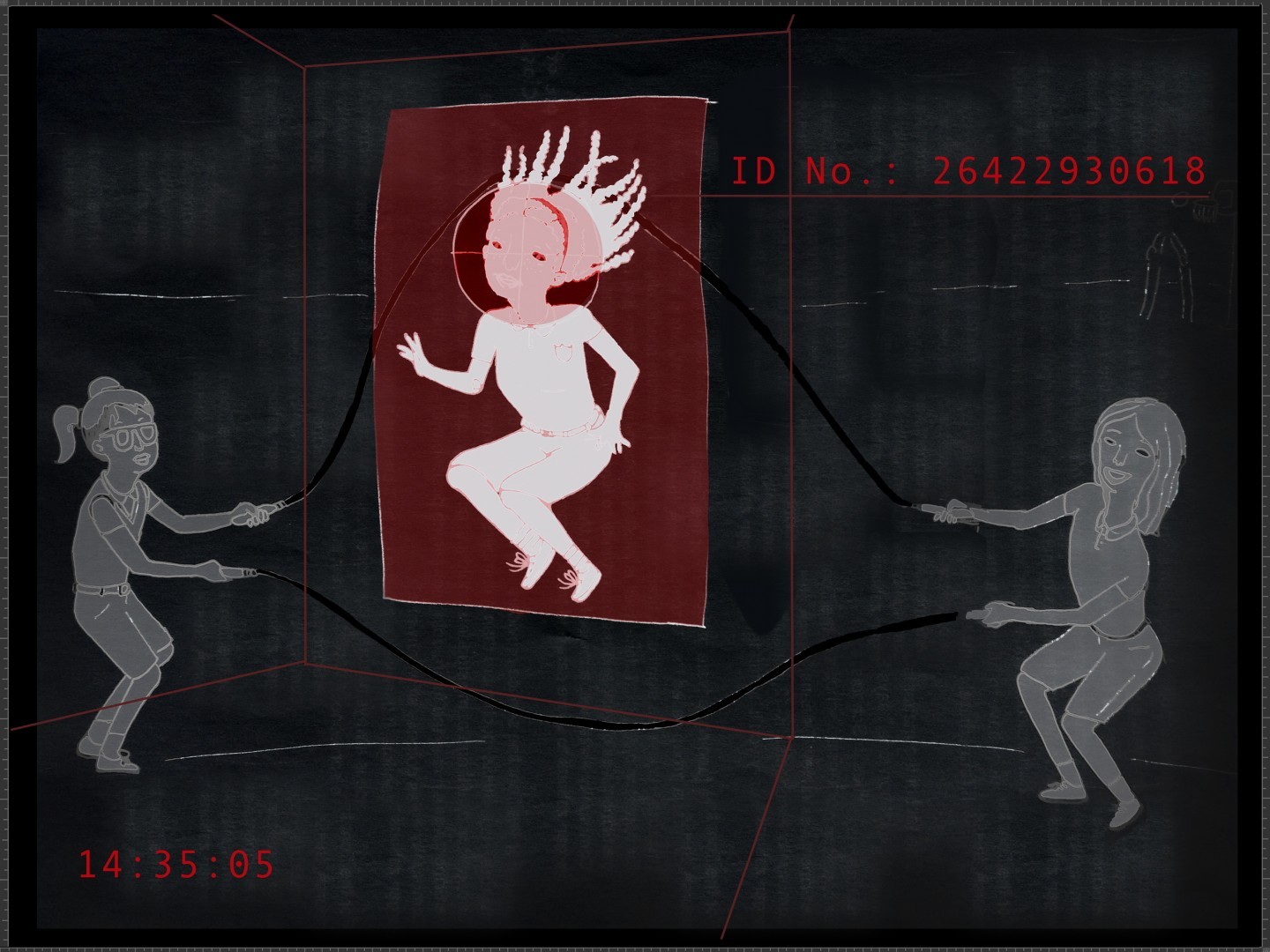
"content": "\u003cfigure id=\"attachment_39846\" class=\"wp-caption alignnone\" style=\"max-width: 640px\">\u003ca href=\"http://ww2.kqed.org/mindshift/2015/03/four-student-data-privacy-issues-adults-should-be-aware-of/student-data-privacy/\" rel=\"attachment wp-att-39846\">\u003cimg src=\"http://ww2.kqed.org/mindshift/wp-content/uploads/sites/23/2015/03/student-data-security-a68dcebb859a895479da51b0759e8ba3294a9fc0-e1427221452719.jpg\" alt=\"LA Johnson/NPR\" width=\"640\" height=\"1080\" class=\"size-full wp-image-39846\">\u003c/a>\u003cfigcaption class=\"wp-caption-text\">LA Johnson/NPR\u003c/figcaption>\u003c/figure>\n\u003cp>\u003cstrong>By Anya Kamenetz, \u003ca href=\"http://www.npr.org/blogs/ed/2015/03/23/393399168/in-congress-new-attention-to-student-privacy-fears\">NPR\u003c/a>\u003c/strong>\u003c/p>\n\u003cp>Several efforts in Washington are converging on the sensitive question of how best to safeguard the information software programs are gathering on students.\u003c/p>\n\u003cp>A proposed Student Digital Privacy and Parental Rights Act of 2015 is circulating in draft form. It has bipartisan sponsorship from Democratic Rep. Jared S. Polis of Colorado and Republican Rep. Luke Messer of Indiana.\u003c/p>\n\u003cp>Drafted with \u003ca href=\"https://www.whitehouse.gov/the-press-office/2015/01/12/fact-sheet-safeguarding-american-consumers-families\">White House\u003c/a> input, the bill joins a previous \u003ca href=\"http://www.markey.senate.gov/news/press-releases/markey-hatch-release-discussion-draft-of-legislation-addressing-student-privacy\">Senate proposal,\u003c/a> plus much \u003ca href=\"http://dataqualitycampaign.org/files/Privacy%20Legislation_Summary.pdf\">action on the state level\u003c/a>, from \u003ca href=\"http://www.ed.gov/news/press-releases/department-releases-new-guidance-protecting-student-privacy-while-using-online-educational-services\">regulators,\u003c/a> and \u003ca href=\"https://www.whitehouse.gov/sites/default/files/image/signatories_consumer_protection.pdf\">from industry\u003c/a> and \u003ca href=\"http://studentdataprinciples.org/the-principleshttp://studentdataprinciples.org/principles-supporters/\">other\u003c/a> \u003ca href=\"http://studentdataprinciples.org/principles-supporters/\">sector leaders\u003c/a>.\u003c/p>\n\u003cp>Consumer groups like Common Sense Media and companies like Microsoft have spoken positively of the bill.\u003c/p>\n\u003cp>[ad fullwidth]\u003c/p>\n\u003cp>But some student-privacy advocates are saying it doesn't go far enough in restricting what private companies can do with student data.\u003c/p>\n\u003cp>\"It is a start to try to get at a very complex issue,\" says Elana Zeide, an expert on student privacy at the Information Law Institute of New York University, who saw an earlier draft of the bill. \"But it's not going to satisfy a lot of parent advocates, because it leaves a lot of discretion to schools and companies.\"\u003c/p>\n\u003cp>[contextly_sidebar id=\"GRCwXnKxdzytrvOmRmXkYAdM9tonL0CC\"]\u003c/p>\n\u003cp>Mike Goldstein, who works with education clients at the law firm Cooley, says there's been an \"explosion\" of interest in privacy issues over the past five years. Technological advances have schools and universities outsourcing many more basic functions than in years past. Everything from grade books to tests to entire academic programs, he adds, is being handled by third-party, for-profit providers.\u003c/p>\n\u003cp>And these providers are capturing far more than names, addresses and end-of-term grades. In some cases, large amounts of student work, and literally millions of tiny interactions, are collected and stored in the cloud. Think of all the edits on a school paper written in Google Docs. Or all the interactions a student has with a Khan Academy math program.\u003c/p>\n\u003cp>The major federal student privacy law on the books, \u003ca href=\"http://www2.ed.gov/policy/gen/guid/fpco/ferpa/index.html\">FERPA\u003c/a>, doesn't have much to say about this avalanche of data. That's because it deals mainly with the security of basic demographic information collected and held by schools themselves. \"There's been a shift in focus in terms of privacy laws and regulations affecting both schools and colleges — from a focus on what the schools do, to what providers do,\" says Goldstein.\u003c/p>\n\u003cp>To understand this issue, Goldstein and Zeide say, it's important to separate out several distinct, but related, concerns that fall under the broad umbrella of student privacy.\u003c/p>\n\u003cp>\u003cstrong>1. Security. \u003c/strong>My child's information will be stolen and misused by hackers. She will be a victim of identity theft or her information will be exposed in an accidental data breach.\u003c/p>\n\u003cp>Setting rules about how long data can be stored, and who can access the information, helps security. The draft House bill contains some broad security provisions, but security, says Zeide, is also determined by good training and protocols, not just regulation.\u003c/p>\n\u003cp>\u003cstrong>2. Transparency.\u003c/strong> My child's information is being collected, circulated, stored and shared, but I don't know where or by whom or why. I won't be informed if there's a data breach.\u003c/p>\n\u003cp>This bill includes some provisions on disclosure and parental notification.\u003c/p>\n\u003cp>\u003cstrong>3. Commercialization.\u003c/strong> My child's information will be used to target online advertising or otherwise exploited for commercial gain. My child will be marketed to while she's doing her homework — or her homework will be used to sell things to other students.\u003c/p>\n\u003cp>This is where the House bill focuses. It would prohibit the sale of student information and the targeting of advertising based on a profile of a student assembled over time. It contains an exception, though, meant for companies like The College Board, which sells information on students who take the SAT to colleges, which is then used to target scholarship offers.\u003c/p>\n\u003cp>\u003cstrong>4. Reputation. \u003c/strong>My child's information will be \"out there,\" discoverable in the ether somewhere. Her youthful mistakes and foibles, her low-income or English-language-learner status will follow her around. One day, her \"permanent record\" could limit her options.\u003c/p>\n\u003cp>These \"reputational\" issues are much more complicated than the rest. They cover not only privacy, as it's been discussed here, but related situations, like the recent reports of Pearson's monitoring public posts on social media for mentions of the PARCC test by students. One day, student data could start to wield reputational power similar to what a bad credit record does for adults: It could limit your ability to get a job, not just your access to credit.\u003c/p>\n\u003cp>\u003c/p>\n\u003cp>\"There's a whole other set of more difficult, deeply troubling concerns about the use of information for educational purposes,\" that aren't addressed in the new bill -\u003cem>- \u003c/em>or in most of the proposals out there, Zeide says. \"There are harms that can happen regardless of intent.\" \u003c/p>\n\u003cdiv class=\"fullattribution\">Copyright 2015 NPR. To see more, visit http://www.npr.org/.\u003cimg src=\"http://www.google-analytics.com/__utm.gif?utmac=UA-5828686-4&utmdt=In+Congress%2C+New+Attention+To+Student-Privacy+Fears&utme=8(APIKey)9(MDAxOTAwOTE4MDEyMTkxMDAzNjczZDljZA004)\">\u003c/div>\n\n",
"disqusIdentifier": "39845 http://blogs.kqed.org/mindshift/?p=39845",
"disqusUrl": "https://ww2.kqed.org/mindshift/2015/03/24/four-student-data-privacy-issues-adults-should-be-aware-of/",
"stats": {
"hasVideo": false,
"hasChartOrMap": false,
"hasAudio": false,
"hasPolis": false,
"wordCount": 828,
"hasGoogleForm": false,
"hasGallery": false,
"hasHearkenModule": false,
"iframeSrcs": [],
"paragraphCount": 23
},
"modified": 1427227715,
"excerpt": "A House bill seeks to restrict what private companies can do with information collected on students.",
"headData": {
"twImgId": "",
"twTitle": "",
"ogTitle": "",
"ogImgId": "",
"twDescription": "",
"description": "A House bill seeks to restrict what private companies can do with information collected on students.",
"title": "Four Student Data Privacy Issues Adults Should Be Aware Of | KQED",
"ogDescription": "",
"schema": {
"@context": "https://schema.org",
"@type": "Article",
"headline": "Four Student Data Privacy Issues Adults Should Be Aware Of",
"datePublished": "2015-03-24T13:08:31-07:00",
"dateModified": "2015-03-24T13:08:35-07:00",
"image": "https://cdn.kqed.org/wp-content/uploads/2020/02/KQED-OG-Image@1x.png"
}
},
"guestAuthors": [],
"slug": "four-student-data-privacy-issues-adults-should-be-aware-of",
"status": "publish",
"nprApiLink": "http://api.npr.org/query?id=393399168&apiKey=MDAxOTAwOTE4MDEyMTkxMDAzNjczZDljZA004",
"nprByline": "Anya Kamenetz",
"nprStoryDate": "Mon, 23 Mar 2015 16:20:00 -0400",
"nprLastModifiedDate": "Tue, 24 Mar 2015 10:30:37 -0400",
"nprHtmlLink": "http://www.npr.org/blogs/ed/2015/03/23/393399168/in-congress-new-attention-to-student-privacy-fears?ft=nprml&f=393399168",
"nprStoryId": "393399168",
"nprRetrievedStory": "1",
"nprPubDate": "Tue, 24 Mar 2015 10:30:00 -0400",
"path": "/mindshift/39845/four-student-data-privacy-issues-adults-should-be-aware-of",
"audioTrackLength": null,
"parsedContent": [
{
"type": "contentString",
"content": "\u003cdiv class=\"post-body\">\u003cp>\u003cfigure id=\"attachment_39846\" class=\"wp-caption alignnone\" style=\"max-width: 640px\">\u003ca href=\"http://ww2.kqed.org/mindshift/2015/03/four-student-data-privacy-issues-adults-should-be-aware-of/student-data-privacy/\" rel=\"attachment wp-att-39846\">\u003cimg src=\"http://ww2.kqed.org/mindshift/wp-content/uploads/sites/23/2015/03/student-data-security-a68dcebb859a895479da51b0759e8ba3294a9fc0-e1427221452719.jpg\" alt=\"LA Johnson/NPR\" width=\"640\" height=\"1080\" class=\"size-full wp-image-39846\">\u003c/a>\u003cfigcaption class=\"wp-caption-text\">LA Johnson/NPR\u003c/figcaption>\u003c/figure>\n\u003cp>\u003cstrong>By Anya Kamenetz, \u003ca href=\"http://www.npr.org/blogs/ed/2015/03/23/393399168/in-congress-new-attention-to-student-privacy-fears\">NPR\u003c/a>\u003c/strong>\u003c/p>\n\u003cp>Several efforts in Washington are converging on the sensitive question of how best to safeguard the information software programs are gathering on students.\u003c/p>\n\u003cp>A proposed Student Digital Privacy and Parental Rights Act of 2015 is circulating in draft form. It has bipartisan sponsorship from Democratic Rep. Jared S. Polis of Colorado and Republican Rep. Luke Messer of Indiana.\u003c/p>\n\u003cp>Drafted with \u003ca href=\"https://www.whitehouse.gov/the-press-office/2015/01/12/fact-sheet-safeguarding-american-consumers-families\">White House\u003c/a> input, the bill joins a previous \u003ca href=\"http://www.markey.senate.gov/news/press-releases/markey-hatch-release-discussion-draft-of-legislation-addressing-student-privacy\">Senate proposal,\u003c/a> plus much \u003ca href=\"http://dataqualitycampaign.org/files/Privacy%20Legislation_Summary.pdf\">action on the state level\u003c/a>, from \u003ca href=\"http://www.ed.gov/news/press-releases/department-releases-new-guidance-protecting-student-privacy-while-using-online-educational-services\">regulators,\u003c/a> and \u003ca href=\"https://www.whitehouse.gov/sites/default/files/image/signatories_consumer_protection.pdf\">from industry\u003c/a> and \u003ca href=\"http://studentdataprinciples.org/the-principleshttp://studentdataprinciples.org/principles-supporters/\">other\u003c/a> \u003ca href=\"http://studentdataprinciples.org/principles-supporters/\">sector leaders\u003c/a>.\u003c/p>\n\u003cp>Consumer groups like Common Sense Media and companies like Microsoft have spoken positively of the bill.\u003c/p>\n\u003cp>\u003c/p>\u003c/div>",
"attributes": {
"named": {},
"numeric": []
}
},
{
"type": "component",
"content": "",
"name": "ad",
"attributes": {
"named": {
"label": "fullwidth"
},
"numeric": [
"fullwidth"
]
}
},
{
"type": "contentString",
"content": "\u003cdiv class=\"post-body\">\u003cp>\u003c/p>\n\u003cp>But some student-privacy advocates are saying it doesn't go far enough in restricting what private companies can do with student data.\u003c/p>\n\u003cp>\"It is a start to try to get at a very complex issue,\" says Elana Zeide, an expert on student privacy at the Information Law Institute of New York University, who saw an earlier draft of the bill. \"But it's not going to satisfy a lot of parent advocates, because it leaves a lot of discretion to schools and companies.\"\u003c/p>\n\u003cp>\u003c/p>\u003cp>\u003c/p>\u003cp>\u003c/p>\n\u003cp>Mike Goldstein, who works with education clients at the law firm Cooley, says there's been an \"explosion\" of interest in privacy issues over the past five years. Technological advances have schools and universities outsourcing many more basic functions than in years past. Everything from grade books to tests to entire academic programs, he adds, is being handled by third-party, for-profit providers.\u003c/p>\n\u003cp>And these providers are capturing far more than names, addresses and end-of-term grades. In some cases, large amounts of student work, and literally millions of tiny interactions, are collected and stored in the cloud. Think of all the edits on a school paper written in Google Docs. Or all the interactions a student has with a Khan Academy math program.\u003c/p>\n\u003cp>The major federal student privacy law on the books, \u003ca href=\"http://www2.ed.gov/policy/gen/guid/fpco/ferpa/index.html\">FERPA\u003c/a>, doesn't have much to say about this avalanche of data. That's because it deals mainly with the security of basic demographic information collected and held by schools themselves. \"There's been a shift in focus in terms of privacy laws and regulations affecting both schools and colleges — from a focus on what the schools do, to what providers do,\" says Goldstein.\u003c/p>\n\u003cp>To understand this issue, Goldstein and Zeide say, it's important to separate out several distinct, but related, concerns that fall under the broad umbrella of student privacy.\u003c/p>\n\u003cp>\u003cstrong>1. Security. \u003c/strong>My child's information will be stolen and misused by hackers. She will be a victim of identity theft or her information will be exposed in an accidental data breach.\u003c/p>\n\u003cp>Setting rules about how long data can be stored, and who can access the information, helps security. The draft House bill contains some broad security provisions, but security, says Zeide, is also determined by good training and protocols, not just regulation.\u003c/p>\n\u003cp>\u003cstrong>2. Transparency.\u003c/strong> My child's information is being collected, circulated, stored and shared, but I don't know where or by whom or why. I won't be informed if there's a data breach.\u003c/p>\n\u003cp>This bill includes some provisions on disclosure and parental notification.\u003c/p>\n\u003cp>\u003cstrong>3. Commercialization.\u003c/strong> My child's information will be used to target online advertising or otherwise exploited for commercial gain. My child will be marketed to while she's doing her homework — or her homework will be used to sell things to other students.\u003c/p>\n\u003cp>This is where the House bill focuses. It would prohibit the sale of student information and the targeting of advertising based on a profile of a student assembled over time. It contains an exception, though, meant for companies like The College Board, which sells information on students who take the SAT to colleges, which is then used to target scholarship offers.\u003c/p>\n\u003cp>\u003cstrong>4. Reputation. \u003c/strong>My child's information will be \"out there,\" discoverable in the ether somewhere. Her youthful mistakes and foibles, her low-income or English-language-learner status will follow her around. One day, her \"permanent record\" could limit her options.\u003c/p>\n\u003cp>These \"reputational\" issues are much more complicated than the rest. They cover not only privacy, as it's been discussed here, but related situations, like the recent reports of Pearson's monitoring public posts on social media for mentions of the PARCC test by students. One day, student data could start to wield reputational power similar to what a bad credit record does for adults: It could limit your ability to get a job, not just your access to credit.\u003c/p>\n\u003cp>\u003c/p>\n\u003cp>\"There's a whole other set of more difficult, deeply troubling concerns about the use of information for educational purposes,\" that aren't addressed in the new bill -\u003cem>- \u003c/em>or in most of the proposals out there, Zeide says. \"There are harms that can happen regardless of intent.\" \u003c/p>\n\u003cdiv class=\"fullattribution\">Copyright 2015 NPR. To see more, visit http://www.npr.org/.\u003cimg src=\"http://www.google-analytics.com/__utm.gif?utmac=UA-5828686-4&utmdt=In+Congress%2C+New+Attention+To+Student-Privacy+Fears&utme=8(APIKey)9(MDAxOTAwOTE4MDEyMTkxMDAzNjczZDljZA004)\">\u003c/div>\n\n\u003c/div>\u003c/p>",
"attributes": {
"named": {},
"numeric": []
}
}
],
"link": "/mindshift/39845/four-student-data-privacy-issues-adults-should-be-aware-of",
"authors": [
"byline_mindshift_39845"
],
"categories": [
"mindshift_195"
],
"tags": [
"mindshift_20784",
"mindshift_1040",
"mindshift_117",
"mindshift_632"
],
"featImg": "mindshift_39846",
"label": "mindshift"
},
"mindshift_39825": {
"type": "posts",
"id": "mindshift_39825",
"meta": {
"index": "posts_1716263798",
"site": "mindshift",
"id": "39825",
"score": null,
"sort": [
1427118209000
]
},
"parent": 0,
"labelTerm": {
"site": "mindshift"
},
"blocks": [],
"publishDate": 1427118209,
"format": "standard",
"disqusTitle": "Six Powerful Motivations Driving Social Learning By Teens",
"title": "Six Powerful Motivations Driving Social Learning By Teens",
"headTitle": "MindShift | KQED News",
"content": "\u003cp>\u003cstrong>By David Price\u003c/strong>\u003c/p>\n\u003cp class=\"dropcap-serif\">Along with Google search, Wikipedia has become the first point of reference for most of us. Wikipedia’s first incarnation, Nupedia, relied upon the authority of academic experts to provide quality control for Jimmy Wales’ first attempt at an online encyclopedia. After months of peer-review, only a handful of articles had appeared on Nupedia. Wales decision to ‘go open’ not only allowed Wikipedia to flourish, it led to the emergence of the \"pro-am\" (an amateur who possesses professional levels of expertise). The initial academic concerns over the reliability of information in Wikipedia articles have now largely dissipated, assuaged by an army of volunteers, who correct over half the cases of \"vandalism\" in less than four minutes. It is a powerful example of a self-correcting organism. The story of Nupedia and Wikipedia points to a profound shift in the direction in which knowledge travels. Until relatively recently, knowledge only ever trickled down. Now it spreads laterally. At least, it does in the social space. In formal centers of learning, old habits die hard.\u003c/p>\n\u003cp>The tension between open, social learning and the formal, enclosed variety is becoming untenable. Today’s students often have more computing power in their pockets, on their mobile phones, than the PCs in the outdated computer lab–-but they are usually prevented from using it. The students’ personal learning networks of friends, forum users, Twitter followers and Facebook friends provide a rich source of knowledge gathering when they are at home, but use of such networks is excluded from their classrooms. It is little wonder that teachers experience immense frustration in trying to keep their students’ attention.\u003c/p>\n\u003cp>In order to see a rise in the proportion of students who class themselves as engaged in school, we must build a better understanding of how they are learning outside school and take account of that in our learning and teaching practice. There are (at least) six powerful motivations fueling learning socially. I call them the Six \"Do-Its\" and explain them as follows.\u003c/p>\n\u003cp>\u003cstrong>1. DO IT YOURSELF\u003c/strong>\u003cbr>\nClay Shirky (Shirky, 2008) identified the rise in mass online collaboration, speculating that, in the future, such collaboration would extend from \"knowing about\" into \"taking action.\" He did not have long to wait. Organizations like \u003ca href=\"http://www.ushahidi.com/\">Ushahidi\u003c/a> use open source technologies to bring little-known social and political issues to a global audience. They are \"working towards a world where open, effective and participatory governance is the norm, not the exception.\" Such intermediaries are democratizing learning by removing entry barriers and making it active and empowering.\u003c/p>\n\u003cp>[ad fullwidth]\u003c/p>\n\u003cp>[contextly_sidebar id=\"gZezq4pfwBn6GSp8AilKWPWksnv8O8MB\"]\u003c/p>\n\u003cp>\u003cstrong>2. DO IT NOW\u003c/strong>\u003cbr>\nThe immediacy that is seen when Tweets or videos go viral is both motivating and reinforcing. It turns out there's a scientific reason. The reward of dopamine release, observed in immediate responses to social media requests, helps \"stamp in\" memories and increase motivation. Early childhood education expert \u003ca href=\"http://education.illinois.edu/people/lgkatz\">Lilian Katz\u003c/a> has long argued that learning which has immediacy, solving problems just-in-time, has \"horizontal relevance.\" Katz suggests that this kind of learning is more motivating than its opposite – \"vertical relevance\" (just-in-case). Katz’s assertions, made before the advent of social media, are even more applicable today, given the style of learning that dominates in the social space.\u003c/p>\n\u003cp>\u003cstrong>3. DO IT WITH FRIENDS\u003c/strong>\u003cbr>\nThe ability to choose our collaborators is a key freedom hallmarking social learning. Personal learning communities are built upon collegiality and fluidity, with groups coming together around their personal passions and professional interests. Such freedoms are all but absent in most schools.\u003c/p>\n\u003cp>\u003cstrong>4. DO IT FOR FUN\u003c/strong>\u003cbr>\nProjects, forums and social movements are often marked by a sense of playfulness. Fun alone, however, is insufficient to maintain a learning community. \"Serious gaming\" has flourished because it combines enjoyment with challenge--what Seymour Papert calls \"\u003ca href=\"http://www.papert.org/articles/HardFun.html\">hard fun\u003c/a>\"-–in the pursuit of purposeful activity.\u003c/p>\n\u003cp>\u003cstrong>5. DO UNTO OTHERS\u003c/strong>\u003cbr>\nThe technological vehicles for social learning are morally neutral, merely reflecting the values and actions of the participants. Inevitably, much is made of the malevolent use of social media in the mainstream media: cyberbullying, youth radicalization, trolling and the like. However, mainstream media rarely report the million random acts of kindness that occur on forums, media aggregators and knowledge sharing sites. Relatively little is heard of organizations like \u003ca href=\"https://www.dosomething.org/\">DoSomething.org\u003c/a>, a global movement of 3.3 million young people dedicated to \"making the world suck less.\" Their members have recycled 4.3 million pairs of jeans for young homeless people, collected mobile/cell phones for domestic violence survivors, baked cakes for infants in Syria, hosted dance classes for seniors (anyone over 25 is officially \"old\" on DoSomething). Weren’t the Millennials supposed to be the ‘Me Me Me Generation’?\u003c/p>\n\u003cp>\u003cstrong>6. DO IT FOR THE WORLD TO SEE\u003c/strong>\u003cbr>\nPerhaps this is the most contestable of the six motivations of social learning, due to the number of young people who do, or say, stupid things without thinking of the consequences of highly public sharing. Their numbers are only exceeded by the number of adults who say or do even stupider things. The pressures of keeping students safe frequently overwhelms the benefits of authentic public assessment of their work. Most societies teach their children to cross the road safely; we do not ban cars--yet that seems to be the equivalent strategy when it comes to digital safety. As a result, the contrast between the strictly enclosed audience for student work in school, with the open, global audience their work enjoys when they are at home, inevitably makes school work seem dull by comparison.\u003c/p>\n\u003cp>It is not hard to see that these \"Do-Its\" appear far more frequently in social, informal learning than they do in our schools and colleges. This goes some way to explaining the rise of disengagement in school, and presents unenviable challenges for teachers. Yet schools who have opened their learning environments and integrated these motivations into their learning programs are not only enhancing engagement--they are preparing their students for the adaptive, entrepreneurial future that awaits them. In short, they have realised that the best way to prepare young people for the world beyond school is to immerse them in the world beyond school, as often as possible.\u003c/p>\n\u003cp>[ad floatright]\u003c/p>\n\u003cp>\u003cem>David Price is an author, learning futurist and senior associate at the Innovation Unit in London, England. His new book is \u003ca href=\"http://www.amazon.com/OPEN-well-work-learn-future-ebook/dp/B00FLYFS98\">OPEN: How We’ll Work, Live And Learn In The Future\u003c/a> is available on Amazon. You can follow him on Twitter at \u003ca href=\"https://twitter.com/davidpriceobe\">@DavidPriceOBE\u003c/a>.\u003c/em>\u003c/p>\n\n",
"disqusIdentifier": "39825 http://blogs.kqed.org/mindshift/?p=39825",
"disqusUrl": "https://ww2.kqed.org/mindshift/2015/03/23/six-powerful-motivations-driving-social-learning-by-teens/",
"stats": {
"hasVideo": false,
"hasChartOrMap": false,
"hasAudio": false,
"hasPolis": false,
"wordCount": 1099,
"hasGoogleForm": false,
"hasGallery": false,
"hasHearkenModule": false,
"iframeSrcs": [],
"paragraphCount": 14
},
"modified": 1427480709,
"excerpt": "Despite cautionary tales of teens and social networks, students have a lot to gain from incorporating what they learn in their personal digital space to the classroom. ",
"headData": {
"twImgId": "",
"twTitle": "",
"ogTitle": "",
"ogImgId": "",
"twDescription": "",
"description": "Despite cautionary tales of teens and social networks, students have a lot to gain from incorporating what they learn in their personal digital space to the classroom. ",
"title": "Six Powerful Motivations Driving Social Learning By Teens | KQED",
"ogDescription": "",
"schema": {
"@context": "https://schema.org",
"@type": "Article",
"headline": "Six Powerful Motivations Driving Social Learning By Teens",
"datePublished": "2015-03-23T06:43:29-07:00",
"dateModified": "2015-03-27T11:25:09-07:00",
"image": "https://cdn.kqed.org/wp-content/uploads/2020/02/KQED-OG-Image@1x.png"
}
},
"guestAuthors": [],
"slug": "six-powerful-motivations-driving-social-learning-by-teens",
"status": "publish",
"path": "/mindshift/39825/six-powerful-motivations-driving-social-learning-by-teens",
"audioTrackLength": null,
"parsedContent": [
{
"type": "contentString",
"content": "\u003cdiv class=\"post-body\">\u003cp>\u003cp>\u003cstrong>By David Price\u003c/strong>\u003c/p>\n\u003cp class=\"dropcap-serif\">Along with Google search, Wikipedia has become the first point of reference for most of us. Wikipedia’s first incarnation, Nupedia, relied upon the authority of academic experts to provide quality control for Jimmy Wales’ first attempt at an online encyclopedia. After months of peer-review, only a handful of articles had appeared on Nupedia. Wales decision to ‘go open’ not only allowed Wikipedia to flourish, it led to the emergence of the \"pro-am\" (an amateur who possesses professional levels of expertise). The initial academic concerns over the reliability of information in Wikipedia articles have now largely dissipated, assuaged by an army of volunteers, who correct over half the cases of \"vandalism\" in less than four minutes. It is a powerful example of a self-correcting organism. The story of Nupedia and Wikipedia points to a profound shift in the direction in which knowledge travels. Until relatively recently, knowledge only ever trickled down. Now it spreads laterally. At least, it does in the social space. In formal centers of learning, old habits die hard.\u003c/p>\n\u003cp>The tension between open, social learning and the formal, enclosed variety is becoming untenable. Today’s students often have more computing power in their pockets, on their mobile phones, than the PCs in the outdated computer lab–-but they are usually prevented from using it. The students’ personal learning networks of friends, forum users, Twitter followers and Facebook friends provide a rich source of knowledge gathering when they are at home, but use of such networks is excluded from their classrooms. It is little wonder that teachers experience immense frustration in trying to keep their students’ attention.\u003c/p>\n\u003cp>In order to see a rise in the proportion of students who class themselves as engaged in school, we must build a better understanding of how they are learning outside school and take account of that in our learning and teaching practice. There are (at least) six powerful motivations fueling learning socially. I call them the Six \"Do-Its\" and explain them as follows.\u003c/p>\n\u003cp>\u003cstrong>1. DO IT YOURSELF\u003c/strong>\u003cbr>\nClay Shirky (Shirky, 2008) identified the rise in mass online collaboration, speculating that, in the future, such collaboration would extend from \"knowing about\" into \"taking action.\" He did not have long to wait. Organizations like \u003ca href=\"http://www.ushahidi.com/\">Ushahidi\u003c/a> use open source technologies to bring little-known social and political issues to a global audience. They are \"working towards a world where open, effective and participatory governance is the norm, not the exception.\" Such intermediaries are democratizing learning by removing entry barriers and making it active and empowering.\u003c/p>\n\u003cp>\u003c/p>\u003c/div>",
"attributes": {
"named": {},
"numeric": []
}
},
{
"type": "component",
"content": "",
"name": "ad",
"attributes": {
"named": {
"label": "fullwidth"
},
"numeric": [
"fullwidth"
]
}
},
{
"type": "contentString",
"content": "\u003cdiv class=\"post-body\">\u003cp>\u003c/p>\n\u003cp>\u003c/p>\u003cp>\u003c/p>\u003cp>\u003c/p>\n\u003cp>\u003cstrong>2. DO IT NOW\u003c/strong>\u003cbr>\nThe immediacy that is seen when Tweets or videos go viral is both motivating and reinforcing. It turns out there's a scientific reason. The reward of dopamine release, observed in immediate responses to social media requests, helps \"stamp in\" memories and increase motivation. Early childhood education expert \u003ca href=\"http://education.illinois.edu/people/lgkatz\">Lilian Katz\u003c/a> has long argued that learning which has immediacy, solving problems just-in-time, has \"horizontal relevance.\" Katz suggests that this kind of learning is more motivating than its opposite – \"vertical relevance\" (just-in-case). Katz’s assertions, made before the advent of social media, are even more applicable today, given the style of learning that dominates in the social space.\u003c/p>\n\u003cp>\u003cstrong>3. DO IT WITH FRIENDS\u003c/strong>\u003cbr>\nThe ability to choose our collaborators is a key freedom hallmarking social learning. Personal learning communities are built upon collegiality and fluidity, with groups coming together around their personal passions and professional interests. Such freedoms are all but absent in most schools.\u003c/p>\n\u003cp>\u003cstrong>4. DO IT FOR FUN\u003c/strong>\u003cbr>\nProjects, forums and social movements are often marked by a sense of playfulness. Fun alone, however, is insufficient to maintain a learning community. \"Serious gaming\" has flourished because it combines enjoyment with challenge--what Seymour Papert calls \"\u003ca href=\"http://www.papert.org/articles/HardFun.html\">hard fun\u003c/a>\"-–in the pursuit of purposeful activity.\u003c/p>\n\u003cp>\u003cstrong>5. DO UNTO OTHERS\u003c/strong>\u003cbr>\nThe technological vehicles for social learning are morally neutral, merely reflecting the values and actions of the participants. Inevitably, much is made of the malevolent use of social media in the mainstream media: cyberbullying, youth radicalization, trolling and the like. However, mainstream media rarely report the million random acts of kindness that occur on forums, media aggregators and knowledge sharing sites. Relatively little is heard of organizations like \u003ca href=\"https://www.dosomething.org/\">DoSomething.org\u003c/a>, a global movement of 3.3 million young people dedicated to \"making the world suck less.\" Their members have recycled 4.3 million pairs of jeans for young homeless people, collected mobile/cell phones for domestic violence survivors, baked cakes for infants in Syria, hosted dance classes for seniors (anyone over 25 is officially \"old\" on DoSomething). Weren’t the Millennials supposed to be the ‘Me Me Me Generation’?\u003c/p>\n\u003cp>\u003cstrong>6. DO IT FOR THE WORLD TO SEE\u003c/strong>\u003cbr>\nPerhaps this is the most contestable of the six motivations of social learning, due to the number of young people who do, or say, stupid things without thinking of the consequences of highly public sharing. Their numbers are only exceeded by the number of adults who say or do even stupider things. The pressures of keeping students safe frequently overwhelms the benefits of authentic public assessment of their work. Most societies teach their children to cross the road safely; we do not ban cars--yet that seems to be the equivalent strategy when it comes to digital safety. As a result, the contrast between the strictly enclosed audience for student work in school, with the open, global audience their work enjoys when they are at home, inevitably makes school work seem dull by comparison.\u003c/p>\n\u003cp>It is not hard to see that these \"Do-Its\" appear far more frequently in social, informal learning than they do in our schools and colleges. This goes some way to explaining the rise of disengagement in school, and presents unenviable challenges for teachers. Yet schools who have opened their learning environments and integrated these motivations into their learning programs are not only enhancing engagement--they are preparing their students for the adaptive, entrepreneurial future that awaits them. In short, they have realised that the best way to prepare young people for the world beyond school is to immerse them in the world beyond school, as often as possible.\u003c/p>\n\u003cp>\u003c/p>\u003c/div>",
"attributes": {
"named": {},
"numeric": []
}
},
{
"type": "component",
"content": "",
"name": "ad",
"attributes": {
"named": {
"label": "floatright"
},
"numeric": [
"floatright"
]
}
},
{
"type": "contentString",
"content": "\u003cdiv class=\"post-body\">\u003cp>\u003c/p>\n\u003cp>\u003cem>David Price is an author, learning futurist and senior associate at the Innovation Unit in London, England. His new book is \u003ca href=\"http://www.amazon.com/OPEN-well-work-learn-future-ebook/dp/B00FLYFS98\">OPEN: How We’ll Work, Live And Learn In The Future\u003c/a> is available on Amazon. You can follow him on Twitter at \u003ca href=\"https://twitter.com/davidpriceobe\">@DavidPriceOBE\u003c/a>.\u003c/em>\u003c/p>\n\n\u003c/div>\u003c/p>",
"attributes": {
"named": {},
"numeric": []
}
}
],
"link": "/mindshift/39825/six-powerful-motivations-driving-social-learning-by-teens",
"authors": [
"4354"
],
"categories": [
"mindshift_192",
"mindshift_20827"
],
"tags": [
"mindshift_1015",
"mindshift_822",
"mindshift_20784",
"mindshift_1040",
"mindshift_20782",
"mindshift_20557"
],
"featImg": "mindshift_37188",
"label": "mindshift"
},
"mindshift_39748": {
"type": "posts",
"id": "mindshift_39748",
"meta": {
"index": "posts_1716263798",
"site": "mindshift",
"id": "39748",
"score": null,
"sort": [
1426859826000
]
},
"parent": 0,
"labelTerm": {
"site": "mindshift"
},
"blocks": [],
"publishDate": 1426859826,
"format": "aside",
"disqusTitle": "Feeling Alone as the Opportunity Gap Widens for Kids",
"title": "Feeling Alone as the Opportunity Gap Widens for Kids",
"headTitle": "MindShift | KQED News",
"content": "\u003cfigure id=\"attachment_39811\" class=\"wp-caption aligncenter\" style=\"max-width: 640px\">\u003ca href=\"http://ww2.kqed.org/mindshift/2015/03/feeling-alone-as-the-opportunity-gap-widens-in-education/alone-at-school/\" rel=\"attachment wp-att-39811\">\u003cimg src=\"http://ww2.kqed.org/mindshift/wp-content/uploads/sites/23/2015/03/Alone-at-school.jpg\" alt=\"Gebbe/Flickr\" width=\"640\" height=\"960\" class=\"size-full wp-image-39811\">\u003c/a>\u003cfigcaption class=\"wp-caption-text\">\u003ca href=\"https://www.flickr.com/photos/gebbe/6988399523\"> Gebbe/Flickr\u003c/a>\u003c/figcaption>\u003c/figure>\n\u003cp class=\"dropcap-serif\">After raising her daughters, stay-at-home mother Susan Norwood knew that she wanted to be a teacher. She had spent plenty of time at school while her daughters were students in Brentwood, an affluent Nashville suburb with famously great schools, as a room mother and fundraiser, she even volunteered to work in the library. But after getting her certification and being assigned to one of Nashville’s poorest high schools as an English teacher, she quickly realized there were stark differences between her daughters’ school and her new teaching home.\u003c/p>\n\u003cp>Many of the school’s classes operated without textbooks for students. Most students simply didn’t to do their homework -- and even if they did, Norwood would have been unable to give proper attention to each assignment of her 185 students. And many of her sophomore English students were dealing with a host of problems outside school, from unstable home lives to jailed parents, even undiagnosed health issues.\u003c/p>\n\u003cp>\u003ca href=\"http://ww2.kqed.org/mindshift/2015/03/feeling-alone-as-the-opportunity-gap-widens-in-education/our-kids-by-robert-putnam-jacket-image/\" rel=\"attachment wp-att-39807\">\u003cimg src=\"http://ww2.kqed.org/mindshift/wp-content/uploads/sites/23/2015/03/OUR-KIDS-by-Robert-Putnam-Jacket-Image-300x450.jpg\" alt=\"OUR KIDS by Robert Putnam - Jacket Image\" width=\"300\" height=\"450\" class=\"alignright size-medium wp-image-39807\">\u003c/a>“Just yesterday, one of my girls (students) told me she wanted to make up work, because she currently had an F in my class -- she just stopped working. She said, ‘I’m having some problems at home,’ ” said Norwood. “She told me she had moved out of the house, she hadn’t seen her mother in two weeks, and she was living with a friend. If you’re having those kinds of problems, doing your vocabulary may not seem important!”\u003c/p>\n\u003cp>To understand the breadth of the problem, Norwood said, just multiply this girl’s story times most of her students. The notion of being able to help them all becomes overwhelming.\u003c/p>\n\u003cp>This is life for the majority of American kids whose parents didn’t go to college, says social scientist and Harvard professor Robert Putnam in his new book, \"\u003ca href=\"http://books.simonandschuster.com/Our-Kids/Robert-D-Putnam/9781476769899\">Our Kids: The American Dream in Crisis\u003c/a>.\" This bottom third of poorer students face a widening “opportunity gap” with today’s richer students -- the ones whose parents did go to college. Putnam and his team of researchers analyzed decades of research on the habits of richer and poorer families, and found that who your parents are predicts where you will end up much more today than it did several decades ago.\u003c/p>\n\u003cp>[ad fullwidth]\u003c/p>\n\u003cp>Putnam describes “scissor graphs” showing how, over the last several decades, while richer kids’ reading time with their parents, family dinners, extracurricular activities, and two-parent homes stayed the same or increased, the poorer kids’ decreased. The team found that today the lowest-performing rich kids \u003ca href=\"http://blogs.edweek.org/edweek/inside-school-research/2015/03/its_hard_to_make_schools.html\">have a better chance of finishing college\u003c/a> than the highest-performing poor kids.\u003c/p>\n\u003cfigure id=\"attachment_39804\" class=\"wp-caption alignnone\" style=\"max-width: 1017px\">\u003ca href=\"http://ww2.kqed.org/mindshift/2015/03/feeling-alone-as-the-opportunity-gap-widens-in-education/putnam-ourkids-fig4-3/\" rel=\"attachment wp-att-39804\">\u003cimg src=\"http://ww2.kqed.org/mindshift/wp-content/uploads/sites/23/2015/03/Putnam-OurKids-Fig4.3.png\" alt=\"Courtesy of Robert Putnam\" width=\"1017\" height=\"593\" class=\"size-full wp-image-39804\" srcset=\"https://ww2.kqed.org/app/uploads/sites/23/2015/03/Putnam-OurKids-Fig4.3.png 1017w, https://ww2.kqed.org/app/uploads/sites/23/2015/03/Putnam-OurKids-Fig4.3-400x233.png 400w, https://ww2.kqed.org/app/uploads/sites/23/2015/03/Putnam-OurKids-Fig4.3-800x466.png 800w, https://ww2.kqed.org/app/uploads/sites/23/2015/03/Putnam-OurKids-Fig4.3-768x448.png 768w, https://ww2.kqed.org/app/uploads/sites/23/2015/03/Putnam-OurKids-Fig4.3-320x187.png 320w\" sizes=\"(max-width: 1017px) 100vw, 1017px\">\u003c/a>\u003cfigcaption class=\"wp-caption-text\">Courtesy of Robert Putnam\u003c/figcaption>\u003c/figure>\n\u003cp>It wasn’t always this way. In the book, Putnam described going back to his hometown of Port Clinton, Ohio, to interview all the surviving members of his high school class. He found that in 1950s Ohio, who your parents were mattered much less: Most of his classmates, regardless of the education or economic levels of their parents, achieved more and led better lives than their parents did.\u003c/p>\n\u003cp>Yet today, the opportunity gap stacks up against poor kids in terms of family instability, cut ties with community institutions, untrustworthy and frightening neighborhoods, and increasing isolation as poor students find they don’t have “air bags” -- parents, pastors, coaches, mentors -- to cushion life’s blows and help navigate their difficult lives. Putnam argues that, even more than income, the opportunity gap is leaving a third of kids unable to even get on the ladder needed to reach the American Dream.\u003c/p>\n\u003cp>“The basic story is that these poor kids, they are isolated really from all the major social institutions. Two-thirds of them have only one parent, at most. They come from broken homes -- if there was a dad, he’s gone. They basically can’t trust their parents, many of whom are loving but are themselves damaged by something further back in history. Their first line of defenses has been breached,” he said.\u003c/p>\n\u003cp>Putnam said school becomes an “echo chamber” that amplifies the problems of chaotic lives: It’s not so much what districts do or don’t do nearly as much as what kids bring to school.\u003c/p>\n\u003cp>[contextly_sidebar id=\"diMjf98mjWLMbp1REasIJynYR8CBpFb4\"]\u003c/p>\n\u003cp>“The first thing I see when I look at our evidence, schools themselves contributed very little to this opportunity gap problem,” Putnam said. “We know going to school with other poor kids is bad. There’s a ton of evidence, it’s all clear: Your peers are very important. Why has that changed? We’ve become more socially segregated, and poor kids are going to school more with other poor kids.”\u003c/p>\n\u003cp>Susan Norwood agrees, and says she sees the chaos played out often. “There are a number of kids at school who’ve had a huge loss in their life without any counseling,” she said. “Last year, I had a girl whose father died in a motorcycle accident. I asked her if she’d talked to her mother about getting counseling. ‘My mother is in jail,’ she said. She’d been living with her grandfather, and they couldn’t afford counseling.’ ”\u003c/p>\n\u003cp>While there is an on-site counselor at school, counseling is only offered to students with Medicaid. So the school rallied together, and provided a counselor to the girl over the summer.\u003c/p>\n\u003cp>\u003cstrong>\u003cstrong> \u003c/strong>\u003c/strong>\u003cb>Well connected but still alone\u003c/b>\u003c/p>\n\u003cp>According to Putnam’s research, the \u003ca href=\"http://ww2.kqed.org/mindshift/2013/02/by-the-numbers-teachers-tech-and-the-digital-divide/\">digital divide\u003c/a> has morphed: Rich kids and poor kids now have equal access to the Internet, but use it in different ways. Surrounded by adults to guide them, richer kids use the Internet in what he calls a “mobility-enhancing way,” such as comparing colleges and doing research for a term paper. Poor kids tend to use the Internet for entertainment and more casual interaction.\u003c/p>\n\u003cp>But Putnam is quick to point out that there’s a more complex layer to how poor kids use the Internet: Their online interactions can highlight how isolated they are. Putnam said his team of researchers is still connected to many of the kids they interviewed for the book through Facebook, and they can see, in real time, how they use the Internet.\u003c/p>\n\u003cp>One person they interviewed for the book, “David” (a pseudonym), recently posted something to his Facebook wall that Putnam describes as “clearly a cry for help.” In the post, David says how hard he’s working, how he’s taking care of his younger step-siblings, and that “he’s done” with it all. To Putnam’s horror, none of David’s Facebook friends reached out and left a message in response to his post, either to encourage him, or tell him he would get through it, or ask to meet him or help him.\"Even though they are connecting in some way, it's clear that they're not connecting. When David posted his message, no one came on and said, 'c'mon, let's get together,' - that's what happens if you have real social networks.\"\u003c/p>\n\u003cp>“They [poor kids] do have other friends with whom they interact,” on the Internet, he said, “but even that setting shows how isolated they are. The messages are just heart-rending.”\u003c/p>\n\u003cfigure id=\"attachment_39806\" class=\"wp-caption alignnone\" style=\"max-width: 1017px\">\u003ca href=\"http://ww2.kqed.org/mindshift/2015/03/feeling-alone-as-the-opportunity-gap-widens-in-education/putnam-ourkids-fig5-5/\" rel=\"attachment wp-att-39806\">\u003cimg src=\"http://ww2.kqed.org/mindshift/wp-content/uploads/sites/23/2015/03/Putnam-OurKids-Fig5.5.png\" alt=\"Courtesy of Robert Putnam\" width=\"1017\" height=\"672\" class=\"size-full wp-image-39806\" srcset=\"https://ww2.kqed.org/app/uploads/sites/23/2015/03/Putnam-OurKids-Fig5.5.png 1017w, https://ww2.kqed.org/app/uploads/sites/23/2015/03/Putnam-OurKids-Fig5.5-400x264.png 400w, https://ww2.kqed.org/app/uploads/sites/23/2015/03/Putnam-OurKids-Fig5.5-800x529.png 800w, https://ww2.kqed.org/app/uploads/sites/23/2015/03/Putnam-OurKids-Fig5.5-768x507.png 768w, https://ww2.kqed.org/app/uploads/sites/23/2015/03/Putnam-OurKids-Fig5.5-320x211.png 320w\" sizes=\"(max-width: 1017px) 100vw, 1017px\">\u003c/a>\u003cfigcaption class=\"wp-caption-text\">Courtesy of Robert Putnam\u003c/figcaption>\u003c/figure>\n\u003cp>\u003cb>What can schools do?\u003c/b>\u003c/p>\n\u003cp>Susan Norwood isn’t sure if her school can help get their 2,300 students out of poverty, into college and on to something better than their splintered lives -- at least not without more help than she’s receiving now.\u003c/p>\n\u003cp>Though Norwood and colleagues have been told that 60 percent of English students must pass the state test, the school projects only 29 percent will pass. Norwood teaches English and literature and doesn’t have a single set of books to give out to her students, instead relying mostly on handouts and public domain short stories students can download and read on their phones. (She does have one set of literature and grammar books for students to use in class, but only Honors students are allowed to check them out and bring them home.) From the district, she received $300 to purchase all the supplies needed for 185 students for the entire year.\u003c/p>\n\u003cp>Norwood said nearly everything about the way her students are schooled -- from the lack of books to the class sizes to their personal problems -- is so different from the education her daughters got in Brentwood that they almost can’t be compared. Even in such bleak circumstances, though, bright spots do occur. She found out recently that one of her honors students had spent a year sleeping on a couch in his father’s one-bedroom with five other people when his mother went to jail, and kept his grades up. \u003c/p>\n\u003cp>Putnam is brimming with hope. And while his book\u003ci> \u003c/i>offers ideas for solutions -- Putnam favors investing in early childhood education, community-school partnerships to coordinate social services, and programs to offer more AP and advanced classes to low-income schools, among others -- he said one of the biggest \"solutions\" is for people in the upper third to simply realize that the opportunity ladder is broken, and they may not be seeing it.\u003c/p>\n\u003cp>“We have become much more segregated in social-class terms, and are less likely to live near others from a different class background,” he said. “So we’re less likely to meet someone at school, or church, or even the family reunion, that’s from a different class.”\u003c/p>\n\u003cp>He implores society to start looking beyond their own families and thinking of kids -- all of them -- as \"our kids.\"\u003c/p>\n\u003cp>[ad floatright]\u003c/p>\n\u003cp>“As Americans, historically we’ve wanted [public schools] to create a level playing field. Schools \u003ci>must\u003c/i> be part of the solution. The facts are consistent. We shouldn’t blame teachers or districts. They’re just dealing with what they’ve been given. Districts don’t decide their own boundaries, but saying that doesn’t absolve us from how schools can help,\" he said. \"Something must be done.”\u003c/p>\n\n",
"disqusIdentifier": "39748 http://blogs.kqed.org/mindshift/?p=39748",
"disqusUrl": "https://ww2.kqed.org/mindshift/2015/03/20/feeling-alone-as-the-opportunity-gap-widens-in-education/",
"stats": {
"hasVideo": false,
"hasChartOrMap": false,
"hasAudio": false,
"hasPolis": false,
"wordCount": 1743,
"hasGoogleForm": false,
"hasGallery": false,
"hasHearkenModule": false,
"iframeSrcs": [],
"paragraphCount": 27
},
"modified": 1427398040,
"excerpt": "Robert Putnam, the author of \"Bowling Alone,\" looks at how kids are experiencing the brunt of inequality and all of its missed opportunities, and what that means for learning. ",
"headData": {
"twImgId": "",
"twTitle": "",
"ogTitle": "",
"ogImgId": "",
"twDescription": "",
"description": "Robert Putnam, the author of "Bowling Alone," looks at how kids are experiencing the brunt of inequality and all of its missed opportunities, and what that means for learning. ",
"title": "Feeling Alone as the Opportunity Gap Widens for Kids | KQED",
"ogDescription": "",
"schema": {
"@context": "https://schema.org",
"@type": "Article",
"headline": "Feeling Alone as the Opportunity Gap Widens for Kids",
"datePublished": "2015-03-20T06:57:06-07:00",
"dateModified": "2015-03-26T12:27:20-07:00",
"image": "https://cdn.kqed.org/wp-content/uploads/2020/02/KQED-OG-Image@1x.png"
}
},
"guestAuthors": [],
"slug": "feeling-alone-as-the-opportunity-gap-widens-in-education",
"status": "publish",
"path": "/mindshift/39748/feeling-alone-as-the-opportunity-gap-widens-in-education",
"audioTrackLength": null,
"parsedContent": [
{
"type": "contentString",
"content": "\u003cdiv class=\"post-body\">\u003cp>\u003cfigure id=\"attachment_39811\" class=\"wp-caption aligncenter\" style=\"max-width: 640px\">\u003ca href=\"http://ww2.kqed.org/mindshift/2015/03/feeling-alone-as-the-opportunity-gap-widens-in-education/alone-at-school/\" rel=\"attachment wp-att-39811\">\u003cimg src=\"http://ww2.kqed.org/mindshift/wp-content/uploads/sites/23/2015/03/Alone-at-school.jpg\" alt=\"Gebbe/Flickr\" width=\"640\" height=\"960\" class=\"size-full wp-image-39811\">\u003c/a>\u003cfigcaption class=\"wp-caption-text\">\u003ca href=\"https://www.flickr.com/photos/gebbe/6988399523\"> Gebbe/Flickr\u003c/a>\u003c/figcaption>\u003c/figure>\n\u003cp class=\"dropcap-serif\">After raising her daughters, stay-at-home mother Susan Norwood knew that she wanted to be a teacher. She had spent plenty of time at school while her daughters were students in Brentwood, an affluent Nashville suburb with famously great schools, as a room mother and fundraiser, she even volunteered to work in the library. But after getting her certification and being assigned to one of Nashville’s poorest high schools as an English teacher, she quickly realized there were stark differences between her daughters’ school and her new teaching home.\u003c/p>\n\u003cp>Many of the school’s classes operated without textbooks for students. Most students simply didn’t to do their homework -- and even if they did, Norwood would have been unable to give proper attention to each assignment of her 185 students. And many of her sophomore English students were dealing with a host of problems outside school, from unstable home lives to jailed parents, even undiagnosed health issues.\u003c/p>\n\u003cp>\u003ca href=\"http://ww2.kqed.org/mindshift/2015/03/feeling-alone-as-the-opportunity-gap-widens-in-education/our-kids-by-robert-putnam-jacket-image/\" rel=\"attachment wp-att-39807\">\u003cimg src=\"http://ww2.kqed.org/mindshift/wp-content/uploads/sites/23/2015/03/OUR-KIDS-by-Robert-Putnam-Jacket-Image-300x450.jpg\" alt=\"OUR KIDS by Robert Putnam - Jacket Image\" width=\"300\" height=\"450\" class=\"alignright size-medium wp-image-39807\">\u003c/a>“Just yesterday, one of my girls (students) told me she wanted to make up work, because she currently had an F in my class -- she just stopped working. She said, ‘I’m having some problems at home,’ ” said Norwood. “She told me she had moved out of the house, she hadn’t seen her mother in two weeks, and she was living with a friend. If you’re having those kinds of problems, doing your vocabulary may not seem important!”\u003c/p>\n\u003cp>To understand the breadth of the problem, Norwood said, just multiply this girl’s story times most of her students. The notion of being able to help them all becomes overwhelming.\u003c/p>\n\u003cp>This is life for the majority of American kids whose parents didn’t go to college, says social scientist and Harvard professor Robert Putnam in his new book, \"\u003ca href=\"http://books.simonandschuster.com/Our-Kids/Robert-D-Putnam/9781476769899\">Our Kids: The American Dream in Crisis\u003c/a>.\" This bottom third of poorer students face a widening “opportunity gap” with today’s richer students -- the ones whose parents did go to college. Putnam and his team of researchers analyzed decades of research on the habits of richer and poorer families, and found that who your parents are predicts where you will end up much more today than it did several decades ago.\u003c/p>\n\u003cp>\u003c/p>\u003c/div>",
"attributes": {
"named": {},
"numeric": []
}
},
{
"type": "component",
"content": "",
"name": "ad",
"attributes": {
"named": {
"label": "fullwidth"
},
"numeric": [
"fullwidth"
]
}
},
{
"type": "contentString",
"content": "\u003cdiv class=\"post-body\">\u003cp>\u003c/p>\n\u003cp>Putnam describes “scissor graphs” showing how, over the last several decades, while richer kids’ reading time with their parents, family dinners, extracurricular activities, and two-parent homes stayed the same or increased, the poorer kids’ decreased. The team found that today the lowest-performing rich kids \u003ca href=\"http://blogs.edweek.org/edweek/inside-school-research/2015/03/its_hard_to_make_schools.html\">have a better chance of finishing college\u003c/a> than the highest-performing poor kids.\u003c/p>\n\u003cfigure id=\"attachment_39804\" class=\"wp-caption alignnone\" style=\"max-width: 1017px\">\u003ca href=\"http://ww2.kqed.org/mindshift/2015/03/feeling-alone-as-the-opportunity-gap-widens-in-education/putnam-ourkids-fig4-3/\" rel=\"attachment wp-att-39804\">\u003cimg src=\"http://ww2.kqed.org/mindshift/wp-content/uploads/sites/23/2015/03/Putnam-OurKids-Fig4.3.png\" alt=\"Courtesy of Robert Putnam\" width=\"1017\" height=\"593\" class=\"size-full wp-image-39804\" srcset=\"https://ww2.kqed.org/app/uploads/sites/23/2015/03/Putnam-OurKids-Fig4.3.png 1017w, https://ww2.kqed.org/app/uploads/sites/23/2015/03/Putnam-OurKids-Fig4.3-400x233.png 400w, https://ww2.kqed.org/app/uploads/sites/23/2015/03/Putnam-OurKids-Fig4.3-800x466.png 800w, https://ww2.kqed.org/app/uploads/sites/23/2015/03/Putnam-OurKids-Fig4.3-768x448.png 768w, https://ww2.kqed.org/app/uploads/sites/23/2015/03/Putnam-OurKids-Fig4.3-320x187.png 320w\" sizes=\"(max-width: 1017px) 100vw, 1017px\">\u003c/a>\u003cfigcaption class=\"wp-caption-text\">Courtesy of Robert Putnam\u003c/figcaption>\u003c/figure>\n\u003cp>It wasn’t always this way. In the book, Putnam described going back to his hometown of Port Clinton, Ohio, to interview all the surviving members of his high school class. He found that in 1950s Ohio, who your parents were mattered much less: Most of his classmates, regardless of the education or economic levels of their parents, achieved more and led better lives than their parents did.\u003c/p>\n\u003cp>Yet today, the opportunity gap stacks up against poor kids in terms of family instability, cut ties with community institutions, untrustworthy and frightening neighborhoods, and increasing isolation as poor students find they don’t have “air bags” -- parents, pastors, coaches, mentors -- to cushion life’s blows and help navigate their difficult lives. Putnam argues that, even more than income, the opportunity gap is leaving a third of kids unable to even get on the ladder needed to reach the American Dream.\u003c/p>\n\u003cp>“The basic story is that these poor kids, they are isolated really from all the major social institutions. Two-thirds of them have only one parent, at most. They come from broken homes -- if there was a dad, he’s gone. They basically can’t trust their parents, many of whom are loving but are themselves damaged by something further back in history. Their first line of defenses has been breached,” he said.\u003c/p>\n\u003cp>Putnam said school becomes an “echo chamber” that amplifies the problems of chaotic lives: It’s not so much what districts do or don’t do nearly as much as what kids bring to school.\u003c/p>\n\u003cp>\u003c/p>\u003cp>\u003c/p>\u003cp>\u003c/p>\n\u003cp>“The first thing I see when I look at our evidence, schools themselves contributed very little to this opportunity gap problem,” Putnam said. “We know going to school with other poor kids is bad. There’s a ton of evidence, it’s all clear: Your peers are very important. Why has that changed? We’ve become more socially segregated, and poor kids are going to school more with other poor kids.”\u003c/p>\n\u003cp>Susan Norwood agrees, and says she sees the chaos played out often. “There are a number of kids at school who’ve had a huge loss in their life without any counseling,” she said. “Last year, I had a girl whose father died in a motorcycle accident. I asked her if she’d talked to her mother about getting counseling. ‘My mother is in jail,’ she said. She’d been living with her grandfather, and they couldn’t afford counseling.’ ”\u003c/p>\n\u003cp>While there is an on-site counselor at school, counseling is only offered to students with Medicaid. So the school rallied together, and provided a counselor to the girl over the summer.\u003c/p>\n\u003cp>\u003cstrong>\u003cstrong> \u003c/strong>\u003c/strong>\u003cb>Well connected but still alone\u003c/b>\u003c/p>\n\u003cp>According to Putnam’s research, the \u003ca href=\"http://ww2.kqed.org/mindshift/2013/02/by-the-numbers-teachers-tech-and-the-digital-divide/\">digital divide\u003c/a> has morphed: Rich kids and poor kids now have equal access to the Internet, but use it in different ways. Surrounded by adults to guide them, richer kids use the Internet in what he calls a “mobility-enhancing way,” such as comparing colleges and doing research for a term paper. Poor kids tend to use the Internet for entertainment and more casual interaction.\u003c/p>\n\u003cp>But Putnam is quick to point out that there’s a more complex layer to how poor kids use the Internet: Their online interactions can highlight how isolated they are. Putnam said his team of researchers is still connected to many of the kids they interviewed for the book through Facebook, and they can see, in real time, how they use the Internet.\u003c/p>\n\u003cp>One person they interviewed for the book, “David” (a pseudonym), recently posted something to his Facebook wall that Putnam describes as “clearly a cry for help.” In the post, David says how hard he’s working, how he’s taking care of his younger step-siblings, and that “he’s done” with it all. To Putnam’s horror, none of David’s Facebook friends reached out and left a message in response to his post, either to encourage him, or tell him he would get through it, or ask to meet him or help him.\"Even though they are connecting in some way, it's clear that they're not connecting. When David posted his message, no one came on and said, 'c'mon, let's get together,' - that's what happens if you have real social networks.\"\u003c/p>\n\u003cp>“They [poor kids] do have other friends with whom they interact,” on the Internet, he said, “but even that setting shows how isolated they are. The messages are just heart-rending.”\u003c/p>\n\u003cfigure id=\"attachment_39806\" class=\"wp-caption alignnone\" style=\"max-width: 1017px\">\u003ca href=\"http://ww2.kqed.org/mindshift/2015/03/feeling-alone-as-the-opportunity-gap-widens-in-education/putnam-ourkids-fig5-5/\" rel=\"attachment wp-att-39806\">\u003cimg src=\"http://ww2.kqed.org/mindshift/wp-content/uploads/sites/23/2015/03/Putnam-OurKids-Fig5.5.png\" alt=\"Courtesy of Robert Putnam\" width=\"1017\" height=\"672\" class=\"size-full wp-image-39806\" srcset=\"https://ww2.kqed.org/app/uploads/sites/23/2015/03/Putnam-OurKids-Fig5.5.png 1017w, https://ww2.kqed.org/app/uploads/sites/23/2015/03/Putnam-OurKids-Fig5.5-400x264.png 400w, https://ww2.kqed.org/app/uploads/sites/23/2015/03/Putnam-OurKids-Fig5.5-800x529.png 800w, https://ww2.kqed.org/app/uploads/sites/23/2015/03/Putnam-OurKids-Fig5.5-768x507.png 768w, https://ww2.kqed.org/app/uploads/sites/23/2015/03/Putnam-OurKids-Fig5.5-320x211.png 320w\" sizes=\"(max-width: 1017px) 100vw, 1017px\">\u003c/a>\u003cfigcaption class=\"wp-caption-text\">Courtesy of Robert Putnam\u003c/figcaption>\u003c/figure>\n\u003cp>\u003cb>What can schools do?\u003c/b>\u003c/p>\n\u003cp>Susan Norwood isn’t sure if her school can help get their 2,300 students out of poverty, into college and on to something better than their splintered lives -- at least not without more help than she’s receiving now.\u003c/p>\n\u003cp>Though Norwood and colleagues have been told that 60 percent of English students must pass the state test, the school projects only 29 percent will pass. Norwood teaches English and literature and doesn’t have a single set of books to give out to her students, instead relying mostly on handouts and public domain short stories students can download and read on their phones. (She does have one set of literature and grammar books for students to use in class, but only Honors students are allowed to check them out and bring them home.) From the district, she received $300 to purchase all the supplies needed for 185 students for the entire year.\u003c/p>\n\u003cp>Norwood said nearly everything about the way her students are schooled -- from the lack of books to the class sizes to their personal problems -- is so different from the education her daughters got in Brentwood that they almost can’t be compared. Even in such bleak circumstances, though, bright spots do occur. She found out recently that one of her honors students had spent a year sleeping on a couch in his father’s one-bedroom with five other people when his mother went to jail, and kept his grades up. \u003c/p>\n\u003cp>Putnam is brimming with hope. And while his book\u003ci> \u003c/i>offers ideas for solutions -- Putnam favors investing in early childhood education, community-school partnerships to coordinate social services, and programs to offer more AP and advanced classes to low-income schools, among others -- he said one of the biggest \"solutions\" is for people in the upper third to simply realize that the opportunity ladder is broken, and they may not be seeing it.\u003c/p>\n\u003cp>“We have become much more segregated in social-class terms, and are less likely to live near others from a different class background,” he said. “So we’re less likely to meet someone at school, or church, or even the family reunion, that’s from a different class.”\u003c/p>\n\u003cp>He implores society to start looking beyond their own families and thinking of kids -- all of them -- as \"our kids.\"\u003c/p>\n\u003cp>\u003c/p>\u003c/div>",
"attributes": {
"named": {},
"numeric": []
}
},
{
"type": "component",
"content": "",
"name": "ad",
"attributes": {
"named": {
"label": "floatright"
},
"numeric": [
"floatright"
]
}
},
{
"type": "contentString",
"content": "\u003cdiv class=\"post-body\">\u003cp>\u003c/p>\n\u003cp>“As Americans, historically we’ve wanted [public schools] to create a level playing field. Schools \u003ci>must\u003c/i> be part of the solution. The facts are consistent. We shouldn’t blame teachers or districts. They’re just dealing with what they’ve been given. Districts don’t decide their own boundaries, but saying that doesn’t absolve us from how schools can help,\" he said. \"Something must be done.”\u003c/p>\n\n\u003c/div>\u003c/p>",
"attributes": {
"named": {},
"numeric": []
}
}
],
"link": "/mindshift/39748/feeling-alone-as-the-opportunity-gap-widens-in-education",
"authors": [
"4445"
],
"categories": [
"mindshift_194"
],
"tags": [
"mindshift_20784",
"mindshift_1040",
"mindshift_20700"
],
"featImg": "mindshift_39811",
"label": "mindshift"
},
"mindshift_39707": {
"type": "posts",
"id": "mindshift_39707",
"meta": {
"index": "posts_1716263798",
"site": "mindshift",
"id": "39707",
"score": null,
"sort": [
1426687298000
]
},
"parent": 0,
"labelTerm": {
"site": "mindshift"
},
"blocks": [],
"publishDate": 1426687298,
"format": "aside",
"disqusTitle": "What Motivates A Student's Interest in Reading and Writing",
"title": "What Motivates A Student's Interest in Reading and Writing",
"headTitle": "MindShift | KQED News",
"content": "\u003cfigure id=\"attachment_39782\" class=\"wp-caption alignnone\" style=\"max-width: 640px\">\u003ca href=\"http://ww2.kqed.org/mindshift/2015/03/what-motivates-students-interest-in-reading-and-writing/reading-alex-ragone/\" rel=\"attachment wp-att-39782\">\u003cimg src=\"http://ww2.kqed.org/mindshift/wp-content/uploads/sites/23/2015/03/Reading-Alex-Ragone.jpg\" alt=\"Alex Ragone/Flickr\" width=\"640\" height=\"960\" class=\"size-full wp-image-39782\">\u003c/a>\u003cfigcaption class=\"wp-caption-text\">\u003ca href=\"https://www.flickr.com/photos/alexragone/3756298136\">Alex Ragone/Flickr\u003c/a>\u003c/figcaption>\u003c/figure>\n\u003cp>\u003cem>The excerpt below is from the book \"\u003ca href=\"http://www.routledge.com/books/details/9780415746663/\">Building a Community of Self-Motivated Learners: Strategies to Help Students Thrive in School and Beyond\u003c/a>,\" by Larry Ferlazzo. This excerpt is from the chapter entitled “I Still Want to Know: How Can You Get Students More Interested in Reading and Writing?\"\u003c/em>\u003c/p>\n\u003cp>Let’s begin with a review of those essential qualities (needed to develop intrinsic motivation) in the context of reading and writing:\u003c/p>\n\u003cp>♦ Autonomy. A major Pew Research Center report (Lenhart et al., 2008) found that choice has an equally important role in teens feeling a desire to write (the story in Chapter 1 of my student who was energized by writing about football illustrates this point). Likewise, in reading, extensive research documents that teachers encouraging students to read books of their choice for pleasure is a major contribution towards students developing a positive attitude towards reading and a life-long interest in it (Leisure Reading Task Force, 20014, p. 2).\u003c/p>\n\u003cp>\u003ca href=\"http://ww2.kqed.org/mindshift/2015/03/what-motivates-students-interest-in-reading-and-writing/ferlazzo-cover/\" rel=\"attachment wp-att-39778\">\u003cimg src=\"http://ww2.kqed.org/mindshift/wp-content/uploads/sites/23/2015/03/Ferlazzo-cover-300x434.png\" alt=\"Ferlazzo cover\" width=\"300\" height=\"434\" class=\"alignright size-medium wp-image-39778\">\u003c/a>♦ Competence. A scene from the HBO series The Leftovers (http:// www.hbo.com/the-leftovers) succinctly explains why this quality is so important for intrinsic motivation. In it, two FBI agents were sitting in an office, and one told the other that his child wanted to quit soccer and wanted to know if he should let him do it. The other agent asked him, “Is he any good at it?” The first agent responded, “Nobody quits what they’re good at,” and much research backs him up (Tsioulcas, 2013; Yuhas, 2012). Providing scaffolding like writing frames and strategies/tools such as graphic organizers (student- or teacher-created) for responding to prompts (Ferlazzo, 2013, p. 144) can assist students’ developing confidence as writers. The Progress Principle, which highlights that intrinsic motivation can be driven by people seeing meaningful progress in their work, was mentioned in the first chapter and in previous titles in this series (Ferlazzo, 2013, p. 10). Creating structured opportunities for students to see their progress in reading and writing by comparing work (preferably emphasizing tools like “improvement rubrics” that focus more on what they have successfully done and less on their deficits [Ferlazzo, 2011, p. 79]) done at the beginning of the school year with accomplishments later in the year can also support student feelings of competence. In fact, at our school English folders are passed up through the grades and students can see and reflect on their progress over the years!\u003c/p>\n\u003cp>♦ Relatedness. The Pew Research Center found that teens say the most important factor for them to feel motivated to write is using it as a way to connect with, and receive feedback from, teachers, family members, and friends (Lenhart et al., 2008). Opportunities for students to discuss what they are reading with their teachers and with their peers in low-or-no-stakes environments has been found to promote a greater interest in reading (Leisure Reading Task Force, 2014, p. 4).\u003c/p>\n\u003cp>[ad fullwidth]\u003c/p>\n\u003cp>♦ The work is seen as interesting, and valuable for future goals. In other words, as mentioned in Chapter 1, students should see it as relevant to their present lives and/or hopes and dreams for the future.\u003c/p>\n\u003cp>[contextly_sidebar id=\"yHRrH0Pp9ZEjFPBrK3OoLGRXyVpNJHo6\"]\u003c/p>\n\u003cp>A slight “qualifier” should be attached to the second part of this last element— the one about it being seen as helpful to hopes and dreams for the future. As mentioned in Chapter 1, some researchers suggest that teachers explicitly pointing out how skills being taught in the classroom can be used in the future by students can be damaging to intrinsic motivation, particularly if they do not feel confident in their abilities or have little interest in the subject (Hulleman et al., 2010, p. 881). This issue is particularly relevant to a discussion on reading and writing since a significant percentage of students, particularly boys, often say that English is not a favorite subject (Wiggins, 2014) and multiple surveys have found that decreasing percentages of young people say they enjoy reading (Leisure Reading Task Force, 2014, p. 3). As a result of these negative attitudes, many of us teachers may tend to use a motivational strategy of emphasizing to students how important literacy will be to any of their future goals (Ferlazzo, 2013, p. 147).\u003c/p>\n\u003cp>Is this a bad strategy? The slightly “qualified” answer is yes, no, and possibly maybe . . . Other researchers also suggest that we need to be particularly careful when we focus on relevance towards a student’s goals, though they also see potential benefits. Motivation researchers Edward Deci and Richard Ryan call slightly different versions of it “regulation through identification” and “integrated regulation.” They believe the motive of wanting to do something less for the joy it brings and more for its instrumental value towards achieving a goal is a less harmful form of extrinsic motivation that—on a continuum—is as close as you can get to intrinsic motivation without being there (Ryan & Deci, 2000, p. 61). They also point out, however, that its promotion can still bring many benefits, including greater engagement and learning as well as increasing the potential that those tasks can be moved to the final step of intrinsically motivated, as long as the other three elements—autonomy, competence, and relatedness—are present (Ryan & Deci, 2000, pp. 63, 65). Indeed, organizers of the 2012 international PISA test in 2012 found that, over the previous ten years, countries where students reported an increase in intrinsic motivation also reported an increase in students reporting this kind of instrumental motivation (Organization for Economic Cooperation and Development [OECD], 2012, p. 74).\u003c/p>\n\u003cp>So, what does this “qualifier” mean practically for our classroom practice? Is it a group of academicians arguing about how many angels can dance on the head of a pin (What’s the historical origin, n.d.)? Or is it a meaningful nuance we should seriously consider?\u003c/p>\n\u003cfigure id=\"attachment_39777\" class=\"wp-caption alignright\" style=\"max-width: 140px\">\u003ca href=\"http://ww2.kqed.org/mindshift/2015/03/what-motivates-students-interest-in-reading-and-writing/larry-ferlazzo-headshot/\" rel=\"attachment wp-att-39777\">\u003cimg src=\"http://ww2.kqed.org/mindshift/wp-content/uploads/sites/23/2015/03/Larry-Ferlazzo-headshot-140x140.png\" alt=\"Larry Ferlazzo\" width=\"140\" height=\"140\" class=\"size-thumbnail wp-image-39777\">\u003c/a>\u003cfigcaption class=\"wp-caption-text\">Larry Ferlazzo\u003c/figcaption>\u003c/figure>\n\u003cp>I would suggest that teachers explicitly connecting what is being taught in school to student goals—by pointing it out themselves or by drawing it out of students (which, as Chapter 1 pointed out, appears to have less damaging potential)—can have a place in class, but also has to be kept in its place. In my experience, we will get fewer “Why are we learning this?” questions in learning environments that promote autonomy, competence, relatedness, or are connected to student interest. But when we do, I don’t see anything wrong in helping students make those connections to their personal and professional goals or periodically having teacher- initiated lessons with that focus, such as several in this book and in previous ones (Ferlazzo, 2013, p. 147). On the other hand, constantly getting “Why are we learning this?” or “How are we going to use this?” questions might be an important indicator that we are not doing as good a job as we could be on implementing those other important conditions necessary for the development of intrinsic motivation.\u003c/p>\n\u003cp>[ad floatright]\u003c/p>\n\u003cp>\u003cem>\u003ca href=\"http://larryferlazzo.edublogs.org/\">Larry Ferlazzo\u003c/a> is an award-winning teacher at Luther Burbank High School in Sacramento, California. He writes a popular education blog and a teacher advice column for \u003ca href=\"http://blogs.edweek.org/teachers/classroom_qa_with_larry_ferlazzo/\">Education Week Teacher\u003c/a>. You can follow him on Twitter at @Larryferlazzo.\u003c/em>\u003c/p>\n\n",
"disqusIdentifier": "39707 http://blogs.kqed.org/mindshift/?p=39707",
"disqusUrl": "https://ww2.kqed.org/mindshift/2015/03/18/what-motivates-students-interest-in-reading-and-writing/",
"stats": {
"hasVideo": false,
"hasChartOrMap": false,
"hasAudio": false,
"hasPolis": false,
"wordCount": 1234,
"hasGoogleForm": false,
"hasGallery": false,
"hasHearkenModule": false,
"iframeSrcs": [],
"paragraphCount": 14
},
"modified": 1498596645,
"excerpt": "Educator Larry Ferlazzo details how to make reading and writing relevant to students lives in order to motivate them. ",
"headData": {
"twImgId": "",
"twTitle": "",
"ogTitle": "",
"ogImgId": "",
"twDescription": "",
"description": "Educator Larry Ferlazzo details how to make reading and writing relevant to students lives in order to motivate them. ",
"title": "What Motivates A Student's Interest in Reading and Writing | KQED",
"ogDescription": "",
"schema": {
"@context": "https://schema.org",
"@type": "Article",
"headline": "What Motivates A Student's Interest in Reading and Writing",
"datePublished": "2015-03-18T07:01:38-07:00",
"dateModified": "2017-06-27T13:50:45-07:00",
"image": "https://cdn.kqed.org/wp-content/uploads/2020/02/KQED-OG-Image@1x.png"
}
},
"guestAuthors": [],
"slug": "what-motivates-students-interest-in-reading-and-writing",
"status": "publish",
"path": "/mindshift/39707/what-motivates-students-interest-in-reading-and-writing",
"audioTrackLength": null,
"parsedContent": [
{
"type": "contentString",
"content": "\u003cdiv class=\"post-body\">\u003cp>\u003cfigure id=\"attachment_39782\" class=\"wp-caption alignnone\" style=\"max-width: 640px\">\u003ca href=\"http://ww2.kqed.org/mindshift/2015/03/what-motivates-students-interest-in-reading-and-writing/reading-alex-ragone/\" rel=\"attachment wp-att-39782\">\u003cimg src=\"http://ww2.kqed.org/mindshift/wp-content/uploads/sites/23/2015/03/Reading-Alex-Ragone.jpg\" alt=\"Alex Ragone/Flickr\" width=\"640\" height=\"960\" class=\"size-full wp-image-39782\">\u003c/a>\u003cfigcaption class=\"wp-caption-text\">\u003ca href=\"https://www.flickr.com/photos/alexragone/3756298136\">Alex Ragone/Flickr\u003c/a>\u003c/figcaption>\u003c/figure>\n\u003cp>\u003cem>The excerpt below is from the book \"\u003ca href=\"http://www.routledge.com/books/details/9780415746663/\">Building a Community of Self-Motivated Learners: Strategies to Help Students Thrive in School and Beyond\u003c/a>,\" by Larry Ferlazzo. This excerpt is from the chapter entitled “I Still Want to Know: How Can You Get Students More Interested in Reading and Writing?\"\u003c/em>\u003c/p>\n\u003cp>Let’s begin with a review of those essential qualities (needed to develop intrinsic motivation) in the context of reading and writing:\u003c/p>\n\u003cp>♦ Autonomy. A major Pew Research Center report (Lenhart et al., 2008) found that choice has an equally important role in teens feeling a desire to write (the story in Chapter 1 of my student who was energized by writing about football illustrates this point). Likewise, in reading, extensive research documents that teachers encouraging students to read books of their choice for pleasure is a major contribution towards students developing a positive attitude towards reading and a life-long interest in it (Leisure Reading Task Force, 20014, p. 2).\u003c/p>\n\u003cp>\u003ca href=\"http://ww2.kqed.org/mindshift/2015/03/what-motivates-students-interest-in-reading-and-writing/ferlazzo-cover/\" rel=\"attachment wp-att-39778\">\u003cimg src=\"http://ww2.kqed.org/mindshift/wp-content/uploads/sites/23/2015/03/Ferlazzo-cover-300x434.png\" alt=\"Ferlazzo cover\" width=\"300\" height=\"434\" class=\"alignright size-medium wp-image-39778\">\u003c/a>♦ Competence. A scene from the HBO series The Leftovers (http:// www.hbo.com/the-leftovers) succinctly explains why this quality is so important for intrinsic motivation. In it, two FBI agents were sitting in an office, and one told the other that his child wanted to quit soccer and wanted to know if he should let him do it. The other agent asked him, “Is he any good at it?” The first agent responded, “Nobody quits what they’re good at,” and much research backs him up (Tsioulcas, 2013; Yuhas, 2012). Providing scaffolding like writing frames and strategies/tools such as graphic organizers (student- or teacher-created) for responding to prompts (Ferlazzo, 2013, p. 144) can assist students’ developing confidence as writers. The Progress Principle, which highlights that intrinsic motivation can be driven by people seeing meaningful progress in their work, was mentioned in the first chapter and in previous titles in this series (Ferlazzo, 2013, p. 10). Creating structured opportunities for students to see their progress in reading and writing by comparing work (preferably emphasizing tools like “improvement rubrics” that focus more on what they have successfully done and less on their deficits [Ferlazzo, 2011, p. 79]) done at the beginning of the school year with accomplishments later in the year can also support student feelings of competence. In fact, at our school English folders are passed up through the grades and students can see and reflect on their progress over the years!\u003c/p>\n\u003cp>♦ Relatedness. The Pew Research Center found that teens say the most important factor for them to feel motivated to write is using it as a way to connect with, and receive feedback from, teachers, family members, and friends (Lenhart et al., 2008). Opportunities for students to discuss what they are reading with their teachers and with their peers in low-or-no-stakes environments has been found to promote a greater interest in reading (Leisure Reading Task Force, 2014, p. 4).\u003c/p>\n\u003cp>\u003c/p>\u003c/div>",
"attributes": {
"named": {},
"numeric": []
}
},
{
"type": "component",
"content": "",
"name": "ad",
"attributes": {
"named": {
"label": "fullwidth"
},
"numeric": [
"fullwidth"
]
}
},
{
"type": "contentString",
"content": "\u003cdiv class=\"post-body\">\u003cp>\u003c/p>\n\u003cp>♦ The work is seen as interesting, and valuable for future goals. In other words, as mentioned in Chapter 1, students should see it as relevant to their present lives and/or hopes and dreams for the future.\u003c/p>\n\u003cp>\u003c/p>\u003cp>\u003c/p>\u003cp>\u003c/p>\n\u003cp>A slight “qualifier” should be attached to the second part of this last element— the one about it being seen as helpful to hopes and dreams for the future. As mentioned in Chapter 1, some researchers suggest that teachers explicitly pointing out how skills being taught in the classroom can be used in the future by students can be damaging to intrinsic motivation, particularly if they do not feel confident in their abilities or have little interest in the subject (Hulleman et al., 2010, p. 881). This issue is particularly relevant to a discussion on reading and writing since a significant percentage of students, particularly boys, often say that English is not a favorite subject (Wiggins, 2014) and multiple surveys have found that decreasing percentages of young people say they enjoy reading (Leisure Reading Task Force, 2014, p. 3). As a result of these negative attitudes, many of us teachers may tend to use a motivational strategy of emphasizing to students how important literacy will be to any of their future goals (Ferlazzo, 2013, p. 147).\u003c/p>\n\u003cp>Is this a bad strategy? The slightly “qualified” answer is yes, no, and possibly maybe . . . Other researchers also suggest that we need to be particularly careful when we focus on relevance towards a student’s goals, though they also see potential benefits. Motivation researchers Edward Deci and Richard Ryan call slightly different versions of it “regulation through identification” and “integrated regulation.” They believe the motive of wanting to do something less for the joy it brings and more for its instrumental value towards achieving a goal is a less harmful form of extrinsic motivation that—on a continuum—is as close as you can get to intrinsic motivation without being there (Ryan & Deci, 2000, p. 61). They also point out, however, that its promotion can still bring many benefits, including greater engagement and learning as well as increasing the potential that those tasks can be moved to the final step of intrinsically motivated, as long as the other three elements—autonomy, competence, and relatedness—are present (Ryan & Deci, 2000, pp. 63, 65). Indeed, organizers of the 2012 international PISA test in 2012 found that, over the previous ten years, countries where students reported an increase in intrinsic motivation also reported an increase in students reporting this kind of instrumental motivation (Organization for Economic Cooperation and Development [OECD], 2012, p. 74).\u003c/p>\n\u003cp>So, what does this “qualifier” mean practically for our classroom practice? Is it a group of academicians arguing about how many angels can dance on the head of a pin (What’s the historical origin, n.d.)? Or is it a meaningful nuance we should seriously consider?\u003c/p>\n\u003cfigure id=\"attachment_39777\" class=\"wp-caption alignright\" style=\"max-width: 140px\">\u003ca href=\"http://ww2.kqed.org/mindshift/2015/03/what-motivates-students-interest-in-reading-and-writing/larry-ferlazzo-headshot/\" rel=\"attachment wp-att-39777\">\u003cimg src=\"http://ww2.kqed.org/mindshift/wp-content/uploads/sites/23/2015/03/Larry-Ferlazzo-headshot-140x140.png\" alt=\"Larry Ferlazzo\" width=\"140\" height=\"140\" class=\"size-thumbnail wp-image-39777\">\u003c/a>\u003cfigcaption class=\"wp-caption-text\">Larry Ferlazzo\u003c/figcaption>\u003c/figure>\n\u003cp>I would suggest that teachers explicitly connecting what is being taught in school to student goals—by pointing it out themselves or by drawing it out of students (which, as Chapter 1 pointed out, appears to have less damaging potential)—can have a place in class, but also has to be kept in its place. In my experience, we will get fewer “Why are we learning this?” questions in learning environments that promote autonomy, competence, relatedness, or are connected to student interest. But when we do, I don’t see anything wrong in helping students make those connections to their personal and professional goals or periodically having teacher- initiated lessons with that focus, such as several in this book and in previous ones (Ferlazzo, 2013, p. 147). On the other hand, constantly getting “Why are we learning this?” or “How are we going to use this?” questions might be an important indicator that we are not doing as good a job as we could be on implementing those other important conditions necessary for the development of intrinsic motivation.\u003c/p>\n\u003cp>\u003c/p>\u003c/div>",
"attributes": {
"named": {},
"numeric": []
}
},
{
"type": "component",
"content": "",
"name": "ad",
"attributes": {
"named": {
"label": "floatright"
},
"numeric": [
"floatright"
]
}
},
{
"type": "contentString",
"content": "\u003cdiv class=\"post-body\">\u003cp>\u003c/p>\n\u003cp>\u003cem>\u003ca href=\"http://larryferlazzo.edublogs.org/\">Larry Ferlazzo\u003c/a> is an award-winning teacher at Luther Burbank High School in Sacramento, California. He writes a popular education blog and a teacher advice column for \u003ca href=\"http://blogs.edweek.org/teachers/classroom_qa_with_larry_ferlazzo/\">Education Week Teacher\u003c/a>. You can follow him on Twitter at @Larryferlazzo.\u003c/em>\u003c/p>\n\n\u003c/div>\u003c/p>",
"attributes": {
"named": {},
"numeric": []
}
}
],
"link": "/mindshift/39707/what-motivates-students-interest-in-reading-and-writing",
"authors": [
"4354"
],
"categories": [
"mindshift_20827",
"mindshift_1"
],
"tags": [
"mindshift_20784",
"mindshift_1040",
"mindshift_550",
"mindshift_20557"
],
"featImg": "mindshift_39782",
"label": "mindshift"
},
"mindshift_39760": {
"type": "posts",
"id": "mindshift_39760",
"meta": {
"index": "posts_1716263798",
"site": "mindshift",
"id": "39760",
"score": null,
"sort": [
1426595912000
]
},
"parent": 0,
"labelTerm": {
"site": "mindshift"
},
"blocks": [],
"publishDate": 1426595912,
"format": "aside",
"disqusTitle": "Steps for Cultivating a Love of Reading in Young Children",
"title": "Steps for Cultivating a Love of Reading in Young Children",
"headTitle": "MindShift | KQED News",
"content": "\u003cfigure id=\"attachment_39761\" class=\"wp-caption alignnone\" style=\"max-width: 640px\">\u003ca href=\"http://ww2.kqed.org/mindshift/2015/03/how-do-you-foster-a-love-of-reading-in-young-children/theres-a-big-difference-between-teaching-kids-to-read-and-teaching-them-to-love-reading/\" rel=\"attachment wp-att-39761\">\u003cimg src=\"http://ww2.kqed.org/mindshift/wp-content/uploads/sites/23/2015/03/love-to-read_custom-faf624af7a3436de27c70e091f978694e351b9c2-e1426595524746.jpg\" alt=\"LA Johnson/NPR\" width=\"640\" height=\"891\" class=\"size-full wp-image-39761\">\u003c/a>\u003cfigcaption class=\"wp-caption-text\">LA Johnson/NPR\u003c/figcaption>\u003c/figure>\n\u003cp>\u003cstrong>By Cory Turner, \u003ca href=\"http://www.npr.org/blogs/ed/2015/03/17/387774026/q-a-raising-kids-who-want-to-read\">NPR\u003c/a>\u003c/strong>\u003c/p>\n\u003cp>In his new book, \u003cem>Raising Kids Who Read\u003c/em>, \u003ca href=\"http://www.danielwillingham.com/about.html\">Daniel Willingham\u003c/a> wants to be clear: There's a big difference between teaching kids to read and teaching them to love reading.\u003c/p>\n\u003cp>And Willingham, a parent himself, doesn't champion reading for the obvious reasons — not because research suggests that kids who read for pleasure do better in school and in life.\u003c/p>\n\u003cp>\"The standard things you'll hear about why kids should read I actually don't think are very strong arguments,\" he says. \"Because if the goal is to become a good citizen or the goal is to make a lot of money, I can think of more direct ways to reach those goals than to read during your leisure time.\"\u003c/p>\n\u003cp>Willingham wants his kids to love reading because, he says, \"for me it's a family value. It's something that I love, something that I find important. I think I gain experiences I wouldn't gain any other way by virtue of being a reader. And so naturally I want my children to experience that.\"\u003c/p>\n\u003cp>[ad fullwidth]\u003c/p>\n\u003cp>The professor of psychology at the University of Virginia uses his new book to map out strategies for parents and teachers hoping to kindle that same passion for reading.\u003c/p>\n\u003cp>\u003cstrong>What are a few things we can do when kids are young to set them on a path to being passionate readers?\u003c/strong>\u003c/p>\n\u003cp>Before preschool, probably the most important thing you can do is to play games that help your child hear speech sounds: rhyming games, reading aloud books that have a lot of rhyme in them and other types of wordplay, like alliteration. That's helpful.\u003c/p>\n\u003cp>Once they get that basic idea, you can get a little fancier. And these are the games that kids really love — where you play around with speech sounds.\u003c/p>\n\u003cp>If you had a child named Billy. You could say, 'Daddy's name is Cory. What if we took the first sound in Billy's name, and my name is now Bory.' That kind of stuff is comic gold for kids. I talk with a lot of kindergarten teachers who say it's hard to get kids to stop doing stuff like that.\u003c/p>\n\u003cp>\u003cstrong>Banana-fana-fo-fana...\u003c/strong>\u003c/p>\n\u003cp>Exactly. You know, Dr. Seuss is full of that. Nursery rhymes are full of that. And it's been known for a while that kids who grow up in homes where they are exposed to nursery rhymes learn to read more readily than other kids.\u003c/p>\n\u003cp>\u003cstrong>But how do you foster a love of reading in young children?\u003c/strong>\u003c/p>\n\u003cp>The most obvious is to be a model of someone who loves reading. One of the things I hit hard in this book is the idea of creating a sense in the child that this is what we value in our family. I think a lot of parents don't appreciate what a powerful message that can be for kids — like the things that are on your wall, the rules you set in your household, who parents talk about as the people they respect.\u003c/p>\n\u003cp>[contextly_sidebar id=\"GEVPe4E5lxh7OmHFqnqHpgVjwI7U6u8D\"]\u003c/p>\n\u003cp>You should model reading, make reading pleasurable, read aloud to your kid in situations that are warm and create positive associations. But also setting a tone where our family is one where we like to learn new things. We like to learn about the world, and a big part of that is reading. Developing a sense in the child that I am in a family of readers before the child can even read.\u003c/p>\n\u003cp>The second big piece I would recommend is you have to make reading the most appealing thing a child can do. It's not enough that the child like reading. If they like reading but there's something else available that they like more, they're going to choose that. The easy way to start is to put books in places that your child would otherwise be bored. The most obvious one is in the car. Part of that is also making sure you're not providing other types of ready entertainment at every moment.\u003c/p>\n\u003cp>\u003cstrong>My wife put a basket in our bathroom, full of kids magazines. My 6-year-old reads them voraciously, and now his 3-year-old brother copies him.\u003c/strong>\u003c/p>\n\u003cp>My 9-year-old is a very passionate reader, and I think her younger sister is too. But I think it's in no small part that she grew up watching her older sister do this.\u003c/p>\n\u003cp>\u003cstrong>Do you think digital devices are a) keeping us from reading and b) keeping us from being able to focus?\u003c/strong>\u003c/p>\n\u003cp>There's no evidence they're keeping us from being able to focus. If you look at the way psychologists typically measure span of attention, there's no evidence that it's really declined in the last 50 years or so. The brain is plastic, but I think attention is so central to so much of what we do that it seems pretty improbable to me that attention span could shrink significantly. If it did, either we would all get really stupid or lots of other cognitive processes would have to adjust in some way.\u003c/p>\n\u003cp>I think there is something to what parents and teachers think they're seeing. They feel like kids are more distractible than they were 10 years ago, and they blame digital devices. What all these digital devices have in common is they provide instant entertainment. And the entertainment they provide requires very little effort from me. It's always available. There's pretty much endless variety. So the consequence may be that span of attention hasn't shrunk but rather what's changed is our attitudes and beliefs. And our attitudes and beliefs are, 'Bored is not a normal state of affairs. I really should never be bored.'\u003c/p>\n\u003cp>\u003cstrong>What's your point of view when it comes to rewarding kids for reading?\u003c/strong>\u003c/p>\n\u003cp>Rewards have the real potential to backfire. You communicate to your child, 'This is not something I expect you to do on your own.' You pay people to do things that you think are unpleasant and that they wouldn't do if you weren't paying them. So, by paying your child for reading, you're very clearly communicating to your child, 'This is not something that I expect to be pleasurable for you.' \u003c/p>\n\u003cp>[ad floatright]\u003c/p>\n\u003cp>There is good empirical evidence that, when you pay people to do something, if you find the right reward they will do more of it. But once the reward stops, they will quite possibly do less of it. The reason being, they have a different attribution for why they were doing it in the first place. So the child who wasn't paid looks back and says, 'I've been reading this book because I'm the kind of kid who likes books.' But if, instead, the attribution is, 'I was reading this book because Dad paid me,' now, if Dad is no longer paying him, he has no reason to read this book. That said, my recommendation is that a reward not be the first thing you try. But, if it is the only way to get a kid to read, then I would certainly consider it. \u003c/p>\n\u003cdiv class=\"fullattribution\">Copyright 2015 NPR. To see more, visit http://www.npr.org/.\u003cimg src=\"http://www.google-analytics.com/__utm.gif?utmac=UA-5828686-4&utmdt=Q%26A%3A+Raising+Kids+Who+Want+To+Read&utme=8(APIKey)9(MDAxOTAwOTE4MDEyMTkxMDAzNjczZDljZA004)\">\u003c/div>\n\n",
"disqusIdentifier": "39760 http://blogs.kqed.org/mindshift/?p=39760",
"disqusUrl": "https://ww2.kqed.org/mindshift/2015/03/17/how-do-you-foster-a-love-of-reading-in-young-children/",
"stats": {
"hasVideo": false,
"hasChartOrMap": false,
"hasAudio": false,
"hasPolis": false,
"wordCount": 1226,
"hasGoogleForm": false,
"hasGallery": false,
"hasHearkenModule": false,
"iframeSrcs": [],
"paragraphCount": 27
},
"modified": 1426596608,
"excerpt": "Daniel Willingham's new book is full of advice for parents and teachers hoping to nurture a love of reading in kids.",
"headData": {
"twImgId": "",
"twTitle": "",
"ogTitle": "",
"ogImgId": "",
"twDescription": "",
"description": "Daniel Willingham's new book is full of advice for parents and teachers hoping to nurture a love of reading in kids.",
"title": "Steps for Cultivating a Love of Reading in Young Children | KQED",
"ogDescription": "",
"schema": {
"@context": "https://schema.org",
"@type": "Article",
"headline": "Steps for Cultivating a Love of Reading in Young Children",
"datePublished": "2015-03-17T05:38:32-07:00",
"dateModified": "2015-03-17T05:50:08-07:00",
"image": "https://cdn.kqed.org/wp-content/uploads/2020/02/KQED-OG-Image@1x.png"
}
},
"guestAuthors": [],
"slug": "how-do-you-foster-a-love-of-reading-in-young-children",
"status": "publish",
"nprApiLink": "http://api.npr.org/query?id=387774026&apiKey=MDAxOTAwOTE4MDEyMTkxMDAzNjczZDljZA004",
"nprByline": "Cory Turner",
"nprStoryDate": "Tue, 17 Mar 2015 07:03:15 -0400",
"nprLastModifiedDate": "Tue, 17 Mar 2015 07:03:15 -0400",
"nprHtmlLink": "http://www.npr.org/blogs/ed/2015/03/17/387774026/q-a-raising-kids-who-want-to-read?ft=nprml&f=387774026",
"nprStoryId": "387774026",
"nprRetrievedStory": "1",
"nprPubDate": "Tue, 17 Mar 2015 07:03:00 -0400",
"path": "/mindshift/39760/how-do-you-foster-a-love-of-reading-in-young-children",
"audioTrackLength": null,
"parsedContent": [
{
"type": "contentString",
"content": "\u003cdiv class=\"post-body\">\u003cp>\u003cfigure id=\"attachment_39761\" class=\"wp-caption alignnone\" style=\"max-width: 640px\">\u003ca href=\"http://ww2.kqed.org/mindshift/2015/03/how-do-you-foster-a-love-of-reading-in-young-children/theres-a-big-difference-between-teaching-kids-to-read-and-teaching-them-to-love-reading/\" rel=\"attachment wp-att-39761\">\u003cimg src=\"http://ww2.kqed.org/mindshift/wp-content/uploads/sites/23/2015/03/love-to-read_custom-faf624af7a3436de27c70e091f978694e351b9c2-e1426595524746.jpg\" alt=\"LA Johnson/NPR\" width=\"640\" height=\"891\" class=\"size-full wp-image-39761\">\u003c/a>\u003cfigcaption class=\"wp-caption-text\">LA Johnson/NPR\u003c/figcaption>\u003c/figure>\n\u003cp>\u003cstrong>By Cory Turner, \u003ca href=\"http://www.npr.org/blogs/ed/2015/03/17/387774026/q-a-raising-kids-who-want-to-read\">NPR\u003c/a>\u003c/strong>\u003c/p>\n\u003cp>In his new book, \u003cem>Raising Kids Who Read\u003c/em>, \u003ca href=\"http://www.danielwillingham.com/about.html\">Daniel Willingham\u003c/a> wants to be clear: There's a big difference between teaching kids to read and teaching them to love reading.\u003c/p>\n\u003cp>And Willingham, a parent himself, doesn't champion reading for the obvious reasons — not because research suggests that kids who read for pleasure do better in school and in life.\u003c/p>\n\u003cp>\"The standard things you'll hear about why kids should read I actually don't think are very strong arguments,\" he says. \"Because if the goal is to become a good citizen or the goal is to make a lot of money, I can think of more direct ways to reach those goals than to read during your leisure time.\"\u003c/p>\n\u003cp>Willingham wants his kids to love reading because, he says, \"for me it's a family value. It's something that I love, something that I find important. I think I gain experiences I wouldn't gain any other way by virtue of being a reader. And so naturally I want my children to experience that.\"\u003c/p>\n\u003cp>\u003c/p>\u003c/div>",
"attributes": {
"named": {},
"numeric": []
}
},
{
"type": "component",
"content": "",
"name": "ad",
"attributes": {
"named": {
"label": "fullwidth"
},
"numeric": [
"fullwidth"
]
}
},
{
"type": "contentString",
"content": "\u003cdiv class=\"post-body\">\u003cp>\u003c/p>\n\u003cp>The professor of psychology at the University of Virginia uses his new book to map out strategies for parents and teachers hoping to kindle that same passion for reading.\u003c/p>\n\u003cp>\u003cstrong>What are a few things we can do when kids are young to set them on a path to being passionate readers?\u003c/strong>\u003c/p>\n\u003cp>Before preschool, probably the most important thing you can do is to play games that help your child hear speech sounds: rhyming games, reading aloud books that have a lot of rhyme in them and other types of wordplay, like alliteration. That's helpful.\u003c/p>\n\u003cp>Once they get that basic idea, you can get a little fancier. And these are the games that kids really love — where you play around with speech sounds.\u003c/p>\n\u003cp>If you had a child named Billy. You could say, 'Daddy's name is Cory. What if we took the first sound in Billy's name, and my name is now Bory.' That kind of stuff is comic gold for kids. I talk with a lot of kindergarten teachers who say it's hard to get kids to stop doing stuff like that.\u003c/p>\n\u003cp>\u003cstrong>Banana-fana-fo-fana...\u003c/strong>\u003c/p>\n\u003cp>Exactly. You know, Dr. Seuss is full of that. Nursery rhymes are full of that. And it's been known for a while that kids who grow up in homes where they are exposed to nursery rhymes learn to read more readily than other kids.\u003c/p>\n\u003cp>\u003cstrong>But how do you foster a love of reading in young children?\u003c/strong>\u003c/p>\n\u003cp>The most obvious is to be a model of someone who loves reading. One of the things I hit hard in this book is the idea of creating a sense in the child that this is what we value in our family. I think a lot of parents don't appreciate what a powerful message that can be for kids — like the things that are on your wall, the rules you set in your household, who parents talk about as the people they respect.\u003c/p>\n\u003cp>\u003c/p>\u003cp>\u003c/p>\u003cp>\u003c/p>\n\u003cp>You should model reading, make reading pleasurable, read aloud to your kid in situations that are warm and create positive associations. But also setting a tone where our family is one where we like to learn new things. We like to learn about the world, and a big part of that is reading. Developing a sense in the child that I am in a family of readers before the child can even read.\u003c/p>\n\u003cp>The second big piece I would recommend is you have to make reading the most appealing thing a child can do. It's not enough that the child like reading. If they like reading but there's something else available that they like more, they're going to choose that. The easy way to start is to put books in places that your child would otherwise be bored. The most obvious one is in the car. Part of that is also making sure you're not providing other types of ready entertainment at every moment.\u003c/p>\n\u003cp>\u003cstrong>My wife put a basket in our bathroom, full of kids magazines. My 6-year-old reads them voraciously, and now his 3-year-old brother copies him.\u003c/strong>\u003c/p>\n\u003cp>My 9-year-old is a very passionate reader, and I think her younger sister is too. But I think it's in no small part that she grew up watching her older sister do this.\u003c/p>\n\u003cp>\u003cstrong>Do you think digital devices are a) keeping us from reading and b) keeping us from being able to focus?\u003c/strong>\u003c/p>\n\u003cp>There's no evidence they're keeping us from being able to focus. If you look at the way psychologists typically measure span of attention, there's no evidence that it's really declined in the last 50 years or so. The brain is plastic, but I think attention is so central to so much of what we do that it seems pretty improbable to me that attention span could shrink significantly. If it did, either we would all get really stupid or lots of other cognitive processes would have to adjust in some way.\u003c/p>\n\u003cp>I think there is something to what parents and teachers think they're seeing. They feel like kids are more distractible than they were 10 years ago, and they blame digital devices. What all these digital devices have in common is they provide instant entertainment. And the entertainment they provide requires very little effort from me. It's always available. There's pretty much endless variety. So the consequence may be that span of attention hasn't shrunk but rather what's changed is our attitudes and beliefs. And our attitudes and beliefs are, 'Bored is not a normal state of affairs. I really should never be bored.'\u003c/p>\n\u003cp>\u003cstrong>What's your point of view when it comes to rewarding kids for reading?\u003c/strong>\u003c/p>\n\u003cp>Rewards have the real potential to backfire. You communicate to your child, 'This is not something I expect you to do on your own.' You pay people to do things that you think are unpleasant and that they wouldn't do if you weren't paying them. So, by paying your child for reading, you're very clearly communicating to your child, 'This is not something that I expect to be pleasurable for you.' \u003c/p>\n\u003cp>\u003c/p>\u003c/div>",
"attributes": {
"named": {},
"numeric": []
}
},
{
"type": "component",
"content": "",
"name": "ad",
"attributes": {
"named": {
"label": "floatright"
},
"numeric": [
"floatright"
]
}
},
{
"type": "contentString",
"content": "\u003cdiv class=\"post-body\">\u003cp>\u003c/p>\n\u003cp>There is good empirical evidence that, when you pay people to do something, if you find the right reward they will do more of it. But once the reward stops, they will quite possibly do less of it. The reason being, they have a different attribution for why they were doing it in the first place. So the child who wasn't paid looks back and says, 'I've been reading this book because I'm the kind of kid who likes books.' But if, instead, the attribution is, 'I was reading this book because Dad paid me,' now, if Dad is no longer paying him, he has no reason to read this book. That said, my recommendation is that a reward not be the first thing you try. But, if it is the only way to get a kid to read, then I would certainly consider it. \u003c/p>\n\u003cdiv class=\"fullattribution\">Copyright 2015 NPR. To see more, visit http://www.npr.org/.\u003cimg src=\"http://www.google-analytics.com/__utm.gif?utmac=UA-5828686-4&utmdt=Q%26A%3A+Raising+Kids+Who+Want+To+Read&utme=8(APIKey)9(MDAxOTAwOTE4MDEyMTkxMDAzNjczZDljZA004)\">\u003c/div>\n\n\u003c/div>\u003c/p>",
"attributes": {
"named": {},
"numeric": []
}
}
],
"link": "/mindshift/39760/how-do-you-foster-a-love-of-reading-in-young-children",
"authors": [
"byline_mindshift_39760"
],
"categories": [
"mindshift_192"
],
"tags": [
"mindshift_20784",
"mindshift_1040",
"mindshift_550"
],
"featImg": "mindshift_39761",
"label": "mindshift"
},
"mindshift_39616": {
"type": "posts",
"id": "mindshift_39616",
"meta": {
"index": "posts_1716263798",
"site": "mindshift",
"id": "39616",
"score": null,
"sort": [
1426510816000
]
},
"parent": 0,
"labelTerm": {
"site": "mindshift",
"term": 20658
},
"blocks": [],
"publishDate": 1426510816,
"format": "aside",
"disqusTitle": "How Should Learning Be Assessed?",
"title": "How Should Learning Be Assessed?",
"headTitle": "ASSESSMENT | MindShift | KQED News",
"content": "\u003cfigure id=\"attachment_39738\" class=\"wp-caption alignnone\" style=\"max-width: 640px\">\u003ca href=\"http://ww2.kqed.org/mindshift/2015/03/how-should-learning-be-assessed/yong-zhao-part-2/\" rel=\"attachment wp-att-39738\">\u003cimg class=\"size-full wp-image-39738\" src=\"http://ww2.kqed.org/mindshift/wp-content/uploads/sites/23/2015/03/Yong-Zhao-part-2.jpg\" alt=\"iStock\" width=\"640\" height=\"960\">\u003c/a>\u003cfigcaption class=\"wp-caption-text\">iStock\u003c/figcaption>\u003c/figure>\n\u003cp>\u003cem>This is the second of a \u003ca href=\"http://ww2.kqed.org/mindshift/2015/03/standards-why-realizing-the-full-promise-of-education-requires-a-fresh-approach/\">two-part conversation\u003c/a> with Yong Zhao about standards, testing and other core elements of the modern system of education, and the assumptions that may be standing in the way of meeting the real learning needs of all children. He is a professor in the college of education at the University of Oregon and author of \u003ca href=\"http://www.amazon.com/Whos-Afraid-Big-Bad-Dragon/dp/1118487133\">Who's Afraid of the Big Bad Dragon: Why China Has the Best (and Worst) Education System in the World\u003c/a> and \u003ca href=\"http://zhaolearning.com/world-class-learners-my-new-book/\">World Class Learners: Educating Creative and Entrepreneurial Students\u003c/a>.\u003c/em>\u003c/p>\n\u003cp class=\"dropcap-serif\">There is already a strong backlash against politicians and school administrators because of high-stakes standardized tests, and the way results are used to justify school closures. Some parents and educators have encouraged families to \u003ca href=\"http://unitedoptout.com\">“opt out” of tests\u003c/a>, such as those related to the Common Core State Standards, as a way to protest these practices and the \u003ca href=\"http://www.washingtonpost.com/blogs/answer-sheet/wp/2015/03/11/how-one-10-year-old-reacted-to-her-standardized-test-score/\">effects they are having on children\u003c/a>, families and communities. However, Yong Zhao, education professor at the University of Oregon, recommends that parents, educators and policymakers go a step further, and use the moment to re-examine the role of testing—and the issue of accountability—more broadly.\u003c/p>\n\u003cp>Tests are just one form of assessment, he points out, and limited in what they can accurately measure. Important qualities such as creativity, persistence and collaboration, for example, are tricky to measure, because they are individualized and situation- or task-specific (someone may collaborate well in one group setting but not in another). And no test can measure whether children are receiving “a quality learning experience that \u003ca href=\"http://ww2.kqed.org/mindshift/2015/03/standards-why-realizing-the-full-promise-of-education-requires-a-fresh-approach/\">meets the needs of individual students\u003c/a>.”\u003c/p>\n\u003cp>High-stakes tests concern Zhao the most, because he says they represent more than misspent time and money. He faults them for suppressing creativity and innovation, and creating narrowed educational experiences, because everything that is not measured becomes secondary or is dismissed entirely. Moreover, “constant ranking and sorting” \u003ca href=\"http://www.washingtonpost.com/blogs/answer-sheet/wp/2015/03/11/how-one-10-year-old-reacted-to-her-standardized-test-score/\">creates stress\u003c/a> and makes students less confident.\u003c/p>\n\u003cp>[contextly_sidebar id=\"zUkl1Pr77aPhwBgNNHXcD628uuaidu5x\"]\u003c/p>\n\u003cp>By contrast, feedback that avoids needless comparisons among students can be very useful, and doesn’t require much time or money. When it’s clear which skills and content need to be mastered (such as the ability to conjugate verbs in order to become proficient in a foreign language), low-stakes tests can help learners direct their attention to filling in the gaps in their knowledge. More helpful still are explicit written assessments that describe an individual’s progress. The key to good assessment, says Zhao, is to ask: “Whose purpose does this serve? Is the learner trying to get better using assessment, … rather than just using it to judge?”\u003c/p>\n\u003cp>[ad fullwidth]\u003c/p>\n\u003cp>Parents seeking assurance that their children are learning can look at their children’s engagement level, and notice if they’re exploring topics or pursuits that interest them, and improving in their areas of interest.\u003c/p>\n\u003cp>\u003cstrong>Steps for Identifying Needs\u003c/strong>\u003c/p>\n\u003cp>As for how to evaluate schools, he recommends that parents and community members ponder some key questions. “First of all, ask if the school is really personalizing learning to meet individual needs, with a broad and flexible curriculum,” he says. Children interested in music, for example, should have equal opportunities to develop that skill as to develop literacy.\u003c/p>\n\u003cp>The next question he would ask: “Is school an engaging place—do students want to go to school? If the more they go to school, the more they hate it, that would be a horrible place,” he says. Analogies with taking bad-tasting medicine fail, he adds, because there’s no disease involved, and “children don’t need to be fixed.”\u003c/p>\n\u003cp>And finally, “Do the teachers care about the development of the whole child?” he asks. “If a teacher just helped a student who had lost hope because of a personal problem, that should count for something. Teachers should be human mentors. Children can take ownership of their learning, but inevitably they will encounter setbacks. Do teachers help develop their social, emotional and physical well being, and challenge them and push them forward?”\u003c/p>\n\u003cp>On a broader societal level, educational equity can be gauged by whether schools in low-income jurisdictions receive comparable resources to invest in good teachers, professional development, materials, facilities, field trips and other enrichment activities.\u003c/p>\n\u003cp>\u003cstrong>Who Should be Accountable for What?\u003c/strong>\u003c/p>\n\u003cp>Teaching can be mandated, but learning can’t, Zhao points out; what adults \u003cem>can\u003c/em> do is provide opportunities and offer guidance when needed. That’s what we should be tracking, he says—“accountability should shift back to what we do for kids, rather than what they’ve done for us.”\u003c/p>\n\u003cp>In other words, each person should be held accountable only for what he or she can control—the educators for providing an environment that stimulates and supports individual learning, and the community and government for providing sufficient funding to enable them to carry this out equitably.\u003c/p>\n\u003cp>Even if funding levels are modest (in the first article in this series, Zhao explained \u003ca href=\"http://ww2.kqed.org/mindshift/2015/03/standards-why-realizing-the-full-promise-of-education-requires-a-fresh-approach/\">how quality can be achieved economically\u003c/a>), the best way to ensure that the funds are well spent is to have greater local autonomy. “Locally controlled entities are much closer to their constituents,” Zhao says, and more responsive to pressure to cater to their needs. Those most invested in the schools’ learning environments—the children and their parents—then wouldn’t have to work as hard to get their schools to change direction.\u003c/p>\n\u003cp>\u003c/p>\n\u003cp>\u003cem>The first part of this conversation with Yong Zhao about standards is \u003ca href=\"http://ww2.kqed.org/mindshift/2015/03/09/standards-why-realizing-the-full-promise-of-education-requires-a-fresh-approach/\">available here\u003c/a>.\u003c/em>\u003c/p>\n\n",
"disqusIdentifier": "39616 http://blogs.kqed.org/mindshift/?p=39616",
"disqusUrl": "https://ww2.kqed.org/mindshift/2015/03/16/how-should-learning-be-assessed/",
"stats": {
"hasVideo": false,
"hasChartOrMap": false,
"hasAudio": false,
"hasPolis": false,
"wordCount": 954,
"hasGoogleForm": false,
"hasGallery": false,
"hasHearkenModule": false,
"iframeSrcs": [],
"paragraphCount": 18
},
"modified": 1430481106,
"excerpt": "Amidst the outcry against standardized testing, professor Yong Zhao encourages taking a moment to re-examine other ways to assess student learning. ",
"headData": {
"twImgId": "",
"twTitle": "",
"ogTitle": "",
"ogImgId": "",
"twDescription": "",
"description": "Amidst the outcry against standardized testing, professor Yong Zhao encourages taking a moment to re-examine other ways to assess student learning. ",
"title": "How Should Learning Be Assessed? | KQED",
"ogDescription": "",
"schema": {
"@context": "https://schema.org",
"@type": "Article",
"headline": "How Should Learning Be Assessed?",
"datePublished": "2015-03-16T06:00:16-07:00",
"dateModified": "2015-05-01T04:51:46-07:00",
"image": "https://cdn.kqed.org/wp-content/uploads/2020/02/KQED-OG-Image@1x.png"
}
},
"guestAuthors": [],
"slug": "how-should-learning-be-assessed",
"status": "publish",
"path": "/mindshift/39616/how-should-learning-be-assessed",
"audioTrackLength": null,
"parsedContent": [
{
"type": "contentString",
"content": "\u003cdiv class=\"post-body\">\u003cp>\u003cfigure id=\"attachment_39738\" class=\"wp-caption alignnone\" style=\"max-width: 640px\">\u003ca href=\"http://ww2.kqed.org/mindshift/2015/03/how-should-learning-be-assessed/yong-zhao-part-2/\" rel=\"attachment wp-att-39738\">\u003cimg class=\"size-full wp-image-39738\" src=\"http://ww2.kqed.org/mindshift/wp-content/uploads/sites/23/2015/03/Yong-Zhao-part-2.jpg\" alt=\"iStock\" width=\"640\" height=\"960\">\u003c/a>\u003cfigcaption class=\"wp-caption-text\">iStock\u003c/figcaption>\u003c/figure>\n\u003cp>\u003cem>This is the second of a \u003ca href=\"http://ww2.kqed.org/mindshift/2015/03/standards-why-realizing-the-full-promise-of-education-requires-a-fresh-approach/\">two-part conversation\u003c/a> with Yong Zhao about standards, testing and other core elements of the modern system of education, and the assumptions that may be standing in the way of meeting the real learning needs of all children. He is a professor in the college of education at the University of Oregon and author of \u003ca href=\"http://www.amazon.com/Whos-Afraid-Big-Bad-Dragon/dp/1118487133\">Who's Afraid of the Big Bad Dragon: Why China Has the Best (and Worst) Education System in the World\u003c/a> and \u003ca href=\"http://zhaolearning.com/world-class-learners-my-new-book/\">World Class Learners: Educating Creative and Entrepreneurial Students\u003c/a>.\u003c/em>\u003c/p>\n\u003cp class=\"dropcap-serif\">There is already a strong backlash against politicians and school administrators because of high-stakes standardized tests, and the way results are used to justify school closures. Some parents and educators have encouraged families to \u003ca href=\"http://unitedoptout.com\">“opt out” of tests\u003c/a>, such as those related to the Common Core State Standards, as a way to protest these practices and the \u003ca href=\"http://www.washingtonpost.com/blogs/answer-sheet/wp/2015/03/11/how-one-10-year-old-reacted-to-her-standardized-test-score/\">effects they are having on children\u003c/a>, families and communities. However, Yong Zhao, education professor at the University of Oregon, recommends that parents, educators and policymakers go a step further, and use the moment to re-examine the role of testing—and the issue of accountability—more broadly.\u003c/p>\n\u003cp>Tests are just one form of assessment, he points out, and limited in what they can accurately measure. Important qualities such as creativity, persistence and collaboration, for example, are tricky to measure, because they are individualized and situation- or task-specific (someone may collaborate well in one group setting but not in another). And no test can measure whether children are receiving “a quality learning experience that \u003ca href=\"http://ww2.kqed.org/mindshift/2015/03/standards-why-realizing-the-full-promise-of-education-requires-a-fresh-approach/\">meets the needs of individual students\u003c/a>.”\u003c/p>\n\u003cp>High-stakes tests concern Zhao the most, because he says they represent more than misspent time and money. He faults them for suppressing creativity and innovation, and creating narrowed educational experiences, because everything that is not measured becomes secondary or is dismissed entirely. Moreover, “constant ranking and sorting” \u003ca href=\"http://www.washingtonpost.com/blogs/answer-sheet/wp/2015/03/11/how-one-10-year-old-reacted-to-her-standardized-test-score/\">creates stress\u003c/a> and makes students less confident.\u003c/p>\n\u003cp>\u003c/p>\u003cp>\u003c/p>\u003cp>\u003c/p>\n\u003cp>By contrast, feedback that avoids needless comparisons among students can be very useful, and doesn’t require much time or money. When it’s clear which skills and content need to be mastered (such as the ability to conjugate verbs in order to become proficient in a foreign language), low-stakes tests can help learners direct their attention to filling in the gaps in their knowledge. More helpful still are explicit written assessments that describe an individual’s progress. The key to good assessment, says Zhao, is to ask: “Whose purpose does this serve? Is the learner trying to get better using assessment, … rather than just using it to judge?”\u003c/p>\n\u003cp>\u003c/p>\u003c/div>",
"attributes": {
"named": {},
"numeric": []
}
},
{
"type": "component",
"content": "",
"name": "ad",
"attributes": {
"named": {
"label": "fullwidth"
},
"numeric": [
"fullwidth"
]
}
},
{
"type": "contentString",
"content": "\u003cdiv class=\"post-body\">\u003cp>\u003c/p>\n\u003cp>Parents seeking assurance that their children are learning can look at their children’s engagement level, and notice if they’re exploring topics or pursuits that interest them, and improving in their areas of interest.\u003c/p>\n\u003cp>\u003cstrong>Steps for Identifying Needs\u003c/strong>\u003c/p>\n\u003cp>As for how to evaluate schools, he recommends that parents and community members ponder some key questions. “First of all, ask if the school is really personalizing learning to meet individual needs, with a broad and flexible curriculum,” he says. Children interested in music, for example, should have equal opportunities to develop that skill as to develop literacy.\u003c/p>\n\u003cp>The next question he would ask: “Is school an engaging place—do students want to go to school? If the more they go to school, the more they hate it, that would be a horrible place,” he says. Analogies with taking bad-tasting medicine fail, he adds, because there’s no disease involved, and “children don’t need to be fixed.”\u003c/p>\n\u003cp>And finally, “Do the teachers care about the development of the whole child?” he asks. “If a teacher just helped a student who had lost hope because of a personal problem, that should count for something. Teachers should be human mentors. Children can take ownership of their learning, but inevitably they will encounter setbacks. Do teachers help develop their social, emotional and physical well being, and challenge them and push them forward?”\u003c/p>\n\u003cp>On a broader societal level, educational equity can be gauged by whether schools in low-income jurisdictions receive comparable resources to invest in good teachers, professional development, materials, facilities, field trips and other enrichment activities.\u003c/p>\n\u003cp>\u003cstrong>Who Should be Accountable for What?\u003c/strong>\u003c/p>\n\u003cp>Teaching can be mandated, but learning can’t, Zhao points out; what adults \u003cem>can\u003c/em> do is provide opportunities and offer guidance when needed. That’s what we should be tracking, he says—“accountability should shift back to what we do for kids, rather than what they’ve done for us.”\u003c/p>\n\u003cp>In other words, each person should be held accountable only for what he or she can control—the educators for providing an environment that stimulates and supports individual learning, and the community and government for providing sufficient funding to enable them to carry this out equitably.\u003c/p>\n\u003cp>Even if funding levels are modest (in the first article in this series, Zhao explained \u003ca href=\"http://ww2.kqed.org/mindshift/2015/03/standards-why-realizing-the-full-promise-of-education-requires-a-fresh-approach/\">how quality can be achieved economically\u003c/a>), the best way to ensure that the funds are well spent is to have greater local autonomy. “Locally controlled entities are much closer to their constituents,” Zhao says, and more responsive to pressure to cater to their needs. Those most invested in the schools’ learning environments—the children and their parents—then wouldn’t have to work as hard to get their schools to change direction.\u003c/p>\n\u003cp>\u003c/p>\n\u003cp>\u003cem>The first part of this conversation with Yong Zhao about standards is \u003ca href=\"http://ww2.kqed.org/mindshift/2015/03/09/standards-why-realizing-the-full-promise-of-education-requires-a-fresh-approach/\">available here\u003c/a>.\u003c/em>\u003c/p>\n\n\u003c/div>\u003c/p>",
"attributes": {
"named": {},
"numeric": []
}
}
],
"link": "/mindshift/39616/how-should-learning-be-assessed",
"authors": [
"4537"
],
"series": [
"mindshift_20658"
],
"categories": [
"mindshift_192"
],
"tags": [
"mindshift_108",
"mindshift_20784",
"mindshift_1040"
],
"featImg": "mindshift_39738",
"label": "mindshift_20658"
},
"mindshift_39644": {
"type": "posts",
"id": "mindshift_39644",
"meta": {
"index": "posts_1716263798",
"site": "mindshift",
"id": "39644",
"score": null,
"sort": [
1426427650000
]
},
"parent": 0,
"labelTerm": {
"site": "mindshift"
},
"blocks": [],
"publishDate": 1426427650,
"format": "aside",
"disqusTitle": "Parents Struggle to Balance Screen Time Rules With Digital Homework",
"title": "Parents Struggle to Balance Screen Time Rules With Digital Homework",
"headTitle": "MindShift | KQED News",
"content": "\u003cp>As technology becomes a more common feature of classrooms and computer-based testing becomes the norm, even the youngest learners are being pushed to master keyboarding and computing skills. But what does it feel like for a kindergartener, whose family has faithfully followed the American Academy of Pediatric's suggestions to limit screen time, to arrive at school and immediately be assessed on a computer?\u003c/p>\n\u003cp>In her \u003ca href=\"http://www.pbs.org/mediashift/2015/03/how-to-unplug-your-kids-despite-schools-pushing-tech-with-common-core/\" target=\"_blank\">PBS MediaShift essay\u003c/a>, Jenny Shank describes the tensions emerging between parents with low-tech child rearing styles, teachers frantically trying to prepare students for computer-based tests that could determine the future of their careers, and districts following the latest trends. Shank's essay gives voice to that \"stuck in the middle\" feeling when a parent supports the idea of technology integration in school generally, but isn't sure she thinks it's being done well. Shank writes:\u003c/p>\n\u003cp>\"I'm all for teaching kids about technology, which will be a part of their personal and work lives forever. But shouldn’t they learn how to write software programs rather than how to scan a text and answer multiple-choice questions on a screen? Shouldn’t they learn about how to assemble computer hardware, build an object with a 3-D printer, or shoot and edit digital video footage rather than passively watch as a computer reads them a book? Many studies suggest that when people read on a screen rather than paper, they read less attentively and retain less. So why aren’t schools using computers for what these machines are actually good at instead?\"\u003c/p>\n\u003cp>http://www.pbs.org/mediashift/2015/03/how-to-unplug-your-kids-despite-schools-pushing-tech-with-common-core/\u003c/p>\n\u003cp>[ad fullwidth]\u003c/p>\u003cp>\u003c/p>\n",
"disqusIdentifier": "39644 http://blogs.kqed.org/mindshift/?p=39644",
"disqusUrl": "https://ww2.kqed.org/mindshift/2015/03/15/parents-struggle-to-balance-screen-time-rules-with-digital-homework/",
"stats": {
"hasVideo": false,
"hasChartOrMap": false,
"hasAudio": false,
"hasPolis": false,
"wordCount": 286,
"hasGoogleForm": false,
"hasGallery": false,
"hasHearkenModule": false,
"iframeSrcs": [],
"paragraphCount": 5
},
"modified": 1456262016,
"excerpt": "Parents often feel caught between schools pushing for more digital skill building and their own desire to parent in the way they see fit.",
"headData": {
"twImgId": "",
"twTitle": "",
"ogTitle": "",
"ogImgId": "",
"twDescription": "",
"description": "Parents often feel caught between schools pushing for more digital skill building and their own desire to parent in the way they see fit.",
"title": "Parents Struggle to Balance Screen Time Rules With Digital Homework | KQED",
"ogDescription": "",
"schema": {
"@context": "https://schema.org",
"@type": "Article",
"headline": "Parents Struggle to Balance Screen Time Rules With Digital Homework",
"datePublished": "2015-03-15T06:54:10-07:00",
"dateModified": "2016-02-23T13:13:36-08:00",
"image": "https://cdn.kqed.org/wp-content/uploads/2020/02/KQED-OG-Image@1x.png"
}
},
"guestAuthors": [],
"slug": "parents-struggle-to-balance-screen-time-rules-with-digital-homework",
"status": "publish",
"path": "/mindshift/39644/parents-struggle-to-balance-screen-time-rules-with-digital-homework",
"audioTrackLength": null,
"parsedContent": [
{
"type": "contentString",
"content": "\u003cdiv class=\"post-body\">\u003cp>\u003cp>As technology becomes a more common feature of classrooms and computer-based testing becomes the norm, even the youngest learners are being pushed to master keyboarding and computing skills. But what does it feel like for a kindergartener, whose family has faithfully followed the American Academy of Pediatric's suggestions to limit screen time, to arrive at school and immediately be assessed on a computer?\u003c/p>\n\u003cp>In her \u003ca href=\"http://www.pbs.org/mediashift/2015/03/how-to-unplug-your-kids-despite-schools-pushing-tech-with-common-core/\" target=\"_blank\">PBS MediaShift essay\u003c/a>, Jenny Shank describes the tensions emerging between parents with low-tech child rearing styles, teachers frantically trying to prepare students for computer-based tests that could determine the future of their careers, and districts following the latest trends. Shank's essay gives voice to that \"stuck in the middle\" feeling when a parent supports the idea of technology integration in school generally, but isn't sure she thinks it's being done well. Shank writes:\u003c/p>\n\u003cp>\"I'm all for teaching kids about technology, which will be a part of their personal and work lives forever. But shouldn’t they learn how to write software programs rather than how to scan a text and answer multiple-choice questions on a screen? Shouldn’t they learn about how to assemble computer hardware, build an object with a 3-D printer, or shoot and edit digital video footage rather than passively watch as a computer reads them a book? Many studies suggest that when people read on a screen rather than paper, they read less attentively and retain less. So why aren’t schools using computers for what these machines are actually good at instead?\"\u003c/p>\n\u003cp>http://www.pbs.org/mediashift/2015/03/how-to-unplug-your-kids-despite-schools-pushing-tech-with-common-core/\u003c/p>\n\u003cp>\u003c/p>\u003c/div>",
"attributes": {
"named": {},
"numeric": []
}
},
{
"type": "component",
"content": "",
"name": "ad",
"attributes": {
"named": {
"label": "fullwidth"
},
"numeric": [
"fullwidth"
]
}
},
{
"type": "contentString",
"content": "\u003cdiv class=\"post-body\">\u003cp>\u003c/p>\u003cp>\u003c/p>\n\u003c/div>\u003c/p>",
"attributes": {
"named": {},
"numeric": []
}
}
],
"link": "/mindshift/39644/parents-struggle-to-balance-screen-time-rules-with-digital-homework",
"authors": [
"234"
],
"categories": [
"mindshift_195"
],
"tags": [
"mindshift_20784",
"mindshift_1040",
"mindshift_20568",
"mindshift_20816"
],
"featImg": "mindshift_39646",
"label": "mindshift"
},
"mindshift_39408": {
"type": "posts",
"id": "mindshift_39408",
"meta": {
"index": "posts_1716263798",
"site": "mindshift",
"id": "39408",
"score": null,
"sort": [
1426274021000
]
},
"parent": 0,
"labelTerm": {
"site": "mindshift"
},
"blocks": [],
"publishDate": 1426274021,
"format": "aside",
"disqusTitle": "Want to Get More Girls Into STEM? Give Them Real-World Work",
"title": "Want to Get More Girls Into STEM? Give Them Real-World Work",
"headTitle": "MindShift | KQED News",
"content": "\u003cfigure id=\"attachment_39711\" class=\"wp-caption alignnone\" style=\"max-width: 640px\">\u003ca href=\"http://ww2.kqed.org/mindshift/2015/03/want-to-get-more-girls-into-stem-give-them-real-world-work/techie-ladies/\" rel=\"attachment wp-att-39711\">\u003cimg class=\"size-full wp-image-39711\" src=\"http://ww2.kqed.org/mindshift/wp-content/uploads/sites/23/2015/03/Techie-ladies.jpg\" alt=\"A screen grab from Burlington High School's Help Desk video, "All the Techie Ladies," produced by the female members of the team. \" width=\"640\" height=\"960\">\u003c/a>\u003cfigcaption class=\"wp-caption-text\">A screen grab from Burlington High School's Help Desk video, \"All the Techie Ladies,\" produced by the female members of the team. From the left: student Kelsey O’Brien and instructional technology specialist Jennifer Scheffer.\u003c/figcaption>\u003c/figure>\n\u003cp class=\"dropcap-serif\">In an effort to encourage girls’ interest in STEM, a high school in Massachusetts is giving students a chance to apply their skills at the school’s help desk. Students can join, regardless of their tech savviness, and learn on the job. The program's combination of strong, fun, female role models and hands-on learning has helped boost girls' confidence and excitement about tech.\u003c/p>\n\u003cp class=\"p1\">The all-student run Help Desk is part of \u003ca href=\"http://bhshelpdesk.com/about/\" target=\"_blank\">Burlington High School’s Student Technology Innovation and Integration course\u003c/a>. If any student or teacher at Burlington has a tech issue, it’s a student who solves it for them. (In a nod to Apple's support services, the Help Desk's tagline is \"A Student Run Genius Bar.\") Last year the program had only one girl. This year, with a \u003ca href=\"https://jennscheffer.wordpress.com/2014/12/27/student-tech-teams-101-a-toolkit-for-educators/\" target=\"_blank\">big push from the school’s instructional technology specialist, Jennifer Scheffer\u003c/a>, there are four girls taking the course. And they’ve got some ideas about how to make the tech and science fields more approachable to females.\u003c/p>\n\u003cp>“It’s great you have this great coursework, but what’s the real-world application of these skills?” Scheffer asked a group of educators gathered at EduCon, a conference hosted by Science Leadership Academy in Philadelphia. “That’s where Help Desk comes in.”\u003c/p>\n\u003caside class=\"pullquote alignleft\">\"Girls think they shouldn't be interested in STEM, but if they try it they often are.\"\u003c/aside>\n\u003cp>The four female students involved with Help Desk take many other science and math classes, but they’ve found technology to be a passion when solving the real problems of their peers and teachers.\u003c/p>\n\u003cp>“Help Desk is not a real-world simulation,” said senior Cat Hoyt, “Help Desk is the real world.”\u003c/p>\n\u003cp>[ad fullwidth]\u003c/p>\n\u003cp>Hoyt is an avid soccer player, but when she got injured and couldn’t play, she joined a bunch of clubs to fill up her schedule. That’s how she met Scheffer and eventually signed up for the Help Desk class her senior year. She did not feel confident with technology when she started.\u003c/p>\n\u003cp>“I found I have the problem-solving skills and the ability to work with people, so I’ve done OK in Help Desk,” Hoyt said.\u003c/p>\n\u003cp>Even though Hoyt felt out of her depth, Scheffer structures the course to gradually let students take on more and harder challenges. Scheffer says girls often come in more interested in designing and making multimedia presentations, but \u003ca href=\"http://ww2.kqed.org/mindshift/2013/04/giving-good-praise-to-girls-what-messages-stick/\" target=\"_blank\">she slowly pushes them\u003c/a> to try fixing software bugs or tinkering with broken hardware.\u003c/p>\n\u003cp>And to let other students know about their services (fixing broken iPads, using new apps, help with a project), the female Help Desk crew introduced themselves in a self-produced \"All the Techie Ladies\" video with their own lyrics, set to Beyonce's \"All the Single Ladies\" hit.\u003c/p>\n\u003cp>[youtube http://www.youtube.com/watch?v=byeiFJT0R6I&w=640&h=360]\u003c/p>\n\u003cp> \u003c/p>\n\u003cp>\u003cstrong>THE POWER OF STEREOTYPES\u003c/strong>\u003c/p>\n\u003cp>“People don’t join [Help Desk] because of the negative stereotypes,” said senior Mira Mehdi. Many girls think STEM subjects are boring, for boys only, too hard for girls or that their peers will look down on them as weird for taking an interest.\u003c/p>\n\u003cp>“Girls think they shouldn’t be interested in STEM, but if they try it they often are,” Hoyt said. The problem, she points out, is that the negative stereotypes are enough to make girls pause, and they often get pulled into other interests in the meantime.\u003c/p>\n\u003cp>One of the biggest negative stereotypes these girls say they hear from friends is that STEM jobs are isolating. But they’ve found the opposite to be true. They collaborate all the time and work off each other's strengths.\u003c/p>\n\u003cp>“We’re all different; We all see and think differently,\" said Kristin Johnson, the one girl among the four who can code in three different programming languages. She says she fell in love with computers when she was very small, watching her uncle take apart and reassemble a computer. She found a female computer science teacher who mentored her and has stuck to her passion, even though she’s often the only girl in her computer science classes.\u003c/p>\n\u003cp>“They’re hard, but fun,” said Kelsey O’Brien of her STEM classes. “I feel like science is a puzzle.”\u003c/p>\n\u003cp>Kelsey is now working to build an app that would alert teachers if kids are off-task on their iPads. It's one of her long-term projects for Scheffer's class. She’s teaching herself the code, learning as she goes. These girls are clearly proud of the work they’ve done in Help Desk. They attribute their confidence to the encouragement they’ve received from Scheffer.\u003c/p>\n\u003cp>[contextly_sidebar id=\"OcUbr8QeDxqvzshLJdqbH3HftmfNfNqY\"]\u003c/p>\n\u003cp>“A big part of getting girls engaged is who the teachers are,” O’Brien said. Most of the STEM teachers are men, so when a glamorous, fun woman like Scheffer came along, she helped these girls see that the stereotypes of nerdy, weird tech girls isn’t true. All four girls said solving tech problems is a creative process that they enjoy because they have to think critically and try multiple solutions.\u003c/p>\n\u003cp>And gradually they’ve come to see that enjoying tricky problems, coding or science doesn’t have to define them. Each girl has an active life outside school. They are athletes, musicians and active volunteers in their communities. They feel it's important to change the negative stereotypes around STEM to help girls see there’s no one model for someone who participates in these fields.\u003c/p>\n\u003cp>\u003cstrong>HOW TO ENGAGE GIRLS WITH STEM\u003c/strong>\u003c/p>\n\u003cp>One big thing all teachers can do is continue to \u003ca href=\"http://ww2.kqed.org/mindshift/2012/01/steering-girls-to-science-and-tech-careers/\" target=\"_blank\">encourage girls in STEM subjects\u003c/a> and help them see that they can and do perform as well as boys. Teachers may also need to help girls develop tough skins because if they want to continue in these fields they’re likely to continue facing discrimination.\u003c/p>\n\u003cp>Several girls on the Help Desk team described experiencing bias when visiting colleges with the intention of applying to engineering or computer science programs. Subtle and overt \u003ca href=\"http://ww2.kqed.org/mindshift/2013/09/how-to-grab-and-keep-girls-interest-in-computer-coding/\" target=\"_blank\">slights are common in many STEM careers\u003c/a>, so girls have to learn to stand up for themselves, advocate for their work and themselves, while also learning to ignore the unpleasantness.\u003c/p>\n\u003cp>“It’s really intimidating to even ask each other questions because [the boys are] always chiming in,” O'Brien said about Help Desk.\u003c/p>\n\u003cp>She and the other girls tend to work together or alone. Even though she recognizes the boys shouldn’t treat her and the other female students that way, O'Brien says she doesn’t expect them to act differently. She says if a teacher were to step in and tell the boys to behave differently, it would be perceived as more weakness. She’d rather just be confident herself so she doesn’t feel like she played into the stereotype.\u003c/p>\n\u003cp>\u003ca href=\"http://ww2.kqed.org/mindshift/2014/02/closing-the-gender-and-minority-gap-in-computer-science/\" target=\"_blank\">Other ways\u003c/a> to attract girls to STEM include naming and designing courses differently to attract a more diverse set of students. Course titles like “game design,” “app development” or “digital media communication” are much more likely to pique interest and provide a window into the coursework than generic computer science or programming titles.\u003c/p>\n\u003cp>Scheffer also thinks it’s important to have collaborative, \u003ca href=\"http://ww2.kqed.org/mindshift/2014/11/the-benefits-of-students-teaching-students-through-online-video/\" target=\"_blank\">peer-led learning opportunities\u003c/a> like \u003ca href=\"http://ww2.kqed.org/mindshift/2014/09/how-to-turn-your-school-into-a-maker-haven/\" target=\"_blank\">Makerspaces\u003c/a>, where students can exist in a \u003ca href=\"http://ww2.kqed.org/mindshift/2014/11/how-a-moveable-space-can-ignite-creativity-in-the-classroom/\" target=\"_blank\">physical space that is comfortable\u003c/a> for them and that fosters creativity. She insists this work should start with very young girls, long before eighth grade, when a lot of schools see a drop in girls’ STEM participation because of social pressure.\u003c/p>\n\u003cp>“Get the parents of elementary students in there learning and exploring together,” Scheffer said. “It’s OK if you don’t know how to do it. The kids will teach you.” When parents show a willingness to experiment and take on new challenges, it \u003ca href=\"http://ww2.kqed.org/mindshift/2014/03/whats-your-learning-disposition-how-to-foster-students-mindsets/\" target=\"_blank\">communicates a growth mindset\u003c/a> to students. In fact, Scheffer sees it as her job to model failing fast and iterating for her students.\u003c/p>\n\u003cp>“If I don’t fail at least once a day, I feel it wasn’t a productive day for me,” Scheffer said.\u003c/p>\n\u003cp>Scheffer also recommends STEM-focused clubs, opportunities to recognize and celebrate the work of STEM students, hiring or \u003ca href=\"http://ww2.kqed.org/mindshift/2014/10/the-forgotten-female-programmers-who-created-modern-tech/\" target=\"_blank\">highlighting female role models\u003c/a>, letting girls compete and giving students leadership opportunities. Scheffer asked her Help Desk students to \u003ca href=\"http://ww2.kqed.org/mindshift/2013/08/can-google-glass-take-learning-to-another-level/\" target=\"_blank\">research Google Glass\u003c/a> and present on how it could be used as an education tool.\u003c/p>\n\u003cp>“I get really excited and energized and the kids won’t admit it, but they think that’s cool,” Scheffer said. “There’s a lot I don’t know, so putting them in a leadership role [helps] and letting them just go with it.”\u003c/p>\n\u003cp>The gender gap in STEM education is well known and at least partially understood, so there are a lot of organizations out there that can support an innovative, energetic teacher who wants to take on the challenge of mentoring female students. Scheffer says groups like \u003ca href=\"http://www.engineergirl.org/\" target=\"_blank\">Engineer Girl\u003c/a>, \u003ca href=\"http://nerdgirls.com/\" target=\"_blank\">Nerd Girls\u003c/a>, \u003ca href=\"http://www.technovationchallenge.org/home/\" target=\"_blank\">Technovation Challenge\u003c/a>, \u003ca href=\"http://girlswhocode.com/\" target=\"_blank\">Girls Who Code\u003c/a>, \u003ca href=\"http://www.blackgirlscode.com/\" target=\"_blank\">Black Girls Code\u003c/a> and the \u003ca href=\"http://www.ncwit.org/\" target=\"_blank\">National Center for Women information Technology\u003c/a> have great resources.\u003c/p>\n\u003cp>[ad floatright]\u003c/p>\n\u003cp>And when girls or other underrepresented groups discover they love STEM -- hold up those examples for the world to see because kids listen to other kids.\u003c/p>\n\n",
"disqusIdentifier": "39408 http://blogs.kqed.org/mindshift/?p=39408",
"disqusUrl": "https://ww2.kqed.org/mindshift/2015/03/13/want-to-get-more-girls-into-stem-give-them-real-world-work/",
"stats": {
"hasVideo": true,
"hasChartOrMap": false,
"hasAudio": false,
"hasPolis": false,
"wordCount": 1668,
"hasGoogleForm": false,
"hasGallery": false,
"hasHearkenModule": false,
"iframeSrcs": [],
"paragraphCount": 33
},
"modified": 1426274598,
"excerpt": "A high school program’s combination of strong, fun female role models and hands-on learning has helped boost girls’ confidence and excitement about tech. ",
"headData": {
"twImgId": "",
"twTitle": "",
"ogTitle": "",
"ogImgId": "",
"twDescription": "",
"description": "A high school program’s combination of strong, fun female role models and hands-on learning has helped boost girls’ confidence and excitement about tech. ",
"title": "Want to Get More Girls Into STEM? Give Them Real-World Work | KQED",
"ogDescription": "",
"schema": {
"@context": "https://schema.org",
"@type": "Article",
"headline": "Want to Get More Girls Into STEM? Give Them Real-World Work",
"datePublished": "2015-03-13T12:13:41-07:00",
"dateModified": "2015-03-13T12:23:18-07:00",
"image": "https://cdn.kqed.org/wp-content/uploads/2020/02/KQED-OG-Image@1x.png"
}
},
"guestAuthors": [],
"slug": "want-to-get-more-girls-into-stem-give-them-real-world-work",
"status": "publish",
"path": "/mindshift/39408/want-to-get-more-girls-into-stem-give-them-real-world-work",
"audioTrackLength": null,
"parsedContent": [
{
"type": "contentString",
"content": "\u003cdiv class=\"post-body\">\u003cp>\u003cfigure id=\"attachment_39711\" class=\"wp-caption alignnone\" style=\"max-width: 640px\">\u003ca href=\"http://ww2.kqed.org/mindshift/2015/03/want-to-get-more-girls-into-stem-give-them-real-world-work/techie-ladies/\" rel=\"attachment wp-att-39711\">\u003cimg class=\"size-full wp-image-39711\" src=\"http://ww2.kqed.org/mindshift/wp-content/uploads/sites/23/2015/03/Techie-ladies.jpg\" alt=\"A screen grab from Burlington High School's Help Desk video, "All the Techie Ladies," produced by the female members of the team. \" width=\"640\" height=\"960\">\u003c/a>\u003cfigcaption class=\"wp-caption-text\">A screen grab from Burlington High School's Help Desk video, \"All the Techie Ladies,\" produced by the female members of the team. From the left: student Kelsey O’Brien and instructional technology specialist Jennifer Scheffer.\u003c/figcaption>\u003c/figure>\n\u003cp class=\"dropcap-serif\">In an effort to encourage girls’ interest in STEM, a high school in Massachusetts is giving students a chance to apply their skills at the school’s help desk. Students can join, regardless of their tech savviness, and learn on the job. The program's combination of strong, fun, female role models and hands-on learning has helped boost girls' confidence and excitement about tech.\u003c/p>\n\u003cp class=\"p1\">The all-student run Help Desk is part of \u003ca href=\"http://bhshelpdesk.com/about/\" target=\"_blank\">Burlington High School’s Student Technology Innovation and Integration course\u003c/a>. If any student or teacher at Burlington has a tech issue, it’s a student who solves it for them. (In a nod to Apple's support services, the Help Desk's tagline is \"A Student Run Genius Bar.\") Last year the program had only one girl. This year, with a \u003ca href=\"https://jennscheffer.wordpress.com/2014/12/27/student-tech-teams-101-a-toolkit-for-educators/\" target=\"_blank\">big push from the school’s instructional technology specialist, Jennifer Scheffer\u003c/a>, there are four girls taking the course. And they’ve got some ideas about how to make the tech and science fields more approachable to females.\u003c/p>\n\u003cp>“It’s great you have this great coursework, but what’s the real-world application of these skills?” Scheffer asked a group of educators gathered at EduCon, a conference hosted by Science Leadership Academy in Philadelphia. “That’s where Help Desk comes in.”\u003c/p>\n\u003caside class=\"pullquote alignleft\">\"Girls think they shouldn't be interested in STEM, but if they try it they often are.\"\u003c/aside>\n\u003cp>The four female students involved with Help Desk take many other science and math classes, but they’ve found technology to be a passion when solving the real problems of their peers and teachers.\u003c/p>\n\u003cp>“Help Desk is not a real-world simulation,” said senior Cat Hoyt, “Help Desk is the real world.”\u003c/p>\n\u003cp>\u003c/p>\u003c/div>",
"attributes": {
"named": {},
"numeric": []
}
},
{
"type": "component",
"content": "",
"name": "ad",
"attributes": {
"named": {
"label": "fullwidth"
},
"numeric": [
"fullwidth"
]
}
},
{
"type": "contentString",
"content": "\u003cdiv class=\"post-body\">\u003cp>\u003c/p>\n\u003cp>Hoyt is an avid soccer player, but when she got injured and couldn’t play, she joined a bunch of clubs to fill up her schedule. That’s how she met Scheffer and eventually signed up for the Help Desk class her senior year. She did not feel confident with technology when she started.\u003c/p>\n\u003cp>“I found I have the problem-solving skills and the ability to work with people, so I’ve done OK in Help Desk,” Hoyt said.\u003c/p>\n\u003cp>Even though Hoyt felt out of her depth, Scheffer structures the course to gradually let students take on more and harder challenges. Scheffer says girls often come in more interested in designing and making multimedia presentations, but \u003ca href=\"http://ww2.kqed.org/mindshift/2013/04/giving-good-praise-to-girls-what-messages-stick/\" target=\"_blank\">she slowly pushes them\u003c/a> to try fixing software bugs or tinkering with broken hardware.\u003c/p>\n\u003cp>And to let other students know about their services (fixing broken iPads, using new apps, help with a project), the female Help Desk crew introduced themselves in a self-produced \"All the Techie Ladies\" video with their own lyrics, set to Beyonce's \"All the Single Ladies\" hit.\u003c/p>\n\u003cp>\u003c/p>\u003cp>\u003cspan class='utils-parseShortcode-shortcodes-__youtubeShortcode__embedYoutube'>\n \u003cspan class='utils-parseShortcode-shortcodes-__youtubeShortcode__embedYoutubeInside'>\n \u003ciframe\n loading='lazy'\n class='utils-parseShortcode-shortcodes-__youtubeShortcode__youtubePlayer'\n type='text/html'\n src='//www.youtube.com/embed/byeiFJT0R6I'\n title='//www.youtube.com/embed/byeiFJT0R6I'\n allowfullscreen='true'\n style='border:0;'>\u003c/iframe>\n \u003c/span>\n \u003c/span>\u003c/p>\u003cp>\u003c/p>\n\u003cp> \u003c/p>\n\u003cp>\u003cstrong>THE POWER OF STEREOTYPES\u003c/strong>\u003c/p>\n\u003cp>“People don’t join [Help Desk] because of the negative stereotypes,” said senior Mira Mehdi. Many girls think STEM subjects are boring, for boys only, too hard for girls or that their peers will look down on them as weird for taking an interest.\u003c/p>\n\u003cp>“Girls think they shouldn’t be interested in STEM, but if they try it they often are,” Hoyt said. The problem, she points out, is that the negative stereotypes are enough to make girls pause, and they often get pulled into other interests in the meantime.\u003c/p>\n\u003cp>One of the biggest negative stereotypes these girls say they hear from friends is that STEM jobs are isolating. But they’ve found the opposite to be true. They collaborate all the time and work off each other's strengths.\u003c/p>\n\u003cp>“We’re all different; We all see and think differently,\" said Kristin Johnson, the one girl among the four who can code in three different programming languages. She says she fell in love with computers when she was very small, watching her uncle take apart and reassemble a computer. She found a female computer science teacher who mentored her and has stuck to her passion, even though she’s often the only girl in her computer science classes.\u003c/p>\n\u003cp>“They’re hard, but fun,” said Kelsey O’Brien of her STEM classes. “I feel like science is a puzzle.”\u003c/p>\n\u003cp>Kelsey is now working to build an app that would alert teachers if kids are off-task on their iPads. It's one of her long-term projects for Scheffer's class. She’s teaching herself the code, learning as she goes. These girls are clearly proud of the work they’ve done in Help Desk. They attribute their confidence to the encouragement they’ve received from Scheffer.\u003c/p>\n\u003cp>\u003c/p>\u003cp>\u003c/p>\u003cp>\u003c/p>\n\u003cp>“A big part of getting girls engaged is who the teachers are,” O’Brien said. Most of the STEM teachers are men, so when a glamorous, fun woman like Scheffer came along, she helped these girls see that the stereotypes of nerdy, weird tech girls isn’t true. All four girls said solving tech problems is a creative process that they enjoy because they have to think critically and try multiple solutions.\u003c/p>\n\u003cp>And gradually they’ve come to see that enjoying tricky problems, coding or science doesn’t have to define them. Each girl has an active life outside school. They are athletes, musicians and active volunteers in their communities. They feel it's important to change the negative stereotypes around STEM to help girls see there’s no one model for someone who participates in these fields.\u003c/p>\n\u003cp>\u003cstrong>HOW TO ENGAGE GIRLS WITH STEM\u003c/strong>\u003c/p>\n\u003cp>One big thing all teachers can do is continue to \u003ca href=\"http://ww2.kqed.org/mindshift/2012/01/steering-girls-to-science-and-tech-careers/\" target=\"_blank\">encourage girls in STEM subjects\u003c/a> and help them see that they can and do perform as well as boys. Teachers may also need to help girls develop tough skins because if they want to continue in these fields they’re likely to continue facing discrimination.\u003c/p>\n\u003cp>Several girls on the Help Desk team described experiencing bias when visiting colleges with the intention of applying to engineering or computer science programs. Subtle and overt \u003ca href=\"http://ww2.kqed.org/mindshift/2013/09/how-to-grab-and-keep-girls-interest-in-computer-coding/\" target=\"_blank\">slights are common in many STEM careers\u003c/a>, so girls have to learn to stand up for themselves, advocate for their work and themselves, while also learning to ignore the unpleasantness.\u003c/p>\n\u003cp>“It’s really intimidating to even ask each other questions because [the boys are] always chiming in,” O'Brien said about Help Desk.\u003c/p>\n\u003cp>She and the other girls tend to work together or alone. Even though she recognizes the boys shouldn’t treat her and the other female students that way, O'Brien says she doesn’t expect them to act differently. She says if a teacher were to step in and tell the boys to behave differently, it would be perceived as more weakness. She’d rather just be confident herself so she doesn’t feel like she played into the stereotype.\u003c/p>\n\u003cp>\u003ca href=\"http://ww2.kqed.org/mindshift/2014/02/closing-the-gender-and-minority-gap-in-computer-science/\" target=\"_blank\">Other ways\u003c/a> to attract girls to STEM include naming and designing courses differently to attract a more diverse set of students. Course titles like “game design,” “app development” or “digital media communication” are much more likely to pique interest and provide a window into the coursework than generic computer science or programming titles.\u003c/p>\n\u003cp>Scheffer also thinks it’s important to have collaborative, \u003ca href=\"http://ww2.kqed.org/mindshift/2014/11/the-benefits-of-students-teaching-students-through-online-video/\" target=\"_blank\">peer-led learning opportunities\u003c/a> like \u003ca href=\"http://ww2.kqed.org/mindshift/2014/09/how-to-turn-your-school-into-a-maker-haven/\" target=\"_blank\">Makerspaces\u003c/a>, where students can exist in a \u003ca href=\"http://ww2.kqed.org/mindshift/2014/11/how-a-moveable-space-can-ignite-creativity-in-the-classroom/\" target=\"_blank\">physical space that is comfortable\u003c/a> for them and that fosters creativity. She insists this work should start with very young girls, long before eighth grade, when a lot of schools see a drop in girls’ STEM participation because of social pressure.\u003c/p>\n\u003cp>“Get the parents of elementary students in there learning and exploring together,” Scheffer said. “It’s OK if you don’t know how to do it. The kids will teach you.” When parents show a willingness to experiment and take on new challenges, it \u003ca href=\"http://ww2.kqed.org/mindshift/2014/03/whats-your-learning-disposition-how-to-foster-students-mindsets/\" target=\"_blank\">communicates a growth mindset\u003c/a> to students. In fact, Scheffer sees it as her job to model failing fast and iterating for her students.\u003c/p>\n\u003cp>“If I don’t fail at least once a day, I feel it wasn’t a productive day for me,” Scheffer said.\u003c/p>\n\u003cp>Scheffer also recommends STEM-focused clubs, opportunities to recognize and celebrate the work of STEM students, hiring or \u003ca href=\"http://ww2.kqed.org/mindshift/2014/10/the-forgotten-female-programmers-who-created-modern-tech/\" target=\"_blank\">highlighting female role models\u003c/a>, letting girls compete and giving students leadership opportunities. Scheffer asked her Help Desk students to \u003ca href=\"http://ww2.kqed.org/mindshift/2013/08/can-google-glass-take-learning-to-another-level/\" target=\"_blank\">research Google Glass\u003c/a> and present on how it could be used as an education tool.\u003c/p>\n\u003cp>“I get really excited and energized and the kids won’t admit it, but they think that’s cool,” Scheffer said. “There’s a lot I don’t know, so putting them in a leadership role [helps] and letting them just go with it.”\u003c/p>\n\u003cp>The gender gap in STEM education is well known and at least partially understood, so there are a lot of organizations out there that can support an innovative, energetic teacher who wants to take on the challenge of mentoring female students. Scheffer says groups like \u003ca href=\"http://www.engineergirl.org/\" target=\"_blank\">Engineer Girl\u003c/a>, \u003ca href=\"http://nerdgirls.com/\" target=\"_blank\">Nerd Girls\u003c/a>, \u003ca href=\"http://www.technovationchallenge.org/home/\" target=\"_blank\">Technovation Challenge\u003c/a>, \u003ca href=\"http://girlswhocode.com/\" target=\"_blank\">Girls Who Code\u003c/a>, \u003ca href=\"http://www.blackgirlscode.com/\" target=\"_blank\">Black Girls Code\u003c/a> and the \u003ca href=\"http://www.ncwit.org/\" target=\"_blank\">National Center for Women information Technology\u003c/a> have great resources.\u003c/p>\n\u003cp>\u003c/p>\u003c/div>",
"attributes": {
"named": {},
"numeric": []
}
},
{
"type": "component",
"content": "",
"name": "ad",
"attributes": {
"named": {
"label": "floatright"
},
"numeric": [
"floatright"
]
}
},
{
"type": "contentString",
"content": "\u003cdiv class=\"post-body\">\u003cp>\u003c/p>\n\u003cp>And when girls or other underrepresented groups discover they love STEM -- hold up those examples for the world to see because kids listen to other kids.\u003c/p>\n\n\u003c/div>\u003c/p>",
"attributes": {
"named": {},
"numeric": []
}
}
],
"link": "/mindshift/39408/want-to-get-more-girls-into-stem-give-them-real-world-work",
"authors": [
"234"
],
"categories": [
"mindshift_193"
],
"tags": [
"mindshift_997",
"mindshift_20784",
"mindshift_1040",
"mindshift_20825",
"mindshift_47"
],
"featImg": "mindshift_39711",
"label": "mindshift"
},
"mindshift_39694": {
"type": "posts",
"id": "mindshift_39694",
"meta": {
"index": "posts_1716263798",
"site": "mindshift",
"id": "39694",
"score": null,
"sort": [
1426191183000
]
},
"parent": 0,
"labelTerm": {
"site": "mindshift"
},
"blocks": [],
"publishDate": 1426191183,
"format": "aside",
"disqusTitle": "What’s an Adolescent Brain’s Weakness? Other Tweens",
"title": "What’s an Adolescent Brain’s Weakness? Other Tweens",
"headTitle": "MindShift | KQED News",
"content": "\u003cfigure id=\"attachment_39164\" class=\"wp-caption alignnone\" style=\"max-width: 640px\">\u003ca href=\"http://ww2.kqed.org/mindshift/2015/01/why-teens-are-impulsive-addiction-prone-and-should-protect-their-brains/teenage-brain/\" rel=\"attachment wp-att-39164\">\u003cimg class=\"size-full wp-image-39164\" src=\"http://ww2.kqed.org/mindshift/wp-content/uploads/sites/23/2015/01/Teenage-Brain.gif\" alt=\"iStock\" width=\"640\" height=\"960\">\u003c/a>\u003cfigcaption class=\"wp-caption-text\">iStock\u003c/figcaption>\u003c/figure>\n\u003cp>\u003cem>This story was written for \u003ca href=\"http://www.wnyc.org/series/being-12/\">the series\u003c/a>, \"Being 12: The Year Everything Changes,\" from member station WNYC.\u003c/em>\u003c/p>\n\u003cp>If adolescence has a poster child, it's a teenager. In a car. Smoking, drinking, and driving badly while also, somehow, having sex in the back seat.\u003c/p>\n\u003cp>But changes in the brain that lead to the famously bad choices of adolescence don't start at 16 or 17 years old. They start around 11 or 12 and the beginning of puberty.\u003c/p>\n\u003cp>This is the dirty little secret of adolescence: The cloudy judgment and risky behavior may not last a year or two. Try a decade.\u003c/p>\n\u003cp>[contextly_sidebar id=\"NYkvaxvWRuYRvGGq13PlH6hmLeyT1FlI\"]\u003c/p>\n\u003cp>To understand why, let's start with an experiment. At Temple University, psychology professor\u003ca href=\"http://www.npr.org/blogs/ed/2014/10/04/351187049/q-a-plumbing-the-mysteries-of-the-teenage-brain\"> Laurence Steinberg \u003c/a>and his team put a bunch of adolescents into an FMRI machine — a brain scanner — and asked them to play a driving game.\u003c/p>\n\u003cp>[ad fullwidth]\u003c/p>\n\u003cp>\"Your perspective is that of a person behind the wheel,\" Steinberg says, describing the set-up. \"And you come to a series of intersections, and the lights turn yellow. And you have to decide whether to put the brakes on or not.\"\u003c/p>\n\u003cp>Now, what do you think the adolescents did in this situation?\u003c/p>\n\u003cp>Wrong.\u003c/p>\n\u003cp>They did not blow through the yellow every time.\u003c/p>\n\u003cp>\"When adolescents are playing this game by themselves, they don't take any more chances than adults do when they're playing it by themselves,\" Steinberg says.\u003c/p>\n\u003cp>And that's a big deal. Because the adolescent brain gets a bad rep for being consistently impulsive. Steinberg hopes his latest book, \u003cem>Age of Opportunity\u003c/em>, will help set the record straight: Being 12 (or 17) doesn't mean a kid's hard-wired to always make bad choices.\u003c/p>\n\u003cp>Why, then, do adolescents still make so many bad choices? To find out, Steinberg added a twist to his experiment.\u003c/p>\n\u003cp>He gave his subjects an adolescent crowd.\u003c/p>\n\u003cp>\"This doubles the number of chances that adolescents take,\" Steinberg says, \"but has no effect on the number of chances adults take.\"\u003c/p>\n\u003cp>In short, an adolescent's weakness is other adolescents. And we're not just talking about peer pressure. The mere presence of peers makes them less cautious.\u003c/p>\n\u003cp>One reason, says B.J. Casey, a neuroscientist at Weill Cornell Medical College, is that \"the brain is being marinated in gonadal hormones\" during adolescence. Another big reason: The prefrontal cortex is still a work-in-progress. And it serves a vital role in our decision-making.\u003c/p>\n\u003cp>The prefrontal cortex \"helps to link past experiences to the current situation,\" Casey says, \"and, at the same time, consider what the future consequences are of choices and actions that are made.\"\u003c/p>\n\u003cp>The prefrontal cortex is our voice of reason. Steinberg calls it the brain's CEO. Casey likens it to Mr. Spock from \u003cem>Star Trek\u003c/em>, coldly calculating a life's worth of cost-benefit analyses.\u003c/p>\n\u003cp>Casey's analogy doesn't stop there. To her, Captain Kirk is the limbic system — the emotional center of the brain that's always on the lookout for threats and rewards. When it spots either, it sends a message to the prefrontal cortex. Because the limbic system can't make sense of these things on its own. It needs the prefrontal cortex.\u003c/p>\n\u003cp>Kirk needs Spock.\u003c/p>\n\u003cp>Here's the problem. For kids in adolescence, the prefrontal cortex is still developing, and it can't keep up with the limbic system as it goes into reward-seeking warp speed.\u003c/p>\n\u003cp>\"It's as if these emotional regions hijack the prefrontal systems,\" Casey says, \"and it leads to a choice that they make that's a bad one. And they even know it's a bad one.\"\u003c/p>\n\u003cp>Which brings us full-circle to Steinberg's driving experiment. The limbic system doesn't just flag rewards in things like alcohol and sex. A 12-year-old gets a kind of high simply by being around other adolescents. They're wired to seek each other out and develop the skills they'll need to leave their parents, feed and protect themselves, and raise children.\u003c/p>\n\u003cp>In the short-term, that means cloudy judgment and risky behavior.\u003c/p>\n\u003cp>\u003c/p>\n\u003cp>But adolescence is all about the long view.\u003c/p>\n\u003cdiv class=\"fullattribution\">Copyright 2015 NPR. To see more, visit http://www.npr.org/.\u003cimg src=\"http://www.google-analytics.com/__utm.gif?utmac=UA-5828686-4&utmdt=The+Teenage+Brain%3A+Spock+Vs.+Captain+Kirk+&utme=8(APIKey)9(MDAxOTAwOTE4MDEyMTkxMDAzNjczZDljZA004)\" alt=\"\">\u003c/div>\n\n",
"disqusIdentifier": "39694 http://blogs.kqed.org/mindshift/?p=39694",
"disqusUrl": "https://ww2.kqed.org/mindshift/2015/03/12/whats-an-adolescent-brains-weakness-other-tweens/",
"stats": {
"hasVideo": false,
"hasChartOrMap": false,
"hasAudio": false,
"hasPolis": false,
"wordCount": 706,
"hasGoogleForm": false,
"hasGallery": false,
"hasHearkenModule": false,
"iframeSrcs": [],
"paragraphCount": 28
},
"modified": 1434497021,
"excerpt": "Adolescents get a bad rep for being irrational. The bad news: It's kinda deserved. The good news: Teen brains come equipped with an internal Mr. Spock, trying to keep them safe.",
"headData": {
"twImgId": "",
"twTitle": "",
"ogTitle": "",
"ogImgId": "",
"twDescription": "",
"description": "Adolescents get a bad rep for being irrational. The bad news: It's kinda deserved. The good news: Teen brains come equipped with an internal Mr. Spock, trying to keep them safe.",
"title": "What’s an Adolescent Brain’s Weakness? Other Tweens | KQED",
"ogDescription": "",
"schema": {
"@context": "https://schema.org",
"@type": "Article",
"headline": "What’s an Adolescent Brain’s Weakness? Other Tweens",
"datePublished": "2015-03-12T13:13:03-07:00",
"dateModified": "2015-06-16T16:23:41-07:00",
"image": "https://cdn.kqed.org/wp-content/uploads/2020/02/KQED-OG-Image@1x.png"
}
},
"guestAuthors": [],
"slug": "whats-an-adolescent-brains-weakness-other-tweens",
"status": "publish",
"nprApiLink": "http://api.npr.org/query?id=391864852&apiKey=MDAxOTAwOTE4MDEyMTkxMDAzNjczZDljZA004",
"nprByline": "Cory Turner, \u003ca href=\"http://www.npr.org/sections/ed/2015/03/11/391864852/the-teenage-brain-spock-vs-captain-kirk\">NPR\u003c/a>",
"nprStoryDate": "Wed, 11 Mar 2015 09:23:00 -0400",
"nprLastModifiedDate": "Wed, 11 Mar 2015 13:23:57 -0400",
"nprHtmlLink": "http://www.npr.org/blogs/ed/2015/03/11/391864852/the-teenage-brain-spock-vs-captain-kirk?ft=nprml&f=391864852",
"nprStoryId": "391864852",
"nprRetrievedStory": "1",
"nprPubDate": "Wed, 11 Mar 2015 13:23:00 -0400",
"path": "/mindshift/39694/whats-an-adolescent-brains-weakness-other-tweens",
"audioTrackLength": null,
"parsedContent": [
{
"type": "contentString",
"content": "\u003cdiv class=\"post-body\">\u003cp>\u003cfigure id=\"attachment_39164\" class=\"wp-caption alignnone\" style=\"max-width: 640px\">\u003ca href=\"http://ww2.kqed.org/mindshift/2015/01/why-teens-are-impulsive-addiction-prone-and-should-protect-their-brains/teenage-brain/\" rel=\"attachment wp-att-39164\">\u003cimg class=\"size-full wp-image-39164\" src=\"http://ww2.kqed.org/mindshift/wp-content/uploads/sites/23/2015/01/Teenage-Brain.gif\" alt=\"iStock\" width=\"640\" height=\"960\">\u003c/a>\u003cfigcaption class=\"wp-caption-text\">iStock\u003c/figcaption>\u003c/figure>\n\u003cp>\u003cem>This story was written for \u003ca href=\"http://www.wnyc.org/series/being-12/\">the series\u003c/a>, \"Being 12: The Year Everything Changes,\" from member station WNYC.\u003c/em>\u003c/p>\n\u003cp>If adolescence has a poster child, it's a teenager. In a car. Smoking, drinking, and driving badly while also, somehow, having sex in the back seat.\u003c/p>\n\u003cp>But changes in the brain that lead to the famously bad choices of adolescence don't start at 16 or 17 years old. They start around 11 or 12 and the beginning of puberty.\u003c/p>\n\u003cp>This is the dirty little secret of adolescence: The cloudy judgment and risky behavior may not last a year or two. Try a decade.\u003c/p>\n\u003cp>\u003c/p>\u003cp>\u003c/p>\u003cp>\u003c/p>\n\u003cp>To understand why, let's start with an experiment. At Temple University, psychology professor\u003ca href=\"http://www.npr.org/blogs/ed/2014/10/04/351187049/q-a-plumbing-the-mysteries-of-the-teenage-brain\"> Laurence Steinberg \u003c/a>and his team put a bunch of adolescents into an FMRI machine — a brain scanner — and asked them to play a driving game.\u003c/p>\n\u003cp>\u003c/p>\u003c/div>",
"attributes": {
"named": {},
"numeric": []
}
},
{
"type": "component",
"content": "",
"name": "ad",
"attributes": {
"named": {
"label": "fullwidth"
},
"numeric": [
"fullwidth"
]
}
},
{
"type": "contentString",
"content": "\u003cdiv class=\"post-body\">\u003cp>\u003c/p>\n\u003cp>\"Your perspective is that of a person behind the wheel,\" Steinberg says, describing the set-up. \"And you come to a series of intersections, and the lights turn yellow. And you have to decide whether to put the brakes on or not.\"\u003c/p>\n\u003cp>Now, what do you think the adolescents did in this situation?\u003c/p>\n\u003cp>Wrong.\u003c/p>\n\u003cp>They did not blow through the yellow every time.\u003c/p>\n\u003cp>\"When adolescents are playing this game by themselves, they don't take any more chances than adults do when they're playing it by themselves,\" Steinberg says.\u003c/p>\n\u003cp>And that's a big deal. Because the adolescent brain gets a bad rep for being consistently impulsive. Steinberg hopes his latest book, \u003cem>Age of Opportunity\u003c/em>, will help set the record straight: Being 12 (or 17) doesn't mean a kid's hard-wired to always make bad choices.\u003c/p>\n\u003cp>Why, then, do adolescents still make so many bad choices? To find out, Steinberg added a twist to his experiment.\u003c/p>\n\u003cp>He gave his subjects an adolescent crowd.\u003c/p>\n\u003cp>\"This doubles the number of chances that adolescents take,\" Steinberg says, \"but has no effect on the number of chances adults take.\"\u003c/p>\n\u003cp>In short, an adolescent's weakness is other adolescents. And we're not just talking about peer pressure. The mere presence of peers makes them less cautious.\u003c/p>\n\u003cp>One reason, says B.J. Casey, a neuroscientist at Weill Cornell Medical College, is that \"the brain is being marinated in gonadal hormones\" during adolescence. Another big reason: The prefrontal cortex is still a work-in-progress. And it serves a vital role in our decision-making.\u003c/p>\n\u003cp>The prefrontal cortex \"helps to link past experiences to the current situation,\" Casey says, \"and, at the same time, consider what the future consequences are of choices and actions that are made.\"\u003c/p>\n\u003cp>The prefrontal cortex is our voice of reason. Steinberg calls it the brain's CEO. Casey likens it to Mr. Spock from \u003cem>Star Trek\u003c/em>, coldly calculating a life's worth of cost-benefit analyses.\u003c/p>\n\u003cp>Casey's analogy doesn't stop there. To her, Captain Kirk is the limbic system — the emotional center of the brain that's always on the lookout for threats and rewards. When it spots either, it sends a message to the prefrontal cortex. Because the limbic system can't make sense of these things on its own. It needs the prefrontal cortex.\u003c/p>\n\u003cp>Kirk needs Spock.\u003c/p>\n\u003cp>Here's the problem. For kids in adolescence, the prefrontal cortex is still developing, and it can't keep up with the limbic system as it goes into reward-seeking warp speed.\u003c/p>\n\u003cp>\"It's as if these emotional regions hijack the prefrontal systems,\" Casey says, \"and it leads to a choice that they make that's a bad one. And they even know it's a bad one.\"\u003c/p>\n\u003cp>Which brings us full-circle to Steinberg's driving experiment. The limbic system doesn't just flag rewards in things like alcohol and sex. A 12-year-old gets a kind of high simply by being around other adolescents. They're wired to seek each other out and develop the skills they'll need to leave their parents, feed and protect themselves, and raise children.\u003c/p>\n\u003cp>In the short-term, that means cloudy judgment and risky behavior.\u003c/p>\n\u003cp>\u003c/p>\n\u003cp>But adolescence is all about the long view.\u003c/p>\n\u003cdiv class=\"fullattribution\">Copyright 2015 NPR. To see more, visit http://www.npr.org/.\u003cimg src=\"http://www.google-analytics.com/__utm.gif?utmac=UA-5828686-4&utmdt=The+Teenage+Brain%3A+Spock+Vs.+Captain+Kirk+&utme=8(APIKey)9(MDAxOTAwOTE4MDEyMTkxMDAzNjczZDljZA004)\" alt=\"\">\u003c/div>\n\n\u003c/div>\u003c/p>",
"attributes": {
"named": {},
"numeric": []
}
}
],
"link": "/mindshift/39694/whats-an-adolescent-brains-weakness-other-tweens",
"authors": [
"byline_mindshift_39694"
],
"categories": [
"mindshift_192"
],
"tags": [
"mindshift_20811",
"mindshift_767",
"mindshift_20784",
"mindshift_1040",
"mindshift_1038"
],
"featImg": "mindshift_39164",
"label": "mindshift"
},
"mindshift_39461": {
"type": "posts",
"id": "mindshift_39461",
"meta": {
"index": "posts_1716263798",
"site": "mindshift",
"id": "39461",
"score": null,
"sort": [
1426079948000
]
},
"parent": 0,
"labelTerm": {
"site": "mindshift"
},
"blocks": [],
"publishDate": 1426079948,
"format": "aside",
"disqusTitle": "What Teens are Learning From 'Serial' and Other Podcasts",
"title": "What Teens are Learning From 'Serial' and Other Podcasts",
"headTitle": "MindShift | KQED News",
"content": "\u003cfigure id=\"attachment_39654\" class=\"wp-caption alignnone\" style=\"max-width: 640px\">\u003ca href=\"http://ww2.kqed.org/mindshift/2015/03/what-teens-are-learning-from-serial-and-other-podcasts/serial-iphone/\" rel=\"attachment wp-att-39654\">\u003cimg class=\"size-full wp-image-39654\" src=\"http://ww2.kqed.org/mindshift/wp-content/uploads/sites/23/2015/03/Serial-iPhone.jpg\" alt=\"Casey Fiesler/Flickr\" width=\"640\" height=\"960\">\u003c/a>\u003cfigcaption class=\"wp-caption-text\">\u003ca href=\"https://www.flickr.com/photos/cfiesler/16058919015\">Casey Fiesler/Flickr\u003c/a>\u003c/figcaption>\u003c/figure>\n\u003cp class=\"dropcap-serif\">It didn’t take long for Michael Godsey, an English teacher at Morro Bay High School in California, to realize that his decision to use a public radio podcast in the classroom was a wise one. It wasn’t any old podcast he was introducing to his classes. It was \"\u003ca href=\"http://serialpodcast.org/about\">Serial\u003c/a>,\" the murder-mystery phenomenon produced by reporter Sarah Koenig of \"This American Life,\" which already was transfixing a wide swath of the adult population.\u003c/p>\n\u003cp>“Even if they weren’t into it, I told them it was the most popular podcast of all time, and that was interesting,” Godsey says. He needn’t have worried. The podcast seized his five classrooms of 10th- and 11th-graders. “I had kids cutting other classes so they could come listen to it again,” he says. “Kids who were sick, who never did their homework, were listening at home.”\u003c/p>\n\u003cp>\u003cspan style=\"line-height: 1.5\">Godsey is one of a growing number of educators who are using podcasts like \"Serial\" to motivate their classrooms and address education requirements set by the Common Core state standards. Improving students’ listening skills is one of the essential components of the new education mandates, and using audio in the classroom can be an effective way to promote listening. \u003c/span>\u003c/p>\n\u003cfigure id=\"attachment_39657\" class=\"wp-caption alignleft\" style=\"max-width: 300px\">\u003ca href=\"http://ww2.kqed.org/mindshift/2015/03/what-teens-are-learning-from-serial-and-other-podcasts/serial-godsey-photo/\" rel=\"attachment wp-att-39657\">\u003cimg class=\"size-medium wp-image-39657\" src=\"http://ww2.kqed.org/mindshift/wp-content/uploads/sites/23/2015/03/Serial-Godsey-photo-300x303.jpg\" alt=\"Students in Michael Godsey's class review cell phone logs from the Serial podcast. Credit: Michael Godsey.\" width=\"300\" height=\"303\">\u003c/a>\u003cfigcaption class=\"wp-caption-text\">Students in Michael Godsey's class review cell phone logs from the Serial podcast. Credit: Michael Godsey.\u003c/figcaption>\u003c/figure>\n\u003cp>\u003cspan style=\"line-height: 1.5\">“It’s a really nice way to spend time together as a class,” says Eleanor Lear, a high school English teacher at a private all-girls school, who has been using podcasts from Chicago Public Media’s \"This American Life\" and WNYC's \"Radiolab\" for about four years. Powerful podcasts that tell good stories not only captivate students, Godsey adds, but also help them tune out the static of modern life. \u003c/span>\u003c/p>\n\u003cp>\u003cspan style=\"line-height: 1.5\">“I think the kids really appreciate getting the story told to them, as opposed to so much hitting their senses,” he says. “They’re not overstimulated by it,” he says, noting that contemporary podcasts resemble radio shows from the past.\u003c/span>\u003c/p>\n\u003cp>[ad fullwidth]\u003c/p>\n\u003cp>Learning through listening has surprising educational advantages as well. Students can listen to content two-to-three grade levels higher than they can read, according to Monica Brady-Myerov. She spent her career in public radio and now runs an online site, \u003ca href=\"https://listenwise.com/\">Listen Current\u003c/a>, to help schools make better use of public radio’s rich strain of stories.* An unfamiliar word that might stop them on the page doesn’t compel them to tune out from a story told aloud. Also, kids for whom English is a second language benefit from hearing spoken English and following along with an accompanying transcript, she says.\u003c/p>\n\u003cp>If podcasts are a modern version of old-time radio programs, then \"Serial\" is this generation’s \"War of the Worlds.\" No one has packed up a car to escape fictitious aliens, as they did after listening to Orson Welles’ tall tale, but \"Serial\" listeners of all ages have been swept up by Koenig’s investigation into a decades-old murder of a high school girl in Baltimore.\u003c/p>\n\u003cp>The podcast's first season consists of 12 40-45 minute “chapters” narrated by Koenig, involving interviews with former witnesses, detectives, lawyers and classmates of Adnan Syed. He was convicted of the murder of his ex-girlfriend, Hae Min Lee, and is now in prison. The series unfolds in real time — Koenig apparently is searching for answers along with the listeners — and challenges followers to wrestle with Adnan’s guilt, the criminal justice system and the events that unfolded around the day Lee was last seen alive, January 13, 1999. Last fall, \"Serial\" was the most popular podcast in the world, the \u003ca href=\"http://www.wsj.com/articles/serial-podcast-catches-fire-1415921853\">Wall Street Journal\u003c/a> reported, and set the iTunes record for fastest downloaded podcast.\u003c/p>\n\u003cfigure id=\"attachment_39655\" class=\"wp-caption alignnone\" style=\"max-width: 640px\">\u003ca href=\"http://ww2.kqed.org/mindshift/2015/03/what-teens-are-learning-from-serial-and-other-podcasts/serial-1/\" rel=\"attachment wp-att-39655\">\u003cimg class=\"size-full wp-image-39655\" src=\"http://ww2.kqed.org/mindshift/wp-content/uploads/sites/23/2015/03/Serial-1.jpg\" alt=\"Students at Norwalk High School discuss the Serial podcast, while images of key players loom on the wall, including Adnan Syed and Sarah Koenig. Credit: Credit: Sabrina Hiller.\" width=\"640\" height=\"960\">\u003c/a>\u003cfigcaption class=\"wp-caption-text\">Students at Norwalk High School discuss the Serial podcast, while images of key players loom on the wall, including Adnan Syed, Hae Min Lee, Jay Wilds, Sarah Koenig and Rabia Chaudry. Credit: Credit: Alexa Schlechter.\u003c/figcaption>\u003c/figure>\n\u003cp>\u003cstrong>Serial’s Appeal to Students\u003c/strong>\u003c/p>\n\u003cp>Students flock to the show for several reasons. The events took place during high school, making the subject matter feel familiar and relevant in a way that classic literature doesn’t, Godsey says, while the excellence of the storytelling takes hold of the listener. Narrator Sarah Koenig’s quick shifts in tone and perspectives -- we spend three minutes with a lawyer, say, then with a former classmate and then a detective -- is especially appealing to teenagers who bore easily, Godsey says. (“They were spaced out within three minutes of Edgar Allan Poe,” he adds, about that failed listening experiment.)\u003c/p>\n\u003cp>And \"Serial\" is novel, not only to the kids, but also to the teacher. “It was new to the world, and they were very excited that I didn’t know the outcome before they did,” Godsey says. When the semester ended, 90 percent of his students reported enjoying \"Serial,\" some suggesting that they preferred podcasts to written stories, novels or poems.\u003c/p>\n\u003cp>What do students learn from the experience? “They enjoy it so much that they don’t realize they’re learning at the highest level,” says Alexa Schlechter, a 10th-grade English teacher at Norwalk High School in Connecticut, who had never used a podcast in class before trying \"Serial.\" Listening to and engaging with \"Serial\" helps many students address one of the main challenges in developing their analytical skills: getting beyond simple explanations of what happened, and figuring out how and why an event occurred, she says. Poring over text of the transcripts in class to uncover answers, students also develop their critical reading skills, she says. (See how \u003ca href=\"http://schlechter.edublogs.org/2015/03/04/wait-a-minute/\">students answered questions \u003c/a>about discrepancies between the cell phone records and Jay's testimony at Schlechter's blog.) Students publicly debated Syed's guilt or innocence in Godsey’s classes, addressing a Common Core standard to improve speaking skills, and worked together with other students to create their own podcasts or present mock closing arguments.\u003c/p>\n\u003cp>Students also learned how to navigate Google maps, finding the exact streets in Baltimore where important events were said to have occurred, and “driving” them, virtually, to assess the evidence. And for some students, delving into \"Serial\" marked their introduction to public radio and to the adult educated world. “So often my students are disconnected from where my [adult] friends are,” Schlechter says. “Now there’s no divide.”\u003c/p>\n\u003cfigure id=\"attachment_39651\" class=\"wp-caption alignnone\" style=\"max-width: 640px\">\u003ca href=\"http://ww2.kqed.org/mindshift/2015/03/what-teens-are-learning-from-serial-and-other-podcasts/serial-2/\" rel=\"attachment wp-att-39651\">\u003cimg class=\"size-full wp-image-39651\" src=\"http://ww2.kqed.org/mindshift/wp-content/uploads/sites/23/2015/02/Serial-2.jpg\" alt=\"Students at Norwalk high School look at cell tower maps triggered by Adnan Syed's cell phone while discussing an assignment. Credit: Sabrina Hiller\" width=\"640\" height=\"960\">\u003c/a>\u003cfigcaption class=\"wp-caption-text\">Students at Norwalk High School look at \u003ca href=\"http://serialpodcast.org/maps\">cell tower maps from Serial\u003c/a> of pings triggered by Adnan Syed's cell phone while discussing discrepancies in Jay's testimony. Credit: Alexa Schlechter\u003c/figcaption>\u003c/figure>\n\u003cp>\u003cstrong>The Effect on Teachers\u003c/strong>\u003c/p>\n\u003cp>Teachers were similarly inspired, if occasionally overwhelmed by the out-of-class preparation required for such pioneering work. Godsey and Schlechter both were hooked on \"Serial\" when it dawned on them to share the learning experience with their classes, and their personal enthusiasm for the story drove their teaching. The energy and originality of the podcast inspired them as much as it did the students.\u003c/p>\n\u003cp>Because the case revolved around high school kids, teachers also were better able to appreciate their students’ contributions and point of view, in a way they might not have had they been discussing \"The Great Gatsby\" or \"War and Peace.\" In this way, \"Serial\" helped teachers better grasp their students’ fresh insights. And devoting so much class time to this one complex story triggered ideas for new ways to discuss the classics. Next semester, Godsey’s English classes are going to do their own \"Serial\"-style podcast, telling Arthur Miller’s \"The Crucible\" from Abigail’s perspective.\u003c/p>\n\u003cp>Even the violent subject matter brought unexpected grace to the class. The humanities, after all, dwell on the conflicts within and among human beings, but novels and distant nonfiction can feel unconnected from teenagers’ lives. \"Serial,\" on the other hand, with its focus on the actual murder of a young woman and the current imprisonment of her convicted killer, forces listeners to confront -- and feel -- the reality of human frailty.\u003c/p>\n\u003cp>For her part, Schlechter is determined to keep the murder victim present in her students’ minds, so that the young girl at the center of the mystery isn’t lost in the class exercises. “I keep a photo of her in the classroom, so she’s not just a subject, or a character,” Schlechter says.\u003c/p>\n\u003cp>\u003cstrong>Beyond 'Serial'\u003c/strong>\u003c/p>\n\u003cp>For those who don’t have the time or flexibility to devote to a story of such length, shorter podcasts can serve a similar purpose. Lear teaches a senior elective on racial depictions in American forms, and assigned a Radiolab story, “\u003ca href=\"http://www.radiolab.org/story/who-are-we-carlisle-carlisle-carlisle/\">Ghosts of Football Past\u003c/a>,” for its rich content. One of Godsey’s most memorable classes involved listening to \"Pardon the Interruption,\" an ESPN podcast, which addressed commentator Bill Simmons’ suspension from the sports network for slamming football commissioner Roger Goodell. In another class, Godsey put on a \"This American Life\" podcast, “\u003ca href=\"http://www.thisamericanlife.org/radio-archives/episode/538/is-this-working\">Is This Working?\u003c/a>” on discipline in school.\u003c/p>\n\u003cp>“They were totally into it,” he says, “and it inspired great conversation.”\u003c/p>\n\u003cp>As for teachers who insist on having structured lesson plans and prepared assignments to accompany a podcast, external resources are becoming available to schools. During the semester he taught \"Serial,\" Godsey created about \u003ca href=\"https://www.teacherspayteachers.com/Product/Unit-1-Serial-Podcast-Lesson-Plans-Printable-Worksheets-S1-Episode-1-1604426#\">400 pages of lesson plans on Teachers Pay Teachers to accompany the podcasts\u003c/a>, which he now sells to interested educators. Listen Current, just 2 years old, provides transcripts and lesson plans for public radio stories on a variety of subjects. Brady-Myerov estimates that 4,000 teachers used her materials last year, and that 100,000 students, middle through high school, tapped into their curated podcasts (much of the material is free.)\u003c/p>\n\u003cp>“Teachers are desperate for new resources,” she says, and public radio stories, which are known for being authentic, accurate, well told and sharply edited, are ideal for sparking student interest. For a class on the birth of the labor movement, for example, Listen Current recommends a public radio podcast that includes archival sound, music and voices.\u003c/p>\n\u003cp>“If you give teachers content-based audio, you’ll get so much more student engagement,” says Brady-Myerov.\u003c/p>\n\u003cp>To the extent that he can, Godsey is gearing up for \"Serial’s\" second season. He wonders if the first season’s rollicking success is replicable, at least for his students. Either way, the podcast has rebranded radio as the next new thing, despite the medium’s long history. For students accustomed to the flash-bang of modernity, ambling podcasts in the classroom may be just what they need.\u003c/p>\n\u003cp>\u003cem>Norwalk High School student Sabrina Hiller produced this video about how students Serial in Alexa Schlechter's class: \u003c/em>\u003c/p>\n\u003cp>[ad floatright]\u003c/p>\n\u003cp>\u003cem>*In 2016 Listen Current \u003ca href=\"https://s3.amazonaws.com/listenwise-documents/ListenwisePressRelease_Final.pdf\">changed its name\u003c/a> to Listenwise.\u003c/em>\u003c/p>\n\n",
"disqusIdentifier": "39461 http://blogs.kqed.org/mindshift/?p=39461",
"disqusUrl": "https://ww2.kqed.org/mindshift/2015/03/11/what-teens-are-learning-from-serial-and-other-podcasts/",
"stats": {
"hasVideo": false,
"hasChartOrMap": false,
"hasAudio": false,
"hasPolis": false,
"wordCount": 1848,
"hasGoogleForm": false,
"hasGallery": false,
"hasHearkenModule": false,
"iframeSrcs": [],
"paragraphCount": 28
},
"modified": 1475525455,
"excerpt": "The wildly popular podcast \"Serial\" has found relevance in high school classrooms as a way to improve listening and critical thinking skills. ",
"headData": {
"twImgId": "",
"twTitle": "",
"ogTitle": "",
"ogImgId": "",
"twDescription": "",
"description": "The wildly popular podcast "Serial" has found relevance in high school classrooms as a way to improve listening and critical thinking skills. ",
"title": "What Teens are Learning From 'Serial' and Other Podcasts | KQED",
"ogDescription": "",
"schema": {
"@context": "https://schema.org",
"@type": "Article",
"headline": "What Teens are Learning From 'Serial' and Other Podcasts",
"datePublished": "2015-03-11T06:19:08-07:00",
"dateModified": "2016-10-03T13:10:55-07:00",
"image": "https://cdn.kqed.org/wp-content/uploads/2020/02/KQED-OG-Image@1x.png"
}
},
"guestAuthors": [],
"slug": "what-teens-are-learning-from-serial-and-other-podcasts",
"status": "publish",
"path": "/mindshift/39461/what-teens-are-learning-from-serial-and-other-podcasts",
"audioTrackLength": null,
"parsedContent": [
{
"type": "contentString",
"content": "\u003cdiv class=\"post-body\">\u003cp>\u003cfigure id=\"attachment_39654\" class=\"wp-caption alignnone\" style=\"max-width: 640px\">\u003ca href=\"http://ww2.kqed.org/mindshift/2015/03/what-teens-are-learning-from-serial-and-other-podcasts/serial-iphone/\" rel=\"attachment wp-att-39654\">\u003cimg class=\"size-full wp-image-39654\" src=\"http://ww2.kqed.org/mindshift/wp-content/uploads/sites/23/2015/03/Serial-iPhone.jpg\" alt=\"Casey Fiesler/Flickr\" width=\"640\" height=\"960\">\u003c/a>\u003cfigcaption class=\"wp-caption-text\">\u003ca href=\"https://www.flickr.com/photos/cfiesler/16058919015\">Casey Fiesler/Flickr\u003c/a>\u003c/figcaption>\u003c/figure>\n\u003cp class=\"dropcap-serif\">It didn’t take long for Michael Godsey, an English teacher at Morro Bay High School in California, to realize that his decision to use a public radio podcast in the classroom was a wise one. It wasn’t any old podcast he was introducing to his classes. It was \"\u003ca href=\"http://serialpodcast.org/about\">Serial\u003c/a>,\" the murder-mystery phenomenon produced by reporter Sarah Koenig of \"This American Life,\" which already was transfixing a wide swath of the adult population.\u003c/p>\n\u003cp>“Even if they weren’t into it, I told them it was the most popular podcast of all time, and that was interesting,” Godsey says. He needn’t have worried. The podcast seized his five classrooms of 10th- and 11th-graders. “I had kids cutting other classes so they could come listen to it again,” he says. “Kids who were sick, who never did their homework, were listening at home.”\u003c/p>\n\u003cp>\u003cspan style=\"line-height: 1.5\">Godsey is one of a growing number of educators who are using podcasts like \"Serial\" to motivate their classrooms and address education requirements set by the Common Core state standards. Improving students’ listening skills is one of the essential components of the new education mandates, and using audio in the classroom can be an effective way to promote listening. \u003c/span>\u003c/p>\n\u003cfigure id=\"attachment_39657\" class=\"wp-caption alignleft\" style=\"max-width: 300px\">\u003ca href=\"http://ww2.kqed.org/mindshift/2015/03/what-teens-are-learning-from-serial-and-other-podcasts/serial-godsey-photo/\" rel=\"attachment wp-att-39657\">\u003cimg class=\"size-medium wp-image-39657\" src=\"http://ww2.kqed.org/mindshift/wp-content/uploads/sites/23/2015/03/Serial-Godsey-photo-300x303.jpg\" alt=\"Students in Michael Godsey's class review cell phone logs from the Serial podcast. Credit: Michael Godsey.\" width=\"300\" height=\"303\">\u003c/a>\u003cfigcaption class=\"wp-caption-text\">Students in Michael Godsey's class review cell phone logs from the Serial podcast. Credit: Michael Godsey.\u003c/figcaption>\u003c/figure>\n\u003cp>\u003cspan style=\"line-height: 1.5\">“It’s a really nice way to spend time together as a class,” says Eleanor Lear, a high school English teacher at a private all-girls school, who has been using podcasts from Chicago Public Media’s \"This American Life\" and WNYC's \"Radiolab\" for about four years. Powerful podcasts that tell good stories not only captivate students, Godsey adds, but also help them tune out the static of modern life. \u003c/span>\u003c/p>\n\u003cp>\u003cspan style=\"line-height: 1.5\">“I think the kids really appreciate getting the story told to them, as opposed to so much hitting their senses,” he says. “They’re not overstimulated by it,” he says, noting that contemporary podcasts resemble radio shows from the past.\u003c/span>\u003c/p>\n\u003cp>\u003c/p>\u003c/div>",
"attributes": {
"named": {},
"numeric": []
}
},
{
"type": "component",
"content": "",
"name": "ad",
"attributes": {
"named": {
"label": "fullwidth"
},
"numeric": [
"fullwidth"
]
}
},
{
"type": "contentString",
"content": "\u003cdiv class=\"post-body\">\u003cp>\u003c/p>\n\u003cp>Learning through listening has surprising educational advantages as well. Students can listen to content two-to-three grade levels higher than they can read, according to Monica Brady-Myerov. She spent her career in public radio and now runs an online site, \u003ca href=\"https://listenwise.com/\">Listen Current\u003c/a>, to help schools make better use of public radio’s rich strain of stories.* An unfamiliar word that might stop them on the page doesn’t compel them to tune out from a story told aloud. Also, kids for whom English is a second language benefit from hearing spoken English and following along with an accompanying transcript, she says.\u003c/p>\n\u003cp>If podcasts are a modern version of old-time radio programs, then \"Serial\" is this generation’s \"War of the Worlds.\" No one has packed up a car to escape fictitious aliens, as they did after listening to Orson Welles’ tall tale, but \"Serial\" listeners of all ages have been swept up by Koenig’s investigation into a decades-old murder of a high school girl in Baltimore.\u003c/p>\n\u003cp>The podcast's first season consists of 12 40-45 minute “chapters” narrated by Koenig, involving interviews with former witnesses, detectives, lawyers and classmates of Adnan Syed. He was convicted of the murder of his ex-girlfriend, Hae Min Lee, and is now in prison. The series unfolds in real time — Koenig apparently is searching for answers along with the listeners — and challenges followers to wrestle with Adnan’s guilt, the criminal justice system and the events that unfolded around the day Lee was last seen alive, January 13, 1999. Last fall, \"Serial\" was the most popular podcast in the world, the \u003ca href=\"http://www.wsj.com/articles/serial-podcast-catches-fire-1415921853\">Wall Street Journal\u003c/a> reported, and set the iTunes record for fastest downloaded podcast.\u003c/p>\n\u003cfigure id=\"attachment_39655\" class=\"wp-caption alignnone\" style=\"max-width: 640px\">\u003ca href=\"http://ww2.kqed.org/mindshift/2015/03/what-teens-are-learning-from-serial-and-other-podcasts/serial-1/\" rel=\"attachment wp-att-39655\">\u003cimg class=\"size-full wp-image-39655\" src=\"http://ww2.kqed.org/mindshift/wp-content/uploads/sites/23/2015/03/Serial-1.jpg\" alt=\"Students at Norwalk High School discuss the Serial podcast, while images of key players loom on the wall, including Adnan Syed and Sarah Koenig. Credit: Credit: Sabrina Hiller.\" width=\"640\" height=\"960\">\u003c/a>\u003cfigcaption class=\"wp-caption-text\">Students at Norwalk High School discuss the Serial podcast, while images of key players loom on the wall, including Adnan Syed, Hae Min Lee, Jay Wilds, Sarah Koenig and Rabia Chaudry. Credit: Credit: Alexa Schlechter.\u003c/figcaption>\u003c/figure>\n\u003cp>\u003cstrong>Serial’s Appeal to Students\u003c/strong>\u003c/p>\n\u003cp>Students flock to the show for several reasons. The events took place during high school, making the subject matter feel familiar and relevant in a way that classic literature doesn’t, Godsey says, while the excellence of the storytelling takes hold of the listener. Narrator Sarah Koenig’s quick shifts in tone and perspectives -- we spend three minutes with a lawyer, say, then with a former classmate and then a detective -- is especially appealing to teenagers who bore easily, Godsey says. (“They were spaced out within three minutes of Edgar Allan Poe,” he adds, about that failed listening experiment.)\u003c/p>\n\u003cp>And \"Serial\" is novel, not only to the kids, but also to the teacher. “It was new to the world, and they were very excited that I didn’t know the outcome before they did,” Godsey says. When the semester ended, 90 percent of his students reported enjoying \"Serial,\" some suggesting that they preferred podcasts to written stories, novels or poems.\u003c/p>\n\u003cp>What do students learn from the experience? “They enjoy it so much that they don’t realize they’re learning at the highest level,” says Alexa Schlechter, a 10th-grade English teacher at Norwalk High School in Connecticut, who had never used a podcast in class before trying \"Serial.\" Listening to and engaging with \"Serial\" helps many students address one of the main challenges in developing their analytical skills: getting beyond simple explanations of what happened, and figuring out how and why an event occurred, she says. Poring over text of the transcripts in class to uncover answers, students also develop their critical reading skills, she says. (See how \u003ca href=\"http://schlechter.edublogs.org/2015/03/04/wait-a-minute/\">students answered questions \u003c/a>about discrepancies between the cell phone records and Jay's testimony at Schlechter's blog.) Students publicly debated Syed's guilt or innocence in Godsey’s classes, addressing a Common Core standard to improve speaking skills, and worked together with other students to create their own podcasts or present mock closing arguments.\u003c/p>\n\u003cp>Students also learned how to navigate Google maps, finding the exact streets in Baltimore where important events were said to have occurred, and “driving” them, virtually, to assess the evidence. And for some students, delving into \"Serial\" marked their introduction to public radio and to the adult educated world. “So often my students are disconnected from where my [adult] friends are,” Schlechter says. “Now there’s no divide.”\u003c/p>\n\u003cfigure id=\"attachment_39651\" class=\"wp-caption alignnone\" style=\"max-width: 640px\">\u003ca href=\"http://ww2.kqed.org/mindshift/2015/03/what-teens-are-learning-from-serial-and-other-podcasts/serial-2/\" rel=\"attachment wp-att-39651\">\u003cimg class=\"size-full wp-image-39651\" src=\"http://ww2.kqed.org/mindshift/wp-content/uploads/sites/23/2015/02/Serial-2.jpg\" alt=\"Students at Norwalk high School look at cell tower maps triggered by Adnan Syed's cell phone while discussing an assignment. Credit: Sabrina Hiller\" width=\"640\" height=\"960\">\u003c/a>\u003cfigcaption class=\"wp-caption-text\">Students at Norwalk High School look at \u003ca href=\"http://serialpodcast.org/maps\">cell tower maps from Serial\u003c/a> of pings triggered by Adnan Syed's cell phone while discussing discrepancies in Jay's testimony. Credit: Alexa Schlechter\u003c/figcaption>\u003c/figure>\n\u003cp>\u003cstrong>The Effect on Teachers\u003c/strong>\u003c/p>\n\u003cp>Teachers were similarly inspired, if occasionally overwhelmed by the out-of-class preparation required for such pioneering work. Godsey and Schlechter both were hooked on \"Serial\" when it dawned on them to share the learning experience with their classes, and their personal enthusiasm for the story drove their teaching. The energy and originality of the podcast inspired them as much as it did the students.\u003c/p>\n\u003cp>Because the case revolved around high school kids, teachers also were better able to appreciate their students’ contributions and point of view, in a way they might not have had they been discussing \"The Great Gatsby\" or \"War and Peace.\" In this way, \"Serial\" helped teachers better grasp their students’ fresh insights. And devoting so much class time to this one complex story triggered ideas for new ways to discuss the classics. Next semester, Godsey’s English classes are going to do their own \"Serial\"-style podcast, telling Arthur Miller’s \"The Crucible\" from Abigail’s perspective.\u003c/p>\n\u003cp>Even the violent subject matter brought unexpected grace to the class. The humanities, after all, dwell on the conflicts within and among human beings, but novels and distant nonfiction can feel unconnected from teenagers’ lives. \"Serial,\" on the other hand, with its focus on the actual murder of a young woman and the current imprisonment of her convicted killer, forces listeners to confront -- and feel -- the reality of human frailty.\u003c/p>\n\u003cp>For her part, Schlechter is determined to keep the murder victim present in her students’ minds, so that the young girl at the center of the mystery isn’t lost in the class exercises. “I keep a photo of her in the classroom, so she’s not just a subject, or a character,” Schlechter says.\u003c/p>\n\u003cp>\u003cstrong>Beyond 'Serial'\u003c/strong>\u003c/p>\n\u003cp>For those who don’t have the time or flexibility to devote to a story of such length, shorter podcasts can serve a similar purpose. Lear teaches a senior elective on racial depictions in American forms, and assigned a Radiolab story, “\u003ca href=\"http://www.radiolab.org/story/who-are-we-carlisle-carlisle-carlisle/\">Ghosts of Football Past\u003c/a>,” for its rich content. One of Godsey’s most memorable classes involved listening to \"Pardon the Interruption,\" an ESPN podcast, which addressed commentator Bill Simmons’ suspension from the sports network for slamming football commissioner Roger Goodell. In another class, Godsey put on a \"This American Life\" podcast, “\u003ca href=\"http://www.thisamericanlife.org/radio-archives/episode/538/is-this-working\">Is This Working?\u003c/a>” on discipline in school.\u003c/p>\n\u003cp>“They were totally into it,” he says, “and it inspired great conversation.”\u003c/p>\n\u003cp>As for teachers who insist on having structured lesson plans and prepared assignments to accompany a podcast, external resources are becoming available to schools. During the semester he taught \"Serial,\" Godsey created about \u003ca href=\"https://www.teacherspayteachers.com/Product/Unit-1-Serial-Podcast-Lesson-Plans-Printable-Worksheets-S1-Episode-1-1604426#\">400 pages of lesson plans on Teachers Pay Teachers to accompany the podcasts\u003c/a>, which he now sells to interested educators. Listen Current, just 2 years old, provides transcripts and lesson plans for public radio stories on a variety of subjects. Brady-Myerov estimates that 4,000 teachers used her materials last year, and that 100,000 students, middle through high school, tapped into their curated podcasts (much of the material is free.)\u003c/p>\n\u003cp>“Teachers are desperate for new resources,” she says, and public radio stories, which are known for being authentic, accurate, well told and sharply edited, are ideal for sparking student interest. For a class on the birth of the labor movement, for example, Listen Current recommends a public radio podcast that includes archival sound, music and voices.\u003c/p>\n\u003cp>“If you give teachers content-based audio, you’ll get so much more student engagement,” says Brady-Myerov.\u003c/p>\n\u003cp>To the extent that he can, Godsey is gearing up for \"Serial’s\" second season. He wonders if the first season’s rollicking success is replicable, at least for his students. Either way, the podcast has rebranded radio as the next new thing, despite the medium’s long history. For students accustomed to the flash-bang of modernity, ambling podcasts in the classroom may be just what they need.\u003c/p>\n\u003cp>\u003cem>Norwalk High School student Sabrina Hiller produced this video about how students Serial in Alexa Schlechter's class: \u003c/em>\u003c/p>\n\u003cp>\u003c/p>\u003c/div>",
"attributes": {
"named": {},
"numeric": []
}
},
{
"type": "component",
"content": "",
"name": "ad",
"attributes": {
"named": {
"label": "floatright"
},
"numeric": [
"floatright"
]
}
},
{
"type": "contentString",
"content": "\u003cdiv class=\"post-body\">\u003cp>\u003c/p>\n\u003cp>\u003cem>*In 2016 Listen Current \u003ca href=\"https://s3.amazonaws.com/listenwise-documents/ListenwisePressRelease_Final.pdf\">changed its name\u003c/a> to Listenwise.\u003c/em>\u003c/p>\n\n\u003c/div>\u003c/p>",
"attributes": {
"named": {},
"numeric": []
}
}
],
"link": "/mindshift/39461/what-teens-are-learning-from-serial-and-other-podcasts",
"authors": [
"4613"
],
"categories": [
"mindshift_195"
],
"tags": [
"mindshift_20822",
"mindshift_1004",
"mindshift_20784",
"mindshift_1040",
"mindshift_20821",
"mindshift_74"
],
"featImg": "mindshift_39654",
"label": "mindshift"
},
"mindshift_39629": {
"type": "posts",
"id": "mindshift_39629",
"meta": {
"index": "posts_1716263798",
"site": "mindshift",
"id": "39629",
"score": null,
"sort": [
1425991000000
]
},
"parent": 0,
"labelTerm": {
"site": "mindshift"
},
"blocks": [],
"publishDate": 1425991000,
"format": "aside",
"disqusTitle": "The Difference Between Praise That Promotes Narcissism vs. Healthy Self-Esteem",
"title": "The Difference Between Praise That Promotes Narcissism vs. Healthy Self-Esteem",
"headTitle": "MindShift | KQED News",
"content": "\u003cfigure id=\"attachment_39639\" class=\"wp-caption alignnone\" style=\"max-width: 640px\">\u003ca href=\"http://ww2.kqed.org/mindshift/2015/03/the-difference-between-praise-that-promotes-narcissism-vs-healthy-self-esteem/swan-hans-pama/\" rel=\"attachment wp-att-39639\">\u003cimg src=\"http://ww2.kqed.org/mindshift/wp-content/uploads/sites/23/2015/03/Swan-Hans-Pama.jpg\" alt=\"Hans Pama/Flickr\" width=\"640\" height=\"960\" class=\"size-full wp-image-39639\">\u003c/a>\u003cfigcaption class=\"wp-caption-text\">\u003ca href=\"https://www.flickr.com/photos/hanspama/4018316043\">Hans Pama/Flickr\u003c/a>\u003c/figcaption>\u003c/figure>\n\u003cp>\u003cstrong>By Poncie Rutsch, \u003ca href=\"http://www.npr.org/blogs/health/2015/03/09/391874530/do-parents-nurture-narcissists-by-pouring-on-the-praise\">NPR\u003c/a>\u003c/strong>\u003c/p>\n\u003cp>When a kid does something amazing, you want to tell her so. You might tell her that she's very smart. You might tell her that she's a very special kid. Or you might say that she must have worked really hard.\u003c/p>\n\u003cp>On the surface, they all sound like the same compliments. But according to \u003ca href=\"http://www.comm.ohio-state.edu/people/faculty/userprofile/67.html\">Brad Bushman\u003c/a>, a communications and psychology professor at Ohio State University, the first two increase the child's chances of becoming a narcissist. Only the last one raises the child's self-esteem and keeps her ego in check.\u003c/p>\n\u003cp>Bushman and a group of collaborators surveyed parents to see how they show warmth and value their child's accomplishments. They then compared those findings to the children's levels of self-esteem and narcissism. The \u003ca href=\"http://www.pnas.org/content/early/2015/03/05/1420870112.abstract\">results\u003c/a> were published Monday in the \u003ca href=\"http://www.pnas.org/\">\u003cem>Proceedings of the National Academy of Sciences\u003c/em>\u003c/a>.\u003c/p>\n\u003cp>Of course, self-esteem and narcissism are two very different things. The difference has to do with how you value yourself compared to other people. \"Self-esteem basically means you're a person of worth equal with other people,\" Bushman tells Shots. \"Narcissism means you think you're better than other people.\"\u003c/p>\n\u003cp>[ad fullwidth]\u003c/p>\n\u003cp>And not in a good way.\u003c/p>\n\u003cp>\"Narcissism is a somewhat toxic personality trait,\" \u003ca href=\"http://www.psychology.sdsu.edu/people/jean-twenge/\">Jean Twenge\u003c/a>, author of \u003ca href=\"http://www.narcissismepidemic.com/\">\u003cem>The Narcissism Epidemic\u003c/em>\u003c/a> and psychology professor at San Diego State University, tells Shots. Narcissists tend to overestimate their abilities, take too many risks and mess up their relationships, she says. Some people see narcissists hurting the people and society around them, but they hurt themselves, too. \"In the long term it tends to lead to failure,\" Twenge says.\u003c/p>\n\u003cp>[contextly_sidebar id=\"rbjAu54Llm9Kf3FGEzVgdzKCF9dKWX6e\"]\u003c/p>\n\u003cp>While narcissists tend to have high self-esteem, not all people with high self-esteem are narcissists. Bushman needed to separate the two. So he asked children ages 7 to 12 years old how they felt about statements like \"Some kids like the kind of person they are,\" or \"Kids like me deserve something extra.\" The first statement measures self-esteem; the second, narcissism.\u003c/p>\n\u003cp>Bushman made sure to focus on children between 7 and 12 years old, so that by the time the study finished all of them would be older than 8. \"You can't measure narcissism in children before age 8, because every child is a narcissist,\" he says. If you ask younger kids in a classroom if they are good at math or good at baseball, Bushman says all the kids will raise their hands.\u003c/p>\n\u003cp>Then he surveyed the children's parents, asking them to respond to statements to determine whether they overvalued their children. For example, \"I would not be surprised to learn that my child has extraordinary talents and abilities,\" or \"Without my child, his/her class would be much less fun.\" And he asked how they expressed warmth toward their child by measuring how strongly they agreed with statements like \"I let my child know I love him/her.\"\u003c/p>\n\u003cp>When he analyzed the results from the surveys, Bushman found that the more narcissistic children had parents who consistently overvalued their accomplishments. He ran additional tests to make sure that the parents weren't narcissists, too — after all, it's possible that the children could be mirroring narcissistic behavior. But statistically, the children of narcissists aren't more likely to be narcissists themselves.\u003c/p>\n\u003cp>The research team continued to survey the same group of 565 children and their parents for a year and a half. They watched the children develop, and they could link each child's tendency toward self-esteem or narcissism back to what the parents had told them six months earlier.\u003c/p>\n\u003cp>\"We're not just measuring their narcissism at time one; we're using these measures to predict the behavior a year and a half later,\" says Bushman. \"Parental warmth doesn't predict it. Parental narcissism alone doesn't predict it. But parental overvaluation alone does predict it.\"\u003c/p>\n\u003cp>Bushman is particularly worried about narcissism because both he and other researchers have linked it to \u003ca href=\"http://www.ncbi.nlm.nih.gov/pubmed/9686460\">aggressive and violent behavior\u003c/a>. He thinks it's partly because narcissists are less likely to feel empathy toward others.\u003c/p>\n\u003cp>\"Empathy involves putting yourselves in other people's shoes, but narcissists have a very difficult time putting themselves in other people's shoes,\" Bushman says. Plus, he says that narcissists respond poorly when they don't get special treatment. \"Whenever people have this sense of superiority, then they lash out at others in an aggressive way.\"\u003c/p>\n\u003cp>Of course, someone who appears more narcissistic at age 10 isn't necessarily going to grow up to be a narcissistic adult, let alone aggressive. And the results of this study hinge on a handful of short surveys — no extensive personality testing here.\u003c/p>\n\u003cp>\"There are definitely going to be things that influence the personality after that stage,\" says Twenge. \"Those [narcissistic] tendencies may start to show up around then, but will continue to be influenced by parenting and environment throughout adolescence.\"\u003c/p>\n\u003cp>But this study has Bushman thinking about the way he praises his own children. \"It's a lot better to say 'You worked really hard' than 'You must be really smart,' \" he says, \"because if you tell the kid that they're smart and then if they fail they think 'Oh I'm stupid.' \" If the praise relates to effort, a child who fails will work harder next time.\u003c/p>\n\u003cp>Bushman is also trying to cultivate self-esteem in his children, because people with high self-esteem tend to have \u003ca href=\"http://www.ncbi.nlm.nih.gov/pubmed/22730921\">lower levels of anxiety\u003c/a> and depression over time. Based on Bushman's research, parents can raise their children's self-esteem just by expressing more warmth.\u003c/p>\n\u003cp>\u003c/p>\n\u003cp>Both researchers agree that voicing the connection you feel to your children really helps. \"If you want to look for a substitute for 'You're special,' just say 'I love you,' \" says Twenge. \"It's what you mean, and it's a much better message.\" \u003c/p>\n\u003cdiv class=\"fullattribution\">Copyright 2015 NPR. To see more, visit http://www.npr.org/.\u003cimg src=\"http://www.google-analytics.com/__utm.gif?utmac=UA-5828686-4&utmdt=Do+Parents+Nurture+Narcissists+By+Pouring+On+The+Praise%3F&utme=8(APIKey)9(MDAxOTAwOTE4MDEyMTkxMDAzNjczZDljZA004)\">\u003c/div>\n\n",
"disqusIdentifier": "39629 http://blogs.kqed.org/mindshift/?p=39629",
"disqusUrl": "https://ww2.kqed.org/mindshift/2015/03/10/the-difference-between-praise-that-promotes-narcissism-vs-healthy-self-esteem/",
"stats": {
"hasVideo": false,
"hasChartOrMap": false,
"hasAudio": false,
"hasPolis": false,
"wordCount": 1003,
"hasGoogleForm": false,
"hasGallery": false,
"hasHearkenModule": false,
"iframeSrcs": [],
"paragraphCount": 23
},
"modified": 1427322585,
"excerpt": "Telling your kids that they're superfabulous encourages narcissistic thinking, researchers say. And that doesn't bode well for their future happiness. Better to recognize effort and express warmth.",
"headData": {
"twImgId": "",
"twTitle": "",
"ogTitle": "",
"ogImgId": "",
"twDescription": "",
"description": "Telling your kids that they're superfabulous encourages narcissistic thinking, researchers say. And that doesn't bode well for their future happiness. Better to recognize effort and express warmth.",
"title": "The Difference Between Praise That Promotes Narcissism vs. Healthy Self-Esteem | KQED",
"ogDescription": "",
"schema": {
"@context": "https://schema.org",
"@type": "Article",
"headline": "The Difference Between Praise That Promotes Narcissism vs. Healthy Self-Esteem",
"datePublished": "2015-03-10T05:36:40-07:00",
"dateModified": "2015-03-25T15:29:45-07:00",
"image": "https://cdn.kqed.org/wp-content/uploads/2020/02/KQED-OG-Image@1x.png"
}
},
"guestAuthors": [],
"slug": "the-difference-between-praise-that-promotes-narcissism-vs-healthy-self-esteem",
"status": "publish",
"nprApiLink": "http://api.npr.org/query?id=391874530&apiKey=MDAxOTAwOTE4MDEyMTkxMDAzNjczZDljZA004",
"nprByline": "Poncie Rutsch",
"nprStoryDate": "Mon, 09 Mar 2015 15:41:00 -0400",
"nprLastModifiedDate": "Mon, 09 Mar 2015 18:12:33 -0400",
"nprHtmlLink": "http://www.npr.org/blogs/health/2015/03/09/391874530/do-parents-nurture-narcissists-by-pouring-on-the-praise?ft=nprml&f=391874530",
"nprAudio": "http://pd.npr.org/anon.npr-mp3/npr/atc/2015/03/20150309_atc_do_parents_nurture_narcissists_by_pouring_on_the_praise.mp3?orgId=1&topicId=1128&e=391874530&d=265&ft=nprml&f=391874530",
"nprAudioM3u": "http://api.npr.org/m3u/1391915193-1bf0bc.m3u?orgId=1&topicId=1128&e=391874530&d=265&ft=nprml&f=391874530",
"nprStoryId": "391874530",
"nprRetrievedStory": "1",
"nprPubDate": "Mon, 09 Mar 2015 18:12:00 -0400",
"path": "/mindshift/39629/the-difference-between-praise-that-promotes-narcissism-vs-healthy-self-esteem",
"audioUrl": "http://pd.npr.org/anon.npr-mp3/npr/atc/2015/03/20150309_atc_do_parents_nurture_narcissists_by_pouring_on_the_praise.mp3?orgId=1&topicId=1128&e=391874530&d=265&ft=nprml&f=391874530",
"audioTrackLength": null,
"parsedContent": [
{
"type": "contentString",
"content": "\u003cdiv class=\"post-body\">\u003cp>\u003cfigure id=\"attachment_39639\" class=\"wp-caption alignnone\" style=\"max-width: 640px\">\u003ca href=\"http://ww2.kqed.org/mindshift/2015/03/the-difference-between-praise-that-promotes-narcissism-vs-healthy-self-esteem/swan-hans-pama/\" rel=\"attachment wp-att-39639\">\u003cimg src=\"http://ww2.kqed.org/mindshift/wp-content/uploads/sites/23/2015/03/Swan-Hans-Pama.jpg\" alt=\"Hans Pama/Flickr\" width=\"640\" height=\"960\" class=\"size-full wp-image-39639\">\u003c/a>\u003cfigcaption class=\"wp-caption-text\">\u003ca href=\"https://www.flickr.com/photos/hanspama/4018316043\">Hans Pama/Flickr\u003c/a>\u003c/figcaption>\u003c/figure>\n\u003cp>\u003cstrong>By Poncie Rutsch, \u003ca href=\"http://www.npr.org/blogs/health/2015/03/09/391874530/do-parents-nurture-narcissists-by-pouring-on-the-praise\">NPR\u003c/a>\u003c/strong>\u003c/p>\n\u003cp>When a kid does something amazing, you want to tell her so. You might tell her that she's very smart. You might tell her that she's a very special kid. Or you might say that she must have worked really hard.\u003c/p>\n\u003cp>On the surface, they all sound like the same compliments. But according to \u003ca href=\"http://www.comm.ohio-state.edu/people/faculty/userprofile/67.html\">Brad Bushman\u003c/a>, a communications and psychology professor at Ohio State University, the first two increase the child's chances of becoming a narcissist. Only the last one raises the child's self-esteem and keeps her ego in check.\u003c/p>\n\u003cp>Bushman and a group of collaborators surveyed parents to see how they show warmth and value their child's accomplishments. They then compared those findings to the children's levels of self-esteem and narcissism. The \u003ca href=\"http://www.pnas.org/content/early/2015/03/05/1420870112.abstract\">results\u003c/a> were published Monday in the \u003ca href=\"http://www.pnas.org/\">\u003cem>Proceedings of the National Academy of Sciences\u003c/em>\u003c/a>.\u003c/p>\n\u003cp>Of course, self-esteem and narcissism are two very different things. The difference has to do with how you value yourself compared to other people. \"Self-esteem basically means you're a person of worth equal with other people,\" Bushman tells Shots. \"Narcissism means you think you're better than other people.\"\u003c/p>\n\u003cp>\u003c/p>\u003c/div>",
"attributes": {
"named": {},
"numeric": []
}
},
{
"type": "component",
"content": "",
"name": "ad",
"attributes": {
"named": {
"label": "fullwidth"
},
"numeric": [
"fullwidth"
]
}
},
{
"type": "contentString",
"content": "\u003cdiv class=\"post-body\">\u003cp>\u003c/p>\n\u003cp>And not in a good way.\u003c/p>\n\u003cp>\"Narcissism is a somewhat toxic personality trait,\" \u003ca href=\"http://www.psychology.sdsu.edu/people/jean-twenge/\">Jean Twenge\u003c/a>, author of \u003ca href=\"http://www.narcissismepidemic.com/\">\u003cem>The Narcissism Epidemic\u003c/em>\u003c/a> and psychology professor at San Diego State University, tells Shots. Narcissists tend to overestimate their abilities, take too many risks and mess up their relationships, she says. Some people see narcissists hurting the people and society around them, but they hurt themselves, too. \"In the long term it tends to lead to failure,\" Twenge says.\u003c/p>\n\u003cp>\u003c/p>\u003cp>\u003c/p>\u003cp>\u003c/p>\n\u003cp>While narcissists tend to have high self-esteem, not all people with high self-esteem are narcissists. Bushman needed to separate the two. So he asked children ages 7 to 12 years old how they felt about statements like \"Some kids like the kind of person they are,\" or \"Kids like me deserve something extra.\" The first statement measures self-esteem; the second, narcissism.\u003c/p>\n\u003cp>Bushman made sure to focus on children between 7 and 12 years old, so that by the time the study finished all of them would be older than 8. \"You can't measure narcissism in children before age 8, because every child is a narcissist,\" he says. If you ask younger kids in a classroom if they are good at math or good at baseball, Bushman says all the kids will raise their hands.\u003c/p>\n\u003cp>Then he surveyed the children's parents, asking them to respond to statements to determine whether they overvalued their children. For example, \"I would not be surprised to learn that my child has extraordinary talents and abilities,\" or \"Without my child, his/her class would be much less fun.\" And he asked how they expressed warmth toward their child by measuring how strongly they agreed with statements like \"I let my child know I love him/her.\"\u003c/p>\n\u003cp>When he analyzed the results from the surveys, Bushman found that the more narcissistic children had parents who consistently overvalued their accomplishments. He ran additional tests to make sure that the parents weren't narcissists, too — after all, it's possible that the children could be mirroring narcissistic behavior. But statistically, the children of narcissists aren't more likely to be narcissists themselves.\u003c/p>\n\u003cp>The research team continued to survey the same group of 565 children and their parents for a year and a half. They watched the children develop, and they could link each child's tendency toward self-esteem or narcissism back to what the parents had told them six months earlier.\u003c/p>\n\u003cp>\"We're not just measuring their narcissism at time one; we're using these measures to predict the behavior a year and a half later,\" says Bushman. \"Parental warmth doesn't predict it. Parental narcissism alone doesn't predict it. But parental overvaluation alone does predict it.\"\u003c/p>\n\u003cp>Bushman is particularly worried about narcissism because both he and other researchers have linked it to \u003ca href=\"http://www.ncbi.nlm.nih.gov/pubmed/9686460\">aggressive and violent behavior\u003c/a>. He thinks it's partly because narcissists are less likely to feel empathy toward others.\u003c/p>\n\u003cp>\"Empathy involves putting yourselves in other people's shoes, but narcissists have a very difficult time putting themselves in other people's shoes,\" Bushman says. Plus, he says that narcissists respond poorly when they don't get special treatment. \"Whenever people have this sense of superiority, then they lash out at others in an aggressive way.\"\u003c/p>\n\u003cp>Of course, someone who appears more narcissistic at age 10 isn't necessarily going to grow up to be a narcissistic adult, let alone aggressive. And the results of this study hinge on a handful of short surveys — no extensive personality testing here.\u003c/p>\n\u003cp>\"There are definitely going to be things that influence the personality after that stage,\" says Twenge. \"Those [narcissistic] tendencies may start to show up around then, but will continue to be influenced by parenting and environment throughout adolescence.\"\u003c/p>\n\u003cp>But this study has Bushman thinking about the way he praises his own children. \"It's a lot better to say 'You worked really hard' than 'You must be really smart,' \" he says, \"because if you tell the kid that they're smart and then if they fail they think 'Oh I'm stupid.' \" If the praise relates to effort, a child who fails will work harder next time.\u003c/p>\n\u003cp>Bushman is also trying to cultivate self-esteem in his children, because people with high self-esteem tend to have \u003ca href=\"http://www.ncbi.nlm.nih.gov/pubmed/22730921\">lower levels of anxiety\u003c/a> and depression over time. Based on Bushman's research, parents can raise their children's self-esteem just by expressing more warmth.\u003c/p>\n\u003cp>\u003c/p>\n\u003cp>Both researchers agree that voicing the connection you feel to your children really helps. \"If you want to look for a substitute for 'You're special,' just say 'I love you,' \" says Twenge. \"It's what you mean, and it's a much better message.\" \u003c/p>\n\u003cdiv class=\"fullattribution\">Copyright 2015 NPR. To see more, visit http://www.npr.org/.\u003cimg src=\"http://www.google-analytics.com/__utm.gif?utmac=UA-5828686-4&utmdt=Do+Parents+Nurture+Narcissists+By+Pouring+On+The+Praise%3F&utme=8(APIKey)9(MDAxOTAwOTE4MDEyMTkxMDAzNjczZDljZA004)\">\u003c/div>\n\n\u003c/div>\u003c/p>",
"attributes": {
"named": {},
"numeric": []
}
}
],
"link": "/mindshift/39629/the-difference-between-praise-that-promotes-narcissism-vs-healthy-self-esteem",
"authors": [
"byline_mindshift_39629"
],
"categories": [
"mindshift_192",
"mindshift_20827"
],
"tags": [
"mindshift_20784",
"mindshift_1040",
"mindshift_20512",
"mindshift_20772",
"mindshift_20660"
],
"featImg": "mindshift_39639",
"label": "mindshift"
},
"mindshift_39612": {
"type": "posts",
"id": "mindshift_39612",
"meta": {
"index": "posts_1716263798",
"site": "mindshift",
"id": "39612",
"score": null,
"sort": [
1425906571000
]
},
"parent": 0,
"labelTerm": {
"site": "mindshift"
},
"blocks": [],
"publishDate": 1425906571,
"format": "aside",
"disqusTitle": "Standards: Why Realizing the Full Promise of Education Requires a Fresh Approach",
"title": "Standards: Why Realizing the Full Promise of Education Requires a Fresh Approach",
"headTitle": "MindShift | KQED News",
"content": "\u003cfigure id=\"attachment_39625\" class=\"wp-caption alignnone\" style=\"max-width: 640px\">\u003ca href=\"http://ww2.kqed.org/mindshift/2015/03/standards-why-realizing-the-full-promise-of-education-requires-a-fresh-approach/school-kids/\" rel=\"attachment wp-att-39625\">\u003cimg class=\"size-full wp-image-39625\" src=\"http://ww2.kqed.org/mindshift/wp-content/uploads/sites/23/2015/03/School-kids.jpg\" alt=\"Spyros Papaspyropoulos/Flickr\" width=\"640\" height=\"960\">\u003c/a>\u003cfigcaption class=\"wp-caption-text\">\u003ca href=\"https://www.flickr.com/photos/spyrospapaspyropoulos/10887384263\">Spyros Papaspyropoulos/Flickr\u003c/a>\u003c/figcaption>\u003c/figure>\n\u003cp>\u003cem>This is the first of a \u003ca href=\"http://ww2.kqed.org/mindshift/2015/03/how-should-learning-be-assessed/\">two-part conversation\u003c/a> with Yong Zhao about standards, testing and other core elements of the modern system of education, and the assumptions that may be standing in the way of meeting the real learning needs of all children. He is a professor in the college of education at the University of Oregon and author of \u003ca href=\"http://www.amazon.com/Whos-Afraid-Big-Bad-Dragon/dp/1118487133\">Who's Afraid of the Big Bad Dragon: Why China Has the Best (and Worst) Education System in the World\u003c/a> and \u003ca href=\"http://zhaolearning.com/world-class-learners-my-new-book/\">World Class Learners: Educating Creative and Entrepreneurial Students\u003c/a>.\u003c/em>\u003c/p>\n\u003cp class=\"dropcap-serif\">Education is not “omnipotent,” says Yong Zhao, education professor at the University of Oregon, but it can change the trajectory of people’s lives. Most recent education policies, such as No Child Left Behind and Common Core, have sought to better realize this potential by aiming for parity in outcomes, as indicated by standardized test scores. Proponents, including \u003ca href=\"http://www.civilrights.org/press/2015/esea-reauthorization-principles.html\">many civil rights groups\u003c/a>, see such initiatives as a way to shine a light on inequality in education and pressure schools to help disadvantaged students graduate with the same knowledge and skills as their more advantaged peers, with the goal of better preparing them for colleges and careers.\u003c/p>\n\u003cp>Zhao says he embraces the underlying goal—to even the playing field for all children—but notes that inequities have been apparent for a long time. Furthermore, he believes that serving the best interest of all students requires a very different approach that starts with a paradigm shift in how we view education. Attempts to standardize individual student outcomes are an unhelpful, if not downright harmful, way to promote the development of human beings, he says. Instead, “we need to start with the individual child, instead of what others think [that child] should become.\"\u003c/p>\n\u003cp>[contextly_sidebar id=\"xurMSIFAZOvVuhZbOVOIUROoqFhVcA9j\"]\u003c/p>\n\u003cp>After researching different educational approaches over the years (his findings are \u003ca href=\"http://www.amazon.com/Yong-Zhao/e/B001K1BSE0/ref=dp_byline_cont_book_1\">summarized in several books\u003c/a>) Zhao has concluded that the most fruitful form of education—and the one with the best chance of empowering children to overcome poverty and other disadvantages—offers each child the opportunity to pursue his or her own goals, \u003ca href=\"http://ww2.kqed.org/mindshift/2015/01/can-schools-cultivate-a-students-ability-to-think-differently/\">in a stimulating and supportive environment\u003c/a>. Unfortunately, low-income students are least likely to have any of these elements in their schools. It’s this “opportunity gap,” rather than any “achievement gap,” that characterizes unequal education and is fully within the power of schools (and their funders) to remedy, Zhao says.\u003c/p>\n\u003cp>[ad fullwidth]\u003c/p>\n\u003cp>In the alternate vision, individual differences are not flaws to be fixed; the emphasis instead is on helping all students to identify and develop their areas of interest, and to build on their strengths. Standards, curricula and tests would play a very minor role, as tools to be deployed only when they can help a particular student to progress. Learning would be organized around individuals, instead of classes and grades. And rather than looking to schools and teachers to manage students’ learning, we should “give children autonomy, trust that they want to learn, and let them become owners of their learning enterprise.”\u003c/p>\n\u003cp>This also means redefining excellence to focus on how well educators support individual pursuits. “Look at what children are interested in or can do, and plan education with that in mind, rather than trying to fix them,” Zhao writes in his book, “Who's Afraid of the Big Bad Dragon: Why China Has the Best (and Worst) Education System in the World.” “Expect everyone to be great, and start educating from that angle, and things can be very different.”\u003c/p>\n\u003cp>\u003cstrong>Whose Standards, and to What End?\u003c/strong>\u003c/p>\n\u003cp>Academic standards—whether part of Common Core or not—are subjective, Zhao says, and don’t account for the fact that children naturally develop at different rates, or that learning is more haphazard than linear. He also doesn’t buy the argument that they benefit disadvantaged children by setting a high bar. “Being able to pass a prescribed test is not a high expectation,” Zhao says. “To become exceptional in an area that you want to pursue—that is a high expectation, and it is about having dreams. By imposing standards, we are not elevating expectations, but perhaps driving down expectations, especially for poor communities. … We are depriving them of the chance to dream.”\u003c/p>\n\u003cp>Even worse, standards can “cause psychological damage to those not judged as good,” Zhao says. This can set off a vicious cycle, creating feelings of low self-efficacy and disengagement that undermine further learning, because “few people want to stick to a place where they are constantly told that they are not good.” A system based on punitive consequences for not meeting expectations can also backfire: If it gets children decoding letters or adding numbers sooner rather than later, but diminishes their interest in reading and leads them to hate math, Zhao asks, “is it worth it?”\u003c/p>\n\u003cp>Last but not least, “standards describe the past, not the future,” and reflect the notion that children must “fit into the world as it is,” he says. “We forget that our children are the creators and owners of the future.”\u003c/p>\n\u003cp>That said, certain types of standards (used with caveats) can be helpful in two ways, Zhao says. They can guide learners, by suggesting a sequence to follow, and describing the knowledge and skills needed in a given field. Such information is dynamic, subjective and personal—those interested in becoming mathematicians might benefit from different math standards than their otherwise inclined peers, for instance. Each individual should therefore be free to decide which standard he or she wants to pursue, whether that means using an established math program such as Singapore math, or the Common Core standards, or developing their own set of standards, Zhao says.\u003c/p>\n\u003cp>The other useful application of standards is broader, but it is for schools rather than learners, Zhao says: Standards can be developed to define the educational opportunities schools should provide to all students.\u003c/p>\n\u003cp>\u003cstrong>Does a Mandated Curriculum Help or Hinder Learning?\u003c/strong>\u003c/p>\n\u003cp>Standards (and their associated tests) often drive the design of a curriculum. Placing a lot of weight on test scores in a few subjects has led to “curriculum narrowing,” especially in schools that are under pressure to boost their aggregate scores or else lose funding or face closure. These are usually schools serving low-income students, meaning that “disadvantaged children experience a much less rich education than their advantaged counterparts,” Zhao says, and are therefore less likely to feel a connection to what they’re learning or to view it as relevant to their lives.\u003c/p>\n\u003cp>But there’s an even deeper problem, he adds: Any set curriculum is counterproductive and also discriminatory, along a dimension that affects people of all incomes and races.\u003c/p>\n\u003cp>It is counterproductive because the notion that following a set curriculum will make students “college and career ready” is misguided, he says. Not only is college acceptance “an artificial goal, as if life ends at college,” but there are many types of colleges and majors, requiring different sets of knowledge and skills. That is even more true of careers, especially in a rapidly changing world in which \u003ca href=\"http://www.economist.com/news/special-report/21621156-first-two-industrial-revolutions-inflicted-plenty-pain-ultimately-benefited\">many professions will soon become obsolete and others have yet to be invented\u003c/a>. “It is very difficult, if not impossible, to predict which course of study will give one a better chance of employment,” Zhao says. “If you want to be ready for a career, you’d better be the one to create that career yourself.” The best preparation for that, he adds, is for students to \u003ca href=\"http://ww2.kqed.org/mindshift/2015/01/can-schools-cultivate-a-students-ability-to-think-differently/\">develop an entrepreneurial mindset\u003c/a> and chart their own educational paths.\u003c/p>\n\u003cp>The second issue is that schools that are only oriented toward strengthening students in certain academic areas are imposing subjective and narrow definitions of success on all students and effectively discriminating against those whose interests and strengths lie in other areas, such as music, art, sports and crafts, Zhao says.\u003c/p>\n\u003cp>Even the basics—the knowledge that everyone needs in order to function in our society—don’t justify a mandated curriculum, he contends. A broad, flexible curriculum that supports children's individual interests and strengths is more likely to engage them and promote learning, so that truly essential knowledge becomes “difficult to escape—when individuals want to pursue anything, they must learn the basics, so the basics are sought after, instead of imposed.”\u003c/p>\n\u003cp>\u003cstrong>A Different Mindset\u003c/strong>\u003c/p>\n\u003cp>What all this adds up to is a need to “re-imagine education,” Zhao says. His ideal educational environment (detailed \u003ca href=\"http://ww2.kqed.org/mindshift/2015/01/can-schools-cultivate-a-students-ability-to-think-differently/\">here\u003c/a>) would combine the essential elements of \u003ca href=\"http://ww2.kqed.org/mindshift/2014/10/students-lead-the-learning-experience-at-democratic-schools/\">democratic schools\u003c/a> and certain types of project-based learning programs. This can be accomplished even on modest budgets, he notes; what matters more is mindset.\u003c/p>\n\u003cp>He recommends questioning all basic assumptions. For example: “Is the teacher the only instructor, or can students help? How about using resources beyond the school, like the community or parents?” (A \u003ca href=\"http://ww2.kqed.org/mindshift/2015/02/how-neighbors-can-grow-a-community-centered-school-to-teach-kids-and-adults/\">recent article\u003c/a> shows how one school is leveraging such resources.) Technology can also expand access to resources within the wider community.\u003c/p>\n\u003cp>Another thing to bear in mind, Zhao says, is that schools that provide a learning environment that supports individual needs benefit greatly from \u003ca href=\"http://ww2.kqed.org/mindshift/2013/10/harnessing-childrens-natural-ways-of-learning/\">harnessing their students’ intrinsic motivation\u003c/a>, because they don’t have to work hard to try to overcome resistance to learning. All human beings are born with the capacity and desire to learn, he says, but their environment can either suppress or encourage that drive. “If people are driven by their own goals, that are meaningful to them, and feel a sense of accomplishment and self efficacy, then they really want to learn.”\u003c/p>\n\u003cp>\u003cem>The second part of this conversation with Yong Zhao about standards is \u003ca href=\"http://ww2.kqed.org/mindshift/2015/03/16/how-should-learning-be-assessed/\">available here\u003c/a>.\u003c/em>\u003c/p>\n\u003cp>[ad floatright]\u003c/p>\n\u003cp> \u003c/p>\n\n",
"disqusIdentifier": "39612 http://blogs.kqed.org/mindshift/?p=39612",
"disqusUrl": "https://ww2.kqed.org/mindshift/2015/03/09/standards-why-realizing-the-full-promise-of-education-requires-a-fresh-approach/",
"stats": {
"hasVideo": false,
"hasChartOrMap": false,
"hasAudio": false,
"hasPolis": false,
"wordCount": 1671,
"hasGoogleForm": false,
"hasGallery": false,
"hasHearkenModule": false,
"iframeSrcs": [],
"paragraphCount": 25
},
"modified": 1430481036,
"excerpt": "Yong Zhao takes a critical eye to standards and the purposes they serve. ",
"headData": {
"twImgId": "",
"twTitle": "",
"ogTitle": "",
"ogImgId": "",
"twDescription": "",
"description": "Yong Zhao takes a critical eye to standards and the purposes they serve. ",
"title": "Standards: Why Realizing the Full Promise of Education Requires a Fresh Approach | KQED",
"ogDescription": "",
"schema": {
"@context": "https://schema.org",
"@type": "Article",
"headline": "Standards: Why Realizing the Full Promise of Education Requires a Fresh Approach",
"datePublished": "2015-03-09T06:09:31-07:00",
"dateModified": "2015-05-01T04:50:36-07:00",
"image": "https://cdn.kqed.org/wp-content/uploads/2020/02/KQED-OG-Image@1x.png"
}
},
"guestAuthors": [],
"slug": "standards-why-realizing-the-full-promise-of-education-requires-a-fresh-approach",
"status": "publish",
"path": "/mindshift/39612/standards-why-realizing-the-full-promise-of-education-requires-a-fresh-approach",
"audioTrackLength": null,
"parsedContent": [
{
"type": "contentString",
"content": "\u003cdiv class=\"post-body\">\u003cp>\u003cfigure id=\"attachment_39625\" class=\"wp-caption alignnone\" style=\"max-width: 640px\">\u003ca href=\"http://ww2.kqed.org/mindshift/2015/03/standards-why-realizing-the-full-promise-of-education-requires-a-fresh-approach/school-kids/\" rel=\"attachment wp-att-39625\">\u003cimg class=\"size-full wp-image-39625\" src=\"http://ww2.kqed.org/mindshift/wp-content/uploads/sites/23/2015/03/School-kids.jpg\" alt=\"Spyros Papaspyropoulos/Flickr\" width=\"640\" height=\"960\">\u003c/a>\u003cfigcaption class=\"wp-caption-text\">\u003ca href=\"https://www.flickr.com/photos/spyrospapaspyropoulos/10887384263\">Spyros Papaspyropoulos/Flickr\u003c/a>\u003c/figcaption>\u003c/figure>\n\u003cp>\u003cem>This is the first of a \u003ca href=\"http://ww2.kqed.org/mindshift/2015/03/how-should-learning-be-assessed/\">two-part conversation\u003c/a> with Yong Zhao about standards, testing and other core elements of the modern system of education, and the assumptions that may be standing in the way of meeting the real learning needs of all children. He is a professor in the college of education at the University of Oregon and author of \u003ca href=\"http://www.amazon.com/Whos-Afraid-Big-Bad-Dragon/dp/1118487133\">Who's Afraid of the Big Bad Dragon: Why China Has the Best (and Worst) Education System in the World\u003c/a> and \u003ca href=\"http://zhaolearning.com/world-class-learners-my-new-book/\">World Class Learners: Educating Creative and Entrepreneurial Students\u003c/a>.\u003c/em>\u003c/p>\n\u003cp class=\"dropcap-serif\">Education is not “omnipotent,” says Yong Zhao, education professor at the University of Oregon, but it can change the trajectory of people’s lives. Most recent education policies, such as No Child Left Behind and Common Core, have sought to better realize this potential by aiming for parity in outcomes, as indicated by standardized test scores. Proponents, including \u003ca href=\"http://www.civilrights.org/press/2015/esea-reauthorization-principles.html\">many civil rights groups\u003c/a>, see such initiatives as a way to shine a light on inequality in education and pressure schools to help disadvantaged students graduate with the same knowledge and skills as their more advantaged peers, with the goal of better preparing them for colleges and careers.\u003c/p>\n\u003cp>Zhao says he embraces the underlying goal—to even the playing field for all children—but notes that inequities have been apparent for a long time. Furthermore, he believes that serving the best interest of all students requires a very different approach that starts with a paradigm shift in how we view education. Attempts to standardize individual student outcomes are an unhelpful, if not downright harmful, way to promote the development of human beings, he says. Instead, “we need to start with the individual child, instead of what others think [that child] should become.\"\u003c/p>\n\u003cp>\u003c/p>\u003cp>\u003c/p>\u003cp>\u003c/p>\n\u003cp>After researching different educational approaches over the years (his findings are \u003ca href=\"http://www.amazon.com/Yong-Zhao/e/B001K1BSE0/ref=dp_byline_cont_book_1\">summarized in several books\u003c/a>) Zhao has concluded that the most fruitful form of education—and the one with the best chance of empowering children to overcome poverty and other disadvantages—offers each child the opportunity to pursue his or her own goals, \u003ca href=\"http://ww2.kqed.org/mindshift/2015/01/can-schools-cultivate-a-students-ability-to-think-differently/\">in a stimulating and supportive environment\u003c/a>. Unfortunately, low-income students are least likely to have any of these elements in their schools. It’s this “opportunity gap,” rather than any “achievement gap,” that characterizes unequal education and is fully within the power of schools (and their funders) to remedy, Zhao says.\u003c/p>\n\u003cp>\u003c/p>\u003c/div>",
"attributes": {
"named": {},
"numeric": []
}
},
{
"type": "component",
"content": "",
"name": "ad",
"attributes": {
"named": {
"label": "fullwidth"
},
"numeric": [
"fullwidth"
]
}
},
{
"type": "contentString",
"content": "\u003cdiv class=\"post-body\">\u003cp>\u003c/p>\n\u003cp>In the alternate vision, individual differences are not flaws to be fixed; the emphasis instead is on helping all students to identify and develop their areas of interest, and to build on their strengths. Standards, curricula and tests would play a very minor role, as tools to be deployed only when they can help a particular student to progress. Learning would be organized around individuals, instead of classes and grades. And rather than looking to schools and teachers to manage students’ learning, we should “give children autonomy, trust that they want to learn, and let them become owners of their learning enterprise.”\u003c/p>\n\u003cp>This also means redefining excellence to focus on how well educators support individual pursuits. “Look at what children are interested in or can do, and plan education with that in mind, rather than trying to fix them,” Zhao writes in his book, “Who's Afraid of the Big Bad Dragon: Why China Has the Best (and Worst) Education System in the World.” “Expect everyone to be great, and start educating from that angle, and things can be very different.”\u003c/p>\n\u003cp>\u003cstrong>Whose Standards, and to What End?\u003c/strong>\u003c/p>\n\u003cp>Academic standards—whether part of Common Core or not—are subjective, Zhao says, and don’t account for the fact that children naturally develop at different rates, or that learning is more haphazard than linear. He also doesn’t buy the argument that they benefit disadvantaged children by setting a high bar. “Being able to pass a prescribed test is not a high expectation,” Zhao says. “To become exceptional in an area that you want to pursue—that is a high expectation, and it is about having dreams. By imposing standards, we are not elevating expectations, but perhaps driving down expectations, especially for poor communities. … We are depriving them of the chance to dream.”\u003c/p>\n\u003cp>Even worse, standards can “cause psychological damage to those not judged as good,” Zhao says. This can set off a vicious cycle, creating feelings of low self-efficacy and disengagement that undermine further learning, because “few people want to stick to a place where they are constantly told that they are not good.” A system based on punitive consequences for not meeting expectations can also backfire: If it gets children decoding letters or adding numbers sooner rather than later, but diminishes their interest in reading and leads them to hate math, Zhao asks, “is it worth it?”\u003c/p>\n\u003cp>Last but not least, “standards describe the past, not the future,” and reflect the notion that children must “fit into the world as it is,” he says. “We forget that our children are the creators and owners of the future.”\u003c/p>\n\u003cp>That said, certain types of standards (used with caveats) can be helpful in two ways, Zhao says. They can guide learners, by suggesting a sequence to follow, and describing the knowledge and skills needed in a given field. Such information is dynamic, subjective and personal—those interested in becoming mathematicians might benefit from different math standards than their otherwise inclined peers, for instance. Each individual should therefore be free to decide which standard he or she wants to pursue, whether that means using an established math program such as Singapore math, or the Common Core standards, or developing their own set of standards, Zhao says.\u003c/p>\n\u003cp>The other useful application of standards is broader, but it is for schools rather than learners, Zhao says: Standards can be developed to define the educational opportunities schools should provide to all students.\u003c/p>\n\u003cp>\u003cstrong>Does a Mandated Curriculum Help or Hinder Learning?\u003c/strong>\u003c/p>\n\u003cp>Standards (and their associated tests) often drive the design of a curriculum. Placing a lot of weight on test scores in a few subjects has led to “curriculum narrowing,” especially in schools that are under pressure to boost their aggregate scores or else lose funding or face closure. These are usually schools serving low-income students, meaning that “disadvantaged children experience a much less rich education than their advantaged counterparts,” Zhao says, and are therefore less likely to feel a connection to what they’re learning or to view it as relevant to their lives.\u003c/p>\n\u003cp>But there’s an even deeper problem, he adds: Any set curriculum is counterproductive and also discriminatory, along a dimension that affects people of all incomes and races.\u003c/p>\n\u003cp>It is counterproductive because the notion that following a set curriculum will make students “college and career ready” is misguided, he says. Not only is college acceptance “an artificial goal, as if life ends at college,” but there are many types of colleges and majors, requiring different sets of knowledge and skills. That is even more true of careers, especially in a rapidly changing world in which \u003ca href=\"http://www.economist.com/news/special-report/21621156-first-two-industrial-revolutions-inflicted-plenty-pain-ultimately-benefited\">many professions will soon become obsolete and others have yet to be invented\u003c/a>. “It is very difficult, if not impossible, to predict which course of study will give one a better chance of employment,” Zhao says. “If you want to be ready for a career, you’d better be the one to create that career yourself.” The best preparation for that, he adds, is for students to \u003ca href=\"http://ww2.kqed.org/mindshift/2015/01/can-schools-cultivate-a-students-ability-to-think-differently/\">develop an entrepreneurial mindset\u003c/a> and chart their own educational paths.\u003c/p>\n\u003cp>The second issue is that schools that are only oriented toward strengthening students in certain academic areas are imposing subjective and narrow definitions of success on all students and effectively discriminating against those whose interests and strengths lie in other areas, such as music, art, sports and crafts, Zhao says.\u003c/p>\n\u003cp>Even the basics—the knowledge that everyone needs in order to function in our society—don’t justify a mandated curriculum, he contends. A broad, flexible curriculum that supports children's individual interests and strengths is more likely to engage them and promote learning, so that truly essential knowledge becomes “difficult to escape—when individuals want to pursue anything, they must learn the basics, so the basics are sought after, instead of imposed.”\u003c/p>\n\u003cp>\u003cstrong>A Different Mindset\u003c/strong>\u003c/p>\n\u003cp>What all this adds up to is a need to “re-imagine education,” Zhao says. His ideal educational environment (detailed \u003ca href=\"http://ww2.kqed.org/mindshift/2015/01/can-schools-cultivate-a-students-ability-to-think-differently/\">here\u003c/a>) would combine the essential elements of \u003ca href=\"http://ww2.kqed.org/mindshift/2014/10/students-lead-the-learning-experience-at-democratic-schools/\">democratic schools\u003c/a> and certain types of project-based learning programs. This can be accomplished even on modest budgets, he notes; what matters more is mindset.\u003c/p>\n\u003cp>He recommends questioning all basic assumptions. For example: “Is the teacher the only instructor, or can students help? How about using resources beyond the school, like the community or parents?” (A \u003ca href=\"http://ww2.kqed.org/mindshift/2015/02/how-neighbors-can-grow-a-community-centered-school-to-teach-kids-and-adults/\">recent article\u003c/a> shows how one school is leveraging such resources.) Technology can also expand access to resources within the wider community.\u003c/p>\n\u003cp>Another thing to bear in mind, Zhao says, is that schools that provide a learning environment that supports individual needs benefit greatly from \u003ca href=\"http://ww2.kqed.org/mindshift/2013/10/harnessing-childrens-natural-ways-of-learning/\">harnessing their students’ intrinsic motivation\u003c/a>, because they don’t have to work hard to try to overcome resistance to learning. All human beings are born with the capacity and desire to learn, he says, but their environment can either suppress or encourage that drive. “If people are driven by their own goals, that are meaningful to them, and feel a sense of accomplishment and self efficacy, then they really want to learn.”\u003c/p>\n\u003cp>\u003cem>The second part of this conversation with Yong Zhao about standards is \u003ca href=\"http://ww2.kqed.org/mindshift/2015/03/16/how-should-learning-be-assessed/\">available here\u003c/a>.\u003c/em>\u003c/p>\n\u003cp>\u003c/p>\u003c/div>",
"attributes": {
"named": {},
"numeric": []
}
},
{
"type": "component",
"content": "",
"name": "ad",
"attributes": {
"named": {
"label": "floatright"
},
"numeric": [
"floatright"
]
}
},
{
"type": "contentString",
"content": "\u003cdiv class=\"post-body\">\u003cp>\u003c/p>\n\u003cp> \u003c/p>\n\n\u003c/div>\u003c/p>",
"attributes": {
"named": {},
"numeric": []
}
}
],
"link": "/mindshift/39612/standards-why-realizing-the-full-promise-of-education-requires-a-fresh-approach",
"authors": [
"4537"
],
"categories": [
"mindshift_192"
],
"tags": [
"mindshift_1004",
"mindshift_20763",
"mindshift_20784",
"mindshift_1040",
"mindshift_91"
],
"featImg": "mindshift_39625",
"label": "mindshift"
}
},
"podcastsReducer": {
"isFetching": false,
"fetchFailed": false,
"hasFetched": false,
"podcasts": {}
},
"radioProgramsReducer": {
"isFetching": false,
"fetchFailed": false,
"hasFetched": false,
"radioPrograms": {}
},
"radioSearchSegmentsReducer": {},
"programsReducer": {
"all-things-considered": {
"id": "all-things-considered",
"title": "All Things Considered",
"info": "Every weekday, \u003cem>All Things Considered\u003c/em> hosts Robert Siegel, Audie Cornish, Ari Shapiro, and Kelly McEvers present the program's trademark mix of news, interviews, commentaries, reviews, and offbeat features. Michel Martin hosts on the weekends.",
"airtime": "MON-FRI 1pm-2pm, 4:30pm-6:30pm\u003cbr />SAT-SUN 5pm-6pm",
"imageSrc": "https://cdn.kqed.org/wp-content/uploads/2024/04/All-Things-Considered-Podcast-Tile-360x360-1.jpg",
"officialWebsiteLink": "https://www.npr.org/programs/all-things-considered/",
"meta": {
"site": "news",
"source": "npr"
},
"link": "/radio/program/all-things-considered"
},
"american-suburb-podcast": {
"id": "american-suburb-podcast",
"title": "American Suburb: The Podcast",
"tagline": "The flip side of gentrification, told through one town",
"info": "Gentrification is changing cities across America, forcing people from neighborhoods they have long called home. Call them the displaced. Now those priced out of the Bay Area are looking for a better life in an unlikely place. American Suburb follows this migration to one California town along the Delta, 45 miles from San Francisco. But is this once sleepy suburb ready for them?",
"imageSrc": "https://cdn.kqed.org/wp-content/uploads/2024/04/American-Suburb-Podcast-Tile-703x703-1.jpg",
"officialWebsiteLink": "/news/series/american-suburb-podcast",
"meta": {
"site": "news",
"source": "kqed",
"order": 19
},
"link": "/news/series/american-suburb-podcast/",
"subscribe": {
"npr": "https://rpb3r.app.goo.gl/RBrW",
"apple": "https://itunes.apple.com/WebObjects/MZStore.woa/wa/viewPodcast?mt=2&id=1287748328",
"tuneIn": "https://tunein.com/radio/American-Suburb-p1086805/",
"rss": "https://ww2.kqed.org/news/series/american-suburb-podcast/feed/podcast",
"google": "https://podcasts.google.com/feed/aHR0cHM6Ly9mZWVkcy5tZWdhcGhvbmUuZm0vS1FJTkMzMDExODgxNjA5"
}
},
"baycurious": {
"id": "baycurious",
"title": "Bay Curious",
"tagline": "Exploring the Bay Area, one question at a time",
"info": "KQED’s new podcast, Bay Curious, gets to the bottom of the mysteries — both profound and peculiar — that give the Bay Area its unique identity. And we’ll do it with your help! You ask the questions. You decide what Bay Curious investigates. And you join us on the journey to find the answers.",
"imageSrc": "https://cdn.kqed.org/wp-content/uploads/2024/04/Bay-Curious-Podcast-Tile-703x703-1.jpg",
"imageAlt": "KQED Bay Curious",
"officialWebsiteLink": "/news/series/baycurious",
"meta": {
"site": "news",
"source": "kqed",
"order": 3
},
"link": "/podcasts/baycurious",
"subscribe": {
"apple": "https://podcasts.apple.com/us/podcast/bay-curious/id1172473406",
"npr": "https://www.npr.org/podcasts/500557090/bay-curious",
"rss": "https://ww2.kqed.org/news/category/bay-curious-podcast/feed/podcast",
"amazon": "https://music.amazon.com/podcasts/9a90d476-aa04-455d-9a4c-0871ed6216d4/bay-curious",
"stitcher": "https://www.stitcher.com/podcast/kqed/bay-curious",
"spotify": "https://open.spotify.com/show/6O76IdmhixfijmhTZLIJ8k"
}
},
"bbc-world-service": {
"id": "bbc-world-service",
"title": "BBC World Service",
"info": "The day's top stories from BBC News compiled twice daily in the week, once at weekends.",
"airtime": "MON-FRI 9pm-10pm, TUE-FRI 1am-2am",
"imageSrc": "https://cdn.kqed.org/wp-content/uploads/2024/04/BBC-World-Service-Podcast-Tile-360x360-1.jpg",
"officialWebsiteLink": "https://www.bbc.co.uk/sounds/play/live:bbc_world_service",
"meta": {
"site": "news",
"source": "BBC World Service"
},
"link": "/radio/program/bbc-world-service",
"subscribe": {
"apple": "https://itunes.apple.com/us/podcast/global-news-podcast/id135067274?mt=2",
"tuneIn": "https://tunein.com/radio/BBC-World-Service-p455581/",
"rss": "https://podcasts.files.bbci.co.uk/p02nq0gn.rss"
}
},
"californiareport": {
"id": "californiareport",
"title": "The California Report",
"tagline": "California, day by day",
"info": "KQED’s statewide radio news program providing daily coverage of issues, trends and public policy decisions.",
"imageSrc": "https://cdn.kqed.org/wp-content/uploads/2024/04/The-California-Report-Podcast-Tile-703x703-1.jpg",
"imageAlt": "KQED The California Report",
"officialWebsiteLink": "/californiareport",
"meta": {
"site": "news",
"source": "kqed",
"order": 8
},
"link": "/californiareport",
"subscribe": {
"apple": "https://podcasts.apple.com/us/podcast/kqeds-the-california-report/id79681292",
"amazon": "https://music.amazon.com/podcasts/26099305-72af-4542-9dde-ac1807fe36d5/kqed-s-the-california-report",
"npr": "https://www.npr.org/podcasts/432285393/the-california-report",
"stitcher": "https://www.stitcher.com/podcast/kqedfm-kqeds-the-california-report-podcast-8838",
"rss": "https://ww2.kqed.org/news/tag/tcram/feed/podcast"
}
},
"californiareportmagazine": {
"id": "californiareportmagazine",
"title": "The California Report Magazine",
"tagline": "Your state, your stories",
"info": "Every week, The California Report Magazine takes you on a road trip for the ears: to visit the places and meet the people who make California unique. The in-depth storytelling podcast from the California Report.",
"airtime": "FRI 4:30pm-5pm, 6:30pm-7pm, 11pm-11:30pm",
"imageSrc": "https://cdn.kqed.org/wp-content/uploads/2024/04/The-California-Report-Magazine-Podcast-Tile-703x703-1.jpg",
"imageAlt": "KQED The California Report Magazine",
"officialWebsiteLink": "/californiareportmagazine",
"meta": {
"site": "news",
"source": "kqed",
"order": 10
},
"link": "/californiareportmagazine",
"subscribe": {
"apple": "https://podcasts.apple.com/us/podcast/the-california-report-magazine/id1314750545",
"google": "https://podcasts.google.com/feed/aHR0cHM6Ly9mZWVkcy5tZWdhcGhvbmUuZm0vS1FJTkM3NjkwNjk1OTAz",
"npr": "https://www.npr.org/podcasts/564733126/the-california-report-magazine",
"stitcher": "https://www.stitcher.com/podcast/kqed/the-california-report-magazine",
"rss": "https://ww2.kqed.org/news/tag/tcrmag/feed/podcast"
}
},
"city-arts": {
"id": "city-arts",
"title": "City Arts & Lectures",
"info": "A one-hour radio program to hear celebrated writers, artists and thinkers address contemporary ideas and values, often discussing the creative process. Please note: tapes or transcripts are not available",
"imageSrc": "https://ww2.kqed.org/radio/wp-content/uploads/sites/50/2018/05/cityartsandlecture-300x300.jpg",
"officialWebsiteLink": "https://www.cityarts.net/",
"airtime": "SUN 1pm-2pm, TUE 10pm, WED 1am",
"meta": {
"site": "news",
"source": "City Arts & Lectures"
},
"link": "https://www.cityarts.net",
"subscribe": {
"tuneIn": "https://tunein.com/radio/City-Arts-and-Lectures-p692/",
"rss": "https://www.cityarts.net/feed/"
}
},
"closealltabs": {
"id": "closealltabs",
"title": "Close All Tabs",
"tagline": "Your irreverent guide to the trends redefining our world",
"info": "Close All Tabs breaks down how digital culture shapes our world through thoughtful insights and irreverent humor.",
"imageSrc": "https://cdn.kqed.org/wp-content/uploads/2025/02/CAT_2_Tile-scaled.jpg",
"imageAlt": "KQED Close All Tabs",
"officialWebsiteLink": "/podcasts/closealltabs",
"meta": {
"site": "news",
"source": "kqed",
"order": 1
},
"link": "/podcasts/closealltabs",
"subscribe": {
"apple": "https://podcasts.apple.com/us/podcast/close-all-tabs/id214663465",
"rss": "https://feeds.megaphone.fm/KQINC6993880386",
"amazon": "https://music.amazon.com/podcasts/92d9d4ac-67a3-4eed-b10a-fb45d45b1ef2/close-all-tabs",
"spotify": "https://open.spotify.com/show/6LAJFHnGK1pYXYzv6SIol6?si=deb0cae19813417c"
}
},
"code-switch-life-kit": {
"id": "code-switch-life-kit",
"title": "Code Switch / Life Kit",
"info": "\u003cem>Code Switch\u003c/em>, which listeners will hear in the first part of the hour, has fearless and much-needed conversations about race. Hosted by journalists of color, the show tackles the subject of race head-on, exploring how it impacts every part of society — from politics and pop culture to history, sports and more.\u003cbr />\u003cbr />\u003cem>Life Kit\u003c/em>, which will be in the second part of the hour, guides you through spaces and feelings no one prepares you for — from finances to mental health, from workplace microaggressions to imposter syndrome, from relationships to parenting. The show features experts with real world experience and shares their knowledge. Because everyone needs a little help being human.\u003cbr />\u003cbr />\u003ca href=\"https://www.npr.org/podcasts/510312/codeswitch\">\u003cem>Code Switch\u003c/em> offical site and podcast\u003c/a>\u003cbr />\u003ca href=\"https://www.npr.org/lifekit\">\u003cem>Life Kit\u003c/em> offical site and podcast\u003c/a>\u003cbr />",
"airtime": "SUN 9pm-10pm",
"imageSrc": "https://cdn.kqed.org/wp-content/uploads/2024/04/Code-Switch-Life-Kit-Podcast-Tile-360x360-1.jpg",
"meta": {
"site": "radio",
"source": "npr"
},
"link": "/radio/program/code-switch-life-kit",
"subscribe": {
"apple": "https://podcasts.apple.com/podcast/1112190608?mt=2&at=11l79Y&ct=nprdirectory",
"google": "https://podcasts.google.com/feed/aHR0cHM6Ly93d3cubnByLm9yZy9yc3MvcG9kY2FzdC5waHA_aWQ9NTEwMzEy",
"spotify": "https://open.spotify.com/show/3bExJ9JQpkwNhoHvaIIuyV",
"rss": "https://feeds.npr.org/510312/podcast.xml"
}
},
"commonwealth-club": {
"id": "commonwealth-club",
"title": "Commonwealth Club of California Podcast",
"info": "The Commonwealth Club of California is the nation's oldest and largest public affairs forum. As a non-partisan forum, The Club brings to the public airwaves diverse viewpoints on important topics. The Club's weekly radio broadcast - the oldest in the U.S., dating back to 1924 - is carried across the nation on public radio stations and is now podcasting. Our website archive features audio of our recent programs, as well as selected speeches from our long and distinguished history. This podcast feed is usually updated twice a week and is always un-edited.",
"airtime": "THU 10pm, FRI 1am",
"imageSrc": "https://cdn.kqed.org/wp-content/uploads/2024/04/Commonwealth-Club-Podcast-Tile-360x360-1.jpg",
"officialWebsiteLink": "https://www.commonwealthclub.org/podcasts",
"meta": {
"site": "news",
"source": "Commonwealth Club of California"
},
"link": "/radio/program/commonwealth-club",
"subscribe": {
"apple": "https://itunes.apple.com/us/podcast/commonwealth-club-of-california-podcast/id976334034?mt=2",
"google": "https://podcasts.google.com/feed/aHR0cDovL3d3dy5jb21tb253ZWFsdGhjbHViLm9yZy9hdWRpby9wb2RjYXN0L3dlZWtseS54bWw",
"tuneIn": "https://tunein.com/radio/Commonwealth-Club-of-California-p1060/"
}
},
"forum": {
"id": "forum",
"title": "Forum",
"tagline": "The conversation starts here",
"info": "KQED’s live call-in program discussing local, state, national and international issues, as well as in-depth interviews.",
"airtime": "MON-FRI 9am-11am, 10pm-11pm",
"imageSrc": "https://cdn.kqed.org/wp-content/uploads/2024/04/Forum-Podcast-Tile-703x703-1.jpg",
"imageAlt": "KQED Forum with Mina Kim and Alexis Madrigal",
"officialWebsiteLink": "/forum",
"meta": {
"site": "news",
"source": "kqed",
"order": 9
},
"link": "/forum",
"subscribe": {
"apple": "https://podcasts.apple.com/us/podcast/kqeds-forum/id73329719",
"google": "https://podcasts.google.com/feed/aHR0cHM6Ly9mZWVkcy5tZWdhcGhvbmUuZm0vS1FJTkM5NTU3MzgxNjMz",
"npr": "https://www.npr.org/podcasts/432307980/forum",
"stitcher": "https://www.stitcher.com/podcast/kqedfm-kqeds-forum-podcast",
"rss": "https://feeds.megaphone.fm/KQINC9557381633"
}
},
"freakonomics-radio": {
"id": "freakonomics-radio",
"title": "Freakonomics Radio",
"info": "Freakonomics Radio is a one-hour award-winning podcast and public-radio project hosted by Stephen Dubner, with co-author Steve Levitt as a regular guest. It is produced in partnership with WNYC.",
"imageSrc": "https://ww2.kqed.org/news/wp-content/uploads/sites/10/2018/05/freakonomicsRadio.png",
"officialWebsiteLink": "http://freakonomics.com/",
"airtime": "SUN 1am-2am, SAT 3pm-4pm",
"meta": {
"site": "radio",
"source": "WNYC"
},
"link": "/radio/program/freakonomics-radio",
"subscribe": {
"npr": "https://rpb3r.app.goo.gl/4s8b",
"apple": "https://itunes.apple.com/us/podcast/freakonomics-radio/id354668519",
"tuneIn": "https://tunein.com/podcasts/WNYC-Podcasts/Freakonomics-Radio-p272293/",
"rss": "https://feeds.feedburner.com/freakonomicsradio"
}
},
"fresh-air": {
"id": "fresh-air",
"title": "Fresh Air",
"info": "Hosted by Terry Gross, \u003cem>Fresh Air from WHYY\u003c/em> is the Peabody Award-winning weekday magazine of contemporary arts and issues. One of public radio's most popular programs, Fresh Air features intimate conversations with today's biggest luminaries.",
"airtime": "MON-FRI 7pm-8pm",
"imageSrc": "https://cdn.kqed.org/wp-content/uploads/2024/04/Fresh-Air-Podcast-Tile-360x360-1.jpg",
"officialWebsiteLink": "https://www.npr.org/programs/fresh-air/",
"meta": {
"site": "radio",
"source": "npr"
},
"link": "/radio/program/fresh-air",
"subscribe": {
"npr": "https://rpb3r.app.goo.gl/4s8b",
"apple": "https://itunes.apple.com/WebObjects/MZStore.woa/wa/viewPodcast?s=143441&mt=2&id=214089682&at=11l79Y&ct=nprdirectory",
"tuneIn": "https://tunein.com/radio/Fresh-Air-p17/",
"rss": "https://feeds.npr.org/381444908/podcast.xml"
}
},
"here-and-now": {
"id": "here-and-now",
"title": "Here & Now",
"info": "A live production of NPR and WBUR Boston, in collaboration with stations across the country, Here & Now reflects the fluid world of news as it's happening in the middle of the day, with timely, in-depth news, interviews and conversation. Hosted by Robin Young, Jeremy Hobson and Tonya Mosley.",
"airtime": "MON-THU 11am-12pm",
"imageSrc": "https://cdn.kqed.org/wp-content/uploads/2024/04/Here-And-Now-Podcast-Tile-360x360-1.jpg",
"officialWebsiteLink": "http://www.wbur.org/hereandnow",
"meta": {
"site": "news",
"source": "npr"
},
"link": "/radio/program/here-and-now",
"subsdcribe": {
"apple": "https://itunes.apple.com/WebObjects/MZStore.woa/wa/viewPodcast?mt=2&id=426698661",
"tuneIn": "https://tunein.com/radio/Here--Now-p211/",
"rss": "https://feeds.npr.org/510051/podcast.xml"
}
},
"hidden-brain": {
"id": "hidden-brain",
"title": "Hidden Brain",
"info": "Shankar Vedantam uses science and storytelling to reveal the unconscious patterns that drive human behavior, shape our choices and direct our relationships.",
"imageSrc": "https://ww2.kqed.org/radio/wp-content/uploads/sites/50/2018/05/hiddenbrain.jpg",
"officialWebsiteLink": "https://www.npr.org/series/423302056/hidden-brain",
"airtime": "SUN 7pm-8pm",
"meta": {
"site": "news",
"source": "NPR"
},
"link": "/radio/program/hidden-brain",
"subscribe": {
"apple": "https://itunes.apple.com/us/podcast/hidden-brain/id1028908750?mt=2",
"tuneIn": "https://tunein.com/podcasts/Science-Podcasts/Hidden-Brain-p787503/",
"rss": "https://feeds.npr.org/510308/podcast.xml"
}
},
"how-i-built-this": {
"id": "how-i-built-this",
"title": "How I Built This with Guy Raz",
"info": "Guy Raz dives into the stories behind some of the world's best known companies. How I Built This weaves a narrative journey about innovators, entrepreneurs and idealists—and the movements they built.",
"imageSrc": "https://ww2.kqed.org/news/wp-content/uploads/sites/10/2018/05/howIBuiltThis.png",
"officialWebsiteLink": "https://www.npr.org/podcasts/510313/how-i-built-this",
"airtime": "SUN 7:30pm-8pm",
"meta": {
"site": "news",
"source": "npr"
},
"link": "/radio/program/how-i-built-this",
"subscribe": {
"npr": "https://rpb3r.app.goo.gl/3zxy",
"apple": "https://itunes.apple.com/us/podcast/how-i-built-this-with-guy-raz/id1150510297?mt=2",
"tuneIn": "https://tunein.com/podcasts/Arts--Culture-Podcasts/How-I-Built-This-p910896/",
"rss": "https://feeds.npr.org/510313/podcast.xml"
}
},
"hyphenacion": {
"id": "hyphenacion",
"title": "Hyphenación",
"tagline": "Where conversation and cultura meet",
"info": "What kind of no sabo word is Hyphenación? For us, it’s about living within a hyphenation. Like being a third-gen Mexican-American from the Texas border now living that Bay Area Chicano life. Like Xorje! Each week we bring together a couple of hyphenated Latinos to talk all about personal life choices: family, careers, relationships, belonging … everything is on the table. ",
"imageSrc": "https://cdn.kqed.org/wp-content/uploads/2025/03/Hyphenacion_FinalAssets_PodcastTile.png",
"imageAlt": "KQED Hyphenación",
"officialWebsiteLink": "/podcasts/hyphenacion",
"meta": {
"site": "news",
"source": "kqed",
"order": 15
},
"link": "/podcasts/hyphenacion",
"subscribe": {
"apple": "https://podcasts.apple.com/us/podcast/hyphenaci%C3%B3n/id1191591838",
"spotify": "https://open.spotify.com/show/2p3Fifq96nw9BPcmFdIq0o?si=39209f7b25774f38",
"youtube": "https://www.youtube.com/c/kqedarts",
"amazon": "https://music.amazon.com/podcasts/6c3dd23c-93fb-4aab-97ba-1725fa6315f1/hyphenaci%C3%B3n",
"rss": "https://feeds.megaphone.fm/KQINC2275451163"
}
},
"jerrybrown": {
"id": "jerrybrown",
"title": "The Political Mind of Jerry Brown",
"tagline": "Lessons from a lifetime in politics",
"info": "The Political Mind of Jerry Brown brings listeners the wisdom of the former Governor, Mayor, and presidential candidate. Scott Shafer interviewed Brown for more than 40 hours, covering the former governor's life and half-century in the political game – and Brown has some lessons he'd like to share. ",
"imageSrc": "https://cdn.kqed.org/wp-content/uploads/2024/04/The-Political-Mind-of-Jerry-Brown-Podcast-Tile-703x703-1.jpg",
"imageAlt": "KQED The Political Mind of Jerry Brown",
"officialWebsiteLink": "/podcasts/jerrybrown",
"meta": {
"site": "news",
"source": "kqed",
"order": 18
},
"link": "/podcasts/jerrybrown",
"subscribe": {
"npr": "https://www.npr.org/podcasts/790253322/the-political-mind-of-jerry-brown",
"apple": "https://itunes.apple.com/us/podcast/id1492194549",
"rss": "https://ww2.kqed.org/news/series/jerrybrown/feed/podcast/",
"tuneIn": "http://tun.in/pjGcK",
"stitcher": "https://www.stitcher.com/podcast/kqed/the-political-mind-of-jerry-brown",
"spotify": "https://open.spotify.com/show/54C1dmuyFyKMFttY6X2j6r?si=K8SgRCoISNK6ZbjpXrX5-w",
"amazon": "https://music.amazon.com/podcasts/44420f75-3b0e-4301-ab3b-16da6b09e543/the-political-mind-of-jerry-brown"
}
},
"latino-usa": {
"id": "latino-usa",
"title": "Latino USA",
"airtime": "MON 1am-2am, SUN 6pm-7pm",
"info": "Latino USA, the radio journal of news and culture, is the only national, English-language radio program produced from a Latino perspective.",
"imageSrc": "https://ww2.kqed.org/radio/wp-content/uploads/sites/50/2018/04/latinoUsa.jpg",
"officialWebsiteLink": "http://latinousa.org/",
"meta": {
"site": "news",
"source": "npr"
},
"link": "/radio/program/latino-usa",
"subscribe": {
"npr": "https://rpb3r.app.goo.gl/xtTd",
"apple": "https://itunes.apple.com/WebObjects/MZStore.woa/wa/viewPodcast?s=143441&mt=2&id=79681317&at=11l79Y&ct=nprdirectory",
"tuneIn": "https://tunein.com/radio/Latino-USA-p621/",
"rss": "https://feeds.npr.org/510016/podcast.xml"
}
},
"marketplace": {
"id": "marketplace",
"title": "Marketplace",
"info": "Our flagship program, helmed by Kai Ryssdal, examines what the day in money delivered, through stories, conversations, newsworthy numbers and more. Updated Monday through Friday at about 3:30 p.m. PT.",
"airtime": "MON-FRI 4pm-4:30pm, MON-WED 6:30pm-7pm",
"imageSrc": "https://cdn.kqed.org/wp-content/uploads/2024/04/Marketplace-Podcast-Tile-360x360-1.jpg",
"officialWebsiteLink": "https://www.marketplace.org/",
"meta": {
"site": "news",
"source": "American Public Media"
},
"link": "/radio/program/marketplace",
"subscribe": {
"apple": "https://itunes.apple.com/WebObjects/MZStore.woa/wa/viewPodcast?s=143441&mt=2&id=201853034&at=11l79Y&ct=nprdirectory",
"tuneIn": "https://tunein.com/radio/APM-Marketplace-p88/",
"rss": "https://feeds.publicradio.org/public_feeds/marketplace-pm/rss/rss"
}
},
"masters-of-scale": {
"id": "masters-of-scale",
"title": "Masters of Scale",
"info": "Masters of Scale is an original podcast in which LinkedIn co-founder and Greylock Partner Reid Hoffman sets out to describe and prove theories that explain how great entrepreneurs take their companies from zero to a gazillion in ingenious fashion.",
"airtime": "Every other Wednesday June 12 through October 16 at 8pm (repeats Thursdays at 2am)",
"imageSrc": "https://cdn.kqed.org/wp-content/uploads/2024/04/Masters-of-Scale-Podcast-Tile-360x360-1.jpg",
"officialWebsiteLink": "https://mastersofscale.com/",
"meta": {
"site": "radio",
"source": "WaitWhat"
},
"link": "/radio/program/masters-of-scale",
"subscribe": {
"apple": "http://mastersofscale.app.link/",
"rss": "https://rss.art19.com/masters-of-scale"
}
},
"mindshift": {
"id": "mindshift",
"title": "MindShift",
"tagline": "A podcast about the future of learning and how we raise our kids",
"info": "The MindShift podcast explores the innovations in education that are shaping how kids learn. Hosts Ki Sung and Katrina Schwartz introduce listeners to educators, researchers, parents and students who are developing effective ways to improve how kids learn. We cover topics like how fed-up administrators are developing surprising tactics to deal with classroom disruptions; how listening to podcasts are helping kids develop reading skills; the consequences of overparenting; and why interdisciplinary learning can engage students on all ends of the traditional achievement spectrum. This podcast is part of the MindShift education site, a division of KQED News. KQED is an NPR/PBS member station based in San Francisco. You can also visit the MindShift website for episodes and supplemental blog posts or tweet us \u003ca href=\"https://twitter.com/MindShiftKQED\">@MindShiftKQED\u003c/a> or visit us at \u003ca href=\"/mindshift\">MindShift.KQED.org\u003c/a>",
"imageSrc": "https://cdn.kqed.org/wp-content/uploads/2024/04/Mindshift-Podcast-Tile-703x703-1.jpg",
"imageAlt": "KQED MindShift: How We Will Learn",
"officialWebsiteLink": "/mindshift/",
"meta": {
"site": "news",
"source": "kqed",
"order": 12
},
"link": "/podcasts/mindshift",
"subscribe": {
"apple": "https://podcasts.apple.com/us/podcast/mindshift-podcast/id1078765985",
"google": "https://podcasts.google.com/feed/aHR0cHM6Ly9mZWVkcy5tZWdhcGhvbmUuZm0vS1FJTkM1NzY0NjAwNDI5",
"npr": "https://www.npr.org/podcasts/464615685/mind-shift-podcast",
"stitcher": "https://www.stitcher.com/podcast/kqed/stories-teachers-share",
"spotify": "https://open.spotify.com/show/0MxSpNYZKNprFLCl7eEtyx"
}
},
"morning-edition": {
"id": "morning-edition",
"title": "Morning Edition",
"info": "\u003cem>Morning Edition\u003c/em> takes listeners around the country and the world with multi-faceted stories and commentaries every weekday. Hosts Steve Inskeep, David Greene and Rachel Martin bring you the latest breaking news and features to prepare you for the day.",
"airtime": "MON-FRI 3am-9am",
"imageSrc": "https://cdn.kqed.org/wp-content/uploads/2024/04/Morning-Edition-Podcast-Tile-360x360-1.jpg",
"officialWebsiteLink": "https://www.npr.org/programs/morning-edition/",
"meta": {
"site": "news",
"source": "npr"
},
"link": "/radio/program/morning-edition"
},
"onourwatch": {
"id": "onourwatch",
"title": "On Our Watch",
"tagline": "Deeply-reported investigative journalism",
"info": "For decades, the process for how police police themselves has been inconsistent – if not opaque. In some states, like California, these proceedings were completely hidden. After a new police transparency law unsealed scores of internal affairs files, our reporters set out to examine these cases and the shadow world of police discipline. On Our Watch brings listeners into the rooms where officers are questioned and witnesses are interrogated to find out who this system is really protecting. Is it the officers, or the public they've sworn to serve?",
"imageSrc": "https://cdn.kqed.org/wp-content/uploads/2024/04/On-Our-Watch-Podcast-Tile-703x703-1.jpg",
"imageAlt": "On Our Watch from NPR and KQED",
"officialWebsiteLink": "/podcasts/onourwatch",
"meta": {
"site": "news",
"source": "kqed",
"order": 11
},
"link": "/podcasts/onourwatch",
"subscribe": {
"apple": "https://podcasts.apple.com/podcast/id1567098962",
"google": "https://podcasts.google.com/feed/aHR0cHM6Ly9mZWVkcy5ucHIub3JnLzUxMDM2MC9wb2RjYXN0LnhtbD9zYz1nb29nbGVwb2RjYXN0cw",
"npr": "https://rpb3r.app.goo.gl/onourwatch",
"spotify": "https://open.spotify.com/show/0OLWoyizopu6tY1XiuX70x",
"tuneIn": "https://tunein.com/radio/On-Our-Watch-p1436229/",
"stitcher": "https://www.stitcher.com/show/on-our-watch",
"rss": "https://feeds.npr.org/510360/podcast.xml"
}
},
"on-the-media": {
"id": "on-the-media",
"title": "On The Media",
"info": "Our weekly podcast explores how the media 'sausage' is made, casts an incisive eye on fluctuations in the marketplace of ideas, and examines threats to the freedom of information and expression in America and abroad. For one hour a week, the show tries to lift the veil from the process of \"making media,\" especially news media, because it's through that lens that we see the world and the world sees us",
"airtime": "SUN 2pm-3pm, MON 12am-1am",
"imageSrc": "https://ww2.kqed.org/radio/wp-content/uploads/sites/50/2018/04/onTheMedia.png",
"officialWebsiteLink": "https://www.wnycstudios.org/shows/otm",
"meta": {
"site": "news",
"source": "wnyc"
},
"link": "/radio/program/on-the-media",
"subscribe": {
"apple": "https://itunes.apple.com/us/podcast/on-the-media/id73330715?mt=2",
"tuneIn": "https://tunein.com/radio/On-the-Media-p69/",
"rss": "http://feeds.wnyc.org/onthemedia"
}
},
"pbs-newshour": {
"id": "pbs-newshour",
"title": "PBS NewsHour",
"info": "Analysis, background reports and updates from the PBS NewsHour putting today's news in context.",
"airtime": "MON-FRI 3pm-4pm",
"imageSrc": "https://cdn.kqed.org/wp-content/uploads/2024/04/PBS-News-Hour-Podcast-Tile-360x360-1.jpg",
"officialWebsiteLink": "https://www.pbs.org/newshour/",
"meta": {
"site": "news",
"source": "pbs"
},
"link": "/radio/program/pbs-newshour",
"subscribe": {
"apple": "https://itunes.apple.com/us/podcast/pbs-newshour-full-show/id394432287?mt=2",
"tuneIn": "https://tunein.com/radio/PBS-NewsHour---Full-Show-p425698/",
"rss": "https://www.pbs.org/newshour/feeds/rss/podcasts/show"
}
},
"perspectives": {
"id": "perspectives",
"title": "Perspectives",
"tagline": "KQED's series of daily listener commentaries since 1991",
"info": "KQED's series of daily listener commentaries since 1991.",
"imageSrc": "https://cdn.kqed.org/wp-content/uploads/2025/01/Perspectives_Tile_Final.jpg",
"imageAlt": "KQED Perspectives",
"officialWebsiteLink": "/perspectives/",
"meta": {
"site": "radio",
"source": "kqed",
"order": 14
},
"link": "/perspectives",
"subscribe": {
"apple": "https://podcasts.apple.com/us/podcast/id73801135",
"npr": "https://www.npr.org/podcasts/432309616/perspectives",
"rss": "https://ww2.kqed.org/perspectives/category/perspectives/feed/",
"google": "https://podcasts.google.com/feed/aHR0cHM6Ly93dzIua3FlZC5vcmcvcGVyc3BlY3RpdmVzL2NhdGVnb3J5L3BlcnNwZWN0aXZlcy9mZWVkLw"
}
},
"planet-money": {
"id": "planet-money",
"title": "Planet Money",
"info": "The economy explained. Imagine you could call up a friend and say, Meet me at the bar and tell me what's going on with the economy. Now imagine that's actually a fun evening.",
"airtime": "SUN 3pm-4pm",
"imageSrc": "https://ww2.kqed.org/radio/wp-content/uploads/sites/50/2018/04/planetmoney.jpg",
"officialWebsiteLink": "https://www.npr.org/sections/money/",
"meta": {
"site": "news",
"source": "npr"
},
"link": "/radio/program/planet-money",
"subscribe": {
"npr": "https://rpb3r.app.goo.gl/M4f5",
"apple": "https://itunes.apple.com/us/podcast/planet-money/id290783428?mt=2",
"tuneIn": "https://tunein.com/podcasts/Business--Economics-Podcasts/Planet-Money-p164680/",
"rss": "https://feeds.npr.org/510289/podcast.xml"
}
},
"politicalbreakdown": {
"id": "politicalbreakdown",
"title": "Political Breakdown",
"tagline": "Politics from a personal perspective",
"info": "Political Breakdown is a new series that explores the political intersection of California and the nation. Each week hosts Scott Shafer and Marisa Lagos are joined with a new special guest to unpack politics -- with personality — and offer an insider’s glimpse at how politics happens.",
"airtime": "THU 6:30pm-7pm",
"imageSrc": "https://cdn.kqed.org/wp-content/uploads/2024/04/Political-Breakdown-2024-Podcast-Tile-703x703-1.jpg",
"imageAlt": "KQED Political Breakdown",
"officialWebsiteLink": "/podcasts/politicalbreakdown",
"meta": {
"site": "radio",
"source": "kqed",
"order": 5
},
"link": "/podcasts/politicalbreakdown",
"subscribe": {
"apple": "https://podcasts.apple.com/us/podcast/political-breakdown/id1327641087",
"amazon": "https://music.amazon.com/podcasts/e0c2d153-ad36-4c8d-901d-f1da6a724824/political-breakdown",
"npr": "https://www.npr.org/podcasts/572155894/political-breakdown",
"stitcher": "https://www.stitcher.com/podcast/kqed/political-breakdown",
"spotify": "https://open.spotify.com/show/07RVyIjIdk2WDuVehvBMoN",
"rss": "https://ww2.kqed.org/news/tag/political-breakdown/feed/podcast"
}
},
"possible": {
"id": "possible",
"title": "Possible",
"info": "Possible is hosted by entrepreneur Reid Hoffman and writer Aria Finger. Together in Possible, Hoffman and Finger lead enlightening discussions about building a brighter collective future. The show features interviews with visionary guests like Trevor Noah, Sam Altman and Janette Sadik-Khan. Possible paints an optimistic portrait of the world we can create through science, policy, business, art and our shared humanity. It asks: What if everything goes right for once? How can we get there? Each episode also includes a short fiction story generated by advanced AI GPT-4, serving as a thought-provoking springboard to speculate how humanity could leverage technology for good.",
"airtime": "SUN 2pm",
"imageSrc": "https://cdn.kqed.org/wp-content/uploads/2024/04/Possible-Podcast-Tile-360x360-1.jpg",
"officialWebsiteLink": "https://www.possible.fm/",
"meta": {
"site": "news",
"source": "Possible"
},
"link": "/radio/program/possible",
"subscribe": {
"apple": "https://podcasts.apple.com/us/podcast/possible/id1677184070",
"spotify": "https://open.spotify.com/show/730YpdUSNlMyPQwNnyjp4k"
}
},
"pri-the-world": {
"id": "pri-the-world",
"title": "PRI's The World: Latest Edition",
"info": "Each weekday, host Marco Werman and his team of producers bring you the world's most interesting stories in an hour of radio that reminds us just how small our planet really is.",
"airtime": "MON-FRI 2pm-3pm",
"imageSrc": "https://cdn.kqed.org/wp-content/uploads/2024/04/The-World-Podcast-Tile-360x360-1.jpg",
"officialWebsiteLink": "https://www.pri.org/programs/the-world",
"meta": {
"site": "news",
"source": "PRI"
},
"link": "/radio/program/pri-the-world",
"subscribe": {
"apple": "https://itunes.apple.com/us/podcast/pris-the-world-latest-edition/id278196007?mt=2",
"tuneIn": "https://tunein.com/podcasts/News--Politics-Podcasts/PRIs-The-World-p24/",
"rss": "http://feeds.feedburner.com/pri/theworld"
}
},
"radiolab": {
"id": "radiolab",
"title": "Radiolab",
"info": "A two-time Peabody Award-winner, Radiolab is an investigation told through sounds and stories, and centered around one big idea. In the Radiolab world, information sounds like music and science and culture collide. Hosted by Jad Abumrad and Robert Krulwich, the show is designed for listeners who demand skepticism, but appreciate wonder. WNYC Studios is the producer of other leading podcasts including Freakonomics Radio, Death, Sex & Money, On the Media and many more.",
"airtime": "SUN 12am-1am, SAT 2pm-3pm",
"imageSrc": "https://ww2.kqed.org/radio/wp-content/uploads/sites/50/2018/04/radiolab1400.png",
"officialWebsiteLink": "https://www.wnycstudios.org/shows/radiolab/",
"meta": {
"site": "science",
"source": "WNYC"
},
"link": "/radio/program/radiolab",
"subscribe": {
"apple": "https://itunes.apple.com/us/podcast/radiolab/id152249110?mt=2",
"tuneIn": "https://tunein.com/radio/RadioLab-p68032/",
"rss": "https://feeds.wnyc.org/radiolab"
}
},
"reveal": {
"id": "reveal",
"title": "Reveal",
"info": "Created by The Center for Investigative Reporting and PRX, Reveal is public radios first one-hour weekly radio show and podcast dedicated to investigative reporting. Credible, fact based and without a partisan agenda, Reveal combines the power and artistry of driveway moment storytelling with data-rich reporting on critically important issues. The result is stories that inform and inspire, arming our listeners with information to right injustices, hold the powerful accountable and improve lives.Reveal is hosted by Al Letson and showcases the award-winning work of CIR and newsrooms large and small across the nation. In a radio and podcast market crowded with choices, Reveal focuses on important and often surprising stories that illuminate the world for our listeners.",
"airtime": "SAT 4pm-5pm",
"imageSrc": "https://ww2.kqed.org/radio/wp-content/uploads/sites/50/2018/04/reveal300px.png",
"officialWebsiteLink": "https://www.revealnews.org/episodes/",
"meta": {
"site": "news",
"source": "npr"
},
"link": "/radio/program/reveal",
"subscribe": {
"apple": "https://itunes.apple.com/us/podcast/reveal/id886009669",
"tuneIn": "https://tunein.com/radio/Reveal-p679597/",
"rss": "http://feeds.revealradio.org/revealpodcast"
}
},
"rightnowish": {
"id": "rightnowish",
"title": "Rightnowish",
"tagline": "Art is where you find it",
"info": "Rightnowish digs into life in the Bay Area right now… ish. Journalist Pendarvis Harshaw takes us to galleries painted on the sides of liquor stores in West Oakland. We'll dance in warehouses in the Bayview, make smoothies with kids in South Berkeley, and listen to classical music in a 1984 Cutlass Supreme in Richmond. Every week, Pen talks to movers and shakers about how the Bay Area shapes what they create, and how they shape the place we call home.",
"imageSrc": "https://cdn.kqed.org/wp-content/uploads/2024/04/Rightnowish-Podcast-Tile-500x500-1.jpg",
"imageAlt": "KQED Rightnowish with Pendarvis Harshaw",
"officialWebsiteLink": "/podcasts/rightnowish",
"meta": {
"site": "arts",
"source": "kqed",
"order": 16
},
"link": "/podcasts/rightnowish",
"subscribe": {
"npr": "https://www.npr.org/podcasts/721590300/rightnowish",
"rss": "https://ww2.kqed.org/arts/programs/rightnowish/feed/podcast",
"apple": "https://podcasts.apple.com/us/podcast/rightnowish/id1482187648",
"stitcher": "https://www.stitcher.com/podcast/kqed/rightnowish",
"google": "https://podcasts.google.com/feed/aHR0cHM6Ly9mZWVkcy5tZWdhcGhvbmUuZm0vS1FJTkMxMjU5MTY3NDc4",
"spotify": "https://open.spotify.com/show/7kEJuafTzTVan7B78ttz1I"
}
},
"science-friday": {
"id": "science-friday",
"title": "Science Friday",
"info": "Science Friday is a weekly science talk show, broadcast live over public radio stations nationwide. Each week, the show focuses on science topics that are in the news and tries to bring an educated, balanced discussion to bear on the scientific issues at hand. Panels of expert guests join host Ira Flatow, a veteran science journalist, to discuss science and to take questions from listeners during the call-in portion of the program.",
"airtime": "FRI 11am-1pm",
"imageSrc": "https://cdn.kqed.org/wp-content/uploads/2024/04/Science-Friday-Podcast-Tile-360x360-1.jpg",
"officialWebsiteLink": "https://www.wnycstudios.org/shows/science-friday",
"meta": {
"site": "news",
"source": "npr"
},
"link": "/radio/program/science-friday",
"subscribe": {
"apple": "https://itunes.apple.com/WebObjects/MZStore.woa/wa/viewPodcast?s=143441&mt=2&id=73329284&at=11l79Y&ct=nprdirectory",
"tuneIn": "https://tunein.com/radio/Science-Friday-p394/",
"rss": "http://feeds.wnyc.org/science-friday"
}
},
"snap-judgment": {
"id": "snap-judgment",
"title": "Snap Judgment",
"tagline": "Real stories with killer beats",
"info": "The Snap Judgment radio show and podcast mixes real stories with killer beats to produce cinematic, dramatic radio. Snap's musical brand of storytelling dares listeners to see the world through the eyes of another. This is storytelling... with a BEAT!! Snap first aired on public radio stations nationwide in July 2010. Today, Snap Judgment airs on over 450 public radio stations and is brought to the airwaves by KQED & PRX.",
"airtime": "SAT 1pm-2pm, 9pm-10pm",
"imageSrc": "https://cdn.kqed.org/wp-content/uploads/2024/05/Snap-Judgment-Podcast-Tile-703x703-1.jpg",
"imageAlt": "KQED Snap Judgment",
"officialWebsiteLink": "https://snapjudgment.org",
"meta": {
"site": "arts",
"source": "kqed",
"order": 4
},
"link": "https://snapjudgment.org",
"subscribe": {
"apple": "https://podcasts.apple.com/us/podcast/snap-judgment/id283657561",
"npr": "https://www.npr.org/podcasts/449018144/snap-judgment",
"stitcher": "https://www.pandora.com/podcast/snap-judgment/PC:241?source=stitcher-sunset",
"spotify": "https://open.spotify.com/show/3Cct7ZWmxHNAtLgBTqjC5v",
"rss": "https://snap.feed.snapjudgment.org/"
}
},
"soldout": {
"id": "soldout",
"title": "SOLD OUT: Rethinking Housing in America",
"tagline": "A new future for housing",
"info": "Sold Out: Rethinking Housing in America",
"imageSrc": "https://cdn.kqed.org/wp-content/uploads/2024/04/Sold-Out-Podcast-Tile-703x703-1.jpg",
"imageAlt": "KQED Sold Out: Rethinking Housing in America",
"officialWebsiteLink": "/podcasts/soldout",
"meta": {
"site": "news",
"source": "kqed",
"order": 13
},
"link": "/podcasts/soldout",
"subscribe": {
"npr": "https://www.npr.org/podcasts/911586047/s-o-l-d-o-u-t-a-new-future-for-housing",
"apple": "https://podcasts.apple.com/us/podcast/introducing-sold-out-rethinking-housing-in-america/id1531354937",
"rss": "https://feeds.megaphone.fm/soldout",
"spotify": "https://open.spotify.com/show/38dTBSk2ISFoPiyYNoKn1X",
"stitcher": "https://www.stitcher.com/podcast/kqed/sold-out-rethinking-housing-in-america",
"tunein": "https://tunein.com/radio/SOLD-OUT-Rethinking-Housing-in-America-p1365871/"
}
},
"spooked": {
"id": "spooked",
"title": "Spooked",
"tagline": "True-life supernatural stories",
"info": "",
"imageSrc": "https://cdn.kqed.org/wp-content/uploads/2024/10/Spooked-Podcast-Tile-703x703-1.jpg",
"imageAlt": "KQED Spooked",
"officialWebsiteLink": "https://spookedpodcast.org/",
"meta": {
"site": "news",
"source": "kqed",
"order": 7
},
"link": "https://spookedpodcast.org/",
"subscribe": {
"apple": "https://podcasts.apple.com/us/podcast/spooked/id1279361017",
"npr": "https://www.npr.org/podcasts/549547848/snap-judgment-presents-spooked",
"spotify": "https://open.spotify.com/show/76571Rfl3m7PLJQZKQIGCT",
"rss": "https://feeds.simplecast.com/TBotaapn"
}
},
"tech-nation": {
"id": "tech-nation",
"title": "Tech Nation Radio Podcast",
"info": "Tech Nation is a weekly public radio program, hosted by Dr. Moira Gunn. Founded in 1993, it has grown from a simple interview show to a multi-faceted production, featuring conversations with noted technology and science leaders, and a weekly science and technology-related commentary.",
"airtime": "FRI 10pm",
"imageSrc": "https://cdn.kqed.org/wp-content/uploads/2024/04/Tech-Nation-Radio-Podcast-Tile-360x360-1.jpg",
"officialWebsiteLink": "http://technation.podomatic.com/",
"meta": {
"site": "science",
"source": "Tech Nation Media"
},
"link": "/radio/program/tech-nation",
"subscribe": {
"rss": "https://technation.podomatic.com/rss2.xml"
}
},
"ted-radio-hour": {
"id": "ted-radio-hour",
"title": "TED Radio Hour",
"info": "The TED Radio Hour is a journey through fascinating ideas, astonishing inventions, fresh approaches to old problems, and new ways to think and create.",
"airtime": "SUN 3pm-4pm, SAT 10pm-11pm",
"imageSrc": "https://ww2.kqed.org/radio/wp-content/uploads/sites/50/2018/04/tedRadioHour.jpg",
"officialWebsiteLink": "https://www.npr.org/programs/ted-radio-hour/?showDate=2018-06-22",
"meta": {
"site": "news",
"source": "npr"
},
"link": "/radio/program/ted-radio-hour",
"subscribe": {
"npr": "https://rpb3r.app.goo.gl/8vsS",
"apple": "https://itunes.apple.com/WebObjects/MZStore.woa/wa/viewPodcast?s=143441&mt=2&id=523121474&at=11l79Y&ct=nprdirectory",
"tuneIn": "https://tunein.com/radio/TED-Radio-Hour-p418021/",
"rss": "https://feeds.npr.org/510298/podcast.xml"
}
},
"thebay": {
"id": "thebay",
"title": "The Bay",
"tagline": "Local news to keep you rooted",
"info": "Host Devin Katayama walks you through the biggest story of the day with reporters and newsmakers.",
"imageSrc": "https://cdn.kqed.org/wp-content/uploads/2024/04/The-Bay-Podcast-Tile-703x703-1.jpg",
"imageAlt": "KQED The Bay",
"officialWebsiteLink": "/podcasts/thebay",
"meta": {
"site": "radio",
"source": "kqed",
"order": 2
},
"link": "/podcasts/thebay",
"subscribe": {
"apple": "https://podcasts.apple.com/us/podcast/the-bay/id1350043452",
"amazon": "https://music.amazon.com/podcasts/d800ea4c-7a2c-42f2-b861-edaf78a5db0b/the-bay",
"npr": "https://www.npr.org/podcasts/586725995/the-bay",
"stitcher": "https://www.stitcher.com/podcast/kqed/the-bay",
"spotify": "https://open.spotify.com/show/4BIKBKIujizLHlIlBNaAqQ",
"rss": "https://feeds.megaphone.fm/KQINC8259786327"
}
},
"thelatest": {
"id": "thelatest",
"title": "The Latest",
"tagline": "Trusted local news in real time",
"info": "",
"imageSrc": "https://cdn.kqed.org/wp-content/uploads/2025/05/The-Latest-2025-Podcast-Tile-703x703-1.jpg",
"imageAlt": "KQED The Latest",
"officialWebsiteLink": "/thelatest",
"meta": {
"site": "news",
"source": "kqed",
"order": 6
},
"link": "/thelatest",
"subscribe": {
"apple": "https://podcasts.apple.com/us/podcast/the-latest-from-kqed/id1197721799",
"npr": "https://www.npr.org/podcasts/1257949365/the-latest-from-k-q-e-d",
"spotify": "https://open.spotify.com/show/5KIIXMgM9GTi5AepwOYvIZ?si=bd3053fec7244dba",
"rss": "https://feeds.megaphone.fm/KQINC9137121918"
}
},
"theleap": {
"id": "theleap",
"title": "The Leap",
"tagline": "What if you closed your eyes, and jumped?",
"info": "Stories about people making dramatic, risky changes, told by award-winning public radio reporter Judy Campbell.",
"imageSrc": "https://cdn.kqed.org/wp-content/uploads/2024/04/The-Leap-Podcast-Tile-703x703-1.jpg",
"imageAlt": "KQED The Leap",
"officialWebsiteLink": "/podcasts/theleap",
"meta": {
"site": "news",
"source": "kqed",
"order": 17
},
"link": "/podcasts/theleap",
"subscribe": {
"apple": "https://podcasts.apple.com/us/podcast/the-leap/id1046668171",
"npr": "https://www.npr.org/podcasts/447248267/the-leap",
"stitcher": "https://www.stitcher.com/podcast/kqed/the-leap",
"spotify": "https://open.spotify.com/show/3sSlVHHzU0ytLwuGs1SD1U",
"rss": "https://ww2.kqed.org/news/programs/the-leap/feed/podcast"
}
},
"the-moth-radio-hour": {
"id": "the-moth-radio-hour",
"title": "The Moth Radio Hour",
"info": "Since its launch in 1997, The Moth has presented thousands of true stories, told live and without notes, to standing-room-only crowds worldwide. Moth storytellers stand alone, under a spotlight, with only a microphone and a roomful of strangers. The storyteller and the audience embark on a high-wire act of shared experience which is both terrifying and exhilarating. Since 2008, The Moth podcast has featured many of our favorite stories told live on Moth stages around the country. For information on all of our programs and live events, visit themoth.org.",
"airtime": "SAT 8pm-9pm and SUN 11am-12pm",
"imageSrc": "https://ww2.kqed.org/radio/wp-content/uploads/sites/50/2018/04/theMoth.jpg",
"officialWebsiteLink": "https://themoth.org/",
"meta": {
"site": "arts",
"source": "prx"
},
"link": "/radio/program/the-moth-radio-hour",
"subscribe": {
"apple": "https://itunes.apple.com/us/podcast/the-moth-podcast/id275699983?mt=2",
"tuneIn": "https://tunein.com/radio/The-Moth-p273888/",
"rss": "http://feeds.themoth.org/themothpodcast"
}
},
"the-new-yorker-radio-hour": {
"id": "the-new-yorker-radio-hour",
"title": "The New Yorker Radio Hour",
"info": "The New Yorker Radio Hour is a weekly program presented by the magazine's editor, David Remnick, and produced by WNYC Studios and The New Yorker. Each episode features a diverse mix of interviews, profiles, storytelling, and an occasional burst of humor inspired by the magazine, and shaped by its writers, artists, and editors. This isn't a radio version of a magazine, but something all its own, reflecting the rich possibilities of audio storytelling and conversation. Theme music for the show was composed and performed by Merrill Garbus of tUnE-YArDs.",
"airtime": "SAT 10am-11am",
"imageSrc": "https://cdn.kqed.org/wp-content/uploads/2024/04/The-New-Yorker-Podcast-Tile-360x360-1.jpg",
"officialWebsiteLink": "https://www.wnycstudios.org/shows/tnyradiohour",
"meta": {
"site": "arts",
"source": "WNYC"
},
"link": "/radio/program/the-new-yorker-radio-hour",
"subscribe": {
"apple": "https://itunes.apple.com/us/podcast/id1050430296",
"tuneIn": "https://tunein.com/podcasts/WNYC-Podcasts/New-Yorker-Radio-Hour-p803804/",
"rss": "https://feeds.feedburner.com/newyorkerradiohour"
}
},
"the-sam-sanders-show": {
"id": "the-sam-sanders-show",
"title": "The Sam Sanders Show",
"info": "One of public radio's most dynamic voices, Sam Sanders helped launch The NPR Politics Podcast and hosted NPR's hit show It's Been A Minute. Now, the award-winning host returns with something brand new, The Sam Sanders Show. Every week, Sam Sanders and friends dig into the culture that shapes our lives: what's driving the biggest trends, how artists really think, and even the memes you can't stop scrolling past. Sam is beloved for his way of unpacking the world and bringing you up close to fresh currents and engaging conversations. The Sam Sanders Show is smart, funny and always a good time.",
"airtime": "FRI 12-1pm AND SAT 11am-12pm",
"imageSrc": "https://cdn.kqed.org/wp-content/uploads/2025/11/The-Sam-Sanders-Show-Podcast-Tile-400x400-1.jpg",
"officialWebsiteLink": "https://www.kcrw.com/shows/the-sam-sanders-show/latest",
"meta": {
"site": "arts",
"source": "KCRW"
},
"link": "https://www.kcrw.com/shows/the-sam-sanders-show/latest",
"subscribe": {
"rss": "https://feed.cdnstream1.com/zjb/feed/download/ac/28/59/ac28594c-e1d0-4231-8728-61865cdc80e8.xml"
}
},
"the-splendid-table": {
"id": "the-splendid-table",
"title": "The Splendid Table",
"info": "\u003cem>The Splendid Table\u003c/em> hosts our nation's conversations about cooking, sustainability and food culture.",
"imageSrc": "https://cdn.kqed.org/wp-content/uploads/2024/04/The-Splendid-Table-Podcast-Tile-360x360-1.jpg",
"officialWebsiteLink": "https://www.splendidtable.org/",
"airtime": "SUN 10-11 pm",
"meta": {
"site": "radio",
"source": "npr"
},
"link": "/radio/program/the-splendid-table"
},
"this-american-life": {
"id": "this-american-life",
"title": "This American Life",
"info": "This American Life is a weekly public radio show, heard by 2.2 million people on more than 500 stations. Another 2.5 million people download the weekly podcast. It is hosted by Ira Glass, produced in collaboration with Chicago Public Media, delivered to stations by PRX The Public Radio Exchange, and has won all of the major broadcasting awards.",
"airtime": "SAT 12pm-1pm, 7pm-8pm",
"imageSrc": "https://ww2.kqed.org/radio/wp-content/uploads/sites/50/2018/04/thisAmericanLife.png",
"officialWebsiteLink": "https://www.thisamericanlife.org/",
"meta": {
"site": "news",
"source": "wbez"
},
"link": "/radio/program/this-american-life",
"subscribe": {
"apple": "https://itunes.apple.com/WebObjects/MZStore.woa/wa/viewPodcast?s=143441&mt=2&id=201671138&at=11l79Y&ct=nprdirectory",
"rss": "https://www.thisamericanlife.org/podcast/rss.xml"
}
},
"tinydeskradio": {
"id": "tinydeskradio",
"title": "Tiny Desk Radio",
"info": "We're bringing the best of Tiny Desk to the airwaves, only on public radio.",
"airtime": "SUN 8pm and SAT 9pm",
"imageSrc": "https://cdn.kqed.org/wp-content/uploads/2025/04/300x300-For-Member-Station-Logo-Tiny-Desk-Radio-@2x.png",
"officialWebsiteLink": "https://www.npr.org/series/g-s1-52030/tiny-desk-radio",
"meta": {
"site": "news",
"source": "npr"
},
"link": "/radio/program/tinydeskradio",
"subscribe": {
"rss": "https://feeds.npr.org/g-s1-52030/rss.xml"
}
},
"wait-wait-dont-tell-me": {
"id": "wait-wait-dont-tell-me",
"title": "Wait Wait... Don't Tell Me!",
"info": "Peter Sagal and Bill Kurtis host the weekly NPR News quiz show alongside some of the best and brightest news and entertainment personalities.",
"airtime": "SUN 10am-11am, SAT 11am-12pm, SAT 6pm-7pm",
"imageSrc": "https://cdn.kqed.org/wp-content/uploads/2024/04/Wait-Wait-Podcast-Tile-300x300-1.jpg",
"officialWebsiteLink": "https://www.npr.org/programs/wait-wait-dont-tell-me/",
"meta": {
"site": "news",
"source": "npr"
},
"link": "/radio/program/wait-wait-dont-tell-me",
"subscribe": {
"npr": "https://rpb3r.app.goo.gl/Xogv",
"apple": "https://itunes.apple.com/WebObjects/MZStore.woa/wa/viewPodcast?s=143441&mt=2&id=121493804&at=11l79Y&ct=nprdirectory",
"tuneIn": "https://tunein.com/radio/Wait-Wait-Dont-Tell-Me-p46/",
"rss": "https://feeds.npr.org/344098539/podcast.xml"
}
},
"weekend-edition-saturday": {
"id": "weekend-edition-saturday",
"title": "Weekend Edition Saturday",
"info": "Weekend Edition Saturday wraps up the week's news and offers a mix of analysis and features on a wide range of topics, including arts, sports, entertainment, and human interest stories. The two-hour program is hosted by NPR's Peabody Award-winning Scott Simon.",
"airtime": "SAT 5am-10am",
"imageSrc": "https://cdn.kqed.org/wp-content/uploads/2024/04/Weekend-Edition-Podcast-Tile-360x360-1.jpg",
"officialWebsiteLink": "https://www.npr.org/programs/weekend-edition-saturday/",
"meta": {
"site": "news",
"source": "npr"
},
"link": "/radio/program/weekend-edition-saturday"
},
"weekend-edition-sunday": {
"id": "weekend-edition-sunday",
"title": "Weekend Edition Sunday",
"info": "Weekend Edition Sunday features interviews with newsmakers, artists, scientists, politicians, musicians, writers, theologians and historians. The program has covered news events from Nelson Mandela's 1990 release from a South African prison to the capture of Saddam Hussein.",
"airtime": "SUN 5am-10am",
"imageSrc": "https://cdn.kqed.org/wp-content/uploads/2024/04/Weekend-Edition-Podcast-Tile-360x360-1.jpg",
"officialWebsiteLink": "https://www.npr.org/programs/weekend-edition-sunday/",
"meta": {
"site": "news",
"source": "npr"
},
"link": "/radio/program/weekend-edition-sunday"
}
},
"racesReducer": {},
"racesGenElectionReducer": {},
"racesGenElection2026Reducer": {},
"racesGeneralEl2026Reducer": {},
"radioSchedulesReducer": {},
"listsReducer": {
"posts/mindshift?tag=featured": {
"isFetching": false,
"latestQuery": {
"from": 996,
"size": 12
},
"vitalsOnly": false,
"totalRequested": 12,
"isLoading": false,
"isLoadingMore": true,
"total": {
"value": 1082,
"relation": "eq"
},
"items": [
"mindshift_39845",
"mindshift_39825",
"mindshift_39748",
"mindshift_39707",
"mindshift_39760",
"mindshift_39616",
"mindshift_39644",
"mindshift_39408",
"mindshift_39694",
"mindshift_39461",
"mindshift_39629",
"mindshift_39612"
],
"complete": true
}
},
"recallGuideReducer": {
"intros": {},
"policy": {},
"candidates": {}
},
"savedArticleReducer": {
"articles": [],
"status": {}
},
"newslettersReducer": {
"isFetching": false,
"fetchFailed": false,
"hasFetched": false,
"newsletters": {},
"isSubscribing": false,
"isUnsubscribing": false,
"subscribedNewsletters": {}
},
"termsReducer": {
"about": {
"name": "About",
"type": "terms",
"id": "about",
"slug": "about",
"link": "/about",
"taxonomy": "site"
},
"arts": {
"name": "Arts & Culture",
"grouping": [
"arts",
"pop",
"trulyca"
],
"description": "KQED Arts provides daily in-depth coverage of the Bay Area's music, art, film, performing arts, literature and arts news, as well as cultural commentary and criticism.",
"type": "terms",
"id": "arts",
"slug": "arts",
"link": "/arts",
"taxonomy": "site"
},
"artschool": {
"name": "Art School",
"parent": "arts",
"type": "terms",
"id": "artschool",
"slug": "artschool",
"link": "/artschool",
"taxonomy": "site"
},
"bayareabites": {
"name": "KQED food",
"grouping": [
"food",
"bayareabites",
"checkplease"
],
"parent": "food",
"type": "terms",
"id": "bayareabites",
"slug": "bayareabites",
"link": "/food",
"taxonomy": "site"
},
"bayareahiphop": {
"name": "Bay Area Hiphop",
"type": "terms",
"id": "bayareahiphop",
"slug": "bayareahiphop",
"link": "/bayareahiphop",
"taxonomy": "site"
},
"campaign21": {
"name": "Campaign 21",
"type": "terms",
"id": "campaign21",
"slug": "campaign21",
"link": "/campaign21",
"taxonomy": "site"
},
"careers": {
"name": "Careers",
"type": "terms",
"id": "careers",
"slug": "careers",
"link": "/careers",
"taxonomy": "site"
},
"checkplease": {
"name": "KQED food",
"grouping": [
"food",
"bayareabites",
"checkplease"
],
"parent": "food",
"type": "terms",
"id": "checkplease",
"slug": "checkplease",
"link": "/food",
"taxonomy": "site"
},
"education": {
"name": "Education",
"grouping": [
"education"
],
"type": "terms",
"id": "education",
"slug": "education",
"link": "/education",
"taxonomy": "site"
},
"elections": {
"name": "Elections",
"type": "terms",
"id": "elections",
"slug": "elections",
"link": "/elections",
"taxonomy": "site"
},
"events": {
"name": "Events",
"type": "terms",
"id": "events",
"slug": "events",
"link": "/events",
"taxonomy": "site"
},
"event": {
"name": "Event",
"alias": "events",
"type": "terms",
"id": "event",
"slug": "event",
"link": "/event",
"taxonomy": "site"
},
"filmschoolshorts": {
"name": "Film School Shorts",
"type": "terms",
"id": "filmschoolshorts",
"slug": "filmschoolshorts",
"link": "/filmschoolshorts",
"taxonomy": "site"
},
"food": {
"name": "KQED food",
"grouping": [
"food",
"bayareabites",
"checkplease"
],
"type": "terms",
"id": "food",
"slug": "food",
"link": "/food",
"taxonomy": "site"
},
"forum": {
"name": "Forum",
"relatedContentQuery": "posts/forum?",
"parent": "news",
"type": "terms",
"id": "forum",
"slug": "forum",
"link": "/forum",
"taxonomy": "site"
},
"futureofyou": {
"name": "Future of You",
"grouping": [
"science",
"futureofyou"
],
"parent": "science",
"type": "terms",
"id": "futureofyou",
"slug": "futureofyou",
"link": "/futureofyou",
"taxonomy": "site"
},
"jpepinheart": {
"name": "KQED food",
"relatedContentQuery": "posts/food,bayareabites,checkplease",
"parent": "food",
"type": "terms",
"id": "jpepinheart",
"slug": "jpepinheart",
"link": "/food",
"taxonomy": "site"
},
"liveblog": {
"name": "Live Blog",
"type": "terms",
"id": "liveblog",
"slug": "liveblog",
"link": "/liveblog",
"taxonomy": "site"
},
"livetv": {
"name": "Live TV",
"parent": "tv",
"type": "terms",
"id": "livetv",
"slug": "livetv",
"link": "/livetv",
"taxonomy": "site"
},
"lowdown": {
"name": "The Lowdown",
"relatedContentQuery": "posts/lowdown?",
"parent": "news",
"type": "terms",
"id": "lowdown",
"slug": "lowdown",
"link": "/lowdown",
"taxonomy": "site"
},
"mindshift": {
"name": "Mindshift",
"parent": "news",
"description": "MindShift explores the future of education by highlighting the innovative – and sometimes counterintuitive – ways educators and parents are helping all children succeed.",
"type": "terms",
"id": "mindshift",
"slug": "mindshift",
"link": "/mindshift",
"taxonomy": "site"
},
"news": {
"name": "News",
"grouping": [
"news",
"forum"
],
"type": "terms",
"id": "news",
"slug": "news",
"link": "/news",
"taxonomy": "site"
},
"newsletters": {
"name": "newsletters",
"type": "terms",
"id": "newsletters",
"slug": "newsletters",
"link": "/newsletters",
"taxonomy": "site"
},
"perspectives": {
"name": "Perspectives",
"parent": "radio",
"type": "terms",
"id": "perspectives",
"slug": "perspectives",
"link": "/perspectives",
"taxonomy": "site"
},
"podcasts": {
"name": "Podcasts",
"type": "terms",
"id": "podcasts",
"slug": "podcasts",
"link": "/podcasts",
"taxonomy": "site"
},
"pop": {
"name": "Pop",
"parent": "arts",
"type": "terms",
"id": "pop",
"slug": "pop",
"link": "/pop",
"taxonomy": "site"
},
"pressroom": {
"name": "Pressroom",
"type": "terms",
"id": "pressroom",
"slug": "pressroom",
"link": "/pressroom",
"taxonomy": "site"
},
"quest": {
"name": "Quest",
"parent": "science",
"type": "terms",
"id": "quest",
"slug": "quest",
"link": "/quest",
"taxonomy": "site"
},
"radio": {
"name": "Radio",
"grouping": [
"forum",
"perspectives"
],
"description": "Listen to KQED Public Radio – home of Forum and The California Report – on 88.5 FM in San Francisco, 89.3 FM in Sacramento, 88.3 FM in Santa Rosa and 88.1 FM in Martinez.",
"type": "terms",
"id": "radio",
"slug": "radio",
"link": "/radio",
"taxonomy": "site"
},
"root": {
"name": "KQED",
"image": "https://ww2.kqed.org/app/uploads/2020/02/KQED-OG-Image@1x.png",
"imageWidth": 1200,
"imageHeight": 630,
"headData": {
"title": "KQED | News, Radio, Podcasts, TV | Public Media for Northern California",
"description": "KQED provides public radio, television, and independent reporting on issues that matter to the Bay Area. We’re the NPR and PBS member station for Northern California."
},
"type": "terms",
"id": "root",
"slug": "root",
"link": "/root",
"taxonomy": "site"
},
"science": {
"name": "Science",
"grouping": [
"science",
"futureofyou"
],
"description": "KQED Science brings you award-winning science and environment coverage from the Bay Area and beyond.",
"type": "terms",
"id": "science",
"slug": "science",
"link": "/science",
"taxonomy": "site"
},
"stateofhealth": {
"name": "State of Health",
"parent": "science",
"type": "terms",
"id": "stateofhealth",
"slug": "stateofhealth",
"link": "/stateofhealth",
"taxonomy": "site"
},
"support": {
"name": "Support",
"type": "terms",
"id": "support",
"slug": "support",
"link": "/support",
"taxonomy": "site"
},
"thedolist": {
"name": "The Do List",
"parent": "arts",
"type": "terms",
"id": "thedolist",
"slug": "thedolist",
"link": "/thedolist",
"taxonomy": "site"
},
"trulyca": {
"name": "Truly CA",
"grouping": [
"arts",
"pop",
"trulyca"
],
"parent": "arts",
"type": "terms",
"id": "trulyca",
"slug": "trulyca",
"link": "/trulyca",
"taxonomy": "site"
},
"tv": {
"name": "TV",
"type": "terms",
"id": "tv",
"slug": "tv",
"link": "/tv",
"taxonomy": "site"
},
"voterguide": {
"name": "Voter Guide",
"parent": "elections",
"alias": "elections",
"type": "terms",
"id": "voterguide",
"slug": "voterguide",
"link": "/voterguide",
"taxonomy": "site"
},
"guiaelectoral": {
"name": "Guia Electoral",
"parent": "elections",
"alias": "elections",
"type": "terms",
"id": "guiaelectoral",
"slug": "guiaelectoral",
"link": "/guiaelectoral",
"taxonomy": "site"
},
"mindshift_tag_featured": {
"isLoading": true
},
"mindshift_20784": {
"type": "terms",
"id": "mindshift_20784",
"meta": {
"index": "terms_1716263798",
"site": "mindshift",
"id": "20784",
"found": true
},
"relationships": {},
"featImg": null,
"name": "featured",
"description": null,
"taxonomy": "tag",
"headData": {
"twImgId": null,
"twTitle": null,
"ogTitle": null,
"ogImgId": null,
"twDescription": null,
"description": null,
"title": "featured Archives | KQED Mindshift",
"ogDescription": null
},
"ttid": 20061,
"slug": "featured",
"isLoading": false,
"link": "/mindshift/tag/featured"
},
"mindshift_195": {
"type": "terms",
"id": "mindshift_195",
"meta": {
"index": "terms_1716263798",
"site": "mindshift",
"id": "195",
"found": true
},
"relationships": {},
"featImg": null,
"name": "Digital Tools",
"description": "How devices, software, and the Internet are changing the classroom dynamic.",
"taxonomy": "category",
"headData": {
"twImgId": null,
"twTitle": null,
"ogTitle": null,
"ogImgId": null,
"twDescription": null,
"description": "How devices, software, and the Internet are changing the classroom dynamic.",
"title": "Digital Tools Archives | KQED Mindshift",
"ogDescription": null
},
"ttid": 195,
"slug": "digital-tools",
"isLoading": false,
"link": "/mindshift/category/digital-tools"
},
"mindshift_1040": {
"type": "terms",
"id": "mindshift_1040",
"meta": {
"index": "terms_1716263798",
"site": "mindshift",
"id": "1040",
"found": true
},
"relationships": {},
"featImg": null,
"name": "full-image",
"description": null,
"taxonomy": "tag",
"headData": {
"twImgId": null,
"twTitle": null,
"ogTitle": null,
"ogImgId": null,
"twDescription": null,
"description": null,
"title": "full-image Archives | KQED Mindshift",
"ogDescription": null
},
"ttid": 1045,
"slug": "full-image",
"isLoading": false,
"link": "/mindshift/tag/full-image"
},
"mindshift_117": {
"type": "terms",
"id": "mindshift_117",
"meta": {
"index": "terms_1716263798",
"site": "mindshift",
"id": "117",
"found": true
},
"relationships": {},
"featImg": null,
"name": "privacy",
"description": null,
"taxonomy": "tag",
"headData": {
"twImgId": null,
"twTitle": null,
"ogTitle": null,
"ogImgId": null,
"twDescription": null,
"description": null,
"title": "privacy Archives | KQED Mindshift",
"ogDescription": null
},
"ttid": 117,
"slug": "privacy",
"isLoading": false,
"link": "/mindshift/tag/privacy"
},
"mindshift_632": {
"type": "terms",
"id": "mindshift_632",
"meta": {
"index": "terms_1716263798",
"site": "mindshift",
"id": "632",
"found": true
},
"relationships": {},
"featImg": null,
"name": "student data systems",
"description": null,
"taxonomy": "tag",
"headData": {
"twImgId": null,
"twTitle": null,
"ogTitle": null,
"ogImgId": null,
"twDescription": null,
"description": null,
"title": "student data systems Archives | KQED Mindshift",
"ogDescription": null
},
"ttid": 635,
"slug": "student-data-systems",
"isLoading": false,
"link": "/mindshift/tag/student-data-systems"
},
"mindshift_192": {
"type": "terms",
"id": "mindshift_192",
"meta": {
"index": "terms_1716263798",
"site": "mindshift",
"id": "192",
"found": true
},
"relationships": {},
"featImg": null,
"name": "Big Ideas",
"description": "The latest findings from experts in the field related to the future of learning.",
"taxonomy": "category",
"headData": {
"twImgId": null,
"twTitle": null,
"ogTitle": null,
"ogImgId": null,
"twDescription": null,
"description": "The latest findings from experts in the field related to the future of learning.",
"title": "Big Ideas Archives | KQED Mindshift",
"ogDescription": null
},
"ttid": 192,
"slug": "big-ideas",
"isLoading": false,
"link": "/mindshift/category/big-ideas"
},
"mindshift_20827": {
"type": "terms",
"id": "mindshift_20827",
"meta": {
"index": "terms_1716263798",
"site": "mindshift",
"id": "20827",
"found": true
},
"relationships": {},
"featImg": null,
"name": "Motivation",
"description": null,
"taxonomy": "category",
"headData": {
"twImgId": null,
"twTitle": null,
"ogTitle": null,
"ogImgId": null,
"twDescription": null,
"description": null,
"title": "Motivation Archives | KQED Mindshift",
"ogDescription": null
},
"ttid": 20105,
"slug": "motivation",
"isLoading": false,
"link": "/mindshift/category/motivation"
},
"mindshift_1015": {
"type": "terms",
"id": "mindshift_1015",
"meta": {
"index": "terms_1716263798",
"site": "mindshift",
"id": "1015",
"found": true
},
"relationships": {},
"featImg": null,
"name": "connected learning",
"description": null,
"taxonomy": "tag",
"headData": {
"twImgId": null,
"twTitle": null,
"ogTitle": null,
"ogImgId": null,
"twDescription": null,
"description": null,
"title": "connected learning Archives | KQED Mindshift",
"ogDescription": null
},
"ttid": 1020,
"slug": "connected-learning",
"isLoading": false,
"link": "/mindshift/tag/connected-learning"
},
"mindshift_822": {
"type": "terms",
"id": "mindshift_822",
"meta": {
"index": "terms_1716263798",
"site": "mindshift",
"id": "822",
"found": true
},
"relationships": {},
"featImg": null,
"name": "digital citizenship",
"description": null,
"taxonomy": "tag",
"headData": {
"twImgId": null,
"twTitle": null,
"ogTitle": null,
"ogImgId": null,
"twDescription": null,
"description": null,
"title": "digital citizenship Archives | KQED Mindshift",
"ogDescription": null
},
"ttid": 825,
"slug": "digital-citizenship",
"isLoading": false,
"link": "/mindshift/tag/digital-citizenship"
},
"mindshift_20782": {
"type": "terms",
"id": "mindshift_20782",
"meta": {
"index": "terms_1716263798",
"site": "mindshift",
"id": "20782",
"found": true
},
"relationships": {},
"featImg": null,
"name": "open connections",
"description": null,
"taxonomy": "tag",
"headData": {
"twImgId": null,
"twTitle": null,
"ogTitle": null,
"ogImgId": null,
"twDescription": null,
"description": null,
"title": "open connections Archives | KQED Mindshift",
"ogDescription": null
},
"ttid": 20059,
"slug": "open-connections",
"isLoading": false,
"link": "/mindshift/tag/open-connections"
},
"mindshift_20557": {
"type": "terms",
"id": "mindshift_20557",
"meta": {
"index": "terms_1716263798",
"site": "mindshift",
"id": "20557",
"found": true
},
"relationships": {},
"featImg": null,
"name": "student motivation",
"description": null,
"taxonomy": "tag",
"headData": {
"twImgId": null,
"twTitle": null,
"ogTitle": null,
"ogImgId": null,
"twDescription": null,
"description": null,
"title": "student motivation Archives | KQED Mindshift",
"ogDescription": null
},
"ttid": 19834,
"slug": "student-motivation",
"isLoading": false,
"link": "/mindshift/tag/student-motivation"
},
"mindshift_194": {
"type": "terms",
"id": "mindshift_194",
"meta": {
"index": "terms_1716263798",
"site": "mindshift",
"id": "194",
"found": true
},
"relationships": {},
"featImg": null,
"name": "Culture",
"description": "How trends in technology – social networks, Internet privacy, cyberbullying – influence education.",
"taxonomy": "category",
"headData": {
"twImgId": null,
"twTitle": null,
"ogTitle": null,
"ogImgId": null,
"twDescription": null,
"description": "How trends in technology – social networks, Internet privacy, cyberbullying – influence education.",
"title": "Culture Archives | KQED Mindshift",
"ogDescription": null
},
"ttid": 194,
"slug": "culture",
"isLoading": false,
"link": "/mindshift/category/culture"
},
"mindshift_20700": {
"type": "terms",
"id": "mindshift_20700",
"meta": {
"index": "terms_1716263798",
"site": "mindshift",
"id": "20700",
"found": true
},
"relationships": {},
"featImg": null,
"name": "opportunity gap",
"description": null,
"taxonomy": "tag",
"headData": {
"twImgId": null,
"twTitle": null,
"ogTitle": null,
"ogImgId": null,
"twDescription": null,
"description": null,
"title": "opportunity gap Archives | KQED Mindshift",
"ogDescription": null
},
"ttid": 19977,
"slug": "opportunity-gap",
"isLoading": false,
"link": "/mindshift/tag/opportunity-gap"
},
"mindshift_1": {
"type": "terms",
"id": "mindshift_1",
"meta": {
"index": "terms_1716263798",
"site": "mindshift",
"id": "1",
"found": true
},
"relationships": {},
"featImg": null,
"name": "Uncategorized",
"description": null,
"taxonomy": "category",
"headData": {
"twImgId": null,
"twTitle": null,
"ogTitle": null,
"ogImgId": null,
"twDescription": null,
"description": null,
"title": "Uncategorized Archives | KQED Mindshift",
"ogDescription": null
},
"ttid": 1,
"slug": "uncategorized",
"isLoading": false,
"link": "/mindshift/category/uncategorized"
},
"mindshift_550": {
"type": "terms",
"id": "mindshift_550",
"meta": {
"index": "terms_1716263798",
"site": "mindshift",
"id": "550",
"found": true
},
"relationships": {},
"featImg": null,
"name": "Reading",
"description": null,
"taxonomy": "tag",
"headData": {
"twImgId": null,
"twTitle": null,
"ogTitle": null,
"ogImgId": null,
"twDescription": null,
"description": null,
"title": "Reading Archives | KQED Mindshift",
"ogDescription": null
},
"ttid": 553,
"slug": "reading",
"isLoading": false,
"link": "/mindshift/tag/reading"
},
"mindshift_20658": {
"type": "terms",
"id": "mindshift_20658",
"meta": {
"index": "terms_1716263798",
"site": "mindshift",
"id": "20658",
"found": true
},
"relationships": {},
"featImg": null,
"name": "ASSESSMENT",
"description": "Assessing, or measuring, students’ content knowledge and skills is one of the most complex and controversial topics of discussion in education. For more than 10 years, the word assessment has been synonymous with high stakes standardized tests, used to compare schools and states against one another, to allocate federal funding and increasingly to evaluate teachers. Many have argued that in their current state, \u003ca href=\"http://blogs.kqed.org/mindshift/2011/03/the-bubble-test-the-bane-of-learning/\">assessments have become accountability tools\u003c/a> that end up hurting teachers, rather than helpful tools for teachers.\r\n\r\nBut the \u003ca href=\"http://blogs.kqed.org/mindshift/2012/04/movement-against-standardized-testing-grows-as-parents-opt-out/\">movement against standardized testing grows\u003c/a>, as parents are choosing to opt their children out, even if it means \u003ca href=\"http://blogs.kqed.org/mindshift/2013/12/what-happens-when-parents-decide-to-opt-out-of-standardized-tests/\">there may be repercussions\u003c/a>.\r\n\r\nAmidst this backlash against standardized tests, many \u003ca href=\"http://blogs.kqed.org/mindshift/2013/06/will-new-tests-measure-any-valuable-skills/\">schools and teachers are finding ways to give students meaningful feedback\u003c/a> on their work before testing them, so they have time to improve or shift course. These \u003ca href=\"http://blogs.kqed.org/mindshift/2014/01/the-importance-of-low-stakes-student-feedback/\">formative assessments\u003c/a> -- check-ins on how well students are learning stage by stage -- help teachers recalibrate and meet students they are. To that end, educators will find a \u003ca href=\"http://blogs.kqed.org/mindshift/2013/09/are-teachers-and-ed-tech-businesses-working-towards-the-same-goal/\">slew of tech products\u003c/a> that promise to make these formative assessments easier.\r\n\r\nTake a look at the posts below, which provide examples of how teachers are using technology to help assess student learning moment by moment, including one effort to use \u003ca href=\"http://blogs.kqed.org/mindshift/2013/03/video-games-as-assessment-tools-game-changer/\">video games for assessment\u003c/a>.\r\n\r\n\u003cstrong>DIG INTO ASSESSMENT\u003c/strong>\r\n\r\n1. \u003ca href=\"http://blogs.kqed.org/mindshift/2014/01/the-importance-of-low-stakes-student-feedback/\">The Importance of Low-Stakes Student Feedback\u003c/a>\r\n\r\n2. \u003ca href=\"http://blogs.kqed.org/mindshift/2013/06/will-new-tests-measure-any-valuable-skills/\">Rethinking Assessment: Trusting Teachers to Evaluate Student Learning\u003c/a>\r\n\r\n3. \u003ca href=\"http://blogs.kqed.org/mindshift/2011/07/beyond-the-bubble-test-how-will-we-measure-learning/\">Beyond the Bubble Test: How Will We Measure Learning in the Future?\u003c/a>\r\n\r\n4. \u003ca href=\"http://blogs.kqed.org/mindshift/2013/04/in-an-era-of-global-competition-what-exactly-are-we-testing-for/\">In an Era of Global Competition, What Exactly Are We Testing For?\u003c/a>\r\n\r\n5. \u003ca href=\"http://blogs.kqed.org/mindshift/2012/03/how-do-you-measure-learning/\">How Do You Measure Learning?\u003c/a>\r\n\r\n6. \u003ca href=\"http://blogs.kqed.org/mindshift/2013/03/video-games-as-assessment-tools-game-changer/\">SimCityEDU: Using Games for Formative Assessment\u003c/a>\r\n\r\n7. \u003ca href=\"http://blogs.kqed.org/mindshift/2014/02/is-kindergarten-too-young-to-test/\">Is Kindergarten Too Young to Test?\u003c/a>\r\n\r\n8. \u003ca href=\"http://blogs.kqed.org/mindshift/2014/04/more-progressive-ways-to-measure-deeper-level-of-learning/\" target=\"_blank\">More Progressive Ways to Measure Deeper Level of Learning\u003c/a>",
"taxonomy": "series",
"headData": {
"twImgId": null,
"twTitle": null,
"ogTitle": null,
"ogImgId": null,
"twDescription": null,
"description": "Assessing, or measuring, students’ content knowledge and skills is one of the most complex and controversial topics of discussion in education. For more than 10 years, the word assessment has been synonymous with high stakes standardized tests, used to compare schools and states against one another, to allocate federal funding and increasingly to evaluate teachers. Many have argued that in their current state, assessments have become accountability tools that end up hurting teachers, rather than helpful tools for teachers. But the movement against standardized testing grows, as parents are choosing to opt their children out, even if it means there may be repercussions. Amidst this backlash against standardized tests, many schools and teachers are finding ways to give students meaningful feedback on their work before testing them, so they have time to improve or shift course. These formative assessments -- check-ins on how well students are learning stage by stage -- help teachers recalibrate and meet students they are. To that end, educators will find a slew of tech products that promise to make these formative assessments easier. Take a look at the posts below, which provide examples of how teachers are using technology to help assess student learning moment by moment, including one effort to use video games for assessment. DIG INTO ASSESSMENT 1. The Importance of Low-Stakes Student Feedback 2. Rethinking Assessment: Trusting Teachers to Evaluate Student Learning 3. Beyond the Bubble Test: How Will We Measure Learning in the Future? 4. In an Era of Global Competition, What Exactly Are We Testing For? 5. How Do You Measure Learning? 6. SimCityEDU: Using Games for Formative Assessment 7. Is Kindergarten Too Young to Test? 8. More Progressive Ways to Measure Deeper Level of Learning",
"title": "ASSESSMENT Archives | KQED Mindshift",
"ogDescription": null
},
"ttid": 19935,
"slug": "assessment-authentic-formative-summative-tests-testing",
"isLoading": false,
"link": "/mindshift/series/assessment-authentic-formative-summative-tests-testing"
},
"mindshift_108": {
"type": "terms",
"id": "mindshift_108",
"meta": {
"index": "terms_1716263798",
"site": "mindshift",
"id": "108",
"found": true
},
"relationships": {},
"featImg": null,
"name": "assessment",
"description": null,
"taxonomy": "tag",
"headData": {
"twImgId": null,
"twTitle": null,
"ogTitle": null,
"ogImgId": null,
"twDescription": null,
"description": null,
"title": "assessment Archives | KQED Mindshift",
"ogDescription": null
},
"ttid": 108,
"slug": "assessments",
"isLoading": false,
"link": "/mindshift/tag/assessments"
},
"mindshift_20568": {
"type": "terms",
"id": "mindshift_20568",
"meta": {
"index": "terms_1716263798",
"site": "mindshift",
"id": "20568",
"found": true
},
"relationships": {},
"featImg": null,
"name": "parenting",
"description": null,
"taxonomy": "tag",
"headData": {
"twImgId": null,
"twTitle": null,
"ogTitle": null,
"ogImgId": null,
"twDescription": null,
"description": null,
"title": "parenting Archives - KQED Mindshift",
"ogDescription": null
},
"ttid": 19845,
"slug": "parenting",
"isLoading": false,
"link": "/mindshift/tag/parenting"
},
"mindshift_20816": {
"type": "terms",
"id": "mindshift_20816",
"meta": {
"index": "terms_1716263798",
"site": "mindshift",
"id": "20816",
"found": true
},
"relationships": {},
"featImg": null,
"name": "screen time",
"description": null,
"taxonomy": "tag",
"headData": {
"twImgId": null,
"twTitle": null,
"ogTitle": null,
"ogImgId": null,
"twDescription": null,
"description": null,
"title": "screen time Archives | KQED Mindshift",
"ogDescription": null
},
"ttid": 20093,
"slug": "screen-time",
"isLoading": false,
"link": "/mindshift/tag/screen-time"
},
"mindshift_193": {
"type": "terms",
"id": "mindshift_193",
"meta": {
"index": "terms_1716263798",
"site": "mindshift",
"id": "193",
"found": true
},
"relationships": {},
"featImg": null,
"name": "Teaching Strategies",
"description": "Innovative ideas - projects, processes, curricula, and more - that are transforming how we teach and learn.",
"taxonomy": "category",
"headData": {
"twImgId": null,
"twTitle": null,
"ogTitle": null,
"ogImgId": null,
"twDescription": null,
"description": "Innovative ideas - projects, processes, curricula, and more - that are transforming how we teach and learn.",
"title": "Teaching Strategies Archives | KQED Mindshift",
"ogDescription": null
},
"ttid": 193,
"slug": "teaching-strategies",
"isLoading": false,
"link": "/mindshift/category/teaching-strategies"
},
"mindshift_997": {
"type": "terms",
"id": "mindshift_997",
"meta": {
"index": "terms_1716263798",
"site": "mindshift",
"id": "997",
"found": true
},
"relationships": {},
"featImg": null,
"name": "Educon",
"description": null,
"taxonomy": "tag",
"headData": {
"twImgId": null,
"twTitle": null,
"ogTitle": null,
"ogImgId": null,
"twDescription": null,
"description": null,
"title": "Educon Archives | KQED Mindshift",
"ogDescription": null
},
"ttid": 1002,
"slug": "educon",
"isLoading": false,
"link": "/mindshift/tag/educon"
},
"mindshift_20825": {
"type": "terms",
"id": "mindshift_20825",
"meta": {
"index": "terms_1716263798",
"site": "mindshift",
"id": "20825",
"found": true
},
"relationships": {},
"featImg": null,
"name": "girls",
"description": null,
"taxonomy": "tag",
"headData": {
"twImgId": null,
"twTitle": null,
"ogTitle": null,
"ogImgId": null,
"twDescription": null,
"description": null,
"title": "girls Archives | KQED Mindshift",
"ogDescription": null
},
"ttid": 20102,
"slug": "girls",
"isLoading": false,
"link": "/mindshift/tag/girls"
},
"mindshift_47": {
"type": "terms",
"id": "mindshift_47",
"meta": {
"index": "terms_1716263798",
"site": "mindshift",
"id": "47",
"found": true
},
"relationships": {},
"featImg": null,
"name": "STEM",
"description": null,
"taxonomy": "tag",
"headData": {
"twImgId": null,
"twTitle": null,
"ogTitle": null,
"ogImgId": null,
"twDescription": null,
"description": null,
"title": "STEM Archives - KQED Mindshift",
"ogDescription": null
},
"ttid": 47,
"slug": "stem",
"isLoading": false,
"link": "/mindshift/tag/stem"
},
"mindshift_20811": {
"type": "terms",
"id": "mindshift_20811",
"meta": {
"index": "terms_1716263798",
"site": "mindshift",
"id": "20811",
"found": true
},
"relationships": {},
"featImg": null,
"name": "adolescents",
"description": null,
"taxonomy": "tag",
"headData": {
"twImgId": null,
"twTitle": null,
"ogTitle": null,
"ogImgId": null,
"twDescription": null,
"description": null,
"title": "adolescents Archives | KQED Mindshift",
"ogDescription": null
},
"ttid": 20088,
"slug": "adolescents",
"isLoading": false,
"link": "/mindshift/tag/adolescents"
},
"mindshift_767": {
"type": "terms",
"id": "mindshift_767",
"meta": {
"index": "terms_1716263798",
"site": "mindshift",
"id": "767",
"found": true
},
"relationships": {},
"featImg": null,
"name": "brain research",
"description": null,
"taxonomy": "tag",
"headData": {
"twImgId": null,
"twTitle": null,
"ogTitle": null,
"ogImgId": null,
"twDescription": null,
"description": null,
"title": "brain research Archives | KQED Mindshift",
"ogDescription": null
},
"ttid": 770,
"slug": "brain-research",
"isLoading": false,
"link": "/mindshift/tag/brain-research"
},
"mindshift_1038": {
"type": "terms",
"id": "mindshift_1038",
"meta": {
"index": "terms_1716263798",
"site": "mindshift",
"id": "1038",
"found": true
},
"relationships": {},
"featImg": null,
"name": "teens",
"description": null,
"taxonomy": "tag",
"headData": {
"twImgId": null,
"twTitle": null,
"ogTitle": null,
"ogImgId": null,
"twDescription": null,
"description": null,
"title": "teens Archives | KQED Mindshift",
"ogDescription": null
},
"ttid": 1043,
"slug": "teens",
"isLoading": false,
"link": "/mindshift/tag/teens"
},
"mindshift_20822": {
"type": "terms",
"id": "mindshift_20822",
"meta": {
"index": "terms_1716263798",
"site": "mindshift",
"id": "20822",
"found": true
},
"relationships": {},
"featImg": null,
"name": "audio",
"description": null,
"taxonomy": "tag",
"headData": {
"twImgId": null,
"twTitle": null,
"ogTitle": null,
"ogImgId": null,
"twDescription": null,
"description": null,
"title": "audio Archives | KQED Mindshift",
"ogDescription": null
},
"ttid": 20099,
"slug": "audio",
"isLoading": false,
"link": "/mindshift/tag/audio"
},
"mindshift_1004": {
"type": "terms",
"id": "mindshift_1004",
"meta": {
"index": "terms_1716263798",
"site": "mindshift",
"id": "1004",
"found": true
},
"relationships": {},
"featImg": null,
"name": "Common Core State Standards",
"description": null,
"taxonomy": "tag",
"headData": {
"twImgId": null,
"twTitle": null,
"ogTitle": null,
"ogImgId": null,
"twDescription": null,
"description": null,
"title": "Common Core State Standards Archives | KQED Mindshift",
"ogDescription": null
},
"ttid": 1009,
"slug": "common-core",
"isLoading": false,
"link": "/mindshift/tag/common-core"
},
"mindshift_20821": {
"type": "terms",
"id": "mindshift_20821",
"meta": {
"index": "terms_1716263798",
"site": "mindshift",
"id": "20821",
"found": true
},
"relationships": {},
"featImg": null,
"name": "listening and learning",
"description": null,
"taxonomy": "tag",
"headData": {
"twImgId": null,
"twTitle": null,
"ogTitle": null,
"ogImgId": null,
"twDescription": null,
"description": null,
"title": "listening and learning Archives | KQED Mindshift",
"ogDescription": null
},
"ttid": 20098,
"slug": "listening-and-learning",
"isLoading": false,
"link": "/mindshift/tag/listening-and-learning"
},
"mindshift_74": {
"type": "terms",
"id": "mindshift_74",
"meta": {
"index": "terms_1716263798",
"site": "mindshift",
"id": "74",
"found": true
},
"relationships": {},
"featImg": null,
"name": "Podcasts",
"description": null,
"taxonomy": "tag",
"headData": {
"twImgId": null,
"twTitle": null,
"ogTitle": null,
"ogImgId": null,
"twDescription": null,
"description": null,
"title": "Podcasts Archives | KQED Mindshift",
"ogDescription": null
},
"ttid": 74,
"slug": "podcasts",
"isLoading": false,
"link": "/mindshift/tag/podcasts"
},
"mindshift_20512": {
"type": "terms",
"id": "mindshift_20512",
"meta": {
"index": "terms_1716263798",
"site": "mindshift",
"id": "20512",
"found": true
},
"relationships": {},
"featImg": null,
"name": "growth mindset",
"description": null,
"taxonomy": "tag",
"headData": {
"twImgId": null,
"twTitle": null,
"ogTitle": null,
"ogImgId": null,
"twDescription": null,
"description": null,
"title": "growth mindset Archives - KQED Mindshift",
"ogDescription": null
},
"ttid": 19789,
"slug": "growth-mindset",
"isLoading": false,
"link": "/mindshift/tag/growth-mindset"
},
"mindshift_20772": {
"type": "terms",
"id": "mindshift_20772",
"meta": {
"index": "terms_1716263798",
"site": "mindshift",
"id": "20772",
"found": true
},
"relationships": {},
"featImg": null,
"name": "intrinsic motivation",
"description": null,
"taxonomy": "tag",
"headData": {
"twImgId": null,
"twTitle": null,
"ogTitle": null,
"ogImgId": null,
"twDescription": null,
"description": null,
"title": "intrinsic motivation Archives | KQED Mindshift",
"ogDescription": null
},
"ttid": 20049,
"slug": "intrinsic-motivation",
"isLoading": false,
"link": "/mindshift/tag/intrinsic-motivation"
},
"mindshift_20660": {
"type": "terms",
"id": "mindshift_20660",
"meta": {
"index": "terms_1716263798",
"site": "mindshift",
"id": "20660",
"found": true
},
"relationships": {},
"featImg": null,
"name": "praise",
"description": null,
"taxonomy": "tag",
"headData": {
"twImgId": null,
"twTitle": null,
"ogTitle": null,
"ogImgId": null,
"twDescription": null,
"description": null,
"title": "praise Archives | KQED Mindshift",
"ogDescription": null
},
"ttid": 19937,
"slug": "praise",
"isLoading": false,
"link": "/mindshift/tag/praise"
},
"mindshift_20763": {
"type": "terms",
"id": "mindshift_20763",
"meta": {
"index": "terms_1716263798",
"site": "mindshift",
"id": "20763",
"found": true
},
"relationships": {},
"featImg": null,
"name": "democratic school",
"description": null,
"taxonomy": "tag",
"headData": {
"twImgId": null,
"twTitle": null,
"ogTitle": null,
"ogImgId": null,
"twDescription": null,
"description": null,
"title": "democratic school Archives | KQED Mindshift",
"ogDescription": null
},
"ttid": 20040,
"slug": "democratic-school",
"isLoading": false,
"link": "/mindshift/tag/democratic-school"
},
"mindshift_91": {
"type": "terms",
"id": "mindshift_91",
"meta": {
"index": "terms_1716263798",
"site": "mindshift",
"id": "91",
"found": true
},
"relationships": {},
"featImg": null,
"name": "standards",
"description": null,
"taxonomy": "tag",
"headData": {
"twImgId": null,
"twTitle": null,
"ogTitle": null,
"ogImgId": null,
"twDescription": null,
"description": null,
"title": "standards Archives | KQED Mindshift",
"ogDescription": null
},
"ttid": 91,
"slug": "standards",
"isLoading": false,
"link": "/mindshift/tag/standards"
}
},
"userPermissionsReducer": {
"wpLoggedIn": false
},
"eventsReducer": {},
"fssReducer": {},
"tvDailyScheduleReducer": {},
"tvWeeklyScheduleReducer": {},
"tvPrimetimeScheduleReducer": {},
"tvMonthlyScheduleReducer": {},
"userAccountReducer": {
"user": {
"email": null,
"emailStatus": "EMAIL_UNVALIDATED",
"loggedStatus": "LOGGED_OUT",
"loggingChecked": false,
"articles": [],
"firstName": null,
"lastName": null,
"phoneNumber": null,
"fetchingMembership": false,
"membershipError": false,
"memberships": [
{
"id": null,
"startDate": null,
"firstName": null,
"lastName": null,
"familyNumber": null,
"memberNumber": null,
"memberSince": null,
"expirationDate": null,
"pfsEligible": false,
"isSustaining": false,
"membershipLevel": "Prospect",
"membershipStatus": "Non Member",
"lastGiftDate": null,
"renewalDate": null,
"lastDonationAmount": null
}
]
},
"authModal": {
"isOpen": false,
"view": "LANDING_VIEW"
},
"error": null
},
"youthMediaReducer": {},
"checkPleaseReducer": {
"filterData": {
"region": {
"key": "Restaurant Region",
"filters": [
"Any Region"
]
},
"cuisine": {
"key": "Restaurant Cuisine",
"filters": [
"Any Cuisine"
]
}
},
"restaurantDataById": {},
"restaurantIdsSorted": [],
"error": null
},
"userAgentReducer": {
"userAgent": "Mozilla/5.0 AppleWebKit/537.36 (KHTML, like Gecko; compatible; ClaudeBot/1.0; +claudebot@anthropic.com)",
"isBot": true
},
"requestOutcomesReducer": {
"notFound": []
},
"navPromosReducer": {
"isFetching": false,
"fetchFailed": false,
"hasFetched": true,
"promos": {
"news": {},
"podcasts-radio": {},
"video-tv": {},
"events": {},
"support": {
"name": "Shop exclusive Bay Area offers",
"link": "https://shop.kqed.org/",
"imageURL": "https://cdn.kqed.org/wp-content/uploads/2026/11/Nav-Support-KQED-Marketplace@2x-e29b8111.png",
"description": "100% of net proceeds go to support KQED’s mission."
}
}
}
}