window.__IS_SSR__=true
window.__INITIAL_STATE__={
"attachmentsReducer": {
"audio_0": {
"type": "attachments",
"id": "audio_0",
"imgSizes": {
"kqedFullSize": {
"file": "https://ww2.kqed.org/news/wp-content/themes/KQED-unified/img/audio_bgs/background0.jpg"
}
}
},
"audio_1": {
"type": "attachments",
"id": "audio_1",
"imgSizes": {
"kqedFullSize": {
"file": "https://ww2.kqed.org/news/wp-content/themes/KQED-unified/img/audio_bgs/background1.jpg"
}
}
},
"audio_2": {
"type": "attachments",
"id": "audio_2",
"imgSizes": {
"kqedFullSize": {
"file": "https://ww2.kqed.org/news/wp-content/themes/KQED-unified/img/audio_bgs/background2.jpg"
}
}
},
"audio_3": {
"type": "attachments",
"id": "audio_3",
"imgSizes": {
"kqedFullSize": {
"file": "https://ww2.kqed.org/news/wp-content/themes/KQED-unified/img/audio_bgs/background3.jpg"
}
}
},
"audio_4": {
"type": "attachments",
"id": "audio_4",
"imgSizes": {
"kqedFullSize": {
"file": "https://ww2.kqed.org/news/wp-content/themes/KQED-unified/img/audio_bgs/background4.jpg"
}
}
},
"placeholder": {
"type": "attachments",
"id": "placeholder",
"imgSizes": {
"thumbnail": {
"file": "https://cdn.kqed.org/wp-content/uploads/2024/12/KQED-Default-Image-816638274-2000x1333-1-160x107.jpg",
"width": 160,
"height": 107,
"mimeType": "image/jpeg"
},
"medium": {
"file": "https://cdn.kqed.org/wp-content/uploads/2024/12/KQED-Default-Image-816638274-2000x1333-1-800x533.jpg",
"width": 800,
"height": 533,
"mimeType": "image/jpeg"
},
"medium_large": {
"file": "https://cdn.kqed.org/wp-content/uploads/2024/12/KQED-Default-Image-816638274-2000x1333-1-768x512.jpg",
"width": 768,
"height": 512,
"mimeType": "image/jpeg"
},
"large": {
"file": "https://cdn.kqed.org/wp-content/uploads/2024/12/KQED-Default-Image-816638274-2000x1333-1-1020x680.jpg",
"width": 1020,
"height": 680,
"mimeType": "image/jpeg"
},
"1536x1536": {
"file": "https://cdn.kqed.org/wp-content/uploads/2024/12/KQED-Default-Image-816638274-2000x1333-1-1536x1024.jpg",
"width": 1536,
"height": 1024,
"mimeType": "image/jpeg"
},
"fd-lrg": {
"file": "https://cdn.kqed.org/wp-content/uploads/2024/12/KQED-Default-Image-816638274-2000x1333-1-1536x1024.jpg",
"width": 1536,
"height": 1024,
"mimeType": "image/jpeg"
},
"fd-med": {
"file": "https://cdn.kqed.org/wp-content/uploads/2024/12/KQED-Default-Image-816638274-2000x1333-1-1020x680.jpg",
"width": 1020,
"height": 680,
"mimeType": "image/jpeg"
},
"fd-sm": {
"file": "https://cdn.kqed.org/wp-content/uploads/2024/12/KQED-Default-Image-816638274-2000x1333-1-800x533.jpg",
"width": 800,
"height": 533,
"mimeType": "image/jpeg"
},
"post-thumbnail": {
"file": "https://cdn.kqed.org/wp-content/uploads/2024/12/KQED-Default-Image-816638274-2000x1333-1-672x372.jpg",
"width": 672,
"height": 372,
"mimeType": "image/jpeg"
},
"twentyfourteen-full-width": {
"file": "https://cdn.kqed.org/wp-content/uploads/2024/12/KQED-Default-Image-816638274-2000x1333-1-1038x576.jpg",
"width": 1038,
"height": 576,
"mimeType": "image/jpeg"
},
"xxsmall": {
"file": "https://cdn.kqed.org/wp-content/uploads/2024/12/KQED-Default-Image-816638274-2000x1333-1-160x107.jpg",
"width": 160,
"height": 107,
"mimeType": "image/jpeg"
},
"xsmall": {
"file": "https://cdn.kqed.org/wp-content/uploads/2024/12/KQED-Default-Image-816638274-2000x1333-1-672x372.jpg",
"width": 672,
"height": 372,
"mimeType": "image/jpeg"
},
"small": {
"file": "https://cdn.kqed.org/wp-content/uploads/2024/12/KQED-Default-Image-816638274-2000x1333-1-672x372.jpg",
"width": 672,
"height": 372,
"mimeType": "image/jpeg"
},
"xlarge": {
"file": "https://cdn.kqed.org/wp-content/uploads/2024/12/KQED-Default-Image-816638274-2000x1333-1-1020x680.jpg",
"width": 1020,
"height": 680,
"mimeType": "image/jpeg"
},
"full-width": {
"file": "https://cdn.kqed.org/wp-content/uploads/2024/12/KQED-Default-Image-816638274-2000x1333-1-1920x1280.jpg",
"width": 1920,
"height": 1280,
"mimeType": "image/jpeg"
},
"guest-author-32": {
"file": "https://cdn.kqed.org/wp-content/uploads/2025/01/KQED-Default-Image-816638274-1333x1333-1-160x160.jpg",
"width": 32,
"height": 32,
"mimeType": "image/jpeg"
},
"guest-author-50": {
"file": "https://cdn.kqed.org/wp-content/uploads/2025/01/KQED-Default-Image-816638274-1333x1333-1-160x160.jpg",
"width": 50,
"height": 50,
"mimeType": "image/jpeg"
},
"guest-author-64": {
"file": "https://cdn.kqed.org/wp-content/uploads/2025/01/KQED-Default-Image-816638274-1333x1333-1-160x160.jpg",
"width": 64,
"height": 64,
"mimeType": "image/jpeg"
},
"guest-author-96": {
"file": "https://cdn.kqed.org/wp-content/uploads/2025/01/KQED-Default-Image-816638274-1333x1333-1-160x160.jpg",
"width": 96,
"height": 96,
"mimeType": "image/jpeg"
},
"guest-author-128": {
"file": "https://cdn.kqed.org/wp-content/uploads/2025/01/KQED-Default-Image-816638274-1333x1333-1-160x160.jpg",
"width": 128,
"height": 128,
"mimeType": "image/jpeg"
},
"detail": {
"file": "https://cdn.kqed.org/wp-content/uploads/2025/01/KQED-Default-Image-816638274-1333x1333-1-160x160.jpg",
"width": 160,
"height": 160,
"mimeType": "image/jpeg"
},
"kqedFullSize": {
"file": "https://cdn.kqed.org/wp-content/uploads/2024/12/KQED-Default-Image-816638274-2000x1333-1.jpg",
"width": 2000,
"height": 1333
}
}
},
"mindshift_42022": {
"type": "attachments",
"id": "mindshift_42022",
"meta": {
"index": "attachments_1716263798",
"site": "mindshift",
"id": "42022",
"found": true
},
"parent": 42021,
"imgSizes": {
"twentyfourteen-full-width": {
"file": "https://ww2.kqed.org/app/uploads/sites/23/2015/09/Oshihara-McDougal-1038x576.jpg",
"width": 1038,
"mimeType": "image/jpeg",
"height": 576
},
"thumbnail": {
"file": "https://ww2.kqed.org/app/uploads/sites/23/2015/09/Oshihara-McDougal-400x225.jpg",
"width": 400,
"mimeType": "image/jpeg",
"height": 225
},
"fd-sm": {
"file": "https://ww2.kqed.org/app/uploads/sites/23/2015/09/Oshihara-McDougal-960x540.jpg",
"width": 960,
"mimeType": "image/jpeg",
"height": 540
},
"post-thumbnail": {
"file": "https://ww2.kqed.org/app/uploads/sites/23/2015/09/Oshihara-McDougal-672x372.jpg",
"width": 672,
"mimeType": "image/jpeg",
"height": 372
},
"kqedFullSize": {
"file": "https://ww2.kqed.org/app/uploads/sites/23/2015/09/Oshihara-McDougal.jpg",
"width": 1920,
"height": 1080
},
"large": {
"file": "https://ww2.kqed.org/app/uploads/sites/23/2015/09/Oshihara-McDougal-1440x810.jpg",
"width": 1440,
"mimeType": "image/jpeg",
"height": 810
},
"guest-author-96": {
"file": "https://ww2.kqed.org/app/uploads/sites/23/2015/09/Oshihara-McDougal-96x96.jpg",
"width": 96,
"mimeType": "image/jpeg",
"height": 96
},
"medium": {
"file": "https://ww2.kqed.org/app/uploads/sites/23/2015/09/Oshihara-McDougal-800x450.jpg",
"width": 800,
"mimeType": "image/jpeg",
"height": 450
},
"guest-author-64": {
"file": "https://ww2.kqed.org/app/uploads/sites/23/2015/09/Oshihara-McDougal-64x64.jpg",
"width": 64,
"mimeType": "image/jpeg",
"height": 64
},
"guest-author-32": {
"file": "https://ww2.kqed.org/app/uploads/sites/23/2015/09/Oshihara-McDougal-32x32.jpg",
"width": 32,
"mimeType": "image/jpeg",
"height": 32
},
"cat_post_thumb_sizecategory-posts-2": {
"file": "https://ww2.kqed.org/app/uploads/sites/23/2015/09/Oshihara-McDougal-50x50.jpg",
"width": 50,
"mimeType": "image/jpeg",
"height": 50
},
"fd-lrg": {
"file": "https://ww2.kqed.org/app/uploads/sites/23/2015/09/Oshihara-McDougal-1920x1080.jpg",
"width": 1920,
"mimeType": "image/jpeg",
"height": 1080
},
"fd-med": {
"file": "https://ww2.kqed.org/app/uploads/sites/23/2015/09/Oshihara-McDougal-1180x664.jpg",
"width": 1180,
"mimeType": "image/jpeg",
"height": 664
},
"detail": {
"file": "https://ww2.kqed.org/app/uploads/sites/23/2015/09/Oshihara-McDougal-75x75.jpg",
"width": 75,
"mimeType": "image/jpeg",
"height": 75
},
"guest-author-128": {
"file": "https://ww2.kqed.org/app/uploads/sites/23/2015/09/Oshihara-McDougal-128x128.jpg",
"width": 128,
"mimeType": "image/jpeg",
"height": 128
}
},
"publishDate": 1442234127,
"modified": 1442234160,
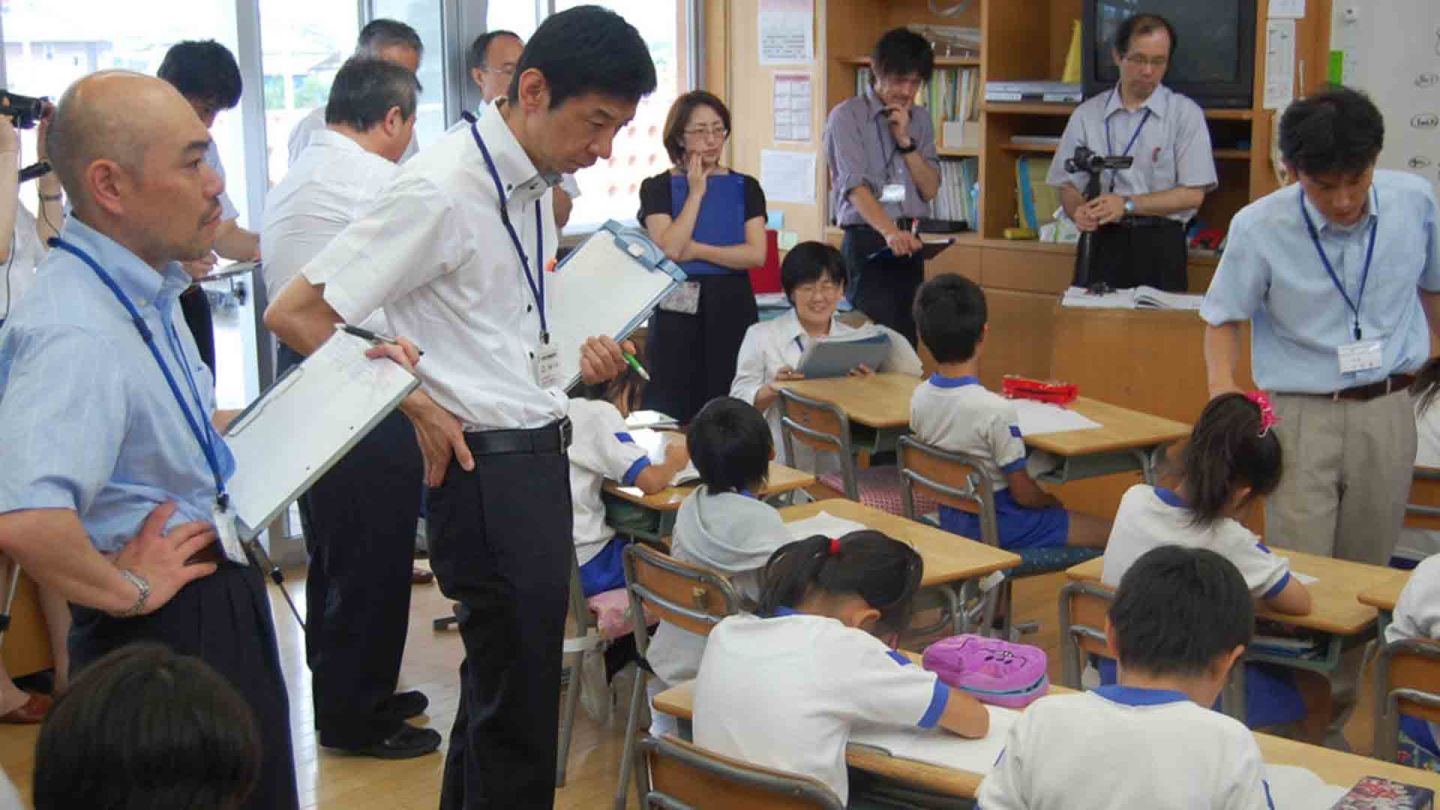
"caption": "Japanese teachers doing lesson study at Oshihara Elementary School in Japan, June 2012.",
"description": null,
"title": "Oshihara-McDougal",
"credit": "Tom McDougal",
"status": "inherit",
"isLoading": false,
"fetchFailed": false
},
"mindshift_41932": {
"type": "attachments",
"id": "mindshift_41932",
"meta": {
"index": "attachments_1716263798",
"site": "mindshift",
"id": "41932",
"found": true
},
"parent": 41914,
"imgSizes": {
"twentyfourteen-full-width": {
"file": "https://ww2.kqed.org/app/uploads/sites/23/2015/09/CodeNow-1038x576.jpg",
"width": 1038,
"mimeType": "image/jpeg",
"height": 576
},
"thumbnail": {
"file": "https://ww2.kqed.org/app/uploads/sites/23/2015/09/CodeNow-400x225.jpg",
"width": 400,
"mimeType": "image/jpeg",
"height": 225
},
"fd-sm": {
"file": "https://ww2.kqed.org/app/uploads/sites/23/2015/09/CodeNow-960x540.jpg",
"width": 960,
"mimeType": "image/jpeg",
"height": 540
},
"post-thumbnail": {
"file": "https://ww2.kqed.org/app/uploads/sites/23/2015/09/CodeNow-672x372.jpg",
"width": 672,
"mimeType": "image/jpeg",
"height": 372
},
"kqedFullSize": {
"file": "https://ww2.kqed.org/app/uploads/sites/23/2015/09/CodeNow.jpg",
"width": 2500,
"height": 1406
},
"large": {
"file": "https://ww2.kqed.org/app/uploads/sites/23/2015/09/CodeNow-1440x810.jpg",
"width": 1440,
"mimeType": "image/jpeg",
"height": 810
},
"guest-author-96": {
"file": "https://ww2.kqed.org/app/uploads/sites/23/2015/09/CodeNow-96x96.jpg",
"width": 96,
"mimeType": "image/jpeg",
"height": 96
},
"medium": {
"file": "https://ww2.kqed.org/app/uploads/sites/23/2015/09/CodeNow-800x450.jpg",
"width": 800,
"mimeType": "image/jpeg",
"height": 450
},
"guest-author-64": {
"file": "https://ww2.kqed.org/app/uploads/sites/23/2015/09/CodeNow-64x64.jpg",
"width": 64,
"mimeType": "image/jpeg",
"height": 64
},
"guest-author-32": {
"file": "https://ww2.kqed.org/app/uploads/sites/23/2015/09/CodeNow-32x32.jpg",
"width": 32,
"mimeType": "image/jpeg",
"height": 32
},
"cat_post_thumb_sizecategory-posts-2": {
"file": "https://ww2.kqed.org/app/uploads/sites/23/2015/09/CodeNow-50x50.jpg",
"width": 50,
"mimeType": "image/jpeg",
"height": 50
},
"fd-lrg": {
"file": "https://ww2.kqed.org/app/uploads/sites/23/2015/09/CodeNow-1920x1080.jpg",
"width": 1920,
"mimeType": "image/jpeg",
"height": 1080
},
"fd-med": {
"file": "https://ww2.kqed.org/app/uploads/sites/23/2015/09/CodeNow-1180x664.jpg",
"width": 1180,
"mimeType": "image/jpeg",
"height": 664
},
"detail": {
"file": "https://ww2.kqed.org/app/uploads/sites/23/2015/09/CodeNow-75x75.jpg",
"width": 75,
"mimeType": "image/jpeg",
"height": 75
},
"guest-author-128": {
"file": "https://ww2.kqed.org/app/uploads/sites/23/2015/09/CodeNow-128x128.jpg",
"width": 128,
"mimeType": "image/jpeg",
"height": 128
}
},
"publishDate": 1441391954,
"modified": 1441391981,
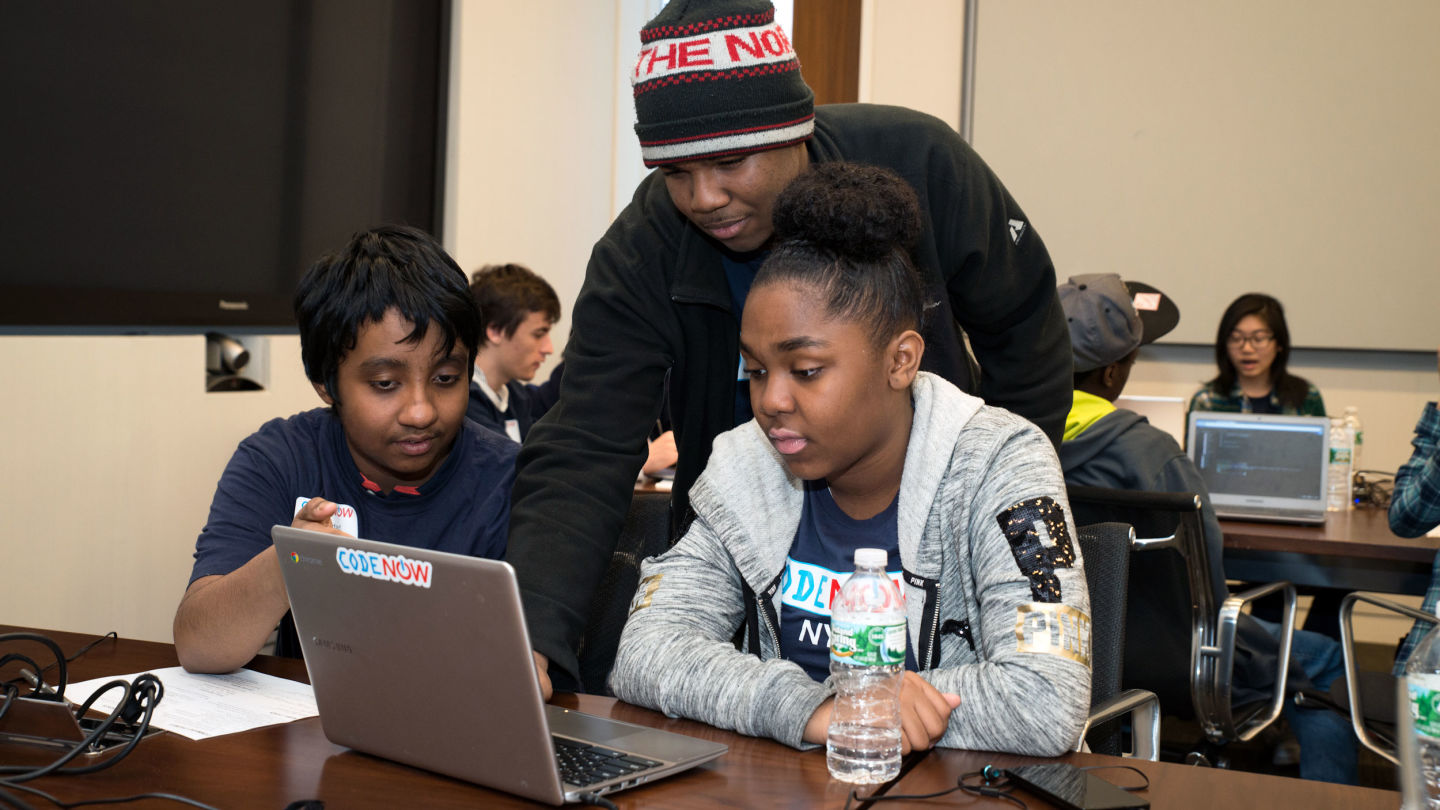
"caption": "Marcus Robinson helps facilitate a coding workshop.",
"description": null,
"title": "CodeNow",
"credit": "Courtesy CodeNow",
"status": "inherit",
"isLoading": false,
"fetchFailed": false
},
"mindshift_41966": {
"type": "attachments",
"id": "mindshift_41966",
"meta": {
"index": "attachments_1716263798",
"site": "mindshift",
"id": "41966",
"found": true
},
"parent": 41958,
"imgSizes": {
"twentyfourteen-full-width": {
"file": "https://ww2.kqed.org/app/uploads/sites/23/2015/09/U.S.-Pacific-Fleet-1038x576.jpg",
"width": 1038,
"mimeType": "image/jpeg",
"height": 576
},
"thumbnail": {
"file": "https://ww2.kqed.org/app/uploads/sites/23/2015/09/U.S.-Pacific-Fleet-400x232.jpg",
"width": 400,
"mimeType": "image/jpeg",
"height": 232
},
"fd-sm": {
"file": "https://ww2.kqed.org/app/uploads/sites/23/2015/09/U.S.-Pacific-Fleet-960x556.jpg",
"width": 960,
"mimeType": "image/jpeg",
"height": 556
},
"post-thumbnail": {
"file": "https://ww2.kqed.org/app/uploads/sites/23/2015/09/U.S.-Pacific-Fleet-672x372.jpg",
"width": 672,
"mimeType": "image/jpeg",
"height": 372
},
"kqedFullSize": {
"file": "https://ww2.kqed.org/app/uploads/sites/23/2015/09/U.S.-Pacific-Fleet.jpg",
"width": 1920,
"height": 1112
},
"large": {
"file": "https://ww2.kqed.org/app/uploads/sites/23/2015/09/U.S.-Pacific-Fleet-1440x834.jpg",
"width": 1440,
"mimeType": "image/jpeg",
"height": 834
},
"guest-author-96": {
"file": "https://ww2.kqed.org/app/uploads/sites/23/2015/09/U.S.-Pacific-Fleet-96x96.jpg",
"width": 96,
"mimeType": "image/jpeg",
"height": 96
},
"medium": {
"file": "https://ww2.kqed.org/app/uploads/sites/23/2015/09/U.S.-Pacific-Fleet-800x463.jpg",
"width": 800,
"mimeType": "image/jpeg",
"height": 463
},
"guest-author-64": {
"file": "https://ww2.kqed.org/app/uploads/sites/23/2015/09/U.S.-Pacific-Fleet-64x64.jpg",
"width": 64,
"mimeType": "image/jpeg",
"height": 64
},
"guest-author-32": {
"file": "https://ww2.kqed.org/app/uploads/sites/23/2015/09/U.S.-Pacific-Fleet-32x32.jpg",
"width": 32,
"mimeType": "image/jpeg",
"height": 32
},
"cat_post_thumb_sizecategory-posts-2": {
"file": "https://ww2.kqed.org/app/uploads/sites/23/2015/09/U.S.-Pacific-Fleet-50x50.jpg",
"width": 50,
"mimeType": "image/jpeg",
"height": 50
},
"fd-lrg": {
"file": "https://ww2.kqed.org/app/uploads/sites/23/2015/09/U.S.-Pacific-Fleet-1920x1112.jpg",
"width": 1920,
"mimeType": "image/jpeg",
"height": 1112
},
"fd-med": {
"file": "https://ww2.kqed.org/app/uploads/sites/23/2015/09/U.S.-Pacific-Fleet-1180x683.jpg",
"width": 1180,
"mimeType": "image/jpeg",
"height": 683
},
"detail": {
"file": "https://ww2.kqed.org/app/uploads/sites/23/2015/09/U.S.-Pacific-Fleet-75x75.jpg",
"width": 75,
"mimeType": "image/jpeg",
"height": 75
},
"guest-author-128": {
"file": "https://ww2.kqed.org/app/uploads/sites/23/2015/09/U.S.-Pacific-Fleet-128x128.jpg",
"width": 128,
"mimeType": "image/jpeg",
"height": 128
}
},
"publishDate": 1441783747,
"modified": 1441783771,
"caption": null,
"description": null,
"title": "U.S.-Pacific-Fleet",
"credit": "U.S. Pacific Fleet/Flickr",
"status": "inherit",
"isLoading": false,
"fetchFailed": false
},
"mindshift_41927": {
"type": "attachments",
"id": "mindshift_41927",
"meta": {
"index": "attachments_1716263798",
"site": "mindshift",
"id": "41927",
"found": true
},
"parent": 41924,
"imgSizes": {
"twentyfourteen-full-width": {
"file": "https://ww2.kqed.org/app/uploads/sites/23/2015/09/hand-raised-1038x576.jpg",
"width": 1038,
"mimeType": "image/jpeg",
"height": 576
},
"thumbnail": {
"file": "https://ww2.kqed.org/app/uploads/sites/23/2015/09/hand-raised-400x225.jpg",
"width": 400,
"mimeType": "image/jpeg",
"height": 225
},
"fd-sm": {
"file": "https://ww2.kqed.org/app/uploads/sites/23/2015/09/hand-raised-960x540.jpg",
"width": 960,
"mimeType": "image/jpeg",
"height": 540
},
"post-thumbnail": {
"file": "https://ww2.kqed.org/app/uploads/sites/23/2015/09/hand-raised-672x372.jpg",
"width": 672,
"mimeType": "image/jpeg",
"height": 372
},
"kqedFullSize": {
"file": "https://ww2.kqed.org/app/uploads/sites/23/2015/09/hand-raised.jpg",
"width": 1440,
"height": 810
},
"large": {
"file": "https://ww2.kqed.org/app/uploads/sites/23/2015/09/hand-raised-1440x810.jpg",
"width": 1440,
"mimeType": "image/jpeg",
"height": 810
},
"guest-author-96": {
"file": "https://ww2.kqed.org/app/uploads/sites/23/2015/09/hand-raised-96x96.jpg",
"width": 96,
"mimeType": "image/jpeg",
"height": 96
},
"medium": {
"file": "https://ww2.kqed.org/app/uploads/sites/23/2015/09/hand-raised-800x450.jpg",
"width": 800,
"mimeType": "image/jpeg",
"height": 450
},
"guest-author-64": {
"file": "https://ww2.kqed.org/app/uploads/sites/23/2015/09/hand-raised-64x64.jpg",
"width": 64,
"mimeType": "image/jpeg",
"height": 64
},
"guest-author-32": {
"file": "https://ww2.kqed.org/app/uploads/sites/23/2015/09/hand-raised-32x32.jpg",
"width": 32,
"mimeType": "image/jpeg",
"height": 32
},
"cat_post_thumb_sizecategory-posts-2": {
"file": "https://ww2.kqed.org/app/uploads/sites/23/2015/09/hand-raised-50x50.jpg",
"width": 50,
"mimeType": "image/jpeg",
"height": 50
},
"fd-med": {
"file": "https://ww2.kqed.org/app/uploads/sites/23/2015/09/hand-raised-1180x664.jpg",
"width": 1180,
"mimeType": "image/jpeg",
"height": 664
},
"detail": {
"file": "https://ww2.kqed.org/app/uploads/sites/23/2015/09/hand-raised-75x75.jpg",
"width": 75,
"mimeType": "image/jpeg",
"height": 75
},
"guest-author-128": {
"file": "https://ww2.kqed.org/app/uploads/sites/23/2015/09/hand-raised-128x128.jpg",
"width": 128,
"mimeType": "image/jpeg",
"height": 128
}
},
"publishDate": 1441391127,
"modified": 1441391142,
"caption": null,
"description": null,
"title": "hand-raised",
"credit": "Lenny Gonzalez/KQED",
"status": "inherit",
"isLoading": false,
"fetchFailed": false
},
"mindshift_41733": {
"type": "attachments",
"id": "mindshift_41733",
"meta": {
"index": "attachments_1716263798",
"site": "mindshift",
"id": "41733",
"found": true
},
"parent": 41732,
"imgSizes": {
"twentyfourteen-full-width": {
"file": "https://ww2.kqed.org/app/uploads/sites/23/2015/08/graphing-1038x576.jpg",
"width": 1038,
"mimeType": "image/jpeg",
"height": 576
},
"thumbnail": {
"file": "https://ww2.kqed.org/app/uploads/sites/23/2015/08/graphing-400x225.jpg",
"width": 400,
"mimeType": "image/jpeg",
"height": 225
},
"fd-sm": {
"file": "https://ww2.kqed.org/app/uploads/sites/23/2015/08/graphing-960x540.jpg",
"width": 960,
"mimeType": "image/jpeg",
"height": 540
},
"post-thumbnail": {
"file": "https://ww2.kqed.org/app/uploads/sites/23/2015/08/graphing-672x372.jpg",
"width": 672,
"mimeType": "image/jpeg",
"height": 372
},
"kqedFullSize": {
"file": "https://ww2.kqed.org/app/uploads/sites/23/2015/08/graphing.jpg",
"width": 1920,
"height": 1080
},
"large": {
"file": "https://ww2.kqed.org/app/uploads/sites/23/2015/08/graphing-1440x810.jpg",
"width": 1440,
"mimeType": "image/jpeg",
"height": 810
},
"guest-author-96": {
"file": "https://ww2.kqed.org/app/uploads/sites/23/2015/08/graphing-96x96.jpg",
"width": 96,
"mimeType": "image/jpeg",
"height": 96
},
"medium": {
"file": "https://ww2.kqed.org/app/uploads/sites/23/2015/08/graphing-800x450.jpg",
"width": 800,
"mimeType": "image/jpeg",
"height": 450
},
"guest-author-64": {
"file": "https://ww2.kqed.org/app/uploads/sites/23/2015/08/graphing-64x64.jpg",
"width": 64,
"mimeType": "image/jpeg",
"height": 64
},
"guest-author-32": {
"file": "https://ww2.kqed.org/app/uploads/sites/23/2015/08/graphing-32x32.jpg",
"width": 32,
"mimeType": "image/jpeg",
"height": 32
},
"cat_post_thumb_sizecategory-posts-2": {
"file": "https://ww2.kqed.org/app/uploads/sites/23/2015/08/graphing-50x50.jpg",
"width": 50,
"mimeType": "image/jpeg",
"height": 50
},
"fd-lrg": {
"file": "https://ww2.kqed.org/app/uploads/sites/23/2015/08/graphing-1920x1080.jpg",
"width": 1920,
"mimeType": "image/jpeg",
"height": 1080
},
"fd-med": {
"file": "https://ww2.kqed.org/app/uploads/sites/23/2015/08/graphing-1180x664.jpg",
"width": 1180,
"mimeType": "image/jpeg",
"height": 664
},
"detail": {
"file": "https://ww2.kqed.org/app/uploads/sites/23/2015/08/graphing-75x75.jpg",
"width": 75,
"mimeType": "image/jpeg",
"height": 75
},
"guest-author-128": {
"file": "https://ww2.kqed.org/app/uploads/sites/23/2015/08/graphing-128x128.jpg",
"width": 128,
"mimeType": "image/jpeg",
"height": 128
}
},
"publishDate": 1440198291,
"modified": 1440198331,
"caption": null,
"description": null,
"title": "graphing",
"credit": "Amanda Lucier/MindShift",
"status": "inherit",
"isLoading": false,
"fetchFailed": false
},
"mindshift_41494": {
"type": "attachments",
"id": "mindshift_41494",
"meta": {
"index": "attachments_1716263798",
"site": "mindshift",
"id": "41494",
"found": true
},
"parent": 41476,
"imgSizes": {
"twentyfourteen-full-width": {
"file": "https://ww2.kqed.org/app/uploads/sites/23/2015/08/different-1038x576.jpg",
"width": 1038,
"mimeType": "image/jpeg",
"height": 576
},
"thumbnail": {
"file": "https://ww2.kqed.org/app/uploads/sites/23/2015/08/different-400x225.jpg",
"width": 400,
"mimeType": "image/jpeg",
"height": 225
},
"fd-sm": {
"file": "https://ww2.kqed.org/app/uploads/sites/23/2015/08/different-960x540.jpg",
"width": 960,
"mimeType": "image/jpeg",
"height": 540
},
"post-thumbnail": {
"file": "https://ww2.kqed.org/app/uploads/sites/23/2015/08/different-672x372.jpg",
"width": 672,
"mimeType": "image/jpeg",
"height": 372
},
"kqedFullSize": {
"file": "https://ww2.kqed.org/app/uploads/sites/23/2015/08/different.jpg",
"width": 1920,
"height": 1080
},
"large": {
"file": "https://ww2.kqed.org/app/uploads/sites/23/2015/08/different-1440x810.jpg",
"width": 1440,
"mimeType": "image/jpeg",
"height": 810
},
"guest-author-96": {
"file": "https://ww2.kqed.org/app/uploads/sites/23/2015/08/different-96x96.jpg",
"width": 96,
"mimeType": "image/jpeg",
"height": 96
},
"medium": {
"file": "https://ww2.kqed.org/app/uploads/sites/23/2015/08/different-800x450.jpg",
"width": 800,
"mimeType": "image/jpeg",
"height": 450
},
"guest-author-64": {
"file": "https://ww2.kqed.org/app/uploads/sites/23/2015/08/different-64x64.jpg",
"width": 64,
"mimeType": "image/jpeg",
"height": 64
},
"guest-author-32": {
"file": "https://ww2.kqed.org/app/uploads/sites/23/2015/08/different-32x32.jpg",
"width": 32,
"mimeType": "image/jpeg",
"height": 32
},
"cat_post_thumb_sizecategory-posts-2": {
"file": "https://ww2.kqed.org/app/uploads/sites/23/2015/08/different-50x50.jpg",
"width": 50,
"mimeType": "image/jpeg",
"height": 50
},
"fd-lrg": {
"file": "https://ww2.kqed.org/app/uploads/sites/23/2015/08/different-1920x1080.jpg",
"width": 1920,
"mimeType": "image/jpeg",
"height": 1080
},
"fd-med": {
"file": "https://ww2.kqed.org/app/uploads/sites/23/2015/08/different-1180x664.jpg",
"width": 1180,
"mimeType": "image/jpeg",
"height": 664
},
"detail": {
"file": "https://ww2.kqed.org/app/uploads/sites/23/2015/08/different-75x75.jpg",
"width": 75,
"mimeType": "image/jpeg",
"height": 75
},
"guest-author-128": {
"file": "https://ww2.kqed.org/app/uploads/sites/23/2015/08/different-128x128.jpg",
"width": 128,
"mimeType": "image/jpeg",
"height": 128
}
},
"publishDate": 1438645939,
"modified": 1438645951,
"caption": null,
"description": null,
"title": "different",
"credit": "iStock",
"status": "inherit",
"isLoading": false,
"fetchFailed": false
},
"mindshift_41905": {
"type": "attachments",
"id": "mindshift_41905",
"meta": {
"index": "attachments_1716263798",
"site": "mindshift",
"id": "41905",
"found": true
},
"parent": 41879,
"imgSizes": {
"twentyfourteen-full-width": {
"file": "https://ww2.kqed.org/app/uploads/sites/23/2015/09/Pixar-grass-border-1038x576.jpg",
"width": 1038,
"mimeType": "image/jpeg",
"height": 576
},
"thumbnail": {
"file": "https://ww2.kqed.org/app/uploads/sites/23/2015/09/Pixar-grass-border-400x225.jpg",
"width": 400,
"mimeType": "image/jpeg",
"height": 225
},
"fd-sm": {
"file": "https://ww2.kqed.org/app/uploads/sites/23/2015/09/Pixar-grass-border-960x540.jpg",
"width": 960,
"mimeType": "image/jpeg",
"height": 540
},
"post-thumbnail": {
"file": "https://ww2.kqed.org/app/uploads/sites/23/2015/09/Pixar-grass-border-672x372.jpg",
"width": 672,
"mimeType": "image/jpeg",
"height": 372
},
"kqedFullSize": {
"file": "https://ww2.kqed.org/app/uploads/sites/23/2015/09/Pixar-grass-border.jpg",
"width": 1920,
"height": 1080
},
"large": {
"file": "https://ww2.kqed.org/app/uploads/sites/23/2015/09/Pixar-grass-border-1440x810.jpg",
"width": 1440,
"mimeType": "image/jpeg",
"height": 810
},
"guest-author-96": {
"file": "https://ww2.kqed.org/app/uploads/sites/23/2015/09/Pixar-grass-border-96x96.jpg",
"width": 96,
"mimeType": "image/jpeg",
"height": 96
},
"medium": {
"file": "https://ww2.kqed.org/app/uploads/sites/23/2015/09/Pixar-grass-border-800x450.jpg",
"width": 800,
"mimeType": "image/jpeg",
"height": 450
},
"guest-author-64": {
"file": "https://ww2.kqed.org/app/uploads/sites/23/2015/09/Pixar-grass-border-64x64.jpg",
"width": 64,
"mimeType": "image/jpeg",
"height": 64
},
"guest-author-32": {
"file": "https://ww2.kqed.org/app/uploads/sites/23/2015/09/Pixar-grass-border-32x32.jpg",
"width": 32,
"mimeType": "image/jpeg",
"height": 32
},
"cat_post_thumb_sizecategory-posts-2": {
"file": "https://ww2.kqed.org/app/uploads/sites/23/2015/09/Pixar-grass-border-50x50.jpg",
"width": 50,
"mimeType": "image/jpeg",
"height": 50
},
"fd-lrg": {
"file": "https://ww2.kqed.org/app/uploads/sites/23/2015/09/Pixar-grass-border-1920x1080.jpg",
"width": 1920,
"mimeType": "image/jpeg",
"height": 1080
},
"fd-med": {
"file": "https://ww2.kqed.org/app/uploads/sites/23/2015/09/Pixar-grass-border-1180x664.jpg",
"width": 1180,
"mimeType": "image/jpeg",
"height": 664
},
"detail": {
"file": "https://ww2.kqed.org/app/uploads/sites/23/2015/09/Pixar-grass-border-75x75.jpg",
"width": 75,
"mimeType": "image/jpeg",
"height": 75
},
"guest-author-128": {
"file": "https://ww2.kqed.org/app/uploads/sites/23/2015/09/Pixar-grass-border-128x128.jpg",
"width": 128,
"mimeType": "image/jpeg",
"height": 128
}
},
"publishDate": 1441240324,
"modified": 1441281404,
"caption": "Screengrab of a Pixar in a Box session on environmental modeling of grass using parabolas. ",
"description": null,
"title": "Pixar-grass-border",
"credit": null,
"status": "inherit",
"isLoading": false,
"fetchFailed": false
},
"mindshift_41710": {
"type": "attachments",
"id": "mindshift_41710",
"meta": {
"index": "attachments_1716263798",
"site": "mindshift",
"id": "41710",
"found": true
},
"parent": 41709,
"imgSizes": {
"twentyfourteen-full-width": {
"file": "https://ww2.kqed.org/app/uploads/sites/23/2015/08/Schultz-1038x576.jpg",
"width": 1038,
"mimeType": "image/jpeg",
"height": 576
},
"thumbnail": {
"file": "https://ww2.kqed.org/app/uploads/sites/23/2015/08/Schultz-400x225.jpg",
"width": 400,
"mimeType": "image/jpeg",
"height": 225
},
"fd-sm": {
"file": "https://ww2.kqed.org/app/uploads/sites/23/2015/08/Schultz-960x540.jpg",
"width": 960,
"mimeType": "image/jpeg",
"height": 540
},
"post-thumbnail": {
"file": "https://ww2.kqed.org/app/uploads/sites/23/2015/08/Schultz-672x372.jpg",
"width": 672,
"mimeType": "image/jpeg",
"height": 372
},
"kqedFullSize": {
"file": "https://ww2.kqed.org/app/uploads/sites/23/2015/08/Schultz.jpg",
"width": 1920,
"height": 1080
},
"large": {
"file": "https://ww2.kqed.org/app/uploads/sites/23/2015/08/Schultz-1440x810.jpg",
"width": 1440,
"mimeType": "image/jpeg",
"height": 810
},
"guest-author-96": {
"file": "https://ww2.kqed.org/app/uploads/sites/23/2015/08/Schultz-96x96.jpg",
"width": 96,
"mimeType": "image/jpeg",
"height": 96
},
"medium": {
"file": "https://ww2.kqed.org/app/uploads/sites/23/2015/08/Schultz-800x450.jpg",
"width": 800,
"mimeType": "image/jpeg",
"height": 450
},
"guest-author-64": {
"file": "https://ww2.kqed.org/app/uploads/sites/23/2015/08/Schultz-64x64.jpg",
"width": 64,
"mimeType": "image/jpeg",
"height": 64
},
"guest-author-32": {
"file": "https://ww2.kqed.org/app/uploads/sites/23/2015/08/Schultz-32x32.jpg",
"width": 32,
"mimeType": "image/jpeg",
"height": 32
},
"cat_post_thumb_sizecategory-posts-2": {
"file": "https://ww2.kqed.org/app/uploads/sites/23/2015/08/Schultz-50x50.jpg",
"width": 50,
"mimeType": "image/jpeg",
"height": 50
},
"fd-lrg": {
"file": "https://ww2.kqed.org/app/uploads/sites/23/2015/08/Schultz-1920x1080.jpg",
"width": 1920,
"mimeType": "image/jpeg",
"height": 1080
},
"fd-med": {
"file": "https://ww2.kqed.org/app/uploads/sites/23/2015/08/Schultz-1180x664.jpg",
"width": 1180,
"mimeType": "image/jpeg",
"height": 664
},
"detail": {
"file": "https://ww2.kqed.org/app/uploads/sites/23/2015/08/Schultz-75x75.jpg",
"width": 75,
"mimeType": "image/jpeg",
"height": 75
},
"guest-author-128": {
"file": "https://ww2.kqed.org/app/uploads/sites/23/2015/08/Schultz-128x128.jpg",
"width": 128,
"mimeType": "image/jpeg",
"height": 128
}
},
"publishDate": 1440114677,
"modified": 1440114684,
"caption": null,
"description": null,
"title": "Schultz",
"credit": "TED",
"status": "inherit",
"isLoading": false,
"fetchFailed": false
},
"mindshift_41837": {
"type": "attachments",
"id": "mindshift_41837",
"meta": {
"index": "attachments_1716263798",
"site": "mindshift",
"id": "41837",
"found": true
},
"parent": 41826,
"imgSizes": {
"twentyfourteen-full-width": {
"file": "https://ww2.kqed.org/app/uploads/sites/23/2015/08/ELLs-Apps-1038x576.jpg",
"width": 1038,
"mimeType": "image/jpeg",
"height": 576
},
"thumbnail": {
"file": "https://ww2.kqed.org/app/uploads/sites/23/2015/08/ELLs-Apps-400x225.jpg",
"width": 400,
"mimeType": "image/jpeg",
"height": 225
},
"fd-sm": {
"file": "https://ww2.kqed.org/app/uploads/sites/23/2015/08/ELLs-Apps-960x540.jpg",
"width": 960,
"mimeType": "image/jpeg",
"height": 540
},
"post-thumbnail": {
"file": "https://ww2.kqed.org/app/uploads/sites/23/2015/08/ELLs-Apps-672x372.jpg",
"width": 672,
"mimeType": "image/jpeg",
"height": 372
},
"kqedFullSize": {
"file": "https://ww2.kqed.org/app/uploads/sites/23/2015/08/ELLs-Apps.jpg",
"width": 1920,
"height": 1080
},
"large": {
"file": "https://ww2.kqed.org/app/uploads/sites/23/2015/08/ELLs-Apps-1440x810.jpg",
"width": 1440,
"mimeType": "image/jpeg",
"height": 810
},
"guest-author-96": {
"file": "https://ww2.kqed.org/app/uploads/sites/23/2015/08/ELLs-Apps-96x96.jpg",
"width": 96,
"mimeType": "image/jpeg",
"height": 96
},
"medium": {
"file": "https://ww2.kqed.org/app/uploads/sites/23/2015/08/ELLs-Apps-800x450.jpg",
"width": 800,
"mimeType": "image/jpeg",
"height": 450
},
"guest-author-64": {
"file": "https://ww2.kqed.org/app/uploads/sites/23/2015/08/ELLs-Apps-64x64.jpg",
"width": 64,
"mimeType": "image/jpeg",
"height": 64
},
"guest-author-32": {
"file": "https://ww2.kqed.org/app/uploads/sites/23/2015/08/ELLs-Apps-32x32.jpg",
"width": 32,
"mimeType": "image/jpeg",
"height": 32
},
"cat_post_thumb_sizecategory-posts-2": {
"file": "https://ww2.kqed.org/app/uploads/sites/23/2015/08/ELLs-Apps-50x50.jpg",
"width": 50,
"mimeType": "image/jpeg",
"height": 50
},
"fd-lrg": {
"file": "https://ww2.kqed.org/app/uploads/sites/23/2015/08/ELLs-Apps-1920x1080.jpg",
"width": 1920,
"mimeType": "image/jpeg",
"height": 1080
},
"fd-med": {
"file": "https://ww2.kqed.org/app/uploads/sites/23/2015/08/ELLs-Apps-1180x664.jpg",
"width": 1180,
"mimeType": "image/jpeg",
"height": 664
},
"detail": {
"file": "https://ww2.kqed.org/app/uploads/sites/23/2015/08/ELLs-Apps-75x75.jpg",
"width": 75,
"mimeType": "image/jpeg",
"height": 75
},
"guest-author-128": {
"file": "https://ww2.kqed.org/app/uploads/sites/23/2015/08/ELLs-Apps-128x128.jpg",
"width": 128,
"mimeType": "image/jpeg",
"height": 128
}
},
"publishDate": 1441004907,
"modified": 1441004944,
"caption": null,
"description": null,
"title": "ELLs-Apps",
"credit": "Brad Flickinger/Flickr",
"status": "inherit",
"isLoading": false,
"fetchFailed": false
},
"mindshift_41800": {
"type": "attachments",
"id": "mindshift_41800",
"meta": {
"index": "attachments_1716263798",
"site": "mindshift",
"id": "41800",
"found": true
},
"parent": 41457,
"imgSizes": {
"twentyfourteen-full-width": {
"file": "https://ww2.kqed.org/app/uploads/sites/23/2015/08/future2-1038x576.jpg",
"width": 1038,
"mimeType": "image/jpeg",
"height": 576
},
"thumbnail": {
"file": "https://ww2.kqed.org/app/uploads/sites/23/2015/08/future2-400x234.jpg",
"width": 400,
"mimeType": "image/jpeg",
"height": 234
},
"fd-sm": {
"file": "https://ww2.kqed.org/app/uploads/sites/23/2015/08/future2-960x562.jpg",
"width": 960,
"mimeType": "image/jpeg",
"height": 562
},
"post-thumbnail": {
"file": "https://ww2.kqed.org/app/uploads/sites/23/2015/08/future2-672x372.jpg",
"width": 672,
"mimeType": "image/jpeg",
"height": 372
},
"kqedFullSize": {
"file": "https://ww2.kqed.org/app/uploads/sites/23/2015/08/future2.jpg",
"width": 3186,
"height": 1864
},
"large": {
"file": "https://ww2.kqed.org/app/uploads/sites/23/2015/08/future2-1440x842.jpg",
"width": 1440,
"mimeType": "image/jpeg",
"height": 842
},
"guest-author-96": {
"file": "https://ww2.kqed.org/app/uploads/sites/23/2015/08/future2-96x96.jpg",
"width": 96,
"mimeType": "image/jpeg",
"height": 96
},
"medium": {
"file": "https://ww2.kqed.org/app/uploads/sites/23/2015/08/future2-800x468.jpg",
"width": 800,
"mimeType": "image/jpeg",
"height": 468
},
"guest-author-64": {
"file": "https://ww2.kqed.org/app/uploads/sites/23/2015/08/future2-64x64.jpg",
"width": 64,
"mimeType": "image/jpeg",
"height": 64
},
"guest-author-32": {
"file": "https://ww2.kqed.org/app/uploads/sites/23/2015/08/future2-32x32.jpg",
"width": 32,
"mimeType": "image/jpeg",
"height": 32
},
"cat_post_thumb_sizecategory-posts-2": {
"file": "https://ww2.kqed.org/app/uploads/sites/23/2015/08/future2-50x50.jpg",
"width": 50,
"mimeType": "image/jpeg",
"height": 50
},
"fd-lrg": {
"file": "https://ww2.kqed.org/app/uploads/sites/23/2015/08/future2-1920x1123.jpg",
"width": 1920,
"mimeType": "image/jpeg",
"height": 1123
},
"fd-med": {
"file": "https://ww2.kqed.org/app/uploads/sites/23/2015/08/future2-1180x690.jpg",
"width": 1180,
"mimeType": "image/jpeg",
"height": 690
},
"detail": {
"file": "https://ww2.kqed.org/app/uploads/sites/23/2015/08/future2-75x75.jpg",
"width": 75,
"mimeType": "image/jpeg",
"height": 75
},
"guest-author-128": {
"file": "https://ww2.kqed.org/app/uploads/sites/23/2015/08/future2-128x128.jpg",
"width": 128,
"mimeType": "image/jpeg",
"height": 128
}
},
"publishDate": 1440699048,
"modified": 1440699057,
"caption": null,
"description": null,
"title": "future2",
"credit": "iStock",
"status": "inherit",
"isLoading": false,
"fetchFailed": false
},
"mindshift_41781": {
"type": "attachments",
"id": "mindshift_41781",
"meta": {
"index": "attachments_1716263798",
"site": "mindshift",
"id": "41781",
"found": true
},
"parent": 41753,
"imgSizes": {
"twentyfourteen-full-width": {
"file": "https://ww2.kqed.org/app/uploads/sites/23/2015/08/Playground-net-1038x576.jpg",
"width": 1038,
"mimeType": "image/jpeg",
"height": 576
},
"thumbnail": {
"file": "https://ww2.kqed.org/app/uploads/sites/23/2015/08/Playground-net-400x225.jpg",
"width": 400,
"mimeType": "image/jpeg",
"height": 225
},
"fd-sm": {
"file": "https://ww2.kqed.org/app/uploads/sites/23/2015/08/Playground-net-960x540.jpg",
"width": 960,
"mimeType": "image/jpeg",
"height": 540
},
"post-thumbnail": {
"file": "https://ww2.kqed.org/app/uploads/sites/23/2015/08/Playground-net-672x372.jpg",
"width": 672,
"mimeType": "image/jpeg",
"height": 372
},
"kqedFullSize": {
"file": "https://ww2.kqed.org/app/uploads/sites/23/2015/08/Playground-net.jpg",
"width": 1920,
"height": 1080
},
"large": {
"file": "https://ww2.kqed.org/app/uploads/sites/23/2015/08/Playground-net-1440x810.jpg",
"width": 1440,
"mimeType": "image/jpeg",
"height": 810
},
"guest-author-96": {
"file": "https://ww2.kqed.org/app/uploads/sites/23/2015/08/Playground-net-96x96.jpg",
"width": 96,
"mimeType": "image/jpeg",
"height": 96
},
"medium": {
"file": "https://ww2.kqed.org/app/uploads/sites/23/2015/08/Playground-net-800x450.jpg",
"width": 800,
"mimeType": "image/jpeg",
"height": 450
},
"guest-author-64": {
"file": "https://ww2.kqed.org/app/uploads/sites/23/2015/08/Playground-net-64x64.jpg",
"width": 64,
"mimeType": "image/jpeg",
"height": 64
},
"guest-author-32": {
"file": "https://ww2.kqed.org/app/uploads/sites/23/2015/08/Playground-net-32x32.jpg",
"width": 32,
"mimeType": "image/jpeg",
"height": 32
},
"cat_post_thumb_sizecategory-posts-2": {
"file": "https://ww2.kqed.org/app/uploads/sites/23/2015/08/Playground-net-50x50.jpg",
"width": 50,
"mimeType": "image/jpeg",
"height": 50
},
"fd-lrg": {
"file": "https://ww2.kqed.org/app/uploads/sites/23/2015/08/Playground-net-1920x1080.jpg",
"width": 1920,
"mimeType": "image/jpeg",
"height": 1080
},
"fd-med": {
"file": "https://ww2.kqed.org/app/uploads/sites/23/2015/08/Playground-net-1180x664.jpg",
"width": 1180,
"mimeType": "image/jpeg",
"height": 664
},
"detail": {
"file": "https://ww2.kqed.org/app/uploads/sites/23/2015/08/Playground-net-75x75.jpg",
"width": 75,
"mimeType": "image/jpeg",
"height": 75
},
"guest-author-128": {
"file": "https://ww2.kqed.org/app/uploads/sites/23/2015/08/Playground-net-128x128.jpg",
"width": 128,
"mimeType": "image/jpeg",
"height": 128
}
},
"publishDate": 1440573903,
"modified": 1440573956,
"caption": null,
"description": null,
"title": "Playground-net",
"credit": "\u003ca href=\"https://www.flickr.com/photos/spapax/4027366358/in/photolist-78TiH1-baFaCV-b9w1tF-beMxS6-aYawX2-b5UNNM-8W8rqn-fMetK6-7oH67B-ovwNDU-busXQv-orA1MX-bUfqJZ-67jppr-fAUvGj-sw2cnL-7Ee6hi-dueD4u-5Jepfz-kVupWK-e2FCFs-h7mRv3-e3NmhA-a4TUhG-4vSfdk-doJWWj-HBwHg-96twBn-egwpCD-8WbuCS-p3wPgK-3pq7sS-nigszh-743Fxw-nNtawU-bXUfT3-bDn71D-e9cWh4-nVWjen-rh4tCd-j2Y1XA-frt4X7-iH3fwc-9nCCq8-on4ojV-q9yhq4-64R6FC-aBgM2d-bXauL9-6zwpbG\">stefanos papachristou/Flickr \u003c/a>",
"status": "inherit",
"isLoading": false,
"fetchFailed": false
},
"mindshift_41652": {
"type": "attachments",
"id": "mindshift_41652",
"meta": {
"index": "attachments_1716263798",
"site": "mindshift",
"id": "41652",
"found": true
},
"parent": 41650,
"imgSizes": {
"twentyfourteen-full-width": {
"file": "https://ww2.kqed.org/app/uploads/sites/23/2015/08/following-the-rocket-1038x576.jpg",
"width": 1038,
"mimeType": "image/jpeg",
"height": 576
},
"thumbnail": {
"file": "https://ww2.kqed.org/app/uploads/sites/23/2015/08/following-the-rocket-400x225.jpg",
"width": 400,
"mimeType": "image/jpeg",
"height": 225
},
"fd-sm": {
"file": "https://ww2.kqed.org/app/uploads/sites/23/2015/08/following-the-rocket-960x540.jpg",
"width": 960,
"mimeType": "image/jpeg",
"height": 540
},
"post-thumbnail": {
"file": "https://ww2.kqed.org/app/uploads/sites/23/2015/08/following-the-rocket-672x372.jpg",
"width": 672,
"mimeType": "image/jpeg",
"height": 372
},
"kqedFullSize": {
"file": "https://ww2.kqed.org/app/uploads/sites/23/2015/08/following-the-rocket.jpg",
"width": 1920,
"height": 1080
},
"large": {
"file": "https://ww2.kqed.org/app/uploads/sites/23/2015/08/following-the-rocket-1440x810.jpg",
"width": 1440,
"mimeType": "image/jpeg",
"height": 810
},
"guest-author-96": {
"file": "https://ww2.kqed.org/app/uploads/sites/23/2015/08/following-the-rocket-96x96.jpg",
"width": 96,
"mimeType": "image/jpeg",
"height": 96
},
"medium": {
"file": "https://ww2.kqed.org/app/uploads/sites/23/2015/08/following-the-rocket-800x450.jpg",
"width": 800,
"mimeType": "image/jpeg",
"height": 450
},
"guest-author-64": {
"file": "https://ww2.kqed.org/app/uploads/sites/23/2015/08/following-the-rocket-64x64.jpg",
"width": 64,
"mimeType": "image/jpeg",
"height": 64
},
"guest-author-32": {
"file": "https://ww2.kqed.org/app/uploads/sites/23/2015/08/following-the-rocket-32x32.jpg",
"width": 32,
"mimeType": "image/jpeg",
"height": 32
},
"cat_post_thumb_sizecategory-posts-2": {
"file": "https://ww2.kqed.org/app/uploads/sites/23/2015/08/following-the-rocket-50x50.jpg",
"width": 50,
"mimeType": "image/jpeg",
"height": 50
},
"fd-lrg": {
"file": "https://ww2.kqed.org/app/uploads/sites/23/2015/08/following-the-rocket-1920x1080.jpg",
"width": 1920,
"mimeType": "image/jpeg",
"height": 1080
},
"fd-med": {
"file": "https://ww2.kqed.org/app/uploads/sites/23/2015/08/following-the-rocket-1180x664.jpg",
"width": 1180,
"mimeType": "image/jpeg",
"height": 664
},
"detail": {
"file": "https://ww2.kqed.org/app/uploads/sites/23/2015/08/following-the-rocket-75x75.jpg",
"width": 75,
"mimeType": "image/jpeg",
"height": 75
},
"guest-author-128": {
"file": "https://ww2.kqed.org/app/uploads/sites/23/2015/08/following-the-rocket-128x128.jpg",
"width": 128,
"mimeType": "image/jpeg",
"height": 128
}
},
"publishDate": 1439846654,
"modified": 1439846778,
"caption": "Students and their teacher watch the progress of their paper rockets during a \"tinkering day.\"",
"description": null,
"title": "following-the-rocket",
"credit": "Amanda Lucier/MindShift",
"status": "inherit",
"isLoading": false,
"fetchFailed": false
}
},
"audioPlayerReducer": {
"postId": "stream_live",
"isPaused": true,
"isPlaying": false,
"pfsActive": false,
"pledgeModalIsOpen": true,
"playerDrawerIsOpen": false,
"liveAudioPlayStartedAt": 0,
"liveAudioPlayContext": ""
},
"authorsReducer": {
"byline_mindshift_42021": {
"type": "authors",
"id": "byline_mindshift_42021",
"meta": {
"override": true
},
"slug": "byline_mindshift_42021",
"name": "Emily Hanford, American RadioWorks",
"isLoading": false
},
"byline_mindshift_41958": {
"type": "authors",
"id": "byline_mindshift_41958",
"meta": {
"override": true
},
"slug": "byline_mindshift_41958",
"name": "Patti Neighmond",
"isLoading": false
},
"byline_mindshift_41924": {
"type": "authors",
"id": "byline_mindshift_41924",
"meta": {
"override": true
},
"slug": "byline_mindshift_41924",
"name": "\u003ca href=\"https://shelleywright.wordpress.com/\">Shelley Wright\u003c/a>",
"isLoading": false
},
"byline_mindshift_41826": {
"type": "authors",
"id": "byline_mindshift_41826",
"meta": {
"override": true
},
"slug": "byline_mindshift_41826",
"name": "Erin Wilkey Oh, \u003ca href=\"https://www.graphite.org/\">Common Sense Graphite\u003c/a>",
"isLoading": false
},
"katrinaschwartz": {
"type": "authors",
"id": "234",
"meta": {
"index": "authors_1716337520",
"id": "234",
"found": true
},
"name": "Katrina Schwartz",
"firstName": "Katrina",
"lastName": "Schwartz",
"slug": "katrinaschwartz",
"email": "kschwartz@kqed.org",
"display_author_email": false,
"staff_mastheads": [
"news"
],
"title": "Producer",
"bio": "Katrina Schwartz is a journalist based in San Francisco. She's worked at KPCC public radio in LA and has reported on air and online for KQED since 2010. She covered how teaching and learning is changing for MindShift between 2012 and 2020. She is the co-host of the MindShift podcast and now produces KQED's Bay Curious podcast.",
"avatar": "https://secure.gravatar.com/avatar/edb4ee79070447a018538c9aae6eeecf28786515b8a0c30e43b6b7dce5aa44c8?s=600&d=blank&r=g",
"twitter": "kschwart",
"bluesky": null,
"facebook": null,
"instagram": null,
"linkedin": null,
"sites": [
{
"site": "",
"roles": [
"editor"
]
},
{
"site": "news",
"roles": [
"editor"
]
},
{
"site": "mindshift",
"roles": [
"administrator"
]
},
{
"site": "stateofhealth",
"roles": [
"author"
]
},
{
"site": "science",
"roles": [
"editor"
]
}
],
"headData": {
"title": "Katrina Schwartz | KQED",
"description": "Producer",
"ogImgSrc": "https://secure.gravatar.com/avatar/edb4ee79070447a018538c9aae6eeecf28786515b8a0c30e43b6b7dce5aa44c8?s=600&d=blank&r=g",
"twImgSrc": "https://secure.gravatar.com/avatar/edb4ee79070447a018538c9aae6eeecf28786515b8a0c30e43b6b7dce5aa44c8?s=600&d=blank&r=g"
},
"isLoading": false,
"link": "/author/katrinaschwartz"
}
},
"pagesReducer": {
"mindshift_tag_featured": {
"type": "terms",
"id": "mindshift_20784",
"meta": {
"index": "terms_1716263798",
"site": "mindshift",
"id": "20784",
"score": 7.6562667
},
"featImg": null,
"name": "featured",
"description": null,
"taxonomy": "tag",
"headData": {
"twImgId": null,
"twTitle": null,
"ogTitle": null,
"ogImgId": null,
"twDescription": null,
"description": null,
"title": "featured Archives | KQED Mindshift",
"ogDescription": null
},
"ttid": 20061,
"slug": "featured",
"isLoading": false,
"title": "featured",
"pageMeta": {
"site": "mindshift",
"WpPageTemplate": "page-topic-editorial",
"currentPage": 76
},
"blocks": [
{
"blockName": "kqed/post-list",
"attrs": {
"layout": "cardArticle2",
"query": "posts/mindshift?tag=featured",
"seeMore": false,
"paginated": true,
"page": 76
}
},
{
"blockName": "kqed/ad"
}
]
}
},
"pfsSessionReducer": {},
"postsReducer": {
"stream_live": {
"type": "live",
"id": "stream_live",
"audioUrl": "https://hls.kqed.org/hls/kqed_app/playlist.m3u8",
"title": "Live Stream",
"excerpt": "Live Stream information currently unavailable.",
"link": "/radio",
"featImg": "",
"label": {
"name": "KQED Live",
"link": "/"
}
},
"stream_kqedNewscast": {
"type": "posts",
"id": "stream_kqedNewscast",
"audioUrl": "https://www.kqed.org/.stream/anon/radio/RDnews/newscast.mp3?_=1",
"title": "KQED Newscast",
"featImg": "",
"label": {
"name": "88.5 FM",
"link": "/"
}
},
"mindshift_42021": {
"type": "posts",
"id": "mindshift_42021",
"meta": {
"index": "posts_1716263798",
"site": "mindshift",
"id": "42021",
"score": null,
"sort": [
1442237363000
]
},
"parent": 0,
"labelTerm": {
"site": "mindshift"
},
"blocks": [],
"publishDate": 1442237363,
"format": "standard",
"disqusTitle": "‘Lesson Study’ Technique: What Teachers Can Learn From One Another",
"title": "‘Lesson Study’ Technique: What Teachers Can Learn From One Another",
"headTitle": "MindShift | KQED News",
"content": "\u003cp>Jasmine Bankhead needed to figure out a way to improve teaching at her school.\u003c/p>\n\u003cp>It was 2013. She was the new principal of the O’Keeffe School of Excellence, an elementary school on Chicago’s South Side that had been struggling for years. Finally, the school district had taken dramatic action by firing the principal, the staff and all the teachers.\u003c/p>\n\u003cp>That’s when Bankhead was hired. Her job was to turn a failing school into a successful one, with all the same kids, but an entirely new teaching staff that she got to choose.\u003c/p>\n\u003cp>Bankhead had a very clear idea about what kind of teaching she wanted to see at her school. She calls it “inquiry-based” teaching. It’s an approach, \u003ca href=\"http://www.inspiredteaching.org/wp-content/uploads/impact-research-briefs-inquiry-based-teaching.pdf\">supported by research\u003c/a>, that begins by posing questions to students rather than presenting them with facts or knowledge. It’s the opposite of the way she was taught.\u003c/p>\n\u003cp>“My teachers stood in the front and talked,” she says. “And that was it.”\u003c/p>\n\u003cp>[ad fullwidth]\u003c/p>\n\u003cp>To help the teachers at O’Keeffe learn how to do inquiry-based teaching, she gave them training. Lots of training. She set up workshops and sent them to professional development days.\u003c/p>\n\u003cp>But, it wasn’t working. She and her administrative team would visit classrooms, hoping to see all this great inquiry-based teaching. What they saw instead were a lot of teachers standing at the front of the room, talking. The teachers were learning about inquiry-based teaching at the workshops, but they didn’t know how to actually \u003cem>do\u003c/em> it when they got back to their classrooms. So they fell back on what they remembered about how their teachers taught, says Bankhead.\u003c/p>\n\u003cp>This is a common complaint about the traditional approach to teacher professional development in the United States. Teachers go to workshops and professional development days where they might get great new ideas about teaching. But when they get back to their classrooms and try to put those ideas into practice, all kinds of questions come up. And the expert who led the workshop isn’t there to help. Often, there’s no one to turn to for help.\u003c/p>\n\u003cp>Teachers in the United States have been expected to go into their classrooms, shut their doors, and figure things out on their own.\u003c/p>\n\u003cfigure id=\"attachment_42031\" class=\"wp-caption alignright\" style=\"max-width: 300px\">\u003cimg class=\"size-full wp-image-42031\" src=\"http://ww2.kqed.org/mindshift/wp-content/uploads/sites/23/2015/09/akihiko-takahashi1.jpg\" alt=\"Akihiko Takahashi.\" width=\"300\" height=\"199\">\u003cfigcaption class=\"wp-caption-text\">Akihiko Takahashi. \u003ccite>(Emily Hanford)\u003c/cite>\u003c/figcaption>\u003c/figure>\n\u003cp>Bankhead and her administrative team realized the typical American approach wasn’t going to work if they wanted to dramatically change teaching at their school. One of the O’Keeffe assistant principals had recently learned about an approach to professional development called “lesson study” in a class taught by a Japanese professor. They decided to get in touch with the professor, see if he could help them.\u003c/p>\n\u003cp>\u003cstrong>Bringing Lesson Study to Chicago\u003c/strong>\u003c/p>\n\u003cp>Akihiko Takahashi is a professor of math education at DePaul University. Before that, he was an elementary school teacher in Japan. He first came to the United States in the early 1990s looking for all the great approaches to teaching math that he and his colleagues in Japan had learned about from American researchers. When he couldn’t find these approaches being used in classrooms, he soon realized why: There was no lesson study in the United States.\u003c/p>\n\u003cp>Lesson study is a form of professional development Japanese teachers use to help them improve and to incorporate new ideas and methods into their teaching.\u003c/p>\n\u003cp>“If there’s no lesson study,” Takahashi says, “how can teachers learn how to improve instruction?”\u003c/p>\n\u003cfigure id=\"attachment_42024\" class=\"wp-caption alignnone\" style=\"max-width: 1920px\">\u003cimg class=\"size-full wp-image-42024\" src=\"http://ww2.kqed.org/mindshift/wp-content/uploads/sites/23/2015/09/Research-Lesson.jpg\" alt=\"Research lesson at a public school in Tokyo, Japan. June 2014. \" width=\"1920\" height=\"1080\" srcset=\"https://ww2.kqed.org/app/uploads/sites/23/2015/09/Research-Lesson.jpg 1920w, https://ww2.kqed.org/app/uploads/sites/23/2015/09/Research-Lesson-400x225.jpg 400w, https://ww2.kqed.org/app/uploads/sites/23/2015/09/Research-Lesson-800x450.jpg 800w, https://ww2.kqed.org/app/uploads/sites/23/2015/09/Research-Lesson-1440x810.jpg 1440w, https://ww2.kqed.org/app/uploads/sites/23/2015/09/Research-Lesson-1180x664.jpg 1180w, https://ww2.kqed.org/app/uploads/sites/23/2015/09/Research-Lesson-960x540.jpg 960w\" sizes=\"(max-width: 1920px) 100vw, 1920px\">\u003cfigcaption class=\"wp-caption-text\">Research lesson at a public school in Tokyo, Japan. June 2014. \u003ccite>(Akihiko Takahashi)\u003c/cite>\u003c/figcaption>\u003c/figure>\n\u003cp>Here’s how lesson study works.\u003c/p>\n\u003cp>A group of teachers comes together and identifies a teaching problem they want to solve. Maybe their students are struggling with adding fractions.\u003c/p>\n\u003cp>Next, the teachers do some research on \u003cem>why\u003c/em> students struggle with adding fractions. They read the latest education literature and look at lessons other teachers have tried. Typically they have an “outside adviser.” This person is usually an expert or researcher who does not work at the school but who’s invited to advise the group and help them with things like identifying articles and studies to read.\u003c/p>\n\u003cp>After they’ve done the research, the teachers design a lesson plan together. The lesson plan is like their hypothesis: If we teach this lesson in this way, we think students will understand fractions better.\u003c/p>\n\u003cp>Then, one of the teachers teaches the lesson to students, and the other teachers in the group observe. Often other teachers in the school will come watch, and sometimes educators from other schools too. It’s called a public research lesson.\u003c/p>\n\u003cp>During the public research lesson, the observers don’t focus on the teacher; they focus on the students. How are the students reacting to the lesson? What are they understanding or misunderstanding? The purpose is to improve the lesson, not to critique the teacher.\u003c/p>\n\u003cp>In the United States, we tend to think that improving education is about improving teachers - recruiting better ones, firing bad ones.\u003c/p>\n\u003cp>But the Japanese think about improving teaching. It’s a very different idea, says James Hiebert, an education researcher at the University of Delaware who has written about lesson study.\u003c/p>\n\u003cp>“Everything we do in the U.S. is focused on the effectiveness of the individual,” Hiebert says. “Is this teacher effective? Not, are the methods they’re using effective, and could they use other methods?”\u003c/p>\n\u003cp>Hiebert says to improve education in the United States, we need to shift from thinking about how to improve \u003cem>teachers\u003c/em> to thinking about how to improve \u003cem>teaching\u003c/em>. Lesson study is one way to do that, he says.\u003c/p>\n\u003cfigure id=\"attachment_42026\" class=\"wp-caption alignnone\" style=\"max-width: 1920px\">\u003cimg class=\"size-full wp-image-42026\" src=\"http://ww2.kqed.org/mindshift/wp-content/uploads/sites/23/2015/09/okeefe-1.jpg\" alt=\"Teachers observe children working on a math problem during a public research lesson at the O’Keeffe School of Excellence in Chicago, January 2015. \" width=\"1920\" height=\"1080\" srcset=\"https://ww2.kqed.org/app/uploads/sites/23/2015/09/okeefe-1.jpg 1920w, https://ww2.kqed.org/app/uploads/sites/23/2015/09/okeefe-1-400x225.jpg 400w, https://ww2.kqed.org/app/uploads/sites/23/2015/09/okeefe-1-800x450.jpg 800w, https://ww2.kqed.org/app/uploads/sites/23/2015/09/okeefe-1-1440x810.jpg 1440w, https://ww2.kqed.org/app/uploads/sites/23/2015/09/okeefe-1-1180x664.jpg 1180w, https://ww2.kqed.org/app/uploads/sites/23/2015/09/okeefe-1-960x540.jpg 960w\" sizes=\"(max-width: 1920px) 100vw, 1920px\">\u003cfigcaption class=\"wp-caption-text\">Teachers observe children working on a math problem during a public research lesson at the O’Keeffe School of Excellence in Chicago, January 2015. \u003ccite>(Photo: Stephen Smith)\u003c/cite>\u003c/figcaption>\u003c/figure>\n\u003cp>\u003cstrong>Lesson Study at O’Keeffe\u003c/strong>\u003c/p>\n\u003cp>Akihiko Takahashi now helps run an organization called \u003ca href=\"http://www.lsalliance.org/\">Lesson Study Alliance\u003c/a> that helps American teachers, mostly in Chicago, learn lesson study. One of the schools is O’Keeffe.\u003c/p>\n\u003cp>I visited O’Keeffe in January 2015 to talk with teachers about their experience with lesson study and to see a public research lesson.\u003c/p>\n\u003cp>One of the first things to understand about lesson study is that it’s a long process, kind of the opposite of the one-day workshop American teachers are used to. Teachers come together to identify a problem they want to solve. Then they spend months doing research and planning a lesson.\u003c/p>\n\u003cp>I spent most of my time at O’Keeffe with a group of three teachers who had been working together as part of a lesson study group since the previous summer. Angela Flores and Melissa Warner teach third grade. Wanna Allen teaches fourth grade math and science.\u003c/p>\n\u003cp>When they first came together to identify the teaching problem they wanted to solve, they had several things on their mind. One, they knew the overall goal for the school was for teachers to work on inquiry-based teaching. Two, they were thinking about the Common Core. That’s a set of new education standards that lay out what kids should know and be able to do in each grade. Teachers at O’Keeffe – and across the country – are still figuring out how to teach the standards. Lesson study, they thought, would be a good way to do that.\u003c/p>\n\u003cp>“I’d rather struggle together than struggle by myself,” says Flores. She liked the idea of lesson study right away.\u003c/p>\n\u003cp>Flores, Warner and Allen decided to plan a math lesson that would focus on the third grade Common Core math standards for geometry. They noticed that kids often struggled with understanding how to find the area of a shape. Memorizing the formula “length times width” wasn’t a problem for many of them, but they didn’t seem to understand what the formula meant. If they were asked to find the area of an odd shape – a parallelogram or a few rectangles put together – kids often had no idea where to begin.\u003c/p>\n\u003cp>It took months of planning and consultation to come up with a lesson plan.\u003c/p>\n\u003cp>“It’s a lot of meeting after school,” says Warner.\u003c/p>\n\u003cp>That gets a laugh from her colleagues. They don’t get paid for this extra time. Their principal, Bankhead, does arrange for subs to come in occasionally to free them up for planning. But for the most part, doing lesson study requires teachers to be willing to work at night and on weekends.\u003c/p>\n\u003cp>“The pay is in the results,” says Allen. “You’re getting better as a teacher.”\u003c/p>\n\u003cp>Warner says lesson study has helped her think about teaching in a new way.\u003c/p>\n\u003cp>“It was about me before,” she says. “It was like, these are the things I’m going to teach you, and this is my end result.”\u003c/p>\n\u003cp>She was more focused on whether kids could demonstrate what they’d learned on an assignment or a test. She was less aware of how kids were actually learning.\u003c/p>\n\u003cp>Lesson study helps you “get into new habits as a thinker, and as an instructor,” Warner says. “And I see such a difference in my kids because of it. I feel like in the past, if my kids got an unfamiliar problem, they would just shut down, not know what to do. Now everyone’s creating a solution, and then we’re ready to talk about it.”\u003c/p>\n\u003cp>Lesson study is a welcome change from the old way of doing professional development, Warner says. It’s no longer “you going back to your classroom and stumbling around with an idea.”\u003c/p>\n\u003cp>Now, she says, there’s someone to give you feedback and say, try it this way.\u003c/p>\n\u003cp>“It’s turned my practice around.”\u003c/p>\n\u003cfigure id=\"attachment_42029\" class=\"wp-caption alignnone\" style=\"max-width: 800px\">\u003cimg class=\"size-full wp-image-42029\" src=\"http://ww2.kqed.org/mindshift/wp-content/uploads/sites/23/2015/09/OKeeffe-student.jpg\" alt=\"A student at O’Keeffe trying to figure out the area of the L. \" width=\"800\" height=\"530\" srcset=\"https://ww2.kqed.org/app/uploads/sites/23/2015/09/OKeeffe-student.jpg 800w, https://ww2.kqed.org/app/uploads/sites/23/2015/09/OKeeffe-student-400x265.jpg 400w\" sizes=\"(max-width: 800px) 100vw, 800px\">\u003cfigcaption class=\"wp-caption-text\">A student at O’Keeffe trying to figure out the area of the L. \u003ccite>(Stephen Smith)\u003c/cite>\u003c/figcaption>\u003c/figure>\n\u003cp>\u003cstrong>Results\u003c/strong>\u003c/p>\n\u003cp>Teachers at O’Keeffe haven’t been doing lesson study long enough to know what kind of impact it’s having on student learning. Other schools in Chicago that have been doing lesson study have seen test score growth, but there’s no way to know for sure whether that’s because of lesson study.\u003c/p>\n\u003cp>There is some evidence that lesson study improves teaching. A recent review of research on professional development in the United States looked at 643 studies on approaches to \u003ca href=\"http://ies.ed.gov/ncee/edlabs/regions/southeast/pdf/rel_2014010.pdf\">improving math teaching\u003c/a>. Only two of the approaches were found to have positive effects on students’ math proficiency. One of them was lesson study.\u003c/p>\n\u003cp>Jasmine Bankhead, the principal at O’Keeffe, believes lesson study is working at her school.\u003c/p>\n\u003cp>“I’m seeing much better teaching, and there’s an attitude in the building that we’re all in this together,” she says. “That’s what we needed here. I know that as I plan and budget that I have to make room for this type of collaboration in my school, so that my teachers can continue to grow.”\u003c/p>\n\u003cp>Catherine Lewis, an American researcher who has been helping teachers in the United States learn lesson study for 15 years, says she recently asked one of the teachers she’d been working with, what’s the biggest change with lesson study?\u003c/p>\n\u003cp>She says the teacher told her, “The talk around the water cooler has really changed. We used to hide it when we had a failure. And everybody has failures in teaching. But we used to hide them. And now, we’re perfectly comfortable saying, ‘You know, I don’t have a good way of teaching division with remainders. What do you do? Can I come see it in your classroom?’”\u003c/p>\n\u003cp>It’s hard to know how many teachers in the United States are doing lesson study. There’s no official count. Lewis estimates thousands of teachers are doing it.\u003c/p>\n\u003cp>There’s even a whole state that’s trying it: Florida, which got a \u003ca href=\"http://jte.sagepub.com/content/early/2015/07/07/0022487115593603.abstract\">federal grant\u003c/a> in 2010 to encourage its schools to adopt lesson study.\u003c/p>\n\u003cp>But lesson study can be challenging in American schools. There are practical challenges, like finding time for teachers to plan together and watch each other teach. Japanese teachers have this kind of time built into their work schedule.\u003c/p>\n\u003cp>And there are cultural challenges. The organizing principle behind Japanese lesson study is that the best ideas for improving education come from teachers. It’s a bottom up kind of approach.\u003c/p>\n\u003cp>In the United States, education improvement tends to be top-down.\u003c/p>\n\u003cp>“The American approach has been to write and distribute reform documents and ask teachers to implement those recommendations,” says Hiebert.\u003c/p>\n\u003cp>Lesson study flips the script. It’s one of the reasons so many American teachers who try lesson study like it. But it’s also why lesson study can be a fragile enterprise in the United States. There are plenty of stories about educators who start lesson study, then a new principal comes in with a different idea about how to do things, and lesson study falls apart.\u003c/p>\n\u003cp>Another challenge for lesson study in American schools is the fact that it’s a long and intensive process.\u003c/p>\n\u003cp>“We are so addicted to quick fixes,” says Hiebert. “If it doesn’t fix things in two years, it’s not worth it.”\u003c/p>\n\u003cp>We have this attitude about teachers too, he says. Research shows that teachers in the United States improve the most early in their careers, but after about three to five years in the classroom, they’re about a\u003ca href=\"http://tntp.org/assets/documents/TNTP_FactSheet_TeacherExperience_2012.pdf\">s good as they’re going to get\u003c/a>. If you’re not a great teacher after a few years, you might as well quit or be fired. That’s the thinking in the United States anyway.\u003c/p>\n\u003cp>But in Japan, you’re not considered an expert teacher until you’ve been in the classroom for at least 10 years. The Japanese take teacher learning seriously, Hiebert says. They believe teachers will improve if they work in a system that values improvement.\u003c/p>\n\u003cp>The United States needs that kind of system, he says.\u003c/p>\n\u003cp>“We have an education system that is always reforming, but not always improving.”\u003c/p>\n\u003cp>[ad floatright]\u003c/p>\n\u003cp>\u003cem>Emily Hanford is an education correspondent for \u003ca href=\"http://www.americanradioworks.org/\">American RadioWorks\u003c/a>, the national documentary unit of American Public Media. Check out the American RadioWorks website for a more in-depth version of \u003ca href=\"http://www.americanradioworks.org/segments/a-different-approach-to-teacher-learning-lesson-study/\">this article\u003c/a>. You can also read other articles about teacher learning and listen to the accompanying \u003ca href=\"http://www.americanradioworks.org/documentaries/teaching-teachers/\">radio documentary\u003c/a> program. American RadioWorks hosts a weekly education \u003ca href=\"http://www.americanradioworks.org/podcast/\">podcast available here\u003c/a>. \u003c/em>\u003c/p>\n\n",
"disqusIdentifier": "42021 http://ww2.kqed.org/mindshift/?p=42021",
"disqusUrl": "https://ww2.kqed.org/mindshift/2015/09/14/lesson-study-technique-what-teachers-can-learn-from-one-another/",
"stats": {
"hasVideo": false,
"hasChartOrMap": false,
"hasAudio": false,
"hasPolis": false,
"wordCount": 2519,
"hasGoogleForm": false,
"hasGallery": false,
"hasHearkenModule": false,
"iframeSrcs": [],
"paragraphCount": 66
},
"modified": 1442237363,
"excerpt": "By working together in teams and examining how students are learning, educators are finding better ways to teach lessons. ",
"headData": {
"twImgId": "",
"twTitle": "",
"ogTitle": "",
"ogImgId": "",
"twDescription": "",
"description": "By working together in teams and examining how students are learning, educators are finding better ways to teach lessons. ",
"title": "‘Lesson Study’ Technique: What Teachers Can Learn From One Another | KQED",
"ogDescription": "",
"schema": {
"@context": "https://schema.org",
"@type": "Article",
"headline": "‘Lesson Study’ Technique: What Teachers Can Learn From One Another",
"datePublished": "2015-09-14T06:29:23-07:00",
"dateModified": "2015-09-14T06:29:23-07:00",
"image": "https://cdn.kqed.org/wp-content/uploads/2020/02/KQED-OG-Image@1x.png"
}
},
"guestAuthors": [],
"slug": "lesson-study-technique-what-teachers-can-learn-from-one-another",
"status": "publish",
"nprByline": "Emily Hanford, American RadioWorks",
"path": "/mindshift/42021/lesson-study-technique-what-teachers-can-learn-from-one-another",
"audioTrackLength": null,
"parsedContent": [
{
"type": "contentString",
"content": "\u003cdiv class=\"post-body\">\u003cp>\u003cp>Jasmine Bankhead needed to figure out a way to improve teaching at her school.\u003c/p>\n\u003cp>It was 2013. She was the new principal of the O’Keeffe School of Excellence, an elementary school on Chicago’s South Side that had been struggling for years. Finally, the school district had taken dramatic action by firing the principal, the staff and all the teachers.\u003c/p>\n\u003cp>That’s when Bankhead was hired. Her job was to turn a failing school into a successful one, with all the same kids, but an entirely new teaching staff that she got to choose.\u003c/p>\n\u003cp>Bankhead had a very clear idea about what kind of teaching she wanted to see at her school. She calls it “inquiry-based” teaching. It’s an approach, \u003ca href=\"http://www.inspiredteaching.org/wp-content/uploads/impact-research-briefs-inquiry-based-teaching.pdf\">supported by research\u003c/a>, that begins by posing questions to students rather than presenting them with facts or knowledge. It’s the opposite of the way she was taught.\u003c/p>\n\u003cp>“My teachers stood in the front and talked,” she says. “And that was it.”\u003c/p>\n\u003cp>\u003c/p>\u003c/div>",
"attributes": {
"named": {},
"numeric": []
}
},
{
"type": "component",
"content": "",
"name": "ad",
"attributes": {
"named": {
"label": "fullwidth"
},
"numeric": [
"fullwidth"
]
}
},
{
"type": "contentString",
"content": "\u003cdiv class=\"post-body\">\u003cp>\u003c/p>\n\u003cp>To help the teachers at O’Keeffe learn how to do inquiry-based teaching, she gave them training. Lots of training. She set up workshops and sent them to professional development days.\u003c/p>\n\u003cp>But, it wasn’t working. She and her administrative team would visit classrooms, hoping to see all this great inquiry-based teaching. What they saw instead were a lot of teachers standing at the front of the room, talking. The teachers were learning about inquiry-based teaching at the workshops, but they didn’t know how to actually \u003cem>do\u003c/em> it when they got back to their classrooms. So they fell back on what they remembered about how their teachers taught, says Bankhead.\u003c/p>\n\u003cp>This is a common complaint about the traditional approach to teacher professional development in the United States. Teachers go to workshops and professional development days where they might get great new ideas about teaching. But when they get back to their classrooms and try to put those ideas into practice, all kinds of questions come up. And the expert who led the workshop isn’t there to help. Often, there’s no one to turn to for help.\u003c/p>\n\u003cp>Teachers in the United States have been expected to go into their classrooms, shut their doors, and figure things out on their own.\u003c/p>\n\u003cfigure id=\"attachment_42031\" class=\"wp-caption alignright\" style=\"max-width: 300px\">\u003cimg class=\"size-full wp-image-42031\" src=\"http://ww2.kqed.org/mindshift/wp-content/uploads/sites/23/2015/09/akihiko-takahashi1.jpg\" alt=\"Akihiko Takahashi.\" width=\"300\" height=\"199\">\u003cfigcaption class=\"wp-caption-text\">Akihiko Takahashi. \u003ccite>(Emily Hanford)\u003c/cite>\u003c/figcaption>\u003c/figure>\n\u003cp>Bankhead and her administrative team realized the typical American approach wasn’t going to work if they wanted to dramatically change teaching at their school. One of the O’Keeffe assistant principals had recently learned about an approach to professional development called “lesson study” in a class taught by a Japanese professor. They decided to get in touch with the professor, see if he could help them.\u003c/p>\n\u003cp>\u003cstrong>Bringing Lesson Study to Chicago\u003c/strong>\u003c/p>\n\u003cp>Akihiko Takahashi is a professor of math education at DePaul University. Before that, he was an elementary school teacher in Japan. He first came to the United States in the early 1990s looking for all the great approaches to teaching math that he and his colleagues in Japan had learned about from American researchers. When he couldn’t find these approaches being used in classrooms, he soon realized why: There was no lesson study in the United States.\u003c/p>\n\u003cp>Lesson study is a form of professional development Japanese teachers use to help them improve and to incorporate new ideas and methods into their teaching.\u003c/p>\n\u003cp>“If there’s no lesson study,” Takahashi says, “how can teachers learn how to improve instruction?”\u003c/p>\n\u003cfigure id=\"attachment_42024\" class=\"wp-caption alignnone\" style=\"max-width: 1920px\">\u003cimg class=\"size-full wp-image-42024\" src=\"http://ww2.kqed.org/mindshift/wp-content/uploads/sites/23/2015/09/Research-Lesson.jpg\" alt=\"Research lesson at a public school in Tokyo, Japan. June 2014. \" width=\"1920\" height=\"1080\" srcset=\"https://ww2.kqed.org/app/uploads/sites/23/2015/09/Research-Lesson.jpg 1920w, https://ww2.kqed.org/app/uploads/sites/23/2015/09/Research-Lesson-400x225.jpg 400w, https://ww2.kqed.org/app/uploads/sites/23/2015/09/Research-Lesson-800x450.jpg 800w, https://ww2.kqed.org/app/uploads/sites/23/2015/09/Research-Lesson-1440x810.jpg 1440w, https://ww2.kqed.org/app/uploads/sites/23/2015/09/Research-Lesson-1180x664.jpg 1180w, https://ww2.kqed.org/app/uploads/sites/23/2015/09/Research-Lesson-960x540.jpg 960w\" sizes=\"(max-width: 1920px) 100vw, 1920px\">\u003cfigcaption class=\"wp-caption-text\">Research lesson at a public school in Tokyo, Japan. June 2014. \u003ccite>(Akihiko Takahashi)\u003c/cite>\u003c/figcaption>\u003c/figure>\n\u003cp>Here’s how lesson study works.\u003c/p>\n\u003cp>A group of teachers comes together and identifies a teaching problem they want to solve. Maybe their students are struggling with adding fractions.\u003c/p>\n\u003cp>Next, the teachers do some research on \u003cem>why\u003c/em> students struggle with adding fractions. They read the latest education literature and look at lessons other teachers have tried. Typically they have an “outside adviser.” This person is usually an expert or researcher who does not work at the school but who’s invited to advise the group and help them with things like identifying articles and studies to read.\u003c/p>\n\u003cp>After they’ve done the research, the teachers design a lesson plan together. The lesson plan is like their hypothesis: If we teach this lesson in this way, we think students will understand fractions better.\u003c/p>\n\u003cp>Then, one of the teachers teaches the lesson to students, and the other teachers in the group observe. Often other teachers in the school will come watch, and sometimes educators from other schools too. It’s called a public research lesson.\u003c/p>\n\u003cp>During the public research lesson, the observers don’t focus on the teacher; they focus on the students. How are the students reacting to the lesson? What are they understanding or misunderstanding? The purpose is to improve the lesson, not to critique the teacher.\u003c/p>\n\u003cp>In the United States, we tend to think that improving education is about improving teachers - recruiting better ones, firing bad ones.\u003c/p>\n\u003cp>But the Japanese think about improving teaching. It’s a very different idea, says James Hiebert, an education researcher at the University of Delaware who has written about lesson study.\u003c/p>\n\u003cp>“Everything we do in the U.S. is focused on the effectiveness of the individual,” Hiebert says. “Is this teacher effective? Not, are the methods they’re using effective, and could they use other methods?”\u003c/p>\n\u003cp>Hiebert says to improve education in the United States, we need to shift from thinking about how to improve \u003cem>teachers\u003c/em> to thinking about how to improve \u003cem>teaching\u003c/em>. Lesson study is one way to do that, he says.\u003c/p>\n\u003cfigure id=\"attachment_42026\" class=\"wp-caption alignnone\" style=\"max-width: 1920px\">\u003cimg class=\"size-full wp-image-42026\" src=\"http://ww2.kqed.org/mindshift/wp-content/uploads/sites/23/2015/09/okeefe-1.jpg\" alt=\"Teachers observe children working on a math problem during a public research lesson at the O’Keeffe School of Excellence in Chicago, January 2015. \" width=\"1920\" height=\"1080\" srcset=\"https://ww2.kqed.org/app/uploads/sites/23/2015/09/okeefe-1.jpg 1920w, https://ww2.kqed.org/app/uploads/sites/23/2015/09/okeefe-1-400x225.jpg 400w, https://ww2.kqed.org/app/uploads/sites/23/2015/09/okeefe-1-800x450.jpg 800w, https://ww2.kqed.org/app/uploads/sites/23/2015/09/okeefe-1-1440x810.jpg 1440w, https://ww2.kqed.org/app/uploads/sites/23/2015/09/okeefe-1-1180x664.jpg 1180w, https://ww2.kqed.org/app/uploads/sites/23/2015/09/okeefe-1-960x540.jpg 960w\" sizes=\"(max-width: 1920px) 100vw, 1920px\">\u003cfigcaption class=\"wp-caption-text\">Teachers observe children working on a math problem during a public research lesson at the O’Keeffe School of Excellence in Chicago, January 2015. \u003ccite>(Photo: Stephen Smith)\u003c/cite>\u003c/figcaption>\u003c/figure>\n\u003cp>\u003cstrong>Lesson Study at O’Keeffe\u003c/strong>\u003c/p>\n\u003cp>Akihiko Takahashi now helps run an organization called \u003ca href=\"http://www.lsalliance.org/\">Lesson Study Alliance\u003c/a> that helps American teachers, mostly in Chicago, learn lesson study. One of the schools is O’Keeffe.\u003c/p>\n\u003cp>I visited O’Keeffe in January 2015 to talk with teachers about their experience with lesson study and to see a public research lesson.\u003c/p>\n\u003cp>One of the first things to understand about lesson study is that it’s a long process, kind of the opposite of the one-day workshop American teachers are used to. Teachers come together to identify a problem they want to solve. Then they spend months doing research and planning a lesson.\u003c/p>\n\u003cp>I spent most of my time at O’Keeffe with a group of three teachers who had been working together as part of a lesson study group since the previous summer. Angela Flores and Melissa Warner teach third grade. Wanna Allen teaches fourth grade math and science.\u003c/p>\n\u003cp>When they first came together to identify the teaching problem they wanted to solve, they had several things on their mind. One, they knew the overall goal for the school was for teachers to work on inquiry-based teaching. Two, they were thinking about the Common Core. That’s a set of new education standards that lay out what kids should know and be able to do in each grade. Teachers at O’Keeffe – and across the country – are still figuring out how to teach the standards. Lesson study, they thought, would be a good way to do that.\u003c/p>\n\u003cp>“I’d rather struggle together than struggle by myself,” says Flores. She liked the idea of lesson study right away.\u003c/p>\n\u003cp>Flores, Warner and Allen decided to plan a math lesson that would focus on the third grade Common Core math standards for geometry. They noticed that kids often struggled with understanding how to find the area of a shape. Memorizing the formula “length times width” wasn’t a problem for many of them, but they didn’t seem to understand what the formula meant. If they were asked to find the area of an odd shape – a parallelogram or a few rectangles put together – kids often had no idea where to begin.\u003c/p>\n\u003cp>It took months of planning and consultation to come up with a lesson plan.\u003c/p>\n\u003cp>“It’s a lot of meeting after school,” says Warner.\u003c/p>\n\u003cp>That gets a laugh from her colleagues. They don’t get paid for this extra time. Their principal, Bankhead, does arrange for subs to come in occasionally to free them up for planning. But for the most part, doing lesson study requires teachers to be willing to work at night and on weekends.\u003c/p>\n\u003cp>“The pay is in the results,” says Allen. “You’re getting better as a teacher.”\u003c/p>\n\u003cp>Warner says lesson study has helped her think about teaching in a new way.\u003c/p>\n\u003cp>“It was about me before,” she says. “It was like, these are the things I’m going to teach you, and this is my end result.”\u003c/p>\n\u003cp>She was more focused on whether kids could demonstrate what they’d learned on an assignment or a test. She was less aware of how kids were actually learning.\u003c/p>\n\u003cp>Lesson study helps you “get into new habits as a thinker, and as an instructor,” Warner says. “And I see such a difference in my kids because of it. I feel like in the past, if my kids got an unfamiliar problem, they would just shut down, not know what to do. Now everyone’s creating a solution, and then we’re ready to talk about it.”\u003c/p>\n\u003cp>Lesson study is a welcome change from the old way of doing professional development, Warner says. It’s no longer “you going back to your classroom and stumbling around with an idea.”\u003c/p>\n\u003cp>Now, she says, there’s someone to give you feedback and say, try it this way.\u003c/p>\n\u003cp>“It’s turned my practice around.”\u003c/p>\n\u003cfigure id=\"attachment_42029\" class=\"wp-caption alignnone\" style=\"max-width: 800px\">\u003cimg class=\"size-full wp-image-42029\" src=\"http://ww2.kqed.org/mindshift/wp-content/uploads/sites/23/2015/09/OKeeffe-student.jpg\" alt=\"A student at O’Keeffe trying to figure out the area of the L. \" width=\"800\" height=\"530\" srcset=\"https://ww2.kqed.org/app/uploads/sites/23/2015/09/OKeeffe-student.jpg 800w, https://ww2.kqed.org/app/uploads/sites/23/2015/09/OKeeffe-student-400x265.jpg 400w\" sizes=\"(max-width: 800px) 100vw, 800px\">\u003cfigcaption class=\"wp-caption-text\">A student at O’Keeffe trying to figure out the area of the L. \u003ccite>(Stephen Smith)\u003c/cite>\u003c/figcaption>\u003c/figure>\n\u003cp>\u003cstrong>Results\u003c/strong>\u003c/p>\n\u003cp>Teachers at O’Keeffe haven’t been doing lesson study long enough to know what kind of impact it’s having on student learning. Other schools in Chicago that have been doing lesson study have seen test score growth, but there’s no way to know for sure whether that’s because of lesson study.\u003c/p>\n\u003cp>There is some evidence that lesson study improves teaching. A recent review of research on professional development in the United States looked at 643 studies on approaches to \u003ca href=\"http://ies.ed.gov/ncee/edlabs/regions/southeast/pdf/rel_2014010.pdf\">improving math teaching\u003c/a>. Only two of the approaches were found to have positive effects on students’ math proficiency. One of them was lesson study.\u003c/p>\n\u003cp>Jasmine Bankhead, the principal at O’Keeffe, believes lesson study is working at her school.\u003c/p>\n\u003cp>“I’m seeing much better teaching, and there’s an attitude in the building that we’re all in this together,” she says. “That’s what we needed here. I know that as I plan and budget that I have to make room for this type of collaboration in my school, so that my teachers can continue to grow.”\u003c/p>\n\u003cp>Catherine Lewis, an American researcher who has been helping teachers in the United States learn lesson study for 15 years, says she recently asked one of the teachers she’d been working with, what’s the biggest change with lesson study?\u003c/p>\n\u003cp>She says the teacher told her, “The talk around the water cooler has really changed. We used to hide it when we had a failure. And everybody has failures in teaching. But we used to hide them. And now, we’re perfectly comfortable saying, ‘You know, I don’t have a good way of teaching division with remainders. What do you do? Can I come see it in your classroom?’”\u003c/p>\n\u003cp>It’s hard to know how many teachers in the United States are doing lesson study. There’s no official count. Lewis estimates thousands of teachers are doing it.\u003c/p>\n\u003cp>There’s even a whole state that’s trying it: Florida, which got a \u003ca href=\"http://jte.sagepub.com/content/early/2015/07/07/0022487115593603.abstract\">federal grant\u003c/a> in 2010 to encourage its schools to adopt lesson study.\u003c/p>\n\u003cp>But lesson study can be challenging in American schools. There are practical challenges, like finding time for teachers to plan together and watch each other teach. Japanese teachers have this kind of time built into their work schedule.\u003c/p>\n\u003cp>And there are cultural challenges. The organizing principle behind Japanese lesson study is that the best ideas for improving education come from teachers. It’s a bottom up kind of approach.\u003c/p>\n\u003cp>In the United States, education improvement tends to be top-down.\u003c/p>\n\u003cp>“The American approach has been to write and distribute reform documents and ask teachers to implement those recommendations,” says Hiebert.\u003c/p>\n\u003cp>Lesson study flips the script. It’s one of the reasons so many American teachers who try lesson study like it. But it’s also why lesson study can be a fragile enterprise in the United States. There are plenty of stories about educators who start lesson study, then a new principal comes in with a different idea about how to do things, and lesson study falls apart.\u003c/p>\n\u003cp>Another challenge for lesson study in American schools is the fact that it’s a long and intensive process.\u003c/p>\n\u003cp>“We are so addicted to quick fixes,” says Hiebert. “If it doesn’t fix things in two years, it’s not worth it.”\u003c/p>\n\u003cp>We have this attitude about teachers too, he says. Research shows that teachers in the United States improve the most early in their careers, but after about three to five years in the classroom, they’re about a\u003ca href=\"http://tntp.org/assets/documents/TNTP_FactSheet_TeacherExperience_2012.pdf\">s good as they’re going to get\u003c/a>. If you’re not a great teacher after a few years, you might as well quit or be fired. That’s the thinking in the United States anyway.\u003c/p>\n\u003cp>But in Japan, you’re not considered an expert teacher until you’ve been in the classroom for at least 10 years. The Japanese take teacher learning seriously, Hiebert says. They believe teachers will improve if they work in a system that values improvement.\u003c/p>\n\u003cp>The United States needs that kind of system, he says.\u003c/p>\n\u003cp>“We have an education system that is always reforming, but not always improving.”\u003c/p>\n\u003cp>\u003c/p>\u003c/div>",
"attributes": {
"named": {},
"numeric": []
}
},
{
"type": "component",
"content": "",
"name": "ad",
"attributes": {
"named": {
"label": "floatright"
},
"numeric": [
"floatright"
]
}
},
{
"type": "contentString",
"content": "\u003cdiv class=\"post-body\">\u003cp>\u003c/p>\n\u003cp>\u003cem>Emily Hanford is an education correspondent for \u003ca href=\"http://www.americanradioworks.org/\">American RadioWorks\u003c/a>, the national documentary unit of American Public Media. Check out the American RadioWorks website for a more in-depth version of \u003ca href=\"http://www.americanradioworks.org/segments/a-different-approach-to-teacher-learning-lesson-study/\">this article\u003c/a>. You can also read other articles about teacher learning and listen to the accompanying \u003ca href=\"http://www.americanradioworks.org/documentaries/teaching-teachers/\">radio documentary\u003c/a> program. American RadioWorks hosts a weekly education \u003ca href=\"http://www.americanradioworks.org/podcast/\">podcast available here\u003c/a>. \u003c/em>\u003c/p>\n\n\u003c/div>\u003c/p>",
"attributes": {
"named": {},
"numeric": []
}
}
],
"link": "/mindshift/42021/lesson-study-technique-what-teachers-can-learn-from-one-another",
"authors": [
"byline_mindshift_42021"
],
"categories": [
"mindshift_192",
"mindshift_193"
],
"tags": [
"mindshift_20784",
"mindshift_1040",
"mindshift_797",
"mindshift_20911",
"mindshift_392",
"mindshift_208"
],
"featImg": "mindshift_42022",
"label": "mindshift"
},
"mindshift_41914": {
"type": "posts",
"id": "mindshift_41914",
"meta": {
"index": "posts_1716263798",
"site": "mindshift",
"id": "41914",
"score": null,
"sort": [
1441868027000
]
},
"parent": 0,
"labelTerm": {
"site": "mindshift"
},
"blocks": [],
"publishDate": 1441868027,
"format": "standard",
"disqusTitle": "Videos Starring Minorities Aim to Attract New Faces to Tech",
"title": "Videos Starring Minorities Aim to Attract New Faces to Tech",
"headTitle": "MindShift | KQED News",
"content": "\u003cp>Marcus Robinson comes off as an earnest, competent guy in his explainer videos. He looks like he has a good sense of humor -- he might even be a bit of a joker with his friends -- but he can also clearly get immersed in a project when he’s passionate about it. Robinson is one of several CodeNow student alumni involved in making \u003ca href=\"https://www.youtube.com/channel/UCxwhlGyOIOZnu_TVe5f2MJQ/feed\" target=\"_blank\">introductory coding videos\u003c/a> to help encourage underrepresented groups, like students of color and girls, to give coding a try.\u003c/p>\n\u003cp>“Coding is problem-solving,” Robinson explained. “To work on finding where the errors are and how to fix them is what I love. Even if I’m frustrated with it, I’ll always get back on my feet and make sure that at the end of the day I find the solution.”\u003c/p>\n\u003cp>This approach to coding has become something of a personal mantra for Robinson in all areas of his life, but he doesn’t think he would have had the confidence to make coding videos or see the world the way he does if he hadn’t been exposed to coding in high school through a \u003ca href=\"http://codenow.org/\" target=\"_blank\">CodeNow\u003c/a> workshop.\u003c/p>\n\u003caside class=\"pullquote alignright\">'My confidence had been really low, and this was a whole new world for me.'\u003ccite>Marcus Robinson\u003c/cite>\u003c/aside>\n\u003cp>“Finding my talent allowed me to delve deeper into what goes on in this world, like how computers are built, or how my gaming console is built, or that people are trying to embed chips into people,” Robinson said.\u003c/p>\n\u003cp>Learning to code gave him a lens to explore other things in the world and it has made him more curious. Before participating in CodeNow, Robinson said he didn’t really like learning new things and didn’t have a lot of confidence in himself or his ability to learn. Now he’s at Syracuse University studying software engineering.\u003c/p>\n\u003cp>[ad fullwidth]\u003c/p>\n\u003cp>\u003c!-- iframe plugin v.4.3 wordpress.org/plugins/iframe/ -->\u003cbr>\n\u003ciframe width=\"640\" height=\"360\" src=\"https://www.youtube.com/embed/v3ZnlDnodcg?rel=0\" frameborder=\"0\" scrolling=\"yes\" class=\"iframe-class\">\u003c/iframe>\u003c/p>\n\u003cp>“My confidence had been really low, and this was a whole new world for me,” Robinson said.\u003c/p>\n\u003cp>He was intimidated when he first attended the workshop in New York, but soon found he liked coding and was even willing to do more research on his own to hone his skills. Now he wants other kids who look like him and who’ve had a tough time finding motivation in school to learn coding, too. That’s why he agreed to help make the CodeHow videos, even though being on camera made him shy at first.\u003c/p>\n\u003cp>“Every time I go to a training session, or when I’m on camera, I want to make sure that you understand that this is something that is seen as hard. But everything is hard until you learn it and get to practice it,” said Elizabeth Boahen, another student-trainer and current high school senior from New York City.\u003c/p>\n\u003cp>Like Robinson, she found being on camera intimidating at first, but she says it’s important for her peers to see \u003ca href=\"http://ww2.kqed.org/mindshift/2013/09/20/how-to-grab-and-keep-girls-interest-in-computer-coding/\" target=\"_blank\">someone like her\u003c/a>, an African-American woman, teaching coding. It’s not a common sight, but she’s clear that when she’s on camera demonstrating a coding concept, making little mistakes, fixing them, moving on, she’s modeling what learning should look like.\u003c/p>\n\u003cp>\u003cstrong>The Videos\u003c/strong>\u003c/p>\n\u003cp>CodeNow, a nonprofit coding education organization founded in 2011, recently launched a YouTube channel of explainer videos starring students like Robinson and Boahen. CodeNow hosts coding workshops in partnership with trainers from tech companies, but so far they have reached youth only in and around big cities like New York and San Francisco. The \"\u003ca href=\"http://codenow.org/blog/2015/08/codehow-learn-to-code-videos-for-students-created-by-codenow-alumni/\" target=\"_blank\">CodeHow\u003c/a>\" videos are meant to extend the reach of the organization’s coding curriculum beyond big cities on the coasts.\u003c/p>\n\u003cp>“We can’t be everywhere, but we want to provide as much value to the learn-to-code community as possible,” said CodeNow founder Ryan Seashore.\u003c/p>\n\u003cp>The videos are short, usually under four minutes, and introduce basic concepts like GitHub and how to access it, variables, conditionals and looping. Seashore said the idea for the videos came from the alumni network because students weren’t finding tutorials online with which they connected. He hopes the format makes the topic feel approachable to curious kids looking to get started, but who don’t necessarily have computer science classes in school or afterschool opportunities to learn.\u003c/p>\n\u003cp>\u003c!-- iframe plugin v.4.3 wordpress.org/plugins/iframe/ -->\u003cbr>\n\u003ciframe width=\"640\" height=\"360\" src=\"https://www.youtube.com/embed/XK0xkgqrkuk?rel=0\" frameborder=\"0\" scrolling=\"yes\" class=\"iframe-class\">\u003c/iframe>\u003c/p>\n\u003cp>The videos themselves are a little stiff; the students were given scripts written by CodeNow staff and told to interject their personalities where it made sense. The students make comparisons to their favorite video games, concerts and common young-adult situations.\u003c/p>\n\u003cp>“We workshopped how you would explain [the concepts], what are different analogies and have them put their stamp on it,” Seashore said of the videomaking process.\u003c/p>\n\u003cp>Boahen said it made her feel more relaxed to know she was encouraged to put herself into the videos and helped her see that she can make a positive impact on her peers.\u003c/p>\n\u003cp>\u003cstrong>CodeNow Workshops\u003c/strong>\u003c/p>\n\u003cp>The workshops that Robinson and Boahen attended are much more intense than these explainer videos. Students apply and are accepted based on demonstrated curiosity and interest in coding. They don’t have to be top-shelf students, but Seashore said, “There’s a certain level of investment that students need to have.”\u003c/p>\n\u003cp>The program is focused on communities that aren't well represented in programming, like African-Americans, Latinos and women. They actually attract almost as many girls as they do boys.\u003c/p>\n\u003cp>\"It’s just as important for the boys to be comfortable working with girls as it is for girls to be comfortable working with boys,\" Seashore said.\u003c/p>\n\u003cp>Eighty percent of the students who participate qualify for free and reduced-price lunch at their schools.\u003c/p>\n\u003cp>\u003ca href=\"http://codenow.org/get-involved/\" target=\"_blank\">Volunteers from companies\u003c/a> like Adobe and Bloomberg are the trainers, using a curriculum that CodeNow developed. Many big companies have corporate responsibility programs that encourage volunteering, and this program makes good use of employee skills.\u003c/p>\n\u003cp>It’s important for companies to be part of the solution to the lack of diversity in tech fields, Seashore said. Major tech companies, such as Twitter, Facebook and Google, count African-Americans as roughly \u003ca href=\"http://www.theguardian.com/technology/2015/jul/01/twitter-staff-african-american-diversity\">two percent of the workforce\u003c/a>, despite constituting more than 13 percent of the U.S. population.\u003c/p>\n\u003cp>Students attend for a full weekend, acquainting themselves with the programming language Ruby and progressing to build a high-low game and then on to more advanced topics. The curriculum doesn’t use any block languages, and CodeNow prides itself on the fact that from day one students are programming in real languages.\u003c/p>\n\u003cp>There’s a two-week break when students get homework and practice their skills on \u003ca href=\"https://www.codecademy.com\" target=\"_blank\">Codecademy\u003c/a> before returning for another intensive weekend. By the end, they’ve learned some encryption skills, met real professionals working in the field and have the building blocks to continue learning on their own.\u003c/p>\n\u003cp>“When I finished it, I could see it as something I could actually see myself doing,” Boahen said.\u003c/p>\n\u003cp>She attended the workshop as a freshman in high school and then started a coding club at her school. More than that, she’s learned not to freak out if she doesn’t understand something. “Even outside of the programming world, all the time I think about problems,” Boahen said.\u003c/p>\n\u003cp>In a class about the proliferation of nuclear weapons, she was having trouble understanding why some people object to nuclear power. So she broke the problem down into different parts and thought about how she’d solve a power shortage and what obstacles might get in her way.\u003c/p>\n\u003cp>“I basically broke down history into code,” Boahen said.\u003c/p>\n\u003cp>Because many of the CodeNow participants are minors, the organization doesn’t allow the corporate volunteers to stay in touch with participants, but it does encourage an active alumni network. The organization just piloted summer internships in computer science for several of its alumni and hopes to expand that program.\u003c/p>\n\u003cp>More than that, Seashore says 40 percent of the program’s alumni have gone on to study in a computer science-related field.\u003c/p>\n\u003cp>[ad floatright]\u003c/p>\n\u003cp>“These kids are absolutely brilliant,\" Seashore said. \"They just didn’t have the opportunity.\"\u003c/p>\n\n",
"disqusIdentifier": "41914 http://ww2.kqed.org/mindshift/?p=41914",
"disqusUrl": "https://ww2.kqed.org/mindshift/2015/09/09/video-demos-how-minorities-in-tech-can-inspire-students-to-follow/",
"stats": {
"hasVideo": true,
"hasChartOrMap": true,
"hasAudio": false,
"hasPolis": false,
"wordCount": 1395,
"hasGoogleForm": false,
"hasGallery": false,
"hasHearkenModule": false,
"iframeSrcs": [
"https://www.youtube.com/embed/v3ZnlDnodcg",
"https://www.youtube.com/embed/XK0xkgqrkuk"
],
"paragraphCount": 36
},
"modified": 1442011129,
"excerpt": "Students teach their peers the basics of computer programming through short how-to videos sponsored by the non-profit CodeNow.",
"headData": {
"twImgId": "",
"twTitle": "",
"ogTitle": "",
"ogImgId": "",
"twDescription": "",
"description": "Students teach their peers the basics of computer programming through short how-to videos sponsored by the non-profit CodeNow.",
"title": "Videos Starring Minorities Aim to Attract New Faces to Tech | KQED",
"ogDescription": "",
"schema": {
"@context": "https://schema.org",
"@type": "Article",
"headline": "Videos Starring Minorities Aim to Attract New Faces to Tech",
"datePublished": "2015-09-09T23:53:47-07:00",
"dateModified": "2015-09-11T15:38:49-07:00",
"image": "https://cdn.kqed.org/wp-content/uploads/2020/02/KQED-OG-Image@1x.png"
}
},
"guestAuthors": [],
"slug": "video-demos-how-minorities-in-tech-can-inspire-students-to-follow",
"status": "publish",
"path": "/mindshift/41914/video-demos-how-minorities-in-tech-can-inspire-students-to-follow",
"audioTrackLength": null,
"parsedContent": [
{
"type": "contentString",
"content": "\u003cdiv class=\"post-body\">\u003cp>\u003cp>Marcus Robinson comes off as an earnest, competent guy in his explainer videos. He looks like he has a good sense of humor -- he might even be a bit of a joker with his friends -- but he can also clearly get immersed in a project when he’s passionate about it. Robinson is one of several CodeNow student alumni involved in making \u003ca href=\"https://www.youtube.com/channel/UCxwhlGyOIOZnu_TVe5f2MJQ/feed\" target=\"_blank\">introductory coding videos\u003c/a> to help encourage underrepresented groups, like students of color and girls, to give coding a try.\u003c/p>\n\u003cp>“Coding is problem-solving,” Robinson explained. “To work on finding where the errors are and how to fix them is what I love. Even if I’m frustrated with it, I’ll always get back on my feet and make sure that at the end of the day I find the solution.”\u003c/p>\n\u003cp>This approach to coding has become something of a personal mantra for Robinson in all areas of his life, but he doesn’t think he would have had the confidence to make coding videos or see the world the way he does if he hadn’t been exposed to coding in high school through a \u003ca href=\"http://codenow.org/\" target=\"_blank\">CodeNow\u003c/a> workshop.\u003c/p>\n\u003caside class=\"pullquote alignright\">'My confidence had been really low, and this was a whole new world for me.'\u003ccite>Marcus Robinson\u003c/cite>\u003c/aside>\n\u003cp>“Finding my talent allowed me to delve deeper into what goes on in this world, like how computers are built, or how my gaming console is built, or that people are trying to embed chips into people,” Robinson said.\u003c/p>\n\u003cp>Learning to code gave him a lens to explore other things in the world and it has made him more curious. Before participating in CodeNow, Robinson said he didn’t really like learning new things and didn’t have a lot of confidence in himself or his ability to learn. Now he’s at Syracuse University studying software engineering.\u003c/p>\n\u003cp>\u003c/p>\u003c/div>",
"attributes": {
"named": {},
"numeric": []
}
},
{
"type": "component",
"content": "",
"name": "ad",
"attributes": {
"named": {
"label": "fullwidth"
},
"numeric": [
"fullwidth"
]
}
},
{
"type": "contentString",
"content": "\u003cdiv class=\"post-body\">\u003cp>\u003c/p>\n\u003cp>\u003c!-- iframe plugin v.4.3 wordpress.org/plugins/iframe/ -->\u003cbr>\n\u003ciframe width=\"640\" height=\"360\" src=\"https://www.youtube.com/embed/v3ZnlDnodcg?rel=0\" frameborder=\"0\" scrolling=\"yes\" class=\"iframe-class\">\u003c/iframe>\u003c/p>\n\u003cp>“My confidence had been really low, and this was a whole new world for me,” Robinson said.\u003c/p>\n\u003cp>He was intimidated when he first attended the workshop in New York, but soon found he liked coding and was even willing to do more research on his own to hone his skills. Now he wants other kids who look like him and who’ve had a tough time finding motivation in school to learn coding, too. That’s why he agreed to help make the CodeHow videos, even though being on camera made him shy at first.\u003c/p>\n\u003cp>“Every time I go to a training session, or when I’m on camera, I want to make sure that you understand that this is something that is seen as hard. But everything is hard until you learn it and get to practice it,” said Elizabeth Boahen, another student-trainer and current high school senior from New York City.\u003c/p>\n\u003cp>Like Robinson, she found being on camera intimidating at first, but she says it’s important for her peers to see \u003ca href=\"http://ww2.kqed.org/mindshift/2013/09/20/how-to-grab-and-keep-girls-interest-in-computer-coding/\" target=\"_blank\">someone like her\u003c/a>, an African-American woman, teaching coding. It’s not a common sight, but she’s clear that when she’s on camera demonstrating a coding concept, making little mistakes, fixing them, moving on, she’s modeling what learning should look like.\u003c/p>\n\u003cp>\u003cstrong>The Videos\u003c/strong>\u003c/p>\n\u003cp>CodeNow, a nonprofit coding education organization founded in 2011, recently launched a YouTube channel of explainer videos starring students like Robinson and Boahen. CodeNow hosts coding workshops in partnership with trainers from tech companies, but so far they have reached youth only in and around big cities like New York and San Francisco. The \"\u003ca href=\"http://codenow.org/blog/2015/08/codehow-learn-to-code-videos-for-students-created-by-codenow-alumni/\" target=\"_blank\">CodeHow\u003c/a>\" videos are meant to extend the reach of the organization’s coding curriculum beyond big cities on the coasts.\u003c/p>\n\u003cp>“We can’t be everywhere, but we want to provide as much value to the learn-to-code community as possible,” said CodeNow founder Ryan Seashore.\u003c/p>\n\u003cp>The videos are short, usually under four minutes, and introduce basic concepts like GitHub and how to access it, variables, conditionals and looping. Seashore said the idea for the videos came from the alumni network because students weren’t finding tutorials online with which they connected. He hopes the format makes the topic feel approachable to curious kids looking to get started, but who don’t necessarily have computer science classes in school or afterschool opportunities to learn.\u003c/p>\n\u003cp>\u003c!-- iframe plugin v.4.3 wordpress.org/plugins/iframe/ -->\u003cbr>\n\u003ciframe width=\"640\" height=\"360\" src=\"https://www.youtube.com/embed/XK0xkgqrkuk?rel=0\" frameborder=\"0\" scrolling=\"yes\" class=\"iframe-class\">\u003c/iframe>\u003c/p>\n\u003cp>The videos themselves are a little stiff; the students were given scripts written by CodeNow staff and told to interject their personalities where it made sense. The students make comparisons to their favorite video games, concerts and common young-adult situations.\u003c/p>\n\u003cp>“We workshopped how you would explain [the concepts], what are different analogies and have them put their stamp on it,” Seashore said of the videomaking process.\u003c/p>\n\u003cp>Boahen said it made her feel more relaxed to know she was encouraged to put herself into the videos and helped her see that she can make a positive impact on her peers.\u003c/p>\n\u003cp>\u003cstrong>CodeNow Workshops\u003c/strong>\u003c/p>\n\u003cp>The workshops that Robinson and Boahen attended are much more intense than these explainer videos. Students apply and are accepted based on demonstrated curiosity and interest in coding. They don’t have to be top-shelf students, but Seashore said, “There’s a certain level of investment that students need to have.”\u003c/p>\n\u003cp>The program is focused on communities that aren't well represented in programming, like African-Americans, Latinos and women. They actually attract almost as many girls as they do boys.\u003c/p>\n\u003cp>\"It’s just as important for the boys to be comfortable working with girls as it is for girls to be comfortable working with boys,\" Seashore said.\u003c/p>\n\u003cp>Eighty percent of the students who participate qualify for free and reduced-price lunch at their schools.\u003c/p>\n\u003cp>\u003ca href=\"http://codenow.org/get-involved/\" target=\"_blank\">Volunteers from companies\u003c/a> like Adobe and Bloomberg are the trainers, using a curriculum that CodeNow developed. Many big companies have corporate responsibility programs that encourage volunteering, and this program makes good use of employee skills.\u003c/p>\n\u003cp>It’s important for companies to be part of the solution to the lack of diversity in tech fields, Seashore said. Major tech companies, such as Twitter, Facebook and Google, count African-Americans as roughly \u003ca href=\"http://www.theguardian.com/technology/2015/jul/01/twitter-staff-african-american-diversity\">two percent of the workforce\u003c/a>, despite constituting more than 13 percent of the U.S. population.\u003c/p>\n\u003cp>Students attend for a full weekend, acquainting themselves with the programming language Ruby and progressing to build a high-low game and then on to more advanced topics. The curriculum doesn’t use any block languages, and CodeNow prides itself on the fact that from day one students are programming in real languages.\u003c/p>\n\u003cp>There’s a two-week break when students get homework and practice their skills on \u003ca href=\"https://www.codecademy.com\" target=\"_blank\">Codecademy\u003c/a> before returning for another intensive weekend. By the end, they’ve learned some encryption skills, met real professionals working in the field and have the building blocks to continue learning on their own.\u003c/p>\n\u003cp>“When I finished it, I could see it as something I could actually see myself doing,” Boahen said.\u003c/p>\n\u003cp>She attended the workshop as a freshman in high school and then started a coding club at her school. More than that, she’s learned not to freak out if she doesn’t understand something. “Even outside of the programming world, all the time I think about problems,” Boahen said.\u003c/p>\n\u003cp>In a class about the proliferation of nuclear weapons, she was having trouble understanding why some people object to nuclear power. So she broke the problem down into different parts and thought about how she’d solve a power shortage and what obstacles might get in her way.\u003c/p>\n\u003cp>“I basically broke down history into code,” Boahen said.\u003c/p>\n\u003cp>Because many of the CodeNow participants are minors, the organization doesn’t allow the corporate volunteers to stay in touch with participants, but it does encourage an active alumni network. The organization just piloted summer internships in computer science for several of its alumni and hopes to expand that program.\u003c/p>\n\u003cp>More than that, Seashore says 40 percent of the program’s alumni have gone on to study in a computer science-related field.\u003c/p>\n\u003cp>\u003c/p>\u003c/div>",
"attributes": {
"named": {},
"numeric": []
}
},
{
"type": "component",
"content": "",
"name": "ad",
"attributes": {
"named": {
"label": "floatright"
},
"numeric": [
"floatright"
]
}
},
{
"type": "contentString",
"content": "\u003cdiv class=\"post-body\">\u003cp>\u003c/p>\n\u003cp>“These kids are absolutely brilliant,\" Seashore said. \"They just didn’t have the opportunity.\"\u003c/p>\n\n\u003c/div>\u003c/p>",
"attributes": {
"named": {},
"numeric": []
}
}
],
"link": "/mindshift/41914/video-demos-how-minorities-in-tech-can-inspire-students-to-follow",
"authors": [
"234"
],
"categories": [
"mindshift_195",
"mindshift_193"
],
"tags": [
"mindshift_981",
"mindshift_557",
"mindshift_20784",
"mindshift_1040",
"mindshift_20783",
"mindshift_707"
],
"featImg": "mindshift_41932",
"label": "mindshift"
},
"mindshift_41958": {
"type": "posts",
"id": "mindshift_41958",
"meta": {
"index": "posts_1716263798",
"site": "mindshift",
"id": "41958",
"score": null,
"sort": [
1441785545000
]
},
"parent": 0,
"labelTerm": {
"site": "mindshift"
},
"blocks": [],
"publishDate": 1441785545,
"format": "standard",
"disqusTitle": "Study: Kids' Math Anxiety Reduced When Learning With Tutors",
"title": "Study: Kids' Math Anxiety Reduced When Learning With Tutors",
"headTitle": "MindShift | KQED News",
"content": "\u003cp>Math can be as scary as spiders and snakes, at least in the brain of an 8-year-old child. And that early anxiety about dealing with numbers can put a child at a significant \u003ca href=\"http://www.ncbi.nlm.nih.gov/pubmed/22701105\">disadvantage\u003c/a>, not only in school but in negotiating life and a career. Fortunately, a study of third-graders, published this week in the \u003cem>Journal of Neuroscience\u003c/em>, suggests an intervention that can help. One-on-one tutoring does more than teach kids, the researchers say. It calms the fear circuitry in the brain.\u003c/p>\n\u003cp>\"The most exciting aspect of our findings is that cognitive tutoring not only improves performance, but is also anxiety-reducing,\" says neuroscientist \u003ca href=\"https://med.stanford.edu/profiles/vinod-menon\">Vinod Menon\u003c/a>, the study's senior author and a professor of psychiatry and behavioral sciences at Stanford University.\u003c/p>\n\u003cp>Menon and his colleagues knew from their \u003ca href=\"http://scsnl.stanford.edu/documents/Young_Neurodevelopmental_Basis_Math_Anxiety_12.pdf\">earlier research\u003c/a> using MRI scans of the brain that math anxiety activates much the same network of cells that some other common phobias activate — fear of snakes or spiders or heights, for example. And they knew that a behavioral treatment known as \u003ca href=\"http://psychcentral.com/lib/what-is-exposure-therapy/\">exposure therapy\u003c/a> helps some people resolve the anxiety of those other phobias. Could the same thing be happening with math tutoring?\u003c/p>\n\u003cp>To find out, the scientists recruited 46 third-graders who answered \u003ca href=\"http://scsnl.stanford.edu/documents/Wu_SEMA_2.pdf\">questions\u003c/a> about math worries and were also tested on simple addition problems while having their brains scanned via functional MRI. Based on their answers, scans and scores in each of the tests, the children were divided into two groups: one deemed to have higher levels of math anxiety and one with lower levels.\u003c/p>\n\u003cp>Afterward, both groups received eight weeks of one-on-one tutoring in basic arithmetic, a few sessions a week.\u003c/p>\n\u003cp>[ad fullwidth]\u003c/p>\n\u003cp>Both groups did better in math at the end of the tutoring, Menon says. But most importantly, he says, the kids who had been anxious about math were 20 percent less anxious at the end of the eight weeks — a finding their brain scans confirmed.\u003c/p>\n\u003cp>The tutoring was highly personalized, says Menon — if a child got stuck on a particular concept, the tutor would work with the student to \"get beyond the bottleneck in a non-negative, encouraging way.\"\u003c/p>\n\u003cp>\u003c/p>\n\u003cp>He hopes to next study whether computerized tutoring can produce similar benefits and brain circuit changes, and whether the reduction in math anxiety persists as the children advance to more complex problem-solving skills.\u003c/p>\n\u003cdiv class=\"fullattribution\">Copyright 2015 NPR. To see more, visit http://www.npr.org/.\u003cimg src=\"http://www.google-analytics.com/__utm.gif?utmac=UA-5828686-4&utmdt=1+Tutor+%2B+1+Student+%3D+Better+Math+Scores%2C+Less+Fear&utme=8(APIKey)9(MDAxOTAwOTE4MDEyMTkxMDAzNjczZDljZA004)\" alt=\"\">\u003c/div>\n\n",
"disqusIdentifier": "41958 http://ww2.kqed.org/mindshift/?p=41958",
"disqusUrl": "https://ww2.kqed.org/mindshift/2015/09/09/study-kids-math-anxiety-reduced-when-learning-with-tutors/",
"stats": {
"hasVideo": false,
"hasChartOrMap": false,
"hasAudio": false,
"hasPolis": false,
"wordCount": 409,
"hasGoogleForm": false,
"hasGallery": false,
"hasHearkenModule": false,
"iframeSrcs": [],
"paragraphCount": 10
},
"modified": 1441823775,
"excerpt": "Math anxiety is much like other fears, say scientists who scanned the brains of third-graders. One-on-one tutoring soothed the fear circuit in anxious kids' brains and improved performance, too.",
"headData": {
"twImgId": "",
"twTitle": "",
"ogTitle": "",
"ogImgId": "",
"twDescription": "",
"description": "Math anxiety is much like other fears, say scientists who scanned the brains of third-graders. One-on-one tutoring soothed the fear circuit in anxious kids' brains and improved performance, too.",
"title": "Study: Kids' Math Anxiety Reduced When Learning With Tutors | KQED",
"ogDescription": "",
"schema": {
"@context": "https://schema.org",
"@type": "Article",
"headline": "Study: Kids' Math Anxiety Reduced When Learning With Tutors",
"datePublished": "2015-09-09T00:59:05-07:00",
"dateModified": "2015-09-09T11:36:15-07:00",
"image": "https://cdn.kqed.org/wp-content/uploads/2020/02/KQED-OG-Image@1x.png"
}
},
"guestAuthors": [],
"slug": "study-kids-math-anxiety-reduced-when-learning-with-tutors",
"status": "publish",
"nprApiLink": "http://api.npr.org/query?id=438592588&apiKey=MDAxOTAwOTE4MDEyMTkxMDAzNjczZDljZA004",
"nprByline": "Patti Neighmond",
"nprStoryDate": "Tue, 08 Sep 2015 17:25:00 -0400",
"nprLastModifiedDate": "Tue, 08 Sep 2015 18:53:58 -0400",
"nprHtmlLink": "http://www.npr.org/sections/health-shots/2015/09/08/438592588/one-tutor-one-student-better-math-scores-less-fear?ft=nprml&f=438592588",
"nprStoryId": "438592588",
"nprRetrievedStory": "1",
"nprPubDate": "Tue, 08 Sep 2015 18:53:00 -0400",
"path": "/mindshift/41958/study-kids-math-anxiety-reduced-when-learning-with-tutors",
"audioTrackLength": null,
"parsedContent": [
{
"type": "contentString",
"content": "\u003cdiv class=\"post-body\">\u003cp>\u003cp>Math can be as scary as spiders and snakes, at least in the brain of an 8-year-old child. And that early anxiety about dealing with numbers can put a child at a significant \u003ca href=\"http://www.ncbi.nlm.nih.gov/pubmed/22701105\">disadvantage\u003c/a>, not only in school but in negotiating life and a career. Fortunately, a study of third-graders, published this week in the \u003cem>Journal of Neuroscience\u003c/em>, suggests an intervention that can help. One-on-one tutoring does more than teach kids, the researchers say. It calms the fear circuitry in the brain.\u003c/p>\n\u003cp>\"The most exciting aspect of our findings is that cognitive tutoring not only improves performance, but is also anxiety-reducing,\" says neuroscientist \u003ca href=\"https://med.stanford.edu/profiles/vinod-menon\">Vinod Menon\u003c/a>, the study's senior author and a professor of psychiatry and behavioral sciences at Stanford University.\u003c/p>\n\u003cp>Menon and his colleagues knew from their \u003ca href=\"http://scsnl.stanford.edu/documents/Young_Neurodevelopmental_Basis_Math_Anxiety_12.pdf\">earlier research\u003c/a> using MRI scans of the brain that math anxiety activates much the same network of cells that some other common phobias activate — fear of snakes or spiders or heights, for example. And they knew that a behavioral treatment known as \u003ca href=\"http://psychcentral.com/lib/what-is-exposure-therapy/\">exposure therapy\u003c/a> helps some people resolve the anxiety of those other phobias. Could the same thing be happening with math tutoring?\u003c/p>\n\u003cp>To find out, the scientists recruited 46 third-graders who answered \u003ca href=\"http://scsnl.stanford.edu/documents/Wu_SEMA_2.pdf\">questions\u003c/a> about math worries and were also tested on simple addition problems while having their brains scanned via functional MRI. Based on their answers, scans and scores in each of the tests, the children were divided into two groups: one deemed to have higher levels of math anxiety and one with lower levels.\u003c/p>\n\u003cp>Afterward, both groups received eight weeks of one-on-one tutoring in basic arithmetic, a few sessions a week.\u003c/p>\n\u003cp>\u003c/p>\u003c/div>",
"attributes": {
"named": {},
"numeric": []
}
},
{
"type": "component",
"content": "",
"name": "ad",
"attributes": {
"named": {
"label": "fullwidth"
},
"numeric": [
"fullwidth"
]
}
},
{
"type": "contentString",
"content": "\u003cdiv class=\"post-body\">\u003cp>\u003c/p>\n\u003cp>Both groups did better in math at the end of the tutoring, Menon says. But most importantly, he says, the kids who had been anxious about math were 20 percent less anxious at the end of the eight weeks — a finding their brain scans confirmed.\u003c/p>\n\u003cp>The tutoring was highly personalized, says Menon — if a child got stuck on a particular concept, the tutor would work with the student to \"get beyond the bottleneck in a non-negative, encouraging way.\"\u003c/p>\n\u003cp>\u003c/p>\n\u003cp>He hopes to next study whether computerized tutoring can produce similar benefits and brain circuit changes, and whether the reduction in math anxiety persists as the children advance to more complex problem-solving skills.\u003c/p>\n\u003cdiv class=\"fullattribution\">Copyright 2015 NPR. To see more, visit http://www.npr.org/.\u003cimg src=\"http://www.google-analytics.com/__utm.gif?utmac=UA-5828686-4&utmdt=1+Tutor+%2B+1+Student+%3D+Better+Math+Scores%2C+Less+Fear&utme=8(APIKey)9(MDAxOTAwOTE4MDEyMTkxMDAzNjczZDljZA004)\" alt=\"\">\u003c/div>\n\n\u003c/div>\u003c/p>",
"attributes": {
"named": {},
"numeric": []
}
}
],
"link": "/mindshift/41958/study-kids-math-anxiety-reduced-when-learning-with-tutors",
"authors": [
"byline_mindshift_41958"
],
"categories": [
"mindshift_192"
],
"tags": [
"mindshift_20784",
"mindshift_1040",
"mindshift_20893",
"mindshift_731",
"mindshift_421"
],
"featImg": "mindshift_41966",
"label": "mindshift"
},
"mindshift_41924": {
"type": "posts",
"id": "mindshift_41924",
"meta": {
"index": "posts_1716263798",
"site": "mindshift",
"id": "41924",
"score": null,
"sort": [
1441696537000
]
},
"parent": 0,
"labelTerm": {
"site": "mindshift"
},
"blocks": [],
"publishDate": 1441696537,
"format": "standard",
"disqusTitle": "How to Design a Classroom Built on Inquiry, Openness and Trust",
"title": "How to Design a Classroom Built on Inquiry, Openness and Trust",
"headTitle": "MindShift | KQED News",
"content": "\u003cp>Teachers who are interested in shifting their classrooms often don’t know where to start. It can be overwhelming, frightening, and even discouraging, especially when no one else around you seems to think the system is broken.\u003c/p>\n\u003cp>A question I’m asked often is, “Where should a teacher begin?” Should teachers just let students go or is there a process to good student-centered inquiry? I’ve reflected on this a fair amount, and I think small strategic steps are the key. I think letting students “go” without any structure will likely create failure, especially if students haven’t spent much time collaborating. Skills need to be modeled.\u003c/p>\n\u003caside class=\"pullquote alignright\">Sometimes you may not understand why certain things aren’t working. Ask your students. I’m often surprised by how much they know and how adept they are at articulating what they need.\u003c/aside>\n\u003cp>Many teachers have likely engaged in some type of inquiry or project-based learning, but with frustrating or dismal results. I hear things like, “students weren’t on task,” “one student bossed most of the kids around,” “the end product wasn’t very good,” and many more. I’ve had these same experiences. What I’ve come to realize when I see these “behaviors” for lack of a better term, it’s likely telling me students are missing skills, or a structure to help them through the learning process. It’s my job to ask kids questions to find out what’s really going on.\u003c/p>\n\u003cp>When I start with a new group of students, the design is tight. Choice is given, but I often pick the topic and options for student voice. I model skills like collaboration, thinking out loud about my learning, and explicating integrating tech and why it’s being used. I also add particular group activities that help kids develop these skills, and use rubrics, like those found on the \u003ca href=\"https://bie.org/\" target=\"_blank\">Buck Institute for Education\u003c/a> website, to help them assess their own ability to collaborate, etc.\u003c/p>\n\u003cp>I’ve also discovered I need to teach the difference between collaboration and cooperation. Most students have been taught to cooperate. “Play nice in the sandbox.” Collaboration is an entirely different thing. Many adults don’t know how to collaborate well.\u003c/p>\n\u003cp>[ad fullwidth]\u003c/p>\n\u003cp>\u003cstrong>1. START WITH ONE UNIT\u003c/strong>\u003c/p>\n\u003cp>Start with creating one inquiry unit in one subject. You can jump in and change everything at once like I did, but that’s slightly crazy. Instead, if you design one unit in one subject, at the end of each day, or week, you can analyze what worked and what didn’t. While teaching doesn’t always leave a lot of time for luxuries like reflection, it really is the key to figuring out inquiry learning, and as the teacher, it’s one of your most important roles.\u003c/p>\n\u003cp>Sometimes you may not understand why certain things aren’t working. Ask your students. I’m often surprised by how much they know and how adept they are at articulating what they need.\u003cbr>\nTwo of the best resources I’ve found for creating an inquiry classroom are \u003ca href=\"http://comminfo.rutgers.edu/~kuhlthau/information_search_process.htm\" target=\"_blank\">Carol Kuhlthau’s work\u003c/a> and \u003ca href=\"http://education.alberta.ca/media/313361/focusoninquiry.pdf\" target=\"_blank\">Alberta Learning’s Guide to Inquiry Learning\u003c/a>.\u003c/p>\n\u003cp>If you don’t know how to create an inquiry classroom, ask me. I’m happy to help. You can begin by posting comments here. If you need resources, I can probably point you to some. Over the past year, I’ve had the opportunity to email, Skype and, if distance allows, have teachers, administrators and superintendents visit my classroom to see what we do.\u003c/p>\n\u003cp>\u003cstrong>2. TALK ABOUT LEARNING\u003c/strong>\u003c/p>\n\u003cp>Talk to your students about their learning — a lot. Especially in the beginning, I talk to my students about why my classroom is structured differently than every other class in our school. I show them \u003ca href=\"http://ww2.kqed.org/mindshift/2010/12/27/sir-ken-robinson-changes-the-paradigm/\" target=\"_blank\">Ken Robinson’s talk\u003c/a> about how the 20th century school system doesn’t really prepare students anymore. I also show them Chris Lehmann’s TEDx talk emphasizing \u003ca href=\"https://www.youtube.com/watch?v=tS2IPfWZQM4\" target=\"_blank\">how education is broken \u003c/a>and Karl Fisch’s \u003ca href=\"https://www.youtube.com/watch?v=cL9Wu2kWwSY\" target=\"_blank\">Did You Know?\u003c/a>\u003c/p>\n\u003cp>\u003c!-- iframe plugin v.4.3 wordpress.org/plugins/iframe/ -->\u003cbr>\n\u003ciframe width=\"640\" height=\"360\" src=\"https://www.youtube.com/embed/tS2IPfWZQM4?rel=0\" frameborder=\"0\" scrolling=\"yes\" class=\"iframe-class\">\u003c/iframe>\u003c/p>\n\u003cp>I tell my students that essentially I’m preparing them for jobs that don’t currently exist, that will use technology which hasn’t been invented yet, to fix problems we’re not currently aware of. They get the point. It’s about developing skills and habits of learning, and we use content to do that.\u003c/p>\n\u003cp>But I also talk to my students about stuff like how their brain works, and how neural connections need to be made. That often, in order for students to learn something new, it needs to be attached to things they already know. Just before the recent break, during the last week of school, we talked about cognitive dissonance and Vygotsky’s \u003ca href=\"https://en.wikipedia.org/wiki/Zone_of_proximal_development\" target=\"_blank\">zone of proximal development\u003c/a>. They like to know there’s a reason for the way they feel when they don’t “get it.” And they like to know that everyone’s zone of development is different. In fact, they were amazed to find out everyone’s brain is different.\u003c/p>\n\u003cp>And, yes, I use the big words. I simply explain what they mean. I don’t use them to sound smart. I use them because it makes my students feel smart; most of our society doesn’t treat our students like they’re capable of understanding or doing much. I do.\u003c/p>\n\u003cp>\u003cstrong>3. MAKE TECH WORK FOR YOU\u003c/strong>\u003c/p>\n\u003cp>Embed technology in ways that are authentic to the learning process. The first tools that I teach my students are Google Docs, Diigo or Delicious to bookmark their research, and Symbaloo to house their tools.\u003c/p>\n\u003cp>Experience has taught me that the first day I introduce a class to Google Docs, we will get nothing done. To them, it’s the most amazing thing ever. They usually spend most of the class typing back and forth to each other in the doc. No big deal. However, eventually, my students open Google Docs without me telling them to. I have students who literally use them for every lab, essay, and assignment. And the ability for a group to work on and edit the same document at the same time, more than makes up for the initial class we lose.\u003c/p>\n\u003cp>The social media tools we used to show our learning in our \u003ca href=\"http://plpnetwork.com/2011/11/30/life-in-a-inquiry-driven-technology-embedded-connected-classroom-english/\" target=\"_blank\">slavery unit\u003c/a> seemed like the most natural and logical tools to use. As a learning community, we want our learning to extend beyond the four walls of our classroom. So we have a discussion, or likely multiple discussions, about what that should look like. We also want our projects to have “real world” implications. What’s more real world than advocacy against modern-day slavery using social media?\u003c/p>\n\u003cp>Essentially these are the two criteria we use to assess the product we’re going to create. How do we extend our learning beyond our classroom — and how can what we do here make a difference to the real world? Our tool selection is guided by the answers to these questions.\u003c/p>\n\u003cp>\u003cstrong>4. EXPECT TO HIT THE WALL\u003c/strong>\u003c/p>\n\u003cp>Remember that inquiry learning is an emotional process. Each stage of learning has specific emotions attached to it, and at some point, you and your students will likely hit the wall. That’s normal.\u003c/p>\n\u003cp>I’ve found that we need to talk more as an inquiry class. My role is to be well aware of how my students are doing emotionally, especially when we’re dealing with a weighty, overwhelming topic like slavery. While this may not matter much in a traditional classroom, it can completely blow apart a community learning through inquiry.\u003c/p>\n\u003cp>I won’t promise you that any of this will be easy. It’s not. You’ll likely have days when you wonder why you ever started it. But trust me, it’s worth it.\u003c/p>\n\u003cp>[ad floatright]\u003c/p>\n\u003cp>\u003cem>This article originally appeared on Shelley Wright's blog \u003ca href=\"https://shelleywright.wordpress.com/\" target=\"_blank\">Wright's Room\u003c/a> where she explores her experiences in the classroom and ruminations on the future of learning. Wright teaches high school in Moose Jaw, Saskatchewan.\u003c/em>\u003c/p>\n\n",
"disqusIdentifier": "41924 http://ww2.kqed.org/mindshift/?p=41924",
"disqusUrl": "https://ww2.kqed.org/mindshift/2015/09/08/how-to-design-a-classroom-built-on-inquiry-openness-and-trust/",
"stats": {
"hasVideo": true,
"hasChartOrMap": true,
"hasAudio": false,
"hasPolis": false,
"wordCount": 1403,
"hasGoogleForm": false,
"hasGallery": false,
"hasHearkenModule": false,
"iframeSrcs": [
"https://www.youtube.com/embed/tS2IPfWZQM4"
],
"paragraphCount": 27
},
"modified": 1441735148,
"excerpt": "It can be overwhelming, frightening and even discouraging to try and shift the culture of your classroom, especially when no one else around you seems to think the system is broken.",
"headData": {
"twImgId": "",
"twTitle": "",
"ogTitle": "",
"ogImgId": "",
"twDescription": "",
"description": "It can be overwhelming, frightening and even discouraging to try and shift the culture of your classroom, especially when no one else around you seems to think the system is broken.",
"title": "How to Design a Classroom Built on Inquiry, Openness and Trust | KQED",
"ogDescription": "",
"schema": {
"@context": "https://schema.org",
"@type": "Article",
"headline": "How to Design a Classroom Built on Inquiry, Openness and Trust",
"datePublished": "2015-09-08T00:15:37-07:00",
"dateModified": "2015-09-08T10:59:08-07:00",
"image": "https://cdn.kqed.org/wp-content/uploads/2020/02/KQED-OG-Image@1x.png"
}
},
"guestAuthors": [],
"slug": "how-to-design-a-classroom-built-on-inquiry-openness-and-trust",
"status": "publish",
"nprByline": "\u003ca href=\"https://shelleywright.wordpress.com/\">Shelley Wright\u003c/a>",
"path": "/mindshift/41924/how-to-design-a-classroom-built-on-inquiry-openness-and-trust",
"audioTrackLength": null,
"parsedContent": [
{
"type": "contentString",
"content": "\u003cdiv class=\"post-body\">\u003cp>\u003cp>Teachers who are interested in shifting their classrooms often don’t know where to start. It can be overwhelming, frightening, and even discouraging, especially when no one else around you seems to think the system is broken.\u003c/p>\n\u003cp>A question I’m asked often is, “Where should a teacher begin?” Should teachers just let students go or is there a process to good student-centered inquiry? I’ve reflected on this a fair amount, and I think small strategic steps are the key. I think letting students “go” without any structure will likely create failure, especially if students haven’t spent much time collaborating. Skills need to be modeled.\u003c/p>\n\u003caside class=\"pullquote alignright\">Sometimes you may not understand why certain things aren’t working. Ask your students. I’m often surprised by how much they know and how adept they are at articulating what they need.\u003c/aside>\n\u003cp>Many teachers have likely engaged in some type of inquiry or project-based learning, but with frustrating or dismal results. I hear things like, “students weren’t on task,” “one student bossed most of the kids around,” “the end product wasn’t very good,” and many more. I’ve had these same experiences. What I’ve come to realize when I see these “behaviors” for lack of a better term, it’s likely telling me students are missing skills, or a structure to help them through the learning process. It’s my job to ask kids questions to find out what’s really going on.\u003c/p>\n\u003cp>When I start with a new group of students, the design is tight. Choice is given, but I often pick the topic and options for student voice. I model skills like collaboration, thinking out loud about my learning, and explicating integrating tech and why it’s being used. I also add particular group activities that help kids develop these skills, and use rubrics, like those found on the \u003ca href=\"https://bie.org/\" target=\"_blank\">Buck Institute for Education\u003c/a> website, to help them assess their own ability to collaborate, etc.\u003c/p>\n\u003cp>I’ve also discovered I need to teach the difference between collaboration and cooperation. Most students have been taught to cooperate. “Play nice in the sandbox.” Collaboration is an entirely different thing. Many adults don’t know how to collaborate well.\u003c/p>\n\u003cp>\u003c/p>\u003c/div>",
"attributes": {
"named": {},
"numeric": []
}
},
{
"type": "component",
"content": "",
"name": "ad",
"attributes": {
"named": {
"label": "fullwidth"
},
"numeric": [
"fullwidth"
]
}
},
{
"type": "contentString",
"content": "\u003cdiv class=\"post-body\">\u003cp>\u003c/p>\n\u003cp>\u003cstrong>1. START WITH ONE UNIT\u003c/strong>\u003c/p>\n\u003cp>Start with creating one inquiry unit in one subject. You can jump in and change everything at once like I did, but that’s slightly crazy. Instead, if you design one unit in one subject, at the end of each day, or week, you can analyze what worked and what didn’t. While teaching doesn’t always leave a lot of time for luxuries like reflection, it really is the key to figuring out inquiry learning, and as the teacher, it’s one of your most important roles.\u003c/p>\n\u003cp>Sometimes you may not understand why certain things aren’t working. Ask your students. I’m often surprised by how much they know and how adept they are at articulating what they need.\u003cbr>\nTwo of the best resources I’ve found for creating an inquiry classroom are \u003ca href=\"http://comminfo.rutgers.edu/~kuhlthau/information_search_process.htm\" target=\"_blank\">Carol Kuhlthau’s work\u003c/a> and \u003ca href=\"http://education.alberta.ca/media/313361/focusoninquiry.pdf\" target=\"_blank\">Alberta Learning’s Guide to Inquiry Learning\u003c/a>.\u003c/p>\n\u003cp>If you don’t know how to create an inquiry classroom, ask me. I’m happy to help. You can begin by posting comments here. If you need resources, I can probably point you to some. Over the past year, I’ve had the opportunity to email, Skype and, if distance allows, have teachers, administrators and superintendents visit my classroom to see what we do.\u003c/p>\n\u003cp>\u003cstrong>2. TALK ABOUT LEARNING\u003c/strong>\u003c/p>\n\u003cp>Talk to your students about their learning — a lot. Especially in the beginning, I talk to my students about why my classroom is structured differently than every other class in our school. I show them \u003ca href=\"http://ww2.kqed.org/mindshift/2010/12/27/sir-ken-robinson-changes-the-paradigm/\" target=\"_blank\">Ken Robinson’s talk\u003c/a> about how the 20th century school system doesn’t really prepare students anymore. I also show them Chris Lehmann’s TEDx talk emphasizing \u003ca href=\"https://www.youtube.com/watch?v=tS2IPfWZQM4\" target=\"_blank\">how education is broken \u003c/a>and Karl Fisch’s \u003ca href=\"https://www.youtube.com/watch?v=cL9Wu2kWwSY\" target=\"_blank\">Did You Know?\u003c/a>\u003c/p>\n\u003cp>\u003c!-- iframe plugin v.4.3 wordpress.org/plugins/iframe/ -->\u003cbr>\n\u003ciframe width=\"640\" height=\"360\" src=\"https://www.youtube.com/embed/tS2IPfWZQM4?rel=0\" frameborder=\"0\" scrolling=\"yes\" class=\"iframe-class\">\u003c/iframe>\u003c/p>\n\u003cp>I tell my students that essentially I’m preparing them for jobs that don’t currently exist, that will use technology which hasn’t been invented yet, to fix problems we’re not currently aware of. They get the point. It’s about developing skills and habits of learning, and we use content to do that.\u003c/p>\n\u003cp>But I also talk to my students about stuff like how their brain works, and how neural connections need to be made. That often, in order for students to learn something new, it needs to be attached to things they already know. Just before the recent break, during the last week of school, we talked about cognitive dissonance and Vygotsky’s \u003ca href=\"https://en.wikipedia.org/wiki/Zone_of_proximal_development\" target=\"_blank\">zone of proximal development\u003c/a>. They like to know there’s a reason for the way they feel when they don’t “get it.” And they like to know that everyone’s zone of development is different. In fact, they were amazed to find out everyone’s brain is different.\u003c/p>\n\u003cp>And, yes, I use the big words. I simply explain what they mean. I don’t use them to sound smart. I use them because it makes my students feel smart; most of our society doesn’t treat our students like they’re capable of understanding or doing much. I do.\u003c/p>\n\u003cp>\u003cstrong>3. MAKE TECH WORK FOR YOU\u003c/strong>\u003c/p>\n\u003cp>Embed technology in ways that are authentic to the learning process. The first tools that I teach my students are Google Docs, Diigo or Delicious to bookmark their research, and Symbaloo to house their tools.\u003c/p>\n\u003cp>Experience has taught me that the first day I introduce a class to Google Docs, we will get nothing done. To them, it’s the most amazing thing ever. They usually spend most of the class typing back and forth to each other in the doc. No big deal. However, eventually, my students open Google Docs without me telling them to. I have students who literally use them for every lab, essay, and assignment. And the ability for a group to work on and edit the same document at the same time, more than makes up for the initial class we lose.\u003c/p>\n\u003cp>The social media tools we used to show our learning in our \u003ca href=\"http://plpnetwork.com/2011/11/30/life-in-a-inquiry-driven-technology-embedded-connected-classroom-english/\" target=\"_blank\">slavery unit\u003c/a> seemed like the most natural and logical tools to use. As a learning community, we want our learning to extend beyond the four walls of our classroom. So we have a discussion, or likely multiple discussions, about what that should look like. We also want our projects to have “real world” implications. What’s more real world than advocacy against modern-day slavery using social media?\u003c/p>\n\u003cp>Essentially these are the two criteria we use to assess the product we’re going to create. How do we extend our learning beyond our classroom — and how can what we do here make a difference to the real world? Our tool selection is guided by the answers to these questions.\u003c/p>\n\u003cp>\u003cstrong>4. EXPECT TO HIT THE WALL\u003c/strong>\u003c/p>\n\u003cp>Remember that inquiry learning is an emotional process. Each stage of learning has specific emotions attached to it, and at some point, you and your students will likely hit the wall. That’s normal.\u003c/p>\n\u003cp>I’ve found that we need to talk more as an inquiry class. My role is to be well aware of how my students are doing emotionally, especially when we’re dealing with a weighty, overwhelming topic like slavery. While this may not matter much in a traditional classroom, it can completely blow apart a community learning through inquiry.\u003c/p>\n\u003cp>I won’t promise you that any of this will be easy. It’s not. You’ll likely have days when you wonder why you ever started it. But trust me, it’s worth it.\u003c/p>\n\u003cp>\u003c/p>\u003c/div>",
"attributes": {
"named": {},
"numeric": []
}
},
{
"type": "component",
"content": "",
"name": "ad",
"attributes": {
"named": {
"label": "floatright"
},
"numeric": [
"floatright"
]
}
},
{
"type": "contentString",
"content": "\u003cdiv class=\"post-body\">\u003cp>\u003c/p>\n\u003cp>\u003cem>This article originally appeared on Shelley Wright's blog \u003ca href=\"https://shelleywright.wordpress.com/\" target=\"_blank\">Wright's Room\u003c/a> where she explores her experiences in the classroom and ruminations on the future of learning. Wright teaches high school in Moose Jaw, Saskatchewan.\u003c/em>\u003c/p>\n\n\u003c/div>\u003c/p>",
"attributes": {
"named": {},
"numeric": []
}
}
],
"link": "/mindshift/41924/how-to-design-a-classroom-built-on-inquiry-openness-and-trust",
"authors": [
"byline_mindshift_41924"
],
"categories": [
"mindshift_20524",
"mindshift_193"
],
"tags": [
"mindshift_20784",
"mindshift_1040",
"mindshift_797",
"mindshift_256"
],
"featImg": "mindshift_41927",
"label": "mindshift"
},
"mindshift_41732": {
"type": "posts",
"id": "mindshift_41732",
"meta": {
"index": "posts_1716263798",
"site": "mindshift",
"id": "41732",
"score": null,
"sort": [
1441608381000
]
},
"parent": 0,
"labelTerm": {
"site": "mindshift"
},
"blocks": [],
"publishDate": 1441608381,
"format": "standard",
"disqusTitle": "Does the Focus on Student Mindsets Let Schools Off the Hook?",
"title": "Does the Focus on Student Mindsets Let Schools Off the Hook?",
"headTitle": "MindShift | KQED News",
"content": "\u003cp>It's hard to be connected to the education field today and not have heard about Carol Dweck's research on \u003ca href=\"http://ww2.kqed.org/mindshift/tag/growth-mindset/\" target=\"_blank\">growth mindset\u003c/a>. The Stanford psychologist has spent her career researching how \u003ca href=\"http://ww2.kqed.org/mindshift/2014/12/23/why-talking-about-the-brain-can-empower-learners/\" target=\"_blank\">adult messages impact the way kids think about their abilities\u003c/a>. Working to teach a growth mindset has now become popular in schools, with teachers across the country working to praise students' process, not their product and to celebrate productive failure. Still, as with any education theory that catches on like wildfire, there are those who believe changing student mindsets isn't the panacea it has been made out to be.\u003c/p>\n\u003cp>\u003ca href=\"http://www.alfiekohn.org/\" target=\"_blank\">Alfie Kohn\u003c/a>, a well-known critic of the education system, writes in a \u003ca href=\"http://www.salon.com/2015/08/16/the_education_fad_thats_hurting_our_kids_what_you_need_to_know_about_growth_mindset_theory_and_the_harmful_lessons_it_imparts/\" target=\"_blank\">Salon article\u003c/a> that the focus on mindsets is masking deeper structural problems in schools that must be attended to first. Kohn writes:\u003c/p>\n\u003cblockquote>\u003cp>\"The problem with sweeping, generic claims about the power of attitudes or beliefs isn’t just a risk of overstating the benefits but also a tendency to divert attention from the nature of the tasks themselves: How valuable are they, and who gets to decide whether they must be done?\"\u003c/p>\u003c/blockquote>\n\u003cp>Kohn also worries that focusing on how teachers praise students ignores that fact that any kind of verbal praise is a form of manipulation. He'd rather see schools work to provide compelling learning experiences that engage students and promote an intrinsic desire to learn. And he worries that focusing so much on performance will undermine intellectual engagement completely. Later in his article he writes:\u003c/p>\n\u003cblockquote>\u003cp>\"I'm not suggesting we go back to promoting an innate, fixed, “entity” theory of intelligence and talent, which, as Dweck points out, can leave people feeling helpless and inclined to give up. But the real alternative to that isn’t a different attitude about oneself; it’s a willingness to go beyond individual attitudes, to realize that no mindset is a magic elixir that can dissolve the toxicity of structural arrangements. Until those arrangements have been changed, mindset will get you only so far. And too much focus on mindset discourages us from making such changes.\"\u003c/p>\u003c/blockquote>\n\u003cp>Read the rest of the post at \u003ca href=\"http://www.salon.com/2015/08/16/the_education_fad_thats_hurting_our_kids_what_you_need_to_know_about_growth_mindset_theory_and_the_harmful_lessons_it_imparts/\">Salon.com\u003c/a>.\u003cbr>\nhttp://www.salon.com/2015/08/16/the_education_fad_thats_hurting_our_kids_what_you_need_to_know_about_growth_mindset_theory_and_the_harmful_lessons_it_imparts/\u003c/p>\n\u003cp>[ad fullwidth]\u003c/p>\u003cp>\u003c/p>\n",
"disqusIdentifier": "41732 http://ww2.kqed.org/mindshift/?p=41732",
"disqusUrl": "https://ww2.kqed.org/mindshift/2015/09/06/does-the-focus-on-student-mindsets-let-schools-off-the-hook/",
"stats": {
"hasVideo": false,
"hasChartOrMap": false,
"hasAudio": false,
"hasPolis": false,
"wordCount": 373,
"hasGoogleForm": false,
"hasGallery": false,
"hasHearkenModule": false,
"iframeSrcs": [],
"paragraphCount": 8
},
"modified": 1456262278,
"excerpt": "Does the growing focus on helping students develop a growth mindset paint over the fact that many schools aren't offering students engaging material?",
"headData": {
"twImgId": "",
"twTitle": "",
"ogTitle": "",
"ogImgId": "",
"twDescription": "",
"description": "Does the growing focus on helping students develop a growth mindset paint over the fact that many schools aren't offering students engaging material?",
"title": "Does the Focus on Student Mindsets Let Schools Off the Hook? | KQED",
"ogDescription": "",
"schema": {
"@context": "https://schema.org",
"@type": "Article",
"headline": "Does the Focus on Student Mindsets Let Schools Off the Hook?",
"datePublished": "2015-09-06T23:46:21-07:00",
"dateModified": "2016-02-23T13:17:58-08:00",
"image": "https://cdn.kqed.org/wp-content/uploads/2020/02/KQED-OG-Image@1x.png"
}
},
"guestAuthors": [],
"slug": "does-the-focus-on-student-mindsets-let-schools-off-the-hook",
"status": "publish",
"path": "/mindshift/41732/does-the-focus-on-student-mindsets-let-schools-off-the-hook",
"audioTrackLength": null,
"parsedContent": [
{
"type": "contentString",
"content": "\u003cdiv class=\"post-body\">\u003cp>\u003cp>It's hard to be connected to the education field today and not have heard about Carol Dweck's research on \u003ca href=\"http://ww2.kqed.org/mindshift/tag/growth-mindset/\" target=\"_blank\">growth mindset\u003c/a>. The Stanford psychologist has spent her career researching how \u003ca href=\"http://ww2.kqed.org/mindshift/2014/12/23/why-talking-about-the-brain-can-empower-learners/\" target=\"_blank\">adult messages impact the way kids think about their abilities\u003c/a>. Working to teach a growth mindset has now become popular in schools, with teachers across the country working to praise students' process, not their product and to celebrate productive failure. Still, as with any education theory that catches on like wildfire, there are those who believe changing student mindsets isn't the panacea it has been made out to be.\u003c/p>\n\u003cp>\u003ca href=\"http://www.alfiekohn.org/\" target=\"_blank\">Alfie Kohn\u003c/a>, a well-known critic of the education system, writes in a \u003ca href=\"http://www.salon.com/2015/08/16/the_education_fad_thats_hurting_our_kids_what_you_need_to_know_about_growth_mindset_theory_and_the_harmful_lessons_it_imparts/\" target=\"_blank\">Salon article\u003c/a> that the focus on mindsets is masking deeper structural problems in schools that must be attended to first. Kohn writes:\u003c/p>\n\u003cblockquote>\u003cp>\"The problem with sweeping, generic claims about the power of attitudes or beliefs isn’t just a risk of overstating the benefits but also a tendency to divert attention from the nature of the tasks themselves: How valuable are they, and who gets to decide whether they must be done?\"\u003c/p>\u003c/blockquote>\n\u003cp>Kohn also worries that focusing on how teachers praise students ignores that fact that any kind of verbal praise is a form of manipulation. He'd rather see schools work to provide compelling learning experiences that engage students and promote an intrinsic desire to learn. And he worries that focusing so much on performance will undermine intellectual engagement completely. Later in his article he writes:\u003c/p>\n\u003cblockquote>\u003cp>\"I'm not suggesting we go back to promoting an innate, fixed, “entity” theory of intelligence and talent, which, as Dweck points out, can leave people feeling helpless and inclined to give up. But the real alternative to that isn’t a different attitude about oneself; it’s a willingness to go beyond individual attitudes, to realize that no mindset is a magic elixir that can dissolve the toxicity of structural arrangements. Until those arrangements have been changed, mindset will get you only so far. And too much focus on mindset discourages us from making such changes.\"\u003c/p>\u003c/blockquote>\n\u003cp>Read the rest of the post at \u003ca href=\"http://www.salon.com/2015/08/16/the_education_fad_thats_hurting_our_kids_what_you_need_to_know_about_growth_mindset_theory_and_the_harmful_lessons_it_imparts/\">Salon.com\u003c/a>.\u003cbr>\nhttp://www.salon.com/2015/08/16/the_education_fad_thats_hurting_our_kids_what_you_need_to_know_about_growth_mindset_theory_and_the_harmful_lessons_it_imparts/\u003c/p>\n\u003cp>\u003c/p>\u003c/div>",
"attributes": {
"named": {},
"numeric": []
}
},
{
"type": "component",
"content": "",
"name": "ad",
"attributes": {
"named": {
"label": "fullwidth"
},
"numeric": [
"fullwidth"
]
}
},
{
"type": "contentString",
"content": "\u003cdiv class=\"post-body\">\u003cp>\u003c/p>\u003cp>\u003c/p>\n\u003c/div>\u003c/p>",
"attributes": {
"named": {},
"numeric": []
}
}
],
"link": "/mindshift/41732/does-the-focus-on-student-mindsets-let-schools-off-the-hook",
"authors": [
"234"
],
"categories": [
"mindshift_192",
"mindshift_20827",
"mindshift_193"
],
"tags": [
"mindshift_796",
"mindshift_20784",
"mindshift_1040",
"mindshift_20512"
],
"featImg": "mindshift_41733",
"label": "mindshift"
},
"mindshift_41476": {
"type": "posts",
"id": "mindshift_41476",
"meta": {
"index": "posts_1716263798",
"site": "mindshift",
"id": "41476",
"score": null,
"sort": [
1441348498000
]
},
"parent": 0,
"labelTerm": {
"site": "mindshift"
},
"blocks": [],
"publishDate": 1441348498,
"format": "standard",
"disqusTitle": "Is School For Everyone? Some Say 'No'",
"title": "Is School For Everyone? Some Say 'No'",
"headTitle": "MindShift | KQED News",
"content": "\u003cp>Several years ago, few people who knew Hannah Noblewolf would have thought that she would turn out to be an outgoing, articulate, self-assured young woman who has successfully completed her first year at her top-choice college.\u003c/p>\n\u003cp>For years, she struggled with social anxiety, depression and, as a result, school. She had always been bright -- she even skipped fourth grade -- but her intellectual acuity, paired with being younger than her classmates, made her school life deeply unpleasant. Noblewolf comes from a highly educated, upper-middle-class family where academic success was not up for discussion. Neither she nor her parents would ever have believed that dropping out of school would be what was best for her.\u003c/p>\n\u003cp>“I couldn’t get out of bed,” Noblewolf said of her junior year in high school. “I made it to school for a full day maybe twice every two weeks.”\u003c/p>\n\u003cp>Skipping fourth grade because of her academic prowess had put Noblewolf in a toxic social situation. She was bullied for being smart and admits she would intentionally fail advanced placement tests so her classmates wouldn’t make fun of her. By the time she was halfway through high school she had developed Tourette Syndrome and obsessive compulsive disorder. She was extremely unhappy. Then she found \u003ca href=\"http://northstarteens.org/about/how-it-works/\" target=\"_blank\">North Star\u003c/a>, an alternative learning center in Massachusetts that lets teens direct their own learning.\u003c/p>\n\u003caside class=\"pullquote alignright\">'Choosing not to go to school is a big deal; it’s terrifying.'\u003c/aside>\n\u003cp>“My parents were really nervous; they thought I was ruining my future,” Noblewolf said.\u003c/p>\n\u003cp>[ad fullwidth]\u003c/p>\n\u003cp>North Star is one of several learning centers around the country that don’t mandate any curriculum and lets teens pick and choose how to spend their time. Each student has an individual mentor and, once a year, each kid gives a presentation on something she’s been working on. But that’s pretty much where the requirements stop. The program doesn’t give out diplomas, so if a student wants to go on to college, which many do, he or she takes the GED and can use a portfolio to demonstrate learning to colleges.\u003c/p>\n\u003cfigure id=\"attachment_41549\" class=\"wp-caption aligncenter\" style=\"max-width: 1065px\">\u003cimg class=\"wp-image-41549 size-full\" src=\"http://ww2.kqed.org/mindshift/wp-content/uploads/sites/23/2015/08/photography.jpg\" alt=\"North Star teens in a photography class.\" width=\"1065\" height=\"710\" srcset=\"https://ww2.kqed.org/app/uploads/sites/23/2015/08/photography.jpg 1065w, https://ww2.kqed.org/app/uploads/sites/23/2015/08/photography-400x267.jpg 400w, https://ww2.kqed.org/app/uploads/sites/23/2015/08/photography-800x533.jpg 800w, https://ww2.kqed.org/app/uploads/sites/23/2015/08/photography-960x640.jpg 960w\" sizes=\"(max-width: 1065px) 100vw, 1065px\">\u003cfigcaption class=\"wp-caption-text\">North Star teens in a photography class. \u003ccite>(Mauricio Abascal/Courtesy North Star)\u003c/cite>\u003c/figcaption>\u003c/figure>\n\u003cp>For Noblewolf, this freedom reignited her academic self. Far from doing nothing with her days (a common fear when discussing free choice for high school students), she dove into classes on everything from French to drama.\u003c/p>\n\u003cp>“My time was occupied in a way I was comfortable with, but at the same time, I had more time to explore my interests,” she said.\u003c/p>\n\u003cp>She spent more time outside, her relationship with her family improved and she started taking community college classes. She became interested with linguistics and wrote a long research paper on language roots and etymology. No formal paper was required, but she got excited about what she was discovering.\u003c/p>\n\u003cp>Noblewolf isn’t the only one with a story like this. \u003ca href=\"http://northstarteens.org/about/testimonials/\" target=\"_blank\">Teens like her across the country\u003c/a> are struggling to get through school, unaware that there are other options, believing that school is a shared but hated experience that everyone must get through until their real lives can start. Of course, there are also teens who love school and thrive there. Other kids don’t get much out of school academically, but enjoy the social interactions, sports and the feeling of being a “normal kid.”\u003c/p>\n\u003cp>But how many, like Noblewolf, are \u003ca href=\"http://ww2.kqed.org/mindshift/2015/05/22/how-schools-can-help-nurture-students-mental-health/\" target=\"_blank\">suffering through at the expense of their mental health\u003c/a>?\u003c/p>\n\u003cp>“Choosing not to go to school is a big deal; it’s terrifying,” said Ken Danford, executive director of North Star. “Something like North Star helps them embrace it.”\u003c/p>\n\u003cp>Danford started the center almost 20 years ago after a short career as a public middle school teacher. The history he taught just didn’t seem important next to the apparent unhappiness of the students he saw. So he quit and started North Star. He sees it as the helping hand that some parents need to choose a different path from traditional school.\u003c/p>\n\u003cp>“Everyone wants their kids to succeed in school; everyone is trying to make it work,” Danford said.\u003c/p>\n\u003cp>Often it takes years for parents and their kids to give up on the system, and along the way there can be a lot of blame and pain. Families worry that kids can’t learn without school telling them to. New students often worry that when given freedom, they will do nothing, learn nothing. Danford says that almost never happens.\u003c/p>\n\u003caside class=\"pullquote alignright\">'I feel like school can work for people, but it's not a universal fit. There's this mold, and whether you fit or not they're going to try to push you through it.'\u003c/aside>\n\u003cp>It is common, however, for a kid who has been in traditional school for most of his life to show up and do very little for a month or two. He might play video games or sit on his own, refusing to join in activities. That’s fine with Danford. Taking “no” as a legitimate answer from a student is a big part of letting kids take ownership over their own lives. Eventually, though, most kids get bored with playing video games and decide to join something.\u003c/p>\n\u003cp>“The real work is adult relationships with kids,” Danford said. Each North Star teen has a mentor who checks in weekly and helps think through the things he or she wants to achieve. “What’s really happening is that we’re helping kids reorient themselves to the world, to learning in general as a practice, and we’re reorienting them towards adults that are cool, interesting people,” he said.\u003c/p>\n\u003cp>Mentors help kids think of internships or outside resources they might tap for further learning or suggest existing classes or tutorials being offered. North Star operates on a sliding scale membership fee based on need. Some families pay $7,500 for a full membership, meaning their child attends every day. Other kids mix North Star with homeschooling and pay only a partial membership. Danford says they've never turned a kid away who couldn't pay.\u003c/p>\n\u003cfigure id=\"attachment_41550\" class=\"wp-caption aligncenter\" style=\"max-width: 1129px\">\u003cimg class=\"size-full wp-image-41550\" src=\"http://ww2.kqed.org/mindshift/wp-content/uploads/sites/23/2015/08/northstar.jpg\" alt=\"North Star teens work on a project in the common area.\" width=\"1129\" height=\"753\" srcset=\"https://ww2.kqed.org/app/uploads/sites/23/2015/08/northstar.jpg 1129w, https://ww2.kqed.org/app/uploads/sites/23/2015/08/northstar-400x267.jpg 400w, https://ww2.kqed.org/app/uploads/sites/23/2015/08/northstar-800x534.jpg 800w, https://ww2.kqed.org/app/uploads/sites/23/2015/08/northstar-960x640.jpg 960w\" sizes=\"(max-width: 1129px) 100vw, 1129px\">\u003cfigcaption class=\"wp-caption-text\">North Star teens work on a project in the common area. \u003ccite>(Mauricio Abascal/Courtesy North Star)\u003c/cite>\u003c/figcaption>\u003c/figure>\n\u003cp>North Star is not for everyone. Plenty of students have left, deciding they wanted a more “normal” school experience. Others can’t take advantage of what the center offers because they are so distrustful of adults that the mentoring relationship never takes off, according to Danford.\u003c/p>\n\u003cp>“I’m describing a kid who has become so distrustful of adults at school that they can’t get over it and they can’t adjust to the possibility that we want to treat them differently than every other adult has,” Danford said.\u003c/p>\n\u003cp>Below, Jonah Meyer speaks about how and why he acted out in traditional school. He also discusses his path at North Star and his discovery of chemistry as a passion to pursue into college. There's a moment around 9:20 when he describes realizing he could \"do school\" under the right conditions.\u003c/p>\n\u003cp>\u003c!-- iframe plugin v.4.3 wordpress.org/plugins/iframe/ -->\u003cbr>\n\u003ciframe src=\"https://player.vimeo.com/video/122923022?byline=0&portrait=0\" width=\"640\" height=\"360\" frameborder=\"0\" scrolling=\"yes\" class=\"iframe-class\">\u003c/iframe>\u003c/p>\n\u003cp>Danford’s own two children went to traditional public schools, despite having parents who would have been more than happy to embrace an alternative route. “Even though they like going to school, they don’t see learning as valuable or meaningful,” Danford said. “They like going to school because everyone is there.” He’s willing to let them make that choice for themselves, but thinks they’ve learned a lot more at summer camp than they have in school.\u003c/p>\n\u003cp>“I feel like school can work for people, but it’s not a universal fit,” Noblewolf said. “There’s this mold, and whether you fit or not they’re going to try to push you through it.”\u003c/p>\n\u003cp>In the video below, hear from Ramon Elinevsky, who was among the first members of North Star (then called Pathfinder) when it began in 1996. Now an adult finishing his Ph.D., Elinevsky reflects on his choice to leave school after eighth grade to pursue self-directed learning. Recorded at North Star's Celebration of Self-Directed Learning in April 2011.\u003c/p>\n\u003cp>\u003c!-- iframe plugin v.4.3 wordpress.org/plugins/iframe/ -->\u003cbr>\n\u003ciframe src=\"https://player.vimeo.com/video/56493224?byline=0&portrait=0\" width=\"640\" height=\"480\" frameborder=\"0\" scrolling=\"yes\" class=\"iframe-class\">\u003c/iframe>\u003c/p>\n\u003cp>Teens at North Star and other alternative learning centers speak insightfully about how reflection is a bigger part of their learning experience when they choose what to pursue.\u003c/p>\n\u003cp>“A big problem of mine was that high school was seven hours a day, class after class after class, and you have no say in it,” said Sara Webber, a teen now attending the \u003ca href=\"http://princetonlearningcooperative.org/\" target=\"_blank\">Princeton Learning Cooperative\u003c/a>, another center in the \u003ca href=\"http://northstarteens.org/about/a-flagship-for-the-movement/\" target=\"_blank\">Liberated Learners network\u003c/a>.\u003c/p>\n\u003cp>Sara found that in traditional school, her learning didn’t reflect her grade. She learned a lot in some classes where she didn’t do the work and got poor grades, but often had good grades in classes where she hadn’t learned much, which made her doubt the system. She, like Noblewolf, was suffering from social anxiety and was often missing most of her classes while she tried to calm down in the nurse’s office. She’s much happier at Princeton Learning Cooperative.\u003c/p>\n\u003cp>At the cooperative, Sara took an evolutionary biology class that rekindled a middle school interest in marine biology and was able to meet two prominent biologists at Princeton University. She’s discovered a passion for sustainability and started a recycling program that takes almost any waste, from plastic baggies to granola bar wrappers. She’s reading \"Harry Potter\" in French and writing a 30-page paper rhetorically analyzing Chimamanda Ngozi Adichie’s TED talk, \u003ca href=\"https://www.youtube.com/watch?v=hg3umXU_qWc\" target=\"_blank\">“We Should All Be Feminists.”\u003c/a>\u003c/p>\n\u003cp>All these passions are documented and collected in a learning portfolio, similar to what homeschoolers do. Students can use these artifacts to demonstrate work they have done to prospective employers and college admissions officers. And many of these learners have gone on to college if that’s what they wanted. To Danford, allowing teens to start figuring out early on who they are and what makes them tick is the most important thing a center like North Star offers.\u003c/p>\n\u003cp>[ad floatright]\u003c/p>\n\u003cp>\u003c!-- iframe plugin v.4.3 wordpress.org/plugins/iframe/ -->\u003cbr>\n\u003ciframe width=\"640\" height=\"360\" src=\"https://www.youtube.com/embed/Eq1rXdDWXrM?rel=0\" frameborder=\"0\" scrolling=\"yes\" class=\"iframe-class\">\u003c/iframe>\u003c/p>\n\n",
"disqusIdentifier": "41476 http://ww2.kqed.org/mindshift/?p=41476",
"disqusUrl": "https://ww2.kqed.org/mindshift/2015/09/03/is-school-for-everyone-some-say-no/",
"stats": {
"hasVideo": true,
"hasChartOrMap": true,
"hasAudio": false,
"hasPolis": false,
"wordCount": 1753,
"hasGoogleForm": false,
"hasGallery": false,
"hasHearkenModule": false,
"iframeSrcs": [
"https://player.vimeo.com/video/122923022",
"https://player.vimeo.com/video/56493224",
"https://www.youtube.com/embed/Eq1rXdDWXrM"
],
"paragraphCount": 34
},
"modified": 1441348498,
"excerpt": "A network of learning centers is helping families make the difficult decision to remove a struggling child from school in favor of a radically different, self-directed type of education.",
"headData": {
"twImgId": "",
"twTitle": "",
"ogTitle": "",
"ogImgId": "",
"twDescription": "",
"description": "A network of learning centers is helping families make the difficult decision to remove a struggling child from school in favor of a radically different, self-directed type of education.",
"title": "Is School For Everyone? Some Say 'No' | KQED",
"ogDescription": "",
"schema": {
"@context": "https://schema.org",
"@type": "Article",
"headline": "Is School For Everyone? Some Say 'No'",
"datePublished": "2015-09-03T23:34:58-07:00",
"dateModified": "2015-09-03T23:34:58-07:00",
"image": "https://cdn.kqed.org/wp-content/uploads/2020/02/KQED-OG-Image@1x.png"
}
},
"guestAuthors": [],
"slug": "is-school-for-everyone-some-say-no",
"status": "publish",
"path": "/mindshift/41476/is-school-for-everyone-some-say-no",
"audioTrackLength": null,
"parsedContent": [
{
"type": "contentString",
"content": "\u003cdiv class=\"post-body\">\u003cp>\u003cp>Several years ago, few people who knew Hannah Noblewolf would have thought that she would turn out to be an outgoing, articulate, self-assured young woman who has successfully completed her first year at her top-choice college.\u003c/p>\n\u003cp>For years, she struggled with social anxiety, depression and, as a result, school. She had always been bright -- she even skipped fourth grade -- but her intellectual acuity, paired with being younger than her classmates, made her school life deeply unpleasant. Noblewolf comes from a highly educated, upper-middle-class family where academic success was not up for discussion. Neither she nor her parents would ever have believed that dropping out of school would be what was best for her.\u003c/p>\n\u003cp>“I couldn’t get out of bed,” Noblewolf said of her junior year in high school. “I made it to school for a full day maybe twice every two weeks.”\u003c/p>\n\u003cp>Skipping fourth grade because of her academic prowess had put Noblewolf in a toxic social situation. She was bullied for being smart and admits she would intentionally fail advanced placement tests so her classmates wouldn’t make fun of her. By the time she was halfway through high school she had developed Tourette Syndrome and obsessive compulsive disorder. She was extremely unhappy. Then she found \u003ca href=\"http://northstarteens.org/about/how-it-works/\" target=\"_blank\">North Star\u003c/a>, an alternative learning center in Massachusetts that lets teens direct their own learning.\u003c/p>\n\u003caside class=\"pullquote alignright\">'Choosing not to go to school is a big deal; it’s terrifying.'\u003c/aside>\n\u003cp>“My parents were really nervous; they thought I was ruining my future,” Noblewolf said.\u003c/p>\n\u003cp>\u003c/p>\u003c/div>",
"attributes": {
"named": {},
"numeric": []
}
},
{
"type": "component",
"content": "",
"name": "ad",
"attributes": {
"named": {
"label": "fullwidth"
},
"numeric": [
"fullwidth"
]
}
},
{
"type": "contentString",
"content": "\u003cdiv class=\"post-body\">\u003cp>\u003c/p>\n\u003cp>North Star is one of several learning centers around the country that don’t mandate any curriculum and lets teens pick and choose how to spend their time. Each student has an individual mentor and, once a year, each kid gives a presentation on something she’s been working on. But that’s pretty much where the requirements stop. The program doesn’t give out diplomas, so if a student wants to go on to college, which many do, he or she takes the GED and can use a portfolio to demonstrate learning to colleges.\u003c/p>\n\u003cfigure id=\"attachment_41549\" class=\"wp-caption aligncenter\" style=\"max-width: 1065px\">\u003cimg class=\"wp-image-41549 size-full\" src=\"http://ww2.kqed.org/mindshift/wp-content/uploads/sites/23/2015/08/photography.jpg\" alt=\"North Star teens in a photography class.\" width=\"1065\" height=\"710\" srcset=\"https://ww2.kqed.org/app/uploads/sites/23/2015/08/photography.jpg 1065w, https://ww2.kqed.org/app/uploads/sites/23/2015/08/photography-400x267.jpg 400w, https://ww2.kqed.org/app/uploads/sites/23/2015/08/photography-800x533.jpg 800w, https://ww2.kqed.org/app/uploads/sites/23/2015/08/photography-960x640.jpg 960w\" sizes=\"(max-width: 1065px) 100vw, 1065px\">\u003cfigcaption class=\"wp-caption-text\">North Star teens in a photography class. \u003ccite>(Mauricio Abascal/Courtesy North Star)\u003c/cite>\u003c/figcaption>\u003c/figure>\n\u003cp>For Noblewolf, this freedom reignited her academic self. Far from doing nothing with her days (a common fear when discussing free choice for high school students), she dove into classes on everything from French to drama.\u003c/p>\n\u003cp>“My time was occupied in a way I was comfortable with, but at the same time, I had more time to explore my interests,” she said.\u003c/p>\n\u003cp>She spent more time outside, her relationship with her family improved and she started taking community college classes. She became interested with linguistics and wrote a long research paper on language roots and etymology. No formal paper was required, but she got excited about what she was discovering.\u003c/p>\n\u003cp>Noblewolf isn’t the only one with a story like this. \u003ca href=\"http://northstarteens.org/about/testimonials/\" target=\"_blank\">Teens like her across the country\u003c/a> are struggling to get through school, unaware that there are other options, believing that school is a shared but hated experience that everyone must get through until their real lives can start. Of course, there are also teens who love school and thrive there. Other kids don’t get much out of school academically, but enjoy the social interactions, sports and the feeling of being a “normal kid.”\u003c/p>\n\u003cp>But how many, like Noblewolf, are \u003ca href=\"http://ww2.kqed.org/mindshift/2015/05/22/how-schools-can-help-nurture-students-mental-health/\" target=\"_blank\">suffering through at the expense of their mental health\u003c/a>?\u003c/p>\n\u003cp>“Choosing not to go to school is a big deal; it’s terrifying,” said Ken Danford, executive director of North Star. “Something like North Star helps them embrace it.”\u003c/p>\n\u003cp>Danford started the center almost 20 years ago after a short career as a public middle school teacher. The history he taught just didn’t seem important next to the apparent unhappiness of the students he saw. So he quit and started North Star. He sees it as the helping hand that some parents need to choose a different path from traditional school.\u003c/p>\n\u003cp>“Everyone wants their kids to succeed in school; everyone is trying to make it work,” Danford said.\u003c/p>\n\u003cp>Often it takes years for parents and their kids to give up on the system, and along the way there can be a lot of blame and pain. Families worry that kids can’t learn without school telling them to. New students often worry that when given freedom, they will do nothing, learn nothing. Danford says that almost never happens.\u003c/p>\n\u003caside class=\"pullquote alignright\">'I feel like school can work for people, but it's not a universal fit. There's this mold, and whether you fit or not they're going to try to push you through it.'\u003c/aside>\n\u003cp>It is common, however, for a kid who has been in traditional school for most of his life to show up and do very little for a month or two. He might play video games or sit on his own, refusing to join in activities. That’s fine with Danford. Taking “no” as a legitimate answer from a student is a big part of letting kids take ownership over their own lives. Eventually, though, most kids get bored with playing video games and decide to join something.\u003c/p>\n\u003cp>“The real work is adult relationships with kids,” Danford said. Each North Star teen has a mentor who checks in weekly and helps think through the things he or she wants to achieve. “What’s really happening is that we’re helping kids reorient themselves to the world, to learning in general as a practice, and we’re reorienting them towards adults that are cool, interesting people,” he said.\u003c/p>\n\u003cp>Mentors help kids think of internships or outside resources they might tap for further learning or suggest existing classes or tutorials being offered. North Star operates on a sliding scale membership fee based on need. Some families pay $7,500 for a full membership, meaning their child attends every day. Other kids mix North Star with homeschooling and pay only a partial membership. Danford says they've never turned a kid away who couldn't pay.\u003c/p>\n\u003cfigure id=\"attachment_41550\" class=\"wp-caption aligncenter\" style=\"max-width: 1129px\">\u003cimg class=\"size-full wp-image-41550\" src=\"http://ww2.kqed.org/mindshift/wp-content/uploads/sites/23/2015/08/northstar.jpg\" alt=\"North Star teens work on a project in the common area.\" width=\"1129\" height=\"753\" srcset=\"https://ww2.kqed.org/app/uploads/sites/23/2015/08/northstar.jpg 1129w, https://ww2.kqed.org/app/uploads/sites/23/2015/08/northstar-400x267.jpg 400w, https://ww2.kqed.org/app/uploads/sites/23/2015/08/northstar-800x534.jpg 800w, https://ww2.kqed.org/app/uploads/sites/23/2015/08/northstar-960x640.jpg 960w\" sizes=\"(max-width: 1129px) 100vw, 1129px\">\u003cfigcaption class=\"wp-caption-text\">North Star teens work on a project in the common area. \u003ccite>(Mauricio Abascal/Courtesy North Star)\u003c/cite>\u003c/figcaption>\u003c/figure>\n\u003cp>North Star is not for everyone. Plenty of students have left, deciding they wanted a more “normal” school experience. Others can’t take advantage of what the center offers because they are so distrustful of adults that the mentoring relationship never takes off, according to Danford.\u003c/p>\n\u003cp>“I’m describing a kid who has become so distrustful of adults at school that they can’t get over it and they can’t adjust to the possibility that we want to treat them differently than every other adult has,” Danford said.\u003c/p>\n\u003cp>Below, Jonah Meyer speaks about how and why he acted out in traditional school. He also discusses his path at North Star and his discovery of chemistry as a passion to pursue into college. There's a moment around 9:20 when he describes realizing he could \"do school\" under the right conditions.\u003c/p>\n\u003cp>\u003c!-- iframe plugin v.4.3 wordpress.org/plugins/iframe/ -->\u003cbr>\n\u003ciframe src=\"https://player.vimeo.com/video/122923022?byline=0&portrait=0\" width=\"640\" height=\"360\" frameborder=\"0\" scrolling=\"yes\" class=\"iframe-class\">\u003c/iframe>\u003c/p>\n\u003cp>Danford’s own two children went to traditional public schools, despite having parents who would have been more than happy to embrace an alternative route. “Even though they like going to school, they don’t see learning as valuable or meaningful,” Danford said. “They like going to school because everyone is there.” He’s willing to let them make that choice for themselves, but thinks they’ve learned a lot more at summer camp than they have in school.\u003c/p>\n\u003cp>“I feel like school can work for people, but it’s not a universal fit,” Noblewolf said. “There’s this mold, and whether you fit or not they’re going to try to push you through it.”\u003c/p>\n\u003cp>In the video below, hear from Ramon Elinevsky, who was among the first members of North Star (then called Pathfinder) when it began in 1996. Now an adult finishing his Ph.D., Elinevsky reflects on his choice to leave school after eighth grade to pursue self-directed learning. Recorded at North Star's Celebration of Self-Directed Learning in April 2011.\u003c/p>\n\u003cp>\u003c!-- iframe plugin v.4.3 wordpress.org/plugins/iframe/ -->\u003cbr>\n\u003ciframe src=\"https://player.vimeo.com/video/56493224?byline=0&portrait=0\" width=\"640\" height=\"480\" frameborder=\"0\" scrolling=\"yes\" class=\"iframe-class\">\u003c/iframe>\u003c/p>\n\u003cp>Teens at North Star and other alternative learning centers speak insightfully about how reflection is a bigger part of their learning experience when they choose what to pursue.\u003c/p>\n\u003cp>“A big problem of mine was that high school was seven hours a day, class after class after class, and you have no say in it,” said Sara Webber, a teen now attending the \u003ca href=\"http://princetonlearningcooperative.org/\" target=\"_blank\">Princeton Learning Cooperative\u003c/a>, another center in the \u003ca href=\"http://northstarteens.org/about/a-flagship-for-the-movement/\" target=\"_blank\">Liberated Learners network\u003c/a>.\u003c/p>\n\u003cp>Sara found that in traditional school, her learning didn’t reflect her grade. She learned a lot in some classes where she didn’t do the work and got poor grades, but often had good grades in classes where she hadn’t learned much, which made her doubt the system. She, like Noblewolf, was suffering from social anxiety and was often missing most of her classes while she tried to calm down in the nurse’s office. She’s much happier at Princeton Learning Cooperative.\u003c/p>\n\u003cp>At the cooperative, Sara took an evolutionary biology class that rekindled a middle school interest in marine biology and was able to meet two prominent biologists at Princeton University. She’s discovered a passion for sustainability and started a recycling program that takes almost any waste, from plastic baggies to granola bar wrappers. She’s reading \"Harry Potter\" in French and writing a 30-page paper rhetorically analyzing Chimamanda Ngozi Adichie’s TED talk, \u003ca href=\"https://www.youtube.com/watch?v=hg3umXU_qWc\" target=\"_blank\">“We Should All Be Feminists.”\u003c/a>\u003c/p>\n\u003cp>All these passions are documented and collected in a learning portfolio, similar to what homeschoolers do. Students can use these artifacts to demonstrate work they have done to prospective employers and college admissions officers. And many of these learners have gone on to college if that’s what they wanted. To Danford, allowing teens to start figuring out early on who they are and what makes them tick is the most important thing a center like North Star offers.\u003c/p>\n\u003cp>\u003c/p>\u003c/div>",
"attributes": {
"named": {},
"numeric": []
}
},
{
"type": "component",
"content": "",
"name": "ad",
"attributes": {
"named": {
"label": "floatright"
},
"numeric": [
"floatright"
]
}
},
{
"type": "contentString",
"content": "\u003cdiv class=\"post-body\">\u003cp>\u003c/p>\n\u003cp>\u003c!-- iframe plugin v.4.3 wordpress.org/plugins/iframe/ -->\u003cbr>\n\u003ciframe width=\"640\" height=\"360\" src=\"https://www.youtube.com/embed/Eq1rXdDWXrM?rel=0\" frameborder=\"0\" scrolling=\"yes\" class=\"iframe-class\">\u003c/iframe>\u003c/p>\n\n\u003c/div>\u003c/p>",
"attributes": {
"named": {},
"numeric": []
}
}
],
"link": "/mindshift/41476/is-school-for-everyone-some-say-no",
"authors": [
"234"
],
"categories": [
"mindshift_192",
"mindshift_193",
"mindshift_20874"
],
"tags": [
"mindshift_20879",
"mindshift_20889",
"mindshift_20784",
"mindshift_1040",
"mindshift_289",
"mindshift_20865",
"mindshift_20718"
],
"featImg": "mindshift_41494",
"label": "mindshift"
},
"mindshift_41879": {
"type": "posts",
"id": "mindshift_41879",
"meta": {
"index": "posts_1716263798",
"site": "mindshift",
"id": "41879",
"score": null,
"sort": [
1441281760000
]
},
"parent": 0,
"labelTerm": {
"site": "mindshift"
},
"blocks": [],
"publishDate": 1441281760,
"format": "standard",
"disqusTitle": "Pixar In A Box Teaches Math Through Real Animation Challenges",
"title": "Pixar In A Box Teaches Math Through Real Animation Challenges",
"headTitle": "MindShift | KQED News",
"content": "\u003cp>Pixar senior scientist \u003ca href=\"http://graphics.pixar.com/people/derose/\" target=\"_blank\">Tony DeRose\u003c/a> was faced with a problem that animators had never solved -- how to make the hand of an old man look lifelike. It was 1998 and he was working on the experimental short film “\u003ca href=\"https://www.youtube.com/watch?v=gEkAxjjuUE0\" target=\"_blank\">Geri's Game\u003c/a>.” DeRose needed to figure out how to make a sculpture hand model with many angular planes look smooth and skin-like on the screen. To do this he developed an algorithm using weighted averages that won him a Scientific and Technical Academy Award in 2006.\u003c/p>\n\u003cp>Pixar is constantly solving new technical challenges that allow its artists, designers and storytellers a broader range of movement and texture in the movies they make. Now the company is teaming up with \u003ca href=\"https://www.khanacademy.org/\" target=\"_blank\">Khan Academy\u003c/a> to use examples like DeRose’s discovery of surface representation to show students how the math and science they’re learning in school is applied by Pixar animators.\u003c/p>\n\u003caside class=\"pullquote alignright\">'At Pixar art and technology go hand in hand. It's the interplay between the two sides that's essential to what we do.'\u003c/aside>\n\u003cp>Khan Academy is best known for its modular videos explaining various curriculum topics that students can use to better understand and practice a concept. But, like many other groups working on reaching \u003ca href=\"http://ww2.kqed.org/mindshift/2013/04/05/why-do-students-enroll-in-but-dont-complete-mooc-courses/\" target=\"_blank\">large numbers of people through online video lessons\u003c/a>, its content producers have discovered that lots of people stop watching partway through.\u003c/p>\n\u003cfigure id=\"attachment_41886\" class=\"wp-caption alignnone\" style=\"max-width: 1920px\">\u003cimg class=\"size-full wp-image-41886\" src=\"http://ww2.kqed.org/mindshift/wp-content/uploads/sites/23/2015/09/robot-parts.jpg\" alt=\"A combinatorics lesson shows how many kinds of robots can be made by animators with just a few parts.\" width=\"1920\" height=\"1080\" srcset=\"https://ww2.kqed.org/app/uploads/sites/23/2015/09/robot-parts.jpg 1920w, https://ww2.kqed.org/app/uploads/sites/23/2015/09/robot-parts-400x225.jpg 400w, https://ww2.kqed.org/app/uploads/sites/23/2015/09/robot-parts-800x450.jpg 800w, https://ww2.kqed.org/app/uploads/sites/23/2015/09/robot-parts-1440x810.jpg 1440w, https://ww2.kqed.org/app/uploads/sites/23/2015/09/robot-parts-1180x664.jpg 1180w, https://ww2.kqed.org/app/uploads/sites/23/2015/09/robot-parts-960x540.jpg 960w\" sizes=\"(max-width: 1920px) 100vw, 1920px\">\u003cfigcaption class=\"wp-caption-text\">A combinatorics lesson shows how many kinds of robots can be made by animators with just a few parts. \u003ccite>(Pixar in a Box)\u003c/cite>\u003c/figcaption>\u003c/figure>\n\u003cp>When Pixar started looking around for a distribution partner, Khan Academy content producer Brit Cruise got excited that this partnership, now known as \u003ca href=\"https://www.khanacademy.org/partner-content/pixar/\" target=\"_blank\">Pixar In A Box\u003c/a>, might keep people interested in the content longer.\u003c/p>\n\u003cp>“The place we intersected was this need to pull people in,” Cruise said. “I wanted to do better, but that required a paradigm shift.”\u003c/p>\n\u003cp>[ad fullwidth]\u003c/p>\n\u003cp>The Pixar In A Box lessons start with a technical problem that animators face and work into the math from there. In each video a real Pixar animator lays out the technical problem, and then students get to experiment with interactive elements to better understand the problem. Gradually the video works towards a more explicit explanation of the math involved, and by the end the student is calculating to solve the actual problems faced at Pixar.\u003c/p>\n\u003cp>\u003c!-- iframe plugin v.4.3 wordpress.org/plugins/iframe/ -->\u003cbr>\n\u003ciframe width=\"640\" height=\"360\" src=\"https://www.youtube.com/embed/_IZMVMf4NQ0\" frameborder=\"0\" scrolling=\"yes\" class=\"iframe-class\">\u003c/iframe>\u003c/p>\n\u003cp>For example, in the \u003ca href=\"https://www.khanacademy.org/partner-content/pixar/modeling-character\" target=\"_blank\">character modeling lesson\u003c/a>, based on the surface representation work DeRose pioneered, students learn about weighted averages. An animator lays out the problem DeRose faced and then students get a chance to play with 2-D and 3-D shapes, manipulating different functions to create midway points and move them in ways that might smooth the shape. As they play, they begin to intimately understand the challenge.\u003c/p>\n\u003cp>The lesson then turns to an explanation of why weighted averages help create the smoothing effect needed to make skin look more real. Students then return to the same tool they used before, but the math behind it is exposed, in this case simple algebra.\u003c/p>\n\u003cp>“They have this more interactive intuition lesson,” Cruise said. “They’re not just calculating.”\u003c/p>\n\u003cp>He is also working to add hands-on activities to enhance the video lessons. Right now only two of the 12 modules have an interactive lesson, but Cruise is working with a group of teachers to develop others that can be done simply, in 40 minutes, with cheap materials.\u003c/p>\n\u003cp>[contextly_sidebar id=\"L9rxUcewOIksYAyZssNeM0KNOAzXiqgn\"]\u003c/p>\n\u003cp>“We really are trying to intersect art and math, and you don’t often see those things represented really well in hands-on activities,” Cruise said. The \u003ca href=\"https://www.khanacademy.org/partner-content/pixar/crowds/crowds-1/a/hands-on-activity\" target=\"_blank\">hands-on activities\u003c/a> are meant to push both the artistic elements and the math concepts a little further, challenging students to continue applying the information to more complex situations.\u003c/p>\n\u003cp>The emphasis on art isn’t a coincidence. While the video lessons are currently about only math topics, Pixar In a Box producers are working on science lessons now (mainly computer science) and hope to make others for the humanities side of Pixar’s work as well.\u003c/p>\n\u003cp>“At Pixar, art and technology go hand in hand,” said Elyse Klaidman, director of Pixar University, an internal department that encourages Pixar employees to continue their learning. In school, math and science often seem completely divorced from the humanities, but at Pixar the storytellers, artists and sculptors must work hand in hand with computer scientists like DeRose, tasked with figuring out how to animate those ideas.\u003c/p>\n\u003cp>\u003c!-- iframe plugin v.4.3 wordpress.org/plugins/iframe/ -->\u003cbr>\n\u003ciframe width=\"640\" height=\"480\" src=\"https://www.youtube.com/embed/gEkAxjjuUE0\" frameborder=\"0\" scrolling=\"yes\" class=\"iframe-class\">\u003c/iframe>\u003c/p>\n\u003cp>Klaidman said the creative demands of stories push the technical innovations that allow the studio to represent those ideas, but just as frequently a new technical innovation will spur the storytellers and artists to dream up new things.\u003c/p>\n\u003cp>“It’s the interplay between the two sides that’s essential to what we do,” Klaidman said.\u003c/p>\n\u003cp>The Pixar In A Box videos also do a good job of taking viewers inside the world of Pixar, into the offices and studios of real employees. And kids like feeling on the inside. “One of the things we found from eighth-graders was they were hungry for more of the Pixar personality,” Klaidman said. “At that point we were focused on the content.”\u003c/p>\n\u003cfigure id=\"attachment_41898\" class=\"wp-caption alignright\" style=\"max-width: 800px\">\u003cimg class=\"size-medium wp-image-41898\" src=\"http://ww2.kqed.org/mindshift/wp-content/uploads/sites/23/2015/09/offices-800x450.jpg\" alt=\"The Pixar in a Box videos show glimpses of what it might be like to work at Pixar, including an office designed to feel like a jungle.\" width=\"800\" height=\"450\" srcset=\"https://ww2.kqed.org/app/uploads/sites/23/2015/09/offices-800x450.jpg 800w, https://ww2.kqed.org/app/uploads/sites/23/2015/09/offices-400x225.jpg 400w, https://ww2.kqed.org/app/uploads/sites/23/2015/09/offices-1440x810.jpg 1440w, https://ww2.kqed.org/app/uploads/sites/23/2015/09/offices-1180x664.jpg 1180w, https://ww2.kqed.org/app/uploads/sites/23/2015/09/offices-960x540.jpg 960w\" sizes=\"(max-width: 800px) 100vw, 800px\">\u003cfigcaption class=\"wp-caption-text\">The Pixar in a Box videos show glimpses of what it might be like to work at Pixar, including an office designed to feel like a jungle. \u003ccite>(Pixar in a Box)\u003c/cite>\u003c/figcaption>\u003c/figure>\n\u003cp>The videos show the people behind careers many kids have never considered. Students liked meeting real Pixar employees and getting a sense of who they are and where they work. This feedback prompted the content producers to add a “Getting to Know” section at the end of the videos, where viewers learn about the backgrounds of Pixar professionals and how they landed their jobs. The people featured in these interviews are intentionally diverse to help kids see themselves in many kinds of jobs.\u003c/p>\n\u003cp>\u003c!-- iframe plugin v.4.3 wordpress.org/plugins/iframe/ -->\u003cbr>\n\u003ciframe width=\"640\" height=\"360\" src=\"https://www.youtube.com/embed/6px4rzfC6jY\" frameborder=\"0\" scrolling=\"yes\" class=\"iframe-class\">\u003c/iframe>\u003c/p>\n\u003cp>While some teachers are already getting excited about the Pixar in a Box lessons, it’s worth noting they were designed for the individual user, who isn’t necessarily a student in a public school. Cruise was clear that in order to make the videos feel authentic, they wanted to start from real technical problems Pixar has solved and explain the math behind them. Not all those problems are explicitly related to the Common Core, although some are. Every module has a \u003ca href=\"https://www.khanacademy.org/partner-content/pixar/crowds/crowds2/a/lesson-brief-crowds\" target=\"_blank\">lesson guide\u003c/a>, which maps the lesson to Common Core standards when applicable.\u003c/p>\n\u003cp>Instead, these videos are meant to delight, to ask people to be creators as well as learners, and to push users to finish online lessons. Cruise said he hopes teachers might consider assigning the video lesson at home so class time could be used for the hands-on activities and a deeper dive.\u003c/p>\n\u003cp>“I honestly think you don’t actually start learning until that stage,” Cruise said. “I’m a huge proponent of hands-on learning.”\u003c/p>\n\u003cp>[ad floatright]\u003c/p>\n\u003cp>All the materials are free and the initial lessons are often suitable for all ages. The follow-up lessons are more grade- and standard-specific and range from fourth grade through high school.\u003c/p>\n\n",
"disqusIdentifier": "41879 http://ww2.kqed.org/mindshift/?p=41879",
"disqusUrl": "https://ww2.kqed.org/mindshift/2015/09/03/pixar-in-a-box-teaches-math-through-real-animation-challenges/",
"stats": {
"hasVideo": true,
"hasChartOrMap": true,
"hasAudio": false,
"hasPolis": false,
"wordCount": 1212,
"hasGoogleForm": false,
"hasGallery": false,
"hasHearkenModule": false,
"iframeSrcs": [
"https://www.youtube.com/embed/_IZMVMf4NQ0",
"https://www.youtube.com/embed/gEkAxjjuUE0",
"https://www.youtube.com/embed/6px4rzfC6jY"
],
"paragraphCount": 27
},
"modified": 1441281766,
"excerpt": "A collaboration between Pixar and Khan Academy hopes to show students what math looks like at work in successful animated films.",
"headData": {
"twImgId": "",
"twTitle": "",
"ogTitle": "",
"ogImgId": "",
"twDescription": "",
"description": "A collaboration between Pixar and Khan Academy hopes to show students what math looks like at work in successful animated films.",
"title": "Pixar In A Box Teaches Math Through Real Animation Challenges | KQED",
"ogDescription": "",
"schema": {
"@context": "https://schema.org",
"@type": "Article",
"headline": "Pixar In A Box Teaches Math Through Real Animation Challenges",
"datePublished": "2015-09-03T05:02:40-07:00",
"dateModified": "2015-09-03T05:02:46-07:00",
"image": "https://cdn.kqed.org/wp-content/uploads/2020/02/KQED-OG-Image@1x.png"
}
},
"guestAuthors": [],
"slug": "pixar-in-a-box-teaches-math-through-real-animation-challenges",
"status": "publish",
"path": "/mindshift/41879/pixar-in-a-box-teaches-math-through-real-animation-challenges",
"audioTrackLength": null,
"parsedContent": [
{
"type": "contentString",
"content": "\u003cdiv class=\"post-body\">\u003cp>\u003cp>Pixar senior scientist \u003ca href=\"http://graphics.pixar.com/people/derose/\" target=\"_blank\">Tony DeRose\u003c/a> was faced with a problem that animators had never solved -- how to make the hand of an old man look lifelike. It was 1998 and he was working on the experimental short film “\u003ca href=\"https://www.youtube.com/watch?v=gEkAxjjuUE0\" target=\"_blank\">Geri's Game\u003c/a>.” DeRose needed to figure out how to make a sculpture hand model with many angular planes look smooth and skin-like on the screen. To do this he developed an algorithm using weighted averages that won him a Scientific and Technical Academy Award in 2006.\u003c/p>\n\u003cp>Pixar is constantly solving new technical challenges that allow its artists, designers and storytellers a broader range of movement and texture in the movies they make. Now the company is teaming up with \u003ca href=\"https://www.khanacademy.org/\" target=\"_blank\">Khan Academy\u003c/a> to use examples like DeRose’s discovery of surface representation to show students how the math and science they’re learning in school is applied by Pixar animators.\u003c/p>\n\u003caside class=\"pullquote alignright\">'At Pixar art and technology go hand in hand. It's the interplay between the two sides that's essential to what we do.'\u003c/aside>\n\u003cp>Khan Academy is best known for its modular videos explaining various curriculum topics that students can use to better understand and practice a concept. But, like many other groups working on reaching \u003ca href=\"http://ww2.kqed.org/mindshift/2013/04/05/why-do-students-enroll-in-but-dont-complete-mooc-courses/\" target=\"_blank\">large numbers of people through online video lessons\u003c/a>, its content producers have discovered that lots of people stop watching partway through.\u003c/p>\n\u003cfigure id=\"attachment_41886\" class=\"wp-caption alignnone\" style=\"max-width: 1920px\">\u003cimg class=\"size-full wp-image-41886\" src=\"http://ww2.kqed.org/mindshift/wp-content/uploads/sites/23/2015/09/robot-parts.jpg\" alt=\"A combinatorics lesson shows how many kinds of robots can be made by animators with just a few parts.\" width=\"1920\" height=\"1080\" srcset=\"https://ww2.kqed.org/app/uploads/sites/23/2015/09/robot-parts.jpg 1920w, https://ww2.kqed.org/app/uploads/sites/23/2015/09/robot-parts-400x225.jpg 400w, https://ww2.kqed.org/app/uploads/sites/23/2015/09/robot-parts-800x450.jpg 800w, https://ww2.kqed.org/app/uploads/sites/23/2015/09/robot-parts-1440x810.jpg 1440w, https://ww2.kqed.org/app/uploads/sites/23/2015/09/robot-parts-1180x664.jpg 1180w, https://ww2.kqed.org/app/uploads/sites/23/2015/09/robot-parts-960x540.jpg 960w\" sizes=\"(max-width: 1920px) 100vw, 1920px\">\u003cfigcaption class=\"wp-caption-text\">A combinatorics lesson shows how many kinds of robots can be made by animators with just a few parts. \u003ccite>(Pixar in a Box)\u003c/cite>\u003c/figcaption>\u003c/figure>\n\u003cp>When Pixar started looking around for a distribution partner, Khan Academy content producer Brit Cruise got excited that this partnership, now known as \u003ca href=\"https://www.khanacademy.org/partner-content/pixar/\" target=\"_blank\">Pixar In A Box\u003c/a>, might keep people interested in the content longer.\u003c/p>\n\u003cp>“The place we intersected was this need to pull people in,” Cruise said. “I wanted to do better, but that required a paradigm shift.”\u003c/p>\n\u003cp>\u003c/p>\u003c/div>",
"attributes": {
"named": {},
"numeric": []
}
},
{
"type": "component",
"content": "",
"name": "ad",
"attributes": {
"named": {
"label": "fullwidth"
},
"numeric": [
"fullwidth"
]
}
},
{
"type": "contentString",
"content": "\u003cdiv class=\"post-body\">\u003cp>\u003c/p>\n\u003cp>The Pixar In A Box lessons start with a technical problem that animators face and work into the math from there. In each video a real Pixar animator lays out the technical problem, and then students get to experiment with interactive elements to better understand the problem. Gradually the video works towards a more explicit explanation of the math involved, and by the end the student is calculating to solve the actual problems faced at Pixar.\u003c/p>\n\u003cp>\u003c!-- iframe plugin v.4.3 wordpress.org/plugins/iframe/ -->\u003cbr>\n\u003ciframe width=\"640\" height=\"360\" src=\"https://www.youtube.com/embed/_IZMVMf4NQ0\" frameborder=\"0\" scrolling=\"yes\" class=\"iframe-class\">\u003c/iframe>\u003c/p>\n\u003cp>For example, in the \u003ca href=\"https://www.khanacademy.org/partner-content/pixar/modeling-character\" target=\"_blank\">character modeling lesson\u003c/a>, based on the surface representation work DeRose pioneered, students learn about weighted averages. An animator lays out the problem DeRose faced and then students get a chance to play with 2-D and 3-D shapes, manipulating different functions to create midway points and move them in ways that might smooth the shape. As they play, they begin to intimately understand the challenge.\u003c/p>\n\u003cp>The lesson then turns to an explanation of why weighted averages help create the smoothing effect needed to make skin look more real. Students then return to the same tool they used before, but the math behind it is exposed, in this case simple algebra.\u003c/p>\n\u003cp>“They have this more interactive intuition lesson,” Cruise said. “They’re not just calculating.”\u003c/p>\n\u003cp>He is also working to add hands-on activities to enhance the video lessons. Right now only two of the 12 modules have an interactive lesson, but Cruise is working with a group of teachers to develop others that can be done simply, in 40 minutes, with cheap materials.\u003c/p>\n\u003cp>\u003c/p>\u003cp>\u003c/p>\u003cp>\u003c/p>\n\u003cp>“We really are trying to intersect art and math, and you don’t often see those things represented really well in hands-on activities,” Cruise said. The \u003ca href=\"https://www.khanacademy.org/partner-content/pixar/crowds/crowds-1/a/hands-on-activity\" target=\"_blank\">hands-on activities\u003c/a> are meant to push both the artistic elements and the math concepts a little further, challenging students to continue applying the information to more complex situations.\u003c/p>\n\u003cp>The emphasis on art isn’t a coincidence. While the video lessons are currently about only math topics, Pixar In a Box producers are working on science lessons now (mainly computer science) and hope to make others for the humanities side of Pixar’s work as well.\u003c/p>\n\u003cp>“At Pixar, art and technology go hand in hand,” said Elyse Klaidman, director of Pixar University, an internal department that encourages Pixar employees to continue their learning. In school, math and science often seem completely divorced from the humanities, but at Pixar the storytellers, artists and sculptors must work hand in hand with computer scientists like DeRose, tasked with figuring out how to animate those ideas.\u003c/p>\n\u003cp>\u003c!-- iframe plugin v.4.3 wordpress.org/plugins/iframe/ -->\u003cbr>\n\u003ciframe width=\"640\" height=\"480\" src=\"https://www.youtube.com/embed/gEkAxjjuUE0\" frameborder=\"0\" scrolling=\"yes\" class=\"iframe-class\">\u003c/iframe>\u003c/p>\n\u003cp>Klaidman said the creative demands of stories push the technical innovations that allow the studio to represent those ideas, but just as frequently a new technical innovation will spur the storytellers and artists to dream up new things.\u003c/p>\n\u003cp>“It’s the interplay between the two sides that’s essential to what we do,” Klaidman said.\u003c/p>\n\u003cp>The Pixar In A Box videos also do a good job of taking viewers inside the world of Pixar, into the offices and studios of real employees. And kids like feeling on the inside. “One of the things we found from eighth-graders was they were hungry for more of the Pixar personality,” Klaidman said. “At that point we were focused on the content.”\u003c/p>\n\u003cfigure id=\"attachment_41898\" class=\"wp-caption alignright\" style=\"max-width: 800px\">\u003cimg class=\"size-medium wp-image-41898\" src=\"http://ww2.kqed.org/mindshift/wp-content/uploads/sites/23/2015/09/offices-800x450.jpg\" alt=\"The Pixar in a Box videos show glimpses of what it might be like to work at Pixar, including an office designed to feel like a jungle.\" width=\"800\" height=\"450\" srcset=\"https://ww2.kqed.org/app/uploads/sites/23/2015/09/offices-800x450.jpg 800w, https://ww2.kqed.org/app/uploads/sites/23/2015/09/offices-400x225.jpg 400w, https://ww2.kqed.org/app/uploads/sites/23/2015/09/offices-1440x810.jpg 1440w, https://ww2.kqed.org/app/uploads/sites/23/2015/09/offices-1180x664.jpg 1180w, https://ww2.kqed.org/app/uploads/sites/23/2015/09/offices-960x540.jpg 960w\" sizes=\"(max-width: 800px) 100vw, 800px\">\u003cfigcaption class=\"wp-caption-text\">The Pixar in a Box videos show glimpses of what it might be like to work at Pixar, including an office designed to feel like a jungle. \u003ccite>(Pixar in a Box)\u003c/cite>\u003c/figcaption>\u003c/figure>\n\u003cp>The videos show the people behind careers many kids have never considered. Students liked meeting real Pixar employees and getting a sense of who they are and where they work. This feedback prompted the content producers to add a “Getting to Know” section at the end of the videos, where viewers learn about the backgrounds of Pixar professionals and how they landed their jobs. The people featured in these interviews are intentionally diverse to help kids see themselves in many kinds of jobs.\u003c/p>\n\u003cp>\u003c!-- iframe plugin v.4.3 wordpress.org/plugins/iframe/ -->\u003cbr>\n\u003ciframe width=\"640\" height=\"360\" src=\"https://www.youtube.com/embed/6px4rzfC6jY\" frameborder=\"0\" scrolling=\"yes\" class=\"iframe-class\">\u003c/iframe>\u003c/p>\n\u003cp>While some teachers are already getting excited about the Pixar in a Box lessons, it’s worth noting they were designed for the individual user, who isn’t necessarily a student in a public school. Cruise was clear that in order to make the videos feel authentic, they wanted to start from real technical problems Pixar has solved and explain the math behind them. Not all those problems are explicitly related to the Common Core, although some are. Every module has a \u003ca href=\"https://www.khanacademy.org/partner-content/pixar/crowds/crowds2/a/lesson-brief-crowds\" target=\"_blank\">lesson guide\u003c/a>, which maps the lesson to Common Core standards when applicable.\u003c/p>\n\u003cp>Instead, these videos are meant to delight, to ask people to be creators as well as learners, and to push users to finish online lessons. Cruise said he hopes teachers might consider assigning the video lesson at home so class time could be used for the hands-on activities and a deeper dive.\u003c/p>\n\u003cp>“I honestly think you don’t actually start learning until that stage,” Cruise said. “I’m a huge proponent of hands-on learning.”\u003c/p>\n\u003cp>\u003c/p>\u003c/div>",
"attributes": {
"named": {},
"numeric": []
}
},
{
"type": "component",
"content": "",
"name": "ad",
"attributes": {
"named": {
"label": "floatright"
},
"numeric": [
"floatright"
]
}
},
{
"type": "contentString",
"content": "\u003cdiv class=\"post-body\">\u003cp>\u003c/p>\n\u003cp>All the materials are free and the initial lessons are often suitable for all ages. The follow-up lessons are more grade- and standard-specific and range from fourth grade through high school.\u003c/p>\n\n\u003c/div>\u003c/p>",
"attributes": {
"named": {},
"numeric": []
}
}
],
"link": "/mindshift/41879/pixar-in-a-box-teaches-math-through-real-animation-challenges",
"authors": [
"234"
],
"categories": [
"mindshift_195"
],
"tags": [
"mindshift_20908",
"mindshift_20784",
"mindshift_1040",
"mindshift_295",
"mindshift_392",
"mindshift_20909",
"mindshift_20910"
],
"featImg": "mindshift_41905",
"label": "mindshift"
},
"mindshift_41709": {
"type": "posts",
"id": "mindshift_41709",
"meta": {
"index": "posts_1716263798",
"site": "mindshift",
"id": "41709",
"score": null,
"sort": [
1441179815000
]
},
"parent": 0,
"labelTerm": {
"site": "mindshift"
},
"blocks": [],
"publishDate": 1441179815,
"format": "standard",
"disqusTitle": "Why Making Mistakes Is What Makes Us Human",
"title": "Why Making Mistakes Is What Makes Us Human",
"headTitle": "MindShift | KQED News",
"content": "\u003cp>Many people learn from a young age that making mistakes feels terrible and can be embarrassing. That lesson often gets learned in school. But in her TED Talk, Kathryn Schulz says those terrible feelings come from \u003cem>realizing\u003c/em> wrongness, not the feeling of actually being wrong. Because often, people are wrong for a while before they realize it, and in that intervening time, being wrong feels eerily like being right.\u003c/p>\n\u003cp>In education there's a lot of talk about \u003ca href=\"http://ww2.kqed.org/mindshift/2015/08/12/what-do-students-lose-by-being-perfect-valuable-failure/\" target=\"_blank\">valuable failure\u003c/a>, the necessity of mistakes for learning and celebrating the learning that comes out of being wrong. And while teachers, parents and students may understand that concept in the abstract, in the moment, they still don't want to be wrong. To protect ourselves from ever being wrong, we try to be perfect, but inevitably fail, making things worse. Schulz points out that nothing ever turns out as we expect, and that's a core part of being human.\u003c/p>\n\u003cp>“When it comes to our stories, we love being wrong,\" Schulz said. \"Our stories are like this because our lives are like this. We think one thing is going to happen and something else happens instead.\"\u003c/p>\n\u003cp>She contends that to truly rediscover the wonder of this world, we need to step outside the \"tiny, terrifying space of rightness\" and admit we might be wrong. Because once we can do that, we can see the whole big universe of information out there that we don't know. She wrote a book about the topic, \"\u003ca href=\"http://www.amazon.com/Being-Wrong-Adventures-Margin-Error/dp/0061176052\">Being Wrong: Adventures in the Margin of Error\u003c/a>.\"\u003c/p>\n\u003cp>[ted id=1126]\u003c/p>\n\u003cp>[ad fullwidth]\u003c/p>\u003cp>\u003c/p>\n",
"disqusIdentifier": "41709 http://ww2.kqed.org/mindshift/?p=41709",
"disqusUrl": "https://ww2.kqed.org/mindshift/2015/09/02/making-mistakes-is-what-makes-us-human/",
"stats": {
"hasVideo": false,
"hasChartOrMap": false,
"hasAudio": false,
"hasPolis": false,
"wordCount": 266,
"hasGoogleForm": false,
"hasGallery": false,
"hasHearkenModule": false,
"iframeSrcs": [],
"paragraphCount": 7
},
"modified": 1441179853,
"excerpt": "Could being wrong be the best way to recapture wonder?",
"headData": {
"twImgId": "",
"twTitle": "",
"ogTitle": "",
"ogImgId": "",
"twDescription": "",
"description": "Could being wrong be the best way to recapture wonder?",
"title": "Why Making Mistakes Is What Makes Us Human | KQED",
"ogDescription": "",
"schema": {
"@context": "https://schema.org",
"@type": "Article",
"headline": "Why Making Mistakes Is What Makes Us Human",
"datePublished": "2015-09-02T00:43:35-07:00",
"dateModified": "2015-09-02T00:44:13-07:00",
"image": "https://cdn.kqed.org/wp-content/uploads/2020/02/KQED-OG-Image@1x.png"
}
},
"guestAuthors": [],
"slug": "making-mistakes-is-what-makes-us-human",
"status": "publish",
"path": "/mindshift/41709/making-mistakes-is-what-makes-us-human",
"audioTrackLength": null,
"parsedContent": [
{
"type": "contentString",
"content": "\u003cdiv class=\"post-body\">\u003cp>\u003cp>Many people learn from a young age that making mistakes feels terrible and can be embarrassing. That lesson often gets learned in school. But in her TED Talk, Kathryn Schulz says those terrible feelings come from \u003cem>realizing\u003c/em> wrongness, not the feeling of actually being wrong. Because often, people are wrong for a while before they realize it, and in that intervening time, being wrong feels eerily like being right.\u003c/p>\n\u003cp>In education there's a lot of talk about \u003ca href=\"http://ww2.kqed.org/mindshift/2015/08/12/what-do-students-lose-by-being-perfect-valuable-failure/\" target=\"_blank\">valuable failure\u003c/a>, the necessity of mistakes for learning and celebrating the learning that comes out of being wrong. And while teachers, parents and students may understand that concept in the abstract, in the moment, they still don't want to be wrong. To protect ourselves from ever being wrong, we try to be perfect, but inevitably fail, making things worse. Schulz points out that nothing ever turns out as we expect, and that's a core part of being human.\u003c/p>\n\u003cp>“When it comes to our stories, we love being wrong,\" Schulz said. \"Our stories are like this because our lives are like this. We think one thing is going to happen and something else happens instead.\"\u003c/p>\n\u003cp>She contends that to truly rediscover the wonder of this world, we need to step outside the \"tiny, terrifying space of rightness\" and admit we might be wrong. Because once we can do that, we can see the whole big universe of information out there that we don't know. She wrote a book about the topic, \"\u003ca href=\"http://www.amazon.com/Being-Wrong-Adventures-Margin-Error/dp/0061176052\">Being Wrong: Adventures in the Margin of Error\u003c/a>.\"\u003c/p>\n\u003cp>[ted id=1126]\u003c/p>\n\u003cp>\u003c/p>\u003c/div>",
"attributes": {
"named": {},
"numeric": []
}
},
{
"type": "component",
"content": "",
"name": "ad",
"attributes": {
"named": {
"label": "fullwidth"
},
"numeric": [
"fullwidth"
]
}
},
{
"type": "contentString",
"content": "\u003cdiv class=\"post-body\">\u003cp>\u003c/p>\u003cp>\u003c/p>\n\u003c/div>\u003c/p>",
"attributes": {
"named": {},
"numeric": []
}
}
],
"link": "/mindshift/41709/making-mistakes-is-what-makes-us-human",
"authors": [
"4354"
],
"categories": [
"mindshift_192"
],
"tags": [
"mindshift_870",
"mindshift_20784",
"mindshift_1040",
"mindshift_20897"
],
"featImg": "mindshift_41710",
"label": "mindshift"
},
"mindshift_41826": {
"type": "posts",
"id": "mindshift_41826",
"meta": {
"index": "posts_1716263798",
"site": "mindshift",
"id": "41826",
"score": null,
"sort": [
1441006216000
]
},
"parent": 0,
"labelTerm": {
"site": "mindshift"
},
"blocks": [],
"publishDate": 1441006216,
"format": "standard",
"disqusTitle": "7 Storytelling Apps That Get English Language Learners Talking",
"title": "7 Storytelling Apps That Get English Language Learners Talking",
"headTitle": "MindShift | KQED News",
"content": "\u003cp>For English language learners (ELLs) in the classroom, speaking English in front of others -- particularly native speakers -- can cause tremendous anxiety. In fact, the dread of speaking can actually interfere with students’ ability to learn. Even with the most well-planned, immersive, real-world learning opportunities, the brains of students with high anxiety won’t be receptive to learning, according to \u003ca href=\"http://www.sdkrashen.com/content/books/principles_and_practice.pdf\">Stephen Krashen’s\u003c/a> “Affective Filter Hypothesis” (and the brain \u003ca href=\"http://www.edutopia.org/blog/neuroscience-behind-stress-and-learning-judy-willis\">research\u003c/a> that supports it).\u003c/p>\n\u003cp>So how can we design speaking activities that don’t make our students’ hearts race and palms sweat? Digital storytelling can be an effective way for ELLs to practice speaking English without the stress of being “on stage.” Apps and tech tools allow students to practice in the comfort of their own home by themselves or with a caregiver. With digital storytelling tools, students can spend time formulating their stories, self-reflect and self-assess, collaborate with peers of differing skill levels, and in the end, feel confident in their abilities.\u003c/p>\n\u003cp>Here are a few digital storytelling tools to help get your ELLs talking.\u003c/p>\n\u003cp>\u003cstrong>\u003ca href=\"https://itunes.apple.com/us/app/kid-in-story-book-maker-create/id594403164?mt=8\">\u003cimg class=\"alignleft size-full wp-image-41829\" src=\"http://ww2.kqed.org/mindshift/wp-content/uploads/sites/23/2015/08/Kid-in-Story-Book-Maker.png\" alt=\"Kid in Story Book Maker\" width=\"175\" height=\"175\" srcset=\"https://ww2.kqed.org/app/uploads/sites/23/2015/08/Kid-in-Story-Book-Maker.png 175w, https://ww2.kqed.org/app/uploads/sites/23/2015/08/Kid-in-Story-Book-Maker-32x32.png 32w, https://ww2.kqed.org/app/uploads/sites/23/2015/08/Kid-in-Story-Book-Maker-64x64.png 64w, https://ww2.kqed.org/app/uploads/sites/23/2015/08/Kid-in-Story-Book-Maker-96x96.png 96w, https://ww2.kqed.org/app/uploads/sites/23/2015/08/Kid-in-Story-Book-Maker-128x128.png 128w, https://ww2.kqed.org/app/uploads/sites/23/2015/08/Kid-in-Story-Book-Maker-50x50.png 50w, https://ww2.kqed.org/app/uploads/sites/23/2015/08/Kid-in-Story-Book-Maker-75x75.png 75w\" sizes=\"(max-width: 175px) 100vw, 175px\">\u003c/a>\u003ca href=\"https://www.graphite.org/app/kid-in-story-book-maker/?utm_campaign=GraphiteMindshift%20&utm_medium=blogpost&utm_source=mindshift\">Kid in Story Book Maker\u003c/a>\u003cbr>\n\u003c/strong>(Elementary\u003cstrong>)\u003cbr>\n\u003c/strong>\u003c/p>\n\u003cp>Kids use green screen-like technology to put photos of themselves (or others) into a story template, then add text and voice recording. In-app templates focus on social stories, like visiting a new place, getting a haircut, or holidays. For ELLs, the templates offer a useful foundation for building social language skills. Plus, the app’s voice recording feature offers low-stakes speaking practice since kids can record themselves talking, then can listen and re-record as many times as they want.\u003c/p>\n\u003cp>[ad fullwidth]\u003c/p>\n\u003cp> \u003c/p>\n\u003cp>\u003cstrong>\u003ca href=\"https://www.graphite.org/app/tell-about-this\">\u003cimg class=\"alignleft size-full wp-image-41834\" src=\"http://ww2.kqed.org/mindshift/wp-content/uploads/sites/23/2015/08/Tell-About-This-e1441001761640.png\" alt=\"Tell About This\" width=\"175\" height=\"175\">\u003c/a>\u003ca href=\"https://www.graphite.org/app/tell-about-this/?utm_campaign=GraphiteMindshift%20&utm_medium=blogpost&utm_source=mindshift\">Tell About This\u003c/a>\u003cbr>\n\u003c/strong>(Elementary)\u003cstrong>\u003cbr>\n\u003c/strong>\u003c/p>\n\u003cp>This versatile pre-writing or publishing tool is easy for young storytellers to use. Dozens of photos sorted into categories including culture, people, family and fun, serve as inspiration for prompts. Kids can tell stories using the in-app recording feature. Teachers can also create custom prompts with their own images and voice. Giving ELLs a safe space to tell stories about their lives and experiences validates their unique contributions to the class community.\u003c/p>\n\u003cp> \u003c/p>\n\u003cp>\u003cstrong>\u003ca href=\"http://get-puppet.co/education/\">\u003cimg class=\"alignleft size-full wp-image-41831\" src=\"http://ww2.kqed.org/mindshift/wp-content/uploads/sites/23/2015/08/Shadow-Puppet-EDU.jpeg\" alt=\"Shadow Puppet EDU\" width=\"175\" height=\"175\" srcset=\"https://ww2.kqed.org/app/uploads/sites/23/2015/08/Shadow-Puppet-EDU.jpeg 175w, https://ww2.kqed.org/app/uploads/sites/23/2015/08/Shadow-Puppet-EDU-32x32.jpeg 32w, https://ww2.kqed.org/app/uploads/sites/23/2015/08/Shadow-Puppet-EDU-64x64.jpeg 64w, https://ww2.kqed.org/app/uploads/sites/23/2015/08/Shadow-Puppet-EDU-96x96.jpeg 96w, https://ww2.kqed.org/app/uploads/sites/23/2015/08/Shadow-Puppet-EDU-128x128.jpeg 128w, https://ww2.kqed.org/app/uploads/sites/23/2015/08/Shadow-Puppet-EDU-50x50.jpeg 50w, https://ww2.kqed.org/app/uploads/sites/23/2015/08/Shadow-Puppet-EDU-75x75.jpeg 75w\" sizes=\"(max-width: 175px) 100vw, 175px\">\u003c/a>\u003ca href=\"https://www.graphite.org/app/shadow-puppet-edu/?utm_campaign=GraphiteMindshift%20&utm_medium=blogpost&utm_source=mindshift\">ShadowPuppet Edu\u003c/a>\u003cbr>\n\u003c/strong>(Elementary/Middle)\u003cstrong>\u003cbr>\n\u003c/strong>\u003c/p>\n\u003cp>Students can create impressive video slideshows using research resources built right into the app. They can capture screengrabs from an interactive map, safely search for images from the Web and access image archives from trusted sources like the Library of Congress. Kids put the slides in order, add text, music and narration, and then export the final project as a video file. Shadow Puppet Edu supports ELLs in developing academic vocabulary in both collaborative groups and independently. Students can use it to review new concepts, present research, track progress, explain their thinking and more.\u003c/p>\n\u003cp> \u003c/p>\n\u003cp>\u003cstrong>\u003ca href=\"https://www.commonsense.org/education/app/toontastic-3d\">\u003cimg class=\"alignleft wp-image-49603 size-thumbnail\" src=\"https://ww2.kqed.org/mindshift/wp-content/uploads/sites/23/2015/08/toontastic3d-160x160.jpg\" alt=\"\" width=\"160\" height=\"160\" srcset=\"https://ww2.kqed.org/app/uploads/sites/23/2015/08/toontastic3d-160x160.jpg 160w, https://ww2.kqed.org/app/uploads/sites/23/2015/08/toontastic3d-240x240.jpg 240w, https://ww2.kqed.org/app/uploads/sites/23/2015/08/toontastic3d-375x375.jpg 375w, https://ww2.kqed.org/app/uploads/sites/23/2015/08/toontastic3d-520x520.jpg 520w, https://ww2.kqed.org/app/uploads/sites/23/2015/08/toontastic3d-32x32.jpg 32w, https://ww2.kqed.org/app/uploads/sites/23/2015/08/toontastic3d-50x50.jpg 50w, https://ww2.kqed.org/app/uploads/sites/23/2015/08/toontastic3d-64x64.jpg 64w, https://ww2.kqed.org/app/uploads/sites/23/2015/08/toontastic3d-96x96.jpg 96w, https://ww2.kqed.org/app/uploads/sites/23/2015/08/toontastic3d-128x128.jpg 128w, https://ww2.kqed.org/app/uploads/sites/23/2015/08/toontastic3d-150x150.jpg 150w, https://ww2.kqed.org/app/uploads/sites/23/2015/08/toontastic3d.jpg 630w\" sizes=\"(max-width: 160px) 100vw, 160px\">\u003c/a>\u003ca href=\"https://www.commonsense.org/education/app/toontastic-3d\">Toontastic 3D\u003c/a>\u003cbr>\n\u003c/strong>(Elementary/Middle)\u003cstrong>\u003cbr>\n\u003c/strong>\u003c/p>\n\u003cp>\u003cstrong>\u003cspan style=\"font-weight: 400\">Just as with the original Toontastic app, Toontastic 3D is a storytelling app that's inspired by puppetry, theater, and animation.\u003c/span> \u003c/strong>It employs a \"Story Arc\" with five sequential scenes to guide story structure (setup, conflict, challenge, climax and resolution). Kids move characters around each scene as they record narration and dialogue. For ELLs, Toontastic 3D can be an invaluable tool for building writing skills or practicing story analysis. Students can storyboard a piece of original writing or a story they read in class, and then bring it to life with fun settings and quirky characters.\u003c/p>\n\u003cp> \u003c/p>\n\u003cp>\u003cstrong>\u003ca href=\"https://www.graphite.org/website/voicethread\">\u003cimg class=\"alignleft size-full wp-image-41833\" src=\"http://ww2.kqed.org/mindshift/wp-content/uploads/sites/23/2015/08/Voice-Thread-e1441001887395.png\" alt=\"Voice Thread\" width=\"175\" height=\"175\">\u003c/a>\u003ca href=\"https://www.graphite.org/website/voicethread/?utm_campaign=GraphiteMindshift%20&utm_medium=blogpost&utm_source=mindshift\">VoiceThread\u003c/a>\u003cbr>\n\u003c/strong>(Elementary/Middle/High)\u003cstrong>\u003cbr>\n\u003c/strong>\u003c/p>\n\u003cp>Students or teachers can create and share media projects that incorporate video, image, voice, or even drawings. Once posted, projects can be open to text, voice or video comments from a select group or from all VoiceThread members. It's a natural fit for a range of student presentations and projects such as explaining research or retelling a story with original artwork. Alternately, teachers can create a VoiceThread to solicit student commentary. For ELLs who sometimes are hesitant to speak up in class, VoiceThread gives them a chance to thoughtfully craft their presentations or comments and contribute their ideas with confidence.\u003c/p>\n\u003cp> \u003c/p>\n\u003cp>\u003cstrong>\u003ca href=\"https://www.graphite.org/app/explain-everything\">\u003cimg class=\"alignleft size-full wp-image-41830\" src=\"http://ww2.kqed.org/mindshift/wp-content/uploads/sites/23/2015/08/Expain-Everything.png\" alt=\"Expain Everything\" width=\"175\" height=\"175\" srcset=\"https://ww2.kqed.org/app/uploads/sites/23/2015/08/Expain-Everything.png 175w, https://ww2.kqed.org/app/uploads/sites/23/2015/08/Expain-Everything-32x32.png 32w, https://ww2.kqed.org/app/uploads/sites/23/2015/08/Expain-Everything-64x64.png 64w, https://ww2.kqed.org/app/uploads/sites/23/2015/08/Expain-Everything-96x96.png 96w, https://ww2.kqed.org/app/uploads/sites/23/2015/08/Expain-Everything-128x128.png 128w, https://ww2.kqed.org/app/uploads/sites/23/2015/08/Expain-Everything-50x50.png 50w, https://ww2.kqed.org/app/uploads/sites/23/2015/08/Expain-Everything-75x75.png 75w\" sizes=\"(max-width: 175px) 100vw, 175px\">\u003c/a>\u003ca href=\"https://www.graphite.org/app/explain-everything/?utm_campaign=GraphiteMindshift%20&utm_medium=blogpost&utm_source=mindshift\">Explain Everything\u003c/a>\u003cbr>\n\u003c/strong>(Middle/High)\u003cstrong>\u003cbr>\n\u003c/strong>\u003c/p>\n\u003cp>This formidable tool is like a superhero version of PowerPoint. Users can import photos, PDF files, movies and more from many sources to use in a presentation. Students can learn how to present information using multiple forms of expression (images, text, video and audio) through digital technology. Students can edit the audio in their presentations, which gives ELLs a chance to self-assess and revise before presenting to their peers and teacher. Plus, allowing students to create multimedia presentations can take some of the focus off the speaking task, and can give creative, tech-savvy students a chance to shine.\u003c/p>\n\u003cp> \u003c/p>\n\u003cp>\u003ca href=\"https://www.commonsense.org/education/website/sutori\">\u003cimg class=\"alignleft wp-image-49604 size-thumbnail\" src=\"https://ww2.kqed.org/mindshift/wp-content/uploads/sites/23/2015/08/Sutori-160x160.png\" alt=\"\" width=\"160\" height=\"160\" srcset=\"https://ww2.kqed.org/app/uploads/sites/23/2015/08/Sutori-160x160.png 160w, https://ww2.kqed.org/app/uploads/sites/23/2015/08/Sutori.png 768w, https://ww2.kqed.org/app/uploads/sites/23/2015/08/Sutori-240x240.png 240w, https://ww2.kqed.org/app/uploads/sites/23/2015/08/Sutori-375x375.png 375w, https://ww2.kqed.org/app/uploads/sites/23/2015/08/Sutori-520x520.png 520w, https://ww2.kqed.org/app/uploads/sites/23/2015/08/Sutori-32x32.png 32w, https://ww2.kqed.org/app/uploads/sites/23/2015/08/Sutori-50x50.png 50w, https://ww2.kqed.org/app/uploads/sites/23/2015/08/Sutori-64x64.png 64w, https://ww2.kqed.org/app/uploads/sites/23/2015/08/Sutori-96x96.png 96w, https://ww2.kqed.org/app/uploads/sites/23/2015/08/Sutori-128x128.png 128w, https://ww2.kqed.org/app/uploads/sites/23/2015/08/Sutori-150x150.png 150w\" sizes=\"(max-width: 160px) 100vw, 160px\">\u003c/a>\u003cstrong>\u003ca href=\"https://www.commonsense.org/education/website/sutori\">Sutori\u003c/a>\u003cbr>\n\u003c/strong>\u003cspan style=\"font-weight: 400\">(Middle/High)\u003c/span>\u003c/p>\n\u003cp>\u003cspan style=\"font-weight: 400\">Sutori* is a tool for creating interactive timelines and stories. Students can craft multimedia projects with text, images, videos, “Did You Know” call-out boxes, click-to-reveal text links, and multiple-choice quiz questions. Sutori offers collaboration features, allowing students to co-create stories for group projects as well. Teachers and students can access pre-made stories and view or contribute to a collection of community submitted stories. Sutori is another great option for empowering ELLs to share their stories and knowledge without the stress of an oral presentation. \u003c/span>\u003c/p>\n\u003cp>\u003cem>Erin Wilkey Oh is Executive Editor of Education Content for \u003ca href=\"https://www.commonsensemedia.org/educators\">Common Sense\u003c/a>, creator of \u003ca href=\"https://www.graphite.org\">Graphite\u003c/a>, a free service for educators in search of the best apps, games and websites for learning. Tools included here have received high ratings on Graphite by educators and by the editorial staff at Common Sense. Go to \u003ca href=\"http://www.graphite.org/\">Graphite\u003c/a> to read full reviews of digital tools and how teachers use them for learning in class.\u003c/em>\u003c/p>\n\u003cp>\u003c/p>\n\u003cp>\u003cem>*This post has been updated to include Sutori. \u003c/em>\u003c/p>\n\n",
"disqusIdentifier": "41826 http://ww2.kqed.org/mindshift/?p=41826",
"disqusUrl": "https://ww2.kqed.org/mindshift/2015/08/31/6-storytelling-apps-that-get-english-language-learners-talking/",
"stats": {
"hasVideo": false,
"hasChartOrMap": false,
"hasAudio": false,
"hasPolis": false,
"wordCount": 945,
"hasGoogleForm": false,
"hasGallery": false,
"hasHearkenModule": false,
"iframeSrcs": [],
"paragraphCount": 21
},
"modified": 1509656432,
"excerpt": "Learning English in a public setting can be a daunting experience. Apps can help kids break past some of the hang-ups that come with learning something new in front of a classroom. ",
"headData": {
"twImgId": "",
"twTitle": "",
"ogTitle": "",
"ogImgId": "",
"twDescription": "",
"description": "Learning English in a public setting can be a daunting experience. Apps can help kids break past some of the hang-ups that come with learning something new in front of a classroom. ",
"title": "7 Storytelling Apps That Get English Language Learners Talking | KQED",
"ogDescription": "",
"schema": {
"@context": "https://schema.org",
"@type": "Article",
"headline": "7 Storytelling Apps That Get English Language Learners Talking",
"datePublished": "2015-08-31T00:30:16-07:00",
"dateModified": "2017-11-02T14:00:32-07:00",
"image": "https://cdn.kqed.org/wp-content/uploads/2020/02/KQED-OG-Image@1x.png"
}
},
"guestAuthors": [],
"slug": "6-storytelling-apps-that-get-english-language-learners-talking",
"status": "publish",
"nprByline": "Erin Wilkey Oh, \u003ca href=\"https://www.graphite.org/\">Common Sense Graphite\u003c/a>",
"path": "/mindshift/41826/6-storytelling-apps-that-get-english-language-learners-talking",
"audioTrackLength": null,
"parsedContent": [
{
"type": "contentString",
"content": "\u003cdiv class=\"post-body\">\u003cp>\u003cp>For English language learners (ELLs) in the classroom, speaking English in front of others -- particularly native speakers -- can cause tremendous anxiety. In fact, the dread of speaking can actually interfere with students’ ability to learn. Even with the most well-planned, immersive, real-world learning opportunities, the brains of students with high anxiety won’t be receptive to learning, according to \u003ca href=\"http://www.sdkrashen.com/content/books/principles_and_practice.pdf\">Stephen Krashen’s\u003c/a> “Affective Filter Hypothesis” (and the brain \u003ca href=\"http://www.edutopia.org/blog/neuroscience-behind-stress-and-learning-judy-willis\">research\u003c/a> that supports it).\u003c/p>\n\u003cp>So how can we design speaking activities that don’t make our students’ hearts race and palms sweat? Digital storytelling can be an effective way for ELLs to practice speaking English without the stress of being “on stage.” Apps and tech tools allow students to practice in the comfort of their own home by themselves or with a caregiver. With digital storytelling tools, students can spend time formulating their stories, self-reflect and self-assess, collaborate with peers of differing skill levels, and in the end, feel confident in their abilities.\u003c/p>\n\u003cp>Here are a few digital storytelling tools to help get your ELLs talking.\u003c/p>\n\u003cp>\u003cstrong>\u003ca href=\"https://itunes.apple.com/us/app/kid-in-story-book-maker-create/id594403164?mt=8\">\u003cimg class=\"alignleft size-full wp-image-41829\" src=\"http://ww2.kqed.org/mindshift/wp-content/uploads/sites/23/2015/08/Kid-in-Story-Book-Maker.png\" alt=\"Kid in Story Book Maker\" width=\"175\" height=\"175\" srcset=\"https://ww2.kqed.org/app/uploads/sites/23/2015/08/Kid-in-Story-Book-Maker.png 175w, https://ww2.kqed.org/app/uploads/sites/23/2015/08/Kid-in-Story-Book-Maker-32x32.png 32w, https://ww2.kqed.org/app/uploads/sites/23/2015/08/Kid-in-Story-Book-Maker-64x64.png 64w, https://ww2.kqed.org/app/uploads/sites/23/2015/08/Kid-in-Story-Book-Maker-96x96.png 96w, https://ww2.kqed.org/app/uploads/sites/23/2015/08/Kid-in-Story-Book-Maker-128x128.png 128w, https://ww2.kqed.org/app/uploads/sites/23/2015/08/Kid-in-Story-Book-Maker-50x50.png 50w, https://ww2.kqed.org/app/uploads/sites/23/2015/08/Kid-in-Story-Book-Maker-75x75.png 75w\" sizes=\"(max-width: 175px) 100vw, 175px\">\u003c/a>\u003ca href=\"https://www.graphite.org/app/kid-in-story-book-maker/?utm_campaign=GraphiteMindshift%20&utm_medium=blogpost&utm_source=mindshift\">Kid in Story Book Maker\u003c/a>\u003cbr>\n\u003c/strong>(Elementary\u003cstrong>)\u003cbr>\n\u003c/strong>\u003c/p>\n\u003cp>Kids use green screen-like technology to put photos of themselves (or others) into a story template, then add text and voice recording. In-app templates focus on social stories, like visiting a new place, getting a haircut, or holidays. For ELLs, the templates offer a useful foundation for building social language skills. Plus, the app’s voice recording feature offers low-stakes speaking practice since kids can record themselves talking, then can listen and re-record as many times as they want.\u003c/p>\n\u003cp>\u003c/p>\u003c/div>",
"attributes": {
"named": {},
"numeric": []
}
},
{
"type": "component",
"content": "",
"name": "ad",
"attributes": {
"named": {
"label": "fullwidth"
},
"numeric": [
"fullwidth"
]
}
},
{
"type": "contentString",
"content": "\u003cdiv class=\"post-body\">\u003cp>\u003c/p>\n\u003cp> \u003c/p>\n\u003cp>\u003cstrong>\u003ca href=\"https://www.graphite.org/app/tell-about-this\">\u003cimg class=\"alignleft size-full wp-image-41834\" src=\"http://ww2.kqed.org/mindshift/wp-content/uploads/sites/23/2015/08/Tell-About-This-e1441001761640.png\" alt=\"Tell About This\" width=\"175\" height=\"175\">\u003c/a>\u003ca href=\"https://www.graphite.org/app/tell-about-this/?utm_campaign=GraphiteMindshift%20&utm_medium=blogpost&utm_source=mindshift\">Tell About This\u003c/a>\u003cbr>\n\u003c/strong>(Elementary)\u003cstrong>\u003cbr>\n\u003c/strong>\u003c/p>\n\u003cp>This versatile pre-writing or publishing tool is easy for young storytellers to use. Dozens of photos sorted into categories including culture, people, family and fun, serve as inspiration for prompts. Kids can tell stories using the in-app recording feature. Teachers can also create custom prompts with their own images and voice. Giving ELLs a safe space to tell stories about their lives and experiences validates their unique contributions to the class community.\u003c/p>\n\u003cp> \u003c/p>\n\u003cp>\u003cstrong>\u003ca href=\"http://get-puppet.co/education/\">\u003cimg class=\"alignleft size-full wp-image-41831\" src=\"http://ww2.kqed.org/mindshift/wp-content/uploads/sites/23/2015/08/Shadow-Puppet-EDU.jpeg\" alt=\"Shadow Puppet EDU\" width=\"175\" height=\"175\" srcset=\"https://ww2.kqed.org/app/uploads/sites/23/2015/08/Shadow-Puppet-EDU.jpeg 175w, https://ww2.kqed.org/app/uploads/sites/23/2015/08/Shadow-Puppet-EDU-32x32.jpeg 32w, https://ww2.kqed.org/app/uploads/sites/23/2015/08/Shadow-Puppet-EDU-64x64.jpeg 64w, https://ww2.kqed.org/app/uploads/sites/23/2015/08/Shadow-Puppet-EDU-96x96.jpeg 96w, https://ww2.kqed.org/app/uploads/sites/23/2015/08/Shadow-Puppet-EDU-128x128.jpeg 128w, https://ww2.kqed.org/app/uploads/sites/23/2015/08/Shadow-Puppet-EDU-50x50.jpeg 50w, https://ww2.kqed.org/app/uploads/sites/23/2015/08/Shadow-Puppet-EDU-75x75.jpeg 75w\" sizes=\"(max-width: 175px) 100vw, 175px\">\u003c/a>\u003ca href=\"https://www.graphite.org/app/shadow-puppet-edu/?utm_campaign=GraphiteMindshift%20&utm_medium=blogpost&utm_source=mindshift\">ShadowPuppet Edu\u003c/a>\u003cbr>\n\u003c/strong>(Elementary/Middle)\u003cstrong>\u003cbr>\n\u003c/strong>\u003c/p>\n\u003cp>Students can create impressive video slideshows using research resources built right into the app. They can capture screengrabs from an interactive map, safely search for images from the Web and access image archives from trusted sources like the Library of Congress. Kids put the slides in order, add text, music and narration, and then export the final project as a video file. Shadow Puppet Edu supports ELLs in developing academic vocabulary in both collaborative groups and independently. Students can use it to review new concepts, present research, track progress, explain their thinking and more.\u003c/p>\n\u003cp> \u003c/p>\n\u003cp>\u003cstrong>\u003ca href=\"https://www.commonsense.org/education/app/toontastic-3d\">\u003cimg class=\"alignleft wp-image-49603 size-thumbnail\" src=\"https://ww2.kqed.org/mindshift/wp-content/uploads/sites/23/2015/08/toontastic3d-160x160.jpg\" alt=\"\" width=\"160\" height=\"160\" srcset=\"https://ww2.kqed.org/app/uploads/sites/23/2015/08/toontastic3d-160x160.jpg 160w, https://ww2.kqed.org/app/uploads/sites/23/2015/08/toontastic3d-240x240.jpg 240w, https://ww2.kqed.org/app/uploads/sites/23/2015/08/toontastic3d-375x375.jpg 375w, https://ww2.kqed.org/app/uploads/sites/23/2015/08/toontastic3d-520x520.jpg 520w, https://ww2.kqed.org/app/uploads/sites/23/2015/08/toontastic3d-32x32.jpg 32w, https://ww2.kqed.org/app/uploads/sites/23/2015/08/toontastic3d-50x50.jpg 50w, https://ww2.kqed.org/app/uploads/sites/23/2015/08/toontastic3d-64x64.jpg 64w, https://ww2.kqed.org/app/uploads/sites/23/2015/08/toontastic3d-96x96.jpg 96w, https://ww2.kqed.org/app/uploads/sites/23/2015/08/toontastic3d-128x128.jpg 128w, https://ww2.kqed.org/app/uploads/sites/23/2015/08/toontastic3d-150x150.jpg 150w, https://ww2.kqed.org/app/uploads/sites/23/2015/08/toontastic3d.jpg 630w\" sizes=\"(max-width: 160px) 100vw, 160px\">\u003c/a>\u003ca href=\"https://www.commonsense.org/education/app/toontastic-3d\">Toontastic 3D\u003c/a>\u003cbr>\n\u003c/strong>(Elementary/Middle)\u003cstrong>\u003cbr>\n\u003c/strong>\u003c/p>\n\u003cp>\u003cstrong>\u003cspan style=\"font-weight: 400\">Just as with the original Toontastic app, Toontastic 3D is a storytelling app that's inspired by puppetry, theater, and animation.\u003c/span> \u003c/strong>It employs a \"Story Arc\" with five sequential scenes to guide story structure (setup, conflict, challenge, climax and resolution). Kids move characters around each scene as they record narration and dialogue. For ELLs, Toontastic 3D can be an invaluable tool for building writing skills or practicing story analysis. Students can storyboard a piece of original writing or a story they read in class, and then bring it to life with fun settings and quirky characters.\u003c/p>\n\u003cp> \u003c/p>\n\u003cp>\u003cstrong>\u003ca href=\"https://www.graphite.org/website/voicethread\">\u003cimg class=\"alignleft size-full wp-image-41833\" src=\"http://ww2.kqed.org/mindshift/wp-content/uploads/sites/23/2015/08/Voice-Thread-e1441001887395.png\" alt=\"Voice Thread\" width=\"175\" height=\"175\">\u003c/a>\u003ca href=\"https://www.graphite.org/website/voicethread/?utm_campaign=GraphiteMindshift%20&utm_medium=blogpost&utm_source=mindshift\">VoiceThread\u003c/a>\u003cbr>\n\u003c/strong>(Elementary/Middle/High)\u003cstrong>\u003cbr>\n\u003c/strong>\u003c/p>\n\u003cp>Students or teachers can create and share media projects that incorporate video, image, voice, or even drawings. Once posted, projects can be open to text, voice or video comments from a select group or from all VoiceThread members. It's a natural fit for a range of student presentations and projects such as explaining research or retelling a story with original artwork. Alternately, teachers can create a VoiceThread to solicit student commentary. For ELLs who sometimes are hesitant to speak up in class, VoiceThread gives them a chance to thoughtfully craft their presentations or comments and contribute their ideas with confidence.\u003c/p>\n\u003cp> \u003c/p>\n\u003cp>\u003cstrong>\u003ca href=\"https://www.graphite.org/app/explain-everything\">\u003cimg class=\"alignleft size-full wp-image-41830\" src=\"http://ww2.kqed.org/mindshift/wp-content/uploads/sites/23/2015/08/Expain-Everything.png\" alt=\"Expain Everything\" width=\"175\" height=\"175\" srcset=\"https://ww2.kqed.org/app/uploads/sites/23/2015/08/Expain-Everything.png 175w, https://ww2.kqed.org/app/uploads/sites/23/2015/08/Expain-Everything-32x32.png 32w, https://ww2.kqed.org/app/uploads/sites/23/2015/08/Expain-Everything-64x64.png 64w, https://ww2.kqed.org/app/uploads/sites/23/2015/08/Expain-Everything-96x96.png 96w, https://ww2.kqed.org/app/uploads/sites/23/2015/08/Expain-Everything-128x128.png 128w, https://ww2.kqed.org/app/uploads/sites/23/2015/08/Expain-Everything-50x50.png 50w, https://ww2.kqed.org/app/uploads/sites/23/2015/08/Expain-Everything-75x75.png 75w\" sizes=\"(max-width: 175px) 100vw, 175px\">\u003c/a>\u003ca href=\"https://www.graphite.org/app/explain-everything/?utm_campaign=GraphiteMindshift%20&utm_medium=blogpost&utm_source=mindshift\">Explain Everything\u003c/a>\u003cbr>\n\u003c/strong>(Middle/High)\u003cstrong>\u003cbr>\n\u003c/strong>\u003c/p>\n\u003cp>This formidable tool is like a superhero version of PowerPoint. Users can import photos, PDF files, movies and more from many sources to use in a presentation. Students can learn how to present information using multiple forms of expression (images, text, video and audio) through digital technology. Students can edit the audio in their presentations, which gives ELLs a chance to self-assess and revise before presenting to their peers and teacher. Plus, allowing students to create multimedia presentations can take some of the focus off the speaking task, and can give creative, tech-savvy students a chance to shine.\u003c/p>\n\u003cp> \u003c/p>\n\u003cp>\u003ca href=\"https://www.commonsense.org/education/website/sutori\">\u003cimg class=\"alignleft wp-image-49604 size-thumbnail\" src=\"https://ww2.kqed.org/mindshift/wp-content/uploads/sites/23/2015/08/Sutori-160x160.png\" alt=\"\" width=\"160\" height=\"160\" srcset=\"https://ww2.kqed.org/app/uploads/sites/23/2015/08/Sutori-160x160.png 160w, https://ww2.kqed.org/app/uploads/sites/23/2015/08/Sutori.png 768w, https://ww2.kqed.org/app/uploads/sites/23/2015/08/Sutori-240x240.png 240w, https://ww2.kqed.org/app/uploads/sites/23/2015/08/Sutori-375x375.png 375w, https://ww2.kqed.org/app/uploads/sites/23/2015/08/Sutori-520x520.png 520w, https://ww2.kqed.org/app/uploads/sites/23/2015/08/Sutori-32x32.png 32w, https://ww2.kqed.org/app/uploads/sites/23/2015/08/Sutori-50x50.png 50w, https://ww2.kqed.org/app/uploads/sites/23/2015/08/Sutori-64x64.png 64w, https://ww2.kqed.org/app/uploads/sites/23/2015/08/Sutori-96x96.png 96w, https://ww2.kqed.org/app/uploads/sites/23/2015/08/Sutori-128x128.png 128w, https://ww2.kqed.org/app/uploads/sites/23/2015/08/Sutori-150x150.png 150w\" sizes=\"(max-width: 160px) 100vw, 160px\">\u003c/a>\u003cstrong>\u003ca href=\"https://www.commonsense.org/education/website/sutori\">Sutori\u003c/a>\u003cbr>\n\u003c/strong>\u003cspan style=\"font-weight: 400\">(Middle/High)\u003c/span>\u003c/p>\n\u003cp>\u003cspan style=\"font-weight: 400\">Sutori* is a tool for creating interactive timelines and stories. Students can craft multimedia projects with text, images, videos, “Did You Know” call-out boxes, click-to-reveal text links, and multiple-choice quiz questions. Sutori offers collaboration features, allowing students to co-create stories for group projects as well. Teachers and students can access pre-made stories and view or contribute to a collection of community submitted stories. Sutori is another great option for empowering ELLs to share their stories and knowledge without the stress of an oral presentation. \u003c/span>\u003c/p>\n\u003cp>\u003cem>Erin Wilkey Oh is Executive Editor of Education Content for \u003ca href=\"https://www.commonsensemedia.org/educators\">Common Sense\u003c/a>, creator of \u003ca href=\"https://www.graphite.org\">Graphite\u003c/a>, a free service for educators in search of the best apps, games and websites for learning. Tools included here have received high ratings on Graphite by educators and by the editorial staff at Common Sense. Go to \u003ca href=\"http://www.graphite.org/\">Graphite\u003c/a> to read full reviews of digital tools and how teachers use them for learning in class.\u003c/em>\u003c/p>\n\u003cp>\u003c/p>\n\u003cp>\u003cem>*This post has been updated to include Sutori. \u003c/em>\u003c/p>\n\n\u003c/div>\u003c/p>",
"attributes": {
"named": {},
"numeric": []
}
}
],
"link": "/mindshift/41826/6-storytelling-apps-that-get-english-language-learners-talking",
"authors": [
"byline_mindshift_41826"
],
"categories": [
"mindshift_195",
"mindshift_20788"
],
"tags": [
"mindshift_20525",
"mindshift_20583",
"mindshift_20851",
"mindshift_20784",
"mindshift_1040"
],
"featImg": "mindshift_41837",
"label": "mindshift"
},
"mindshift_41457": {
"type": "posts",
"id": "mindshift_41457",
"meta": {
"index": "posts_1716263798",
"site": "mindshift",
"id": "41457",
"score": null,
"sort": [
1440764700000
]
},
"parent": 0,
"labelTerm": {
"site": "mindshift"
},
"blocks": [],
"publishDate": 1440764700,
"format": "standard",
"disqusTitle": "Can Design Thinking Help Schools Find New Solutions to Old Problems?",
"title": "Can Design Thinking Help Schools Find New Solutions to Old Problems?",
"headTitle": "MindShift | KQED News",
"content": "\u003cp>Principal Kamar Samuels had a problem: how to reach the most disaffected students at \u003ca href=\"http://schools.nyc.gov/schoolportals/09/x323/default.htm\" target=\"_blank\">Bronx Writing Academy\u003c/a>, a middle school serving mostly low-income students. The usual discipline methods weren’t working and Samuels knew that if he could figure out how to engage his toughest students, he’d have a playbook to reach them all. So, he decided to make those students his focus group, asking them what they liked about school, and really listened to the answers. That technique is part of a \u003ca href=\"http://izonenyc.org/ppc-resources/\" target=\"_blank\">user-centered design \u003c/a>approach he’s trying out in order to tackle some of the age-old problems in education, like low achievement for Latino and African-American boys, with a new lens.\u003c/p>\n\u003cp>“In education we do not typically engage our users -- our students -- to find what is causing them to be disengaged,” Samuels said. Instead, we often make the assumption that their disengagement means they don’t care about school or don’t have long term goals and dreams.\u003c/p>\n\u003cp>“What we began to learn is that they did have those dreams and long term goals, but they weren’t able to sustain themselves in the moment through a difficult situation to get to those goals,” Samuels said. “They didn’t have the regulation skills. They had other things pulling them all the time, even though they cared and wanted to do the right thing.”\u003c/p>\n\u003cp>[contextly_sidebar id=\"jQL9rkqoGjs1ueJ2T3i0qPDbMcM45hXN\"]\u003c/p>\n\u003cp>These insights prompted Samuels to launch a \u003ca href=\"http://www.rtinetwork.org/learn/what/whatisrti\" target=\"_blank\">Response To Intervention (RTI) program \u003c/a>two years ago that has given staff and students a framework for responding to tough situations in ways that make students feel valued and help them build the communication and self-regulation skills they need. He also began soliciting input from students about how to improve the academic experience.\u003c/p>\n\u003cp>[ad fullwidth]\u003c/p>\n\u003cp>The kids weren’t accustomed to adults listening to them seriously. “They were not used to having questions asked of them and opening up, so that took time,” Samuels said. But, once the educators made it clear that student perspectives are valued and that their ideas were going to be prototyped and used in the school, even the most disaffected kids were enthused.\u003c/p>\n\u003cp>Over one summer, Samuels and his staff took “personal inventories” of one challenging group of boys, asking them to bring in items that were important to them. The adults discovered that the boys were lugging around multiple pairs of sneakers for the various after school sports they played and that they felt most engaged during gym and art classes.\u003c/p>\n\u003cp>“Kids were spending the shortest period of time in the things they like the most,” Samuels said. Like many schools struggling to raise test scores, Bronx Writing Academy focuses a lot of academic time on math and English Language Arts classes. The feedback from students prompted educators to think about even those core classes in a new way. They designed a few learning options for the boys to test, focusing on hands-on learning that got them moving.\u003c/p>\n\u003caside class=\"pullquote alignright\">\"In education we do not typically engage our users -- our students -- to find what is causing them to be disengaged.\"\u003c/aside>\n\u003cp>“Obviously, we can’t give you gym for the entire day, but we can say here is a day when you are going to be involved with this organization (The Bronx River Society) and you’re going to be investigating the river,” Samuels said. The focus group also suggested integrating more technology into the school day, something Samuels prototyped in the Spring of 2014.\u003c/p>\n\u003cp>“The technology ideas caught on the most,” Samuels said. “We were simultaneously getting a lot of technology in the school.” Students would come in, check their email and find a list of activities they were responsible for completing online. At first, the school experimented with various kinds of prepackaged software, but soon learned that online lessons put together by actual teachers worked far better. Boys who’d struggled to complete assignments with their teacher looking over their shoulder were thriving with more independence.\u003c/p>\n\u003cp>The technological approach Bronx Writing Academy uses is nothing new; lots of schools are engaging students online, some in even more creative ways. But what is unique about the program is that it was developed with student feedback. Many of the hardest-to-solve problems in schools involve a confluence of actors, including teachers, students, parents and society. Solutions handed down from others rarely work. A few educators are hoping the design-thinking tools used in other industries can be applied in schools to help them better understand and include all stakeholders in the solution.\u003c/p>\n\u003cfigure id=\"attachment_41789\" class=\"wp-caption aligncenter\" style=\"max-width: 1920px\">\u003cimg class=\"size-full wp-image-41789\" src=\"http://ww2.kqed.org/mindshift/wp-content/uploads/sites/23/2015/08/mobile-living-room.jpg\" alt='MS 328 staff in Washington Heights tried to engage with parents in a new way by setting up \"mobile living rooms\" after learning that many parents were hesitant to enter school buildings after negative experiences there.' width=\"1920\" height=\"1080\" srcset=\"https://ww2.kqed.org/app/uploads/sites/23/2015/08/mobile-living-room.jpg 1920w, https://ww2.kqed.org/app/uploads/sites/23/2015/08/mobile-living-room-400x225.jpg 400w, https://ww2.kqed.org/app/uploads/sites/23/2015/08/mobile-living-room-800x450.jpg 800w, https://ww2.kqed.org/app/uploads/sites/23/2015/08/mobile-living-room-1440x810.jpg 1440w, https://ww2.kqed.org/app/uploads/sites/23/2015/08/mobile-living-room-1180x664.jpg 1180w, https://ww2.kqed.org/app/uploads/sites/23/2015/08/mobile-living-room-960x540.jpg 960w\" sizes=\"(max-width: 1920px) 100vw, 1920px\">\u003cfigcaption class=\"wp-caption-text\">MS 328 staff in Washington Heights tried to engage with parents in a new way by setting up \"mobile living rooms\" after learning that many parents were hesitant to enter school buildings after negative experiences there. \u003ccite>(Courtesy New York iZone)\u003c/cite>\u003c/figcaption>\u003c/figure>\n\u003cp>Working off the relative success of his first design-thinking challenge, Samuels began looking at tardiness and truancy issues. One way to deal with a late student is detention, another way is to ask every late student why he is late. Samuels says these mini-interviews are giving him a more holistic understanding of his students’ communities. Some are late because they stayed up too late and had a hard time getting out of bed. Others are late because of the schedule of the homeless shelter where they live. A blanket penalty like detention might work for some kids while pushing others to drop out.\u003c/p>\n\u003cp>“Our view is, you give responses based on the needs of students,” Samuels said. “Equity does not mean that everyone gets the same thing.”\u003c/p>\n\u003cp>\u003cstrong>CHALLENGES TO DESIGN THINKING IN SCHOOLS\u003c/strong>\u003c/p>\n\u003cp>“The biggest challenge is mindset, the mindset of your teachers and staff,” Samuels said. “If they have a traditional mindset, then they’re not going to be willing to learn from the process.” And the process of getting to know stakeholders, thinking outside the box and trying out creative solutions, even if they don’t work, is crucial to success. Learning along the way is just as important as finding a workable solution, Samuels said, but educators haven’t been trained to think like that. They are looking for answers that will make the daily task of teaching students easier.\u003c/p>\n\u003cp>Another challenge is the cyclical nature of the design-thinking process. Schools are not start-ups and finding time to iterate can be a challenge. “The cyclical nature of it and the fact that we don’t always have an immediate answer and that we have to slow ourselves down to make sure we really understand the problem, that’s the biggest challenge,” Samuels said.\u003c/p>\n\u003caside class=\"pullquote alignleft\">\"When educators can be innovators, that means they can approach problems in new ways. They design and iterate, test out solutions in new ways and evaluate how successful those solutions were.\"\u003c/aside>\n\u003cp>He suggests that for schools attempting to use this kind of user-centered design, it helps to get professionals to help design questions that unravel issues below the surface. It’s easy for educators to get bogged down in the details of their work and someone outside the profession can help everyone take a step back and keep the possibilities open.\u003c/p>\n\u003cp>Samuels suggests starting small and being honest about the big challenges in a school. He also says it works best to pick a small group of people who are comfortable with something new and who will offer up crazy ideas. When teachers are included in this work, they buy in, loving the voice it gives them. Over time, that attitude permeates throughout the school.\u003c/p>\n\u003cp>Samuels learned this lesson through experience, initially trying to push through reforms from the top down in his first couple years as principal, but gradually realizing nothing works without teacher support. He sees the design thinking protocols as a way to transfer the change-making attitude over to teachers, beyond himself.\u003c/p>\n\u003cp>“It was hard to get people to buy in and they did because things worked,\" Samuels said, \"but it still remains to a certain extent tied to my personality.” He knows long-lasting changes can’t be tied to one person if they are to be successful and is interested in developing ownership. “I think this will help me to do that because [teachers] can have a voice in the direction of things,” he said.\u003c/p>\n\u003cp>\u003cstrong>iZONE DESIGN THINKING TOOLKIT\u003c/strong>\u003c/p>\n\u003cp>Bronx Writing Academy is one of hundreds of schools that have participated in various \u003ca href=\"http://izonenyc.org/\" target=\"_blank\">New York City iZone\u003c/a> programs. The special office at the New York City Department of Education is trying to build innovation capacity at school sites in three ways: \u003ca href=\"http://izonenyc.org/opportunities/affinity-groups/\" target=\"_blank\">connecting like-minded educators\u003c/a> to share ideas, \u003ca href=\"http://izonenyc.org/initiatives/innovate-nyc-schools/\" target=\"_blank\">influencing the design\u003c/a> of education technology products that fit educator needs and \u003ca href=\"http://izonenyc.org/challenges/\" target=\"_blank\">supporting schools using design thinking\u003c/a> to shift the culture of problem solving at school sites.\u003c/p>\n\u003cp>\u003c!-- iframe plugin v.4.3 wordpress.org/plugins/iframe/ -->\u003cbr>\n\u003ciframe src=\"https://player.vimeo.com/video/83883771?byline=0&portrait=0\" width=\"640\" height=\"360\" frameborder=\"0\" scrolling=\"yes\" class=\"iframe-class\">\u003c/iframe>\u003c/p>\n\u003cp>“When educators can be innovators, that means they can approach problems in new ways,” said Cynthia Warner, senior director for strategy and operations at the NYC DOE Office of Innovation. “They design and iterate, test out solutions in new ways and evaluate how successful those solutions were.”\u003c/p>\n\u003cp>The \"backpack inventory\" Samuels used is a typical early strategy. It gives the interviewer insight into what the user carries around each day and why each item matters to him. The protocol generates empathy for the user, along with insight. “It’s a technique that helps you sit in the problem a little longer,” Warner said. “Being able to unpack a problem is really helpful.”\u003c/p>\n\u003cp>The iZone uses several other \u003ca href=\"https://drive.google.com/folderview?id=0B10R_cVbSS2WUnRJbEVGZ081V2M&usp=drive_web&tid=0B1qacHNBtpQ_VEpYbkRRU1FfWlE\" target=\"_blank\">design thinking protocols \u003c/a>adapted to the educator's context from \u003ca href=\"http://dschool.stanford.edu/\" target=\"_blank\">Stanford d.school\u003c/a> and \u003ca href=\"http://www.thedesigngym.com/\" target=\"_blank\">Design Gym\u003c/a> materials. Some of the techniques are:\u003c/p>\n\u003cp>\u003cstrong>Shadow a stakeholder\u003c/strong> to understand their needs in the flow of the problem they are having. Again, this builds empathy, but also another pair of eyes may see dimensions to a problem that a simple interview doesn’t unearth.\u003c/p>\n\u003cp>\u003cstrong>Intercepts:\u003c/strong> this protocol involves quickly interviewing people with the problem in mind. For example, an interviewer might ask “can you tell me a little more about x issue.” Several middle schools used this model to discuss parent engagement with the school. Teachers went to places where parents were, away from the school building, to ask about their lives and the obstacles to participation. Getting off school grounds made parents more comfortable and they opened up.\u003c/p>\n\u003cp>\u003cstrong>Insight Mad Libs:\u003c/strong> Using a silly game like the fill-in-the-blank Mad Libs can bring out some of the subliminal thoughts people have and generate candid insights.\u003c/p>\n\u003cp>\u003cstrong>Creating an Issues Map:\u003c/strong> Sometimes it helps to cluster everything about a problem before creating a research map. Put the issue at the center and draw lots of notes stemming from it.\u003c/p>\n\u003cp>\u003cstrong>Create or build a low-resolution prototype:\u003c/strong> sometimes a physical resolution of a tool or solution can help crystalize thinking and move the process forward.\u003c/p>\n\u003cp>While these tools are common in the business world and somewhat simple to execute, they aren’t always easy to implement in educational contexts. For those unfamiliar with these processes, it’s hard to build the intuition of what tool best suits a particular problem.\u003c/p>\n\u003cp>“How do we relate a specific tool to a larger process and know how to deploy it,” Warner asked. “And how do we build a common language so these tools don’t feel foreign, but feel like something we can understand and use.” That’s the challenge the iZone is trying to tackle through repetition, guided workshops and in-school support.\u003c/p>\n\u003cp>For his part, Samuels says he’s building buy-in when an intervention developed out of user-centered design works. For example, the technology program and emphasis on learner choice is paying off in his sixth graders. “They work with more independence and are able to ask questions that make you feel as though they have a higher expectation of us,” Samuels said. They are becoming advocates for their own learning.\u003c/p>\n\u003cp>[ad floatright]\u003c/p>\n\u003cp>Samuels hopes that user-centered design will soon trickle down into classrooms, where teachers will use it to tailor their instruction. He’s modeling listening and learning from his students, parents and teachers at the school level in hopes that his staff does the same with their students. “Eventually they will have to do it; this is what the career demands,” Samuels said. It will take time and won’t be easy, but Samuels is encouraged by the small steps his staff takes everyday.\u003c/p>\n\n",
"disqusIdentifier": "41457 http://ww2.kqed.org/mindshift/?p=41457",
"disqusUrl": "https://ww2.kqed.org/mindshift/2015/08/28/can-design-thinking-help-schools-find-new-solutions-to-old-problems/",
"stats": {
"hasVideo": true,
"hasChartOrMap": true,
"hasAudio": false,
"hasPolis": false,
"wordCount": 2148,
"hasGoogleForm": false,
"hasGallery": false,
"hasHearkenModule": false,
"iframeSrcs": [
"https://player.vimeo.com/video/83883771"
],
"paragraphCount": 37
},
"modified": 1440764700,
"excerpt": "Some schools are tackling the toughest problems like truancy and parent engagement by thinking outside the box.",
"headData": {
"twImgId": "",
"twTitle": "",
"ogTitle": "",
"ogImgId": "",
"twDescription": "",
"description": "Some schools are tackling the toughest problems like truancy and parent engagement by thinking outside the box.",
"title": "Can Design Thinking Help Schools Find New Solutions to Old Problems? | KQED",
"ogDescription": "",
"schema": {
"@context": "https://schema.org",
"@type": "Article",
"headline": "Can Design Thinking Help Schools Find New Solutions to Old Problems?",
"datePublished": "2015-08-28T05:25:00-07:00",
"dateModified": "2015-08-28T05:25:00-07:00",
"image": "https://cdn.kqed.org/wp-content/uploads/2020/02/KQED-OG-Image@1x.png"
}
},
"guestAuthors": [],
"slug": "can-design-thinking-help-schools-find-new-solutions-to-old-problems",
"status": "publish",
"path": "/mindshift/41457/can-design-thinking-help-schools-find-new-solutions-to-old-problems",
"audioTrackLength": null,
"parsedContent": [
{
"type": "contentString",
"content": "\u003cdiv class=\"post-body\">\u003cp>\u003cp>Principal Kamar Samuels had a problem: how to reach the most disaffected students at \u003ca href=\"http://schools.nyc.gov/schoolportals/09/x323/default.htm\" target=\"_blank\">Bronx Writing Academy\u003c/a>, a middle school serving mostly low-income students. The usual discipline methods weren’t working and Samuels knew that if he could figure out how to engage his toughest students, he’d have a playbook to reach them all. So, he decided to make those students his focus group, asking them what they liked about school, and really listened to the answers. That technique is part of a \u003ca href=\"http://izonenyc.org/ppc-resources/\" target=\"_blank\">user-centered design \u003c/a>approach he’s trying out in order to tackle some of the age-old problems in education, like low achievement for Latino and African-American boys, with a new lens.\u003c/p>\n\u003cp>“In education we do not typically engage our users -- our students -- to find what is causing them to be disengaged,” Samuels said. Instead, we often make the assumption that their disengagement means they don’t care about school or don’t have long term goals and dreams.\u003c/p>\n\u003cp>“What we began to learn is that they did have those dreams and long term goals, but they weren’t able to sustain themselves in the moment through a difficult situation to get to those goals,” Samuels said. “They didn’t have the regulation skills. They had other things pulling them all the time, even though they cared and wanted to do the right thing.”\u003c/p>\n\u003cp>\u003c/p>\u003cp>\u003c/p>\u003cp>\u003c/p>\n\u003cp>These insights prompted Samuels to launch a \u003ca href=\"http://www.rtinetwork.org/learn/what/whatisrti\" target=\"_blank\">Response To Intervention (RTI) program \u003c/a>two years ago that has given staff and students a framework for responding to tough situations in ways that make students feel valued and help them build the communication and self-regulation skills they need. He also began soliciting input from students about how to improve the academic experience.\u003c/p>\n\u003cp>\u003c/p>\u003c/div>",
"attributes": {
"named": {},
"numeric": []
}
},
{
"type": "component",
"content": "",
"name": "ad",
"attributes": {
"named": {
"label": "fullwidth"
},
"numeric": [
"fullwidth"
]
}
},
{
"type": "contentString",
"content": "\u003cdiv class=\"post-body\">\u003cp>\u003c/p>\n\u003cp>The kids weren’t accustomed to adults listening to them seriously. “They were not used to having questions asked of them and opening up, so that took time,” Samuels said. But, once the educators made it clear that student perspectives are valued and that their ideas were going to be prototyped and used in the school, even the most disaffected kids were enthused.\u003c/p>\n\u003cp>Over one summer, Samuels and his staff took “personal inventories” of one challenging group of boys, asking them to bring in items that were important to them. The adults discovered that the boys were lugging around multiple pairs of sneakers for the various after school sports they played and that they felt most engaged during gym and art classes.\u003c/p>\n\u003cp>“Kids were spending the shortest period of time in the things they like the most,” Samuels said. Like many schools struggling to raise test scores, Bronx Writing Academy focuses a lot of academic time on math and English Language Arts classes. The feedback from students prompted educators to think about even those core classes in a new way. They designed a few learning options for the boys to test, focusing on hands-on learning that got them moving.\u003c/p>\n\u003caside class=\"pullquote alignright\">\"In education we do not typically engage our users -- our students -- to find what is causing them to be disengaged.\"\u003c/aside>\n\u003cp>“Obviously, we can’t give you gym for the entire day, but we can say here is a day when you are going to be involved with this organization (The Bronx River Society) and you’re going to be investigating the river,” Samuels said. The focus group also suggested integrating more technology into the school day, something Samuels prototyped in the Spring of 2014.\u003c/p>\n\u003cp>“The technology ideas caught on the most,” Samuels said. “We were simultaneously getting a lot of technology in the school.” Students would come in, check their email and find a list of activities they were responsible for completing online. At first, the school experimented with various kinds of prepackaged software, but soon learned that online lessons put together by actual teachers worked far better. Boys who’d struggled to complete assignments with their teacher looking over their shoulder were thriving with more independence.\u003c/p>\n\u003cp>The technological approach Bronx Writing Academy uses is nothing new; lots of schools are engaging students online, some in even more creative ways. But what is unique about the program is that it was developed with student feedback. Many of the hardest-to-solve problems in schools involve a confluence of actors, including teachers, students, parents and society. Solutions handed down from others rarely work. A few educators are hoping the design-thinking tools used in other industries can be applied in schools to help them better understand and include all stakeholders in the solution.\u003c/p>\n\u003cfigure id=\"attachment_41789\" class=\"wp-caption aligncenter\" style=\"max-width: 1920px\">\u003cimg class=\"size-full wp-image-41789\" src=\"http://ww2.kqed.org/mindshift/wp-content/uploads/sites/23/2015/08/mobile-living-room.jpg\" alt='MS 328 staff in Washington Heights tried to engage with parents in a new way by setting up \"mobile living rooms\" after learning that many parents were hesitant to enter school buildings after negative experiences there.' width=\"1920\" height=\"1080\" srcset=\"https://ww2.kqed.org/app/uploads/sites/23/2015/08/mobile-living-room.jpg 1920w, https://ww2.kqed.org/app/uploads/sites/23/2015/08/mobile-living-room-400x225.jpg 400w, https://ww2.kqed.org/app/uploads/sites/23/2015/08/mobile-living-room-800x450.jpg 800w, https://ww2.kqed.org/app/uploads/sites/23/2015/08/mobile-living-room-1440x810.jpg 1440w, https://ww2.kqed.org/app/uploads/sites/23/2015/08/mobile-living-room-1180x664.jpg 1180w, https://ww2.kqed.org/app/uploads/sites/23/2015/08/mobile-living-room-960x540.jpg 960w\" sizes=\"(max-width: 1920px) 100vw, 1920px\">\u003cfigcaption class=\"wp-caption-text\">MS 328 staff in Washington Heights tried to engage with parents in a new way by setting up \"mobile living rooms\" after learning that many parents were hesitant to enter school buildings after negative experiences there. \u003ccite>(Courtesy New York iZone)\u003c/cite>\u003c/figcaption>\u003c/figure>\n\u003cp>Working off the relative success of his first design-thinking challenge, Samuels began looking at tardiness and truancy issues. One way to deal with a late student is detention, another way is to ask every late student why he is late. Samuels says these mini-interviews are giving him a more holistic understanding of his students’ communities. Some are late because they stayed up too late and had a hard time getting out of bed. Others are late because of the schedule of the homeless shelter where they live. A blanket penalty like detention might work for some kids while pushing others to drop out.\u003c/p>\n\u003cp>“Our view is, you give responses based on the needs of students,” Samuels said. “Equity does not mean that everyone gets the same thing.”\u003c/p>\n\u003cp>\u003cstrong>CHALLENGES TO DESIGN THINKING IN SCHOOLS\u003c/strong>\u003c/p>\n\u003cp>“The biggest challenge is mindset, the mindset of your teachers and staff,” Samuels said. “If they have a traditional mindset, then they’re not going to be willing to learn from the process.” And the process of getting to know stakeholders, thinking outside the box and trying out creative solutions, even if they don’t work, is crucial to success. Learning along the way is just as important as finding a workable solution, Samuels said, but educators haven’t been trained to think like that. They are looking for answers that will make the daily task of teaching students easier.\u003c/p>\n\u003cp>Another challenge is the cyclical nature of the design-thinking process. Schools are not start-ups and finding time to iterate can be a challenge. “The cyclical nature of it and the fact that we don’t always have an immediate answer and that we have to slow ourselves down to make sure we really understand the problem, that’s the biggest challenge,” Samuels said.\u003c/p>\n\u003caside class=\"pullquote alignleft\">\"When educators can be innovators, that means they can approach problems in new ways. They design and iterate, test out solutions in new ways and evaluate how successful those solutions were.\"\u003c/aside>\n\u003cp>He suggests that for schools attempting to use this kind of user-centered design, it helps to get professionals to help design questions that unravel issues below the surface. It’s easy for educators to get bogged down in the details of their work and someone outside the profession can help everyone take a step back and keep the possibilities open.\u003c/p>\n\u003cp>Samuels suggests starting small and being honest about the big challenges in a school. He also says it works best to pick a small group of people who are comfortable with something new and who will offer up crazy ideas. When teachers are included in this work, they buy in, loving the voice it gives them. Over time, that attitude permeates throughout the school.\u003c/p>\n\u003cp>Samuels learned this lesson through experience, initially trying to push through reforms from the top down in his first couple years as principal, but gradually realizing nothing works without teacher support. He sees the design thinking protocols as a way to transfer the change-making attitude over to teachers, beyond himself.\u003c/p>\n\u003cp>“It was hard to get people to buy in and they did because things worked,\" Samuels said, \"but it still remains to a certain extent tied to my personality.” He knows long-lasting changes can’t be tied to one person if they are to be successful and is interested in developing ownership. “I think this will help me to do that because [teachers] can have a voice in the direction of things,” he said.\u003c/p>\n\u003cp>\u003cstrong>iZONE DESIGN THINKING TOOLKIT\u003c/strong>\u003c/p>\n\u003cp>Bronx Writing Academy is one of hundreds of schools that have participated in various \u003ca href=\"http://izonenyc.org/\" target=\"_blank\">New York City iZone\u003c/a> programs. The special office at the New York City Department of Education is trying to build innovation capacity at school sites in three ways: \u003ca href=\"http://izonenyc.org/opportunities/affinity-groups/\" target=\"_blank\">connecting like-minded educators\u003c/a> to share ideas, \u003ca href=\"http://izonenyc.org/initiatives/innovate-nyc-schools/\" target=\"_blank\">influencing the design\u003c/a> of education technology products that fit educator needs and \u003ca href=\"http://izonenyc.org/challenges/\" target=\"_blank\">supporting schools using design thinking\u003c/a> to shift the culture of problem solving at school sites.\u003c/p>\n\u003cp>\u003c!-- iframe plugin v.4.3 wordpress.org/plugins/iframe/ -->\u003cbr>\n\u003ciframe src=\"https://player.vimeo.com/video/83883771?byline=0&portrait=0\" width=\"640\" height=\"360\" frameborder=\"0\" scrolling=\"yes\" class=\"iframe-class\">\u003c/iframe>\u003c/p>\n\u003cp>“When educators can be innovators, that means they can approach problems in new ways,” said Cynthia Warner, senior director for strategy and operations at the NYC DOE Office of Innovation. “They design and iterate, test out solutions in new ways and evaluate how successful those solutions were.”\u003c/p>\n\u003cp>The \"backpack inventory\" Samuels used is a typical early strategy. It gives the interviewer insight into what the user carries around each day and why each item matters to him. The protocol generates empathy for the user, along with insight. “It’s a technique that helps you sit in the problem a little longer,” Warner said. “Being able to unpack a problem is really helpful.”\u003c/p>\n\u003cp>The iZone uses several other \u003ca href=\"https://drive.google.com/folderview?id=0B10R_cVbSS2WUnRJbEVGZ081V2M&usp=drive_web&tid=0B1qacHNBtpQ_VEpYbkRRU1FfWlE\" target=\"_blank\">design thinking protocols \u003c/a>adapted to the educator's context from \u003ca href=\"http://dschool.stanford.edu/\" target=\"_blank\">Stanford d.school\u003c/a> and \u003ca href=\"http://www.thedesigngym.com/\" target=\"_blank\">Design Gym\u003c/a> materials. Some of the techniques are:\u003c/p>\n\u003cp>\u003cstrong>Shadow a stakeholder\u003c/strong> to understand their needs in the flow of the problem they are having. Again, this builds empathy, but also another pair of eyes may see dimensions to a problem that a simple interview doesn’t unearth.\u003c/p>\n\u003cp>\u003cstrong>Intercepts:\u003c/strong> this protocol involves quickly interviewing people with the problem in mind. For example, an interviewer might ask “can you tell me a little more about x issue.” Several middle schools used this model to discuss parent engagement with the school. Teachers went to places where parents were, away from the school building, to ask about their lives and the obstacles to participation. Getting off school grounds made parents more comfortable and they opened up.\u003c/p>\n\u003cp>\u003cstrong>Insight Mad Libs:\u003c/strong> Using a silly game like the fill-in-the-blank Mad Libs can bring out some of the subliminal thoughts people have and generate candid insights.\u003c/p>\n\u003cp>\u003cstrong>Creating an Issues Map:\u003c/strong> Sometimes it helps to cluster everything about a problem before creating a research map. Put the issue at the center and draw lots of notes stemming from it.\u003c/p>\n\u003cp>\u003cstrong>Create or build a low-resolution prototype:\u003c/strong> sometimes a physical resolution of a tool or solution can help crystalize thinking and move the process forward.\u003c/p>\n\u003cp>While these tools are common in the business world and somewhat simple to execute, they aren’t always easy to implement in educational contexts. For those unfamiliar with these processes, it’s hard to build the intuition of what tool best suits a particular problem.\u003c/p>\n\u003cp>“How do we relate a specific tool to a larger process and know how to deploy it,” Warner asked. “And how do we build a common language so these tools don’t feel foreign, but feel like something we can understand and use.” That’s the challenge the iZone is trying to tackle through repetition, guided workshops and in-school support.\u003c/p>\n\u003cp>For his part, Samuels says he’s building buy-in when an intervention developed out of user-centered design works. For example, the technology program and emphasis on learner choice is paying off in his sixth graders. “They work with more independence and are able to ask questions that make you feel as though they have a higher expectation of us,” Samuels said. They are becoming advocates for their own learning.\u003c/p>\n\u003cp>\u003c/p>\u003c/div>",
"attributes": {
"named": {},
"numeric": []
}
},
{
"type": "component",
"content": "",
"name": "ad",
"attributes": {
"named": {
"label": "floatright"
},
"numeric": [
"floatright"
]
}
},
{
"type": "contentString",
"content": "\u003cdiv class=\"post-body\">\u003cp>\u003c/p>\n\u003cp>Samuels hopes that user-centered design will soon trickle down into classrooms, where teachers will use it to tailor their instruction. He’s modeling listening and learning from his students, parents and teachers at the school level in hopes that his staff does the same with their students. “Eventually they will have to do it; this is what the career demands,” Samuels said. It will take time and won’t be easy, but Samuels is encouraged by the small steps his staff takes everyday.\u003c/p>\n\n\u003c/div>\u003c/p>",
"attributes": {
"named": {},
"numeric": []
}
}
],
"link": "/mindshift/41457/can-design-thinking-help-schools-find-new-solutions-to-old-problems",
"authors": [
"234"
],
"categories": [
"mindshift_192",
"mindshift_20523"
],
"tags": [
"mindshift_167",
"mindshift_20784",
"mindshift_1040",
"mindshift_326",
"mindshift_231"
],
"featImg": "mindshift_41800",
"label": "mindshift"
},
"mindshift_41753": {
"type": "posts",
"id": "mindshift_41753",
"meta": {
"index": "posts_1716263798",
"site": "mindshift",
"id": "41753",
"score": null,
"sort": [
1440574598000
]
},
"parent": 0,
"labelTerm": {
"site": "mindshift"
},
"blocks": [],
"publishDate": 1440574598,
"format": "standard",
"disqusTitle": "Rethinking Data: How to Create a Holistic View of Students",
"title": "Rethinking Data: How to Create a Holistic View of Students",
"headTitle": "MindShift | KQED News",
"content": "\u003cp class=\"p2\">\u003cem>The excerpt below is from \"\u003ca href=\"http://www.amazon.com/Hacking-Education-School-Learning-Series-ebook/dp/B012OZCREU/ref=pd_sim_351_3?ie=UTF8&refRID=0EYFD5NRW1840VT2C8MR\">Hacking Education: 10 Quick Fixes For Every School\u003c/a>,\" by Mark Barnes and Jennifer Gonzalez. The following is from the chapter entitled, \"Hack 10: The 360 Spreadsheet.\"\u003c/em>\u003c/p>\n\u003cp class=\"p2\">\u003cstrong>Collect a Different Kind of Student Data\u003c/strong>\u003c/p>\n\u003cp class=\"p5\">\u003cspan class=\"s2\">F\u003c/span>or at least a decade now, the driving force behind education reform has been data. We talk about collecting data, analyzing data, and making data-driven decisions. All of this data can certainly be useful, helping us notice patterns we might not have seen without aggregating our numbers in some way, looking for gaps and dips and spikes, allowing us to figure out where we are strong and where we need help. In terms of certain academic behaviors, we can quantify student learning to some extent and improve our practice as a result.\u003c/p>\n\u003cp class=\"p8\">And yet, we know this is not enough. We know our students bring with them so many other kinds of data. So many other factors contribute to academic success: the atmosphere in their homes, the demands of their out-of-school school schedule, the physical concerns that distract them, the passions and obsessions that consume them. These things are much harder to measure, so we don’t even try, focusing instead on the things we can convert to numbers.\u003c/p>\n\u003cp class=\"p8\">In the spring of 2015, Denver elementary teacher Kyle Schwartz asked her students to complete this sentence in writing: “I wish my teacher knew . . . ” The student responses were so unexpected, so moving, Schwartz shared some of them online, igniting a movement that went viral within hours. Teachers everywhere asked their students the same question, learning in late spring things that had troubled their kids all year:\u003c/p>\n\u003cblockquote>\n\u003cp class=\"p9\">“I wish my teacher knew how much I miss my Dad because he got deported to Mexico when I was 3 years old and I haven’t seen him in 6 years.”\u003cbr>\n“I wish my teacher knew that I’ve been having trouble balancing\u003cbr>\nmy homework and sports lately.”\u003cbr>\n“I wish my teacher knew I don’t have pencils at home.”\u003c/p>\n\u003c/blockquote>\n\u003cp class=\"p8\">The overwhelming response to this idea illustrates a significant gap in the data we collect on our students. Despite our efforts to carefully examine student performance and choose instructional interventions that best meet their needs, the truth is, we need to be collecting, organizing, and analyzing more robust data on our students—facts about their home lives, their likes and dislikes, their learning preferences—the things that really matter.\u003c/p>\n\u003cp>[ad fullwidth]\u003c/p>\n\u003cp class=\"p7\">\u003cstrong>THE HACK: COLLECT DATA ON THE WHOLE CHILD\u003c/strong>\u003c/p>\n\u003cp class=\"p8\">Most teachers make an effort to get to know their students, and many regularly distribute surveys at the start of each school year to speed up that process. The problem is, most teachers read these surveys once, then file them away. Sure, they might have every intention of returning to the surveys and reviewing them later, but far too often, that time never comes. We rely on our day-to-day interactions for relationship building, and although we get to know some students quite well this way, others just fade into the background.\u003c/p>\n\u003cp class=\"p8\">A 360 Spreadsheet is a place for teachers to store and access the “other” data we collect on our students, giving us a more complete, 360-degree view of each student. It’s a single chart that organizes it all and lets us see, at a glance, things we might otherwise forget. Many teachers already keep track of students’ birthdays. Think of this as a birthday chart on steroids. Figure 10-1 is just one possible version of a 360 Spreadsheet:\u003c/p>\n\u003cp class=\"p8\">\u003cimg class=\"alignnone size-full wp-image-41763\" src=\"http://ww2.kqed.org/mindshift/wp-content/uploads/sites/23/2015/08/Figure-10-1.png\" alt=\"Figure 10-1\" width=\"1178\" height=\"591\" srcset=\"https://ww2.kqed.org/app/uploads/sites/23/2015/08/Figure-10-1.png 1178w, https://ww2.kqed.org/app/uploads/sites/23/2015/08/Figure-10-1-400x201.png 400w, https://ww2.kqed.org/app/uploads/sites/23/2015/08/Figure-10-1-800x401.png 800w, https://ww2.kqed.org/app/uploads/sites/23/2015/08/Figure-10-1-960x482.png 960w\" sizes=\"(max-width: 1178px) 100vw, 1178px\">\u003c/p>\n\u003cp class=\"p8\">Because the 360 Spreadsheet is a single document, teachers can access it much more easily than they could a whole folder of surveys. Having the information formatted this way also makes it immediately clear which students a teacher needs to get to know better.\u003c/p>\n\u003cp class=\"p8\">The chart in Figure 10-1 sorts student information into the following suggested categories:\u003c/p>\n\u003cp class=\"p8\">\u003cstrong>• Passions:\u003c/strong> What is the student really into? Keeping track of things like hobbies, collections, and other hard-to categorize obsessions will help you connect with your students. This information will boost your ability to help students select books for independent reading, choose topics for writing or research projects, or even better understand math or history concepts by placing them in the context of things they are just crazy about.\u003c/p>\n\u003cp class=\"p8\">\u003cstrong>• Family:\u003c/strong> The home environment plays a major role in how well a student performs academically. This category can include information about whether a student lives in one home or travels between the homes of two parents.\u003c/p>\n\u003cp class=\"p8\">It might ask about the number of people who live in the household. It can also include other family-related facts, like whether anyone at home is dealing with an illness, is currently incarcerated, has special needs, travels frequently, or has a noteworthy profession or skill set (Mom is a circus performer? Probably worth noting.)\u003c/p>\n\u003cp class=\"p8\">\u003cimg class=\"alignright size-thumbnail wp-image-41767\" src=\"http://ww2.kqed.org/mindshift/wp-content/uploads/sites/23/2015/08/Hacking-Education-kindle_1000-px-tall-400x600.jpeg\" alt=\"Hacking-Education-kindle_1000-px-tall\" width=\"400\" height=\"600\">\u003c/p>\n\u003cp class=\"p8\">\u003cstrong>• Activities:\u003c/strong> This category will help you better understand what outside activities fill up a student’s schedule when they are not in school. Are they on a sports team? Do they have a part-time job? Will they be busier on certain days of the week or at certain times of the year? Not only will this information give you a more complete picture of who your students are, it will build your awareness of the other demands placed on their time.\u003c/p>\n\u003cp class=\"p8\">\u003cstrong>• Academics:\u003c/strong> Here’s where you can put things a standardized test won’t tell you about a student’s academic needs and preferences: If a student struggles with handwriting, expresses a strong desire to work alone, has a strong interest in a particular subject area, or lights up during certain types of activities, record this information; it will help you individualize instruction later.\u003c/p>\n\u003cp class=\"p8\">\u003cstrong>• Food & Drink:\u003c/strong> No, you are not a caterer. But why not keep a list of each child’s favorite candy or snack? While you’re at it, record food allergies on this chart as well—the information is probably in the school paperwork already; might as well add it here.\u003c/p>\n\u003cp class=\"p8\">\u003cstrong>• Physical:\u003c/strong> Along with conditions that are already listed on students’ official paperwork, this category can include others that are not, but are still important, like needing to use the restroom frequently or the tendency to get cold easily.\u003c/p>\n\u003cp class=\"p8\">\u003cstrong>• Skills:\u003c/strong> Our students bring with them talents and skills we may not even be aware of if we don’t ask, so when you find these things out, include them in your chart. Has a student been taking violin lessons for years? Add that. Do they know a lot about dairy farming? Origami? Photography? Put it all in there. Not only will knowing about these skills further develop your knowledge of the student, they may also come in handy when you need help or information about an area where you lack expertise.\u003c/p>\n\u003cp class=\"p8\">\u003cstrong>• Other:\u003c/strong> This seems like it could be a throw-away category, but making room for miscellaneous information is a good idea. Things like sensitivities to loud noises, religious practices, or random facts about student histories (e.g., “Lived in China”) should also be recorded, even if they don’t necessarily fit into any broad category. Although these categories offer vital information, they are just suggestions.\u003c/p>\n\u003cp class=\"p8\">Teachers can and should collect whatever information is most relevant to them, information that will help you connect to your students as whole people and build strong relationships with them.\u003cbr>\n.....\u003c/p>\n\u003cp class=\"p7\">[contextly_sidebar id=\"OAoaT8cxP9sPeYaEaHIzh36Qb3EyVBUy\"]\u003c/p>\n\u003cp class=\"p7\">\u003cstrong>THE HACK IN ACTION\u003c/strong>\u003c/p>\n\u003cp class=\"p8\">Lisa Tremonte, a special education teacher at Apshawa Elementary School in West Milford, New Jersey, began using a 360 Spreadsheet in the fall of 2014. After giving students a survey, she entered their responses into the chart, then stored the spreadsheet in the front of her planning binder, which made it accessible at all times and enabled her to add to it over the school year as she learned more about her students. “In a quick glance,” she says, “I can access a wealth of information that really matters about my students. I use it to talk to my students about their lives outside of school when we’re saying hello or during lunch and snack time.”\u003c/p>\n\u003cp class=\"p8\">Although the spreadsheet does serve an academic purpose, offering ideas when students struggle to come up with topics for writing assignments, its greater value is that it makes students feel seen. “It enables me to ask students direct questions about the sports they play, teams they love, their pets, siblings, and passions,” Tremonte says. “When I do, the look on their faces says it all. They know that I listen to them, care about them, and think their lives are important. The chart has given me the tools I need to ensure that each child feels loved, safe, and at home in my classroom every day.”\u003c/p>\n\u003cp class=\"p8\">Although education has no silver bullets, building strong relationships with our students comes pretty close. It cuts back on classroom management problems, motivates students to work harder, helps us more effectively differentiate instruction, and generally makes school a better place to be for everyone. The easier you can make it to build those relationships, the more they will pay off for you and your students.\u003c/p>\n\u003cp class=\"p8\">\u003cimg class=\"alignright size-full wp-image-41775\" src=\"http://ww2.kqed.org/mindshift/wp-content/uploads/sites/23/2015/08/Barnes-e1440571253707.jpg\" alt=\"Mark Barnes\" width=\"150\" height=\"160\">\u003c/p>\n\u003cp class=\"p1\">\u003cem>\u003cb>Mark Barnes\u003c/b> is a veteran teacher, author, speaker and creator of the \u003ca href=\"http://www.hacklearningseries.com/\">Hack Learning Series\u003c/a> for teachers and the Hack Learning mobile app. He is the author of six education books, including \"\u003ca href=\"http://www.amazon.com/Role-Reversal-Achieving-Uncommonly-Student-Centered/dp/1416615067\">Role Reversal\u003c/a>.\" His book, \"\u003ca href=\"http://www.amazon.com/Assessment-3-0-Throw-Inspire-Learning/dp/1483373886\">Assessment 3.0\u003c/a>,\" encourages teachers to eliminate traditional grades and build an ongoing conversation about learning. He is the publisher of the \u003ca href=\"http://www.brilliant-insane.com/\">\u003cspan class=\"s1\">Brilliant or Insane\u003c/span>\u003c/a> blog and can be found on Twitter at \u003ca href=\"https://twitter.com/markbarnes19\">\u003cspan class=\"s1\">@markbarnes19\u003c/span>\u003c/a>.\u003c/em>\u003c/p>\n\u003cp class=\"p1\">\u003cimg class=\"alignright size-full wp-image-41774\" src=\"http://ww2.kqed.org/mindshift/wp-content/uploads/sites/23/2015/08/JGonzalez-e1440571205596.jpg\" alt=\"Jennifer Gonzalez\" width=\"150\" height=\"177\">\u003c/p>\n\u003cp>[ad floatright]\u003c/p>\n\u003cp class=\"p3\">\u003cem>\u003cstrong>Jennifer Gonzalez\u003c/strong> is a National Board Certified Teacher with more than 10 years of classroom experience. She has taught English language arts to middle school students and teaching methodology to pre-service teachers at the college level. On her website, \u003ca href=\"http://www.cultofpedagogy.com/\">\u003cspan class=\"s1\">Cult of Pedagogy\u003c/span>\u003c/a>, she devotes herself full-time to helping teachers do their work better. Her first book, \"\u003ca href=\"http://www.teachersguidetotech.com/\">\u003cspan class=\"s1\">The Teacher's Guide to Tech\u003c/span>\u003c/a>,\" was published in March. Follow her on Twitter \u003ca href=\"https://twitter.com/cultofpedagogy\">\u003cspan class=\"s1\">@cultofpedagogy\u003c/span>\u003c/a>.\u003c/em>\u003c/p>\n\n",
"disqusIdentifier": "41753 http://ww2.kqed.org/mindshift/?p=41753",
"disqusUrl": "https://ww2.kqed.org/mindshift/2015/08/26/rethinking-data-how-to-create-a-holistic-view-of-students/",
"stats": {
"hasVideo": false,
"hasChartOrMap": false,
"hasAudio": false,
"hasPolis": false,
"wordCount": 1834,
"hasGoogleForm": false,
"hasGallery": false,
"hasHearkenModule": false,
"iframeSrcs": [],
"paragraphCount": 2
},
"modified": 1440597368,
"excerpt": "By gathering personal interests of students and keeping details handy, educators can use that info to seed ideas for meaningful assignments, connect with students and offer encouragement. ",
"headData": {
"twImgId": "",
"twTitle": "",
"ogTitle": "",
"ogImgId": "",
"twDescription": "",
"description": "By gathering personal interests of students and keeping details handy, educators can use that info to seed ideas for meaningful assignments, connect with students and offer encouragement. ",
"title": "Rethinking Data: How to Create a Holistic View of Students | KQED",
"ogDescription": "",
"schema": {
"@context": "https://schema.org",
"@type": "Article",
"headline": "Rethinking Data: How to Create a Holistic View of Students",
"datePublished": "2015-08-26T00:36:38-07:00",
"dateModified": "2015-08-26T06:56:08-07:00",
"image": "https://cdn.kqed.org/wp-content/uploads/2020/02/KQED-OG-Image@1x.png"
}
},
"guestAuthors": [],
"slug": "rethinking-data-how-to-create-a-holistic-view-of-students",
"status": "publish",
"path": "/mindshift/41753/rethinking-data-how-to-create-a-holistic-view-of-students",
"audioTrackLength": null,
"parsedContent": [
{
"type": "contentString",
"content": "\u003cdiv class=\"post-body\">\u003cp>\u003cp class=\"p2\">\u003cem>The excerpt below is from \"\u003ca href=\"http://www.amazon.com/Hacking-Education-School-Learning-Series-ebook/dp/B012OZCREU/ref=pd_sim_351_3?ie=UTF8&refRID=0EYFD5NRW1840VT2C8MR\">Hacking Education: 10 Quick Fixes For Every School\u003c/a>,\" by Mark Barnes and Jennifer Gonzalez. The following is from the chapter entitled, \"Hack 10: The 360 Spreadsheet.\"\u003c/em>\u003c/p>\n\u003cp class=\"p2\">\u003cstrong>Collect a Different Kind of Student Data\u003c/strong>\u003c/p>\n\u003cp class=\"p5\">\u003cspan class=\"s2\">F\u003c/span>or at least a decade now, the driving force behind education reform has been data. We talk about collecting data, analyzing data, and making data-driven decisions. All of this data can certainly be useful, helping us notice patterns we might not have seen without aggregating our numbers in some way, looking for gaps and dips and spikes, allowing us to figure out where we are strong and where we need help. In terms of certain academic behaviors, we can quantify student learning to some extent and improve our practice as a result.\u003c/p>\n\u003cp class=\"p8\">And yet, we know this is not enough. We know our students bring with them so many other kinds of data. So many other factors contribute to academic success: the atmosphere in their homes, the demands of their out-of-school school schedule, the physical concerns that distract them, the passions and obsessions that consume them. These things are much harder to measure, so we don’t even try, focusing instead on the things we can convert to numbers.\u003c/p>\n\u003cp class=\"p8\">In the spring of 2015, Denver elementary teacher Kyle Schwartz asked her students to complete this sentence in writing: “I wish my teacher knew . . . ” The student responses were so unexpected, so moving, Schwartz shared some of them online, igniting a movement that went viral within hours. Teachers everywhere asked their students the same question, learning in late spring things that had troubled their kids all year:\u003c/p>\n\u003cblockquote>\n\u003cp class=\"p9\">“I wish my teacher knew how much I miss my Dad because he got deported to Mexico when I was 3 years old and I haven’t seen him in 6 years.”\u003cbr>\n“I wish my teacher knew that I’ve been having trouble balancing\u003cbr>\nmy homework and sports lately.”\u003cbr>\n“I wish my teacher knew I don’t have pencils at home.”\u003c/p>\n\u003c/blockquote>\n\u003cp class=\"p8\">The overwhelming response to this idea illustrates a significant gap in the data we collect on our students. Despite our efforts to carefully examine student performance and choose instructional interventions that best meet their needs, the truth is, we need to be collecting, organizing, and analyzing more robust data on our students—facts about their home lives, their likes and dislikes, their learning preferences—the things that really matter.\u003c/p>\n\u003cp>\u003c/p>\u003c/div>",
"attributes": {
"named": {},
"numeric": []
}
},
{
"type": "component",
"content": "",
"name": "ad",
"attributes": {
"named": {
"label": "fullwidth"
},
"numeric": [
"fullwidth"
]
}
},
{
"type": "contentString",
"content": "\u003cdiv class=\"post-body\">\u003cp>\u003c/p>\n\u003cp class=\"p7\">\u003cstrong>THE HACK: COLLECT DATA ON THE WHOLE CHILD\u003c/strong>\u003c/p>\n\u003cp class=\"p8\">Most teachers make an effort to get to know their students, and many regularly distribute surveys at the start of each school year to speed up that process. The problem is, most teachers read these surveys once, then file them away. Sure, they might have every intention of returning to the surveys and reviewing them later, but far too often, that time never comes. We rely on our day-to-day interactions for relationship building, and although we get to know some students quite well this way, others just fade into the background.\u003c/p>\n\u003cp class=\"p8\">A 360 Spreadsheet is a place for teachers to store and access the “other” data we collect on our students, giving us a more complete, 360-degree view of each student. It’s a single chart that organizes it all and lets us see, at a glance, things we might otherwise forget. Many teachers already keep track of students’ birthdays. Think of this as a birthday chart on steroids. Figure 10-1 is just one possible version of a 360 Spreadsheet:\u003c/p>\n\u003cp class=\"p8\">\u003cimg class=\"alignnone size-full wp-image-41763\" src=\"http://ww2.kqed.org/mindshift/wp-content/uploads/sites/23/2015/08/Figure-10-1.png\" alt=\"Figure 10-1\" width=\"1178\" height=\"591\" srcset=\"https://ww2.kqed.org/app/uploads/sites/23/2015/08/Figure-10-1.png 1178w, https://ww2.kqed.org/app/uploads/sites/23/2015/08/Figure-10-1-400x201.png 400w, https://ww2.kqed.org/app/uploads/sites/23/2015/08/Figure-10-1-800x401.png 800w, https://ww2.kqed.org/app/uploads/sites/23/2015/08/Figure-10-1-960x482.png 960w\" sizes=\"(max-width: 1178px) 100vw, 1178px\">\u003c/p>\n\u003cp class=\"p8\">Because the 360 Spreadsheet is a single document, teachers can access it much more easily than they could a whole folder of surveys. Having the information formatted this way also makes it immediately clear which students a teacher needs to get to know better.\u003c/p>\n\u003cp class=\"p8\">The chart in Figure 10-1 sorts student information into the following suggested categories:\u003c/p>\n\u003cp class=\"p8\">\u003cstrong>• Passions:\u003c/strong> What is the student really into? Keeping track of things like hobbies, collections, and other hard-to categorize obsessions will help you connect with your students. This information will boost your ability to help students select books for independent reading, choose topics for writing or research projects, or even better understand math or history concepts by placing them in the context of things they are just crazy about.\u003c/p>\n\u003cp class=\"p8\">\u003cstrong>• Family:\u003c/strong> The home environment plays a major role in how well a student performs academically. This category can include information about whether a student lives in one home or travels between the homes of two parents.\u003c/p>\n\u003cp class=\"p8\">It might ask about the number of people who live in the household. It can also include other family-related facts, like whether anyone at home is dealing with an illness, is currently incarcerated, has special needs, travels frequently, or has a noteworthy profession or skill set (Mom is a circus performer? Probably worth noting.)\u003c/p>\n\u003cp class=\"p8\">\u003cimg class=\"alignright size-thumbnail wp-image-41767\" src=\"http://ww2.kqed.org/mindshift/wp-content/uploads/sites/23/2015/08/Hacking-Education-kindle_1000-px-tall-400x600.jpeg\" alt=\"Hacking-Education-kindle_1000-px-tall\" width=\"400\" height=\"600\">\u003c/p>\n\u003cp class=\"p8\">\u003cstrong>• Activities:\u003c/strong> This category will help you better understand what outside activities fill up a student’s schedule when they are not in school. Are they on a sports team? Do they have a part-time job? Will they be busier on certain days of the week or at certain times of the year? Not only will this information give you a more complete picture of who your students are, it will build your awareness of the other demands placed on their time.\u003c/p>\n\u003cp class=\"p8\">\u003cstrong>• Academics:\u003c/strong> Here’s where you can put things a standardized test won’t tell you about a student’s academic needs and preferences: If a student struggles with handwriting, expresses a strong desire to work alone, has a strong interest in a particular subject area, or lights up during certain types of activities, record this information; it will help you individualize instruction later.\u003c/p>\n\u003cp class=\"p8\">\u003cstrong>• Food & Drink:\u003c/strong> No, you are not a caterer. But why not keep a list of each child’s favorite candy or snack? While you’re at it, record food allergies on this chart as well—the information is probably in the school paperwork already; might as well add it here.\u003c/p>\n\u003cp class=\"p8\">\u003cstrong>• Physical:\u003c/strong> Along with conditions that are already listed on students’ official paperwork, this category can include others that are not, but are still important, like needing to use the restroom frequently or the tendency to get cold easily.\u003c/p>\n\u003cp class=\"p8\">\u003cstrong>• Skills:\u003c/strong> Our students bring with them talents and skills we may not even be aware of if we don’t ask, so when you find these things out, include them in your chart. Has a student been taking violin lessons for years? Add that. Do they know a lot about dairy farming? Origami? Photography? Put it all in there. Not only will knowing about these skills further develop your knowledge of the student, they may also come in handy when you need help or information about an area where you lack expertise.\u003c/p>\n\u003cp class=\"p8\">\u003cstrong>• Other:\u003c/strong> This seems like it could be a throw-away category, but making room for miscellaneous information is a good idea. Things like sensitivities to loud noises, religious practices, or random facts about student histories (e.g., “Lived in China”) should also be recorded, even if they don’t necessarily fit into any broad category. Although these categories offer vital information, they are just suggestions.\u003c/p>\n\u003cp class=\"p8\">Teachers can and should collect whatever information is most relevant to them, information that will help you connect to your students as whole people and build strong relationships with them.\u003cbr>\n.....\u003c/p>\n\u003cp class=\"p7\">\u003c/p>\u003cp>\u003c/p>\u003cp>\u003c/p>\n\u003cp class=\"p7\">\u003cstrong>THE HACK IN ACTION\u003c/strong>\u003c/p>\n\u003cp class=\"p8\">Lisa Tremonte, a special education teacher at Apshawa Elementary School in West Milford, New Jersey, began using a 360 Spreadsheet in the fall of 2014. After giving students a survey, she entered their responses into the chart, then stored the spreadsheet in the front of her planning binder, which made it accessible at all times and enabled her to add to it over the school year as she learned more about her students. “In a quick glance,” she says, “I can access a wealth of information that really matters about my students. I use it to talk to my students about their lives outside of school when we’re saying hello or during lunch and snack time.”\u003c/p>\n\u003cp class=\"p8\">Although the spreadsheet does serve an academic purpose, offering ideas when students struggle to come up with topics for writing assignments, its greater value is that it makes students feel seen. “It enables me to ask students direct questions about the sports they play, teams they love, their pets, siblings, and passions,” Tremonte says. “When I do, the look on their faces says it all. They know that I listen to them, care about them, and think their lives are important. The chart has given me the tools I need to ensure that each child feels loved, safe, and at home in my classroom every day.”\u003c/p>\n\u003cp class=\"p8\">Although education has no silver bullets, building strong relationships with our students comes pretty close. It cuts back on classroom management problems, motivates students to work harder, helps us more effectively differentiate instruction, and generally makes school a better place to be for everyone. The easier you can make it to build those relationships, the more they will pay off for you and your students.\u003c/p>\n\u003cp class=\"p8\">\u003cimg class=\"alignright size-full wp-image-41775\" src=\"http://ww2.kqed.org/mindshift/wp-content/uploads/sites/23/2015/08/Barnes-e1440571253707.jpg\" alt=\"Mark Barnes\" width=\"150\" height=\"160\">\u003c/p>\n\u003cp class=\"p1\">\u003cem>\u003cb>Mark Barnes\u003c/b> is a veteran teacher, author, speaker and creator of the \u003ca href=\"http://www.hacklearningseries.com/\">Hack Learning Series\u003c/a> for teachers and the Hack Learning mobile app. He is the author of six education books, including \"\u003ca href=\"http://www.amazon.com/Role-Reversal-Achieving-Uncommonly-Student-Centered/dp/1416615067\">Role Reversal\u003c/a>.\" His book, \"\u003ca href=\"http://www.amazon.com/Assessment-3-0-Throw-Inspire-Learning/dp/1483373886\">Assessment 3.0\u003c/a>,\" encourages teachers to eliminate traditional grades and build an ongoing conversation about learning. He is the publisher of the \u003ca href=\"http://www.brilliant-insane.com/\">\u003cspan class=\"s1\">Brilliant or Insane\u003c/span>\u003c/a> blog and can be found on Twitter at \u003ca href=\"https://twitter.com/markbarnes19\">\u003cspan class=\"s1\">@markbarnes19\u003c/span>\u003c/a>.\u003c/em>\u003c/p>\n\u003cp class=\"p1\">\u003cimg class=\"alignright size-full wp-image-41774\" src=\"http://ww2.kqed.org/mindshift/wp-content/uploads/sites/23/2015/08/JGonzalez-e1440571205596.jpg\" alt=\"Jennifer Gonzalez\" width=\"150\" height=\"177\">\u003c/p>\n\u003cp>\u003c/p>\u003c/div>",
"attributes": {
"named": {},
"numeric": []
}
},
{
"type": "component",
"content": "",
"name": "ad",
"attributes": {
"named": {
"label": "floatright"
},
"numeric": [
"floatright"
]
}
},
{
"type": "contentString",
"content": "\u003cdiv class=\"post-body\">\u003cp>\u003c/p>\n\u003cp class=\"p3\">\u003cem>\u003cstrong>Jennifer Gonzalez\u003c/strong> is a National Board Certified Teacher with more than 10 years of classroom experience. She has taught English language arts to middle school students and teaching methodology to pre-service teachers at the college level. On her website, \u003ca href=\"http://www.cultofpedagogy.com/\">\u003cspan class=\"s1\">Cult of Pedagogy\u003c/span>\u003c/a>, she devotes herself full-time to helping teachers do their work better. Her first book, \"\u003ca href=\"http://www.teachersguidetotech.com/\">\u003cspan class=\"s1\">The Teacher's Guide to Tech\u003c/span>\u003c/a>,\" was published in March. Follow her on Twitter \u003ca href=\"https://twitter.com/cultofpedagogy\">\u003cspan class=\"s1\">@cultofpedagogy\u003c/span>\u003c/a>.\u003c/em>\u003c/p>\n\n\u003c/div>\u003c/p>",
"attributes": {
"named": {},
"numeric": []
}
}
],
"link": "/mindshift/41753/rethinking-data-how-to-create-a-holistic-view-of-students",
"authors": [
"4354"
],
"categories": [
"mindshift_192",
"mindshift_193"
],
"tags": [
"mindshift_20784",
"mindshift_1040",
"mindshift_20898"
],
"featImg": "mindshift_41781",
"label": "mindshift"
},
"mindshift_41650": {
"type": "posts",
"id": "mindshift_41650",
"meta": {
"index": "posts_1716263798",
"site": "mindshift",
"id": "41650",
"score": null,
"sort": [
1440509513000
]
},
"parent": 0,
"labelTerm": {
"site": "mindshift"
},
"blocks": [],
"publishDate": 1440509513,
"format": "standard",
"disqusTitle": "When Educators Make Space For Play and Passion, Students Develop Purpose",
"title": "When Educators Make Space For Play and Passion, Students Develop Purpose",
"headTitle": "MindShift | KQED News",
"content": "\u003cp>Harvard education specialist Tony Wagner has been advocating that we reinvent the education system to promote innovation for years. He's clear that content should no longer be at the center of school. Instead, he says a teacher's main job should be to help students \u003ca href=\"http://ww2.kqed.org/mindshift/2014/06/23/employers-challenge-to-educators-make-school-relevant-to-students-lives/\" target=\"_blank\">develop key skills necessary for when they leave school\u003c/a>. He contends there are seven essential things young people need to be successful lifelong learners:\u003c/p>\n\u003col>\n\u003cli>Formulate good questions\u003c/li>\n\u003cli>Communicate in groups and lead by influence\u003c/li>\n\u003cli>Be agile and adaptable\u003c/li>\n\u003cli>Take initiative and be entrepreneurial\u003c/li>\n\u003cli>Effective written and oral communication skills\u003c/li>\n\u003cli>Know how to access and analyze information\u003c/li>\n\u003cli>Be creative and imaginative\u003c/li>\n\u003c/ol>\n\u003cp>Wagner worries that unless the U.S. starts focusing on cultivating these skills, the nation will no longer produce innovative people who drive job growth. He interviewed dozens of innovative young people and asked them about their experiences in school. One third of those he interviewed couldn't name one teacher who had impacted them. The other two thirds named teachers, who upon further investigation, were outliers in their schools. Their teaching styles and approaches were at odds with the dominant school culture.\u003c/p>\n\u003cp>Wagner found that all of these tremendously influential teachers ran classrooms that emphasized interdisciplinary learning, real team collaboration, risk taking, creating learning as opposed to consuming knowledge, and cultivated intrinsic motivation in students. These teachers made room for playful exploration and student passions in the classroom, helping their students to develop the purpose that drives them. He co-authored \"\u003ca href=\"http://www.amazon.com/Most-Likely-Succeed-Preparing-Innovation/dp/1501104314\">Most Likely to Succeed: Preparing Our Kids for the Innovation Era\u003c/a>\" with Tony Dintersmith.\u003c/p>\n\u003cp>\u003c!-- iframe plugin v.4.3 wordpress.org/plugins/iframe/ -->\u003cbr>\n\u003ciframe width=\"640\" height=\"360\" src=\"https://www.youtube.com/embed/hvDjh4l-VHo?rel=0\" frameborder=\"0\" scrolling=\"yes\" class=\"iframe-class\">\u003c/iframe>\u003c/p>\n\u003cp>[ad fullwidth]\u003c/p>\u003cp>\u003c/p>\n",
"disqusIdentifier": "41650 http://ww2.kqed.org/mindshift/?p=41650",
"disqusUrl": "https://ww2.kqed.org/mindshift/2015/08/25/when-educators-make-space-for-play-and-passion-students-develop-purpose/",
"stats": {
"hasVideo": true,
"hasChartOrMap": true,
"hasAudio": false,
"hasPolis": false,
"wordCount": 269,
"hasGoogleForm": false,
"hasGallery": false,
"hasHearkenModule": false,
"iframeSrcs": [
"https://www.youtube.com/embed/hvDjh4l-VHo"
],
"paragraphCount": 6
},
"modified": 1440509513,
"excerpt": "These teachers made room for playful exploration and student passions in the classroom, helping their students to develop the purpose that drives them.",
"headData": {
"twImgId": "",
"twTitle": "",
"ogTitle": "",
"ogImgId": "",
"twDescription": "",
"description": "These teachers made room for playful exploration and student passions in the classroom, helping their students to develop the purpose that drives them.",
"title": "When Educators Make Space For Play and Passion, Students Develop Purpose | KQED",
"ogDescription": "",
"schema": {
"@context": "https://schema.org",
"@type": "Article",
"headline": "When Educators Make Space For Play and Passion, Students Develop Purpose",
"datePublished": "2015-08-25T06:31:53-07:00",
"dateModified": "2015-08-25T06:31:53-07:00",
"image": "https://cdn.kqed.org/wp-content/uploads/2020/02/KQED-OG-Image@1x.png"
}
},
"guestAuthors": [],
"slug": "when-educators-make-space-for-play-and-passion-students-develop-purpose",
"status": "publish",
"path": "/mindshift/41650/when-educators-make-space-for-play-and-passion-students-develop-purpose",
"audioTrackLength": null,
"parsedContent": [
{
"type": "contentString",
"content": "\u003cdiv class=\"post-body\">\u003cp>\u003cp>Harvard education specialist Tony Wagner has been advocating that we reinvent the education system to promote innovation for years. He's clear that content should no longer be at the center of school. Instead, he says a teacher's main job should be to help students \u003ca href=\"http://ww2.kqed.org/mindshift/2014/06/23/employers-challenge-to-educators-make-school-relevant-to-students-lives/\" target=\"_blank\">develop key skills necessary for when they leave school\u003c/a>. He contends there are seven essential things young people need to be successful lifelong learners:\u003c/p>\n\u003col>\n\u003cli>Formulate good questions\u003c/li>\n\u003cli>Communicate in groups and lead by influence\u003c/li>\n\u003cli>Be agile and adaptable\u003c/li>\n\u003cli>Take initiative and be entrepreneurial\u003c/li>\n\u003cli>Effective written and oral communication skills\u003c/li>\n\u003cli>Know how to access and analyze information\u003c/li>\n\u003cli>Be creative and imaginative\u003c/li>\n\u003c/ol>\n\u003cp>Wagner worries that unless the U.S. starts focusing on cultivating these skills, the nation will no longer produce innovative people who drive job growth. He interviewed dozens of innovative young people and asked them about their experiences in school. One third of those he interviewed couldn't name one teacher who had impacted them. The other two thirds named teachers, who upon further investigation, were outliers in their schools. Their teaching styles and approaches were at odds with the dominant school culture.\u003c/p>\n\u003cp>Wagner found that all of these tremendously influential teachers ran classrooms that emphasized interdisciplinary learning, real team collaboration, risk taking, creating learning as opposed to consuming knowledge, and cultivated intrinsic motivation in students. These teachers made room for playful exploration and student passions in the classroom, helping their students to develop the purpose that drives them. He co-authored \"\u003ca href=\"http://www.amazon.com/Most-Likely-Succeed-Preparing-Innovation/dp/1501104314\">Most Likely to Succeed: Preparing Our Kids for the Innovation Era\u003c/a>\" with Tony Dintersmith.\u003c/p>\n\u003cp>\u003c!-- iframe plugin v.4.3 wordpress.org/plugins/iframe/ -->\u003cbr>\n\u003ciframe width=\"640\" height=\"360\" src=\"https://www.youtube.com/embed/hvDjh4l-VHo?rel=0\" frameborder=\"0\" scrolling=\"yes\" class=\"iframe-class\">\u003c/iframe>\u003c/p>\n\u003cp>\u003c/p>\u003c/div>",
"attributes": {
"named": {},
"numeric": []
}
},
{
"type": "component",
"content": "",
"name": "ad",
"attributes": {
"named": {
"label": "fullwidth"
},
"numeric": [
"fullwidth"
]
}
},
{
"type": "contentString",
"content": "\u003cdiv class=\"post-body\">\u003cp>\u003c/p>\u003cp>\u003c/p>\n\u003c/div>\u003c/p>",
"attributes": {
"named": {},
"numeric": []
}
}
],
"link": "/mindshift/41650/when-educators-make-space-for-play-and-passion-students-develop-purpose",
"authors": [
"4354"
],
"categories": [
"mindshift_192",
"mindshift_20827",
"mindshift_193"
],
"tags": [
"mindshift_862",
"mindshift_20784",
"mindshift_1040",
"mindshift_70",
"mindshift_20894"
],
"featImg": "mindshift_41652",
"label": "mindshift"
}
},
"podcastsReducer": {
"isFetching": false,
"fetchFailed": false,
"hasFetched": false,
"podcasts": {}
},
"radioProgramsReducer": {
"isFetching": false,
"fetchFailed": false,
"hasFetched": false,
"radioPrograms": {}
},
"radioSearchSegmentsReducer": {},
"programsReducer": {
"all-things-considered": {
"id": "all-things-considered",
"title": "All Things Considered",
"info": "Every weekday, \u003cem>All Things Considered\u003c/em> hosts Robert Siegel, Audie Cornish, Ari Shapiro, and Kelly McEvers present the program's trademark mix of news, interviews, commentaries, reviews, and offbeat features. Michel Martin hosts on the weekends.",
"airtime": "MON-FRI 1pm-2pm, 4:30pm-6:30pm\u003cbr />SAT-SUN 5pm-6pm",
"imageSrc": "https://cdn.kqed.org/wp-content/uploads/2024/04/All-Things-Considered-Podcast-Tile-360x360-1.jpg",
"officialWebsiteLink": "https://www.npr.org/programs/all-things-considered/",
"meta": {
"site": "news",
"source": "npr"
},
"link": "/radio/program/all-things-considered"
},
"american-suburb-podcast": {
"id": "american-suburb-podcast",
"title": "American Suburb: The Podcast",
"tagline": "The flip side of gentrification, told through one town",
"info": "Gentrification is changing cities across America, forcing people from neighborhoods they have long called home. Call them the displaced. Now those priced out of the Bay Area are looking for a better life in an unlikely place. American Suburb follows this migration to one California town along the Delta, 45 miles from San Francisco. But is this once sleepy suburb ready for them?",
"imageSrc": "https://cdn.kqed.org/wp-content/uploads/2024/04/American-Suburb-Podcast-Tile-703x703-1.jpg",
"officialWebsiteLink": "/news/series/american-suburb-podcast",
"meta": {
"site": "news",
"source": "kqed",
"order": 19
},
"link": "/news/series/american-suburb-podcast/",
"subscribe": {
"npr": "https://rpb3r.app.goo.gl/RBrW",
"apple": "https://itunes.apple.com/WebObjects/MZStore.woa/wa/viewPodcast?mt=2&id=1287748328",
"tuneIn": "https://tunein.com/radio/American-Suburb-p1086805/",
"rss": "https://ww2.kqed.org/news/series/american-suburb-podcast/feed/podcast",
"google": "https://podcasts.google.com/feed/aHR0cHM6Ly9mZWVkcy5tZWdhcGhvbmUuZm0vS1FJTkMzMDExODgxNjA5"
}
},
"baycurious": {
"id": "baycurious",
"title": "Bay Curious",
"tagline": "Exploring the Bay Area, one question at a time",
"info": "KQED’s new podcast, Bay Curious, gets to the bottom of the mysteries — both profound and peculiar — that give the Bay Area its unique identity. And we’ll do it with your help! You ask the questions. You decide what Bay Curious investigates. And you join us on the journey to find the answers.",
"imageSrc": "https://cdn.kqed.org/wp-content/uploads/2024/04/Bay-Curious-Podcast-Tile-703x703-1.jpg",
"imageAlt": "KQED Bay Curious",
"officialWebsiteLink": "/news/series/baycurious",
"meta": {
"site": "news",
"source": "kqed",
"order": 3
},
"link": "/podcasts/baycurious",
"subscribe": {
"apple": "https://podcasts.apple.com/us/podcast/bay-curious/id1172473406",
"npr": "https://www.npr.org/podcasts/500557090/bay-curious",
"rss": "https://ww2.kqed.org/news/category/bay-curious-podcast/feed/podcast",
"amazon": "https://music.amazon.com/podcasts/9a90d476-aa04-455d-9a4c-0871ed6216d4/bay-curious",
"stitcher": "https://www.stitcher.com/podcast/kqed/bay-curious",
"spotify": "https://open.spotify.com/show/6O76IdmhixfijmhTZLIJ8k"
}
},
"bbc-world-service": {
"id": "bbc-world-service",
"title": "BBC World Service",
"info": "The day's top stories from BBC News compiled twice daily in the week, once at weekends.",
"airtime": "MON-FRI 9pm-10pm, TUE-FRI 1am-2am",
"imageSrc": "https://cdn.kqed.org/wp-content/uploads/2024/04/BBC-World-Service-Podcast-Tile-360x360-1.jpg",
"officialWebsiteLink": "https://www.bbc.co.uk/sounds/play/live:bbc_world_service",
"meta": {
"site": "news",
"source": "BBC World Service"
},
"link": "/radio/program/bbc-world-service",
"subscribe": {
"apple": "https://itunes.apple.com/us/podcast/global-news-podcast/id135067274?mt=2",
"tuneIn": "https://tunein.com/radio/BBC-World-Service-p455581/",
"rss": "https://podcasts.files.bbci.co.uk/p02nq0gn.rss"
}
},
"californiareport": {
"id": "californiareport",
"title": "The California Report",
"tagline": "California, day by day",
"info": "KQED’s statewide radio news program providing daily coverage of issues, trends and public policy decisions.",
"imageSrc": "https://cdn.kqed.org/wp-content/uploads/2024/04/The-California-Report-Podcast-Tile-703x703-1.jpg",
"imageAlt": "KQED The California Report",
"officialWebsiteLink": "/californiareport",
"meta": {
"site": "news",
"source": "kqed",
"order": 8
},
"link": "/californiareport",
"subscribe": {
"apple": "https://podcasts.apple.com/us/podcast/kqeds-the-california-report/id79681292",
"amazon": "https://music.amazon.com/podcasts/26099305-72af-4542-9dde-ac1807fe36d5/kqed-s-the-california-report",
"npr": "https://www.npr.org/podcasts/432285393/the-california-report",
"stitcher": "https://www.stitcher.com/podcast/kqedfm-kqeds-the-california-report-podcast-8838",
"rss": "https://ww2.kqed.org/news/tag/tcram/feed/podcast"
}
},
"californiareportmagazine": {
"id": "californiareportmagazine",
"title": "The California Report Magazine",
"tagline": "Your state, your stories",
"info": "Every week, The California Report Magazine takes you on a road trip for the ears: to visit the places and meet the people who make California unique. The in-depth storytelling podcast from the California Report.",
"airtime": "FRI 4:30pm-5pm, 6:30pm-7pm, 11pm-11:30pm",
"imageSrc": "https://cdn.kqed.org/wp-content/uploads/2024/04/The-California-Report-Magazine-Podcast-Tile-703x703-1.jpg",
"imageAlt": "KQED The California Report Magazine",
"officialWebsiteLink": "/californiareportmagazine",
"meta": {
"site": "news",
"source": "kqed",
"order": 10
},
"link": "/californiareportmagazine",
"subscribe": {
"apple": "https://podcasts.apple.com/us/podcast/the-california-report-magazine/id1314750545",
"google": "https://podcasts.google.com/feed/aHR0cHM6Ly9mZWVkcy5tZWdhcGhvbmUuZm0vS1FJTkM3NjkwNjk1OTAz",
"npr": "https://www.npr.org/podcasts/564733126/the-california-report-magazine",
"stitcher": "https://www.stitcher.com/podcast/kqed/the-california-report-magazine",
"rss": "https://ww2.kqed.org/news/tag/tcrmag/feed/podcast"
}
},
"city-arts": {
"id": "city-arts",
"title": "City Arts & Lectures",
"info": "A one-hour radio program to hear celebrated writers, artists and thinkers address contemporary ideas and values, often discussing the creative process. Please note: tapes or transcripts are not available",
"imageSrc": "https://ww2.kqed.org/radio/wp-content/uploads/sites/50/2018/05/cityartsandlecture-300x300.jpg",
"officialWebsiteLink": "https://www.cityarts.net/",
"airtime": "SUN 1pm-2pm, TUE 10pm, WED 1am",
"meta": {
"site": "news",
"source": "City Arts & Lectures"
},
"link": "https://www.cityarts.net",
"subscribe": {
"tuneIn": "https://tunein.com/radio/City-Arts-and-Lectures-p692/",
"rss": "https://www.cityarts.net/feed/"
}
},
"closealltabs": {
"id": "closealltabs",
"title": "Close All Tabs",
"tagline": "Your irreverent guide to the trends redefining our world",
"info": "Close All Tabs breaks down how digital culture shapes our world through thoughtful insights and irreverent humor.",
"imageSrc": "https://cdn.kqed.org/wp-content/uploads/2025/02/CAT_2_Tile-scaled.jpg",
"imageAlt": "KQED Close All Tabs",
"officialWebsiteLink": "/podcasts/closealltabs",
"meta": {
"site": "news",
"source": "kqed",
"order": 1
},
"link": "/podcasts/closealltabs",
"subscribe": {
"apple": "https://podcasts.apple.com/us/podcast/close-all-tabs/id214663465",
"rss": "https://feeds.megaphone.fm/KQINC6993880386",
"amazon": "https://music.amazon.com/podcasts/92d9d4ac-67a3-4eed-b10a-fb45d45b1ef2/close-all-tabs",
"spotify": "https://open.spotify.com/show/6LAJFHnGK1pYXYzv6SIol6?si=deb0cae19813417c"
}
},
"code-switch-life-kit": {
"id": "code-switch-life-kit",
"title": "Code Switch / Life Kit",
"info": "\u003cem>Code Switch\u003c/em>, which listeners will hear in the first part of the hour, has fearless and much-needed conversations about race. Hosted by journalists of color, the show tackles the subject of race head-on, exploring how it impacts every part of society — from politics and pop culture to history, sports and more.\u003cbr />\u003cbr />\u003cem>Life Kit\u003c/em>, which will be in the second part of the hour, guides you through spaces and feelings no one prepares you for — from finances to mental health, from workplace microaggressions to imposter syndrome, from relationships to parenting. The show features experts with real world experience and shares their knowledge. Because everyone needs a little help being human.\u003cbr />\u003cbr />\u003ca href=\"https://www.npr.org/podcasts/510312/codeswitch\">\u003cem>Code Switch\u003c/em> offical site and podcast\u003c/a>\u003cbr />\u003ca href=\"https://www.npr.org/lifekit\">\u003cem>Life Kit\u003c/em> offical site and podcast\u003c/a>\u003cbr />",
"airtime": "SUN 9pm-10pm",
"imageSrc": "https://cdn.kqed.org/wp-content/uploads/2024/04/Code-Switch-Life-Kit-Podcast-Tile-360x360-1.jpg",
"meta": {
"site": "radio",
"source": "npr"
},
"link": "/radio/program/code-switch-life-kit",
"subscribe": {
"apple": "https://podcasts.apple.com/podcast/1112190608?mt=2&at=11l79Y&ct=nprdirectory",
"google": "https://podcasts.google.com/feed/aHR0cHM6Ly93d3cubnByLm9yZy9yc3MvcG9kY2FzdC5waHA_aWQ9NTEwMzEy",
"spotify": "https://open.spotify.com/show/3bExJ9JQpkwNhoHvaIIuyV",
"rss": "https://feeds.npr.org/510312/podcast.xml"
}
},
"commonwealth-club": {
"id": "commonwealth-club",
"title": "Commonwealth Club of California Podcast",
"info": "The Commonwealth Club of California is the nation's oldest and largest public affairs forum. As a non-partisan forum, The Club brings to the public airwaves diverse viewpoints on important topics. The Club's weekly radio broadcast - the oldest in the U.S., dating back to 1924 - is carried across the nation on public radio stations and is now podcasting. Our website archive features audio of our recent programs, as well as selected speeches from our long and distinguished history. This podcast feed is usually updated twice a week and is always un-edited.",
"airtime": "THU 10pm, FRI 1am",
"imageSrc": "https://cdn.kqed.org/wp-content/uploads/2024/04/Commonwealth-Club-Podcast-Tile-360x360-1.jpg",
"officialWebsiteLink": "https://www.commonwealthclub.org/podcasts",
"meta": {
"site": "news",
"source": "Commonwealth Club of California"
},
"link": "/radio/program/commonwealth-club",
"subscribe": {
"apple": "https://itunes.apple.com/us/podcast/commonwealth-club-of-california-podcast/id976334034?mt=2",
"google": "https://podcasts.google.com/feed/aHR0cDovL3d3dy5jb21tb253ZWFsdGhjbHViLm9yZy9hdWRpby9wb2RjYXN0L3dlZWtseS54bWw",
"tuneIn": "https://tunein.com/radio/Commonwealth-Club-of-California-p1060/"
}
},
"forum": {
"id": "forum",
"title": "Forum",
"tagline": "The conversation starts here",
"info": "KQED’s live call-in program discussing local, state, national and international issues, as well as in-depth interviews.",
"airtime": "MON-FRI 9am-11am, 10pm-11pm",
"imageSrc": "https://cdn.kqed.org/wp-content/uploads/2024/04/Forum-Podcast-Tile-703x703-1.jpg",
"imageAlt": "KQED Forum with Mina Kim and Alexis Madrigal",
"officialWebsiteLink": "/forum",
"meta": {
"site": "news",
"source": "kqed",
"order": 9
},
"link": "/forum",
"subscribe": {
"apple": "https://podcasts.apple.com/us/podcast/kqeds-forum/id73329719",
"google": "https://podcasts.google.com/feed/aHR0cHM6Ly9mZWVkcy5tZWdhcGhvbmUuZm0vS1FJTkM5NTU3MzgxNjMz",
"npr": "https://www.npr.org/podcasts/432307980/forum",
"stitcher": "https://www.stitcher.com/podcast/kqedfm-kqeds-forum-podcast",
"rss": "https://feeds.megaphone.fm/KQINC9557381633"
}
},
"freakonomics-radio": {
"id": "freakonomics-radio",
"title": "Freakonomics Radio",
"info": "Freakonomics Radio is a one-hour award-winning podcast and public-radio project hosted by Stephen Dubner, with co-author Steve Levitt as a regular guest. It is produced in partnership with WNYC.",
"imageSrc": "https://ww2.kqed.org/news/wp-content/uploads/sites/10/2018/05/freakonomicsRadio.png",
"officialWebsiteLink": "http://freakonomics.com/",
"airtime": "SUN 1am-2am, SAT 3pm-4pm",
"meta": {
"site": "radio",
"source": "WNYC"
},
"link": "/radio/program/freakonomics-radio",
"subscribe": {
"npr": "https://rpb3r.app.goo.gl/4s8b",
"apple": "https://itunes.apple.com/us/podcast/freakonomics-radio/id354668519",
"tuneIn": "https://tunein.com/podcasts/WNYC-Podcasts/Freakonomics-Radio-p272293/",
"rss": "https://feeds.feedburner.com/freakonomicsradio"
}
},
"fresh-air": {
"id": "fresh-air",
"title": "Fresh Air",
"info": "Hosted by Terry Gross, \u003cem>Fresh Air from WHYY\u003c/em> is the Peabody Award-winning weekday magazine of contemporary arts and issues. One of public radio's most popular programs, Fresh Air features intimate conversations with today's biggest luminaries.",
"airtime": "MON-FRI 7pm-8pm",
"imageSrc": "https://cdn.kqed.org/wp-content/uploads/2024/04/Fresh-Air-Podcast-Tile-360x360-1.jpg",
"officialWebsiteLink": "https://www.npr.org/programs/fresh-air/",
"meta": {
"site": "radio",
"source": "npr"
},
"link": "/radio/program/fresh-air",
"subscribe": {
"npr": "https://rpb3r.app.goo.gl/4s8b",
"apple": "https://itunes.apple.com/WebObjects/MZStore.woa/wa/viewPodcast?s=143441&mt=2&id=214089682&at=11l79Y&ct=nprdirectory",
"tuneIn": "https://tunein.com/radio/Fresh-Air-p17/",
"rss": "https://feeds.npr.org/381444908/podcast.xml"
}
},
"here-and-now": {
"id": "here-and-now",
"title": "Here & Now",
"info": "A live production of NPR and WBUR Boston, in collaboration with stations across the country, Here & Now reflects the fluid world of news as it's happening in the middle of the day, with timely, in-depth news, interviews and conversation. Hosted by Robin Young, Jeremy Hobson and Tonya Mosley.",
"airtime": "MON-THU 11am-12pm",
"imageSrc": "https://cdn.kqed.org/wp-content/uploads/2024/04/Here-And-Now-Podcast-Tile-360x360-1.jpg",
"officialWebsiteLink": "http://www.wbur.org/hereandnow",
"meta": {
"site": "news",
"source": "npr"
},
"link": "/radio/program/here-and-now",
"subsdcribe": {
"apple": "https://itunes.apple.com/WebObjects/MZStore.woa/wa/viewPodcast?mt=2&id=426698661",
"tuneIn": "https://tunein.com/radio/Here--Now-p211/",
"rss": "https://feeds.npr.org/510051/podcast.xml"
}
},
"hidden-brain": {
"id": "hidden-brain",
"title": "Hidden Brain",
"info": "Shankar Vedantam uses science and storytelling to reveal the unconscious patterns that drive human behavior, shape our choices and direct our relationships.",
"imageSrc": "https://ww2.kqed.org/radio/wp-content/uploads/sites/50/2018/05/hiddenbrain.jpg",
"officialWebsiteLink": "https://www.npr.org/series/423302056/hidden-brain",
"airtime": "SUN 7pm-8pm",
"meta": {
"site": "news",
"source": "NPR"
},
"link": "/radio/program/hidden-brain",
"subscribe": {
"apple": "https://itunes.apple.com/us/podcast/hidden-brain/id1028908750?mt=2",
"tuneIn": "https://tunein.com/podcasts/Science-Podcasts/Hidden-Brain-p787503/",
"rss": "https://feeds.npr.org/510308/podcast.xml"
}
},
"how-i-built-this": {
"id": "how-i-built-this",
"title": "How I Built This with Guy Raz",
"info": "Guy Raz dives into the stories behind some of the world's best known companies. How I Built This weaves a narrative journey about innovators, entrepreneurs and idealists—and the movements they built.",
"imageSrc": "https://ww2.kqed.org/news/wp-content/uploads/sites/10/2018/05/howIBuiltThis.png",
"officialWebsiteLink": "https://www.npr.org/podcasts/510313/how-i-built-this",
"airtime": "SUN 7:30pm-8pm",
"meta": {
"site": "news",
"source": "npr"
},
"link": "/radio/program/how-i-built-this",
"subscribe": {
"npr": "https://rpb3r.app.goo.gl/3zxy",
"apple": "https://itunes.apple.com/us/podcast/how-i-built-this-with-guy-raz/id1150510297?mt=2",
"tuneIn": "https://tunein.com/podcasts/Arts--Culture-Podcasts/How-I-Built-This-p910896/",
"rss": "https://feeds.npr.org/510313/podcast.xml"
}
},
"hyphenacion": {
"id": "hyphenacion",
"title": "Hyphenación",
"tagline": "Where conversation and cultura meet",
"info": "What kind of no sabo word is Hyphenación? For us, it’s about living within a hyphenation. Like being a third-gen Mexican-American from the Texas border now living that Bay Area Chicano life. Like Xorje! Each week we bring together a couple of hyphenated Latinos to talk all about personal life choices: family, careers, relationships, belonging … everything is on the table. ",
"imageSrc": "https://cdn.kqed.org/wp-content/uploads/2025/03/Hyphenacion_FinalAssets_PodcastTile.png",
"imageAlt": "KQED Hyphenación",
"officialWebsiteLink": "/podcasts/hyphenacion",
"meta": {
"site": "news",
"source": "kqed",
"order": 15
},
"link": "/podcasts/hyphenacion",
"subscribe": {
"apple": "https://podcasts.apple.com/us/podcast/hyphenaci%C3%B3n/id1191591838",
"spotify": "https://open.spotify.com/show/2p3Fifq96nw9BPcmFdIq0o?si=39209f7b25774f38",
"youtube": "https://www.youtube.com/c/kqedarts",
"amazon": "https://music.amazon.com/podcasts/6c3dd23c-93fb-4aab-97ba-1725fa6315f1/hyphenaci%C3%B3n",
"rss": "https://feeds.megaphone.fm/KQINC2275451163"
}
},
"jerrybrown": {
"id": "jerrybrown",
"title": "The Political Mind of Jerry Brown",
"tagline": "Lessons from a lifetime in politics",
"info": "The Political Mind of Jerry Brown brings listeners the wisdom of the former Governor, Mayor, and presidential candidate. Scott Shafer interviewed Brown for more than 40 hours, covering the former governor's life and half-century in the political game – and Brown has some lessons he'd like to share. ",
"imageSrc": "https://cdn.kqed.org/wp-content/uploads/2024/04/The-Political-Mind-of-Jerry-Brown-Podcast-Tile-703x703-1.jpg",
"imageAlt": "KQED The Political Mind of Jerry Brown",
"officialWebsiteLink": "/podcasts/jerrybrown",
"meta": {
"site": "news",
"source": "kqed",
"order": 18
},
"link": "/podcasts/jerrybrown",
"subscribe": {
"npr": "https://www.npr.org/podcasts/790253322/the-political-mind-of-jerry-brown",
"apple": "https://itunes.apple.com/us/podcast/id1492194549",
"rss": "https://ww2.kqed.org/news/series/jerrybrown/feed/podcast/",
"tuneIn": "http://tun.in/pjGcK",
"stitcher": "https://www.stitcher.com/podcast/kqed/the-political-mind-of-jerry-brown",
"spotify": "https://open.spotify.com/show/54C1dmuyFyKMFttY6X2j6r?si=K8SgRCoISNK6ZbjpXrX5-w",
"amazon": "https://music.amazon.com/podcasts/44420f75-3b0e-4301-ab3b-16da6b09e543/the-political-mind-of-jerry-brown"
}
},
"latino-usa": {
"id": "latino-usa",
"title": "Latino USA",
"airtime": "MON 1am-2am, SUN 6pm-7pm",
"info": "Latino USA, the radio journal of news and culture, is the only national, English-language radio program produced from a Latino perspective.",
"imageSrc": "https://ww2.kqed.org/radio/wp-content/uploads/sites/50/2018/04/latinoUsa.jpg",
"officialWebsiteLink": "http://latinousa.org/",
"meta": {
"site": "news",
"source": "npr"
},
"link": "/radio/program/latino-usa",
"subscribe": {
"npr": "https://rpb3r.app.goo.gl/xtTd",
"apple": "https://itunes.apple.com/WebObjects/MZStore.woa/wa/viewPodcast?s=143441&mt=2&id=79681317&at=11l79Y&ct=nprdirectory",
"tuneIn": "https://tunein.com/radio/Latino-USA-p621/",
"rss": "https://feeds.npr.org/510016/podcast.xml"
}
},
"marketplace": {
"id": "marketplace",
"title": "Marketplace",
"info": "Our flagship program, helmed by Kai Ryssdal, examines what the day in money delivered, through stories, conversations, newsworthy numbers and more. Updated Monday through Friday at about 3:30 p.m. PT.",
"airtime": "MON-FRI 4pm-4:30pm, MON-WED 6:30pm-7pm",
"imageSrc": "https://cdn.kqed.org/wp-content/uploads/2024/04/Marketplace-Podcast-Tile-360x360-1.jpg",
"officialWebsiteLink": "https://www.marketplace.org/",
"meta": {
"site": "news",
"source": "American Public Media"
},
"link": "/radio/program/marketplace",
"subscribe": {
"apple": "https://itunes.apple.com/WebObjects/MZStore.woa/wa/viewPodcast?s=143441&mt=2&id=201853034&at=11l79Y&ct=nprdirectory",
"tuneIn": "https://tunein.com/radio/APM-Marketplace-p88/",
"rss": "https://feeds.publicradio.org/public_feeds/marketplace-pm/rss/rss"
}
},
"masters-of-scale": {
"id": "masters-of-scale",
"title": "Masters of Scale",
"info": "Masters of Scale is an original podcast in which LinkedIn co-founder and Greylock Partner Reid Hoffman sets out to describe and prove theories that explain how great entrepreneurs take their companies from zero to a gazillion in ingenious fashion.",
"airtime": "Every other Wednesday June 12 through October 16 at 8pm (repeats Thursdays at 2am)",
"imageSrc": "https://cdn.kqed.org/wp-content/uploads/2024/04/Masters-of-Scale-Podcast-Tile-360x360-1.jpg",
"officialWebsiteLink": "https://mastersofscale.com/",
"meta": {
"site": "radio",
"source": "WaitWhat"
},
"link": "/radio/program/masters-of-scale",
"subscribe": {
"apple": "http://mastersofscale.app.link/",
"rss": "https://rss.art19.com/masters-of-scale"
}
},
"mindshift": {
"id": "mindshift",
"title": "MindShift",
"tagline": "A podcast about the future of learning and how we raise our kids",
"info": "The MindShift podcast explores the innovations in education that are shaping how kids learn. Hosts Ki Sung and Katrina Schwartz introduce listeners to educators, researchers, parents and students who are developing effective ways to improve how kids learn. We cover topics like how fed-up administrators are developing surprising tactics to deal with classroom disruptions; how listening to podcasts are helping kids develop reading skills; the consequences of overparenting; and why interdisciplinary learning can engage students on all ends of the traditional achievement spectrum. This podcast is part of the MindShift education site, a division of KQED News. KQED is an NPR/PBS member station based in San Francisco. You can also visit the MindShift website for episodes and supplemental blog posts or tweet us \u003ca href=\"https://twitter.com/MindShiftKQED\">@MindShiftKQED\u003c/a> or visit us at \u003ca href=\"/mindshift\">MindShift.KQED.org\u003c/a>",
"imageSrc": "https://cdn.kqed.org/wp-content/uploads/2024/04/Mindshift-Podcast-Tile-703x703-1.jpg",
"imageAlt": "KQED MindShift: How We Will Learn",
"officialWebsiteLink": "/mindshift/",
"meta": {
"site": "news",
"source": "kqed",
"order": 12
},
"link": "/podcasts/mindshift",
"subscribe": {
"apple": "https://podcasts.apple.com/us/podcast/mindshift-podcast/id1078765985",
"google": "https://podcasts.google.com/feed/aHR0cHM6Ly9mZWVkcy5tZWdhcGhvbmUuZm0vS1FJTkM1NzY0NjAwNDI5",
"npr": "https://www.npr.org/podcasts/464615685/mind-shift-podcast",
"stitcher": "https://www.stitcher.com/podcast/kqed/stories-teachers-share",
"spotify": "https://open.spotify.com/show/0MxSpNYZKNprFLCl7eEtyx"
}
},
"morning-edition": {
"id": "morning-edition",
"title": "Morning Edition",
"info": "\u003cem>Morning Edition\u003c/em> takes listeners around the country and the world with multi-faceted stories and commentaries every weekday. Hosts Steve Inskeep, David Greene and Rachel Martin bring you the latest breaking news and features to prepare you for the day.",
"airtime": "MON-FRI 3am-9am",
"imageSrc": "https://cdn.kqed.org/wp-content/uploads/2024/04/Morning-Edition-Podcast-Tile-360x360-1.jpg",
"officialWebsiteLink": "https://www.npr.org/programs/morning-edition/",
"meta": {
"site": "news",
"source": "npr"
},
"link": "/radio/program/morning-edition"
},
"onourwatch": {
"id": "onourwatch",
"title": "On Our Watch",
"tagline": "Deeply-reported investigative journalism",
"info": "For decades, the process for how police police themselves has been inconsistent – if not opaque. In some states, like California, these proceedings were completely hidden. After a new police transparency law unsealed scores of internal affairs files, our reporters set out to examine these cases and the shadow world of police discipline. On Our Watch brings listeners into the rooms where officers are questioned and witnesses are interrogated to find out who this system is really protecting. Is it the officers, or the public they've sworn to serve?",
"imageSrc": "https://cdn.kqed.org/wp-content/uploads/2024/04/On-Our-Watch-Podcast-Tile-703x703-1.jpg",
"imageAlt": "On Our Watch from NPR and KQED",
"officialWebsiteLink": "/podcasts/onourwatch",
"meta": {
"site": "news",
"source": "kqed",
"order": 11
},
"link": "/podcasts/onourwatch",
"subscribe": {
"apple": "https://podcasts.apple.com/podcast/id1567098962",
"google": "https://podcasts.google.com/feed/aHR0cHM6Ly9mZWVkcy5ucHIub3JnLzUxMDM2MC9wb2RjYXN0LnhtbD9zYz1nb29nbGVwb2RjYXN0cw",
"npr": "https://rpb3r.app.goo.gl/onourwatch",
"spotify": "https://open.spotify.com/show/0OLWoyizopu6tY1XiuX70x",
"tuneIn": "https://tunein.com/radio/On-Our-Watch-p1436229/",
"stitcher": "https://www.stitcher.com/show/on-our-watch",
"rss": "https://feeds.npr.org/510360/podcast.xml"
}
},
"on-the-media": {
"id": "on-the-media",
"title": "On The Media",
"info": "Our weekly podcast explores how the media 'sausage' is made, casts an incisive eye on fluctuations in the marketplace of ideas, and examines threats to the freedom of information and expression in America and abroad. For one hour a week, the show tries to lift the veil from the process of \"making media,\" especially news media, because it's through that lens that we see the world and the world sees us",
"airtime": "SUN 2pm-3pm, MON 12am-1am",
"imageSrc": "https://ww2.kqed.org/radio/wp-content/uploads/sites/50/2018/04/onTheMedia.png",
"officialWebsiteLink": "https://www.wnycstudios.org/shows/otm",
"meta": {
"site": "news",
"source": "wnyc"
},
"link": "/radio/program/on-the-media",
"subscribe": {
"apple": "https://itunes.apple.com/us/podcast/on-the-media/id73330715?mt=2",
"tuneIn": "https://tunein.com/radio/On-the-Media-p69/",
"rss": "http://feeds.wnyc.org/onthemedia"
}
},
"pbs-newshour": {
"id": "pbs-newshour",
"title": "PBS NewsHour",
"info": "Analysis, background reports and updates from the PBS NewsHour putting today's news in context.",
"airtime": "MON-FRI 3pm-4pm",
"imageSrc": "https://cdn.kqed.org/wp-content/uploads/2024/04/PBS-News-Hour-Podcast-Tile-360x360-1.jpg",
"officialWebsiteLink": "https://www.pbs.org/newshour/",
"meta": {
"site": "news",
"source": "pbs"
},
"link": "/radio/program/pbs-newshour",
"subscribe": {
"apple": "https://itunes.apple.com/us/podcast/pbs-newshour-full-show/id394432287?mt=2",
"tuneIn": "https://tunein.com/radio/PBS-NewsHour---Full-Show-p425698/",
"rss": "https://www.pbs.org/newshour/feeds/rss/podcasts/show"
}
},
"perspectives": {
"id": "perspectives",
"title": "Perspectives",
"tagline": "KQED's series of daily listener commentaries since 1991",
"info": "KQED's series of daily listener commentaries since 1991.",
"imageSrc": "https://cdn.kqed.org/wp-content/uploads/2025/01/Perspectives_Tile_Final.jpg",
"imageAlt": "KQED Perspectives",
"officialWebsiteLink": "/perspectives/",
"meta": {
"site": "radio",
"source": "kqed",
"order": 14
},
"link": "/perspectives",
"subscribe": {
"apple": "https://podcasts.apple.com/us/podcast/id73801135",
"npr": "https://www.npr.org/podcasts/432309616/perspectives",
"rss": "https://ww2.kqed.org/perspectives/category/perspectives/feed/",
"google": "https://podcasts.google.com/feed/aHR0cHM6Ly93dzIua3FlZC5vcmcvcGVyc3BlY3RpdmVzL2NhdGVnb3J5L3BlcnNwZWN0aXZlcy9mZWVkLw"
}
},
"planet-money": {
"id": "planet-money",
"title": "Planet Money",
"info": "The economy explained. Imagine you could call up a friend and say, Meet me at the bar and tell me what's going on with the economy. Now imagine that's actually a fun evening.",
"airtime": "SUN 3pm-4pm",
"imageSrc": "https://ww2.kqed.org/radio/wp-content/uploads/sites/50/2018/04/planetmoney.jpg",
"officialWebsiteLink": "https://www.npr.org/sections/money/",
"meta": {
"site": "news",
"source": "npr"
},
"link": "/radio/program/planet-money",
"subscribe": {
"npr": "https://rpb3r.app.goo.gl/M4f5",
"apple": "https://itunes.apple.com/us/podcast/planet-money/id290783428?mt=2",
"tuneIn": "https://tunein.com/podcasts/Business--Economics-Podcasts/Planet-Money-p164680/",
"rss": "https://feeds.npr.org/510289/podcast.xml"
}
},
"politicalbreakdown": {
"id": "politicalbreakdown",
"title": "Political Breakdown",
"tagline": "Politics from a personal perspective",
"info": "Political Breakdown is a new series that explores the political intersection of California and the nation. Each week hosts Scott Shafer and Marisa Lagos are joined with a new special guest to unpack politics -- with personality — and offer an insider’s glimpse at how politics happens.",
"airtime": "THU 6:30pm-7pm",
"imageSrc": "https://cdn.kqed.org/wp-content/uploads/2024/04/Political-Breakdown-2024-Podcast-Tile-703x703-1.jpg",
"imageAlt": "KQED Political Breakdown",
"officialWebsiteLink": "/podcasts/politicalbreakdown",
"meta": {
"site": "radio",
"source": "kqed",
"order": 5
},
"link": "/podcasts/politicalbreakdown",
"subscribe": {
"apple": "https://podcasts.apple.com/us/podcast/political-breakdown/id1327641087",
"amazon": "https://music.amazon.com/podcasts/e0c2d153-ad36-4c8d-901d-f1da6a724824/political-breakdown",
"npr": "https://www.npr.org/podcasts/572155894/political-breakdown",
"stitcher": "https://www.stitcher.com/podcast/kqed/political-breakdown",
"spotify": "https://open.spotify.com/show/07RVyIjIdk2WDuVehvBMoN",
"rss": "https://ww2.kqed.org/news/tag/political-breakdown/feed/podcast"
}
},
"possible": {
"id": "possible",
"title": "Possible",
"info": "Possible is hosted by entrepreneur Reid Hoffman and writer Aria Finger. Together in Possible, Hoffman and Finger lead enlightening discussions about building a brighter collective future. The show features interviews with visionary guests like Trevor Noah, Sam Altman and Janette Sadik-Khan. Possible paints an optimistic portrait of the world we can create through science, policy, business, art and our shared humanity. It asks: What if everything goes right for once? How can we get there? Each episode also includes a short fiction story generated by advanced AI GPT-4, serving as a thought-provoking springboard to speculate how humanity could leverage technology for good.",
"airtime": "SUN 2pm",
"imageSrc": "https://cdn.kqed.org/wp-content/uploads/2024/04/Possible-Podcast-Tile-360x360-1.jpg",
"officialWebsiteLink": "https://www.possible.fm/",
"meta": {
"site": "news",
"source": "Possible"
},
"link": "/radio/program/possible",
"subscribe": {
"apple": "https://podcasts.apple.com/us/podcast/possible/id1677184070",
"spotify": "https://open.spotify.com/show/730YpdUSNlMyPQwNnyjp4k"
}
},
"pri-the-world": {
"id": "pri-the-world",
"title": "PRI's The World: Latest Edition",
"info": "Each weekday, host Marco Werman and his team of producers bring you the world's most interesting stories in an hour of radio that reminds us just how small our planet really is.",
"airtime": "MON-FRI 2pm-3pm",
"imageSrc": "https://cdn.kqed.org/wp-content/uploads/2024/04/The-World-Podcast-Tile-360x360-1.jpg",
"officialWebsiteLink": "https://www.pri.org/programs/the-world",
"meta": {
"site": "news",
"source": "PRI"
},
"link": "/radio/program/pri-the-world",
"subscribe": {
"apple": "https://itunes.apple.com/us/podcast/pris-the-world-latest-edition/id278196007?mt=2",
"tuneIn": "https://tunein.com/podcasts/News--Politics-Podcasts/PRIs-The-World-p24/",
"rss": "http://feeds.feedburner.com/pri/theworld"
}
},
"radiolab": {
"id": "radiolab",
"title": "Radiolab",
"info": "A two-time Peabody Award-winner, Radiolab is an investigation told through sounds and stories, and centered around one big idea. In the Radiolab world, information sounds like music and science and culture collide. Hosted by Jad Abumrad and Robert Krulwich, the show is designed for listeners who demand skepticism, but appreciate wonder. WNYC Studios is the producer of other leading podcasts including Freakonomics Radio, Death, Sex & Money, On the Media and many more.",
"airtime": "SUN 12am-1am, SAT 2pm-3pm",
"imageSrc": "https://ww2.kqed.org/radio/wp-content/uploads/sites/50/2018/04/radiolab1400.png",
"officialWebsiteLink": "https://www.wnycstudios.org/shows/radiolab/",
"meta": {
"site": "science",
"source": "WNYC"
},
"link": "/radio/program/radiolab",
"subscribe": {
"apple": "https://itunes.apple.com/us/podcast/radiolab/id152249110?mt=2",
"tuneIn": "https://tunein.com/radio/RadioLab-p68032/",
"rss": "https://feeds.wnyc.org/radiolab"
}
},
"reveal": {
"id": "reveal",
"title": "Reveal",
"info": "Created by The Center for Investigative Reporting and PRX, Reveal is public radios first one-hour weekly radio show and podcast dedicated to investigative reporting. Credible, fact based and without a partisan agenda, Reveal combines the power and artistry of driveway moment storytelling with data-rich reporting on critically important issues. The result is stories that inform and inspire, arming our listeners with information to right injustices, hold the powerful accountable and improve lives.Reveal is hosted by Al Letson and showcases the award-winning work of CIR and newsrooms large and small across the nation. In a radio and podcast market crowded with choices, Reveal focuses on important and often surprising stories that illuminate the world for our listeners.",
"airtime": "SAT 4pm-5pm",
"imageSrc": "https://ww2.kqed.org/radio/wp-content/uploads/sites/50/2018/04/reveal300px.png",
"officialWebsiteLink": "https://www.revealnews.org/episodes/",
"meta": {
"site": "news",
"source": "npr"
},
"link": "/radio/program/reveal",
"subscribe": {
"apple": "https://itunes.apple.com/us/podcast/reveal/id886009669",
"tuneIn": "https://tunein.com/radio/Reveal-p679597/",
"rss": "http://feeds.revealradio.org/revealpodcast"
}
},
"rightnowish": {
"id": "rightnowish",
"title": "Rightnowish",
"tagline": "Art is where you find it",
"info": "Rightnowish digs into life in the Bay Area right now… ish. Journalist Pendarvis Harshaw takes us to galleries painted on the sides of liquor stores in West Oakland. We'll dance in warehouses in the Bayview, make smoothies with kids in South Berkeley, and listen to classical music in a 1984 Cutlass Supreme in Richmond. Every week, Pen talks to movers and shakers about how the Bay Area shapes what they create, and how they shape the place we call home.",
"imageSrc": "https://cdn.kqed.org/wp-content/uploads/2024/04/Rightnowish-Podcast-Tile-500x500-1.jpg",
"imageAlt": "KQED Rightnowish with Pendarvis Harshaw",
"officialWebsiteLink": "/podcasts/rightnowish",
"meta": {
"site": "arts",
"source": "kqed",
"order": 16
},
"link": "/podcasts/rightnowish",
"subscribe": {
"npr": "https://www.npr.org/podcasts/721590300/rightnowish",
"rss": "https://ww2.kqed.org/arts/programs/rightnowish/feed/podcast",
"apple": "https://podcasts.apple.com/us/podcast/rightnowish/id1482187648",
"stitcher": "https://www.stitcher.com/podcast/kqed/rightnowish",
"google": "https://podcasts.google.com/feed/aHR0cHM6Ly9mZWVkcy5tZWdhcGhvbmUuZm0vS1FJTkMxMjU5MTY3NDc4",
"spotify": "https://open.spotify.com/show/7kEJuafTzTVan7B78ttz1I"
}
},
"science-friday": {
"id": "science-friday",
"title": "Science Friday",
"info": "Science Friday is a weekly science talk show, broadcast live over public radio stations nationwide. Each week, the show focuses on science topics that are in the news and tries to bring an educated, balanced discussion to bear on the scientific issues at hand. Panels of expert guests join host Ira Flatow, a veteran science journalist, to discuss science and to take questions from listeners during the call-in portion of the program.",
"airtime": "FRI 11am-1pm",
"imageSrc": "https://cdn.kqed.org/wp-content/uploads/2024/04/Science-Friday-Podcast-Tile-360x360-1.jpg",
"officialWebsiteLink": "https://www.wnycstudios.org/shows/science-friday",
"meta": {
"site": "news",
"source": "npr"
},
"link": "/radio/program/science-friday",
"subscribe": {
"apple": "https://itunes.apple.com/WebObjects/MZStore.woa/wa/viewPodcast?s=143441&mt=2&id=73329284&at=11l79Y&ct=nprdirectory",
"tuneIn": "https://tunein.com/radio/Science-Friday-p394/",
"rss": "http://feeds.wnyc.org/science-friday"
}
},
"snap-judgment": {
"id": "snap-judgment",
"title": "Snap Judgment",
"tagline": "Real stories with killer beats",
"info": "The Snap Judgment radio show and podcast mixes real stories with killer beats to produce cinematic, dramatic radio. Snap's musical brand of storytelling dares listeners to see the world through the eyes of another. This is storytelling... with a BEAT!! Snap first aired on public radio stations nationwide in July 2010. Today, Snap Judgment airs on over 450 public radio stations and is brought to the airwaves by KQED & PRX.",
"airtime": "SAT 1pm-2pm, 9pm-10pm",
"imageSrc": "https://cdn.kqed.org/wp-content/uploads/2024/05/Snap-Judgment-Podcast-Tile-703x703-1.jpg",
"imageAlt": "KQED Snap Judgment",
"officialWebsiteLink": "https://snapjudgment.org",
"meta": {
"site": "arts",
"source": "kqed",
"order": 4
},
"link": "https://snapjudgment.org",
"subscribe": {
"apple": "https://podcasts.apple.com/us/podcast/snap-judgment/id283657561",
"npr": "https://www.npr.org/podcasts/449018144/snap-judgment",
"stitcher": "https://www.pandora.com/podcast/snap-judgment/PC:241?source=stitcher-sunset",
"spotify": "https://open.spotify.com/show/3Cct7ZWmxHNAtLgBTqjC5v",
"rss": "https://snap.feed.snapjudgment.org/"
}
},
"soldout": {
"id": "soldout",
"title": "SOLD OUT: Rethinking Housing in America",
"tagline": "A new future for housing",
"info": "Sold Out: Rethinking Housing in America",
"imageSrc": "https://cdn.kqed.org/wp-content/uploads/2024/04/Sold-Out-Podcast-Tile-703x703-1.jpg",
"imageAlt": "KQED Sold Out: Rethinking Housing in America",
"officialWebsiteLink": "/podcasts/soldout",
"meta": {
"site": "news",
"source": "kqed",
"order": 13
},
"link": "/podcasts/soldout",
"subscribe": {
"npr": "https://www.npr.org/podcasts/911586047/s-o-l-d-o-u-t-a-new-future-for-housing",
"apple": "https://podcasts.apple.com/us/podcast/introducing-sold-out-rethinking-housing-in-america/id1531354937",
"rss": "https://feeds.megaphone.fm/soldout",
"spotify": "https://open.spotify.com/show/38dTBSk2ISFoPiyYNoKn1X",
"stitcher": "https://www.stitcher.com/podcast/kqed/sold-out-rethinking-housing-in-america",
"tunein": "https://tunein.com/radio/SOLD-OUT-Rethinking-Housing-in-America-p1365871/"
}
},
"spooked": {
"id": "spooked",
"title": "Spooked",
"tagline": "True-life supernatural stories",
"info": "",
"imageSrc": "https://cdn.kqed.org/wp-content/uploads/2024/10/Spooked-Podcast-Tile-703x703-1.jpg",
"imageAlt": "KQED Spooked",
"officialWebsiteLink": "https://spookedpodcast.org/",
"meta": {
"site": "news",
"source": "kqed",
"order": 7
},
"link": "https://spookedpodcast.org/",
"subscribe": {
"apple": "https://podcasts.apple.com/us/podcast/spooked/id1279361017",
"npr": "https://www.npr.org/podcasts/549547848/snap-judgment-presents-spooked",
"spotify": "https://open.spotify.com/show/76571Rfl3m7PLJQZKQIGCT",
"rss": "https://feeds.simplecast.com/TBotaapn"
}
},
"tech-nation": {
"id": "tech-nation",
"title": "Tech Nation Radio Podcast",
"info": "Tech Nation is a weekly public radio program, hosted by Dr. Moira Gunn. Founded in 1993, it has grown from a simple interview show to a multi-faceted production, featuring conversations with noted technology and science leaders, and a weekly science and technology-related commentary.",
"airtime": "FRI 10pm",
"imageSrc": "https://cdn.kqed.org/wp-content/uploads/2024/04/Tech-Nation-Radio-Podcast-Tile-360x360-1.jpg",
"officialWebsiteLink": "http://technation.podomatic.com/",
"meta": {
"site": "science",
"source": "Tech Nation Media"
},
"link": "/radio/program/tech-nation",
"subscribe": {
"rss": "https://technation.podomatic.com/rss2.xml"
}
},
"ted-radio-hour": {
"id": "ted-radio-hour",
"title": "TED Radio Hour",
"info": "The TED Radio Hour is a journey through fascinating ideas, astonishing inventions, fresh approaches to old problems, and new ways to think and create.",
"airtime": "SUN 3pm-4pm, SAT 10pm-11pm",
"imageSrc": "https://ww2.kqed.org/radio/wp-content/uploads/sites/50/2018/04/tedRadioHour.jpg",
"officialWebsiteLink": "https://www.npr.org/programs/ted-radio-hour/?showDate=2018-06-22",
"meta": {
"site": "news",
"source": "npr"
},
"link": "/radio/program/ted-radio-hour",
"subscribe": {
"npr": "https://rpb3r.app.goo.gl/8vsS",
"apple": "https://itunes.apple.com/WebObjects/MZStore.woa/wa/viewPodcast?s=143441&mt=2&id=523121474&at=11l79Y&ct=nprdirectory",
"tuneIn": "https://tunein.com/radio/TED-Radio-Hour-p418021/",
"rss": "https://feeds.npr.org/510298/podcast.xml"
}
},
"thebay": {
"id": "thebay",
"title": "The Bay",
"tagline": "Local news to keep you rooted",
"info": "Host Devin Katayama walks you through the biggest story of the day with reporters and newsmakers.",
"imageSrc": "https://cdn.kqed.org/wp-content/uploads/2024/04/The-Bay-Podcast-Tile-703x703-1.jpg",
"imageAlt": "KQED The Bay",
"officialWebsiteLink": "/podcasts/thebay",
"meta": {
"site": "radio",
"source": "kqed",
"order": 2
},
"link": "/podcasts/thebay",
"subscribe": {
"apple": "https://podcasts.apple.com/us/podcast/the-bay/id1350043452",
"amazon": "https://music.amazon.com/podcasts/d800ea4c-7a2c-42f2-b861-edaf78a5db0b/the-bay",
"npr": "https://www.npr.org/podcasts/586725995/the-bay",
"stitcher": "https://www.stitcher.com/podcast/kqed/the-bay",
"spotify": "https://open.spotify.com/show/4BIKBKIujizLHlIlBNaAqQ",
"rss": "https://feeds.megaphone.fm/KQINC8259786327"
}
},
"thelatest": {
"id": "thelatest",
"title": "The Latest",
"tagline": "Trusted local news in real time",
"info": "",
"imageSrc": "https://cdn.kqed.org/wp-content/uploads/2025/05/The-Latest-2025-Podcast-Tile-703x703-1.jpg",
"imageAlt": "KQED The Latest",
"officialWebsiteLink": "/thelatest",
"meta": {
"site": "news",
"source": "kqed",
"order": 6
},
"link": "/thelatest",
"subscribe": {
"apple": "https://podcasts.apple.com/us/podcast/the-latest-from-kqed/id1197721799",
"npr": "https://www.npr.org/podcasts/1257949365/the-latest-from-k-q-e-d",
"spotify": "https://open.spotify.com/show/5KIIXMgM9GTi5AepwOYvIZ?si=bd3053fec7244dba",
"rss": "https://feeds.megaphone.fm/KQINC9137121918"
}
},
"theleap": {
"id": "theleap",
"title": "The Leap",
"tagline": "What if you closed your eyes, and jumped?",
"info": "Stories about people making dramatic, risky changes, told by award-winning public radio reporter Judy Campbell.",
"imageSrc": "https://cdn.kqed.org/wp-content/uploads/2024/04/The-Leap-Podcast-Tile-703x703-1.jpg",
"imageAlt": "KQED The Leap",
"officialWebsiteLink": "/podcasts/theleap",
"meta": {
"site": "news",
"source": "kqed",
"order": 17
},
"link": "/podcasts/theleap",
"subscribe": {
"apple": "https://podcasts.apple.com/us/podcast/the-leap/id1046668171",
"npr": "https://www.npr.org/podcasts/447248267/the-leap",
"stitcher": "https://www.stitcher.com/podcast/kqed/the-leap",
"spotify": "https://open.spotify.com/show/3sSlVHHzU0ytLwuGs1SD1U",
"rss": "https://ww2.kqed.org/news/programs/the-leap/feed/podcast"
}
},
"the-moth-radio-hour": {
"id": "the-moth-radio-hour",
"title": "The Moth Radio Hour",
"info": "Since its launch in 1997, The Moth has presented thousands of true stories, told live and without notes, to standing-room-only crowds worldwide. Moth storytellers stand alone, under a spotlight, with only a microphone and a roomful of strangers. The storyteller and the audience embark on a high-wire act of shared experience which is both terrifying and exhilarating. Since 2008, The Moth podcast has featured many of our favorite stories told live on Moth stages around the country. For information on all of our programs and live events, visit themoth.org.",
"airtime": "SAT 8pm-9pm and SUN 11am-12pm",
"imageSrc": "https://ww2.kqed.org/radio/wp-content/uploads/sites/50/2018/04/theMoth.jpg",
"officialWebsiteLink": "https://themoth.org/",
"meta": {
"site": "arts",
"source": "prx"
},
"link": "/radio/program/the-moth-radio-hour",
"subscribe": {
"apple": "https://itunes.apple.com/us/podcast/the-moth-podcast/id275699983?mt=2",
"tuneIn": "https://tunein.com/radio/The-Moth-p273888/",
"rss": "http://feeds.themoth.org/themothpodcast"
}
},
"the-new-yorker-radio-hour": {
"id": "the-new-yorker-radio-hour",
"title": "The New Yorker Radio Hour",
"info": "The New Yorker Radio Hour is a weekly program presented by the magazine's editor, David Remnick, and produced by WNYC Studios and The New Yorker. Each episode features a diverse mix of interviews, profiles, storytelling, and an occasional burst of humor inspired by the magazine, and shaped by its writers, artists, and editors. This isn't a radio version of a magazine, but something all its own, reflecting the rich possibilities of audio storytelling and conversation. Theme music for the show was composed and performed by Merrill Garbus of tUnE-YArDs.",
"airtime": "SAT 10am-11am",
"imageSrc": "https://cdn.kqed.org/wp-content/uploads/2024/04/The-New-Yorker-Podcast-Tile-360x360-1.jpg",
"officialWebsiteLink": "https://www.wnycstudios.org/shows/tnyradiohour",
"meta": {
"site": "arts",
"source": "WNYC"
},
"link": "/radio/program/the-new-yorker-radio-hour",
"subscribe": {
"apple": "https://itunes.apple.com/us/podcast/id1050430296",
"tuneIn": "https://tunein.com/podcasts/WNYC-Podcasts/New-Yorker-Radio-Hour-p803804/",
"rss": "https://feeds.feedburner.com/newyorkerradiohour"
}
},
"the-sam-sanders-show": {
"id": "the-sam-sanders-show",
"title": "The Sam Sanders Show",
"info": "One of public radio's most dynamic voices, Sam Sanders helped launch The NPR Politics Podcast and hosted NPR's hit show It's Been A Minute. Now, the award-winning host returns with something brand new, The Sam Sanders Show. Every week, Sam Sanders and friends dig into the culture that shapes our lives: what's driving the biggest trends, how artists really think, and even the memes you can't stop scrolling past. Sam is beloved for his way of unpacking the world and bringing you up close to fresh currents and engaging conversations. The Sam Sanders Show is smart, funny and always a good time.",
"airtime": "FRI 12-1pm AND SAT 11am-12pm",
"imageSrc": "https://cdn.kqed.org/wp-content/uploads/2025/11/The-Sam-Sanders-Show-Podcast-Tile-400x400-1.jpg",
"officialWebsiteLink": "https://www.kcrw.com/shows/the-sam-sanders-show/latest",
"meta": {
"site": "arts",
"source": "KCRW"
},
"link": "https://www.kcrw.com/shows/the-sam-sanders-show/latest",
"subscribe": {
"rss": "https://feed.cdnstream1.com/zjb/feed/download/ac/28/59/ac28594c-e1d0-4231-8728-61865cdc80e8.xml"
}
},
"the-splendid-table": {
"id": "the-splendid-table",
"title": "The Splendid Table",
"info": "\u003cem>The Splendid Table\u003c/em> hosts our nation's conversations about cooking, sustainability and food culture.",
"imageSrc": "https://cdn.kqed.org/wp-content/uploads/2024/04/The-Splendid-Table-Podcast-Tile-360x360-1.jpg",
"officialWebsiteLink": "https://www.splendidtable.org/",
"airtime": "SUN 10-11 pm",
"meta": {
"site": "radio",
"source": "npr"
},
"link": "/radio/program/the-splendid-table"
},
"this-american-life": {
"id": "this-american-life",
"title": "This American Life",
"info": "This American Life is a weekly public radio show, heard by 2.2 million people on more than 500 stations. Another 2.5 million people download the weekly podcast. It is hosted by Ira Glass, produced in collaboration with Chicago Public Media, delivered to stations by PRX The Public Radio Exchange, and has won all of the major broadcasting awards.",
"airtime": "SAT 12pm-1pm, 7pm-8pm",
"imageSrc": "https://ww2.kqed.org/radio/wp-content/uploads/sites/50/2018/04/thisAmericanLife.png",
"officialWebsiteLink": "https://www.thisamericanlife.org/",
"meta": {
"site": "news",
"source": "wbez"
},
"link": "/radio/program/this-american-life",
"subscribe": {
"apple": "https://itunes.apple.com/WebObjects/MZStore.woa/wa/viewPodcast?s=143441&mt=2&id=201671138&at=11l79Y&ct=nprdirectory",
"rss": "https://www.thisamericanlife.org/podcast/rss.xml"
}
},
"tinydeskradio": {
"id": "tinydeskradio",
"title": "Tiny Desk Radio",
"info": "We're bringing the best of Tiny Desk to the airwaves, only on public radio.",
"airtime": "SUN 8pm and SAT 9pm",
"imageSrc": "https://cdn.kqed.org/wp-content/uploads/2025/04/300x300-For-Member-Station-Logo-Tiny-Desk-Radio-@2x.png",
"officialWebsiteLink": "https://www.npr.org/series/g-s1-52030/tiny-desk-radio",
"meta": {
"site": "news",
"source": "npr"
},
"link": "/radio/program/tinydeskradio",
"subscribe": {
"rss": "https://feeds.npr.org/g-s1-52030/rss.xml"
}
},
"wait-wait-dont-tell-me": {
"id": "wait-wait-dont-tell-me",
"title": "Wait Wait... Don't Tell Me!",
"info": "Peter Sagal and Bill Kurtis host the weekly NPR News quiz show alongside some of the best and brightest news and entertainment personalities.",
"airtime": "SUN 10am-11am, SAT 11am-12pm, SAT 6pm-7pm",
"imageSrc": "https://cdn.kqed.org/wp-content/uploads/2024/04/Wait-Wait-Podcast-Tile-300x300-1.jpg",
"officialWebsiteLink": "https://www.npr.org/programs/wait-wait-dont-tell-me/",
"meta": {
"site": "news",
"source": "npr"
},
"link": "/radio/program/wait-wait-dont-tell-me",
"subscribe": {
"npr": "https://rpb3r.app.goo.gl/Xogv",
"apple": "https://itunes.apple.com/WebObjects/MZStore.woa/wa/viewPodcast?s=143441&mt=2&id=121493804&at=11l79Y&ct=nprdirectory",
"tuneIn": "https://tunein.com/radio/Wait-Wait-Dont-Tell-Me-p46/",
"rss": "https://feeds.npr.org/344098539/podcast.xml"
}
},
"weekend-edition-saturday": {
"id": "weekend-edition-saturday",
"title": "Weekend Edition Saturday",
"info": "Weekend Edition Saturday wraps up the week's news and offers a mix of analysis and features on a wide range of topics, including arts, sports, entertainment, and human interest stories. The two-hour program is hosted by NPR's Peabody Award-winning Scott Simon.",
"airtime": "SAT 5am-10am",
"imageSrc": "https://cdn.kqed.org/wp-content/uploads/2024/04/Weekend-Edition-Podcast-Tile-360x360-1.jpg",
"officialWebsiteLink": "https://www.npr.org/programs/weekend-edition-saturday/",
"meta": {
"site": "news",
"source": "npr"
},
"link": "/radio/program/weekend-edition-saturday"
},
"weekend-edition-sunday": {
"id": "weekend-edition-sunday",
"title": "Weekend Edition Sunday",
"info": "Weekend Edition Sunday features interviews with newsmakers, artists, scientists, politicians, musicians, writers, theologians and historians. The program has covered news events from Nelson Mandela's 1990 release from a South African prison to the capture of Saddam Hussein.",
"airtime": "SUN 5am-10am",
"imageSrc": "https://cdn.kqed.org/wp-content/uploads/2024/04/Weekend-Edition-Podcast-Tile-360x360-1.jpg",
"officialWebsiteLink": "https://www.npr.org/programs/weekend-edition-sunday/",
"meta": {
"site": "news",
"source": "npr"
},
"link": "/radio/program/weekend-edition-sunday"
}
},
"racesReducer": {},
"racesGenElectionReducer": {},
"racesGenElection2026Reducer": {},
"racesGeneralEl2026Reducer": {},
"radioSchedulesReducer": {},
"listsReducer": {
"posts/mindshift?tag=featured": {
"isFetching": false,
"latestQuery": {
"from": 900,
"size": 12
},
"vitalsOnly": false,
"totalRequested": 12,
"isLoading": false,
"isLoadingMore": true,
"total": {
"value": 1082,
"relation": "eq"
},
"items": [
"mindshift_42021",
"mindshift_41914",
"mindshift_41958",
"mindshift_41924",
"mindshift_41732",
"mindshift_41476",
"mindshift_41879",
"mindshift_41709",
"mindshift_41826",
"mindshift_41457",
"mindshift_41753",
"mindshift_41650"
],
"complete": true
}
},
"recallGuideReducer": {
"intros": {},
"policy": {},
"candidates": {}
},
"savedArticleReducer": {
"articles": [],
"status": {}
},
"newslettersReducer": {
"isFetching": false,
"fetchFailed": false,
"hasFetched": false,
"newsletters": {},
"isSubscribing": false,
"isUnsubscribing": false,
"subscribedNewsletters": {}
},
"termsReducer": {
"about": {
"name": "About",
"type": "terms",
"id": "about",
"slug": "about",
"link": "/about",
"taxonomy": "site"
},
"arts": {
"name": "Arts & Culture",
"grouping": [
"arts",
"pop",
"trulyca"
],
"description": "KQED Arts provides daily in-depth coverage of the Bay Area's music, art, film, performing arts, literature and arts news, as well as cultural commentary and criticism.",
"type": "terms",
"id": "arts",
"slug": "arts",
"link": "/arts",
"taxonomy": "site"
},
"artschool": {
"name": "Art School",
"parent": "arts",
"type": "terms",
"id": "artschool",
"slug": "artschool",
"link": "/artschool",
"taxonomy": "site"
},
"bayareabites": {
"name": "KQED food",
"grouping": [
"food",
"bayareabites",
"checkplease"
],
"parent": "food",
"type": "terms",
"id": "bayareabites",
"slug": "bayareabites",
"link": "/food",
"taxonomy": "site"
},
"bayareahiphop": {
"name": "Bay Area Hiphop",
"type": "terms",
"id": "bayareahiphop",
"slug": "bayareahiphop",
"link": "/bayareahiphop",
"taxonomy": "site"
},
"campaign21": {
"name": "Campaign 21",
"type": "terms",
"id": "campaign21",
"slug": "campaign21",
"link": "/campaign21",
"taxonomy": "site"
},
"careers": {
"name": "Careers",
"type": "terms",
"id": "careers",
"slug": "careers",
"link": "/careers",
"taxonomy": "site"
},
"checkplease": {
"name": "KQED food",
"grouping": [
"food",
"bayareabites",
"checkplease"
],
"parent": "food",
"type": "terms",
"id": "checkplease",
"slug": "checkplease",
"link": "/food",
"taxonomy": "site"
},
"education": {
"name": "Education",
"grouping": [
"education"
],
"type": "terms",
"id": "education",
"slug": "education",
"link": "/education",
"taxonomy": "site"
},
"elections": {
"name": "Elections",
"type": "terms",
"id": "elections",
"slug": "elections",
"link": "/elections",
"taxonomy": "site"
},
"events": {
"name": "Events",
"type": "terms",
"id": "events",
"slug": "events",
"link": "/events",
"taxonomy": "site"
},
"event": {
"name": "Event",
"alias": "events",
"type": "terms",
"id": "event",
"slug": "event",
"link": "/event",
"taxonomy": "site"
},
"filmschoolshorts": {
"name": "Film School Shorts",
"type": "terms",
"id": "filmschoolshorts",
"slug": "filmschoolshorts",
"link": "/filmschoolshorts",
"taxonomy": "site"
},
"food": {
"name": "KQED food",
"grouping": [
"food",
"bayareabites",
"checkplease"
],
"type": "terms",
"id": "food",
"slug": "food",
"link": "/food",
"taxonomy": "site"
},
"forum": {
"name": "Forum",
"relatedContentQuery": "posts/forum?",
"parent": "news",
"type": "terms",
"id": "forum",
"slug": "forum",
"link": "/forum",
"taxonomy": "site"
},
"futureofyou": {
"name": "Future of You",
"grouping": [
"science",
"futureofyou"
],
"parent": "science",
"type": "terms",
"id": "futureofyou",
"slug": "futureofyou",
"link": "/futureofyou",
"taxonomy": "site"
},
"jpepinheart": {
"name": "KQED food",
"relatedContentQuery": "posts/food,bayareabites,checkplease",
"parent": "food",
"type": "terms",
"id": "jpepinheart",
"slug": "jpepinheart",
"link": "/food",
"taxonomy": "site"
},
"liveblog": {
"name": "Live Blog",
"type": "terms",
"id": "liveblog",
"slug": "liveblog",
"link": "/liveblog",
"taxonomy": "site"
},
"livetv": {
"name": "Live TV",
"parent": "tv",
"type": "terms",
"id": "livetv",
"slug": "livetv",
"link": "/livetv",
"taxonomy": "site"
},
"lowdown": {
"name": "The Lowdown",
"relatedContentQuery": "posts/lowdown?",
"parent": "news",
"type": "terms",
"id": "lowdown",
"slug": "lowdown",
"link": "/lowdown",
"taxonomy": "site"
},
"mindshift": {
"name": "Mindshift",
"parent": "news",
"description": "MindShift explores the future of education by highlighting the innovative – and sometimes counterintuitive – ways educators and parents are helping all children succeed.",
"type": "terms",
"id": "mindshift",
"slug": "mindshift",
"link": "/mindshift",
"taxonomy": "site"
},
"news": {
"name": "News",
"grouping": [
"news",
"forum"
],
"type": "terms",
"id": "news",
"slug": "news",
"link": "/news",
"taxonomy": "site"
},
"newsletters": {
"name": "newsletters",
"type": "terms",
"id": "newsletters",
"slug": "newsletters",
"link": "/newsletters",
"taxonomy": "site"
},
"perspectives": {
"name": "Perspectives",
"parent": "radio",
"type": "terms",
"id": "perspectives",
"slug": "perspectives",
"link": "/perspectives",
"taxonomy": "site"
},
"podcasts": {
"name": "Podcasts",
"type": "terms",
"id": "podcasts",
"slug": "podcasts",
"link": "/podcasts",
"taxonomy": "site"
},
"pop": {
"name": "Pop",
"parent": "arts",
"type": "terms",
"id": "pop",
"slug": "pop",
"link": "/pop",
"taxonomy": "site"
},
"pressroom": {
"name": "Pressroom",
"type": "terms",
"id": "pressroom",
"slug": "pressroom",
"link": "/pressroom",
"taxonomy": "site"
},
"quest": {
"name": "Quest",
"parent": "science",
"type": "terms",
"id": "quest",
"slug": "quest",
"link": "/quest",
"taxonomy": "site"
},
"radio": {
"name": "Radio",
"grouping": [
"forum",
"perspectives"
],
"description": "Listen to KQED Public Radio – home of Forum and The California Report – on 88.5 FM in San Francisco, 89.3 FM in Sacramento, 88.3 FM in Santa Rosa and 88.1 FM in Martinez.",
"type": "terms",
"id": "radio",
"slug": "radio",
"link": "/radio",
"taxonomy": "site"
},
"root": {
"name": "KQED",
"image": "https://ww2.kqed.org/app/uploads/2020/02/KQED-OG-Image@1x.png",
"imageWidth": 1200,
"imageHeight": 630,
"headData": {
"title": "KQED | News, Radio, Podcasts, TV | Public Media for Northern California",
"description": "KQED provides public radio, television, and independent reporting on issues that matter to the Bay Area. We’re the NPR and PBS member station for Northern California."
},
"type": "terms",
"id": "root",
"slug": "root",
"link": "/root",
"taxonomy": "site"
},
"science": {
"name": "Science",
"grouping": [
"science",
"futureofyou"
],
"description": "KQED Science brings you award-winning science and environment coverage from the Bay Area and beyond.",
"type": "terms",
"id": "science",
"slug": "science",
"link": "/science",
"taxonomy": "site"
},
"stateofhealth": {
"name": "State of Health",
"parent": "science",
"type": "terms",
"id": "stateofhealth",
"slug": "stateofhealth",
"link": "/stateofhealth",
"taxonomy": "site"
},
"support": {
"name": "Support",
"type": "terms",
"id": "support",
"slug": "support",
"link": "/support",
"taxonomy": "site"
},
"thedolist": {
"name": "The Do List",
"parent": "arts",
"type": "terms",
"id": "thedolist",
"slug": "thedolist",
"link": "/thedolist",
"taxonomy": "site"
},
"trulyca": {
"name": "Truly CA",
"grouping": [
"arts",
"pop",
"trulyca"
],
"parent": "arts",
"type": "terms",
"id": "trulyca",
"slug": "trulyca",
"link": "/trulyca",
"taxonomy": "site"
},
"tv": {
"name": "TV",
"type": "terms",
"id": "tv",
"slug": "tv",
"link": "/tv",
"taxonomy": "site"
},
"voterguide": {
"name": "Voter Guide",
"parent": "elections",
"alias": "elections",
"type": "terms",
"id": "voterguide",
"slug": "voterguide",
"link": "/voterguide",
"taxonomy": "site"
},
"guiaelectoral": {
"name": "Guia Electoral",
"parent": "elections",
"alias": "elections",
"type": "terms",
"id": "guiaelectoral",
"slug": "guiaelectoral",
"link": "/guiaelectoral",
"taxonomy": "site"
},
"mindshift_tag_featured": {
"isLoading": true
},
"mindshift_20784": {
"type": "terms",
"id": "mindshift_20784",
"meta": {
"index": "terms_1716263798",
"site": "mindshift",
"id": "20784",
"found": true
},
"relationships": {},
"featImg": null,
"name": "featured",
"description": null,
"taxonomy": "tag",
"headData": {
"twImgId": null,
"twTitle": null,
"ogTitle": null,
"ogImgId": null,
"twDescription": null,
"description": null,
"title": "featured Archives | KQED Mindshift",
"ogDescription": null
},
"ttid": 20061,
"slug": "featured",
"isLoading": false,
"link": "/mindshift/tag/featured"
},
"mindshift_192": {
"type": "terms",
"id": "mindshift_192",
"meta": {
"index": "terms_1716263798",
"site": "mindshift",
"id": "192",
"found": true
},
"relationships": {},
"featImg": null,
"name": "Big Ideas",
"description": "The latest findings from experts in the field related to the future of learning.",
"taxonomy": "category",
"headData": {
"twImgId": null,
"twTitle": null,
"ogTitle": null,
"ogImgId": null,
"twDescription": null,
"description": "The latest findings from experts in the field related to the future of learning.",
"title": "Big Ideas Archives | KQED Mindshift",
"ogDescription": null
},
"ttid": 192,
"slug": "big-ideas",
"isLoading": false,
"link": "/mindshift/category/big-ideas"
},
"mindshift_193": {
"type": "terms",
"id": "mindshift_193",
"meta": {
"index": "terms_1716263798",
"site": "mindshift",
"id": "193",
"found": true
},
"relationships": {},
"featImg": null,
"name": "Teaching Strategies",
"description": "Innovative ideas - projects, processes, curricula, and more - that are transforming how we teach and learn.",
"taxonomy": "category",
"headData": {
"twImgId": null,
"twTitle": null,
"ogTitle": null,
"ogImgId": null,
"twDescription": null,
"description": "Innovative ideas - projects, processes, curricula, and more - that are transforming how we teach and learn.",
"title": "Teaching Strategies Archives | KQED Mindshift",
"ogDescription": null
},
"ttid": 193,
"slug": "teaching-strategies",
"isLoading": false,
"link": "/mindshift/category/teaching-strategies"
},
"mindshift_1040": {
"type": "terms",
"id": "mindshift_1040",
"meta": {
"index": "terms_1716263798",
"site": "mindshift",
"id": "1040",
"found": true
},
"relationships": {},
"featImg": null,
"name": "full-image",
"description": null,
"taxonomy": "tag",
"headData": {
"twImgId": null,
"twTitle": null,
"ogTitle": null,
"ogImgId": null,
"twDescription": null,
"description": null,
"title": "full-image Archives | KQED Mindshift",
"ogDescription": null
},
"ttid": 1045,
"slug": "full-image",
"isLoading": false,
"link": "/mindshift/tag/full-image"
},
"mindshift_797": {
"type": "terms",
"id": "mindshift_797",
"meta": {
"index": "terms_1716263798",
"site": "mindshift",
"id": "797",
"found": true
},
"relationships": {},
"featImg": null,
"name": "inquiry learning",
"description": null,
"taxonomy": "tag",
"headData": {
"twImgId": null,
"twTitle": null,
"ogTitle": null,
"ogImgId": null,
"twDescription": null,
"description": null,
"title": "inquiry learning Archives - KQED Mindshift",
"ogDescription": null
},
"ttid": 800,
"slug": "inquiry-learning",
"isLoading": false,
"link": "/mindshift/tag/inquiry-learning"
},
"mindshift_20911": {
"type": "terms",
"id": "mindshift_20911",
"meta": {
"index": "terms_1716263798",
"site": "mindshift",
"id": "20911",
"found": true
},
"relationships": {},
"featImg": null,
"name": "lesson study",
"description": null,
"taxonomy": "tag",
"headData": {
"twImgId": null,
"twTitle": null,
"ogTitle": null,
"ogImgId": null,
"twDescription": null,
"description": null,
"title": "lesson study Archives | KQED Mindshift",
"ogDescription": null
},
"ttid": 20183,
"slug": "lesson-study",
"isLoading": false,
"link": "/mindshift/tag/lesson-study"
},
"mindshift_392": {
"type": "terms",
"id": "mindshift_392",
"meta": {
"index": "terms_1716263798",
"site": "mindshift",
"id": "392",
"found": true
},
"relationships": {},
"featImg": null,
"name": "math",
"description": null,
"taxonomy": "tag",
"headData": {
"twImgId": null,
"twTitle": null,
"ogTitle": null,
"ogImgId": null,
"twDescription": null,
"description": null,
"title": "math Archives - KQED Mindshift",
"ogDescription": null
},
"ttid": 393,
"slug": "math",
"isLoading": false,
"link": "/mindshift/tag/math"
},
"mindshift_208": {
"type": "terms",
"id": "mindshift_208",
"meta": {
"index": "terms_1716263798",
"site": "mindshift",
"id": "208",
"found": true
},
"relationships": {},
"featImg": null,
"name": "teacher-training",
"description": null,
"taxonomy": "tag",
"headData": {
"twImgId": null,
"twTitle": null,
"ogTitle": null,
"ogImgId": null,
"twDescription": null,
"description": null,
"title": "teacher-training Archives | KQED Mindshift",
"ogDescription": null
},
"ttid": 208,
"slug": "teacher-training",
"isLoading": false,
"link": "/mindshift/tag/teacher-training"
},
"mindshift_195": {
"type": "terms",
"id": "mindshift_195",
"meta": {
"index": "terms_1716263798",
"site": "mindshift",
"id": "195",
"found": true
},
"relationships": {},
"featImg": null,
"name": "Digital Tools",
"description": "How devices, software, and the Internet are changing the classroom dynamic.",
"taxonomy": "category",
"headData": {
"twImgId": null,
"twTitle": null,
"ogTitle": null,
"ogImgId": null,
"twDescription": null,
"description": "How devices, software, and the Internet are changing the classroom dynamic.",
"title": "Digital Tools Archives | KQED Mindshift",
"ogDescription": null
},
"ttid": 195,
"slug": "digital-tools",
"isLoading": false,
"link": "/mindshift/category/digital-tools"
},
"mindshift_981": {
"type": "terms",
"id": "mindshift_981",
"meta": {
"index": "terms_1716263798",
"site": "mindshift",
"id": "981",
"found": true
},
"relationships": {},
"featImg": null,
"name": "coding",
"description": null,
"taxonomy": "tag",
"headData": {
"twImgId": null,
"twTitle": null,
"ogTitle": null,
"ogImgId": null,
"twDescription": null,
"description": null,
"title": "coding Archives | KQED Mindshift",
"ogDescription": null
},
"ttid": 986,
"slug": "coding",
"isLoading": false,
"link": "/mindshift/tag/coding"
},
"mindshift_557": {
"type": "terms",
"id": "mindshift_557",
"meta": {
"index": "terms_1716263798",
"site": "mindshift",
"id": "557",
"found": true
},
"relationships": {},
"featImg": null,
"name": "computer science",
"description": null,
"taxonomy": "tag",
"headData": {
"twImgId": null,
"twTitle": null,
"ogTitle": null,
"ogImgId": null,
"twDescription": null,
"description": null,
"title": "computer science Archives | KQED Mindshift",
"ogDescription": null
},
"ttid": 560,
"slug": "computer-science",
"isLoading": false,
"link": "/mindshift/tag/computer-science"
},
"mindshift_20783": {
"type": "terms",
"id": "mindshift_20783",
"meta": {
"index": "terms_1716263798",
"site": "mindshift",
"id": "20783",
"found": true
},
"relationships": {},
"featImg": null,
"name": "peer to peer learning",
"description": null,
"taxonomy": "tag",
"headData": {
"twImgId": null,
"twTitle": null,
"ogTitle": null,
"ogImgId": null,
"twDescription": null,
"description": null,
"title": "peer to peer learning Archives | KQED Mindshift",
"ogDescription": null
},
"ttid": 20060,
"slug": "peer-to-peer-learning",
"isLoading": false,
"link": "/mindshift/tag/peer-to-peer-learning"
},
"mindshift_707": {
"type": "terms",
"id": "mindshift_707",
"meta": {
"index": "terms_1716263798",
"site": "mindshift",
"id": "707",
"found": true
},
"relationships": {},
"featImg": null,
"name": "videos",
"description": null,
"taxonomy": "tag",
"headData": {
"twImgId": null,
"twTitle": null,
"ogTitle": null,
"ogImgId": null,
"twDescription": null,
"description": null,
"title": "videos Archives | KQED Mindshift",
"ogDescription": null
},
"ttid": 710,
"slug": "videos",
"isLoading": false,
"link": "/mindshift/tag/videos"
},
"mindshift_20893": {
"type": "terms",
"id": "mindshift_20893",
"meta": {
"index": "terms_1716263798",
"site": "mindshift",
"id": "20893",
"found": true
},
"relationships": {},
"featImg": null,
"name": "math anxiety",
"description": null,
"taxonomy": "tag",
"headData": {
"twImgId": null,
"twTitle": null,
"ogTitle": null,
"ogImgId": null,
"twDescription": null,
"description": null,
"title": "math anxiety Archives | KQED Mindshift",
"ogDescription": null
},
"ttid": 20171,
"slug": "math-anxiety",
"isLoading": false,
"link": "/mindshift/tag/math-anxiety"
},
"mindshift_731": {
"type": "terms",
"id": "mindshift_731",
"meta": {
"index": "terms_1716263798",
"site": "mindshift",
"id": "731",
"found": true
},
"relationships": {},
"featImg": null,
"name": "online tutoring",
"description": null,
"taxonomy": "tag",
"headData": {
"twImgId": null,
"twTitle": null,
"ogTitle": null,
"ogImgId": null,
"twDescription": null,
"description": null,
"title": "online tutoring Archives | KQED Mindshift",
"ogDescription": null
},
"ttid": 734,
"slug": "online-tutoring",
"isLoading": false,
"link": "/mindshift/tag/online-tutoring"
},
"mindshift_421": {
"type": "terms",
"id": "mindshift_421",
"meta": {
"index": "terms_1716263798",
"site": "mindshift",
"id": "421",
"found": true
},
"relationships": {},
"featImg": null,
"name": "personalized learning",
"description": null,
"taxonomy": "tag",
"headData": {
"twImgId": null,
"twTitle": null,
"ogTitle": null,
"ogImgId": null,
"twDescription": null,
"description": null,
"title": "personalized learning Archives | KQED Mindshift",
"ogDescription": null
},
"ttid": 422,
"slug": "personalized-learning",
"isLoading": false,
"link": "/mindshift/tag/personalized-learning"
},
"mindshift_20524": {
"type": "terms",
"id": "mindshift_20524",
"meta": {
"index": "terms_1716263798",
"site": "mindshift",
"id": "20524",
"found": true
},
"relationships": {},
"featImg": null,
"name": "Inquiry Learning",
"description": null,
"taxonomy": "category",
"headData": {
"twImgId": null,
"twTitle": null,
"ogTitle": null,
"ogImgId": null,
"twDescription": null,
"description": null,
"title": "Inquiry Learning Archives | KQED Mindshift",
"ogDescription": null
},
"ttid": 19801,
"slug": "inquiry-learning-2",
"isLoading": false,
"link": "/mindshift/category/inquiry-learning-2"
},
"mindshift_256": {
"type": "terms",
"id": "mindshift_256",
"meta": {
"index": "terms_1716263798",
"site": "mindshift",
"id": "256",
"found": true
},
"relationships": {},
"featImg": null,
"name": "Project Based Learning",
"description": "Educators use Project Based Learning to allow students to make projects as they learn certain subjects.",
"taxonomy": "tag",
"headData": {
"twImgId": null,
"twTitle": null,
"ogTitle": null,
"ogImgId": null,
"twDescription": null,
"description": "Educators use Project Based Learning to allow students to make projects as they learn certain subjects.",
"title": "Project Based Learning Archives - KQED Mindshift",
"ogDescription": null
},
"ttid": 256,
"slug": "project-based-learning",
"isLoading": false,
"link": "/mindshift/tag/project-based-learning"
},
"mindshift_20827": {
"type": "terms",
"id": "mindshift_20827",
"meta": {
"index": "terms_1716263798",
"site": "mindshift",
"id": "20827",
"found": true
},
"relationships": {},
"featImg": null,
"name": "Motivation",
"description": null,
"taxonomy": "category",
"headData": {
"twImgId": null,
"twTitle": null,
"ogTitle": null,
"ogImgId": null,
"twDescription": null,
"description": null,
"title": "Motivation Archives | KQED Mindshift",
"ogDescription": null
},
"ttid": 20105,
"slug": "motivation",
"isLoading": false,
"link": "/mindshift/category/motivation"
},
"mindshift_796": {
"type": "terms",
"id": "mindshift_796",
"meta": {
"index": "terms_1716263798",
"site": "mindshift",
"id": "796",
"found": true
},
"relationships": {},
"featImg": null,
"name": "Carol Dweck",
"description": null,
"taxonomy": "tag",
"headData": {
"twImgId": null,
"twTitle": null,
"ogTitle": null,
"ogImgId": null,
"twDescription": null,
"description": null,
"title": "Carol Dweck Archives | KQED Mindshift",
"ogDescription": null
},
"ttid": 799,
"slug": "carol-dweck",
"isLoading": false,
"link": "/mindshift/tag/carol-dweck"
},
"mindshift_20512": {
"type": "terms",
"id": "mindshift_20512",
"meta": {
"index": "terms_1716263798",
"site": "mindshift",
"id": "20512",
"found": true
},
"relationships": {},
"featImg": null,
"name": "growth mindset",
"description": null,
"taxonomy": "tag",
"headData": {
"twImgId": null,
"twTitle": null,
"ogTitle": null,
"ogImgId": null,
"twDescription": null,
"description": null,
"title": "growth mindset Archives - KQED Mindshift",
"ogDescription": null
},
"ttid": 19789,
"slug": "growth-mindset",
"isLoading": false,
"link": "/mindshift/tag/growth-mindset"
},
"mindshift_20874": {
"type": "terms",
"id": "mindshift_20874",
"meta": {
"index": "terms_1716263798",
"site": "mindshift",
"id": "20874",
"found": true
},
"relationships": {},
"featImg": null,
"name": "Teenage Years",
"description": null,
"taxonomy": "category",
"headData": {
"twImgId": null,
"twTitle": null,
"ogTitle": null,
"ogImgId": null,
"twDescription": null,
"description": null,
"title": "Teenage Years Archives | KQED Mindshift",
"ogDescription": null
},
"ttid": 20152,
"slug": "teenage-years",
"isLoading": false,
"link": "/mindshift/category/teenage-years"
},
"mindshift_20879": {
"type": "terms",
"id": "mindshift_20879",
"meta": {
"index": "terms_1716263798",
"site": "mindshift",
"id": "20879",
"found": true
},
"relationships": {},
"featImg": null,
"name": "AERO",
"description": null,
"taxonomy": "tag",
"headData": {
"twImgId": null,
"twTitle": null,
"ogTitle": null,
"ogImgId": null,
"twDescription": null,
"description": null,
"title": "AERO Archives | KQED Mindshift",
"ogDescription": null
},
"ttid": 20157,
"slug": "aero",
"isLoading": false,
"link": "/mindshift/tag/aero"
},
"mindshift_20889": {
"type": "terms",
"id": "mindshift_20889",
"meta": {
"index": "terms_1716263798",
"site": "mindshift",
"id": "20889",
"found": true
},
"relationships": {},
"featImg": null,
"name": "alternative school",
"description": null,
"taxonomy": "tag",
"headData": {
"twImgId": null,
"twTitle": null,
"ogTitle": null,
"ogImgId": null,
"twDescription": null,
"description": null,
"title": "alternative school Archives | KQED Mindshift",
"ogDescription": null
},
"ttid": 20167,
"slug": "alternative-school",
"isLoading": false,
"link": "/mindshift/tag/alternative-school"
},
"mindshift_289": {
"type": "terms",
"id": "mindshift_289",
"meta": {
"index": "terms_1716263798",
"site": "mindshift",
"id": "289",
"found": true
},
"relationships": {},
"featImg": null,
"name": "homeschool",
"description": null,
"taxonomy": "tag",
"headData": {
"twImgId": null,
"twTitle": null,
"ogTitle": null,
"ogImgId": null,
"twDescription": null,
"description": null,
"title": "homeschool Archives | KQED Mindshift",
"ogDescription": null
},
"ttid": 290,
"slug": "homeschool",
"isLoading": false,
"link": "/mindshift/tag/homeschool"
},
"mindshift_20865": {
"type": "terms",
"id": "mindshift_20865",
"meta": {
"index": "terms_1716263798",
"site": "mindshift",
"id": "20865",
"found": true
},
"relationships": {},
"featImg": null,
"name": "mental health",
"description": null,
"taxonomy": "tag",
"headData": {
"twImgId": null,
"twTitle": null,
"ogTitle": null,
"ogImgId": null,
"twDescription": null,
"description": null,
"title": "mental health Archives - KQED Mindshift",
"ogDescription": null
},
"ttid": 20143,
"slug": "mental-health",
"isLoading": false,
"link": "/mindshift/tag/mental-health"
},
"mindshift_20718": {
"type": "terms",
"id": "mindshift_20718",
"meta": {
"index": "terms_1716263798",
"site": "mindshift",
"id": "20718",
"found": true
},
"relationships": {},
"featImg": null,
"name": "unschooling",
"description": null,
"taxonomy": "tag",
"headData": {
"twImgId": null,
"twTitle": null,
"ogTitle": null,
"ogImgId": null,
"twDescription": null,
"description": null,
"title": "unschooling Archives | KQED Mindshift",
"ogDescription": null
},
"ttid": 19995,
"slug": "unschooling",
"isLoading": false,
"link": "/mindshift/tag/unschooling"
},
"mindshift_20908": {
"type": "terms",
"id": "mindshift_20908",
"meta": {
"index": "terms_1716263798",
"site": "mindshift",
"id": "20908",
"found": true
},
"relationships": {},
"featImg": null,
"name": "animation",
"description": null,
"taxonomy": "tag",
"headData": {
"twImgId": null,
"twTitle": null,
"ogTitle": null,
"ogImgId": null,
"twDescription": null,
"description": null,
"title": "animation Archives | KQED Mindshift",
"ogDescription": null
},
"ttid": 20180,
"slug": "animation",
"isLoading": false,
"link": "/mindshift/tag/animation"
},
"mindshift_295": {
"type": "terms",
"id": "mindshift_295",
"meta": {
"index": "terms_1716263798",
"site": "mindshift",
"id": "295",
"found": true
},
"relationships": {},
"featImg": null,
"name": "Khan Academy",
"description": null,
"taxonomy": "tag",
"headData": {
"twImgId": null,
"twTitle": null,
"ogTitle": null,
"ogImgId": null,
"twDescription": null,
"description": null,
"title": "Khan Academy Archives | KQED Mindshift",
"ogDescription": null
},
"ttid": 296,
"slug": "khan-academy",
"isLoading": false,
"link": "/mindshift/tag/khan-academy"
},
"mindshift_20909": {
"type": "terms",
"id": "mindshift_20909",
"meta": {
"index": "terms_1716263798",
"site": "mindshift",
"id": "20909",
"found": true
},
"relationships": {},
"featImg": null,
"name": "Pixar",
"description": null,
"taxonomy": "tag",
"headData": {
"twImgId": null,
"twTitle": null,
"ogTitle": null,
"ogImgId": null,
"twDescription": null,
"description": null,
"title": "Pixar Archives | KQED Mindshift",
"ogDescription": null
},
"ttid": 20181,
"slug": "pixar",
"isLoading": false,
"link": "/mindshift/tag/pixar"
},
"mindshift_20910": {
"type": "terms",
"id": "mindshift_20910",
"meta": {
"index": "terms_1716263798",
"site": "mindshift",
"id": "20910",
"found": true
},
"relationships": {},
"featImg": null,
"name": "Pixar in a Box",
"description": null,
"taxonomy": "tag",
"headData": {
"twImgId": null,
"twTitle": null,
"ogTitle": null,
"ogImgId": null,
"twDescription": null,
"description": null,
"title": "Pixar in a Box Archives | KQED Mindshift",
"ogDescription": null
},
"ttid": 20182,
"slug": "pixar-in-a-box",
"isLoading": false,
"link": "/mindshift/tag/pixar-in-a-box"
},
"mindshift_870": {
"type": "terms",
"id": "mindshift_870",
"meta": {
"index": "terms_1716263798",
"site": "mindshift",
"id": "870",
"found": true
},
"relationships": {},
"featImg": null,
"name": "Failure",
"description": null,
"taxonomy": "tag",
"headData": {
"twImgId": null,
"twTitle": null,
"ogTitle": null,
"ogImgId": null,
"twDescription": null,
"description": null,
"title": "Failure Archives | KQED Mindshift",
"ogDescription": null
},
"ttid": 873,
"slug": "failure",
"isLoading": false,
"link": "/mindshift/tag/failure"
},
"mindshift_20897": {
"type": "terms",
"id": "mindshift_20897",
"meta": {
"index": "terms_1716263798",
"site": "mindshift",
"id": "20897",
"found": true
},
"relationships": {},
"featImg": null,
"name": "wonder",
"description": null,
"taxonomy": "tag",
"headData": {
"twImgId": null,
"twTitle": null,
"ogTitle": null,
"ogImgId": null,
"twDescription": null,
"description": null,
"title": "wonder Archives | KQED Mindshift",
"ogDescription": null
},
"ttid": 20175,
"slug": "wonder",
"isLoading": false,
"link": "/mindshift/tag/wonder"
},
"mindshift_20788": {
"type": "terms",
"id": "mindshift_20788",
"meta": {
"index": "terms_1716263798",
"site": "mindshift",
"id": "20788",
"found": true
},
"relationships": {},
"featImg": null,
"name": "EDUCATIONAL APPS",
"description": null,
"taxonomy": "category",
"headData": {
"twImgId": null,
"twTitle": null,
"ogTitle": null,
"ogImgId": null,
"twDescription": null,
"description": null,
"title": "EDUCATIONAL APPS Archives | KQED Mindshift",
"ogDescription": null
},
"ttid": 20065,
"slug": "educational-apps-3",
"isLoading": false,
"link": "/mindshift/category/educational-apps-3"
},
"mindshift_20525": {
"type": "terms",
"id": "mindshift_20525",
"meta": {
"index": "terms_1716263798",
"site": "mindshift",
"id": "20525",
"found": true
},
"relationships": {},
"featImg": null,
"name": "Common Sense Media",
"description": null,
"taxonomy": "tag",
"headData": {
"twImgId": null,
"twTitle": null,
"ogTitle": null,
"ogImgId": null,
"twDescription": null,
"description": null,
"title": "Common Sense Media Archives | KQED Mindshift",
"ogDescription": null
},
"ttid": 19802,
"slug": "common-sense-media",
"isLoading": false,
"link": "/mindshift/tag/common-sense-media"
},
"mindshift_20583": {
"type": "terms",
"id": "mindshift_20583",
"meta": {
"index": "terms_1716263798",
"site": "mindshift",
"id": "20583",
"found": true
},
"relationships": {},
"featImg": null,
"name": "educational apps",
"description": null,
"taxonomy": "tag",
"headData": {
"twImgId": null,
"twTitle": null,
"ogTitle": null,
"ogImgId": null,
"twDescription": null,
"description": null,
"title": "educational apps Archives | KQED Mindshift",
"ogDescription": null
},
"ttid": 19860,
"slug": "educational-apps-2",
"isLoading": false,
"link": "/mindshift/tag/educational-apps-2"
},
"mindshift_20851": {
"type": "terms",
"id": "mindshift_20851",
"meta": {
"index": "terms_1716263798",
"site": "mindshift",
"id": "20851",
"found": true
},
"relationships": {},
"featImg": null,
"name": "English Language Learners",
"description": null,
"taxonomy": "tag",
"headData": {
"twImgId": null,
"twTitle": null,
"ogTitle": null,
"ogImgId": null,
"twDescription": null,
"description": null,
"title": "English Language Learners Archives | KQED Mindshift",
"ogDescription": null
},
"ttid": 20129,
"slug": "english-language-learners",
"isLoading": false,
"link": "/mindshift/tag/english-language-learners"
},
"mindshift_20523": {
"type": "terms",
"id": "mindshift_20523",
"meta": {
"index": "terms_1716263798",
"site": "mindshift",
"id": "20523",
"found": true
},
"relationships": {},
"featImg": null,
"name": "Design Thinking",
"description": null,
"taxonomy": "category",
"headData": {
"twImgId": null,
"twTitle": null,
"ogTitle": null,
"ogImgId": null,
"twDescription": null,
"description": null,
"title": "Design Thinking Archives | KQED Mindshift",
"ogDescription": null
},
"ttid": 19800,
"slug": "design-thinking-2",
"isLoading": false,
"link": "/mindshift/category/design-thinking-2"
},
"mindshift_167": {
"type": "terms",
"id": "mindshift_167",
"meta": {
"index": "terms_1716263798",
"site": "mindshift",
"id": "167",
"found": true
},
"relationships": {},
"featImg": null,
"name": "design thinking",
"description": null,
"taxonomy": "tag",
"headData": {
"twImgId": null,
"twTitle": null,
"ogTitle": null,
"ogImgId": null,
"twDescription": null,
"description": null,
"title": "design thinking Archives | KQED Mindshift",
"ogDescription": null
},
"ttid": 167,
"slug": "design-thinking",
"isLoading": false,
"link": "/mindshift/tag/design-thinking"
},
"mindshift_326": {
"type": "terms",
"id": "mindshift_326",
"meta": {
"index": "terms_1716263798",
"site": "mindshift",
"id": "326",
"found": true
},
"relationships": {},
"featImg": null,
"name": "iZone",
"description": null,
"taxonomy": "tag",
"headData": {
"twImgId": null,
"twTitle": null,
"ogTitle": null,
"ogImgId": null,
"twDescription": null,
"description": null,
"title": "iZone Archives | KQED Mindshift",
"ogDescription": null
},
"ttid": 327,
"slug": "izone",
"isLoading": false,
"link": "/mindshift/tag/izone"
},
"mindshift_231": {
"type": "terms",
"id": "mindshift_231",
"meta": {
"index": "terms_1716263798",
"site": "mindshift",
"id": "231",
"found": true
},
"relationships": {},
"featImg": null,
"name": "parent communication",
"description": null,
"taxonomy": "tag",
"headData": {
"twImgId": null,
"twTitle": null,
"ogTitle": null,
"ogImgId": null,
"twDescription": null,
"description": null,
"title": "parent communication Archives | KQED Mindshift",
"ogDescription": null
},
"ttid": 231,
"slug": "parent-communication",
"isLoading": false,
"link": "/mindshift/tag/parent-communication"
},
"mindshift_20898": {
"type": "terms",
"id": "mindshift_20898",
"meta": {
"index": "terms_1716263798",
"site": "mindshift",
"id": "20898",
"found": true
},
"relationships": {},
"featImg": null,
"name": "student data",
"description": null,
"taxonomy": "tag",
"headData": {
"twImgId": null,
"twTitle": null,
"ogTitle": null,
"ogImgId": null,
"twDescription": null,
"description": null,
"title": "student data Archives | KQED Mindshift",
"ogDescription": null
},
"ttid": 20176,
"slug": "student-data",
"isLoading": false,
"link": "/mindshift/tag/student-data"
},
"mindshift_862": {
"type": "terms",
"id": "mindshift_862",
"meta": {
"index": "terms_1716263798",
"site": "mindshift",
"id": "862",
"found": true
},
"relationships": {},
"featImg": null,
"name": "creativity",
"description": null,
"taxonomy": "tag",
"headData": {
"twImgId": null,
"twTitle": null,
"ogTitle": null,
"ogImgId": null,
"twDescription": null,
"description": null,
"title": "creativity Archives | KQED Mindshift",
"ogDescription": null
},
"ttid": 865,
"slug": "creativity",
"isLoading": false,
"link": "/mindshift/tag/creativity"
},
"mindshift_70": {
"type": "terms",
"id": "mindshift_70",
"meta": {
"index": "terms_1716263798",
"site": "mindshift",
"id": "70",
"found": true
},
"relationships": {},
"featImg": null,
"name": "Innovation",
"description": null,
"taxonomy": "tag",
"headData": {
"twImgId": null,
"twTitle": null,
"ogTitle": null,
"ogImgId": null,
"twDescription": null,
"description": null,
"title": "Innovation Archives | KQED Mindshift",
"ogDescription": null
},
"ttid": 70,
"slug": "innovation",
"isLoading": false,
"link": "/mindshift/tag/innovation"
},
"mindshift_20894": {
"type": "terms",
"id": "mindshift_20894",
"meta": {
"index": "terms_1716263798",
"site": "mindshift",
"id": "20894",
"found": true
},
"relationships": {},
"featImg": null,
"name": "Tony Wagner",
"description": null,
"taxonomy": "tag",
"headData": {
"twImgId": null,
"twTitle": null,
"ogTitle": null,
"ogImgId": null,
"twDescription": null,
"description": null,
"title": "Tony Wagner Archives | KQED Mindshift",
"ogDescription": null
},
"ttid": 20172,
"slug": "tony-wagner",
"isLoading": false,
"link": "/mindshift/tag/tony-wagner"
}
},
"userPermissionsReducer": {
"wpLoggedIn": false
},
"eventsReducer": {},
"fssReducer": {},
"tvDailyScheduleReducer": {},
"tvWeeklyScheduleReducer": {},
"tvPrimetimeScheduleReducer": {},
"tvMonthlyScheduleReducer": {},
"userAccountReducer": {
"user": {
"email": null,
"emailStatus": "EMAIL_UNVALIDATED",
"loggedStatus": "LOGGED_OUT",
"loggingChecked": false,
"articles": [],
"firstName": null,
"lastName": null,
"phoneNumber": null,
"fetchingMembership": false,
"membershipError": false,
"memberships": [
{
"id": null,
"startDate": null,
"firstName": null,
"lastName": null,
"familyNumber": null,
"memberNumber": null,
"memberSince": null,
"expirationDate": null,
"pfsEligible": false,
"isSustaining": false,
"membershipLevel": "Prospect",
"membershipStatus": "Non Member",
"lastGiftDate": null,
"renewalDate": null,
"lastDonationAmount": null
}
]
},
"authModal": {
"isOpen": false,
"view": "LANDING_VIEW"
},
"error": null
},
"youthMediaReducer": {},
"checkPleaseReducer": {
"filterData": {
"region": {
"key": "Restaurant Region",
"filters": [
"Any Region"
]
},
"cuisine": {
"key": "Restaurant Cuisine",
"filters": [
"Any Cuisine"
]
}
},
"restaurantDataById": {},
"restaurantIdsSorted": [],
"error": null
},
"userAgentReducer": {
"userAgent": "Mozilla/5.0 AppleWebKit/537.36 (KHTML, like Gecko; compatible; ClaudeBot/1.0; +claudebot@anthropic.com)",
"isBot": true
},
"requestOutcomesReducer": {
"notFound": []
},
"navPromosReducer": {
"isFetching": false,
"fetchFailed": false,
"hasFetched": true,
"promos": {
"news": {},
"podcasts-radio": {},
"video-tv": {},
"events": {},
"support": {
"name": "Shop exclusive Bay Area offers",
"link": "https://shop.kqed.org/",
"imageURL": "https://cdn.kqed.org/wp-content/uploads/2026/11/Nav-Support-KQED-Marketplace@2x-e29b8111.png",
"description": "100% of net proceeds go to support KQED’s mission."
}
}
}
}