window.__IS_SSR__=true
window.__INITIAL_STATE__={
"attachmentsReducer": {
"audio_0": {
"type": "attachments",
"id": "audio_0",
"imgSizes": {
"kqedFullSize": {
"file": "https://ww2.kqed.org/news/wp-content/themes/KQED-unified/img/audio_bgs/background0.jpg"
}
}
},
"audio_1": {
"type": "attachments",
"id": "audio_1",
"imgSizes": {
"kqedFullSize": {
"file": "https://ww2.kqed.org/news/wp-content/themes/KQED-unified/img/audio_bgs/background1.jpg"
}
}
},
"audio_2": {
"type": "attachments",
"id": "audio_2",
"imgSizes": {
"kqedFullSize": {
"file": "https://ww2.kqed.org/news/wp-content/themes/KQED-unified/img/audio_bgs/background2.jpg"
}
}
},
"audio_3": {
"type": "attachments",
"id": "audio_3",
"imgSizes": {
"kqedFullSize": {
"file": "https://ww2.kqed.org/news/wp-content/themes/KQED-unified/img/audio_bgs/background3.jpg"
}
}
},
"audio_4": {
"type": "attachments",
"id": "audio_4",
"imgSizes": {
"kqedFullSize": {
"file": "https://ww2.kqed.org/news/wp-content/themes/KQED-unified/img/audio_bgs/background4.jpg"
}
}
},
"placeholder": {
"type": "attachments",
"id": "placeholder",
"imgSizes": {
"thumbnail": {
"file": "https://cdn.kqed.org/wp-content/uploads/2024/12/KQED-Default-Image-816638274-2000x1333-1-160x107.jpg",
"width": 160,
"height": 107,
"mimeType": "image/jpeg"
},
"medium": {
"file": "https://cdn.kqed.org/wp-content/uploads/2024/12/KQED-Default-Image-816638274-2000x1333-1-800x533.jpg",
"width": 800,
"height": 533,
"mimeType": "image/jpeg"
},
"medium_large": {
"file": "https://cdn.kqed.org/wp-content/uploads/2024/12/KQED-Default-Image-816638274-2000x1333-1-768x512.jpg",
"width": 768,
"height": 512,
"mimeType": "image/jpeg"
},
"large": {
"file": "https://cdn.kqed.org/wp-content/uploads/2024/12/KQED-Default-Image-816638274-2000x1333-1-1020x680.jpg",
"width": 1020,
"height": 680,
"mimeType": "image/jpeg"
},
"1536x1536": {
"file": "https://cdn.kqed.org/wp-content/uploads/2024/12/KQED-Default-Image-816638274-2000x1333-1-1536x1024.jpg",
"width": 1536,
"height": 1024,
"mimeType": "image/jpeg"
},
"fd-lrg": {
"file": "https://cdn.kqed.org/wp-content/uploads/2024/12/KQED-Default-Image-816638274-2000x1333-1-1536x1024.jpg",
"width": 1536,
"height": 1024,
"mimeType": "image/jpeg"
},
"fd-med": {
"file": "https://cdn.kqed.org/wp-content/uploads/2024/12/KQED-Default-Image-816638274-2000x1333-1-1020x680.jpg",
"width": 1020,
"height": 680,
"mimeType": "image/jpeg"
},
"fd-sm": {
"file": "https://cdn.kqed.org/wp-content/uploads/2024/12/KQED-Default-Image-816638274-2000x1333-1-800x533.jpg",
"width": 800,
"height": 533,
"mimeType": "image/jpeg"
},
"post-thumbnail": {
"file": "https://cdn.kqed.org/wp-content/uploads/2024/12/KQED-Default-Image-816638274-2000x1333-1-672x372.jpg",
"width": 672,
"height": 372,
"mimeType": "image/jpeg"
},
"twentyfourteen-full-width": {
"file": "https://cdn.kqed.org/wp-content/uploads/2024/12/KQED-Default-Image-816638274-2000x1333-1-1038x576.jpg",
"width": 1038,
"height": 576,
"mimeType": "image/jpeg"
},
"xxsmall": {
"file": "https://cdn.kqed.org/wp-content/uploads/2024/12/KQED-Default-Image-816638274-2000x1333-1-160x107.jpg",
"width": 160,
"height": 107,
"mimeType": "image/jpeg"
},
"xsmall": {
"file": "https://cdn.kqed.org/wp-content/uploads/2024/12/KQED-Default-Image-816638274-2000x1333-1-672x372.jpg",
"width": 672,
"height": 372,
"mimeType": "image/jpeg"
},
"small": {
"file": "https://cdn.kqed.org/wp-content/uploads/2024/12/KQED-Default-Image-816638274-2000x1333-1-672x372.jpg",
"width": 672,
"height": 372,
"mimeType": "image/jpeg"
},
"xlarge": {
"file": "https://cdn.kqed.org/wp-content/uploads/2024/12/KQED-Default-Image-816638274-2000x1333-1-1020x680.jpg",
"width": 1020,
"height": 680,
"mimeType": "image/jpeg"
},
"full-width": {
"file": "https://cdn.kqed.org/wp-content/uploads/2024/12/KQED-Default-Image-816638274-2000x1333-1-1920x1280.jpg",
"width": 1920,
"height": 1280,
"mimeType": "image/jpeg"
},
"guest-author-32": {
"file": "https://cdn.kqed.org/wp-content/uploads/2025/01/KQED-Default-Image-816638274-1333x1333-1-160x160.jpg",
"width": 32,
"height": 32,
"mimeType": "image/jpeg"
},
"guest-author-50": {
"file": "https://cdn.kqed.org/wp-content/uploads/2025/01/KQED-Default-Image-816638274-1333x1333-1-160x160.jpg",
"width": 50,
"height": 50,
"mimeType": "image/jpeg"
},
"guest-author-64": {
"file": "https://cdn.kqed.org/wp-content/uploads/2025/01/KQED-Default-Image-816638274-1333x1333-1-160x160.jpg",
"width": 64,
"height": 64,
"mimeType": "image/jpeg"
},
"guest-author-96": {
"file": "https://cdn.kqed.org/wp-content/uploads/2025/01/KQED-Default-Image-816638274-1333x1333-1-160x160.jpg",
"width": 96,
"height": 96,
"mimeType": "image/jpeg"
},
"guest-author-128": {
"file": "https://cdn.kqed.org/wp-content/uploads/2025/01/KQED-Default-Image-816638274-1333x1333-1-160x160.jpg",
"width": 128,
"height": 128,
"mimeType": "image/jpeg"
},
"detail": {
"file": "https://cdn.kqed.org/wp-content/uploads/2025/01/KQED-Default-Image-816638274-1333x1333-1-160x160.jpg",
"width": 160,
"height": 160,
"mimeType": "image/jpeg"
},
"kqedFullSize": {
"file": "https://cdn.kqed.org/wp-content/uploads/2024/12/KQED-Default-Image-816638274-2000x1333-1.jpg",
"width": 2000,
"height": 1333
}
}
},
"mindshift_42466": {
"type": "attachments",
"id": "mindshift_42466",
"meta": {
"index": "attachments_1716263798",
"site": "mindshift",
"id": "42466",
"found": true
},
"parent": 42464,
"imgSizes": {
"twentyfourteen-full-width": {
"file": "https://ww2.kqed.org/app/uploads/sites/23/2015/10/CCOL1-1038x576.jpg",
"width": 1038,
"mimeType": "image/jpeg",
"height": 576
},
"thumbnail": {
"file": "https://ww2.kqed.org/app/uploads/sites/23/2015/10/CCOL1-400x225.jpg",
"width": 400,
"mimeType": "image/jpeg",
"height": 225
},
"fd-sm": {
"file": "https://ww2.kqed.org/app/uploads/sites/23/2015/10/CCOL1-960x540.jpg",
"width": 960,
"mimeType": "image/jpeg",
"height": 540
},
"post-thumbnail": {
"file": "https://ww2.kqed.org/app/uploads/sites/23/2015/10/CCOL1-672x372.jpg",
"width": 672,
"mimeType": "image/jpeg",
"height": 372
},
"kqedFullSize": {
"file": "https://ww2.kqed.org/app/uploads/sites/23/2015/10/CCOL1.jpg",
"width": 5760,
"height": 3240
},
"large": {
"file": "https://ww2.kqed.org/app/uploads/sites/23/2015/10/CCOL1-1440x810.jpg",
"width": 1440,
"mimeType": "image/jpeg",
"height": 810
},
"guest-author-96": {
"file": "https://ww2.kqed.org/app/uploads/sites/23/2015/10/CCOL1-96x96.jpg",
"width": 96,
"mimeType": "image/jpeg",
"height": 96
},
"medium": {
"file": "https://ww2.kqed.org/app/uploads/sites/23/2015/10/CCOL1-800x450.jpg",
"width": 800,
"mimeType": "image/jpeg",
"height": 450
},
"guest-author-64": {
"file": "https://ww2.kqed.org/app/uploads/sites/23/2015/10/CCOL1-64x64.jpg",
"width": 64,
"mimeType": "image/jpeg",
"height": 64
},
"guest-author-32": {
"file": "https://ww2.kqed.org/app/uploads/sites/23/2015/10/CCOL1-32x32.jpg",
"width": 32,
"mimeType": "image/jpeg",
"height": 32
},
"cat_post_thumb_sizecategory-posts-2": {
"file": "https://ww2.kqed.org/app/uploads/sites/23/2015/10/CCOL1-50x50.jpg",
"width": 50,
"mimeType": "image/jpeg",
"height": 50
},
"fd-lrg": {
"file": "https://ww2.kqed.org/app/uploads/sites/23/2015/10/CCOL1-1920x1080.jpg",
"width": 1920,
"mimeType": "image/jpeg",
"height": 1080
},
"fd-med": {
"file": "https://ww2.kqed.org/app/uploads/sites/23/2015/10/CCOL1-1180x664.jpg",
"width": 1180,
"mimeType": "image/jpeg",
"height": 664
},
"detail": {
"file": "https://ww2.kqed.org/app/uploads/sites/23/2015/10/CCOL1-75x75.jpg",
"width": 75,
"mimeType": "image/jpeg",
"height": 75
},
"guest-author-128": {
"file": "https://ww2.kqed.org/app/uploads/sites/23/2015/10/CCOL1-128x128.jpg",
"width": 128,
"mimeType": "image/jpeg",
"height": 128
}
},
"publishDate": 1444956617,
"modified": 1445027236,
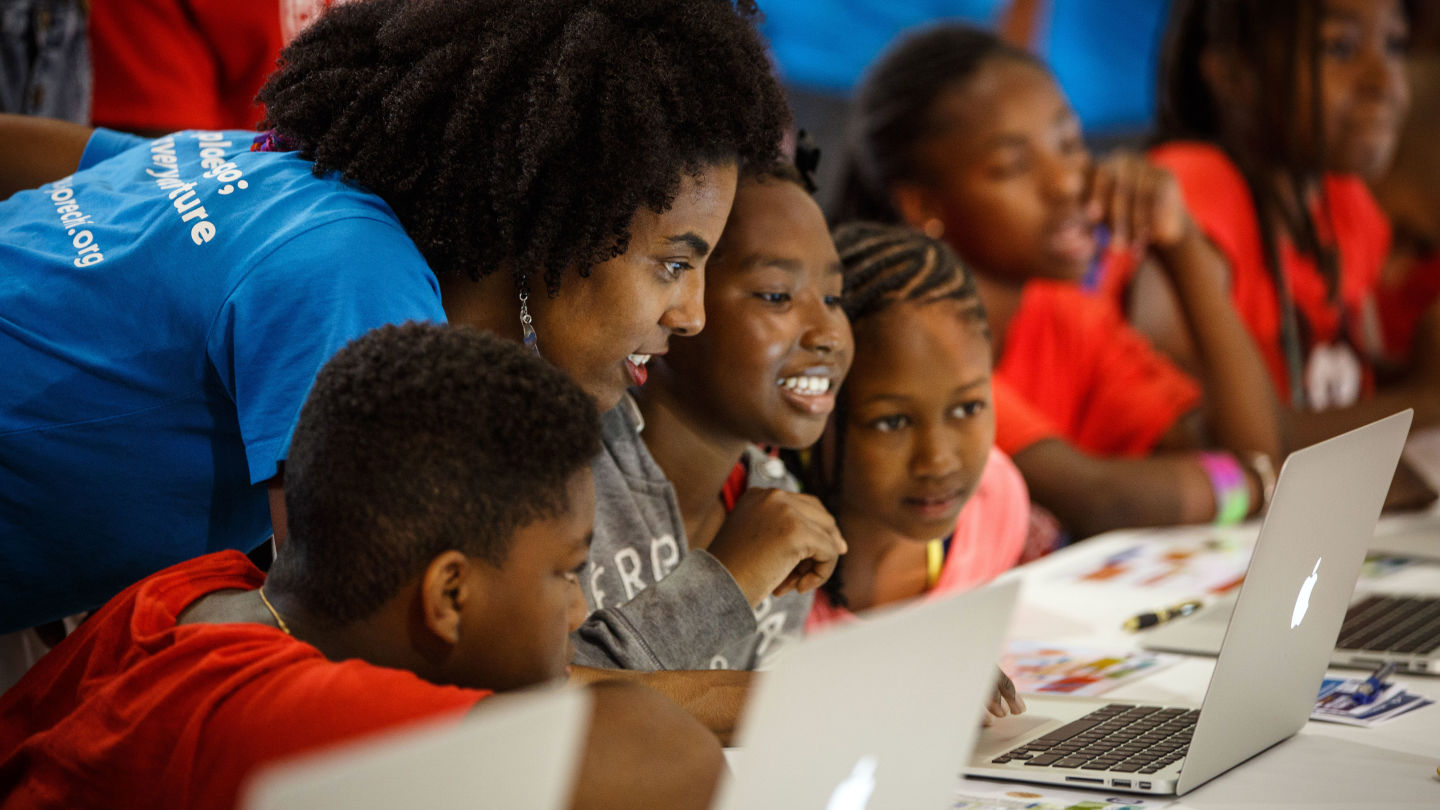
"caption": "Kids play with new technology unveiled at the first mobile van event in Columbus Park, Chicago.",
"description": null,
"title": "CCOL1",
"credit": "Michelle Lytle/Courtesy of Chicago City of Learning",
"status": "inherit",
"isLoading": false,
"fetchFailed": false
},
"mindshift_42705": {
"type": "attachments",
"id": "mindshift_42705",
"meta": {
"index": "attachments_1716263798",
"site": "mindshift",
"id": "42705",
"found": true
},
"parent": 42704,
"imgSizes": {
"twentyfourteen-full-width": {
"file": "https://ww2.kqed.org/app/uploads/sites/23/2015/11/cn_classclown_revised_wide-07687107849335069cf6a3e042858f853671d4a2-1038x576.jpg",
"width": 1038,
"mimeType": "image/jpeg",
"height": 576
},
"thumbnail": {
"file": "https://ww2.kqed.org/app/uploads/sites/23/2015/11/cn_classclown_revised_wide-07687107849335069cf6a3e042858f853671d4a2-400x225.jpg",
"width": 400,
"mimeType": "image/jpeg",
"height": 225
},
"fd-sm": {
"file": "https://ww2.kqed.org/app/uploads/sites/23/2015/11/cn_classclown_revised_wide-07687107849335069cf6a3e042858f853671d4a2-960x540.jpg",
"width": 960,
"mimeType": "image/jpeg",
"height": 540
},
"post-thumbnail": {
"file": "https://ww2.kqed.org/app/uploads/sites/23/2015/11/cn_classclown_revised_wide-07687107849335069cf6a3e042858f853671d4a2-672x372.jpg",
"width": 672,
"mimeType": "image/jpeg",
"height": 372
},
"kqedFullSize": {
"file": "https://ww2.kqed.org/app/uploads/sites/23/2015/11/cn_classclown_revised_wide-07687107849335069cf6a3e042858f853671d4a2.jpg",
"width": 3551,
"height": 1997
},
"large": {
"file": "https://ww2.kqed.org/app/uploads/sites/23/2015/11/cn_classclown_revised_wide-07687107849335069cf6a3e042858f853671d4a2-1440x810.jpg",
"width": 1440,
"mimeType": "image/jpeg",
"height": 810
},
"guest-author-96": {
"file": "https://ww2.kqed.org/app/uploads/sites/23/2015/11/cn_classclown_revised_wide-07687107849335069cf6a3e042858f853671d4a2-96x96.jpg",
"width": 96,
"mimeType": "image/jpeg",
"height": 96
},
"medium": {
"file": "https://ww2.kqed.org/app/uploads/sites/23/2015/11/cn_classclown_revised_wide-07687107849335069cf6a3e042858f853671d4a2-800x450.jpg",
"width": 800,
"mimeType": "image/jpeg",
"height": 450
},
"guest-author-64": {
"file": "https://ww2.kqed.org/app/uploads/sites/23/2015/11/cn_classclown_revised_wide-07687107849335069cf6a3e042858f853671d4a2-64x64.jpg",
"width": 64,
"mimeType": "image/jpeg",
"height": 64
},
"guest-author-32": {
"file": "https://ww2.kqed.org/app/uploads/sites/23/2015/11/cn_classclown_revised_wide-07687107849335069cf6a3e042858f853671d4a2-32x32.jpg",
"width": 32,
"mimeType": "image/jpeg",
"height": 32
},
"cat_post_thumb_sizecategory-posts-2": {
"file": "https://ww2.kqed.org/app/uploads/sites/23/2015/11/cn_classclown_revised_wide-07687107849335069cf6a3e042858f853671d4a2-50x50.jpg",
"width": 50,
"mimeType": "image/jpeg",
"height": 50
},
"fd-lrg": {
"file": "https://ww2.kqed.org/app/uploads/sites/23/2015/11/cn_classclown_revised_wide-07687107849335069cf6a3e042858f853671d4a2-1920x1080.jpg",
"width": 1920,
"mimeType": "image/jpeg",
"height": 1080
},
"fd-med": {
"file": "https://ww2.kqed.org/app/uploads/sites/23/2015/11/cn_classclown_revised_wide-07687107849335069cf6a3e042858f853671d4a2-1180x664.jpg",
"width": 1180,
"mimeType": "image/jpeg",
"height": 664
},
"detail": {
"file": "https://ww2.kqed.org/app/uploads/sites/23/2015/11/cn_classclown_revised_wide-07687107849335069cf6a3e042858f853671d4a2-75x75.jpg",
"width": 75,
"mimeType": "image/jpeg",
"height": 75
},
"guest-author-128": {
"file": "https://ww2.kqed.org/app/uploads/sites/23/2015/11/cn_classclown_revised_wide-07687107849335069cf6a3e042858f853671d4a2-128x128.jpg",
"width": 128,
"mimeType": "image/jpeg",
"height": 128
}
},
"publishDate": 1447054313,
"modified": 1447054599,
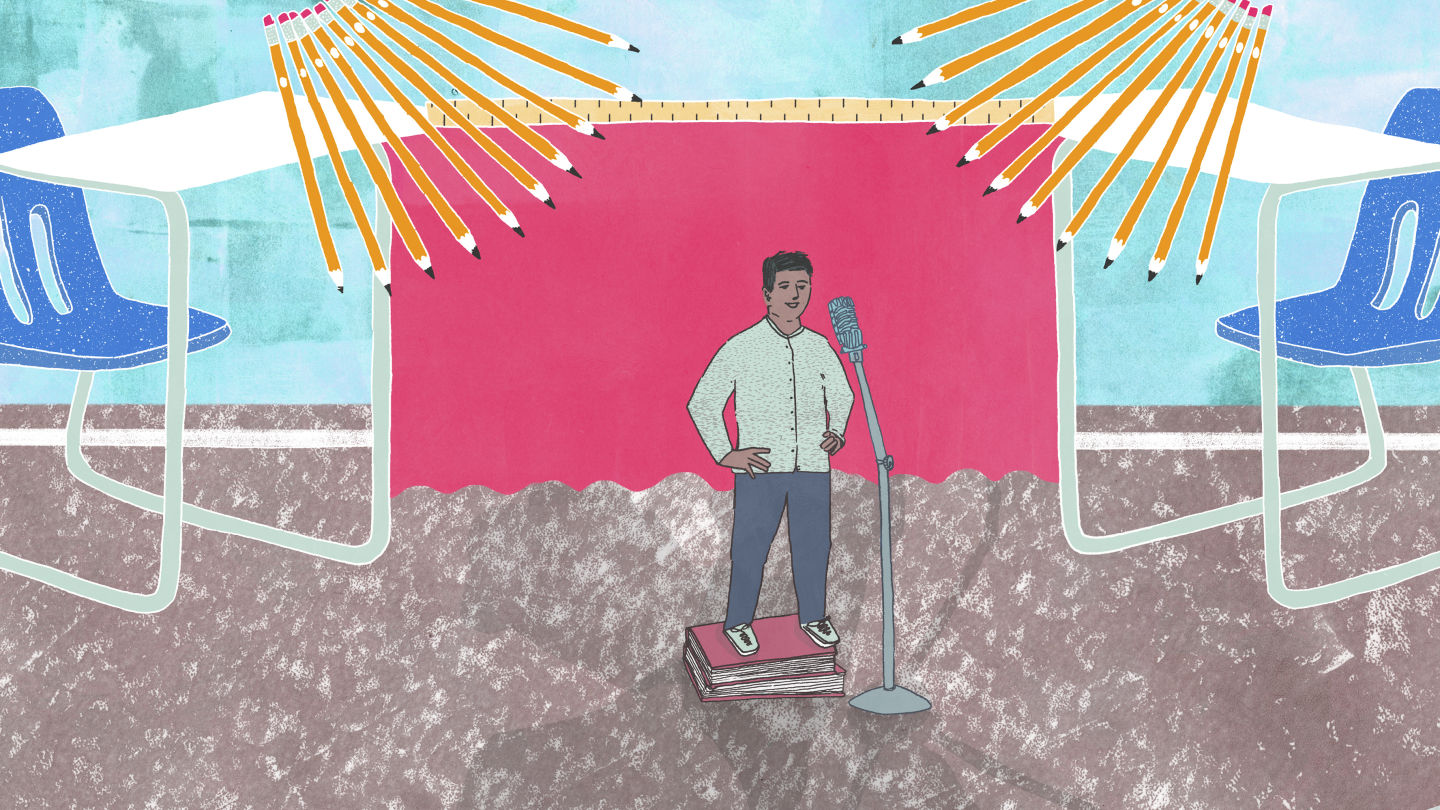
"caption": "Class clown standing on books in classroom",
"description": "Class clown standing on books in classroom",
"title": "Class clown standing on books in classroom",
"credit": "Chris Nickels for NPR",
"status": "inherit",
"isLoading": false,
"fetchFailed": false
},
"mindshift_42376": {
"type": "attachments",
"id": "mindshift_42376",
"meta": {
"index": "attachments_1716263798",
"site": "mindshift",
"id": "42376",
"found": true
},
"parent": 42368,
"imgSizes": {
"twentyfourteen-full-width": {
"file": "https://ww2.kqed.org/app/uploads/sites/23/2015/10/MetWestcomposite2-1038x576.jpg",
"width": 1038,
"mimeType": "image/jpeg",
"height": 576
},
"thumbnail": {
"file": "https://ww2.kqed.org/app/uploads/sites/23/2015/10/MetWestcomposite2-400x225.jpg",
"width": 400,
"mimeType": "image/jpeg",
"height": 225
},
"fd-sm": {
"file": "https://ww2.kqed.org/app/uploads/sites/23/2015/10/MetWestcomposite2-960x540.jpg",
"width": 960,
"mimeType": "image/jpeg",
"height": 540
},
"post-thumbnail": {
"file": "https://ww2.kqed.org/app/uploads/sites/23/2015/10/MetWestcomposite2-672x372.jpg",
"width": 672,
"mimeType": "image/jpeg",
"height": 372
},
"kqedFullSize": {
"file": "https://ww2.kqed.org/app/uploads/sites/23/2015/10/MetWestcomposite2.jpg",
"width": 1920,
"height": 1080
},
"large": {
"file": "https://ww2.kqed.org/app/uploads/sites/23/2015/10/MetWestcomposite2-1440x810.jpg",
"width": 1440,
"mimeType": "image/jpeg",
"height": 810
},
"guest-author-96": {
"file": "https://ww2.kqed.org/app/uploads/sites/23/2015/10/MetWestcomposite2-96x96.jpg",
"width": 96,
"mimeType": "image/jpeg",
"height": 96
},
"medium": {
"file": "https://ww2.kqed.org/app/uploads/sites/23/2015/10/MetWestcomposite2-800x450.jpg",
"width": 800,
"mimeType": "image/jpeg",
"height": 450
},
"guest-author-64": {
"file": "https://ww2.kqed.org/app/uploads/sites/23/2015/10/MetWestcomposite2-64x64.jpg",
"width": 64,
"mimeType": "image/jpeg",
"height": 64
},
"guest-author-32": {
"file": "https://ww2.kqed.org/app/uploads/sites/23/2015/10/MetWestcomposite2-32x32.jpg",
"width": 32,
"mimeType": "image/jpeg",
"height": 32
},
"cat_post_thumb_sizecategory-posts-2": {
"file": "https://ww2.kqed.org/app/uploads/sites/23/2015/10/MetWestcomposite2-50x50.jpg",
"width": 50,
"mimeType": "image/jpeg",
"height": 50
},
"fd-lrg": {
"file": "https://ww2.kqed.org/app/uploads/sites/23/2015/10/MetWestcomposite2-1920x1080.jpg",
"width": 1920,
"mimeType": "image/jpeg",
"height": 1080
},
"fd-med": {
"file": "https://ww2.kqed.org/app/uploads/sites/23/2015/10/MetWestcomposite2-1180x664.jpg",
"width": 1180,
"mimeType": "image/jpeg",
"height": 664
},
"detail": {
"file": "https://ww2.kqed.org/app/uploads/sites/23/2015/10/MetWestcomposite2-75x75.jpg",
"width": 75,
"mimeType": "image/jpeg",
"height": 75
},
"guest-author-128": {
"file": "https://ww2.kqed.org/app/uploads/sites/23/2015/10/MetWestcomposite2-128x128.jpg",
"width": 128,
"mimeType": "image/jpeg",
"height": 128
}
},
"publishDate": 1444429125,
"modified": 1446705260,
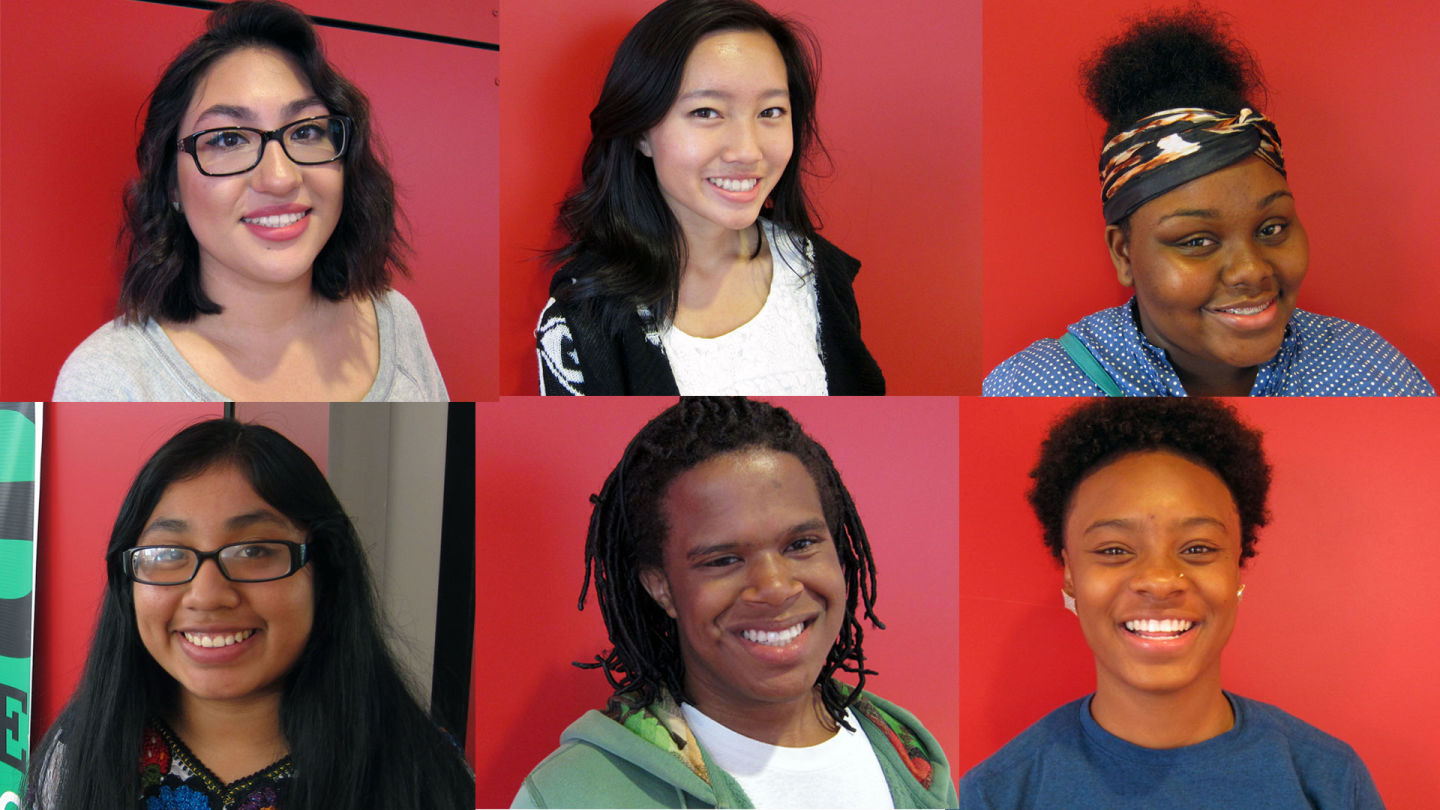
"caption": "MetWest High School juniors. From top left to bottom right: Evelyn Rodriguez, Grace Pang, Jade Herbert, Maya Martín, Myles McConico, and Natanee Collins.",
"description": null,
"title": "MetWestcomposite2",
"credit": "Katrina Schwartz",
"status": "inherit",
"isLoading": false,
"fetchFailed": false
},
"mindshift_42672": {
"type": "attachments",
"id": "mindshift_42672",
"meta": {
"index": "attachments_1716263798",
"site": "mindshift",
"id": "42672",
"found": true
},
"parent": 42036,
"imgSizes": {
"twentyfourteen-full-width": {
"file": "https://ww2.kqed.org/app/uploads/sites/23/2015/11/pressphoto-the-big-picture-rethinking-dyslexia_student_courtesy-of-shadow-creek-films-1038x576.png",
"width": 1038,
"mimeType": "image/png",
"height": 576
},
"thumbnail": {
"file": "https://ww2.kqed.org/app/uploads/sites/23/2015/11/pressphoto-the-big-picture-rethinking-dyslexia_student_courtesy-of-shadow-creek-films-400x225.png",
"width": 400,
"mimeType": "image/png",
"height": 225
},
"fd-sm": {
"file": "https://ww2.kqed.org/app/uploads/sites/23/2015/11/pressphoto-the-big-picture-rethinking-dyslexia_student_courtesy-of-shadow-creek-films-960x540.png",
"width": 960,
"mimeType": "image/png",
"height": 540
},
"post-thumbnail": {
"file": "https://ww2.kqed.org/app/uploads/sites/23/2015/11/pressphoto-the-big-picture-rethinking-dyslexia_student_courtesy-of-shadow-creek-films-672x372.png",
"width": 672,
"mimeType": "image/png",
"height": 372
},
"kqedFullSize": {
"file": "https://ww2.kqed.org/app/uploads/sites/23/2015/11/pressphoto-the-big-picture-rethinking-dyslexia_student_courtesy-of-shadow-creek-films-e1446615661140.png",
"width": 1920,
"height": 1080
},
"large": {
"file": "https://ww2.kqed.org/app/uploads/sites/23/2015/11/pressphoto-the-big-picture-rethinking-dyslexia_student_courtesy-of-shadow-creek-films-1440x810.png",
"width": 1440,
"mimeType": "image/png",
"height": 810
},
"guest-author-96": {
"file": "https://ww2.kqed.org/app/uploads/sites/23/2015/11/pressphoto-the-big-picture-rethinking-dyslexia_student_courtesy-of-shadow-creek-films-96x96.png",
"width": 96,
"mimeType": "image/png",
"height": 96
},
"medium": {
"file": "https://ww2.kqed.org/app/uploads/sites/23/2015/11/pressphoto-the-big-picture-rethinking-dyslexia_student_courtesy-of-shadow-creek-films-800x450.png",
"width": 800,
"mimeType": "image/png",
"height": 450
},
"guest-author-64": {
"file": "https://ww2.kqed.org/app/uploads/sites/23/2015/11/pressphoto-the-big-picture-rethinking-dyslexia_student_courtesy-of-shadow-creek-films-64x64.png",
"width": 64,
"mimeType": "image/png",
"height": 64
},
"guest-author-32": {
"file": "https://ww2.kqed.org/app/uploads/sites/23/2015/11/pressphoto-the-big-picture-rethinking-dyslexia_student_courtesy-of-shadow-creek-films-32x32.png",
"width": 32,
"mimeType": "image/png",
"height": 32
},
"cat_post_thumb_sizecategory-posts-2": {
"file": "https://ww2.kqed.org/app/uploads/sites/23/2015/11/pressphoto-the-big-picture-rethinking-dyslexia_student_courtesy-of-shadow-creek-films-50x50.png",
"width": 50,
"mimeType": "image/png",
"height": 50
},
"fd-lrg": {
"file": "https://ww2.kqed.org/app/uploads/sites/23/2015/11/pressphoto-the-big-picture-rethinking-dyslexia_student_courtesy-of-shadow-creek-films-1920x1080.png",
"width": 1920,
"mimeType": "image/png",
"height": 1080
},
"fd-med": {
"file": "https://ww2.kqed.org/app/uploads/sites/23/2015/11/pressphoto-the-big-picture-rethinking-dyslexia_student_courtesy-of-shadow-creek-films-1180x664.png",
"width": 1180,
"mimeType": "image/png",
"height": 664
},
"detail": {
"file": "https://ww2.kqed.org/app/uploads/sites/23/2015/11/pressphoto-the-big-picture-rethinking-dyslexia_student_courtesy-of-shadow-creek-films-75x75.png",
"width": 75,
"mimeType": "image/png",
"height": 75
},
"guest-author-128": {
"file": "https://ww2.kqed.org/app/uploads/sites/23/2015/11/pressphoto-the-big-picture-rethinking-dyslexia_student_courtesy-of-shadow-creek-films-128x128.png",
"width": 128,
"mimeType": "image/png",
"height": 128
}
},
"publishDate": 1446615634,
"modified": 1446615755,
"caption": "Press photo from \"The Big Picture: Rethinking Dyslexia.\"",
"description": null,
"title": "pressphoto-the-big-picture-rethinking-dyslexia_student_courtesy-of-shadow-creek-films",
"credit": "Shadow Creek Films",
"status": "inherit",
"isLoading": false,
"fetchFailed": false
},
"mindshift_42661": {
"type": "attachments",
"id": "mindshift_42661",
"meta": {
"index": "attachments_1716263798",
"site": "mindshift",
"id": "42661",
"found": true
},
"parent": 42660,
"imgSizes": {
"twentyfourteen-full-width": {
"file": "https://ww2.kqed.org/app/uploads/sites/23/2015/11/codebadges_slide-1c4ba366ca5cb544dedd45384d40bb69f1799e9b-1038x576.jpg",
"width": 1038,
"mimeType": "image/jpeg",
"height": 576
},
"thumbnail": {
"file": "https://ww2.kqed.org/app/uploads/sites/23/2015/11/codebadges_slide-1c4ba366ca5cb544dedd45384d40bb69f1799e9b-400x267.jpg",
"width": 400,
"mimeType": "image/jpeg",
"height": 267
},
"fd-sm": {
"file": "https://ww2.kqed.org/app/uploads/sites/23/2015/11/codebadges_slide-1c4ba366ca5cb544dedd45384d40bb69f1799e9b-960x640.jpg",
"width": 960,
"mimeType": "image/jpeg",
"height": 640
},
"post-thumbnail": {
"file": "https://ww2.kqed.org/app/uploads/sites/23/2015/11/codebadges_slide-1c4ba366ca5cb544dedd45384d40bb69f1799e9b-672x372.jpg",
"width": 672,
"mimeType": "image/jpeg",
"height": 372
},
"kqedFullSize": {
"file": "https://ww2.kqed.org/app/uploads/sites/23/2015/11/codebadges_slide-1c4ba366ca5cb544dedd45384d40bb69f1799e9b-e1446557491265.jpg",
"width": 1920,
"height": 1280
},
"large": {
"file": "https://ww2.kqed.org/app/uploads/sites/23/2015/11/codebadges_slide-1c4ba366ca5cb544dedd45384d40bb69f1799e9b-1440x960.jpg",
"width": 1440,
"mimeType": "image/jpeg",
"height": 960
},
"guest-author-96": {
"file": "https://ww2.kqed.org/app/uploads/sites/23/2015/11/codebadges_slide-1c4ba366ca5cb544dedd45384d40bb69f1799e9b-96x96.jpg",
"width": 96,
"mimeType": "image/jpeg",
"height": 96
},
"medium": {
"file": "https://ww2.kqed.org/app/uploads/sites/23/2015/11/codebadges_slide-1c4ba366ca5cb544dedd45384d40bb69f1799e9b-800x533.jpg",
"width": 800,
"mimeType": "image/jpeg",
"height": 533
},
"guest-author-64": {
"file": "https://ww2.kqed.org/app/uploads/sites/23/2015/11/codebadges_slide-1c4ba366ca5cb544dedd45384d40bb69f1799e9b-64x64.jpg",
"width": 64,
"mimeType": "image/jpeg",
"height": 64
},
"guest-author-32": {
"file": "https://ww2.kqed.org/app/uploads/sites/23/2015/11/codebadges_slide-1c4ba366ca5cb544dedd45384d40bb69f1799e9b-32x32.jpg",
"width": 32,
"mimeType": "image/jpeg",
"height": 32
},
"cat_post_thumb_sizecategory-posts-2": {
"file": "https://ww2.kqed.org/app/uploads/sites/23/2015/11/codebadges_slide-1c4ba366ca5cb544dedd45384d40bb69f1799e9b-50x50.jpg",
"width": 50,
"mimeType": "image/jpeg",
"height": 50
},
"fd-lrg": {
"file": "https://ww2.kqed.org/app/uploads/sites/23/2015/11/codebadges_slide-1c4ba366ca5cb544dedd45384d40bb69f1799e9b-1920x1280.jpg",
"width": 1920,
"mimeType": "image/jpeg",
"height": 1280
},
"fd-med": {
"file": "https://ww2.kqed.org/app/uploads/sites/23/2015/11/codebadges_slide-1c4ba366ca5cb544dedd45384d40bb69f1799e9b-1180x787.jpg",
"width": 1180,
"mimeType": "image/jpeg",
"height": 787
},
"detail": {
"file": "https://ww2.kqed.org/app/uploads/sites/23/2015/11/codebadges_slide-1c4ba366ca5cb544dedd45384d40bb69f1799e9b-75x75.jpg",
"width": 75,
"mimeType": "image/jpeg",
"height": 75
},
"guest-author-128": {
"file": "https://ww2.kqed.org/app/uploads/sites/23/2015/11/codebadges_slide-1c4ba366ca5cb544dedd45384d40bb69f1799e9b-128x128.jpg",
"width": 128,
"mimeType": "image/jpeg",
"height": 128
}
},
"publishDate": 1446557326,
"modified": 1446557483,
"caption": null,
"description": "Coding Badges",
"title": "Coding Badges",
"credit": "LA Johnson/NPR",
"status": "inherit",
"isLoading": false,
"fetchFailed": false
},
"mindshift_42632": {
"type": "attachments",
"id": "mindshift_42632",
"meta": {
"index": "attachments_1716263798",
"site": "mindshift",
"id": "42632",
"found": true
},
"parent": 42629,
"imgSizes": {
"twentyfourteen-full-width": {
"file": "https://ww2.kqed.org/app/uploads/sites/23/2015/11/Soul-Pancake-1038x576.jpg",
"width": 1038,
"mimeType": "image/jpeg",
"height": 576
},
"thumbnail": {
"file": "https://ww2.kqed.org/app/uploads/sites/23/2015/11/Soul-Pancake-400x225.jpg",
"width": 400,
"mimeType": "image/jpeg",
"height": 225
},
"fd-sm": {
"file": "https://ww2.kqed.org/app/uploads/sites/23/2015/11/Soul-Pancake-960x540.jpg",
"width": 960,
"mimeType": "image/jpeg",
"height": 540
},
"post-thumbnail": {
"file": "https://ww2.kqed.org/app/uploads/sites/23/2015/11/Soul-Pancake-672x372.jpg",
"width": 672,
"mimeType": "image/jpeg",
"height": 372
},
"kqedFullSize": {
"file": "https://ww2.kqed.org/app/uploads/sites/23/2015/11/Soul-Pancake.jpg",
"width": 1920,
"height": 1080
},
"large": {
"file": "https://ww2.kqed.org/app/uploads/sites/23/2015/11/Soul-Pancake-1440x810.jpg",
"width": 1440,
"mimeType": "image/jpeg",
"height": 810
},
"guest-author-96": {
"file": "https://ww2.kqed.org/app/uploads/sites/23/2015/11/Soul-Pancake-96x96.jpg",
"width": 96,
"mimeType": "image/jpeg",
"height": 96
},
"medium": {
"file": "https://ww2.kqed.org/app/uploads/sites/23/2015/11/Soul-Pancake-800x450.jpg",
"width": 800,
"mimeType": "image/jpeg",
"height": 450
},
"guest-author-64": {
"file": "https://ww2.kqed.org/app/uploads/sites/23/2015/11/Soul-Pancake-64x64.jpg",
"width": 64,
"mimeType": "image/jpeg",
"height": 64
},
"guest-author-32": {
"file": "https://ww2.kqed.org/app/uploads/sites/23/2015/11/Soul-Pancake-32x32.jpg",
"width": 32,
"mimeType": "image/jpeg",
"height": 32
},
"cat_post_thumb_sizecategory-posts-2": {
"file": "https://ww2.kqed.org/app/uploads/sites/23/2015/11/Soul-Pancake-50x50.jpg",
"width": 50,
"mimeType": "image/jpeg",
"height": 50
},
"fd-lrg": {
"file": "https://ww2.kqed.org/app/uploads/sites/23/2015/11/Soul-Pancake-1920x1080.jpg",
"width": 1920,
"mimeType": "image/jpeg",
"height": 1080
},
"fd-med": {
"file": "https://ww2.kqed.org/app/uploads/sites/23/2015/11/Soul-Pancake-1180x664.jpg",
"width": 1180,
"mimeType": "image/jpeg",
"height": 664
},
"detail": {
"file": "https://ww2.kqed.org/app/uploads/sites/23/2015/11/Soul-Pancake-75x75.jpg",
"width": 75,
"mimeType": "image/jpeg",
"height": 75
},
"guest-author-128": {
"file": "https://ww2.kqed.org/app/uploads/sites/23/2015/11/Soul-Pancake-128x128.jpg",
"width": 128,
"mimeType": "image/jpeg",
"height": 128
}
},
"publishDate": 1446472146,
"modified": 1446472180,
"caption": "Screen grab from \"How Making Music Made Math Cool in this Classroom.\"",
"description": null,
"title": "Soul-Pancake",
"credit": "Soul Pancake",
"status": "inherit",
"isLoading": false,
"fetchFailed": false
},
"mindshift_42617": {
"type": "attachments",
"id": "mindshift_42617",
"meta": {
"index": "attachments_1716263798",
"site": "mindshift",
"id": "42617",
"found": true
},
"parent": 41997,
"imgSizes": {
"twentyfourteen-full-width": {
"file": "https://ww2.kqed.org/app/uploads/sites/23/2015/10/Reading-boy-1038x576.jpg",
"width": 1038,
"mimeType": "image/jpeg",
"height": 576
},
"thumbnail": {
"file": "https://ww2.kqed.org/app/uploads/sites/23/2015/10/Reading-boy-400x225.jpg",
"width": 400,
"mimeType": "image/jpeg",
"height": 225
},
"fd-sm": {
"file": "https://ww2.kqed.org/app/uploads/sites/23/2015/10/Reading-boy-960x540.jpg",
"width": 960,
"mimeType": "image/jpeg",
"height": 540
},
"post-thumbnail": {
"file": "https://ww2.kqed.org/app/uploads/sites/23/2015/10/Reading-boy-672x372.jpg",
"width": 672,
"mimeType": "image/jpeg",
"height": 372
},
"kqedFullSize": {
"file": "https://ww2.kqed.org/app/uploads/sites/23/2015/10/Reading-boy.jpg",
"width": 1920,
"height": 1080
},
"large": {
"file": "https://ww2.kqed.org/app/uploads/sites/23/2015/10/Reading-boy-1440x810.jpg",
"width": 1440,
"mimeType": "image/jpeg",
"height": 810
},
"guest-author-96": {
"file": "https://ww2.kqed.org/app/uploads/sites/23/2015/10/Reading-boy-96x96.jpg",
"width": 96,
"mimeType": "image/jpeg",
"height": 96
},
"medium": {
"file": "https://ww2.kqed.org/app/uploads/sites/23/2015/10/Reading-boy-800x450.jpg",
"width": 800,
"mimeType": "image/jpeg",
"height": 450
},
"guest-author-64": {
"file": "https://ww2.kqed.org/app/uploads/sites/23/2015/10/Reading-boy-64x64.jpg",
"width": 64,
"mimeType": "image/jpeg",
"height": 64
},
"guest-author-32": {
"file": "https://ww2.kqed.org/app/uploads/sites/23/2015/10/Reading-boy-32x32.jpg",
"width": 32,
"mimeType": "image/jpeg",
"height": 32
},
"cat_post_thumb_sizecategory-posts-2": {
"file": "https://ww2.kqed.org/app/uploads/sites/23/2015/10/Reading-boy-50x50.jpg",
"width": 50,
"mimeType": "image/jpeg",
"height": 50
},
"fd-lrg": {
"file": "https://ww2.kqed.org/app/uploads/sites/23/2015/10/Reading-boy-1920x1080.jpg",
"width": 1920,
"mimeType": "image/jpeg",
"height": 1080
},
"fd-med": {
"file": "https://ww2.kqed.org/app/uploads/sites/23/2015/10/Reading-boy-1180x664.jpg",
"width": 1180,
"mimeType": "image/jpeg",
"height": 664
},
"detail": {
"file": "https://ww2.kqed.org/app/uploads/sites/23/2015/10/Reading-boy-75x75.jpg",
"width": 75,
"mimeType": "image/jpeg",
"height": 75
},
"guest-author-128": {
"file": "https://ww2.kqed.org/app/uploads/sites/23/2015/10/Reading-boy-128x128.jpg",
"width": 128,
"mimeType": "image/jpeg",
"height": 128
}
},
"publishDate": 1446178772,
"modified": 1446178782,
"caption": null,
"description": null,
"title": "Reading-boy",
"credit": "iStock",
"status": "inherit",
"isLoading": false,
"fetchFailed": false
},
"mindshift_42585": {
"type": "attachments",
"id": "mindshift_42585",
"meta": {
"index": "attachments_1716263798",
"site": "mindshift",
"id": "42585",
"found": true
},
"parent": 42572,
"imgSizes": {
"twentyfourteen-full-width": {
"file": "https://ww2.kqed.org/app/uploads/sites/23/2015/10/Boilingpot-1038x576.jpg",
"width": 1038,
"mimeType": "image/jpeg",
"height": 576
},
"thumbnail": {
"file": "https://ww2.kqed.org/app/uploads/sites/23/2015/10/Boilingpot-400x225.jpg",
"width": 400,
"mimeType": "image/jpeg",
"height": 225
},
"fd-sm": {
"file": "https://ww2.kqed.org/app/uploads/sites/23/2015/10/Boilingpot-960x540.jpg",
"width": 960,
"mimeType": "image/jpeg",
"height": 540
},
"post-thumbnail": {
"file": "https://ww2.kqed.org/app/uploads/sites/23/2015/10/Boilingpot-672x372.jpg",
"width": 672,
"mimeType": "image/jpeg",
"height": 372
},
"kqedFullSize": {
"file": "https://ww2.kqed.org/app/uploads/sites/23/2015/10/Boilingpot.jpg",
"width": 1920,
"height": 1080
},
"large": {
"file": "https://ww2.kqed.org/app/uploads/sites/23/2015/10/Boilingpot-1440x810.jpg",
"width": 1440,
"mimeType": "image/jpeg",
"height": 810
},
"guest-author-96": {
"file": "https://ww2.kqed.org/app/uploads/sites/23/2015/10/Boilingpot-96x96.jpg",
"width": 96,
"mimeType": "image/jpeg",
"height": 96
},
"medium": {
"file": "https://ww2.kqed.org/app/uploads/sites/23/2015/10/Boilingpot-800x450.jpg",
"width": 800,
"mimeType": "image/jpeg",
"height": 450
},
"guest-author-64": {
"file": "https://ww2.kqed.org/app/uploads/sites/23/2015/10/Boilingpot-64x64.jpg",
"width": 64,
"mimeType": "image/jpeg",
"height": 64
},
"guest-author-32": {
"file": "https://ww2.kqed.org/app/uploads/sites/23/2015/10/Boilingpot-32x32.jpg",
"width": 32,
"mimeType": "image/jpeg",
"height": 32
},
"cat_post_thumb_sizecategory-posts-2": {
"file": "https://ww2.kqed.org/app/uploads/sites/23/2015/10/Boilingpot-50x50.jpg",
"width": 50,
"mimeType": "image/jpeg",
"height": 50
},
"fd-lrg": {
"file": "https://ww2.kqed.org/app/uploads/sites/23/2015/10/Boilingpot-1920x1080.jpg",
"width": 1920,
"mimeType": "image/jpeg",
"height": 1080
},
"fd-med": {
"file": "https://ww2.kqed.org/app/uploads/sites/23/2015/10/Boilingpot-1180x664.jpg",
"width": 1180,
"mimeType": "image/jpeg",
"height": 664
},
"detail": {
"file": "https://ww2.kqed.org/app/uploads/sites/23/2015/10/Boilingpot-75x75.jpg",
"width": 75,
"mimeType": "image/jpeg",
"height": 75
},
"guest-author-128": {
"file": "https://ww2.kqed.org/app/uploads/sites/23/2015/10/Boilingpot-128x128.jpg",
"width": 128,
"mimeType": "image/jpeg",
"height": 128
}
},
"publishDate": 1446008575,
"modified": 1446008588,
"caption": null,
"description": null,
"title": "Boilingpot",
"credit": "Brandon Warren/Flickr",
"status": "inherit",
"isLoading": false,
"fetchFailed": false
},
"mindshift_42565": {
"type": "attachments",
"id": "mindshift_42565",
"meta": {
"index": "attachments_1716263798",
"site": "mindshift",
"id": "42565",
"found": true
},
"parent": 42538,
"imgSizes": {
"twentyfourteen-full-width": {
"file": "https://ww2.kqed.org/app/uploads/sites/23/2015/10/RPG-1038x576.jpg",
"width": 1038,
"mimeType": "image/jpeg",
"height": 576
},
"thumbnail": {
"file": "https://ww2.kqed.org/app/uploads/sites/23/2015/10/RPG-400x225.jpg",
"width": 400,
"mimeType": "image/jpeg",
"height": 225
},
"fd-sm": {
"file": "https://ww2.kqed.org/app/uploads/sites/23/2015/10/RPG-960x540.jpg",
"width": 960,
"mimeType": "image/jpeg",
"height": 540
},
"post-thumbnail": {
"file": "https://ww2.kqed.org/app/uploads/sites/23/2015/10/RPG-672x372.jpg",
"width": 672,
"mimeType": "image/jpeg",
"height": 372
},
"kqedFullSize": {
"file": "https://ww2.kqed.org/app/uploads/sites/23/2015/10/RPG.jpg",
"width": 1920,
"height": 1080
},
"large": {
"file": "https://ww2.kqed.org/app/uploads/sites/23/2015/10/RPG-1440x810.jpg",
"width": 1440,
"mimeType": "image/jpeg",
"height": 810
},
"guest-author-96": {
"file": "https://ww2.kqed.org/app/uploads/sites/23/2015/10/RPG-96x96.jpg",
"width": 96,
"mimeType": "image/jpeg",
"height": 96
},
"medium": {
"file": "https://ww2.kqed.org/app/uploads/sites/23/2015/10/RPG-800x450.jpg",
"width": 800,
"mimeType": "image/jpeg",
"height": 450
},
"guest-author-64": {
"file": "https://ww2.kqed.org/app/uploads/sites/23/2015/10/RPG-64x64.jpg",
"width": 64,
"mimeType": "image/jpeg",
"height": 64
},
"guest-author-32": {
"file": "https://ww2.kqed.org/app/uploads/sites/23/2015/10/RPG-32x32.jpg",
"width": 32,
"mimeType": "image/jpeg",
"height": 32
},
"cat_post_thumb_sizecategory-posts-2": {
"file": "https://ww2.kqed.org/app/uploads/sites/23/2015/10/RPG-50x50.jpg",
"width": 50,
"mimeType": "image/jpeg",
"height": 50
},
"fd-lrg": {
"file": "https://ww2.kqed.org/app/uploads/sites/23/2015/10/RPG-1920x1080.jpg",
"width": 1920,
"mimeType": "image/jpeg",
"height": 1080
},
"fd-med": {
"file": "https://ww2.kqed.org/app/uploads/sites/23/2015/10/RPG-1180x664.jpg",
"width": 1180,
"mimeType": "image/jpeg",
"height": 664
},
"detail": {
"file": "https://ww2.kqed.org/app/uploads/sites/23/2015/10/RPG-75x75.jpg",
"width": 75,
"mimeType": "image/jpeg",
"height": 75
},
"guest-author-128": {
"file": "https://ww2.kqed.org/app/uploads/sites/23/2015/10/RPG-128x128.jpg",
"width": 128,
"mimeType": "image/jpeg",
"height": 128
}
},
"publishDate": 1445899148,
"modified": 1445899160,
"caption": null,
"description": null,
"title": "RPG",
"credit": "Carsten Tolkmit/Flickr",
"status": "inherit",
"isLoading": false,
"fetchFailed": false
},
"mindshift_42553": {
"type": "attachments",
"id": "mindshift_42553",
"meta": {
"index": "attachments_1716263798",
"site": "mindshift",
"id": "42553",
"found": true
},
"parent": 42552,
"imgSizes": {
"twentyfourteen-full-width": {
"file": "https://ww2.kqed.org/app/uploads/sites/23/2015/10/online-diploma2_slide-d94cec3a012f6d1de8a50673e694c98dc4b07acd-1038x576.jpg",
"width": 1038,
"mimeType": "image/jpeg",
"height": 576
},
"thumbnail": {
"file": "https://ww2.kqed.org/app/uploads/sites/23/2015/10/online-diploma2_slide-d94cec3a012f6d1de8a50673e694c98dc4b07acd-400x267.jpg",
"width": 400,
"mimeType": "image/jpeg",
"height": 267
},
"fd-sm": {
"file": "https://ww2.kqed.org/app/uploads/sites/23/2015/10/online-diploma2_slide-d94cec3a012f6d1de8a50673e694c98dc4b07acd-960x640.jpg",
"width": 960,
"mimeType": "image/jpeg",
"height": 640
},
"post-thumbnail": {
"file": "https://ww2.kqed.org/app/uploads/sites/23/2015/10/online-diploma2_slide-d94cec3a012f6d1de8a50673e694c98dc4b07acd-672x372.jpg",
"width": 672,
"mimeType": "image/jpeg",
"height": 372
},
"kqedFullSize": {
"file": "https://ww2.kqed.org/app/uploads/sites/23/2015/10/online-diploma2_slide-d94cec3a012f6d1de8a50673e694c98dc4b07acd.jpg",
"width": 2997,
"height": 1998
},
"large": {
"file": "https://ww2.kqed.org/app/uploads/sites/23/2015/10/online-diploma2_slide-d94cec3a012f6d1de8a50673e694c98dc4b07acd-1440x960.jpg",
"width": 1440,
"mimeType": "image/jpeg",
"height": 960
},
"guest-author-96": {
"file": "https://ww2.kqed.org/app/uploads/sites/23/2015/10/online-diploma2_slide-d94cec3a012f6d1de8a50673e694c98dc4b07acd-96x96.jpg",
"width": 96,
"mimeType": "image/jpeg",
"height": 96
},
"medium": {
"file": "https://ww2.kqed.org/app/uploads/sites/23/2015/10/online-diploma2_slide-d94cec3a012f6d1de8a50673e694c98dc4b07acd-800x533.jpg",
"width": 800,
"mimeType": "image/jpeg",
"height": 533
},
"guest-author-64": {
"file": "https://ww2.kqed.org/app/uploads/sites/23/2015/10/online-diploma2_slide-d94cec3a012f6d1de8a50673e694c98dc4b07acd-64x64.jpg",
"width": 64,
"mimeType": "image/jpeg",
"height": 64
},
"guest-author-32": {
"file": "https://ww2.kqed.org/app/uploads/sites/23/2015/10/online-diploma2_slide-d94cec3a012f6d1de8a50673e694c98dc4b07acd-32x32.jpg",
"width": 32,
"mimeType": "image/jpeg",
"height": 32
},
"cat_post_thumb_sizecategory-posts-2": {
"file": "https://ww2.kqed.org/app/uploads/sites/23/2015/10/online-diploma2_slide-d94cec3a012f6d1de8a50673e694c98dc4b07acd-50x50.jpg",
"width": 50,
"mimeType": "image/jpeg",
"height": 50
},
"fd-lrg": {
"file": "https://ww2.kqed.org/app/uploads/sites/23/2015/10/online-diploma2_slide-d94cec3a012f6d1de8a50673e694c98dc4b07acd-1920x1280.jpg",
"width": 1920,
"mimeType": "image/jpeg",
"height": 1280
},
"fd-med": {
"file": "https://ww2.kqed.org/app/uploads/sites/23/2015/10/online-diploma2_slide-d94cec3a012f6d1de8a50673e694c98dc4b07acd-1180x787.jpg",
"width": 1180,
"mimeType": "image/jpeg",
"height": 787
},
"detail": {
"file": "https://ww2.kqed.org/app/uploads/sites/23/2015/10/online-diploma2_slide-d94cec3a012f6d1de8a50673e694c98dc4b07acd-75x75.jpg",
"width": 75,
"mimeType": "image/jpeg",
"height": 75
},
"guest-author-128": {
"file": "https://ww2.kqed.org/app/uploads/sites/23/2015/10/online-diploma2_slide-d94cec3a012f6d1de8a50673e694c98dc4b07acd-128x128.jpg",
"width": 128,
"mimeType": "image/jpeg",
"height": 128
}
},
"publishDate": 1445877830,
"modified": 1445878057,
"caption": null,
"description": "Laptop computer handing out a diploma",
"title": "Laptop computer handing out a diploma",
"credit": "LA Johnson/NPR",
"status": "inherit",
"isLoading": false,
"fetchFailed": false
},
"mindshift_42403": {
"type": "attachments",
"id": "mindshift_42403",
"meta": {
"index": "attachments_1716263798",
"site": "mindshift",
"id": "42403",
"found": true
},
"parent": 42387,
"imgSizes": {
"twentyfourteen-full-width": {
"file": "https://ww2.kqed.org/app/uploads/sites/23/2015/10/stress-1038x576.jpg",
"width": 1038,
"mimeType": "image/jpeg",
"height": 576
},
"thumbnail": {
"file": "https://ww2.kqed.org/app/uploads/sites/23/2015/10/stress-400x225.jpg",
"width": 400,
"mimeType": "image/jpeg",
"height": 225
},
"fd-sm": {
"file": "https://ww2.kqed.org/app/uploads/sites/23/2015/10/stress-960x540.jpg",
"width": 960,
"mimeType": "image/jpeg",
"height": 540
},
"post-thumbnail": {
"file": "https://ww2.kqed.org/app/uploads/sites/23/2015/10/stress-672x372.jpg",
"width": 672,
"mimeType": "image/jpeg",
"height": 372
},
"kqedFullSize": {
"file": "https://ww2.kqed.org/app/uploads/sites/23/2015/10/stress.jpg",
"width": 1920,
"height": 1080
},
"large": {
"file": "https://ww2.kqed.org/app/uploads/sites/23/2015/10/stress-1440x810.jpg",
"width": 1440,
"mimeType": "image/jpeg",
"height": 810
},
"guest-author-96": {
"file": "https://ww2.kqed.org/app/uploads/sites/23/2015/10/stress-96x96.jpg",
"width": 96,
"mimeType": "image/jpeg",
"height": 96
},
"medium": {
"file": "https://ww2.kqed.org/app/uploads/sites/23/2015/10/stress-800x450.jpg",
"width": 800,
"mimeType": "image/jpeg",
"height": 450
},
"guest-author-64": {
"file": "https://ww2.kqed.org/app/uploads/sites/23/2015/10/stress-64x64.jpg",
"width": 64,
"mimeType": "image/jpeg",
"height": 64
},
"guest-author-32": {
"file": "https://ww2.kqed.org/app/uploads/sites/23/2015/10/stress-32x32.jpg",
"width": 32,
"mimeType": "image/jpeg",
"height": 32
},
"cat_post_thumb_sizecategory-posts-2": {
"file": "https://ww2.kqed.org/app/uploads/sites/23/2015/10/stress-50x50.jpg",
"width": 50,
"mimeType": "image/jpeg",
"height": 50
},
"fd-lrg": {
"file": "https://ww2.kqed.org/app/uploads/sites/23/2015/10/stress-1920x1080.jpg",
"width": 1920,
"mimeType": "image/jpeg",
"height": 1080
},
"fd-med": {
"file": "https://ww2.kqed.org/app/uploads/sites/23/2015/10/stress-1180x664.jpg",
"width": 1180,
"mimeType": "image/jpeg",
"height": 664
},
"detail": {
"file": "https://ww2.kqed.org/app/uploads/sites/23/2015/10/stress-75x75.jpg",
"width": 75,
"mimeType": "image/jpeg",
"height": 75
},
"guest-author-128": {
"file": "https://ww2.kqed.org/app/uploads/sites/23/2015/10/stress-128x128.jpg",
"width": 128,
"mimeType": "image/jpeg",
"height": 128
}
},
"publishDate": 1444670219,
"modified": 1444670227,
"caption": null,
"description": null,
"title": "stress",
"credit": "Getty Images",
"status": "inherit",
"isLoading": false,
"fetchFailed": false
},
"mindshift_42550": {
"type": "attachments",
"id": "mindshift_42550",
"meta": {
"index": "attachments_1716263798",
"site": "mindshift",
"id": "42550",
"found": true
},
"parent": 42301,
"imgSizes": {
"twentyfourteen-full-width": {
"file": "https://ww2.kqed.org/app/uploads/sites/23/2015/10/Wind-turbines-1038x576.jpg",
"width": 1038,
"mimeType": "image/jpeg",
"height": 576
},
"thumbnail": {
"file": "https://ww2.kqed.org/app/uploads/sites/23/2015/10/Wind-turbines-400x225.jpg",
"width": 400,
"mimeType": "image/jpeg",
"height": 225
},
"fd-sm": {
"file": "https://ww2.kqed.org/app/uploads/sites/23/2015/10/Wind-turbines-960x540.jpg",
"width": 960,
"mimeType": "image/jpeg",
"height": 540
},
"post-thumbnail": {
"file": "https://ww2.kqed.org/app/uploads/sites/23/2015/10/Wind-turbines-672x372.jpg",
"width": 672,
"mimeType": "image/jpeg",
"height": 372
},
"kqedFullSize": {
"file": "https://ww2.kqed.org/app/uploads/sites/23/2015/10/Wind-turbines.jpg",
"width": 1920,
"height": 1080
},
"large": {
"file": "https://ww2.kqed.org/app/uploads/sites/23/2015/10/Wind-turbines-1440x810.jpg",
"width": 1440,
"mimeType": "image/jpeg",
"height": 810
},
"guest-author-96": {
"file": "https://ww2.kqed.org/app/uploads/sites/23/2015/10/Wind-turbines-96x96.jpg",
"width": 96,
"mimeType": "image/jpeg",
"height": 96
},
"medium": {
"file": "https://ww2.kqed.org/app/uploads/sites/23/2015/10/Wind-turbines-800x450.jpg",
"width": 800,
"mimeType": "image/jpeg",
"height": 450
},
"guest-author-64": {
"file": "https://ww2.kqed.org/app/uploads/sites/23/2015/10/Wind-turbines-64x64.jpg",
"width": 64,
"mimeType": "image/jpeg",
"height": 64
},
"guest-author-32": {
"file": "https://ww2.kqed.org/app/uploads/sites/23/2015/10/Wind-turbines-32x32.jpg",
"width": 32,
"mimeType": "image/jpeg",
"height": 32
},
"cat_post_thumb_sizecategory-posts-2": {
"file": "https://ww2.kqed.org/app/uploads/sites/23/2015/10/Wind-turbines-50x50.jpg",
"width": 50,
"mimeType": "image/jpeg",
"height": 50
},
"fd-lrg": {
"file": "https://ww2.kqed.org/app/uploads/sites/23/2015/10/Wind-turbines-1920x1080.jpg",
"width": 1920,
"mimeType": "image/jpeg",
"height": 1080
},
"fd-med": {
"file": "https://ww2.kqed.org/app/uploads/sites/23/2015/10/Wind-turbines-1180x664.jpg",
"width": 1180,
"mimeType": "image/jpeg",
"height": 664
},
"detail": {
"file": "https://ww2.kqed.org/app/uploads/sites/23/2015/10/Wind-turbines-75x75.jpg",
"width": 75,
"mimeType": "image/jpeg",
"height": 75
},
"guest-author-128": {
"file": "https://ww2.kqed.org/app/uploads/sites/23/2015/10/Wind-turbines-128x128.jpg",
"width": 128,
"mimeType": "image/jpeg",
"height": 128
}
},
"publishDate": 1445583291,
"modified": 1445583299,
"caption": null,
"description": null,
"title": "Wind-turbines",
"credit": "Teaching Channel",
"status": "inherit",
"isLoading": false,
"fetchFailed": false
}
},
"audioPlayerReducer": {
"postId": "stream_live",
"isPaused": true,
"isPlaying": false,
"pfsActive": false,
"pledgeModalIsOpen": true,
"playerDrawerIsOpen": false,
"liveAudioPlayStartedAt": 0,
"liveAudioPlayContext": ""
},
"authorsReducer": {
"byline_mindshift_42704": {
"type": "authors",
"id": "byline_mindshift_42704",
"meta": {
"override": true
},
"slug": "byline_mindshift_42704",
"name": "Lee Hale, \u003ca href=\"http://www.npr.org/sections/ed/2015/11/08/449169531/class-clown-or-gifted-student-its-a-matter-of-perspective\">NPR\u003c/a>",
"isLoading": false
},
"byline_mindshift_42660": {
"type": "authors",
"id": "byline_mindshift_42660",
"meta": {
"override": true
},
"slug": "byline_mindshift_42660",
"name": "Anya Kamenetz, \u003ca href=\"http://www.npr.org/sections/ed/2015/11/03/451999158/the-un-college-thats-training-100-000-app-developers\">NPR\u003c/a>",
"isLoading": false
},
"byline_mindshift_42552": {
"type": "authors",
"id": "byline_mindshift_42552",
"meta": {
"override": true
},
"slug": "byline_mindshift_42552",
"name": "Claudio Sanchez, \u003ca href=\"http://www.npr.org/sections/ed/2015/10/26/449279730/the-online-college-thats-helping-undocumented-students\">NPR\u003c/a>",
"isLoading": false
},
"katrinaschwartz": {
"type": "authors",
"id": "234",
"meta": {
"index": "authors_1716337520",
"id": "234",
"found": true
},
"name": "Katrina Schwartz",
"firstName": "Katrina",
"lastName": "Schwartz",
"slug": "katrinaschwartz",
"email": "kschwartz@kqed.org",
"display_author_email": false,
"staff_mastheads": [
"news"
],
"title": "Producer",
"bio": "Katrina Schwartz is a journalist based in San Francisco. She's worked at KPCC public radio in LA and has reported on air and online for KQED since 2010. She covered how teaching and learning is changing for MindShift between 2012 and 2020. She is the co-host of the MindShift podcast and now produces KQED's Bay Curious podcast.",
"avatar": "https://secure.gravatar.com/avatar/edb4ee79070447a018538c9aae6eeecf28786515b8a0c30e43b6b7dce5aa44c8?s=600&d=blank&r=g",
"twitter": "kschwart",
"bluesky": null,
"facebook": null,
"instagram": null,
"linkedin": null,
"sites": [
{
"site": "",
"roles": [
"editor"
]
},
{
"site": "news",
"roles": [
"editor"
]
},
{
"site": "mindshift",
"roles": [
"administrator"
]
},
{
"site": "stateofhealth",
"roles": [
"author"
]
},
{
"site": "science",
"roles": [
"editor"
]
}
],
"headData": {
"title": "Katrina Schwartz | KQED",
"description": "Producer",
"ogImgSrc": "https://secure.gravatar.com/avatar/edb4ee79070447a018538c9aae6eeecf28786515b8a0c30e43b6b7dce5aa44c8?s=600&d=blank&r=g",
"twImgSrc": "https://secure.gravatar.com/avatar/edb4ee79070447a018538c9aae6eeecf28786515b8a0c30e43b6b7dce5aa44c8?s=600&d=blank&r=g"
},
"isLoading": false,
"link": "/author/katrinaschwartz"
},
"hollykorbey": {
"type": "authors",
"id": "4445",
"meta": {
"index": "authors_1716337520",
"id": "4445",
"found": true
},
"name": "Holly Korbey",
"firstName": "Holly",
"lastName": "Korbey",
"slug": "hollykorbey",
"email": "holly@hollykorbey.com",
"display_author_email": false,
"staff_mastheads": [],
"title": null,
"bio": "Holly Korbey's work on parenting and education has appeared in The New York Times, The Atlantic, Babble, Brain, Child Magazine, and others. She lives in Nashville with her family. Follow her on Twitter: @HKorbey",
"avatar": "https://secure.gravatar.com/avatar/f385f7a3b90e52ecd5e85c24fbd0a363?s=600&d=blank&r=g",
"twitter": null,
"facebook": null,
"instagram": null,
"linkedin": null,
"sites": [
{
"site": "mindshift",
"roles": [
"contributor"
]
}
],
"headData": {
"title": "Holly Korbey | KQED",
"description": null,
"ogImgSrc": "https://secure.gravatar.com/avatar/f385f7a3b90e52ecd5e85c24fbd0a363?s=600&d=blank&r=g",
"twImgSrc": "https://secure.gravatar.com/avatar/f385f7a3b90e52ecd5e85c24fbd0a363?s=600&d=blank&r=g"
},
"isLoading": false,
"link": "/author/hollykorbey"
},
"ksung": {
"type": "authors",
"id": "4596",
"meta": {
"index": "authors_1716337520",
"id": "4596",
"found": true
},
"name": "Ki Sung",
"firstName": "Ki",
"lastName": "Sung",
"slug": "ksung",
"email": "ksung@kqed.org",
"display_author_email": false,
"staff_mastheads": [
"news"
],
"title": "KQED Contributor",
"bio": "Ki Sung is Managing Editor of Digital News at KQED. She is former Senior Editor of MindShift and worked at NPR before joining KQED in 2014.",
"avatar": "https://secure.gravatar.com/avatar/64271e01dc95486c133be56937739045b7c00c990525bf9add12d3dd4f0433c9?s=600&d=blank&r=g",
"twitter": null,
"bluesky": null,
"facebook": null,
"instagram": null,
"linkedin": null,
"sites": [
{
"site": "arts",
"roles": [
"administrator"
]
},
{
"site": "news",
"roles": [
"administrator"
]
},
{
"site": "mindshift",
"roles": [
"administrator"
]
},
{
"site": "science",
"roles": [
"administrator"
]
},
{
"site": "forum",
"roles": [
"administrator"
]
},
{
"site": "perspectives",
"roles": [
"administrator"
]
},
{
"site": "elections",
"roles": [
"administrator"
]
}
],
"headData": {
"title": "Ki Sung | KQED",
"description": "KQED Contributor",
"ogImgSrc": "https://secure.gravatar.com/avatar/64271e01dc95486c133be56937739045b7c00c990525bf9add12d3dd4f0433c9?s=600&d=blank&r=g",
"twImgSrc": "https://secure.gravatar.com/avatar/64271e01dc95486c133be56937739045b7c00c990525bf9add12d3dd4f0433c9?s=600&d=blank&r=g"
},
"isLoading": false,
"link": "/author/ksung"
},
"lindaflan": {
"type": "authors",
"id": "4613",
"meta": {
"index": "authors_1716337520",
"id": "4613",
"found": true
},
"name": "Linda Flanagan",
"firstName": "Linda",
"lastName": "Flanagan",
"slug": "lindaflan",
"email": "lindaflan@comcast.net",
"display_author_email": false,
"staff_mastheads": [],
"title": null,
"bio": "Linda Flanagan is a freelance writer, researcher, and editor. Her work has appeared in The Atlantic, The Wall St. Journal, Newsweek, Running Times, and Mind/Shift, and she blogs regularly for the Huffington Post. Linda writes about education, culture, athletics, youth sports, mental health, politics, college admissions, and other curiosities. She also reviews books and conducts interviews.",
"avatar": "https://secure.gravatar.com/avatar/6bca04c0736bf5eaea80654019de688f?s=600&d=blank&r=g",
"twitter": "LindaFlanagan2",
"facebook": null,
"instagram": null,
"linkedin": null,
"sites": [
{
"site": "mindshift",
"roles": [
"contributor"
]
}
],
"headData": {
"title": "Linda Flanagan | KQED",
"description": null,
"ogImgSrc": "https://secure.gravatar.com/avatar/6bca04c0736bf5eaea80654019de688f?s=600&d=blank&r=g",
"twImgSrc": "https://secure.gravatar.com/avatar/6bca04c0736bf5eaea80654019de688f?s=600&d=blank&r=g"
},
"isLoading": false,
"link": "/author/lindaflan"
}
},
"pagesReducer": {
"mindshift_tag_featured": {
"type": "terms",
"id": "mindshift_20784",
"meta": {
"index": "terms_1716263798",
"site": "mindshift",
"id": "20784",
"score": 7.656306
},
"featImg": null,
"name": "featured",
"description": null,
"taxonomy": "tag",
"headData": {
"twImgId": null,
"twTitle": null,
"ogTitle": null,
"ogImgId": null,
"twDescription": null,
"description": null,
"title": "featured Archives | KQED Mindshift",
"ogDescription": null
},
"ttid": 20061,
"slug": "featured",
"isLoading": false,
"title": "featured",
"pageMeta": {
"site": "mindshift",
"WpPageTemplate": "page-topic-editorial",
"currentPage": 73
},
"blocks": [
{
"blockName": "kqed/post-list",
"attrs": {
"layout": "cardArticle2",
"query": "posts/mindshift?tag=featured",
"seeMore": false,
"paginated": true,
"page": 73
}
},
{
"blockName": "kqed/ad"
}
]
}
},
"pfsSessionReducer": {},
"postsReducer": {
"stream_live": {
"type": "live",
"id": "stream_live",
"audioUrl": "https://hls.kqed.org/hls/kqed_app/playlist.m3u8",
"title": "Live Stream",
"excerpt": "Live Stream information currently unavailable.",
"link": "/radio",
"featImg": "",
"label": {
"name": "KQED Live",
"link": "/"
}
},
"stream_kqedNewscast": {
"type": "posts",
"id": "stream_kqedNewscast",
"audioUrl": "https://www.kqed.org/.stream/anon/radio/RDnews/newscast.mp3?_=1",
"title": "KQED Newscast",
"featImg": "",
"label": {
"name": "88.5 FM",
"link": "/"
}
},
"mindshift_42464": {
"type": "posts",
"id": "mindshift_42464",
"meta": {
"index": "posts_1716263798",
"site": "mindshift",
"id": "42464",
"score": null,
"sort": [
1447144099000
]
},
"parent": 0,
"labelTerm": {
"site": "mindshift"
},
"blocks": [],
"publishDate": 1447144099,
"format": "standard",
"disqusTitle": "How Can We Harness the Power of Learning Beyond the School Day?",
"title": "How Can We Harness the Power of Learning Beyond the School Day?",
"headTitle": "MindShift | KQED News",
"content": "\u003cp>Discussions of learning tend to focus on what happens in schools, but many students are learning lots of important skills outside of school through extracurriculars like sports, music, art, politics or any other passion. Often students don’t get recognition for the learning they pursue on their own, and many times they don’t even see their passion as learning at all. The \u003ca href=\"https://chicagocityoflearning.org/\" target=\"_blank\">Chicago City of Learning\u003c/a> project is trying to meet that need by helping connect youth to resources that support their interests and provide validation for the hard work that goes into learning outside the academic setting.\u003c/p>\n\u003cp>Chicago City of Learning started in 2013, growing out of a prolonged teachers strike that prompted the city to think about how it could connect its youth to non-school constructive activities that they might be able to get credit for later. At that time, city official realized there was no centralized place for youth to discover opportunities related to their interests and no way for the city to keep track of the hundreds of organizations offering programming. Chicago City of Learning was born as a mayor’s initiative, but was soon taken over by partner organizations.\u003c/p>\n\u003cp>“It was the first time we had a centralized database where someone could come and search for a program connected to their interests,” said Sybil Madison-Boyd, learning pathways program director for the \u003ca href=\"http://digitalyouthnetwork.org/\" target=\"_blank\">Digital Youth Network\u003c/a>. Madison-Boyd has been actively involved in launching the program and helping it grow in response to feedback from youth and the organizations themselves.\u003c/p>\n\u003caside class=\"pullquote alignright\">'It was more of you as an individual going out there, finding something you like, and doing it and exploring it.'\u003ccite>Hope Jernigan, Youth Advisory Council member\u003c/cite>\u003c/aside>\n\u003cp>At first the program focused on the summer months, when kids are out of school and looking for opportunities to fill their time. Now that the program is more mature and has seen some success, the database has proven to be a powerful way for the city to catalog participating organizations, the programs they offer and the geographic diversity of that programming.\u003c/p>\n\u003cp>Often a kid will be connected to an organization that does one specific thing, say, visual arts instruction, but if the kid decides he’s interested in music, that organization might not know where to send him. Now both adults and students can search the Chicago City of Learning website by interest, neighborhood or category.\u003c/p>\n\u003cp>[ad fullwidth]\u003c/p>\n\u003cp>“We can begin to see neighborhoods that don’t have any programs,” Madison-Boyd said. Or, maybe a neighborhood has sports programming, but nothing in the arts or sciences. With a centralized network of programs, the city is beginning to see where it needs to do more work and how left out some communities have been.\u003c/p>\n\u003cp>The digital network has also shared feedback and search data with program providers to help them craft programming that appeals to changing student interests. Madison-Boyd says coding and music programs are always popular, and recently fashion opportunities have been in high demand.\u003c/p>\n\u003cp>Another big part of the City of Learning project has been to help students get recognition for the passions they pursue outside of school. The MacArthur Foundation got involved in the project and recommended \u003ca href=\"http://ww2.kqed.org/mindshift/2013/03/25/how-mozillas-open-badges-may-work-in-the-real-world/\" target=\"_blank\">digital badges\u003c/a>, one of its \u003ca href=\"https://www.macfound.org/programs/digital-badges/\" target=\"_blank\">areas of investment\u003c/a>. Youth can develop digital portfolios, called “digital backpacks” by Chicago City of Learning, that represent their personalities, interests and achievements beyond school.\u003c/p>\n\u003cp>“We’ve helped partner organizations to design badges to articulate the knowledge and skills the kids have developed,” Madison-Boyd said. And she and her colleagues solicited feedback from a youth council representing a diverse group of student interests, ethnicities and geography.\u003c/p>\n\u003cp>\u003cstrong>YOUTH FEEDBACK\u003c/strong>\u003c/p>\n\u003cp>“They really want to know how the badges related to jobs and college,” Madison-Boyd said. Youth are often balancing the desire to pursue their passions with summer jobs and other commitments. They weren’t interested in badges that didn’t mean anything to anyone else. If badges aren’t taken seriously, most youth said they’d rather take a job and earn some money.\u003c/p>\n\u003cfigure id=\"attachment_42468\" class=\"wp-caption alignleft\" style=\"max-width: 400px\">\u003cimg class=\"size-thumbnail wp-image-42468\" src=\"http://ww2.kqed.org/mindshift/wp-content/uploads/sites/23/2015/10/CCOL2-400x225.jpg\" alt=\"Sample badges.\" width=\"400\" height=\"225\" srcset=\"https://ww2.kqed.org/app/uploads/sites/23/2015/10/CCOL2-400x225.jpg 400w, https://ww2.kqed.org/app/uploads/sites/23/2015/10/CCOL2-800x450.jpg 800w, https://ww2.kqed.org/app/uploads/sites/23/2015/10/CCOL2-1440x810.jpg 1440w, https://ww2.kqed.org/app/uploads/sites/23/2015/10/CCOL2-1180x664.jpg 1180w, https://ww2.kqed.org/app/uploads/sites/23/2015/10/CCOL2-960x540.jpg 960w\" sizes=\"(max-width: 400px) 100vw, 400px\">\u003cfigcaption class=\"wp-caption-text\">Sample badges. \u003ccite>(Michelle Lytle/Courtesy of Chicago City of Learning)\u003c/cite>\u003c/figcaption>\u003c/figure>\n\u003cp>“The idea of a badge has tons of potential,” said Hope Jernigan, now a sophomore at University of Illinois, Chicago and a former member of the Youth Advisory Council. She and her fellow students held focus groups with their peers to collect feedback on the City of Learning program and offer recommendations on how to improve it. Badges were a big part of that feedback.\u003c/p>\n\u003cp>Jernigan said her own experiences with the programming offered through City of Learning was excellent. Over the winter she participated in several programs, including an Art Institute of Chicago program where she got to pick a work of art she liked, write about it and share it on Tumblr.\u003c/p>\n\u003cp>“It was more of you as an individual going out there, finding something you like, and doing it and exploring it,” Jernigan said. “I liked that platform and dynamic of learning, rather than the classroom where someone’s telling you what to do.” She felt the program inspired her own creativity and voice, something she didn’t often experience in more formal academic settings.\u003c/p>\n\u003cp>Jernigan said badges have the potential to bridge the gap between extracurricular activities like those offered through the City of Learning network and the in-school learning that students are compelled to do daily. She’d like to be able to come back from an experience and present a “critical thinking badge” to her teacher, but she says the system is not set up right now to support that kind of collaboration and validation of learning outside the classroom.\u003c/p>\n\u003cp>\u003cstrong>MAKING IT COUNT\u003c/strong>\u003c/p>\n\u003cp>While badges and digital portfolios are far from mainstream, Sybil Madison-Boyd says the program is trying to strengthen its relationship to Chicago Public Schools and its teachers. She’d like to see teachers using badges as a way of learning more about student passions and leveraging that knowledge to strengthen relationships and individualize classroom learning. This year Chicago City of Learning is trying to elevate the idea of the “digital backpack” as a meaningful representation of learning that school administrators and employers take seriously.\u003c/p>\n\u003cp>\u003c!-- iframe plugin v.4.3 wordpress.org/plugins/iframe/ -->\u003cbr>\n\u003ciframe width=\"640\" height=\"360\" src=\"https://www.youtube.com/embed/HgLLq7ybDtc?rel=0\" frameborder=\"0\" scrolling=\"yes\" class=\"iframe-class\">\u003c/iframe>\u003c/p>\n\u003cp>All 400,000 CPS students have Chicago City of Learning accounts waiting for them, but only about 60,000 accounts are active. Madison-Boyd sees buy-in from teachers as a crucial way to engage students and raise the program’s profile.\u003c/p>\n\u003cp>The Chicago City of Learning team is also trying to use feedback to improve other aspects of the program. They’re highly aware that the resource they are offering is only available online, which brings up the access issues that plague all tech-based solutions.\u003c/p>\n\u003cp>“We’d always been concerned about the fact that the primary communication mechanism that we have is the website,” Madison-Boyd said. “We’ve always been trying to think of ways for kids and families who cannot easily connect to get connected.”\u003c/p>\n\u003cp>To begin addressing this problem, City of Learning ran a mobile van with 30 laptops and Wi-Fi, which visited locations on the south and west sides of Chicago where there weren’t a lot of opportunities for design, making and coding. The van offered a curriculum loosely focused around computational thinking and engaged a cohort of youth at each location. Once a day for five weeks, the same kids showed up to mess around with computer programming, prototype projects and fix things.\u003c/p>\n\u003cfigure id=\"attachment_42467\" class=\"wp-caption aligncenter\" style=\"max-width: 5760px\">\u003cimg class=\"size-full wp-image-42467\" src=\"http://ww2.kqed.org/mindshift/wp-content/uploads/sites/23/2015/10/CCOL3.jpg\" alt=\"The mobile vans used in the summer of 2015 to bring computational thinking programming to neighborhoods without access.\" width=\"5760\" height=\"3240\" srcset=\"https://ww2.kqed.org/app/uploads/sites/23/2015/10/CCOL3.jpg 5760w, https://ww2.kqed.org/app/uploads/sites/23/2015/10/CCOL3-400x225.jpg 400w, https://ww2.kqed.org/app/uploads/sites/23/2015/10/CCOL3-800x450.jpg 800w, https://ww2.kqed.org/app/uploads/sites/23/2015/10/CCOL3-1440x810.jpg 1440w, https://ww2.kqed.org/app/uploads/sites/23/2015/10/CCOL3-1180x664.jpg 1180w, https://ww2.kqed.org/app/uploads/sites/23/2015/10/CCOL3-960x540.jpg 960w\" sizes=\"(max-width: 5760px) 100vw, 5760px\">\u003cfigcaption class=\"wp-caption-text\">The mobile vans used in the summer of 2015 to bring computational thinking programming to neighborhoods without access. \u003ccite>(Michelle Lytle/Courtesy Chicago City of Learning)\u003c/cite>\u003c/figcaption>\u003c/figure>\n\u003cp>“Youth love the van coming to where they are,” said Amy Eshleman, who manages the Mobile Van Initiative. “That’s been really important to address the opportunity gap in Chicago.” The van also traveled to different street fairs, farmers markets and other public events to provide a fun way for youth to learn about Chicago City of Learning and all the opportunities found there.\u003c/p>\n\u003cp>“It’s so important that we’re popping up in places where kids are hanging out and then hopefully activating them to Chicago City of Learning as a resource for things they really like to do,” Madison-Boyd said. The long-term question is whether users signed up in this fashion remain actively engaged with the site.\u003c/p>\n\u003cp>[ad floatright]\u003c/p>\n\u003cp>Chicago City of Learning has engaged 90,410 youth over its two years of existence, enough proof to engender similar programs in Dallas, Washington, D.C. and Pittsburgh. Now the initiative, largely sponsored by the MacArthur Foundation, is getting even bigger with the launch of \u003ca href=\"https://www.lrng.org/\" target=\"_blank\">Cities of LRNG\u003c/a>, a program and platform to connect young people to experiences all over the country.\u003c/p>\n\n",
"disqusIdentifier": "42464 http://ww2.kqed.org/mindshift/?p=42464",
"disqusUrl": "https://ww2.kqed.org/mindshift/2015/11/10/how-can-we-harness-the-power-of-learning-beyond-the-school-day/",
"stats": {
"hasVideo": true,
"hasChartOrMap": true,
"hasAudio": false,
"hasPolis": false,
"wordCount": 1509,
"hasGoogleForm": false,
"hasGallery": false,
"hasHearkenModule": false,
"iframeSrcs": [
"https://www.youtube.com/embed/HgLLq7ybDtc"
],
"paragraphCount": 27
},
"modified": 1447144354,
"excerpt": "Several cities are working to link educational opportunities offered by organizations, museums and schools through digital badges that represent all of a student's skills.",
"headData": {
"twImgId": "",
"twTitle": "",
"ogTitle": "",
"ogImgId": "",
"twDescription": "",
"description": "Several cities are working to link educational opportunities offered by organizations, museums and schools through digital badges that represent all of a student's skills.",
"title": "How Can We Harness the Power of Learning Beyond the School Day? | KQED",
"ogDescription": "",
"schema": {
"@context": "https://schema.org",
"@type": "Article",
"headline": "How Can We Harness the Power of Learning Beyond the School Day?",
"datePublished": "2015-11-10T00:28:19-08:00",
"dateModified": "2015-11-10T00:32:34-08:00",
"image": "https://cdn.kqed.org/wp-content/uploads/2020/02/KQED-OG-Image@1x.png"
}
},
"guestAuthors": [],
"slug": "how-can-we-harness-the-power-of-learning-beyond-the-school-day",
"status": "publish",
"path": "/mindshift/42464/how-can-we-harness-the-power-of-learning-beyond-the-school-day",
"audioTrackLength": null,
"parsedContent": [
{
"type": "contentString",
"content": "\u003cdiv class=\"post-body\">\u003cp>\u003cp>Discussions of learning tend to focus on what happens in schools, but many students are learning lots of important skills outside of school through extracurriculars like sports, music, art, politics or any other passion. Often students don’t get recognition for the learning they pursue on their own, and many times they don’t even see their passion as learning at all. The \u003ca href=\"https://chicagocityoflearning.org/\" target=\"_blank\">Chicago City of Learning\u003c/a> project is trying to meet that need by helping connect youth to resources that support their interests and provide validation for the hard work that goes into learning outside the academic setting.\u003c/p>\n\u003cp>Chicago City of Learning started in 2013, growing out of a prolonged teachers strike that prompted the city to think about how it could connect its youth to non-school constructive activities that they might be able to get credit for later. At that time, city official realized there was no centralized place for youth to discover opportunities related to their interests and no way for the city to keep track of the hundreds of organizations offering programming. Chicago City of Learning was born as a mayor’s initiative, but was soon taken over by partner organizations.\u003c/p>\n\u003cp>“It was the first time we had a centralized database where someone could come and search for a program connected to their interests,” said Sybil Madison-Boyd, learning pathways program director for the \u003ca href=\"http://digitalyouthnetwork.org/\" target=\"_blank\">Digital Youth Network\u003c/a>. Madison-Boyd has been actively involved in launching the program and helping it grow in response to feedback from youth and the organizations themselves.\u003c/p>\n\u003caside class=\"pullquote alignright\">'It was more of you as an individual going out there, finding something you like, and doing it and exploring it.'\u003ccite>Hope Jernigan, Youth Advisory Council member\u003c/cite>\u003c/aside>\n\u003cp>At first the program focused on the summer months, when kids are out of school and looking for opportunities to fill their time. Now that the program is more mature and has seen some success, the database has proven to be a powerful way for the city to catalog participating organizations, the programs they offer and the geographic diversity of that programming.\u003c/p>\n\u003cp>Often a kid will be connected to an organization that does one specific thing, say, visual arts instruction, but if the kid decides he’s interested in music, that organization might not know where to send him. Now both adults and students can search the Chicago City of Learning website by interest, neighborhood or category.\u003c/p>\n\u003cp>\u003c/p>\u003c/div>",
"attributes": {
"named": {},
"numeric": []
}
},
{
"type": "component",
"content": "",
"name": "ad",
"attributes": {
"named": {
"label": "fullwidth"
},
"numeric": [
"fullwidth"
]
}
},
{
"type": "contentString",
"content": "\u003cdiv class=\"post-body\">\u003cp>\u003c/p>\n\u003cp>“We can begin to see neighborhoods that don’t have any programs,” Madison-Boyd said. Or, maybe a neighborhood has sports programming, but nothing in the arts or sciences. With a centralized network of programs, the city is beginning to see where it needs to do more work and how left out some communities have been.\u003c/p>\n\u003cp>The digital network has also shared feedback and search data with program providers to help them craft programming that appeals to changing student interests. Madison-Boyd says coding and music programs are always popular, and recently fashion opportunities have been in high demand.\u003c/p>\n\u003cp>Another big part of the City of Learning project has been to help students get recognition for the passions they pursue outside of school. The MacArthur Foundation got involved in the project and recommended \u003ca href=\"http://ww2.kqed.org/mindshift/2013/03/25/how-mozillas-open-badges-may-work-in-the-real-world/\" target=\"_blank\">digital badges\u003c/a>, one of its \u003ca href=\"https://www.macfound.org/programs/digital-badges/\" target=\"_blank\">areas of investment\u003c/a>. Youth can develop digital portfolios, called “digital backpacks” by Chicago City of Learning, that represent their personalities, interests and achievements beyond school.\u003c/p>\n\u003cp>“We’ve helped partner organizations to design badges to articulate the knowledge and skills the kids have developed,” Madison-Boyd said. And she and her colleagues solicited feedback from a youth council representing a diverse group of student interests, ethnicities and geography.\u003c/p>\n\u003cp>\u003cstrong>YOUTH FEEDBACK\u003c/strong>\u003c/p>\n\u003cp>“They really want to know how the badges related to jobs and college,” Madison-Boyd said. Youth are often balancing the desire to pursue their passions with summer jobs and other commitments. They weren’t interested in badges that didn’t mean anything to anyone else. If badges aren’t taken seriously, most youth said they’d rather take a job and earn some money.\u003c/p>\n\u003cfigure id=\"attachment_42468\" class=\"wp-caption alignleft\" style=\"max-width: 400px\">\u003cimg class=\"size-thumbnail wp-image-42468\" src=\"http://ww2.kqed.org/mindshift/wp-content/uploads/sites/23/2015/10/CCOL2-400x225.jpg\" alt=\"Sample badges.\" width=\"400\" height=\"225\" srcset=\"https://ww2.kqed.org/app/uploads/sites/23/2015/10/CCOL2-400x225.jpg 400w, https://ww2.kqed.org/app/uploads/sites/23/2015/10/CCOL2-800x450.jpg 800w, https://ww2.kqed.org/app/uploads/sites/23/2015/10/CCOL2-1440x810.jpg 1440w, https://ww2.kqed.org/app/uploads/sites/23/2015/10/CCOL2-1180x664.jpg 1180w, https://ww2.kqed.org/app/uploads/sites/23/2015/10/CCOL2-960x540.jpg 960w\" sizes=\"(max-width: 400px) 100vw, 400px\">\u003cfigcaption class=\"wp-caption-text\">Sample badges. \u003ccite>(Michelle Lytle/Courtesy of Chicago City of Learning)\u003c/cite>\u003c/figcaption>\u003c/figure>\n\u003cp>“The idea of a badge has tons of potential,” said Hope Jernigan, now a sophomore at University of Illinois, Chicago and a former member of the Youth Advisory Council. She and her fellow students held focus groups with their peers to collect feedback on the City of Learning program and offer recommendations on how to improve it. Badges were a big part of that feedback.\u003c/p>\n\u003cp>Jernigan said her own experiences with the programming offered through City of Learning was excellent. Over the winter she participated in several programs, including an Art Institute of Chicago program where she got to pick a work of art she liked, write about it and share it on Tumblr.\u003c/p>\n\u003cp>“It was more of you as an individual going out there, finding something you like, and doing it and exploring it,” Jernigan said. “I liked that platform and dynamic of learning, rather than the classroom where someone’s telling you what to do.” She felt the program inspired her own creativity and voice, something she didn’t often experience in more formal academic settings.\u003c/p>\n\u003cp>Jernigan said badges have the potential to bridge the gap between extracurricular activities like those offered through the City of Learning network and the in-school learning that students are compelled to do daily. She’d like to be able to come back from an experience and present a “critical thinking badge” to her teacher, but she says the system is not set up right now to support that kind of collaboration and validation of learning outside the classroom.\u003c/p>\n\u003cp>\u003cstrong>MAKING IT COUNT\u003c/strong>\u003c/p>\n\u003cp>While badges and digital portfolios are far from mainstream, Sybil Madison-Boyd says the program is trying to strengthen its relationship to Chicago Public Schools and its teachers. She’d like to see teachers using badges as a way of learning more about student passions and leveraging that knowledge to strengthen relationships and individualize classroom learning. This year Chicago City of Learning is trying to elevate the idea of the “digital backpack” as a meaningful representation of learning that school administrators and employers take seriously.\u003c/p>\n\u003cp>\u003c!-- iframe plugin v.4.3 wordpress.org/plugins/iframe/ -->\u003cbr>\n\u003ciframe width=\"640\" height=\"360\" src=\"https://www.youtube.com/embed/HgLLq7ybDtc?rel=0\" frameborder=\"0\" scrolling=\"yes\" class=\"iframe-class\">\u003c/iframe>\u003c/p>\n\u003cp>All 400,000 CPS students have Chicago City of Learning accounts waiting for them, but only about 60,000 accounts are active. Madison-Boyd sees buy-in from teachers as a crucial way to engage students and raise the program’s profile.\u003c/p>\n\u003cp>The Chicago City of Learning team is also trying to use feedback to improve other aspects of the program. They’re highly aware that the resource they are offering is only available online, which brings up the access issues that plague all tech-based solutions.\u003c/p>\n\u003cp>“We’d always been concerned about the fact that the primary communication mechanism that we have is the website,” Madison-Boyd said. “We’ve always been trying to think of ways for kids and families who cannot easily connect to get connected.”\u003c/p>\n\u003cp>To begin addressing this problem, City of Learning ran a mobile van with 30 laptops and Wi-Fi, which visited locations on the south and west sides of Chicago where there weren’t a lot of opportunities for design, making and coding. The van offered a curriculum loosely focused around computational thinking and engaged a cohort of youth at each location. Once a day for five weeks, the same kids showed up to mess around with computer programming, prototype projects and fix things.\u003c/p>\n\u003cfigure id=\"attachment_42467\" class=\"wp-caption aligncenter\" style=\"max-width: 5760px\">\u003cimg class=\"size-full wp-image-42467\" src=\"http://ww2.kqed.org/mindshift/wp-content/uploads/sites/23/2015/10/CCOL3.jpg\" alt=\"The mobile vans used in the summer of 2015 to bring computational thinking programming to neighborhoods without access.\" width=\"5760\" height=\"3240\" srcset=\"https://ww2.kqed.org/app/uploads/sites/23/2015/10/CCOL3.jpg 5760w, https://ww2.kqed.org/app/uploads/sites/23/2015/10/CCOL3-400x225.jpg 400w, https://ww2.kqed.org/app/uploads/sites/23/2015/10/CCOL3-800x450.jpg 800w, https://ww2.kqed.org/app/uploads/sites/23/2015/10/CCOL3-1440x810.jpg 1440w, https://ww2.kqed.org/app/uploads/sites/23/2015/10/CCOL3-1180x664.jpg 1180w, https://ww2.kqed.org/app/uploads/sites/23/2015/10/CCOL3-960x540.jpg 960w\" sizes=\"(max-width: 5760px) 100vw, 5760px\">\u003cfigcaption class=\"wp-caption-text\">The mobile vans used in the summer of 2015 to bring computational thinking programming to neighborhoods without access. \u003ccite>(Michelle Lytle/Courtesy Chicago City of Learning)\u003c/cite>\u003c/figcaption>\u003c/figure>\n\u003cp>“Youth love the van coming to where they are,” said Amy Eshleman, who manages the Mobile Van Initiative. “That’s been really important to address the opportunity gap in Chicago.” The van also traveled to different street fairs, farmers markets and other public events to provide a fun way for youth to learn about Chicago City of Learning and all the opportunities found there.\u003c/p>\n\u003cp>“It’s so important that we’re popping up in places where kids are hanging out and then hopefully activating them to Chicago City of Learning as a resource for things they really like to do,” Madison-Boyd said. The long-term question is whether users signed up in this fashion remain actively engaged with the site.\u003c/p>\n\u003cp>\u003c/p>\u003c/div>",
"attributes": {
"named": {},
"numeric": []
}
},
{
"type": "component",
"content": "",
"name": "ad",
"attributes": {
"named": {
"label": "floatright"
},
"numeric": [
"floatright"
]
}
},
{
"type": "contentString",
"content": "\u003cdiv class=\"post-body\">\u003cp>\u003c/p>\n\u003cp>Chicago City of Learning has engaged 90,410 youth over its two years of existence, enough proof to engender similar programs in Dallas, Washington, D.C. and Pittsburgh. Now the initiative, largely sponsored by the MacArthur Foundation, is getting even bigger with the launch of \u003ca href=\"https://www.lrng.org/\" target=\"_blank\">Cities of LRNG\u003c/a>, a program and platform to connect young people to experiences all over the country.\u003c/p>\n\n\u003c/div>\u003c/p>",
"attributes": {
"named": {},
"numeric": []
}
}
],
"link": "/mindshift/42464/how-can-we-harness-the-power-of-learning-beyond-the-school-day",
"authors": [
"234"
],
"categories": [
"mindshift_192",
"mindshift_20697"
],
"tags": [
"mindshift_20928",
"mindshift_775",
"mindshift_20929",
"mindshift_20784",
"mindshift_1040"
],
"featImg": "mindshift_42466",
"label": "mindshift"
},
"mindshift_42704": {
"type": "posts",
"id": "mindshift_42704",
"meta": {
"index": "posts_1716263798",
"site": "mindshift",
"id": "42704",
"score": null,
"sort": [
1447058137000
]
},
"parent": 0,
"labelTerm": {
"site": "mindshift"
},
"blocks": [],
"publishDate": 1447058137,
"format": "standard",
"disqusTitle": "3 Helpful Ways Teachers Can Work With a Class Clown",
"title": "3 Helpful Ways Teachers Can Work With a Class Clown",
"headTitle": "MindShift | KQED News",
"content": "\u003cp>Who doesn't love a class clown? That perfectly timed joke about the ancient Greek poet looking nothing like Homer Simpson is fun for everyone. Unless you're the teacher ... trying to teach a lesson about the \u003cem>Odyssey\u003c/em>.\u003c/p>\n\u003cp>As a teacher, the class clown is often your nemesis. I know this from experience: I taught ninth grade last school year.\u003c/p>\n\u003cp>They derail lessons, steal the spotlight and, to make matters worse, sometimes they're actually funny. It's not easy enforcing class rules when you're laughing.\u003c/p>\n\u003cp>What if we looked at class clowns differently? What if, instead of seeing them as a nuisance, we saw them as gifted? A little misguided, sure, but still gifted.\u003c/p>\n\u003cp>That change in perspective can make a huge difference for some students and their teachers.\u003c/p>\n\u003cp>[ad fullwidth]\u003c/p>\n\u003cp>Lawrence Davis, a senior at Dover High School in Delaware, is the perfect example.\u003c/p>\n\u003cp>He's the quintessential class clown, overconfident and mischievous. But also genuinely personable. He had me laughing from the moment I met him.\u003c/p>\n\u003cp>According to him, every teacher loves him. \"They enjoy me,\" he says. \"I'm not gonna say I'm the life of the class, but I bring the class to life.\"\u003c/p>\n\u003cp>It hasn't always been that way.\u003c/p>\n\u003cp>\"He was incorrigible as a freshman,\" remembers Leann Ferguson, who taught Lawrence in her world history class. Back then \"enjoy\" isn't the word she would have used. \"He acted out inappropriately all the time,\" she says. \"He had impulse control issues, couldn't stay in his seat, paced the room.\"\u003c/p>\n\u003cp>In short, he drove her crazy. But she also saw something more. \"He has the most amazing sense of humor,\" she says with a big smile.\u003c/p>\n\u003cp>To her, Lawrence wasn't just another class clown. He was gifted. And his gift was his dynamic personality.\u003c/p>\n\u003cp>This changed the way Ferguson approached Lawrence, which in turn changed the way he saw himself.\u003c/p>\n\u003cp>What did she do exactly? Here are three takeaways:\u003c/p>\n\u003cp>\u003cstrong>Don't Take It Personally\u003c/strong>\u003c/p>\n\u003cp>From the moment Ferguson met Lawrence she could tell he wasn't a bad kid.\u003c/p>\n\u003cp>\"Yeah, you push it, that's just what you do,\" she says, sitting across from Lawrence. He nods in agreement. But she never saw his antics as a personal attack against her and her teaching.\u003c/p>\n\u003cp>\"Typically the class clown is not disrupting class for the sake of disrupting class,\" says Laurence Steinberg, a psychologist and professor at Temple University.\u003c/p>\n\u003cp>Class clowns usually act out when they're bored or confused, he says. They would rather stick to something they're good at, like making people laugh.\u003c/p>\n\u003cp>And most of the time, Ferguson would laugh right along with Lawrence. He was still expected to do the class work and his jokes weren't tolerated if they were at the expense of another student.\u003c/p>\n\u003cp>Ferguson learned to take his humor in stride — never berating or belittling Lawrence for how he acted and who he was.\u003c/p>\n\u003cp>\"She treated me like I was person,\" Lawrence says, and that took him by surprise.\u003c/p>\n\u003cp>\u003cstrong>Work With Their Strengths, Not Against Them\u003c/strong>\u003c/p>\n\u003cp>At one point in our conversation Lawrence interrupted me with a \"really funny\" story he just had to share. Here's a brief summary:\u003c/p>\n\u003cp>Lawrence was sitting in class, attentively listening to Ferguson, when his stomach began acting up. So, he stood up and walked over to the open door. Ferguson asked what he was doing. He said: \"I had to fart. I didn't want to disrupt class so I put my butt out the door.\"\u003c/p>\n\u003cp>Retelling the story, Lawrence laughs, clearly pleased with himself. I notice Ferguson laughing, too. She points to this story as an example of how funny he is: \"See what I mean? You gotta love this guy. He's hilarious.\"\u003c/p>\n\u003cp>To be honest, I'm not sure I see what she means. It's just dumb teenage humor, right? But as I was talking with them I realized \u003cem>that's the point\u003c/em>.\u003c/p>\n\u003cp>During moments that most of us would have just felt annoyed, Ferguson saw potential. Amid the fart jokes and color commentary that constantly disrupted her lessons, she saw a gift: He could really command an audience.\u003c/p>\n\u003cp>Ross Greene, who studies disruptive students, calls that kind of gift a \"raw skill.\" And raw skills \"have to be molded so that they are being used in the best interest of the group,\" he says, which takes patience and a change in perspective.\u003c/p>\n\u003cp>Ferguson had the right perspective, she just had to put Lawrence's gift to good use. So she enlisted his help to get the class back on track when they were having a hard time focusing. His approach occasionally involved some questionable classroom language, but he was effective nonetheless.\u003c/p>\n\u003cp>Lawrence began to understand that he was an example to his classmates. They followed his lead. The better he behaved in class, the better they behaved, too.\u003c/p>\n\u003cp>With time he went from antagonist to ally.\u003c/p>\n\u003cp>\u003cstrong>Encourage, Encourage, Encourage\u003c/strong>\u003c/p>\n\u003cp>Ferguson and Lawrence remained close after his freshman year. She really wanted to see him succeed and he knew it. So he'd drop by her classroom on a near daily basis.\u003c/p>\n\u003cp>Most days he just needed a quick pep talk. He'd tell her he was butting heads with one of his teachers or having issues with another student and she'd remind him to be patient, be flexible, apologize, that sort of stuff.\u003c/p>\n\u003cp>But last year, his junior year, things got more serious. Lawrence started missing school, a lot of school. He was on the verge of dropping out. Ferguson became a kind of lifeline for Lawrence.\u003c/p>\n\u003cp>She kept tabs on him. She would find any opportunity to let him know that she cared about him, and that was enough. If she wasn't going to give up on him, he wouldn't give up either.\u003c/p>\n\u003cp>And now this class clown is on track to graduate. He has a job, he's applying to colleges: He's using his gift for good.\u003c/p>\n\u003cdiv class=\"fullattribution\">Copyright 2015 NPR. To see more, visit http://www.npr.org/.\u003cimg src=\"http://www.google-analytics.com/__utm.gif?utmac=UA-5828686-4&utmdt=Class+Clown+Or+Gifted+Student%3F+It%27s+A+Matter+Of+Perspective&utme=8(APIKey)9(MDAxOTAwOTE4MDEyMTkxMDAzNjczZDljZA004)\" alt=\"\">\u003c/div>\n\u003cp>\u003c/p>\n\u003cp> \u003c/p>\n\n",
"disqusIdentifier": "42704 http://ww2.kqed.org/mindshift/?p=42704",
"disqusUrl": "https://ww2.kqed.org/mindshift/2015/11/09/3-helpful-ways-teachers-can-work-with-a-class-clown/",
"stats": {
"hasVideo": false,
"hasChartOrMap": false,
"hasAudio": false,
"hasPolis": false,
"wordCount": 1016,
"hasGoogleForm": false,
"hasGallery": false,
"hasHearkenModule": false,
"iframeSrcs": [],
"paragraphCount": 40
},
"modified": 1447058137,
"excerpt": "The class jokester is often a teacher's greatest nemesis. What if instead of seeing them as a nuisance, a teacher saw them as gifted?",
"headData": {
"twImgId": "",
"twTitle": "",
"ogTitle": "",
"ogImgId": "",
"twDescription": "",
"description": "The class jokester is often a teacher's greatest nemesis. What if instead of seeing them as a nuisance, a teacher saw them as gifted?",
"title": "3 Helpful Ways Teachers Can Work With a Class Clown | KQED",
"ogDescription": "",
"schema": {
"@context": "https://schema.org",
"@type": "Article",
"headline": "3 Helpful Ways Teachers Can Work With a Class Clown",
"datePublished": "2015-11-09T00:35:37-08:00",
"dateModified": "2015-11-09T00:35:37-08:00",
"image": "https://cdn.kqed.org/wp-content/uploads/2020/02/KQED-OG-Image@1x.png"
}
},
"guestAuthors": [],
"slug": "3-helpful-ways-teachers-can-work-with-a-class-clown",
"status": "publish",
"nprApiLink": "http://api.npr.org/query?id=449169531&apiKey=MDAxOTAwOTE4MDEyMTkxMDAzNjczZDljZA004",
"nprByline": "Lee Hale, \u003ca href=\"http://www.npr.org/sections/ed/2015/11/08/449169531/class-clown-or-gifted-student-its-a-matter-of-perspective\">NPR\u003c/a>",
"nprStoryDate": "Sun, 08 Nov 2015 07:53:00 -0500",
"nprLastModifiedDate": "Sun, 08 Nov 2015 08:24:34 -0500",
"nprHtmlLink": "http://www.npr.org/sections/ed/2015/11/08/449169531/class-clown-or-gifted-student-its-a-matter-of-perspective?ft=nprml&f=449169531",
"nprAudio": "http://pd.npr.org/anon.npr-mp3/npr/wesun/2015/11/20151108_wesun_class_clown_or_gifted_student_its_a_matter_of_perspective.mp3?orgId=1&topicId=1013&d=220&p=10&story=449169531&t=progseg&e=455206517&seg=7&ft=nprml&f=449169531",
"nprAudioM3u": "http://api.npr.org/m3u/1455206617-2b8bd9.m3u?orgId=1&topicId=1013&d=220&p=10&story=449169531&t=progseg&e=455206517&seg=7&ft=nprml&f=449169531",
"nprStoryId": "449169531",
"nprRetrievedStory": "1",
"nprPubDate": "Sun, 08 Nov 2015 12:09:00 -0500",
"path": "/mindshift/42704/3-helpful-ways-teachers-can-work-with-a-class-clown",
"audioUrl": "http://pd.npr.org/anon.npr-mp3/npr/wesun/2015/11/20151108_wesun_class_clown_or_gifted_student_its_a_matter_of_perspective.mp3?orgId=1&topicId=1013&d=220&p=10&story=449169531&t=progseg&e=455206517&seg=7&ft=nprml&f=449169531",
"audioTrackLength": null,
"parsedContent": [
{
"type": "contentString",
"content": "\u003cdiv class=\"post-body\">\u003cp>\u003cp>Who doesn't love a class clown? That perfectly timed joke about the ancient Greek poet looking nothing like Homer Simpson is fun for everyone. Unless you're the teacher ... trying to teach a lesson about the \u003cem>Odyssey\u003c/em>.\u003c/p>\n\u003cp>As a teacher, the class clown is often your nemesis. I know this from experience: I taught ninth grade last school year.\u003c/p>\n\u003cp>They derail lessons, steal the spotlight and, to make matters worse, sometimes they're actually funny. It's not easy enforcing class rules when you're laughing.\u003c/p>\n\u003cp>What if we looked at class clowns differently? What if, instead of seeing them as a nuisance, we saw them as gifted? A little misguided, sure, but still gifted.\u003c/p>\n\u003cp>That change in perspective can make a huge difference for some students and their teachers.\u003c/p>\n\u003cp>\u003c/p>\u003c/div>",
"attributes": {
"named": {},
"numeric": []
}
},
{
"type": "component",
"content": "",
"name": "ad",
"attributes": {
"named": {
"label": "fullwidth"
},
"numeric": [
"fullwidth"
]
}
},
{
"type": "contentString",
"content": "\u003cdiv class=\"post-body\">\u003cp>\u003c/p>\n\u003cp>Lawrence Davis, a senior at Dover High School in Delaware, is the perfect example.\u003c/p>\n\u003cp>He's the quintessential class clown, overconfident and mischievous. But also genuinely personable. He had me laughing from the moment I met him.\u003c/p>\n\u003cp>According to him, every teacher loves him. \"They enjoy me,\" he says. \"I'm not gonna say I'm the life of the class, but I bring the class to life.\"\u003c/p>\n\u003cp>It hasn't always been that way.\u003c/p>\n\u003cp>\"He was incorrigible as a freshman,\" remembers Leann Ferguson, who taught Lawrence in her world history class. Back then \"enjoy\" isn't the word she would have used. \"He acted out inappropriately all the time,\" she says. \"He had impulse control issues, couldn't stay in his seat, paced the room.\"\u003c/p>\n\u003cp>In short, he drove her crazy. But she also saw something more. \"He has the most amazing sense of humor,\" she says with a big smile.\u003c/p>\n\u003cp>To her, Lawrence wasn't just another class clown. He was gifted. And his gift was his dynamic personality.\u003c/p>\n\u003cp>This changed the way Ferguson approached Lawrence, which in turn changed the way he saw himself.\u003c/p>\n\u003cp>What did she do exactly? Here are three takeaways:\u003c/p>\n\u003cp>\u003cstrong>Don't Take It Personally\u003c/strong>\u003c/p>\n\u003cp>From the moment Ferguson met Lawrence she could tell he wasn't a bad kid.\u003c/p>\n\u003cp>\"Yeah, you push it, that's just what you do,\" she says, sitting across from Lawrence. He nods in agreement. But she never saw his antics as a personal attack against her and her teaching.\u003c/p>\n\u003cp>\"Typically the class clown is not disrupting class for the sake of disrupting class,\" says Laurence Steinberg, a psychologist and professor at Temple University.\u003c/p>\n\u003cp>Class clowns usually act out when they're bored or confused, he says. They would rather stick to something they're good at, like making people laugh.\u003c/p>\n\u003cp>And most of the time, Ferguson would laugh right along with Lawrence. He was still expected to do the class work and his jokes weren't tolerated if they were at the expense of another student.\u003c/p>\n\u003cp>Ferguson learned to take his humor in stride — never berating or belittling Lawrence for how he acted and who he was.\u003c/p>\n\u003cp>\"She treated me like I was person,\" Lawrence says, and that took him by surprise.\u003c/p>\n\u003cp>\u003cstrong>Work With Their Strengths, Not Against Them\u003c/strong>\u003c/p>\n\u003cp>At one point in our conversation Lawrence interrupted me with a \"really funny\" story he just had to share. Here's a brief summary:\u003c/p>\n\u003cp>Lawrence was sitting in class, attentively listening to Ferguson, when his stomach began acting up. So, he stood up and walked over to the open door. Ferguson asked what he was doing. He said: \"I had to fart. I didn't want to disrupt class so I put my butt out the door.\"\u003c/p>\n\u003cp>Retelling the story, Lawrence laughs, clearly pleased with himself. I notice Ferguson laughing, too. She points to this story as an example of how funny he is: \"See what I mean? You gotta love this guy. He's hilarious.\"\u003c/p>\n\u003cp>To be honest, I'm not sure I see what she means. It's just dumb teenage humor, right? But as I was talking with them I realized \u003cem>that's the point\u003c/em>.\u003c/p>\n\u003cp>During moments that most of us would have just felt annoyed, Ferguson saw potential. Amid the fart jokes and color commentary that constantly disrupted her lessons, she saw a gift: He could really command an audience.\u003c/p>\n\u003cp>Ross Greene, who studies disruptive students, calls that kind of gift a \"raw skill.\" And raw skills \"have to be molded so that they are being used in the best interest of the group,\" he says, which takes patience and a change in perspective.\u003c/p>\n\u003cp>Ferguson had the right perspective, she just had to put Lawrence's gift to good use. So she enlisted his help to get the class back on track when they were having a hard time focusing. His approach occasionally involved some questionable classroom language, but he was effective nonetheless.\u003c/p>\n\u003cp>Lawrence began to understand that he was an example to his classmates. They followed his lead. The better he behaved in class, the better they behaved, too.\u003c/p>\n\u003cp>With time he went from antagonist to ally.\u003c/p>\n\u003cp>\u003cstrong>Encourage, Encourage, Encourage\u003c/strong>\u003c/p>\n\u003cp>Ferguson and Lawrence remained close after his freshman year. She really wanted to see him succeed and he knew it. So he'd drop by her classroom on a near daily basis.\u003c/p>\n\u003cp>Most days he just needed a quick pep talk. He'd tell her he was butting heads with one of his teachers or having issues with another student and she'd remind him to be patient, be flexible, apologize, that sort of stuff.\u003c/p>\n\u003cp>But last year, his junior year, things got more serious. Lawrence started missing school, a lot of school. He was on the verge of dropping out. Ferguson became a kind of lifeline for Lawrence.\u003c/p>\n\u003cp>She kept tabs on him. She would find any opportunity to let him know that she cared about him, and that was enough. If she wasn't going to give up on him, he wouldn't give up either.\u003c/p>\n\u003cp>And now this class clown is on track to graduate. He has a job, he's applying to colleges: He's using his gift for good.\u003c/p>\n\u003cdiv class=\"fullattribution\">Copyright 2015 NPR. To see more, visit http://www.npr.org/.\u003cimg src=\"http://www.google-analytics.com/__utm.gif?utmac=UA-5828686-4&utmdt=Class+Clown+Or+Gifted+Student%3F+It%27s+A+Matter+Of+Perspective&utme=8(APIKey)9(MDAxOTAwOTE4MDEyMTkxMDAzNjczZDljZA004)\" alt=\"\">\u003c/div>\n\u003cp>\u003c/p>\n\u003cp> \u003c/p>\n\n\u003c/div>\u003c/p>",
"attributes": {
"named": {},
"numeric": []
}
}
],
"link": "/mindshift/42704/3-helpful-ways-teachers-can-work-with-a-class-clown",
"authors": [
"byline_mindshift_42704"
],
"categories": [
"mindshift_193"
],
"tags": [
"mindshift_698",
"mindshift_20784",
"mindshift_1040"
],
"featImg": "mindshift_42705",
"label": "mindshift"
},
"mindshift_42368": {
"type": "posts",
"id": "mindshift_42368",
"meta": {
"index": "posts_1716263798",
"site": "mindshift",
"id": "42368",
"score": null,
"sort": [
1446705433000
]
},
"parent": 0,
"labelTerm": {
"site": "mindshift"
},
"blocks": [],
"publishDate": 1446705433,
"format": "standard",
"disqusTitle": "Talk to Teachers: Students Share How and Why They'd Change Education",
"title": "Talk to Teachers: Students Share How and Why They'd Change Education",
"headTitle": "MindShift | KQED News",
"content": "\u003cp>Shannon Carey has been exploring powerful writing with her class of juniors in an Oakland, California public school. To help her students see why powerful writing matters, she's framed it as a form of powerful resistance, a way to be heard on the issues young people care most about. That framing makes the imperative of writing clearly and with force more explicit to these young people who have already experienced their fair share of discrimination and alienation.\u003c/p>\n\u003cp>Carey asked her students to read James Baldwin's essay \"\u003ca href=\"http://richgibson.com/talktoteachers.htm\" target=\"_blank\">A Talk to Teachers\u003c/a>,\" in which he lays out the the influence teachers have to shape a new generation of thinkers and revolutionaries who will change the society we live in. The students dissected the text, looking for specific examples of how Baldwin makes his argument compelling. Carey explains the assignment in detail on \u003ca href=\"https://myyearofteachingdangerously.wordpress.com/2015/09/10/listening-to-james-baldwin/\" target=\"_blank\">her blog\u003c/a>:\u003c/p>\n\u003cblockquote>\u003cp>...students then investigated what writing moves Baldwin made that were so powerful. The criteria they generated was clear and, to me, is a clear and strong baseline for what powerful, defiant writing is. Here are some of their criteria:\u003c/p>\n\u003cp>He speaks from the heart\u003cbr>\nHe does not sugarcoat the truth\u003cbr>\nHe uses repetition to build intensity and cohesion\u003cbr>\nHe uses powerful language\u003cbr>\nHe is fearless\u003cbr>\nHe uses history to talk about the present\u003c/p>\u003c/blockquote>\n\u003cp>Then, Carey asked the students to choose a real audience and write their own \"letter to teachers\" about how education could change to fit them better.\u003c/p>\n\u003cblockquote>\u003cp>\"I started my school year by asking my challenging my [sic] juniors with another essential question: how might we own and control our education? I’ve asked them to think about why they are still in school (they all know plenty of people who have dropped out or been pushed out of school), and what they want out of the valuable hours of their wild and precious life that they spend in our classroom. This resulted in a classroom \u003ca href=\"https://myyearofteachingdangerously.wordpress.com/2015/09/06/what-my-students-want/\" target=\"_blank\">manifesto\u003c/a>, and in my serious consideration about how to radically individualize my class. It’s exciting and it’s dangerous, so, naturally, I’m digging it.\u003c/p>\n\u003cp>I also want my beautiful young people to realize that, as 11th graders, they have more immediate experience and expertise in American public schools than any other young people, save the (frazzled, worried, ass-kicking) seniors. They have a lot to say. I am re-envisioning an important part of my work as being ways for other humans in the US to hear what our young people need, what they notice, and what they are thinking.\"\u003c/p>\u003c/blockquote>\n\u003cp>The students came up with powerful messages for the educators in their lives. Carey picked six students to read their essays. Listen to them below.\u003c/p>\n\u003cdiv style=\"float: left;margin: 0 15px 15px 0\">[soundcloud url=\"https://api.soundcloud.com/tracks/227676846\" params=\"auto_play=false&hide_related=true&show_comments=true&show_user=true&show_reposts=false&visual=true\" width=\"100%\" height=\"300\" iframe=\"true\" /]\u003c/div>\n\u003cdiv style=\"float: left;margin: 0 15px 15px 0\">[soundcloud url=\"https://api.soundcloud.com/tracks/227676039\" params=\"auto_play=false&hide_related=true&show_comments=true&show_user=true&show_reposts=false&visual=true\" width=\"100%\" height=\"300\" iframe=\"true\" /]\u003c/div>\n\u003cdiv style=\"float: left;margin: 0 15px 15px 0\">[soundcloud url=\"https://api.soundcloud.com/tracks/227676642\" params=\"auto_play=false&hide_related=true&show_comments=true&show_user=true&show_reposts=false&visual=true\" width=\"100%\" height=\"300\" iframe=\"true\" /]\u003c/div>\n\u003cdiv style=\"float: left;margin: 0 15px 15px 0\">[soundcloud url=\"https://api.soundcloud.com/tracks/227676195\" params=\"auto_play=false&hide_related=true&show_comments=true&show_user=true&show_reposts=false&visual=true\" width=\"100%\" height=\"300\" iframe=\"true\" /]\u003c/div>\n\u003cdiv style=\"float: left;margin: 0 15px 15px 0\">[soundcloud url=\"https://api.soundcloud.com/tracks/227676344\" params=\"auto_play=false&hide_related=true&show_comments=true&show_user=true&show_reposts=false&visual=true\" width=\"100%\" height=\"300\" iframe=\"true\" /]\u003c/div>\n\u003cdiv style=\"float: left;margin: 0 15px 15px 0\">[soundcloud url=\"https://api.soundcloud.com/tracks/227675819\" params=\"auto_play=false&hide_related=true&show_comments=true&show_user=true&show_reposts=false&visual=true\" width=\"100%\" height=\"300\" iframe=\"true\" /]\u003c/div>\n\u003cdiv style=\"clear: both;margin-bottom: 30px\">\u003c/div>\n\u003cp>A short clip of Baldwin speaking about the experience of education for black people back in 1974.\u003c/p>\n\u003cp>[ad fullwidth]\u003c/p>\n\u003cp>\u003c/p>\n\u003cp>\u003c!-- iframe plugin v.4.3 wordpress.org/plugins/iframe/ -->\u003cbr>\n\u003ciframe width=\"748\" height=\"451\" src=\"https://www.youtube.com/embed/piGSgnSqO5E\" frameborder=\"0\" scrolling=\"yes\" class=\"iframe-class\">\u003c/iframe>\u003c/p>\n\n",
"disqusIdentifier": "42368 http://ww2.kqed.org/mindshift/?p=42368",
"disqusUrl": "https://ww2.kqed.org/mindshift/2015/11/04/talk-to-teachers-students-share-how-and-why-theyd-change-education/",
"stats": {
"hasVideo": true,
"hasChartOrMap": true,
"hasAudio": false,
"hasPolis": false,
"wordCount": 666,
"hasGoogleForm": false,
"hasGallery": false,
"hasHearkenModule": false,
"iframeSrcs": [
"https://www.youtube.com/embed/piGSgnSqO5E"
],
"paragraphCount": 12
},
"modified": 1446705433,
"excerpt": "Students have a lot of opinions about how their education could better serve them. We just have to ask.",
"headData": {
"twImgId": "",
"twTitle": "",
"ogTitle": "",
"ogImgId": "",
"twDescription": "",
"description": "Students have a lot of opinions about how their education could better serve them. We just have to ask.",
"title": "Talk to Teachers: Students Share How and Why They'd Change Education | KQED",
"ogDescription": "",
"schema": {
"@context": "https://schema.org",
"@type": "Article",
"headline": "Talk to Teachers: Students Share How and Why They'd Change Education",
"datePublished": "2015-11-04T22:37:13-08:00",
"dateModified": "2015-11-04T22:37:13-08:00",
"image": "https://cdn.kqed.org/wp-content/uploads/2020/02/KQED-OG-Image@1x.png"
}
},
"guestAuthors": [],
"slug": "talk-to-teachers-students-share-how-and-why-theyd-change-education",
"status": "publish",
"path": "/mindshift/42368/talk-to-teachers-students-share-how-and-why-theyd-change-education",
"audioTrackLength": null,
"parsedContent": [
{
"type": "contentString",
"content": "\u003cdiv class=\"post-body\">\u003cp>\u003cp>Shannon Carey has been exploring powerful writing with her class of juniors in an Oakland, California public school. To help her students see why powerful writing matters, she's framed it as a form of powerful resistance, a way to be heard on the issues young people care most about. That framing makes the imperative of writing clearly and with force more explicit to these young people who have already experienced their fair share of discrimination and alienation.\u003c/p>\n\u003cp>Carey asked her students to read James Baldwin's essay \"\u003ca href=\"http://richgibson.com/talktoteachers.htm\" target=\"_blank\">A Talk to Teachers\u003c/a>,\" in which he lays out the the influence teachers have to shape a new generation of thinkers and revolutionaries who will change the society we live in. The students dissected the text, looking for specific examples of how Baldwin makes his argument compelling. Carey explains the assignment in detail on \u003ca href=\"https://myyearofteachingdangerously.wordpress.com/2015/09/10/listening-to-james-baldwin/\" target=\"_blank\">her blog\u003c/a>:\u003c/p>\n\u003cblockquote>\u003cp>...students then investigated what writing moves Baldwin made that were so powerful. The criteria they generated was clear and, to me, is a clear and strong baseline for what powerful, defiant writing is. Here are some of their criteria:\u003c/p>\n\u003cp>He speaks from the heart\u003cbr>\nHe does not sugarcoat the truth\u003cbr>\nHe uses repetition to build intensity and cohesion\u003cbr>\nHe uses powerful language\u003cbr>\nHe is fearless\u003cbr>\nHe uses history to talk about the present\u003c/p>\u003c/blockquote>\n\u003cp>Then, Carey asked the students to choose a real audience and write their own \"letter to teachers\" about how education could change to fit them better.\u003c/p>\n\u003cblockquote>\u003cp>\"I started my school year by asking my challenging my [sic] juniors with another essential question: how might we own and control our education? I’ve asked them to think about why they are still in school (they all know plenty of people who have dropped out or been pushed out of school), and what they want out of the valuable hours of their wild and precious life that they spend in our classroom. This resulted in a classroom \u003ca href=\"https://myyearofteachingdangerously.wordpress.com/2015/09/06/what-my-students-want/\" target=\"_blank\">manifesto\u003c/a>, and in my serious consideration about how to radically individualize my class. It’s exciting and it’s dangerous, so, naturally, I’m digging it.\u003c/p>\n\u003cp>I also want my beautiful young people to realize that, as 11th graders, they have more immediate experience and expertise in American public schools than any other young people, save the (frazzled, worried, ass-kicking) seniors. They have a lot to say. I am re-envisioning an important part of my work as being ways for other humans in the US to hear what our young people need, what they notice, and what they are thinking.\"\u003c/p>\u003c/blockquote>\n\u003cp>The students came up with powerful messages for the educators in their lives. Carey picked six students to read their essays. Listen to them below.\u003c/p>\n\u003cdiv style=\"float: left;margin: 0 15px 15px 0\">\u003c/p>\u003cp>\u003cdiv class='utils-parseShortcode-shortcodes-__shortcodes__shortcodeWrapper'>\n \u003ciframe width='100%' height='300'\n scrolling='no' frameborder='no'\n src='https://w.soundcloud.com/player/?url=https://api.soundcloud.com/tracks/227676846&visual=true&auto_play=false&hide_related=true&show_comments=true&show_user=true&show_reposts=false&visual=true'\n title='https://api.soundcloud.com/tracks/227676846'>\n \u003c/iframe>\n \u003c/div>\u003c/p>\u003cp>\u003c/div>\n\u003cdiv style=\"float: left;margin: 0 15px 15px 0\">\u003c/p>\u003cp>\u003cdiv class='utils-parseShortcode-shortcodes-__shortcodes__shortcodeWrapper'>\n \u003ciframe width='100%' height='300'\n scrolling='no' frameborder='no'\n src='https://w.soundcloud.com/player/?url=https://api.soundcloud.com/tracks/227676039&visual=true&auto_play=false&hide_related=true&show_comments=true&show_user=true&show_reposts=false&visual=true'\n title='https://api.soundcloud.com/tracks/227676039'>\n \u003c/iframe>\n \u003c/div>\u003c/p>\u003cp>\u003c/div>\n\u003cdiv style=\"float: left;margin: 0 15px 15px 0\">\u003c/p>\u003cp>\u003cdiv class='utils-parseShortcode-shortcodes-__shortcodes__shortcodeWrapper'>\n \u003ciframe width='100%' height='300'\n scrolling='no' frameborder='no'\n src='https://w.soundcloud.com/player/?url=https://api.soundcloud.com/tracks/227676642&visual=true&auto_play=false&hide_related=true&show_comments=true&show_user=true&show_reposts=false&visual=true'\n title='https://api.soundcloud.com/tracks/227676642'>\n \u003c/iframe>\n \u003c/div>\u003c/p>\u003cp>\u003c/div>\n\u003cdiv style=\"float: left;margin: 0 15px 15px 0\">\u003c/p>\u003cp>\u003cdiv class='utils-parseShortcode-shortcodes-__shortcodes__shortcodeWrapper'>\n \u003ciframe width='100%' height='300'\n scrolling='no' frameborder='no'\n src='https://w.soundcloud.com/player/?url=https://api.soundcloud.com/tracks/227676195&visual=true&auto_play=false&hide_related=true&show_comments=true&show_user=true&show_reposts=false&visual=true'\n title='https://api.soundcloud.com/tracks/227676195'>\n \u003c/iframe>\n \u003c/div>\u003c/p>\u003cp>\u003c/div>\n\u003cdiv style=\"float: left;margin: 0 15px 15px 0\">\u003c/p>\u003cp>\u003cdiv class='utils-parseShortcode-shortcodes-__shortcodes__shortcodeWrapper'>\n \u003ciframe width='100%' height='300'\n scrolling='no' frameborder='no'\n src='https://w.soundcloud.com/player/?url=https://api.soundcloud.com/tracks/227676344&visual=true&auto_play=false&hide_related=true&show_comments=true&show_user=true&show_reposts=false&visual=true'\n title='https://api.soundcloud.com/tracks/227676344'>\n \u003c/iframe>\n \u003c/div>\u003c/p>\u003cp>\u003c/div>\n\u003cdiv style=\"float: left;margin: 0 15px 15px 0\">\u003c/p>\u003cp>\u003cdiv class='utils-parseShortcode-shortcodes-__shortcodes__shortcodeWrapper'>\n \u003ciframe width='100%' height='300'\n scrolling='no' frameborder='no'\n src='https://w.soundcloud.com/player/?url=https://api.soundcloud.com/tracks/227675819&visual=true&auto_play=false&hide_related=true&show_comments=true&show_user=true&show_reposts=false&visual=true'\n title='https://api.soundcloud.com/tracks/227675819'>\n \u003c/iframe>\n \u003c/div>\u003c/p>\u003cp>\u003c/div>\n\u003cdiv style=\"clear: both;margin-bottom: 30px\">\u003c/div>\n\u003cp>A short clip of Baldwin speaking about the experience of education for black people back in 1974.\u003c/p>\n\u003cp>\u003c/p>\u003c/div>",
"attributes": {
"named": {},
"numeric": []
}
},
{
"type": "component",
"content": "",
"name": "ad",
"attributes": {
"named": {
"label": "fullwidth"
},
"numeric": [
"fullwidth"
]
}
},
{
"type": "contentString",
"content": "\u003cdiv class=\"post-body\">\u003cp>\u003c/p>\n\u003cp>\u003c/p>\n\u003cp>\u003c!-- iframe plugin v.4.3 wordpress.org/plugins/iframe/ -->\u003cbr>\n\u003ciframe width=\"748\" height=\"451\" src=\"https://www.youtube.com/embed/piGSgnSqO5E\" frameborder=\"0\" scrolling=\"yes\" class=\"iframe-class\">\u003c/iframe>\u003c/p>\n\n\u003c/div>\u003c/p>",
"attributes": {
"named": {},
"numeric": []
}
}
],
"link": "/mindshift/42368/talk-to-teachers-students-share-how-and-why-theyd-change-education",
"authors": [
"234"
],
"categories": [
"mindshift_192",
"mindshift_20874"
],
"tags": [
"mindshift_167",
"mindshift_20784",
"mindshift_1040",
"mindshift_20923",
"mindshift_20779"
],
"featImg": "mindshift_42376",
"label": "mindshift"
},
"mindshift_42036": {
"type": "posts",
"id": "mindshift_42036",
"meta": {
"index": "posts_1716263798",
"site": "mindshift",
"id": "42036",
"score": null,
"sort": [
1446621656000
]
},
"parent": 0,
"labelTerm": {
"site": "mindshift"
},
"blocks": [],
"publishDate": 1446621656,
"format": "standard",
"disqusTitle": "Tech Tools That Have Transformed Learning With Dyslexia",
"title": "Tech Tools That Have Transformed Learning With Dyslexia",
"headTitle": "MindShift | KQED News",
"content": "\u003cp>Fifth-grade teacher Kyle Redford remembers with emotion the day she unwittingly put an iPad in the hands of one of her 10-year-old dyslexic students, a day she called “a complete game changer.”\u003c/p>\n\u003cp class=\"p1\">While the rest of the class was working in a writers workshop, she handed the student an iPad and told him to try and experiment with its speech-to-text feature. With minimal expectations, Redford figured that the newness and the boy’s curiosity would at least keep him busy during writing time, which he usually found frustrating.\u003c/p>\n\u003cp class=\"p1\">While Redford described the boy as “very bright,” he “couldn’t even compose a sentence to save his life\" because of his dyslexia. Any classroom assignment having to do with writing made him moody. So, as Redford guided the rest of the class through the workshop, the student stepped outside the classroom and spoke his ideas for his writing assignment into the iPad.\u003c/p>\n\u003cp class=\"p1\">At first, it was difficult. Redford said earlier versions of voice-to-text had a hard time picking up the sounds of young male voices, and some of his sentences ended up translating into hilarious results. But the student, who soon began a quest for Siri to understand him, asked Redford if he could keep trying. Before long, he was completing all his writing assignments through the iPad, and showing the other dyslexic students in his class how to use it, too.\u003c/p>\n\u003cp class=\"p3\">\u003cspan class=\"s1\">“\u003c/span>Some of my most brilliant kids in the class, put them on an iPad, and say, ‘Speak into this,’ ” she said. “The same kid who would give me one incomplete sentence is now telling me in complete paragraphs exactly what he knows.”\u003c/p>\n\u003cp>[ad fullwidth]\u003c/p>\n\u003cp class=\"p3\">Redford herself has a grown dyslexic son, Dylan, and has been a fierce champion of dyslexia awareness for more than two decades -- a journey she speaks about candidly in the HBO documentary \"\u003ca href=\"https://www.youtube.com/watch?v=jzp8FUZm5_M\">The Big Picture: Rethinking Dyslexia\u003c/a>.\" The documentary was made with \u003ca href=\"http://dyslexia.yale.edu/index.html\">the Yale Center for Dyslexia and Creativity\u003c/a>, where Redford serves as education editor, and it was directed by her husband, James Redford.\u003c/p>\n\u003cp>https://www.youtube.com/watch?v=jzp8FUZm5_M\u003c/p>\n\u003cp class=\"p1\">Kyle Redford said there is no doubt that technology has changed the lives of those who struggle to read and write, and that educators should embrace the changes. In articles for the Yale Center, she outlines in detail how to help \u003ca href=\"http://dyslexia.yale.edu/EDU_KidsCantWait.html\">struggling readers with classroom assignments\u003c/a> -- many with the aid of technology -- and in one piece she even says \u003ca href=\"http://dyslexia.yale.edu/article_print.php?a=EDU_keyboarding\">good riddance to mandatory cursive.\u003c/a> For dyslexics, a keyboard and spellcheck allow them to express their ideas without such monumental effort.\u003c/p>\n\u003cp class=\"p1\">School psychologist and dyslexia expert \u003ca href=\"http://ww2.kqed.org/mindshift/2015/10/30/who-helps-kids-with-dyslexia-gain-reading-fluency/\">Martha Youman\u003c/a> often gives ideas and suggestions for how teachers at her middle school can make accommodations to dyslexic students using technology.\u003c/p>\n\u003cp class=\"p1\">“I tell them, don’t ask this student to write something long, because he’s going to do a terrible job. He’s going to spend way too much time trying to spell everything correctly,” she said. “Let him take a screen shot on his phone, because it’s not that important for him to transcribe something.”\u003c/p>\n\u003cp class=\"p1\">But in order for teachers to really embrace how tech can help their students with learning differences, Youman said schools must let go of expectations that each student is going to get to the same place \u003ci>in the same way\u003c/i>. She said resistance often comes from a misunderstanding that it's somehow \"cheating\" when dyslexics use technology as an aid.\u003c/p>\n\u003cp class=\"p1\">But thinking of accommodations as cheating highlights a fundamental misconception about dyslexic students and schoolwork: Most dyslexic students don’t have a problem understanding information; their issues lie with getting information through reading or sharing information through writing. It's why, as Redford said, technologies that allow dyslexic students to record classes and speak essays into tablets may be the biggest game changers of all.\u003c/p>\n\u003cp class=\"p1\">\u003cstrong>The Rise of Technology\u003c/strong>\u003c/p>\n\u003cp class=\"p1\">Part of what makes dyslexia such a challenge is that, even with years of intervention and tutoring, reading and writing may continue to be a lifelong struggle because of the dyslexic brain’s unique setup. Even more than 30 years ago, when the Strategic Alternative Learning Techniques Center (SALT) at the University of Arizona was founded to support those with learning and attention differences through college, founder Eleanor Harner’s first hire was an educational technology specialist. Rudy Molina, current director and former student at the SALT Center, said even then Harner understood that computer technology would bridge the gap for struggling college students.\u003c/p>\n\u003cp class=\"p1\">“The spirit behind hiring the technical specialist first was that technology can help students learn,” Molina said. “The conversation hasn’t changed much in how it’s used, but the sheer number of technologies for dyslexics has grown.” The current tech team at SALT sifts through all the latest apps and gadgets to help students determine which option is best for them to use.\u003c/p>\n\u003cp class=\"p1\">College students with learning differences flock to SALT, a full-service student support center that served 600 students the last school year, with an 80-student waitlist. Molina said that while most think of SALT as a tutoring center, what it actually provides is much more comprehensive: In addition to tutoring, specialists help college students with educational planning, organization and managing their technology. Today’s college students not only have to worry about their studies, but their online life, too — which is where most college interactions take place.\u003c/p>\n\u003cp class=\"p1\">“One good example is CatMail,” Molina said, referring to the university’s official email program. “You’d be amazed at how many -- hundreds of emails coming in for each student. It’s overwhelming,” especially for students who take much longer to read. Strategic learning specialists help students organize their inboxes, tagging and color-coding emails not to be missed, especially from professors.\u003c/p>\n\u003cp class=\"p1\">And technology for note-taking, Molina said, is critical because it’s probably the most used skill on campus. Students with legible writing use \u003ca href=\"http://www.livescribe.com/en-us/solutions/learningdisabilities/\">LiveScribe Smartpen\u003c/a>, a small computer located inside a pen that records and saves what students hear while taking notes as well as what they write into a notebook. Students can go back to any place in their written notes and tap on it, and the Smartpen will play the notes that were being said at that moment. For students like him whose handwriting wasn't legible, Molina said, simple digital audio recording worked just as well.\u003c/p>\n\u003cp class=\"p1\">\u003cb>Helpful Tech Tools\u003c/b>\u003c/p>\n\u003cp class=\"p1\">\u003cstrong>Speech-to-Text*\u003c/strong>\u003cbr>\nApps like \u003ca href=\"http://www.nuance.com/for-individuals/mobile-applications/dragon-dictation/index.htm\">Dragon Dictation\u003c/a> or Google’s \u003ca href=\"https://chrome.google.com/webstore/detail/voicenote-ii-speech-to-te/hfknjgplnkgjihghcidajejfmldhibfm\">VoiceNote\u003c/a> allow students to record their voices and turn their speech into text. This helps dyslexic students who have trouble with writing to compose essays or compositions.\u003c/p>\n\u003cp class=\"p1\">\u003cstrong>Kurzweil\u003c/strong>\u003ca href=\"https://www.kurzweiledu.com/default.html\">\u003cbr>\n\u003c/a>According to Mary Beth Foster, educational technology coordinator at the SALT Center, the \u003ca href=\"https://www.kurzweiledu.com/default.html\">Kurzweil\u003c/a> software, with study skills features and Texthelp Read and Write, are \"phenomenal.\" \"Students can highlight different colors, add sticky and voice notes, and extract all the notes and highlights into a separate study guide,\" she said. \"Files can also be exported into sound files like mp3.\"\u003c/p>\n\u003cp class=\"p1\">\u003cstrong>\u003ca href=\"http://https://www.amazon.com/gp/feature.html?docId=1000827761&pf_rd_m=ATVPDKIKX0DER&pf_rd_s=merchandised-search-1&pf_rd_r=0FRWZGBY2YTA99MJM3S1&pf_rd_t=101&pf_rd_p=2147942642&pf_rd_i=5744819011\">WhisperSync\u003c/a>\u003c/strong>\u003cbr>\nThis Amazon app allows readers to switch between reading and listening to a book. For those whose slow reading can be exhausting, they can switch to audio to listen for a while.\u003c/p>\n\u003cp class=\"p1\">\u003cstrong>Audiobooks with Accompanying Readers\u003c/strong>\u003cbr>\nAmazon’s \u003ca href=\"http://www.amazon.com/gp/help/customer/display.html?nodeId=201589630\">Immersion Reading\u003c/a> and \u003ca href=\"http://https://go.learningally.org/voicetext-when-learning-ally-audio-syncs-with-text-onscreen/\">VOICEText by Learning Ally\u003c/a> both allow readers to read and listen to a story at the same time. Each comes with a highlighted text feature that helps dyslexic students follow along, allowing them to read books at the level of their peers.\u003c/p>\n\u003cp class=\"p1\">\u003cstrong>\u003ca href=\"http://www.livescribe.com/en-us/smartpen/\">Livescribe Smartpen\u003c/a>\u003c/strong>\u003cbr>\nA special computerized pen that allows students to record what’s being said, as well as what they’re writing. They can tap the pen on any written note to replay what was said while they were writing.\u003c/p>\n\u003cp class=\"p1\">\u003ca href=\"http://www.amazon.com/Franklin-HW-1216-Childrens-Speller-Dictionary/dp/B0002OP81A\">\u003cstrong>Franklin Speller\u003c/strong>\u003cbr>\n\u003c/a>With its handy lists of confusable words and context-sensitive help text, these mini-electronic dictionaries also offer spellcheck, print and cursive options for words, and an arithmetic tutor.\u003c/p>\n\u003cp class=\"p1\">\u003cstrong>Free Options Already on Computers\u003c/strong>\u003cbr>\nFoster also said that many students are surprised to learn that there are free options already on their computers to help with reading and writing. For Windows, students add \"Speak\" to the Customized Access Toolbar; for Mac, choose \"Dictation and Speech\" in System Preferences. And for Google Docs, search for \"Voice Typing,\" available in a Chrome browser.\u003c/p>\n\u003cp class=\"p1\">Update: If there are tools missing from this list, please add them in the comments section. We'd love to hear about others!\u003c/p>\n\u003cp>[ad floatright]\u003c/p>\n\u003cp class=\"p1\">\u003cem>*Note: A previous version of this post named this category as \"Text-to-Speech\". We regret this error. \u003c/em>\u003c/p>\n\n",
"disqusIdentifier": "42036 http://ww2.kqed.org/mindshift/?p=42036",
"disqusUrl": "https://ww2.kqed.org/mindshift/2015/11/03/tech-tools-that-transformed-learning-with-dyslexia/",
"stats": {
"hasVideo": true,
"hasChartOrMap": false,
"hasAudio": false,
"hasPolis": false,
"wordCount": 1485,
"hasGoogleForm": false,
"hasGallery": false,
"hasHearkenModule": false,
"iframeSrcs": [],
"paragraphCount": 3
},
"modified": 1446661187,
"excerpt": "Smart pens, dictation apps and audio functions on e-readers have transformed how students struggling with dyslexia can learn. ",
"headData": {
"twImgId": "",
"twTitle": "",
"ogTitle": "",
"ogImgId": "",
"twDescription": "",
"description": "Smart pens, dictation apps and audio functions on e-readers have transformed how students struggling with dyslexia can learn. ",
"title": "Tech Tools That Have Transformed Learning With Dyslexia | KQED",
"ogDescription": "",
"schema": {
"@context": "https://schema.org",
"@type": "Article",
"headline": "Tech Tools That Have Transformed Learning With Dyslexia",
"datePublished": "2015-11-03T23:20:56-08:00",
"dateModified": "2015-11-04T10:19:47-08:00",
"image": "https://cdn.kqed.org/wp-content/uploads/2020/02/KQED-OG-Image@1x.png"
}
},
"guestAuthors": [],
"slug": "tech-tools-that-transformed-learning-with-dyslexia",
"status": "publish",
"path": "/mindshift/42036/tech-tools-that-transformed-learning-with-dyslexia",
"audioTrackLength": null,
"parsedContent": [
{
"type": "contentString",
"content": "\u003cdiv class=\"post-body\">\u003cp>\u003cp>Fifth-grade teacher Kyle Redford remembers with emotion the day she unwittingly put an iPad in the hands of one of her 10-year-old dyslexic students, a day she called “a complete game changer.”\u003c/p>\n\u003cp class=\"p1\">While the rest of the class was working in a writers workshop, she handed the student an iPad and told him to try and experiment with its speech-to-text feature. With minimal expectations, Redford figured that the newness and the boy’s curiosity would at least keep him busy during writing time, which he usually found frustrating.\u003c/p>\n\u003cp class=\"p1\">While Redford described the boy as “very bright,” he “couldn’t even compose a sentence to save his life\" because of his dyslexia. Any classroom assignment having to do with writing made him moody. So, as Redford guided the rest of the class through the workshop, the student stepped outside the classroom and spoke his ideas for his writing assignment into the iPad.\u003c/p>\n\u003cp class=\"p1\">At first, it was difficult. Redford said earlier versions of voice-to-text had a hard time picking up the sounds of young male voices, and some of his sentences ended up translating into hilarious results. But the student, who soon began a quest for Siri to understand him, asked Redford if he could keep trying. Before long, he was completing all his writing assignments through the iPad, and showing the other dyslexic students in his class how to use it, too.\u003c/p>\n\u003cp class=\"p3\">\u003cspan class=\"s1\">“\u003c/span>Some of my most brilliant kids in the class, put them on an iPad, and say, ‘Speak into this,’ ” she said. “The same kid who would give me one incomplete sentence is now telling me in complete paragraphs exactly what he knows.”\u003c/p>\n\u003cp>\u003c/p>\u003c/div>",
"attributes": {
"named": {},
"numeric": []
}
},
{
"type": "component",
"content": "",
"name": "ad",
"attributes": {
"named": {
"label": "fullwidth"
},
"numeric": [
"fullwidth"
]
}
},
{
"type": "contentString",
"content": "\u003cdiv class=\"post-body\">\u003cp>\u003c/p>\n\u003cp class=\"p3\">Redford herself has a grown dyslexic son, Dylan, and has been a fierce champion of dyslexia awareness for more than two decades -- a journey she speaks about candidly in the HBO documentary \"\u003ca href=\"https://www.youtube.com/watch?v=jzp8FUZm5_M\">The Big Picture: Rethinking Dyslexia\u003c/a>.\" The documentary was made with \u003ca href=\"http://dyslexia.yale.edu/index.html\">the Yale Center for Dyslexia and Creativity\u003c/a>, where Redford serves as education editor, and it was directed by her husband, James Redford.\u003c/p>\u003c/p>\u003cp>\u003cspan class='utils-parseShortcode-shortcodes-__youtubeShortcode__embedYoutube'>\n \u003cspan class='utils-parseShortcode-shortcodes-__youtubeShortcode__embedYoutubeInside'>\n \u003ciframe\n loading='lazy'\n class='utils-parseShortcode-shortcodes-__youtubeShortcode__youtubePlayer'\n type='text/html'\n src='//www.youtube.com/embed/jzp8FUZm5_M'\n title='//www.youtube.com/embed/jzp8FUZm5_M'\n allowfullscreen='true'\n style='border:0;'>\u003c/iframe>\n \u003c/span>\n \u003c/span>\u003c/p>\u003cp>\u003cp class=\"p1\">Kyle Redford said there is no doubt that technology has changed the lives of those who struggle to read and write, and that educators should embrace the changes. In articles for the Yale Center, she outlines in detail how to help \u003ca href=\"http://dyslexia.yale.edu/EDU_KidsCantWait.html\">struggling readers with classroom assignments\u003c/a> -- many with the aid of technology -- and in one piece she even says \u003ca href=\"http://dyslexia.yale.edu/article_print.php?a=EDU_keyboarding\">good riddance to mandatory cursive.\u003c/a> For dyslexics, a keyboard and spellcheck allow them to express their ideas without such monumental effort.\u003c/p>\n\u003cp class=\"p1\">School psychologist and dyslexia expert \u003ca href=\"http://ww2.kqed.org/mindshift/2015/10/30/who-helps-kids-with-dyslexia-gain-reading-fluency/\">Martha Youman\u003c/a> often gives ideas and suggestions for how teachers at her middle school can make accommodations to dyslexic students using technology.\u003c/p>\n\u003cp class=\"p1\">“I tell them, don’t ask this student to write something long, because he’s going to do a terrible job. He’s going to spend way too much time trying to spell everything correctly,” she said. “Let him take a screen shot on his phone, because it’s not that important for him to transcribe something.”\u003c/p>\n\u003cp class=\"p1\">But in order for teachers to really embrace how tech can help their students with learning differences, Youman said schools must let go of expectations that each student is going to get to the same place \u003ci>in the same way\u003c/i>. She said resistance often comes from a misunderstanding that it's somehow \"cheating\" when dyslexics use technology as an aid.\u003c/p>\n\u003cp class=\"p1\">But thinking of accommodations as cheating highlights a fundamental misconception about dyslexic students and schoolwork: Most dyslexic students don’t have a problem understanding information; their issues lie with getting information through reading or sharing information through writing. It's why, as Redford said, technologies that allow dyslexic students to record classes and speak essays into tablets may be the biggest game changers of all.\u003c/p>\n\u003cp class=\"p1\">\u003cstrong>The Rise of Technology\u003c/strong>\u003c/p>\n\u003cp class=\"p1\">Part of what makes dyslexia such a challenge is that, even with years of intervention and tutoring, reading and writing may continue to be a lifelong struggle because of the dyslexic brain’s unique setup. Even more than 30 years ago, when the Strategic Alternative Learning Techniques Center (SALT) at the University of Arizona was founded to support those with learning and attention differences through college, founder Eleanor Harner’s first hire was an educational technology specialist. Rudy Molina, current director and former student at the SALT Center, said even then Harner understood that computer technology would bridge the gap for struggling college students.\u003c/p>\n\u003cp class=\"p1\">“The spirit behind hiring the technical specialist first was that technology can help students learn,” Molina said. “The conversation hasn’t changed much in how it’s used, but the sheer number of technologies for dyslexics has grown.” The current tech team at SALT sifts through all the latest apps and gadgets to help students determine which option is best for them to use.\u003c/p>\n\u003cp class=\"p1\">College students with learning differences flock to SALT, a full-service student support center that served 600 students the last school year, with an 80-student waitlist. Molina said that while most think of SALT as a tutoring center, what it actually provides is much more comprehensive: In addition to tutoring, specialists help college students with educational planning, organization and managing their technology. Today’s college students not only have to worry about their studies, but their online life, too — which is where most college interactions take place.\u003c/p>\n\u003cp class=\"p1\">“One good example is CatMail,” Molina said, referring to the university’s official email program. “You’d be amazed at how many -- hundreds of emails coming in for each student. It’s overwhelming,” especially for students who take much longer to read. Strategic learning specialists help students organize their inboxes, tagging and color-coding emails not to be missed, especially from professors.\u003c/p>\n\u003cp class=\"p1\">And technology for note-taking, Molina said, is critical because it’s probably the most used skill on campus. Students with legible writing use \u003ca href=\"http://www.livescribe.com/en-us/solutions/learningdisabilities/\">LiveScribe Smartpen\u003c/a>, a small computer located inside a pen that records and saves what students hear while taking notes as well as what they write into a notebook. Students can go back to any place in their written notes and tap on it, and the Smartpen will play the notes that were being said at that moment. For students like him whose handwriting wasn't legible, Molina said, simple digital audio recording worked just as well.\u003c/p>\n\u003cp class=\"p1\">\u003cb>Helpful Tech Tools\u003c/b>\u003c/p>\n\u003cp class=\"p1\">\u003cstrong>Speech-to-Text*\u003c/strong>\u003cbr>\nApps like \u003ca href=\"http://www.nuance.com/for-individuals/mobile-applications/dragon-dictation/index.htm\">Dragon Dictation\u003c/a> or Google’s \u003ca href=\"https://chrome.google.com/webstore/detail/voicenote-ii-speech-to-te/hfknjgplnkgjihghcidajejfmldhibfm\">VoiceNote\u003c/a> allow students to record their voices and turn their speech into text. This helps dyslexic students who have trouble with writing to compose essays or compositions.\u003c/p>\n\u003cp class=\"p1\">\u003cstrong>Kurzweil\u003c/strong>\u003ca href=\"https://www.kurzweiledu.com/default.html\">\u003cbr>\n\u003c/a>According to Mary Beth Foster, educational technology coordinator at the SALT Center, the \u003ca href=\"https://www.kurzweiledu.com/default.html\">Kurzweil\u003c/a> software, with study skills features and Texthelp Read and Write, are \"phenomenal.\" \"Students can highlight different colors, add sticky and voice notes, and extract all the notes and highlights into a separate study guide,\" she said. \"Files can also be exported into sound files like mp3.\"\u003c/p>\n\u003cp class=\"p1\">\u003cstrong>\u003ca href=\"http://https://www.amazon.com/gp/feature.html?docId=1000827761&pf_rd_m=ATVPDKIKX0DER&pf_rd_s=merchandised-search-1&pf_rd_r=0FRWZGBY2YTA99MJM3S1&pf_rd_t=101&pf_rd_p=2147942642&pf_rd_i=5744819011\">WhisperSync\u003c/a>\u003c/strong>\u003cbr>\nThis Amazon app allows readers to switch between reading and listening to a book. For those whose slow reading can be exhausting, they can switch to audio to listen for a while.\u003c/p>\n\u003cp class=\"p1\">\u003cstrong>Audiobooks with Accompanying Readers\u003c/strong>\u003cbr>\nAmazon’s \u003ca href=\"http://www.amazon.com/gp/help/customer/display.html?nodeId=201589630\">Immersion Reading\u003c/a> and \u003ca href=\"http://https://go.learningally.org/voicetext-when-learning-ally-audio-syncs-with-text-onscreen/\">VOICEText by Learning Ally\u003c/a> both allow readers to read and listen to a story at the same time. Each comes with a highlighted text feature that helps dyslexic students follow along, allowing them to read books at the level of their peers.\u003c/p>\n\u003cp class=\"p1\">\u003cstrong>\u003ca href=\"http://www.livescribe.com/en-us/smartpen/\">Livescribe Smartpen\u003c/a>\u003c/strong>\u003cbr>\nA special computerized pen that allows students to record what’s being said, as well as what they’re writing. They can tap the pen on any written note to replay what was said while they were writing.\u003c/p>\n\u003cp class=\"p1\">\u003ca href=\"http://www.amazon.com/Franklin-HW-1216-Childrens-Speller-Dictionary/dp/B0002OP81A\">\u003cstrong>Franklin Speller\u003c/strong>\u003cbr>\n\u003c/a>With its handy lists of confusable words and context-sensitive help text, these mini-electronic dictionaries also offer spellcheck, print and cursive options for words, and an arithmetic tutor.\u003c/p>\n\u003cp class=\"p1\">\u003cstrong>Free Options Already on Computers\u003c/strong>\u003cbr>\nFoster also said that many students are surprised to learn that there are free options already on their computers to help with reading and writing. For Windows, students add \"Speak\" to the Customized Access Toolbar; for Mac, choose \"Dictation and Speech\" in System Preferences. And for Google Docs, search for \"Voice Typing,\" available in a Chrome browser.\u003c/p>\n\u003cp class=\"p1\">Update: If there are tools missing from this list, please add them in the comments section. We'd love to hear about others!\u003c/p>\n\u003cp>\u003c/p>\u003c/div>",
"attributes": {
"named": {},
"numeric": []
}
},
{
"type": "component",
"content": "",
"name": "ad",
"attributes": {
"named": {
"label": "floatright"
},
"numeric": [
"floatright"
]
}
},
{
"type": "contentString",
"content": "\u003cdiv class=\"post-body\">\u003cp>\u003c/p>\n\u003cp class=\"p1\">\u003cem>*Note: A previous version of this post named this category as \"Text-to-Speech\". We regret this error. \u003c/em>\u003c/p>\n\n\u003c/div>\u003c/p>",
"attributes": {
"named": {},
"numeric": []
}
}
],
"link": "/mindshift/42036/tech-tools-that-transformed-learning-with-dyslexia",
"authors": [
"4445"
],
"categories": [
"mindshift_195"
],
"tags": [
"mindshift_20938",
"mindshift_160",
"mindshift_20784",
"mindshift_1040",
"mindshift_81",
"mindshift_20937"
],
"featImg": "mindshift_42672",
"label": "mindshift"
},
"mindshift_42660": {
"type": "posts",
"id": "mindshift_42660",
"meta": {
"index": "posts_1716263798",
"site": "mindshift",
"id": "42660",
"score": null,
"sort": [
1446557607000
]
},
"parent": 0,
"labelTerm": {
"site": "mindshift"
},
"blocks": [],
"publishDate": 1446557607,
"format": "standard",
"disqusTitle": "What the Future of Tech Skills Education Could Look Like",
"title": "What the Future of Tech Skills Education Could Look Like",
"headTitle": "MindShift | KQED News",
"content": "\u003cp>\u003cem>Our Ideas series is exploring how innovation happens in education.\u003c/em>\u003c/p>\n\u003cp>As one of the biggest, most successful tech companies, Google can hire pretty much anyone it wants.\u003c/p>\n\u003cp>Accordingly, the company tends to favor Ph.D.s from Stanford and MIT. But, it has just partnered with a for-profit company called General Assembly to offer a series of short, non-credit courses for people who want to learn how to build applications for Android, Google's mobile platform. Short, as in just 12 weeks from novice to employable.\u003c/p>\n\u003cp>This is just one of a slew of big announcements this fall coming out of a peculiar, fast-growing corner of the higher education world: the \u003ca href=\"http://www.npr.org/sections/ed/2014/12/20/370954988/twelve-weeks-to-a-six-figure-job\">coder bootcamp\u003c/a>. This is really an entire new industry within higher ed that's grown up in about five years.\u003c/p>\n\u003cp>Bootcamps are designed to teach cutting-edge technical skills like being a web developer or a mobile-app developer. Charging between $10,000 and $20,000 for tuition, with no previous experience required, in the course of just three to six months they promise to make participants highly employable in a lucrative and fast-growing industry.\u003c/p>\n\u003cp>[ad fullwidth]\u003c/p>\n\u003cp>As the industry grows, there are still a lot of unanswered questions, notably about ensuring quality and honesty in reporting of statistics like job placement. (A recent survey by an organization called\u003ca href=\"https://www.coursereport.com/2015-coding-bootcamp-job-placement-demographics-report\"> Course Report\u003c/a> says 66 percent of bootcamp graduates are employed in a related field and that they experienced a 38 percent salary bump on average.)\u003c/p>\n\u003cp>Still, the sector has attracted attention not just from major employers like Google, but from \u003ca href=\"http://www.npr.org/sections/ed/2015/07/14/421823701/new-student-loans-for-a-new-for-profit-education-sector\">startup private education lenders\u003c/a>, the big for-profit education companies and, not surprisingly, from regulators within the Department of Education as well.\u003c/p>\n\u003cp>For more thoughts on the future of tech-skills education and skills training more generally, I called up Jake Schwartz, CEO of General Assembly — one of the emerging leaders in this new sector.\u003c/p>\n\u003cp>Schwartz didn't expect to go into the education business, much less start \"a global educational institution.\" In 2011, he and cofounders Adam Pritzker, Matthew Brimer and Brad Hargreaves opened a co-working space in Manhattan, where startup companies could rent desk space and share resources and networking opportunities.\u003c/p>\n\u003cp>To help pay the rent, they started holding workshops at night on topics like web design. Today they have 14 campuses in seven countries.\u003c/p>\n\u003cp>\u003cstrong>How did the new collaboration with Google arise? What are they getting out of this?\u003c/strong>\u003c/p>\n\u003cp>Android is one of the fastest growing platforms in the world — they have a billion users worldwide. We released \u003ca href=\"http://blog.generalassemb.ly/tag/hybrid-jobs/\">a jobs report this summer with Burning Glass \u003c/a>showing that demand for mobile developers has grown by over 150 percent in the last five years. I'm pumped that Google wanted to do this with us.\u003c/p>\n\u003cp>\u003cstrong>How heavily involved was Google in helping you develop these programs?\u003c/strong>\u003c/p>\n\u003cp>They made introductions, offered input on best practices, collaborated on the curriculum and contributed devices for students to use. And I expect they'll continue to be involved and to offer networking opportunities to students.\u003c/p>\n\u003cp>\u003cstrong>So, this makes me think of how, in a previous generation, a community college may have helped trained welders to work in the local factory. Do you all see yourselves as the technical-skills providers for a new industry and a new generation?\u003c/strong>\u003c/p>\n\u003cp>This is not a new idea — I'm sure Detroit was filled with these kinds of programs back in the day. GE and AT&T had their own college campuses where new hires and employees would spend weeks at a time. They were making massive investments in training. And as average employee tenure went down, these investments also decreased.\u003c/p>\n\u003cp>We focus on the students first, but we see this as a two-sided market, addressing the needs of both companies and employees.\u003c/p>\n\u003cp>\u003cstrong>Right, and let me make clear that your program isn't training people to work directly for Google, necessarily. Android developers instead work for companies making apps that use Google's Android operating system. You call it an ecosystem.\u003c/strong>\u003c/p>\n\u003cp>Yes. The No. 1 thing they hear from their developer network is, I need more developers!\u003c/p>\n\u003cp>So for Google it's a great opportunity to do stuff for that ecosystem and build their platform at the same time.\u003c/p>\n\u003cp>Anything that brings the employers and corporate ecosystem closer to educators is a positive thing.\u003c/p>\n\u003cp>\u003cstrong>So, now that the job market is more competitive, more loosely joined, and more entrepreneurial than it was in the past, you see yourselves as helping close the skills gap? And that's a role that might have been filled by a public institution previously?\u003c/strong>\u003c/p>\n\u003cp>Very few people out there are asking the companies what they want. U.S. companies spend about $200 billion a year on talent acquisition and training. That's more than \u003ca href=\"https://www2.ed.gov/about/reports/annual/2014report/fsa-report.pdf\">the $134 billion that the federal government spends for student aid. \u003c/a>\u003c/p>\n\u003cp>\u003cstrong>Speaking of student aid, the Department of Education recently announced that they'll be \u003ca href=\"http://www.npr.org/sections/ed/2015/10/14/448570520/federal-student-loans-for-coding-boot-camps\">making short-term programs like yours eligible for student loans and Pell Grants,\u003c/a> and that people will be able to take them for college credit, through partnerships with existing universities. How is General Assembly moving forward with this idea?\u003c/strong>\u003c/p>\n\u003cp>We've been doing all sorts of partnerships with forward-thinking institutions: with Colgate University, Wharton Business School, the New School. We have a bunch in the pipeline. I would put them all in the experimental stage — I don't think we've landed on a single model yet.\u003c/p>\n\u003cp>What I love generally is, most institutions that are talking to us realize that they need to serve their students. It's part of the value proposition that enables them to compete and differentiate in the 21st century.\u003c/p>\n\u003cp>\u003cstrong>What really strikes me about what you guys are doing is that, when we think of innovation and the role of technology in higher education, most of the time people think about online education, predictive analytics and other gadgets. But the innovation represented by programs like General Assembly is different: It's because the tech industry imposes the need for people to update skills so quickly that you've created this model that is as fast as possible — which means being face-to-face, having a low student-teacher ratio — and that works so closely with industry to update curricula and offerings as fast as needed.\u003c/strong>\u003c/p>\n\u003cp>You nailed it.\u003c/p>\n\u003cp>\u003cstrong>And you've also grown by marketing directly to the student, who pays retail, instead of traditional higher education which has lots of other stakeholders and payers involved, like lenders and the federal government.\u003c/strong>\u003c/p>\n\u003cp>I'm really hoping and pushing and making a lot of moves to hopefully innovate on the model in higher ed, to create better more sustainable solutions that don't call in all the weird perverse incentives and bizarre power dynamics.\u003c/p>\n\u003cp>\u003cstrong>Can you give an example?\u003c/strong>\u003c/p>\n\u003cp>[ad floatright]\u003c/p>\n\u003cp>We want to objectively report all our numbers: How much people paid and how they did in the job market. It's such a good way of not manipulating the potential indicators of risk and reward.\u003c/p>\n\u003cdiv class=\"fullattribution\">Copyright 2015 NPR. To see more, visit http://www.npr.org/.\u003cimg src=\"http://www.google-analytics.com/__utm.gif?utmac=UA-5828686-4&utmdt=The+Un-College+That%27s+Training+%24100%2C000+App+Developers&utme=8(APIKey)9(MDAxOTAwOTE4MDEyMTkxMDAzNjczZDljZA004)\" alt=\"\">\u003c/div>\n\n",
"disqusIdentifier": "42660 http://ww2.kqed.org/mindshift/?p=42660",
"disqusUrl": "https://ww2.kqed.org/mindshift/2015/11/03/what-the-future-of-tech-skills-education-could-look-like/",
"stats": {
"hasVideo": false,
"hasChartOrMap": false,
"hasAudio": false,
"hasPolis": false,
"wordCount": 1196,
"hasGoogleForm": false,
"hasGallery": false,
"hasHearkenModule": false,
"iframeSrcs": [],
"paragraphCount": 34
},
"modified": 1446572448,
"excerpt": "General Assembly offers high tech training face-to-face. Google and the Department of Education are paying attention.",
"headData": {
"twImgId": "",
"twTitle": "",
"ogTitle": "",
"ogImgId": "",
"twDescription": "",
"description": "General Assembly offers high tech training face-to-face. Google and the Department of Education are paying attention.",
"title": "What the Future of Tech Skills Education Could Look Like | KQED",
"ogDescription": "",
"schema": {
"@context": "https://schema.org",
"@type": "Article",
"headline": "What the Future of Tech Skills Education Could Look Like",
"datePublished": "2015-11-03T05:33:27-08:00",
"dateModified": "2015-11-03T09:40:48-08:00",
"image": "https://cdn.kqed.org/wp-content/uploads/2020/02/KQED-OG-Image@1x.png"
}
},
"guestAuthors": [],
"slug": "what-the-future-of-tech-skills-education-could-look-like",
"status": "publish",
"nprApiLink": "http://api.npr.org/query?id=451999158&apiKey=MDAxOTAwOTE4MDEyMTkxMDAzNjczZDljZA004",
"nprByline": "Anya Kamenetz, \u003ca href=\"http://www.npr.org/sections/ed/2015/11/03/451999158/the-un-college-thats-training-100-000-app-developers\">NPR\u003c/a>",
"nprStoryDate": "Tue, 03 Nov 2015 04:03:00 -0500",
"nprLastModifiedDate": "Tue, 03 Nov 2015 05:40:30 -0500",
"nprHtmlLink": "http://www.npr.org/sections/ed/2015/11/03/451999158/the-un-college-thats-training-100-000-app-developers?ft=nprml&f=451999158",
"nprAudio": "http://pd.npr.org/anon.npr-mp3/npr/me/2015/11/20151103_me_the_un-college_thats_training_100000_app_developers.mp3?orgId=1&topicId=1013&aggIds=447822852&d=204&p=3&story=451999158&t=progseg&e=454180301&seg=7&ft=nprml&f=451999158",
"nprAudioM3u": "http://api.npr.org/m3u/1454192940-68144d.m3u?orgId=1&topicId=1013&aggIds=447822852&d=204&p=3&story=451999158&t=progseg&e=454180301&seg=7&ft=nprml&f=451999158",
"nprStoryId": "451999158",
"nprRetrievedStory": "1",
"nprPubDate": "Tue, 03 Nov 2015 08:14:00 -0500",
"path": "/mindshift/42660/what-the-future-of-tech-skills-education-could-look-like",
"audioUrl": "http://pd.npr.org/anon.npr-mp3/npr/me/2015/11/20151103_me_the_un-college_thats_training_100000_app_developers.mp3?orgId=1&topicId=1013&aggIds=447822852&d=204&p=3&story=451999158&t=progseg&e=454180301&seg=7&ft=nprml&f=451999158",
"audioTrackLength": null,
"parsedContent": [
{
"type": "contentString",
"content": "\u003cdiv class=\"post-body\">\u003cp>\u003cp>\u003cem>Our Ideas series is exploring how innovation happens in education.\u003c/em>\u003c/p>\n\u003cp>As one of the biggest, most successful tech companies, Google can hire pretty much anyone it wants.\u003c/p>\n\u003cp>Accordingly, the company tends to favor Ph.D.s from Stanford and MIT. But, it has just partnered with a for-profit company called General Assembly to offer a series of short, non-credit courses for people who want to learn how to build applications for Android, Google's mobile platform. Short, as in just 12 weeks from novice to employable.\u003c/p>\n\u003cp>This is just one of a slew of big announcements this fall coming out of a peculiar, fast-growing corner of the higher education world: the \u003ca href=\"http://www.npr.org/sections/ed/2014/12/20/370954988/twelve-weeks-to-a-six-figure-job\">coder bootcamp\u003c/a>. This is really an entire new industry within higher ed that's grown up in about five years.\u003c/p>\n\u003cp>Bootcamps are designed to teach cutting-edge technical skills like being a web developer or a mobile-app developer. Charging between $10,000 and $20,000 for tuition, with no previous experience required, in the course of just three to six months they promise to make participants highly employable in a lucrative and fast-growing industry.\u003c/p>\n\u003cp>\u003c/p>\u003c/div>",
"attributes": {
"named": {},
"numeric": []
}
},
{
"type": "component",
"content": "",
"name": "ad",
"attributes": {
"named": {
"label": "fullwidth"
},
"numeric": [
"fullwidth"
]
}
},
{
"type": "contentString",
"content": "\u003cdiv class=\"post-body\">\u003cp>\u003c/p>\n\u003cp>As the industry grows, there are still a lot of unanswered questions, notably about ensuring quality and honesty in reporting of statistics like job placement. (A recent survey by an organization called\u003ca href=\"https://www.coursereport.com/2015-coding-bootcamp-job-placement-demographics-report\"> Course Report\u003c/a> says 66 percent of bootcamp graduates are employed in a related field and that they experienced a 38 percent salary bump on average.)\u003c/p>\n\u003cp>Still, the sector has attracted attention not just from major employers like Google, but from \u003ca href=\"http://www.npr.org/sections/ed/2015/07/14/421823701/new-student-loans-for-a-new-for-profit-education-sector\">startup private education lenders\u003c/a>, the big for-profit education companies and, not surprisingly, from regulators within the Department of Education as well.\u003c/p>\n\u003cp>For more thoughts on the future of tech-skills education and skills training more generally, I called up Jake Schwartz, CEO of General Assembly — one of the emerging leaders in this new sector.\u003c/p>\n\u003cp>Schwartz didn't expect to go into the education business, much less start \"a global educational institution.\" In 2011, he and cofounders Adam Pritzker, Matthew Brimer and Brad Hargreaves opened a co-working space in Manhattan, where startup companies could rent desk space and share resources and networking opportunities.\u003c/p>\n\u003cp>To help pay the rent, they started holding workshops at night on topics like web design. Today they have 14 campuses in seven countries.\u003c/p>\n\u003cp>\u003cstrong>How did the new collaboration with Google arise? What are they getting out of this?\u003c/strong>\u003c/p>\n\u003cp>Android is one of the fastest growing platforms in the world — they have a billion users worldwide. We released \u003ca href=\"http://blog.generalassemb.ly/tag/hybrid-jobs/\">a jobs report this summer with Burning Glass \u003c/a>showing that demand for mobile developers has grown by over 150 percent in the last five years. I'm pumped that Google wanted to do this with us.\u003c/p>\n\u003cp>\u003cstrong>How heavily involved was Google in helping you develop these programs?\u003c/strong>\u003c/p>\n\u003cp>They made introductions, offered input on best practices, collaborated on the curriculum and contributed devices for students to use. And I expect they'll continue to be involved and to offer networking opportunities to students.\u003c/p>\n\u003cp>\u003cstrong>So, this makes me think of how, in a previous generation, a community college may have helped trained welders to work in the local factory. Do you all see yourselves as the technical-skills providers for a new industry and a new generation?\u003c/strong>\u003c/p>\n\u003cp>This is not a new idea — I'm sure Detroit was filled with these kinds of programs back in the day. GE and AT&T had their own college campuses where new hires and employees would spend weeks at a time. They were making massive investments in training. And as average employee tenure went down, these investments also decreased.\u003c/p>\n\u003cp>We focus on the students first, but we see this as a two-sided market, addressing the needs of both companies and employees.\u003c/p>\n\u003cp>\u003cstrong>Right, and let me make clear that your program isn't training people to work directly for Google, necessarily. Android developers instead work for companies making apps that use Google's Android operating system. You call it an ecosystem.\u003c/strong>\u003c/p>\n\u003cp>Yes. The No. 1 thing they hear from their developer network is, I need more developers!\u003c/p>\n\u003cp>So for Google it's a great opportunity to do stuff for that ecosystem and build their platform at the same time.\u003c/p>\n\u003cp>Anything that brings the employers and corporate ecosystem closer to educators is a positive thing.\u003c/p>\n\u003cp>\u003cstrong>So, now that the job market is more competitive, more loosely joined, and more entrepreneurial than it was in the past, you see yourselves as helping close the skills gap? And that's a role that might have been filled by a public institution previously?\u003c/strong>\u003c/p>\n\u003cp>Very few people out there are asking the companies what they want. U.S. companies spend about $200 billion a year on talent acquisition and training. That's more than \u003ca href=\"https://www2.ed.gov/about/reports/annual/2014report/fsa-report.pdf\">the $134 billion that the federal government spends for student aid. \u003c/a>\u003c/p>\n\u003cp>\u003cstrong>Speaking of student aid, the Department of Education recently announced that they'll be \u003ca href=\"http://www.npr.org/sections/ed/2015/10/14/448570520/federal-student-loans-for-coding-boot-camps\">making short-term programs like yours eligible for student loans and Pell Grants,\u003c/a> and that people will be able to take them for college credit, through partnerships with existing universities. How is General Assembly moving forward with this idea?\u003c/strong>\u003c/p>\n\u003cp>We've been doing all sorts of partnerships with forward-thinking institutions: with Colgate University, Wharton Business School, the New School. We have a bunch in the pipeline. I would put them all in the experimental stage — I don't think we've landed on a single model yet.\u003c/p>\n\u003cp>What I love generally is, most institutions that are talking to us realize that they need to serve their students. It's part of the value proposition that enables them to compete and differentiate in the 21st century.\u003c/p>\n\u003cp>\u003cstrong>What really strikes me about what you guys are doing is that, when we think of innovation and the role of technology in higher education, most of the time people think about online education, predictive analytics and other gadgets. But the innovation represented by programs like General Assembly is different: It's because the tech industry imposes the need for people to update skills so quickly that you've created this model that is as fast as possible — which means being face-to-face, having a low student-teacher ratio — and that works so closely with industry to update curricula and offerings as fast as needed.\u003c/strong>\u003c/p>\n\u003cp>You nailed it.\u003c/p>\n\u003cp>\u003cstrong>And you've also grown by marketing directly to the student, who pays retail, instead of traditional higher education which has lots of other stakeholders and payers involved, like lenders and the federal government.\u003c/strong>\u003c/p>\n\u003cp>I'm really hoping and pushing and making a lot of moves to hopefully innovate on the model in higher ed, to create better more sustainable solutions that don't call in all the weird perverse incentives and bizarre power dynamics.\u003c/p>\n\u003cp>\u003cstrong>Can you give an example?\u003c/strong>\u003c/p>\n\u003cp>\u003c/p>\u003c/div>",
"attributes": {
"named": {},
"numeric": []
}
},
{
"type": "component",
"content": "",
"name": "ad",
"attributes": {
"named": {
"label": "floatright"
},
"numeric": [
"floatright"
]
}
},
{
"type": "contentString",
"content": "\u003cdiv class=\"post-body\">\u003cp>\u003c/p>\n\u003cp>We want to objectively report all our numbers: How much people paid and how they did in the job market. It's such a good way of not manipulating the potential indicators of risk and reward.\u003c/p>\n\u003cdiv class=\"fullattribution\">Copyright 2015 NPR. To see more, visit http://www.npr.org/.\u003cimg src=\"http://www.google-analytics.com/__utm.gif?utmac=UA-5828686-4&utmdt=The+Un-College+That%27s+Training+%24100%2C000+App+Developers&utme=8(APIKey)9(MDAxOTAwOTE4MDEyMTkxMDAzNjczZDljZA004)\" alt=\"\">\u003c/div>\n\n\u003c/div>\u003c/p>",
"attributes": {
"named": {},
"numeric": []
}
}
],
"link": "/mindshift/42660/what-the-future-of-tech-skills-education-could-look-like",
"authors": [
"byline_mindshift_42660"
],
"categories": [
"mindshift_195"
],
"tags": [
"mindshift_20936",
"mindshift_20784",
"mindshift_1040",
"mindshift_105",
"mindshift_68"
],
"featImg": "mindshift_42661",
"label": "mindshift"
},
"mindshift_42629": {
"type": "posts",
"id": "mindshift_42629",
"meta": {
"index": "posts_1716263798",
"site": "mindshift",
"id": "42629",
"score": null,
"sort": [
1446472216000
]
},
"parent": 0,
"labelTerm": {
"site": "mindshift"
},
"blocks": [],
"publishDate": 1446472216,
"format": "standard",
"disqusTitle": "Where Are The Cool Rap Songs About Math? Within Students",
"title": "Where Are The Cool Rap Songs About Math? Within Students",
"headTitle": "MindShift | KQED News",
"content": "\u003cp>Math teachers assign all kinds of activities to apply academic skills to the real world. At Willard Middle School in Berkeley, California, Robert MacCarthy (Mr. Mac) has made creating rap songs part of the \u003ca href=\"http://www.berkeleyside.com/2012/01/06/willard-school-teacher-has-students-rapping-about-math/\">algebra curriculum\u003c/a> to tap into the interests of the students. In the SoulPancake video below, he describes what's important to middle school students and the benefits of applying those interests to academic skills. Most importantly, the kids seem to enjoy this side of their math course.\u003c/p>\n\u003cp class=\"p1\">“He makes everything fun like a game,\" says one student. \"That\u003cspan class=\"Apple-converted-space\"> \u003c/span>really helps us understand how everything works.”\u003c/p>\n\u003cp>Before hearing about the academic benefits from the teacher, take a look at a video students recently created.\u003c/p>\n\u003cp>https://www.youtube.com/watch?v=zVzAMtaFHUI&feature=iv&src_vid=b3X1S3T7udY&annotation_id=annotation_3436990819\u003c/p>\n\u003cp>Below is the \"Soul Pancake\" video featuring math teacher Robert MacCarthy showing how his students worked together to make the songs.\u003c/p>\n\u003cp>[ad fullwidth]\u003c/p>\n\u003cp>\u003c/p>\n\u003cp>https://www.youtube.com/watch?v=b3X1S3T7udY&feature=share&app=desktop\u003c/p>\n\n",
"disqusIdentifier": "42629 http://ww2.kqed.org/mindshift/?p=42629",
"disqusUrl": "https://ww2.kqed.org/mindshift/2015/11/02/where-are-the-cool-rap-songs-about-math-within-students/",
"stats": {
"hasVideo": true,
"hasChartOrMap": false,
"hasAudio": false,
"hasPolis": false,
"wordCount": 179,
"hasGoogleForm": false,
"hasGallery": false,
"hasHearkenModule": false,
"iframeSrcs": [],
"paragraphCount": 5
},
"modified": 1446614315,
"excerpt": "Writing songs about math has helped middle school students get excited about math and become friends through collaboration. ",
"headData": {
"twImgId": "",
"twTitle": "",
"ogTitle": "",
"ogImgId": "",
"twDescription": "",
"description": "Writing songs about math has helped middle school students get excited about math and become friends through collaboration. ",
"title": "Where Are The Cool Rap Songs About Math? Within Students | KQED",
"ogDescription": "",
"schema": {
"@context": "https://schema.org",
"@type": "Article",
"headline": "Where Are The Cool Rap Songs About Math? Within Students",
"datePublished": "2015-11-02T05:50:16-08:00",
"dateModified": "2015-11-03T21:18:35-08:00",
"image": "https://cdn.kqed.org/wp-content/uploads/2020/02/KQED-OG-Image@1x.png"
}
},
"guestAuthors": [],
"slug": "where-are-the-cool-rap-songs-about-math-within-students",
"status": "publish",
"path": "/mindshift/42629/where-are-the-cool-rap-songs-about-math-within-students",
"audioTrackLength": null,
"parsedContent": [
{
"type": "contentString",
"content": "\u003cdiv class=\"post-body\">\u003cp>\u003cp>Math teachers assign all kinds of activities to apply academic skills to the real world. At Willard Middle School in Berkeley, California, Robert MacCarthy (Mr. Mac) has made creating rap songs part of the \u003ca href=\"http://www.berkeleyside.com/2012/01/06/willard-school-teacher-has-students-rapping-about-math/\">algebra curriculum\u003c/a> to tap into the interests of the students. In the SoulPancake video below, he describes what's important to middle school students and the benefits of applying those interests to academic skills. Most importantly, the kids seem to enjoy this side of their math course.\u003c/p>\n\u003cp class=\"p1\">“He makes everything fun like a game,\" says one student. \"That\u003cspan class=\"Apple-converted-space\"> \u003c/span>really helps us understand how everything works.”\u003c/p>\n\u003cp>Before hearing about the academic benefits from the teacher, take a look at a video students recently created.\u003c/p>\u003c/p>\u003cp>\u003cspan class='utils-parseShortcode-shortcodes-__youtubeShortcode__embedYoutube'>\n \u003cspan class='utils-parseShortcode-shortcodes-__youtubeShortcode__embedYoutubeInside'>\n \u003ciframe\n loading='lazy'\n class='utils-parseShortcode-shortcodes-__youtubeShortcode__youtubePlayer'\n type='text/html'\n src='//www.youtube.com/embed/zVzAMtaFHUI'\n title='//www.youtube.com/embed/zVzAMtaFHUI'\n allowfullscreen='true'\n style='border:0;'>\u003c/iframe>\n \u003c/span>\n \u003c/span>\u003c/p>\u003cp>\u003cp>Below is the \"Soul Pancake\" video featuring math teacher Robert MacCarthy showing how his students worked together to make the songs.\u003c/p>\n\u003cp>\u003c/p>\u003c/div>",
"attributes": {
"named": {},
"numeric": []
}
},
{
"type": "component",
"content": "",
"name": "ad",
"attributes": {
"named": {
"label": "fullwidth"
},
"numeric": [
"fullwidth"
]
}
},
{
"type": "contentString",
"content": "\u003cdiv class=\"post-body\">\u003cp>\u003c/p>\n\u003cp>\u003c/p>\u003c/p>\u003cp>\u003cspan class='utils-parseShortcode-shortcodes-__youtubeShortcode__embedYoutube'>\n \u003cspan class='utils-parseShortcode-shortcodes-__youtubeShortcode__embedYoutubeInside'>\n \u003ciframe\n loading='lazy'\n class='utils-parseShortcode-shortcodes-__youtubeShortcode__youtubePlayer'\n type='text/html'\n src='//www.youtube.com/embed/b3X1S3T7udY'\n title='//www.youtube.com/embed/b3X1S3T7udY'\n allowfullscreen='true'\n style='border:0;'>\u003c/iframe>\n \u003c/span>\n \u003c/span>\u003c/p>\u003cp>\n\u003c/div>\u003c/p>",
"attributes": {
"named": {},
"numeric": []
}
}
],
"link": "/mindshift/42629/where-are-the-cool-rap-songs-about-math-within-students",
"authors": [
"4354"
],
"categories": [
"mindshift_195"
],
"tags": [
"mindshift_20711",
"mindshift_20784",
"mindshift_1040",
"mindshift_392",
"mindshift_916"
],
"featImg": "mindshift_42632",
"label": "mindshift"
},
"mindshift_41997": {
"type": "posts",
"id": "mindshift_41997",
"meta": {
"index": "posts_1716263798",
"site": "mindshift",
"id": "41997",
"score": null,
"sort": [
1446189640000
]
},
"parent": 0,
"labelTerm": {
"site": "mindshift"
},
"blocks": [],
"publishDate": 1446189640,
"format": "standard",
"disqusTitle": "Who Helps Kids With Dyslexia Gain Reading Fluency?",
"title": "Who Helps Kids With Dyslexia Gain Reading Fluency?",
"headTitle": "MindShift | KQED News",
"content": "\u003cp>When Martha Youman was starting out as a second-grade teacher, every Friday she would stay late after school to make what she called “seat work” for her 30 students— packets to help differentiate instruction for the three levels of learners in her classroom.\u003c/p>\n\u003cp class=\"p2\">“My high-level [students] would get lots of reading passages with reading comprehension questions,” she said. “My medium level would get the same thing, but shorter. And my students at the low level would get things like coloring pages, connect the dots — just things to keep them busy so they wouldn’t act out.”\u003c/p>\n\u003cp class=\"p2\">She said that some students at the lowest learning level couldn’t even write the alphabet yet, so she’d even put kindergarten-style trace-the-letter pages into their seat work.\u003c/p>\n\u003cp class=\"p2\">While the “seat work” kept behavior in check, it was failing as a teaching strategy. Youman, who had been a New York City Teaching Fellow, said she knew that some of these kids were struggling to read, but also knew from class interactions that they were smart. “I kept them busy. Truly, there were interventions they needed, I just didn’t know how to help them,” she said. “I had a master's in teaching, and didn’t know how to deal with these students.”\u003c/p>\n\u003cp class=\"p2\">Youman now understands that some of her struggling second-graders were most likely dyslexic, with neurobiologically different brains that often fail to read words and sentences without direct, specific intervention.\u003c/p>\n\u003cp>[ad fullwidth]\u003c/p>\n\u003cp class=\"p2\">“I received zero dyslexia training in grad school,” she said. “I received one class in how to teach reading, one in how to teach language arts, how to teach science, how to teach math. But these classes focused more on lesson planning and strategies at a class level. We did not talk at all about kids who can’t catch up, ever. The word dyslexia was never even mentioned.”\u003c/p>\n\u003cp class=\"p2\">After a few years in what felt like “the front lines of a war zone,” she went back to school to pursue a Ph.D. in school psychology, figuring she’d become the expert the struggling kids needed to intervene on their behalf.\u003c/p>\n\u003cp class=\"p2\">It was only after she took a doctorate-level class called “High-Incidence Disabilities” with \u003ca href=\"http://ww2.kqed.org/mindshift/2015/10/08/why-recognizing-dyslexia-in-children-at-school-can-be-difficult/\">Dr. Nancy Mather\u003c/a> at the University of Arizona did the lightbulb switch on. She learned that reading disabilities affect anywhere from 5 percent to 20 percent of students. Youman recalled discussing dyslexia in the class and feeling perplexed. “I stopped and said, 'Wait, this happens a lot? Then why don’t we know about it?' ”\u003c/p>\n\u003cp class=\"p2\">The 7- and 8-year-olds who couldn’t even write the alphabet, she discovered, might have been helped if someone had stepped in to find out \u003ci>why\u003c/i>—was it a deficiency with roots in the child’s environment, or lack of phoneme awareness? Or a comprehension deficiency, or some combination of any or all of them? Youman quickly decided that this is where she could be useful -- to go inside schools and help find the kids who were struggling, figure out what was happening and try to intervene.\u003c/p>\n\u003cp class=\"p2\">Armed with a Ph.D. in school psychology and currently diagnosing disabilities at a middle school in the Jefferson Elementary School District in Daly City (near San Francisco), Youman now understands more clearly why she didn’t know then how to help her struggling students: First, she was never trained how to specifically help students become better readers; and second, there are multiple bureaucratic barriers standing in the way of students getting help. For example, until very recently, California law provided 13 disability categories that could qualify students for services through an Individualized Education Program (IEP), but dyslexia wasn’t one of them.*\u003c/p>\n\u003cp class=\"p2\">“When I’m testing a child to decide if they need special education services, I have to say that they have a Specified Learning Disorder, or SLD,” she said, noting that dyslexia is one of the categories buried under the umbrella term SLD. “But that can be confusing for parents if psychologists in one state say your kid has dyslexia. If they were to move to another state and say, 'We were told our child has dyslexia,' their new school might say, ‘Dyslexia isn’t a thing here.’”\u003c/p>\n\u003cp class=\"p1\">That’s recently changed, aided in part by advocacy work Youman herself has done to get a new bill passed that addresses dyslexia in schools directly. On October 8, the California state legislature enacted \u003ca href=\"http://leginfo.legislature.ca.gov/faces/billNavClient.xhtml?bill_id=201520160AB1369\">Assembly Bill 1369\u003c/a>, which will require schools to assess young readers for dyslexia specifically. The new law, which will make allowances for school psychologists to diagnose a “phonological processing deficit” also known as dyslexia, may seem like a small change, but Youman said its impact on how children can get intervention will be huge.\u003c/p>\n\u003cp class=\"p1\">“With this change, we can actually tell parents and teachers that a child being evaluated has dyslexia,” said Youman. “And we can recommend specific interventions that help at home and in the classroom. Hooray! This change seems very minor, but it is really huge.” Although Youman said that no direct changes have come to schools yet, at least they are on their way. And she’s hoping that just being able to say the word dyslexia will open the doors to more and better changes, including more sophisticated in-school tutoring and teacher training on how to recognize and teach to dyslexics.\u003c/p>\n\u003cp class=\"p1\">Assembly Bill 1369 has helped to clarify the overall SLD category, which Youman described as “messy.\" Much of the time, she is forced to rely on her clinical judgement to decide who gets an IEP.\u003c/p>\n\u003cp class=\"p1\">In addition, Youman said that whether or not IEPs actually help depends upon the individual school’s resources, because teachers and paraprofessionals need to be trained on what exercises to do to help students diagnosed with dyslexia, and the best results come from individual instruction. She admitted that in many cases, IEPs don’t really work and many families must rely on private tutors.\u003c/p>\n\u003cp class=\"p2\">Youman wishes that dyslexia intervention had the outcomes of speech and language therapy, a school-rendered intervention she said actually works. “For speech and language therapy, the student sees a trained person. What they do is targeted, one-on-one or two-on-one, and they do a really good job targeting the specific areas of weakness.” But with dyslexia (or SLD), at her school, students are pulled out in groups of 10 to get help with their homework, and that’s the whole of the intervention. And Youman, now an expert in dyslexia, said it’s not enough.\u003c/p>\n\u003cp class=\"p2\">\u003cstrong>Where is the Training?\u003c/strong>\u003c/p>\n\u003cp class=\"p2\">In a recent New York Times op-ed titled “\u003ca href=\"http://www.nytimes.com/2015/09/08/opinion/teachers-arent-dumb.html?_r=0\">Teachers Aren’t Dumb,”\u003c/a> cognitive psychologist Daniel T. Willingham at the University of Virginia wrote that many teachers don’t know the basic concepts of reading -- ones agreed upon by the \u003ca href=\"https://www.nichd.nih.gov/research/supported/Pages/nrp.aspx\">National Reading Panel\u003c/a>. He cited one study of undergraduates preparing to be teachers, “fresh from their coursework in reading instruction,” in which 42 percent couldn’t correctly define the term “phonological awareness,” the first of the \u003ca href=\"http://www.readinghorizons.com/reading-strategies/teaching/\">five pillars of reading\u003c/a>. In Willingham's estimation, American schools of education are dropping the ball when it comes to preparing teachers how to teach.\u003c/p>\n\u003cp class=\"p2\">Laurie Cutting, professor of special education and faculty director of the \u003ca href=\"http://vkc.mc.vanderbilt.edu/vkc/services/disabilityservices/reading_clinic/\">Vanderbilt Kennedy Center Reading Clinic\u003c/a>, called the lack of American teacher training in reading “a disgrace,” considering she has yet to meet a teacher who doesn’t want to do right by her students. Yet misinformation abounds. She said teachers who don't know how to teach reading make a logical, if flawed, observation about it, based on classroom experience: 50 percent of any group of kids are going to “magically” learn how to read. Teachers then may assume that the second half will also magically learn how to read, given enough time.\u003c/p>\n\u003cp class=\"p2\">Cutting said that’s not the case. That second half will struggle and need some direct instruction; within that group, a portion will need a whole lot of direct instruction (perhaps even intervention). The half (maybe a little more in affluent schools) that learns to read as if it were natural can subtly influence how teachers think of reading -- which may lead teachers to lean on more holistic views of language, focusing more on enriching vocabularies and exposure to literature instead of phonics.\u003c/p>\n\u003cp class=\"p2\">But the 50 percent who need direct instruction need first to learn how to \u003ca href=\"http://www.readinghorizons.com/reading-strategies/decoding/what-is\">decode\u003c/a>, or be able to match the sounds of letters to print letters in order to form words. Teaching the whole class the basics of decoding will not damage the students who are already reading (Cutting said some research suggests that it might actually make their reading stronger). But direct instruction on exactly how to teach phonemic awareness and decoding to that other 50 percent may be getting short shrift in education schools (think of Martha Youman, with her master's in teaching, but no idea how to help struggling readers). Dr. Louisa Moats, vice president of the International Dyslexia Association, has called this gap between what the scientific community knows about reading and what teachers learn the \u003ca href=\"http://www.childrenofthecode.org/interviews/moats.htm\">“Knowledge Gulf.”\u003c/a> She travels widely, offering whole-school interventions in reading training.\u003c/p>\n\u003cp class=\"p2\">“It really is a disgrace,” Cutting said, “because we know how to do it [teach decoding]. We have these tools, and we know how to teach this part of reading. The other parts are not as easily addressed, like fluency, but we know how to teach kids how to decode.”\u003c/p>\n\u003cp class=\"p2\">Cutting said approximately 1-2 percent of kids will always struggle, but that leaves 48 percent -- nearly all of that second half of the classroom -- who would be greatly helped with direct instruction correctly administered.\u003c/p>\n\u003cp class=\"p2\">Enriching students and exposing them to literature is a necessary part of learning to read, but only one leg of the \u003ca href=\"http://psychology.uiowa.edu/maclab/research/reading\">triangle model\u003c/a> of reading. Cutting explained that in order for reading fluency to happen, students must have strong connections in all three pieces: a semantic representation, or knowing what the word means; an orthographic representation, knowing what the word looks like; and a phonological representation, knowing what the word sounds like.\u003c/p>\n\u003cp class=\"p2\">For many dyslexics, at least one piece of this triangle isn’t represented, sometimes two. But, as Maryanne Wolf wrote in \"Proust in the Squid,\" the most common deficit among children who can't read is phoneme awareness: the ability to see letters and sound them out efficiently to form words.\u003c/p>\n\u003cp class=\"p2\">\u003cstrong>What Individualized Instruction Looks Like\u003c/strong>\u003c/p>\n\u003cp class=\"p2\">Since each human brain must learn to \u003ca href=\"http://ww2.kqed.org/mindshift/2015/10/01/understanding-dyslexia-and-the-reading-brain-in-kids/\">read on its own\u003c/a>, Cutting, along with Brooke Soden, associate director at the Vanderbilt Kennedy Center Reading Clinic, understand that deficiencies and weaknesses are individual, and often must be addressed on a case-by-case basis.\u003c/p>\n\u003cp class=\"p2\">That’s how the clinic tackles reading disabilities: one child at a time. Soden coordinates and manages the clinic, overseeing one-on-one tutoring as well as providing community training to teachers on how to teach reading. Often children arriving at the clinic are the hardest ones to work with, after their parents and teachers have tried everything else, so Soden assesses students to tease out what’s really going on and where their weaknesses are, then works with tutors on individual plans of action for each child. In most cases, the tutoring involves systematic, direct instruction, much of which is a version of the Orton-Gillingham method created to teach dyslexics to read nearly 100 years ago.\u003c/p>\n\u003cp class=\"p2\">Developmental pediatrician Sheryl Rimrodt, who works with Cutting and Soden in helping to diagnose children with both behavioral and reading disabilities, said that since dyslexia doesn’t have any biomarkers to distinguish it, diagnoses are made up of descriptions of what they see happening, blended with the child’s history.\u003c/p>\n\u003cp class=\"p2\">Often, reading problems go hand-in-hand with attention and impulsivity issues like ADHD (Cutting suggested that current research may find a link between the two, having to do with executive function), which creates yet another challenge: Is the child acting out because they can’t read? Or, is it the other way around?\u003c/p>\n\u003cp class=\"p2\">If sorting out the diagnosis and treatment of dyslexia weren’t complicated enough, the Vanderbilt researchers mention the most crucial piece for schools and clinics alike: deciding who is going to get special intervention services. The Reading Clinic costs money, even though scholarships are available to the financially needy. And IEPs in schools also cost money; it costs money to train teachers and bring on extra staff to do the crucial one-on-one work necessary to improve dyslexia.\u003c/p>\n\u003cp class=\"p2\">“You have a finite amount of money, and a bunch of kids. The kids who are going to get the services are most likely the ones who are the most severe, or have the most advocates,” Cutting said. “It’s sort of a fundamental fact of life. It’s too bad that we are not able to capture kids early enough to do some remediation so that they don’t have as many word-level problems. It’s too bad that teachers many times aren’t trained in a way that allows those kids to work through their weaknesses, to sound out their words. Because that would benefit all of the kids.”\u003c/p>\n\u003cp>[ad floatright]\u003c/p>\n\u003cp class=\"p2\">\u003cem>*Note: An earlier version of this post misidentified \"Individualized Education Program\" as \"Individualized Education Plan.\" It also misidentified Youman's school district as the San Francisco Unified School District. We regret these errors. \u003c/em>\u003c/p>\n\n",
"disqusIdentifier": "41997 http://ww2.kqed.org/mindshift/?p=41997",
"disqusUrl": "https://ww2.kqed.org/mindshift/2015/10/30/who-helps-kids-with-dyslexia-gain-reading-fluency/",
"stats": {
"hasVideo": false,
"hasChartOrMap": false,
"hasAudio": false,
"hasPolis": false,
"wordCount": 2345,
"hasGoogleForm": false,
"hasGallery": false,
"hasHearkenModule": false,
"iframeSrcs": [],
"paragraphCount": 3
},
"modified": 1447264038,
"excerpt": "Educating kids with dyslexia can be a major challenge for teachers, especially when training specific to dyslexia might be overlooked in teacher training programs. ",
"headData": {
"twImgId": "",
"twTitle": "",
"ogTitle": "",
"ogImgId": "",
"twDescription": "",
"description": "Educating kids with dyslexia can be a major challenge for teachers, especially when training specific to dyslexia might be overlooked in teacher training programs. ",
"title": "Who Helps Kids With Dyslexia Gain Reading Fluency? | KQED",
"ogDescription": "",
"schema": {
"@context": "https://schema.org",
"@type": "Article",
"headline": "Who Helps Kids With Dyslexia Gain Reading Fluency?",
"datePublished": "2015-10-30T00:20:40-07:00",
"dateModified": "2015-11-11T09:47:18-08:00",
"image": "https://cdn.kqed.org/wp-content/uploads/2020/02/KQED-OG-Image@1x.png"
}
},
"guestAuthors": [],
"slug": "who-helps-kids-with-dyslexia-gain-reading-fluency",
"status": "publish",
"path": "/mindshift/41997/who-helps-kids-with-dyslexia-gain-reading-fluency",
"audioTrackLength": null,
"parsedContent": [
{
"type": "contentString",
"content": "\u003cdiv class=\"post-body\">\u003cp>\u003cp>When Martha Youman was starting out as a second-grade teacher, every Friday she would stay late after school to make what she called “seat work” for her 30 students— packets to help differentiate instruction for the three levels of learners in her classroom.\u003c/p>\n\u003cp class=\"p2\">“My high-level [students] would get lots of reading passages with reading comprehension questions,” she said. “My medium level would get the same thing, but shorter. And my students at the low level would get things like coloring pages, connect the dots — just things to keep them busy so they wouldn’t act out.”\u003c/p>\n\u003cp class=\"p2\">She said that some students at the lowest learning level couldn’t even write the alphabet yet, so she’d even put kindergarten-style trace-the-letter pages into their seat work.\u003c/p>\n\u003cp class=\"p2\">While the “seat work” kept behavior in check, it was failing as a teaching strategy. Youman, who had been a New York City Teaching Fellow, said she knew that some of these kids were struggling to read, but also knew from class interactions that they were smart. “I kept them busy. Truly, there were interventions they needed, I just didn’t know how to help them,” she said. “I had a master's in teaching, and didn’t know how to deal with these students.”\u003c/p>\n\u003cp class=\"p2\">Youman now understands that some of her struggling second-graders were most likely dyslexic, with neurobiologically different brains that often fail to read words and sentences without direct, specific intervention.\u003c/p>\n\u003cp>\u003c/p>\u003c/div>",
"attributes": {
"named": {},
"numeric": []
}
},
{
"type": "component",
"content": "",
"name": "ad",
"attributes": {
"named": {
"label": "fullwidth"
},
"numeric": [
"fullwidth"
]
}
},
{
"type": "contentString",
"content": "\u003cdiv class=\"post-body\">\u003cp>\u003c/p>\n\u003cp class=\"p2\">“I received zero dyslexia training in grad school,” she said. “I received one class in how to teach reading, one in how to teach language arts, how to teach science, how to teach math. But these classes focused more on lesson planning and strategies at a class level. We did not talk at all about kids who can’t catch up, ever. The word dyslexia was never even mentioned.”\u003c/p>\n\u003cp class=\"p2\">After a few years in what felt like “the front lines of a war zone,” she went back to school to pursue a Ph.D. in school psychology, figuring she’d become the expert the struggling kids needed to intervene on their behalf.\u003c/p>\n\u003cp class=\"p2\">It was only after she took a doctorate-level class called “High-Incidence Disabilities” with \u003ca href=\"http://ww2.kqed.org/mindshift/2015/10/08/why-recognizing-dyslexia-in-children-at-school-can-be-difficult/\">Dr. Nancy Mather\u003c/a> at the University of Arizona did the lightbulb switch on. She learned that reading disabilities affect anywhere from 5 percent to 20 percent of students. Youman recalled discussing dyslexia in the class and feeling perplexed. “I stopped and said, 'Wait, this happens a lot? Then why don’t we know about it?' ”\u003c/p>\n\u003cp class=\"p2\">The 7- and 8-year-olds who couldn’t even write the alphabet, she discovered, might have been helped if someone had stepped in to find out \u003ci>why\u003c/i>—was it a deficiency with roots in the child’s environment, or lack of phoneme awareness? Or a comprehension deficiency, or some combination of any or all of them? Youman quickly decided that this is where she could be useful -- to go inside schools and help find the kids who were struggling, figure out what was happening and try to intervene.\u003c/p>\n\u003cp class=\"p2\">Armed with a Ph.D. in school psychology and currently diagnosing disabilities at a middle school in the Jefferson Elementary School District in Daly City (near San Francisco), Youman now understands more clearly why she didn’t know then how to help her struggling students: First, she was never trained how to specifically help students become better readers; and second, there are multiple bureaucratic barriers standing in the way of students getting help. For example, until very recently, California law provided 13 disability categories that could qualify students for services through an Individualized Education Program (IEP), but dyslexia wasn’t one of them.*\u003c/p>\n\u003cp class=\"p2\">“When I’m testing a child to decide if they need special education services, I have to say that they have a Specified Learning Disorder, or SLD,” she said, noting that dyslexia is one of the categories buried under the umbrella term SLD. “But that can be confusing for parents if psychologists in one state say your kid has dyslexia. If they were to move to another state and say, 'We were told our child has dyslexia,' their new school might say, ‘Dyslexia isn’t a thing here.’”\u003c/p>\n\u003cp class=\"p1\">That’s recently changed, aided in part by advocacy work Youman herself has done to get a new bill passed that addresses dyslexia in schools directly. On October 8, the California state legislature enacted \u003ca href=\"http://leginfo.legislature.ca.gov/faces/billNavClient.xhtml?bill_id=201520160AB1369\">Assembly Bill 1369\u003c/a>, which will require schools to assess young readers for dyslexia specifically. The new law, which will make allowances for school psychologists to diagnose a “phonological processing deficit” also known as dyslexia, may seem like a small change, but Youman said its impact on how children can get intervention will be huge.\u003c/p>\n\u003cp class=\"p1\">“With this change, we can actually tell parents and teachers that a child being evaluated has dyslexia,” said Youman. “And we can recommend specific interventions that help at home and in the classroom. Hooray! This change seems very minor, but it is really huge.” Although Youman said that no direct changes have come to schools yet, at least they are on their way. And she’s hoping that just being able to say the word dyslexia will open the doors to more and better changes, including more sophisticated in-school tutoring and teacher training on how to recognize and teach to dyslexics.\u003c/p>\n\u003cp class=\"p1\">Assembly Bill 1369 has helped to clarify the overall SLD category, which Youman described as “messy.\" Much of the time, she is forced to rely on her clinical judgement to decide who gets an IEP.\u003c/p>\n\u003cp class=\"p1\">In addition, Youman said that whether or not IEPs actually help depends upon the individual school’s resources, because teachers and paraprofessionals need to be trained on what exercises to do to help students diagnosed with dyslexia, and the best results come from individual instruction. She admitted that in many cases, IEPs don’t really work and many families must rely on private tutors.\u003c/p>\n\u003cp class=\"p2\">Youman wishes that dyslexia intervention had the outcomes of speech and language therapy, a school-rendered intervention she said actually works. “For speech and language therapy, the student sees a trained person. What they do is targeted, one-on-one or two-on-one, and they do a really good job targeting the specific areas of weakness.” But with dyslexia (or SLD), at her school, students are pulled out in groups of 10 to get help with their homework, and that’s the whole of the intervention. And Youman, now an expert in dyslexia, said it’s not enough.\u003c/p>\n\u003cp class=\"p2\">\u003cstrong>Where is the Training?\u003c/strong>\u003c/p>\n\u003cp class=\"p2\">In a recent New York Times op-ed titled “\u003ca href=\"http://www.nytimes.com/2015/09/08/opinion/teachers-arent-dumb.html?_r=0\">Teachers Aren’t Dumb,”\u003c/a> cognitive psychologist Daniel T. Willingham at the University of Virginia wrote that many teachers don’t know the basic concepts of reading -- ones agreed upon by the \u003ca href=\"https://www.nichd.nih.gov/research/supported/Pages/nrp.aspx\">National Reading Panel\u003c/a>. He cited one study of undergraduates preparing to be teachers, “fresh from their coursework in reading instruction,” in which 42 percent couldn’t correctly define the term “phonological awareness,” the first of the \u003ca href=\"http://www.readinghorizons.com/reading-strategies/teaching/\">five pillars of reading\u003c/a>. In Willingham's estimation, American schools of education are dropping the ball when it comes to preparing teachers how to teach.\u003c/p>\n\u003cp class=\"p2\">Laurie Cutting, professor of special education and faculty director of the \u003ca href=\"http://vkc.mc.vanderbilt.edu/vkc/services/disabilityservices/reading_clinic/\">Vanderbilt Kennedy Center Reading Clinic\u003c/a>, called the lack of American teacher training in reading “a disgrace,” considering she has yet to meet a teacher who doesn’t want to do right by her students. Yet misinformation abounds. She said teachers who don't know how to teach reading make a logical, if flawed, observation about it, based on classroom experience: 50 percent of any group of kids are going to “magically” learn how to read. Teachers then may assume that the second half will also magically learn how to read, given enough time.\u003c/p>\n\u003cp class=\"p2\">Cutting said that’s not the case. That second half will struggle and need some direct instruction; within that group, a portion will need a whole lot of direct instruction (perhaps even intervention). The half (maybe a little more in affluent schools) that learns to read as if it were natural can subtly influence how teachers think of reading -- which may lead teachers to lean on more holistic views of language, focusing more on enriching vocabularies and exposure to literature instead of phonics.\u003c/p>\n\u003cp class=\"p2\">But the 50 percent who need direct instruction need first to learn how to \u003ca href=\"http://www.readinghorizons.com/reading-strategies/decoding/what-is\">decode\u003c/a>, or be able to match the sounds of letters to print letters in order to form words. Teaching the whole class the basics of decoding will not damage the students who are already reading (Cutting said some research suggests that it might actually make their reading stronger). But direct instruction on exactly how to teach phonemic awareness and decoding to that other 50 percent may be getting short shrift in education schools (think of Martha Youman, with her master's in teaching, but no idea how to help struggling readers). Dr. Louisa Moats, vice president of the International Dyslexia Association, has called this gap between what the scientific community knows about reading and what teachers learn the \u003ca href=\"http://www.childrenofthecode.org/interviews/moats.htm\">“Knowledge Gulf.”\u003c/a> She travels widely, offering whole-school interventions in reading training.\u003c/p>\n\u003cp class=\"p2\">“It really is a disgrace,” Cutting said, “because we know how to do it [teach decoding]. We have these tools, and we know how to teach this part of reading. The other parts are not as easily addressed, like fluency, but we know how to teach kids how to decode.”\u003c/p>\n\u003cp class=\"p2\">Cutting said approximately 1-2 percent of kids will always struggle, but that leaves 48 percent -- nearly all of that second half of the classroom -- who would be greatly helped with direct instruction correctly administered.\u003c/p>\n\u003cp class=\"p2\">Enriching students and exposing them to literature is a necessary part of learning to read, but only one leg of the \u003ca href=\"http://psychology.uiowa.edu/maclab/research/reading\">triangle model\u003c/a> of reading. Cutting explained that in order for reading fluency to happen, students must have strong connections in all three pieces: a semantic representation, or knowing what the word means; an orthographic representation, knowing what the word looks like; and a phonological representation, knowing what the word sounds like.\u003c/p>\n\u003cp class=\"p2\">For many dyslexics, at least one piece of this triangle isn’t represented, sometimes two. But, as Maryanne Wolf wrote in \"Proust in the Squid,\" the most common deficit among children who can't read is phoneme awareness: the ability to see letters and sound them out efficiently to form words.\u003c/p>\n\u003cp class=\"p2\">\u003cstrong>What Individualized Instruction Looks Like\u003c/strong>\u003c/p>\n\u003cp class=\"p2\">Since each human brain must learn to \u003ca href=\"http://ww2.kqed.org/mindshift/2015/10/01/understanding-dyslexia-and-the-reading-brain-in-kids/\">read on its own\u003c/a>, Cutting, along with Brooke Soden, associate director at the Vanderbilt Kennedy Center Reading Clinic, understand that deficiencies and weaknesses are individual, and often must be addressed on a case-by-case basis.\u003c/p>\n\u003cp class=\"p2\">That’s how the clinic tackles reading disabilities: one child at a time. Soden coordinates and manages the clinic, overseeing one-on-one tutoring as well as providing community training to teachers on how to teach reading. Often children arriving at the clinic are the hardest ones to work with, after their parents and teachers have tried everything else, so Soden assesses students to tease out what’s really going on and where their weaknesses are, then works with tutors on individual plans of action for each child. In most cases, the tutoring involves systematic, direct instruction, much of which is a version of the Orton-Gillingham method created to teach dyslexics to read nearly 100 years ago.\u003c/p>\n\u003cp class=\"p2\">Developmental pediatrician Sheryl Rimrodt, who works with Cutting and Soden in helping to diagnose children with both behavioral and reading disabilities, said that since dyslexia doesn’t have any biomarkers to distinguish it, diagnoses are made up of descriptions of what they see happening, blended with the child’s history.\u003c/p>\n\u003cp class=\"p2\">Often, reading problems go hand-in-hand with attention and impulsivity issues like ADHD (Cutting suggested that current research may find a link between the two, having to do with executive function), which creates yet another challenge: Is the child acting out because they can’t read? Or, is it the other way around?\u003c/p>\n\u003cp class=\"p2\">If sorting out the diagnosis and treatment of dyslexia weren’t complicated enough, the Vanderbilt researchers mention the most crucial piece for schools and clinics alike: deciding who is going to get special intervention services. The Reading Clinic costs money, even though scholarships are available to the financially needy. And IEPs in schools also cost money; it costs money to train teachers and bring on extra staff to do the crucial one-on-one work necessary to improve dyslexia.\u003c/p>\n\u003cp class=\"p2\">“You have a finite amount of money, and a bunch of kids. The kids who are going to get the services are most likely the ones who are the most severe, or have the most advocates,” Cutting said. “It’s sort of a fundamental fact of life. It’s too bad that we are not able to capture kids early enough to do some remediation so that they don’t have as many word-level problems. It’s too bad that teachers many times aren’t trained in a way that allows those kids to work through their weaknesses, to sound out their words. Because that would benefit all of the kids.”\u003c/p>\n\u003cp>\u003c/p>\u003c/div>",
"attributes": {
"named": {},
"numeric": []
}
},
{
"type": "component",
"content": "",
"name": "ad",
"attributes": {
"named": {
"label": "floatright"
},
"numeric": [
"floatright"
]
}
},
{
"type": "contentString",
"content": "\u003cdiv class=\"post-body\">\u003cp>\u003c/p>\n\u003cp class=\"p2\">\u003cem>*Note: An earlier version of this post misidentified \"Individualized Education Program\" as \"Individualized Education Plan.\" It also misidentified Youman's school district as the San Francisco Unified School District. We regret these errors. \u003c/em>\u003c/p>\n\n\u003c/div>\u003c/p>",
"attributes": {
"named": {},
"numeric": []
}
}
],
"link": "/mindshift/41997/who-helps-kids-with-dyslexia-gain-reading-fluency",
"authors": [
"4445"
],
"categories": [
"mindshift_192"
],
"tags": [
"mindshift_160",
"mindshift_20784",
"mindshift_1040",
"mindshift_20935",
"mindshift_163"
],
"featImg": "mindshift_42617",
"label": "mindshift"
},
"mindshift_42572": {
"type": "posts",
"id": "mindshift_42572",
"meta": {
"index": "posts_1716263798",
"site": "mindshift",
"id": "42572",
"score": null,
"sort": [
1446015891000
]
},
"parent": 0,
"labelTerm": {
"site": "mindshift"
},
"blocks": [],
"publishDate": 1446015891,
"format": "standard",
"disqusTitle": "Stressed Out! What Can Teachers Do About It?",
"title": "Stressed Out! What Can Teachers Do About It?",
"headTitle": "MindShift | KQED News",
"content": "\u003cp>Marcy Rosner started her career as a college counselor, but decided to switch to teaching when she realized her favorite part of the job was working with students. She lives in Oakland and teaches U.S. and world history to 10\u003csup>th-\u003c/sup>graders at a nearby charter school. Now in her fourth year as a teacher, she appreciates how much she didn’t understand about the work.\u003c/p>\n\u003cp>“Teaching is infinitely more difficult than I pictured,” she said.\u003c/p>\n\u003cp>The challenges most teachers encounter are well known. In exchange for modest pay and marginal status, teachers are expected to inspire a love of learning among their students, introduce exciting new technologies and be attentive to distinctive learning and emotional styles -- while somehow carrying out state and federal educational standards, managing behavior problems and keeping standardized test scores respectable.\u003c/p>\n\u003cp>For Rosner, these and other pressures interfered with her ability to teach effectively. Tension between veteran and new teachers insinuated itself into the classrooms. Though the charter management organization that ran her school encouraged flexibility, it lacked the resources to transform her classroom environment, which Rosner called “oppressive” for students and for teachers. And delivering daily lectures to squirrelly 15-year-olds triggered performance anxiety.\u003c/p>\n\u003cp>“So much is expected of me, I have to perform in front of 30 10\u003csup>th-\u003c/sup>graders,” Rosner said. “Sometimes I don’t feel prepared to do that.”\u003c/p>\n\u003cp>[ad fullwidth]\u003c/p>\n\u003cp>A \u003ca href=\"https://www.washingtonpost.com/blogs/answer-sheet/wp/2013/02/21/u-s-teachers-job-satisfaction-craters-report/\">2013 survey\u003c/a> of teachers conducted by MetLife suggests that many educators share Rosner’s strain. Fifty-one percent of teachers surveyed admitted to feeling “great stress” during the school week, up from 36 percent in 1985. But emotional support systems in schools are lacking, according to the \u003ca href=\"http://www.srcd.org/sites/default/files/documents/spr_264_final_2.pdf\">Society for Research in Child Development\u003c/a>, and scant professional training addresses teachers’ chronic stress.\u003c/p>\n\u003cp>While teachers’ emotional discomfort is damaging enough for them, it also, some research shows, has an impact on student learning. A \u003ca href=\"http://www.sciencedaily.com/releases/2015/02/150211084106.htm\">small study\u003c/a> conducted by Lieny Jeon and others at Ohio State University in 2014 found that unhappy teachers were more apt to have students -- in this case 3-year-olds — with behavior problems. Researchers at Arizona State University studying the effects of teacher depression on 523 third-grade students found that children who were weakest academically \u003ca href=\"https://clas.asu.edu/asu-study-finds-teacher-depression-affects-students-math-skills\">suffered most\u003c/a> from a distant or dejected teacher, especially in math.\u003c/p>\n\u003cp>In the absence of institutional support, teachers have come up with their own ways of reducing the unease that often comes with their jobs.\u003c/p>\n\u003cp>\u003cstrong>Getting back to first principles\u003cbr>\n\u003c/strong>When Rosner feels especially wound up about her work, she reminds herself why she wanted to teach. Rather than dwell on office politics or what’s missing in the school, she consciously thinks about her students. “Lots of teachers focus on the injustice of something, or the failure of the administration, instead of how we’re going to prepare our students for college,” she said. “It’s really easy to forget why we went into teaching.\" Clearing her mind of petty distractions and concentrating on the students helps Rosner remain centered.\u003c/p>\n\u003cp>\u003cstrong>Building relationships with the students\u003cbr>\n\u003c/strong>Last year 600 teachers in Houston took part in an innovative menu of programs designed to help them understand and improve their relationships with students. \u003ca href=\"http://fueledschools.com/wordpress/\">FuelEd\u003c/a>, founded by Megan Marcus three years ago, partners with schools to help teachers build these connections.\u003c/p>\n\u003cp>“Learning happens through relationships,” Marcus said, yet teachers aren’t taught how to foster those personal bonds that allow for connection and genuine learning. Job stresses, the Type A personality many teachers bring to class, and the lack of professional training in identifying and responding to personal triggers also interfere, Marcus said. To correct that imbalance, FuelEd offers workshops on active listening, emotional intelligence and communication skills, and provides one-on-one counseling sessions to teachers.\u003c/p>\n\u003cp>Rosner said that paying close attention to student -- and parent -- relationships made a difference in her class. “I call parents all the time,” she said. “My students know that I have a relationship with their parents, so there’s a sense of accountability.\" Rosner strives to build a community with the students and their parents, so that the kids understand that they matter, and that grownups are paying attention. One problem with this approach? “It’s a lot of work,” she said.\u003c/p>\n\u003cp>\u003cstrong>Take part in teacher wellness programs\u003cbr>\n\u003c/strong>\u003ca href=\"http://www.psyc.jmu.edu/gradpsyc/people/kipps-vaughan.html\">Deborah Kipps-Vaughan\u003c/a>, associate professor of psychology at James Madison University, began offering wellness training for teachers when a school superintendent asked her why teachers in the district seemed so miserable and upset. She had seen for herself an uptick in teachers’ anxiety, beginning when standardized testing and evaluations began to take over the classroom. “Teachers experience a lack of sense of ownership of their classrooms, and being part of a standardized system,” she said.\u003c/p>\n\u003cp>In response, she created a program at an elementary school that focuses on teachers’ common challenges: working with difficult parents, handling conflicts, and developing communication and problem-solving strategies. Teachers are divided into small groups and are encouraged to reframe how they interpret their mistakes and to develop healthy coping mechanisms, like exercise or yoga. The group discussions alone reduce stress, Kipps-Vaughan said, because most participants take comfort in the universality of their difficulties.\u003c/p>\n\u003cp>Since then, Kipps-Vaughan has developed wellness programs for 10 other schools and has presented the program nationally; she shares it freely with interested schools. Kipps-Vaughan believes schools should make stress reduction a priority for teachers. “The purpose of teaching is instruction,” she said. “That gets put aside if people are suffering.\"\u003c/p>\n\u003cp>\u003cstrong>Using technology to connect with other teachers\u003cbr>\n\u003c/strong>What lifted the cloud for Alexa Schlechter, then an English teacher at Norwalk High School in Connecticut, was engaging with other teachers online. She started by reading teachers’ blogs, first soaking up their ideas and then reaching out to ask questions. Schlechter was reluctant at first to dive into social media, but gave in when a colleague promised that using Twitter would be the best move for her career and her sanity.\u003c/p>\n\u003cp>“It was a moment in my professional life that really changed everything for me,” she said.\u003c/p>\n\u003cp>Schlechter found a huge community of educators on Twitter with whom she could ask questions and share problems. One popular Twitter feed, \u003ca href=\"https://twitter.com/BFC530?lang=en\">#BFC530\u003c/a> -- for Breakfast Club, 5:30 -- invites teachers to “chat” for a few minutes before the day begins about one education-related question. “Once I connected with like-minded and supportive teachers who had amazing ideas -- I stopped feeling so isolated,” Schlechter said.\u003c/p>\n\u003cp>\u003cstrong>Focusing on preparation\u003cbr>\n\u003c/strong>What happens before, between and after classes can be as challenging for teachers as anything that happens within the school room. “You’re your own secretary, your own supply manager and sometimes your own supervisor,” said Heather Lukeman, who has been teaching chemistry to high school kids for 12 years. “What happens in class is the least stressful part of the day,” she added. Being prepared and organized shrinks stress, she said, and allows her to concentrate more fully on the students while in class. For Rosner, disciplined preparation serves a similar purpose. When she’s confident that her lesson is rich and thorough, her performance anxiety wanes.\u003c/p>\n\u003cp>\u003cstrong>Switching schools\u003cbr>\n\u003c/strong>If administrators are rigid and unsympathetic, standardized testing mandates too onerous and the workload unbearable, some teachers look for relief in other schools. “How did I manage the stress?” asks Eleanor Lear, who taught English to hundreds of public high school kids in Summit, New Jersey, and Hood River, Oregon, before switching to private schools. “Poorly. I drank a lot of wine. I lowered my professional standards. And then I left the public school arena,” she said.\u003c/p>\n\u003cp>[ad floatright]\u003c/p>\n\u003cp>Now, she teaches fewer students at a private school and works part time.\u003c/p>\n\n",
"disqusIdentifier": "42572 http://ww2.kqed.org/mindshift/?p=42572",
"disqusUrl": "https://ww2.kqed.org/mindshift/2015/10/28/stressed-out-what-can-teachers-do-about-it/",
"stats": {
"hasVideo": false,
"hasChartOrMap": false,
"hasAudio": false,
"hasPolis": false,
"wordCount": 1338,
"hasGoogleForm": false,
"hasGallery": false,
"hasHearkenModule": false,
"iframeSrcs": [],
"paragraphCount": 23
},
"modified": 1446043268,
"excerpt": "Educators are finding ways to deal with stress by developing social and emotional tools for families and connecting with other teachers on Twitter chats. ",
"headData": {
"twImgId": "",
"twTitle": "",
"ogTitle": "",
"ogImgId": "",
"twDescription": "",
"description": "Educators are finding ways to deal with stress by developing social and emotional tools for families and connecting with other teachers on Twitter chats. ",
"title": "Stressed Out! What Can Teachers Do About It? | KQED",
"ogDescription": "",
"schema": {
"@context": "https://schema.org",
"@type": "Article",
"headline": "Stressed Out! What Can Teachers Do About It?",
"datePublished": "2015-10-28T00:04:51-07:00",
"dateModified": "2015-10-28T07:41:08-07:00",
"image": "https://cdn.kqed.org/wp-content/uploads/2020/02/KQED-OG-Image@1x.png"
}
},
"guestAuthors": [],
"slug": "stressed-out-what-can-teachers-do-about-it",
"status": "publish",
"path": "/mindshift/42572/stressed-out-what-can-teachers-do-about-it",
"audioTrackLength": null,
"parsedContent": [
{
"type": "contentString",
"content": "\u003cdiv class=\"post-body\">\u003cp>\u003cp>Marcy Rosner started her career as a college counselor, but decided to switch to teaching when she realized her favorite part of the job was working with students. She lives in Oakland and teaches U.S. and world history to 10\u003csup>th-\u003c/sup>graders at a nearby charter school. Now in her fourth year as a teacher, she appreciates how much she didn’t understand about the work.\u003c/p>\n\u003cp>“Teaching is infinitely more difficult than I pictured,” she said.\u003c/p>\n\u003cp>The challenges most teachers encounter are well known. In exchange for modest pay and marginal status, teachers are expected to inspire a love of learning among their students, introduce exciting new technologies and be attentive to distinctive learning and emotional styles -- while somehow carrying out state and federal educational standards, managing behavior problems and keeping standardized test scores respectable.\u003c/p>\n\u003cp>For Rosner, these and other pressures interfered with her ability to teach effectively. Tension between veteran and new teachers insinuated itself into the classrooms. Though the charter management organization that ran her school encouraged flexibility, it lacked the resources to transform her classroom environment, which Rosner called “oppressive” for students and for teachers. And delivering daily lectures to squirrelly 15-year-olds triggered performance anxiety.\u003c/p>\n\u003cp>“So much is expected of me, I have to perform in front of 30 10\u003csup>th-\u003c/sup>graders,” Rosner said. “Sometimes I don’t feel prepared to do that.”\u003c/p>\n\u003cp>\u003c/p>\u003c/div>",
"attributes": {
"named": {},
"numeric": []
}
},
{
"type": "component",
"content": "",
"name": "ad",
"attributes": {
"named": {
"label": "fullwidth"
},
"numeric": [
"fullwidth"
]
}
},
{
"type": "contentString",
"content": "\u003cdiv class=\"post-body\">\u003cp>\u003c/p>\n\u003cp>A \u003ca href=\"https://www.washingtonpost.com/blogs/answer-sheet/wp/2013/02/21/u-s-teachers-job-satisfaction-craters-report/\">2013 survey\u003c/a> of teachers conducted by MetLife suggests that many educators share Rosner’s strain. Fifty-one percent of teachers surveyed admitted to feeling “great stress” during the school week, up from 36 percent in 1985. But emotional support systems in schools are lacking, according to the \u003ca href=\"http://www.srcd.org/sites/default/files/documents/spr_264_final_2.pdf\">Society for Research in Child Development\u003c/a>, and scant professional training addresses teachers’ chronic stress.\u003c/p>\n\u003cp>While teachers’ emotional discomfort is damaging enough for them, it also, some research shows, has an impact on student learning. A \u003ca href=\"http://www.sciencedaily.com/releases/2015/02/150211084106.htm\">small study\u003c/a> conducted by Lieny Jeon and others at Ohio State University in 2014 found that unhappy teachers were more apt to have students -- in this case 3-year-olds — with behavior problems. Researchers at Arizona State University studying the effects of teacher depression on 523 third-grade students found that children who were weakest academically \u003ca href=\"https://clas.asu.edu/asu-study-finds-teacher-depression-affects-students-math-skills\">suffered most\u003c/a> from a distant or dejected teacher, especially in math.\u003c/p>\n\u003cp>In the absence of institutional support, teachers have come up with their own ways of reducing the unease that often comes with their jobs.\u003c/p>\n\u003cp>\u003cstrong>Getting back to first principles\u003cbr>\n\u003c/strong>When Rosner feels especially wound up about her work, she reminds herself why she wanted to teach. Rather than dwell on office politics or what’s missing in the school, she consciously thinks about her students. “Lots of teachers focus on the injustice of something, or the failure of the administration, instead of how we’re going to prepare our students for college,” she said. “It’s really easy to forget why we went into teaching.\" Clearing her mind of petty distractions and concentrating on the students helps Rosner remain centered.\u003c/p>\n\u003cp>\u003cstrong>Building relationships with the students\u003cbr>\n\u003c/strong>Last year 600 teachers in Houston took part in an innovative menu of programs designed to help them understand and improve their relationships with students. \u003ca href=\"http://fueledschools.com/wordpress/\">FuelEd\u003c/a>, founded by Megan Marcus three years ago, partners with schools to help teachers build these connections.\u003c/p>\n\u003cp>“Learning happens through relationships,” Marcus said, yet teachers aren’t taught how to foster those personal bonds that allow for connection and genuine learning. Job stresses, the Type A personality many teachers bring to class, and the lack of professional training in identifying and responding to personal triggers also interfere, Marcus said. To correct that imbalance, FuelEd offers workshops on active listening, emotional intelligence and communication skills, and provides one-on-one counseling sessions to teachers.\u003c/p>\n\u003cp>Rosner said that paying close attention to student -- and parent -- relationships made a difference in her class. “I call parents all the time,” she said. “My students know that I have a relationship with their parents, so there’s a sense of accountability.\" Rosner strives to build a community with the students and their parents, so that the kids understand that they matter, and that grownups are paying attention. One problem with this approach? “It’s a lot of work,” she said.\u003c/p>\n\u003cp>\u003cstrong>Take part in teacher wellness programs\u003cbr>\n\u003c/strong>\u003ca href=\"http://www.psyc.jmu.edu/gradpsyc/people/kipps-vaughan.html\">Deborah Kipps-Vaughan\u003c/a>, associate professor of psychology at James Madison University, began offering wellness training for teachers when a school superintendent asked her why teachers in the district seemed so miserable and upset. She had seen for herself an uptick in teachers’ anxiety, beginning when standardized testing and evaluations began to take over the classroom. “Teachers experience a lack of sense of ownership of their classrooms, and being part of a standardized system,” she said.\u003c/p>\n\u003cp>In response, she created a program at an elementary school that focuses on teachers’ common challenges: working with difficult parents, handling conflicts, and developing communication and problem-solving strategies. Teachers are divided into small groups and are encouraged to reframe how they interpret their mistakes and to develop healthy coping mechanisms, like exercise or yoga. The group discussions alone reduce stress, Kipps-Vaughan said, because most participants take comfort in the universality of their difficulties.\u003c/p>\n\u003cp>Since then, Kipps-Vaughan has developed wellness programs for 10 other schools and has presented the program nationally; she shares it freely with interested schools. Kipps-Vaughan believes schools should make stress reduction a priority for teachers. “The purpose of teaching is instruction,” she said. “That gets put aside if people are suffering.\"\u003c/p>\n\u003cp>\u003cstrong>Using technology to connect with other teachers\u003cbr>\n\u003c/strong>What lifted the cloud for Alexa Schlechter, then an English teacher at Norwalk High School in Connecticut, was engaging with other teachers online. She started by reading teachers’ blogs, first soaking up their ideas and then reaching out to ask questions. Schlechter was reluctant at first to dive into social media, but gave in when a colleague promised that using Twitter would be the best move for her career and her sanity.\u003c/p>\n\u003cp>“It was a moment in my professional life that really changed everything for me,” she said.\u003c/p>\n\u003cp>Schlechter found a huge community of educators on Twitter with whom she could ask questions and share problems. One popular Twitter feed, \u003ca href=\"https://twitter.com/BFC530?lang=en\">#BFC530\u003c/a> -- for Breakfast Club, 5:30 -- invites teachers to “chat” for a few minutes before the day begins about one education-related question. “Once I connected with like-minded and supportive teachers who had amazing ideas -- I stopped feeling so isolated,” Schlechter said.\u003c/p>\n\u003cp>\u003cstrong>Focusing on preparation\u003cbr>\n\u003c/strong>What happens before, between and after classes can be as challenging for teachers as anything that happens within the school room. “You’re your own secretary, your own supply manager and sometimes your own supervisor,” said Heather Lukeman, who has been teaching chemistry to high school kids for 12 years. “What happens in class is the least stressful part of the day,” she added. Being prepared and organized shrinks stress, she said, and allows her to concentrate more fully on the students while in class. For Rosner, disciplined preparation serves a similar purpose. When she’s confident that her lesson is rich and thorough, her performance anxiety wanes.\u003c/p>\n\u003cp>\u003cstrong>Switching schools\u003cbr>\n\u003c/strong>If administrators are rigid and unsympathetic, standardized testing mandates too onerous and the workload unbearable, some teachers look for relief in other schools. “How did I manage the stress?” asks Eleanor Lear, who taught English to hundreds of public high school kids in Summit, New Jersey, and Hood River, Oregon, before switching to private schools. “Poorly. I drank a lot of wine. I lowered my professional standards. And then I left the public school arena,” she said.\u003c/p>\n\u003cp>\u003c/p>\u003c/div>",
"attributes": {
"named": {},
"numeric": []
}
},
{
"type": "component",
"content": "",
"name": "ad",
"attributes": {
"named": {
"label": "floatright"
},
"numeric": [
"floatright"
]
}
},
{
"type": "contentString",
"content": "\u003cdiv class=\"post-body\">\u003cp>\u003c/p>\n\u003cp>Now, she teaches fewer students at a private school and works part time.\u003c/p>\n\n\u003c/div>\u003c/p>",
"attributes": {
"named": {},
"numeric": []
}
}
],
"link": "/mindshift/42572/stressed-out-what-can-teachers-do-about-it",
"authors": [
"4613"
],
"categories": [
"mindshift_193"
],
"tags": [
"mindshift_20784",
"mindshift_1040",
"mindshift_943",
"mindshift_20716",
"mindshift_394"
],
"featImg": "mindshift_42585",
"label": "mindshift"
},
"mindshift_42538": {
"type": "posts",
"id": "mindshift_42538",
"meta": {
"index": "posts_1716263798",
"site": "mindshift",
"id": "42538",
"score": null,
"sort": [
1445930164000
]
},
"parent": 0,
"labelTerm": {
"site": "mindshift"
},
"blocks": [],
"publishDate": 1445930164,
"format": "standard",
"disqusTitle": "Books-to-Games: Transforming Classic Novels Into Role Playing Adventures",
"title": "Books-to-Games: Transforming Classic Novels Into Role Playing Adventures",
"headTitle": "MindShift | KQED News",
"content": "\u003cp>Authors, editors and publishers spend months and years refining a book until it’s ready to be published. That publication date is part of the book’s copyright and marks the completion of the book. But what if a completed book was just the beginning of the story?\u003c/p>\n\u003cp>Through tabletop role-playing games, educators are beginning to tinker with traditional works of literature and, in the process, reimagine how writing and character development are taught. Take, for example, \"Fahrenheit 451\" by Ray Bradbury. Students in countless classrooms have read the classic 1953 tale of free speech, government censorship and critical thinking. Teachers have assigned book reports, worksheets and discussions. It’s an approach that’s used everywhere.\u003c/p>\n\u003cp>When \u003ca href=\"https://twitter.com/kipglazer\">Kip Glazer\u003c/a> taught English at Independence High School (Kern High School District) last year, she wanted to reimagine the traditional way of teaching \"Fahrenheit 451\" by turning the experience of developing English literacy skills into a game. She broke up elements within the book into game components: imagine a game board depicting various scenes (Guy Montag’s house, the fire station, the old woman’s house), characters within that book (Montag, Clarisse McClellan, Mildred Montag, Faber, etc.) and the things with which they interact (books, television screens, fire, medication). Then Glazer introduces new situations and characters, charging students to use the gamified book elements to create new narratives.\u003c/p>\n\u003cp>When the story’s elements are liberated from a linear text, students are able to apply their creativity and critical thinking skills to manipulate the story based on a deep understanding of the book. And, as with any game modification, students must understand the existing story thoroughly before they can start playing its elements.\u003c/p>\n\u003cp>“While they’re playing the game, students have to make decisions based on what the character would or would not do based on what’s in the book,” said Glazer. “They’re making arguments. They have to see it.”\u003c/p>\n\u003cp>[ad fullwidth]\u003c/p>\n\u003cp>\"Dungeons and Dragons,\" released in 1974, is probably the best known tabletop role-playing game. Many players credit D&D for helping them develop skills they’ve applied to other areas of life, such as interpersonal relationships, the interpretation of rules and the development of creative endeavors. Comedian \u003ca href=\"http://pc.gamespy.com/pc/dungeons-dragons-online/537989p1.html\">Stephen Colbert \u003c/a>and actor \u003ca href=\"http://www.amazon.com/Thirty-Years-Adventure-Celebration-Retrospective/dp/0786934980\">Vin Diesel\u003c/a> are avid players. Pulitzer Prize-winning author Junot Díaz includes games in his acclaimed book, \"The Brief Wondrous Life of Oscar Wao.\" He told the \u003ca href=\"http://www.nytimes.com/2014/07/14/books/dungeons-dragons-has-influenced-a-generation-of-writers.html?_r=0\">New York Times\u003c/a> that playing D&D functioned as “a sort of storytelling apprenticeship.”\u003c/p>\n\u003cp>\u003cstrong>How Tabletop RPG Works in the Classroom\u003c/strong>\u003c/p>\n\u003cp>In Kip Glazer’s class, students must build up the foundation of understanding they will need to become creators of a side narrative. Students prepare by doing research. They read and reread the book, examine the context that inspired the story -- such as the Cold War in the case of \"Farenheit 451\" -- discuss their findings and write about them. Each story element is continually examined through daily writing assignments that push students to reflect on how the different narrative elements build a compelling story.\u003c/p>\n\u003cfigure id=\"attachment_42559\" class=\"wp-caption alignnone\" style=\"max-width: 2489px\">\u003cimg class=\"size-full wp-image-42559\" src=\"http://ww2.kqed.org/mindshift/wp-content/uploads/sites/23/2015/10/Lucifer-Igneel.jpg\" alt=\"Lucifer Igneel, a character created by a student in Kip Glazer's class, during the tabletop role playing game unit of Farenheit 451. \" width=\"2489\" height=\"1734\" srcset=\"https://ww2.kqed.org/app/uploads/sites/23/2015/10/Lucifer-Igneel.jpg 2489w, https://ww2.kqed.org/app/uploads/sites/23/2015/10/Lucifer-Igneel-400x279.jpg 400w, https://ww2.kqed.org/app/uploads/sites/23/2015/10/Lucifer-Igneel-800x557.jpg 800w, https://ww2.kqed.org/app/uploads/sites/23/2015/10/Lucifer-Igneel-1440x1003.jpg 1440w, https://ww2.kqed.org/app/uploads/sites/23/2015/10/Lucifer-Igneel-1180x822.jpg 1180w, https://ww2.kqed.org/app/uploads/sites/23/2015/10/Lucifer-Igneel-960x669.jpg 960w\" sizes=\"(max-width: 2489px) 100vw, 2489px\">\u003cfigcaption class=\"wp-caption-text\">Lucifer Igneel, a character created by a student in Kip Glazer's class, during the tabletop role playing game unit of Farenheit 451. \u003ccite>(Courtesy of Kip Glazer)\u003c/cite>\u003c/figcaption>\u003c/figure>\n\u003cp>As a California public school teacher, Glazer has to fit each activity to meet Common Core State Standards. Role-playing games are certainly not traditional, but Glazer says the writing, critical thinking and analysis involved align perfectly with English Language Arts standards. Students are researching the historical period of the novel’s setting, making arguments about what a character would do and conveying details about the characters in writing.\u003c/p>\n\u003cp>Glazer said her students write about 2,700 words per week during the game. When they’re ready to add new characters and situations, those elements have to make sense within the world of the story. Students must figure out how the pieces interact with one another, strengthening their \u003ca href=\"http://ww2.kqed.org/mindshift/2014/05/16/social-and-emotional-benefits-of-video-games-metacognition-and-relationships/\">systems thinking and metacognitive skills\u003c/a> along the way.\u003c/p>\n\u003cp>One student created a character named Lucifer Igneel to add to his game based on \"Farenheit 451.\" Here is the student's description of the new character, as it relates to the book:\u003c/p>\n\u003cblockquote>\u003cp>\u003cem>He has a Pickelhaube helmet and wears a long, black leather coat, with the bottoms of it tattered and burned itself. The coat has an insignia of a Chinese dragon surrounded by flames, which is why Montag has a salamander on his arm (Bradbury 4), showing that he is the under-leveled. Igneel, as well as his dark stature and evil spirit, ironically, he speaks in Biblical terms, which is where Captain Beatty obtains his choice of words and phrases from, such as, “You’ve been locked up here for years with a regular damned Tower of Babel” (Bradbury 35). No one knows where he disappeared to, but the crimes roaming around are told to be his doings.\u003c/em>\u003c/p>\u003c/blockquote>\n\u003cp>“Role-playing and creating as an instructional process fits perfectly in literature education,” said Glazer. She has used games to teach poetry and plays as well, including the \"Importance of Being Earnest,\" by Oscar Wilde. One of Glazer’s favorite aspects of this teaching approach is that tabletop games require several players, introducing a social learning element to the assignment. Students work together to test assumptions about characters. They also play together in real life. And unlike digital role-playing games, tabletop games can be made with little to no money.\u003c/p>\n\u003cfigure id=\"attachment_42561\" class=\"wp-caption alignnone\" style=\"max-width: 1912px\">\u003cimg class=\"wp-image-42561 size-full\" src=\"http://ww2.kqed.org/mindshift/wp-content/uploads/sites/23/2015/10/Glazer-Board.jpg\" alt='A game board created by Kip Glazer for the \"Farenheit 451\" unit taught via tabletop role playing games. ' width=\"1912\" height=\"1920\" srcset=\"https://ww2.kqed.org/app/uploads/sites/23/2015/10/Glazer-Board.jpg 1912w, https://ww2.kqed.org/app/uploads/sites/23/2015/10/Glazer-Board-400x402.jpg 400w, https://ww2.kqed.org/app/uploads/sites/23/2015/10/Glazer-Board-800x803.jpg 800w, https://ww2.kqed.org/app/uploads/sites/23/2015/10/Glazer-Board-1440x1446.jpg 1440w, https://ww2.kqed.org/app/uploads/sites/23/2015/10/Glazer-Board-1180x1185.jpg 1180w, https://ww2.kqed.org/app/uploads/sites/23/2015/10/Glazer-Board-960x964.jpg 960w, https://ww2.kqed.org/app/uploads/sites/23/2015/10/Glazer-Board-32x32.jpg 32w, https://ww2.kqed.org/app/uploads/sites/23/2015/10/Glazer-Board-64x64.jpg 64w, https://ww2.kqed.org/app/uploads/sites/23/2015/10/Glazer-Board-96x96.jpg 96w, https://ww2.kqed.org/app/uploads/sites/23/2015/10/Glazer-Board-128x128.jpg 128w, https://ww2.kqed.org/app/uploads/sites/23/2015/10/Glazer-Board-50x50.jpg 50w, https://ww2.kqed.org/app/uploads/sites/23/2015/10/Glazer-Board-75x75.jpg 75w\" sizes=\"(max-width: 1912px) 100vw, 1912px\">\u003cfigcaption class=\"wp-caption-text\">A game board created by Kip Glazer's students for the \"Farenheit 451\" unit. Students learned about the story through tabletop role-playing games. \u003ccite>(Courtesy of Kip Glazer)\u003c/cite>\u003c/figcaption>\u003c/figure>\n\u003cp>Glazer, who did not grow up playing RPGs, first got the idea to try them out in her class after seeing the work of \u003ca href=\"https://twitter.com/thergenrade\">Trent Hergenrader\u003c/a> at a \u003ca href=\"http://www.gameslearningsociety.org/\">Games Learning Society \u003c/a>conference. He uses RPGs to teach creative writing at the Rochester Institute of Technology, and before that, at the University of Wisconsin Milwaukee. Hergenrader has found that if he encourages his students to think of their writing as a game, with playing pieces that can be separated from one another, they feel more freedom to manipulate character, scene and story in surprising ways.\u003c/p>\n\u003cp>It’s a great creative writing device, but Hergenrader has also found that the process requires deep analysis of text and lends itself well to teaching literature. He has also taught a games version of J.R.R. Tolkien’s works and George R.R. Martin's \"\u003ca href=\"http://talesfromkingslanding.wikispaces.com\">A Song of Ice and Fire\u003c/a>.\"\u003c/p>\n\u003cp>“The experience turns out to be so profound in the classroom, you want everybody to do it,” Hergenrader said.\u003c/p>\n\u003cp>Glazer, Hergenrader and educators who use games in the class have all identified the ability of games to engage and \u003ca href=\"http://ww2.kqed.org/mindshift/2014/06/09/surprising-insights-how-teachers-use-games-in-the-classroom/\">excite students\u003c/a> who may not have typically been interested in class. Dramatically changing the instruction style from what is “typical” often connects with disengaged learners and helps them to feel like a valued part of the class community, and thus more comfortable.\u003c/p>\n\u003cp>“By introducing this strategy, I was able to invite a lot of participation from students who otherwise would not have revealed themselves to be leaders,” said Glazer.\u003c/p>\n\u003cp>\u003cstrong>Taking on Roles In Real Life\u003c/strong>\u003c/p>\n\u003cp>As an undergraduate student at the University of Wisconsin Milwaukee, tabletop RPGs helped Kelsey Frohna branch out academically. She entered school as an avid reader, and planned on pursuing an English degree. Assignments up to that point had largely involved attending lectures, reading works of literature and writing analyses of the readings, activities that were largely solitary in nature.\u003c/p>\n\u003cp>Fronha describers herself as the shy, quiet student in class. When she enrolled in Hergenrader’s digital storytelling and role-playing class about four years ago, her experience of literature was turned upside down. The game they created and played was called “\u003ca href=\"http://hellwaukee.wikispaces.com/ENG+236+-+Digital+Storytelling+%26+Role-Playing\">Hellwaukee\u003c/a>,” set in post-apocalyptic Milwaukee. Frohna took on the role of a bear named Ursa. She and her teammates created post-apocalyptic Milwaukee by writing about the scenery, elements and characters. Hergenrader was the game master, introducing new situations that would complicate their worlds.\u003c/p>\n\u003cp>Treating a story as a game created an opportunity for Frohna to become an active participant in the story. She found that manipulating characters pushed her understanding of the elements of a story, and made her think more creatively about environment and character attributes. At the core of role-playing games is a deeper examination of character. Students are building off an intimate knowledge of what the character \u003cem>would\u003c/em> do, based on everything she has gleaned about the world the character embodies.\u003c/p>\n\u003cp>Then there was the social element of learning with games. Many of the discussions about what a character would do happened in the classroom with peers. Students had to debate what was possible, and understanding the game system became a group activity. Frohna said she had spent much of her school life on her own, learning by herself, but creating a game in her class introduced her to how exciting collaboration could be.\u003c/p>\n\u003cp>“I never realized how many things you needed in a world. A role of the dice can give you good luck and bad luck.”\u003c/p>\n\u003cp>Unexpectedly, however, Frohna found a way to apply what she learned in the classroom to her real life. Frohna says the role-playing game came in handy when she found herself in a surprise situation at work.\u003c/p>\n\u003cp>One day at her Old Navy job, she found herself elevated to a managerial role after the absence of her manager. The shy student was hesitant at first, but then she reminded herself of what she learned through RPGs. “After playing games in Trent’s class, I could become someone different and I was able to take that into work.” She thought about her boss as a character and stepped into that role.\u003c/p>\n\u003cp>“I’m like, what would he do? I sort of put myself in his shoes,” Frohna said. She realized her boss is more outgoing and stands up for people, so she tried to embody those qualities, too.\u003c/p>\n\u003cp>Stepping into that role for the first time helped her gain the confidence to take on new roles in her life without thinking of that transition with so much intention, Frohna said.\u003c/p>\n\u003cp>The use of tabletop RPGs in the classroom is still rare, but teachers investing time and energy into turning traditional activities into games are seeing rewarding results. Students who had previously been uninterested in school are engaged, and the experience of making the game includes lessons applicable in students’ lives.\u003c/p>\n\u003cp>It’s still relatively rare to see role-playing games in the classroom, in part because of perceived social stigma, but Glazer says her high school students don’t see it that way.\u003c/p>\n\u003cp>[ad floatright]\u003c/p>\n\u003cp>“That has not been a challenge for me at all,” Glazer says of any reluctance to play RPGs in class. “That shows they’re really tired of their typical English class. As soon as I say, 'We’re going to create an RPG for this unit,' they say, ‘As long as you’re not reading to me, I’m totally cool with it.’ ”\u003c/p>\n\n",
"disqusIdentifier": "42538 http://ww2.kqed.org/mindshift/?p=42538",
"disqusUrl": "https://ww2.kqed.org/mindshift/2015/10/27/books-to-games-transforming-classic-novels-into-role-playing-adventures/",
"stats": {
"hasVideo": false,
"hasChartOrMap": false,
"hasAudio": false,
"hasPolis": false,
"wordCount": 1918,
"hasGoogleForm": false,
"hasGallery": false,
"hasHearkenModule": false,
"iframeSrcs": [],
"paragraphCount": 33
},
"modified": 1446096413,
"excerpt": "Classic novels are being transformed into tabletop role-playing games in English classes, testing students' abilities to analyze characters and stories. ",
"headData": {
"twImgId": "",
"twTitle": "",
"ogTitle": "",
"ogImgId": "",
"twDescription": "",
"description": "Classic novels are being transformed into tabletop role-playing games in English classes, testing students' abilities to analyze characters and stories. ",
"title": "Books-to-Games: Transforming Classic Novels Into Role Playing Adventures | KQED",
"ogDescription": "",
"schema": {
"@context": "https://schema.org",
"@type": "Article",
"headline": "Books-to-Games: Transforming Classic Novels Into Role Playing Adventures",
"datePublished": "2015-10-27T00:16:04-07:00",
"dateModified": "2015-10-28T22:26:53-07:00",
"image": "https://cdn.kqed.org/wp-content/uploads/2020/02/KQED-OG-Image@1x.png"
}
},
"guestAuthors": [],
"slug": "books-to-games-transforming-classic-novels-into-role-playing-adventures",
"status": "publish",
"path": "/mindshift/42538/books-to-games-transforming-classic-novels-into-role-playing-adventures",
"audioTrackLength": null,
"parsedContent": [
{
"type": "contentString",
"content": "\u003cdiv class=\"post-body\">\u003cp>\u003cp>Authors, editors and publishers spend months and years refining a book until it’s ready to be published. That publication date is part of the book’s copyright and marks the completion of the book. But what if a completed book was just the beginning of the story?\u003c/p>\n\u003cp>Through tabletop role-playing games, educators are beginning to tinker with traditional works of literature and, in the process, reimagine how writing and character development are taught. Take, for example, \"Fahrenheit 451\" by Ray Bradbury. Students in countless classrooms have read the classic 1953 tale of free speech, government censorship and critical thinking. Teachers have assigned book reports, worksheets and discussions. It’s an approach that’s used everywhere.\u003c/p>\n\u003cp>When \u003ca href=\"https://twitter.com/kipglazer\">Kip Glazer\u003c/a> taught English at Independence High School (Kern High School District) last year, she wanted to reimagine the traditional way of teaching \"Fahrenheit 451\" by turning the experience of developing English literacy skills into a game. She broke up elements within the book into game components: imagine a game board depicting various scenes (Guy Montag’s house, the fire station, the old woman’s house), characters within that book (Montag, Clarisse McClellan, Mildred Montag, Faber, etc.) and the things with which they interact (books, television screens, fire, medication). Then Glazer introduces new situations and characters, charging students to use the gamified book elements to create new narratives.\u003c/p>\n\u003cp>When the story’s elements are liberated from a linear text, students are able to apply their creativity and critical thinking skills to manipulate the story based on a deep understanding of the book. And, as with any game modification, students must understand the existing story thoroughly before they can start playing its elements.\u003c/p>\n\u003cp>“While they’re playing the game, students have to make decisions based on what the character would or would not do based on what’s in the book,” said Glazer. “They’re making arguments. They have to see it.”\u003c/p>\n\u003cp>\u003c/p>\u003c/div>",
"attributes": {
"named": {},
"numeric": []
}
},
{
"type": "component",
"content": "",
"name": "ad",
"attributes": {
"named": {
"label": "fullwidth"
},
"numeric": [
"fullwidth"
]
}
},
{
"type": "contentString",
"content": "\u003cdiv class=\"post-body\">\u003cp>\u003c/p>\n\u003cp>\"Dungeons and Dragons,\" released in 1974, is probably the best known tabletop role-playing game. Many players credit D&D for helping them develop skills they’ve applied to other areas of life, such as interpersonal relationships, the interpretation of rules and the development of creative endeavors. Comedian \u003ca href=\"http://pc.gamespy.com/pc/dungeons-dragons-online/537989p1.html\">Stephen Colbert \u003c/a>and actor \u003ca href=\"http://www.amazon.com/Thirty-Years-Adventure-Celebration-Retrospective/dp/0786934980\">Vin Diesel\u003c/a> are avid players. Pulitzer Prize-winning author Junot Díaz includes games in his acclaimed book, \"The Brief Wondrous Life of Oscar Wao.\" He told the \u003ca href=\"http://www.nytimes.com/2014/07/14/books/dungeons-dragons-has-influenced-a-generation-of-writers.html?_r=0\">New York Times\u003c/a> that playing D&D functioned as “a sort of storytelling apprenticeship.”\u003c/p>\n\u003cp>\u003cstrong>How Tabletop RPG Works in the Classroom\u003c/strong>\u003c/p>\n\u003cp>In Kip Glazer’s class, students must build up the foundation of understanding they will need to become creators of a side narrative. Students prepare by doing research. They read and reread the book, examine the context that inspired the story -- such as the Cold War in the case of \"Farenheit 451\" -- discuss their findings and write about them. Each story element is continually examined through daily writing assignments that push students to reflect on how the different narrative elements build a compelling story.\u003c/p>\n\u003cfigure id=\"attachment_42559\" class=\"wp-caption alignnone\" style=\"max-width: 2489px\">\u003cimg class=\"size-full wp-image-42559\" src=\"http://ww2.kqed.org/mindshift/wp-content/uploads/sites/23/2015/10/Lucifer-Igneel.jpg\" alt=\"Lucifer Igneel, a character created by a student in Kip Glazer's class, during the tabletop role playing game unit of Farenheit 451. \" width=\"2489\" height=\"1734\" srcset=\"https://ww2.kqed.org/app/uploads/sites/23/2015/10/Lucifer-Igneel.jpg 2489w, https://ww2.kqed.org/app/uploads/sites/23/2015/10/Lucifer-Igneel-400x279.jpg 400w, https://ww2.kqed.org/app/uploads/sites/23/2015/10/Lucifer-Igneel-800x557.jpg 800w, https://ww2.kqed.org/app/uploads/sites/23/2015/10/Lucifer-Igneel-1440x1003.jpg 1440w, https://ww2.kqed.org/app/uploads/sites/23/2015/10/Lucifer-Igneel-1180x822.jpg 1180w, https://ww2.kqed.org/app/uploads/sites/23/2015/10/Lucifer-Igneel-960x669.jpg 960w\" sizes=\"(max-width: 2489px) 100vw, 2489px\">\u003cfigcaption class=\"wp-caption-text\">Lucifer Igneel, a character created by a student in Kip Glazer's class, during the tabletop role playing game unit of Farenheit 451. \u003ccite>(Courtesy of Kip Glazer)\u003c/cite>\u003c/figcaption>\u003c/figure>\n\u003cp>As a California public school teacher, Glazer has to fit each activity to meet Common Core State Standards. Role-playing games are certainly not traditional, but Glazer says the writing, critical thinking and analysis involved align perfectly with English Language Arts standards. Students are researching the historical period of the novel’s setting, making arguments about what a character would do and conveying details about the characters in writing.\u003c/p>\n\u003cp>Glazer said her students write about 2,700 words per week during the game. When they’re ready to add new characters and situations, those elements have to make sense within the world of the story. Students must figure out how the pieces interact with one another, strengthening their \u003ca href=\"http://ww2.kqed.org/mindshift/2014/05/16/social-and-emotional-benefits-of-video-games-metacognition-and-relationships/\">systems thinking and metacognitive skills\u003c/a> along the way.\u003c/p>\n\u003cp>One student created a character named Lucifer Igneel to add to his game based on \"Farenheit 451.\" Here is the student's description of the new character, as it relates to the book:\u003c/p>\n\u003cblockquote>\u003cp>\u003cem>He has a Pickelhaube helmet and wears a long, black leather coat, with the bottoms of it tattered and burned itself. The coat has an insignia of a Chinese dragon surrounded by flames, which is why Montag has a salamander on his arm (Bradbury 4), showing that he is the under-leveled. Igneel, as well as his dark stature and evil spirit, ironically, he speaks in Biblical terms, which is where Captain Beatty obtains his choice of words and phrases from, such as, “You’ve been locked up here for years with a regular damned Tower of Babel” (Bradbury 35). No one knows where he disappeared to, but the crimes roaming around are told to be his doings.\u003c/em>\u003c/p>\u003c/blockquote>\n\u003cp>“Role-playing and creating as an instructional process fits perfectly in literature education,” said Glazer. She has used games to teach poetry and plays as well, including the \"Importance of Being Earnest,\" by Oscar Wilde. One of Glazer’s favorite aspects of this teaching approach is that tabletop games require several players, introducing a social learning element to the assignment. Students work together to test assumptions about characters. They also play together in real life. And unlike digital role-playing games, tabletop games can be made with little to no money.\u003c/p>\n\u003cfigure id=\"attachment_42561\" class=\"wp-caption alignnone\" style=\"max-width: 1912px\">\u003cimg class=\"wp-image-42561 size-full\" src=\"http://ww2.kqed.org/mindshift/wp-content/uploads/sites/23/2015/10/Glazer-Board.jpg\" alt='A game board created by Kip Glazer for the \"Farenheit 451\" unit taught via tabletop role playing games. ' width=\"1912\" height=\"1920\" srcset=\"https://ww2.kqed.org/app/uploads/sites/23/2015/10/Glazer-Board.jpg 1912w, https://ww2.kqed.org/app/uploads/sites/23/2015/10/Glazer-Board-400x402.jpg 400w, https://ww2.kqed.org/app/uploads/sites/23/2015/10/Glazer-Board-800x803.jpg 800w, https://ww2.kqed.org/app/uploads/sites/23/2015/10/Glazer-Board-1440x1446.jpg 1440w, https://ww2.kqed.org/app/uploads/sites/23/2015/10/Glazer-Board-1180x1185.jpg 1180w, https://ww2.kqed.org/app/uploads/sites/23/2015/10/Glazer-Board-960x964.jpg 960w, https://ww2.kqed.org/app/uploads/sites/23/2015/10/Glazer-Board-32x32.jpg 32w, https://ww2.kqed.org/app/uploads/sites/23/2015/10/Glazer-Board-64x64.jpg 64w, https://ww2.kqed.org/app/uploads/sites/23/2015/10/Glazer-Board-96x96.jpg 96w, https://ww2.kqed.org/app/uploads/sites/23/2015/10/Glazer-Board-128x128.jpg 128w, https://ww2.kqed.org/app/uploads/sites/23/2015/10/Glazer-Board-50x50.jpg 50w, https://ww2.kqed.org/app/uploads/sites/23/2015/10/Glazer-Board-75x75.jpg 75w\" sizes=\"(max-width: 1912px) 100vw, 1912px\">\u003cfigcaption class=\"wp-caption-text\">A game board created by Kip Glazer's students for the \"Farenheit 451\" unit. Students learned about the story through tabletop role-playing games. \u003ccite>(Courtesy of Kip Glazer)\u003c/cite>\u003c/figcaption>\u003c/figure>\n\u003cp>Glazer, who did not grow up playing RPGs, first got the idea to try them out in her class after seeing the work of \u003ca href=\"https://twitter.com/thergenrade\">Trent Hergenrader\u003c/a> at a \u003ca href=\"http://www.gameslearningsociety.org/\">Games Learning Society \u003c/a>conference. He uses RPGs to teach creative writing at the Rochester Institute of Technology, and before that, at the University of Wisconsin Milwaukee. Hergenrader has found that if he encourages his students to think of their writing as a game, with playing pieces that can be separated from one another, they feel more freedom to manipulate character, scene and story in surprising ways.\u003c/p>\n\u003cp>It’s a great creative writing device, but Hergenrader has also found that the process requires deep analysis of text and lends itself well to teaching literature. He has also taught a games version of J.R.R. Tolkien’s works and George R.R. Martin's \"\u003ca href=\"http://talesfromkingslanding.wikispaces.com\">A Song of Ice and Fire\u003c/a>.\"\u003c/p>\n\u003cp>“The experience turns out to be so profound in the classroom, you want everybody to do it,” Hergenrader said.\u003c/p>\n\u003cp>Glazer, Hergenrader and educators who use games in the class have all identified the ability of games to engage and \u003ca href=\"http://ww2.kqed.org/mindshift/2014/06/09/surprising-insights-how-teachers-use-games-in-the-classroom/\">excite students\u003c/a> who may not have typically been interested in class. Dramatically changing the instruction style from what is “typical” often connects with disengaged learners and helps them to feel like a valued part of the class community, and thus more comfortable.\u003c/p>\n\u003cp>“By introducing this strategy, I was able to invite a lot of participation from students who otherwise would not have revealed themselves to be leaders,” said Glazer.\u003c/p>\n\u003cp>\u003cstrong>Taking on Roles In Real Life\u003c/strong>\u003c/p>\n\u003cp>As an undergraduate student at the University of Wisconsin Milwaukee, tabletop RPGs helped Kelsey Frohna branch out academically. She entered school as an avid reader, and planned on pursuing an English degree. Assignments up to that point had largely involved attending lectures, reading works of literature and writing analyses of the readings, activities that were largely solitary in nature.\u003c/p>\n\u003cp>Fronha describers herself as the shy, quiet student in class. When she enrolled in Hergenrader’s digital storytelling and role-playing class about four years ago, her experience of literature was turned upside down. The game they created and played was called “\u003ca href=\"http://hellwaukee.wikispaces.com/ENG+236+-+Digital+Storytelling+%26+Role-Playing\">Hellwaukee\u003c/a>,” set in post-apocalyptic Milwaukee. Frohna took on the role of a bear named Ursa. She and her teammates created post-apocalyptic Milwaukee by writing about the scenery, elements and characters. Hergenrader was the game master, introducing new situations that would complicate their worlds.\u003c/p>\n\u003cp>Treating a story as a game created an opportunity for Frohna to become an active participant in the story. She found that manipulating characters pushed her understanding of the elements of a story, and made her think more creatively about environment and character attributes. At the core of role-playing games is a deeper examination of character. Students are building off an intimate knowledge of what the character \u003cem>would\u003c/em> do, based on everything she has gleaned about the world the character embodies.\u003c/p>\n\u003cp>Then there was the social element of learning with games. Many of the discussions about what a character would do happened in the classroom with peers. Students had to debate what was possible, and understanding the game system became a group activity. Frohna said she had spent much of her school life on her own, learning by herself, but creating a game in her class introduced her to how exciting collaboration could be.\u003c/p>\n\u003cp>“I never realized how many things you needed in a world. A role of the dice can give you good luck and bad luck.”\u003c/p>\n\u003cp>Unexpectedly, however, Frohna found a way to apply what she learned in the classroom to her real life. Frohna says the role-playing game came in handy when she found herself in a surprise situation at work.\u003c/p>\n\u003cp>One day at her Old Navy job, she found herself elevated to a managerial role after the absence of her manager. The shy student was hesitant at first, but then she reminded herself of what she learned through RPGs. “After playing games in Trent’s class, I could become someone different and I was able to take that into work.” She thought about her boss as a character and stepped into that role.\u003c/p>\n\u003cp>“I’m like, what would he do? I sort of put myself in his shoes,” Frohna said. She realized her boss is more outgoing and stands up for people, so she tried to embody those qualities, too.\u003c/p>\n\u003cp>Stepping into that role for the first time helped her gain the confidence to take on new roles in her life without thinking of that transition with so much intention, Frohna said.\u003c/p>\n\u003cp>The use of tabletop RPGs in the classroom is still rare, but teachers investing time and energy into turning traditional activities into games are seeing rewarding results. Students who had previously been uninterested in school are engaged, and the experience of making the game includes lessons applicable in students’ lives.\u003c/p>\n\u003cp>It’s still relatively rare to see role-playing games in the classroom, in part because of perceived social stigma, but Glazer says her high school students don’t see it that way.\u003c/p>\n\u003cp>\u003c/p>\u003c/div>",
"attributes": {
"named": {},
"numeric": []
}
},
{
"type": "component",
"content": "",
"name": "ad",
"attributes": {
"named": {
"label": "floatright"
},
"numeric": [
"floatright"
]
}
},
{
"type": "contentString",
"content": "\u003cdiv class=\"post-body\">\u003cp>\u003c/p>\n\u003cp>“That has not been a challenge for me at all,” Glazer says of any reluctance to play RPGs in class. “That shows they’re really tired of their typical English class. As soon as I say, 'We’re going to create an RPG for this unit,' they say, ‘As long as you’re not reading to me, I’m totally cool with it.’ ”\u003c/p>\n\n\u003c/div>\u003c/p>",
"attributes": {
"named": {},
"numeric": []
}
}
],
"link": "/mindshift/42538/books-to-games-transforming-classic-novels-into-role-playing-adventures",
"authors": [
"4596"
],
"categories": [
"mindshift_193"
],
"tags": [
"mindshift_20784",
"mindshift_1040",
"mindshift_548",
"mindshift_20774",
"mindshift_20931"
],
"featImg": "mindshift_42565",
"label": "mindshift"
},
"mindshift_42552": {
"type": "posts",
"id": "mindshift_42552",
"meta": {
"index": "posts_1716263798",
"site": "mindshift",
"id": "42552",
"score": null,
"sort": [
1445878127000
]
},
"parent": 0,
"labelTerm": {
"site": "mindshift"
},
"blocks": [],
"publishDate": 1445878127,
"format": "standard",
"disqusTitle": "The Online College That's Helping Undocumented Students",
"title": "The Online College That's Helping Undocumented Students",
"headTitle": "MindShift | KQED News",
"content": "\u003cp>Federal law does not prohibit undocumented students from enrolling in college, but it does something nearly as effective, banning them from receiving government aid. In recent years, though, some undocumented students have stumbled upon a little-known, non-profit, online university that doesn't charge tuition and doesn't care about students' legal status.\u003c/p>\n\u003cp>University of the People certainly got the attention of Miguel Angel Cruz. The 27-year-old entered the U.S. illegally from Mexico a decade ago. He settled near Tampa, Fla. where he now shares a small trailer with his father. Cruz learned English and earned his GED. But his dream of going to college was just that, a dream, because of the high cost. Then, he started searching online.\u003c/p>\n\u003cp>\"I was Googling, not for free but for cheaper universities, and I found the University of the People,\" Cruz says.\u003c/p>\n\u003cp>He had never heard of the school but had nothing to lose, except the $50 non-refundable admission fee he paid to enroll in the school's business administration course. A similar course at the University of South Florida, near his home, would have cost close to $1,100.\u003c/p>\n\u003cp>Cruz is precisely the kind of student Shai Reshef says he set out to help when he founded University of the People six years ago.\u003c/p>\n\u003cp>[ad fullwidth]\u003c/p>\n\u003cp>\"We have students from 170 countries,\" Reshef says. \"We have refugees, survivors of the earthquake in Haiti, the genocide in Rwanda. But about a quarter of our U.S. students are undocumented.\"\u003c/p>\n\u003cp>Reshef, an Israeli-born entrepreneur, made millions from several for-profit, online education ventures in the U.S., Europe and the Middle East. He says the idea for creating a tuition-free, online university came to him after spending time in several underdeveloped countries where most people have little or no access to higher education. Today, University of the People has 2500 students enrolled. Half are in the U.S.\u003c/p>\n\u003cp>But what exactly are these students getting? Is this online school a realistic option for students facing so many hardships, poverty, and in the case of undocumented students, deportation? And what about the quality of the school's courses and instructors?\u003c/p>\n\u003cp>These were some of the questions that the Distance Education Accrediting Commission looked into during its three-year review of University of the People. In 2014, DEAC gave the school its \"stamp of approval.\"\u003c/p>\n\u003cp>The school has vowed to remain tuition-free, but students do pay $100 for every end-of-course exam — to help support its $1 million budget.\u003c/p>\n\u003cp>\"A four-year bachelor's degree will cost $4000 in total,\" Reshef says. \"For those who don't have the money, we offer scholarships.\"\u003c/p>\n\u003cp>Reshef says a quarter of the school's students don't pay anything at all, thanks to those scholarships, which are funded by companies including Hewlett-Packard, Microsoft and Intel.\u003c/p>\n\u003cp>The school's academic credibility has also gotten a huge boost from partnerships forged with New York University; University of California, Berkeley; Yale and Oxford.\u003c/p>\n\u003cp>Education experts have praised University of the People's surprisingly high retention rate of 75 percent, but what Jamie Merisotis of the Lumina Foundation says he likes most is that the school was built precisely to serve poor students living in difficult circumstances.\u003c/p>\n\u003cp>Merisotis, author of the book \u003cem>America Needs Talent\u003c/em>, says many of the undocumented immigrants living in the U.S. are young and talented but have no access to a higher education.\u003c/p>\n\u003cp>\"Post-secondary education is the key to integrating them into our society and taking them out of the shadows,\" Merisotis says.\u003c/p>\n\u003cp>\"Even if you kick them out of the country,\" Reshef says, with a good education \"they will be much more desired wherever they go. So it's a win-win situation for everyone.\"\u003c/p>\n\u003cp>\u003c/p>\n\u003cp>As for Miguel Angel Cruz, he says he's on-track to earn a bachelor's degree in business administration in another year or two. But he's not waiting to put what he's learned into practice. He's now the manager of the tiny trailer park where he lives.\u003c/p>\n\u003cdiv class=\"fullattribution\">Copyright 2015 NPR. To see more, visit http://www.npr.org/.\u003cimg src=\"http://www.google-analytics.com/__utm.gif?utmac=UA-5828686-4&utmdt=The+Online+College+That%27s+Helping+Undocumented+Students&utme=8(APIKey)9(MDAxOTAwOTE4MDEyMTkxMDAzNjczZDljZA004)\" alt=\"\">\u003c/div>\n\n",
"disqusIdentifier": "42552 http://ww2.kqed.org/mindshift/?p=42552",
"disqusUrl": "https://ww2.kqed.org/mindshift/2015/10/26/the-online-college-thats-helping-undocumented-students/",
"stats": {
"hasVideo": false,
"hasChartOrMap": false,
"hasAudio": false,
"hasPolis": false,
"wordCount": 693,
"hasGoogleForm": false,
"hasGallery": false,
"hasHearkenModule": false,
"iframeSrcs": [],
"paragraphCount": 20
},
"modified": 1445904205,
"excerpt": "There are no federal laws in this country that prohibit undocumented students from enrolling in college. But few can afford it. Now, one online college is offering them an option.",
"headData": {
"twImgId": "",
"twTitle": "",
"ogTitle": "",
"ogImgId": "",
"twDescription": "",
"description": "There are no federal laws in this country that prohibit undocumented students from enrolling in college. But few can afford it. Now, one online college is offering them an option.",
"title": "The Online College That's Helping Undocumented Students | KQED",
"ogDescription": "",
"schema": {
"@context": "https://schema.org",
"@type": "Article",
"headline": "The Online College That's Helping Undocumented Students",
"datePublished": "2015-10-26T09:48:47-07:00",
"dateModified": "2015-10-26T17:03:25-07:00",
"image": "https://cdn.kqed.org/wp-content/uploads/2020/02/KQED-OG-Image@1x.png"
}
},
"guestAuthors": [],
"slug": "the-online-college-thats-helping-undocumented-students",
"status": "publish",
"nprApiLink": "http://api.npr.org/query?id=449279730&apiKey=MDAxOTAwOTE4MDEyMTkxMDAzNjczZDljZA004",
"nprByline": "Claudio Sanchez, \u003ca href=\"http://www.npr.org/sections/ed/2015/10/26/449279730/the-online-college-thats-helping-undocumented-students\">NPR\u003c/a>",
"nprStoryDate": "Mon, 26 Oct 2015 04:47:00 -0400",
"nprLastModifiedDate": "Mon, 26 Oct 2015 06:08:26 -0400",
"nprHtmlLink": "http://www.npr.org/sections/ed/2015/10/26/449279730/the-online-college-thats-helping-undocumented-students?ft=nprml&f=449279730",
"nprAudio": "http://pd.npr.org/anon.npr-mp3/npr/me/2015/10/20151026_me_the_online_college_thats_helping_undocumented_students.mp3?orgId=1&topicId=1013&d=254&p=3&story=449279730&t=progseg&e=451856810&seg=5&ft=nprml&f=449279730",
"WpOldSlug": "the-tuition-free-online-college-thats-helping-undocumented-students",
"nprAudioM3u": "http://api.npr.org/m3u/1451858207-bf9938.m3u?orgId=1&topicId=1013&d=254&p=3&story=449279730&t=progseg&e=451856810&seg=5&ft=nprml&f=449279730",
"nprStoryId": "449279730",
"nprRetrievedStory": "1",
"nprPubDate": "Mon, 26 Oct 2015 11:59:00 -0400",
"path": "/mindshift/42552/the-online-college-thats-helping-undocumented-students",
"audioUrl": "http://pd.npr.org/anon.npr-mp3/npr/me/2015/10/20151026_me_the_online_college_thats_helping_undocumented_students.mp3?orgId=1&topicId=1013&d=254&p=3&story=449279730&t=progseg&e=451856810&seg=5&ft=nprml&f=449279730",
"audioTrackLength": null,
"parsedContent": [
{
"type": "contentString",
"content": "\u003cdiv class=\"post-body\">\u003cp>\u003cp>Federal law does not prohibit undocumented students from enrolling in college, but it does something nearly as effective, banning them from receiving government aid. In recent years, though, some undocumented students have stumbled upon a little-known, non-profit, online university that doesn't charge tuition and doesn't care about students' legal status.\u003c/p>\n\u003cp>University of the People certainly got the attention of Miguel Angel Cruz. The 27-year-old entered the U.S. illegally from Mexico a decade ago. He settled near Tampa, Fla. where he now shares a small trailer with his father. Cruz learned English and earned his GED. But his dream of going to college was just that, a dream, because of the high cost. Then, he started searching online.\u003c/p>\n\u003cp>\"I was Googling, not for free but for cheaper universities, and I found the University of the People,\" Cruz says.\u003c/p>\n\u003cp>He had never heard of the school but had nothing to lose, except the $50 non-refundable admission fee he paid to enroll in the school's business administration course. A similar course at the University of South Florida, near his home, would have cost close to $1,100.\u003c/p>\n\u003cp>Cruz is precisely the kind of student Shai Reshef says he set out to help when he founded University of the People six years ago.\u003c/p>\n\u003cp>\u003c/p>\u003c/div>",
"attributes": {
"named": {},
"numeric": []
}
},
{
"type": "component",
"content": "",
"name": "ad",
"attributes": {
"named": {
"label": "fullwidth"
},
"numeric": [
"fullwidth"
]
}
},
{
"type": "contentString",
"content": "\u003cdiv class=\"post-body\">\u003cp>\u003c/p>\n\u003cp>\"We have students from 170 countries,\" Reshef says. \"We have refugees, survivors of the earthquake in Haiti, the genocide in Rwanda. But about a quarter of our U.S. students are undocumented.\"\u003c/p>\n\u003cp>Reshef, an Israeli-born entrepreneur, made millions from several for-profit, online education ventures in the U.S., Europe and the Middle East. He says the idea for creating a tuition-free, online university came to him after spending time in several underdeveloped countries where most people have little or no access to higher education. Today, University of the People has 2500 students enrolled. Half are in the U.S.\u003c/p>\n\u003cp>But what exactly are these students getting? Is this online school a realistic option for students facing so many hardships, poverty, and in the case of undocumented students, deportation? And what about the quality of the school's courses and instructors?\u003c/p>\n\u003cp>These were some of the questions that the Distance Education Accrediting Commission looked into during its three-year review of University of the People. In 2014, DEAC gave the school its \"stamp of approval.\"\u003c/p>\n\u003cp>The school has vowed to remain tuition-free, but students do pay $100 for every end-of-course exam — to help support its $1 million budget.\u003c/p>\n\u003cp>\"A four-year bachelor's degree will cost $4000 in total,\" Reshef says. \"For those who don't have the money, we offer scholarships.\"\u003c/p>\n\u003cp>Reshef says a quarter of the school's students don't pay anything at all, thanks to those scholarships, which are funded by companies including Hewlett-Packard, Microsoft and Intel.\u003c/p>\n\u003cp>The school's academic credibility has also gotten a huge boost from partnerships forged with New York University; University of California, Berkeley; Yale and Oxford.\u003c/p>\n\u003cp>Education experts have praised University of the People's surprisingly high retention rate of 75 percent, but what Jamie Merisotis of the Lumina Foundation says he likes most is that the school was built precisely to serve poor students living in difficult circumstances.\u003c/p>\n\u003cp>Merisotis, author of the book \u003cem>America Needs Talent\u003c/em>, says many of the undocumented immigrants living in the U.S. are young and talented but have no access to a higher education.\u003c/p>\n\u003cp>\"Post-secondary education is the key to integrating them into our society and taking them out of the shadows,\" Merisotis says.\u003c/p>\n\u003cp>\"Even if you kick them out of the country,\" Reshef says, with a good education \"they will be much more desired wherever they go. So it's a win-win situation for everyone.\"\u003c/p>\n\u003cp>\u003c/p>\n\u003cp>As for Miguel Angel Cruz, he says he's on-track to earn a bachelor's degree in business administration in another year or two. But he's not waiting to put what he's learned into practice. He's now the manager of the tiny trailer park where he lives.\u003c/p>\n\u003cdiv class=\"fullattribution\">Copyright 2015 NPR. To see more, visit http://www.npr.org/.\u003cimg src=\"http://www.google-analytics.com/__utm.gif?utmac=UA-5828686-4&utmdt=The+Online+College+That%27s+Helping+Undocumented+Students&utme=8(APIKey)9(MDAxOTAwOTE4MDEyMTkxMDAzNjczZDljZA004)\" alt=\"\">\u003c/div>\n\n\u003c/div>\u003c/p>",
"attributes": {
"named": {},
"numeric": []
}
}
],
"link": "/mindshift/42552/the-online-college-thats-helping-undocumented-students",
"authors": [
"byline_mindshift_42552"
],
"categories": [
"mindshift_195"
],
"tags": [
"mindshift_358",
"mindshift_20784",
"mindshift_1040",
"mindshift_68",
"mindshift_384",
"mindshift_20930"
],
"featImg": "mindshift_42553",
"label": "mindshift"
},
"mindshift_42387": {
"type": "posts",
"id": "mindshift_42387",
"meta": {
"index": "posts_1716263798",
"site": "mindshift",
"id": "42387",
"score": null,
"sort": [
1445842910000
]
},
"parent": 0,
"labelTerm": {
"site": "mindshift"
},
"blocks": [],
"publishDate": 1445842910,
"format": "standard",
"disqusTitle": "How Can Adults Support Student Success Without Stressing Them Out?",
"title": "How Can Adults Support Student Success Without Stressing Them Out?",
"headTitle": "MindShift | KQED News",
"content": "\u003cp>Getting into and completing college has become a very stressful proposition. Kids from low-performing schools struggle to get the honors and Advanced Placement courses to demonstrate their academic abilities, while worrying about how they'll pay for college if they get there. But even the most fortunate students, those attending elite public and private high schools, are struggling under the pressure to perform academically, participate in extracurriculars and generally succeed at everything. Research is showing all that stress is taking a toll on young people.\u003c/p>\n\u003cp>In her \u003ca href=\"http://www.theatlantic.com/education/archive/2015/10/high-stress-high-school/409735/\" target=\"_blank\">Atlantic article\u003c/a>, Alexandra Ossola writes about a \u003ca href=\"http://journal.frontiersin.org/article/10.3389/fpsyg.2015.01028/full\" target=\"_blank\">Frontiers in Psychology study\u003c/a> of students at two elite East Coast high schools where almost half the participants reported experiencing \"a great deal of stress\" on a daily basis. The study authors even note that chronic stress has become a form of \"cultural currency\" at elite schools, demonstrating the level of rigor.\u003c/p>\n\u003cblockquote>\u003cp>\"But too much stress has many effects on the body and mind, Alvord says. In the short term it can cause anxiety; over long periods of time, elevated levels of stress hormones can degrade the immune system, cause heart problems, exacerbate respiratory and gastrointestinal issues, and bring on chronic anxiety and depression. That’s bad for anyone, but it can be especially bad for high schoolers: 'Colleges are complaining that kids are disengaged, they’re dropping out, taking a long time to graduate. It’s not developmentally appropriate for them to work so hard,' says Gwadz, one of the authors of the recent study. And since everyone has a different psychological capacity for stress, it’s hard to know when a student is pushed to the point of degrading his or her health.\"\u003c/p>\u003c/blockquote>\n\u003cp>http://www.theatlantic.com/education/archive/2015/10/high-stress-high-school/409735/\u003c/p>\n\u003cp>[ad fullwidth]\u003c/p>\u003cp>\u003c/p>\n",
"disqusIdentifier": "42387 http://ww2.kqed.org/mindshift/?p=42387",
"disqusUrl": "https://ww2.kqed.org/mindshift/2015/10/26/how-can-adults-support-student-success-without-stressing-them-out/",
"stats": {
"hasVideo": false,
"hasChartOrMap": false,
"hasAudio": false,
"hasPolis": false,
"wordCount": 299,
"hasGoogleForm": false,
"hasGallery": false,
"hasHearkenModule": false,
"iframeSrcs": [],
"paragraphCount": 5
},
"modified": 1456263179,
"excerpt": "One of the best things parents can do may be to help students find balance.",
"headData": {
"twImgId": "",
"twTitle": "",
"ogTitle": "",
"ogImgId": "",
"twDescription": "",
"description": "One of the best things parents can do may be to help students find balance.",
"title": "How Can Adults Support Student Success Without Stressing Them Out? | KQED",
"ogDescription": "",
"schema": {
"@context": "https://schema.org",
"@type": "Article",
"headline": "How Can Adults Support Student Success Without Stressing Them Out?",
"datePublished": "2015-10-26T00:01:50-07:00",
"dateModified": "2016-02-23T13:32:59-08:00",
"image": "https://cdn.kqed.org/wp-content/uploads/2020/02/KQED-OG-Image@1x.png"
}
},
"guestAuthors": [],
"slug": "how-can-adults-support-student-success-without-stressing-them-out",
"status": "publish",
"path": "/mindshift/42387/how-can-adults-support-student-success-without-stressing-them-out",
"audioTrackLength": null,
"parsedContent": [
{
"type": "contentString",
"content": "\u003cdiv class=\"post-body\">\u003cp>\u003cp>Getting into and completing college has become a very stressful proposition. Kids from low-performing schools struggle to get the honors and Advanced Placement courses to demonstrate their academic abilities, while worrying about how they'll pay for college if they get there. But even the most fortunate students, those attending elite public and private high schools, are struggling under the pressure to perform academically, participate in extracurriculars and generally succeed at everything. Research is showing all that stress is taking a toll on young people.\u003c/p>\n\u003cp>In her \u003ca href=\"http://www.theatlantic.com/education/archive/2015/10/high-stress-high-school/409735/\" target=\"_blank\">Atlantic article\u003c/a>, Alexandra Ossola writes about a \u003ca href=\"http://journal.frontiersin.org/article/10.3389/fpsyg.2015.01028/full\" target=\"_blank\">Frontiers in Psychology study\u003c/a> of students at two elite East Coast high schools where almost half the participants reported experiencing \"a great deal of stress\" on a daily basis. The study authors even note that chronic stress has become a form of \"cultural currency\" at elite schools, demonstrating the level of rigor.\u003c/p>\n\u003cblockquote>\u003cp>\"But too much stress has many effects on the body and mind, Alvord says. In the short term it can cause anxiety; over long periods of time, elevated levels of stress hormones can degrade the immune system, cause heart problems, exacerbate respiratory and gastrointestinal issues, and bring on chronic anxiety and depression. That’s bad for anyone, but it can be especially bad for high schoolers: 'Colleges are complaining that kids are disengaged, they’re dropping out, taking a long time to graduate. It’s not developmentally appropriate for them to work so hard,' says Gwadz, one of the authors of the recent study. And since everyone has a different psychological capacity for stress, it’s hard to know when a student is pushed to the point of degrading his or her health.\"\u003c/p>\u003c/blockquote>\n\u003cp>http://www.theatlantic.com/education/archive/2015/10/high-stress-high-school/409735/\u003c/p>\n\u003cp>\u003c/p>\u003c/div>",
"attributes": {
"named": {},
"numeric": []
}
},
{
"type": "component",
"content": "",
"name": "ad",
"attributes": {
"named": {
"label": "fullwidth"
},
"numeric": [
"fullwidth"
]
}
},
{
"type": "contentString",
"content": "\u003cdiv class=\"post-body\">\u003cp>\u003c/p>\u003cp>\u003c/p>\n\u003c/div>\u003c/p>",
"attributes": {
"named": {},
"numeric": []
}
}
],
"link": "/mindshift/42387/how-can-adults-support-student-success-without-stressing-them-out",
"authors": [
"4354"
],
"categories": [
"mindshift_194",
"mindshift_20874"
],
"tags": [
"mindshift_20733",
"mindshift_20784",
"mindshift_1040",
"mindshift_146",
"mindshift_20925",
"mindshift_20810"
],
"featImg": "mindshift_42403",
"label": "mindshift"
},
"mindshift_42301": {
"type": "posts",
"id": "mindshift_42301",
"meta": {
"index": "posts_1716263798",
"site": "mindshift",
"id": "42301",
"score": null,
"sort": [
1445583682000
]
},
"parent": 0,
"labelTerm": {
"site": "mindshift"
},
"blocks": [],
"publishDate": 1445583682,
"format": "standard",
"disqusTitle": "Designing, Building and Iterating Alongside Engineering Professionals",
"title": "Designing, Building and Iterating Alongside Engineering Professionals",
"headTitle": "MindShift | KQED News",
"content": "\u003cp>The design and engineering process is an important part of the Next Generation Science Standards, but it can be difficult for teachers to work in challenges that feel authentic and relevant in the real world. Several public school teachers in Seattle and Houston worked with Boeing engineers to \u003ca href=\"https://www.teachingchannel.org/engineering-curriculum-boeing\" target=\"_blank\">develop engineering curriculum\u003c/a> that both meets required standards and gives kids a chance to build something with their hands. The Teaching Channel documented some of the lessons in practice. In the video below, students in Houston are \u003ca href=\"https://www.teachingchannel.org/wind-energy-engineering-unit-boeing\" target=\"_blank\">exploring concepts of lift and drag\u003c/a> while designing wind turbines.\u003c/p>\n\u003cp>\u003c!-- iframe plugin v.4.3 wordpress.org/plugins/iframe/ -->\u003cbr>\n\u003ciframe width=\"640\" height=\"360\" src=\"https://www.youtube.com/embed/JXrg3CTQVUM\" frameborder=\"0\" scrolling=\"yes\" class=\"iframe-class\">\u003c/iframe>\u003c/p>\n\u003cp>The curriculum is centered around the design process and encourages students to take both quantitative and qualitative notes about how their models fared in testing. They then think critically about why their models suffered in order to devise and build modifications before testing again. In addition to learning the concepts of lift and drag, students are discussing the role of alternative energy in power production, and working collaboratively in groups to design a wind turbine that produces the most power possible. Kids got excited about the challenge, but also experienced the opportunity to work with real engineers who affirm that the challenge is similar to ones they face in their everyday work.\u003c/p>\n\u003cp>Other lessons include \u003ca href=\"https://www.teachingchannel.org/polymers-engineering-unit-boeing\" target=\"_blank\">creating and testing a biopolymer\u003c/a>, \u003ca href=\"https://www.teachingchannel.org/cubesat-engineering-unit-boeing\" target=\"_blank\">creating a cubestat\u003c/a> satellite model that can carry a certain weight, and \u003ca href=\"https://www.teachingchannel.org/glider-engineering-unit-boeing\" target=\"_blank\">testing gliders\u003c/a> that can support a mobile camera, among others.\u003c/p>\n\u003cp>[ad fullwidth]\u003c/p>\u003cp>\u003c/p>\n",
"disqusIdentifier": "42301 http://ww2.kqed.org/mindshift/?p=42301",
"disqusUrl": "https://ww2.kqed.org/mindshift/2015/10/23/designing-building-and-iterating-alongside-engineering-professionals/",
"stats": {
"hasVideo": true,
"hasChartOrMap": true,
"hasAudio": false,
"hasPolis": false,
"wordCount": 240,
"hasGoogleForm": false,
"hasGallery": false,
"hasHearkenModule": false,
"iframeSrcs": [
"https://www.youtube.com/embed/JXrg3CTQVUM"
],
"paragraphCount": 6
},
"modified": 1476216778,
"excerpt": "Boeing engineers work with teachers and students in Seattle and Houston public schools on engineering projects that might be found in the real world.",
"headData": {
"twImgId": "",
"twTitle": "",
"ogTitle": "",
"ogImgId": "",
"twDescription": "",
"description": "Boeing engineers work with teachers and students in Seattle and Houston public schools on engineering projects that might be found in the real world.",
"title": "Designing, Building and Iterating Alongside Engineering Professionals | KQED",
"ogDescription": "",
"schema": {
"@context": "https://schema.org",
"@type": "Article",
"headline": "Designing, Building and Iterating Alongside Engineering Professionals",
"datePublished": "2015-10-23T00:01:22-07:00",
"dateModified": "2016-10-11T13:12:58-07:00",
"image": "https://cdn.kqed.org/wp-content/uploads/2020/02/KQED-OG-Image@1x.png"
}
},
"guestAuthors": [],
"slug": "designing-building-and-iterating-alongside-engineering-professionals",
"status": "publish",
"path": "/mindshift/42301/designing-building-and-iterating-alongside-engineering-professionals",
"audioTrackLength": null,
"parsedContent": [
{
"type": "contentString",
"content": "\u003cdiv class=\"post-body\">\u003cp>\u003cp>The design and engineering process is an important part of the Next Generation Science Standards, but it can be difficult for teachers to work in challenges that feel authentic and relevant in the real world. Several public school teachers in Seattle and Houston worked with Boeing engineers to \u003ca href=\"https://www.teachingchannel.org/engineering-curriculum-boeing\" target=\"_blank\">develop engineering curriculum\u003c/a> that both meets required standards and gives kids a chance to build something with their hands. The Teaching Channel documented some of the lessons in practice. In the video below, students in Houston are \u003ca href=\"https://www.teachingchannel.org/wind-energy-engineering-unit-boeing\" target=\"_blank\">exploring concepts of lift and drag\u003c/a> while designing wind turbines.\u003c/p>\n\u003cp>\u003c!-- iframe plugin v.4.3 wordpress.org/plugins/iframe/ -->\u003cbr>\n\u003ciframe width=\"640\" height=\"360\" src=\"https://www.youtube.com/embed/JXrg3CTQVUM\" frameborder=\"0\" scrolling=\"yes\" class=\"iframe-class\">\u003c/iframe>\u003c/p>\n\u003cp>The curriculum is centered around the design process and encourages students to take both quantitative and qualitative notes about how their models fared in testing. They then think critically about why their models suffered in order to devise and build modifications before testing again. In addition to learning the concepts of lift and drag, students are discussing the role of alternative energy in power production, and working collaboratively in groups to design a wind turbine that produces the most power possible. Kids got excited about the challenge, but also experienced the opportunity to work with real engineers who affirm that the challenge is similar to ones they face in their everyday work.\u003c/p>\n\u003cp>Other lessons include \u003ca href=\"https://www.teachingchannel.org/polymers-engineering-unit-boeing\" target=\"_blank\">creating and testing a biopolymer\u003c/a>, \u003ca href=\"https://www.teachingchannel.org/cubesat-engineering-unit-boeing\" target=\"_blank\">creating a cubestat\u003c/a> satellite model that can carry a certain weight, and \u003ca href=\"https://www.teachingchannel.org/glider-engineering-unit-boeing\" target=\"_blank\">testing gliders\u003c/a> that can support a mobile camera, among others.\u003c/p>\n\u003cp>\u003c/p>\u003c/div>",
"attributes": {
"named": {},
"numeric": []
}
},
{
"type": "component",
"content": "",
"name": "ad",
"attributes": {
"named": {
"label": "fullwidth"
},
"numeric": [
"fullwidth"
]
}
},
{
"type": "contentString",
"content": "\u003cdiv class=\"post-body\">\u003cp>\u003c/p>\u003cp>\u003c/p>\n\u003c/div>\u003c/p>",
"attributes": {
"named": {},
"numeric": []
}
}
],
"link": "/mindshift/42301/designing-building-and-iterating-alongside-engineering-professionals",
"authors": [
"234"
],
"categories": [
"mindshift_193"
],
"tags": [
"mindshift_20784",
"mindshift_1040",
"mindshift_47",
"mindshift_391",
"mindshift_20652"
],
"featImg": "mindshift_42550",
"label": "mindshift"
}
},
"podcastsReducer": {
"isFetching": false,
"fetchFailed": false,
"hasFetched": false,
"podcasts": {}
},
"radioProgramsReducer": {
"isFetching": false,
"fetchFailed": false,
"hasFetched": false,
"radioPrograms": {}
},
"radioSearchSegmentsReducer": {},
"programsReducer": {
"all-things-considered": {
"id": "all-things-considered",
"title": "All Things Considered",
"info": "Every weekday, \u003cem>All Things Considered\u003c/em> hosts Robert Siegel, Audie Cornish, Ari Shapiro, and Kelly McEvers present the program's trademark mix of news, interviews, commentaries, reviews, and offbeat features. Michel Martin hosts on the weekends.",
"airtime": "MON-FRI 1pm-2pm, 4:30pm-6:30pm\u003cbr />SAT-SUN 5pm-6pm",
"imageSrc": "https://cdn.kqed.org/wp-content/uploads/2024/04/All-Things-Considered-Podcast-Tile-360x360-1.jpg",
"officialWebsiteLink": "https://www.npr.org/programs/all-things-considered/",
"meta": {
"site": "news",
"source": "npr"
},
"link": "/radio/program/all-things-considered"
},
"american-suburb-podcast": {
"id": "american-suburb-podcast",
"title": "American Suburb: The Podcast",
"tagline": "The flip side of gentrification, told through one town",
"info": "Gentrification is changing cities across America, forcing people from neighborhoods they have long called home. Call them the displaced. Now those priced out of the Bay Area are looking for a better life in an unlikely place. American Suburb follows this migration to one California town along the Delta, 45 miles from San Francisco. But is this once sleepy suburb ready for them?",
"imageSrc": "https://cdn.kqed.org/wp-content/uploads/2024/04/American-Suburb-Podcast-Tile-703x703-1.jpg",
"officialWebsiteLink": "/news/series/american-suburb-podcast",
"meta": {
"site": "news",
"source": "kqed",
"order": 19
},
"link": "/news/series/american-suburb-podcast/",
"subscribe": {
"npr": "https://rpb3r.app.goo.gl/RBrW",
"apple": "https://itunes.apple.com/WebObjects/MZStore.woa/wa/viewPodcast?mt=2&id=1287748328",
"tuneIn": "https://tunein.com/radio/American-Suburb-p1086805/",
"rss": "https://ww2.kqed.org/news/series/american-suburb-podcast/feed/podcast",
"google": "https://podcasts.google.com/feed/aHR0cHM6Ly9mZWVkcy5tZWdhcGhvbmUuZm0vS1FJTkMzMDExODgxNjA5"
}
},
"baycurious": {
"id": "baycurious",
"title": "Bay Curious",
"tagline": "Exploring the Bay Area, one question at a time",
"info": "KQED’s new podcast, Bay Curious, gets to the bottom of the mysteries — both profound and peculiar — that give the Bay Area its unique identity. And we’ll do it with your help! You ask the questions. You decide what Bay Curious investigates. And you join us on the journey to find the answers.",
"imageSrc": "https://cdn.kqed.org/wp-content/uploads/2024/04/Bay-Curious-Podcast-Tile-703x703-1.jpg",
"imageAlt": "KQED Bay Curious",
"officialWebsiteLink": "/news/series/baycurious",
"meta": {
"site": "news",
"source": "kqed",
"order": 3
},
"link": "/podcasts/baycurious",
"subscribe": {
"apple": "https://podcasts.apple.com/us/podcast/bay-curious/id1172473406",
"npr": "https://www.npr.org/podcasts/500557090/bay-curious",
"rss": "https://ww2.kqed.org/news/category/bay-curious-podcast/feed/podcast",
"amazon": "https://music.amazon.com/podcasts/9a90d476-aa04-455d-9a4c-0871ed6216d4/bay-curious",
"stitcher": "https://www.stitcher.com/podcast/kqed/bay-curious",
"spotify": "https://open.spotify.com/show/6O76IdmhixfijmhTZLIJ8k"
}
},
"bbc-world-service": {
"id": "bbc-world-service",
"title": "BBC World Service",
"info": "The day's top stories from BBC News compiled twice daily in the week, once at weekends.",
"airtime": "MON-FRI 9pm-10pm, TUE-FRI 1am-2am",
"imageSrc": "https://cdn.kqed.org/wp-content/uploads/2024/04/BBC-World-Service-Podcast-Tile-360x360-1.jpg",
"officialWebsiteLink": "https://www.bbc.co.uk/sounds/play/live:bbc_world_service",
"meta": {
"site": "news",
"source": "BBC World Service"
},
"link": "/radio/program/bbc-world-service",
"subscribe": {
"apple": "https://itunes.apple.com/us/podcast/global-news-podcast/id135067274?mt=2",
"tuneIn": "https://tunein.com/radio/BBC-World-Service-p455581/",
"rss": "https://podcasts.files.bbci.co.uk/p02nq0gn.rss"
}
},
"californiareport": {
"id": "californiareport",
"title": "The California Report",
"tagline": "California, day by day",
"info": "KQED’s statewide radio news program providing daily coverage of issues, trends and public policy decisions.",
"imageSrc": "https://cdn.kqed.org/wp-content/uploads/2024/04/The-California-Report-Podcast-Tile-703x703-1.jpg",
"imageAlt": "KQED The California Report",
"officialWebsiteLink": "/californiareport",
"meta": {
"site": "news",
"source": "kqed",
"order": 8
},
"link": "/californiareport",
"subscribe": {
"apple": "https://podcasts.apple.com/us/podcast/kqeds-the-california-report/id79681292",
"amazon": "https://music.amazon.com/podcasts/26099305-72af-4542-9dde-ac1807fe36d5/kqed-s-the-california-report",
"npr": "https://www.npr.org/podcasts/432285393/the-california-report",
"stitcher": "https://www.stitcher.com/podcast/kqedfm-kqeds-the-california-report-podcast-8838",
"rss": "https://ww2.kqed.org/news/tag/tcram/feed/podcast"
}
},
"californiareportmagazine": {
"id": "californiareportmagazine",
"title": "The California Report Magazine",
"tagline": "Your state, your stories",
"info": "Every week, The California Report Magazine takes you on a road trip for the ears: to visit the places and meet the people who make California unique. The in-depth storytelling podcast from the California Report.",
"airtime": "FRI 4:30pm-5pm, 6:30pm-7pm, 11pm-11:30pm",
"imageSrc": "https://cdn.kqed.org/wp-content/uploads/2024/04/The-California-Report-Magazine-Podcast-Tile-703x703-1.jpg",
"imageAlt": "KQED The California Report Magazine",
"officialWebsiteLink": "/californiareportmagazine",
"meta": {
"site": "news",
"source": "kqed",
"order": 10
},
"link": "/californiareportmagazine",
"subscribe": {
"apple": "https://podcasts.apple.com/us/podcast/the-california-report-magazine/id1314750545",
"google": "https://podcasts.google.com/feed/aHR0cHM6Ly9mZWVkcy5tZWdhcGhvbmUuZm0vS1FJTkM3NjkwNjk1OTAz",
"npr": "https://www.npr.org/podcasts/564733126/the-california-report-magazine",
"stitcher": "https://www.stitcher.com/podcast/kqed/the-california-report-magazine",
"rss": "https://ww2.kqed.org/news/tag/tcrmag/feed/podcast"
}
},
"city-arts": {
"id": "city-arts",
"title": "City Arts & Lectures",
"info": "A one-hour radio program to hear celebrated writers, artists and thinkers address contemporary ideas and values, often discussing the creative process. Please note: tapes or transcripts are not available",
"imageSrc": "https://ww2.kqed.org/radio/wp-content/uploads/sites/50/2018/05/cityartsandlecture-300x300.jpg",
"officialWebsiteLink": "https://www.cityarts.net/",
"airtime": "SUN 1pm-2pm, TUE 10pm, WED 1am",
"meta": {
"site": "news",
"source": "City Arts & Lectures"
},
"link": "https://www.cityarts.net",
"subscribe": {
"tuneIn": "https://tunein.com/radio/City-Arts-and-Lectures-p692/",
"rss": "https://www.cityarts.net/feed/"
}
},
"closealltabs": {
"id": "closealltabs",
"title": "Close All Tabs",
"tagline": "Your irreverent guide to the trends redefining our world",
"info": "Close All Tabs breaks down how digital culture shapes our world through thoughtful insights and irreverent humor.",
"imageSrc": "https://cdn.kqed.org/wp-content/uploads/2025/02/CAT_2_Tile-scaled.jpg",
"imageAlt": "KQED Close All Tabs",
"officialWebsiteLink": "/podcasts/closealltabs",
"meta": {
"site": "news",
"source": "kqed",
"order": 1
},
"link": "/podcasts/closealltabs",
"subscribe": {
"apple": "https://podcasts.apple.com/us/podcast/close-all-tabs/id214663465",
"rss": "https://feeds.megaphone.fm/KQINC6993880386",
"amazon": "https://music.amazon.com/podcasts/92d9d4ac-67a3-4eed-b10a-fb45d45b1ef2/close-all-tabs",
"spotify": "https://open.spotify.com/show/6LAJFHnGK1pYXYzv6SIol6?si=deb0cae19813417c"
}
},
"code-switch-life-kit": {
"id": "code-switch-life-kit",
"title": "Code Switch / Life Kit",
"info": "\u003cem>Code Switch\u003c/em>, which listeners will hear in the first part of the hour, has fearless and much-needed conversations about race. Hosted by journalists of color, the show tackles the subject of race head-on, exploring how it impacts every part of society — from politics and pop culture to history, sports and more.\u003cbr />\u003cbr />\u003cem>Life Kit\u003c/em>, which will be in the second part of the hour, guides you through spaces and feelings no one prepares you for — from finances to mental health, from workplace microaggressions to imposter syndrome, from relationships to parenting. The show features experts with real world experience and shares their knowledge. Because everyone needs a little help being human.\u003cbr />\u003cbr />\u003ca href=\"https://www.npr.org/podcasts/510312/codeswitch\">\u003cem>Code Switch\u003c/em> offical site and podcast\u003c/a>\u003cbr />\u003ca href=\"https://www.npr.org/lifekit\">\u003cem>Life Kit\u003c/em> offical site and podcast\u003c/a>\u003cbr />",
"airtime": "SUN 9pm-10pm",
"imageSrc": "https://cdn.kqed.org/wp-content/uploads/2024/04/Code-Switch-Life-Kit-Podcast-Tile-360x360-1.jpg",
"meta": {
"site": "radio",
"source": "npr"
},
"link": "/radio/program/code-switch-life-kit",
"subscribe": {
"apple": "https://podcasts.apple.com/podcast/1112190608?mt=2&at=11l79Y&ct=nprdirectory",
"google": "https://podcasts.google.com/feed/aHR0cHM6Ly93d3cubnByLm9yZy9yc3MvcG9kY2FzdC5waHA_aWQ9NTEwMzEy",
"spotify": "https://open.spotify.com/show/3bExJ9JQpkwNhoHvaIIuyV",
"rss": "https://feeds.npr.org/510312/podcast.xml"
}
},
"commonwealth-club": {
"id": "commonwealth-club",
"title": "Commonwealth Club of California Podcast",
"info": "The Commonwealth Club of California is the nation's oldest and largest public affairs forum. As a non-partisan forum, The Club brings to the public airwaves diverse viewpoints on important topics. The Club's weekly radio broadcast - the oldest in the U.S., dating back to 1924 - is carried across the nation on public radio stations and is now podcasting. Our website archive features audio of our recent programs, as well as selected speeches from our long and distinguished history. This podcast feed is usually updated twice a week and is always un-edited.",
"airtime": "THU 10pm, FRI 1am",
"imageSrc": "https://cdn.kqed.org/wp-content/uploads/2024/04/Commonwealth-Club-Podcast-Tile-360x360-1.jpg",
"officialWebsiteLink": "https://www.commonwealthclub.org/podcasts",
"meta": {
"site": "news",
"source": "Commonwealth Club of California"
},
"link": "/radio/program/commonwealth-club",
"subscribe": {
"apple": "https://itunes.apple.com/us/podcast/commonwealth-club-of-california-podcast/id976334034?mt=2",
"google": "https://podcasts.google.com/feed/aHR0cDovL3d3dy5jb21tb253ZWFsdGhjbHViLm9yZy9hdWRpby9wb2RjYXN0L3dlZWtseS54bWw",
"tuneIn": "https://tunein.com/radio/Commonwealth-Club-of-California-p1060/"
}
},
"forum": {
"id": "forum",
"title": "Forum",
"tagline": "The conversation starts here",
"info": "KQED’s live call-in program discussing local, state, national and international issues, as well as in-depth interviews.",
"airtime": "MON-FRI 9am-11am, 10pm-11pm",
"imageSrc": "https://cdn.kqed.org/wp-content/uploads/2024/04/Forum-Podcast-Tile-703x703-1.jpg",
"imageAlt": "KQED Forum with Mina Kim and Alexis Madrigal",
"officialWebsiteLink": "/forum",
"meta": {
"site": "news",
"source": "kqed",
"order": 9
},
"link": "/forum",
"subscribe": {
"apple": "https://podcasts.apple.com/us/podcast/kqeds-forum/id73329719",
"google": "https://podcasts.google.com/feed/aHR0cHM6Ly9mZWVkcy5tZWdhcGhvbmUuZm0vS1FJTkM5NTU3MzgxNjMz",
"npr": "https://www.npr.org/podcasts/432307980/forum",
"stitcher": "https://www.stitcher.com/podcast/kqedfm-kqeds-forum-podcast",
"rss": "https://feeds.megaphone.fm/KQINC9557381633"
}
},
"freakonomics-radio": {
"id": "freakonomics-radio",
"title": "Freakonomics Radio",
"info": "Freakonomics Radio is a one-hour award-winning podcast and public-radio project hosted by Stephen Dubner, with co-author Steve Levitt as a regular guest. It is produced in partnership with WNYC.",
"imageSrc": "https://ww2.kqed.org/news/wp-content/uploads/sites/10/2018/05/freakonomicsRadio.png",
"officialWebsiteLink": "http://freakonomics.com/",
"airtime": "SUN 1am-2am, SAT 3pm-4pm",
"meta": {
"site": "radio",
"source": "WNYC"
},
"link": "/radio/program/freakonomics-radio",
"subscribe": {
"npr": "https://rpb3r.app.goo.gl/4s8b",
"apple": "https://itunes.apple.com/us/podcast/freakonomics-radio/id354668519",
"tuneIn": "https://tunein.com/podcasts/WNYC-Podcasts/Freakonomics-Radio-p272293/",
"rss": "https://feeds.feedburner.com/freakonomicsradio"
}
},
"fresh-air": {
"id": "fresh-air",
"title": "Fresh Air",
"info": "Hosted by Terry Gross, \u003cem>Fresh Air from WHYY\u003c/em> is the Peabody Award-winning weekday magazine of contemporary arts and issues. One of public radio's most popular programs, Fresh Air features intimate conversations with today's biggest luminaries.",
"airtime": "MON-FRI 7pm-8pm",
"imageSrc": "https://cdn.kqed.org/wp-content/uploads/2024/04/Fresh-Air-Podcast-Tile-360x360-1.jpg",
"officialWebsiteLink": "https://www.npr.org/programs/fresh-air/",
"meta": {
"site": "radio",
"source": "npr"
},
"link": "/radio/program/fresh-air",
"subscribe": {
"npr": "https://rpb3r.app.goo.gl/4s8b",
"apple": "https://itunes.apple.com/WebObjects/MZStore.woa/wa/viewPodcast?s=143441&mt=2&id=214089682&at=11l79Y&ct=nprdirectory",
"tuneIn": "https://tunein.com/radio/Fresh-Air-p17/",
"rss": "https://feeds.npr.org/381444908/podcast.xml"
}
},
"here-and-now": {
"id": "here-and-now",
"title": "Here & Now",
"info": "A live production of NPR and WBUR Boston, in collaboration with stations across the country, Here & Now reflects the fluid world of news as it's happening in the middle of the day, with timely, in-depth news, interviews and conversation. Hosted by Robin Young, Jeremy Hobson and Tonya Mosley.",
"airtime": "MON-THU 11am-12pm",
"imageSrc": "https://cdn.kqed.org/wp-content/uploads/2024/04/Here-And-Now-Podcast-Tile-360x360-1.jpg",
"officialWebsiteLink": "http://www.wbur.org/hereandnow",
"meta": {
"site": "news",
"source": "npr"
},
"link": "/radio/program/here-and-now",
"subsdcribe": {
"apple": "https://itunes.apple.com/WebObjects/MZStore.woa/wa/viewPodcast?mt=2&id=426698661",
"tuneIn": "https://tunein.com/radio/Here--Now-p211/",
"rss": "https://feeds.npr.org/510051/podcast.xml"
}
},
"hidden-brain": {
"id": "hidden-brain",
"title": "Hidden Brain",
"info": "Shankar Vedantam uses science and storytelling to reveal the unconscious patterns that drive human behavior, shape our choices and direct our relationships.",
"imageSrc": "https://ww2.kqed.org/radio/wp-content/uploads/sites/50/2018/05/hiddenbrain.jpg",
"officialWebsiteLink": "https://www.npr.org/series/423302056/hidden-brain",
"airtime": "SUN 7pm-8pm",
"meta": {
"site": "news",
"source": "NPR"
},
"link": "/radio/program/hidden-brain",
"subscribe": {
"apple": "https://itunes.apple.com/us/podcast/hidden-brain/id1028908750?mt=2",
"tuneIn": "https://tunein.com/podcasts/Science-Podcasts/Hidden-Brain-p787503/",
"rss": "https://feeds.npr.org/510308/podcast.xml"
}
},
"how-i-built-this": {
"id": "how-i-built-this",
"title": "How I Built This with Guy Raz",
"info": "Guy Raz dives into the stories behind some of the world's best known companies. How I Built This weaves a narrative journey about innovators, entrepreneurs and idealists—and the movements they built.",
"imageSrc": "https://ww2.kqed.org/news/wp-content/uploads/sites/10/2018/05/howIBuiltThis.png",
"officialWebsiteLink": "https://www.npr.org/podcasts/510313/how-i-built-this",
"airtime": "SUN 7:30pm-8pm",
"meta": {
"site": "news",
"source": "npr"
},
"link": "/radio/program/how-i-built-this",
"subscribe": {
"npr": "https://rpb3r.app.goo.gl/3zxy",
"apple": "https://itunes.apple.com/us/podcast/how-i-built-this-with-guy-raz/id1150510297?mt=2",
"tuneIn": "https://tunein.com/podcasts/Arts--Culture-Podcasts/How-I-Built-This-p910896/",
"rss": "https://feeds.npr.org/510313/podcast.xml"
}
},
"hyphenacion": {
"id": "hyphenacion",
"title": "Hyphenación",
"tagline": "Where conversation and cultura meet",
"info": "What kind of no sabo word is Hyphenación? For us, it’s about living within a hyphenation. Like being a third-gen Mexican-American from the Texas border now living that Bay Area Chicano life. Like Xorje! Each week we bring together a couple of hyphenated Latinos to talk all about personal life choices: family, careers, relationships, belonging … everything is on the table. ",
"imageSrc": "https://cdn.kqed.org/wp-content/uploads/2025/03/Hyphenacion_FinalAssets_PodcastTile.png",
"imageAlt": "KQED Hyphenación",
"officialWebsiteLink": "/podcasts/hyphenacion",
"meta": {
"site": "news",
"source": "kqed",
"order": 15
},
"link": "/podcasts/hyphenacion",
"subscribe": {
"apple": "https://podcasts.apple.com/us/podcast/hyphenaci%C3%B3n/id1191591838",
"spotify": "https://open.spotify.com/show/2p3Fifq96nw9BPcmFdIq0o?si=39209f7b25774f38",
"youtube": "https://www.youtube.com/c/kqedarts",
"amazon": "https://music.amazon.com/podcasts/6c3dd23c-93fb-4aab-97ba-1725fa6315f1/hyphenaci%C3%B3n",
"rss": "https://feeds.megaphone.fm/KQINC2275451163"
}
},
"jerrybrown": {
"id": "jerrybrown",
"title": "The Political Mind of Jerry Brown",
"tagline": "Lessons from a lifetime in politics",
"info": "The Political Mind of Jerry Brown brings listeners the wisdom of the former Governor, Mayor, and presidential candidate. Scott Shafer interviewed Brown for more than 40 hours, covering the former governor's life and half-century in the political game – and Brown has some lessons he'd like to share. ",
"imageSrc": "https://cdn.kqed.org/wp-content/uploads/2024/04/The-Political-Mind-of-Jerry-Brown-Podcast-Tile-703x703-1.jpg",
"imageAlt": "KQED The Political Mind of Jerry Brown",
"officialWebsiteLink": "/podcasts/jerrybrown",
"meta": {
"site": "news",
"source": "kqed",
"order": 18
},
"link": "/podcasts/jerrybrown",
"subscribe": {
"npr": "https://www.npr.org/podcasts/790253322/the-political-mind-of-jerry-brown",
"apple": "https://itunes.apple.com/us/podcast/id1492194549",
"rss": "https://ww2.kqed.org/news/series/jerrybrown/feed/podcast/",
"tuneIn": "http://tun.in/pjGcK",
"stitcher": "https://www.stitcher.com/podcast/kqed/the-political-mind-of-jerry-brown",
"spotify": "https://open.spotify.com/show/54C1dmuyFyKMFttY6X2j6r?si=K8SgRCoISNK6ZbjpXrX5-w",
"amazon": "https://music.amazon.com/podcasts/44420f75-3b0e-4301-ab3b-16da6b09e543/the-political-mind-of-jerry-brown"
}
},
"latino-usa": {
"id": "latino-usa",
"title": "Latino USA",
"airtime": "MON 1am-2am, SUN 6pm-7pm",
"info": "Latino USA, the radio journal of news and culture, is the only national, English-language radio program produced from a Latino perspective.",
"imageSrc": "https://ww2.kqed.org/radio/wp-content/uploads/sites/50/2018/04/latinoUsa.jpg",
"officialWebsiteLink": "http://latinousa.org/",
"meta": {
"site": "news",
"source": "npr"
},
"link": "/radio/program/latino-usa",
"subscribe": {
"npr": "https://rpb3r.app.goo.gl/xtTd",
"apple": "https://itunes.apple.com/WebObjects/MZStore.woa/wa/viewPodcast?s=143441&mt=2&id=79681317&at=11l79Y&ct=nprdirectory",
"tuneIn": "https://tunein.com/radio/Latino-USA-p621/",
"rss": "https://feeds.npr.org/510016/podcast.xml"
}
},
"marketplace": {
"id": "marketplace",
"title": "Marketplace",
"info": "Our flagship program, helmed by Kai Ryssdal, examines what the day in money delivered, through stories, conversations, newsworthy numbers and more. Updated Monday through Friday at about 3:30 p.m. PT.",
"airtime": "MON-FRI 4pm-4:30pm, MON-WED 6:30pm-7pm",
"imageSrc": "https://cdn.kqed.org/wp-content/uploads/2024/04/Marketplace-Podcast-Tile-360x360-1.jpg",
"officialWebsiteLink": "https://www.marketplace.org/",
"meta": {
"site": "news",
"source": "American Public Media"
},
"link": "/radio/program/marketplace",
"subscribe": {
"apple": "https://itunes.apple.com/WebObjects/MZStore.woa/wa/viewPodcast?s=143441&mt=2&id=201853034&at=11l79Y&ct=nprdirectory",
"tuneIn": "https://tunein.com/radio/APM-Marketplace-p88/",
"rss": "https://feeds.publicradio.org/public_feeds/marketplace-pm/rss/rss"
}
},
"masters-of-scale": {
"id": "masters-of-scale",
"title": "Masters of Scale",
"info": "Masters of Scale is an original podcast in which LinkedIn co-founder and Greylock Partner Reid Hoffman sets out to describe and prove theories that explain how great entrepreneurs take their companies from zero to a gazillion in ingenious fashion.",
"airtime": "Every other Wednesday June 12 through October 16 at 8pm (repeats Thursdays at 2am)",
"imageSrc": "https://cdn.kqed.org/wp-content/uploads/2024/04/Masters-of-Scale-Podcast-Tile-360x360-1.jpg",
"officialWebsiteLink": "https://mastersofscale.com/",
"meta": {
"site": "radio",
"source": "WaitWhat"
},
"link": "/radio/program/masters-of-scale",
"subscribe": {
"apple": "http://mastersofscale.app.link/",
"rss": "https://rss.art19.com/masters-of-scale"
}
},
"mindshift": {
"id": "mindshift",
"title": "MindShift",
"tagline": "A podcast about the future of learning and how we raise our kids",
"info": "The MindShift podcast explores the innovations in education that are shaping how kids learn. Hosts Ki Sung and Katrina Schwartz introduce listeners to educators, researchers, parents and students who are developing effective ways to improve how kids learn. We cover topics like how fed-up administrators are developing surprising tactics to deal with classroom disruptions; how listening to podcasts are helping kids develop reading skills; the consequences of overparenting; and why interdisciplinary learning can engage students on all ends of the traditional achievement spectrum. This podcast is part of the MindShift education site, a division of KQED News. KQED is an NPR/PBS member station based in San Francisco. You can also visit the MindShift website for episodes and supplemental blog posts or tweet us \u003ca href=\"https://twitter.com/MindShiftKQED\">@MindShiftKQED\u003c/a> or visit us at \u003ca href=\"/mindshift\">MindShift.KQED.org\u003c/a>",
"imageSrc": "https://cdn.kqed.org/wp-content/uploads/2024/04/Mindshift-Podcast-Tile-703x703-1.jpg",
"imageAlt": "KQED MindShift: How We Will Learn",
"officialWebsiteLink": "/mindshift/",
"meta": {
"site": "news",
"source": "kqed",
"order": 12
},
"link": "/podcasts/mindshift",
"subscribe": {
"apple": "https://podcasts.apple.com/us/podcast/mindshift-podcast/id1078765985",
"google": "https://podcasts.google.com/feed/aHR0cHM6Ly9mZWVkcy5tZWdhcGhvbmUuZm0vS1FJTkM1NzY0NjAwNDI5",
"npr": "https://www.npr.org/podcasts/464615685/mind-shift-podcast",
"stitcher": "https://www.stitcher.com/podcast/kqed/stories-teachers-share",
"spotify": "https://open.spotify.com/show/0MxSpNYZKNprFLCl7eEtyx"
}
},
"morning-edition": {
"id": "morning-edition",
"title": "Morning Edition",
"info": "\u003cem>Morning Edition\u003c/em> takes listeners around the country and the world with multi-faceted stories and commentaries every weekday. Hosts Steve Inskeep, David Greene and Rachel Martin bring you the latest breaking news and features to prepare you for the day.",
"airtime": "MON-FRI 3am-9am",
"imageSrc": "https://cdn.kqed.org/wp-content/uploads/2024/04/Morning-Edition-Podcast-Tile-360x360-1.jpg",
"officialWebsiteLink": "https://www.npr.org/programs/morning-edition/",
"meta": {
"site": "news",
"source": "npr"
},
"link": "/radio/program/morning-edition"
},
"onourwatch": {
"id": "onourwatch",
"title": "On Our Watch",
"tagline": "Deeply-reported investigative journalism",
"info": "For decades, the process for how police police themselves has been inconsistent – if not opaque. In some states, like California, these proceedings were completely hidden. After a new police transparency law unsealed scores of internal affairs files, our reporters set out to examine these cases and the shadow world of police discipline. On Our Watch brings listeners into the rooms where officers are questioned and witnesses are interrogated to find out who this system is really protecting. Is it the officers, or the public they've sworn to serve?",
"imageSrc": "https://cdn.kqed.org/wp-content/uploads/2024/04/On-Our-Watch-Podcast-Tile-703x703-1.jpg",
"imageAlt": "On Our Watch from NPR and KQED",
"officialWebsiteLink": "/podcasts/onourwatch",
"meta": {
"site": "news",
"source": "kqed",
"order": 11
},
"link": "/podcasts/onourwatch",
"subscribe": {
"apple": "https://podcasts.apple.com/podcast/id1567098962",
"google": "https://podcasts.google.com/feed/aHR0cHM6Ly9mZWVkcy5ucHIub3JnLzUxMDM2MC9wb2RjYXN0LnhtbD9zYz1nb29nbGVwb2RjYXN0cw",
"npr": "https://rpb3r.app.goo.gl/onourwatch",
"spotify": "https://open.spotify.com/show/0OLWoyizopu6tY1XiuX70x",
"tuneIn": "https://tunein.com/radio/On-Our-Watch-p1436229/",
"stitcher": "https://www.stitcher.com/show/on-our-watch",
"rss": "https://feeds.npr.org/510360/podcast.xml"
}
},
"on-the-media": {
"id": "on-the-media",
"title": "On The Media",
"info": "Our weekly podcast explores how the media 'sausage' is made, casts an incisive eye on fluctuations in the marketplace of ideas, and examines threats to the freedom of information and expression in America and abroad. For one hour a week, the show tries to lift the veil from the process of \"making media,\" especially news media, because it's through that lens that we see the world and the world sees us",
"airtime": "SUN 2pm-3pm, MON 12am-1am",
"imageSrc": "https://ww2.kqed.org/radio/wp-content/uploads/sites/50/2018/04/onTheMedia.png",
"officialWebsiteLink": "https://www.wnycstudios.org/shows/otm",
"meta": {
"site": "news",
"source": "wnyc"
},
"link": "/radio/program/on-the-media",
"subscribe": {
"apple": "https://itunes.apple.com/us/podcast/on-the-media/id73330715?mt=2",
"tuneIn": "https://tunein.com/radio/On-the-Media-p69/",
"rss": "http://feeds.wnyc.org/onthemedia"
}
},
"pbs-newshour": {
"id": "pbs-newshour",
"title": "PBS NewsHour",
"info": "Analysis, background reports and updates from the PBS NewsHour putting today's news in context.",
"airtime": "MON-FRI 3pm-4pm",
"imageSrc": "https://cdn.kqed.org/wp-content/uploads/2024/04/PBS-News-Hour-Podcast-Tile-360x360-1.jpg",
"officialWebsiteLink": "https://www.pbs.org/newshour/",
"meta": {
"site": "news",
"source": "pbs"
},
"link": "/radio/program/pbs-newshour",
"subscribe": {
"apple": "https://itunes.apple.com/us/podcast/pbs-newshour-full-show/id394432287?mt=2",
"tuneIn": "https://tunein.com/radio/PBS-NewsHour---Full-Show-p425698/",
"rss": "https://www.pbs.org/newshour/feeds/rss/podcasts/show"
}
},
"perspectives": {
"id": "perspectives",
"title": "Perspectives",
"tagline": "KQED's series of daily listener commentaries since 1991",
"info": "KQED's series of daily listener commentaries since 1991.",
"imageSrc": "https://cdn.kqed.org/wp-content/uploads/2025/01/Perspectives_Tile_Final.jpg",
"imageAlt": "KQED Perspectives",
"officialWebsiteLink": "/perspectives/",
"meta": {
"site": "radio",
"source": "kqed",
"order": 14
},
"link": "/perspectives",
"subscribe": {
"apple": "https://podcasts.apple.com/us/podcast/id73801135",
"npr": "https://www.npr.org/podcasts/432309616/perspectives",
"rss": "https://ww2.kqed.org/perspectives/category/perspectives/feed/",
"google": "https://podcasts.google.com/feed/aHR0cHM6Ly93dzIua3FlZC5vcmcvcGVyc3BlY3RpdmVzL2NhdGVnb3J5L3BlcnNwZWN0aXZlcy9mZWVkLw"
}
},
"planet-money": {
"id": "planet-money",
"title": "Planet Money",
"info": "The economy explained. Imagine you could call up a friend and say, Meet me at the bar and tell me what's going on with the economy. Now imagine that's actually a fun evening.",
"airtime": "SUN 3pm-4pm",
"imageSrc": "https://ww2.kqed.org/radio/wp-content/uploads/sites/50/2018/04/planetmoney.jpg",
"officialWebsiteLink": "https://www.npr.org/sections/money/",
"meta": {
"site": "news",
"source": "npr"
},
"link": "/radio/program/planet-money",
"subscribe": {
"npr": "https://rpb3r.app.goo.gl/M4f5",
"apple": "https://itunes.apple.com/us/podcast/planet-money/id290783428?mt=2",
"tuneIn": "https://tunein.com/podcasts/Business--Economics-Podcasts/Planet-Money-p164680/",
"rss": "https://feeds.npr.org/510289/podcast.xml"
}
},
"politicalbreakdown": {
"id": "politicalbreakdown",
"title": "Political Breakdown",
"tagline": "Politics from a personal perspective",
"info": "Political Breakdown is a new series that explores the political intersection of California and the nation. Each week hosts Scott Shafer and Marisa Lagos are joined with a new special guest to unpack politics -- with personality — and offer an insider’s glimpse at how politics happens.",
"airtime": "THU 6:30pm-7pm",
"imageSrc": "https://cdn.kqed.org/wp-content/uploads/2024/04/Political-Breakdown-2024-Podcast-Tile-703x703-1.jpg",
"imageAlt": "KQED Political Breakdown",
"officialWebsiteLink": "/podcasts/politicalbreakdown",
"meta": {
"site": "radio",
"source": "kqed",
"order": 5
},
"link": "/podcasts/politicalbreakdown",
"subscribe": {
"apple": "https://podcasts.apple.com/us/podcast/political-breakdown/id1327641087",
"amazon": "https://music.amazon.com/podcasts/e0c2d153-ad36-4c8d-901d-f1da6a724824/political-breakdown",
"npr": "https://www.npr.org/podcasts/572155894/political-breakdown",
"stitcher": "https://www.stitcher.com/podcast/kqed/political-breakdown",
"spotify": "https://open.spotify.com/show/07RVyIjIdk2WDuVehvBMoN",
"rss": "https://ww2.kqed.org/news/tag/political-breakdown/feed/podcast"
}
},
"possible": {
"id": "possible",
"title": "Possible",
"info": "Possible is hosted by entrepreneur Reid Hoffman and writer Aria Finger. Together in Possible, Hoffman and Finger lead enlightening discussions about building a brighter collective future. The show features interviews with visionary guests like Trevor Noah, Sam Altman and Janette Sadik-Khan. Possible paints an optimistic portrait of the world we can create through science, policy, business, art and our shared humanity. It asks: What if everything goes right for once? How can we get there? Each episode also includes a short fiction story generated by advanced AI GPT-4, serving as a thought-provoking springboard to speculate how humanity could leverage technology for good.",
"airtime": "SUN 2pm",
"imageSrc": "https://cdn.kqed.org/wp-content/uploads/2024/04/Possible-Podcast-Tile-360x360-1.jpg",
"officialWebsiteLink": "https://www.possible.fm/",
"meta": {
"site": "news",
"source": "Possible"
},
"link": "/radio/program/possible",
"subscribe": {
"apple": "https://podcasts.apple.com/us/podcast/possible/id1677184070",
"spotify": "https://open.spotify.com/show/730YpdUSNlMyPQwNnyjp4k"
}
},
"pri-the-world": {
"id": "pri-the-world",
"title": "PRI's The World: Latest Edition",
"info": "Each weekday, host Marco Werman and his team of producers bring you the world's most interesting stories in an hour of radio that reminds us just how small our planet really is.",
"airtime": "MON-FRI 2pm-3pm",
"imageSrc": "https://cdn.kqed.org/wp-content/uploads/2024/04/The-World-Podcast-Tile-360x360-1.jpg",
"officialWebsiteLink": "https://www.pri.org/programs/the-world",
"meta": {
"site": "news",
"source": "PRI"
},
"link": "/radio/program/pri-the-world",
"subscribe": {
"apple": "https://itunes.apple.com/us/podcast/pris-the-world-latest-edition/id278196007?mt=2",
"tuneIn": "https://tunein.com/podcasts/News--Politics-Podcasts/PRIs-The-World-p24/",
"rss": "http://feeds.feedburner.com/pri/theworld"
}
},
"radiolab": {
"id": "radiolab",
"title": "Radiolab",
"info": "A two-time Peabody Award-winner, Radiolab is an investigation told through sounds and stories, and centered around one big idea. In the Radiolab world, information sounds like music and science and culture collide. Hosted by Jad Abumrad and Robert Krulwich, the show is designed for listeners who demand skepticism, but appreciate wonder. WNYC Studios is the producer of other leading podcasts including Freakonomics Radio, Death, Sex & Money, On the Media and many more.",
"airtime": "SUN 12am-1am, SAT 2pm-3pm",
"imageSrc": "https://ww2.kqed.org/radio/wp-content/uploads/sites/50/2018/04/radiolab1400.png",
"officialWebsiteLink": "https://www.wnycstudios.org/shows/radiolab/",
"meta": {
"site": "science",
"source": "WNYC"
},
"link": "/radio/program/radiolab",
"subscribe": {
"apple": "https://itunes.apple.com/us/podcast/radiolab/id152249110?mt=2",
"tuneIn": "https://tunein.com/radio/RadioLab-p68032/",
"rss": "https://feeds.wnyc.org/radiolab"
}
},
"reveal": {
"id": "reveal",
"title": "Reveal",
"info": "Created by The Center for Investigative Reporting and PRX, Reveal is public radios first one-hour weekly radio show and podcast dedicated to investigative reporting. Credible, fact based and without a partisan agenda, Reveal combines the power and artistry of driveway moment storytelling with data-rich reporting on critically important issues. The result is stories that inform and inspire, arming our listeners with information to right injustices, hold the powerful accountable and improve lives.Reveal is hosted by Al Letson and showcases the award-winning work of CIR and newsrooms large and small across the nation. In a radio and podcast market crowded with choices, Reveal focuses on important and often surprising stories that illuminate the world for our listeners.",
"airtime": "SAT 4pm-5pm",
"imageSrc": "https://ww2.kqed.org/radio/wp-content/uploads/sites/50/2018/04/reveal300px.png",
"officialWebsiteLink": "https://www.revealnews.org/episodes/",
"meta": {
"site": "news",
"source": "npr"
},
"link": "/radio/program/reveal",
"subscribe": {
"apple": "https://itunes.apple.com/us/podcast/reveal/id886009669",
"tuneIn": "https://tunein.com/radio/Reveal-p679597/",
"rss": "http://feeds.revealradio.org/revealpodcast"
}
},
"rightnowish": {
"id": "rightnowish",
"title": "Rightnowish",
"tagline": "Art is where you find it",
"info": "Rightnowish digs into life in the Bay Area right now… ish. Journalist Pendarvis Harshaw takes us to galleries painted on the sides of liquor stores in West Oakland. We'll dance in warehouses in the Bayview, make smoothies with kids in South Berkeley, and listen to classical music in a 1984 Cutlass Supreme in Richmond. Every week, Pen talks to movers and shakers about how the Bay Area shapes what they create, and how they shape the place we call home.",
"imageSrc": "https://cdn.kqed.org/wp-content/uploads/2024/04/Rightnowish-Podcast-Tile-500x500-1.jpg",
"imageAlt": "KQED Rightnowish with Pendarvis Harshaw",
"officialWebsiteLink": "/podcasts/rightnowish",
"meta": {
"site": "arts",
"source": "kqed",
"order": 16
},
"link": "/podcasts/rightnowish",
"subscribe": {
"npr": "https://www.npr.org/podcasts/721590300/rightnowish",
"rss": "https://ww2.kqed.org/arts/programs/rightnowish/feed/podcast",
"apple": "https://podcasts.apple.com/us/podcast/rightnowish/id1482187648",
"stitcher": "https://www.stitcher.com/podcast/kqed/rightnowish",
"google": "https://podcasts.google.com/feed/aHR0cHM6Ly9mZWVkcy5tZWdhcGhvbmUuZm0vS1FJTkMxMjU5MTY3NDc4",
"spotify": "https://open.spotify.com/show/7kEJuafTzTVan7B78ttz1I"
}
},
"science-friday": {
"id": "science-friday",
"title": "Science Friday",
"info": "Science Friday is a weekly science talk show, broadcast live over public radio stations nationwide. Each week, the show focuses on science topics that are in the news and tries to bring an educated, balanced discussion to bear on the scientific issues at hand. Panels of expert guests join host Ira Flatow, a veteran science journalist, to discuss science and to take questions from listeners during the call-in portion of the program.",
"airtime": "FRI 11am-1pm",
"imageSrc": "https://cdn.kqed.org/wp-content/uploads/2024/04/Science-Friday-Podcast-Tile-360x360-1.jpg",
"officialWebsiteLink": "https://www.wnycstudios.org/shows/science-friday",
"meta": {
"site": "news",
"source": "npr"
},
"link": "/radio/program/science-friday",
"subscribe": {
"apple": "https://itunes.apple.com/WebObjects/MZStore.woa/wa/viewPodcast?s=143441&mt=2&id=73329284&at=11l79Y&ct=nprdirectory",
"tuneIn": "https://tunein.com/radio/Science-Friday-p394/",
"rss": "http://feeds.wnyc.org/science-friday"
}
},
"snap-judgment": {
"id": "snap-judgment",
"title": "Snap Judgment",
"tagline": "Real stories with killer beats",
"info": "The Snap Judgment radio show and podcast mixes real stories with killer beats to produce cinematic, dramatic radio. Snap's musical brand of storytelling dares listeners to see the world through the eyes of another. This is storytelling... with a BEAT!! Snap first aired on public radio stations nationwide in July 2010. Today, Snap Judgment airs on over 450 public radio stations and is brought to the airwaves by KQED & PRX.",
"airtime": "SAT 1pm-2pm, 9pm-10pm",
"imageSrc": "https://cdn.kqed.org/wp-content/uploads/2024/05/Snap-Judgment-Podcast-Tile-703x703-1.jpg",
"imageAlt": "KQED Snap Judgment",
"officialWebsiteLink": "https://snapjudgment.org",
"meta": {
"site": "arts",
"source": "kqed",
"order": 4
},
"link": "https://snapjudgment.org",
"subscribe": {
"apple": "https://podcasts.apple.com/us/podcast/snap-judgment/id283657561",
"npr": "https://www.npr.org/podcasts/449018144/snap-judgment",
"stitcher": "https://www.pandora.com/podcast/snap-judgment/PC:241?source=stitcher-sunset",
"spotify": "https://open.spotify.com/show/3Cct7ZWmxHNAtLgBTqjC5v",
"rss": "https://snap.feed.snapjudgment.org/"
}
},
"soldout": {
"id": "soldout",
"title": "SOLD OUT: Rethinking Housing in America",
"tagline": "A new future for housing",
"info": "Sold Out: Rethinking Housing in America",
"imageSrc": "https://cdn.kqed.org/wp-content/uploads/2024/04/Sold-Out-Podcast-Tile-703x703-1.jpg",
"imageAlt": "KQED Sold Out: Rethinking Housing in America",
"officialWebsiteLink": "/podcasts/soldout",
"meta": {
"site": "news",
"source": "kqed",
"order": 13
},
"link": "/podcasts/soldout",
"subscribe": {
"npr": "https://www.npr.org/podcasts/911586047/s-o-l-d-o-u-t-a-new-future-for-housing",
"apple": "https://podcasts.apple.com/us/podcast/introducing-sold-out-rethinking-housing-in-america/id1531354937",
"rss": "https://feeds.megaphone.fm/soldout",
"spotify": "https://open.spotify.com/show/38dTBSk2ISFoPiyYNoKn1X",
"stitcher": "https://www.stitcher.com/podcast/kqed/sold-out-rethinking-housing-in-america",
"tunein": "https://tunein.com/radio/SOLD-OUT-Rethinking-Housing-in-America-p1365871/"
}
},
"spooked": {
"id": "spooked",
"title": "Spooked",
"tagline": "True-life supernatural stories",
"info": "",
"imageSrc": "https://cdn.kqed.org/wp-content/uploads/2024/10/Spooked-Podcast-Tile-703x703-1.jpg",
"imageAlt": "KQED Spooked",
"officialWebsiteLink": "https://spookedpodcast.org/",
"meta": {
"site": "news",
"source": "kqed",
"order": 7
},
"link": "https://spookedpodcast.org/",
"subscribe": {
"apple": "https://podcasts.apple.com/us/podcast/spooked/id1279361017",
"npr": "https://www.npr.org/podcasts/549547848/snap-judgment-presents-spooked",
"spotify": "https://open.spotify.com/show/76571Rfl3m7PLJQZKQIGCT",
"rss": "https://feeds.simplecast.com/TBotaapn"
}
},
"tech-nation": {
"id": "tech-nation",
"title": "Tech Nation Radio Podcast",
"info": "Tech Nation is a weekly public radio program, hosted by Dr. Moira Gunn. Founded in 1993, it has grown from a simple interview show to a multi-faceted production, featuring conversations with noted technology and science leaders, and a weekly science and technology-related commentary.",
"airtime": "FRI 10pm",
"imageSrc": "https://cdn.kqed.org/wp-content/uploads/2024/04/Tech-Nation-Radio-Podcast-Tile-360x360-1.jpg",
"officialWebsiteLink": "http://technation.podomatic.com/",
"meta": {
"site": "science",
"source": "Tech Nation Media"
},
"link": "/radio/program/tech-nation",
"subscribe": {
"rss": "https://technation.podomatic.com/rss2.xml"
}
},
"ted-radio-hour": {
"id": "ted-radio-hour",
"title": "TED Radio Hour",
"info": "The TED Radio Hour is a journey through fascinating ideas, astonishing inventions, fresh approaches to old problems, and new ways to think and create.",
"airtime": "SUN 3pm-4pm, SAT 10pm-11pm",
"imageSrc": "https://ww2.kqed.org/radio/wp-content/uploads/sites/50/2018/04/tedRadioHour.jpg",
"officialWebsiteLink": "https://www.npr.org/programs/ted-radio-hour/?showDate=2018-06-22",
"meta": {
"site": "news",
"source": "npr"
},
"link": "/radio/program/ted-radio-hour",
"subscribe": {
"npr": "https://rpb3r.app.goo.gl/8vsS",
"apple": "https://itunes.apple.com/WebObjects/MZStore.woa/wa/viewPodcast?s=143441&mt=2&id=523121474&at=11l79Y&ct=nprdirectory",
"tuneIn": "https://tunein.com/radio/TED-Radio-Hour-p418021/",
"rss": "https://feeds.npr.org/510298/podcast.xml"
}
},
"thebay": {
"id": "thebay",
"title": "The Bay",
"tagline": "Local news to keep you rooted",
"info": "Host Devin Katayama walks you through the biggest story of the day with reporters and newsmakers.",
"imageSrc": "https://cdn.kqed.org/wp-content/uploads/2024/04/The-Bay-Podcast-Tile-703x703-1.jpg",
"imageAlt": "KQED The Bay",
"officialWebsiteLink": "/podcasts/thebay",
"meta": {
"site": "radio",
"source": "kqed",
"order": 2
},
"link": "/podcasts/thebay",
"subscribe": {
"apple": "https://podcasts.apple.com/us/podcast/the-bay/id1350043452",
"amazon": "https://music.amazon.com/podcasts/d800ea4c-7a2c-42f2-b861-edaf78a5db0b/the-bay",
"npr": "https://www.npr.org/podcasts/586725995/the-bay",
"stitcher": "https://www.stitcher.com/podcast/kqed/the-bay",
"spotify": "https://open.spotify.com/show/4BIKBKIujizLHlIlBNaAqQ",
"rss": "https://feeds.megaphone.fm/KQINC8259786327"
}
},
"thelatest": {
"id": "thelatest",
"title": "The Latest",
"tagline": "Trusted local news in real time",
"info": "",
"imageSrc": "https://cdn.kqed.org/wp-content/uploads/2025/05/The-Latest-2025-Podcast-Tile-703x703-1.jpg",
"imageAlt": "KQED The Latest",
"officialWebsiteLink": "/thelatest",
"meta": {
"site": "news",
"source": "kqed",
"order": 6
},
"link": "/thelatest",
"subscribe": {
"apple": "https://podcasts.apple.com/us/podcast/the-latest-from-kqed/id1197721799",
"npr": "https://www.npr.org/podcasts/1257949365/the-latest-from-k-q-e-d",
"spotify": "https://open.spotify.com/show/5KIIXMgM9GTi5AepwOYvIZ?si=bd3053fec7244dba",
"rss": "https://feeds.megaphone.fm/KQINC9137121918"
}
},
"theleap": {
"id": "theleap",
"title": "The Leap",
"tagline": "What if you closed your eyes, and jumped?",
"info": "Stories about people making dramatic, risky changes, told by award-winning public radio reporter Judy Campbell.",
"imageSrc": "https://cdn.kqed.org/wp-content/uploads/2024/04/The-Leap-Podcast-Tile-703x703-1.jpg",
"imageAlt": "KQED The Leap",
"officialWebsiteLink": "/podcasts/theleap",
"meta": {
"site": "news",
"source": "kqed",
"order": 17
},
"link": "/podcasts/theleap",
"subscribe": {
"apple": "https://podcasts.apple.com/us/podcast/the-leap/id1046668171",
"npr": "https://www.npr.org/podcasts/447248267/the-leap",
"stitcher": "https://www.stitcher.com/podcast/kqed/the-leap",
"spotify": "https://open.spotify.com/show/3sSlVHHzU0ytLwuGs1SD1U",
"rss": "https://ww2.kqed.org/news/programs/the-leap/feed/podcast"
}
},
"the-moth-radio-hour": {
"id": "the-moth-radio-hour",
"title": "The Moth Radio Hour",
"info": "Since its launch in 1997, The Moth has presented thousands of true stories, told live and without notes, to standing-room-only crowds worldwide. Moth storytellers stand alone, under a spotlight, with only a microphone and a roomful of strangers. The storyteller and the audience embark on a high-wire act of shared experience which is both terrifying and exhilarating. Since 2008, The Moth podcast has featured many of our favorite stories told live on Moth stages around the country. For information on all of our programs and live events, visit themoth.org.",
"airtime": "SAT 8pm-9pm and SUN 11am-12pm",
"imageSrc": "https://ww2.kqed.org/radio/wp-content/uploads/sites/50/2018/04/theMoth.jpg",
"officialWebsiteLink": "https://themoth.org/",
"meta": {
"site": "arts",
"source": "prx"
},
"link": "/radio/program/the-moth-radio-hour",
"subscribe": {
"apple": "https://itunes.apple.com/us/podcast/the-moth-podcast/id275699983?mt=2",
"tuneIn": "https://tunein.com/radio/The-Moth-p273888/",
"rss": "http://feeds.themoth.org/themothpodcast"
}
},
"the-new-yorker-radio-hour": {
"id": "the-new-yorker-radio-hour",
"title": "The New Yorker Radio Hour",
"info": "The New Yorker Radio Hour is a weekly program presented by the magazine's editor, David Remnick, and produced by WNYC Studios and The New Yorker. Each episode features a diverse mix of interviews, profiles, storytelling, and an occasional burst of humor inspired by the magazine, and shaped by its writers, artists, and editors. This isn't a radio version of a magazine, but something all its own, reflecting the rich possibilities of audio storytelling and conversation. Theme music for the show was composed and performed by Merrill Garbus of tUnE-YArDs.",
"airtime": "SAT 10am-11am",
"imageSrc": "https://cdn.kqed.org/wp-content/uploads/2024/04/The-New-Yorker-Podcast-Tile-360x360-1.jpg",
"officialWebsiteLink": "https://www.wnycstudios.org/shows/tnyradiohour",
"meta": {
"site": "arts",
"source": "WNYC"
},
"link": "/radio/program/the-new-yorker-radio-hour",
"subscribe": {
"apple": "https://itunes.apple.com/us/podcast/id1050430296",
"tuneIn": "https://tunein.com/podcasts/WNYC-Podcasts/New-Yorker-Radio-Hour-p803804/",
"rss": "https://feeds.feedburner.com/newyorkerradiohour"
}
},
"the-sam-sanders-show": {
"id": "the-sam-sanders-show",
"title": "The Sam Sanders Show",
"info": "One of public radio's most dynamic voices, Sam Sanders helped launch The NPR Politics Podcast and hosted NPR's hit show It's Been A Minute. Now, the award-winning host returns with something brand new, The Sam Sanders Show. Every week, Sam Sanders and friends dig into the culture that shapes our lives: what's driving the biggest trends, how artists really think, and even the memes you can't stop scrolling past. Sam is beloved for his way of unpacking the world and bringing you up close to fresh currents and engaging conversations. The Sam Sanders Show is smart, funny and always a good time.",
"airtime": "FRI 12-1pm AND SAT 11am-12pm",
"imageSrc": "https://cdn.kqed.org/wp-content/uploads/2025/11/The-Sam-Sanders-Show-Podcast-Tile-400x400-1.jpg",
"officialWebsiteLink": "https://www.kcrw.com/shows/the-sam-sanders-show/latest",
"meta": {
"site": "arts",
"source": "KCRW"
},
"link": "https://www.kcrw.com/shows/the-sam-sanders-show/latest",
"subscribe": {
"rss": "https://feed.cdnstream1.com/zjb/feed/download/ac/28/59/ac28594c-e1d0-4231-8728-61865cdc80e8.xml"
}
},
"the-splendid-table": {
"id": "the-splendid-table",
"title": "The Splendid Table",
"info": "\u003cem>The Splendid Table\u003c/em> hosts our nation's conversations about cooking, sustainability and food culture.",
"imageSrc": "https://cdn.kqed.org/wp-content/uploads/2024/04/The-Splendid-Table-Podcast-Tile-360x360-1.jpg",
"officialWebsiteLink": "https://www.splendidtable.org/",
"airtime": "SUN 10-11 pm",
"meta": {
"site": "radio",
"source": "npr"
},
"link": "/radio/program/the-splendid-table"
},
"this-american-life": {
"id": "this-american-life",
"title": "This American Life",
"info": "This American Life is a weekly public radio show, heard by 2.2 million people on more than 500 stations. Another 2.5 million people download the weekly podcast. It is hosted by Ira Glass, produced in collaboration with Chicago Public Media, delivered to stations by PRX The Public Radio Exchange, and has won all of the major broadcasting awards.",
"airtime": "SAT 12pm-1pm, 7pm-8pm",
"imageSrc": "https://ww2.kqed.org/radio/wp-content/uploads/sites/50/2018/04/thisAmericanLife.png",
"officialWebsiteLink": "https://www.thisamericanlife.org/",
"meta": {
"site": "news",
"source": "wbez"
},
"link": "/radio/program/this-american-life",
"subscribe": {
"apple": "https://itunes.apple.com/WebObjects/MZStore.woa/wa/viewPodcast?s=143441&mt=2&id=201671138&at=11l79Y&ct=nprdirectory",
"rss": "https://www.thisamericanlife.org/podcast/rss.xml"
}
},
"tinydeskradio": {
"id": "tinydeskradio",
"title": "Tiny Desk Radio",
"info": "We're bringing the best of Tiny Desk to the airwaves, only on public radio.",
"airtime": "SUN 8pm and SAT 9pm",
"imageSrc": "https://cdn.kqed.org/wp-content/uploads/2025/04/300x300-For-Member-Station-Logo-Tiny-Desk-Radio-@2x.png",
"officialWebsiteLink": "https://www.npr.org/series/g-s1-52030/tiny-desk-radio",
"meta": {
"site": "news",
"source": "npr"
},
"link": "/radio/program/tinydeskradio",
"subscribe": {
"rss": "https://feeds.npr.org/g-s1-52030/rss.xml"
}
},
"wait-wait-dont-tell-me": {
"id": "wait-wait-dont-tell-me",
"title": "Wait Wait... Don't Tell Me!",
"info": "Peter Sagal and Bill Kurtis host the weekly NPR News quiz show alongside some of the best and brightest news and entertainment personalities.",
"airtime": "SUN 10am-11am, SAT 11am-12pm, SAT 6pm-7pm",
"imageSrc": "https://cdn.kqed.org/wp-content/uploads/2024/04/Wait-Wait-Podcast-Tile-300x300-1.jpg",
"officialWebsiteLink": "https://www.npr.org/programs/wait-wait-dont-tell-me/",
"meta": {
"site": "news",
"source": "npr"
},
"link": "/radio/program/wait-wait-dont-tell-me",
"subscribe": {
"npr": "https://rpb3r.app.goo.gl/Xogv",
"apple": "https://itunes.apple.com/WebObjects/MZStore.woa/wa/viewPodcast?s=143441&mt=2&id=121493804&at=11l79Y&ct=nprdirectory",
"tuneIn": "https://tunein.com/radio/Wait-Wait-Dont-Tell-Me-p46/",
"rss": "https://feeds.npr.org/344098539/podcast.xml"
}
},
"weekend-edition-saturday": {
"id": "weekend-edition-saturday",
"title": "Weekend Edition Saturday",
"info": "Weekend Edition Saturday wraps up the week's news and offers a mix of analysis and features on a wide range of topics, including arts, sports, entertainment, and human interest stories. The two-hour program is hosted by NPR's Peabody Award-winning Scott Simon.",
"airtime": "SAT 5am-10am",
"imageSrc": "https://cdn.kqed.org/wp-content/uploads/2024/04/Weekend-Edition-Podcast-Tile-360x360-1.jpg",
"officialWebsiteLink": "https://www.npr.org/programs/weekend-edition-saturday/",
"meta": {
"site": "news",
"source": "npr"
},
"link": "/radio/program/weekend-edition-saturday"
},
"weekend-edition-sunday": {
"id": "weekend-edition-sunday",
"title": "Weekend Edition Sunday",
"info": "Weekend Edition Sunday features interviews with newsmakers, artists, scientists, politicians, musicians, writers, theologians and historians. The program has covered news events from Nelson Mandela's 1990 release from a South African prison to the capture of Saddam Hussein.",
"airtime": "SUN 5am-10am",
"imageSrc": "https://cdn.kqed.org/wp-content/uploads/2024/04/Weekend-Edition-Podcast-Tile-360x360-1.jpg",
"officialWebsiteLink": "https://www.npr.org/programs/weekend-edition-sunday/",
"meta": {
"site": "news",
"source": "npr"
},
"link": "/radio/program/weekend-edition-sunday"
}
},
"racesReducer": {},
"racesGenElectionReducer": {},
"racesGenElection2026Reducer": {},
"racesGeneralEl2026Reducer": {},
"radioSchedulesReducer": {},
"listsReducer": {
"posts/mindshift?tag=featured": {
"isFetching": false,
"latestQuery": {
"from": 864,
"size": 12
},
"vitalsOnly": false,
"totalRequested": 12,
"isLoading": false,
"isLoadingMore": true,
"total": {
"value": 1082,
"relation": "eq"
},
"items": [
"mindshift_42464",
"mindshift_42704",
"mindshift_42368",
"mindshift_42036",
"mindshift_42660",
"mindshift_42629",
"mindshift_41997",
"mindshift_42572",
"mindshift_42538",
"mindshift_42552",
"mindshift_42387",
"mindshift_42301"
],
"complete": true
}
},
"recallGuideReducer": {
"intros": {},
"policy": {},
"candidates": {}
},
"savedArticleReducer": {
"articles": [],
"status": {}
},
"newslettersReducer": {
"isFetching": false,
"fetchFailed": false,
"hasFetched": false,
"newsletters": {},
"isSubscribing": false,
"isUnsubscribing": false,
"subscribedNewsletters": {}
},
"termsReducer": {
"about": {
"name": "About",
"type": "terms",
"id": "about",
"slug": "about",
"link": "/about",
"taxonomy": "site"
},
"arts": {
"name": "Arts & Culture",
"grouping": [
"arts",
"pop",
"trulyca"
],
"description": "KQED Arts provides daily in-depth coverage of the Bay Area's music, art, film, performing arts, literature and arts news, as well as cultural commentary and criticism.",
"type": "terms",
"id": "arts",
"slug": "arts",
"link": "/arts",
"taxonomy": "site"
},
"artschool": {
"name": "Art School",
"parent": "arts",
"type": "terms",
"id": "artschool",
"slug": "artschool",
"link": "/artschool",
"taxonomy": "site"
},
"bayareabites": {
"name": "KQED food",
"grouping": [
"food",
"bayareabites",
"checkplease"
],
"parent": "food",
"type": "terms",
"id": "bayareabites",
"slug": "bayareabites",
"link": "/food",
"taxonomy": "site"
},
"bayareahiphop": {
"name": "Bay Area Hiphop",
"type": "terms",
"id": "bayareahiphop",
"slug": "bayareahiphop",
"link": "/bayareahiphop",
"taxonomy": "site"
},
"campaign21": {
"name": "Campaign 21",
"type": "terms",
"id": "campaign21",
"slug": "campaign21",
"link": "/campaign21",
"taxonomy": "site"
},
"careers": {
"name": "Careers",
"type": "terms",
"id": "careers",
"slug": "careers",
"link": "/careers",
"taxonomy": "site"
},
"checkplease": {
"name": "KQED food",
"grouping": [
"food",
"bayareabites",
"checkplease"
],
"parent": "food",
"type": "terms",
"id": "checkplease",
"slug": "checkplease",
"link": "/food",
"taxonomy": "site"
},
"education": {
"name": "Education",
"grouping": [
"education"
],
"type": "terms",
"id": "education",
"slug": "education",
"link": "/education",
"taxonomy": "site"
},
"elections": {
"name": "Elections",
"type": "terms",
"id": "elections",
"slug": "elections",
"link": "/elections",
"taxonomy": "site"
},
"events": {
"name": "Events",
"type": "terms",
"id": "events",
"slug": "events",
"link": "/events",
"taxonomy": "site"
},
"event": {
"name": "Event",
"alias": "events",
"type": "terms",
"id": "event",
"slug": "event",
"link": "/event",
"taxonomy": "site"
},
"filmschoolshorts": {
"name": "Film School Shorts",
"type": "terms",
"id": "filmschoolshorts",
"slug": "filmschoolshorts",
"link": "/filmschoolshorts",
"taxonomy": "site"
},
"food": {
"name": "KQED food",
"grouping": [
"food",
"bayareabites",
"checkplease"
],
"type": "terms",
"id": "food",
"slug": "food",
"link": "/food",
"taxonomy": "site"
},
"forum": {
"name": "Forum",
"relatedContentQuery": "posts/forum?",
"parent": "news",
"type": "terms",
"id": "forum",
"slug": "forum",
"link": "/forum",
"taxonomy": "site"
},
"futureofyou": {
"name": "Future of You",
"grouping": [
"science",
"futureofyou"
],
"parent": "science",
"type": "terms",
"id": "futureofyou",
"slug": "futureofyou",
"link": "/futureofyou",
"taxonomy": "site"
},
"jpepinheart": {
"name": "KQED food",
"relatedContentQuery": "posts/food,bayareabites,checkplease",
"parent": "food",
"type": "terms",
"id": "jpepinheart",
"slug": "jpepinheart",
"link": "/food",
"taxonomy": "site"
},
"liveblog": {
"name": "Live Blog",
"type": "terms",
"id": "liveblog",
"slug": "liveblog",
"link": "/liveblog",
"taxonomy": "site"
},
"livetv": {
"name": "Live TV",
"parent": "tv",
"type": "terms",
"id": "livetv",
"slug": "livetv",
"link": "/livetv",
"taxonomy": "site"
},
"lowdown": {
"name": "The Lowdown",
"relatedContentQuery": "posts/lowdown?",
"parent": "news",
"type": "terms",
"id": "lowdown",
"slug": "lowdown",
"link": "/lowdown",
"taxonomy": "site"
},
"mindshift": {
"name": "Mindshift",
"parent": "news",
"description": "MindShift explores the future of education by highlighting the innovative – and sometimes counterintuitive – ways educators and parents are helping all children succeed.",
"type": "terms",
"id": "mindshift",
"slug": "mindshift",
"link": "/mindshift",
"taxonomy": "site"
},
"news": {
"name": "News",
"grouping": [
"news",
"forum"
],
"type": "terms",
"id": "news",
"slug": "news",
"link": "/news",
"taxonomy": "site"
},
"newsletters": {
"name": "newsletters",
"type": "terms",
"id": "newsletters",
"slug": "newsletters",
"link": "/newsletters",
"taxonomy": "site"
},
"perspectives": {
"name": "Perspectives",
"parent": "radio",
"type": "terms",
"id": "perspectives",
"slug": "perspectives",
"link": "/perspectives",
"taxonomy": "site"
},
"podcasts": {
"name": "Podcasts",
"type": "terms",
"id": "podcasts",
"slug": "podcasts",
"link": "/podcasts",
"taxonomy": "site"
},
"pop": {
"name": "Pop",
"parent": "arts",
"type": "terms",
"id": "pop",
"slug": "pop",
"link": "/pop",
"taxonomy": "site"
},
"pressroom": {
"name": "Pressroom",
"type": "terms",
"id": "pressroom",
"slug": "pressroom",
"link": "/pressroom",
"taxonomy": "site"
},
"quest": {
"name": "Quest",
"parent": "science",
"type": "terms",
"id": "quest",
"slug": "quest",
"link": "/quest",
"taxonomy": "site"
},
"radio": {
"name": "Radio",
"grouping": [
"forum",
"perspectives"
],
"description": "Listen to KQED Public Radio – home of Forum and The California Report – on 88.5 FM in San Francisco, 89.3 FM in Sacramento, 88.3 FM in Santa Rosa and 88.1 FM in Martinez.",
"type": "terms",
"id": "radio",
"slug": "radio",
"link": "/radio",
"taxonomy": "site"
},
"root": {
"name": "KQED",
"image": "https://ww2.kqed.org/app/uploads/2020/02/KQED-OG-Image@1x.png",
"imageWidth": 1200,
"imageHeight": 630,
"headData": {
"title": "KQED | News, Radio, Podcasts, TV | Public Media for Northern California",
"description": "KQED provides public radio, television, and independent reporting on issues that matter to the Bay Area. We’re the NPR and PBS member station for Northern California."
},
"type": "terms",
"id": "root",
"slug": "root",
"link": "/root",
"taxonomy": "site"
},
"science": {
"name": "Science",
"grouping": [
"science",
"futureofyou"
],
"description": "KQED Science brings you award-winning science and environment coverage from the Bay Area and beyond.",
"type": "terms",
"id": "science",
"slug": "science",
"link": "/science",
"taxonomy": "site"
},
"stateofhealth": {
"name": "State of Health",
"parent": "science",
"type": "terms",
"id": "stateofhealth",
"slug": "stateofhealth",
"link": "/stateofhealth",
"taxonomy": "site"
},
"support": {
"name": "Support",
"type": "terms",
"id": "support",
"slug": "support",
"link": "/support",
"taxonomy": "site"
},
"thedolist": {
"name": "The Do List",
"parent": "arts",
"type": "terms",
"id": "thedolist",
"slug": "thedolist",
"link": "/thedolist",
"taxonomy": "site"
},
"trulyca": {
"name": "Truly CA",
"grouping": [
"arts",
"pop",
"trulyca"
],
"parent": "arts",
"type": "terms",
"id": "trulyca",
"slug": "trulyca",
"link": "/trulyca",
"taxonomy": "site"
},
"tv": {
"name": "TV",
"type": "terms",
"id": "tv",
"slug": "tv",
"link": "/tv",
"taxonomy": "site"
},
"voterguide": {
"name": "Voter Guide",
"parent": "elections",
"alias": "elections",
"type": "terms",
"id": "voterguide",
"slug": "voterguide",
"link": "/voterguide",
"taxonomy": "site"
},
"guiaelectoral": {
"name": "Guia Electoral",
"parent": "elections",
"alias": "elections",
"type": "terms",
"id": "guiaelectoral",
"slug": "guiaelectoral",
"link": "/guiaelectoral",
"taxonomy": "site"
},
"mindshift_tag_featured": {
"isLoading": true
},
"mindshift_20784": {
"type": "terms",
"id": "mindshift_20784",
"meta": {
"index": "terms_1716263798",
"site": "mindshift",
"id": "20784",
"found": true
},
"relationships": {},
"featImg": null,
"name": "featured",
"description": null,
"taxonomy": "tag",
"headData": {
"twImgId": null,
"twTitle": null,
"ogTitle": null,
"ogImgId": null,
"twDescription": null,
"description": null,
"title": "featured Archives | KQED Mindshift",
"ogDescription": null
},
"ttid": 20061,
"slug": "featured",
"isLoading": false,
"link": "/mindshift/tag/featured"
},
"mindshift_192": {
"type": "terms",
"id": "mindshift_192",
"meta": {
"index": "terms_1716263798",
"site": "mindshift",
"id": "192",
"found": true
},
"relationships": {},
"featImg": null,
"name": "Big Ideas",
"description": "The latest findings from experts in the field related to the future of learning.",
"taxonomy": "category",
"headData": {
"twImgId": null,
"twTitle": null,
"ogTitle": null,
"ogImgId": null,
"twDescription": null,
"description": "The latest findings from experts in the field related to the future of learning.",
"title": "Big Ideas Archives | KQED Mindshift",
"ogDescription": null
},
"ttid": 192,
"slug": "big-ideas",
"isLoading": false,
"link": "/mindshift/category/big-ideas"
},
"mindshift_20697": {
"type": "terms",
"id": "mindshift_20697",
"meta": {
"index": "terms_1716263798",
"site": "mindshift",
"id": "20697",
"found": true
},
"relationships": {},
"featImg": null,
"name": "Summer Learning",
"description": null,
"taxonomy": "category",
"headData": {
"twImgId": null,
"twTitle": null,
"ogTitle": null,
"ogImgId": null,
"twDescription": null,
"description": null,
"title": "Summer Learning Archives | KQED Mindshift",
"ogDescription": null
},
"ttid": 19974,
"slug": "summer-learning-ideas",
"isLoading": false,
"link": "/mindshift/category/summer-learning-ideas"
},
"mindshift_20928": {
"type": "terms",
"id": "mindshift_20928",
"meta": {
"index": "terms_1716263798",
"site": "mindshift",
"id": "20928",
"found": true
},
"relationships": {},
"featImg": null,
"name": "afterschool",
"description": null,
"taxonomy": "tag",
"headData": {
"twImgId": null,
"twTitle": null,
"ogTitle": null,
"ogImgId": null,
"twDescription": null,
"description": null,
"title": "afterschool Archives | KQED Mindshift",
"ogDescription": null
},
"ttid": 20200,
"slug": "afterschool",
"isLoading": false,
"link": "/mindshift/tag/afterschool"
},
"mindshift_775": {
"type": "terms",
"id": "mindshift_775",
"meta": {
"index": "terms_1716263798",
"site": "mindshift",
"id": "775",
"found": true
},
"relationships": {},
"featImg": null,
"name": "badges",
"description": null,
"taxonomy": "tag",
"headData": {
"twImgId": null,
"twTitle": null,
"ogTitle": null,
"ogImgId": null,
"twDescription": null,
"description": null,
"title": "badges Archives | KQED Mindshift",
"ogDescription": null
},
"ttid": 778,
"slug": "badges",
"isLoading": false,
"link": "/mindshift/tag/badges"
},
"mindshift_20929": {
"type": "terms",
"id": "mindshift_20929",
"meta": {
"index": "terms_1716263798",
"site": "mindshift",
"id": "20929",
"found": true
},
"relationships": {},
"featImg": null,
"name": "Cities of Learning",
"description": null,
"taxonomy": "tag",
"headData": {
"twImgId": null,
"twTitle": null,
"ogTitle": null,
"ogImgId": null,
"twDescription": null,
"description": null,
"title": "Cities of Learning Archives | KQED Mindshift",
"ogDescription": null
},
"ttid": 20201,
"slug": "cities-of-learning",
"isLoading": false,
"link": "/mindshift/tag/cities-of-learning"
},
"mindshift_1040": {
"type": "terms",
"id": "mindshift_1040",
"meta": {
"index": "terms_1716263798",
"site": "mindshift",
"id": "1040",
"found": true
},
"relationships": {},
"featImg": null,
"name": "full-image",
"description": null,
"taxonomy": "tag",
"headData": {
"twImgId": null,
"twTitle": null,
"ogTitle": null,
"ogImgId": null,
"twDescription": null,
"description": null,
"title": "full-image Archives | KQED Mindshift",
"ogDescription": null
},
"ttid": 1045,
"slug": "full-image",
"isLoading": false,
"link": "/mindshift/tag/full-image"
},
"mindshift_193": {
"type": "terms",
"id": "mindshift_193",
"meta": {
"index": "terms_1716263798",
"site": "mindshift",
"id": "193",
"found": true
},
"relationships": {},
"featImg": null,
"name": "Teaching Strategies",
"description": "Innovative ideas - projects, processes, curricula, and more - that are transforming how we teach and learn.",
"taxonomy": "category",
"headData": {
"twImgId": null,
"twTitle": null,
"ogTitle": null,
"ogImgId": null,
"twDescription": null,
"description": "Innovative ideas - projects, processes, curricula, and more - that are transforming how we teach and learn.",
"title": "Teaching Strategies Archives | KQED Mindshift",
"ogDescription": null
},
"ttid": 193,
"slug": "teaching-strategies",
"isLoading": false,
"link": "/mindshift/category/teaching-strategies"
},
"mindshift_698": {
"type": "terms",
"id": "mindshift_698",
"meta": {
"index": "terms_1716263798",
"site": "mindshift",
"id": "698",
"found": true
},
"relationships": {},
"featImg": null,
"name": "Classroom management",
"description": null,
"taxonomy": "tag",
"headData": {
"twImgId": null,
"twTitle": null,
"ogTitle": null,
"ogImgId": null,
"twDescription": null,
"description": null,
"title": "Classroom management Archives | KQED Mindshift",
"ogDescription": null
},
"ttid": 701,
"slug": "classroom-management",
"isLoading": false,
"link": "/mindshift/tag/classroom-management"
},
"mindshift_20874": {
"type": "terms",
"id": "mindshift_20874",
"meta": {
"index": "terms_1716263798",
"site": "mindshift",
"id": "20874",
"found": true
},
"relationships": {},
"featImg": null,
"name": "Teenage Years",
"description": null,
"taxonomy": "category",
"headData": {
"twImgId": null,
"twTitle": null,
"ogTitle": null,
"ogImgId": null,
"twDescription": null,
"description": null,
"title": "Teenage Years Archives | KQED Mindshift",
"ogDescription": null
},
"ttid": 20152,
"slug": "teenage-years",
"isLoading": false,
"link": "/mindshift/category/teenage-years"
},
"mindshift_167": {
"type": "terms",
"id": "mindshift_167",
"meta": {
"index": "terms_1716263798",
"site": "mindshift",
"id": "167",
"found": true
},
"relationships": {},
"featImg": null,
"name": "design thinking",
"description": null,
"taxonomy": "tag",
"headData": {
"twImgId": null,
"twTitle": null,
"ogTitle": null,
"ogImgId": null,
"twDescription": null,
"description": null,
"title": "design thinking Archives | KQED Mindshift",
"ogDescription": null
},
"ttid": 167,
"slug": "design-thinking",
"isLoading": false,
"link": "/mindshift/tag/design-thinking"
},
"mindshift_20923": {
"type": "terms",
"id": "mindshift_20923",
"meta": {
"index": "terms_1716263798",
"site": "mindshift",
"id": "20923",
"found": true
},
"relationships": {},
"featImg": null,
"name": "MetWest",
"description": null,
"taxonomy": "tag",
"headData": {
"twImgId": null,
"twTitle": null,
"ogTitle": null,
"ogImgId": null,
"twDescription": null,
"description": null,
"title": "MetWest Archives | KQED Mindshift",
"ogDescription": null
},
"ttid": 20195,
"slug": "metwest",
"isLoading": false,
"link": "/mindshift/tag/metwest"
},
"mindshift_20779": {
"type": "terms",
"id": "mindshift_20779",
"meta": {
"index": "terms_1716263798",
"site": "mindshift",
"id": "20779",
"found": true
},
"relationships": {},
"featImg": null,
"name": "student voice",
"description": null,
"taxonomy": "tag",
"headData": {
"twImgId": null,
"twTitle": null,
"ogTitle": null,
"ogImgId": null,
"twDescription": null,
"description": null,
"title": "student voice Archives - KQED Mindshift",
"ogDescription": null
},
"ttid": 20056,
"slug": "student-voice",
"isLoading": false,
"link": "/mindshift/tag/student-voice"
},
"mindshift_195": {
"type": "terms",
"id": "mindshift_195",
"meta": {
"index": "terms_1716263798",
"site": "mindshift",
"id": "195",
"found": true
},
"relationships": {},
"featImg": null,
"name": "Digital Tools",
"description": "How devices, software, and the Internet are changing the classroom dynamic.",
"taxonomy": "category",
"headData": {
"twImgId": null,
"twTitle": null,
"ogTitle": null,
"ogImgId": null,
"twDescription": null,
"description": "How devices, software, and the Internet are changing the classroom dynamic.",
"title": "Digital Tools Archives | KQED Mindshift",
"ogDescription": null
},
"ttid": 195,
"slug": "digital-tools",
"isLoading": false,
"link": "/mindshift/category/digital-tools"
},
"mindshift_20938": {
"type": "terms",
"id": "mindshift_20938",
"meta": {
"index": "terms_1716263798",
"site": "mindshift",
"id": "20938",
"found": true
},
"relationships": {},
"featImg": null,
"name": "dictation",
"description": null,
"taxonomy": "tag",
"headData": {
"twImgId": null,
"twTitle": null,
"ogTitle": null,
"ogImgId": null,
"twDescription": null,
"description": null,
"title": "dictation Archives | KQED Mindshift",
"ogDescription": null
},
"ttid": 20210,
"slug": "dictation",
"isLoading": false,
"link": "/mindshift/tag/dictation"
},
"mindshift_160": {
"type": "terms",
"id": "mindshift_160",
"meta": {
"index": "terms_1716263798",
"site": "mindshift",
"id": "160",
"found": true
},
"relationships": {},
"featImg": null,
"name": "dyslexia",
"description": null,
"taxonomy": "tag",
"headData": {
"twImgId": null,
"twTitle": null,
"ogTitle": null,
"ogImgId": null,
"twDescription": null,
"description": null,
"title": "dyslexia Archives | KQED Mindshift",
"ogDescription": null
},
"ttid": 160,
"slug": "dyslexia",
"isLoading": false,
"link": "/mindshift/tag/dyslexia"
},
"mindshift_81": {
"type": "terms",
"id": "mindshift_81",
"meta": {
"index": "terms_1716263798",
"site": "mindshift",
"id": "81",
"found": true
},
"relationships": {},
"featImg": null,
"name": "iPad",
"description": null,
"taxonomy": "tag",
"headData": {
"twImgId": null,
"twTitle": null,
"ogTitle": null,
"ogImgId": null,
"twDescription": null,
"description": null,
"title": "iPad Archives | KQED Mindshift",
"ogDescription": null
},
"ttid": 81,
"slug": "ipad",
"isLoading": false,
"link": "/mindshift/tag/ipad"
},
"mindshift_20937": {
"type": "terms",
"id": "mindshift_20937",
"meta": {
"index": "terms_1716263798",
"site": "mindshift",
"id": "20937",
"found": true
},
"relationships": {},
"featImg": null,
"name": "Livescribe",
"description": null,
"taxonomy": "tag",
"headData": {
"twImgId": null,
"twTitle": null,
"ogTitle": null,
"ogImgId": null,
"twDescription": null,
"description": null,
"title": "Livescribe Archives | KQED Mindshift",
"ogDescription": null
},
"ttid": 20209,
"slug": "livescribe",
"isLoading": false,
"link": "/mindshift/tag/livescribe"
},
"mindshift_20936": {
"type": "terms",
"id": "mindshift_20936",
"meta": {
"index": "terms_1716263798",
"site": "mindshift",
"id": "20936",
"found": true
},
"relationships": {},
"featImg": null,
"name": "coding bootcamp",
"description": null,
"taxonomy": "tag",
"headData": {
"twImgId": null,
"twTitle": null,
"ogTitle": null,
"ogImgId": null,
"twDescription": null,
"description": null,
"title": "coding bootcamp Archives | KQED Mindshift",
"ogDescription": null
},
"ttid": 20208,
"slug": "coding-bootcamp",
"isLoading": false,
"link": "/mindshift/tag/coding-bootcamp"
},
"mindshift_105": {
"type": "terms",
"id": "mindshift_105",
"meta": {
"index": "terms_1716263798",
"site": "mindshift",
"id": "105",
"found": true
},
"relationships": {},
"featImg": null,
"name": "Google",
"description": null,
"taxonomy": "tag",
"headData": {
"twImgId": null,
"twTitle": null,
"ogTitle": null,
"ogImgId": null,
"twDescription": null,
"description": null,
"title": "Google Archives | KQED Mindshift",
"ogDescription": null
},
"ttid": 105,
"slug": "google",
"isLoading": false,
"link": "/mindshift/tag/google"
},
"mindshift_68": {
"type": "terms",
"id": "mindshift_68",
"meta": {
"index": "terms_1716263798",
"site": "mindshift",
"id": "68",
"found": true
},
"relationships": {},
"featImg": null,
"name": "Higher Education",
"description": null,
"taxonomy": "tag",
"headData": {
"twImgId": null,
"twTitle": null,
"ogTitle": null,
"ogImgId": null,
"twDescription": null,
"description": null,
"title": "Higher Education Archives - KQED Mindshift",
"ogDescription": null
},
"ttid": 68,
"slug": "higher-education",
"isLoading": false,
"link": "/mindshift/tag/higher-education"
},
"mindshift_20711": {
"type": "terms",
"id": "mindshift_20711",
"meta": {
"index": "terms_1716263798",
"site": "mindshift",
"id": "20711",
"found": true
},
"relationships": {},
"featImg": null,
"name": "embodied learning",
"description": null,
"taxonomy": "tag",
"headData": {
"twImgId": null,
"twTitle": null,
"ogTitle": null,
"ogImgId": null,
"twDescription": null,
"description": null,
"title": "embodied learning Archives | KQED Mindshift",
"ogDescription": null
},
"ttid": 19988,
"slug": "embodied-learning",
"isLoading": false,
"link": "/mindshift/tag/embodied-learning"
},
"mindshift_392": {
"type": "terms",
"id": "mindshift_392",
"meta": {
"index": "terms_1716263798",
"site": "mindshift",
"id": "392",
"found": true
},
"relationships": {},
"featImg": null,
"name": "math",
"description": null,
"taxonomy": "tag",
"headData": {
"twImgId": null,
"twTitle": null,
"ogTitle": null,
"ogImgId": null,
"twDescription": null,
"description": null,
"title": "math Archives - KQED Mindshift",
"ogDescription": null
},
"ttid": 393,
"slug": "math",
"isLoading": false,
"link": "/mindshift/tag/math"
},
"mindshift_916": {
"type": "terms",
"id": "mindshift_916",
"meta": {
"index": "terms_1716263798",
"site": "mindshift",
"id": "916",
"found": true
},
"relationships": {},
"featImg": null,
"name": "rap",
"description": null,
"taxonomy": "tag",
"headData": {
"twImgId": null,
"twTitle": null,
"ogTitle": null,
"ogImgId": null,
"twDescription": null,
"description": null,
"title": "rap Archives | KQED Mindshift",
"ogDescription": null
},
"ttid": 920,
"slug": "rap",
"isLoading": false,
"link": "/mindshift/tag/rap"
},
"mindshift_20935": {
"type": "terms",
"id": "mindshift_20935",
"meta": {
"index": "terms_1716263798",
"site": "mindshift",
"id": "20935",
"found": true
},
"relationships": {},
"featImg": null,
"name": "individualized education program",
"description": null,
"taxonomy": "tag",
"headData": {
"twImgId": null,
"twTitle": null,
"ogTitle": null,
"ogImgId": null,
"twDescription": null,
"description": null,
"title": "individualized education program Archives | KQED Mindshift",
"ogDescription": null
},
"ttid": 20207,
"slug": "individualized-education-program",
"isLoading": false,
"link": "/mindshift/tag/individualized-education-program"
},
"mindshift_163": {
"type": "terms",
"id": "mindshift_163",
"meta": {
"index": "terms_1716263798",
"site": "mindshift",
"id": "163",
"found": true
},
"relationships": {},
"featImg": null,
"name": "learning disabilities",
"description": null,
"taxonomy": "tag",
"headData": {
"twImgId": null,
"twTitle": null,
"ogTitle": null,
"ogImgId": null,
"twDescription": null,
"description": null,
"title": "learning disabilities Archives | KQED Mindshift",
"ogDescription": null
},
"ttid": 163,
"slug": "learning-disabilities",
"isLoading": false,
"link": "/mindshift/tag/learning-disabilities"
},
"mindshift_943": {
"type": "terms",
"id": "mindshift_943",
"meta": {
"index": "terms_1716263798",
"site": "mindshift",
"id": "943",
"found": true
},
"relationships": {},
"featImg": null,
"name": "social emotional learning",
"description": null,
"taxonomy": "tag",
"headData": {
"twImgId": null,
"twTitle": null,
"ogTitle": null,
"ogImgId": null,
"twDescription": null,
"description": null,
"title": "social emotional learning Archives - KQED Mindshift",
"ogDescription": null
},
"ttid": 948,
"slug": "social-emotional-learning",
"isLoading": false,
"link": "/mindshift/tag/social-emotional-learning"
},
"mindshift_20716": {
"type": "terms",
"id": "mindshift_20716",
"meta": {
"index": "terms_1716263798",
"site": "mindshift",
"id": "20716",
"found": true
},
"relationships": {},
"featImg": null,
"name": "teacher happiness",
"description": null,
"taxonomy": "tag",
"headData": {
"twImgId": null,
"twTitle": null,
"ogTitle": null,
"ogImgId": null,
"twDescription": null,
"description": null,
"title": "teacher happiness Archives | KQED Mindshift",
"ogDescription": null
},
"ttid": 19993,
"slug": "teacher-happiness",
"isLoading": false,
"link": "/mindshift/tag/teacher-happiness"
},
"mindshift_394": {
"type": "terms",
"id": "mindshift_394",
"meta": {
"index": "terms_1716263798",
"site": "mindshift",
"id": "394",
"found": true
},
"relationships": {},
"featImg": null,
"name": "teacher resources",
"description": null,
"taxonomy": "tag",
"headData": {
"twImgId": null,
"twTitle": null,
"ogTitle": null,
"ogImgId": null,
"twDescription": null,
"description": null,
"title": "teacher resources Archives | KQED Mindshift",
"ogDescription": null
},
"ttid": 395,
"slug": "teacher-resources",
"isLoading": false,
"link": "/mindshift/tag/teacher-resources"
},
"mindshift_548": {
"type": "terms",
"id": "mindshift_548",
"meta": {
"index": "terms_1716263798",
"site": "mindshift",
"id": "548",
"found": true
},
"relationships": {},
"featImg": null,
"name": "game-based learning",
"description": null,
"taxonomy": "tag",
"headData": {
"twImgId": null,
"twTitle": null,
"ogTitle": null,
"ogImgId": null,
"twDescription": null,
"description": null,
"title": "game-based learning Archives | KQED Mindshift",
"ogDescription": null
},
"ttid": 551,
"slug": "game-based-learning",
"isLoading": false,
"link": "/mindshift/tag/game-based-learning"
},
"mindshift_20774": {
"type": "terms",
"id": "mindshift_20774",
"meta": {
"index": "terms_1716263798",
"site": "mindshift",
"id": "20774",
"found": true
},
"relationships": {},
"featImg": null,
"name": "role-playing games",
"description": null,
"taxonomy": "tag",
"headData": {
"twImgId": null,
"twTitle": null,
"ogTitle": null,
"ogImgId": null,
"twDescription": null,
"description": null,
"title": "role-playing games Archives | KQED Mindshift",
"ogDescription": null
},
"ttid": 20051,
"slug": "role-playing-games",
"isLoading": false,
"link": "/mindshift/tag/role-playing-games"
},
"mindshift_20931": {
"type": "terms",
"id": "mindshift_20931",
"meta": {
"index": "terms_1716263798",
"site": "mindshift",
"id": "20931",
"found": true
},
"relationships": {},
"featImg": null,
"name": "tabletop role-playing games",
"description": null,
"taxonomy": "tag",
"headData": {
"twImgId": null,
"twTitle": null,
"ogTitle": null,
"ogImgId": null,
"twDescription": null,
"description": null,
"title": "tabletop role-playing games Archives | KQED Mindshift",
"ogDescription": null
},
"ttid": 20203,
"slug": "tabletop-role-playing-games",
"isLoading": false,
"link": "/mindshift/tag/tabletop-role-playing-games"
},
"mindshift_358": {
"type": "terms",
"id": "mindshift_358",
"meta": {
"index": "terms_1716263798",
"site": "mindshift",
"id": "358",
"found": true
},
"relationships": {},
"featImg": null,
"name": "distance learning",
"description": null,
"taxonomy": "tag",
"headData": {
"twImgId": null,
"twTitle": null,
"ogTitle": null,
"ogImgId": null,
"twDescription": null,
"description": null,
"title": "distance learning Archives - KQED Mindshift",
"ogDescription": null
},
"ttid": 359,
"slug": "distance-learning",
"isLoading": false,
"link": "/mindshift/tag/distance-learning"
},
"mindshift_384": {
"type": "terms",
"id": "mindshift_384",
"meta": {
"index": "terms_1716263798",
"site": "mindshift",
"id": "384",
"found": true
},
"relationships": {},
"featImg": null,
"name": "online education",
"description": null,
"taxonomy": "tag",
"headData": {
"twImgId": null,
"twTitle": null,
"ogTitle": null,
"ogImgId": null,
"twDescription": null,
"description": null,
"title": "online education Archives | KQED Mindshift",
"ogDescription": null
},
"ttid": 385,
"slug": "online-education",
"isLoading": false,
"link": "/mindshift/tag/online-education"
},
"mindshift_20930": {
"type": "terms",
"id": "mindshift_20930",
"meta": {
"index": "terms_1716263798",
"site": "mindshift",
"id": "20930",
"found": true
},
"relationships": {},
"featImg": null,
"name": "University of the People",
"description": null,
"taxonomy": "tag",
"headData": {
"twImgId": null,
"twTitle": null,
"ogTitle": null,
"ogImgId": null,
"twDescription": null,
"description": null,
"title": "University of the People Archives | KQED Mindshift",
"ogDescription": null
},
"ttid": 20202,
"slug": "university-of-the-people",
"isLoading": false,
"link": "/mindshift/tag/university-of-the-people"
},
"mindshift_194": {
"type": "terms",
"id": "mindshift_194",
"meta": {
"index": "terms_1716263798",
"site": "mindshift",
"id": "194",
"found": true
},
"relationships": {},
"featImg": null,
"name": "Culture",
"description": "How trends in technology – social networks, Internet privacy, cyberbullying – influence education.",
"taxonomy": "category",
"headData": {
"twImgId": null,
"twTitle": null,
"ogTitle": null,
"ogImgId": null,
"twDescription": null,
"description": "How trends in technology – social networks, Internet privacy, cyberbullying – influence education.",
"title": "Culture Archives | KQED Mindshift",
"ogDescription": null
},
"ttid": 194,
"slug": "culture",
"isLoading": false,
"link": "/mindshift/category/culture"
},
"mindshift_20733": {
"type": "terms",
"id": "mindshift_20733",
"meta": {
"index": "terms_1716263798",
"site": "mindshift",
"id": "20733",
"found": true
},
"relationships": {},
"featImg": null,
"name": "college applications",
"description": null,
"taxonomy": "tag",
"headData": {
"twImgId": null,
"twTitle": null,
"ogTitle": null,
"ogImgId": null,
"twDescription": null,
"description": null,
"title": "college applications Archives | KQED Mindshift",
"ogDescription": null
},
"ttid": 20010,
"slug": "college-applications",
"isLoading": false,
"link": "/mindshift/tag/college-applications"
},
"mindshift_146": {
"type": "terms",
"id": "mindshift_146",
"meta": {
"index": "terms_1716263798",
"site": "mindshift",
"id": "146",
"found": true
},
"relationships": {},
"featImg": null,
"name": "High School",
"description": null,
"taxonomy": "tag",
"headData": {
"twImgId": null,
"twTitle": null,
"ogTitle": null,
"ogImgId": null,
"twDescription": null,
"description": null,
"title": "High School Archives | KQED Mindshift",
"ogDescription": null
},
"ttid": 146,
"slug": "high-school",
"isLoading": false,
"link": "/mindshift/tag/high-school"
},
"mindshift_20925": {
"type": "terms",
"id": "mindshift_20925",
"meta": {
"index": "terms_1716263798",
"site": "mindshift",
"id": "20925",
"found": true
},
"relationships": {},
"featImg": null,
"name": "stress",
"description": null,
"taxonomy": "tag",
"headData": {
"twImgId": null,
"twTitle": null,
"ogTitle": null,
"ogImgId": null,
"twDescription": null,
"description": null,
"title": "stress Archives | KQED Mindshift",
"ogDescription": null
},
"ttid": 20197,
"slug": "stress",
"isLoading": false,
"link": "/mindshift/tag/stress"
},
"mindshift_20810": {
"type": "terms",
"id": "mindshift_20810",
"meta": {
"index": "terms_1716263798",
"site": "mindshift",
"id": "20810",
"found": true
},
"relationships": {},
"featImg": null,
"name": "study drugs",
"description": null,
"taxonomy": "tag",
"headData": {
"twImgId": null,
"twTitle": null,
"ogTitle": null,
"ogImgId": null,
"twDescription": null,
"description": null,
"title": "study drugs Archives | KQED Mindshift",
"ogDescription": null
},
"ttid": 20087,
"slug": "study-drugs",
"isLoading": false,
"link": "/mindshift/tag/study-drugs"
},
"mindshift_47": {
"type": "terms",
"id": "mindshift_47",
"meta": {
"index": "terms_1716263798",
"site": "mindshift",
"id": "47",
"found": true
},
"relationships": {},
"featImg": null,
"name": "STEM",
"description": null,
"taxonomy": "tag",
"headData": {
"twImgId": null,
"twTitle": null,
"ogTitle": null,
"ogImgId": null,
"twDescription": null,
"description": null,
"title": "STEM Archives - KQED Mindshift",
"ogDescription": null
},
"ttid": 47,
"slug": "stem",
"isLoading": false,
"link": "/mindshift/tag/stem"
},
"mindshift_391": {
"type": "terms",
"id": "mindshift_391",
"meta": {
"index": "terms_1716263798",
"site": "mindshift",
"id": "391",
"found": true
},
"relationships": {},
"featImg": null,
"name": "STEM education",
"description": null,
"taxonomy": "tag",
"headData": {
"twImgId": null,
"twTitle": null,
"ogTitle": null,
"ogImgId": null,
"twDescription": null,
"description": null,
"title": "STEM education Archives | KQED Mindshift",
"ogDescription": null
},
"ttid": 392,
"slug": "stem-education",
"isLoading": false,
"link": "/mindshift/tag/stem-education"
},
"mindshift_20652": {
"type": "terms",
"id": "mindshift_20652",
"meta": {
"index": "terms_1716263798",
"site": "mindshift",
"id": "20652",
"found": true
},
"relationships": {},
"featImg": null,
"name": "Teaching Channel",
"description": null,
"taxonomy": "tag",
"headData": {
"twImgId": null,
"twTitle": null,
"ogTitle": null,
"ogImgId": null,
"twDescription": null,
"description": null,
"title": "Teaching Channel Archives | KQED Mindshift",
"ogDescription": null
},
"ttid": 19929,
"slug": "teaching-channel",
"isLoading": false,
"link": "/mindshift/tag/teaching-channel"
}
},
"userPermissionsReducer": {
"wpLoggedIn": false
},
"eventsReducer": {},
"fssReducer": {},
"tvDailyScheduleReducer": {},
"tvWeeklyScheduleReducer": {},
"tvPrimetimeScheduleReducer": {},
"tvMonthlyScheduleReducer": {},
"userAccountReducer": {
"user": {
"email": null,
"emailStatus": "EMAIL_UNVALIDATED",
"loggedStatus": "LOGGED_OUT",
"loggingChecked": false,
"articles": [],
"firstName": null,
"lastName": null,
"phoneNumber": null,
"fetchingMembership": false,
"membershipError": false,
"memberships": [
{
"id": null,
"startDate": null,
"firstName": null,
"lastName": null,
"familyNumber": null,
"memberNumber": null,
"memberSince": null,
"expirationDate": null,
"pfsEligible": false,
"isSustaining": false,
"membershipLevel": "Prospect",
"membershipStatus": "Non Member",
"lastGiftDate": null,
"renewalDate": null,
"lastDonationAmount": null
}
]
},
"authModal": {
"isOpen": false,
"view": "LANDING_VIEW"
},
"error": null
},
"youthMediaReducer": {},
"checkPleaseReducer": {
"filterData": {
"region": {
"key": "Restaurant Region",
"filters": [
"Any Region"
]
},
"cuisine": {
"key": "Restaurant Cuisine",
"filters": [
"Any Cuisine"
]
}
},
"restaurantDataById": {},
"restaurantIdsSorted": [],
"error": null
},
"userAgentReducer": {
"userAgent": "Mozilla/5.0 AppleWebKit/537.36 (KHTML, like Gecko; compatible; ClaudeBot/1.0; +claudebot@anthropic.com)",
"isBot": true
},
"requestOutcomesReducer": {
"notFound": []
},
"navPromosReducer": {
"isFetching": false,
"fetchFailed": false,
"hasFetched": true,
"promos": {
"news": {},
"podcasts-radio": {},
"video-tv": {},
"events": {},
"support": {
"name": "Shop exclusive Bay Area offers",
"link": "https://shop.kqed.org/",
"imageURL": "https://cdn.kqed.org/wp-content/uploads/2026/11/Nav-Support-KQED-Marketplace@2x-e29b8111.png",
"description": "100% of net proceeds go to support KQED’s mission."
}
}
}
}