window.__IS_SSR__=true
window.__INITIAL_STATE__={
"attachmentsReducer": {
"audio_0": {
"type": "attachments",
"id": "audio_0",
"imgSizes": {
"kqedFullSize": {
"file": "https://ww2.kqed.org/news/wp-content/themes/KQED-unified/img/audio_bgs/background0.jpg"
}
}
},
"audio_1": {
"type": "attachments",
"id": "audio_1",
"imgSizes": {
"kqedFullSize": {
"file": "https://ww2.kqed.org/news/wp-content/themes/KQED-unified/img/audio_bgs/background1.jpg"
}
}
},
"audio_2": {
"type": "attachments",
"id": "audio_2",
"imgSizes": {
"kqedFullSize": {
"file": "https://ww2.kqed.org/news/wp-content/themes/KQED-unified/img/audio_bgs/background2.jpg"
}
}
},
"audio_3": {
"type": "attachments",
"id": "audio_3",
"imgSizes": {
"kqedFullSize": {
"file": "https://ww2.kqed.org/news/wp-content/themes/KQED-unified/img/audio_bgs/background3.jpg"
}
}
},
"audio_4": {
"type": "attachments",
"id": "audio_4",
"imgSizes": {
"kqedFullSize": {
"file": "https://ww2.kqed.org/news/wp-content/themes/KQED-unified/img/audio_bgs/background4.jpg"
}
}
},
"placeholder": {
"type": "attachments",
"id": "placeholder",
"imgSizes": {
"thumbnail": {
"file": "https://cdn.kqed.org/wp-content/uploads/2024/12/KQED-Default-Image-816638274-2000x1333-1-160x107.jpg",
"width": 160,
"height": 107,
"mimeType": "image/jpeg"
},
"medium": {
"file": "https://cdn.kqed.org/wp-content/uploads/2024/12/KQED-Default-Image-816638274-2000x1333-1-800x533.jpg",
"width": 800,
"height": 533,
"mimeType": "image/jpeg"
},
"medium_large": {
"file": "https://cdn.kqed.org/wp-content/uploads/2024/12/KQED-Default-Image-816638274-2000x1333-1-768x512.jpg",
"width": 768,
"height": 512,
"mimeType": "image/jpeg"
},
"large": {
"file": "https://cdn.kqed.org/wp-content/uploads/2024/12/KQED-Default-Image-816638274-2000x1333-1-1020x680.jpg",
"width": 1020,
"height": 680,
"mimeType": "image/jpeg"
},
"1536x1536": {
"file": "https://cdn.kqed.org/wp-content/uploads/2024/12/KQED-Default-Image-816638274-2000x1333-1-1536x1024.jpg",
"width": 1536,
"height": 1024,
"mimeType": "image/jpeg"
},
"fd-lrg": {
"file": "https://cdn.kqed.org/wp-content/uploads/2024/12/KQED-Default-Image-816638274-2000x1333-1-1536x1024.jpg",
"width": 1536,
"height": 1024,
"mimeType": "image/jpeg"
},
"fd-med": {
"file": "https://cdn.kqed.org/wp-content/uploads/2024/12/KQED-Default-Image-816638274-2000x1333-1-1020x680.jpg",
"width": 1020,
"height": 680,
"mimeType": "image/jpeg"
},
"fd-sm": {
"file": "https://cdn.kqed.org/wp-content/uploads/2024/12/KQED-Default-Image-816638274-2000x1333-1-800x533.jpg",
"width": 800,
"height": 533,
"mimeType": "image/jpeg"
},
"post-thumbnail": {
"file": "https://cdn.kqed.org/wp-content/uploads/2024/12/KQED-Default-Image-816638274-2000x1333-1-672x372.jpg",
"width": 672,
"height": 372,
"mimeType": "image/jpeg"
},
"twentyfourteen-full-width": {
"file": "https://cdn.kqed.org/wp-content/uploads/2024/12/KQED-Default-Image-816638274-2000x1333-1-1038x576.jpg",
"width": 1038,
"height": 576,
"mimeType": "image/jpeg"
},
"xxsmall": {
"file": "https://cdn.kqed.org/wp-content/uploads/2024/12/KQED-Default-Image-816638274-2000x1333-1-160x107.jpg",
"width": 160,
"height": 107,
"mimeType": "image/jpeg"
},
"xsmall": {
"file": "https://cdn.kqed.org/wp-content/uploads/2024/12/KQED-Default-Image-816638274-2000x1333-1-672x372.jpg",
"width": 672,
"height": 372,
"mimeType": "image/jpeg"
},
"small": {
"file": "https://cdn.kqed.org/wp-content/uploads/2024/12/KQED-Default-Image-816638274-2000x1333-1-672x372.jpg",
"width": 672,
"height": 372,
"mimeType": "image/jpeg"
},
"xlarge": {
"file": "https://cdn.kqed.org/wp-content/uploads/2024/12/KQED-Default-Image-816638274-2000x1333-1-1020x680.jpg",
"width": 1020,
"height": 680,
"mimeType": "image/jpeg"
},
"full-width": {
"file": "https://cdn.kqed.org/wp-content/uploads/2024/12/KQED-Default-Image-816638274-2000x1333-1-1920x1280.jpg",
"width": 1920,
"height": 1280,
"mimeType": "image/jpeg"
},
"guest-author-32": {
"file": "https://cdn.kqed.org/wp-content/uploads/2025/01/KQED-Default-Image-816638274-1333x1333-1-160x160.jpg",
"width": 32,
"height": 32,
"mimeType": "image/jpeg"
},
"guest-author-50": {
"file": "https://cdn.kqed.org/wp-content/uploads/2025/01/KQED-Default-Image-816638274-1333x1333-1-160x160.jpg",
"width": 50,
"height": 50,
"mimeType": "image/jpeg"
},
"guest-author-64": {
"file": "https://cdn.kqed.org/wp-content/uploads/2025/01/KQED-Default-Image-816638274-1333x1333-1-160x160.jpg",
"width": 64,
"height": 64,
"mimeType": "image/jpeg"
},
"guest-author-96": {
"file": "https://cdn.kqed.org/wp-content/uploads/2025/01/KQED-Default-Image-816638274-1333x1333-1-160x160.jpg",
"width": 96,
"height": 96,
"mimeType": "image/jpeg"
},
"guest-author-128": {
"file": "https://cdn.kqed.org/wp-content/uploads/2025/01/KQED-Default-Image-816638274-1333x1333-1-160x160.jpg",
"width": 128,
"height": 128,
"mimeType": "image/jpeg"
},
"detail": {
"file": "https://cdn.kqed.org/wp-content/uploads/2025/01/KQED-Default-Image-816638274-1333x1333-1-160x160.jpg",
"width": 160,
"height": 160,
"mimeType": "image/jpeg"
},
"kqedFullSize": {
"file": "https://cdn.kqed.org/wp-content/uploads/2024/12/KQED-Default-Image-816638274-2000x1333-1.jpg",
"width": 2000,
"height": 1333
}
}
},
"mindshift_53340": {
"type": "attachments",
"id": "mindshift_53340",
"meta": {
"index": "attachments_1716263798",
"site": "mindshift",
"id": "53340",
"found": true
},
"parent": 53337,
"imgSizes": {
"twentyfourteen-full-width": {
"file": "https://ww2.kqed.org/app/uploads/sites/23/2019/03/Tara-Garcia-Mathewson-Met3-1038x576.jpg",
"width": 1038,
"mimeType": "image/jpeg",
"height": 576
},
"thumbnail": {
"file": "https://ww2.kqed.org/app/uploads/sites/23/2019/03/Tara-Garcia-Mathewson-Met3-160x90.jpg",
"width": 160,
"mimeType": "image/jpeg",
"height": 90
},
"post-thumbnail": {
"file": "https://ww2.kqed.org/app/uploads/sites/23/2019/03/Tara-Garcia-Mathewson-Met3-672x372.jpg",
"width": 672,
"mimeType": "image/jpeg",
"height": 372
},
"kqedFullSize": {
"file": "https://ww2.kqed.org/app/uploads/sites/23/2019/03/Tara-Garcia-Mathewson-Met3-e1553668020560.jpg",
"width": 1920,
"height": 1080
},
"large": {
"file": "https://ww2.kqed.org/app/uploads/sites/23/2019/03/Tara-Garcia-Mathewson-Met3-1020x574.jpg",
"width": 1020,
"mimeType": "image/jpeg",
"height": 574
},
"complete_open_graph": {
"file": "https://ww2.kqed.org/app/uploads/sites/23/2019/03/Tara-Garcia-Mathewson-Met3-1200x675.jpg",
"width": 1200,
"mimeType": "image/jpeg",
"height": 675
},
"guest-author-50": {
"file": "https://ww2.kqed.org/app/uploads/sites/23/2019/03/Tara-Garcia-Mathewson-Met3-50x50.jpg",
"width": 50,
"mimeType": "image/jpeg",
"height": 50
},
"guest-author-96": {
"file": "https://ww2.kqed.org/app/uploads/sites/23/2019/03/Tara-Garcia-Mathewson-Met3-96x96.jpg",
"width": 96,
"mimeType": "image/jpeg",
"height": 96
},
"medium": {
"file": "https://ww2.kqed.org/app/uploads/sites/23/2019/03/Tara-Garcia-Mathewson-Met3-800x450.jpg",
"width": 800,
"mimeType": "image/jpeg",
"height": 450
},
"guest-author-64": {
"file": "https://ww2.kqed.org/app/uploads/sites/23/2019/03/Tara-Garcia-Mathewson-Met3-64x64.jpg",
"width": 64,
"mimeType": "image/jpeg",
"height": 64
},
"guest-author-32": {
"file": "https://ww2.kqed.org/app/uploads/sites/23/2019/03/Tara-Garcia-Mathewson-Met3-32x32.jpg",
"width": 32,
"mimeType": "image/jpeg",
"height": 32
},
"full-width": {
"file": "https://ww2.kqed.org/app/uploads/sites/23/2019/03/Tara-Garcia-Mathewson-Met3-1920x1080.jpg",
"width": 1920,
"mimeType": "image/jpeg",
"height": 1080
},
"medium_large": {
"file": "https://ww2.kqed.org/app/uploads/sites/23/2019/03/Tara-Garcia-Mathewson-Met3-768x432.jpg",
"width": 768,
"mimeType": "image/jpeg",
"height": 432
},
"guest-author-128": {
"file": "https://ww2.kqed.org/app/uploads/sites/23/2019/03/Tara-Garcia-Mathewson-Met3-128x128.jpg",
"width": 128,
"mimeType": "image/jpeg",
"height": 128
}
},
"publishDate": 1553667874,
"modified": 1553668062,
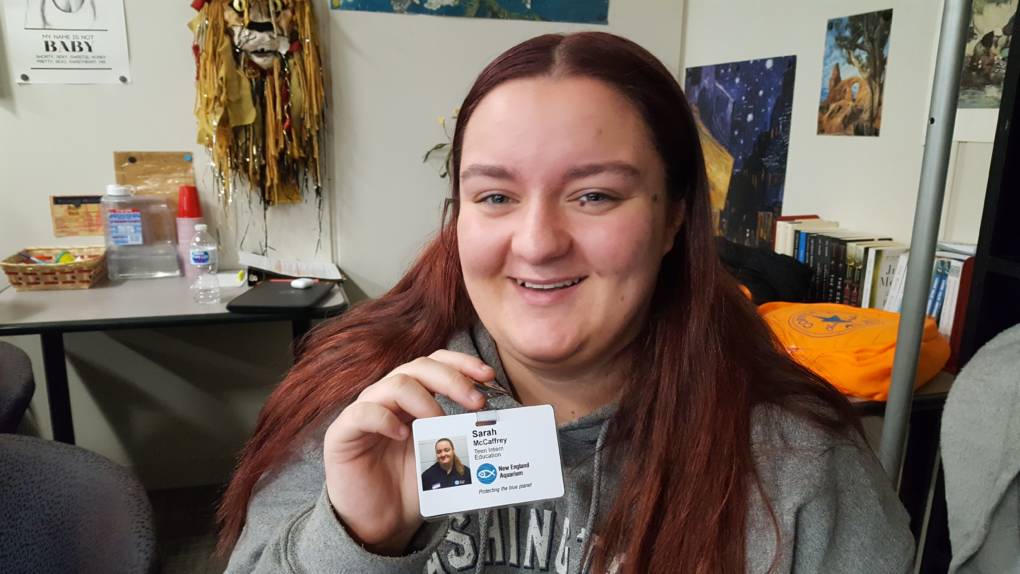
"caption": "Sarah McCaffrey, a sophomore at The Met, has long been interested in marine science, a topic she gets to explore through internships, including one at the New England Aquarium. ",
"description": null,
"title": "Tara Garcia Mathewson - Met3",
"credit": "Tara García Mathewson/The Hechinger Report",
"status": "inherit",
"isLoading": false,
"fetchFailed": false
},
"mindshift_53126": {
"type": "attachments",
"id": "mindshift_53126",
"meta": {
"index": "attachments_1716263798",
"site": "mindshift",
"id": "53126",
"found": true
},
"parent": 53123,
"imgSizes": {
"twentyfourteen-full-width": {
"file": "https://ww2.kqed.org/app/uploads/sites/23/2019/02/35668542774_02bad78153_k-1038x576.jpg",
"width": 1038,
"mimeType": "image/jpeg",
"height": 576
},
"thumbnail": {
"file": "https://ww2.kqed.org/app/uploads/sites/23/2019/02/35668542774_02bad78153_k-160x107.jpg",
"width": 160,
"mimeType": "image/jpeg",
"height": 107
},
"post-thumbnail": {
"file": "https://ww2.kqed.org/app/uploads/sites/23/2019/02/35668542774_02bad78153_k-672x372.jpg",
"width": 672,
"mimeType": "image/jpeg",
"height": 372
},
"kqedFullSize": {
"file": "https://ww2.kqed.org/app/uploads/sites/23/2019/02/35668542774_02bad78153_k.jpg",
"width": 2048,
"height": 1365
},
"large": {
"file": "https://ww2.kqed.org/app/uploads/sites/23/2019/02/35668542774_02bad78153_k-1020x680.jpg",
"width": 1020,
"mimeType": "image/jpeg",
"height": 680
},
"complete_open_graph": {
"file": "https://ww2.kqed.org/app/uploads/sites/23/2019/02/35668542774_02bad78153_k-1200x800.jpg",
"width": 1200,
"mimeType": "image/jpeg",
"height": 800
},
"guest-author-50": {
"file": "https://ww2.kqed.org/app/uploads/sites/23/2019/02/35668542774_02bad78153_k-50x50.jpg",
"width": 50,
"mimeType": "image/jpeg",
"height": 50
},
"guest-author-96": {
"file": "https://ww2.kqed.org/app/uploads/sites/23/2019/02/35668542774_02bad78153_k-96x96.jpg",
"width": 96,
"mimeType": "image/jpeg",
"height": 96
},
"medium": {
"file": "https://ww2.kqed.org/app/uploads/sites/23/2019/02/35668542774_02bad78153_k-800x533.jpg",
"width": 800,
"mimeType": "image/jpeg",
"height": 533
},
"guest-author-64": {
"file": "https://ww2.kqed.org/app/uploads/sites/23/2019/02/35668542774_02bad78153_k-64x64.jpg",
"width": 64,
"mimeType": "image/jpeg",
"height": 64
},
"guest-author-32": {
"file": "https://ww2.kqed.org/app/uploads/sites/23/2019/02/35668542774_02bad78153_k-32x32.jpg",
"width": 32,
"mimeType": "image/jpeg",
"height": 32
},
"full-width": {
"file": "https://ww2.kqed.org/app/uploads/sites/23/2019/02/35668542774_02bad78153_k-1920x1280.jpg",
"width": 1920,
"mimeType": "image/jpeg",
"height": 1280
},
"detail": {
"file": "https://ww2.kqed.org/app/uploads/sites/23/2019/02/35668542774_02bad78153_k-150x150.jpg",
"width": 150,
"mimeType": "image/jpeg",
"height": 150
},
"medium_large": {
"file": "https://ww2.kqed.org/app/uploads/sites/23/2019/02/35668542774_02bad78153_k-768x512.jpg",
"width": 768,
"mimeType": "image/jpeg",
"height": 512
},
"guest-author-128": {
"file": "https://ww2.kqed.org/app/uploads/sites/23/2019/02/35668542774_02bad78153_k-128x128.jpg",
"width": 128,
"mimeType": "image/jpeg",
"height": 128
}
},
"publishDate": 1551132168,
"modified": 1551132248,
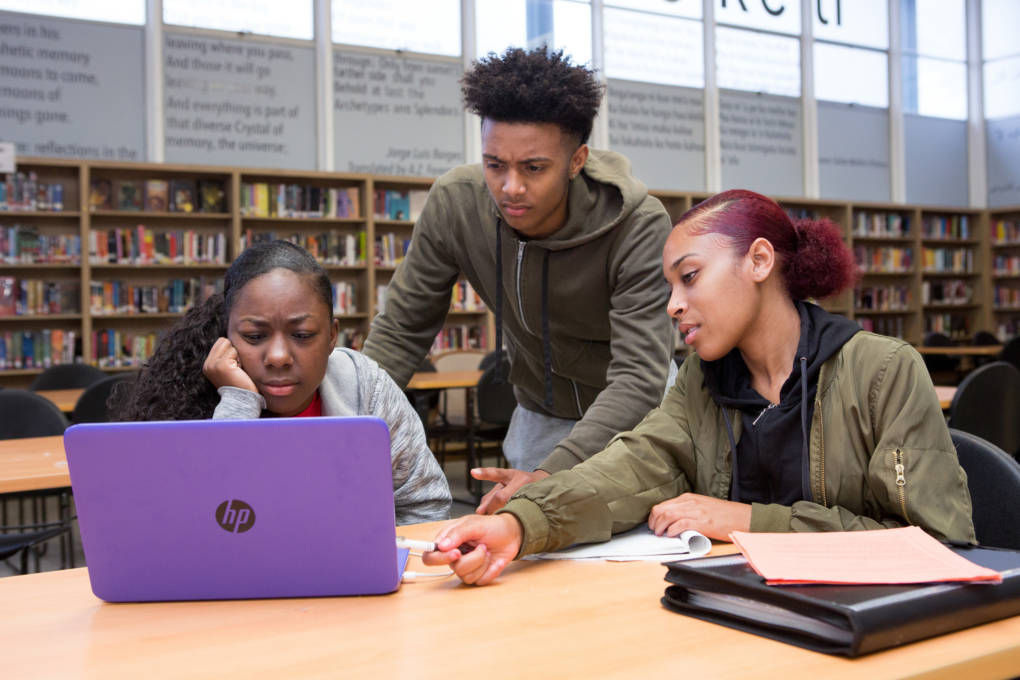
"caption": "Students work together on a computer.",
"description": null,
"title": "35668542774_02bad78153_k",
"credit": "Courtesy of Allison Shelley/\u003ca href=\"https://www.flickr.com/photos/all4ed/35668542774/\">The Verbatim Agency for American Education: Images of Teachers and Students in Action\u003c/a>",
"status": "inherit",
"isLoading": false,
"fetchFailed": false
},
"mindshift_53318": {
"type": "attachments",
"id": "mindshift_53318",
"meta": {
"index": "attachments_1716263798",
"site": "mindshift",
"id": "53318",
"found": true
},
"parent": 53317,
"imgSizes": {
"twentyfourteen-full-width": {
"file": "https://ww2.kqed.org/app/uploads/sites/23/2019/03/pronouns-in-college21_custom-69d8b800faf47bb49e4e80953cf0e98a367b5026-1038x576.jpg",
"width": 1038,
"mimeType": "image/jpeg",
"height": 576
},
"thumbnail": {
"file": "https://ww2.kqed.org/app/uploads/sites/23/2019/03/pronouns-in-college21_custom-69d8b800faf47bb49e4e80953cf0e98a367b5026-160x100.jpg",
"width": 160,
"mimeType": "image/jpeg",
"height": 100
},
"post-thumbnail": {
"file": "https://ww2.kqed.org/app/uploads/sites/23/2019/03/pronouns-in-college21_custom-69d8b800faf47bb49e4e80953cf0e98a367b5026-672x372.jpg",
"width": 672,
"mimeType": "image/jpeg",
"height": 372
},
"kqedFullSize": {
"file": "https://ww2.kqed.org/app/uploads/sites/23/2019/03/pronouns-in-college21_custom-69d8b800faf47bb49e4e80953cf0e98a367b5026-e1553273559183.jpg",
"width": 1920,
"height": 1198
},
"large": {
"file": "https://ww2.kqed.org/app/uploads/sites/23/2019/03/pronouns-in-college21_custom-69d8b800faf47bb49e4e80953cf0e98a367b5026-1020x637.jpg",
"width": 1020,
"mimeType": "image/jpeg",
"height": 637
},
"complete_open_graph": {
"file": "https://ww2.kqed.org/app/uploads/sites/23/2019/03/pronouns-in-college21_custom-69d8b800faf47bb49e4e80953cf0e98a367b5026-1200x749.jpg",
"width": 1200,
"mimeType": "image/jpeg",
"height": 749
},
"guest-author-50": {
"file": "https://ww2.kqed.org/app/uploads/sites/23/2019/03/pronouns-in-college21_custom-69d8b800faf47bb49e4e80953cf0e98a367b5026-50x50.jpg",
"width": 50,
"mimeType": "image/jpeg",
"height": 50
},
"guest-author-96": {
"file": "https://ww2.kqed.org/app/uploads/sites/23/2019/03/pronouns-in-college21_custom-69d8b800faf47bb49e4e80953cf0e98a367b5026-96x96.jpg",
"width": 96,
"mimeType": "image/jpeg",
"height": 96
},
"medium": {
"file": "https://ww2.kqed.org/app/uploads/sites/23/2019/03/pronouns-in-college21_custom-69d8b800faf47bb49e4e80953cf0e98a367b5026-800x499.jpg",
"width": 800,
"mimeType": "image/jpeg",
"height": 499
},
"guest-author-64": {
"file": "https://ww2.kqed.org/app/uploads/sites/23/2019/03/pronouns-in-college21_custom-69d8b800faf47bb49e4e80953cf0e98a367b5026-64x64.jpg",
"width": 64,
"mimeType": "image/jpeg",
"height": 64
},
"guest-author-32": {
"file": "https://ww2.kqed.org/app/uploads/sites/23/2019/03/pronouns-in-college21_custom-69d8b800faf47bb49e4e80953cf0e98a367b5026-32x32.jpg",
"width": 32,
"mimeType": "image/jpeg",
"height": 32
},
"full-width": {
"file": "https://ww2.kqed.org/app/uploads/sites/23/2019/03/pronouns-in-college21_custom-69d8b800faf47bb49e4e80953cf0e98a367b5026-1920x1198.jpg",
"width": 1920,
"mimeType": "image/jpeg",
"height": 1198
},
"medium_large": {
"file": "https://ww2.kqed.org/app/uploads/sites/23/2019/03/pronouns-in-college21_custom-69d8b800faf47bb49e4e80953cf0e98a367b5026-768x479.jpg",
"width": 768,
"mimeType": "image/jpeg",
"height": 479
},
"guest-author-128": {
"file": "https://ww2.kqed.org/app/uploads/sites/23/2019/03/pronouns-in-college21_custom-69d8b800faf47bb49e4e80953cf0e98a367b5026-128x128.jpg",
"width": 128,
"mimeType": "image/jpeg",
"height": 128
}
},
"publishDate": 1553273330,
"modified": 1553273552,
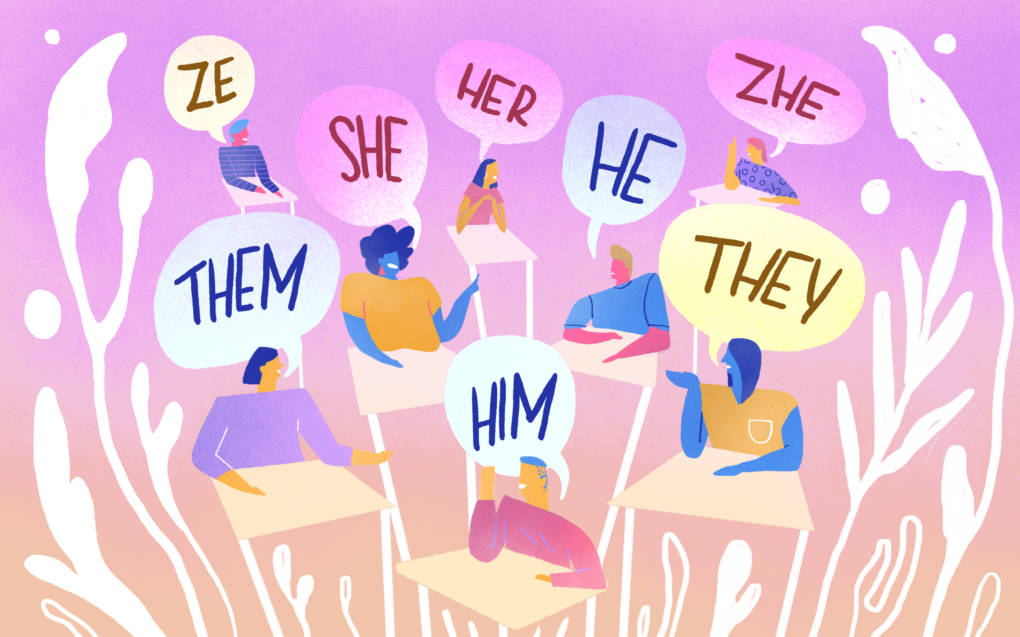
"caption": "Some colleges now let students input their pronouns into campus data systems.",
"description": "Some colleges now let students input their pronouns into campus data systems.",
"title": "Some colleges now let students input their pronouns into campus data systems.",
"credit": "LA Johnson/NPR",
"status": "inherit",
"isLoading": false,
"fetchFailed": false
},
"mindshift_53096": {
"type": "attachments",
"id": "mindshift_53096",
"meta": {
"index": "attachments_1716263798",
"site": "mindshift",
"id": "53096",
"found": true
},
"parent": 53091,
"imgSizes": {
"thumbnail": {
"file": "https://ww2.kqed.org/app/uploads/sites/23/2019/02/greet1-160x78.jpg",
"width": 160,
"mimeType": "image/jpeg",
"height": 78
},
"post-thumbnail": {
"file": "https://ww2.kqed.org/app/uploads/sites/23/2019/02/greet1-672x372.jpg",
"width": 672,
"mimeType": "image/jpeg",
"height": 372
},
"kqedFullSize": {
"file": "https://ww2.kqed.org/app/uploads/sites/23/2019/02/greet1.jpg",
"width": 870,
"height": 425
},
"guest-author-50": {
"file": "https://ww2.kqed.org/app/uploads/sites/23/2019/02/greet1-50x50.jpg",
"width": 50,
"mimeType": "image/jpeg",
"height": 50
},
"guest-author-96": {
"file": "https://ww2.kqed.org/app/uploads/sites/23/2019/02/greet1-96x96.jpg",
"width": 96,
"mimeType": "image/jpeg",
"height": 96
},
"medium": {
"file": "https://ww2.kqed.org/app/uploads/sites/23/2019/02/greet1-800x391.jpg",
"width": 800,
"mimeType": "image/jpeg",
"height": 391
},
"guest-author-64": {
"file": "https://ww2.kqed.org/app/uploads/sites/23/2019/02/greet1-64x64.jpg",
"width": 64,
"mimeType": "image/jpeg",
"height": 64
},
"detail": {
"file": "https://ww2.kqed.org/app/uploads/sites/23/2019/02/greet1-150x150.jpg",
"width": 150,
"mimeType": "image/jpeg",
"height": 150
},
"guest-author-32": {
"file": "https://ww2.kqed.org/app/uploads/sites/23/2019/02/greet1-32x32.jpg",
"width": 32,
"mimeType": "image/jpeg",
"height": 32
},
"medium_large": {
"file": "https://ww2.kqed.org/app/uploads/sites/23/2019/02/greet1-768x375.jpg",
"width": 768,
"mimeType": "image/jpeg",
"height": 375
},
"guest-author-128": {
"file": "https://ww2.kqed.org/app/uploads/sites/23/2019/02/greet1-128x128.jpg",
"width": 128,
"mimeType": "image/jpeg",
"height": 128
}
},
"publishDate": 1550710222,
"modified": 1550710304,
"caption": "Kindergarten teacher Falon Turner greets every student at the door when they enter for the day. She uses that time to check in and make them feel seen.",
"description": "Kindergarten teacher Falon Turner greets every student at the door when they enter for the day. She uses that time to check in and make them feel seen.",
"title": "greet1",
"credit": "\u003ca href=\"https://www.edutopia.org/video/making-connections-greetings-door\">Edutopia\u003c/a>",
"status": "inherit",
"isLoading": false,
"fetchFailed": false
},
"mindshift_53276": {
"type": "attachments",
"id": "mindshift_53276",
"meta": {
"index": "attachments_1716263798",
"site": "mindshift",
"id": "53276",
"found": true
},
"parent": 53275,
"imgSizes": {
"twentyfourteen-full-width": {
"file": "https://ww2.kqed.org/app/uploads/sites/23/2019/03/ljohnson_readingmentors_custom-15e72f396957f8ac1a6f40b40c0a93b87a31461d-1038x576.jpg",
"width": 1038,
"mimeType": "image/jpeg",
"height": 576
},
"thumbnail": {
"file": "https://ww2.kqed.org/app/uploads/sites/23/2019/03/ljohnson_readingmentors_custom-15e72f396957f8ac1a6f40b40c0a93b87a31461d-160x100.jpg",
"width": 160,
"mimeType": "image/jpeg",
"height": 100
},
"post-thumbnail": {
"file": "https://ww2.kqed.org/app/uploads/sites/23/2019/03/ljohnson_readingmentors_custom-15e72f396957f8ac1a6f40b40c0a93b87a31461d-672x372.jpg",
"width": 672,
"mimeType": "image/jpeg",
"height": 372
},
"kqedFullSize": {
"file": "https://ww2.kqed.org/app/uploads/sites/23/2019/03/ljohnson_readingmentors_custom-15e72f396957f8ac1a6f40b40c0a93b87a31461d-e1552896623366.jpg",
"width": 1920,
"height": 1198
},
"large": {
"file": "https://ww2.kqed.org/app/uploads/sites/23/2019/03/ljohnson_readingmentors_custom-15e72f396957f8ac1a6f40b40c0a93b87a31461d-1020x637.jpg",
"width": 1020,
"mimeType": "image/jpeg",
"height": 637
},
"complete_open_graph": {
"file": "https://ww2.kqed.org/app/uploads/sites/23/2019/03/ljohnson_readingmentors_custom-15e72f396957f8ac1a6f40b40c0a93b87a31461d-1200x749.jpg",
"width": 1200,
"mimeType": "image/jpeg",
"height": 749
},
"guest-author-50": {
"file": "https://ww2.kqed.org/app/uploads/sites/23/2019/03/ljohnson_readingmentors_custom-15e72f396957f8ac1a6f40b40c0a93b87a31461d-50x50.jpg",
"width": 50,
"mimeType": "image/jpeg",
"height": 50
},
"guest-author-96": {
"file": "https://ww2.kqed.org/app/uploads/sites/23/2019/03/ljohnson_readingmentors_custom-15e72f396957f8ac1a6f40b40c0a93b87a31461d-96x96.jpg",
"width": 96,
"mimeType": "image/jpeg",
"height": 96
},
"medium": {
"file": "https://ww2.kqed.org/app/uploads/sites/23/2019/03/ljohnson_readingmentors_custom-15e72f396957f8ac1a6f40b40c0a93b87a31461d-800x499.jpg",
"width": 800,
"mimeType": "image/jpeg",
"height": 499
},
"guest-author-64": {
"file": "https://ww2.kqed.org/app/uploads/sites/23/2019/03/ljohnson_readingmentors_custom-15e72f396957f8ac1a6f40b40c0a93b87a31461d-64x64.jpg",
"width": 64,
"mimeType": "image/jpeg",
"height": 64
},
"guest-author-32": {
"file": "https://ww2.kqed.org/app/uploads/sites/23/2019/03/ljohnson_readingmentors_custom-15e72f396957f8ac1a6f40b40c0a93b87a31461d-32x32.jpg",
"width": 32,
"mimeType": "image/jpeg",
"height": 32
},
"full-width": {
"file": "https://ww2.kqed.org/app/uploads/sites/23/2019/03/ljohnson_readingmentors_custom-15e72f396957f8ac1a6f40b40c0a93b87a31461d-1920x1198.jpg",
"width": 1920,
"mimeType": "image/jpeg",
"height": 1198
},
"medium_large": {
"file": "https://ww2.kqed.org/app/uploads/sites/23/2019/03/ljohnson_readingmentors_custom-15e72f396957f8ac1a6f40b40c0a93b87a31461d-768x479.jpg",
"width": 768,
"mimeType": "image/jpeg",
"height": 479
},
"guest-author-128": {
"file": "https://ww2.kqed.org/app/uploads/sites/23/2019/03/ljohnson_readingmentors_custom-15e72f396957f8ac1a6f40b40c0a93b87a31461d-128x128.jpg",
"width": 128,
"mimeType": "image/jpeg",
"height": 128
}
},
"publishDate": 1552896507,
"modified": 1552896698,
"caption": null,
"description": "Reading mentors",
"title": "Teens can grow their skills as readers by teaching younger kids.",
"credit": "NPR/LA Johnson",
"status": "inherit",
"isLoading": false,
"fetchFailed": false
},
"mindshift_53267": {
"type": "attachments",
"id": "mindshift_53267",
"meta": {
"index": "attachments_1716263798",
"site": "mindshift",
"id": "53267",
"found": true
},
"parent": 53266,
"imgSizes": {
"twentyfourteen-full-width": {
"file": "https://ww2.kqed.org/app/uploads/sites/23/2019/03/ucla-lawn_wide-5d652463d8649763595d37b698ccb755ac529f9a-1038x576.jpg",
"width": 1038,
"mimeType": "image/jpeg",
"height": 576
},
"thumbnail": {
"file": "https://ww2.kqed.org/app/uploads/sites/23/2019/03/ucla-lawn_wide-5d652463d8649763595d37b698ccb755ac529f9a-160x90.jpg",
"width": 160,
"mimeType": "image/jpeg",
"height": 90
},
"post-thumbnail": {
"file": "https://ww2.kqed.org/app/uploads/sites/23/2019/03/ucla-lawn_wide-5d652463d8649763595d37b698ccb755ac529f9a-672x372.jpg",
"width": 672,
"mimeType": "image/jpeg",
"height": 372
},
"kqedFullSize": {
"file": "https://ww2.kqed.org/app/uploads/sites/23/2019/03/ucla-lawn_wide-5d652463d8649763595d37b698ccb755ac529f9a-e1552544784822.jpg",
"width": 1920,
"height": 1082
},
"large": {
"file": "https://ww2.kqed.org/app/uploads/sites/23/2019/03/ucla-lawn_wide-5d652463d8649763595d37b698ccb755ac529f9a-1020x575.jpg",
"width": 1020,
"mimeType": "image/jpeg",
"height": 575
},
"complete_open_graph": {
"file": "https://ww2.kqed.org/app/uploads/sites/23/2019/03/ucla-lawn_wide-5d652463d8649763595d37b698ccb755ac529f9a-1200x676.jpg",
"width": 1200,
"mimeType": "image/jpeg",
"height": 676
},
"guest-author-50": {
"file": "https://ww2.kqed.org/app/uploads/sites/23/2019/03/ucla-lawn_wide-5d652463d8649763595d37b698ccb755ac529f9a-50x50.jpg",
"width": 50,
"mimeType": "image/jpeg",
"height": 50
},
"guest-author-96": {
"file": "https://ww2.kqed.org/app/uploads/sites/23/2019/03/ucla-lawn_wide-5d652463d8649763595d37b698ccb755ac529f9a-96x96.jpg",
"width": 96,
"mimeType": "image/jpeg",
"height": 96
},
"medium": {
"file": "https://ww2.kqed.org/app/uploads/sites/23/2019/03/ucla-lawn_wide-5d652463d8649763595d37b698ccb755ac529f9a-800x451.jpg",
"width": 800,
"mimeType": "image/jpeg",
"height": 451
},
"guest-author-64": {
"file": "https://ww2.kqed.org/app/uploads/sites/23/2019/03/ucla-lawn_wide-5d652463d8649763595d37b698ccb755ac529f9a-64x64.jpg",
"width": 64,
"mimeType": "image/jpeg",
"height": 64
},
"guest-author-32": {
"file": "https://ww2.kqed.org/app/uploads/sites/23/2019/03/ucla-lawn_wide-5d652463d8649763595d37b698ccb755ac529f9a-32x32.jpg",
"width": 32,
"mimeType": "image/jpeg",
"height": 32
},
"full-width": {
"file": "https://ww2.kqed.org/app/uploads/sites/23/2019/03/ucla-lawn_wide-5d652463d8649763595d37b698ccb755ac529f9a-1920x1082.jpg",
"width": 1920,
"mimeType": "image/jpeg",
"height": 1082
},
"medium_large": {
"file": "https://ww2.kqed.org/app/uploads/sites/23/2019/03/ucla-lawn_wide-5d652463d8649763595d37b698ccb755ac529f9a-768x433.jpg",
"width": 768,
"mimeType": "image/jpeg",
"height": 433
},
"guest-author-128": {
"file": "https://ww2.kqed.org/app/uploads/sites/23/2019/03/ucla-lawn_wide-5d652463d8649763595d37b698ccb755ac529f9a-128x128.jpg",
"width": 128,
"mimeType": "image/jpeg",
"height": 128
}
},
"publishDate": 1552544739,
"modified": 1552544812,
"caption": "Students at UCLA and elsewhere are not surprised at the admissions cheating scandal rocking the higher education world. They are more frustrated, and cynical. UCLA was one of the institutions caught up in the scam.",
"description": "Students at UCLA and elsewhere are not surprised at the admissions cheating scandal rocking the higher education world. They are more frustrated, and cynical. UCLA was one of the institutions caught up in the scam.",
"title": "Students at UCLA and elsewhere are not surprised at the admissions cheating scandal rocking the higher education world. They are more frustrated, and cynical. UCLA was one of the institutions caught up in the scam.",
"credit": "Megan Schellong/NPR",
"status": "inherit",
"isLoading": false,
"fetchFailed": false
},
"mindshift_53260": {
"type": "attachments",
"id": "mindshift_53260",
"meta": {
"index": "attachments_1716263798",
"site": "mindshift",
"id": "53260",
"found": true
},
"parent": 53256,
"imgSizes": {
"twentyfourteen-full-width": {
"file": "https://ww2.kqed.org/app/uploads/sites/23/2019/03/iStock-875575022-1038x576.jpg",
"width": 1038,
"mimeType": "image/jpeg",
"height": 576
},
"thumbnail": {
"file": "https://ww2.kqed.org/app/uploads/sites/23/2019/03/iStock-875575022-160x107.jpg",
"width": 160,
"mimeType": "image/jpeg",
"height": 107
},
"post-thumbnail": {
"file": "https://ww2.kqed.org/app/uploads/sites/23/2019/03/iStock-875575022-672x372.jpg",
"width": 672,
"mimeType": "image/jpeg",
"height": 372
},
"kqedFullSize": {
"file": "https://ww2.kqed.org/app/uploads/sites/23/2019/03/iStock-875575022-e1552457916622.jpg",
"width": 1920,
"height": 1281
},
"large": {
"file": "https://ww2.kqed.org/app/uploads/sites/23/2019/03/iStock-875575022-1020x681.jpg",
"width": 1020,
"mimeType": "image/jpeg",
"height": 681
},
"complete_open_graph": {
"file": "https://ww2.kqed.org/app/uploads/sites/23/2019/03/iStock-875575022-1200x801.jpg",
"width": 1200,
"mimeType": "image/jpeg",
"height": 801
},
"guest-author-50": {
"file": "https://ww2.kqed.org/app/uploads/sites/23/2019/03/iStock-875575022-50x50.jpg",
"width": 50,
"mimeType": "image/jpeg",
"height": 50
},
"guest-author-96": {
"file": "https://ww2.kqed.org/app/uploads/sites/23/2019/03/iStock-875575022-96x96.jpg",
"width": 96,
"mimeType": "image/jpeg",
"height": 96
},
"medium": {
"file": "https://ww2.kqed.org/app/uploads/sites/23/2019/03/iStock-875575022-800x534.jpg",
"width": 800,
"mimeType": "image/jpeg",
"height": 534
},
"guest-author-64": {
"file": "https://ww2.kqed.org/app/uploads/sites/23/2019/03/iStock-875575022-64x64.jpg",
"width": 64,
"mimeType": "image/jpeg",
"height": 64
},
"guest-author-32": {
"file": "https://ww2.kqed.org/app/uploads/sites/23/2019/03/iStock-875575022-32x32.jpg",
"width": 32,
"mimeType": "image/jpeg",
"height": 32
},
"full-width": {
"file": "https://ww2.kqed.org/app/uploads/sites/23/2019/03/iStock-875575022-1920x1281.jpg",
"width": 1920,
"mimeType": "image/jpeg",
"height": 1281
},
"medium_large": {
"file": "https://ww2.kqed.org/app/uploads/sites/23/2019/03/iStock-875575022-768x512.jpg",
"width": 768,
"mimeType": "image/jpeg",
"height": 512
},
"guest-author-128": {
"file": "https://ww2.kqed.org/app/uploads/sites/23/2019/03/iStock-875575022-128x128.jpg",
"width": 128,
"mimeType": "image/jpeg",
"height": 128
}
},
"publishDate": 1552457855,
"modified": 1552457910,
"caption": null,
"description": null,
"title": "Student motivation can be a challenge",
"credit": "iStock/MachineHeadz",
"status": "inherit",
"isLoading": false,
"fetchFailed": false
},
"mindshift_53244": {
"type": "attachments",
"id": "mindshift_53244",
"meta": {
"index": "attachments_1716263798",
"site": "mindshift",
"id": "53244",
"found": true
},
"parent": 53241,
"imgSizes": {
"twentyfourteen-full-width": {
"file": "https://ww2.kqed.org/app/uploads/sites/23/2019/03/Diallo_81002-800x0-c-default-800x576.jpg",
"width": 800,
"mimeType": "image/jpeg",
"height": 576
},
"thumbnail": {
"file": "https://ww2.kqed.org/app/uploads/sites/23/2019/03/Diallo_81002-800x0-c-default-160x120.jpg",
"width": 160,
"mimeType": "image/jpeg",
"height": 120
},
"post-thumbnail": {
"file": "https://ww2.kqed.org/app/uploads/sites/23/2019/03/Diallo_81002-800x0-c-default-672x372.jpg",
"width": 672,
"mimeType": "image/jpeg",
"height": 372
},
"kqedFullSize": {
"file": "https://ww2.kqed.org/app/uploads/sites/23/2019/03/Diallo_81002-800x0-c-default.jpg",
"width": 800,
"height": 600
},
"guest-author-50": {
"file": "https://ww2.kqed.org/app/uploads/sites/23/2019/03/Diallo_81002-800x0-c-default-50x50.jpg",
"width": 50,
"mimeType": "image/jpeg",
"height": 50
},
"guest-author-96": {
"file": "https://ww2.kqed.org/app/uploads/sites/23/2019/03/Diallo_81002-800x0-c-default-96x96.jpg",
"width": 96,
"mimeType": "image/jpeg",
"height": 96
},
"medium": {
"file": "https://ww2.kqed.org/app/uploads/sites/23/2019/03/Diallo_81002-800x0-c-default-800x600.jpg",
"width": 800,
"mimeType": "image/jpeg",
"height": 600
},
"guest-author-64": {
"file": "https://ww2.kqed.org/app/uploads/sites/23/2019/03/Diallo_81002-800x0-c-default-64x64.jpg",
"width": 64,
"mimeType": "image/jpeg",
"height": 64
},
"guest-author-32": {
"file": "https://ww2.kqed.org/app/uploads/sites/23/2019/03/Diallo_81002-800x0-c-default-32x32.jpg",
"width": 32,
"mimeType": "image/jpeg",
"height": 32
},
"medium_large": {
"file": "https://ww2.kqed.org/app/uploads/sites/23/2019/03/Diallo_81002-800x0-c-default-768x576.jpg",
"width": 768,
"mimeType": "image/jpeg",
"height": 576
},
"guest-author-128": {
"file": "https://ww2.kqed.org/app/uploads/sites/23/2019/03/Diallo_81002-800x0-c-default-128x128.jpg",
"width": 128,
"mimeType": "image/jpeg",
"height": 128
}
},
"publishDate": 1552284817,
"modified": 1552284869,
"caption": "Maker Academy teacher Gerry Irrizary assisting students in his Design Principles class. ",
"description": null,
"title": "OLYMPUS DIGITAL CAMERA",
"credit": "Amadou Diallo for The Hechinger Report",
"status": "inherit",
"isLoading": false,
"fetchFailed": false
},
"mindshift_53233": {
"type": "attachments",
"id": "mindshift_53233",
"meta": {
"index": "attachments_1716263798",
"site": "mindshift",
"id": "53233",
"found": true
},
"parent": 53232,
"imgSizes": {
"twentyfourteen-full-width": {
"file": "https://ww2.kqed.org/app/uploads/sites/23/2019/03/mfabrizio_ruralcollege_custom-b69748551218d118eb982ddc0d9901afac688fad-1038x576.jpg",
"width": 1038,
"mimeType": "image/jpeg",
"height": 576
},
"thumbnail": {
"file": "https://ww2.kqed.org/app/uploads/sites/23/2019/03/mfabrizio_ruralcollege_custom-b69748551218d118eb982ddc0d9901afac688fad-160x100.jpg",
"width": 160,
"mimeType": "image/jpeg",
"height": 100
},
"post-thumbnail": {
"file": "https://ww2.kqed.org/app/uploads/sites/23/2019/03/mfabrizio_ruralcollege_custom-b69748551218d118eb982ddc0d9901afac688fad-672x372.jpg",
"width": 672,
"mimeType": "image/jpeg",
"height": 372
},
"kqedFullSize": {
"file": "https://ww2.kqed.org/app/uploads/sites/23/2019/03/mfabrizio_ruralcollege_custom-b69748551218d118eb982ddc0d9901afac688fad-e1551944368804.jpg",
"width": 1920,
"height": 1198
},
"large": {
"file": "https://ww2.kqed.org/app/uploads/sites/23/2019/03/mfabrizio_ruralcollege_custom-b69748551218d118eb982ddc0d9901afac688fad-1020x637.jpg",
"width": 1020,
"mimeType": "image/jpeg",
"height": 637
},
"complete_open_graph": {
"file": "https://ww2.kqed.org/app/uploads/sites/23/2019/03/mfabrizio_ruralcollege_custom-b69748551218d118eb982ddc0d9901afac688fad-1200x749.jpg",
"width": 1200,
"mimeType": "image/jpeg",
"height": 749
},
"guest-author-50": {
"file": "https://ww2.kqed.org/app/uploads/sites/23/2019/03/mfabrizio_ruralcollege_custom-b69748551218d118eb982ddc0d9901afac688fad-50x50.jpg",
"width": 50,
"mimeType": "image/jpeg",
"height": 50
},
"guest-author-96": {
"file": "https://ww2.kqed.org/app/uploads/sites/23/2019/03/mfabrizio_ruralcollege_custom-b69748551218d118eb982ddc0d9901afac688fad-96x96.jpg",
"width": 96,
"mimeType": "image/jpeg",
"height": 96
},
"medium": {
"file": "https://ww2.kqed.org/app/uploads/sites/23/2019/03/mfabrizio_ruralcollege_custom-b69748551218d118eb982ddc0d9901afac688fad-800x499.jpg",
"width": 800,
"mimeType": "image/jpeg",
"height": 499
},
"guest-author-64": {
"file": "https://ww2.kqed.org/app/uploads/sites/23/2019/03/mfabrizio_ruralcollege_custom-b69748551218d118eb982ddc0d9901afac688fad-64x64.jpg",
"width": 64,
"mimeType": "image/jpeg",
"height": 64
},
"guest-author-32": {
"file": "https://ww2.kqed.org/app/uploads/sites/23/2019/03/mfabrizio_ruralcollege_custom-b69748551218d118eb982ddc0d9901afac688fad-32x32.jpg",
"width": 32,
"mimeType": "image/jpeg",
"height": 32
},
"full-width": {
"file": "https://ww2.kqed.org/app/uploads/sites/23/2019/03/mfabrizio_ruralcollege_custom-b69748551218d118eb982ddc0d9901afac688fad-1920x1198.jpg",
"width": 1920,
"mimeType": "image/jpeg",
"height": 1198
},
"medium_large": {
"file": "https://ww2.kqed.org/app/uploads/sites/23/2019/03/mfabrizio_ruralcollege_custom-b69748551218d118eb982ddc0d9901afac688fad-768x479.jpg",
"width": 768,
"mimeType": "image/jpeg",
"height": 479
},
"guest-author-128": {
"file": "https://ww2.kqed.org/app/uploads/sites/23/2019/03/mfabrizio_ruralcollege_custom-b69748551218d118eb982ddc0d9901afac688fad-128x128.jpg",
"width": 128,
"mimeType": "image/jpeg",
"height": 128
}
},
"publishDate": 1551944341,
"modified": 1551944376,
"caption": null,
"description": "College recruiters rarely visit small, rural schools",
"title": "Colleges rarely come to rural students to recruit.",
"credit": "Maria Fabrizio for NPR",
"status": "inherit",
"isLoading": false,
"fetchFailed": false
},
"mindshift_53220": {
"type": "attachments",
"id": "mindshift_53220",
"meta": {
"index": "attachments_1716263798",
"site": "mindshift",
"id": "53220",
"found": true
},
"parent": 53219,
"imgSizes": {
"twentyfourteen-full-width": {
"file": "https://ww2.kqed.org/app/uploads/sites/23/2019/03/image1-1_custom-8580c2deab30f1d08c7a52d837e5e808730059b4-1038x576.jpe",
"width": 1038,
"mimeType": "image/jpeg",
"height": 576
},
"thumbnail": {
"file": "https://ww2.kqed.org/app/uploads/sites/23/2019/03/image1-1_custom-8580c2deab30f1d08c7a52d837e5e808730059b4-160x100.jpe",
"width": 160,
"mimeType": "image/jpeg",
"height": 100
},
"post-thumbnail": {
"file": "https://ww2.kqed.org/app/uploads/sites/23/2019/03/image1-1_custom-8580c2deab30f1d08c7a52d837e5e808730059b4-672x372.jpe",
"width": 672,
"mimeType": "image/jpeg",
"height": 372
},
"kqedFullSize": {
"file": "https://ww2.kqed.org/app/uploads/sites/23/2019/03/image1-1_custom-8580c2deab30f1d08c7a52d837e5e808730059b4-e1551855279777.jpe",
"width": 1920,
"height": 1198
},
"large": {
"file": "https://ww2.kqed.org/app/uploads/sites/23/2019/03/image1-1_custom-8580c2deab30f1d08c7a52d837e5e808730059b4-1020x637.jpe",
"width": 1020,
"mimeType": "image/jpeg",
"height": 637
},
"complete_open_graph": {
"file": "https://ww2.kqed.org/app/uploads/sites/23/2019/03/image1-1_custom-8580c2deab30f1d08c7a52d837e5e808730059b4-1200x749.jpe",
"width": 1200,
"mimeType": "image/jpeg",
"height": 749
},
"guest-author-50": {
"file": "https://ww2.kqed.org/app/uploads/sites/23/2019/03/image1-1_custom-8580c2deab30f1d08c7a52d837e5e808730059b4-50x50.jpe",
"width": 50,
"mimeType": "image/jpeg",
"height": 50
},
"guest-author-96": {
"file": "https://ww2.kqed.org/app/uploads/sites/23/2019/03/image1-1_custom-8580c2deab30f1d08c7a52d837e5e808730059b4-96x96.jpe",
"width": 96,
"mimeType": "image/jpeg",
"height": 96
},
"medium": {
"file": "https://ww2.kqed.org/app/uploads/sites/23/2019/03/image1-1_custom-8580c2deab30f1d08c7a52d837e5e808730059b4-800x499.jpe",
"width": 800,
"mimeType": "image/jpeg",
"height": 499
},
"guest-author-64": {
"file": "https://ww2.kqed.org/app/uploads/sites/23/2019/03/image1-1_custom-8580c2deab30f1d08c7a52d837e5e808730059b4-64x64.jpe",
"width": 64,
"mimeType": "image/jpeg",
"height": 64
},
"guest-author-32": {
"file": "https://ww2.kqed.org/app/uploads/sites/23/2019/03/image1-1_custom-8580c2deab30f1d08c7a52d837e5e808730059b4-32x32.jpe",
"width": 32,
"mimeType": "image/jpeg",
"height": 32
},
"full-width": {
"file": "https://ww2.kqed.org/app/uploads/sites/23/2019/03/image1-1_custom-8580c2deab30f1d08c7a52d837e5e808730059b4-1920x1198.jpe",
"width": 1920,
"mimeType": "image/jpeg",
"height": 1198
},
"medium_large": {
"file": "https://ww2.kqed.org/app/uploads/sites/23/2019/03/image1-1_custom-8580c2deab30f1d08c7a52d837e5e808730059b4-768x479.jpe",
"width": 768,
"mimeType": "image/jpeg",
"height": 479
},
"guest-author-128": {
"file": "https://ww2.kqed.org/app/uploads/sites/23/2019/03/image1-1_custom-8580c2deab30f1d08c7a52d837e5e808730059b4-128x128.jpe",
"width": 128,
"mimeType": "image/jpeg",
"height": 128
}
},
"publishDate": 1551855171,
"modified": 1551855273,
"caption": null,
"description": "the hidden curriculum",
"title": "the hidden curriculum",
"credit": "Mai Ly Degnan for NPR",
"status": "inherit",
"isLoading": false,
"fetchFailed": false
},
"mindshift_53208": {
"type": "attachments",
"id": "mindshift_53208",
"meta": {
"index": "attachments_1716263798",
"site": "mindshift",
"id": "53208",
"found": true
},
"parent": 53207,
"imgSizes": {
"twentyfourteen-full-width": {
"file": "https://ww2.kqed.org/app/uploads/sites/23/2019/03/gettyimages-83909066-1-00ab3541d3108d282427d934704dfce8f1078075-1038x576.jpg",
"width": 1038,
"mimeType": "image/jpeg",
"height": 576
},
"thumbnail": {
"file": "https://ww2.kqed.org/app/uploads/sites/23/2019/03/gettyimages-83909066-1-00ab3541d3108d282427d934704dfce8f1078075-160x120.jpg",
"width": 160,
"mimeType": "image/jpeg",
"height": 120
},
"post-thumbnail": {
"file": "https://ww2.kqed.org/app/uploads/sites/23/2019/03/gettyimages-83909066-1-00ab3541d3108d282427d934704dfce8f1078075-672x372.jpg",
"width": 672,
"mimeType": "image/jpeg",
"height": 372
},
"kqedFullSize": {
"file": "https://ww2.kqed.org/app/uploads/sites/23/2019/03/gettyimages-83909066-1-00ab3541d3108d282427d934704dfce8f1078075.jpg",
"width": 1878,
"height": 1409
},
"large": {
"file": "https://ww2.kqed.org/app/uploads/sites/23/2019/03/gettyimages-83909066-1-00ab3541d3108d282427d934704dfce8f1078075-1020x765.jpg",
"width": 1020,
"mimeType": "image/jpeg",
"height": 765
},
"complete_open_graph": {
"file": "https://ww2.kqed.org/app/uploads/sites/23/2019/03/gettyimages-83909066-1-00ab3541d3108d282427d934704dfce8f1078075-1200x900.jpg",
"width": 1200,
"mimeType": "image/jpeg",
"height": 900
},
"guest-author-50": {
"file": "https://ww2.kqed.org/app/uploads/sites/23/2019/03/gettyimages-83909066-1-00ab3541d3108d282427d934704dfce8f1078075-50x50.jpg",
"width": 50,
"mimeType": "image/jpeg",
"height": 50
},
"guest-author-96": {
"file": "https://ww2.kqed.org/app/uploads/sites/23/2019/03/gettyimages-83909066-1-00ab3541d3108d282427d934704dfce8f1078075-96x96.jpg",
"width": 96,
"mimeType": "image/jpeg",
"height": 96
},
"medium": {
"file": "https://ww2.kqed.org/app/uploads/sites/23/2019/03/gettyimages-83909066-1-00ab3541d3108d282427d934704dfce8f1078075-800x600.jpg",
"width": 800,
"mimeType": "image/jpeg",
"height": 600
},
"guest-author-64": {
"file": "https://ww2.kqed.org/app/uploads/sites/23/2019/03/gettyimages-83909066-1-00ab3541d3108d282427d934704dfce8f1078075-64x64.jpg",
"width": 64,
"mimeType": "image/jpeg",
"height": 64
},
"guest-author-32": {
"file": "https://ww2.kqed.org/app/uploads/sites/23/2019/03/gettyimages-83909066-1-00ab3541d3108d282427d934704dfce8f1078075-32x32.jpg",
"width": 32,
"mimeType": "image/jpeg",
"height": 32
},
"medium_large": {
"file": "https://ww2.kqed.org/app/uploads/sites/23/2019/03/gettyimages-83909066-1-00ab3541d3108d282427d934704dfce8f1078075-768x576.jpg",
"width": 768,
"mimeType": "image/jpeg",
"height": 576
},
"guest-author-128": {
"file": "https://ww2.kqed.org/app/uploads/sites/23/2019/03/gettyimages-83909066-1-00ab3541d3108d282427d934704dfce8f1078075-128x128.jpg",
"width": 128,
"mimeType": "image/jpeg",
"height": 128
}
},
"publishDate": 1551767566,
"modified": 1551767858,
"caption": "Given supportive, nurturing conditions, highly reactive \"orchid\" children can thrive when tackling challenges, pediatrician and author Thomas Boyce says, especially if they have the comfort of a regular routine.",
"description": null,
"title": "Given supportive, nurturing conditions, highly reactive \"orchid\" children can thrive when tackling challenges, pediatrician and author Thomas Boyce says, especially if they have the comfort of a regular routine.",
"credit": "Michael H/Getty Images",
"status": "inherit",
"isLoading": false,
"fetchFailed": false
},
"mindshift_53177": {
"type": "attachments",
"id": "mindshift_53177",
"meta": {
"index": "attachments_1716263798",
"site": "mindshift",
"id": "53177",
"found": true
},
"parent": 53175,
"imgSizes": {
"twentyfourteen-full-width": {
"file": "https://ww2.kqed.org/app/uploads/sites/23/2019/02/movement-1038x576.jpg",
"width": 1038,
"mimeType": "image/jpeg",
"height": 576
},
"thumbnail": {
"file": "https://ww2.kqed.org/app/uploads/sites/23/2019/02/movement-160x81.jpg",
"width": 160,
"mimeType": "image/jpeg",
"height": 81
},
"post-thumbnail": {
"file": "https://ww2.kqed.org/app/uploads/sites/23/2019/02/movement-672x372.jpg",
"width": 672,
"mimeType": "image/jpeg",
"height": 372
},
"kqedFullSize": {
"file": "https://ww2.kqed.org/app/uploads/sites/23/2019/02/movement.jpg",
"width": 1202,
"height": 605
},
"large": {
"file": "https://ww2.kqed.org/app/uploads/sites/23/2019/02/movement-1020x513.jpg",
"width": 1020,
"mimeType": "image/jpeg",
"height": 513
},
"complete_open_graph": {
"file": "https://ww2.kqed.org/app/uploads/sites/23/2019/02/movement-1200x604.jpg",
"width": 1200,
"mimeType": "image/jpeg",
"height": 604
},
"guest-author-50": {
"file": "https://ww2.kqed.org/app/uploads/sites/23/2019/02/movement-50x50.jpg",
"width": 50,
"mimeType": "image/jpeg",
"height": 50
},
"guest-author-96": {
"file": "https://ww2.kqed.org/app/uploads/sites/23/2019/02/movement-96x96.jpg",
"width": 96,
"mimeType": "image/jpeg",
"height": 96
},
"medium": {
"file": "https://ww2.kqed.org/app/uploads/sites/23/2019/02/movement-800x403.jpg",
"width": 800,
"mimeType": "image/jpeg",
"height": 403
},
"guest-author-64": {
"file": "https://ww2.kqed.org/app/uploads/sites/23/2019/02/movement-64x64.jpg",
"width": 64,
"mimeType": "image/jpeg",
"height": 64
},
"guest-author-32": {
"file": "https://ww2.kqed.org/app/uploads/sites/23/2019/02/movement-32x32.jpg",
"width": 32,
"mimeType": "image/jpeg",
"height": 32
},
"medium_large": {
"file": "https://ww2.kqed.org/app/uploads/sites/23/2019/02/movement-768x387.jpg",
"width": 768,
"mimeType": "image/jpeg",
"height": 387
},
"guest-author-128": {
"file": "https://ww2.kqed.org/app/uploads/sites/23/2019/02/movement-128x128.jpg",
"width": 128,
"mimeType": "image/jpeg",
"height": 128
}
},
"publishDate": 1551400297,
"modified": 1551400375,
"caption": "Students at Van Ness Elementary take a movement break to get out their extra energy and prepare themselves to learn.",
"description": null,
"title": "movement",
"credit": "Courtesy \u003ca href=\"https://www.edutopia.org/video/activating-brain-movement-breaks\">Edutopia\u003c/a>",
"status": "inherit",
"isLoading": false,
"fetchFailed": false
}
},
"audioPlayerReducer": {
"postId": "stream_live",
"isPaused": true,
"isPlaying": false,
"pfsActive": false,
"pledgeModalIsOpen": true,
"playerDrawerIsOpen": false,
"liveAudioPlayStartedAt": 0,
"liveAudioPlayContext": ""
},
"authorsReducer": {
"byline_mindshift_53337": {
"type": "authors",
"id": "byline_mindshift_53337",
"meta": {
"override": true
},
"slug": "byline_mindshift_53337",
"name": "\u003ca href=\"https://hechingerreport.org/\">Tara García Mathewson, The Hechinger Report\u003c/a>",
"isLoading": false
},
"byline_mindshift_53317": {
"type": "authors",
"id": "byline_mindshift_53317",
"meta": {
"override": true
},
"slug": "byline_mindshift_53317",
"name": "Jessica Yarmosky",
"isLoading": false
},
"byline_mindshift_53275": {
"type": "authors",
"id": "byline_mindshift_53275",
"meta": {
"override": true
},
"slug": "byline_mindshift_53275",
"name": "Clare Lombardo",
"isLoading": false
},
"byline_mindshift_53266": {
"type": "authors",
"id": "byline_mindshift_53266",
"meta": {
"override": true
},
"slug": "byline_mindshift_53266",
"name": "Tovia Smith and Megan Schellong",
"isLoading": false
},
"byline_mindshift_53256": {
"type": "authors",
"id": "byline_mindshift_53256",
"meta": {
"override": true
},
"slug": "byline_mindshift_53256",
"name": "\u003ca href=\"https://www.gse.harvard.edu/\">Grace Tatter, Usable Knowledge\u003c/a>",
"isLoading": false
},
"byline_mindshift_53241": {
"type": "authors",
"id": "byline_mindshift_53241",
"meta": {
"override": true
},
"slug": "byline_mindshift_53241",
"name": "\u003ca href=\"https://hechingerreport.org/\">Amadou Diallo, The Hechinger Report\u003c/a>",
"isLoading": false
},
"byline_mindshift_53232": {
"type": "authors",
"id": "byline_mindshift_53232",
"meta": {
"override": true
},
"slug": "byline_mindshift_53232",
"name": "Aaron Gettinger",
"isLoading": false
},
"byline_mindshift_53219": {
"type": "authors",
"id": "byline_mindshift_53219",
"meta": {
"override": true
},
"slug": "byline_mindshift_53219",
"name": "Elissa Nadworny",
"isLoading": false
},
"byline_mindshift_53207": {
"type": "authors",
"id": "byline_mindshift_53207",
"meta": {
"override": true
},
"slug": "byline_mindshift_53207",
"name": "Dave Davies",
"isLoading": false
},
"katrinaschwartz": {
"type": "authors",
"id": "234",
"meta": {
"index": "authors_1716337520",
"id": "234",
"found": true
},
"name": "Katrina Schwartz",
"firstName": "Katrina",
"lastName": "Schwartz",
"slug": "katrinaschwartz",
"email": "kschwartz@kqed.org",
"display_author_email": false,
"staff_mastheads": [
"news"
],
"title": "Producer",
"bio": "Katrina Schwartz is a journalist based in San Francisco. She's worked at KPCC public radio in LA and has reported on air and online for KQED since 2010. She covered how teaching and learning is changing for MindShift between 2012 and 2020. She is the co-host of the MindShift podcast and now produces KQED's Bay Curious podcast.",
"avatar": "https://secure.gravatar.com/avatar/edb4ee79070447a018538c9aae6eeecf28786515b8a0c30e43b6b7dce5aa44c8?s=600&d=blank&r=g",
"twitter": "kschwart",
"bluesky": null,
"facebook": null,
"instagram": null,
"linkedin": null,
"sites": [
{
"site": "",
"roles": [
"editor"
]
},
{
"site": "news",
"roles": [
"editor"
]
},
{
"site": "mindshift",
"roles": [
"administrator"
]
},
{
"site": "stateofhealth",
"roles": [
"author"
]
},
{
"site": "science",
"roles": [
"editor"
]
}
],
"headData": {
"title": "Katrina Schwartz | KQED",
"description": "Producer",
"ogImgSrc": "https://secure.gravatar.com/avatar/edb4ee79070447a018538c9aae6eeecf28786515b8a0c30e43b6b7dce5aa44c8?s=600&d=blank&r=g",
"twImgSrc": "https://secure.gravatar.com/avatar/edb4ee79070447a018538c9aae6eeecf28786515b8a0c30e43b6b7dce5aa44c8?s=600&d=blank&r=g"
},
"isLoading": false,
"link": "/author/katrinaschwartz"
}
},
"pagesReducer": {
"mindshift_tag_featured": {
"type": "terms",
"id": "mindshift_20784",
"meta": {
"index": "terms_1716263798",
"site": "mindshift",
"id": "20784",
"score": 7.656306
},
"featImg": null,
"name": "featured",
"description": null,
"taxonomy": "tag",
"headData": {
"twImgId": null,
"twTitle": null,
"ogTitle": null,
"ogImgId": null,
"twDescription": null,
"description": null,
"title": "featured Archives | KQED Mindshift",
"ogDescription": null
},
"ttid": 20061,
"slug": "featured",
"isLoading": false,
"title": "featured",
"pageMeta": {
"site": "mindshift",
"WpPageTemplate": "page-topic-editorial",
"currentPage": 19
},
"blocks": [
{
"blockName": "kqed/post-list",
"attrs": {
"layout": "cardArticle2",
"query": "posts/mindshift?tag=featured",
"seeMore": false,
"paginated": true,
"page": 19
}
},
{
"blockName": "kqed/ad"
}
]
}
},
"pfsSessionReducer": {},
"postsReducer": {
"stream_live": {
"type": "live",
"id": "stream_live",
"audioUrl": "https://hls.kqed.org/hls/kqed_app/playlist.m3u8",
"title": "Live Stream",
"excerpt": "Live Stream information currently unavailable.",
"link": "/radio",
"featImg": "",
"label": {
"name": "KQED Live",
"link": "/"
}
},
"stream_kqedNewscast": {
"type": "posts",
"id": "stream_kqedNewscast",
"audioUrl": "https://www.kqed.org/.stream/anon/radio/RDnews/newscast.mp3?_=1",
"title": "KQED Newscast",
"featImg": "",
"label": {
"name": "88.5 FM",
"link": "/"
}
},
"mindshift_53337": {
"type": "posts",
"id": "mindshift_53337",
"meta": {
"index": "posts_1716263798",
"site": "mindshift",
"id": "53337",
"score": null,
"sort": [
1553670450000
]
},
"parent": 0,
"labelTerm": {
"site": "mindshift"
},
"blocks": [],
"publishDate": 1553670450,
"format": "standard",
"disqusTitle": "Intrinsic Motivation is Key to Student Achievement – But Schools Can Crush It",
"title": "Intrinsic Motivation is Key to Student Achievement – But Schools Can Crush It",
"headTitle": "MindShift | KQED News",
"content": "\u003cp>\u003cem>This story about intrinsic motivation was produced by \u003c/em>\u003ca href=\"http://hechingerreport.org\">The Hechinger Report\u003c/a>\u003cem>, a nonprofit, independent news organization focused on inequality and innovation in education. Sign up for the \u003c/em>\u003ca href=\"https://us2.list-manage.com/subscribe?u=66c306eebb323868c3ce353c1&id=d3ee4c3e04\">\u003cem>Hechinger newsletter\u003c/em>\u003c/a>\u003cem>.\u003c/em>\u003c/p>\n\u003cp>PROVIDENCE, R.I. – When Destiny Reyes started elementary school, she felt highly motivated. Like most young children, she liked learning new things, and she excelled at school. She got good grades and reveled in her success, thriving in an environment that, at least implicitly, set her up in competition with her peers. She was at the top of her class, and she proved herself further by testing into a competitive, private middle school. But there, among Providence’s brightest, it wasn’t as easy to be at the top of the class, and her excitement about school – and learning – subsided. Eventually, she says, nothing motivated her. She went to school because she had to.\u003c/p>\n\u003cp>Destiny, 18, is like most students in the United States. Surveys reveal a steady decline in student engagement throughout middle and high school, a trend that Gallup deemed the “school engagement cliff.” \u003ca href=\"https://news.gallup.com/opinion/gallup/211631/student-enthusiasm-falls-high-school-graduation-nears.aspx\">The latest data from the company’s Student Poll \u003c/a>found that 74 percent of fifth graders felt engaged, while the same was true of just 32 percent of high school juniors.\u003c/p>\n\u003cp>One of the key components of engagement is students’ excitement about what they learn. Yet most schools extinguish that excitement.\u003c/p>\n\u003cp>It all comes down to motivation. In many schools, students do their work because their teachers tell them to. Or because they need to do it to get a certain grade. For students like Destiny, getting a good grade and outshining their peers – not learning itself – becomes the goal of school. For other students, they need minimum grades to be on sports teams or participate in extracurricular activities or please their parents, and that becomes their motivation. Students who do their work because they’re genuinely interested in learning the material are few and far between.\u003c/p>\n\u003cp>[ad fullwidth]\u003c/p>\n\u003cp>But that’s exactly backwards.\u003c/p>\n\u003cp>The teacher demands, the grades, the promise of additional opportunities – they’re all external rewards. Decades of research, both about educational best practice and the way the human brain works, say these types of motivators are dangerous. Offering students rewards for learning creates reliance on the reward. If they becomes less interesting to the student or disappear entirely, the motivation does, too. That’s what happened to Destiny in middle school when she no longer got the reward of being celebrated as the top of her class.\u003c/p>\n\u003cp>Inspiring students’ intrinsic motivation to learn is a more effective strategy to get and keep students interested. And it’s more than that. Students actually learn better when motivated this way. They \u003ca href=\"https://files.eric.ed.gov/fulltext/ED370200.pdf\">put forth more effort, tackle more challenging tasks, and end up gaining a more profound understanding of the concepts they study\u003c/a>.\u003c/p>\n\u003cp>Still, Deborah Stipek, a Stanford University professor of education and author of the book “Motivation to Learn: From Theory to Practice,” is pragmatic about the role of extrinsic motivation.\u003c/p>\n\u003cp>“I think most realistic people in the field say that you’ve got to have both,” Stipek said. “You can rely entirely on intrinsic motivation if you don’t care what children learn, but if you’ve got a curriculum and a set of standards, then you can’t just go with what they’re interested in.”\u003c/p>\n\u003cp>The problem is that the balance, in most schools, is way off. While some schools around the country are trying to personalize learning and, in doing so, to tap into students’ interests, Stipek estimates that most teaching minimizes students’ internal desire to learn.\u003c/p>\n\u003cfigure id=\"attachment_53342\" class=\"wp-caption alignnone\" style=\"max-width: 1920px\">\u003cimg class=\"size-full wp-image-53342\" src=\"https://ww2.kqed.org/mindshift/wp-content/uploads/sites/23/2019/03/Tara-Garcia-Mathewson-Met1-e1553668001955.jpg\" alt=\"Destiny Reyes, 18, spends one school day each week at the New England Aquarium and much of her schoolwork is built around research opportunities there.\" width=\"1920\" height=\"1080\">\u003cfigcaption class=\"wp-caption-text\">Destiny Reyes, 18, spends one school day each week at the New England Aquarium and much of her schoolwork is built around research opportunities there. \u003ccite>(Tara García Mathewson/The Hechinger Report)\u003c/cite>\u003c/figcaption>\u003c/figure>\n\u003cp>In traditional schools, it’s easier to offer a steady stream of rewards and punishments to keep students in line. And preparing students to succeed on state tests tends to discourage the lessons that let them explore their own interests. Teachers who want to inspire intrinsic motivation have to swim against the current.\u003c/p>\n\u003cp>That’s not the case everywhere, though. Destiny’s trajectory of diminishing engagement took a turn in high school. Instead of getting increasingly uninterested and disconnected from school, she became more engaged. That’s because she enrolled in the Metropolitan Regional Career and Technical Center, a public high school district in Rhode Island that goes by ‘The Met.’ She is now a senior.\u003c/p>\n\u003cp>The Met is at the extreme when it comes to tapping into intrinsic motivation. Students don’t take traditional classes. They spend virtually all of their time learning independently, with support from advisors or at internships. Students all have individual learning plans and accumulate credits toward traditional subject areas through projects, self-directed study, internship experience and dual enrollment with local colleges. Almost everything they do, all day, connects to a personal goal or something they’re interested in.\u003c/p>\n\u003cp>That’s what inspired Destiny to enroll at The Met. “I thought, oh my God, I have all this power to choose what I want,” she remembers.\u003c/p>\n\u003cp>Education researchers have been studying student motivation for decades, identifying the best classroom strategies to promote an intrinsic drive to learn. The Met puts many of them to use. Students learn through real-world, hands-on problem-solving; they tackle open-ended assignments that require sustained effort; they get the power to choose what and how they learn; they finish projects with something to show for their learning in portfolios and concrete products; they set their own academic goals; they need never focus more on a grade than the process of learning because they don’t get traditional grades. All of these things come straight out of playbooks for inspiring intrinsic motivation, including Stipek’s. And the impact on students can be profound.\u003c/p>\n\u003cp>Destiny started high school with the academic zeal she left middle school with – meaning very little. Her freshman-year report card reflected that. While The Met doesn’t give out traditional grades, students do get assessed on their mastery of the goals they set for each subject. The dominant note on Destiny’s report card from ninth grade is “meeting expectations.” She had very few instances of “exceeding expectations” and in some subjects, her mastery was only “in progress.” In her sophomore year, things started to shift, and “exceeding expectations” started to become a more common assessment. By junior year, Destiny exceeded expectations in almost every subject and “in progress” was nowhere to be found on her report card. Gone was the middle schooler who didn’t want to be in class. In her place was a driven young woman who again liked school.\u003c/p>\n\u003cp>Destiny’s experience is common for Met students. On state surveys, these students report being more interested in their coursework, more convinced that what they’re learning will matter to their futures, and more supported at school \u003ca href=\"https://secure.panoramaed.com/ride/understand/1314726/leadership_dashboard\">than their peers in almost every other district in Rhode Island\u003c/a>. She and other students at The Met continually bring the conversation back to how much difference it makes to be in control of their learning.\u003c/p>\n\u003cfigure id=\"attachment_53341\" class=\"wp-caption alignnone\" style=\"max-width: 1920px\">\u003cimg class=\"size-full wp-image-53341\" src=\"https://ww2.kqed.org/mindshift/wp-content/uploads/sites/23/2019/03/Tara-Garcia-Mathewson-Met2-e1553667986909.jpg\" alt=\"\" width=\"1920\" height=\"1080\">\u003cfigcaption class=\"wp-caption-text\">The Metropolitan Regional Career and Technical Center in Providence, R.I., known as The Met, is among a relatively small number of schools in the U.S. designed to intrinsically motivate students by tapping into their interests. \u003ccite>(Tara García Mathewson/The Hechinger Report)\u003c/cite>\u003c/figcaption>\u003c/figure>\n\u003cp>Sarah McCaffrey, a 10th grader, appreciates the stark difference between The Met and her experience in middle school, “where it was just ‘Do this, this, this,’” she said. “I like more hands-on, where I’m in control, rather than you’re just going to tell me how to do it and then I do it. It’s more like I’m in charge.”\u003c/p>\n\u003cp>Marissa Souza, a 2017 graduate of The Met and now a sophomore at Rhode Island College, said she had similar motivations in high school. At The Met, she said, students set their own goals, based on their own assessments of their strengths and weaknesses, tied to the dreams they identify for themselves. “You’re more proud of your work because you know this was your goal,” she said. “You met \u003cem>your\u003c/em> goal, you didn’t meet a goal that a teacher or principal made for you.”\u003c/p>\n\u003cp>“It really pushes you to be your best self,” Marissa said.\u003c/p>\n\u003cp>It tends to take a little while for students to rise to the challenge, though.\u003c/p>\n\u003cp>Beccy Siddons, Destiny’s advisor, considers watching that trajectory to be one of the most exciting parts of her job. As the main contact for an “advisory” of about 16 students who stay with her for their entire time at The Met, Siddons guides students through their internships, all of their academic work and, eventually, their college applications.\u003c/p>\n\u003cp>“Ninth graders who have spent their whole life being told what to learn, some of them don’t even know what they’re interested in because they haven’t been given the opportunity,” Siddons said.\u003c/p>\n\u003cp>That was Destiny as a freshman. Her first internship was at an elementary school in a bilingual classroom – a safe, familiar choice for the native Spanish- and English-speaker. In the end, she didn’t like it. As a sophomore, Destiny saw another student present about an internship at the New England Aquarium, and it piqued her interest. Last year, she worked there, too, and quickly discovered a deep love of sea life. She now has a favorite creature she didn't even know existed before: the puffer fish. And she has a career interest she otherwise might not have found until college, if ever: environmental science.\u003c/p>\n\u003cfigure id=\"attachment_53339\" class=\"wp-caption alignnone\" style=\"max-width: 1920px\">\u003cimg class=\"size-full wp-image-53339\" src=\"https://ww2.kqed.org/mindshift/wp-content/uploads/sites/23/2019/03/Tara-Garcia-Mathewson-Met4-e1553668080193.jpg\" alt=\"\" width=\"1920\" height=\"1080\">\u003cfigcaption class=\"wp-caption-text\">The Metropolitan Regional Career and Technical Center in Providence, R.I., known as The Met, gives students uncommonly broad control over what they learn in an effort to engage them in school. \u003ccite>(Tara García Mathewson/The Hechinger Report)\u003c/cite>\u003c/figcaption>\u003c/figure>\n\u003cp>Siddons routinely oversees such meandering paths, and a key part of her job is helping students discover passions they didn't know they might have. The freshmen she welcomes to The Met are a far cry from the seniors she sends out into the world.\u003c/p>\n\u003cp>The early part of that transformation does take work, though. And while it isn’t typical for schools to orient themselves around intrinsic motivation, hundreds do attempt it. \u003ca href=\"https://www.nextgenlearning.org/\">Next Generation Learning Challenges\u003c/a> has grown into a network of about 150 schools, all of which focus on tapping into students’ intrinsic motivation in one way or another. The Digital Promise \u003ca href=\"https://digitalpromise.org/initiative/league-of-innovative-schools/\">League of Innovative Schools\u003c/a> represents 102 school districts doing similar work; \u003ca href=\"http://www.battelleforkids.org/networks/edleader21-network\">EdLeader21\u003c/a> has another 300 districts, many of whom aim to inspire students’ intrinsic desire to learn. And the Big Picture Learning network, built around the success of The Met, now counts more than 60 schools in the U.S. (and another 100 abroad).\u003c/p>\n\u003cp>In Chicago, a charter school made its commitment to this goal very clear, choosing the name Intrinsic Schools when it launched in 2013 to serve students in grades seven through 12. Learning there happens in “pods,” large, flexible classroom spaces that let students rotate from independent work to group instruction to collaborative, project-based learning. Ami Gandhi, director of innovation and collaboration and a co-founder of the charter, said that in the first year, administrators blocked out “independent learning time” for students, expecting they would thrive with the period of freedom. Looking back, Gandhi calls that naïve.\u003c/p>\n\u003cp>“I would go into the pod during that time and kids were just sitting there,” Gandhi said. “I was like, ‘What are you interested in?’ ‘Nothing.’ ‘What do you want to explore?’ ‘Nothing.’”\u003c/p>\n\u003cp>“If someone’s been telling you what to do for nine to 10 years of your life in school, you really don’t know what to do with that independent time,” Gandhi said.\u003c/p>\n\u003cp>Teachers had to help equip students to take advantage of academic independence. At first, they didn’t give students open-ended choices. They told them what they should work on in the independent time. Then they gave them a menu of options, slowly working up to the point where students could choose for themselves, entirely. After the first-year’s naiveté, Intrinsic Schools teachers systematically prepare students to take control of their learning.\u003c/p>\n\u003cp>Another major challenge for schools trying to spark intrinsic motivation is to make sure that fun, engaging lessons also bring academic rigor. Several studies have found that projects and hands-on activities can be effective at intrinsically motivating students, but don’t actually result in substantive learning.\u003c/p>\n\u003cp>Stipek, the Stanford researcher, said this comes down to teacher preparation and school design. Teachers aren’t trained to design academically rigorous lessons that motivate students in the right way. And schools aren’t set up to give teachers the time to do so. It is possible, though. Stipek directed the UCLA Lab School for 10 years, and she said her teachers – experienced and highly trained – consistently planned projects that engaged students’ natural desire to learn while also forcing them to master concrete concepts and skills.\u003c/p>\n\u003cp>“It’s not that it can’t be done,” Stipek said. “It’s just really, really hard.”\u003c/p>\n\u003cp>And because it’s hard, it’s necessarily risky. Many teachers – and their bosses – are afraid to experiment with this work. Stipek said the accountability movement, where states hold schools to strict standards for student performance on standardized tests, put a damper on teaching methods that prioritize intrinsic motivation. She believes accountability is important, but, in its latest form, has prompted teachers to focus on test prep. That prioritizes the testing outcome – the grade – rather than the learning process, a surefire way to kill students’ sense of intrinsic motivation.\u003c/p>\n\u003cp>Researchers have found that one consequence of using grades to motivate students is that they stop challenging themselves for fear of trying something hard and failing at it. The hesitance of teachers and administrators to take a leap with new learning opportunities is an extension of the same thing.\u003c/p>\n\u003cp>Destiny’s school, though, breaks the mold.\u003c/p>\n\u003cp>Students don’t do particularly well on standardized tests at The Met. Rhode Island gives every school a star rating based on test scores, graduation rates and other metrics. The Met graduates more students than the state average (90 percent vs. 84 percent), but its rating, just two out of five stars, is dragged down by student achievement on state tests.\u003c/p>\n\u003cp>School leaders, though, don’t pay much attention to test scores. Nancy Diaz Bain, a co-director, said she and her colleagues prefer to keep track of state survey data about student engagement, parent feedback about their children’s progress, student behavior, graduation rates and student performance in college courses. When students from The Met take and pass college courses in high school – which all of them do – they not only prove they can handle advanced coursework, they save money on an eventual degree, Diaz Bain said. And the other metrics about student engagement and success persuade school leaders that the model works. They also persuaded the Bill & Melinda Gates Foundation to pour $20 million into helping Big Picture Learning expand The Met’s model to other schools and President Barack Obama to highlight The Met up as an example \u003ca href=\"https://www.prweb.com/releases/bigpicturelearning/presidentobama/prweb3670994.htm\">in a 2010 speech before the U.S. Chamber of Commerce\u003c/a>. \u003cspan class=\"s1\">(The Gates Foundation is also one of the many funders of The Hechinger Report.) \u003c/span>\u003c/p>\n\u003cp>For her part, Destiny feels prepared for what comes next. She’ll finish high school this spring and then pursue a bachelor’s degree. She plans to major in environmental science. While she knows her peers from traditional schools may have gotten a broader education, she expects the depth of knowledge she gained doing internships and related research projects will actually give her a leg up in college. And she’ll enroll armed with a sense of intrinsic motivation to learn new things that many of her peers lost a long time ago.\u003c/p>\n\u003cp>[ad floatright]\u003c/p>\n\u003cp>\u003cem>This story about\u003c/em> \u003ca href=\"https://hechingerreport.org/intrinsic-motivation-is-key-to-student-achievement-but-schools-kill-it/\">\u003cem>intrinsic motivation in the classroom\u003c/em>\u003c/a>\u003cem> was produced by \u003c/em>\u003ca href=\"http://hechingerreport.org\">The Hechinger Report\u003c/a>\u003cem>, a nonprofit, independent news organization focused on inequality and innovation in education. Sign up for the \u003c/em>\u003ca href=\"https://us2.list-manage.com/subscribe?u=66c306eebb323868c3ce353c1&id=d3ee4c3e04\">\u003cem>Hechinger newsletter\u003c/em>\u003c/a>\u003cem>.\u003c/em>\u003c/p>\n\n",
"disqusIdentifier": "53337 https://ww2.kqed.org/mindshift/?p=53337",
"disqusUrl": "https://ww2.kqed.org/mindshift/2019/03/27/intrinsic-motivation-is-key-to-student-achievement-but-schools-can-crush-it/",
"stats": {
"hasVideo": false,
"hasChartOrMap": false,
"hasAudio": false,
"hasPolis": false,
"wordCount": 2850,
"hasGoogleForm": false,
"hasGallery": false,
"hasHearkenModule": false,
"iframeSrcs": [],
"paragraphCount": 43
},
"modified": 1553701920,
"excerpt": "Extrinsic motivators dominate classrooms even though research clearly shows why they shouldn’t. Most schools motivate students to learn with external rewards or punishment. But decades of research, both about educational best practice and the way the human brain works, say these types of motivators are less effective. Students learn better when they are intrinsically motivated. The Met high school in Providence goes to the extreme to tap into students’ intrinsic motivation, letting them study what they’re most interested in. It’s difficult to pull off this type of school design, but by many indicators, it’s worth it. ",
"headData": {
"twImgId": "",
"twTitle": "",
"ogTitle": "",
"ogImgId": "",
"twDescription": "",
"description": "Extrinsic motivators dominate classrooms even though research clearly shows why they shouldn’t. Most schools motivate students to learn with external rewards or punishment. But decades of research, both about educational best practice and the way the human brain works, say these types of motivators are less effective. Students learn better when they are intrinsically motivated. The Met high school in Providence goes to the extreme to tap into students’ intrinsic motivation, letting them study what they’re most interested in. It’s difficult to pull off this type of school design, but by many indicators, it’s worth it. ",
"title": "Intrinsic Motivation is Key to Student Achievement – But Schools Can Crush It | KQED",
"ogDescription": "",
"schema": {
"@context": "https://schema.org",
"@type": "Article",
"headline": "Intrinsic Motivation is Key to Student Achievement – But Schools Can Crush It",
"datePublished": "2019-03-27T00:07:30-07:00",
"dateModified": "2019-03-27T08:52:00-07:00",
"image": "https://cdn.kqed.org/wp-content/uploads/2020/02/KQED-OG-Image@1x.png"
}
},
"guestAuthors": [],
"slug": "intrinsic-motivation-is-key-to-student-achievement-but-schools-can-crush-it",
"status": "publish",
"nprByline": "\u003ca href=\"https://hechingerreport.org/\">Tara García Mathewson, The Hechinger Report\u003c/a>",
"path": "/mindshift/53337/intrinsic-motivation-is-key-to-student-achievement-but-schools-can-crush-it",
"audioTrackLength": null,
"parsedContent": [
{
"type": "contentString",
"content": "\u003cdiv class=\"post-body\">\u003cp>\u003cp>\u003cem>This story about intrinsic motivation was produced by \u003c/em>\u003ca href=\"http://hechingerreport.org\">The Hechinger Report\u003c/a>\u003cem>, a nonprofit, independent news organization focused on inequality and innovation in education. Sign up for the \u003c/em>\u003ca href=\"https://us2.list-manage.com/subscribe?u=66c306eebb323868c3ce353c1&id=d3ee4c3e04\">\u003cem>Hechinger newsletter\u003c/em>\u003c/a>\u003cem>.\u003c/em>\u003c/p>\n\u003cp>PROVIDENCE, R.I. – When Destiny Reyes started elementary school, she felt highly motivated. Like most young children, she liked learning new things, and she excelled at school. She got good grades and reveled in her success, thriving in an environment that, at least implicitly, set her up in competition with her peers. She was at the top of her class, and she proved herself further by testing into a competitive, private middle school. But there, among Providence’s brightest, it wasn’t as easy to be at the top of the class, and her excitement about school – and learning – subsided. Eventually, she says, nothing motivated her. She went to school because she had to.\u003c/p>\n\u003cp>Destiny, 18, is like most students in the United States. Surveys reveal a steady decline in student engagement throughout middle and high school, a trend that Gallup deemed the “school engagement cliff.” \u003ca href=\"https://news.gallup.com/opinion/gallup/211631/student-enthusiasm-falls-high-school-graduation-nears.aspx\">The latest data from the company’s Student Poll \u003c/a>found that 74 percent of fifth graders felt engaged, while the same was true of just 32 percent of high school juniors.\u003c/p>\n\u003cp>One of the key components of engagement is students’ excitement about what they learn. Yet most schools extinguish that excitement.\u003c/p>\n\u003cp>It all comes down to motivation. In many schools, students do their work because their teachers tell them to. Or because they need to do it to get a certain grade. For students like Destiny, getting a good grade and outshining their peers – not learning itself – becomes the goal of school. For other students, they need minimum grades to be on sports teams or participate in extracurricular activities or please their parents, and that becomes their motivation. Students who do their work because they’re genuinely interested in learning the material are few and far between.\u003c/p>\n\u003cp>\u003c/p>\u003c/div>",
"attributes": {
"named": {},
"numeric": []
}
},
{
"type": "component",
"content": "",
"name": "ad",
"attributes": {
"named": {
"label": "fullwidth"
},
"numeric": [
"fullwidth"
]
}
},
{
"type": "contentString",
"content": "\u003cdiv class=\"post-body\">\u003cp>\u003c/p>\n\u003cp>But that’s exactly backwards.\u003c/p>\n\u003cp>The teacher demands, the grades, the promise of additional opportunities – they’re all external rewards. Decades of research, both about educational best practice and the way the human brain works, say these types of motivators are dangerous. Offering students rewards for learning creates reliance on the reward. If they becomes less interesting to the student or disappear entirely, the motivation does, too. That’s what happened to Destiny in middle school when she no longer got the reward of being celebrated as the top of her class.\u003c/p>\n\u003cp>Inspiring students’ intrinsic motivation to learn is a more effective strategy to get and keep students interested. And it’s more than that. Students actually learn better when motivated this way. They \u003ca href=\"https://files.eric.ed.gov/fulltext/ED370200.pdf\">put forth more effort, tackle more challenging tasks, and end up gaining a more profound understanding of the concepts they study\u003c/a>.\u003c/p>\n\u003cp>Still, Deborah Stipek, a Stanford University professor of education and author of the book “Motivation to Learn: From Theory to Practice,” is pragmatic about the role of extrinsic motivation.\u003c/p>\n\u003cp>“I think most realistic people in the field say that you’ve got to have both,” Stipek said. “You can rely entirely on intrinsic motivation if you don’t care what children learn, but if you’ve got a curriculum and a set of standards, then you can’t just go with what they’re interested in.”\u003c/p>\n\u003cp>The problem is that the balance, in most schools, is way off. While some schools around the country are trying to personalize learning and, in doing so, to tap into students’ interests, Stipek estimates that most teaching minimizes students’ internal desire to learn.\u003c/p>\n\u003cfigure id=\"attachment_53342\" class=\"wp-caption alignnone\" style=\"max-width: 1920px\">\u003cimg class=\"size-full wp-image-53342\" src=\"https://ww2.kqed.org/mindshift/wp-content/uploads/sites/23/2019/03/Tara-Garcia-Mathewson-Met1-e1553668001955.jpg\" alt=\"Destiny Reyes, 18, spends one school day each week at the New England Aquarium and much of her schoolwork is built around research opportunities there.\" width=\"1920\" height=\"1080\">\u003cfigcaption class=\"wp-caption-text\">Destiny Reyes, 18, spends one school day each week at the New England Aquarium and much of her schoolwork is built around research opportunities there. \u003ccite>(Tara García Mathewson/The Hechinger Report)\u003c/cite>\u003c/figcaption>\u003c/figure>\n\u003cp>In traditional schools, it’s easier to offer a steady stream of rewards and punishments to keep students in line. And preparing students to succeed on state tests tends to discourage the lessons that let them explore their own interests. Teachers who want to inspire intrinsic motivation have to swim against the current.\u003c/p>\n\u003cp>That’s not the case everywhere, though. Destiny’s trajectory of diminishing engagement took a turn in high school. Instead of getting increasingly uninterested and disconnected from school, she became more engaged. That’s because she enrolled in the Metropolitan Regional Career and Technical Center, a public high school district in Rhode Island that goes by ‘The Met.’ She is now a senior.\u003c/p>\n\u003cp>The Met is at the extreme when it comes to tapping into intrinsic motivation. Students don’t take traditional classes. They spend virtually all of their time learning independently, with support from advisors or at internships. Students all have individual learning plans and accumulate credits toward traditional subject areas through projects, self-directed study, internship experience and dual enrollment with local colleges. Almost everything they do, all day, connects to a personal goal or something they’re interested in.\u003c/p>\n\u003cp>That’s what inspired Destiny to enroll at The Met. “I thought, oh my God, I have all this power to choose what I want,” she remembers.\u003c/p>\n\u003cp>Education researchers have been studying student motivation for decades, identifying the best classroom strategies to promote an intrinsic drive to learn. The Met puts many of them to use. Students learn through real-world, hands-on problem-solving; they tackle open-ended assignments that require sustained effort; they get the power to choose what and how they learn; they finish projects with something to show for their learning in portfolios and concrete products; they set their own academic goals; they need never focus more on a grade than the process of learning because they don’t get traditional grades. All of these things come straight out of playbooks for inspiring intrinsic motivation, including Stipek’s. And the impact on students can be profound.\u003c/p>\n\u003cp>Destiny started high school with the academic zeal she left middle school with – meaning very little. Her freshman-year report card reflected that. While The Met doesn’t give out traditional grades, students do get assessed on their mastery of the goals they set for each subject. The dominant note on Destiny’s report card from ninth grade is “meeting expectations.” She had very few instances of “exceeding expectations” and in some subjects, her mastery was only “in progress.” In her sophomore year, things started to shift, and “exceeding expectations” started to become a more common assessment. By junior year, Destiny exceeded expectations in almost every subject and “in progress” was nowhere to be found on her report card. Gone was the middle schooler who didn’t want to be in class. In her place was a driven young woman who again liked school.\u003c/p>\n\u003cp>Destiny’s experience is common for Met students. On state surveys, these students report being more interested in their coursework, more convinced that what they’re learning will matter to their futures, and more supported at school \u003ca href=\"https://secure.panoramaed.com/ride/understand/1314726/leadership_dashboard\">than their peers in almost every other district in Rhode Island\u003c/a>. She and other students at The Met continually bring the conversation back to how much difference it makes to be in control of their learning.\u003c/p>\n\u003cfigure id=\"attachment_53341\" class=\"wp-caption alignnone\" style=\"max-width: 1920px\">\u003cimg class=\"size-full wp-image-53341\" src=\"https://ww2.kqed.org/mindshift/wp-content/uploads/sites/23/2019/03/Tara-Garcia-Mathewson-Met2-e1553667986909.jpg\" alt=\"\" width=\"1920\" height=\"1080\">\u003cfigcaption class=\"wp-caption-text\">The Metropolitan Regional Career and Technical Center in Providence, R.I., known as The Met, is among a relatively small number of schools in the U.S. designed to intrinsically motivate students by tapping into their interests. \u003ccite>(Tara García Mathewson/The Hechinger Report)\u003c/cite>\u003c/figcaption>\u003c/figure>\n\u003cp>Sarah McCaffrey, a 10th grader, appreciates the stark difference between The Met and her experience in middle school, “where it was just ‘Do this, this, this,’” she said. “I like more hands-on, where I’m in control, rather than you’re just going to tell me how to do it and then I do it. It’s more like I’m in charge.”\u003c/p>\n\u003cp>Marissa Souza, a 2017 graduate of The Met and now a sophomore at Rhode Island College, said she had similar motivations in high school. At The Met, she said, students set their own goals, based on their own assessments of their strengths and weaknesses, tied to the dreams they identify for themselves. “You’re more proud of your work because you know this was your goal,” she said. “You met \u003cem>your\u003c/em> goal, you didn’t meet a goal that a teacher or principal made for you.”\u003c/p>\n\u003cp>“It really pushes you to be your best self,” Marissa said.\u003c/p>\n\u003cp>It tends to take a little while for students to rise to the challenge, though.\u003c/p>\n\u003cp>Beccy Siddons, Destiny’s advisor, considers watching that trajectory to be one of the most exciting parts of her job. As the main contact for an “advisory” of about 16 students who stay with her for their entire time at The Met, Siddons guides students through their internships, all of their academic work and, eventually, their college applications.\u003c/p>\n\u003cp>“Ninth graders who have spent their whole life being told what to learn, some of them don’t even know what they’re interested in because they haven’t been given the opportunity,” Siddons said.\u003c/p>\n\u003cp>That was Destiny as a freshman. Her first internship was at an elementary school in a bilingual classroom – a safe, familiar choice for the native Spanish- and English-speaker. In the end, she didn’t like it. As a sophomore, Destiny saw another student present about an internship at the New England Aquarium, and it piqued her interest. Last year, she worked there, too, and quickly discovered a deep love of sea life. She now has a favorite creature she didn't even know existed before: the puffer fish. And she has a career interest she otherwise might not have found until college, if ever: environmental science.\u003c/p>\n\u003cfigure id=\"attachment_53339\" class=\"wp-caption alignnone\" style=\"max-width: 1920px\">\u003cimg class=\"size-full wp-image-53339\" src=\"https://ww2.kqed.org/mindshift/wp-content/uploads/sites/23/2019/03/Tara-Garcia-Mathewson-Met4-e1553668080193.jpg\" alt=\"\" width=\"1920\" height=\"1080\">\u003cfigcaption class=\"wp-caption-text\">The Metropolitan Regional Career and Technical Center in Providence, R.I., known as The Met, gives students uncommonly broad control over what they learn in an effort to engage them in school. \u003ccite>(Tara García Mathewson/The Hechinger Report)\u003c/cite>\u003c/figcaption>\u003c/figure>\n\u003cp>Siddons routinely oversees such meandering paths, and a key part of her job is helping students discover passions they didn't know they might have. The freshmen she welcomes to The Met are a far cry from the seniors she sends out into the world.\u003c/p>\n\u003cp>The early part of that transformation does take work, though. And while it isn’t typical for schools to orient themselves around intrinsic motivation, hundreds do attempt it. \u003ca href=\"https://www.nextgenlearning.org/\">Next Generation Learning Challenges\u003c/a> has grown into a network of about 150 schools, all of which focus on tapping into students’ intrinsic motivation in one way or another. The Digital Promise \u003ca href=\"https://digitalpromise.org/initiative/league-of-innovative-schools/\">League of Innovative Schools\u003c/a> represents 102 school districts doing similar work; \u003ca href=\"http://www.battelleforkids.org/networks/edleader21-network\">EdLeader21\u003c/a> has another 300 districts, many of whom aim to inspire students’ intrinsic desire to learn. And the Big Picture Learning network, built around the success of The Met, now counts more than 60 schools in the U.S. (and another 100 abroad).\u003c/p>\n\u003cp>In Chicago, a charter school made its commitment to this goal very clear, choosing the name Intrinsic Schools when it launched in 2013 to serve students in grades seven through 12. Learning there happens in “pods,” large, flexible classroom spaces that let students rotate from independent work to group instruction to collaborative, project-based learning. Ami Gandhi, director of innovation and collaboration and a co-founder of the charter, said that in the first year, administrators blocked out “independent learning time” for students, expecting they would thrive with the period of freedom. Looking back, Gandhi calls that naïve.\u003c/p>\n\u003cp>“I would go into the pod during that time and kids were just sitting there,” Gandhi said. “I was like, ‘What are you interested in?’ ‘Nothing.’ ‘What do you want to explore?’ ‘Nothing.’”\u003c/p>\n\u003cp>“If someone’s been telling you what to do for nine to 10 years of your life in school, you really don’t know what to do with that independent time,” Gandhi said.\u003c/p>\n\u003cp>Teachers had to help equip students to take advantage of academic independence. At first, they didn’t give students open-ended choices. They told them what they should work on in the independent time. Then they gave them a menu of options, slowly working up to the point where students could choose for themselves, entirely. After the first-year’s naiveté, Intrinsic Schools teachers systematically prepare students to take control of their learning.\u003c/p>\n\u003cp>Another major challenge for schools trying to spark intrinsic motivation is to make sure that fun, engaging lessons also bring academic rigor. Several studies have found that projects and hands-on activities can be effective at intrinsically motivating students, but don’t actually result in substantive learning.\u003c/p>\n\u003cp>Stipek, the Stanford researcher, said this comes down to teacher preparation and school design. Teachers aren’t trained to design academically rigorous lessons that motivate students in the right way. And schools aren’t set up to give teachers the time to do so. It is possible, though. Stipek directed the UCLA Lab School for 10 years, and she said her teachers – experienced and highly trained – consistently planned projects that engaged students’ natural desire to learn while also forcing them to master concrete concepts and skills.\u003c/p>\n\u003cp>“It’s not that it can’t be done,” Stipek said. “It’s just really, really hard.”\u003c/p>\n\u003cp>And because it’s hard, it’s necessarily risky. Many teachers – and their bosses – are afraid to experiment with this work. Stipek said the accountability movement, where states hold schools to strict standards for student performance on standardized tests, put a damper on teaching methods that prioritize intrinsic motivation. She believes accountability is important, but, in its latest form, has prompted teachers to focus on test prep. That prioritizes the testing outcome – the grade – rather than the learning process, a surefire way to kill students’ sense of intrinsic motivation.\u003c/p>\n\u003cp>Researchers have found that one consequence of using grades to motivate students is that they stop challenging themselves for fear of trying something hard and failing at it. The hesitance of teachers and administrators to take a leap with new learning opportunities is an extension of the same thing.\u003c/p>\n\u003cp>Destiny’s school, though, breaks the mold.\u003c/p>\n\u003cp>Students don’t do particularly well on standardized tests at The Met. Rhode Island gives every school a star rating based on test scores, graduation rates and other metrics. The Met graduates more students than the state average (90 percent vs. 84 percent), but its rating, just two out of five stars, is dragged down by student achievement on state tests.\u003c/p>\n\u003cp>School leaders, though, don’t pay much attention to test scores. Nancy Diaz Bain, a co-director, said she and her colleagues prefer to keep track of state survey data about student engagement, parent feedback about their children’s progress, student behavior, graduation rates and student performance in college courses. When students from The Met take and pass college courses in high school – which all of them do – they not only prove they can handle advanced coursework, they save money on an eventual degree, Diaz Bain said. And the other metrics about student engagement and success persuade school leaders that the model works. They also persuaded the Bill & Melinda Gates Foundation to pour $20 million into helping Big Picture Learning expand The Met’s model to other schools and President Barack Obama to highlight The Met up as an example \u003ca href=\"https://www.prweb.com/releases/bigpicturelearning/presidentobama/prweb3670994.htm\">in a 2010 speech before the U.S. Chamber of Commerce\u003c/a>. \u003cspan class=\"s1\">(The Gates Foundation is also one of the many funders of The Hechinger Report.) \u003c/span>\u003c/p>\n\u003cp>For her part, Destiny feels prepared for what comes next. She’ll finish high school this spring and then pursue a bachelor’s degree. She plans to major in environmental science. While she knows her peers from traditional schools may have gotten a broader education, she expects the depth of knowledge she gained doing internships and related research projects will actually give her a leg up in college. And she’ll enroll armed with a sense of intrinsic motivation to learn new things that many of her peers lost a long time ago.\u003c/p>\n\u003cp>\u003c/p>\u003c/div>",
"attributes": {
"named": {},
"numeric": []
}
},
{
"type": "component",
"content": "",
"name": "ad",
"attributes": {
"named": {
"label": "floatright"
},
"numeric": [
"floatright"
]
}
},
{
"type": "contentString",
"content": "\u003cdiv class=\"post-body\">\u003cp>\u003c/p>\n\u003cp>\u003cem>This story about\u003c/em> \u003ca href=\"https://hechingerreport.org/intrinsic-motivation-is-key-to-student-achievement-but-schools-kill-it/\">\u003cem>intrinsic motivation in the classroom\u003c/em>\u003c/a>\u003cem> was produced by \u003c/em>\u003ca href=\"http://hechingerreport.org\">The Hechinger Report\u003c/a>\u003cem>, a nonprofit, independent news organization focused on inequality and innovation in education. Sign up for the \u003c/em>\u003ca href=\"https://us2.list-manage.com/subscribe?u=66c306eebb323868c3ce353c1&id=d3ee4c3e04\">\u003cem>Hechinger newsletter\u003c/em>\u003c/a>\u003cem>.\u003c/em>\u003c/p>\n\n\u003c/div>\u003c/p>",
"attributes": {
"named": {},
"numeric": []
}
}
],
"link": "/mindshift/53337/intrinsic-motivation-is-key-to-student-achievement-but-schools-can-crush-it",
"authors": [
"byline_mindshift_53337"
],
"categories": [
"mindshift_193"
],
"tags": [
"mindshift_20984",
"mindshift_20891",
"mindshift_21118",
"mindshift_20784",
"mindshift_1040",
"mindshift_20772",
"mindshift_558",
"mindshift_21252",
"mindshift_20616"
],
"featImg": "mindshift_53340",
"label": "mindshift"
},
"mindshift_53123": {
"type": "posts",
"id": "mindshift_53123",
"meta": {
"index": "posts_1716263798",
"site": "mindshift",
"id": "53123",
"score": null,
"sort": [
1553494420000
]
},
"parent": 0,
"labelTerm": {
"site": "mindshift"
},
"blocks": [],
"publishDate": 1553494420,
"format": "standard",
"disqusTitle": "How to Teach Students Historical Inquiry Through Media Literacy And Critical Thinking",
"title": "How to Teach Students Historical Inquiry Through Media Literacy And Critical Thinking",
"headTitle": "MindShift | KQED News",
"content": "\u003cp>Many students are not good at evaluating the credibility of what they see and read online according to a \u003ca href=\"https://purl.stanford.edu/fv751yt5934\" target=\"_blank\" rel=\"noopener\">now-famous Stanford study\u003c/a> that was released just after the 2016 election. And while it’s true that 82 percent of middle schoolers couldn’t tell the difference between a native advertisement and a news article, neither could 59 percent of adults in a\u003ca href=\"https://www.iab.com/wp-content/uploads/2015/07/IAB_Edelman_Berland_Study.pdf\" target=\"_blank\" rel=\"noopener\"> study\u003c/a> conducted by the advertising industry.\u003c/p>\n\u003cp>\u003ca href=\"https://ed.stanford.edu/faculty/wineburg\" target=\"_blank\" rel=\"noopener\">Sam Wineburg\u003c/a>, the Stanford professor who led the middle school study, is worried that everyone is “\u003ca href=\"https://www.usatoday.com/story/opinion/2019/02/12/internet-confusion-rethink-education-digital-sputnik-moment-column/2769781002/\" target=\"_blank\" rel=\"noopener\">profoundly confused\u003c/a>” right now and that schools aren’t doing enough to teach students the \u003ca href=\"https://www.kqed.org/news/11207898/fake-or-real-how-to-self-check-the-news-and-get-the-facts\" target=\"_blank\" rel=\"noopener\">skills they need to be effective citizens and digital consumers\u003c/a>.\u003c/p>\n\u003cp>“We blame our kids for not knowing the difference between ads and news stories, but the kinds of skills we are talking about are not widely taught in schools,” Wineburg said on \u003ca href=\"https://www.kqed.org/forum/2010101869053/history-is-being-taught-wrong-and-how-to-fix-it\" target=\"_blank\" rel=\"noopener\">KQED’s Forum program \u003c/a>while discussing his new book\u003ca href=\"https://www.amazon.com/Learn-History-When-Already-Phone/dp/022635721X\">\u003cem> Why Learn History (When It's Already on Your Phone)\u003c/em>\u003c/a>. “So we can’t blame young people for not knowing things they haven’t been taught.”\u003c/p>\n\u003cp>He thinks the most logical place to insert more digital media literacy is in the history curriculum, where students already should be learning to question dominant narratives, find good evidence and practice strong research skills. To do that, Wineburg said teachers need to \u003ca href=\"https://www.kqed.org/mindshift/51857/lies-my-teacher-told-me-and-how-american-history-can-be-used-as-a-weapon\" target=\"_blank\" rel=\"noopener\">ditch textbooks\u003c/a>.\u003c/p>\n\u003cp>“We teach kids facts as ready-made without giving them the capacity and cultivating the capability to ask what is the relationship between claim and evidence,” Wineburg said. He and others argue that asking students to memorize precise dates does very little to give them a broader sense of the arc of history.\u003c/p>\n\u003cp>[ad fullwidth]\u003c/p>\n\u003cp>“I think that the lessons of history are exactly the kind of thing we should be talking about in history class,” Wineburg said. “But rather than teaching them as rules or things fixed in time or set in amber, these are precisely the kinds of things that are worthy of debate.”\u003c/p>\n\u003cp>Today, most people look up information they don’t know on the internet, including students. So it’s even more important that students have tools they can use to make educated decisions about what they\u003ca href=\"https://www.kqed.org/mindshift/31845/teach-kids-to-be-their-own-filter\" target=\"_blank\" rel=\"noopener\"> trust online\u003c/a>.\u003c/p>\n\u003cp>\u003cstrong>IN THE CLASSROOM\u003c/strong>\u003c/p>\n\u003cp>\u003ca href=\"https://www.smuhsd.org/domain/514\">Will Colglazier\u003c/a>, a U.S. history teacher in the San Mateo Union High School District, is \u003ca href=\"https://www.aft.org/sites/default/files/ae_fall2017_fake-news.pdf\" target=\"_blank\" rel=\"noopener\">taking this call to action to heart\u003c/a> at Aragon High School. He, like so many teachers, feels pressure to cover all his content and keep to the pacing guides, but he also thinks students need fundamental digital literacy skills in order to continue learning history into the future.\u003c/p>\n\u003cp>“Less is more and you have to cut content in order to make room to bring in the skills that you deem essential,” Colglazier said. “This isn’t the only time they could access information. It’s not like their ability to learn US history ends in May.”\u003c/p>\n\u003cp>Colglazier balances the curriculum coverage pressure with cross-cutting skills by thinking carefully about his course goals. He establishes those at the beginning of the year so that if he ends up cutting a unit to make time for something else, he can be sure he’s still hitting those goals. Especially in his Advanced Placement classes he feels pressure to get through all the material, to make sure his students get high scores, and thus succeed. But at some point he decided enough was enough.\u003c/p>\n\u003cp>“I kept getting frustrated teaching the course and having my unit tests aligned with what the AP test is like,” Colglazier said. That led to boring assessments and a boring class. Instead, he decided to mix in more historical inquiry into his classes, with plenty of practice on the AP-style test questions as well.\u003c/p>\n\u003cp>He started asking more controversial, open-ended questions and asked students to find information to support their claims about those topics. He wanted students asking questions and engaging in the activities of real historians, so he pushed students to engage their critical thinking skills, put issues into context, and gave them opportunities to close read for perspectives and silences. He thought those historical skills would transfer to the digital space -- but he was wrong.\u003c/p>\n\u003cp>“The hypothesis that it would just transfer for all is not true,” Colglazier said. “It must be explicitly taught.”\u003c/p>\n\u003cp>His students didn’t do well on the \u003ca href=\"https://stacks.stanford.edu/file/druid:fv751yt5934/SHEG%20Evaluating%20Information%20Online.pdf\">Stanford test\u003c/a> to determine ads versus news stories. But they were doing a lot of online research in class already, so Colglazier decided to spend some time explicitly teaching students \u003ca href=\"https://www.gse.harvard.edu/news/uk/18/06/digital-native-digital-expert\" target=\"_blank\" rel=\"noopener\">how to fact-check websites\u003c/a>, to read laterally, and go beyond slick-looking web design.\u003c/p>\n\u003cp>“They don’t like to be duped,” Colglazier said of his students. “That’s an intrinsic desire of anyone. You don’t want to look like an idiot. They want support and they’re pretty willing to accept it. Some of it is not rocket science, it’s just about explicitly teaching it.”\u003c/p>\n\u003cp>Now, Colglazier regularly replaces multiple-choice or short-answer questions with activities that require students to mimic the experience of online research. He’ll ask a broad question and send them to an article that may not be from a reliable site. Students have to figure out if they can trust the information and, if not, find more reliable sources to back up their claims.\u003c/p>\n\u003cp>Colglazier doesn’t think these types of activities stray too far from his curriculum. Whereas before he might have distributed several documents he’d found and ask students to work at their desks to use the documents to back up a claim, now he’s sending them online. And he’s not curating the resources for them. He expects students to have a better reason to trust a source than “the teacher gave it to me.”\u003c/p>\n\u003cp>“One thing I have found is that it’s messy,” Colglazier said. “And it’s certainly less efficient than if I just told them the information. But it’s about the skill development and cutting content to provide that space where the messiness occurs.”\u003c/p>\n\u003cp>Colglazier is also trying to be clearer with students about how these skills apply to both history and life. Often students get nihilistic at first, thinking that every time they visit a website they’ll have to go down a research rabbit hole. That may be the price of living in a world with so much information at their fingertips; they have to ask questions about their sources. The textbook itself is ripe for interrogation in Colglazier’s class. Textbook can be a useful course skeleton, he says, but he wants students to question its silences and framing as well.\u003c/p>\n\u003cp>“When students read the textbook, they mine it for facts without thinking meta about it,” he said. “And we want to teach them to do that with all their information. You’re protecting them from learning to some degree” if you don’t.\u003c/p>\n\u003cp>\u003cstrong>LONGER TERM SOLUTIONS\u003c/strong>\u003c/p>\n\u003cp>Sam Wineburg at Stanford doesn’t blame teachers for not immediately knowing how to teach these crucial \u003ca href=\"https://www.kqed.org/mindshift/47580/media-literacy-five-ways-teachers-are-fighting-fake-news\" target=\"_blank\" rel=\"noopener\">digital media skills\u003c/a>, but he hopes studies like his will prompt changes. In the short term he wants everyone -- adults and kids alike -- to learn to use the internet like fact-checkers do. On top of that, he’d like to see \u003ca href=\"https://sheg.stanford.edu/civic-online-reasoning\" target=\"_blank\" rel=\"noopener\">social studies teaching shift \u003c/a>away from covering every unit in a huge textbook, and toward critical inquiry about history. Beyond all that, he thinks we need a dramatic change in how we consume information.\u003c/p>\n\u003cp>In a \u003ca href=\"https://twitter.com/samwineburg/status/1085297255781871616\" target=\"_blank\" rel=\"noopener\">Twitter thread\u003c/a> capturing these ideas Wineburg writes, “Of course, in our Civics classes we need new approaches. But if we think this issue is only about Civics, we’re deluding ourselves. This is about how we teach EVERY subject.”\u003c/p>\n\u003cp>https://twitter.com/samwineburg/status/1085297255781871616\u003c/p>\n\u003cp>And a few tweets later in the thread: “We need professional development for teachers, who sometimes are as confused as their students. We need to overhaul teacher education, so that new teachers feel prepared when they tell kids to open their Chromebooks.”\u003c/p>\n\u003cp>Without this type of dramatic change to teaching, Wineburg worries democracy itself is at stake. If society can’t determine what a fact is, he argues, then we have no basis for a justice system and the propagandists win.\u003c/p>\n\u003cp>“That’s a slippery slope to a non-democratic form of government,” Wineburg said.\u003c/p>\n\u003cp>[ad floatright]\u003c/p>\n\u003cp>Colglazier is doing his best to prevent that from happening by making sure the next generation of voters know better. “What I’ve tried to instill with them is the concept of evidence-based and holding both sides accountable,” he said.\u003c/p>\n\n",
"disqusIdentifier": "53123 https://ww2.kqed.org/mindshift/?p=53123",
"disqusUrl": "https://ww2.kqed.org/mindshift/2019/03/24/how-to-teach-students-historical-inquiry-through-media-literacy-and-critical-thinking/",
"stats": {
"hasVideo": false,
"hasChartOrMap": false,
"hasAudio": false,
"hasPolis": false,
"wordCount": 1512,
"hasGoogleForm": false,
"hasGallery": false,
"hasHearkenModule": false,
"iframeSrcs": [],
"paragraphCount": 30
},
"modified": 1553494420,
"excerpt": "Students must be explicitly taught how to evaluate the trustworthiness of digital sites in order to successfully navigate their futures as citizens of the world.",
"headData": {
"twImgId": "",
"twTitle": "",
"ogTitle": "",
"ogImgId": "",
"twDescription": "",
"description": "Students must be explicitly taught how to evaluate the trustworthiness of digital sites in order to successfully navigate their futures as citizens of the world.",
"title": "How to Teach Students Historical Inquiry Through Media Literacy And Critical Thinking | KQED",
"ogDescription": "",
"schema": {
"@context": "https://schema.org",
"@type": "Article",
"headline": "How to Teach Students Historical Inquiry Through Media Literacy And Critical Thinking",
"datePublished": "2019-03-24T23:13:40-07:00",
"dateModified": "2019-03-24T23:13:40-07:00",
"image": "https://cdn.kqed.org/wp-content/uploads/2020/02/KQED-OG-Image@1x.png"
}
},
"guestAuthors": [],
"slug": "how-to-teach-students-historical-inquiry-through-media-literacy-and-critical-thinking",
"status": "publish",
"path": "/mindshift/53123/how-to-teach-students-historical-inquiry-through-media-literacy-and-critical-thinking",
"audioTrackLength": null,
"parsedContent": [
{
"type": "contentString",
"content": "\u003cdiv class=\"post-body\">\u003cp>\u003cp>Many students are not good at evaluating the credibility of what they see and read online according to a \u003ca href=\"https://purl.stanford.edu/fv751yt5934\" target=\"_blank\" rel=\"noopener\">now-famous Stanford study\u003c/a> that was released just after the 2016 election. And while it’s true that 82 percent of middle schoolers couldn’t tell the difference between a native advertisement and a news article, neither could 59 percent of adults in a\u003ca href=\"https://www.iab.com/wp-content/uploads/2015/07/IAB_Edelman_Berland_Study.pdf\" target=\"_blank\" rel=\"noopener\"> study\u003c/a> conducted by the advertising industry.\u003c/p>\n\u003cp>\u003ca href=\"https://ed.stanford.edu/faculty/wineburg\" target=\"_blank\" rel=\"noopener\">Sam Wineburg\u003c/a>, the Stanford professor who led the middle school study, is worried that everyone is “\u003ca href=\"https://www.usatoday.com/story/opinion/2019/02/12/internet-confusion-rethink-education-digital-sputnik-moment-column/2769781002/\" target=\"_blank\" rel=\"noopener\">profoundly confused\u003c/a>” right now and that schools aren’t doing enough to teach students the \u003ca href=\"https://www.kqed.org/news/11207898/fake-or-real-how-to-self-check-the-news-and-get-the-facts\" target=\"_blank\" rel=\"noopener\">skills they need to be effective citizens and digital consumers\u003c/a>.\u003c/p>\n\u003cp>“We blame our kids for not knowing the difference between ads and news stories, but the kinds of skills we are talking about are not widely taught in schools,” Wineburg said on \u003ca href=\"https://www.kqed.org/forum/2010101869053/history-is-being-taught-wrong-and-how-to-fix-it\" target=\"_blank\" rel=\"noopener\">KQED’s Forum program \u003c/a>while discussing his new book\u003ca href=\"https://www.amazon.com/Learn-History-When-Already-Phone/dp/022635721X\">\u003cem> Why Learn History (When It's Already on Your Phone)\u003c/em>\u003c/a>. “So we can’t blame young people for not knowing things they haven’t been taught.”\u003c/p>\n\u003cp>He thinks the most logical place to insert more digital media literacy is in the history curriculum, where students already should be learning to question dominant narratives, find good evidence and practice strong research skills. To do that, Wineburg said teachers need to \u003ca href=\"https://www.kqed.org/mindshift/51857/lies-my-teacher-told-me-and-how-american-history-can-be-used-as-a-weapon\" target=\"_blank\" rel=\"noopener\">ditch textbooks\u003c/a>.\u003c/p>\n\u003cp>“We teach kids facts as ready-made without giving them the capacity and cultivating the capability to ask what is the relationship between claim and evidence,” Wineburg said. He and others argue that asking students to memorize precise dates does very little to give them a broader sense of the arc of history.\u003c/p>\n\u003cp>\u003c/p>\u003c/div>",
"attributes": {
"named": {},
"numeric": []
}
},
{
"type": "component",
"content": "",
"name": "ad",
"attributes": {
"named": {
"label": "fullwidth"
},
"numeric": [
"fullwidth"
]
}
},
{
"type": "contentString",
"content": "\u003cdiv class=\"post-body\">\u003cp>\u003c/p>\n\u003cp>“I think that the lessons of history are exactly the kind of thing we should be talking about in history class,” Wineburg said. “But rather than teaching them as rules or things fixed in time or set in amber, these are precisely the kinds of things that are worthy of debate.”\u003c/p>\n\u003cp>Today, most people look up information they don’t know on the internet, including students. So it’s even more important that students have tools they can use to make educated decisions about what they\u003ca href=\"https://www.kqed.org/mindshift/31845/teach-kids-to-be-their-own-filter\" target=\"_blank\" rel=\"noopener\"> trust online\u003c/a>.\u003c/p>\n\u003cp>\u003cstrong>IN THE CLASSROOM\u003c/strong>\u003c/p>\n\u003cp>\u003ca href=\"https://www.smuhsd.org/domain/514\">Will Colglazier\u003c/a>, a U.S. history teacher in the San Mateo Union High School District, is \u003ca href=\"https://www.aft.org/sites/default/files/ae_fall2017_fake-news.pdf\" target=\"_blank\" rel=\"noopener\">taking this call to action to heart\u003c/a> at Aragon High School. He, like so many teachers, feels pressure to cover all his content and keep to the pacing guides, but he also thinks students need fundamental digital literacy skills in order to continue learning history into the future.\u003c/p>\n\u003cp>“Less is more and you have to cut content in order to make room to bring in the skills that you deem essential,” Colglazier said. “This isn’t the only time they could access information. It’s not like their ability to learn US history ends in May.”\u003c/p>\n\u003cp>Colglazier balances the curriculum coverage pressure with cross-cutting skills by thinking carefully about his course goals. He establishes those at the beginning of the year so that if he ends up cutting a unit to make time for something else, he can be sure he’s still hitting those goals. Especially in his Advanced Placement classes he feels pressure to get through all the material, to make sure his students get high scores, and thus succeed. But at some point he decided enough was enough.\u003c/p>\n\u003cp>“I kept getting frustrated teaching the course and having my unit tests aligned with what the AP test is like,” Colglazier said. That led to boring assessments and a boring class. Instead, he decided to mix in more historical inquiry into his classes, with plenty of practice on the AP-style test questions as well.\u003c/p>\n\u003cp>He started asking more controversial, open-ended questions and asked students to find information to support their claims about those topics. He wanted students asking questions and engaging in the activities of real historians, so he pushed students to engage their critical thinking skills, put issues into context, and gave them opportunities to close read for perspectives and silences. He thought those historical skills would transfer to the digital space -- but he was wrong.\u003c/p>\n\u003cp>“The hypothesis that it would just transfer for all is not true,” Colglazier said. “It must be explicitly taught.”\u003c/p>\n\u003cp>His students didn’t do well on the \u003ca href=\"https://stacks.stanford.edu/file/druid:fv751yt5934/SHEG%20Evaluating%20Information%20Online.pdf\">Stanford test\u003c/a> to determine ads versus news stories. But they were doing a lot of online research in class already, so Colglazier decided to spend some time explicitly teaching students \u003ca href=\"https://www.gse.harvard.edu/news/uk/18/06/digital-native-digital-expert\" target=\"_blank\" rel=\"noopener\">how to fact-check websites\u003c/a>, to read laterally, and go beyond slick-looking web design.\u003c/p>\n\u003cp>“They don’t like to be duped,” Colglazier said of his students. “That’s an intrinsic desire of anyone. You don’t want to look like an idiot. They want support and they’re pretty willing to accept it. Some of it is not rocket science, it’s just about explicitly teaching it.”\u003c/p>\n\u003cp>Now, Colglazier regularly replaces multiple-choice or short-answer questions with activities that require students to mimic the experience of online research. He’ll ask a broad question and send them to an article that may not be from a reliable site. Students have to figure out if they can trust the information and, if not, find more reliable sources to back up their claims.\u003c/p>\n\u003cp>Colglazier doesn’t think these types of activities stray too far from his curriculum. Whereas before he might have distributed several documents he’d found and ask students to work at their desks to use the documents to back up a claim, now he’s sending them online. And he’s not curating the resources for them. He expects students to have a better reason to trust a source than “the teacher gave it to me.”\u003c/p>\n\u003cp>“One thing I have found is that it’s messy,” Colglazier said. “And it’s certainly less efficient than if I just told them the information. But it’s about the skill development and cutting content to provide that space where the messiness occurs.”\u003c/p>\n\u003cp>Colglazier is also trying to be clearer with students about how these skills apply to both history and life. Often students get nihilistic at first, thinking that every time they visit a website they’ll have to go down a research rabbit hole. That may be the price of living in a world with so much information at their fingertips; they have to ask questions about their sources. The textbook itself is ripe for interrogation in Colglazier’s class. Textbook can be a useful course skeleton, he says, but he wants students to question its silences and framing as well.\u003c/p>\n\u003cp>“When students read the textbook, they mine it for facts without thinking meta about it,” he said. “And we want to teach them to do that with all their information. You’re protecting them from learning to some degree” if you don’t.\u003c/p>\n\u003cp>\u003cstrong>LONGER TERM SOLUTIONS\u003c/strong>\u003c/p>\n\u003cp>Sam Wineburg at Stanford doesn’t blame teachers for not immediately knowing how to teach these crucial \u003ca href=\"https://www.kqed.org/mindshift/47580/media-literacy-five-ways-teachers-are-fighting-fake-news\" target=\"_blank\" rel=\"noopener\">digital media skills\u003c/a>, but he hopes studies like his will prompt changes. In the short term he wants everyone -- adults and kids alike -- to learn to use the internet like fact-checkers do. On top of that, he’d like to see \u003ca href=\"https://sheg.stanford.edu/civic-online-reasoning\" target=\"_blank\" rel=\"noopener\">social studies teaching shift \u003c/a>away from covering every unit in a huge textbook, and toward critical inquiry about history. Beyond all that, he thinks we need a dramatic change in how we consume information.\u003c/p>\n\u003cp>In a \u003ca href=\"https://twitter.com/samwineburg/status/1085297255781871616\" target=\"_blank\" rel=\"noopener\">Twitter thread\u003c/a> capturing these ideas Wineburg writes, “Of course, in our Civics classes we need new approaches. But if we think this issue is only about Civics, we’re deluding ourselves. This is about how we teach EVERY subject.”\u003c/p>\u003c/p>\u003c/div>",
"attributes": {
"named": {},
"numeric": []
}
},
{
"type": "component",
"content": "",
"name": "singleTwitterStatus",
"attributes": {
"named": {
"id": "1085297255781871616"
},
"numeric": []
}
},
{
"type": "contentString",
"content": "\u003cdiv class=\"post-body\">\u003cp>\n\u003cp>And a few tweets later in the thread: “We need professional development for teachers, who sometimes are as confused as their students. We need to overhaul teacher education, so that new teachers feel prepared when they tell kids to open their Chromebooks.”\u003c/p>\n\u003cp>Without this type of dramatic change to teaching, Wineburg worries democracy itself is at stake. If society can’t determine what a fact is, he argues, then we have no basis for a justice system and the propagandists win.\u003c/p>\n\u003cp>“That’s a slippery slope to a non-democratic form of government,” Wineburg said.\u003c/p>\n\u003cp>\u003c/p>\u003c/div>",
"attributes": {
"named": {},
"numeric": []
}
},
{
"type": "component",
"content": "",
"name": "ad",
"attributes": {
"named": {
"label": "floatright"
},
"numeric": [
"floatright"
]
}
},
{
"type": "contentString",
"content": "\u003cdiv class=\"post-body\">\u003cp>\u003c/p>\n\u003cp>Colglazier is doing his best to prevent that from happening by making sure the next generation of voters know better. “What I’ve tried to instill with them is the concept of evidence-based and holding both sides accountable,” he said.\u003c/p>\n\n\u003c/div>\u003c/p>",
"attributes": {
"named": {},
"numeric": []
}
}
],
"link": "/mindshift/53123/how-to-teach-students-historical-inquiry-through-media-literacy-and-critical-thinking",
"authors": [
"234"
],
"categories": [
"mindshift_192",
"mindshift_193"
],
"tags": [
"mindshift_20533",
"mindshift_822",
"mindshift_20784",
"mindshift_1040",
"mindshift_1013",
"mindshift_21067",
"mindshift_20615"
],
"featImg": "mindshift_53126",
"label": "mindshift"
},
"mindshift_53317": {
"type": "posts",
"id": "mindshift_53317",
"meta": {
"index": "posts_1716263798",
"site": "mindshift",
"id": "53317",
"score": null,
"sort": [
1553273603000
]
},
"parent": 0,
"labelTerm": {
"site": "mindshift"
},
"blocks": [],
"publishDate": 1553273603,
"format": "standard",
"disqusTitle": "'I Can Exist Here': On Gender Identity, Some Colleges Are Opening Up",
"title": "'I Can Exist Here': On Gender Identity, Some Colleges Are Opening Up",
"headTitle": "MindShift | KQED News",
"content": "\u003cp>Take a look at a class roster at the University of Vermont. You'll see the usual stuff there — last name, student ID and class year. But you'll also see something else. Next to some names, there are pronouns: \"he\" or \"she,\" but also the gender non-specific \"they\" or \"ze.\"\u003c/p>\n\u003cp>They may seem like a few more words on paper, but for some students, like Jeane Robles, having pronouns on the roster means a lot.\u003c/p>\n\u003cp>\"Just having the option to do that makes me feel like I can exist here,\" says Robles, a graduate student whose pronouns are they/them. If there was a fear that a professor might use the wrong pronouns, Robles says, \"I [wouldn't] be able to fully be present.\"\u003c/p>\n\u003cp>A decade ago, the University of Vermont became the first school in the country to give students the ability to enter pronouns into campus data systems. Today, UVM is not alone — at least 20 colleges and universities give students that option, according to the \u003ca href=\"https://www.campuspride.org/tpc/\">Campus Pride Trans Policy Clearinghouse. \u003c/a>\u003c/p>\n\u003cp>Even more schools, over 50, allow students to change the gender listed on their campus record without evidence of medical intervention, and more than 180 schools enable students to use a first name other than their legal name on campus records.\u003c/p>\n\u003cp>[ad fullwidth]\u003c/p>\n\u003cp>Advocates say one aim is to reduce the incidences where trans and gender nonconforming people are misgendered — referred to with pronouns that don't match their gender identity.\u003c/p>\n\u003cp>\"It's very invalidating, and it makes me feel invisible,\" says Genny Beemyn, who directs the Stonewall Center at the University of Massachusetts Amherst and coordinates the Trans Policy Clearinghouse. Beemyn, whose pronouns are they/them, says they get misgendered \"all the time.\"\u003c/p>\n\u003cp>In many ways, the growth of these policies on some campuses is part of a larger trend that's also showing up in the workplace, and on the radar of lawmakers.\u003c/p>\n\u003cp>The Maryland General Assembly \u003ca href=\"https://www.baltimoresun.com/news/maryland/politics/bs-md-drivers-licenses-20190313-story.html\">recently approved a bill\u003c/a> that could make it the sixth state (along with Washington, D.C.) to include a gender-neutral option on driver's licenses. Many companies now \u003ca href=\"https://assets2.hrc.org/files/assets/resources/CEI-2018-FullReport.pdf?_ga=2.27159295.332201765.1551801118-402449856.1551801118\">include gender identity and expression\u003c/a> in their non-discrimination policies.\u003c/p>\n\u003cp>But it's on campuses in particular where pronouns, and conversations about pronouns, have taken off. And it's not just trans and gender nonconforming people sharing them; cisgender people (who identify with the gender they were assigned at birth) are, too. At some schools, pronouns are a part of the culture in every space. People put them in their email signatures and introduce themselves with their names and pronouns in meetings. They're shared commonly in classes and at campus events.\u003c/p>\n\u003cp>\"There's certainly more of a movement around the visibility of pronouns [on campus],\" says Z Nicolazzo, a professor of trans* studies in education at the University of Arizona. Nicolazzo, whose pronouns are she/her or ze/hir, is the author of \u003cem>Trans* in College: Transgender Students' Strategies for Navigating Campus Life and the Institutional Politics of Inclusion. \u003c/em>(She uses an asterisk after \"trans\" to \"make the term trans as [broad] as possible.\")\u003c/p>\n\u003cp>But while the movement toward gender inclusivity has come to some schools, the transition has not always been smooth. In some cases, efforts to allow students to enter pronouns into campus records have sparked protests, especially over concerns that faculty and students would be required to use them.\u003c/p>\n\u003cp>In 2016, for example, a student at the University of Michigan \u003ca href=\"https://www.washingtonpost.com/news/education/wp/2016/10/07/a-university-told-students-to-select-their-gender-pronouns-one-chose-his-majesty/?utm_term=.b86af86b902c\">selected \"His Majesty\"\u003c/a> as his pronoun when the school implemented a new system. And last summer, the University of Minnesota \u003ca href=\"https://www.mndaily.com/article/2018/09/adpronouns\">became embroiled in a debate\u003c/a> about pronoun use and free speech.\u003c/p>\n\u003cp>Beemyn, with the University of Massachusetts Amherst, says instances of protest and backlash are generally uncommon: \"I think young people recognize the importance of this issue, and want to be respectful of people who identify as transgender or gender nonconforming.\"\u003c/p>\n\u003cp>\u003cstrong>Student data systems need to catch up \u003c/strong>\u003c/p>\n\u003cp>One challenge for institutions is that revising their student data systems can be slow and expensive. And any new policy must come with significant education for faculty and staff, Beemyn says.\u003c/p>\n\u003cp>For example, before the University of Massachusetts Amherst adopted a system in 2018 enabling students to indicate their pronouns, Beemyn \"spent more than a year going around to every faculty department\" to prepare them for the change.\u003c/p>\n\u003cp>\u003cstrong>'Much more needs to be done'\u003c/strong>\u003c/p>\n\u003cp>And even at schools that work to incorporate pronouns into campus life, Nicolazzo, of the University of Arizona, says there's sometimes not a deep understanding of why pronouns are important in the first place.\u003c/p>\n\u003cp>\"I really worry that it becomes almost like a checkbox kind of way of thinking about diversity and equity work,\" she says.\u003c/p>\n\u003cp>Many in higher education still approach gender as a binary thing — on campus, there tends to be a \"false dichotomy between man and woman,\" Nicolazzo says. It's this binary, upheld through things like sex-segregated athletic teams, that can have especially negative consequences for trans and gender nonconforming students.\u003c/p>\n\u003cp>\u003c/p>\n\u003cp>Policies involving pronouns are necessary steps forward, she adds, but \"much more needs to be done.\"\u003c/p>\n\u003cdiv class=\"fullattribution\">Copyright 2019 NPR. To see more, visit https://www.npr.org.\u003cimg src=\"https://www.google-analytics.com/__utm.gif?utmac=UA-5828686-4&utmdt=%27I+Can+Exist+Here%27%3A+On+Gender+Identity%2C+Some+Colleges+Are+Opening+Up+&utme=8(APIKey)9(MDAxOTAwOTE4MDEyMTkxMDAzNjczZDljZA004)\">\u003c/div>\n\n",
"disqusIdentifier": "53317 https://ww2.kqed.org/mindshift/?p=53317",
"disqusUrl": "https://ww2.kqed.org/mindshift/2019/03/22/i-can-exist-here-on-gender-identity-some-colleges-are-opening-up/",
"stats": {
"hasVideo": false,
"hasChartOrMap": false,
"hasAudio": false,
"hasPolis": false,
"wordCount": 867,
"hasGoogleForm": false,
"hasGallery": false,
"hasHearkenModule": false,
"iframeSrcs": [],
"paragraphCount": 24
},
"modified": 1553273603,
"excerpt": "A decade ago, one university started putting pronouns on course rosters. Today, it's not alone.",
"headData": {
"twImgId": "",
"twTitle": "",
"ogTitle": "",
"ogImgId": "",
"twDescription": "",
"description": "A decade ago, one university started putting pronouns on course rosters. Today, it's not alone.",
"title": "'I Can Exist Here': On Gender Identity, Some Colleges Are Opening Up | KQED",
"ogDescription": "",
"schema": {
"@context": "https://schema.org",
"@type": "Article",
"headline": "'I Can Exist Here': On Gender Identity, Some Colleges Are Opening Up",
"datePublished": "2019-03-22T09:53:23-07:00",
"dateModified": "2019-03-22T09:53:23-07:00",
"image": "https://cdn.kqed.org/wp-content/uploads/2020/02/KQED-OG-Image@1x.png"
}
},
"guestAuthors": [],
"slug": "i-can-exist-here-on-gender-identity-some-colleges-are-opening-up",
"status": "publish",
"nprApiLink": "http://api.npr.org/query?id=693953037&apiKey=MDAxOTAwOTE4MDEyMTkxMDAzNjczZDljZA004",
"nprByline": "Jessica Yarmosky",
"nprStoryDate": "Thu, 21 Mar 2019 10:00:00 -0400",
"nprLastModifiedDate": "Thu, 21 Mar 2019 12:05:49 -0400",
"nprHtmlLink": "https://www.npr.org/2019/03/21/693953037/i-can-exist-here-on-gender-identity-some-colleges-are-opening-up?ft=nprml&f=693953037",
"nprImageAgency": "NPR",
"nprImageCredit": "LA Johnson",
"nprStoryId": "693953037",
"nprRetrievedStory": "1",
"nprPubDate": "Thu, 21 Mar 2019 12:05:00 -0400",
"path": "/mindshift/53317/i-can-exist-here-on-gender-identity-some-colleges-are-opening-up",
"audioTrackLength": null,
"parsedContent": [
{
"type": "contentString",
"content": "\u003cdiv class=\"post-body\">\u003cp>\u003cp>Take a look at a class roster at the University of Vermont. You'll see the usual stuff there — last name, student ID and class year. But you'll also see something else. Next to some names, there are pronouns: \"he\" or \"she,\" but also the gender non-specific \"they\" or \"ze.\"\u003c/p>\n\u003cp>They may seem like a few more words on paper, but for some students, like Jeane Robles, having pronouns on the roster means a lot.\u003c/p>\n\u003cp>\"Just having the option to do that makes me feel like I can exist here,\" says Robles, a graduate student whose pronouns are they/them. If there was a fear that a professor might use the wrong pronouns, Robles says, \"I [wouldn't] be able to fully be present.\"\u003c/p>\n\u003cp>A decade ago, the University of Vermont became the first school in the country to give students the ability to enter pronouns into campus data systems. Today, UVM is not alone — at least 20 colleges and universities give students that option, according to the \u003ca href=\"https://www.campuspride.org/tpc/\">Campus Pride Trans Policy Clearinghouse. \u003c/a>\u003c/p>\n\u003cp>Even more schools, over 50, allow students to change the gender listed on their campus record without evidence of medical intervention, and more than 180 schools enable students to use a first name other than their legal name on campus records.\u003c/p>\n\u003cp>\u003c/p>\u003c/div>",
"attributes": {
"named": {},
"numeric": []
}
},
{
"type": "component",
"content": "",
"name": "ad",
"attributes": {
"named": {
"label": "fullwidth"
},
"numeric": [
"fullwidth"
]
}
},
{
"type": "contentString",
"content": "\u003cdiv class=\"post-body\">\u003cp>\u003c/p>\n\u003cp>Advocates say one aim is to reduce the incidences where trans and gender nonconforming people are misgendered — referred to with pronouns that don't match their gender identity.\u003c/p>\n\u003cp>\"It's very invalidating, and it makes me feel invisible,\" says Genny Beemyn, who directs the Stonewall Center at the University of Massachusetts Amherst and coordinates the Trans Policy Clearinghouse. Beemyn, whose pronouns are they/them, says they get misgendered \"all the time.\"\u003c/p>\n\u003cp>In many ways, the growth of these policies on some campuses is part of a larger trend that's also showing up in the workplace, and on the radar of lawmakers.\u003c/p>\n\u003cp>The Maryland General Assembly \u003ca href=\"https://www.baltimoresun.com/news/maryland/politics/bs-md-drivers-licenses-20190313-story.html\">recently approved a bill\u003c/a> that could make it the sixth state (along with Washington, D.C.) to include a gender-neutral option on driver's licenses. Many companies now \u003ca href=\"https://assets2.hrc.org/files/assets/resources/CEI-2018-FullReport.pdf?_ga=2.27159295.332201765.1551801118-402449856.1551801118\">include gender identity and expression\u003c/a> in their non-discrimination policies.\u003c/p>\n\u003cp>But it's on campuses in particular where pronouns, and conversations about pronouns, have taken off. And it's not just trans and gender nonconforming people sharing them; cisgender people (who identify with the gender they were assigned at birth) are, too. At some schools, pronouns are a part of the culture in every space. People put them in their email signatures and introduce themselves with their names and pronouns in meetings. They're shared commonly in classes and at campus events.\u003c/p>\n\u003cp>\"There's certainly more of a movement around the visibility of pronouns [on campus],\" says Z Nicolazzo, a professor of trans* studies in education at the University of Arizona. Nicolazzo, whose pronouns are she/her or ze/hir, is the author of \u003cem>Trans* in College: Transgender Students' Strategies for Navigating Campus Life and the Institutional Politics of Inclusion. \u003c/em>(She uses an asterisk after \"trans\" to \"make the term trans as [broad] as possible.\")\u003c/p>\n\u003cp>But while the movement toward gender inclusivity has come to some schools, the transition has not always been smooth. In some cases, efforts to allow students to enter pronouns into campus records have sparked protests, especially over concerns that faculty and students would be required to use them.\u003c/p>\n\u003cp>In 2016, for example, a student at the University of Michigan \u003ca href=\"https://www.washingtonpost.com/news/education/wp/2016/10/07/a-university-told-students-to-select-their-gender-pronouns-one-chose-his-majesty/?utm_term=.b86af86b902c\">selected \"His Majesty\"\u003c/a> as his pronoun when the school implemented a new system. And last summer, the University of Minnesota \u003ca href=\"https://www.mndaily.com/article/2018/09/adpronouns\">became embroiled in a debate\u003c/a> about pronoun use and free speech.\u003c/p>\n\u003cp>Beemyn, with the University of Massachusetts Amherst, says instances of protest and backlash are generally uncommon: \"I think young people recognize the importance of this issue, and want to be respectful of people who identify as transgender or gender nonconforming.\"\u003c/p>\n\u003cp>\u003cstrong>Student data systems need to catch up \u003c/strong>\u003c/p>\n\u003cp>One challenge for institutions is that revising their student data systems can be slow and expensive. And any new policy must come with significant education for faculty and staff, Beemyn says.\u003c/p>\n\u003cp>For example, before the University of Massachusetts Amherst adopted a system in 2018 enabling students to indicate their pronouns, Beemyn \"spent more than a year going around to every faculty department\" to prepare them for the change.\u003c/p>\n\u003cp>\u003cstrong>'Much more needs to be done'\u003c/strong>\u003c/p>\n\u003cp>And even at schools that work to incorporate pronouns into campus life, Nicolazzo, of the University of Arizona, says there's sometimes not a deep understanding of why pronouns are important in the first place.\u003c/p>\n\u003cp>\"I really worry that it becomes almost like a checkbox kind of way of thinking about diversity and equity work,\" she says.\u003c/p>\n\u003cp>Many in higher education still approach gender as a binary thing — on campus, there tends to be a \"false dichotomy between man and woman,\" Nicolazzo says. It's this binary, upheld through things like sex-segregated athletic teams, that can have especially negative consequences for trans and gender nonconforming students.\u003c/p>\n\u003cp>\u003c/p>\n\u003cp>Policies involving pronouns are necessary steps forward, she adds, but \"much more needs to be done.\"\u003c/p>\n\u003cdiv class=\"fullattribution\">Copyright 2019 NPR. To see more, visit https://www.npr.org.\u003cimg src=\"https://www.google-analytics.com/__utm.gif?utmac=UA-5828686-4&utmdt=%27I+Can+Exist+Here%27%3A+On+Gender+Identity%2C+Some+Colleges+Are+Opening+Up+&utme=8(APIKey)9(MDAxOTAwOTE4MDEyMTkxMDAzNjczZDljZA004)\">\u003c/div>\n\n\u003c/div>\u003c/p>",
"attributes": {
"named": {},
"numeric": []
}
}
],
"link": "/mindshift/53317/i-can-exist-here-on-gender-identity-some-colleges-are-opening-up",
"authors": [
"byline_mindshift_53317"
],
"categories": [
"mindshift_192"
],
"tags": [
"mindshift_20784",
"mindshift_1040",
"mindshift_21255",
"mindshift_68"
],
"featImg": "mindshift_53318",
"label": "mindshift"
},
"mindshift_53091": {
"type": "posts",
"id": "mindshift_53091",
"meta": {
"index": "posts_1716263798",
"site": "mindshift",
"id": "53091",
"score": null,
"sort": [
1553151173000
]
},
"parent": 0,
"labelTerm": {
"site": "mindshift"
},
"blocks": [],
"publishDate": 1553151173,
"format": "standard",
"disqusTitle": "Why Schools Should Be Organized To Prioritize Relationships",
"title": "Why Schools Should Be Organized To Prioritize Relationships",
"headTitle": "MindShift | KQED News",
"content": "\u003cp>Over many years researchers in the learning sciences, psychology, anthropology and neuroscience have learned a lot about how humans learn. One of the key properties is malleability. The brain changes in response to relationships and experiences, continuing to develop through young adulthood. And while the children in any class will develop differently based on their experiences, the brain will grow and change with the right inputs.\u003c/p>\n\u003cp>\"What's most interesting is a child can become a productive and engaged learner from any starting point, as long as we intentionally build those skills,\" said Dr. Pamela Cantor, founder and senior science advisor of \u003ca href=\"https://www.turnaroundusa.org/\" target=\"_blank\" rel=\"noopener\">Turnaround for Children\u003c/a>, in an \u003ca href=\"https://www.edutopia.org/article/bringing-science-learning-classrooms\" target=\"_blank\" rel=\"noopener\">Edutopia video \u003c/a>on bring learning sciences into the classroom.\u003c/p>\n\u003cp>Strong relationships can prime a person to learn. And for those who have \u003ca href=\"https://www.kqed.org/mindshift/49894/how-trauma-abuse-and-neglect-in-childhood-connects-to-serious-diseases-in-adults\" target=\"_blank\" rel=\"noopener\">adverse childhood experiences\u003c/a>, strong relationships can mitigate the negative effects of trauma. Schools \u003ca href=\"https://www.kqed.org/mindshift/52413/how-teachers-designed-a-school-centered-on-caring-relationships\" target=\"_blank\" rel=\"noopener\">organized with relationships\u003c/a> as a priority can benefit children in many ways. In this \u003ca href=\"https://www.edutopia.org/video/power-relationships-schools\" target=\"_blank\" rel=\"noopener\">Edutopia video\u003c/a>, teachers share how they make time and mental space to connect with students.\u003c/p>\n\u003cp>\u003c!-- iframe plugin v.4.3 wordpress.org/plugins/iframe/ -->\u003cbr>\n\u003ciframe width=\"640\" height=\"360\" src=\"https://www.youtube.com/embed/kzvm1m8zq5g\" frameborder=\"0\" allow=\"accelerometer; autoplay; encrypted-media; gyroscope; picture-in-picture\" scrolling=\"yes\" class=\"iframe-class\">\u003c/iframe>\u003c/p>\n\u003cp>\"I prioritize relationship building, because getting to know them is the best part of the job,\" said English language arts teacher Catherine Paul.\u003c/p>\n\u003cp>[ad fullwidth]\u003c/p>\n\u003cp>But it isn't always easy to show up in the vulnerable, open ways that lead to authentic connections with kids.\u003c/p>\n\u003cp>\"It starts from so much honesty and transparency with kids. It's really easy to strive to be this like idealized, always ready to go, elementary school teacher. And that's not real, and that's not human,\" said teacher Lindsey Minder. \"My students connect most with me when they see that I also struggle, and I also have challenges. It takes a lot of vulnerability on my part.\"\u003c/p>\n\u003cp>One easy way to start the day with connection is to greet students at the door.\u003c/p>\n\u003cp>\"During that time I'm just trying to connect with them, help them with their transition from home to school, and just kinda take a pulse check on where they are,\" said Falon Turner, a kindergarten teacher at Van Ness Elementary School.\u003c/p>\n\u003cp>\u003c!-- iframe plugin v.4.3 wordpress.org/plugins/iframe/ -->\u003cbr>\n\u003ciframe width=\"640\" height=\"360\" src=\"https://www.youtube.com/embed/GVAKBnXIGxA\" frameborder=\"0\" allow=\"accelerometer; autoplay; encrypted-media; gyroscope; picture-in-picture\" scrolling=\"yes\" class=\"iframe-class\">\u003c/iframe>\u003c/p>\n\u003cp>\u003c/p>\n\u003cp>It's an intentional way to look each child in the eyes every morning and let them know that who they are, how they feel and what they bring to the classroom matters.\u003c/p>\n\n",
"disqusIdentifier": "53091 https://ww2.kqed.org/mindshift/?p=53091",
"disqusUrl": "https://ww2.kqed.org/mindshift/2019/03/20/why-schools-should-be-organized-to-prioritize-relationships/",
"stats": {
"hasVideo": true,
"hasChartOrMap": true,
"hasAudio": false,
"hasPolis": false,
"wordCount": 380,
"hasGoogleForm": false,
"hasGallery": false,
"hasHearkenModule": false,
"iframeSrcs": [
"https://www.youtube.com/embed/kzvm1m8zq5g",
"https://www.youtube.com/embed/GVAKBnXIGxA"
],
"paragraphCount": 13
},
"modified": 1553231546,
"excerpt": "Research shows that when teachers forge strong relationships with students they learn better.",
"headData": {
"twImgId": "",
"twTitle": "",
"ogTitle": "",
"ogImgId": "",
"twDescription": "",
"description": "Research shows that when teachers forge strong relationships with students they learn better.",
"title": "Why Schools Should Be Organized To Prioritize Relationships | KQED",
"ogDescription": "",
"schema": {
"@context": "https://schema.org",
"@type": "Article",
"headline": "Why Schools Should Be Organized To Prioritize Relationships",
"datePublished": "2019-03-20T23:52:53-07:00",
"dateModified": "2019-03-21T22:12:26-07:00",
"image": "https://cdn.kqed.org/wp-content/uploads/2020/02/KQED-OG-Image@1x.png"
}
},
"guestAuthors": [],
"slug": "why-schools-should-be-organized-to-prioritize-relationships",
"status": "publish",
"path": "/mindshift/53091/why-schools-should-be-organized-to-prioritize-relationships",
"audioTrackLength": null,
"parsedContent": [
{
"type": "contentString",
"content": "\u003cdiv class=\"post-body\">\u003cp>\u003cp>Over many years researchers in the learning sciences, psychology, anthropology and neuroscience have learned a lot about how humans learn. One of the key properties is malleability. The brain changes in response to relationships and experiences, continuing to develop through young adulthood. And while the children in any class will develop differently based on their experiences, the brain will grow and change with the right inputs.\u003c/p>\n\u003cp>\"What's most interesting is a child can become a productive and engaged learner from any starting point, as long as we intentionally build those skills,\" said Dr. Pamela Cantor, founder and senior science advisor of \u003ca href=\"https://www.turnaroundusa.org/\" target=\"_blank\" rel=\"noopener\">Turnaround for Children\u003c/a>, in an \u003ca href=\"https://www.edutopia.org/article/bringing-science-learning-classrooms\" target=\"_blank\" rel=\"noopener\">Edutopia video \u003c/a>on bring learning sciences into the classroom.\u003c/p>\n\u003cp>Strong relationships can prime a person to learn. And for those who have \u003ca href=\"https://www.kqed.org/mindshift/49894/how-trauma-abuse-and-neglect-in-childhood-connects-to-serious-diseases-in-adults\" target=\"_blank\" rel=\"noopener\">adverse childhood experiences\u003c/a>, strong relationships can mitigate the negative effects of trauma. Schools \u003ca href=\"https://www.kqed.org/mindshift/52413/how-teachers-designed-a-school-centered-on-caring-relationships\" target=\"_blank\" rel=\"noopener\">organized with relationships\u003c/a> as a priority can benefit children in many ways. In this \u003ca href=\"https://www.edutopia.org/video/power-relationships-schools\" target=\"_blank\" rel=\"noopener\">Edutopia video\u003c/a>, teachers share how they make time and mental space to connect with students.\u003c/p>\n\u003cp>\u003c!-- iframe plugin v.4.3 wordpress.org/plugins/iframe/ -->\u003cbr>\n\u003ciframe width=\"640\" height=\"360\" src=\"https://www.youtube.com/embed/kzvm1m8zq5g\" frameborder=\"0\" allow=\"accelerometer; autoplay; encrypted-media; gyroscope; picture-in-picture\" scrolling=\"yes\" class=\"iframe-class\">\u003c/iframe>\u003c/p>\n\u003cp>\"I prioritize relationship building, because getting to know them is the best part of the job,\" said English language arts teacher Catherine Paul.\u003c/p>\n\u003cp>\u003c/p>\u003c/div>",
"attributes": {
"named": {},
"numeric": []
}
},
{
"type": "component",
"content": "",
"name": "ad",
"attributes": {
"named": {
"label": "fullwidth"
},
"numeric": [
"fullwidth"
]
}
},
{
"type": "contentString",
"content": "\u003cdiv class=\"post-body\">\u003cp>\u003c/p>\n\u003cp>But it isn't always easy to show up in the vulnerable, open ways that lead to authentic connections with kids.\u003c/p>\n\u003cp>\"It starts from so much honesty and transparency with kids. It's really easy to strive to be this like idealized, always ready to go, elementary school teacher. And that's not real, and that's not human,\" said teacher Lindsey Minder. \"My students connect most with me when they see that I also struggle, and I also have challenges. It takes a lot of vulnerability on my part.\"\u003c/p>\n\u003cp>One easy way to start the day with connection is to greet students at the door.\u003c/p>\n\u003cp>\"During that time I'm just trying to connect with them, help them with their transition from home to school, and just kinda take a pulse check on where they are,\" said Falon Turner, a kindergarten teacher at Van Ness Elementary School.\u003c/p>\n\u003cp>\u003c!-- iframe plugin v.4.3 wordpress.org/plugins/iframe/ -->\u003cbr>\n\u003ciframe width=\"640\" height=\"360\" src=\"https://www.youtube.com/embed/GVAKBnXIGxA\" frameborder=\"0\" allow=\"accelerometer; autoplay; encrypted-media; gyroscope; picture-in-picture\" scrolling=\"yes\" class=\"iframe-class\">\u003c/iframe>\u003c/p>\n\u003cp>\u003c/p>\n\u003cp>It's an intentional way to look each child in the eyes every morning and let them know that who they are, how they feel and what they bring to the classroom matters.\u003c/p>\n\n\u003c/div>\u003c/p>",
"attributes": {
"named": {},
"numeric": []
}
}
],
"link": "/mindshift/53091/why-schools-should-be-organized-to-prioritize-relationships",
"authors": [
"234"
],
"categories": [
"mindshift_193"
],
"tags": [
"mindshift_21143",
"mindshift_20784",
"mindshift_1040",
"mindshift_21213"
],
"featImg": "mindshift_53096",
"label": "mindshift"
},
"mindshift_53275": {
"type": "posts",
"id": "mindshift_53275",
"meta": {
"index": "posts_1716263798",
"site": "mindshift",
"id": "53275",
"score": null,
"sort": [
1552723715000
]
},
"parent": 0,
"labelTerm": {
"site": "mindshift"
},
"blocks": [],
"publishDate": 1552723715,
"format": "standard",
"disqusTitle": "Building Teens Into Strong Readers — By Letting Them Teach",
"title": "Building Teens Into Strong Readers — By Letting Them Teach",
"headTitle": "MindShift | KQED News",
"content": "\u003cp>Two afternoons a week, Mikala Tardy walks six blocks from Eastern High School to Payne Elementary School, not far from Capitol Hill in Washington, D.C.\u003c/p>\n\u003cp>She signs in at the front desk just after 3:30 p.m. and makes her way to a classroom, where she'll be tutoring second- and third-graders who are full of energy after the school day.\u003c/p>\n\u003cp>Today, Mikala and three students work through an exercise about communities and the building blocks that create them. They learn how to spell \u003cem>people \u003c/em>and \u003cem>playground \u003c/em>— two essential components of any community, they decide.\u003c/p>\n\u003cp>Mikala, a senior at Eastern High, began this work back in the ninth grade.\u003c/p>\n\u003cp>It's run by Reach, a Washington, D.C., nonprofit, that trains high school students like her to be reading tutors for elementary school students.\u003c/p>\n\u003cp>[ad fullwidth]\u003c/p>\n\u003cp>\"It's a tutoring program that works in two directions,\" says former social worker Mark Hecker, who founded \u003ca href=\"https://www.reachincorporated.org/\">Reach \u003c/a>in 2009. He says it's serving a vital need in the city: \u003ca href=\"http://results.osse.dc.gov/state/DC\">Two-thirds of students\u003c/a> in D.C. public schools can't read and write at grade level when they start high school. Reach helps these older students become better readers — by giving them the tools to teach younger kids.\u003c/p>\n\u003cp>Tutoring and mentorship programs \u003ca href=\"http://smhp.psych.ucla.edu/pdfdocs/mentoring.pdf\">that pair up\u003c/a> younger and older students are common. But most rely on high-achieving students. Reach turns the idea on its head: Hecker says most of the teenage tutors start the program reading between a fourth and sixth grade level.\u003c/p>\n\u003cp>The tutors receive training in literacy instruction because for them, Reach isn't just an after-school program — it's a job. They get paid for the time they spend reading and writing with kids.\u003c/p>\n\u003cp>\"We work to position them as community assets and role models,\" Hecker explains. That's not how teenagers — especially teens of color — are usually treated, he says.\u003c/p>\n\u003cp>Struggling teenagers, he notes, are often given work written for younger students. But they can tell when they're reading something that was meant for young kids.\u003c/p>\n\u003cp>\"Kids don't like to feel stupid,\" Hecker says. With Reach, teens are given the \u003cem>responsibility \u003c/em>of helping a younger student. That's a big deal for them.\u003c/p>\n\u003cp>\"We trust teens to be responsible for things that they care about. And often, that makes education real in a way that the classroom doesn't always,\" Hecker says. But that trust, he adds, must go both ways: \"You can't get kids to be vulnerable enough to work on really hard things — like reading — if they don't trust you.\"\u003c/p>\n\u003cp>Reach, he says, is all about establishing consistent relationships — and being a steady force in the lives of students. That's crucial in a city where \u003ca href=\"https://ocrdata.ed.gov/Page?t=d&eid=31590&syk=8&pid=2278\">three-quarters of students\u003c/a> receive free or reduced-price lunches. Many face poverty and the traumas that come with it.\u003c/p>\n\u003cp>In addition to after-school tutoring, Reach provides summer opportunities and preparation for college and future careers. Hundreds of students in the city are involved.\u003c/p>\n\u003cp>Hecker and the Reach staff have made a commitment to stick with teens through their high school years — even as some face transfers, family troubles, homelessness and anything else that might come up.\u003c/p>\n\u003cp>\"They're not going to be perfect,\" Hecker says, \"because they're navigating many, many things in their personal lives.\"\u003c/p>\n\u003cp>Through the program, students also write \u003ca href=\"https://www.shoutmousepress.org/cart1/?tag=Reach+Incorporated\">their own books. \u003c/a> In 2015,\u003ca href=\"https://www.nationalbook.org/tag/reach-incorporated/\"> Reach won\u003c/a> a major Innovations in Reading Prize from the National Book Foundation.\u003c/p>\n\u003cp>Hecker says he plans to grow the nonprofit over the next few years, to serve more students and partner with more schools and sites in D.C. And, one day, Reach may expand to more places around the country.\u003c/p>\n\u003cp>Mikala Tardy says she likes reading a lot more than she did when she started almost four years ago. And when she's working with kids, she feels like a teacher. She's on track to graduate and plans to head to college in the fall.\u003c/p>\n\u003cp>\u003c/p>\n\u003cp>Mikala hasn't decided on her plans after college, but she does know one thing: She wants to work with kids.\u003c/p>\n\u003cdiv class=\"fullattribution\">Copyright 2019 NPR. To see more, visit https://www.npr.org.\u003cimg src=\"https://www.google-analytics.com/__utm.gif?utmac=UA-5828686-4&utmdt=Building+Teens+Into+Strong+Readers+%E2%80%94+By+Letting+Them+Teach+&utme=8(APIKey)9(MDAxOTAwOTE4MDEyMTkxMDAzNjczZDljZA004)\">\u003c/div>\n\n",
"disqusIdentifier": "53275 https://ww2.kqed.org/mindshift/?p=53275",
"disqusUrl": "https://ww2.kqed.org/mindshift/2019/03/16/building-teens-into-strong-readers-by-letting-them-teach/",
"stats": {
"hasVideo": false,
"hasChartOrMap": false,
"hasAudio": false,
"hasPolis": false,
"wordCount": 707,
"hasGoogleForm": false,
"hasGallery": false,
"hasHearkenModule": false,
"iframeSrcs": [],
"paragraphCount": 22
},
"modified": 1552896779,
"excerpt": "Two-thirds of students in Washington, D.C., can't read and write at grade level when they start high school. One program helps teens improve — by giving them the tools to teach younger kids.",
"headData": {
"twImgId": "",
"twTitle": "",
"ogTitle": "",
"ogImgId": "",
"twDescription": "",
"description": "Two-thirds of students in Washington, D.C., can't read and write at grade level when they start high school. One program helps teens improve — by giving them the tools to teach younger kids.",
"title": "Building Teens Into Strong Readers — By Letting Them Teach | KQED",
"ogDescription": "",
"schema": {
"@context": "https://schema.org",
"@type": "Article",
"headline": "Building Teens Into Strong Readers — By Letting Them Teach",
"datePublished": "2019-03-16T01:08:35-07:00",
"dateModified": "2019-03-18T01:12:59-07:00",
"image": "https://cdn.kqed.org/wp-content/uploads/2020/02/KQED-OG-Image@1x.png"
}
},
"guestAuthors": [],
"slug": "building-teens-into-strong-readers-by-letting-them-teach",
"status": "publish",
"nprApiLink": "http://api.npr.org/query?id=700345380&apiKey=MDAxOTAwOTE4MDEyMTkxMDAzNjczZDljZA004",
"nprStoryDate": "Fri, 15 Mar 2019 07:00:23 -0400",
"nprLastModifiedDate": "Fri, 15 Mar 2019 07:00:23 -0400",
"nprHtmlLink": "https://www.npr.org/2019/03/15/700345380/building-teens-into-strong-readers-by-letting-them-teach?ft=nprml&f=700345380",
"nprAudio": "https://ondemand.npr.org/anon.npr-mp3/npr/atc/2019/03/20190313_atc_reach_inc.mp3?orgId=1&topicId=1013&aggIds=130593764&d=195&story=700345380&ft=nprml&f=700345380",
"nprImageAgency": "NPR",
"nprAudioM3u": "http://api.npr.org/m3u/1703580531-dd3b5a.m3u?orgId=1&topicId=1013&aggIds=130593764&d=195&story=700345380&ft=nprml&f=700345380",
"nprStoryId": "700345380",
"nprByline": "Clare Lombardo",
"audioTrackLength": 195,
"nprImageCredit": "LA Johnson",
"nprRetrievedStory": "1",
"nprPubDate": "Fri, 15 Mar 2019 07:00:00 -0400",
"path": "/mindshift/53275/building-teens-into-strong-readers-by-letting-them-teach",
"audioUrl": "https://ondemand.npr.org/anon.npr-mp3/npr/atc/2019/03/20190313_atc_reach_inc.mp3?orgId=1&topicId=1013&aggIds=130593764&d=195&story=700345380&ft=nprml&f=700345380",
"parsedContent": [
{
"type": "contentString",
"content": "\u003cdiv class=\"post-body\">\u003cp>\u003cp>Two afternoons a week, Mikala Tardy walks six blocks from Eastern High School to Payne Elementary School, not far from Capitol Hill in Washington, D.C.\u003c/p>\n\u003cp>She signs in at the front desk just after 3:30 p.m. and makes her way to a classroom, where she'll be tutoring second- and third-graders who are full of energy after the school day.\u003c/p>\n\u003cp>Today, Mikala and three students work through an exercise about communities and the building blocks that create them. They learn how to spell \u003cem>people \u003c/em>and \u003cem>playground \u003c/em>— two essential components of any community, they decide.\u003c/p>\n\u003cp>Mikala, a senior at Eastern High, began this work back in the ninth grade.\u003c/p>\n\u003cp>It's run by Reach, a Washington, D.C., nonprofit, that trains high school students like her to be reading tutors for elementary school students.\u003c/p>\n\u003cp>\u003c/p>\u003c/div>",
"attributes": {
"named": {},
"numeric": []
}
},
{
"type": "component",
"content": "",
"name": "ad",
"attributes": {
"named": {
"label": "fullwidth"
},
"numeric": [
"fullwidth"
]
}
},
{
"type": "contentString",
"content": "\u003cdiv class=\"post-body\">\u003cp>\u003c/p>\n\u003cp>\"It's a tutoring program that works in two directions,\" says former social worker Mark Hecker, who founded \u003ca href=\"https://www.reachincorporated.org/\">Reach \u003c/a>in 2009. He says it's serving a vital need in the city: \u003ca href=\"http://results.osse.dc.gov/state/DC\">Two-thirds of students\u003c/a> in D.C. public schools can't read and write at grade level when they start high school. Reach helps these older students become better readers — by giving them the tools to teach younger kids.\u003c/p>\n\u003cp>Tutoring and mentorship programs \u003ca href=\"http://smhp.psych.ucla.edu/pdfdocs/mentoring.pdf\">that pair up\u003c/a> younger and older students are common. But most rely on high-achieving students. Reach turns the idea on its head: Hecker says most of the teenage tutors start the program reading between a fourth and sixth grade level.\u003c/p>\n\u003cp>The tutors receive training in literacy instruction because for them, Reach isn't just an after-school program — it's a job. They get paid for the time they spend reading and writing with kids.\u003c/p>\n\u003cp>\"We work to position them as community assets and role models,\" Hecker explains. That's not how teenagers — especially teens of color — are usually treated, he says.\u003c/p>\n\u003cp>Struggling teenagers, he notes, are often given work written for younger students. But they can tell when they're reading something that was meant for young kids.\u003c/p>\n\u003cp>\"Kids don't like to feel stupid,\" Hecker says. With Reach, teens are given the \u003cem>responsibility \u003c/em>of helping a younger student. That's a big deal for them.\u003c/p>\n\u003cp>\"We trust teens to be responsible for things that they care about. And often, that makes education real in a way that the classroom doesn't always,\" Hecker says. But that trust, he adds, must go both ways: \"You can't get kids to be vulnerable enough to work on really hard things — like reading — if they don't trust you.\"\u003c/p>\n\u003cp>Reach, he says, is all about establishing consistent relationships — and being a steady force in the lives of students. That's crucial in a city where \u003ca href=\"https://ocrdata.ed.gov/Page?t=d&eid=31590&syk=8&pid=2278\">three-quarters of students\u003c/a> receive free or reduced-price lunches. Many face poverty and the traumas that come with it.\u003c/p>\n\u003cp>In addition to after-school tutoring, Reach provides summer opportunities and preparation for college and future careers. Hundreds of students in the city are involved.\u003c/p>\n\u003cp>Hecker and the Reach staff have made a commitment to stick with teens through their high school years — even as some face transfers, family troubles, homelessness and anything else that might come up.\u003c/p>\n\u003cp>\"They're not going to be perfect,\" Hecker says, \"because they're navigating many, many things in their personal lives.\"\u003c/p>\n\u003cp>Through the program, students also write \u003ca href=\"https://www.shoutmousepress.org/cart1/?tag=Reach+Incorporated\">their own books. \u003c/a> In 2015,\u003ca href=\"https://www.nationalbook.org/tag/reach-incorporated/\"> Reach won\u003c/a> a major Innovations in Reading Prize from the National Book Foundation.\u003c/p>\n\u003cp>Hecker says he plans to grow the nonprofit over the next few years, to serve more students and partner with more schools and sites in D.C. And, one day, Reach may expand to more places around the country.\u003c/p>\n\u003cp>Mikala Tardy says she likes reading a lot more than she did when she started almost four years ago. And when she's working with kids, she feels like a teacher. She's on track to graduate and plans to head to college in the fall.\u003c/p>\n\u003cp>\u003c/p>\n\u003cp>Mikala hasn't decided on her plans after college, but she does know one thing: She wants to work with kids.\u003c/p>\n\u003cdiv class=\"fullattribution\">Copyright 2019 NPR. To see more, visit https://www.npr.org.\u003cimg src=\"https://www.google-analytics.com/__utm.gif?utmac=UA-5828686-4&utmdt=Building+Teens+Into+Strong+Readers+%E2%80%94+By+Letting+Them+Teach+&utme=8(APIKey)9(MDAxOTAwOTE4MDEyMTkxMDAzNjczZDljZA004)\">\u003c/div>\n\n\u003c/div>\u003c/p>",
"attributes": {
"named": {},
"numeric": []
}
}
],
"link": "/mindshift/53275/building-teens-into-strong-readers-by-letting-them-teach",
"authors": [
"byline_mindshift_53275"
],
"categories": [
"mindshift_192"
],
"tags": [
"mindshift_20784",
"mindshift_1040",
"mindshift_20783",
"mindshift_21128",
"mindshift_21254"
],
"featImg": "mindshift_53276",
"label": "mindshift"
},
"mindshift_53266": {
"type": "posts",
"id": "mindshift_53266",
"meta": {
"index": "posts_1716263798",
"site": "mindshift",
"id": "53266",
"score": null,
"sort": [
1552545057000
]
},
"parent": 0,
"labelTerm": {
"site": "mindshift"
},
"blocks": [],
"publishDate": 1552545057,
"format": "standard",
"disqusTitle": "College Students See Nothing New In Admissions Scandal",
"title": "College Students See Nothing New In Admissions Scandal",
"headTitle": "MindShift | KQED News",
"content": "\u003cp>Actress Lori Loughlin, from the TV show \u003cem>Full House\u003c/em>, turned herself in to the FBI Wednesday, a day after being charged my prosecutors in a massive college admissions cheating and bribery scandal.\u003c/p>\n\u003cp>Loughlin along with her husband, designer Mossimo Giannulli, were among 33 parents who allegedly paid enormous sums of money to get their kids into the nation's top universities.\u003c/p>\n\u003cp>Meantime, Loughlin's daughter, a known social media influencer, is one of many students across the country now having their legitimacy as a student questioned, as news of the scam is reinforcing many students' worst fears that the college admissions system is rigged in favor of those with money and privilege.\u003c/p>\n\u003cp>The details are jaw dropping: the $6,000,000 bribe. The beloved coaches on the take. The parents hoping to impress schools, by having their kids' faces photo-shopped onto the bodies of real athletes.\u003c/p>\n\u003cp>But to many students, the underlying reality that some rich kids are buying their way into school, comes as no shock.\u003c/p>\n\u003cp>[ad fullwidth]\u003c/p>\n\u003cp>\"My initial reaction was disgust,\" says UCLA junior Rugile Pekinas. \"[I was] not surprised at all, really.\"\u003c/p>\n\u003cp>Pekinas is one of many who see it as just part of the game. \"What you're born into is a lot of what you get in life, as this shows,\" she sighs.\u003c/p>\n\u003cp>The bigger surprise, to students like Jacqueline Valadez, is that people are now actually getting busted for doing it.\u003c/p>\n\u003cfigure id=\"attachment_53268\" class=\"wp-caption alignnone\" style=\"max-width: 1920px\">\u003cimg class=\"size-full wp-image-53268\" src=\"https://ww2.kqed.org/mindshift/wp-content/uploads/sites/23/2019/03/valdez-8b16b8c4f1bae56313aae8961b61a8aff9f4918e-e1552544860892.jpg\" alt=\"\" width=\"1920\" height=\"1440\">\u003cfigcaption class=\"wp-caption-text\">18-year-old Jacqueline Valadez attends UCLA. She's surprised people are actually facing repercussions for cheating on college admissions. \u003ccite>(Megan Schellong/NPR)\u003c/cite>\u003c/figcaption>\u003c/figure>\n\u003cp>\"We've always known that people with more power and influence are able to get away with things that they shouldn't be able to,\" says Valadez. \"But my first reaction was 'why all of the sudden are they facing repercussions for it?' That's the part that was surprising to me.\"\u003c/p>\n\u003cp>So far, the students themselves are not among those charged in the scheme, nor, have they been disciplined by schools — at least as far as we know. Olivia Jade Giannulli, the daughter of Loughlin and Giannulli, is among the most high profile students now under a cloud of suspicion. Her parents allegedly paid a half million dollars in bribes to get their two daughters into the University of Southern California. Olivia Jade posted \u003ca href=\"https://www.youtube.com/watch?v=lveMkZc-NRE\">a video \u003c/a>last August, just before she started at USC, that makes it clear she was not going to college for the academics:\u003c/p>\n\u003cp>\"I do want the experience of game days and partying,\" she says in the video. \"I don't really care about school... as you guys all know.\"\u003c/p>\n\u003cp>Giannulli quickly backtracked on her post, calling it \"super ignorant and stupid,\" and insisting that \"education is important.\"\u003c/p>\n\u003cp>\u003cstrong>Cheating scandal raises questions\u003c/strong>\u003c/p>\n\u003cp>The scandal has left many students — especially those who got into school the hard way — wondering who else didn't.\u003c/p>\n\u003cp>\"In general you can tell like when someone bought their way in,\" says UCLA junior Mario Anderson. \"They just have that \u003cem>je ne sais quoi\u003c/em> [about] money.\" Anderson says he's been rethinking why he got rejected from Columbia. \"If it weren't for the 'moneyed' [students] getting in, I would have had a better chance,\" he says.\u003c/p>\n\u003cfigure id=\"attachment_53269\" class=\"wp-caption alignnone\" style=\"max-width: 1920px\">\u003cimg class=\"size-full wp-image-53269\" src=\"https://ww2.kqed.org/mindshift/wp-content/uploads/sites/23/2019/03/mario_wide-41e6084b6e4c2348a263e4bd9e4c72452789961b-e1552544902315.jpg\" alt=\"\" width=\"1920\" height=\"1082\">\u003cfigcaption class=\"wp-caption-text\">Mario Anderson is a junior at UCLA. The admissions scandal leaves him wondering where else he could have gotten in if others hadn't cheated \u003ccite>(Megan Schellong/NPR)\u003c/cite>\u003c/figcaption>\u003c/figure>\n\u003cp>Waruguru Ndirangu is a senior at UCLA and says she's heard the same qualms from a friend who was rejected from Stanford.\u003c/p>\n\u003cp>\"At the time she just felt like, okay there's probably better people, more competitive people,\" Ndirangu says. \"But now, knowing that like people could just pay their way in and take her spot, it's really disheartening.\"\u003c/p>\n\u003cp>Ndirangu say it's especially infuriating to her, as a student of color.\u003c/p>\n\u003cp>\"Like people say that \u003cem>we\u003c/em> only get in because of affirmative action, or that we don't deserve to be here,\" she says. \"So it's ironic that the people telling us this actually paid their way into here.\"\u003c/p>\n\u003cp>Getting it all on the table now, Ndirangu says, may be something of a silver lining to the scandal. \"Now they can't tell us s**t about how we got in here,\" she says. \"I feel like for us, it kind of takes that chip off of our shoulder from these accusations. To see the script flip like that, it kind of feels good to be honest.\"\u003c/p>\n\u003cp>\u003cstrong>Students of wealth will always have a better shot\u003c/strong>\u003c/p>\n\u003cp>On the other side of the country, on the campus of Boston College, students express similar frustration and cynicism.\u003c/p>\n\u003cp>Selena Bemak is applying to grad school at Boston College. As she sees it, the news that a few dozen bad apples were busted yesterday is less of a comfort than a reminder of how much she and other less privileged students are up against.\u003c/p>\n\u003cp>\"I will always worry in back of mind,\" Bemak says, that students of greater wealth and privilege will have a better shot than she does. Yesterday's arrests, \"could \u003cem>not\u003c/em> have cleaned up [the corruption] entirely. There's no way they could have.\"\u003c/p>\n\u003cp>Bemak is among the many who also worry about the cheating and fraud that happens on a smaller scale every day, by people embellishing their applications, for example, or overstating how many hours they volunteer, or the awards they got.\u003c/p>\n\u003cp>Hard as it is to verify every detail of every application, senior Caitlin Connor says it's up to schools to do a better job of policing and deterring that. Then, she says, \"students would be more hesitant to lie on their application, when they know that certain schools are doing something like spot checks and things like that.\"\u003c/p>\n\u003cp>But ultimately, she says, it will be hard to level the playing field when the reality is that that wealthy and influential parents can also pay to play — without breaking any laws.\u003c/p>\n\u003cp>\"People are still going to say 'I'm going to donate a million dollars for this building and then you can let my son into school',\" she says. \"And obviously its unjust, but of course it will keep happening.\"\u003c/p>\n\u003cp>Junior David McKenzie, who was recruited — legitimately — by the Boston College track team, takes a similarly pessimistic view of it all. \"I mean the world's not fair,\" he says. \"A lot of people are going to be doing crooked things to get into college. That's just how the world works. All you can do is do your best, and hope for the best.\"\u003c/p>\n\u003chr>\n\u003cp>[ad floatright]\u003c/p>\n\u003cp>\u003ca id=\"form\">\u003c/a> \u003cem>NPR wants to hear from anyone who has received advice from the man at the center of the college admissions scandal, William Rick Singer, and any of his companies — The Key, The Key Worldwide Foundation, Future Stars, The CollegeSource or others? Fill out the form below \u003c/em>\u003ca href=\"https://npr.forms.fm/college-admission-scandal\">\u003cem>or here\u003c/em>\u003c/a>\u003cem>.\u003c/em>\u003c/p>\n\u003cdiv class=\"fullattribution\">Copyright 2019 NPR. To see more, visit https://www.npr.org.\u003cimg src=\"https://www.google-analytics.com/__utm.gif?utmac=UA-5828686-4&utmdt=College+Students+See+Nothing+New+In+Admissions+Scandal&utme=8(APIKey)9(MDAxOTAwOTE4MDEyMTkxMDAzNjczZDljZA004)\">\u003c/div>\n\n",
"disqusIdentifier": "53266 https://ww2.kqed.org/mindshift/?p=53266",
"disqusUrl": "https://ww2.kqed.org/mindshift/2019/03/13/college-students-see-nothing-new-in-admissions-scandal/",
"stats": {
"hasVideo": false,
"hasChartOrMap": false,
"hasAudio": false,
"hasPolis": false,
"wordCount": 1166,
"hasGoogleForm": false,
"hasGallery": false,
"hasHearkenModule": false,
"iframeSrcs": [],
"paragraphCount": 32
},
"modified": 1552545113,
"excerpt": "Wealthy parents using their power to give their kids an unfair advantage in getting into college is not new, say college students.The bigger surprise is that now people are getting busted for it.",
"headData": {
"twImgId": "",
"twTitle": "",
"ogTitle": "",
"ogImgId": "",
"twDescription": "",
"description": "Wealthy parents using their power to give their kids an unfair advantage in getting into college is not new, say college students.The bigger surprise is that now people are getting busted for it.",
"title": "College Students See Nothing New In Admissions Scandal | KQED",
"ogDescription": "",
"schema": {
"@context": "https://schema.org",
"@type": "Article",
"headline": "College Students See Nothing New In Admissions Scandal",
"datePublished": "2019-03-13T23:30:57-07:00",
"dateModified": "2019-03-13T23:31:53-07:00",
"image": "https://cdn.kqed.org/wp-content/uploads/2020/02/KQED-OG-Image@1x.png"
}
},
"guestAuthors": [],
"slug": "college-students-see-nothing-new-in-admissions-scandal",
"status": "publish",
"nprApiLink": "http://api.npr.org/query?id=703162319&apiKey=MDAxOTAwOTE4MDEyMTkxMDAzNjczZDljZA004",
"nprStoryDate": "Wed, 13 Mar 2019 16:28:00 -0400",
"nprLastModifiedDate": "Thu, 14 Mar 2019 02:14:10 -0400",
"nprHtmlLink": "https://www.npr.org/2019/03/13/703162319/college-students-say-theyre-not-surprised-by-admissions-scandal?ft=nprml&f=703162319",
"nprAudio": "https://ondemand.npr.org/anon.npr-mp3/npr/atc/2019/03/20190313_atc_campus_reax_to_admissions_scandal.mp3?orgId=1&topicId=1013&d=243&p=2&story=703162319&ft=nprml&f=703162319,https://ondemand.npr.org/anon.npr-mp3/npr/atc/2019/03/20190313_atc_campus_reax_to_admissions_scandal.mp3?orgId=1&topicId=1013&d=243&p=2&story=703162319&ft=nprml&f=703162319",
"nprImageAgency": "NPR",
"nprAudioM3u": "http://api.npr.org/m3u/1703162327-aa28a3.m3u?orgId=1&topicId=1013&d=243&p=2&story=703162319&ft=nprml&f=703162319,http://api.npr.org/m3u/1703254270-51a98b.m3u?orgId=1&topicId=1013&d=243&p=2&story=703162319&ft=nprml&f=703162319",
"nprStoryId": "703162319",
"nprByline": "Tovia Smith and Megan Schellong",
"audioTrackLength": 243,
"nprImageCredit": "Megan Schellong",
"nprRetrievedStory": "1",
"nprPubDate": "Thu, 14 Mar 2019 02:14:00 -0400",
"path": "/mindshift/53266/college-students-see-nothing-new-in-admissions-scandal",
"audioUrl": "https://ondemand.npr.org/anon.npr-mp3/npr/atc/2019/03/20190313_atc_campus_reax_to_admissions_scandal.mp3?orgId=1&topicId=1013&d=243&p=2&story=703162319&ft=nprml&f=703162319,https://ondemand.npr.org/anon.npr-mp3/npr/atc/2019/03/20190313_atc_campus_reax_to_admissions_scandal.mp3?orgId=1&topicId=1013&d=243&p=2&story=703162319&ft=nprml&f=703162319",
"parsedContent": [
{
"type": "contentString",
"content": "\u003cdiv class=\"post-body\">\u003cp>\u003cp>Actress Lori Loughlin, from the TV show \u003cem>Full House\u003c/em>, turned herself in to the FBI Wednesday, a day after being charged my prosecutors in a massive college admissions cheating and bribery scandal.\u003c/p>\n\u003cp>Loughlin along with her husband, designer Mossimo Giannulli, were among 33 parents who allegedly paid enormous sums of money to get their kids into the nation's top universities.\u003c/p>\n\u003cp>Meantime, Loughlin's daughter, a known social media influencer, is one of many students across the country now having their legitimacy as a student questioned, as news of the scam is reinforcing many students' worst fears that the college admissions system is rigged in favor of those with money and privilege.\u003c/p>\n\u003cp>The details are jaw dropping: the $6,000,000 bribe. The beloved coaches on the take. The parents hoping to impress schools, by having their kids' faces photo-shopped onto the bodies of real athletes.\u003c/p>\n\u003cp>But to many students, the underlying reality that some rich kids are buying their way into school, comes as no shock.\u003c/p>\n\u003cp>\u003c/p>\u003c/div>",
"attributes": {
"named": {},
"numeric": []
}
},
{
"type": "component",
"content": "",
"name": "ad",
"attributes": {
"named": {
"label": "fullwidth"
},
"numeric": [
"fullwidth"
]
}
},
{
"type": "contentString",
"content": "\u003cdiv class=\"post-body\">\u003cp>\u003c/p>\n\u003cp>\"My initial reaction was disgust,\" says UCLA junior Rugile Pekinas. \"[I was] not surprised at all, really.\"\u003c/p>\n\u003cp>Pekinas is one of many who see it as just part of the game. \"What you're born into is a lot of what you get in life, as this shows,\" she sighs.\u003c/p>\n\u003cp>The bigger surprise, to students like Jacqueline Valadez, is that people are now actually getting busted for doing it.\u003c/p>\n\u003cfigure id=\"attachment_53268\" class=\"wp-caption alignnone\" style=\"max-width: 1920px\">\u003cimg class=\"size-full wp-image-53268\" src=\"https://ww2.kqed.org/mindshift/wp-content/uploads/sites/23/2019/03/valdez-8b16b8c4f1bae56313aae8961b61a8aff9f4918e-e1552544860892.jpg\" alt=\"\" width=\"1920\" height=\"1440\">\u003cfigcaption class=\"wp-caption-text\">18-year-old Jacqueline Valadez attends UCLA. She's surprised people are actually facing repercussions for cheating on college admissions. \u003ccite>(Megan Schellong/NPR)\u003c/cite>\u003c/figcaption>\u003c/figure>\n\u003cp>\"We've always known that people with more power and influence are able to get away with things that they shouldn't be able to,\" says Valadez. \"But my first reaction was 'why all of the sudden are they facing repercussions for it?' That's the part that was surprising to me.\"\u003c/p>\n\u003cp>So far, the students themselves are not among those charged in the scheme, nor, have they been disciplined by schools — at least as far as we know. Olivia Jade Giannulli, the daughter of Loughlin and Giannulli, is among the most high profile students now under a cloud of suspicion. Her parents allegedly paid a half million dollars in bribes to get their two daughters into the University of Southern California. Olivia Jade posted \u003ca href=\"https://www.youtube.com/watch?v=lveMkZc-NRE\">a video \u003c/a>last August, just before she started at USC, that makes it clear she was not going to college for the academics:\u003c/p>\n\u003cp>\"I do want the experience of game days and partying,\" she says in the video. \"I don't really care about school... as you guys all know.\"\u003c/p>\n\u003cp>Giannulli quickly backtracked on her post, calling it \"super ignorant and stupid,\" and insisting that \"education is important.\"\u003c/p>\n\u003cp>\u003cstrong>Cheating scandal raises questions\u003c/strong>\u003c/p>\n\u003cp>The scandal has left many students — especially those who got into school the hard way — wondering who else didn't.\u003c/p>\n\u003cp>\"In general you can tell like when someone bought their way in,\" says UCLA junior Mario Anderson. \"They just have that \u003cem>je ne sais quoi\u003c/em> [about] money.\" Anderson says he's been rethinking why he got rejected from Columbia. \"If it weren't for the 'moneyed' [students] getting in, I would have had a better chance,\" he says.\u003c/p>\n\u003cfigure id=\"attachment_53269\" class=\"wp-caption alignnone\" style=\"max-width: 1920px\">\u003cimg class=\"size-full wp-image-53269\" src=\"https://ww2.kqed.org/mindshift/wp-content/uploads/sites/23/2019/03/mario_wide-41e6084b6e4c2348a263e4bd9e4c72452789961b-e1552544902315.jpg\" alt=\"\" width=\"1920\" height=\"1082\">\u003cfigcaption class=\"wp-caption-text\">Mario Anderson is a junior at UCLA. The admissions scandal leaves him wondering where else he could have gotten in if others hadn't cheated \u003ccite>(Megan Schellong/NPR)\u003c/cite>\u003c/figcaption>\u003c/figure>\n\u003cp>Waruguru Ndirangu is a senior at UCLA and says she's heard the same qualms from a friend who was rejected from Stanford.\u003c/p>\n\u003cp>\"At the time she just felt like, okay there's probably better people, more competitive people,\" Ndirangu says. \"But now, knowing that like people could just pay their way in and take her spot, it's really disheartening.\"\u003c/p>\n\u003cp>Ndirangu say it's especially infuriating to her, as a student of color.\u003c/p>\n\u003cp>\"Like people say that \u003cem>we\u003c/em> only get in because of affirmative action, or that we don't deserve to be here,\" she says. \"So it's ironic that the people telling us this actually paid their way into here.\"\u003c/p>\n\u003cp>Getting it all on the table now, Ndirangu says, may be something of a silver lining to the scandal. \"Now they can't tell us s**t about how we got in here,\" she says. \"I feel like for us, it kind of takes that chip off of our shoulder from these accusations. To see the script flip like that, it kind of feels good to be honest.\"\u003c/p>\n\u003cp>\u003cstrong>Students of wealth will always have a better shot\u003c/strong>\u003c/p>\n\u003cp>On the other side of the country, on the campus of Boston College, students express similar frustration and cynicism.\u003c/p>\n\u003cp>Selena Bemak is applying to grad school at Boston College. As she sees it, the news that a few dozen bad apples were busted yesterday is less of a comfort than a reminder of how much she and other less privileged students are up against.\u003c/p>\n\u003cp>\"I will always worry in back of mind,\" Bemak says, that students of greater wealth and privilege will have a better shot than she does. Yesterday's arrests, \"could \u003cem>not\u003c/em> have cleaned up [the corruption] entirely. There's no way they could have.\"\u003c/p>\n\u003cp>Bemak is among the many who also worry about the cheating and fraud that happens on a smaller scale every day, by people embellishing their applications, for example, or overstating how many hours they volunteer, or the awards they got.\u003c/p>\n\u003cp>Hard as it is to verify every detail of every application, senior Caitlin Connor says it's up to schools to do a better job of policing and deterring that. Then, she says, \"students would be more hesitant to lie on their application, when they know that certain schools are doing something like spot checks and things like that.\"\u003c/p>\n\u003cp>But ultimately, she says, it will be hard to level the playing field when the reality is that that wealthy and influential parents can also pay to play — without breaking any laws.\u003c/p>\n\u003cp>\"People are still going to say 'I'm going to donate a million dollars for this building and then you can let my son into school',\" she says. \"And obviously its unjust, but of course it will keep happening.\"\u003c/p>\n\u003cp>Junior David McKenzie, who was recruited — legitimately — by the Boston College track team, takes a similarly pessimistic view of it all. \"I mean the world's not fair,\" he says. \"A lot of people are going to be doing crooked things to get into college. That's just how the world works. All you can do is do your best, and hope for the best.\"\u003c/p>\n\u003chr>\n\u003cp>\u003c/p>\u003c/div>",
"attributes": {
"named": {},
"numeric": []
}
},
{
"type": "component",
"content": "",
"name": "ad",
"attributes": {
"named": {
"label": "floatright"
},
"numeric": [
"floatright"
]
}
},
{
"type": "contentString",
"content": "\u003cdiv class=\"post-body\">\u003cp>\u003c/p>\n\u003cp>\u003ca id=\"form\">\u003c/a> \u003cem>NPR wants to hear from anyone who has received advice from the man at the center of the college admissions scandal, William Rick Singer, and any of his companies — The Key, The Key Worldwide Foundation, Future Stars, The CollegeSource or others? Fill out the form below \u003c/em>\u003ca href=\"https://npr.forms.fm/college-admission-scandal\">\u003cem>or here\u003c/em>\u003c/a>\u003cem>.\u003c/em>\u003c/p>\n\u003cdiv class=\"fullattribution\">Copyright 2019 NPR. To see more, visit https://www.npr.org.\u003cimg src=\"https://www.google-analytics.com/__utm.gif?utmac=UA-5828686-4&utmdt=College+Students+See+Nothing+New+In+Admissions+Scandal&utme=8(APIKey)9(MDAxOTAwOTE4MDEyMTkxMDAzNjczZDljZA004)\">\u003c/div>\n\n\u003c/div>\u003c/p>",
"attributes": {
"named": {},
"numeric": []
}
}
],
"link": "/mindshift/53266/college-students-see-nothing-new-in-admissions-scandal",
"authors": [
"byline_mindshift_53266"
],
"categories": [
"mindshift_192"
],
"tags": [
"mindshift_20784",
"mindshift_1040",
"mindshift_68"
],
"featImg": "mindshift_53267",
"label": "mindshift"
},
"mindshift_53256": {
"type": "posts",
"id": "mindshift_53256",
"meta": {
"index": "posts_1716263798",
"site": "mindshift",
"id": "53256",
"score": null,
"sort": [
1552458551000
]
},
"parent": 0,
"labelTerm": {
"site": "mindshift"
},
"blocks": [],
"publishDate": 1552458551,
"format": "standard",
"disqusTitle": "How to Develop a Greater Sense of Motivation in Students",
"title": "How to Develop a Greater Sense of Motivation in Students",
"headTitle": "MindShift | KQED News",
"content": "\u003cdiv class=\"field-item even\">\n\u003cdiv class=\"entity entity-paragraphs-item paragraphs-item-body-content standard\">\n\u003cdiv class=\"content\">\n\u003cdiv class=\"field field-name-field-body field-type-text-long field-label-hidden\">\n\u003cdiv class=\"field-items\">\n\u003cdiv class=\"field-item even\">\n\u003cp>Teachers can know their content backwards and forwards. They might have put hours into their lesson plans. But if their students aren't motivated, learning won't happen.\u003c/p>\n\u003cp>Often, childhood experiences may make motivation harder for students, according to \u003ca href=\"https://46y5eh11fhgw3ve3ytpwxt9r-wpengine.netdna-ssl.com/wp-content/uploads/2018/12/wp14_reward_motivation_121118_FINAL.pdf\" rel=\"nofollow\">a new working \u003c/a>paper from the \u003ca href=\"https://developingchild.harvard.edu/science/national-scientific-council-on-the-developing-child/\" rel=\"nofollow\">National Scientific Council on the Developing Child\u003c/a>, a multidisciplinary research collaborative housed at Harvard University. The paper takes a look at the machinery of motivation: what’s going on in children’s brains when they’re motivated, and what’s holding them back?\u003c/p>\n\u003cp>The researchers identify two types of motivation: \u003ci>approach motivation\u003c/i>, which steers us toward a reward, and \u003ci>avoidance motivation\u003c/i>, which prompts us to avoid damage. Ideally, they balance each other out. \u003cem>Approach\u003c/em> is foundational to most forms of learning, while \u003cem>avoidance\u003c/em> can inhibit higher-level learning by forcing us to fixate on our immediate response to a task, rather than a long-term goal. Ultimately, to survive, we need both, but when they’re out of balance, it can lead to impulse-control problems, anxiety, or depression, among other mental health struggles.\u003c/p>\n\u003cp>Our motivation systems are partially laid out by genetics, but they’re also shaped by experiences. High levels of stress and \u003ca href=\"https://www.gse.harvard.edu/news/uk/16/03/understanding-neglect\">a dearth of positive relationships \u003c/a>with adults can affect how children’s brains respond to different tasks. Caring adults can help students develop the motivation systems that will serve them well, long into adulthood.\u003c/p>\n\u003cp>\u003cstrong>How to Build Healthy Motivation\u003c/strong>\u003c/p>\n\u003cp>\u003cb>Elicit curiosity and encourage exploration. \u003c/b>Beyond their basic needs, children are intrinsically motivated by exploration, play, mastery, and success — all of which lay the groundwork for meaningful learning. Adults can reinforce these motivations through \u003ca href=\"https://www.gse.harvard.edu/news/uk/17/11/how-caregivers-can-boost-young-brains\">positive feedback\u003c/a> of kids' natural tendencies, rather than tampering these tendencies by dismissing opportunities to explore, or being overly fearful that children will get hurt — fears that can rub off. Caring adults whom children can trust can help them figure out what to actually be afraid of and avoid. Children from more volatile or abusive environments, perhaps lacking that caring adult influence, might become more highly attuned to avoidance and lose interest in healthy exploration.\u003c/p>\n\u003c/div>\n\u003cdiv>\u003c/div>\n\u003c/div>\n\u003c/div>\n\u003c/div>\n\u003c/div>\n\u003c/div>\n\u003cdiv class=\"field-item even\">\n\u003cdiv class=\"entity entity-paragraphs-item paragraphs-item-body-content standard\">\n\u003cdiv class=\"content\">\n\u003cdiv class=\"field field-name-field-body field-type-text-long field-label-hidden\">\n\u003cdiv class=\"field-items\">\n\u003cdiv class=\"field-item even\">\n\u003cp>\u003cb>Don’t rely on incentives. \u003c/b>But extrinsic feedback by itself is insufficient to drive motivation — the goal is to help kids develop their own inner fire to learn. Children have been shown to stop engaging in activities of their own accord once they’ve been given a tangible reward for it. “Systems focused solely on external rewards and punishments are unlikely to achieve sustained, productive motivation,” the report’s authors warn; “those that balance intrinsically motivating activities — such as creative problem-solving and playful learning — with positive feedback are more likely to support healthy motivation over the long run.”\u003c/p>\n\u003cp>\u003cb>Remind children that success is possible. \u003c/b>We’re unlikely to be motivated to do anything if we think it’s impossible. A growth mindset — the belief that we can change and improve through practice, and that our talents and skills aren’t fixed — enables children to get motivated. \u003cb> \u003c/b>\u003c/p>\n\u003cp>\u003cb>Prioritize social interaction. \u003c/b>From babies to adolescents, social interaction is a key to motivation, releasing natural opioids — dopamine and serotonin — that activate the brain’s reward system. One study showed that babies learned language more quickly through face-to-face interactions with a caregiver than by watching that caregiver on video. In our digital world, apps and screens can be supplements for learning, but in-person interactions remain essential.\u003c/p>\n\u003cp>\u003cb>Remember that we all have different intrinsic motivators. \u003c/b>A child intrinsically motivated to play sports might respond well to constructive criticism from a coach, eager for the internal sense of satisfaction from doing well. But another student might respond more to encouragement and get discouraged by criticism. Be mindful that these different motivation systems may be due to children's genes and their life experiences, and that they might require different approaches to motivate.\u003c/p>\n\u003c/div>\n\u003c/div>\n\u003c/div>\n\u003c/div>\n\u003c/div>\n\u003c/div>\n\u003cdiv class=\"field-item odd\">\n\u003cdiv class=\"paragraph__quote__stage entity entity-paragraphs-item paragraphs-item-quote\">\n\u003cdiv class=\"paragraph__quote__boundary\">\n\u003cdiv class=\"paragraph__quote__body\">\n\u003cdiv class=\"field field-name-field-body field-type-text-long field-label-hidden\">\n\u003cdiv class=\"field-items\">\n\u003cdiv class=\"field-item even\">\u003cem>\u003ca href=\"https://twitter.com/GraceTatter\">Grace Tatter\u003c/a> is a staff writer for \u003ca href=\"https://www.gse.harvard.edu/uk\">Usable Knowledge\u003c/a>, which translates education research and well-tested practices so they're accessible to practitioners, policymakers, and parents. \u003ca href=\"https://www.gse.harvard.edu/uk\">Usable Knowledge \u003c/a>is based at the Harvard Graduate School of Education. \u003c/em>\u003c/div>\n\u003c/div>\n\u003c/div>\n\u003c/div>\n\u003c/div>\n\u003c/div>\n\u003c/div>\n\u003cp>[ad fullwidth]\u003c/p>\u003cp>\u003c/p>\n",
"disqusIdentifier": "53256 https://ww2.kqed.org/mindshift/?p=53256",
"disqusUrl": "https://ww2.kqed.org/mindshift/2019/03/12/how-to-develop-a-greater-sense-of-motivation-in-students/",
"stats": {
"hasVideo": false,
"hasChartOrMap": false,
"hasAudio": false,
"hasPolis": false,
"wordCount": 736,
"hasGoogleForm": false,
"hasGallery": false,
"hasHearkenModule": false,
"iframeSrcs": [],
"paragraphCount": 12
},
"modified": 1552458551,
"excerpt": "Learn new insights into how motivation works, why it can lag, and what we can do to help students develop it. Researchers look at approach motivation and avoidance motivation and how they both work in a person's life. ",
"headData": {
"twImgId": "",
"twTitle": "",
"ogTitle": "",
"ogImgId": "",
"twDescription": "",
"description": "Learn new insights into how motivation works, why it can lag, and what we can do to help students develop it. Researchers look at approach motivation and avoidance motivation and how they both work in a person's life. ",
"title": "How to Develop a Greater Sense of Motivation in Students | KQED",
"ogDescription": "",
"schema": {
"@context": "https://schema.org",
"@type": "Article",
"headline": "How to Develop a Greater Sense of Motivation in Students",
"datePublished": "2019-03-12T23:29:11-07:00",
"dateModified": "2019-03-12T23:29:11-07:00",
"image": "https://cdn.kqed.org/wp-content/uploads/2020/02/KQED-OG-Image@1x.png"
}
},
"guestAuthors": [],
"slug": "how-to-develop-a-greater-sense-of-motivation-in-students",
"status": "publish",
"nprByline": "\u003ca href=\"https://www.gse.harvard.edu/\">Grace Tatter, Usable Knowledge\u003c/a>",
"path": "/mindshift/53256/how-to-develop-a-greater-sense-of-motivation-in-students",
"audioTrackLength": null,
"parsedContent": [
{
"type": "contentString",
"content": "\u003cdiv class=\"post-body\">\u003cp>\u003cdiv class=\"field-item even\">\n\u003cdiv class=\"entity entity-paragraphs-item paragraphs-item-body-content standard\">\n\u003cdiv class=\"content\">\n\u003cdiv class=\"field field-name-field-body field-type-text-long field-label-hidden\">\n\u003cdiv class=\"field-items\">\n\u003cdiv class=\"field-item even\">\n\u003cp>Teachers can know their content backwards and forwards. They might have put hours into their lesson plans. But if their students aren't motivated, learning won't happen.\u003c/p>\n\u003cp>Often, childhood experiences may make motivation harder for students, according to \u003ca href=\"https://46y5eh11fhgw3ve3ytpwxt9r-wpengine.netdna-ssl.com/wp-content/uploads/2018/12/wp14_reward_motivation_121118_FINAL.pdf\" rel=\"nofollow\">a new working \u003c/a>paper from the \u003ca href=\"https://developingchild.harvard.edu/science/national-scientific-council-on-the-developing-child/\" rel=\"nofollow\">National Scientific Council on the Developing Child\u003c/a>, a multidisciplinary research collaborative housed at Harvard University. The paper takes a look at the machinery of motivation: what’s going on in children’s brains when they’re motivated, and what’s holding them back?\u003c/p>\n\u003cp>The researchers identify two types of motivation: \u003ci>approach motivation\u003c/i>, which steers us toward a reward, and \u003ci>avoidance motivation\u003c/i>, which prompts us to avoid damage. Ideally, they balance each other out. \u003cem>Approach\u003c/em> is foundational to most forms of learning, while \u003cem>avoidance\u003c/em> can inhibit higher-level learning by forcing us to fixate on our immediate response to a task, rather than a long-term goal. Ultimately, to survive, we need both, but when they’re out of balance, it can lead to impulse-control problems, anxiety, or depression, among other mental health struggles.\u003c/p>\n\u003cp>Our motivation systems are partially laid out by genetics, but they’re also shaped by experiences. High levels of stress and \u003ca href=\"https://www.gse.harvard.edu/news/uk/16/03/understanding-neglect\">a dearth of positive relationships \u003c/a>with adults can affect how children’s brains respond to different tasks. Caring adults can help students develop the motivation systems that will serve them well, long into adulthood.\u003c/p>\n\u003cp>\u003cstrong>How to Build Healthy Motivation\u003c/strong>\u003c/p>\n\u003cp>\u003cb>Elicit curiosity and encourage exploration. \u003c/b>Beyond their basic needs, children are intrinsically motivated by exploration, play, mastery, and success — all of which lay the groundwork for meaningful learning. Adults can reinforce these motivations through \u003ca href=\"https://www.gse.harvard.edu/news/uk/17/11/how-caregivers-can-boost-young-brains\">positive feedback\u003c/a> of kids' natural tendencies, rather than tampering these tendencies by dismissing opportunities to explore, or being overly fearful that children will get hurt — fears that can rub off. Caring adults whom children can trust can help them figure out what to actually be afraid of and avoid. Children from more volatile or abusive environments, perhaps lacking that caring adult influence, might become more highly attuned to avoidance and lose interest in healthy exploration.\u003c/p>\n\u003c/div>\n\u003cdiv>\u003c/div>\n\u003c/div>\n\u003c/div>\n\u003c/div>\n\u003c/div>\n\u003c/div>\n\u003cdiv class=\"field-item even\">\n\u003cdiv class=\"entity entity-paragraphs-item paragraphs-item-body-content standard\">\n\u003cdiv class=\"content\">\n\u003cdiv class=\"field field-name-field-body field-type-text-long field-label-hidden\">\n\u003cdiv class=\"field-items\">\n\u003cdiv class=\"field-item even\">\n\u003cp>\u003cb>Don’t rely on incentives. \u003c/b>But extrinsic feedback by itself is insufficient to drive motivation — the goal is to help kids develop their own inner fire to learn. Children have been shown to stop engaging in activities of their own accord once they’ve been given a tangible reward for it. “Systems focused solely on external rewards and punishments are unlikely to achieve sustained, productive motivation,” the report’s authors warn; “those that balance intrinsically motivating activities — such as creative problem-solving and playful learning — with positive feedback are more likely to support healthy motivation over the long run.”\u003c/p>\n\u003cp>\u003cb>Remind children that success is possible. \u003c/b>We’re unlikely to be motivated to do anything if we think it’s impossible. A growth mindset — the belief that we can change and improve through practice, and that our talents and skills aren’t fixed — enables children to get motivated. \u003cb> \u003c/b>\u003c/p>\n\u003cp>\u003cb>Prioritize social interaction. \u003c/b>From babies to adolescents, social interaction is a key to motivation, releasing natural opioids — dopamine and serotonin — that activate the brain’s reward system. One study showed that babies learned language more quickly through face-to-face interactions with a caregiver than by watching that caregiver on video. In our digital world, apps and screens can be supplements for learning, but in-person interactions remain essential.\u003c/p>\n\u003cp>\u003cb>Remember that we all have different intrinsic motivators. \u003c/b>A child intrinsically motivated to play sports might respond well to constructive criticism from a coach, eager for the internal sense of satisfaction from doing well. But another student might respond more to encouragement and get discouraged by criticism. Be mindful that these different motivation systems may be due to children's genes and their life experiences, and that they might require different approaches to motivate.\u003c/p>\n\u003c/div>\n\u003c/div>\n\u003c/div>\n\u003c/div>\n\u003c/div>\n\u003c/div>\n\u003cdiv class=\"field-item odd\">\n\u003cdiv class=\"paragraph__quote__stage entity entity-paragraphs-item paragraphs-item-quote\">\n\u003cdiv class=\"paragraph__quote__boundary\">\n\u003cdiv class=\"paragraph__quote__body\">\n\u003cdiv class=\"field field-name-field-body field-type-text-long field-label-hidden\">\n\u003cdiv class=\"field-items\">\n\u003cdiv class=\"field-item even\">\u003cem>\u003ca href=\"https://twitter.com/GraceTatter\">Grace Tatter\u003c/a> is a staff writer for \u003ca href=\"https://www.gse.harvard.edu/uk\">Usable Knowledge\u003c/a>, which translates education research and well-tested practices so they're accessible to practitioners, policymakers, and parents. \u003ca href=\"https://www.gse.harvard.edu/uk\">Usable Knowledge \u003c/a>is based at the Harvard Graduate School of Education. \u003c/em>\u003c/div>\n\u003c/div>\n\u003c/div>\n\u003c/div>\n\u003c/div>\n\u003c/div>\n\u003c/div>\n\u003cp>\u003c/p>\u003c/div>",
"attributes": {
"named": {},
"numeric": []
}
},
{
"type": "component",
"content": "",
"name": "ad",
"attributes": {
"named": {
"label": "fullwidth"
},
"numeric": [
"fullwidth"
]
}
},
{
"type": "contentString",
"content": "\u003cdiv class=\"post-body\">\u003cp>\u003c/p>\u003cp>\u003c/p>\n\u003c/div>\u003c/p>",
"attributes": {
"named": {},
"numeric": []
}
}
],
"link": "/mindshift/53256/how-to-develop-a-greater-sense-of-motivation-in-students",
"authors": [
"byline_mindshift_53256"
],
"categories": [
"mindshift_193"
],
"tags": [
"mindshift_1020",
"mindshift_21118",
"mindshift_20784",
"mindshift_21074",
"mindshift_1040",
"mindshift_20512",
"mindshift_20772",
"mindshift_20557"
],
"featImg": "mindshift_53260",
"label": "mindshift"
},
"mindshift_53241": {
"type": "posts",
"id": "mindshift_53241",
"meta": {
"index": "posts_1716263798",
"site": "mindshift",
"id": "53241",
"score": null,
"sort": [
1552371032000
]
},
"parent": 0,
"labelTerm": {
"site": "mindshift"
},
"blocks": [],
"publishDate": 1552371032,
"format": "standard",
"disqusTitle": "How Mastery-Based Learning Can Help Students of Every Background Succeed",
"title": "How Mastery-Based Learning Can Help Students of Every Background Succeed",
"headTitle": "MindShift | KQED News",
"content": "\u003cp>NEW YORK — At New York City’s Urban Assembly Maker Academy high school in lower Manhattan, two things immediately stand out. First, its teachers are rarely standing at the front of the classroom dispensing facts and figures for students to dutifully transcribe. Instead, they’re constantly on the move, going from table to table facilitating group discussions and providing feedback as students work. Second, the students reflect the \u003ca href=\"https://www.census.gov/quickfacts/fact/table/newyorkcitynewyork/PST045217\">racial diversity of the city\u003c/a>. Within one of the nation’s \u003ca href=\"https://www.civilrightsproject.ucla.edu/research/k-12-education/integration-and-diversity/ny-norflet-report-placeholder/Kucsera-New-York-Extreme-Segregation-2014.pdf\">most segregated school systems\u003c/a>, Maker Academy has attracted a mix of black, Latino, white and Asian students in which no single group makes up less than 10 percent or more than 46 percent of the population.\u003c/p>\n\u003cp>“This is the most diverse school that I’ve ever been a part of in my 15 years in education,” says school principal Luke Bauer. “We have kids from the projects and kids who take Ubers.”\u003c/p>\n\u003cp>The school’s leaders made diversity a priority before it even opened five years ago, Bauer says, when they chose not to use grades or test scores as admissions criteria. They also embraced a nontraditional educational model. Like a growing number of schools around the country, Maker Academy uses a \u003ca href=\"https://hechingerreport.org/im-not-successful/\">mastery-based learning\u003c/a> model, in which static letter grades on one-off tests and assignments are jettisoned in favor of detailed feedback that students use to revise their work as they progress toward mastery of clearly defined skills. Instead of receiving a C grade on an essay, for example, a student’s evaluation may include a 1 out of 4 in reasoning, a 2 out of 4 in evidence and a 3 out of 4 in communication, with an opportunity to submit additional drafts throughout the semester.\u003c/p>\n\u003cp>The results are promising. The school saw \u003ca href=\"https://tools.nycenet.edu/guide/2018/#dbn=02M282&report_type=HS\">90 percent\u003c/a> of its inaugural class graduate in 2018 while surpassing the citywide average in \u003ca href=\"https://tools.nycenet.edu/dashboard/#dbn=02M282&report_type=HS&view=City\">measures of college readiness\u003c/a>. It ranks high on the education department’s annual school quality surveys, and it’s becoming increasingly attractive to families, with five times more applicants than seats available, according to the most recent city data.\u003c/p>\n\u003cp>With 1.1 million students in 1,800 schools, New York City’s school system is the largest in the country. By the \u003ca href=\"https://drive.google.com/file/d/0B2QOeF7EP10RV0V3SkFBLVIyR1k/view\">city’s own count\u003c/a>, roughly 70 percent of its schools are segregated by race and income. The result is essentially a two-tiered system of public education — academically thriving schools for students from white and affluent families, and underperforming schools that almost exclusively serve black and Latino students from low-income families.\u003c/p>\n\u003cp>[ad fullwidth]\u003c/p>\n\u003cp>New York City Mayor Bill de Blasio and his schools chancellor, Richard Carranza, have made racial and socioeconomic equity a priority. A panel commissioned by the mayor recently \u003ca href=\"https://www.schooldiversity.nyc/\">released a report \u003c/a>calling for schools to mirror the demographics of their surrounding neighborhoods and to implement principles of culturally responsive education as a way to combat the city’s \u003ca href=\"https://patch.com/new-york/brooklyn/achievement-gap-widens-nyc-students-color-report\">persistent achievement gap\u003c/a>. At Maker Academy and about three dozen other mastery-based schools in the city, culturally responsive teaching practices are already taking root. These schools are also among the most diverse in the city.\u003c/p>\n\u003cfigure id=\"attachment_53246\" class=\"wp-caption alignnone\" style=\"max-width: 800px\">\u003cimg class=\"size-full wp-image-53246\" src=\"https://ww2.kqed.org/mindshift/wp-content/uploads/sites/23/2019/03/Diallo_81042-800x0-c-default.jpg\" alt=\"\" width=\"800\" height=\"600\" srcset=\"https://ww2.kqed.org/app/uploads/sites/23/2019/03/Diallo_81042-800x0-c-default.jpg 800w, https://ww2.kqed.org/app/uploads/sites/23/2019/03/Diallo_81042-800x0-c-default-160x120.jpg 160w, https://ww2.kqed.org/app/uploads/sites/23/2019/03/Diallo_81042-800x0-c-default-768x576.jpg 768w\" sizes=\"(max-width: 800px) 100vw, 800px\">\u003cfigcaption class=\"wp-caption-text\">Maker Academy teacher Gerry Irrizary works with students in his Design Principles class. \u003ccite>(Amadou Diallo for The Hechinger Report)\u003c/cite>\u003c/figcaption>\u003c/figure>\n\u003cp>Yet support for these schools within the education department has been lukewarm. A small division that has served as a conduit for sharing information and best practices among the mastery-based schools is now down to a two-person staff, as department resources have shifted to more publicized efforts like a $23 million-dollar anti-bias training program for teachers. This may be a missed opportunity. While mastery-based learning isn’t explicitly linked to racial or economic equity, education experts say that any school willing to make the leap from traditional grades to a complex rubric of individualized student assessments most likely already has supports in place to tackle the difficult, messy work they say is necessary to ensure that children of every background can succeed.\u003c/p>\n\u003cp>“From the minute we opened we had a very diverse population and we needed to navigate that,” says Danielle Salzberg, principal of Frank McCourt High School, on the Upper West Side, which opened in 2010. “Kids come with different educational backgrounds … different socioeconomic backgrounds. We opened our doors fully aware that we were going to be meeting different kids’ needs in different kinds of ways.”\u003c/p>\n\u003cp>To meet those needs, Salzberg and her team turned to a mastery-based model.\u003c/p>\n\u003cp>“It’s the best way to provide feedback to students that allows them to understand themselves and be empowered as learners,” Salzberg says. “We focus a lot on student engagement. What are we doing to challenge their thinking and not just have them be compliant?”\u003c/p>\n\u003cp>The school is thriving. With 20 percent of its 400-plus students diagnosed with a learning disability and about half of its kids coming from families in economic need, McCourt nonetheless outperforms citywide averages on state-mandated Regents exams, graduation rates and postsecondary enrollment. Students describe the school as offering a much different experience than what they were used to.\u003c/p>\n\u003cp>“This school wasn’t my first choice, so I didn’t have big expectations,” says college-bound senior Kendra Castro. What Kendra found once she arrived was a deeper level of student-teacher interaction than at her previous schools. A typical class may begin with the instructor in “teacher mode,” going over the day’s agenda for a few minutes, but the rest of the time is spent engaging directly with students as they work, providing feedback and support.\u003c/p>\n\u003cp>“When kids struggle, teachers go to them,” she says. “Math especially can be hard for people. Here I’ve seen people struggle with it, but never for the whole semester.”\u003c/p>\n\u003cp>Support extends beyond teacher interventions. With a schoolwide emphasis on working in groups, students’ most-used academic resources are often their peers.\u003c/p>\n\u003cp>“In middle school we always did work as an individual,” says Rosalia Minyeti, an 11th-grader from the Bronx who found the adjustment challenging. “I didn’t like working in groups at first. But then, in classes where the work was more ambitious, I found that being in a group made it easier to understand things.”\u003c/p>\n\u003cp>Working in groups provides a benefit to students who have already mastered the material as well. “Teaching something to someone actually helps me learn it better,” says Kendra.\u003c/p>\n\u003cp>But implementing a mastery-based approach is difficult work, even in schools like McCourt and Maker Academy that have adopted it from the day they opened.\u003c/p>\n\u003cp>“Mastery-based learning is a complete paradigm shift for most teachers,” says Salzberg. “It means thinking about grading as a way to provide feedback, and not a random act that we do because the quarter is ending.”\u003c/p>\n\u003cfigure id=\"attachment_53245\" class=\"wp-caption alignright\" style=\"max-width: 800px\">\u003cimg class=\"size-full wp-image-53245\" src=\"https://ww2.kqed.org/mindshift/wp-content/uploads/sites/23/2019/03/Diallo_81007-800x0-c-default.jpg\" alt=\"\" width=\"800\" height=\"600\" srcset=\"https://ww2.kqed.org/app/uploads/sites/23/2019/03/Diallo_81007-800x0-c-default.jpg 800w, https://ww2.kqed.org/app/uploads/sites/23/2019/03/Diallo_81007-800x0-c-default-160x120.jpg 160w, https://ww2.kqed.org/app/uploads/sites/23/2019/03/Diallo_81007-800x0-c-default-768x576.jpg 768w\" sizes=\"(max-width: 800px) 100vw, 800px\">\u003cfigcaption class=\"wp-caption-text\">student at Maker Academy tries his hand at sneaker design. \u003ccite>(Amadou Diallo for The Hechinger Report)\u003c/cite>\u003c/figcaption>\u003c/figure>\n\u003cp>City schools that have adopted mastery-based practices — from large, highly competitive schools like Staten Island Technical High School to small, narrowly focused programs like the Young Women’s Leadership School of the Bronx — have gotten some support from a small unit, the Mastery Collaborative, tucked away in the education department’s Office of Leadership. It was launched in 2015 out of a recognition that schools adopting mastery-based principles were often doing so in isolation.\u003c/p>\n\u003cp>“We started the program as a community of practitioners,” says program director and co-founder Joy Nolan. “Our model was, let’s share resources, let’s have these conversations about [mastery-based] practice.”\u003c/p>\n\u003cp>Today it serves as a conduit for 37 member schools to exchange expertise regularly. And Nolan says that inquiries about the program from potential members have increased every year. Schools in the collaborative are united not only by an embrace of mastery-based learning but also by the desire to serve a diverse student population. An analysis of Department of Education data by The Hechinger Report found that 29 of the 37 schools either meet the city’s current standard of a racially representative school or reflect (within five percentage points) their borough’s demographic makeup for at least two ethnic groups.\u003c/p>\n\u003cp>Nolan emphasizes that the schools in the collaborative came to mastery-based learning on their own. Her program does not mandate curricula or evaluate practices. It is, however, seen by the schools as a valuable resource.\u003c/p>\n\u003cp>“What the Mastery Collaborative has done for a lot of schools is to get educators out of their own buildings,” says Maker Academy principal Bauer. “Visiting other schools is the best professional development that exists. There’s no slide deck that is going to lead to seeing new things and being able to apply them to your school.”\u003c/p>\n\u003cp>In a system where segregation is the norm, one of the biggest challenges for schools that seek to embrace diversity is creating an environment in which students from all backgrounds can excel. In 2016 the Mastery Collaborative began hosting anti-bias workshops for teachers and staff, spurred by member schools’ ongoing interest in culturally responsive education practices. Credited in large part to the work of educator Gloria Ladson-Billings, culturally responsive education is, first and foremost, a recognition that the academic disparities seen along racial and socioeconomic lines come from systemic practices that minimize anything other than the dominant culture.\u003c/p>\n\u003cp>Zaretta Hammond, the author of the book “Culturally Responsive Teaching and the Brain,” describes a vicious cycle in which low-income students of color begin their education in under-resourced schools with less-experienced teachers, then fall behind academically so that even if they get opportunities to attend a high-performing school later, they arrive grade levels behind their more affluent peers. Culturally responsive teaching seeks to address the inequity, not by dumbing down the curriculum, Hammond says, but by igniting students’ intellectual curiosity through rigorous content reflecting real-world issues.\u003c/p>\n\u003cp>Teachers must understand, Ladson-Billings argues, that academic outcomes say more about the education system than the child. “If a kid isn’t reading,” she says, “it can’t be the kid that’s the problem, it has to be the method.”\u003c/p>\n\u003cp>Creating a culturally responsive school environment isn’t achieved by putting up posters of African-American heroes or celebrating Cinco de Mayo, say proponents. It requires teachers and administrators to examine the biases and assumptions they carry, how those affect their relationships with students and, in turn, the students’ ability to master a challenging curriculum.\u003c/p>\n\u003cp>“It’s really hard and deep work for the adults in the building,” says Natasha Capers, coordinator for the NYC Coalition for Educational Justice, a parent-led nonprofit advocating the adoption of a culturally responsive curriculum in city schools.\u003c/p>\n\u003cp>“How do we make sure our schools are warm and welcoming environments for students across race, ethnicity, sexual orientation and gender presentation?” she asks. “It’s in thinking about how we deliver content, why we’re talking about the subjects we’re talking about, how we connect instruction to students’ everyday lives.”\u003c/p>\n\u003cp>Mastery-based schools, with their emphasis on feedback and revision, seem to be particularly well-suited to this challenge.\u003c/p>\n\u003cp>“Traditionally, when you’re talking about serving large numbers of children of color in particular, they don’t get feedback,” says Hammond. “What they get is ‘You got it wrong.’ Mastery-based learning works by creating feedback that is timely and corrective.”\u003c/p>\n\u003cp>Maker Academy’s assistant principal, Liz Dowdell, puts an emphasis on academic rigor. “If we’re really putting an appropriate challenge in front of kids, they are going to fail at first,” she says. “Our job is to … support them to revise and make it better.”\u003c/p>\n\u003cp>McCourt principal Salzberg stresses that this approach is relevant for all kids, whether their challenges are tied to racial or gender identity, economic status or parental expectations of high achievement: “Part of what we’re doing in CRE is finding the ways in which the kids are engaging or not engaging in the curriculum, and every kid is presenting us with some information about what’s getting in their way. We want to break through that to make sure every kid feels like they’re being met where they need to be met.”\u003c/p>\n\u003cp>Culturally responsive education is still a largely unstudied model. “You’ll see a lot of instances of cultural responsiveness in a particular classroom but not systemwide,” says Leah Peoples, a researcher at New York University’s Metropolitan Center for Research on Equity and the Transformation of Schools who is studying it. “With the Mastery Collaborative we’re talking about places that are implementing this across entire schools.”\u003c/p>\n\u003cp>Inside the city’s education department, however, reaction to these schools’ achievements is notably muted. Despite the city’s announced \u003ca href=\"https://www.chalkbeat.org/posts/ny/2018/08/15/carranza-aims-to-speed-up-anti-bias-training-for-educators-calling-it-a-cornerstone-to-school-improvement/\">mandatory anti-bias training\u003c/a> for all teachers and school administrators, the deputy chief of staff to the chancellor, David Hay, doesn’t view mastery-based learning as the only or even the preferred method for implementing culturally responsive practices. “You can have CRE in any kind of school, no matter what their guiding philosophy is, if people are willing to do the work,” he says.\u003c/p>\n\u003cp>He doesn’t see great potential for significant numbers of schools across the city emulating the work of schools in the Mastery Collaborative. “[Mastery] is something these schools have chosen to participate in,” he says, noting that such a dramatic move from traditional grading and evaluation may not be a good fit in other school communities.\u003c/p>\n\u003cp>Once a five-person operation, the Mastery Collaborative program was down to one full-time employee until a few weeks ago when a second was added, and the number of member schools declined from 43 to 37 in the past year. Asked about future program resources, Hay said, “We’re very happy with where the program is right now … [it] has got some great things going for it but there are other models that do, as well.”\u003c/p>\n\u003cp>Schools in the Mastery Collaborative have long been doing the heavy lifting required to achieve what the mayor and chancellor’s initiatives seek to promote: equity in both admissions and academic achievement. Without additional support, the question is whether an approach with a promising record of success can spread to schools with like-minded leadership, or whether the opportunity to attend diverse, high-performing schools will remain limited to a handful of the city’s children.\u003c/p>\n\u003cp>[ad floatright]\u003c/p>\n\u003cp>\u003cem>This story about \u003ca href=\"https://hechingerreport.org/access-does-not-equal-equity/\">culturally responsive education\u003c/a> was produced by \u003c/em>\u003ca href=\"https://hechingerreport.org/\">\u003cem>The Hechinger Report\u003c/em>\u003c/a>\u003cem>, a nonprofit, independent news organization focused on inequality and innovation in education. Sign up for the \u003c/em>\u003ca href=\"https://us2.list-manage.com/subscribe?u=66c306eebb323868c3ce353c1&id=d3ee4c3e04\">\u003cem>Hechinger newsletter\u003c/em>\u003c/a>\u003cem>.\u003c/em>\u003c/p>\n\n",
"disqusIdentifier": "53241 https://ww2.kqed.org/mindshift/?p=53241",
"disqusUrl": "https://ww2.kqed.org/mindshift/2019/03/11/how-mastery-based-learning-can-help-students-of-every-background-succeed/",
"stats": {
"hasVideo": false,
"hasChartOrMap": false,
"hasAudio": false,
"hasPolis": false,
"wordCount": 2576,
"hasGoogleForm": false,
"hasGallery": false,
"hasHearkenModule": false,
"iframeSrcs": [],
"paragraphCount": 41
},
"modified": 1552371032,
"excerpt": "In New York City’s highly segregated school system, some schools are embracing diversity through mastery-based learning.",
"headData": {
"twImgId": "",
"twTitle": "",
"ogTitle": "",
"ogImgId": "",
"twDescription": "",
"description": "In New York City’s highly segregated school system, some schools are embracing diversity through mastery-based learning.",
"title": "How Mastery-Based Learning Can Help Students of Every Background Succeed | KQED",
"ogDescription": "",
"schema": {
"@context": "https://schema.org",
"@type": "Article",
"headline": "How Mastery-Based Learning Can Help Students of Every Background Succeed",
"datePublished": "2019-03-11T23:10:32-07:00",
"dateModified": "2019-03-11T23:10:32-07:00",
"image": "https://cdn.kqed.org/wp-content/uploads/2020/02/KQED-OG-Image@1x.png"
}
},
"guestAuthors": [],
"slug": "how-mastery-based-learning-can-help-students-of-every-background-succeed",
"status": "publish",
"nprByline": "\u003ca href=\"https://hechingerreport.org/\">Amadou Diallo, The Hechinger Report\u003c/a>",
"path": "/mindshift/53241/how-mastery-based-learning-can-help-students-of-every-background-succeed",
"audioTrackLength": null,
"parsedContent": [
{
"type": "contentString",
"content": "\u003cdiv class=\"post-body\">\u003cp>\u003cp>NEW YORK — At New York City’s Urban Assembly Maker Academy high school in lower Manhattan, two things immediately stand out. First, its teachers are rarely standing at the front of the classroom dispensing facts and figures for students to dutifully transcribe. Instead, they’re constantly on the move, going from table to table facilitating group discussions and providing feedback as students work. Second, the students reflect the \u003ca href=\"https://www.census.gov/quickfacts/fact/table/newyorkcitynewyork/PST045217\">racial diversity of the city\u003c/a>. Within one of the nation’s \u003ca href=\"https://www.civilrightsproject.ucla.edu/research/k-12-education/integration-and-diversity/ny-norflet-report-placeholder/Kucsera-New-York-Extreme-Segregation-2014.pdf\">most segregated school systems\u003c/a>, Maker Academy has attracted a mix of black, Latino, white and Asian students in which no single group makes up less than 10 percent or more than 46 percent of the population.\u003c/p>\n\u003cp>“This is the most diverse school that I’ve ever been a part of in my 15 years in education,” says school principal Luke Bauer. “We have kids from the projects and kids who take Ubers.”\u003c/p>\n\u003cp>The school’s leaders made diversity a priority before it even opened five years ago, Bauer says, when they chose not to use grades or test scores as admissions criteria. They also embraced a nontraditional educational model. Like a growing number of schools around the country, Maker Academy uses a \u003ca href=\"https://hechingerreport.org/im-not-successful/\">mastery-based learning\u003c/a> model, in which static letter grades on one-off tests and assignments are jettisoned in favor of detailed feedback that students use to revise their work as they progress toward mastery of clearly defined skills. Instead of receiving a C grade on an essay, for example, a student’s evaluation may include a 1 out of 4 in reasoning, a 2 out of 4 in evidence and a 3 out of 4 in communication, with an opportunity to submit additional drafts throughout the semester.\u003c/p>\n\u003cp>The results are promising. The school saw \u003ca href=\"https://tools.nycenet.edu/guide/2018/#dbn=02M282&report_type=HS\">90 percent\u003c/a> of its inaugural class graduate in 2018 while surpassing the citywide average in \u003ca href=\"https://tools.nycenet.edu/dashboard/#dbn=02M282&report_type=HS&view=City\">measures of college readiness\u003c/a>. It ranks high on the education department’s annual school quality surveys, and it’s becoming increasingly attractive to families, with five times more applicants than seats available, according to the most recent city data.\u003c/p>\n\u003cp>With 1.1 million students in 1,800 schools, New York City’s school system is the largest in the country. By the \u003ca href=\"https://drive.google.com/file/d/0B2QOeF7EP10RV0V3SkFBLVIyR1k/view\">city’s own count\u003c/a>, roughly 70 percent of its schools are segregated by race and income. The result is essentially a two-tiered system of public education — academically thriving schools for students from white and affluent families, and underperforming schools that almost exclusively serve black and Latino students from low-income families.\u003c/p>\n\u003cp>\u003c/p>\u003c/div>",
"attributes": {
"named": {},
"numeric": []
}
},
{
"type": "component",
"content": "",
"name": "ad",
"attributes": {
"named": {
"label": "fullwidth"
},
"numeric": [
"fullwidth"
]
}
},
{
"type": "contentString",
"content": "\u003cdiv class=\"post-body\">\u003cp>\u003c/p>\n\u003cp>New York City Mayor Bill de Blasio and his schools chancellor, Richard Carranza, have made racial and socioeconomic equity a priority. A panel commissioned by the mayor recently \u003ca href=\"https://www.schooldiversity.nyc/\">released a report \u003c/a>calling for schools to mirror the demographics of their surrounding neighborhoods and to implement principles of culturally responsive education as a way to combat the city’s \u003ca href=\"https://patch.com/new-york/brooklyn/achievement-gap-widens-nyc-students-color-report\">persistent achievement gap\u003c/a>. At Maker Academy and about three dozen other mastery-based schools in the city, culturally responsive teaching practices are already taking root. These schools are also among the most diverse in the city.\u003c/p>\n\u003cfigure id=\"attachment_53246\" class=\"wp-caption alignnone\" style=\"max-width: 800px\">\u003cimg class=\"size-full wp-image-53246\" src=\"https://ww2.kqed.org/mindshift/wp-content/uploads/sites/23/2019/03/Diallo_81042-800x0-c-default.jpg\" alt=\"\" width=\"800\" height=\"600\" srcset=\"https://ww2.kqed.org/app/uploads/sites/23/2019/03/Diallo_81042-800x0-c-default.jpg 800w, https://ww2.kqed.org/app/uploads/sites/23/2019/03/Diallo_81042-800x0-c-default-160x120.jpg 160w, https://ww2.kqed.org/app/uploads/sites/23/2019/03/Diallo_81042-800x0-c-default-768x576.jpg 768w\" sizes=\"(max-width: 800px) 100vw, 800px\">\u003cfigcaption class=\"wp-caption-text\">Maker Academy teacher Gerry Irrizary works with students in his Design Principles class. \u003ccite>(Amadou Diallo for The Hechinger Report)\u003c/cite>\u003c/figcaption>\u003c/figure>\n\u003cp>Yet support for these schools within the education department has been lukewarm. A small division that has served as a conduit for sharing information and best practices among the mastery-based schools is now down to a two-person staff, as department resources have shifted to more publicized efforts like a $23 million-dollar anti-bias training program for teachers. This may be a missed opportunity. While mastery-based learning isn’t explicitly linked to racial or economic equity, education experts say that any school willing to make the leap from traditional grades to a complex rubric of individualized student assessments most likely already has supports in place to tackle the difficult, messy work they say is necessary to ensure that children of every background can succeed.\u003c/p>\n\u003cp>“From the minute we opened we had a very diverse population and we needed to navigate that,” says Danielle Salzberg, principal of Frank McCourt High School, on the Upper West Side, which opened in 2010. “Kids come with different educational backgrounds … different socioeconomic backgrounds. We opened our doors fully aware that we were going to be meeting different kids’ needs in different kinds of ways.”\u003c/p>\n\u003cp>To meet those needs, Salzberg and her team turned to a mastery-based model.\u003c/p>\n\u003cp>“It’s the best way to provide feedback to students that allows them to understand themselves and be empowered as learners,” Salzberg says. “We focus a lot on student engagement. What are we doing to challenge their thinking and not just have them be compliant?”\u003c/p>\n\u003cp>The school is thriving. With 20 percent of its 400-plus students diagnosed with a learning disability and about half of its kids coming from families in economic need, McCourt nonetheless outperforms citywide averages on state-mandated Regents exams, graduation rates and postsecondary enrollment. Students describe the school as offering a much different experience than what they were used to.\u003c/p>\n\u003cp>“This school wasn’t my first choice, so I didn’t have big expectations,” says college-bound senior Kendra Castro. What Kendra found once she arrived was a deeper level of student-teacher interaction than at her previous schools. A typical class may begin with the instructor in “teacher mode,” going over the day’s agenda for a few minutes, but the rest of the time is spent engaging directly with students as they work, providing feedback and support.\u003c/p>\n\u003cp>“When kids struggle, teachers go to them,” she says. “Math especially can be hard for people. Here I’ve seen people struggle with it, but never for the whole semester.”\u003c/p>\n\u003cp>Support extends beyond teacher interventions. With a schoolwide emphasis on working in groups, students’ most-used academic resources are often their peers.\u003c/p>\n\u003cp>“In middle school we always did work as an individual,” says Rosalia Minyeti, an 11th-grader from the Bronx who found the adjustment challenging. “I didn’t like working in groups at first. But then, in classes where the work was more ambitious, I found that being in a group made it easier to understand things.”\u003c/p>\n\u003cp>Working in groups provides a benefit to students who have already mastered the material as well. “Teaching something to someone actually helps me learn it better,” says Kendra.\u003c/p>\n\u003cp>But implementing a mastery-based approach is difficult work, even in schools like McCourt and Maker Academy that have adopted it from the day they opened.\u003c/p>\n\u003cp>“Mastery-based learning is a complete paradigm shift for most teachers,” says Salzberg. “It means thinking about grading as a way to provide feedback, and not a random act that we do because the quarter is ending.”\u003c/p>\n\u003cfigure id=\"attachment_53245\" class=\"wp-caption alignright\" style=\"max-width: 800px\">\u003cimg class=\"size-full wp-image-53245\" src=\"https://ww2.kqed.org/mindshift/wp-content/uploads/sites/23/2019/03/Diallo_81007-800x0-c-default.jpg\" alt=\"\" width=\"800\" height=\"600\" srcset=\"https://ww2.kqed.org/app/uploads/sites/23/2019/03/Diallo_81007-800x0-c-default.jpg 800w, https://ww2.kqed.org/app/uploads/sites/23/2019/03/Diallo_81007-800x0-c-default-160x120.jpg 160w, https://ww2.kqed.org/app/uploads/sites/23/2019/03/Diallo_81007-800x0-c-default-768x576.jpg 768w\" sizes=\"(max-width: 800px) 100vw, 800px\">\u003cfigcaption class=\"wp-caption-text\">student at Maker Academy tries his hand at sneaker design. \u003ccite>(Amadou Diallo for The Hechinger Report)\u003c/cite>\u003c/figcaption>\u003c/figure>\n\u003cp>City schools that have adopted mastery-based practices — from large, highly competitive schools like Staten Island Technical High School to small, narrowly focused programs like the Young Women’s Leadership School of the Bronx — have gotten some support from a small unit, the Mastery Collaborative, tucked away in the education department’s Office of Leadership. It was launched in 2015 out of a recognition that schools adopting mastery-based principles were often doing so in isolation.\u003c/p>\n\u003cp>“We started the program as a community of practitioners,” says program director and co-founder Joy Nolan. “Our model was, let’s share resources, let’s have these conversations about [mastery-based] practice.”\u003c/p>\n\u003cp>Today it serves as a conduit for 37 member schools to exchange expertise regularly. And Nolan says that inquiries about the program from potential members have increased every year. Schools in the collaborative are united not only by an embrace of mastery-based learning but also by the desire to serve a diverse student population. An analysis of Department of Education data by The Hechinger Report found that 29 of the 37 schools either meet the city’s current standard of a racially representative school or reflect (within five percentage points) their borough’s demographic makeup for at least two ethnic groups.\u003c/p>\n\u003cp>Nolan emphasizes that the schools in the collaborative came to mastery-based learning on their own. Her program does not mandate curricula or evaluate practices. It is, however, seen by the schools as a valuable resource.\u003c/p>\n\u003cp>“What the Mastery Collaborative has done for a lot of schools is to get educators out of their own buildings,” says Maker Academy principal Bauer. “Visiting other schools is the best professional development that exists. There’s no slide deck that is going to lead to seeing new things and being able to apply them to your school.”\u003c/p>\n\u003cp>In a system where segregation is the norm, one of the biggest challenges for schools that seek to embrace diversity is creating an environment in which students from all backgrounds can excel. In 2016 the Mastery Collaborative began hosting anti-bias workshops for teachers and staff, spurred by member schools’ ongoing interest in culturally responsive education practices. Credited in large part to the work of educator Gloria Ladson-Billings, culturally responsive education is, first and foremost, a recognition that the academic disparities seen along racial and socioeconomic lines come from systemic practices that minimize anything other than the dominant culture.\u003c/p>\n\u003cp>Zaretta Hammond, the author of the book “Culturally Responsive Teaching and the Brain,” describes a vicious cycle in which low-income students of color begin their education in under-resourced schools with less-experienced teachers, then fall behind academically so that even if they get opportunities to attend a high-performing school later, they arrive grade levels behind their more affluent peers. Culturally responsive teaching seeks to address the inequity, not by dumbing down the curriculum, Hammond says, but by igniting students’ intellectual curiosity through rigorous content reflecting real-world issues.\u003c/p>\n\u003cp>Teachers must understand, Ladson-Billings argues, that academic outcomes say more about the education system than the child. “If a kid isn’t reading,” she says, “it can’t be the kid that’s the problem, it has to be the method.”\u003c/p>\n\u003cp>Creating a culturally responsive school environment isn’t achieved by putting up posters of African-American heroes or celebrating Cinco de Mayo, say proponents. It requires teachers and administrators to examine the biases and assumptions they carry, how those affect their relationships with students and, in turn, the students’ ability to master a challenging curriculum.\u003c/p>\n\u003cp>“It’s really hard and deep work for the adults in the building,” says Natasha Capers, coordinator for the NYC Coalition for Educational Justice, a parent-led nonprofit advocating the adoption of a culturally responsive curriculum in city schools.\u003c/p>\n\u003cp>“How do we make sure our schools are warm and welcoming environments for students across race, ethnicity, sexual orientation and gender presentation?” she asks. “It’s in thinking about how we deliver content, why we’re talking about the subjects we’re talking about, how we connect instruction to students’ everyday lives.”\u003c/p>\n\u003cp>Mastery-based schools, with their emphasis on feedback and revision, seem to be particularly well-suited to this challenge.\u003c/p>\n\u003cp>“Traditionally, when you’re talking about serving large numbers of children of color in particular, they don’t get feedback,” says Hammond. “What they get is ‘You got it wrong.’ Mastery-based learning works by creating feedback that is timely and corrective.”\u003c/p>\n\u003cp>Maker Academy’s assistant principal, Liz Dowdell, puts an emphasis on academic rigor. “If we’re really putting an appropriate challenge in front of kids, they are going to fail at first,” she says. “Our job is to … support them to revise and make it better.”\u003c/p>\n\u003cp>McCourt principal Salzberg stresses that this approach is relevant for all kids, whether their challenges are tied to racial or gender identity, economic status or parental expectations of high achievement: “Part of what we’re doing in CRE is finding the ways in which the kids are engaging or not engaging in the curriculum, and every kid is presenting us with some information about what’s getting in their way. We want to break through that to make sure every kid feels like they’re being met where they need to be met.”\u003c/p>\n\u003cp>Culturally responsive education is still a largely unstudied model. “You’ll see a lot of instances of cultural responsiveness in a particular classroom but not systemwide,” says Leah Peoples, a researcher at New York University’s Metropolitan Center for Research on Equity and the Transformation of Schools who is studying it. “With the Mastery Collaborative we’re talking about places that are implementing this across entire schools.”\u003c/p>\n\u003cp>Inside the city’s education department, however, reaction to these schools’ achievements is notably muted. Despite the city’s announced \u003ca href=\"https://www.chalkbeat.org/posts/ny/2018/08/15/carranza-aims-to-speed-up-anti-bias-training-for-educators-calling-it-a-cornerstone-to-school-improvement/\">mandatory anti-bias training\u003c/a> for all teachers and school administrators, the deputy chief of staff to the chancellor, David Hay, doesn’t view mastery-based learning as the only or even the preferred method for implementing culturally responsive practices. “You can have CRE in any kind of school, no matter what their guiding philosophy is, if people are willing to do the work,” he says.\u003c/p>\n\u003cp>He doesn’t see great potential for significant numbers of schools across the city emulating the work of schools in the Mastery Collaborative. “[Mastery] is something these schools have chosen to participate in,” he says, noting that such a dramatic move from traditional grading and evaluation may not be a good fit in other school communities.\u003c/p>\n\u003cp>Once a five-person operation, the Mastery Collaborative program was down to one full-time employee until a few weeks ago when a second was added, and the number of member schools declined from 43 to 37 in the past year. Asked about future program resources, Hay said, “We’re very happy with where the program is right now … [it] has got some great things going for it but there are other models that do, as well.”\u003c/p>\n\u003cp>Schools in the Mastery Collaborative have long been doing the heavy lifting required to achieve what the mayor and chancellor’s initiatives seek to promote: equity in both admissions and academic achievement. Without additional support, the question is whether an approach with a promising record of success can spread to schools with like-minded leadership, or whether the opportunity to attend diverse, high-performing schools will remain limited to a handful of the city’s children.\u003c/p>\n\u003cp>\u003c/p>\u003c/div>",
"attributes": {
"named": {},
"numeric": []
}
},
{
"type": "component",
"content": "",
"name": "ad",
"attributes": {
"named": {
"label": "floatright"
},
"numeric": [
"floatright"
]
}
},
{
"type": "contentString",
"content": "\u003cdiv class=\"post-body\">\u003cp>\u003c/p>\n\u003cp>\u003cem>This story about \u003ca href=\"https://hechingerreport.org/access-does-not-equal-equity/\">culturally responsive education\u003c/a> was produced by \u003c/em>\u003ca href=\"https://hechingerreport.org/\">\u003cem>The Hechinger Report\u003c/em>\u003c/a>\u003cem>, a nonprofit, independent news organization focused on inequality and innovation in education. Sign up for the \u003c/em>\u003ca href=\"https://us2.list-manage.com/subscribe?u=66c306eebb323868c3ce353c1&id=d3ee4c3e04\">\u003cem>Hechinger newsletter\u003c/em>\u003c/a>\u003cem>.\u003c/em>\u003c/p>\n\n\u003c/div>\u003c/p>",
"attributes": {
"named": {},
"numeric": []
}
}
],
"link": "/mindshift/53241/how-mastery-based-learning-can-help-students-of-every-background-succeed",
"authors": [
"byline_mindshift_53241"
],
"categories": [
"mindshift_192"
],
"tags": [
"mindshift_1021",
"mindshift_21126",
"mindshift_20784",
"mindshift_1040",
"mindshift_21107",
"mindshift_21176"
],
"featImg": "mindshift_53244",
"label": "mindshift"
},
"mindshift_53232": {
"type": "posts",
"id": "mindshift_53232",
"meta": {
"index": "posts_1716263798",
"site": "mindshift",
"id": "53232",
"score": null,
"sort": [
1551944447000
]
},
"parent": 0,
"labelTerm": {
"site": "mindshift"
},
"blocks": [],
"publishDate": 1551944447,
"format": "standard",
"disqusTitle": "One Reason Rural Students Don't Go To College: Colleges Don't Go To Them",
"title": "One Reason Rural Students Don't Go To College: Colleges Don't Go To Them",
"headTitle": "MindShift | KQED News",
"content": "\u003cp>The sunrise in rural central Michigan reveals a landscape of neatly divided cornfields crossed by ditches and wooded creeks. But few of the sleepy teenagers on the school bus from Maple Valley Junior-Senior High School likely noticed this scene on their hour drive to Grand Rapids.\u003c/p>\n\u003cp>They set out from their tiny school district of about 1,000 students, heading to the closest big city for a college recruiting fair. About 151 colleges and universities were waiting.\u003c/p>\n\u003cp>The students, from Nashville and Vermontville, Mich., were going to the recruiters because few recruiters come to see them.\u003c/p>\n\u003cp>For urban and suburban students, it's common to have college recruiters visit their schools — maybe they set up a booth in the lunchroom, or talk with students during an English class. But recruiters rarely go to small, rural schools like Maple Valley, which serves fewer than 450 seventh- through 12th-graders.\u003c/p>\n\u003cp>\"When we think about an urban high school, a college recruiter can hit 1,500 students at a time,\" says Andrew Koricich, a professor of education at Appalachian State University. \"To do that in a rural area, you may have to go to 10 high schools.\"\u003c/p>\n\u003cp>[ad fullwidth]\u003c/p>\n\u003cp>Rural households also have lower incomes than urban and suburban ones, \u003ca href=\"https://www.census.gov/newsroom/blogs/random-samplings/2016/12/a_comparison_of_rura.html\">the Census Bureau reports\u003c/a>, meaning that rural students are less profitable for colleges, which often have to offer them financial aid.\u003c/p>\n\u003cp>\"People tend to overlook the rural areas. I think it's kind of disappointing because some able students could get looked over,\" says David Hochstetler, one of the Maple Valley students riding the bus to Grand Rapids. He's interested in pursuing engineering or computer science in college.\u003c/p>\n\u003cp>\u003ca href=\"https://www.nytimes.com/interactive/2018/04/13/opinion/college-recruitment-rich-white.html\">One recent study\u003c/a> by researchers at UCLA and the University of Arizona found public high schools in affluent areas receive more college recruiter visits than schools in less affluent areas. Those researchers also found recruiters from private colleges concentrate disproportionately on private schools. Rural areas usually have neither wealthy families nor private schools.\u003c/p>\n\u003cp>David Morrow, principal of St. Francis Community Junior/Senior High School in the northwestern corner of Kansas, says only a few public regional institutions visit his combined middle and high school of about 130 students. Kansas State University visits, but in the last five years, the University of Kansas visited the school only once.\u003c/p>\n\u003cp>In Sparta, Ga., just a few regional institutions visit the 230-some students at Hancock Central High School, according to counselor Carlton Stewart. The University of Georgia doesn't come, Stewart says, and Morehouse College only recruits for \u003ca href=\"https://www.morehouse.edu/academics/trio/ubstate/\">a summer program\u003c/a> for high schoolers, not for admission.\u003c/p>\n\u003cp>This anemic outreach is among the reasons comparatively low numbers of high school graduates from rural areas end up in college the following fall — 59 percent, compared to 62 percent of urban and 67 percent of suburban high school grads, \u003ca href=\"https://nscresearchcenter.org/high-school-benchmarks-2016-national-college-progression-rates/\">according to the National Student Clearinghouse\u003c/a>, which tracks this.\u003c/p>\n\u003cp>At Maple Valley, graduation rates are above the national average, but only \u003ca href=\"https://www.mischooldata.org/ParentDashboard/ParentDashboardPostsecondaryEnrollment.aspx\">45 percent\u003c/a> of Maple Valley's 2018 graduates enrolled in college.\u003c/p>\n\u003cp>\u003cstrong>Why rural recruiting matters\u003c/strong>\u003c/p>\n\u003cp>\"Providing greater postsecondary opportunities for rural residents isn't simply a matter of equity or moral obligation — it's a matter of continued national prosperity,\" says Appalachian State's Andrew Koricich. He points out that our economy relies heavily on rural communities and workers.\u003c/p>\n\u003cp>Colleges that get most of their students from urban centers have only recently begun to consider rural student outreach as a deliberate part of their recruitment strategies, says David Hawkins of the National Association for College Admission Counseling, or NACAC.\u003c/p>\n\u003cp>Some selective colleges are noticing the importance of rural America, perhaps spurred by \u003ca href=\"http://hechingerreport.org/university-enrollment-decline-continues-into-sixth-straight-year/\">a dramatic enrollment decline\u003c/a> and the attention that came with the 2016 elections..\u003c/p>\n\u003cp>According to Patricia McDonough, an education professor at UCLA, they've realized that \"selective institutions should have a broader range of representation of types of students related to the types of adults we have in America.\"\u003c/p>\n\u003cp>\u003cstrong>The challenges of rural recruiting\u003c/strong>\u003c/p>\n\u003cp>Colleges that do try to recruit at rural high schools or regional recruiting fairs have cultural obstacles to overcome, too.\u003c/p>\n\u003cp>In her research, McDonough has found even the smartest rural students tend to be reluctant to move far away to go to college. \"It's kind of a golden cage,\" she says. \"You don't want to leave home, family — a way of life that you know and love.\"\u003c/p>\n\u003cp>\"I'm used to smaller settings, not bigger settings,\" explains Britani Shilton, a Maple Valley senior and four-sport athlete. Going to a big state school would be really overwhelming, she says. \"I went to Michigan State for a basketball camp one time, and there were so many people there. I was like, 'Whoa! I don't know what to think about this.' \"\u003c/p>\n\u003cp>Rural parents can also be skeptical of higher education in general, says Julia DeGroot, Maple Valley's college counselor. DeGroot is the daughter of Grand Rapids white-collar professionals and went to a private high school. For her, she says, \"college was never, 'Are you going?' It was, 'Where are you going?' \" But at Maple Valley, she says, \"That's not the case for these kids.\"\u003c/p>\n\u003cp>\"One of the biggest struggles is getting the parents to see that big picture where, 'It's OK if my kid goes away to college for four years. It doesn't mean that they're never coming back.' \"\u003c/p>\n\u003cp>Overcoming such perceptions means not only reaching rural students where they live, but getting them to visit campuses, says Andy Borst, director of \u003ca href=\"https://admissions.illinois.edu/\">undergraduate admissions at the University of Illinois at Urbana–Champaign\u003c/a>.\u003c/p>\n\u003cp>\"Students come to campus with reluctance, feeling that it may be too big. Once they get there and talk one-on-one to a current student, faculty person or admissions staff, they tend to be less frightened,\" Borst says.\u003c/p>\n\u003cp>But it's not always easy for rural students to visit a campus. \"You have to drive a long distance to actually get somewhere that's an actual place,\" explains Maple Valley senior Sarah Lowndes.\u003c/p>\n\u003cp>\u003cstrong>'A community of nerds like me'\u003c/strong>\u003c/p>\n\u003cp>David Hochstetler, the Maple Valley student interested in engineering, met with representatives from Michigan Technological University at the college recruiting fair in Grand Rapids. That meeting helped him decide to attend. The school also sent him an invitation to apply as a \"select nominee.\" He applied and was accepted early and given a yearly academic scholarship.\u003c/p>\n\u003cp>He was also able to visit the campus in Houghton, more than eight\u003cbr>\nhours away by car, because his family vacations on the Upper Peninsula. There, he took a college tour and connected with current students over his passion for engineering.\u003c/p>\n\u003cp>\"Around here [home], there aren't that many people on the engineering or computer side of things, \" he says. \"I thought it would be cool to go into a community of nerds like me.\"\u003c/p>\n\u003cp>[ad floatright]\u003c/p>\n\u003cp>\u003cem>This story about rural college-going was produced by \u003c/em>\u003ca href=\"http://hechingerreport.org/content/common-core-can-help-english-learners-california-new-study-says_17439/hechingerreport.org\">The Hechinger Report\u003c/a>\u003cem>, a nonprofit, independent news organization focused on inequality and innovation in education.\u003c/em>\u003c/p>\n\u003cdiv class=\"fullattribution\">Copyright 2019 The Hechinger Report. To see more, visit \u003ca>The Hechinger Report\u003c/a>.\u003cimg src=\"https://www.google-analytics.com/__utm.gif?utmac=UA-5828686-4&utmdt=One+Reason+Rural+Students+Don%27t+Go+To+College%3A+Colleges+Don%27t+Go+To+Them&utme=8(APIKey)9(MDAxOTAwOTE4MDEyMTkxMDAzNjczZDljZA004)\">\u003c/div>\n\n",
"disqusIdentifier": "53232 https://ww2.kqed.org/mindshift/?p=53232",
"disqusUrl": "https://ww2.kqed.org/mindshift/2019/03/06/one-reason-rural-students-dont-go-to-college-colleges-dont-go-to-them/",
"stats": {
"hasVideo": false,
"hasChartOrMap": false,
"hasAudio": false,
"hasPolis": false,
"wordCount": 1181,
"hasGoogleForm": false,
"hasGallery": false,
"hasHearkenModule": false,
"iframeSrcs": [],
"paragraphCount": 33
},
"modified": 1551944447,
"excerpt": "\"People tend to overlook the rural areas,\" says David Hochstetler, a high school senior in rural Michigan. \"I think it's kind of disappointing because some able students could get looked over.\"",
"headData": {
"twImgId": "",
"twTitle": "",
"ogTitle": "",
"ogImgId": "",
"twDescription": "",
"description": ""People tend to overlook the rural areas," says David Hochstetler, a high school senior in rural Michigan. "I think it's kind of disappointing because some able students could get looked over."",
"title": "One Reason Rural Students Don't Go To College: Colleges Don't Go To Them | KQED",
"ogDescription": "",
"schema": {
"@context": "https://schema.org",
"@type": "Article",
"headline": "One Reason Rural Students Don't Go To College: Colleges Don't Go To Them",
"datePublished": "2019-03-06T23:40:47-08:00",
"dateModified": "2019-03-06T23:40:47-08:00",
"image": "https://cdn.kqed.org/wp-content/uploads/2020/02/KQED-OG-Image@1x.png"
}
},
"guestAuthors": [],
"slug": "one-reason-rural-students-dont-go-to-college-colleges-dont-go-to-them",
"status": "publish",
"nprApiLink": "http://api.npr.org/query?id=697098684&apiKey=MDAxOTAwOTE4MDEyMTkxMDAzNjczZDljZA004",
"nprByline": "Aaron Gettinger",
"nprStoryDate": "Wed, 06 Mar 2019 06:00:20 -0500",
"nprLastModifiedDate": "Wed, 06 Mar 2019 14:06:29 -0500",
"nprHtmlLink": "https://www.npr.org/2019/03/06/697098684/one-reason-rural-students-dont-go-to-college-colleges-don-t-go-to-them?ft=nprml&f=697098684",
"nprImageAgency": "Maria Fabrizio for NPR",
"nprStoryId": "697098684",
"nprRetrievedStory": "1",
"nprPubDate": "Wed, 06 Mar 2019 14:06:00 -0500",
"path": "/mindshift/53232/one-reason-rural-students-dont-go-to-college-colleges-dont-go-to-them",
"audioTrackLength": null,
"parsedContent": [
{
"type": "contentString",
"content": "\u003cdiv class=\"post-body\">\u003cp>\u003cp>The sunrise in rural central Michigan reveals a landscape of neatly divided cornfields crossed by ditches and wooded creeks. But few of the sleepy teenagers on the school bus from Maple Valley Junior-Senior High School likely noticed this scene on their hour drive to Grand Rapids.\u003c/p>\n\u003cp>They set out from their tiny school district of about 1,000 students, heading to the closest big city for a college recruiting fair. About 151 colleges and universities were waiting.\u003c/p>\n\u003cp>The students, from Nashville and Vermontville, Mich., were going to the recruiters because few recruiters come to see them.\u003c/p>\n\u003cp>For urban and suburban students, it's common to have college recruiters visit their schools — maybe they set up a booth in the lunchroom, or talk with students during an English class. But recruiters rarely go to small, rural schools like Maple Valley, which serves fewer than 450 seventh- through 12th-graders.\u003c/p>\n\u003cp>\"When we think about an urban high school, a college recruiter can hit 1,500 students at a time,\" says Andrew Koricich, a professor of education at Appalachian State University. \"To do that in a rural area, you may have to go to 10 high schools.\"\u003c/p>\n\u003cp>\u003c/p>\u003c/div>",
"attributes": {
"named": {},
"numeric": []
}
},
{
"type": "component",
"content": "",
"name": "ad",
"attributes": {
"named": {
"label": "fullwidth"
},
"numeric": [
"fullwidth"
]
}
},
{
"type": "contentString",
"content": "\u003cdiv class=\"post-body\">\u003cp>\u003c/p>\n\u003cp>Rural households also have lower incomes than urban and suburban ones, \u003ca href=\"https://www.census.gov/newsroom/blogs/random-samplings/2016/12/a_comparison_of_rura.html\">the Census Bureau reports\u003c/a>, meaning that rural students are less profitable for colleges, which often have to offer them financial aid.\u003c/p>\n\u003cp>\"People tend to overlook the rural areas. I think it's kind of disappointing because some able students could get looked over,\" says David Hochstetler, one of the Maple Valley students riding the bus to Grand Rapids. He's interested in pursuing engineering or computer science in college.\u003c/p>\n\u003cp>\u003ca href=\"https://www.nytimes.com/interactive/2018/04/13/opinion/college-recruitment-rich-white.html\">One recent study\u003c/a> by researchers at UCLA and the University of Arizona found public high schools in affluent areas receive more college recruiter visits than schools in less affluent areas. Those researchers also found recruiters from private colleges concentrate disproportionately on private schools. Rural areas usually have neither wealthy families nor private schools.\u003c/p>\n\u003cp>David Morrow, principal of St. Francis Community Junior/Senior High School in the northwestern corner of Kansas, says only a few public regional institutions visit his combined middle and high school of about 130 students. Kansas State University visits, but in the last five years, the University of Kansas visited the school only once.\u003c/p>\n\u003cp>In Sparta, Ga., just a few regional institutions visit the 230-some students at Hancock Central High School, according to counselor Carlton Stewart. The University of Georgia doesn't come, Stewart says, and Morehouse College only recruits for \u003ca href=\"https://www.morehouse.edu/academics/trio/ubstate/\">a summer program\u003c/a> for high schoolers, not for admission.\u003c/p>\n\u003cp>This anemic outreach is among the reasons comparatively low numbers of high school graduates from rural areas end up in college the following fall — 59 percent, compared to 62 percent of urban and 67 percent of suburban high school grads, \u003ca href=\"https://nscresearchcenter.org/high-school-benchmarks-2016-national-college-progression-rates/\">according to the National Student Clearinghouse\u003c/a>, which tracks this.\u003c/p>\n\u003cp>At Maple Valley, graduation rates are above the national average, but only \u003ca href=\"https://www.mischooldata.org/ParentDashboard/ParentDashboardPostsecondaryEnrollment.aspx\">45 percent\u003c/a> of Maple Valley's 2018 graduates enrolled in college.\u003c/p>\n\u003cp>\u003cstrong>Why rural recruiting matters\u003c/strong>\u003c/p>\n\u003cp>\"Providing greater postsecondary opportunities for rural residents isn't simply a matter of equity or moral obligation — it's a matter of continued national prosperity,\" says Appalachian State's Andrew Koricich. He points out that our economy relies heavily on rural communities and workers.\u003c/p>\n\u003cp>Colleges that get most of their students from urban centers have only recently begun to consider rural student outreach as a deliberate part of their recruitment strategies, says David Hawkins of the National Association for College Admission Counseling, or NACAC.\u003c/p>\n\u003cp>Some selective colleges are noticing the importance of rural America, perhaps spurred by \u003ca href=\"http://hechingerreport.org/university-enrollment-decline-continues-into-sixth-straight-year/\">a dramatic enrollment decline\u003c/a> and the attention that came with the 2016 elections..\u003c/p>\n\u003cp>According to Patricia McDonough, an education professor at UCLA, they've realized that \"selective institutions should have a broader range of representation of types of students related to the types of adults we have in America.\"\u003c/p>\n\u003cp>\u003cstrong>The challenges of rural recruiting\u003c/strong>\u003c/p>\n\u003cp>Colleges that do try to recruit at rural high schools or regional recruiting fairs have cultural obstacles to overcome, too.\u003c/p>\n\u003cp>In her research, McDonough has found even the smartest rural students tend to be reluctant to move far away to go to college. \"It's kind of a golden cage,\" she says. \"You don't want to leave home, family — a way of life that you know and love.\"\u003c/p>\n\u003cp>\"I'm used to smaller settings, not bigger settings,\" explains Britani Shilton, a Maple Valley senior and four-sport athlete. Going to a big state school would be really overwhelming, she says. \"I went to Michigan State for a basketball camp one time, and there were so many people there. I was like, 'Whoa! I don't know what to think about this.' \"\u003c/p>\n\u003cp>Rural parents can also be skeptical of higher education in general, says Julia DeGroot, Maple Valley's college counselor. DeGroot is the daughter of Grand Rapids white-collar professionals and went to a private high school. For her, she says, \"college was never, 'Are you going?' It was, 'Where are you going?' \" But at Maple Valley, she says, \"That's not the case for these kids.\"\u003c/p>\n\u003cp>\"One of the biggest struggles is getting the parents to see that big picture where, 'It's OK if my kid goes away to college for four years. It doesn't mean that they're never coming back.' \"\u003c/p>\n\u003cp>Overcoming such perceptions means not only reaching rural students where they live, but getting them to visit campuses, says Andy Borst, director of \u003ca href=\"https://admissions.illinois.edu/\">undergraduate admissions at the University of Illinois at Urbana–Champaign\u003c/a>.\u003c/p>\n\u003cp>\"Students come to campus with reluctance, feeling that it may be too big. Once they get there and talk one-on-one to a current student, faculty person or admissions staff, they tend to be less frightened,\" Borst says.\u003c/p>\n\u003cp>But it's not always easy for rural students to visit a campus. \"You have to drive a long distance to actually get somewhere that's an actual place,\" explains Maple Valley senior Sarah Lowndes.\u003c/p>\n\u003cp>\u003cstrong>'A community of nerds like me'\u003c/strong>\u003c/p>\n\u003cp>David Hochstetler, the Maple Valley student interested in engineering, met with representatives from Michigan Technological University at the college recruiting fair in Grand Rapids. That meeting helped him decide to attend. The school also sent him an invitation to apply as a \"select nominee.\" He applied and was accepted early and given a yearly academic scholarship.\u003c/p>\n\u003cp>He was also able to visit the campus in Houghton, more than eight\u003cbr>\nhours away by car, because his family vacations on the Upper Peninsula. There, he took a college tour and connected with current students over his passion for engineering.\u003c/p>\n\u003cp>\"Around here [home], there aren't that many people on the engineering or computer side of things, \" he says. \"I thought it would be cool to go into a community of nerds like me.\"\u003c/p>\n\u003cp>\u003c/p>\u003c/div>",
"attributes": {
"named": {},
"numeric": []
}
},
{
"type": "component",
"content": "",
"name": "ad",
"attributes": {
"named": {
"label": "floatright"
},
"numeric": [
"floatright"
]
}
},
{
"type": "contentString",
"content": "\u003cdiv class=\"post-body\">\u003cp>\u003c/p>\n\u003cp>\u003cem>This story about rural college-going was produced by \u003c/em>\u003ca href=\"http://hechingerreport.org/content/common-core-can-help-english-learners-california-new-study-says_17439/hechingerreport.org\">The Hechinger Report\u003c/a>\u003cem>, a nonprofit, independent news organization focused on inequality and innovation in education.\u003c/em>\u003c/p>\n\u003cdiv class=\"fullattribution\">Copyright 2019 The Hechinger Report. To see more, visit \u003ca>The Hechinger Report\u003c/a>.\u003cimg src=\"https://www.google-analytics.com/__utm.gif?utmac=UA-5828686-4&utmdt=One+Reason+Rural+Students+Don%27t+Go+To+College%3A+Colleges+Don%27t+Go+To+Them&utme=8(APIKey)9(MDAxOTAwOTE4MDEyMTkxMDAzNjczZDljZA004)\">\u003c/div>\n\n\u003c/div>\u003c/p>",
"attributes": {
"named": {},
"numeric": []
}
}
],
"link": "/mindshift/53232/one-reason-rural-students-dont-go-to-college-colleges-dont-go-to-them",
"authors": [
"byline_mindshift_53232"
],
"categories": [
"mindshift_192"
],
"tags": [
"mindshift_21189",
"mindshift_20784",
"mindshift_1040",
"mindshift_20627"
],
"featImg": "mindshift_53233",
"label": "mindshift"
},
"mindshift_53219": {
"type": "posts",
"id": "mindshift_53219",
"meta": {
"index": "posts_1716263798",
"site": "mindshift",
"id": "53219",
"score": null,
"sort": [
1551855381000
]
},
"parent": 0,
"labelTerm": {
"site": "mindshift"
},
"blocks": [],
"publishDate": 1551855381,
"format": "standard",
"disqusTitle": "As Elite Campuses Diversify, A 'Bias Towards Privilege' Persists",
"title": "As Elite Campuses Diversify, A 'Bias Towards Privilege' Persists",
"headTitle": "MindShift | KQED News",
"content": "\u003cp>Elite colleges are making strides to diversify their student bodies, both racially and economically. In the past few years, we've seen most top schools commit to enrolling more low-income students through financial aid, recruiting efforts and programs for high school students aimed at expanding the pipeline.\u003c/p>\n\u003cp>But once those students arrive on campus, says Anthony Abraham Jack, they often find the experience isolating and foreign.\u003c/p>\n\u003cp>\"There's a difference between access and inclusion,\" explains Jack, an assistant professor at the Harvard Graduate School of Education and author of the new book \u003ca href=\"https://www.npr.org/books/titles/700026727/the-privileged-poor-how-elite-colleges-are-failing-disadvantaged-students\">\u003cem>The Privileged Poor: How Elite Colleges Are Failing Disadvantaged Students\u003c/em>\u003c/a>. \"Universities have extended invitations to more and more diverse sets of students but have not changed their ways to adapt to who is on campus.\"\u003c/p>\n\u003cp>For his book, Jack profiles low-income students at an unnamed elite college. He puts them into two groups: Those coming from prep schools, and those coming from under-resourced public schools.\u003c/p>\n\u003cp>In those two groups, he finds key differences but one common problem: \"We have paid less attention to what happens when students get on campus than their moment of entry and where they go once they graduate.\"\u003c/p>\n\u003cp>[ad fullwidth]\u003c/p>\n\u003cp>Fixing the problem, he argues, means creative and thoughtful solutions, such as keeping dining halls and dorms open during holiday breaks — because not every student can afford a ski trip, or even a bus ticket home.\u003c/p>\n\u003cp>I spoke with Jack recently about his ideas for improving life — and outcomes — for these students. Our conversation has been edited for length and clarity.\u003c/p>\n\u003cp>\u003cstrong>Back in 2015, you wrote an opinion piece about how elite schools were \u003c/strong>\u003ca href=\"https://www.nytimes.com/2015/09/13/opinion/sunday/what-the-privileged-poor-can-teach-us.html\">\u003cstrong>recruiting low-income students from\u003c/strong>\u003c/a>\u003cstrong> elite prep schools. You called those students the \"privileged poor,\" which is now the title of your new book. How did that come to be?\u003c/strong>\u003c/p>\n\u003cp>\u003ca href=\"https://www.npr.org/books/titles/700026727/the-privileged-poor-how-elite-colleges-are-failing-disadvantaged-students\">\u003cimg class=\"alignright size-full wp-image-53222\" src=\"https://ww2.kqed.org/mindshift/wp-content/uploads/sites/23/2019/03/9780674976894_custom-da33df83904e7fd0ce3a8a528c77179d39b77279-s200-c85.jpg\" alt=\"\" width=\"200\" height=\"309\" srcset=\"https://ww2.kqed.org/app/uploads/sites/23/2019/03/9780674976894_custom-da33df83904e7fd0ce3a8a528c77179d39b77279-s200-c85.jpg 200w, https://ww2.kqed.org/app/uploads/sites/23/2019/03/9780674976894_custom-da33df83904e7fd0ce3a8a528c77179d39b77279-s200-c85-160x247.jpg 160w\" sizes=\"(max-width: 200px) 100vw, 200px\">\u003c/a>I was a Head Start kid who went to public school up to 11th grade, and my senior year was an anomaly in a private school. I thought my senior year was just a detour; a one-off. But when I got to Amherst College, turns out that prep school was an HOV lane for poor students.\u003c/p>\n\u003cp>A lot of my classmates were poor like me, but they went to Andover and Exeter, Saint Paul and Choate. All of these boarding schools that I had never heard of. They were talking about studying abroad for their junior year to learn the language. They were talking about snow-tubing trips that the school paid for. In graduate school, we started reading a lot of the sociology of education, and I didn't see my classmates in the literature.\u003c/p>\n\u003cp>\u003cstrong>Your research shows that those students have a different experience on campus than low-income students coming from underserved public schools. Can you explain? \u003c/strong>\u003c/p>\n\u003cp>There are two groups of low-income students on campus, and they have two sets of experiences. I've termed them the doubly disadvantaged and the privileged poor. The biggest difference between the two, according to how students told their stories, is: one group felt more at home, and the other felt culture shock.\u003c/p>\n\u003cp>The privileged poor, the students who went to the private schools, they knew the hidden curriculum, the hidden rules that govern these places. They felt more comfortable, and they directed themselves in a way that was more similar to their middle-class peers. The doubly disadvantaged, they felt out of place and experienced that culture shock and isolation.\u003c/p>\n\u003cp>\u003cstrong>So the doubly disadvantaged are low-income students who don't have this institutional knowledge. How does that manifest?\u003c/strong>\u003c/p>\n\u003cp>We have been teaching students from more privileged backgrounds for so long, that we take a lot for granted on a college campus. Mental health offices, career service offices, they are so used to students being more proactive and entering their doors because they've been taught that if you want something, you go out and get it. The fact that you have to go seek things out, that's an unspoken rule on a college campus that disproportionately hurts low-income students from disadvantaged high schools. There is a bias towards privilege on a college campus that permeates so many things that we do.\u003c/p>\n\u003cp>\u003cstrong>The folks making policy in higher education tend to be folks where the system worked for them. Your book seems to push readers to try and change their perspective. \u003c/strong>\u003c/p>\n\u003cp>I hope that anyone who reads this book asks one important question: What else do I take for granted? The big thing I uncover in the book is the hidden curriculum that operates on the college campus. On the academic side, how does one engage with different faculty members? The expectation is that students are the ones who are proactive, and yet we use terms like office hours. Professors often say \u003cem>when\u003c/em> office hours are, but never \u003cem>what\u003c/em> they are. Only a certain segment of the population has ever heard the term, let alone had the opportunity to master what skills you need to make the most use out of office hours.\u003c/p>\n\u003cp>It's not just what students know that we take for granted; it's also what they can afford. Spring break is a perfect example. \"Oh, spring break! You're going to go home or you're going to have some fun in the sun!\" Often times, that's actually not the case. For a lot of our students, home is not necessarily the place you want to go.\u003c/p>\n\u003cp>Universities are actually saying, \"Come here. Money will not be a barrier to your entry or what you want to do.\" That is what these colleges are saying, but what's actually happening is, when students get on campus, they realize just how the social undercurrents of this place, and the official policies of the place, make them feel like second-class citizens in a first-class world.\u003c/p>\n\u003cp>It has implications not just for your GPA and retention, but also for your use of resources on campus. It's about who feels comfortable going into the career service office to get help with the résumé, who feels comfortable getting help with a mental health diagnosis, who feels comfortable doing all those little small things that are the foundation for one's future when you leave college.\u003c/p>\n\u003cp>\u003cstrong>As colleges recruit more low-income students, there have been efforts to integrate these students into campus life. In your book, you talk about how some of those initiatives are well-intentioned but sometimes do more harm than good. Can you give me an example?\u003c/strong>\u003c/p>\n\u003cp>At the school that I study, there was a program that gave students free tickets to events. That's actually a good thing because those extra university events can quickly add up over the course of a semester. The school decided to protect low-income students from being viewed as getting a scholarship ticket, so they created a separate line to pick up tickets for those who are on scholarship. How that ultimately plays out in public is that a whole bunch of white and Asian students are in the paying line, and then on the opposite end of the room, you have a line of people who are picking up the free tickets. That line is mostly black and Latino with Asian and white students sprinkled in. It becomes the opposite of invisible; it becomes highlighted. You are literally separate from your peers. You can't help but think about the Jim Crow South.\u003c/p>\n\u003cp>Those kinds of policies undercut moments where students feel they are full members of the community. It cuts at the trust that students have not just with the institution, but with the people who are in positions to help them.\u003c/p>\n\u003cp>\u003cstrong>There are about 20 million students going to college today — and only a very small percentage of them go to an elite school, like Harvard or Yale. So why should we care about what happens on those campuses?\u003c/strong>\u003c/p>\n\u003cp>A lot of things that I study happen at all schools. The miscommunication between faculty and students has been documented across higher education, at community colleges and four-year schools.\u003c/p>\n\u003cp>I tried to remove all of the things that we know hurt students' integration into college, like living off campus, commuting and working. I'm showing you that even at a place like this, even under the best of conditions, higher education still privileges a narrow set of experiences that are more likely to be held by those of middle-class and upper-middle-class families.\u003c/p>\n\u003cp>If I'm able to show that food insecurity exists at schools like Yale, Harvard, Penn and Princeton, how then do you think it manifests itself at the University of Wisconsin or at Texas Tech, or at the regional college? Yes, I study the elites. But more importantly, I study how poverty and inequality shape how students make it to higher education, and how they move through it.\u003c/p>\n\u003cp>\u003cstrong>So if the privileged poor are more comfortable and prepared for college, might that be a solution? Especially considering the Education Department's push to increase school choice and allow public dollars to be spent on private schools.\u003c/strong>\u003c/p>\n\u003cp>Putting students in private schools is not a social policy; it's an abdication of responsibility. Social policy would be trying to figure out how do we get our underserved K-12 schools to be able to compete, not just with their suburban counterparts, but what if they aspired to be something greater. What would happen if our public schools actually looked more like some of the private schools that we know have a ton of resources? One thing this book actually shows is that when you give low-income students the resources and the experiences of those from more affluent backgrounds, they enter college with the skillset and the orientations to navigate the place successfully. They take advantage of the resources that are available.\u003c/p>\n\u003cp>It shows that the privileged poor is what happens when you are actually given a shot to succeed and not just a whole bunch of extra weight to hold you down as you try to climb up the ladder that is the American dream. But, I think just sending students to a private school is not scalable, and we're not actually helping all the students that we are here to help.\u003c/p>\n\u003cp>\u003cstrong>So the book is about college, but not really?\u003c/strong>\u003c/p>\n\u003cp>[ad floatright]\u003c/p>\n\u003cp>The university is just my site to study something greater. This book is about poverty and inequality. I'm just bringing it to higher education. As universities diversify their campuses, their connections to neighborhoods that previously were overlooked — low-income communities, predominantly minority communities, predominantly immigrant communities, and rural communities — all of those connections become stronger and stronger. And we need to understand how poverty and inequality work, not just to understand a student's education trajectory, but also to understand what can we do for the students who do make it to these schools.\u003c/p>\n\u003cdiv class=\"fullattribution\">Copyright 2019 NPR. To see more, visit https://www.npr.org.\u003cimg src=\"https://www.google-analytics.com/__utm.gif?utmac=UA-5828686-4&utmdt=As+Elite+Campuses+Diversify%2C+A+%27Bias+Towards+Privilege%27+Persists&utme=8(APIKey)9(MDAxOTAwOTE4MDEyMTkxMDAzNjczZDljZA004)\">\u003c/div>\n\n",
"disqusIdentifier": "53219 https://ww2.kqed.org/mindshift/?p=53219",
"disqusUrl": "https://ww2.kqed.org/mindshift/2019/03/05/as-elite-campuses-diversify-a-bias-towards-privilege-persists/",
"stats": {
"hasVideo": false,
"hasChartOrMap": false,
"hasAudio": false,
"hasPolis": false,
"wordCount": 1849,
"hasGoogleForm": false,
"hasGallery": false,
"hasHearkenModule": false,
"iframeSrcs": [],
"paragraphCount": 34
},
"modified": 1551855381,
"excerpt": "Many elite colleges have committed to enrolling more low-income students. But, a new book argues, their efforts at inclusivity still fall short.",
"headData": {
"twImgId": "",
"twTitle": "",
"ogTitle": "",
"ogImgId": "",
"twDescription": "",
"description": "Many elite colleges have committed to enrolling more low-income students. But, a new book argues, their efforts at inclusivity still fall short.",
"title": "As Elite Campuses Diversify, A 'Bias Towards Privilege' Persists | KQED",
"ogDescription": "",
"schema": {
"@context": "https://schema.org",
"@type": "Article",
"headline": "As Elite Campuses Diversify, A 'Bias Towards Privilege' Persists",
"datePublished": "2019-03-05T22:56:21-08:00",
"dateModified": "2019-03-05T22:56:21-08:00",
"image": "https://cdn.kqed.org/wp-content/uploads/2020/02/KQED-OG-Image@1x.png"
}
},
"guestAuthors": [],
"slug": "as-elite-campuses-diversify-a-bias-towards-privilege-persists",
"status": "publish",
"nprApiLink": "http://api.npr.org/query?id=699977122&apiKey=MDAxOTAwOTE4MDEyMTkxMDAzNjczZDljZA004",
"nprByline": "Elissa Nadworny",
"nprStoryDate": "Tue, 05 Mar 2019 06:00:27 -0500",
"nprLastModifiedDate": "Tue, 05 Mar 2019 11:24:55 -0500",
"nprHtmlLink": "https://www.npr.org/2019/03/05/699977122/as-elite-campuses-diversify-a-bias-towards-privilege-persists?ft=nprml&f=699977122",
"nprImageAgency": "Mai Ly Degnan for NPR",
"nprStoryId": "699977122",
"nprRetrievedStory": "1",
"nprPubDate": "Tue, 05 Mar 2019 11:24:00 -0500",
"path": "/mindshift/53219/as-elite-campuses-diversify-a-bias-towards-privilege-persists",
"audioTrackLength": null,
"parsedContent": [
{
"type": "contentString",
"content": "\u003cdiv class=\"post-body\">\u003cp>\u003cp>Elite colleges are making strides to diversify their student bodies, both racially and economically. In the past few years, we've seen most top schools commit to enrolling more low-income students through financial aid, recruiting efforts and programs for high school students aimed at expanding the pipeline.\u003c/p>\n\u003cp>But once those students arrive on campus, says Anthony Abraham Jack, they often find the experience isolating and foreign.\u003c/p>\n\u003cp>\"There's a difference between access and inclusion,\" explains Jack, an assistant professor at the Harvard Graduate School of Education and author of the new book \u003ca href=\"https://www.npr.org/books/titles/700026727/the-privileged-poor-how-elite-colleges-are-failing-disadvantaged-students\">\u003cem>The Privileged Poor: How Elite Colleges Are Failing Disadvantaged Students\u003c/em>\u003c/a>. \"Universities have extended invitations to more and more diverse sets of students but have not changed their ways to adapt to who is on campus.\"\u003c/p>\n\u003cp>For his book, Jack profiles low-income students at an unnamed elite college. He puts them into two groups: Those coming from prep schools, and those coming from under-resourced public schools.\u003c/p>\n\u003cp>In those two groups, he finds key differences but one common problem: \"We have paid less attention to what happens when students get on campus than their moment of entry and where they go once they graduate.\"\u003c/p>\n\u003cp>\u003c/p>\u003c/div>",
"attributes": {
"named": {},
"numeric": []
}
},
{
"type": "component",
"content": "",
"name": "ad",
"attributes": {
"named": {
"label": "fullwidth"
},
"numeric": [
"fullwidth"
]
}
},
{
"type": "contentString",
"content": "\u003cdiv class=\"post-body\">\u003cp>\u003c/p>\n\u003cp>Fixing the problem, he argues, means creative and thoughtful solutions, such as keeping dining halls and dorms open during holiday breaks — because not every student can afford a ski trip, or even a bus ticket home.\u003c/p>\n\u003cp>I spoke with Jack recently about his ideas for improving life — and outcomes — for these students. Our conversation has been edited for length and clarity.\u003c/p>\n\u003cp>\u003cstrong>Back in 2015, you wrote an opinion piece about how elite schools were \u003c/strong>\u003ca href=\"https://www.nytimes.com/2015/09/13/opinion/sunday/what-the-privileged-poor-can-teach-us.html\">\u003cstrong>recruiting low-income students from\u003c/strong>\u003c/a>\u003cstrong> elite prep schools. You called those students the \"privileged poor,\" which is now the title of your new book. How did that come to be?\u003c/strong>\u003c/p>\n\u003cp>\u003ca href=\"https://www.npr.org/books/titles/700026727/the-privileged-poor-how-elite-colleges-are-failing-disadvantaged-students\">\u003cimg class=\"alignright size-full wp-image-53222\" src=\"https://ww2.kqed.org/mindshift/wp-content/uploads/sites/23/2019/03/9780674976894_custom-da33df83904e7fd0ce3a8a528c77179d39b77279-s200-c85.jpg\" alt=\"\" width=\"200\" height=\"309\" srcset=\"https://ww2.kqed.org/app/uploads/sites/23/2019/03/9780674976894_custom-da33df83904e7fd0ce3a8a528c77179d39b77279-s200-c85.jpg 200w, https://ww2.kqed.org/app/uploads/sites/23/2019/03/9780674976894_custom-da33df83904e7fd0ce3a8a528c77179d39b77279-s200-c85-160x247.jpg 160w\" sizes=\"(max-width: 200px) 100vw, 200px\">\u003c/a>I was a Head Start kid who went to public school up to 11th grade, and my senior year was an anomaly in a private school. I thought my senior year was just a detour; a one-off. But when I got to Amherst College, turns out that prep school was an HOV lane for poor students.\u003c/p>\n\u003cp>A lot of my classmates were poor like me, but they went to Andover and Exeter, Saint Paul and Choate. All of these boarding schools that I had never heard of. They were talking about studying abroad for their junior year to learn the language. They were talking about snow-tubing trips that the school paid for. In graduate school, we started reading a lot of the sociology of education, and I didn't see my classmates in the literature.\u003c/p>\n\u003cp>\u003cstrong>Your research shows that those students have a different experience on campus than low-income students coming from underserved public schools. Can you explain? \u003c/strong>\u003c/p>\n\u003cp>There are two groups of low-income students on campus, and they have two sets of experiences. I've termed them the doubly disadvantaged and the privileged poor. The biggest difference between the two, according to how students told their stories, is: one group felt more at home, and the other felt culture shock.\u003c/p>\n\u003cp>The privileged poor, the students who went to the private schools, they knew the hidden curriculum, the hidden rules that govern these places. They felt more comfortable, and they directed themselves in a way that was more similar to their middle-class peers. The doubly disadvantaged, they felt out of place and experienced that culture shock and isolation.\u003c/p>\n\u003cp>\u003cstrong>So the doubly disadvantaged are low-income students who don't have this institutional knowledge. How does that manifest?\u003c/strong>\u003c/p>\n\u003cp>We have been teaching students from more privileged backgrounds for so long, that we take a lot for granted on a college campus. Mental health offices, career service offices, they are so used to students being more proactive and entering their doors because they've been taught that if you want something, you go out and get it. The fact that you have to go seek things out, that's an unspoken rule on a college campus that disproportionately hurts low-income students from disadvantaged high schools. There is a bias towards privilege on a college campus that permeates so many things that we do.\u003c/p>\n\u003cp>\u003cstrong>The folks making policy in higher education tend to be folks where the system worked for them. Your book seems to push readers to try and change their perspective. \u003c/strong>\u003c/p>\n\u003cp>I hope that anyone who reads this book asks one important question: What else do I take for granted? The big thing I uncover in the book is the hidden curriculum that operates on the college campus. On the academic side, how does one engage with different faculty members? The expectation is that students are the ones who are proactive, and yet we use terms like office hours. Professors often say \u003cem>when\u003c/em> office hours are, but never \u003cem>what\u003c/em> they are. Only a certain segment of the population has ever heard the term, let alone had the opportunity to master what skills you need to make the most use out of office hours.\u003c/p>\n\u003cp>It's not just what students know that we take for granted; it's also what they can afford. Spring break is a perfect example. \"Oh, spring break! You're going to go home or you're going to have some fun in the sun!\" Often times, that's actually not the case. For a lot of our students, home is not necessarily the place you want to go.\u003c/p>\n\u003cp>Universities are actually saying, \"Come here. Money will not be a barrier to your entry or what you want to do.\" That is what these colleges are saying, but what's actually happening is, when students get on campus, they realize just how the social undercurrents of this place, and the official policies of the place, make them feel like second-class citizens in a first-class world.\u003c/p>\n\u003cp>It has implications not just for your GPA and retention, but also for your use of resources on campus. It's about who feels comfortable going into the career service office to get help with the résumé, who feels comfortable getting help with a mental health diagnosis, who feels comfortable doing all those little small things that are the foundation for one's future when you leave college.\u003c/p>\n\u003cp>\u003cstrong>As colleges recruit more low-income students, there have been efforts to integrate these students into campus life. In your book, you talk about how some of those initiatives are well-intentioned but sometimes do more harm than good. Can you give me an example?\u003c/strong>\u003c/p>\n\u003cp>At the school that I study, there was a program that gave students free tickets to events. That's actually a good thing because those extra university events can quickly add up over the course of a semester. The school decided to protect low-income students from being viewed as getting a scholarship ticket, so they created a separate line to pick up tickets for those who are on scholarship. How that ultimately plays out in public is that a whole bunch of white and Asian students are in the paying line, and then on the opposite end of the room, you have a line of people who are picking up the free tickets. That line is mostly black and Latino with Asian and white students sprinkled in. It becomes the opposite of invisible; it becomes highlighted. You are literally separate from your peers. You can't help but think about the Jim Crow South.\u003c/p>\n\u003cp>Those kinds of policies undercut moments where students feel they are full members of the community. It cuts at the trust that students have not just with the institution, but with the people who are in positions to help them.\u003c/p>\n\u003cp>\u003cstrong>There are about 20 million students going to college today — and only a very small percentage of them go to an elite school, like Harvard or Yale. So why should we care about what happens on those campuses?\u003c/strong>\u003c/p>\n\u003cp>A lot of things that I study happen at all schools. The miscommunication between faculty and students has been documented across higher education, at community colleges and four-year schools.\u003c/p>\n\u003cp>I tried to remove all of the things that we know hurt students' integration into college, like living off campus, commuting and working. I'm showing you that even at a place like this, even under the best of conditions, higher education still privileges a narrow set of experiences that are more likely to be held by those of middle-class and upper-middle-class families.\u003c/p>\n\u003cp>If I'm able to show that food insecurity exists at schools like Yale, Harvard, Penn and Princeton, how then do you think it manifests itself at the University of Wisconsin or at Texas Tech, or at the regional college? Yes, I study the elites. But more importantly, I study how poverty and inequality shape how students make it to higher education, and how they move through it.\u003c/p>\n\u003cp>\u003cstrong>So if the privileged poor are more comfortable and prepared for college, might that be a solution? Especially considering the Education Department's push to increase school choice and allow public dollars to be spent on private schools.\u003c/strong>\u003c/p>\n\u003cp>Putting students in private schools is not a social policy; it's an abdication of responsibility. Social policy would be trying to figure out how do we get our underserved K-12 schools to be able to compete, not just with their suburban counterparts, but what if they aspired to be something greater. What would happen if our public schools actually looked more like some of the private schools that we know have a ton of resources? One thing this book actually shows is that when you give low-income students the resources and the experiences of those from more affluent backgrounds, they enter college with the skillset and the orientations to navigate the place successfully. They take advantage of the resources that are available.\u003c/p>\n\u003cp>It shows that the privileged poor is what happens when you are actually given a shot to succeed and not just a whole bunch of extra weight to hold you down as you try to climb up the ladder that is the American dream. But, I think just sending students to a private school is not scalable, and we're not actually helping all the students that we are here to help.\u003c/p>\n\u003cp>\u003cstrong>So the book is about college, but not really?\u003c/strong>\u003c/p>\n\u003cp>\u003c/p>\u003c/div>",
"attributes": {
"named": {},
"numeric": []
}
},
{
"type": "component",
"content": "",
"name": "ad",
"attributes": {
"named": {
"label": "floatright"
},
"numeric": [
"floatright"
]
}
},
{
"type": "contentString",
"content": "\u003cdiv class=\"post-body\">\u003cp>\u003c/p>\n\u003cp>The university is just my site to study something greater. This book is about poverty and inequality. I'm just bringing it to higher education. As universities diversify their campuses, their connections to neighborhoods that previously were overlooked — low-income communities, predominantly minority communities, predominantly immigrant communities, and rural communities — all of those connections become stronger and stronger. And we need to understand how poverty and inequality work, not just to understand a student's education trajectory, but also to understand what can we do for the students who do make it to these schools.\u003c/p>\n\u003cdiv class=\"fullattribution\">Copyright 2019 NPR. To see more, visit https://www.npr.org.\u003cimg src=\"https://www.google-analytics.com/__utm.gif?utmac=UA-5828686-4&utmdt=As+Elite+Campuses+Diversify%2C+A+%27Bias+Towards+Privilege%27+Persists&utme=8(APIKey)9(MDAxOTAwOTE4MDEyMTkxMDAzNjczZDljZA004)\">\u003c/div>\n\n\u003c/div>\u003c/p>",
"attributes": {
"named": {},
"numeric": []
}
}
],
"link": "/mindshift/53219/as-elite-campuses-diversify-a-bias-towards-privilege-persists",
"authors": [
"byline_mindshift_53219"
],
"categories": [
"mindshift_192"
],
"tags": [
"mindshift_21109",
"mindshift_20701",
"mindshift_20784",
"mindshift_1040",
"mindshift_68"
],
"featImg": "mindshift_53220",
"label": "mindshift"
},
"mindshift_53207": {
"type": "posts",
"id": "mindshift_53207",
"meta": {
"index": "posts_1716263798",
"site": "mindshift",
"id": "53207",
"score": null,
"sort": [
1551767891000
]
},
"parent": 0,
"labelTerm": {
"site": "mindshift"
},
"blocks": [],
"publishDate": 1551767891,
"format": "standard",
"disqusTitle": "Is Your Child An Orchid Or A Dandelion? Unlocking The Science Of Sensitive Kids",
"title": "Is Your Child An Orchid Or A Dandelion? Unlocking The Science Of Sensitive Kids",
"headTitle": "MindShift | KQED News",
"content": "\u003cp>Dr. Thomas Boyce, an emeritus professor of pediatrics and psychiatry at the University of California, San Francisco, has treated children who seem to be completely unflappable and unfazed by their surroundings — as well as those who are extremely sensitive to their environments. Over the years, he began to liken these two types of children to two very different flowers: dandelions and orchids.\u003c/p>\n\u003cp>Broadly speaking, says \u003ca href=\"https://profiles.ucsf.edu/tom.boyce\">Boyce\u003c/a> — who also has spent nearly 40 years studying the human stress response, especially in children — most kids tend to be like dandelions, fairly resilient and able to cope with stress and adversity in their lives. But a minority of kids, those he calls \"orchid children,\" are more sensitive and biologically reactive to their circumstances, which makes it harder for them to deal with stressful situations.\u003c/p>\n\u003cp>Like the flower, Boyce says, \"the orchid child is the child who shows great sensitivity and susceptibility to both bad and good environments in which he or she finds herself or himself.\"\u003c/p>\n\u003cp>Given supportive, nurturing conditions, orchid children can thrive — especially, Boyce says, if they have the comfort of a regular routine.\u003c/p>\n\u003cp>\"Orchid children seem to thrive on having things like dinner every night in the same place at the same time with the same people, having certain kinds of rituals that the family goes through week to week, month to month,\" he says. \"This kind of routine and sameness of life from day to day, week to week, seems to be something that is helpful to kids with these great susceptibilities.\"\u003c/p>\n\u003cp>[ad fullwidth]\u003c/p>\n\u003cp>Boyce's new book is \u003cem>The Orchid and the Dandelion: Why Some Children Struggle and How All Can Thri\u003c/em>ve\u003cem>.\u003c/em>\u003c/p>\n\u003chr>\n\u003cp>\u003cstrong>Interview highlights:\u003c/strong>\u003c/p>\n\u003cp>\u003cstrong>On the lab test he did to determine if a child is an orchid or a dandelion\u003c/strong>\u003c/p>\n\u003cp>We made an effort to try to understand these individual differences between children in how they respond biologically to mild, common kinds of challenges and stressors, and the way we did that was we brought them into a laboratory setting. We sat them down in front of an examiner — a research assistant that they had not previously met — and we asked them to go through a series of mildly challenging tasks. These were things like recounting a series of digits that the examiner asked them to say and increasing that from first three to four to five digits; having them just engage in a conversation with this examiner, who might ask them about their birthday or presents or something about their family. That, in itself, is a challenge for a young child. Putting a drop of lemon juice on the tongue was another kind of challenge that was evocative of these changes in biological response. ...\u003c/p>\n\u003cp>\u003ca href=\"https://www.npr.org/books/titles/699982153/the-orchid-and-the-dandelion-why-some-children-struggle-and-how-all-can-thrive\">\u003cimg class=\"alignright wp-image-53211\" src=\"https://ww2.kqed.org/mindshift/wp-content/uploads/sites/23/2019/03/9781101946565_custom-739d71a9705f50c74606d3c5720719013ead2702-s300-c85.jpg\" alt=\"\" width=\"250\" height=\"373\" srcset=\"https://ww2.kqed.org/app/uploads/sites/23/2019/03/9781101946565_custom-739d71a9705f50c74606d3c5720719013ead2702-s300-c85.jpg 300w, https://ww2.kqed.org/app/uploads/sites/23/2019/03/9781101946565_custom-739d71a9705f50c74606d3c5720719013ead2702-s300-c85-160x238.jpg 160w\" sizes=\"(max-width: 250px) 100vw, 250px\">\u003c/a>We measured their stress response using the two primary stress response systems in the human brain. [One was] the \u003ca href=\"http://www.yourhormones.info/hormones/cortisol/\">cortisol system\u003c/a>, which is centered in the hypothalamus of the brain. This is the system that releases the stress hormone cortisol, which has profound effects on both immune function and cardiovascular functioning.\u003c/p>\n\u003cp>And then the second stress response system is the \u003ca href=\"https://faculty.washington.edu/chudler/auto.html\">autonomic nervous system\u003c/a>, or the \"fight-or-flight\" system. This is the one that is responsible for the sweaty palms and a little bit of tremulousness, the dilation of the pupils, all of these things that we associate with the fight-or-flight response. So we were monitoring responsivity and both of those systems as the children went through these mildly challenging tasks. ...\u003c/p>\n\u003cp>We found that there were huge differences [among] children. There were some children at the high end of the spectrum, who had dramatic reactivity in both the cortisol system and the fight-or-flight system, and there were other children who had almost no biological response to the challenges that we presented to them.\u003c/p>\n\u003cp>\u003cstrong>On how a child's responsivity to stressors can be connected to physical and emotional behavioral outcomes\u003c/strong>\u003c/p>\n\u003cp>We find in our research that the same kinds of patterns of response are found for both physical illnesses, like severe respiratory disease, pneumonia, asthma and so on, as well as or more [in] emotional behavioral outcomes, like anxiety and depression and externalizing kinds of symptoms. So we believe that the same patterns of susceptibility that we find in the orchid child versus the dandelion child work themselves out not only for physical ailments but also for psychosocial and emotional problems. And we believe that the same kinds of underlying biological processes work for both. ...\u003c/p>\n\u003cp>We do know, for example, that these two stress response systems ... the cortisol system and the fight-or-flight system, the autonomic nervous system, both of those have powerful effects on the immune system, so they can alter the child's ability to build an immune defense against viruses and bacteria that he or she may be exposed to. And they have also powerful effects on the cardiovascular system, so [they] could eventually, in adult life, predispose to developing hypertension, high blood pressure or other kinds of cardiovascular risk.\u003c/p>\n\u003cp>\u003cstrong>On how children's experiences can vary, even within the same family\u003c/strong>\u003c/p>\n\u003cp>The experience of children within a given family, the siblings within a family — although they are being reared with the same parents in the same house in the same neighborhood — they actually have quite different kinds of experiences that depend upon the birth order of the child, the gender of the child, to some extent differences in genetic sequence. It is a way of talking about these dramatic differences that kids from different birth orders and different genders have within a given family.\u003c/p>\n\u003cp>\u003cstrong>On pushing orchid kids to stretch to do new or difficult things\u003c/strong>\u003c/p>\n\u003cp>I think that this is probably the most difficult parenting task in raising an orchid child. The parent of an orchid child needs to walk this very fine line between, on the one hand, not pushing them into circumstances that are really going to overwhelm them and make them greatly fearful, but, on the other hand, not protecting them so much that they don't have experiences of mastery of these kinds of fearful situations.\u003c/p>\n\u003cp>[ad floatright]\u003c/p>\n\u003cp>\u003cem>Sam Briger and Seth Kelley produced and edited the audio of this interview. Bridget Bentz and Molly Seavy-Nesper adapted it for the Web.\u003c/em>\u003c/p>\n\u003cdiv class=\"fullattribution\">Copyright 2019 Fresh Air. To see more, visit \u003ca href=\"http://www.npr.org/programs/fresh-air/\">Fresh Air\u003c/a>.\u003cimg src=\"https://www.google-analytics.com/__utm.gif?utmac=UA-5828686-4&utmdt=Is+Your+Child+An+Orchid+Or+A+Dandelion%3F+Unlocking+The+Science+Of+Sensitive+Kids+&utme=8(APIKey)9(MDAxOTAwOTE4MDEyMTkxMDAzNjczZDljZA004)\">\u003c/div>\n\n",
"disqusIdentifier": "53207 https://ww2.kqed.org/mindshift/?p=53207",
"disqusUrl": "https://ww2.kqed.org/mindshift/2019/03/04/is-your-child-an-orchid-or-a-dandelion-unlocking-the-science-of-sensitive-kids/",
"stats": {
"hasVideo": false,
"hasChartOrMap": false,
"hasAudio": false,
"hasPolis": false,
"wordCount": 1052,
"hasGoogleForm": false,
"hasGallery": false,
"hasHearkenModule": false,
"iframeSrcs": [],
"paragraphCount": 22
},
"modified": 1551767982,
"excerpt": "Some kids seem resilient from the start — readily able, like dandelions, to cope with stress and adversity. But pediatrician Thomas Boyce says biologically reactive kids need more support to thrive.",
"headData": {
"twImgId": "",
"twTitle": "",
"ogTitle": "",
"ogImgId": "",
"twDescription": "",
"description": "Some kids seem resilient from the start — readily able, like dandelions, to cope with stress and adversity. But pediatrician Thomas Boyce says biologically reactive kids need more support to thrive.",
"title": "Is Your Child An Orchid Or A Dandelion? Unlocking The Science Of Sensitive Kids | KQED",
"ogDescription": "",
"schema": {
"@context": "https://schema.org",
"@type": "Article",
"headline": "Is Your Child An Orchid Or A Dandelion? Unlocking The Science Of Sensitive Kids",
"datePublished": "2019-03-04T22:38:11-08:00",
"dateModified": "2019-03-04T22:39:42-08:00",
"image": "https://cdn.kqed.org/wp-content/uploads/2020/02/KQED-OG-Image@1x.png"
}
},
"guestAuthors": [],
"slug": "is-your-child-an-orchid-or-a-dandelion-unlocking-the-science-of-sensitive-kids",
"status": "publish",
"nprApiLink": "http://api.npr.org/query?id=699979387&apiKey=MDAxOTAwOTE4MDEyMTkxMDAzNjczZDljZA004",
"nprStoryDate": "Mon, 04 Mar 2019 15:38:00 -0500",
"nprLastModifiedDate": "Mon, 04 Mar 2019 19:34:09 -0500",
"nprHtmlLink": "https://www.npr.org/sections/health-shots/2019/03/04/699979387/is-your-child-an-orchid-or-a-dandelion-unlocking-the-science-of-sensitive-kids?ft=nprml&f=699979387",
"nprAudio": "https://ondemand.npr.org/anon.npr-mp3/npr/fa/2019/03/20190304_fa_01.mp3?orgId=427869011&topicId=1030&d=2191&p=13&story=699979387&ft=nprml&f=699979387",
"nprImageAgency": "Getty Images",
"nprAudioM3u": "http://api.npr.org/m3u/1700126425-86883c.m3u?orgId=427869011&topicId=1030&d=2191&p=13&story=699979387&ft=nprml&f=699979387",
"nprStoryId": "699979387",
"nprByline": "Dave Davies",
"audioTrackLength": 2192,
"nprImageCredit": "Michael H",
"nprRetrievedStory": "1",
"nprPubDate": "Mon, 04 Mar 2019 19:34:00 -0500",
"path": "/mindshift/53207/is-your-child-an-orchid-or-a-dandelion-unlocking-the-science-of-sensitive-kids",
"audioUrl": "https://ondemand.npr.org/anon.npr-mp3/npr/fa/2019/03/20190304_fa_01.mp3?orgId=427869011&topicId=1030&d=2191&p=13&story=699979387&ft=nprml&f=699979387",
"parsedContent": [
{
"type": "contentString",
"content": "\u003cdiv class=\"post-body\">\u003cp>\u003cp>Dr. Thomas Boyce, an emeritus professor of pediatrics and psychiatry at the University of California, San Francisco, has treated children who seem to be completely unflappable and unfazed by their surroundings — as well as those who are extremely sensitive to their environments. Over the years, he began to liken these two types of children to two very different flowers: dandelions and orchids.\u003c/p>\n\u003cp>Broadly speaking, says \u003ca href=\"https://profiles.ucsf.edu/tom.boyce\">Boyce\u003c/a> — who also has spent nearly 40 years studying the human stress response, especially in children — most kids tend to be like dandelions, fairly resilient and able to cope with stress and adversity in their lives. But a minority of kids, those he calls \"orchid children,\" are more sensitive and biologically reactive to their circumstances, which makes it harder for them to deal with stressful situations.\u003c/p>\n\u003cp>Like the flower, Boyce says, \"the orchid child is the child who shows great sensitivity and susceptibility to both bad and good environments in which he or she finds herself or himself.\"\u003c/p>\n\u003cp>Given supportive, nurturing conditions, orchid children can thrive — especially, Boyce says, if they have the comfort of a regular routine.\u003c/p>\n\u003cp>\"Orchid children seem to thrive on having things like dinner every night in the same place at the same time with the same people, having certain kinds of rituals that the family goes through week to week, month to month,\" he says. \"This kind of routine and sameness of life from day to day, week to week, seems to be something that is helpful to kids with these great susceptibilities.\"\u003c/p>\n\u003cp>\u003c/p>\u003c/div>",
"attributes": {
"named": {},
"numeric": []
}
},
{
"type": "component",
"content": "",
"name": "ad",
"attributes": {
"named": {
"label": "fullwidth"
},
"numeric": [
"fullwidth"
]
}
},
{
"type": "contentString",
"content": "\u003cdiv class=\"post-body\">\u003cp>\u003c/p>\n\u003cp>Boyce's new book is \u003cem>The Orchid and the Dandelion: Why Some Children Struggle and How All Can Thri\u003c/em>ve\u003cem>.\u003c/em>\u003c/p>\n\u003chr>\n\u003cp>\u003cstrong>Interview highlights:\u003c/strong>\u003c/p>\n\u003cp>\u003cstrong>On the lab test he did to determine if a child is an orchid or a dandelion\u003c/strong>\u003c/p>\n\u003cp>We made an effort to try to understand these individual differences between children in how they respond biologically to mild, common kinds of challenges and stressors, and the way we did that was we brought them into a laboratory setting. We sat them down in front of an examiner — a research assistant that they had not previously met — and we asked them to go through a series of mildly challenging tasks. These were things like recounting a series of digits that the examiner asked them to say and increasing that from first three to four to five digits; having them just engage in a conversation with this examiner, who might ask them about their birthday or presents or something about their family. That, in itself, is a challenge for a young child. Putting a drop of lemon juice on the tongue was another kind of challenge that was evocative of these changes in biological response. ...\u003c/p>\n\u003cp>\u003ca href=\"https://www.npr.org/books/titles/699982153/the-orchid-and-the-dandelion-why-some-children-struggle-and-how-all-can-thrive\">\u003cimg class=\"alignright wp-image-53211\" src=\"https://ww2.kqed.org/mindshift/wp-content/uploads/sites/23/2019/03/9781101946565_custom-739d71a9705f50c74606d3c5720719013ead2702-s300-c85.jpg\" alt=\"\" width=\"250\" height=\"373\" srcset=\"https://ww2.kqed.org/app/uploads/sites/23/2019/03/9781101946565_custom-739d71a9705f50c74606d3c5720719013ead2702-s300-c85.jpg 300w, https://ww2.kqed.org/app/uploads/sites/23/2019/03/9781101946565_custom-739d71a9705f50c74606d3c5720719013ead2702-s300-c85-160x238.jpg 160w\" sizes=\"(max-width: 250px) 100vw, 250px\">\u003c/a>We measured their stress response using the two primary stress response systems in the human brain. [One was] the \u003ca href=\"http://www.yourhormones.info/hormones/cortisol/\">cortisol system\u003c/a>, which is centered in the hypothalamus of the brain. This is the system that releases the stress hormone cortisol, which has profound effects on both immune function and cardiovascular functioning.\u003c/p>\n\u003cp>And then the second stress response system is the \u003ca href=\"https://faculty.washington.edu/chudler/auto.html\">autonomic nervous system\u003c/a>, or the \"fight-or-flight\" system. This is the one that is responsible for the sweaty palms and a little bit of tremulousness, the dilation of the pupils, all of these things that we associate with the fight-or-flight response. So we were monitoring responsivity and both of those systems as the children went through these mildly challenging tasks. ...\u003c/p>\n\u003cp>We found that there were huge differences [among] children. There were some children at the high end of the spectrum, who had dramatic reactivity in both the cortisol system and the fight-or-flight system, and there were other children who had almost no biological response to the challenges that we presented to them.\u003c/p>\n\u003cp>\u003cstrong>On how a child's responsivity to stressors can be connected to physical and emotional behavioral outcomes\u003c/strong>\u003c/p>\n\u003cp>We find in our research that the same kinds of patterns of response are found for both physical illnesses, like severe respiratory disease, pneumonia, asthma and so on, as well as or more [in] emotional behavioral outcomes, like anxiety and depression and externalizing kinds of symptoms. So we believe that the same patterns of susceptibility that we find in the orchid child versus the dandelion child work themselves out not only for physical ailments but also for psychosocial and emotional problems. And we believe that the same kinds of underlying biological processes work for both. ...\u003c/p>\n\u003cp>We do know, for example, that these two stress response systems ... the cortisol system and the fight-or-flight system, the autonomic nervous system, both of those have powerful effects on the immune system, so they can alter the child's ability to build an immune defense against viruses and bacteria that he or she may be exposed to. And they have also powerful effects on the cardiovascular system, so [they] could eventually, in adult life, predispose to developing hypertension, high blood pressure or other kinds of cardiovascular risk.\u003c/p>\n\u003cp>\u003cstrong>On how children's experiences can vary, even within the same family\u003c/strong>\u003c/p>\n\u003cp>The experience of children within a given family, the siblings within a family — although they are being reared with the same parents in the same house in the same neighborhood — they actually have quite different kinds of experiences that depend upon the birth order of the child, the gender of the child, to some extent differences in genetic sequence. It is a way of talking about these dramatic differences that kids from different birth orders and different genders have within a given family.\u003c/p>\n\u003cp>\u003cstrong>On pushing orchid kids to stretch to do new or difficult things\u003c/strong>\u003c/p>\n\u003cp>I think that this is probably the most difficult parenting task in raising an orchid child. The parent of an orchid child needs to walk this very fine line between, on the one hand, not pushing them into circumstances that are really going to overwhelm them and make them greatly fearful, but, on the other hand, not protecting them so much that they don't have experiences of mastery of these kinds of fearful situations.\u003c/p>\n\u003cp>\u003c/p>\u003c/div>",
"attributes": {
"named": {},
"numeric": []
}
},
{
"type": "component",
"content": "",
"name": "ad",
"attributes": {
"named": {
"label": "floatright"
},
"numeric": [
"floatright"
]
}
},
{
"type": "contentString",
"content": "\u003cdiv class=\"post-body\">\u003cp>\u003c/p>\n\u003cp>\u003cem>Sam Briger and Seth Kelley produced and edited the audio of this interview. Bridget Bentz and Molly Seavy-Nesper adapted it for the Web.\u003c/em>\u003c/p>\n\u003cdiv class=\"fullattribution\">Copyright 2019 Fresh Air. To see more, visit \u003ca href=\"http://www.npr.org/programs/fresh-air/\">Fresh Air\u003c/a>.\u003cimg src=\"https://www.google-analytics.com/__utm.gif?utmac=UA-5828686-4&utmdt=Is+Your+Child+An+Orchid+Or+A+Dandelion%3F+Unlocking+The+Science+Of+Sensitive+Kids+&utme=8(APIKey)9(MDAxOTAwOTE4MDEyMTkxMDAzNjczZDljZA004)\">\u003c/div>\n\n\u003c/div>\u003c/p>",
"attributes": {
"named": {},
"numeric": []
}
}
],
"link": "/mindshift/53207/is-your-child-an-orchid-or-a-dandelion-unlocking-the-science-of-sensitive-kids",
"authors": [
"byline_mindshift_53207"
],
"categories": [
"mindshift_192"
],
"tags": [
"mindshift_20784",
"mindshift_1040",
"mindshift_20865",
"mindshift_21038"
],
"featImg": "mindshift_53208",
"label": "mindshift"
},
"mindshift_53175": {
"type": "posts",
"id": "mindshift_53175",
"meta": {
"index": "posts_1716263798",
"site": "mindshift",
"id": "53175",
"score": null,
"sort": [
1551682523000
]
},
"parent": 0,
"labelTerm": {
"site": "mindshift"
},
"blocks": [],
"publishDate": 1551682523,
"format": "standard",
"disqusTitle": "Movement And Breathing Breaks Help Students Stay Focused On Learning",
"title": "Movement And Breathing Breaks Help Students Stay Focused On Learning",
"headTitle": "MindShift | KQED News",
"content": "\u003cp>For many kids, sitting still all day in school is a big challenge, which is why movement breaks are good practice, whether it's in elementary school or high school. Additionally, learning science shows us that \u003ca href=\"https://www.edutopia.org/video/activating-brain-movement-breaks\" target=\"_blank\" rel=\"noopener\">movement activates the brain\u003c/a> and improves cognition.\u003c/p>\n\u003cp>\"This idea of children sitting for long periods of time, they aren’t naturally wired to do that,\" said Dr. Pamela Cantor, Founder and Chief Science Advisor of Turnaround for Children in an \u003ca href=\"https://www.edutopia.org/how-learning-happens\" target=\"_blank\" rel=\"noopener\">Edutopia video series\u003c/a> on the science of learning. \"So rather than put them in a position where they have to act out to demonstrate that they need to be able to move, building in movement breaks means that they will get some of the stress relief, some of the energy release that they need in order to be able to get calm again and pay attention to learning.\"\u003c/p>\n\u003cp>And for students who come to school having experienced some form of trauma, movement is even more important.\u003c/p>\n\u003cp>\"If we do have a certain percentage of kids with toxic stress, they have high amounts of cortisol and the way to release that is through physical movement,\" said Cynthia Robinson-Rivers, head of school at Van Ness Elementary school in Washington, D.C.\u003c/p>\n\u003cp>\u003c!-- iframe plugin v.4.3 wordpress.org/plugins/iframe/ -->\u003cbr>\n\u003ciframe width=\"700\" height=\"400\" src=\"https://www.youtube.com/embed/SsKLihqkcd0\" frameborder=\"0\" allow=\"accelerometer; autoplay; encrypted-media; gyroscope; picture-in-picture\" scrolling=\"yes\" class=\"iframe-class\">\u003c/iframe>\u003c/p>\n\u003cp>[ad fullwidth]\u003c/p>\n\u003cp>Giving students a chance to exercise and move during the day will \u003ca href=\"https://www.kqed.org/mindshift/43281/more-playtime-how-kids-succeed-with-recess-four-times-a-day-at-school\" target=\"_blank\" rel=\"noopener\">help them self-regulate during class time\u003c/a>, but it can be difficult for kids to transition from high energy spaces to calmer spaces. Incorporating a \u003ca href=\"https://www.kqed.org/mindshift/53110/how-making-time-for-mindfulness-helps-students\" target=\"_blank\" rel=\"noopener\">simple mindfulness practice\u003c/a> after lunch or at the start of the school day can help students calm down and \u003ca href=\"https://www.edutopia.org/video/getting-ready-learn-mindfulness\" target=\"_blank\" rel=\"noopener\">prepare themselves to learn again\u003c/a>.\u003c/p>\n\u003cp>\"I never require kids to close their eyes, because that can feel really unsettling,\" said second grade teacher Lindsey Minder. \"We talk about looking into the palms of their hands or they're looking into the seam on their sneakers, whatever works for them.\" She's aware that mindfulness \u003ca href=\"https://www.kqed.org/mindshift/52881/why-mindfulness-and-trauma-informed-teaching-dont-always-go-together\" target=\"_blank\" rel=\"noopener\">doesn't have to look a certain way to be effective\u003c/a>. Its main purpose is to help students transition, calm down, and get to know their own needs.\u003c/p>\n\u003cp>\"The impact of the mindfulness practice is really this general sense of them being more comfortable and confident with themselves and their varying needs and decreases in anxiety around academic work,\" she said.\u003c/p>\n\u003cp>\u003c!-- iframe plugin v.4.3 wordpress.org/plugins/iframe/ -->\u003cbr>\n\u003ciframe width=\"700\" height=\"400\" src=\"https://www.youtube.com/embed/b5qoVD7W358\" frameborder=\"0\" allow=\"accelerometer; autoplay; encrypted-media; gyroscope; picture-in-picture\" scrolling=\"yes\" class=\"iframe-class\">\u003c/iframe>\u003c/p>\n\u003cp>\u003c/p>\n\u003cp>Students understand its purpose without much trouble. \"We do mindfulness because during lunch, it gets a little crazy,\" said second grader Ayne. \"And so, when we go upstairs, we calm down so we can transfer to writing.\"\u003c/p>\n\n",
"disqusIdentifier": "53175 https://ww2.kqed.org/mindshift/?p=53175",
"disqusUrl": "https://ww2.kqed.org/mindshift/2019/03/03/movement-and-breathing-breaks-help-students-stay-focused-on-learning/",
"stats": {
"hasVideo": true,
"hasChartOrMap": true,
"hasAudio": false,
"hasPolis": false,
"wordCount": 417,
"hasGoogleForm": false,
"hasGallery": false,
"hasHearkenModule": false,
"iframeSrcs": [
"https://www.youtube.com/embed/SsKLihqkcd0",
"https://www.youtube.com/embed/b5qoVD7W358"
],
"paragraphCount": 12
},
"modified": 1551682523,
"excerpt": "When teachers give students opportunities to move during the day they set up the conditions for better learning.",
"headData": {
"twImgId": "",
"twTitle": "",
"ogTitle": "",
"ogImgId": "",
"twDescription": "",
"description": "When teachers give students opportunities to move during the day they set up the conditions for better learning.",
"title": "Movement And Breathing Breaks Help Students Stay Focused On Learning | KQED",
"ogDescription": "",
"schema": {
"@context": "https://schema.org",
"@type": "Article",
"headline": "Movement And Breathing Breaks Help Students Stay Focused On Learning",
"datePublished": "2019-03-03T22:55:23-08:00",
"dateModified": "2019-03-03T22:55:23-08:00",
"image": "https://cdn.kqed.org/wp-content/uploads/2020/02/KQED-OG-Image@1x.png"
}
},
"guestAuthors": [],
"slug": "movement-and-breathing-breaks-help-students-stay-focused-on-learning",
"status": "publish",
"path": "/mindshift/53175/movement-and-breathing-breaks-help-students-stay-focused-on-learning",
"audioTrackLength": null,
"parsedContent": [
{
"type": "contentString",
"content": "\u003cdiv class=\"post-body\">\u003cp>\u003cp>For many kids, sitting still all day in school is a big challenge, which is why movement breaks are good practice, whether it's in elementary school or high school. Additionally, learning science shows us that \u003ca href=\"https://www.edutopia.org/video/activating-brain-movement-breaks\" target=\"_blank\" rel=\"noopener\">movement activates the brain\u003c/a> and improves cognition.\u003c/p>\n\u003cp>\"This idea of children sitting for long periods of time, they aren’t naturally wired to do that,\" said Dr. Pamela Cantor, Founder and Chief Science Advisor of Turnaround for Children in an \u003ca href=\"https://www.edutopia.org/how-learning-happens\" target=\"_blank\" rel=\"noopener\">Edutopia video series\u003c/a> on the science of learning. \"So rather than put them in a position where they have to act out to demonstrate that they need to be able to move, building in movement breaks means that they will get some of the stress relief, some of the energy release that they need in order to be able to get calm again and pay attention to learning.\"\u003c/p>\n\u003cp>And for students who come to school having experienced some form of trauma, movement is even more important.\u003c/p>\n\u003cp>\"If we do have a certain percentage of kids with toxic stress, they have high amounts of cortisol and the way to release that is through physical movement,\" said Cynthia Robinson-Rivers, head of school at Van Ness Elementary school in Washington, D.C.\u003c/p>\n\u003cp>\u003c!-- iframe plugin v.4.3 wordpress.org/plugins/iframe/ -->\u003cbr>\n\u003ciframe width=\"700\" height=\"400\" src=\"https://www.youtube.com/embed/SsKLihqkcd0\" frameborder=\"0\" allow=\"accelerometer; autoplay; encrypted-media; gyroscope; picture-in-picture\" scrolling=\"yes\" class=\"iframe-class\">\u003c/iframe>\u003c/p>\n\u003cp>\u003c/p>\u003c/div>",
"attributes": {
"named": {},
"numeric": []
}
},
{
"type": "component",
"content": "",
"name": "ad",
"attributes": {
"named": {
"label": "fullwidth"
},
"numeric": [
"fullwidth"
]
}
},
{
"type": "contentString",
"content": "\u003cdiv class=\"post-body\">\u003cp>\u003c/p>\n\u003cp>Giving students a chance to exercise and move during the day will \u003ca href=\"https://www.kqed.org/mindshift/43281/more-playtime-how-kids-succeed-with-recess-four-times-a-day-at-school\" target=\"_blank\" rel=\"noopener\">help them self-regulate during class time\u003c/a>, but it can be difficult for kids to transition from high energy spaces to calmer spaces. Incorporating a \u003ca href=\"https://www.kqed.org/mindshift/53110/how-making-time-for-mindfulness-helps-students\" target=\"_blank\" rel=\"noopener\">simple mindfulness practice\u003c/a> after lunch or at the start of the school day can help students calm down and \u003ca href=\"https://www.edutopia.org/video/getting-ready-learn-mindfulness\" target=\"_blank\" rel=\"noopener\">prepare themselves to learn again\u003c/a>.\u003c/p>\n\u003cp>\"I never require kids to close their eyes, because that can feel really unsettling,\" said second grade teacher Lindsey Minder. \"We talk about looking into the palms of their hands or they're looking into the seam on their sneakers, whatever works for them.\" She's aware that mindfulness \u003ca href=\"https://www.kqed.org/mindshift/52881/why-mindfulness-and-trauma-informed-teaching-dont-always-go-together\" target=\"_blank\" rel=\"noopener\">doesn't have to look a certain way to be effective\u003c/a>. Its main purpose is to help students transition, calm down, and get to know their own needs.\u003c/p>\n\u003cp>\"The impact of the mindfulness practice is really this general sense of them being more comfortable and confident with themselves and their varying needs and decreases in anxiety around academic work,\" she said.\u003c/p>\n\u003cp>\u003c!-- iframe plugin v.4.3 wordpress.org/plugins/iframe/ -->\u003cbr>\n\u003ciframe width=\"700\" height=\"400\" src=\"https://www.youtube.com/embed/b5qoVD7W358\" frameborder=\"0\" allow=\"accelerometer; autoplay; encrypted-media; gyroscope; picture-in-picture\" scrolling=\"yes\" class=\"iframe-class\">\u003c/iframe>\u003c/p>\n\u003cp>\u003c/p>\n\u003cp>Students understand its purpose without much trouble. \"We do mindfulness because during lunch, it gets a little crazy,\" said second grader Ayne. \"And so, when we go upstairs, we calm down so we can transfer to writing.\"\u003c/p>\n\n\u003c/div>\u003c/p>",
"attributes": {
"named": {},
"numeric": []
}
}
],
"link": "/mindshift/53175/movement-and-breathing-breaks-help-students-stay-focused-on-learning",
"authors": [
"234"
],
"categories": [
"mindshift_193"
],
"tags": [
"mindshift_767",
"mindshift_20784",
"mindshift_1040",
"mindshift_841"
],
"featImg": "mindshift_53177",
"label": "mindshift"
}
},
"podcastsReducer": {
"isFetching": false,
"fetchFailed": false,
"hasFetched": false,
"podcasts": {}
},
"radioProgramsReducer": {
"isFetching": false,
"fetchFailed": false,
"hasFetched": false,
"radioPrograms": {}
},
"radioSearchSegmentsReducer": {},
"programsReducer": {
"all-things-considered": {
"id": "all-things-considered",
"title": "All Things Considered",
"info": "Every weekday, \u003cem>All Things Considered\u003c/em> hosts Robert Siegel, Audie Cornish, Ari Shapiro, and Kelly McEvers present the program's trademark mix of news, interviews, commentaries, reviews, and offbeat features. Michel Martin hosts on the weekends.",
"airtime": "MON-FRI 1pm-2pm, 4:30pm-6:30pm\u003cbr />SAT-SUN 5pm-6pm",
"imageSrc": "https://cdn.kqed.org/wp-content/uploads/2024/04/All-Things-Considered-Podcast-Tile-360x360-1.jpg",
"officialWebsiteLink": "https://www.npr.org/programs/all-things-considered/",
"meta": {
"site": "news",
"source": "npr"
},
"link": "/radio/program/all-things-considered"
},
"american-suburb-podcast": {
"id": "american-suburb-podcast",
"title": "American Suburb: The Podcast",
"tagline": "The flip side of gentrification, told through one town",
"info": "Gentrification is changing cities across America, forcing people from neighborhoods they have long called home. Call them the displaced. Now those priced out of the Bay Area are looking for a better life in an unlikely place. American Suburb follows this migration to one California town along the Delta, 45 miles from San Francisco. But is this once sleepy suburb ready for them?",
"imageSrc": "https://cdn.kqed.org/wp-content/uploads/2024/04/American-Suburb-Podcast-Tile-703x703-1.jpg",
"officialWebsiteLink": "/news/series/american-suburb-podcast",
"meta": {
"site": "news",
"source": "kqed",
"order": 19
},
"link": "/news/series/american-suburb-podcast/",
"subscribe": {
"npr": "https://rpb3r.app.goo.gl/RBrW",
"apple": "https://itunes.apple.com/WebObjects/MZStore.woa/wa/viewPodcast?mt=2&id=1287748328",
"tuneIn": "https://tunein.com/radio/American-Suburb-p1086805/",
"rss": "https://ww2.kqed.org/news/series/american-suburb-podcast/feed/podcast",
"google": "https://podcasts.google.com/feed/aHR0cHM6Ly9mZWVkcy5tZWdhcGhvbmUuZm0vS1FJTkMzMDExODgxNjA5"
}
},
"baycurious": {
"id": "baycurious",
"title": "Bay Curious",
"tagline": "Exploring the Bay Area, one question at a time",
"info": "KQED’s new podcast, Bay Curious, gets to the bottom of the mysteries — both profound and peculiar — that give the Bay Area its unique identity. And we’ll do it with your help! You ask the questions. You decide what Bay Curious investigates. And you join us on the journey to find the answers.",
"imageSrc": "https://cdn.kqed.org/wp-content/uploads/2024/04/Bay-Curious-Podcast-Tile-703x703-1.jpg",
"imageAlt": "KQED Bay Curious",
"officialWebsiteLink": "/news/series/baycurious",
"meta": {
"site": "news",
"source": "kqed",
"order": 3
},
"link": "/podcasts/baycurious",
"subscribe": {
"apple": "https://podcasts.apple.com/us/podcast/bay-curious/id1172473406",
"npr": "https://www.npr.org/podcasts/500557090/bay-curious",
"rss": "https://ww2.kqed.org/news/category/bay-curious-podcast/feed/podcast",
"amazon": "https://music.amazon.com/podcasts/9a90d476-aa04-455d-9a4c-0871ed6216d4/bay-curious",
"stitcher": "https://www.stitcher.com/podcast/kqed/bay-curious",
"spotify": "https://open.spotify.com/show/6O76IdmhixfijmhTZLIJ8k"
}
},
"bbc-world-service": {
"id": "bbc-world-service",
"title": "BBC World Service",
"info": "The day's top stories from BBC News compiled twice daily in the week, once at weekends.",
"airtime": "MON-FRI 9pm-10pm, TUE-FRI 1am-2am",
"imageSrc": "https://cdn.kqed.org/wp-content/uploads/2024/04/BBC-World-Service-Podcast-Tile-360x360-1.jpg",
"officialWebsiteLink": "https://www.bbc.co.uk/sounds/play/live:bbc_world_service",
"meta": {
"site": "news",
"source": "BBC World Service"
},
"link": "/radio/program/bbc-world-service",
"subscribe": {
"apple": "https://itunes.apple.com/us/podcast/global-news-podcast/id135067274?mt=2",
"tuneIn": "https://tunein.com/radio/BBC-World-Service-p455581/",
"rss": "https://podcasts.files.bbci.co.uk/p02nq0gn.rss"
}
},
"californiareport": {
"id": "californiareport",
"title": "The California Report",
"tagline": "California, day by day",
"info": "KQED’s statewide radio news program providing daily coverage of issues, trends and public policy decisions.",
"imageSrc": "https://cdn.kqed.org/wp-content/uploads/2024/04/The-California-Report-Podcast-Tile-703x703-1.jpg",
"imageAlt": "KQED The California Report",
"officialWebsiteLink": "/californiareport",
"meta": {
"site": "news",
"source": "kqed",
"order": 8
},
"link": "/californiareport",
"subscribe": {
"apple": "https://podcasts.apple.com/us/podcast/kqeds-the-california-report/id79681292",
"amazon": "https://music.amazon.com/podcasts/26099305-72af-4542-9dde-ac1807fe36d5/kqed-s-the-california-report",
"npr": "https://www.npr.org/podcasts/432285393/the-california-report",
"stitcher": "https://www.stitcher.com/podcast/kqedfm-kqeds-the-california-report-podcast-8838",
"rss": "https://ww2.kqed.org/news/tag/tcram/feed/podcast"
}
},
"californiareportmagazine": {
"id": "californiareportmagazine",
"title": "The California Report Magazine",
"tagline": "Your state, your stories",
"info": "Every week, The California Report Magazine takes you on a road trip for the ears: to visit the places and meet the people who make California unique. The in-depth storytelling podcast from the California Report.",
"airtime": "FRI 4:30pm-5pm, 6:30pm-7pm, 11pm-11:30pm",
"imageSrc": "https://cdn.kqed.org/wp-content/uploads/2024/04/The-California-Report-Magazine-Podcast-Tile-703x703-1.jpg",
"imageAlt": "KQED The California Report Magazine",
"officialWebsiteLink": "/californiareportmagazine",
"meta": {
"site": "news",
"source": "kqed",
"order": 10
},
"link": "/californiareportmagazine",
"subscribe": {
"apple": "https://podcasts.apple.com/us/podcast/the-california-report-magazine/id1314750545",
"google": "https://podcasts.google.com/feed/aHR0cHM6Ly9mZWVkcy5tZWdhcGhvbmUuZm0vS1FJTkM3NjkwNjk1OTAz",
"npr": "https://www.npr.org/podcasts/564733126/the-california-report-magazine",
"stitcher": "https://www.stitcher.com/podcast/kqed/the-california-report-magazine",
"rss": "https://ww2.kqed.org/news/tag/tcrmag/feed/podcast"
}
},
"city-arts": {
"id": "city-arts",
"title": "City Arts & Lectures",
"info": "A one-hour radio program to hear celebrated writers, artists and thinkers address contemporary ideas and values, often discussing the creative process. Please note: tapes or transcripts are not available",
"imageSrc": "https://ww2.kqed.org/radio/wp-content/uploads/sites/50/2018/05/cityartsandlecture-300x300.jpg",
"officialWebsiteLink": "https://www.cityarts.net/",
"airtime": "SUN 1pm-2pm, TUE 10pm, WED 1am",
"meta": {
"site": "news",
"source": "City Arts & Lectures"
},
"link": "https://www.cityarts.net",
"subscribe": {
"tuneIn": "https://tunein.com/radio/City-Arts-and-Lectures-p692/",
"rss": "https://www.cityarts.net/feed/"
}
},
"closealltabs": {
"id": "closealltabs",
"title": "Close All Tabs",
"tagline": "Your irreverent guide to the trends redefining our world",
"info": "Close All Tabs breaks down how digital culture shapes our world through thoughtful insights and irreverent humor.",
"imageSrc": "https://cdn.kqed.org/wp-content/uploads/2025/02/CAT_2_Tile-scaled.jpg",
"imageAlt": "KQED Close All Tabs",
"officialWebsiteLink": "/podcasts/closealltabs",
"meta": {
"site": "news",
"source": "kqed",
"order": 1
},
"link": "/podcasts/closealltabs",
"subscribe": {
"apple": "https://podcasts.apple.com/us/podcast/close-all-tabs/id214663465",
"rss": "https://feeds.megaphone.fm/KQINC6993880386",
"amazon": "https://music.amazon.com/podcasts/92d9d4ac-67a3-4eed-b10a-fb45d45b1ef2/close-all-tabs",
"spotify": "https://open.spotify.com/show/6LAJFHnGK1pYXYzv6SIol6?si=deb0cae19813417c"
}
},
"code-switch-life-kit": {
"id": "code-switch-life-kit",
"title": "Code Switch / Life Kit",
"info": "\u003cem>Code Switch\u003c/em>, which listeners will hear in the first part of the hour, has fearless and much-needed conversations about race. Hosted by journalists of color, the show tackles the subject of race head-on, exploring how it impacts every part of society — from politics and pop culture to history, sports and more.\u003cbr />\u003cbr />\u003cem>Life Kit\u003c/em>, which will be in the second part of the hour, guides you through spaces and feelings no one prepares you for — from finances to mental health, from workplace microaggressions to imposter syndrome, from relationships to parenting. The show features experts with real world experience and shares their knowledge. Because everyone needs a little help being human.\u003cbr />\u003cbr />\u003ca href=\"https://www.npr.org/podcasts/510312/codeswitch\">\u003cem>Code Switch\u003c/em> offical site and podcast\u003c/a>\u003cbr />\u003ca href=\"https://www.npr.org/lifekit\">\u003cem>Life Kit\u003c/em> offical site and podcast\u003c/a>\u003cbr />",
"airtime": "SUN 9pm-10pm",
"imageSrc": "https://cdn.kqed.org/wp-content/uploads/2024/04/Code-Switch-Life-Kit-Podcast-Tile-360x360-1.jpg",
"meta": {
"site": "radio",
"source": "npr"
},
"link": "/radio/program/code-switch-life-kit",
"subscribe": {
"apple": "https://podcasts.apple.com/podcast/1112190608?mt=2&at=11l79Y&ct=nprdirectory",
"google": "https://podcasts.google.com/feed/aHR0cHM6Ly93d3cubnByLm9yZy9yc3MvcG9kY2FzdC5waHA_aWQ9NTEwMzEy",
"spotify": "https://open.spotify.com/show/3bExJ9JQpkwNhoHvaIIuyV",
"rss": "https://feeds.npr.org/510312/podcast.xml"
}
},
"commonwealth-club": {
"id": "commonwealth-club",
"title": "Commonwealth Club of California Podcast",
"info": "The Commonwealth Club of California is the nation's oldest and largest public affairs forum. As a non-partisan forum, The Club brings to the public airwaves diverse viewpoints on important topics. The Club's weekly radio broadcast - the oldest in the U.S., dating back to 1924 - is carried across the nation on public radio stations and is now podcasting. Our website archive features audio of our recent programs, as well as selected speeches from our long and distinguished history. This podcast feed is usually updated twice a week and is always un-edited.",
"airtime": "THU 10pm, FRI 1am",
"imageSrc": "https://cdn.kqed.org/wp-content/uploads/2024/04/Commonwealth-Club-Podcast-Tile-360x360-1.jpg",
"officialWebsiteLink": "https://www.commonwealthclub.org/podcasts",
"meta": {
"site": "news",
"source": "Commonwealth Club of California"
},
"link": "/radio/program/commonwealth-club",
"subscribe": {
"apple": "https://itunes.apple.com/us/podcast/commonwealth-club-of-california-podcast/id976334034?mt=2",
"google": "https://podcasts.google.com/feed/aHR0cDovL3d3dy5jb21tb253ZWFsdGhjbHViLm9yZy9hdWRpby9wb2RjYXN0L3dlZWtseS54bWw",
"tuneIn": "https://tunein.com/radio/Commonwealth-Club-of-California-p1060/"
}
},
"forum": {
"id": "forum",
"title": "Forum",
"tagline": "The conversation starts here",
"info": "KQED’s live call-in program discussing local, state, national and international issues, as well as in-depth interviews.",
"airtime": "MON-FRI 9am-11am, 10pm-11pm",
"imageSrc": "https://cdn.kqed.org/wp-content/uploads/2024/04/Forum-Podcast-Tile-703x703-1.jpg",
"imageAlt": "KQED Forum with Mina Kim and Alexis Madrigal",
"officialWebsiteLink": "/forum",
"meta": {
"site": "news",
"source": "kqed",
"order": 9
},
"link": "/forum",
"subscribe": {
"apple": "https://podcasts.apple.com/us/podcast/kqeds-forum/id73329719",
"google": "https://podcasts.google.com/feed/aHR0cHM6Ly9mZWVkcy5tZWdhcGhvbmUuZm0vS1FJTkM5NTU3MzgxNjMz",
"npr": "https://www.npr.org/podcasts/432307980/forum",
"stitcher": "https://www.stitcher.com/podcast/kqedfm-kqeds-forum-podcast",
"rss": "https://feeds.megaphone.fm/KQINC9557381633"
}
},
"freakonomics-radio": {
"id": "freakonomics-radio",
"title": "Freakonomics Radio",
"info": "Freakonomics Radio is a one-hour award-winning podcast and public-radio project hosted by Stephen Dubner, with co-author Steve Levitt as a regular guest. It is produced in partnership with WNYC.",
"imageSrc": "https://ww2.kqed.org/news/wp-content/uploads/sites/10/2018/05/freakonomicsRadio.png",
"officialWebsiteLink": "http://freakonomics.com/",
"airtime": "SUN 1am-2am, SAT 3pm-4pm",
"meta": {
"site": "radio",
"source": "WNYC"
},
"link": "/radio/program/freakonomics-radio",
"subscribe": {
"npr": "https://rpb3r.app.goo.gl/4s8b",
"apple": "https://itunes.apple.com/us/podcast/freakonomics-radio/id354668519",
"tuneIn": "https://tunein.com/podcasts/WNYC-Podcasts/Freakonomics-Radio-p272293/",
"rss": "https://feeds.feedburner.com/freakonomicsradio"
}
},
"fresh-air": {
"id": "fresh-air",
"title": "Fresh Air",
"info": "Hosted by Terry Gross, \u003cem>Fresh Air from WHYY\u003c/em> is the Peabody Award-winning weekday magazine of contemporary arts and issues. One of public radio's most popular programs, Fresh Air features intimate conversations with today's biggest luminaries.",
"airtime": "MON-FRI 7pm-8pm",
"imageSrc": "https://cdn.kqed.org/wp-content/uploads/2024/04/Fresh-Air-Podcast-Tile-360x360-1.jpg",
"officialWebsiteLink": "https://www.npr.org/programs/fresh-air/",
"meta": {
"site": "radio",
"source": "npr"
},
"link": "/radio/program/fresh-air",
"subscribe": {
"npr": "https://rpb3r.app.goo.gl/4s8b",
"apple": "https://itunes.apple.com/WebObjects/MZStore.woa/wa/viewPodcast?s=143441&mt=2&id=214089682&at=11l79Y&ct=nprdirectory",
"tuneIn": "https://tunein.com/radio/Fresh-Air-p17/",
"rss": "https://feeds.npr.org/381444908/podcast.xml"
}
},
"here-and-now": {
"id": "here-and-now",
"title": "Here & Now",
"info": "A live production of NPR and WBUR Boston, in collaboration with stations across the country, Here & Now reflects the fluid world of news as it's happening in the middle of the day, with timely, in-depth news, interviews and conversation. Hosted by Robin Young, Jeremy Hobson and Tonya Mosley.",
"airtime": "MON-THU 11am-12pm",
"imageSrc": "https://cdn.kqed.org/wp-content/uploads/2024/04/Here-And-Now-Podcast-Tile-360x360-1.jpg",
"officialWebsiteLink": "http://www.wbur.org/hereandnow",
"meta": {
"site": "news",
"source": "npr"
},
"link": "/radio/program/here-and-now",
"subsdcribe": {
"apple": "https://itunes.apple.com/WebObjects/MZStore.woa/wa/viewPodcast?mt=2&id=426698661",
"tuneIn": "https://tunein.com/radio/Here--Now-p211/",
"rss": "https://feeds.npr.org/510051/podcast.xml"
}
},
"hidden-brain": {
"id": "hidden-brain",
"title": "Hidden Brain",
"info": "Shankar Vedantam uses science and storytelling to reveal the unconscious patterns that drive human behavior, shape our choices and direct our relationships.",
"imageSrc": "https://ww2.kqed.org/radio/wp-content/uploads/sites/50/2018/05/hiddenbrain.jpg",
"officialWebsiteLink": "https://www.npr.org/series/423302056/hidden-brain",
"airtime": "SUN 7pm-8pm",
"meta": {
"site": "news",
"source": "NPR"
},
"link": "/radio/program/hidden-brain",
"subscribe": {
"apple": "https://itunes.apple.com/us/podcast/hidden-brain/id1028908750?mt=2",
"tuneIn": "https://tunein.com/podcasts/Science-Podcasts/Hidden-Brain-p787503/",
"rss": "https://feeds.npr.org/510308/podcast.xml"
}
},
"how-i-built-this": {
"id": "how-i-built-this",
"title": "How I Built This with Guy Raz",
"info": "Guy Raz dives into the stories behind some of the world's best known companies. How I Built This weaves a narrative journey about innovators, entrepreneurs and idealists—and the movements they built.",
"imageSrc": "https://ww2.kqed.org/news/wp-content/uploads/sites/10/2018/05/howIBuiltThis.png",
"officialWebsiteLink": "https://www.npr.org/podcasts/510313/how-i-built-this",
"airtime": "SUN 7:30pm-8pm",
"meta": {
"site": "news",
"source": "npr"
},
"link": "/radio/program/how-i-built-this",
"subscribe": {
"npr": "https://rpb3r.app.goo.gl/3zxy",
"apple": "https://itunes.apple.com/us/podcast/how-i-built-this-with-guy-raz/id1150510297?mt=2",
"tuneIn": "https://tunein.com/podcasts/Arts--Culture-Podcasts/How-I-Built-This-p910896/",
"rss": "https://feeds.npr.org/510313/podcast.xml"
}
},
"hyphenacion": {
"id": "hyphenacion",
"title": "Hyphenación",
"tagline": "Where conversation and cultura meet",
"info": "What kind of no sabo word is Hyphenación? For us, it’s about living within a hyphenation. Like being a third-gen Mexican-American from the Texas border now living that Bay Area Chicano life. Like Xorje! Each week we bring together a couple of hyphenated Latinos to talk all about personal life choices: family, careers, relationships, belonging … everything is on the table. ",
"imageSrc": "https://cdn.kqed.org/wp-content/uploads/2025/03/Hyphenacion_FinalAssets_PodcastTile.png",
"imageAlt": "KQED Hyphenación",
"officialWebsiteLink": "/podcasts/hyphenacion",
"meta": {
"site": "news",
"source": "kqed",
"order": 15
},
"link": "/podcasts/hyphenacion",
"subscribe": {
"apple": "https://podcasts.apple.com/us/podcast/hyphenaci%C3%B3n/id1191591838",
"spotify": "https://open.spotify.com/show/2p3Fifq96nw9BPcmFdIq0o?si=39209f7b25774f38",
"youtube": "https://www.youtube.com/c/kqedarts",
"amazon": "https://music.amazon.com/podcasts/6c3dd23c-93fb-4aab-97ba-1725fa6315f1/hyphenaci%C3%B3n",
"rss": "https://feeds.megaphone.fm/KQINC2275451163"
}
},
"jerrybrown": {
"id": "jerrybrown",
"title": "The Political Mind of Jerry Brown",
"tagline": "Lessons from a lifetime in politics",
"info": "The Political Mind of Jerry Brown brings listeners the wisdom of the former Governor, Mayor, and presidential candidate. Scott Shafer interviewed Brown for more than 40 hours, covering the former governor's life and half-century in the political game – and Brown has some lessons he'd like to share. ",
"imageSrc": "https://cdn.kqed.org/wp-content/uploads/2024/04/The-Political-Mind-of-Jerry-Brown-Podcast-Tile-703x703-1.jpg",
"imageAlt": "KQED The Political Mind of Jerry Brown",
"officialWebsiteLink": "/podcasts/jerrybrown",
"meta": {
"site": "news",
"source": "kqed",
"order": 18
},
"link": "/podcasts/jerrybrown",
"subscribe": {
"npr": "https://www.npr.org/podcasts/790253322/the-political-mind-of-jerry-brown",
"apple": "https://itunes.apple.com/us/podcast/id1492194549",
"rss": "https://ww2.kqed.org/news/series/jerrybrown/feed/podcast/",
"tuneIn": "http://tun.in/pjGcK",
"stitcher": "https://www.stitcher.com/podcast/kqed/the-political-mind-of-jerry-brown",
"spotify": "https://open.spotify.com/show/54C1dmuyFyKMFttY6X2j6r?si=K8SgRCoISNK6ZbjpXrX5-w",
"amazon": "https://music.amazon.com/podcasts/44420f75-3b0e-4301-ab3b-16da6b09e543/the-political-mind-of-jerry-brown"
}
},
"latino-usa": {
"id": "latino-usa",
"title": "Latino USA",
"airtime": "MON 1am-2am, SUN 6pm-7pm",
"info": "Latino USA, the radio journal of news and culture, is the only national, English-language radio program produced from a Latino perspective.",
"imageSrc": "https://ww2.kqed.org/radio/wp-content/uploads/sites/50/2018/04/latinoUsa.jpg",
"officialWebsiteLink": "http://latinousa.org/",
"meta": {
"site": "news",
"source": "npr"
},
"link": "/radio/program/latino-usa",
"subscribe": {
"npr": "https://rpb3r.app.goo.gl/xtTd",
"apple": "https://itunes.apple.com/WebObjects/MZStore.woa/wa/viewPodcast?s=143441&mt=2&id=79681317&at=11l79Y&ct=nprdirectory",
"tuneIn": "https://tunein.com/radio/Latino-USA-p621/",
"rss": "https://feeds.npr.org/510016/podcast.xml"
}
},
"marketplace": {
"id": "marketplace",
"title": "Marketplace",
"info": "Our flagship program, helmed by Kai Ryssdal, examines what the day in money delivered, through stories, conversations, newsworthy numbers and more. Updated Monday through Friday at about 3:30 p.m. PT.",
"airtime": "MON-FRI 4pm-4:30pm, MON-WED 6:30pm-7pm",
"imageSrc": "https://cdn.kqed.org/wp-content/uploads/2024/04/Marketplace-Podcast-Tile-360x360-1.jpg",
"officialWebsiteLink": "https://www.marketplace.org/",
"meta": {
"site": "news",
"source": "American Public Media"
},
"link": "/radio/program/marketplace",
"subscribe": {
"apple": "https://itunes.apple.com/WebObjects/MZStore.woa/wa/viewPodcast?s=143441&mt=2&id=201853034&at=11l79Y&ct=nprdirectory",
"tuneIn": "https://tunein.com/radio/APM-Marketplace-p88/",
"rss": "https://feeds.publicradio.org/public_feeds/marketplace-pm/rss/rss"
}
},
"masters-of-scale": {
"id": "masters-of-scale",
"title": "Masters of Scale",
"info": "Masters of Scale is an original podcast in which LinkedIn co-founder and Greylock Partner Reid Hoffman sets out to describe and prove theories that explain how great entrepreneurs take their companies from zero to a gazillion in ingenious fashion.",
"airtime": "Every other Wednesday June 12 through October 16 at 8pm (repeats Thursdays at 2am)",
"imageSrc": "https://cdn.kqed.org/wp-content/uploads/2024/04/Masters-of-Scale-Podcast-Tile-360x360-1.jpg",
"officialWebsiteLink": "https://mastersofscale.com/",
"meta": {
"site": "radio",
"source": "WaitWhat"
},
"link": "/radio/program/masters-of-scale",
"subscribe": {
"apple": "http://mastersofscale.app.link/",
"rss": "https://rss.art19.com/masters-of-scale"
}
},
"mindshift": {
"id": "mindshift",
"title": "MindShift",
"tagline": "A podcast about the future of learning and how we raise our kids",
"info": "The MindShift podcast explores the innovations in education that are shaping how kids learn. Hosts Ki Sung and Katrina Schwartz introduce listeners to educators, researchers, parents and students who are developing effective ways to improve how kids learn. We cover topics like how fed-up administrators are developing surprising tactics to deal with classroom disruptions; how listening to podcasts are helping kids develop reading skills; the consequences of overparenting; and why interdisciplinary learning can engage students on all ends of the traditional achievement spectrum. This podcast is part of the MindShift education site, a division of KQED News. KQED is an NPR/PBS member station based in San Francisco. You can also visit the MindShift website for episodes and supplemental blog posts or tweet us \u003ca href=\"https://twitter.com/MindShiftKQED\">@MindShiftKQED\u003c/a> or visit us at \u003ca href=\"/mindshift\">MindShift.KQED.org\u003c/a>",
"imageSrc": "https://cdn.kqed.org/wp-content/uploads/2024/04/Mindshift-Podcast-Tile-703x703-1.jpg",
"imageAlt": "KQED MindShift: How We Will Learn",
"officialWebsiteLink": "/mindshift/",
"meta": {
"site": "news",
"source": "kqed",
"order": 12
},
"link": "/podcasts/mindshift",
"subscribe": {
"apple": "https://podcasts.apple.com/us/podcast/mindshift-podcast/id1078765985",
"google": "https://podcasts.google.com/feed/aHR0cHM6Ly9mZWVkcy5tZWdhcGhvbmUuZm0vS1FJTkM1NzY0NjAwNDI5",
"npr": "https://www.npr.org/podcasts/464615685/mind-shift-podcast",
"stitcher": "https://www.stitcher.com/podcast/kqed/stories-teachers-share",
"spotify": "https://open.spotify.com/show/0MxSpNYZKNprFLCl7eEtyx"
}
},
"morning-edition": {
"id": "morning-edition",
"title": "Morning Edition",
"info": "\u003cem>Morning Edition\u003c/em> takes listeners around the country and the world with multi-faceted stories and commentaries every weekday. Hosts Steve Inskeep, David Greene and Rachel Martin bring you the latest breaking news and features to prepare you for the day.",
"airtime": "MON-FRI 3am-9am",
"imageSrc": "https://cdn.kqed.org/wp-content/uploads/2024/04/Morning-Edition-Podcast-Tile-360x360-1.jpg",
"officialWebsiteLink": "https://www.npr.org/programs/morning-edition/",
"meta": {
"site": "news",
"source": "npr"
},
"link": "/radio/program/morning-edition"
},
"onourwatch": {
"id": "onourwatch",
"title": "On Our Watch",
"tagline": "Deeply-reported investigative journalism",
"info": "For decades, the process for how police police themselves has been inconsistent – if not opaque. In some states, like California, these proceedings were completely hidden. After a new police transparency law unsealed scores of internal affairs files, our reporters set out to examine these cases and the shadow world of police discipline. On Our Watch brings listeners into the rooms where officers are questioned and witnesses are interrogated to find out who this system is really protecting. Is it the officers, or the public they've sworn to serve?",
"imageSrc": "https://cdn.kqed.org/wp-content/uploads/2024/04/On-Our-Watch-Podcast-Tile-703x703-1.jpg",
"imageAlt": "On Our Watch from NPR and KQED",
"officialWebsiteLink": "/podcasts/onourwatch",
"meta": {
"site": "news",
"source": "kqed",
"order": 11
},
"link": "/podcasts/onourwatch",
"subscribe": {
"apple": "https://podcasts.apple.com/podcast/id1567098962",
"google": "https://podcasts.google.com/feed/aHR0cHM6Ly9mZWVkcy5ucHIub3JnLzUxMDM2MC9wb2RjYXN0LnhtbD9zYz1nb29nbGVwb2RjYXN0cw",
"npr": "https://rpb3r.app.goo.gl/onourwatch",
"spotify": "https://open.spotify.com/show/0OLWoyizopu6tY1XiuX70x",
"tuneIn": "https://tunein.com/radio/On-Our-Watch-p1436229/",
"stitcher": "https://www.stitcher.com/show/on-our-watch",
"rss": "https://feeds.npr.org/510360/podcast.xml"
}
},
"on-the-media": {
"id": "on-the-media",
"title": "On The Media",
"info": "Our weekly podcast explores how the media 'sausage' is made, casts an incisive eye on fluctuations in the marketplace of ideas, and examines threats to the freedom of information and expression in America and abroad. For one hour a week, the show tries to lift the veil from the process of \"making media,\" especially news media, because it's through that lens that we see the world and the world sees us",
"airtime": "SUN 2pm-3pm, MON 12am-1am",
"imageSrc": "https://ww2.kqed.org/radio/wp-content/uploads/sites/50/2018/04/onTheMedia.png",
"officialWebsiteLink": "https://www.wnycstudios.org/shows/otm",
"meta": {
"site": "news",
"source": "wnyc"
},
"link": "/radio/program/on-the-media",
"subscribe": {
"apple": "https://itunes.apple.com/us/podcast/on-the-media/id73330715?mt=2",
"tuneIn": "https://tunein.com/radio/On-the-Media-p69/",
"rss": "http://feeds.wnyc.org/onthemedia"
}
},
"pbs-newshour": {
"id": "pbs-newshour",
"title": "PBS NewsHour",
"info": "Analysis, background reports and updates from the PBS NewsHour putting today's news in context.",
"airtime": "MON-FRI 3pm-4pm",
"imageSrc": "https://cdn.kqed.org/wp-content/uploads/2024/04/PBS-News-Hour-Podcast-Tile-360x360-1.jpg",
"officialWebsiteLink": "https://www.pbs.org/newshour/",
"meta": {
"site": "news",
"source": "pbs"
},
"link": "/radio/program/pbs-newshour",
"subscribe": {
"apple": "https://itunes.apple.com/us/podcast/pbs-newshour-full-show/id394432287?mt=2",
"tuneIn": "https://tunein.com/radio/PBS-NewsHour---Full-Show-p425698/",
"rss": "https://www.pbs.org/newshour/feeds/rss/podcasts/show"
}
},
"perspectives": {
"id": "perspectives",
"title": "Perspectives",
"tagline": "KQED's series of daily listener commentaries since 1991",
"info": "KQED's series of daily listener commentaries since 1991.",
"imageSrc": "https://cdn.kqed.org/wp-content/uploads/2025/01/Perspectives_Tile_Final.jpg",
"imageAlt": "KQED Perspectives",
"officialWebsiteLink": "/perspectives/",
"meta": {
"site": "radio",
"source": "kqed",
"order": 14
},
"link": "/perspectives",
"subscribe": {
"apple": "https://podcasts.apple.com/us/podcast/id73801135",
"npr": "https://www.npr.org/podcasts/432309616/perspectives",
"rss": "https://ww2.kqed.org/perspectives/category/perspectives/feed/",
"google": "https://podcasts.google.com/feed/aHR0cHM6Ly93dzIua3FlZC5vcmcvcGVyc3BlY3RpdmVzL2NhdGVnb3J5L3BlcnNwZWN0aXZlcy9mZWVkLw"
}
},
"planet-money": {
"id": "planet-money",
"title": "Planet Money",
"info": "The economy explained. Imagine you could call up a friend and say, Meet me at the bar and tell me what's going on with the economy. Now imagine that's actually a fun evening.",
"airtime": "SUN 3pm-4pm",
"imageSrc": "https://ww2.kqed.org/radio/wp-content/uploads/sites/50/2018/04/planetmoney.jpg",
"officialWebsiteLink": "https://www.npr.org/sections/money/",
"meta": {
"site": "news",
"source": "npr"
},
"link": "/radio/program/planet-money",
"subscribe": {
"npr": "https://rpb3r.app.goo.gl/M4f5",
"apple": "https://itunes.apple.com/us/podcast/planet-money/id290783428?mt=2",
"tuneIn": "https://tunein.com/podcasts/Business--Economics-Podcasts/Planet-Money-p164680/",
"rss": "https://feeds.npr.org/510289/podcast.xml"
}
},
"politicalbreakdown": {
"id": "politicalbreakdown",
"title": "Political Breakdown",
"tagline": "Politics from a personal perspective",
"info": "Political Breakdown is a new series that explores the political intersection of California and the nation. Each week hosts Scott Shafer and Marisa Lagos are joined with a new special guest to unpack politics -- with personality — and offer an insider’s glimpse at how politics happens.",
"airtime": "THU 6:30pm-7pm",
"imageSrc": "https://cdn.kqed.org/wp-content/uploads/2024/04/Political-Breakdown-2024-Podcast-Tile-703x703-1.jpg",
"imageAlt": "KQED Political Breakdown",
"officialWebsiteLink": "/podcasts/politicalbreakdown",
"meta": {
"site": "radio",
"source": "kqed",
"order": 5
},
"link": "/podcasts/politicalbreakdown",
"subscribe": {
"apple": "https://podcasts.apple.com/us/podcast/political-breakdown/id1327641087",
"amazon": "https://music.amazon.com/podcasts/e0c2d153-ad36-4c8d-901d-f1da6a724824/political-breakdown",
"npr": "https://www.npr.org/podcasts/572155894/political-breakdown",
"stitcher": "https://www.stitcher.com/podcast/kqed/political-breakdown",
"spotify": "https://open.spotify.com/show/07RVyIjIdk2WDuVehvBMoN",
"rss": "https://ww2.kqed.org/news/tag/political-breakdown/feed/podcast"
}
},
"possible": {
"id": "possible",
"title": "Possible",
"info": "Possible is hosted by entrepreneur Reid Hoffman and writer Aria Finger. Together in Possible, Hoffman and Finger lead enlightening discussions about building a brighter collective future. The show features interviews with visionary guests like Trevor Noah, Sam Altman and Janette Sadik-Khan. Possible paints an optimistic portrait of the world we can create through science, policy, business, art and our shared humanity. It asks: What if everything goes right for once? How can we get there? Each episode also includes a short fiction story generated by advanced AI GPT-4, serving as a thought-provoking springboard to speculate how humanity could leverage technology for good.",
"airtime": "SUN 2pm",
"imageSrc": "https://cdn.kqed.org/wp-content/uploads/2024/04/Possible-Podcast-Tile-360x360-1.jpg",
"officialWebsiteLink": "https://www.possible.fm/",
"meta": {
"site": "news",
"source": "Possible"
},
"link": "/radio/program/possible",
"subscribe": {
"apple": "https://podcasts.apple.com/us/podcast/possible/id1677184070",
"spotify": "https://open.spotify.com/show/730YpdUSNlMyPQwNnyjp4k"
}
},
"pri-the-world": {
"id": "pri-the-world",
"title": "PRI's The World: Latest Edition",
"info": "Each weekday, host Marco Werman and his team of producers bring you the world's most interesting stories in an hour of radio that reminds us just how small our planet really is.",
"airtime": "MON-FRI 2pm-3pm",
"imageSrc": "https://cdn.kqed.org/wp-content/uploads/2024/04/The-World-Podcast-Tile-360x360-1.jpg",
"officialWebsiteLink": "https://www.pri.org/programs/the-world",
"meta": {
"site": "news",
"source": "PRI"
},
"link": "/radio/program/pri-the-world",
"subscribe": {
"apple": "https://itunes.apple.com/us/podcast/pris-the-world-latest-edition/id278196007?mt=2",
"tuneIn": "https://tunein.com/podcasts/News--Politics-Podcasts/PRIs-The-World-p24/",
"rss": "http://feeds.feedburner.com/pri/theworld"
}
},
"radiolab": {
"id": "radiolab",
"title": "Radiolab",
"info": "A two-time Peabody Award-winner, Radiolab is an investigation told through sounds and stories, and centered around one big idea. In the Radiolab world, information sounds like music and science and culture collide. Hosted by Jad Abumrad and Robert Krulwich, the show is designed for listeners who demand skepticism, but appreciate wonder. WNYC Studios is the producer of other leading podcasts including Freakonomics Radio, Death, Sex & Money, On the Media and many more.",
"airtime": "SUN 12am-1am, SAT 2pm-3pm",
"imageSrc": "https://ww2.kqed.org/radio/wp-content/uploads/sites/50/2018/04/radiolab1400.png",
"officialWebsiteLink": "https://www.wnycstudios.org/shows/radiolab/",
"meta": {
"site": "science",
"source": "WNYC"
},
"link": "/radio/program/radiolab",
"subscribe": {
"apple": "https://itunes.apple.com/us/podcast/radiolab/id152249110?mt=2",
"tuneIn": "https://tunein.com/radio/RadioLab-p68032/",
"rss": "https://feeds.wnyc.org/radiolab"
}
},
"reveal": {
"id": "reveal",
"title": "Reveal",
"info": "Created by The Center for Investigative Reporting and PRX, Reveal is public radios first one-hour weekly radio show and podcast dedicated to investigative reporting. Credible, fact based and without a partisan agenda, Reveal combines the power and artistry of driveway moment storytelling with data-rich reporting on critically important issues. The result is stories that inform and inspire, arming our listeners with information to right injustices, hold the powerful accountable and improve lives.Reveal is hosted by Al Letson and showcases the award-winning work of CIR and newsrooms large and small across the nation. In a radio and podcast market crowded with choices, Reveal focuses on important and often surprising stories that illuminate the world for our listeners.",
"airtime": "SAT 4pm-5pm",
"imageSrc": "https://ww2.kqed.org/radio/wp-content/uploads/sites/50/2018/04/reveal300px.png",
"officialWebsiteLink": "https://www.revealnews.org/episodes/",
"meta": {
"site": "news",
"source": "npr"
},
"link": "/radio/program/reveal",
"subscribe": {
"apple": "https://itunes.apple.com/us/podcast/reveal/id886009669",
"tuneIn": "https://tunein.com/radio/Reveal-p679597/",
"rss": "http://feeds.revealradio.org/revealpodcast"
}
},
"rightnowish": {
"id": "rightnowish",
"title": "Rightnowish",
"tagline": "Art is where you find it",
"info": "Rightnowish digs into life in the Bay Area right now… ish. Journalist Pendarvis Harshaw takes us to galleries painted on the sides of liquor stores in West Oakland. We'll dance in warehouses in the Bayview, make smoothies with kids in South Berkeley, and listen to classical music in a 1984 Cutlass Supreme in Richmond. Every week, Pen talks to movers and shakers about how the Bay Area shapes what they create, and how they shape the place we call home.",
"imageSrc": "https://cdn.kqed.org/wp-content/uploads/2024/04/Rightnowish-Podcast-Tile-500x500-1.jpg",
"imageAlt": "KQED Rightnowish with Pendarvis Harshaw",
"officialWebsiteLink": "/podcasts/rightnowish",
"meta": {
"site": "arts",
"source": "kqed",
"order": 16
},
"link": "/podcasts/rightnowish",
"subscribe": {
"npr": "https://www.npr.org/podcasts/721590300/rightnowish",
"rss": "https://ww2.kqed.org/arts/programs/rightnowish/feed/podcast",
"apple": "https://podcasts.apple.com/us/podcast/rightnowish/id1482187648",
"stitcher": "https://www.stitcher.com/podcast/kqed/rightnowish",
"google": "https://podcasts.google.com/feed/aHR0cHM6Ly9mZWVkcy5tZWdhcGhvbmUuZm0vS1FJTkMxMjU5MTY3NDc4",
"spotify": "https://open.spotify.com/show/7kEJuafTzTVan7B78ttz1I"
}
},
"science-friday": {
"id": "science-friday",
"title": "Science Friday",
"info": "Science Friday is a weekly science talk show, broadcast live over public radio stations nationwide. Each week, the show focuses on science topics that are in the news and tries to bring an educated, balanced discussion to bear on the scientific issues at hand. Panels of expert guests join host Ira Flatow, a veteran science journalist, to discuss science and to take questions from listeners during the call-in portion of the program.",
"airtime": "FRI 11am-1pm",
"imageSrc": "https://cdn.kqed.org/wp-content/uploads/2024/04/Science-Friday-Podcast-Tile-360x360-1.jpg",
"officialWebsiteLink": "https://www.wnycstudios.org/shows/science-friday",
"meta": {
"site": "news",
"source": "npr"
},
"link": "/radio/program/science-friday",
"subscribe": {
"apple": "https://itunes.apple.com/WebObjects/MZStore.woa/wa/viewPodcast?s=143441&mt=2&id=73329284&at=11l79Y&ct=nprdirectory",
"tuneIn": "https://tunein.com/radio/Science-Friday-p394/",
"rss": "http://feeds.wnyc.org/science-friday"
}
},
"snap-judgment": {
"id": "snap-judgment",
"title": "Snap Judgment",
"tagline": "Real stories with killer beats",
"info": "The Snap Judgment radio show and podcast mixes real stories with killer beats to produce cinematic, dramatic radio. Snap's musical brand of storytelling dares listeners to see the world through the eyes of another. This is storytelling... with a BEAT!! Snap first aired on public radio stations nationwide in July 2010. Today, Snap Judgment airs on over 450 public radio stations and is brought to the airwaves by KQED & PRX.",
"airtime": "SAT 1pm-2pm, 9pm-10pm",
"imageSrc": "https://cdn.kqed.org/wp-content/uploads/2024/05/Snap-Judgment-Podcast-Tile-703x703-1.jpg",
"imageAlt": "KQED Snap Judgment",
"officialWebsiteLink": "https://snapjudgment.org",
"meta": {
"site": "arts",
"source": "kqed",
"order": 4
},
"link": "https://snapjudgment.org",
"subscribe": {
"apple": "https://podcasts.apple.com/us/podcast/snap-judgment/id283657561",
"npr": "https://www.npr.org/podcasts/449018144/snap-judgment",
"stitcher": "https://www.pandora.com/podcast/snap-judgment/PC:241?source=stitcher-sunset",
"spotify": "https://open.spotify.com/show/3Cct7ZWmxHNAtLgBTqjC5v",
"rss": "https://snap.feed.snapjudgment.org/"
}
},
"soldout": {
"id": "soldout",
"title": "SOLD OUT: Rethinking Housing in America",
"tagline": "A new future for housing",
"info": "Sold Out: Rethinking Housing in America",
"imageSrc": "https://cdn.kqed.org/wp-content/uploads/2024/04/Sold-Out-Podcast-Tile-703x703-1.jpg",
"imageAlt": "KQED Sold Out: Rethinking Housing in America",
"officialWebsiteLink": "/podcasts/soldout",
"meta": {
"site": "news",
"source": "kqed",
"order": 13
},
"link": "/podcasts/soldout",
"subscribe": {
"npr": "https://www.npr.org/podcasts/911586047/s-o-l-d-o-u-t-a-new-future-for-housing",
"apple": "https://podcasts.apple.com/us/podcast/introducing-sold-out-rethinking-housing-in-america/id1531354937",
"rss": "https://feeds.megaphone.fm/soldout",
"spotify": "https://open.spotify.com/show/38dTBSk2ISFoPiyYNoKn1X",
"stitcher": "https://www.stitcher.com/podcast/kqed/sold-out-rethinking-housing-in-america",
"tunein": "https://tunein.com/radio/SOLD-OUT-Rethinking-Housing-in-America-p1365871/"
}
},
"spooked": {
"id": "spooked",
"title": "Spooked",
"tagline": "True-life supernatural stories",
"info": "",
"imageSrc": "https://cdn.kqed.org/wp-content/uploads/2024/10/Spooked-Podcast-Tile-703x703-1.jpg",
"imageAlt": "KQED Spooked",
"officialWebsiteLink": "https://spookedpodcast.org/",
"meta": {
"site": "news",
"source": "kqed",
"order": 7
},
"link": "https://spookedpodcast.org/",
"subscribe": {
"apple": "https://podcasts.apple.com/us/podcast/spooked/id1279361017",
"npr": "https://www.npr.org/podcasts/549547848/snap-judgment-presents-spooked",
"spotify": "https://open.spotify.com/show/76571Rfl3m7PLJQZKQIGCT",
"rss": "https://feeds.simplecast.com/TBotaapn"
}
},
"tech-nation": {
"id": "tech-nation",
"title": "Tech Nation Radio Podcast",
"info": "Tech Nation is a weekly public radio program, hosted by Dr. Moira Gunn. Founded in 1993, it has grown from a simple interview show to a multi-faceted production, featuring conversations with noted technology and science leaders, and a weekly science and technology-related commentary.",
"airtime": "FRI 10pm",
"imageSrc": "https://cdn.kqed.org/wp-content/uploads/2024/04/Tech-Nation-Radio-Podcast-Tile-360x360-1.jpg",
"officialWebsiteLink": "http://technation.podomatic.com/",
"meta": {
"site": "science",
"source": "Tech Nation Media"
},
"link": "/radio/program/tech-nation",
"subscribe": {
"rss": "https://technation.podomatic.com/rss2.xml"
}
},
"ted-radio-hour": {
"id": "ted-radio-hour",
"title": "TED Radio Hour",
"info": "The TED Radio Hour is a journey through fascinating ideas, astonishing inventions, fresh approaches to old problems, and new ways to think and create.",
"airtime": "SUN 3pm-4pm, SAT 10pm-11pm",
"imageSrc": "https://ww2.kqed.org/radio/wp-content/uploads/sites/50/2018/04/tedRadioHour.jpg",
"officialWebsiteLink": "https://www.npr.org/programs/ted-radio-hour/?showDate=2018-06-22",
"meta": {
"site": "news",
"source": "npr"
},
"link": "/radio/program/ted-radio-hour",
"subscribe": {
"npr": "https://rpb3r.app.goo.gl/8vsS",
"apple": "https://itunes.apple.com/WebObjects/MZStore.woa/wa/viewPodcast?s=143441&mt=2&id=523121474&at=11l79Y&ct=nprdirectory",
"tuneIn": "https://tunein.com/radio/TED-Radio-Hour-p418021/",
"rss": "https://feeds.npr.org/510298/podcast.xml"
}
},
"thebay": {
"id": "thebay",
"title": "The Bay",
"tagline": "Local news to keep you rooted",
"info": "Host Devin Katayama walks you through the biggest story of the day with reporters and newsmakers.",
"imageSrc": "https://cdn.kqed.org/wp-content/uploads/2024/04/The-Bay-Podcast-Tile-703x703-1.jpg",
"imageAlt": "KQED The Bay",
"officialWebsiteLink": "/podcasts/thebay",
"meta": {
"site": "radio",
"source": "kqed",
"order": 2
},
"link": "/podcasts/thebay",
"subscribe": {
"apple": "https://podcasts.apple.com/us/podcast/the-bay/id1350043452",
"amazon": "https://music.amazon.com/podcasts/d800ea4c-7a2c-42f2-b861-edaf78a5db0b/the-bay",
"npr": "https://www.npr.org/podcasts/586725995/the-bay",
"stitcher": "https://www.stitcher.com/podcast/kqed/the-bay",
"spotify": "https://open.spotify.com/show/4BIKBKIujizLHlIlBNaAqQ",
"rss": "https://feeds.megaphone.fm/KQINC8259786327"
}
},
"thelatest": {
"id": "thelatest",
"title": "The Latest",
"tagline": "Trusted local news in real time",
"info": "",
"imageSrc": "https://cdn.kqed.org/wp-content/uploads/2025/05/The-Latest-2025-Podcast-Tile-703x703-1.jpg",
"imageAlt": "KQED The Latest",
"officialWebsiteLink": "/thelatest",
"meta": {
"site": "news",
"source": "kqed",
"order": 6
},
"link": "/thelatest",
"subscribe": {
"apple": "https://podcasts.apple.com/us/podcast/the-latest-from-kqed/id1197721799",
"npr": "https://www.npr.org/podcasts/1257949365/the-latest-from-k-q-e-d",
"spotify": "https://open.spotify.com/show/5KIIXMgM9GTi5AepwOYvIZ?si=bd3053fec7244dba",
"rss": "https://feeds.megaphone.fm/KQINC9137121918"
}
},
"theleap": {
"id": "theleap",
"title": "The Leap",
"tagline": "What if you closed your eyes, and jumped?",
"info": "Stories about people making dramatic, risky changes, told by award-winning public radio reporter Judy Campbell.",
"imageSrc": "https://cdn.kqed.org/wp-content/uploads/2024/04/The-Leap-Podcast-Tile-703x703-1.jpg",
"imageAlt": "KQED The Leap",
"officialWebsiteLink": "/podcasts/theleap",
"meta": {
"site": "news",
"source": "kqed",
"order": 17
},
"link": "/podcasts/theleap",
"subscribe": {
"apple": "https://podcasts.apple.com/us/podcast/the-leap/id1046668171",
"npr": "https://www.npr.org/podcasts/447248267/the-leap",
"stitcher": "https://www.stitcher.com/podcast/kqed/the-leap",
"spotify": "https://open.spotify.com/show/3sSlVHHzU0ytLwuGs1SD1U",
"rss": "https://ww2.kqed.org/news/programs/the-leap/feed/podcast"
}
},
"the-moth-radio-hour": {
"id": "the-moth-radio-hour",
"title": "The Moth Radio Hour",
"info": "Since its launch in 1997, The Moth has presented thousands of true stories, told live and without notes, to standing-room-only crowds worldwide. Moth storytellers stand alone, under a spotlight, with only a microphone and a roomful of strangers. The storyteller and the audience embark on a high-wire act of shared experience which is both terrifying and exhilarating. Since 2008, The Moth podcast has featured many of our favorite stories told live on Moth stages around the country. For information on all of our programs and live events, visit themoth.org.",
"airtime": "SAT 8pm-9pm and SUN 11am-12pm",
"imageSrc": "https://ww2.kqed.org/radio/wp-content/uploads/sites/50/2018/04/theMoth.jpg",
"officialWebsiteLink": "https://themoth.org/",
"meta": {
"site": "arts",
"source": "prx"
},
"link": "/radio/program/the-moth-radio-hour",
"subscribe": {
"apple": "https://itunes.apple.com/us/podcast/the-moth-podcast/id275699983?mt=2",
"tuneIn": "https://tunein.com/radio/The-Moth-p273888/",
"rss": "http://feeds.themoth.org/themothpodcast"
}
},
"the-new-yorker-radio-hour": {
"id": "the-new-yorker-radio-hour",
"title": "The New Yorker Radio Hour",
"info": "The New Yorker Radio Hour is a weekly program presented by the magazine's editor, David Remnick, and produced by WNYC Studios and The New Yorker. Each episode features a diverse mix of interviews, profiles, storytelling, and an occasional burst of humor inspired by the magazine, and shaped by its writers, artists, and editors. This isn't a radio version of a magazine, but something all its own, reflecting the rich possibilities of audio storytelling and conversation. Theme music for the show was composed and performed by Merrill Garbus of tUnE-YArDs.",
"airtime": "SAT 10am-11am",
"imageSrc": "https://cdn.kqed.org/wp-content/uploads/2024/04/The-New-Yorker-Podcast-Tile-360x360-1.jpg",
"officialWebsiteLink": "https://www.wnycstudios.org/shows/tnyradiohour",
"meta": {
"site": "arts",
"source": "WNYC"
},
"link": "/radio/program/the-new-yorker-radio-hour",
"subscribe": {
"apple": "https://itunes.apple.com/us/podcast/id1050430296",
"tuneIn": "https://tunein.com/podcasts/WNYC-Podcasts/New-Yorker-Radio-Hour-p803804/",
"rss": "https://feeds.feedburner.com/newyorkerradiohour"
}
},
"the-sam-sanders-show": {
"id": "the-sam-sanders-show",
"title": "The Sam Sanders Show",
"info": "One of public radio's most dynamic voices, Sam Sanders helped launch The NPR Politics Podcast and hosted NPR's hit show It's Been A Minute. Now, the award-winning host returns with something brand new, The Sam Sanders Show. Every week, Sam Sanders and friends dig into the culture that shapes our lives: what's driving the biggest trends, how artists really think, and even the memes you can't stop scrolling past. Sam is beloved for his way of unpacking the world and bringing you up close to fresh currents and engaging conversations. The Sam Sanders Show is smart, funny and always a good time.",
"airtime": "FRI 12-1pm AND SAT 11am-12pm",
"imageSrc": "https://cdn.kqed.org/wp-content/uploads/2025/11/The-Sam-Sanders-Show-Podcast-Tile-400x400-1.jpg",
"officialWebsiteLink": "https://www.kcrw.com/shows/the-sam-sanders-show/latest",
"meta": {
"site": "arts",
"source": "KCRW"
},
"link": "https://www.kcrw.com/shows/the-sam-sanders-show/latest",
"subscribe": {
"rss": "https://feed.cdnstream1.com/zjb/feed/download/ac/28/59/ac28594c-e1d0-4231-8728-61865cdc80e8.xml"
}
},
"the-splendid-table": {
"id": "the-splendid-table",
"title": "The Splendid Table",
"info": "\u003cem>The Splendid Table\u003c/em> hosts our nation's conversations about cooking, sustainability and food culture.",
"imageSrc": "https://cdn.kqed.org/wp-content/uploads/2024/04/The-Splendid-Table-Podcast-Tile-360x360-1.jpg",
"officialWebsiteLink": "https://www.splendidtable.org/",
"airtime": "SUN 10-11 pm",
"meta": {
"site": "radio",
"source": "npr"
},
"link": "/radio/program/the-splendid-table"
},
"this-american-life": {
"id": "this-american-life",
"title": "This American Life",
"info": "This American Life is a weekly public radio show, heard by 2.2 million people on more than 500 stations. Another 2.5 million people download the weekly podcast. It is hosted by Ira Glass, produced in collaboration with Chicago Public Media, delivered to stations by PRX The Public Radio Exchange, and has won all of the major broadcasting awards.",
"airtime": "SAT 12pm-1pm, 7pm-8pm",
"imageSrc": "https://ww2.kqed.org/radio/wp-content/uploads/sites/50/2018/04/thisAmericanLife.png",
"officialWebsiteLink": "https://www.thisamericanlife.org/",
"meta": {
"site": "news",
"source": "wbez"
},
"link": "/radio/program/this-american-life",
"subscribe": {
"apple": "https://itunes.apple.com/WebObjects/MZStore.woa/wa/viewPodcast?s=143441&mt=2&id=201671138&at=11l79Y&ct=nprdirectory",
"rss": "https://www.thisamericanlife.org/podcast/rss.xml"
}
},
"tinydeskradio": {
"id": "tinydeskradio",
"title": "Tiny Desk Radio",
"info": "We're bringing the best of Tiny Desk to the airwaves, only on public radio.",
"airtime": "SUN 8pm and SAT 9pm",
"imageSrc": "https://cdn.kqed.org/wp-content/uploads/2025/04/300x300-For-Member-Station-Logo-Tiny-Desk-Radio-@2x.png",
"officialWebsiteLink": "https://www.npr.org/series/g-s1-52030/tiny-desk-radio",
"meta": {
"site": "news",
"source": "npr"
},
"link": "/radio/program/tinydeskradio",
"subscribe": {
"rss": "https://feeds.npr.org/g-s1-52030/rss.xml"
}
},
"wait-wait-dont-tell-me": {
"id": "wait-wait-dont-tell-me",
"title": "Wait Wait... Don't Tell Me!",
"info": "Peter Sagal and Bill Kurtis host the weekly NPR News quiz show alongside some of the best and brightest news and entertainment personalities.",
"airtime": "SUN 10am-11am, SAT 11am-12pm, SAT 6pm-7pm",
"imageSrc": "https://cdn.kqed.org/wp-content/uploads/2024/04/Wait-Wait-Podcast-Tile-300x300-1.jpg",
"officialWebsiteLink": "https://www.npr.org/programs/wait-wait-dont-tell-me/",
"meta": {
"site": "news",
"source": "npr"
},
"link": "/radio/program/wait-wait-dont-tell-me",
"subscribe": {
"npr": "https://rpb3r.app.goo.gl/Xogv",
"apple": "https://itunes.apple.com/WebObjects/MZStore.woa/wa/viewPodcast?s=143441&mt=2&id=121493804&at=11l79Y&ct=nprdirectory",
"tuneIn": "https://tunein.com/radio/Wait-Wait-Dont-Tell-Me-p46/",
"rss": "https://feeds.npr.org/344098539/podcast.xml"
}
},
"weekend-edition-saturday": {
"id": "weekend-edition-saturday",
"title": "Weekend Edition Saturday",
"info": "Weekend Edition Saturday wraps up the week's news and offers a mix of analysis and features on a wide range of topics, including arts, sports, entertainment, and human interest stories. The two-hour program is hosted by NPR's Peabody Award-winning Scott Simon.",
"airtime": "SAT 5am-10am",
"imageSrc": "https://cdn.kqed.org/wp-content/uploads/2024/04/Weekend-Edition-Podcast-Tile-360x360-1.jpg",
"officialWebsiteLink": "https://www.npr.org/programs/weekend-edition-saturday/",
"meta": {
"site": "news",
"source": "npr"
},
"link": "/radio/program/weekend-edition-saturday"
},
"weekend-edition-sunday": {
"id": "weekend-edition-sunday",
"title": "Weekend Edition Sunday",
"info": "Weekend Edition Sunday features interviews with newsmakers, artists, scientists, politicians, musicians, writers, theologians and historians. The program has covered news events from Nelson Mandela's 1990 release from a South African prison to the capture of Saddam Hussein.",
"airtime": "SUN 5am-10am",
"imageSrc": "https://cdn.kqed.org/wp-content/uploads/2024/04/Weekend-Edition-Podcast-Tile-360x360-1.jpg",
"officialWebsiteLink": "https://www.npr.org/programs/weekend-edition-sunday/",
"meta": {
"site": "news",
"source": "npr"
},
"link": "/radio/program/weekend-edition-sunday"
}
},
"racesReducer": {},
"racesGenElectionReducer": {},
"racesGenElection2026Reducer": {},
"racesGeneralEl2026Reducer": {},
"radioSchedulesReducer": {},
"listsReducer": {
"posts/mindshift?tag=featured": {
"isFetching": false,
"latestQuery": {
"from": 216,
"size": 12
},
"vitalsOnly": false,
"totalRequested": 12,
"isLoading": false,
"isLoadingMore": true,
"total": {
"value": 1082,
"relation": "eq"
},
"items": [
"mindshift_53337",
"mindshift_53123",
"mindshift_53317",
"mindshift_53091",
"mindshift_53275",
"mindshift_53266",
"mindshift_53256",
"mindshift_53241",
"mindshift_53232",
"mindshift_53219",
"mindshift_53207",
"mindshift_53175"
],
"complete": true
}
},
"recallGuideReducer": {
"intros": {},
"policy": {},
"candidates": {}
},
"savedArticleReducer": {
"articles": [],
"status": {}
},
"newslettersReducer": {
"isFetching": false,
"fetchFailed": false,
"hasFetched": false,
"newsletters": {},
"isSubscribing": false,
"isUnsubscribing": false,
"subscribedNewsletters": {}
},
"termsReducer": {
"about": {
"name": "About",
"type": "terms",
"id": "about",
"slug": "about",
"link": "/about",
"taxonomy": "site"
},
"arts": {
"name": "Arts & Culture",
"grouping": [
"arts",
"pop",
"trulyca"
],
"description": "KQED Arts provides daily in-depth coverage of the Bay Area's music, art, film, performing arts, literature and arts news, as well as cultural commentary and criticism.",
"type": "terms",
"id": "arts",
"slug": "arts",
"link": "/arts",
"taxonomy": "site"
},
"artschool": {
"name": "Art School",
"parent": "arts",
"type": "terms",
"id": "artschool",
"slug": "artschool",
"link": "/artschool",
"taxonomy": "site"
},
"bayareabites": {
"name": "KQED food",
"grouping": [
"food",
"bayareabites",
"checkplease"
],
"parent": "food",
"type": "terms",
"id": "bayareabites",
"slug": "bayareabites",
"link": "/food",
"taxonomy": "site"
},
"bayareahiphop": {
"name": "Bay Area Hiphop",
"type": "terms",
"id": "bayareahiphop",
"slug": "bayareahiphop",
"link": "/bayareahiphop",
"taxonomy": "site"
},
"campaign21": {
"name": "Campaign 21",
"type": "terms",
"id": "campaign21",
"slug": "campaign21",
"link": "/campaign21",
"taxonomy": "site"
},
"careers": {
"name": "Careers",
"type": "terms",
"id": "careers",
"slug": "careers",
"link": "/careers",
"taxonomy": "site"
},
"checkplease": {
"name": "KQED food",
"grouping": [
"food",
"bayareabites",
"checkplease"
],
"parent": "food",
"type": "terms",
"id": "checkplease",
"slug": "checkplease",
"link": "/food",
"taxonomy": "site"
},
"education": {
"name": "Education",
"grouping": [
"education"
],
"type": "terms",
"id": "education",
"slug": "education",
"link": "/education",
"taxonomy": "site"
},
"elections": {
"name": "Elections",
"type": "terms",
"id": "elections",
"slug": "elections",
"link": "/elections",
"taxonomy": "site"
},
"events": {
"name": "Events",
"type": "terms",
"id": "events",
"slug": "events",
"link": "/events",
"taxonomy": "site"
},
"event": {
"name": "Event",
"alias": "events",
"type": "terms",
"id": "event",
"slug": "event",
"link": "/event",
"taxonomy": "site"
},
"filmschoolshorts": {
"name": "Film School Shorts",
"type": "terms",
"id": "filmschoolshorts",
"slug": "filmschoolshorts",
"link": "/filmschoolshorts",
"taxonomy": "site"
},
"food": {
"name": "KQED food",
"grouping": [
"food",
"bayareabites",
"checkplease"
],
"type": "terms",
"id": "food",
"slug": "food",
"link": "/food",
"taxonomy": "site"
},
"forum": {
"name": "Forum",
"relatedContentQuery": "posts/forum?",
"parent": "news",
"type": "terms",
"id": "forum",
"slug": "forum",
"link": "/forum",
"taxonomy": "site"
},
"futureofyou": {
"name": "Future of You",
"grouping": [
"science",
"futureofyou"
],
"parent": "science",
"type": "terms",
"id": "futureofyou",
"slug": "futureofyou",
"link": "/futureofyou",
"taxonomy": "site"
},
"jpepinheart": {
"name": "KQED food",
"relatedContentQuery": "posts/food,bayareabites,checkplease",
"parent": "food",
"type": "terms",
"id": "jpepinheart",
"slug": "jpepinheart",
"link": "/food",
"taxonomy": "site"
},
"liveblog": {
"name": "Live Blog",
"type": "terms",
"id": "liveblog",
"slug": "liveblog",
"link": "/liveblog",
"taxonomy": "site"
},
"livetv": {
"name": "Live TV",
"parent": "tv",
"type": "terms",
"id": "livetv",
"slug": "livetv",
"link": "/livetv",
"taxonomy": "site"
},
"lowdown": {
"name": "The Lowdown",
"relatedContentQuery": "posts/lowdown?",
"parent": "news",
"type": "terms",
"id": "lowdown",
"slug": "lowdown",
"link": "/lowdown",
"taxonomy": "site"
},
"mindshift": {
"name": "Mindshift",
"parent": "news",
"description": "MindShift explores the future of education by highlighting the innovative – and sometimes counterintuitive – ways educators and parents are helping all children succeed.",
"type": "terms",
"id": "mindshift",
"slug": "mindshift",
"link": "/mindshift",
"taxonomy": "site"
},
"news": {
"name": "News",
"grouping": [
"news",
"forum"
],
"type": "terms",
"id": "news",
"slug": "news",
"link": "/news",
"taxonomy": "site"
},
"newsletters": {
"name": "newsletters",
"type": "terms",
"id": "newsletters",
"slug": "newsletters",
"link": "/newsletters",
"taxonomy": "site"
},
"perspectives": {
"name": "Perspectives",
"parent": "radio",
"type": "terms",
"id": "perspectives",
"slug": "perspectives",
"link": "/perspectives",
"taxonomy": "site"
},
"podcasts": {
"name": "Podcasts",
"type": "terms",
"id": "podcasts",
"slug": "podcasts",
"link": "/podcasts",
"taxonomy": "site"
},
"pop": {
"name": "Pop",
"parent": "arts",
"type": "terms",
"id": "pop",
"slug": "pop",
"link": "/pop",
"taxonomy": "site"
},
"pressroom": {
"name": "Pressroom",
"type": "terms",
"id": "pressroom",
"slug": "pressroom",
"link": "/pressroom",
"taxonomy": "site"
},
"quest": {
"name": "Quest",
"parent": "science",
"type": "terms",
"id": "quest",
"slug": "quest",
"link": "/quest",
"taxonomy": "site"
},
"radio": {
"name": "Radio",
"grouping": [
"forum",
"perspectives"
],
"description": "Listen to KQED Public Radio – home of Forum and The California Report – on 88.5 FM in San Francisco, 89.3 FM in Sacramento, 88.3 FM in Santa Rosa and 88.1 FM in Martinez.",
"type": "terms",
"id": "radio",
"slug": "radio",
"link": "/radio",
"taxonomy": "site"
},
"root": {
"name": "KQED",
"image": "https://ww2.kqed.org/app/uploads/2020/02/KQED-OG-Image@1x.png",
"imageWidth": 1200,
"imageHeight": 630,
"headData": {
"title": "KQED | News, Radio, Podcasts, TV | Public Media for Northern California",
"description": "KQED provides public radio, television, and independent reporting on issues that matter to the Bay Area. We’re the NPR and PBS member station for Northern California."
},
"type": "terms",
"id": "root",
"slug": "root",
"link": "/root",
"taxonomy": "site"
},
"science": {
"name": "Science",
"grouping": [
"science",
"futureofyou"
],
"description": "KQED Science brings you award-winning science and environment coverage from the Bay Area and beyond.",
"type": "terms",
"id": "science",
"slug": "science",
"link": "/science",
"taxonomy": "site"
},
"stateofhealth": {
"name": "State of Health",
"parent": "science",
"type": "terms",
"id": "stateofhealth",
"slug": "stateofhealth",
"link": "/stateofhealth",
"taxonomy": "site"
},
"support": {
"name": "Support",
"type": "terms",
"id": "support",
"slug": "support",
"link": "/support",
"taxonomy": "site"
},
"thedolist": {
"name": "The Do List",
"parent": "arts",
"type": "terms",
"id": "thedolist",
"slug": "thedolist",
"link": "/thedolist",
"taxonomy": "site"
},
"trulyca": {
"name": "Truly CA",
"grouping": [
"arts",
"pop",
"trulyca"
],
"parent": "arts",
"type": "terms",
"id": "trulyca",
"slug": "trulyca",
"link": "/trulyca",
"taxonomy": "site"
},
"tv": {
"name": "TV",
"type": "terms",
"id": "tv",
"slug": "tv",
"link": "/tv",
"taxonomy": "site"
},
"voterguide": {
"name": "Voter Guide",
"parent": "elections",
"alias": "elections",
"type": "terms",
"id": "voterguide",
"slug": "voterguide",
"link": "/voterguide",
"taxonomy": "site"
},
"guiaelectoral": {
"name": "Guia Electoral",
"parent": "elections",
"alias": "elections",
"type": "terms",
"id": "guiaelectoral",
"slug": "guiaelectoral",
"link": "/guiaelectoral",
"taxonomy": "site"
},
"mindshift_tag_featured": {
"isLoading": true
},
"mindshift_20784": {
"type": "terms",
"id": "mindshift_20784",
"meta": {
"index": "terms_1716263798",
"site": "mindshift",
"id": "20784",
"found": true
},
"relationships": {},
"featImg": null,
"name": "featured",
"description": null,
"taxonomy": "tag",
"headData": {
"twImgId": null,
"twTitle": null,
"ogTitle": null,
"ogImgId": null,
"twDescription": null,
"description": null,
"title": "featured Archives | KQED Mindshift",
"ogDescription": null
},
"ttid": 20061,
"slug": "featured",
"isLoading": false,
"link": "/mindshift/tag/featured"
},
"mindshift_193": {
"type": "terms",
"id": "mindshift_193",
"meta": {
"index": "terms_1716263798",
"site": "mindshift",
"id": "193",
"found": true
},
"relationships": {},
"featImg": null,
"name": "Teaching Strategies",
"description": "Innovative ideas - projects, processes, curricula, and more - that are transforming how we teach and learn.",
"taxonomy": "category",
"headData": {
"twImgId": null,
"twTitle": null,
"ogTitle": null,
"ogImgId": null,
"twDescription": null,
"description": "Innovative ideas - projects, processes, curricula, and more - that are transforming how we teach and learn.",
"title": "Teaching Strategies Archives | KQED Mindshift",
"ogDescription": null
},
"ttid": 193,
"slug": "teaching-strategies",
"isLoading": false,
"link": "/mindshift/category/teaching-strategies"
},
"mindshift_20984": {
"type": "terms",
"id": "mindshift_20984",
"meta": {
"index": "terms_1716263798",
"site": "mindshift",
"id": "20984",
"found": true
},
"relationships": {},
"featImg": null,
"name": "agency",
"description": null,
"taxonomy": "tag",
"headData": {
"twImgId": null,
"twTitle": null,
"ogTitle": null,
"ogImgId": null,
"twDescription": null,
"description": null,
"title": "agency Archives | KQED Mindshift",
"ogDescription": null
},
"ttid": 20256,
"slug": "agency",
"isLoading": false,
"link": "/mindshift/tag/agency"
},
"mindshift_20891": {
"type": "terms",
"id": "mindshift_20891",
"meta": {
"index": "terms_1716263798",
"site": "mindshift",
"id": "20891",
"found": true
},
"relationships": {},
"featImg": null,
"name": "Big Picture Learning",
"description": null,
"taxonomy": "tag",
"headData": {
"twImgId": null,
"twTitle": null,
"ogTitle": null,
"ogImgId": null,
"twDescription": null,
"description": null,
"title": "Big Picture Learning Archives | KQED Mindshift",
"ogDescription": null
},
"ttid": 20169,
"slug": "big-picture-learning",
"isLoading": false,
"link": "/mindshift/tag/big-picture-learning"
},
"mindshift_21118": {
"type": "terms",
"id": "mindshift_21118",
"meta": {
"index": "terms_1716263798",
"site": "mindshift",
"id": "21118",
"found": true
},
"relationships": {},
"featImg": null,
"name": "extrinsic motivation",
"description": null,
"taxonomy": "tag",
"headData": {
"twImgId": null,
"twTitle": null,
"ogTitle": null,
"ogImgId": null,
"twDescription": null,
"description": null,
"title": "extrinsic motivation Archives | KQED Mindshift",
"ogDescription": null
},
"ttid": 20390,
"slug": "extrinsic-motivation",
"isLoading": false,
"link": "/mindshift/tag/extrinsic-motivation"
},
"mindshift_1040": {
"type": "terms",
"id": "mindshift_1040",
"meta": {
"index": "terms_1716263798",
"site": "mindshift",
"id": "1040",
"found": true
},
"relationships": {},
"featImg": null,
"name": "full-image",
"description": null,
"taxonomy": "tag",
"headData": {
"twImgId": null,
"twTitle": null,
"ogTitle": null,
"ogImgId": null,
"twDescription": null,
"description": null,
"title": "full-image Archives | KQED Mindshift",
"ogDescription": null
},
"ttid": 1045,
"slug": "full-image",
"isLoading": false,
"link": "/mindshift/tag/full-image"
},
"mindshift_20772": {
"type": "terms",
"id": "mindshift_20772",
"meta": {
"index": "terms_1716263798",
"site": "mindshift",
"id": "20772",
"found": true
},
"relationships": {},
"featImg": null,
"name": "intrinsic motivation",
"description": null,
"taxonomy": "tag",
"headData": {
"twImgId": null,
"twTitle": null,
"ogTitle": null,
"ogImgId": null,
"twDescription": null,
"description": null,
"title": "intrinsic motivation Archives | KQED Mindshift",
"ogDescription": null
},
"ttid": 20049,
"slug": "intrinsic-motivation",
"isLoading": false,
"link": "/mindshift/tag/intrinsic-motivation"
},
"mindshift_558": {
"type": "terms",
"id": "mindshift_558",
"meta": {
"index": "terms_1716263798",
"site": "mindshift",
"id": "558",
"found": true
},
"relationships": {},
"featImg": null,
"name": "Next Generation Learning Challenges",
"description": null,
"taxonomy": "tag",
"headData": {
"twImgId": null,
"twTitle": null,
"ogTitle": null,
"ogImgId": null,
"twDescription": null,
"description": null,
"title": "Next Generation Learning Challenges Archives | KQED Mindshift",
"ogDescription": null
},
"ttid": 561,
"slug": "next-generation-learning-challenges",
"isLoading": false,
"link": "/mindshift/tag/next-generation-learning-challenges"
},
"mindshift_21252": {
"type": "terms",
"id": "mindshift_21252",
"meta": {
"index": "terms_1716263798",
"site": "mindshift",
"id": "21252",
"found": true
},
"relationships": {},
"featImg": null,
"name": "self-regulation",
"description": null,
"taxonomy": "tag",
"headData": {
"twImgId": null,
"twTitle": null,
"ogTitle": null,
"ogImgId": null,
"twDescription": null,
"description": null,
"title": "self-regulation Archives | KQED Mindshift",
"ogDescription": null
},
"ttid": 20524,
"slug": "self-regulation",
"isLoading": false,
"link": "/mindshift/tag/self-regulation"
},
"mindshift_20616": {
"type": "terms",
"id": "mindshift_20616",
"meta": {
"index": "terms_1716263798",
"site": "mindshift",
"id": "20616",
"found": true
},
"relationships": {},
"featImg": null,
"name": "student engagement",
"description": null,
"taxonomy": "tag",
"headData": {
"twImgId": null,
"twTitle": null,
"ogTitle": null,
"ogImgId": null,
"twDescription": null,
"description": null,
"title": "student engagement Archives | KQED Mindshift",
"ogDescription": null
},
"ttid": 19893,
"slug": "student-engagement",
"isLoading": false,
"link": "/mindshift/tag/student-engagement"
},
"mindshift_192": {
"type": "terms",
"id": "mindshift_192",
"meta": {
"index": "terms_1716263798",
"site": "mindshift",
"id": "192",
"found": true
},
"relationships": {},
"featImg": null,
"name": "Big Ideas",
"description": "The latest findings from experts in the field related to the future of learning.",
"taxonomy": "category",
"headData": {
"twImgId": null,
"twTitle": null,
"ogTitle": null,
"ogImgId": null,
"twDescription": null,
"description": "The latest findings from experts in the field related to the future of learning.",
"title": "Big Ideas Archives | KQED Mindshift",
"ogDescription": null
},
"ttid": 192,
"slug": "big-ideas",
"isLoading": false,
"link": "/mindshift/category/big-ideas"
},
"mindshift_20533": {
"type": "terms",
"id": "mindshift_20533",
"meta": {
"index": "terms_1716263798",
"site": "mindshift",
"id": "20533",
"found": true
},
"relationships": {},
"featImg": null,
"name": "civics",
"description": null,
"taxonomy": "tag",
"headData": {
"twImgId": null,
"twTitle": null,
"ogTitle": null,
"ogImgId": null,
"twDescription": null,
"description": null,
"title": "civics Archives | KQED Mindshift",
"ogDescription": null
},
"ttid": 19810,
"slug": "civics",
"isLoading": false,
"link": "/mindshift/tag/civics"
},
"mindshift_822": {
"type": "terms",
"id": "mindshift_822",
"meta": {
"index": "terms_1716263798",
"site": "mindshift",
"id": "822",
"found": true
},
"relationships": {},
"featImg": null,
"name": "digital citizenship",
"description": null,
"taxonomy": "tag",
"headData": {
"twImgId": null,
"twTitle": null,
"ogTitle": null,
"ogImgId": null,
"twDescription": null,
"description": null,
"title": "digital citizenship Archives | KQED Mindshift",
"ogDescription": null
},
"ttid": 825,
"slug": "digital-citizenship",
"isLoading": false,
"link": "/mindshift/tag/digital-citizenship"
},
"mindshift_1013": {
"type": "terms",
"id": "mindshift_1013",
"meta": {
"index": "terms_1716263798",
"site": "mindshift",
"id": "1013",
"found": true
},
"relationships": {},
"featImg": null,
"name": "history",
"description": null,
"taxonomy": "tag",
"headData": {
"twImgId": null,
"twTitle": null,
"ogTitle": null,
"ogImgId": null,
"twDescription": null,
"description": null,
"title": "history Archives | KQED Mindshift",
"ogDescription": null
},
"ttid": 1018,
"slug": "history",
"isLoading": false,
"link": "/mindshift/tag/history"
},
"mindshift_21067": {
"type": "terms",
"id": "mindshift_21067",
"meta": {
"index": "terms_1716263798",
"site": "mindshift",
"id": "21067",
"found": true
},
"relationships": {},
"featImg": null,
"name": "media literacy",
"description": null,
"taxonomy": "tag",
"headData": {
"twImgId": null,
"twTitle": null,
"ogTitle": null,
"ogImgId": null,
"twDescription": null,
"description": null,
"title": "media literacy Archives | KQED Mindshift",
"ogDescription": null
},
"ttid": 20339,
"slug": "media-literacy",
"isLoading": false,
"link": "/mindshift/tag/media-literacy"
},
"mindshift_20615": {
"type": "terms",
"id": "mindshift_20615",
"meta": {
"index": "terms_1716263798",
"site": "mindshift",
"id": "20615",
"found": true
},
"relationships": {},
"featImg": null,
"name": "social studies",
"description": null,
"taxonomy": "tag",
"headData": {
"twImgId": null,
"twTitle": null,
"ogTitle": null,
"ogImgId": null,
"twDescription": null,
"description": null,
"title": "social studies Archives | KQED Mindshift",
"ogDescription": null
},
"ttid": 19892,
"slug": "social-studies",
"isLoading": false,
"link": "/mindshift/tag/social-studies"
},
"mindshift_21255": {
"type": "terms",
"id": "mindshift_21255",
"meta": {
"index": "terms_1716263798",
"site": "mindshift",
"id": "21255",
"found": true
},
"relationships": {},
"featImg": null,
"name": "gender",
"description": null,
"taxonomy": "tag",
"headData": {
"twImgId": null,
"twTitle": null,
"ogTitle": null,
"ogImgId": null,
"twDescription": null,
"description": null,
"title": "gender Archives | KQED Mindshift",
"ogDescription": null
},
"ttid": 20527,
"slug": "gender",
"isLoading": false,
"link": "/mindshift/tag/gender"
},
"mindshift_68": {
"type": "terms",
"id": "mindshift_68",
"meta": {
"index": "terms_1716263798",
"site": "mindshift",
"id": "68",
"found": true
},
"relationships": {},
"featImg": null,
"name": "Higher Education",
"description": null,
"taxonomy": "tag",
"headData": {
"twImgId": null,
"twTitle": null,
"ogTitle": null,
"ogImgId": null,
"twDescription": null,
"description": null,
"title": "Higher Education Archives - KQED Mindshift",
"ogDescription": null
},
"ttid": 68,
"slug": "higher-education",
"isLoading": false,
"link": "/mindshift/tag/higher-education"
},
"mindshift_21143": {
"type": "terms",
"id": "mindshift_21143",
"meta": {
"index": "terms_1716263798",
"site": "mindshift",
"id": "21143",
"found": true
},
"relationships": {},
"featImg": null,
"name": "adverse childhood experiences",
"description": null,
"taxonomy": "tag",
"headData": {
"twImgId": null,
"twTitle": null,
"ogTitle": null,
"ogImgId": null,
"twDescription": null,
"description": null,
"title": "adverse childhood experiences Archives | KQED Mindshift",
"ogDescription": null
},
"ttid": 20415,
"slug": "adverse-childhood-experiences",
"isLoading": false,
"link": "/mindshift/tag/adverse-childhood-experiences"
},
"mindshift_21213": {
"type": "terms",
"id": "mindshift_21213",
"meta": {
"index": "terms_1716263798",
"site": "mindshift",
"id": "21213",
"found": true
},
"relationships": {},
"featImg": null,
"name": "relationships",
"description": null,
"taxonomy": "tag",
"headData": {
"twImgId": null,
"twTitle": null,
"ogTitle": null,
"ogImgId": null,
"twDescription": null,
"description": null,
"title": "relationships Archives - KQED Mindshift",
"ogDescription": null
},
"ttid": 20485,
"slug": "relationships",
"isLoading": false,
"link": "/mindshift/tag/relationships"
},
"mindshift_20783": {
"type": "terms",
"id": "mindshift_20783",
"meta": {
"index": "terms_1716263798",
"site": "mindshift",
"id": "20783",
"found": true
},
"relationships": {},
"featImg": null,
"name": "peer to peer learning",
"description": null,
"taxonomy": "tag",
"headData": {
"twImgId": null,
"twTitle": null,
"ogTitle": null,
"ogImgId": null,
"twDescription": null,
"description": null,
"title": "peer to peer learning Archives | KQED Mindshift",
"ogDescription": null
},
"ttid": 20060,
"slug": "peer-to-peer-learning",
"isLoading": false,
"link": "/mindshift/tag/peer-to-peer-learning"
},
"mindshift_21128": {
"type": "terms",
"id": "mindshift_21128",
"meta": {
"index": "terms_1716263798",
"site": "mindshift",
"id": "21128",
"found": true
},
"relationships": {},
"featImg": null,
"name": "reading comprehension",
"description": null,
"taxonomy": "tag",
"headData": {
"twImgId": null,
"twTitle": null,
"ogTitle": null,
"ogImgId": null,
"twDescription": null,
"description": null,
"title": "reading comprehension Archives | KQED Mindshift",
"ogDescription": null
},
"ttid": 20400,
"slug": "reading-comprehension",
"isLoading": false,
"link": "/mindshift/tag/reading-comprehension"
},
"mindshift_21254": {
"type": "terms",
"id": "mindshift_21254",
"meta": {
"index": "terms_1716263798",
"site": "mindshift",
"id": "21254",
"found": true
},
"relationships": {},
"featImg": null,
"name": "reading proficiency",
"description": null,
"taxonomy": "tag",
"headData": {
"twImgId": null,
"twTitle": null,
"ogTitle": null,
"ogImgId": null,
"twDescription": null,
"description": null,
"title": "reading proficiency Archives | KQED Mindshift",
"ogDescription": null
},
"ttid": 20526,
"slug": "reading-proficiency",
"isLoading": false,
"link": "/mindshift/tag/reading-proficiency"
},
"mindshift_1020": {
"type": "terms",
"id": "mindshift_1020",
"meta": {
"index": "terms_1716263798",
"site": "mindshift",
"id": "1020",
"found": true
},
"relationships": {},
"featImg": null,
"name": "Curiosity",
"description": null,
"taxonomy": "tag",
"headData": {
"twImgId": null,
"twTitle": null,
"ogTitle": null,
"ogImgId": null,
"twDescription": null,
"description": null,
"title": "Curiosity Archives | KQED Mindshift",
"ogDescription": null
},
"ttid": 1025,
"slug": "curiosity",
"isLoading": false,
"link": "/mindshift/tag/curiosity"
},
"mindshift_21074": {
"type": "terms",
"id": "mindshift_21074",
"meta": {
"index": "terms_1716263798",
"site": "mindshift",
"id": "21074",
"found": true
},
"relationships": {},
"featImg": null,
"name": "feedback",
"description": null,
"taxonomy": "tag",
"headData": {
"twImgId": null,
"twTitle": null,
"ogTitle": null,
"ogImgId": null,
"twDescription": null,
"description": null,
"title": "feedback Archives | KQED Mindshift",
"ogDescription": null
},
"ttid": 20346,
"slug": "feedback",
"isLoading": false,
"link": "/mindshift/tag/feedback"
},
"mindshift_20512": {
"type": "terms",
"id": "mindshift_20512",
"meta": {
"index": "terms_1716263798",
"site": "mindshift",
"id": "20512",
"found": true
},
"relationships": {},
"featImg": null,
"name": "growth mindset",
"description": null,
"taxonomy": "tag",
"headData": {
"twImgId": null,
"twTitle": null,
"ogTitle": null,
"ogImgId": null,
"twDescription": null,
"description": null,
"title": "growth mindset Archives - KQED Mindshift",
"ogDescription": null
},
"ttid": 19789,
"slug": "growth-mindset",
"isLoading": false,
"link": "/mindshift/tag/growth-mindset"
},
"mindshift_20557": {
"type": "terms",
"id": "mindshift_20557",
"meta": {
"index": "terms_1716263798",
"site": "mindshift",
"id": "20557",
"found": true
},
"relationships": {},
"featImg": null,
"name": "student motivation",
"description": null,
"taxonomy": "tag",
"headData": {
"twImgId": null,
"twTitle": null,
"ogTitle": null,
"ogImgId": null,
"twDescription": null,
"description": null,
"title": "student motivation Archives | KQED Mindshift",
"ogDescription": null
},
"ttid": 19834,
"slug": "student-motivation",
"isLoading": false,
"link": "/mindshift/tag/student-motivation"
},
"mindshift_1021": {
"type": "terms",
"id": "mindshift_1021",
"meta": {
"index": "terms_1716263798",
"site": "mindshift",
"id": "1021",
"found": true
},
"relationships": {},
"featImg": null,
"name": "competency-based education",
"description": null,
"taxonomy": "tag",
"headData": {
"twImgId": null,
"twTitle": null,
"ogTitle": null,
"ogImgId": null,
"twDescription": null,
"description": null,
"title": "competency-based education Archives | KQED Mindshift",
"ogDescription": null
},
"ttid": 1026,
"slug": "competency-based-education",
"isLoading": false,
"link": "/mindshift/tag/competency-based-education"
},
"mindshift_21126": {
"type": "terms",
"id": "mindshift_21126",
"meta": {
"index": "terms_1716263798",
"site": "mindshift",
"id": "21126",
"found": true
},
"relationships": {},
"featImg": null,
"name": "culturally responsive teaching",
"description": null,
"taxonomy": "tag",
"headData": {
"twImgId": null,
"twTitle": null,
"ogTitle": null,
"ogImgId": null,
"twDescription": null,
"description": null,
"title": "culturally responsive teaching Archives | KQED Mindshift",
"ogDescription": null
},
"ttid": 20398,
"slug": "culturally-responsive-teaching",
"isLoading": false,
"link": "/mindshift/tag/culturally-responsive-teaching"
},
"mindshift_21107": {
"type": "terms",
"id": "mindshift_21107",
"meta": {
"index": "terms_1716263798",
"site": "mindshift",
"id": "21107",
"found": true
},
"relationships": {},
"featImg": null,
"name": "grading",
"description": null,
"taxonomy": "tag",
"headData": {
"twImgId": null,
"twTitle": null,
"ogTitle": null,
"ogImgId": null,
"twDescription": null,
"description": null,
"title": "grading Archives | KQED Mindshift",
"ogDescription": null
},
"ttid": 20379,
"slug": "grading",
"isLoading": false,
"link": "/mindshift/tag/grading"
},
"mindshift_21176": {
"type": "terms",
"id": "mindshift_21176",
"meta": {
"index": "terms_1716263798",
"site": "mindshift",
"id": "21176",
"found": true
},
"relationships": {},
"featImg": null,
"name": "mastery-based",
"description": null,
"taxonomy": "tag",
"headData": {
"twImgId": null,
"twTitle": null,
"ogTitle": null,
"ogImgId": null,
"twDescription": null,
"description": null,
"title": "mastery-based Archives | KQED Mindshift",
"ogDescription": null
},
"ttid": 20448,
"slug": "mastery-based",
"isLoading": false,
"link": "/mindshift/tag/mastery-based"
},
"mindshift_21189": {
"type": "terms",
"id": "mindshift_21189",
"meta": {
"index": "terms_1716263798",
"site": "mindshift",
"id": "21189",
"found": true
},
"relationships": {},
"featImg": null,
"name": "college admissions",
"description": null,
"taxonomy": "tag",
"headData": {
"twImgId": null,
"twTitle": null,
"ogTitle": null,
"ogImgId": null,
"twDescription": null,
"description": null,
"title": "college admissions Archives | KQED Mindshift",
"ogDescription": null
},
"ttid": 20461,
"slug": "college-admissions",
"isLoading": false,
"link": "/mindshift/tag/college-admissions"
},
"mindshift_20627": {
"type": "terms",
"id": "mindshift_20627",
"meta": {
"index": "terms_1716263798",
"site": "mindshift",
"id": "20627",
"found": true
},
"relationships": {},
"featImg": null,
"name": "rural schools",
"description": null,
"taxonomy": "tag",
"headData": {
"twImgId": null,
"twTitle": null,
"ogTitle": null,
"ogImgId": null,
"twDescription": null,
"description": null,
"title": "rural schools Archives | KQED Mindshift",
"ogDescription": null
},
"ttid": 19904,
"slug": "rural-schools",
"isLoading": false,
"link": "/mindshift/tag/rural-schools"
},
"mindshift_21109": {
"type": "terms",
"id": "mindshift_21109",
"meta": {
"index": "terms_1716263798",
"site": "mindshift",
"id": "21109",
"found": true
},
"relationships": {},
"featImg": null,
"name": "college persistence",
"description": null,
"taxonomy": "tag",
"headData": {
"twImgId": null,
"twTitle": null,
"ogTitle": null,
"ogImgId": null,
"twDescription": null,
"description": null,
"title": "college persistence Archives | KQED Mindshift",
"ogDescription": null
},
"ttid": 20381,
"slug": "college-persistence",
"isLoading": false,
"link": "/mindshift/tag/college-persistence"
},
"mindshift_20701": {
"type": "terms",
"id": "mindshift_20701",
"meta": {
"index": "terms_1716263798",
"site": "mindshift",
"id": "20701",
"found": true
},
"relationships": {},
"featImg": null,
"name": "equity",
"description": null,
"taxonomy": "tag",
"headData": {
"twImgId": null,
"twTitle": null,
"ogTitle": null,
"ogImgId": null,
"twDescription": null,
"description": null,
"title": "equity Archives - KQED Mindshift",
"ogDescription": null
},
"ttid": 19978,
"slug": "equity",
"isLoading": false,
"link": "/mindshift/tag/equity"
},
"mindshift_20865": {
"type": "terms",
"id": "mindshift_20865",
"meta": {
"index": "terms_1716263798",
"site": "mindshift",
"id": "20865",
"found": true
},
"relationships": {},
"featImg": null,
"name": "mental health",
"description": null,
"taxonomy": "tag",
"headData": {
"twImgId": null,
"twTitle": null,
"ogTitle": null,
"ogImgId": null,
"twDescription": null,
"description": null,
"title": "mental health Archives - KQED Mindshift",
"ogDescription": null
},
"ttid": 20143,
"slug": "mental-health",
"isLoading": false,
"link": "/mindshift/tag/mental-health"
},
"mindshift_21038": {
"type": "terms",
"id": "mindshift_21038",
"meta": {
"index": "terms_1716263798",
"site": "mindshift",
"id": "21038",
"found": true
},
"relationships": {},
"featImg": null,
"name": "resilience",
"description": null,
"taxonomy": "tag",
"headData": {
"twImgId": null,
"twTitle": null,
"ogTitle": null,
"ogImgId": null,
"twDescription": null,
"description": null,
"title": "resilience Archives | KQED Mindshift",
"ogDescription": null
},
"ttid": 20310,
"slug": "resilience",
"isLoading": false,
"link": "/mindshift/tag/resilience"
},
"mindshift_767": {
"type": "terms",
"id": "mindshift_767",
"meta": {
"index": "terms_1716263798",
"site": "mindshift",
"id": "767",
"found": true
},
"relationships": {},
"featImg": null,
"name": "brain research",
"description": null,
"taxonomy": "tag",
"headData": {
"twImgId": null,
"twTitle": null,
"ogTitle": null,
"ogImgId": null,
"twDescription": null,
"description": null,
"title": "brain research Archives | KQED Mindshift",
"ogDescription": null
},
"ttid": 770,
"slug": "brain-research",
"isLoading": false,
"link": "/mindshift/tag/brain-research"
},
"mindshift_841": {
"type": "terms",
"id": "mindshift_841",
"meta": {
"index": "terms_1716263798",
"site": "mindshift",
"id": "841",
"found": true
},
"relationships": {},
"featImg": null,
"name": "mindfulness",
"description": null,
"taxonomy": "tag",
"headData": {
"twImgId": null,
"twTitle": null,
"ogTitle": null,
"ogImgId": null,
"twDescription": null,
"description": null,
"title": "mindfulness Archives - KQED Mindshift",
"ogDescription": null
},
"ttid": 844,
"slug": "mindfulness",
"isLoading": false,
"link": "/mindshift/tag/mindfulness"
}
},
"userPermissionsReducer": {
"wpLoggedIn": false
},
"eventsReducer": {},
"fssReducer": {},
"tvDailyScheduleReducer": {},
"tvWeeklyScheduleReducer": {},
"tvPrimetimeScheduleReducer": {},
"tvMonthlyScheduleReducer": {},
"userAccountReducer": {
"user": {
"email": null,
"emailStatus": "EMAIL_UNVALIDATED",
"loggedStatus": "LOGGED_OUT",
"loggingChecked": false,
"articles": [],
"firstName": null,
"lastName": null,
"phoneNumber": null,
"fetchingMembership": false,
"membershipError": false,
"memberships": [
{
"id": null,
"startDate": null,
"firstName": null,
"lastName": null,
"familyNumber": null,
"memberNumber": null,
"memberSince": null,
"expirationDate": null,
"pfsEligible": false,
"isSustaining": false,
"membershipLevel": "Prospect",
"membershipStatus": "Non Member",
"lastGiftDate": null,
"renewalDate": null,
"lastDonationAmount": null
}
]
},
"authModal": {
"isOpen": false,
"view": "LANDING_VIEW"
},
"error": null
},
"youthMediaReducer": {},
"checkPleaseReducer": {
"filterData": {
"region": {
"key": "Restaurant Region",
"filters": [
"Any Region"
]
},
"cuisine": {
"key": "Restaurant Cuisine",
"filters": [
"Any Cuisine"
]
}
},
"restaurantDataById": {},
"restaurantIdsSorted": [],
"error": null
},
"userAgentReducer": {
"userAgent": "Mozilla/5.0 AppleWebKit/537.36 (KHTML, like Gecko; compatible; ClaudeBot/1.0; +claudebot@anthropic.com)",
"isBot": true
},
"requestOutcomesReducer": {
"notFound": []
},
"navPromosReducer": {
"isFetching": false,
"fetchFailed": false,
"hasFetched": true,
"promos": {
"news": {},
"podcasts-radio": {},
"video-tv": {},
"events": {},
"support": {
"name": "Shop exclusive Bay Area offers",
"link": "https://shop.kqed.org/",
"imageURL": "https://cdn.kqed.org/wp-content/uploads/2026/11/Nav-Support-KQED-Marketplace@2x-e29b8111.png",
"description": "100% of net proceeds go to support KQED’s mission."
}
}
}
}