window.__IS_SSR__=true
window.__INITIAL_STATE__={
"attachmentsReducer": {
"audio_0": {
"type": "attachments",
"id": "audio_0",
"imgSizes": {
"kqedFullSize": {
"file": "https://ww2.kqed.org/news/wp-content/themes/KQED-unified/img/audio_bgs/background0.jpg"
}
}
},
"audio_1": {
"type": "attachments",
"id": "audio_1",
"imgSizes": {
"kqedFullSize": {
"file": "https://ww2.kqed.org/news/wp-content/themes/KQED-unified/img/audio_bgs/background1.jpg"
}
}
},
"audio_2": {
"type": "attachments",
"id": "audio_2",
"imgSizes": {
"kqedFullSize": {
"file": "https://ww2.kqed.org/news/wp-content/themes/KQED-unified/img/audio_bgs/background2.jpg"
}
}
},
"audio_3": {
"type": "attachments",
"id": "audio_3",
"imgSizes": {
"kqedFullSize": {
"file": "https://ww2.kqed.org/news/wp-content/themes/KQED-unified/img/audio_bgs/background3.jpg"
}
}
},
"audio_4": {
"type": "attachments",
"id": "audio_4",
"imgSizes": {
"kqedFullSize": {
"file": "https://ww2.kqed.org/news/wp-content/themes/KQED-unified/img/audio_bgs/background4.jpg"
}
}
},
"placeholder": {
"type": "attachments",
"id": "placeholder",
"imgSizes": {
"thumbnail": {
"file": "https://cdn.kqed.org/wp-content/uploads/2024/12/KQED-Default-Image-816638274-2000x1333-1-160x107.jpg",
"width": 160,
"height": 107,
"mimeType": "image/jpeg"
},
"medium": {
"file": "https://cdn.kqed.org/wp-content/uploads/2024/12/KQED-Default-Image-816638274-2000x1333-1-800x533.jpg",
"width": 800,
"height": 533,
"mimeType": "image/jpeg"
},
"medium_large": {
"file": "https://cdn.kqed.org/wp-content/uploads/2024/12/KQED-Default-Image-816638274-2000x1333-1-768x512.jpg",
"width": 768,
"height": 512,
"mimeType": "image/jpeg"
},
"large": {
"file": "https://cdn.kqed.org/wp-content/uploads/2024/12/KQED-Default-Image-816638274-2000x1333-1-1020x680.jpg",
"width": 1020,
"height": 680,
"mimeType": "image/jpeg"
},
"1536x1536": {
"file": "https://cdn.kqed.org/wp-content/uploads/2024/12/KQED-Default-Image-816638274-2000x1333-1-1536x1024.jpg",
"width": 1536,
"height": 1024,
"mimeType": "image/jpeg"
},
"fd-lrg": {
"file": "https://cdn.kqed.org/wp-content/uploads/2024/12/KQED-Default-Image-816638274-2000x1333-1-1536x1024.jpg",
"width": 1536,
"height": 1024,
"mimeType": "image/jpeg"
},
"fd-med": {
"file": "https://cdn.kqed.org/wp-content/uploads/2024/12/KQED-Default-Image-816638274-2000x1333-1-1020x680.jpg",
"width": 1020,
"height": 680,
"mimeType": "image/jpeg"
},
"fd-sm": {
"file": "https://cdn.kqed.org/wp-content/uploads/2024/12/KQED-Default-Image-816638274-2000x1333-1-800x533.jpg",
"width": 800,
"height": 533,
"mimeType": "image/jpeg"
},
"post-thumbnail": {
"file": "https://cdn.kqed.org/wp-content/uploads/2024/12/KQED-Default-Image-816638274-2000x1333-1-672x372.jpg",
"width": 672,
"height": 372,
"mimeType": "image/jpeg"
},
"twentyfourteen-full-width": {
"file": "https://cdn.kqed.org/wp-content/uploads/2024/12/KQED-Default-Image-816638274-2000x1333-1-1038x576.jpg",
"width": 1038,
"height": 576,
"mimeType": "image/jpeg"
},
"xxsmall": {
"file": "https://cdn.kqed.org/wp-content/uploads/2024/12/KQED-Default-Image-816638274-2000x1333-1-160x107.jpg",
"width": 160,
"height": 107,
"mimeType": "image/jpeg"
},
"xsmall": {
"file": "https://cdn.kqed.org/wp-content/uploads/2024/12/KQED-Default-Image-816638274-2000x1333-1-672x372.jpg",
"width": 672,
"height": 372,
"mimeType": "image/jpeg"
},
"small": {
"file": "https://cdn.kqed.org/wp-content/uploads/2024/12/KQED-Default-Image-816638274-2000x1333-1-672x372.jpg",
"width": 672,
"height": 372,
"mimeType": "image/jpeg"
},
"xlarge": {
"file": "https://cdn.kqed.org/wp-content/uploads/2024/12/KQED-Default-Image-816638274-2000x1333-1-1020x680.jpg",
"width": 1020,
"height": 680,
"mimeType": "image/jpeg"
},
"full-width": {
"file": "https://cdn.kqed.org/wp-content/uploads/2024/12/KQED-Default-Image-816638274-2000x1333-1-1920x1280.jpg",
"width": 1920,
"height": 1280,
"mimeType": "image/jpeg"
},
"guest-author-32": {
"file": "https://cdn.kqed.org/wp-content/uploads/2025/01/KQED-Default-Image-816638274-1333x1333-1-160x160.jpg",
"width": 32,
"height": 32,
"mimeType": "image/jpeg"
},
"guest-author-50": {
"file": "https://cdn.kqed.org/wp-content/uploads/2025/01/KQED-Default-Image-816638274-1333x1333-1-160x160.jpg",
"width": 50,
"height": 50,
"mimeType": "image/jpeg"
},
"guest-author-64": {
"file": "https://cdn.kqed.org/wp-content/uploads/2025/01/KQED-Default-Image-816638274-1333x1333-1-160x160.jpg",
"width": 64,
"height": 64,
"mimeType": "image/jpeg"
},
"guest-author-96": {
"file": "https://cdn.kqed.org/wp-content/uploads/2025/01/KQED-Default-Image-816638274-1333x1333-1-160x160.jpg",
"width": 96,
"height": 96,
"mimeType": "image/jpeg"
},
"guest-author-128": {
"file": "https://cdn.kqed.org/wp-content/uploads/2025/01/KQED-Default-Image-816638274-1333x1333-1-160x160.jpg",
"width": 128,
"height": 128,
"mimeType": "image/jpeg"
},
"detail": {
"file": "https://cdn.kqed.org/wp-content/uploads/2025/01/KQED-Default-Image-816638274-1333x1333-1-160x160.jpg",
"width": 160,
"height": 160,
"mimeType": "image/jpeg"
},
"kqedFullSize": {
"file": "https://cdn.kqed.org/wp-content/uploads/2024/12/KQED-Default-Image-816638274-2000x1333-1.jpg",
"width": 2000,
"height": 1333
}
}
},
"mindshift_53477": {
"type": "attachments",
"id": "mindshift_53477",
"meta": {
"index": "attachments_1716263798",
"site": "mindshift",
"id": "53477",
"found": true
},
"parent": 53476,
"imgSizes": {
"twentyfourteen-full-width": {
"file": "https://ww2.kqed.org/app/uploads/sites/23/2019/04/invisibilia_empathy-08f5be3ee2f41bfc617bdd59bd38fafe0e825b0f-1038x576.jpg",
"width": 1038,
"mimeType": "image/jpeg",
"height": 576
},
"thumbnail": {
"file": "https://ww2.kqed.org/app/uploads/sites/23/2019/04/invisibilia_empathy-08f5be3ee2f41bfc617bdd59bd38fafe0e825b0f-160x120.jpg",
"width": 160,
"mimeType": "image/jpeg",
"height": 120
},
"post-thumbnail": {
"file": "https://ww2.kqed.org/app/uploads/sites/23/2019/04/invisibilia_empathy-08f5be3ee2f41bfc617bdd59bd38fafe0e825b0f-672x372.jpg",
"width": 672,
"mimeType": "image/jpeg",
"height": 372
},
"kqedFullSize": {
"file": "https://ww2.kqed.org/app/uploads/sites/23/2019/04/invisibilia_empathy-08f5be3ee2f41bfc617bdd59bd38fafe0e825b0f-e1555669944719.jpg",
"width": 1920,
"height": 1440
},
"large": {
"file": "https://ww2.kqed.org/app/uploads/sites/23/2019/04/invisibilia_empathy-08f5be3ee2f41bfc617bdd59bd38fafe0e825b0f-1020x765.jpg",
"width": 1020,
"mimeType": "image/jpeg",
"height": 765
},
"complete_open_graph": {
"file": "https://ww2.kqed.org/app/uploads/sites/23/2019/04/invisibilia_empathy-08f5be3ee2f41bfc617bdd59bd38fafe0e825b0f-1200x900.jpg",
"width": 1200,
"mimeType": "image/jpeg",
"height": 900
},
"full-width": {
"file": "https://ww2.kqed.org/app/uploads/sites/23/2019/04/invisibilia_empathy-08f5be3ee2f41bfc617bdd59bd38fafe0e825b0f-1920x1440.jpg",
"width": 1920,
"mimeType": "image/jpeg",
"height": 1440
},
"medium": {
"file": "https://ww2.kqed.org/app/uploads/sites/23/2019/04/invisibilia_empathy-08f5be3ee2f41bfc617bdd59bd38fafe0e825b0f-800x600.jpg",
"width": 800,
"mimeType": "image/jpeg",
"height": 600
},
"medium_large": {
"file": "https://ww2.kqed.org/app/uploads/sites/23/2019/04/invisibilia_empathy-08f5be3ee2f41bfc617bdd59bd38fafe0e825b0f-768x576.jpg",
"width": 768,
"mimeType": "image/jpeg",
"height": 576
}
},
"publishDate": 1555669913,
"modified": 1555669963,
"caption": null,
"description": "Empathy",
"title": "Empathy",
"credit": "Christina Chung for NPR",
"status": "inherit",
"isLoading": false,
"fetchFailed": false
},
"mindshift_53470": {
"type": "attachments",
"id": "mindshift_53470",
"meta": {
"index": "attachments_1716263798",
"site": "mindshift",
"id": "53470",
"found": true
},
"parent": 53468,
"imgSizes": {
"twentyfourteen-full-width": {
"file": "https://ww2.kqed.org/app/uploads/sites/23/2019/04/cappy_20190409_3459_custom-6a5ef4e53f80fd641b213aaf367bac745f21095e-1038x576.jpg",
"width": 1038,
"mimeType": "image/jpeg",
"height": 576
},
"thumbnail": {
"file": "https://ww2.kqed.org/app/uploads/sites/23/2019/04/cappy_20190409_3459_custom-6a5ef4e53f80fd641b213aaf367bac745f21095e-160x107.jpg",
"width": 160,
"mimeType": "image/jpeg",
"height": 107
},
"post-thumbnail": {
"file": "https://ww2.kqed.org/app/uploads/sites/23/2019/04/cappy_20190409_3459_custom-6a5ef4e53f80fd641b213aaf367bac745f21095e-672x372.jpg",
"width": 672,
"mimeType": "image/jpeg",
"height": 372
},
"kqedFullSize": {
"file": "https://ww2.kqed.org/app/uploads/sites/23/2019/04/cappy_20190409_3459_custom-6a5ef4e53f80fd641b213aaf367bac745f21095e-e1555391607981.jpg",
"width": 1920,
"height": 1279
},
"large": {
"file": "https://ww2.kqed.org/app/uploads/sites/23/2019/04/cappy_20190409_3459_custom-6a5ef4e53f80fd641b213aaf367bac745f21095e-1020x679.jpg",
"width": 1020,
"mimeType": "image/jpeg",
"height": 679
},
"complete_open_graph": {
"file": "https://ww2.kqed.org/app/uploads/sites/23/2019/04/cappy_20190409_3459_custom-6a5ef4e53f80fd641b213aaf367bac745f21095e-1200x799.jpg",
"width": 1200,
"mimeType": "image/jpeg",
"height": 799
},
"full-width": {
"file": "https://ww2.kqed.org/app/uploads/sites/23/2019/04/cappy_20190409_3459_custom-6a5ef4e53f80fd641b213aaf367bac745f21095e-1920x1279.jpg",
"width": 1920,
"mimeType": "image/jpeg",
"height": 1279
},
"medium": {
"file": "https://ww2.kqed.org/app/uploads/sites/23/2019/04/cappy_20190409_3459_custom-6a5ef4e53f80fd641b213aaf367bac745f21095e-800x533.jpg",
"width": 800,
"mimeType": "image/jpeg",
"height": 533
},
"medium_large": {
"file": "https://ww2.kqed.org/app/uploads/sites/23/2019/04/cappy_20190409_3459_custom-6a5ef4e53f80fd641b213aaf367bac745f21095e-768x511.jpg",
"width": 768,
"mimeType": "image/jpeg",
"height": 511
}
},
"publishDate": 1555391443,
"modified": 1555391636,
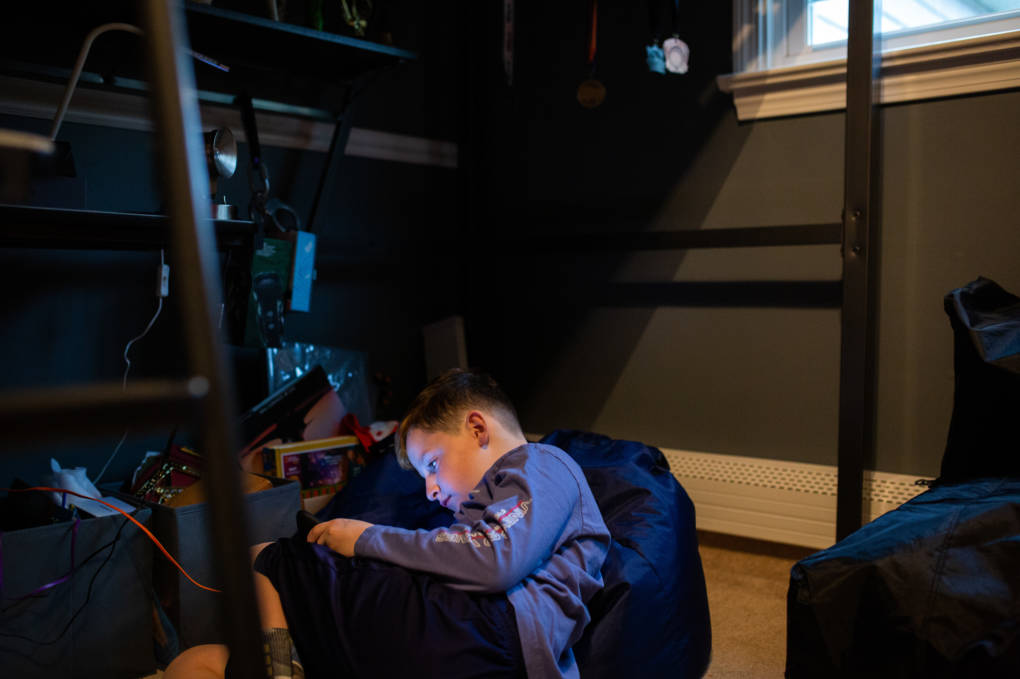
"caption": "Joseph Calise, 9, plays on his iPad in his bedroom. Joseph used to get anxious whenever he was alone, even when taking a shower or at bedtime, so his parents, Jessica and Chris Calise, learned new parenting skills from the Yale Child Study Center.\n",
"description": "Joseph Calise, 9, plays on his iPad in his bedroom. Joseph used to get anxious whenever he was alone, even when taking a shower or at bedtime, so his parents, Jessica and Chris Calise, learned new parenting skills from the Yale Child Study Center.",
"title": "Joseph Calise, 9, plays on his iPad in his bedroom. Joseph used to get anxious whenever he was alone, even when taking a shower or at bedtime, so his parents, Jessica and Chris Calise, learned new parenting skills from the Yale Child Study Center.",
"credit": "Christopher Capozziello for NPR",
"status": "inherit",
"isLoading": false,
"fetchFailed": false
},
"mindshift_53333": {
"type": "attachments",
"id": "mindshift_53333",
"meta": {
"index": "attachments_1716263798",
"site": "mindshift",
"id": "53333",
"found": true
},
"parent": 53331,
"imgSizes": {
"twentyfourteen-full-width": {
"file": "https://ww2.kqed.org/app/uploads/sites/23/2019/03/middle-school-hands-on-science-curriculum-1038x576.jpg",
"width": 1038,
"mimeType": "image/jpeg",
"height": 576
},
"thumbnail": {
"file": "https://ww2.kqed.org/app/uploads/sites/23/2019/03/middle-school-hands-on-science-curriculum-160x107.jpg",
"width": 160,
"mimeType": "image/jpeg",
"height": 107
},
"post-thumbnail": {
"file": "https://ww2.kqed.org/app/uploads/sites/23/2019/03/middle-school-hands-on-science-curriculum-672x372.jpg",
"width": 672,
"mimeType": "image/jpeg",
"height": 372
},
"kqedFullSize": {
"file": "https://ww2.kqed.org/app/uploads/sites/23/2019/03/middle-school-hands-on-science-curriculum.jpg",
"width": 5616,
"height": 3744
},
"large": {
"file": "https://ww2.kqed.org/app/uploads/sites/23/2019/03/middle-school-hands-on-science-curriculum-1020x680.jpg",
"width": 1020,
"mimeType": "image/jpeg",
"height": 680
},
"complete_open_graph": {
"file": "https://ww2.kqed.org/app/uploads/sites/23/2019/03/middle-school-hands-on-science-curriculum-1200x800.jpg",
"width": 1200,
"mimeType": "image/jpeg",
"height": 800
},
"guest-author-50": {
"file": "https://ww2.kqed.org/app/uploads/sites/23/2019/03/middle-school-hands-on-science-curriculum-50x50.jpg",
"width": 50,
"mimeType": "image/jpeg",
"height": 50
},
"guest-author-96": {
"file": "https://ww2.kqed.org/app/uploads/sites/23/2019/03/middle-school-hands-on-science-curriculum-96x96.jpg",
"width": 96,
"mimeType": "image/jpeg",
"height": 96
},
"medium": {
"file": "https://ww2.kqed.org/app/uploads/sites/23/2019/03/middle-school-hands-on-science-curriculum-800x533.jpg",
"width": 800,
"mimeType": "image/jpeg",
"height": 533
},
"guest-author-64": {
"file": "https://ww2.kqed.org/app/uploads/sites/23/2019/03/middle-school-hands-on-science-curriculum-64x64.jpg",
"width": 64,
"mimeType": "image/jpeg",
"height": 64
},
"guest-author-32": {
"file": "https://ww2.kqed.org/app/uploads/sites/23/2019/03/middle-school-hands-on-science-curriculum-32x32.jpg",
"width": 32,
"mimeType": "image/jpeg",
"height": 32
},
"full-width": {
"file": "https://ww2.kqed.org/app/uploads/sites/23/2019/03/middle-school-hands-on-science-curriculum-1920x1280.jpg",
"width": 1920,
"mimeType": "image/jpeg",
"height": 1280
},
"medium_large": {
"file": "https://ww2.kqed.org/app/uploads/sites/23/2019/03/middle-school-hands-on-science-curriculum-768x512.jpg",
"width": 768,
"mimeType": "image/jpeg",
"height": 512
},
"guest-author-128": {
"file": "https://ww2.kqed.org/app/uploads/sites/23/2019/03/middle-school-hands-on-science-curriculum-128x128.jpg",
"width": 128,
"mimeType": "image/jpeg",
"height": 128
}
},
"publishDate": 1553627604,
"modified": 1553627724,
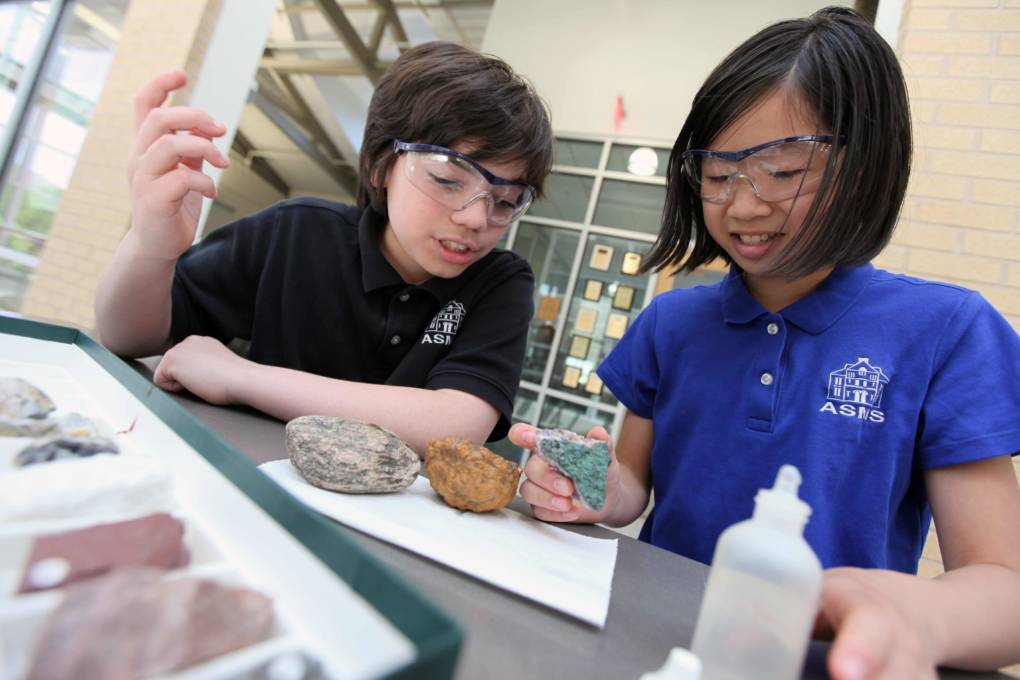
"caption": "Middle school students at ASMS do hands-on science inquiry in every unit they study.",
"description": null,
"title": "middle-school-hands-on-science-curriculum",
"credit": "Courtesy of \u003ca href=\"https://www.tasms.com/\">The Alternative School for Math and Science\u003c/a>",
"status": "inherit",
"isLoading": false,
"fetchFailed": false
},
"mindshift_53455": {
"type": "attachments",
"id": "mindshift_53455",
"meta": {
"index": "attachments_1716263798",
"site": "mindshift",
"id": "53455",
"found": true
},
"parent": 53452,
"imgSizes": {
"twentyfourteen-full-width": {
"file": "https://ww2.kqed.org/app/uploads/sites/23/2019/04/teaching-reading-comprehension-1038x576.jpg",
"width": 1038,
"mimeType": "image/jpeg",
"height": 576
},
"thumbnail": {
"file": "https://ww2.kqed.org/app/uploads/sites/23/2019/04/teaching-reading-comprehension-160x90.jpg",
"width": 160,
"mimeType": "image/jpeg",
"height": 90
},
"post-thumbnail": {
"file": "https://ww2.kqed.org/app/uploads/sites/23/2019/04/teaching-reading-comprehension-672x372.jpg",
"width": 672,
"mimeType": "image/jpeg",
"height": 372
},
"kqedFullSize": {
"file": "https://ww2.kqed.org/app/uploads/sites/23/2019/04/teaching-reading-comprehension.jpg",
"width": 2121,
"height": 1194
},
"large": {
"file": "https://ww2.kqed.org/app/uploads/sites/23/2019/04/teaching-reading-comprehension-1020x574.jpg",
"width": 1020,
"mimeType": "image/jpeg",
"height": 574
},
"complete_open_graph": {
"file": "https://ww2.kqed.org/app/uploads/sites/23/2019/04/teaching-reading-comprehension-1200x676.jpg",
"width": 1200,
"mimeType": "image/jpeg",
"height": 676
},
"guest-author-50": {
"file": "https://ww2.kqed.org/app/uploads/sites/23/2019/04/teaching-reading-comprehension-50x50.jpg",
"width": 50,
"mimeType": "image/jpeg",
"height": 50
},
"guest-author-96": {
"file": "https://ww2.kqed.org/app/uploads/sites/23/2019/04/teaching-reading-comprehension-96x96.jpg",
"width": 96,
"mimeType": "image/jpeg",
"height": 96
},
"medium": {
"file": "https://ww2.kqed.org/app/uploads/sites/23/2019/04/teaching-reading-comprehension-800x450.jpg",
"width": 800,
"mimeType": "image/jpeg",
"height": 450
},
"guest-author-64": {
"file": "https://ww2.kqed.org/app/uploads/sites/23/2019/04/teaching-reading-comprehension-64x64.jpg",
"width": 64,
"mimeType": "image/jpeg",
"height": 64
},
"guest-author-32": {
"file": "https://ww2.kqed.org/app/uploads/sites/23/2019/04/teaching-reading-comprehension-32x32.jpg",
"width": 32,
"mimeType": "image/jpeg",
"height": 32
},
"full-width": {
"file": "https://ww2.kqed.org/app/uploads/sites/23/2019/04/teaching-reading-comprehension-1920x1081.jpg",
"width": 1920,
"mimeType": "image/jpeg",
"height": 1081
},
"medium_large": {
"file": "https://ww2.kqed.org/app/uploads/sites/23/2019/04/teaching-reading-comprehension-768x432.jpg",
"width": 768,
"mimeType": "image/jpeg",
"height": 432
},
"guest-author-128": {
"file": "https://ww2.kqed.org/app/uploads/sites/23/2019/04/teaching-reading-comprehension-128x128.jpg",
"width": 128,
"mimeType": "image/jpeg",
"height": 128
}
},
"publishDate": 1555021702,
"modified": 1555021852,
"caption": "An eight-year-long study of English-learners in the Santa Ana Unified School District found that students receiving cognitive strategies instruction improved their writing at greater rates than their peers for seven years in a row",
"description": null,
"title": "teaching-reading-comprehension",
"credit": "monkeybusinessimages/iStock",
"status": "inherit",
"isLoading": false,
"fetchFailed": false
},
"mindshift_53447": {
"type": "attachments",
"id": "mindshift_53447",
"meta": {
"index": "attachments_1716263798",
"site": "mindshift",
"id": "53447",
"found": true
},
"parent": 53446,
"imgSizes": {
"twentyfourteen-full-width": {
"file": "https://ww2.kqed.org/app/uploads/sites/23/2019/04/essay-cheating-update_wide-1102fe4cde89372d0bd1a4266bea303c6431a0d4-1038x576.jpg",
"width": 1038,
"mimeType": "image/jpeg",
"height": 576
},
"thumbnail": {
"file": "https://ww2.kqed.org/app/uploads/sites/23/2019/04/essay-cheating-update_wide-1102fe4cde89372d0bd1a4266bea303c6431a0d4-160x90.jpg",
"width": 160,
"mimeType": "image/jpeg",
"height": 90
},
"post-thumbnail": {
"file": "https://ww2.kqed.org/app/uploads/sites/23/2019/04/essay-cheating-update_wide-1102fe4cde89372d0bd1a4266bea303c6431a0d4-672x372.jpg",
"width": 672,
"mimeType": "image/jpeg",
"height": 372
},
"kqedFullSize": {
"file": "https://ww2.kqed.org/app/uploads/sites/23/2019/04/essay-cheating-update_wide-1102fe4cde89372d0bd1a4266bea303c6431a0d4.jpg",
"width": 4793,
"height": 2696
},
"large": {
"file": "https://ww2.kqed.org/app/uploads/sites/23/2019/04/essay-cheating-update_wide-1102fe4cde89372d0bd1a4266bea303c6431a0d4-1020x574.jpg",
"width": 1020,
"mimeType": "image/jpeg",
"height": 574
},
"complete_open_graph": {
"file": "https://ww2.kqed.org/app/uploads/sites/23/2019/04/essay-cheating-update_wide-1102fe4cde89372d0bd1a4266bea303c6431a0d4-1200x675.jpg",
"width": 1200,
"mimeType": "image/jpeg",
"height": 675
},
"guest-author-50": {
"file": "https://ww2.kqed.org/app/uploads/sites/23/2019/04/essay-cheating-update_wide-1102fe4cde89372d0bd1a4266bea303c6431a0d4-50x50.jpg",
"width": 50,
"mimeType": "image/jpeg",
"height": 50
},
"guest-author-96": {
"file": "https://ww2.kqed.org/app/uploads/sites/23/2019/04/essay-cheating-update_wide-1102fe4cde89372d0bd1a4266bea303c6431a0d4-96x96.jpg",
"width": 96,
"mimeType": "image/jpeg",
"height": 96
},
"medium": {
"file": "https://ww2.kqed.org/app/uploads/sites/23/2019/04/essay-cheating-update_wide-1102fe4cde89372d0bd1a4266bea303c6431a0d4-800x450.jpg",
"width": 800,
"mimeType": "image/jpeg",
"height": 450
},
"guest-author-64": {
"file": "https://ww2.kqed.org/app/uploads/sites/23/2019/04/essay-cheating-update_wide-1102fe4cde89372d0bd1a4266bea303c6431a0d4-64x64.jpg",
"width": 64,
"mimeType": "image/jpeg",
"height": 64
},
"guest-author-32": {
"file": "https://ww2.kqed.org/app/uploads/sites/23/2019/04/essay-cheating-update_wide-1102fe4cde89372d0bd1a4266bea303c6431a0d4-32x32.jpg",
"width": 32,
"mimeType": "image/jpeg",
"height": 32
},
"full-width": {
"file": "https://ww2.kqed.org/app/uploads/sites/23/2019/04/essay-cheating-update_wide-1102fe4cde89372d0bd1a4266bea303c6431a0d4-1920x1080.jpg",
"width": 1920,
"mimeType": "image/jpeg",
"height": 1080
},
"medium_large": {
"file": "https://ww2.kqed.org/app/uploads/sites/23/2019/04/essay-cheating-update_wide-1102fe4cde89372d0bd1a4266bea303c6431a0d4-768x432.jpg",
"width": 768,
"mimeType": "image/jpeg",
"height": 432
},
"guest-author-128": {
"file": "https://ww2.kqed.org/app/uploads/sites/23/2019/04/essay-cheating-update_wide-1102fe4cde89372d0bd1a4266bea303c6431a0d4-128x128.jpg",
"width": 128,
"mimeType": "image/jpeg",
"height": 128
}
},
"publishDate": 1554947456,
"modified": 1554947533,
"caption": "Concern is growing about a burgeoning online market for essays that students can buy and turn in as their own work. And schools are trying new tools to catch it.",
"description": "Concern is growing about a burgeoning online market for essays that students can buy and turn in as their own work. And schools are trying new tools to catch it.",
"title": "Concern is growing about a burgeoning online market for essays that students can buy and turn in as their own work. And schools are trying new tools to catch it.",
"credit": "Angela Hsieh/NPR",
"status": "inherit",
"isLoading": false,
"fetchFailed": false
},
"mindshift_52617": {
"type": "attachments",
"id": "mindshift_52617",
"meta": {
"index": "attachments_1716263798",
"site": "mindshift",
"id": "52617",
"found": true
},
"parent": 52616,
"imgSizes": {
"small": {
"file": "https://ww2.kqed.org/app/uploads/sites/23/2018/11/Adora4-520x291.jpg",
"width": 520,
"mimeType": "image/jpeg",
"height": 291
},
"thumbnail": {
"file": "https://ww2.kqed.org/app/uploads/sites/23/2018/11/Adora4-160x89.jpg",
"width": 160,
"mimeType": "image/jpeg",
"height": 89
},
"fd-sm": {
"file": "https://ww2.kqed.org/app/uploads/sites/23/2018/11/Adora4-960x537.jpg",
"width": 960,
"mimeType": "image/jpeg",
"height": 537
},
"post-thumbnail": {
"file": "https://ww2.kqed.org/app/uploads/sites/23/2018/11/Adora4-672x372.jpg",
"width": 672,
"mimeType": "image/jpeg",
"height": 372
},
"xsmall": {
"file": "https://ww2.kqed.org/app/uploads/sites/23/2018/11/Adora4-375x210.jpg",
"width": 375,
"mimeType": "image/jpeg",
"height": 210
},
"kqedFullSize": {
"file": "https://ww2.kqed.org/app/uploads/sites/23/2018/11/Adora4.jpg",
"width": 1028,
"height": 575
},
"large": {
"file": "https://ww2.kqed.org/app/uploads/sites/23/2018/11/Adora4-1020x571.jpg",
"width": 1020,
"mimeType": "image/jpeg",
"height": 571
},
"guest-author-50": {
"file": "https://ww2.kqed.org/app/uploads/sites/23/2018/11/Adora4-50x50.jpg",
"width": 50,
"mimeType": "image/jpeg",
"height": 50
},
"guest-author-96": {
"file": "https://ww2.kqed.org/app/uploads/sites/23/2018/11/Adora4-96x96.jpg",
"width": 96,
"mimeType": "image/jpeg",
"height": 96
},
"medium": {
"file": "https://ww2.kqed.org/app/uploads/sites/23/2018/11/Adora4-800x447.jpg",
"width": 800,
"mimeType": "image/jpeg",
"height": 447
},
"guest-author-64": {
"file": "https://ww2.kqed.org/app/uploads/sites/23/2018/11/Adora4-64x64.jpg",
"width": 64,
"mimeType": "image/jpeg",
"height": 64
},
"guest-author-32": {
"file": "https://ww2.kqed.org/app/uploads/sites/23/2018/11/Adora4-32x32.jpg",
"width": 32,
"mimeType": "image/jpeg",
"height": 32
},
"detail": {
"file": "https://ww2.kqed.org/app/uploads/sites/23/2018/11/Adora4-150x150.jpg",
"width": 150,
"mimeType": "image/jpeg",
"height": 150
},
"medium_large": {
"file": "https://ww2.kqed.org/app/uploads/sites/23/2018/11/Adora4-768x430.jpg",
"width": 768,
"mimeType": "image/jpeg",
"height": 430
},
"guest-author-128": {
"file": "https://ww2.kqed.org/app/uploads/sites/23/2018/11/Adora4-128x128.jpg",
"width": 128,
"mimeType": "image/jpeg",
"height": 128
},
"xxsmall": {
"file": "https://ww2.kqed.org/app/uploads/sites/23/2018/11/Adora4-240x134.jpg",
"width": 240,
"mimeType": "image/jpeg",
"height": 134
}
},
"publishDate": 1543531269,
"modified": 1543531335,
"caption": "Twelve-year-old Adora Svitak speaking from the TED stage.",
"description": null,
"title": "Adora4",
"credit": "\u003ca href=\"https://www.ted.com/talks/adora_svitak#t-388831\">TED\u003c/a>",
"status": "inherit",
"isLoading": false,
"fetchFailed": false
},
"mindshift_53229": {
"type": "attachments",
"id": "mindshift_53229",
"meta": {
"index": "attachments_1716263798",
"site": "mindshift",
"id": "53229",
"found": true
},
"parent": 53228,
"imgSizes": {
"twentyfourteen-full-width": {
"file": "https://ww2.kqed.org/app/uploads/sites/23/2019/03/iStock-1009629756-1038x576.jpg",
"width": 1038,
"mimeType": "image/jpeg",
"height": 576
},
"thumbnail": {
"file": "https://ww2.kqed.org/app/uploads/sites/23/2019/03/iStock-1009629756-160x160.jpg",
"width": 160,
"mimeType": "image/jpeg",
"height": 160
},
"post-thumbnail": {
"file": "https://ww2.kqed.org/app/uploads/sites/23/2019/03/iStock-1009629756-672x372.jpg",
"width": 672,
"mimeType": "image/jpeg",
"height": 372
},
"kqedFullSize": {
"file": "https://ww2.kqed.org/app/uploads/sites/23/2019/03/iStock-1009629756.jpg",
"width": 1732,
"height": 1732
},
"large": {
"file": "https://ww2.kqed.org/app/uploads/sites/23/2019/03/iStock-1009629756-1020x1020.jpg",
"width": 1020,
"mimeType": "image/jpeg",
"height": 1020
},
"complete_open_graph": {
"file": "https://ww2.kqed.org/app/uploads/sites/23/2019/03/iStock-1009629756-1200x1200.jpg",
"width": 1200,
"mimeType": "image/jpeg",
"height": 1200
},
"guest-author-50": {
"file": "https://ww2.kqed.org/app/uploads/sites/23/2019/03/iStock-1009629756-50x50.jpg",
"width": 50,
"mimeType": "image/jpeg",
"height": 50
},
"guest-author-96": {
"file": "https://ww2.kqed.org/app/uploads/sites/23/2019/03/iStock-1009629756-96x96.jpg",
"width": 96,
"mimeType": "image/jpeg",
"height": 96
},
"medium": {
"file": "https://ww2.kqed.org/app/uploads/sites/23/2019/03/iStock-1009629756-800x800.jpg",
"width": 800,
"mimeType": "image/jpeg",
"height": 800
},
"guest-author-64": {
"file": "https://ww2.kqed.org/app/uploads/sites/23/2019/03/iStock-1009629756-64x64.jpg",
"width": 64,
"mimeType": "image/jpeg",
"height": 64
},
"guest-author-32": {
"file": "https://ww2.kqed.org/app/uploads/sites/23/2019/03/iStock-1009629756-32x32.jpg",
"width": 32,
"mimeType": "image/jpeg",
"height": 32
},
"medium_large": {
"file": "https://ww2.kqed.org/app/uploads/sites/23/2019/03/iStock-1009629756-768x768.jpg",
"width": 768,
"mimeType": "image/jpeg",
"height": 768
},
"guest-author-128": {
"file": "https://ww2.kqed.org/app/uploads/sites/23/2019/03/iStock-1009629756-128x128.jpg",
"width": 128,
"mimeType": "image/jpeg",
"height": 128
}
},
"publishDate": 1551918224,
"modified": 1551918292,
"caption": null,
"description": null,
"title": "Vector illustration of a man in depressive state of mind. Depression and frustration concept. Monochrome artwork dedicated to mental health problems.",
"credit": "iStock/DariaNK",
"status": "inherit",
"isLoading": false,
"fetchFailed": false
},
"mindshift_53402": {
"type": "attachments",
"id": "mindshift_53402",
"meta": {
"index": "attachments_1716263798",
"site": "mindshift",
"id": "53402",
"found": true
},
"parent": 53138,
"imgSizes": {
"twentyfourteen-full-width": {
"file": "https://ww2.kqed.org/app/uploads/sites/23/2019/02/Edutopia-1038x576.png",
"width": 1038,
"mimeType": "image/png",
"height": 576
},
"thumbnail": {
"file": "https://ww2.kqed.org/app/uploads/sites/23/2019/02/Edutopia-160x83.png",
"width": 160,
"mimeType": "image/png",
"height": 83
},
"post-thumbnail": {
"file": "https://ww2.kqed.org/app/uploads/sites/23/2019/02/Edutopia-672x372.png",
"width": 672,
"mimeType": "image/png",
"height": 372
},
"kqedFullSize": {
"file": "https://ww2.kqed.org/app/uploads/sites/23/2019/02/Edutopia.png",
"width": 1111,
"height": 576
},
"large": {
"file": "https://ww2.kqed.org/app/uploads/sites/23/2019/02/Edutopia-1020x529.png",
"width": 1020,
"mimeType": "image/png",
"height": 529
},
"guest-author-50": {
"file": "https://ww2.kqed.org/app/uploads/sites/23/2019/02/Edutopia-50x50.png",
"width": 50,
"mimeType": "image/png",
"height": 50
},
"guest-author-96": {
"file": "https://ww2.kqed.org/app/uploads/sites/23/2019/02/Edutopia-96x96.png",
"width": 96,
"mimeType": "image/png",
"height": 96
},
"medium": {
"file": "https://ww2.kqed.org/app/uploads/sites/23/2019/02/Edutopia-800x415.png",
"width": 800,
"mimeType": "image/png",
"height": 415
},
"guest-author-64": {
"file": "https://ww2.kqed.org/app/uploads/sites/23/2019/02/Edutopia-64x64.png",
"width": 64,
"mimeType": "image/png",
"height": 64
},
"guest-author-32": {
"file": "https://ww2.kqed.org/app/uploads/sites/23/2019/02/Edutopia-32x32.png",
"width": 32,
"mimeType": "image/png",
"height": 32
},
"medium_large": {
"file": "https://ww2.kqed.org/app/uploads/sites/23/2019/02/Edutopia-768x398.png",
"width": 768,
"mimeType": "image/png",
"height": 398
},
"guest-author-128": {
"file": "https://ww2.kqed.org/app/uploads/sites/23/2019/02/Edutopia-128x128.png",
"width": 128,
"mimeType": "image/png",
"height": 128
}
},
"publishDate": 1554444094,
"modified": 1554444126,
"caption": "Students discuss their reading in book clubs they chose.",
"description": null,
"title": "Edutopia",
"credit": "Courtesy \u003ca href=\"https://www.edutopia.org/video/motivating-students-book-choice\">Edutopia\u003c/a>",
"status": "inherit",
"isLoading": false,
"fetchFailed": false
},
"mindshift_53388": {
"type": "attachments",
"id": "mindshift_53388",
"meta": {
"index": "attachments_1716263798",
"site": "mindshift",
"id": "53388",
"found": true
},
"parent": 53384,
"imgSizes": {
"twentyfourteen-full-width": {
"file": "https://ww2.kqed.org/app/uploads/sites/23/2019/04/iStock-1096636196-1038x576.jpg",
"width": 1038,
"mimeType": "image/jpeg",
"height": 576
},
"thumbnail": {
"file": "https://ww2.kqed.org/app/uploads/sites/23/2019/04/iStock-1096636196-160x108.jpg",
"width": 160,
"mimeType": "image/jpeg",
"height": 108
},
"post-thumbnail": {
"file": "https://ww2.kqed.org/app/uploads/sites/23/2019/04/iStock-1096636196-672x372.jpg",
"width": 672,
"mimeType": "image/jpeg",
"height": 372
},
"kqedFullSize": {
"file": "https://ww2.kqed.org/app/uploads/sites/23/2019/04/iStock-1096636196-e1554275776859.jpg",
"width": 1920,
"height": 1295
},
"large": {
"file": "https://ww2.kqed.org/app/uploads/sites/23/2019/04/iStock-1096636196-1020x688.jpg",
"width": 1020,
"mimeType": "image/jpeg",
"height": 688
},
"complete_open_graph": {
"file": "https://ww2.kqed.org/app/uploads/sites/23/2019/04/iStock-1096636196-1200x809.jpg",
"width": 1200,
"mimeType": "image/jpeg",
"height": 809
},
"guest-author-50": {
"file": "https://ww2.kqed.org/app/uploads/sites/23/2019/04/iStock-1096636196-50x50.jpg",
"width": 50,
"mimeType": "image/jpeg",
"height": 50
},
"guest-author-96": {
"file": "https://ww2.kqed.org/app/uploads/sites/23/2019/04/iStock-1096636196-96x96.jpg",
"width": 96,
"mimeType": "image/jpeg",
"height": 96
},
"medium": {
"file": "https://ww2.kqed.org/app/uploads/sites/23/2019/04/iStock-1096636196-800x539.jpg",
"width": 800,
"mimeType": "image/jpeg",
"height": 539
},
"guest-author-64": {
"file": "https://ww2.kqed.org/app/uploads/sites/23/2019/04/iStock-1096636196-64x64.jpg",
"width": 64,
"mimeType": "image/jpeg",
"height": 64
},
"guest-author-32": {
"file": "https://ww2.kqed.org/app/uploads/sites/23/2019/04/iStock-1096636196-32x32.jpg",
"width": 32,
"mimeType": "image/jpeg",
"height": 32
},
"full-width": {
"file": "https://ww2.kqed.org/app/uploads/sites/23/2019/04/iStock-1096636196-1920x1295.jpg",
"width": 1920,
"mimeType": "image/jpeg",
"height": 1295
},
"medium_large": {
"file": "https://ww2.kqed.org/app/uploads/sites/23/2019/04/iStock-1096636196-768x518.jpg",
"width": 768,
"mimeType": "image/jpeg",
"height": 518
},
"guest-author-128": {
"file": "https://ww2.kqed.org/app/uploads/sites/23/2019/04/iStock-1096636196-128x128.jpg",
"width": 128,
"mimeType": "image/jpeg",
"height": 128
}
},
"publishDate": 1554275764,
"modified": 1554275800,
"caption": null,
"description": null,
"title": null,
"credit": "iStock/Andrii Yalanskyi",
"status": "inherit",
"isLoading": false,
"fetchFailed": false
},
"mindshift_53368": {
"type": "attachments",
"id": "mindshift_53368",
"meta": {
"index": "attachments_1716263798",
"site": "mindshift",
"id": "53368",
"found": true
},
"parent": 53354,
"imgSizes": {
"twentyfourteen-full-width": {
"file": "https://ww2.kqed.org/app/uploads/sites/23/2019/03/iStock-538358200-1038x576.jpg",
"width": 1038,
"mimeType": "image/jpeg",
"height": 576
},
"thumbnail": {
"file": "https://ww2.kqed.org/app/uploads/sites/23/2019/03/iStock-538358200-160x107.jpg",
"width": 160,
"mimeType": "image/jpeg",
"height": 107
},
"post-thumbnail": {
"file": "https://ww2.kqed.org/app/uploads/sites/23/2019/03/iStock-538358200-672x372.jpg",
"width": 672,
"mimeType": "image/jpeg",
"height": 372
},
"kqedFullSize": {
"file": "https://ww2.kqed.org/app/uploads/sites/23/2019/03/iStock-538358200-e1554100551695.jpg",
"width": 1920,
"height": 1280
},
"large": {
"file": "https://ww2.kqed.org/app/uploads/sites/23/2019/03/iStock-538358200-1020x680.jpg",
"width": 1020,
"mimeType": "image/jpeg",
"height": 680
},
"complete_open_graph": {
"file": "https://ww2.kqed.org/app/uploads/sites/23/2019/03/iStock-538358200-1200x800.jpg",
"width": 1200,
"mimeType": "image/jpeg",
"height": 800
},
"guest-author-50": {
"file": "https://ww2.kqed.org/app/uploads/sites/23/2019/03/iStock-538358200-50x50.jpg",
"width": 50,
"mimeType": "image/jpeg",
"height": 50
},
"guest-author-96": {
"file": "https://ww2.kqed.org/app/uploads/sites/23/2019/03/iStock-538358200-96x96.jpg",
"width": 96,
"mimeType": "image/jpeg",
"height": 96
},
"medium": {
"file": "https://ww2.kqed.org/app/uploads/sites/23/2019/03/iStock-538358200-800x533.jpg",
"width": 800,
"mimeType": "image/jpeg",
"height": 533
},
"guest-author-64": {
"file": "https://ww2.kqed.org/app/uploads/sites/23/2019/03/iStock-538358200-64x64.jpg",
"width": 64,
"mimeType": "image/jpeg",
"height": 64
},
"guest-author-32": {
"file": "https://ww2.kqed.org/app/uploads/sites/23/2019/03/iStock-538358200-32x32.jpg",
"width": 32,
"mimeType": "image/jpeg",
"height": 32
},
"full-width": {
"file": "https://ww2.kqed.org/app/uploads/sites/23/2019/03/iStock-538358200-1920x1280.jpg",
"width": 1920,
"mimeType": "image/jpeg",
"height": 1280
},
"medium_large": {
"file": "https://ww2.kqed.org/app/uploads/sites/23/2019/03/iStock-538358200-768x512.jpg",
"width": 768,
"mimeType": "image/jpeg",
"height": 512
},
"guest-author-128": {
"file": "https://ww2.kqed.org/app/uploads/sites/23/2019/03/iStock-538358200-128x128.jpg",
"width": 128,
"mimeType": "image/jpeg",
"height": 128
}
},
"publishDate": 1554100536,
"modified": 1554100574,
"caption": null,
"description": null,
"title": "iStock-538358200",
"credit": "IStock/DGLimages",
"status": "inherit",
"isLoading": false,
"fetchFailed": false
},
"mindshift_53378": {
"type": "attachments",
"id": "mindshift_53378",
"meta": {
"index": "attachments_1716263798",
"site": "mindshift",
"id": "53378",
"found": true
},
"parent": 53377,
"imgSizes": {
"twentyfourteen-full-width": {
"file": "https://ww2.kqed.org/app/uploads/sites/23/2019/03/laj-opendoorslifts_custom-5d607dfd34cf060559ea92edaac69fc060b3312f-1038x576.jpg",
"width": 1038,
"mimeType": "image/jpeg",
"height": 576
},
"thumbnail": {
"file": "https://ww2.kqed.org/app/uploads/sites/23/2019/03/laj-opendoorslifts_custom-5d607dfd34cf060559ea92edaac69fc060b3312f-160x100.jpg",
"width": 160,
"mimeType": "image/jpeg",
"height": 100
},
"post-thumbnail": {
"file": "https://ww2.kqed.org/app/uploads/sites/23/2019/03/laj-opendoorslifts_custom-5d607dfd34cf060559ea92edaac69fc060b3312f-672x372.jpg",
"width": 672,
"mimeType": "image/jpeg",
"height": 372
},
"kqedFullSize": {
"file": "https://ww2.kqed.org/app/uploads/sites/23/2019/03/laj-opendoorslifts_custom-5d607dfd34cf060559ea92edaac69fc060b3312f-e1554183301636.jpg",
"width": 1920,
"height": 1198
},
"large": {
"file": "https://ww2.kqed.org/app/uploads/sites/23/2019/03/laj-opendoorslifts_custom-5d607dfd34cf060559ea92edaac69fc060b3312f-1020x637.jpg",
"width": 1020,
"mimeType": "image/jpeg",
"height": 637
},
"complete_open_graph": {
"file": "https://ww2.kqed.org/app/uploads/sites/23/2019/03/laj-opendoorslifts_custom-5d607dfd34cf060559ea92edaac69fc060b3312f-1200x749.jpg",
"width": 1200,
"mimeType": "image/jpeg",
"height": 749
},
"guest-author-50": {
"file": "https://ww2.kqed.org/app/uploads/sites/23/2019/03/laj-opendoorslifts_custom-5d607dfd34cf060559ea92edaac69fc060b3312f-50x50.jpg",
"width": 50,
"mimeType": "image/jpeg",
"height": 50
},
"guest-author-96": {
"file": "https://ww2.kqed.org/app/uploads/sites/23/2019/03/laj-opendoorslifts_custom-5d607dfd34cf060559ea92edaac69fc060b3312f-96x96.jpg",
"width": 96,
"mimeType": "image/jpeg",
"height": 96
},
"medium": {
"file": "https://ww2.kqed.org/app/uploads/sites/23/2019/03/laj-opendoorslifts_custom-5d607dfd34cf060559ea92edaac69fc060b3312f-800x499.jpg",
"width": 800,
"mimeType": "image/jpeg",
"height": 499
},
"guest-author-64": {
"file": "https://ww2.kqed.org/app/uploads/sites/23/2019/03/laj-opendoorslifts_custom-5d607dfd34cf060559ea92edaac69fc060b3312f-64x64.jpg",
"width": 64,
"mimeType": "image/jpeg",
"height": 64
},
"guest-author-32": {
"file": "https://ww2.kqed.org/app/uploads/sites/23/2019/03/laj-opendoorslifts_custom-5d607dfd34cf060559ea92edaac69fc060b3312f-32x32.jpg",
"width": 32,
"mimeType": "image/jpeg",
"height": 32
},
"full-width": {
"file": "https://ww2.kqed.org/app/uploads/sites/23/2019/03/laj-opendoorslifts_custom-5d607dfd34cf060559ea92edaac69fc060b3312f-1920x1198.jpg",
"width": 1920,
"mimeType": "image/jpeg",
"height": 1198
},
"medium_large": {
"file": "https://ww2.kqed.org/app/uploads/sites/23/2019/03/laj-opendoorslifts_custom-5d607dfd34cf060559ea92edaac69fc060b3312f-768x479.jpg",
"width": 768,
"mimeType": "image/jpeg",
"height": 479
},
"guest-author-128": {
"file": "https://ww2.kqed.org/app/uploads/sites/23/2019/03/laj-opendoorslifts_custom-5d607dfd34cf060559ea92edaac69fc060b3312f-128x128.jpg",
"width": 128,
"mimeType": "image/jpeg",
"height": 128
}
},
"publishDate": 1554183230,
"modified": 1554183293,
"caption": null,
"description": "Many ways to get to college.",
"title": "Many ways to get to college.",
"credit": "LA Johnson/NPR",
"status": "inherit",
"isLoading": false,
"fetchFailed": false
},
"mindshift_53352": {
"type": "attachments",
"id": "mindshift_53352",
"meta": {
"index": "attachments_1716263798",
"site": "mindshift",
"id": "53352",
"found": true
},
"parent": 53350,
"imgSizes": {
"thumbnail": {
"file": "https://ww2.kqed.org/app/uploads/sites/23/2019/03/ranzhengtoyfinal_custom-38125f739139c1ba95338b81144ae25b4bc053df-s800-c85-160x100.jpeg",
"width": 160,
"mimeType": "image/jpeg",
"height": 100
},
"post-thumbnail": {
"file": "https://ww2.kqed.org/app/uploads/sites/23/2019/03/ranzhengtoyfinal_custom-38125f739139c1ba95338b81144ae25b4bc053df-s800-c85-672x372.jpeg",
"width": 672,
"mimeType": "image/jpeg",
"height": 372
},
"kqedFullSize": {
"file": "https://ww2.kqed.org/app/uploads/sites/23/2019/03/ranzhengtoyfinal_custom-38125f739139c1ba95338b81144ae25b4bc053df-s800-c85.jpeg",
"width": 800,
"height": 499
},
"guest-author-50": {
"file": "https://ww2.kqed.org/app/uploads/sites/23/2019/03/ranzhengtoyfinal_custom-38125f739139c1ba95338b81144ae25b4bc053df-s800-c85-50x50.jpeg",
"width": 50,
"mimeType": "image/jpeg",
"height": 50
},
"guest-author-96": {
"file": "https://ww2.kqed.org/app/uploads/sites/23/2019/03/ranzhengtoyfinal_custom-38125f739139c1ba95338b81144ae25b4bc053df-s800-c85-96x96.jpeg",
"width": 96,
"mimeType": "image/jpeg",
"height": 96
},
"medium": {
"file": "https://ww2.kqed.org/app/uploads/sites/23/2019/03/ranzhengtoyfinal_custom-38125f739139c1ba95338b81144ae25b4bc053df-s800-c85-800x499.jpeg",
"width": 800,
"mimeType": "image/jpeg",
"height": 499
},
"guest-author-64": {
"file": "https://ww2.kqed.org/app/uploads/sites/23/2019/03/ranzhengtoyfinal_custom-38125f739139c1ba95338b81144ae25b4bc053df-s800-c85-64x64.jpeg",
"width": 64,
"mimeType": "image/jpeg",
"height": 64
},
"guest-author-32": {
"file": "https://ww2.kqed.org/app/uploads/sites/23/2019/03/ranzhengtoyfinal_custom-38125f739139c1ba95338b81144ae25b4bc053df-s800-c85-32x32.jpeg",
"width": 32,
"mimeType": "image/jpeg",
"height": 32
},
"medium_large": {
"file": "https://ww2.kqed.org/app/uploads/sites/23/2019/03/ranzhengtoyfinal_custom-38125f739139c1ba95338b81144ae25b4bc053df-s800-c85-768x479.jpeg",
"width": 768,
"mimeType": "image/jpeg",
"height": 479
},
"guest-author-128": {
"file": "https://ww2.kqed.org/app/uploads/sites/23/2019/03/ranzhengtoyfinal_custom-38125f739139c1ba95338b81144ae25b4bc053df-s800-c85-128x128.jpeg",
"width": 128,
"mimeType": "image/jpeg",
"height": 128
}
},
"publishDate": 1553757060,
"modified": 1553757069,
"caption": null,
"description": null,
"title": "ranzhengtoyfinal_custom-38125f739139c1ba95338b81144ae25b4bc053df-s800-c85",
"credit": "Ran Zheng for NPR",
"status": "inherit",
"isLoading": false,
"fetchFailed": false
}
},
"audioPlayerReducer": {
"postId": "stream_live",
"isPaused": true,
"isPlaying": false,
"pfsActive": false,
"pledgeModalIsOpen": true,
"playerDrawerIsOpen": false,
"liveAudioPlayStartedAt": 0,
"liveAudioPlayContext": ""
},
"authorsReducer": {
"byline_mindshift_53476": {
"type": "authors",
"id": "byline_mindshift_53476",
"meta": {
"override": true
},
"slug": "byline_mindshift_53476",
"name": "Hanna Rosin",
"isLoading": false
},
"byline_mindshift_53468": {
"type": "authors",
"id": "byline_mindshift_53468",
"meta": {
"override": true
},
"slug": "byline_mindshift_53468",
"name": "Angus Chen",
"isLoading": false
},
"byline_mindshift_53452": {
"type": "authors",
"id": "byline_mindshift_53452",
"meta": {
"override": true
},
"slug": "byline_mindshift_53452",
"name": "\u003ca href=\"https://hechingerreport.org/\">Tara García Mathewson, The Hechinger Report\u003c/a>",
"isLoading": false
},
"byline_mindshift_53446": {
"type": "authors",
"id": "byline_mindshift_53446",
"meta": {
"override": true
},
"slug": "byline_mindshift_53446",
"name": "Tovia Smith",
"isLoading": false
},
"byline_mindshift_53384": {
"type": "authors",
"id": "byline_mindshift_53384",
"meta": {
"override": true
},
"slug": "byline_mindshift_53384",
"name": "\u003ca href=\"https://twitter.com/LoriGottlieb1\">Lori Gottlieb\u003c/a>",
"isLoading": false
},
"byline_mindshift_53377": {
"type": "authors",
"id": "byline_mindshift_53377",
"meta": {
"override": true
},
"slug": "byline_mindshift_53377",
"name": "Anya Kamenetz",
"isLoading": false
},
"byline_mindshift_53350": {
"type": "authors",
"id": "byline_mindshift_53350",
"meta": {
"override": true
},
"slug": "byline_mindshift_53350",
"name": "Anya Kamenetz and Cory Turner",
"isLoading": false
},
"katrinaschwartz": {
"type": "authors",
"id": "234",
"meta": {
"index": "authors_1716337520",
"id": "234",
"found": true
},
"name": "Katrina Schwartz",
"firstName": "Katrina",
"lastName": "Schwartz",
"slug": "katrinaschwartz",
"email": "kschwartz@kqed.org",
"display_author_email": false,
"staff_mastheads": [
"news"
],
"title": "Producer",
"bio": "Katrina Schwartz is a journalist based in San Francisco. She's worked at KPCC public radio in LA and has reported on air and online for KQED since 2010. She covered how teaching and learning is changing for MindShift between 2012 and 2020. She is the co-host of the MindShift podcast and now produces KQED's Bay Curious podcast.",
"avatar": "https://secure.gravatar.com/avatar/edb4ee79070447a018538c9aae6eeecf28786515b8a0c30e43b6b7dce5aa44c8?s=600&d=blank&r=g",
"twitter": "kschwart",
"bluesky": null,
"facebook": null,
"instagram": null,
"linkedin": null,
"sites": [
{
"site": "",
"roles": [
"editor"
]
},
{
"site": "news",
"roles": [
"editor"
]
},
{
"site": "mindshift",
"roles": [
"administrator"
]
},
{
"site": "stateofhealth",
"roles": [
"author"
]
},
{
"site": "science",
"roles": [
"editor"
]
}
],
"headData": {
"title": "Katrina Schwartz | KQED",
"description": "Producer",
"ogImgSrc": "https://secure.gravatar.com/avatar/edb4ee79070447a018538c9aae6eeecf28786515b8a0c30e43b6b7dce5aa44c8?s=600&d=blank&r=g",
"twImgSrc": "https://secure.gravatar.com/avatar/edb4ee79070447a018538c9aae6eeecf28786515b8a0c30e43b6b7dce5aa44c8?s=600&d=blank&r=g"
},
"isLoading": false,
"link": "/author/katrinaschwartz"
},
"ksung": {
"type": "authors",
"id": "4596",
"meta": {
"index": "authors_1716337520",
"id": "4596",
"found": true
},
"name": "Ki Sung",
"firstName": "Ki",
"lastName": "Sung",
"slug": "ksung",
"email": "ksung@kqed.org",
"display_author_email": false,
"staff_mastheads": [
"news"
],
"title": "KQED Contributor",
"bio": "Ki Sung is Managing Editor of Digital News at KQED. She is former Senior Editor of MindShift and worked at NPR before joining KQED in 2014.",
"avatar": "https://secure.gravatar.com/avatar/64271e01dc95486c133be56937739045b7c00c990525bf9add12d3dd4f0433c9?s=600&d=blank&r=g",
"twitter": null,
"bluesky": null,
"facebook": null,
"instagram": null,
"linkedin": null,
"sites": [
{
"site": "arts",
"roles": [
"administrator"
]
},
{
"site": "news",
"roles": [
"administrator"
]
},
{
"site": "mindshift",
"roles": [
"administrator"
]
},
{
"site": "science",
"roles": [
"administrator"
]
},
{
"site": "forum",
"roles": [
"administrator"
]
},
{
"site": "perspectives",
"roles": [
"administrator"
]
},
{
"site": "elections",
"roles": [
"administrator"
]
}
],
"headData": {
"title": "Ki Sung | KQED",
"description": "KQED Contributor",
"ogImgSrc": "https://secure.gravatar.com/avatar/64271e01dc95486c133be56937739045b7c00c990525bf9add12d3dd4f0433c9?s=600&d=blank&r=g",
"twImgSrc": "https://secure.gravatar.com/avatar/64271e01dc95486c133be56937739045b7c00c990525bf9add12d3dd4f0433c9?s=600&d=blank&r=g"
},
"isLoading": false,
"link": "/author/ksung"
}
},
"pagesReducer": {
"mindshift_tag_featured": {
"type": "terms",
"id": "mindshift_20784",
"meta": {
"index": "terms_1716263798",
"site": "mindshift",
"id": "20784",
"score": 7.6562667
},
"featImg": null,
"name": "featured",
"description": null,
"taxonomy": "tag",
"headData": {
"twImgId": null,
"twTitle": null,
"ogTitle": null,
"ogImgId": null,
"twDescription": null,
"description": null,
"title": "featured Archives | KQED Mindshift",
"ogDescription": null
},
"ttid": 20061,
"slug": "featured",
"isLoading": false,
"title": "featured",
"pageMeta": {
"site": "mindshift",
"WpPageTemplate": "page-topic-editorial",
"currentPage": 18
},
"blocks": [
{
"blockName": "kqed/post-list",
"attrs": {
"layout": "cardArticle2",
"query": "posts/mindshift?tag=featured",
"seeMore": false,
"paginated": true,
"page": 18
}
},
{
"blockName": "kqed/ad"
}
]
}
},
"pfsSessionReducer": {},
"postsReducer": {
"stream_live": {
"type": "live",
"id": "stream_live",
"audioUrl": "https://hls.kqed.org/hls/kqed_app/playlist.m3u8",
"title": "Live Stream",
"excerpt": "Live Stream information currently unavailable.",
"link": "/radio",
"featImg": "",
"label": {
"name": "KQED Live",
"link": "/"
}
},
"stream_kqedNewscast": {
"type": "posts",
"id": "stream_kqedNewscast",
"audioUrl": "https://www.kqed.org/.stream/anon/radio/RDnews/newscast.mp3?_=1",
"title": "KQED Newscast",
"featImg": "",
"label": {
"name": "88.5 FM",
"link": "/"
}
},
"mindshift_53476": {
"type": "posts",
"id": "mindshift_53476",
"meta": {
"index": "posts_1716263798",
"site": "mindshift",
"id": "53476",
"score": null,
"sort": [
1555396321000
]
},
"parent": 0,
"labelTerm": {
"site": "mindshift"
},
"blocks": [],
"publishDate": 1555396321,
"format": "standard",
"disqusTitle": "How Selective Empathy Can Chip Away At Civil Society",
"title": "How Selective Empathy Can Chip Away At Civil Society",
"headTitle": "MindShift | KQED News",
"content": "\u003cp>Militia leader Ammon Bundy, famous for leading an armed standoff in Oregon, had a tender moment in November of last year. He \u003ca href=\"https://www.washingtonpost.com/nation/2018/11/28/ammon-bundy-breaks-with-trump-anti-migrant-rhetoric-its-all-fear-based/?utm_term=.59f7f37fd3cc\">recorded a Facebook post \u003c/a>saying that perhaps President Trump's characterization of the migrant caravan on the U.S.-Mexico border was somewhat broad. Maybe they weren't all criminals, he said. \"What about those who have come here for reasons of need?\"\u003c/p>\n\u003cp>Bundy did not say he was breaking with Trump. He just asked his followers to put themselves in the shoes of \"the fathers, the mothers, the children\" who came to escape violence. It was a call for a truce grounded in empathy, the kind you might hear in a war zone, say, or an Easter Sunday sermon. Still, it was met with a swift and rageful response from his followers, so overwhelming that within days, Bundy decided to \u003ca href=\"https://www.washingtonpost.com/nation/2018/12/08/ammon-bundy-spoke-kindly-about-migrant-caravan-backlash-has-him-rethinking-his-supporters/?utm_term=.42aba45a67d9\">quit Facebook.\u003c/a>\u003c/p>\n\u003cp>In an earlier era, Bundy's appeal might have resonated. But he failed to tune in to a critical shift in American culture — one that a handful of researchers have been tracking, with some alarm, for the past decade or so. Americans these days seem to be losing their appetite for empathy, especially the walk-a-mile-in-someone's-shoes Easter Sunday morning kind.\u003c/p>\n\u003cp>When I was growing up in the '70s, empathy was all the rage. The term was coined in 1908; then, social scientists and psychologists started more aggressively pushing the concept into the culture after World War II, basically out of fear. The idea was that we were all going to kill each other with nuclear weapons — or learn to see the world through each other's eyes. In my elementary school in the 1970s, which was not progressive or mushy in any way, we wrote letters to pretend Russian pen pals to teach us to open our hearts to our enemies.\u003c/p>\n\u003cp>And not just enemies. Civil rights activists had also picked up on the idea. \u003ca href=\"https://www.washingtonpost.com/outlook/2019/02/22/why-empathy-is-key-dismantling-white-racism/?utm_term=.adf0aed7452d\">Kenneth Clark,\u003c/a> a social scientist and civil rights activist, half-jokingly proposed that people in power all be required to take an \"empathy pill\" so they could make better decisions. His hope was that people with power and privilege would one day inhabit the realities of people without power, not from the safe, \u003cem>noblesse oblige\u003c/em> distance of pity, but from the inside. An evolved person was an empathetic person, choosing understanding over fear.\u003c/p>\n\u003cp>[ad fullwidth]\u003c/p>\n\u003cp>Then, more than a decade ago, a certain suspicion of empathy started to creep in, particularly among young people. One of the first people to notice was Sara Konrath, an associate professor and researcher at Indiana University. Since the late 1960s, researchers have surveyed young people on their levels of empathy, testing their agreement with statements such as: \"It's not really my problem if others are in trouble and need help\" or \"Before criticizing somebody I try to imagine how I would feel if I were in their place.\"\u003c/p>\n\u003cp>Konrath \u003ca href=\"https://www.semanticscholar.org/paper/Changes-in-dispositional-empathy-in-American-over-a-Konrath-O'Brien/e6110444b492accc811291c8954b1f4cf5d349d9\">collected decades of studies\u003c/a> and noticed a very obvious pattern. Starting around 2000, the line starts to slide. More students say it's not their problem to help people in trouble, not their job to see the world from someone else's perspective. By 2009, on all the standard measures, Konrath found, young people on average measure 40 percent less empathetic than my own generation — 40 percent!\u003c/p>\n\u003cp>It's strange to think of empathy – a natural human impulse — as fluctuating in this way, moving up and down like consumer confidence. But that's what happened. Young people just started questioning what my elementary school teachers had taught me.\u003c/p>\n\u003cp>Their feeling was: Why \u003cem>should\u003c/em> they put themselves in the shoes of someone who was not them, much less someone they thought was harmful? In fact, cutting someone off from empathy was the positive value, a way to make a stand.\u003c/p>\n\u003cp>So, for example, when the wife of white nationalist Richard Spencer recently told BuzzFeed he had abused her, the question debated on the lefty Internet was: \u003ca href=\"https://www.huffingtonpost.com/entry/richard-spencer-nina-kouprianova-divorce-abuse_us_5c2fc90ee4b0d75a9830ab69\">Why should we care\u003c/a> that some woman who chose to ally herself with a nasty racist got herself hurt? Why waste empathy on that? (Spencer, in a court filing, \u003ca href=\"https://www.buzzfeednews.com/article/talalansari/richard-spencer-divorce-abuse-wife-allegations\">denies all her allegations\u003c/a>.)\u003c/p>\n\u003cp>The new rule for empathy seems to be: reserve it, not for your \"enemies,\" but for the people you believe are hurt, or you have decided need it the most. Empathy, but just for your own team. And empathizing with the other team? That's practically a taboo.\u003c/p>\n\u003cp>And it turns out that this brand of selective empathy is a powerful force.\u003c/p>\n\u003cp>In the past 20 years, psychologists and neurologists have started to look at how empathy \u003cem>actually \u003c/em>works, in our brains and our hearts, when we're not thinking about it. And one thing they've found is that \"one of the strongest triggers for human empathy is observing some kind of conflict between two other parties,\" says Fritz Breithaupt, a professor at Indiana University who studies empathy. \"Once they take the side, they're drawn into that perspective. And that can lead to very strong empathy and too strong polarization with something you only see this one side and not the other side any longer.\"\u003c/p>\n\u003cp>A classic example is the Super Bowl, or any Auburn, Alabama game.\u003c/p>\n\u003cp>But these days in the news, examples come up every day: the Kavanaugh hearings, emergency funding for a wall, Spike Lee walking out of the Oscars, the Barr report, Kirstjen Nielsen, every third thing on Twitter.\u003c/p>\n\u003cp>Researchers who study empathy have noticed that it's actually really hard to do what we were striving for in my generation: empathize with people who are different than you are, much less people you don't like. But if researchers set up a conflict, people get into automatic empathy overdrive, with their own team. This new research has scrambled notions of how empathy works as a force in the world. For example, we often think of terrorists as shockingly blind to the suffering of innocents. But Breithaupt and other researchers think of them as classic examples of people afflicted with an \"excess of empathy. They feel the suffering of their people.\"\u003c/p>\n\u003cp>Breithaupt called his new book \u003ca href=\"http://www.cornellpress.cornell.edu/book/?GCOI=80140104182850\">The Dark Sides of Empathy\u003c/a>, because there's a point at which empathy doesn't even look like the kind of universal empathy I was taught in school. There is a natural way that empathy gets triggered in the brain — your pain centers light up when you see another person suffering. But out in the world it starts to look more like tribalism, a way to keep reinforcing your own point of view and blocking out any others.\u003c/p>\n\u003cp>Breithaupt is alarmed at the apparent new virus of selective empathy and how it's deepening divisions. If we embrace it, he says, then \"basically you give up on civil society at that point. You give up on democracy. Because if you feed into this division more and you let it happen, it will become so strong that it becomes dangerous.\"\u003c/p>\n\u003cp>We can't return to my generation's era of empathy innocence, because we now know too much about how the force actually works. But we can't give up on empathy either, because empathy is \"90 percent what our life is all about,\" Breithaupt says. \"Without it, we would be just alone.\"\u003c/p>\n\u003cp>[ad floatright]\u003c/p>\n\u003cp>In his book Breithaupt proposes an ingenious solution: give up on the idea that when we are \"empathizing\" we are being altruistic, or helping the less fortunate, or in any way doing good. What we can do when we do empathy, proposes Fritz, is help ourselves. We can learn to see the world through the eyes of a migrant child and a militia leader and a Russian pen pal purely so we can expand our own imaginations, and make our own minds richer. It's selfish empathy. Not saintly, but better than being alone.\u003c/p>\n\u003cdiv class=\"fullattribution\">Copyright 2019 NPR. To see more, visit https://www.npr.org.\u003cimg src=\"https://www.google-analytics.com/__utm.gif?utmac=UA-5828686-4&utmdt=The+End+Of+Empathy&utme=8(APIKey)9(MDAxOTAwOTE4MDEyMTkxMDAzNjczZDljZA004)\">\u003c/div>\n\n",
"disqusIdentifier": "53476 https://ww2.kqed.org/mindshift/?p=53476",
"disqusUrl": "https://ww2.kqed.org/mindshift/2019/04/15/how-selective-empathy-can-chip-away-at-civil-society/",
"stats": {
"hasVideo": false,
"hasChartOrMap": false,
"hasAudio": false,
"hasPolis": false,
"wordCount": 1336,
"hasGoogleForm": false,
"hasGallery": false,
"hasHearkenModule": false,
"iframeSrcs": [],
"paragraphCount": 22
},
"modified": 1555670496,
"excerpt": "It's hard to be civil without being empathetic. But researchers say our natural instinct for empathy may be going out of style.",
"headData": {
"twImgId": "",
"twTitle": "",
"ogTitle": "",
"ogImgId": "",
"twDescription": "",
"description": "It's hard to be civil without being empathetic. But researchers say our natural instinct for empathy may be going out of style.",
"title": "How Selective Empathy Can Chip Away At Civil Society | KQED",
"ogDescription": "",
"schema": {
"@context": "https://schema.org",
"@type": "Article",
"headline": "How Selective Empathy Can Chip Away At Civil Society",
"datePublished": "2019-04-15T23:32:01-07:00",
"dateModified": "2019-04-19T03:41:36-07:00",
"image": "https://cdn.kqed.org/wp-content/uploads/2020/02/KQED-OG-Image@1x.png"
}
},
"guestAuthors": [],
"slug": "how-selective-empathy-can-chip-away-at-civil-society",
"status": "publish",
"nprApiLink": "http://api.npr.org/query?id=712249664&apiKey=MDAxOTAwOTE4MDEyMTkxMDAzNjczZDljZA004",
"nprByline": "Hanna Rosin",
"nprStoryDate": "Mon, 15 Apr 2019 05:00:00 -0400",
"nprLastModifiedDate": "Mon, 15 Apr 2019 05:43:51 -0400",
"nprHtmlLink": "https://www.npr.org/2019/04/15/712249664/the-end-of-empathy?ft=nprml&f=712249664",
"nprImageAgency": "Christina Chung for NPR",
"nprStoryId": "712249664",
"nprRetrievedStory": "1",
"nprPubDate": "Mon, 15 Apr 2019 05:43:00 -0400",
"path": "/mindshift/53476/how-selective-empathy-can-chip-away-at-civil-society",
"audioTrackLength": null,
"parsedContent": [
{
"type": "contentString",
"content": "\u003cdiv class=\"post-body\">\u003cp>\u003cp>Militia leader Ammon Bundy, famous for leading an armed standoff in Oregon, had a tender moment in November of last year. He \u003ca href=\"https://www.washingtonpost.com/nation/2018/11/28/ammon-bundy-breaks-with-trump-anti-migrant-rhetoric-its-all-fear-based/?utm_term=.59f7f37fd3cc\">recorded a Facebook post \u003c/a>saying that perhaps President Trump's characterization of the migrant caravan on the U.S.-Mexico border was somewhat broad. Maybe they weren't all criminals, he said. \"What about those who have come here for reasons of need?\"\u003c/p>\n\u003cp>Bundy did not say he was breaking with Trump. He just asked his followers to put themselves in the shoes of \"the fathers, the mothers, the children\" who came to escape violence. It was a call for a truce grounded in empathy, the kind you might hear in a war zone, say, or an Easter Sunday sermon. Still, it was met with a swift and rageful response from his followers, so overwhelming that within days, Bundy decided to \u003ca href=\"https://www.washingtonpost.com/nation/2018/12/08/ammon-bundy-spoke-kindly-about-migrant-caravan-backlash-has-him-rethinking-his-supporters/?utm_term=.42aba45a67d9\">quit Facebook.\u003c/a>\u003c/p>\n\u003cp>In an earlier era, Bundy's appeal might have resonated. But he failed to tune in to a critical shift in American culture — one that a handful of researchers have been tracking, with some alarm, for the past decade or so. Americans these days seem to be losing their appetite for empathy, especially the walk-a-mile-in-someone's-shoes Easter Sunday morning kind.\u003c/p>\n\u003cp>When I was growing up in the '70s, empathy was all the rage. The term was coined in 1908; then, social scientists and psychologists started more aggressively pushing the concept into the culture after World War II, basically out of fear. The idea was that we were all going to kill each other with nuclear weapons — or learn to see the world through each other's eyes. In my elementary school in the 1970s, which was not progressive or mushy in any way, we wrote letters to pretend Russian pen pals to teach us to open our hearts to our enemies.\u003c/p>\n\u003cp>And not just enemies. Civil rights activists had also picked up on the idea. \u003ca href=\"https://www.washingtonpost.com/outlook/2019/02/22/why-empathy-is-key-dismantling-white-racism/?utm_term=.adf0aed7452d\">Kenneth Clark,\u003c/a> a social scientist and civil rights activist, half-jokingly proposed that people in power all be required to take an \"empathy pill\" so they could make better decisions. His hope was that people with power and privilege would one day inhabit the realities of people without power, not from the safe, \u003cem>noblesse oblige\u003c/em> distance of pity, but from the inside. An evolved person was an empathetic person, choosing understanding over fear.\u003c/p>\n\u003cp>\u003c/p>\u003c/div>",
"attributes": {
"named": {},
"numeric": []
}
},
{
"type": "component",
"content": "",
"name": "ad",
"attributes": {
"named": {
"label": "fullwidth"
},
"numeric": [
"fullwidth"
]
}
},
{
"type": "contentString",
"content": "\u003cdiv class=\"post-body\">\u003cp>\u003c/p>\n\u003cp>Then, more than a decade ago, a certain suspicion of empathy started to creep in, particularly among young people. One of the first people to notice was Sara Konrath, an associate professor and researcher at Indiana University. Since the late 1960s, researchers have surveyed young people on their levels of empathy, testing their agreement with statements such as: \"It's not really my problem if others are in trouble and need help\" or \"Before criticizing somebody I try to imagine how I would feel if I were in their place.\"\u003c/p>\n\u003cp>Konrath \u003ca href=\"https://www.semanticscholar.org/paper/Changes-in-dispositional-empathy-in-American-over-a-Konrath-O'Brien/e6110444b492accc811291c8954b1f4cf5d349d9\">collected decades of studies\u003c/a> and noticed a very obvious pattern. Starting around 2000, the line starts to slide. More students say it's not their problem to help people in trouble, not their job to see the world from someone else's perspective. By 2009, on all the standard measures, Konrath found, young people on average measure 40 percent less empathetic than my own generation — 40 percent!\u003c/p>\n\u003cp>It's strange to think of empathy – a natural human impulse — as fluctuating in this way, moving up and down like consumer confidence. But that's what happened. Young people just started questioning what my elementary school teachers had taught me.\u003c/p>\n\u003cp>Their feeling was: Why \u003cem>should\u003c/em> they put themselves in the shoes of someone who was not them, much less someone they thought was harmful? In fact, cutting someone off from empathy was the positive value, a way to make a stand.\u003c/p>\n\u003cp>So, for example, when the wife of white nationalist Richard Spencer recently told BuzzFeed he had abused her, the question debated on the lefty Internet was: \u003ca href=\"https://www.huffingtonpost.com/entry/richard-spencer-nina-kouprianova-divorce-abuse_us_5c2fc90ee4b0d75a9830ab69\">Why should we care\u003c/a> that some woman who chose to ally herself with a nasty racist got herself hurt? Why waste empathy on that? (Spencer, in a court filing, \u003ca href=\"https://www.buzzfeednews.com/article/talalansari/richard-spencer-divorce-abuse-wife-allegations\">denies all her allegations\u003c/a>.)\u003c/p>\n\u003cp>The new rule for empathy seems to be: reserve it, not for your \"enemies,\" but for the people you believe are hurt, or you have decided need it the most. Empathy, but just for your own team. And empathizing with the other team? That's practically a taboo.\u003c/p>\n\u003cp>And it turns out that this brand of selective empathy is a powerful force.\u003c/p>\n\u003cp>In the past 20 years, psychologists and neurologists have started to look at how empathy \u003cem>actually \u003c/em>works, in our brains and our hearts, when we're not thinking about it. And one thing they've found is that \"one of the strongest triggers for human empathy is observing some kind of conflict between two other parties,\" says Fritz Breithaupt, a professor at Indiana University who studies empathy. \"Once they take the side, they're drawn into that perspective. And that can lead to very strong empathy and too strong polarization with something you only see this one side and not the other side any longer.\"\u003c/p>\n\u003cp>A classic example is the Super Bowl, or any Auburn, Alabama game.\u003c/p>\n\u003cp>But these days in the news, examples come up every day: the Kavanaugh hearings, emergency funding for a wall, Spike Lee walking out of the Oscars, the Barr report, Kirstjen Nielsen, every third thing on Twitter.\u003c/p>\n\u003cp>Researchers who study empathy have noticed that it's actually really hard to do what we were striving for in my generation: empathize with people who are different than you are, much less people you don't like. But if researchers set up a conflict, people get into automatic empathy overdrive, with their own team. This new research has scrambled notions of how empathy works as a force in the world. For example, we often think of terrorists as shockingly blind to the suffering of innocents. But Breithaupt and other researchers think of them as classic examples of people afflicted with an \"excess of empathy. They feel the suffering of their people.\"\u003c/p>\n\u003cp>Breithaupt called his new book \u003ca href=\"http://www.cornellpress.cornell.edu/book/?GCOI=80140104182850\">The Dark Sides of Empathy\u003c/a>, because there's a point at which empathy doesn't even look like the kind of universal empathy I was taught in school. There is a natural way that empathy gets triggered in the brain — your pain centers light up when you see another person suffering. But out in the world it starts to look more like tribalism, a way to keep reinforcing your own point of view and blocking out any others.\u003c/p>\n\u003cp>Breithaupt is alarmed at the apparent new virus of selective empathy and how it's deepening divisions. If we embrace it, he says, then \"basically you give up on civil society at that point. You give up on democracy. Because if you feed into this division more and you let it happen, it will become so strong that it becomes dangerous.\"\u003c/p>\n\u003cp>We can't return to my generation's era of empathy innocence, because we now know too much about how the force actually works. But we can't give up on empathy either, because empathy is \"90 percent what our life is all about,\" Breithaupt says. \"Without it, we would be just alone.\"\u003c/p>\n\u003cp>\u003c/p>\u003c/div>",
"attributes": {
"named": {},
"numeric": []
}
},
{
"type": "component",
"content": "",
"name": "ad",
"attributes": {
"named": {
"label": "floatright"
},
"numeric": [
"floatright"
]
}
},
{
"type": "contentString",
"content": "\u003cdiv class=\"post-body\">\u003cp>\u003c/p>\n\u003cp>In his book Breithaupt proposes an ingenious solution: give up on the idea that when we are \"empathizing\" we are being altruistic, or helping the less fortunate, or in any way doing good. What we can do when we do empathy, proposes Fritz, is help ourselves. We can learn to see the world through the eyes of a migrant child and a militia leader and a Russian pen pal purely so we can expand our own imaginations, and make our own minds richer. It's selfish empathy. Not saintly, but better than being alone.\u003c/p>\n\u003cdiv class=\"fullattribution\">Copyright 2019 NPR. To see more, visit https://www.npr.org.\u003cimg src=\"https://www.google-analytics.com/__utm.gif?utmac=UA-5828686-4&utmdt=The+End+Of+Empathy&utme=8(APIKey)9(MDAxOTAwOTE4MDEyMTkxMDAzNjczZDljZA004)\">\u003c/div>\n\n\u003c/div>\u003c/p>",
"attributes": {
"named": {},
"numeric": []
}
}
],
"link": "/mindshift/53476/how-selective-empathy-can-chip-away-at-civil-society",
"authors": [
"byline_mindshift_53476"
],
"categories": [
"mindshift_192"
],
"tags": [
"mindshift_20699",
"mindshift_20784",
"mindshift_1040"
],
"featImg": "mindshift_53477",
"label": "mindshift"
},
"mindshift_53468": {
"type": "posts",
"id": "mindshift_53468",
"meta": {
"index": "posts_1716263798",
"site": "mindshift",
"id": "53468",
"score": null,
"sort": [
1555395086000
]
},
"parent": 0,
"labelTerm": {
"site": "mindshift"
},
"blocks": [],
"publishDate": 1555395086,
"format": "standard",
"disqusTitle": "For Kids With Anxiety, Parents Learn To Let Them Face Their Fears",
"title": "For Kids With Anxiety, Parents Learn To Let Them Face Their Fears",
"headTitle": "MindShift | KQED News",
"content": "\u003cp>The first time Jessica Calise can remember her 9-year-old son Joseph's anxiety spiking was about a year ago, when he had to perform at a school concert. He said his stomach hurt and he might throw up. \"We spent the whole performance in the bathroom,\" she recalls.\u003c/p>\n\u003cp>After that, Joseph struggled whenever he had to do something alone, like showering or sleeping in his bedroom. He would beg his parents to sit outside the bathroom door or let him sleep in their bed. \"It's heartbreaking to see your child so upset and feel like he's going to throw up because he's nervous about something that, in my mind, is no big deal,\" Jessica says.\u003c/p>\n\u003cp>Jessica decided to enroll in an experimental program, one that was very different from other therapy for childhood anxiety that she knew about. It wasn't Joseph who would be seeing a therapist every week — it would be her.\u003c/p>\n\u003cp>The program was part of a Yale University study that treated children's anxiety by teaching their parents new ways of responding to it.\u003c/p>\n\u003cp>\"The parent's own responses are a core and integral part of childhood anxiety,\" says \u003ca href=\"https://medicine.yale.edu/childstudy/faculty/eli_lebowitz.profile\">Eli Lebowitz\u003c/a>, a psychologist at the Yale School of Medicine who developed the training.\u003c/p>\n\u003cp>[ad fullwidth]\u003c/p>\n\u003cp>For instance, when Joseph would get scared about sleeping alone, Jessica and her husband, Chris Calise, did what he asked and comforted him. \"In my mind, I was doing the right thing,\" she says. \"I would say, 'I'm right outside the door' or 'Come sleep in my bed.' I'd do whatever I could to make him feel not anxious or worried.\"\u003c/p>\n\u003cp>But this comforting — something psychologists call accommodation — can actually be counterproductive for children with anxiety disorders, Lebowitz says.\u003c/p>\n\u003cp>\"These accommodations lead to worse anxiety in their child, rather than less anxiety,\" he says. That's because the child is always relying on the parents, he explains, so kids never learn to deal with stressful situations on their own and never learn they have the ability to cope with these moments.\u003c/p>\n\u003cp>\"When you provide a lot of accommodation, the unspoken message is, 'You can't do this, so I'm going to help you,' \" he says.\u003c/p>\n\u003cp>Lebowitz wondered if it would help to train parents to change that message and to encourage their children to face anxieties rather than flee from them.\u003c/p>\n\u003cp>Currently the established treatment for childhood anxiety is cognitive behavioral therapy delivered directly to the child.\u003c/p>\n\u003cp>When researchers have tried to involve parents in their child's therapy in the past, the \u003ca href=\"https://www.ncbi.nlm.nih.gov/pubmed/16026220\">outcomes from studies\u003c/a> suggested that training parents in cognitive behavioral therapy didn't make much of a difference for the child's recovery. Lebowitz says that this might be because cognitive behavioral therapy asks the child to change their behavior. \"When you ask the parents to change their child's behavior, you are setting them up for a very difficult interaction,\" he says.\u003c/p>\n\u003cp>Instead, Lebowitz's research explores whether training only the parents without including direct child therapy can help. He is running experiments to compare cognitive behavioral therapy for the child with parent-only training. A study of the approach appeared in the \u003ca href=\"https://www.ncbi.nlm.nih.gov/pubmed/30851397\">Journal of the American Academy of Child & Adolescent Psychiatry\u003c/a> last month.\u003c/p>\n\u003cp>Jessica Calise received 12 weeks of Lebowitz's parent training as part of a follow-up study, the results of which are not yet published.\u003c/p>\n\u003cfigure id=\"attachment_53471\" class=\"wp-caption alignnone\" style=\"max-width: 1920px\">\u003cimg class=\"size-full wp-image-53471\" src=\"https://ww2.kqed.org/mindshift/wp-content/uploads/sites/23/2019/04/cappy_20190409_3475_custom-4817cb8ede5c9cd1957aa233efeb7df6f9d2b27e-e1555391661321.jpg\" alt=\"\" width=\"1920\" height=\"1279\">\u003cfigcaption class=\"wp-caption-text\">Jessica and Chris Calise sit in their living room with their son, Joseph Calise. \u003ccite>(Christopher Capozziello for NPR)\u003c/cite>\u003c/figcaption>\u003c/figure>\n\u003cp>Once a week, she drove from Norwalk, Conn., to Yale University for an hourlong session with a therapist. Like all the parents who went through Lebowitz's training program, Jessica began forming a plan with the therapist on how she and her husband would stop swooping in when Joseph became anxious.\u003c/p>\n\u003cp>The key to doing that, Lebowitz says, is to make children feel heard and loved, while using supportive statements to build their confidence. Parents need to \"show their child that they understand how terrible it is to feel anxious,\" he says. They need to accept that their child is \"genuinely anxious and not just being attention seeking,\" he adds.\u003c/p>\n\u003cp>The next step is to tell children that \"they can tolerate that anxiety and they don't need to be rescued from it.\" This helps give them the strength to face their fears, Lebowitz says.\u003c/p>\n\u003cp>This approach was hard at first, says Joseph's father, Chris Calise. He's a construction equipment operator, roughly 6 feet tall, with a frame as solid as brick. \"The hardest hump for me was the way I was brought up,\" he says, rapping his fingers against the kitchen table. \"I always thought the way you do things [is to say], 'Get over it. You're fine. Suck it up.' But it was obvious what we were doing wasn't working.\"\u003c/p>\n\u003cp>So, the parents committed themselves to a plan to get Joseph to feel comfortable sleeping and showering alone.\u003c/p>\n\u003cp>\"It was baby steps first. I'd say, 'I'm not going to stay [outside the bathroom], but I'll come back and check on you in five minutes,' \" Jessica says. \"Then I would say, 'I know it's scary for you, but I know that you can do it. You're going to do great.' Just acknowledging the anxiety and providing the reinforcing statement.\"\u003c/p>\n\u003cp>It was slow at first, Jessica says. But each time, as she'd been trained, Jessica would praise Joseph when he managed to pass the time on his own. \"[We'd] say like, 'Wow, you're a rock star! You were nervous and scared, but you did it, and you can do it,' \" she says.\u003c/p>\n\u003cp>And, slowly, Joseph started to spend longer amounts of time by himself, eventually sleeping on his own all night. \"It was about halfway through when you really started noticing big differences,\" Chris recalls. \"He was becoming more confident. He just did things on his own without us having to ask or tell him.\"\u003c/p>\n\u003cp>Many parents in Lebowitz's recently published study had a similar experience. Nearly 70 percent of the 64 children who were assigned to the parent-training arm of the experiment had no anxiety by the end of the study.\u003c/p>\n\u003cp>\"It is amazing. It is really exciting. These children had never met a therapist and were as likely to be cured of their anxiety disorder as the children who had 12 sessions of the best therapy available,\" Lebowitz says of the results of his recently published study.\u003c/p>\n\u003cp>The parent training seems to work because it lets children confront their anxieties while parents provide love and support from afar, says \u003ca href=\"https://www.columbiapsychiatry.org/profile/anne-marie-albano-phd\">Anne Marie Albano\u003c/a>, a psychologist at Columbia University who did not work on the study.\u003c/p>\n\u003cp>\"You coach the child a bit but don't take over. It's helping the child stumble into their own way of coping and ride whatever wave of anxiety they're having,\" she says. \"That ultimately builds their confidence.\"\u003c/p>\n\u003cfigure id=\"attachment_53472\" class=\"wp-caption alignnone\" style=\"max-width: 1920px\">\u003cimg class=\"size-full wp-image-53472\" src=\"https://ww2.kqed.org/mindshift/wp-content/uploads/sites/23/2019/04/cappy_20190409_3560_custom-35ac6e82095ebd3b95230de89bd4e847a9abde1d-e1555391685823.jpg\" alt=\"\" width=\"1920\" height=\"1279\">\u003cfigcaption class=\"wp-caption-text\">Joseph brushes his teeth before bedtime. \u003ccite>(Christopher Capozziello for NPR)\u003c/cite>\u003c/figcaption>\u003c/figure>\n\u003cp>That suggests this parent training has a lot of potential to advance childhood anxiety treatment, Albano says. \"It is preliminary, but this paper is very exciting to me as someone who worked for 30 years in this field,\" she says. \"This treatment brings in the parents, finally, and focuses on the ways parents need [to stop] taking over, to break the cycle of anxiety in kids.\"\u003c/p>\n\u003cp>Lebowitz's parent training is theoretically similar to traditional therapy, says \u003ca href=\"http://www.muniyakhannaphd.com/drkhanna.html\">Muniya Khanna\u003c/a>, a psychologist at Children's Hospital of Philadelphia and director of the OCD & Anxiety Institute in Philadelphia, who was not involved with the work. \"But, this gets at it from a different angle,\" she says. \"It targets lifestyle change and says, yes, if you change lifestyle and family life, it can have almost the same effect as changing the child's theoretical understanding about [anxiety].\"\u003c/p>\n\u003cp>Khanna thinks that combining this parent program with traditional therapy might yield even better results, particularly for children who haven't responded to behavioral therapy alone. \"It's encouraging for families where kids may not be developmentally or emotionally ready to take on cognitive behavioral therapy,\" she says.\u003c/p>\n\u003cp>The study leaves many unanswered questions, Albano adds. \"This is only a short-term outcome. We need to follow up [with] the kids at six months, 12 months, even several years,\" she says. Not only does it remain to be seen if the benefits from the parent training persist as the child gets older, but more research will also need to be done to see if the same techniques will continue to work as children age into teenagers.\u003c/p>\n\u003cfigure id=\"attachment_53469\" class=\"wp-caption alignnone\" style=\"max-width: 1920px\">\u003cimg class=\"size-full wp-image-53469\" src=\"https://ww2.kqed.org/mindshift/wp-content/uploads/sites/23/2019/04/cappy_20190409_3651_custom-de8f80dd4db7ebe18e989259b1332be0616f3f61-e1555391488821.jpg\" alt=\"\" width=\"1920\" height=\"1279\">\u003cfigcaption class=\"wp-caption-text\">Jessica Calise checks on Joseph as he gets ready for bed. Joseph used to be afraid to sleep alone, but he has learned to be OK with it since his mother learned new parenting approaches. \u003ccite>(Christopher Capozziello for NPR)\u003c/cite>\u003c/figcaption>\u003c/figure>\n\u003cp>Jessica and Chris Calise say that they even use the techniques they learned through the parent-training program with Joseph's twin sister and older brother, Isabella and Nicholas. \"It's important to validate your kids' feelings and show them that we care,\" Jessica says. \"I think this taught us to communicate better. I think it made us better parents, quite honestly.\"\u003c/p>\n\u003cp>Joseph says he no longer feels anxiety about being alone. He doesn't enjoy it, \"but I'm OK with it,\" he says. He has learned to banish the frightening thoughts that would come when he was by himself and that kept him up at night. \"If I get a nightmare, I just change the subject to something happy,\" he says. \"Then I'm fine.\"\u003c/p>\n\u003cp>New fears come up from time to time — like a recently discovered fear of heights. But with his parents' support, Joseph says, he's learning to face these too. \"I think I'll be OK,\" he says. \"I'll just try to do it.\"\u003c/p>\n\u003cp>[ad floatright]\u003c/p>\n\u003cp>\u003cem>Angus Chen is a reporter based in New York City. Follow him on Twitter: \u003c/em>\u003ca href=\"https://twitter.com/angRchen\">@angRchen\u003c/a>\u003cem>.\u003c/em>\u003c/p>\n\u003chr>\n\u003cdiv class=\"fullattribution\">Copyright 2019 NPR. To see more, visit https://www.npr.org.\u003cimg src=\"https://www.google-analytics.com/__utm.gif?utmac=UA-5828686-4&utmdt=For+Kids+With+Anxiety%2C+Parents+Learn+To+Let+Them+Face+Their+Fears&utme=8(APIKey)9(MDAxOTAwOTE4MDEyMTkxMDAzNjczZDljZA004)\">\u003c/div>\n\n",
"disqusIdentifier": "53468 https://ww2.kqed.org/mindshift/?p=53468",
"disqusUrl": "https://ww2.kqed.org/mindshift/2019/04/15/for-kids-with-anxiety-parents-learn-to-let-them-face-their-fears/",
"stats": {
"hasVideo": false,
"hasChartOrMap": false,
"hasAudio": false,
"hasPolis": false,
"wordCount": 1691,
"hasGoogleForm": false,
"hasGallery": false,
"hasHearkenModule": false,
"iframeSrcs": [],
"paragraphCount": 36
},
"modified": 1596148995,
"excerpt": "For some kids with anxiety disorders, a new study suggests the best treatment might be teaching their parents new parenting skills.",
"headData": {
"twImgId": "",
"twTitle": "",
"ogTitle": "",
"ogImgId": "",
"twDescription": "",
"description": "For some kids with anxiety disorders, a new study suggests the best treatment might be teaching their parents new parenting skills.",
"title": "For Kids With Anxiety, Parents Learn To Let Them Face Their Fears - MindShift",
"ogDescription": "",
"schema": {
"@context": "https://schema.org",
"@type": "Article",
"headline": "For Kids With Anxiety, Parents Learn To Let Them Face Their Fears",
"datePublished": "2019-04-15T23:11:26-07:00",
"dateModified": "2020-07-30T15:43:15-07:00",
"image": "https://cdn.kqed.org/wp-content/uploads/2020/02/KQED-OG-Image@1x.png"
}
},
"guestAuthors": [],
"slug": "for-kids-with-anxiety-parents-learn-to-let-them-face-their-fears",
"status": "publish",
"nprApiLink": "http://api.npr.org/query?id=711213752&apiKey=MDAxOTAwOTE4MDEyMTkxMDAzNjczZDljZA004",
"nprByline": "Angus Chen",
"nprStoryDate": "Mon, 15 Apr 2019 05:00:00 -0400",
"nprLastModifiedDate": "Mon, 15 Apr 2019 13:36:42 -0400",
"nprHtmlLink": "https://www.npr.org/sections/health-shots/2019/04/15/711213752/for-kids-with-anxiety-parents-learn-to-let-them-face-their-fears?ft=nprml&f=711213752",
"nprAudio": "https://ondemand.npr.org/anon.npr-mp3/npr/me/2019/04/20190415_me_for_kids_with_anxiety_parents_learn_to_let_them_face_their_fears.mp3?orgId=1&topicId=1128&d=247&p=3&story=711213752&ft=nprml&f=711213752",
"audioTrackLength": 247,
"nprImageAgency": "Christopher Capozziello for NPR",
"nprAudioM3u": "http://api.npr.org/m3u/1713388021-b6805b.m3u?orgId=1&topicId=1128&d=247&p=3&story=711213752&ft=nprml&f=711213752",
"nprStoryId": "711213752",
"nprRetrievedStory": "1",
"nprPubDate": "Mon, 15 Apr 2019 10:38:00 -0400",
"path": "/mindshift/53468/for-kids-with-anxiety-parents-learn-to-let-them-face-their-fears",
"audioUrl": "https://ondemand.npr.org/anon.npr-mp3/npr/me/2019/04/20190415_me_for_kids_with_anxiety_parents_learn_to_let_them_face_their_fears.mp3?orgId=1&topicId=1128&d=247&p=3&story=711213752&ft=nprml&f=711213752",
"parsedContent": [
{
"type": "contentString",
"content": "\u003cdiv class=\"post-body\">\u003cp>\u003cp>The first time Jessica Calise can remember her 9-year-old son Joseph's anxiety spiking was about a year ago, when he had to perform at a school concert. He said his stomach hurt and he might throw up. \"We spent the whole performance in the bathroom,\" she recalls.\u003c/p>\n\u003cp>After that, Joseph struggled whenever he had to do something alone, like showering or sleeping in his bedroom. He would beg his parents to sit outside the bathroom door or let him sleep in their bed. \"It's heartbreaking to see your child so upset and feel like he's going to throw up because he's nervous about something that, in my mind, is no big deal,\" Jessica says.\u003c/p>\n\u003cp>Jessica decided to enroll in an experimental program, one that was very different from other therapy for childhood anxiety that she knew about. It wasn't Joseph who would be seeing a therapist every week — it would be her.\u003c/p>\n\u003cp>The program was part of a Yale University study that treated children's anxiety by teaching their parents new ways of responding to it.\u003c/p>\n\u003cp>\"The parent's own responses are a core and integral part of childhood anxiety,\" says \u003ca href=\"https://medicine.yale.edu/childstudy/faculty/eli_lebowitz.profile\">Eli Lebowitz\u003c/a>, a psychologist at the Yale School of Medicine who developed the training.\u003c/p>\n\u003cp>\u003c/p>\u003c/div>",
"attributes": {
"named": {},
"numeric": []
}
},
{
"type": "component",
"content": "",
"name": "ad",
"attributes": {
"named": {
"label": "fullwidth"
},
"numeric": [
"fullwidth"
]
}
},
{
"type": "contentString",
"content": "\u003cdiv class=\"post-body\">\u003cp>\u003c/p>\n\u003cp>For instance, when Joseph would get scared about sleeping alone, Jessica and her husband, Chris Calise, did what he asked and comforted him. \"In my mind, I was doing the right thing,\" she says. \"I would say, 'I'm right outside the door' or 'Come sleep in my bed.' I'd do whatever I could to make him feel not anxious or worried.\"\u003c/p>\n\u003cp>But this comforting — something psychologists call accommodation — can actually be counterproductive for children with anxiety disorders, Lebowitz says.\u003c/p>\n\u003cp>\"These accommodations lead to worse anxiety in their child, rather than less anxiety,\" he says. That's because the child is always relying on the parents, he explains, so kids never learn to deal with stressful situations on their own and never learn they have the ability to cope with these moments.\u003c/p>\n\u003cp>\"When you provide a lot of accommodation, the unspoken message is, 'You can't do this, so I'm going to help you,' \" he says.\u003c/p>\n\u003cp>Lebowitz wondered if it would help to train parents to change that message and to encourage their children to face anxieties rather than flee from them.\u003c/p>\n\u003cp>Currently the established treatment for childhood anxiety is cognitive behavioral therapy delivered directly to the child.\u003c/p>\n\u003cp>When researchers have tried to involve parents in their child's therapy in the past, the \u003ca href=\"https://www.ncbi.nlm.nih.gov/pubmed/16026220\">outcomes from studies\u003c/a> suggested that training parents in cognitive behavioral therapy didn't make much of a difference for the child's recovery. Lebowitz says that this might be because cognitive behavioral therapy asks the child to change their behavior. \"When you ask the parents to change their child's behavior, you are setting them up for a very difficult interaction,\" he says.\u003c/p>\n\u003cp>Instead, Lebowitz's research explores whether training only the parents without including direct child therapy can help. He is running experiments to compare cognitive behavioral therapy for the child with parent-only training. A study of the approach appeared in the \u003ca href=\"https://www.ncbi.nlm.nih.gov/pubmed/30851397\">Journal of the American Academy of Child & Adolescent Psychiatry\u003c/a> last month.\u003c/p>\n\u003cp>Jessica Calise received 12 weeks of Lebowitz's parent training as part of a follow-up study, the results of which are not yet published.\u003c/p>\n\u003cfigure id=\"attachment_53471\" class=\"wp-caption alignnone\" style=\"max-width: 1920px\">\u003cimg class=\"size-full wp-image-53471\" src=\"https://ww2.kqed.org/mindshift/wp-content/uploads/sites/23/2019/04/cappy_20190409_3475_custom-4817cb8ede5c9cd1957aa233efeb7df6f9d2b27e-e1555391661321.jpg\" alt=\"\" width=\"1920\" height=\"1279\">\u003cfigcaption class=\"wp-caption-text\">Jessica and Chris Calise sit in their living room with their son, Joseph Calise. \u003ccite>(Christopher Capozziello for NPR)\u003c/cite>\u003c/figcaption>\u003c/figure>\n\u003cp>Once a week, she drove from Norwalk, Conn., to Yale University for an hourlong session with a therapist. Like all the parents who went through Lebowitz's training program, Jessica began forming a plan with the therapist on how she and her husband would stop swooping in when Joseph became anxious.\u003c/p>\n\u003cp>The key to doing that, Lebowitz says, is to make children feel heard and loved, while using supportive statements to build their confidence. Parents need to \"show their child that they understand how terrible it is to feel anxious,\" he says. They need to accept that their child is \"genuinely anxious and not just being attention seeking,\" he adds.\u003c/p>\n\u003cp>The next step is to tell children that \"they can tolerate that anxiety and they don't need to be rescued from it.\" This helps give them the strength to face their fears, Lebowitz says.\u003c/p>\n\u003cp>This approach was hard at first, says Joseph's father, Chris Calise. He's a construction equipment operator, roughly 6 feet tall, with a frame as solid as brick. \"The hardest hump for me was the way I was brought up,\" he says, rapping his fingers against the kitchen table. \"I always thought the way you do things [is to say], 'Get over it. You're fine. Suck it up.' But it was obvious what we were doing wasn't working.\"\u003c/p>\n\u003cp>So, the parents committed themselves to a plan to get Joseph to feel comfortable sleeping and showering alone.\u003c/p>\n\u003cp>\"It was baby steps first. I'd say, 'I'm not going to stay [outside the bathroom], but I'll come back and check on you in five minutes,' \" Jessica says. \"Then I would say, 'I know it's scary for you, but I know that you can do it. You're going to do great.' Just acknowledging the anxiety and providing the reinforcing statement.\"\u003c/p>\n\u003cp>It was slow at first, Jessica says. But each time, as she'd been trained, Jessica would praise Joseph when he managed to pass the time on his own. \"[We'd] say like, 'Wow, you're a rock star! You were nervous and scared, but you did it, and you can do it,' \" she says.\u003c/p>\n\u003cp>And, slowly, Joseph started to spend longer amounts of time by himself, eventually sleeping on his own all night. \"It was about halfway through when you really started noticing big differences,\" Chris recalls. \"He was becoming more confident. He just did things on his own without us having to ask or tell him.\"\u003c/p>\n\u003cp>Many parents in Lebowitz's recently published study had a similar experience. Nearly 70 percent of the 64 children who were assigned to the parent-training arm of the experiment had no anxiety by the end of the study.\u003c/p>\n\u003cp>\"It is amazing. It is really exciting. These children had never met a therapist and were as likely to be cured of their anxiety disorder as the children who had 12 sessions of the best therapy available,\" Lebowitz says of the results of his recently published study.\u003c/p>\n\u003cp>The parent training seems to work because it lets children confront their anxieties while parents provide love and support from afar, says \u003ca href=\"https://www.columbiapsychiatry.org/profile/anne-marie-albano-phd\">Anne Marie Albano\u003c/a>, a psychologist at Columbia University who did not work on the study.\u003c/p>\n\u003cp>\"You coach the child a bit but don't take over. It's helping the child stumble into their own way of coping and ride whatever wave of anxiety they're having,\" she says. \"That ultimately builds their confidence.\"\u003c/p>\n\u003cfigure id=\"attachment_53472\" class=\"wp-caption alignnone\" style=\"max-width: 1920px\">\u003cimg class=\"size-full wp-image-53472\" src=\"https://ww2.kqed.org/mindshift/wp-content/uploads/sites/23/2019/04/cappy_20190409_3560_custom-35ac6e82095ebd3b95230de89bd4e847a9abde1d-e1555391685823.jpg\" alt=\"\" width=\"1920\" height=\"1279\">\u003cfigcaption class=\"wp-caption-text\">Joseph brushes his teeth before bedtime. \u003ccite>(Christopher Capozziello for NPR)\u003c/cite>\u003c/figcaption>\u003c/figure>\n\u003cp>That suggests this parent training has a lot of potential to advance childhood anxiety treatment, Albano says. \"It is preliminary, but this paper is very exciting to me as someone who worked for 30 years in this field,\" she says. \"This treatment brings in the parents, finally, and focuses on the ways parents need [to stop] taking over, to break the cycle of anxiety in kids.\"\u003c/p>\n\u003cp>Lebowitz's parent training is theoretically similar to traditional therapy, says \u003ca href=\"http://www.muniyakhannaphd.com/drkhanna.html\">Muniya Khanna\u003c/a>, a psychologist at Children's Hospital of Philadelphia and director of the OCD & Anxiety Institute in Philadelphia, who was not involved with the work. \"But, this gets at it from a different angle,\" she says. \"It targets lifestyle change and says, yes, if you change lifestyle and family life, it can have almost the same effect as changing the child's theoretical understanding about [anxiety].\"\u003c/p>\n\u003cp>Khanna thinks that combining this parent program with traditional therapy might yield even better results, particularly for children who haven't responded to behavioral therapy alone. \"It's encouraging for families where kids may not be developmentally or emotionally ready to take on cognitive behavioral therapy,\" she says.\u003c/p>\n\u003cp>The study leaves many unanswered questions, Albano adds. \"This is only a short-term outcome. We need to follow up [with] the kids at six months, 12 months, even several years,\" she says. Not only does it remain to be seen if the benefits from the parent training persist as the child gets older, but more research will also need to be done to see if the same techniques will continue to work as children age into teenagers.\u003c/p>\n\u003cfigure id=\"attachment_53469\" class=\"wp-caption alignnone\" style=\"max-width: 1920px\">\u003cimg class=\"size-full wp-image-53469\" src=\"https://ww2.kqed.org/mindshift/wp-content/uploads/sites/23/2019/04/cappy_20190409_3651_custom-de8f80dd4db7ebe18e989259b1332be0616f3f61-e1555391488821.jpg\" alt=\"\" width=\"1920\" height=\"1279\">\u003cfigcaption class=\"wp-caption-text\">Jessica Calise checks on Joseph as he gets ready for bed. Joseph used to be afraid to sleep alone, but he has learned to be OK with it since his mother learned new parenting approaches. \u003ccite>(Christopher Capozziello for NPR)\u003c/cite>\u003c/figcaption>\u003c/figure>\n\u003cp>Jessica and Chris Calise say that they even use the techniques they learned through the parent-training program with Joseph's twin sister and older brother, Isabella and Nicholas. \"It's important to validate your kids' feelings and show them that we care,\" Jessica says. \"I think this taught us to communicate better. I think it made us better parents, quite honestly.\"\u003c/p>\n\u003cp>Joseph says he no longer feels anxiety about being alone. He doesn't enjoy it, \"but I'm OK with it,\" he says. He has learned to banish the frightening thoughts that would come when he was by himself and that kept him up at night. \"If I get a nightmare, I just change the subject to something happy,\" he says. \"Then I'm fine.\"\u003c/p>\n\u003cp>New fears come up from time to time — like a recently discovered fear of heights. But with his parents' support, Joseph says, he's learning to face these too. \"I think I'll be OK,\" he says. \"I'll just try to do it.\"\u003c/p>\n\u003cp>\u003c/p>\u003c/div>",
"attributes": {
"named": {},
"numeric": []
}
},
{
"type": "component",
"content": "",
"name": "ad",
"attributes": {
"named": {
"label": "floatright"
},
"numeric": [
"floatright"
]
}
},
{
"type": "contentString",
"content": "\u003cdiv class=\"post-body\">\u003cp>\u003c/p>\n\u003cp>\u003cem>Angus Chen is a reporter based in New York City. Follow him on Twitter: \u003c/em>\u003ca href=\"https://twitter.com/angRchen\">@angRchen\u003c/a>\u003cem>.\u003c/em>\u003c/p>\n\u003chr>\n\u003cdiv class=\"fullattribution\">Copyright 2019 NPR. To see more, visit https://www.npr.org.\u003cimg src=\"https://www.google-analytics.com/__utm.gif?utmac=UA-5828686-4&utmdt=For+Kids+With+Anxiety%2C+Parents+Learn+To+Let+Them+Face+Their+Fears&utme=8(APIKey)9(MDAxOTAwOTE4MDEyMTkxMDAzNjczZDljZA004)\">\u003c/div>\n\n\u003c/div>\u003c/p>",
"attributes": {
"named": {},
"numeric": []
}
}
],
"link": "/mindshift/53468/for-kids-with-anxiety-parents-learn-to-let-them-face-their-fears",
"authors": [
"byline_mindshift_53468"
],
"categories": [
"mindshift_192"
],
"tags": [
"mindshift_20589",
"mindshift_21137",
"mindshift_20784",
"mindshift_1040",
"mindshift_20865",
"mindshift_20568"
],
"featImg": "mindshift_53470",
"label": "mindshift"
},
"mindshift_53331": {
"type": "posts",
"id": "mindshift_53331",
"meta": {
"index": "posts_1716263798",
"site": "mindshift",
"id": "53331",
"score": null,
"sort": [
1555309480000
]
},
"parent": 0,
"labelTerm": {
"site": "mindshift"
},
"blocks": [],
"publishDate": 1555309480,
"format": "standard",
"disqusTitle": "How Do We Get Middle School Students Excited About Science? Make It Hands-On",
"title": "How Do We Get Middle School Students Excited About Science? Make It Hands-On",
"headTitle": "MindShift | KQED News",
"content": "\u003cp>Eighth-grader Liam Bayne has always liked math and science -- that’s one reason his family sent him to \u003ca href=\"https://www.tasms.com/\" target=\"_blank\" rel=\"noopener\">The Alternative School For Math and Science (ASMS)\u003c/a>. But he was surprised and excited when his sixth-grade science class started each new topic with experimentation, not lecture or textbook learning.\u003c/p>\n\u003cp>“I was really excited because the first thing we did was experiments and hands-on stuff, which is my favorite part,” Liam said. At ASMS the teaching philosophy centers around giving students experiences that pique their interest to know more. Their science curriculum is based on a program called \u003ca href=\"https://www.fossweb.com/what-is-foss\" target=\"_blank\" rel=\"noopener\">Full Option Science System (FOSS)\u003c/a>, but has changed over time as teachers bring new ideas to the curriculum and focus on meeting the \u003ca href=\"https://www.nextgenscience.org/\" target=\"_blank\" rel=\"noopener\">Next Generation Science Standards (NGSS)\u003c/a>.\u003c/p>\n\u003cp>“It’s really based on the idea that students learn science by doing science,” said Kim Frock, co-founder of ASMS. Kids ask questions, make observations, manipulate data, analyze, “and really through that process, develop deep conceptual understanding of what they’re doing.”\u003c/p>\n\u003cp>This style of learning can feel foreign to many ASMS students at first, whether they come from a private or public elementary school, but with time and support they often come to see its value. Kids talk with one another, and ASMS kids know this isn’t how a lot of friends at other area middle schools are learning.\u003c/p>\n\u003cp>“We’re learning similar things in science except they have the facts memorized, but they don’t really know them,” said Carolyn Heckle, an ASMS eighth-grader. “Here if you have something in your brain, it's because you did something that made it a memory.”\u003c/p>\n\u003cp>[ad fullwidth]\u003c/p>\n\u003cp>For example, Carolyn clearly remembers an earth science unit about how different sedimentary rocks form, in which she and her partner, Liam, made sedimentary layers of shale, limestone and sandstone. They recreated the geological processes using sand, a sodium silicate solution, clay, plaster of Paris, oyster shells and water, slowly building up sedimentary layers and discussing their structures along the way. Heckle said watching rock formations form crystallized her learning about geology.\u003c/p>\n\u003cp>Both Liam and Carolyn admit group work was one of the hardest things to get used to at this school. But now, three years in, they can see just how much they’ve learned from peers. Liam described a sixth-grade engineering challenge that required student teams to design a spaceship that could pick up items and drop them off at a predetermined distance. No one in his group knew how to start. Liam asked a shy person in the group if they had an idea.\u003c/p>\n\u003cp>“They came up with an idea that we stuck with the whole time,” Liam said. “ I thought, wow, I could actually learn from them. That was the first time I started to ask other people for their opinion rather than asking for help for my opinion.”\u003cbr>\n\u003cstrong>\u003cbr>\nTHE TEACHING PHILOSOPHY AT ASMS\u003c/strong>\u003c/p>\n\u003cp>The Alternative School for Math and Science started 15 years ago when co-founder Kim Frock was startled at data showing only about half of eighth-grade students in her region, near Corning, New York, were meeting standards in math and English. In contrast, almost all the fifth-grade students were on track, “so it was pretty clear where the system was starting to break down,” she said.\u003c/p>\n\u003cfigure id=\"attachment_53334\" class=\"wp-caption aligncenter\" style=\"max-width: 5616px\">\u003cimg class=\"wp-image-53334 size-full\" src=\"https://ww2.kqed.org/mindshift/wp-content/uploads/sites/23/2019/03/middle-school-hands-on-science-curriculum2.jpg\" alt=\"The science curriculum at ASMS encourages students to work collaboratively to solve the road blocks that real scientists face when developing experiments.\" width=\"5616\" height=\"3744\" srcset=\"https://ww2.kqed.org/app/uploads/sites/23/2019/03/middle-school-hands-on-science-curriculum2.jpg 5616w, https://ww2.kqed.org/app/uploads/sites/23/2019/03/middle-school-hands-on-science-curriculum2-160x107.jpg 160w, https://ww2.kqed.org/app/uploads/sites/23/2019/03/middle-school-hands-on-science-curriculum2-800x533.jpg 800w, https://ww2.kqed.org/app/uploads/sites/23/2019/03/middle-school-hands-on-science-curriculum2-768x512.jpg 768w, https://ww2.kqed.org/app/uploads/sites/23/2019/03/middle-school-hands-on-science-curriculum2-1020x680.jpg 1020w, https://ww2.kqed.org/app/uploads/sites/23/2019/03/middle-school-hands-on-science-curriculum2-1200x800.jpg 1200w\" sizes=\"(max-width: 5616px) 100vw, 5616px\">\u003cfigcaption class=\"wp-caption-text\">The science curriculum at ASMS encourages students to work collaboratively to solve the roadblocks that real scientists face when developing experiments. \u003ccite>(Courtesy of \u003ca href=\"https://www.tasms.com/\">The Alternative School for Math and Science\u003c/a>)\u003c/cite>\u003c/figcaption>\u003c/figure>\n\u003cp>The data prompted Frock to start the independent school in a space made available by \u003ca href=\"https://www.corning.com/worldwide/en.html\" target=\"_blank\" rel=\"noopener\">Corning Incorporated\u003c/a>, a global company responsible for inventing products like Pyrex, the gorilla glass on smartphones and the ceramic in a catalytic converter. Corning is a small, rural community with a median income of about $50,000, but Corning Inc. draws many highly educated scientists who want good local schools.\u003c/p>\n\u003cp>Corning donates to its local public schools, but ASMS has a special relationship, getting free facility space and annual funding for financial aid. While the school is private, Frock said it doesn’t use academics to determine admissions and every child’s education is heavily subsidized, although some receive more than others. She also said the school has more kids with special needs than the public schools and draws students from over 10 local districts.\u003c/p>\n\u003cp>“If you want to bring physicists and scientists to the area you have to have a top-notch education,” said Jenna Chervenic, an eighth-grade science teacher at ASMS who used to work at Corning Inc. as a fiber optics mechanical engineer. She left that job to become a high school math teacher, but later joined the ASMS staff.\u003c/p>\n\u003cp>“What I love about this job is I get to do both,” Chervenic said. “I put a lot of engineering tasks into the science curriculum.”\u003c/p>\n\u003cp>When they started the school, Frock knew they needed to teach science differently. She didn’t think the “canned experiments” many schools do, where students walk through a step-by-step process and get a predetermined result, was a good representation of what real scientists do. It’s too controlled, and doesn’t have enough room for the types of failures and setbacks that professional scientists face everyday.\u003c/p>\n\u003cp>“That’s not learning and it’s not engaging for kids,” Frock said. “Here, instead, we have inquiries for them to do and general guidelines, but they’re really asking their own questions and discovering their own knowledge.”\u003c/p>\n\u003cp>At each grade level students do three big units focusing on Life Science, Earth and Space Science, and Physical Science. At the end of each unit they do an \u003ca href=\"https://drive.google.com/file/d/1VYuYf3gkWIFlPr6t7zIUb7Is8NkJ4whF/view?ts=5c9c04b7\" target=\"_blank\" rel=\"noopener\">engineering challenge\u003c/a> designed to fill gaps in the curriculum and to get students applying what they’ve learned throughout the unit.\u003c/p>\n\u003cp>“It’s very few tests until they get to eighth grade,” Chervenic said. “There’s just a lot of authentic evaluation and looking to see what students have learned, and if they didn’t get it we don’t just keep moving on. We figure out how to put it back in our teaching so we make sure every kid has a level of proficiency and that they have felt success.”\u003c/p>\n\u003cp>Teaching this way requires small class sizes and teachers with a deep grasp of their subject matter. The teachers have to be comfortable with students pursuing their own areas of inquiry and guiding them to continue asking questions, iterating, researching and experimenting until they’ve come up with some conclusions.\u003c/p>\n\u003cp>This process was frustrating for Liam and Carolyn at first. Liam was worried people would think he wasn’t smart if he “failed” at something.\u003c/p>\n\u003cp>“Even just the word \u003ca href=\"https://www.kqed.org/mindshift/35852/instead-of-framing-failure-as-a-positive-why-not-just-use-positive-words\" target=\"_blank\" rel=\"noopener\">failure gives a negative connotation\u003c/a>,” he said. “I remember I failed at something and then my teacher said, ‘Now we know one way not to do it.’ ”\u003c/p>\n\u003cp>He’s gradually become comfortable with the idea that when he hits a roadblock in a project, that’s a chance to re-evaluate and try something else. It’s led him to always be asking “why” in everything he learns, whether that’s social studies, earth sciences or chemistry.\u003c/p>\n\u003cp>In addition to science class at each grade level, students are required to complete an independent project or compete in a national science competition. All sixth-graders do a controlled experiment answering a question they’ve designed. Questions range: Does putting food coloring in a muffin change the taste? If I drop different sized balls off a bridge, will the crater size change? It’s a science experiment, but done at school without parental help. And even if students come up with questions the teacher knows they won’t be able to prove, educators let kids pursue the idea anyway. It’s part of the learning process.\u003c/p>\n\u003cp>“If you can create that safe environment where kids are willing to take a risk, they can present a whole experiment, even if they didn’t get an answer or didn't get the answer they were looking for,” Chervenic said.\u003c/p>\n\u003cp>When students get to seventh and eighth grade they have more options to meet their science requirements. They can do another controlled experiment if they want or they can participate in \u003ca href=\"https://www.tasms.com/academic-competitions\" target=\"_blank\" rel=\"noopener\">six different national science competitions\u003c/a>: First Lego League robotics, Rube Goldberg machines, eCybermission, Exploravision, Future Cities and 3M Young Scientist.\u003c/p>\n\u003cp>“We want kids to be doing the work independently and we want them to be doing the work here,” Frock said. The expectations are high, but teachers want students working through their own problems in a place where they can get just the right support from a teacher. Work on science competitions is almost always collaborative, so staying at school is logistically easier for kids whose homes are spread out across the region. Teachers also encourage students to attend study hall and homework club after school so they can get work done at school before heading home to rest.\u003c/p>\n\u003cp>“We’ve created an environment where they come in expecting to work hard, but there’s that internal reward,” Chervenic said. “It creates that environment where they’re excited to get into class everyday, and what the day is going to hold, so you don’t have to do a lot of redirecting and stuff like that.”\u003c/p>\n\u003cp>The collaboration teachers work hard to promote throughout their students’ learning is evident in the adult work at ASMS as well. Teachers regularly visit one another’s classrooms to make sure, for example, that they’re using the same language to talk about an algebraic concept in science as they are in math class. If the English teacher notices students are weak on their writing, then in science class they may also spend extra time writing strong conclusions. Teachers here recognize that without all school disciplines working together, students won’t become well-rounded or see how big questions in life are interconnected.\u003c/p>\n\u003cp>\u003cstrong>HIGH SCHOOL\u003c/strong>\u003c/p>\n\u003cp>After three years at ASMS, most students have gotten good at solving their problems independently and collaborating in groups. Many have discovered a deep love for science and a desire to know much more about why the world works the way it does. And then most go off to the public high school where class sizes are bigger, some teachers are more traditional, and they take regular tests and receive grades. It’s very different from ASMS and it can be a shock.\u003c/p>\n\u003cp>“The feedback we got was that they weren’t prepared to take tests and do notetaking all year long,” Frock said. These insights came out of a survey Frock conducted with early graduates. To rectify those holes, eighth-graders now spend the last trimester learning some basics about how other schools work. They practice opening a locker, discuss how to advocate for themselves to teachers, and take practice tests. They even read class syllabi together and play around with a mock gradebook to understand how grades are weighted and what scores on different items on the syllabus could do to a final grade.\u003c/p>\n\u003cp>“The transition wasn’t that bad,” said Gracie Speicher a ninth-grader at Corning Painted Post High School. “I really like my classes. I have really good teachers.”\u003c/p>\n\u003cp>She says grades and tests are different from her learning experience at ASMS but not necessarily bad, and the transition class helped her know what to expect. She says she knows who she is as a student now, and feels comfortable asking for what she needs. On some assignments she’ll stick to the rubric, but on others, when she’s passionate about something, she goes above and beyond. She recently built a scale model of the Globe Theatre, an idea her teacher was skeptical she could complete in time, instead of presenting a slideshow about Shakespeare like many of her classmates.\u003c/p>\n\u003cp>“The project work that was very interesting and engaging helped me in the long run because it got me engaged in middle school so enjoying learning in high school is easier,” Gracie said about the transition from ASMS to high school. And she learned valuable lessons about collaboration there, something that was hard for her, since she often prefers to work individually.\u003c/p>\n\u003cp>Kim Frock, co-founder of ASMS, is proud that over 70 percent of kids who went to ASMS have gone on to pursue college degrees in science, technology, engineering and math (STEM) degrees. And, she says, that’s not because they are screening for 10-year-olds who already know they want to be scientists or mathematicians. In fact, many students come in hating the sciences, but they leave excited about them. To her, that’s proof that the learning experience students get in middle school at ASMS is sticking with them, making an impact well beyond the three years students spend in her building.\u003c/p>\n\u003cp>She knows that a private school like ASMS, with financial support from Corning Inc., gives her freedom to offer exactly the kind of education she believes all kids need, and to do so for families from diverse socioeconomic backgrounds. But she also thinks middle school is such a crucial time to get students excited as learners that other schools can learn from the success they’ve had.\u003c/p>\n\u003cp>“We’ve known how to do education right for probably 40 years, but there are very few schools that have been able to implement it,” Frock said.\u003c/p>\n\u003cp>For her, it starts with hiring teachers that share a particular education philosophy.\u003c/p>\n\u003cp>[ad floatright]\u003c/p>\n\u003cp>\"In order to teach here, our teachers really have to believe that every kid can be successful,” Frock said. “And I would say that’s not the attitude I’ve seen from every public school educator.\"\u003c/p>\n\n",
"disqusIdentifier": "53331 https://ww2.kqed.org/mindshift/?p=53331",
"disqusUrl": "https://ww2.kqed.org/mindshift/2019/04/14/how-do-we-get-middle-school-students-excited-about-science-make-it-hands-on/",
"stats": {
"hasVideo": false,
"hasChartOrMap": false,
"hasAudio": false,
"hasPolis": false,
"wordCount": 2392,
"hasGoogleForm": false,
"hasGallery": false,
"hasHearkenModule": false,
"iframeSrcs": [],
"paragraphCount": 40
},
"modified": 1567805075,
"excerpt": "The inquiry-based science curriculum at this middle school has students embracing a growth mindset, using technology purposefully and exploring their identities as scientists.",
"headData": {
"twImgId": "",
"twTitle": "",
"ogTitle": "",
"ogImgId": "",
"twDescription": "",
"description": "The inquiry-based science curriculum at this middle school has students embracing a growth mindset, using technology purposefully and exploring their identities as scientists.",
"title": "How Do We Get Middle School Students Excited About Science? Make It Hands-On | KQED",
"ogDescription": "",
"schema": {
"@context": "https://schema.org",
"@type": "Article",
"headline": "How Do We Get Middle School Students Excited About Science? Make It Hands-On",
"datePublished": "2019-04-14T23:24:40-07:00",
"dateModified": "2019-09-06T14:24:35-07:00",
"image": "https://cdn.kqed.org/wp-content/uploads/2020/02/KQED-OG-Image@1x.png"
}
},
"guestAuthors": [],
"slug": "how-do-we-get-middle-school-students-excited-about-science-make-it-hands-on",
"status": "publish",
"path": "/mindshift/53331/how-do-we-get-middle-school-students-excited-about-science-make-it-hands-on",
"audioTrackLength": null,
"parsedContent": [
{
"type": "contentString",
"content": "\u003cdiv class=\"post-body\">\u003cp>\u003cp>Eighth-grader Liam Bayne has always liked math and science -- that’s one reason his family sent him to \u003ca href=\"https://www.tasms.com/\" target=\"_blank\" rel=\"noopener\">The Alternative School For Math and Science (ASMS)\u003c/a>. But he was surprised and excited when his sixth-grade science class started each new topic with experimentation, not lecture or textbook learning.\u003c/p>\n\u003cp>“I was really excited because the first thing we did was experiments and hands-on stuff, which is my favorite part,” Liam said. At ASMS the teaching philosophy centers around giving students experiences that pique their interest to know more. Their science curriculum is based on a program called \u003ca href=\"https://www.fossweb.com/what-is-foss\" target=\"_blank\" rel=\"noopener\">Full Option Science System (FOSS)\u003c/a>, but has changed over time as teachers bring new ideas to the curriculum and focus on meeting the \u003ca href=\"https://www.nextgenscience.org/\" target=\"_blank\" rel=\"noopener\">Next Generation Science Standards (NGSS)\u003c/a>.\u003c/p>\n\u003cp>“It’s really based on the idea that students learn science by doing science,” said Kim Frock, co-founder of ASMS. Kids ask questions, make observations, manipulate data, analyze, “and really through that process, develop deep conceptual understanding of what they’re doing.”\u003c/p>\n\u003cp>This style of learning can feel foreign to many ASMS students at first, whether they come from a private or public elementary school, but with time and support they often come to see its value. Kids talk with one another, and ASMS kids know this isn’t how a lot of friends at other area middle schools are learning.\u003c/p>\n\u003cp>“We’re learning similar things in science except they have the facts memorized, but they don’t really know them,” said Carolyn Heckle, an ASMS eighth-grader. “Here if you have something in your brain, it's because you did something that made it a memory.”\u003c/p>\n\u003cp>\u003c/p>\u003c/div>",
"attributes": {
"named": {},
"numeric": []
}
},
{
"type": "component",
"content": "",
"name": "ad",
"attributes": {
"named": {
"label": "fullwidth"
},
"numeric": [
"fullwidth"
]
}
},
{
"type": "contentString",
"content": "\u003cdiv class=\"post-body\">\u003cp>\u003c/p>\n\u003cp>For example, Carolyn clearly remembers an earth science unit about how different sedimentary rocks form, in which she and her partner, Liam, made sedimentary layers of shale, limestone and sandstone. They recreated the geological processes using sand, a sodium silicate solution, clay, plaster of Paris, oyster shells and water, slowly building up sedimentary layers and discussing their structures along the way. Heckle said watching rock formations form crystallized her learning about geology.\u003c/p>\n\u003cp>Both Liam and Carolyn admit group work was one of the hardest things to get used to at this school. But now, three years in, they can see just how much they’ve learned from peers. Liam described a sixth-grade engineering challenge that required student teams to design a spaceship that could pick up items and drop them off at a predetermined distance. No one in his group knew how to start. Liam asked a shy person in the group if they had an idea.\u003c/p>\n\u003cp>“They came up with an idea that we stuck with the whole time,” Liam said. “ I thought, wow, I could actually learn from them. That was the first time I started to ask other people for their opinion rather than asking for help for my opinion.”\u003cbr>\n\u003cstrong>\u003cbr>\nTHE TEACHING PHILOSOPHY AT ASMS\u003c/strong>\u003c/p>\n\u003cp>The Alternative School for Math and Science started 15 years ago when co-founder Kim Frock was startled at data showing only about half of eighth-grade students in her region, near Corning, New York, were meeting standards in math and English. In contrast, almost all the fifth-grade students were on track, “so it was pretty clear where the system was starting to break down,” she said.\u003c/p>\n\u003cfigure id=\"attachment_53334\" class=\"wp-caption aligncenter\" style=\"max-width: 5616px\">\u003cimg class=\"wp-image-53334 size-full\" src=\"https://ww2.kqed.org/mindshift/wp-content/uploads/sites/23/2019/03/middle-school-hands-on-science-curriculum2.jpg\" alt=\"The science curriculum at ASMS encourages students to work collaboratively to solve the road blocks that real scientists face when developing experiments.\" width=\"5616\" height=\"3744\" srcset=\"https://ww2.kqed.org/app/uploads/sites/23/2019/03/middle-school-hands-on-science-curriculum2.jpg 5616w, https://ww2.kqed.org/app/uploads/sites/23/2019/03/middle-school-hands-on-science-curriculum2-160x107.jpg 160w, https://ww2.kqed.org/app/uploads/sites/23/2019/03/middle-school-hands-on-science-curriculum2-800x533.jpg 800w, https://ww2.kqed.org/app/uploads/sites/23/2019/03/middle-school-hands-on-science-curriculum2-768x512.jpg 768w, https://ww2.kqed.org/app/uploads/sites/23/2019/03/middle-school-hands-on-science-curriculum2-1020x680.jpg 1020w, https://ww2.kqed.org/app/uploads/sites/23/2019/03/middle-school-hands-on-science-curriculum2-1200x800.jpg 1200w\" sizes=\"(max-width: 5616px) 100vw, 5616px\">\u003cfigcaption class=\"wp-caption-text\">The science curriculum at ASMS encourages students to work collaboratively to solve the roadblocks that real scientists face when developing experiments. \u003ccite>(Courtesy of \u003ca href=\"https://www.tasms.com/\">The Alternative School for Math and Science\u003c/a>)\u003c/cite>\u003c/figcaption>\u003c/figure>\n\u003cp>The data prompted Frock to start the independent school in a space made available by \u003ca href=\"https://www.corning.com/worldwide/en.html\" target=\"_blank\" rel=\"noopener\">Corning Incorporated\u003c/a>, a global company responsible for inventing products like Pyrex, the gorilla glass on smartphones and the ceramic in a catalytic converter. Corning is a small, rural community with a median income of about $50,000, but Corning Inc. draws many highly educated scientists who want good local schools.\u003c/p>\n\u003cp>Corning donates to its local public schools, but ASMS has a special relationship, getting free facility space and annual funding for financial aid. While the school is private, Frock said it doesn’t use academics to determine admissions and every child’s education is heavily subsidized, although some receive more than others. She also said the school has more kids with special needs than the public schools and draws students from over 10 local districts.\u003c/p>\n\u003cp>“If you want to bring physicists and scientists to the area you have to have a top-notch education,” said Jenna Chervenic, an eighth-grade science teacher at ASMS who used to work at Corning Inc. as a fiber optics mechanical engineer. She left that job to become a high school math teacher, but later joined the ASMS staff.\u003c/p>\n\u003cp>“What I love about this job is I get to do both,” Chervenic said. “I put a lot of engineering tasks into the science curriculum.”\u003c/p>\n\u003cp>When they started the school, Frock knew they needed to teach science differently. She didn’t think the “canned experiments” many schools do, where students walk through a step-by-step process and get a predetermined result, was a good representation of what real scientists do. It’s too controlled, and doesn’t have enough room for the types of failures and setbacks that professional scientists face everyday.\u003c/p>\n\u003cp>“That’s not learning and it’s not engaging for kids,” Frock said. “Here, instead, we have inquiries for them to do and general guidelines, but they’re really asking their own questions and discovering their own knowledge.”\u003c/p>\n\u003cp>At each grade level students do three big units focusing on Life Science, Earth and Space Science, and Physical Science. At the end of each unit they do an \u003ca href=\"https://drive.google.com/file/d/1VYuYf3gkWIFlPr6t7zIUb7Is8NkJ4whF/view?ts=5c9c04b7\" target=\"_blank\" rel=\"noopener\">engineering challenge\u003c/a> designed to fill gaps in the curriculum and to get students applying what they’ve learned throughout the unit.\u003c/p>\n\u003cp>“It’s very few tests until they get to eighth grade,” Chervenic said. “There’s just a lot of authentic evaluation and looking to see what students have learned, and if they didn’t get it we don’t just keep moving on. We figure out how to put it back in our teaching so we make sure every kid has a level of proficiency and that they have felt success.”\u003c/p>\n\u003cp>Teaching this way requires small class sizes and teachers with a deep grasp of their subject matter. The teachers have to be comfortable with students pursuing their own areas of inquiry and guiding them to continue asking questions, iterating, researching and experimenting until they’ve come up with some conclusions.\u003c/p>\n\u003cp>This process was frustrating for Liam and Carolyn at first. Liam was worried people would think he wasn’t smart if he “failed” at something.\u003c/p>\n\u003cp>“Even just the word \u003ca href=\"https://www.kqed.org/mindshift/35852/instead-of-framing-failure-as-a-positive-why-not-just-use-positive-words\" target=\"_blank\" rel=\"noopener\">failure gives a negative connotation\u003c/a>,” he said. “I remember I failed at something and then my teacher said, ‘Now we know one way not to do it.’ ”\u003c/p>\n\u003cp>He’s gradually become comfortable with the idea that when he hits a roadblock in a project, that’s a chance to re-evaluate and try something else. It’s led him to always be asking “why” in everything he learns, whether that’s social studies, earth sciences or chemistry.\u003c/p>\n\u003cp>In addition to science class at each grade level, students are required to complete an independent project or compete in a national science competition. All sixth-graders do a controlled experiment answering a question they’ve designed. Questions range: Does putting food coloring in a muffin change the taste? If I drop different sized balls off a bridge, will the crater size change? It’s a science experiment, but done at school without parental help. And even if students come up with questions the teacher knows they won’t be able to prove, educators let kids pursue the idea anyway. It’s part of the learning process.\u003c/p>\n\u003cp>“If you can create that safe environment where kids are willing to take a risk, they can present a whole experiment, even if they didn’t get an answer or didn't get the answer they were looking for,” Chervenic said.\u003c/p>\n\u003cp>When students get to seventh and eighth grade they have more options to meet their science requirements. They can do another controlled experiment if they want or they can participate in \u003ca href=\"https://www.tasms.com/academic-competitions\" target=\"_blank\" rel=\"noopener\">six different national science competitions\u003c/a>: First Lego League robotics, Rube Goldberg machines, eCybermission, Exploravision, Future Cities and 3M Young Scientist.\u003c/p>\n\u003cp>“We want kids to be doing the work independently and we want them to be doing the work here,” Frock said. The expectations are high, but teachers want students working through their own problems in a place where they can get just the right support from a teacher. Work on science competitions is almost always collaborative, so staying at school is logistically easier for kids whose homes are spread out across the region. Teachers also encourage students to attend study hall and homework club after school so they can get work done at school before heading home to rest.\u003c/p>\n\u003cp>“We’ve created an environment where they come in expecting to work hard, but there’s that internal reward,” Chervenic said. “It creates that environment where they’re excited to get into class everyday, and what the day is going to hold, so you don’t have to do a lot of redirecting and stuff like that.”\u003c/p>\n\u003cp>The collaboration teachers work hard to promote throughout their students’ learning is evident in the adult work at ASMS as well. Teachers regularly visit one another’s classrooms to make sure, for example, that they’re using the same language to talk about an algebraic concept in science as they are in math class. If the English teacher notices students are weak on their writing, then in science class they may also spend extra time writing strong conclusions. Teachers here recognize that without all school disciplines working together, students won’t become well-rounded or see how big questions in life are interconnected.\u003c/p>\n\u003cp>\u003cstrong>HIGH SCHOOL\u003c/strong>\u003c/p>\n\u003cp>After three years at ASMS, most students have gotten good at solving their problems independently and collaborating in groups. Many have discovered a deep love for science and a desire to know much more about why the world works the way it does. And then most go off to the public high school where class sizes are bigger, some teachers are more traditional, and they take regular tests and receive grades. It’s very different from ASMS and it can be a shock.\u003c/p>\n\u003cp>“The feedback we got was that they weren’t prepared to take tests and do notetaking all year long,” Frock said. These insights came out of a survey Frock conducted with early graduates. To rectify those holes, eighth-graders now spend the last trimester learning some basics about how other schools work. They practice opening a locker, discuss how to advocate for themselves to teachers, and take practice tests. They even read class syllabi together and play around with a mock gradebook to understand how grades are weighted and what scores on different items on the syllabus could do to a final grade.\u003c/p>\n\u003cp>“The transition wasn’t that bad,” said Gracie Speicher a ninth-grader at Corning Painted Post High School. “I really like my classes. I have really good teachers.”\u003c/p>\n\u003cp>She says grades and tests are different from her learning experience at ASMS but not necessarily bad, and the transition class helped her know what to expect. She says she knows who she is as a student now, and feels comfortable asking for what she needs. On some assignments she’ll stick to the rubric, but on others, when she’s passionate about something, she goes above and beyond. She recently built a scale model of the Globe Theatre, an idea her teacher was skeptical she could complete in time, instead of presenting a slideshow about Shakespeare like many of her classmates.\u003c/p>\n\u003cp>“The project work that was very interesting and engaging helped me in the long run because it got me engaged in middle school so enjoying learning in high school is easier,” Gracie said about the transition from ASMS to high school. And she learned valuable lessons about collaboration there, something that was hard for her, since she often prefers to work individually.\u003c/p>\n\u003cp>Kim Frock, co-founder of ASMS, is proud that over 70 percent of kids who went to ASMS have gone on to pursue college degrees in science, technology, engineering and math (STEM) degrees. And, she says, that’s not because they are screening for 10-year-olds who already know they want to be scientists or mathematicians. In fact, many students come in hating the sciences, but they leave excited about them. To her, that’s proof that the learning experience students get in middle school at ASMS is sticking with them, making an impact well beyond the three years students spend in her building.\u003c/p>\n\u003cp>She knows that a private school like ASMS, with financial support from Corning Inc., gives her freedom to offer exactly the kind of education she believes all kids need, and to do so for families from diverse socioeconomic backgrounds. But she also thinks middle school is such a crucial time to get students excited as learners that other schools can learn from the success they’ve had.\u003c/p>\n\u003cp>“We’ve known how to do education right for probably 40 years, but there are very few schools that have been able to implement it,” Frock said.\u003c/p>\n\u003cp>For her, it starts with hiring teachers that share a particular education philosophy.\u003c/p>\n\u003cp>\u003c/p>\u003c/div>",
"attributes": {
"named": {},
"numeric": []
}
},
{
"type": "component",
"content": "",
"name": "ad",
"attributes": {
"named": {
"label": "floatright"
},
"numeric": [
"floatright"
]
}
},
{
"type": "contentString",
"content": "\u003cdiv class=\"post-body\">\u003cp>\u003c/p>\n\u003cp>\"In order to teach here, our teachers really have to believe that every kid can be successful,” Frock said. “And I would say that’s not the attitude I’ve seen from every public school educator.\"\u003c/p>\n\n\u003c/div>\u003c/p>",
"attributes": {
"named": {},
"numeric": []
}
}
],
"link": "/mindshift/53331/how-do-we-get-middle-school-students-excited-about-science-make-it-hands-on",
"authors": [
"234"
],
"categories": [
"mindshift_193"
],
"tags": [
"mindshift_20784",
"mindshift_1040",
"mindshift_797",
"mindshift_505",
"mindshift_145",
"mindshift_20946",
"mindshift_551",
"mindshift_47"
],
"featImg": "mindshift_53333",
"label": "mindshift"
},
"mindshift_53452": {
"type": "posts",
"id": "mindshift_53452",
"meta": {
"index": "posts_1716263798",
"site": "mindshift",
"id": "53452",
"score": null,
"sort": [
1555050715000
]
},
"parent": 0,
"labelTerm": {
"site": "mindshift"
},
"blocks": [],
"publishDate": 1555050715,
"format": "standard",
"disqusTitle": "To Boost Reading Comprehension, Show Students Thinking Strategies Good Readers Use",
"title": "To Boost Reading Comprehension, Show Students Thinking Strategies Good Readers Use",
"headTitle": "MindShift | KQED News",
"content": "\u003cp>Once students learn how to sound out words, reading is easy. They can speak the words they see. But whether they understand them is a different question entirely. Reading comprehension is complicated. Teachers, though, can help students learn concrete skills to become better readers. One way is by teaching them how to think as they read.\u003c/p>\n\u003cp>Marianne Stewart teaches eighth grade English at Lexington Junior High near Anaheim, California. She recently asked her students to gather in groups to discuss books where characters face difficulties. Students could choose from 11 different books but in each group one student took on the role of \"discussion director,\" whose task was to create questions for the group to discuss together. Stewart created prompts to help them come up with questions that require deep reading.\u003c/p>\n\u003cp>[pullquote size='medium' align='right' citation='Marianne Stewart, English teacher at Lexington Junior High']'When you find a strategy like this that really helps students wherever they're at, that's like gold.'[/pullquote]\u003c/p>\n\u003cp>This process of questioning while reading is one of a number of “cognitive strategies” Stewart teaches her students. The strategies focus on what research has shown to be the thought processes of good readers. Others include planning and goal-setting, tapping prior knowledge, making connections, visualizing and forming interpretations. By mastering these strategies explicitly, students learn that reading is an active process, not one in which they simply sound out words in their heads.\u003c/p>\n\u003cp>And it’s incredibly effective at improving their reading comprehension.\u003c/p>\n\u003cp>[ad fullwidth]\u003c/p>\n\u003cp>\u003ca href=\"https://sites.uci.edu/cbolson/\" target=\"_blank\" rel=\"noopener noreferrer\">Carol Booth Olson\u003c/a>, a professor at the University of California-Irvine School of Education, developed a program called the \u003ca href=\"https://www.nwp.org/cs/public/print/resource/2487\" target=\"_blank\" rel=\"noopener noreferrer\">Pathway to Academic Success Project\u003c/a> that teaches cognitive strategies to improve student performance, in both reading and writing. Olson’s program trains teachers like Stewart to introduce them methodically and weave them into lessons throughout the school year. First in Santa Ana and then in Anaheim, the Pathway Project clocked impressive results, closing achievement gaps for students who speak languages other than English and Latinos, who have traditionally had lower educational outcomes.\u003c/p>\n\u003cp>Now, with support from the U.S. Department of Education, Olson’s Pathway to Academic Success Project is set to expand beyond California to six other states.\u003c/p>\n\u003cp>Olson has long focused on getting her program into urban schools, particularly those with large populations of students for whom English is not their first language. An eight-year-long study of English-learners in the Santa Ana Unified School District found that students receiving cognitive strategies instruction improved their writing \u003ca href=\"https://www.nwp.org/cs/public/download/nwp_file/8538/Booth_Olson,_Carol,_et_al.pdf?x-r=pcfile_d\" target=\"_blank\" rel=\"noopener noreferrer\">at greater rates than their peers\u003c/a> for seven years in a row. A follow-up study in Anaheim found Latino students in the group receiving cognitive strategies instruction outscored their white peers who didn’t receive the instruction. And the 10th grade English-learners benefiting from the program outscored the state average on the high school exit exam by 20 percentage points, according to\u003cbr>\nOlson.\u003c/p>\n\u003cp>\"That's our goal,\" Olson said, \"to level the playing field for all kids.\"\u003c/p>\n\u003cp>Stewart spends time at the beginning of the school year teaching kids all of the various cognitive strategies so that they can draw on them as needed throughout the year. She has found with her largely immigrant student population that cognitive strategies help them understand complex texts and help them move beyond just surface reading. These students have had a lot of vocabulary instruction to be able to make it through a passage, but Stewart said they struggled with deeper thinking about a text. The cognitive strategies not only remind them to think deeply but also help them figure out what to do if they don’t understand certain words or concepts as they read.\u003c/p>\n\u003cp>When it comes to writing, the Pathway Project prioritizes revision. With each revision, students take feedback from their teachers or the graduate students participating in the project to move toward deeper thinking. Less experienced writers tend to rely on summarizing, but “knowledge transformation” is what more experienced writers achieve.\u003c/p>\n\u003cp>Stewart has been an English teacher for 15 years. She has tried more writing strategies than she can keep track of, many of which try to make the writing and revision process hands-on by having students color code a draft and use symbols to annotate throughout.\u003c/p>\n\u003cp>\"I've tried all the color codes and all the symbols,\" Stewart said. \"You end up teaching the colors and the symbols, and not the content, until you're blue in the face and no one can remember what pink meant anymore.\"\u003c/p>\n\u003cp>Teaching cognitive strategies through the Pathway Project has been different. They keep the attention on the actual text, whether students are reading it or writing it. And they’re flexible, Stewart said, so teachers can ask individual students to use specific strategies based on what they need at the time. That’s important in classrooms where student strengths and weaknesses vary dramatically.\u003c/p>\n\u003cp>Olson acknowledges it’s a hard sell to convince teachers to start using the cognitive strategies – even for a program with striking results. It takes time and effort to understand them and figure out where they can fit into existing lessons. The focus on revision to improve writing can be a big change for English teachers. Helping students revise their work is time-consuming. And Olson’s program requires teachers to believe that explicit instruction and appropriate support can actually help all students achieve. Believing students are capable of this is not always a given, Olson said.\u003c/p>\n\u003cp>Over the last 20 years, 10 school districts in Southern California have adopted cognitive strategies instruction. The federal Department of Education’s $14.7 million Education Innovation and Research expansion grant will take the Pathway Project to schools in Arizona, Illinois, Minnesota, Nevada, Texas and Wisconsin over the next five years. It is expected to reach 240 teachers and 109,200 students.\u003c/p>\n\u003cp>Olson also plans to create teaching modules through a partnership with the Council of the Great City Schools that could bring cognitive strategies instruction to more teachers nationwide.\u003c/p>\n\u003cp>For Stewart, the value of the program is clear.\u003c/p>\n\u003cp>[ad floatright]\u003c/p>\n\u003cp>\"When you find a strategy like this that really helps students wherever they're at, that's like gold,\" she said.\u003cbr>\n\u003cem>\u003cbr>\nThis story about strategies for teaching reading and writing was produced by \u003ca href=\"https://hechingerreport.org/\" target=\"_blank\" rel=\"noopener noreferrer\">The Hechinger Report\u003c/a>, a nonprofit, independent news organization focused on inequality and innovation in education.\u003c/em>\u003c/p>\n\n",
"disqusIdentifier": "53452 https://ww2.kqed.org/mindshift/?p=53452",
"disqusUrl": "https://ww2.kqed.org/mindshift/2019/04/11/to-boost-reading-comprehension-show-students-thinking-strategies-good-readers-use/",
"stats": {
"hasVideo": false,
"hasChartOrMap": false,
"hasAudio": false,
"hasPolis": false,
"wordCount": 1075,
"hasGoogleForm": false,
"hasGallery": false,
"hasHearkenModule": false,
"iframeSrcs": [],
"paragraphCount": 21
},
"modified": 1574927407,
"excerpt": "Teach students the strategies good readers use like questioning the text, visualizing and forming interpretations. Research shows \"cognitive strategies\" like these improve reading comprehension and writing.",
"headData": {
"twImgId": "",
"twTitle": "",
"ogTitle": "",
"ogImgId": "",
"twDescription": "",
"description": "Teach students the strategies good readers use like questioning the text, visualizing and forming interpretations. Research shows "cognitive strategies" like these improve reading comprehension and writing.",
"title": "To Boost Reading Comprehension, Show Students Thinking Strategies Good Readers Use | KQED",
"ogDescription": "",
"schema": {
"@context": "https://schema.org",
"@type": "Article",
"headline": "To Boost Reading Comprehension, Show Students Thinking Strategies Good Readers Use",
"datePublished": "2019-04-11T23:31:55-07:00",
"dateModified": "2019-11-27T23:50:07-08:00",
"image": "https://cdn.kqed.org/wp-content/uploads/2020/02/KQED-OG-Image@1x.png"
}
},
"guestAuthors": [],
"slug": "to-boost-reading-comprehension-show-students-thinking-strategies-good-readers-use",
"status": "publish",
"nprByline": "\u003ca href=\"https://hechingerreport.org/\">Tara García Mathewson, The Hechinger Report\u003c/a>",
"path": "/mindshift/53452/to-boost-reading-comprehension-show-students-thinking-strategies-good-readers-use",
"audioTrackLength": null,
"parsedContent": [
{
"type": "contentString",
"content": "\u003cdiv class=\"post-body\">\u003cp>\u003cp>Once students learn how to sound out words, reading is easy. They can speak the words they see. But whether they understand them is a different question entirely. Reading comprehension is complicated. Teachers, though, can help students learn concrete skills to become better readers. One way is by teaching them how to think as they read.\u003c/p>\n\u003cp>Marianne Stewart teaches eighth grade English at Lexington Junior High near Anaheim, California. She recently asked her students to gather in groups to discuss books where characters face difficulties. Students could choose from 11 different books but in each group one student took on the role of \"discussion director,\" whose task was to create questions for the group to discuss together. Stewart created prompts to help them come up with questions that require deep reading.\u003c/p>\n\u003cp>\u003c/p>\u003c/div>",
"attributes": {
"named": {},
"numeric": []
}
},
{
"type": "component",
"content": "'When you find a strategy like this that really helps students wherever they're at, that's like gold.'",
"name": "pullquote",
"attributes": {
"named": {
"size": "medium",
"align": "right",
"citation": "Marianne Stewart, English teacher at Lexington Junior High",
"label": ""
},
"numeric": []
}
},
{
"type": "contentString",
"content": "\u003cdiv class=\"post-body\">\u003cp>\u003c/p>\n\u003cp>This process of questioning while reading is one of a number of “cognitive strategies” Stewart teaches her students. The strategies focus on what research has shown to be the thought processes of good readers. Others include planning and goal-setting, tapping prior knowledge, making connections, visualizing and forming interpretations. By mastering these strategies explicitly, students learn that reading is an active process, not one in which they simply sound out words in their heads.\u003c/p>\n\u003cp>And it’s incredibly effective at improving their reading comprehension.\u003c/p>\n\u003cp>\u003c/p>\u003c/div>",
"attributes": {
"named": {},
"numeric": []
}
},
{
"type": "component",
"content": "",
"name": "ad",
"attributes": {
"named": {
"label": "fullwidth"
},
"numeric": [
"fullwidth"
]
}
},
{
"type": "contentString",
"content": "\u003cdiv class=\"post-body\">\u003cp>\u003c/p>\n\u003cp>\u003ca href=\"https://sites.uci.edu/cbolson/\" target=\"_blank\" rel=\"noopener noreferrer\">Carol Booth Olson\u003c/a>, a professor at the University of California-Irvine School of Education, developed a program called the \u003ca href=\"https://www.nwp.org/cs/public/print/resource/2487\" target=\"_blank\" rel=\"noopener noreferrer\">Pathway to Academic Success Project\u003c/a> that teaches cognitive strategies to improve student performance, in both reading and writing. Olson’s program trains teachers like Stewart to introduce them methodically and weave them into lessons throughout the school year. First in Santa Ana and then in Anaheim, the Pathway Project clocked impressive results, closing achievement gaps for students who speak languages other than English and Latinos, who have traditionally had lower educational outcomes.\u003c/p>\n\u003cp>Now, with support from the U.S. Department of Education, Olson’s Pathway to Academic Success Project is set to expand beyond California to six other states.\u003c/p>\n\u003cp>Olson has long focused on getting her program into urban schools, particularly those with large populations of students for whom English is not their first language. An eight-year-long study of English-learners in the Santa Ana Unified School District found that students receiving cognitive strategies instruction improved their writing \u003ca href=\"https://www.nwp.org/cs/public/download/nwp_file/8538/Booth_Olson,_Carol,_et_al.pdf?x-r=pcfile_d\" target=\"_blank\" rel=\"noopener noreferrer\">at greater rates than their peers\u003c/a> for seven years in a row. A follow-up study in Anaheim found Latino students in the group receiving cognitive strategies instruction outscored their white peers who didn’t receive the instruction. And the 10th grade English-learners benefiting from the program outscored the state average on the high school exit exam by 20 percentage points, according to\u003cbr>\nOlson.\u003c/p>\n\u003cp>\"That's our goal,\" Olson said, \"to level the playing field for all kids.\"\u003c/p>\n\u003cp>Stewart spends time at the beginning of the school year teaching kids all of the various cognitive strategies so that they can draw on them as needed throughout the year. She has found with her largely immigrant student population that cognitive strategies help them understand complex texts and help them move beyond just surface reading. These students have had a lot of vocabulary instruction to be able to make it through a passage, but Stewart said they struggled with deeper thinking about a text. The cognitive strategies not only remind them to think deeply but also help them figure out what to do if they don’t understand certain words or concepts as they read.\u003c/p>\n\u003cp>When it comes to writing, the Pathway Project prioritizes revision. With each revision, students take feedback from their teachers or the graduate students participating in the project to move toward deeper thinking. Less experienced writers tend to rely on summarizing, but “knowledge transformation” is what more experienced writers achieve.\u003c/p>\n\u003cp>Stewart has been an English teacher for 15 years. She has tried more writing strategies than she can keep track of, many of which try to make the writing and revision process hands-on by having students color code a draft and use symbols to annotate throughout.\u003c/p>\n\u003cp>\"I've tried all the color codes and all the symbols,\" Stewart said. \"You end up teaching the colors and the symbols, and not the content, until you're blue in the face and no one can remember what pink meant anymore.\"\u003c/p>\n\u003cp>Teaching cognitive strategies through the Pathway Project has been different. They keep the attention on the actual text, whether students are reading it or writing it. And they’re flexible, Stewart said, so teachers can ask individual students to use specific strategies based on what they need at the time. That’s important in classrooms where student strengths and weaknesses vary dramatically.\u003c/p>\n\u003cp>Olson acknowledges it’s a hard sell to convince teachers to start using the cognitive strategies – even for a program with striking results. It takes time and effort to understand them and figure out where they can fit into existing lessons. The focus on revision to improve writing can be a big change for English teachers. Helping students revise their work is time-consuming. And Olson’s program requires teachers to believe that explicit instruction and appropriate support can actually help all students achieve. Believing students are capable of this is not always a given, Olson said.\u003c/p>\n\u003cp>Over the last 20 years, 10 school districts in Southern California have adopted cognitive strategies instruction. The federal Department of Education’s $14.7 million Education Innovation and Research expansion grant will take the Pathway Project to schools in Arizona, Illinois, Minnesota, Nevada, Texas and Wisconsin over the next five years. It is expected to reach 240 teachers and 109,200 students.\u003c/p>\n\u003cp>Olson also plans to create teaching modules through a partnership with the Council of the Great City Schools that could bring cognitive strategies instruction to more teachers nationwide.\u003c/p>\n\u003cp>For Stewart, the value of the program is clear.\u003c/p>\n\u003cp>\u003c/p>\u003c/div>",
"attributes": {
"named": {},
"numeric": []
}
},
{
"type": "component",
"content": "",
"name": "ad",
"attributes": {
"named": {
"label": "floatright"
},
"numeric": [
"floatright"
]
}
},
{
"type": "contentString",
"content": "\u003cdiv class=\"post-body\">\u003cp>\u003c/p>\n\u003cp>\"When you find a strategy like this that really helps students wherever they're at, that's like gold,\" she said.\u003cbr>\n\u003cem>\u003cbr>\nThis story about strategies for teaching reading and writing was produced by \u003ca href=\"https://hechingerreport.org/\" target=\"_blank\" rel=\"noopener noreferrer\">The Hechinger Report\u003c/a>, a nonprofit, independent news organization focused on inequality and innovation in education.\u003c/em>\u003c/p>\n\n\u003c/div>\u003c/p>",
"attributes": {
"named": {},
"numeric": []
}
}
],
"link": "/mindshift/53452/to-boost-reading-comprehension-show-students-thinking-strategies-good-readers-use",
"authors": [
"byline_mindshift_53452"
],
"categories": [
"mindshift_193"
],
"tags": [
"mindshift_20646",
"mindshift_20851",
"mindshift_20784",
"mindshift_1040",
"mindshift_550",
"mindshift_21128",
"mindshift_851"
],
"featImg": "mindshift_53455",
"label": "mindshift"
},
"mindshift_53446": {
"type": "posts",
"id": "mindshift_53446",
"meta": {
"index": "posts_1716263798",
"site": "mindshift",
"id": "53446",
"score": null,
"sort": [
1554961276000
]
},
"parent": 0,
"labelTerm": {
"site": "mindshift"
},
"blocks": [],
"publishDate": 1554961276,
"format": "standard",
"disqusTitle": "Buying College Essays Is Now Easier Than Ever. But Buyer Beware",
"title": "Buying College Essays Is Now Easier Than Ever. But Buyer Beware",
"headTitle": "MindShift | KQED News",
"content": "\u003cp>As the recent \u003ca href=\"https://www.npr.org/2019/04/08/711136472/felicity-huffman-and-12-other-parents-to-plead-guilty-in-college-cheating-scanda\" target=\"_blank\" rel=\"noopener\">college admissions scandal\u003c/a> is shedding light on how parents are cheating and bribing their children's way into college, schools are also focusing on how some students may be cheating their way through college. Concern is growing about a burgeoning online market that makes it easier than ever for students to buy essays written by others to turn in as their own work. And schools are trying new tools to catch it.\u003c/p>\n\u003cp>It's not hard to understand the temptation for students. The pressure is enormous, the stakes are high and, for some, writing at a college level is a huge leap.\u003c/p>\n\u003cp>\"We didn't really have a format to follow, so I was kind of lost on what to do,\" says one college freshman, who struggled recently with an English assignment. One night, when she was feeling particularly overwhelmed, she tweeted her frustration.\u003c/p>\n\u003cp>\"It was like, 'Someone, please help me write my essay!' \" she recalls. She ended her tweet with a crying emoji. Within a few minutes, she had a half-dozen offers of help.\u003c/p>\n\u003cp>\"I can write it for you,\" they tweeted back. \"Send us the prompt!\"\u003c/p>\n\u003cp>[ad fullwidth]\u003c/p>\n\u003cp>The student, who asked that her name not be used for fear of repercussions at school, chose one that asked for $10 per page, and she breathed a sigh of relief.\u003c/p>\n\u003cp>\"For me, it was just that the work was piling up,\" she explains. \"As soon as I finish some big assignment, I get assigned more things, more homework for math, more homework for English. Some papers have to be six or 10 pages long. ... And even though I do my best to manage, the deadlines come closer and closer, and it's just ... the pressure.\"\u003c/p>\n\u003cp>In the cat-and-mouse game of academic cheating, students these days know that if they plagiarize, they're likely to get caught by computer programs that automatically compare essays against a massive database of other writings. So now, buying an original essay can seem like a good workaround.\u003c/p>\n\u003cp>\"Technically, I don't think it's cheating,\" the student says. \"Because you're paying someone to write an essay, which they don't plagiarize, and they write everything on their own.\"\u003c/p>\n\u003cp>Her logic, of course, ignores the question of whether \u003cem>she's\u003c/em> plagiarizing. When pressed, she begins to stammer.\u003c/p>\n\u003cp>\"That's just a difficult question to answer,\" she says. \"I don't know how to feel about that. It's kind of like a gray area. It's maybe on the edge, kind of?\"\u003c/p>\n\u003cp>Besides she adds, she probably won't use all of it.\u003c/p>\n\u003cp>Other students justify essay buying as the only way to keep up. They figure that everyone is doing it one way or another — whether they're purchasing help online or getting it from family or friends.\u003c/p>\n\u003cp>\"Oh yeah, collaboration at its finest,\" cracks Boston University freshman Grace Saathoff. While she says she would never do it herself, she's not really fazed by others doing it. She agrees with her friends that it has pretty much become socially acceptable.\u003c/p>\n\u003cp>\"I have a friend who writes essays and sells them,\" says Danielle Delafuente, another Boston University freshman. \"And my other friend buys them. He's just like, 'I can't handle it. I have five papers at once. I need her to do two of them, and I'll do the other three.' It's a time management thing.\"\u003c/p>\n\u003cp>\u003cstrong>The war on contract cheating\u003c/strong>\u003c/p>\n\u003cp>\"It breaks my heart that this is where we're at,\" sighs Ashley Finley, senior adviser to the president for the Association of American Colleges and Universities. She says campuses are abuzz about how to curb the rise in what they call contract cheating. Obviously, students buying essays is not new, but Finley says that what used to be mostly limited to small-scale side hustles has mushroomed on the internet to become a global industry of so-called essay mills. Hard numbers are difficult to come by, but \u003ca href=\"https://www.frontiersin.org/articles/10.3389/feduc.2018.00067/full\" target=\"_blank\" rel=\"noopener\">research suggests\u003c/a> that up to 16 percent of students have paid someone to do their work and that the number is rising.\u003c/p>\n\u003cp>\"Definitely, this is really getting more and more serious,\" Finley says. \"It's part of the brave new world for sure.\"\u003c/p>\n\u003cp>The essay mills market aggressively online, with slickly produced videos inviting students to \"Get instant help with your assignment\" and imploring them: \"Don't lag behind,\" \"Join the majority\" and \"Don't worry, be happy.\"\u003c/p>\n\u003cp>\"They're very crafty,\" says Tricia Bertram Gallant, director of the Academic Integrity Office at the University of California in San Diego and a board member of the International Center for Academic Integrity.\u003c/p>\n\u003cp>The companies are equally brazen offline — leafleting on campuses, posting flyers in toilet stalls and flying banners over Florida beaches during spring break. Companies have also been known to bait students with emails that look like they're from official college help centers. And they pay social media influencers to sing the praises of their services, and they post testimonials from people they say are happy customers.\u003c/p>\n\u003cp>\"I hired a service to write my paper and I got a 90 on it!\" gloats one. \"Save your time, and have extra time to party!\" advises another.\u003c/p>\n\u003cp>\"It's very much a seduction,\" says Bertram Gallant. \"So you can maybe see why students could get drawn into the contract cheating world.\"\u003c/p>\n\u003cp>YouTube has been cracking down on essay mills; it says it has pulled thousands of videos that violate its policies against promoting dishonest behavior.\u003c/p>\n\u003cp>But new videos constantly pop up, and their hard sell flies in the face of their small-print warnings that their essays should be used only as a guide, not a final product.\u003c/p>\n\u003cp>Several essay mills declined or didn't respond to requests to be interviewed by NPR. But one answered questions by email and offered up one of its writers to explain her role in the company, called EduBirdie.\u003c/p>\n\u003cp>\"Yes, just like the little birdie that's there to help you in your education,\" explains April Short, a former grade school teacher from Australia who's now based in Philadelphia. She has been writing for a year and a half for the company, which bills itself as a \"professional essay writing service for students who can't even.\"\u003c/p>\n\u003cp>Some students just want some \"foundational research\" to get started or a little \"polish\" to finish up, Short says. But the idea that many others may be taking a paper written completely by her and turning it in as their own doesn't keep her up at night.\u003c/p>\n\u003cp>\"These kids are so time poor,\" she says, and they're \"missing out on opportunities of travel and internships because they're studying and writing papers.\" Relieving students of some of that burden, she figures, allows them to become more \"well-rounded.\"\u003c/p>\n\u003cp>\"I don't necessarily think that being able to create an essay is going to be a defining factor in a very long career, so it's not something that bothers me,\" says Short. Indeed, she thinks students who hire writers are demonstrating resourcefulness and creativity. \"I actually applaud students that look for options to get the job done and get it done well,\" she says.\u003c/p>\n\u003cp>\"This just shows you the extent of our ability to rationalize all kinds of bad things we do,\" sighs Dan Ariely, professor of psychology and behavioral economics at Duke University. The rise in contract cheating is especially worrisome, he says, because when it comes to dishonest behavior, more begets more. As he puts it, it's not just about \"a few bad apples.\"\u003c/p>\n\u003cp>\"Instead, what we have is a lot ... of blemished apples, and we take our cues for our behavior from the social world around us,\" he says. \"We know officially what is right and what's wrong. But really what's driving our behavior is what we see others around us doing\" or, Ariely adds, what we perceive them to be doing. So even the proliferation of advertising for essays mills can have a pernicious effect, he says, by fueling the perception that \"everyone's doing it.\"\u003c/p>\n\u003cp>A few nations have recently proposed or passed laws outlawing essay mills, and more than a dozen U.S. states have laws on the books against them. But prosecuting essay mills, which are often based overseas in Pakistan, Kenya and Ukraine, for example, is complicated. And most educators are loath to criminalize students' behavior.\u003c/p>\n\u003cp>\"Yes, they're serious mistakes. They're egregious mistakes,\" says Cath Ellis, an associate dean and integrity officer at the University of New South Wales, where students were among the hundreds alleged to have bought essays in a massive scandal in Australia in 2014.\u003c/p>\n\u003cp>\"But we're educational institutions,\" she adds. \"We've got to give students the opportunity to learn from these mistakes. That's our responsibility. And that's better in our hands than in the hands of the police and the courts.\"\u003c/p>\n\u003cp>\u003cstrong>Staying one step ahead\u003c/strong>\u003c/p>\n\u003cp>In the war on contract cheating, some schools see new technology as their best weapon and their best shot to stay one step ahead of unscrupulous students. The company that makes the Turnitin plagiarism detection software has just upped its game with a new program called Authorship Investigate.\u003c/p>\n\u003cp>The software first inspects a document's metadata, like when it was created, by whom it was created and how many times it was reopened and re-edited. Turnitin's vice president for product management, Bill Loller, says sometimes it's as simple as looking at the document's name. Essay mills typically name their documents something like \"Order Number 123,\" and students have been known to actually submit it that way. \"You would be amazed at how frequently that happens,\" says Loller.\u003c/p>\n\u003cp>Using cutting-edge linguistic forensics, the software also evaluates the level of writing and its style.\u003c/p>\n\u003cp>\"Think of it as a writing fingerprint,\" Loller says. The software looks at hundreds of telltale characteristics of an essay, like whether the author double spaces after a period or writes with Oxford commas or semicolons. It all gets instantly compared against a student's other work, and, Loller says, suspicions can be confirmed — or alleviated — in minutes.\u003c/p>\n\u003cp>\"At the end of the day, you get to a really good determination on whether the student wrote what they submitted or not,\" he says, \"and you get it really quickly.\"\u003c/p>\n\u003cp>Coventry University in the U.K. has been testing out a beta version of the software, and Irene Glendinning, the school's academic manager for student experience, agrees that the software has the potential to give schools a leg up on cheating students. After the software is officially adopted, \"we'll see a spike in the number of cases we find, and we'll have a very hard few years,\" she says. \"But then the message will get through to students that we've got the tools now to find these things out.\" Then, Glendinning hopes, students might consider contract cheating to be as risky as plagiarizing.\u003c/p>\n\u003cp>In the meantime, schools are trying to spread the word that buying essays is risky in other ways as well.\u003c/p>\n\u003cp>Professor Ariely says that when he posed as a student and ordered papers from several companies, much of it was \"gibberish\" and about a third of it was actually plagiarized.\u003c/p>\n\u003cp>Even worse, when he complained to the company and demanded his money back, they resorted to blackmail. Still believing him to be a student, the company threatened to tell his school he was cheating. Others say companies have also attempted to shake down students for more money, threatening to rat them out if they didn't pay up.\u003c/p>\n\u003cp>The lesson, Ariely says, is \"buyer beware.\"\u003c/p>\n\u003cp>But ultimately, experts say, many desperate students may not be deterred by the risks — whether from shady businesses or from new technology.\u003c/p>\n\u003cp>Bertram Gallant, of UC San Diego, says the right way to dissuade students from buying essays is to remind them why it's wrong.\u003c/p>\n\u003cp>\"If we engage in a technological arms race with the students, we won't win,\" she says. \"What are we going to do when Google glasses start to look like regular glasses and a student wears them into an exam? Are we going to tell them they can't wear their glasses because we're afraid they might be sending the exam out to someone else who is sending them back the answers?\"\u003c/p>\n\u003cp>[ad floatright]\u003c/p>\n\u003cp>The solution, Bertram Gallant says, has to be about \"creating a culture where integrity and ethics matter\" and where education is valued more than grades. Only then will students believe that cheating on essays is only cheating themselves.\u003c/p>\n\u003cdiv class=\"fullattribution\">Copyright 2019 NPR. To see more, visit https://www.npr.org.\u003cimg src=\"https://www.google-analytics.com/__utm.gif?utmac=UA-5828686-4&utmdt=Buying+College+Essays+Is+Now+Easier+Than+Ever.+But+Buyer+Beware+&utme=8(APIKey)9(MDAxOTAwOTE4MDEyMTkxMDAzNjczZDljZA004)\">\u003c/div>\n\n",
"disqusIdentifier": "53446 https://ww2.kqed.org/mindshift/?p=53446",
"disqusUrl": "https://ww2.kqed.org/mindshift/2019/04/10/buying-college-essays-is-now-easier-than-ever-but-buyer-beware/",
"stats": {
"hasVideo": false,
"hasChartOrMap": false,
"hasAudio": false,
"hasPolis": false,
"wordCount": 2131,
"hasGoogleForm": false,
"hasGallery": false,
"hasHearkenModule": false,
"iframeSrcs": [],
"paragraphCount": 52
},
"modified": 1554961276,
"excerpt": "What was once limited to small-scale side hustles has mushroomed into so-called essay mills on the Internet, becoming a global industry.",
"headData": {
"twImgId": "",
"twTitle": "",
"ogTitle": "",
"ogImgId": "",
"twDescription": "",
"description": "What was once limited to small-scale side hustles has mushroomed into so-called essay mills on the Internet, becoming a global industry.",
"title": "Buying College Essays Is Now Easier Than Ever. But Buyer Beware | KQED",
"ogDescription": "",
"schema": {
"@context": "https://schema.org",
"@type": "Article",
"headline": "Buying College Essays Is Now Easier Than Ever. But Buyer Beware",
"datePublished": "2019-04-10T22:41:16-07:00",
"dateModified": "2019-04-10T22:41:16-07:00",
"image": "https://cdn.kqed.org/wp-content/uploads/2020/02/KQED-OG-Image@1x.png"
}
},
"guestAuthors": [],
"slug": "buying-college-essays-is-now-easier-than-ever-but-buyer-beware",
"status": "publish",
"nprApiLink": "http://api.npr.org/query?id=710985799&apiKey=MDAxOTAwOTE4MDEyMTkxMDAzNjczZDljZA004",
"nprStoryDate": "Wed, 10 Apr 2019 05:00:53 -0400",
"nprLastModifiedDate": "Wed, 10 Apr 2019 16:22:47 -0400",
"nprHtmlLink": "https://www.npr.org/2019/04/10/710985799/contract-cheating-colleges-crack-down-on-ghostwritten-essays?ft=nprml&f=710985799",
"nprAudio": "https://ondemand.npr.org/anon.npr-mp3/npr/me/2019/04/20190408_me_schools_focus_on_how_students_may_be_cheating_their_way_through_college.mp3?orgId=1&topicId=1003&d=347&story=710985799&ft=nprml&f=710985799",
"nprImageAgency": "NPR",
"nprAudioM3u": "http://api.npr.org/m3u/1711724487-46d223.m3u?orgId=1&topicId=1003&d=347&story=710985799&ft=nprml&f=710985799",
"nprStoryId": "710985799",
"nprByline": "Tovia Smith",
"audioTrackLength": 347,
"nprImageCredit": "Angela Hsieh",
"nprRetrievedStory": "1",
"nprPubDate": "Wed, 10 Apr 2019 16:22:00 -0400",
"path": "/mindshift/53446/buying-college-essays-is-now-easier-than-ever-but-buyer-beware",
"audioUrl": "https://ondemand.npr.org/anon.npr-mp3/npr/me/2019/04/20190408_me_schools_focus_on_how_students_may_be_cheating_their_way_through_college.mp3?orgId=1&topicId=1003&d=347&story=710985799&ft=nprml&f=710985799",
"parsedContent": [
{
"type": "contentString",
"content": "\u003cdiv class=\"post-body\">\u003cp>\u003cp>As the recent \u003ca href=\"https://www.npr.org/2019/04/08/711136472/felicity-huffman-and-12-other-parents-to-plead-guilty-in-college-cheating-scanda\" target=\"_blank\" rel=\"noopener\">college admissions scandal\u003c/a> is shedding light on how parents are cheating and bribing their children's way into college, schools are also focusing on how some students may be cheating their way through college. Concern is growing about a burgeoning online market that makes it easier than ever for students to buy essays written by others to turn in as their own work. And schools are trying new tools to catch it.\u003c/p>\n\u003cp>It's not hard to understand the temptation for students. The pressure is enormous, the stakes are high and, for some, writing at a college level is a huge leap.\u003c/p>\n\u003cp>\"We didn't really have a format to follow, so I was kind of lost on what to do,\" says one college freshman, who struggled recently with an English assignment. One night, when she was feeling particularly overwhelmed, she tweeted her frustration.\u003c/p>\n\u003cp>\"It was like, 'Someone, please help me write my essay!' \" she recalls. She ended her tweet with a crying emoji. Within a few minutes, she had a half-dozen offers of help.\u003c/p>\n\u003cp>\"I can write it for you,\" they tweeted back. \"Send us the prompt!\"\u003c/p>\n\u003cp>\u003c/p>\u003c/div>",
"attributes": {
"named": {},
"numeric": []
}
},
{
"type": "component",
"content": "",
"name": "ad",
"attributes": {
"named": {
"label": "fullwidth"
},
"numeric": [
"fullwidth"
]
}
},
{
"type": "contentString",
"content": "\u003cdiv class=\"post-body\">\u003cp>\u003c/p>\n\u003cp>The student, who asked that her name not be used for fear of repercussions at school, chose one that asked for $10 per page, and she breathed a sigh of relief.\u003c/p>\n\u003cp>\"For me, it was just that the work was piling up,\" she explains. \"As soon as I finish some big assignment, I get assigned more things, more homework for math, more homework for English. Some papers have to be six or 10 pages long. ... And even though I do my best to manage, the deadlines come closer and closer, and it's just ... the pressure.\"\u003c/p>\n\u003cp>In the cat-and-mouse game of academic cheating, students these days know that if they plagiarize, they're likely to get caught by computer programs that automatically compare essays against a massive database of other writings. So now, buying an original essay can seem like a good workaround.\u003c/p>\n\u003cp>\"Technically, I don't think it's cheating,\" the student says. \"Because you're paying someone to write an essay, which they don't plagiarize, and they write everything on their own.\"\u003c/p>\n\u003cp>Her logic, of course, ignores the question of whether \u003cem>she's\u003c/em> plagiarizing. When pressed, she begins to stammer.\u003c/p>\n\u003cp>\"That's just a difficult question to answer,\" she says. \"I don't know how to feel about that. It's kind of like a gray area. It's maybe on the edge, kind of?\"\u003c/p>\n\u003cp>Besides she adds, she probably won't use all of it.\u003c/p>\n\u003cp>Other students justify essay buying as the only way to keep up. They figure that everyone is doing it one way or another — whether they're purchasing help online or getting it from family or friends.\u003c/p>\n\u003cp>\"Oh yeah, collaboration at its finest,\" cracks Boston University freshman Grace Saathoff. While she says she would never do it herself, she's not really fazed by others doing it. She agrees with her friends that it has pretty much become socially acceptable.\u003c/p>\n\u003cp>\"I have a friend who writes essays and sells them,\" says Danielle Delafuente, another Boston University freshman. \"And my other friend buys them. He's just like, 'I can't handle it. I have five papers at once. I need her to do two of them, and I'll do the other three.' It's a time management thing.\"\u003c/p>\n\u003cp>\u003cstrong>The war on contract cheating\u003c/strong>\u003c/p>\n\u003cp>\"It breaks my heart that this is where we're at,\" sighs Ashley Finley, senior adviser to the president for the Association of American Colleges and Universities. She says campuses are abuzz about how to curb the rise in what they call contract cheating. Obviously, students buying essays is not new, but Finley says that what used to be mostly limited to small-scale side hustles has mushroomed on the internet to become a global industry of so-called essay mills. Hard numbers are difficult to come by, but \u003ca href=\"https://www.frontiersin.org/articles/10.3389/feduc.2018.00067/full\" target=\"_blank\" rel=\"noopener\">research suggests\u003c/a> that up to 16 percent of students have paid someone to do their work and that the number is rising.\u003c/p>\n\u003cp>\"Definitely, this is really getting more and more serious,\" Finley says. \"It's part of the brave new world for sure.\"\u003c/p>\n\u003cp>The essay mills market aggressively online, with slickly produced videos inviting students to \"Get instant help with your assignment\" and imploring them: \"Don't lag behind,\" \"Join the majority\" and \"Don't worry, be happy.\"\u003c/p>\n\u003cp>\"They're very crafty,\" says Tricia Bertram Gallant, director of the Academic Integrity Office at the University of California in San Diego and a board member of the International Center for Academic Integrity.\u003c/p>\n\u003cp>The companies are equally brazen offline — leafleting on campuses, posting flyers in toilet stalls and flying banners over Florida beaches during spring break. Companies have also been known to bait students with emails that look like they're from official college help centers. And they pay social media influencers to sing the praises of their services, and they post testimonials from people they say are happy customers.\u003c/p>\n\u003cp>\"I hired a service to write my paper and I got a 90 on it!\" gloats one. \"Save your time, and have extra time to party!\" advises another.\u003c/p>\n\u003cp>\"It's very much a seduction,\" says Bertram Gallant. \"So you can maybe see why students could get drawn into the contract cheating world.\"\u003c/p>\n\u003cp>YouTube has been cracking down on essay mills; it says it has pulled thousands of videos that violate its policies against promoting dishonest behavior.\u003c/p>\n\u003cp>But new videos constantly pop up, and their hard sell flies in the face of their small-print warnings that their essays should be used only as a guide, not a final product.\u003c/p>\n\u003cp>Several essay mills declined or didn't respond to requests to be interviewed by NPR. But one answered questions by email and offered up one of its writers to explain her role in the company, called EduBirdie.\u003c/p>\n\u003cp>\"Yes, just like the little birdie that's there to help you in your education,\" explains April Short, a former grade school teacher from Australia who's now based in Philadelphia. She has been writing for a year and a half for the company, which bills itself as a \"professional essay writing service for students who can't even.\"\u003c/p>\n\u003cp>Some students just want some \"foundational research\" to get started or a little \"polish\" to finish up, Short says. But the idea that many others may be taking a paper written completely by her and turning it in as their own doesn't keep her up at night.\u003c/p>\n\u003cp>\"These kids are so time poor,\" she says, and they're \"missing out on opportunities of travel and internships because they're studying and writing papers.\" Relieving students of some of that burden, she figures, allows them to become more \"well-rounded.\"\u003c/p>\n\u003cp>\"I don't necessarily think that being able to create an essay is going to be a defining factor in a very long career, so it's not something that bothers me,\" says Short. Indeed, she thinks students who hire writers are demonstrating resourcefulness and creativity. \"I actually applaud students that look for options to get the job done and get it done well,\" she says.\u003c/p>\n\u003cp>\"This just shows you the extent of our ability to rationalize all kinds of bad things we do,\" sighs Dan Ariely, professor of psychology and behavioral economics at Duke University. The rise in contract cheating is especially worrisome, he says, because when it comes to dishonest behavior, more begets more. As he puts it, it's not just about \"a few bad apples.\"\u003c/p>\n\u003cp>\"Instead, what we have is a lot ... of blemished apples, and we take our cues for our behavior from the social world around us,\" he says. \"We know officially what is right and what's wrong. But really what's driving our behavior is what we see others around us doing\" or, Ariely adds, what we perceive them to be doing. So even the proliferation of advertising for essays mills can have a pernicious effect, he says, by fueling the perception that \"everyone's doing it.\"\u003c/p>\n\u003cp>A few nations have recently proposed or passed laws outlawing essay mills, and more than a dozen U.S. states have laws on the books against them. But prosecuting essay mills, which are often based overseas in Pakistan, Kenya and Ukraine, for example, is complicated. And most educators are loath to criminalize students' behavior.\u003c/p>\n\u003cp>\"Yes, they're serious mistakes. They're egregious mistakes,\" says Cath Ellis, an associate dean and integrity officer at the University of New South Wales, where students were among the hundreds alleged to have bought essays in a massive scandal in Australia in 2014.\u003c/p>\n\u003cp>\"But we're educational institutions,\" she adds. \"We've got to give students the opportunity to learn from these mistakes. That's our responsibility. And that's better in our hands than in the hands of the police and the courts.\"\u003c/p>\n\u003cp>\u003cstrong>Staying one step ahead\u003c/strong>\u003c/p>\n\u003cp>In the war on contract cheating, some schools see new technology as their best weapon and their best shot to stay one step ahead of unscrupulous students. The company that makes the Turnitin plagiarism detection software has just upped its game with a new program called Authorship Investigate.\u003c/p>\n\u003cp>The software first inspects a document's metadata, like when it was created, by whom it was created and how many times it was reopened and re-edited. Turnitin's vice president for product management, Bill Loller, says sometimes it's as simple as looking at the document's name. Essay mills typically name their documents something like \"Order Number 123,\" and students have been known to actually submit it that way. \"You would be amazed at how frequently that happens,\" says Loller.\u003c/p>\n\u003cp>Using cutting-edge linguistic forensics, the software also evaluates the level of writing and its style.\u003c/p>\n\u003cp>\"Think of it as a writing fingerprint,\" Loller says. The software looks at hundreds of telltale characteristics of an essay, like whether the author double spaces after a period or writes with Oxford commas or semicolons. It all gets instantly compared against a student's other work, and, Loller says, suspicions can be confirmed — or alleviated — in minutes.\u003c/p>\n\u003cp>\"At the end of the day, you get to a really good determination on whether the student wrote what they submitted or not,\" he says, \"and you get it really quickly.\"\u003c/p>\n\u003cp>Coventry University in the U.K. has been testing out a beta version of the software, and Irene Glendinning, the school's academic manager for student experience, agrees that the software has the potential to give schools a leg up on cheating students. After the software is officially adopted, \"we'll see a spike in the number of cases we find, and we'll have a very hard few years,\" she says. \"But then the message will get through to students that we've got the tools now to find these things out.\" Then, Glendinning hopes, students might consider contract cheating to be as risky as plagiarizing.\u003c/p>\n\u003cp>In the meantime, schools are trying to spread the word that buying essays is risky in other ways as well.\u003c/p>\n\u003cp>Professor Ariely says that when he posed as a student and ordered papers from several companies, much of it was \"gibberish\" and about a third of it was actually plagiarized.\u003c/p>\n\u003cp>Even worse, when he complained to the company and demanded his money back, they resorted to blackmail. Still believing him to be a student, the company threatened to tell his school he was cheating. Others say companies have also attempted to shake down students for more money, threatening to rat them out if they didn't pay up.\u003c/p>\n\u003cp>The lesson, Ariely says, is \"buyer beware.\"\u003c/p>\n\u003cp>But ultimately, experts say, many desperate students may not be deterred by the risks — whether from shady businesses or from new technology.\u003c/p>\n\u003cp>Bertram Gallant, of UC San Diego, says the right way to dissuade students from buying essays is to remind them why it's wrong.\u003c/p>\n\u003cp>\"If we engage in a technological arms race with the students, we won't win,\" she says. \"What are we going to do when Google glasses start to look like regular glasses and a student wears them into an exam? Are we going to tell them they can't wear their glasses because we're afraid they might be sending the exam out to someone else who is sending them back the answers?\"\u003c/p>\n\u003cp>\u003c/p>\u003c/div>",
"attributes": {
"named": {},
"numeric": []
}
},
{
"type": "component",
"content": "",
"name": "ad",
"attributes": {
"named": {
"label": "floatright"
},
"numeric": [
"floatright"
]
}
},
{
"type": "contentString",
"content": "\u003cdiv class=\"post-body\">\u003cp>\u003c/p>\n\u003cp>The solution, Bertram Gallant says, has to be about \"creating a culture where integrity and ethics matter\" and where education is valued more than grades. Only then will students believe that cheating on essays is only cheating themselves.\u003c/p>\n\u003cdiv class=\"fullattribution\">Copyright 2019 NPR. To see more, visit https://www.npr.org.\u003cimg src=\"https://www.google-analytics.com/__utm.gif?utmac=UA-5828686-4&utmdt=Buying+College+Essays+Is+Now+Easier+Than+Ever.+But+Buyer+Beware+&utme=8(APIKey)9(MDAxOTAwOTE4MDEyMTkxMDAzNjczZDljZA004)\">\u003c/div>\n\n\u003c/div>\u003c/p>",
"attributes": {
"named": {},
"numeric": []
}
}
],
"link": "/mindshift/53446/buying-college-essays-is-now-easier-than-ever-but-buyer-beware",
"authors": [
"byline_mindshift_53446"
],
"categories": [
"mindshift_194"
],
"tags": [
"mindshift_739",
"mindshift_21261",
"mindshift_20784",
"mindshift_1040",
"mindshift_68"
],
"featImg": "mindshift_53447",
"label": "mindshift"
},
"mindshift_52616": {
"type": "posts",
"id": "mindshift_52616",
"meta": {
"index": "posts_1716263798",
"site": "mindshift",
"id": "52616",
"score": null,
"sort": [
1554877823000
]
},
"parent": 0,
"labelTerm": {
"site": "mindshift"
},
"blocks": [],
"publishDate": 1554877823,
"format": "standard",
"disqusTitle": "Why Adults Should Listen, Learn, Trust, and Expect More From Kids",
"title": "Why Adults Should Listen, Learn, Trust, and Expect More From Kids",
"headTitle": "MindShift | KQED News",
"content": "\u003cp>When Adora Svitak was twelve-years-old she spoke on the TED stage, saying she hates the world \"childish\" if it's being used to describe irrational demands or irresponsible behavior. She said she sees enough of that in the adult world to know it's not the exclusive domain of children. In fact, she made the point that adults could learn a thing or two if they'd only open their minds to the possibility that kids have a lot to offer the world.\u003c/p>\n\u003cp>\"We kids still dream about perfection and that's a good thing because in order to make anything a reality you have to dream about it first,\" Svitak said in a 2010 \u003ca href=\"https://www.ted.com/talks/adora_svitak#t-14690\" target=\"_blank\" rel=\"noopener\">TED talk\u003c/a>. \"I think that adults should start learning from kids.\"\u003c/p>\n\u003cp>Even as a kid, Svitak often spoke to educators, making the point that learning in schools should be more of a reciprocal relationship between teachers and students.\u003c/p>\n\u003cp>\"It shouldn't just be teachers at the head of the classroom telling them do this, do that. The students should teach their teachers. Learning between grown ups and kids should be reciprocal,\" she said.\u003c/p>\n\u003cp>But she wasn't naive; she knew that isn't how many classrooms and schools operate. Her theory is that it's all about \u003ca href=\"https://www.kqed.org/mindshift/41924/how-to-design-a-classroom-built-on-inquiry-openness-and-trust\" target=\"_blank\" rel=\"noopener\">trust\u003c/a>. Adults always seem to have a restrictive attitude towards kids.\u003c/p>\n\u003cp>[ad fullwidth]\u003c/p>\n\u003cp>\"Although adults may not be quite at the level of totalitarian regimes, kids have no or very little say in making the rules,\" Svitak joked. \"When really the attitude should be reciprocal. Adults often underestimate kids abilities. Now we love a challenge, but when expectations are low, trust me, we will sink to them.\"\u003c/p>\n\u003cp>As a young child, Svitak loved to write. When her mom gave her a computer she wrote over 300 short stories on it. And she wanted to get published, a dream that her parents luckily supported. Even though she was turned down by many publishers, eventually she did have a \u003ca href=\"https://www.goodreads.com/book/show/190273.Flying_Fingers\" target=\"_blank\" rel=\"noopener\">book of short stories published\u003c/a>. She was only seven-years-old.\u003c/p>\n\u003cp>After that first success, Svitak has gone on to do \u003ca href=\"http://adorasv.blogspot.com/\" rel=\"noopener\" target=\"_blank\">more impressive things\u003c/a>, something she wishes more kids had the support to do. She says it's important for kids to be heard and contribute when they're young so they grow up to become a better kind of adult.\u003c/p>\n\u003cp>\"The goal is not to turn kids into your kind of adults, but rather better adults than you guys have been. The way progress happens is because new generations and new eras grow and develop and become better than the previous ones. It's the reason we aren't in the Dark Ages anymore,\" she said.\u003c/p>\n\u003cp>Check out Adora Svitak's funny and charming TED talk from 2010.\u003c/p>\n\u003cp>\u003c/p>\n\u003cp>\u003c!-- iframe plugin v.4.3 wordpress.org/plugins/iframe/ -->\u003cbr>\n\u003ciframe src=\"https://embed.ted.com/talks/adora_svitak\" width=\"800\" height=\"420\" frameborder=\"0\" scrolling=\"no\" class=\"iframe-class\">\u003c/iframe>\u003c/p>\n\n",
"disqusIdentifier": "52616 https://ww2.kqed.org/mindshift/?p=52616",
"disqusUrl": "https://ww2.kqed.org/mindshift/2019/04/09/why-adults-should-listen-learn-trust-and-expect-more-from-kids/",
"stats": {
"hasVideo": false,
"hasChartOrMap": true,
"hasAudio": false,
"hasPolis": false,
"wordCount": 460,
"hasGoogleForm": false,
"hasGallery": false,
"hasHearkenModule": false,
"iframeSrcs": [
"https://embed.ted.com/talks/adora_svitak"
],
"paragraphCount": 13
},
"modified": 1554878678,
"excerpt": "Twelve-year-old Adora Svitak has a simple plea to adults: listen to kids and learn from them because they have a lot to share with the world.",
"headData": {
"twImgId": "",
"twTitle": "",
"ogTitle": "",
"ogImgId": "",
"twDescription": "",
"description": "Twelve-year-old Adora Svitak has a simple plea to adults: listen to kids and learn from them because they have a lot to share with the world.",
"title": "Why Adults Should Listen, Learn, Trust, and Expect More From Kids | KQED",
"ogDescription": "",
"schema": {
"@context": "https://schema.org",
"@type": "Article",
"headline": "Why Adults Should Listen, Learn, Trust, and Expect More From Kids",
"datePublished": "2019-04-09T23:30:23-07:00",
"dateModified": "2019-04-09T23:44:38-07:00",
"image": "https://cdn.kqed.org/wp-content/uploads/2020/02/KQED-OG-Image@1x.png"
}
},
"guestAuthors": [],
"slug": "why-adults-should-listen-learn-trust-and-expect-more-from-kids",
"status": "publish",
"path": "/mindshift/52616/why-adults-should-listen-learn-trust-and-expect-more-from-kids",
"audioTrackLength": null,
"parsedContent": [
{
"type": "contentString",
"content": "\u003cdiv class=\"post-body\">\u003cp>\u003cp>When Adora Svitak was twelve-years-old she spoke on the TED stage, saying she hates the world \"childish\" if it's being used to describe irrational demands or irresponsible behavior. She said she sees enough of that in the adult world to know it's not the exclusive domain of children. In fact, she made the point that adults could learn a thing or two if they'd only open their minds to the possibility that kids have a lot to offer the world.\u003c/p>\n\u003cp>\"We kids still dream about perfection and that's a good thing because in order to make anything a reality you have to dream about it first,\" Svitak said in a 2010 \u003ca href=\"https://www.ted.com/talks/adora_svitak#t-14690\" target=\"_blank\" rel=\"noopener\">TED talk\u003c/a>. \"I think that adults should start learning from kids.\"\u003c/p>\n\u003cp>Even as a kid, Svitak often spoke to educators, making the point that learning in schools should be more of a reciprocal relationship between teachers and students.\u003c/p>\n\u003cp>\"It shouldn't just be teachers at the head of the classroom telling them do this, do that. The students should teach their teachers. Learning between grown ups and kids should be reciprocal,\" she said.\u003c/p>\n\u003cp>But she wasn't naive; she knew that isn't how many classrooms and schools operate. Her theory is that it's all about \u003ca href=\"https://www.kqed.org/mindshift/41924/how-to-design-a-classroom-built-on-inquiry-openness-and-trust\" target=\"_blank\" rel=\"noopener\">trust\u003c/a>. Adults always seem to have a restrictive attitude towards kids.\u003c/p>\n\u003cp>\u003c/p>\u003c/div>",
"attributes": {
"named": {},
"numeric": []
}
},
{
"type": "component",
"content": "",
"name": "ad",
"attributes": {
"named": {
"label": "fullwidth"
},
"numeric": [
"fullwidth"
]
}
},
{
"type": "contentString",
"content": "\u003cdiv class=\"post-body\">\u003cp>\u003c/p>\n\u003cp>\"Although adults may not be quite at the level of totalitarian regimes, kids have no or very little say in making the rules,\" Svitak joked. \"When really the attitude should be reciprocal. Adults often underestimate kids abilities. Now we love a challenge, but when expectations are low, trust me, we will sink to them.\"\u003c/p>\n\u003cp>As a young child, Svitak loved to write. When her mom gave her a computer she wrote over 300 short stories on it. And she wanted to get published, a dream that her parents luckily supported. Even though she was turned down by many publishers, eventually she did have a \u003ca href=\"https://www.goodreads.com/book/show/190273.Flying_Fingers\" target=\"_blank\" rel=\"noopener\">book of short stories published\u003c/a>. She was only seven-years-old.\u003c/p>\n\u003cp>After that first success, Svitak has gone on to do \u003ca href=\"http://adorasv.blogspot.com/\" rel=\"noopener\" target=\"_blank\">more impressive things\u003c/a>, something she wishes more kids had the support to do. She says it's important for kids to be heard and contribute when they're young so they grow up to become a better kind of adult.\u003c/p>\n\u003cp>\"The goal is not to turn kids into your kind of adults, but rather better adults than you guys have been. The way progress happens is because new generations and new eras grow and develop and become better than the previous ones. It's the reason we aren't in the Dark Ages anymore,\" she said.\u003c/p>\n\u003cp>Check out Adora Svitak's funny and charming TED talk from 2010.\u003c/p>\n\u003cp>\u003c/p>\n\u003cp>\u003c!-- iframe plugin v.4.3 wordpress.org/plugins/iframe/ -->\u003cbr>\n\u003ciframe src=\"https://embed.ted.com/talks/adora_svitak\" width=\"800\" height=\"420\" frameborder=\"0\" scrolling=\"no\" class=\"iframe-class\">\u003c/iframe>\u003c/p>\n\n\u003c/div>\u003c/p>",
"attributes": {
"named": {},
"numeric": []
}
}
],
"link": "/mindshift/52616/why-adults-should-listen-learn-trust-and-expect-more-from-kids",
"authors": [
"4354"
],
"categories": [
"mindshift_192"
],
"tags": [
"mindshift_20784",
"mindshift_1040",
"mindshift_20779",
"mindshift_135",
"mindshift_20719"
],
"featImg": "mindshift_52617",
"label": "mindshift"
},
"mindshift_53228": {
"type": "posts",
"id": "mindshift_53228",
"meta": {
"index": "posts_1716263798",
"site": "mindshift",
"id": "53228",
"score": null,
"sort": [
1554788478000
]
},
"parent": 0,
"labelTerm": {
"site": "mindshift"
},
"blocks": [],
"publishDate": 1554788478,
"format": "standard",
"disqusTitle": "Nine Ways To Ensure Your Mindfulness Teaching Practice Is Trauma-Informed",
"title": "Nine Ways To Ensure Your Mindfulness Teaching Practice Is Trauma-Informed",
"headTitle": "MindShift | KQED News",
"content": "\u003cp>A recent \u003ca href=\"https://www.kqed.org/mindshift/52881/why-mindfulness-and-trauma-informed-teaching-dont-always-go-together\" target=\"_blank\" rel=\"noopener\">MindShift article\u003c/a> highlighted some things teachers should be aware of if they’re bringing mindfulness into their classrooms. Students may have \u003ca href=\"https://www.kqed.org/mindshift/49894/how-trauma-abuse-and-neglect-in-childhood-connects-to-serious-diseases-in-adults\" target=\"_blank\" rel=\"noopener\">experienced trauma\u003c/a> that makes sitting silently with their eyes closed feel threatening, and teachers can’t assume it will be an easy practice for every child. That awareness is important to create an inclusive environment, but it doesn’t mean that teachers shouldn’t cultivate their own mindfulness practice or use some techniques with students.\u003c/p>\n\u003cp>Often mindfulness is used as a way to \u003ca href=\"https://www.kqed.org/mindshift/53110/how-making-time-for-mindfulness-helps-students\" target=\"_blank\" rel=\"noopener\">help students build self-regulation skills\u003c/a> and learn to calm down when they become frustrated or angry. Cultivating those skills can be powerful for students, but many teachers say \u003ca href=\"https://www.kqed.org/mindshift/46150/why-teachers-say-practicing-mindfulness-is-transforming-the-work\" target=\"_blank\" rel=\"noopener\">mindfulness is crucial for themselves\u003c/a>, helping them take an extra moment before reacting to students.\u003c/p>\n\u003cp>“The best way to practice trauma-informed mindfulness is [for teachers] to have their own practice and interpret the behavior of the youth through a trauma-informed lens, even if they never do mindfulness training with the kids,” said \u003ca href=\"https://samhimelstein.com\" target=\"_blank\" rel=\"noopener\">Sam Himelstein\u003c/a>, a clinical psychologist, trainer and author who has spent most of his career working with incarcerated youth. He’s received a lot of questions about how to be trauma-informed while still using mindfulness in classrooms since the first article. He suggest nine guidelines for teachers that he uses to make sure mindfulness practice with youth is helping, not hurting.\u003c/p>\n\u003cp>\u003cstrong>1. Do No Harm\u003c/strong>\u003c/p>\n\u003cp>“The assumption behind that is that harm can be done,” Himelstein said. “If you teach someone mindfulness meditation who has had a lot of trauma in their life, in fact, harm can be done.” That’s important for teachers to know. Research on mindfulness shows the practice can bring up uncomfortable feelings, and layered on top of existing trauma can be frightening or psychologically dysregulating. That’s why Himelstein stresses that no one should be forced to close their eyes or sit a certain way.\u003c/p>\n\u003cp>[ad fullwidth]\u003c/p>\n\u003cp>“If you’re unintentionally portraying that it’s really important to close your eyes, they can misinterpret that,” Himelstein said. In fact, it’s common for folks who have been traumatized to misinterpret a neutral direction.\u003c/p>\n\u003cp>\u003cstrong>2. Establish a sense of safety\u003c/strong>\u003c/p>\n\u003cp>“There are some situations in some school settings where youth are not that safe because there’s violence that happens,” Himelstein said. “If you’re not in a place where kids feel physically safe, then you probably shouldn’t be doing any deep practices.”\u003c/p>\n\u003cp>Kids can feel vulnerable when attempting to be present in the moment, so physical safety is key. Establishing that kind of safety may take some extra \u003ca href=\"https://www.kqed.org/mindshift/49870/setting-school-culture-with-social-and-emotional-learning-routines\" target=\"_blank\" rel=\"noopener\">culture-building\u003c/a> in the classroom first.\u003c/p>\n\u003cp>\u003cstrong>3. Build relational mindfulness\u003c/strong>\u003c/p>\n\u003cp>This set of strategies is about building the \u003ca href=\"https://www.kqed.org/mindshift/52413/how-teachers-designed-a-school-centered-on-caring-relationships\" target=\"_blank\" rel=\"noopener\">type of community where students feel safe \u003c/a>practicing mindfulness. Teachers can help make their classroom feel safe to students with clear boundaries that are predictable. Group norms or agreements developed with students are one way to do this.\u003c/p>\n\u003cp>“For people who have experienced trauma those things tend to not be present, so the more you practice predictability by practicing group agreements, and building authentic relationships between you and the youth, and among the youth, it starts to feel more safe,” Himelstein said.\u003c/p>\n\u003cp>It can be tricky to know if relational trust has been built, but Himelstein said when students are more willing to share openly about themselves or they’re relating class material to their own lives, that’s one sign they feel safe. Of course it’s complicated because of different personality types, some of which may naturally be more reserved. But even with \u003ca href=\"https://www.kqed.org/mindshift/51811/six-strategies-to-help-introverts-thrive-at-school-and-feel-understood\" target=\"_blank\" rel=\"noopener\">introverted students\u003c/a>, teachers can often tell if trust is there through their writing or if they share something out loud even once.\u003c/p>\n\u003cp>“You can check in with the youth and not just leave it up to your own assessment or guesswork in terms of where they’re at in feeling safe and that there’s trust in the room,” Himelstein said. If there’s more work to be done, trust games and icebreakers can help people get more comfortable.\u003c/p>\n\u003cp>\u003cstrong>4. Understand intersectionality. Be mindful of implicit bias and culture.\u003c/strong>\u003c/p>\n\u003cp>Mindfulness cannot be detached from the other ways teachers interact with students in the classroom. Himelstein said it’s important to take note if, for example, girls are being punished more harshly for the same behavior a male student exhibits, but for which he isn’t punished.\u003c/p>\n\u003cp>“It depends on the context, but I’ve definitely coached some teachers and therapists who work in diverse settings in terms of who they call on the most, who gets the most energy, how their expectations are shifting depending on different folks,” Himelstein said.\u003c/p>\n\u003cp>If students think a teacher is unfair based on race, gender, sexuality or any other identity marker, that will undermine the relational trust needed to facilitate mindfulness and mental health.\u003c/p>\n\u003cp>“In my work with youth, I never divorce the practice of mindfulness from the greater sphere of building an authentic relationship with that young person,” Himelstein said. “I don’t divorce intersectionality from the practice of mindfulness.”\u003c/p>\n\u003cp>\u003cstrong>5. Understand the \"window of tolerance\" and be on the lookout for it\u003c/strong>\u003c/p>\n\u003cp>Imagine two parallel lines. Within those lines is the window of tolerance for physiological arousal. Outside of that is when people may experience tunnel vision, when they can’t think straight. Outside the window of tolerance students may be hyperaroused when they’re extremely angry or hypervigilant. But students can also be hypo-aroused, when they’re disassociated from their surroundings. In both of these states, students won’t be able to follow directions.\u003c/p>\n\u003cp>Himelstein remembers meeting his wife for lunch after a therapeutic session with a client that triggered him. He couldn’t physically read the menu because his prefrontal cortex was offline. “My brain was down regulating,” he said. “I wasn’t quite in fight, flight or freeze, but I was on the way there.”\u003c/p>\n\u003cp>If teachers can recognize those moments with students, they can use other interventions to help students get back into the window of tolerance. Those might include listening to \u003ca href=\"https://www.kqed.org/mindshift/53175/movement-and-breathing-breaks-help-students-stay-focused-on-learning\" target=\"_blank\" rel=\"noopener\">music, playing a rhythm game, dancing\u003c/a> -- something that doesn’t require the student to process directions.\u003c/p>\n\u003cp>A teacher might notice a student is getting triggered and naturally take a break from instruction to listen to some music or play a quick game without calling attention to the student who is triggered. This works better if these types of\u003ca href=\"https://www.kqed.org/mindshift/53175/movement-and-breathing-breaks-help-students-stay-focused-on-learning\" target=\"_blank\" rel=\"noopener\"> movement or music breaks\u003c/a> are already part of the DNA of the classroom. Then it doesn’t feel odd or out of place to students when a teacher uses it as a tool to intentionally support a specific student.\u003c/p>\n\u003cp>“You’re hoping in some way the music moves them, not emotionally, but there’s something about the music they like,” Himelstein said. “Maybe they get that head bob going. That’s what you’re looking for.”\u003c/p>\n\u003cp>He remembers one young woman he worked with who had been estranged from her father for several years because of his drug addiction. She finally felt ready to reach out to him to try to build a new relationship when she found out he had died of an overdose. Himelstein was with her when she got the news. The young woman was in shock and no mindfulness techniques would have worked at that moment. Instead, Himelstein put on a song he knew his client liked, and they sat and listened until she came out of shock and back into her window of tolerance.\u003c/p>\n\u003cp>\u003cstrong>6. The paradox of mental training\u003c/strong>\u003c/p>\n\u003cp>The paradox is that paying attention to the present moment -- the \u003ca href=\"https://www.kqed.org/mindshift/31291/why-teaching-mindfulness-benefits-students-learning\" target=\"_blank\" rel=\"noopener\">heart of a mindfulness practice\u003c/a> -- won’t always make a person feel calmer. But, at the same time, practicing mindfulness when one isn’t upset builds a toolkit that could be useful to stay calm in stressful situations. Himelstein said this is a contradiction teachers have to embrace in this practice.\u003c/p>\n\u003cp>Deep breathing exercises or a body scan are strategies to practice in a calm state. They can help with stress reduction and emotional management. The goal is to make them part of everything that happens in the classroom so they’re second nature, and students can draw on these tools when they need them without thinking.\u003c/p>\n\u003cp>Himelstein trains youth and guards in juvenile detention centers in these techniques. Recently a young person told him that when a guard called him a name he naturally took a deep breath, providing him the slightest bit of space to consider the consequences of taking action, and preventing him from getting triggered.\u003c/p>\n\u003cp>“I’ve heard that in juvenile hall, in education settings, in so many situations,” Himelstein said.\u003c/p>\n\u003cp>\u003cstrong>7. When teaching mindfulness, prioritize somatic-based exercises.\u003c/strong>\u003c/p>\n\u003cp>“The body tends to have the ability to help ground people a little more, or at least not trigger as much,” Himelstein said. Especially if students are not used to mindfulness, or don’t feel comfortable with it, keeping them out of their heads can be a good thing. Instead focus on how deep breathing feels in the belly and the chest. Do body scans or remind young people to think about the sensations in their bodies.\u003c/p>\n\u003cp>“When youth don’t have a clear sense of what they’re supposed to be doing, and it’s not as tangible, it’s easier for their minds to wander and stumble upon traumatic memories,” Himelstein said.\u003c/p>\n\u003cp>\u003cstrong>8. Don't over-identify with mindfulness logistics\u003c/strong>\u003c/p>\n\u003cp>It can be counterproductive to insist too strenuously that mindfulness look a certain way. Things like keeping eyes closed, holding the hands in a certain way, or having a particular body posture really don’t matter, and can lead to power struggles.\u003c/p>\n\u003cp>\u003cstrong>9. Think about daily mindfulness interventions.\u003c/strong>\u003c/p>\n\u003cp>There are lots of informal ways to bring some of the benefits of focusing on the present into the classroom. It might become routine at the start of the day, or when class begins, to do a mindful check-in: Each student takes a deep breath, and shares how they are feeling at the present moment. Himelstein always encourages youth to use a real emotion like angry/frustrated/happy/sad, as opposed to more generic statements like good/bad. It’s also not too much of a stretch to add some element of academic content to these activities.\u003c/p>\n\u003cp>[ad floatright]\u003c/p>\n\u003cp>\"It's a great way to embed a mindfulness practice in the DNA of the classroom and also you can easily add a prompt to the end of it,\" Himelstein said.\u003c/p>\n\n",
"disqusIdentifier": "53228 https://ww2.kqed.org/mindshift/?p=53228",
"disqusUrl": "https://ww2.kqed.org/mindshift/2019/04/08/nine-ways-to-ensure-your-mindfulness-teaching-practice-is-trauma-informed/",
"stats": {
"hasVideo": false,
"hasChartOrMap": false,
"hasAudio": false,
"hasPolis": false,
"wordCount": 1832,
"hasGoogleForm": false,
"hasGallery": false,
"hasHearkenModule": false,
"iframeSrcs": [],
"paragraphCount": 41
},
"modified": 1554788478,
"excerpt": "There are many ways teachers can be sure they are implementing mindfulness practices that support a trauma-informed classroom.",
"headData": {
"twImgId": "",
"twTitle": "",
"ogTitle": "",
"ogImgId": "",
"twDescription": "",
"description": "There are many ways teachers can be sure they are implementing mindfulness practices that support a trauma-informed classroom.",
"title": "Nine Ways To Ensure Your Mindfulness Teaching Practice Is Trauma-Informed | KQED",
"ogDescription": "",
"schema": {
"@context": "https://schema.org",
"@type": "Article",
"headline": "Nine Ways To Ensure Your Mindfulness Teaching Practice Is Trauma-Informed",
"datePublished": "2019-04-08T22:41:18-07:00",
"dateModified": "2019-04-08T22:41:18-07:00",
"image": "https://cdn.kqed.org/wp-content/uploads/2020/02/KQED-OG-Image@1x.png"
}
},
"guestAuthors": [],
"slug": "nine-ways-to-ensure-your-mindfulness-teaching-practice-is-trauma-informed",
"status": "publish",
"path": "/mindshift/53228/nine-ways-to-ensure-your-mindfulness-teaching-practice-is-trauma-informed",
"audioTrackLength": null,
"parsedContent": [
{
"type": "contentString",
"content": "\u003cdiv class=\"post-body\">\u003cp>\u003cp>A recent \u003ca href=\"https://www.kqed.org/mindshift/52881/why-mindfulness-and-trauma-informed-teaching-dont-always-go-together\" target=\"_blank\" rel=\"noopener\">MindShift article\u003c/a> highlighted some things teachers should be aware of if they’re bringing mindfulness into their classrooms. Students may have \u003ca href=\"https://www.kqed.org/mindshift/49894/how-trauma-abuse-and-neglect-in-childhood-connects-to-serious-diseases-in-adults\" target=\"_blank\" rel=\"noopener\">experienced trauma\u003c/a> that makes sitting silently with their eyes closed feel threatening, and teachers can’t assume it will be an easy practice for every child. That awareness is important to create an inclusive environment, but it doesn’t mean that teachers shouldn’t cultivate their own mindfulness practice or use some techniques with students.\u003c/p>\n\u003cp>Often mindfulness is used as a way to \u003ca href=\"https://www.kqed.org/mindshift/53110/how-making-time-for-mindfulness-helps-students\" target=\"_blank\" rel=\"noopener\">help students build self-regulation skills\u003c/a> and learn to calm down when they become frustrated or angry. Cultivating those skills can be powerful for students, but many teachers say \u003ca href=\"https://www.kqed.org/mindshift/46150/why-teachers-say-practicing-mindfulness-is-transforming-the-work\" target=\"_blank\" rel=\"noopener\">mindfulness is crucial for themselves\u003c/a>, helping them take an extra moment before reacting to students.\u003c/p>\n\u003cp>“The best way to practice trauma-informed mindfulness is [for teachers] to have their own practice and interpret the behavior of the youth through a trauma-informed lens, even if they never do mindfulness training with the kids,” said \u003ca href=\"https://samhimelstein.com\" target=\"_blank\" rel=\"noopener\">Sam Himelstein\u003c/a>, a clinical psychologist, trainer and author who has spent most of his career working with incarcerated youth. He’s received a lot of questions about how to be trauma-informed while still using mindfulness in classrooms since the first article. He suggest nine guidelines for teachers that he uses to make sure mindfulness practice with youth is helping, not hurting.\u003c/p>\n\u003cp>\u003cstrong>1. Do No Harm\u003c/strong>\u003c/p>\n\u003cp>“The assumption behind that is that harm can be done,” Himelstein said. “If you teach someone mindfulness meditation who has had a lot of trauma in their life, in fact, harm can be done.” That’s important for teachers to know. Research on mindfulness shows the practice can bring up uncomfortable feelings, and layered on top of existing trauma can be frightening or psychologically dysregulating. That’s why Himelstein stresses that no one should be forced to close their eyes or sit a certain way.\u003c/p>\n\u003cp>\u003c/p>\u003c/div>",
"attributes": {
"named": {},
"numeric": []
}
},
{
"type": "component",
"content": "",
"name": "ad",
"attributes": {
"named": {
"label": "fullwidth"
},
"numeric": [
"fullwidth"
]
}
},
{
"type": "contentString",
"content": "\u003cdiv class=\"post-body\">\u003cp>\u003c/p>\n\u003cp>“If you’re unintentionally portraying that it’s really important to close your eyes, they can misinterpret that,” Himelstein said. In fact, it’s common for folks who have been traumatized to misinterpret a neutral direction.\u003c/p>\n\u003cp>\u003cstrong>2. Establish a sense of safety\u003c/strong>\u003c/p>\n\u003cp>“There are some situations in some school settings where youth are not that safe because there’s violence that happens,” Himelstein said. “If you’re not in a place where kids feel physically safe, then you probably shouldn’t be doing any deep practices.”\u003c/p>\n\u003cp>Kids can feel vulnerable when attempting to be present in the moment, so physical safety is key. Establishing that kind of safety may take some extra \u003ca href=\"https://www.kqed.org/mindshift/49870/setting-school-culture-with-social-and-emotional-learning-routines\" target=\"_blank\" rel=\"noopener\">culture-building\u003c/a> in the classroom first.\u003c/p>\n\u003cp>\u003cstrong>3. Build relational mindfulness\u003c/strong>\u003c/p>\n\u003cp>This set of strategies is about building the \u003ca href=\"https://www.kqed.org/mindshift/52413/how-teachers-designed-a-school-centered-on-caring-relationships\" target=\"_blank\" rel=\"noopener\">type of community where students feel safe \u003c/a>practicing mindfulness. Teachers can help make their classroom feel safe to students with clear boundaries that are predictable. Group norms or agreements developed with students are one way to do this.\u003c/p>\n\u003cp>“For people who have experienced trauma those things tend to not be present, so the more you practice predictability by practicing group agreements, and building authentic relationships between you and the youth, and among the youth, it starts to feel more safe,” Himelstein said.\u003c/p>\n\u003cp>It can be tricky to know if relational trust has been built, but Himelstein said when students are more willing to share openly about themselves or they’re relating class material to their own lives, that’s one sign they feel safe. Of course it’s complicated because of different personality types, some of which may naturally be more reserved. But even with \u003ca href=\"https://www.kqed.org/mindshift/51811/six-strategies-to-help-introverts-thrive-at-school-and-feel-understood\" target=\"_blank\" rel=\"noopener\">introverted students\u003c/a>, teachers can often tell if trust is there through their writing or if they share something out loud even once.\u003c/p>\n\u003cp>“You can check in with the youth and not just leave it up to your own assessment or guesswork in terms of where they’re at in feeling safe and that there’s trust in the room,” Himelstein said. If there’s more work to be done, trust games and icebreakers can help people get more comfortable.\u003c/p>\n\u003cp>\u003cstrong>4. Understand intersectionality. Be mindful of implicit bias and culture.\u003c/strong>\u003c/p>\n\u003cp>Mindfulness cannot be detached from the other ways teachers interact with students in the classroom. Himelstein said it’s important to take note if, for example, girls are being punished more harshly for the same behavior a male student exhibits, but for which he isn’t punished.\u003c/p>\n\u003cp>“It depends on the context, but I’ve definitely coached some teachers and therapists who work in diverse settings in terms of who they call on the most, who gets the most energy, how their expectations are shifting depending on different folks,” Himelstein said.\u003c/p>\n\u003cp>If students think a teacher is unfair based on race, gender, sexuality or any other identity marker, that will undermine the relational trust needed to facilitate mindfulness and mental health.\u003c/p>\n\u003cp>“In my work with youth, I never divorce the practice of mindfulness from the greater sphere of building an authentic relationship with that young person,” Himelstein said. “I don’t divorce intersectionality from the practice of mindfulness.”\u003c/p>\n\u003cp>\u003cstrong>5. Understand the \"window of tolerance\" and be on the lookout for it\u003c/strong>\u003c/p>\n\u003cp>Imagine two parallel lines. Within those lines is the window of tolerance for physiological arousal. Outside of that is when people may experience tunnel vision, when they can’t think straight. Outside the window of tolerance students may be hyperaroused when they’re extremely angry or hypervigilant. But students can also be hypo-aroused, when they’re disassociated from their surroundings. In both of these states, students won’t be able to follow directions.\u003c/p>\n\u003cp>Himelstein remembers meeting his wife for lunch after a therapeutic session with a client that triggered him. He couldn’t physically read the menu because his prefrontal cortex was offline. “My brain was down regulating,” he said. “I wasn’t quite in fight, flight or freeze, but I was on the way there.”\u003c/p>\n\u003cp>If teachers can recognize those moments with students, they can use other interventions to help students get back into the window of tolerance. Those might include listening to \u003ca href=\"https://www.kqed.org/mindshift/53175/movement-and-breathing-breaks-help-students-stay-focused-on-learning\" target=\"_blank\" rel=\"noopener\">music, playing a rhythm game, dancing\u003c/a> -- something that doesn’t require the student to process directions.\u003c/p>\n\u003cp>A teacher might notice a student is getting triggered and naturally take a break from instruction to listen to some music or play a quick game without calling attention to the student who is triggered. This works better if these types of\u003ca href=\"https://www.kqed.org/mindshift/53175/movement-and-breathing-breaks-help-students-stay-focused-on-learning\" target=\"_blank\" rel=\"noopener\"> movement or music breaks\u003c/a> are already part of the DNA of the classroom. Then it doesn’t feel odd or out of place to students when a teacher uses it as a tool to intentionally support a specific student.\u003c/p>\n\u003cp>“You’re hoping in some way the music moves them, not emotionally, but there’s something about the music they like,” Himelstein said. “Maybe they get that head bob going. That’s what you’re looking for.”\u003c/p>\n\u003cp>He remembers one young woman he worked with who had been estranged from her father for several years because of his drug addiction. She finally felt ready to reach out to him to try to build a new relationship when she found out he had died of an overdose. Himelstein was with her when she got the news. The young woman was in shock and no mindfulness techniques would have worked at that moment. Instead, Himelstein put on a song he knew his client liked, and they sat and listened until she came out of shock and back into her window of tolerance.\u003c/p>\n\u003cp>\u003cstrong>6. The paradox of mental training\u003c/strong>\u003c/p>\n\u003cp>The paradox is that paying attention to the present moment -- the \u003ca href=\"https://www.kqed.org/mindshift/31291/why-teaching-mindfulness-benefits-students-learning\" target=\"_blank\" rel=\"noopener\">heart of a mindfulness practice\u003c/a> -- won’t always make a person feel calmer. But, at the same time, practicing mindfulness when one isn’t upset builds a toolkit that could be useful to stay calm in stressful situations. Himelstein said this is a contradiction teachers have to embrace in this practice.\u003c/p>\n\u003cp>Deep breathing exercises or a body scan are strategies to practice in a calm state. They can help with stress reduction and emotional management. The goal is to make them part of everything that happens in the classroom so they’re second nature, and students can draw on these tools when they need them without thinking.\u003c/p>\n\u003cp>Himelstein trains youth and guards in juvenile detention centers in these techniques. Recently a young person told him that when a guard called him a name he naturally took a deep breath, providing him the slightest bit of space to consider the consequences of taking action, and preventing him from getting triggered.\u003c/p>\n\u003cp>“I’ve heard that in juvenile hall, in education settings, in so many situations,” Himelstein said.\u003c/p>\n\u003cp>\u003cstrong>7. When teaching mindfulness, prioritize somatic-based exercises.\u003c/strong>\u003c/p>\n\u003cp>“The body tends to have the ability to help ground people a little more, or at least not trigger as much,” Himelstein said. Especially if students are not used to mindfulness, or don’t feel comfortable with it, keeping them out of their heads can be a good thing. Instead focus on how deep breathing feels in the belly and the chest. Do body scans or remind young people to think about the sensations in their bodies.\u003c/p>\n\u003cp>“When youth don’t have a clear sense of what they’re supposed to be doing, and it’s not as tangible, it’s easier for their minds to wander and stumble upon traumatic memories,” Himelstein said.\u003c/p>\n\u003cp>\u003cstrong>8. Don't over-identify with mindfulness logistics\u003c/strong>\u003c/p>\n\u003cp>It can be counterproductive to insist too strenuously that mindfulness look a certain way. Things like keeping eyes closed, holding the hands in a certain way, or having a particular body posture really don’t matter, and can lead to power struggles.\u003c/p>\n\u003cp>\u003cstrong>9. Think about daily mindfulness interventions.\u003c/strong>\u003c/p>\n\u003cp>There are lots of informal ways to bring some of the benefits of focusing on the present into the classroom. It might become routine at the start of the day, or when class begins, to do a mindful check-in: Each student takes a deep breath, and shares how they are feeling at the present moment. Himelstein always encourages youth to use a real emotion like angry/frustrated/happy/sad, as opposed to more generic statements like good/bad. It’s also not too much of a stretch to add some element of academic content to these activities.\u003c/p>\n\u003cp>\u003c/p>\u003c/div>",
"attributes": {
"named": {},
"numeric": []
}
},
{
"type": "component",
"content": "",
"name": "ad",
"attributes": {
"named": {
"label": "floatright"
},
"numeric": [
"floatright"
]
}
},
{
"type": "contentString",
"content": "\u003cdiv class=\"post-body\">\u003cp>\u003c/p>\n\u003cp>\"It's a great way to embed a mindfulness practice in the DNA of the classroom and also you can easily add a prompt to the end of it,\" Himelstein said.\u003c/p>\n\n\u003c/div>\u003c/p>",
"attributes": {
"named": {},
"numeric": []
}
}
],
"link": "/mindshift/53228/nine-ways-to-ensure-your-mindfulness-teaching-practice-is-trauma-informed",
"authors": [
"234"
],
"categories": [
"mindshift_192",
"mindshift_193"
],
"tags": [
"mindshift_20784",
"mindshift_1040",
"mindshift_841",
"mindshift_21105",
"mindshift_20999"
],
"featImg": "mindshift_53229",
"label": "mindshift"
},
"mindshift_53138": {
"type": "posts",
"id": "mindshift_53138",
"meta": {
"index": "posts_1716263798",
"site": "mindshift",
"id": "53138",
"score": null,
"sort": [
1554444481000
]
},
"parent": 0,
"labelTerm": {
"site": "mindshift"
},
"blocks": [],
"publishDate": 1554444481,
"format": "standard",
"disqusTitle": "Classroom Strategies To Encourage Participation And Learner Agency",
"title": "Classroom Strategies To Encourage Participation And Learner Agency",
"headTitle": "MindShift | KQED News",
"content": "\u003cp>Every classroom has a few eager students who always participate and a less enthusiastic majority content to sit back. Often asking students to raise a hand when they know the answer exacerbates this problem because some students process the question more quickly and their eagerness to answer can undermine others' confidence. That's why Ann Young, a middle school math teacher, uses a \u003ca href=\"https://www.edutopia.org/video/inviting-participation-thumbs-responses\" target=\"_blank\" rel=\"noopener\">thumbs up strategy\u003c/a> that's less visible to give students more confidence participating.\u003c/p>\n\u003cp>\"You need instructional strategies and routines that allow everybody an entry point, particularly at the beginning of the class,\" Young said in an \u003ca href=\"https://www.edutopia.org/how-learning-happens\" target=\"_blank\" rel=\"noopener\">Edutopia series\u003c/a> on the science of learning. If you have something where the kids are feeling like, 'Oh, this is great, I participated today, I contributed something today,' then they go on to their next task, you have them a little bit more than you would otherwise.\"\u003c/p>\n\u003cp>\u003c!-- iframe plugin v.4.3 wordpress.org/plugins/iframe/ -->\u003cbr>\n\u003ciframe width=\"700\" height=\"400\" src=\"https://www.youtube.com/embed/37CTCDTesWA\" frameborder=\"0\" allow=\"accelerometer; autoplay; encrypted-media; gyroscope; picture-in-picture\" scrolling=\"yes\" class=\"iframe-class\">\u003c/iframe>\u003c/p>\n\u003cp>Giving students some agency over their learning is another simple way to increase student motivation. No matter how carefully a teacher picks books to include in the curriculum there will always be students who aren't excited to read them. Letting \u003ca href=\"https://www.edutopia.org/video/motivating-students-book-choice\" target=\"_blank\" rel=\"noopener\">students choose books\u003c/a> they'll read in a book club format could make the difference for many.\u003c/p>\n\u003cp>\u003c!-- iframe plugin v.4.3 wordpress.org/plugins/iframe/ -->\u003cbr>\n\u003ciframe width=\"700\" height=\"400\" src=\"https://www.youtube.com/embed/g20xJkEv6QQ\" frameborder=\"0\" allow=\"accelerometer; autoplay; encrypted-media; gyroscope; picture-in-picture\" scrolling=\"yes\" class=\"iframe-class\">\u003c/iframe>\u003c/p>\n\u003cp>[ad fullwidth]\u003c/p>\n\u003cp>Ultimately teachers and parents want students to take ownership of their learning and be able to identify strengths and areas that need support. Some schools have found that \u003ca href=\"https://www.edutopia.org/video/developing-agency-student-led-conferences\" target=\"_blank\" rel=\"noopener\">student-led conferences\u003c/a> are a good way to build this type of learner independence.\u003c/p>\n\u003cp>\"So often in anything that you do in education, in life, students always feel like, oh, adults are always saying their opinion. I don't have a voice. I never have any say,\" said Lynnel Reed, a school counselor. \"So part of what we do with the student-led meetings is they get a chance to say what their concerns are, how they see things.\"\u003c/p>\n\u003cp>\u003c!-- iframe plugin v.4.3 wordpress.org/plugins/iframe/ -->\u003cbr>\n\u003ciframe width=\"700\" height=\"400\" src=\"https://www.youtube.com/embed/Ju0GlA7wE3w\" frameborder=\"0\" allow=\"accelerometer; autoplay; encrypted-media; gyroscope; picture-in-picture\" scrolling=\"yes\" class=\"iframe-class\">\u003c/iframe>\u003c/p>\n\u003cp>\u003c/p>\n\u003cp>\"Interestingly, the \u003ca href=\"https://www.kqed.org/mindshift/43148/why-emotional-intelligence-is-vital-to-keep-students-on-track\" target=\"_blank\" rel=\"noopener\">social and emotional competencies are as important as the intellectual skills\u003c/a> that we try to teach in school, and they predict more of how you do in school and in life than particular lessons that get taught academically,\" said Linda Darling-Hammond, President and CEO of the Learning Policy Institute.\u003c/p>\n\n",
"disqusIdentifier": "53138 https://ww2.kqed.org/mindshift/?p=53138",
"disqusUrl": "https://ww2.kqed.org/mindshift/2019/04/04/classroom-strategies-to-encourage-participation-and-learner-agency/",
"stats": {
"hasVideo": true,
"hasChartOrMap": true,
"hasAudio": false,
"hasPolis": false,
"wordCount": 365,
"hasGoogleForm": false,
"hasGallery": false,
"hasHearkenModule": false,
"iframeSrcs": [
"https://www.youtube.com/embed/37CTCDTesWA",
"https://www.youtube.com/embed/g20xJkEv6QQ",
"https://www.youtube.com/embed/Ju0GlA7wE3w"
],
"paragraphCount": 11
},
"modified": 1554444481,
"excerpt": "When students participate in class discussion and activities they're more engaged and learn more.",
"headData": {
"twImgId": "",
"twTitle": "",
"ogTitle": "",
"ogImgId": "",
"twDescription": "",
"description": "When students participate in class discussion and activities they're more engaged and learn more.",
"title": "Classroom Strategies To Encourage Participation And Learner Agency | KQED",
"ogDescription": "",
"schema": {
"@context": "https://schema.org",
"@type": "Article",
"headline": "Classroom Strategies To Encourage Participation And Learner Agency",
"datePublished": "2019-04-04T23:08:01-07:00",
"dateModified": "2019-04-04T23:08:01-07:00",
"image": "https://cdn.kqed.org/wp-content/uploads/2020/02/KQED-OG-Image@1x.png"
}
},
"guestAuthors": [],
"slug": "classroom-strategies-to-encourage-participation-and-learner-agency",
"status": "publish",
"path": "/mindshift/53138/classroom-strategies-to-encourage-participation-and-learner-agency",
"audioTrackLength": null,
"parsedContent": [
{
"type": "contentString",
"content": "\u003cdiv class=\"post-body\">\u003cp>\u003cp>Every classroom has a few eager students who always participate and a less enthusiastic majority content to sit back. Often asking students to raise a hand when they know the answer exacerbates this problem because some students process the question more quickly and their eagerness to answer can undermine others' confidence. That's why Ann Young, a middle school math teacher, uses a \u003ca href=\"https://www.edutopia.org/video/inviting-participation-thumbs-responses\" target=\"_blank\" rel=\"noopener\">thumbs up strategy\u003c/a> that's less visible to give students more confidence participating.\u003c/p>\n\u003cp>\"You need instructional strategies and routines that allow everybody an entry point, particularly at the beginning of the class,\" Young said in an \u003ca href=\"https://www.edutopia.org/how-learning-happens\" target=\"_blank\" rel=\"noopener\">Edutopia series\u003c/a> on the science of learning. If you have something where the kids are feeling like, 'Oh, this is great, I participated today, I contributed something today,' then they go on to their next task, you have them a little bit more than you would otherwise.\"\u003c/p>\n\u003cp>\u003c!-- iframe plugin v.4.3 wordpress.org/plugins/iframe/ -->\u003cbr>\n\u003ciframe width=\"700\" height=\"400\" src=\"https://www.youtube.com/embed/37CTCDTesWA\" frameborder=\"0\" allow=\"accelerometer; autoplay; encrypted-media; gyroscope; picture-in-picture\" scrolling=\"yes\" class=\"iframe-class\">\u003c/iframe>\u003c/p>\n\u003cp>Giving students some agency over their learning is another simple way to increase student motivation. No matter how carefully a teacher picks books to include in the curriculum there will always be students who aren't excited to read them. Letting \u003ca href=\"https://www.edutopia.org/video/motivating-students-book-choice\" target=\"_blank\" rel=\"noopener\">students choose books\u003c/a> they'll read in a book club format could make the difference for many.\u003c/p>\n\u003cp>\u003c!-- iframe plugin v.4.3 wordpress.org/plugins/iframe/ -->\u003cbr>\n\u003ciframe width=\"700\" height=\"400\" src=\"https://www.youtube.com/embed/g20xJkEv6QQ\" frameborder=\"0\" allow=\"accelerometer; autoplay; encrypted-media; gyroscope; picture-in-picture\" scrolling=\"yes\" class=\"iframe-class\">\u003c/iframe>\u003c/p>\n\u003cp>\u003c/p>\u003c/div>",
"attributes": {
"named": {},
"numeric": []
}
},
{
"type": "component",
"content": "",
"name": "ad",
"attributes": {
"named": {
"label": "fullwidth"
},
"numeric": [
"fullwidth"
]
}
},
{
"type": "contentString",
"content": "\u003cdiv class=\"post-body\">\u003cp>\u003c/p>\n\u003cp>Ultimately teachers and parents want students to take ownership of their learning and be able to identify strengths and areas that need support. Some schools have found that \u003ca href=\"https://www.edutopia.org/video/developing-agency-student-led-conferences\" target=\"_blank\" rel=\"noopener\">student-led conferences\u003c/a> are a good way to build this type of learner independence.\u003c/p>\n\u003cp>\"So often in anything that you do in education, in life, students always feel like, oh, adults are always saying their opinion. I don't have a voice. I never have any say,\" said Lynnel Reed, a school counselor. \"So part of what we do with the student-led meetings is they get a chance to say what their concerns are, how they see things.\"\u003c/p>\n\u003cp>\u003c!-- iframe plugin v.4.3 wordpress.org/plugins/iframe/ -->\u003cbr>\n\u003ciframe width=\"700\" height=\"400\" src=\"https://www.youtube.com/embed/Ju0GlA7wE3w\" frameborder=\"0\" allow=\"accelerometer; autoplay; encrypted-media; gyroscope; picture-in-picture\" scrolling=\"yes\" class=\"iframe-class\">\u003c/iframe>\u003c/p>\n\u003cp>\u003c/p>\n\u003cp>\"Interestingly, the \u003ca href=\"https://www.kqed.org/mindshift/43148/why-emotional-intelligence-is-vital-to-keep-students-on-track\" target=\"_blank\" rel=\"noopener\">social and emotional competencies are as important as the intellectual skills\u003c/a> that we try to teach in school, and they predict more of how you do in school and in life than particular lessons that get taught academically,\" said Linda Darling-Hammond, President and CEO of the Learning Policy Institute.\u003c/p>\n\n\u003c/div>\u003c/p>",
"attributes": {
"named": {},
"numeric": []
}
}
],
"link": "/mindshift/53138/classroom-strategies-to-encourage-participation-and-learner-agency",
"authors": [
"234"
],
"categories": [
"mindshift_193"
],
"tags": [
"mindshift_20984",
"mindshift_20784",
"mindshift_1040",
"mindshift_943",
"mindshift_21253"
],
"featImg": "mindshift_53402",
"label": "mindshift"
},
"mindshift_53384": {
"type": "posts",
"id": "mindshift_53384",
"meta": {
"index": "posts_1716263798",
"site": "mindshift",
"id": "53384",
"score": null,
"sort": [
1554276010000
]
},
"parent": 0,
"labelTerm": {
"site": "mindshift"
},
"blocks": [],
"publishDate": 1554276010,
"format": "standard",
"disqusTitle": "How to Help Kids Grieve When Adult Relationships End",
"title": "How to Help Kids Grieve When Adult Relationships End",
"headTitle": "MindShift | KQED News",
"content": "\u003cp class=\"p1\">In my mid-forties, I was a single parent with an 8-year-old son and a boyfriend when rather unexpectedly, the relationship ended. My boyfriend realized—about two years after we met—that with his own kids leaving for college soon, he wanted freedom, not the busy rhythm of raising another child.\u003c/p>\n\u003cp class=\"p1\">So there I was, in shock and grieving, but I knew that my son, who had become attached to my boyfriend, would be experiencing his own version of grief. I dreaded telling him, but of course, I would have to.\u003c/p>\n\u003cp class=\"p1\">I did it while we were eating dinner, and I tried to keep it simple: Boyfriend and I had both decided (poetic license) that we weren’t going to be together after all.\u003c/p>\n\u003cp class=\"p1\">His face fell. He looked both surprised and confused. (Welcome to the club! I thought.)\u003c/p>\n\u003cp class=\"p1\">“Why?” he asked. I told him that before two people got married, they needed to figure out if they’d make good partners, not just for the moment, but for the rest of their lives, and even though Boyfriend and I loved each other, both of us realized (again, poetic license) that we wouldn’t and that it was better for us to find other people who would.\u003c/p>\n\u003cp>[ad fullwidth]\u003c/p>\n\u003cp class=\"p1\">This was, basically, the truth—minus some details and plus a few pronoun changes.\u003c/p>\n\u003cp class=\"p1\">“Why?” Zach asked again. “Why wouldn’t you be good partners?” His face was a wrinkle. My heart ached for him.\u003c/p>\n\u003cp class=\"p1\">“Well,” I said. “You know how you used to hang out with Asher and then he got really into soccer and you got really into basketball?”\u003c/p>\n\u003cp class=\"p1\">He nodded.\u003c/p>\n\u003cp class=\"p1\">“You guys still like each other, but now you spend more time with people who have similar interests.”\u003c/p>\n\u003cp class=\"p1\">“So you like different things?”\u003c/p>\n\u003cp class=\"p1\">“Yeah,” I said. I like kids, and he… doesn’t?\u003c/p>\n\u003cp class=\"p1\">“What things?”\u003c/p>\n\u003cp class=\"p1\">I took a breath. “Well, things like I want to be home more and he wants to travel more.”\u003c/p>\n\u003cp class=\"p1\">“Well,” Zach said, brightening, “Why can’t you both compromise? Why can’t sometimes you stay home and sometimes you go traveling?”\u003c/p>\n\u003cp class=\"p1\">I mulled this over. “Maybe we could, but it’s like that time you were assigned to work with Sonja on that poster and she wanted to put pink butterflies all over it, and you wanted it to have Clone troopers, and in the end, you ended up with yellow dragons, which was pretty cool, but not really what either of you wanted. Then on the next project you worked with Theo and even though you had different ideas, they were similar enough, and you still both compromised, but not as much as you had to do with Sonja.”\u003c/p>\n\u003cp class=\"p1\">He was staring at the table.\u003c/p>\n\u003cp class=\"p1\">“Everyone has to compromise to get along,” I said, “but if you have to compromise too much, it might be hard to be married to each other. If one of us wanted to travel a lot and one of us wanted to stay home a lot, we both might get frustrated a lot. Does that make sense?”\u003c/p>\n\u003cp class=\"p1\">“Yeah,” he said. We sat together for a minute, and then suddenly he looked up and blurted out, “Are we killing a banana if we eat it?”\u003c/p>\n\u003cp class=\"p1\">“What?” I said, thrown by the non sequitur.\u003c/p>\n\u003cp class=\"p1\">“You know how you kill a cow to get the meat and that’s why vegetarians don’t eat meat?”\u003c/p>\n\u003cp class=\"p1\">“Uh-huh.”\u003c/p>\n\u003cp class=\"p1\">“Well,” he continued, “if we pull the banana off the tree, aren’t we also killing the banana?”\u003c/p>\n\u003cp class=\"p1\">“I guess it’s like hair,” I said. “Hair falls off our heads when it’s ready to die, and then new hair grows in its place. New bananas grow where the old ones used to be.”\u003c/p>\n\u003cp class=\"p1\">Zach leaned forward in his chair. “But we pull the bananas before they fall off, when they’re still alive. What if somebody PULLED YOUR HAIR OUT before it was ready to fall off? So doesn’t it kill the banana? And doesn’t it hurt the tree when we pull the banana off?”\u003c/p>\n\u003cp class=\"p1\">Oh. This was Zach’s way of dealing with the news. He was the tree here. Or the banana. Either way, he was hurting.\u003c/p>\n\u003cp class=\"p1\">“I don’t know,” I said. “Maybe we don’t intend to hurt the tree or the banana, but it’s possible that sometimes we hurt it anyway, even though we really, really don’t want to.”\u003c/p>\n\u003cp class=\"p1\">He went quiet for a while. Then: “Am I going to see him again?”\u003c/p>\n\u003cp class=\"p1\">I told him I didn’t think so.\u003c/p>\n\u003cp class=\"p1\">“So we’re not going to play Goblet anymore?” Goblet was a board game that belonged to Boyfriend’s kids when they were young, and Zach and Boyfriend sometimes played it together.\u003c/p>\n\u003cp class=\"p1\">I told him no, not with Boyfriend. But if he felt like it, I’d play it with him.\u003c/p>\n\u003cp class=\"p1\">“Maybe,” he said quietly. “But he was really good at it.”\u003c/p>\n\u003cp class=\"p1\">“He was really good at it,” I agreed. “I know this is a big change,” I added, and then I stopped talking because nothing I said would help him right then. He was going to have to feel sad. I knew that over the next few days and weeks and even months, we’d have many conversations to help him through this (the upside of being a therapist’s child is that nothing gets shoved under the rug; the downside is that you’ll be totally screwed up anyway). Meanwhile, the news would have to marinate.\u003c/p>\n\u003cp class=\"p1\">“Okay,” Zach mumbled. Then he got up from the table, walked over to the fruit bowl on the counter, picked up a banana, ripped it open, and with dramatic flair, sunk his teeth into it.\u003c/p>\n\u003cp class=\"p1\">“Yummmm,” he said, a strangely gleeful look on his face. Was he murdering the banana? He devoured the entire thing in three big bites and then went to his room.\u003c/p>\n\u003cp class=\"p1\">Five minutes later, he came out carrying the Goblet game.\u003c/p>\n\u003cp class=\"p1\">“Let’s give this to Goodwill,” he said, placing the box by the door. Then he came over to me for a hug. “I don’t like it anymore anyway.”\u003c/p>\n\u003cp class=\"p1\">As a psychotherapist, I’m no stranger to grief—adult grief, that is. I know what it’s like to sit with adults who are reeling from the loss of a parent or child or partner or best friend. But I knew from my training that just as depression often looks different in children, so does loss.\u003c/p>\n\u003cp class=\"p1\">I didn’t have my therapist hat on when my son went through his grief—I was just his mom, muddling through it alongside him. But I did know to look out for certain signs that he might be suffering: being quieter than usual; saying nothing at all about Boyfriend, as if he’d vanished from my son’s mind as quickly as he’d vanished from our lives; being extra sensitive or becoming unusually angry at little things or for no apparent reason (the reason being: grief).\u003c/p>\n\u003cp class=\"p1\">I also knew it was important for me to check in with him about this big change in his life, but also not to hover, not to inquire about every facial expression or mood.\u003c/p>\n\u003cp class=\"p1\">And while there was no way around the fact that he’d feel sad at times, there were also steps I could take to make the process easier, such as making sure our family rituals—pizza night, movie night, Saturday basketball—gave him the predictability he needed to feel safe.\u003c/p>\n\u003cp class=\"p1\">Of course, we both moved forward, but we also took our time, and in the end, that was the gift that many kids need. Yes, it’s hard to see your child suffer, but trying to hurry it away (“Hey, let’s go to Disneyland!”) often makes it last longer.\u003c/p>\n\u003cp class=\"p1\">Now that Zach is older, he probably wouldn’t use trees or bananas to express his grief were he to experience another loss. He has more tools that come with age. But he also has this earlier experience to lean on, to know that even when something seems painful or hard, he will feel his feelings and also, when he’s ready, get through it.\u003c/p>\n\u003cp>[ad floatright]\u003c/p>\n\u003cp class=\"p1\">\u003cem>\u003ca href=\"https://twitter.com/LoriGottlieb1\">Lori Gottlieb\u003c/a> writes The Atlantic’s “\u003ca href=\"https://www.theatlantic.com/category/dear-therapist/\">Dear Therapist\u003c/a>” column and is the author of \u003ca href=\"https://lorigottlieb.com/books/maybe-you-should-talk-to-someone/\">MAYBE YOU SHOULD TALK TO SOMEONE: A THERAPIST, HER THERAPIST, AND OUR \u003c/a>\u003cspan class=\"s1\">LIVES REVEALED, \u003c/span>from which this is adapted.\u003c/em>\u003c/p>\n\n",
"disqusIdentifier": "53384 https://ww2.kqed.org/mindshift/?p=53384",
"disqusUrl": "https://ww2.kqed.org/mindshift/2019/04/03/how-to-help-kids-grieve-when-adult-relationships-end/",
"stats": {
"hasVideo": false,
"hasChartOrMap": false,
"hasAudio": false,
"hasPolis": false,
"wordCount": 1532,
"hasGoogleForm": false,
"hasGallery": false,
"hasHearkenModule": false,
"iframeSrcs": [],
"paragraphCount": 2
},
"modified": 1554276010,
"excerpt": "When adult relationships end, the loss can be difficult for kids, but adults need to let kids grieve in their own way. Therapist and columnist Lori Gottlieb explains how she behaved towards her son after her relationship with her partner ended.",
"headData": {
"twImgId": "",
"twTitle": "",
"ogTitle": "",
"ogImgId": "",
"twDescription": "",
"description": "When adult relationships end, the loss can be difficult for kids, but adults need to let kids grieve in their own way. Therapist and columnist Lori Gottlieb explains how she behaved towards her son after her relationship with her partner ended.",
"title": "How to Help Kids Grieve When Adult Relationships End | KQED",
"ogDescription": "",
"schema": {
"@context": "https://schema.org",
"@type": "Article",
"headline": "How to Help Kids Grieve When Adult Relationships End",
"datePublished": "2019-04-03T00:20:10-07:00",
"dateModified": "2019-04-03T00:20:10-07:00",
"image": "https://cdn.kqed.org/wp-content/uploads/2020/02/KQED-OG-Image@1x.png"
}
},
"guestAuthors": [],
"slug": "how-to-help-kids-grieve-when-adult-relationships-end",
"status": "publish",
"nprByline": "\u003ca href=\"https://twitter.com/LoriGottlieb1\">Lori Gottlieb\u003c/a>",
"path": "/mindshift/53384/how-to-help-kids-grieve-when-adult-relationships-end",
"audioTrackLength": null,
"parsedContent": [
{
"type": "contentString",
"content": "\u003cdiv class=\"post-body\">\u003cp>\u003cp class=\"p1\">In my mid-forties, I was a single parent with an 8-year-old son and a boyfriend when rather unexpectedly, the relationship ended. My boyfriend realized—about two years after we met—that with his own kids leaving for college soon, he wanted freedom, not the busy rhythm of raising another child.\u003c/p>\n\u003cp class=\"p1\">So there I was, in shock and grieving, but I knew that my son, who had become attached to my boyfriend, would be experiencing his own version of grief. I dreaded telling him, but of course, I would have to.\u003c/p>\n\u003cp class=\"p1\">I did it while we were eating dinner, and I tried to keep it simple: Boyfriend and I had both decided (poetic license) that we weren’t going to be together after all.\u003c/p>\n\u003cp class=\"p1\">His face fell. He looked both surprised and confused. (Welcome to the club! I thought.)\u003c/p>\n\u003cp class=\"p1\">“Why?” he asked. I told him that before two people got married, they needed to figure out if they’d make good partners, not just for the moment, but for the rest of their lives, and even though Boyfriend and I loved each other, both of us realized (again, poetic license) that we wouldn’t and that it was better for us to find other people who would.\u003c/p>\n\u003cp>\u003c/p>\u003c/div>",
"attributes": {
"named": {},
"numeric": []
}
},
{
"type": "component",
"content": "",
"name": "ad",
"attributes": {
"named": {
"label": "fullwidth"
},
"numeric": [
"fullwidth"
]
}
},
{
"type": "contentString",
"content": "\u003cdiv class=\"post-body\">\u003cp>\u003c/p>\n\u003cp class=\"p1\">This was, basically, the truth—minus some details and plus a few pronoun changes.\u003c/p>\n\u003cp class=\"p1\">“Why?” Zach asked again. “Why wouldn’t you be good partners?” His face was a wrinkle. My heart ached for him.\u003c/p>\n\u003cp class=\"p1\">“Well,” I said. “You know how you used to hang out with Asher and then he got really into soccer and you got really into basketball?”\u003c/p>\n\u003cp class=\"p1\">He nodded.\u003c/p>\n\u003cp class=\"p1\">“You guys still like each other, but now you spend more time with people who have similar interests.”\u003c/p>\n\u003cp class=\"p1\">“So you like different things?”\u003c/p>\n\u003cp class=\"p1\">“Yeah,” I said. I like kids, and he… doesn’t?\u003c/p>\n\u003cp class=\"p1\">“What things?”\u003c/p>\n\u003cp class=\"p1\">I took a breath. “Well, things like I want to be home more and he wants to travel more.”\u003c/p>\n\u003cp class=\"p1\">“Well,” Zach said, brightening, “Why can’t you both compromise? Why can’t sometimes you stay home and sometimes you go traveling?”\u003c/p>\n\u003cp class=\"p1\">I mulled this over. “Maybe we could, but it’s like that time you were assigned to work with Sonja on that poster and she wanted to put pink butterflies all over it, and you wanted it to have Clone troopers, and in the end, you ended up with yellow dragons, which was pretty cool, but not really what either of you wanted. Then on the next project you worked with Theo and even though you had different ideas, they were similar enough, and you still both compromised, but not as much as you had to do with Sonja.”\u003c/p>\n\u003cp class=\"p1\">He was staring at the table.\u003c/p>\n\u003cp class=\"p1\">“Everyone has to compromise to get along,” I said, “but if you have to compromise too much, it might be hard to be married to each other. If one of us wanted to travel a lot and one of us wanted to stay home a lot, we both might get frustrated a lot. Does that make sense?”\u003c/p>\n\u003cp class=\"p1\">“Yeah,” he said. We sat together for a minute, and then suddenly he looked up and blurted out, “Are we killing a banana if we eat it?”\u003c/p>\n\u003cp class=\"p1\">“What?” I said, thrown by the non sequitur.\u003c/p>\n\u003cp class=\"p1\">“You know how you kill a cow to get the meat and that’s why vegetarians don’t eat meat?”\u003c/p>\n\u003cp class=\"p1\">“Uh-huh.”\u003c/p>\n\u003cp class=\"p1\">“Well,” he continued, “if we pull the banana off the tree, aren’t we also killing the banana?”\u003c/p>\n\u003cp class=\"p1\">“I guess it’s like hair,” I said. “Hair falls off our heads when it’s ready to die, and then new hair grows in its place. New bananas grow where the old ones used to be.”\u003c/p>\n\u003cp class=\"p1\">Zach leaned forward in his chair. “But we pull the bananas before they fall off, when they’re still alive. What if somebody PULLED YOUR HAIR OUT before it was ready to fall off? So doesn’t it kill the banana? And doesn’t it hurt the tree when we pull the banana off?”\u003c/p>\n\u003cp class=\"p1\">Oh. This was Zach’s way of dealing with the news. He was the tree here. Or the banana. Either way, he was hurting.\u003c/p>\n\u003cp class=\"p1\">“I don’t know,” I said. “Maybe we don’t intend to hurt the tree or the banana, but it’s possible that sometimes we hurt it anyway, even though we really, really don’t want to.”\u003c/p>\n\u003cp class=\"p1\">He went quiet for a while. Then: “Am I going to see him again?”\u003c/p>\n\u003cp class=\"p1\">I told him I didn’t think so.\u003c/p>\n\u003cp class=\"p1\">“So we’re not going to play Goblet anymore?” Goblet was a board game that belonged to Boyfriend’s kids when they were young, and Zach and Boyfriend sometimes played it together.\u003c/p>\n\u003cp class=\"p1\">I told him no, not with Boyfriend. But if he felt like it, I’d play it with him.\u003c/p>\n\u003cp class=\"p1\">“Maybe,” he said quietly. “But he was really good at it.”\u003c/p>\n\u003cp class=\"p1\">“He was really good at it,” I agreed. “I know this is a big change,” I added, and then I stopped talking because nothing I said would help him right then. He was going to have to feel sad. I knew that over the next few days and weeks and even months, we’d have many conversations to help him through this (the upside of being a therapist’s child is that nothing gets shoved under the rug; the downside is that you’ll be totally screwed up anyway). Meanwhile, the news would have to marinate.\u003c/p>\n\u003cp class=\"p1\">“Okay,” Zach mumbled. Then he got up from the table, walked over to the fruit bowl on the counter, picked up a banana, ripped it open, and with dramatic flair, sunk his teeth into it.\u003c/p>\n\u003cp class=\"p1\">“Yummmm,” he said, a strangely gleeful look on his face. Was he murdering the banana? He devoured the entire thing in three big bites and then went to his room.\u003c/p>\n\u003cp class=\"p1\">Five minutes later, he came out carrying the Goblet game.\u003c/p>\n\u003cp class=\"p1\">“Let’s give this to Goodwill,” he said, placing the box by the door. Then he came over to me for a hug. “I don’t like it anymore anyway.”\u003c/p>\n\u003cp class=\"p1\">As a psychotherapist, I’m no stranger to grief—adult grief, that is. I know what it’s like to sit with adults who are reeling from the loss of a parent or child or partner or best friend. But I knew from my training that just as depression often looks different in children, so does loss.\u003c/p>\n\u003cp class=\"p1\">I didn’t have my therapist hat on when my son went through his grief—I was just his mom, muddling through it alongside him. But I did know to look out for certain signs that he might be suffering: being quieter than usual; saying nothing at all about Boyfriend, as if he’d vanished from my son’s mind as quickly as he’d vanished from our lives; being extra sensitive or becoming unusually angry at little things or for no apparent reason (the reason being: grief).\u003c/p>\n\u003cp class=\"p1\">I also knew it was important for me to check in with him about this big change in his life, but also not to hover, not to inquire about every facial expression or mood.\u003c/p>\n\u003cp class=\"p1\">And while there was no way around the fact that he’d feel sad at times, there were also steps I could take to make the process easier, such as making sure our family rituals—pizza night, movie night, Saturday basketball—gave him the predictability he needed to feel safe.\u003c/p>\n\u003cp class=\"p1\">Of course, we both moved forward, but we also took our time, and in the end, that was the gift that many kids need. Yes, it’s hard to see your child suffer, but trying to hurry it away (“Hey, let’s go to Disneyland!”) often makes it last longer.\u003c/p>\n\u003cp class=\"p1\">Now that Zach is older, he probably wouldn’t use trees or bananas to express his grief were he to experience another loss. He has more tools that come with age. But he also has this earlier experience to lean on, to know that even when something seems painful or hard, he will feel his feelings and also, when he’s ready, get through it.\u003c/p>\n\u003cp>\u003c/p>\u003c/div>",
"attributes": {
"named": {},
"numeric": []
}
},
{
"type": "component",
"content": "",
"name": "ad",
"attributes": {
"named": {
"label": "floatright"
},
"numeric": [
"floatright"
]
}
},
{
"type": "contentString",
"content": "\u003cdiv class=\"post-body\">\u003cp>\u003c/p>\n\u003cp class=\"p1\">\u003cem>\u003ca href=\"https://twitter.com/LoriGottlieb1\">Lori Gottlieb\u003c/a> writes The Atlantic’s “\u003ca href=\"https://www.theatlantic.com/category/dear-therapist/\">Dear Therapist\u003c/a>” column and is the author of \u003ca href=\"https://lorigottlieb.com/books/maybe-you-should-talk-to-someone/\">MAYBE YOU SHOULD TALK TO SOMEONE: A THERAPIST, HER THERAPIST, AND OUR \u003c/a>\u003cspan class=\"s1\">LIVES REVEALED, \u003c/span>from which this is adapted.\u003c/em>\u003c/p>\n\n\u003c/div>\u003c/p>",
"attributes": {
"named": {},
"numeric": []
}
}
],
"link": "/mindshift/53384/how-to-help-kids-grieve-when-adult-relationships-end",
"authors": [
"byline_mindshift_53384"
],
"categories": [
"mindshift_194"
],
"tags": [
"mindshift_20784",
"mindshift_1040",
"mindshift_20870",
"mindshift_20568"
],
"featImg": "mindshift_53388",
"label": "mindshift"
},
"mindshift_53354": {
"type": "posts",
"id": "mindshift_53354",
"meta": {
"index": "posts_1716263798",
"site": "mindshift",
"id": "53354",
"score": null,
"sort": [
1554100891000
]
},
"parent": 0,
"labelTerm": {
"site": "mindshift"
},
"blocks": [],
"publishDate": 1554100891,
"format": "standard",
"disqusTitle": "Compassion-Based Strategies for Managing Classroom Behavior",
"title": "Compassion-Based Strategies for Managing Classroom Behavior",
"headTitle": "MindShift | KQED News",
"content": "\u003cp>\u003cspan style=\"font-weight: 400\">When Grace Dearborn started her career teaching high school students, she felt confident about how to teach but unprepared for managing behavior in her classroom. During more challenging disciplinary moments with students, \u003c/span>\u003cspan style=\"font-weight: 400\">she used her angry voice with them, thinking that would work. Instead, on one occasion, an escalated situation led to a student following her around the classroom for 15 minutes while she was teaching until security could come to escort the student out of the class. \u003c/span>\u003c/p>\n\u003cp>\u003cspan style=\"font-weight: 400\">It wasn’t until a few years into her job that a colleague saw how she was communicating with her students and suggested a different approach. Dearborn’s colleague noticed that she couldn’t keep frustration out of her voice and body language when she was having disciplinary moments with her students, which only heightened the tension. When her mentor teacher saw what was happening, she told Grace to soften the muscles around her eyes — as opposed to creating tension when furrowing your eyebrows. She said that keeping the muscles around the eyes completely neutral will soften any harsh tones in your voice. \u003c/span>\u003c/p>\n\u003cp>\u003cspan style=\"font-weight: 400\">Dearborn started to see her changed approach to behavior management create happier and more engaged students and other teachers noticed, too. She shared her strategies with colleagues at school and then branched out to consulting other schools through \u003c/span>\u003ca href=\"https://www.consciousteaching.com/grace-dearborn/#\">\u003cspan style=\"font-weight: 400\">Conscious Teaching\u003c/span>\u003c/a>\u003cspan style=\"font-weight: 400\">. She is also the co-author of “Yeah, But What About This Kid?” and “\u003c/span>\u003ca href=\"https://www.consciousteaching.com/books/\">\u003cspan style=\"font-weight: 400\">Conscious Classroom Management: Unlocking the Secrets of Great Teaching.\u003c/span>\u003c/a>\u003cspan style=\"font-weight: 400\">” She shared some of her strategies at the \u003ca href=\"https://www.learningandthebrain.com/Event-380/Educating-with-Empathy/\">Learning and the Brain\u003c/a> conference in San Francisco last month. \u003c/span>\u003c/p>\n\u003cp>\u003cspan style=\"font-weight: 400\">She reminds educators that students of all ages need to be taught appropriate classroom behavior with compassion. She said that educators need many options in how they manage behavior because not all kids respond to the same measures. She listed several tactics in four categories.\u003c/span>\u003c/p>\n\u003cp>\u003cimg class=\"alignnone size-full wp-image-53357\" src=\"https://ww2.kqed.org/mindshift/wp-content/uploads/sites/23/2019/03/Tiers-of-Consequences.Hierarchy.Handout.18.jpg\" alt=\"\" width=\"2550\" height=\"3300\" srcset=\"https://ww2.kqed.org/app/uploads/sites/23/2019/03/Tiers-of-Consequences.Hierarchy.Handout.18.jpg 2550w, https://ww2.kqed.org/app/uploads/sites/23/2019/03/Tiers-of-Consequences.Hierarchy.Handout.18-160x207.jpg 160w, https://ww2.kqed.org/app/uploads/sites/23/2019/03/Tiers-of-Consequences.Hierarchy.Handout.18-800x1035.jpg 800w, https://ww2.kqed.org/app/uploads/sites/23/2019/03/Tiers-of-Consequences.Hierarchy.Handout.18-768x994.jpg 768w, https://ww2.kqed.org/app/uploads/sites/23/2019/03/Tiers-of-Consequences.Hierarchy.Handout.18-1020x1320.jpg 1020w, https://ww2.kqed.org/app/uploads/sites/23/2019/03/Tiers-of-Consequences.Hierarchy.Handout.18-927x1200.jpg 927w\" sizes=\"(max-width: 2550px) 100vw, 2550px\">\u003c/p>\n\u003cp>[ad fullwidth]\u003c/p>\n\u003cp>\u003cspan style=\"font-weight: 400\">There’s a saying some educators use: “The best classroom management strategy is an engaging lesson plan.” That may be true, but there are often a few students who act out in class no matter how well the teacher prepares. Dearborn says when she started using compassion to help her students behave in school-appropriate ways, she had far more success. She often found that punishments embarrassed students and caused them to resent her deeply, damaging their relationship. \u003c/span>\u003c/p>\n\u003cp>\u003cstrong>\u003ca href=\"https://www.consciousteaching.com/web/wp-content/uploads/Tiers-of-Consequences.Hierarchy.Handout.18.pdf\">7 COMPASSIONATE BEHAVIOR MANAGEMENT STRATEGIES \u003c/a>\u003c/strong>\u003c/p>\n\u003cp>\u003cb>Tone, Volume and Posture\u003c/b>\u003c/p>\n\u003cp>\u003cspan style=\"font-weight: 400\">Dearborn empathizes with students who feel shame when they are called out in front of the entire class. Whenever possible, she tries to discipline privately, but classrooms are hardly private, so she often uses a combination of tone, volume and posture to get students on task. \u003c/span>\u003c/p>\n\u003cp>\u003cspan style=\"font-weight: 400\">First she adopts a calm and serious tone in her voice. Then, she squares her body to the student. She says this kind of communication can usually do the trick, but there are other steps if needed. For kids who might have oppositional defiant disorder or be emotionally disturbed, Dearborn advises a side posture with averted eyes so as not to trigger a violent response. \u003c/span>\u003c/p>\n\u003cp>\u003cb>Avoid Standoffs\u003c/b>\u003c/p>\n\u003cp>\u003cspan style=\"font-weight: 400\">Dearborn said that in moments of escalation with students, often the best strategy is to offer a few alternative choices to the behavior a child is showing and then walk away. Sometimes a small nudge is enough to redirect behavior, and teens especially may not follow the teacher’s direction if she hovers. Dearborn calls this “drive-by discipline.” \u003c/span>\u003c/p>\n\u003cp>\u003cspan style=\"font-weight: 400\">“Say the kid’s name superfast and then move on,” she said. “Sometimes it’s the right thing to do. It startles her, and then I move on before she can bait me into an argument.” \u003c/span>\u003c/p>\n\u003cp>\u003cb>Look for the Subtext: I Don’t Care\u003c/b>\u003c/p>\n\u003cp>\u003cspan style=\"font-weight: 400\">When kids are acting in a confrontational, dismissive or volatile way, Dearborn suggests looking for the deeper message the student is communicating, whether they know it or not. She imagines an invisible subtitle running in front of the student that communicates what she really needs. When things get tense, “everything out of their voice and their face and their body, that is just interference getting in the way of me reading the invisible subtitles,” Dearborn said. She has had to practice ignoring the loud anger and hostility in order to look for the invisible subtitle.\u003c/span>\u003c/p>\n\u003cp>\u003cspan style=\"font-weight: 400\">“If you’re assuming the best about the kid, that they want to learn appropriate behavior, they want to be positively connected to you, but they somehow can’t, there’s something in the way. What can you imagine the invisible subtitle is for ‘I don’t care?’ ” Dearborn asked a crowd of educators at the \u003ca href=\"https://www.learningandthebrain.com/education-speakers/Grace-Dearborn\">Learning and the Brain\u003c/a> conference. \u003c/span>\u003c/p>\n\u003cp>\u003cspan style=\"font-weight: 400\">“For me, the invisible subtitle for ‘I don’t care’ is, Mrs. Dearborn, I really, really care, but I can’t tell you that. Do \u003c/span>\u003ci>\u003cspan style=\"font-weight: 400\">you\u003c/span>\u003c/i>\u003cspan style=\"font-weight: 400\"> care?”\u003c/span>\u003c/p>\n\u003cp>\u003cspan style=\"font-weight: 400\">Reading the “subtitles,” as she calls them, has helped Dearborn to stop perceiving misbehavior as disrespect. That doesn’t make her a pushover, she said. It makes her an advocate for the student. \u003c/span>\u003c/p>\n\u003cp>\u003cspan style=\"font-weight: 400\">“So now when kids say, ‘I don’t care’ to me, I say, ‘That’s OK because I care, and I can care for the both of us right now, so let’s do this.’ ”\u003c/span>\u003c/p>\n\u003cp>\u003cspan style=\"font-weight: 400\">Approaching the student with the assumption that they want to behave appropriately changes the communication dynamic. \u003c/span>\u003c/p>\n\u003cp>\u003cspan style=\"font-weight: 400\">“I’m not doing it because I’m frustrated and now I want to punish them. And even though the words and the consequences I’m giving might be the same in either case, it is the quality of interaction that shifts, and kids pick up on quality and our unspoken intention more than anything else in a disciplinary interaction.”\u003c/span>\u003c/p>\n\u003cp>\u003cspan style=\"font-weight: 400\">The subtext could also be simpler. Maybe a student is talking in class, and when the teacher calls her out on it, she denies talking. “For me, the subtitle for ‘I wasn’t talking’ is, ‘Mrs. Dearborn, I was totally talking. You know I was talking. I know I was talking. Everybody in the room knows that I was talking. But I’m embarrassed that you called me out about it right now, so if you walk away, I’ll stop.’ ”\u003c/span>\u003c/p>\n\u003cp>\u003cspan style=\"font-weight: 400\">Dearborn says to accept the student’s answer and move on. \u003c/span>\u003c/p>\n\u003cp>\u003cb>The Gentle Press: Head Down on the Desk\u003c/b>\u003c/p>\n\u003cp>\u003cspan style=\"font-weight: 400\">High school students often put their heads down in class either sleeping or refusing to participate. A teacher might tell say, “sit up” or “no sleeping in class,” but to Dearborn, those approaches don’t demonstrate care. Instead, she tried to express compassion, saying: “It’s OK to be tired, but you can’t sleep in class. Can you sit up and work on the assignment?”\u003c/span>\u003c/p>\n\u003cp>\u003cspan style=\"font-weight: 400\">If that gentle reminder doesn’t work, Dearborn knows a more private conversation is necessary. She would spend a few minutes with the student in the hallway. Sometimes a walk outside is enough to wake the student up, but other times it’s a chance to reaffirm an offer to help or learn about deeper issues that are going on. \u003c/span>\u003c/p>\n\u003cp>\u003cspan style=\"font-weight: 400\">“This is called the gentle press — when you gently press forward at a student until either they’re in the academic work or you're in a relationship-building moment,” Dearborn said. “Sometimes this doesn’t end in academic work. Sometimes the gentle press ends in relationship-building.”\u003c/span>\u003c/p>\n\u003cp>\u003cspan style=\"font-weight: 400\">She recounted a past experience with one of her students who had his head down. When they stepped outside class, the student burst into tears and said his brother had been deployed by the military. \u003c/span>\u003c/p>\n\u003cp>\u003cspan style=\"font-weight: 400\">“He’s not going to access the academics today. He’s in emotional crisis and we have to have some space for that.” she said. “If I had just gone by him and said, ‘sit up, no sleeping in class,’ what would that have expressed to him? ”\u003c/span>\u003c/p>\n\u003cp>\u003cb>Choice, Timeline, Walk Away \u003c/b>\u003c/p>\n\u003cp>\u003cspan style=\"font-weight: 400\">Dearborn said that when people come to her workshops, they arrive with hopes of an exotic new solution that will solve everything. But changing behavior comes down to hard work. And to help students learn appropriate classroom behavior, she presents a series of choices that are connected to consequences, not punishments. Students can be given choices, including ones that lead to undesired consequences. \u003c/span>\u003c/p>\n\u003cp>\u003cspan style=\"font-weight: 400\">“The sooner we can get our students to internalize this truth — that their choices matter, that they are in charge of whether they receive the sweet or bitter fruit based on how they choose in any given situation — the sooner they internalize that concept, the better off they’re going to be.”\u003c/span>\u003c/p>\n\u003cp>\u003cspan style=\"font-weight: 400\">Giving students space to make their own choices means that sometimes they’ll choose to act in ways teachers wish they wouldn’t. But even in those moments, incidents that could lead to an office referral, students are testing whether their teacher cares enough to hold her accountable. \u003c/span>\u003c/p>\n\u003cp>\u003cspan style=\"font-weight: 400\">“[The student] understands I can go to the wall without abandoning or abusing, without lashing out,” Dearborn said. “And she for whatever reason needs to learn that lesson, apparently. So I can be that person. It’s not how I want it to go, but if we need to go here a couple of times so she can learn who we are together, that’s OK with me.”\u003c/span>\u003c/p>\n\u003cp>\u003cspan style=\"font-weight: 400\">It’s counterintuitive, but Dearborn said it would be easier for the student if she lashes out at them because then the student can blame her for how the interaction ends. That way, the student doesn’t have to confront her own actions. \u003c/span>\u003c/p>\n\u003cp>\u003cspan style=\"font-weight: 400\">“But if I just maintain choices, leave them with her, with kind eyes, in the end, even if she ends up out of the room, she understands at some level, maybe not consciously and right then, later, that could have gone differently,” Dearborn said. \u003c/span>\u003c/p>\n\u003cp>\u003cb>Visual Cues\u003c/b>\u003c/p>\n\u003cp>\u003cspan style=\"font-weight: 400\">When kids don’t follow through with a teacher’s verbal command, it might not be because they’re being defiant. Sometimes they’re not listening because of attention issues, learning differences or auditory processing issues. They could also be English language learners or they’re fatigued by a teacher talking too much. \u003c/span>\u003c/p>\n\u003cp>\u003cspan style=\"font-weight: 400\">“Because they’re hearing my voice too much, they’re tuning me out,” Dearborn said. “If I don’t have another way to communicate with them I’m losing half of them half the time.” \u003c/span>\u003c/p>\n\u003cp>\u003cspan style=\"font-weight: 400\">This is where she can communicate expected behavior \u003c/span>\u003ca href=\"https://www.consciousteaching.com/web/wp-content/uploads/Visual-Procedures-PDF.pdf\">\u003cspan style=\"font-weight: 400\">with an image\u003c/span>\u003c/a>\u003cspan style=\"font-weight: 400\">. She has had kids line up, for example, in what they thought was a straight line. When she showed them a photo of how they were actually lined up, they did it again. \u003c/span>\u003c/p>\n\u003cp>[ad floatright]\u003c/p>\n\u003cp>\u003cspan style=\"font-weight: 400\">Managing a classroom of over 30 students is hard work and no one is perfect. But Dearborn has found these tips keep her in a compassionate frame of mind, looking for the best in her students, and checking her own assumptions before interacting with them. When she can follow her own advice, she finds she’s building students up, rather than tearing them down, and helping them to be accountable for the choices they make.\u003c/span>\u003c/p>\n\n",
"disqusIdentifier": "53354 https://ww2.kqed.org/mindshift/?p=53354",
"disqusUrl": "https://ww2.kqed.org/mindshift/2019/03/31/compassion-based-strategies-for-managing-classroom-behavior/",
"stats": {
"hasVideo": false,
"hasChartOrMap": false,
"hasAudio": false,
"hasPolis": false,
"wordCount": 1959,
"hasGoogleForm": false,
"hasGallery": false,
"hasHearkenModule": false,
"iframeSrcs": [],
"paragraphCount": 43
},
"modified": 1554101096,
"excerpt": "By addressing student behavior with compassion -- even when they're acting out -- teachers can find productive ways to get kids on task or engage in relationship-building.",
"headData": {
"twImgId": "",
"twTitle": "",
"ogTitle": "",
"ogImgId": "",
"twDescription": "",
"description": "By addressing student behavior with compassion -- even when they're acting out -- teachers can find productive ways to get kids on task or engage in relationship-building.",
"title": "Compassion-Based Strategies for Managing Classroom Behavior | KQED",
"ogDescription": "",
"schema": {
"@context": "https://schema.org",
"@type": "Article",
"headline": "Compassion-Based Strategies for Managing Classroom Behavior",
"datePublished": "2019-03-31T23:41:31-07:00",
"dateModified": "2019-03-31T23:44:56-07:00",
"image": "https://cdn.kqed.org/wp-content/uploads/2020/02/KQED-OG-Image@1x.png"
}
},
"guestAuthors": [],
"slug": "compassion-based-strategies-for-managing-classroom-behavior",
"status": "publish",
"path": "/mindshift/53354/compassion-based-strategies-for-managing-classroom-behavior",
"audioTrackLength": null,
"parsedContent": [
{
"type": "contentString",
"content": "\u003cdiv class=\"post-body\">\u003cp>\u003cp>\u003cspan style=\"font-weight: 400\">When Grace Dearborn started her career teaching high school students, she felt confident about how to teach but unprepared for managing behavior in her classroom. During more challenging disciplinary moments with students, \u003c/span>\u003cspan style=\"font-weight: 400\">she used her angry voice with them, thinking that would work. Instead, on one occasion, an escalated situation led to a student following her around the classroom for 15 minutes while she was teaching until security could come to escort the student out of the class. \u003c/span>\u003c/p>\n\u003cp>\u003cspan style=\"font-weight: 400\">It wasn’t until a few years into her job that a colleague saw how she was communicating with her students and suggested a different approach. Dearborn’s colleague noticed that she couldn’t keep frustration out of her voice and body language when she was having disciplinary moments with her students, which only heightened the tension. When her mentor teacher saw what was happening, she told Grace to soften the muscles around her eyes — as opposed to creating tension when furrowing your eyebrows. She said that keeping the muscles around the eyes completely neutral will soften any harsh tones in your voice. \u003c/span>\u003c/p>\n\u003cp>\u003cspan style=\"font-weight: 400\">Dearborn started to see her changed approach to behavior management create happier and more engaged students and other teachers noticed, too. She shared her strategies with colleagues at school and then branched out to consulting other schools through \u003c/span>\u003ca href=\"https://www.consciousteaching.com/grace-dearborn/#\">\u003cspan style=\"font-weight: 400\">Conscious Teaching\u003c/span>\u003c/a>\u003cspan style=\"font-weight: 400\">. She is also the co-author of “Yeah, But What About This Kid?” and “\u003c/span>\u003ca href=\"https://www.consciousteaching.com/books/\">\u003cspan style=\"font-weight: 400\">Conscious Classroom Management: Unlocking the Secrets of Great Teaching.\u003c/span>\u003c/a>\u003cspan style=\"font-weight: 400\">” She shared some of her strategies at the \u003ca href=\"https://www.learningandthebrain.com/Event-380/Educating-with-Empathy/\">Learning and the Brain\u003c/a> conference in San Francisco last month. \u003c/span>\u003c/p>\n\u003cp>\u003cspan style=\"font-weight: 400\">She reminds educators that students of all ages need to be taught appropriate classroom behavior with compassion. She said that educators need many options in how they manage behavior because not all kids respond to the same measures. She listed several tactics in four categories.\u003c/span>\u003c/p>\n\u003cp>\u003cimg class=\"alignnone size-full wp-image-53357\" src=\"https://ww2.kqed.org/mindshift/wp-content/uploads/sites/23/2019/03/Tiers-of-Consequences.Hierarchy.Handout.18.jpg\" alt=\"\" width=\"2550\" height=\"3300\" srcset=\"https://ww2.kqed.org/app/uploads/sites/23/2019/03/Tiers-of-Consequences.Hierarchy.Handout.18.jpg 2550w, https://ww2.kqed.org/app/uploads/sites/23/2019/03/Tiers-of-Consequences.Hierarchy.Handout.18-160x207.jpg 160w, https://ww2.kqed.org/app/uploads/sites/23/2019/03/Tiers-of-Consequences.Hierarchy.Handout.18-800x1035.jpg 800w, https://ww2.kqed.org/app/uploads/sites/23/2019/03/Tiers-of-Consequences.Hierarchy.Handout.18-768x994.jpg 768w, https://ww2.kqed.org/app/uploads/sites/23/2019/03/Tiers-of-Consequences.Hierarchy.Handout.18-1020x1320.jpg 1020w, https://ww2.kqed.org/app/uploads/sites/23/2019/03/Tiers-of-Consequences.Hierarchy.Handout.18-927x1200.jpg 927w\" sizes=\"(max-width: 2550px) 100vw, 2550px\">\u003c/p>\n\u003cp>\u003c/p>\u003c/div>",
"attributes": {
"named": {},
"numeric": []
}
},
{
"type": "component",
"content": "",
"name": "ad",
"attributes": {
"named": {
"label": "fullwidth"
},
"numeric": [
"fullwidth"
]
}
},
{
"type": "contentString",
"content": "\u003cdiv class=\"post-body\">\u003cp>\u003c/p>\n\u003cp>\u003cspan style=\"font-weight: 400\">There’s a saying some educators use: “The best classroom management strategy is an engaging lesson plan.” That may be true, but there are often a few students who act out in class no matter how well the teacher prepares. Dearborn says when she started using compassion to help her students behave in school-appropriate ways, she had far more success. She often found that punishments embarrassed students and caused them to resent her deeply, damaging their relationship. \u003c/span>\u003c/p>\n\u003cp>\u003cstrong>\u003ca href=\"https://www.consciousteaching.com/web/wp-content/uploads/Tiers-of-Consequences.Hierarchy.Handout.18.pdf\">7 COMPASSIONATE BEHAVIOR MANAGEMENT STRATEGIES \u003c/a>\u003c/strong>\u003c/p>\n\u003cp>\u003cb>Tone, Volume and Posture\u003c/b>\u003c/p>\n\u003cp>\u003cspan style=\"font-weight: 400\">Dearborn empathizes with students who feel shame when they are called out in front of the entire class. Whenever possible, she tries to discipline privately, but classrooms are hardly private, so she often uses a combination of tone, volume and posture to get students on task. \u003c/span>\u003c/p>\n\u003cp>\u003cspan style=\"font-weight: 400\">First she adopts a calm and serious tone in her voice. Then, she squares her body to the student. She says this kind of communication can usually do the trick, but there are other steps if needed. For kids who might have oppositional defiant disorder or be emotionally disturbed, Dearborn advises a side posture with averted eyes so as not to trigger a violent response. \u003c/span>\u003c/p>\n\u003cp>\u003cb>Avoid Standoffs\u003c/b>\u003c/p>\n\u003cp>\u003cspan style=\"font-weight: 400\">Dearborn said that in moments of escalation with students, often the best strategy is to offer a few alternative choices to the behavior a child is showing and then walk away. Sometimes a small nudge is enough to redirect behavior, and teens especially may not follow the teacher’s direction if she hovers. Dearborn calls this “drive-by discipline.” \u003c/span>\u003c/p>\n\u003cp>\u003cspan style=\"font-weight: 400\">“Say the kid’s name superfast and then move on,” she said. “Sometimes it’s the right thing to do. It startles her, and then I move on before she can bait me into an argument.” \u003c/span>\u003c/p>\n\u003cp>\u003cb>Look for the Subtext: I Don’t Care\u003c/b>\u003c/p>\n\u003cp>\u003cspan style=\"font-weight: 400\">When kids are acting in a confrontational, dismissive or volatile way, Dearborn suggests looking for the deeper message the student is communicating, whether they know it or not. She imagines an invisible subtitle running in front of the student that communicates what she really needs. When things get tense, “everything out of their voice and their face and their body, that is just interference getting in the way of me reading the invisible subtitles,” Dearborn said. She has had to practice ignoring the loud anger and hostility in order to look for the invisible subtitle.\u003c/span>\u003c/p>\n\u003cp>\u003cspan style=\"font-weight: 400\">“If you’re assuming the best about the kid, that they want to learn appropriate behavior, they want to be positively connected to you, but they somehow can’t, there’s something in the way. What can you imagine the invisible subtitle is for ‘I don’t care?’ ” Dearborn asked a crowd of educators at the \u003ca href=\"https://www.learningandthebrain.com/education-speakers/Grace-Dearborn\">Learning and the Brain\u003c/a> conference. \u003c/span>\u003c/p>\n\u003cp>\u003cspan style=\"font-weight: 400\">“For me, the invisible subtitle for ‘I don’t care’ is, Mrs. Dearborn, I really, really care, but I can’t tell you that. Do \u003c/span>\u003ci>\u003cspan style=\"font-weight: 400\">you\u003c/span>\u003c/i>\u003cspan style=\"font-weight: 400\"> care?”\u003c/span>\u003c/p>\n\u003cp>\u003cspan style=\"font-weight: 400\">Reading the “subtitles,” as she calls them, has helped Dearborn to stop perceiving misbehavior as disrespect. That doesn’t make her a pushover, she said. It makes her an advocate for the student. \u003c/span>\u003c/p>\n\u003cp>\u003cspan style=\"font-weight: 400\">“So now when kids say, ‘I don’t care’ to me, I say, ‘That’s OK because I care, and I can care for the both of us right now, so let’s do this.’ ”\u003c/span>\u003c/p>\n\u003cp>\u003cspan style=\"font-weight: 400\">Approaching the student with the assumption that they want to behave appropriately changes the communication dynamic. \u003c/span>\u003c/p>\n\u003cp>\u003cspan style=\"font-weight: 400\">“I’m not doing it because I’m frustrated and now I want to punish them. And even though the words and the consequences I’m giving might be the same in either case, it is the quality of interaction that shifts, and kids pick up on quality and our unspoken intention more than anything else in a disciplinary interaction.”\u003c/span>\u003c/p>\n\u003cp>\u003cspan style=\"font-weight: 400\">The subtext could also be simpler. Maybe a student is talking in class, and when the teacher calls her out on it, she denies talking. “For me, the subtitle for ‘I wasn’t talking’ is, ‘Mrs. Dearborn, I was totally talking. You know I was talking. I know I was talking. Everybody in the room knows that I was talking. But I’m embarrassed that you called me out about it right now, so if you walk away, I’ll stop.’ ”\u003c/span>\u003c/p>\n\u003cp>\u003cspan style=\"font-weight: 400\">Dearborn says to accept the student’s answer and move on. \u003c/span>\u003c/p>\n\u003cp>\u003cb>The Gentle Press: Head Down on the Desk\u003c/b>\u003c/p>\n\u003cp>\u003cspan style=\"font-weight: 400\">High school students often put their heads down in class either sleeping or refusing to participate. A teacher might tell say, “sit up” or “no sleeping in class,” but to Dearborn, those approaches don’t demonstrate care. Instead, she tried to express compassion, saying: “It’s OK to be tired, but you can’t sleep in class. Can you sit up and work on the assignment?”\u003c/span>\u003c/p>\n\u003cp>\u003cspan style=\"font-weight: 400\">If that gentle reminder doesn’t work, Dearborn knows a more private conversation is necessary. She would spend a few minutes with the student in the hallway. Sometimes a walk outside is enough to wake the student up, but other times it’s a chance to reaffirm an offer to help or learn about deeper issues that are going on. \u003c/span>\u003c/p>\n\u003cp>\u003cspan style=\"font-weight: 400\">“This is called the gentle press — when you gently press forward at a student until either they’re in the academic work or you're in a relationship-building moment,” Dearborn said. “Sometimes this doesn’t end in academic work. Sometimes the gentle press ends in relationship-building.”\u003c/span>\u003c/p>\n\u003cp>\u003cspan style=\"font-weight: 400\">She recounted a past experience with one of her students who had his head down. When they stepped outside class, the student burst into tears and said his brother had been deployed by the military. \u003c/span>\u003c/p>\n\u003cp>\u003cspan style=\"font-weight: 400\">“He’s not going to access the academics today. He’s in emotional crisis and we have to have some space for that.” she said. “If I had just gone by him and said, ‘sit up, no sleeping in class,’ what would that have expressed to him? ”\u003c/span>\u003c/p>\n\u003cp>\u003cb>Choice, Timeline, Walk Away \u003c/b>\u003c/p>\n\u003cp>\u003cspan style=\"font-weight: 400\">Dearborn said that when people come to her workshops, they arrive with hopes of an exotic new solution that will solve everything. But changing behavior comes down to hard work. And to help students learn appropriate classroom behavior, she presents a series of choices that are connected to consequences, not punishments. Students can be given choices, including ones that lead to undesired consequences. \u003c/span>\u003c/p>\n\u003cp>\u003cspan style=\"font-weight: 400\">“The sooner we can get our students to internalize this truth — that their choices matter, that they are in charge of whether they receive the sweet or bitter fruit based on how they choose in any given situation — the sooner they internalize that concept, the better off they’re going to be.”\u003c/span>\u003c/p>\n\u003cp>\u003cspan style=\"font-weight: 400\">Giving students space to make their own choices means that sometimes they’ll choose to act in ways teachers wish they wouldn’t. But even in those moments, incidents that could lead to an office referral, students are testing whether their teacher cares enough to hold her accountable. \u003c/span>\u003c/p>\n\u003cp>\u003cspan style=\"font-weight: 400\">“[The student] understands I can go to the wall without abandoning or abusing, without lashing out,” Dearborn said. “And she for whatever reason needs to learn that lesson, apparently. So I can be that person. It’s not how I want it to go, but if we need to go here a couple of times so she can learn who we are together, that’s OK with me.”\u003c/span>\u003c/p>\n\u003cp>\u003cspan style=\"font-weight: 400\">It’s counterintuitive, but Dearborn said it would be easier for the student if she lashes out at them because then the student can blame her for how the interaction ends. That way, the student doesn’t have to confront her own actions. \u003c/span>\u003c/p>\n\u003cp>\u003cspan style=\"font-weight: 400\">“But if I just maintain choices, leave them with her, with kind eyes, in the end, even if she ends up out of the room, she understands at some level, maybe not consciously and right then, later, that could have gone differently,” Dearborn said. \u003c/span>\u003c/p>\n\u003cp>\u003cb>Visual Cues\u003c/b>\u003c/p>\n\u003cp>\u003cspan style=\"font-weight: 400\">When kids don’t follow through with a teacher’s verbal command, it might not be because they’re being defiant. Sometimes they’re not listening because of attention issues, learning differences or auditory processing issues. They could also be English language learners or they’re fatigued by a teacher talking too much. \u003c/span>\u003c/p>\n\u003cp>\u003cspan style=\"font-weight: 400\">“Because they’re hearing my voice too much, they’re tuning me out,” Dearborn said. “If I don’t have another way to communicate with them I’m losing half of them half the time.” \u003c/span>\u003c/p>\n\u003cp>\u003cspan style=\"font-weight: 400\">This is where she can communicate expected behavior \u003c/span>\u003ca href=\"https://www.consciousteaching.com/web/wp-content/uploads/Visual-Procedures-PDF.pdf\">\u003cspan style=\"font-weight: 400\">with an image\u003c/span>\u003c/a>\u003cspan style=\"font-weight: 400\">. She has had kids line up, for example, in what they thought was a straight line. When she showed them a photo of how they were actually lined up, they did it again. \u003c/span>\u003c/p>\n\u003cp>\u003c/p>\u003c/div>",
"attributes": {
"named": {},
"numeric": []
}
},
{
"type": "component",
"content": "",
"name": "ad",
"attributes": {
"named": {
"label": "floatright"
},
"numeric": [
"floatright"
]
}
},
{
"type": "contentString",
"content": "\u003cdiv class=\"post-body\">\u003cp>\u003c/p>\n\u003cp>\u003cspan style=\"font-weight: 400\">Managing a classroom of over 30 students is hard work and no one is perfect. But Dearborn has found these tips keep her in a compassionate frame of mind, looking for the best in her students, and checking her own assumptions before interacting with them. When she can follow her own advice, she finds she’s building students up, rather than tearing them down, and helping them to be accountable for the choices they make.\u003c/span>\u003c/p>\n\n\u003c/div>\u003c/p>",
"attributes": {
"named": {},
"numeric": []
}
}
],
"link": "/mindshift/53354/compassion-based-strategies-for-managing-classroom-behavior",
"authors": [
"4596"
],
"categories": [
"mindshift_193"
],
"tags": [
"mindshift_698",
"mindshift_21036",
"mindshift_21240",
"mindshift_20794",
"mindshift_20784",
"mindshift_1040",
"mindshift_20568"
],
"featImg": "mindshift_53368",
"label": "mindshift"
},
"mindshift_53377": {
"type": "posts",
"id": "mindshift_53377",
"meta": {
"index": "posts_1716263798",
"site": "mindshift",
"id": "53377",
"score": null,
"sort": [
1554010900000
]
},
"parent": 0,
"labelTerm": {
"site": "mindshift"
},
"blocks": [],
"publishDate": 1554010900,
"format": "standard",
"disqusTitle": "Why Harvard, Yale And Stanford May Not Be The 'Best' Colleges",
"title": "Why Harvard, Yale And Stanford May Not Be The 'Best' Colleges",
"headTitle": "MindShift | KQED News",
"content": "\u003cp>If you're naming top colleges, you might not think of the City University of New York right away. It's not selective — it serves what one former official called \"the top 100 percent.\" It also has a pretty low graduation rate.\u003c/p>\n\u003cp>But if you look deeper, at metrics like diversity and sheer number of lives changed, then CUNY can make a strong case.\u003c/p>\n\u003cp>With more than a quarter of a million students across its 25 colleges and graduate schools, it's among the largest university systems in the country. With students hailing from more than 200 countries, it's surely among the most diverse colleges in the world. And according to \u003ca href=\"http://www.equality-of-opportunity.org/college/\">research from Harvard\u003c/a>, CUNY ranks among the top 10 colleges that most promote social mobility.\u003c/p>\n\u003cfigure id=\"attachment_53379\" class=\"wp-caption alignright\" style=\"max-width: 250px\">\u003cimg class=\"size-full wp-image-53379\" src=\"https://ww2.kqed.org/mindshift/wp-content/uploads/sites/23/2019/03/gailomellow_headshot_vert-f87fbf53b6a9c3c6449cb562d16c42334c31e47f-e1554183330163.jpe\" alt=\"\" width=\"250\" height=\"334\">\u003cfigcaption class=\"wp-caption-text\">LaGuardia Community College President Gail O. Mellow says she is troubled by the disproportionately small amount of money that community colleges receive, considering how many undergraduates they serve. \u003ccite>(Scott Sternbach/Courtesy of CUNY)\u003c/cite>\u003c/figcaption>\u003c/figure>\n\u003cp>In other words, a large number of its students come from the bottom fifth of the income distribution and rise to the top.\u003c/p>\n\u003cp>Since 2000, Gail O. Mellow has presided over LaGuardia Community College in Long Island City, Queens, one of seven community colleges in the CUNY system. She has just announced plans to step down in August, so I called her to get her thoughts on how we define \"the top\" in higher education right now. Our conversation has been edited for length and clarity.\u003c/p>\n\u003cp>[ad fullwidth]\u003c/p>\n\u003cp>\u003cstrong>What are the biggest changes you've seen over your tenure? \u003c/strong>\u003c/p>\n\u003cp>The biggest change is probably scale. The college has grown by close to 45 percent. We're much larger, and we're much more diverse.\u003c/p>\n\u003cp>That's been a delightful change, a hopeful change.\u003c/p>\n\u003cp>Honestly, the hard-fought change has been part of changing the narrative around what was the value of a community college:\u003c/p>\n\u003cp>From being totally dismal, where students would hide the fact that they went to a community college because of the stigma, to students being incredibly proud and coming back from Georgetown or Brown and saying, \"I wouldn't be there if it weren't for LaGuardia.\"\u003c/p>\n\u003cp>On a national level, suddenly the value of community colleges, especially in growing and keeping a middle class, is being recognized.\u003c/p>\n\u003cp>\u003cstrong>What metrics would you point to at LaGuardia that illustrate successful results? \u003c/strong>\u003c/p>\n\u003cp>One is change in family income [after] graduation [\u003ca href=\"https://www.laguardia.edu/fast-facts/\">$400,000 in additional lifetime earnings for those who get an associate's degree\u003c/a>].\u003c/p>\n\u003cp>Another is our pass rates on national exams, for physical therapy assistants or nurses for example, which often beat the national average.\u003c/p>\n\u003cp>[In 2018, 96 percent of LaGuardia nursing students passed the \u003ca href=\"https://www.ncsbn.org/Table_of_Pass_Rates_2018.pdf\">national exam\u003c/a>. That compares with 88 percent overall, including nurses at four-year colleges. ]\u003c/p>\n\u003cp>Another is our transfer students. To watch students make their way successfully into the very most elite colleges in the world — colleges we now know others have paid millions to get into, and our students do it by hard work.\u003c/p>\n\u003cp>Those are the metrics that really show the formidable investment we have made.\u003c/p>\n\u003cp>\u003cstrong>Since you brought up elite colleges — as you watched \u003c/strong>\u003ca href=\"https://www.npr.org/2019/03/23/705183942/how-admissions-really-work-if-the-college-admissions-scandal-shocked-you-read-th\">\u003cstrong>the recent national admissions scandal\u003c/strong>\u003c/a>\u003cstrong> unfold, what was going through your mind? \u003c/strong>\u003c/p>\n\u003cp>For me, as I age in this job, I'm troubled by the disproportionately small amount of money that community colleges, who educate more than half of all undergraduates, receive.\u003c/p>\n\u003cp>The amount we have to serve those students, compared to the millions of dollars that basically get squandered on things that have nothing to do with education [at other institutions], just makes me fear for the soul of America.\u003c/p>\n\u003cp>It's also intriguing to me that the pull, draw, focus of the elites is still so strong on the American psyche when they educate such a small number of people.\u003c/p>\n\u003cp>Their impact — in terms of changing people's lives — is so small!\u003c/p>\n\u003cp>The public fascination continues to astound me and does such a disservice to how people get educated.\u003c/p>\n\u003cp>\u003cstrong>And what about a little closer to home: What are your thoughts over the upheaval over \u003c/strong>\u003ca href=\"https://www.npr.org/2019/03/19/704893517/freshman-class-for-nycs-top-public-high-school-includes-7-black-students-out-of-\">\u003cstrong>New York City's specialized high schools\u003c/strong>\u003c/a>\u003cstrong> admitting so few black students once again? \u003c/strong>\u003c/p>\n\u003cp>The obsession!\u003c/p>\n\u003cp>If those eight schools were 100 percent diverse the difference would be a couple of hundred students out of 1.1 million.\u003c/p>\n\u003cp>Again, I think it's the wrong focus. Why are we focusing on the top 0.01 percent when there's real work to be done on the other 99.9 percent of education: Who teaches? What do we teach? Are those students getting the education they need?\u003c/p>\n\u003cp>\u003cstrong>How would you define excellent teaching at a college like LaGuardia? \u003c/strong>\u003c/p>\n\u003cp>You must deal with a diverse group in a way that will never happen at one of these elites almost by definition.\u003c/p>\n\u003cp>One of our students, his father was shot twice in their house in Colombia because he refused to pay extortion. He had to then navigate a different culture and language with his family, the traumatic stress and the fear of it happening again.\u003c/p>\n\u003cp>How do you then teach \u003cem>Moby Dick\u003c/em> to a roomful of people when that is their experience? They're from tiny rural communities in Nepal. Some are Nigerian. Some grew up African-American in Bedford-Stuyvesant or Dominican in Bushwick. And yet you have to find a way to open up a college curriculum so those students grow and learn.\u003c/p>\n\u003cp>\u003cstrong>What became of that young man from Colombia? Did he graduate? \u003c/strong>\u003c/p>\n\u003cp>He's at Stanford now.\u003c/p>\n\u003cp>\u003cstrong>So what is the secret of managing a classroom that diverse? \u003c/strong>\u003c/p>\n\u003cp>The quality of our faculty and the quality of conversation.\u003c/p>\n\u003cp>We have a gazillion good teachers. Imagine their expertise in creating a conversation where all those different human experiences come together analyzing a complex piece of literature.\u003c/p>\n\u003cp>Dealing with the hardest cases is the hardest kind of teaching but also the most rewarding.\u003c/p>\n\u003cp>\u003cstrong>How do you promote good teaching in college? College instructors famously tend to be trained in their discipline, not so much in pedagogy. \u003c/strong>\u003c/p>\n\u003cp>From the time I began as president, I required that every single full-time faculty interview with me personally. I interviewed two people last week.\u003c/p>\n\u003cp>We have spent at this point millions of dollars on faculty development. Teaching is not something you were born to do. You have to learn it.\u003c/p>\n\u003cp>\u003cstrong>And you've actually led your \u003c/strong>\u003ca href=\"https://books.google.com/books?hl=en&lr=&id=kKypCwAAQBAJ&oi=fnd&pg=PT7&dq=gail+mellow+teaching&ots=18cZpQgjG4&sig=5viQCH7hr_PrOHkvp2qgx5YW2_A#v=onepage&q=gail%20mellow%20teaching&f=false\">\u003cstrong>own research \u003c/strong>\u003c/a>\u003cstrong>on improving college teaching, right? \u003c/strong>\u003c/p>\n\u003cp>We say teaching is an art, but improving is a science. The faculty at LaGuardia, they so want their students to succeed. That connection is precious and we find it can be so transformative.\u003c/p>\n\u003cp>As a teacher, you have to teach yourself. You have to use pedagogy and the process of teaching as a form of your intellectual work, just like research.\u003c/p>\n\u003cp>\u003cstrong>Are you leaving with any regrets?\u003c/strong>\u003c/p>\n\u003cp>I'm always disappointed that I can't blast through the challenge of the graduation rates.\u003c/p>\n\u003cp>Students who are poor and working, the likelihood that they're going to graduate is about half if you look over 10 years.\u003c/p>\n\u003cp>If they complete, their life is going to change. It's that other half I'm sad about and it will continue to be a sadness.\u003c/p>\n\u003cp>\u003cstrong>How do you change it? \u003c/strong>\u003c/p>\n\u003cp>I think improving teaching is a big part of that.\u003c/p>\n\u003cp>Also, the actual desperation of poor people who need to make a living while they study.\u003c/p>\n\u003cp>[ad floatright]\u003c/p>\n\u003cp>The elite model of, you're 19, come in for four years and come out cooked, is no longer appropriate if it ever was. The linearity of higher ed needs to be broken.\u003c/p>\n\u003cdiv class=\"fullattribution\">Copyright 2019 NPR. To see more, visit https://www.npr.org.\u003cimg src=\"https://www.google-analytics.com/__utm.gif?utmac=UA-5828686-4&utmdt=Why+Harvard%2C+Yale+And+Stanford+May+Not+Be+The+%27Best%27+Colleges&utme=8(APIKey)9(MDAxOTAwOTE4MDEyMTkxMDAzNjczZDljZA004)\">\u003c/div>\n\n",
"disqusIdentifier": "53377 https://ww2.kqed.org/mindshift/?p=53377",
"disqusUrl": "https://ww2.kqed.org/mindshift/2019/03/30/why-harvard-yale-and-stanford-may-not-be-the-best-colleges/",
"stats": {
"hasVideo": false,
"hasChartOrMap": false,
"hasAudio": false,
"hasPolis": false,
"wordCount": 1285,
"hasGoogleForm": false,
"hasGallery": false,
"hasHearkenModule": false,
"iframeSrcs": [],
"paragraphCount": 53
},
"modified": 1554183728,
"excerpt": "A school should be defined by its commitment to great teaching and social equity, says the outgoing president of LaGuardia Community College.",
"headData": {
"twImgId": "",
"twTitle": "",
"ogTitle": "",
"ogImgId": "",
"twDescription": "",
"description": "A school should be defined by its commitment to great teaching and social equity, says the outgoing president of LaGuardia Community College.",
"title": "Why Harvard, Yale And Stanford May Not Be The 'Best' Colleges | KQED",
"ogDescription": "",
"schema": {
"@context": "https://schema.org",
"@type": "Article",
"headline": "Why Harvard, Yale And Stanford May Not Be The 'Best' Colleges",
"datePublished": "2019-03-30T22:41:40-07:00",
"dateModified": "2019-04-01T22:42:08-07:00",
"image": "https://cdn.kqed.org/wp-content/uploads/2020/02/KQED-OG-Image@1x.png"
}
},
"guestAuthors": [],
"slug": "why-harvard-yale-and-stanford-may-not-be-the-best-colleges",
"status": "publish",
"nprApiLink": "http://api.npr.org/query?id=706870203&apiKey=MDAxOTAwOTE4MDEyMTkxMDAzNjczZDljZA004",
"nprByline": "Anya Kamenetz",
"nprStoryDate": "Fri, 29 Mar 2019 12:00:00 -0400",
"nprLastModifiedDate": "Fri, 29 Mar 2019 15:55:10 -0400",
"nprHtmlLink": "https://www.npr.org/2019/03/29/706870203/why-harvard-yale-and-stanford-may-not-be-the-best-colleges?ft=nprml&f=706870203",
"nprImageAgency": "NPR",
"nprImageCredit": "LA Johnson",
"nprStoryId": "706870203",
"nprRetrievedStory": "1",
"nprPubDate": "Fri, 29 Mar 2019 15:55:00 -0400",
"path": "/mindshift/53377/why-harvard-yale-and-stanford-may-not-be-the-best-colleges",
"audioTrackLength": null,
"parsedContent": [
{
"type": "contentString",
"content": "\u003cdiv class=\"post-body\">\u003cp>\u003cp>If you're naming top colleges, you might not think of the City University of New York right away. It's not selective — it serves what one former official called \"the top 100 percent.\" It also has a pretty low graduation rate.\u003c/p>\n\u003cp>But if you look deeper, at metrics like diversity and sheer number of lives changed, then CUNY can make a strong case.\u003c/p>\n\u003cp>With more than a quarter of a million students across its 25 colleges and graduate schools, it's among the largest university systems in the country. With students hailing from more than 200 countries, it's surely among the most diverse colleges in the world. And according to \u003ca href=\"http://www.equality-of-opportunity.org/college/\">research from Harvard\u003c/a>, CUNY ranks among the top 10 colleges that most promote social mobility.\u003c/p>\n\u003cfigure id=\"attachment_53379\" class=\"wp-caption alignright\" style=\"max-width: 250px\">\u003cimg class=\"size-full wp-image-53379\" src=\"https://ww2.kqed.org/mindshift/wp-content/uploads/sites/23/2019/03/gailomellow_headshot_vert-f87fbf53b6a9c3c6449cb562d16c42334c31e47f-e1554183330163.jpe\" alt=\"\" width=\"250\" height=\"334\">\u003cfigcaption class=\"wp-caption-text\">LaGuardia Community College President Gail O. Mellow says she is troubled by the disproportionately small amount of money that community colleges receive, considering how many undergraduates they serve. \u003ccite>(Scott Sternbach/Courtesy of CUNY)\u003c/cite>\u003c/figcaption>\u003c/figure>\n\u003cp>In other words, a large number of its students come from the bottom fifth of the income distribution and rise to the top.\u003c/p>\n\u003cp>Since 2000, Gail O. Mellow has presided over LaGuardia Community College in Long Island City, Queens, one of seven community colleges in the CUNY system. She has just announced plans to step down in August, so I called her to get her thoughts on how we define \"the top\" in higher education right now. Our conversation has been edited for length and clarity.\u003c/p>\n\u003cp>\u003c/p>\u003c/div>",
"attributes": {
"named": {},
"numeric": []
}
},
{
"type": "component",
"content": "",
"name": "ad",
"attributes": {
"named": {
"label": "fullwidth"
},
"numeric": [
"fullwidth"
]
}
},
{
"type": "contentString",
"content": "\u003cdiv class=\"post-body\">\u003cp>\u003c/p>\n\u003cp>\u003cstrong>What are the biggest changes you've seen over your tenure? \u003c/strong>\u003c/p>\n\u003cp>The biggest change is probably scale. The college has grown by close to 45 percent. We're much larger, and we're much more diverse.\u003c/p>\n\u003cp>That's been a delightful change, a hopeful change.\u003c/p>\n\u003cp>Honestly, the hard-fought change has been part of changing the narrative around what was the value of a community college:\u003c/p>\n\u003cp>From being totally dismal, where students would hide the fact that they went to a community college because of the stigma, to students being incredibly proud and coming back from Georgetown or Brown and saying, \"I wouldn't be there if it weren't for LaGuardia.\"\u003c/p>\n\u003cp>On a national level, suddenly the value of community colleges, especially in growing and keeping a middle class, is being recognized.\u003c/p>\n\u003cp>\u003cstrong>What metrics would you point to at LaGuardia that illustrate successful results? \u003c/strong>\u003c/p>\n\u003cp>One is change in family income [after] graduation [\u003ca href=\"https://www.laguardia.edu/fast-facts/\">$400,000 in additional lifetime earnings for those who get an associate's degree\u003c/a>].\u003c/p>\n\u003cp>Another is our pass rates on national exams, for physical therapy assistants or nurses for example, which often beat the national average.\u003c/p>\n\u003cp>[In 2018, 96 percent of LaGuardia nursing students passed the \u003ca href=\"https://www.ncsbn.org/Table_of_Pass_Rates_2018.pdf\">national exam\u003c/a>. That compares with 88 percent overall, including nurses at four-year colleges. ]\u003c/p>\n\u003cp>Another is our transfer students. To watch students make their way successfully into the very most elite colleges in the world — colleges we now know others have paid millions to get into, and our students do it by hard work.\u003c/p>\n\u003cp>Those are the metrics that really show the formidable investment we have made.\u003c/p>\n\u003cp>\u003cstrong>Since you brought up elite colleges — as you watched \u003c/strong>\u003ca href=\"https://www.npr.org/2019/03/23/705183942/how-admissions-really-work-if-the-college-admissions-scandal-shocked-you-read-th\">\u003cstrong>the recent national admissions scandal\u003c/strong>\u003c/a>\u003cstrong> unfold, what was going through your mind? \u003c/strong>\u003c/p>\n\u003cp>For me, as I age in this job, I'm troubled by the disproportionately small amount of money that community colleges, who educate more than half of all undergraduates, receive.\u003c/p>\n\u003cp>The amount we have to serve those students, compared to the millions of dollars that basically get squandered on things that have nothing to do with education [at other institutions], just makes me fear for the soul of America.\u003c/p>\n\u003cp>It's also intriguing to me that the pull, draw, focus of the elites is still so strong on the American psyche when they educate such a small number of people.\u003c/p>\n\u003cp>Their impact — in terms of changing people's lives — is so small!\u003c/p>\n\u003cp>The public fascination continues to astound me and does such a disservice to how people get educated.\u003c/p>\n\u003cp>\u003cstrong>And what about a little closer to home: What are your thoughts over the upheaval over \u003c/strong>\u003ca href=\"https://www.npr.org/2019/03/19/704893517/freshman-class-for-nycs-top-public-high-school-includes-7-black-students-out-of-\">\u003cstrong>New York City's specialized high schools\u003c/strong>\u003c/a>\u003cstrong> admitting so few black students once again? \u003c/strong>\u003c/p>\n\u003cp>The obsession!\u003c/p>\n\u003cp>If those eight schools were 100 percent diverse the difference would be a couple of hundred students out of 1.1 million.\u003c/p>\n\u003cp>Again, I think it's the wrong focus. Why are we focusing on the top 0.01 percent when there's real work to be done on the other 99.9 percent of education: Who teaches? What do we teach? Are those students getting the education they need?\u003c/p>\n\u003cp>\u003cstrong>How would you define excellent teaching at a college like LaGuardia? \u003c/strong>\u003c/p>\n\u003cp>You must deal with a diverse group in a way that will never happen at one of these elites almost by definition.\u003c/p>\n\u003cp>One of our students, his father was shot twice in their house in Colombia because he refused to pay extortion. He had to then navigate a different culture and language with his family, the traumatic stress and the fear of it happening again.\u003c/p>\n\u003cp>How do you then teach \u003cem>Moby Dick\u003c/em> to a roomful of people when that is their experience? They're from tiny rural communities in Nepal. Some are Nigerian. Some grew up African-American in Bedford-Stuyvesant or Dominican in Bushwick. And yet you have to find a way to open up a college curriculum so those students grow and learn.\u003c/p>\n\u003cp>\u003cstrong>What became of that young man from Colombia? Did he graduate? \u003c/strong>\u003c/p>\n\u003cp>He's at Stanford now.\u003c/p>\n\u003cp>\u003cstrong>So what is the secret of managing a classroom that diverse? \u003c/strong>\u003c/p>\n\u003cp>The quality of our faculty and the quality of conversation.\u003c/p>\n\u003cp>We have a gazillion good teachers. Imagine their expertise in creating a conversation where all those different human experiences come together analyzing a complex piece of literature.\u003c/p>\n\u003cp>Dealing with the hardest cases is the hardest kind of teaching but also the most rewarding.\u003c/p>\n\u003cp>\u003cstrong>How do you promote good teaching in college? College instructors famously tend to be trained in their discipline, not so much in pedagogy. \u003c/strong>\u003c/p>\n\u003cp>From the time I began as president, I required that every single full-time faculty interview with me personally. I interviewed two people last week.\u003c/p>\n\u003cp>We have spent at this point millions of dollars on faculty development. Teaching is not something you were born to do. You have to learn it.\u003c/p>\n\u003cp>\u003cstrong>And you've actually led your \u003c/strong>\u003ca href=\"https://books.google.com/books?hl=en&lr=&id=kKypCwAAQBAJ&oi=fnd&pg=PT7&dq=gail+mellow+teaching&ots=18cZpQgjG4&sig=5viQCH7hr_PrOHkvp2qgx5YW2_A#v=onepage&q=gail%20mellow%20teaching&f=false\">\u003cstrong>own research \u003c/strong>\u003c/a>\u003cstrong>on improving college teaching, right? \u003c/strong>\u003c/p>\n\u003cp>We say teaching is an art, but improving is a science. The faculty at LaGuardia, they so want their students to succeed. That connection is precious and we find it can be so transformative.\u003c/p>\n\u003cp>As a teacher, you have to teach yourself. You have to use pedagogy and the process of teaching as a form of your intellectual work, just like research.\u003c/p>\n\u003cp>\u003cstrong>Are you leaving with any regrets?\u003c/strong>\u003c/p>\n\u003cp>I'm always disappointed that I can't blast through the challenge of the graduation rates.\u003c/p>\n\u003cp>Students who are poor and working, the likelihood that they're going to graduate is about half if you look over 10 years.\u003c/p>\n\u003cp>If they complete, their life is going to change. It's that other half I'm sad about and it will continue to be a sadness.\u003c/p>\n\u003cp>\u003cstrong>How do you change it? \u003c/strong>\u003c/p>\n\u003cp>I think improving teaching is a big part of that.\u003c/p>\n\u003cp>Also, the actual desperation of poor people who need to make a living while they study.\u003c/p>\n\u003cp>\u003c/p>\u003c/div>",
"attributes": {
"named": {},
"numeric": []
}
},
{
"type": "component",
"content": "",
"name": "ad",
"attributes": {
"named": {
"label": "floatright"
},
"numeric": [
"floatright"
]
}
},
{
"type": "contentString",
"content": "\u003cdiv class=\"post-body\">\u003cp>\u003c/p>\n\u003cp>The elite model of, you're 19, come in for four years and come out cooked, is no longer appropriate if it ever was. The linearity of higher ed needs to be broken.\u003c/p>\n\u003cdiv class=\"fullattribution\">Copyright 2019 NPR. To see more, visit https://www.npr.org.\u003cimg src=\"https://www.google-analytics.com/__utm.gif?utmac=UA-5828686-4&utmdt=Why+Harvard%2C+Yale+And+Stanford+May+Not+Be+The+%27Best%27+Colleges&utme=8(APIKey)9(MDAxOTAwOTE4MDEyMTkxMDAzNjczZDljZA004)\">\u003c/div>\n\n\u003c/div>\u003c/p>",
"attributes": {
"named": {},
"numeric": []
}
}
],
"link": "/mindshift/53377/why-harvard-yale-and-stanford-may-not-be-the-best-colleges",
"authors": [
"byline_mindshift_53377"
],
"categories": [
"mindshift_192"
],
"tags": [
"mindshift_21189",
"mindshift_20966",
"mindshift_20784",
"mindshift_1040",
"mindshift_68"
],
"featImg": "mindshift_53378",
"label": "mindshift"
},
"mindshift_53350": {
"type": "posts",
"id": "mindshift_53350",
"meta": {
"index": "posts_1716263798",
"site": "mindshift",
"id": "53350",
"score": null,
"sort": [
1553670713000
]
},
"parent": 0,
"labelTerm": {
"site": "mindshift"
},
"blocks": [],
"publishDate": 1553670713,
"format": "standard",
"disqusTitle": "Sparkle Unicorns And Fart Ninjas: What Parents Can Do About Gendered Toys",
"title": "Sparkle Unicorns And Fart Ninjas: What Parents Can Do About Gendered Toys",
"headTitle": "MindShift | KQED News",
"content": "\u003cp>With Rainbow Butterfly Unicorn Kitty on one side and bulbous-headed Fart Ninjas on the other, the gender divide was impossible to avoid at the North American International Toy Fair in New York City back in February.\u003c/p>\n\u003cp>The light-up Barbie mermaids vying for space with Gatling-style foam-dart blasters in Manhattan's Javits Center raised a question: Have toys really progressed since our grandparents' days? And how do the toys we play with shape the people we grow up to be?\u003c/p>\n\u003cp>We set out to answer these and related questions in our latest episode of \u003ca href=\"https://www.npr.org/podcasts/510334/parenting-difficult-conversations\">Life Kit's podcast Parenting: Difficult Conversations\u003c/a>, with help from Sesame Workshop.\u003c/p>\n\u003cp>\u003cstrong>Toys are getting more gendered \u003c/strong>\u003c/p>\n\u003cp>Researcher Elizabeth Sweet studied toy catalogs and ads over time and found that toys are actually \u003ca href=\"https://www.theatlantic.com/business/archive/2014/12/toys-are-more-divided-by-gender-now-than-they-were-50-years-ago/383556/\">more gender divided\u003c/a> than they were half a century ago.\u003c/p>\n\u003cp>[ad fullwidth]\u003c/p>\n\u003cp>Rebecca Hains, a professor at Salem State University in Massachusetts, has written \u003ca href=\"http://rebeccahains.com\">a book about it: \u003cem>The Princess Problem\u003c/em>\u003c/a>\u003cem>: Guiding Our Girls Through The Princess-Obsessed Years.\u003c/em>\u003c/p>\n\u003cp>Disney characters, she points out, used to be more diverse: There was Cinderella, sure, but also Pinocchio and Bambi. When 1989's \u003cem>The Little Mermaid \u003c/em>made a splash, Hains says, \"Disney realized profitability in girls.\" Enter the juggernaut Disney Princess brand. Plus, marketers now cloak even gender-neutral toys like blocks in both primary and pastel shades in the hope of selling more sets.\u003c/p>\n\u003cp>Even with several women vying to be the United States' next president, and even with a greater awareness of the spectrum of gender identity than we've ever had in our culture, Hains says, \"it's almost like kids are subject to stereotypes that we've evolved out of elsewhere.\"\u003c/p>\n\u003cp>And these stereotypes can stick.\u003c/p>\n\u003cp>In a 2013 study of undergraduate women, one-third identified themselves as \"princesses.\" They placed a higher value on the physical attractiveness of a mate, were less likely to want to join the workforce after college and were more likely to say they wanted to marry a breadwinner. And when all the women were given puzzles to solve, the \"princesses\" quit faster.\u003c/p>\n\u003cp>(This study, a conference paper, \u003ca href=\"https://www.researchgate.net/profile/Eric_Rasmussen3/publication/304071159_Pretty_as_a_Princess_Longitudinal_Effects_of_Engagement_With_Disney_Princesses_on_Gender_Stereotypes_Body_Esteem_and_Prosocial_Behavior_in_Children/links/577eb13708ae5f367d33db21/Pretty-as-a-Princess-Longitudinal-Effects-of-Engagement-With-Disney-Princesses-on-Gender-Stereotypes-Body-Esteem-and-Prosocial-Behavior-in-Children.pdf\">is described and cited in this paper\u003c/a>, co-authored by Sarah Coyne, which similarly showed that girls who preferred playing princesses showed more gender-stereotyped behavior a full year later.)\u003c/p>\n\u003cp>Researchers haven't proved that all little girls who like tutus will grow up to be entitled quitters. But play does prepare children for life, so boys and girls both need broad options, says Rosemarie Truglio, a developmental psychologist and vice president of education and research for Sesame Workshop.\u003c/p>\n\u003cp>\"It's OK for me to like pink things and pretty things and frilly things, but it shouldn't define who I am and shouldn't define what I will be in the future,\" Truglio says. \"Anyone who is singly defined doesn't make a really interesting person.\"\u003c/p>\n\u003cp>Here are our takeaways for how to handle toy problems.\u003c/p>\n\u003cp>\u003cstrong>1. Bans will backfire — no pun intended. \u003c/strong>\u003c/p>\n\u003cp>You can certainly outlaw a toy that makes you uncomfortable, but consider this:\u003c/p>\n\u003cp>\"I don't think banning anything is the answer,\" Truglio says. She found this out the hard way as a mom herself. At first \"we had the rule: No [toy] guns in our home,\" she says. But she realized that all her young son's friends were playing with them, typically in the hallway of their apartment building.\u003c/p>\n\u003cp>Group play and the friendship that comes with it are so important for kids, Truglio believes, that she decided to allow the toy gun, with conditions. Besides, if you say no, the odds are that the toy will become even more coveted, she says.\u003c/p>\n\u003cp>\u003cstrong>2. How they play is more important than what they play with.\u003c/strong>\u003c/p>\n\u003cp>No toy is inherently good or wicked, says Lisa Dinella, a gender studies professor at Monmouth University and co-author of the aforementioned 2013 princess study. With a gun, \"you can be really, really aggressive, or you can just be shooting targets.\" Equally, a princess game could be all about being pretty, or it could have a sophisticated plot.\u003c/p>\n\u003cp>One red flag, Truglio says, is when there's no variety to a child's play. For example, if your child wants to play with only toy guns, and the play is always aggressive, then that could be a sign for you, as a parent, to step in and find out what's really troubling the child.\u003c/p>\n\u003cp>\u003cstrong>3. Parents can counter sexist messages.\u003c/strong>\u003c/p>\n\u003cp>Dinella says kids start learning gender stereotypes before they're out of diapers. \"Between 18 months and 2 years is the first time we're starting to see their awareness.\"\u003c/p>\n\u003cp>They learn by watching us. Studies show that \u003ca href=\"http://blogs.fortlewis.edu/jdcannon2/files/2015/02/Eye-of-the-Beholder-Revisited.pdf\">parents perceive newborn girls\u003c/a> as more delicate and newborn boys as being stronger. On the playground,\u003ca href=\"https://www.sciencedirect.com/science/article/pii/S0022096500925724\"> mothers intervene with girls\u003c/a>, seeing physical risks, more often.\u003c/p>\n\u003cp>\"So it's really hard to separate out toy preference from gender socialization that is so insidious,\" Hains says.\u003c/p>\n\u003cp>Dinella has done several experiments on how heavy gender branding influences kids' toy choices. In one, she and her team painted a bunch of toys white. Without color cues, both boys and girls gravitated toward neutral playthings like Play-Doh and the Etch A Sketch.\u003c/p>\n\u003cp>In another experiment, titled \"Pink Gives Girls Permission,\" Dinella and her co-authors flipped the traditional color patterns: pink trucks and camouflage-clad baby dolls. She found that \"there's a bigger barrier to boys playing with girl things and acting like girls than for girls to be able to venture into some of these cross-gender plays.\"\u003c/p>\n\u003cp>Dinella says you can see this inequity in how hard our culture still comes down on the little boys who love princesses and sparkly things.\u003c/p>\n\u003cp>This is too bad, she says, because toys can teach important and sometimes unexpected skills. Dolls prepare boys for future roles as fathers and help them practice empathy. Acting out a tea party can help children learn \"cognitive sequencing of events: the beginning, the middle and the end of a task.\" In other words, a tea set can introduce one of the foundations of computer coding.\u003c/p>\n\u003cp>So Dinella suggests that, when toy shopping, strive for gender balanced as well as gender neutral. Try saying something like, \"You have four dolls already, so how about ... also getting a truck?\"\u003c/p>\n\u003cp>Or, \"Can we get it in the white version so that all of the kids, when they come to our house, can play with it, instead of just the pink version?\"\u003c/p>\n\u003cp>\u003cstrong>4. Talk to your kids directly, and share your values around toys.\u003c/strong>\u003c/p>\n\u003cp>Dinella is also a mother, and she didn't ban toy guns either. But she does let her children know that she's not wild about them. \"I'm never going to say, 'Hey, we haven't played with the Nerf guns a lot lately! Let's get those out!' \"\u003c/p>\n\u003cp>In other cases, she says, you can be more direct. \"You can say, 'This dress-up toy that was given to you, although it's really sparkly ... it does really talk to you about being pretty. And I would rather you spend time trying to get smart.\"\u003c/p>\n\u003cp>\u003cstrong>5: Join in your child's play to further expand the possibilities. \u003c/strong>\u003c/p>\n\u003cp>If a foam-dart shootout is getting out of hand, ordering the combatants to timeout isn't all that effective, says Truglio. Instead, \"maybe you take on a character role ... who is going to stop this type of aggression.\"\u003c/p>\n\u003cp>Hains tells the story of a father who played princesses with his daughter — but would get out the firetruck and send the princesses out on rescue missions.\u003c/p>\n\u003cp>The good news is that we may be getting a little more help these days from pop culture. Characters like the powerful Elsa, the adventurous Moana, Wonder Woman and the new Captain Marvel, played by Brie Larson, are pushing the envelope for female heroines.\u003c/p>\n\u003cp>Another of Dinella's studies suggests that they are having an impact. She asked preschoolers — both boys and girls — to describe themselves and also to describe what they knew about princesses. Not surprisingly, they described princesses as the typical girly girl who needs to be rescued.\u003c/p>\n\u003cp>Researchers then showed the children video clips of more recent princesses, like Merida from \u003cem>Brave,\u003c/em> taking action and being powerful. Then they asked the same questions again.\u003c/p>\n\u003cp>Watching those images changed the children's perceptions of princesses, and, Dinella says, it changed kids' own self-descriptions too.\u003c/p>\n\u003cp>After seeing princesses being powerful, both the girls and the boys described themselves as more multidimensional: \"They [would] say: 'I am strong. I am powerful. I am a leader.' But also, 'I am caring, and I share.' \"\u003c/p>\n\u003cp>In other words, when kids anywhere on the gender spectrum spend time with characters who are more complex, it can change the way they see themselves.\u003c/p>\n\u003cp>[ad floatright]\u003c/p>\n\u003cp>Truglio sums it up this way. \"Kids play what they see. If you can see it, you can play it — then one day you can be it.\"\u003c/p>\n\u003cdiv class=\"fullattribution\">Copyright 2019 NPR. To see more, visit https://www.npr.org.\u003cimg src=\"https://www.google-analytics.com/__utm.gif?utmac=UA-5828686-4&utmdt=Sparkle+Unicorns+And+Fart+Ninjas%3A+What+Parents+Can+Do+About+Gendered+Toys&utme=8(APIKey)9(MDAxOTAwOTE4MDEyMTkxMDAzNjczZDljZA004)\">\u003c/div>\n\n",
"disqusIdentifier": "53350 https://ww2.kqed.org/mindshift/?p=53350",
"disqusUrl": "https://ww2.kqed.org/mindshift/2019/03/27/sparkle-unicorns-and-fart-ninjas-what-parents-can-do-about-gendered-toys/",
"stats": {
"hasVideo": false,
"hasChartOrMap": false,
"hasAudio": false,
"hasPolis": false,
"wordCount": 1519,
"hasGoogleForm": false,
"hasGallery": false,
"hasHearkenModule": false,
"iframeSrcs": [],
"paragraphCount": 46
},
"modified": 1553757152,
"excerpt": "Toys are more pink and blue than ever before, experts say. But before you ban the sparkle unicorns and foam-dart blasters, consider other ways to help kids expand their play possibilities.",
"headData": {
"twImgId": "",
"twTitle": "",
"ogTitle": "",
"ogImgId": "",
"twDescription": "",
"description": "Toys are more pink and blue than ever before, experts say. But before you ban the sparkle unicorns and foam-dart blasters, consider other ways to help kids expand their play possibilities.",
"title": "Sparkle Unicorns And Fart Ninjas: What Parents Can Do About Gendered Toys | KQED",
"ogDescription": "",
"schema": {
"@context": "https://schema.org",
"@type": "Article",
"headline": "Sparkle Unicorns And Fart Ninjas: What Parents Can Do About Gendered Toys",
"datePublished": "2019-03-27T00:11:53-07:00",
"dateModified": "2019-03-28T00:12:32-07:00",
"image": "https://cdn.kqed.org/wp-content/uploads/2020/02/KQED-OG-Image@1x.png"
}
},
"guestAuthors": [],
"slug": "sparkle-unicorns-and-fart-ninjas-what-parents-can-do-about-gendered-toys",
"status": "publish",
"nprByline": "Anya Kamenetz and Cory Turner",
"path": "/mindshift/53350/sparkle-unicorns-and-fart-ninjas-what-parents-can-do-about-gendered-toys",
"audioTrackLength": null,
"parsedContent": [
{
"type": "contentString",
"content": "\u003cdiv class=\"post-body\">\u003cp>\u003cp>With Rainbow Butterfly Unicorn Kitty on one side and bulbous-headed Fart Ninjas on the other, the gender divide was impossible to avoid at the North American International Toy Fair in New York City back in February.\u003c/p>\n\u003cp>The light-up Barbie mermaids vying for space with Gatling-style foam-dart blasters in Manhattan's Javits Center raised a question: Have toys really progressed since our grandparents' days? And how do the toys we play with shape the people we grow up to be?\u003c/p>\n\u003cp>We set out to answer these and related questions in our latest episode of \u003ca href=\"https://www.npr.org/podcasts/510334/parenting-difficult-conversations\">Life Kit's podcast Parenting: Difficult Conversations\u003c/a>, with help from Sesame Workshop.\u003c/p>\n\u003cp>\u003cstrong>Toys are getting more gendered \u003c/strong>\u003c/p>\n\u003cp>Researcher Elizabeth Sweet studied toy catalogs and ads over time and found that toys are actually \u003ca href=\"https://www.theatlantic.com/business/archive/2014/12/toys-are-more-divided-by-gender-now-than-they-were-50-years-ago/383556/\">more gender divided\u003c/a> than they were half a century ago.\u003c/p>\n\u003cp>\u003c/p>\u003c/div>",
"attributes": {
"named": {},
"numeric": []
}
},
{
"type": "component",
"content": "",
"name": "ad",
"attributes": {
"named": {
"label": "fullwidth"
},
"numeric": [
"fullwidth"
]
}
},
{
"type": "contentString",
"content": "\u003cdiv class=\"post-body\">\u003cp>\u003c/p>\n\u003cp>Rebecca Hains, a professor at Salem State University in Massachusetts, has written \u003ca href=\"http://rebeccahains.com\">a book about it: \u003cem>The Princess Problem\u003c/em>\u003c/a>\u003cem>: Guiding Our Girls Through The Princess-Obsessed Years.\u003c/em>\u003c/p>\n\u003cp>Disney characters, she points out, used to be more diverse: There was Cinderella, sure, but also Pinocchio and Bambi. When 1989's \u003cem>The Little Mermaid \u003c/em>made a splash, Hains says, \"Disney realized profitability in girls.\" Enter the juggernaut Disney Princess brand. Plus, marketers now cloak even gender-neutral toys like blocks in both primary and pastel shades in the hope of selling more sets.\u003c/p>\n\u003cp>Even with several women vying to be the United States' next president, and even with a greater awareness of the spectrum of gender identity than we've ever had in our culture, Hains says, \"it's almost like kids are subject to stereotypes that we've evolved out of elsewhere.\"\u003c/p>\n\u003cp>And these stereotypes can stick.\u003c/p>\n\u003cp>In a 2013 study of undergraduate women, one-third identified themselves as \"princesses.\" They placed a higher value on the physical attractiveness of a mate, were less likely to want to join the workforce after college and were more likely to say they wanted to marry a breadwinner. And when all the women were given puzzles to solve, the \"princesses\" quit faster.\u003c/p>\n\u003cp>(This study, a conference paper, \u003ca href=\"https://www.researchgate.net/profile/Eric_Rasmussen3/publication/304071159_Pretty_as_a_Princess_Longitudinal_Effects_of_Engagement_With_Disney_Princesses_on_Gender_Stereotypes_Body_Esteem_and_Prosocial_Behavior_in_Children/links/577eb13708ae5f367d33db21/Pretty-as-a-Princess-Longitudinal-Effects-of-Engagement-With-Disney-Princesses-on-Gender-Stereotypes-Body-Esteem-and-Prosocial-Behavior-in-Children.pdf\">is described and cited in this paper\u003c/a>, co-authored by Sarah Coyne, which similarly showed that girls who preferred playing princesses showed more gender-stereotyped behavior a full year later.)\u003c/p>\n\u003cp>Researchers haven't proved that all little girls who like tutus will grow up to be entitled quitters. But play does prepare children for life, so boys and girls both need broad options, says Rosemarie Truglio, a developmental psychologist and vice president of education and research for Sesame Workshop.\u003c/p>\n\u003cp>\"It's OK for me to like pink things and pretty things and frilly things, but it shouldn't define who I am and shouldn't define what I will be in the future,\" Truglio says. \"Anyone who is singly defined doesn't make a really interesting person.\"\u003c/p>\n\u003cp>Here are our takeaways for how to handle toy problems.\u003c/p>\n\u003cp>\u003cstrong>1. Bans will backfire — no pun intended. \u003c/strong>\u003c/p>\n\u003cp>You can certainly outlaw a toy that makes you uncomfortable, but consider this:\u003c/p>\n\u003cp>\"I don't think banning anything is the answer,\" Truglio says. She found this out the hard way as a mom herself. At first \"we had the rule: No [toy] guns in our home,\" she says. But she realized that all her young son's friends were playing with them, typically in the hallway of their apartment building.\u003c/p>\n\u003cp>Group play and the friendship that comes with it are so important for kids, Truglio believes, that she decided to allow the toy gun, with conditions. Besides, if you say no, the odds are that the toy will become even more coveted, she says.\u003c/p>\n\u003cp>\u003cstrong>2. How they play is more important than what they play with.\u003c/strong>\u003c/p>\n\u003cp>No toy is inherently good or wicked, says Lisa Dinella, a gender studies professor at Monmouth University and co-author of the aforementioned 2013 princess study. With a gun, \"you can be really, really aggressive, or you can just be shooting targets.\" Equally, a princess game could be all about being pretty, or it could have a sophisticated plot.\u003c/p>\n\u003cp>One red flag, Truglio says, is when there's no variety to a child's play. For example, if your child wants to play with only toy guns, and the play is always aggressive, then that could be a sign for you, as a parent, to step in and find out what's really troubling the child.\u003c/p>\n\u003cp>\u003cstrong>3. Parents can counter sexist messages.\u003c/strong>\u003c/p>\n\u003cp>Dinella says kids start learning gender stereotypes before they're out of diapers. \"Between 18 months and 2 years is the first time we're starting to see their awareness.\"\u003c/p>\n\u003cp>They learn by watching us. Studies show that \u003ca href=\"http://blogs.fortlewis.edu/jdcannon2/files/2015/02/Eye-of-the-Beholder-Revisited.pdf\">parents perceive newborn girls\u003c/a> as more delicate and newborn boys as being stronger. On the playground,\u003ca href=\"https://www.sciencedirect.com/science/article/pii/S0022096500925724\"> mothers intervene with girls\u003c/a>, seeing physical risks, more often.\u003c/p>\n\u003cp>\"So it's really hard to separate out toy preference from gender socialization that is so insidious,\" Hains says.\u003c/p>\n\u003cp>Dinella has done several experiments on how heavy gender branding influences kids' toy choices. In one, she and her team painted a bunch of toys white. Without color cues, both boys and girls gravitated toward neutral playthings like Play-Doh and the Etch A Sketch.\u003c/p>\n\u003cp>In another experiment, titled \"Pink Gives Girls Permission,\" Dinella and her co-authors flipped the traditional color patterns: pink trucks and camouflage-clad baby dolls. She found that \"there's a bigger barrier to boys playing with girl things and acting like girls than for girls to be able to venture into some of these cross-gender plays.\"\u003c/p>\n\u003cp>Dinella says you can see this inequity in how hard our culture still comes down on the little boys who love princesses and sparkly things.\u003c/p>\n\u003cp>This is too bad, she says, because toys can teach important and sometimes unexpected skills. Dolls prepare boys for future roles as fathers and help them practice empathy. Acting out a tea party can help children learn \"cognitive sequencing of events: the beginning, the middle and the end of a task.\" In other words, a tea set can introduce one of the foundations of computer coding.\u003c/p>\n\u003cp>So Dinella suggests that, when toy shopping, strive for gender balanced as well as gender neutral. Try saying something like, \"You have four dolls already, so how about ... also getting a truck?\"\u003c/p>\n\u003cp>Or, \"Can we get it in the white version so that all of the kids, when they come to our house, can play with it, instead of just the pink version?\"\u003c/p>\n\u003cp>\u003cstrong>4. Talk to your kids directly, and share your values around toys.\u003c/strong>\u003c/p>\n\u003cp>Dinella is also a mother, and she didn't ban toy guns either. But she does let her children know that she's not wild about them. \"I'm never going to say, 'Hey, we haven't played with the Nerf guns a lot lately! Let's get those out!' \"\u003c/p>\n\u003cp>In other cases, she says, you can be more direct. \"You can say, 'This dress-up toy that was given to you, although it's really sparkly ... it does really talk to you about being pretty. And I would rather you spend time trying to get smart.\"\u003c/p>\n\u003cp>\u003cstrong>5: Join in your child's play to further expand the possibilities. \u003c/strong>\u003c/p>\n\u003cp>If a foam-dart shootout is getting out of hand, ordering the combatants to timeout isn't all that effective, says Truglio. Instead, \"maybe you take on a character role ... who is going to stop this type of aggression.\"\u003c/p>\n\u003cp>Hains tells the story of a father who played princesses with his daughter — but would get out the firetruck and send the princesses out on rescue missions.\u003c/p>\n\u003cp>The good news is that we may be getting a little more help these days from pop culture. Characters like the powerful Elsa, the adventurous Moana, Wonder Woman and the new Captain Marvel, played by Brie Larson, are pushing the envelope for female heroines.\u003c/p>\n\u003cp>Another of Dinella's studies suggests that they are having an impact. She asked preschoolers — both boys and girls — to describe themselves and also to describe what they knew about princesses. Not surprisingly, they described princesses as the typical girly girl who needs to be rescued.\u003c/p>\n\u003cp>Researchers then showed the children video clips of more recent princesses, like Merida from \u003cem>Brave,\u003c/em> taking action and being powerful. Then they asked the same questions again.\u003c/p>\n\u003cp>Watching those images changed the children's perceptions of princesses, and, Dinella says, it changed kids' own self-descriptions too.\u003c/p>\n\u003cp>After seeing princesses being powerful, both the girls and the boys described themselves as more multidimensional: \"They [would] say: 'I am strong. I am powerful. I am a leader.' But also, 'I am caring, and I share.' \"\u003c/p>\n\u003cp>In other words, when kids anywhere on the gender spectrum spend time with characters who are more complex, it can change the way they see themselves.\u003c/p>\n\u003cp>\u003c/p>\u003c/div>",
"attributes": {
"named": {},
"numeric": []
}
},
{
"type": "component",
"content": "",
"name": "ad",
"attributes": {
"named": {
"label": "floatright"
},
"numeric": [
"floatright"
]
}
},
{
"type": "contentString",
"content": "\u003cdiv class=\"post-body\">\u003cp>\u003c/p>\n\u003cp>Truglio sums it up this way. \"Kids play what they see. If you can see it, you can play it — then one day you can be it.\"\u003c/p>\n\u003cdiv class=\"fullattribution\">Copyright 2019 NPR. To see more, visit https://www.npr.org.\u003cimg src=\"https://www.google-analytics.com/__utm.gif?utmac=UA-5828686-4&utmdt=Sparkle+Unicorns+And+Fart+Ninjas%3A+What+Parents+Can+Do+About+Gendered+Toys&utme=8(APIKey)9(MDAxOTAwOTE4MDEyMTkxMDAzNjczZDljZA004)\">\u003c/div>\n\n\u003c/div>\u003c/p>",
"attributes": {
"named": {},
"numeric": []
}
}
],
"link": "/mindshift/53350/sparkle-unicorns-and-fart-ninjas-what-parents-can-do-about-gendered-toys",
"authors": [
"byline_mindshift_53350"
],
"categories": [
"mindshift_192"
],
"tags": [
"mindshift_20720",
"mindshift_20784",
"mindshift_1040",
"mindshift_21255",
"mindshift_21257",
"mindshift_20568",
"mindshift_21256"
],
"featImg": "mindshift_53352",
"label": "mindshift"
}
},
"podcastsReducer": {
"isFetching": false,
"fetchFailed": false,
"hasFetched": false,
"podcasts": {}
},
"radioProgramsReducer": {
"isFetching": false,
"fetchFailed": false,
"hasFetched": false,
"radioPrograms": {}
},
"radioSearchSegmentsReducer": {},
"programsReducer": {
"all-things-considered": {
"id": "all-things-considered",
"title": "All Things Considered",
"info": "Every weekday, \u003cem>All Things Considered\u003c/em> hosts Robert Siegel, Audie Cornish, Ari Shapiro, and Kelly McEvers present the program's trademark mix of news, interviews, commentaries, reviews, and offbeat features. Michel Martin hosts on the weekends.",
"airtime": "MON-FRI 1pm-2pm, 4:30pm-6:30pm\u003cbr />SAT-SUN 5pm-6pm",
"imageSrc": "https://cdn.kqed.org/wp-content/uploads/2024/04/All-Things-Considered-Podcast-Tile-360x360-1.jpg",
"officialWebsiteLink": "https://www.npr.org/programs/all-things-considered/",
"meta": {
"site": "news",
"source": "npr"
},
"link": "/radio/program/all-things-considered"
},
"american-suburb-podcast": {
"id": "american-suburb-podcast",
"title": "American Suburb: The Podcast",
"tagline": "The flip side of gentrification, told through one town",
"info": "Gentrification is changing cities across America, forcing people from neighborhoods they have long called home. Call them the displaced. Now those priced out of the Bay Area are looking for a better life in an unlikely place. American Suburb follows this migration to one California town along the Delta, 45 miles from San Francisco. But is this once sleepy suburb ready for them?",
"imageSrc": "https://cdn.kqed.org/wp-content/uploads/2024/04/American-Suburb-Podcast-Tile-703x703-1.jpg",
"officialWebsiteLink": "/news/series/american-suburb-podcast",
"meta": {
"site": "news",
"source": "kqed",
"order": 19
},
"link": "/news/series/american-suburb-podcast/",
"subscribe": {
"npr": "https://rpb3r.app.goo.gl/RBrW",
"apple": "https://itunes.apple.com/WebObjects/MZStore.woa/wa/viewPodcast?mt=2&id=1287748328",
"tuneIn": "https://tunein.com/radio/American-Suburb-p1086805/",
"rss": "https://ww2.kqed.org/news/series/american-suburb-podcast/feed/podcast",
"google": "https://podcasts.google.com/feed/aHR0cHM6Ly9mZWVkcy5tZWdhcGhvbmUuZm0vS1FJTkMzMDExODgxNjA5"
}
},
"baycurious": {
"id": "baycurious",
"title": "Bay Curious",
"tagline": "Exploring the Bay Area, one question at a time",
"info": "KQED’s new podcast, Bay Curious, gets to the bottom of the mysteries — both profound and peculiar — that give the Bay Area its unique identity. And we’ll do it with your help! You ask the questions. You decide what Bay Curious investigates. And you join us on the journey to find the answers.",
"imageSrc": "https://cdn.kqed.org/wp-content/uploads/2024/04/Bay-Curious-Podcast-Tile-703x703-1.jpg",
"imageAlt": "KQED Bay Curious",
"officialWebsiteLink": "/news/series/baycurious",
"meta": {
"site": "news",
"source": "kqed",
"order": 3
},
"link": "/podcasts/baycurious",
"subscribe": {
"apple": "https://podcasts.apple.com/us/podcast/bay-curious/id1172473406",
"npr": "https://www.npr.org/podcasts/500557090/bay-curious",
"rss": "https://ww2.kqed.org/news/category/bay-curious-podcast/feed/podcast",
"amazon": "https://music.amazon.com/podcasts/9a90d476-aa04-455d-9a4c-0871ed6216d4/bay-curious",
"stitcher": "https://www.stitcher.com/podcast/kqed/bay-curious",
"spotify": "https://open.spotify.com/show/6O76IdmhixfijmhTZLIJ8k"
}
},
"bbc-world-service": {
"id": "bbc-world-service",
"title": "BBC World Service",
"info": "The day's top stories from BBC News compiled twice daily in the week, once at weekends.",
"airtime": "MON-FRI 9pm-10pm, TUE-FRI 1am-2am",
"imageSrc": "https://cdn.kqed.org/wp-content/uploads/2024/04/BBC-World-Service-Podcast-Tile-360x360-1.jpg",
"officialWebsiteLink": "https://www.bbc.co.uk/sounds/play/live:bbc_world_service",
"meta": {
"site": "news",
"source": "BBC World Service"
},
"link": "/radio/program/bbc-world-service",
"subscribe": {
"apple": "https://itunes.apple.com/us/podcast/global-news-podcast/id135067274?mt=2",
"tuneIn": "https://tunein.com/radio/BBC-World-Service-p455581/",
"rss": "https://podcasts.files.bbci.co.uk/p02nq0gn.rss"
}
},
"californiareport": {
"id": "californiareport",
"title": "The California Report",
"tagline": "California, day by day",
"info": "KQED’s statewide radio news program providing daily coverage of issues, trends and public policy decisions.",
"imageSrc": "https://cdn.kqed.org/wp-content/uploads/2024/04/The-California-Report-Podcast-Tile-703x703-1.jpg",
"imageAlt": "KQED The California Report",
"officialWebsiteLink": "/californiareport",
"meta": {
"site": "news",
"source": "kqed",
"order": 8
},
"link": "/californiareport",
"subscribe": {
"apple": "https://podcasts.apple.com/us/podcast/kqeds-the-california-report/id79681292",
"amazon": "https://music.amazon.com/podcasts/26099305-72af-4542-9dde-ac1807fe36d5/kqed-s-the-california-report",
"npr": "https://www.npr.org/podcasts/432285393/the-california-report",
"stitcher": "https://www.stitcher.com/podcast/kqedfm-kqeds-the-california-report-podcast-8838",
"rss": "https://ww2.kqed.org/news/tag/tcram/feed/podcast"
}
},
"californiareportmagazine": {
"id": "californiareportmagazine",
"title": "The California Report Magazine",
"tagline": "Your state, your stories",
"info": "Every week, The California Report Magazine takes you on a road trip for the ears: to visit the places and meet the people who make California unique. The in-depth storytelling podcast from the California Report.",
"airtime": "FRI 4:30pm-5pm, 6:30pm-7pm, 11pm-11:30pm",
"imageSrc": "https://cdn.kqed.org/wp-content/uploads/2024/04/The-California-Report-Magazine-Podcast-Tile-703x703-1.jpg",
"imageAlt": "KQED The California Report Magazine",
"officialWebsiteLink": "/californiareportmagazine",
"meta": {
"site": "news",
"source": "kqed",
"order": 10
},
"link": "/californiareportmagazine",
"subscribe": {
"apple": "https://podcasts.apple.com/us/podcast/the-california-report-magazine/id1314750545",
"google": "https://podcasts.google.com/feed/aHR0cHM6Ly9mZWVkcy5tZWdhcGhvbmUuZm0vS1FJTkM3NjkwNjk1OTAz",
"npr": "https://www.npr.org/podcasts/564733126/the-california-report-magazine",
"stitcher": "https://www.stitcher.com/podcast/kqed/the-california-report-magazine",
"rss": "https://ww2.kqed.org/news/tag/tcrmag/feed/podcast"
}
},
"city-arts": {
"id": "city-arts",
"title": "City Arts & Lectures",
"info": "A one-hour radio program to hear celebrated writers, artists and thinkers address contemporary ideas and values, often discussing the creative process. Please note: tapes or transcripts are not available",
"imageSrc": "https://ww2.kqed.org/radio/wp-content/uploads/sites/50/2018/05/cityartsandlecture-300x300.jpg",
"officialWebsiteLink": "https://www.cityarts.net/",
"airtime": "SUN 1pm-2pm, TUE 10pm, WED 1am",
"meta": {
"site": "news",
"source": "City Arts & Lectures"
},
"link": "https://www.cityarts.net",
"subscribe": {
"tuneIn": "https://tunein.com/radio/City-Arts-and-Lectures-p692/",
"rss": "https://www.cityarts.net/feed/"
}
},
"closealltabs": {
"id": "closealltabs",
"title": "Close All Tabs",
"tagline": "Your irreverent guide to the trends redefining our world",
"info": "Close All Tabs breaks down how digital culture shapes our world through thoughtful insights and irreverent humor.",
"imageSrc": "https://cdn.kqed.org/wp-content/uploads/2025/02/CAT_2_Tile-scaled.jpg",
"imageAlt": "KQED Close All Tabs",
"officialWebsiteLink": "/podcasts/closealltabs",
"meta": {
"site": "news",
"source": "kqed",
"order": 1
},
"link": "/podcasts/closealltabs",
"subscribe": {
"apple": "https://podcasts.apple.com/us/podcast/close-all-tabs/id214663465",
"rss": "https://feeds.megaphone.fm/KQINC6993880386",
"amazon": "https://music.amazon.com/podcasts/92d9d4ac-67a3-4eed-b10a-fb45d45b1ef2/close-all-tabs",
"spotify": "https://open.spotify.com/show/6LAJFHnGK1pYXYzv6SIol6?si=deb0cae19813417c"
}
},
"code-switch-life-kit": {
"id": "code-switch-life-kit",
"title": "Code Switch / Life Kit",
"info": "\u003cem>Code Switch\u003c/em>, which listeners will hear in the first part of the hour, has fearless and much-needed conversations about race. Hosted by journalists of color, the show tackles the subject of race head-on, exploring how it impacts every part of society — from politics and pop culture to history, sports and more.\u003cbr />\u003cbr />\u003cem>Life Kit\u003c/em>, which will be in the second part of the hour, guides you through spaces and feelings no one prepares you for — from finances to mental health, from workplace microaggressions to imposter syndrome, from relationships to parenting. The show features experts with real world experience and shares their knowledge. Because everyone needs a little help being human.\u003cbr />\u003cbr />\u003ca href=\"https://www.npr.org/podcasts/510312/codeswitch\">\u003cem>Code Switch\u003c/em> offical site and podcast\u003c/a>\u003cbr />\u003ca href=\"https://www.npr.org/lifekit\">\u003cem>Life Kit\u003c/em> offical site and podcast\u003c/a>\u003cbr />",
"airtime": "SUN 9pm-10pm",
"imageSrc": "https://cdn.kqed.org/wp-content/uploads/2024/04/Code-Switch-Life-Kit-Podcast-Tile-360x360-1.jpg",
"meta": {
"site": "radio",
"source": "npr"
},
"link": "/radio/program/code-switch-life-kit",
"subscribe": {
"apple": "https://podcasts.apple.com/podcast/1112190608?mt=2&at=11l79Y&ct=nprdirectory",
"google": "https://podcasts.google.com/feed/aHR0cHM6Ly93d3cubnByLm9yZy9yc3MvcG9kY2FzdC5waHA_aWQ9NTEwMzEy",
"spotify": "https://open.spotify.com/show/3bExJ9JQpkwNhoHvaIIuyV",
"rss": "https://feeds.npr.org/510312/podcast.xml"
}
},
"commonwealth-club": {
"id": "commonwealth-club",
"title": "Commonwealth Club of California Podcast",
"info": "The Commonwealth Club of California is the nation's oldest and largest public affairs forum. As a non-partisan forum, The Club brings to the public airwaves diverse viewpoints on important topics. The Club's weekly radio broadcast - the oldest in the U.S., dating back to 1924 - is carried across the nation on public radio stations and is now podcasting. Our website archive features audio of our recent programs, as well as selected speeches from our long and distinguished history. This podcast feed is usually updated twice a week and is always un-edited.",
"airtime": "THU 10pm, FRI 1am",
"imageSrc": "https://cdn.kqed.org/wp-content/uploads/2024/04/Commonwealth-Club-Podcast-Tile-360x360-1.jpg",
"officialWebsiteLink": "https://www.commonwealthclub.org/podcasts",
"meta": {
"site": "news",
"source": "Commonwealth Club of California"
},
"link": "/radio/program/commonwealth-club",
"subscribe": {
"apple": "https://itunes.apple.com/us/podcast/commonwealth-club-of-california-podcast/id976334034?mt=2",
"google": "https://podcasts.google.com/feed/aHR0cDovL3d3dy5jb21tb253ZWFsdGhjbHViLm9yZy9hdWRpby9wb2RjYXN0L3dlZWtseS54bWw",
"tuneIn": "https://tunein.com/radio/Commonwealth-Club-of-California-p1060/"
}
},
"forum": {
"id": "forum",
"title": "Forum",
"tagline": "The conversation starts here",
"info": "KQED’s live call-in program discussing local, state, national and international issues, as well as in-depth interviews.",
"airtime": "MON-FRI 9am-11am, 10pm-11pm",
"imageSrc": "https://cdn.kqed.org/wp-content/uploads/2024/04/Forum-Podcast-Tile-703x703-1.jpg",
"imageAlt": "KQED Forum with Mina Kim and Alexis Madrigal",
"officialWebsiteLink": "/forum",
"meta": {
"site": "news",
"source": "kqed",
"order": 9
},
"link": "/forum",
"subscribe": {
"apple": "https://podcasts.apple.com/us/podcast/kqeds-forum/id73329719",
"google": "https://podcasts.google.com/feed/aHR0cHM6Ly9mZWVkcy5tZWdhcGhvbmUuZm0vS1FJTkM5NTU3MzgxNjMz",
"npr": "https://www.npr.org/podcasts/432307980/forum",
"stitcher": "https://www.stitcher.com/podcast/kqedfm-kqeds-forum-podcast",
"rss": "https://feeds.megaphone.fm/KQINC9557381633"
}
},
"freakonomics-radio": {
"id": "freakonomics-radio",
"title": "Freakonomics Radio",
"info": "Freakonomics Radio is a one-hour award-winning podcast and public-radio project hosted by Stephen Dubner, with co-author Steve Levitt as a regular guest. It is produced in partnership with WNYC.",
"imageSrc": "https://ww2.kqed.org/news/wp-content/uploads/sites/10/2018/05/freakonomicsRadio.png",
"officialWebsiteLink": "http://freakonomics.com/",
"airtime": "SUN 1am-2am, SAT 3pm-4pm",
"meta": {
"site": "radio",
"source": "WNYC"
},
"link": "/radio/program/freakonomics-radio",
"subscribe": {
"npr": "https://rpb3r.app.goo.gl/4s8b",
"apple": "https://itunes.apple.com/us/podcast/freakonomics-radio/id354668519",
"tuneIn": "https://tunein.com/podcasts/WNYC-Podcasts/Freakonomics-Radio-p272293/",
"rss": "https://feeds.feedburner.com/freakonomicsradio"
}
},
"fresh-air": {
"id": "fresh-air",
"title": "Fresh Air",
"info": "Hosted by Terry Gross, \u003cem>Fresh Air from WHYY\u003c/em> is the Peabody Award-winning weekday magazine of contemporary arts and issues. One of public radio's most popular programs, Fresh Air features intimate conversations with today's biggest luminaries.",
"airtime": "MON-FRI 7pm-8pm",
"imageSrc": "https://cdn.kqed.org/wp-content/uploads/2024/04/Fresh-Air-Podcast-Tile-360x360-1.jpg",
"officialWebsiteLink": "https://www.npr.org/programs/fresh-air/",
"meta": {
"site": "radio",
"source": "npr"
},
"link": "/radio/program/fresh-air",
"subscribe": {
"npr": "https://rpb3r.app.goo.gl/4s8b",
"apple": "https://itunes.apple.com/WebObjects/MZStore.woa/wa/viewPodcast?s=143441&mt=2&id=214089682&at=11l79Y&ct=nprdirectory",
"tuneIn": "https://tunein.com/radio/Fresh-Air-p17/",
"rss": "https://feeds.npr.org/381444908/podcast.xml"
}
},
"here-and-now": {
"id": "here-and-now",
"title": "Here & Now",
"info": "A live production of NPR and WBUR Boston, in collaboration with stations across the country, Here & Now reflects the fluid world of news as it's happening in the middle of the day, with timely, in-depth news, interviews and conversation. Hosted by Robin Young, Jeremy Hobson and Tonya Mosley.",
"airtime": "MON-THU 11am-12pm",
"imageSrc": "https://cdn.kqed.org/wp-content/uploads/2024/04/Here-And-Now-Podcast-Tile-360x360-1.jpg",
"officialWebsiteLink": "http://www.wbur.org/hereandnow",
"meta": {
"site": "news",
"source": "npr"
},
"link": "/radio/program/here-and-now",
"subsdcribe": {
"apple": "https://itunes.apple.com/WebObjects/MZStore.woa/wa/viewPodcast?mt=2&id=426698661",
"tuneIn": "https://tunein.com/radio/Here--Now-p211/",
"rss": "https://feeds.npr.org/510051/podcast.xml"
}
},
"hidden-brain": {
"id": "hidden-brain",
"title": "Hidden Brain",
"info": "Shankar Vedantam uses science and storytelling to reveal the unconscious patterns that drive human behavior, shape our choices and direct our relationships.",
"imageSrc": "https://ww2.kqed.org/radio/wp-content/uploads/sites/50/2018/05/hiddenbrain.jpg",
"officialWebsiteLink": "https://www.npr.org/series/423302056/hidden-brain",
"airtime": "SUN 7pm-8pm",
"meta": {
"site": "news",
"source": "NPR"
},
"link": "/radio/program/hidden-brain",
"subscribe": {
"apple": "https://itunes.apple.com/us/podcast/hidden-brain/id1028908750?mt=2",
"tuneIn": "https://tunein.com/podcasts/Science-Podcasts/Hidden-Brain-p787503/",
"rss": "https://feeds.npr.org/510308/podcast.xml"
}
},
"how-i-built-this": {
"id": "how-i-built-this",
"title": "How I Built This with Guy Raz",
"info": "Guy Raz dives into the stories behind some of the world's best known companies. How I Built This weaves a narrative journey about innovators, entrepreneurs and idealists—and the movements they built.",
"imageSrc": "https://ww2.kqed.org/news/wp-content/uploads/sites/10/2018/05/howIBuiltThis.png",
"officialWebsiteLink": "https://www.npr.org/podcasts/510313/how-i-built-this",
"airtime": "SUN 7:30pm-8pm",
"meta": {
"site": "news",
"source": "npr"
},
"link": "/radio/program/how-i-built-this",
"subscribe": {
"npr": "https://rpb3r.app.goo.gl/3zxy",
"apple": "https://itunes.apple.com/us/podcast/how-i-built-this-with-guy-raz/id1150510297?mt=2",
"tuneIn": "https://tunein.com/podcasts/Arts--Culture-Podcasts/How-I-Built-This-p910896/",
"rss": "https://feeds.npr.org/510313/podcast.xml"
}
},
"hyphenacion": {
"id": "hyphenacion",
"title": "Hyphenación",
"tagline": "Where conversation and cultura meet",
"info": "What kind of no sabo word is Hyphenación? For us, it’s about living within a hyphenation. Like being a third-gen Mexican-American from the Texas border now living that Bay Area Chicano life. Like Xorje! Each week we bring together a couple of hyphenated Latinos to talk all about personal life choices: family, careers, relationships, belonging … everything is on the table. ",
"imageSrc": "https://cdn.kqed.org/wp-content/uploads/2025/03/Hyphenacion_FinalAssets_PodcastTile.png",
"imageAlt": "KQED Hyphenación",
"officialWebsiteLink": "/podcasts/hyphenacion",
"meta": {
"site": "news",
"source": "kqed",
"order": 15
},
"link": "/podcasts/hyphenacion",
"subscribe": {
"apple": "https://podcasts.apple.com/us/podcast/hyphenaci%C3%B3n/id1191591838",
"spotify": "https://open.spotify.com/show/2p3Fifq96nw9BPcmFdIq0o?si=39209f7b25774f38",
"youtube": "https://www.youtube.com/c/kqedarts",
"amazon": "https://music.amazon.com/podcasts/6c3dd23c-93fb-4aab-97ba-1725fa6315f1/hyphenaci%C3%B3n",
"rss": "https://feeds.megaphone.fm/KQINC2275451163"
}
},
"jerrybrown": {
"id": "jerrybrown",
"title": "The Political Mind of Jerry Brown",
"tagline": "Lessons from a lifetime in politics",
"info": "The Political Mind of Jerry Brown brings listeners the wisdom of the former Governor, Mayor, and presidential candidate. Scott Shafer interviewed Brown for more than 40 hours, covering the former governor's life and half-century in the political game – and Brown has some lessons he'd like to share. ",
"imageSrc": "https://cdn.kqed.org/wp-content/uploads/2024/04/The-Political-Mind-of-Jerry-Brown-Podcast-Tile-703x703-1.jpg",
"imageAlt": "KQED The Political Mind of Jerry Brown",
"officialWebsiteLink": "/podcasts/jerrybrown",
"meta": {
"site": "news",
"source": "kqed",
"order": 18
},
"link": "/podcasts/jerrybrown",
"subscribe": {
"npr": "https://www.npr.org/podcasts/790253322/the-political-mind-of-jerry-brown",
"apple": "https://itunes.apple.com/us/podcast/id1492194549",
"rss": "https://ww2.kqed.org/news/series/jerrybrown/feed/podcast/",
"tuneIn": "http://tun.in/pjGcK",
"stitcher": "https://www.stitcher.com/podcast/kqed/the-political-mind-of-jerry-brown",
"spotify": "https://open.spotify.com/show/54C1dmuyFyKMFttY6X2j6r?si=K8SgRCoISNK6ZbjpXrX5-w",
"amazon": "https://music.amazon.com/podcasts/44420f75-3b0e-4301-ab3b-16da6b09e543/the-political-mind-of-jerry-brown"
}
},
"latino-usa": {
"id": "latino-usa",
"title": "Latino USA",
"airtime": "MON 1am-2am, SUN 6pm-7pm",
"info": "Latino USA, the radio journal of news and culture, is the only national, English-language radio program produced from a Latino perspective.",
"imageSrc": "https://ww2.kqed.org/radio/wp-content/uploads/sites/50/2018/04/latinoUsa.jpg",
"officialWebsiteLink": "http://latinousa.org/",
"meta": {
"site": "news",
"source": "npr"
},
"link": "/radio/program/latino-usa",
"subscribe": {
"npr": "https://rpb3r.app.goo.gl/xtTd",
"apple": "https://itunes.apple.com/WebObjects/MZStore.woa/wa/viewPodcast?s=143441&mt=2&id=79681317&at=11l79Y&ct=nprdirectory",
"tuneIn": "https://tunein.com/radio/Latino-USA-p621/",
"rss": "https://feeds.npr.org/510016/podcast.xml"
}
},
"marketplace": {
"id": "marketplace",
"title": "Marketplace",
"info": "Our flagship program, helmed by Kai Ryssdal, examines what the day in money delivered, through stories, conversations, newsworthy numbers and more. Updated Monday through Friday at about 3:30 p.m. PT.",
"airtime": "MON-FRI 4pm-4:30pm, MON-WED 6:30pm-7pm",
"imageSrc": "https://cdn.kqed.org/wp-content/uploads/2024/04/Marketplace-Podcast-Tile-360x360-1.jpg",
"officialWebsiteLink": "https://www.marketplace.org/",
"meta": {
"site": "news",
"source": "American Public Media"
},
"link": "/radio/program/marketplace",
"subscribe": {
"apple": "https://itunes.apple.com/WebObjects/MZStore.woa/wa/viewPodcast?s=143441&mt=2&id=201853034&at=11l79Y&ct=nprdirectory",
"tuneIn": "https://tunein.com/radio/APM-Marketplace-p88/",
"rss": "https://feeds.publicradio.org/public_feeds/marketplace-pm/rss/rss"
}
},
"masters-of-scale": {
"id": "masters-of-scale",
"title": "Masters of Scale",
"info": "Masters of Scale is an original podcast in which LinkedIn co-founder and Greylock Partner Reid Hoffman sets out to describe and prove theories that explain how great entrepreneurs take their companies from zero to a gazillion in ingenious fashion.",
"airtime": "Every other Wednesday June 12 through October 16 at 8pm (repeats Thursdays at 2am)",
"imageSrc": "https://cdn.kqed.org/wp-content/uploads/2024/04/Masters-of-Scale-Podcast-Tile-360x360-1.jpg",
"officialWebsiteLink": "https://mastersofscale.com/",
"meta": {
"site": "radio",
"source": "WaitWhat"
},
"link": "/radio/program/masters-of-scale",
"subscribe": {
"apple": "http://mastersofscale.app.link/",
"rss": "https://rss.art19.com/masters-of-scale"
}
},
"mindshift": {
"id": "mindshift",
"title": "MindShift",
"tagline": "A podcast about the future of learning and how we raise our kids",
"info": "The MindShift podcast explores the innovations in education that are shaping how kids learn. Hosts Ki Sung and Katrina Schwartz introduce listeners to educators, researchers, parents and students who are developing effective ways to improve how kids learn. We cover topics like how fed-up administrators are developing surprising tactics to deal with classroom disruptions; how listening to podcasts are helping kids develop reading skills; the consequences of overparenting; and why interdisciplinary learning can engage students on all ends of the traditional achievement spectrum. This podcast is part of the MindShift education site, a division of KQED News. KQED is an NPR/PBS member station based in San Francisco. You can also visit the MindShift website for episodes and supplemental blog posts or tweet us \u003ca href=\"https://twitter.com/MindShiftKQED\">@MindShiftKQED\u003c/a> or visit us at \u003ca href=\"/mindshift\">MindShift.KQED.org\u003c/a>",
"imageSrc": "https://cdn.kqed.org/wp-content/uploads/2024/04/Mindshift-Podcast-Tile-703x703-1.jpg",
"imageAlt": "KQED MindShift: How We Will Learn",
"officialWebsiteLink": "/mindshift/",
"meta": {
"site": "news",
"source": "kqed",
"order": 12
},
"link": "/podcasts/mindshift",
"subscribe": {
"apple": "https://podcasts.apple.com/us/podcast/mindshift-podcast/id1078765985",
"google": "https://podcasts.google.com/feed/aHR0cHM6Ly9mZWVkcy5tZWdhcGhvbmUuZm0vS1FJTkM1NzY0NjAwNDI5",
"npr": "https://www.npr.org/podcasts/464615685/mind-shift-podcast",
"stitcher": "https://www.stitcher.com/podcast/kqed/stories-teachers-share",
"spotify": "https://open.spotify.com/show/0MxSpNYZKNprFLCl7eEtyx"
}
},
"morning-edition": {
"id": "morning-edition",
"title": "Morning Edition",
"info": "\u003cem>Morning Edition\u003c/em> takes listeners around the country and the world with multi-faceted stories and commentaries every weekday. Hosts Steve Inskeep, David Greene and Rachel Martin bring you the latest breaking news and features to prepare you for the day.",
"airtime": "MON-FRI 3am-9am",
"imageSrc": "https://cdn.kqed.org/wp-content/uploads/2024/04/Morning-Edition-Podcast-Tile-360x360-1.jpg",
"officialWebsiteLink": "https://www.npr.org/programs/morning-edition/",
"meta": {
"site": "news",
"source": "npr"
},
"link": "/radio/program/morning-edition"
},
"onourwatch": {
"id": "onourwatch",
"title": "On Our Watch",
"tagline": "Deeply-reported investigative journalism",
"info": "For decades, the process for how police police themselves has been inconsistent – if not opaque. In some states, like California, these proceedings were completely hidden. After a new police transparency law unsealed scores of internal affairs files, our reporters set out to examine these cases and the shadow world of police discipline. On Our Watch brings listeners into the rooms where officers are questioned and witnesses are interrogated to find out who this system is really protecting. Is it the officers, or the public they've sworn to serve?",
"imageSrc": "https://cdn.kqed.org/wp-content/uploads/2024/04/On-Our-Watch-Podcast-Tile-703x703-1.jpg",
"imageAlt": "On Our Watch from NPR and KQED",
"officialWebsiteLink": "/podcasts/onourwatch",
"meta": {
"site": "news",
"source": "kqed",
"order": 11
},
"link": "/podcasts/onourwatch",
"subscribe": {
"apple": "https://podcasts.apple.com/podcast/id1567098962",
"google": "https://podcasts.google.com/feed/aHR0cHM6Ly9mZWVkcy5ucHIub3JnLzUxMDM2MC9wb2RjYXN0LnhtbD9zYz1nb29nbGVwb2RjYXN0cw",
"npr": "https://rpb3r.app.goo.gl/onourwatch",
"spotify": "https://open.spotify.com/show/0OLWoyizopu6tY1XiuX70x",
"tuneIn": "https://tunein.com/radio/On-Our-Watch-p1436229/",
"stitcher": "https://www.stitcher.com/show/on-our-watch",
"rss": "https://feeds.npr.org/510360/podcast.xml"
}
},
"on-the-media": {
"id": "on-the-media",
"title": "On The Media",
"info": "Our weekly podcast explores how the media 'sausage' is made, casts an incisive eye on fluctuations in the marketplace of ideas, and examines threats to the freedom of information and expression in America and abroad. For one hour a week, the show tries to lift the veil from the process of \"making media,\" especially news media, because it's through that lens that we see the world and the world sees us",
"airtime": "SUN 2pm-3pm, MON 12am-1am",
"imageSrc": "https://ww2.kqed.org/radio/wp-content/uploads/sites/50/2018/04/onTheMedia.png",
"officialWebsiteLink": "https://www.wnycstudios.org/shows/otm",
"meta": {
"site": "news",
"source": "wnyc"
},
"link": "/radio/program/on-the-media",
"subscribe": {
"apple": "https://itunes.apple.com/us/podcast/on-the-media/id73330715?mt=2",
"tuneIn": "https://tunein.com/radio/On-the-Media-p69/",
"rss": "http://feeds.wnyc.org/onthemedia"
}
},
"pbs-newshour": {
"id": "pbs-newshour",
"title": "PBS NewsHour",
"info": "Analysis, background reports and updates from the PBS NewsHour putting today's news in context.",
"airtime": "MON-FRI 3pm-4pm",
"imageSrc": "https://cdn.kqed.org/wp-content/uploads/2024/04/PBS-News-Hour-Podcast-Tile-360x360-1.jpg",
"officialWebsiteLink": "https://www.pbs.org/newshour/",
"meta": {
"site": "news",
"source": "pbs"
},
"link": "/radio/program/pbs-newshour",
"subscribe": {
"apple": "https://itunes.apple.com/us/podcast/pbs-newshour-full-show/id394432287?mt=2",
"tuneIn": "https://tunein.com/radio/PBS-NewsHour---Full-Show-p425698/",
"rss": "https://www.pbs.org/newshour/feeds/rss/podcasts/show"
}
},
"perspectives": {
"id": "perspectives",
"title": "Perspectives",
"tagline": "KQED's series of daily listener commentaries since 1991",
"info": "KQED's series of daily listener commentaries since 1991.",
"imageSrc": "https://cdn.kqed.org/wp-content/uploads/2025/01/Perspectives_Tile_Final.jpg",
"imageAlt": "KQED Perspectives",
"officialWebsiteLink": "/perspectives/",
"meta": {
"site": "radio",
"source": "kqed",
"order": 14
},
"link": "/perspectives",
"subscribe": {
"apple": "https://podcasts.apple.com/us/podcast/id73801135",
"npr": "https://www.npr.org/podcasts/432309616/perspectives",
"rss": "https://ww2.kqed.org/perspectives/category/perspectives/feed/",
"google": "https://podcasts.google.com/feed/aHR0cHM6Ly93dzIua3FlZC5vcmcvcGVyc3BlY3RpdmVzL2NhdGVnb3J5L3BlcnNwZWN0aXZlcy9mZWVkLw"
}
},
"planet-money": {
"id": "planet-money",
"title": "Planet Money",
"info": "The economy explained. Imagine you could call up a friend and say, Meet me at the bar and tell me what's going on with the economy. Now imagine that's actually a fun evening.",
"airtime": "SUN 3pm-4pm",
"imageSrc": "https://ww2.kqed.org/radio/wp-content/uploads/sites/50/2018/04/planetmoney.jpg",
"officialWebsiteLink": "https://www.npr.org/sections/money/",
"meta": {
"site": "news",
"source": "npr"
},
"link": "/radio/program/planet-money",
"subscribe": {
"npr": "https://rpb3r.app.goo.gl/M4f5",
"apple": "https://itunes.apple.com/us/podcast/planet-money/id290783428?mt=2",
"tuneIn": "https://tunein.com/podcasts/Business--Economics-Podcasts/Planet-Money-p164680/",
"rss": "https://feeds.npr.org/510289/podcast.xml"
}
},
"politicalbreakdown": {
"id": "politicalbreakdown",
"title": "Political Breakdown",
"tagline": "Politics from a personal perspective",
"info": "Political Breakdown is a new series that explores the political intersection of California and the nation. Each week hosts Scott Shafer and Marisa Lagos are joined with a new special guest to unpack politics -- with personality — and offer an insider’s glimpse at how politics happens.",
"airtime": "THU 6:30pm-7pm",
"imageSrc": "https://cdn.kqed.org/wp-content/uploads/2024/04/Political-Breakdown-2024-Podcast-Tile-703x703-1.jpg",
"imageAlt": "KQED Political Breakdown",
"officialWebsiteLink": "/podcasts/politicalbreakdown",
"meta": {
"site": "radio",
"source": "kqed",
"order": 5
},
"link": "/podcasts/politicalbreakdown",
"subscribe": {
"apple": "https://podcasts.apple.com/us/podcast/political-breakdown/id1327641087",
"amazon": "https://music.amazon.com/podcasts/e0c2d153-ad36-4c8d-901d-f1da6a724824/political-breakdown",
"npr": "https://www.npr.org/podcasts/572155894/political-breakdown",
"stitcher": "https://www.stitcher.com/podcast/kqed/political-breakdown",
"spotify": "https://open.spotify.com/show/07RVyIjIdk2WDuVehvBMoN",
"rss": "https://ww2.kqed.org/news/tag/political-breakdown/feed/podcast"
}
},
"possible": {
"id": "possible",
"title": "Possible",
"info": "Possible is hosted by entrepreneur Reid Hoffman and writer Aria Finger. Together in Possible, Hoffman and Finger lead enlightening discussions about building a brighter collective future. The show features interviews with visionary guests like Trevor Noah, Sam Altman and Janette Sadik-Khan. Possible paints an optimistic portrait of the world we can create through science, policy, business, art and our shared humanity. It asks: What if everything goes right for once? How can we get there? Each episode also includes a short fiction story generated by advanced AI GPT-4, serving as a thought-provoking springboard to speculate how humanity could leverage technology for good.",
"airtime": "SUN 2pm",
"imageSrc": "https://cdn.kqed.org/wp-content/uploads/2024/04/Possible-Podcast-Tile-360x360-1.jpg",
"officialWebsiteLink": "https://www.possible.fm/",
"meta": {
"site": "news",
"source": "Possible"
},
"link": "/radio/program/possible",
"subscribe": {
"apple": "https://podcasts.apple.com/us/podcast/possible/id1677184070",
"spotify": "https://open.spotify.com/show/730YpdUSNlMyPQwNnyjp4k"
}
},
"pri-the-world": {
"id": "pri-the-world",
"title": "PRI's The World: Latest Edition",
"info": "Each weekday, host Marco Werman and his team of producers bring you the world's most interesting stories in an hour of radio that reminds us just how small our planet really is.",
"airtime": "MON-FRI 2pm-3pm",
"imageSrc": "https://cdn.kqed.org/wp-content/uploads/2024/04/The-World-Podcast-Tile-360x360-1.jpg",
"officialWebsiteLink": "https://www.pri.org/programs/the-world",
"meta": {
"site": "news",
"source": "PRI"
},
"link": "/radio/program/pri-the-world",
"subscribe": {
"apple": "https://itunes.apple.com/us/podcast/pris-the-world-latest-edition/id278196007?mt=2",
"tuneIn": "https://tunein.com/podcasts/News--Politics-Podcasts/PRIs-The-World-p24/",
"rss": "http://feeds.feedburner.com/pri/theworld"
}
},
"radiolab": {
"id": "radiolab",
"title": "Radiolab",
"info": "A two-time Peabody Award-winner, Radiolab is an investigation told through sounds and stories, and centered around one big idea. In the Radiolab world, information sounds like music and science and culture collide. Hosted by Jad Abumrad and Robert Krulwich, the show is designed for listeners who demand skepticism, but appreciate wonder. WNYC Studios is the producer of other leading podcasts including Freakonomics Radio, Death, Sex & Money, On the Media and many more.",
"airtime": "SUN 12am-1am, SAT 2pm-3pm",
"imageSrc": "https://ww2.kqed.org/radio/wp-content/uploads/sites/50/2018/04/radiolab1400.png",
"officialWebsiteLink": "https://www.wnycstudios.org/shows/radiolab/",
"meta": {
"site": "science",
"source": "WNYC"
},
"link": "/radio/program/radiolab",
"subscribe": {
"apple": "https://itunes.apple.com/us/podcast/radiolab/id152249110?mt=2",
"tuneIn": "https://tunein.com/radio/RadioLab-p68032/",
"rss": "https://feeds.wnyc.org/radiolab"
}
},
"reveal": {
"id": "reveal",
"title": "Reveal",
"info": "Created by The Center for Investigative Reporting and PRX, Reveal is public radios first one-hour weekly radio show and podcast dedicated to investigative reporting. Credible, fact based and without a partisan agenda, Reveal combines the power and artistry of driveway moment storytelling with data-rich reporting on critically important issues. The result is stories that inform and inspire, arming our listeners with information to right injustices, hold the powerful accountable and improve lives.Reveal is hosted by Al Letson and showcases the award-winning work of CIR and newsrooms large and small across the nation. In a radio and podcast market crowded with choices, Reveal focuses on important and often surprising stories that illuminate the world for our listeners.",
"airtime": "SAT 4pm-5pm",
"imageSrc": "https://ww2.kqed.org/radio/wp-content/uploads/sites/50/2018/04/reveal300px.png",
"officialWebsiteLink": "https://www.revealnews.org/episodes/",
"meta": {
"site": "news",
"source": "npr"
},
"link": "/radio/program/reveal",
"subscribe": {
"apple": "https://itunes.apple.com/us/podcast/reveal/id886009669",
"tuneIn": "https://tunein.com/radio/Reveal-p679597/",
"rss": "http://feeds.revealradio.org/revealpodcast"
}
},
"rightnowish": {
"id": "rightnowish",
"title": "Rightnowish",
"tagline": "Art is where you find it",
"info": "Rightnowish digs into life in the Bay Area right now… ish. Journalist Pendarvis Harshaw takes us to galleries painted on the sides of liquor stores in West Oakland. We'll dance in warehouses in the Bayview, make smoothies with kids in South Berkeley, and listen to classical music in a 1984 Cutlass Supreme in Richmond. Every week, Pen talks to movers and shakers about how the Bay Area shapes what they create, and how they shape the place we call home.",
"imageSrc": "https://cdn.kqed.org/wp-content/uploads/2024/04/Rightnowish-Podcast-Tile-500x500-1.jpg",
"imageAlt": "KQED Rightnowish with Pendarvis Harshaw",
"officialWebsiteLink": "/podcasts/rightnowish",
"meta": {
"site": "arts",
"source": "kqed",
"order": 16
},
"link": "/podcasts/rightnowish",
"subscribe": {
"npr": "https://www.npr.org/podcasts/721590300/rightnowish",
"rss": "https://ww2.kqed.org/arts/programs/rightnowish/feed/podcast",
"apple": "https://podcasts.apple.com/us/podcast/rightnowish/id1482187648",
"stitcher": "https://www.stitcher.com/podcast/kqed/rightnowish",
"google": "https://podcasts.google.com/feed/aHR0cHM6Ly9mZWVkcy5tZWdhcGhvbmUuZm0vS1FJTkMxMjU5MTY3NDc4",
"spotify": "https://open.spotify.com/show/7kEJuafTzTVan7B78ttz1I"
}
},
"science-friday": {
"id": "science-friday",
"title": "Science Friday",
"info": "Science Friday is a weekly science talk show, broadcast live over public radio stations nationwide. Each week, the show focuses on science topics that are in the news and tries to bring an educated, balanced discussion to bear on the scientific issues at hand. Panels of expert guests join host Ira Flatow, a veteran science journalist, to discuss science and to take questions from listeners during the call-in portion of the program.",
"airtime": "FRI 11am-1pm",
"imageSrc": "https://cdn.kqed.org/wp-content/uploads/2024/04/Science-Friday-Podcast-Tile-360x360-1.jpg",
"officialWebsiteLink": "https://www.wnycstudios.org/shows/science-friday",
"meta": {
"site": "news",
"source": "npr"
},
"link": "/radio/program/science-friday",
"subscribe": {
"apple": "https://itunes.apple.com/WebObjects/MZStore.woa/wa/viewPodcast?s=143441&mt=2&id=73329284&at=11l79Y&ct=nprdirectory",
"tuneIn": "https://tunein.com/radio/Science-Friday-p394/",
"rss": "http://feeds.wnyc.org/science-friday"
}
},
"snap-judgment": {
"id": "snap-judgment",
"title": "Snap Judgment",
"tagline": "Real stories with killer beats",
"info": "The Snap Judgment radio show and podcast mixes real stories with killer beats to produce cinematic, dramatic radio. Snap's musical brand of storytelling dares listeners to see the world through the eyes of another. This is storytelling... with a BEAT!! Snap first aired on public radio stations nationwide in July 2010. Today, Snap Judgment airs on over 450 public radio stations and is brought to the airwaves by KQED & PRX.",
"airtime": "SAT 1pm-2pm, 9pm-10pm",
"imageSrc": "https://cdn.kqed.org/wp-content/uploads/2024/05/Snap-Judgment-Podcast-Tile-703x703-1.jpg",
"imageAlt": "KQED Snap Judgment",
"officialWebsiteLink": "https://snapjudgment.org",
"meta": {
"site": "arts",
"source": "kqed",
"order": 4
},
"link": "https://snapjudgment.org",
"subscribe": {
"apple": "https://podcasts.apple.com/us/podcast/snap-judgment/id283657561",
"npr": "https://www.npr.org/podcasts/449018144/snap-judgment",
"stitcher": "https://www.pandora.com/podcast/snap-judgment/PC:241?source=stitcher-sunset",
"spotify": "https://open.spotify.com/show/3Cct7ZWmxHNAtLgBTqjC5v",
"rss": "https://snap.feed.snapjudgment.org/"
}
},
"soldout": {
"id": "soldout",
"title": "SOLD OUT: Rethinking Housing in America",
"tagline": "A new future for housing",
"info": "Sold Out: Rethinking Housing in America",
"imageSrc": "https://cdn.kqed.org/wp-content/uploads/2024/04/Sold-Out-Podcast-Tile-703x703-1.jpg",
"imageAlt": "KQED Sold Out: Rethinking Housing in America",
"officialWebsiteLink": "/podcasts/soldout",
"meta": {
"site": "news",
"source": "kqed",
"order": 13
},
"link": "/podcasts/soldout",
"subscribe": {
"npr": "https://www.npr.org/podcasts/911586047/s-o-l-d-o-u-t-a-new-future-for-housing",
"apple": "https://podcasts.apple.com/us/podcast/introducing-sold-out-rethinking-housing-in-america/id1531354937",
"rss": "https://feeds.megaphone.fm/soldout",
"spotify": "https://open.spotify.com/show/38dTBSk2ISFoPiyYNoKn1X",
"stitcher": "https://www.stitcher.com/podcast/kqed/sold-out-rethinking-housing-in-america",
"tunein": "https://tunein.com/radio/SOLD-OUT-Rethinking-Housing-in-America-p1365871/"
}
},
"spooked": {
"id": "spooked",
"title": "Spooked",
"tagline": "True-life supernatural stories",
"info": "",
"imageSrc": "https://cdn.kqed.org/wp-content/uploads/2024/10/Spooked-Podcast-Tile-703x703-1.jpg",
"imageAlt": "KQED Spooked",
"officialWebsiteLink": "https://spookedpodcast.org/",
"meta": {
"site": "news",
"source": "kqed",
"order": 7
},
"link": "https://spookedpodcast.org/",
"subscribe": {
"apple": "https://podcasts.apple.com/us/podcast/spooked/id1279361017",
"npr": "https://www.npr.org/podcasts/549547848/snap-judgment-presents-spooked",
"spotify": "https://open.spotify.com/show/76571Rfl3m7PLJQZKQIGCT",
"rss": "https://feeds.simplecast.com/TBotaapn"
}
},
"tech-nation": {
"id": "tech-nation",
"title": "Tech Nation Radio Podcast",
"info": "Tech Nation is a weekly public radio program, hosted by Dr. Moira Gunn. Founded in 1993, it has grown from a simple interview show to a multi-faceted production, featuring conversations with noted technology and science leaders, and a weekly science and technology-related commentary.",
"airtime": "FRI 10pm",
"imageSrc": "https://cdn.kqed.org/wp-content/uploads/2024/04/Tech-Nation-Radio-Podcast-Tile-360x360-1.jpg",
"officialWebsiteLink": "http://technation.podomatic.com/",
"meta": {
"site": "science",
"source": "Tech Nation Media"
},
"link": "/radio/program/tech-nation",
"subscribe": {
"rss": "https://technation.podomatic.com/rss2.xml"
}
},
"ted-radio-hour": {
"id": "ted-radio-hour",
"title": "TED Radio Hour",
"info": "The TED Radio Hour is a journey through fascinating ideas, astonishing inventions, fresh approaches to old problems, and new ways to think and create.",
"airtime": "SUN 3pm-4pm, SAT 10pm-11pm",
"imageSrc": "https://ww2.kqed.org/radio/wp-content/uploads/sites/50/2018/04/tedRadioHour.jpg",
"officialWebsiteLink": "https://www.npr.org/programs/ted-radio-hour/?showDate=2018-06-22",
"meta": {
"site": "news",
"source": "npr"
},
"link": "/radio/program/ted-radio-hour",
"subscribe": {
"npr": "https://rpb3r.app.goo.gl/8vsS",
"apple": "https://itunes.apple.com/WebObjects/MZStore.woa/wa/viewPodcast?s=143441&mt=2&id=523121474&at=11l79Y&ct=nprdirectory",
"tuneIn": "https://tunein.com/radio/TED-Radio-Hour-p418021/",
"rss": "https://feeds.npr.org/510298/podcast.xml"
}
},
"thebay": {
"id": "thebay",
"title": "The Bay",
"tagline": "Local news to keep you rooted",
"info": "Host Devin Katayama walks you through the biggest story of the day with reporters and newsmakers.",
"imageSrc": "https://cdn.kqed.org/wp-content/uploads/2024/04/The-Bay-Podcast-Tile-703x703-1.jpg",
"imageAlt": "KQED The Bay",
"officialWebsiteLink": "/podcasts/thebay",
"meta": {
"site": "radio",
"source": "kqed",
"order": 2
},
"link": "/podcasts/thebay",
"subscribe": {
"apple": "https://podcasts.apple.com/us/podcast/the-bay/id1350043452",
"amazon": "https://music.amazon.com/podcasts/d800ea4c-7a2c-42f2-b861-edaf78a5db0b/the-bay",
"npr": "https://www.npr.org/podcasts/586725995/the-bay",
"stitcher": "https://www.stitcher.com/podcast/kqed/the-bay",
"spotify": "https://open.spotify.com/show/4BIKBKIujizLHlIlBNaAqQ",
"rss": "https://feeds.megaphone.fm/KQINC8259786327"
}
},
"thelatest": {
"id": "thelatest",
"title": "The Latest",
"tagline": "Trusted local news in real time",
"info": "",
"imageSrc": "https://cdn.kqed.org/wp-content/uploads/2025/05/The-Latest-2025-Podcast-Tile-703x703-1.jpg",
"imageAlt": "KQED The Latest",
"officialWebsiteLink": "/thelatest",
"meta": {
"site": "news",
"source": "kqed",
"order": 6
},
"link": "/thelatest",
"subscribe": {
"apple": "https://podcasts.apple.com/us/podcast/the-latest-from-kqed/id1197721799",
"npr": "https://www.npr.org/podcasts/1257949365/the-latest-from-k-q-e-d",
"spotify": "https://open.spotify.com/show/5KIIXMgM9GTi5AepwOYvIZ?si=bd3053fec7244dba",
"rss": "https://feeds.megaphone.fm/KQINC9137121918"
}
},
"theleap": {
"id": "theleap",
"title": "The Leap",
"tagline": "What if you closed your eyes, and jumped?",
"info": "Stories about people making dramatic, risky changes, told by award-winning public radio reporter Judy Campbell.",
"imageSrc": "https://cdn.kqed.org/wp-content/uploads/2024/04/The-Leap-Podcast-Tile-703x703-1.jpg",
"imageAlt": "KQED The Leap",
"officialWebsiteLink": "/podcasts/theleap",
"meta": {
"site": "news",
"source": "kqed",
"order": 17
},
"link": "/podcasts/theleap",
"subscribe": {
"apple": "https://podcasts.apple.com/us/podcast/the-leap/id1046668171",
"npr": "https://www.npr.org/podcasts/447248267/the-leap",
"stitcher": "https://www.stitcher.com/podcast/kqed/the-leap",
"spotify": "https://open.spotify.com/show/3sSlVHHzU0ytLwuGs1SD1U",
"rss": "https://ww2.kqed.org/news/programs/the-leap/feed/podcast"
}
},
"the-moth-radio-hour": {
"id": "the-moth-radio-hour",
"title": "The Moth Radio Hour",
"info": "Since its launch in 1997, The Moth has presented thousands of true stories, told live and without notes, to standing-room-only crowds worldwide. Moth storytellers stand alone, under a spotlight, with only a microphone and a roomful of strangers. The storyteller and the audience embark on a high-wire act of shared experience which is both terrifying and exhilarating. Since 2008, The Moth podcast has featured many of our favorite stories told live on Moth stages around the country. For information on all of our programs and live events, visit themoth.org.",
"airtime": "SAT 8pm-9pm and SUN 11am-12pm",
"imageSrc": "https://ww2.kqed.org/radio/wp-content/uploads/sites/50/2018/04/theMoth.jpg",
"officialWebsiteLink": "https://themoth.org/",
"meta": {
"site": "arts",
"source": "prx"
},
"link": "/radio/program/the-moth-radio-hour",
"subscribe": {
"apple": "https://itunes.apple.com/us/podcast/the-moth-podcast/id275699983?mt=2",
"tuneIn": "https://tunein.com/radio/The-Moth-p273888/",
"rss": "http://feeds.themoth.org/themothpodcast"
}
},
"the-new-yorker-radio-hour": {
"id": "the-new-yorker-radio-hour",
"title": "The New Yorker Radio Hour",
"info": "The New Yorker Radio Hour is a weekly program presented by the magazine's editor, David Remnick, and produced by WNYC Studios and The New Yorker. Each episode features a diverse mix of interviews, profiles, storytelling, and an occasional burst of humor inspired by the magazine, and shaped by its writers, artists, and editors. This isn't a radio version of a magazine, but something all its own, reflecting the rich possibilities of audio storytelling and conversation. Theme music for the show was composed and performed by Merrill Garbus of tUnE-YArDs.",
"airtime": "SAT 10am-11am",
"imageSrc": "https://cdn.kqed.org/wp-content/uploads/2024/04/The-New-Yorker-Podcast-Tile-360x360-1.jpg",
"officialWebsiteLink": "https://www.wnycstudios.org/shows/tnyradiohour",
"meta": {
"site": "arts",
"source": "WNYC"
},
"link": "/radio/program/the-new-yorker-radio-hour",
"subscribe": {
"apple": "https://itunes.apple.com/us/podcast/id1050430296",
"tuneIn": "https://tunein.com/podcasts/WNYC-Podcasts/New-Yorker-Radio-Hour-p803804/",
"rss": "https://feeds.feedburner.com/newyorkerradiohour"
}
},
"the-sam-sanders-show": {
"id": "the-sam-sanders-show",
"title": "The Sam Sanders Show",
"info": "One of public radio's most dynamic voices, Sam Sanders helped launch The NPR Politics Podcast and hosted NPR's hit show It's Been A Minute. Now, the award-winning host returns with something brand new, The Sam Sanders Show. Every week, Sam Sanders and friends dig into the culture that shapes our lives: what's driving the biggest trends, how artists really think, and even the memes you can't stop scrolling past. Sam is beloved for his way of unpacking the world and bringing you up close to fresh currents and engaging conversations. The Sam Sanders Show is smart, funny and always a good time.",
"airtime": "FRI 12-1pm AND SAT 11am-12pm",
"imageSrc": "https://cdn.kqed.org/wp-content/uploads/2025/11/The-Sam-Sanders-Show-Podcast-Tile-400x400-1.jpg",
"officialWebsiteLink": "https://www.kcrw.com/shows/the-sam-sanders-show/latest",
"meta": {
"site": "arts",
"source": "KCRW"
},
"link": "https://www.kcrw.com/shows/the-sam-sanders-show/latest",
"subscribe": {
"rss": "https://feed.cdnstream1.com/zjb/feed/download/ac/28/59/ac28594c-e1d0-4231-8728-61865cdc80e8.xml"
}
},
"the-splendid-table": {
"id": "the-splendid-table",
"title": "The Splendid Table",
"info": "\u003cem>The Splendid Table\u003c/em> hosts our nation's conversations about cooking, sustainability and food culture.",
"imageSrc": "https://cdn.kqed.org/wp-content/uploads/2024/04/The-Splendid-Table-Podcast-Tile-360x360-1.jpg",
"officialWebsiteLink": "https://www.splendidtable.org/",
"airtime": "SUN 10-11 pm",
"meta": {
"site": "radio",
"source": "npr"
},
"link": "/radio/program/the-splendid-table"
},
"this-american-life": {
"id": "this-american-life",
"title": "This American Life",
"info": "This American Life is a weekly public radio show, heard by 2.2 million people on more than 500 stations. Another 2.5 million people download the weekly podcast. It is hosted by Ira Glass, produced in collaboration with Chicago Public Media, delivered to stations by PRX The Public Radio Exchange, and has won all of the major broadcasting awards.",
"airtime": "SAT 12pm-1pm, 7pm-8pm",
"imageSrc": "https://ww2.kqed.org/radio/wp-content/uploads/sites/50/2018/04/thisAmericanLife.png",
"officialWebsiteLink": "https://www.thisamericanlife.org/",
"meta": {
"site": "news",
"source": "wbez"
},
"link": "/radio/program/this-american-life",
"subscribe": {
"apple": "https://itunes.apple.com/WebObjects/MZStore.woa/wa/viewPodcast?s=143441&mt=2&id=201671138&at=11l79Y&ct=nprdirectory",
"rss": "https://www.thisamericanlife.org/podcast/rss.xml"
}
},
"tinydeskradio": {
"id": "tinydeskradio",
"title": "Tiny Desk Radio",
"info": "We're bringing the best of Tiny Desk to the airwaves, only on public radio.",
"airtime": "SUN 8pm and SAT 9pm",
"imageSrc": "https://cdn.kqed.org/wp-content/uploads/2025/04/300x300-For-Member-Station-Logo-Tiny-Desk-Radio-@2x.png",
"officialWebsiteLink": "https://www.npr.org/series/g-s1-52030/tiny-desk-radio",
"meta": {
"site": "news",
"source": "npr"
},
"link": "/radio/program/tinydeskradio",
"subscribe": {
"rss": "https://feeds.npr.org/g-s1-52030/rss.xml"
}
},
"wait-wait-dont-tell-me": {
"id": "wait-wait-dont-tell-me",
"title": "Wait Wait... Don't Tell Me!",
"info": "Peter Sagal and Bill Kurtis host the weekly NPR News quiz show alongside some of the best and brightest news and entertainment personalities.",
"airtime": "SUN 10am-11am, SAT 11am-12pm, SAT 6pm-7pm",
"imageSrc": "https://cdn.kqed.org/wp-content/uploads/2024/04/Wait-Wait-Podcast-Tile-300x300-1.jpg",
"officialWebsiteLink": "https://www.npr.org/programs/wait-wait-dont-tell-me/",
"meta": {
"site": "news",
"source": "npr"
},
"link": "/radio/program/wait-wait-dont-tell-me",
"subscribe": {
"npr": "https://rpb3r.app.goo.gl/Xogv",
"apple": "https://itunes.apple.com/WebObjects/MZStore.woa/wa/viewPodcast?s=143441&mt=2&id=121493804&at=11l79Y&ct=nprdirectory",
"tuneIn": "https://tunein.com/radio/Wait-Wait-Dont-Tell-Me-p46/",
"rss": "https://feeds.npr.org/344098539/podcast.xml"
}
},
"weekend-edition-saturday": {
"id": "weekend-edition-saturday",
"title": "Weekend Edition Saturday",
"info": "Weekend Edition Saturday wraps up the week's news and offers a mix of analysis and features on a wide range of topics, including arts, sports, entertainment, and human interest stories. The two-hour program is hosted by NPR's Peabody Award-winning Scott Simon.",
"airtime": "SAT 5am-10am",
"imageSrc": "https://cdn.kqed.org/wp-content/uploads/2024/04/Weekend-Edition-Podcast-Tile-360x360-1.jpg",
"officialWebsiteLink": "https://www.npr.org/programs/weekend-edition-saturday/",
"meta": {
"site": "news",
"source": "npr"
},
"link": "/radio/program/weekend-edition-saturday"
},
"weekend-edition-sunday": {
"id": "weekend-edition-sunday",
"title": "Weekend Edition Sunday",
"info": "Weekend Edition Sunday features interviews with newsmakers, artists, scientists, politicians, musicians, writers, theologians and historians. The program has covered news events from Nelson Mandela's 1990 release from a South African prison to the capture of Saddam Hussein.",
"airtime": "SUN 5am-10am",
"imageSrc": "https://cdn.kqed.org/wp-content/uploads/2024/04/Weekend-Edition-Podcast-Tile-360x360-1.jpg",
"officialWebsiteLink": "https://www.npr.org/programs/weekend-edition-sunday/",
"meta": {
"site": "news",
"source": "npr"
},
"link": "/radio/program/weekend-edition-sunday"
}
},
"racesReducer": {},
"racesGenElectionReducer": {},
"racesGenElection2026Reducer": {},
"racesGeneralEl2026Reducer": {},
"radioSchedulesReducer": {},
"listsReducer": {
"posts/mindshift?tag=featured": {
"isFetching": false,
"latestQuery": {
"from": 204,
"size": 12
},
"vitalsOnly": false,
"totalRequested": 12,
"isLoading": false,
"isLoadingMore": true,
"total": {
"value": 1082,
"relation": "eq"
},
"items": [
"mindshift_53476",
"mindshift_53468",
"mindshift_53331",
"mindshift_53452",
"mindshift_53446",
"mindshift_52616",
"mindshift_53228",
"mindshift_53138",
"mindshift_53384",
"mindshift_53354",
"mindshift_53377",
"mindshift_53350"
],
"complete": true
}
},
"recallGuideReducer": {
"intros": {},
"policy": {},
"candidates": {}
},
"savedArticleReducer": {
"articles": [],
"status": {}
},
"newslettersReducer": {
"isFetching": false,
"fetchFailed": false,
"hasFetched": false,
"newsletters": {},
"isSubscribing": false,
"isUnsubscribing": false,
"subscribedNewsletters": {}
},
"termsReducer": {
"about": {
"name": "About",
"type": "terms",
"id": "about",
"slug": "about",
"link": "/about",
"taxonomy": "site"
},
"arts": {
"name": "Arts & Culture",
"grouping": [
"arts",
"pop",
"trulyca"
],
"description": "KQED Arts provides daily in-depth coverage of the Bay Area's music, art, film, performing arts, literature and arts news, as well as cultural commentary and criticism.",
"type": "terms",
"id": "arts",
"slug": "arts",
"link": "/arts",
"taxonomy": "site"
},
"artschool": {
"name": "Art School",
"parent": "arts",
"type": "terms",
"id": "artschool",
"slug": "artschool",
"link": "/artschool",
"taxonomy": "site"
},
"bayareabites": {
"name": "KQED food",
"grouping": [
"food",
"bayareabites",
"checkplease"
],
"parent": "food",
"type": "terms",
"id": "bayareabites",
"slug": "bayareabites",
"link": "/food",
"taxonomy": "site"
},
"bayareahiphop": {
"name": "Bay Area Hiphop",
"type": "terms",
"id": "bayareahiphop",
"slug": "bayareahiphop",
"link": "/bayareahiphop",
"taxonomy": "site"
},
"campaign21": {
"name": "Campaign 21",
"type": "terms",
"id": "campaign21",
"slug": "campaign21",
"link": "/campaign21",
"taxonomy": "site"
},
"careers": {
"name": "Careers",
"type": "terms",
"id": "careers",
"slug": "careers",
"link": "/careers",
"taxonomy": "site"
},
"checkplease": {
"name": "KQED food",
"grouping": [
"food",
"bayareabites",
"checkplease"
],
"parent": "food",
"type": "terms",
"id": "checkplease",
"slug": "checkplease",
"link": "/food",
"taxonomy": "site"
},
"education": {
"name": "Education",
"grouping": [
"education"
],
"type": "terms",
"id": "education",
"slug": "education",
"link": "/education",
"taxonomy": "site"
},
"elections": {
"name": "Elections",
"type": "terms",
"id": "elections",
"slug": "elections",
"link": "/elections",
"taxonomy": "site"
},
"events": {
"name": "Events",
"type": "terms",
"id": "events",
"slug": "events",
"link": "/events",
"taxonomy": "site"
},
"event": {
"name": "Event",
"alias": "events",
"type": "terms",
"id": "event",
"slug": "event",
"link": "/event",
"taxonomy": "site"
},
"filmschoolshorts": {
"name": "Film School Shorts",
"type": "terms",
"id": "filmschoolshorts",
"slug": "filmschoolshorts",
"link": "/filmschoolshorts",
"taxonomy": "site"
},
"food": {
"name": "KQED food",
"grouping": [
"food",
"bayareabites",
"checkplease"
],
"type": "terms",
"id": "food",
"slug": "food",
"link": "/food",
"taxonomy": "site"
},
"forum": {
"name": "Forum",
"relatedContentQuery": "posts/forum?",
"parent": "news",
"type": "terms",
"id": "forum",
"slug": "forum",
"link": "/forum",
"taxonomy": "site"
},
"futureofyou": {
"name": "Future of You",
"grouping": [
"science",
"futureofyou"
],
"parent": "science",
"type": "terms",
"id": "futureofyou",
"slug": "futureofyou",
"link": "/futureofyou",
"taxonomy": "site"
},
"jpepinheart": {
"name": "KQED food",
"relatedContentQuery": "posts/food,bayareabites,checkplease",
"parent": "food",
"type": "terms",
"id": "jpepinheart",
"slug": "jpepinheart",
"link": "/food",
"taxonomy": "site"
},
"liveblog": {
"name": "Live Blog",
"type": "terms",
"id": "liveblog",
"slug": "liveblog",
"link": "/liveblog",
"taxonomy": "site"
},
"livetv": {
"name": "Live TV",
"parent": "tv",
"type": "terms",
"id": "livetv",
"slug": "livetv",
"link": "/livetv",
"taxonomy": "site"
},
"lowdown": {
"name": "The Lowdown",
"relatedContentQuery": "posts/lowdown?",
"parent": "news",
"type": "terms",
"id": "lowdown",
"slug": "lowdown",
"link": "/lowdown",
"taxonomy": "site"
},
"mindshift": {
"name": "Mindshift",
"parent": "news",
"description": "MindShift explores the future of education by highlighting the innovative – and sometimes counterintuitive – ways educators and parents are helping all children succeed.",
"type": "terms",
"id": "mindshift",
"slug": "mindshift",
"link": "/mindshift",
"taxonomy": "site"
},
"news": {
"name": "News",
"grouping": [
"news",
"forum"
],
"type": "terms",
"id": "news",
"slug": "news",
"link": "/news",
"taxonomy": "site"
},
"newsletters": {
"name": "newsletters",
"type": "terms",
"id": "newsletters",
"slug": "newsletters",
"link": "/newsletters",
"taxonomy": "site"
},
"perspectives": {
"name": "Perspectives",
"parent": "radio",
"type": "terms",
"id": "perspectives",
"slug": "perspectives",
"link": "/perspectives",
"taxonomy": "site"
},
"podcasts": {
"name": "Podcasts",
"type": "terms",
"id": "podcasts",
"slug": "podcasts",
"link": "/podcasts",
"taxonomy": "site"
},
"pop": {
"name": "Pop",
"parent": "arts",
"type": "terms",
"id": "pop",
"slug": "pop",
"link": "/pop",
"taxonomy": "site"
},
"pressroom": {
"name": "Pressroom",
"type": "terms",
"id": "pressroom",
"slug": "pressroom",
"link": "/pressroom",
"taxonomy": "site"
},
"quest": {
"name": "Quest",
"parent": "science",
"type": "terms",
"id": "quest",
"slug": "quest",
"link": "/quest",
"taxonomy": "site"
},
"radio": {
"name": "Radio",
"grouping": [
"forum",
"perspectives"
],
"description": "Listen to KQED Public Radio – home of Forum and The California Report – on 88.5 FM in San Francisco, 89.3 FM in Sacramento, 88.3 FM in Santa Rosa and 88.1 FM in Martinez.",
"type": "terms",
"id": "radio",
"slug": "radio",
"link": "/radio",
"taxonomy": "site"
},
"root": {
"name": "KQED",
"image": "https://ww2.kqed.org/app/uploads/2020/02/KQED-OG-Image@1x.png",
"imageWidth": 1200,
"imageHeight": 630,
"headData": {
"title": "KQED | News, Radio, Podcasts, TV | Public Media for Northern California",
"description": "KQED provides public radio, television, and independent reporting on issues that matter to the Bay Area. We’re the NPR and PBS member station for Northern California."
},
"type": "terms",
"id": "root",
"slug": "root",
"link": "/root",
"taxonomy": "site"
},
"science": {
"name": "Science",
"grouping": [
"science",
"futureofyou"
],
"description": "KQED Science brings you award-winning science and environment coverage from the Bay Area and beyond.",
"type": "terms",
"id": "science",
"slug": "science",
"link": "/science",
"taxonomy": "site"
},
"stateofhealth": {
"name": "State of Health",
"parent": "science",
"type": "terms",
"id": "stateofhealth",
"slug": "stateofhealth",
"link": "/stateofhealth",
"taxonomy": "site"
},
"support": {
"name": "Support",
"type": "terms",
"id": "support",
"slug": "support",
"link": "/support",
"taxonomy": "site"
},
"thedolist": {
"name": "The Do List",
"parent": "arts",
"type": "terms",
"id": "thedolist",
"slug": "thedolist",
"link": "/thedolist",
"taxonomy": "site"
},
"trulyca": {
"name": "Truly CA",
"grouping": [
"arts",
"pop",
"trulyca"
],
"parent": "arts",
"type": "terms",
"id": "trulyca",
"slug": "trulyca",
"link": "/trulyca",
"taxonomy": "site"
},
"tv": {
"name": "TV",
"type": "terms",
"id": "tv",
"slug": "tv",
"link": "/tv",
"taxonomy": "site"
},
"voterguide": {
"name": "Voter Guide",
"parent": "elections",
"alias": "elections",
"type": "terms",
"id": "voterguide",
"slug": "voterguide",
"link": "/voterguide",
"taxonomy": "site"
},
"guiaelectoral": {
"name": "Guia Electoral",
"parent": "elections",
"alias": "elections",
"type": "terms",
"id": "guiaelectoral",
"slug": "guiaelectoral",
"link": "/guiaelectoral",
"taxonomy": "site"
},
"mindshift_tag_featured": {
"isLoading": true
},
"mindshift_20784": {
"type": "terms",
"id": "mindshift_20784",
"meta": {
"index": "terms_1716263798",
"site": "mindshift",
"id": "20784",
"found": true
},
"relationships": {},
"featImg": null,
"name": "featured",
"description": null,
"taxonomy": "tag",
"headData": {
"twImgId": null,
"twTitle": null,
"ogTitle": null,
"ogImgId": null,
"twDescription": null,
"description": null,
"title": "featured Archives | KQED Mindshift",
"ogDescription": null
},
"ttid": 20061,
"slug": "featured",
"isLoading": false,
"link": "/mindshift/tag/featured"
},
"mindshift_192": {
"type": "terms",
"id": "mindshift_192",
"meta": {
"index": "terms_1716263798",
"site": "mindshift",
"id": "192",
"found": true
},
"relationships": {},
"featImg": null,
"name": "Big Ideas",
"description": "The latest findings from experts in the field related to the future of learning.",
"taxonomy": "category",
"headData": {
"twImgId": null,
"twTitle": null,
"ogTitle": null,
"ogImgId": null,
"twDescription": null,
"description": "The latest findings from experts in the field related to the future of learning.",
"title": "Big Ideas Archives | KQED Mindshift",
"ogDescription": null
},
"ttid": 192,
"slug": "big-ideas",
"isLoading": false,
"link": "/mindshift/category/big-ideas"
},
"mindshift_20699": {
"type": "terms",
"id": "mindshift_20699",
"meta": {
"index": "terms_1716263798",
"site": "mindshift",
"id": "20699",
"found": true
},
"relationships": {},
"featImg": null,
"name": "empathy",
"description": null,
"taxonomy": "tag",
"headData": {
"twImgId": null,
"twTitle": null,
"ogTitle": null,
"ogImgId": null,
"twDescription": null,
"description": null,
"title": "empathy Archives | KQED Mindshift",
"ogDescription": null
},
"ttid": 19976,
"slug": "empathy",
"isLoading": false,
"link": "/mindshift/tag/empathy"
},
"mindshift_1040": {
"type": "terms",
"id": "mindshift_1040",
"meta": {
"index": "terms_1716263798",
"site": "mindshift",
"id": "1040",
"found": true
},
"relationships": {},
"featImg": null,
"name": "full-image",
"description": null,
"taxonomy": "tag",
"headData": {
"twImgId": null,
"twTitle": null,
"ogTitle": null,
"ogImgId": null,
"twDescription": null,
"description": null,
"title": "full-image Archives | KQED Mindshift",
"ogDescription": null
},
"ttid": 1045,
"slug": "full-image",
"isLoading": false,
"link": "/mindshift/tag/full-image"
},
"mindshift_20589": {
"type": "terms",
"id": "mindshift_20589",
"meta": {
"index": "terms_1716263798",
"site": "mindshift",
"id": "20589",
"found": true
},
"relationships": {},
"featImg": null,
"name": "anxiety",
"description": null,
"taxonomy": "tag",
"headData": {
"twImgId": null,
"twTitle": null,
"ogTitle": null,
"ogImgId": null,
"twDescription": null,
"description": null,
"title": "anxiety Archives | KQED Mindshift",
"ogDescription": null
},
"ttid": 19866,
"slug": "anxiety",
"isLoading": false,
"link": "/mindshift/tag/anxiety"
},
"mindshift_21137": {
"type": "terms",
"id": "mindshift_21137",
"meta": {
"index": "terms_1716263798",
"site": "mindshift",
"id": "21137",
"found": true
},
"relationships": {},
"featImg": null,
"name": "cognitive behavioral therapy",
"description": null,
"taxonomy": "tag",
"headData": {
"twImgId": null,
"twTitle": null,
"ogTitle": null,
"ogImgId": null,
"twDescription": null,
"description": null,
"title": "cognitive behavioral therapy Archives | KQED Mindshift",
"ogDescription": null
},
"ttid": 20409,
"slug": "cognitive-behavioral-therapy",
"isLoading": false,
"link": "/mindshift/tag/cognitive-behavioral-therapy"
},
"mindshift_20865": {
"type": "terms",
"id": "mindshift_20865",
"meta": {
"index": "terms_1716263798",
"site": "mindshift",
"id": "20865",
"found": true
},
"relationships": {},
"featImg": null,
"name": "mental health",
"description": null,
"taxonomy": "tag",
"headData": {
"twImgId": null,
"twTitle": null,
"ogTitle": null,
"ogImgId": null,
"twDescription": null,
"description": null,
"title": "mental health Archives - KQED Mindshift",
"ogDescription": null
},
"ttid": 20143,
"slug": "mental-health",
"isLoading": false,
"link": "/mindshift/tag/mental-health"
},
"mindshift_20568": {
"type": "terms",
"id": "mindshift_20568",
"meta": {
"index": "terms_1716263798",
"site": "mindshift",
"id": "20568",
"found": true
},
"relationships": {},
"featImg": null,
"name": "parenting",
"description": null,
"taxonomy": "tag",
"headData": {
"twImgId": null,
"twTitle": null,
"ogTitle": null,
"ogImgId": null,
"twDescription": null,
"description": null,
"title": "parenting Archives - KQED Mindshift",
"ogDescription": null
},
"ttid": 19845,
"slug": "parenting",
"isLoading": false,
"link": "/mindshift/tag/parenting"
},
"mindshift_193": {
"type": "terms",
"id": "mindshift_193",
"meta": {
"index": "terms_1716263798",
"site": "mindshift",
"id": "193",
"found": true
},
"relationships": {},
"featImg": null,
"name": "Teaching Strategies",
"description": "Innovative ideas - projects, processes, curricula, and more - that are transforming how we teach and learn.",
"taxonomy": "category",
"headData": {
"twImgId": null,
"twTitle": null,
"ogTitle": null,
"ogImgId": null,
"twDescription": null,
"description": "Innovative ideas - projects, processes, curricula, and more - that are transforming how we teach and learn.",
"title": "Teaching Strategies Archives | KQED Mindshift",
"ogDescription": null
},
"ttid": 193,
"slug": "teaching-strategies",
"isLoading": false,
"link": "/mindshift/category/teaching-strategies"
},
"mindshift_797": {
"type": "terms",
"id": "mindshift_797",
"meta": {
"index": "terms_1716263798",
"site": "mindshift",
"id": "797",
"found": true
},
"relationships": {},
"featImg": null,
"name": "inquiry learning",
"description": null,
"taxonomy": "tag",
"headData": {
"twImgId": null,
"twTitle": null,
"ogTitle": null,
"ogImgId": null,
"twDescription": null,
"description": null,
"title": "inquiry learning Archives - KQED Mindshift",
"ogDescription": null
},
"ttid": 800,
"slug": "inquiry-learning",
"isLoading": false,
"link": "/mindshift/tag/inquiry-learning"
},
"mindshift_505": {
"type": "terms",
"id": "mindshift_505",
"meta": {
"index": "terms_1716263798",
"site": "mindshift",
"id": "505",
"found": true
},
"relationships": {},
"featImg": null,
"name": "Lego",
"description": null,
"taxonomy": "tag",
"headData": {
"twImgId": null,
"twTitle": null,
"ogTitle": null,
"ogImgId": null,
"twDescription": null,
"description": null,
"title": "Lego Archives | KQED Mindshift",
"ogDescription": null
},
"ttid": 508,
"slug": "lego",
"isLoading": false,
"link": "/mindshift/tag/lego"
},
"mindshift_145": {
"type": "terms",
"id": "mindshift_145",
"meta": {
"index": "terms_1716263798",
"site": "mindshift",
"id": "145",
"found": true
},
"relationships": {},
"featImg": null,
"name": "Middle School",
"description": null,
"taxonomy": "tag",
"headData": {
"twImgId": null,
"twTitle": null,
"ogTitle": null,
"ogImgId": null,
"twDescription": null,
"description": null,
"title": "Middle School Archives | KQED Mindshift",
"ogDescription": null
},
"ttid": 145,
"slug": "middle-school",
"isLoading": false,
"link": "/mindshift/tag/middle-school"
},
"mindshift_20946": {
"type": "terms",
"id": "mindshift_20946",
"meta": {
"index": "terms_1716263798",
"site": "mindshift",
"id": "20946",
"found": true
},
"relationships": {},
"featImg": null,
"name": "Next Generation Science Standards",
"description": null,
"taxonomy": "tag",
"headData": {
"twImgId": null,
"twTitle": null,
"ogTitle": null,
"ogImgId": null,
"twDescription": null,
"description": null,
"title": "Next Generation Science Standards Archives | KQED Mindshift",
"ogDescription": null
},
"ttid": 20218,
"slug": "next-generation-science-standards",
"isLoading": false,
"link": "/mindshift/tag/next-generation-science-standards"
},
"mindshift_551": {
"type": "terms",
"id": "mindshift_551",
"meta": {
"index": "terms_1716263798",
"site": "mindshift",
"id": "551",
"found": true
},
"relationships": {},
"featImg": null,
"name": "science",
"description": null,
"taxonomy": "tag",
"headData": {
"twImgId": null,
"twTitle": null,
"ogTitle": null,
"ogImgId": null,
"twDescription": null,
"description": null,
"title": "science Archives | KQED Mindshift",
"ogDescription": null
},
"ttid": 554,
"slug": "science",
"isLoading": false,
"link": "/mindshift/tag/science"
},
"mindshift_47": {
"type": "terms",
"id": "mindshift_47",
"meta": {
"index": "terms_1716263798",
"site": "mindshift",
"id": "47",
"found": true
},
"relationships": {},
"featImg": null,
"name": "STEM",
"description": null,
"taxonomy": "tag",
"headData": {
"twImgId": null,
"twTitle": null,
"ogTitle": null,
"ogImgId": null,
"twDescription": null,
"description": null,
"title": "STEM Archives - KQED Mindshift",
"ogDescription": null
},
"ttid": 47,
"slug": "stem",
"isLoading": false,
"link": "/mindshift/tag/stem"
},
"mindshift_20646": {
"type": "terms",
"id": "mindshift_20646",
"meta": {
"index": "terms_1716263798",
"site": "mindshift",
"id": "20646",
"found": true
},
"relationships": {},
"featImg": null,
"name": "English Language Arts",
"description": null,
"taxonomy": "tag",
"headData": {
"twImgId": null,
"twTitle": null,
"ogTitle": null,
"ogImgId": null,
"twDescription": null,
"description": null,
"title": "English Language Arts Archives | KQED Mindshift",
"ogDescription": null
},
"ttid": 19923,
"slug": "english-language-arts",
"isLoading": false,
"link": "/mindshift/tag/english-language-arts"
},
"mindshift_20851": {
"type": "terms",
"id": "mindshift_20851",
"meta": {
"index": "terms_1716263798",
"site": "mindshift",
"id": "20851",
"found": true
},
"relationships": {},
"featImg": null,
"name": "English Language Learners",
"description": null,
"taxonomy": "tag",
"headData": {
"twImgId": null,
"twTitle": null,
"ogTitle": null,
"ogImgId": null,
"twDescription": null,
"description": null,
"title": "English Language Learners Archives | KQED Mindshift",
"ogDescription": null
},
"ttid": 20129,
"slug": "english-language-learners",
"isLoading": false,
"link": "/mindshift/tag/english-language-learners"
},
"mindshift_550": {
"type": "terms",
"id": "mindshift_550",
"meta": {
"index": "terms_1716263798",
"site": "mindshift",
"id": "550",
"found": true
},
"relationships": {},
"featImg": null,
"name": "Reading",
"description": null,
"taxonomy": "tag",
"headData": {
"twImgId": null,
"twTitle": null,
"ogTitle": null,
"ogImgId": null,
"twDescription": null,
"description": null,
"title": "Reading Archives | KQED Mindshift",
"ogDescription": null
},
"ttid": 553,
"slug": "reading",
"isLoading": false,
"link": "/mindshift/tag/reading"
},
"mindshift_21128": {
"type": "terms",
"id": "mindshift_21128",
"meta": {
"index": "terms_1716263798",
"site": "mindshift",
"id": "21128",
"found": true
},
"relationships": {},
"featImg": null,
"name": "reading comprehension",
"description": null,
"taxonomy": "tag",
"headData": {
"twImgId": null,
"twTitle": null,
"ogTitle": null,
"ogImgId": null,
"twDescription": null,
"description": null,
"title": "reading comprehension Archives | KQED Mindshift",
"ogDescription": null
},
"ttid": 20400,
"slug": "reading-comprehension",
"isLoading": false,
"link": "/mindshift/tag/reading-comprehension"
},
"mindshift_851": {
"type": "terms",
"id": "mindshift_851",
"meta": {
"index": "terms_1716263798",
"site": "mindshift",
"id": "851",
"found": true
},
"relationships": {},
"featImg": null,
"name": "writing",
"description": null,
"taxonomy": "tag",
"headData": {
"twImgId": null,
"twTitle": null,
"ogTitle": null,
"ogImgId": null,
"twDescription": null,
"description": null,
"title": "writing Archives | KQED Mindshift",
"ogDescription": null
},
"ttid": 854,
"slug": "writing",
"isLoading": false,
"link": "/mindshift/tag/writing"
},
"mindshift_194": {
"type": "terms",
"id": "mindshift_194",
"meta": {
"index": "terms_1716263798",
"site": "mindshift",
"id": "194",
"found": true
},
"relationships": {},
"featImg": null,
"name": "Culture",
"description": "How trends in technology – social networks, Internet privacy, cyberbullying – influence education.",
"taxonomy": "category",
"headData": {
"twImgId": null,
"twTitle": null,
"ogTitle": null,
"ogImgId": null,
"twDescription": null,
"description": "How trends in technology – social networks, Internet privacy, cyberbullying – influence education.",
"title": "Culture Archives | KQED Mindshift",
"ogDescription": null
},
"ttid": 194,
"slug": "culture",
"isLoading": false,
"link": "/mindshift/category/culture"
},
"mindshift_739": {
"type": "terms",
"id": "mindshift_739",
"meta": {
"index": "terms_1716263798",
"site": "mindshift",
"id": "739",
"found": true
},
"relationships": {},
"featImg": null,
"name": "cheating",
"description": null,
"taxonomy": "tag",
"headData": {
"twImgId": null,
"twTitle": null,
"ogTitle": null,
"ogImgId": null,
"twDescription": null,
"description": null,
"title": "cheating Archives | KQED Mindshift",
"ogDescription": null
},
"ttid": 742,
"slug": "cheating",
"isLoading": false,
"link": "/mindshift/tag/cheating"
},
"mindshift_21261": {
"type": "terms",
"id": "mindshift_21261",
"meta": {
"index": "terms_1716263798",
"site": "mindshift",
"id": "21261",
"found": true
},
"relationships": {},
"featImg": null,
"name": "college",
"description": null,
"taxonomy": "tag",
"headData": {
"twImgId": null,
"twTitle": null,
"ogTitle": null,
"ogImgId": null,
"twDescription": null,
"description": null,
"title": "college Archives | KQED Mindshift",
"ogDescription": null
},
"ttid": 20533,
"slug": "college",
"isLoading": false,
"link": "/mindshift/tag/college"
},
"mindshift_68": {
"type": "terms",
"id": "mindshift_68",
"meta": {
"index": "terms_1716263798",
"site": "mindshift",
"id": "68",
"found": true
},
"relationships": {},
"featImg": null,
"name": "Higher Education",
"description": null,
"taxonomy": "tag",
"headData": {
"twImgId": null,
"twTitle": null,
"ogTitle": null,
"ogImgId": null,
"twDescription": null,
"description": null,
"title": "Higher Education Archives - KQED Mindshift",
"ogDescription": null
},
"ttid": 68,
"slug": "higher-education",
"isLoading": false,
"link": "/mindshift/tag/higher-education"
},
"mindshift_20779": {
"type": "terms",
"id": "mindshift_20779",
"meta": {
"index": "terms_1716263798",
"site": "mindshift",
"id": "20779",
"found": true
},
"relationships": {},
"featImg": null,
"name": "student voice",
"description": null,
"taxonomy": "tag",
"headData": {
"twImgId": null,
"twTitle": null,
"ogTitle": null,
"ogImgId": null,
"twDescription": null,
"description": null,
"title": "student voice Archives - KQED Mindshift",
"ogDescription": null
},
"ttid": 20056,
"slug": "student-voice",
"isLoading": false,
"link": "/mindshift/tag/student-voice"
},
"mindshift_135": {
"type": "terms",
"id": "mindshift_135",
"meta": {
"index": "terms_1716263798",
"site": "mindshift",
"id": "135",
"found": true
},
"relationships": {},
"featImg": null,
"name": "TED talk",
"description": null,
"taxonomy": "tag",
"headData": {
"twImgId": null,
"twTitle": null,
"ogTitle": null,
"ogImgId": null,
"twDescription": null,
"description": null,
"title": "TED talk Archives | KQED Mindshift",
"ogDescription": null
},
"ttid": 135,
"slug": "ted-talk",
"isLoading": false,
"link": "/mindshift/tag/ted-talk"
},
"mindshift_20719": {
"type": "terms",
"id": "mindshift_20719",
"meta": {
"index": "terms_1716263798",
"site": "mindshift",
"id": "20719",
"found": true
},
"relationships": {},
"featImg": null,
"name": "trust",
"description": null,
"taxonomy": "tag",
"headData": {
"twImgId": null,
"twTitle": null,
"ogTitle": null,
"ogImgId": null,
"twDescription": null,
"description": null,
"title": "trust Archives | KQED Mindshift",
"ogDescription": null
},
"ttid": 19996,
"slug": "trust",
"isLoading": false,
"link": "/mindshift/tag/trust"
},
"mindshift_841": {
"type": "terms",
"id": "mindshift_841",
"meta": {
"index": "terms_1716263798",
"site": "mindshift",
"id": "841",
"found": true
},
"relationships": {},
"featImg": null,
"name": "mindfulness",
"description": null,
"taxonomy": "tag",
"headData": {
"twImgId": null,
"twTitle": null,
"ogTitle": null,
"ogImgId": null,
"twDescription": null,
"description": null,
"title": "mindfulness Archives - KQED Mindshift",
"ogDescription": null
},
"ttid": 844,
"slug": "mindfulness",
"isLoading": false,
"link": "/mindshift/tag/mindfulness"
},
"mindshift_21105": {
"type": "terms",
"id": "mindshift_21105",
"meta": {
"index": "terms_1716263798",
"site": "mindshift",
"id": "21105",
"found": true
},
"relationships": {},
"featImg": null,
"name": "trauma",
"description": null,
"taxonomy": "tag",
"headData": {
"twImgId": null,
"twTitle": null,
"ogTitle": null,
"ogImgId": null,
"twDescription": null,
"description": null,
"title": "trauma Archives | KQED Mindshift",
"ogDescription": null
},
"ttid": 20377,
"slug": "trauma",
"isLoading": false,
"link": "/mindshift/tag/trauma"
},
"mindshift_20999": {
"type": "terms",
"id": "mindshift_20999",
"meta": {
"index": "terms_1716263798",
"site": "mindshift",
"id": "20999",
"found": true
},
"relationships": {},
"featImg": null,
"name": "trauma-informed teaching",
"description": null,
"taxonomy": "tag",
"headData": {
"twImgId": null,
"twTitle": null,
"ogTitle": null,
"ogImgId": null,
"twDescription": null,
"description": null,
"title": "trauma-informed teaching Archives | KQED Mindshift",
"ogDescription": null
},
"ttid": 20271,
"slug": "trauma-informed-teaching",
"isLoading": false,
"link": "/mindshift/tag/trauma-informed-teaching"
},
"mindshift_20984": {
"type": "terms",
"id": "mindshift_20984",
"meta": {
"index": "terms_1716263798",
"site": "mindshift",
"id": "20984",
"found": true
},
"relationships": {},
"featImg": null,
"name": "agency",
"description": null,
"taxonomy": "tag",
"headData": {
"twImgId": null,
"twTitle": null,
"ogTitle": null,
"ogImgId": null,
"twDescription": null,
"description": null,
"title": "agency Archives | KQED Mindshift",
"ogDescription": null
},
"ttid": 20256,
"slug": "agency",
"isLoading": false,
"link": "/mindshift/tag/agency"
},
"mindshift_943": {
"type": "terms",
"id": "mindshift_943",
"meta": {
"index": "terms_1716263798",
"site": "mindshift",
"id": "943",
"found": true
},
"relationships": {},
"featImg": null,
"name": "social emotional learning",
"description": null,
"taxonomy": "tag",
"headData": {
"twImgId": null,
"twTitle": null,
"ogTitle": null,
"ogImgId": null,
"twDescription": null,
"description": null,
"title": "social emotional learning Archives - KQED Mindshift",
"ogDescription": null
},
"ttid": 948,
"slug": "social-emotional-learning",
"isLoading": false,
"link": "/mindshift/tag/social-emotional-learning"
},
"mindshift_21253": {
"type": "terms",
"id": "mindshift_21253",
"meta": {
"index": "terms_1716263798",
"site": "mindshift",
"id": "21253",
"found": true
},
"relationships": {},
"featImg": null,
"name": "student-led conference",
"description": null,
"taxonomy": "tag",
"headData": {
"twImgId": null,
"twTitle": null,
"ogTitle": null,
"ogImgId": null,
"twDescription": null,
"description": null,
"title": "student-led conference Archives | KQED Mindshift",
"ogDescription": null
},
"ttid": 20525,
"slug": "student-led-conference",
"isLoading": false,
"link": "/mindshift/tag/student-led-conference"
},
"mindshift_20870": {
"type": "terms",
"id": "mindshift_20870",
"meta": {
"index": "terms_1716263798",
"site": "mindshift",
"id": "20870",
"found": true
},
"relationships": {},
"featImg": null,
"name": "overparenting",
"description": null,
"taxonomy": "tag",
"headData": {
"twImgId": null,
"twTitle": null,
"ogTitle": null,
"ogImgId": null,
"twDescription": null,
"description": null,
"title": "overparenting Archives | KQED Mindshift",
"ogDescription": null
},
"ttid": 20148,
"slug": "overparenting",
"isLoading": false,
"link": "/mindshift/tag/overparenting"
},
"mindshift_698": {
"type": "terms",
"id": "mindshift_698",
"meta": {
"index": "terms_1716263798",
"site": "mindshift",
"id": "698",
"found": true
},
"relationships": {},
"featImg": null,
"name": "Classroom management",
"description": null,
"taxonomy": "tag",
"headData": {
"twImgId": null,
"twTitle": null,
"ogTitle": null,
"ogImgId": null,
"twDescription": null,
"description": null,
"title": "Classroom management Archives | KQED Mindshift",
"ogDescription": null
},
"ttid": 701,
"slug": "classroom-management",
"isLoading": false,
"link": "/mindshift/tag/classroom-management"
},
"mindshift_21036": {
"type": "terms",
"id": "mindshift_21036",
"meta": {
"index": "terms_1716263798",
"site": "mindshift",
"id": "21036",
"found": true
},
"relationships": {},
"featImg": null,
"name": "communication",
"description": null,
"taxonomy": "tag",
"headData": {
"twImgId": null,
"twTitle": null,
"ogTitle": null,
"ogImgId": null,
"twDescription": null,
"description": null,
"title": "communication Archives | KQED Mindshift",
"ogDescription": null
},
"ttid": 20308,
"slug": "communication",
"isLoading": false,
"link": "/mindshift/tag/communication"
},
"mindshift_21240": {
"type": "terms",
"id": "mindshift_21240",
"meta": {
"index": "terms_1716263798",
"site": "mindshift",
"id": "21240",
"found": true
},
"relationships": {},
"featImg": null,
"name": "compassion",
"description": null,
"taxonomy": "tag",
"headData": {
"twImgId": null,
"twTitle": null,
"ogTitle": null,
"ogImgId": null,
"twDescription": null,
"description": null,
"title": "compassion Archives | KQED Mindshift",
"ogDescription": null
},
"ttid": 20512,
"slug": "compassion",
"isLoading": false,
"link": "/mindshift/tag/compassion"
},
"mindshift_20794": {
"type": "terms",
"id": "mindshift_20794",
"meta": {
"index": "terms_1716263798",
"site": "mindshift",
"id": "20794",
"found": true
},
"relationships": {},
"featImg": null,
"name": "discipline",
"description": null,
"taxonomy": "tag",
"headData": {
"twImgId": null,
"twTitle": null,
"ogTitle": null,
"ogImgId": null,
"twDescription": null,
"description": null,
"title": "discipline Archives | KQED Mindshift",
"ogDescription": null
},
"ttid": 20071,
"slug": "discipline",
"isLoading": false,
"link": "/mindshift/tag/discipline"
},
"mindshift_21189": {
"type": "terms",
"id": "mindshift_21189",
"meta": {
"index": "terms_1716263798",
"site": "mindshift",
"id": "21189",
"found": true
},
"relationships": {},
"featImg": null,
"name": "college admissions",
"description": null,
"taxonomy": "tag",
"headData": {
"twImgId": null,
"twTitle": null,
"ogTitle": null,
"ogImgId": null,
"twDescription": null,
"description": null,
"title": "college admissions Archives | KQED Mindshift",
"ogDescription": null
},
"ttid": 20461,
"slug": "college-admissions",
"isLoading": false,
"link": "/mindshift/tag/college-admissions"
},
"mindshift_20966": {
"type": "terms",
"id": "mindshift_20966",
"meta": {
"index": "terms_1716263798",
"site": "mindshift",
"id": "20966",
"found": true
},
"relationships": {},
"featImg": null,
"name": "community college",
"description": null,
"taxonomy": "tag",
"headData": {
"twImgId": null,
"twTitle": null,
"ogTitle": null,
"ogImgId": null,
"twDescription": null,
"description": null,
"title": "community college Archives | KQED Mindshift",
"ogDescription": null
},
"ttid": 20238,
"slug": "community-college",
"isLoading": false,
"link": "/mindshift/tag/community-college"
},
"mindshift_20720": {
"type": "terms",
"id": "mindshift_20720",
"meta": {
"index": "terms_1716263798",
"site": "mindshift",
"id": "20720",
"found": true
},
"relationships": {},
"featImg": null,
"name": "early childhood education",
"description": null,
"taxonomy": "tag",
"headData": {
"twImgId": null,
"twTitle": null,
"ogTitle": null,
"ogImgId": null,
"twDescription": null,
"description": null,
"title": "early childhood education Archives | KQED Mindshift",
"ogDescription": null
},
"ttid": 19997,
"slug": "early-childhood-education",
"isLoading": false,
"link": "/mindshift/tag/early-childhood-education"
},
"mindshift_21255": {
"type": "terms",
"id": "mindshift_21255",
"meta": {
"index": "terms_1716263798",
"site": "mindshift",
"id": "21255",
"found": true
},
"relationships": {},
"featImg": null,
"name": "gender",
"description": null,
"taxonomy": "tag",
"headData": {
"twImgId": null,
"twTitle": null,
"ogTitle": null,
"ogImgId": null,
"twDescription": null,
"description": null,
"title": "gender Archives | KQED Mindshift",
"ogDescription": null
},
"ttid": 20527,
"slug": "gender",
"isLoading": false,
"link": "/mindshift/tag/gender"
},
"mindshift_21257": {
"type": "terms",
"id": "mindshift_21257",
"meta": {
"index": "terms_1716263798",
"site": "mindshift",
"id": "21257",
"found": true
},
"relationships": {},
"featImg": null,
"name": "gender socialization",
"description": null,
"taxonomy": "tag",
"headData": {
"twImgId": null,
"twTitle": null,
"ogTitle": null,
"ogImgId": null,
"twDescription": null,
"description": null,
"title": "gender socialization Archives | KQED Mindshift",
"ogDescription": null
},
"ttid": 20529,
"slug": "gender-socialization",
"isLoading": false,
"link": "/mindshift/tag/gender-socialization"
},
"mindshift_21256": {
"type": "terms",
"id": "mindshift_21256",
"meta": {
"index": "terms_1716263798",
"site": "mindshift",
"id": "21256",
"found": true
},
"relationships": {},
"featImg": null,
"name": "toys",
"description": null,
"taxonomy": "tag",
"headData": {
"twImgId": null,
"twTitle": null,
"ogTitle": null,
"ogImgId": null,
"twDescription": null,
"description": null,
"title": "toys Archives | KQED Mindshift",
"ogDescription": null
},
"ttid": 20528,
"slug": "toys",
"isLoading": false,
"link": "/mindshift/tag/toys"
}
},
"userPermissionsReducer": {
"wpLoggedIn": false
},
"eventsReducer": {},
"fssReducer": {},
"tvDailyScheduleReducer": {},
"tvWeeklyScheduleReducer": {},
"tvPrimetimeScheduleReducer": {},
"tvMonthlyScheduleReducer": {},
"userAccountReducer": {
"user": {
"email": null,
"emailStatus": "EMAIL_UNVALIDATED",
"loggedStatus": "LOGGED_OUT",
"loggingChecked": false,
"articles": [],
"firstName": null,
"lastName": null,
"phoneNumber": null,
"fetchingMembership": false,
"membershipError": false,
"memberships": [
{
"id": null,
"startDate": null,
"firstName": null,
"lastName": null,
"familyNumber": null,
"memberNumber": null,
"memberSince": null,
"expirationDate": null,
"pfsEligible": false,
"isSustaining": false,
"membershipLevel": "Prospect",
"membershipStatus": "Non Member",
"lastGiftDate": null,
"renewalDate": null,
"lastDonationAmount": null
}
]
},
"authModal": {
"isOpen": false,
"view": "LANDING_VIEW"
},
"error": null
},
"youthMediaReducer": {},
"checkPleaseReducer": {
"filterData": {
"region": {
"key": "Restaurant Region",
"filters": [
"Any Region"
]
},
"cuisine": {
"key": "Restaurant Cuisine",
"filters": [
"Any Cuisine"
]
}
},
"restaurantDataById": {},
"restaurantIdsSorted": [],
"error": null
},
"userAgentReducer": {
"userAgent": "Mozilla/5.0 AppleWebKit/537.36 (KHTML, like Gecko; compatible; ClaudeBot/1.0; +claudebot@anthropic.com)",
"isBot": true
},
"requestOutcomesReducer": {
"notFound": []
},
"navPromosReducer": {
"isFetching": false,
"fetchFailed": false,
"hasFetched": true,
"promos": {
"news": {},
"podcasts-radio": {},
"video-tv": {},
"events": {},
"support": {
"name": "Shop exclusive Bay Area offers",
"link": "https://shop.kqed.org/",
"imageURL": "https://cdn.kqed.org/wp-content/uploads/2026/11/Nav-Support-KQED-Marketplace@2x-e29b8111.png",
"description": "100% of net proceeds go to support KQED’s mission."
}
}
}
}